
RED Bull’s innovative designer Adrian Newey will shine again in 2017 under the sport’s new technical regulations predicts Sam Michael, the former Formula One engineer and leader whose most recent gig was sporting director of McLaren until he resigned to return home last year.
Michael, who now runs a high-tech software company in the machine-learning space, as well as consulting to Red Bull Triple Eight Race Engineering, spoke to Wheels about his expectation that Newey’s engineering and design genius will flourish again.
“I guess through history of motor racing there are many architects of development Adrian of course stands out over the last 25 plus years as the best, and rightly so,” said Michael.
“But that in no way detracts from [the stunning creative work of] Chaparral’s Jim Hall, Lotus’ Colin Chapman, Enzo Ferrari and the many others beforehand.”
Michael observes that today’s modern race car innovator has tougher challenges, working as they do within tighter and tighter regulations – and as such many advances are either incredibly subtle or even no longer visible like they were in the 1960s, 70s and 80s.
He cites the example: “If an F1 aerodynamicist came up with a device that developed an aerodynamic vortex that produced two or three per cent more downforce, that would be significant in modern terms. That device may be a simple, boring looking piece of carbon, even to a trained F1 eye!”
Michael then went through a list of recent innovations in aerodynamics – double diffusers from Williams and Brawn, exhaust-blown floors from Red Bull and, of course, the driver-controlled drag reducers from McLaren (F-flaps that were triggered by the driver’s knee, not the FIA-regulated DRS).
Equally in the mechanical domain there have been seamless-shift transmissions, inertia dampers, mass dampers and warp soft suspension. If you include the FIA-regulated ones there’s also turbo compounding and energy recovery.
“So there is still plenty of innovating still going on, but they are for smaller gains and a lot more R&D expenditure than Jim Hall’s Chaparral fan car of decades ago.”
Michael anticipates the 2017 F1 season will open things up massively. “Expect to see upwards of 30 per cent more downforce. When the principal flow mechanisms are changed that much, then real opportunities arise for people like Adrian to shine again – just watch! I would also expect to see huge development rates from all the aerodynamic teams during the season.”
WEC: Toyota to battle with Porsche using latest hybrid technology
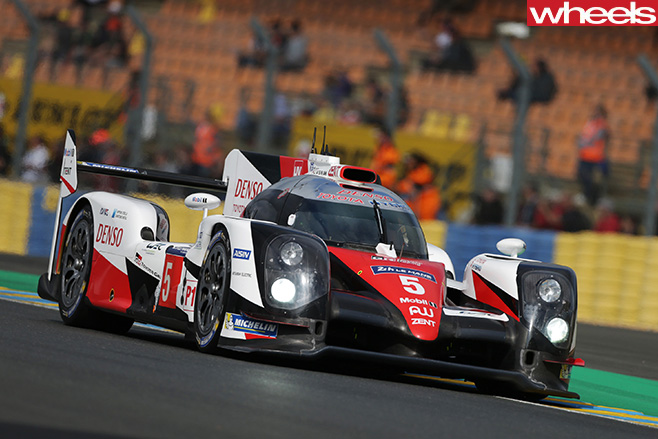
The WEC has a 28-car entry list for the 2017 season. Just five are LMP1 cars – two each from Porsche (919 Hybrids) and Toyota (TS050 Hybrids) plus a lone Nissan-powered ByKolles CLM, with a driver line-up that includes former Formula One and World Rally competitor Robert Kubica.
A third Toyota car will join the grids for the 24-hour races at Le Mans.
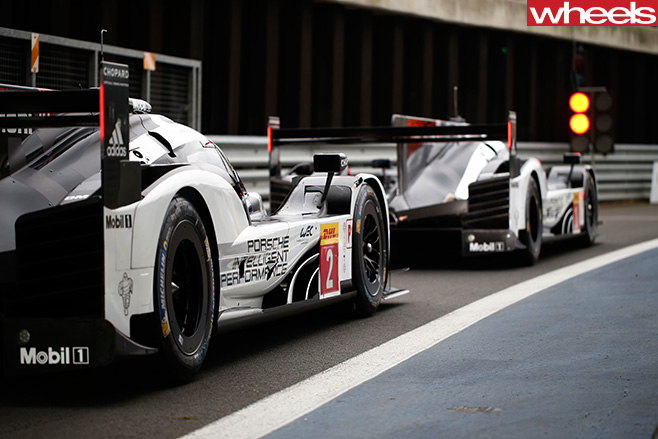
The move underlines Toyota’s determination to win the French endurance classic.
The Toyota Gazoo Racing team will also field a third car in May at the Spa-Francorchamps circuit in Belgium, a vital lead-up race to Le Mans.
Toyota’s development work has translated into significant upgrades to the hybrid powertrain including the 2.4-litre twin-turbo direct-injection V6 petrol engine, motors/generators and batteries.
World touring car champion Jose Maria Lopez has been confirmed as a full-time Toyota WEC driver for 2017.
A DRAMATIC concluding twist to the 2017 LiquiMoly Bathurst 12 Hour couldn’t take the shine from a stunning run by local heroes Jamie Whincup and Craig Lowndes and their stellar Ferrari teammate, Flying Finn Toni Vilander, as they raced to a deserving victory at a hot Mount Panorama yesterday.
A claimed record crowd of (40,364 over three days) braved the roasting temperatures to watch a fascinating motor race, which thanks to a large field of exotic poster cars, is establishing itself as one of the world’s best sports car events.
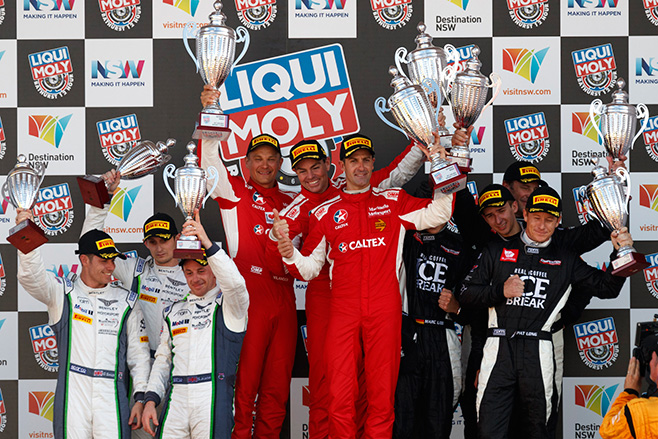
Only one Ferrari started the marathon but the Maranello Motorsport trio repelled all opposition in the most competitive field in the race’s history.
In Vilander’s capable hands, the 488 model grabbed pole on Saturday, and then on race day proved to be consistently the fastest and best-driven GT3 car in a wild and unpredictable enduro.
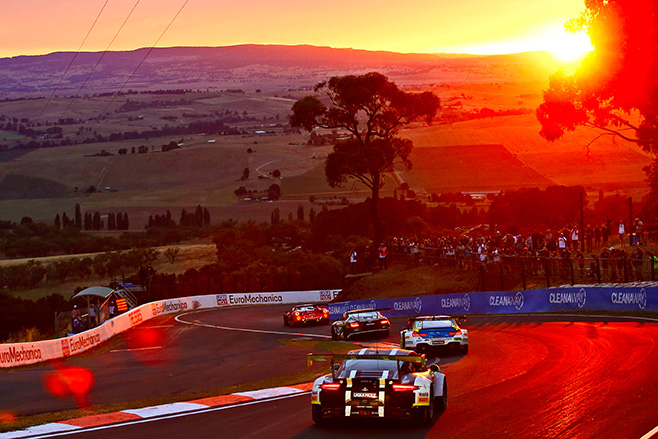
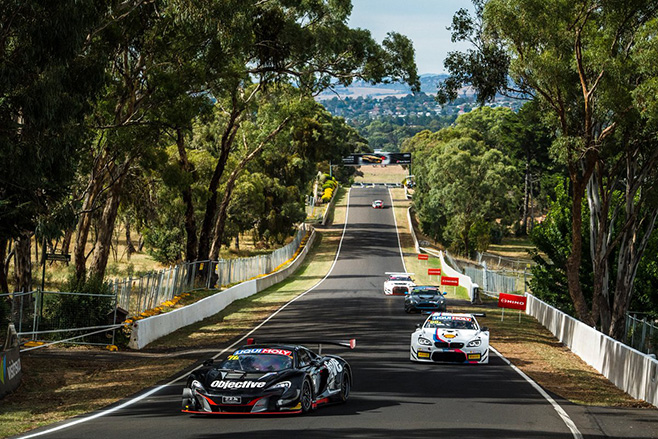
Rivals crashed out and hit mechanical issues with very few capable of mounting serious challenges. Lapped cars were a constant headache for the outright GT3 runners – lap times being as much as 26 seconds apart and cornering speeds often a world apart.
But Whincup on fresh Pirellis soon monstered the Merc and then, with two wheels in the dirt, powered past van Gisbergen on Conrod Straight.
Another of many safety car interventions closed up the field with 20 minutes remaining. But again van Gisbergen, struggling on old rubber, had no answer, clouting a slower Porsche and soon after crashing heavily at the Dipper.
Van Gisbergen later resisted the temptation to fire back, instead owning up to making a mistake. It was a classy admission.
A very unhappy @MaroEngel with @shanevg97. #B12HR pic.twitter.com/yxMq9MfFJ6— Bathurst 12 Hour (@Bathurst12hour) February 5, 2017
The win was the first 12 Hour success for Whincup and the equally impressive Vilander, and the second for Lowndes.
“Beginner’s luck” was how Whincup described the win in his first taste of GT racing.
Whincup refused to join some of his rivals in outright contenders who slammed some slower drivers. “They’re a part of what makes up the category,” said the six-time Supercars champion. “The category caters for drivers who may not have started karting when they were seven. They began racing later in life. GT racing relies on these guys who invest a lot of money. For us professional drivers, they’re a part of the challenge.
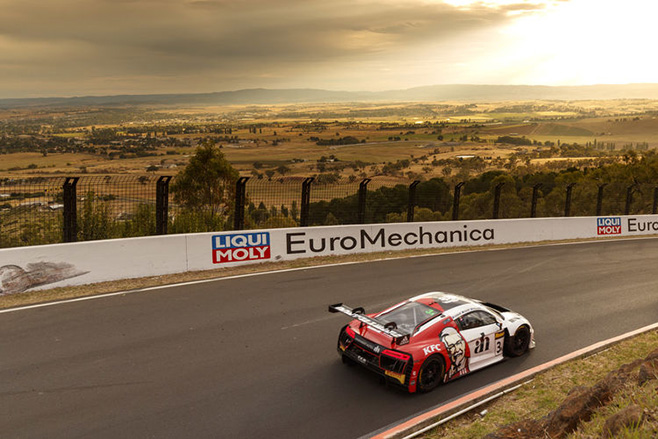
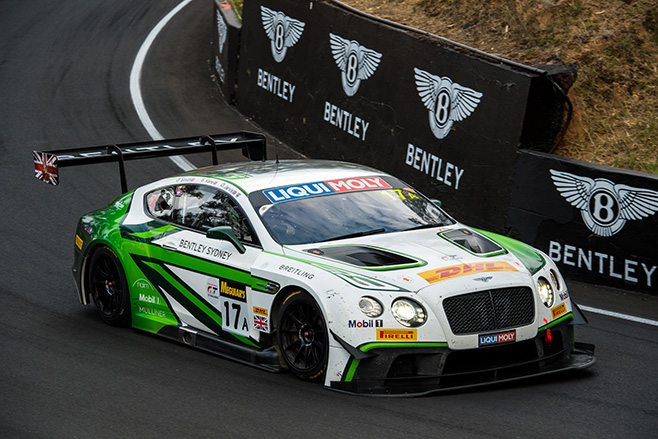
Ferrari also now joins Audi as the only two-times winner of the Bathurst 12 Hour in the modern GT3 era, which started in 2011.
.@shanevg97 offers his apologies for his late race incidents. #B12HR pic.twitter.com/l6JGMP84E9— Bathurst 12 Hour (@Bathurst12hour) February 5, 2017
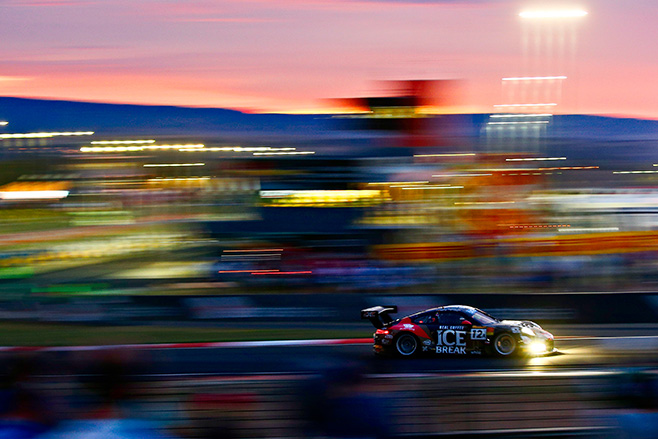
Van Gisbergen’s eventful conclusion to the race elevated the Ice Break Porsche 911 GT3 R to second, one lap down on the Ferrari.
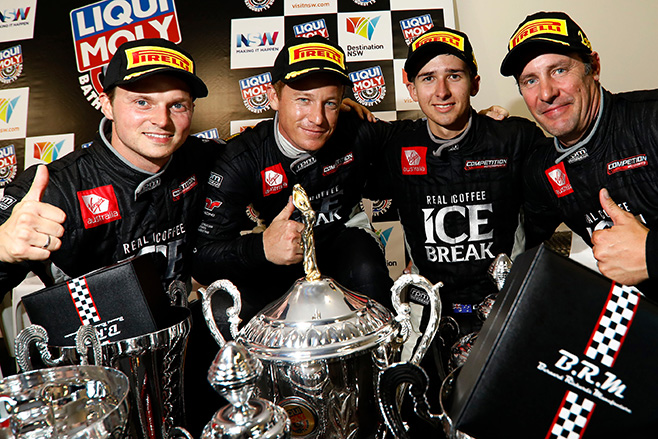
Four drivers shared the Porsche podium – Marc Lieb, Patrick Long, part-time Wheels hot shoe Matt Campbell and David Calvert-Jones.
Where then were the Audis, Mercs, BMWs, Lamborghinis, Astons, McLarens and Nissans I hear you ask…?
The best McLaren – the Alvaro Parente/Rob Bell/Come Ledogar Tekno 650S – was fifth, a lap up on the first Lambo, the sixth-placed, well-used local R-EX of Roger Lago, Steve Owen, David Russell.
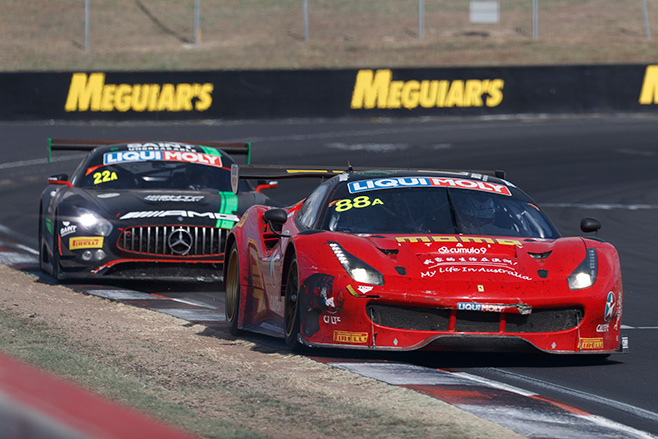
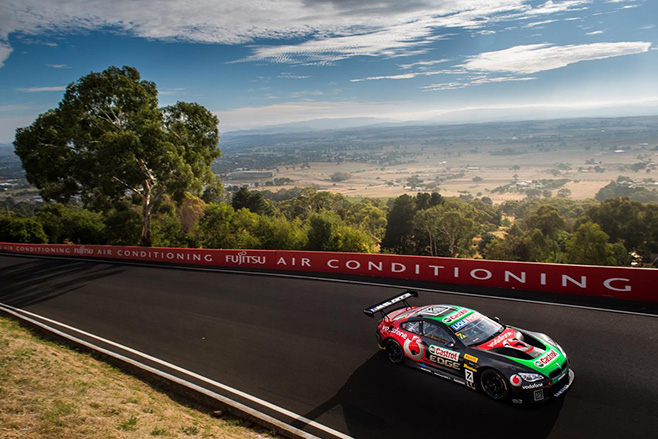
Chaz Mostert qualified second, ran in the lead early in the day but watched on as a co-driver crashed their BMW M6 GT3.
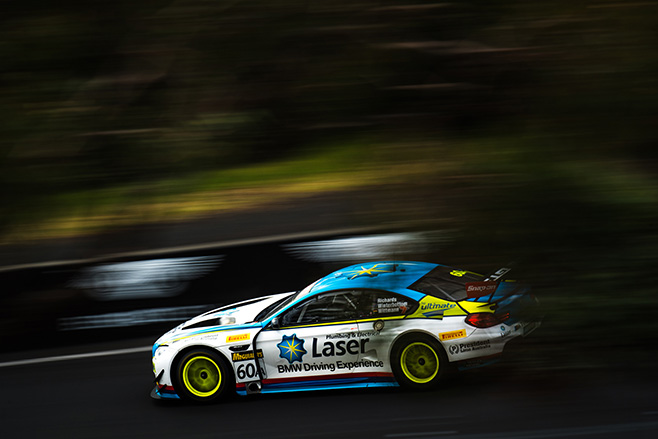
Another BMW commandeered by big-name quartet Mark Skaife, Russell Ingall, Tony Longhurst and ex-Formula One driver Timo Glock retired after five hours when Ingall clouted the wall at the Dipper. The veteran was devastated he had ruined the race for the team. The M6 of Steve Richards, GT3 first-timer Mark Winterbottom and Marco Wittman had its woes and slip nine laps down in 14th.
Other R8s were in the wrong place at the right time leaving the unheralded ASR entry of Daniel Gaunt/Matt Halliday/Ash Samadi the highest placed Audi (seventh).
Race winner Vilander also copped a pitlane drive-through penalty for weaving at a restart, dropping the Ferrari back many places.
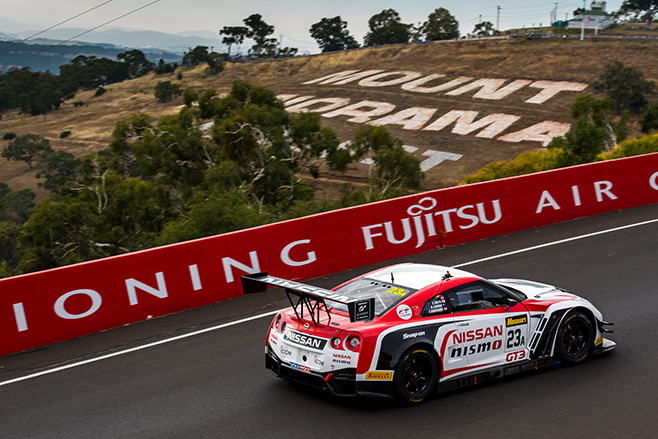
But three fast, measured drivers and a fast and reliable car put the 488 at the front at the right time, 5.45pm.
TENSIONS have exploded at Mount Panorama with Scott Taylor Motorsport driver Maro Engel launching a scathing verbal assessment of his teammate Shane van Gisbergen.
The reigning Supercars Australia champion had just crashed out of the Bathurst 12 Hour with 20-minutes of the race yet to run.
When approached by TV cameras, a forlorn Engel launched a scathing assessment of his teammate.
A very unhappy @MaroEngel with @shanevg97. #B12HR pic.twitter.com/yxMq9MfFJ6— Bathurst 12 Hour (@Bathurst12hour) February 5, 2017
“That is not motorsport in my book,” he said. “I have to watch what I am saying. All I have seen this weekend is a lot of mistakes from Shane. This is a tough one.”
Engel was visibly upset by the crash which ruled the #22 Mercedes-Benz GT3 out of the race while running second outright, and in serious contention for victory.
Van Gisbergen had received a pit lane penalty for an earlier incident moments before his Mercedes collided with the wall, but had yet to be informed by the team.
The Kiwi driver was critical of his own performance upon returning to pitlane.
.@shanevg97 offers his apologies for his late race incidents. #B12HR pic.twitter.com/l6JGMP84E9— Bathurst 12 Hour (@Bathurst12hour) February 5, 2017
“I made a mistake. I am pretty critical of myself, and that was 100 percent me,” he said.
“I just stuffed up and ended up in the wall, so sorry to my team, and sorry to my teammates.”
When asked about his response to Engel’s earlier comments, Shane van Gisbergen remained remorseful.
“I’ll go an apologise to him, but that was my mistake,” he said.
The #22 Mercedes had been in contention for victory all weekend, battling for the lead throughout the entire 12 hours of racing, scrapping with the Maranello Motorsport Ferrari 488 that eventually claimed victory.
Grand Prix – the words conjure images of open-cockpit cars with barely restrained power, their engines screaming to the heavens and assaulting your eardrums with a cacophony of noise. Except we’re at a Formula E grand prix, where the loudest noise is the staccato hammer of the pit crews’ air wrenches.
We’re in Long Beach, California, for the Faraday Future ePrix. Where Formula 1 fans are used to a haze of high-octane fuel and hot motor oil hanging over the track, here it smells of roasted almonds, burgers and fries, and the sea. Fans chat freely as the cars race by, the whine of electric motors occasionally overpowered by the screech of brakes as tyres bite into the concrete. It’s a curious sound, usually drowned out by the roar of braking petrol engines.
With a 28kWh Rechargeable Energy Storage System (RESS) supplying a capped maximum of 170kW (lifted to 200kW for qualifying) and 230Nm to the drivetrain, these peculiar electrical creations will do 0-100km/h in just under three seconds, and go on to a top speed of 217km/h. They’re constructed of ultra-light carbon fibre and aluminium, to a minimum weight limit of 888kg.
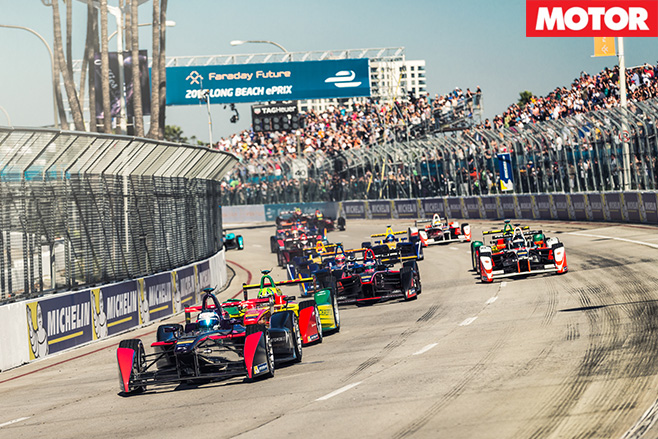
In its first season, the teams were all supplied with Spark-Renault SRT 01E racing steeds – chassis by Dallara, McLaren motor, Williams Advanced Engineering battery system, Hewland five-speed gearbox and Michelin tyres. Now in its third season, it’s still a fairly standard design but teams are able to install powertrains from different manufacturers. However, given the still rapidly evolving technology, little things make a big difference – it often comes down to small details like suspension adjustment according to Aguri team principal Mark Preston.
With the restrictions on cars being loosened, teams and manufacturers are now free to apply their own innovations to their machines; for example, anything from one to five gears in a ‘box with a housing made of cast iron, aluminium or carbon fibre.
Just as with F1 pitstops, moments gained or lost during this mad race to swap cars is often the decider in whether someone ascends to the top of the podium or watches the champagne spraying from below.
However, while pit mishaps have added a thrill of suspense to the races, the mandatory stop will be dropped when the next-gen 250kW motors appear in 2018, meaning drivers can go for longer without changing cars.
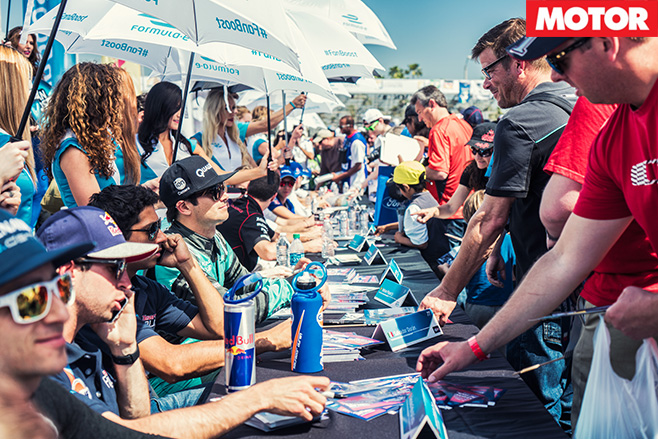
But what really makes this format special is the level of interaction between fans and drivers the organisation encourages. Rather than spending hundreds of dollars on a bewildering variety of access tickets like F1, Formula E charges roughly $100 for a family ticket that grants access to the eVillage (Parc Ferme) where drivers gather for autograph sessions with fans, as well as a seat in the grandstands flanked by video screens and access to a new interactive world of motorsport that targets the smartphone generation.
Formula E is all about encouraging and engaging new talent and ideas. Formula E founder Alejandro Agag is all for the burgeoning market of innovative young thinkers. “In the next five years, technology is going to explode,” he says. “I’m not only talking chassis, batteries, motors and electronics here. Global digitalisation is the next revolution. Millions of young people will follow Formula E by pairing their competitive mindsets with the new digital opportunities. Today, we have 20,000 users per day, 15,000 more than in 2014. Next year or the year after, we may have five million.”
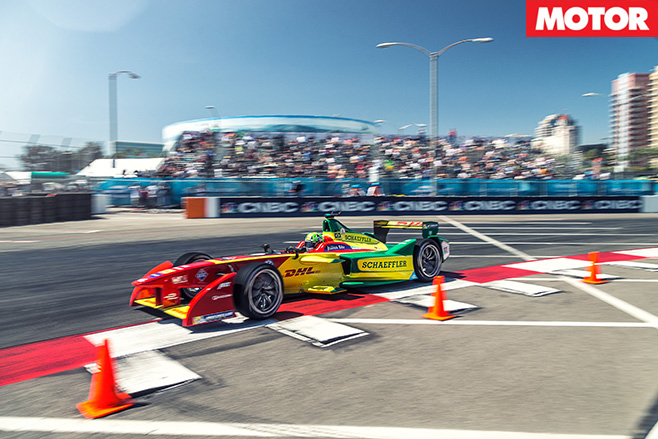
Hans-Jurgen Abt, whose drivers finished first and third in Long Beach, views this race series as “a significant bridge to volume production”. Why? “Because it is way ahead of traditional car development in terms of cooling technology, software expertise, performance electronics, vehicle integration and battery management.
At the same time, Formula E is casting a spell over a young, fast-growing and well-funded web-focused audience. The new business opportunities which materialise in the wake of Apple, Tesla and Formula E should be reason enough for every major automotive manufacturer to secure a seat in this event.”
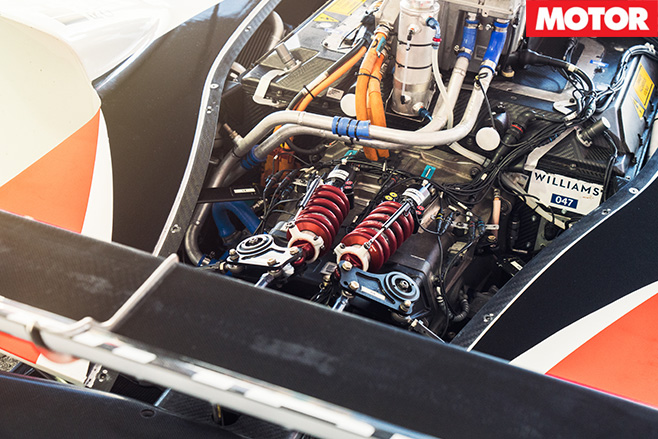
“From a commercial point of view, one of the key attractions of Formula E is the budget restriction,” says commercial director of Dragon Racing Kevin Smouth. “While an F1 team has up to 150 people on its payroll and spends up to $100m per season, we have between 10 and 15 staffers and a kitty that holds no more than $6m. The most expensive spare part in Formula E is the battery. It costs close to US$100,000 to replace, but it rarely goes haywire.”
The cars are set up on Thursday, with ride height, spring rate and tyre pressures all being calibrated. Testing occurs on Friday, often resulting in precise adjustments being made in preparation for the main feature at 4pm on Saturday afternoon. By Sunday the vehicles have been loaded back onto the team trucks and council workers are restoring the surrounding city streets back to normal in preparation for the Monday rush, almost as though it never even happened.
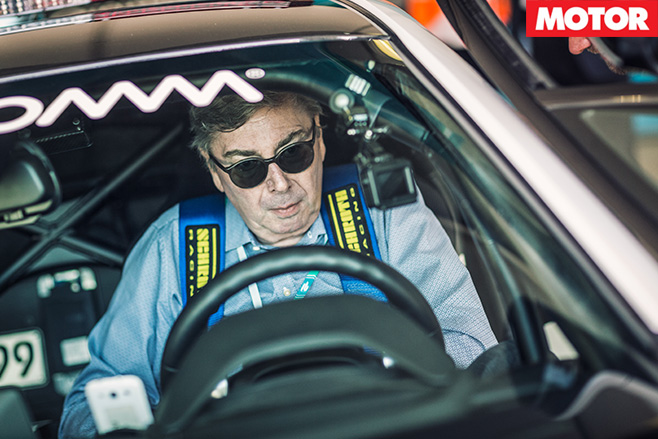
Weight is of the essence, though equally the right strategy is essential. “Ideally, you get off to a good start, then conserve energy and try to keep the rivals at bay,” Piquet says. When all go-faster options have expired, the last hope is FanBoost, a live online vote that rewards the three most popular drivers with an over-the-air power boost not unlike the push-to-pass effect we know from F1, potentially changing the result in a blink of an eye and a tap of a finger on a touchpad.
Official safety driver Bruno Correia slips into his BMW i8 pace car, tightens his safety harness and goes through his usual pre-race routine. Radio? Check. State of charge? Check. Flashing lights? Check. Correia has no choice but to go 10-tenths as soon as he enters the circuit. “That is not a problem during the out lap, when I lead the field to the grid,” he explains, “but in case of an accident, I can only go really fast for six or seven laps before the batteries die on me.”
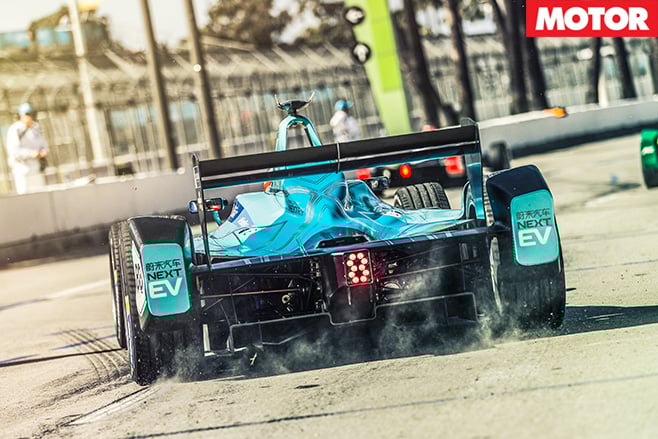
Excitement is an understatement as the pack races around a circuit filled with nail-biting crowded chicanes that force proverbial-tightening overtakes. Like F1, fastest laps always occur at the end of the race – not because of light fuel loads but because as the chequered flag approaches, everyone gives up on economy and squeezes the last kilowatt-minutes out of the battery packs.
Unique to plug-in racing is the energy reserve display shown alongside the timing in the steering wheel. It’s important as two or three per cent more juice can make a big difference, either as a power boost for a late attack or to squeeze in that additional lap before the change-over.
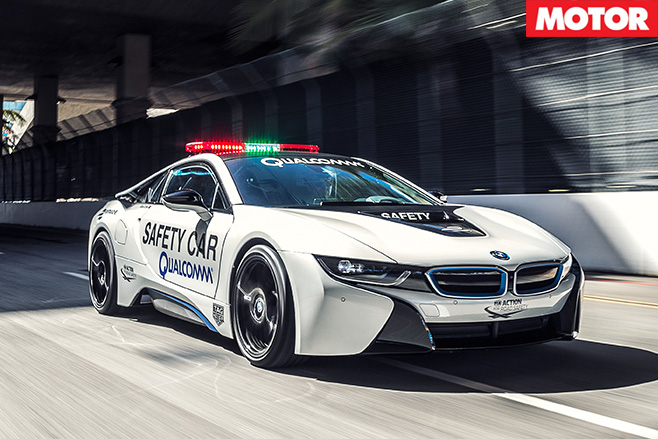
Naturally, with the cutting-edge nature of the still-evolving technology, there is plenty that can go wrong. If there’s a problem with the high-voltage electrical system, the green light in front of the driver turns red, prompting everyone to take extra care before even touching the car. And there is some old-time technology still finding a use in this world – as cars enter the pits, marshals blow whistles to warn the mechanics – a simple solution to the low-noise danger of electric cars in the modern world.
The race was run and done before we had a chance to open our second beer, Swiss driver Sebastien Buemi taking the chequered flag for Renault e.dams.
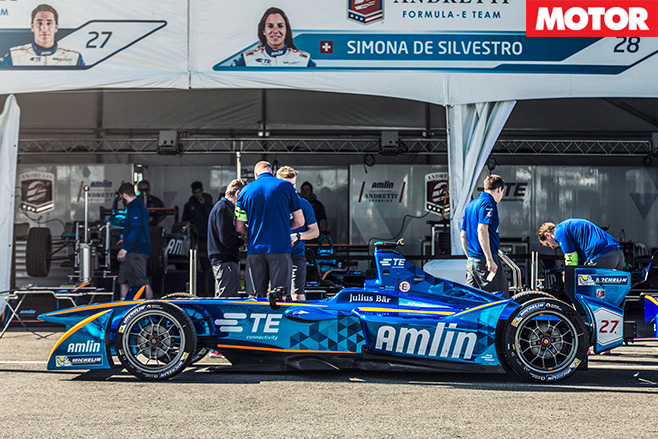
No ludicrous fees for tiered entry, no closed-off areas reserved for stars and high society, just the fans, the drivers and the passion for the sport. As the field opens up to more teams and more technology, social media and the prospect of increasing levels of user-driven input like the current FanBoost drawcard driven by anyone with an idea and a smartphone, the future looks bright for this emission-free spark.
There’s a clue in the name as to the reason why, up until about a decade ago, semi-slicks were considered an affordable, high-grip track-day option, rather than genuinely road-friendly rubber.
‘Slick’, as in ‘oil’, describes the lack of grip a tyre without grooved tread has in the wet. That’s why circuit-racing categories such as touring cars and F1 have intermediate and wet tyres to choose from.
Semi-slicks have always been semi-slippery in the wet. The limit for day-to-day driveability, up until relatively recently, was a set of grooved, yet sticky ultra-high performance (UHP) or S-compound tyres. This is because when you’re driving your hot car on the road and it rains, you can’t exactly dash into the pits for a set of wets.
As well as having less grooves leading to an increased road footprint and more grip (in the dry), semi-slicks use an even stickier ‘R-compound’ to further increase grip. However, this option introduces yet another compromise.
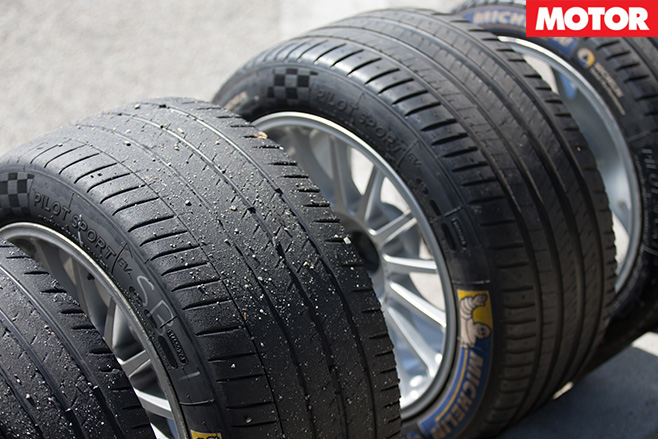
Softer rubber results in more rapid wear, even when you’re not exploiting the extra grip. In combination with strong sidewall and carcass construction designed to stand up to the rigours of racing, and an aggressive tread pattern, you have a tyre that’s noisier and bumpier than true road rubber.
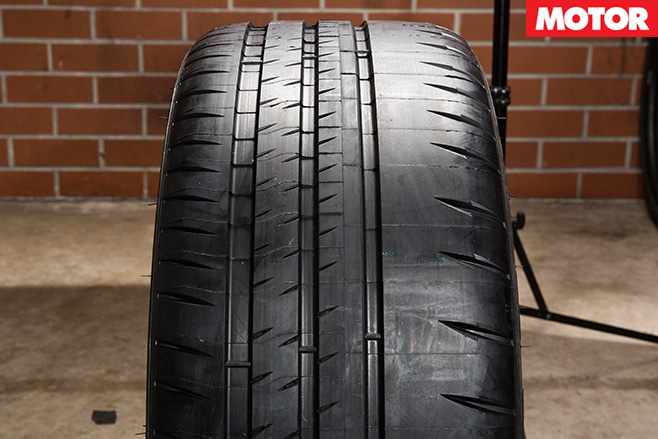
If you ran semis on your road-car and gained a meaningful benefit over UHP tyres, you were clearly comfortable with losing your licence. These are tyres that don’t grip to their full potential until they’re up to optimal operating temperature – a temperature normally only found when on a racetrack.
If the semis on your daily Honda Integra Type R didn’t provide any actual benefit – just lots of drawbacks – you were a track-star poser; and you knew it.
However, like many other high-performance technologies, motorsport is to thank for progress when it comes to semi-slicks.
Hankook is an example. Once upon a time a no-name brand you wouldn’t dare consider compared to the European tyre manufacturers, Hankook owes its involvement in DTM and European Formula 3 for the development of its road-friendly semi-slick, the Ventus RS-3.
Like many semi-slicks these days they’ve come leaps and bounds for wet weather performance in particular.
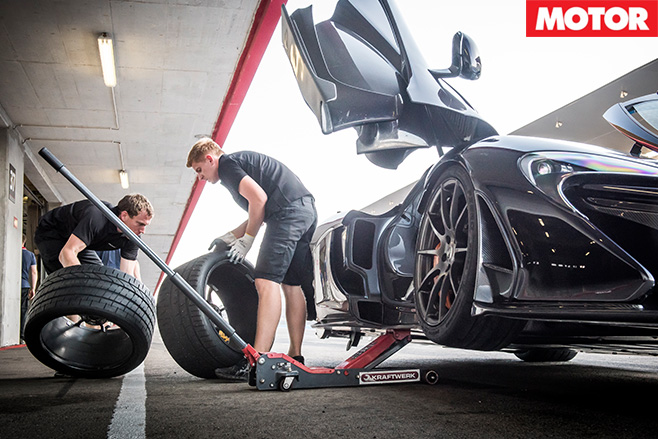
Yep, the ol’ semis have come a long, long way indeed.
Rubbering up
Tyre tech for the road
1. GRIPPY WHEN WET Modern, streetable track tyres like the Hankook R-S3 use variable angle grooves to disperse water from the tread grooves more quickly. Being able to do so brings perhaps the biggest leap in wet performance without compromising the semi-slick’s high tread-to-groove-area ratio.
2. QUICK STEER Wider centre blocks are claimed to improve steering response. The extra surface area of these blocks produces extra grip, even when the tyre is not in its optimal operating temperature range.
3. CALM UNDER PRESSURE While it hasn’t necessarily helped make them better road-car rubber, some semi-slick products’ high-strength bead wires make them more durable under extreme driving conditions.
4. NO COMPROMISE The growth in popularity of semi-slick tyres (which has been matched by the ability of average hi-po cars) has also prompted some manufacturers to combine their track learnings with new compounds that feature improved carbon black and silica technologies. The improved blend of grip with wear life is even more beneficial on the road than the racing circuit.
5. CARBON IS NEW BLACK Carbon black, for the non-geeks amongst us, is a paracrystalline form of the chemical element carbon. It is formed by the incomplete combustion of heavy petroleum products and, as well as being used as a reinforcing filler in tyre construction, can be found as a pigment in paints and inks. Silica is the chemical compound silicon dioxide and commonly occurs in nature as quartz.
A passionate man with a love for automobili Italiano.
MENTION anything Italian, automotive and here in Australia over the past 40 years and Andrea Vitale has probably worked on it, owned it or built it. Ferrari, Maserati, Lamborghini, De Tomaso, Alfa Romeo…
Okay, trick question: Giocattolo? Andrea started it.
Since 2010 Vitale, now 62, has been proprietor of Andrea Motori, the go-to service centre for many of Sydney’s Italian car cognoscenti. Vitale has the sort of passion that can only be the result of a profound event in youth.
Born in the Sicilian town of Spadafora, he was apprenticed as a mechanic at his father’s garage. Then came the day he stood by the roadside to watch the Targa Florio… “My love affair with Ferrari and Maserati started there. I saw these cars going past and my skin, the hair popped up! I wanted to work on those cars.”
There was a major distraction in the shape of an Australian girl, Rosa, who’d been travelling through Spadafora. At 19, Andrea left his parents, brothers and sister and moved to Oz. He and Rosa have now been married 41 years.
Vitale joined Alfa Romeo Australia as a mechanic, but the company’s move to the south side of the harbour prompted him to join a north-shore Alfa Romeo dealership. There, he worked on Spiders, Alfettas and Montreals – “The V8 was a bit tricky, but I was young and hungry!” – until 1983, when he got a call from Paul Halstead.
The computer boffin and car nut had opened The Toy Store, a now legendary exotic car emporium in North Sydney. Vitale became the technical manager, in which role he would do everything from servicing Lamborghinis and other ultra-exotics to full assembly of the De Tomaso cars (Pantera, Longchamps) for which Halstead was the agent.
“We were having lunch one day upstairs and he called to me, ‘Hey, Wog’ – he always called me Wog – ‘what are you reading there?’ And I said to him, ‘Ah, you f**kwit, I’m reading about this beautiful car, you could not even imagine what it is…’”
The Italian magazine carried a story on Alfa Romeo’s Alfasud Sprint 6C, a Group B rally prototype. Halstead was racing an Alfetta GTV6, so he was more than a little interested in the mid-engined Sprint. “And that’s when [the Giocattolo] started.”
In 1987, Vitale was lured by former Alfa Romeo Australia colleague Tony Graziani to join the latter’s new Maserati import agency.
“I was the mechanic, the sales manager and the cleaner!” The press was hard on the Biturbo-era models, but Vitale knows that a great car lurks within: “The engine, the gearbox, they will go forever. But the electrical was a spaghetti western! You put the blinker on, the engine cuts off.”
Vitale stayed with Graziani for more than 20 years, through Ferrari’s takeover of Maserati, then the change of Australian distribution in 2005 to Ateco Automotive. “I had full control of the workshop, but I never made the money that [Ateco] wanted. In 2010, they called me into the office and said, ‘You have to retire’.”
There was no way that Andrea – or his customers – was ready for that. So he opened Andrea Motori, staffed by himself, daughter Domitilla (‘Domi’) and former Ferrari-Maserati workshop colleague Nigel Smith. It has more the feel of a corner fruit shop than exotic car garage.
“We don’t make a lot of money, but we create a beautiful place! Customers come down, they make their own coffee. Mi casa, su casa – bravo!”
Wise trade
Andrea Vitale has a collection of Italian cars – Alfa Spiders, mid-90s Maseratis, a Fiat 130 Coupe – and classic bikes. His favourite? “A 1971 MV Agusta 350. Dad gave this to my brother, and a Fiat 128 to me. We swapped.” He keeps the MV at the family house in Sicily where he was born, and where he “goes home” every year.
It could have been a contender against the superb Audi RS6 Avant – but the latest Mercedes-AMG E63 S Estate has been officially ruled out for the Australian market.
If having between 640 and 1820 litres of luggage volume sitting above 295mm-wide, 20-inch tyres that spin furiously to the tune of a 4.0-litre twin-turbocharged V8 with 450kW and 850Nm sounds appealing, then best look away now.
Or chastise someone who bought an AMG GLE 63 coupe.
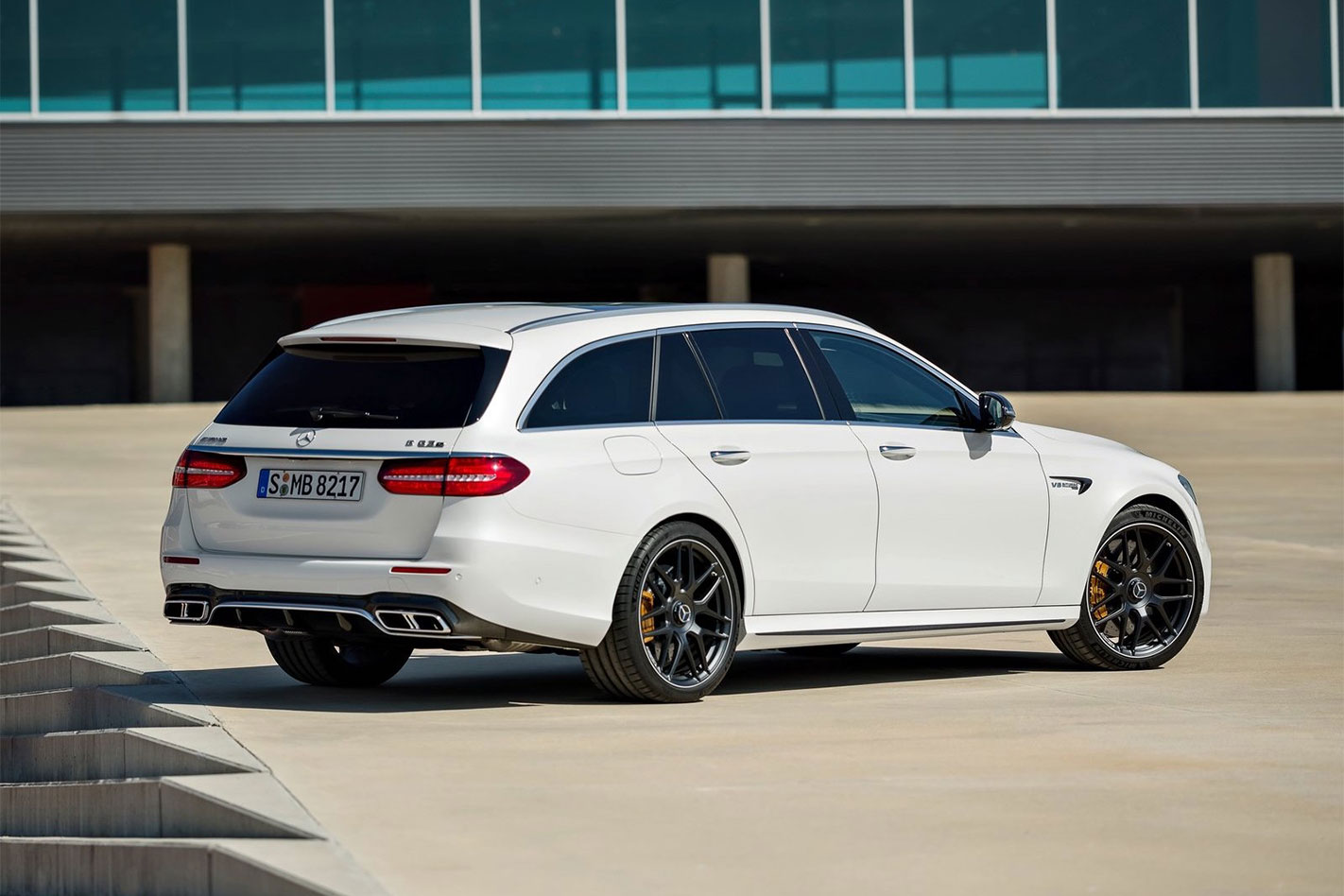
Although the Estate wears a 4Matic badge as per the sedan, denoting standard all-wheel drive capability, it also gets Race mode that can drive torque through the nine-speed dual-clutch transmission to the rear boots only. And an RS6 Avant’s quattro system can’t do that.
The big-booty version of the E63 S is a tenth slower from standstill to 100km/h than the sedan, though its 3.5-second sprint time can still out-do that Audi by two tenths.
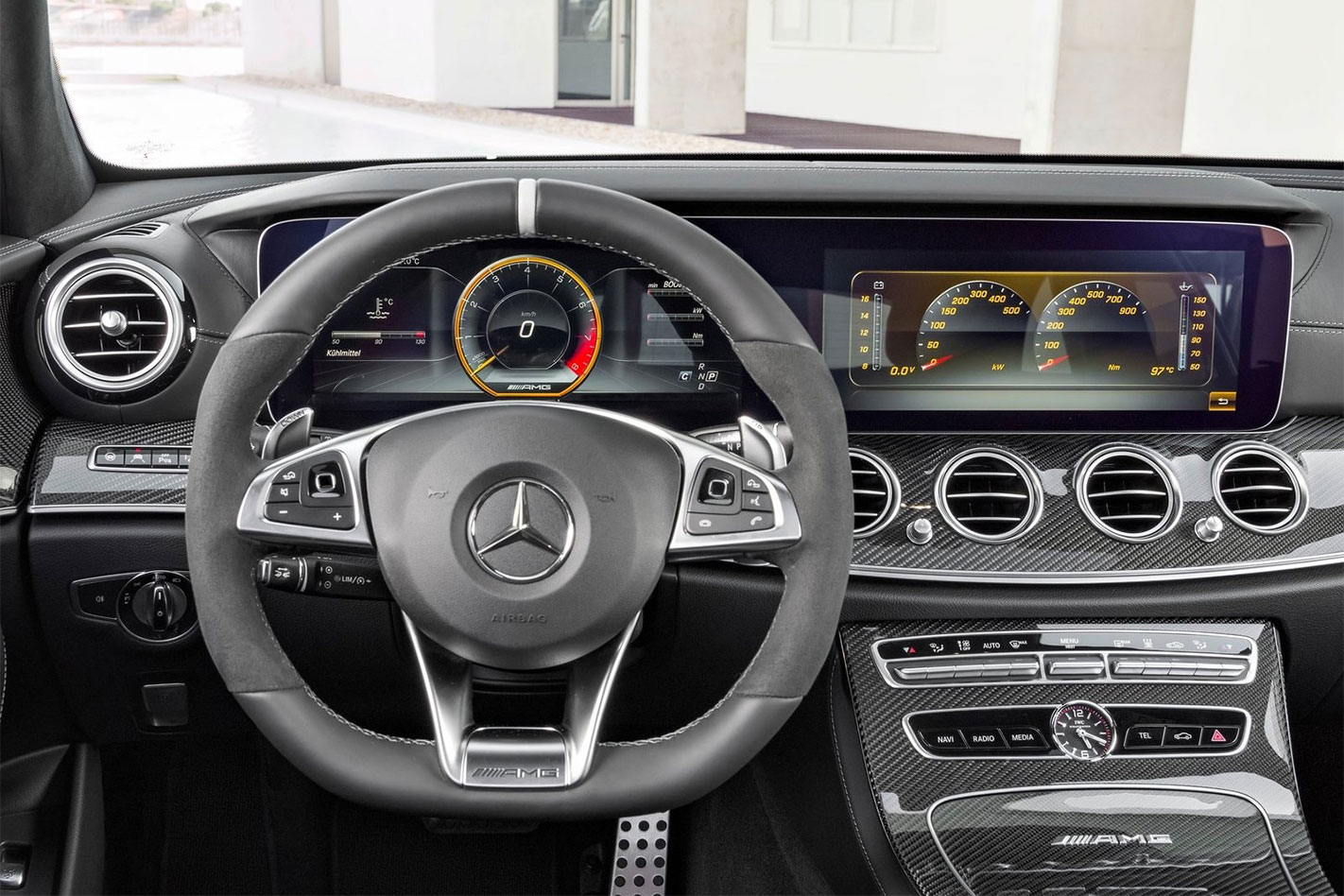
“The new AMG E63 Estate combines our brand’s hallmark driving dynamics with high everyday practicality,” spruiked Mercedes-AMG chairman of the board of management Tobias Moers in a statement. “It is not for nothing that the model has been a permanent fixture in the AMG portfolio for 40 years.”
However, Mercedes-Benz Australia/Pacific public relations senior manager David McCarthy told MOTOR that the affection shown for fast wagons in Europe and the UK was not reflected in the Australian market – and hence it has been ruled out.
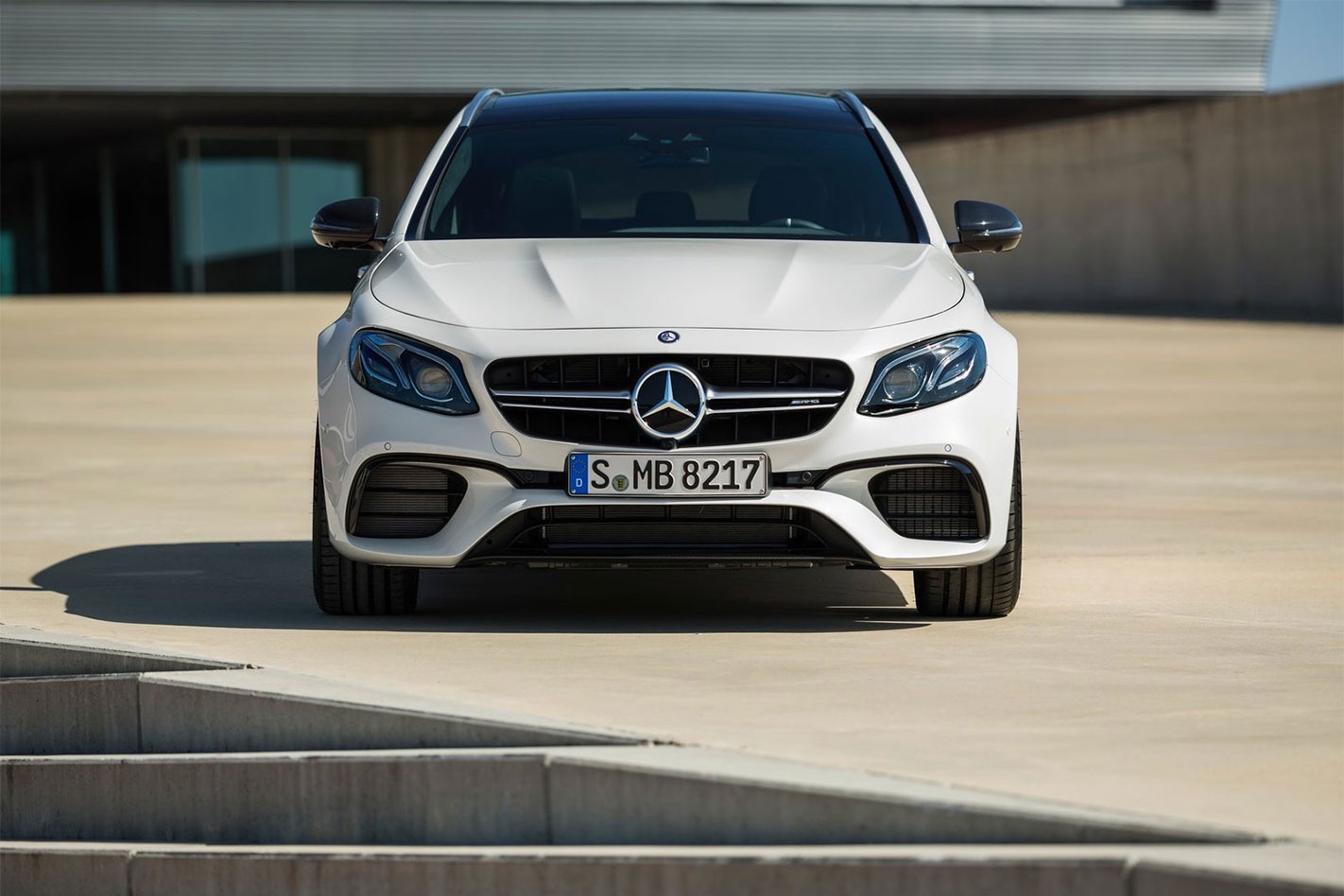
He remained noncommittal about the potential of a customer ordering one of their very own. “Show me the money!” he laughed.
Well-heeled families with a penchant for going fast should make it known to their local Mercedes-Benz dealership. Otherwise the Mercedes-AMG E63 S sedan – singularly, sadly – arrives there from mid this year.
TELL ME ABOUT THIS CAR
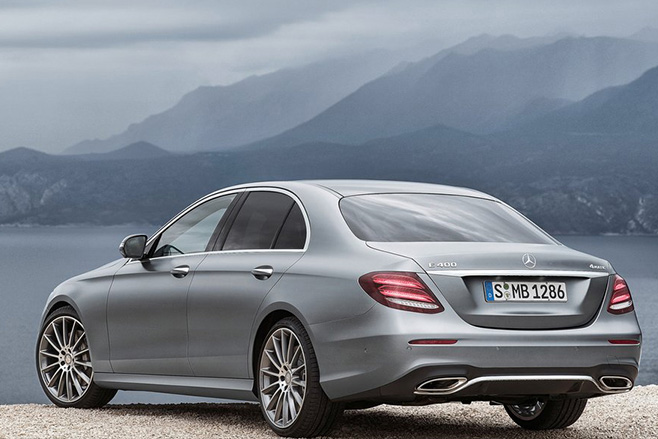
Mercedes-Benz always strives to be at the forefront of car technology, and with the E-Class it has taken digital displays and driver assistance systems to new levels, even surpassing the usually more advanced (and more expensive) S-Class models. The E400 is the top of the range standard model (below the two AMG variants) with a 3.0-litre twin-turbo V6 engine powering all four wheels.
STRENGTHS
• The E400’s cabin refinement is outstanding, especially in Comfort mode where it seems to glide along with minimal wind, road and engine noise.
• Driving modes including Sport and Sport+ take things up a notch by hardening the suspension tune and low-end engine performance through the nine-speed automatic transmission. Combined with its accurate steering and 4MATIC all-wheel drive system the E400 can handle bends in a convincingly sporty manner.
• The 245kW/450Nm twin-turbo 3.0-litre V6 engine is very much a quiet achiever, going about its business with a whisper while having all the power and responsiveness you’ll ever need. It will indulge your inner hoon with a throaty roar when flooring it in Sports +, though you’ll be well over the speed limit before you can have a really good listen.
• The equipment list has to be written on a scroll and includes everything from ambient cabin lighting with a choice of 64 colours and a head-up display, to pre-entry climate control and panoramic sunroof.
• The E400’s driver assist technology is class-leading with lane keeping and active cruise control that combines with autonomous braking to bring about a gentle stop behind the car in front at traffic lights, and automatically sets off again when the traffic starts moving.
• The interior brilliantly blends luxury and contemporary sophistication that, like a great five-star hotel room that makes you mouth ‘wow’ when you get in. The fittings exude quality and everything is laid out in a way that’s both intuitive and pleasing to the eye.
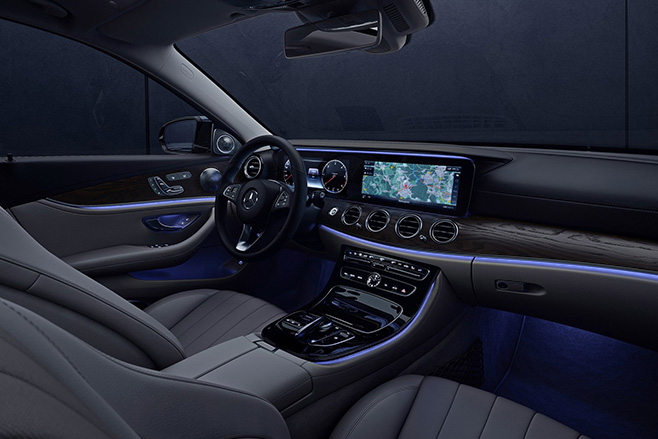
• The digital dashboard mightn’t please the purists but should amaze everyone else. The traditional inbuilt gauge cluster has been replaced by a panoramic screen that looks like a skateboard-sized iPad. This actually contains two 31.2cm displays, one with digital gauges and driver information, and the other for infotainment.
• Being all digital, you can change the look of the main driving gauges and also replace the tachometer with other information including the satnav map.
• The COMAND infotainment is displayed on the left-hand 31.2cm hi-res panoramic display is easy to use via the control dial/pad and touch-sensitive steering wheel controls, and works with Apple CarPlay, Android Auto and the Mercedes app. Initial syncing to a device can be complex because of the features such as in-car WiFi from your phone.
• Entertainment includes DAB digital radio through an epically involving 13-speaker Burmester surround system.
• The Auto Engine Stop fuel saving function is excellent providing a seamless start when needed. So quiet is the engine and so good the sound system you don’t even realise when the engine stops and starts.
WEAKNESSES
• The E400’s ride on its standard air suspension is generally good. However, certain road imperfections can badly unsettle the car and its dampers take too long to regain control of the body.
• Low profile 20-inch tyres don’t absorb bumps too well which can undermine the air suspension and mean potholes are met with an alarming thud.
• The nine-speed automatic has gear selector mounted on the steering wheel column, which isn’t becoming of a car like this. It would be nice to see a shifter on the centre console.
• The tracking pad and dial infotainment controls look unwieldly and their metal finish gets incredibly hot when the car is parked in the sun. I’d prefer just the dial.
• While considered a large car, the back seat is a little tight for three adults though it’s a lot more comfortable than the C-Class sedan and there’s decent leg and head room.
ANY RIVALS I SHOULD CONSIDER?
The $139,000 price tag puts the E400 in esteemed company, but there aren’t many cars even with this price tag that have as much state-of-the-art technology. Contenders include the Audi A6 and Jaguar XF, though its most obvious competitor is the all-new BMW 540i, which costs $3000 less though it doesn’t have AWD.
Don’t blame – or thank – Volkswagen for the impending demise of the diesel car.
The company’s emissions-cheating scandal has certainly gathered headlines, and earned it a pants-down walloping in the U.S., but the truth is that compression-ignition’s death warrant had been signed long before VW got busted.
A decade from now diesel is going to look like a blip, the result of some collective European hysteria and – undoubtedly – the wrong answer to the question it was intended to solve. Europe’s love affair with oil-garglers started after the fuel crisis in the 1970s, but they were a minority taste until as recently as 20 years ago (see panel).
The dash to diesel was triggered by the perceived need to reduce CO2 emissions after the Kyoto protocol was signed in 1997. Or, to be more precise, the short-sighted decision by Europe’s legislators to prioritize cutting carbon over the need to reduce harmful local pollutants. As diesel produces less CO2 than petrol it got the nod, despite making magnitudes more of NOX and cancer-causing particulates. Buyers were steered towards oilers through subsidies, higher petrol prices and, in many European countries, CO2 taxation that made it massively expensive to own a bigger-engined petrol car. Even after a slight dip, half the cars sold in Europe are still diesels.
To hit those numbers while being able to sell bigger and faster cars – the ones that make larger profits – manufacturers are going to switch to hybrid assistance and pure EVs en masse, and the investment decisions to do so were made years ago. Change is coming, both quickly and dramatically. At a recent press event in Sweden, Volvo Cars CEO Hakkan Samuelsson admitted it’s possible that Volvo won’t be making any compression-ignition derivatives within a decade, its new three-cylinder petrol hybrid claimed to be both cheaper and more frugal than its four-cylinder diesel.
Ironically, given diesel’s utilitarian origins in trucks and taxis, the last cars to continue to use it will be larger and more expensive ones, against which the extra cost of increased emissions control is more easily offset, and which benefit most from the low-down torque.
Audi admits that it wouldn’t have been able to make the Audi SQ7 with a petrol engine, the 900Nm of low-down torque being crucial to both its driving character and the CO2 numbers allowing Europeans to buy it. But legislators are moving against this flank too, with many European cities set to introduce zero-emissions zones that will ban even the cleanest diesels.
Oilers are sold around the world, but it’s European demand that drives pretty much all development. Without that, diesel’s days are definitely numbered.
The Holden Trax will go on sale this week with new styling and better connectivity.
With pricing starting at $23,990 for the base model Trax LS, the entrypoint to the range now comes with Apple CarPlay and Android Auto smartphone mirroring, a rear view camera and park assist as standard across the range, which also includes a mid-spec LT and range topping LTZ grade.
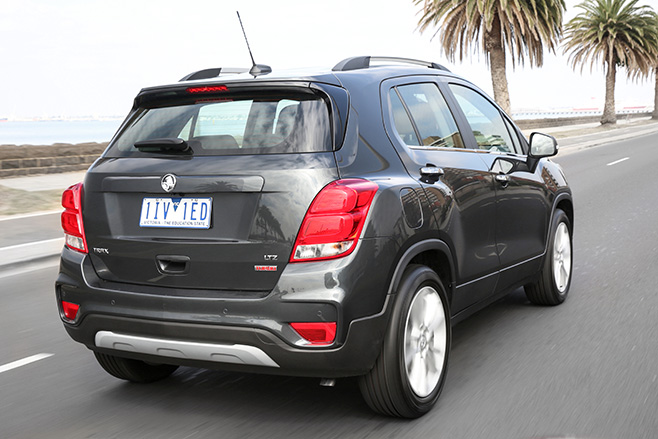
The LT adds keyless entry and ignition, power sunroof and digital radio, while the top-spec LTZ gets new LED rail lamps, turn signals on the side mirror casings, blind spot monitoring and rear cross traffic alert, albeit for a $1600 price increase over the outgoing model.
Styling changes, which were revealed last year, mirror the American Chevrolet Trax, including a new bonnet, front bumper and more body-coloured plastics on the sides. The rear gets a more subtle makeover, with mildly revised plastics. Inside, the Trax receives a dash update with a 7-inch screen display and new instrument panel.
A 1.4L turbo engine, already available in LT and LTZ spec, is now offered in auto-equipped LS base models. The 1.8L Ecotec engine remains the sole powerplant for the LS manual.
The Trax has seen a 50.6 percent increase in sales year to date, according to the latest figures released by VFACTs. Holden Design Director, Richard Ferlazzo, believes the new Trax will continue to be popular with Australian buyers.
“The new Trax is the latest model to be released in Holden’s new product onslaught and with its advanced technology and premium design, is one I’m sure will continue to be popular with customers,” he said.
Pricing: LS 1.8L manual – $23,990 LS 1.4T automatic – $26,490 LT 1.4T automatic – $28,890 LTZ 1.4T automatic – $30,490
