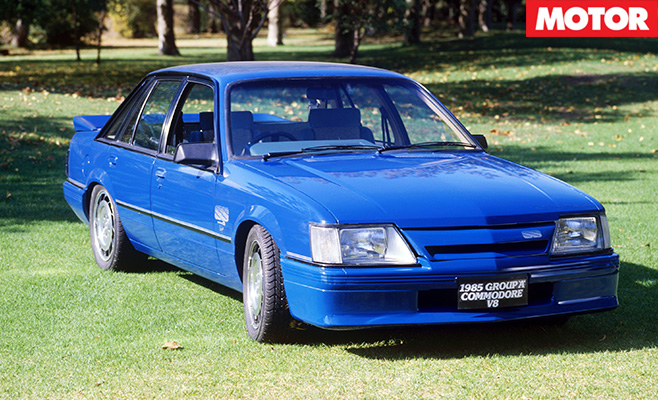
Electric versus combustion engine showdowns are no new thing, but it’s always an eye-widening display whenever a video of two seemingly mis-matched powerplants going head to head hits the internet.
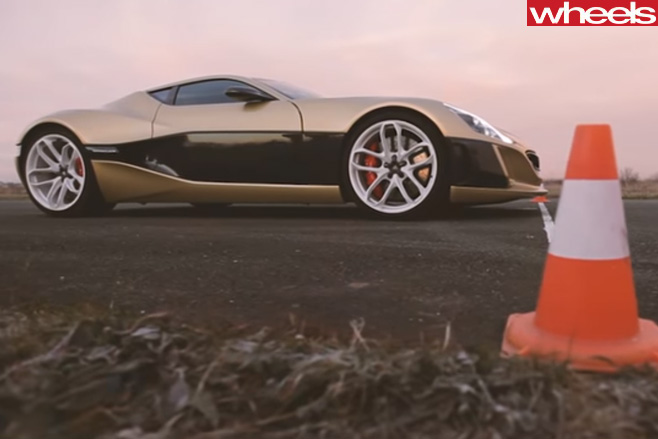
We’ve seen Croatian start-up Rimac savage a Ferrari LaFerrari before, but this time around the company takes on the ‘fast car’ archetype, the Bugatti Veyron. The quad-turbo, 16-cylinder Veyron may be a porky beast at 1.8 tonne, but with over 730kW, 1250Nm, and an official 0-100km/h sprint time of roughly 2.5 seconds, it’s no slug.
But, spoiler alert, the Rimac Concept_One is faster.
You’ll need to watch the video to find out just how much quicker it is over the quarter mile (and truth be told it’s a reasonably close result by the 400m mark), but the Rimac’s lead is a clear one. From the moment it leaves the line, it’s obvious it has the Bugatti hosed.
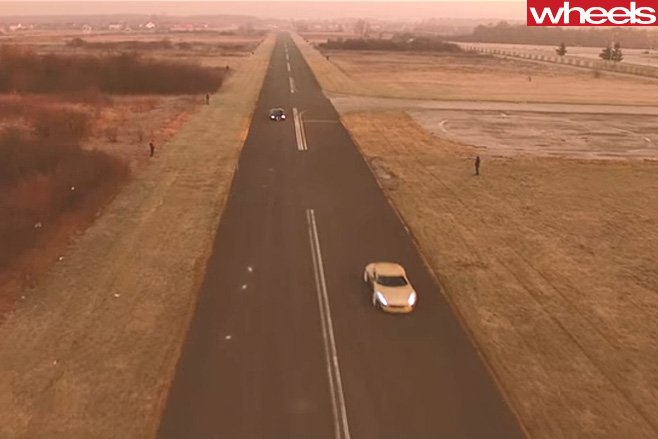
What’s interesting though, is that after a comparatively slow launch the Bugatti begins to gain ground on the Rimac about two-thirds of the way down the strip.
Are you keen to spend $50K on a hot Honda but just can’t wait for the new Civic Type R to arrive?
Good news, we’ve found just the car for you. An as-new Honda CRX is currently for sale in Queensland with a price tag of – are you sitting down? – $49,500.
It’s been a strange time for new-old Hondas recently, with a NSW dealer selling a brand new S2000 last November, which resulted in Honda Australia recording an S2000 sale eight years after the car was discontinued.
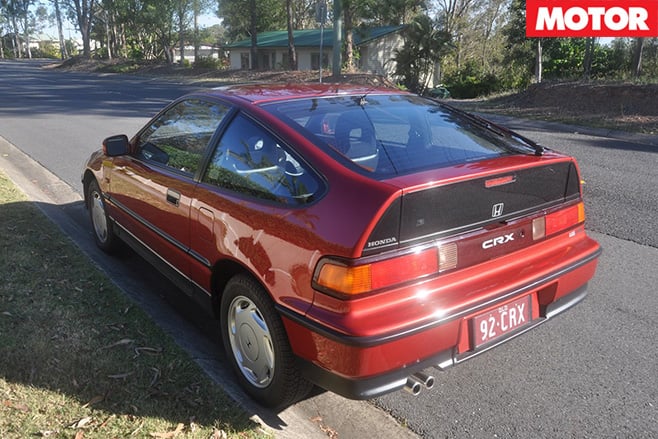
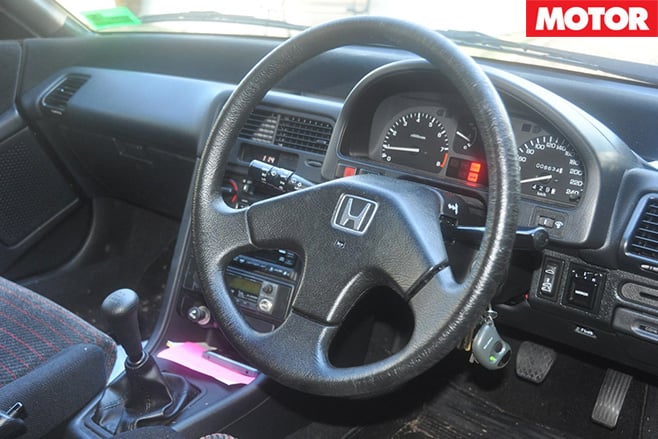
Having spent the majority of its quarter-century on this planet under a car cover, the car is in show condition, with the seller claiming it even retains that all-important “new car smell”.
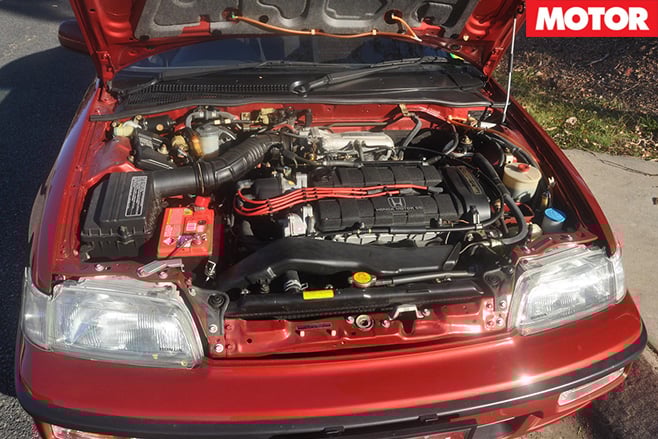
Then again, in today’s money that equates to around $55,000, and whereas back in 1992 you could’ve bought any number of brand-new CRXs, in 2016 if you want one this is likely to be your only chance.
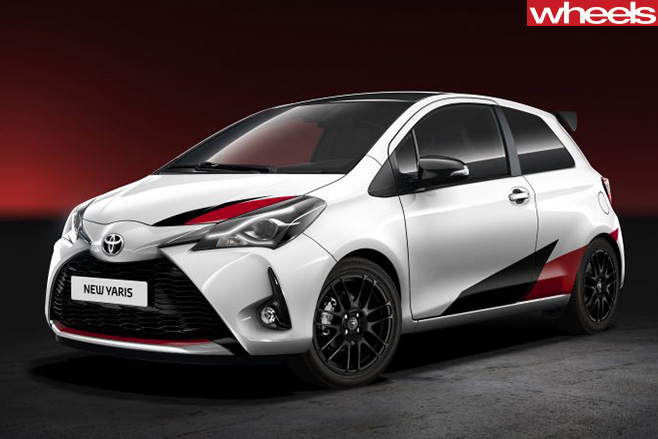
JAPAN’S answer to the fiery Ford Fiesta ST is not destined for Australia, at least not in the foreseeable future.
Set for a global unveiling at the Geneva Motor Show in March, the as-yet unnamed Toyota Yaris hot hatch has only been developed for Europe and Japan, with very limited production, according to Toyota Motor Corporation Australia’s Product Public Relations Manager, Stephen Coughlan.
“It will be exclusive to Europe and Japan only,” he told Wheels at the Toyota Kluger facelift first drive in Los Angeles last week.
It is understood that TMCA is very keen to add high-performance versions of the Toyota Yaris as they become available, but only if the package and price is right. With competition as fierce as the Ford Fiesta ST, Renault Clio RS, and Volkswagen Polo GTI, the brand wants to ensure its best foot is put forward.
“That sort of product is certainly something we’d like to add to our product range, Coughlan said. “And if that sort of vehicle was to become available, we’d certainly put our hand up.
“We’ll certainly be monitoring from the sidelines to see how it’s received in the markets in which it is offered,” Coughlan said. “And we will continue the feasibility studies and request similar performance products going forward.”
The 157kW Yaris hot hatch will be released in Europe and Japan to capitalise on Toyota’s 2017 WRC campaign, which begins in Monte Carlo later this week using a pair of Toyota Gazoo Racing competition vehicles powered by a 1.6-litre direct-injection four-cylinder turbo pumping out 279kW to all four wheels via a six-speed hydraulically-shifted sequential manual.
Unlike the mainstream five-door Yaris that hails from Japan for our market, the hot hatch version comes in a sole three-door configuration, and will only be manufactured in France in small numbers, using bespoke parts and with plenty of additional hand-built elements, further raising costs beyond economic sense for Australia.
Further info and details will be released just before the Swiss show.
The new 84kW/190Nm 1.2-litre turbocharged motor replaces the previous 1.6-litre four-cylinder petrol unit and is offered with either a six-speed manual or six-speed Efficient Dual Clutch (EDC) automatic transmission.
Similar to the engine in the Renault Clio, Captur, and Megane passenger cars, the Kangoo’s 1.2 turbo is 6kW and 42Nm stronger than the engine it replaces. With the help of auto engine stop/start it drinks 21 percent less fuel, with an official fuel consumption of 6.2litres/100km.
Renault claims the new engine is noticeably smoother and quieter with “substantially better low-speed performance and a much more relaxed drive”.
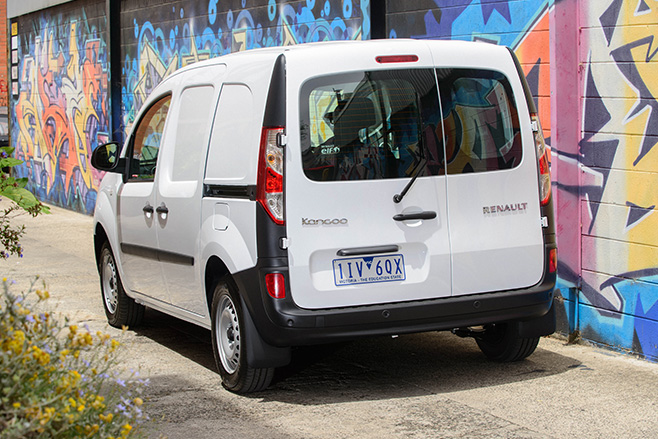
The manual gearbox comes from the previous-generation Clio RS which apparently makes deliveries a lot more fun, even in city traffic.
Other new features to the MY17 Renault Kangoo range include Hill Start Assist and Grip Xtend, driver and passenger airbags including side airbags, cruise control and speed limiter, reverse parking sensors and an Eco Mode.
Energy Smart Management and Stop/Start are now available in the manual variants.
All standard wheelbase petrol models also feature a cargo mat for the load area – already in the long-wheelbase turbo-diesel Maxi versions – to protect the cabin floor, reduce cabin noise and stop cargo from slipping around.
Renault Kangoo pricing
- 1.2-litre petrol turbo manual – $23,490
- 1.2-litre petrol turbo auto – $26,490
- 1.5-litre turbo diesel Maxi manual – $26,990
- 1.5-litre turbo diesel Maxi Crew manual – $29,490
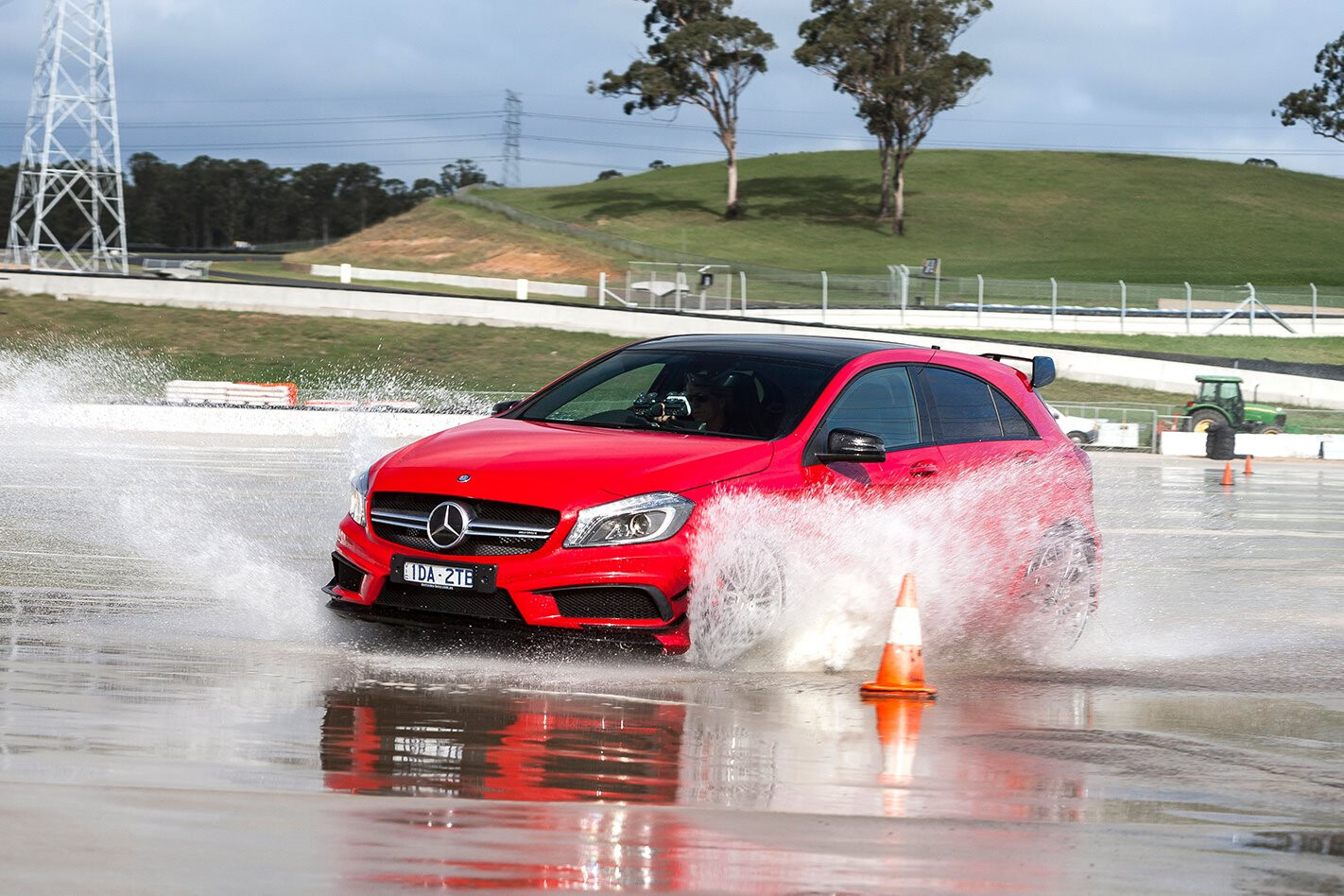
A tyre’s ability to cope with wet conditions plays a huge part of the Tyre Test and represents a significant portion of the overall scoring. Why? Because inclement weather is indicative of true conditions a proper road tyre is subject to.
If a dry-running hero falls flat on its sidewalls in the wet, you’d really want to be informed about that when speccing up a daily-driven pride and joy. As water can punish a tyre specifically optimised for dry ultra-high-performance, this test serves to weed out the fair-weather circuit-specialist rubber.
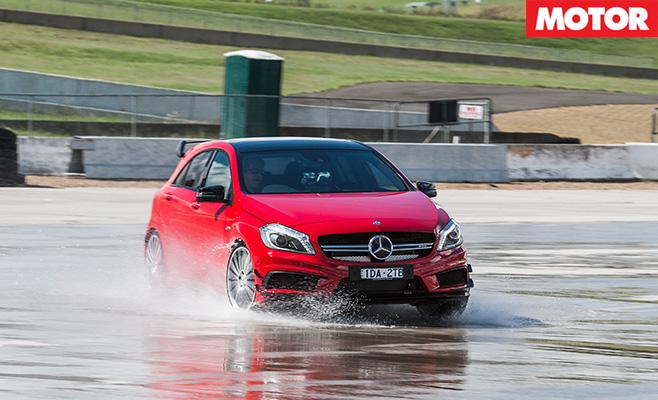
Like the dry Slalom, each tyre set gets five runs through the Wet Motorkhana course, with the fastest and slowest times dropped and the remaining three averaged to produce a definitive number.
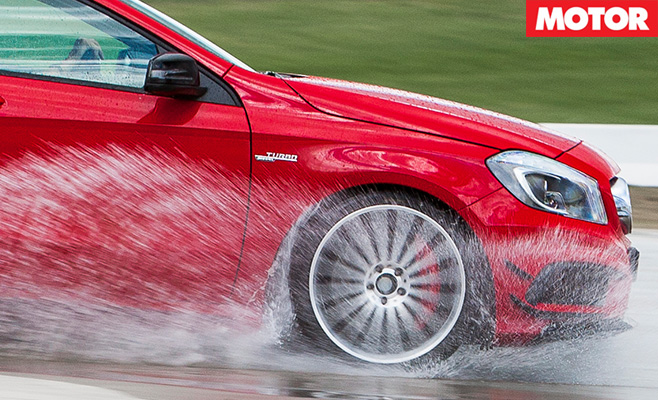
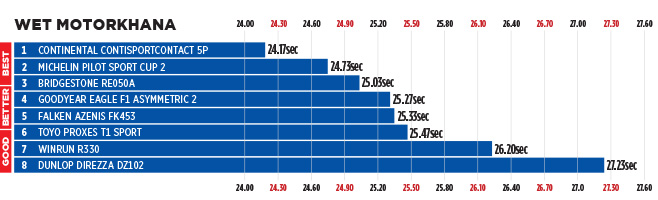
“The Michelin is one of the fastest in the wet but it doesn’t like standing water,” Luff says. The Bridgestone also drew the same commentary from Luff, with the Japanese tyre pushing the Michelin pretty hard, its 25.03sec trailing by a mere three-tenths.
The Goodyear (25.27), Falken (25.33) and Toyo (25.47) all proved to be quick and consistent on Sydney Motorsport Park’s massive water-drenched skidpan. Luff noted, however, that all three simply didn’t have the wet lateral grip to drag themselves up to the pace of the Continental and Michelin.
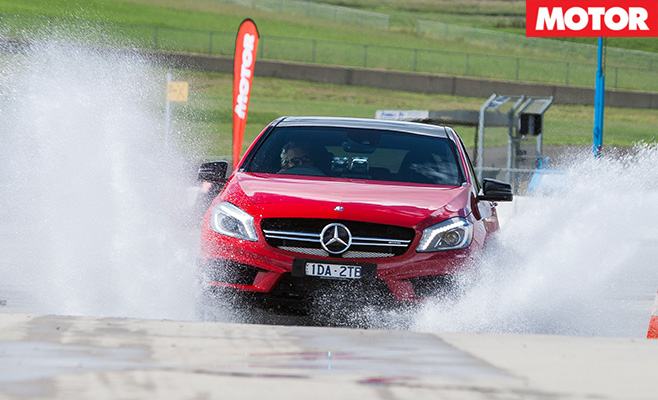
“The Dunlop really struggles out there on the wet,” Luff says. “It’s quite easy to exceed its modest wet grip.” And that bore out in the Dunlop’s time of 27.23sec, over one second off the Winrun’s pace.
MORE MOTOR TYRE TEST 2015
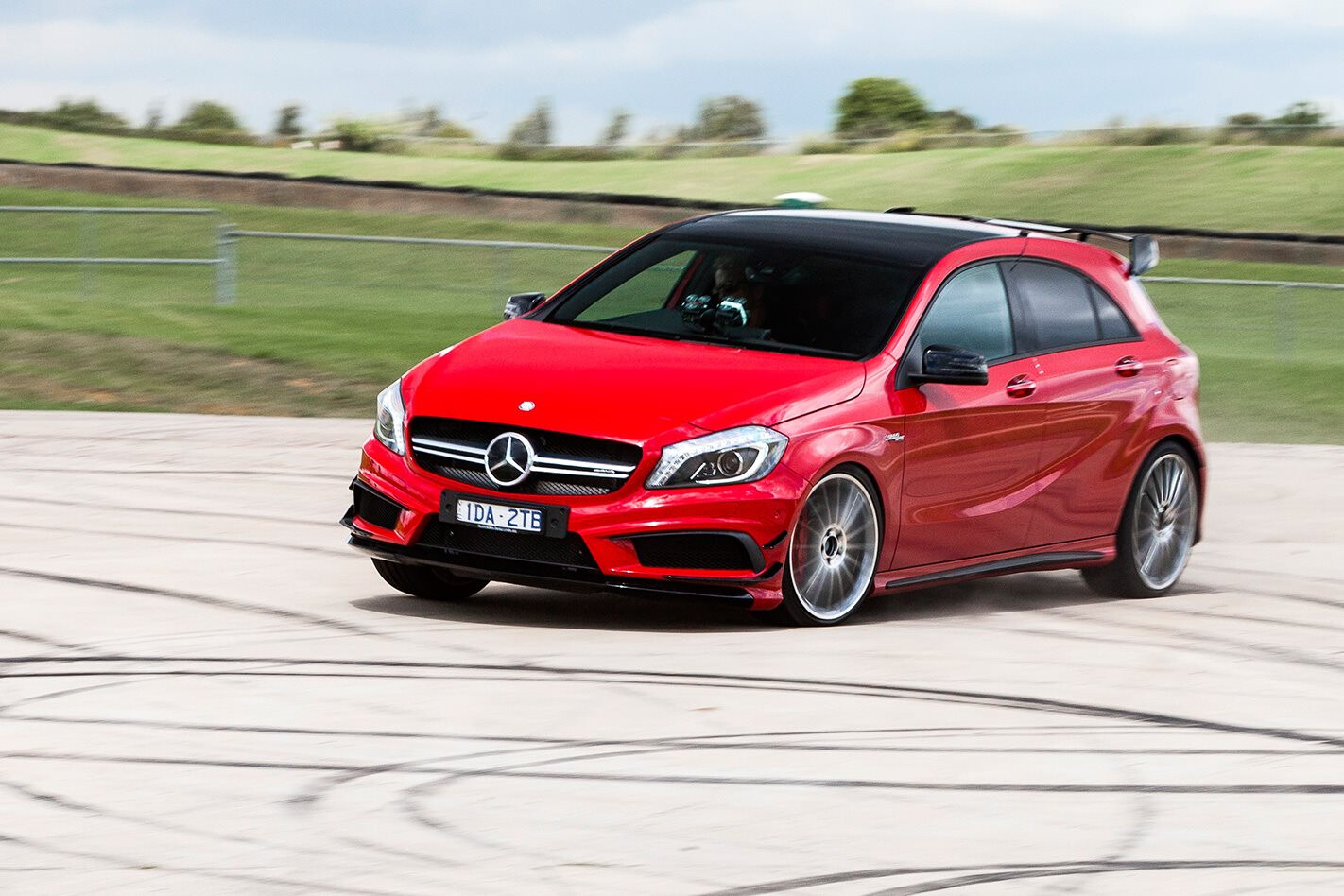 FIGURE EIGHT
With the Michelin and Continental showing class-leading form on dry high-friction asphalt, it was interesting to see if the same dominance would continue on the Figure Eight.
 WET BRAKING
Ordinarily, we’d be discussing the field’s wet lateral G force performance right about here.
 MOTOR TYRE TEST 2015
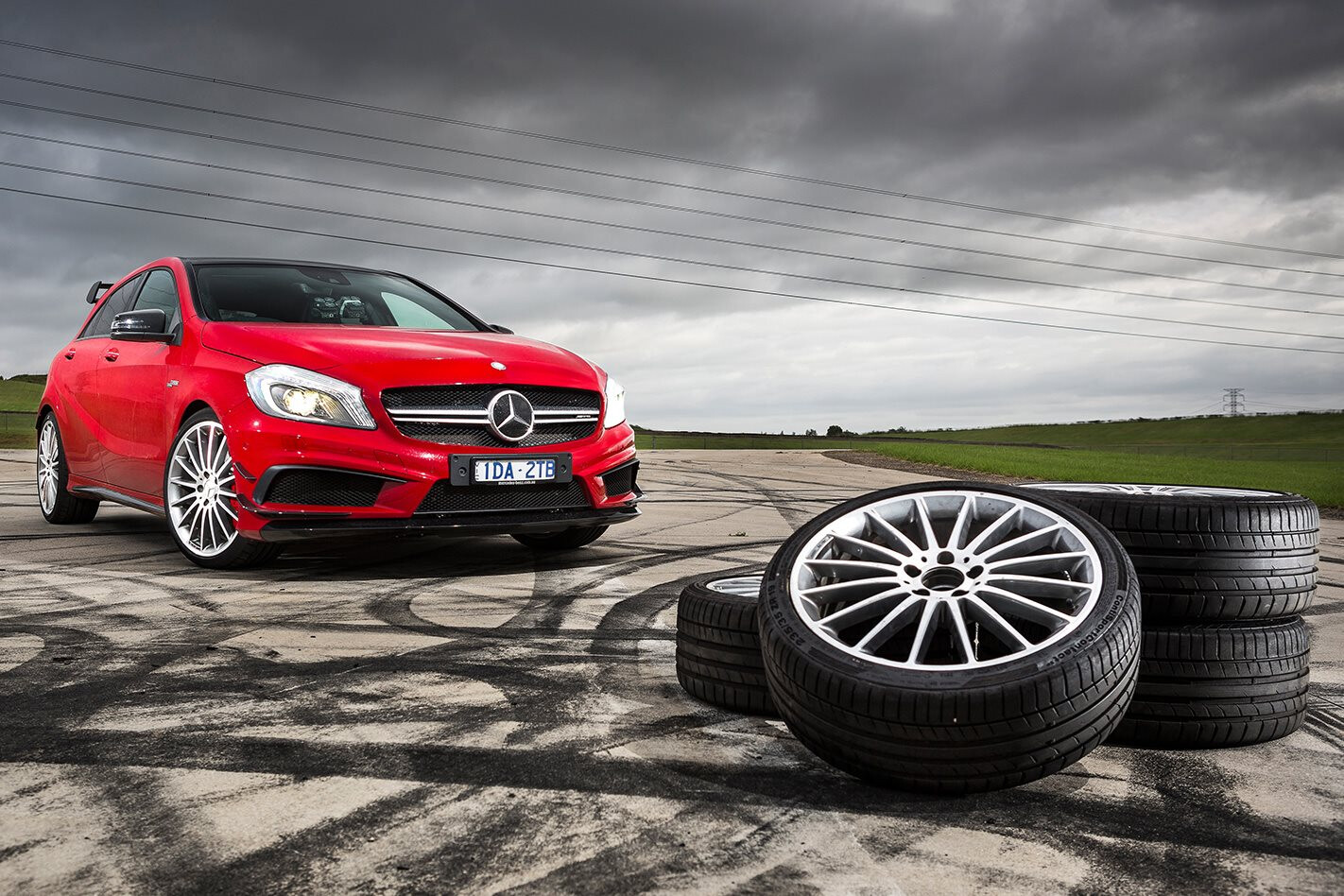
Our ultimate grip test again proves that while they may look the same, the levels at which these rings of sticky stuff perform are vastly different.
 MOTOR TYRE TESTS
The quest to find the best high performance tyres in Australia.
The most important new arrival in March in terms of impact on the new car market will undoubtedly be that of the Mazda CX-5. The all-new second generation CX-5 will take the baton from the wildly popular first generation model, which resonated strongly with shoppers in the medium SUV segment since it launched here five years ago.
The Nissan Pathfinder will also receive a minor facelift, the Peugeot 2008 small SUV will arrive and Citroen will bring its all-new C3 hatch to Australia. Holden is also expected to release limited-run special edition Commodores as well.
The rest of the month’s showroom debuts are focused on lower-volume top end models. The BMW 5 Series is perhaps the most important, and will be joined in BMW showrooms by the more niche 760Li xDrive performance limousine.
Audi’s A5 Coupe is expected to drop in March, while its Japanese rival the Infiniti Q60 will gain a high-po Red Sport flagship variant.
Mini will debut two new all-wheel drive models in the month of March, with the Mini Clubman JCW All4 and the second-generation Countryman SUV launching.
New car variants on sale March 2017
- Audi A5 Coupe
- BMW 5 Series and M760Li xDrive
- Citroen C3, C4 Cactus petrol auto
- Holden Commodore special editions
- Infiniti Q60 red Sport
- Jeep Grand Cherokee
- Maserati Ghibli facelift
- Mazda CX-5
- Mini Clubman JCW All4
- Mini Countryman
- Nissan Pathfinder facelift
- Peugeot 2008
- Skoda Superb S
Mini’s five-door behemoth gains a mid-life spritz that includes slightly more under-bonnet poke and subtle styling tweaks to make it look less corpulent and more a part of the Mini family. Its bum still looks rather big, though.
For Steve Cropley, back in Australia for the first time in nine years, driving a Holden Commodore from Sydney to Adelaide via Hay and back was ideal for rekindling some old memories and sparking some new frustrations.
First published in the January 1988 issue of Wheels magazine, Australia’s best car mag since 1953.
IT WAS ONLY going to be a little trip, I told them in England. Only Sydney to Adelaide through Hay, then back through Broken Hill. I wouldn’t even be straying outside the south-eastern quadrant of the country into the red stuff and the gibbers.
In short, it’d be the kind of journey which most Australians make casually, for their holidays. Only 3200 kilometres; no more than London to Moscow and part of the way back …
To say European drivers find Australian distances vast is so obvious it’s apt to give even clichés a bad name. In any case, it isn’t that simple. There are huge differences between driving 3200 kilometres in this country and in any other and it isn’t just the width of the open spaces, the weather, or even the cars.
It helps to have been out of Australia for nine years, as I have. You see the contrasts.
I headed out from Sydney about midday on a Wednesday, an hour or two after the plane landed from London. The plan was to get as far west as possible before a need for sleep took over. Possible objective: Hay. My car was a Holden Commodore SL, a pretty basic sort of a chariot, powered by Nissan’s sweet three-litre six, with a manual five-speed gearbox and an uglier nose than the newly launched Commodore I test drove (and wrote about for this magazine) at the end of ’78. Instantly it had a pleasant, faithful demeanour. Robinson (hasn’t he gone grey?) told me that this car was less well equipped than most Commodores, but the general spec made it a fair example of Australia’s most popular car. Lt came as my first surprise.
Now I remember as well as most people about the six-cylinder heritage of family cars in Australia. I know a bit about the era of the great V8, too, having helped to put the language of poke, grunt and oomph, lumps, mills and donkeys before a few. And having remarked once or twice on the advantages of engines with tyre-shredding torque at 2000rpm.
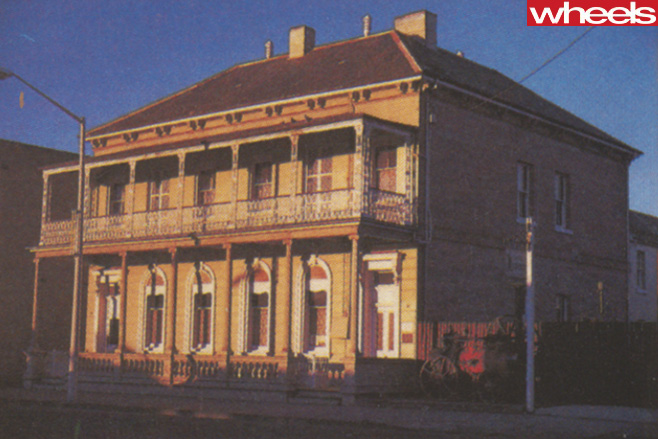
So when I took off up the Parramatta Road, looking for that new freeway that sweeps you past the inner western suburbs, the worst traffic snarl for a thousand kilometres in any direction, it was the car I was thinking of. This Holden engine is most of a BMW’s. It is smooth, torquey from what I estimate to be 1800 or 2000rpm. It is powerful in the middle and strong as the revs rise, only running out of potential towards the top, where a BMW would still be powerful (and would sound a little better). That this seamless power is delivered by the burning of 91 octane lead-free, a substance they’re only just beginning to hear about in the more backward states of Europe, such as Britain, is the more surprising.
If this Holden is the Australian average, it’s a hell of a long way further up the ladder of luxury and refinement than the best-selling European traffic jammer. In Europe, the four-cylinder engine is king. It goes into almost all affordable cars, even the lower-to-middle end levels of executive sedans like the Ford Granada and Renault 25. Only the most luxurious models get sixes, and there are some pretty unruly ones about (worst among them Ford’s ‘new’ 2.4 and 2.9-litre, bone-shaker V6s). In Europe, it can be hard for the motoring scribbler to remember what smooth is, since he applies the description to too many in-line fours.
They are not, and never will be, smooth. The Nissan injected six, the best-mannered engine in an “average” car anywhere in the world, proves it. Come to think of it, the ordinary Commodore six must stand pretty well in any company: it certainly is wholly quicker, bigger and more luxurious than the Jap car the Japanese buy (the Toyota Corolla). And while it may not be bigger or plusher than the average American tin box, you could gamble pretty heavily that it’s better. Wheels proved it for Holdens when it took a Commodore (albeit a special one) and thrashed competitive Yanks with it on their territory.
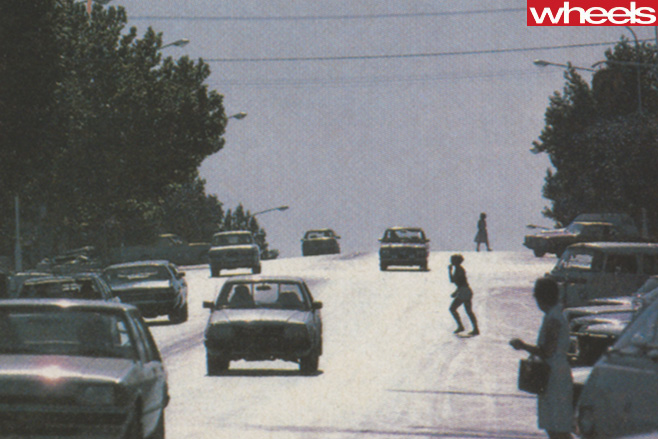
Fifty kilometres out of Sydney, fond thoughts about Australia’s Own (do they still call it that?) had faded from the mind, even though there were examples of the marque wall-to-wall. I was feeling blank horror at the needless obstacles which officialdom has been quietly stacking in the path of Australian road travellers these past nine years. Somewhere near Blacktown, I considered parking the sweet-running Holden next to the kerb and crawling back to the airport on my hands and knees, in the hope of flying to Adelaide instead.
At last, onto the west-flowing F4 we went, the brief stretch on the last of the coastal plain that leads to the Great Divide, another source of slowness. On the F4 our bold masters allow us a heady 110 km/h; I was struck by the way everyone observed it. The cops in patrol cars and bikes are fierce, I heard, and there are forests of signs to tell you that they’re overhead as well. I railed particularly against this pointless harassment. This must be Sydney’s safest road; a 140 km/h limit would make perfect sense. lt didn’t help when I learned a couple of weeks later that the cops are hardly ever in the air, surveying the F4. That seemed even more unjust. Not only were we obeying stupid laws. but they weren’t even up there enforcing them. Just threatening.
The Poms have a 70 mph (112 km/h) speed limit, you’ll be pointing out. lt’s a fact, and it’s as stupid as the one on the F4. But the difference is that it isn’t enforced.
You can pass patrol cars doing 80 mph (130 km/h) on British motorways and you won’t be pulled. They won’t say so officially, but this is because the limit in most EEC countries is 130. On your speedo that really means 140-150.
lt all boils down this way: in Europe, where the population is dense, maintaining traffic flow at as high a safe speed as possible is the traffic planner’s business.
Inhibiting the flow has been shown to cause terrible snarls, accidents and frustrations. In Australia, where traffic is usually lighter and driving conditions almost always ideal, there seems an accent on prevention for its own sake, a lust for lawmaking.
They want us all to believe driving is a privilege, not a right.
But the main privilege is what you and I give to the lawmakers when we elect them. And where roads policy is concerned, they thoroughly abuse it.
lt was amusing to see that a shocking 20 kilometres of rutted, winding concrete road beyond Lithgow on the Bathurst road, which we all agreed was unacceptable 10 years ago, is still there. They’ve only improved the straight bits, though the worst of the road has been piously peppered with cornering speed signs. I was overjoyed to run out onto the Western Plains within a few miles of Bathurst, fondly remembered as the City of Radar.
lt took the run from Bathurst to Cowra for my brain to return to a state of equilibrium and compute a sensible cruising speed for this car and these roads as 140 to 160km/h. Thereafter, that’s how we travelled.
The country has a magnificence and a kind of, well, dignity at that time of the morning which it loses later when the rest of the world is up and trampling all over its surface. Mind you, all was not right. On the worst parts of this 160km/h road’s surface, the Commodore suspension was kicking up hell.
This 1987 car just does not ride as well as the one they launched at the end of the ’70s. (I wouldn’t make the claim from memory, but other hacks confirm it.)
The official story goes that the first European-theory suspension settings didn’t work in the bush or when you towed a caravan or boat. The latest ones, more firmly sprung, are better at that.
But there’s more to it than that. I drove the Commodore’s near European equivalent, the Vauxhall Senator, just before coming back to Oz. lt’s a car of the same size and power: three-litre injected six, powered rack and pinion steering and an independent rear end, recently rethought. lt is fit to be compared (for refinement) with the new Jaguar XJ6.
Against the Senator, the Commodore chassis felt second rate. Same safe handling, but the steering felt wooden (as if there were unnecessary friction in the system) and the ride, hampered by the age-old links-and-coils rear end, was rough and, in particular, under-damped.
A few years ago I’d have criticised the Holden out of hand. But now, seeing again the special demands of Australia’s roads, I think I understand it better.
Tracks like that across the Hay Plain are evil. They’re smooth at 160km/h one minute; extremely rough the next. You’re always hitting big, wracking bumps hard, so it’s still a fact that cars have to be tough out there. You only need a few 100km/h cattle grids or potholes or spoon drains to punt nice little Italian sporting sedans off into the weeds, or send the semi-trailing arms of your Vauxhall so hard into the body that they measure half a dozen on the Richter scale.
The truth is the cars I know in Europe would not stand up to 150,000 kilometres of high speed cruising in Australia. To build a car that will do it, you need to give it fairly stiff springs (to prevent the constant bottoming) and you need to give it fairly low-rate dampers (so the car can use what suspension travel it has). That gives you a firm, rather under-damped ride by European standards, and it is what this Commodore SL had. GM’s suspension men must be caught in a cleft stick because they can’t simply say this apparently poor compromise is best for the everyman job.
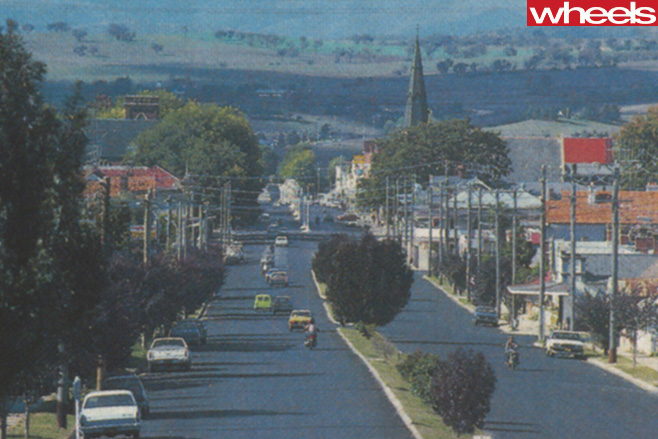
They told me, at Wheels, to leave the main road west of Balranald. Instead, I was to turn south just east of the town and head south, crossing the Murray River, clipping through the top of Victoria at Ouyen and running into South Australia through Pinnaroo. lt was the best advice of the journey.
The signs of a highway melted away as soon as we’d made the left turn. The road was no worse; in fact it was better, having not been battered by the trucks. There were fewer caravans, hoardings, milestones, so we went faster, sometimes showing 180-190km/h without effort. The car’s lack of damping showed up, all right, and so did its less forgivable fault, a distinct lack of aerodynamic development.
This car, alongside a Senator, is unstable in cross winds. Australian distances are vast. This detour occupied near enough to 350 kilometres, most of the distance from London to Paris – and that’s if you count the water.
When you are used to the scale of European maps, you can hardly believe you’ve crawled across so few centimetres of Australia for so many hours hard slog. Yet for keeping up high average speeds, there’s no place like this one.
By lunchtime, 9n the Hay to Adelaide day, I’d done three-quarters of the 900 kilometre journey. The determined car traveller makes progress that simply isn’t available to him on the other side of the world.
Beyond Murray Bridge, I saw my first policeman with a radar gun. He was hiding among the bushes in the middle of a wide median strip, apparently to catch people like me exceeding South Australia’s “liberal” speed limit of 110km/h. I felt sorry for the bloke at first; it didn’t seem fit work for an adult, much less the kind of specially qualified adult we are told police forces now comprise. But this one seemed to be enjoying it. My sympathy changed to something else.
But neither he nor the next bloke I spotted doing exactly the same thing 30 kilometres on seemed to be doing very good business. The Australian driver has long since learned that limits are most rigorously enforced in places where fast driving would matter least; where it is easiest to go fast, rather than most dangerous. It is the sheer cynicism of the system that offends most.
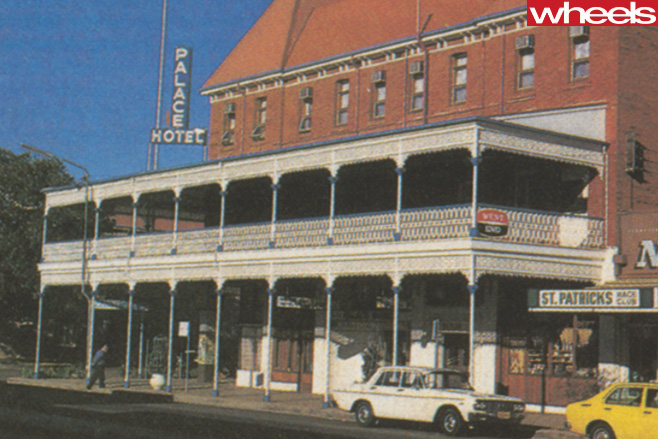
The road to Broken Hill was as I remember it from many trips over the years – fast, well-surfaced, deserted and inviting.
lt is always so good to get up there, beyond Burra, into the country that rolls and folds gently away to the horizon, and to 50 more horizons beyond. Recent rain had turned the verges and slopes into solid green, sometimes purple, and that was unfamiliar. But there are things out there you don’t know you miss until you experience them again: the space, the sky, the silence of all but the wind, the smell of the sun on the air.
The road from Broken Hill to Sydney — as far as Dubbo, anyway- will always be famous to me for the sheer, shimmering distance it allows you to put underneath a fit car’s wheels. A few years ago, Mr Robinson and I averaged 160km/h on it for three hours. That is as quick as I’ve ever been, over such a time.
If your car’s a Holden Commodore, you can sit it on 160km/h, reeling in the road, still able to hear much of the detail from the (ordinary) stereo which they put into SL models.
I set out from the Hill at 4am and was past Nyngan, roughly halfway in the 1160-kilometre Sydney journey, in three hours and 40 minutes. That was despite the animals …
You can make a case for the fact that Australian cars need anti-lock brakes more urgently than anything they make on the other side of the world. If you leave a town like Broken Hill early on a fine morning, when it’s been raining and the grass is thick at the roadside, it’s a good bet that you will need to make half a dozen “phenomenal avoidances” — the brake-and-swerve-at-once kind – every hour until eight or 9 am, to avoid the kangaroos, all of them tall, heavy and well-fed, that line the road. lt doesn’t matter whether you’re doing 80 or 160 km/h.
You’re driving into the sun, they’re dopey with sleep; they will surprise you. And the thought of being joined in the cockpit by 70 kg of wounded, thrashing animal will encourage you to stamp on the brakes rather harder than they teach you at advanced driver’s school.
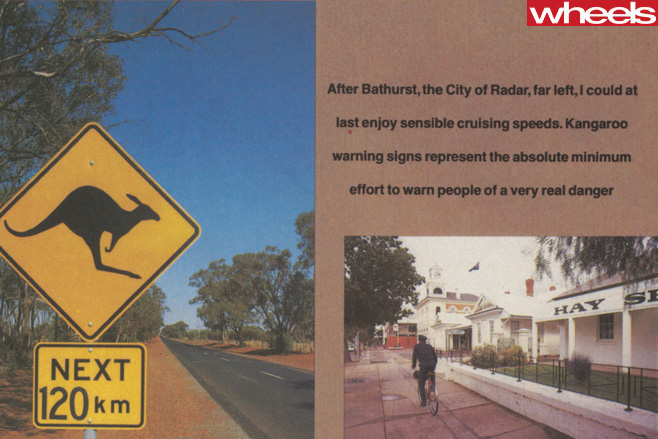
It is a terrifying problem, yet one visited only minimally by the same authorities who, nearer civilisation, pepper roads they won’t repair with their trivial cornering speed signs. Erecting something outside Wilcannia saying “kangaroos next 100km” represents doing the absolute minimum, I’d say. Some sort of indicator about this month’s degree of risk might help, at least. I will bet you a BandAid to a garage full of ambulances that more people and cars are damaged through collisions with wild animals than ever went off the road near Katoomba for the want of a corner warning sign.
The road from Dubbo to Orange is a peach; after that you’re in civilisation again. Or I thought as much. But I turned through Lithgow town and up onto the Bell’s Line just for old time’s sake. We did intrepid things there 10 years ago.
You can still do them. On the Friday afternoon I was there, not many weeks ago, the road was deserted. The surface was better than I remembered; no obstacles of civilisation had been erected to mar our progress towards Sydney. And the shape of the road was just as I remembered.
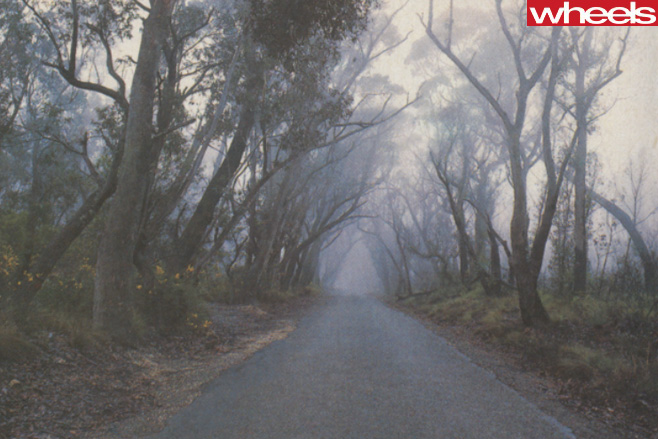
It swoops up short hills and through grand, wooded valleys, it hurls you through holes in ragged walls of rock and out the other side onto straights that are always short, and into tunnels made of trees. There are long, long corners, where you get a chance to pause and adjust your car’s stance right at the limit of its grip. And there was the scenery, magnificent on every side.
The Holden, at the end of 3000 kilometres, felt as familiar as any car is likely to get. I didn’t see its tall top gear often in that dash towards Kurrajong Heights but the rest of the ratios, the engine, and even the chassis – good and tenacious on smooth surfaces – made this as good a car as the job needed. It was that for the rest of the journey, come to think of it. We enjoyed it together.
SOME cars stand above others by advancing technology, packaging or performance. But the Citroen DS, now incredibly more than 60 years old, actually floated above them.
The DS – its name a play on deesse (goddess in French) – materialised at the Paris Salon de l’Automobile on October 5, 1955. It was immediately apparent to the stunned audience that here was a car ahead of its time. By the end of the show, 12,000 of them had placed orders.
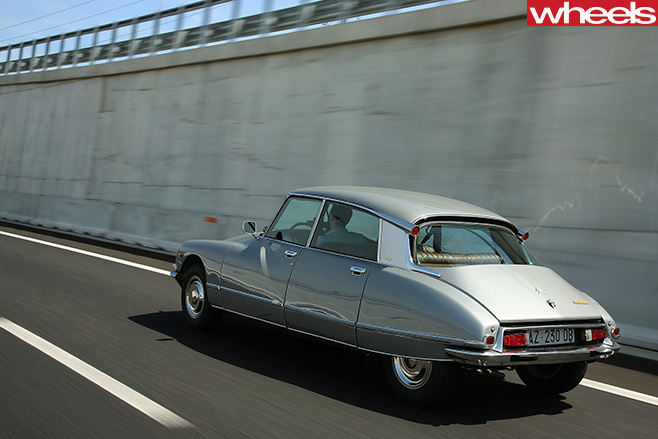
The DS’s domed floorpan, concealed air inlets, faired rear wheels, tapered shape and semi-flush side glass contributed to a Cd of 0.34, which was not regularly matched by mainstream sedans until the 1980s. Around its longitudinal engine, with gearbox in front (a carryover from the Traction Avant) driving the front wheels, the DS’s steel monocoque frame incorporated a tailored crumple zone.
The hydro-pneumatic system, a new Citroen signature, provided self-levelling ride, increased damping resistance under load, increased braking pressure under load, and also served the power steering and hydraulic-shifting four-speed manual gearbox. The fully hydraulic brake system was a production-car first, not to mention disc brakes (front, inboard).
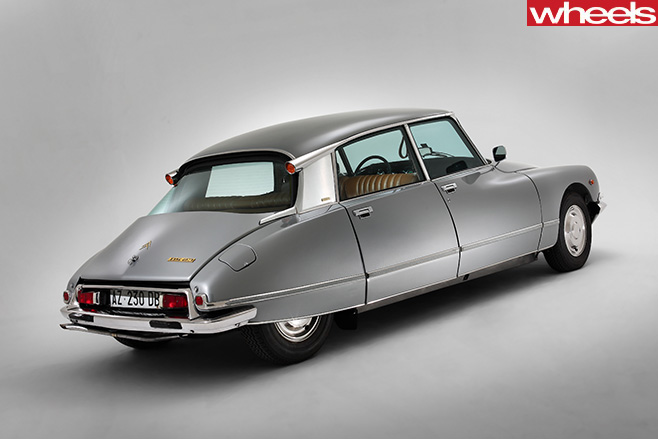
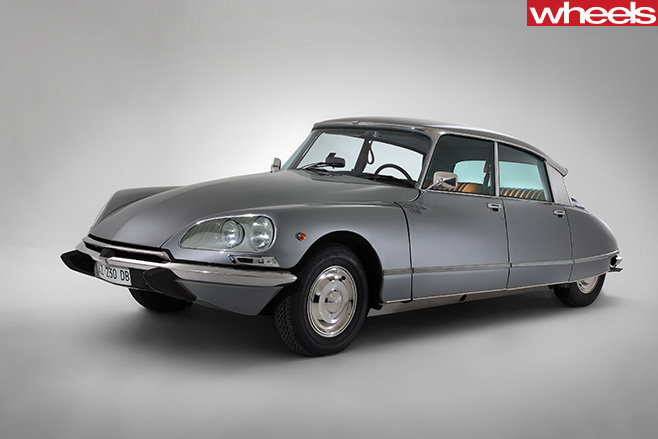
The DS was restyled in 1967 by Robert Opron, who had become head of design at Citroen five years earlier. As can be seen with the car pictured here, Opron (who went on to create the SM in 1970 and the CX in 1974) gave the DS a more streamlined and innovative headlamp design, with four headlights under a smooth glass canopy. The inner high-beam set swivelled with the steering wheel, as much as 80 degrees, allowing the driver to ‘see around corners’, while the outboard low-beam units were self-levelling.
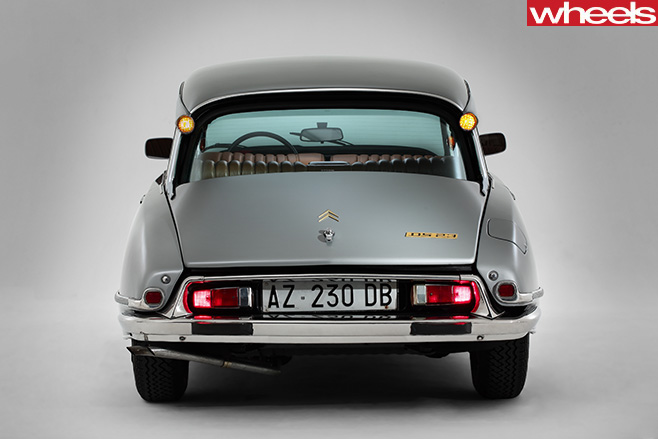
Production of the DS and base ID, in sedan, Safari wagon and rare cabriolet forms, ran from 1955-75 and totalled 1.45 million cars.
The DS’s monocoque frame, engineered by Traction Avant pioneer Andre Lefebvre, is in welded steel and designed for non-stressed, lightweight panels to be simply attached by bolts (guards) or screws (roof).
A sedan weighed around 1125kg. The Break (aka Safari) wagon, on a longer and stronger frame, seated eight; the rare and gorgeous two-door decapotable (convertible) was outsourced to Paris-based coachbuilder Henri Chapron.
Future shock
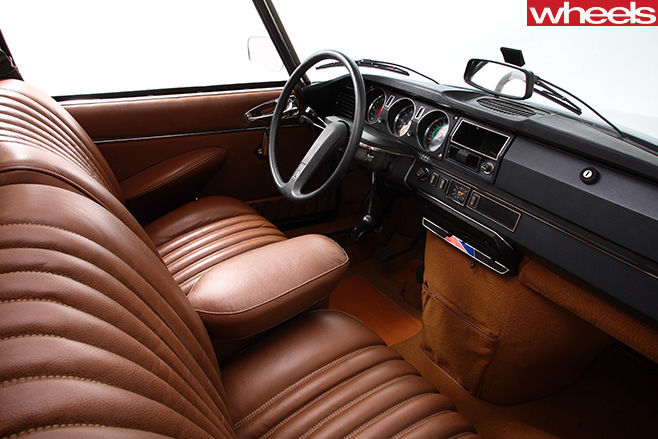
The DS’s interior was like no other. The single-spoke steering wheel was meant to cushion the driver in an impact. The dash panel was a huge one-piece moulding in space-age plastic, sprouting a profusion of control stalks. Vents provided side window de-fogging. Mushroom-button brake “pedal” was another oddity. Seating, whether with front bench or buckets, was incredibly plush and interior space amazing, helped by the car’s flat floor.
Coming of age
The original 1911cc pushrod four was already 21 years old. Despite a new crossflow alloy head, the three-bearing design was flawed and, with 56kW at 4500rpm, underpowered. It sat longitudinally (actually, front mid-engined) with a hydraulic-shifting four-speed manual gearbox ahead. Much-improved five-bearing 1985cc (DS19 A) and 2175cc (DS21) followed in 1965, then 2347cc DS23 in ’73.
Fast & factual
1. The full Monte
DS twice won the Monte Carlo Rally and was moral victor of the 1968 London-Sydney Marathon, taken out by a spectator car just 150km from the finish
2. World beaters
Aussie privateers Ken Tubman, Andre Welenski and Jim Reddiex took a DS23 to victory in the 1974 World Cup Rally
3. Falling flat
The DS was initially to have been powered by an air-cooled 1.8-litre flat-six by 2CV twin designer Walter Becchia, but its 48kW was inadequate
4. Home-built
About 1400 ID19s were assembled in Oz, with local differences including an aluminium roof and rear guards, and a conventional brake pedal
5. Hydro scheming
Citroen confirmed in 2015 that its C5 was the last hurrah for hydro-pneumatic suspension; ironically, the new ‘DS’ sub-brand shuns it
With the Michelin and Continental showing class-leading form on dry high-friction asphalt, it was interesting to see if the same dominance would continue on the Figure Eight.
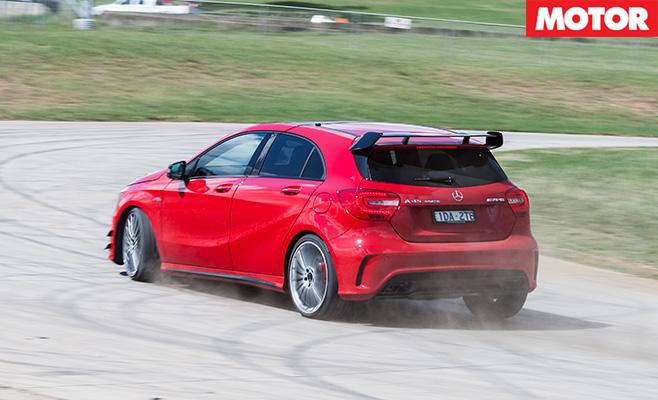
Surfaced with slippery low-friction concrete and with its long, medium-radius corners, it really amplifies a tyres’ attributes when subjected to sustained cornering load.
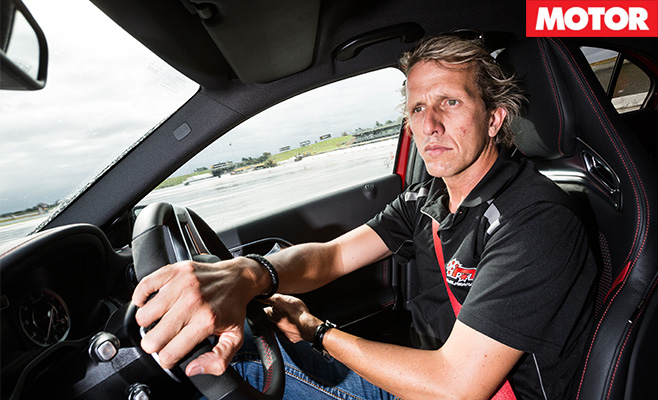
Here, the AMG proved the perfect test bed: its all-wheel drive virtually eliminates irregularities in power-down traction, its even-to-front drivetrain torque bias allows maximum attack while focusing load across the front axle, and its sweet adjustability allows rear grip to factor into the performance.
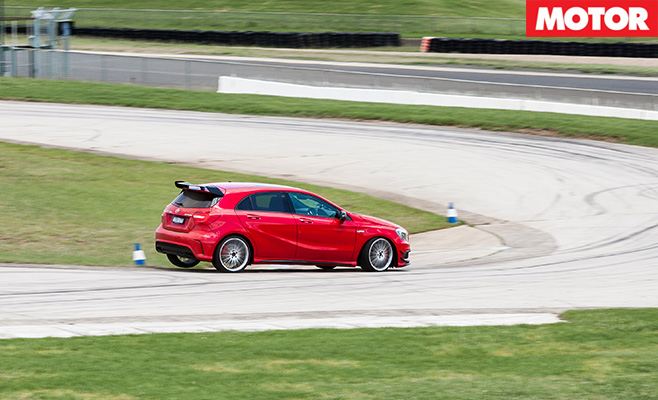
And like last year, each tyre set was subjected to three consecutive flying laps from a rolling 60km/h start, after which a combined three-lap time was recorded as gospel.
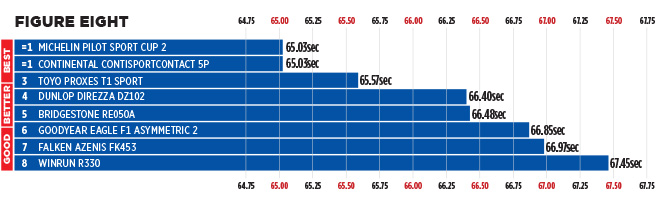
To no-one’s surprise, both the Michelin and Continental were the pace-setters, though you’d need a crystal ball to predict they’d clock identical 65.03sec passes. And given their performances in the Slalom, both models look untouchable in providing both highly reactive turn-in and supreme loaded grip on any type of dry surface.
It was the thick end of a full second between the quickest trio and the next four competitors. And, you could have thrown a blanket over the Dunlop (66.40), Bridgestone (66.48), Goodyear (66.85) and the Falken (66.97) – their collective times separated by a spread of just half-a-second in total over three combined laps.
The same can’t be said for the Winrun, however, though its tail-ender 67.45sec effort was, to be fair, a mere half-a-second off the Falken.
MORE MOTOR TYRE TEST 2015
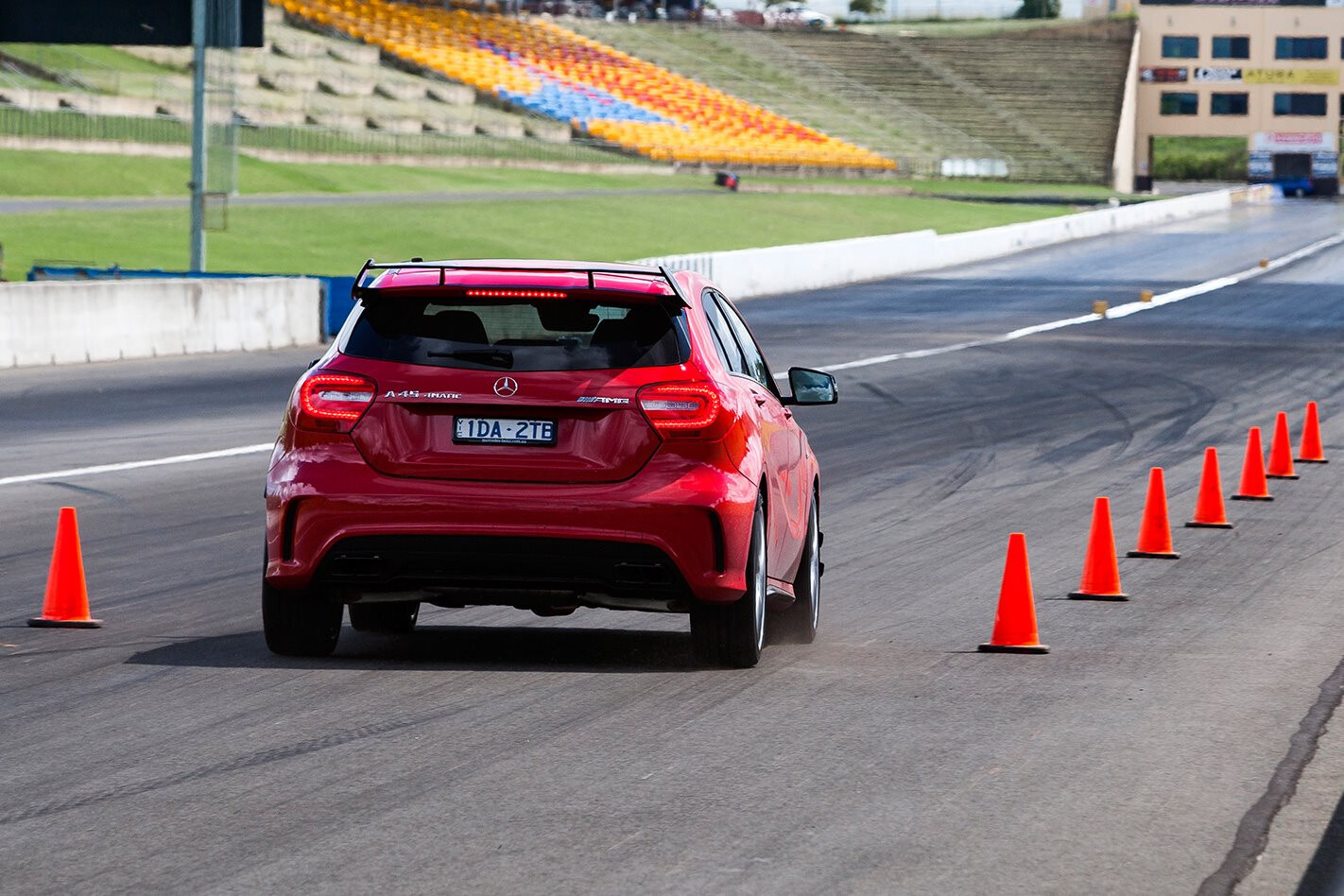 DRY BRAKING
The spread of braking distances, across this field of eight competing tyre models, spans a whopping 8.52 metres!
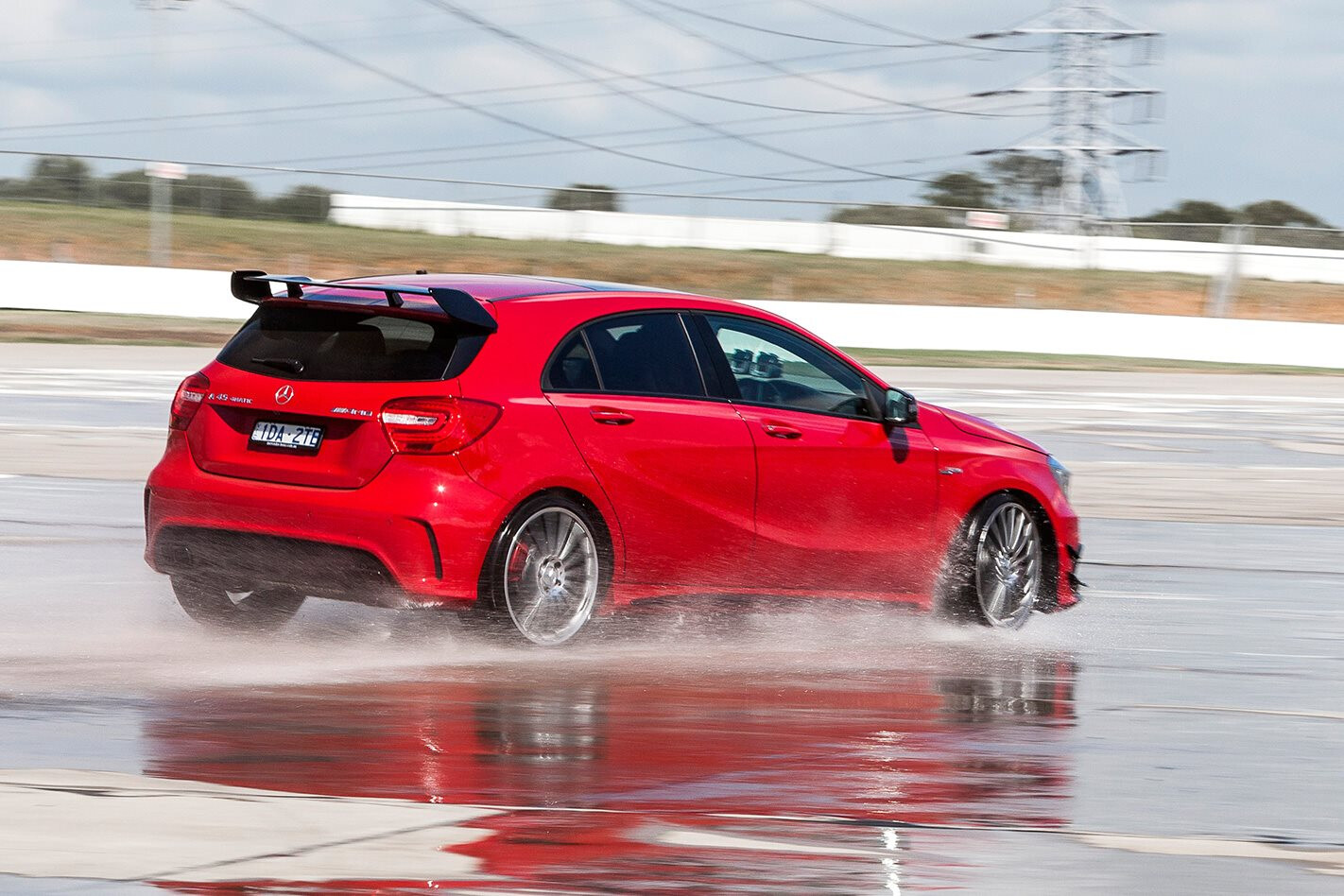 WET MOTORHANA
A tyre’s ability to cope with wet conditions plays a huge part of the Tyre Test and represents a significant portion of the overall scoring.
MOTOR TYRE TEST 2015
Our ultimate grip test again proves that while they may look the same, the levels at which these rings of sticky stuff perform are vastly different.
MOTOR TYRE TESTS
The quest to find the best high performance tyres in Australia.
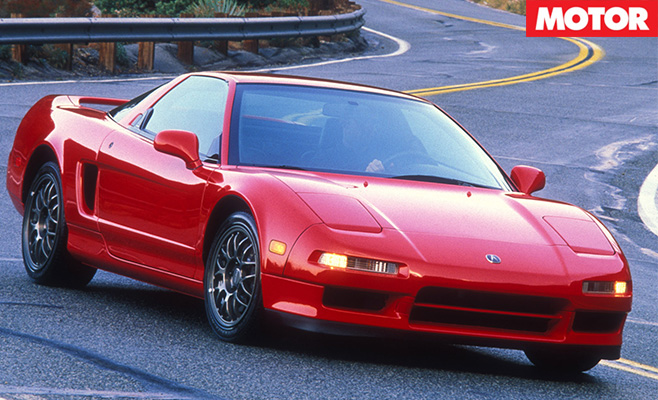
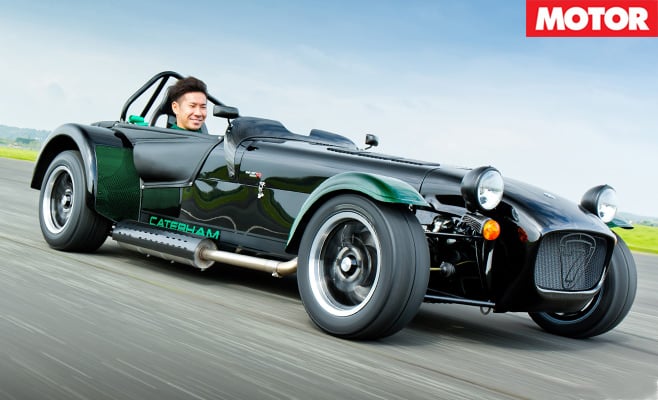
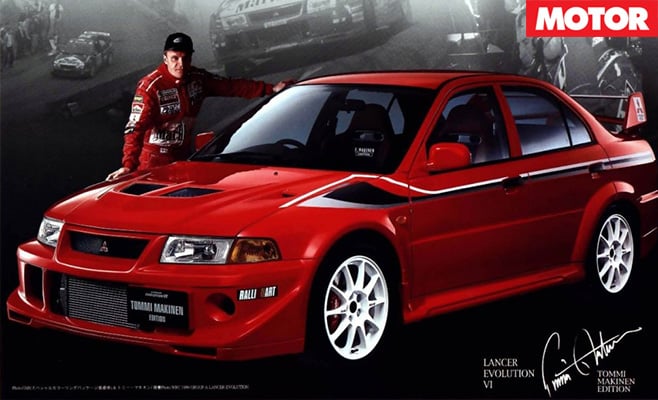
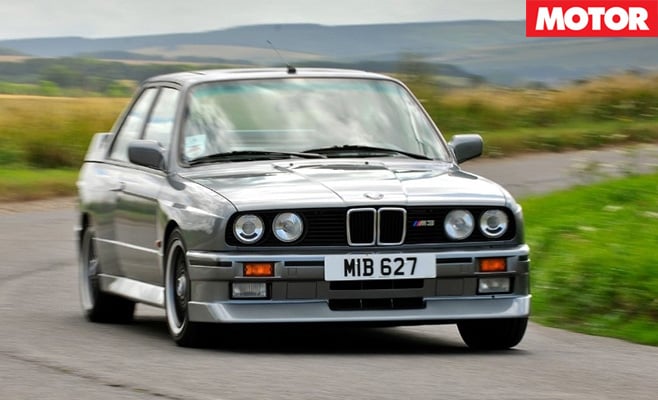
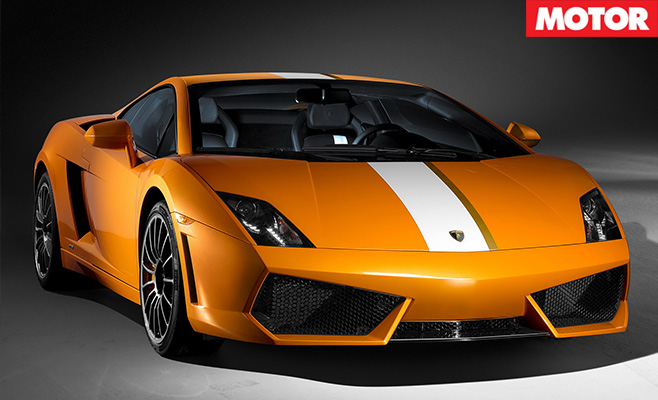
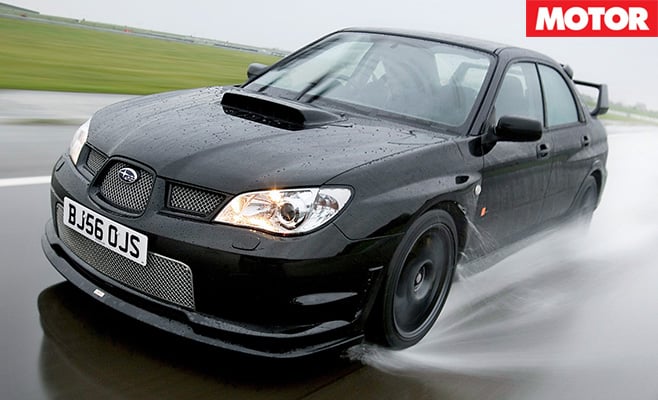
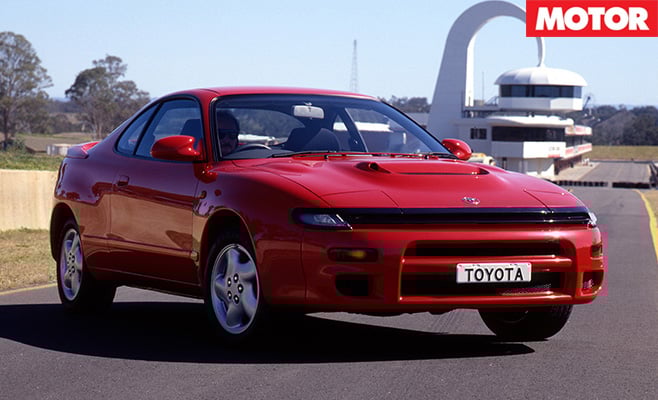
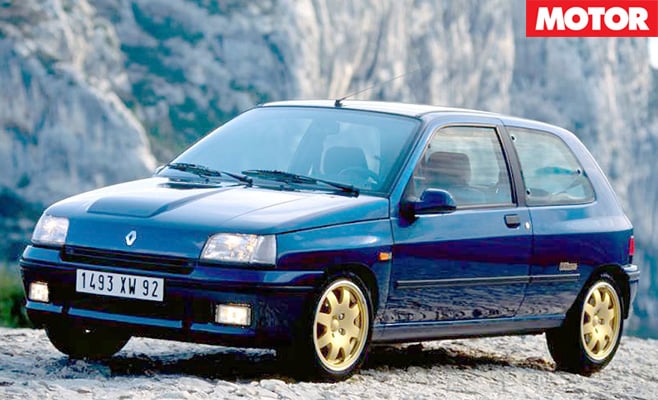
Racing driver tribute editions can be very hit and miss.
It’s all too easy for the marketing department to convince said champion to apply their signature, stick on a new set of wheels and flog it to buyers who probably don’t know any better.
Thankfully, some manufacturers take this stuff seriously, and below you’ll find nine tribute editions which are every bit as special as the names that adorn them.