
FORD has plugged a gaping hole in its mid-sized SUV range by announcing an expanded line-up for the upcoming Ford Escape that replaces the underperforming Kuga from February 2017.
Ford will add a front-wheel-drive Trend version of the Escape, priced from $32,990 – bang in the sweet spot of the popular SUV category.
The new model boosts the Escape range to eight models (one more than previously) that now start from $28,490, representing a $760 saving on the price of admission to a category Ford has underperformed in.
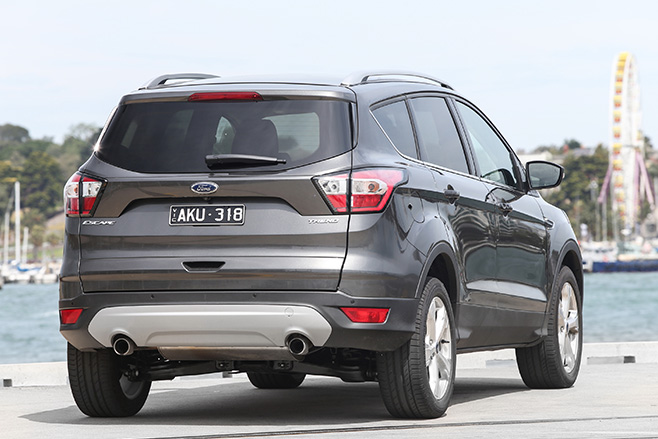
“That new variant is going to play in the most highly configured configuration in the medium SUV segment,” Ford Escape product marketing specialist Allen Fong said.
He said the simple addition to the model range would increase Ford’s coverage of the segment from 28 percent to 92 percent. “We think that will do very well for us in terms of broadening our coverage of the medium SUV segment.”
Ford says the Escape will be between $200 and $900 cheaper than the equivalent Kuga when full details are announced closer to the launch early next year.
Key to the change is allowing customers to get more features – including auto headlights, rain-sensing wipers and 18-inch alloy wheels – without having to step up to a bigger engine and a four-wheel-drive system that many won’t need or use.
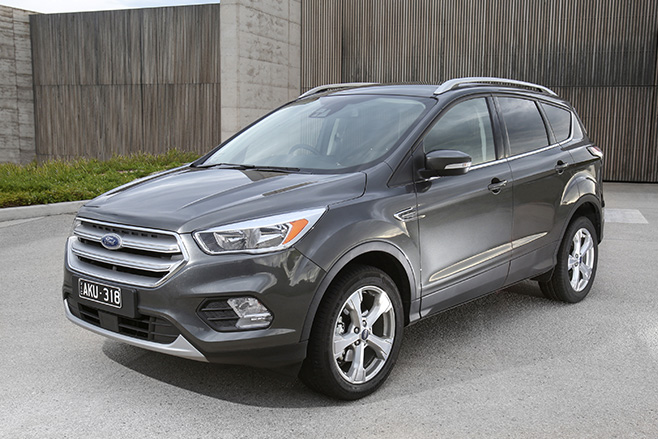
Previously, only the base Ambiente was available with the 1.5-litre four-cylinder turbocharged engine used to power the front wheels.
That 1.5-litre makes 134kW when connected to the six-speed auto transmission most buyers choose.
As with the Kuga it replaces, all Escapes will get dual-zone climate control and satellite navigation as well as Sync 3, Ford’s latest connectivity system that incorporates Apple CarPlay and Android Auto.
Ford Australia chief executive and president Graeme Whickman said he believed the Escape would grow market share, something it needed to do in a segment it had underperformed in.
For the first 10 months of 2016, Ford has sold just 3634 Kugas, less than one-fifth the number of Mazda CX-5s shifted by rival Mazda.
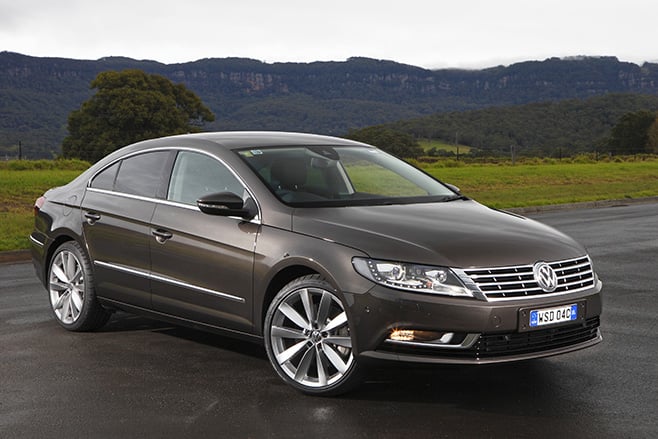
THE Volkswagen CC is set for a comeback. The German premium carmaker has lifted the veil on the Arteon, the concept car that will soon become four-door coupe’s successor.
The Volkswagen Arteon, set to become a real car in mid-2017 and due on sale in Australia around October, was released overnight as a sketch of a concept car that will make its debut at the Geneva motor show in March.
Similar to the two generations of the Passat-based coupe that preceded it, the Arteon will sit at the top of VW’s mid-size passenger car range. The concept’s sleek profile – the Volkswagen CC was the first affordable spin-off of the Mercedes-Benz CLS Class that introduced the world to the idea of a four-door coupe – means the production version of the Arteon will sell largely on the allure of its design.
The new CC concept’s design includes “overt accents” such as standard 19-inch alloys, frameless windows, LED matrix headlights and “dynamic scrolling indicators” that appear to ripple in the direction the car is turning.
Volkswagen Australia marketing and product general manager Ben Wilks said the reborn CC would be “synonymous with technology and value”.
“Arteon in every sense surpasses any prestige car around or immediately above its price point,” Wilks said.
“With our first in Australia head-up display coupled with Active Info dash, you’re looking at the most advanced driver interface to date. With its driver assist systems Arteon takes a big step toward autonomy.”
It won’t be all show and no go: The range-topping version of the CC is expected to use the 206kW turbocharged four-cylinder engine shared with the range-topping Passat and the Volkswagen Golf R. Like both of those vehicles, the engine will distribute power to all four wheels via a six-speed dual-clutch DSG transmission.
The Arteon keeps the frameless window design of the preceding generations of CC, and includes a top-hinged boot lid providing what VW claims is a “huge” amount of luggage space.
The concept’s name is a mash-up of “art” and “eon”, the latter being a syllable used on VW’s more premium products such as the Audi A8-based Phaeton limousine that ended production last year, and the China-only Audi A6-based Phideon large car launched mid-way through this year.
Bathurst’s hills were alive with the sound of Munich yesterday when three BMW M6 GT3s were unleashed around Mount Panorama during a private test session.
BMW has exclusive access to the circuit for a customer drive event and used yesterday morning as an opportunity to hone its GT3 weapons ahead of its 12 Hour assault in February.
As well as providing a haven of data for engineers, the three-hour test served as a valuable learning session for both international and local drivers .
German DTM ace and factory driver Marco Wittmann, who will race in the 12 Hour with Steve Richards and Mark Winterbottom next year, had his first taste of the internationally famed circuit.
Meanwhile, the test provided V8 Supercar drivers Mark Winterbottom and Chaz Mostert their first dabble in a GT3 car.
Joining Mostert in a privately backed M6 GT3 run by Marc Cars Australia was Paul Morris and Morgen Haber.
Local legends Tony Longhurst, Mark Skaife, and Russell Ingall gained further experience in the Castrol Vodafone M6 GT3, but weren’t joined by factory driver Timo Glock, who will race with them next year.
Adam Baker, BMW Motosport’s head of Race Operations, was on hand to oversee the whole shakedown and told MOTOR the varied experience levels were most interesting.
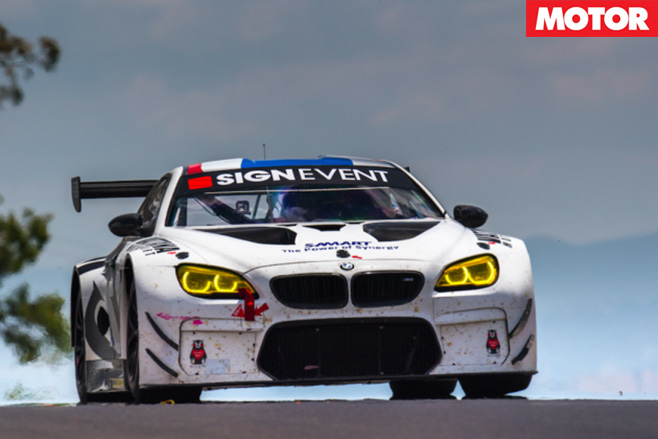
Baker said the young guns shone most in the M6 GT3s, which are 4.4-liter twin turbo V8 powered with carbon fibre bodies and advanced aero packages.
“Chaz was quite impressive with it being his first GT experience, which was interesting for us to see,” he revealed.
“Marco having to just learn the track, it was something he had under control relatively quickly.
“Those guys for us were essentially the reference, between those two we had excellent benchmarks.”
Mostert is believed to have run mid-2:03s, which is off-pace compared to Tekno Autosport’s 2:01 pole lap with Shane van Gisbergen at the wheel of a McLaren 650S GT3.
However, for a day focused on testing and data acquisition, BMW says it’s hard to make comparisons without as much rubber on the track.
Even then, the cars looked quick to across the top through an iPhone. Have a look for yourself above.
IN a sport populated by drivers who regard the ragged edge as just the starting line, Scotsman Colin McRae was a giant in the world of rallying.
Hugely gifted and outrageously flamboyant in the car, McRae was a straight-talking Scot out of it, who eschewed most forms of excess despite his wealth and fame.
He did have one weakness, however, and that was rally cars. And one of his most famous buys was this MG Metro 6R4. Spitting out around 300kW from a naturally-aspirated V6 behind the crew’s right shoulder, British rally ace Tony Pond once described it as “difficult to set up, noisy and smelly, but great fun.”
Virtually undrivable without its massive wings, it needed a physical approach to drive it – and McRae was up to the task. Buying the car in 1997, he would use it as a course sweeper – known as the 00 car – on the rally that bore his name, the Colin McRae Stages.
He and then-codriver Nicky Grist had a moment for the ages during a rally in 2006, backing it up a laneway at 130km/h, laughing it off and finishing the stage.
The car caught fire in Colin’s garage in 1998, and was pushed into a corner, never to be driven by him again. After his death, a UK 6R4 specialist rescued and rebuilt it, selling it to a private collector who is now offering for sale for around $500,000, rescued the car.
One thing is for certain – it’s unlikely to ever be driven like Colin drove it. And that’s a fitting epitaph for one of rallying’s most full-on pairings.
- Without the seven Skoda models that preceded it, there would be no Octavia. It’s called the Octavia because the original 1959 to ’71 version, built in Mladá Boleslav, was Skoda’s eighth model.
- The Octavia is Skoda’s best-selling model, and RS versions historically make up almost a third of sales, but based on the initial supply of 70 cars, the Skoda Octavia RS230 certainly won’t be the biggest-selling Octavia.
- The ‘230’ in the name is for horsepower, not kilowatts, so the power-up compared with the Octavia RS162 (which, logically, has 162kW) is not 68 but 7kW. The torque figure is unchanged at 350Nm.
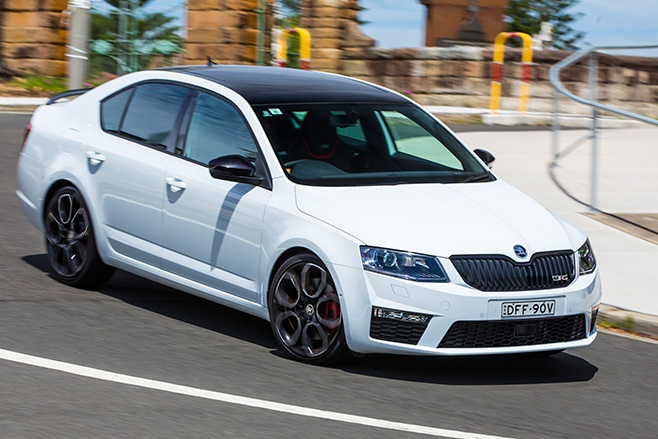
- The standard Skoda warranty is for three years and unlimited kilometres, but a two-year extension to a five-year factory warranty for the Octavia costs $1500, or is free if you’re buying using Skoda car finance.
- Unlike the current Skoda Octavia sedan and wagon, the original Estate had a bigger engine, at 1.2-litres, while the sedan had a 1.1-litre engine. The 1.2 was later fitted to the sedan. The high performance version – not badged RS – had 41kW, 11kW more than the basic one.
- Skoda says the RS230 is ‘For the Fans’ and it’s heartening for purists that it comes as a six-speed manual. But in a global context, Aussies are among the most likely to choose an automatic transmission , so the fact the Octavia RS230 only comes as a manual will limit its fan base.
- The Skoda Choice program, which guarantees a minimum future value for your car, addresses one potential drawback of Skoda ownership – the brand’s higher than average depreciation. (For used-car buyers who hold onto cars, the rapid depreciation could instead be considered a plus).
TELL ME ABOUT THIS CAR
The Skoda Octavia RS230 is slightly more powerful and sharper handling version of the petrol turbo Octavia RS162, which is the sporty version of the Czech brand’s roomy small liftback/sedan and wagon.
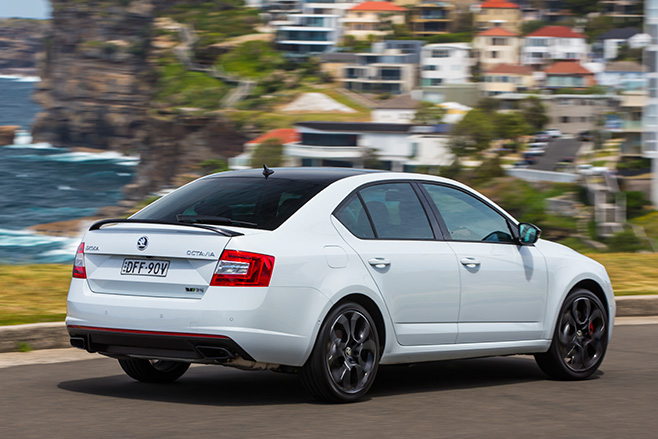
The six-speed manual transmission-only, limited edition RS230 squeezes an extra 7kW from 2.0-litre four-cylinder turbo engine, an electronically controlled limited slip differential, 19-inch wheels wrapped in sticky tyres, and other extras compared with the RS162.
STRENGTHS
- Space. Ample rear legroom makes the Octavia accommodating for adults in the back and the capacious cargo bay is roomy enough for all the stuff that comes with family life. The seats in the front are generous and supportive, and stay comfy over longer trips.
- Equipment. The Octavia gives you a lot of features for the money in every version, and the RS230 adds performance features and niceties for about $3500 compared with the RS162. Standard in the RS230 are an electronically controlled limited-slip differential, body styling additions and black 19-inch wheels wrapped in Pirelli P Zero tyres, a city emergency braking system, a reversing camera and tyre pressure monitors.
- Surprise and delight. Skoda calls these ‘simply clever’ features, and they include the multiple tie down points in the cargo bay, reversible boot mat, A-pillar ticket holder and air-conditioned glove box. They’re only small things, but when you use them and appreciated the thought that’s gone in, it makes you like the car.
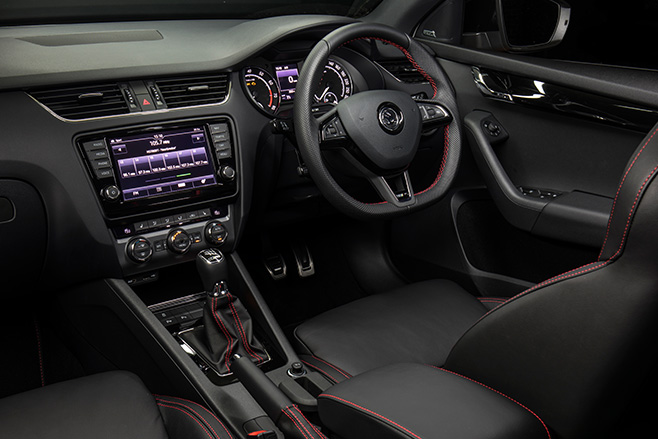
- Quality. The neat design, tactile feel and high quality finish of the Octavia RS230’s cabin sets it apart from similarly priced sedans and wagons. In the RS230, you get a lot of luxury for less than $45,000.
WEAKNESSES
- Waiting. Skoda has limited initial supply of the RS230 – only 70 of them – so you might miss out if you’re not quick, which would leave you waiting in the queue.
- There’s no automatic gearbox. We’re loathe to criticise the RS230 for only coming as a manual, because there are increasingly few manual performance cars available. So we won’t knock it, we’ll just point out that if you want an automatic sports wagon, you’ll have to have the RS162.
- Bump ride. The inevitable trade-off for firm suspension and low-profile tyre sidewalls is that the Octavia RS230 is less supply to ride in than the RS162, which is already a step shaper in the ride department than the Style version. The ride trade-off is not undue given the handling ability and grip the RS230 has, but it’s worth being aware of if you’re considering the Skoda as a fast family wagon, rather than as a performance car in a hugely practical body.
ANY RIVALS I SHOULD CONSIDER?
The RS230, like other Octavias (and other Skodas), is about delivering more space and equipment than you would get from other brands for the same price. It goes about this with Volkswagen Golf underpinnings topped by a bigger body that gives you the space of a medium car rather than a small one. The alternatives, as a result, come from both the small and medium car classes, and struggle to match it on room or value.
The Subaru Levorg GT-S and GT-S Spec B are the nearest alternatives to the Octavia RS230 wagon, with nearly as much room inside, but the Subaru Impreza on which the Levorg is based is not really an alternative for the spacious Skoda liftback/sedan. The Levorg has similar power, but is not as much fun to drive sportily as the RS230, in part because it’s a CVT automatic only model. The Levorg engine is more subdued (and noticeably thirstier) and the steering and handling aren’t as involving.
The smaller, lighter Volkswagen Golf GTI Performance (which uses the same turbo engine and electro-differential) accelerates a bit more quickly than the RS230, and handles more responsively, but it’s a conventional small car with much less room in the back and the boot.
Medium cars such as the Mazda 6 and Ford Mondeo duly offer equivalent space (or more) for a similar price, but in these cases you’re buying a highly equipped model rather than a high performance flagship version.
Mini Cooper S owners will be able to make their car look, stop and go faster with new John Cooper Works tuning options.
The Original Accessories by John Cooper Works retrofit range was unveiled at this week’s 2016 Essen tuning and motor racing trade and are under strong consideration for Australia.
The various accessories provide extra performance and sportier styling for those who perhaps don’t have the budget to stretch to the full-blown Mini JCW models, which cost up to an extra $10,650 over Cooper S versions.
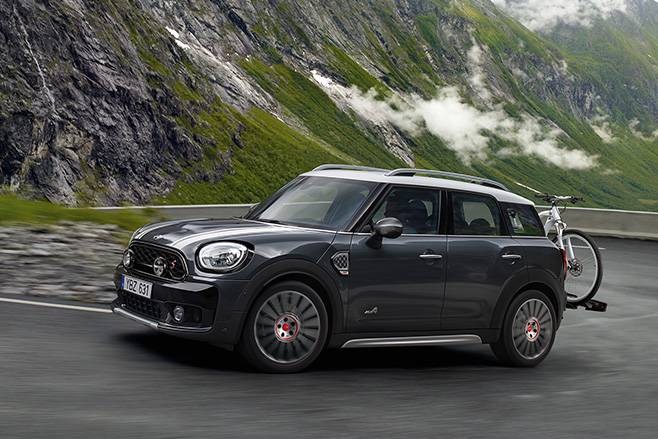
An engine tuning kit, for starters, halves the power deficit – bumping the S’s output from 141kW to 155kW, just 15kW shy of the JCW. It includes a sportier-sounding exhaust system called Pro flap.
Mini hasn’t revealed whether the extra power closes the acceleration gap to the JCW, which currently stands at half a second when comparing manual gearbox variants: 6.3 v 6.8 seconds.
A JCW Sports Brake system is also offered as another performance-related option that differentiates the ‘Pro Tuning’ extras from the Option Package made available for the Cooper S in September. The Option Package cost $2750 for the three- and five-door hatches or $5000 for the Convertible and were focused mainly on styling additions.
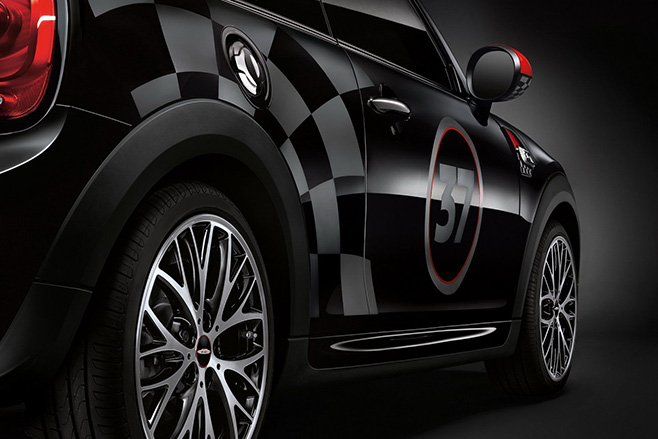
There are still plenty of exterior and interior extras available from the John Cooper Works Pro product range.
They include ‘black band’ front and rear spoilers offered in conjunction with an aerodynamics package, various decals for the sides of the car, while the side mirrors, air inlet cover and exhaust tips can all be ordered in carbon fibre. The latter are also available in chrome.
The Mini Cooper S cabin can also be embellished with JCW sports steering wheel, leather/chrome sports gearlever, LED door sills, and textile and all-weather floor mats.
Mini Australia said the JCW upgrades were currently undergoing a homologation process as part of assessment for the Australian market. Confirmation – along with pricing details – is unlikely to come before the first quarter of 2017.
Meet the motley crew assembled for Hot Tuner 2016.
Hot Tuner 2016 is brought to you by Valvoline SynPower
As ever it’s a diverse field, with some fresh faces courtesy of the arrival of the new Ford Mustang, which has already established itself as a firm favourite with the country’s tuners.
Among this quartet of supercharged rear-drive V8s, trio of all-paw turbo hot hatches, boosted MX-5 and mighty powerful GT-R is the 2016 Hot Tuner champion. Place your bets.
Hennessey Streetfighter ’Stang
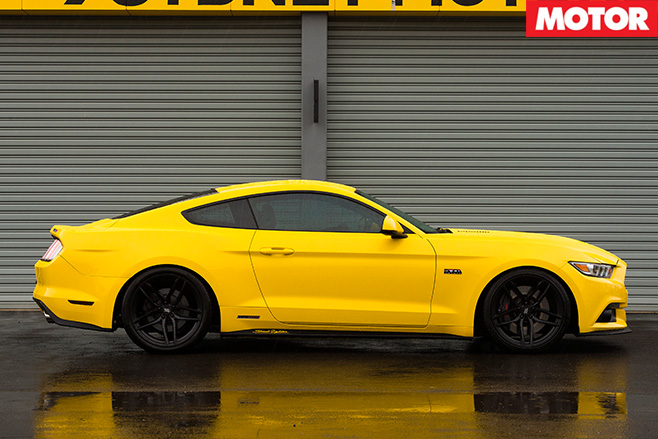
Herrod Performance Mustang
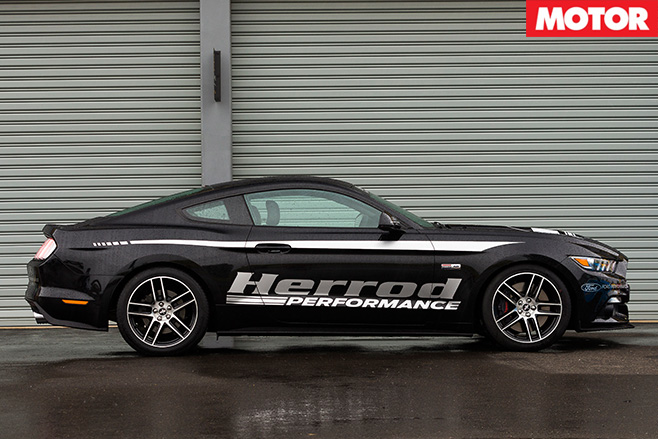
Hi-Torque HSV Senator
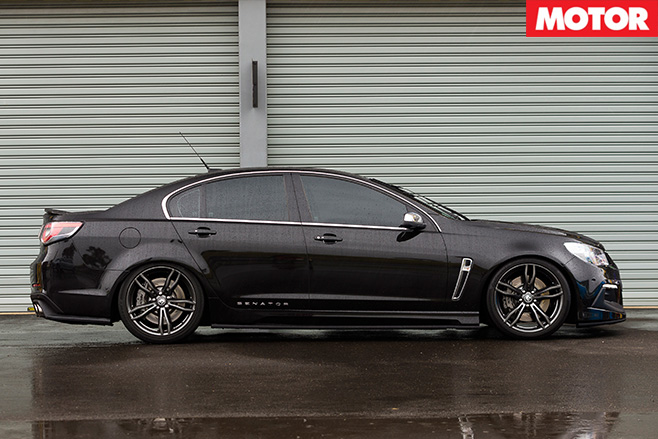
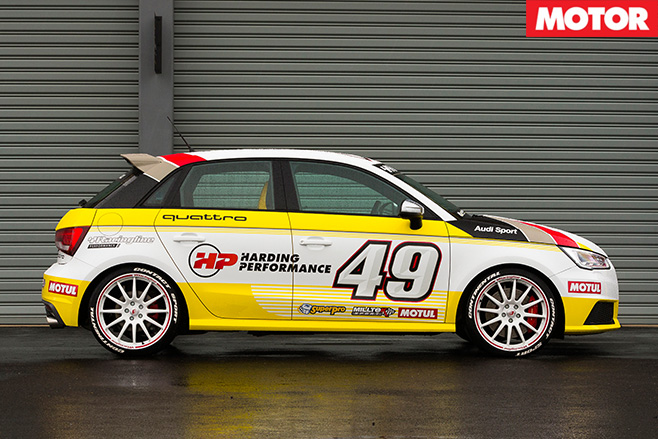
Harding Performance S1
VCM Performance C63 AMG

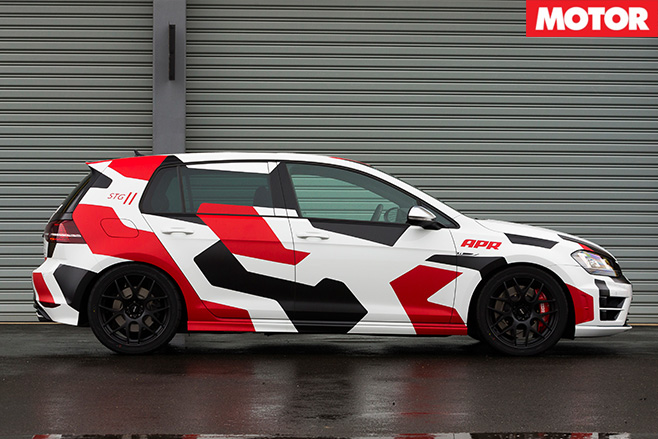
BWA Auto Golf R
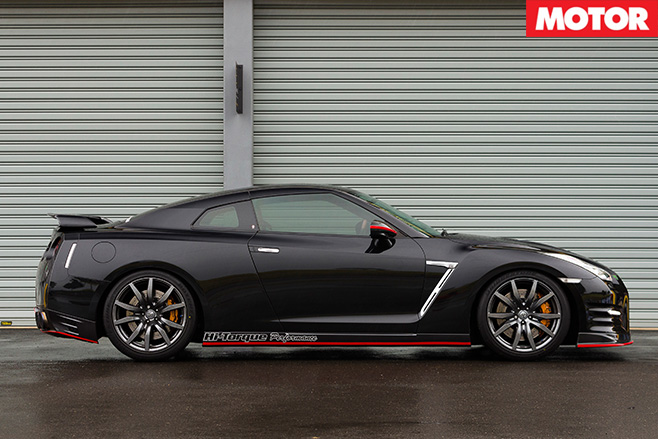
HI-Torque Nissan GT-R
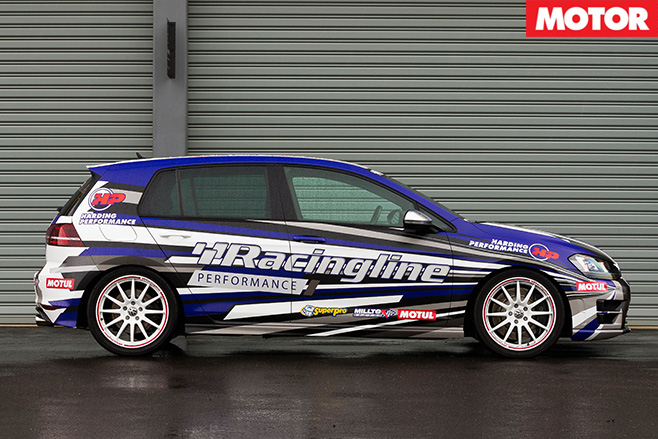
Harding Performance Golf R
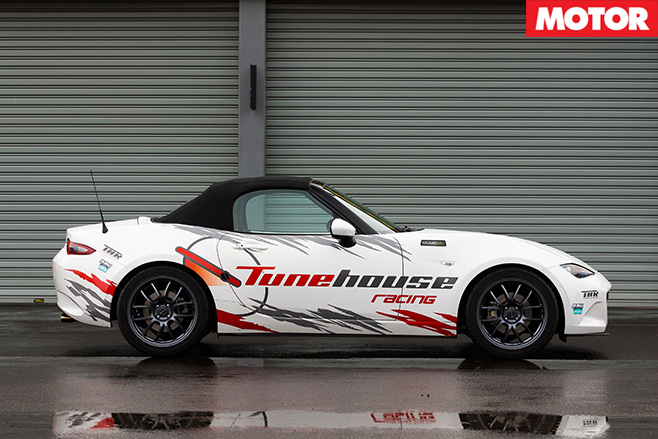
Tunehouse MX-5
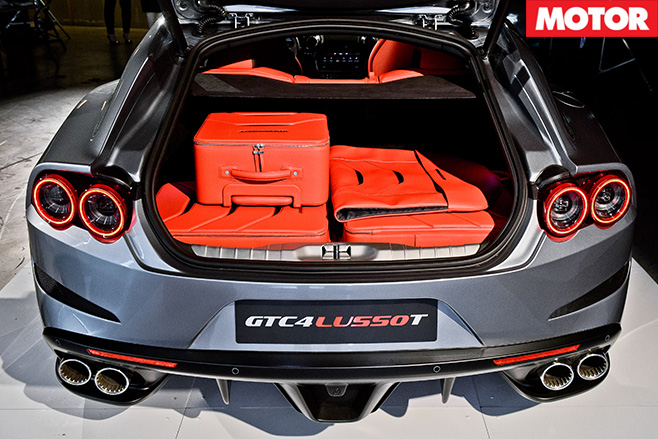
Ferrari has revealed the latest in its line of GT cars in Sydney, with the GTC4 Lusso T coming in at a cool $503,888 before on road costs.
Powered by a 449kW version of the 488 GTB engine (which makes 492kW), it runs a rear-drive, rear-steer chassis that’s 50kg lighter than its V12 big brother, the GTC4 Lusso. The V12 makes 507kW, in case you were wondering.
Ferrari’s amazeballs seven-speed dual-clutch transaxle take pride of place between the 20-inch rear wheels, and there are carbon-ceramic brakes all round.
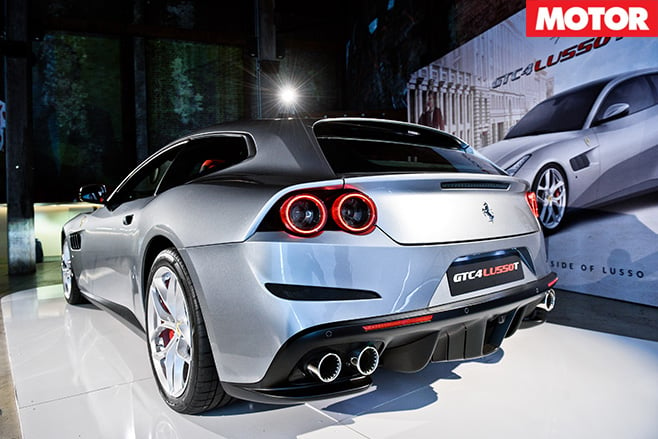
It’s been built to take on the flood of customers eyeing off stupidly expensive SUVs like the Bentley Bentayga, as well as capturing a raft of upwardly mobile types looking to graduate from top-end Mercs and Audis.
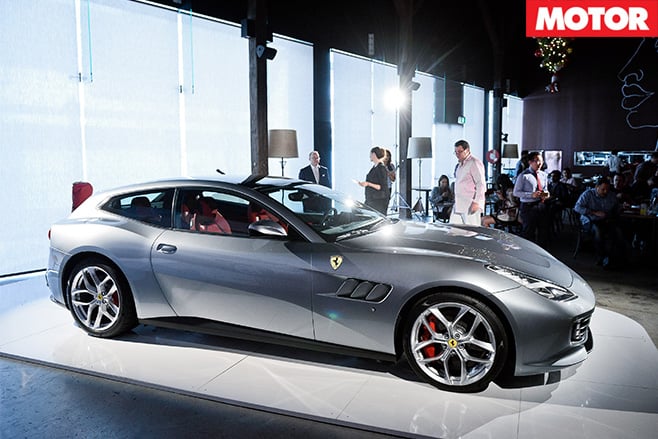
While the stock price is $503,888 before on-roads, the example you see here is more like $630,000. Ferrari’s options list is long and eye-watering, with Mr Appleroth suggesting that customers spend on average $65,000 – or about the cost of a Ford Mustang GT – on personalisation options.
THE only place in Australia where drivers could quench their need for speed is officially no more.
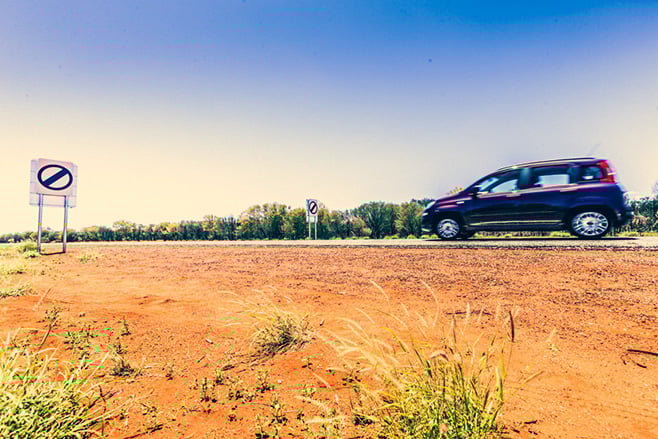
A seven-year open speed trial in the Northern Territory came to an official end last week with new road signs – restricting speeds to 130km/h – replacing derestricted signs along a 300km stretch of the Stuart Highway.
The move, slammed by the Australian car industry, comes after a change of leadership for the Territory in the wake of September’s elections, with the Michael Gunner-led government railing against the open speed trial as part of its pre-election campaign.
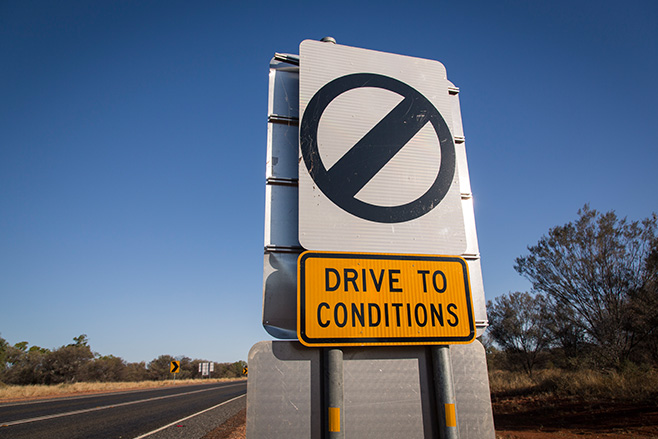
The deposed chief minister, Adam Giles, had extended the trial’s reach to a 300km section of the Territory’s main north-south road corridor, extending in two sections from just north of Alice Springs in the Territory’s south to the railway overpass at Ali Curung.
“Territorians have always acted sensibly in open speed limit zones, with 85 percent of drivers travelling between 133-139km/h; and most driving to the conditions,” Giles said as part of an announcement in April when the trial had extended to another 72km section of road.
“Of the 11 crashes that occurred during the 2014 year-long trial period on stretches of the Stuart Highway, there were no fatalities. And of the one serious injury reported, alcohol and not wearing a seatbelt were factors,” he said.
“The Territory has a unique road network, and we’ll continue to expand, upgrade, and take an evidence-based approach to speed limits on our major highways.”
Former NT transport minister Peter Chandler revealed to Wheels that his department was working towards extending the trial to more sections of the Territory’s roads, including a stretch along the highway to the tourist-heavy Kakadu National Park, that were part of the next roll-out of funding.
The trial had cost the Giles government about $30 million to change over signs and clear trees to improve run-off safety.
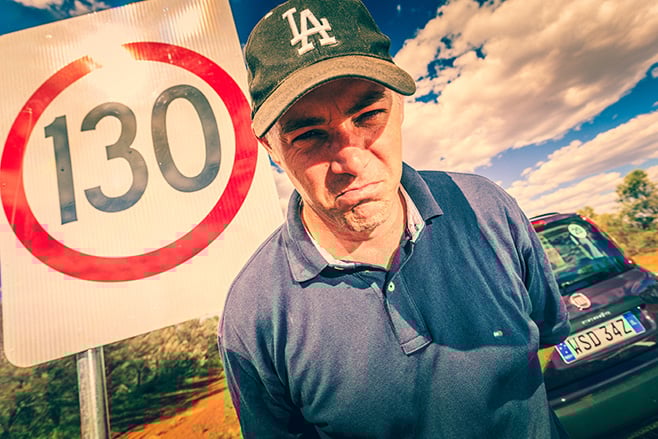
Despite being an open-speed trial, police could still book drivers if they thought their speed was inappropriate for conditions, including factors such as the weather, the ability of the vehicle to handle the higher pace, and the skill of the driver.
Wheels has taken advantage of the NT trial, taking a Fiat Panda out to stretch its legs, as well as attempting to break the 300km/h barrier in the final Ford Falcon-based FPV. A section of road was closed for the FPV’s high-speed run.
Now find out why you should take a defensive driving course.
