
Ford North America has backed tuning company Roush Performance with development of a high-output Focus RS with 372kW of power and three-way adjustable suspension.
Unveiled alongside tuned Mustang coupes and even Fiesta and Focus ST models at the SEMA show in Las Vegas this month, the Focus RS concept gets a shortblock performance assembly, cooling system and heavy calibration work in order to leap 115kW from the standard 257kW. No torque figure is given beyond the production model’s 440Nm.
PFC slotted brake rotors and Roush PerformanceTrakPak three-way adjustable suspension with camber plates are added underneath, and 255/35 R19 Continental ExtremeContact Sport tyres wrap around lightweight forged alloy wheels.
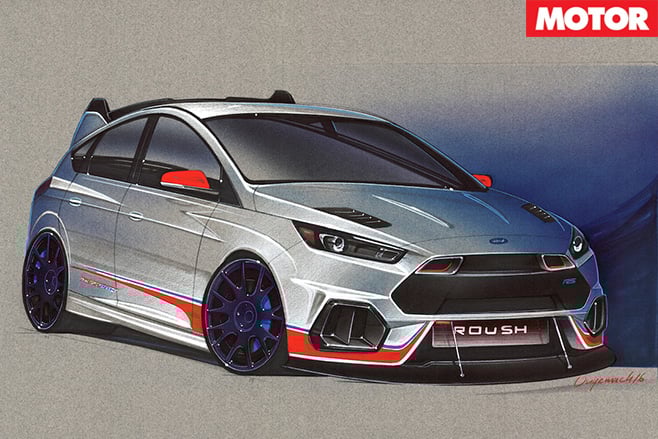
“With calibration work producing an impressive 500 horsepower, the lines between design and functional performance blur – transforming this into a true street/race car,” Ford US said in a statement.
If the styling isn’t to all tastes, then there are rival Focus RS alternatives that were likewise Ford-backed for SEMA.
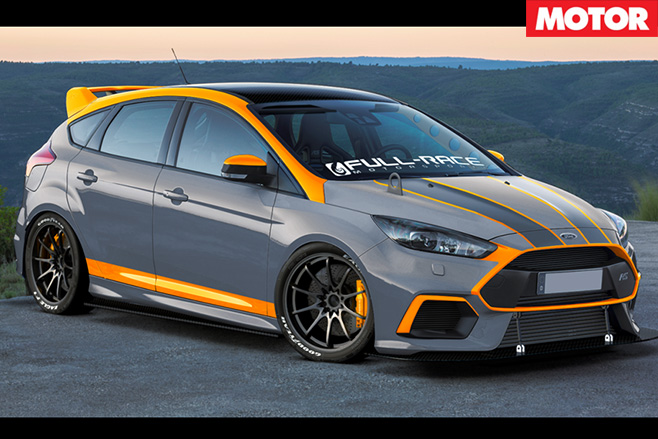
The “stealth grey and fire orange” example even gets a carbonfibre driveshaft, upgraded CV axles and front limited-slip differential.
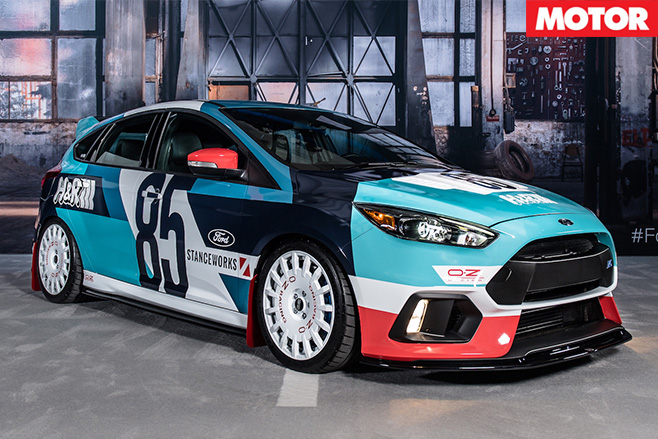
While Ford’s hottest hatchbacks are all seen here in concept form, performance parts are filtering into the American market now. Ford Australia has only backed Mountune performance parts for its Fiesta ST and Focus ST models locally, however, with word still to come through about potential Focus RS tuning kits for our market.
Car manufacturers face a quandary when testing new models – how do they subject their new creations to real-world conditions without prematurely revealing them to the motoring world?
The answer is camouflage, which presents its own dilemma by ironically attracting attention to their still-secret prototype. This means camo has to be very effective at confusing the eye and, while it often looks the random application of car bras and bad ’70s wallpaper, there is actually quite a science to it.
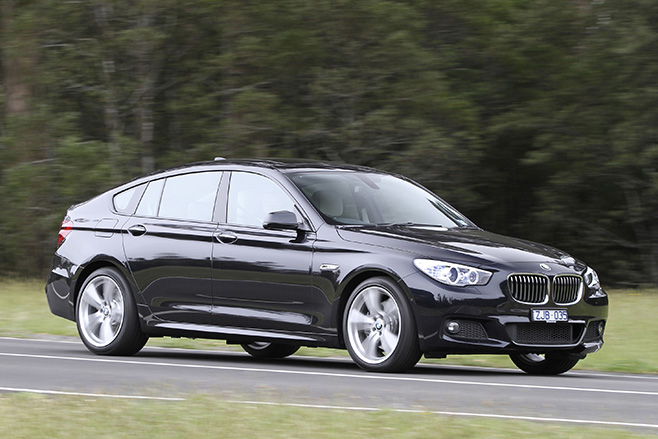
With spy shots coming in thick and fast, it’s worth revisiting this video showing how BMW engineers designed plastic masking panels to a BMW 5 Series Gran Turismo on computer and then fit them on to the real panels to disguise everything from the shape of doors and headlights to the car’s entire silhouette.
Rubber mouldings are also neatly fitted inside the car to mask the dashboard, door cards and centre console while still ensuring everything is functional.
They even go as far as applying stickers with pictures of door handles, fuel cap and wing mirror repeater lights over the real things to hide their true shape.
As you can see from the above picture, the end result in the video is a very different looking car.
Once the domain of high-revving mini 4WD’s and lawnmowers, three-cylinder engines are gaining traction here even though you’re usually paying more for one less piston. Here are the five most powerful three-pot screamers on the Australian market.
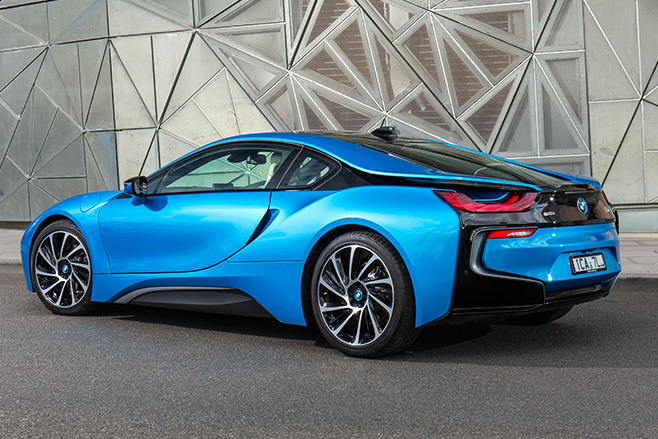
A sleek two-seat carbon fibre body that keeps the weight down and electric motors that bolster from the 266kW 1.5-litre turbo makes the revolutionary i8 the world’s fastest three-cylinder car by a long shot. It can reach 0-100km/h in 4.4 seconds and has an electronically governed top speed of 250km/h.
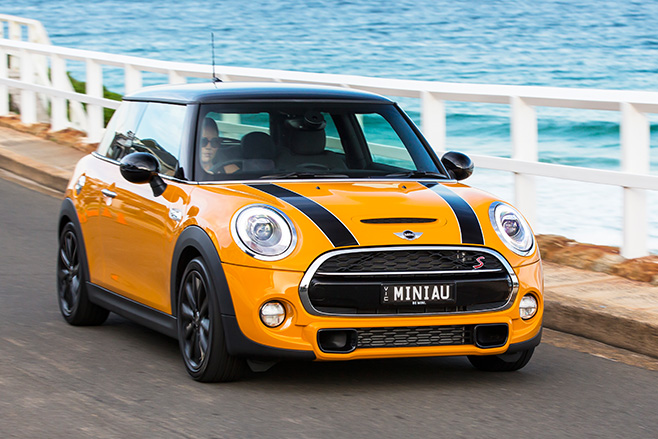
The Mini Cooper shares the same 1.5-litre three-cylinder donk as the i8 without the electrical assistance. Still, the 100kW it punches out is backed by a delicious 223Nm of torque that thrums to life early in the rev range but drinks sub 5.0-litre/100km fuel economy. It comes with either a six-speed manual or six-speed automatic transmission.
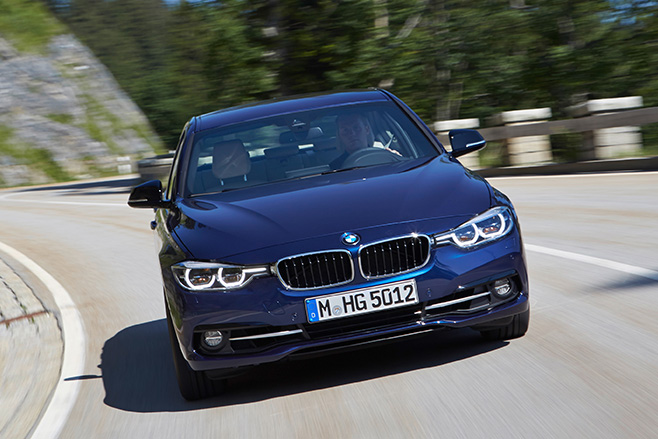
BMW’s 1.5-litre three-cylinder engine gets around, and while it has the 100kW output as the Mini Copper it provides a little less oomph because of the 318i’s extra bulk. It uses a bit more fuel than its 320d sister’s turbo diesel – 5.4 litres/100km – and does not go quite as hard, but a standard eight-speed automatic transmission helps it haul you around.
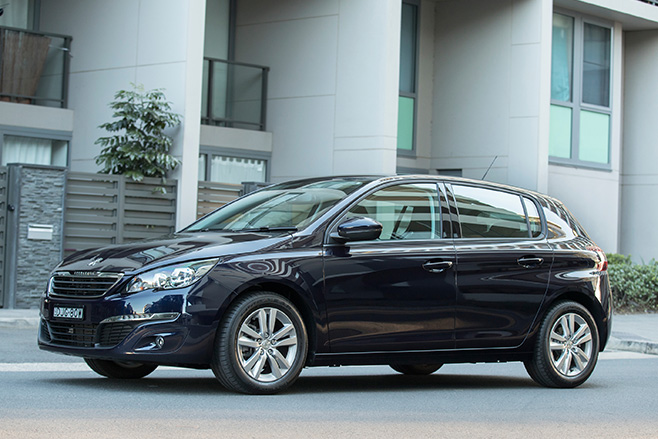
Peugeot’s most convincing model houses its most convincing engine, a 96Kw 1.2-litre turbo triple with 230Nm of torque for lovely mid-range and engaging driveability. It’s as easy on fuel too, consuming just 4.5 litres/100km on the official test (city and country combined). The same engine can be found in the Citroen C4.
This is more about fun and character than getting along briskly, although the 92kW 1.0-litre Ecoboost turbo is far from shabby thanks to the car’s diminutive frame. Offered in the Fiesta Sport variant, it drinks just 4.9 litres per 100km for the manual (5.3L with the automatic).
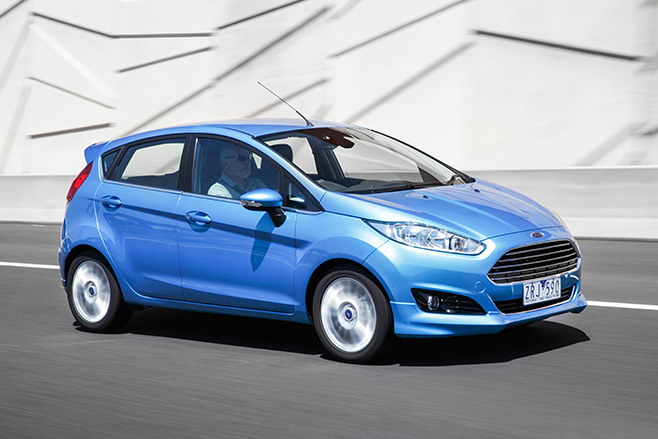
First published in the July 2014 issue of Wheels magazine, Australia’s best car mag since 1953.
BMW is back hunting sports car enthusiasts with its cracking new BMW M235i coupe. But so is the ballistic Mercedes-Benz CLA45 AMG.
Don’t you hate it when something you once adored turns a bit ugly? It happens to bands, brands, friends, partners, venues, burgers, cafes, clothes, and plenty of other things, not to mention cars. One minute you’re loving each other’s company, wondering how anything or anybody could improve on right now, and the next, something changes.
That’s BMW’s last decade condensed into a paragraph. In 2002, before run-flats, techno-nerd steering and exponential product proliferation overshadowed its Ultimate Driving Machine focus, virtually every BMW defined great steering, supreme balance and a brilliant ride/handling mix. They won comparo after comparo and were consistently fantastic to drive. But somewhere along the way, the magic dynamic sparkle that was pretty much a guarantee in every machine from Munich, large or small, fast or slow, was deemed less important than one-upping other German brands’ technology. “Look at me, my tyres still work when they’re soft”. Great.
Yep, a Mini in a muu-muu.
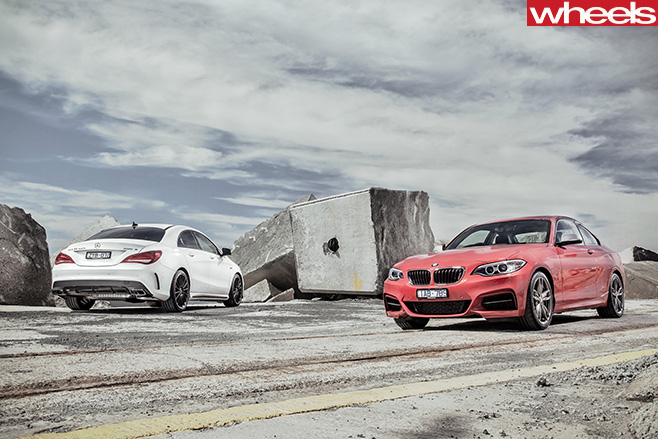
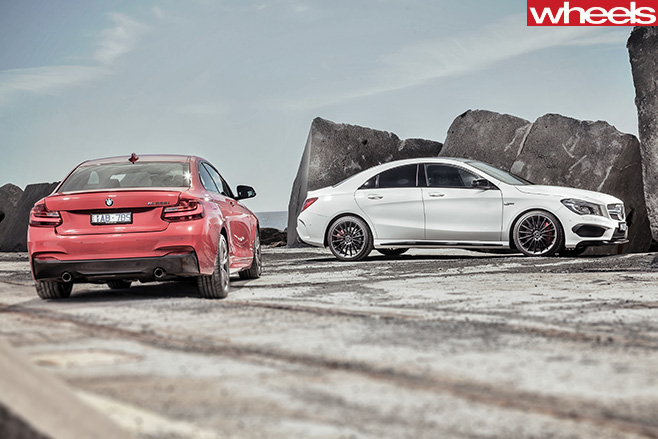
But if there’s a 2 Series good enough to wipe BMW’s dynamic slate clean, it’s this one – the six-cylinder, turbocharged M235i. And what better foe to throw it against than Mercedes-Benz’s similarly priced CLA45AMG. It, too, is a coupe (if you believe Stuttgart’s marketing dreamers) but with four doors, rather than two, and sporting AMG’s firecracker 2.0-litre turbo donk with just four pots. And a whole lot of menace.
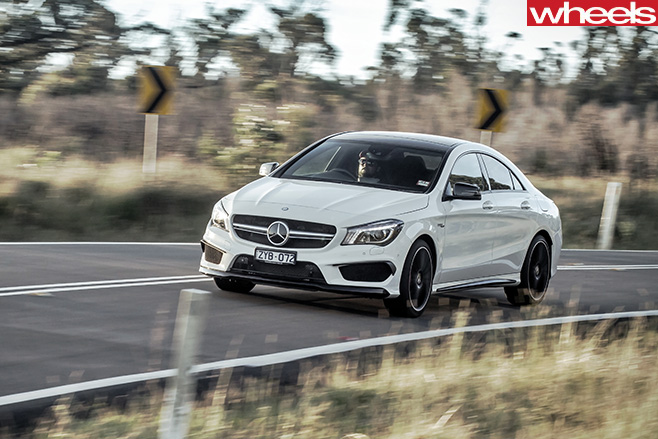
The CLA45’s upturned-boat shape isn’t a universal crowd pleaser like the C63, but at least it’s distinctive, and in this case, resplendent in fashionable white with black 19s, gloss-black mirrors, front splitter and rear diffuser, and a darkened-glass sunroof. No Mercedes-Benz CLA has ever looked cooler, and this one also boasts $1990 worth of sports suspension, which drops it slightly closer to the tarmac and turns what was already a pretty sharp mover into an uncompromising handling supremo.
Even the M235i’s turn-in is brilliant. Trail some brake into a tight 35km/h corner and you can feel its chassis pivot, instinctively setting itself up for a rapid-fire corner exit. Unlike the wayward M135i hatch, which never had the rear suspension control to handle the turbo six’s copious grunt, the coupe’s power-down is fantastic. Even with ESC off, a hard driven M235i requires provocation to spin its wheels or step its tail out. Finally, a non-M Bee-Em with the abilities of its more exalted brethren.
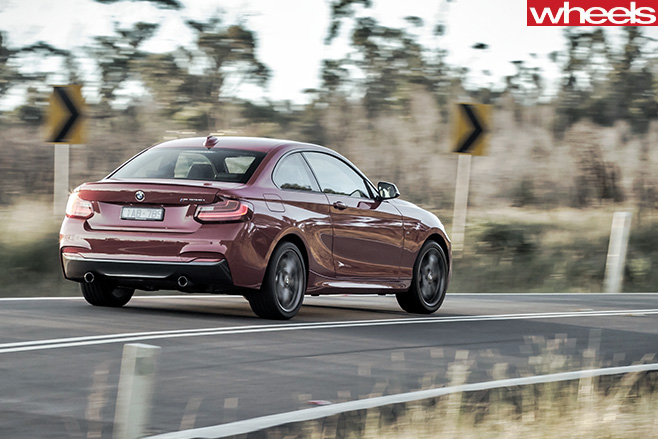
On lumpy surfaces tackled in Sport mode, the M235i is unsettled and has far too much vertical movement, yet on a smooth and twisty road, it’s wonderful. Selecting Comfort mode calms things down a lot, though at one stage I reached for the gimmicky Driver Experience rocker switch to knock it back to Comfort, only to realise I was already there…
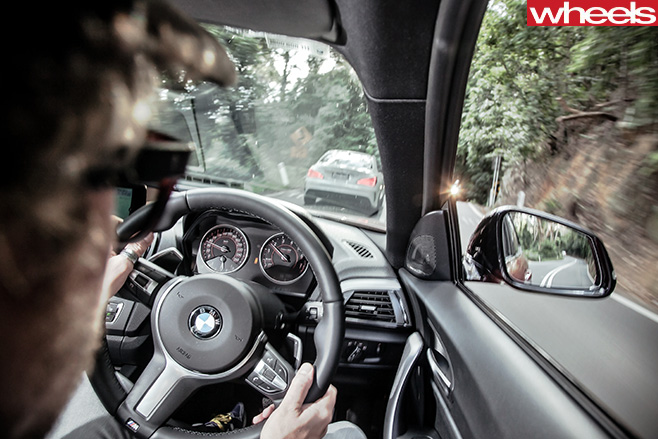
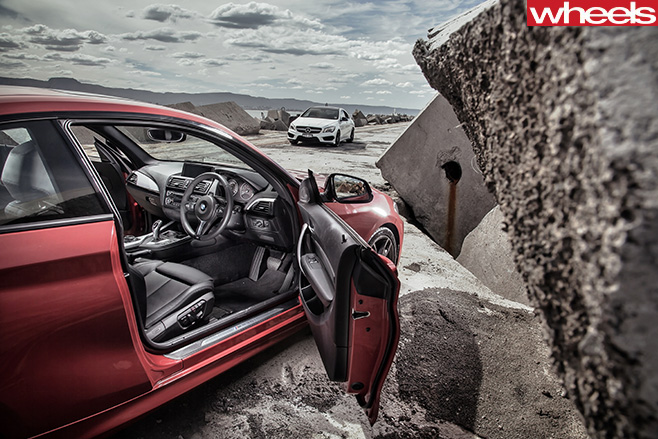
Unfortunately, none of the M235i’s steering options are ideal. The new three-spoke M wheel is superb, but the steering itself is noticeably electric at straight ahead. When cruising, you can sense a phase of numbness and feel the weighting change. In Comfort mode, it’s too light and disinterested, yet in Sport, it’s still too aloof for a performance coupe of this calibre. You spend much of the time wishing the M235i’s steering had a setting between Comfort and Sport, and that its damping did likewise.
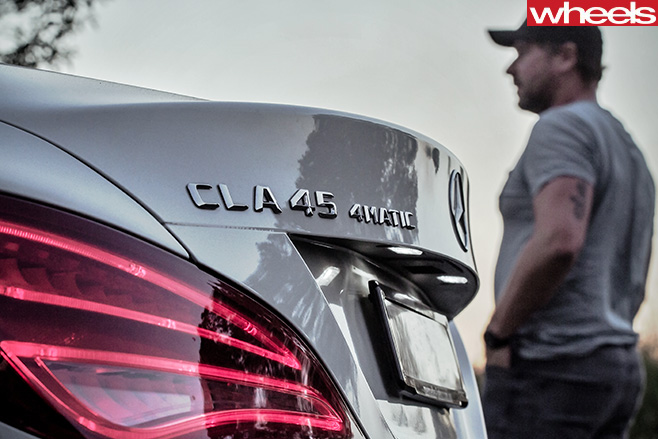
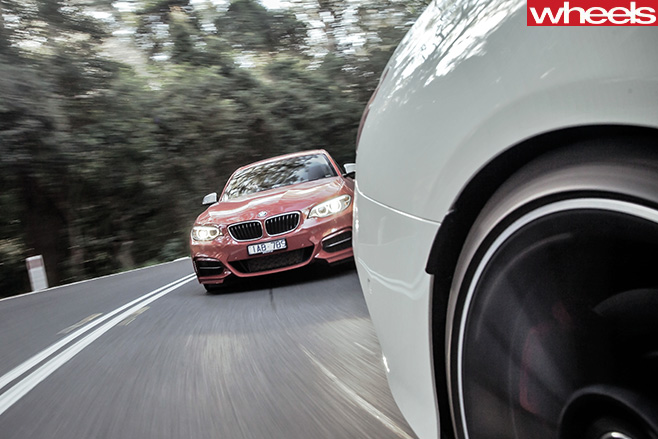
Whether heading to the shops for milk or hammering along the unforgiving Putty Road, the sports-suspended CLA45 is ultra-firm. But even with about as much forgiveness as a Taliban racial policy, it manages to avoid vertical pitch or suspension crash-through, and offers a level of body control so tight, it’s vice-like. Yet the firmer suspension has the added benefit of moving the CLA45’s centre-of-gravity pivot point rearward, reducing understeer to near-zero. The angles you can create with your right foot are even more satisfying in this CLA than they are in the standard AMG.
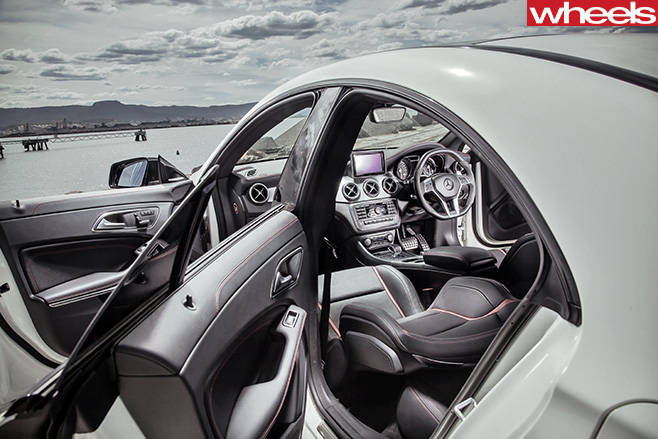
You get so much more feedback in the Benz than in the BMW. Even the CLA’s brakes talk more, with much cleaner pedal feel and less travel than the similarly effective BMW stoppers. And while the CLA’s steering can be unsettled by harsh mid-corner bumps, it’s generally pretty good, allowing its driver to easily trace a fine line through a bend.
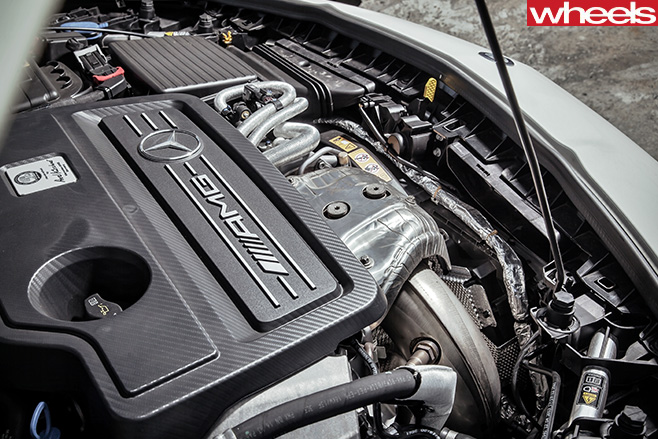
In Sport mode, the M235i’s superb straight-six wails like a BMW engine should, with a crisp induction growl and a gorgeous rasp from its rear pipes, while the CLA45 doesn’t need to have a mode selected because it gets a sports exhaust standard. The Mercedes is the more gratuitous of the two – blatting, popping and whip-cracking from its quad pipes – but choosing a favourite is hard. I’d pick the M235i, simply because it revs to 7300rpm and is the best-sounding turbo-six Beemer there is. It also drinks less juice.
The CLA45 has some great touches, like its alcantara-covered wheel rim and its grippy, red-piped seats, but the test car’s plastic cover on the electric seat-bolster switches was loose and there was humming from the driver’s belt-height adjuster, which is something we’ve experienced in almost every A and CLA we’ve driven.
What it all comes down to, though, is purpose. While the M235i tries to be a sports coupe that appeals to a broad range of people, the CLA45 is singular in focus and makes no excuses for it. Brilliant as the BMW’s drivetrain and core chassis DNA may be, its damping and steering flaws expose the fact that it isn’t a true M-car. Admire its style, appreciate its practicality, love its balance and adore its engine, but it just doesn’t quite tie it all together. Not at the moment.
What is really, really surprising, though, is just how well the sports-suspended CLA45 works on the road. In this guise, it’s a brilliant performance sedan/coupe with a single-minded desire to thrill its driver. And maybe the front passenger. As a four seater, it’s borderline useless, but treat it as a two-plus-two, like you would the M235i, and be willing to accept its unforgiving ride, and it’s a thrill machine par-excellence.
Just like AMG Mercedes, BMW M cars and GTi Volkswagens, Aussies seem to have a real affinity with the sportiest, RS, versions of Skoda’s line-up.
According to Skoda, the take up rate on Octavia RS models accounts for about 40 per cent, making it the hottest selling Octavia variant. So this new version, the most powerful yet, the RS230, is an important model for the brand Down Under.
The shape of the Octavia wagon and its liftback/sedan brother will be familiar, but beneath that understated bonnet now resides an even hotter version of the two-litre turbomotor, now with 169kW and a broader, fatter torque curve than ever before with 350Nm available anywhere from 1500 to 4600rpm.
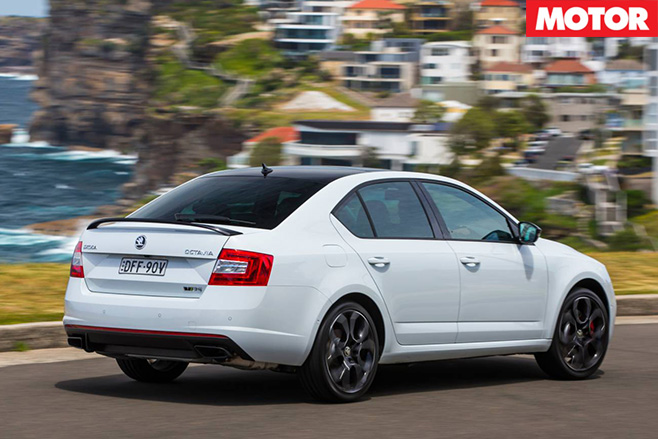
What’s perhaps most interesting is that the new Skoda is manual-only. It’s refreshing (for an old dude like me) but probably speaks more of availability (Europe, remember, is still largely a manual market for this type of vehicle) and production schedules.
If you want a two-pedal version, you’ll need to wait until the third quarter of next year when the facelifted Octavia hits and will be available in RS230/DSG form. That said, it won’t be quite such a niche model as this one, which now sells alongside the 162kW `normal’ Octavia RS. That’s because from the facelift on, all Octavia RSs will get the 169kW powerplant.
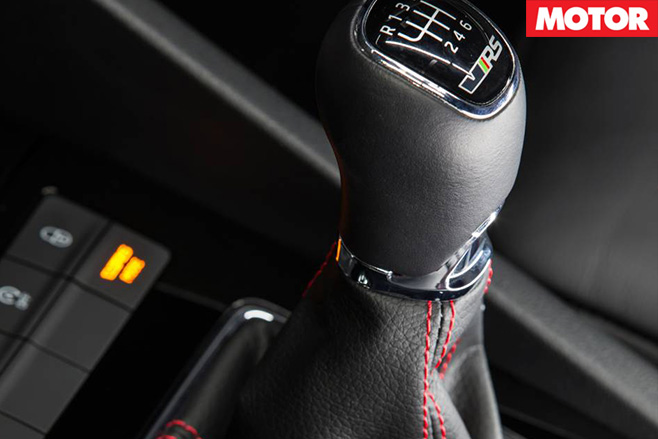
Like all Octavias, there’s a bit of the Tardis thing going on when you look inside. In the wagon (our pick, by the way) the load area is amazing. It’s huge and well thought out including multiple tie-downs, bottle-holders, pouches, power outlets and no less than eight take-away hooks. Not to mention an optional electric motor to open and close the tailgate. But even the sedan/liftback has a cavernous pace behind the rear seat; way more than the average hatchback of the same size, although you lose the electric motor option.
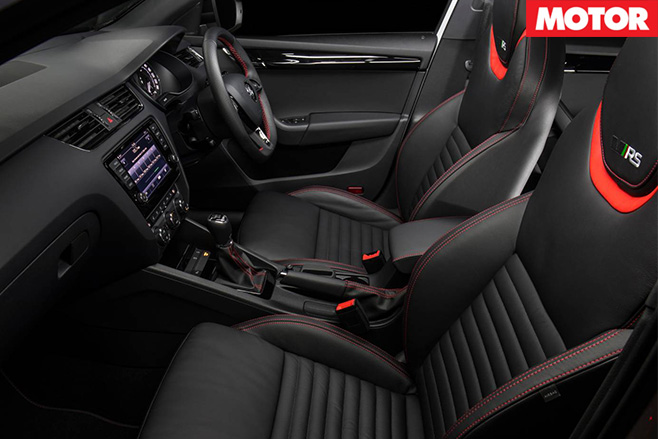
Up front, the sports seats are electrically adjustable and look fabulous even if they lack a little lateral support when you’re really having a go. There’s a bit of a generic VAG feel inside but that’s no bad thing when you consider most of the rest of the world has copied that ambience over the last few years.
There’s also a bit of exhaust note to be had and some of that whooshing noise that we associate with modern turbos, but overall it sounds sporty and pretty rorty. It’s not what you’d call over-powered, but that says more about the chassis balance than the engine, and there’s no denying that at road speeds, it’s a very entertaining car.
The steering is sharp and the ride is soft enough for a road-going car but firm enough to feel like it’s in synch with the rest of the Octavia package; a package that retains that crisp mechanicalness we’ve come to associate with the Skoda brand.
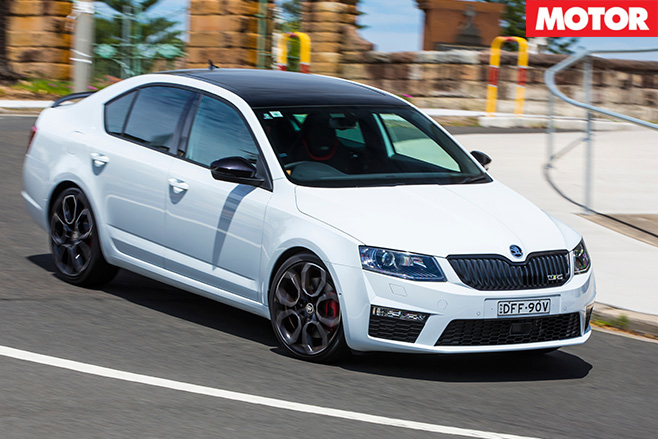
All up, the Skoda works intellectually because it’s super practical yet still offers an entertaining experience with an edgy difference to it. It’s also pretty tremendous value at $41,490 plus on-roads and an extra $1700 for the station-wagon variant. The tech pack (park-assist, lane-assist, advanced keyless entry and premium sound system) is good value at $1700 and we’d go for the panoramic sunroof at $1700 when the single-panel sunroof is $1500 anyway.
4.0 out of 5 stars
LIKE: Practical, entertaining, good value. DISLIKE: Manual-only status will put some off.
SPECS Engine: 1984cc 4-cyl, DOHC, 16-valve, twin-turbo Power: 169kW @ 6200rpm Torque: 350Nm @ 1500-4600rpm Weight: 1425kg 0-100km/h: 6.7sec (claim) Price: $41,490 plus on-road costs.
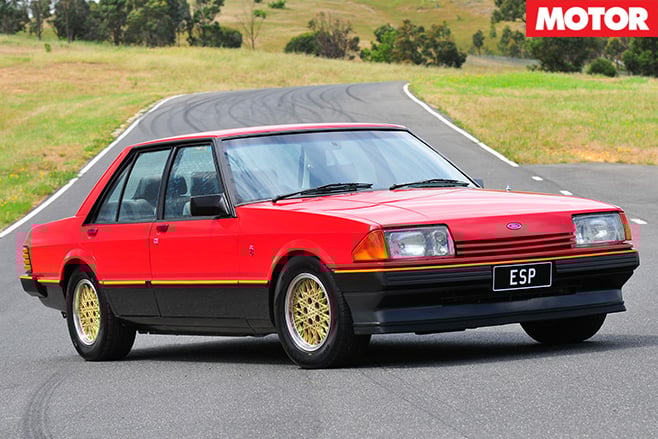
Tagging the upmarket XE Fairmont Ghia with the European Sports Pack (ESP) badge was, if you’ll pardon our snickering, like calling a family-size ham-and-pineapple a proper pizza.
Because God alone knows what the Europeans would have made of 4.7 metres, 1400kg and 5.8 litres. (Five or six Renaults and a good eight or ten Alfasuds, probably.) Of course, it didn’t really matter that the ESP wasn’t especially European, because neither were the people buying it.
Yet, that notional Euro factor was a strong force in Aussie cars back in the late-’70s and early-’80s when it was still generally agreed that Europe built the world’s best cars. Hmm, how things have changed.
And what it did was turn the fleet-manager’s-darling, the basic XE Falcon, into a properly desirable car. And it still is. More than ever, in fact. Mind you, it had a good basis to start with.
The move from XD to XE Falcon brought with it the well-overdue ditching of leaf springs for the Ford Falcon sedan’s rear end. In their place went a six-link coil-sprung set-up with a Watts link and, suddenly, the Falcon was transformed in terms of ride and handling.
The rest of the ESP stuff was borderline gorgeous, too. You got Bilstein dampers to further improve every aspect of how the car moved across uneven ground and a lovely set of Scheel seats complete with racy stripes lest you forget you were driving in Europe today.
There was a full set of gauges and the interiors were available in a wonderful range of colours (tans and warm greys) rather than the one-dull-grey-fits-all that you get these days. But there was more: big, fat (for the day) 225/60 15 tyres were mounted on classy yet sporty alloys (inevitably dubbed ‘snowflakes’), two-tone paint, a chin spoiler and many cars wore a set of low-mounted spotlights.
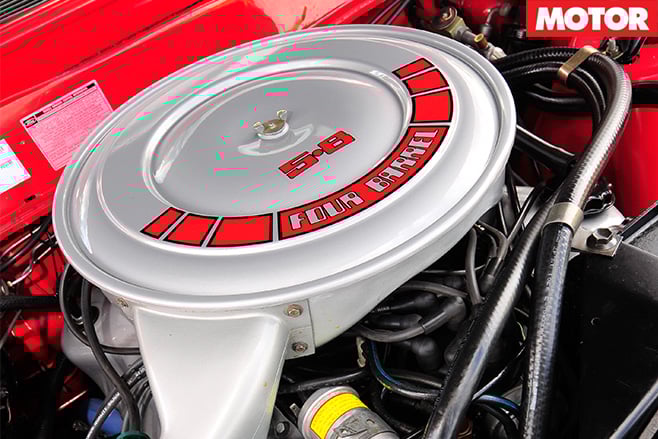
IN DETAIL Engine: 5766cc V8, OHV, 16v Output: 149kW/415Nm Weight: 1400kg Price: $14,000
What’s our fave Falcon? Check out MOTOR’s take on the top 10 Fast Ford Falcons ever made here.
MOUNTAIN MADE: HSV R8 Track Edition tackles Mt Panorama; Ford makes its last Ford Falcon; the Wheels Gold Star Value Awards; Simmering sedans compared; getting to grips with the Lamborghini Huracan LP580-2ALSO INSIDE THIS EDITION:
* The way you buy a new car is about to change * Mercedes-Benz’s electrifying Tesla fighter * Audi TT RS: Return of the five-pot screamer * The car that ate Paris: C’etait un Rendez-vous revisited * Hyundai’s new plastic fantastic * Less shout, similar clout! Mercedes-AMG E43 driven
* An in-depth look at the shape of Fiat Chrysler’s design future
Join us for the ride in this December edition of Wheels in print, iPad or Android editions, on sale now.
Android Auto and Apple CarPlay, the two leading in-car smartphone mirroring systems, have provided a simple and inexpensive way to standardise car infotainment systems and make them more user friendly.
Trouble is they can only be used with newer cars with compatible infotainment displays. Until now… well, at least with Android Auto.
Google has announced an update that will allow Android Auto to be viewed directly on your phone’s screen independently of the car’s infotainment system. That’s a game-changer for those with older cars that aren’t equipped with anything more sophisticated than an AM/FM/CD audio.
While you’re able to use a lot of the individual mapping and entertainment apps on your phone now, Android Auto 2.0 will bring them all together to access music with apps like Spotify, Pandora or Google Play Music, and make calls or send messages with hands-free voice commands and navigate with Google Maps while you drive.
The interface is simplified and de-cluttered to make it easier to use while on the go, and only select apps can be accessed through it – reducing the chance of the driver becoming distracted. Also if your car has a Bluetooth audio function it can automatically start the app when you start your car.
Google says “OK Google” voice integration (its version of Apple’s Siri voice assistant) will be available in a few weeks to make operating these functions totally hands free so you can stay focused on the road.
Of course this will work best if your phone is installed in a car mount to help you use it within your general field of view. In many states, it’s a legal requirement if you want to use your phone in your car as a navigation device.
Android Auto 2.0 is now available for free in more than 30 countries where Android Auto is currently available, including Australia.
For more information you’ll need to sign up on the Android Auto website.
TELL ME ABOUT THIS CAR
The 2017 Renault Megane is the fourth-generation of Renault’s popular hatchback. Available in four variants (Life, Zen, GT-Line and GT), the sporty GT is the top of the range, running a 151kW/280Nm 1.6-litre turbo and a seven-speed dual-clutch automatic.
The GT also features a unique suspension calibration and four-wheel steering.
STRENGTHS
- The engine. The Megane GT is not to be underestimated. Its 1.6-litre engine supplies enough power to give you some real go. Basically, it’s quick.
- Thanks to the underpinnings of the Renault hatch, including its seven-speed dual-clutch auto, rear-wheel steering with four-wheel steering, the Megane is agile, hugs the road and takes corners like a pro. It’s fun to drive.
- The sport seats in the GT keep you in place when taking to corners. They’re also surprisingly comfortable.
- The Megane range is sexy. The exterior is unique and you’ll stand out on the road, while the interior of the GT is, well, interesting. It’s typically French – some love it, others don’t – even if a little inconsistent.
- Rear-seat space is small compared to its rivals, even though Renault said it has improved.
- It’s lacking active safety gear, with no autonomous emergency braking offered, although that may be added to the range in 2017.
- There’s no smartphone mirroring (Apple CarPlay or Android Auto) in the Renault, which is fast becoming a standard offer. But it still offers connectivity so it’s not quite a deal breaker.
- Along with the small back seats, features like cup holders are also particularly small. Too small to fit a water bottle.
The Renault Megane is part of the small car segment, so it’s up against plenty of competition. Its closest rivals include the VW Golf, Peugeot 308 and Ford Focus.
THE Chrysler 300 is expected to stay in showrooms until the end of the decade as Fiat Chrysler prepares its next cycle of large cars.
According to US outlet Automotive News an update is planned for the 2018 model year to smooth out some of the almost six-year-old 300’s wrinkles, but by the time the current 300 is expected to be pensioned off it will have notched up a huge nine years on the market.
And there’s no guarantee of a successor, either.
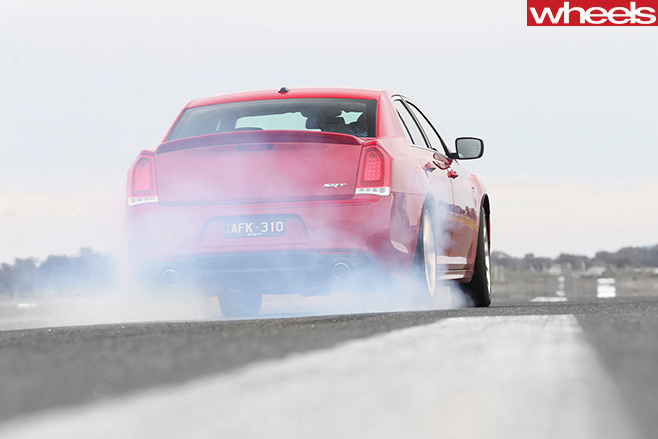
And according to Automotive News’ sources, it’s the slower-selling 300 that has its neck on the chopping block. FCA is keen on reducing sales cannibalisation between its brands – which include Jeep, Chrysler, Dodge, Fiat and Alfa Romeo – and having two similarly sized large sedans sold under two different badges works against that goal.
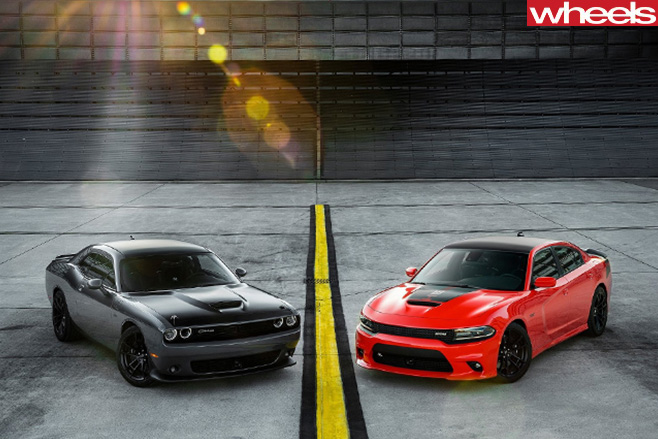
That also means those pining for Dodge’s brawny Charger and Challenger duo may finally get what they’ve been asking for – at the expense of Chrysler 300 fans. We should find out in five years.
