
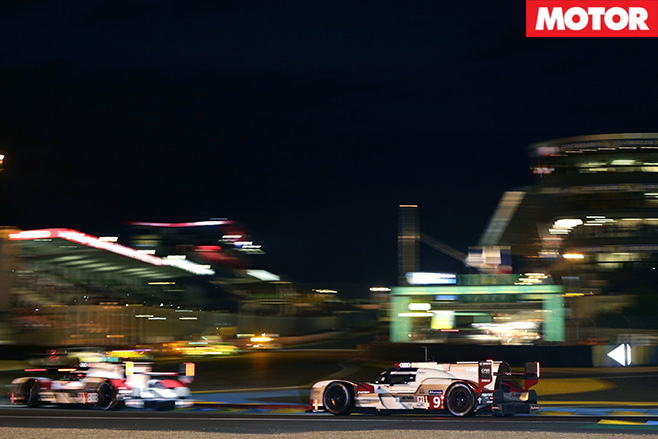
Audi has confirmed that it will not contest the World Endurance Championship beyond the end of 2016, instead switching its focus to Formula E.
Audi has been the dominant force in world endurance racing for almost two decades, winning 106 of the 185 races it’s contested, securing the WEC twice and the American Le Mans Series nine times in succession from 2000 to 2008.
Its departure will mark the first time since 1999 that Audi will not be present at the Le Mans 24 Hour, leaving its win total at 13 and ending a run of unbroken podium finishes since its first appearance in 1999.
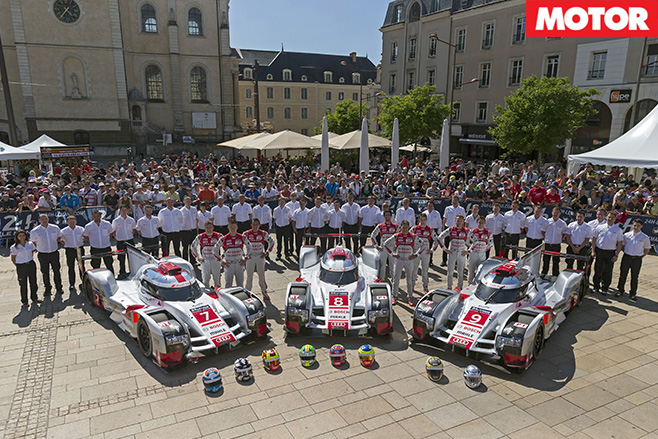
Audi’s Chairman of the Board of Management, Rupert Stadler, explained the decision in a statement: “As our production cars are becoming increasingly electric, our motorsport cars, as Audi’s technological spearheads, have to even more so.”
Audi will continue to field a factory team in the DTM championship and is also considering extending factory support to Mattias Ekstrom’s EKS rallycross team, which recently secured its first World Rallycross Championship.
Formula D champ Vaughn Gitten Jr pulls off ridiculously awesome drift on Formula One track.
The Catalunya Grand Prix circuit is a state-of-the-art racetrack with a butter-smooth surface, and sweeping curves for the best Formula One, MotoGP, and GT3 drivers and riders in the world to attack at full speed.
But the Spanish track is more renowned for grands prix than the tyre-frying antics of drifters so Formula D (Drift) champion Vaughn Gitten Jr decided it was time to change that fact.
The Ford Performance driver took his Mustang RTR drift car to Catalunya with the sole intention of frying rubber in the most spectacular fashion.
The complex from turn one to four at Catalunya is 975 metres long, with a massive, constant radius curve in the middle, and Gitten Jr slid his Mustang the entire length!
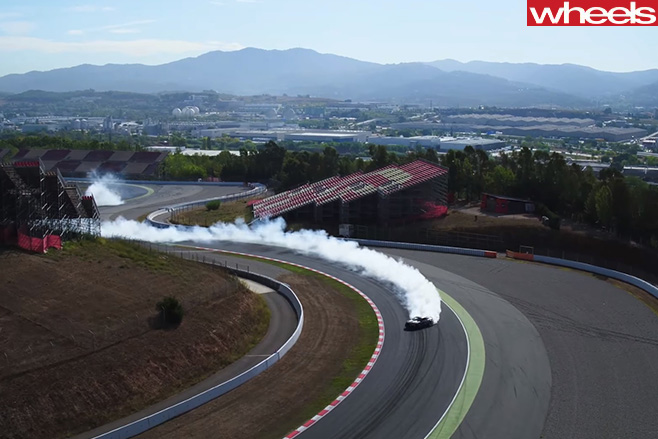
Now a couple hundred metres is an impressive drift for the best slide-ways stars, but frying treads for near enough to an entire kilometre is nuts!
With a Roush Yates V8 under the bonnet, Gitten Jr’s 2015 RTR Mustang puts 850 horsepower (634kW) to its tortured rear tyres, which is actually a rather modest amount of grunt for a top-of-the-line drift car.
Formula D, the championship this particular car once raced in, is the highest-power stock-chassis motorsport in the world, with cars regularly cracking 1000hp (746kW) at the wheels, and Giittin Jr’s 2016 Mustang packs 50 horsepower more than the car you see here.
Gitten’s performance makes for impressive viewing, with the pro drifter holding a solid angle for the whole run, throttle planted firmly into the firewall, and smoke billowing from the rear tyres.
To be honest, this is just proof that drifters should take to more Grand Prix tracks. Just imagine guys in 1000 horsepower cars pulling big smoky slides up Eau Rouge at Spa in Belgium, or through the Swimming Pool corner in Monaco. Formula One might look a little dull after that…
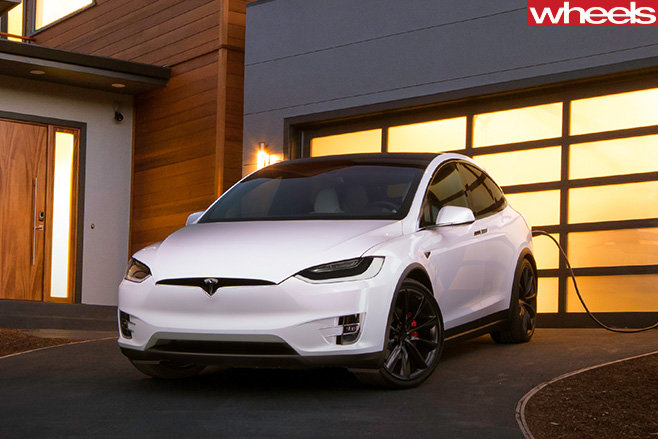
Tesla’s troubles with its Autopilot system are firmly on the Federal Government’s radar.
THE Federal Government says it is monitoring Tesla’s troubled roll-out of driving assist technology as it works to set the framework for how Australia will one day handle self-driving cars.
Asked if there was any specific investigation into the roll-out of the Californian electric car company’s Autopilot system, the Department of Infrastructure said it “is being considered as part of general work to prepare for automated and connected vehicles”.
Tesla has recently tweaked parts of its Autopilot system after a number of claims overseas that the semi-autonomous drive function has resulted in owners crashing their cars. In one instance, a driver died when the cameras used for the self-driving system – that the carmaker admitted was still in a test phase – failed to see a white trailer crossing the road in front of it. The driver is alleged to have been watching a movie – not driving the car – at the time of the crash.

The changes were introduced as part of Tesla’s version 8.0 software upgrade rolled out to its cars in Australia earlier this month.
According to Tesla, the software update “combines a modern look with updates to Autopilot, navigation with trip planner, maps, and the media player for a safer, more advanced driving experience”.

The latest version of the software now bounces its radar signal below the car in front to read what is happening – meaning the system can now look much further ahead than the driver.
Tesla has recently fallen foul of German regulators who claim the Autopilot name is misleading, saying it is suggesting to owners that the cars can drive by themselves. It has recommended that the electric car maker not use the name in any of its advertising.
The government released a discussion paper in August as part of a three-year action plan to support the on-road use of autonomous vehicles.
The National Transport Commission is also expected to give state and territory governments a set of recommendations for how to regulate autonomous cars.
South Australia has already paved the way, adopting new road rules that remove the need for a human behind the wheel and opening the door to autonomous car trials in the state.
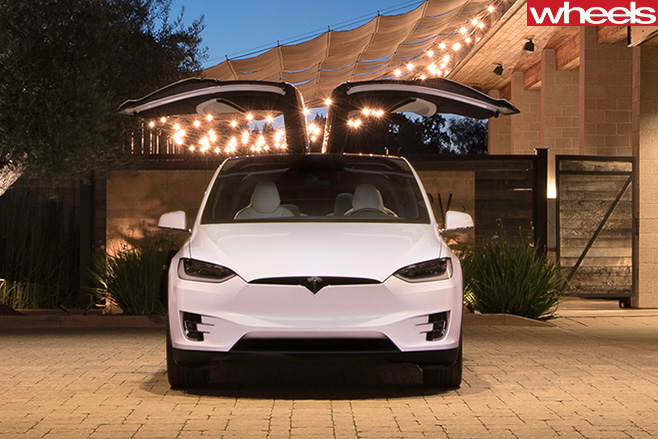
“Any statement representing products or services should be true, accurate and able to be substantiated,” the consumer watchdog said in a statement.
“Including a statement that the self-driving functionality is subject to regulatory approval may not be sufficient to avoid any legal obligations which arise.
“If regulatory approval is not provided, then the business could be liable to compensate consumers under the Australian Consumer Law and may also be subject to legal action from the Government.
“If a business needs to qualify its advertisements, it must make sure the qualifying statements are clear and prominent so that consumers know what the offer is.”
THE next-generation Mazda CX-5 has been teased ahead of its world debut at next month’s Los Angeles Auto Show.
The narrative that accompanied the image was just as vague, with Mazda saying it has further refined its every design element of its popular crossover SUV, taking “the ‘KODO – Soul of Motion’ design concept to a new level … with a powerful combination of sophistication and strength”.
‘Refined’ usually means subtle changes and as recent spy pics suggest, Mazda appears careful not tamper too much with its styling, with design cues likely taken from the recently launched second-generation Mazda CX-9.
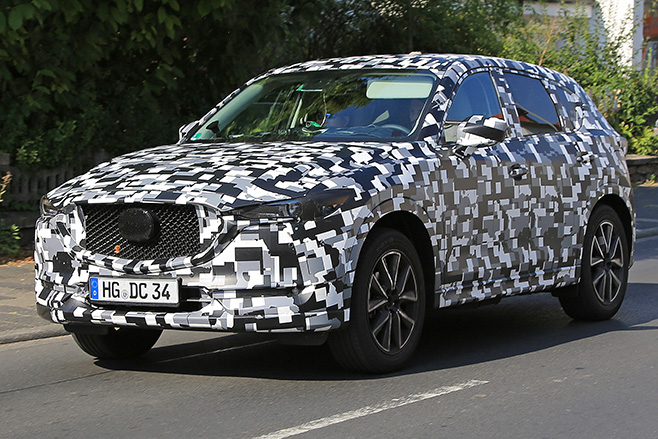
Some of the noticeable features discernable from the spy pics and the latest official teaser image are sharper headlights and grille treatments, a longer bonnet, deeper side windows for better vision, a more pronounced rear hip line, sleeker tail-lights, and a tailgate featuring the CX-9’s concave surface treatment.
The new KF series CX-5 will also share the seven-seater’s SkyActiv underpinnings and chassis advancements including improved sound-deadening measures, to help quell the road noise and vibration issues associated with the current model.
It’s expected to be powered by improved versions of the current 2.0-litre and 2.5-litre SkyActiv-G four-cylinder petrol units along with the somewhat quieter 2.2-litre SkyActiv-D turbo-diesel that will be under the bonnet of some MY17 Mazda 6 variants.
Expect a heap of new driver assist technology to make its way into the CX-5 range, too, including AEB-R – Autonomous Emergency Braking in Reverse, which stops the car while you’re reversing if it detects something in or crossing its path.
Entry pricing is expected to remain below $30,000 with Mazda keen to remain a leader in the hotly contested mid-sized SUV segment against the likes of the upcoming next-gen Subaru Forester, Toyota RAV4, Honda CR-V, Mitsubishi Outlander, Volkswagen Tiguan and Renault Koleos.
Mazda is expected to launch the new CX-5 at Los Angeles on November 16.
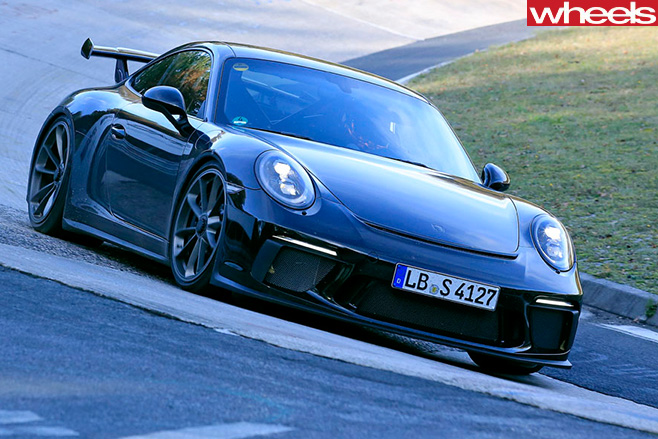
The 2017 Porsche 911 GT3 has been sprung testing at the Nürburgring without camouflage, giving us the clearest view yet of the manufacturer’s face-lifted, hardcore road racer.
But the big news for purist drivers is that Porsche will offer the GT3 with the option of a manual gearbox for the first time since the 991 generation was introduced in 2013.
The six-speed transmission will be the same as that fitted to the limited edition (991 units) Porsche 911 R and is based on the seven-speed unit available in the 911 Carrera and Carrera S.
If ratios remain the same as those in the 911 R’s box, they’ll be on the tall side – the manual 911 R can hit 140km/h in second gear, compared to the current GT3 which is pulling 124km/h at redline in second. Fine for autobahns, but shorter ratios would be better suited to most Australian roads and racetracks.
There are also significant changes to the flywheel and clutch. In the 911 R, the standard dual-mass flywheel is now lighter which improves engine response by five percent. But an optional single-mass flywheel with reinforced 9.0-inch clutch shaves even more weight (5kg) and with less rotational mass behind it, allows the engine to spin up more quickly, particularly from lower revs.
And for those fond of heel-toe down changes and doing their own throttle blips – as opposed to a computer doing it for them – the news is clutch and shift feel is reported to be excellent.

What you will see coming up fast in your rear view mirror now is a less fussy nose, dominated by a reshaped grille opening, redesigned spoiler, and aggressive-looking ‘winged’ cooling ducts topped by thinner daytime running lights.
At the rear, the wing is still outlandish and looks similar to the current model’s, but the tail-lights have been redesigned and there is a new bumper housing the traditional central dual exhausts and a new diffuser.
All up, the evolution of the 911 continues, and for customers who lamented the apparent dropping of the manual for the 991 GT3 and RS, it’s proof that Porsche is listening.
Have spy pics of your own? We’d love to see them. Just email them to [email protected]
Bang For Your Bucks’s price ceiling was meant to fence off the event from super-expensive, super-fast cars. The thinking was this would leave Performance Car of the Year, with its jaw-dropping vehicles, as this magazine’s ‘blue ribbon’ event.
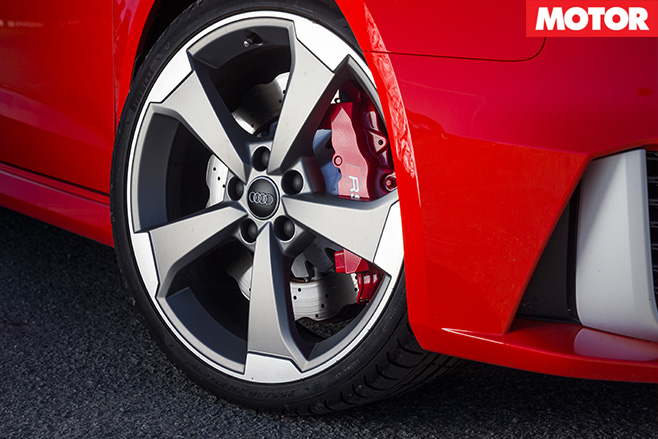
However, Audi’s RS3 was looking to tear that blue ribbon in half. When it faced off against Mercedes-AMG’s A45 earlier this year, it tore a chunk out of Affalterbach’s hatch with a 3.95sec sprint to 100km/h. That would’ve been faster than 80 per cent of last year’s PCOTY field.
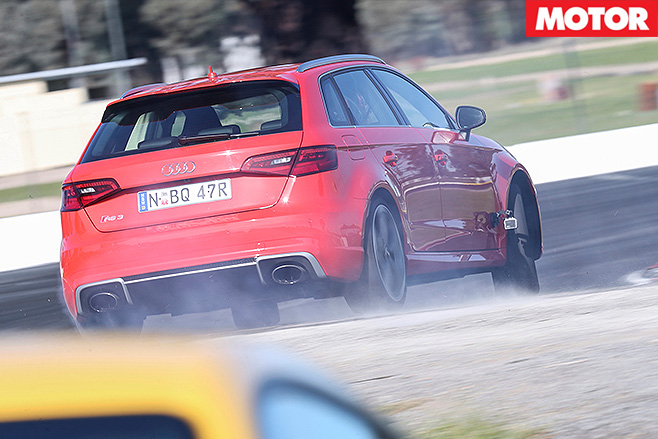
Unfortunately, though, this formula wasn’t so alchemic come game day. Even with its seven-speed dual-clutcher’s launch control, it just couldn’t extract that magic three-second sprint. Firing from a standstill on a cold Benalla morning it tagged 100km/h in 4.23sec on its way to 12.42sec quarter.
That’s certainly not snoozing. It was enough to clinch second in both disciplines against a troop of big-boost sixes and V8s. But perhaps more importantly, it trailed the A45 by 0.05sec.
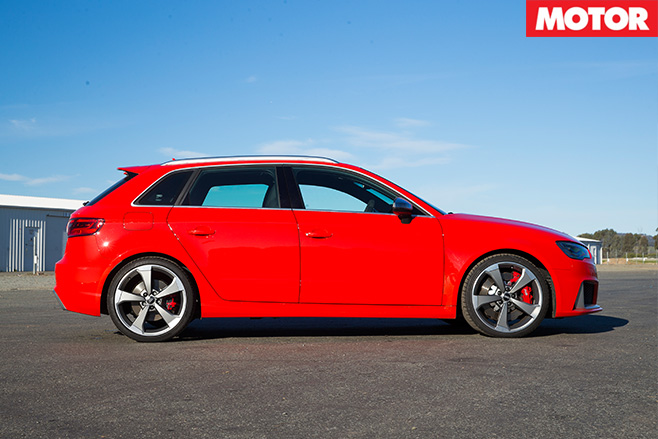
How does this fare out on track? Well, not quite as you’d expect. Audi boasts the RS3’s all-wheel drive system can shoot all of its 465Nm rearwards for ‘drifts’, but only when its front boots slip first.Don’t think that makes the RS3 a boring steed. You just have to tip-in with some lift-off to involve the rear-end. Its chassis is so friendly you can throw it around all day, ready to catch it with a clear, crisp steering rack.
Better yet, that margin proved so big that even a lowly ninth for its Bucks rating didn’t drag down its overall place – even with $3680 of options making the car more expensive than all but the M2 and TT S.So Audi’s RS3 is friendly, fun and fast enough, but a better side-step and a drop in dollars will squeeze a better result from the formula next time. For now, it’s third place for the RS3 – and an intact blue ribbon for us.
WARREN LUFF SAYS 05 “I’d prefer to see something a little more exciting with better feedback”
“This thing is a little pocket rocket, but one of the limiting factors is you struggle through the tight stuff. You roll through in third and then when you’re getting ready to jump on the throttle it kicks back to second on corner exit. In terms of overall lap-time, I think it costs a fair bit of time and doesn’t help with the balance of the car going into the corner.
“The overall dynamics are quite impressive, it has very good initial turn-in, but it’s glued to the ground and so well-balanced that it takes away some of the enjoyment from what you could potentially get out of the car.”
TIMES 0-100km/h: 4.23sec (2nd) 0-400m: 12.42sec @ 183.76km/h (2nd) Lap time: 1:37.6sec (4th)
SCORES Price: $82,580 Bangs Index: 129.5 Bucks Index: 85.6 BFYB Index: 163.5
Want more? Check out the rest of 2016 Bang For Your Bucks.
The Mercedes-Benz X-Class unveiled in concept form this week and due here in early 2018 is billed as the world’s first luxury ute.
Yet if it’s not exactly a false claim, a number of premium brands have made attempts at utility vehicles – for different reasons and with varying success.
Here’s WhichCar’s guide to the most notable efforts.
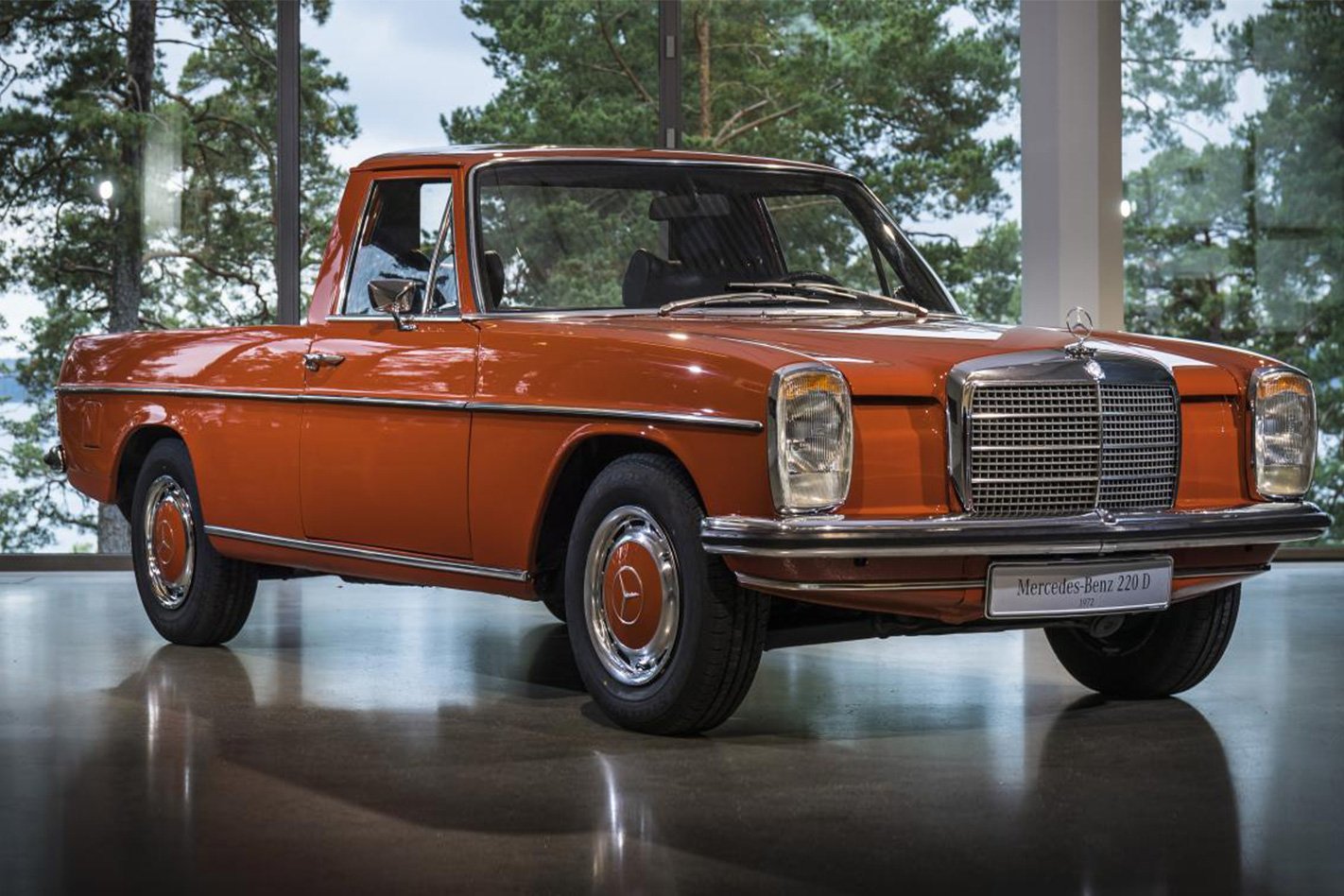
MERCEDES-BENZ W115 220D UTE
The X-Class will have a historical link when the Latin American market’s version rolls off the assembly line at Renault’s Cordoba plant in Argentina late next year. The South American country witnessed brief production of a utility based on the 1970s-era 220D sedan. Nicknamed ‘La Pickup’, it featured a four-cylinder diesel engine. Mercedes has a long commercial vehicle history, and in the 1940s – around World War II – the company’s first attempt at a tray-bed model was a modified version of its 170 V sedan. There have also been ute versions of the military-inspired G-Class that made its debut in 1979. Mercedes-Benz is weighing up bringing the G-Professional ute range, as the civvie version of the military-hardened Mercedes-Benz G-Class is known, to Australia
BMW M3 UTE
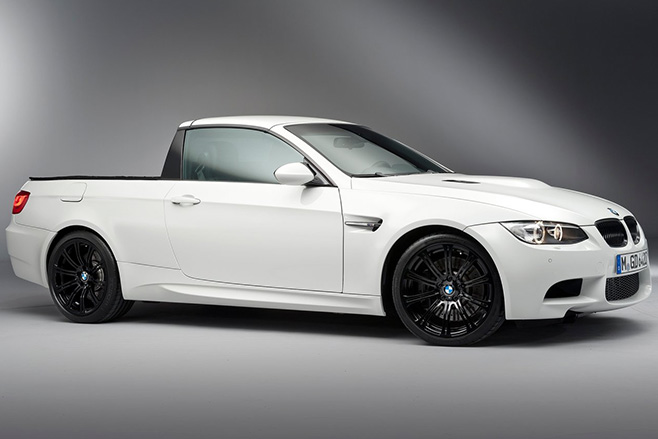
The success of BMW’s M division is founded on the M3, which dominated European motorsport in its original, E30 guise and established itself as one of the most highly regarded high-performance models. A ute version would seem a bizarre spin-off if it weren’t for the fact only one was built in 1986 and never licensed for the road. Instead, the customised M3 that was based on a BMW 3 Series Convertible – due to its inherent additional body strengthening – was used to ferry spare parts around the company’s Garching facility on the outskirts of Munich. Amazingly, it wasn’t retired until 2012 – the year after BMW tricked many of the world’s media outlets with an April Fool’s joke featuring a newer M3 ute based on the then-current, V8-powered E92 version. To be fair, BMW did go to the trouble of shooting ‘official’ spy images of the M3 Ute racing around the Nurburgring.
LINCOLN BLACKWOOD
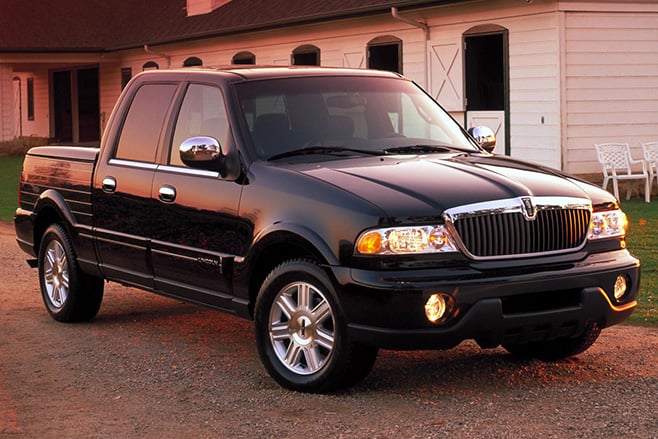
As Ford invented the ute, it’s only fitting its Lincoln luxury brand had a crack at one for a US market obsessed with pick-ups. The Blackwood was essentially a mash-up of a Lincoln Navigator SUV and Ford F150 Supercrew pick-up. It sat on lowered, modified suspension to improve on-road driving manners, and its 1.4-metre-long, 765-litre tray was lined with thick carpet and covered by a power-operated tonneau. Fake wood trim and lack of all-wheel drive were deemed oversights, though, and the Blackwood was a commercial failure – lasting a little over a year to its December 2002 demise.
CADILLAC ESCALADE EXT
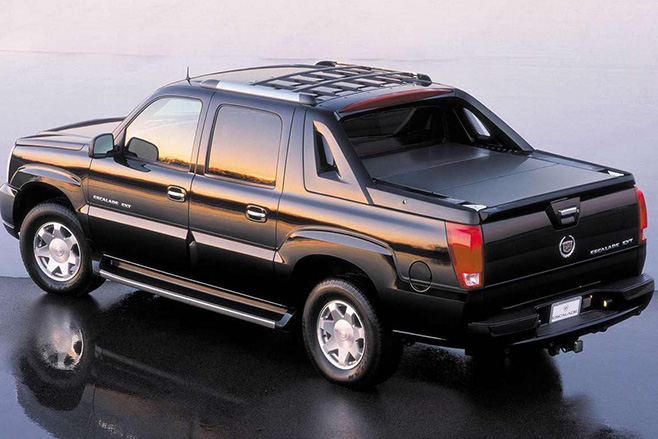
The fortunes of the aforementioned Blackwood weren’t enough to stop General Motors trying to succeed where Ford had failed. An EXT variant of Cadillac’s Escalade appeared in 2002, swapping the SUV version’s third-row seat for a lined and enclosable tray section with central tailgate. Luxury features included leather seats, satellite navigation and parking sensors. Performance was delivered to all four wheels via a 6.2-litre V8 and six-speed auto. The EXT lasted 10 years, and Cadillac hasn’t ruled out revisiting the body style.
LAMBORGHINI LM002
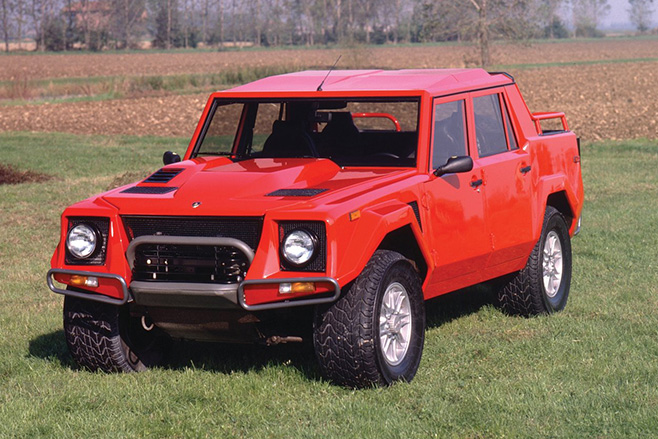
The Italian brand is synonymous with iconic V12-powered supercars such as the Miura, Countach and Diablo. Yet in 1986, a mean-looking, four-wheel-drive model called the Lamborghini LM002 emerged from a failed military vehicle project called Cheetah (losing out to the Humvee). The civilian version, though, became particularly popular as a desert-basher in the Middle East. The fibreglass-bodied LM002 featured special Pirelli Scorpion tyres suitable for all terrain, and could scale 120 per cent gradients. Although often described as one of the world’s first genuine sports utility vehicles, the utility part was apt for the compact rear tray accessed by a tonneau. It even featured small side seats, with the tailgate and its mounted spare wheel providing a convenient ‘step’ when lowered. The 5.2-litre V12 borrowed from the Countach but mounted up front allowed for a top speed of 210km/h, while the LM002 could reach 100km/h from standstill in 7.8 seconds. A spiritual SUV successor called the Urus will be released in 2018, though there will be no ute element.
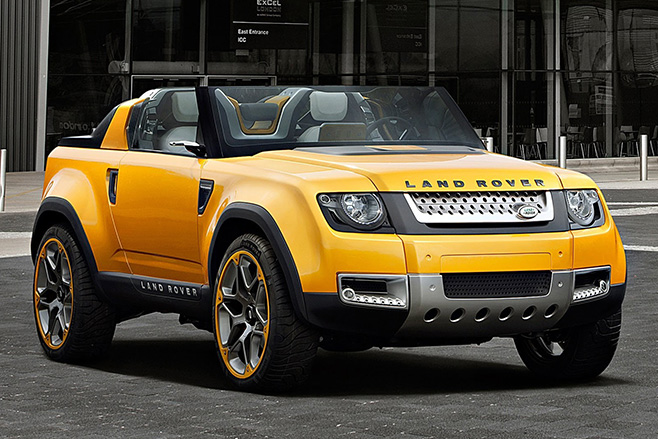
LAND ROVER DC100 SPORT
The British 4WD brand used two concepts a few years ago to provide visual ideas of how a future replacement for the long-running Land Rover Defender off-road vehicle might look. A convertible version called the DC100 Sport also featured a removable rear top section behind the two-seater cockpit. Underneath was a small cargo area, which could be accessed easily via an equally compact tailgate. The Sport was powered by a 2.0-litre four-cylinder diesel engine. Defender fan clubs were generally unimpressed with the concepts, though Land Rover insisted they were purely design studies.
Autonomous cars may be our motoring future, but there will be some key steps toward this transition that will impact our regular old driver-in-charge motoring world almost immediately.
One term you’ll start hearing much more frequently is ‘swarm intelligence’. Now, if this makes you think of bees around a hive, then well done, because this is precisely the phenomenon in nature that inspired the term. Basically it involves the sharing and use of complex information in a large group. The first practical application of this will come as premium manufacturers add so called ‘car-to-x’ services to cars in certain markets late this year.
The first applications involve traffic sign information and hazard information. With car-to-x, vehicles equipped with ‘e-SIMs’ – dedicated, embedded SIM cards handling all vehicle communications – can exchange relevant traffic information in real time via the mobile-phone network. The benefits of car-to-x communication are clear: improved road safety, reduced congestion, a cut in delays, and smoother, more economical motoring. It’s also a fundamental element of future models capable of the aforementioned autonomous driving.
The new online services of traffic sign information and hazard information are available for specific Audi, BMW, and Mercedes-Benz models. In Europe, cars equipped with e-SIMS have been gathering information since the middle of this year, and it has been used to steadily build up a database. The new traffic-sign information service expands on the traffic sign information stored in the navigation module and takes the camera-based recognition of traffic signs to new levels of effectiveness. The on-board traffic sign recognition identifies temporary speed limits, for example, and reports them to a cloud-based server. Once a sufficient number of cars have sent the identical message, it’s considered as ‘verified’ and can be sent out to other drivers.

SHARING HAZARD WARNINGS = LESS DANGER
The second production-ready car-to-x communication application is the new hazard information service. Here, cars networked over the cloud server warn one another of hazards on the road: accidents and breakdowns, slippery road surfaces, or impaired visibility due to fog. The system evaluates multiple parameters to verify cloud-based hazard information: for example, poor visibility ascertained via data from rain and light sensors, as well as the operating mode of the windscreen wipers. An accident or breakdown is reported via an emergency call being placed by the car’s onboard system or an airbag activation. Only after information about a hazard site is verified does the system actually report the hazard to the cloud in order to warn other drivers, who know about the hazard before arriving on the scene, or have sufficient warning to choose a new route, as suggested by the navigation.
THE ROCK-STAR PARK, EVERY TIME
Ever driven around a congested urban centre, searching fruitlessly for an on-street parking spot, swearing so hard you nearly cracked the windscreen?
Cars equipped with car-to-x technology are poised to solve the problem. Suitable equipped vehicles automatically report when they enter and leave a parking spot via the cloud-based servers. The system identifies parking manoeuvres based on a number of parameters, such as the quickly changing position of the gear selector, steering angles and speed. As a car leaves, you’re alerted of this nearby vacancy.
In the future, predictive parking tech will also be able use the information from the ultrasound sensors or the car’s cameras to recognise free parking spaces while driving. It will calculate the number of free parking spaces on the side of the road based on statistical models that consider factors such as the time of day, and be able to show drivers the probability of finding a free parking spot, saving valuable time, and potentially, relationships.
Researchers at the University of Western Australia say they’ve proved what most drivers have always suspected – that strictly-enforced speed limits could have a detrimental impact on road safety.
The boffins used a driving simulator to test whether lowering speed enforcement thresholds would impact on a driver’s mental and visual abilities.
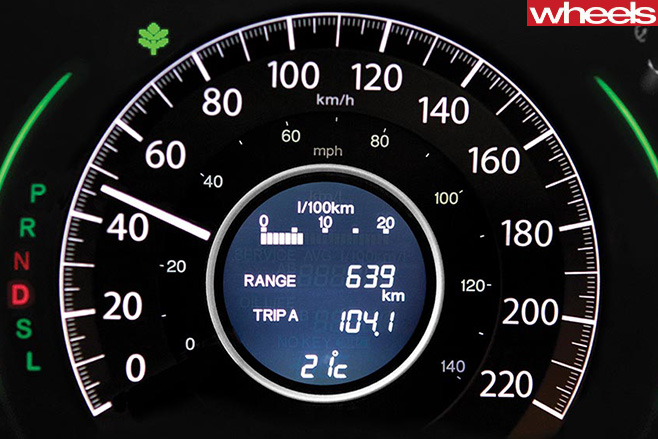
They got 84 young drivers to drive under conditions where they could be fined for travelling one, six, or 11 km/h over a 50 km/h speed limit.
As they drove they were given tasks to test their peripheral vision and mental and visual workloads and later filled out a questionnaire which asked how difficult or demanding they found the experience under the different speed enforcement conditions.
Not surprisingly stricter speed limit enforcement led to drivers rating the experience as more demanding and had a significant negative impact on their ability to detect objects outside their immediate line of sight.
“Similar effects have been shown for individuals who drive while talking on a phone or operating their car’s stereo,” says study co-author Dr Vanessa Bowden (pictured) from UWA’s School of Psychology, who added the findings are in line with past studies.
“In reality, the effects of strictly enforced speed limits could be even greater than in our study, with real-world drivers experiencing greater pressures to drive at or above the posted speed limit.”
These real-world pressures are compounded by the fact that drivers don’t generally know what the threshold above the speed limit is before they can be pinged. In Western Australia where the study was undertaken police said there is a small leeway above the speed limit but won’t divulge what it is.
Not so mysterious are the fines for being slightly over the limit, which can cost drivers anywhere from $80 to $257 and up to four demerit points, depending which state you’re in.
The ongoing study is supported by the Neurotrauma Research Program at the Harry Perkins Institute of Medical Research, which specialises in understanding and modifying driving attitudes and behaviours to prevent road trauma.
Low-level speeding fines by state
ACT: ≤15km/h over limit – $257 and 1 demerit point
NSW: ≤10km/h – $110 and 1 demerit point (4 points for L/P-platers)
NT: ≤15km/h – $150 and 1 demerit point
QLD: ≤13km/h – $162 and 1 demerit point
SA: ≤10km/h – $159 and 2 demerit points
TAS: ≤10km/h – $80 and 2 demerit points
VIC: ≤10km/h – $194 and 1 demerit point
WA: ≤9km/h – $100 and 0 demerit points
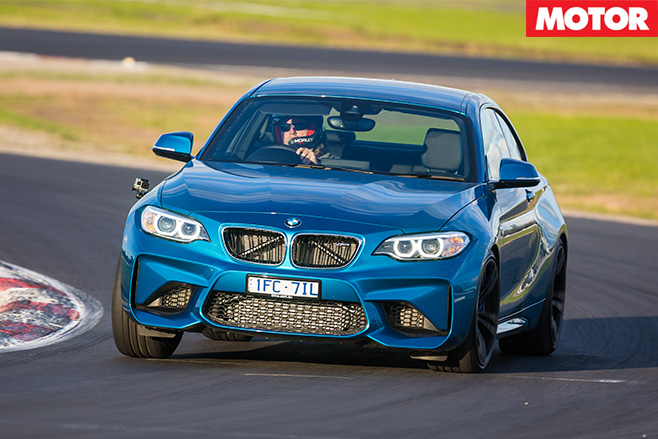
STEPPING into the BMW M2 and heading out onto the Winton hotmix is like strapping on Tony Stark’s Iron Man suit. Suddenly you’re able to do things you weren’t able to do when you were your regular self, like take corners at what seem like ludicrous speeds.
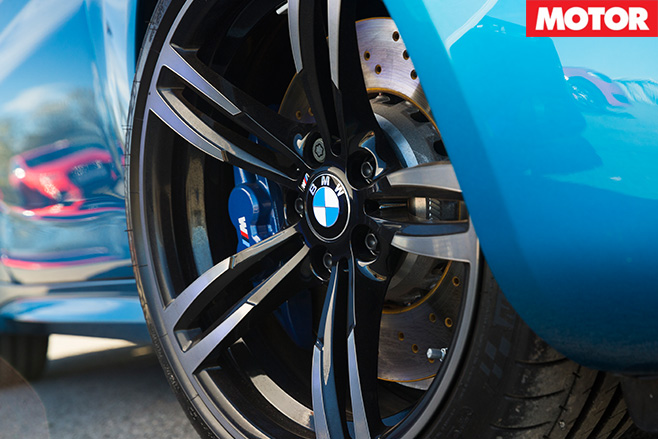
In any other Bang participant, the result would be messy as you disappeared backwards off the track, but the M2’s swollen arches house Michelin Pilot Super Sport rubber measuring 245/35 front and 265/35 rear and the resultant grip levels are eye-poppingly strong. Its minimum speed through the Turn Five sweeper was an immense 118.27km/h, almost three km/h higher than the next best – that’s a lot.
When you’re at a track that’s constantly twisting and turning like Winton, carrying big speed through the corners is going to result in a pretty sharp lap time and the M2 belted all comers with a stunning 1:34.8 – 1.9sec clear of the second-ranked A45.
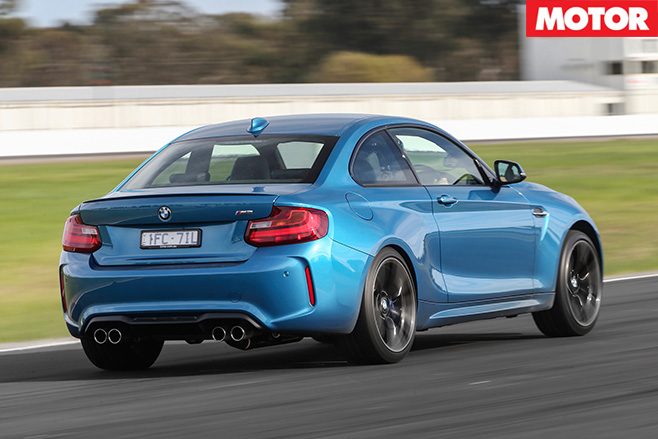
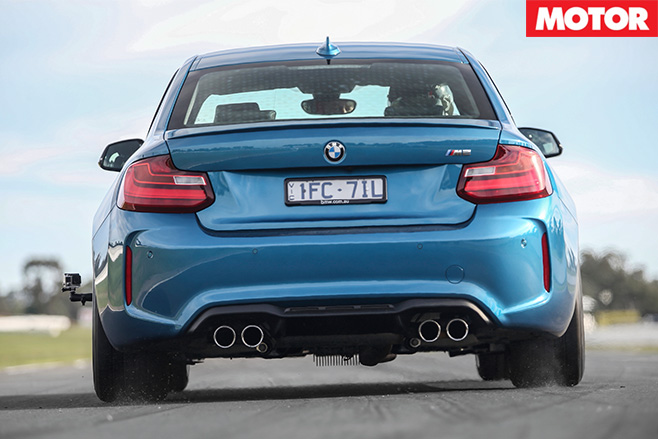
Of course, it wasn’t all corner speed, as the 272kW/465Nm 3.0-litre turbo six under the bonnet is a pretty handy gadget. The latest M-cars aren’t the easiest to performance test, particularly in manual guise, but some soft-shoe shuffling from Morley had the M2 more or less matching its claims with 4.55sec to 100km/h and a 12.82sec quarter at 175.82km/h.
Despite the nomenclature change, the new M2 is essentially the successor to the limited-edition 1M, a car that wasn’t popular around these parts (though I loved it). The M2 is definitely a little easier to tame, though still requires a decent level of respect. The combination of turbo torque, sticky tyres and a short wheelbase requires sharp reflexes and quick corrections when you do overstep the limit.
So, it’s fast and the judges loved it, but sadly, while $89,900 might make the M2 Pure a bargain in a wider context, it’s very pricey as BFYB competitors go. That it managed to get within a hair’s breadth of the podium shows just how potent it really is. Roll on PCOTY 2017.
JUDGES’ COMMENTS 01. David Morley “I have a new favourite BMW, and it’s this one.”
01. Dylan Campbell “Made every other car at Bang For Your Bucks feel like a toy.”
02. Louis Cordony “Sharp chassis, vicious engine, tough looks.”
01. Scott Newman “Feels much more serious than anything else here. Weapon.”
SCORES Price: $89,900 Bang Index: 134.0 Bucks Index: 78.7 BFYB Index: 162.2
WARREN LUFF SAYS 01. “It’s so good in every aspect out there”
“There are a few cars that come along to these events you really look forward to driving. For me, the M2 is certainly one of those cars.
“You can feel the heritage of the little M1. That was a very nervous little car to drive on the limit and this has a lot of the good things the M1 had, but they’ve refined it and made it a much more usable and forgiving package to drive. It’s got great brakes, good turning, really good ergonomics, great driver feedback, the engine is fantastic – it just does everything you want.
“It might not be the overall winner here at Bang, but certainly come toward the end of the year and PCOTY, this thing will show some of the more fancy rivals a clean pair of heels.”
Want more? Check out the rest of 2016 Bang For Your Bucks.
