
MARK Webber, who announced this month he will retired from serious motor sport at the end of his current World Endurance Championship deal with Porsche in a couple of more races, has been quick to dismiss any interest in competing in the Bathurst 1000 – or any other touring car or sports car competition.

“I grew up with formula racing…that came from my dad who always said that the best drivers are in single seaters. His heroes were Jack Brabham, Jimmy Clark and Jackie Stewart. Dad would hitch hike for three hours to watch these guys race.
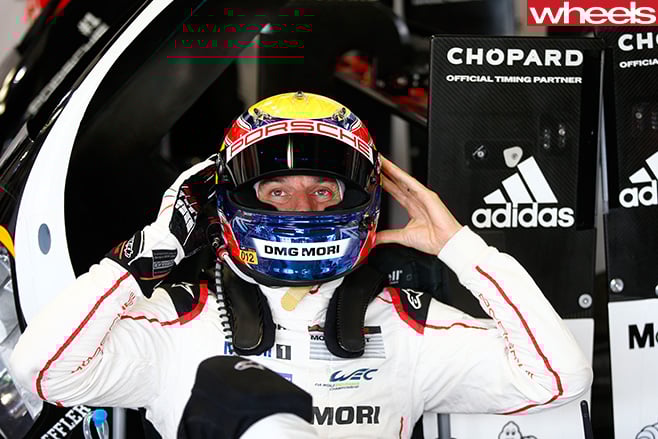
“So to drive a 1500 kilo touring car I think would be a pretty disappointing experience!“
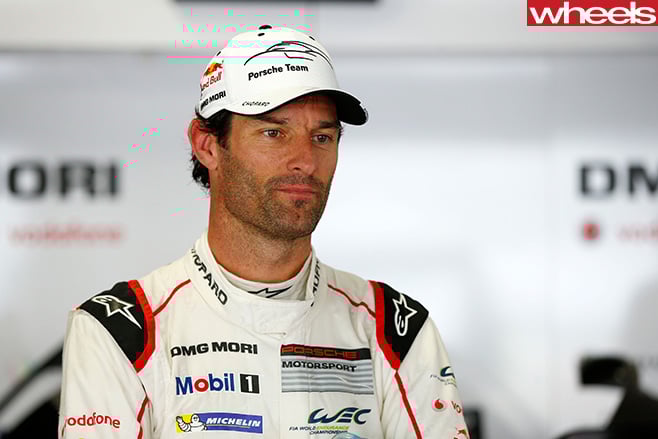
He says he owes it to his mother Diane and wife Ann to walk away from motorsport and enjoy a quieter life.
Hamilton peerless in US Grand Prix in Austin
Rosberg takes a lucky second from Our Daniel after help from the virtual safety car
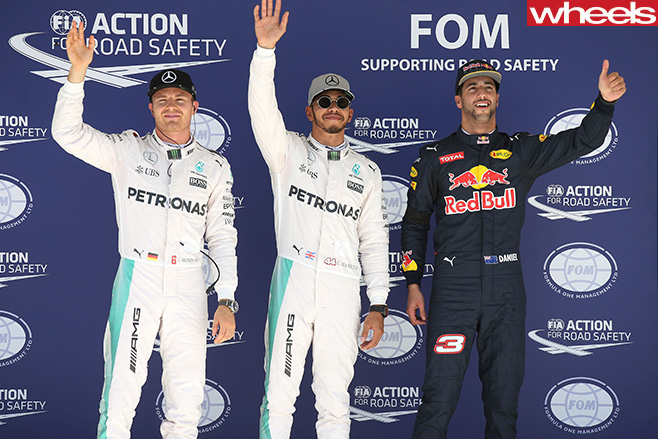
Lewis Hamilton’s Formula One championship assault is back on track after the Englishman uncorked a perfect drive to lead from start to finish in the US Grand Prix in Austin, Texas.
“This is always a good hunting round for me,” said Hamilton, winner in Austin on four occasions. This was his 50th GP victory and he did it easing up.
But in what his Mercedes team-mate Nico Rosberg described as “damage limitation”, the German took second to maintain a handy points lead heading to Malaysia.
Despite whipping around the outside of Rosberg to grab second at the start, Australia’s Daniel Ricciardo had to settle for third place after a virtual safety advantaged Rosberg.
“The start went to plan – the plan was to get both Mercedes but we got Nico, which was a bonus,” Ricciardo said post-race. “Nico was able to jump me under the virtual safety car, so sorry about that.”
Non finishes by Kimi Raikkonen (Ferrari, shortly after he was sent out of the pits with a wheel gun still attached) and Max Verstappen (Red Bull, engine failure sparking the virtual safety car) allowed opportunity to knock for teams usually shut out of the top six.
The race was notable for a bizarre “phantom” pit stop from Verstappen who thought he heard an instruction to “box”. He arrived to discover his mechanics completely unprepared. In the end it didn’t matter as his car faltered with a mechanical issue.
Sebastian Vettel finished a distant fourth for Ferrari after Raikkonen’s bungled pit stop, and retirement.
Fernando Alonso put in a stirring aggressive drive to fifth in the McLaren Honda, though one of his moves – on Felipe Massa – was subject to a post-race investigation.
The Red Bull pair looked fast in free practice, but couldn’t live with Mercedes drivers in qualifying, where Hamilton slammed in a stunning 1m34.999s lap to bag pole from Rosberg. Yep, another Merc one-two.
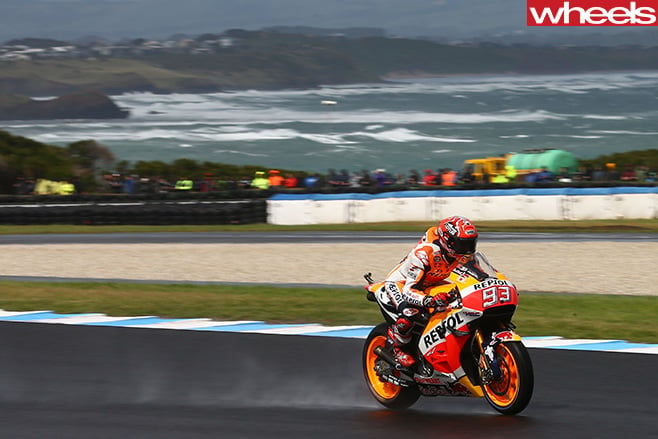
Marquez falls and Crutchlow reigns at the Island
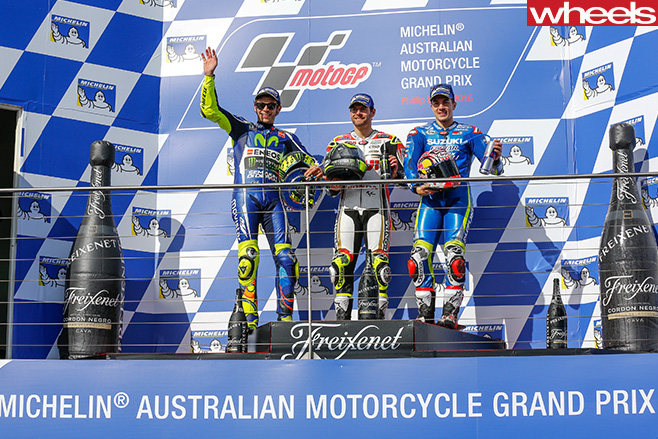
Big charge from Rossi nets second; Lorenzo back in sixth
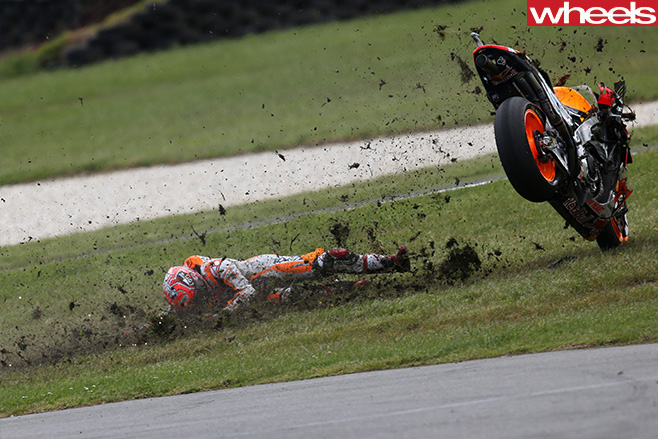
He was more than two second up on his pursuers when he crashed out for his first non-finish of 2016.
Maverick Viñales (Suzuki) was third and Andrea Dovizioso (Ducati) fourth, on a day when the weather finally shone brightly on the MotoGP circus after some heavy rain showers and belting wind in the lead-up.
Defending champion Jorge Lorenzo continued his poor form taking sixth.

Miller finished 10th and fellow Australian Mike Jones scored a point on his Avintia Racing machine, impressing once again.
Whincup and van Gisbergen share Surfers spoils
They won a 300km race apiece at the weekend but the Kiwi is close to his first title
It’s a fascinating fight for the title, isn’t it?
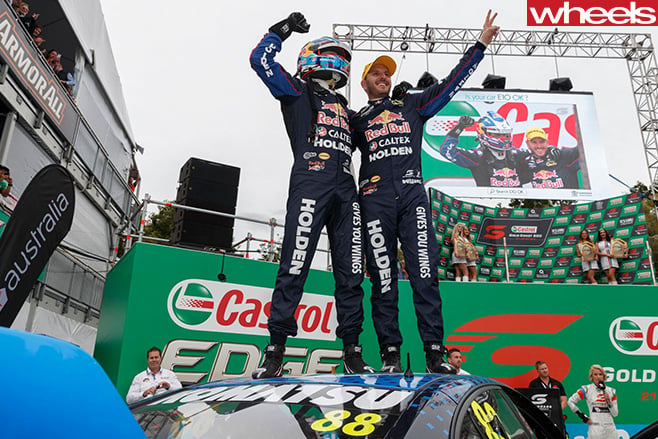
At the same time van Gisbergen moved even closer to winning his first Australian Supercars title.
But some of the glory from their superb drives on the ridiculous racing circuit mapped out around the streets of Surfers Paradise was lost in the distraction of a controversial incident late in the race when the HRT’s Garth Tander appeared to flick DJR Team Penske’s Fabian Coulthard into a frightening 250km/h wallbanger on the front “straight” (actually a gentle curve, for those who embrace pedantry).
The Falcon was seriously banged up, and Tander was hit with a drive through penalty plus a demotion of 10 grid sports for the Sunday race.
The shunt was a massive topic of interest on social media (and Ten and Fox) with all manner of sensible observations mixed with the usual stupidity from trolls.
Initially defiant against accusations that he was the perpetrator, Tander’s resistance eased somewhat overnight after confronted with countless replays which seemed to show that Coulthard had maintained his line, and that the Holden driver had turned into the Ford’s rear quarter panel.
It was unnecessary and the DJR-Penske team pointed out that if GT couldn’t resist the impulse to take out Coulthard, he should have tried in at a low-speed corner where the safety implications would not have been as significant.
They each put in some lightning laps to make up the 10 seconds imposed at the final pit stop, and get back to the lead in the 300km, 102 laps race on a track marked with high kerbs and close walls.
A close second was the Volvo of Scott McLaughlin/David Wall, while van Gisbergen’s nearest Supercars Championship rival, Red Bull Racing team-mate Jamie Whincup (with co-driver Paul Dumbrell) was third.
Whincup never takes losing on the chin, and there was no surprise when on Sunday he put in one of his more memorable qualifying laps to pip van Gisbergen to take pole in the Top 10 Shootout.
It was the second impressive sight on Sunday after DJR-Penske rolled out the rebuilt Coulthard Falcon, looking immaculate after its tear-down/rebuild overnight. Coulthard finished qualifying in 18th, a few spots better than on Saturday.
At the pointy end, in a mainly co-driver line up of starting drivers, Dumbrell made an ideal jump to the second 300km race, heading Premat until the first inevitable safety car and pit stops. Double stacking cost Premat/van Gisbergen nine spots but their Saturday form demonstrated that this was not impossible to overcome.
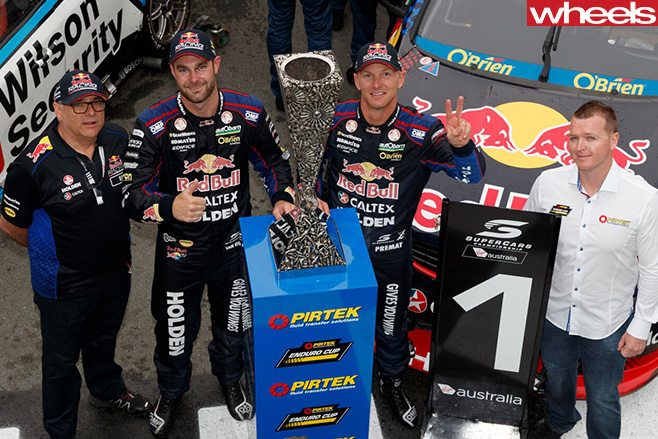
This he managed to the end, to win his first enduro race for a couple of years and pull back 12 meagre points to van Gisbergen, who was second.
Another Kiwi, McLaughlin, was also in great touch, coming back from 11th to claim scalp after scalp to make the podium for the second time over the weekend.
McLaughlin’s move under Winterbottom was a corker, the Volvo sliding with rears and the unloaded front locked and burning, before he managed to steer it around the left hander. Frosty helped by being in self preservation mode and move out of the line of fire.
With just two race weekends to resolve the championship, van Gisbergen’s 148-point gap looks huge considering the form he is in. He’s close to joining fellow New Zealanders Robbie Francevic and Jim Richards as winners of Australian touring car/Supercars championships.
He’ll be extra hard to crack next up at Pukekohe.
Premat goes home with two surfboard trophies and pride in landing four podiums from four endurance race starts.
Chris Holder breaks four-year drought to win Australian Speedway GP
Greg Hancock takes the world title before bizarre exclusion at Melbourne’s Etihad
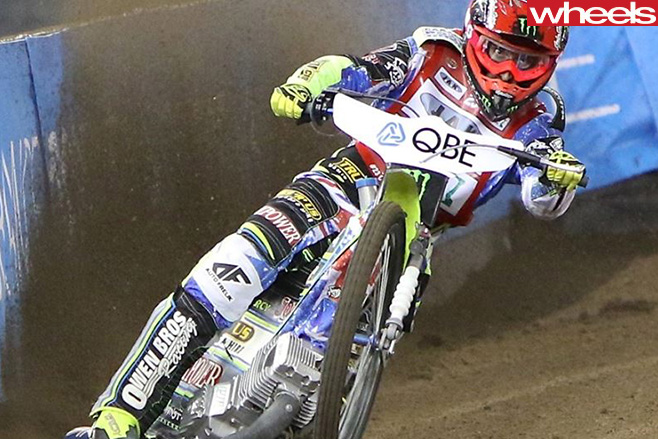
The Sydneysider, whose last victory came in the British GP in August 2012, has been battling a succession of injuries in recent seasons, but was in brilliant touch in his home grand prix, powering back to the form that earned him a world title in 2012.
Holder won five of his seven races to bank 17 points including a stunning victory in the final. But he missed out on overall third in the championship to rising star, Poland’s Bartosz Zmarzlik, by just two points.
Holder defeated Tai Woffinden, Zmarzlik and Antonio Lindback in an all-action final.
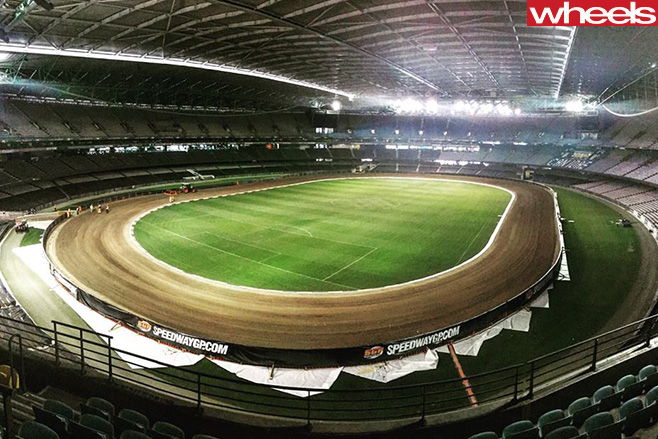
The racing throughout the evening was spectacular, and the large crowd treated the Holder win as a huge bonus.
Amongst the crowd watching Holder take his fifth GP victory was Mark Webber, another Aussie who has bagged wins at world championship level.
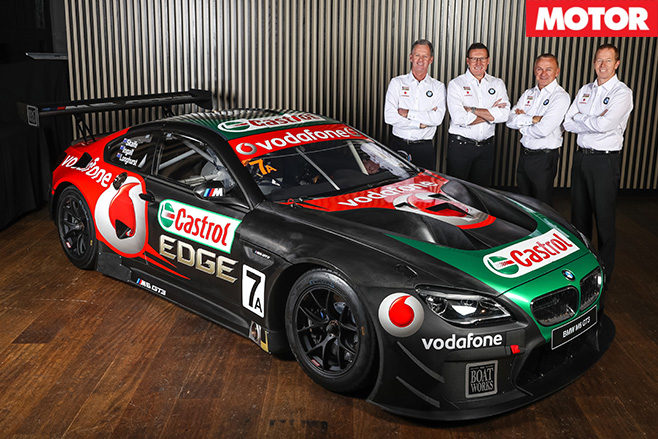
BMW is planning a major tilt at the 2017 Bathurst 12-Hour title with an M6 GT3 piloted by three legendary Australian drivers.
In a move few would have seen coming, Tony Longhurst will be joined by Mark Skaife and Russell Ingall, the former arch rivals putting aside past differences for the prospect of success at an event that has now established itself as one of the premier endurance races in the world.
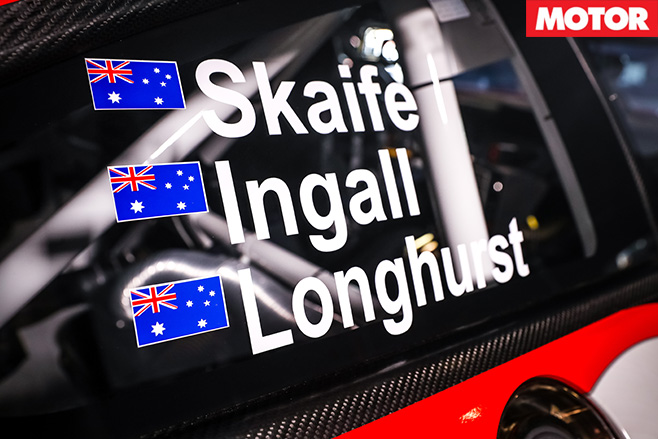
The car will be run by Steven Richards Motorsport, who will run a second M6 GT3 for the team boss and a pair of as-yet unnamed drivers. The team has been running the car in this year’s Australian GT Championship, a challenging debut year bringing a best result so far of ninth.
Only Peter Brock and Jim Richards have tasted more success at Bathurst than Skaife, who alongside Larry Perkins and Craig Lowndes has six Bathurst 1000 titles to his name along with five Australian Touring Car Championships.
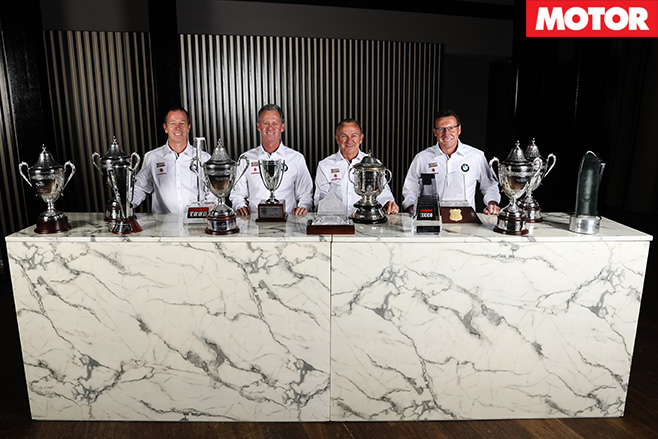
The 2017 Bathurst 12-Hour takes place from February 3-5.
After stretching it out to nine months, it’s time for Ponch to let the C63 go.
THERE’S one validation of a car’s greatness that isn’t always discussed, and that is the difficulty in saying goodbye. Like anything in your life, if you treasure your time together, separation smarts. Nine months in a twin-turbo Mercedes-AMG C63 S with ceramics and semi-slicks will do that to a person, yet I’m glad it has come to this. Mutual appreciation (I hope!) and a bond ’til the end of days.
What began as a slightly frosty introduction has grown to the point where I honestly feel like this Iridium Silver C63 S is mine. All mine, I tell you! I baby it like a doting father, parking it away from other cars in multi-storey lots, and as close to the gutter as possible in our narrow street without kerbing its star-spoke 19s. Admittedly, the front-right does have the odd small nick, where I’ve reversed in with lock on and ‘rested’ it on the gutter, but there are no scrapes to be ashamed of. And I’ve grown highly tolerant of the C63’s ride.
Our new digs (in yet another one-way street where everyone folds their mirrors in) is accessed via a mostly concrete-slab surface, and several of them don’t line-up properly. Not the AMG’s forte at all, yet its hard ride somehow cops the hits with dignity and integrity. Ditto the litany of speed humps populating my back way to the Sydney office.
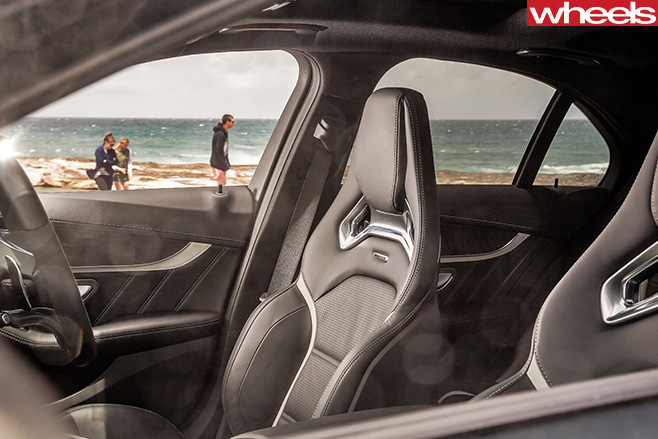
The C63’s cabin maintained its class and superb user-friendliness to the end, tempered slightly by a short-cushioned rear seat and the rather odd shape of its flat-bottomed, part-microfibre steering wheel. I frequently drove the C63 only touching the wheel’s leather bits, rather than dirtying its fluffy surfaces, and I often wondered why the hell you’d want a non-round wheel in a road car. At least my HJ Kingwood’s ‘oval’ wheel (with boomerang spoke shape) was designed to accommodate a beer gut.
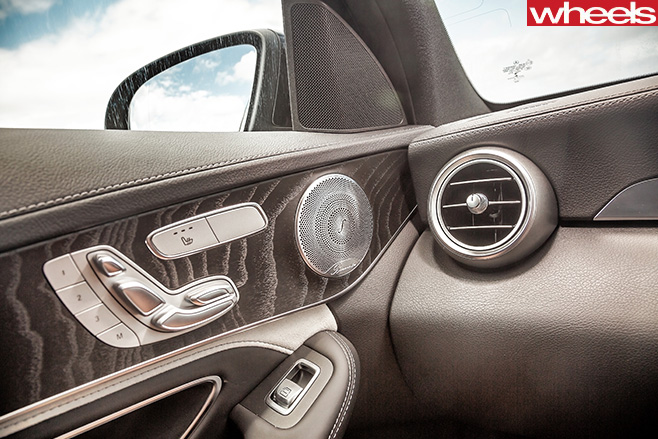
I wasn’t necessarily won over by the C63’s ‘standard’ 13-speaker, nine-channel, 590-watt Burmester stereo. Despite being simple to use, with digital radio a constant companion throughout our time together, the Burmester didn’t live up to the sound quality promised by its gorgeous perforated-metal speaker grilles. An audiophile mate and I both agreed it sounded too ‘bright’, and dialling back the treble couldn’t fix it. The centre dash speaker also developed a trim buzz, though only if you cranked the volume (via either a wheel button or a brilliant metal barrel dial on the centre console, easily accessed by either front occupant).
So, yeah, I’m really gonna miss relaxing to rolling thunder and feeling a bit spesh in this C63 S. Its Holden Spark LS replacement better enjoy taking speed humps at 50.
Fuelling the fire
In full city gridlock, the C63’s thirst can be borderline fearsome (two tanks averaging 24.7L/100km and 25.2L/100km confirmed as much), though a more even mixture of urban motorway and city commuting levels the AMG’s thirst out at around the 13-15L/100km mark. Best of the lot over 4381km of enthusiastic motoring was a pair of 10s during my round trip to Dubbo a few months back (10.7L/100km on a fast four-hour blast back to Sydney being a commendable highlight). But if you really care about fuel economy, best avoid anything with an AMG badge. And ignore this car’s official combined number of 8.6L/100km.
Medium heat works best
In much the same way that the original Commodore was arguably the perfect size for a family sedan, the C63’s W205 Mercedes-Benz C-Class architecture makes it a four-door sweet spot. While the C’s short-cushioned rear seat appears to have been designed to steer punters into an E-Class if you’re chasing serious lounging comfort, there’s plenty of legroom back there, and at 1877mm wide (owing to its pumped guards), the C63 strikes a not-too-narrow, not-too-wide balance that suits our cities like a beer garden on a summery Friday arvo. It’s also reasonably trim length-ways (4750mm) but squeezes a leggy 2840mm wheelbase beneath.
Read part five of our Mercedes-AMG C63 S long-term car review.
Mercedes-AMG C63 S Price as tested: $165,610 Part 6: 364km @ 14.3L/100km Overall: 4388km @ 15.2L/100km Odometer: 6901km Date acquired: December 2015
Luxury SUVs are out-growing their mainstream counterparts by significant percentages in 2016, and that includes the large-SUV segment.
The Mercedes-Benz M-Class began the German luxury brands’ foray into SUVs back in 1997, though this year the model – now renamed the GLE – finds itself just outside of the top four. (A new GLE Coupe version, however, is selling successfully alongside it.)
BMW’s X5 has been a perennial sales winner both globally and locally, and currently leads the popularity contest for large luxury SUVs in Australia.
The Audi Q7 was a relatively late entrant to the class in 2006, though that hasn’t hindered success and a second-generation model was released in late 2015.
Land Rover continues to have a brace of British SUVs in the mix. The Range Rover Sport has been a hit ever since it was introduced as a sportier and more affordable spin-off from the flagship Range Rover, while the practicality-focused Discovery has evolved from the more utilitarian roots of the 1989 original to become a more luxurious seven-seater offering.
Here, WhichCar provides a guide to any changes planned or expected for these models during the next 18 months – to help you pick the perfect timing for buying one.
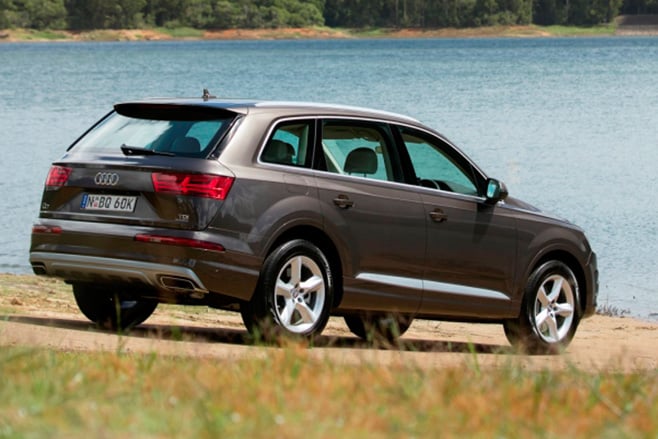
Audi’s seven-seater SUV was released in second-generation form in late 2015 with just a single model: a 200kW 3.0 TDI quattro costing $103,900. It was joined in March by a variant using a 160kW version of the engine, lowering the Q7’s entry point to $96,300. The big news for Audi’s biggest SUV is the upcoming SQ7 model, due in late 2016. Featuring an advanced 48v electrical architecture shared with the Bentley Bentayga, the SQ7 will be an important halo vehicle for the brand. Clever tech includes an electrically powered compressor designed to speed up the response of the vehicle’s 320kW/900Nm twin-turbo V8 diesel.
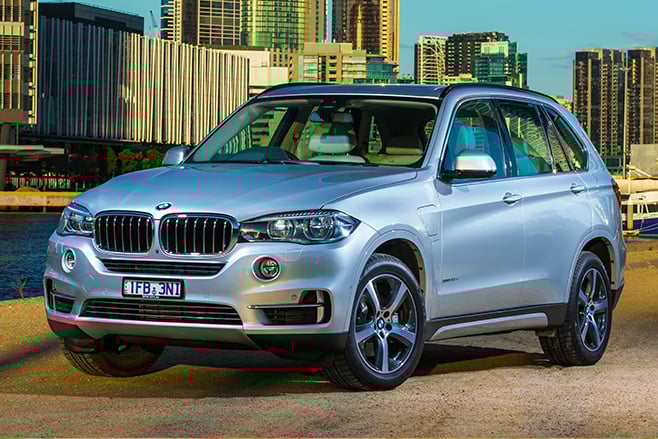
The third iteration of BMW’s ever-popular 4WD is only three years old, having launched in 2013. Speculation is already suggesting the fourth generation could arrive as early as 2018, though this is the year BMW is expected to release its confirmed X7 ultra-luxury SUV. For now, BMW this year electrified the X5 with the xDrive40e. The new variant, priced from $118,900, teams a 2.0-litre four-cylinder turbo petrol engine with an electric motor for official fuel consumption of just 3.3 litres per 100km (the next most efficient X5 uses 5.8L/100km.) An electric-only range of 31km is also possible.
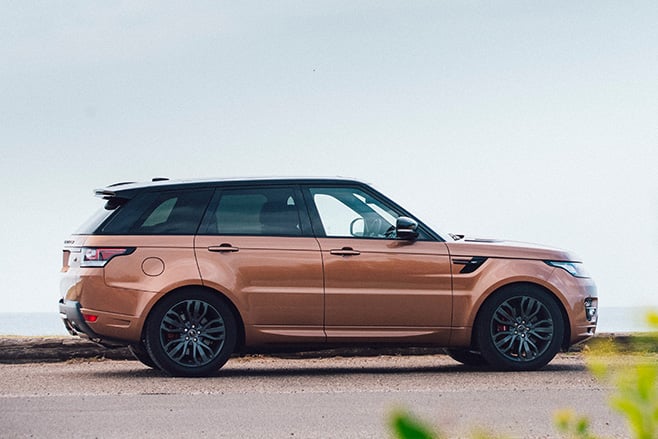
Land Rover’s sportier take on the flagship Range Rover adopts an MY17 makeover in the first quarter of 2017. Notable new standard features will include autonomous emergency braking, front sensors, lane departure warning system, and a 10-inch InControl Touch Pro infotainment system with smartphone-style pinch and zoom functionality. Air suspension also features on all models except the base SD4. The 177kW SD4 replaces the six-cylinder TDV6 as the entry point to the Rangie Sport range, marking the first time the model has employed a four-cylinder engine. The starting price for the Sport remains at $90,900. Other V6 petrol and diesel engines continue, as do supercharged V8 variants including the SVR performance model. Strong industry rumours point to a new Range Rover Sport Coupe model, which could materialise in 2017 and is said to be based on the F-Pace from sister brand Jaguar and destined to rival BMW’s X6 that started the coupe-style-SUV trend.
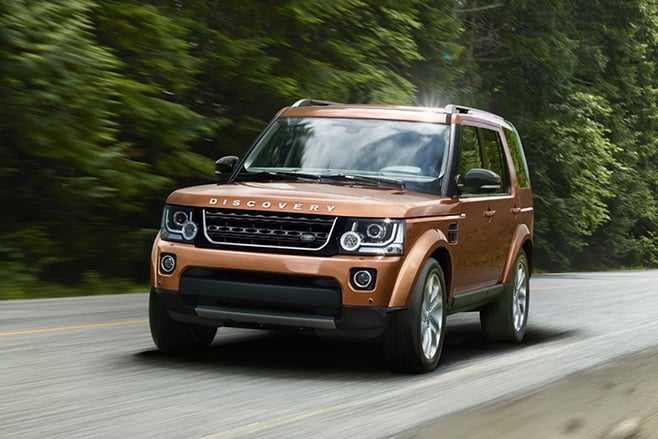
The British 4WD brand’s stepped-roof off-roader has been hauling big families around the countryside since 1989. Discovery 5 arrives in mid 2017 – the first all-new generation of the seven-seater since the Disco 3 of 2004 (Discovery 4, like the Series II, was instead a major update). New lightweight, aluminium construction sheds almost half a tonne from the Disco’s kerb weight, which should have a positive effect on crucial areas such as fuel consumption and handling. Land Rover Australia has already confirmed pricing for the entry-level model – the $81,590 TD4 SE powered by a 132kW/420Nm four-cylinder turbo diesel. An all-diesel launch range is completed by a 177kW/500Nm SD4 and 190kW/600Nm V6-powered TD6.
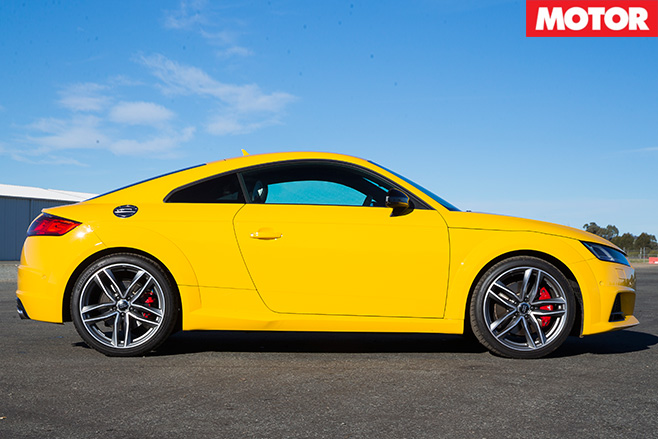
Hiding under the TTS’s dash is a row of buttons. Poke the middle one, and out of the Audi’s butt pops a ski-sized flap. Yep, a cool feature, but one we suspect might’ve been wasted on the original TT, as few owners would’ve tested its structural integrity.
It’s much more relevant, however, on the style icon’s latest variant. The model shot dead the hairdresser stigma in 2009 when it slaughtered that year’s Bang For Your Buck’s field on track. And seven years later, its successor’s just as malicious.
Okay, so at our event it couldn’t blitz the drag strip. Sure, its variable all-paw system secured it a decent 0-100km/h sprint and an average quarter mile pass. But its relative performance ranged from average to poor as it gobbled up 400m. More embarrassing was it placed last for rolling punch, needing 3.02sec to jump 80-120km/h.
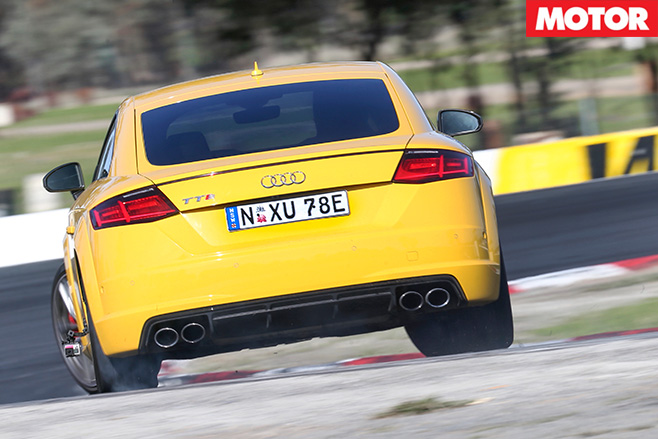
Never has a TT been so freaking fast, too. The only car that could catch it through turn five here at Winton was BMW’s fat-tyred M2. Then at turn nine it was untouchable, apexing it at 57.28km/h.
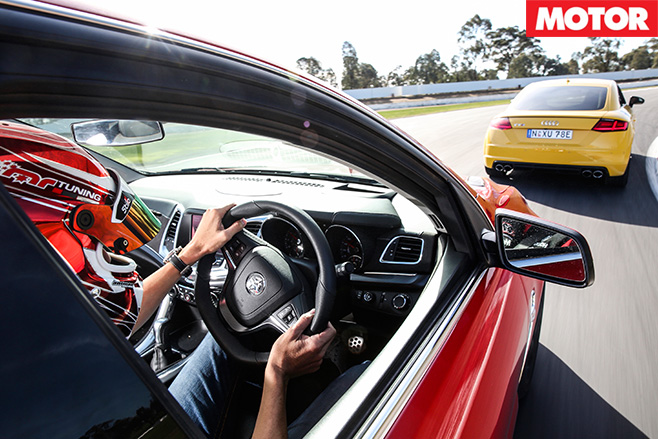
Where does its demonic speed come from? Good old discipline. While a Fiesta ST dances into corners, and Commodores slide out of them, the Audi remains completely composed. Luffy praises its stability under brakes, and the balance of grip at both ends means it does exactly what you intend.
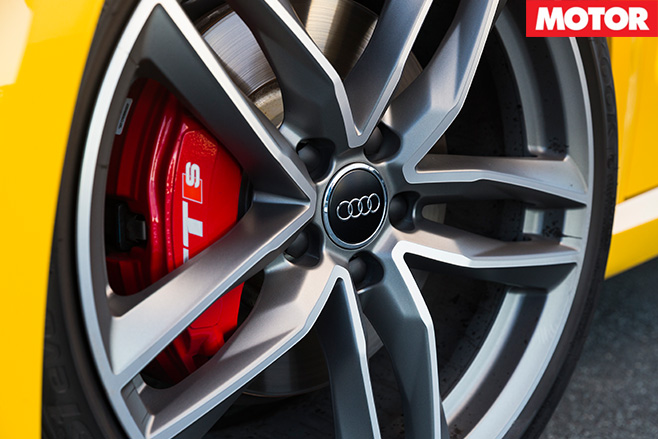
But you pay for the pleasure. Its sizeable price just limbos under the cap by $100. And when you consider its Audi RS3 stablemate offers 38 per cent more Bang for 17 per cent less Bucks, it’s easy to see how it wound up on the formula’s lowest rung.
Back in 2009 the TTS overcame its huge premium to perch itself fourth. But things change, and today the competition’s much stronger. Then again, it ain’t all bad. Because its certain pace proves a TT can deserve to boast a fancy spoiler.
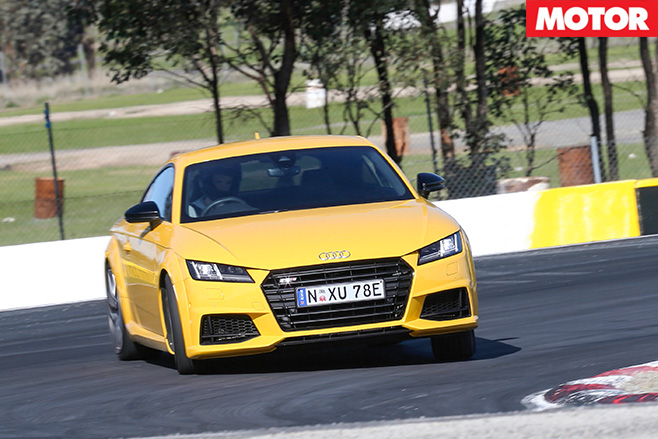
JUDGES’ COMMENTS 04. David Morley “Constantly amazed at how early I could get on the gas mid-turn.”
07. Dylan Campbell “Surgically fast and finally the potency to back up its looks.”
07. Louis Cordony “Scything speed and capability, can’t wait for the five-pot RS.”
04. Scott Newman “Works brilliantly on track, mainly because there are no bumps.”
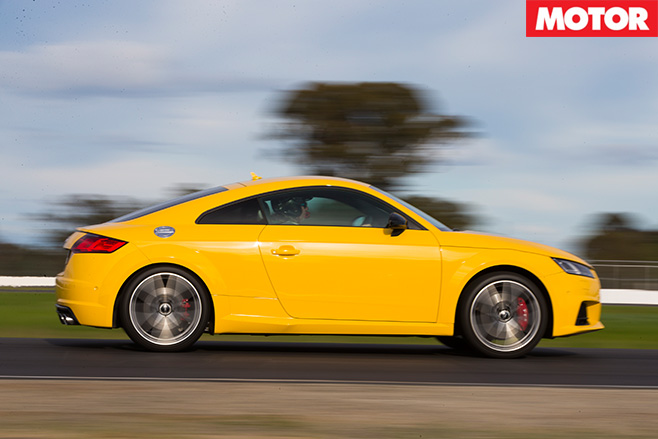
SCORES Price: $99,900 Bang Index: 93.0 Bucks Index: 70.8 BFYB Index: 123.9
WARREN LUFF SAYS 04. “It does so much for you, it takes away the enjoyment of driving”
“TYPICAL Audi, it just does everything so well and so easy. There’s no fuss, there’s no sliding the car around mid-corner, it’s just a matter of trusting how much lateral grip it does actually have and being able to find where it is without overstepping the mark.
“It takes a little bit of getting used to but the brakes are what makes this car so good, it probably lacks in the straight line stuff compared to some of the other cars that are here, but braking and up to the apex this thing is rock solid.
“You want it to give a little more excitement, just so you feel you’re actually doing something.”
Want more? Check out the rest of 2016 Bang For Your Bucks.
I thought heaven would be warmer. Up here among the clouds the mercury reads 1°C, though the wind chill factor feels to drop that by at least 10 degrees, and a thick carpet of ice makes each step a lottery.
To continue photography is to risk frostbite, and every possible heat source in our mode of transport, including the seats and steering wheel, is on maximum in the bid to battle hypothermia.
When Jacob, a patriarch of the Israelites, first had his vision of a stairway to heaven in the Book of Genesis, he didn’t have these problems. Because he was in Israel. Which is in the desert. But for our purposes Jacob’s Ladder is four kilometres of narrow gravel road in Tasmania’s north.
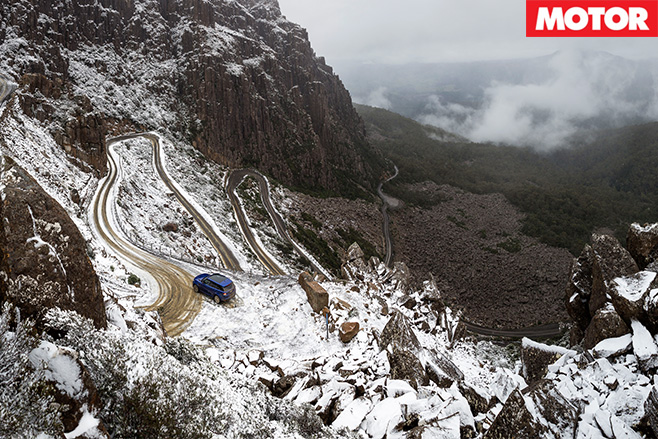
It’s a grey day, the kind of weather that sucks the colour out of everything. Amid such sombre surroundings, the Range Rover SVR’s unique Estoril Blue paintwork is all the more vivid, like someone’s gone overboard with the saturation on Instagram.
It’s an imposing beast, which is only fitting for the first offering from Jaguar-Land Rover’s Special Vehicle Operations, though with the air suspension in its lowest mode it does look a little like it’s collapsed on its springs.
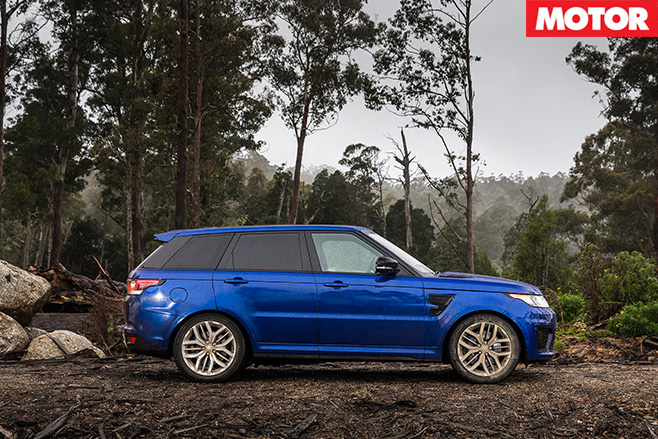
Range Rover calls it “the world’s most capable performance SUV”, able to lap the Nurburgring Nordschleife in 8min14sec yet fjord rivers, clamber over rocks and plough through muddy fields thanks to its low-range gearbox and Terrain Response system.
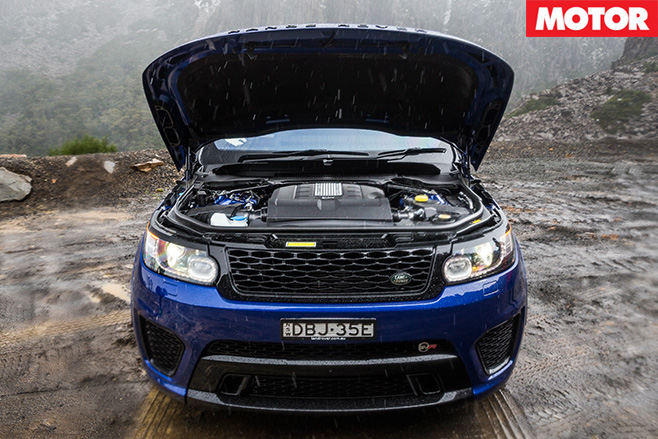
Brilliant driving roads criss-cross the Apple Isle like a cardiovascular system; venture off the main highways and you’re guaranteed to hit a decent set of corners before too long. As such, there are a number of ways to reach the entrance to the Ben Lomond National Park, depending on how much time you have available.
Departing Tasmania’s second largest city, Launceston, the quickest and easiest route is east on the C401. Within minutes the outer suburbs give way to lush green fields and long, sweeping corners ensure the 42km to the turn-off into the forest pass quickly. But there’s a better way.
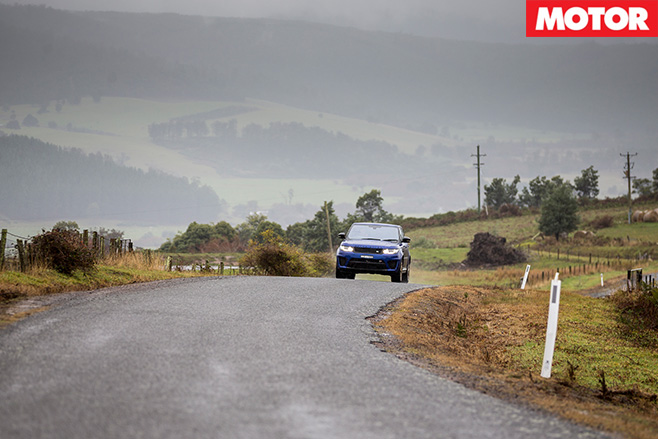
It’s one of Targa Tasmania’s most challenging stages with relentless corners, each one different thanks to constantly changing cambers and the broken road surface. And when it’s wet, as certain sections are now, grip disappears completely.
It’s a stern test of any car, let alone a 2.3-tonne off-roader, and despite its Nurburgring-honed credentials, the SVR struggles. It’s handicapped to a certain extent by its tyres. Range Rover offers enormous 295/40 Continental ContiSportContact5 high performance tyres on 22-inch rims as a $4800 option, but given our planned unsealed adventures it currently wears the standard 275/45 R21 Continental Cross Contacts to lessen the risk of a puncture.
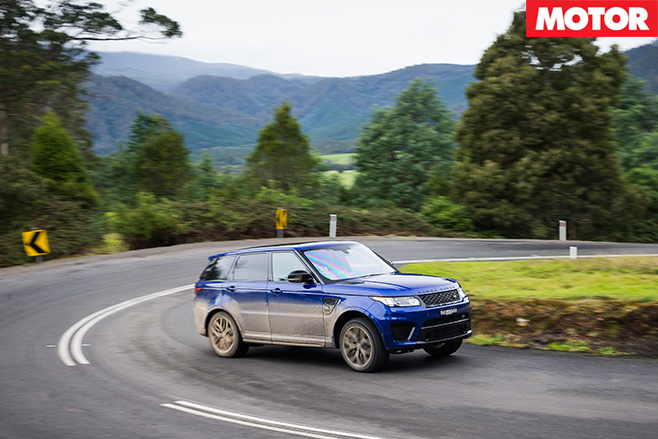
Unfortunately the tyres can’t cope with this amount of power or weight. Even with the suspension stiffened in Dynamic mode there’s significant squat, dive and roll so smooth driving is key.
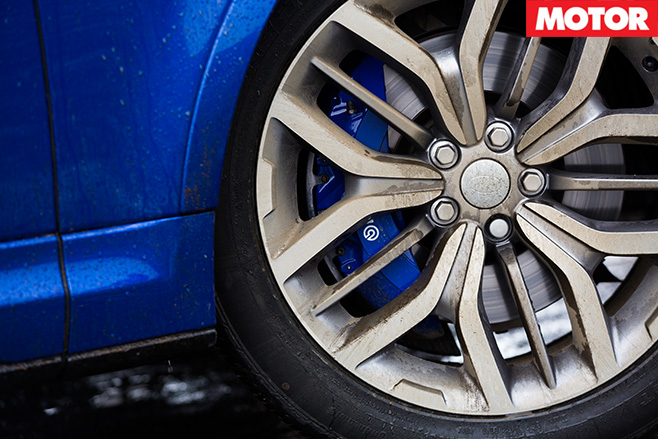
On corner exit a healthy dose of throttle slews the rear end sideways, smearing the tyres across the road. If it’s wet, all four tyres will spin, which makes it interesting trying to guess in which direction the car is going to go next. This might all sound a bit alarming, but to be honest it’s also quite good fun.
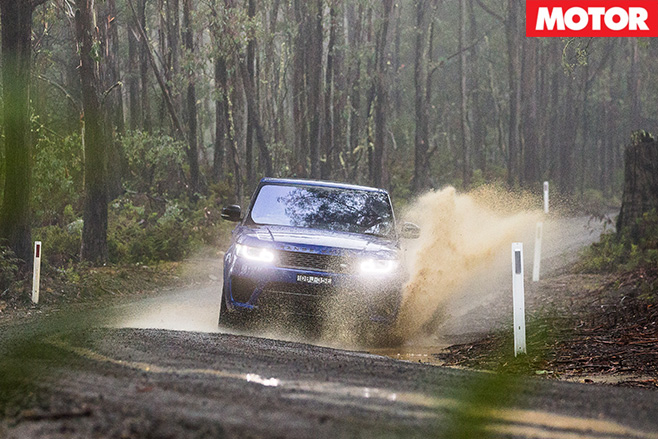
Of course, at the centre of all this is the awesome V8. Throttle response is brilliant, there’s power everywhere and it never sounds anything less than completely anti-social. Range Rover claims a 0-100km/h time of 4.7sec but it feels faster than that, and the overtaking force is brutal. The perfect accomplice to this awesome power is ZF’s eight-speed auto with its smooth, rapid gearchanges.
It’s an entertaining drive, though more for its unruliness than its finely-honed dynamicism. There’s the nagging feeling that this F-Type-spec V8 might be a step too far for this SUV chassis. Perhaps it’s unfair to expect a 2.3-tonne behemoth to shine on a road that would tie many sports cars in knots, but this is “the most dynamically focused Land Rover ever produced”.
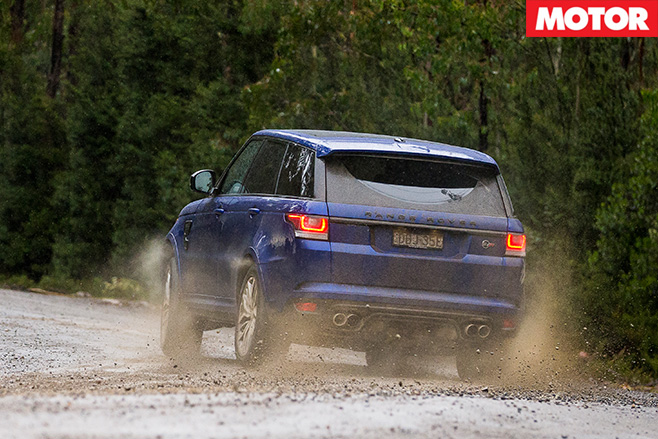
It proves an inspired choice. Wide, fast and well-sighted, Camden Hill Road could’ve been plucked from the route of Rally Finland. The SVR’s high-speed stability on loose surfaces is incredible and the tyres that struggled so badly on wet tarmac are now biting into the damp gravel with relish.
I did some of my first miles in a rally car on roads near here and it’s clear I would’ve finished a lot further up the leaderboard had I been driving a Range Rover Sport SVR. It’s an absolute weapon, absorbing potholes, ignoring ruts and exiting corners in delicious four-wheel drifts. On more than one occasion cows scatter in alarm as the SVR thunders past; if you live in Launceston and your milk is lumpy, blame Range Rover.
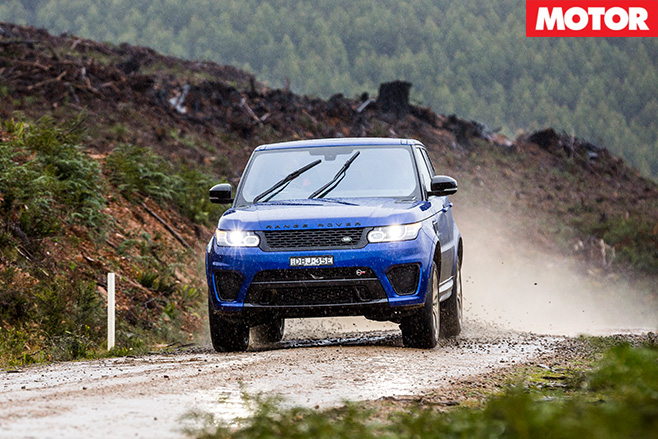
It’s just under 10km to the entrance to Ben Lomond National Park and you’ll need a pass to legally enter, which is best bought online. The road is narrow and well-trafficked, so care is needed, but also smooth enough that any vehicle should manage with little difficulty.
The moment you break above the tree line and Jacob’s Ladder rears into view is guaranteed to induce a sharp intake of breath. It fills the windscreen, while an enormous valley stretches out to your left and massive stone fingers loom from your right, visible through the SVR’s panoramic glass roof.
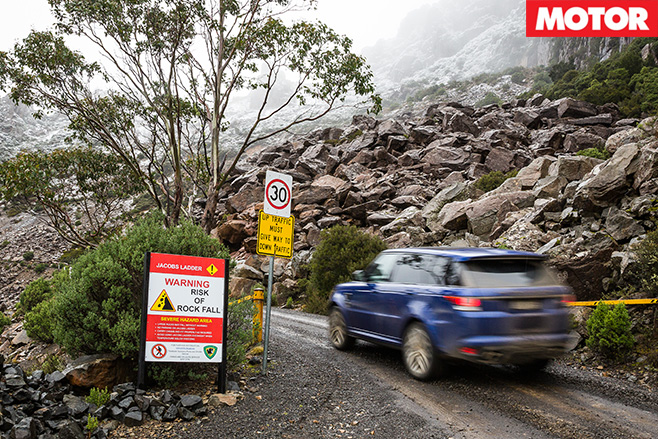
As far back as 1945 the Northern Tasmanian Alpine Club had lobbied the local government to build a road to Ben Lomond, however it quickly became clear any government project would be many years in the making. The NTAC took it upon itself to create a road to Carr Villa Chalet at the base of the mountain, which was completed in 1953, however skiers still faced a 3km walk and 300m ascent to the slopes.
The need for an extension to the summit was clear, and in 1960 Bill Mitchell had the ambitious idea of blasting ‘The Ladder’ into the rock face. A year later, a small government grant allowed road contractor Roy Bugg to begin construction. It took five years for the road to be accessible by a standard car and it was hazardous work.
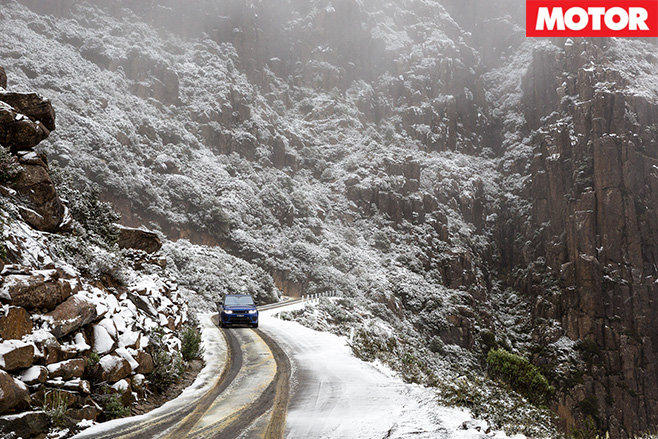
Constant rock falls and inclement weather meant the road required constant maintenance, and in 1974 responsibility for this task was passed from the NTAC to Parks & Wildlife. Jacob’s Ladder was widened, resurfaced, guard rails added and the rock slope stabilised, and in the words of Harvey “is now a highway compared to what it used to be”.
A highway it may be, but it’s still a treacherous one. Jacobs (the one taking pictures) is adamant the entire mountain is about to fall on us and towards the top the hard-packed gravel turns to sheet ice. For virtually the whole trip the SVR’s Terrain Response System has been locked in ‘Dynamic’ – even on the gravel – but now I click it around to ‘Snow and Ice’.
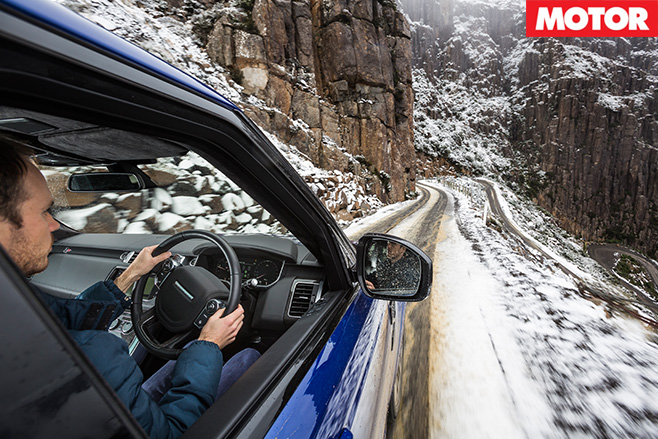
It crawls with ease across a surface you couldn’t walk on, though downhill engine braking is the only way to keep speed in check, the slightest brush of the brakes instantly causing the ABS to ineffectually grab individual wheels. Until now the SVR’s off-road abilities have been virtually irrelevant, now the safety margin they provide is welcome.
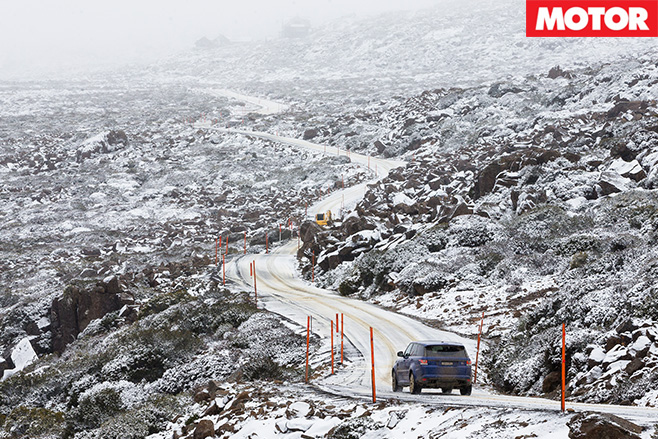
As tested, it’s also $253,280. The Range Rover Sport HSE Dynamic TDV8, with its 250kW/740Nm 4.4-litre twin-turbo V8 diesel, might not have tempted us to tackle The Sideling, but it would’ve completed every other facet of the journey in greater comfort and with considerably better fuel economy than the 18.21L/100km we averaged over almost 800km. It’s also so much cheaper than the SVR you’d have enough left over for a BMW M2 Pure for when you really wanted to attack some corners.
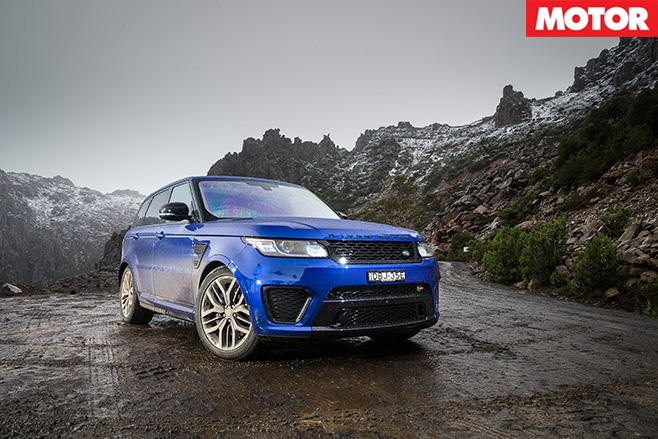
3.5 OUT OF 5 STARS
SPECS Body: 5-door, 5-seat SUV Drive: all-wheel Engines: 5000cc V8, DOHC, 32v, supercharged Bore/stroke: 92.5 x 93.0mm Compression: 9.5:1 Power: 405kW @ 6000-6500rpm Torque: 680Nm @ 3500-4000rpm Power/weight: 174kW/tonne Transmission: 8-speed automatic Weight: 2333kg Front suspension: Struts, anti-roll bar Rear suspension: Multi-links, anti-roll bar L/W/H: 4856/2019/1780mm Wheelbase: 2923mm Tracks: 1690/1685mm (f/r) Steering: electrically-assisted rack-and-pinion Front brakes: 380mm ventilated discs, 6-piston calipers Rear brakes: 365mm ventilated discs, 4-piston calipers Wheels: 21.0 x 9.5-inch (f/r) Tyres: 275/45 R21 (f/r)Continental Cross Contact Price as tested: $253,280 Pros: Awesome engine; off-road ability Cons: Expensive; SVR badge questionable
Fast fighters: Meet out 10 contenders

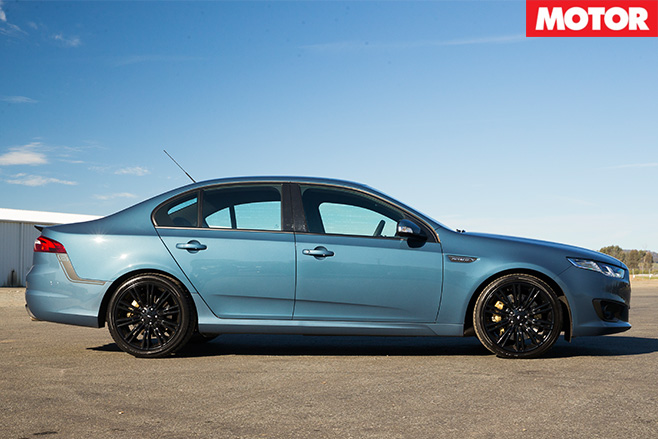
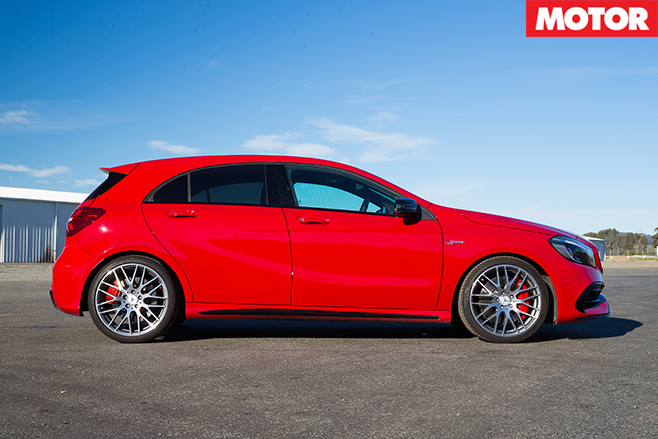
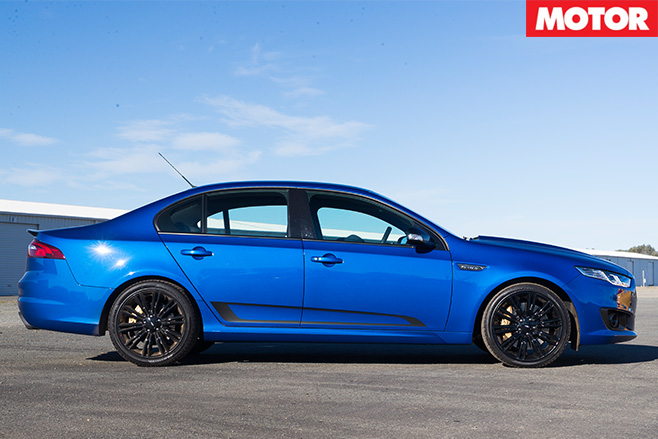



Want more? Check out the rest of 2016 Bang For Your Bucks.
Checking your tyre pressures is one of the easier practices of car maintenance and should also be the most regular. Monthly checks are recommended, or every second time you refuel. Filling your tyres to the right PSI will ensure your tyres maintain grip to the road and prevent any nasty issues where you may lose control. As a bonus, the right amount of air in your tyres will also improve fuel economy.
The right tyre pressure for your car will be listed on the manufacturer’s tyre placard, usually stuck on the driver’s side B-pillar.
ROTATE YOUR TYRES
This isn’t something mechanics do just to charge you a few extra dollars on your service invoice. Your car’s weight varies from front to rear. With most car’s carrying weight in the front of the car, this can cause your front tyres to wear quicker than the rear ones.
A rotation should be performed every 8000 to 10,000km.
Every 10,000km, it’ll be time to not only rotate your tyres, but also book yourself in for a wheel alignment. When a mechanic re-aligns your wheels, he’s correcting your car’s suspension and steering which in turn, ensures your tyres are properly aligned with the car’s axles, to give you better handling and more even wear. Again, it’ll also save you fuel costs (noticing a pattern here between tyres and fuel usage?).
Driving over potholes or hitting a curb can push your wheels out of alignment. There are some obvious signs that things are not in alignment. The steering wheel will vibrate at high speeds, or pull to one side.
Tread is the part of your tyre that connects to the road and removes water during wet weather to ensure maximum grip. It’s a legal requirement your tread depth is a minimum of 1.5mm. Once it reaches this, it’s time to get them replaced. As this wears over time, it causes your tyres to lose grip with the road, and also means your car is no longer roadworthy. A tyre wear indicator is located around your tyre to help you know when it’s time to get them replaced.
We continue to be astounded by the rate of automotive progress and nowhere is the rapid advancement more evident than Bang For Your Bucks.
In 2015, two of our $50K-$100K contenders managed to scrape under the 13-second quarter mile bracket; 12 months later we have six cars in the 12s and our slowest contender is tripping the beam at 13.4sec.
We’re breaking new ground here, as when Bang For Your Bucks first bounded into existence back in 1994, it wasn’t envisaged cars this fast would ever face the BFYB formula.Remember, this was back when all and sundry were invited, including the likes of the Honda NSX and Porsche 911 Turbo. Three of this year’s premium crop would hose that force-fed Porker to 100km/h and two others would be snapping at its heels.
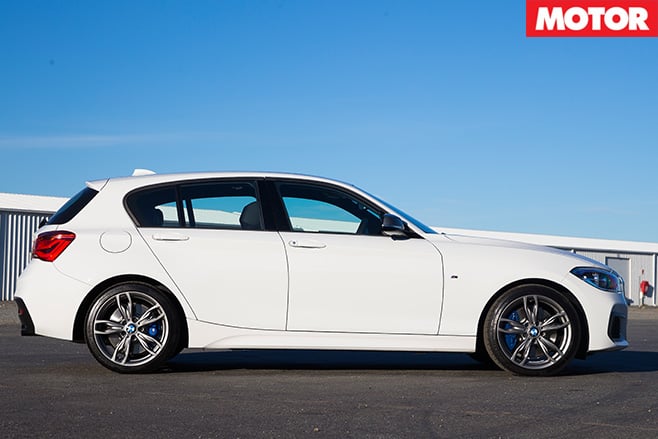
Ingolstadt’s second offering is the new TT S. The base model impressed last year, firmly shaking off its ‘hairdresser’s car’ tag, and extra grunt and a sharper chassis are unlikely to hurt it around Winton. But, at $99,900, it’s hard up against the $100K price ceiling. Joining it in the pricing stratosphere is BMW’s new $89,990 M2, the first proper M-car to appear at BFYB since the 1M, built to a similar recipe but now even cheaper and even faster.
In order to maximise its chances BMW has sent along the six-speed manual, Oz-only Pure edition. Expensive cars rarely have enough Bang to compensate for their Buck, can Munich’s new turbocharged baby be an exception?
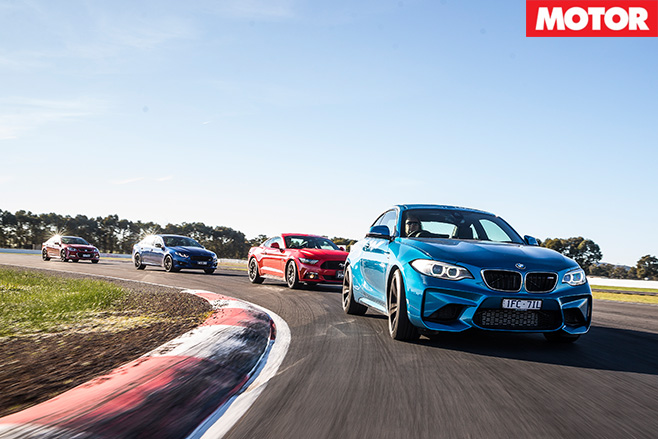
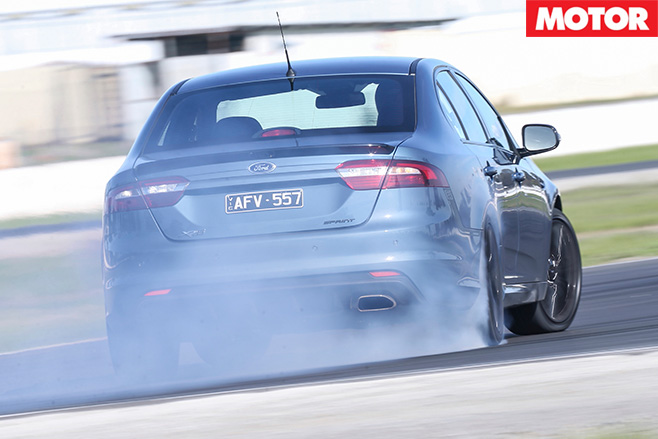
Our next contender also uses a turbocharged straight-six to send power to the rear wheels through an automatic gearbox, but that’s where the similarities end between the M135i and Ford’s Falcon XR6 Sprint. At $54,990, if the Barra-powered Bluey can run the numbers it’s supposedly capable of, it should be in with a shout, but based on our experience thus far, that’s a big if.
So, to the V8s. The XR8 Sprint was a late inclusion. Being no faster, but more expensive than its six-cylinder sibling, it was only ever going to finish behind it, but when we fell agonisingly short of securing a Focus RS (it was almost a matter of hours), it managed to secure a guernsey.
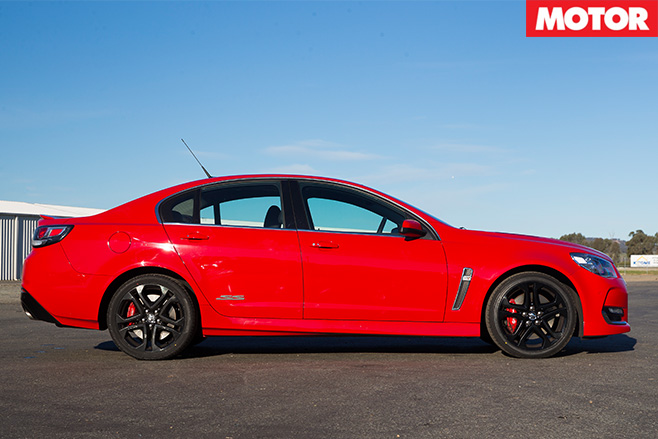
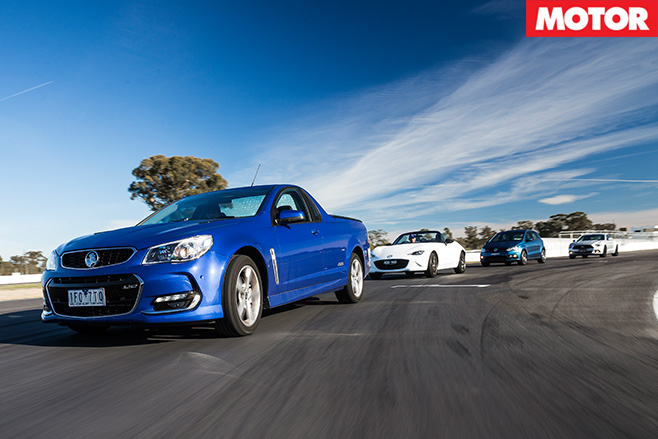
Its closest rival, both on price and performance, is Holden’s SS-V Redline. It’s a critical success and should fare well with the judges, but whether it can post strong enough numbers compared to its more powerful opposition to secure Bang glory is another matter entirely. One thing in its favour is its price tag; at $54,490, it’s the bargain of the group.
Last, but very far from least, is Chrysler’s 300 Core. The updated American brute finally has the eight-speed auto it’s always deserved, as well as some extra grunt (now 350W/637Nm) from its 6.4-litre Hemi V8. It’s a dead-set weapon in a straight-line with one of the best engine notes you’ll ever hear and it’s a lot better in the corners that you might imagine. It can also atomise its tyres at will – and all for $65,000.
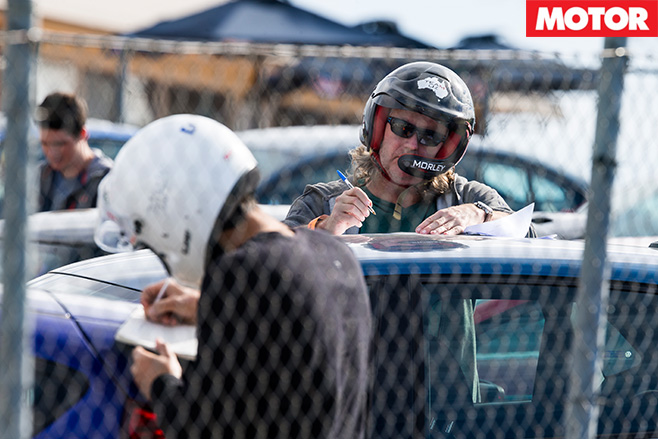
So, in the fastest and most powerful Bang For Your Bucks field ever, which car reigns supreme?
Battle arena: Winton Raceway
Want more? Check out the rest of 2016 Bang For Your Bucks.
