
Skoda’s Yeti SUV line up is now an all-petrol affair, with the top-spec 4×4 Outdoor’s 2.0 turbo diesel engine making way for a 1.4-litre 110TSI turbo petrol unit taken from the Octavia mid-size sedan.
The change, necessitated by the unavailability of the oil burner in Australia, means a $1400 price reduction for the Outdoor to $32,990.
The 110kW turbocharged petrol engine is mated to a six-speed DSG automatic transmission, and has virtually the same power and efficiency as the diesel unit it replaces, sipping just 6.6 litres/100km.
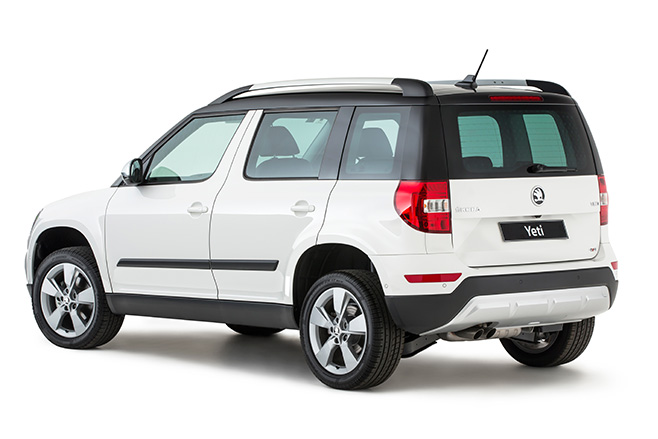
The 1.4-litre 92TSI engine in the mid-spec Yeti Ambition is also gone, along with that model variant, as Skoda simplifies the Yeti range with the long-awaited (some say overdue) next generation model still at least a year away.
This leaves just three Yeti variants, the aforementioned 110TSI 4×4 Outdoor, and manual and automatic versions of the 2WD 81TSI – formerly known as the Yeti Active – which are powered by a 1.2-litre, 81kW four-pot turbo petrol engine
While the Outdoor benefits from a price reduction, the entry-level 81TSI manual has increased $1100 to $25,490, while the automatic’s price heads north by $2000 to $27,790.
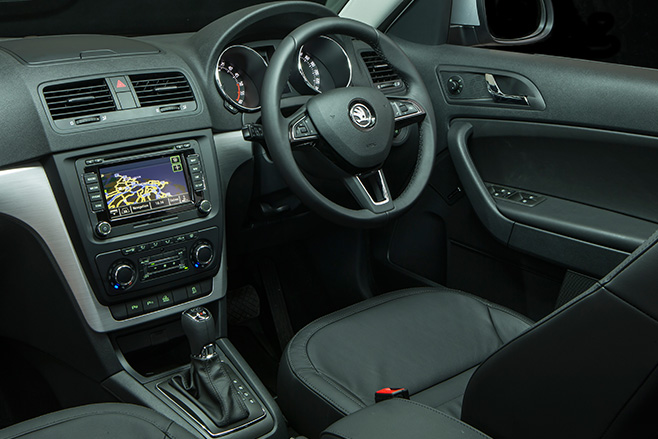
All three variants come with a complimentary Navi Pack with satellite navigation, metallic or pearl effect paint, front parking sensors, privacy glass and front fog lights.
For the extra money the Outdoor has more standard equipment, including climate control air conditioning, chrome inner door handles and black sills as well as the four-paw drivetrain.
Outside it differs with hard-wearing black bumpers, 17-inch ‘Erebus’ black alloy wheels and silver roof rails.
The Skoda Yeti Outdoor 110TSI is available now at Skoda dealers.
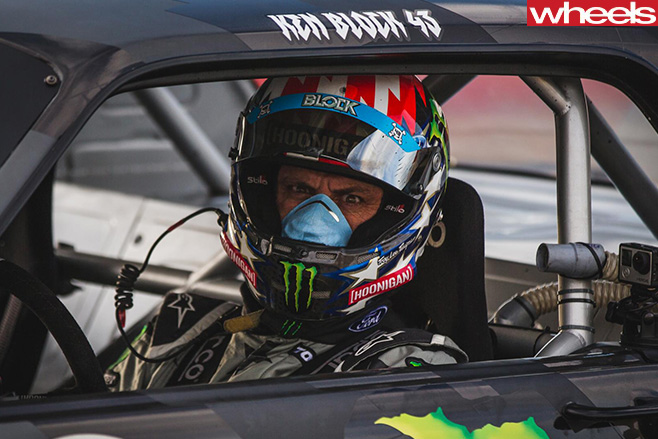
KEN Block, you just gotta love him. There is no one else out there at the moment that is producing as much tyre-frying, entertaining automotive videos just for the fun of it.
Fresh from dropping the ninth instalment of his popular Gymkhana series – which very nearly could have been filmed in Sydney – ‘ole Blocky has teased his next video.
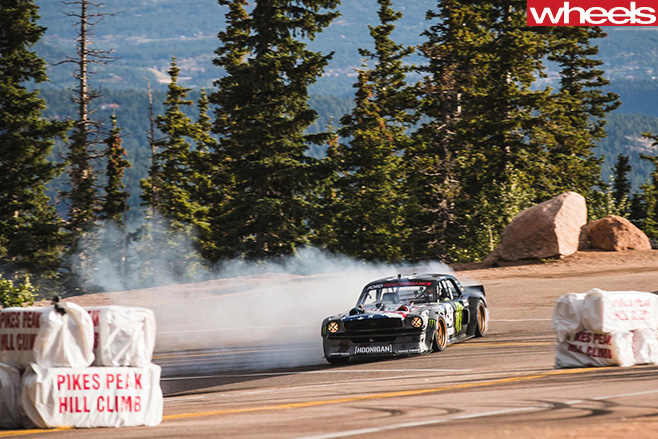
Yes, that Pikes Peak. The almost 20-kilometre, 156-turn, 1438-metre ascent which is the most difficult and daunting hillclimb in the world.
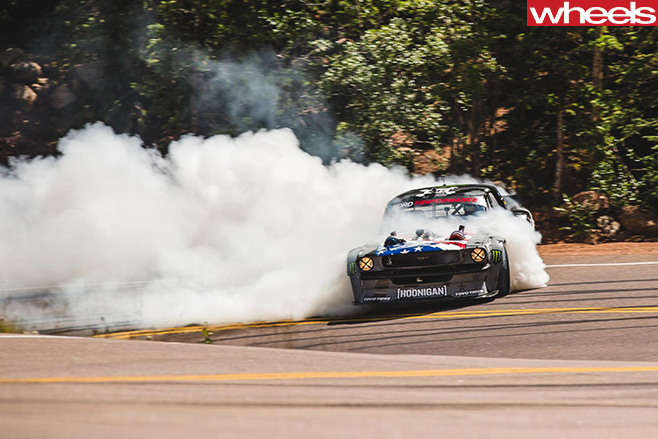
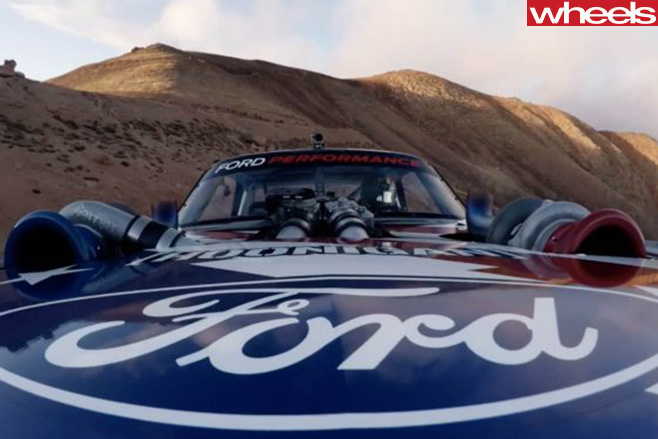
Enter v2.0 of his four-wheel-drive Hoonicorn Mustang RTR. The old Hoonicorn’s 6.7-litre atmo V8 now has a pair of turbos sticking through the bonnet. Running on methanol, and tuned to 21psi, Hoonicorn v2.0 produces a 1044kW. Yes, you read that right. 1044kW. According to Block, that is a conservative estimate. Enough to transform rubber into tyre smoke at an incredible speed.
You can put us down as excited for the full video.
The nearly five-minute piece from 1988 features rally legend Ari Vatanen absolutely monstering the climb in a Peugeot 405 T16 Turbo.
Mr Block will have difficulty topping this.
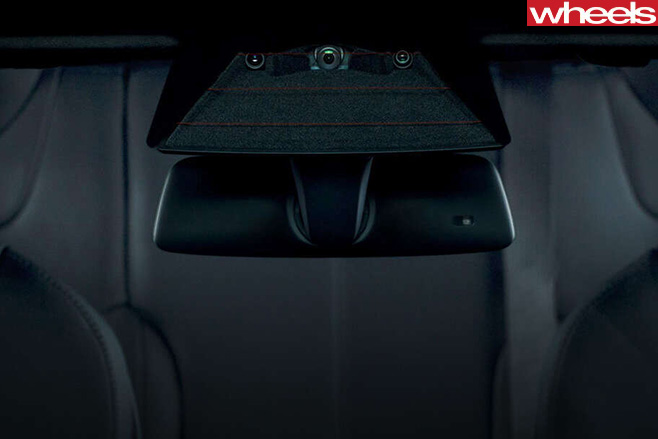
Tesla is building hardware capable of full autonomy into every car it produces from today – including the upcoming circa-$55,000 Model 3 due around 2019 – as part of an ambitious plan to fast track driverless technology.
The push positions Tesla nicely to win the race to have cars that can control themselves with “no human intervention”, according to the SAE rating system by which levels of autonomy are scaled.
However, while the hardware has the potential for full autonomy, the software to allow the Model 3, Model S and Model X to operate without the assistance of a driver – as well as the required regulatory approval – could be years away.
“All Tesla vehicles exiting the factory have hardware needed for level five autonomy,” said Tesla boss Elon Musk on a conference call with media this morning.
“It will take us some time … to complete validation of the [level five autonomous] software … and [get] the required regulatory approval,” admitted Musk when quizzed on how soon people could expect to pay no attention to the road or what the car is doing.
Interestingly, Musk said the forward cameras would have redundancy functionality built in, so if there is a hardware failure with one camera others can take over and still ensure the car maintains proper control.
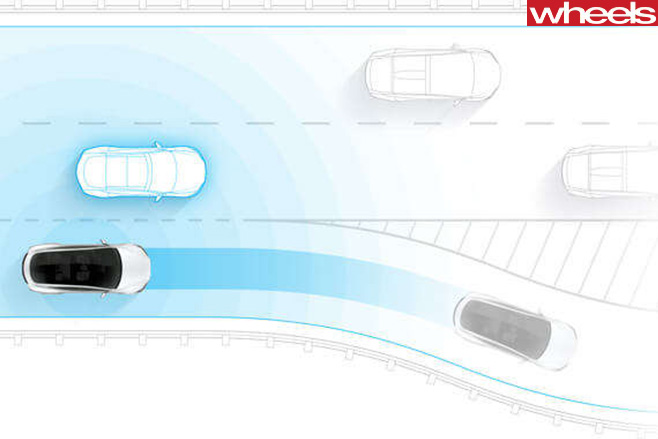
“We will roll it out initially in shadow model … the car is not taking any action, but it is registering when it would take an action and when it would not take action,” said Musk.
However, Musk admits much of the functionality and its planned implementation will rely on regulators around the world, something that could seriously slow its introduction in places such as Australia, where LED light bars can cause regulators headaches and lead to different regulations in different states.
“It’s not something within our control,” said Musk. “It’s not up to us it’s up to the regulators. What does the public think is appropriate, what do the regulators think is appropriate … the system will always be updating in shadow mode.”
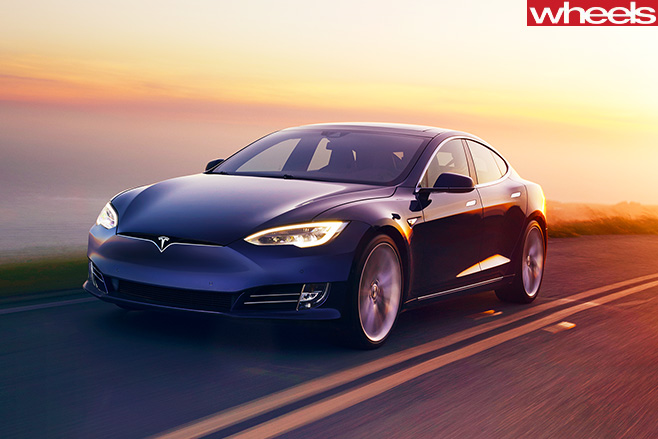
“That would be up to individual insurance,” said Musk, referencing elevator manufacturer Otis and saying it would not cover every issue.
The announcement comes despite the much-publicised fatality in the US in May, whereby a Tesla Model S crashed into a truck, killing its driver who had apparently engaged the car’s AutoPilot system that takes care of steering, braking and accelerating on freeways.
Musk used the opportunity to take a swipe at the media, saying it focuses too heavily on rare failures of autonomous systems and not enough on the estimated 1.2 million road fatalities that occur around the world each year.
“It does not reflect well upon the media, it really doesn’t,” he said. “If, in writing some article that’s negative you effectively dissuade people from using autonomous vehicles you’re killing people.”
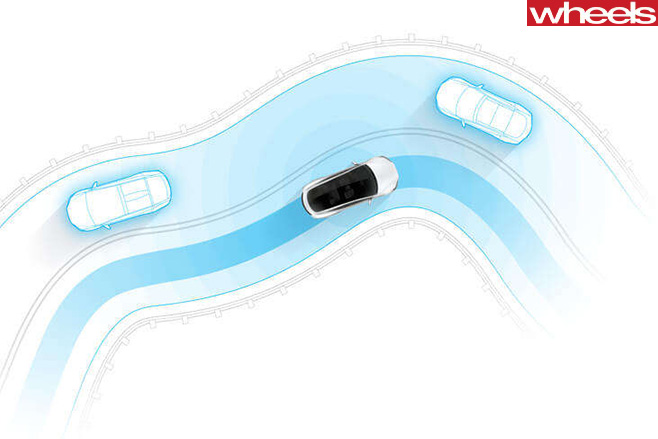
Musk admits the original enhanced AutoPilot system will not be as capable as the AutoPilot suite on existing Teslas – cars that use the “hardware one” package that includes a single camera and various sensors and radar – but that the fleet learning capability, whereby cars are constantly collecting data and feeding it back to HQ, will ensure it’s only a few months until the surpass the intelligence of existing cars.
Tesla says while the new features are being activated, the old systems will be temporarily unavailable.
“Before activating the features enabled by the new hardware, we will further calibrate the system using millions of miles of real-world driving to ensure significant improvements to safety and convenience,” it said in a statement.
“While this is occurring, Teslas with new hardware will temporarily lack certain features currently available on Teslas with first-generation Autopilot hardware, including some standard safety features such as automatic emergency breaking, collision warning, lane holding and active cruise control. As these features are robustly validated we will enable them over-the-air, together with a rapidly expanding set of entirely new features.”
According to new data released by the National Motor Vehicle Theft Reduction Council (NMVTRC), Victoria is Australia’s leading state in vehicle theft.
The data shows that profit motivated theft has increased by 27 per cent over two years between June 2014 and 2016, while car theft of all motor vehicles has risen by 34 per cent.
“The increasing number of vehicle thefts is most concerning, given many of these are associated with a growing rate of aggravated burglaries and car-jacking in Victoria,” said Victorian Automobile Chamber of Commerce (VACC) Executive Director, Geoff Gwilym.
According to the VACC, vehicle theft will increase in Victoria once laws banning cash payments for scrap metals and cars pass in NSW.
“[The Victorian Government] needs to take direct action immediately,” Gwilym said. “Victorians fear more vehicle theft-related house break-ins, with families bearing the brunt of government inaction.”
While car theft has declined in NSW, Victoria numbers have increased more rapidly than any other state. Passenger and light commercial vehicles remain the most popular amongst thieves with over 15,000 stolen during 2015/2016 financial year (equivalent of three Westfield shopping centre parking lots), while motorcycles remain second with almost 2,300 stolen.
Despite percentages dropping in 2011/2012 Australia wide (-8%), between 2014/2015 and 2015/2016 the country saw a seven per cent increase in car theft, both short term and profit motivated.
Nissan Pulsar N15 1995-2000, Holden Commodore VW 2006-2013 and Toyota HiLux 2005-2011 were the top three vehicles stolen during the last financial year. Holden Commodores appeared in the top 10 most stolen vehicles list five times.
First published in the December 2010 issue of Wheels magazine, Australia’s best car mag since 1953.
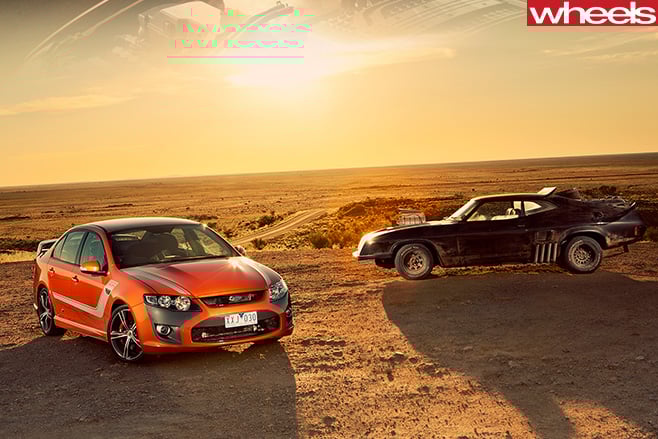
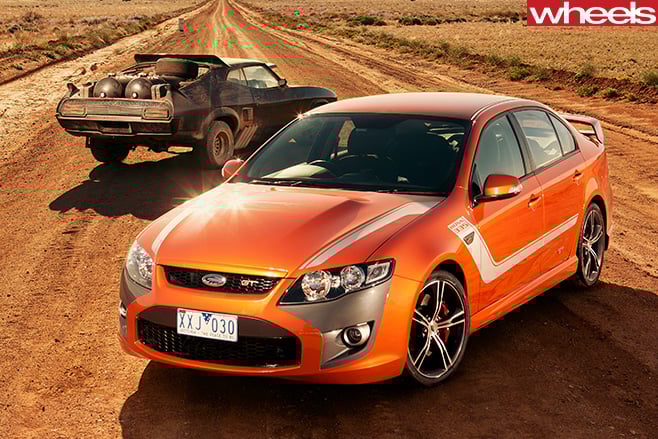
Three decades after Mad Max brought the blown Falcon to the big screen, we strap into FPV’s supercharged V8 GT for an 1150km maxxed-out mission to meet that iconic ’80s star.
WITH A WHINE, the reign of the turbo six is over. FPV’s V8 GT is under new management, and the new Boss is a powerful straight torquer.
Kick its supercharged 5.0-litre in the guts and it settles into a deep, throbbing idle. Spin the crank into the mid-range and there’s a growing, rich swell of thrust on tap but little else signposting this burbling bent-eight as blown.
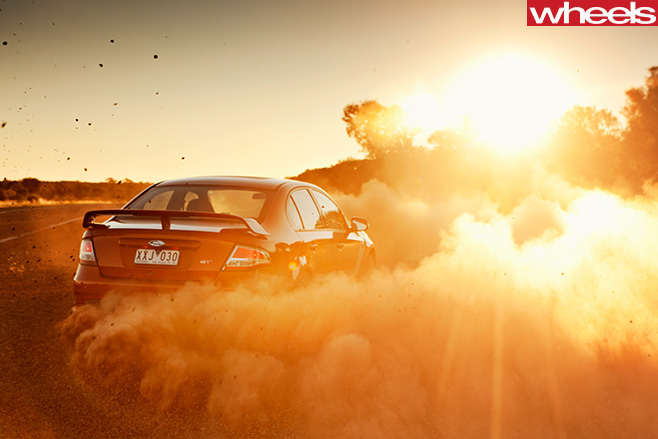
Then, offer it a force-fed lungful via a wide-open throttle and you’re shoved down the highway to a maniacal whine from the supercharger as a torrent of torque powers you to an insistent top-end that’s part V8 howl and part blower shriek. The new GT is quick.
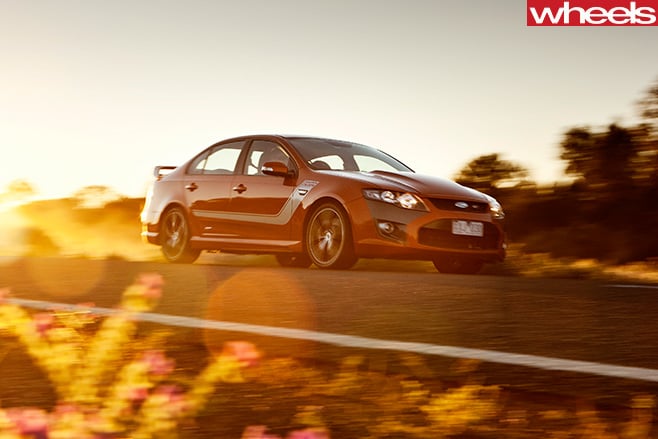
With the V8 GT now quicker than FPV’s turbo six the biggest contradiction in the Blue Oval universe is no longer. But, as with any great Australian road-trip, the car was merely the, um … vehicle that introduced us to places and people, and in other ways it was a 2300km outback adventure full of contradictions.
Let’s start with ‘Burgo’ of Broken Hill, a wily, weathered sometime car wash attendant, sometime bouncer, and former prison screw. He was exactly the sort of character you’d hope to meet in a remote country town, if not at night.
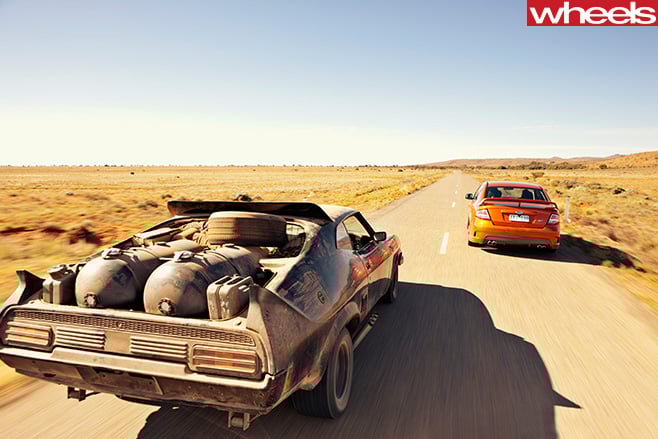
The contradictions? Well, having turned 31 a few days earlier, the reminder was fresh that my grip on ‘young’ was slipping. While the friendly highway patrol officer we met two days later certainly didn’t think we were lacking in the speed department…
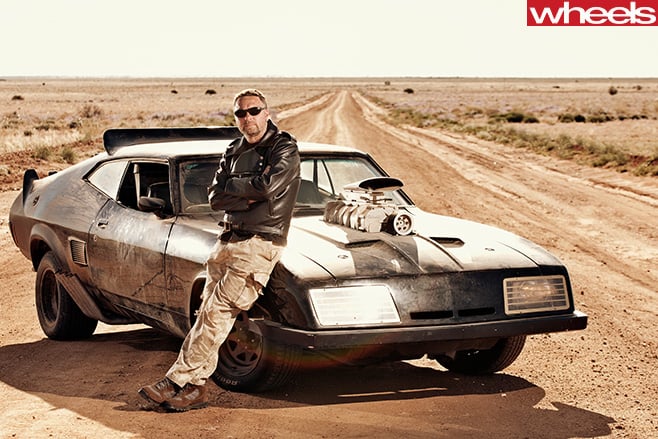
To Adrian and his mates we were perhaps heroes. Petrolheads who’d done the long haul to introduce FPV’s supercharged GT to Australia’s legendary Falcon-based, blown V8 movie star. And to put Adrian’s museum centrepiece on the cover of Wheels.
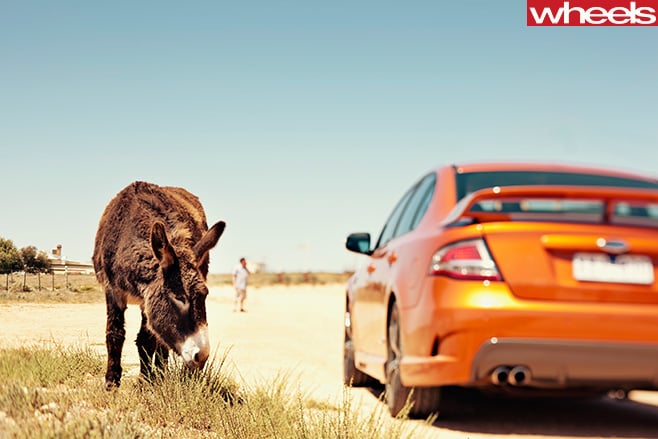
Yep, even today the outback’s in some ways still a harsh and hostile place. At least, for us precious, latte-sipping Sydney types.
But if we had little nous with which to take on the great unknown, we at least had the equipment.
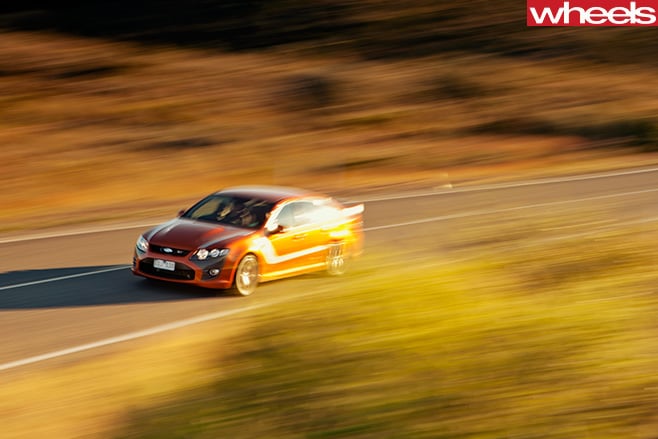
In its place is a new, lighter and more powerful roots-type supercharged, still-dohc 5.0-litre V8. The burble remains, but now the bark equals the bite. Power is up from 315kW to 335kW. Far more pointedly, the generous new Boss offers its 570Nm from 2200rpm to 5500rpm, where the stingy old one needed 4750rpm showing on the tacho for a peak of 551Nm.
It’s this stretch that brought an amusing encounter with a woman driving a purple Commodore SV6. Not happy to sit back and watch some dickhead in an F-O-R-D disappear into the distance, when we passed her she would immediately re-overtake at high speed – try 170km/h – before settling back to a cruising speed slower than ours. Seems Holden versus Ford rivalry is bitter out here.
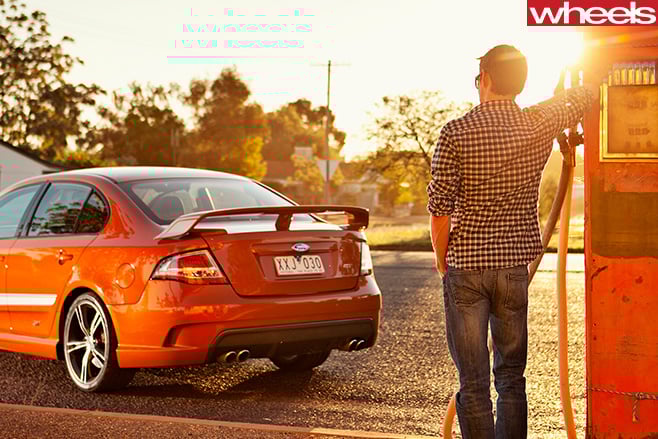
After an extended cat and mouse sequence we were on our own again. Alone on an endless, arrow-straight road that vanished into a distant shimmering haze. It was just man and machine, in search of ‘guzzoline’.
There’s clearly a truth-in-naming policy in operation at FPV, because the GT – although rocket-quick when you want it to be – is also the consummate Australian grand touring car.
We do have a few complaints. Reflections off the bonnet hump can be like staring directly into the sun at certain times of the day. And, c’mon FPV, either ditch the ‘Start’ button, or give us a remote key. Not deal-breakers, but there’s ‘auto’ down but not up for the driver’s electric window (why not auto up and down on all windows, for that matter). Finally, the remote-controlled sat-nav system could be more intuitive.
Labelling it a GT in the true sense of the badge is not to say there isn’t some ‘HO’ lurking within. The Ford Falcon chassis is a beautiful, well-balanced, trustworthy thing. The tiller is allied to a light, slick steering system that offers up ample feel; the well-modulated brake pedal to powerful, responsive Brembo brakes – six-piston calipers clamping 355mm ventilated discs up front. And the muscular blown bent-eight is mated to the ever-smooth and intuitive six-speed ZF autobox. It all comes together as a terrifically well-sorted muscle sedan that works a treat on Aussie roads.
Back cruising, the palette either side of the coarse chip is increasingly an iron oxide reddy-brown punctuated by the ever-present purple blight of Paterson’s curse as we jet towards Broken Hill. Some time later, about 25 kays north-west of that isolated mining town near the South Australian border – and about 1150km from Sydney – we’d arrived in Silverton.
Meanwhile, the reception at the Mad Max Museum couldn’t have been more welcoming, with Adrian, wife Linda, friend Ian (who worked on Mad Max 2) and his son Dustin some of the nicest, most enthusiastic people you’re likely to meet.
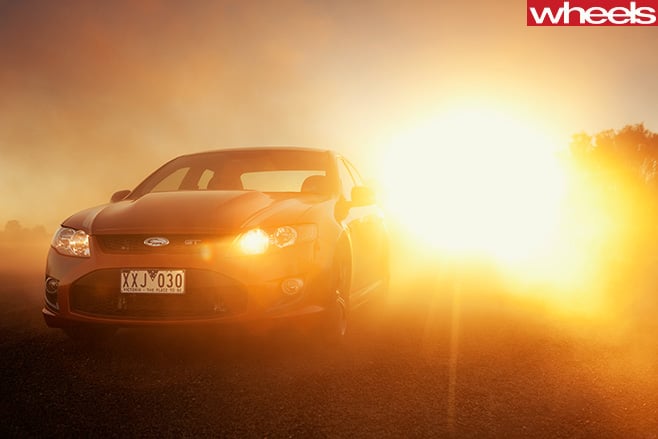
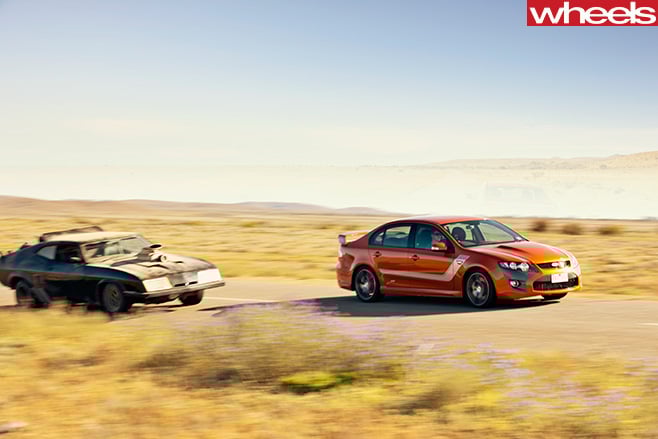
Those long hours and big kays were worthwhile when Adrian and his Interceptor crested the hill at our photo location. All matt black and menacing crouched over fats, whirring blower casting its evil shadow over the bonnet in the dying amber sun.
Up close, it’s the duck’s guts, with its wedgy nosecone, flared arches, roof spoiler, side pipes, twin tanks and jutting Weiand blower complete with obligatory in-cabin supercharger switch. It doesn’t quite have 600 horsepower through the wheels.
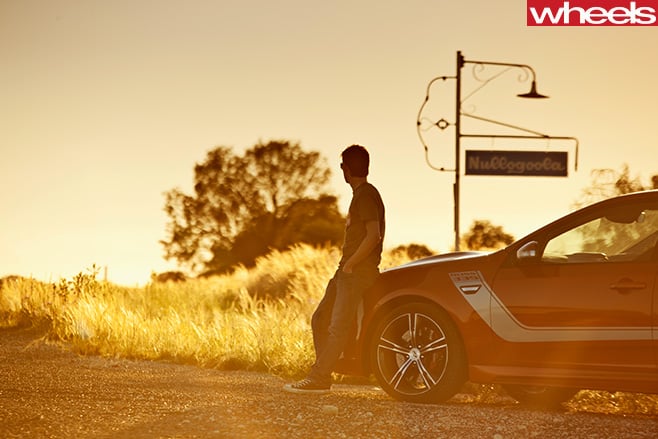
You could perhaps have said the same of the new GT. But with the supercharged muscle to blow the turbo six into the weeds, FPV’s V8 hero gets star billing.
Max museum
Curator of Silverton’s Mad Max museum Adrian Bennett (right) is known to bet the museum itself he can answer any question about his beloved flicks, says wife Linda. A Mad Max tragic since he saw the first two movies in 1982 in his native England, he moved his family, Mad Max memorabilia, and Interceptor (which he built himself) to Oz in 2006, before opening the museum earlier this year. Chief among the attractions are photographs, scripts, props and an extensive collection of vehicles. You’ll find the museum up the hill from the pub (can’t miss it) where Adrian’s always keen to chat. Looks the part driving the tough-as Interceptor, too.
Mad time
Some of you lot wrote in telling us our GT-P figures last issue were too slow and that we were a bunch of jokers. Shattered, we lined up our automatic GT at Sydney Dragway’s Christmas tree for a second crack. Our best launch resulted from a momentary stall-up on the brake in second gear. The GT let fly to the combined howl of tortured tyres and mechanically supercharged V8 to lay down a scorching 12.92sec quarter at 181km/h. Our Vbox figures below – on the same run – are four- tenths slower due to a dragstrip timing phenomenon called ‘rollout’. So, can FPV’s blown V8 run a 12 at the strip? Yes. Can it do a 12 on a Vbox? Almost.
Mad GT
Model: FPV GT Body: steel, 4 doors, 5 seats Drivetrain: front engine (north-south), rear drive Engine: 4951cc V8, dohc, 32v Power: 335kW @ 5750rpm Torque: 570Nm @ 2200-5500rpm Transmission: 6-speed auto Dimensions: l/w/h: 4970/1868/1453mm Wheelbase: 2838mm Weight: 1863kg 0-100km/h: 5.28sec (tested) Price: $71,290
Mad Max Interceptor
Model: Mad Max 2-specification Body: steel, 2 doors, 2 seats Drivetrain: front engine (north-south), rear drive Engine: 5766cc V8, dohc, 32v Power: 515kW @ 5400rpm Torque: 850Nm @ 3400rpm Transmission: 4-speed manual Dimensions: l/w/h: 5058/2119/1469mm Wheelbase: 2819mm Weight: 1737kg 0-100km/h: 4.9sec (est.) Price: $1,000,000 (now)
Six-time V8 Supercar champion says category was interfering in appeal process.
ALMOST two weeks since the chequered flag was waved at this year’s Bathurst 1000, the results are finally official.
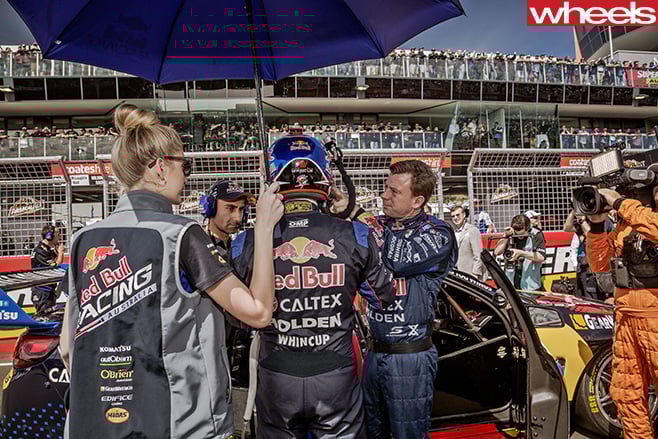
With the appeal process now complete, Whincup has finally become unmuzzled, and released a fiery blog post on his personal website.
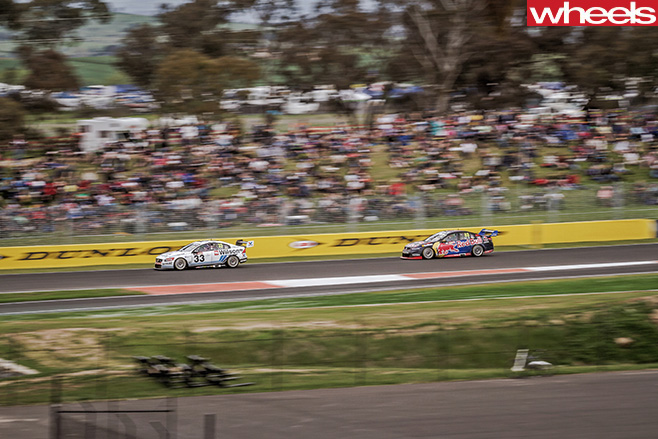
The Red Bull appeal was dismissed on a technicality, with the decision handed down that an appeal cannot be lodged against an in-race penalty that is given without a “hearing”.
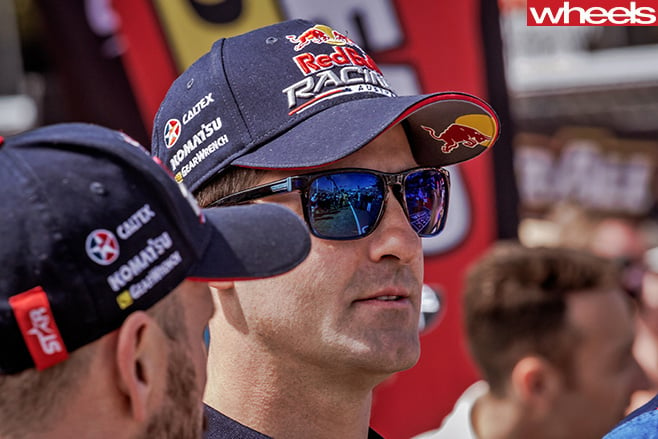
Whincup described the sport as “playing dirty by slamming us in the media”.
The entire post is honest, frank, and is sure to fire up plenty of public debate.
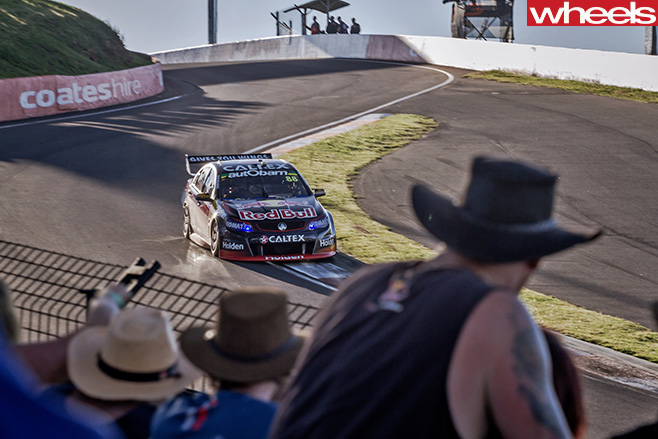
What a massive week in motorsport, to be honest I’m not sure if its been good or bad but its certainly got my attention!
I’ve sat back and listened to all your thoughts and opinions the last fortnight and not had the opportunity to reply while I’ve been muzzled due to the appeal.
So here are my thoughts and opinions if you’re interested, written by me, unedited or grammar checked by a media person, as raw as it gets.
Last nights appeal was a non event and was all over in the first 10min.
Basically you can only appeal a decision by the stewards if there has been a hearing, while there was an “enquiry” during the race between who I guess was Bargs and the stewards, there was no “hearing”.
Therefore, when T8 went to the stewards after the race to express that we weren’t happy with our penalty and wanted to appeal it, we should have been told we couldn’t do anything about it, end of story.
Instead we were allowed to fill out the appeal paper work, pay the 11k fee and lodge the appeal.
Last nights ruling took everyone by surprise and has made it clear that any penalty given out by the stewards during the race is the same as a free kick in footy, it can’t be questioned.
To think this whole debacle, and I call it a debacle – Tekno not being able to celebrate properly like they should, Supercars Australia (SCA) branding us un-Australian and playing dirty by slamming us in the media, the TV crews cutting radio audio and pasting in over the top of footage laps later in an attempt to further fuel the ‘I don’t listen to my team’ criticism, all the man hours from both T8, CAMS, SCA preparing for the appeal, could have all been avoided straight after the race, dam!
Sometimes you can watch a replay and change your opinion of what went on but I’ve now watched the incident where contact was made between Scotty and I at the chase 1000 times and my opinion has not changed.
The move was on, Scotty made a mistake out of Forrest Elbow which allowed me to make a run, he half blocked down at the chase which he’s fully entitled to do and allowed me racing room on the inside to execute the pass.
I was well and truly up the inside of him and when contact was made in the middle of the corner, I was on the apex, on the right trajectory and fully in control of car 88.
As the late great Ayrton Senna once said, if you don’t take an on track opportunity when it presents itself, you’re no longer a racing driver. Well said in my opinion.
The day I don’t take an opportunity like the one that presented itself down at the chase on Sunday is the day I’ll happily hang my helmet up and give my spot to some young kid that will have a go.
“Where I believe the stewards made an error was them assuming I was out of control.
While I find this offensive for someone to think I wasn’t in control of my car which I’d been belting around the greatest track on earth in all weekend as hard as I could, I can see how they’ve confused the cars yaw (or oversteer as we commonly know it) as out of control.
However, if sliding the rear of the car to help it turn is out of control, then majority of us in that weekends top 10 shootout should have been penalised due to reckless driving as I’ve never seen so much in-control sliding in all my life.
This stuff is fully intentional and is something we all should be grateful for and appreciate as it shows just how far and on the limit the sport has become.
Moving forward, I’d love the opportunity to work further with SCA on helping them make decisions on how to judge correctly whether a car is driving the driver or the driver is driving the car.
I would also like to be able to help them with the penalty process.
I will say from the offset that SCA have done a great job and put in a massive amount of time and resource to making the rules clearer and easier to adjudicate and we have come a bloody long way in the last 18 months.
The whole 3 tier penalty system from 1 to 3 has merit and can work well. I feel my penalty at Bathurst though showed we still have a fair way to go refining it.
While I don’t want to get into the nitty gritty, we need to make sure the penalty options (be it redress, time or points) for each of the grades (1, 2 or 3) are applied in a manner that returns consistency across the board.
At Bathurst, a car took out another car destroying its race and the stewards decided it was a grade 3 offence (the highest); that car copped a 25 point penalty post race.
The stewards deemed my incident as a grade 2 and applied a 15 second time penalty during the race.
This not only completely took me out of contention of the biggest race of the year, but resulted in a 156 point penalty, 6 times greater than a grade 3.
It would have been cheaper to do a PLP. I think you can see where our frustration came from!
Yes, it was the one that got away but like always I’m so proud of my crew which includes PD for fighting hard and being in serious contention yet again.
I’m also very grateful that they all backed me 100% in the decisions I made to win us the race that day.
My VA flight to the Gold Coast is just about to land so I hope to see you all on the weekend for another cracking weekend of motorsport action.
Big silver owes me an explanation. Last issue we hit the drag strip to see what she’d crack, only to be severely let down.
Back in January, MOTOR extracted a 4.49sec sprint to 100km/h and 12.6sec quarter mile from a different 300 SRT. Last month, however, big silver could only manage 5.3sec and 13.39sec.
Admittedly conditions weren’t perfect. Calder’s strip was cold, we only had two runs and I thought experimenting with its launch control rpm would’ve further helped. But even so, eight tenths is a light-year in motorsport.
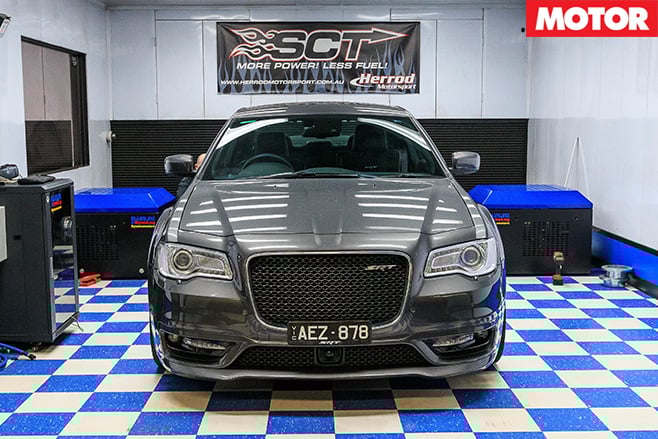
Against current technology, the Chrysler’s V8 is relatively crude. Firstly, it’s a big unit. After copping wider bore and longer stroke in 2012, it’s now the second largest atmo engine on sale. Only Lamborghini’s 6.5-litre V12 trumps it on capacity.
This hurts it dramatically at the bowser. Sure, it’ll knock off four cylinders while coasting and eight-cogs keep it on the boil, but every 100 clicks it’ll still need a polar bear-sinking 14-litre drink.
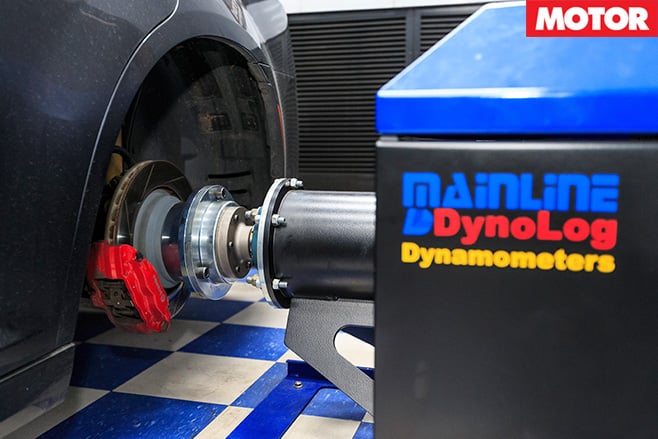
The last time we strapped a Commodore SS-V Redline to a dyno 75kW evaporated between its engine crank and the Mainline rollers. Okay, different day, different car, and it had a manual transmission, but it gave me a ballpark for the SRT. On the same 98RON, anywhere around 275kW means AEZ 878’s packing all it should.
When I saw Herrod’s chassis dynamometer, though, that hypothesis went down the gurgler. Before me was a hub dyno, which does without rollers completely. Instead, it bolts directly to the car’s axles. Great for consistency, without roller-to-tyre contact, there are two less variables at play. But less so for my guestimate.
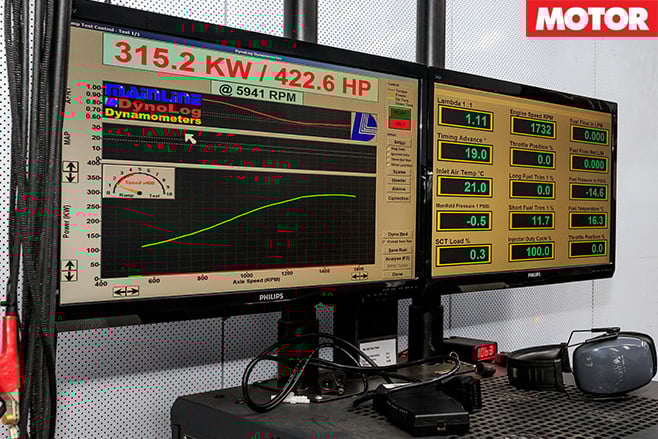
But where did that leave me with my 75kW-loss guess? I was given Todd Lewis’s, Mainline Tech Director, number for more information. “The inertia of the wheels and tyres on rear most modern cars is in the range of 30-40hp (22kW to 30kW), at the average rate of acceleration that’s used on a roller dyno,” Lewis said. So really, a rolling road would sap another 30kW – totalling the difference at around 65kW.
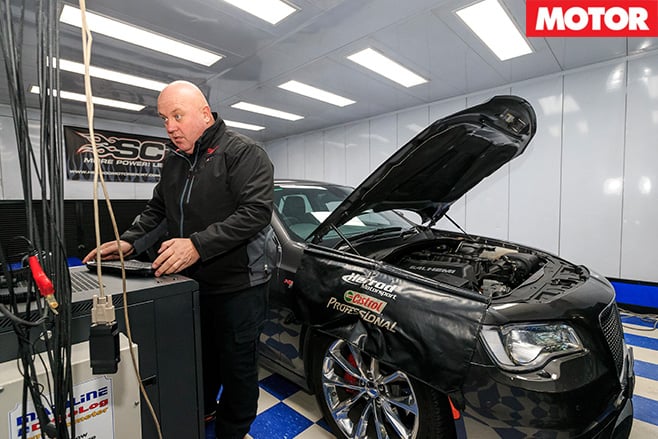
What about those eight tenths? That blower would easily take care of them. But as for our own AEZ 878, that will remain stock, well, maybe me and my drag testing skills are what owe an explanation.
MONTH FOUR
LIKED: DISLIKED: FAVOURITE MOMENT: Hearing our big bertha spin up the hubs is symphonic for petrolheads
FUEL THIS MONTH: 16.8L/100km AVERAGE: 15.1L/100km DISTANCE THIS MONTH: 1109km TOTAL: 13,171km
Want to see more of our Chrysler 300 SRT long-termer?
The first rule of Bang For Your Bucks is don’t talk abo… no, wait, that’s not right.
The first rule of Bang for your Bucks is don’t make your car more expensive than it needs to be. Rarely does the extra performance of any go-faster option outweigh the added cost, hence any given BFYB field tends to be made up mostly of manuals.
This year, however, Peugeot’s new 308 GTi 250 arrived fitted with the optional wheels and tyres from its GTi 270 bigger brother. This increases the wheel size from 18s to 19s and tyre width from 225mm to 235mm all ’round. Critically, those tyres also change from Michelin Pilot Sport 3s to the more focused Michelin Pilot Super Sports, the same rubber worn by the likes of BMW’s M2.
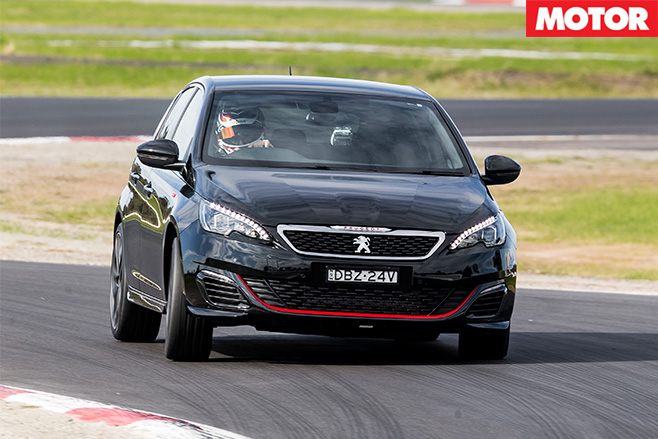
One of the great things about BFYB every year is the surprises it throws up. We didn’t really figure the 308 GTi to be a contender during our pre-event speculation; its price sat towards the upper end of the price bracket and while it’s certainly no slouch, based on previous experience it seemed unlikely to blow us away with its pure performance.
Initially, that’s exactly what occurred. Its 6.42sec 0-100km/h and 14.41sec quarter mile efforts were about on par with its (cheaper) front-drive rivals, while in the other straight-line disciplines it was resolutely mid-field. You could argue a car with 184kW/330Nm and weighing only 1205kg (just 8kg heavier than a Fiesta ST) should be faster – we would – but that’s for another time.
Even without the massive floating rotors of its 270 bigger brother, the 308 was the second best stopper from 100km/h at 35.34m and its corner speeds through the high-speed turn five sweeper and tight turn nine were second and third respectively. Basically, it stops really well and has heaps of grip.
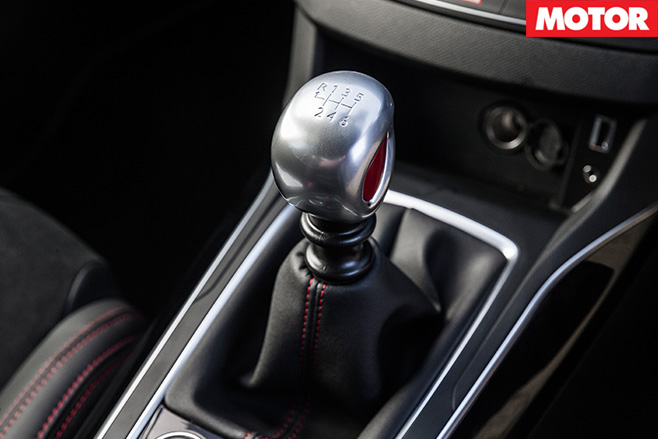
One feature that was missed on track was the 270’s limited-slip differential. Short gearing makes the most of the highly boosted 1.6-litre four’s available grunt, but care is needed to stop the inside wheel spinning up, even in third gear. It’s also a testament to the engine’s flexibility; it might only pack 1598cc, but there’s power everywhere.
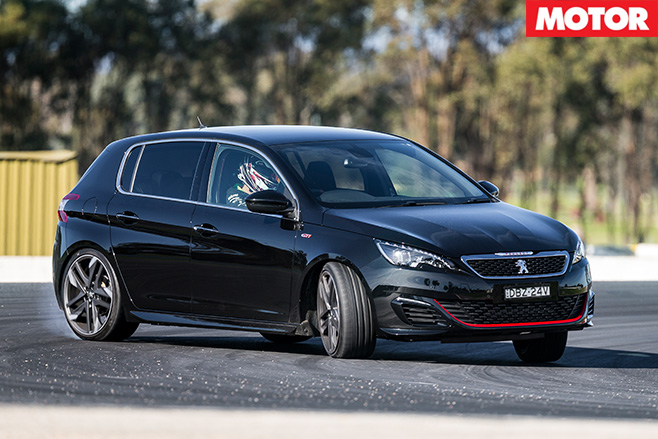
Peugeot’s odd ergonomics, requiring the steering wheel be dropped to see the gauges, again came in for criticism and a bigger steering wheel and faster steering rack wouldn’t go astray, but interior quirks aside, the 308 GTi 250 proved fast and fun.
JUDGES’ COMMENTS 01. David Morley “The surprise of BFYB 2016 for me. Is it really a 1.6?”
04. Dylan Campbell “It’s like a Megane RS265 and Golf GTI Performance mixed together.”
04. Louis Cordony “No LSD? No worries. Engine’s a gem, but better seats would help”
03. Scott Newman “Rubbish seats, great engine and chassis. Relishes a thrash”
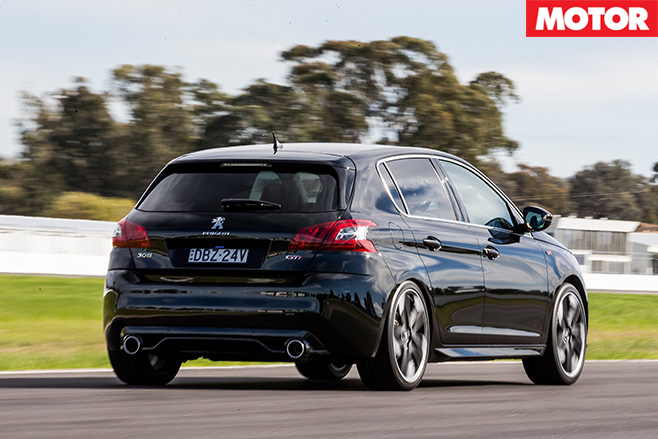
SCORES Price: $46,590 Bang Index: 131.5 Bucks Index: 84.2 BFYB Index: 164.1
WARREN LUFF SAYS 06. “The biggest surprise of the day, it’s a great bit of gear”
“THE engine and chassis are really good, it has heaps of power and it’s a usable chassis too. Very responsive on throttle, brakes are fantastic, but probably the biggest let down are the ergonomics.
“The seats have no lateral support, you may as well be sitting on a bench. You’re struggling to hold yourself in the car which then affects the driving, and I’m having to look around the steering wheel because the tacho goes in the opposite direction. Little things like that let it down, but it’s a great bit of gear.”
Want more? Check out the rest of 2016 Bang For Your Bucks.
1. In order to restore the chassis stiffness lost with roof removal, the Spyder employs a thicker gauge of aluminium for its box-section side rails and A-pillars.
2. Audi claims the 2017 Audi R8 Spyder‘s stiffness is 55 percent greater than that of the first-generation Spyder, and close to the coupe version of that model.
3. Each R8 Spyder is largely hand-built in 16 individual assembly stages, each taking around 30 minutes.
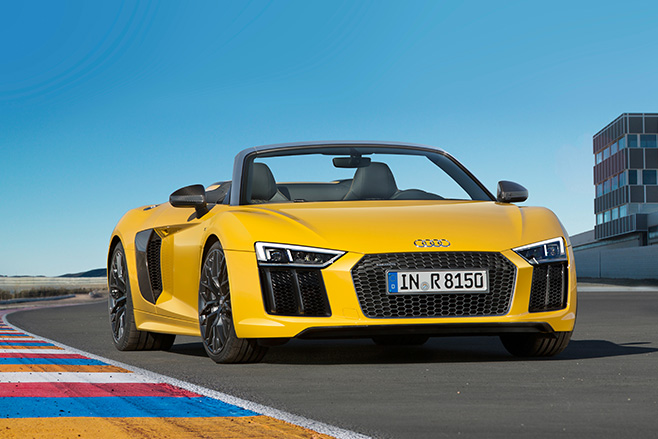
4. The 5.2-litre V10 engine is also used in the Lamborghini Huracan. The same parent company owns both Audi and Lamborghini.
5. Audi’s Drive Select menu system allows the driver to switch between Comfort and Dynamic for the following vehicle parameters: Engine/gearbox, suspension, steering, exhaust note, and quattro AWD torque distribution. A personalised configuration of those settings can be saved as Individual.
6. Dry performance provides an overall set-up even more aggressive than merely setting everything to Dynamic mode in Drive Select.
7. Standard wheels are 19-inches in diameter; 20s are optional, with wider (305mm, up from 295mm) rear tyres. We suspect every Spyder buyer will option up.
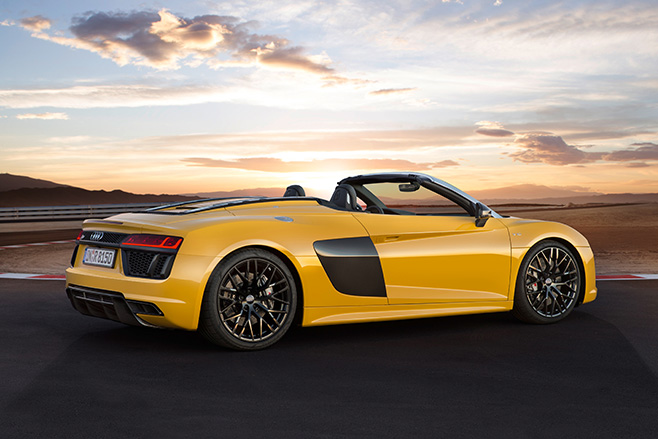
8. Standard audio in Australian Spyders is a stunning Bang & Olufsen system that includes speakers in the headrests to create a surround-sound effect
9. The Spyder’s roof uses electro-hydraulics to open and close in 20 seconds, and can be operated at up to 50km/h.
10. Two-stage adjustable suspension dampers are standard on the Spyder, allowing for a comfortable ride in cruise mode, or very tight body control when pressing on.
A V6 base model is unlikely for the Audi R8 supercar, but a track-spec R8 GT is high on the agenda.
IF YOU believe everything you read on the internet, then you could be convinced that an entry-level, V6 turbo-powered version of Audi’s R8 supercar is a certainty. Not so, according to our well-placed source: “The R8 is a halo model for the brand; proof that buyers will happily pay the best part of A$400,000 for an Audi. The concern is a cheaper V6 R8 could dilute that halo quality, and ultimately undermine the V10’s role.”
From what we understand, far more likely is a limited-edition, even more halo-ish model, pitched above the current V10 Plus.
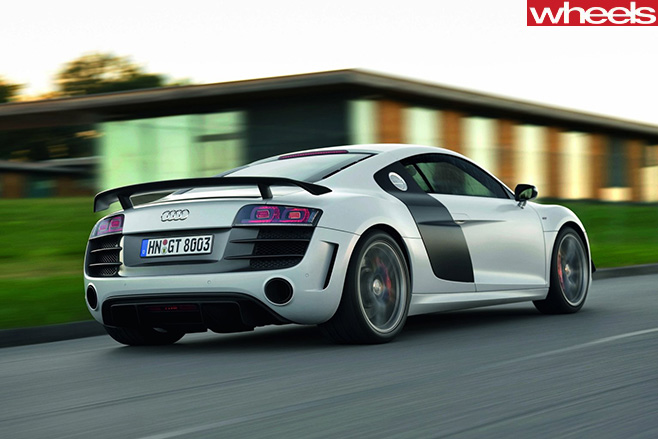
Consider the history: In 2011, the company launched the GT version of the first-generation R8, a car that at the time raised the standard V10 R8’s power and torque to 412kW and 540Nm, while cutting weight by around 100kg thanks to measures such as carbonfibre body panels, lighter carpets, exhaust, battery and glass. It also showed that a small number of customers were happy to pay $470,700 for an Audi.
As it moves toward the mid-point in its lifecycle, the current R8 will need to stay competitive with rivals such as the Ferrari 488 GTB, Porsche 911 Turbo S, McLaren 570S, and Mercedes AMG GT S. All of these run turbo engines; relatively easy to raise boost (and therefore power and torque) in subsequent iterations.
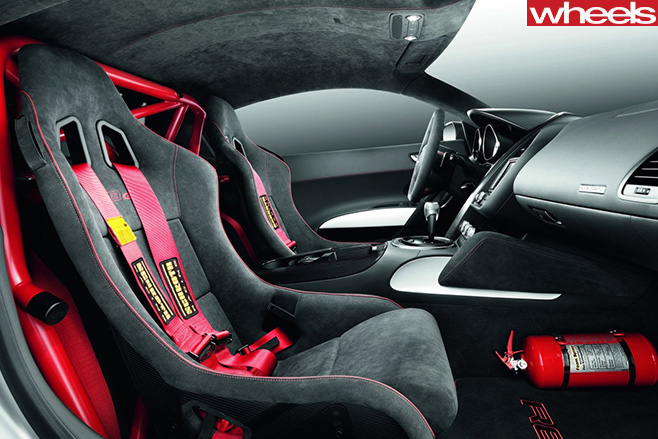
As for weight reduction, expect a similar approach to that taken with the first-gen GT: manually adjusted carbonfibre seats, simplified door trims, thinner glass and carpets, and a lightweight exhaust and lithium-ion battery, all of which which could pull out over 100kg.
With these measures, we’d predict a 475kW R8 GT-spec, weighing in at under 1500kg, which could trim the current Plus model’s 0-100km/h figure from 3.4sec to around 3.1sec. Crucially, it would retain the characteristics that plenty of buyers in this segment crave: ultra-sharp throttle response, an exhaust note untainted by turbos, and soaring revs.
