
1. In order to restore the chassis stiffness lost with roof removal, the Spyder employs a thicker gauge of aluminium for its box-section side rails and A-pillars.
2. Audi claims the 2017 Audi R8 Spyder‘s stiffness is 55 percent greater than that of the first-generation Spyder, and close to the coupe version of that model.
3. Each R8 Spyder is largely hand-built in 16 individual assembly stages, each taking around 30 minutes.
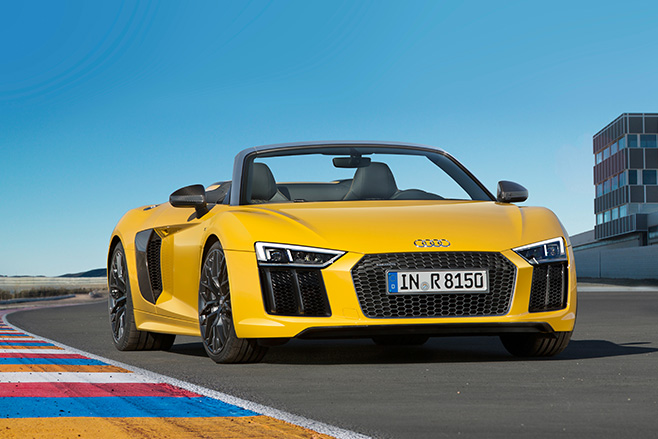
4. The 5.2-litre V10 engine is also used in the Lamborghini Huracan. The same parent company owns both Audi and Lamborghini.
5. Audi’s Drive Select menu system allows the driver to switch between Comfort and Dynamic for the following vehicle parameters: Engine/gearbox, suspension, steering, exhaust note, and quattro AWD torque distribution. A personalised configuration of those settings can be saved as Individual.
6. Dry performance provides an overall set-up even more aggressive than merely setting everything to Dynamic mode in Drive Select.
7. Standard wheels are 19-inches in diameter; 20s are optional, with wider (305mm, up from 295mm) rear tyres. We suspect every Spyder buyer will option up.
8. Standard audio in Australian Spyders is a stunning Bang & Olufsen system that includes speakers in the headrests to create a surround-sound effect
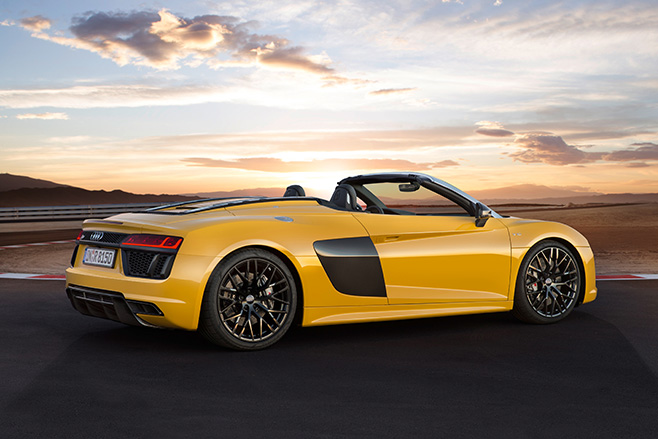
9. The Spyder’s roof uses electro-hydraulics to open and close in 20 seconds, and can be operated at up to 50km/h.
10. Two-stage adjustable suspension dampers are standard on the Spyder, allowing for a comfortable ride in cruise mode, or very tight body control when pressing on.
A V6 base model is unlikely for the Audi R8 supercar, but a track-spec R8 GT is high on the agenda.
IF YOU believe everything you read on the internet, then you could be convinced that an entry-level, V6 turbo-powered version of Audi’s R8 supercar is a certainty. Not so, according to our well-placed source: “The R8 is a halo model for the brand; proof that buyers will happily pay the best part of A$400,000 for an Audi. The concern is a cheaper V6 R8 could dilute that halo quality, and ultimately undermine the V10’s role.”
From what we understand, far more likely is a limited-edition, even more halo-ish model, pitched above the current V10 Plus.
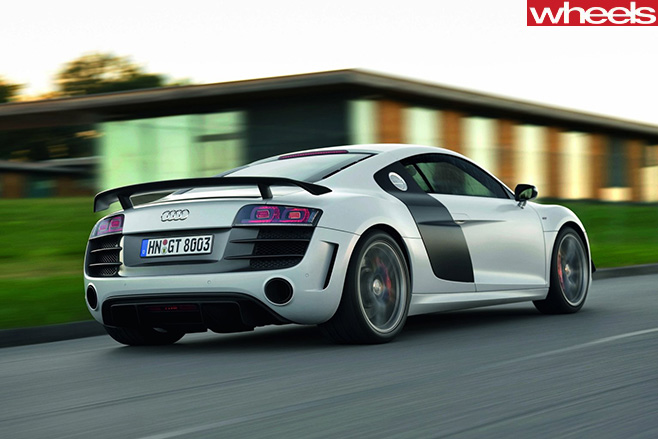
Consider the history: In 2011, the company launched the GT version of the first-generation R8, a car that at the time raised the standard V10 R8’s power and torque to 412kW and 540Nm, while cutting weight by around 100kg thanks to measures such as carbonfibre body panels, lighter carpets, exhaust, battery and glass. It also showed that a small number of customers were happy to pay $470,700 for an Audi.
As it moves toward the mid-point in its lifecycle, the current R8 will need to stay competitive with rivals such as the Ferrari 488 GTB, Porsche 911 Turbo S, McLaren 570S, and Mercedes AMG GT S. All of these run turbo engines; relatively easy to raise boost (and therefore power and torque) in subsequent iterations.
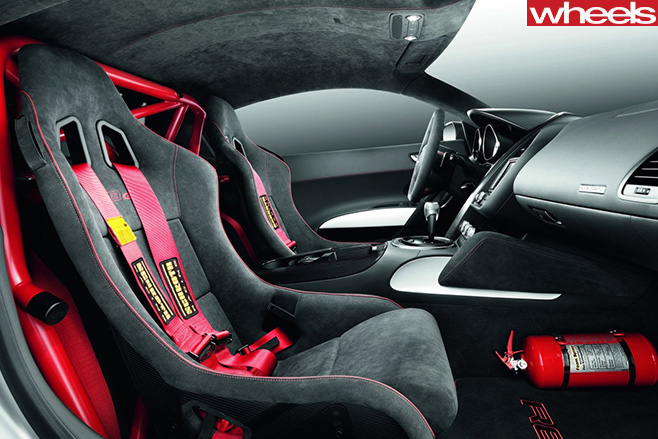
As for weight reduction, expect a similar approach to that taken with the first-gen GT: manually adjusted carbonfibre seats, simplified door trims, thinner glass and carpets, and a lightweight exhaust and lithium-ion battery, all of which which could pull out over 100kg.
With these measures, we’d predict a 475kW R8 GT-spec, weighing in at under 1500kg, which could trim the current Plus model’s 0-100km/h figure from 3.4sec to around 3.1sec. Crucially, it would retain the characteristics that plenty of buyers in this segment crave: ultra-sharp throttle response, an exhaust note untainted by turbos, and soaring revs.
Counterfeit versions of OEM or aftermarket wheels may be attractive to those looking for a cost-effective way of jazzing up their car’s exterior, but bolting up a set of cheap knock-off alloys carries some significant safety risks.
In testing commissioned by the Federal Chamber of Automotive Industries and carried out at Holden’s Lang Lang proving ground, a set of cheap replica wheels literally shattered in a pothole impact test.
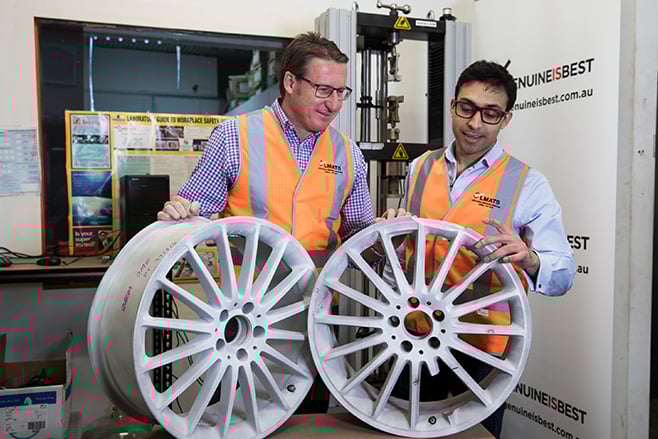
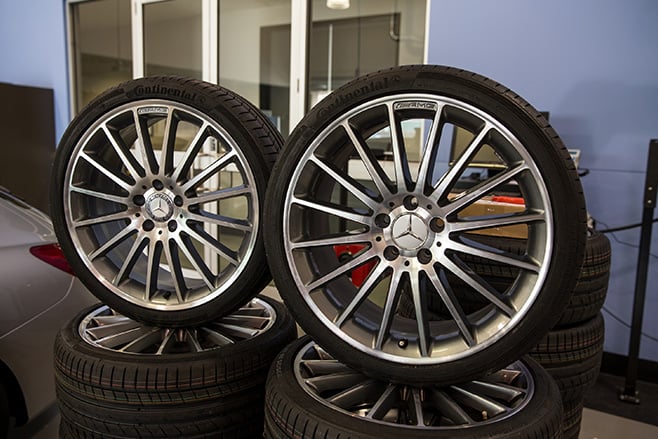
The test took a genuine Mercedes-AMG CLA 45 wheel and a near-identical knock-off and subjected both a 50km/h impact with a deep pothole. Shod with low-profile tyres, both wheels had to absorb a significant amount of punishment; but while the genuine wheel held its form, the fake wheel broke apart at the rim.
Further laboratory testing revealed why the fake didn’t hold up. X-rays and microscope analysis showed the structure of the fake wheel was compromised by numerous voids and defects in the aluminium material, some on the surface and some within the casting. Poor manufacturing methods were identified as the culprit.
“Radiographic analysis on the counterfeit rim revealed the presence of large pores and cavities in the centre wheel and spoke area,” said materials engineer Yashwin Mahadea.
Meanwhile, the genuine Mercedes wheel showed no structural defects.
The test was conducted as part of the FCAI’s ‘Genuine Is Best’ initiative, which aims to highlight why car owners should stick with legitimate parts when servicing or repairing their cars.

Genuine Is Best ambassador Mark Skaife said the results of the pothole test should be a wakeup call for anyone considering fake wheels.
“The genuine and counterfeit wheels look similar but these tests have proven the potentially lethal consequences of making the wrong choice,” Skaife said.
“The fake wheels were sourced from an Australian-based online store, and at first glance you might think you’re getting a great deal. But the major concern with fakes is safety, and using them, knowingly or otherwise, means you’re taking a huge risk,”
The rise of the SUV may have impacted the sedan’s dominance but the traditional family car isn’t dead yet. With new technology, spacious interiors and more economical engines, the family sedan still offers a sweet package for anyone who wants to combine practicality with a superior driving experience. With the two-horse race between Ford and Holden consigned to memory, Wheels gathered the 10 biggest sellers and put them through their paces to see which was king of the road.
1. VOLKSWAGEN PASSAT 132TSI COMFORTLINE
Deserves to be the benchmark of its segment.
Plus: Smooth; quick; efficient; composed; comfortable Minus: Not quite as dynamically polished as it could be
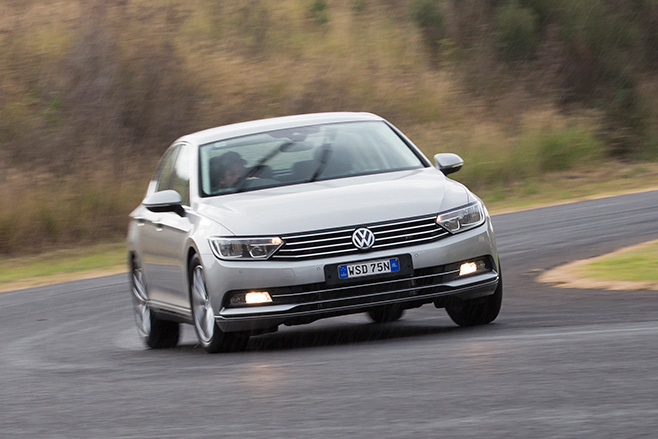
The accomplished Passat ticks most boxes including excellent efficiency, smooth performance and a classy interior that makes it a pleasure to drive. Its 1.8-litre, four-cylinder, turbo-petrol and seven-speed dual-clutch combo makes for easy and effortless motoring. Passengers are looked after with air-conditioning controls and vents in the back and while rear headroom isn’t the best in class, the cabin is a pleasant place to be.
Verdict: 8.5/10
2. FORD MONDEO TITANIUM ECOBOOST
With Falcon production now a memory, it’s finally time for the underrated Mondeo to shine.
Plus: Refinement; dynamic fluency; practicality; value Minus: Thirst; rattles; messy instruments
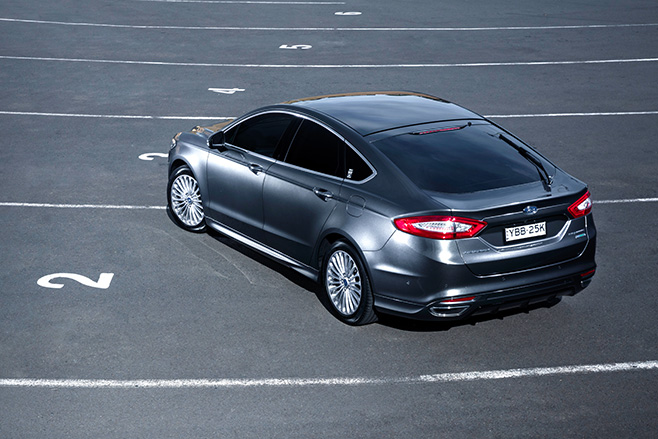
Buyers who would have traditionally flocked to the home-grown Ford Falcon will be pleasantly surprised by the Mondeo’s handling, space and polish even if the dashboard isn’t the most intuitive. The 177kW 2.0-litre four-cylinder turbo provides decent grunt while effortless cornering and taut body control are enough to appease the staunchest rear-wheel-drive advocate.
Verdict: 8.0/10
3. HOLDEN COMMODORE SV6 BLACK
The old-school Aussie favourite still has a place in today’s market with plenty of space, comfort and obliging performance.
Plus: Excellent seats; strong performance; handling Minus: Knobbly ride; thrashy V6; relative thirst
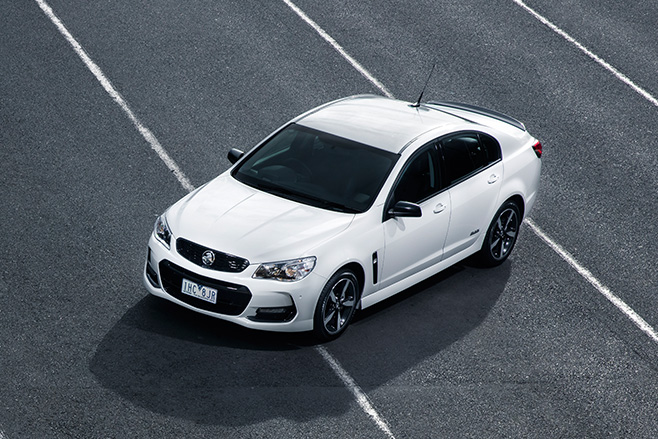
One of the roomiest sedans with a rear middle seat that accommodates more than a child or armrest, the Holden Commodore is only beaten for legroom by the Skoda Superb. It’s a good looking car inside and out and comes with plenty for the circa-$40k price. It shows its age under the bonnet with a big V6 that sucks more than 11L/100kms without the aid of a turbo, though it’s a pretty faithful servant when you put the foot down.
Verdict: 7.5/10
4. SKODA SUPERB
The big Czech saloon could ably fill the Aussie-sedan void if better tuned to Australian conditions.
Plus: Value; grunt with efficiency; styling; space Minus: Uncontrolled ride; lack of traction; stingy front seats
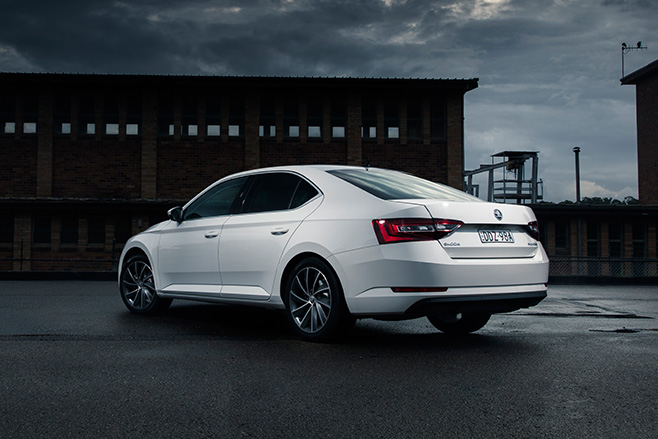
It was bold of Skoda to call its big sedan the Superb, but you can’t really accuse the Czech company of irony as it’s quite a good car that should gain a higher profile here once the Commodore starts arriving by ship. Interior space is more Statesman-like than Commodore, yet its 2.0-litre four-cylinder turbo drinks just 8L/100kms, which is about seven schooners less than the Commodore SV6. It’s a smooth operator on urban roads but its soft suspension leaves it wanting out of town.
Verdict: 7.0/10
5. KIA OPTIMA GT
A good-looking, features packed all-rounder that’s let down a little by a lack of handling finesse.
Plus: Slick cabin; performance; equipment; excellent tyres Minus: Dynamics and ‘Drive Mode’ calibration still need work
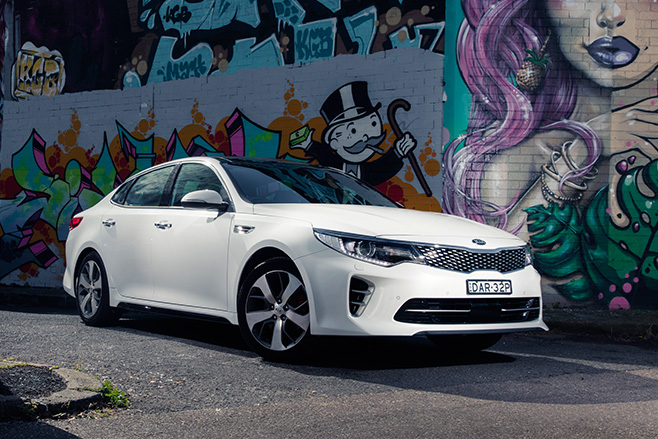
Even those yet to be convinced that Korean cars are actually pretty good can’t help be impressed by the equipment levels in the $46,000 Optima including the leather seats, dazzling but intuitive dashboard, heated steering wheel and cornering headlights. It’s roomy and feels relaxing to drive and sticks to the road well in all conditions but while it provides a nice smooth ride on well paved roads, it does lack composure in rougher conditions.
Verdict: 7.0/10
6. PEUGEOT 508 ACTIVE
The conservative lines of this reliable mid-sized French sedan have improved with age.
Plus: All-round ability; chassis balance; economy; value Minus: Firm urban ride; flair-free styling
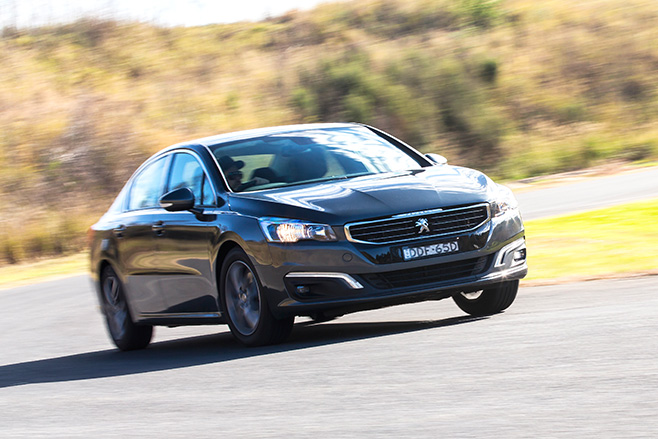
First introduced in 2014, this isn’t as flashy as some of its competitors, yet its clean lines and unpretentious interior give it a timeless appeal. That said there are enough features to please and it’s unique enough to stand out at the lights. Its narrow body means a tight fit for three people in the back seat, but on the plus side it handles nicely and its economical 1.6-litre four-pot turbo engine pulls it along well.
Verdict: 6.5/10
7. MAZDA 6 GT
Not the pick of the Mazda 6 range, but still a good looker with great passenger comfort.
Plus: Smooth-road handling; slick interior quality; driver appeal Minus: Gearbox calibration; pattery ride; road rumble
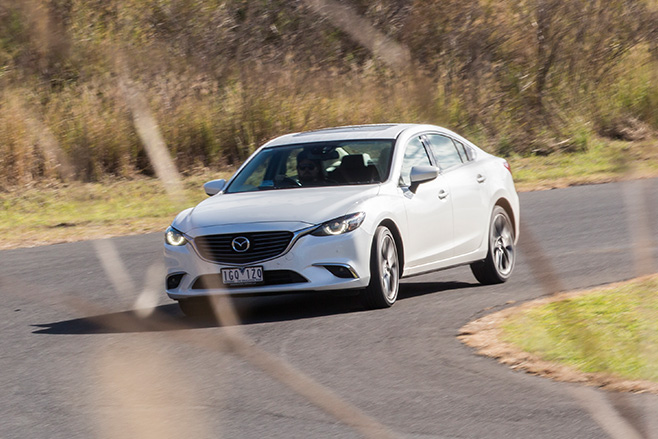
While it’s surprising to see the Mazda 6 this far down a list, the 2.5-litre, four-cylinder petrol engine sedan doesn’t tick as many boxes as the turbo diesel wagon – but we’ll save that one for another comparison. While it’s one of the older designs here, it’s still a good looker with a quality interior that’s particularly comfortable for back-seat passengers. The 6-speed auto doesn’t always shift when it should on windy roads, though this can be overcome by using the paddles that for a more engaging drive.
Verdict: 6.0/10
8. HYUNDAI SONATA PREMIUM
Great value and comfort is let down by unsophisticated handling on wet and rough roads.
Plus: Solid; swift; spacious; sensible; generously equipped Minus: Unruly wet-road behaviour; busy ride
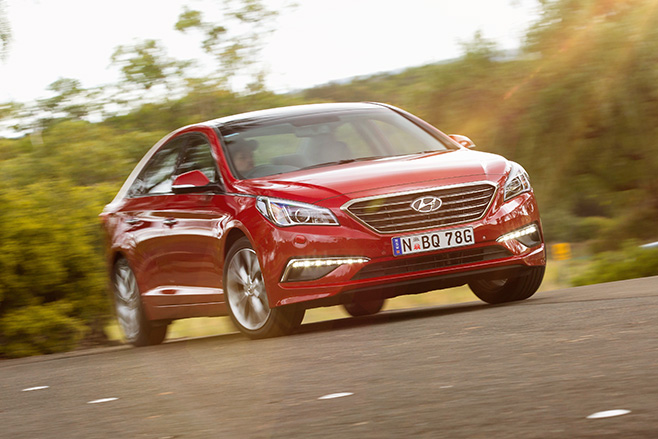
The Sonata has conservative looks that neither offend nor impress leaving its best sales pitch to the well-equipped and spacious interior and a host of features seen in cars priced beyond the Luxury Car Tax threshold. The 180kW/350Nm 2.0-litre turbo four provides more than enough grunt and while handling is great on smooth city roads it’s a bit of a mess on rougher surfaces that’s not helped by the choice of stock tyres.
Verdict: 6.0/10
9. SUBARU LIBERTY 2.5I PREMIUM
A good value car that lacks all the charm of previous models.
Plus: Price and equipment; grip and handling poise Minus: Lack of charisma; dull steering; irritating ride
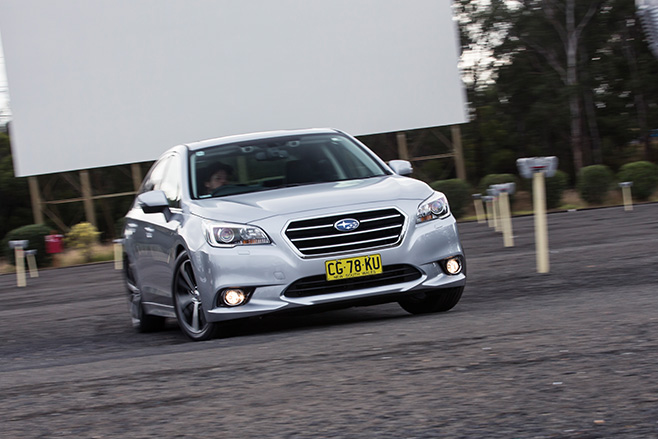
There was a time when a Subaru Liberty offered something different to other sedans, but while it still has AWD as a point of difference, the latest model is let down by sausage factory aesthetics, dull steering and a 2.5-litre boxer engine that doesn’t seem at all interested. The interior looks good and is put together well, though you sit on the firm leather seats rather than in them. The sub-$40k price tag represents good value when you take into account Subaru’s good build quality, equipment and reliability.
Verdict: 5.5/10
10. TOYOTA CAMRY ATARA SL HYBRID
The hybrid price tag is difficult to swallow with a budget interior that only a taxi driver could love.
Plus: Keen and refined drivetrain; competent chassis Minus: Budget interior; laggy CVT; comprehensively outclassed
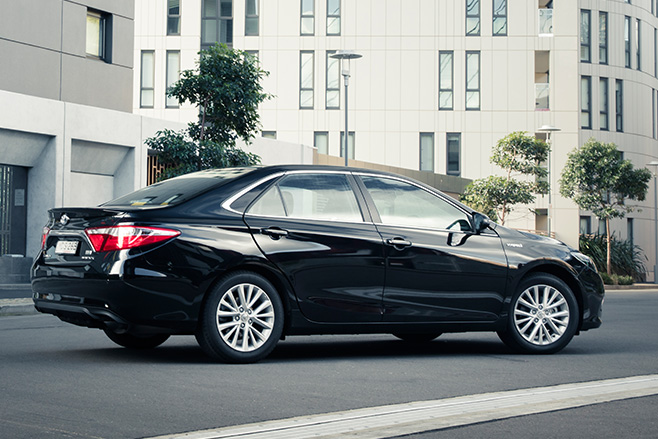
This Aussie-built Camry has great underpinnings, but almost everything sitting above this variant is outclassed by the rest of the cars on this list. The mid-$40k price-tag might be easier to justify if the batteries helped significantly improve fuel economy, but the 9.1L/100kms consumption was hardly class leading – though to be fair it’s very thrifty in town. It does feel nice to drive, though, thanks to the muscular petrol-electric drivetrain and effective suspension tune.
Verdict: 5.0/10
Rounding up four cars in a single corner = epic.
In the world of motorsport, nothing puts your competitor in their place like passing them around the outside of the corner.
With this in mind, Kevin Eriksson just shamed four of his competitors so badly, someone might need to go and check if they are doing okay.
The Swedish driver pulled off the most impressive overtake in motorsport this year, and one of the best of the decade.
At the World Rallycross Championship finale in German, Eriksson rounded up four of his opponents in one wild, awe-inspiring drift, passing them all on the outside of the corner with the most satisfying display of oversteer you will ever come across.
Eriksson was sitting on the outside line heading into the first corner, with four cars ahead of him, but he simply pitched his Ford Fiesta Rallycross Supercar into the turn at full opposite lock, pinned the throttle, and powered his way around the outside.
It is a move which could only have been pulled off in Rallycross, and beautifully illustrates what makes the sport so amazing to watch.
The onboard footage gives a great view of what the move was like inside the cabin. You can see as Eriksson commits to the move, looking through the side window to see where he is going.
It’s wild to think this isn’t something out of a video game or movie blockbuster, but pulled off in the real-world, against a field of serious competitors.
Oh, and to make this story even sweeter, Eriksson went on to win the race, his first in the World Rallycross Championship, holding off the likes of two-time champion Petter Solberg. Awesome!
For reasons I am yet to discover, we’ve never run a base-model Golf VII GTI at Bang For Your Bucks.
Oh sure, there have been plenty of Golfs sporting the GTI badge over the years, but since the advent of the seventh generation, they’ve always been up-specced numbers with tricky diffs or they’ve swapped the GTI tag for an R badge.
I have to ask why? Why the hell have we not thrown the entry-level GTI into the mix, especially when the Bang formula rewards povo-pack interiors and the reduced weight and price-tag that they bring? (Because VW’s never had one available before, Dave! – Ed) At least they’ve fixed that this time around – and how.
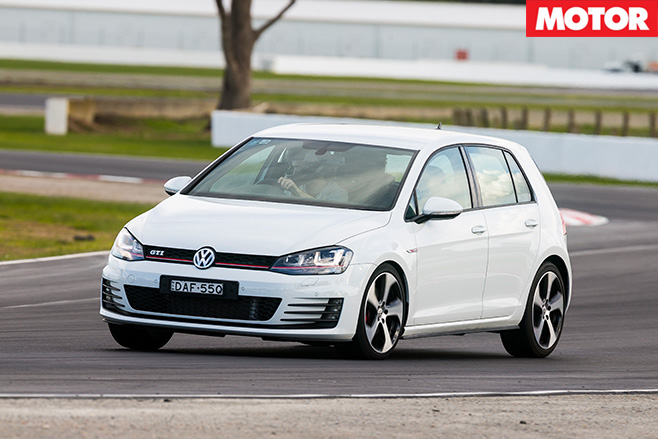
The 162kW summoned up by the boosted 2.0-litre is strong, but not as feral as some others. While the GTI scrabbles to 100km/h faster than stuff like the Peugeot and the Mini Cooper – with which it competes pretty much directly – by the time the end of the 400m looms, both those hatches have rounded the Golf up and left it behind. The Golf isn’t especially fast around the Winton layout and its corner speeds are nothing to write home about.
But what gets it over the line and into fourth place was a combination of pretty keen pricing and bank-vault security. It is genuinely good to drive, and whether you’re bumbling about town or having a red-hot go at a track-day, the GTI rewards with direct steering that is beautifully weighted and a tendency towards neutrality.
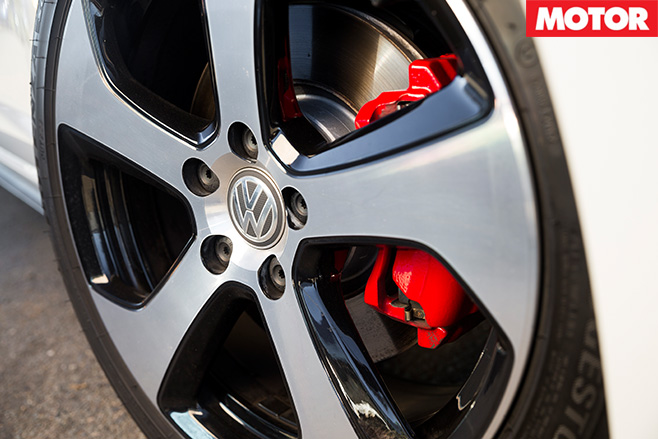
Our gripes are limited to the fact that the car can feel a bit remote and clinical when you’d rather be whooping it up, but you can’t have it both ways. The ESP won’t switch completely off, despite what the light on the dashboard suggests. Not that we’d ever condone tampering with a factory setting (this is not a dig about Diesel-gate), but if there’s somebody out there who can disable the GTI’s ESP properly, please let us know.
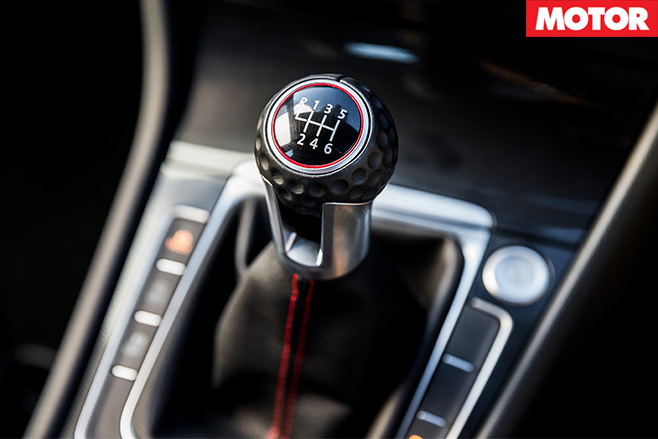
JUDGES’ COMMENTS 02. David Morley “Even in its most basic form, the GTi magic shines through.”
06. Dylan Campbell “Lacks some sizzle on track but it’s the car I’d drive home in.”
07. Louis Cordony “A class act but just a little too sensible here.”
06. Scott Newman “Fantastic car, smothered by an electronic helicopter parent.”
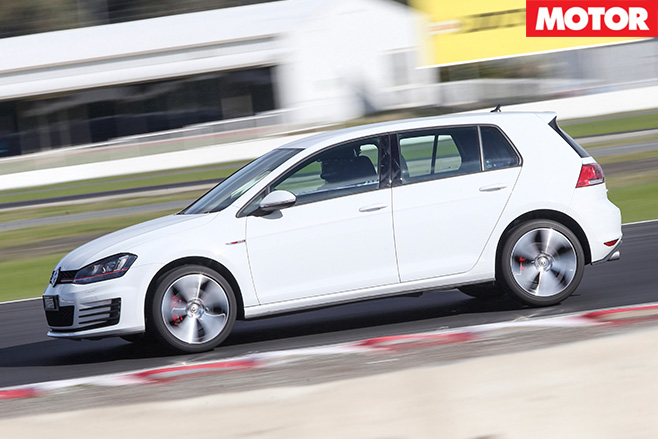
SCORES Price: $40,990 Bang Index: 117.5 Bucks Index: 95.7 BFYB Index: 161.0
WARREN LUFF SAYS 04. “It’s easy to drive on the limit, but it needs to be a little more exciting”
“The Golf has always been sort of the benchmark in this class. The engine is good and the steering is good, but you want it to have a bit more liveliness about it.
“It’s a very easy car to drive [fast] but it doesn’t inspire you to keep pushing hard, it’s probably that little bit too dialled down. If it was a little livelier, it would it make it so much more of a driver’s car.
“It loses out a little in lap times because it doesn’t have as much power as some of the others, so it makes up for it in the corners, but it needs to have a little more zing.”
Want more? Check out the rest of 2016 Bang For Your Bucks.
Audi’s glorious naturally-aspirated V10 is not, as some may believe, on the chopping block.
Rumours of an early demise for Audi’s brilliant atmo V10 have been scotched by the car’s project boss.
As the last non-turbocharged unit in Audi’s extensive engine line-up, the 5.2-litre V10, also used in the Lamborghini Huracan, has long endured speculation that it must be on borrowed time.
“We are currently testing systems that use both two and four individual particle filters; our challenge is to package theses filters effectively in a tight engine bay, and to make sure the filters have no detrimental effect on the engine’s sound or outputs. Software changes will help solve those [later] issues.”Schala’s message is clear: Audi would not be sinking this level of resources into the V10 if it planned to put a bullet in its head any time soon. Atmo engine lovers, rejoice.
TELL ME ABOUT HIS CAR
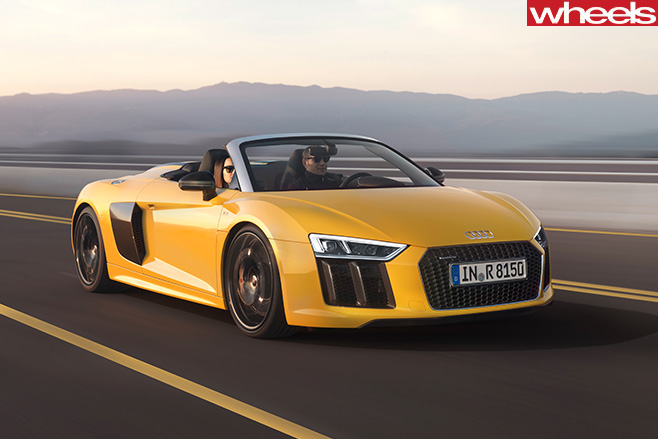
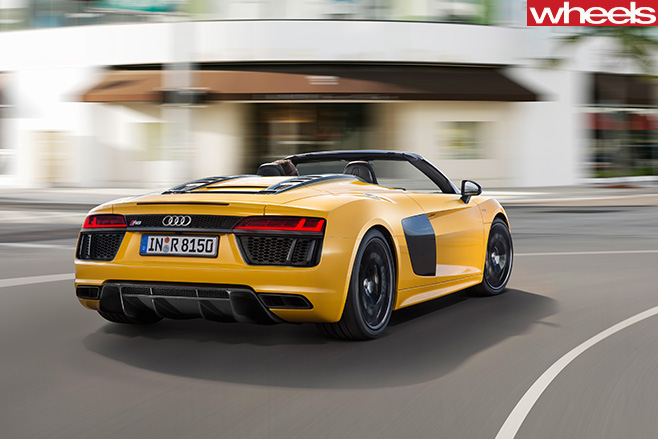
This is the soft-top variant of Audi’s second-generation Audi R8 supercar. It shares its fundamentals – aluminium/carbonfibre spaceframe chassis and mid-mounted 5.2-litre V10 engine – with VW Group brand sibling Lamborghini.
It’s capable of delivering outstanding supercar duality of character: hushed cruiser with the roof up; barking, corner-blazing beast when the time and place are right.
STRENGTHS
• Clever construction keeps the Spyder feeling nearly as stiff as the coupe; vital in an ultra-high-performance car like this.• With the roof up, the Spyder suffers negligible wind noise, and sounds only marginally louder inside than the coupe.• The engine delivers a vast band of useable performance, and sounds brilliant when working hard.
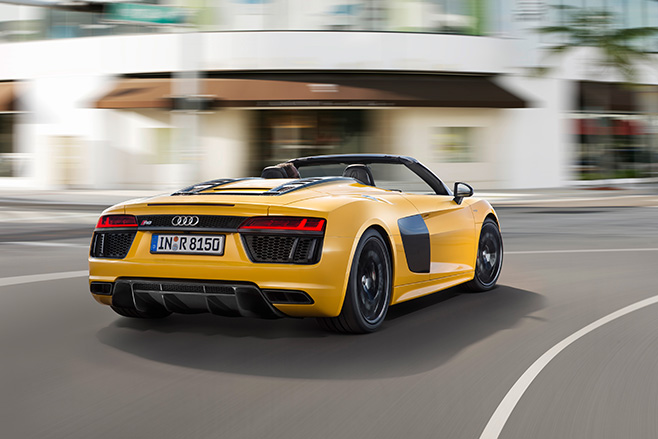
• The seven-speed dual-clutch gearbox responds instantly to shifts from the wheel-mounted paddles.• A switchable sports exhaust system is standard, so the driver can run the engine in a more muted mode when cruising, or press a button to open flaps and allow a full-throated bellow when driving hard.• A separate Dry Performance mode gives an even more aggressive throttle and transmission setting, and reduces the intrusion of the stability control system, allowing keen drivers to slide the car a little.• The cabin has an elegant, driver-focussed design, and exudes high quality and excellent equipment levels.
WEAKNESSES
• Occasional low-speed transmission/ driveline shunt. In the Comfort mode for engine and gearbox, kickdown can be slightly hesitant.• Extra weight is inevitable with soft-top variants, and this does dull the car’s responses slightly compared to the coupe and requires extra braking distance when driving hard.
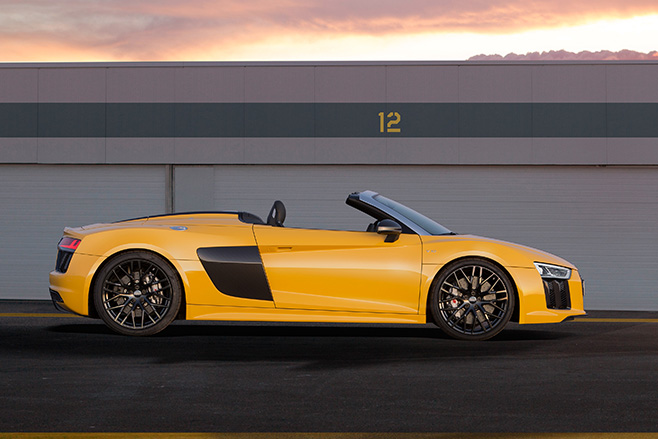
• By not employing turbochargers, the engine needs revs to produce torque, so can feel comparatively languid when asked to pull from low engine speeds.• The shape of the front bulkhead means passenger legroom, even with the seat in its rearmost position, is not huge.
ANYTHING ELSE I SHOULD CONSIDER?
Porsche’s 911 Turbo S Convertible is even more demonically rapid in a straight line, thanks to twin turbochargers, but this muffles the all-important exhaust note. Has useful rear kiddie seats, which the Audi lacks, but doesn’t cut the same supercar figure.
Ferrari’s 488 GTB Spyder is also faster, but more expensive, and the waiting list is long. Or there’s Ferrari’s California T for similar money, but it’s front-engined, and not as a sharp as the mid-engined Audi.
More extroverted types could consider Lamborghini’s LP 610-4 Spyder, for more money, or British sportscar specialist McLaren makes a Spyder version of two of its twin-turbo V8 models.
Another day on the job then; Head Office wants me to ponder the future of automobilia with a fellow industrial designer and to begin the exercise by transporting 545kW-worth of Ferrari F12 Berlinetta from one side of Sydney to the other for reference.
Luckily, this shouldn’t be too taxing, preliminary research indicates that the thing is quite breathless beyond 340km/h. Nonetheless, the notion of routing the journey via Goulburn springs to mind until cruelly doused by management’s clearly phrased suggestion that some industrial designers are a little, no, a lot, more important than others. We wouldn’t want to keep one-such waiting would we? Especially when that designer goes by the name Flavio Manzoni.
In 1993, at age 28, Manzoni joined the Centro Stile Lancia and subsequently worked for various other manufacturers, including Maserati, before moving on to redefine the Bentley and Bugatti marques and win nearly every award possible. In 2010, he was appointed Ferrari’s first-ever senior vice-president of design.
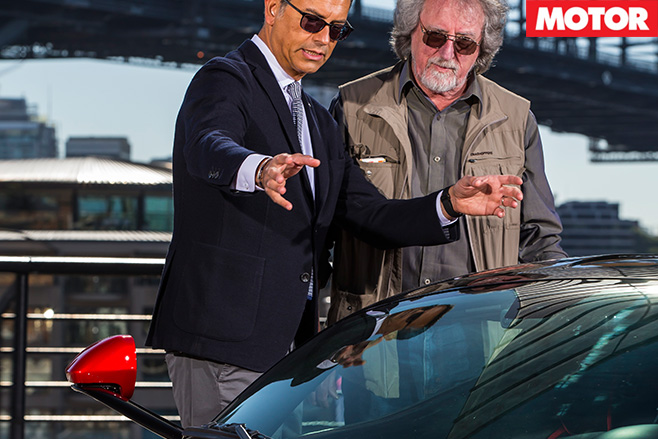
My instruction is to meet the man, here on his first visit to Australia, and discover the future of the car. But I don’t need to, I already know: scarily silent, battery-sucking self-drivers hell-bent on saving humanity despite itself. But the editorial premise is that a Ferrari is much more than a car – it represents the ultimate expression of man and machine entwined in purpose and pleasure. With Manzoni at the helm, Ferrari can be expected to set the standards of automobile design for decades to come.
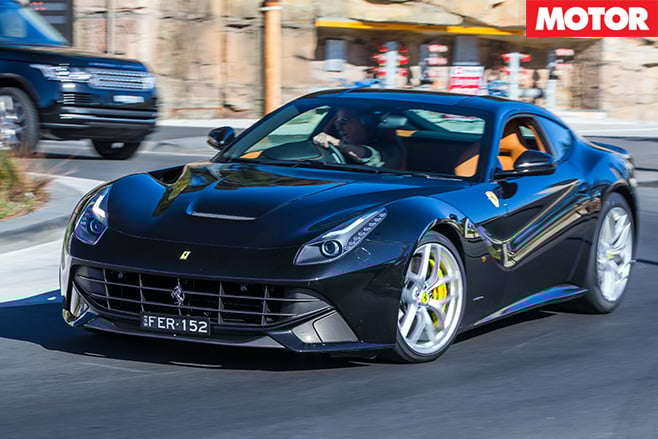
The experience of Manzoni’s handiwork – even if limited by a schedule to city roads and photography – provides something tasty to chew on while awaiting the man himself. At first sight it threatens to be quite a mouthful; the second, longer look reveals something deeply satisfying.
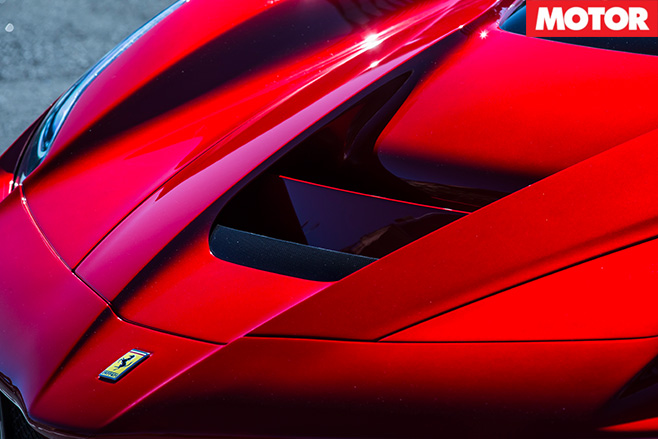
But the interior is the big surprise. Where I’d anticipated needing an hour of instruction to learn how to even start the thing, I find that, instead, virtually everything falls to hand where you’d expect it and operation is almost completely intuitive. Granted, the workstation isn’t conventional, but it works.
Devoid of the infuriating engine-start/handbrake/gear-selection/switching gimmickry that currently corrupts so many cars, it perfectly illustrates the difference between novelty and genuine improvement.
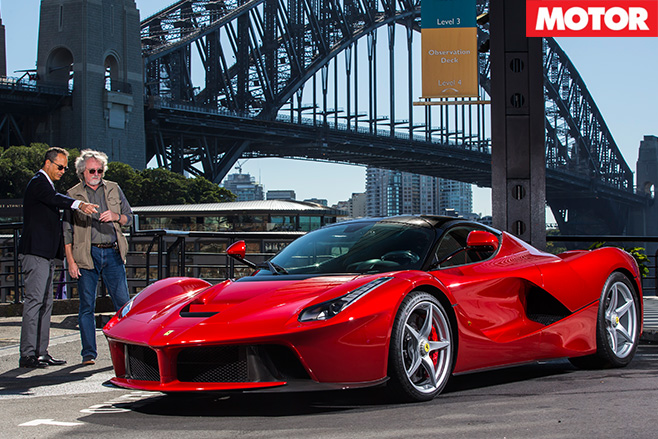
With that social contribution comes the Big Question. Given that everything’s going electric, in future, what will a silent Ferrari be like? It’s a question that strikes right to the heart of discussion with Manzoni: Where does the future of automotive excellence lie? What senses will it indulge?
At only 51, the weight of the man’s accolades – among them induction into the Hall of Fame at the National Automobile Museum of Italy – and the sheer impact of his work give him serious design authority and his willingness to share it in a second language is rare and rewarding.
He understates – the marque’s first hybrid boasts a total 708kW. A constraint is the physical accommodation of both V12 and electric power systems and the daunting array of hardware that consummates their union.
“In the past, it was easier to see the role of a designer like an artist, working with certain constraints, but not many,” he says. “But here the project is so technologically complex that it’s not possible anymore, first to define the technical configuration, then give it to somebody else to make a kind of suit/cover on top. So the problem is how to reconcile the two different aspects – the engineering complexity and the pure beauty.”
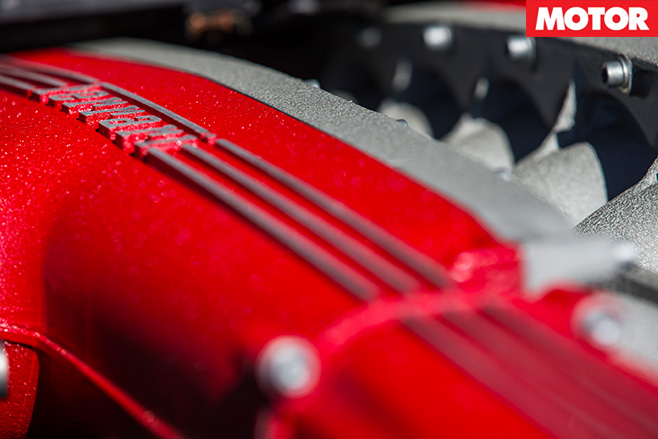
The sheer volume of problems were numbing, but Manzoni and his team addressed them all, from downforce and drag to ingress, access, vision and venting, as a singular enterprise. The result is a blend of function and beauty beyond anything that even this fabled marque has achieved before. “For sure, the complexity of the project makes our job more difficult, but problems are opportunities.” He smiles. “That is design to me.”
Yet it is indicative of the man that he sees no car as his defining legacy. His greatest pride is his team. Ferraris used to be penned externally, largely by Pininfarina. But that era is over now. Created in 2010 with a staff of just four, Centro Stile Ferrari now numbers 70 people and is responsible for all Ferrari road cars, from production stalwarts to exotic one-offs, and represents the marque’s new era.
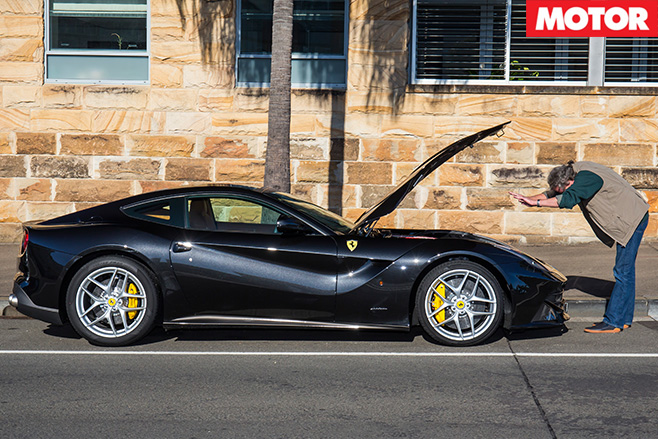
As for developing a Tesla-chaser, he simply quotes Marchionne on an electric Prancing Horse: “You’ll have to shoot me down.”
Whilst the designer is understandably reluctant to divulge details of future Ferraris, he has no hesitation in revealing his own philosophy. He firmly believes that Ferrari’s evolution must revolve exclusively around sports cars. Whilst this may allow the seating of four, he is adamant that two doors are the limit – not that that’s too limiting.
Although Manzoni resists discussing it, there’s talk of a revolutionary body concept with full-length gullwing doors and no B-pillars that could be the first four-seater from Maranello that treats all occupants with equal courtesy.
“At home I have two pianos. One is a fantastic Yamaha, completely digital, and then I have a Steinway grand piano. Which one do you think I play? The Steinway, because the … motion … the feel given by the harmonics, I don’t know in English how to say…” He doesn’t need to.
His work already says it for him. Industrial designers, at their very best, seamlessly blend the realities of engineering with the rewards of romance – and none do that better than Flavio Manzoni.
Okay, the man may have cost me a rich thrashing of his Berlinetta but, damn it, by any other measure he’s surely a credit to the species.
One thing Ferrari’s nailed
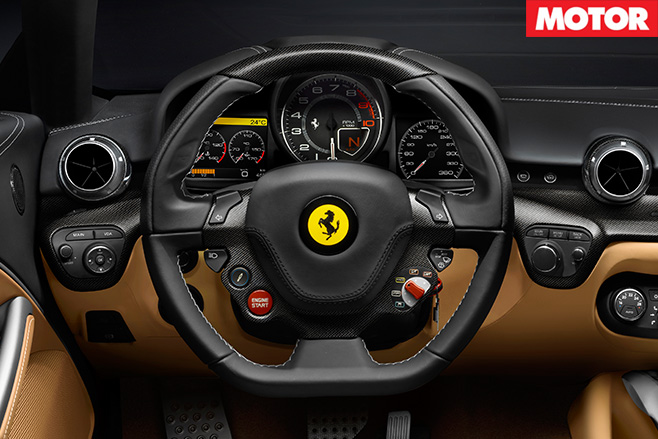
No marque epitomises Grand Prix racing more than Ferrari, a heritage clearly seen in the nose/spoiler of LaFerrari. But the union’s true value is the transfer of F1 advance to road cars and the F12berlinetta’s helm is a splendid example. The vital but normally scattered and stalked controls of starting, indication, lighting and wiping are grouped on it within instant reach, yet differ in feel so as to allow tactile identification of each without sighting.
Innovative, intuitive and effective, the wheel illustrates the benefit of sating more senses (including common) than just sight. And the difference between styling and design.
Adaptive Cruise Control is a surprisingly divisive issue. Some people swear by it, others can’t stand using it. There are drivers who love its ‘set and forget’ capability, and others who don’t see what advantage it has over simply paying more attention while using a ‘regular’ cruise control system.
Well, we are here to demystify the technology for you, and step you through the different adaptive cruise control (ACC) systems and how they work.
The advantage of ACC over traditional cruise control is its ability to identify cars ahead of you on the road, and adjust the speed accordingly. This means you can simply set your desired cruising speed, and not worry about having to decelerate when you come upon slower drivers – the car takes care of that for you. Once the slower car is out of your way, the car speeds back up to your previous speed.
ACC can be broken down into two major groups, radar and optical. Within in these two types of ACC there are different variations and versions.
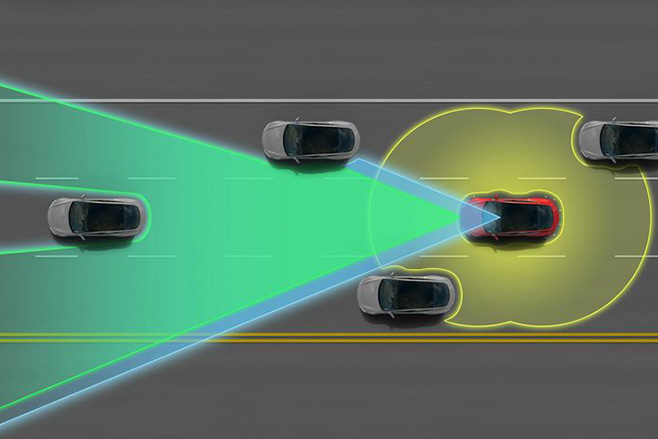
Let’s start with optical. The downsides of an optical ACC system (whether laser or camera-based) is it cannot detect and track vehicles in adverse weather conditions. So it won’t work as well in the rain or on dusty dirt roads. Laser-based systems may also have trouble tracking cars covered in dirt, as the surface of the other car won’t reflect the laser beam as well.
The lasers themselves are also often mounted in the lower grille, where road grime and dead insects may impact its effectiveness.
Meanwhile, radar systems can be hidden behind a plastic fascia and aren’t as impacted by dirt, rain or fog. Radar systems have the added benefit of using multiple sensors. While some radar ACC units will use a single sensor to look several hundred metres ahead, the car’s parking sensors can also be called upon to provide short-range coverage..
Radar systems will often include a precrash system like Automated Emergency Braking, or at the very minimum, a collision warning. Radar sensors do much of the heavy lifting in the ‘automated’ driving systems used by the likes of Tesla and Mercedes-Benz.
Meanwhile optical ACC setups often also include lane-keeping systems which use cameras to detect line markings.
The most sophisticated ACC systems use both radar and optical sensors to give the car’s onboard computers the best ‘picture’ of the car’s surroundings.
The most important thing to consider when looking at ACC systems is whether a laser or radar sensors are used, and how far ahead the unit is capable of detecting cars. Also, at the end of the day, you are responsible for your car, so make sure to pay attention to the cars ahead of you, no matter how advanced the ACC in your car may be.
