
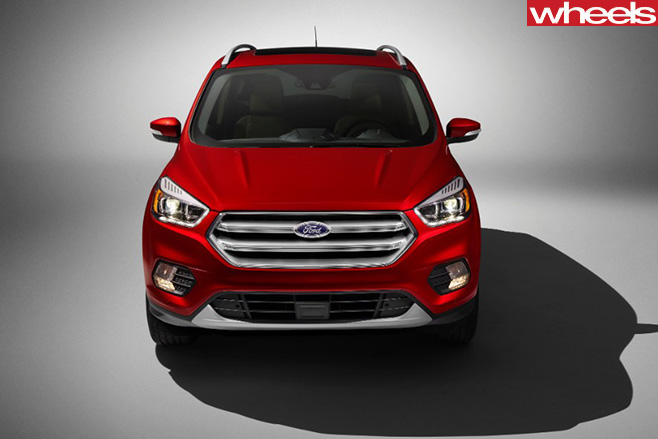
Ford Australia will axe the Kuga name in favour of Escape, as it lowers the cost of entry to its mid-sized SUV.
The Kuga name will disappear from Ford showrooms in January when the 2017 Ford Escape arrives, though, despite the new name, Ford’s ‘new’ midsize SUV is a facelift rather than an all-new model.
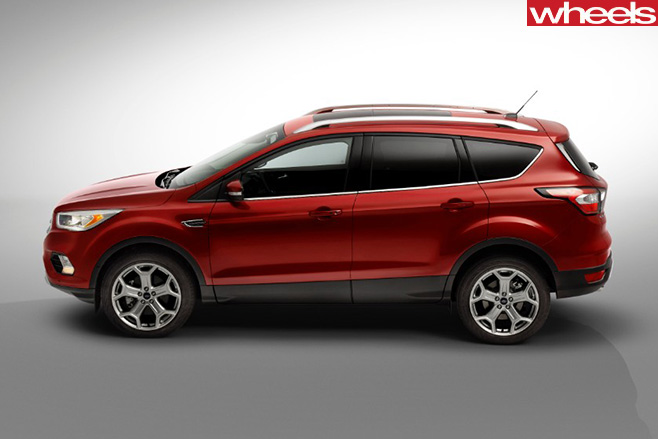
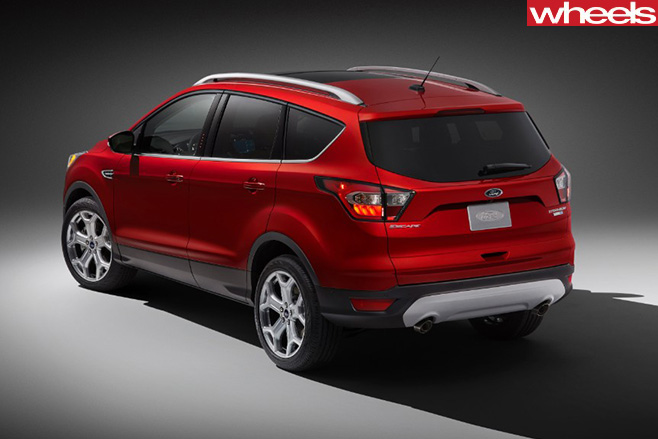
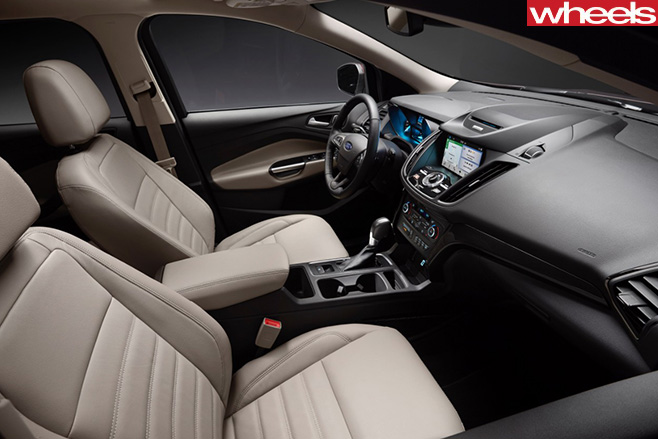
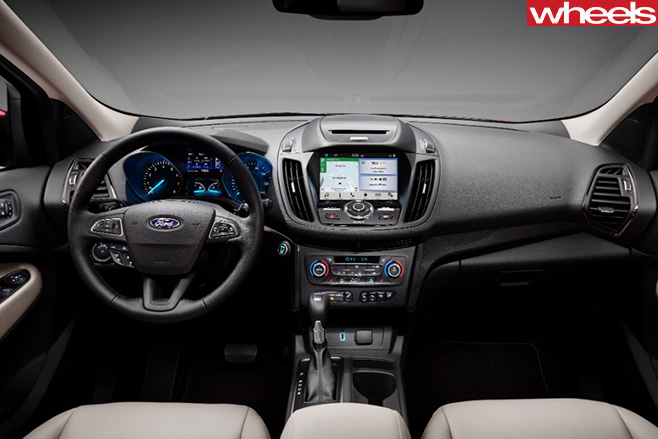
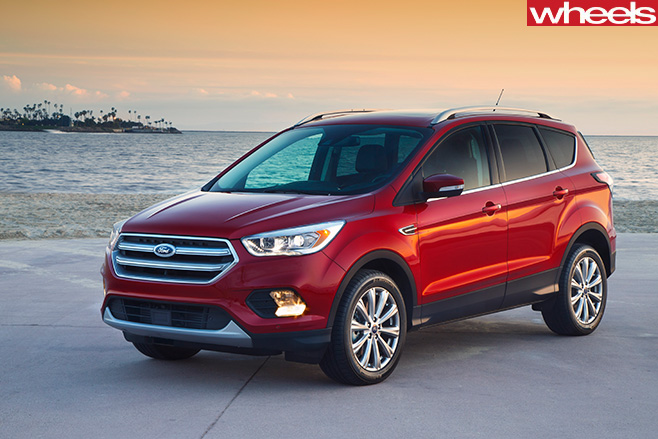
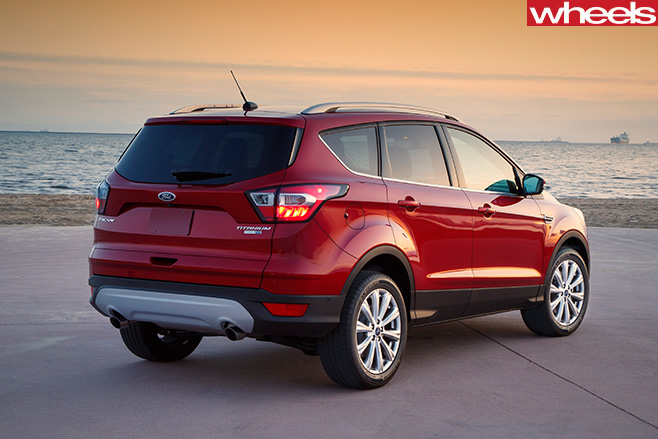
Changes compared to the Ford Kuga aren’t wholesale – the most notable are new front and rear plastics, a reprofiled bonnet, revised tailgate, new headlamps and tail lamp designs, a new set of 18- and 19-inch alloy wheel designs and a slightly remodelled interior with higher-quality materials.
Meanwhile, infotainment fit-out gets a boost from Ford’s latest Sync 3 system, which replaces the current Sync 2 software and features intuitive voice commands, an 8.0-inch colour touchscreen, integrated sat-nav and Apple CarPlay/Android Auto smartphone mirroring on all Escape variants.
Auto-equipped models gain a set of steering wheel-mounted paddle shifters, and engine start-stop will become standard.
With most Kuga shoppers gravitating toward the Trend, the addition of a more affordable 2WD variant in the Escape line-up is expected to garner more customers for Ford.
“We’re revitalising our SUV line-up, leveraging our global heritage and expertise, to bring the Escape into the family,” said Ford Australia spokesman Damion Smy.
“The Kuga name has been criticised in the media, but it wasn’t a substantial hindrance to the success of Kuga – which was increasing in sales in 2016 until we announced this new model back in August.”
That segment continues to grow as SUV sales snare greater and greater chunks of the new car market, with medium SUV sales so far this year registering nearly 19 percent growth against 2015’s figures.
The Territory will be replaced by the slightly smaller Edge in early 2018, though those looking for a seven-seat Ford SUV will need to aim for the Ranger-based Everest instead – a seven-seat option exists for the Chinese market, but Ford Australia has confirmed Australia-bound cars won’t be sourced from that country.
Pricing
Escape Ambiente 2WD 1.5 manual – $28,490 Escape Ambiente 2WD 1.5 auto – $29,990 Escape Ambiente AWD 1.5 auto – $32,990
Escape Trend 2WD 1.5 auto – $32,990 Escape Trend AWD 2.0 auto – $35,990 Escape Trend AWD 2.0 diesel auto – $38,490
Escape Titanium AWD 2.0 auto – $44,990 Escape Titanium AWD 2.0 diesel auto – $47,490
Done are the days of the minuscule interior.
Compact hot-hatches have changed and for the better. Not only do they pack more punch in terms of performance, but they have plenty of front-space, legroom and neat gadgetry on the dash.
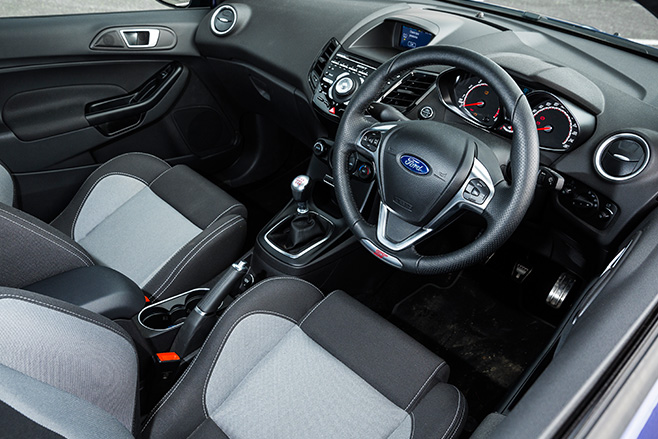
We take a look inside the pilot’s seat on four new hot-hatches, to find out what we like and dislike about these cockpits.
Pluses? The Clio’s seats in its nicely designed cabin aren’t too firmly padded and the infotainment system has an RS Monitor with functionality including a telemetry-feed, which is very cool. But we can’t grasp why the cruise control’s buttons are on the wheel, yet its switch is next to the handbrake! The prettiest ain’t always the smartest.
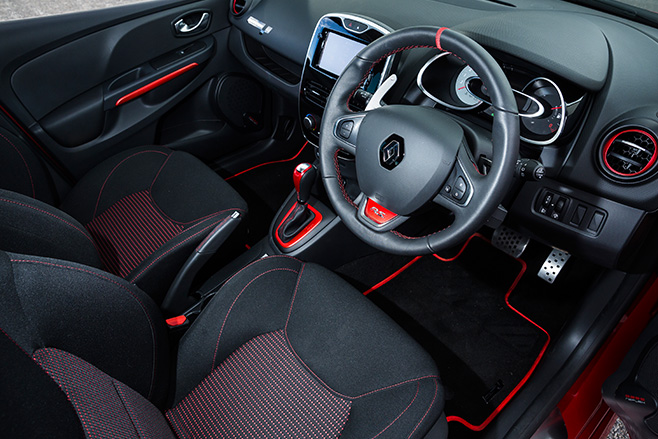
The button-heavy centre stack’s controls are confusing, its aft-placed seatbelts are awkward to grab, and it ain’t as cheerful as the others, but the standard Recaros are the nicest seats of the bunch. Since September 2016 there’s a rear-view camera and sat-nav thrown in too, which has slapped another $1500 on its price tag but the car is better for it.
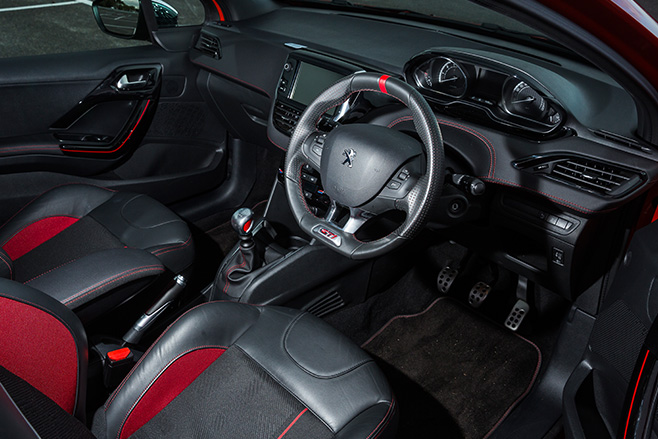
With a leather padded dash and contrast red stitching, the Pug’s the most expensive here but its interior is the most luxurious. Crucially, it’s let down by that ‘head up’ driving position, which puts the steering wheel in the way of reading the top-mounted dials. Alloy gearknob and pedals win back points.
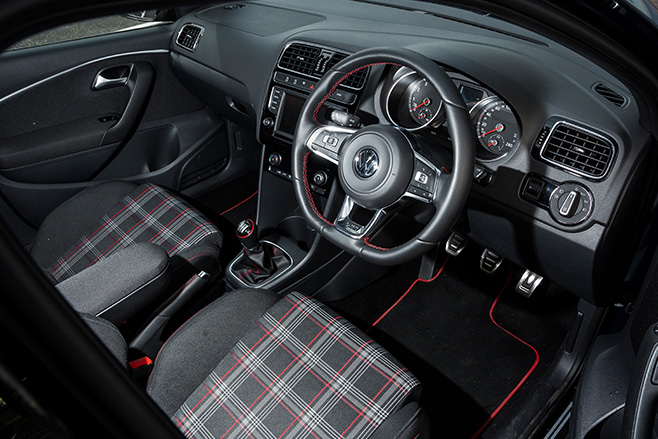
Typically Germanic, the Polo’s interior is the easiest to use and feels solidly built. It’s the only car with two-mode dampers, activated via a ‘Sport’ button, and the steering wheel is top notch. However, the tartan-style seats are predictable and some might find its decor a little boring overall.
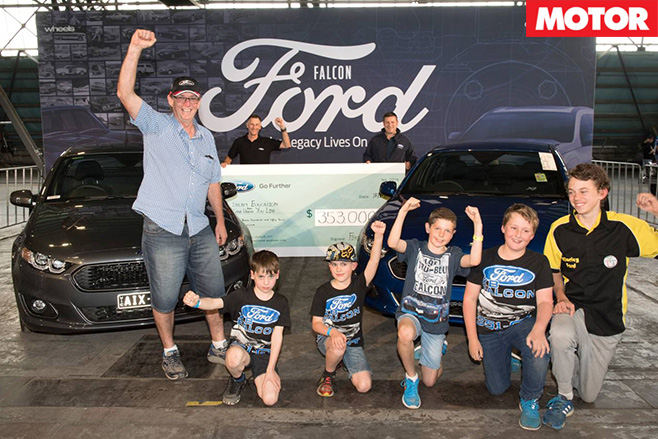
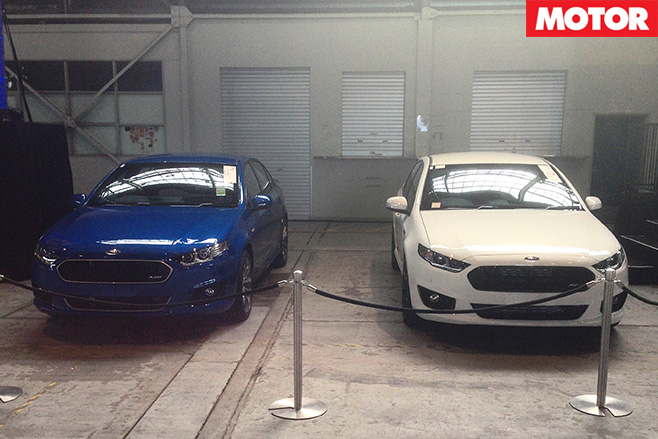
Going, going and … and sold for $353,000! Ford has auctioned its final four registerable Falcons and a Territory as part of its final curtain call to Australian manufacturing.
While the last-ever models to roll off the Broadmeadows production line lack a compliance plate and will retained by Ford Australia as part of its heritage collection, the final registerable XR6 Turbo ute, Territory Titanium, XR6 Sprint and XR6 were – in that order – auctioned off at an event held at Avalon airport on Saturday.
Ford Australia president and CEO Graeme Wickman attended the event, which doubled as a Ford Fan Day at the airport south of Melbourne, with each Falcon and Territory up for auction scoring a signed certificate of authenticity and unique final build plaque.
Clearly buyers felt less attached to Australia’s only locally built SUV, with a flagship silver coloured Territory Titanium TDCi netting $68,500 – a relatively small $11,500 increase on its recommended retail price.
By contrast it didn’t take long for the final Falcon XR6 Sprint, a winter white example with build number 500 of 500, to sprint towards doubling that SUV’s final sticker. It quickly headed towards six-figures before more than doubling its $54,990 retail price, netting $122,000 from John Bradbury of the Sunbury Ford dealership, who also purchased the ute.
Ford Australia raised a combined for $353,000 donated to a duo of foundations.
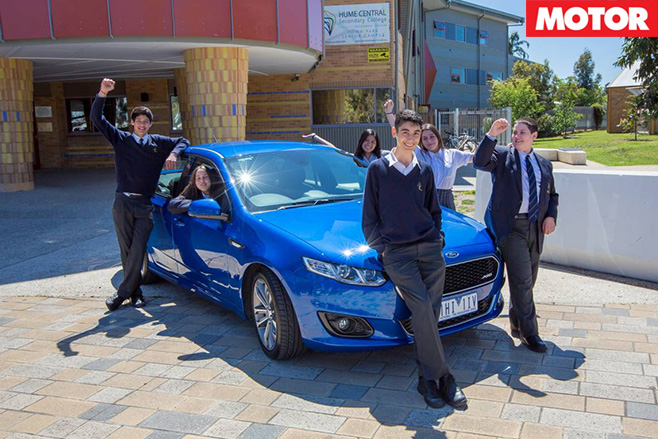
The remaining funds from the Falcon XR6 Sprint sale, meanwhile, goes to Geelong charity Give Where You Live.
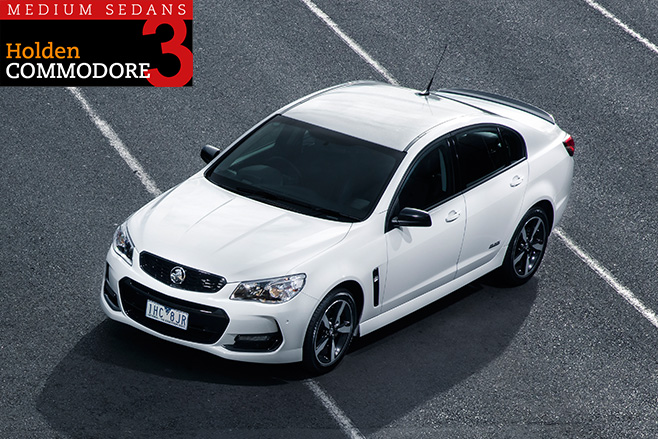
Wheels pitches 10 of the biggest sellers in the medium-to-large car segment to see which is the best of the current crop. Here’s number 3, the Holden Commodore.
Can’t wait to see the final score? Jump to the verdict now.
THERE’S plenty of myth surrounding Holden’s defiantly relevant and ever-popular Commodore. While it might look like a dinosaur on paper, championing rear-drive and a large-capacity, naturally aspirated six like its ancestors have done for decades, the reality remains rooted in the present.
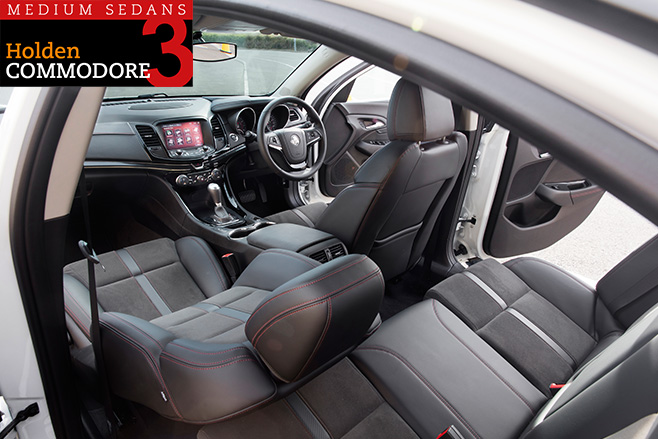
Make no mistake, as far as family sedans go, the VFII Commodore is at the pointy end for space and comfort. It’s the only car here than can easily seat three across its deep, beautifully trimmed rear bench and cedes chauffeuring honours to the Skoda Superb mainly due to the Czech sedan’s enormous legroom.
Things are pretty impressive up front, though, with deeply supportive yet broad buckets, plenty of adjustment range (for the driver, at least) and a nicely kitted cabin for its $40K ask. The SV6 Black’s charcoal dash trimming modernises Commodore’s three-year-old interior, and we have no qualms about its chunky steering wheel and neat switchgear. Only the thickness of the A-pillars and the SV6’s low-grade instrument-pack screen graphics lower the tone a touch.
Where the atmo Holden concedes ground is in everyday driving. It can’t quite match the effortless low to mid-range punch of the gruntier turbos, and its 11.4L/100km test average is the group’s thirstiest. Still, for the largest and heaviest car here to be within half a litre of the Sonata, Optima and Mondeo says volumes about the Holden V6’s competence.
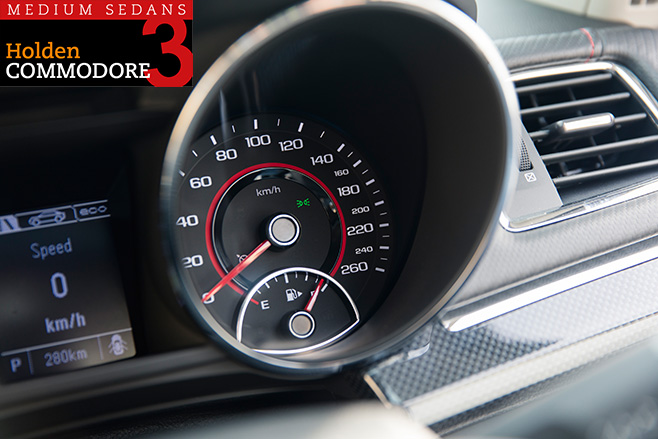
With less weight over its nose than a V8 SS, the SV6 displays superbly accurate yet progressive turn-in and a light-footed agility that belies its size and wheelbase. With great power-down and ample grunt, it proves you don’t need a V8 to have fun in a Commodore, though it lacks shift paddles and its ride is arguably too firm.
If we were buying a VFII Commodore for $40K, we’d stick with the supple Calais and trade the SV6’s firmness for a sweeter package. Either way, the rear-drive Holden is withstanding the test of time incredibly well. Strong, spacious, well-equipped and suited to the demands of Aussie roads and families, it’s a proven formula that deservedly keeps on giving.
Back in Black
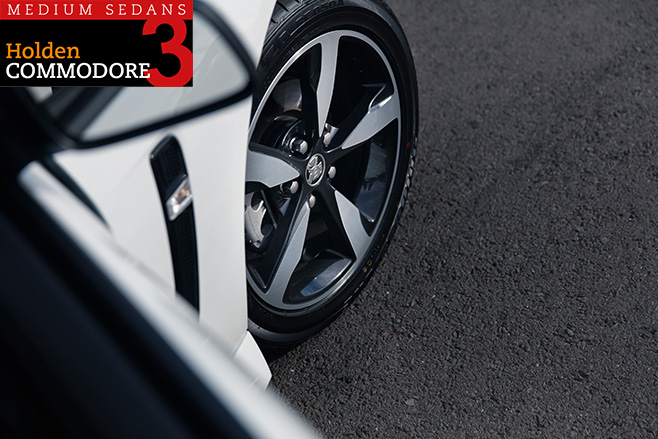
We asked for a base Calais but ended up with a limited-edition Holden Commodore SV6 Black because apparently our favourite non-Redline VFII is a bit of an orphan. Had the plush-riding Calais been on the grid, it would’ve likely rated 8.0 stars. But there’s no denying the value of the SV6 Black sedan (currently $38,990 driveaway). A head-up display, sat-nav, black-out grille, trim detailing and mirrors, black lip spoiler, bespoke 18s, red seat stitching, ‘Black Edition’ floor mats and badging are all part of the deal. And 20-inch ‘Baretta’ black alloys are a $1000 option.
Want to compare the field? Check out all the Family sedan finalists.
 SPECS
SPECS
Price: $40,490
Engine: 3564cc V6 (60˚), dohc, 24v
Power: 210kW @ 6700rpm
Torque: 350Nm @ 2800rpm
Transmission: 6-speed automatic
Dimensions (L/W/H/W-B): 4966/1898/1471/2915mm
Weight:1685kg
Cargo capacity: 495 litres
Tyres: Bridgestone Potenza RE050A 245/45R18 100V
Test fuel cons: 11.4L/100km
0-100km/h: 6.6sec
0-400m: 14.7sec @ 156.7km/h
80-120km/h: 4.2sec
3yr resale: 42%
Plus: Excellent seats; strong performance; handling
Minus: Knobbly ride; thrashy V6; relative thirst
Verdict: 7.5/10

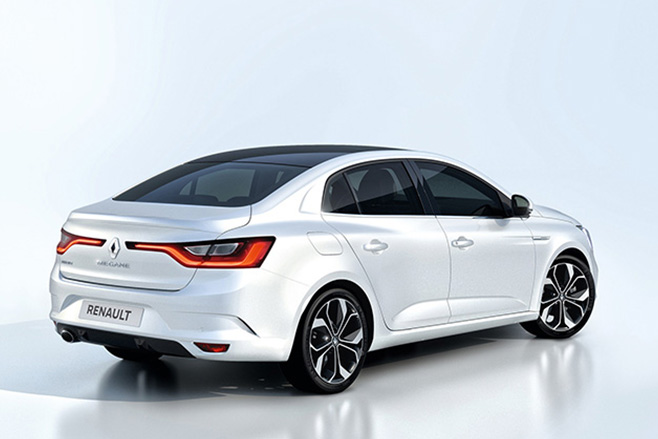
Renault Australia will bulk up its Renault Megane small car range in the first half of next year, with both sedan and wagon bodystyles set to join the just-launched Megane five-door hatch.
For the time being a three-door coupe will continue to be available for the Renault Megane RS hot hatch, however supply is evaporating as Renault gears up to launch its next-generation replacement – which will be based on the five-door hatch bodystyle.
And while a wagon variant was offered in Australia in the previous-generation Megane range, a sedan hasn’t been sold Down Under since 2010. The forgettable Fluence sedan filled that role instead, until it was dumped from the range in 2015.
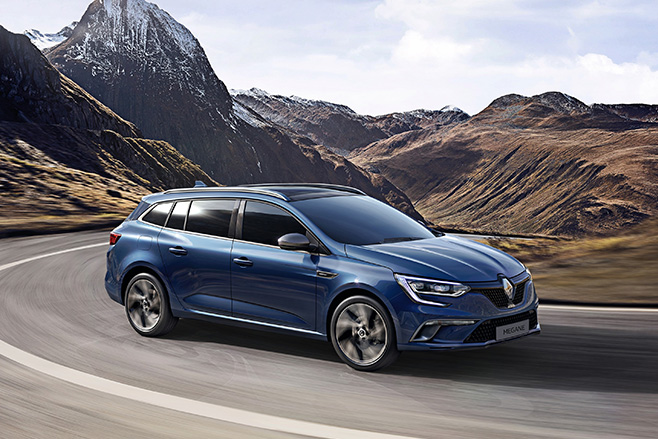
2017 will be the first year where Renault Australia will offer all three bodystyles at the same time.
“We plan to add a wagon and a sedan soon, both of which have previously provided us good opportunities in this market,” said v boss Justin Hocevar.
“It will be the first half of next year for both [sedan and wagon]. We’ll feature all three variants under the Megane nameplate.”
However, don’t expect the Megane hatch lineup to be mirrored exactly in the Megane sedan and Megane wagon.
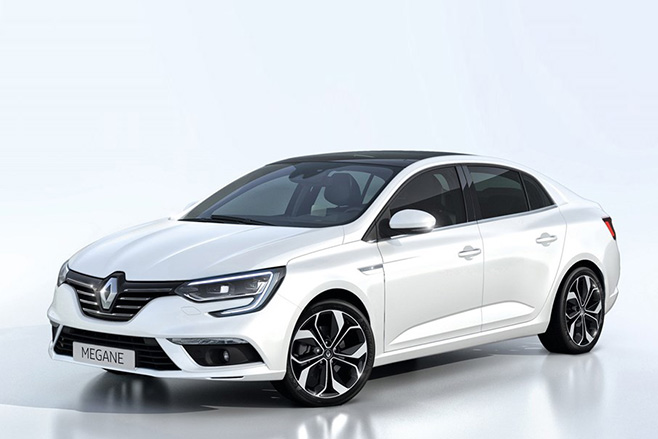
WhichCar understands that a GT-spec Megane sedan is unlikely, with the four-door instead expected to be powered exclusively by the 97kW/205Nm 1.2-litre turbo engine that is the mainstay of the Megane hatchback range.
The more powerful 151kW/280Nm 1.6-litre turbo inline-four of the Megane GT hatch may, however, find its way into the wagon. Renault offers a Megane GT wagon in France and the UK, with that model receiving the same engine and rear-wheel-steering of its five-door hatch equivalent.
Besides being longer and heavier than the hatch, the Megane GT wagon shares most of its specifications with the GT hatchback – though its extra heft sees it hit 100km/h three-tenths of a second slower, at 7.4 seconds on the 0-100km/h sprint.
With the $38,490 Megane GT hatch expected to account for at least 30 percent of local sales, a long-booted equivalent is likely.
What’s less likely is a diesel model.
“Diesel is available to us, we’re still considering it [for Megane],” said Hocevar.
“But at this point in time there’s not a high uptake of diesel in this segment, and we have some very efficient engines already and there’s not a huge difference in the price of petrol versus diesel either.”
The Megane hatchback is currently on sale in Australia, with pricing ranging from $22,490 for the base Megane Life manual, stretching to $38,490 for the Megane GT auto.
For full specifications and pricing, read our Renault Megane hatch summary.
Minis: All about sharp steering and firm suspension, right?
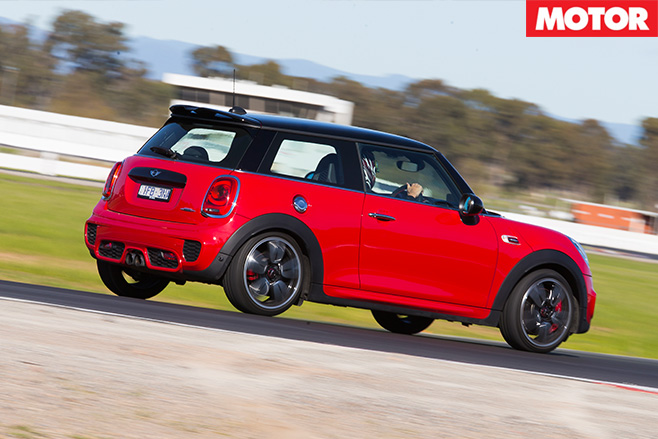
So, in theory, they should perform well at a track. But when the rubber hits the road, the Cooper JCW just seemed a bit disappointing. The hottest variant of the latest Mini should have more track-smarts, especially for the money – that’s pretty much the long and short of it.
Despite being the most powerful production Mini ever, the Cooper didn’t really make much of an impression at the dragstrip. With 0-100km/h in 6.56sec and a 14.46sec quarter mile, it’s not what you’d call slow by any means, but it didn’t dish up the sorts of times we’d expect from a 1200kg car with 170kW/320Nm.
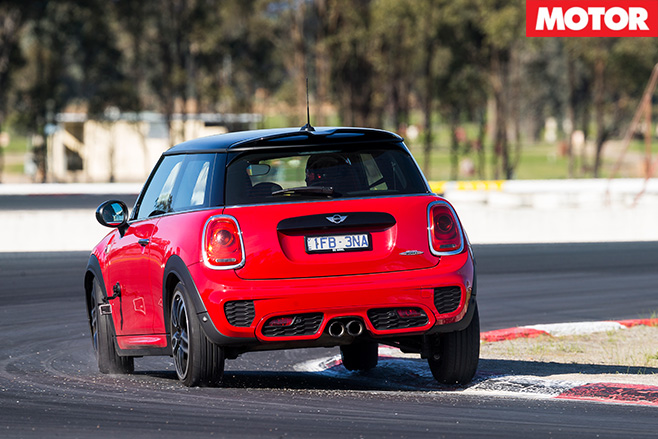
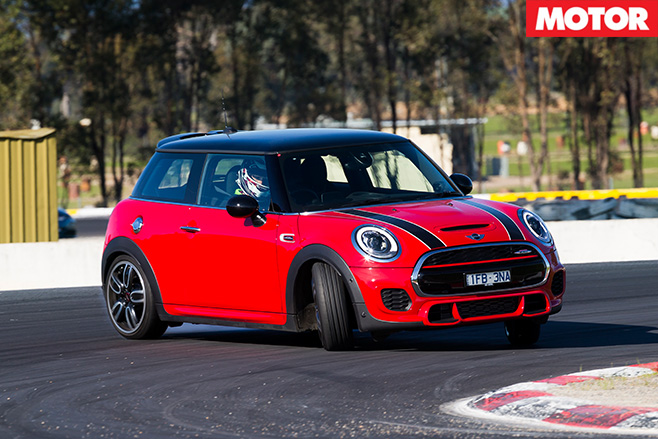
First impressions, however, are better than that, and your first few metres in the JCW reveal a sharp, pointy front end and a feeling of being a pretty precise instrument. Unfortunately, that all goes to hell as you pick up the pace. While the Cooper is taut and responsive up to about eight-tenths, beyond that it all starts to get a bit sketchy.
The first thing you notice is that the car stops talking to you and all that sharpness you previously felt gets lost somewhere with the increased pace. From there, it doesn’t improve and by nine-tenths the Mini reveals itself to be a natural understeerer. At a place like Winton, even with the JCW’s excellent brakes, there’s just no coming back from that.
That jukebox interior doesn’t work for many of us and the seats (the passenger one had started to come apart at the seams – literally) lacked any meaningful support. Once you tipped the car in, you then had to concentrate on holding yourself in place rather than figuring out the car’s next move.
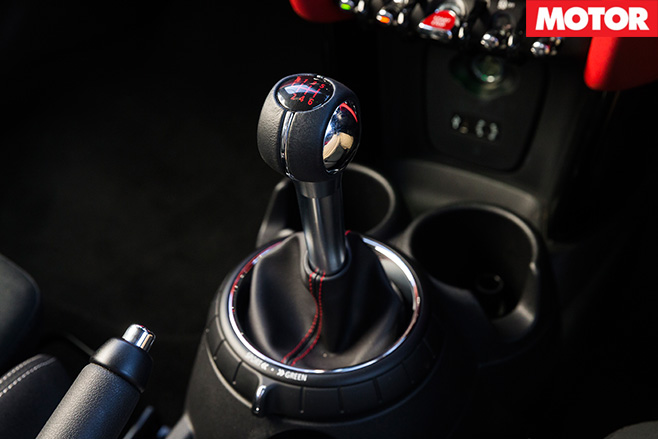
But let’s not be too hard, the Cooper has a great engine note; it’s rorty and fat, the gearshift is slick and, if you drive the Mini at road speeds, it stacks up better with a fast steering rack and a tight, responsive feel. Like we said, all good until about eight-tenths. But BFYB isn’t about eight-tenths. Never has been.
JUDGES’ COMMENTS 03. David Morley “Am I the only one who liked this car? Maybe, but I did.”
09. Dylan Campbell “MINI engineers would do well to drive the old JCW and GP again.”
09. Louis Cordony “Darty chassis led astray by iffy steering.”
09. Scott Newman “So disappointing. Strong engine, but chassis feels unresolved.”
SCORES Price: $47,400 Bang Index: 85.1 Bucks Index: 82.7 BFYB Index: 126.0
WARREN LUFF SAYS 09. “A good car, but it doesn’t do anything that really inspires”“It’s sure-footed, but there’s nothing that gives you the excitement and feel some of the other smaller hot hatches give you.
“It really has the characteristics and feel of a much bigger car; it’s a very easy car to drive on the limit, but it’s like they dulled it down too much and have taken away a little too much of that character. “Because of the dullness in the chassis you try to use the back of the car in the tighter corners, but the mid-corner understeer is that little bit stronger.”
Want more? Check out the rest of 2016 Bang For Your Bucks.
The Frenchman is supreme on gravel, ice, snow and asphalt.
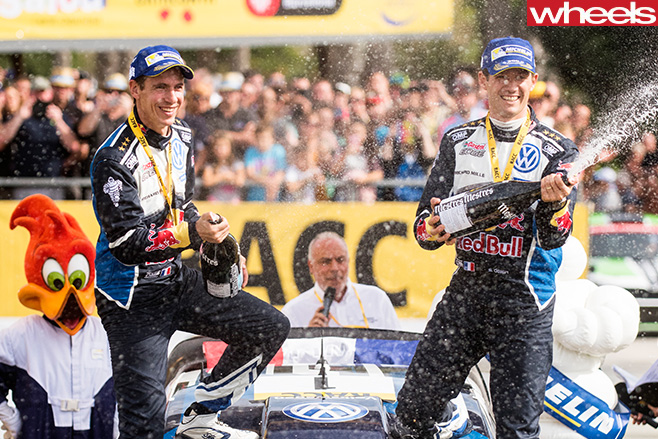
After local star Dani Sordi led the opening day for Hyundai, Volkswagen’s Sebastien Ogier powered home strongly to win the Rally de España, also securing his fourth consecutive world rally title.
Ogier will start the next round in Great Britain and the season-ending Kennards Hire Rally Australia next month having clinched the title again . He has shown his dominance on every surface.
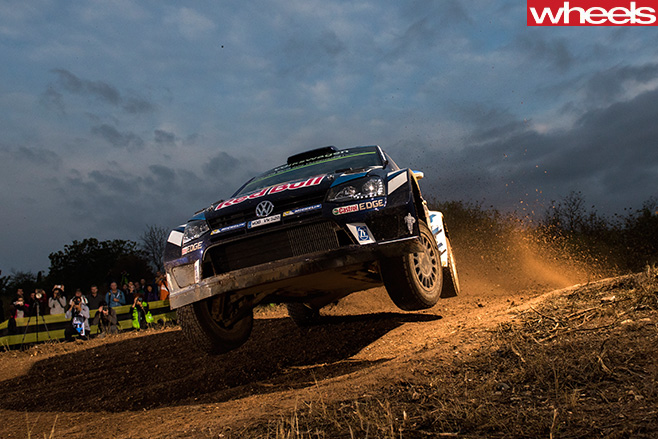
After a day of competition in the slop, mechanics had to on convert the cars from a gravel to an asphalt set-up in just 75 minutes. In the case of VW, they had to replace roughly 1400 individual parts in 13 modules per each Polo R WRC car.
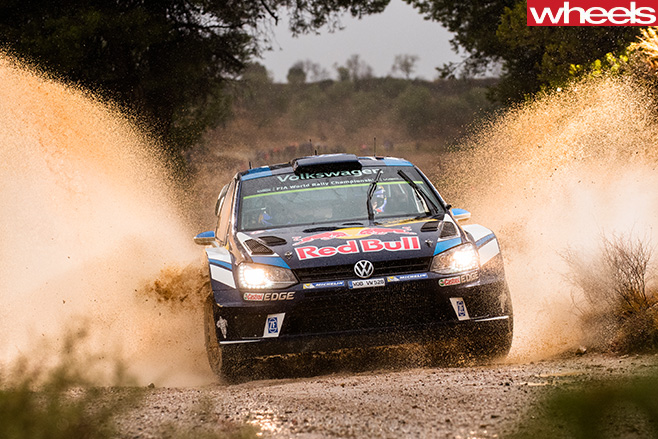
Andreas Mikkelsen, second in the series, crashed on Saturday to leave Ogier with one hand on the crown. The Frenchman wrapped it up with a strong run on Sunday, edging away to a 15.6sec advantage over Sordo. Thierry Neuville of Belgium, also driving a Hyundai, claimed the final podium place, a further 59.4sec behind.
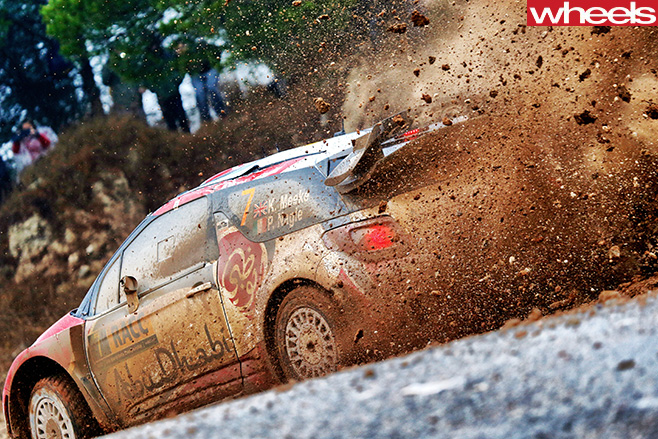
Ogier is only the third driver, alongside Finnish legends Juha Kankkunen and Tommi Mäkinen, to win four championships since the competition started in 1977.
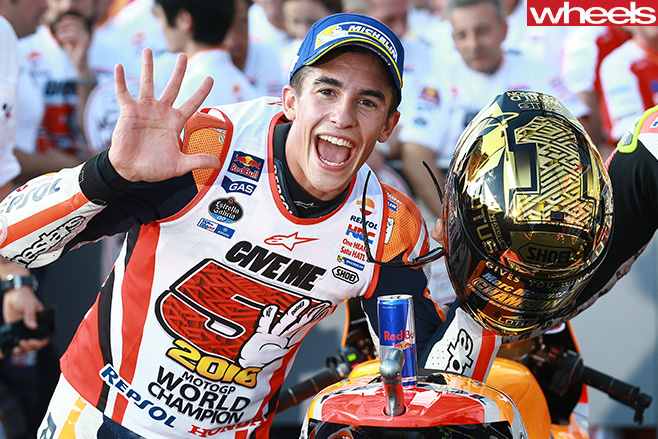
Marc Marquez wins race and 2016 championship in Japan
Youngest rider to win three premier class titles
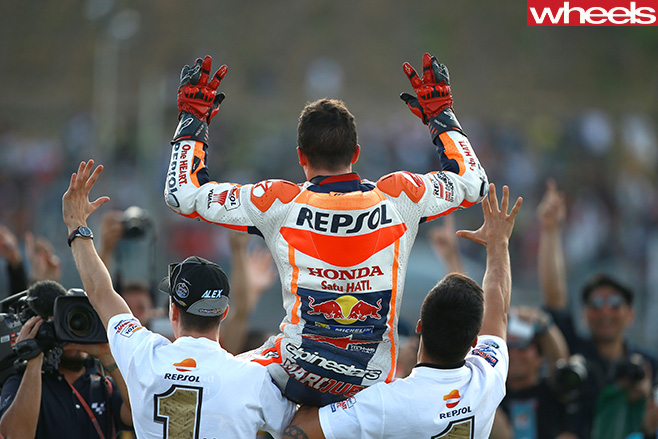
The Spanish rider took the lead on the fourth lap, and though challenged at different times was never headed.
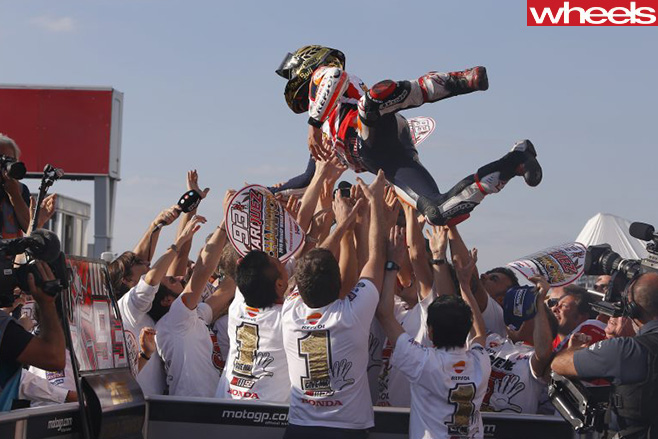
Ducati’s Andrea Dovizioso finished second and Maverick Vinales on a factory Suzuki was third.
Lorenzo had a good start to the 24-lap race when he launched from third on the grid to arrive at the first corner in second place, passing Rossi. Immediately he also overtook Marquez in turn two, to take over the lead.
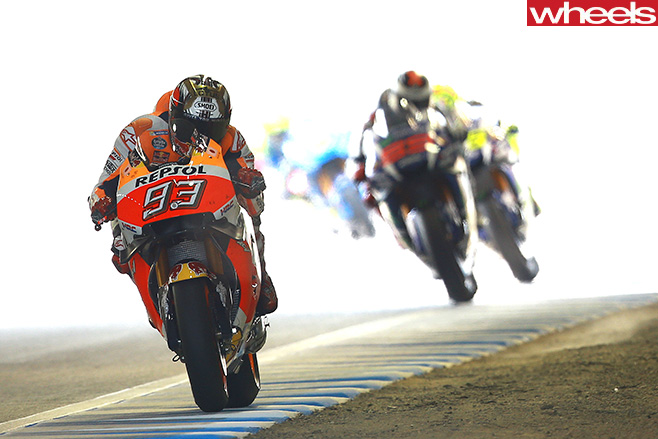
At 23-years old, Marquez is now the youngest ever to win three premier-class world titles and five world crowns across all classes during a period of only nine years at the world championship level.
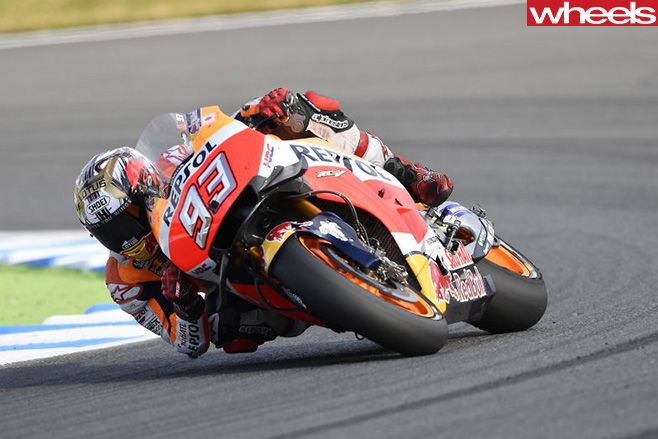
So far this season, Marquez has had more wins than any other rider in the MotoGP class (five), most podiums (11) and most pole positions.
Toyota takes a WEC thriller at in 6 Hours of Fuji
Audi led for much of the enduro but Toyota gamble pays off
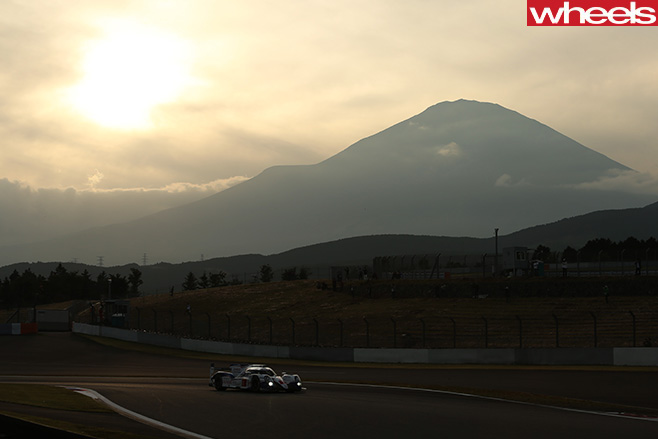
Audi led for much of the race but in a thriller that came down to a tight three-way fight in the last hour, Toyota opted to not take new rubber, instead gambling on gaining track position and eventually taking a memorable win by just 1.439s
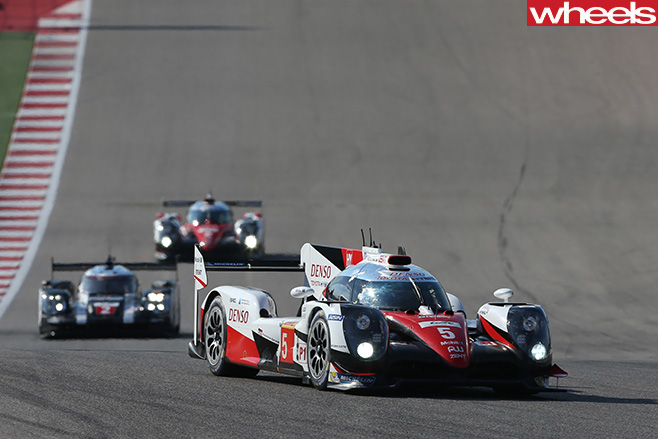
In the #1 Porsche 919 he shares with Timo Bernhard and Brendon Hartley, Australia’s Mark Webber took third position after being in contention throughout the race.
Volvo’s stylish flagship sedan is showcases the company’s finest design and engineering, and a few lesser known achievements.
1. The S90 will spawn a wagon version in 2017. To be called V90 there will also be a Volvo V90 Cross Country, which has a higher ride height for light-duty off-roading.
2. The S90 model range includes the D4, T5, D5, T6 and T8. “D” prefixes denote a diesel engine and “T” prefixes a petrol engine. The higher the number the more power the engine has and, generally, the more expensive it is.
3. Every S90 is powered by a 2.0-litre four-cylinder turbocharged engine. However, there will be at least five versions of that same engine. The D4 is a turbo diesel with 140kW of power and 400Nm of torque. The T5 is a turbo petrol engine with 187kW and 350Nm. The D5 is a turbo diesel with the PowerPulse lag reduction system (see below) and makes 173kW/480Nm. The T6 gets a supercharger and turbocharger to make 235kW/400Nm. The T8 will be the performance flagship, teaming an electric motor and battery pack with the supercharged and turbocharged engine of the T6; in total it makes 300kW and 640Nm.
4. The S90 D5 is the first Volvo to feature a system called PowerPulse. Under the bonnet it includes an air compressor and a two-litre air tank to store compressed air. When you accelerate or reapply the throttle it sends some of that compressed air into the exhaust manifold to spin the turbo. That has the effect of reducing turbo lag, which is the time taken for a turbo to reach its optimum operating speed.
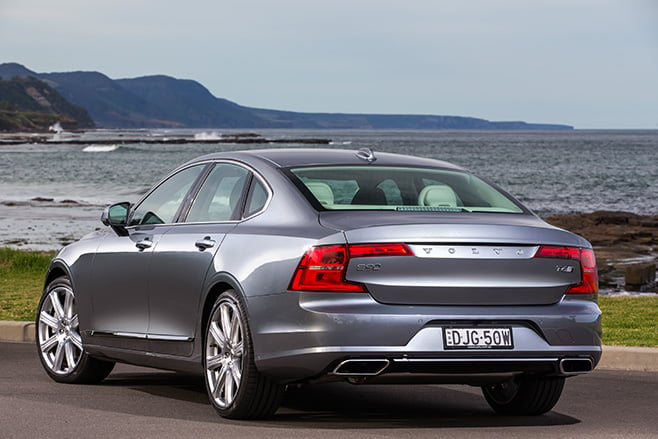
5. Polestar is Volvo’s performance sub-brand and is also involved in developing race cars for the Swedish brand around the world. Polestar offers various performance enhancements to a number of models across the Volvo range. In the S90 range the D5 has a Polestar pack that alters the engine and transmission tuning for better performance. It increases the peak power and torque outputs from 173kW/480Nm to 177kW/500Nm. The claimed 0-100km/h acceleration time is reduced from 7.0 seconds to 6.9 seconds.
6. Pilot Assist is the name given to Volvo’s semi-autonomous driving technology. As well as active cruise control features, which provide steering assistance.
7. The concave chrome grille on the S90 was inspired by that of the classic P1800 from the 1960s. It features 23 vertical ribs, something designers say give it a “proud attitude”.
8. The S90 evolves Volvo’s active safety technology to include “large animal detection”. Large animals are defined as things such as deer, horses and cows, the latter more relevant for Australian drivers. The system now works up to 130km/h, covering most scenarios locally.
9. Apple CarPlay connectivity is part of a Technology Pack option that costs $3000. It also includes digital radio tuning and a head-up display. Android Auto will soon be added to the features, too.
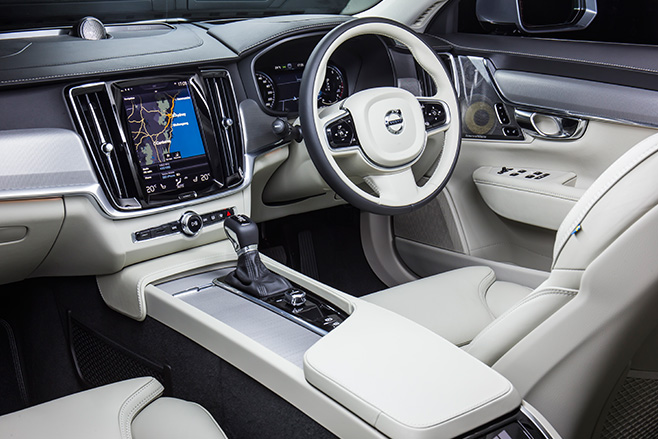
10. The Volvo S90 has an optional Bowers & Wilkins sound system that has 1400 Watts of power pumping through 18 speakers. Many of the speakers, including those in the doors, have metal grilles that allow you to see the Kevlar speakers behind them.
11. The S90 picks up the distinctive “Thor’s hammer” headlights, named after the weapon of choice used by the mythical Scandinavian god.
12. Volvo distinguishes the S90’s various trim treatments and equipment levels with three names; Momentum, Inscription and R-Design. The R-Design models, which look sportier courtesy of a blacked out grille and large, distinctive alloy wheels, arrive in Australia in 2017.
13. The main infotainment screen in the S90 is 9.0 inches across the diagonal. However, unlike most touchscreens used in cars the Volvo one sits horizontally. It is operated using similar principals to many smart phones and tablets, with pinching and swiping to navigate menus and zoom on maps.
14. Instead of traditional instruments the driver looks at a 12.3-inch customisable display. The speedo and tachometer – as well as the various colours – can be tailored depending on what drive mode has been selected.
Wheels pitches 10 of the biggest sellers in the medium-to-large car segment to see which is the best of the current crop. Here’s number 4, the Skoda Superb.
Can’t wait to see the final score? Jump to the verdict now.
THE Skoda Superb might just be the ultimate hipster machine; the not-quite-cool car you don’t even know about yet. And this, from craft beer to bands, is the quality that makes it perfect for the modern man who wants to stay true to his trend-setting roots.
Ironically, like Holden’s Commodore, it’s also slightly out of place in a Megatest of mid-size cars because, while the platform and pricetag fit the bill, the Superb is large. If you value space to stretch in the back seat, only the Kia Optima and Hyundai Sonata come close, but even they can’t match the Superb’s Statesman-like rear accommodation.
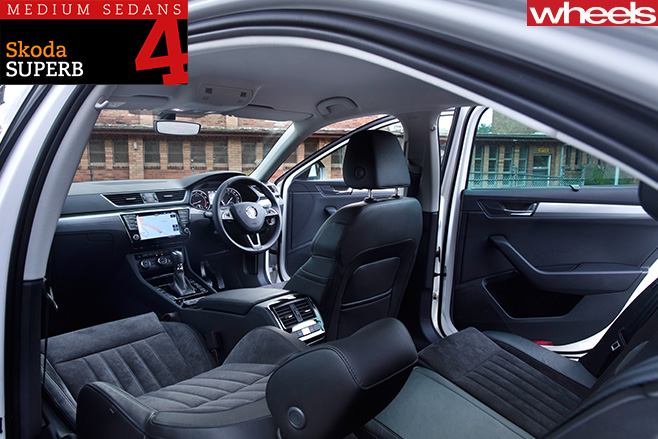
The rear seat cushion and backrest offer long-haul comfort with excellent lateral support, plus generous headroom. And back-benchers want for nought because they get their own air-con vents with temperature control, a 12-volt outlet, a big ashtray/bin, carpeted door pockets, a centre armrest with twin cupholders, twin map pockets, mesh side-window blinds, even angled footrest mats.
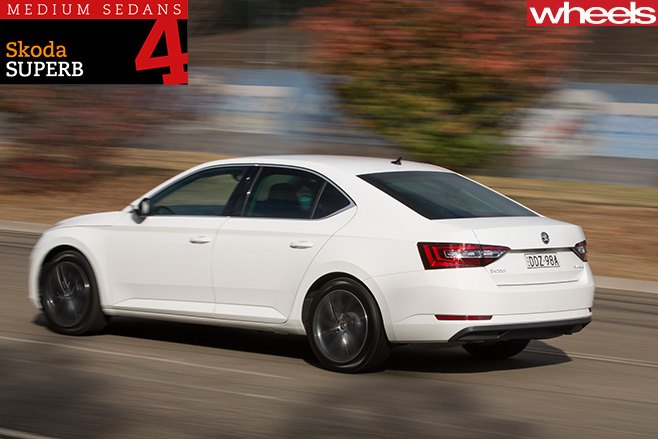
With a 0-100km/h time of 6.6sec, not only is the Skoda deep in hot-hatch territory, it’s quicker than everything else here. The Holden Commodore matches it on power-to-weight, but the Superb is a tenth quicker from 80-120km/h and has it all over the Holden in terms of refinement, low-speed effortlessness and rorty energy. It’s also 30 percent thriftier than the Holden and a virtual match for the miserly Passat, which certainly earns it a gold in the engine compartment.
On smooth urban roads the Superb is typical MQB Volkswagen fare, scaled up. Benign initial steering responses segue into a pointier sense of connection the further the wheel is twirled into its lock, while soft suspension delivers a town-car approximation of a Golf, with most of the balance but little of the cohesion or involvement.
Where the softness really undermines the Superb’s poise and comfort is on country roads. Underdone – yet also underdamped – spring rates result in a catalogue of problems, from axle tramp during hard take-offs (and it was still quickest on the strip!) to mild float on undulating roads and wallowing, pogo-like handling through really bumpy corners.
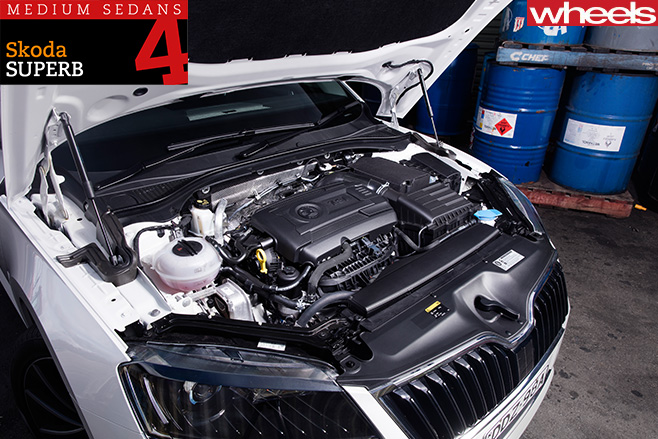
More Superb
Making a Superb, well, more so might involve a ticking of the Tech Pack option, which brings adaptive dampers and an improvement to wheel and body control (as well as premium audio and extra safety). Alternatively, you could shop up-spec, skipping the turbo-diesel mid-ranger in favour of the 206TSI 4×4 wagon ($52,690), which gives you Golf R outputs in a massively practical all-wheel-drive package. Given the standard Superb’s pointy baseline pricetag, neither will induce financial ruin, and the latter path might just deliver a budget Audi S4 Avant.
Want to compare the field? Check out all the Family sedan finalists.
 SPECS
SPECS
Price: $39,990
Engine: 1984cc 4cyl, dohc, 16v, turbo
Power: 162kW @ 6200rpm
Torque: 350Nm @ 1500-4400rpm
Transmission: 6-speed dual-clutch
Dimensions (L/W/H/W-B): 4861/1864/1483/2841mm
Weight:1463kg
Cargo capacity: 625 litres
Tyres: Pirelli Cinturato P7 235/45R18 94W
Test fuel cons: 8.0L/100km
0-100km/h: 6.6sec
0-400m: 14.7sec @ 157.8km/h
80-120km/h: 4.1sec
3yr resale: 39%
Plus: Value; grunt with efficiency; styling; space
Minus: Uncontrolled ride; lack of traction; stingy front seats
Verdict: 7.0/10
Argentina meets Italy meets America. What could possibly go wrong?
AMONG the storied stable of Italian thoroughbred supercars – Ferrari, Lamborghini, Maserati et al – it’s often forgotten that there have been as many Italian supercars with breeding somewhat less thorough.
Logic suggests that crossing Italian style and motor racing experience with an affordable, under-stressed American V8 engine should produce an affordable, high-performance workhorse. Or, perhaps, a crude, compromised and badly built bastard. One could say either about the cars of Alejandro de Tomaso.
Born in 1928 in Buenos Aires, Argentina, de Tomaso’s family wealth enabled him to buy a Bugatti Type 35 at just 17. Racing success encouraged him to move to Italy to join the OSCA factory in Modena. In another astute move, he married American heiress and racer Elizabeth ‘Isabella’ Haskell, whose family controlled Rowan Controller Company, a vast US auto industry supplier.
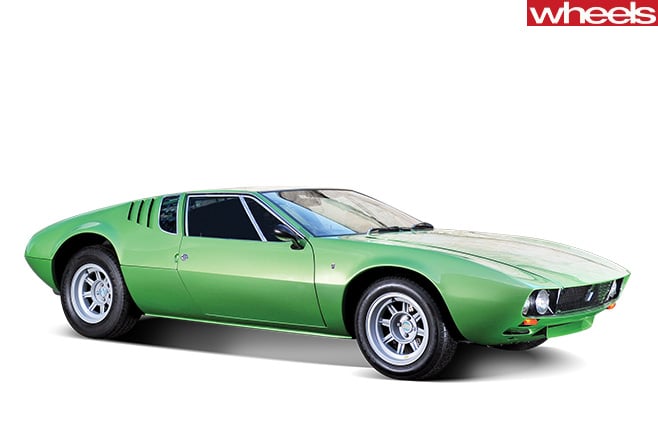
Carroll Shelby engaged de Tomaso to develop the chassis for a V8-engined sports-racing car to replace the Cobra, powered by Shelby’s HiPo 289 V8 that later appeared in the Ford Mustang GT350, with bodywork by Shelby employee Pete Brock (no relation). But Shelby, distracted by the Ford GT40 program, ditched his plans to build 50 examples.
De Tomaso took the prototype (dubbed De Tomaso 70P) to Ghia with a proposal to turn it into a concept road car. Ghia had just the thing in the form of a muscular coupe design by new recruit Giugiaro. The resulting Ghia-badged Mangusta with distinctive gullwing engine covers was shown at the Turin motor show in 1966, with an equally handsome Spyder concept appearing later.
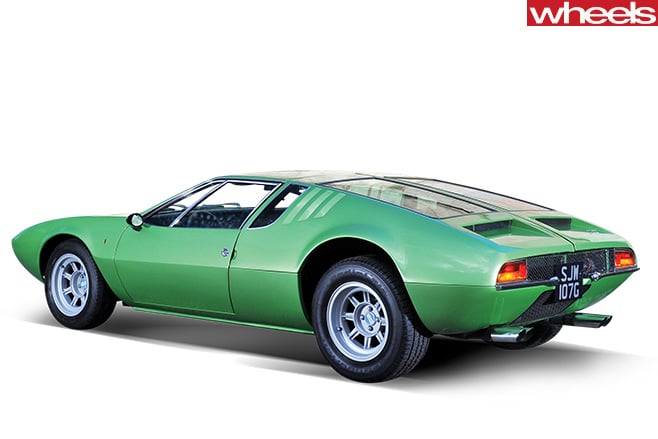
A marketing push in the US secured about 300 orders for the Mangusta. It listed at $US11,500, when a Ferrari Daytona GTB/4 cost $19,500 (and a Corvette just $5600). Production began at Ghia in 1967, with US versions being fitted with a lazier Ford 302 V8.
Early criticism of the car’s handling prompted freelance chassis engineer Gian Paolo Dallara (creator of the Lamborghini Miura) to tweak track and tyre widths, but the car suffered fundamental chassis flexing. The problem lay in the central backbone, not in the innovative use of the engine as a stressed member.
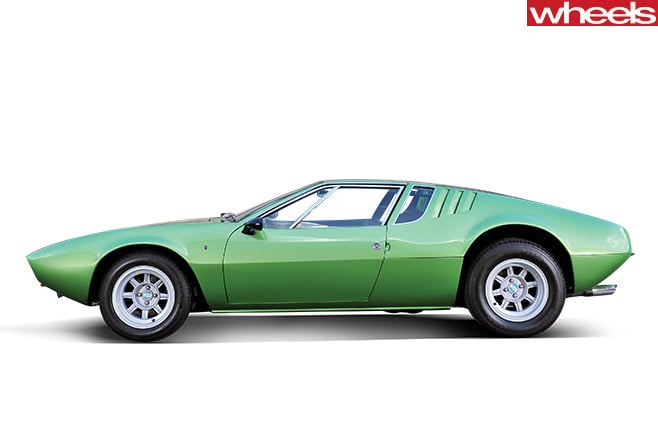
During this era of frenetic trans-Atlantic bed-hopping, the Mangusta succeeded in getting the attention of Ford, which hatched plans for a new Italo-American cross-breed, the Pantera.
The Cleveland show
EUROPEAN cars bore Shelby’s 4.7-litre High Performance V8, making 228kW at 6200rpm and 405Nm at 4800rpm. Cars bound for the US instead copped a detoxed 4.9-litre Cleveland V8, developing 165kW and driving through a five-speed ZF transaxle shared with the GT40. Euro cars did 0-100km/h in low-sixes and 400m in 15 seconds; Yank cars were almost a second slower to 100km/h.
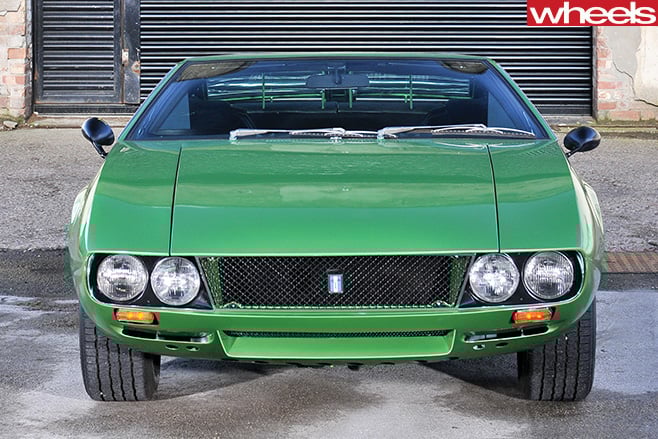
THE Mangusta’s pressed-steel backbone chassis branched into a Y-section that innovatively employed the engine as a stressed member. Steel tube sub-structures comprised the front and rear wishbone suspensions, with coil springs. A rear-heavy (68 percent) bias and bendy backbone gave the 1185kg (in US-spec) Mangusta notoriously hairy handling.
What a cockpit
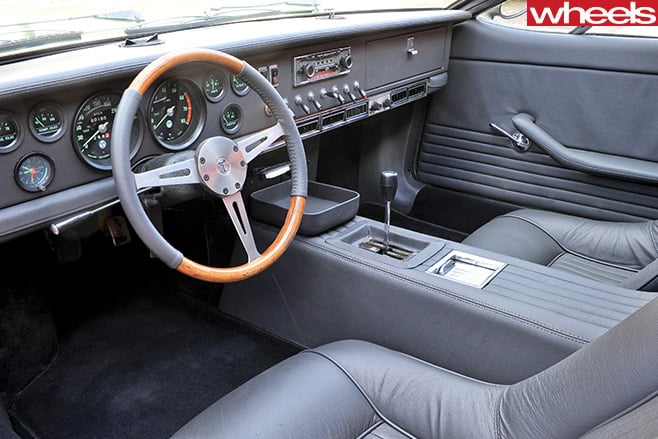
INCREDIBLY low-slung interior wasn’t known for abundant space, nor imaginative cockpit design, but it certainly delivered an authentic Italian supercar experience at an affordable price. Signature gullwing engine covers actually enhanced rear vision, compared with the conceptually similar (and only three inches lower) Ford GT40, and housed luggage compartments alongside the engine and full-sized spare wheel behind it.
1. Maser messiah
Alejandro de Tomaso owned Maserati from 1976-93 and revived the near-dead marque with the cost-efficient but cantankerous Biturbo model family
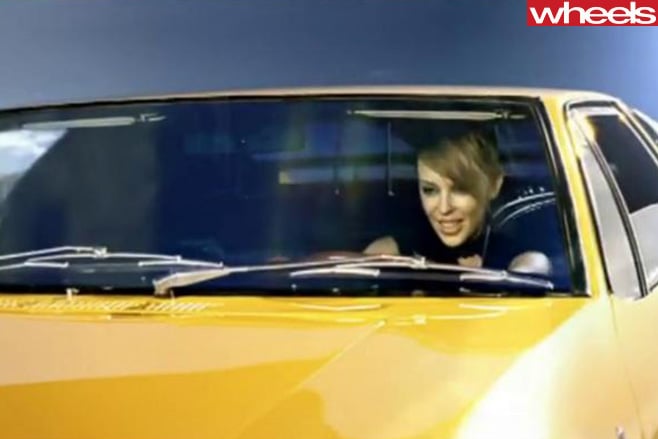
2. Kylie’s car
A Mangusta appeared in the original Gone in 60 Seconds (1974) and stars in Kylie Minogue’s Can’t Get You Out Of My Head video
An early product of Alejandro de Tomaso’s family-promoted appointment to Ghia was the 1967 Ghia Rowan, an electric city car concept
4. Eight is great
Setting aside scary handling, cramped cockpit, lousy build quality and rust, Mangusta beats Italian V12s hands-down on servicing costs
5. Cobra curse
Mangusta is Italian for mongoose, an animal that notably kills cobras; de Tomaso chose it to wind-up friend and rival Carroll Shelby
