INFINITI boss Roland Krueger says the company’s new variable compression ratio engine is a revolutionary leap forward similar to turbocharging and fuel injection for the internal combustion engine.
He said the VC-T engine, which will be shown at the Paris Auto Show in September in 2.0-litre, turbocharged four cylinder form ahead of a production debut in the 2018 QX50 mid-size SUV, will be the first of many such engines based on this new technology.
Infiniti claims the VC-T engine has 27 percent better fuel economy than conventional internal combustion engines, and delivers performance to match a 50 percent bigger 3.0-litre V6 engine.
The first production version of this engine will have 200kW and 390Nm.
“This is just the beginning,” Krueger told Wheels during a July visit to Infiniti’s R&D headquarters. “This is [an] east-west [application], we will also announce north-south configuration.”
East-west front-engined configurations – where the cylinders are aligned transversely in the engine bay – are typically found in front-drive vehicles.
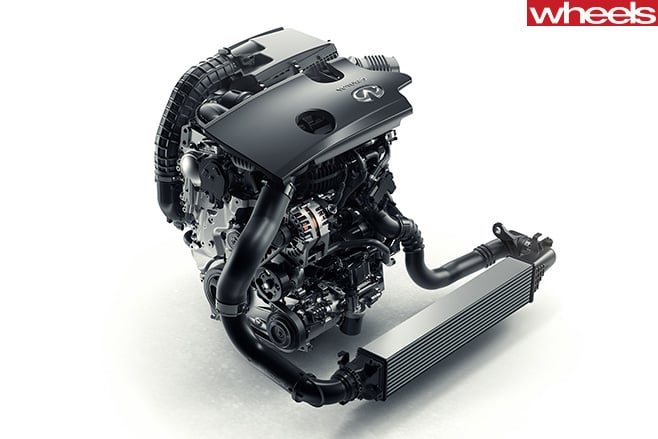
Krueger said Infiniti’s VC-T engine family would not be limited to an in-line four cylinder configuration, or 2.0-litre capacity.
“I can share with you we are working on other configurations, but we haven’t decided [which will go into production] yet.
“This engine gives us the flexibility to scale it up and down. There are other opportunities within that technology for scalability: The size of the engine, the power output, and the opportunity to achieve new levels of fuel economy and emissions.”
Krueger also confirmed the engine family’s potential for performance applications, but declined to say when or in which models.
“Do you see me smiling? That’s all I will say. I am smiling.
“We are quite confident about the next steps we are taking with the brand and with the product.”
Variable compression technology highlighted as the next big step in engine development.
NISSAN’S luxury arm Infiniti claims to have invented a revolutionary new petrol engine that consumes 27 percent less fuel yet can match the performance outputs of engines up to 50 percent larger.
Infiniti says this new Variable Compression Turbo (VC-T) engine technology is “a revolution in internal combustion engines” as significant as “liquid cooling, fuel injection and turbocharging. The arrival of variable compression ratio technology will establish new benchmarks”.
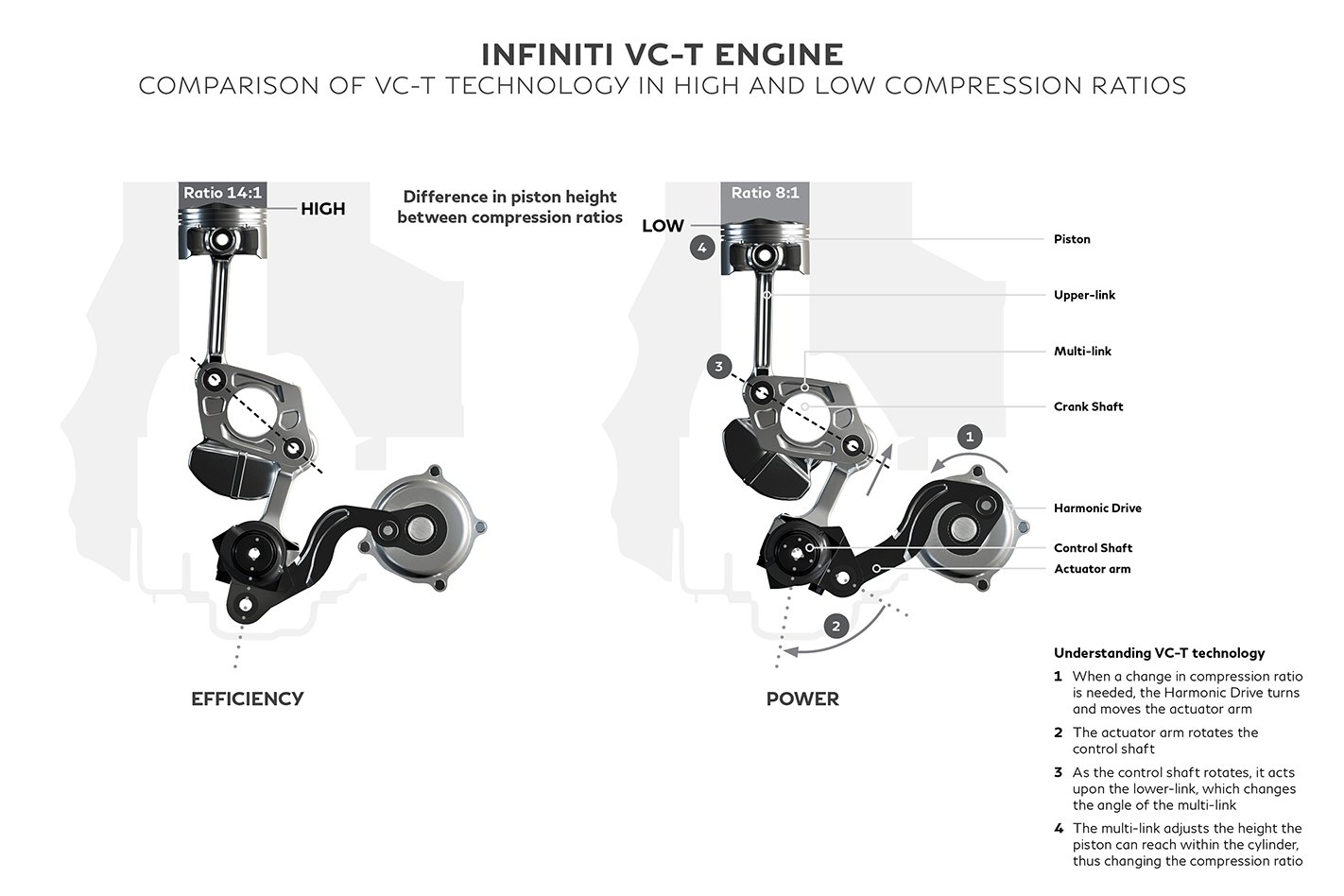
The engine’s ability to deliver significant fuel use savings and increased performance lies in its capacity to vary its compression ratio – the ratio at which fuel is mixed with air inside the cylinder.
A 2.0-litre, turbocharged four-cylinder petrol VC-T engine will be shown at the Paris Auto show in September. Infiniti claims this engine produces 200kW and 390Nm – equivalent to a conventional 3.0-litre V6, says Infiniti engineer Shinichi Kiga.
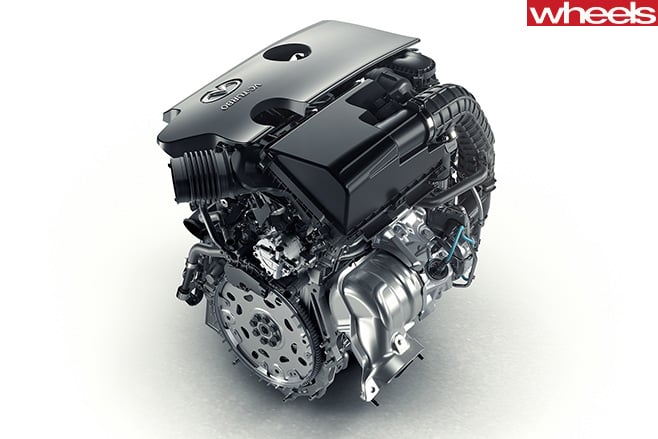
Infiniti says the key to unlocking variable compression capabilities in a conventional internal combustion engine is a multi-link that was actually invented 20 years ago. It took until now for Infiniti’s engineers to make it fit for production.
VC-T is not an easy system to put into words. Schematics below shown to Wheels at Infiniti’s R&D centre in Atsugi near Tokyo in July show a harmonic drive and actuator connected to the multi-link, which in turn influences the piston’s relative position inside the cylinder, and therefore the compression ratio.
Infiniti CEO Roland Krueger says the VC-T engine will be exclusive to Infiniti – and not shared with its Nissan or Renault alliance partners – initially, but he wouldn’t put a timeframe on that exclusivity.
“We are utilising this engine first in Infiniti. We will also make sure it is marketed together with a new vehicle, an Infiniti. We will position this definitely as one of the leaders in the technology area. That is our goal, and our goal as a company.”
The forthcoming Infiniti QX50 mid-size SUV is expected to be the first vehicle to market with this technology, and even though it’s not due for launch until 2018, Infiniti is confident no other carmaker will beat it to market.
“Other manufacturers have taken the ‘VCR’ challenge, though Infiniti will be the first to bring the variable compression ratio engine to market from 2018,” it said.
Sounds like Ford’s Mustang Shelby GT500 will pack a mean bite.
A GT500 mule lurking streets around Ford’s Dearborn development centre has been filmed by forum Mustang6G’s spies, revealing juicy new details about the incoming super ’Stang Shelby.
Set to sink its fangs into Chevy’s Camaro ZL1 and Dodge’s Challenger Hellcat, the new Shelby will sit atop the Mustang model range with somewhere between 480kW-520kW if it’s to match rivals.
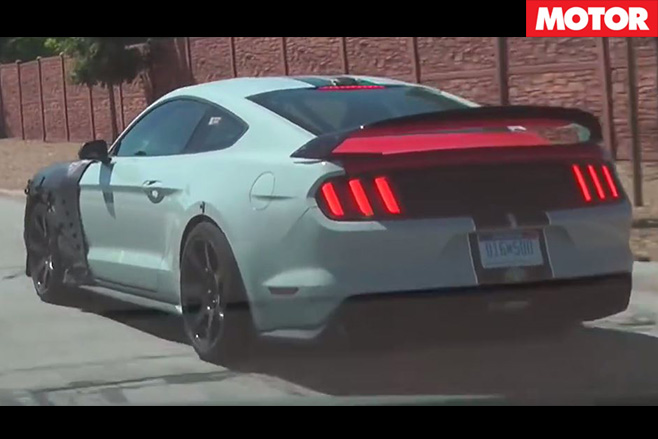
It’s widely reported Ford’s boosted the engine, but conjecture surrounds what engine exactly and whether turbocharging or supercharging’s been used.
The current Mustang Shelby GT350 uses an atmo 5.2-litre V8 with a flat-plane crankshaft. Codenamed ‘Voodoo’, it’s the most powerful model in the range with 392kW.
However, Ford’s 5.0-litre Coyote V8 engine lends itself to forced induction well, as seen in the Cobra Jet and Shelby American cars.
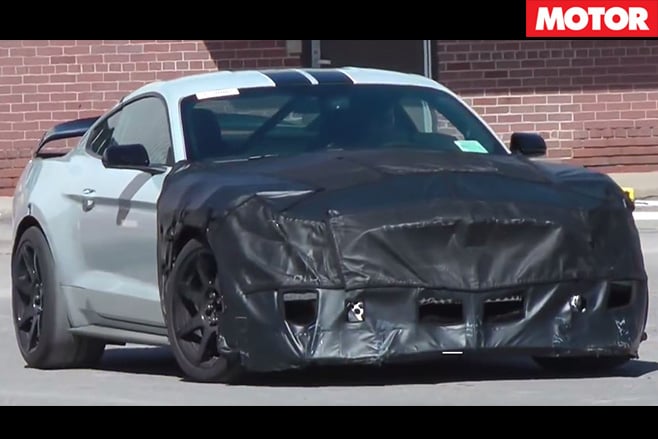
Meanwhile a 10-speed automatic transmission, co-developed with GM, is expected to handle the grunt – the same unit that’s used by Chevrolet’s ZL1.
More details about the GT500 will surface closer to its reveal later this year, however you can speculate on its menacing rumble yourself by watching the video.
“Crazy Joe” Iannone takes first win
First Ducati MotoGP success since Casey Stoner scored in 2010
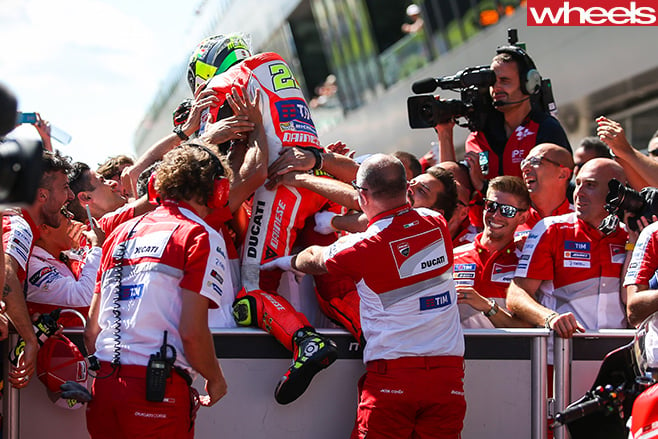
Much-maligned Andrea Iannone – aka Crazy Joe – has stormed to a faultless Austrian MotoGP victory in the spectacular mountain setting of the Red Bull Ring, breaking a lengthy win-drought for the Ducati Team.
Watched on by a beaming Casey Storner, who scored the previous MotoGP win for the red outfit at Phillip Island all of six years ago, it was Ianonne’s first-ever win in MotoGP. But importantly, a sign that Audi-owned Ducati – win-less for so long – is back as a force.
Iannone, the only rider to opt for softer medium compound rear Michelin for the grand prix, came out on top in a pulsating race which early in the contest also involved Ducati’s Andrea Dovizioso, Yamaha’s Jorge Lorenzo and Valentino Rossi, championship leader Honda’s Marc Marquez and Suzuki’s Maverick Vinales.
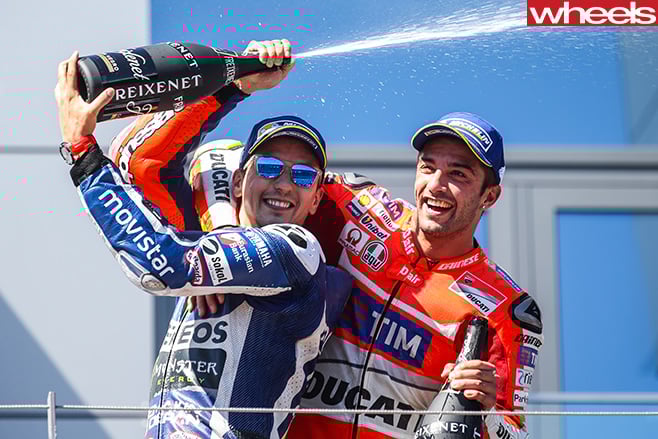
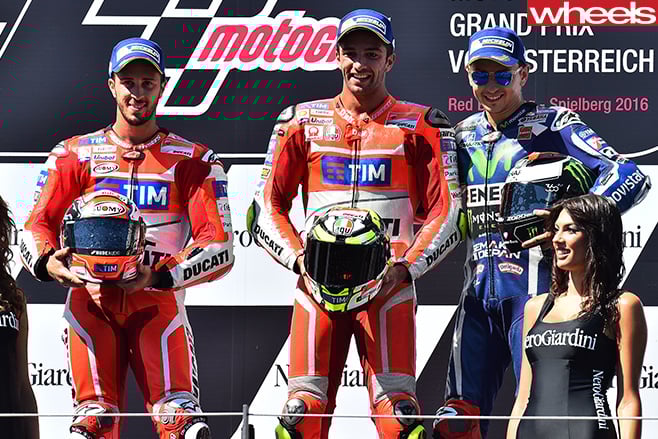
Iannone held his nerve, and a small margin, to lock-in a superb maiden MotoGP victory, ahead of a forlorn Dovizioso, ecstatic Lorenzo, Rossi, Marquez and Vinales.
Iannone is bloody fast but a little crash prone. Back in April he committed the unforgivable sin, taking out his team-mate on the last corner of the last lap in Argentina, when both were in rare podium-scoring positions.
Dovi’s unhappiness after being beaten to the historic win was palpable, and he admitted that his team-mate’s tyre choice was decisive.
Reigning champion Lorenzo completed the podium to turn around a poor run of form, cutting the gap to Marquez.
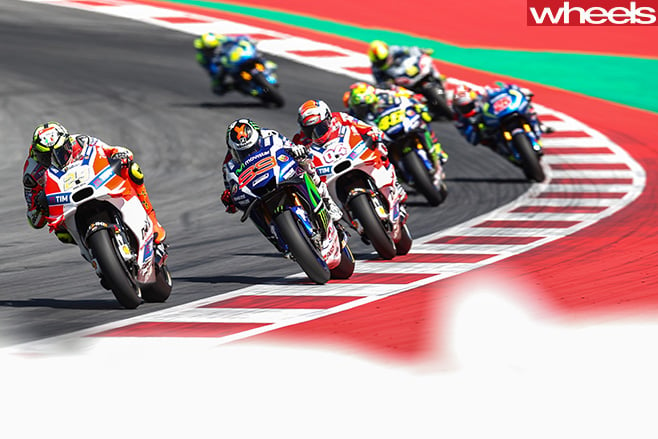
Marquez crashed badly in practice and dislocated his shoulder. But the Spaniard rode bravely through the pain to take fifth, minimising the damage to his championship hopes. He leads Lorenzo by 43 points after 10 of 18 GPs.
Aussie Jack Miller fell from his Honda at high speed during the Sunday warm-up and was ruled out by doctors even though he wanted to ride.
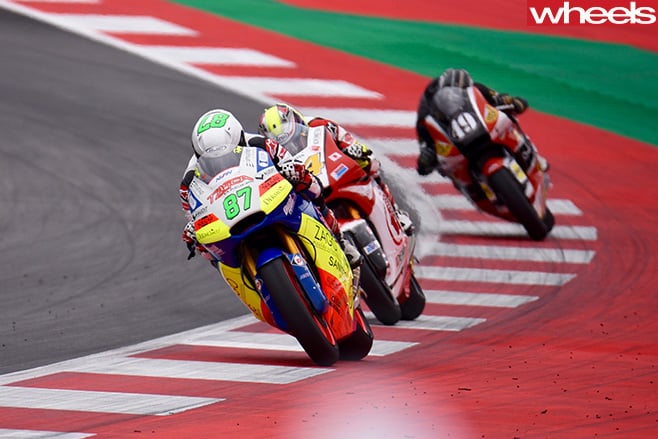
In Moto2, reigning champ Johann Zarco (Ajo Motorsport) showed his patience and class, biding his time in the frantic opening two-thirds of the GP, before powering to a superb win and extending his points margin.
Franco Morbidelli (Estrella Galicia 0,0 Marc VDS) and Alex Rins (Paginas Amarillas HP40) completed the top three.
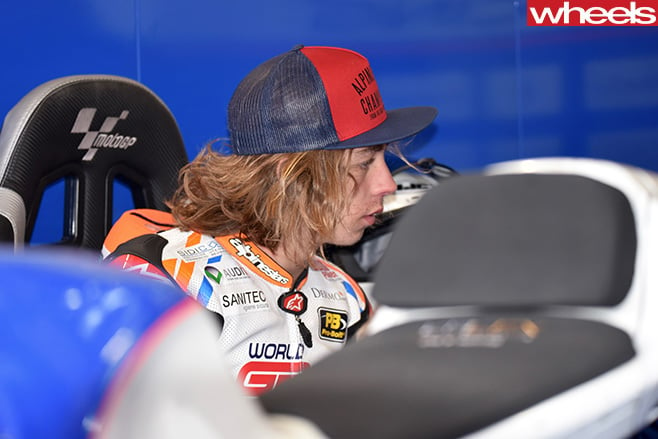
Gardner (Tasca Scuderia Racing) started 23rd on the grid made a lightning start and was immediately in a titanic six-rider fight for the top 12 until he was forced wide, dropping to 23rd. He regrouped and climbed back to 19th at the flag.
Spanish rookie Joan Mir stole a magical first victory in Moto3, the Leopard Racing rider outfoxing the veterans of the grid. Championship leader Brad Binder (Red Bull KTM Ajo) took second to increase his points lead.
It’s going beautifully for Lewis Hamilton…
…But an engine penalty looms, with attendant 10-place grid penalty

According to BBC Sport, the defending world champion reached his maximum allowance of five turbochargers and MGU-Hs in Austria last month, and at some stage will be forced to take a 10-place grid penalty.
Hamilton turned a 43-point deficit to Rosberg into a 19-point advantage after winning six of the last seven races.
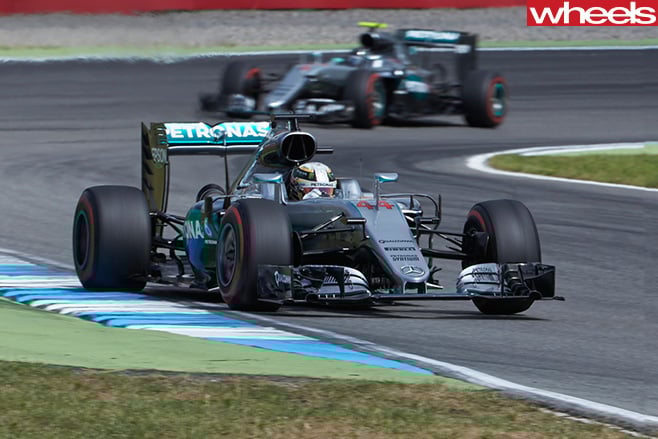
“Anything can happen when you are coming from the back, as you have seen,” Hamilton said in the BBC Sport story, adding that the handicap will merely make him fight harder.
Hamilton expects the engine change will happen at either the next race, the Belgian Grand prix next weekend, or at the Italian GP.
Monza looks more likely as it is a track where overtaking is a little easier than most.
New dad Dumbrell fit and ready for enduro campaign
Pressure doesn’t get to Whincup’s proven partner – he’s already won at Bathurst and Sandown
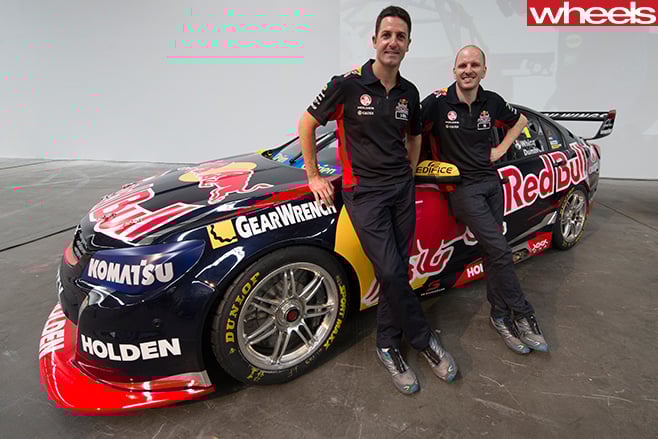
The co-drivers can make or break the championship campaigns for the big hitters.
Jamie Whincup, leading the series narrowly as the field resets at Sydney Motorsport Park on August 26-28 after a short winter hiatus, will again have seasoned Paul Dumbrell sharing his Red Bull Racing Australian #88 Commodore.
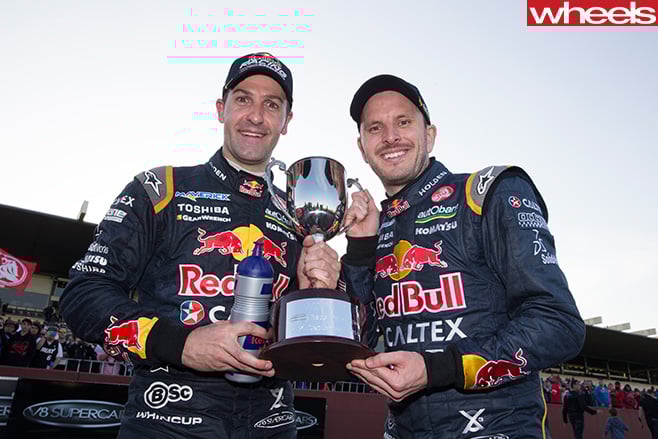
“There’s no indication that Paul won’t do the job he’s done in previous years,” Whincup suggested to Wheels, “even though his personal situation is different this year.
“He’s just had a kid and has been having time away from work clearing his mind, and training hard.”
Dumbrell, 34 next month, retired as a full-time V8 Supercars driver in 2011 to concentrate on business and has partnered Whincup in the enduros since 2012.
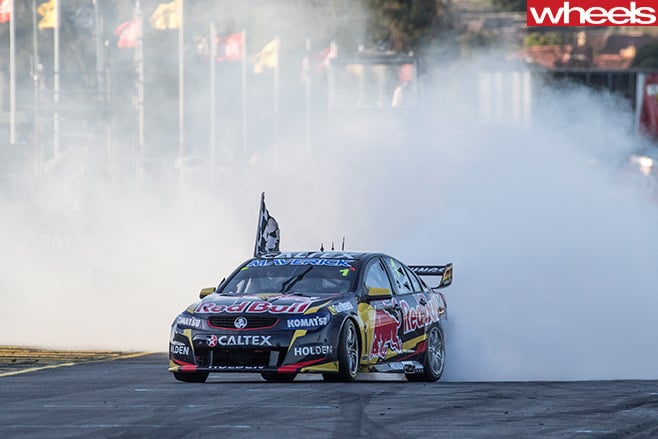
This year, as in past seasons, Dumbrell keeps his eye-in racing in the Dunlop Series.
No payment means no drive for Haryanto at Manor F1
Backmark team needs the money, so bad news for non-paying pay driver
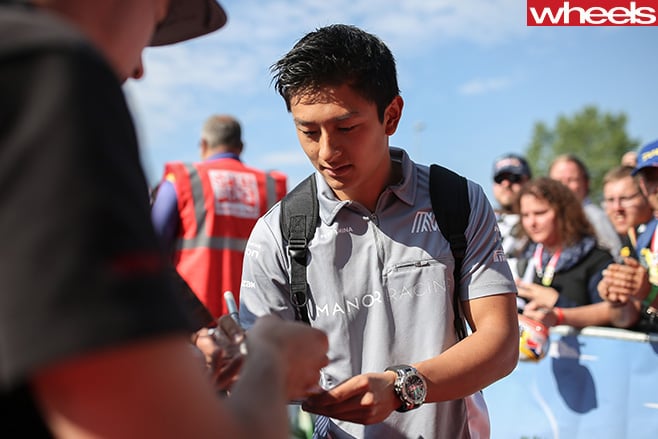
Indonesia’s first-ever F1 driver has been performing quite impressively with the cash-strapped Manor but in the cut-throat world of backmarker outfits reliant on the money from their two pay drivers, the non-arrival of the dough is bad news.
Haryanto’s backer had paid to keep in him a drive until after the Hungarian Grand Prix. He managed to race at Hockenheim to try to wangle more money from Indonesia.
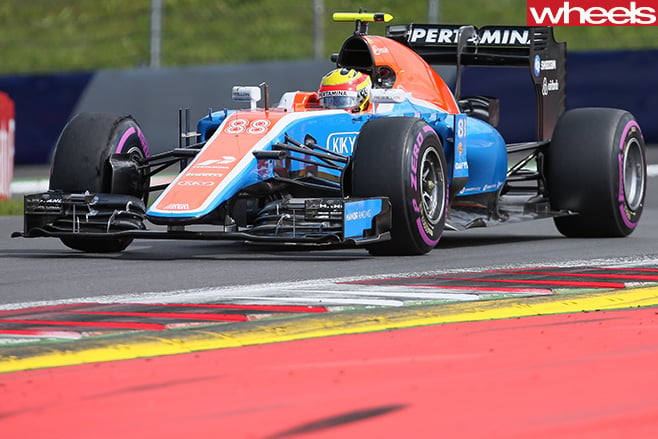
So into the big-time comes Haryanto’s replacement, the Renault reserve driver, teenager Esteban Ocon, also a Mercedes Junior (to explain, Mercedes farms out some of it young up-and-comers to lesser teams to gain F1 experience).
Ocon has the Manor drive for the rest of the season.
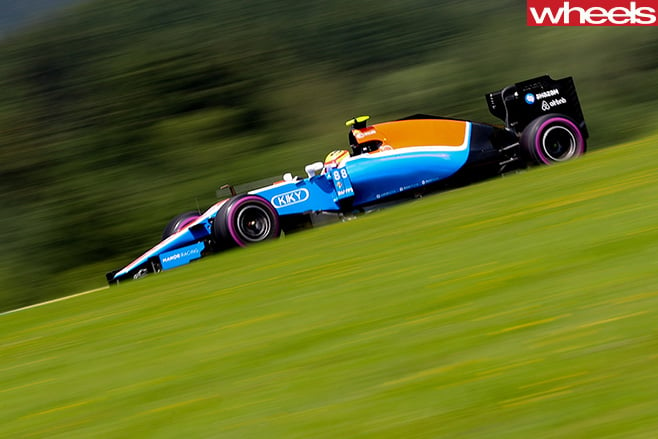
Wehrlein earned Manor its first point of the season at the Austrian GP in July, and it currently sits 10th of 11 teams in the constructors’ standings.
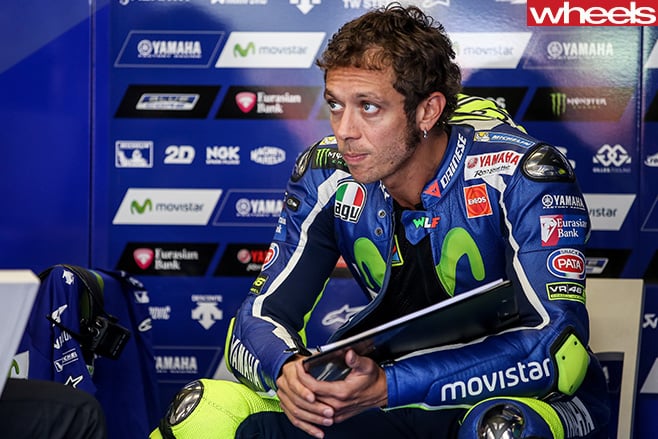
Rossi chased for Suzuka Eight Hour
Yamaha wants its star back on the grid for Japan’s biggest race
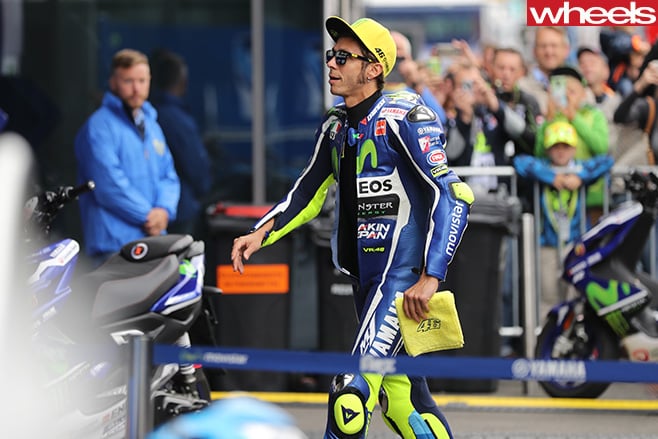
The push to have Rossi aboard a factory-prepped YZF-R1 for the 40th anniversary of the event is about shooting for a Yamaha hat-trick at the circuit but also to counter an expected overload of publicity from Honda, which owns Suzuka. We already know Honda is bringing out a new CBR1000RR to mark the occasion.
An image of a six-metre-long coupe concept released on social media suggests Mercedes may be ready to take the Maybach name back towards the million-dollar price bracket.
Mercedes-Benz posted the picture on its official Facebook page yesterday, with just one line of information: “Hot and cool – 6 metres of ultimate luxury”.
That would make the two-door Mercedes-Maybach a metre longer than the Mercedes-Benz S-Class Coupe.
The silhouette reveals an extremely low-slung design with a vast bonnet and a roofline that tapers unhindered into a steeply drooping tail.
The Maybach logo features on the rear pillars.
The concept is due to be shown at next week’s Pebble Beach Concours d’Elegance. If it went into production, it could compete with the Rolls-Royce Phantom Coupe – though that’s ‘only’ 5.6 metres long.
Hitherto, Mercedes has only applied the Maybach name to the most luxurious version of its S-Class with the Mercedes-Maybach S600, after surprisingly bringing it back after axing it as an uber-luxury sub-brand in 2011.
The S600’s $449,000 price tag is less than half the cost of the cheapest previous Maybach, the 57 that cost close to $1m.
Call it a baby C63, but don’t tag it C450 – that’s the Mercedes-AMG C43 message as the renamed sports sedan, coupe and wagon arrive priced from $101,900 plus on-roads.
Benz is ready to attack the BMW 340i/440i and Audi S4/S5 with the AMG C43 that lands with a full trio of standard sedan, or $104,400 wagon and $105,615 coupe bodystyles.
Each use a 3.0-litre twin-turbocharged V6 engine sending 270kW and 520Nm through a nine-speed automatic transmission to all four wheels, leaving the rear-driven C63 to deploy its twin-turbo V8 and do big burnouts.
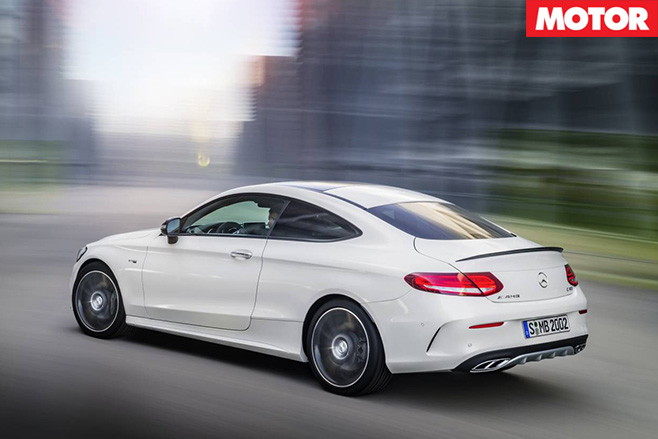
It’s the coupe that tops the 0-100km/h performance benchmark, though, with its 4.7sec claim ousting the sedan and wagon by two-tenths. Incidentally, even the 4.9sec sedan is two-tenths faster than the equivalent 340i.
The coupe also gets special steering knuckles and load-bearing joints on the multi-link front suspension, increased negative camber and more rigid elasto-kinematics over the other bodystyles, all with the promise of being sportier to drive.
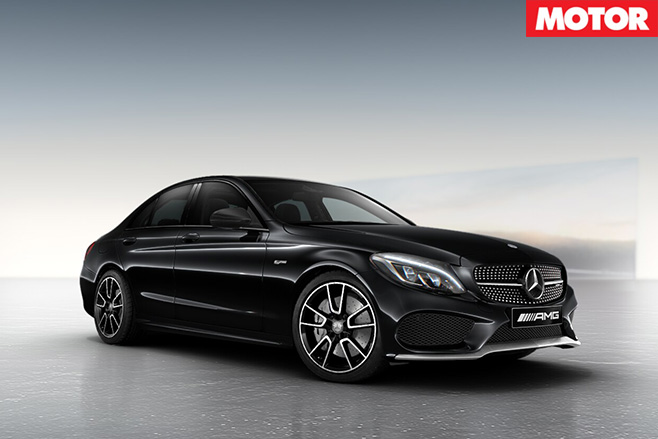
As is usual with Benz, local equipment is higher than that found overseas, with head-up display, 19-inch alloys, adaptive LED lighting, panoramic sunroof, premium Burmester audio with satellite navigation and internet connectivity and – on the coupe only – heated front seats also included.
When it lands locally in October priced $50K below a C63 S, the C43 should find favour with many buyers who are already latching onto cheaper AMG models with increasing force. But a coupe comparison test will have to await the arrival of the new Audi S5 next year…
How it took just three letters to get Honda watchers all excited.
The rumour mill surrounding Honda’s plans to build a smaller version of its Honda NSX supercar sprung back to life this week after it emerged the company has applied to trademark “ZSX” in Europe.
Performance Drive has reported that Honda submitted a trademark application to the European Union Intellectual Property Office for the letter combination ZSX.
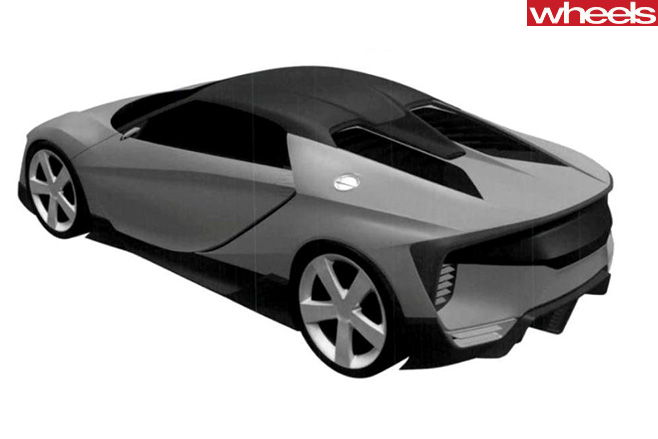
The Japanese trademark is valid until March 2019 but the US one expired in 2012 (it doesn’t appear to have been registered in Australia), so why the excitement over the European application?
The timing is interesting in that it coincides with a story in the Automoto which cites an anonymous source claiming to be an engineer at Honda in Japan as saying the company is planning to debut the ZSX next year and is planning to debut it at the North American International Auto Show in Detroit.
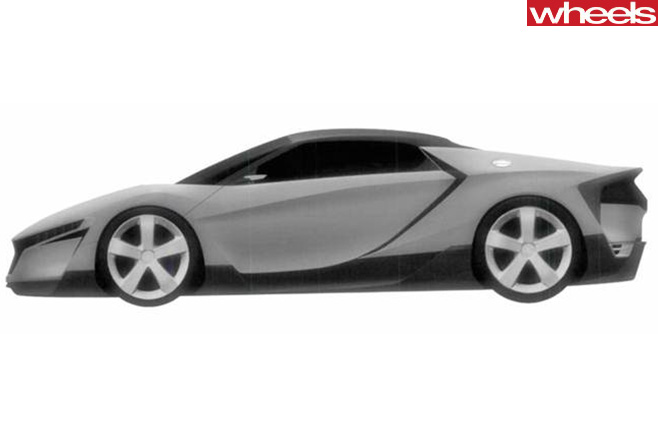
The news is great if it’s true, though it’s worth noting that Honda makes plenty of different products and the ZSX could prove to be anything from a generator to a personal jet aircraft.
Honda Australia declined to comment about the ZSX name or if the company was planning to produce a ‘baby NSX’.
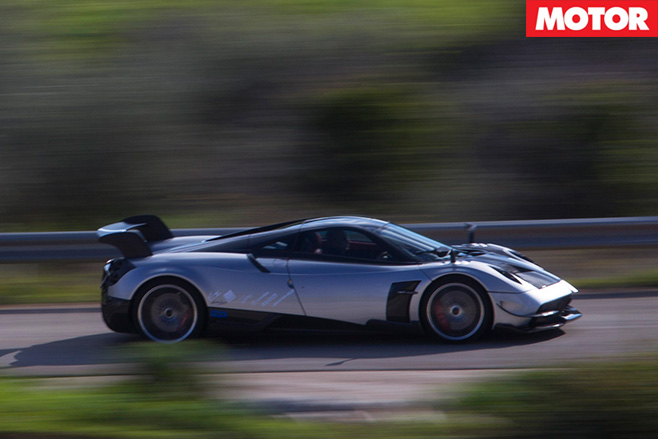
Japanese racing legend Keiichi Tsuchiya will drive the new Pagani Huayra BC at this year’s World Time Attack Challenge (WTAC) at Sydney Motorsport Park.
Tsuchiya is revered in his Japanese homeland as the Drift King, however his racing achievements are just as notable, the highlight taking second place at the 1999 Le Mans 24 Hour in the Toyota GT-One.
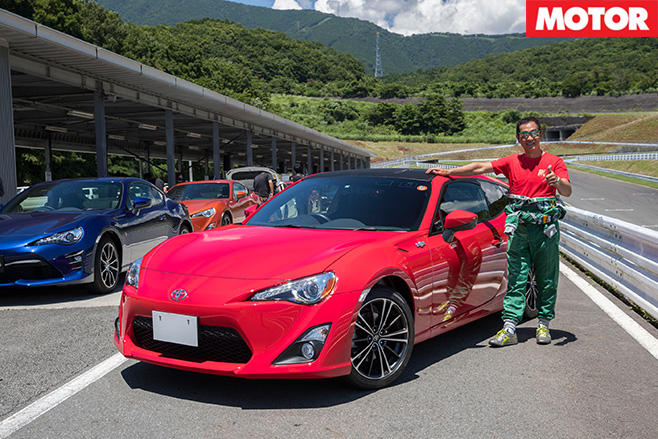
Tsuchiya will drive the car during “Midday Mayhem” on both the Friday and Saturday, while at other times the Huayra BC will be on display in the pits.
From apprentice mechanic to Lamborghini’s highest regarded test driver, Valentino Balboni goes full circle to supply aftermarket performance parts to the Raging Bull.
After 40 years as Lamborghini’s official test driver and six years following his retirement from the role, Valentino Balboni has launched his own aftermarket performance parts brand which will supply the Bologna-based car maker with high-quality and low-volume go-fast parts.
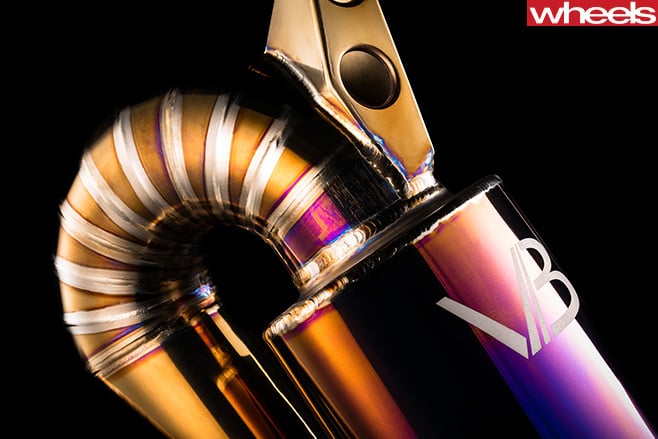
His brand, rather unceremoniously named VB after his own initials, will kick off with a hand-welded lightweight titanium exhaust system specifically for the Lamborghini Aventador LP-750 SV.
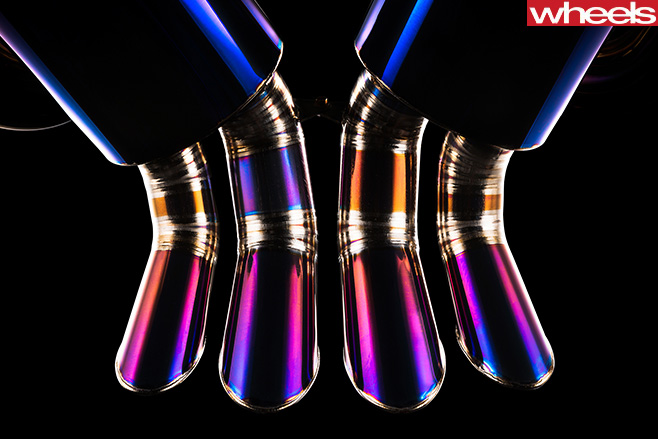
With a claimed total weight of just 6.3kg, the VB system — said to have taken more than 350 hours to produce — is fabricated from Grade 2 titanium and bolts to the car’s existing mounting points using the VB billet-cut titanium mounts.
We imagine most owners of the 6.5-litre 740hp V12 will want to get their hands on a product created by a man so closely associated with the Italian supercar maker.
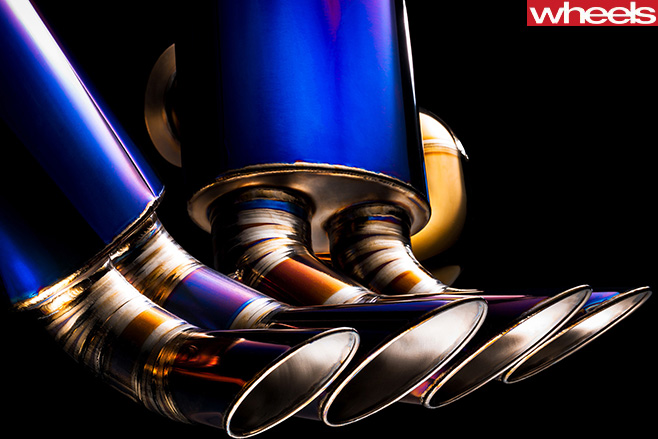
According to the firm’s website, the curves of the B are also said to reflect “two real curves, located in Sant’Agata Bolognese, where Valentino impressed every person sitting in the passenger’s seat with his peculiar way to master them at high speed.”
No word on price, of course, but as the old saying goes: if you have to ask…
I had an awful dream last night. I saw a Falcon on the Freeway and it was Holden its own with a Valiant.
First published in the November 1963 issue of Wheels magazine, Australia’s best car mag since 1953.
THE delicate art of one-upmanship has begun to bare its teeth. In Australian metropolitan newspapers in August were the echoes of clashing foils as the advertising men tangled over a roofline.
Ford’s “imitation is the sincerest form of flattery” was a slap on the wrist of GM-H for incorporating what has come to be called the “Thunderbird” roofline in its new EH series. True, the Ford essay in subtlety was a little less subtle than BMC’s teddibly understated and straight-faced reminder that an Austin was in Antarctica some jolly years before a Certain German Car even if the Austin had eight wheels, all equipped with chains.
That the Thunderbird roofline, best described as a squared rear quarter roof panel, is common to a number of cars is less design than accident. Its most immediate effect is to alleviate the problem of providing rear seat headroom under a generally lowering roofline, despite its dubious aesthetic value.
And by this time, the ardent student of affairs automotive will have realised that the Thunderbird roofline is used, in modified form, in the Valiant and the Austin Freeway as well.
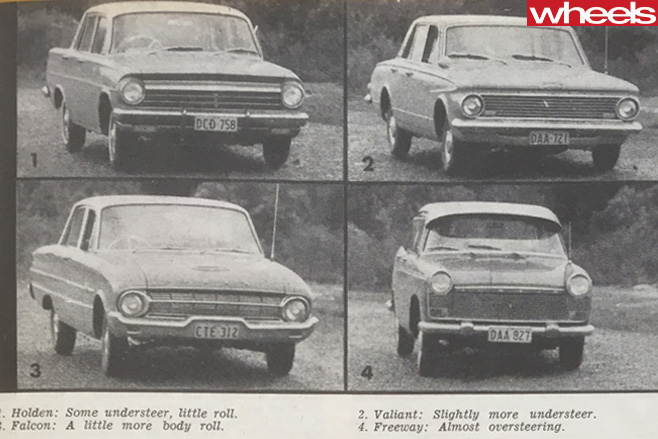
Thus a comparison of the four cars devolves into a careful analysis of minor points of difference, rather than a broad canvas of criticism. All four, for example use a six-cylinder, overhead-valve engine of between 2.4 and 3.7 litres, driving through a three-speed manual gearbox with synchromesh only on the top two gears. They are braked by drums of varying size, admittedly seat five comfortably, six uncomfortably and have similar luggage capacity.
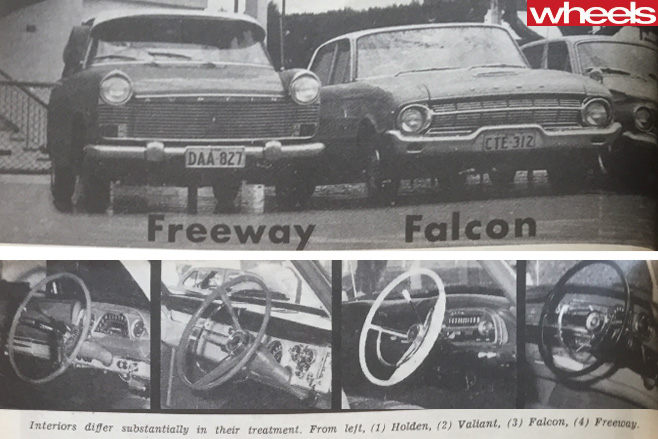
The Holden is the cheapest, the Valiant the most expensive. The Ford Falcon is slightly cheaper than the Freeway, although many Ford dealers will only sell the Falcon shod with the larger 6.90 tyres, and this lifts the car’s price to a few pounds more than that of the Freeway. The Holden has the distinct advantage of having a long-established, complex network of distributorships and dealerships, as well as recognised used vehicle outlets and, in most capital cities, a thorough 24-hour-a-day spare parts service. It also enjoys slightly better trade-in prices, although lately the Valiant has been a force in the used car market in small numbers.
All four have luxury versions of the basic car, but only Holden and Falcon produce utility, panel van, and “standard” sedan units. Three also make station wagons, and the Valiant wagon is due shortly.
It is interesting to express the cars in terms of power-to-weight and weight-to-braking. The Holden has 22.2 lb per one bhp, the Valiant 18 5 Falcon 24 2 and Freeway 29.9 The Holden has 26.8 ib per square inch of brake lining area, Valiant 17.5 Falcon 21.4 and Freeway 16.5.
It should be stressed that the performance figures are those from particular cars, and where the margin is slight — as in the case of Holden and Valiant top speeds – it can be assumed that one is as rapid as the other. Additionally, several WHEELS staff have driven Pursuit-engined Falcons that put up better times than the test car.
So these were the cars: Holden automatic with 179 engine, Valiant automatic with its sole engine, Falcon automatic with 170 Pursuit, and Freeway automatic with the Blue Streak engine.
Although being released later than the Freeway, the Falcon’s basic design is the oldest of the four. It was the first US compact to appear, more than four years ago, and the XL model which appeared on the Australian market in August last year was less a facelift for the sake of a model change than a much tougher-engineered car. The Freeway suffers a little in that its narrower, shorter body on a shorter wheelbase was borrowed from the British B-series design for the A 60 and Morris Oxford. However, all four are now distinctively Australian, and are not produced in exactly the same form anywhere else in the world, even though Holdens and Falcons are exported from Australia to a number of countries.
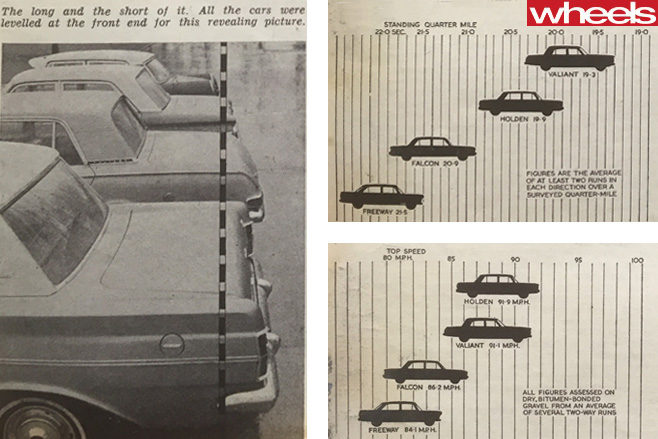
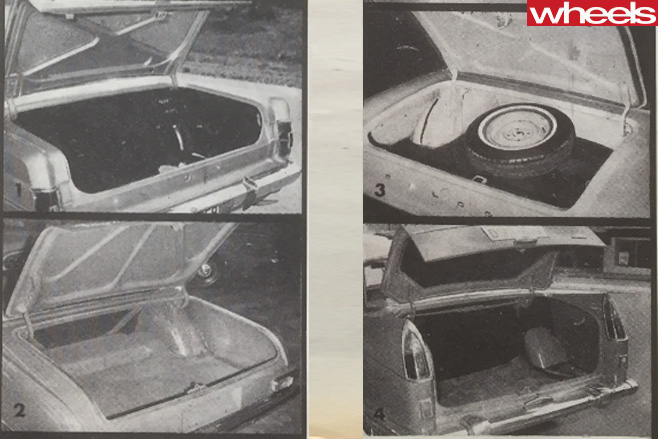
As the difference in fuel consumption by the four is minimal, it can be said that the Valiant’s much larger fuel tank gives the car a greater cruising range than the others and this is important in a country where fuel sources are scattered. It is also ahead in boot capacity — and those are the maker’s figures in each case – but has the least ground clearance.
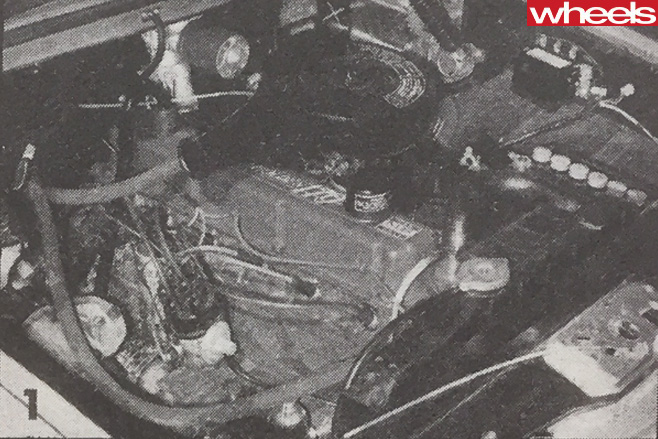
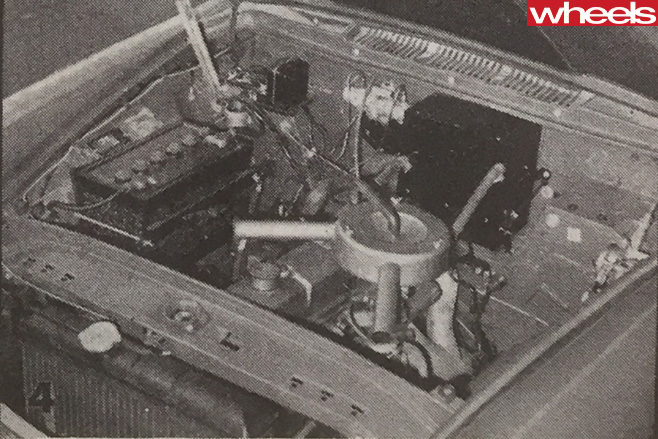
The engines are probably the most individual characteristics of the four very similar cars. The new EH engine is oversquare, running on the highest compression ratio, with an immensely tough bottom end; a seven bearing crankshaft means long life not only because of its vibration-damping effect but because it will enable GM-H to modify it for extra power for some years ahead. Nonetheless, it is interesting that the Holden’s main bearing diameter of 2.1999 in is a little less than the Valiant’s diameter of 2.75 in. The Holden is the only engine with hydraulic valve lifters, and it has an alternator on offer as an option, where the Valiant’s is standard.
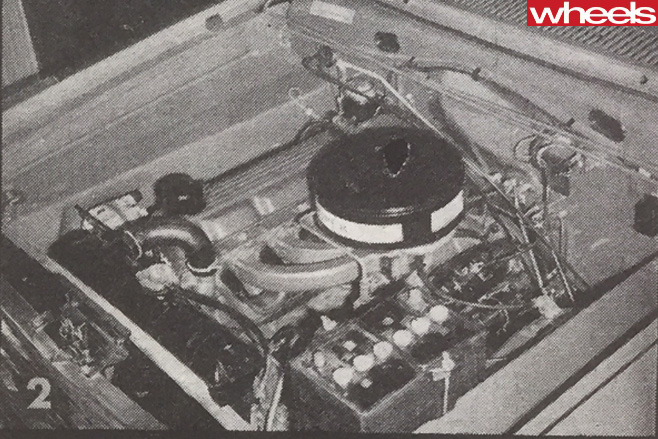
Ford have continued with both the 144 and 170 cubic inch engines in their 1964 Falcons in the US and this is enough recommendation for the unit.
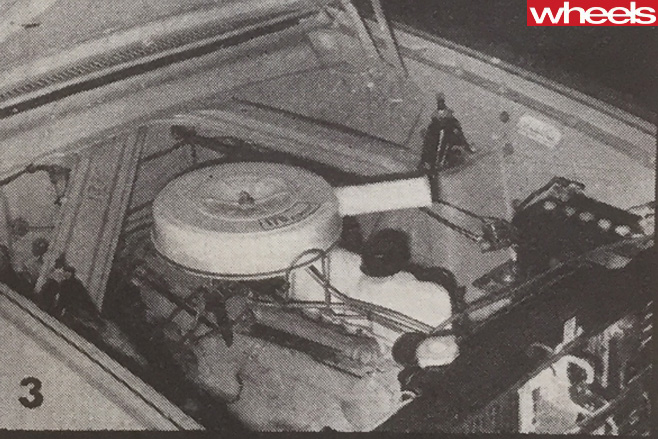
Slightly oversquare, it is only just below the first two on power and torque, but it responds dramatically to a diet of 98-100 octane fuel. The BMC engine has an extra 7 ft/lb of torque for use with the Borg-Warner Type 35 automatic transmission, and while it is short on apparent power it is a very strong unit with first-class torque, or “lugging” ability, low down in all gears; indeed, in top gear the manual Freeway will out-haul the other three from 20mph to 40mph.
The Valiant has more brake lining area, commensurate with its greater weight. Of the four, the Freeway stops slightly better and fades less, although the Falcon and Valiant are almost as good. The Holden is markedly under-braked on three EH models that WHEELS tested the brake fade after one stop or an ordinary two-mile descent was quite alarming and GM-H should soon change this.
All four, unfortunately, suffer from wheel hop and rear axle wind up under “crash” braking; all left several sets of broken rubber marks on the road as evidence. This is a penalty common to the live rear axle. Pedal pressures are slightly higher on the Freeway.
In other words, at normal speeds they tend to widen the arc of a corner, requiring more lock to keep them turning through the arc. Their main difference in handling characteristics comes through the varying types of steering.
All suffer to differing extents from axle tramp and wheel hop, due to the use of live rear axles. The Freeway will lift a rear wheel on a tight corner earlier than the other four, and too much power in a tight corner will also cause wheelspin in the Valiant.
Both Holden and Freeway steering is quite heavy at low speeds, lightening as the car gets faster, but both are more accurate at speed than the other two.
The Valiant steering is quite light, fairly positive, but with a little lost motion either side of top dead centre. The Falcon steering has been the most criticised of the four, not so much because of its low gearing but because the wheel is too close to the driver to enable him to make full use of his arms.
Driven hard, all are quite stable, although the Falcon steering makes one a little more cautious of loss of adhesion at the rear. The enthusiastic driver will probably respond more to the Valiant, particularly because of its excellent steering wheel location.
All four have good manual gearboxes. The Falcon has the longest lever throw, the Holden the shortest. None have synchromesh on first gear, although the Freeway’s first ratio is easy to engage at low speed because of the simple dog engagement; and most enthusiastic Holden drivers have long ago learnt to double the clutch to find first from 15 mph downwards.
Of the four, the Holden gear movement is smoothest and most positive, for both the Falcon and Freeway levers get a little “rubbery” in feel at times.
In automatics: The Holden uses the GM-H Hydramatic system, which uses fluid couplings instead of a torque converter for its three speeds. The Valiant has the three-speed Torqueflite unit, the Falcon the two-speed Fordomatic, and the Freeway the excellent British Borg-Warner Type 35 ….. all three use torque converters. The Valiant box makes the smoothest changes, although the Borg-Warner is faster. Both the Ford and Holden systems have a certain amount of built-in slip, which makes for extremely smooth operation, but does slow the changing process. Both the push-button Torqueflite and the lever-operated Borg-Warner respond to manual direction very well so that each car can be held in a desired gear right out to valve crash if necessary. The Holden and Ford systems arc less flexible, and will “hunt” from gear to gear on hills. All suffer from a small amount of idling creep in Drive range.
The Freeway is perceptibly the slowest car of the four, although it is certainly the most flexible in top-gear operation, an important feature in Australian markets. Nevertheless, it would be difficult to determine which car would win a point-to-point over varying surfaces and corners.
If the buyer of a six-cylinder car wants equipment, he goes to the Freeway. This is one of the hard facts of life with which the other three have to live. For BMC have followed the British line of making a car more liveable rather than adding performance.
Nowhere among the other three can the buyer get a heater/demister, windscreen washer, childproof locks, or a lockable fuel tank cap, except as an option. This difference shows up particularly in the Wolsely 24/80, BMC’s premier line.
Measuring the four cars was particularly useful. It showed up shallow gloveboxes for what they are and also that the Valiant’s rear door aperture is narrower than those of the other three. The Freeway has much more leg room in the rear than the others, but at the expense of locating the driver too close to the big steering wheel. But the Freeway handbrake was in the right spot on the floor beside the driver’s right hand, where it can be reached even with safety belts on and where it can be used with greatest leverage. It was also the most effective.
The Falcon had insufficient front seat travel, but still more leg room in the r ear than the Valiant. Its lower boot lip was the highest off the ground, and it also had the most unfavorable spare wheel location. Here the Freeway does well by placing it in a wind-down tray under the boot.
However, there is a lot to be said for the system used in three of the cars of locking the doors by button as against the Freeway system of locking by interior door handles. Whether one likes the Holden system, peculiar to it of all the four, of locking the car without a key depends, we feel, on how forgetful one is.
None had notably low-geared window winding mechanism, although the Freeway was commendably fast while the Holden had the most rear seat headroom and the Falcon the best interior width.
In retrospect, the Holden, Valiant, Falcon and Freeway pretend to own little more than their inherent personality of honest, durable, unimaginative transport. As such, all four succeed, in different ways.
It is unfortunate that the volume buyer in Australia is denied the benefit of disc brakes, all-synchromesh gearboxes, and advanced suspensions, but this is perhaps because he is a victim of his continuing environment. Nevertheless, all four have achieved a measure of individuality, and it is this together with the price factor that will buy one of them for a man trusting his discrimination.
All are reasonably well finished, even though their trim runs to nothing more than pvc and woven fabric and rubber floor covering. The Holden is faintly superior, because of the company’s long experience in finish quality control, and both the Holden and the Freeway have sound reputations for body and paintwork standards. Neither will rust readily.
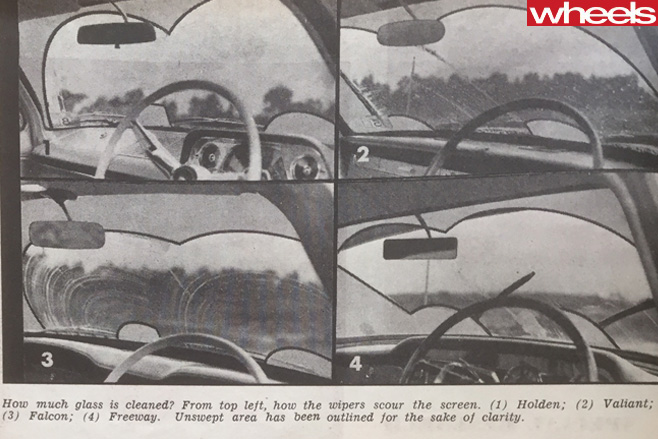
Valiant trim is neat, if a little plain, and the Falcon has improved on the poor standard of finish in the XK model. Also, the Valiant would seem to have the most usable boot space. All have good vision. But each car has its own disadvantages. The Valiant has adequate room in the rear seat, the Holden is underbraked, the Falcon has low-geared steering, and the Freeway amplifies road noise on certain surfaces. The Valiant reflects its dashboard lighting onto the screen at night, despite good rheostating, the Falcon screen collects bad reflections from the facia cowl in bright sunlight, the Freeway window winder is placed too far forward, and the horn buttons in the Holden are easily touched by accident.
The Valiant speedometer, while the sturdiest and most legible of them all, is so oddly calibrated to be difficult at speed, and the high beam light is obscured by the steering wheel boss. The Freeway could do with armrests on the front doors, and the Holden and Falcon should both have instruments replacing the warning lights, which can occasionally warn a little too late.
Tyre wear is not a factor for comment, because it varies considerably, depending on the driver, the maintenance of tyre pressure and front end alignments weather and road surfaces. Neither is any one of the four particularly more costly than its competitors for ordinary service jobs like lubrication. All are under 12 months or 12,000 miles warranty, whichever occurs first. Body repair costs are not greatly important for any of them, because none uses elaborate body panelling. There may be slight advantages in the BMC use of stainless steel, or the Valiant’s alloy grille. None is markedly noisier than its competitors, and all have a fairly firm ride over most surfaces.
So there it is. The difficult choice of the item which is probably every man’s most valuable single equity outside his house boils down to a number of quite small points, not the least of which is the trade-in offered for your old Slopmobile. You pays your money and you makes your choice.
Check out Wheels Archive online now for other great Ford Falcon features and more from decades past!
Simply log in here using your existing MagShop account or create a FREE account and select this article from the homepage.
Don’t have a MagShop account?

Have a MagShop account?