
With the Australian-built wagon on its death bed and Jaguar threatening to stop making estates, Germany is fast becoming one of the last manufacturing bastions of the long-roofed load-lugger.
Audi’s latest is the Avant version of the new A4. Despite the relentless onslaught of SUVs, the brand believes it can convince enough Australians to snub its Q-badged models to double sales of the last generation.
There’s certainly an enticing package: heaps of standard or optional tech, a spacious cabin of superb quality, and a quattro variant that can offer all-wheel drive where the rival BMW 3 Series Touring and Mercedes C-Class Estate are only rear-drivers.
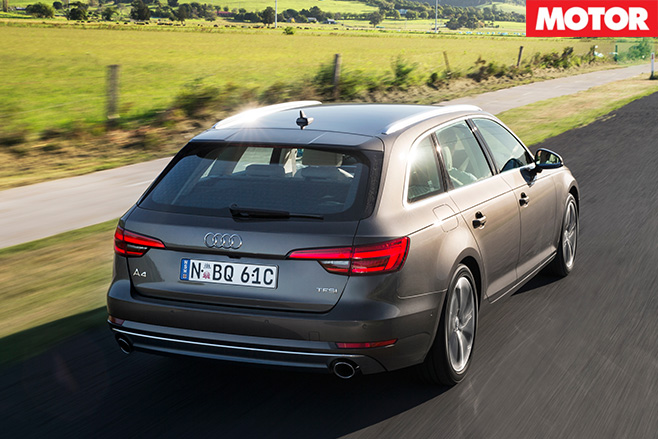
Of course, we prefer our wagons to be fast, and the S4 Avant doesn’t land until the end of the year. So for now the best bet is the more convolutedly titled A4 Avant 2.0 TFSI quattro sport.
At a quoted 6.0 seconds, it’s a couple of tenths slower to 100km/h than the 30kg-lighter (and, at $69,900, $3000 cheaper) sedan that shares its 185kW/370Nm 2.0-litre turbo four. Accelerative performance feels solid rather than rapid; nanna wouldn’t be dropping her knitting for the handles. It’s edged by the 330i Touring, despite the BMW’s traction handicap.
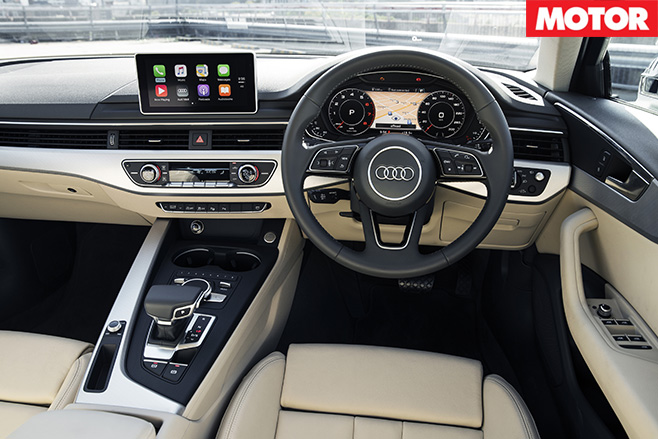
However, steering that has about as much life as the main population of The Walking Dead means there wasn’t quite the same level of assurance going through a corner. Choosing ‘Dynamic’ mode brings some welcome heft to the rack, though it’s still artificial. It’s far more linear than the previous A4’s steering – one of myriad dynamic improvements over its predecessor brought by the new MLB architecture.
As with the sedan, ride quality is also immeasurably better. Even with the 20mm-lower adaptive sport suspension – the $1100 version optioned on our test car – the jiggly nature of the old model is gone and in its place is a suspension that, especially in ‘Comfort’ mode, chooses to sail over bumps rather than try to weigh anchor on them.
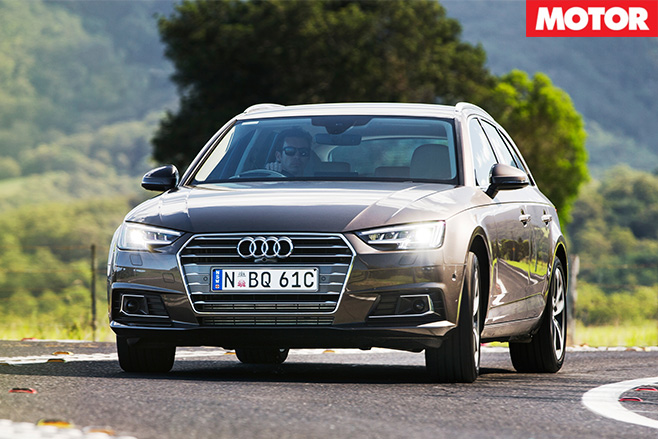
3.5 OUT OF 5 STARS
LIKE: Improved ride; great interior; practicality DISLIKE: Lifeless steering; not particularly quick
SPECS Engine: 1984cc inline-4, DOHC, 16v, turbo Power: 185kW @ 5000-6000rpm Torque: 370Nm @ 1600-4500rpm Weight: 1615kg 0-100km/h: 6.0sec (claimed) Price: $72,900
It just got cheaper to score a Mercedes-AMG C-Class with prices for the V6-powered Mercedes-AMG C43 starting just north of $100,000.
The C43 range encompasses sedan, coupe and wagon bodystyles, and all three are available to order now with deliveries commencing in October.
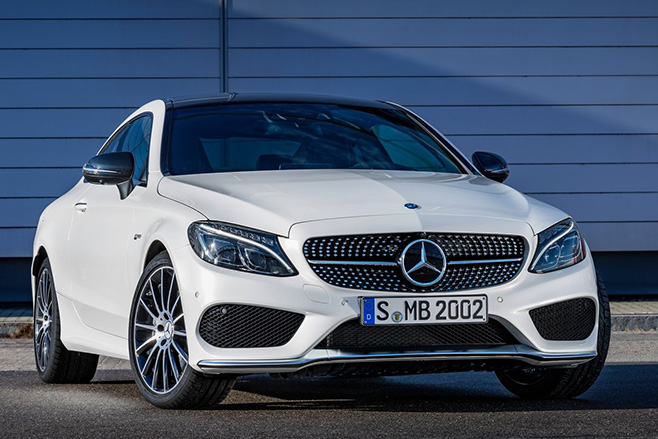
Opening the lineup is the C43 sedan, which retails for $101,900 plus on-roads. The estate follows at $104,400 and the C43 Coupe caps off the range at $105,615, putting the C43 family squarely in the middle between the mainstream C250d and the flagship V8-powered C63.
The C43 bridges the performance gap between the standard Mercedes-Benz C-Class models and the C63 as well. Sedan, coupe and wagon are all powered by a 3.0 litre twin-turbo petrol V6, which makes peak power of 270kW and a torque max of 520Nm. Power is sent to all four wheels via a performance-tuned all-wheel drive system and a nine-speed automatic is the sole transmission offered.
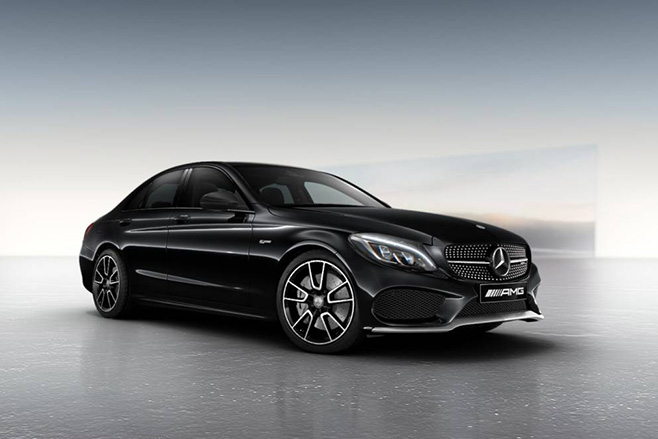
It’ll zip zero to 100km/h in about 4.7 seconds with the drive mode selector set to Sport or Sport+, while shift times are claimed to be substantially faster than grocery-getting versions of Benz’s nine-speed.
Standard equipment for all C43 models includes a head-up display, AMG Night Package, 19-inch AMG wheels, sports suspension with adjustable dampers, a sports exhaust system, panoramic sunroof, Burmester surround sound system and Benz’s COMAND Online infotainment system.
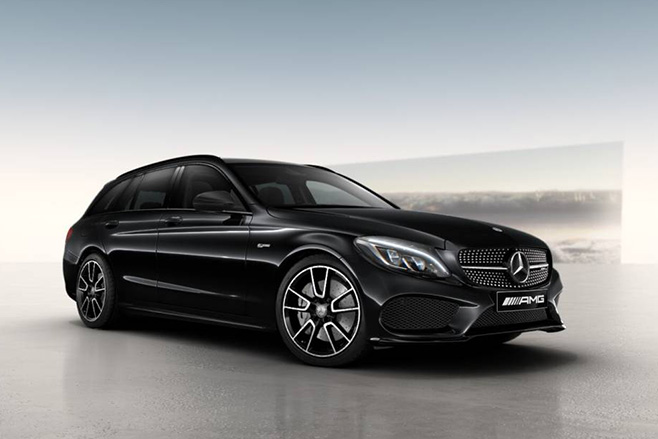
The Coupe adds heated front seats to that list.
Aesthetically, the C43 boasts a beefed up bodykit to help differentiate it from the standard C-Class, though the absence of a pair of longitudinal strakes on the bonnet are the tell-tale clue that the C43 doesn’t have a honking 4.0 litre V8 in its snout.
Standard safety equipment includes collision prevention assist, active lane keeping, blindspot warning and a 360-degree parking camera view.
Mercedes-Benz has announced Australian pricing for the Mercedes-Benz GLC Coupe range, with the BMW X4-rivalling SUV starting at $77,100 for the entry level GLC 220d Coupe.
The range follows the same template set by the wagon-bodied GLC, with three powertrains on offer: the petrol GLC 250, the lower-output diesel GLC 220d and the range-topping GLC 250d. Compared to the wagon-bodied GLC, the price differential ranges from $12,200 for the GLC 250 and GLC 250d variants to $12,600 for the Mercedes-Benz GLC 220d.
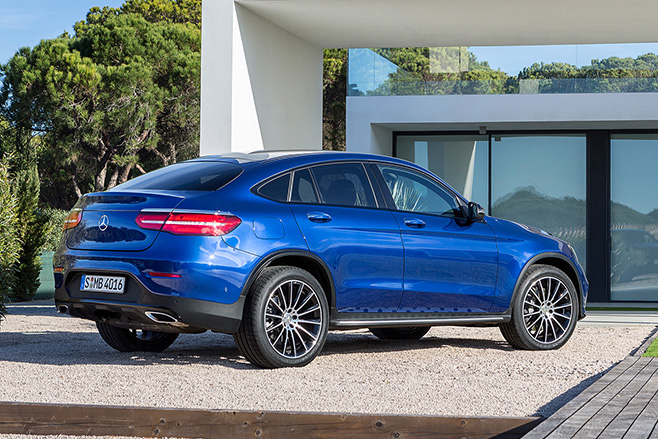
Measuring 4.73 metres long and 1.6 metres tall, the GLC Coupe is roughly 80mm longer and 40mm lower than the GLC wagon it’s based upon. Cargo capacity is compromised somewhat by the car’s tapering roofline (which mimics that of the larger GLE Coupe), but with 500 litres of seats-up volume and 1400 litres with the rear seatbacks folded down there’s still ample storage space on offer.
Seats-up boot capacity may be 80 litres down on the GLC wagon’s numbers, but Mercedes claims the GLC’s low-hanging roofline has minimal impact on passenger comfort. Shoulder room, elbow room and legroom are said to be identical.
Powertrain stats are identical to the GLC wagon range too, with the GLC 220d making 125kW of power and 400Nm of torque, the GLC 250 petrol producing 155kW and 350Nm and the GLC 250d generating 150kW and 500Nm.
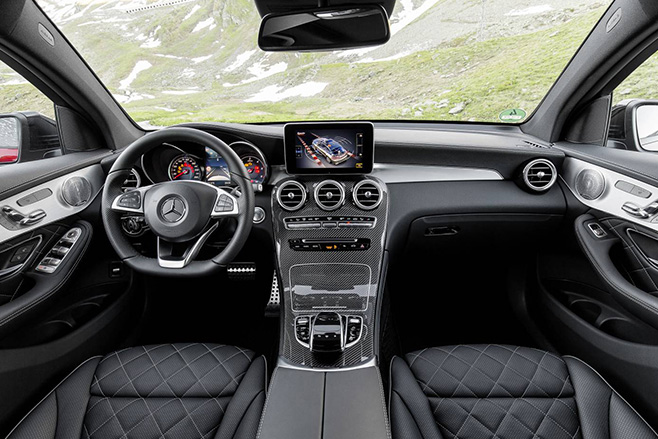
All GLC Coupes come standard with all-wheel drive and a nine-speed automatic transmission, and all are equipped with an AMG Line bodykit, 20-inch AMG alloy wheels, sports suspension with adjustable dampers, a digital radio tuner, power tailgate, LED headlamps, Garmin Map Pilot satellite navigation and a 360-degree parking camera system.
The Mercedes-Benz GLC 250 Coupe and GCL 250d Coupe score extra luxuries, with keyless entry, leather upholstery and the Driver Assistance Package Plus that bundles, among other things, lane keep assist, active cruise control and blind spot monitoring.
Safety equipment includes nine airbags, stability control, traction control, a pedestrian-protecting active bonnet, driver fatigue sensor, autonomous emergency braking and collision warning.
The full range is available to order now, though the GLC Coupe’s official on-sale date is November 2016.
Ford Performance Vehicles was announced with much fanfare in 2002, but dead by 2014. Twelve years isn’t a long time in the car world yet FPV still managed to make a sizable mark on the Australian automotive landscape in that time, releasing 59 distinct models across three generations of Falcon and one generation of Territory.
It’s a long list, but we’ve boiled it down to five of the most notable examples. With Ford’s Falcon on the cusp of fading away, let’s take a moment to remember some of the wildest home-grown Fords ever.
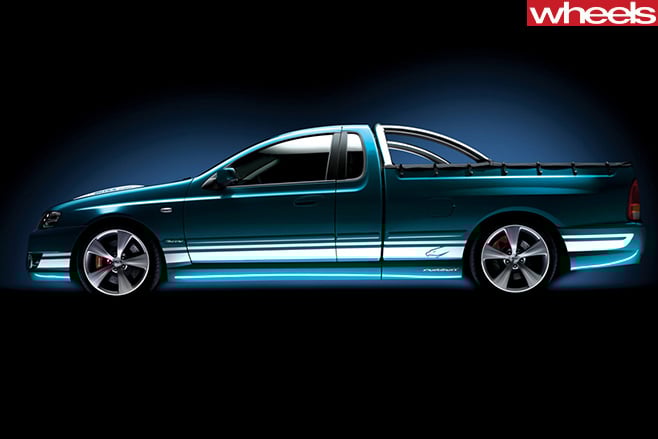
2003 FPV Pursuit
FPV’s king-of-utes was a fixture in the FPV lineup from 2003 all the way until the brand padlocked the doors at its Campbellfield facility. Whether in basic Pursuit or harder-core Super Pursuit trim it always managed to deliver an, uh, exciting drive, courtesy of its leaf-sprung live axle rear suspension.
2004 FPV F6 Typhoon
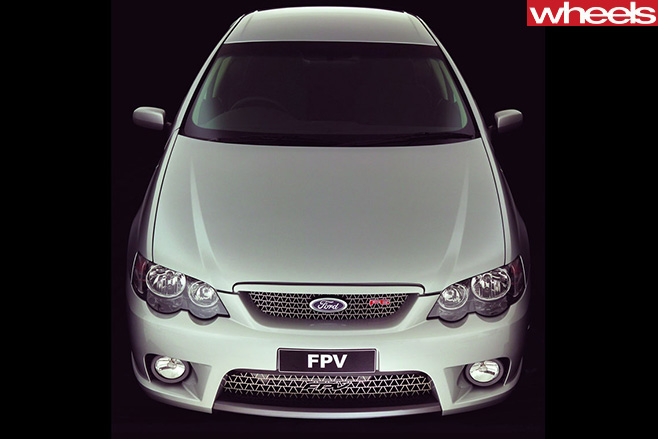
In 2004 FPV literally turned up the boost on the Falcon XR6 Turbo to create the Typhoon, in the process building the torquiest Australian production car ever; power was a generous 270kW but torque was a monstrous 550Nm. To put that into context the FPV GT-F, Ford’s last-ever V8 powered flagship, only made 19Nm more – and it was ten years newer and had a supercharged 5.0 litre V8 under the bonnet.
2008 FPV F6X
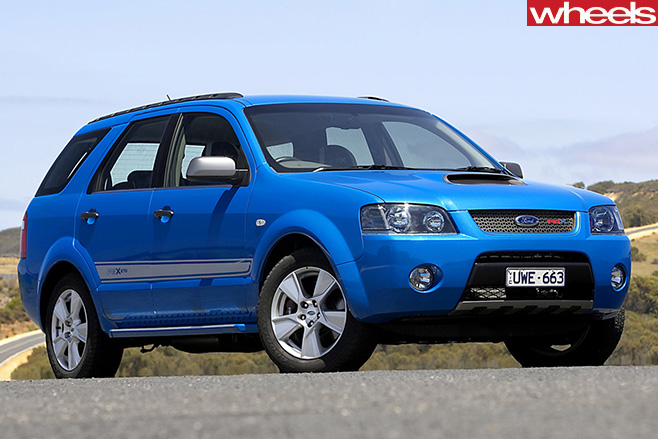
FPV entertained the idea of breathing some fire into the Focus hatchback to create a home-grown Ford Focus RS (which had launched in Europe around the same time FPV was established), but the business case didn’t stack up. FPV didn’t stop looking for a non-Falcon based model to tweak though, and eventually waved its wand over the Territory to create the F6X.
2009 FPV GS
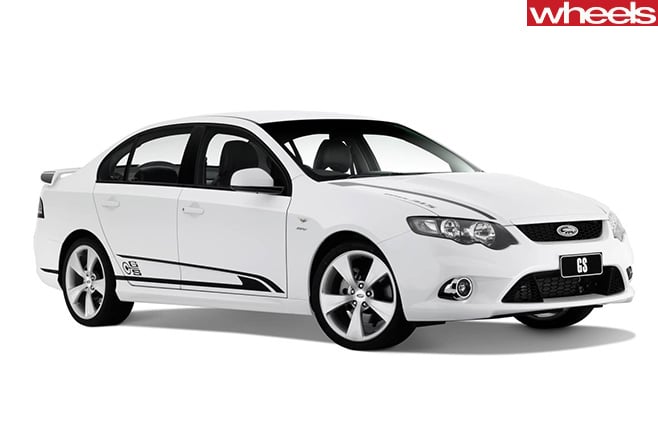
The FPV GS was only offered in the FG generation, but with a grunty 315kW supercharged V8 and a lower price of entry to the full-fat 335kW GT, it was ironically the closest modern-day equivalent to what the original Falcon GT was supposed to represent: an affordable performance car.
2014 FPV GT-F
‘F’ as in ‘Final’. The GT-F was FPV’s swansong, released as one last bellowing hurrah just before Ford and Prodrive shut down their fast-Ford operation.
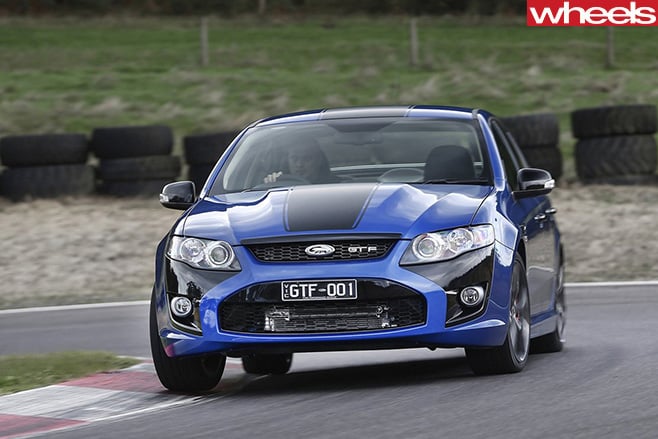
With a tauter suspension tune and new wheel and tyre package that improved cornering grip (plus a hefty set of brakes), the GT-F also possessed the best handling characteristics of any FPV. With launch control helping it hook up it could go, stop and corner like a true sports sedan.
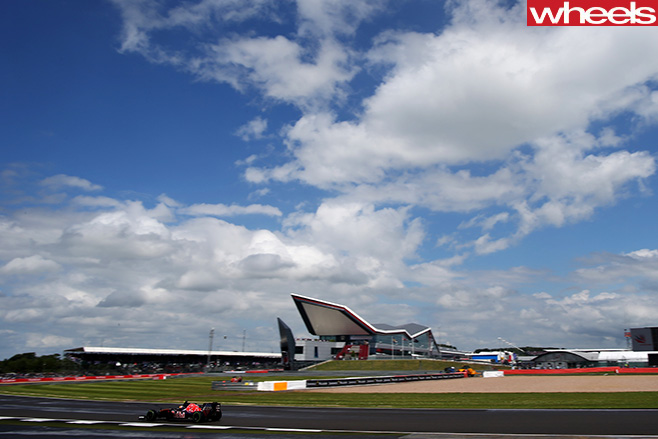
The sale of Britain’s most famous Formula One track, Silverstone, to Tata-owned Jaguar Land Rover has been blocked by Porsche, according to the London Telegraph.
JLR has been planning for some time to acquire the debt-heavy circuit from present owner the British Racing Drivers Club for a figure of 33 million pounds.
But Porsche, which operates a driving centre at Silverstone, has a covenant within its long-term lease giving it a veto to block competitors from using the track from more than 45 days per year.
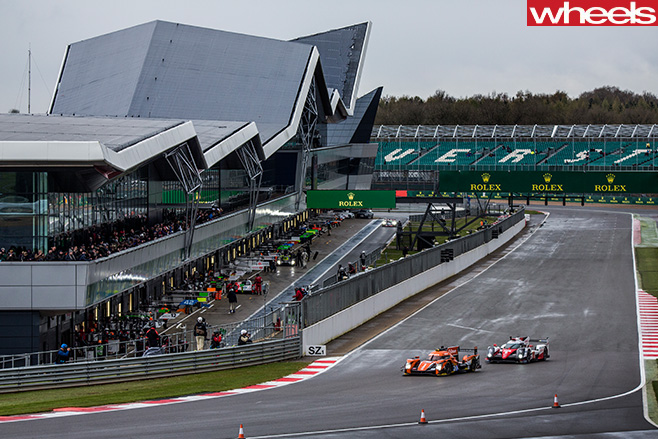
Ambitiously, JLR intended to use Silverstone as a high-performance test track for its customers, as well as building offices for up to 1000 staff, along with a hotel and heritage centre.
Tomlinson’s offer letter states he “would leave the BRDC with an upfront payment of £6m, capital investment, no debt responsibilities and ongoing rent of £1m per year for a further 248 years (index-linked). This equates to a commercial value today considerably in excess of the Tata deal.”
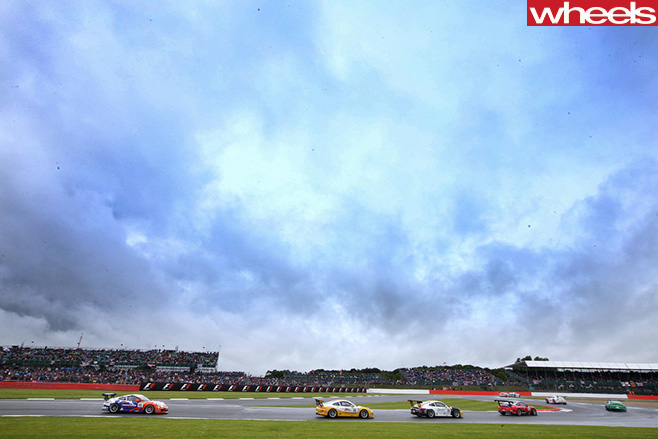
Silverstone’s growing losses and need for investment have forced the BRDC’s push to sell.
It is the only F1 venue bereft of government funding.
Take $850,000 worth of pin-up performers, whip ‘em along, fling ‘em around, listen and feel. John Carey and a very satisfied test team explore the edges of four exotic envelopes.
First published in the May 1994 issue of Wheels magazine, Australia’s most experienced and most trusted car magazine since 1953.
Lips form the F word as heads swivel to watch the chilli-red car growl by. Three syllables… “Fer-ra-ri”. But the effect of the 348ts isn’t universal. There are those who do not stare. While almost everyone’s a motorist, only some of us are drivers. It’s the eyes of the latter which are arrested by the sight of our passing.
The same is true, of course, from inside the black Honda NSX, the dark red Lotus Esprit S4 and the metallic grey Porsche 911.
Price and rarity alone are enough to set this gang of four apart from the muddling crowd. But that’s only part of what makes them special. If the kerbside voyeurs only know…
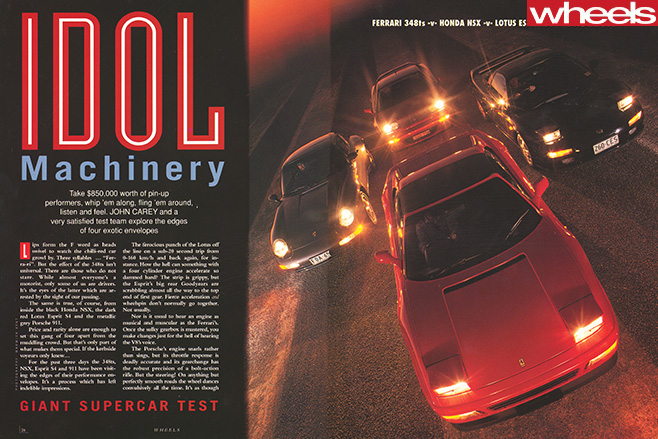
The ferocious punch of the Lotus off the line on a sub-20 second trip from 0-160 km/h and back again, for instance. How the hell can something with a four cylinder engine accelerate so damned hard? The strip is grippy, but the Esprit’s big rear Goodyears are scrabbling almost all the way to the top end of first great. Fierce acceleration and wheelspin don’t usually go together. Not usually.
Nor is it usual to hear an engine as musical and muscular as the Ferrari’s. Once the sulky gearbox is mastered, you make changes just for the hell of hearing the V8’s voice.
The Porsche’s engine snarls rather than sings, but its throttle response is deadly accurate and its gearchange has the robust precision of a bolt-action rifle. But the steering! On anything but perfectly smooth roads the wheel dances convulsively all the time. It’s as though the steering is eager to tell you about the shape of every fragment of gravel passing beneath the front wheels.
The hallmark of the Honda, on the other hand, is its serenity. Tumbling down a sinuous mountain pass, the Porsche cannot escape the pursuing Honda. The driver of the German car is working hard, tempering exuberance with caution because, in places, the road is damp. The NSX driver, meantime, wonders how Honda’s workers stitch the leather covered dash so perfectly it could be mistaken for a plastic moulding.
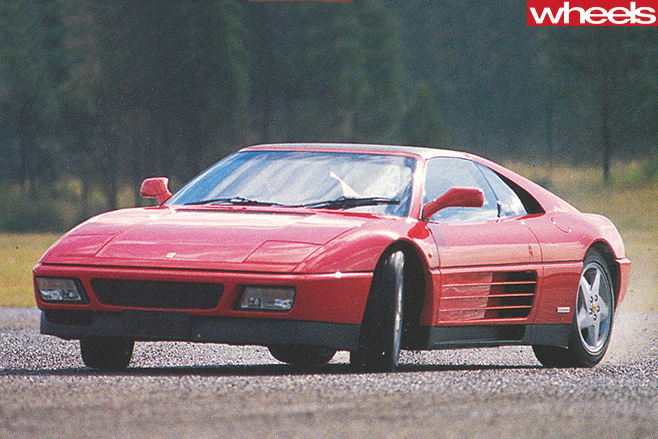
In simple terms of basic layout the Ferrari and Lotus are perhaps the most alike. The Italian and British cars both mount their engines lengthways behind the cabin. Both have double wishbone suspensions at all four corners.
But there are large differences too. The Ferrari 348ts is powered by a naturally aspirated 3.4 litre V8 which can trace its lineage back to the ’70s, the Esprit S4 by a 2.2 litre turbo four of similar age. The Ferrari’s body is the work of lambrusco-sipping metalworkers, that of the Lotus is manufactured by beer-drinking glass fibre fabricators before being married with a steel backbone frame.
Honda’s NSX isn’t burdened by a long, glorious and carefully nurtured pedigree. The designers of this car weren’t impeded by any pre-existing notions of what a Honda-badged supercar should be like. As well, despite the popular prejudice, there’s nothing imitative about the NSX. The company’s adoption of a V 6 engine with a capacity of only 3.0 litres is alone enough to set it apart from the others. And while that engine is mounted midship, it sits crossways in the engine bay. And let’s not forget its all-aluminium body and mostly aluminium suspensions, either.
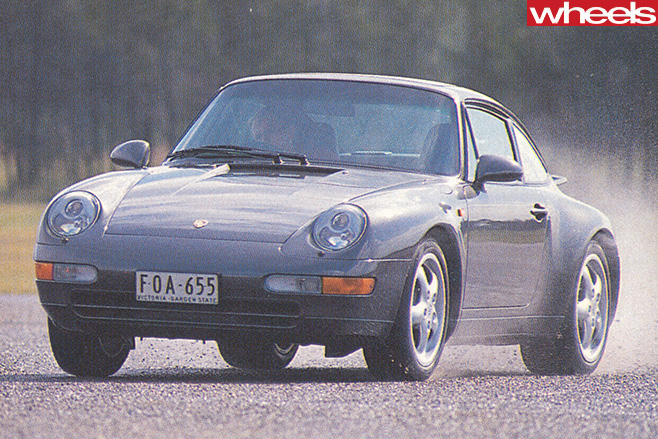
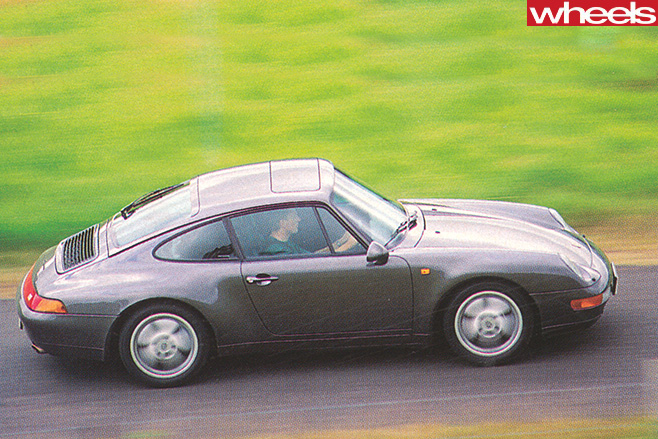
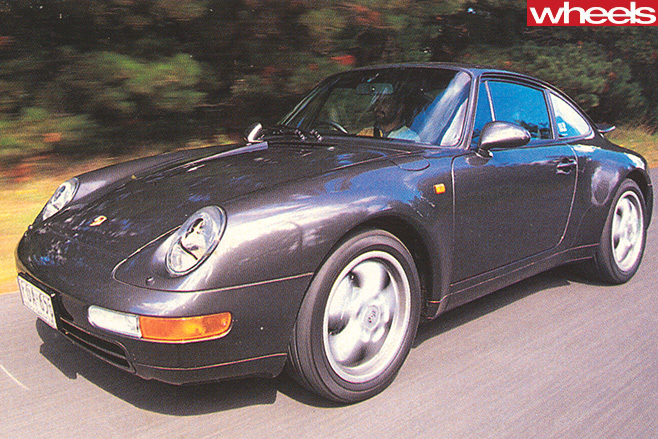
But among this group of distinctly different cars the Porsche is, technically speaking, the most ruggedly individual of all. Its shape and proportions are rooted in a long-ago era. So, too, is its basic layout. Despite the latest makeover of the 911, the most significant in the car’s long history, it remains an amalgam of 30-year-old decisions. Most importantly of all, the 911’s 3.6 litre horizontally opposed and air-cooled six is in the car’s tail, slung aft of the rear wheels. If Porsche’s engineers were to sit down to design the 911 today, it’s doubtful that they would (a) opt for an air-cooled engine in the first place, (b) put such an engine out of the breeze in the car’s tail, or (c) outside the wheelbase. The 911 is at once a prisoner of its past and a triumph of painstaking development engineering. The car has no right to work so well.
Four quite different cars on the drawing board, four quite distinct driving experiences . . .
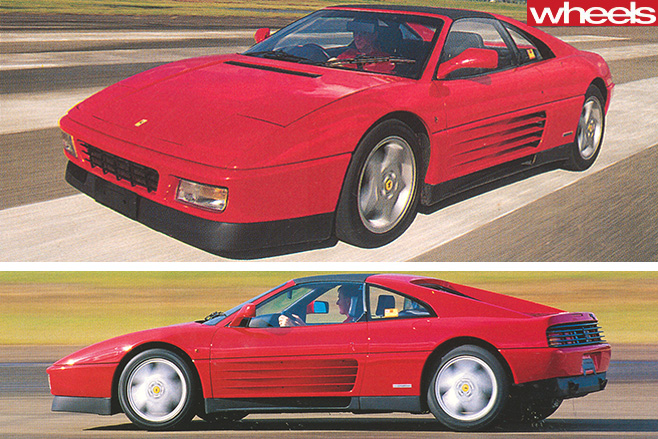
It’s only when you allow the engine full voice that the 348’s drivetrain really works. Though the clutch isn’t too heavy, shifting gears is neither easy nor pleasant at low to middling speeds. The chrome lever demands determined application of muscle all the time. Pussy with it and it’s a bulky bastard. The difficulty is magnified by a race car shift pattern which puts second to fifth on a conventional H, with first on a left-and-back dogleg. Further confounding efforts to achieve low speed smoothness is a heavily damped throttle pedal. It requires more than usual foot force and, when released, springs back with deliberate slowness.
It all works – and only works – when the Ferrari is bullied up to speed. Only then does this drivetrain achieve harmony. With the engine singing full-throated, the driver feels as much a conductor as a steerer. At each pause for breath and a gearchange, the lever – now moving fast and fluently between ratios – clickclicks like knitting needles as it slides through the trademark exposed gate. The pure gut appeal is no surprise to anyone who knows why Ferrari has the reputation it does. It’s very much like what you always imagined a Ferrari might be.
And the Ferrari offers perhaps the best deal of all for the passenger. The dash is low and distant, and there’s abundant legroom (unlike the Porsche).
Visibility is good in all directions. If it weren’t for the recalcitrant drivetrain, the Ferrari would be a great supercar for doing the shopping. Like everything except the Lotus, the interior is black on black, relieved only by the garish orange of the markings on the two major and four minor dials and the green status lights of the ventilation system. Oh, and the yellow background for the prancing horse horn button set in the middle of the Momo wheel. Airbag? Domani…
The 348’s ride is very damned hard. If your stomach muscles aren’t firm the 348 will make you fully aware of the fact. Its steering is unassisted and quite heavy It loads up, but it’s not the senseless kind of muscle building that’s the result of second rate front suspension geometry. The changes in weight telegraph vital information about how the front tyres are tracking and how much work they’re doing. The wheel wriggles over other than perfect road surfaces too, though not as energetically as the Porsche.
You might niggle about the firm suspension and weighty steering round town, but there’s no argument it works when attacking a challenging road.
The Ferrari turns in instantly, all of a piece. Its engine response is precise and so is its chassis’ response to the engine. The 348 is a car that rewards smooth and precise driving with ferociously fast, flowing progress.
The Honda’s cockpit fits like a glove… and is about as complicated to use. Everything is exactly where you expect to find it. But the cabin is a close fit, tighter than Porsche and Ferrari.
But the outside of the car is not so evocative. The Honda’s looks are the least exciting of all, by consensus. Are people disappointed when they find out it’s not a Ferrari? Does interest wane when they discover the engine has but six cylinders? Yes and yes.
Huh! What do we care for the opinion of someone who can’t tell a Honda from a Ferrari?
The NSX is a quite different driving experience from the Ferrari; it rides more compliantly than the 348, has deliciously well weighted and feedback-free steering, and is every bit as quick. Its chassis invites familiarity and cultivates confidence more easily than any of the others. Partly it’s the application of technology like the (switchable) electronic traction control, which means you can use full throttle exiting water slicked turns without fear of the consequences. But mainly it’s the sheer, overwhelming competence of the suspension.
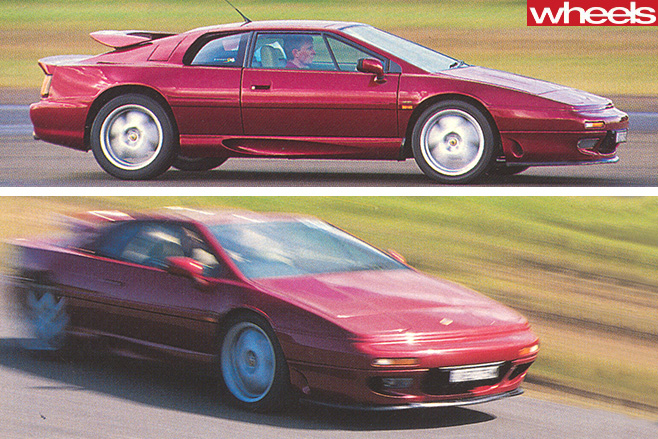
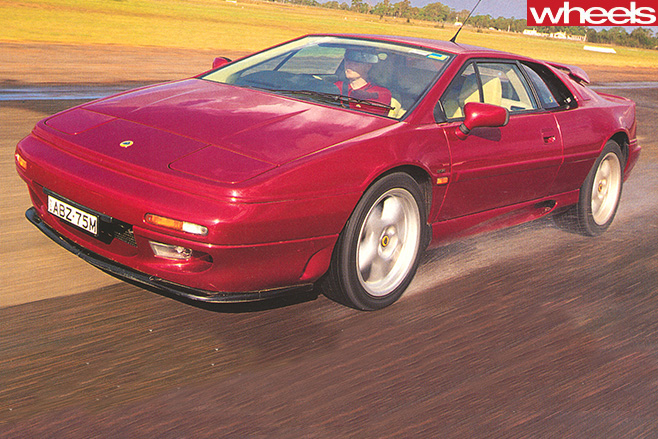
The Lotus delivers a quite different impression – that of a master-built kit car. But for sheer off the line savagery the Esprit feels the most ferocious and records the numbers to confirm the impression (see panel).
Spooled up to 5000 revs, the 2.2litre turbocharged and intercooled four sounds wild. Sidestep the clutch and the Tupperware Terror explodes forward. The engine stays in the boost zone, the tyres spin. Such is the bounty of turbo torque that the rear rubber only hooks up to the bitumen right at the top of first gear. By this time you know there’s a feral powerplant just behind your head. The noise is like a butcher’s handsaw as it slices through bone. It’s a shrill, whining, insistent, thrilling noise.
The gearchange is far from satisfactory though. The forward gears move in a conventional pattern, but the feel through the lever is more vague and rubbery than the others. As well, the lever is about 25mm too long for a natural grasp with left elbow resting on the broad central tunnel. Reverse is both unnatural and awkward to engage. It’s left and back, with a collar detente to be lifted to get beyond the first/ second plane.
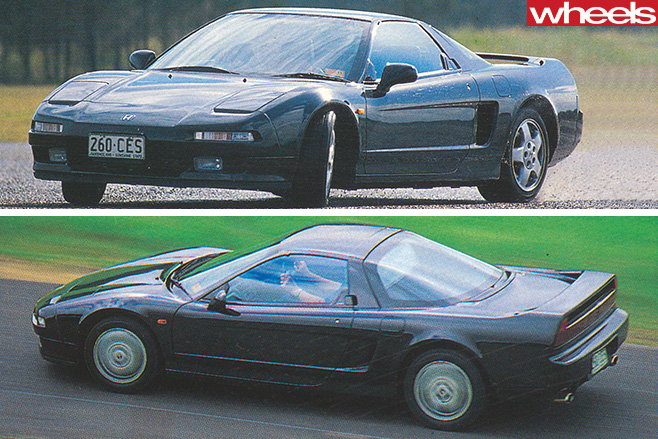
Visibility is poor enough that driving in traffic is the stuff that nightmares are made of There are sizable blind spots to the three quarter re.ar on both sides. Rearward visibility through the letterbox slot window isn’t good either, and the sail panels sloping down from the B pillars pick up reflections which flash distractingly in the interior mirror.
Only beyond choking city traffic do the British supercar’s strengths become evident. The steering is pretty good, you soon notice. Though the non-adjustable wheel is low set – partially obscuring the two major instruments – weight and feel are nicely judged. At the straight ahead there’s no writhing feedback through the rim of the small diameter leather-bound rim. And you don’t have to chase it all over the place on poorly surfaced roads. It’s better than both Porsche and Ferrari, demanding less attention on backroads in cruise mode. Ride quality falls somewhere between the Ferrari and the Honda.
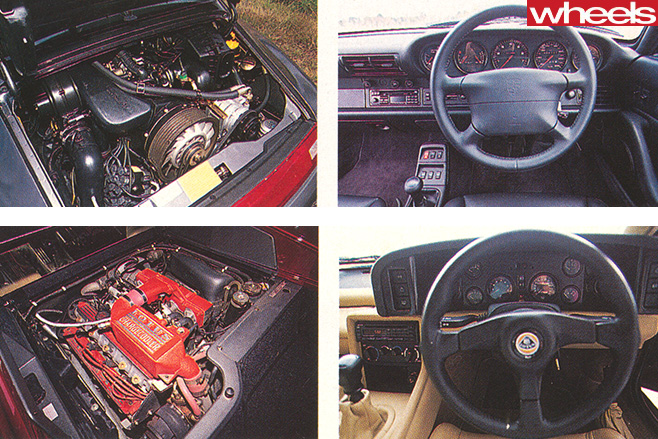
Cautious in, sure, but no such trauma on the way out. The Lotus hunkers down and drives, though it does understeer more readily than the Ferrari or the Honda. There’s no real turbo lag to speak of, but the delivery differs. It has the typical turbo trait of lacking those last few degrees of precise throttle response.
The Porsche’s engine, though, is the most satisfying of all. The accuracy and immediacy in its answers to the accelerator pedal are really gratifying. No turbo, no VTEC. Just Grade A thrust in direct proportion to right foot pressure.
Besides a honey of an engine, the 911’s other impressive traits are its practicality and unbreakable feel. It’s the car easiest to get into and out of, mainly because it’s older and taller than the others. But once inside that age is apparent in a different way. The markedly offset pedals sprout from the floor. If these guys can do a redesign of the 911’s rear suspension, why, oh why, can’t they do a nice set of pedals? You have to make sure you push the clutch with the top of your foot so your toes don’t hit the lower edge of the dash.
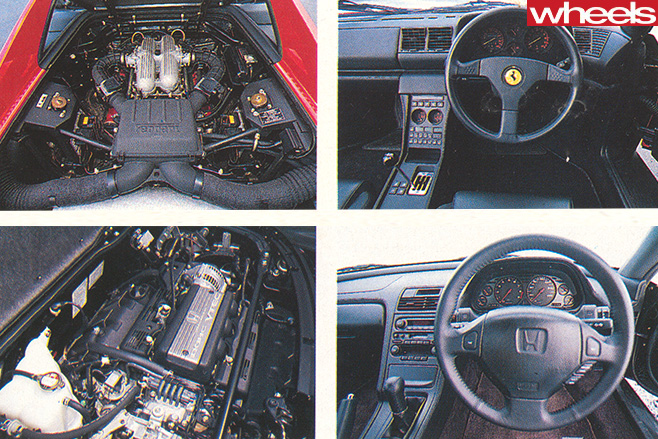
But the cabin is relatively roomy, for its faults. The 911 is the only one to offer any attempt at accommodation in the rear. Though it’s unlikely any adult will ever squeeze in there, the amount of cabin space is uniquely accommodating among this company. Visibility is very good out of the Porsche, too, though it’s a close thing between the German and Italian cars.
In other ways, which count more, the 911 is a mixture of the superb and inexcusable. It has, for example, the only six speed gearbox. It’s the best shifter of these four. But does the steering really need to squirm in your hands the whole time?
Dynamically it marches to a different drummer. Brake during turn-in to keep the nose nailed solidly to the bitumen. Then squeeze on the power for a ticket in the front-end grip lottery on the way out. The Porsche squats on its haunches and thrusts hard, the front tyres go light and very sensitive to changes in surface conditions. Particularly wetness.
This is a car which confronts driver inadequacy head on. In character it’s the most challenging car of this exotic group. And because of this the Porsche makes a driver feel a bigger hero. It might be better behaved than any previous 911, but you still emerge from the experience smiling because you’ve conquered the car’s fierce queerness.
In this respect, the Porsche is the anti-Honda. The driver of the NSX merely co-stars in an act of awesome competence. The NSX, by almost any rational measure, is the best, most perfect, of these cars. And this very excellence limits its appeal.
The NSX will get there every bit as quickly, without the pulse racing and palms sweating. Without feeling you’ve performed an automotive opera with the 348ts, or have whipped a wild 911 into submission, or have pulled the pin from an explosive device called Esprit S4.
Don’t try to explain such satisfaction to people who are mere motorists. They just won’t understand
You may have heard the owner of a Peugeot 205 GTI shout ‘sacre bleu!’ as the hammer dropped at £30,938 (AU$53,000) for this particular like-new example at a classic car auction held this week in Silverstone, north-west of London.
The silver 1989 Series II with 13,000km on the clock was described as “original and superb” right down to the crusty Pirelli P600 tyres that have seen 27 years of (admittedly light) service – this 205 has been moth-balled in a barn since 2004. It sold for £12,000 ($20,500) over the reserve price.
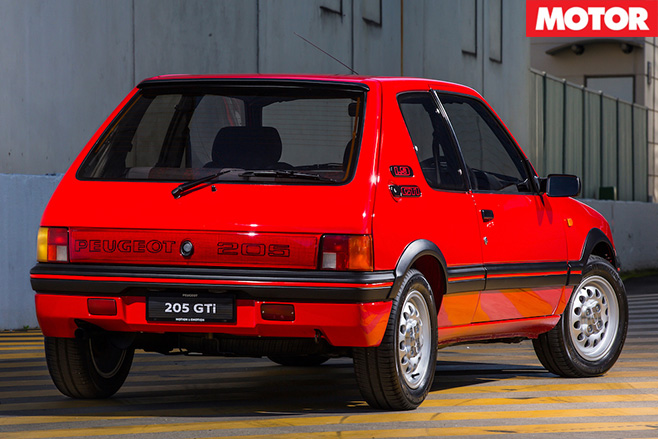
In Australia we received only the bigger engine in the iconic front-drive Peugeot hot hatchback, but due to catalytic converter restrictions it was detuned from 130bhp (97kW) to 75kW for our market.
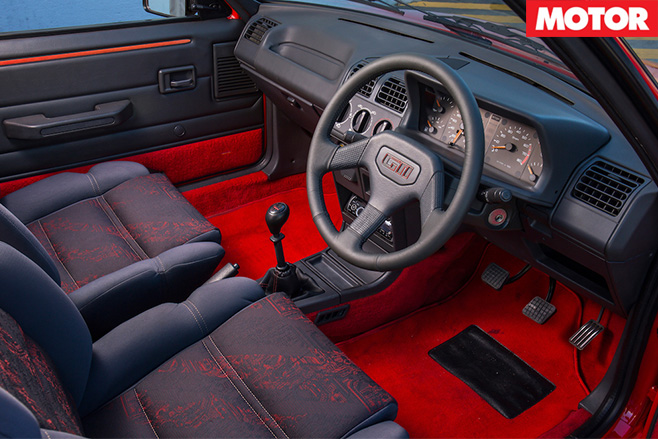
To coincide with the release of the Peugeot 208 GTi 30th Anniversary homage to the original, Peugeot Australia purchased a 205 GTI then set about restoring it. With 230,000km on the clock, the red hatchback (pictured) was stripped and resprayed, with plastics refurbished and steering wheel and alloy wheels reconditioned.
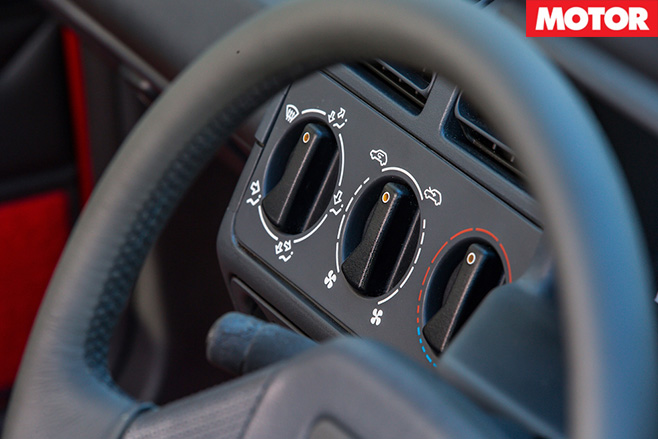
In the local classifieds, Peugeot 205 GTI models are currently asking between $4500 and $20,000 depending on age, condition and kilometre reading. Just call it a French Falcon GTHO…
THE facelifted Holden Colorado looks like a ute, carries like a ute and drives like a ute. But don’t call it ute a ute.
Nope, it’s a truck – apparently. Just without the big Mack or Freightliner badge on the nose.
It seems Holden is shying away from using the ute name that was associated with Ford’s 1934 invention that married a passenger car with a large load-carrying tray. It took almost two decades, but in 1951 Holden followed with the first of its utes, creating what is arguably the most iconic Australian car ever.
But it appears the ute is on borrowed time, at least in name.
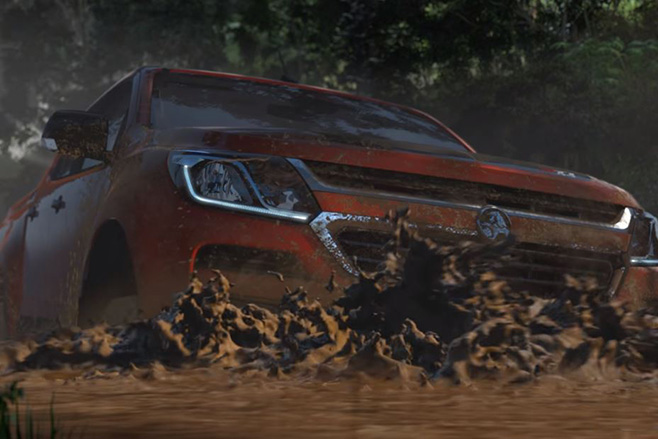
In a presentation detailing the heavily updated version of a car that’s been underwhelming in recent years Holden went out of its way never to use the “u” word for its Colorado.
“It will be different from the truck you would drive in Brazil or Thailand,” explained the lead engineer on the project, Amelinda Watt.
“We … firmly believe the new Colorado is the most compelling package in the truck segment at the moment,” said product marketing general manager Ben Lasry.
And, it seems, Holden thinks the Colorado is closer to a truck than a car.
“… show everything the car could be … the truck could be, sorry,” said the group manager for accessories, Joe Basile.
“Ford can get away with it, why not us?” said one executive.
And that is a big part of the reason for Holden wanting to create a truck rather than a ute.

The Ford Ranger is the current darling of an increasingly competitive ute market, and a car Holden would desperately love to beat, having been thrashed by it in recent years. And Ford calls the Ranger a truck, in line with its American heritage where utes are known as pick-up trucks.
“We purposely want to call it a truck,” said Lasry. “It’s all about the repositioning [of Colorado] … General Motors has a proud heritage in trucks … we want to leverage it.”
Lasry suggested it was also about separating the Colorado from the Holden Ute, the latter based on the Commodore and due to cease production late in 2017.
“We see a ute really as an Australian body style.
“All our [marketing] material will call it a truck. It tows three-and-a-half tonnes, it goes off-road, it’s rugged and big – a bit more than a ute. At the end of the day it looks a bit like a smaller version of a full-sized truck.
“We really want to get people thinking about Colorado differently.”
So, is the reposition of the Colorado all about leaving the door open for a new-generation Holden Ute – one based on a car – in future?
“No, I don’t think so,” said Lasry. “There’s certainly nothing I know of in that space.”
Three teaser images of Hyundai’s incoming third-gen Hyundai i30 hatchback have been released, showing for the first time the latest evolution of the Korean automaker’s bold new styling language.
Designed under the watchful eye of Chief Design Officer and former Audi designer Peter Schreyer, the 2017 Hyundai i30 will make its global debut on September 7 in an online reveal, before heading to the Paris Motor Show at the end of September for its first public showing.
With a less organic design than the current i30 (which launched just four years ago), the new car trades in the bulky styling of its predecessor for cleaner lines, finer details and a more European flavour. Hardly surprising considering the new i30’s design homeroom was based in Europe.
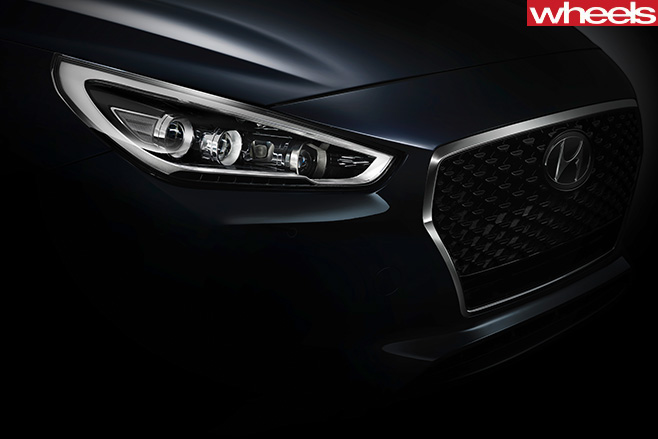
The third generation i30 will also boast an athletic edge, courtesy of the highly-anticipated Hyundai i30 N variant that’s expected to go toe-to-toe with established European hot hatches like the Volkswagen Golf GTI and Megane RS with a turbocharged 2.0 litre engine, around 200kW of power and roughly 300Nm of torque.
“It’s a car for everybody,” said design chief Peter Schreyer.
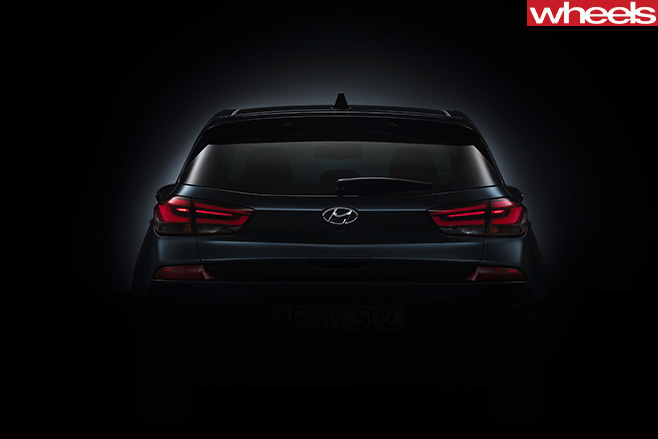
Local suspension tuning and calibration is expected to begin soon, though expect the third-gen i30 to go on sale locally toward the middle of 2017.
The current-generation defied predictions, and was the best-selling car in Australia for a number of months earlier this year.
Honda’s all-new Civic sedan goes a long way toward giving the jaded nameplate some much-needed shine.
WHAT IS IT? The bold new Honda Civic VTi-LX sedan sports the car manufacturer’s first 1.5-L VTEC turbocharged engine. It generates an impressive 127kW at 5500rpm and 220Nm yet has a claimed average fuel consumption of just 6.0L/100km. The top of the range VTi-LX is priced at a competitive $33,590 ($34,165 with metallic paint). It sits above the VTi, (starting at $22,390), the VTi-S, VTi-L and Honda Civic RS.
WHY WE’RE TESTING IT In the 1990s and early 2000s the Honda Civic was one of the best sellers in its class. A staggering 23 million have been sold globally since its launch in 1972. Then Honda dropped the ball and fell off the radar resulting in plummeting sales.
But the car maker is back. Using the slogan “Dare to Dream”, Honda’s introduced its “bold” new Civic. The big question: Is the 10th generation Honda Civic VTi-LX the stuff of which dreams are made?
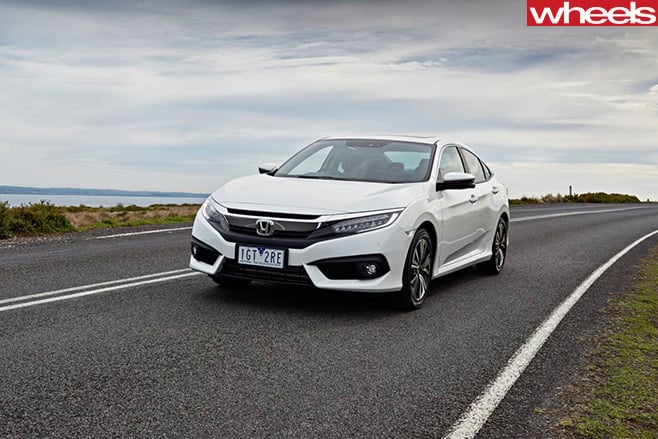
THE WHEELS VERDICT The VTi-LX is a more sophisticated drive than the similarly priced Hyundai i30 SR Premium. Its fuel efficiency is exceptional and price attractive. Does it fulfil its brief and appeal to younger drivers? I think they’ll be holding out for the hatch due early 2017. But the Civic VTi-LX should not be underestimated. It’s a sleek drive and a return to form for the once popular brand.
THE WHEELS REVIEW I wanted to love this car the moment I saw the new Honda Civic advertisement. The ad shows a frustrated, undervalued TV reporter crossing live from a banal dog show, when lo and behold! A meteorite shoots across the sky. Knowing a career defining scoop when she sees it, she jumps in her new Honda Civic and successfully chases the story.
Having been a TV reporter for 25 years, I have covered more than my fair share of dog shows and longed for a meteorite strike to catapult my career into the stratosphere. Sadly, like the ad, my dream is accompanied by Supertramp’s 1974 hit “Dreamer, you’re nothing but a dreamer”…
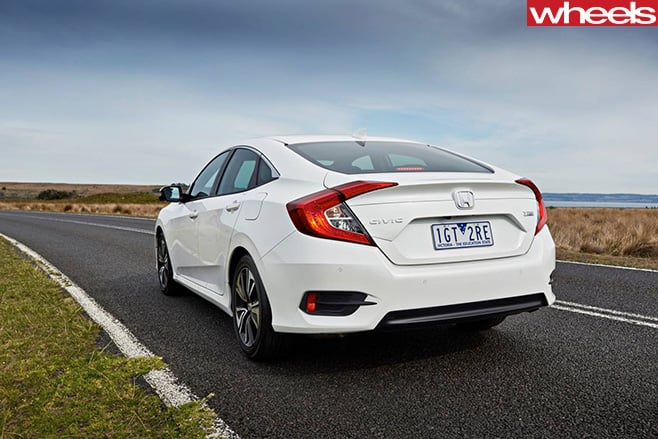
By old school standards the 1.5-litre engine isn’t big. But this one’s turbo-charged, giving it similar grunt to many 2.0-litre naturally aspirated rivals. The VTi-LX generates an impressive 127kW and 220Nm; with that sort of oomph, drivers will not be left behind at the lights.
On longer trips the VTi-LX is noticeably quiet. Steering is comfortable and the car holds the road well.
My suburb’s littered with speed humps and the VTi-LX cruises over them without issue. Its suspension strikes the right compromise between point-and-scoot handling and council-imposed bump absorption.
Sticking with its “Earth Dreams” (which I’m told is environmentally sound) philosophy, the VTi-LX’s claimed average fuel consumption is a low 6.0L/100km. Fortunately, this car does what it says on the box; with a combination of freeway and city driving I recorded 6.6L/100km.
This may be in part due to the Continuously Variable Transmission. Despite a persistent drone on acceleration, the CVT delivers a smooth drive. Even so, I’m a manual fan and I’m disappointed this model can’t be had with three pedals.
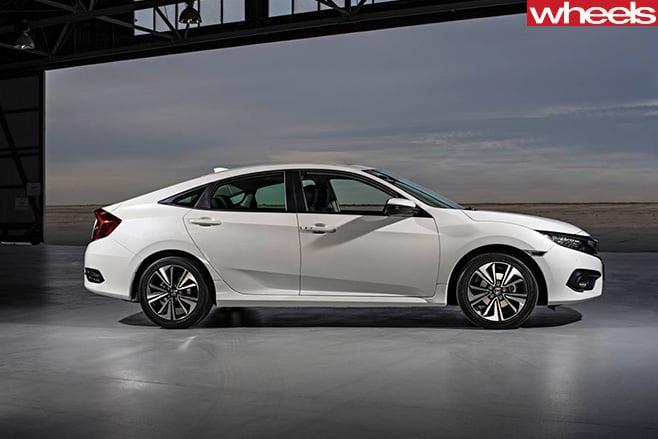
The cavernous 517L boot is perfect for smuggling your entire family into the local drive-in. A space-saver spare tyre is partly responsible for the Civic’s immense luggage-swallowing capacity.
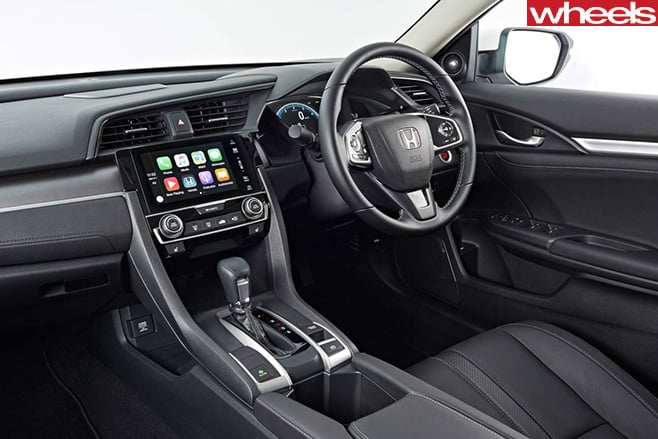
The cockpit looks and feels classy, with comfortable leather appointed seats. These can be electronically adjusted, allowing for a perfect driving position.
The electronic dash display will appeal to Gen Y and below, but it may prove a little too high-tech and flashy for older drivers. The new LCD instrument display panel comes with all the bells and whistles like digital radio, built in satnav and Bluetooth phone and audio connectivity. It is, however, blindingly confusing. Drivers can “swipe, tape and pinch” the controls, just like a tablet or smartphone. Good luck trying to safely do that while you’re driving.
Honda offers Apple CarPlay and Android Auto saying “just plug in your phone and go”. Ummmm….plug in where exactly? You need to be an Olympic gymnast to find the USB input. One is hidden deep behind the centre console. I found it by mistake while fumbling around on the floor for my dropped sunglasses. The other USB connection hides in the armrest console which only slides back halfway – until you wrestle with it a bit more, that is, and realise it can in fact lift up.
The sunroof is perfunctory without being panoramic.
Honda’s top of the range VTi-LX packs additional features that I liked.
Heated seats, for starters. The first thing women ask me about a new car is: “Does it come with heated seats?” This model does not disappoint.
The climate control system is easy to use. Unfortunately there are no separate vents for rear passengers.
The 452-watt premium audio system with 10 speakers plus subwoofer making listening to Supertramp (or you know, something a bit cooler) entertaining. Alas, why kill the good old volume knob? It’s been replaced by both an overly sensitive touch control on the glass screen and a steering wheel mounted roller control. Both are maddening. It’s impossible to get the right volume level.
Then there’s Honda’s Sensing Suite of driver assist technologies. Some of these, like Lane Keeping Assist (which sensing if you’re wandering from the lane) and Adaptive Cruise Control with Low-Speed Follow (which slows down if the car in front of you does), can be infuriating for control freaks. But they are a step closer to autonomous driving which will apparently lead to fewer accidents.
I also like the VTi-LX’s Lane Watch feature. It’s mounted beneath the left-hand door mirror and projects any potential blind spots onto the screen the moment you indicate left or right.
SPECS Model: Honda VTi-LX 4door Engine: 1.5L 1498cc 4cyl, DOHC VTEC Turbo Max power: 127kW @ 5500RPM Max torque: 220Nm @ 5500RPM Transmission: Single speed Constantly Variable Transmission (CVT) Fuel economy: 6/100km Price: $33,590 ($34,165 with metallic paint).

WhichCar cuts through the new car jargon to deliver honest, easy-to-understand and authentic advice to help you buy a better, smarter, safer new car.
TELL ME ABOUT THIS CAR
Honda has sold an impressive 23 million Civics since its launch in 1972. The brand used to be hot, but for some reason they drove right off the car map.
Now, Honda – using its “Dare to Dream” motto – is trying to woo back drivers with its bold, new 10th generation Honda Civic.
The top of the range VTi-LX sedan boasts Honda’s first 1.5-litre turbocharged engine. Honda claims an average fuel consumption of just 6L/100km. This model comes with all the bells and the whistles and is priced at a competitive $33,590 ($34,165 with metallic paint). The entry-level model is available for just $22,390.
Only the sedan version is currently available but for those looking for something a bit zippier, a hatch is due to arrive in 2017.
STRENGTHS
- Efficiency. Average fuel consumption is a claimed 6L/100km. Real life driving, with a combination of freeway and city travel, saw an impressive 6.6L/100km.
- The 1.5-litre turbocharged engine provides ample power (127 kW @ 5500RPM) and performance.
- The boot’s 517L capacity is huge thanks to a space saver spare.
- The classy, leather appointed cabin gives it a more premium feel.
- It’s got heated front seats – you’ll never go back!
- The Civic comes with a 452-watt premium audio system with 10 speakers and a subwoofer.
- The VTi-LX comes with Honda’s new sensing safety suite of driver assist technologies including Lane Keeping Assis” (which detects if you’re wandering from a lane) and Adaptive Cruise Control with Low-Speed Following (which slows the car down to match the speed of the vehicle in front).
- The Lane Watch feature, mounted beneath the left-hand door mirror, projects any potential blind spots onto the display screen the moment you indicate left or right.
- At 4.64m in length it’s a big vehicle. Younger drivers may prefer the shorter hatch, due for release early 2017.
- The LCD touch screen comes with digital radio, built in satnav and Bluetooth phone and audio connectivity, but it’s overly complicated and confusing.
- The USB input is almost impossible to find. Once you do source it (tucked either in the back of the armrest console or underneath the instrument panel) it allows Apple CarPlay and Android Auto.
- Honda has killed off the volume wheel. Instead it relies on both an overly touch-sensitive control on the glass screen, plus an infuriating steering wheel mounted roller control. Neither of these make it easy to achieve the correct volume.
- The sunroof is perfunctory and far from panoramic.
- It’s RIP for the manual gearbox. This model only comes equipped with a Continuously Variable Transmission, which takes a little getting used to.
