
Existing and new buyers of a Ford EV now have the option to take up the installation of a 7.4kW single-phase AC wall charger, installed by Evie Networks.
A 7.4kW connection is far from the fastest way to charge, as our guide here explains, but in most cases it’ll do the job for an overnight refill.
The combined hardware and installation cost comes at a cost of $2580, and the deal includes $400 worth of free charging across Evie’s network of 230 DC fast charging sites. That’s equivalent to roughly 690kWh of charge, or nearly 10 full charges of a 71kWh Mustang Mach-E.
Buyers who already have three-phase power can upgrade to a faster 22kW charger for an extra $300, and buyers with existing solar power can have the charger integrated for another $300 on top.
The $400 charging credit can be used immediately at the time of purchase, even before installation is carried out, and will be valid for 12 months.
A three-year hardware warranty is provided by Evie, along with a two-year warranty on the installation work.
Ford’s existing EV line-up in Australia includes the newly launched Mustang Mach-E SUV and E-Transit, to be joined later this year by the upcoming (and still to be revealed) Puma Gen-E.
Owners of the incoming Ranger PHEV and the now retired Escape PHEV can also use the Evie charger, although charging speeds will be limited by the PHEVs’ 3.6kW system.
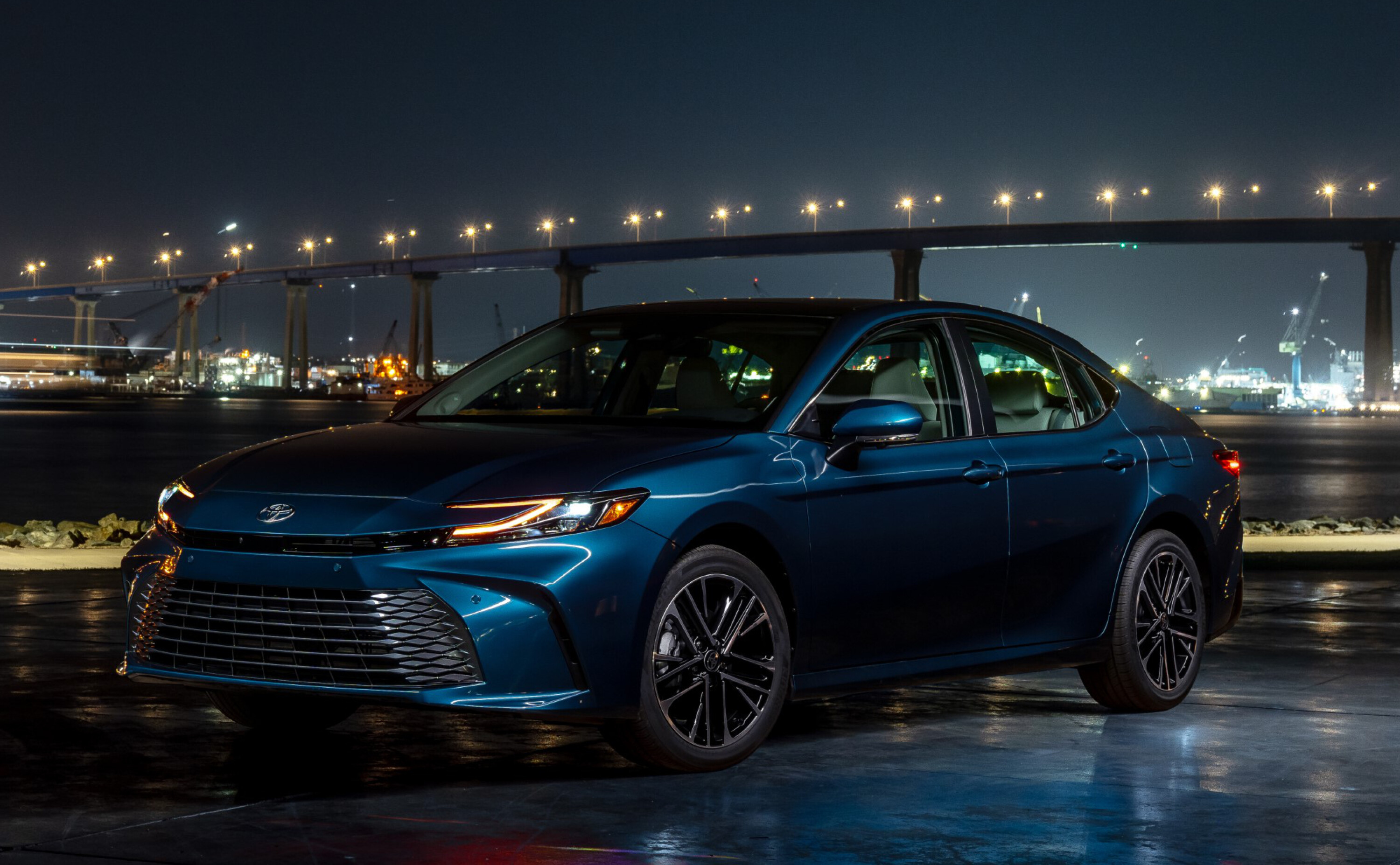
The 2025 Toyota Camry sedan has been detailed for Australia ahead of its launch in the second half of the year.
Available exclusively with a hybrid powertrain for the first time in the Camry’s history, the line-up will continue to feature Ascent, Ascent Sport and SL variants. The sports-themed SX has been discontinued.
Prices for the ninth-generation Camry are still to be confirmed, but increases are expected over current hybrid models, which were priced between $37,917 and $51,417 before on-road costs until orders were paused in October 2023 due to extended wait times.
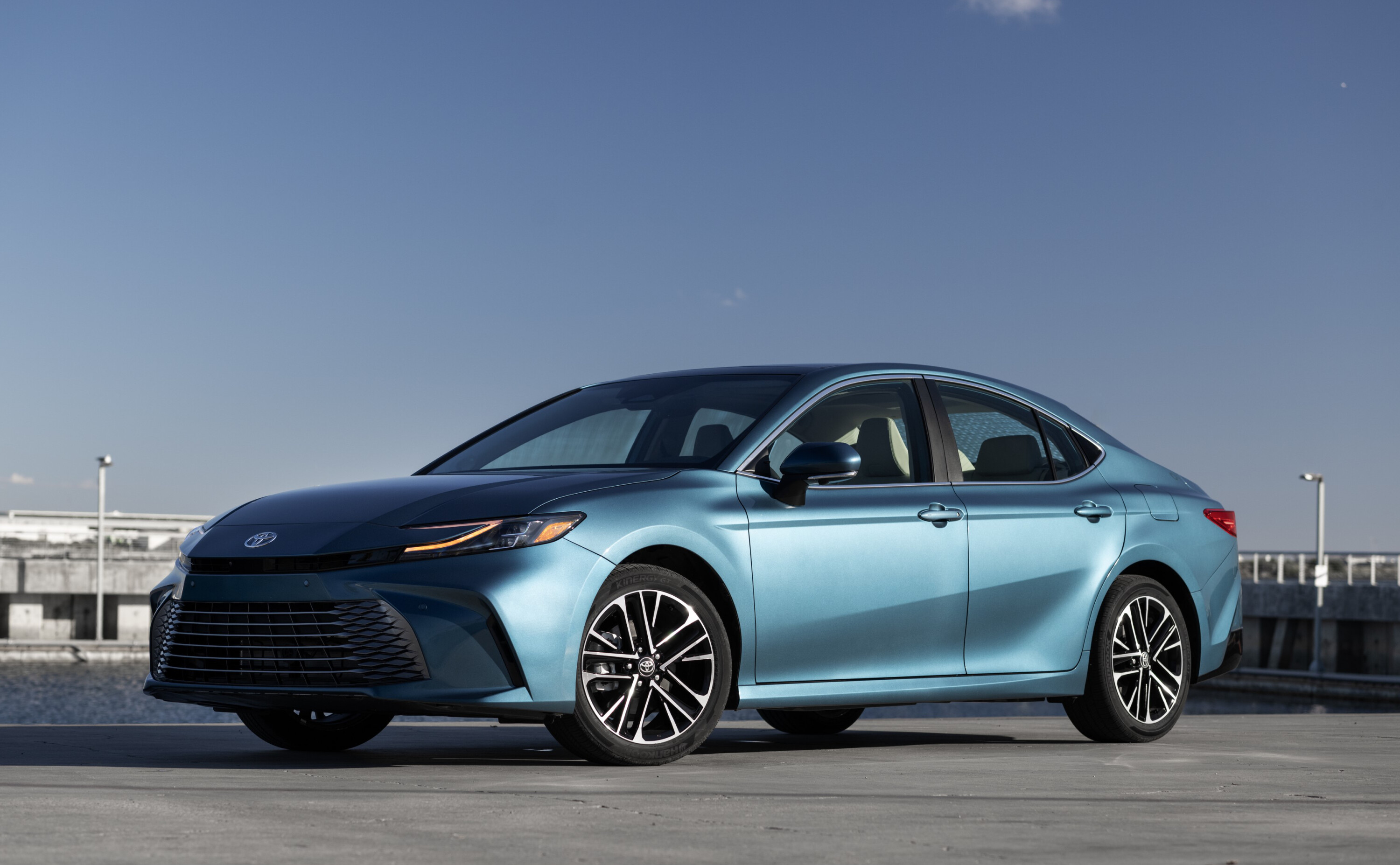
As detailed here, the new Camry is a heavy facelift of the current model with an identical wheelbase, based on an updated version of the existing TNGA-K platform shared with the RAV4 and Kluger.
The front-drive Camry retains the familiar 2.5-litre naturally-aspirated engine matched to an updated “fifth-generation” hybrid system with a lighter and more compact transaxle, a more powerful electric motor, and a lithium-ion battery.
Over the existing model, the entry-level Ascent adds an 8-inch touchscreen (up from 7-inch), a new infotainment system, a 7-inch digital instrument cluster (replacing analogue gauges with a 4.2-inch central display), front and rear USB-C charge ports, and enhanced Connected Services functionality including remote air conditioning.
Active safety features have been improved by including blind-spot monitoring, rear cross-traffic alert – previously limited to the Ascent Sport and above – and safe exit assist to prevent ‘dooring’ other road users.
Front and rear parking sensors and a 360-degree camera system have also been added.
There’s also low-speed emergency braking in forward and reverse when parking, a monitoring camera with an emergency stop function when it detects an unresponsive driver, and improvements to the functionality of the existing autonomous emergency braking and adaptive cruise control.
The Ascent will also include LED tail-lights – previously limited to the top-of-the-range SL – and new-look 17-inch alloy wheels.
A 12.3-inch widescreen infotainment system, built-in satellite navigation, wireless Apple CarPlay and Android Auto connectivity and a wireless phone charger are new additions to the mid-spec Ascent Sport.
It also adds “high-grade” LED headlights, daytime running lights and tail-lights, along with an auto-dimming rear-view mirror.
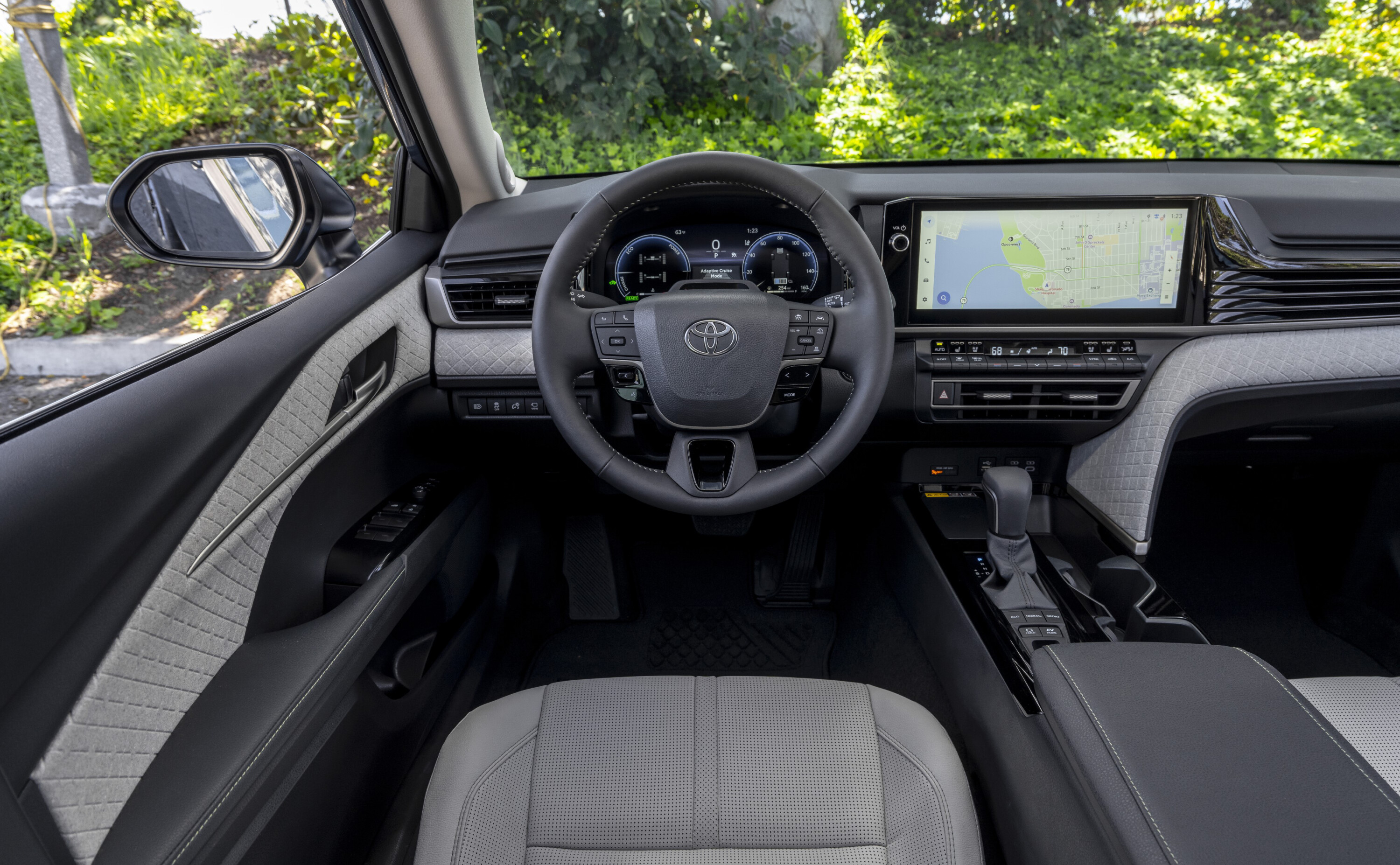
The flagship SL introduces revised 18-inch alloy wheels, a 12.3-inch digital instrument cluster, a digital rear-view mirror, a heated steering wheel, rear privacy glass, a rear camera washer, and a Nanoe X air purification system compared to the previous model.
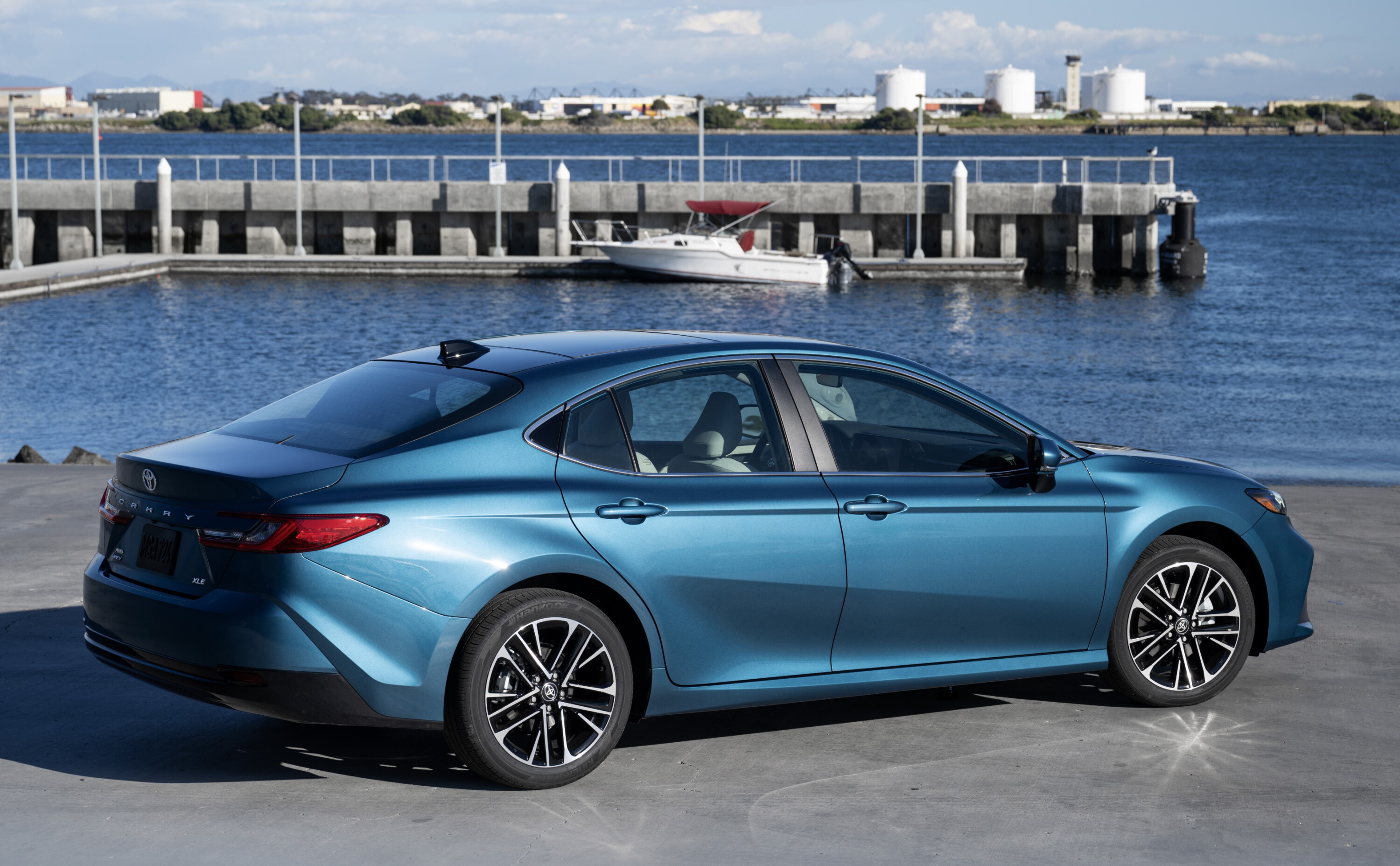
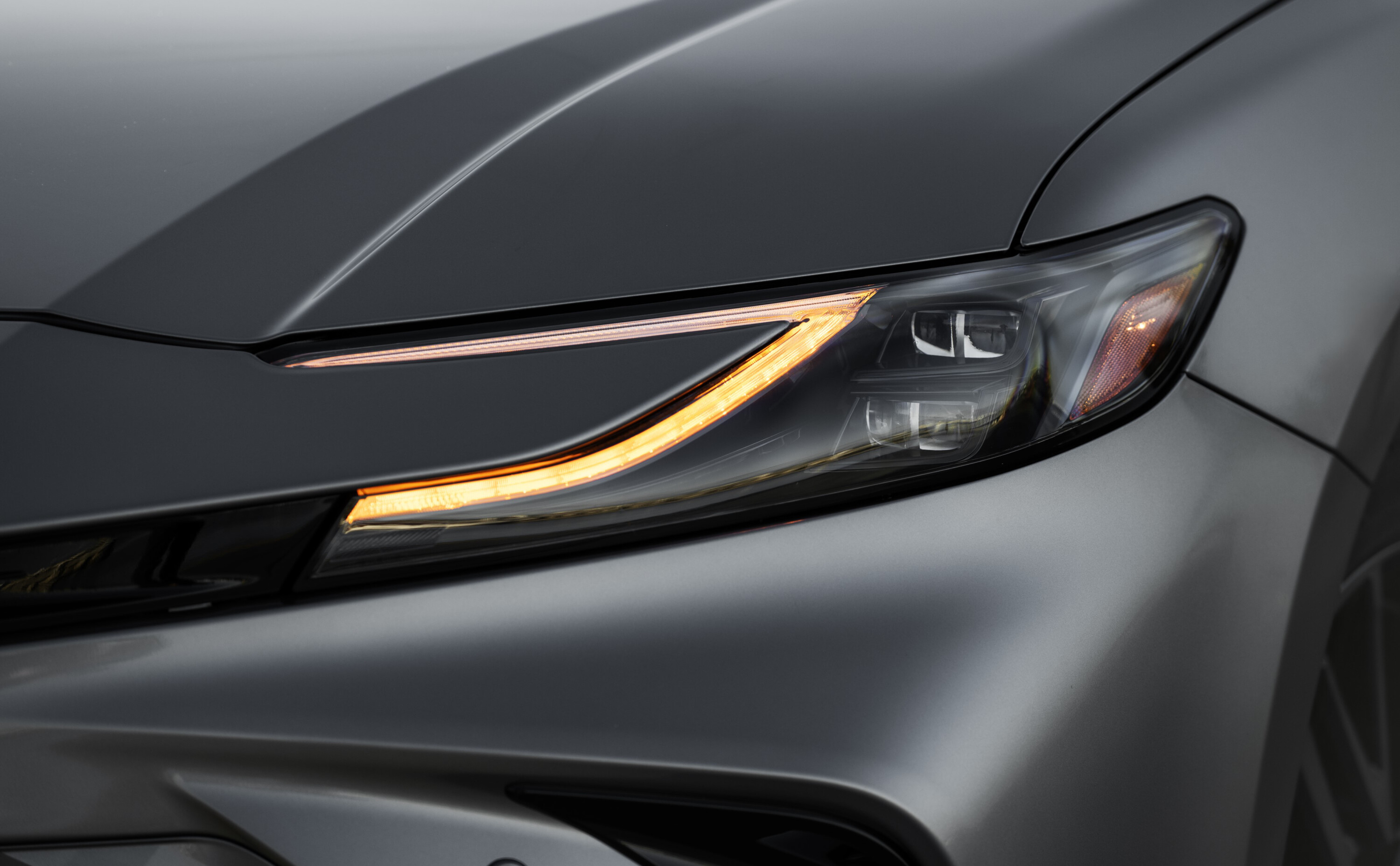
Externally, the Camry features an updated front end with C-shaped daytime running light signature similar to the new C-HR, Prius and Crown Sport, a revised side profile, and claw-shaped tail-lights.
More details about the 2025 Toyota Camry are due to be confirmed closer to its Australian launch in the second half of the year.
2025 Toyota Camry features
| 2025 Toyota Camry Ascent features | |
|---|---|
| 17-inch alloy wheels | Front and rear parking sensors (new) |
| 8-inch infotainment system (up from 7-inch) | 360-degree camera system (new) |
| Wired Apple CarPlay and Android Auto | Autonomous emergency braking |
| Toyota Connected Services | Lane-keep assist |
| Front and rear USB-C charge ports (replaces USB-A) | Lane departure warning |
| Six-speaker audio system | Blind-spot monitoring (new) |
| 7-inch digital instrument cluster (replaces analogue gauges and 4.2-inch display) | Rear cross-traffic alert (new) |
| Cloth upholstery | Safe exit assist (new) |
| LED headlights | Adaptive cruise controlu00a0 |
| LED tail-lights (new) | Driver monitoring camera (new) |
| Dual-zone climate control | Automatic high beam |
2025 Toyota Camry Ascent Sport features
| In addition to Ascent | |
|---|---|
| 12.3-inch widescreen infotainment system (new) | Auto-dimming rear-view mirror (new) |
| Built-in connected satellite navigation (new) | Leather-wrapped steering wheel and gear shifter |
| Wireless Apple CarPlay and Android Auto (new) | Eight-way power-adjustable driveru2019s seat with lumbar support |
| Wireless phone charger (new) | LED courtesy lamps |
| u201cHigh-gradeu201d LED headlights, daytime running lights and tail-lights (new) | Scuff plates |
2025 Toyota Camry SL features
| In addition to Ascent Sport | |
|---|---|
| 18-inch alloy wheels (new-look) | Head-up display |
| 12.3-inch digital instrument cluster (new) | Leather-accented upholstery |
| Digital rear-view mirror (new) | Heated and ventilated front seats |
| Heated steering wheel (new) | Eight-way power-adjustable passenger seat with lumbar support |
| Rear privacy glass (new) | Power steering wheel column adjustment |
| Rear camera washer (new) | Paddle shifters |
| Nanoe X air purification system (new) | Rain-sensing wipers |
| Nine-speaker JBL audio system | Heated side mirrors with memory function and tilt-down in reverse |
2025 Toyota Camry pricing
| Model | New 2025 price | Current 2024 price |
|---|---|---|
| Ascent | $TBC | $37,917 |
| Ascent Sport | $TBC | $40,717 |
| SL | $TBC | $51,417 |
We’re deep into 2024 (already!) and Grays continues to serve up more interesting cars from all corners.
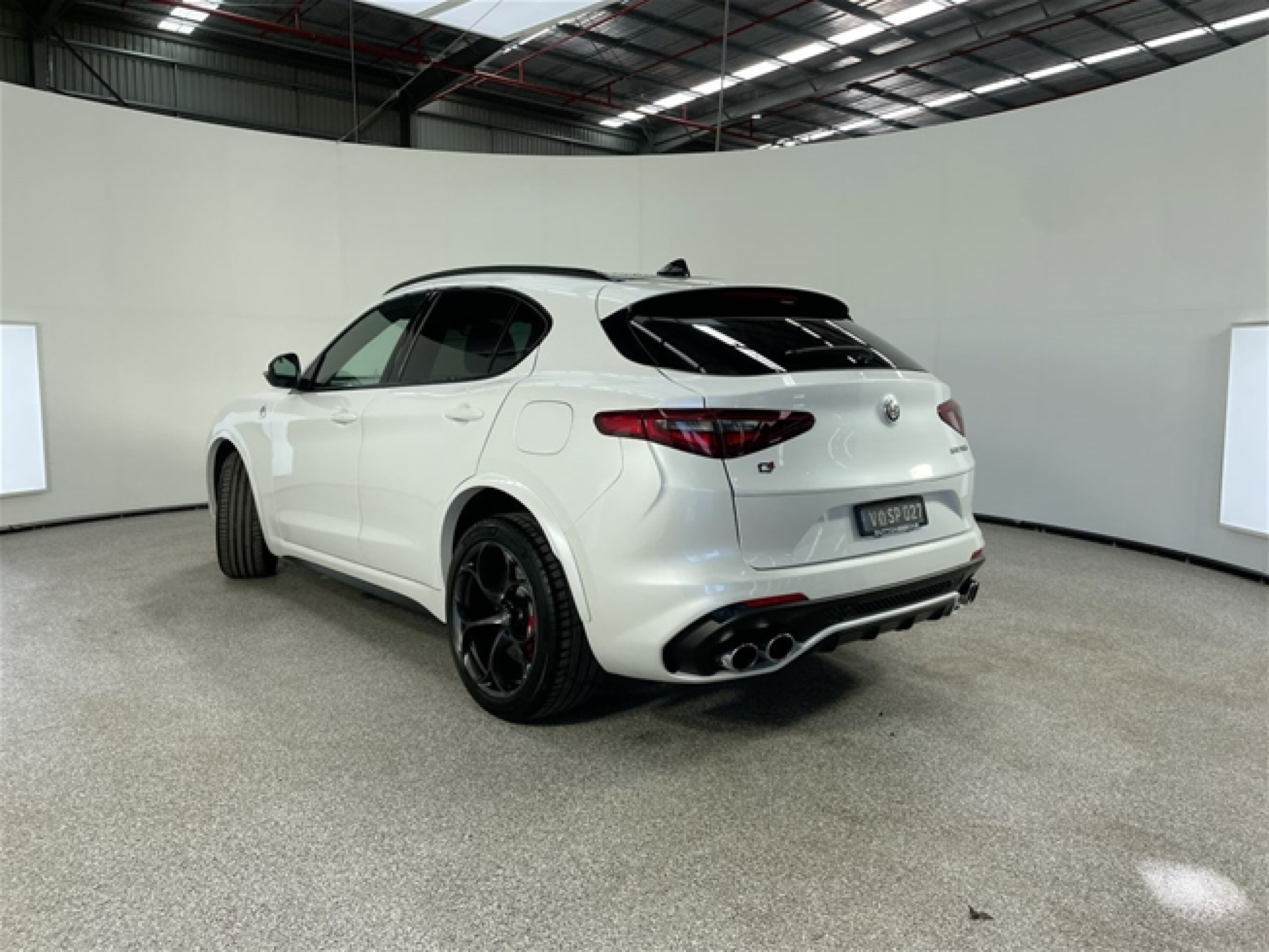
2018 Alfa Romeo STELVIO QUADRIFOGLIO Automatic
Named for the famed Stelvio Pass in Italy, this Quadrifoglio variant of the Alfa Romeo Stelvio offers all the style of the marque paired with a perky 2.9-litre 6-cylinder that should satisfy those looking for practicality and fun.
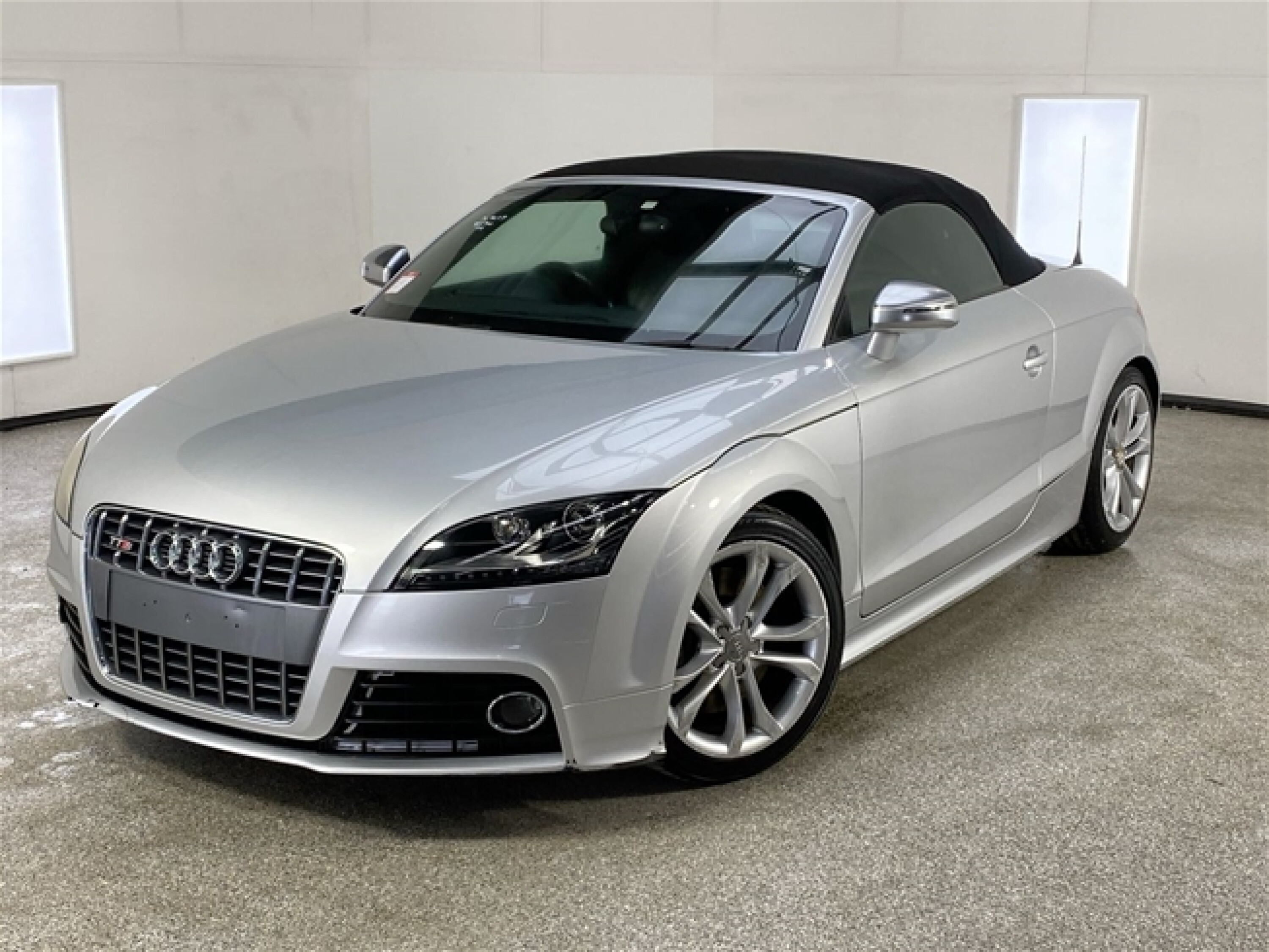
2009 Audi TT 2.0 TFSI 8J Automatic Convertible
Somewhat less practical, but no less fun is this Audi TT from 2009.
Audi might have wrapped up production of this roadster in 2023 after 25 years, but that doesn’t mean you can’t snap one up just for those leisurely sunset coastal runs with the roof down.
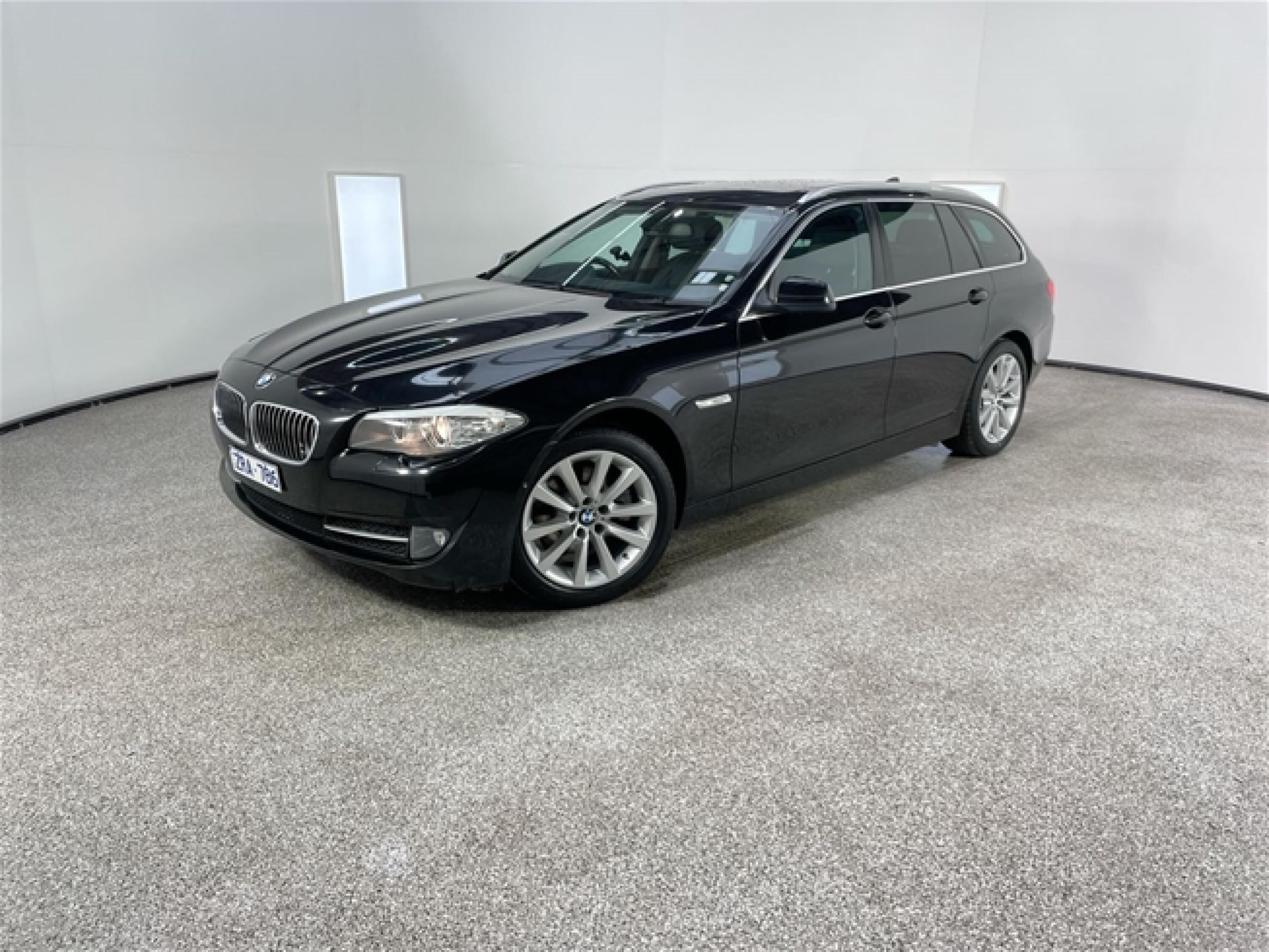
2010 BMW 520d Touring
It remains this author’s ardent hope that wagons will stage a massive return to fashionability, and for your consideration is this 5 Series BMW from 2010 in Touring guise.
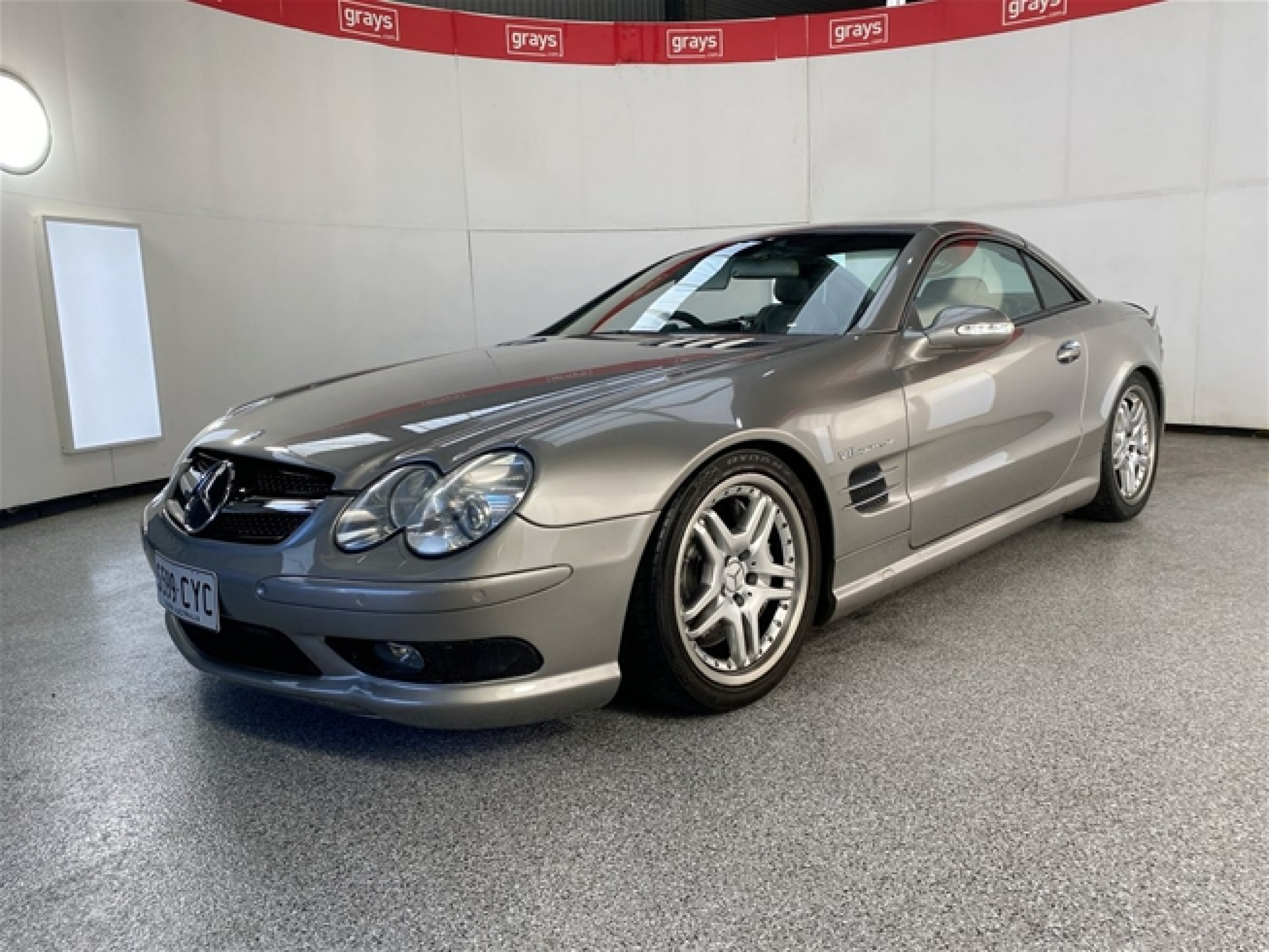
2003 Mercedes-Benz SL 55 AMG
Another roadster for your consideration, this Mercedes-Benz SL 55 with the AMG tune promises a lot of grunt paired with comfort for those awesome weekend cruises
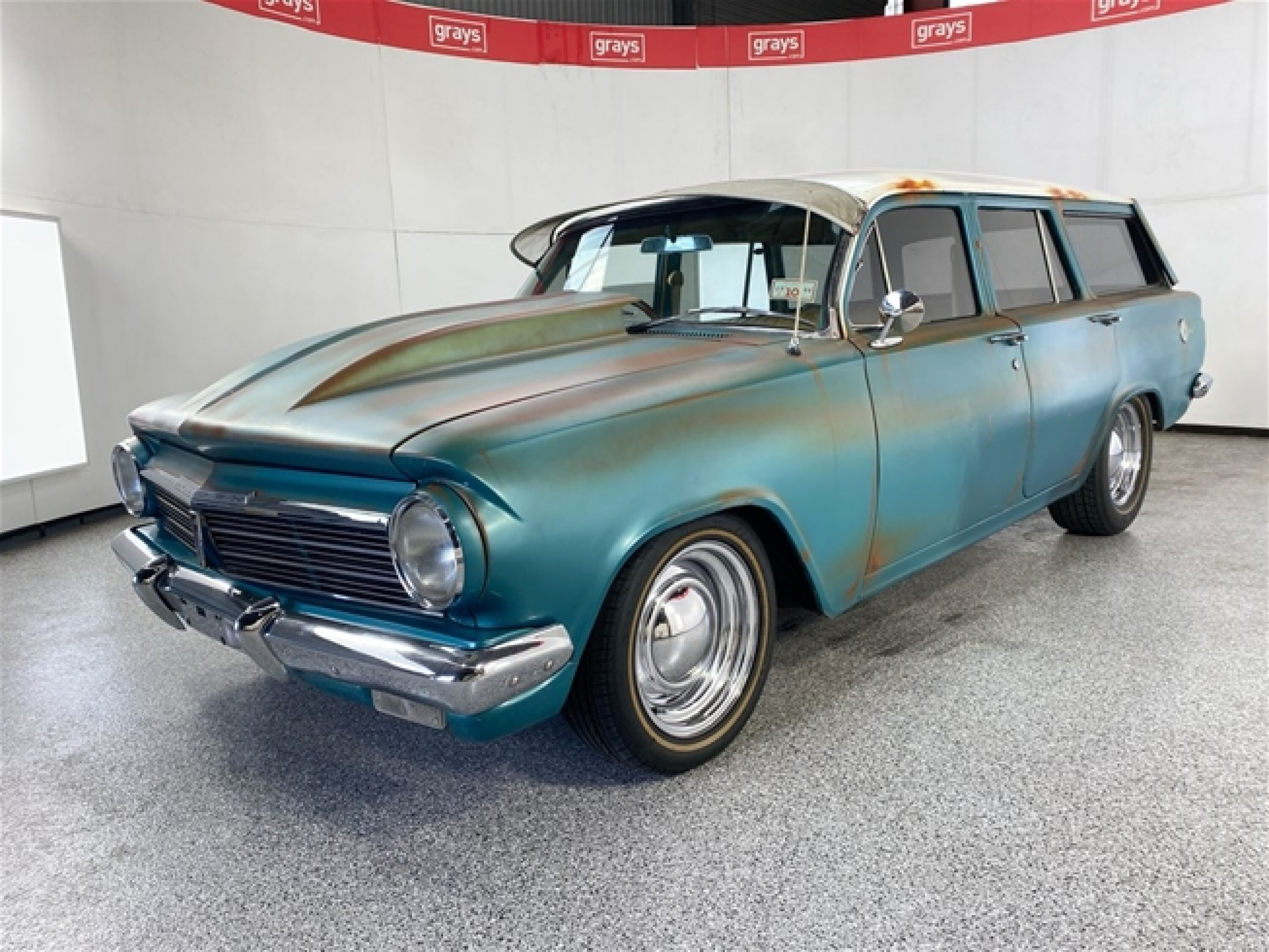
1964 Holden EH V8 Wagon
One from the classic-era of Aussie car making, this Holden EH looks in good condition – that “patina” look has been carefully crafted – and will give any V8 fan something to consider.
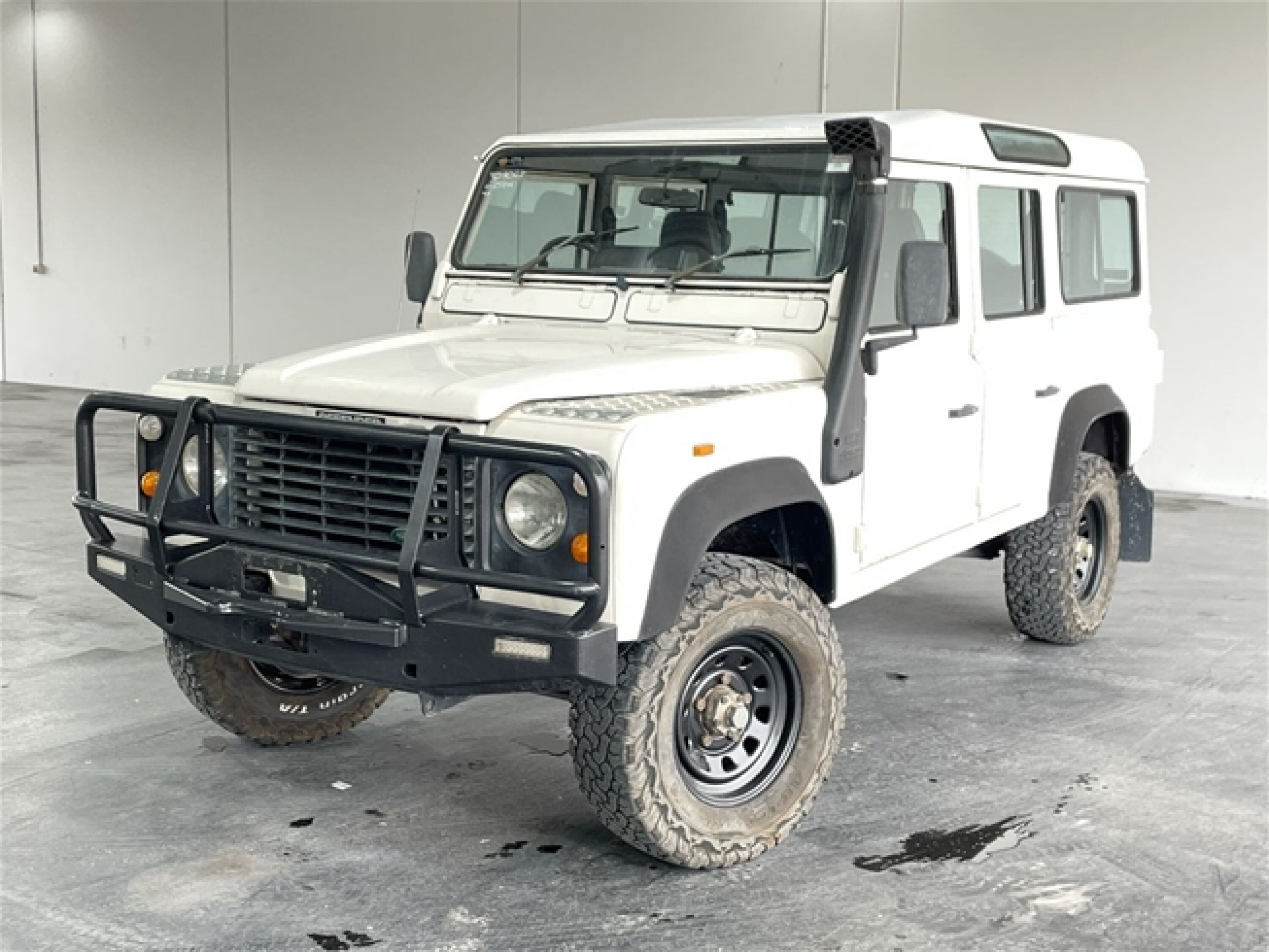
1992 Land Rover Defender
The Land Rover Defender has a strong fan base, so this example could stand to get a lot of attention.
Defender lovers can take a look at this manual lot if they’re seeking something to help with that adventure itch.
Take a look at Grays’ entire listings here [↗]
Australian car importer AGA Group could introduce a monstrous all-electric off-roader alongside its first Aion models next year, with the manic Dongfeng M-Hero on the table for local launch.
Set to become a performance sub-brand of the Chinese state-owned Dongfeng Motor Corporation Mengshi 4×4 family, M-Hero launched with the mighty M-Hero 917 in 2022 – though it’s the even more potent M-Hero 1 successor that could be coming Down Under.
While still not yet confirmed, an insider at AGA told Wheels the company had recently returned from extensive evaluation of the model in China and was seriously considering adding an M-Hero to its fledgling Australian catalogue.
If given the green light, Australia would be in line for an 800kW/1400Nm Landcruiser crusher and, in the absence of the Hummer EV and Rivian R1 in local showrooms, most potent off-road model of any kind.

Following tests of the model in China, the AGA source compared the M-Hero 1 to GWM’s muscular Tank 700 – which comes with a 385kW/850Nm V6 turbo hybrid powertrain.
“[M-Hero 1 is a] GWM Tank 700 times two,” they said.
One sticking point for now remains the usual right-hand drive question but a couple of solutions are in the boiler. Firstly, DMC already produces models for RHD markets including Thailand and tooling up for Australia wouldn’t be as complex a process as an initial project.
Secondly, WhichCar understands Australian vehicle re-engineering specialist Walkinshaw is in talks with the importer about the possibility for conversion on local turf – a project made easier for electric vehicles rolling on modular ‘skateboard’ platforms.
As reported exclusively by Wheels last week, Aion will launch in Australia in 2025, but as it’s unlikely the company will launch with just one model – the Aion V – the brand’s importer is looking to bolster its local offering with other models.
This could also include more machinery under the M-Hero banner as well as a small hatchback touted to be arriving in Aion showrooms alongside the V mid-sized SUV.
Another option could be the range-extended REV version of the M-Hero which uses a 1.5-litre turbo petrol engine to charge a battery, which in turn feeds three electric motors.
It doesn’t quite have the punch of the all-electric version which gets one motor per wheel, but with 600kW and more than 1000Nm it still manages the zero-100km/h dash in 6.0 seconds, while offering about 155km of range from a fully charged battery. Both M-Heros have a maximum range of about 750km.
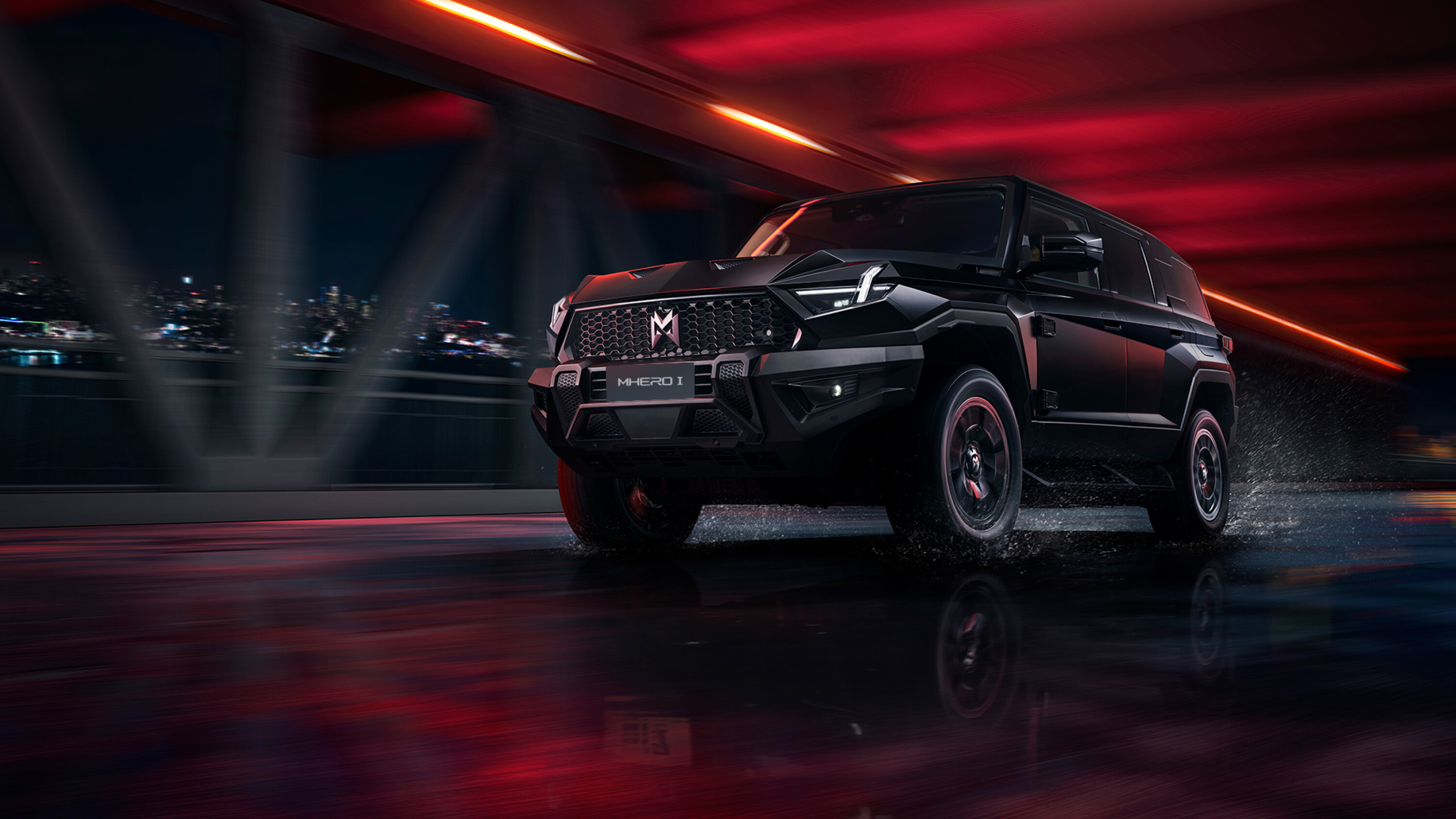
Regardless of the variant, both need sizeable outputs to muscle their significant masses over mountains with the REV tipping the scales at 3150kg, while the pure electric version weighs-in at a whopping 3293kg.
Battery sizing and capacity is unknown at this stage but a DC high-speed charge is said to get the EV version’s battery from 10 percent to 80 percent in 37 minutes.
As for off-road credentials, the M-Hero has an approach angle of up to 36.8 degrees, departure of up to 37.5 degrees and a breakover of as much as 32.6 degrees, while up to 900mm of water can be waded.
We imagine with a length of 4987mm the M-hero’s turning circle will be wide but made a little more manageable with rear wheel steering that can turn the rear wheels as much as 10.6 degrees.
It’s a common refrain that if you like the idea of a supercar but just can’t stump up the cash, the next best thing is a much smaller version.
That’s just what Mercedes-Benz and Mattel are proposing with this latest edition to the Matchbox Collectors series: the G580 With EQ Technology – what you might know more simply as the long-promised electric G-Class.
Priced at $52 for Australian buyers, the special-edition Matchbox G580 is about 17 times pricier than a regular Matchbox car – but you might be better served to think of it as just 0.02% the price of what the real EQ G580 is likely to cost. (Mercedes hasn’t said, but reports out of America suggest it’ll be around US$150K over there.)
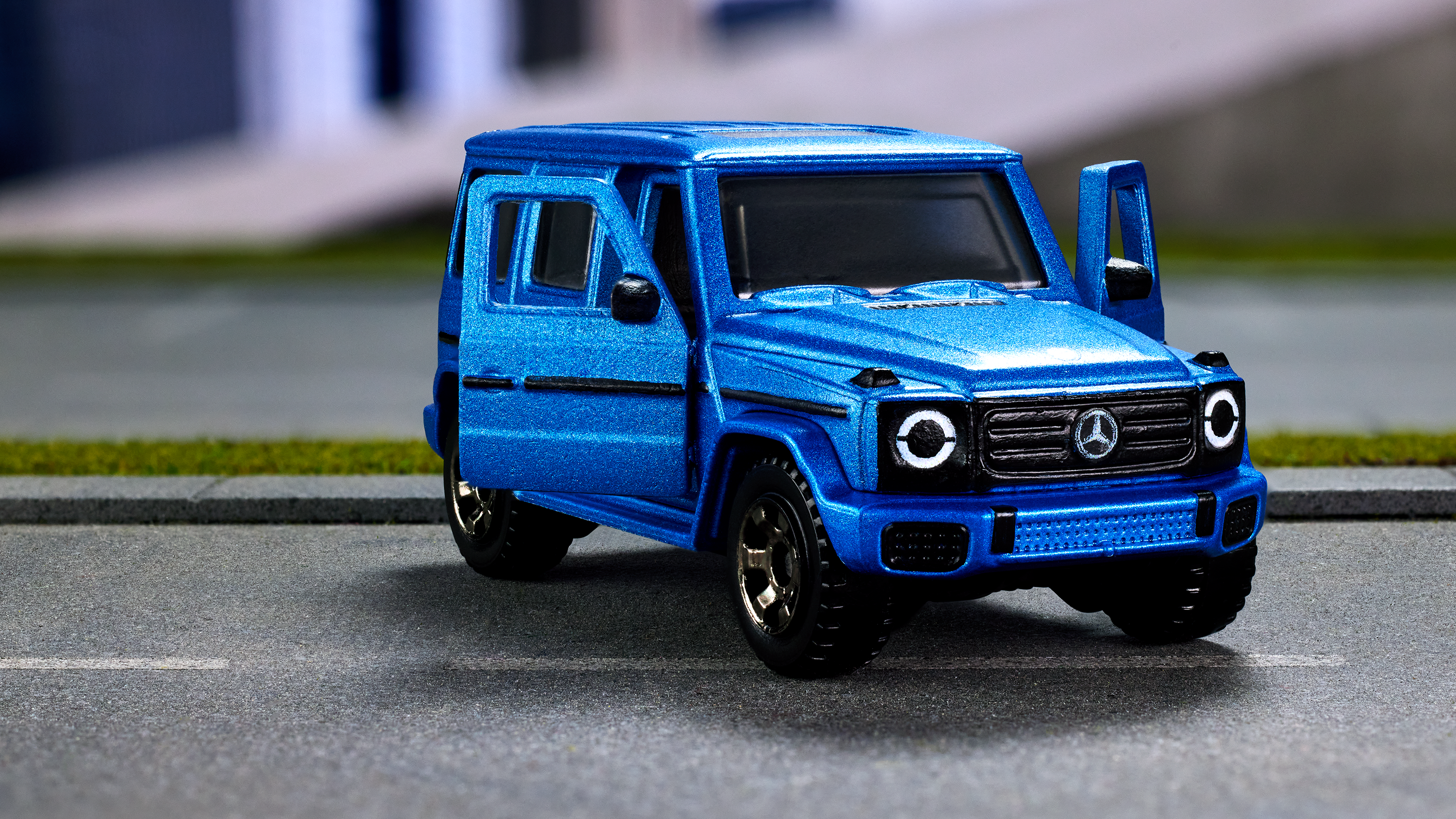
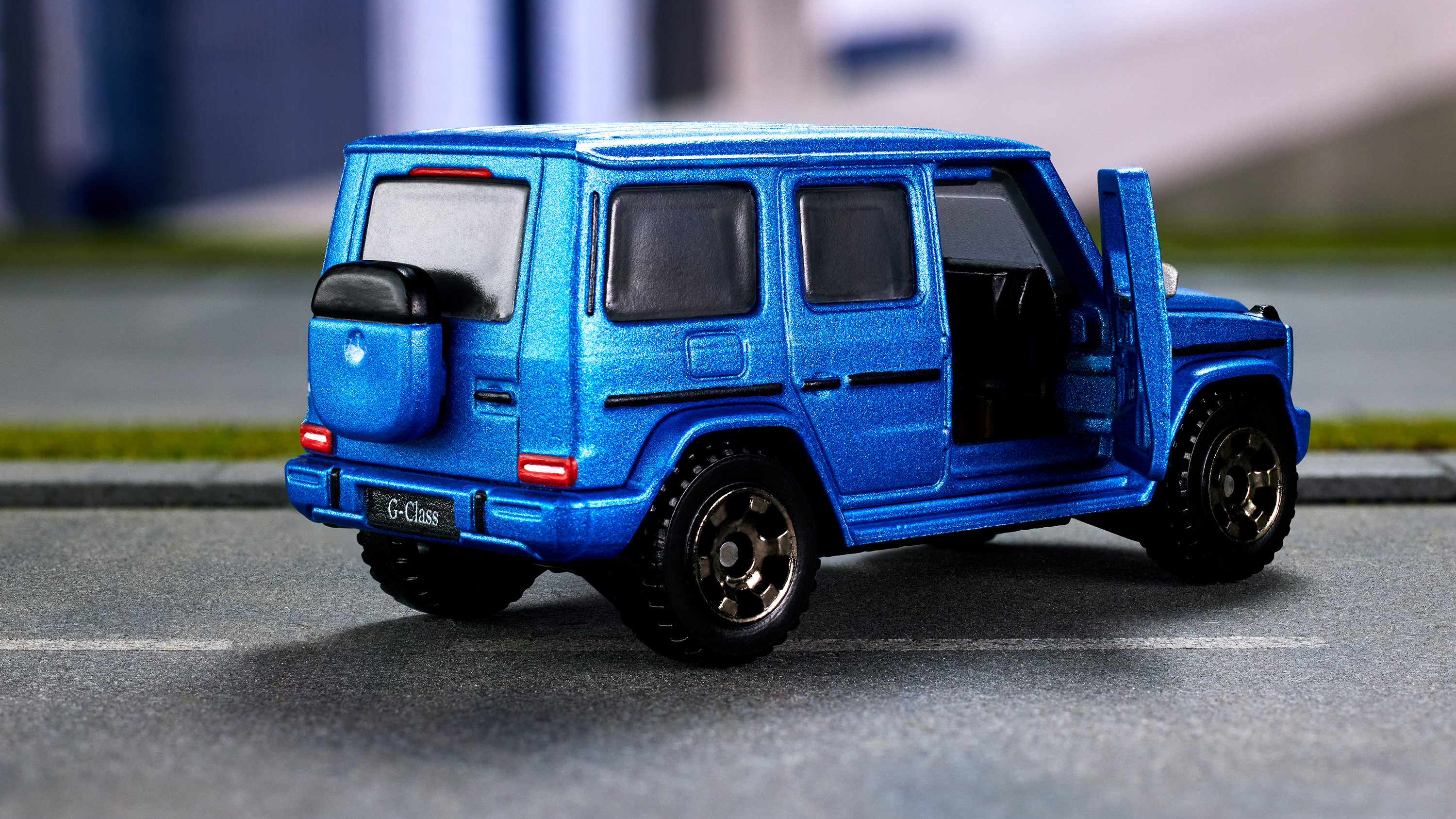
It genuinely is a bit more special than the usual Matchbox offerings, too.
That’s thanks to the use of 99.5% recycled metal (we’d love to know which part isn’t recycled), while the plastic elements are 81% recycled – and that’s specifically certified through the International Sustainability and Carbon Certification system in Germany.
It’s only available online, so you can pop over to the Mattel Creations site here to sweat over whether you’ll ever financially recover from buying one. And beware; they’re not shipping until late December.
NOTE: This story isn’t sponsored, and to prove it, here’s a vid by a fella who says it’s overpriced. (I’ll probably get one though, because YOLO!)
The Cupra Formentor VZe plug-in hybrid has been given the Spanish brand’s ‘Tribe’ special-edition treatment, bringing fancier design features from the flagship VZx.
Exterior upgrades comprise 19-inch black/copper alloy wheels and a new optional sunroof.
More is added to the cabin, which gains ‘petrol blue’ leather-appointed upholstery, door trim and dash, along with front seats that offer heating and an electric adjustment on the driver’s side.
A surround-view monitor and Beats audio system complete the equipment step-up for the VZe Tribe Edition that costs from $67,990 – $3000 more than the regular VZe.

Drive-away pricing varies between states and territories, ranging from $70,990 (ACT) to $73,990 (WA), and the VZe Tribe is limited to 300 units.
Cupra Australia says the VZe has replaced the VZx performance model as the most popular variant in the Formentor line-up, accounting for more than half of the compact crossover’s sales.
A facelifted Formentor is coming in the second quarter of 2025 with updated styling, cabin features and drivetrains. This includes a lift in power and range for the plug-in VZe, which increases output from 180kW to 200kW while the distance it can potentially go on electric power alone goes from 58km to more than 100km thanks to a larger battery.
Snapshot
- Cadillac returns to Aussie roads later this year after a 50 year absence
- First model to launch is the Lyriq SUV, likely in late October
- Unlike Genesis and Lexus, Cadillac wonu2019t undercut the established players on price
- Lyriq will be fully loaded with equipment in Australia; offer plenty of colour/trim customisation
Cadillac won’t undercut its luxury rivals on price when it launches in Australia later this year, saying Aussie buyers can expect to pay similar money to an equivalent BMW, Audi or Mercedes-Benz.
After a 50 year absence, Cadillac will return to Aussie roads when it launches the all-electric Lyriq SUV and we now have some rough retails on exactly when it will arrive, how much it should cost and how it will be specced.
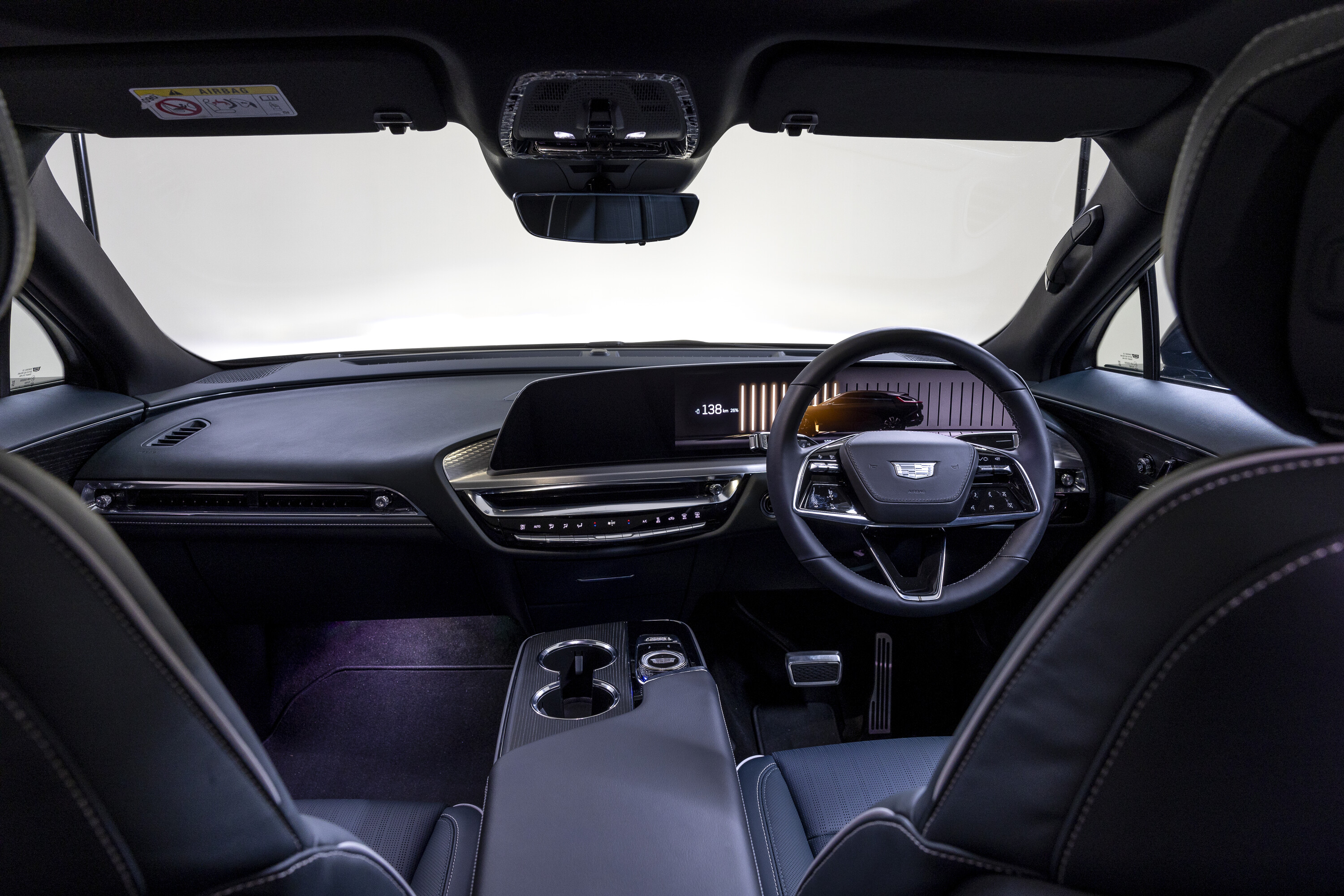
The Lyriq is a five-metre long large SUV pitched to rival the Audi Q8 E-Tron, Mercedes-Benz EQE SUV and BMW iX. A single-motor variant is available in America but Aussie cars will only be offered in twin-motor, all-wheel drive guise and will be highly specified, with nearly every available option included as standard.
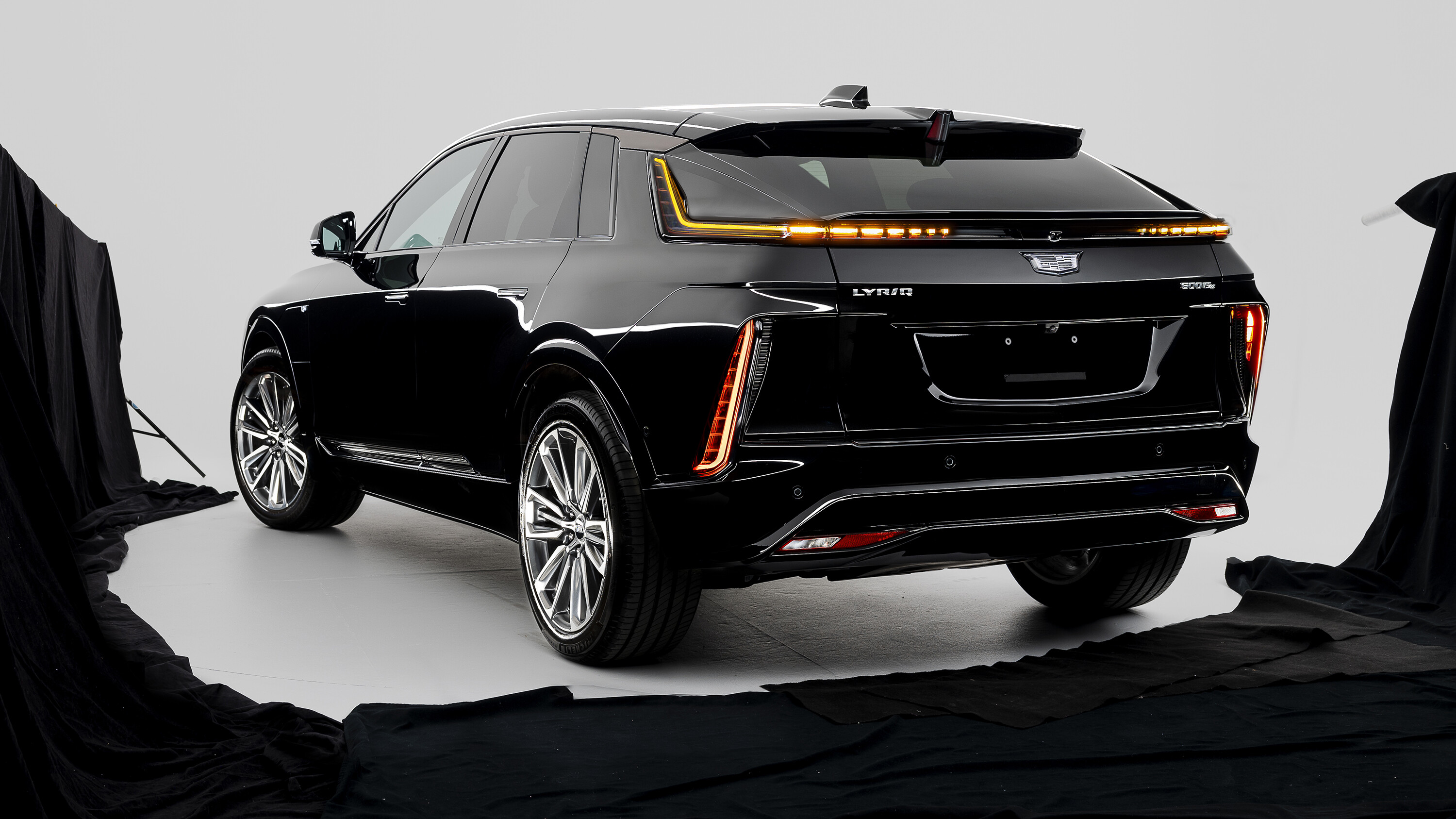
Such a rich specification will likely command a premium price, with Cadillac saying it has no plans to undercut its established rivals — similar to how Lexus and Genesis pitch their vehicles — in order the gain a foothold in the market.
“We are targeting the European luxury brands and our price will be right in the realm of where their entries or equivalent entries are,” said Jess Bala, GM’s managing director in Australia and New Zealand.
For reference, a comparable Mercedes-Benz EQE SUV is $145,000, while Audi prices the dual-motor Q8 E-Tron from $155,000. The BMW iX starts at $130,900, while the Polestar 3 range kicks off at $132,900.
Cadillac says it sees seven key brands as its core competition in the luxury segment globally: Audi, BMW, Land Rover, Lexus, Mercedes-Benz, Porsche and Volvo.
Timing wise, Cadillac revealed it’s targeting a local launch in late October however that date could shift pending any shipping or logistical delays.
“From a launch timing, we’re going to open our first stores later this year and then towards the end of the year, very early next year is when we will start having many more vehicles on the road,” confirmed Bala. “We actually have some of our own stock coming in within a couple of months and that will allow us to use more of the vehicles for our marketing events as well.”
Bala said Cadillac has already received “thousands and thousands” of expressions of interest in the Lyriq, which will be sold online or through boutique experience stores in a ‘direct-to-customer’ model similar to that used by Tesla and Polestar.
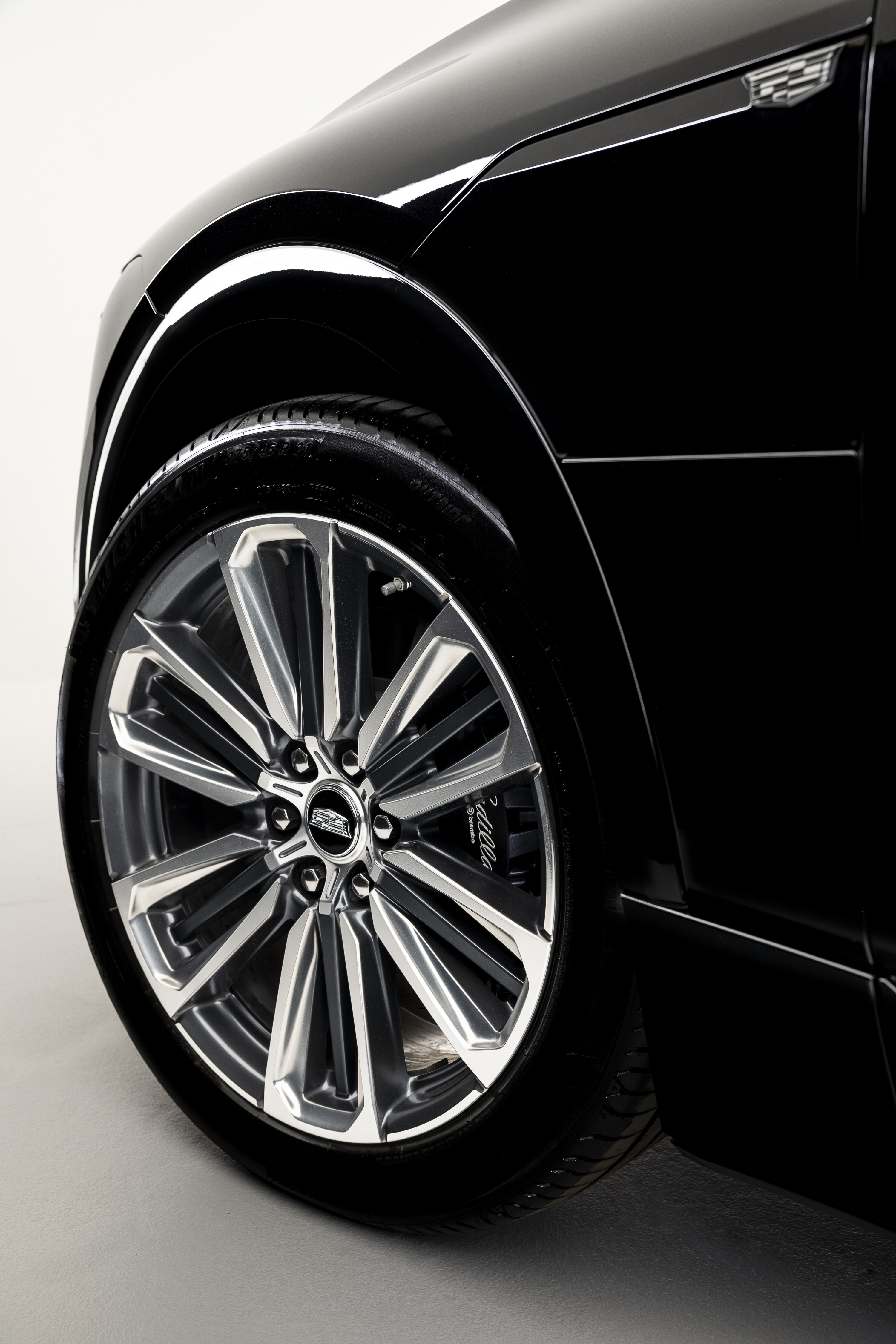
As for local specification, Bala confirmed Aussie cars will “basically have everything loaded on it”, although buyers will have the freedom to choose from a broad colour palette for their exterior paint and upholstery.
“The way that we’re really going after is allowing the customers to customise their vehicle more specifically in the design side,” said Bala. “So body colours and things like that.
“The way we’re looking at it is as from a luxury vehicle, it’s going to basically have everything loaded on it and the customisation will come in the in the colour palette instead.”
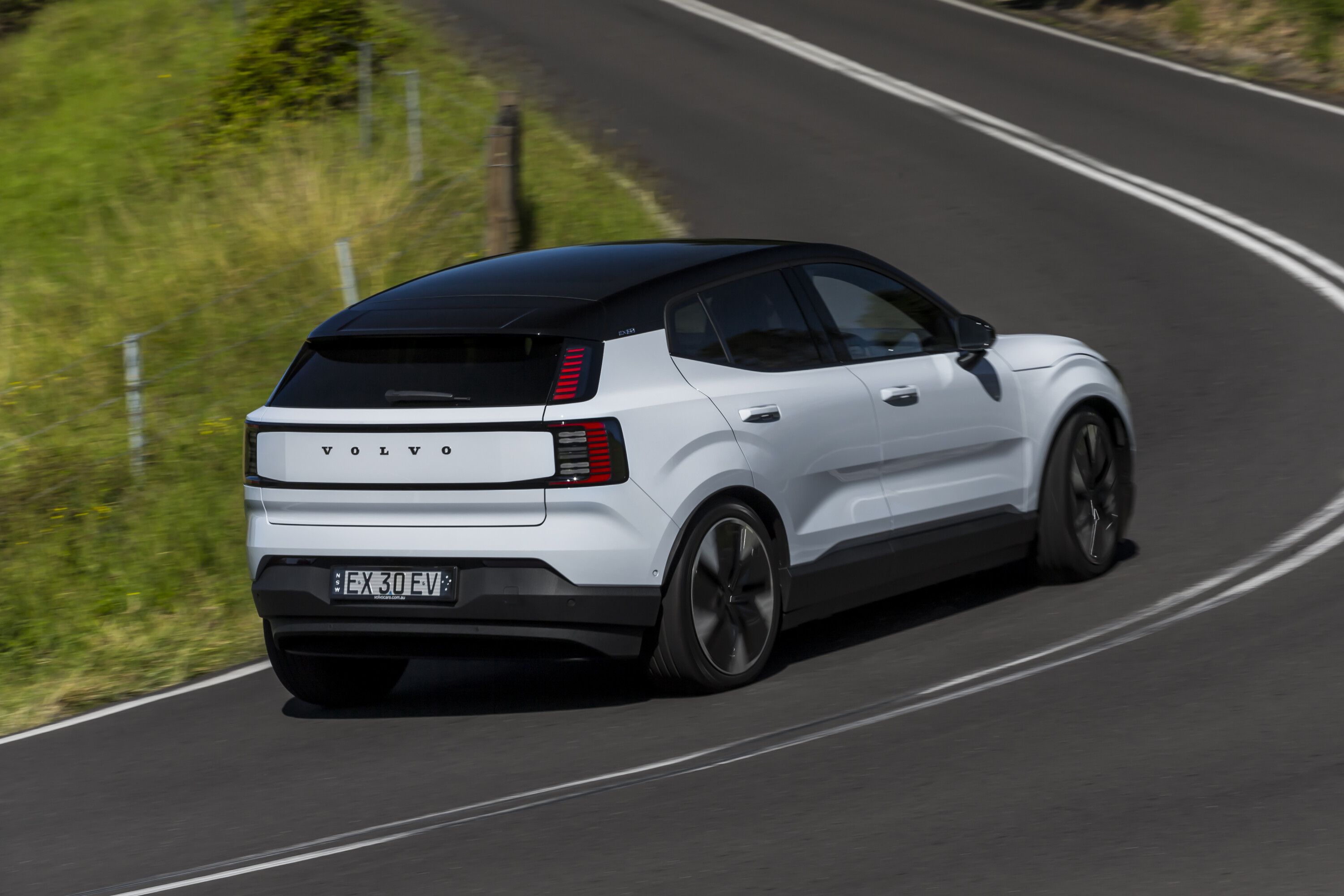
Volvo has been in a relatively quiet product period after delivering a cracking trio of SUVs between 2015 and 2019, but now comes a pivotal smaller SUV to sit below the XC90, XC60 and XC40.
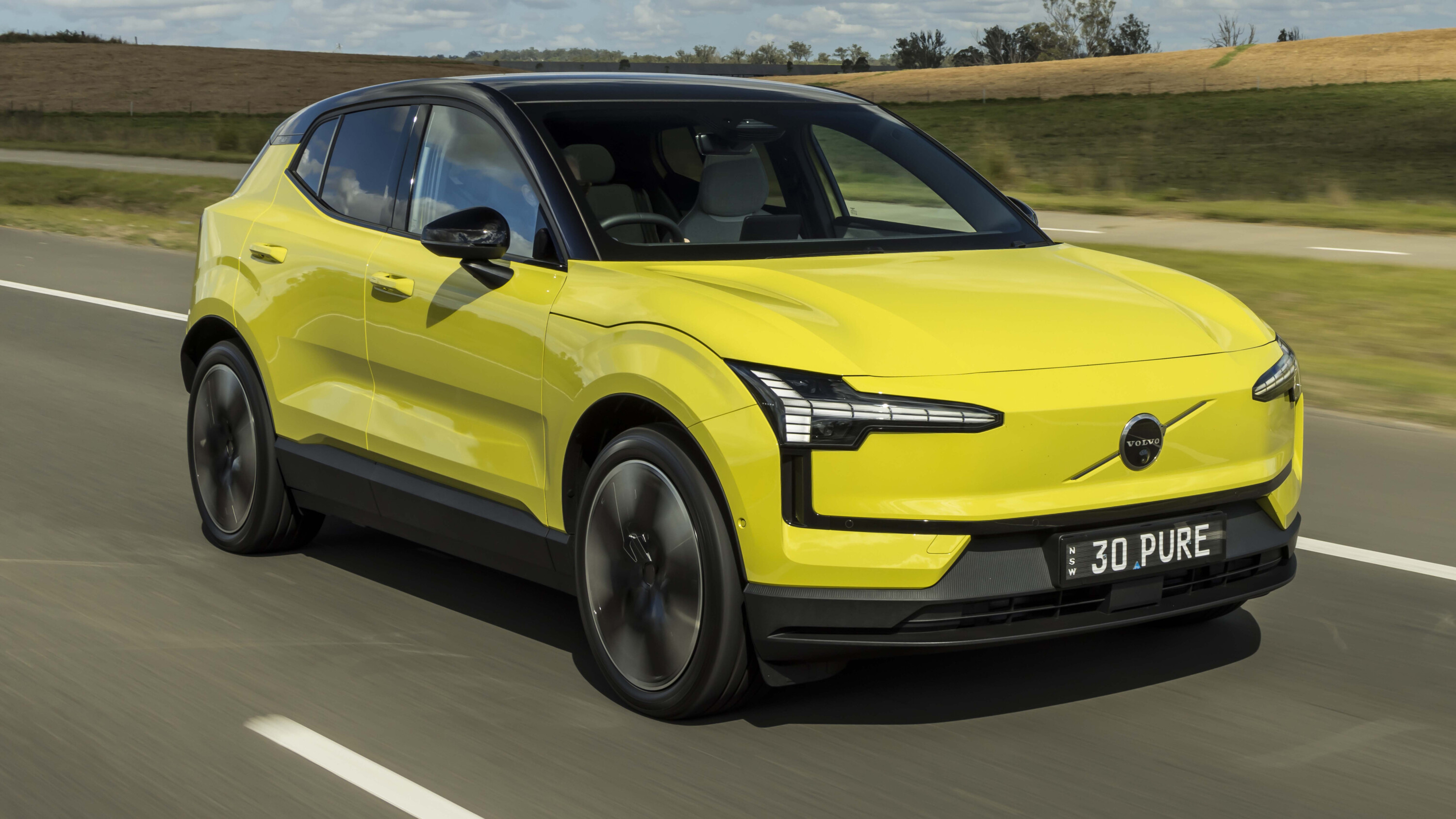
The EX30 is a battery compact SUV that will not only deliver greater sales volume than relatively niche models such as the S60 sedan and C40 coupe-SUV, but is predicted by the Swedish brand to become its best-selling vehicle.
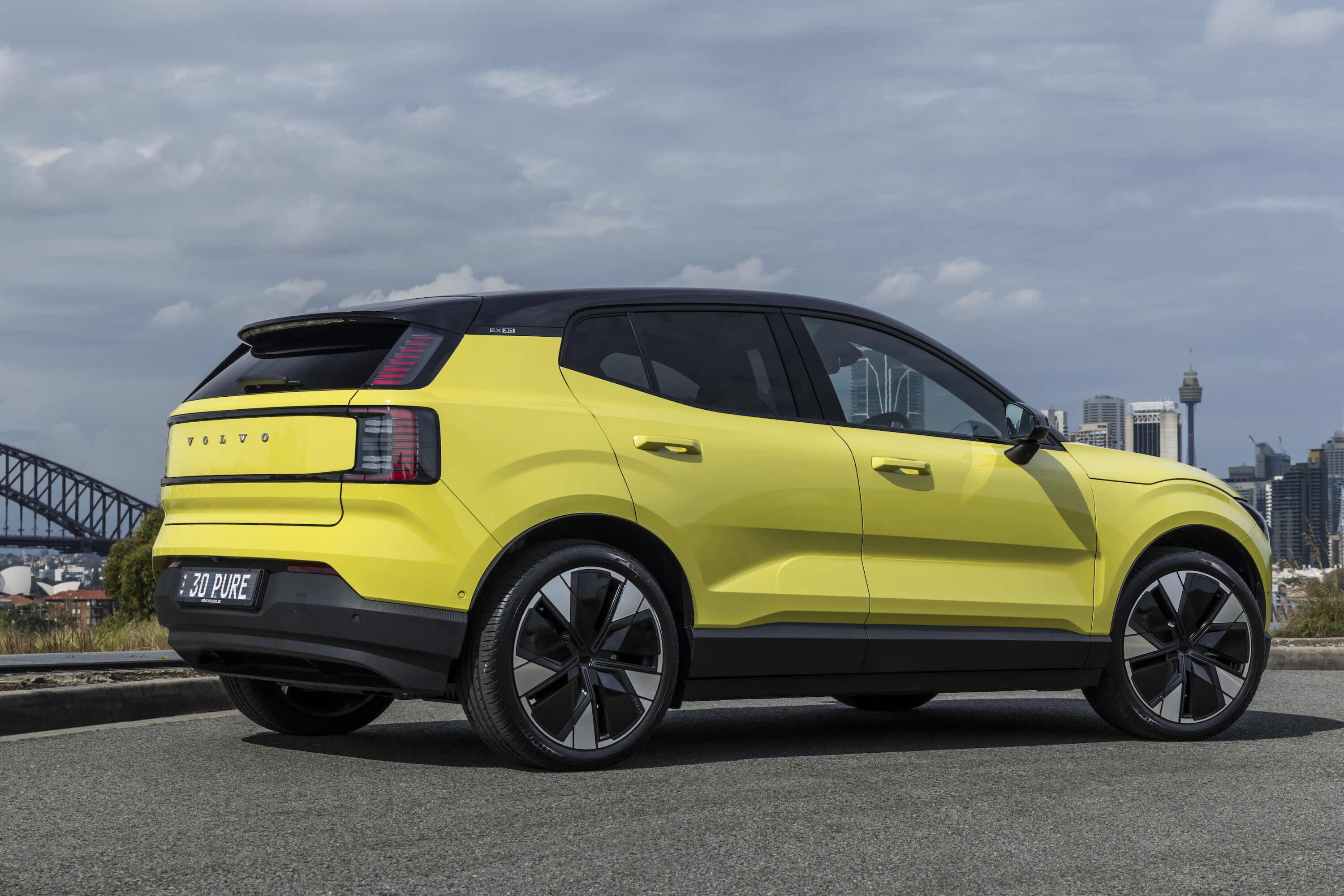
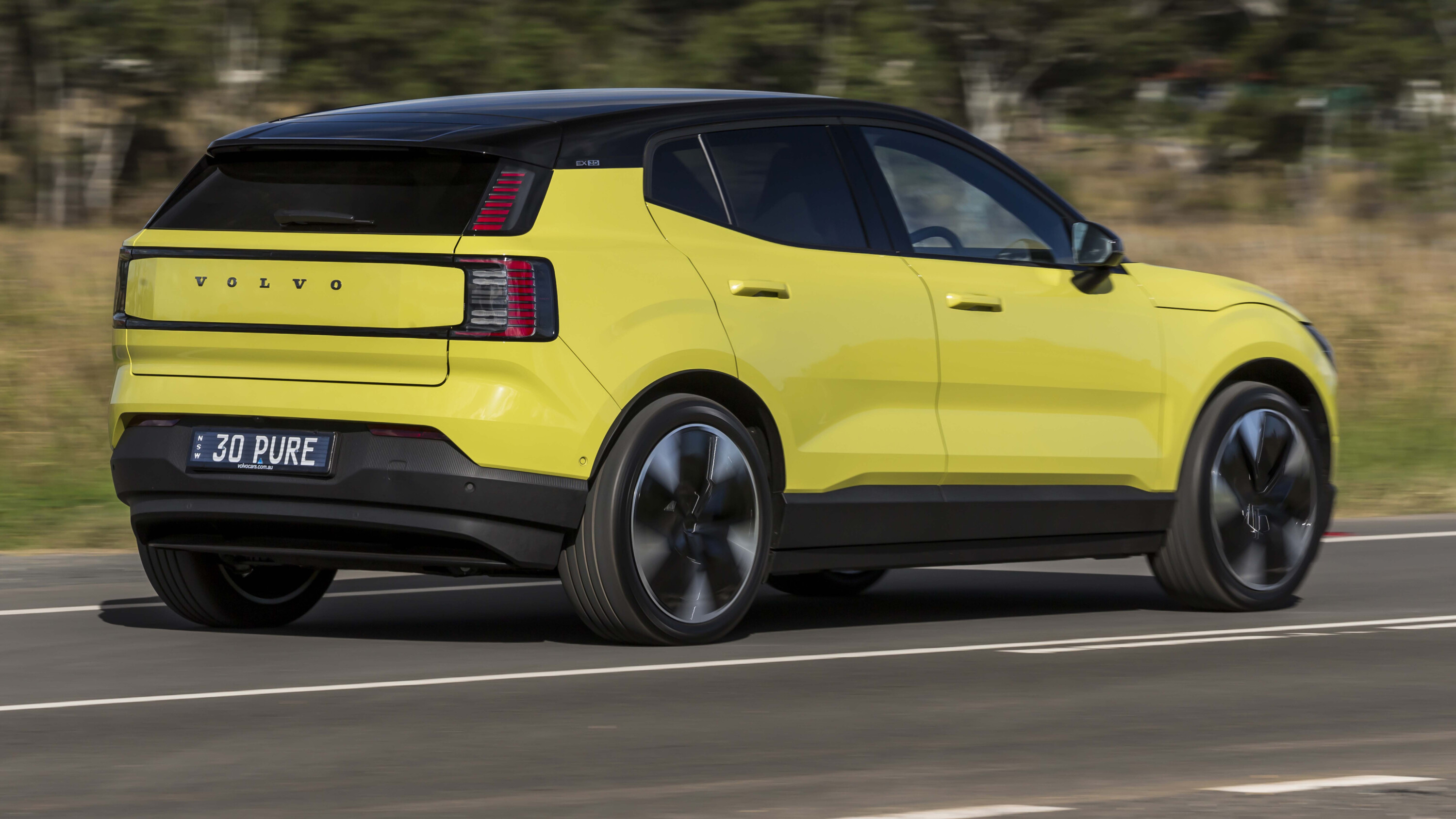
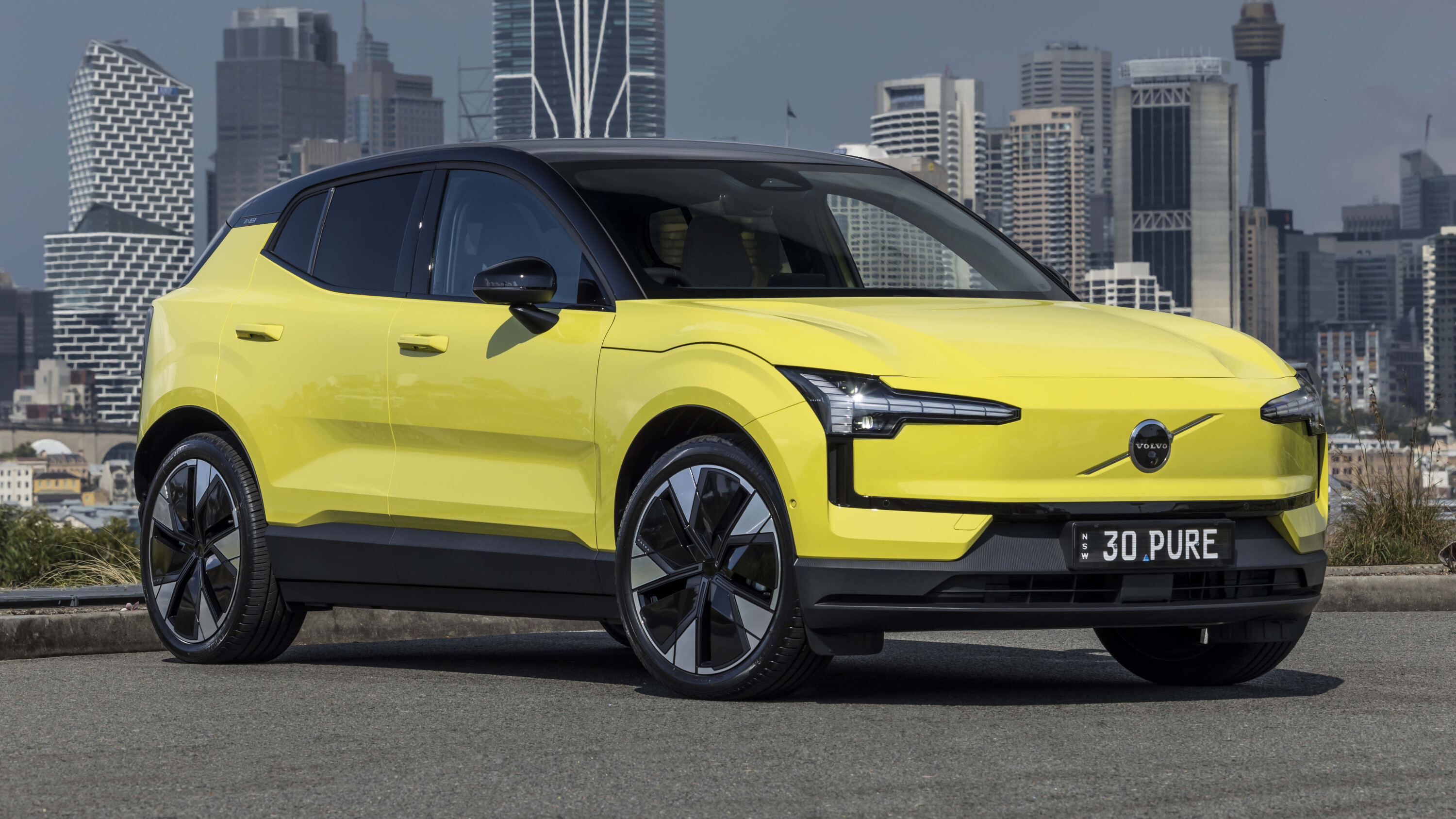
Non-traditional colour options such as Moss Yellow and Cloud Blue reveal much about the EX30’s (younger) target audience, while Volvo says it’s pulling buyers from other brands.
The EX30 also continues the Swedish brand’s transition to an all-electric line-up – from 2030 globally and, even more ambitiously, 2026 locally.
Direct rivals aren’t in short supply. They include the Cupra Born hatch (and its forthcoming twin, the VW ID.3), Hyundai Kona Electric Premium, Peugeot E-2008, and Renault Megane E-Tech. There’s also the upcoming Mini Countryman Electric.
JUMP AHEAD
Pricing and features
Volvo’s smallest model isn’t its cheapest.
The EX30 starts from $59,990, positioning it five-grand above the petrol-powered entry-level XC40. Pricing was announced way back in mid 2023, though at launch Volvo announced increases for the other two variants that form a three-model line-up.
The mid-range Extended Ultra moves from $64,990 to $66,290; the flagship Performance Ultra shifts the other side of $70K, also up $$1300 to $71,290.
Every EX30’s power source is a 64kWh (useable) battery, with the Extended Plus and Extended Ultra models sharing a single-motor, rear-wheel-drive set-up. The Performance Ultra offers all-wheel drive via a dual-motor arrangement and is naturally the most powerful model, producing 315kW/543Nm to the single motor’s 200kW/343Nm, and is, somewhat bizarrely, Volvo’s quickest vehicle yet.
Volvo quotes 3.6 seconds for the 0-100km/h test, with the single-motor models hardly slow-coaches at 5.3 seconds.
They counter with longer WLTP battery ranges, though only 20km more than the 460km of the twin-motor Performance Ultra.
You can click on the feature link below for our detailed guide to the EX30’s pricing and specification, though we can also distill the highlights for each model here.
The Extended Plus entry model’s key features comprise auto tailgate, digital key, wireless phone charging, and an infotainment set-up incorporating a 12.3-inch touchscreen and a Harman Kardon audio system with soundbar.
Laying out another $6300 for the Extended Ultra adds heating function and electric adjustment for the front seats, heated steering wheel, rear privacy glass, fixed panoramic sunroof, and two major parking aids: a surround-view camera plus a new-generation version of Volvo’s Pilot Park Assist, which can now detect a wider range of parking spaces and controls acceleration and braking in addition to the steering.
The Performance Ultra replicates those features while swapping the Extended Ultra’s 19-inch wheels for 20s.
Interior
Mix a bit of inspiration from Tesla and Volvo’s own XC40 into VW Golf hatch-sized dimensions and you have a basic idea of the EX30’s cabin.
The XC40 nods include generously sized (and easily accessible) door pockets, enabled by an absence of door speakers – and instead a dashboard-spanning soundbar that’s linked to a standard Harman Kardon audio.
Then there’s the hugely versatile centre console system that comprises upper and lower sections.
Small bags or other items can be placed on lower, floor part, which includes flaps that open to reveal a hidden storage area that can keep wallets out of view, or keep cables neatly out of the way.
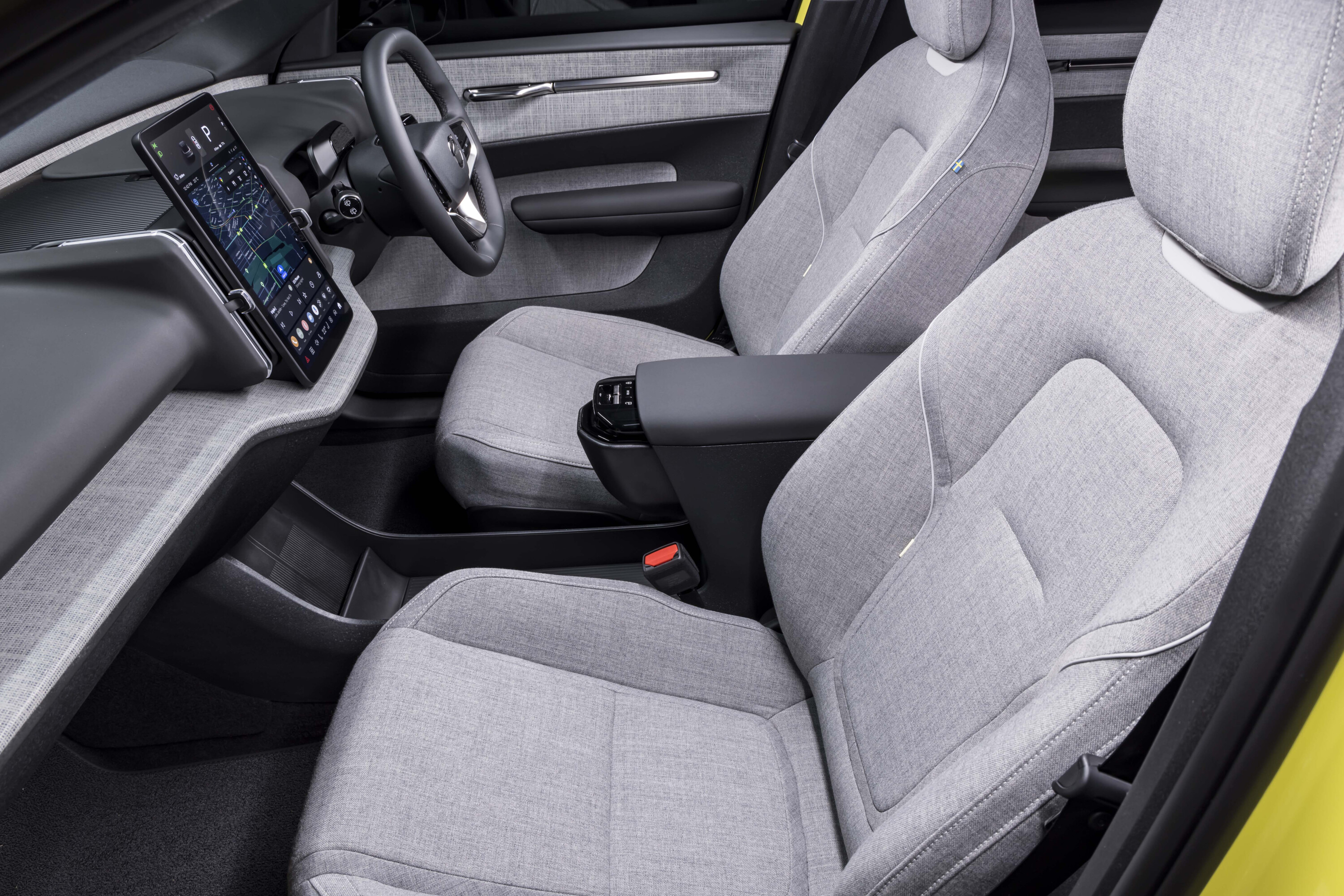
Ahead of the armrest (which in an automotive rarity doesn’t double as a console cubby in this car’s case), a protruding horizontal section features a top layer with octagonal-shaped cupholders – which can be slid back to create a wider storage box.
The cleverness doesn’t stop there as the whole protruding section can be pushed back partly to create a larger singular cupholder or pushed right out of the way to make access to the lower storage area even easier.
Less successful is the glovebox that opens from a central dash position rather than the conventional passenger side. It’s not a bad size but when it opens – via a touchscreen button (the first of the Tesla nods) – it has a habit of knocking the driver’s left knee.
Then what looks like a Model 3/Y-style angled dual phone charging tray turns out of offer inductive charging on the left side only.
There are delightful design details such as the ‘floating’ door armrests and rectangular door handles, many surface trims are visually interesting, and while hard plastics are more widely used than in other Volvos they at least some are comprised of sustainable materials.
Just like Tesla owners, EX30 drivers can turn their smartphone into a digital key to lock/unlock and, after swiping over the NFC (Near Field Communication) readers, start the car.
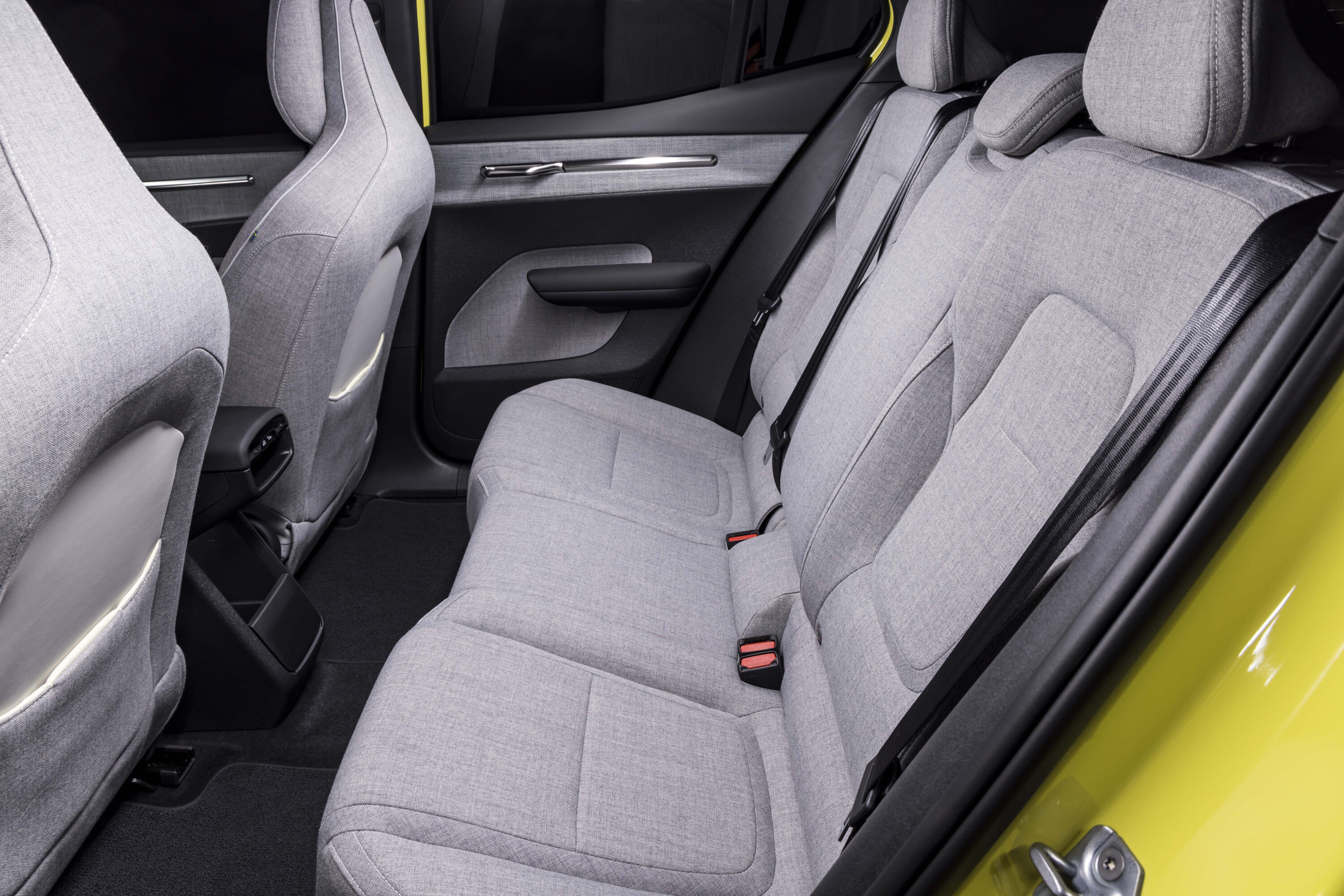
Volvo seats have a long-deserved reputation for excellent ergonomics and the EX30’s pews – whether all-fabric or pleather/fabric – doesn’t betray that tradition.
Cleverly, Ultra models feature a single, squircle electric seat-adjust knob, with a middle button that can be pressed to cycle through movement options on the central touchscreen.
There’s also a squircle design for the steering wheel, though Volvo thankfully sticks to its favoured portrait shape for the 12.3-inch touchscreen.
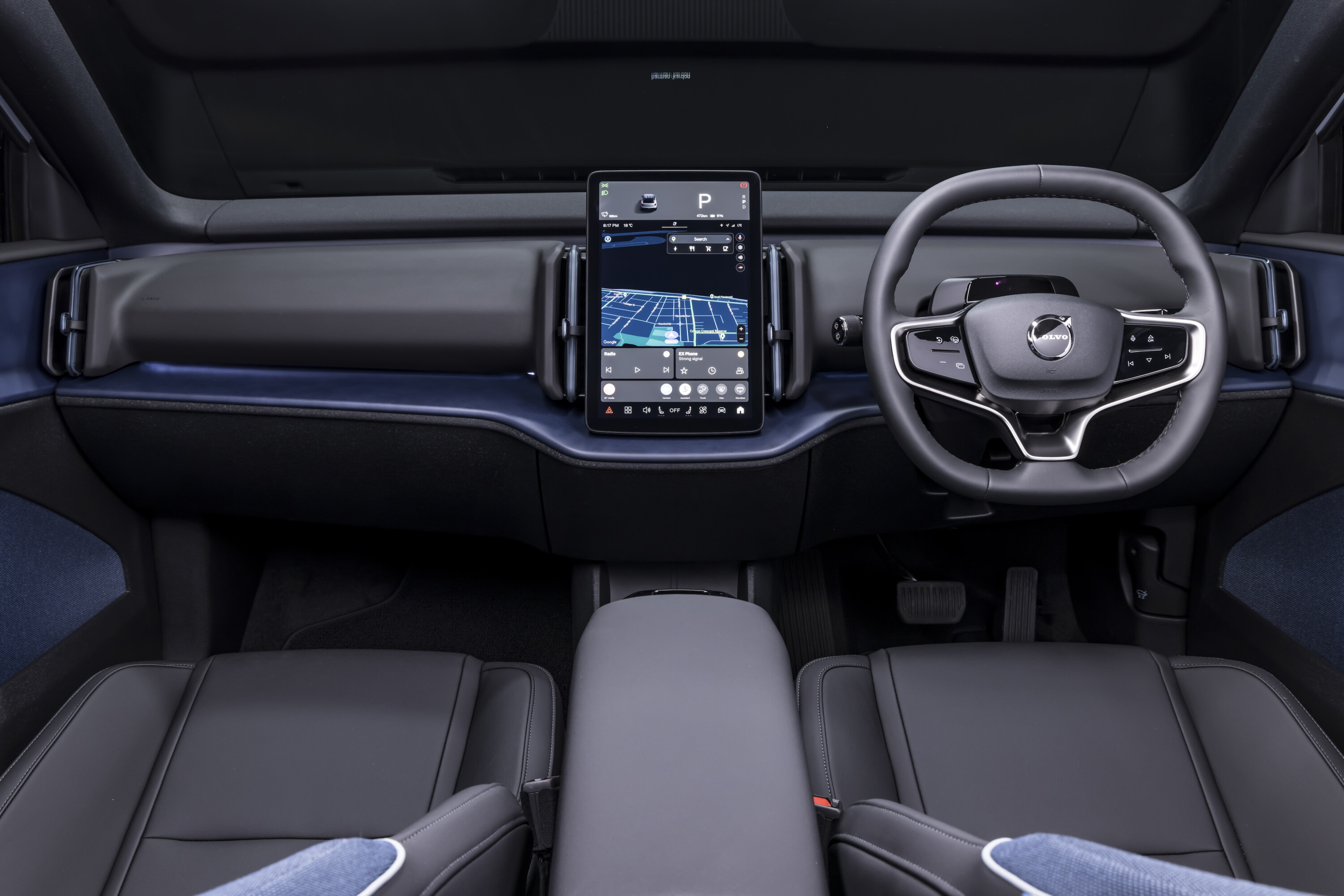
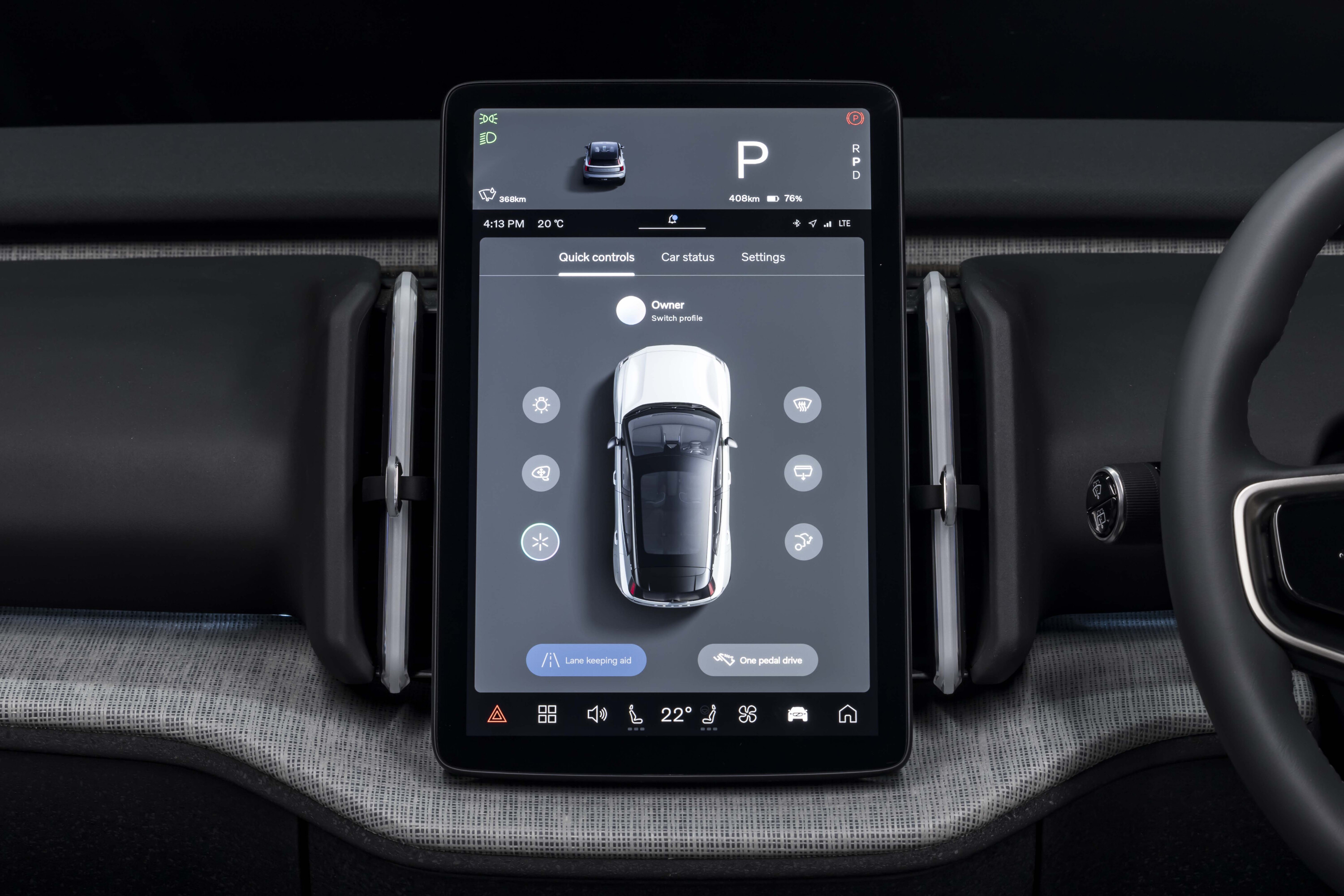
This is one of the biggest Tesla influences as it controls most vehicle functions and is the only display for vehicle information including speed. As with a Model 3 and Y, there’s no head-up display option.
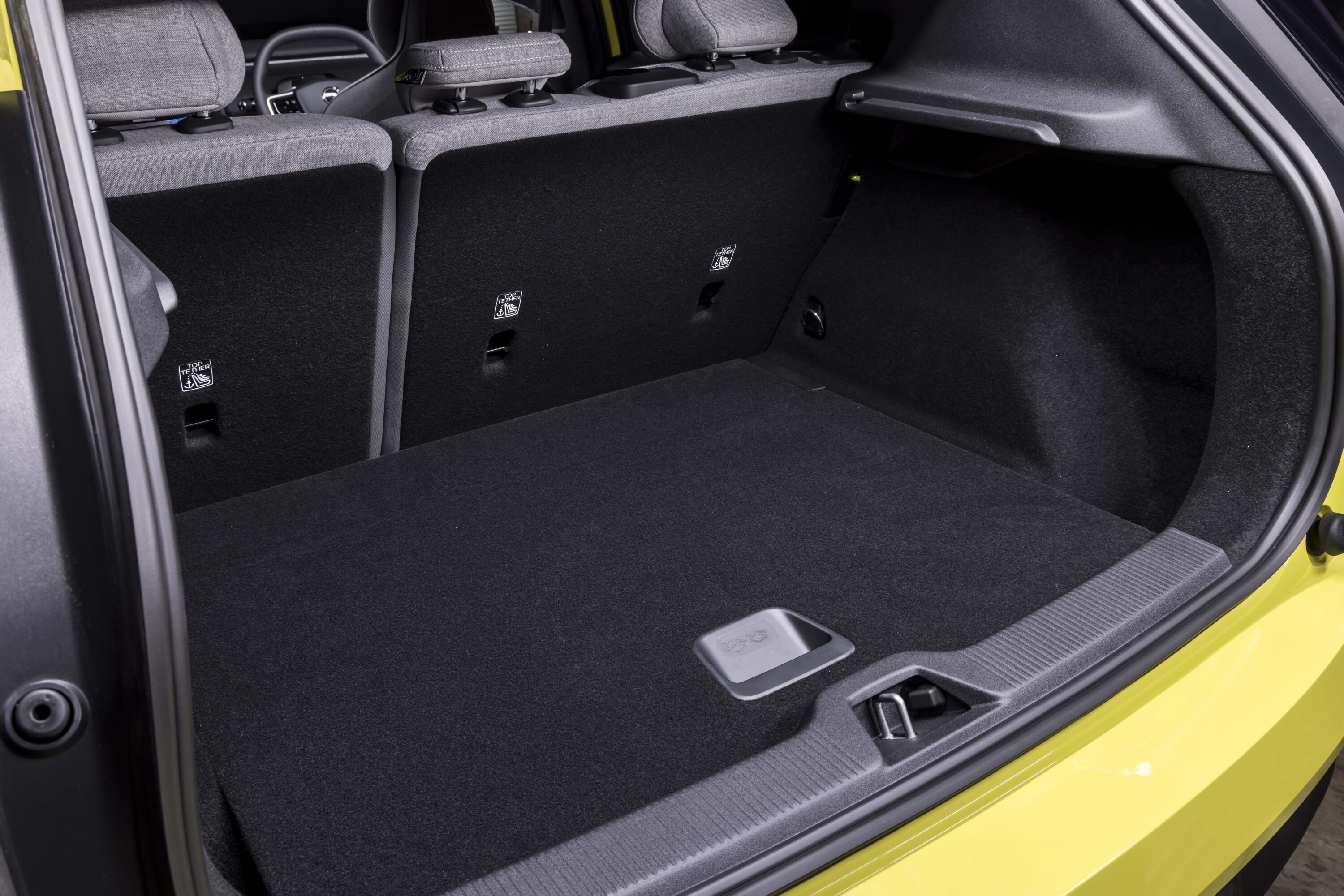
The EX30 isn’t a marvel of packaging. Despite its battery platform, there’s less rear-seat space and boot capacity (318 litres) than you’ll find in a similarly sized Golf hatchback – and this despite the fact that the EX30 also packs no spacesaver spare wheel, leaving you just a puncture kit.
Volvo admits the car is intended more for a two-vehicle garage or that some buyers who come to see the EX30 in a showroom may decide they instead need an XC40 or XC60.
On the road
We’ve regularly criticised the Model 3 and Y for their everything-in-one-display approach (and lack of standard HUDs), because they require the driver to avert their eyes from the road for more than a glance to find various functions. The same applies to the EX30.
Although Volvo has created some icon shortcuts for items such as mirrors and wipers on one of the menu pages, other functions/modes are more deeply buried – two or three menu pages away. It’s compounded by the steering-wheel-mounted driver monitor that will beep and warn the driver if it thinks they’re not paying attention for long enough.
The adaptive cruise function is a better Tesla copy, though, where it can be engaged/disengage simply by pushing down on the transmission stalk.
Wiper functions are also positioned conveniently on the left (indicator) stalk.
All-round vision is excellent and the EX30’s compact dimensions and sprightly performance – regardless of single or dual motors – make the smallest Volvo a wonderfully nimble urban runabout.
The 315kW/543Nm dual-motor, all-wheel-drive model has the unexpected label of being the company’s fastest-accelerating vehicle yet – quoted at 3.6 seconds for the 0-100km/h!
Such an unlikely car to boast that claim, though we guess there would be some fun in having a moss-yellow EX30 capable of outsprinting most AMGs.
Otherwise there’s ample pace provided by the 200kW/343Nm single-motor EX30s, evidenced by a no-slouch 5.3 seconds. In (non-timed) 50-80km/h and 70-100km/h runs we made, the less powerful, rear-drive model proved it can make easy work of overtaking.
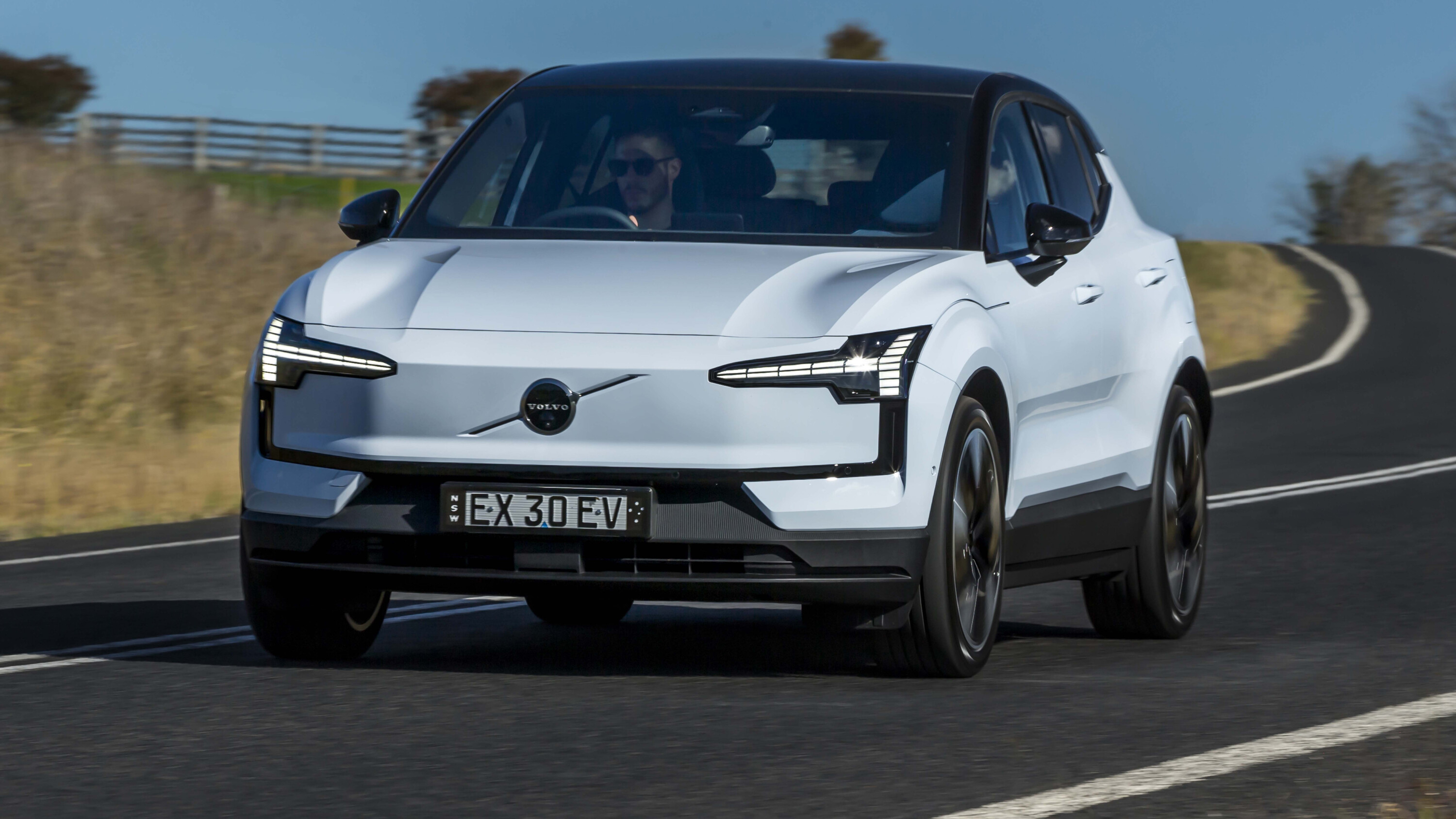
Battery ranges aren’t as different as would be expected for RWD and AWD variants, separated by just 20km in WLTP ratings – 480km for the Single Motor, 460km for the Twin Motor.
Volvo EV batteries have hitherto regularly failed to live up to their WLTP promises in the real world. We’ll have to wait for a full test of the EX30 to assess whether it can improve on the XC40 Recharge and C40 (soon to be renamed the EX40 and EC40).
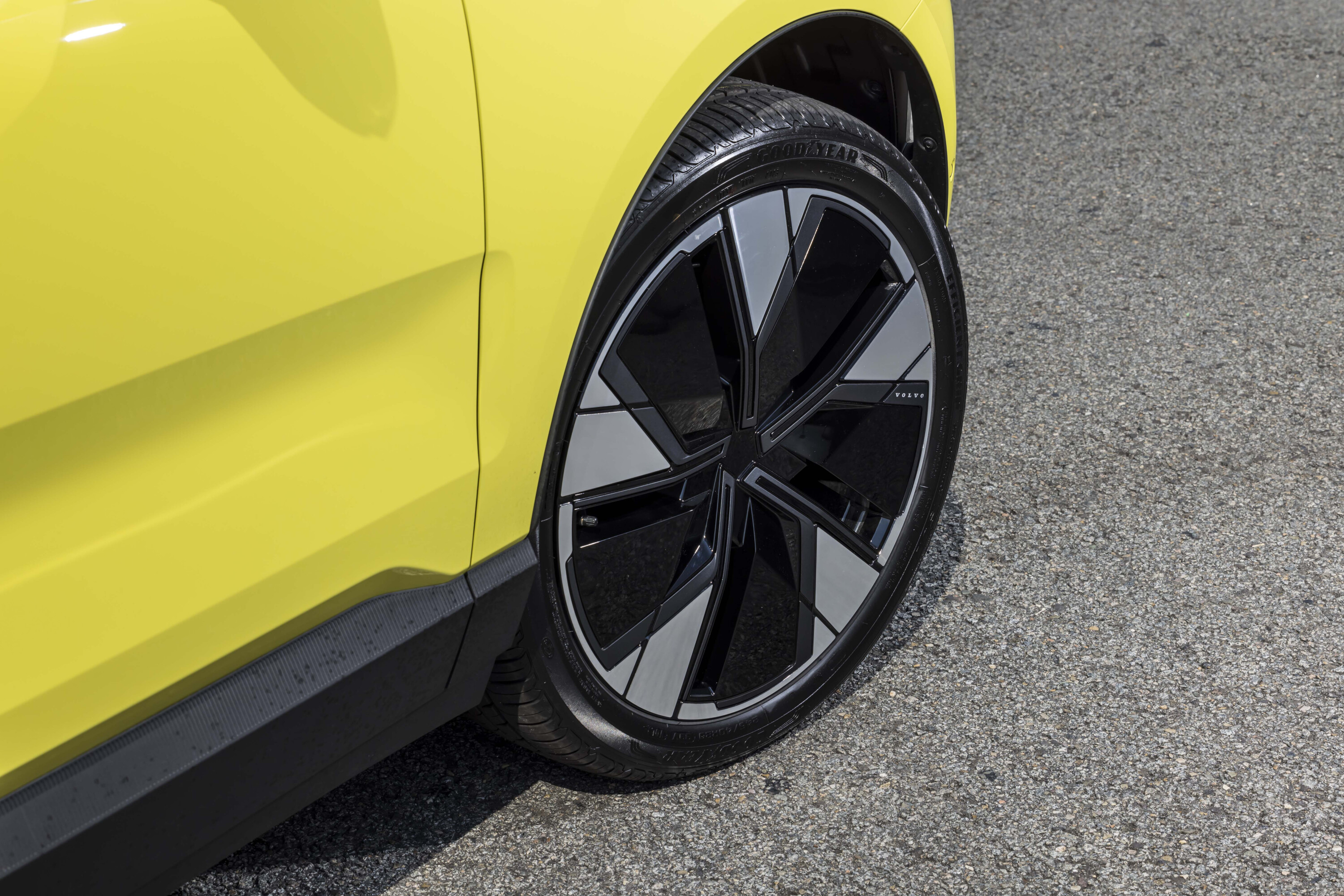
All test models on launch were fitted with 20-inch wheels. They’re standard on Ultra models, with the base Extended Plus sitting on 19s.
We can’t report the ride experience for the latter, but there’s a firmness to the way the 20s-shod EX30s roll without evidence of any jarring or crashing on the launch route.
The EX30’s suspension deals adeptly with pockmarked roads, though the heavier Performance twin-motor – which feels all its 110kg over the 1850kg Single Motor model – is prone to bouncing on undulating surfaces.
Three steering settings are available – buried distractingly in the infotainment system – with Firm our clear favourite over Soft and Normal for its preferable level of (heavier) weighting and accuracy.
This doesn’t quite help transform the EX30 Performance Ultra into an electric hot-hatch wannabe. Pushing the pace reveals a chassis that can get itself into a bit of a knot in tighter corners, not helped by an overly eager stability control nanny.
Dial the wick back from rapid to brisk, however, and the EX30 feels plentifully assured negotiating a country road, with the added bonus of 20-inch tyres that are respectably quiet on most surfaces.
First verdict
Relatively short stints behind the wheel of a Single- and Twin-Motor mean we need to wait for a longer, fuller test to delve deeper into the strengths and weaknesses of the EX30, yet it’s telling that we can’t wait to do so.
First impressions are that Volvo has played yet another strong SUV card, further broadening its appeal to a younger customer demographic following the XC40’s introduction.
While not perfect by any means, Volvo’s smallest model crucially remains big on the sophisticated, Swedish-luxury vibe that has made such a success of the company’s larger SUVs.
Mini’s refreshed and reinvigorated family is complete for at least the next few years, with no more all-new models planned until at least after the existing line-up gets a midlife update.
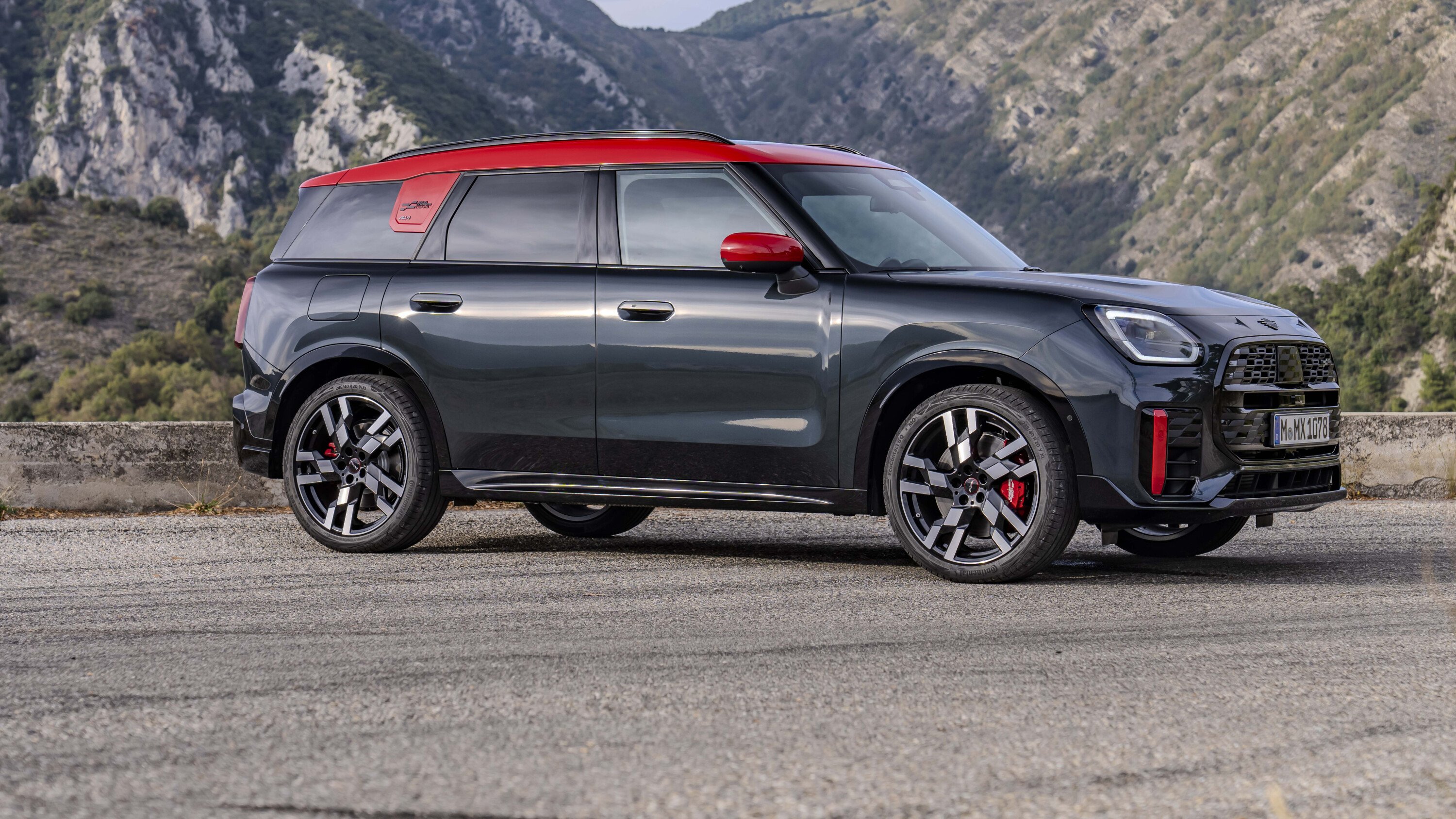
The confirmation puts a halt on the recent flurry of new models launched by the iconic British brand over the past year, which saw the arrival of the new three-door Cooper, Countryman SUV and Aceman crossover.
While a number of extra variants are expected to be added within the three key model lines, such as Countryman JCW Sport and Aceman JCW, there wont be a fourth new-gen model in the ranks for at least a few years.
Instead, Mini head of design Oliver Heilmer told Wheels that “We are considering a facelift” for one of the existing three newcomers before the launch of an all-new model.
Exactly which of the three is in line for a refresh first is not yet known although chronology may offer a clue.
Both the new Cooper and Countryman were officially revealed simultaneously in September at IAA Munich 2023, but the Countryman launched earlier. If Mini follows its conventional ‘LCI’ lifecycle, the first update could be expected in about 2027 – most probably for the Countryman.
There are no significant updates planned for the current Mini runout range – including the Clubman, Five Door or Convertible – before they’re discontinued.
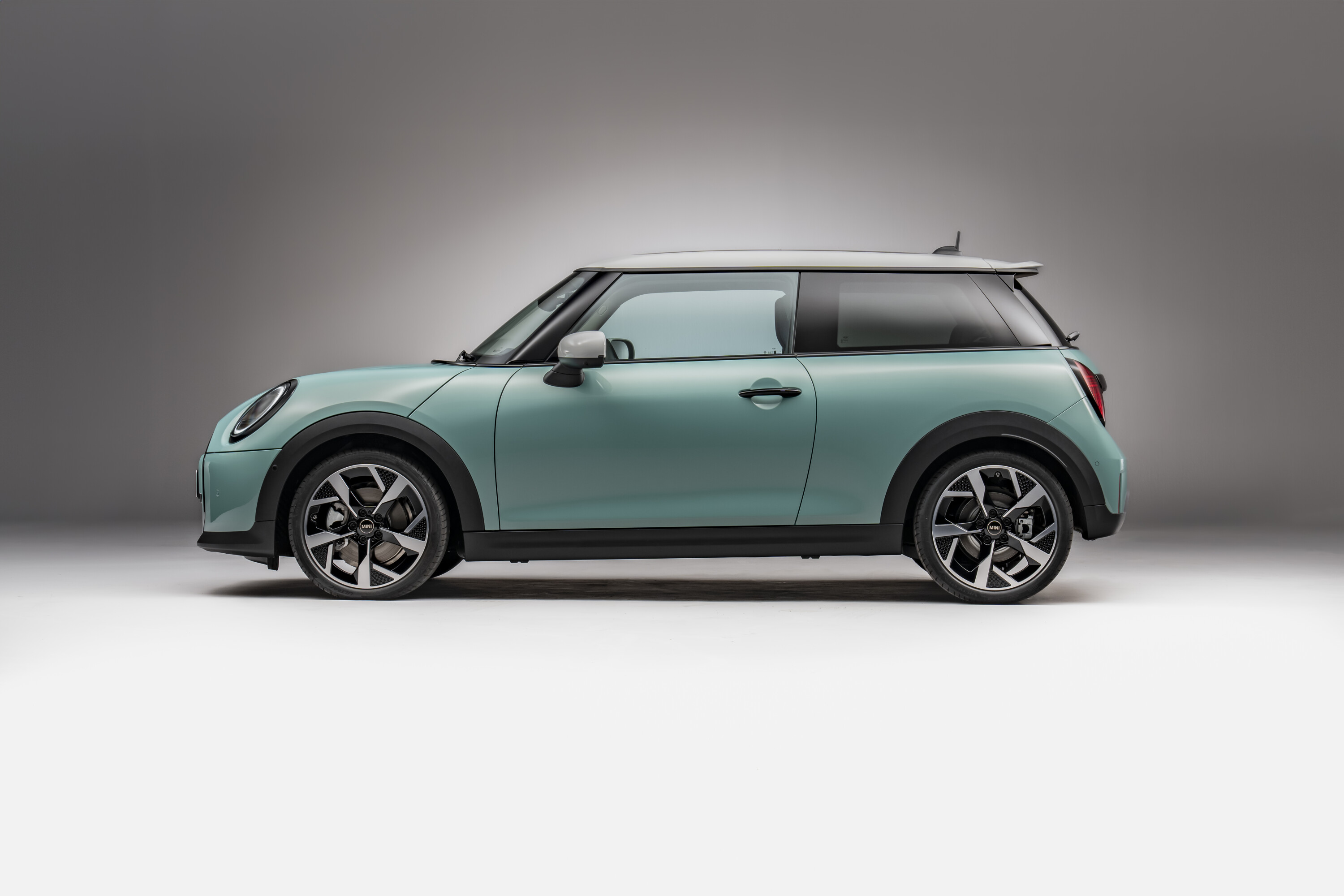
With the arrival of the new trio, Mini has embarked on its Charismatic Simplicity design language, introducing a pared-back and more simple aesthetic for all new models.
But, says Heilmer, the adoption of electrification has allowed engineering advantages as well its new styling, which was heavily function-led in the original Alec Issigonis-designed Mini.
“If Issigonis could have done the Mini today, he wouldn’t have considered anything else than electric,” he said.
“It (electrification) gave us more flexibility. We were able to adjust the proportions. The wheels are further in the corners and the original Mini had a really short bonnet. That’s what you find here.”
Heilmer demonstrated one of his key proportion benchmarks – being able to touch the base of the windscreen while standing in front of the Mini – something that wasn’t possible with previous models, thanks to lengthened bonnets.
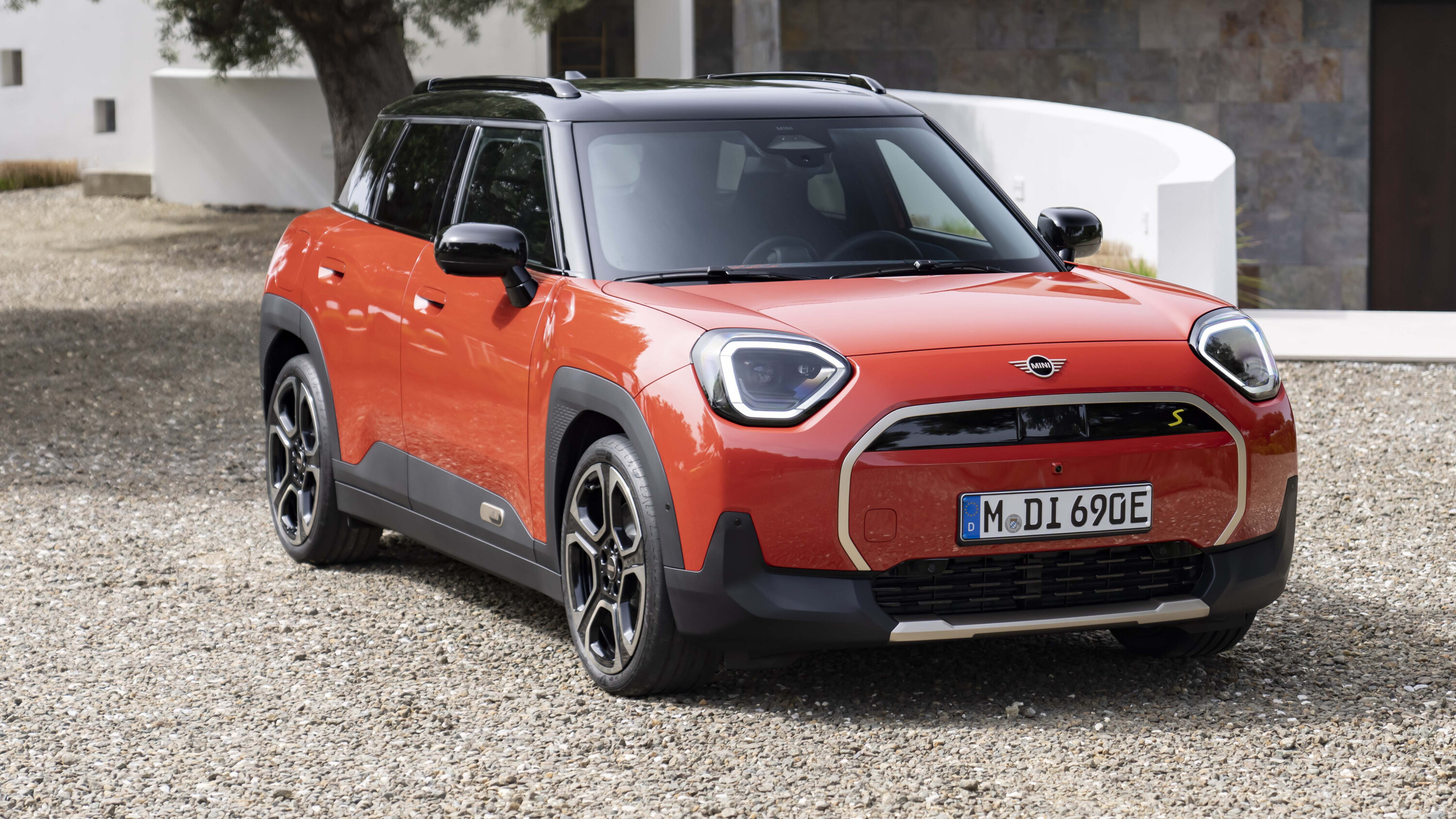
“That’s the improvement we had based on the electrification. This one is one centimetre shorter than the predecessor, but there’s almost two centimetres more space inside. This is exactly what we wanted to achieve for Mini.”
It’s not uncommon for a company to start developing a mid-life update many years in advance, but Heilmer explained why the team was looking at a Countryman or Cooper facelift just months after its launch.
“It really depends on how far you want to jump. The further you want to jump, the earlier you have to start”.
May 2024: Leaf blows in at $39,990 drive-away
For a limited time, that is.
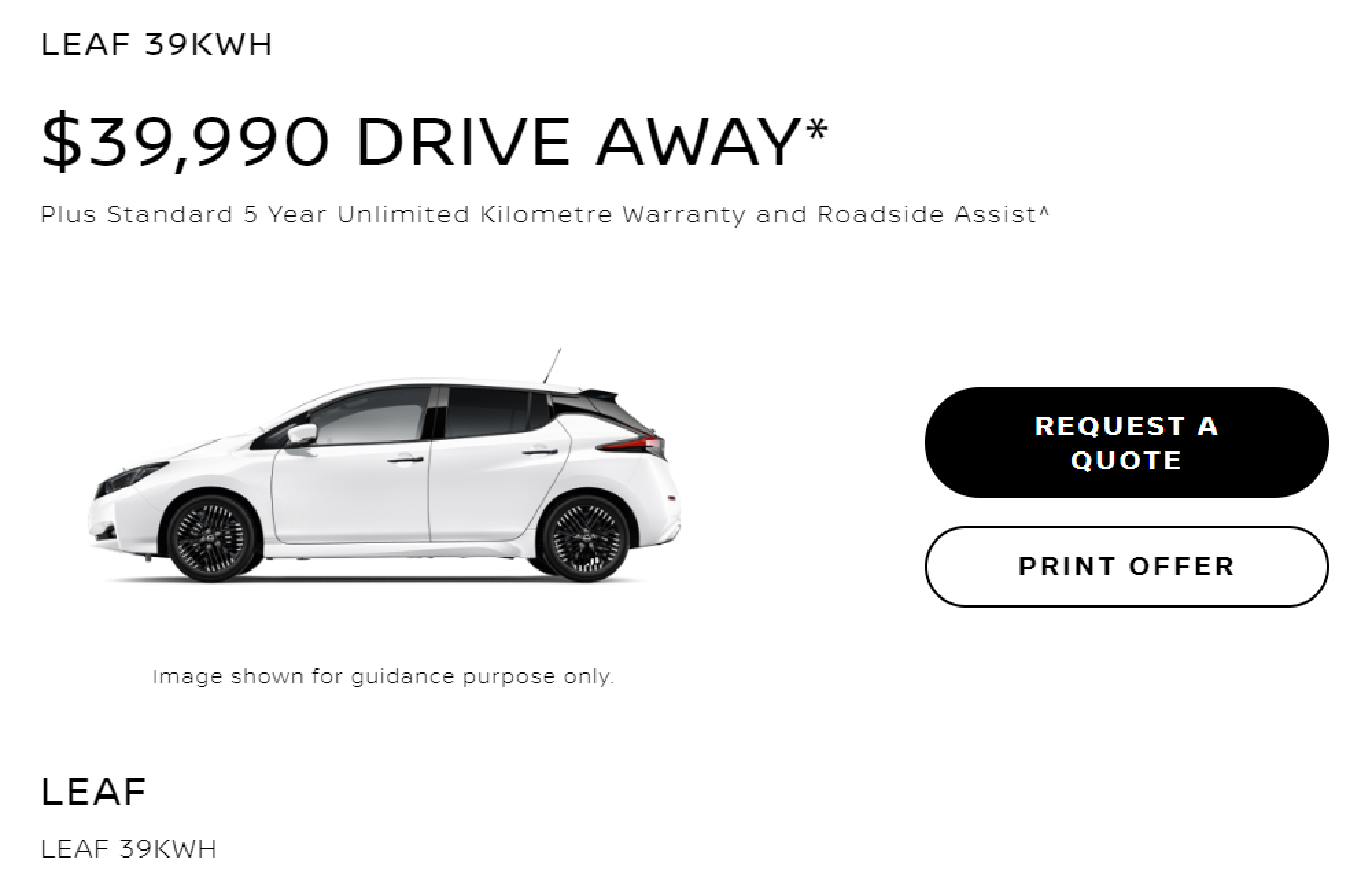
The 2024 Nissan Leaf comes with just one change over last year’s MY23 styling and tech update: a much, much sharper price – now starting from $39,990 drive-away.
It’s only for a limited time, however, running until May 31 as something of an EOFY (end of financial year) deal.
That entry price will put you into the standard Leaf 39kWh model, offering 270 kilometres of range, while those not looking for any anxiety on their next road trip can step up to a $49,990 drive-away spend for the Leaf E+ 59kWh model and its 385km claimed range.
Is it enough?
The Leaf’s temporary pricing deal is a sharp one, given it’s currently only the Chinese brands that have been able to go so low – thanks mainly, the EU says, to massive industry-wide subsidies from the Chinese government.
While buyers have been able to get into a BYD Dolphin, MG 4 or GWM Ora from just under $40K for sometime, the Leaf is now the first ‘legacy brand’ EV to dip below that magical barrier.
It remains to be seen if Nissan will make any permanent cuts to the Leaf’s pricing after that point.
Given the compelling alternatives that now exist from $38K to $55K and beyhond, a $40K starting point could certainly help Nissan move more of its once pioneering EV – still the only fully electric car it sells in Australia, with the Ariya still months away at best.
Nissan Leaf sales in 2024
The Leaf hasn’t quite disappeared from the sales charts, with 89 cars sold in Australia year-to-date, but that number is almost half the 159 moved over the same period in 2023 – and well down on the 408 sold in 2019 when this second-generation Leaf first arrived.
By comparison, 2024 has so far seen MG, BYD and GWM sell 1811 MG4s, 869 Dolphins and 362 Oras.
Continue reading below for a breakdown on the Leaf’s features.
April 2023: Facelifted Nissan Leaf launches from $50,990
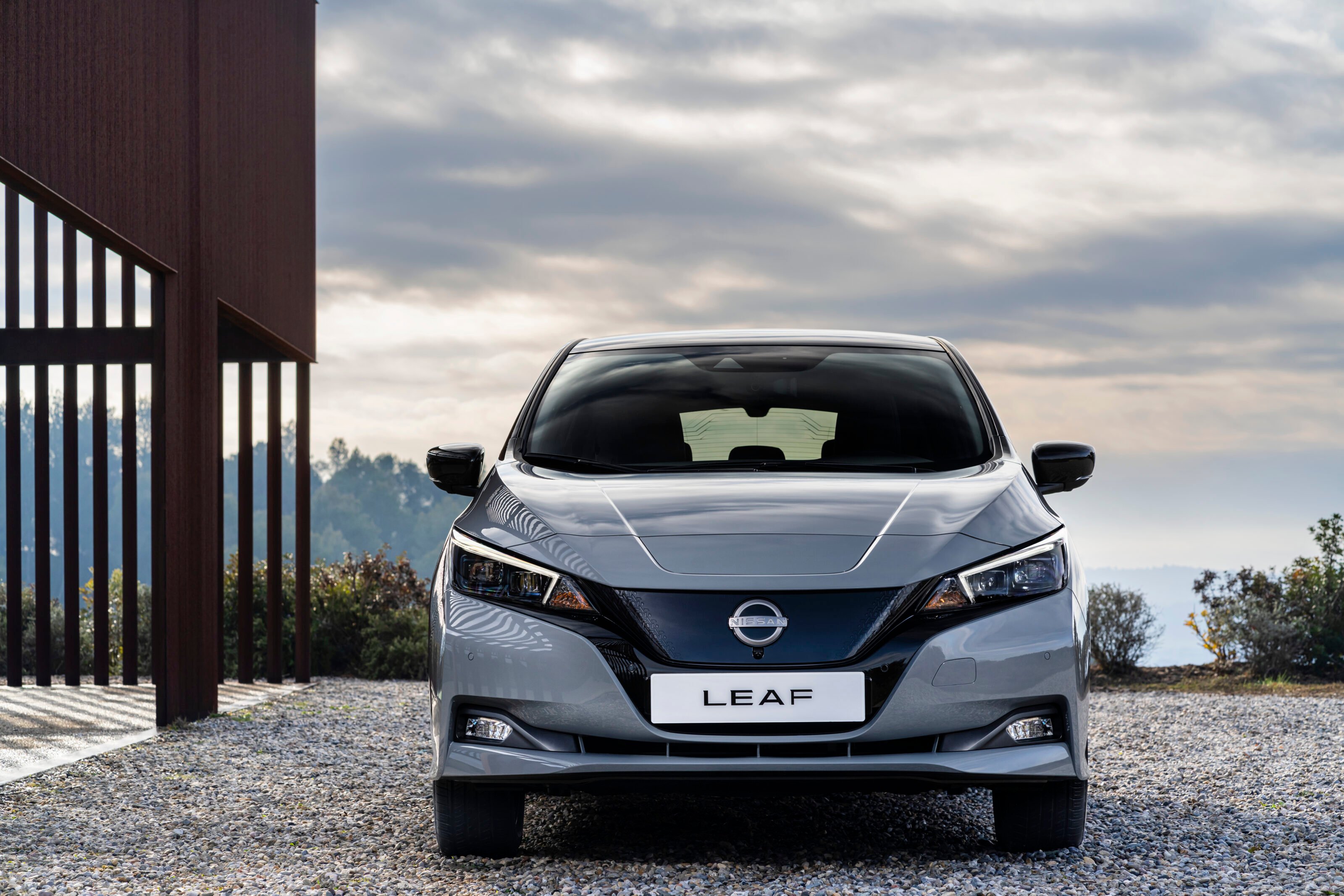
The 2023 Nissan Leaf electric hatch will arrive in August this year, with the updated model going on sale for $1000 more than the current version.
Snapshot
- Nissan brings new look to Leaf for MY23
- Base Leaf on sale from $50,990 before on-road costs, Leaf e+ starts at $61,490
- Coming to Australia second half of 2022
Powertrains for the 2023 Nissan Leaf carry across from the outgoing model with the 110kW/320Nm base model boasting a driving range of 270 kilometres from its 40kWh lithium-ion battery, coming in at $50,990 before on-road costs.
The same price increase has been applied to the MY23 Leaf e+, now set to go on sale from $61,490 with its 160kW/340Nm electric motor and 62kWh battery pack delivering a driving range of 385km.
Read on below for a breakdown of what’s new on the 2023 Nissan Leaf before it launches later this year.
February 23: Nissan Leaf launched for Europe, coming to Australia second half of year
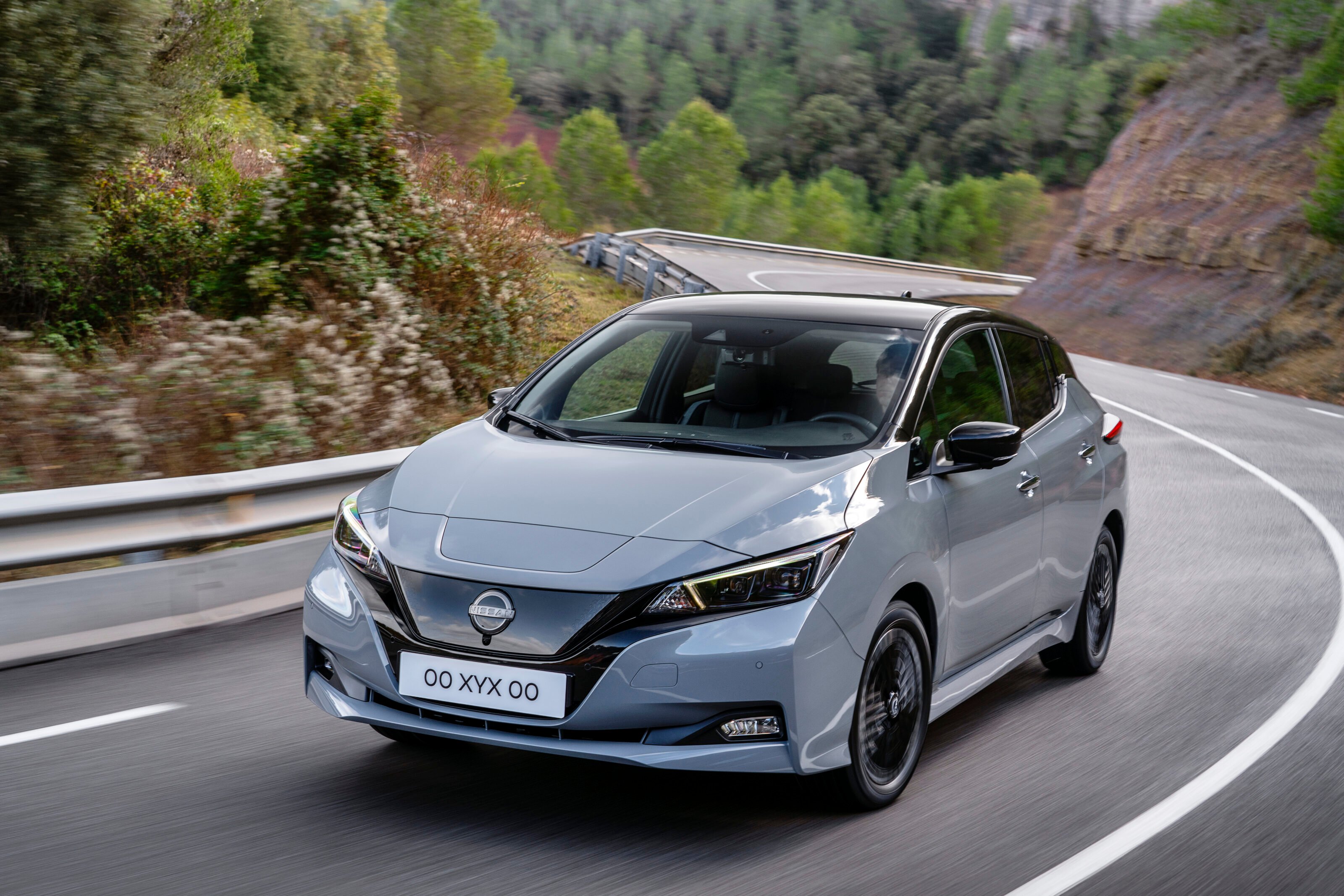
The 2022 Nissan Leaf electric vehicle has been revealed for Europe, featuring the brand’s new logo and identity.
Due to land on the continent in April, Nissan says it is preparing for a strong product offensive with a fully electrified line-up offering after the (European) summer.
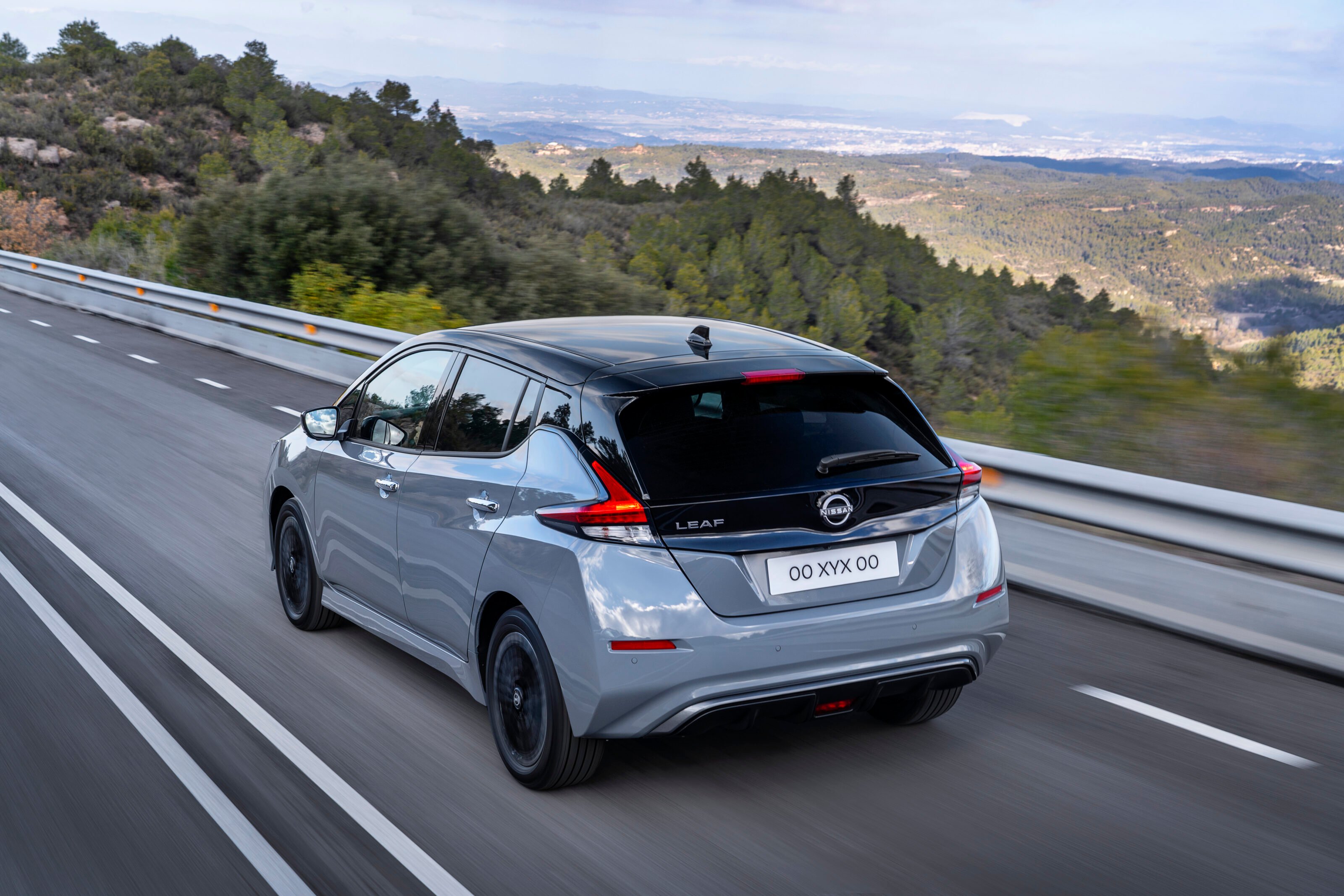
The updated Leaf will get a host of advanced driving and safety features such as ProPILOT, and infotainment tech such as an improved on-board NissanConnect system.
The ProPILOT technology enables the EV to automatically stop, start and maintain a safe distance to the vehicle in front, while the e-Pedal provides the option to accelerate, decelerate and stop with only one pedal on the move.
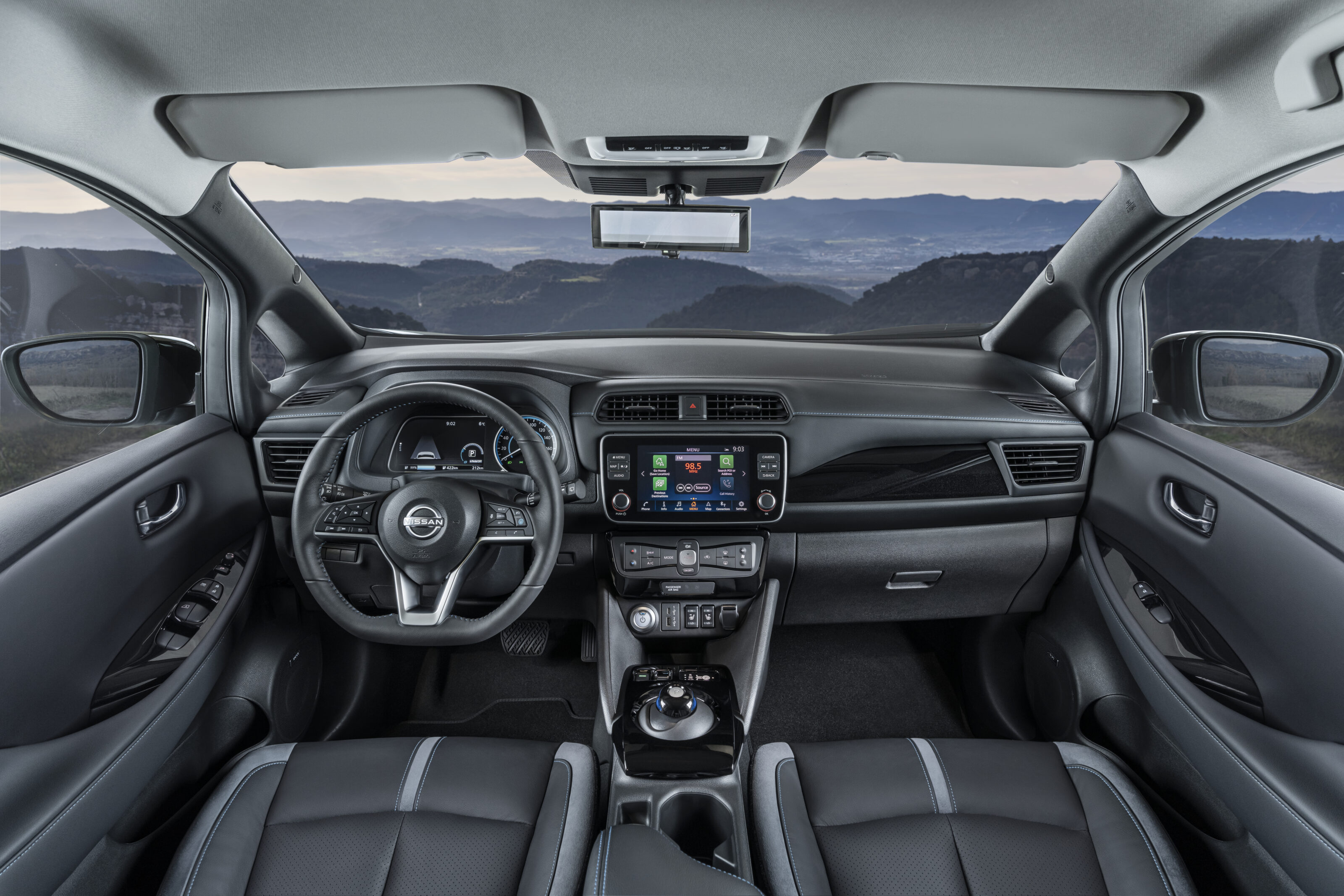
Additionally, Nissan has upgraded the infotainment features within the NissanConnect system, which features Android Auto and Apple CarPlay smartphone integration.
Remote operation of equipment such as climate control is also available through the NissanConnect app, and owners can now link their Leaf to their Amazon Alexa smart home device.
“The Nissan Leaf has always been about making advanced technology and the thrill of electric driving accessible to everyone, with over 577,000 customers worldwide. [The] Leaf has been designed around families’ needs to offer seamless connectivity and an efficient powertrain,” said Arnaud Charpentier, Vice President for Product Strategy and Pricing in the AMIEO region which covers Europe, Russia, Africa, the Middle East, India and Oceania.
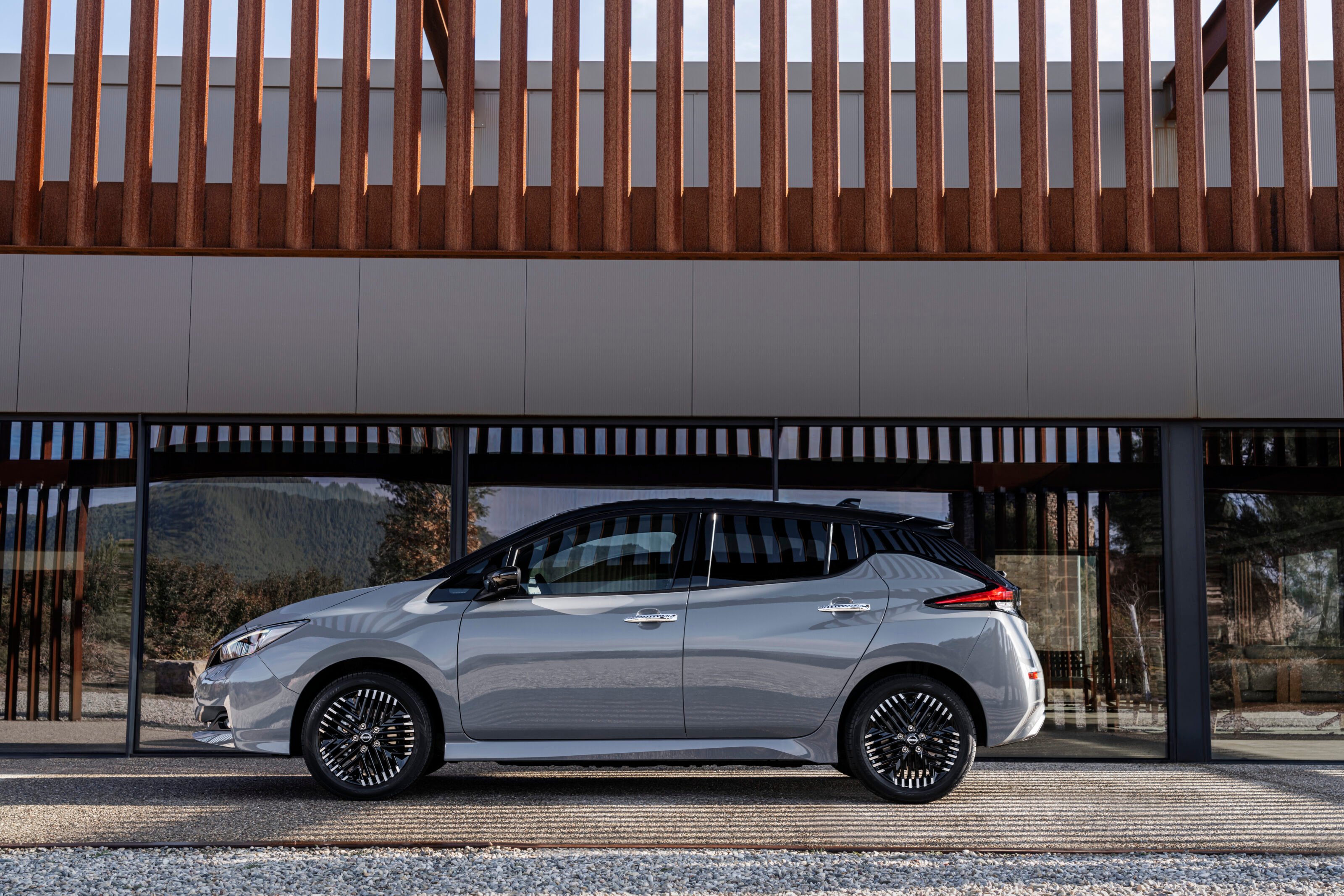
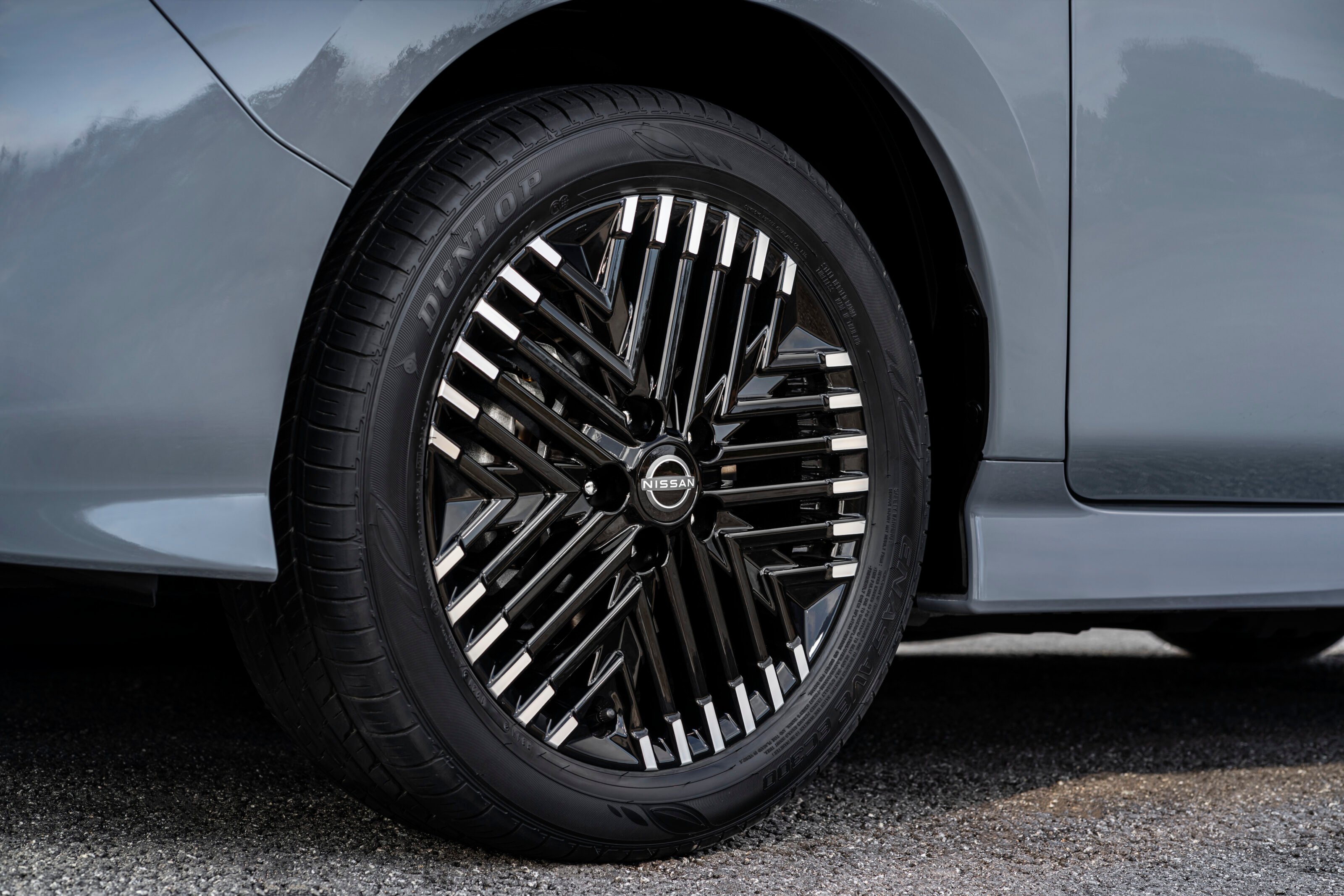
For MY23, the Leaf receives a refreshed exterior design, including intricate detailing and new 16- and 17-inch alloy wheel options for a more sporty and premium feel, and the model features Nissan’s new brand logo on the wheels, front grille and rear.
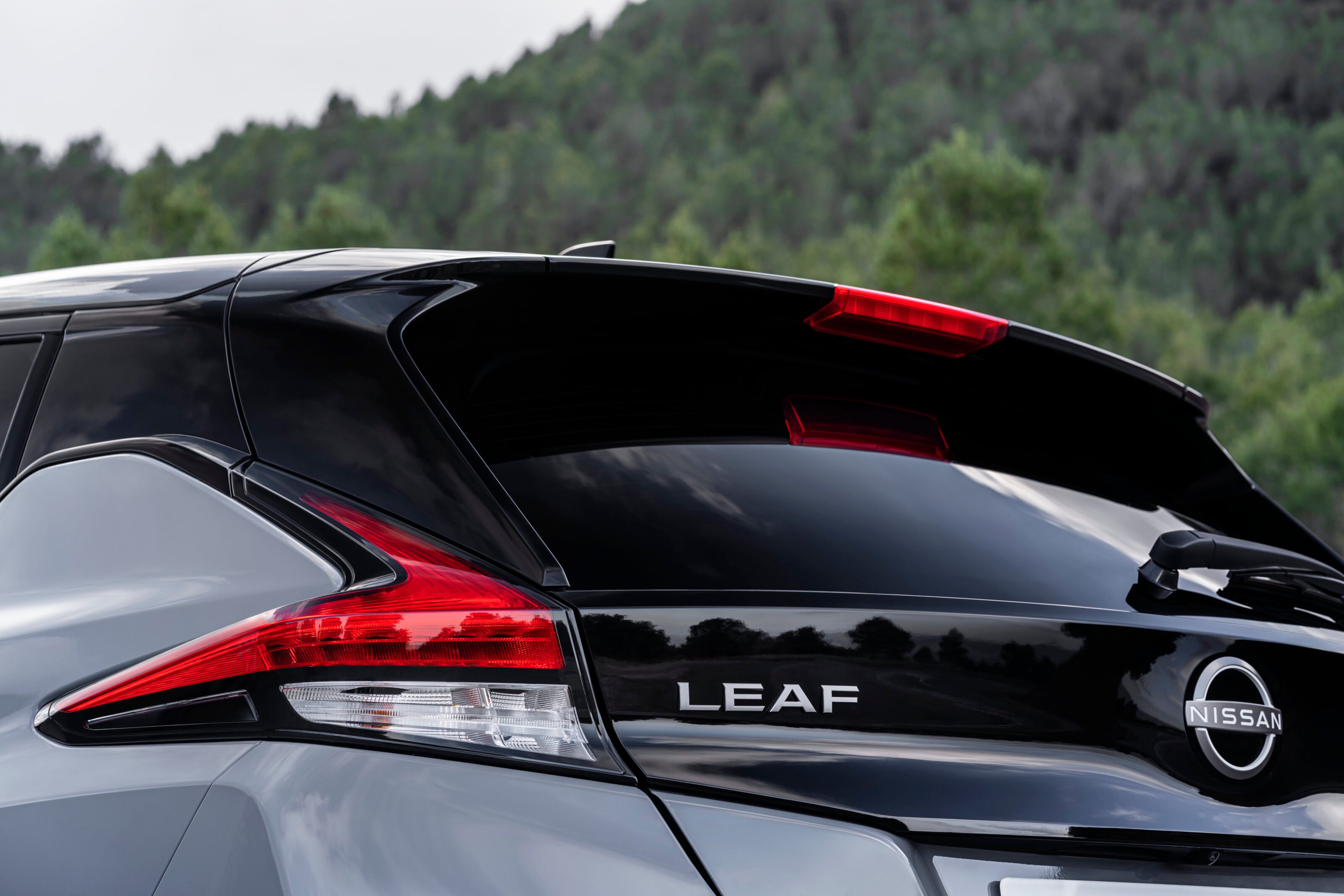
Buyers also get a refreshed line-up of exterior colours. Two new hues found on the Qashqai and Ariya join the existing range of six monotone and five two-tone options – universal blue and magnetic blue.
“As the popularity of electric vehicles continues to grow, Nissan is pursuing an exhilarating chapter in its electric mobility story. [The] Leaf has played a key role in shaping Nissan’s vision for empowering mobility and beyond, as we leverage our EV expertise to launch 23 new electrified models – including 15 full EVs – by fiscal year 2030,” said Charpentier.
The Leaf is offered with two battery options, that deliver up to 385 kilometres (WLTP) of driving range in the Leaf e+.
