
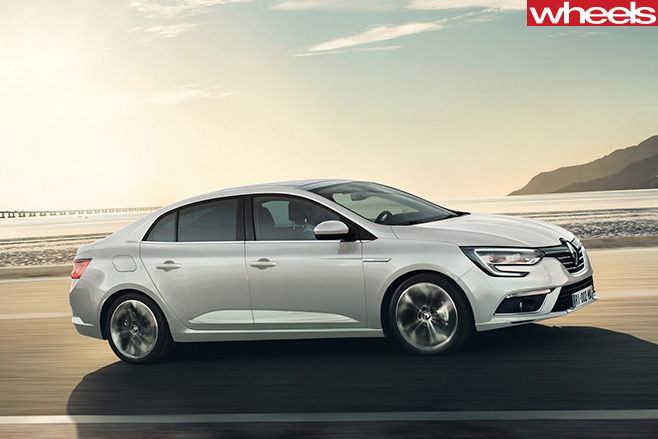
It’s either known as the Renault Megane Sedan or Renault Megane Grand Coupe, but regardless which nomenclature you go with, it’s the new four-door member of the French brand’s crucial small-car family.
Renault has confirmed Australia will be one of 20 global markets to adopt the Grand Coupe (we’ll use the fancier nameplate), despite the previous sedan – called the Fluence – being dropped in early 2015 due to slow sales.
There’s the same stylish front end and high-waistline body with as shallow a day light opening as the hatch and Renault Megane Sports Tourer wagon due here in September, though the four-door marks itself out in a couple of key ways.
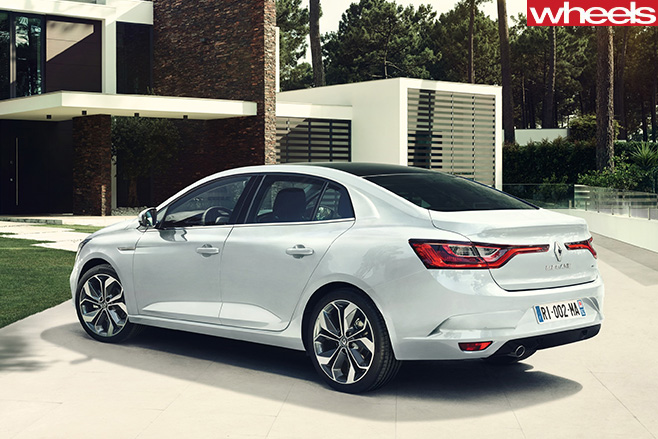
On the practical side, the Grand Coupe sits in the middle of the hatchback and wagon with 508 litres – about 75 litres more than the hatch and about 13 litres less than the most practical Megane.
Renault hasn’t released dimensions for the Grand Coupe, though again it’s likely to be sandwiched in length by the other Megane variants. The hatch is 4359mm long; the wagon is 4626mm nose to tail.
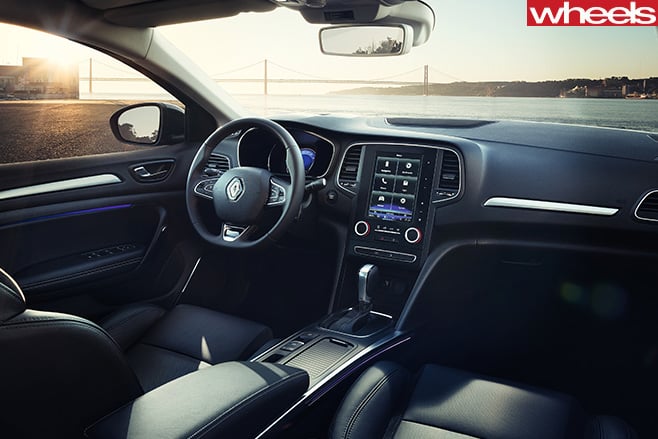
And the same driver-aid tech will be available, which includes autonomous emergency breaking, adaptive cruise control and warning systems for veering out of your lane accidentally or into to the path of a vehicle in your blind spot.
Renault hasn’t included the Renault Megane GT’s 151kW 1.6-litre turbo petrol four-cylinder among the engine options for the Grand Coupe.
Also likely is the 81kW 1.5-litre turbo diesel with six-speed dual-clutch that’s already coming with the Megane hatch.
The four-door Megane will again be built in a different country to the five-door. The Grand Coupe switches from the Fluence’s South Korea plant to Turkey, with the Megane hatch produced in Spain.
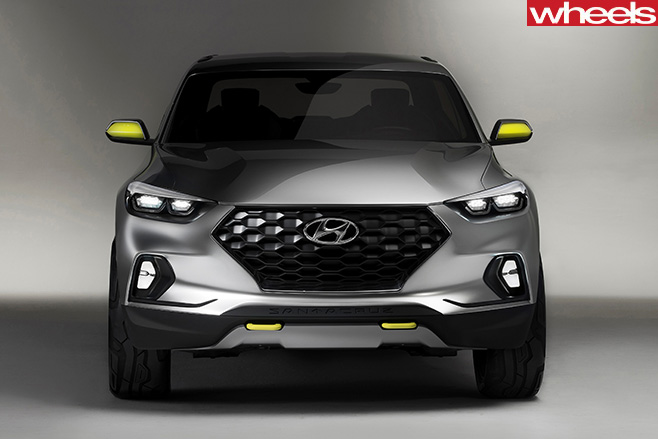
Hyundai Australia says it wants a proper HiLux competitor, and not the smaller, lifestyle-focussed Santa Cruz ute shown in concept form at the Detroit motor show last year.
Hyundai in North America has spearheaded the Santa Cruz project and will build it in the US primarily for the local market even though its compact, car-based unibody design is a far cry from the full-size pickup trucks favoured by American ute buyers.
The Hyundai Santa Cruz package is also a long way from filling a critical gap in the current Hyundai line-up in Australia. The local arm remains ‘desperate’ for a workman-friendly commercial ute.
More recently, Hyundai Australia has been providing input into a case study currently underway in Korea surrounding a new ute product for wider consumption.
“I saw the Australian study before it was submitted some time ago, and it had every detail you can think of. I’m talking about a proper HiLux competitor.”
“The fallout from Detroit was interesting. [Santa Cruz] wasn’t the ute we were expecting. It’s not necessarily a ute we would rule out but it’s not the ute that we need.”
Hyundai faces significant hurdles if it is to engineer a ute to compete with current market leaders such as the Toyota HiLux and Ford Ranger. It must be able to function as both a tool for tradesmen, and as family transport.
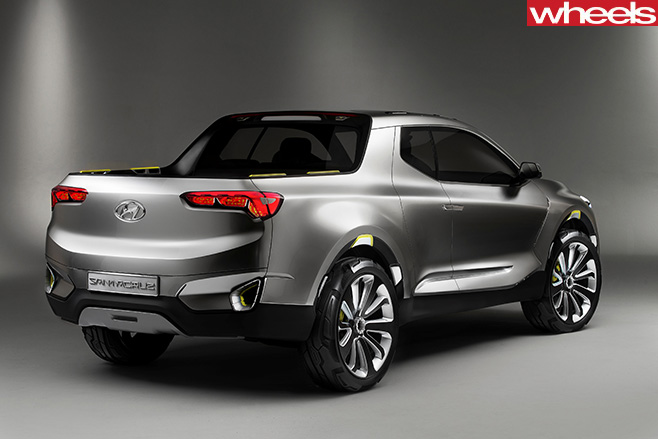
It is highly unlikely we will see Hyundai competing in the segment until at least 2020.
Platform sharing of the commercial ute with Korean counterpart Kia is one way the brand could offset the significant development costs, though Hyundai has not expressed interest in doing so, and Kia’s aspirations for a youthful image seem to fit better with the Santa Cruz concept.
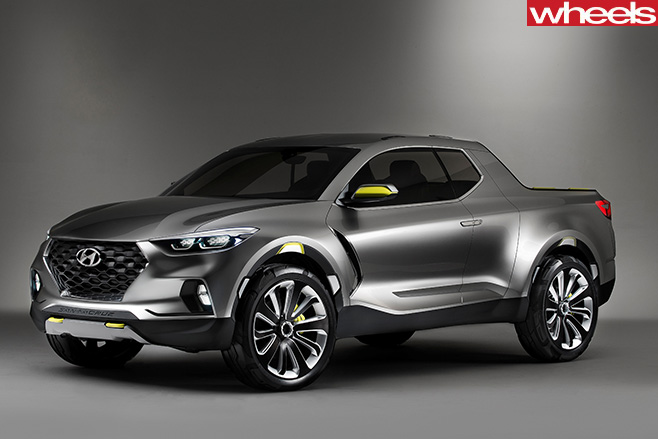
The success of the Hyundai iLoad in Australia shows buyers have no issue when it comes to purchasing Hyundai-badged commercial vehicles. A dual cab ute should only strengthen the brand’s already impressive figures.
“Even a conservative [sales] number would give us a nice boost in market share,” says Thomas.
“There’s no barrier to entry into the segment for us as a brand. There’s no negative connotation with a Hyundai commercial vehicle.”
FORD Australia is believed to be close to announcing a cheaper petrol-engined version of the Ranger trade ute to help it overtake the Toyota Hilux in the sales race – and also replace the iconic Falcon ute.
Details seen by Wheels show Ford is close to locking in running changes for the Ranger line-up, with revisions to engines and brakes to potentially accommodate a smaller 122kW/226Nm 2.5-litre four-cylinder spark ignition powertrain, mated to a five-speed manual gearbox.
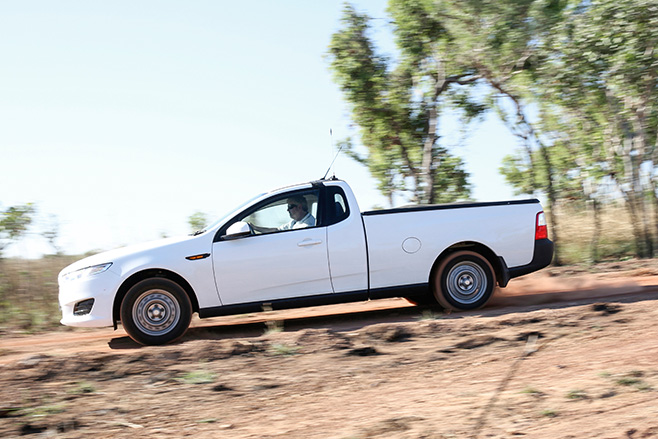
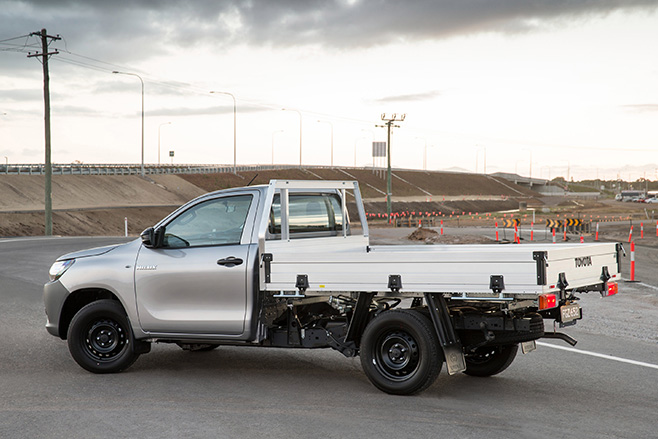
The move would also potentially allow Ford to plug a key product gap in its Ranger line-up to help it take up the fight up to the market-dominating Hilux – a base package that will compete directly with the price-leading $20,990 2.4-litre petrol-engined Hilux Workmate that carries a more than $8000 price advantage over the cheapest Ford-badged competitor.
However, the Ford Ranger’s performance will be well down on the Falcon ute’s 195kW/391Nm 4.0-litre in-line six that it is expected to replace once Falcon production ends in October.
Ford is locked in a neck-and-neck battle with the Hilux for the title as Australia’s best-selling trade ute. Year to date, Ranger is only 258 units behind Hilux on 4×4 sales, but 2754 units behind in the more workmanlike 4×2 sales race.
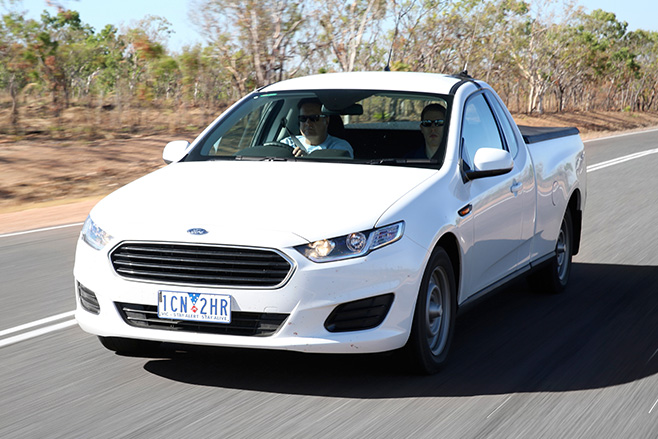
Add the Falcon ute’s 1375 sales year-to-date – which a cheaper petrol-engined Ranger could soak up – and that 4×2 gap narrows to just 1379 units.
However, some Ford insiders are believed to be concerned that adding a cheaper petrol-engined version to Ranger is likely to erode some of the work the brand has done to build the pick-up truck’s market image as a more premium offering than Hilux.
Premium twin-cab versions of the Ranger, and direct rivals such as the Holden Colorado, Isuzu D-Max, Mazda BT-50, Mitsubishi Triton and Volkswagen Amarok are all strong sellers as buyers steer away from traditional passenger cars to higher-riding light commercial vehicles that now account for about 10 percent of new-car sales each month.
Later this year Volkswagen will introduce Australia’s most expensive trade ute, a V6-engined version of the Amarok that will nudge $70,000 – about the same price as a luxury-laden Lexus sedan – when it arrives.
The lack of restraint on high-priced trade utes hasn’t gone unnoticed at the more premium end of the market, with Mercedes-Benz teaming up with Nissan to build a Benz-badged, V6-engined version of the Navara ute that brings luxury levels of ride and cabin comfort to a class that traditionally has had its feet firmly set in worksite mud.
The Mercedes-Benz GLT, as the German spin-off is likely to be known, is expected to go on sale in Australia by 2018.
Price & Equipment | 17/20
The $38,990 Sportage SLi turbo-diesel gets front parking sensors, leather rather than cloth seats, a crisp colour
Interior & Versatility | 17/20
TFT-LCD instrument cluster, and LED tail-lights. However, you don’t get a smart key or start button, nor a powered tailgate, and the infotainment system’s 7.0-inch colour touchscreen is an inch smaller than its rival’s. Interior & Versatility
Dash design is appealing and the cabin is finished nicely. Seat comfort and ergonomics are excellent, and it’s nice to have leather (even if some of it is synthetic). You get a roomy, comfortable back seat in both, with rear air-con vents. The Sportage cargo bay holds 466 litres, expanding to 1455 litres with the seatbacks folded flat.
Performance & Economy | 15/20
Kia’s diesel is thriftier (6.8L/100km versus a respectable 7.7 for the Hyundai) and torquier (some 400Nm) but not as smooth, and without the techno appeal of a downsized petrol turbo and dual-clutch ’box, or the green credentials. You’ll have to deal with greasy bowser nozzles, but won’t have to see them as often, despite identical 62L tanks.
Ride & Refinement | 15/20
The Sportage strikes a sportier ride/handling compromise. These are ‘Sports’ Utility Vehicles, but they’re usually used as family cars so comfort is a priority. Despite seemingly firmer spring and damper calibrations, the Kia still rides with both comfort and control, which might make it a better country tourer, as well as the enthusiast’s pick.
Steering & Handling | 14/20
In keeping with its sportier slant, the Kia is the more obedient steer that offers a bit more precision and feel from the wheel, while dispatching corners with a little more verve. The Sportage sits flatter, responds more faithfully to control inputs and maintains its composure when the going gets lumpy. Test-drive and you will be surprised.
Price & Equipment | 17/20
These mid-spec, mid-sized Korean SUVs represent the value sweet spot and share many features (cruise control, dual-zone air-con, rear parking sensors and reversing camera, auto headlights and wipers, 10-way power adjustable driver’s seat and six airbags). But the $38,240 Tucson is unique in offering a 1.6 turbo-petrol and seven-speed dual-clutch ’box.
Interior & Versatility | 16/20
Hyundai cabin is plainer than the Kia’s; it’s all laid out neatly and intuitively, but it doesn’t look as classy. Cloth seats offer terrific comfort and grip occupants well, though lack the wipe-down convenience of leather. Both SUVs have Isofix attachment points in the outer rear-seat positions. The Tucson offers 488/1478 litres of cargo capacity.
Performance & Economy | 15/20
Drivetrains are the great differentiators with this pair. Yes, you can have a 2.0-litre atmo petrol or turbo-diesel in either, but only the Tucson offers a smaller 1.6-litre turbo-petrol and a dual-clutch transmission. Torquier than the atmo 2.0 but not as grunty as the oiler, the 130kW/265Nm 1.6T does its best work at middling revs.
Ride & Refinement | 16/20
The Hyundai has a more absorbent ride than the Kia, which makes it better at ironing out sharp-edged urban intrusions and joins in the road, as well as country-road lumps and bumps. It’s more difficult to separate them for quietness and NVH suppression as they’re both quite adept at shutting out tyre, suspension and wind noise.
Steering & Handling | 13/20
Yes, you lose some agility – and outright handling ability – in an SUV compared with a regular sedan or hatch, but the modern soft-roader drives well, and our Korean duo are among the best. The Hyundai’s steering isn’t quite as crisp (though there’s not much in it), but it handles bends with palpable balance while gripping the road surely.
VERDICT
The aesthetic pick will be a matter of taste. Kia’s industry-best warranty, on the other hand, is no grey area – seven years beats Hyundai’s five hands down. They both offer a lot of standard equipment, but what do you want more – leather (Sportage) or keyless entry and start (Tucson)? And you have to go for the flagship in either showroom to get all the advanced safety gear, such as AEB. The Tucson is a slightly smoother proposition, with a less rich-looking cabin, while the slightly tauter Sportage feels both sportier and classier. If you want a keen little turbo-petrol engine with a dual-clutch gearbox, your choice comes down to the Hyundai. If you’d prefer a turbo-diesel, you could have either one of them, but we’d pick the Kia. Just.
Driverless cars. According to that most wise and learned of modern oracles, Wikipedia, the definition of what it terms an “autonomous car” is: “An autonomous car (driverless car, self-driving car, robotic car) is a vehicle that is capable of sensing its environment and navigating without human input.”
It’s the last three words in that definition that hit me in the face like the exhaust fumes from an electric vehicle never will – “Without human input!” (my exclamation mark, not Wiki’s).
Now don’t get me wrong. I’m all for car manufacturers spending untold billions on R&D to make our motoring lives a little easier and a whole lot safer. Without that development, we’d still be driving a three-wheeled wonder made by Carl Benz and powered by a simple single-cylinder, two-stroke engine capable of propelling the Motorwagen to a top speed of 11km/h.
Instead, just 130 years later, we are looking at a future where the driver is superfluous and the machine is everything.

The feeling that washes over you while someone else does the hard work of navigating traffic and the idiots in it can be relaxing and soothing (okay, I lied about liking being driven by a taxi driver; no one likes that). But what I can’t imagine is the seat behind the wheel empty, a pristine leather-clad vacuum devoid of all “human input” into the art and science of driving a car.
And that brings me neatly to the point of this rant. A few weeks ago, an enterprising individual by the name of Denis Sverdlov launched ROBORACE to an unsuspecting motorsport world. The idea is simple; to create a racing series where the grid of 20 cars is made up entirely of “driverless cars”. Sounds far-fetched but ROBORACE is due to start this year as a support category for the FIA’s all-electric Formula E Championship.
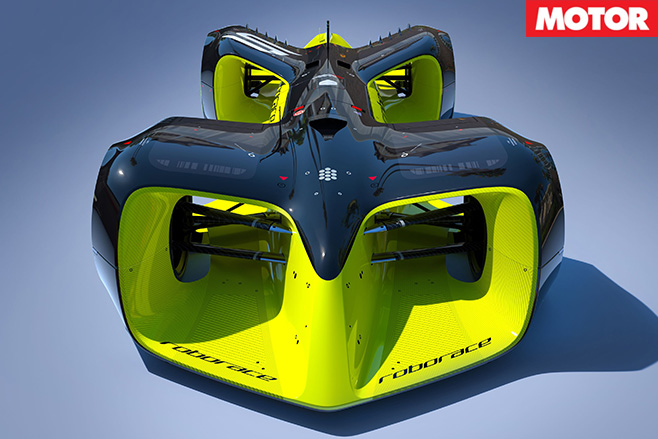
Technical details are scant but what we do know is that this isn’t some radio-controlled micro racer. It weighs in at a hefty 1000kg or so and will be similar in size to a modern open-wheel race car with a claimed top speed in excess of 300km/h. Controlling it will be an array of sensors that will calibrate everything from ideal cornering speeds to proximity of other ROBORACE cars.
“We passionately believe that, in the future, all of the world’s vehicles will be assisted by AI (Artificial Intelligence) and powered by electricity, thus improving the environment and road safety,” said Sverdlov when launching the car last week. “ROBORACE is a celebration of revolutionary technology and innovation that humanity has achieved in that area so far. It’s a global platform to show that robotic technologies and AI can co-exist with us in real life.”

The act of a driver, a human no less, on the absolute limits of the laws of science is what makes motorsport a gladiatorial contest where only the best survive. Take away that human element and we are left to admire what? An algorithm consisting of a sequence of zeroes and ones in a particular order?
Give me Ayrton Senna, give me Fernando Alonso, give me Jim Clark, Jack Brabham, Daniel Ricciardo or Sebastian Vettel. But you can keep ROBORACE (and Lewis Hamilton!).
When you’re approaching the sound barrier, no mishap is small – but Rosco McGlashan still aims to be our first land speed record holder.
First published in the April 2016 issue of Wheels magazine, Australia’s most experienced and most trusted car magazine since 1953.
Ross knew it was all over only a second before anybody else. Accelerating hard from four kilometres back, Aussie Invader was already howling past 800km/h towards a peak of more than 1000 when he saw it right in his path. The timing stand was a vertical 20 mm steel rod welded to a steel plate of similar thickness, together weighing more than 50 kg. Beside it, a 12 volt lead acid battery and the timing light, receiving a beam of infra-red light from its mate 50 metres away on the other side of the track. The car would break the beam, starting a clock which would measure to three decimal places the time Aussie Invader took to travel exactly one mile to a similar set of lights down-range.
But Ross was off course. Hitting a patch of soft salt, Aussie Invader’s left front wheel was gouging an ugly rut in the surface. The rear wheel had fallen into it and Ross was tramlining towards disaster. Five hundred metres back from the track, we saw…a flash? A spray of something? Then a sharp CRACK! and a cloud of evil black smoke in the slipstream. Half a second later the parachutes popped and we knew it was bad. With Ross hitting the brakes so hard they began to melt, the car was still rolling 5 km later when cameraman Mike Goodall and I reached the track. Bits of composite body lay scattered like munched rubbish spilled from a council garbage compactor.
The timing stand was no more. Just the baseplate remained, straddled by the great ruts in the salt. The solid alloy wheels had missed it by 10 cm.
His right eye glued to the viewfinder, Mike found me with his left: “Well, I guess we’re going home.”
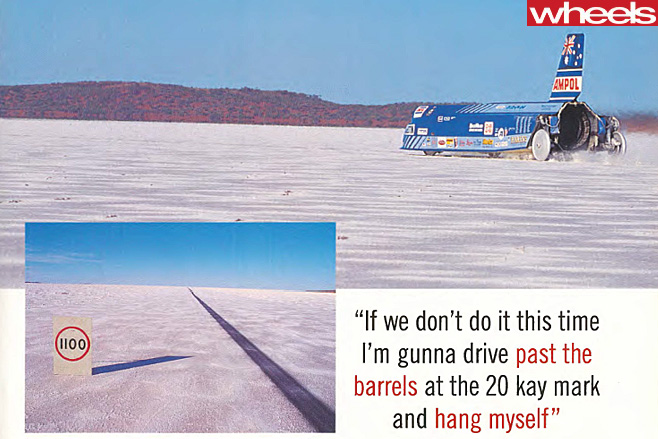
Despite the technology, land speed record breaking is still a waiting game. On some mornings the tourists would arrive before dawn. They knew this was not a spectator sport, but they came anyway. Big, raw-boned farm boys with calloused hands, or steel workers from Whyalla, they’d drink beer under the sparse shade of their battered hats, and stare out over the blinding salt. Because they’d driven so far Rosco would come down from his camp to stand among them and press the flesh.
Always the jet-fuelled jester, he’d charm them with his self-deprecating wit, answering the same simple questions he’d answered a million times before.
What she run on, Rosco? Kero? Aaaay, Bob, ‘ear that? Bloody thing runs on kero! Din’ I tellya, ay? And they’d stand in self-conscious little foot-shuffling knots around him, kicking the red dust and glowing with awe that such an ordinary-looking man … jeez, Jacko, he’s just like us! … was going to strap his backside to a jet engine and go faster than anybody had ever gone.
“Mate, I feel a bit sorry for them,” Rosco said. “The poor bastards have come hundreds of miles on the off chance of seeing us do a run. There’s buggerall chance today, so it’s the least I can do, really.”
Like most Australian men, McGlashan uses humour as a form of self-protection, a sword to deflect external assaults and to decapitate the demons from within.
The demons were growing more insistent and there were times when, if you looked deep enough, you knew that the strain of keeping them out of sight and earshot was beginning to tell.
There was no doubting McGlashan’s bravery. Always the hot-rodder, there had been many times when things had become a bit sticky. Like that first time back in 1993. The car’s front wheels wouldn’t grip the salt and it degenerated into great power slides backwards and forwards across the line at 600 to 700 km/h. Rosco would hang on grimly, finally getting out with a line like: “Yair … mmmm … she’s a bit all over the place, mate.”
It was fighter pilot stuff, good old push to the edge and pull her back. And the flip side to bravery was a lack of imagination, for if you thought too much about the terrible things that could happen at such speeds you wouldn’t do it.
His crew’s admiration had grown like layers of paint, polished by people skills no formal schooling – of which Ross had had very little, anyway – could teach. After 11 years, he and his crew knew each other well. For 11 years he had been making the same jokes, usually at his own expense, and they always laughed.
They thought he had no fear and they were right, up to a point. He certainly had no fear of injury, of hurting himself in a crash – 20 years of drag racing had taken the sting out of that.
But McGlashan knew fear all right – the sickening, paralysing fear of failure.
One afternoon Ross and I drove out to the Bat Cave, the transportable hangar that’s Aussie Invader’s home away from home. He was to appear in a satellite interview on Channel7’s Today Tonight current affairs program. As usual, he joked with the crew as they set up their camera and microwave link equipment. While they were preoccupied with a minor technical hitch, he leaned heavily against the smooth slab side of his blue brute of a car and his powerful shoulders slumped as he squinted at leaden clouds foaming in from the Great Australian Bight.
Only a week earlier, two days after Aussie Invader arrived at the lake for the third time, furnace heat had given way to a quick but vicious thunderstorm. It didn’t do any damage, nor did it leave much water on the salt, but sharp memories of earlier visits cut short by bad weather made Ross nervous. The following night he had jumped out of bed at 3 a.m., alarmed by the sound of thunder. Wife Cheryl had dragged him back. It was only the sound of the caravan annex, flapping in the breeze.
“Jesus, mate,” Rosco muttered, more to himself than to me. “Jeee-zuzz! We’ve gotta do it this time. If we don’t do it this time I’m gunna drive past the barrels at the 20 kay mark and hang myself.”
At an instruction from a technician, he turned and looked down the lens of the camera at a TV presenter he couldn’t see, adjusted an earpiece, squared his shoulders again and the jester reappeared.
“Yep … yes, Yvette, I hear you fine, sweetheart. Goddam, yer lookin’ bloody gorgeous as usual luv, heh heh heh…”
Late that afternoon, the storm broke in high-pitched squalls across the lake. It tore at the taut skin of McGlashan’s face as he and the crew fought to stop the Bat Cave from blowing away. It didn’t, but the track was covered by a thin sheet of water.
At dinner, Rosco tried to make the best of it with a wing commander from RAAF Pearce who’d flown a PC9 trainer from Perth to check on his boys. Rosco owed a lot to the air force.
I caught McGlashan’s eye. “How’re you going, Ross?” “Yeah, a bit disappointed, mate.”
The wing commander looked away. Ross dropped his voice. His eyes were glazed: “I’m screaming inside.” McGlashan was having trouble lifting the sword.
A week after arriving they took the car out for a brief shakedown run, mainly to test some minor modifications and a much bigger tail fin recommended by John Ackroyd, the designer of Richard Noble’s 1983 record-breaker Thrust Two. They set him up on D track, the westernmost of four parallel black lines, each a hundred metres apart.
Right from the start Aussie Invader behaved like a bad-tempered child, leaping out to the left. McGlashan wrestled with the controls, fighting the beast back into line, over-correcting and swerving to the right. Instead of ending up 10 km north on D track, he came to rest on C track!
“It’s got me buggered,” he told Pete Taylor. “It feels like a completely different car.” Taylor told me later: “Rosco won’t say it, but I think after that first run he was starting to worry for the first time about himself… whether he had what it takes. He was depressed. He couldn’t understand why the car had behaved so badly, particularly after things went so well last time.”
The wind blew steady and strong from the south for the next two days. The water disappeared. At dawn on February 8, five days after the storm, Rosco went out to raise his own Australian record of 802 km/h. Aussie Invader was set up three kilometres back from the measured mile on a north-bound course.
Thirty metres after the car rolled away from the start, the afterburner kicked in. You couldn’t help but be reminded of fighter jets taking off from the deck of an aircraft carrier.
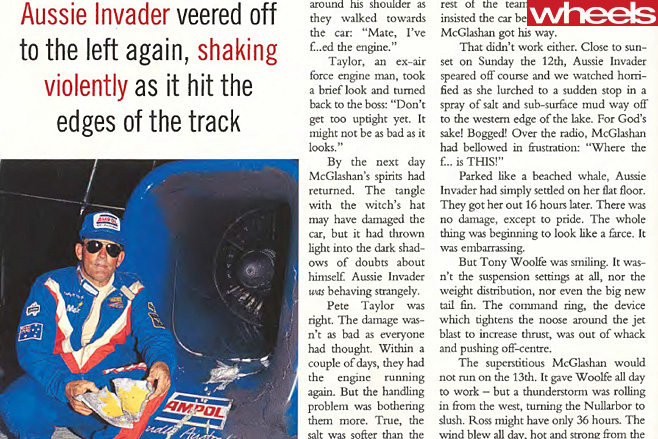
There was something seriously wrong. Aussie Invader veered off to the left again, shaking violently as it hit the ungraded edges of the track. McGlashan was trying to haul five tonnes of rapidly accelerating machine back into line. He completely missed the timing traps, looping wide to the left of the first, arcing back to the other side of the last trap and actually cutting the timing wires clean in half. The chance of raising his own record was out of the question, but they turned him around anyway. He wanted the practice and he wanted to check something else. Was it him, or was it the car?
Again, Aussie Invader veered violently to the left. At 700 km/h the Mirage jet engine inhaled a rubber witch’s hat marking a timing trap. Ross had punched the chutes out in an effort to avoid it, but it was too late.
By the time Taylor caught up with him at the southern end, McGlashan had climbed into the intake to inspect the damage. The nosecone of the engine was a mess. Vanes had been torn off, others twisted out of shape.
“The salt’s as soft as hell up that northern end,” Taylor was saying. Ross interrupted him with an arm around his shoulder as they walked towards the car: “Mate, I’ve f…ed the engine.”
Taylor, an ex-air force engine man, took a brief look and turned back to the boss: “Don’t get too uptight yet. It might not be as bad as it looks.”
By the next day McGlashan’s spirits had returned. The tangle with the witch’s hat may have damaged the car, but it had thrown light into the dark shadows of doubts about himself. Aussie Invader was behaving strangely.
Pete Taylor was right. The damage wasn’t as bad as everyone had thought. Within a couple of days, they had the engine running again. But the handling problem was bothering them more. True, the salt was softer than the previous year, but the suspension settings had also been changed after Aussie Invader set a new Australian record. The front of the car had been lowered slightly to put more downforce on the back, which had displayed a tendency to skitter, but now the front wheels were digging great gouges.
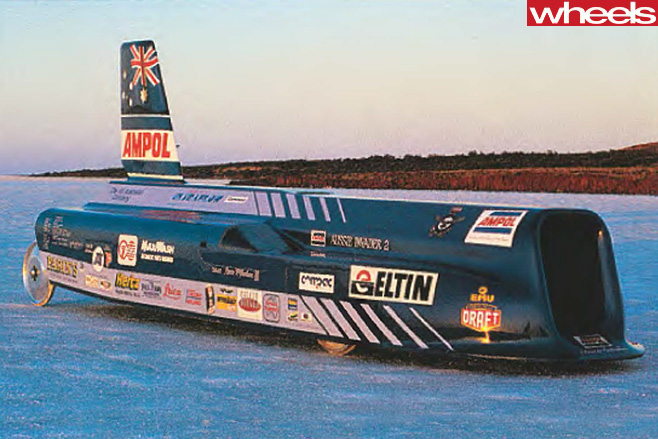
That didn’t work either. Close to sunset on Sunday the 12th, Aussie Invader speared off course and we watched horrified as she lurched to a sudden stop in a spray of salt and sub-surface mud way off to the western edge of the lake. For God’s sake! Bogged! Over the radio, McGlashan had bellowed in frustration: “Where the f… is THIS!”
Parked like a beached whale, Aussie Invader had simply settled on her flat floor. They got her out 16 hours later. There was no damage, except to pride. The whole thing was beginning to look like a farce. It was embarrassing.
But Tony Woolfe was smiling. It wasn’t the suspension settings at all, nor the weight distribution, nor even the big new tail fin. The command ring, the device which tightens the noose around the jet blast to increase thrust, was out of whack and pushing off-centre.
The superstitious McGlashan would not run on the 13th. It gave Woolfe all day to work – but a thunderstorm was rolling in from the west, turning the Nullarbor to slush. Ross might have only 36 hours. The wind blew all day, hot and strong from the Dead Heart to the north. Ross’s demons were in full cry. He sat with his car under the khaki canvas, the Bat Cave flapping and creaking. He thought he was alone. Into the teeth of the wind he let fly a savage, guttural scream of rage and frustration.
The predicted storms sliced off to the south-east. Two days later, the wind finally dropped sufficiently to test Woolfe’s adjustments. In a murky post-sunset gloom, Pete Taylor told Ross to keep the afterburner on no longer than 10 seconds. Surprisingly for McGlashan, he followed orders. Over five kilometres, Aussie Invader ran dead straight.
Late on Saturday the 18th, the wind died. Peter Taylor announced they’d run the car up to 1000 km/h. If that looked good, they’d tum her around and make two runs for the world record: an average of at least 1030 km/h over two passes in opposite directions.
In the end, it wasn’t the weather that beat them. In the year since he broke Campbell’s old mark, the salt surface had changed. At the 13 km mark it was hard to the touch, but under five tonnes of downforce it had been breaking up alarmingly.
At 7pm, McGlashan hit the afterburner hard. One kilometre… 200 km/h… two kilometres… 500km/h and dead straight… three kilometres… 700km/h. Still accelerating, Aussie Invader suddenly lurched sideways! Ross wrestled her, but the left side wheels were jammed in ruts. Bang!
By the time the fire and rescue team got to him, Ross was already out of the car, staring disconsolately down the jet intake. Inhaling the battery and timing light, the engine had shredded. Other pieces of junk had tom layers off the blue body down the left hand side. Some were still embedded in the wreckage.
Swigging on a mineral water, McGlashan’s lips snaked back to reveal his teeth in a tear-stopping grimace. “We’re done, mate,” he said.
Back at the Bat Cave, Rosco’s wife Cheryl cried, but he couldn’t. He hid his dejection behind sunglasses and a pulled-down cap and, in the late evening air, three cheers carried thinly across the salt.
Record holder Richard Noble plans to start testing his twin-engined supersonic car later this year. The McLaren team is also well advanced on a supersonic project and at least two American teams, including Craig Breedlove, are in the race too. They might appear to be snapping at McGlashan’s heels, but it’s worth remembering that when Noble set the world record of 1019 km/h in 1983, it took him three years to do it.
If he’s done nothing else, McGlashan has suddenly revived world-wide interest in a challenge that in earlier days made the likes of Campbell, Eyston, Cobb and Segrave household names. And if his crew has anything to do with it, McGlashan isn’t finished yet.
But he’ll still need money. Somebody asked him about his sponsors.
“Well … I might leave it a while before I knock on any doors.” Then a grin. “Maybe a week or two.”
A “week or two” it was. Early in March, publicity manager Chris Osborne announced that they had begun building a completely new body for Aussie Invader and that testing of a new jet engine would start in April, ready for a return to Lake Gairdner in November.
HONDA’s NSX supercar isn’t available in Australia until the end of the year, but the Japanese manufacturer is already in the final development stage of its GT3 race car version.
The Honda NSX GT3, which will be built and sold by Acura (Honda’s US spin-off brand), is currently undergoing the final stages of development in America.
The car will be eligible to race in both the 2018 Bathurst 12 Hour, and 2017 Australian GT Championship, but Honda Australia says it has no plans to bring a version Down Under.
A Honda Australia spokesperson confirmed to Wheels there are no current plans for the NSX GT3 to race locally at all.
However, as with all GT3 cars, that doesn’t stop any racers from stumping up the cash themselves to purchase a car from Acura and racing it in Australia.
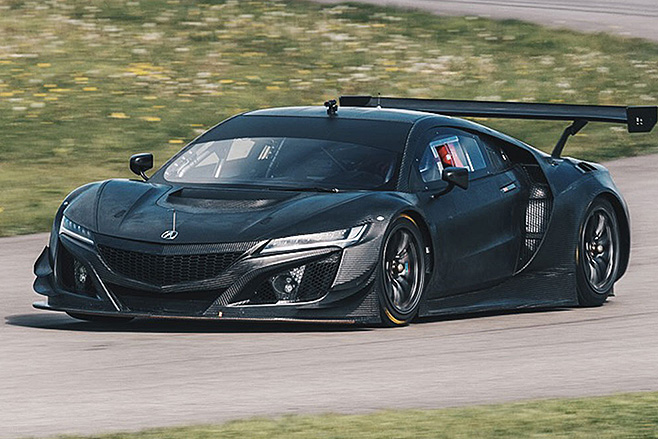
The racer shares the 3.5-litre twin-turbo V6 found in the road-going NSX – it even has an identical block, heads, valvetrain, crankshaft, pistons and dry sump setup.
There won’t be any hybrid power on the track, with the heavy hybrid system ditched along with four-wheel drive. Power will be delivered to the rear-wheels through a six-speed sequential ‘box.
The body panels are made from carbon-fibre with a new custom diffuser and rear-wing thrown in to provide downforce. Additional visual tweaks include bigger bonnet vents for better engine cooling.
The body and engine of the car will be built by Acura’s Performance Manufacturing Centre in Ohio, USA, which also produces the road-going NSX.
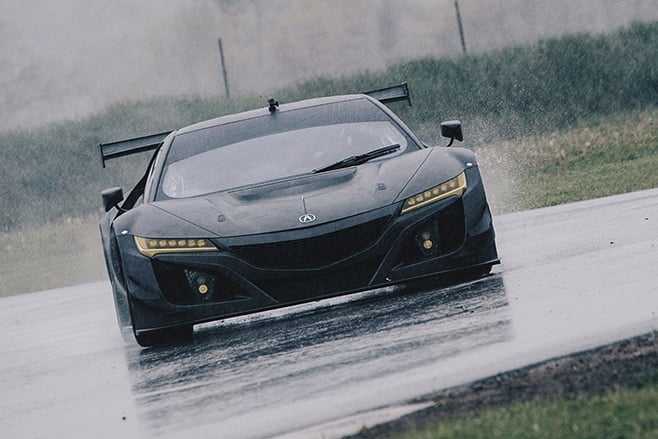
The car will be homologated to 2017 FIA GT3 specification by the North American arm, Honda Performance Development (HPD), in America.
Built to GT3 specification, the NSX racer will undergo Balance of Performance testing to allow it to compete evenly against the likes of the Audi R8 GT3, Bentley Continental GT3, Nissan-NISMO R35 GT-R GT3, and Ferrari 488 GT3.
While the NSX GT3 is unlikely to take-part in the Bathurst 12 Hour until 2018 at the absolute earliest (if at all), the first official entry for the 2017 event has been submitted by Maranello Motorsport, who will field a Ferrari 488 GT3.
BMW is currently the only manufacturer to provide factory support to a GT3 team in Australia, backing the Steven Richards Motorsport M6 GT3 in the Australian GT sprint and endurance championships.
AUSSIES are long-term utilitarians. It’s a lifestyle choice that can be traced back to 1932, when a farmer’s wife asked Ford Australia for “a vehicle to go to church in on a Sunday and which can carry our pigs to market on Mondays”. Ford responded with its 1934 ‘coupe utility’ and so began a ‘trayed’ union, now spanning eight decades.
But which of the current dual-cab crop is best? We took eight examples, all of which cost around $50K, to Melbourne’s 4×4 Training and Proving Ground in Mount Cottrell to find out.
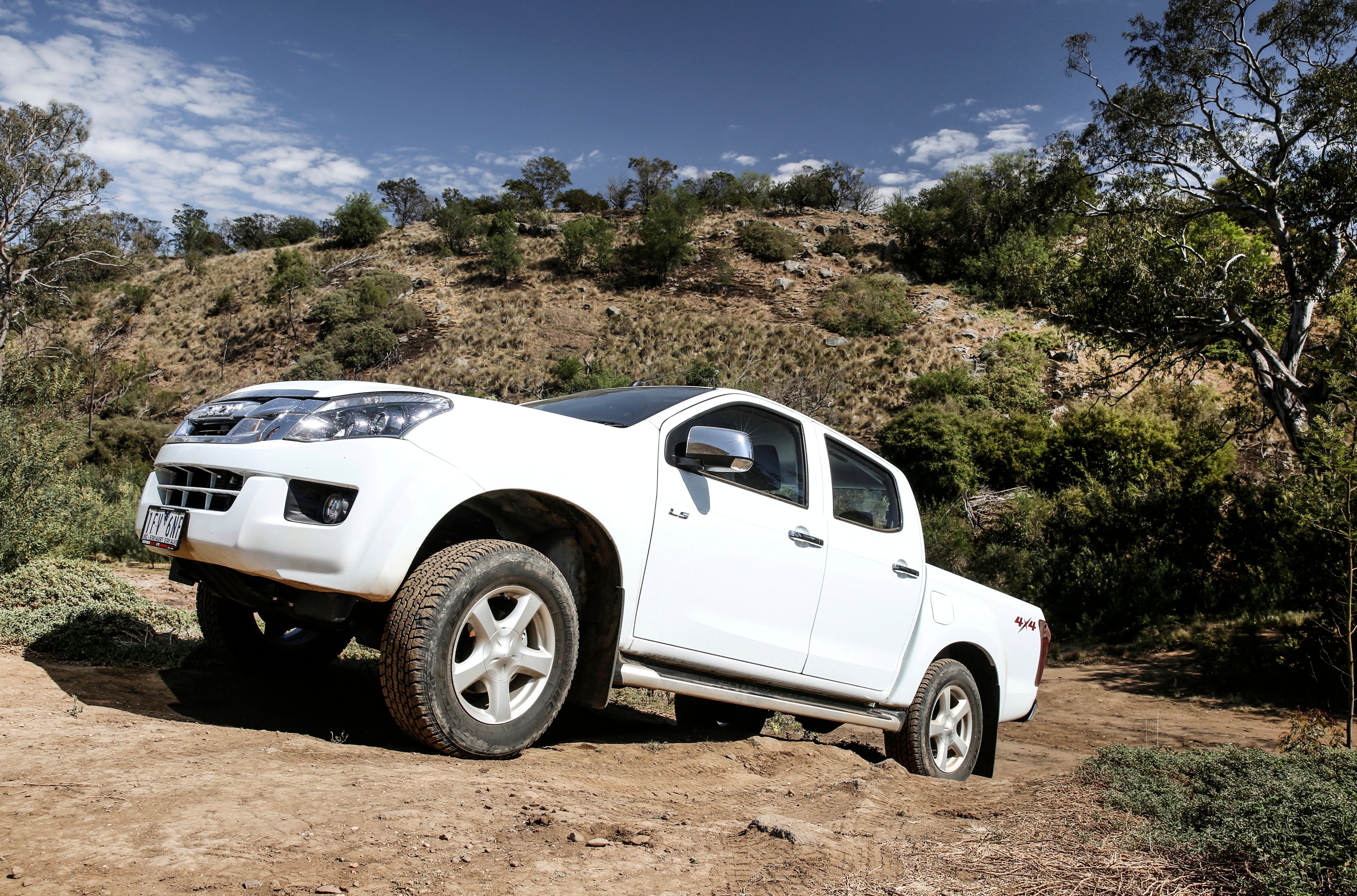
‘HONEST’ describes the Isuzu D-Max. Although it shares its GM-developed body and chassis with the Holden Colorado, Isuzu brought its own engine and gearbox. And the D-Max’s generations-old donk is a big part of its honesty. A commercial engine, it lives up to all the connotations the word ‘truck’ brings, both good and bad.
Similarly, the gearbox is a proven Aisin unit that has seen duty in the Toyota Prado, among others.
Despite its basic appearance, the requisite equipment is mostly there in LS-U spec, which features six airbags, Bluetooth audio and, erm, carpet. You also get 17-inch alloys, projector headlights and front fog lights, LED tail-lights, aluminium side steps and extra chrome trim.
The 3.0-litre turbo-diesel four-cylinder is gruff and comparatively noisy. With 130kW and 380Nm, it’s not the most powerful, either, though the longevity of an under-stressed truck mill is an appealing prospect. Wind, tyre and suspension noise filter into the cabin more freely than they do in the more refined Amarok and Ranger, which will make the D-Max more tiring for long trips. Back-seaters have it worse, courtesy of a lack of under-thigh support and a too-upright backrest, though head and shoulder room are good.
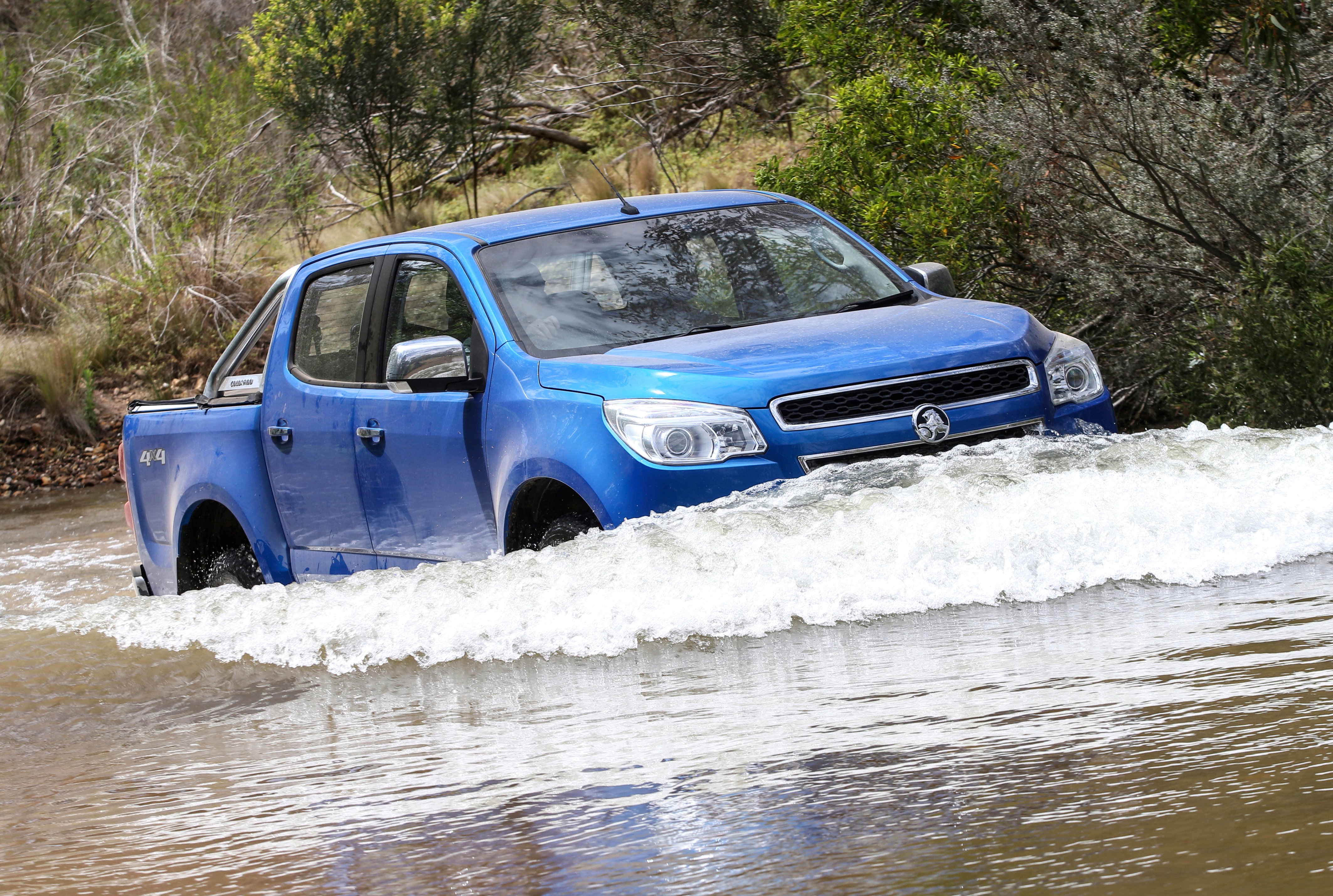
HOLDEN’S entrant may have a face that clearly links it to the family, and a Lion logo the size of a Frisbee, but it was developed by GM in Brazil, has an Italian engine, is built in Thailand, and shares chassis and body hardpoints with the Isuzu D-Max. It has a lack of cabin ambience, hard plastics, flimsy storage compartment lids, fussy and dated instruments, and even in LTZ spec (a grade higher than much of the field tested), any sort of service like navigation requires your smartphone and your data.
This could be overlooked if the powertrain was a model of refinement and efficiency, but it’s not. The big four-pot – 2.8 litres, force-fed by a single turbo – comes from VM Motori, now owned by Fiat-Chrysler.
Despite the addition of extra sound insulation as part of last year’s MY15 upgrades, it’s still loud for this class and objects to being revved. On the road, the big Holden gets a passable grade – provided you don’t ask too much of it. The engine’s gruffness and noise is only intrusive beyond the peak power point, and GM’s six-speed auto does a decent job of upshifting early to tap into the bottom of the solid, but narrow, torque spread to keep the big rig surfing along. On any typically lumpy B-road there’s a problem with the relationship between the cabin and what’s going on down at road level. Hit a bumpy section and the wheel shimmies in your hands, as the whole plot quivers and quakes.
On dirt, the ESC is deftly calibrated to quickly curb spinning wheels and gently restrict slides, but over corrugations the steering kickback reaches eye-widening levels. It’s a shame the platform and engine are well short of what’s needed, but Holden is working on another round of upgrades.
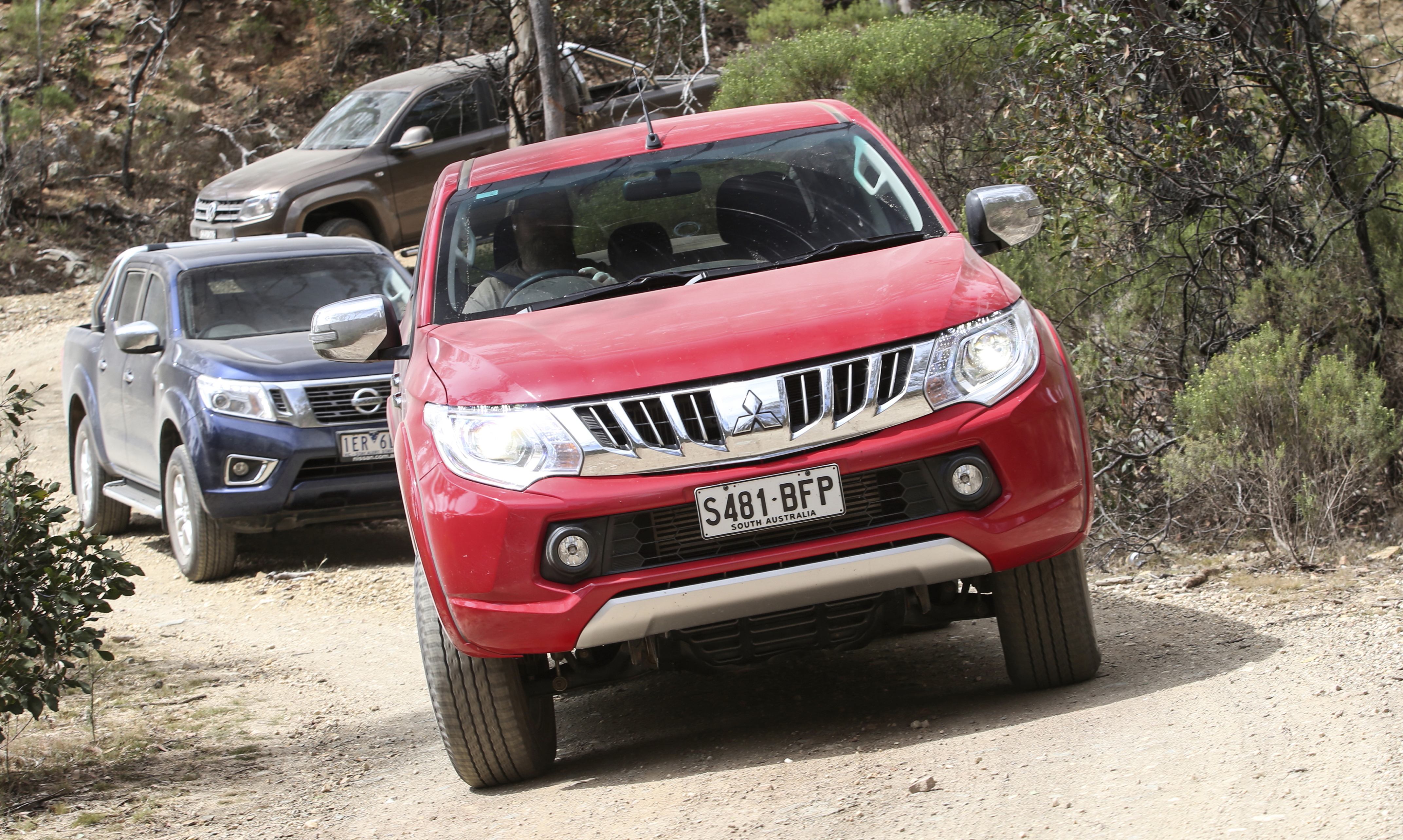
SIMPLY being the best drive in class doesn’t automatically make a car a best-seller, but brilliant value for money is a sure-fire way to make an impression on buyers. And that’s Mitsubishi’s approach with the Triton.
The launch of the fifth-gen model in May 2015 helped Triton’s buck-beating credentials while attempting to bring its on-road and off-road abilities closer to those of its rivals. Our mid-spec Triton GLS auto brings safety features such as ESC, a driver’s knee airbag and a reversing camera to put it firmly in the family-car frame. A five-star ANCAP crash rating is a must, while hill-start and trailer-stability assist systems are nice to have. Dual-zone climate, HID headlights, LED DRLs, fog lights and a sporty styling package with 17-inch alloys add to the attraction.
The GLS-spec side-steps make the Triton easy to get in and out of, and redesigned front seats banish the old model’s legs-out-in-front seating position for a more comfortable, upright position. The new Triton’s cabin is 20mm longer, almost entirely translated into rear legroom, with more head and shoulder room as well. Triton’s update included measures to better suppress combustion noise and a revised injection system on the 2.4-litre turbo-diesel.
Aussie suspension tuning sought to improve high-speed stability on gravel roads, but it hasn’t smoothed the ride, which remains jittery on lumpy surfaces.
A beefier new five-speed auto means all Tritons now get the full dose of torque (a stout 430Nm, up 80Nm). In practice the Mitsubishi isn’t as instantly punchy as some of its rivals, but it powers along with authority from the peak torque point of 2500rpm to the 4000rpm redline.
Triton isn’t the best ute off-road – or on it – but considering its roominess, equipment level and affordable pricing, plus the fact it’s well-mannered and capable enough for most buyers, we can still see the appeal.
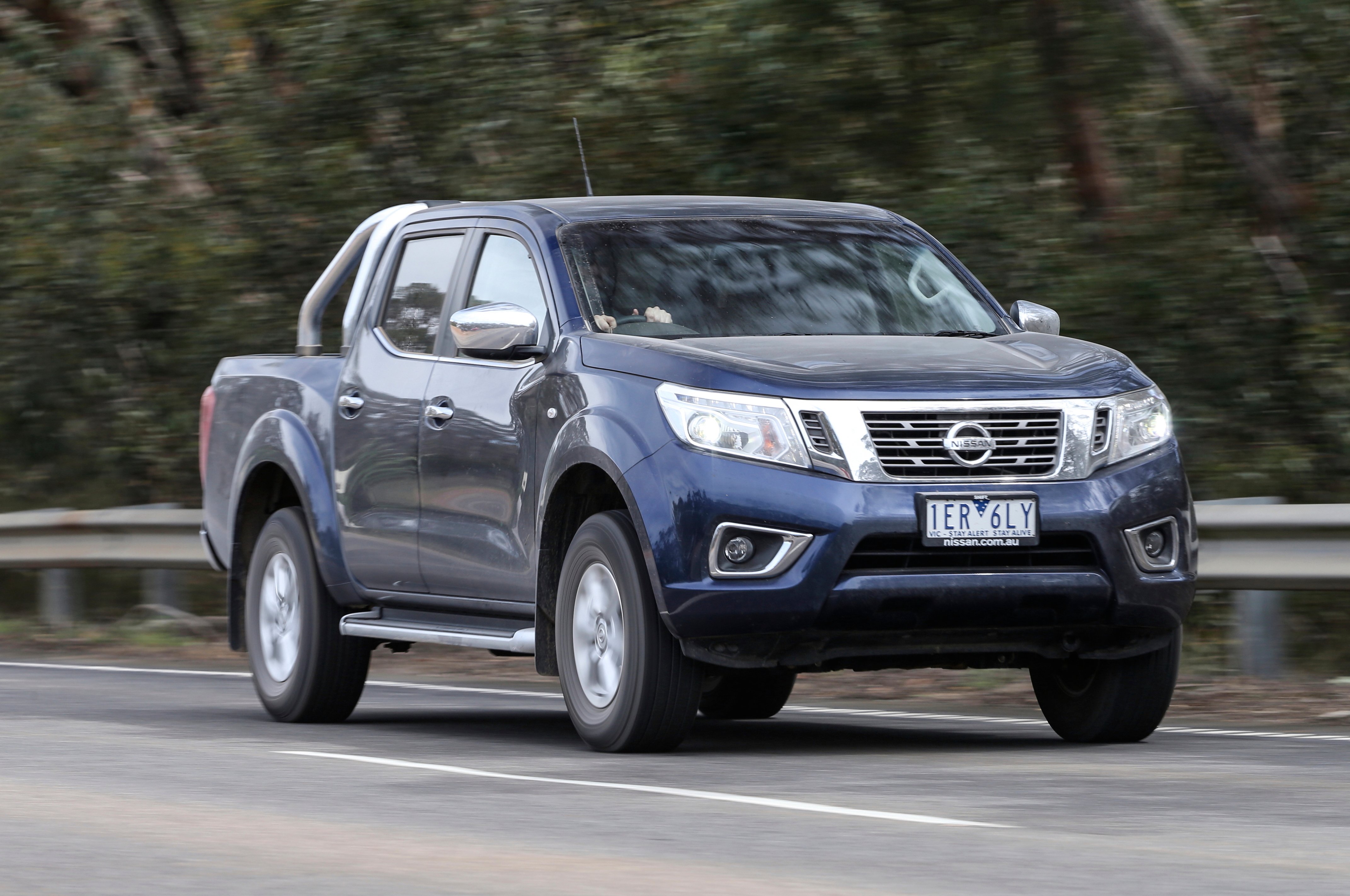
NISSAN’S NP300 Navara has the makings of a segment-shaker. It packs an efficient 2.3-litre Renault-Nissan diesel with twin turbos (in the upper and mid-spec versions), a stout 3500kg towing capacity and five-link rear suspension with coil springs (in all dual-cab versions) when all its rivals still use rear leaf springs.
From comfortable front seats trimmed in a suede-like soft trim, front occupants are presented with a neat dash headlined by a 5.0-inch audio unit comprising Bluetooth connectivity for phone and music, smartphone integration and a reversing camera. Standard features include seven airbags and auto headlights, and the ST adds self-levelling LED headlights, LED running lights and front fog lights, side-steps, a rear diff lock and 16-inch alloys.
The five-link rear suspension promises plenty, though it’s difficult to juggle unladen ride comfort with a heavy-duty cargo/towing capacity. The required stiff coil springs mean the road ride is jittery, despite more sophisticated suspension design, though the damping is relatively soft, tending to float rather than jar, which leaves ride quality as merely ‘good’.
The 2.3-litre diesel makes use of its twin sequential turbos to torque convincingly from low revs – peak twist of 450Nm is delivered from 1500-2500rpm – while also providing a thrusty mid-range that runs to the 140kW peak at 3750rpm.
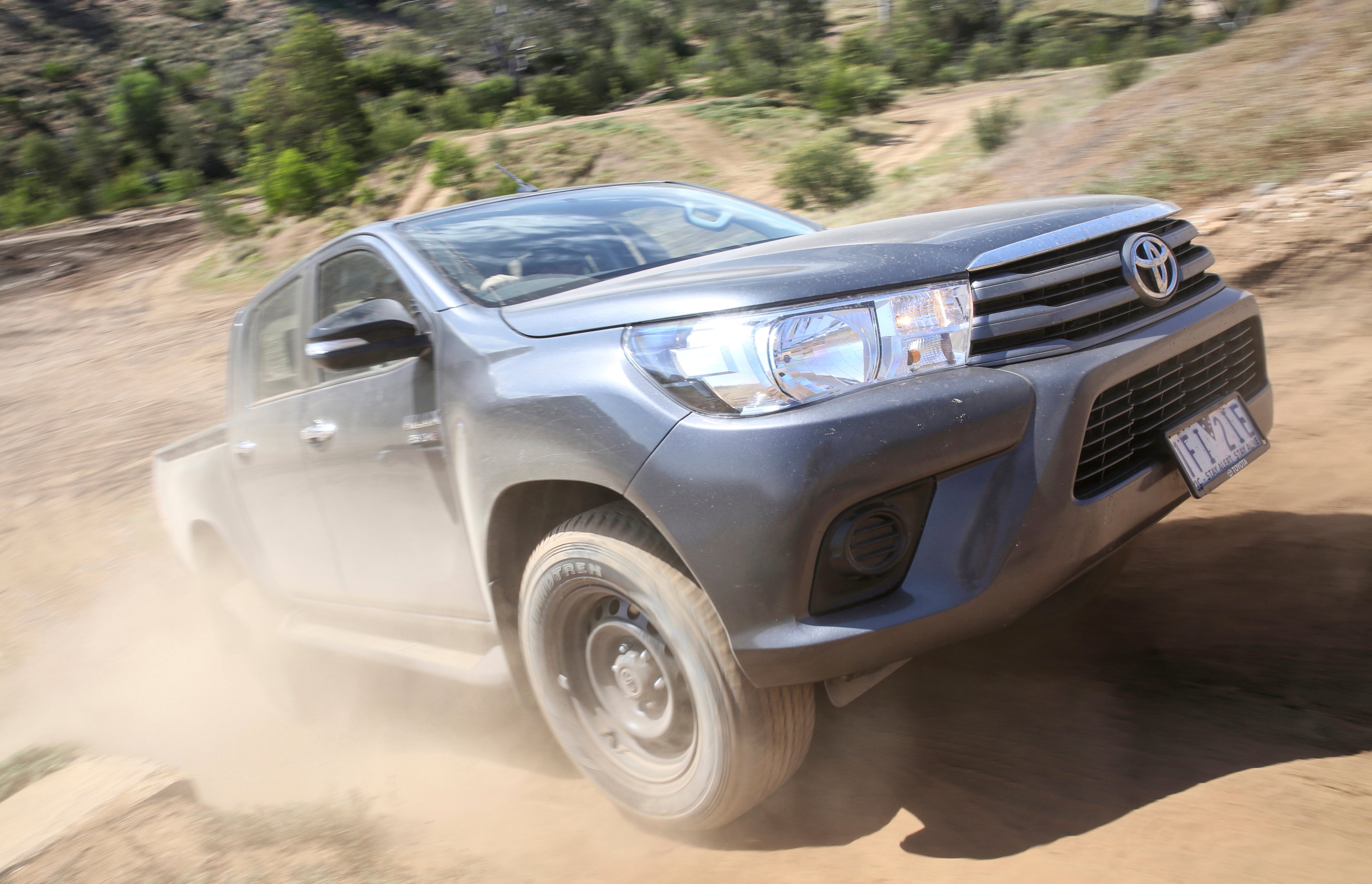
TOYOTA’S ownership of this segment was once so absolute that ‘Hilux’ just about became the non-enthusiast’s term for anything that resembles a 4×4 ute. Intensifying competition saw Toyota really ramp up development for this eighth-generation model, as well as increasing Toyota Australia’s involvement in all aspects ranging from dynamics to load carrying and accessories.
You still get traditional Toyota virtues like rock-solid reliability and resale value, idiot-proof functionality and the confidence you’ve made a solid, gamble-free choice. However, you also get a 4×4 ute well short of best-in-class for dynamics and on-road performance. We won’t sugar-coat this: The all-new Hilux is, compared to the standard-setter, stiff and bouncy in its ride, neither fast nor frugal, and downmarket in its interior accommodation.
The cabin might be all-new, but the design is a collision of mismatched surfaces and too many ideas. The only element that looks remotely contemporary is the multimedia screen.
On the plus side, the driving position, ergonomic details and general functionality are fine; it just feels like a site office on wheels.
Then there’s the suspension tune: the Hilux SR is one stiff, unforgiving brute over Aussie backroads. The upside may be crisp steering and better body control than the tail-enders, but it’s still hard to reconcile the trade-off for a recreational cruiser.
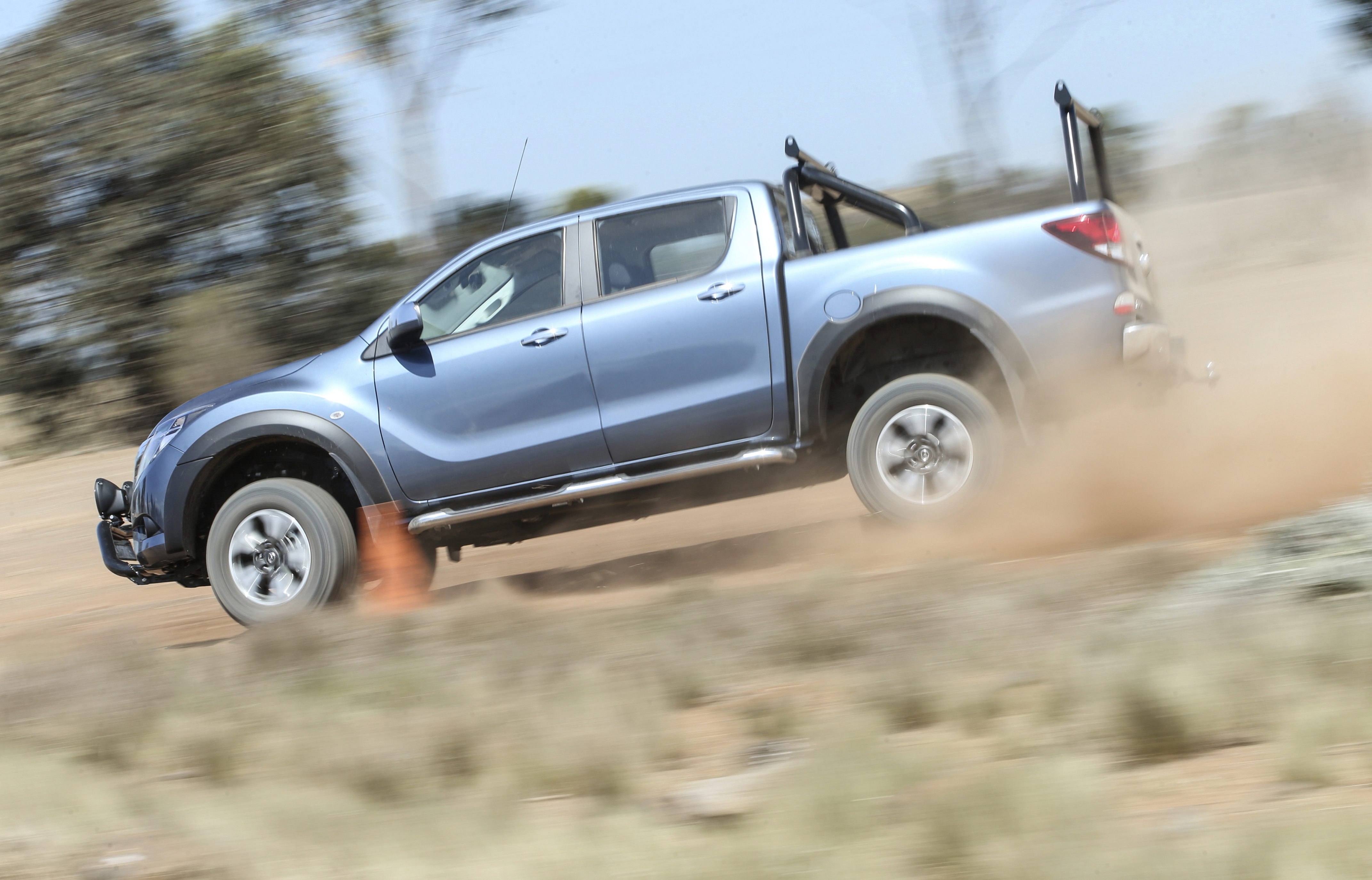
THE BT-50 was co-developed with the Ford Ranger, and in terms of chassis and powertrain fundamentals, there’s little to separate the two.
Mazda wanted its BT-50 to deliver a bit more ‘zoom-zoom’, so it has a slightly quicker steering rack and slightly firmer dampers. And, since last year’s upgrade, the Ranger has electric power steering assistance while the Mazda continues with hydraulic assistance. On the road, especially at a brisk cruise, that’s no bad thing, but off-road, the Mazda struggles to keep up, whereas the Ford’s wheel spins quickly and fluently from lock to lock.
The 3.2-litre five-cylinder that powers both the Mazda and Ford is a mid-fielder in terms of NVH – notably short of the muted Amarok, yet comfortably ahead of the raucous Colorado and D-Max. Still, the BT-50 feels quick enough, and its six-speed auto is well calibrated to deliver intuitive shifts.
We also like the cabin and its simpler execution of instruments and minor controls, compared with the Ranger. No prizes for the Mazda in the back, though, where rear passengers are forced into a too-upright position, with legs bent at a sharp angle and little under-thigh support. No rear vents, either.
So the BT-50 finds itself on the podium, doing most things reasonably well, if short of the Ranger in a few key areas.
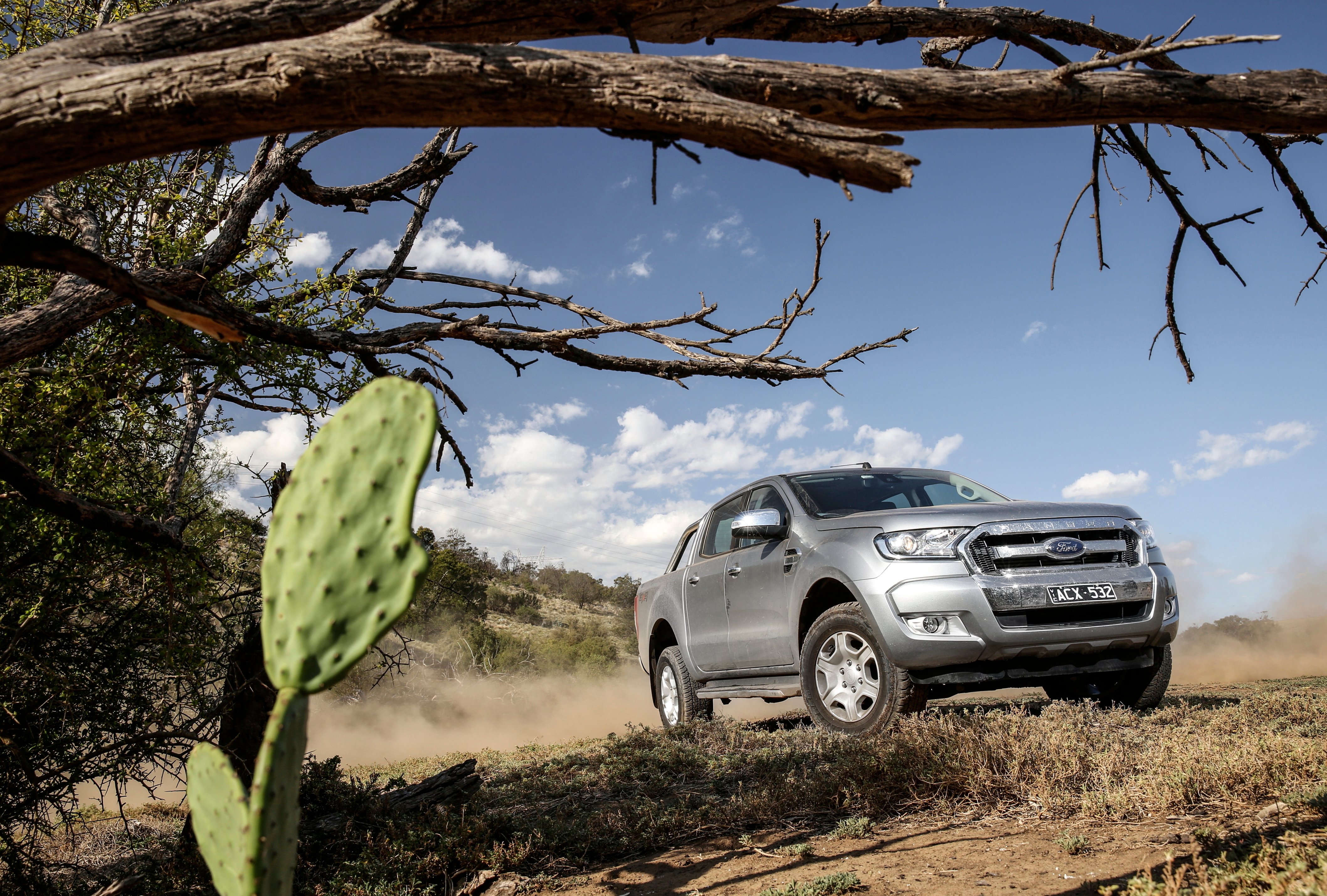
WHILE it was once possible to consider the Mazda BT-50 and Ford Ranger the same, a 2015 facelift introduced noticeable mechanical and cosmetic differences.
This departure is evident as soon as you turn the wheel. A new electric power steering system provides light, smooth steering which makes the Ford easy to wheel around the suburbs.
As speeds rise, the weighting becomes more natural, without the wheel losing its lovely, frictionless feel. This steering system is where the Ranger really stands head and shoulders above its rivals.
But there’s more than one area in which the Ford ute stamps its authority on the segment. Its 3.2-litre five-pot sounds good, has impressive 147kW/470Nm outputs, and has improved refinement thanks to quieter new injectors and cylinder-head revisions as part of last year’s facelift.
The Ranger also has a more compliant ride on bitumen surfaces than its Mazda sibling. Off the beaten track, the big Ford takes it all in its broad stride, dismissing even the most challenging climbs with insouciance and a minimum of wheelspin. It’s not quite as accomplished as the Hilux, but the Ranger will take you just about anywhere you’d expect with a standard roadgoing 4×4.
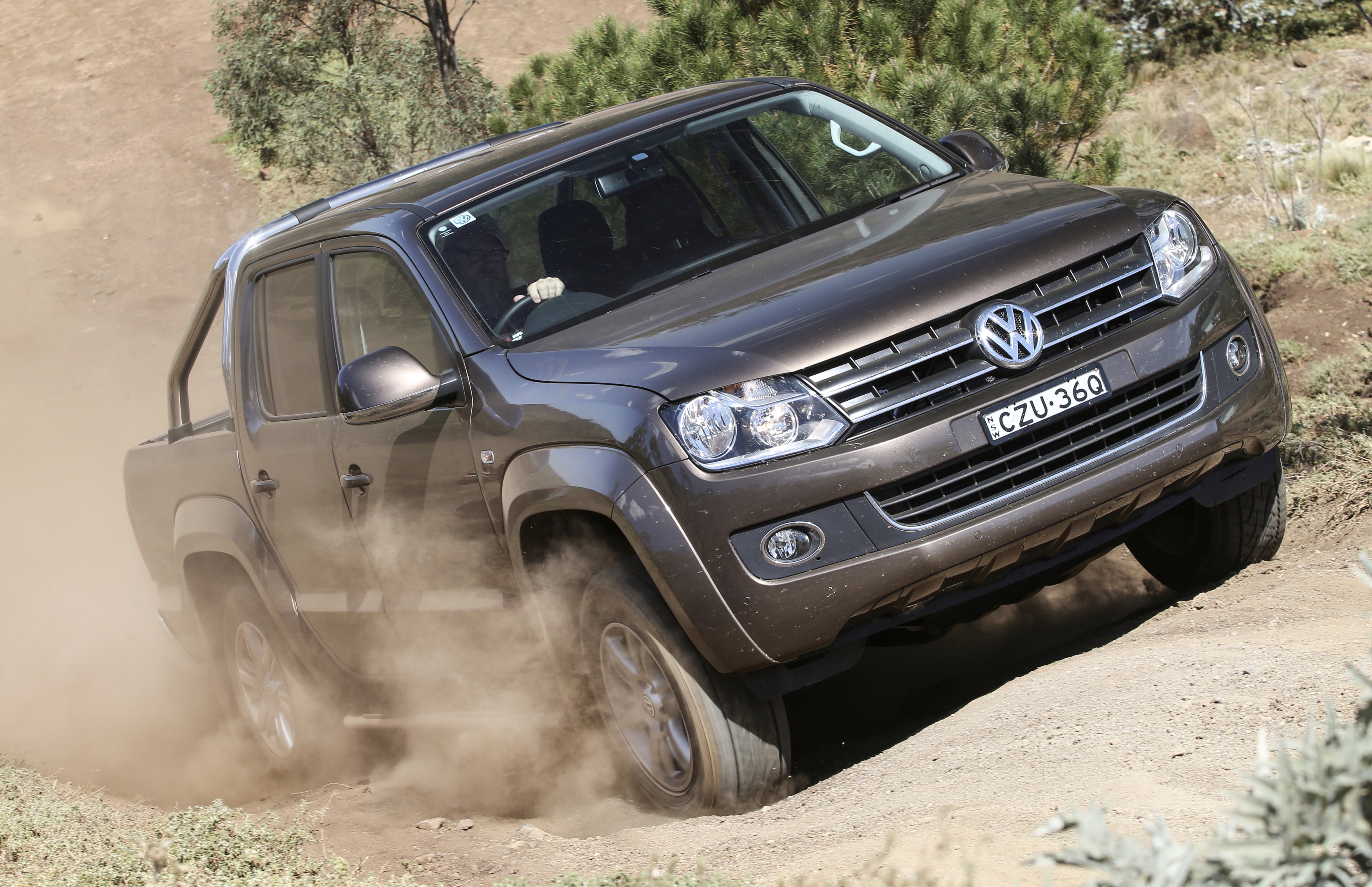
IF THE rest of this field is clearly from working-class stock, the VW is a cut above. The others may be solid blue-collar performers, but the VW Amarok creates the impression it’s the only one with a university degree, capable of not spending its life on the tools. It feels polished, with a sheen of sophistication.
Take the refined and (relatively) revvy 2.2-litre twin-turbo four. At idle it’s nicely muted and clatter-free; but this is also an engine that welcomes hard work. The transition from small turbo to larger one is fluid and impossible to pick, the peak torque smeared across a generous curve.
The powertrain’s refinement is mirrored in the chassis. It has none of the wobbles and tremors that plague its rivals to varying degrees. And the suspension tune is excellent.
Further proof VW has it right comes when you heel it into a few bends. It leans without pushing into early understeer and responds to the throttle mid-bend to allow subtle line adjustments.
Sealing the deal is a level of interior presentation, comfort and refinement that feels Business Class to the others’ Economy. Add to that the widest cabin in its class – even three teenagers sitting across the back won’t complain – and a tray capable of swallowing a full-size pallet, and you can see how Amarok brains the competition in almost all key areas.
It’s loud, thirsty and expensive, but so what?
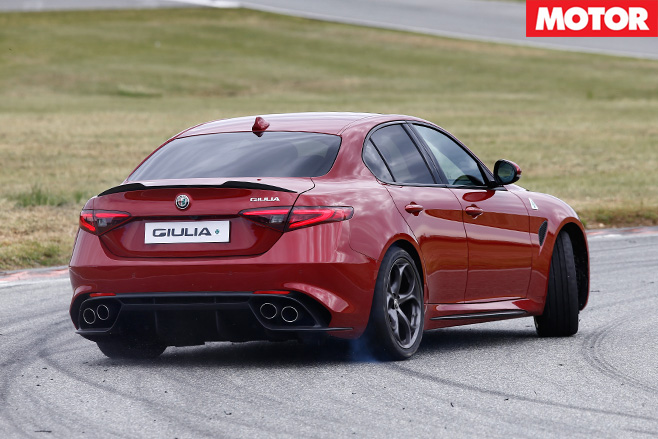
The new 380kW Giulia Quadrifoglio Verde (QV, Italian for four-leaf clover) is a sedan on steroids and Alfa Romeo’s answer to the Audi RS4, BMW M3 and Mercedes-AMG C63 S. It epitomises all that can make Alfa great again – if it stacks up.
Dubbed Project Giorgio, the new Alfa Romeo Giulia was delivered in 33 months, three months ahead of schedule. “Giulia is only the beginning,” says new R ’n’ D director, Roberto Fedeli. “It is instrumental in redefining the brand for its climb to former glory.”
The clutch is light and positive, but Aussie buyers will be denied its use as only the eight-speed auto will arrive locally. This news will disappoint purists, but it’s not the end of the world as the six-speed manual seems better at stirring emotions than changing ratios swiftly and can’t match the self-shifter’s rapidity.
The Giulia QV’s 2891cc twin-turbo V6 musters its 380kW at 6500rpm but its torque curve plateaus at 2500rpm where 600Nm are waiting to shred the pricey Pirelli P Zero Corsa tyres. On dry tarmac, Alfa claims the 1524kg QV (dry weight, expect around 1650kg at the kerb) can roar from 0-100km/h in 3.9 seconds and keep on going to an equally remarkable 308km/h. That’s Porsche 991.2 Carrera S territory.
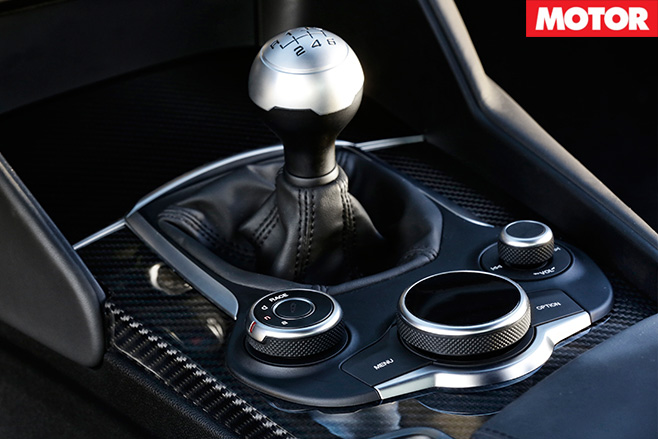
Selecting Race on the DNA controller instantly morphs the Alfa into attack mode, disabling the traction and stability controls and engaging the quickest steering calibration, tautest damper setting, and quickest throttle response. And the broadest grin.
Even with its electronic safety net fully deactivated, the Giulia QV is no black widow ready to punish the driver for the slightest mistake. While it can carry serious speed down straights and through corners, this high-end Alfa is a positively seamless piece of kit with the added security of optional carbon-ceramic brakes that bite hard and fast, lap after lap.
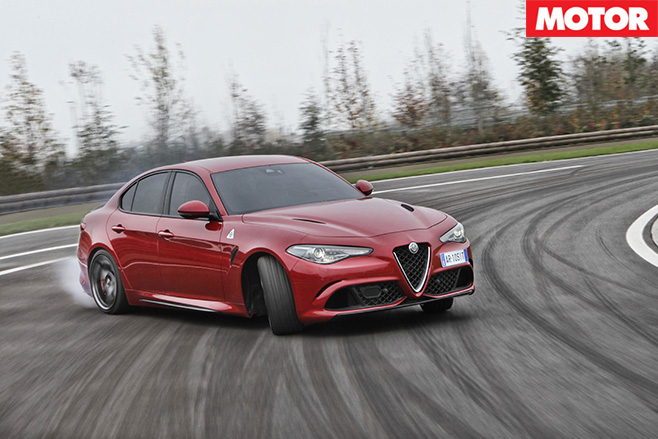
Mentally comparing the Giulia QV with its Teutonic rivals, the M3 feels edgier, the RS4 lacks that reassuring connectivity, and the C63 AMG is even looser overall.
But compared to its German opposition, the shoe-string budget Giulia QV is missing the latest technical gadgetry like head-up displays, LED headlights, switchable anti-roll bars, rear-wheel steering and the latest driver assistance systems. There will be an all-wheel drive version, though again not for right-hand drive markets.
Unique to the QV are trademark 19-inch Quadrifoglio rims shod with those grippy Pirellis (245/35 front; 285/30 rear), adaptive aerodynamics, variable-rate dampers, and carbonfibre sills, roof and bonnet.
As far as perceived quality is concerned, though, the Italian contender has some catching up to do. It’s not so much the layout of the cockpit and available features which disappoint, but the ho-hum surfaces and seven-out-of-10 build quality.
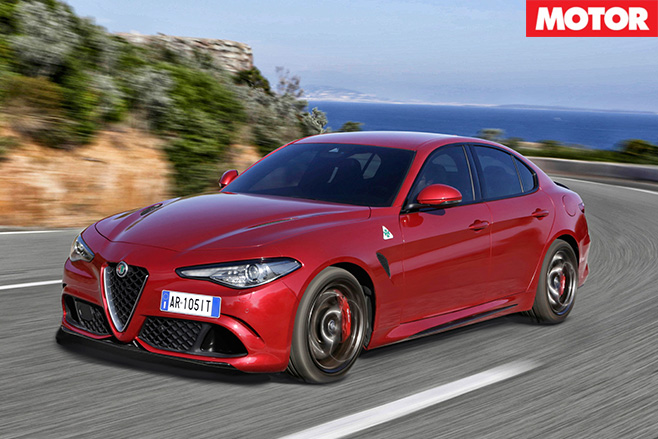
Despite its extrovert styling and startling performance, the new Giulia QV doesn’t need a driver with a sixth sense to match wits with it. At the limit it remains calm, the chassis couldn’t be more composed, and the controls are cooperative.
Even in Race mode, when driver input versus car response can tread a fine line between high-speed satisfaction and embarrassing pirouette, the live-wire rear axle can be reliably intercepted by the relaxed rather than ultra-quick steering, and progressive rather than ultra-sharp throttle response.
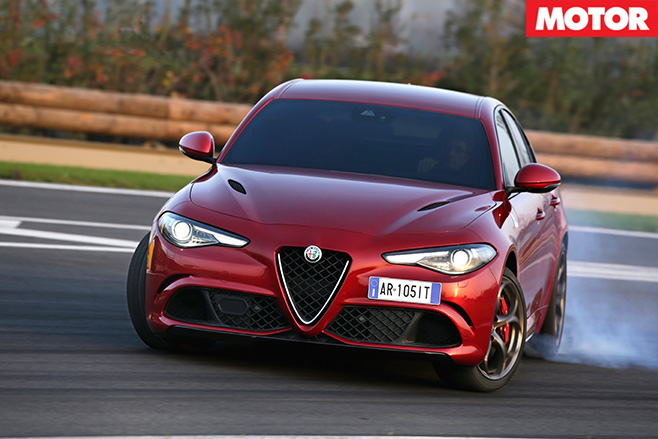
It’s that subtle extra measure of compliance and composure that makes the Giulia QV a winner.
4.5 OUT OF 5 STARS
LIKE: A real return to form for the Alfa brand DISLIKE: Build quality, could be pricey
SPECS Engine: 2891cc V6, DOHC, 24V, twin-turbo Power: 380kW @ 6500rpm Torque: 600Nm @ 2500-5500rpm Weight: 1524KG (dry) 0-100km/h: 3.9sec (claimed) Price: TBC
We wouldn’t describe the Bentley Bentayga as the world’s most attractive SUV but it certainly has beauty under the skin.
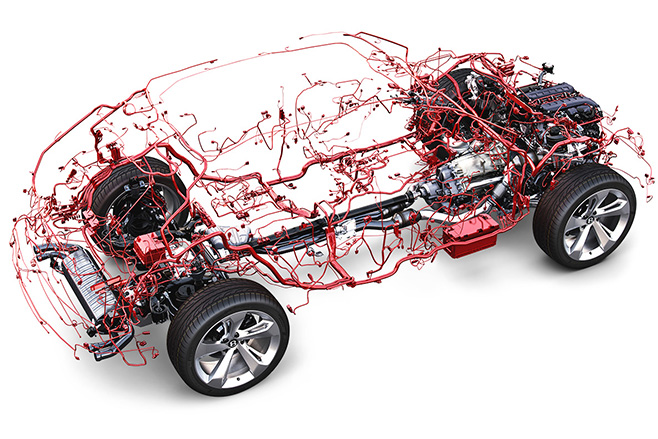
While an engine may well be a car’s heart, the posh British brand has released a mesmerising CT scan-style image of the Bentayga that shows why it’s the nervous system that keeps it alive.
Virtually every modern car features such a wiring harness, but none would be as complex as the one circulating crucial information around the big Bentley.
The vast, intricate map of the automotive equivalent of nerve cells and fibres actually comprises seven different but integrated multi-speed, multi-purpose networks.
It includes the world-first 48v sub-system, which the Bentayga uses to manage its Dynamic Ride active roll feature. The electro-mechanical system can vary the torsional resistance of the vehicle’s anti-roll bars – softening them for greater wheel articulation on rough terrain or keeping them firmer for enthusiastic cornering.
Audi’s Bentayga twin, the Q7, has since followed with the system in its SQ7 variant, and also uses it for the model’s electric, lag-reduction compressor – though the German SUV doesn’t feature a fridge (or many other options that rely on electrics).
Among the Bentley’s vast array of computer-aided features are the likes of adaptive and predictive cruise control; traffic-sign recognition; park assist; infra-red night vision; cross traffic warning and top view, that rely on the SUV’s multitude of multifunction cameras and sensors.
And in the opulent cabin are features such as the 8.0-inch infotainment touchscreen; rear-seat entertainment tablets; front seats with multiple adjustment and heating/massage/ventilation functions; head-up display, and an audio system that, in highest spec, brings 18 speakers and super-woofers.
At least the optional ($300,000) Breitling clock is mechanical. No, wait, even the winder uses an electric motor…
