
Never mind the car; can we have the engine?
First published in the November 2011 issue of Wheels magazine, Australia’s most experienced and most trusted car magazine since 1953.
IS FORD Australia playing funny buggers with us? It’s been more than 12 months since the Falcon XR8 disappeared, its venerable cast-iron-block 5.4-litre V8 unable to keep up with emissions regulations, and there’s still no sign of a replacement.
Most Aussies assumed the Ford Mustang’s naturally-aspirated Coyote V8 would appear in the Falcon, but Ford Oz dogmatically declined to confirm or deny this. Fast-forward to mid-2011 and Ford marketing boss David Katich hints that the XR8 could be set for a return. That’s great and all, but the time for words has passed. Australia has only so much patience for a company that killed off the V8 once already.
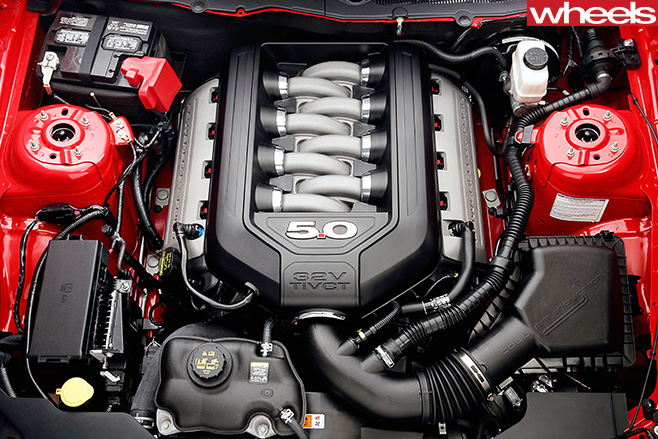
With many kays in FPV’s blown Coyotes under our belts, we wondered what a naturally-aspirated version would drive like. Well, it was worth the wait: the engine is an absolute cracker.
Raw, powerful and full of presence – its vigorous, free-revving nature alone makes you smile. It gets going without hesitation, accelerating hard from standstill since there’s no Eaton supercharger to spool up. Mid-range pull is strong, and refuses to tail off as the revs near the engine’s 7000rpm limit. There’s an immediacy of throttle response that puts Australia’s force-fed FPVs to shame, and makes playing with rear-wheel traction an intimate affair. The engine note is equally as good; deep and gravelly yet with that metallic overtone that sends sound level meters rocketing past Australia’s strict 88dB limit.
Would the Boss 302’s visceral aggression translate to the Falcon? It’s an interesting question. The 1620kg Mustang is almost 200kg lighter, and
US noise regulations are less strict, so the engine’s adrenaline peaks would be blunted. But there’s more than enough exhilaration to survive the translation.
Boss 302

50 not out
The original pony car turns 50 in 2014, around the same time the sixth-generation Mustang is due. Ford Australia’s best chance of retaining a rear-drive Falcon beyond 2015 is to leverage the next Mustang’s architecture.
Whirled heritage
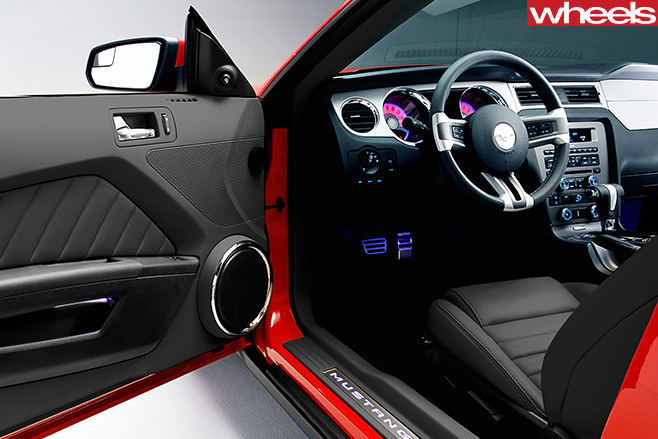
Mustang heritage cues still run strong. Pony logo on wheel boss; no surprise there. Alloy pedals optional, together with leather, heated seats and dual-zone air-con. Sat-nav system courtesy of Microsoft, so defies logic.
SPECS Model: 2011 Ford Mustang GT Engine: 4951cc V8, dohc, 32v Max Power: 307kW @ 6500rpm Max Torque: 530Nm @ 4250rpm Transmission: 6-speed manual 0-100km/h: 4.6sec (estimated) Price: US$32,845 (as tested US$38,830)
A man has been filmed catching some zzzs while driving (or not driving) his Tesla Model S in the US.
‘Autonomous’ may be the automotive buzzword, but the technology is still in its infancy. Tesla has made it very clear that while its cars can function under autopilot, drivers are expected to ‘stay alert’. That means hands off the steering wheel, but eyes on the road. And even that isn’t legal in most countries.
The fundamental principles of autonomous cars are to reduce traffic and improve vehicle safety. But the driverless technology is not yet prepared to be, well, driverless.
It can maintain a safe distance from the cars ahead, brake if it senses it’s going to run into an object, and it can keep the car in its lane by reading the road lines. But it would seem this Tesla Model S driver had stayed up all night to ‘read between the lines’ and taken the Tesla’s independence to a whole new level.
The vehicle appears to be in autopilot while dragging its feet through traffic. But the feature is semi-autonomous, meaning it needs an attentive driver prepared to take control of the vehicle at any time. If something did go wrong, the car would alert the driver, and upon failure to take control, it would automatically activate its hazard lights and come to a stop.
It sounds safe enough, but there’s a lot these cars can’t do, like read stop signs or traffic lights for example. And don’t even get us started on the issue of obstructed sensors which caused this guy’s Model S to drive into the back of a tailer.
The video may well be a hoax, but there’s a moral to this story: fully autonomous cars are still around future’s corner, so stay awake behind the wheel if you want to see them arrive.
It seems power has become the de facto aspect that defines a hypercar these days.
Sitting at the highest echelon of the performance car sector one would assume power has to be the ultimate bragging point, but not for a little Italian manufacturer called Pagani. With the new Bugatti Chrion and Koenigsegg Regera both boasting around 1100kW – the latter resorting to a hybrid system to boost the transmission-less driveline – the 588kW Pagani claims for the Huayra BC almost seems a little underwhelming. But there’s so much more to this focused, track-inspired version of the Huayra.
Those initials first. BC stands for Benny Caiola, Horacio Pagani’s first ever customer. Benny was a man who believed in Horacio and his cars, and over the years he turned out to be more of a mentor than just a customer. Benny, who was regarded as one of the biggest Ferrari collectors in the world before his passing in 2010, always encouraged Horacio to create a more track-focused version of his then-new baby, the Huayra. Fast forward a few years and we are in beautiful Sicily, Italy, to get a taste of a close-to-production prototype.
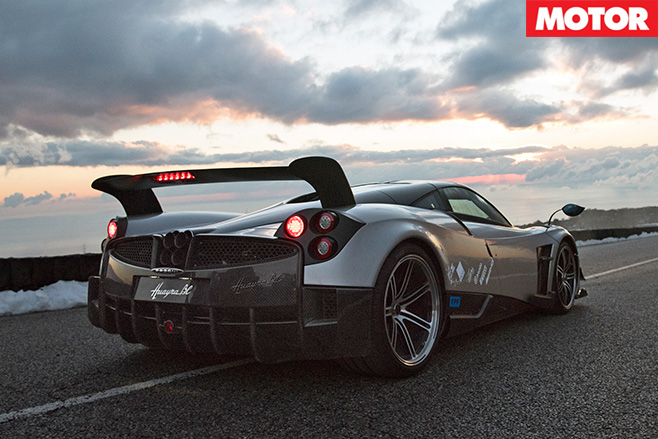
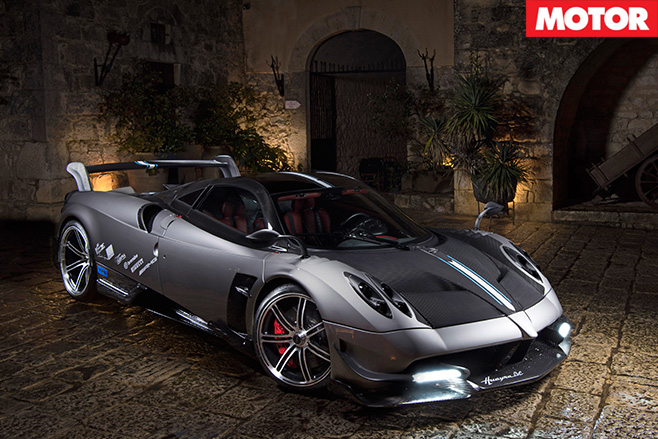
Aside from the obvious aerodynamic additions, such as the aggressive front splitter, the vented front arches and the rear diffuser, the Huayra’s profile has been given more pronounced features including a crisper shoulder line, widened and gently blistered fenders and, of course, a fixed rear wing.
Pagani called in Dallara to design and refine the aero, using countless hours of Computational Fluid Dynamics (CFD) testing to make sure the Huayra sticks to the ground. And, for the occasional excursion to the track, the rake on the rear spoiler can be increased to add downforce.
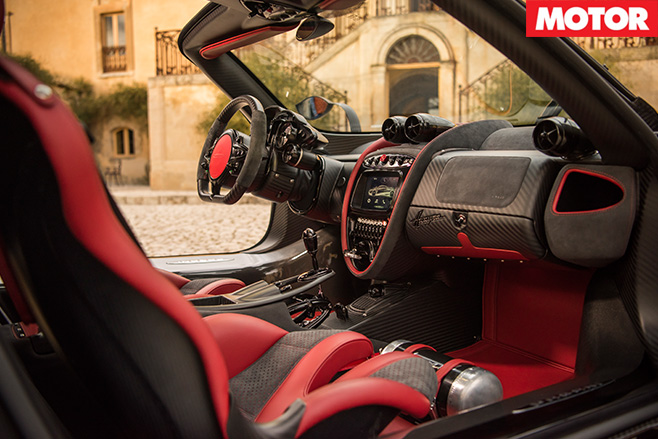
However, creature comforts aren’t sacrificed. Climate control is still present, and the BC is equipped with the latest version of Pagani’s infotainment system, which now boasts Apple CarPlay. Keyless entry will also be offered on the BC.
The aforementioned 588kW are generated via AMG’s thundering 6.0-litre, twin-turbo V12 engine. The V12 is now running the latest Bosch engine management system, a clever, more responsive mapping for the throttles and a tad more boost. It only revs to 6500rpm, because it doesn’t need to go over that; power comes in at just under redline with a towering 1100Nm being developed at 4000rpm.
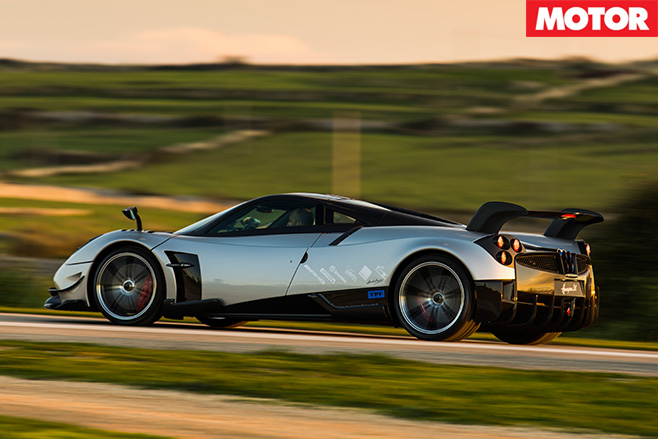
It’s as if it combines the progressive, linear and responsive nature of a naturally-aspirated powerplant with the explosive delivery of a forced-induction engine. And, unlike a lot of manufacturers that try to almost hide the fact that turbos are employed, Pagani celebrates it by amplifying all the wooshing sounds coming from the BorgWarner turbos.
It produces a distinct jet-fighter like quality that combines with the underlying low-frequency thunder coming from the engine. It’s all topped off with the crackles and pops the BC’s special lightweight (2.9kg!) titanium exhaust generates every time you back off the throttle.
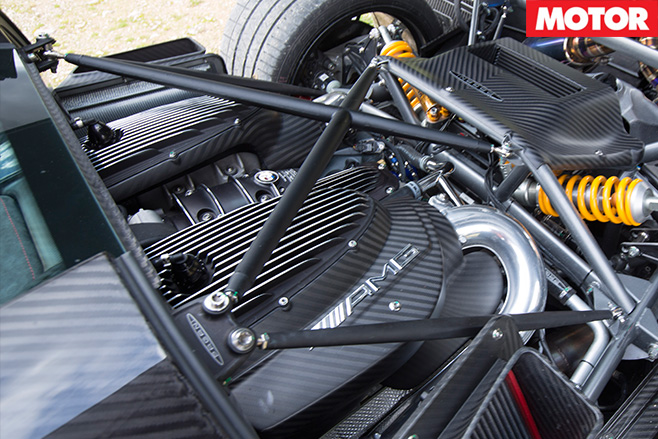
The fine tuning and perfecting of every component is taken right across the board to the suspension, which now sports 25 per cent lighter and redesigned arms made from aerospace-grade HiForg (with more aggressive geometry), and new Öhlins active dampers.
Next-generation Brembo monobloc brake calipers are as light as they can possibly get; every gram of aluminium alloy has been carved out around each of the six front and four rear pistons. These bite down hard on carbon ceramic discs that further cut the all-important unsprung mass.
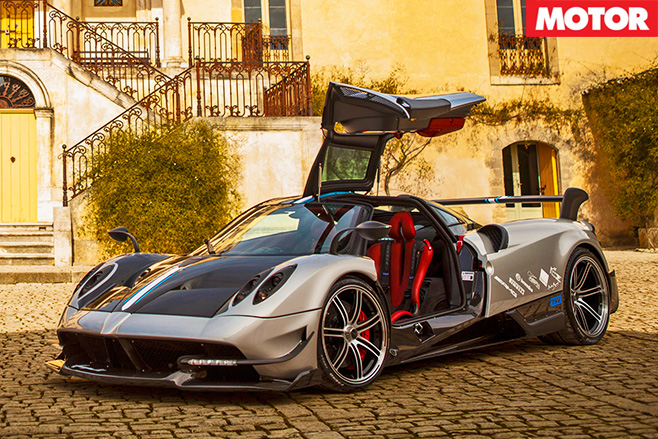
Best thing is, these tyres are street legal, so you can drive home from the track after a day of fun; although, we would assume anyone tracking a Huayra BC would probably show up to the track with a dedicated transporter and a team of mechanics.
But how does it drive? Our prototype test car is around 70 per cent according to its minders, but even in its current state it’s seriously impressive. Horacio Pagani’s insistence on making cars that aren’t hard or intimidating to drive is what stands out almost immediately once you get comfortable.
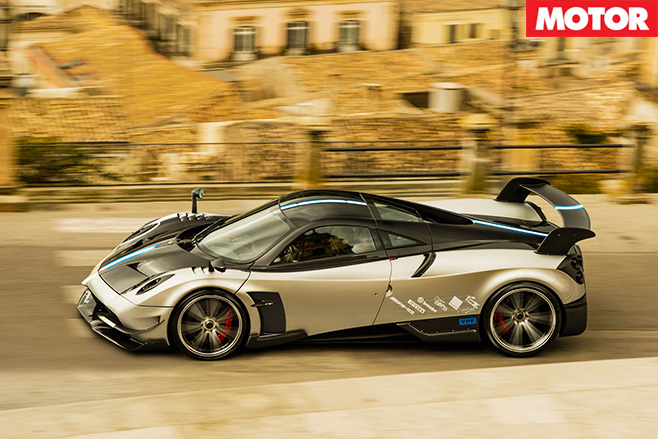
This is partly due to the way the car’s weight is contained as close to the centre of balance as possible, something that dictated the use of a lighter, transversally mounted single-clutch transmission over a heavier and longitudinal twin-clutch unit. There is no way a 588kW hypercar should be so chuckable, but that’s what the BC is: totally useable and infinitely satisfying.
The BC prototype hadn’t yet been fitted with the new-generation Öhlins dampers that will equip the 20 production cars. These will not only provide an even more comfortable and forgiving ride when cruising, but when pushing hard the active front set-up will counteract pitch and roll so as to keep the car flat under heavy braking and through corners – in an effort not to upset the fine weight distribution.
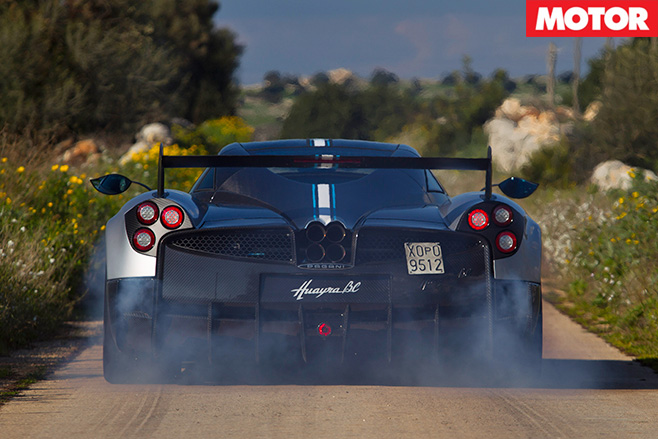
Despite the quicker shift times of the new gearbox there’s still a pause between shifts, but that’s a small price to pay for having such an exploitable ensemble beneath you. The brake pedal, too, is greatly progressive, with a tonne of feedback on what those massive Brembo calipers are up to.
The more you drive it the more you realise the choice to focus a great deal of the car’s development on shedding weight rather than going crazy with power – because honestly, 588kW is about as much power as anyone would ever need – was a very wise decision indeed.
5 OUT OF 5 STARS
SPECS Body: 2-door, 2-seat coupe Drive: rear-wheel Engine: 5980cc V12, DOHC, 36v, twin-turbo Bore/stroke: 82.6 x 93.0mm Compression: N/A Power: 588kW @ 6500rpm Torque: 1100Nm @ 4000rpm Power/weight: 483kW/tonne Transmission: 7-speed automated manual Weight: 1218kg Suspension(F): A-arms, coil springs, adaptive dampers, anti-roll bar Suspension(R): A-arms, coil springs, adaptive dampers, anti-roll bar L/W/H: 4605/2036/1169mm Wheelbase: 2795mm Tracks: N/A Steering Electrically-assisted rack-and-pinion Brakes(F): 380mm ventilated discs, 6-piston calipers Brakes(R): 380mm ventilated discs, 4-piston calipers Wheels: 20.0-inch (f); 21.0-inch (r) Tyre sizes: 255/30 ZR20 (f); 355/25 ZR21 (r) Tyre: Pirelli P-Zero Corsa (f/r) Price as tested: AU$3.5million (approx.)
The ‘softer’ version of McLaren’s 419kW entry-level supercar has room for a picnic hamper? Who’s going to buy that?
WHAT IS IT? The second variant for the less expensive McLaren Sports Series and sister to the existing Coupe and forthcoming Spider versions. The GT has extra luggage storage area above its mid-mounted V8. It’s also been given retuned suspension to help it deliver on the Grand Touring claim implicit within its name.


The big change is the arrival of what McLaren calls the “Touring Deck”, a secondary luggage compartment at the back of the car above the mid-mounted engine, accessed through a side-hinged glass hatchback. It might sound like a relatively minor tweak – the 570S Coupe already has some squashy bag space behind its seats – but it’s effectively a whole new body style and one that requires the GT to pretty much wear a rucksack. Yet it looks as good as, if not better than, its Coupe sister.

There’s 220 litres of space at the rear – in addition to 130 under the front bonnet – and the rear deck is also insulated to stop the 3.7-litre twin-turbocharged V8 underneath it from cooking the contents of any bags you entrust to it. McLaren demonstrated this by loading up a Fortnum and Mason hamper packed with delicacies and then ordering me to try as hard as I liked on a 130km driving route over some of the twister parts of Tenerife. The lunch emerged unscathed. The GT also gets a standard panoramic glass roof, which makes the cabin feel far lighter and more spacious than the 570S and gave the drive a suitably widescreen sensation. A tough gig, but somebody’s got to do it.

The 570GT is probably the closest thing to a GT that McLaren will produce. It’s not as effortless as most of its obvious rivals are – owners will be reminded they’ve bought a junior supercar every time they have to clamber over the sill and past the upward-hinged doors. But it adds both utility and character to the 570S without requiring you to make any significant sacrifices in return.

Three-way battle
McLaren admits it doesn’t know how many Sports Series buyers will opt for the GT. “It’s a new part of the market for us,” says Andy Palmer, the company’s Vehicle Line Director (and no relation to Andy Palmer, Aston Martin’s CEO). “We think there is enough differentiation over the S, but it doesn’t matter if buyers opt for one or the other.” McLaren hopes to reach its target of producing 4000 cars per annum next year, with around two thirds of those being Sports Series.
SPECS Model: McLaren Sports Series 570GT Engine: 3799cc V8, turbocharged, 32-valves Max power: 419kW @ 7500rpm Max torque: 600Nm @ 5050rpm Transmission: 7-speed dual-clutch Weight: 1350kg (dry “with lightweight options”). 0-100km/h: 3.4 sec (manufacturer) Fuel economy: 10.6L/100km (EUDC) Price: TBC
These days, most people would be hard pressed to actually pick which end of their car was doing the driving; that is, making it move forwards or backwards.
Rear-wheel drive was once the default setting for car makers because it was simple and easy and, therefore, cheap to make.
But as interior space became more important and the small car was invented, many manufacturers moved to front-wheel drive as a means of saving space. Nowadays, front-wheel drive (even in big cars) is the norm for those same reasons.
Old timers will tell you that rear-drive is better because it allows the front wheels to concentrate on steering, not driving, the car. But anybody who has driven on ice or snow (or even gravel) will know that front-wheel drive can be a plus, too.
Most high performance cars remain rear-wheel (or all-wheel) drive in the name of traction from a standing start. But pretty much everything else is front-drive and none the worse for it.
The basics of suspension, power delivery, grip and steering have been proven to be far more important than which wheels are driving the car.
And like we said: if the car is well engineered and well set up, nine out of 10 drivers would never pick whether a particular car is being pushed or pulled along.
What stands out?
The Renault Clio Renaultsport is a cult hot-hatch with a fiery, 1.6-litre, turbocharged engine. It is a brilliant-handling, thrilling little car, but it is easy to drive and relatively comfortable. The Clio RS is very well equipped, has a uniquely French flavour, and is covered by a five-year warranty.
What might bug me?
Operating the cruise control. It uses fiddly buttons that are placed out of the way on the centre console, rather than on or near the steering wheel as they are in most cars.Stop-start driving. All Clio Renaultsports use a dual-clutch auto gearbox. It is good once you’re moving, but it won’t feel as smooth and easy in town as a conventional or CVT auto.Waiting for gearchanges: for a gearbox in a high-performance car, the dual-clutch auto is also slow to shift.The stiff ride around town: you will feel most sharp-edged bumps in any Clio Renaultsport, and more in Cup versions.Dealing with a flat tyre. If you puncture a tyre on a Clio RS, you must get to grips with the tyre-repair kit – or walk. There’s no spare.
What body styles are there?
Five-door hatchback only.This review covers the Renault Clio Renaultsports – the RS200 and RS220 variants. There are also Renault Clios (Authentique, Expression, Dynamique, and GT), which are less expensive, less powerful, and less driver-focused. These are examined in a separate review.The Clio RS drives its front wheels. It is classed as a light car, lower priced.
What features does every Clio RS have?
Air-conditioning, cruise control with a speed limiter, and a digital speedo.Keyless entry and start (which allows you to unlock the car and drive away without removing the key-card from your pocket or bag).A 7.0-inch touchscreen from which you can control the Arkamys brand audio system, which offers a radio, auxiliary and USB inputs, and Bluetooth connectivity for phone calls and audio streaming.Satellite navigation.Headlights that turn on automatically when it’s getting dark, and windscreen wipers that operate automatically when it rains.Paddle gear shifters that let you do multiple downshifts with a single press.Launch control, which helps you maximise acceleration from a standing start. The system is easy to use and brings consistently swift take-offs. However, the Clio RS does not provide the brutally quick getaways common with launch-control equipped rear-wheel or all-wheel drive cars, because weight transfer away from the (relatively narrow) front wheels reduces grip.RS Drive, which allows you to adjust the sensitivity of the throttle and gearbox, and the weight of the electric power steering. There are Normal, Sport and Race modes.An RS Diff. This is not a mechanical limited-slip diff. Rather, it is an extension of the electronic stability control system, and uses the brakes to control wheelspin.Alloy wheels, and a tyre inflation kit. (There is no spare wheel.)Four airbags: two directly in front of the driver and front passenger; and one alongside each front occupant to protect the head and chest.Electronic stability control, which can help you control a skidding car. All new cars must have this feature.Every Renault Clio carries a five-year, unlimited kilometre warranty.
Which engine uses least fuel, and why wouldn’t I choose it?
Most Clio Renaultsports use the same engine, a 1.6-litre turbo-petrol four-cylinder that consumes 6.3 litres/100km in the official test (city and country combined). That’s a very good figure for an engine that offers an energetic 147kW with a broad spread of power.The limited-edition Clio RS 220 Trophy uses a bigger turbocharger to release another 20kW from this engine. It also decreases fuel use slightly – in part through introducing a stop-start system, which shuts down the engine while you are waiting at traffic lights.Every Clio Renaultsport comes with a six-speed, dual-clutch, automatic gearbox.A dual-clutch auto operates much like a manual gearbox with robotic control. It will save fuel and will shift very swiftly and smoothly on the highway, but generally it won’t feel as fluid and elastic as a conventional auto in stop-start driving.
What key features do I get if I spend more?
The least costly Clio Renaultsport is the Clio RS Sport, which comes with 17-inch alloy wheels that mount 205/45 tyres.Opting instead for a Clio RS Cup gets you Renaultsport’s Cup chassis, which means stiffer springs and anti-roll bars, and firmer dampers. You also get red-painted front and rear brake calipers (that is just a cosmetic change). Wheel diameter rises to 18 inches. Tyre width remains 205, but tyre profile falls to 40 per cent.Having chosen your preferred chassis tune, you can spend more on either a Clio RS Sport or a Clio RS Cup for a Premium version, which brings you more equipment and comfort.The Premiums have rear parking sensors and a reversing camera, leather rather than cloth seat trim, front-seat heaters, and climate-control air-con. The sound system gets extra tweeters and voice recognition. An R-Sound system lets you augment the sound of the engine with a selection of recorded engine notes that play through the speakers (for example, one mimics the Nissan GT-R supercar). An RS Monitor can measure and log lap times and other performance data, in case you should take your Clio RS Premium to the racetrack.In the limited-edition Clio RS 220 Trophy, you get the power increase as described above, quicker shifts from the gearbox, still stiffer suspension, reduced ride-height, and a quicker steering rack. Equipment matches the Premiums. The RS 220 Trophy went on sale in December 2015, and Renault Australia said it would import 220 of them.
Does any upgrade have a down side?
The stiffer suspension and 18-inch wheels of Cup versions brings a busier urban ride than in already-firm Sport versions.Only one colour – Glacier White – comes without extra cost. Any other colour will add several hundred dollars to the price of the car.
How comfortable is the Clio RS?
When you’re gripping the chunky, sculpted steering wheel from the deeply bolstered driver’s seat, a Clio RS transcends its modest price tag and feels like a serious little performer.The bolsters either side make the front seats more difficult to climb in and out of than those of a normal car, and the seats’ firm padding makes them less soothing over a long drive than those in a regular light hatch. But the payoff is they’re great at gripping bodies during hard cornering. If you’re driving, you’ll probably be having too much fun to mind any discomfort.The unique card-key might be the first Gallic design touch to strike you. Then there is the elliptical digital speedo, flanked by the tacho and fuel gauge. Elsewhere, splashes of chromed, coloured and textured trim liven up the cabin, and mark the Clio as A Bit Different – in a good way.Most minor controls, such as those for the air-conditioning, are sparingly marked but straightforward to use and have a nice feel. There are fingertip controls for the audio system on a block that sprouts from the right of the steering column. While their position is unusual, using them is intuitive.The Clio RS 200 Sport has quite stiff suspension, and the Cup versions are even tauter. This makes them – and the Cup in particular – less than tolerant of sharp-edged urban bumps. Either car might feel wearing when you’re confined to the grind.However, once away from the city either Clio RS does a terrific job of absorbing lumps and undulations – the springing and damping, although firm, is beautifully judged. That’s a Renaultsport specialty – and it helps the Clio RS deliver brilliant handling.There’s a bit more tyre noise in a Clio RS than in a normal light hatch, because the tyres are broader.
What about safety in a Renault Clio RS?
Stability control, four airbags, and seatbelt warnings for front and rear occupants, contribute to a good safety package, and the Clio did well in independent crash tests. All Clio Renaultsports also have automatic headlights and windscreen wipers.However, while the airbags protect front-seat occupants from frontal and side impacts, there are no curtain airbags to protect rear-seat passengers from side impacts.Only Premium versions have rear parking systems and a reversing camera (it’s arguable this is less important in such a small car).An autonomous emergency braking system is not offered in any Clio.The Australasian New Car Assessment Program (ANCAP) awarded the Renault Clio its maximum five stars for safety. It received a perfect score in the pole and side impact tests, only losing points in the frontal offset test. The Clio was given the rating before side-curtain airbags became a prerequisite for five stars.
I like driving – will I enjoy this car?
Even in much slower – and much less costly – Clio Authentique and Expression form, Renault Clios have flair and talent that give them character and make them fun to drive. In a Clio RS, the speed, grip and fun-factor are turned up to 11. Given such a terrific donor car in the basic Clio, the result is pretty special.Yet, the Clio Renaultsport’s pursuit of performance isn’t so single-minded that it overrides the great qualities of the cooking versions.For example, a Clio RS remains easy to drive, with the 1.6-litre turbo engine providing effortlessly swift performance around town.The dual-clutch auto is the only let-down here: it exhibits the common dual-clutch characteristic of being less than smooth away from a standstill, and during low-speed manoeuvres. And unless you select Race mode, it is a bit slow – for a performance car – to respond to the shift paddles.When you flatten your right foot, the turbo four-cylinder has a nice, rorty note. And with a claim of 6.7 seconds for a sprint from a standstill to 100km/h, any Clio RS is quite quick.But the Clio’s party trick is handling, rather than speed. It dives into corners with alacrity, and hangs on with tenacity. In fine front-drive hot-hatch tradition, lift-off oversteer – the tail sliding subtly on a lifted throttle to help point the nose – is part of the Clio’s repertoire.The Clio is very entertaining to drive on a twisty country road, thanks to its quick responses, great grip and turbo shove. In these conditions, Sport is the pick of the driving modes: it beefs up the steering and makes the engine more alert, while leaving the electronic stability control on. The ESC system is lenient enough to let you have a lot of fun – if you’re driving beyond its limits, you should be on the track.In the track-focussed Race driving mode, the Clio responds more immediately to the shift paddles, holds gears for as long as you please, and switches off the ESC so that you can have as much oversteer as you want.
How is life in the rear seats?
There is plenty of leg room in the back of the Clio – it has a long wheelbase (for a light car), which creates extra space for rear passengers to stretch out. Headroom is good, too.Rear occupants experience the same firm to very firm ride as those in the front. While it’s a fair trade off for the driver, who gets to have a lot of fun, the ride becomes tiring for passengers.The Clio’s rear seat base provides good under-thigh support, and the backrest offers good side support. When the driver is having a go on a twisty road, it’s easier to stay put on the grippy cloth seats than on the leather of Premium versions.The upswept bottom of the rear windows makes it a bit darker in the back of the Clio than in some alternatives. The other side of this is that there’s more metal to protect rear occupants in a side collision.
How is it for carrying stuff?
The Clio has plenty of room in the boot for a car of its size. It can swallow 300 litres of cargo, which is more than most light hot hatches but about 20 per cent less that the boot of a small hot hatch such as a Golf GTI.With the rear seats folded, the Clio can take 1146 litres of luggage.
Where does Renault make the Clio RS?
The Renault Clio Renaultsport is made in France.
What might I miss that similar cars have?
The option of a manual gearbox, which you get in most other light hot hatches. You might enjoy a Renault Clio RS even more if you were shifting it yourself – especially in light of the shortcomings of the dual-clutch automatic.Curtain airbags for rear-seat passengers. You get these – and a driver’s knee airbag – in the Ford Fiesta ST, for example.Among other light hot hatches worth considering are the Volkswagen Polo GTI and the Peugeot 208 GTI.
Are there plans to update the Clio RS soon?
The current Renault Clio RS 200 arrived in December 2013. A facelift under development for the entire Clio range could bring a minor update for RS models as early as 2017. Updated Clios will have side-curtain airbags for rear passengers, but the Clio RS is likely to remain auto-gearbox only.
I like this car, but I can’t choose which version. Can you help?
We like the Clio RS200 Sport. As the least costly Clio RS, it maximises the model’s bang-for-buck, which is always a big factor in the appeal of a hot-hatch.
HSV’s limited run Clubsport R8 Track Edition gives an indication of what the performance-focused brand is thinking for future imported models.
With the imminent demise of locally-produced V8 HSVs – they will be killed off in conjunction with the end of Australian production of the Commodore late in 2017 – HSV has created a celebration model designed for track thrashes as well as spirited road drives.
It uses the least powerful HSV engine currently produced – the naturally-aspirated 6.2-litre LS3 V8. It makes 340kW, well down on the 400kW from the Clubsport R8 LSA and the 430kW in the GTS, two cars that use the 6.2-litre LSA supercharged V8.
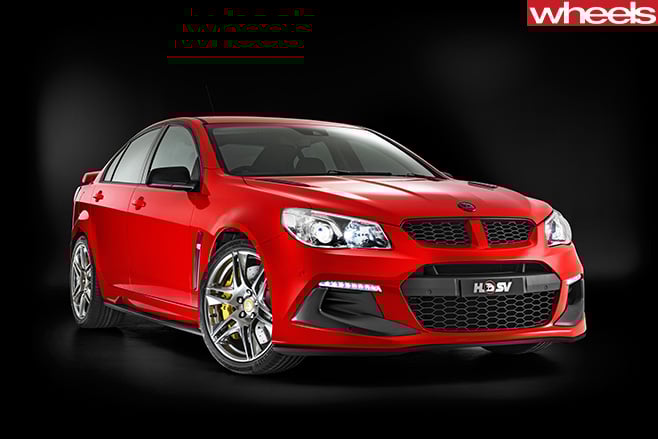
Key to the changes to the Track Edition are the six-piston AP Racing brakes previously reserved for the HSV GTS flagship. They’re a potent set of stoppers more than up to the task of the faster GTS and promise to give the Clubsport newfound anchors for heavy track use.
HSV has also developed a unique suspension tune that is significantly stiffer than that used on the Clubsport that was discontinued with the arrival of the Commodore VF Series II-based Gen-F models late in 2015.
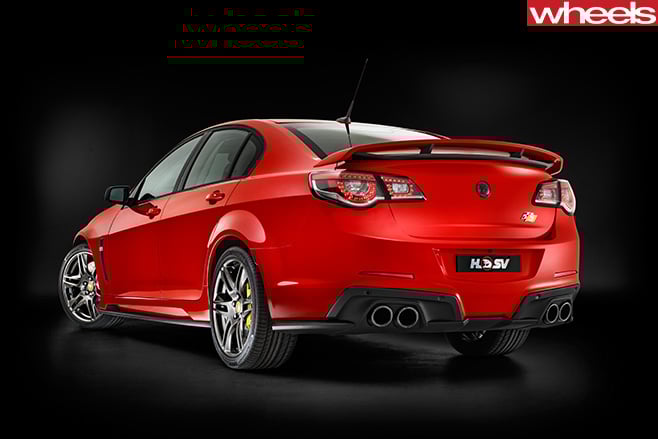
Under the bonnet of the Track Edition is a familiar piece of LS3 kit. The Track Edition utilises the naturally aspirated 6.2-litre V8 previously used on HSVs, an engine tune that will in November fall foul of stricter Euro 5 emissions standards (Holden has adapted the 304kW of the same engine to meet the new emissions standards but HSV decided against the multi-million engineering investment for its higher output version of the LS3).
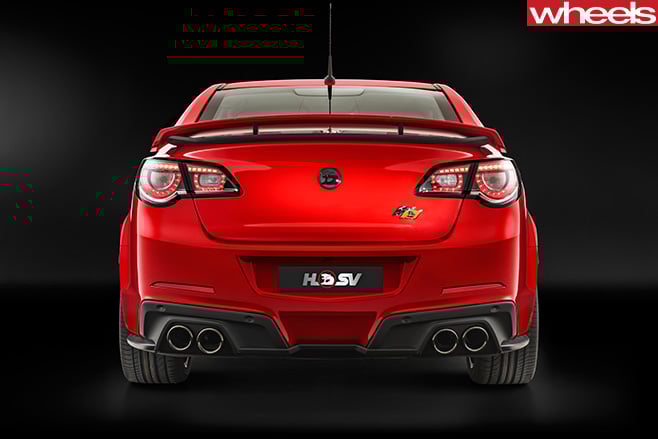
In conjunction with HSV’s bi-modal exhaust it promises to create the most tantalising V8 sound of any HSV for years.
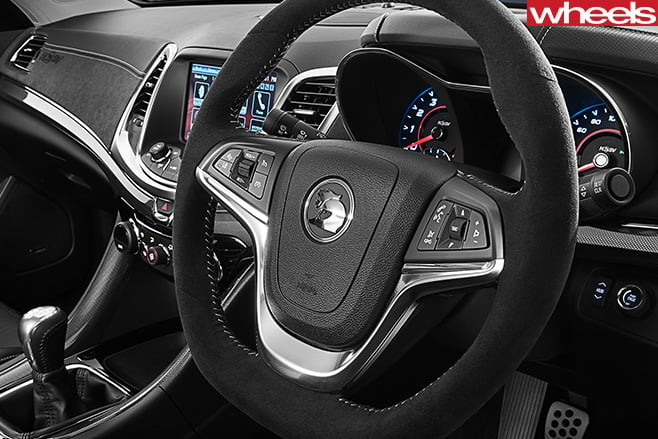
While HSV isn’t saying so at the moment, the Track Edition appears to be a toe-in-the-water exercise to test the market for vehicles aimed at track use rather than outright performance.

The Track Edition will be the last HSV to utilise the LS3 engine, an engine first seen in HSVs in 2008 and, before that, in the Chevrolet Corvette.
HSV Clubsport R8 Track Edition
Engine: 6200cc V8 Max power: 340kW @ 6000rpm Max torque: 570Nm @ 4600rpm Transmission: 6-speed manual or 6-speed auto Kerb weight: TBA 0-100km/h: NA Price: $68,990 On sale: September, 2016
HSV’s announced the Grange will stealth up in special edition trim before it axes the model forever.
With the performance limo set to leave Clayton’s factory doors for the last time this October, HSV will dress 50 ‘SV’ units with exclusive styling bits for no extra cost at $86,990.
The new goodies are appropriately coloured for the occasion, as previously optional 20-inch Rapier wheels are now standard in gloss black, and the four-piston AP Racing calipers found behind them will also be painted the same hue.
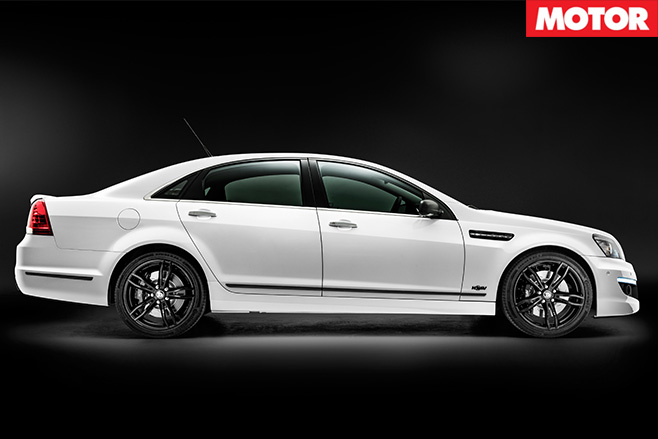
Inside the standard sill plates inside have been tossed for unique ‘SV’ items while the I.D plate also reflects its limited status.
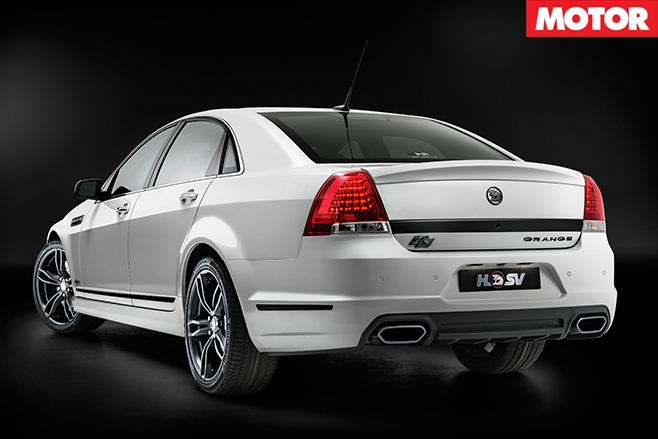
As the firm’s full fruit luxury offering there are few options left to specify on the SV, however an extra $1990 will score you a sunroof and the $1095 the Enhanced Driver Interface is available to satisfy data geeks.
When the Grange packs its bags this October it’ll take with it a nameplate that’s served as the HSV’s luxury flagship for 20 years. However some would say the writing’s been on the wall since the company started building the model to order this March.
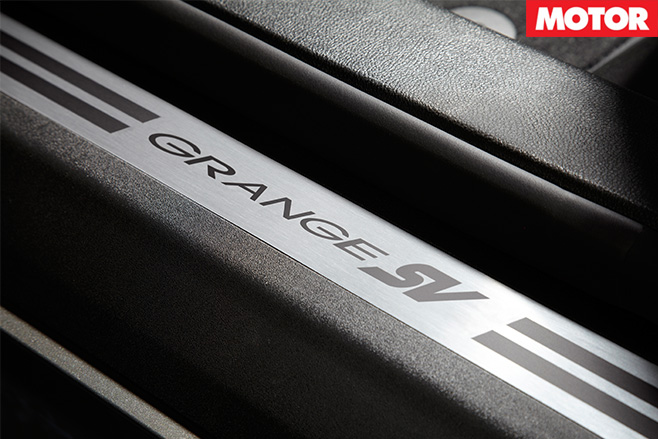
The Grange SV is pencilled to arrive in dealers this September, with the pre-order books already open.
HSV has announced a trio of limited edition models – R8 SV Black (sedan and ute), Grange SV and R8 Track Edition – that will send off the 6.2-litre Chevrolet-sourced LS3 engines for the Holden performance arm.
Between them only 650 will be produced for Australia, 50 of which will be the last HSVs to wear the Grange nameplate, which is being retired in the lead up to the end of Australian manufacturing. All have to be sold by October 31 ahead of the introduction of stricter Euro 5 emissions regulations.
The 340kW/570Nm output of a motor not used since the arrival of the Gen F2 range in 2015 is unchanged, but the engines pick up the mechanical sound enhancer developed by Holden for its V8 models with the same basic donk.

It’s the only tweak to the 6.2-litre V8 driveline that is the heart of the SV Black, Grange SV and Track Edition versions.
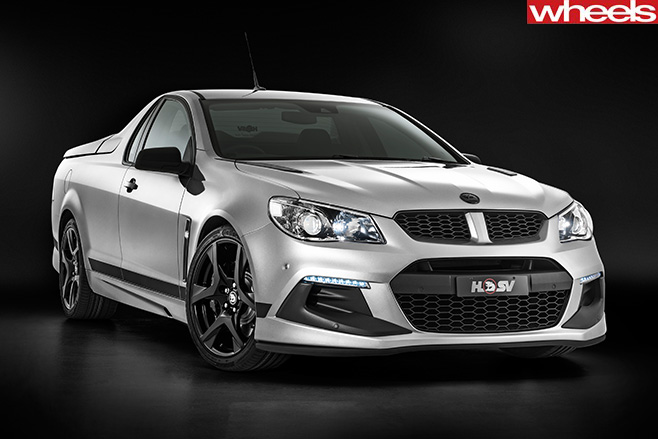
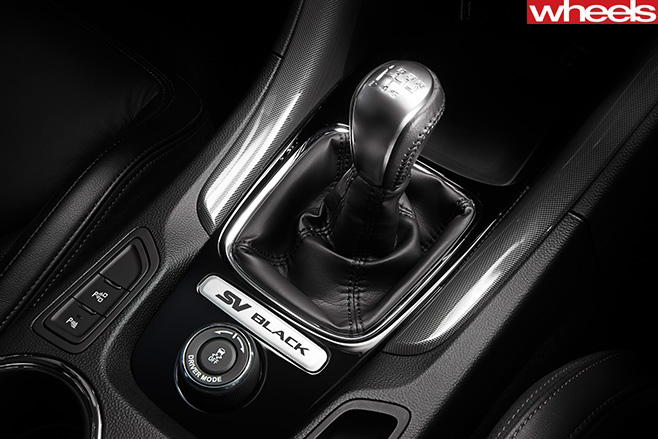
First out of the blocks will be the SV Black versions of the ClubSport and Maloo. Each picks up most of the GTS styling, albeit without the LSA badge.
The Maloo R8 SV Black will sell for $62,990 and the ClubSport R8 SV Black $65,990. There will be no Tourer version, with that car instead only being offered with the LSA until it is discontinued late next year.
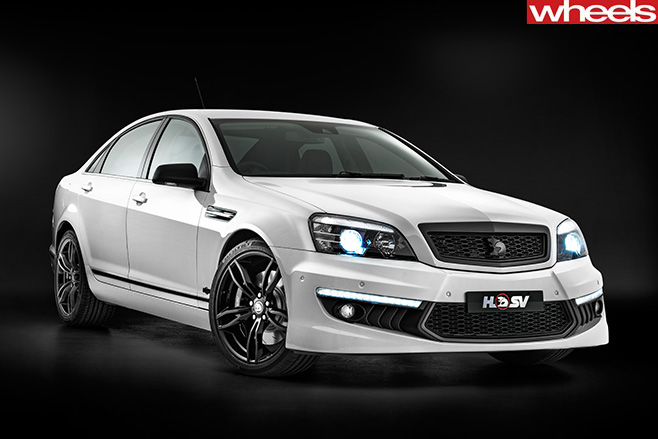
Wrapping up the life of the LS3 engine for HSV will be the R8 Track Edition. As well as the black styling touches, it also picks up 20-inch wheels previously used on the GTS.
Unsurprisingly, the focus for the Track Edition is on its hot lap performance. Key to the changes are springs that are 200 percent stiffer than those used on the previous ClubSport, as well as the six-piston AP Racing calipers from the supercharged GTS.
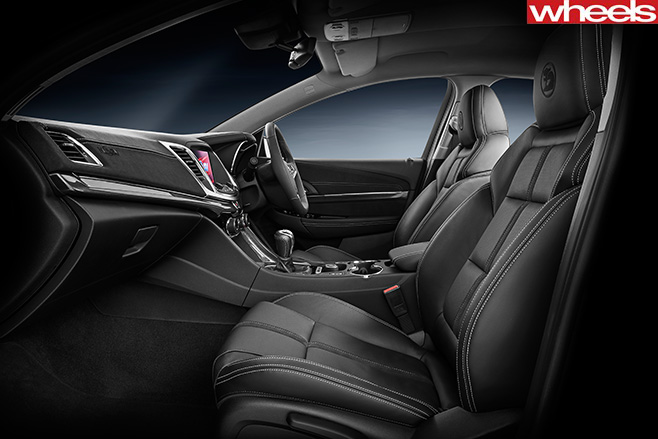
The last LS3-powered HSV will have number plates fitted by October 31, one day before the deadline that stipulates all new cars and SUVs must meet the new Euro 5 emissions standards.
The investment to bring the engines up to the new regulations would have gone into the millions, prompting HSV to instead plan a run of limited edition models prior to the regulation change.
HSV limited edition models
ClubSport R8 SV Black (sedan), Maloo R8 SV Black (ute) On sale: June, 2016 Engine: 6.2-litre LS3 V8 Power: 340kW Torque: 570Nm Transmission: 6-speed manual or 6-speed auto Mechanical changes: sound enhancer for intake manifold, 4-piston AP Racing brakes Price: ClubSport $65,990; Maloo $62,990 Number produced: 350 ClubSports and 100 Maloos (Australia); 18 ClubSports and 2 Maloos (New Zealand)
Grange SV
On sale: September, 2016 Engine: 6.2-litre LS3 V8 Power/torque: 340kW/570Nm Transmission: 6-speed manual or 6-speed auto Mechanical changes: sound enhancer for intake manifold Price: $86,990 Number produced: 50 (Australia), 6 (New Zealand)
ClubSport R8 Track Edition
On sale: September, 2016 Engine: 6.2-litre LS3 V8 Power/torque: 340kW/570Nm Transmission: 6-speed manual or 6-speed auto Mechanical changes: sound enhancer for intake manifold, 200 percent stiffer springs, six-piston AP Racing brakes from the GTS Price: $68,990 Number produced: 150 (Australia), 6 (New Zealand)
The LS3 disappeared from HSV’s R8 range when it updated to Gen-F2 guise last year but it’s now been re-injected by two new SV Black special editions.
Both the Clubsport R8 and Maloo R8 SV Blacks will welcome an exclusive styling package along with the 6.2-litre atmo V8, the former painting their exteriors in a theme brooding enough for Darth Vader.
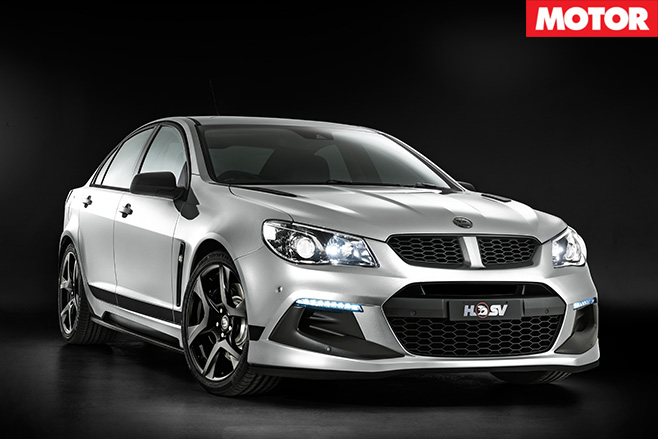
Streaking down each model’s sides are stripes matched to black badging and a stealth ‘Lo-line’ spoiler atop the Clubsport’s boot lid, or Maloo’s rear lower applique. Both models score shadow-chrome exhaust tips.
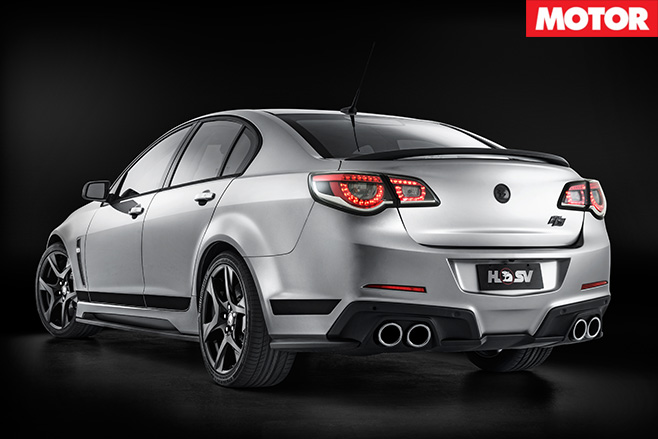
HSV’s revived the LS3 without tweaking, meaning the SV Black is just as powerful as its atmo forebears with 340kW/570Nm bolted to a six-speed manual.
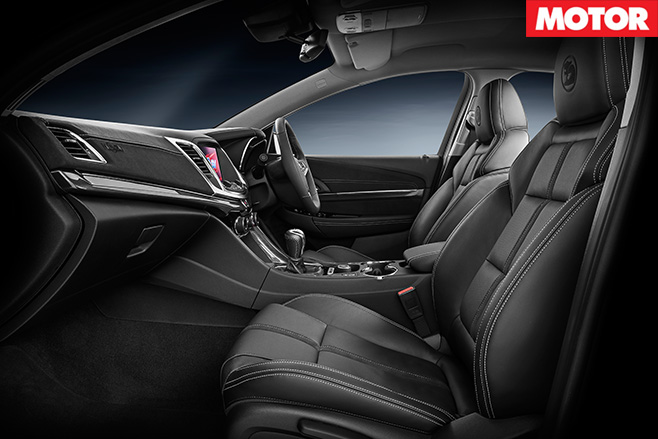
Australia will be offered 350 Clubsport R8s and 100 Maloo R8s, while New Zealand will score 18 sedans and 2 utes, and each unit will be individually numbered.
