
Delinquent behaviour is rarely tolerated, much less rewarded. When a puppy performs backyard excavation works, it doesn’t get a Schmacko. Should a bully throttle a nerd, school captaincy is unlikely. And if a work colleague supports Donald Trump then gets showered in a burning long black, you’d probably say, fair enough. But it won’t win you that promotion.
Cars are the exception. We tag cars as ‘widow makers’ then elevate them to legendary status (step forward 911 GT2 and F40) and overpowered local muscle cars that were rowed mercilessly around Bathurst decades ago still fetch big bucks (wouldn’t you rather a nice, new SS V Redline?).
The Peugeot 205 GTI is renowned for its devilish oversteer. Meaning, if you don’t get steering and throttle inputs exactly right in a corner, it will pitchfork you. Then bury you in the backyard. Then poor hot coffee on your grave. Naturally, this model is celebrated as a seminal hot hatch and all-time great.
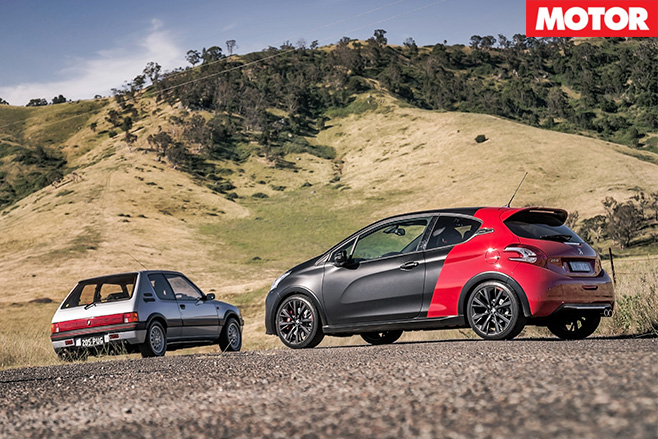
Enter the 208 GTi 30th Anniversary and the closest thing to a retraction you’ll get from a baguette eater. There is nowhere to hide when a model directly references a revered ancestor released in 1984.
This $35,990 limited edition rides 10mm lower compared to a standard 208 GTi, the springs and dampers are firmer, tracks wider (by 22mm front and 16mm rear) and the steering is quicker. the 1.6-litre turbo four’s increased outputs – now up to 153kW/300Nm – are channeled through a mechanical limited-slip diff to stickier 18-inch tyres, and the 1160kg three-door scoots to 100km/h in 6.5 seconds.
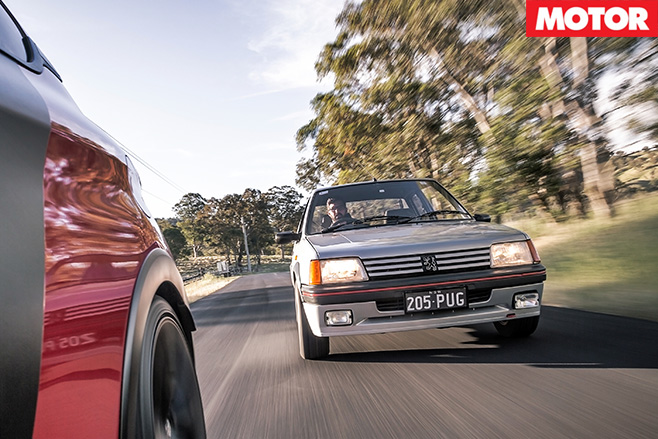
It is just 3.7 metres long, 1.59m wide and 1.36m tall. The current pudgy Pug pushes those measurements out by 27cm, 15cm and 9cm, respectively, the difference today between a micro- and a light-hatch.
But no crummy micro hatch can match the design of the pretty 205 which still stands up three decades later. The French can do style and the GTI additions of oblong driving lights, licks of red paint across the bumpers, side cladding and tow hook, and 1.9 and GTI badging on the rear three-quarter panel are delicious fondant icing.
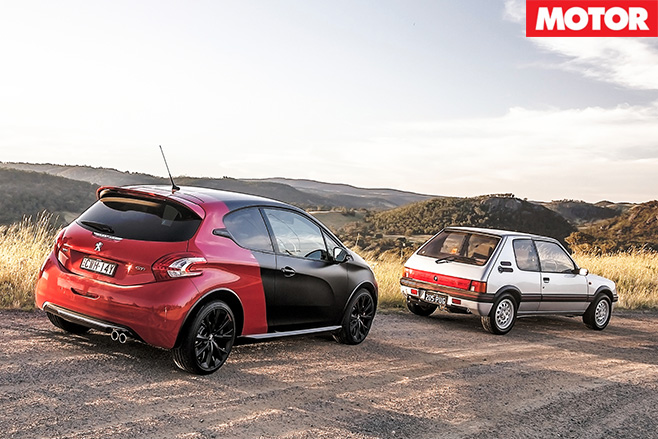
By contrast, the 208 GTi 30th Anniversary’s front track measures 1498mm to the rear’s 1494mm. It isn’t subtle, either, particularly in ($4000 optional!) ‘coupe franche’ (clean cut) paintwork that references the line between matte black and solid red.
The 30th also gets red floor mats as a nod to the full red carpet standard on the 205 GTI, though all its modern trinkets mean it can’t hope to match the simplicity of the older Pug’s grey dash.
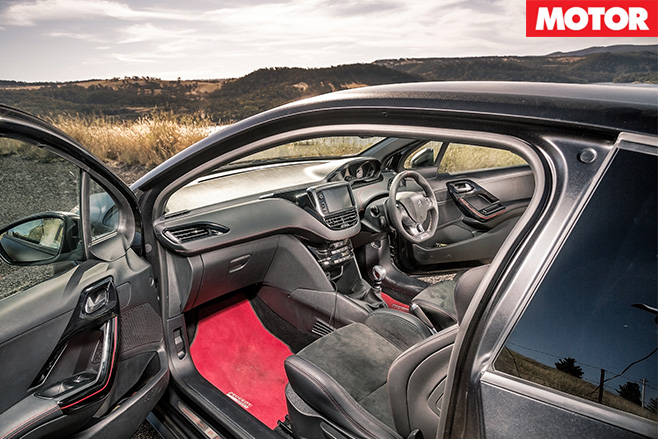
My 205 GTI is not concours. It has been well maintained but some cracks have appeared on a body with the torsional rigidity of a tuna can. However, the driver’s seat is plush and snug, the driving position astoundingly good, especially for a car with a fixed wheel and without seat height adjustment.
Debate still rages overseas whether the 1.6- or 1.9-litre is the one to have in a 205 GTI, even though Australia only received only the latter, initially with a detuned (blame the catalytic converter) 75kW at 6000rpm and 142Nm at 3000rpm.
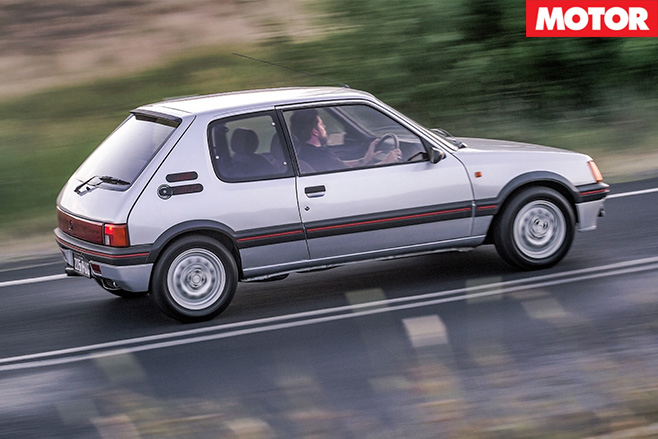
Right foot buried, the 1.9 has an angry, thrashy bark backed by pops and bangs from the (guilty pleasure) aftermarket exhaust. Throttle response is hard-wired and the manual ’box is of the long-throw but perfectly-tight and smoothly-oiled variety.
The non power-assisted steering is a slow-twirling pain around town, but into corners at speed it delivers amazingly crisp and immediate response, yet is never nervous. The little Pug loves hard braking before a corner too, maximising weight over the nose and permitting that wide front track to deliver road-clawing agility to rival contemporary hot hatches.
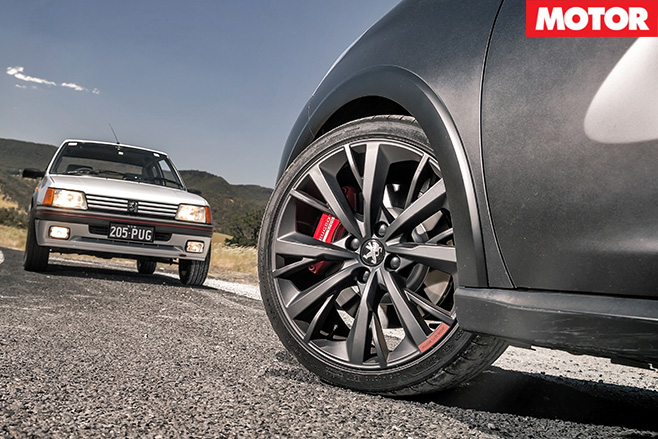
And now with more grip, the passive rear steer that follows the 205 GTI everywhere can be carefully managed, with nuanced throttle lifts translating to minute attitude adjustments. Others following are bemused at the way the tail falls slightly out of step, the front-end being the rock solid flagpole to the wavy cloth behind it.
The new Peugeot is so much faster. Corners approached in the top of second in the 205 GTI run deep into third in the newer car. The sheer sensation of speed in the 208 GTi 30th Anniversary quickly rips the rose-tint off 80s glasses and the Rocky Horror Picture Show album from the cassette deck. Its grippy Michelin Pilot Super Sport rubber can be smeared across corners with all the subtlety of applying Vegemite to toast with a machete. Then the LSD helps deliver full power to them.
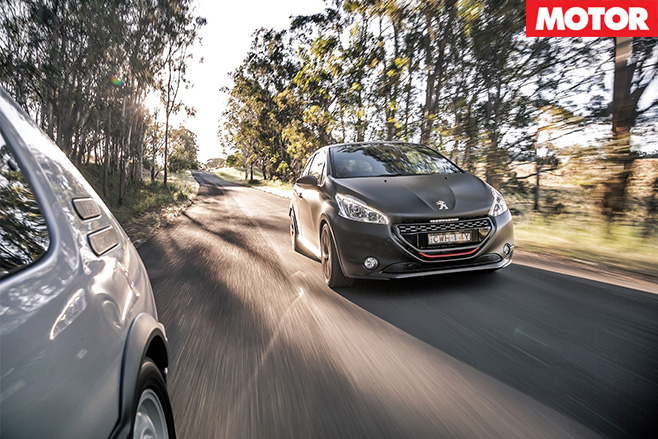
Sure, its 1.6-litre turbo is effective, but it doesn’t rev as sweetly or cleanly as the same overhauled 201kW/330Nm unit in the 308 GTi we tested the following week. And its manual gearbox hasn’t got the lovely, direct throw of the 205 or its rivals. It isn’t until we barrel down the other side of a bumpy hillcimb that the 30th reveals a split personality to match its split colours. I didn’t expect to exit a 90-degree right-hander then flick into a 90-degree left-hander and require an armful of opposite lock.
The 208 may not have the front-to-rear track mismatch of the 205, but it seems that by making the front-end stiff and darty, the rear-end of this short-wheelbase hatch has become more skittish and playful, in a great but challenging way.
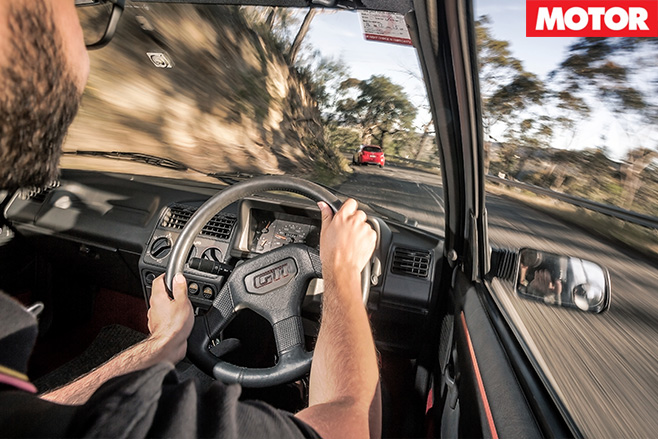
After a hard 500km, the 205 GTI idles perfectly at 800rpm and, despite whiffs of blue spoke that indicate, let’s say, plentiful top-end lubrication, the engine keeps on giving. It’s only been taken out for fast drives over the last 20,000km, a timely reminder that Peugeot was once known for reliability.
So my 30-year-old GTI isn’t a delinquent child after all. It’s supremely chatty, connected if not always perfectly controlled, and able to play both torquey, roomy inner city runabout and agile hot hatchback.
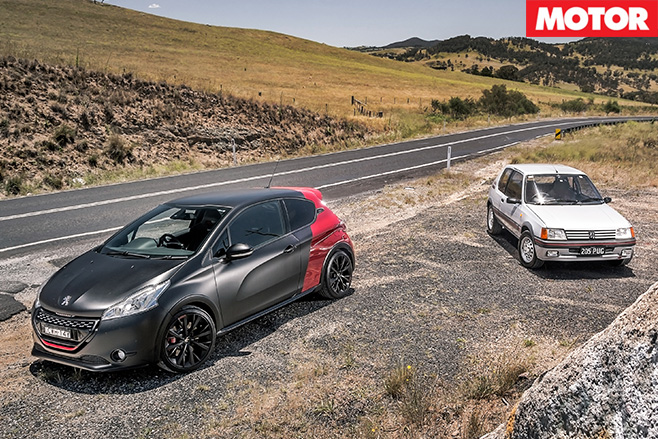
Unique in abilities, yet with similar breadth and contrast, this 208 delivers its many talents on different roads to please many different drivers, just as my trusty 205 did thirty years ago. It may even be silly enough to be as memorable as a 205 GTI.
| u00a0 | PEUGEOT 205 GTI | PEUGEOT 208 GTI 30TH |
| Body | 3-door, 5-seat hatch | 3-door, 5-seat hatch |
| Drive | front-wheel | front-wheel |
| Engine | 1905cc inline-4, SOHC, 8v | 1598cc inline-4, DOHC, 16v, turbo |
| Bore/stroke | 83.0 x 88.0mm | 82.0 x 92.0mm |
| Compression | 8.4:1 | 8.6:1 |
| Power | 75kW @ 6000rpm | 153kW @ 5800rpm |
| Torque | 142Nm @ 3000rpm | 300Nm @ 1700rpm |
| Power/weight | 80kW/tonne | 129kW/tonne |
| Transmission | 5-speed manual | 6-speed manual |
| Weight | 940kg | 1185kg |
| Suspension(F) | struts, coil springs, dampers, anti-roll bar | struts, coil springs, anti-roll bar |
| Suspension(R) | torsion beam, coil springs, anti-roll bar | torsion beam coil springs, anti-roll bar |
| L/W/H | 3705/1589/1355mm | 3962/1740/1415mm |
| Wheelbase | 2420mm | 2538mm |
| Tracks | 1393/1328mm (f/r) | 1498/1494mm (f/r) |
| Steering | unassisted rack-and-pinion | electrically-assisted rack-and-pinion |
| Brakes(F) | 247mm ventilated discs | 302mm ventilated discs, 4-piston calipers |
| Brakes(R) | drums | 249mm solid discs, single-piston calipers |
| Wheels | 14.0 x 5.5-inch (f/r) | 18.0 x 7.5-inch (f/r) |
| Tyre Sizes | 185/60 R14 (f/r) | 205/40 R18 86Y XL (f/r)u00a0 |
| Tyre | Bridegstone Potenza | Michelin Pilot Super Sport |
| Price as tested | $29,500 (new) | $35,990 |
| Pros | Brilliant steering; gearshift; engine tractability, handling | Diff works wonders; strong brakes; masses of grip |
| Cons | Flimsy build, lacks straight-line grunt; on-limit handling | Can be a handful; gearshift lacks precision |
| Star Rating | 4.5/5 | 4/5 |
Fast bum-draggers
Hatches that wrote the Gallic glory story
IN 1976, the 68kW Renault 5 duelled with the VW Golf GTI to be the first official hot hatch. In 1987, the Series I 205 GTI lobbed here, followed in 1989 by the Series II (distinguished by new dashboard and red rear applique) and then the $37,500 Series III (15s, clear indicators, 83kW/153Nm upgrade) in 1992. Only Series III Pugs got air-con and power steering, earlier cars made do with just air-con, as both wasn’t possible on right-hand drive cars. The 1994 306 S16 was brilliant but unreliable and had a 111kW/190Nm twin-cam, 16-valve 2.0-litre version of the 205 four (an engine conversion is on my to-do list if ever my 205 engine goes bust). The 124kW/196Nm 306 GTi-6 was the last genuinely great Peugeot, but production ended in 2000. A year later, French car fanatics quickly found a replacement in the superb Renault Sport Clio 172 then 182. In 2007, Renault released the Renault Sport Megane F1 Team R26 and introduced us to front-drive turbo torque with LSD, and its current Megane 275 Trophy-R is the most capable front-drive hot hatch ever. Peugeot Sport is on a winning streak, though, with the 208 GTi 30th Anniversary and now the 308 GTi which has 201kW and an LSD.
Daniel Ricciardo didn’t set world beating times at the recent Formula One test in Barcelona but he was optimistic that engine supplier Renault is making sure progress with its upgraded power unit.
Renault and its customer team Red Bull each ran the revised power unit in Spain and Ricciardo cautiously indicated he could feel the improvement.
Asked if he could sense the progress from the Renault, Ricciardo replied: “Yes. I think so. The progress is definitely there.”
He is looking forward to the next race at a racetrack that may favour a good-handling chassis like his Red Bull’s, without greatly disadvantaging a car without the power of a Mercedes or Ferrari. “Monaco will be our best chance yet,” Ricciardo said.
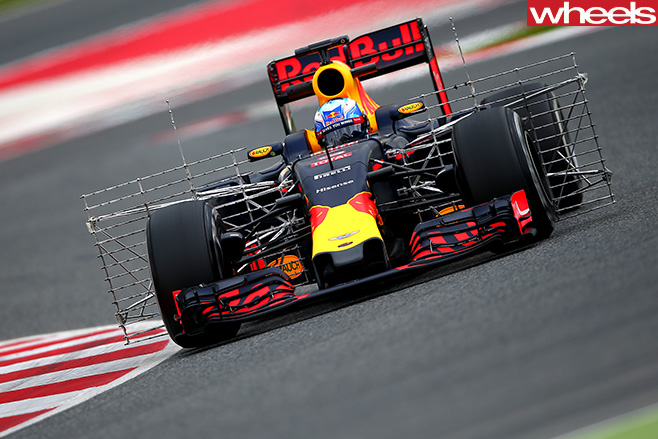
A Renault-engined car won its first GP of 2016 in Barcelona when Max Verstappen, Ricciardo’s new teenaged team-mate, took his first F1 victory in his first outing with Red Bull.
Renault F1 boss Cyril Abiteboul immediately declared there is a lot more to come from the French power unit.
“We’re on the rise again,” insisted Abiteboul, quickly adding that such improvements take time and urging patience.
Peugeot unveiled its second-generation 3008 overnight, revealing a model that is bigger yet lighter than the original crossover-style model that was released in 2008.
The new 3008, due locally in 2017, shares its lighter-weight platform with the hugely likeable 308 hatch that was a Wheels Car of the Year finalist in 2015.
Inspired by the 2014 Quartz concept, the 3008 grows by 80mm to be within 90mm of Mazda’s hugely popular CX-5, with most of the extra length devoted to extending the wheelbase. Rear legroom increases by 24mm as a result, though elbow room and rear headroom also increase despite width and height remaining unchanged.
Boot space expands by nearly 90 litres to 520L.

Inside, a smaller steering wheel with flat top and bottom sections is familiar from the Peugeot 308, though the 3008 ramps up Peugeot’s i-Cockpit dash concept with a 12.3-inch display that ditches analogue dials for an entirely digitised set-up.
The driver can choose from an “a la carte” configuration menu, with five possible display modes.
An i-Cockpit Amplify feature is one many would say could only come from a French car manufacturer: pressing the corresponding button enhances ambient lighting, boosts sound from the audio, engages the seat massage function (where fitted) and prompts the fragrance diffuser to dispense a pleasant smell.
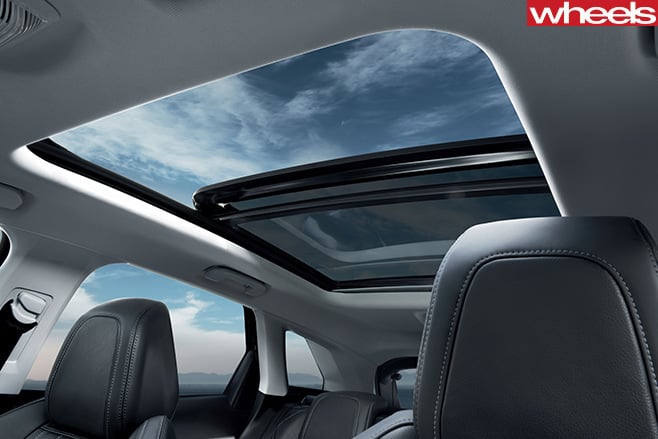
A centre console dial allows the driver to tailor the 3008’s traction control system to varying terrain, with Normal, Snow, Mud, Sand and ESP Off modes.
Engine options for Peugeot Australia to choose from are also largely familiar, including 1.2L three-cylinder and 1.6-litre four-cylinder petrols, and 1.6-litre and 2.0-litre diesels. They’re mated to either a manual or auto with six speeds.
Fuel consumption and emissions are helped by the weight of the 3008 being reduced by 100kg on average across the range.
New driver aids available on the 3008 include autonomous emergency braking, fatigue warning, road-sign recognition, semi-automatic parking, and 360-degree camera.
TELL ME ABOUT THIS CAR
It’s the updated version of Kia’s best-selling model, the Cerato, which now sports a fresher look, improved equipment and sharper dynamics, yet still retains its competitive sub-$20,000 starting price.
It’s available as either a five-door hatch or four-door sedan and is one of the top sellers in its segment, trailing only the hugely popular Toyota Corolla, Mazda 3, Hyundai i30 and Volkswagen Golf.
STRENGTHS
- It’s a decent handler. It wasn’t so long ago that Kia was a byword for sloppy dynamics and vague steering, but it seems those days are behind us. This new Cerato is a competent handler with decent road holding and a well-judged ride
- A big part of this is down to the Cerato’s chassis, which is tuned for Australia’s pockmarked roads by local experts. The old Cerato was locally-tuned too, but this new one has even stiffer springs, different bushes and a new type of damper to further improve its ride and handling
- Its new engine is a highlight too. Kia has ditched the old car’s hard-working 1.8-litre petrol for a larger and more powerful 2.0-litre unit. The new engine is strong and offers decent performance for easy overtakes, yet is no thirstier than the smaller engine it replaces.
- Value has long been a Cerato strength, but this new model ups the ante ever further thanks to sharp drive away pricing and boosted equipment levels, including new safety systems like blind-spot detection and lane departure warning
- Its steering still isn’t perfect. The old Cerato’s steering was vague and lifeless, and while this new model is a definite improvement, it still lacks feel and a sense of connection to the front wheels.
- The ride could be a little firm for some. I know, we listed the way the Cerato handles as a strength, but the pay off for such superb body control and taut dynamics is suspension that can feel overly stiff over big bumps, especially in higher-spec Si and SLi models that roll on large 17-inch wheels
- The seating position is too high in models fitted with leather electric seats. It’s strange, especially given the seating position in models fitted with manual cloth seats is excellent
- There’s no AEB on any Cerato. And the entry-level model doesn’t score a reverse camera as standard either, which seems mean.
Yep, the four we mentioned earlier. The Toyota Corolla, Mazda 3 and Hyundai i30 aren’t the best-selling cars in Australia by accident and are definitely worthy of close inspection. And if you’re chasing something with European charm, the VW Golf is a hugely competent all-rounder with a beautifully made interior, well-judged handling and high levels of standard equipment.
Click here to read the full review on the Kia Cerato range.
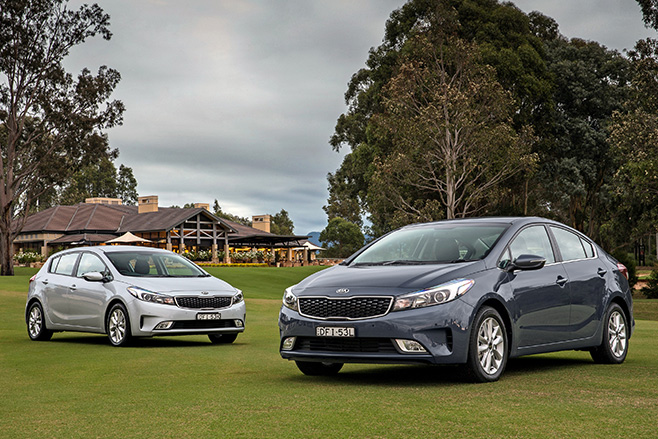
KIA has updated its popular Cerato sedan and hatch ranges, which now sport a fresher look, improved equipment levels and sharper dynamics, while retaining their competitive sub-$20,000 starting price.
Still available across four trim levels (S, S Premium, Si and SLi) and as either a five-door hatch or four-door sedan, the biggest mechanical change is to the Cerato’s engine range, with Kia ditching the old car’s 1.8-litre petrol engine.
Instead, all Kia Cerato models are now offered with a more powerful 112kW/192Nm multi-port injection, 2.0-litre four-cylinder turbo petrol engine that offers improved performance and fuel economy.
Every model in the Cerato range is paired with a six-speed automatic, with only the base S available with the choice of a six-speed manual.
Visually, the most obvious differences for this mid-life update are a more aggressive front bumper that houses a larger Tiger Nose grille, sleeker wrap-around headlights and a deeper front air intake with integrated fog lamps.
Inside, Kia has changed the materials on the doors, dash and seats, and also made small alterations to the centre console and gearstick.
More notable, though, are boosts to equipment levels. Si models now score blind spot detection, lane change assist and a rear cross traffic alert systems as standard, while range-topping SLi models add lane departure warning and forward collision warning, which alerts the driver if a frontal impact is imminent.
Other technical improvements include an updated 7-inch touch screen with sat-nav and reversing camera on S Premium models and above.
Base S models make do with a dated-looking 3.5-inch LCD centre screen, though customers can upgrade to the 7-inch head unit, which is compatible with Android Auto, for $500.
Kia has also tweaked the Cerato’s suspension for Australian roads, with the Korean brand’s local engineers fitting stiffer springs, different suspension bushes and new dampers for better road holding and a more composed ride.
The steering is improved over the existing car too, thanks to an upgraded system that improves the driver’s sense of connection to the front wheels.
Kia is offering sharp drive-away pricing on all Cerato models from launch, plus the option of a free automatic upgrade on the entry-level S model, which Kia expects to be the top selling variant.
| S manual:u00a0 | $19,990 drive away |
| S auto:u00a0 | $22,290 ($19,990 drive-away) |
| S with AV and auto: | $22,790 ($20,490 drive-away) |
| S Premium auto: | $24,990 drive-away |
| Si auto: | $28,990 drive-away |
| SLi auto:u00a0 | $32,490 drive-away |
A ball-joint is a crucial part of the suspension of most cars. It’s a coupling that links two bits of the suspension but allows movement between those two in a variety of directions.
Without this ability, the suspension wouldn’t be able to move freely and couldn’t offer the movement that the wheels require to stay firmly on the ground. Suspension doesn’t just go up and down; it needs to move in many planes to cope with everything from potholes to the stresses applied when you turn a tight corner.
As the name suggests, the ball joint is a ball held inside a cup, allowing that orbital movement that’s required. Think about your human hip joints. They consist of a ball (attached to your femur) moving inside a socket or cup (your pelvis). And cars get arthritic, too: when the ball or the cup wears, there’s excess movement and the whole ball joint needs replacing.
Forced induction front-drive fours (and a five) plus two without turbos and two with all-wheel drive make up our field of so-hot-right-now hatches.
First published in the March 2011 issue of Wheels magazine, Australia’s most experienced and most trusted car magazine since 1953.
I was like a starved circus lion at Sizzler as we were presented with our colourful smorgasbord of hot hatchbacks. See, I’d spent the previous two weeks driving a diesel Triton, and in doing so worked up a healthy appetite for devouring twisty country roads. Now 11 tasty morsels representing the hot-hatch class of 2011 sat in the shimmering haze of a blazing hot Heathcote Raceway, raring to be unleashed.
My eye was in. At St Kilda’s Esplanade Hotel the previous night, writer James Cleary, photographer Chris Benny and I had spied a Sega Rally arcade machine. In a tacit nod to the theme, the Lancia Delta Integrale was the pick over the Celica GT-Four. Interesting how virtual Scando skills improve up to a point- about four pots – before falling off steeply…
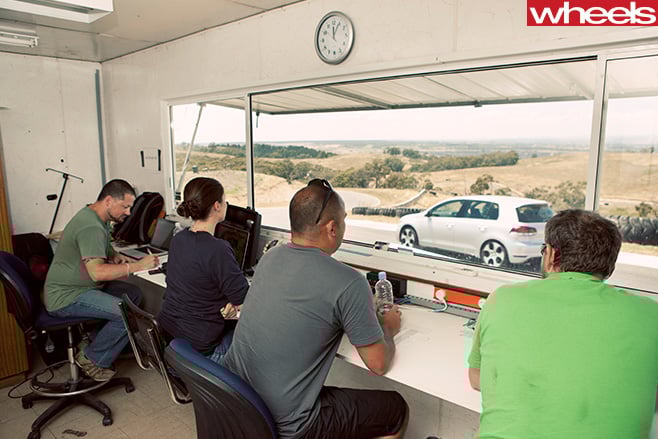
Our 11-strong field would snake cross-country over some of Victoria’s best driver’s roads, from Heathcote Raceway north of Melbourne, to Healesville to its east, before continuing south-east for a finale shootout at the Haunted Hills Hillclimb in the Latrobe Valley.

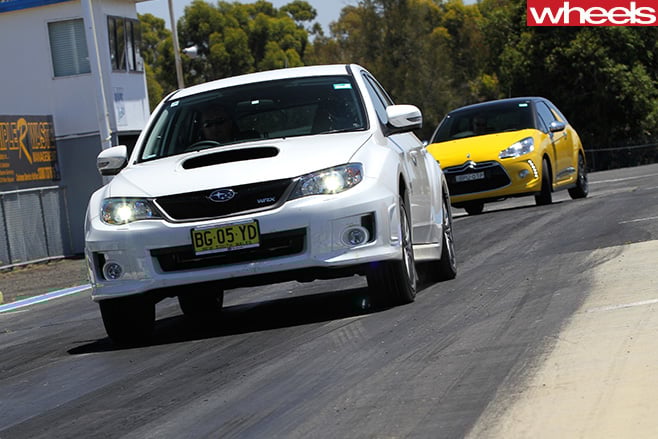
The average of the small starters is $46K. Forty grand, give or take, gets you into the Type R, 3 MPS, WRX and Golf GTI, $46,990 for Megane RS and $48,490 for the Golf R in its least expensive threedoor, manual form (it’s $52,490 for the five-door DSG). Only the $59,990 Focus RS is over the odds.
Audi’s too-new RS3 and Alfa’s Guilietta QV (see p129) will fight another day because the German’s not yet on sale and the Italian was just off the boat.
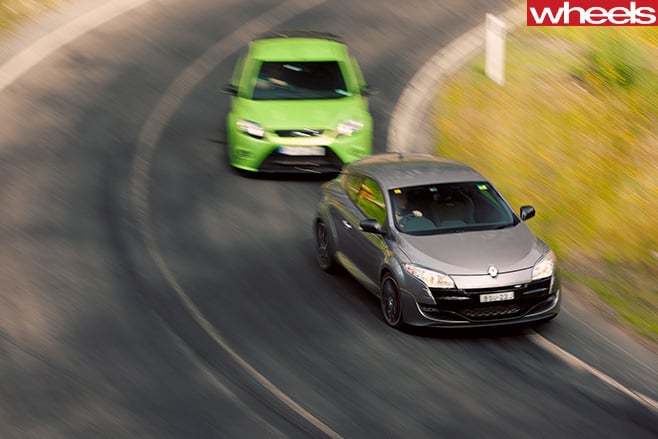
Our road-test crew fell into natural roles. Contributing writer Glenn Butler led the Mexican army, armed with his local knowledge and handy wheel skills. COTY wranglers ‘Disco’ Stu Orford and James ‘Cletus’ Lacey sorted grub and took the piss. Butler’s buddy, Dave McMaster, Brunelli’s mate, Darren Fahey, and father of the Commodore Cup, Maurie Platt all proved top blokes to have around when you need a job done, a car spanked, or a pot drained. Driver trainer, racer, engineer and COTY judge Samantha Reid dissected cars and lap times, even drivers. While Melbourne race driver Sam A bay is the fella you want if you’re after consistently quick driving and ace feedback.
PART 1: YARRA RANGES
Two years on from the Black Saturday bushfires that devastated the region, the landscape surrounding Marysville, in Victoria’s Murrindindi Shire, remains stark. Blackened Mountain Ash stand free of foliage, others with a fuzz of small leaves, making them appear like towering, green pipe cleaners.

“It’s the only one so far that’s stepped out on me unexpectedly,” warned James Cleary of the Mini John Cooper Works. I approached with a degree of caution.
The Mini’s performance is instantly gratifying. Less than a kay down the road, I was convinced. This is the very blueprint for a hot hatch.

Just as the 1275cc Cooper S did 48 years ago, the latest hot Mini stuffs a big engine into a light chassis. Not big in capacity, at 1598cc, but big on grunt, with 155kW and 260Nm (or 280Nm, foot flattened, on overboost) in the lightest chassis here, at a trim 1130kg. Golf GTI grunt, then, in a package 250kg lighter.
The Peugeot 3008 has turned into an SUV for its second generation, bringing more interior space and new cabin and active safety technology.
Peugeot’s new 3008, due in Australia in 2017, moves on from the MPV styling of the original model to capitalise on the relentless demand for sports utility vehicles.
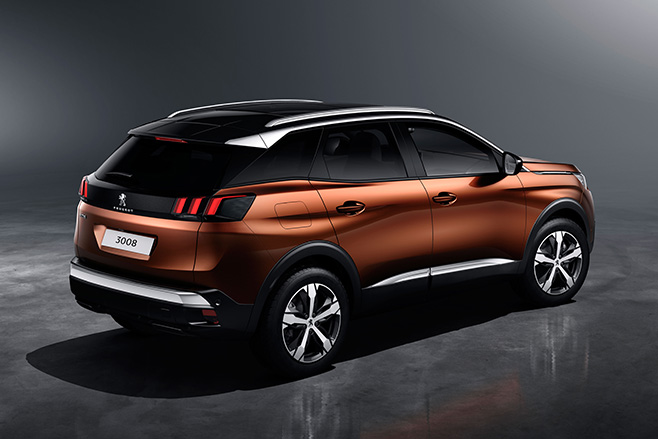
At 8cm longer than before, the 4.45-metre 3008 is now closer in size to the Mazda CX-5 and most of that extra length has gone into the wheelbase to create more legroom.
Width and height are unchanged but Peugeot has still packaged more rear legroom and elbow room into the 3008. Boot space also increases by nearly 90 litres, to 520L.
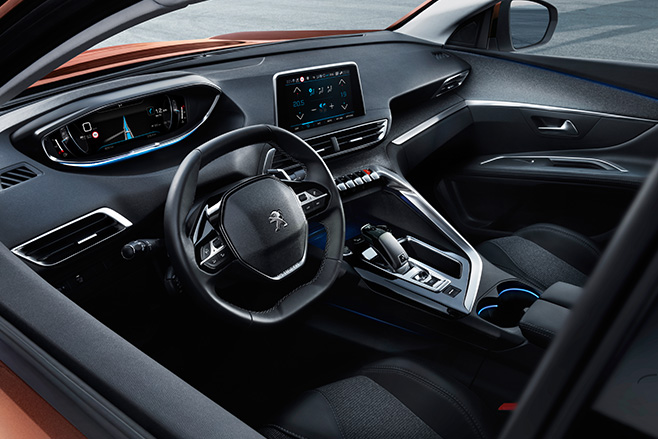
The driver steers the new 3008 with a smaller, flat-topped and -bottomed steering wheel familiar from the 308 hatch with which the SUV shares its platform.
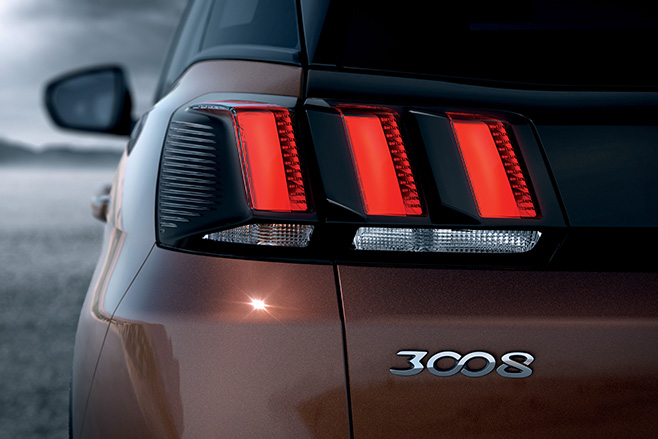
Peugeot also follows the growing trend for digital instrument dials rather than analogue, with a 12.3-inch display that forms the latest version of the company’s ‘i-Cockpit’ concept.
It’s complemented by an 8-inch colour touchscreen that mimics a tablet, which rises out of the centre of the dash, and includes short-cut toggle switches for key features such as navigation, climate and radio. It’s compatible with smartphone integration tech such as Mirrorlink, Apple Carplay and Android Auto.
Driver aids available on the 2017 Peugeot 3008 include autonomous emergency braking, fatigue alert, road sign recognition, 360-degree vision, blind-spot monitoring, lane departure warning, and semi-automatic parking.
Advanced Grip Control allows the driver to match vehicle settings to specific terrain via a centre console knob with Normal, Snow, Mud, Sand and ESP (electronic stability control) Off modes.
Engine choices announced for Europe but not yet confirmed for Australia include a 1.2-litre three-cylinder petrol, 1.6-litre four-cylinder turbo petrol, 1.6-litre turbo diesel, and 2.0-litre turbo diesel.
IT’S the end of the line for one of the world’s longest continuously manufactured vehicles, the Land Rover Defender. And the 68 year-old British icon, father of all 4x4s, and arguably the original SUV, has bowed out in true style.
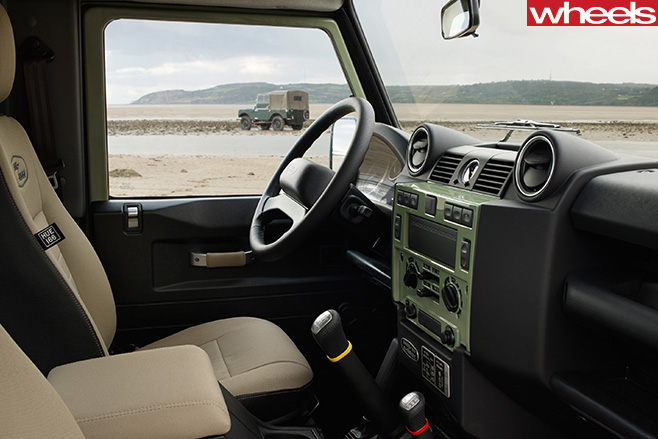
WHAT IS IT? One of 2654 produced globally, the Heritage celebrates the first Land Rover (released in 1948) and is painted in period Grasmere Green with a contrasting white roof, and fitted with steel wheels, an original-style grille, ‘HUE 166’ stickers (denoting the first registered prototype’s UK number plates), and has few creature comforts inside.
WHY WE’RE TESTING IT The Defender is the daddy of all 4x4s, influencing and changing the automotive industry as surely as it has forged new paths around the world for seven decades. This is the very last Land Rover Defender and only 47 will be imported into Australia. All are accounted for, so here’s our very final say on the new Defender.
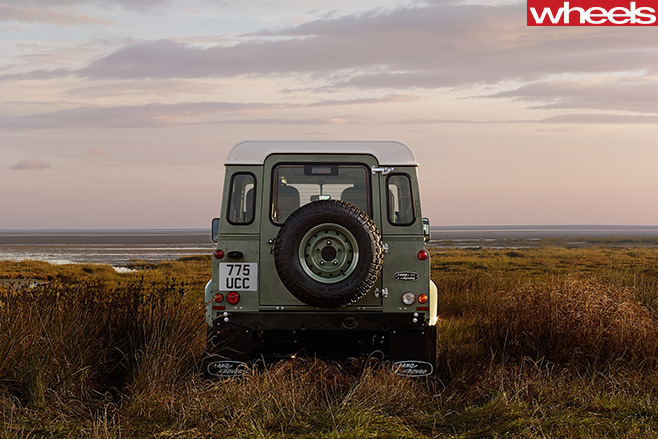
THE WHEELS VERDICT Land Rover has given the Defender a most elegant and dignified send-off and in Heritage 90 guise, its beautiful green/white paint work, steel wheels, and period grille detailing are an unashamed sop to the past. Yet, the four-seater cabin remains a surprisingly functional and charming place to be in – if you don’t mind the occasionally sharp ride, loud powertrain, massive turning circle, gymnasium-level heavy gearshift, and complete disregard for modern safety gear like airbags. Everybody knows a Land Rover can go anywhere and still be manageable, if somewhat cumbersome on road, but that’s no longer the point. This is the end, a one of a kind, and the Defender will be consigned to history. What a fine farewell.
PLUS: True original, fit-for-purpose 4×4, compact, tough, and always super-cool MINUS: Loud, bumpy ride, cumbersome on road, heavy gearshift, cramped and noisy cabin
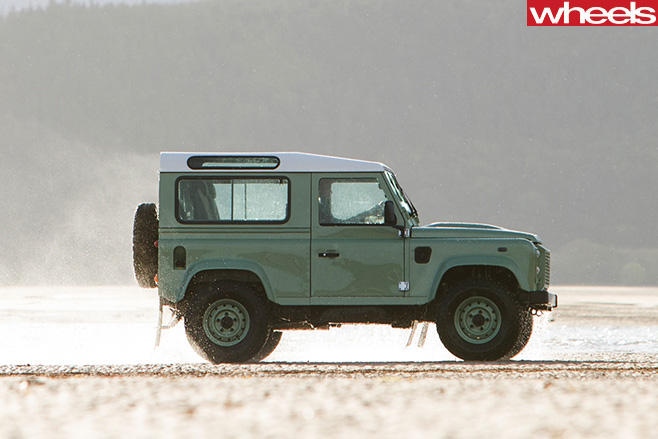
Inspired by the WWII Jeep, the Land Rover was created in 1947 after Rover car company engineering director, Maurice Wilks, drew an outline of a proposed light tractor that could double as an off-roader in the sand and showed it to his brother, Rover managing director, Spencer Wilks. Today, the go-anywhere 4×4 workhorse is as much a British motoring thoroughbred as the Austin Mini and Jaguar E-Type.
But now the Defender is dead. Tougher emissions and safety standards finally killed it off in January. As the last of its type, the Heritage is a celebration of an extraordinary 68 years of production, mixing “nostalgic design cues with modern creature comforts,” according to Land Rover. Hence the retro colour scheme (Grasmere Green with contrasting white roof), silver bumpers, old-school headlight surrounds and grille, painted steelies, HUE-166 number plate graphics (denoting the prototype’s UK numberplates), aluminium trim, and beige cloth/vinyl upholstery.
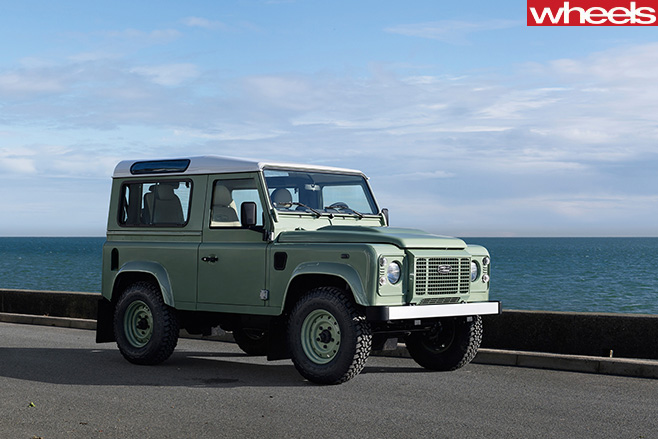
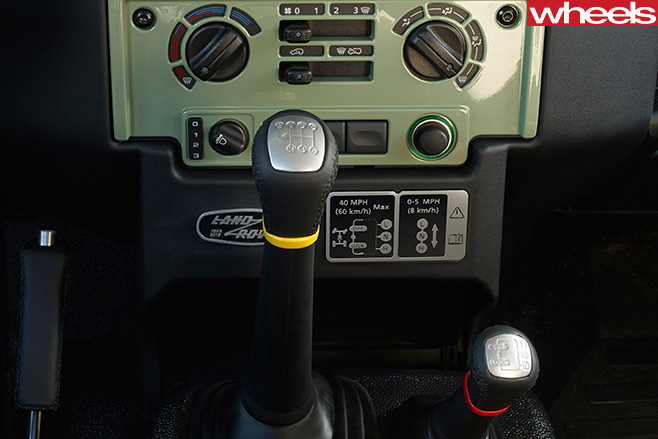
The flipside, of course, is ancient packaging. The narrow body means very little elbow room. The Leyland-era switchgear is scattered across the dash, seat adjustment is rudimentary at best, airbags are non-existent, and engine and road noise are intrusive. The cumbersome steering, hefty gear change and heavy clutch need to be manhandled, but that’s okay. It’s a lot like driving a recently (and expensively) restored classic.
Additionally, the lofty ‘side-saddle’ forward-folding twin rear seats are ultra cool, particularly as they can only be accessed via the menacing swinging tailgate (don’t let it slam shut on an incline). And those skylights are like nothing else.
SPECS Model: Land Rover Defender Heritage Engine: 2198cc 4-cyl, dohc, 16v turbo diesel Max power: 90kW @ 3500rpm Max torque: 360Nm @ 2000rpm Transmission: 6-speed manual Weight: 1902kg 0-100km/h: 15.8sec Fuel economy: 10L/100km Price: $54,990 On sale: sold out
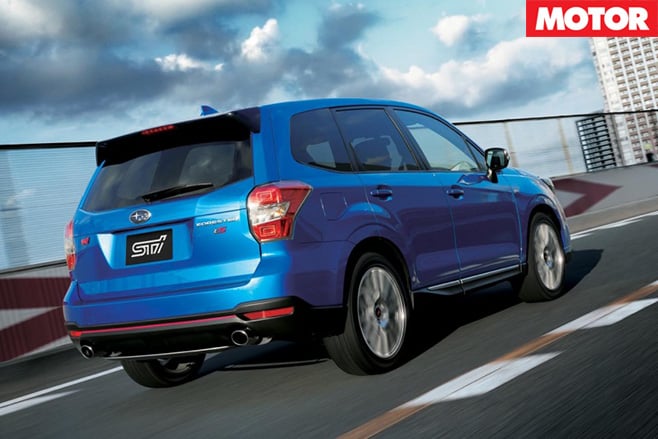
Subaru’s rubber stamped final specification for a hot Forester ‘STI’ which will go on-sale here next month for $54,990.
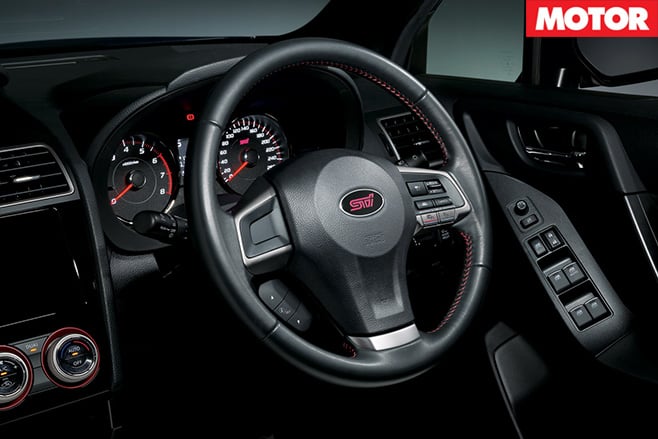
Perched above the current range-topping turbo XT, the limited run Forester tS is claimed to wear $12K worth of extra Subaru Tecnica International goodies at only a $7K premium, gifting buyers bigger brakes, tuned suspension, and a plethora of styling enhancements.
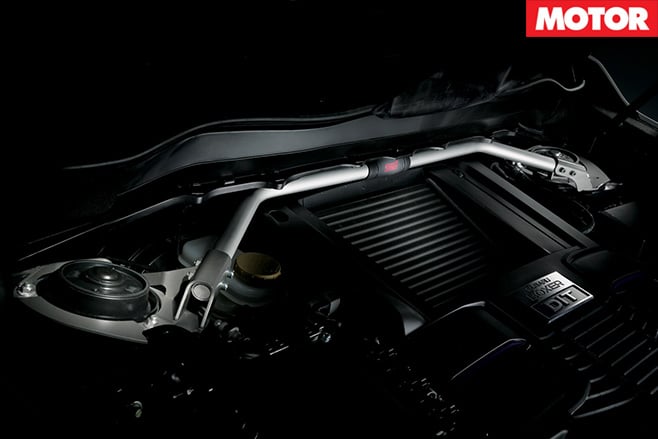
Elsewhere ‘flexible draw stiffeners’ team up with a flexible front strut bar, while new bushings have been plugged into the front stabiliser and rear subframe, which features an upgraded support.
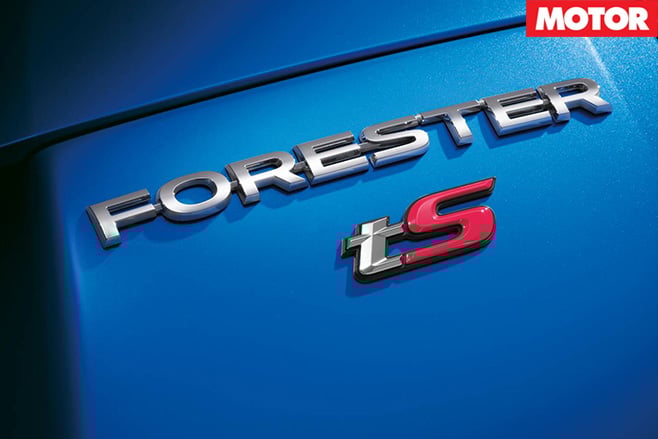
Being a ‘tS’ variant, which stands for ‘tuned by STI’, rather than a fully-fledged STI model, the drivetrain’s been left in XT guise where a 177kW/350Nm turbo 2.0-litre boxer is married to a CVT transmission. However it’s only been given an extra four kilograms to lug, so expect its 0-100km/h time of 7.0sec to be unchanged.
Australia’s the only market outside of Japan to receive the tuned soft-roader, but Nick Senior, Subaru Oz’s managing director, admits there’s been enough interest it should’ve ordered more than the 300 set to fill showroom floors.
Here’s to hoping.
