
KIA will launch a rear-wheel drive, BMW 3 Series-fighting sports sedan in Australia next year, powered by a twin-turbo V6 engine and priced from $40,000.
Wheels has learned the new model, code named CK internally, could arrive locally as early as July 2017 and will boast styling taken from Kia’s well-received GT4 Stinger and four-door GT concept cars.
The model will also feature engineering input from former BMW bigwig Albert Biermann, who headed up the German company’s M Division before being poached to Korea.
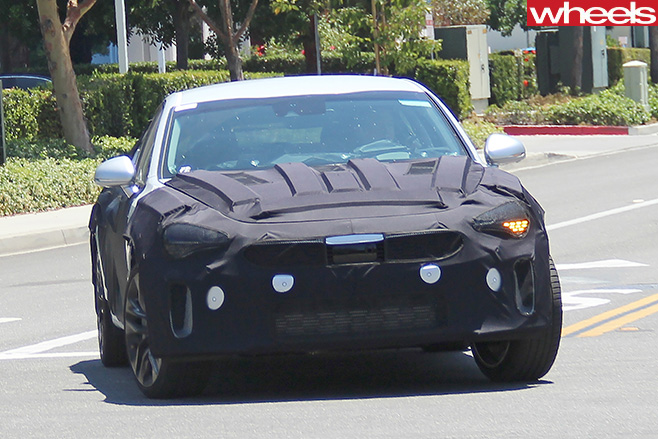
Kia Australia is eager to run a two-tier range of the new four-door sports sedan, with pricing expected to start at around $40,000.
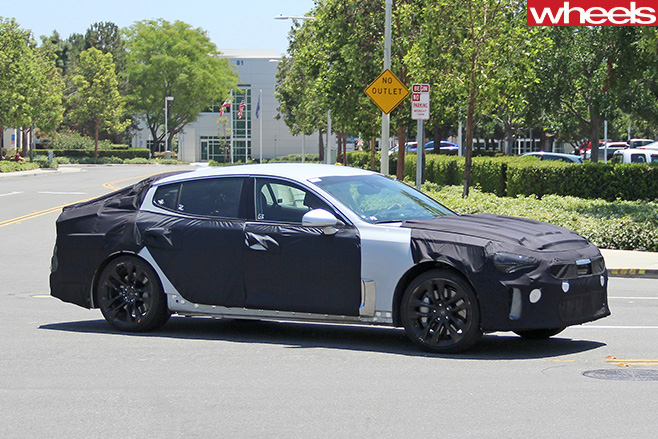
“Engines are yet to be decided, but our strategy shows those two entry points are where we need to be,” said Kia’s chief operating officer Damien Meredith. “We’ll get one in around the $40K mark and one around the $50K mark.”
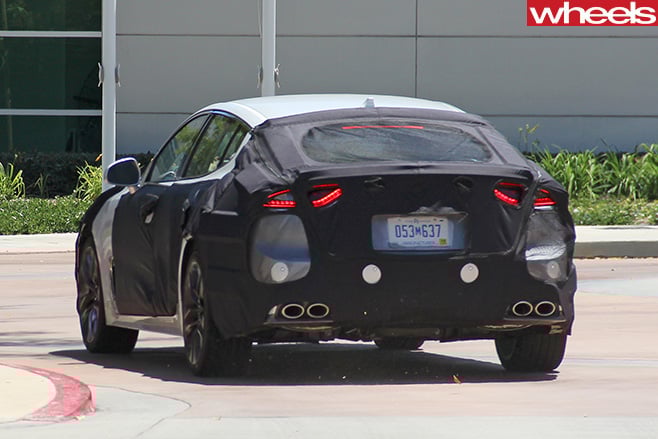
“We’ll probably launch in the second half of next year, it makes sense for us to launch cars at the Australia Open,” Meredith said. “If it comes earlier then we’ll launch, but I think for a vehicle like that it’d be great to launch it at the 2018 Australian Open, it’d get a fair bit of traction there.”
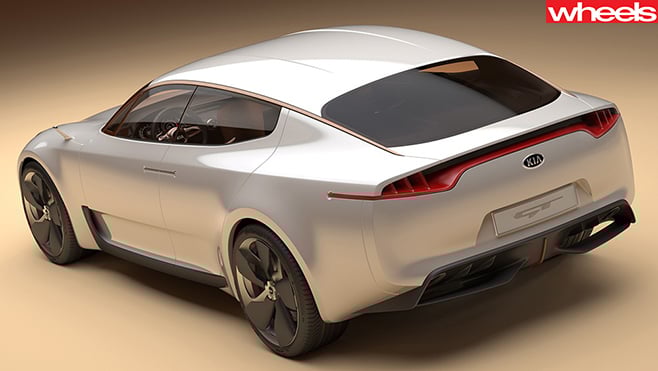
“I’ve been fortunate enough to see it and I think an amalgam of the two is closer to the design cues,” he said. “It’s very exciting.”
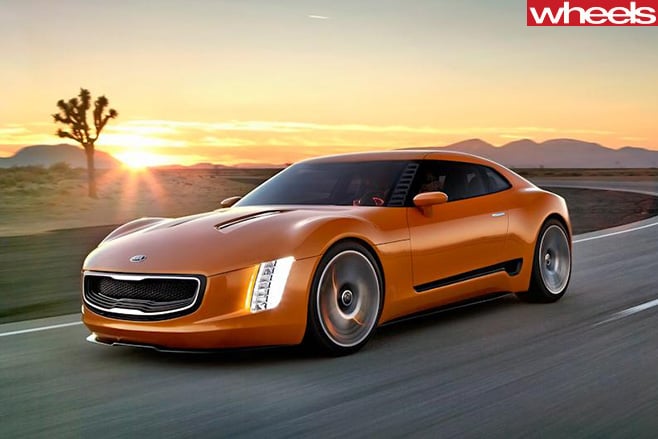
The new rear-driven model could become an affordable, smaller alternative to the soon-to-die Falcon and Commodore. Performance should be on par with the outgoing sedans, and its expected price tag is squarely within the same bracket.
Toyota is celebrating the sale of its nine-millionth hybrid vehicle, putting it firmly in the number one spot for part-electric cars worldwide.
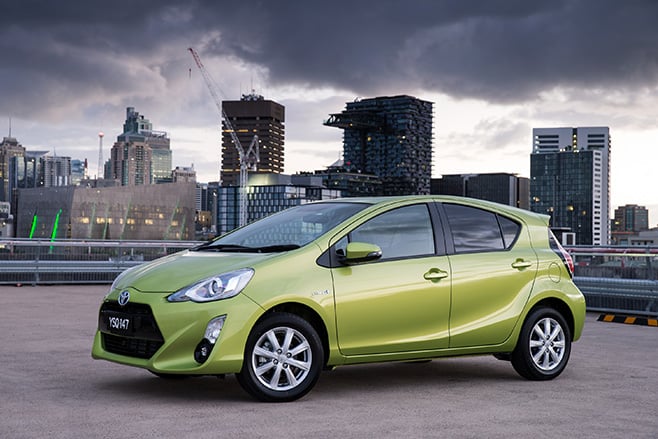
Prius has long been the best-selling hybrid vehicle on the planet. It accounts for 3.7 million, or 41%, of Toyota’s total sales figure. Prius C makes up 1.25 million, followed by Prius V at 634,000 and Camry Hybrid with 574,000.
Australian buyers buck the trend, preferring the locally built Camry Hybrid over all models in the Prius family.
Toyota has sold 85,824 hybrid vehicles in Australia: 37,879 Camrys and 30,544 Prius models, including Prius C and Prius V. Lexus hybrids make up the remaining 17,401 sales.
According to Toyota its hybrid vehicles, sold in more than 90 markets, have saved 25 billion litres of petrol – an average of 2,770 litres per car. That equates to 67 million tonnes of carbon dioxide saved.
The Japanese manufacturer’s first electrified vehicle was the Toyota Prius, which originally entered the market in 1997. It took Toyota 10 years to sell its first million hybrid vehicles with rapid growth from that point. More than one million Toyota hybrids have sold per year since 2009.
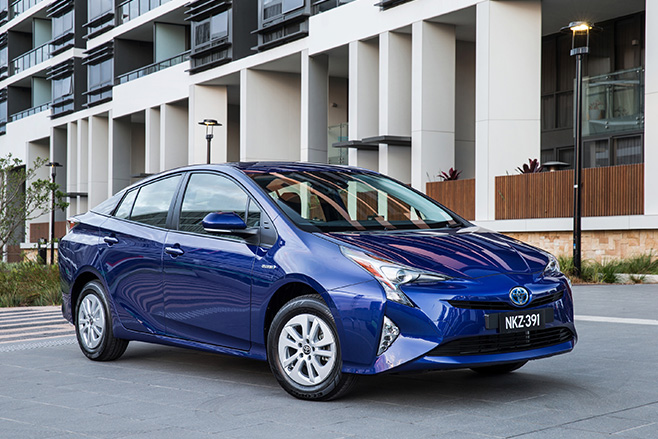
“Toyota’s hybrid vehicles are renowned for their performance, reliability, durability and exceptionally low running costs,” says Tony Cramb, executive director of Toyota Australia.
Toyota Australia is preparing to release a Corolla Hybrid around the middle of this year. It will be an upmarket version within the Corolla range, adding another string to the bow of the country’s best-selling vehicle.
Local manufacture of Camry Hybrid will end next year, eight years after it first rolled off the Altona production line in 2009.
Porsche is readying a fresh assault on the super-limo segment, with an all-new Panamera set to debut at the Paris Motor Show in October.
Built on Porsche’s Modular Standard Platform (MSB), Panamera ‘G2’ will debut new engines and promises a massive lift in both dynamic ability and technology for Porsche’s executive express.
A full range of variants will be available, but of most interest to MOTOR folk will be the range-topping Turbo and 4S performance petrol and diesel models.
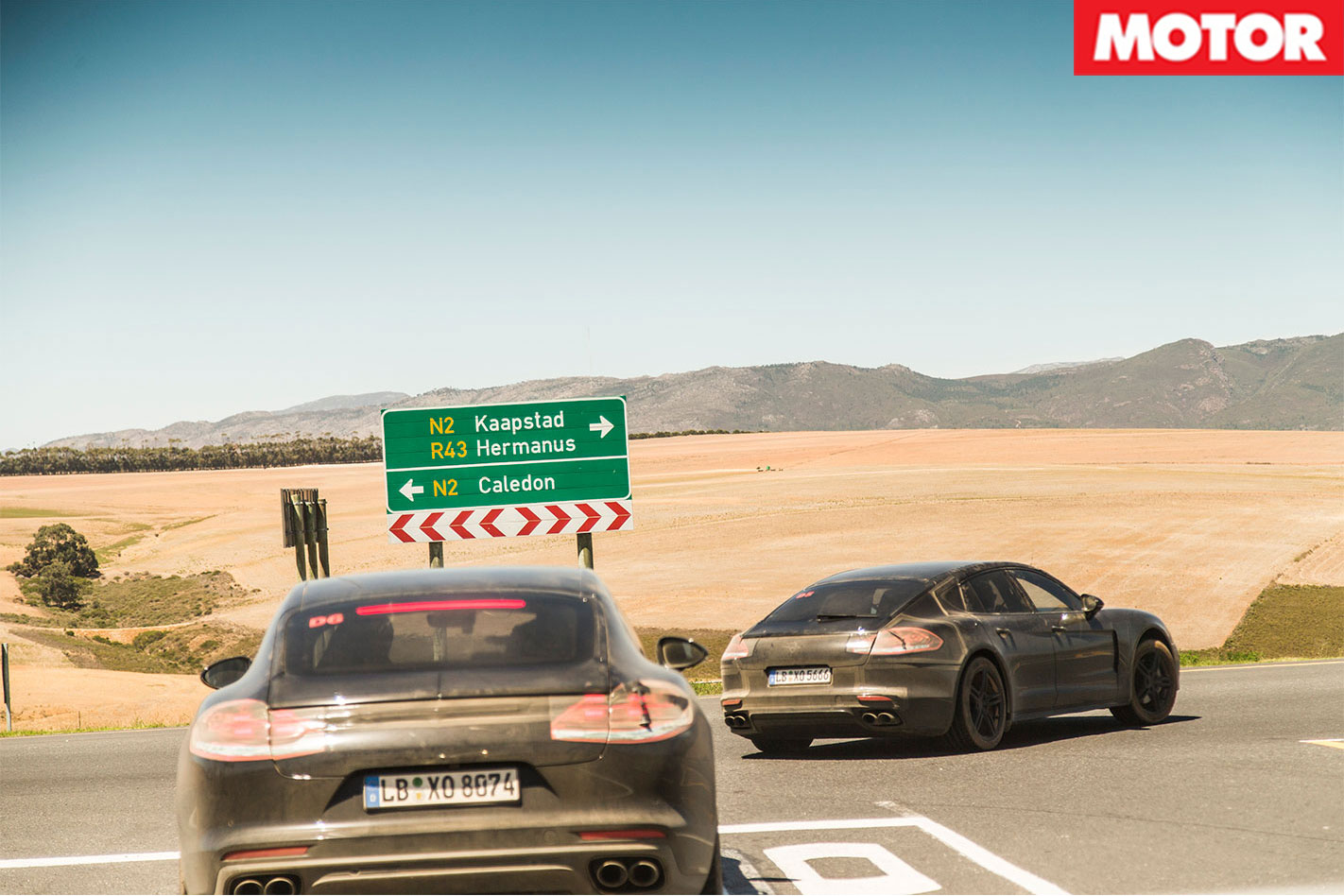
Its 4S petrol sibling utilises a 327kW/570Nm 3.0-litre twin-turbo V6 adopted from Audi, while the big daddy Turbo debuts Porsche’s new 4.0-litre twin-turbo V8 that thumps out 405kW/769Nm and allows this near-two-tonne behemoth to hit 100km/h in just 3.7sec.
Not enough? You’ll want the 441kW Turbo S, which drops the benchmark sprint time to a supercar-hunting 3.5sec.
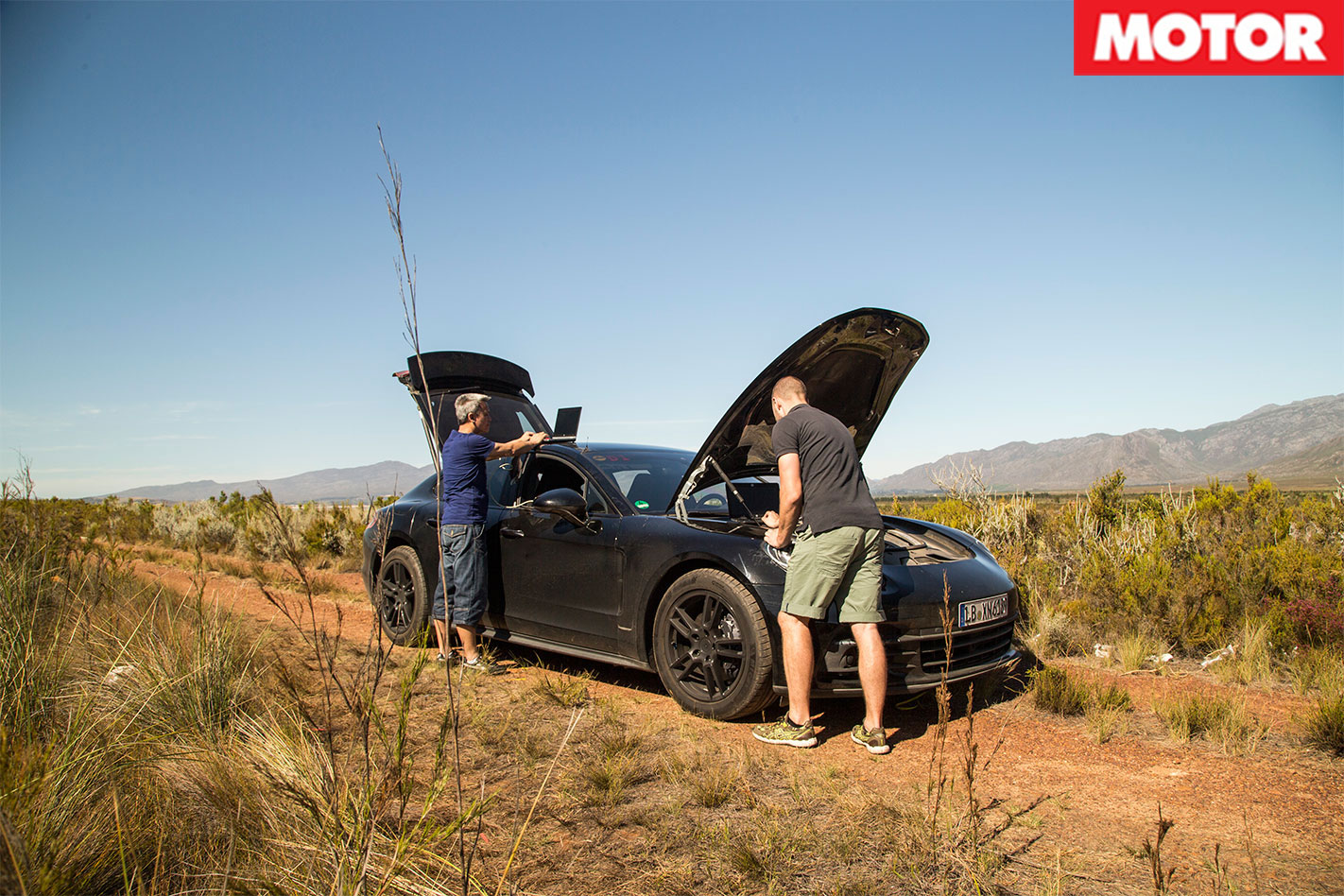
Further improvements to both performance and efficiency come courtesy of Porsche’s new MSB platform, which will also underpin the next-generation Bentley Continental.
Body stiffness is claimed to have increased by 50 per cent while up to 100kg has been saved. Porsche is promising a level of dynamic ability that will take the Panamera far beyond its Mercedes-AMG S63 and Audi S8 plus opposition into the realm of Ferrari’s GTC4 Lusso.

Engine, gearbox and chassis settings can all be controlled via the steering-wheel mounted drive mode selector, and the steering is now electrically-assisted due to the need to incorporate myriad driver assistance systems.
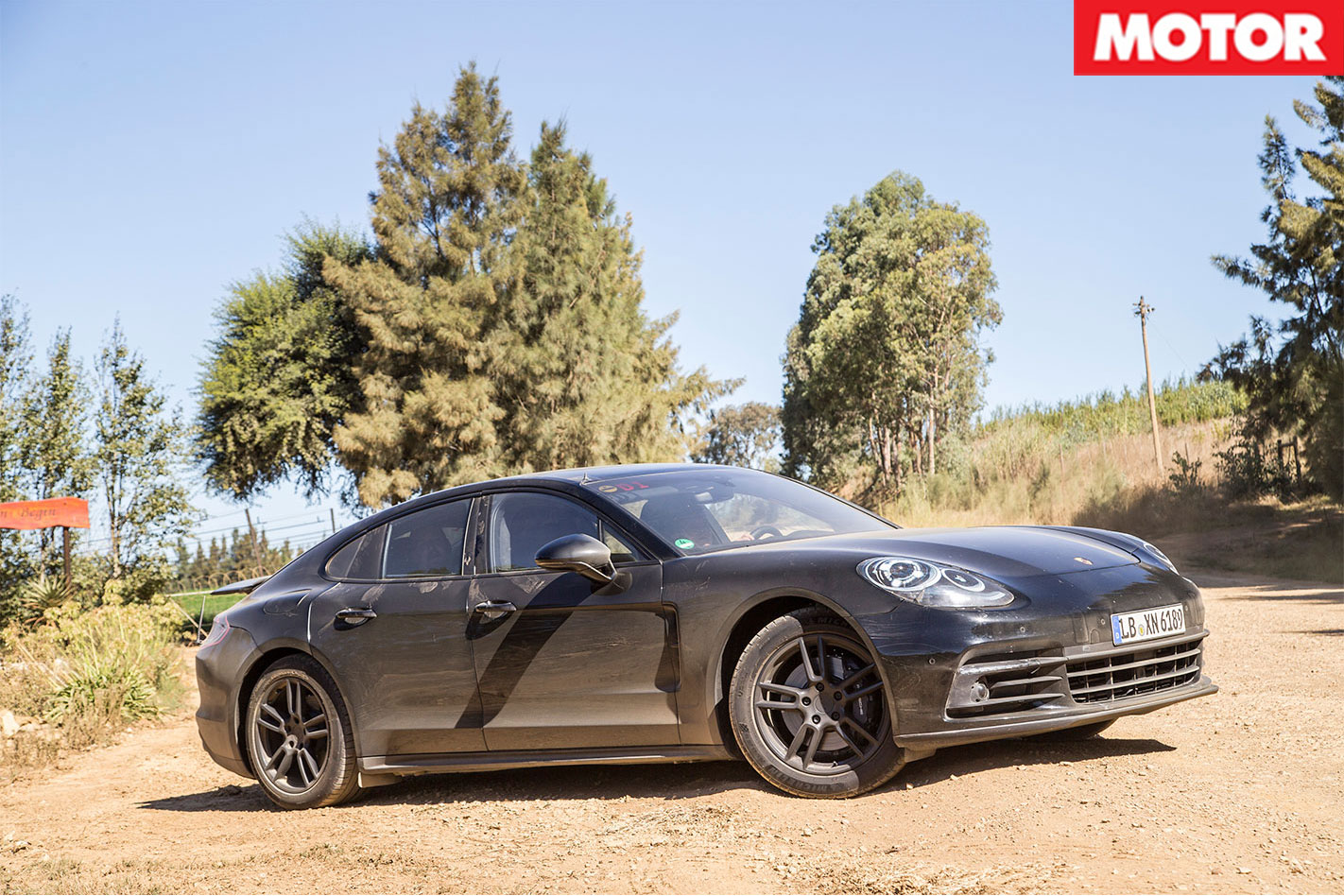
Best described as a supplementary electronic brain, InnoDrive monitors traffic in every direction, can recognise pedestrians and has the ability to drive semi-autonomously.
The tech-fest continues inside with the current Panamera’s aircraft-style button-fest centre console replaced by a 12-inch infotainment touchscreen, with frequently-used secondary controls accessed via another touchscreen surrounding the gear selector.
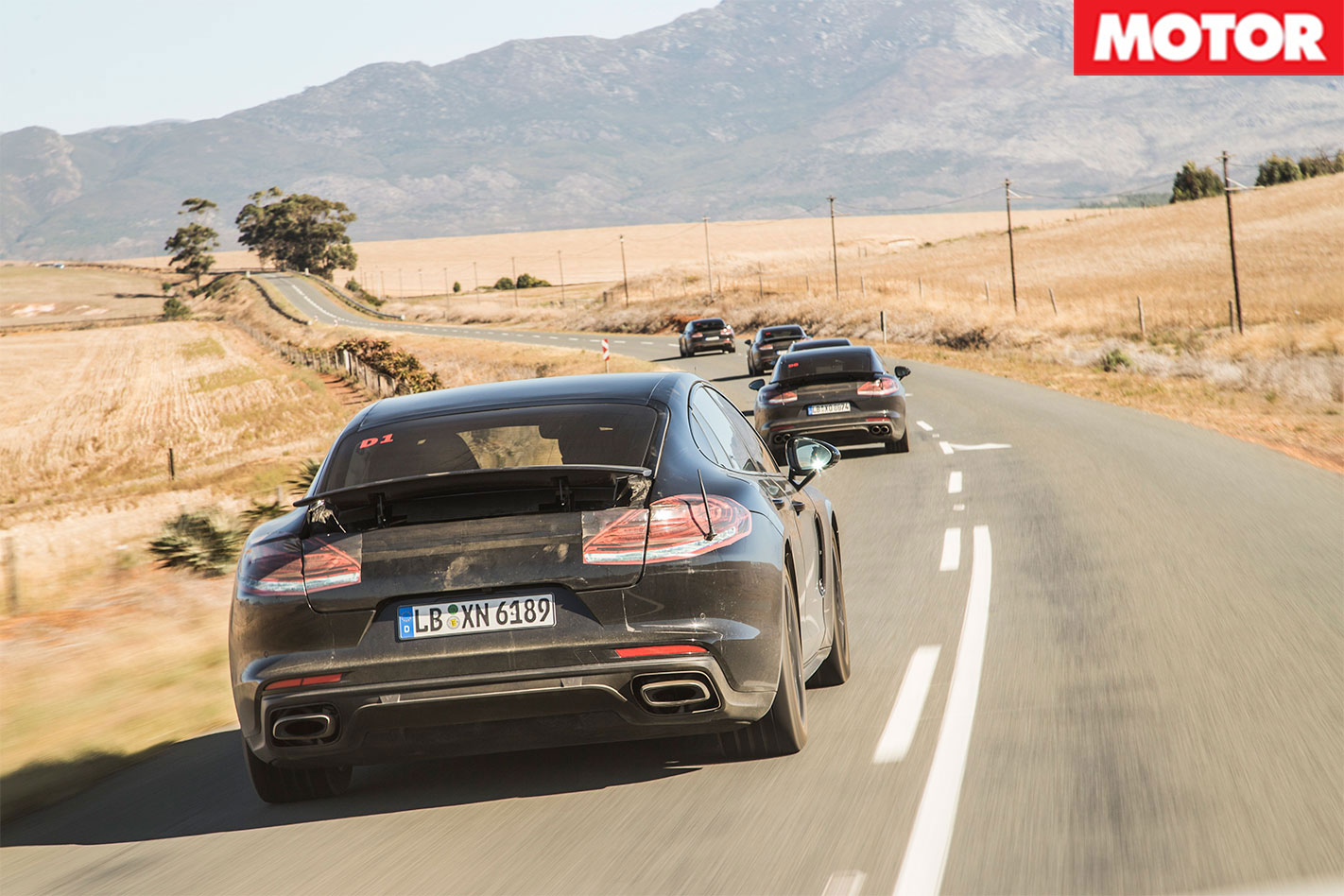
Thankfully, the first Panamera’s most polarising feature – its styling – has been vastly improved for G2. Heavily influenced by the Panamera Sport Turismo Concept from the 2012 Paris Motor Show, the result is more sleek coupe/sedan and less humpback whale on wheels. A wagon variant, slated for 2019, is arguably even better looking.
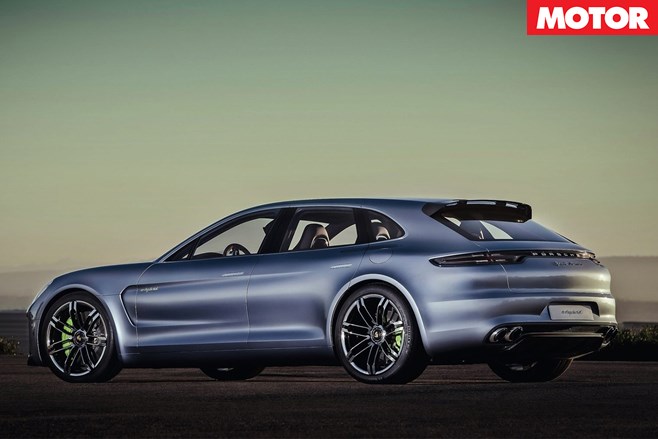
Expect prices to rise across the board, starting at just over $300,000 for the 4S and running to $400,000 for the Turbo, with a late-2017 arrival a pretty safe bet.
The Z brand is in trouble.
The 370Z will blow out seven birthday candles this year and the only hint of a replacement has been the lacklustre Gripz Concept, a hybrid crossover designed to appeal to a younger generation – Yutaka Katayama, the architect of the Z brand’s success, would turn in his grave (he died in February 2015).
Drastic action is required, and there’s no better place to find inspiration than the car that made the brand a legend in the first place, the 240Z. You might remember the 997-series Porsche 911 Sport Classic of 2010 that followed a very similar theme, applying retro design touches to modern mechanicals.
Nissan has prior form here, too. In 1996, as the 300ZX entered its twilight years, Nissan America restored a bunch of 240Zs to factory specification and sold them through dealers to remind everybody of its sports car heritage.
Our limited-edition retro Z would achieve much the same outcome, with the added benefit of a much lower entry price courtesy of the relatively mild modifications.
And what would we call it? That’s easy, the Nissan 370Z Classic.
Here’s how we’d do it
1. Easy does it Without the need to reinvent its performance, the Classic would score the uprated 3.7-litre V6 found in the NISMO 370Z. Outputs creep up from 245kW/363Nm to 261kW/375Nm fed through a six-speed manual only. A freer-flowing airbox and exhaust gives the sometimes gruff VQ37 the vocal chops it deserves.
2. Body building Key to the car’s appeal would be its retro body mods, including pop rivet-style wheelarch extensions, carbon aero mirrors and ducktail spoiler, jutting front lip and, of course, a full 1970s colour palette, including orange, green, red and, yes, brown.
3. Stance off Two wheel/tyre options to choose from: deep-dish Watanabe-style rims measuring 17 x 9.0 (front) and 17 x 9.5-inch (rear) and wearing Yokohama Advan Sport rubber; or lightweight Rays wheels of the same size wrapped in sticky Bridgetsone Potenza RE11S tyres for the track day enthusiast.
4. Inside story In keeping with the back to basics theme, there’s little in the way of luxury in a 370Z Classic. Then again, the standard 370Z isn’t exactly overendowed with toys in the first place. Material quality improves, however, with leather-bound, hip-hugging Recaro seats and an Alcantara-wrapped steering wheel.
5. Your shift Nissan has cut a fair chunk out of the 370Z’s price over the years, which gives us room to move with the Classic. Limit the build number to, say, 1000 worldwide and we reckon you could slap a $70,000 price tag on it without too much difficulty.
American company, Local Motors has unveiled ‘The Strati’, a 3D-printed car equipped with autonomous vehicle technology.
A collaborative effort with global technology company, NXP Semiconductors, the concept was unveiled at NXP’s FTF Tech Forum in Austin, Texas, as an example of “advancing next-gen car technology,” and is purportedly the first road-ready 3D printed car. Developed in 2014, the futuristic concept has already hit the road for test drives.
The Strati includes NXP technologies like its BlueBox platform, an advanced driver assistance and self-driving processor that uses sensors and cameras on the vehicle to analyse its surroundings. According to Local Motors, these technologies can see “various risks before they are visible to the human eye.”
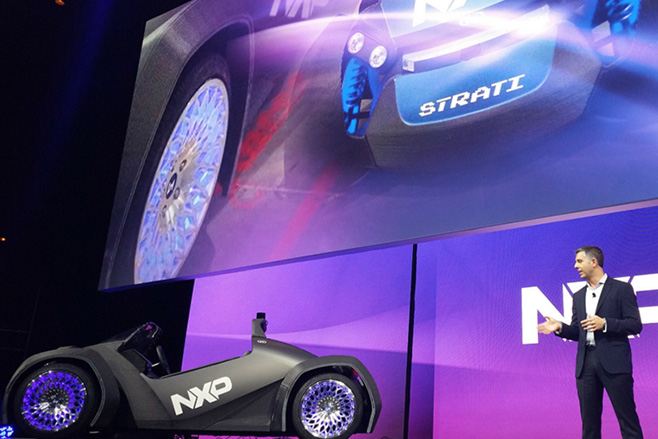
While NXP provided the autonomous technology, Local Motors built the car using its ultra-quick 3D printing process.
“Local Motors’ 3D printing process provides flexibility in car manufacturing that enabled the build and delivery of the vehicle used at FTF in Austin in less than three days,” said NXP’s Automotive Microcontrollers and Processors President and General Manager, Matt Johnson.
This isn’t the first time we’ve seen these technologies and autonomous cars are already taking to the roads. Tesla, Volvo, BMW and Mercedes-Benz are introducing the hands-free approach, which will become more common in coming years.
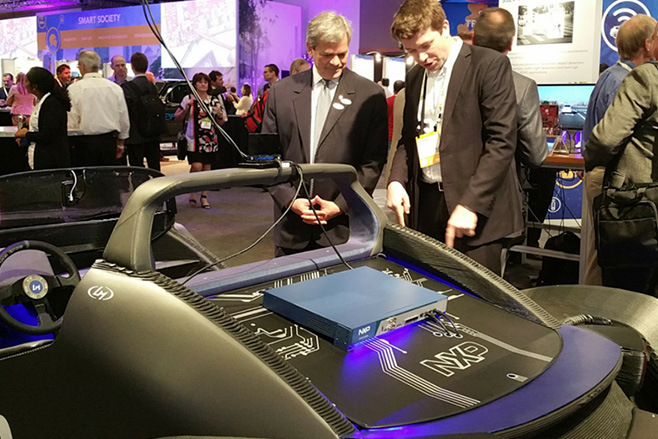
However, automotive 3D printing is less conventional. It exists now, but in the shadows, waiting for its moment in the sun.
At this year’s Geneva Motor Show, EDAG released a lightweight, autonomous 3D-printed car called Soulmate, which followed on from its 2015 Light Cocoon.
Manufacturers are already using 3D printing technologies to offer clients customisable options, such as Toyota’s i-Road, or have released information on future model plans, like Ford has with its F150-Raptor.
The unique Strati will be displayed at several shows throughout the year and kept on display at the Local Motors headquarters so the team can continue its development.
1. While the Fiat 500X takes its name from the tiny Cinquecento (Italian for 500) range, the only similarity is the styling cues from the popular hatch. Actually, it’s more closely aligned to the Fiat Punto.
2. The 500X is based on the Jeep Renegade. They may look different, but appearances are only skin deep. Below the surface, their mechanical specification is the same, with the exception of the Renegade’s off-road suspension.
3. Considering the Fiat 500 range prides itself on its ‘bambino’ size, the 500X is considerably larger measuring in at 4.2m long , with boot space of 350L. That’s bigger than some of its competitors.
4. The 500X received a four-star Euro NCAP rating, but has yet to be given a star rating under Australian ANCAP testing.
5. The 500X is one of three four-doors released by Fiat, and follows the Grande Punto and 500L.
6. Fiat’s big baby SUV is one of the more uniquely styled cars in this segment, and certainly doesn’t play it safe when it comes to design. But then again, beauty is in the eye of the beholder.
Click here to read our review on the Fiat 500X.
See, it’s some kind of wonder that the sports coupé hasn’t, over the years, been honed by successive trends to arrive at a homogenous design that all manufacturers strive to attain.
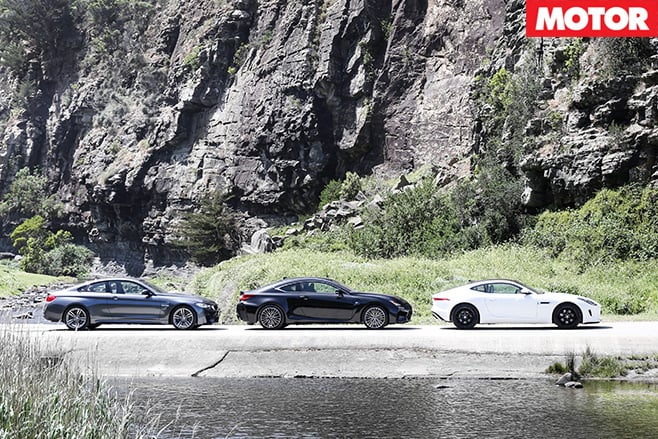
But when you line these three up, it’s clear that this has never happened. They look different from each other, they’re all powered differently and each one has different strengths and weaknesses. Yet they’re all vying for the same dollar. Clearly, here is proof of the concept that money buys you choices. Either way, there’s a lot to take in here.
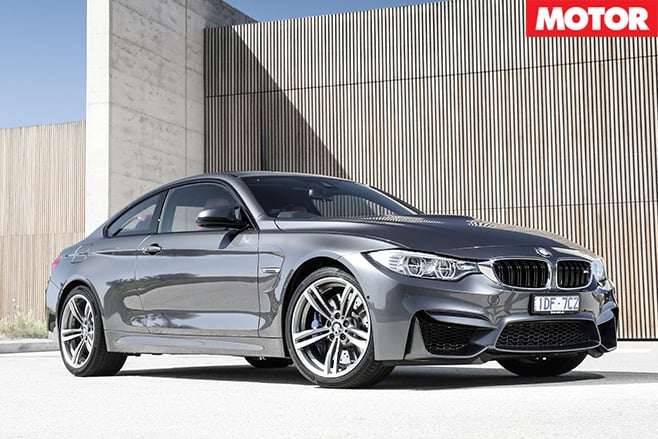
Take, for instance, the BMW M4. The hottest 4-Series has been given what BMW calls a life-cycle impulse. That’s facelift to you and me. The big change has been to slice thousands out of the price to avoid the M4 and the new M5 Pure getting their feet tangled on the dance floor. With a 317kW twin-turbo straight six and a seven-speed DCT, the M4 represents a modern approach with that in-line engine as a nod to its past. And the new $149,900 price tag will attract attention.
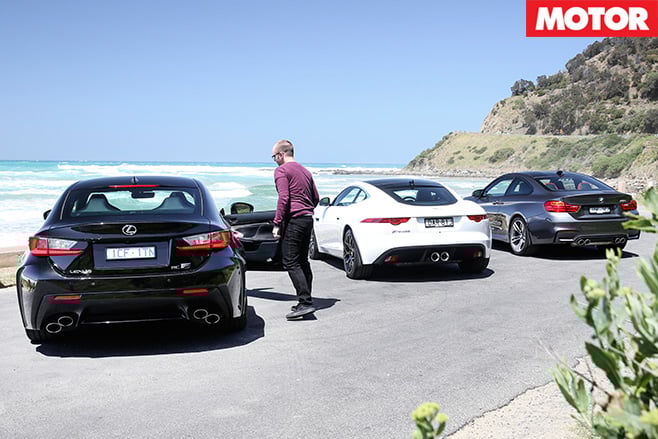
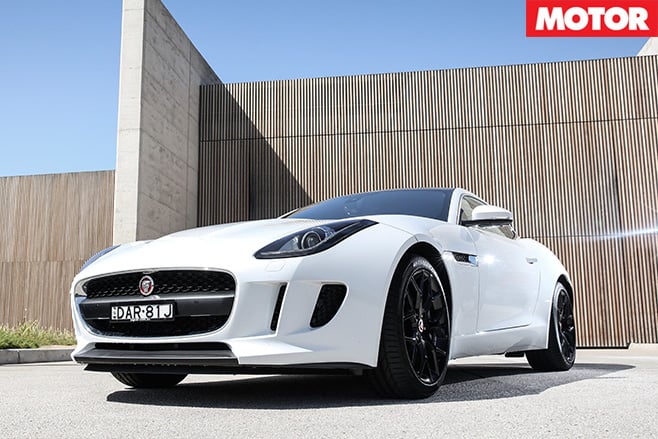
And then there’s the wild card of sorts – the Jaguar F-Type Coupe V6 S. With a supercharged V6 good for 280kW, it’s a few rungs down the horsepower ladder in this trio, and its $151,380 ask – before you add any fruit – doesn’t do it any favours either. It’s also the only one here that is not the top-flight version of its breed, with the supercharged V8 F-Type R casting a big shadow over the V6. Hmm…
While the F-Type might draw on the E-Type for external inspiration, inside it’s a different story. But if it isn’t ye olde worlde drawing room stuff, it’s still nicely executed with everything pretty much where you’d expect it. The electric park brake grates (for me, anyway) and in some ways is even worse than the foot-operated example in the Lexus. Only the BMW gets it right with a conventional hand brake.
The BMW is, in contrast, vastly more complicated. There are three small buttons by the gear selector for the choosing the throttle rate, damper firmness and steering weight. Then there’s another button nearby that controls shift aggression, and all have three settings to choose from.
And then you have a pair of M buttons on the steering wheel, both of which can be configured through the on-board menu system to make a one-touch version of all those other buttons. Seems like doubling up a bit to me, but anyway.
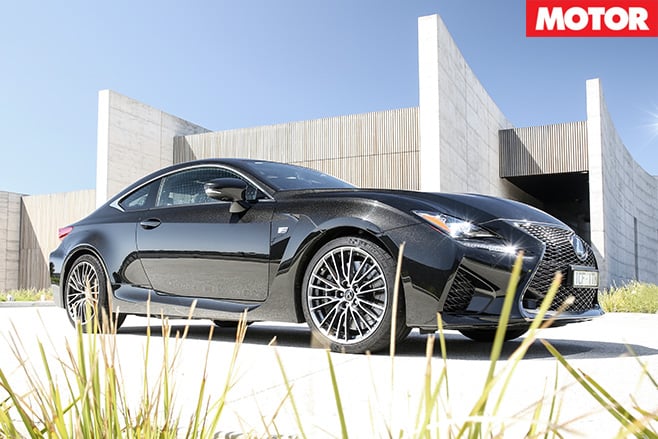
fake carbonfibre trim is equally naff, but at least the M4’s dashboard looks like it was designed in one go. Not so the RC F’s layout, which is more all over the place with different levels and sticky-outy bits for no apparent reason.
The Lexus does, however, have the pick of the chairs with great support and comfort (and they even look good). Not that the others are less than comfy, but the RC F’s seemed to fit me better although the rest of the cabin is a bit tight on headroom with the sunroof fitted.
And let’s not forget that the F-Type is the only strictly two-seater here, although the Lexus rear pew is going to be used for soft luggage more often than not. It’s a shame the Jag can’t pull this trick off because luggage space in the Jaguar’s hatch is tiny. Pack light, lovers.
All of which makes the BMW the logical, practical alternative here. Not only is luggage space good, the rear seat is actually useable. It’s a four-seater in the real world, not just in the brochure. Add the fact that the more upright glasshouse makes for a far better view in every direction and you have yourself a sensible sportster. It’s even easier to get in and out of.
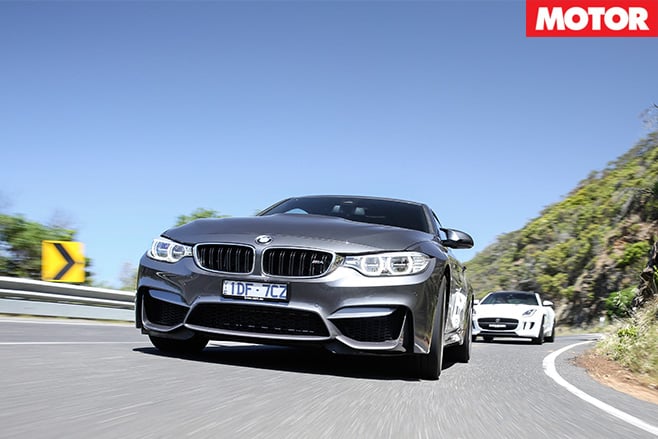
Those turbos make it very mid-rangey, and from 80-120km/h takes just 2.37sec. And it’s worth remembering that those numbers were all done without the use of BMW’s launch-control.
Why? Because it’s rubbish, that’s why. Oh, the M4 is not alone in that boat – plenty of other big-power rear-drivers have useless launch systems – but the BeeEm’s is up there with the silliest of them. Even using the cruise control buttons to lower the launch revs makes no difference: The tyres unhook almost immediately and the engine boings into the limiter and sits there.
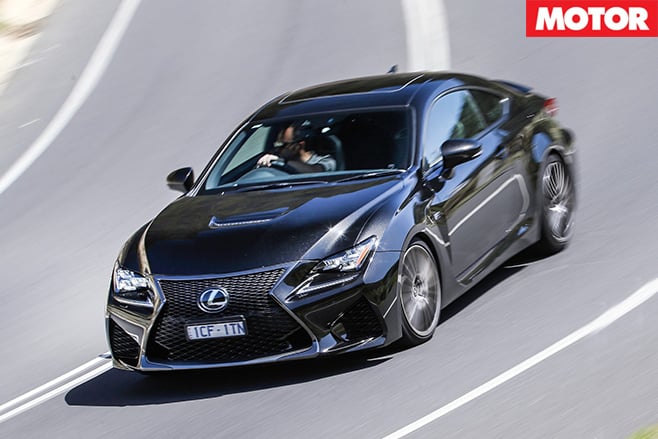
The Lexus was next quickest and a good chunk back with a 13.25sec at 177.8km/h and a 0-100 time of just a tenth over five seconds neat. It also managed to get from 80 to 120km/h in under three seconds. What was a bit surprising was how consistent it was with the traction control turned off. Okay, so it’s an auto, but it ran 13.2, 13.2 and 13.2, time and time again. And when you consider how damn heavy the Lexus is (plenty, trust us) that’s even more impressive.
Based on the kilowatts the Jaguar gives away to the other two, it’s no surprise that it was slower. But the manual gearbox also plays against it on the dragstrip, both in terms of consistency and outright ability, as well as dictating that there’s no launch-control system in the manual F-Type.
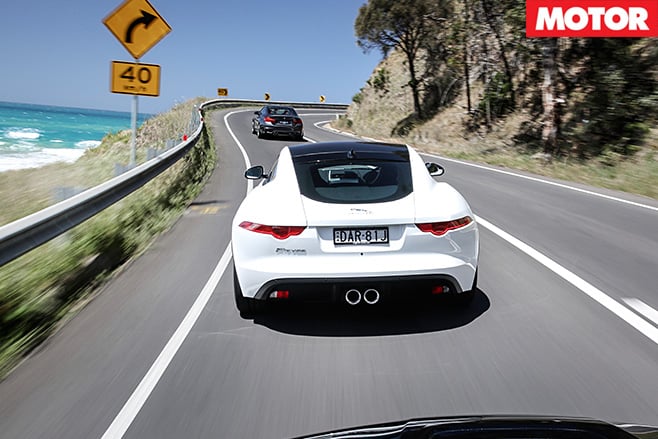
But it wasn’t entirely convincing as a bomb-proof proposition with the clutch feeling like it was suffering a bit. Fast shifts on the strip felt like it had the engine either bogging slightly as you dumped the clutch, but it could also have been the clutch getting hot and bothered and not engaging solidly, allowing the driveline to take a small breather between gears.
What’s also interesting is that away from the hotmix and Christmas tree, the Jag doesn’t feel like it’s giving that much away. Oh sure, it’s never as feisty as the others on the road, but it has plenty up its sleeve for overtaking and hauling along in a tall gear at a moderate speed. Thanks to the fact that a supercharger is on the job from idle, the Jag builds power fairly linearly and simply piles on more as you get higher on the tacho face.
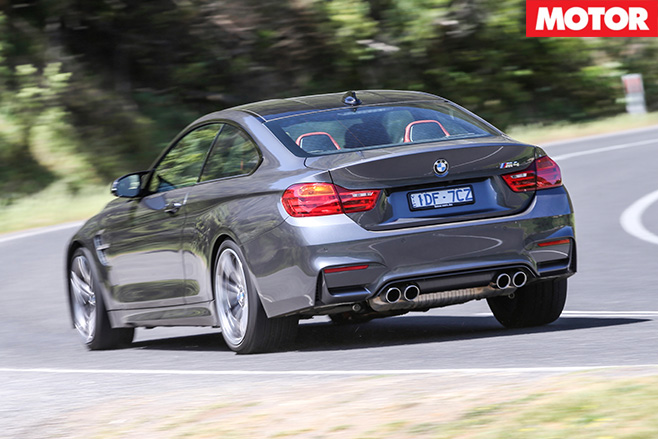
And the BMW? Well, there’s just nowhere on the tacho to hide. The boost builds quickly and from ridiculously low engine speeds to absolutely cannon you out of corners. That turbo rush also gives the BMW an urgency and potency that the others can’t get near. But where the M4 falls down is in the refinement department. Okay, so performance is clearly king in a car like this, but should it be at the expense of so much smoothness?
I’m not entirely sure what’s going on here, but it could be that BMW has tried to engineer some character into the M4’s 3.0-litre straight six. Problem is, it ain’t a smooth, sophisticated character; it has more of a rough-arsed feel that reminds me of the grumpy old pushrod sixes of my yoof.
That lack of finesse extends to the chassis and steering, too. The adjustability of the steering affects only the weight, but none of the available settings feel quite right. It’s probably nicest in Comfort as the Sport and Sport Plus settings simply make it more difficult to budge off-centre without actually adding to the accuracy.
Speaking of accuracy, it’s actually pretty good, but it just doesn’t want to talk you much about it. The ride is firm, no question, but left in Comfort mode you will actually get used to it after a short time.
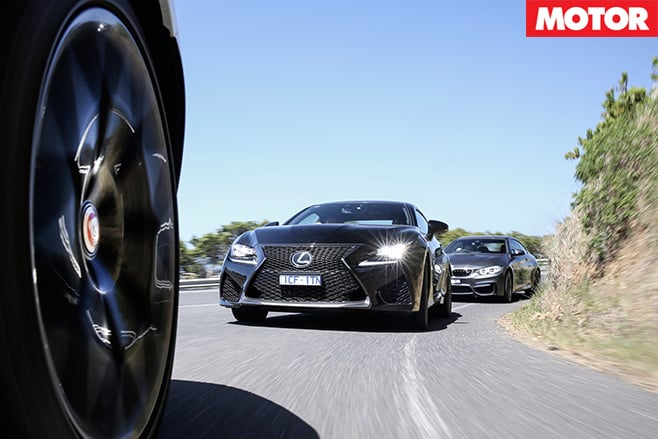
The pay-off there is that the Lexus rides a little better but it still has pretty dead steering feedback. That said, it is probably almost as accurate as the BMW’s tiller. The big downfall is in its transmission, which feels a bit lazy and unpredictable in some situations while the BMW’s DCT is sharp, intelligent and never throws up any surprises in terms of ratio choice.
Being a manual, if the Jag wrong-slots you, it’s your own fault, but it’s worth saying that the shift action is very good and the engine is flexible enough that you can pull sixth at 80km/h happily and without stressing the car. If anything, the steering is just as lethargic at the straight ahead as the others but thanks to the lighter engine, it feels a little better balanced at speed.
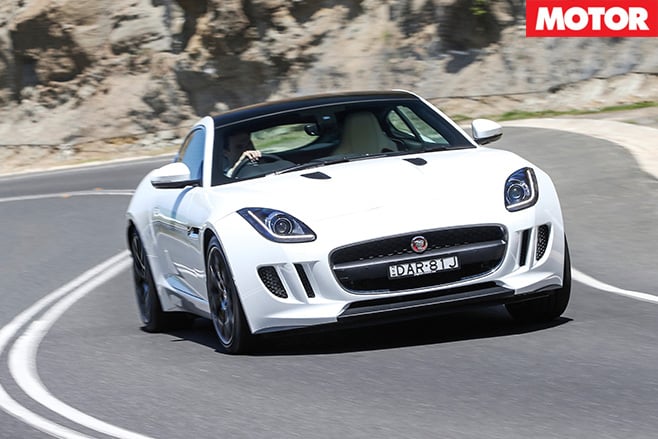
The Lexus RC F is a competent, swift and well-made car but neither finishes first on a cerebral level nor on an emotional one. And that has to mean it only gets to stand on the third step of the podium.
If you approach this with your head, the BMW is an easy winner. It’s faster, grippier, has better brakes and is somehow, despite all that, vastly more practical than the other two. Hell, it’s even better value when you look at the kit it carries.
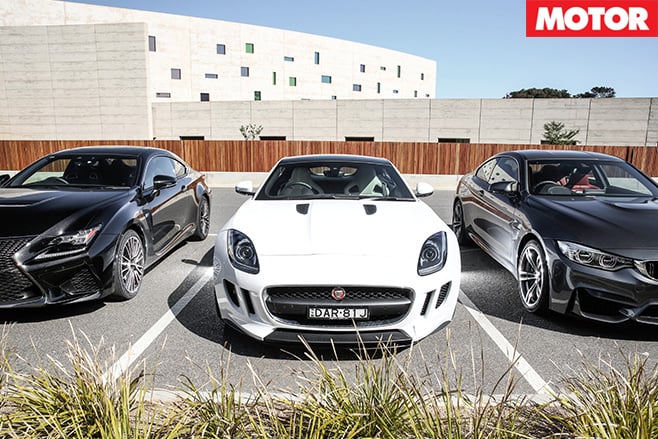
| u00a0 | LEXUS RC F | JAGUAR F-TYPE COUPE V6 S | BMW M4 |
| Body | 2-door, 4-seat coupu00e9 | 2-door, 2-seat coupu00e9 | 2-door, 4-seat coupu00e9 |
| Drive | rear-wheel | rear-wheel | rear-wheel |
| Engine | 4969cc V8, DOHC, 32v | 2995cc V6, DOHC, 24v, supercharged | 2979cc inline-6, DOHC, 24v, twin-turbo |
| Bore/stroke | 94.0 x 89.5mm | 84.9 x 89.0mm | 89.6 x 84.0mm |
| Compression | 12.3:1 | 10.5:1 | 10.2:1 |
| Power | 351kW @ 7100rpm | 280kW @ 6500rpm | 317kW @ 5500-7300rpm |
| Torque | 530Nm @ 4800-5600rpm | 460Nm @ 3500-5000rpm | 550Nm @ 1850-5500rpm |
| Power/weight | 189kW/tonne | 176kW/tonne | 206kW/tonne |
| Transmission | 8-speed automatic | 6-speed manual | 7-speed dual-clutch |
| Weight | 1860kg | 1594kg | 1537kg |
| Suspension(F) | double A-arms, adaptive dampers, anti-roll bar | A-arms, coil springs, dampers, anti-roll bar | struts, A-arms, adaptive dampers, anti-roll bar |
| Suspension(R) | multi-links, adaptive dampers, anti-roll bar | A-arms, coil springs, dampers, anti-roll bar | multi-links, adaptive dampers, anti-roll bar |
| L/W/H | 4705/1845/1390mm | 4470/2042/1923mm | 4671/1870/1383mm |
| Wheelbase | 2730mm | 2622mm | 2812mm |
| Tracks | 1555/1560mm (f/r) | 1597/1649mm (f/r) | 1579/1603mm (f/r) |
| Steering | electrically-assisted rack-and-pinion | electrically-assisted rack-and-pinion | electrically-assisted rack-and-pinion |
| Brakes(F) | 380mm ventilated discs, 6-piston calipers | 380mm ventilated discs, 2-piston calipers | 380mm ventilated discs, 2-piston calipers |
| Brakes(R) | 345mm ventilated discs, 4-piston calipers | 325mm ventilated discs, single-piston calipers | 370mm ventilated/drilled discs, 2-piston calipers |
| Wheels | 19.0 x 9.0-inch, 19.0 x 10.0-inch (f/r) | 20.0 x 9.0-inch, 20.0 x 10.5-inch (f/r) | 19.0 x 9.0-inch (f/r); 19.0 x 10.0-inch |
| Tyre Sizes | 255/35 ZR19 92Y (f); 275/35 ZR19(r) | 255/35 ZR20 97Y (f); 295/30 ZR20 1011Y (r) | 255/35 ZR19 92Y (f); 275/35 ZR19 100Y XL(r) |
| Tyre | Michelin Pilot Super Sports | Pirelli P Zerou00a0 | Michelin Pilot Super Sport |
| Price as tested | $133,110u00a0 | $162,900 | $151,740 |
| Pros | Great atmo V8; great seats; polished dynamics | Sublime exhaust note; looks; handling balance | Huge performance; seating for four; price cut |
| Cons | Overly complex; much too heavy; dead steering | Not that quick; impractical; expensive w/options | Overly complex; not hugely enjoyable to drive |
| Star Rating | 3.5/5 | 4/5 | 4/5 |
The Aston Martin Vanquish Zagato concept is the newest collaboration between the British supercar maker and its long-time Italian design house partner.
Aston’s sportier take on its flagship grand tourer is the fifth co-designed model since the DB4 GT Zagato of 1960.
The basic shape of the regular Vanquish may be recognisable but the concept is comprehensively redesigned and reconstructed for its debut at Italy’s famous annual historic car gathering, the Concorso d’Eleganza Villa d’Este.
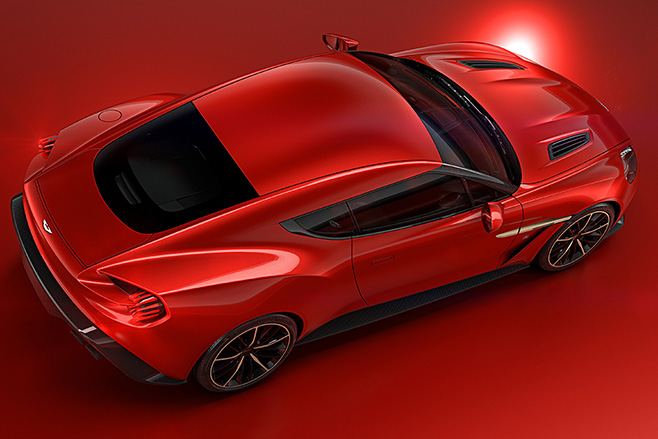
The Zagato’s body is made entirely from lightweight carbonfibre, and features fewer panel joins than the regular model through the use of larger one-piece sections.
Aston and Zagato have also reprofiled the side glass which, in combination with a dark tint, mimics the look of a crash helmet visor.
And to help accommodate actual helmets, a ‘double-bubble’ roof - a Zagato design signature that dates back to the 1950s – is added. This created extra headroom for racers’ heads without greatly affecting aerodynamics.
Scalloped side panels are another point of differentiation, while the front and rear ends won’t be confused with the showroom Aston Martin Vanquish, either.
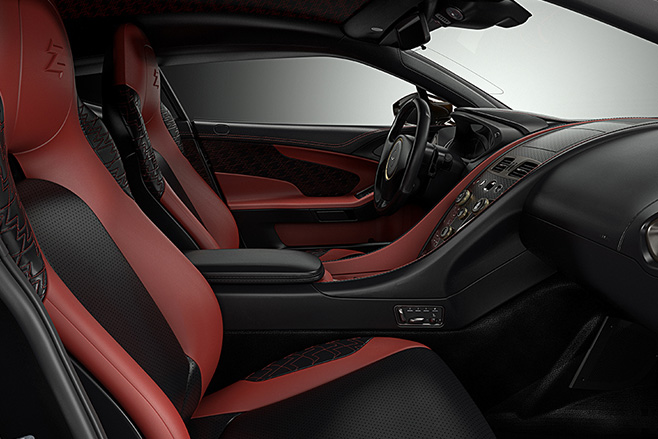
The front features a significantly enlarged grille, which also incorporates round LED daytime running lights.
At the rear, the Vanquish’s C-shaped tail-lights make way for round lenses incorporating an LED arrangement designed to mimic turbine blades. Four exhaust pipes are also integrated into a vast carbonfibre sill.
The concept’s cabin gains a mix of carbonfibre and leather trim, the headrests feature an embossed Z (for Zagato) logo, and a ‘Z’ quilt pattern is also used on seat and door trims.
To match the racier look, the Aston Martin Vanquish Zagato gets a more powerful version of the Vanquish’s 5.9-litre V12 engine – up to 441kW from 423kW. The suspension is also tweaked for sharper handling.
Can’t get enough? now read about Peugeot’s futuristic interior concept.
1. Foresters with automatic boot lids have a height memory function that can stop the hatch from opening too far and bumping into the roof of a low parking spot.
2. Subaru thickened the Forester’s window glass and upgraded the door seals and body structure to make the cabin quieter inside.
3. Forester’s X-Mode can limit the all-wheel drive system’s wheel slip on loose or slick surfaces and control speed when descending hills off-road.
4. Subaru’s flat-four, boxer engine is designed to be safer in the event of a serious crash. In a forward collision, the engine slides under the cabin rather than into it, to avoid passengers.
5. Alloy wheel patterns on current Forester models are designed specifically to reduce air resistance, meaning better fuel economy.
6. Forester XT and 2.5i-S models have headlights that swivel as you turn the steering wheel to light up the direction you’re moving towards.
7. The Forester’s raised suspension gives it 220mm of ground clearance. That’s more than some popular dual-cab utes.
MORE: Subaru Forester Range Review MORE: Subaru Forester Specs, Range & Price
1. AUDI A8 4.2 TDi QUATTRO Power: 283kW
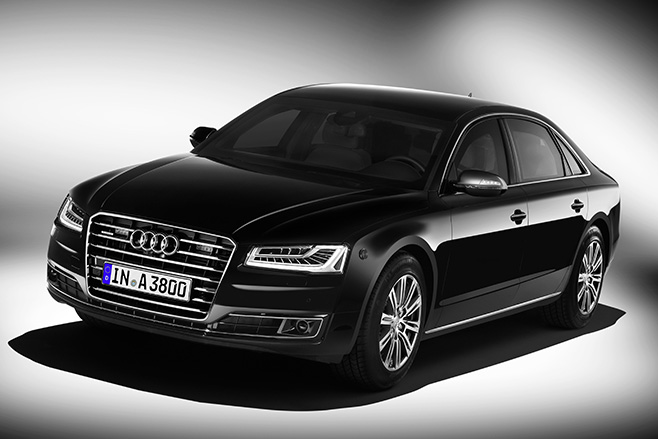
Every bit counts and Audi’s top-shelf diesel tops this list by a mere 2kW. Yet it’s the 850Nm of low-down grunt that make this such a useful device. Now, where’s that autobahn…
2. PORSCHE CAYENNE S DIESEL Power: 281kW
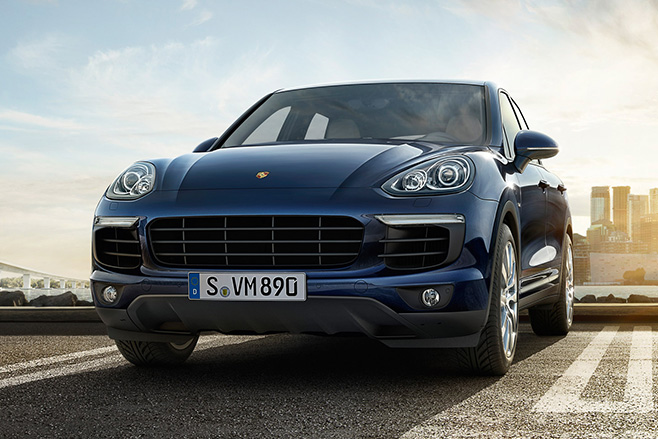
Same 4.1-litre twin-turbo diesel as the Audi – and same 850Nm – but Porsche’s go-fast SUV has a slightly lower power output. Still fun, though, and surprisingly characterful.
3. BMW X5 M50d Power: 280kW
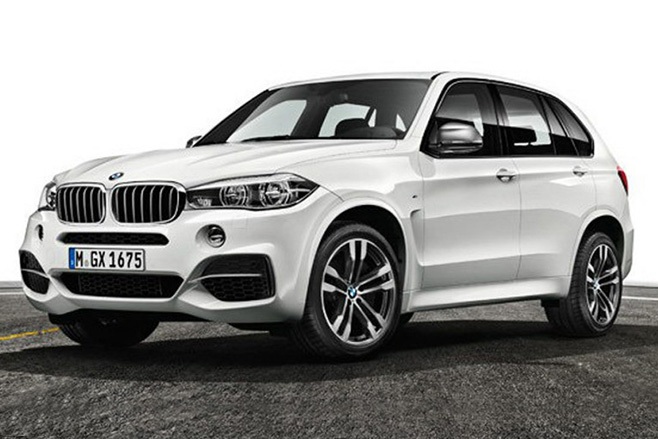
The impressive power and 740Nm is a mighty shove from six cylinders. But BMW’s triple-turbo 3.0-litre – also employed in the X6 – is not short of tech. Or performance.
4. RANGE ROVER SPORT HSE SDV6 HYBRID Power: 250kW
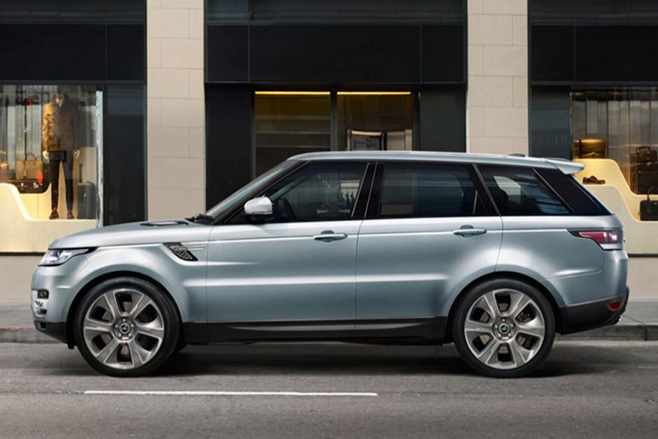
Electric power adds punch to the 3.0-litre V6, bringing 700Nm to the equation. The drivetrain, also available in the ‘big’ Rangie, is frugal at 6.4L/100km.
5. RANGE ROVER SDV8 VOGUE Power: 250kW
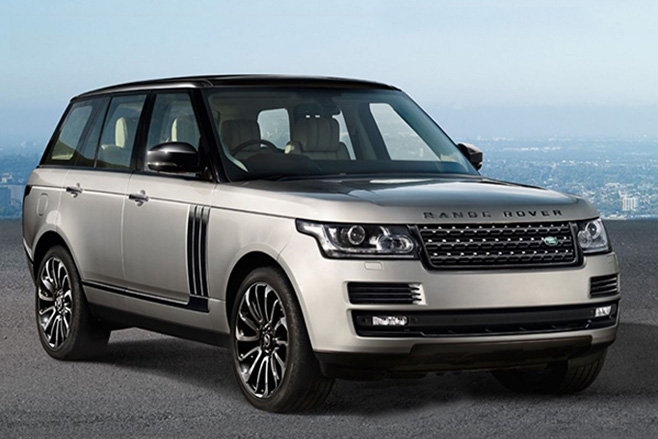
Sweet and smooth 4.4-litre V8 is the pick for the big Range Rover, but if you can’t stretch the budget, the same 250kW/740Nm unit is also fitted to the smaller Range Rover Sport.
