Who’d be a race team strategist? Sometimes a goose; other times a dill.
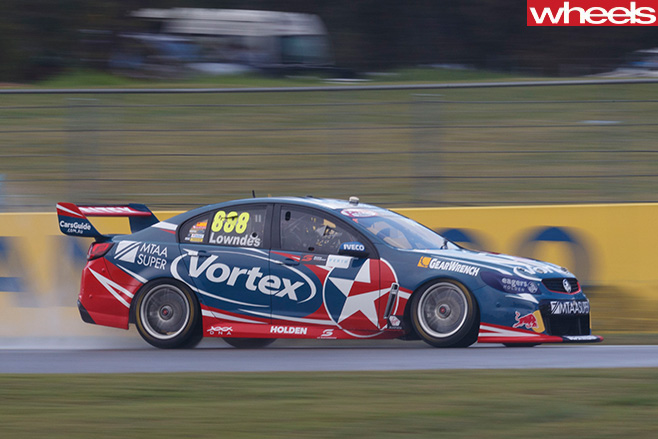
On Saturday, race eight in the Australian Supercars Championship was won by Craig Lowndes after a decision to make an extra (third) pit stop for fresh Dunlops, giving him the pace to fight back to the front.
Twenty four hours later, reigning champ Mark Winterbottom clung on for a tension-charged first win of the season after taking one fewer tyre stops than much of his opposition, on a track noted for its abrasive surface.
The turnaround for Winterbottom came after a horror Saturday he described as one of his worst for some time.
While the Triple Eight Holden trio of Lowndes, Shane van Gisbergen and Jamie Whincup rampaged to a podium shut-out, Frosty struggled to an inglorious 22nd place.
Lowndes’s race engineer Ludo Lacroix deserves the kudos for the daring mid-race call to bring in his driver for new boots. At the time it looked all wrong, but upon re-joining the fray, Lowndes methodically started picking ‘em off…
Back down the field in Wally World, Winterbotton was doing it tough after a miscue sent him ploughing through the sand. Then he copped a Liberace from another car, as he slowed to enter the pits for tyres.
But Sunday was a different story, partly dictated by a ruined set of tyres the previous day.
His race engineer Jason Gray strong pushed to lock-in a two-stopper when most of the field felt that three was the way to go.
They were closing at around half-a-second a lap, although the gap appeared manageable until Winterbottom lost nearly two seconds as he was overhauled by a faster lapped car driven by Aaren Russell.
“I thought Aaren Russell ruined my race,” Winterbottom said later. “I thought I was gone.”
We all did. The chasing pack was on his tail.
But, driving magnificently, Winterbottom kept the Falcon straight, treating the accelerator with judicious respect so as not to buzz his fading rubber.
The best had also gone from his pursuers’ fresher tyres and Winterbottom was able to repel one big thrust from McLaughlin to take a stunning win, by a mere 0.3sec.
Winterbottom becomes the eighth individual race winner for 2016.
The Sunday race outcome left Lowndes as championship leader, 42 points ahead of Jamie Whincup (who finished 11th) with McLaughlin a further six points adrift. But Frosty is on the move; he’s up to fourth and 78 points behind Lowndes.
Next race is the Winton SuperSprint on May 20-22.
WEC: Audi wins Six Hours of Spa as Porsche and Toyota falter
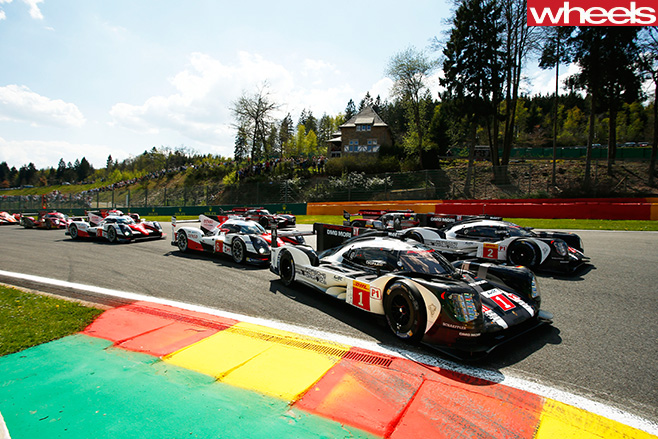
Porsche was strong at the start and then Toyota looked good for four hours. But it was a six-hour race…
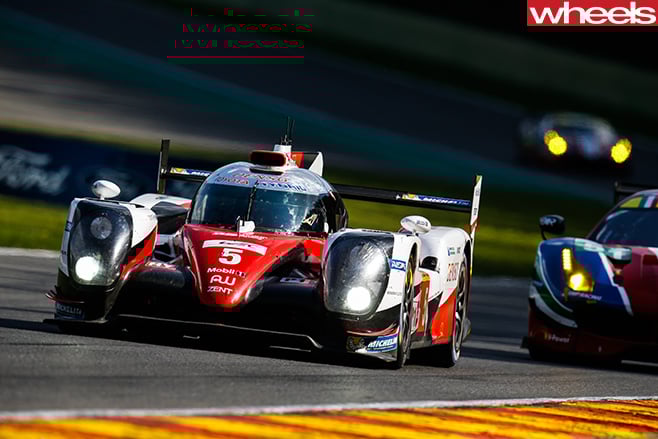
A Toyota led comfortably after four hours and looked set to take victory in the WEC Six Hours of Spa-Francorchamps – its first since 2014. Engine problems then hit both TS050 Hybrids, removing them from contention.
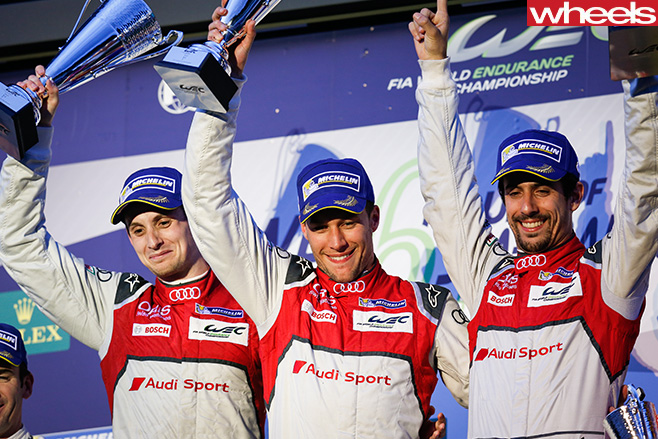
Seizing the chance to take the win were Audi drivers Lucas di Grassi, Loic Duval and Oliver Jarvis, who took a first WEC victory together in a race of survival and not just a few shunts.
The winning Audi inherited the lead during the fourth hour when the #5 Toyota TS050 shared by Sebastien Buemi, Anthony Davidson and Kazuki Nakajima suffered major engine failure.
It was a lap up on the Audi when it struck trouble.
In a telling tale with the 24 Hours of Le Mans only weeks away, all six factory LMP1 cars struck problems at Spa.
The winning Audi was least bothered, a late-race change of the rear body section being a precaution rather than a necessity.
“But we stayed out of trouble and the car was reliable – that’s what endurance racing is about.”
Mark Webber’s 2016 season continues to be problematical. The Aussie and his team-mates Brendon Hartley and Tim Bernhard were initially slowed by two punctures, the second of which damaged the bodywork of the pole-winning Porsche 919 Hybrid. It had led the opening stint in the hands of New Zealander Hartley, before the front-axle energy-retrieval system required changing, costing the trio more than an hour.
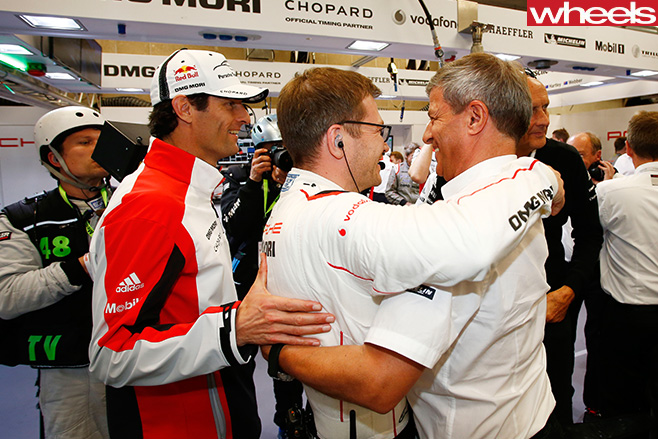
It wasn’t a great dress-rehearsal for Le Mans although the Jani/Dumas/Lieb Porsche trio have extended its championship points lead.
WEC Six Hours of Spa-Francorchamps results:
| 1st | #8 Audi (di Grassi/Duval/Jarvis)u00a0 | 160 laps |
| 2nd | #2 Porsche (Dumas/Jani/ Lieb) | +2 laps |
| 3rd | #13 Rebellion (Tuscher/Kraihamer/Imperatori) | +4 laps |
| 4th | #12 Rebellion (Prost/Piquet/Heidfeld) | +5 laps |
| 5th | #7 Audi (Fu00e4ssler/Lotterer/Tru00e9luyer) | +5 laps |
Lorenzo charges to championship lead in crash-filled Le Mans
Dominant flag-to-flag win to the reigning MotoGP champ in crash-filled French round…
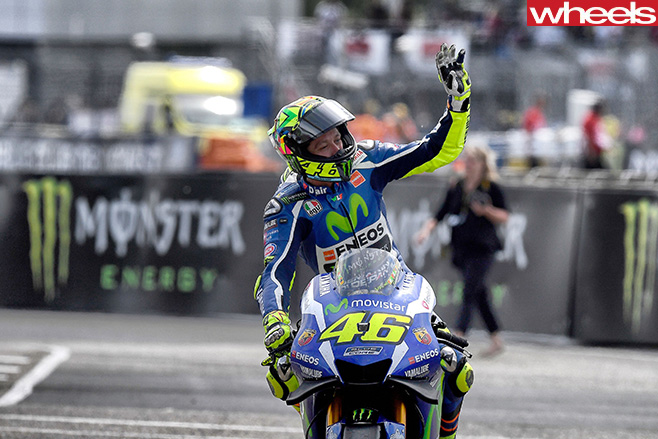
After qualifying on pole – where he recorded the fastest-ever two-wheeled lap of Le Mans – Lorenzo got a good start and led in to the first corner. Extending his lead over the first lap, he continued to push hard for the whole 28-laps.
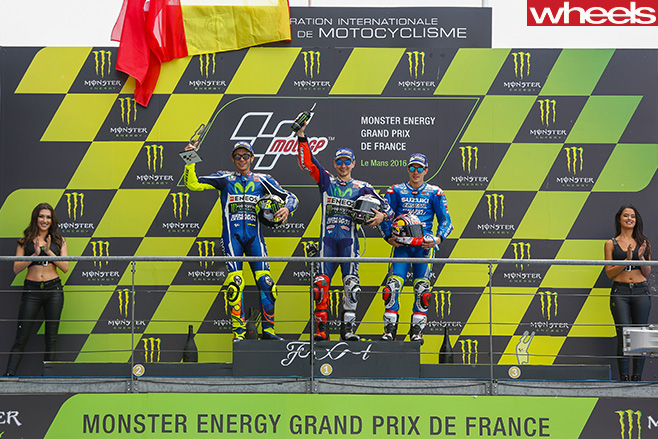
The Spaniard eventually crossed the finishing line more than 10-seconds ahead of his nearest rival, team-mate Valentino Rossi. The rest were nowhere.
Helped by a spate of fallers – including previous points leader Marc Marquez, both Ducati riders, Cal Crutchlow and Australia’s Jack Miller – many riders found themselves with a shot at strong finishes.
Marquez remounted unhurt and brought his battered Honda home safely in 13th.
Suzuki’s Maverick Viñales took the final podium place and the first top-three finish of his MotoGP career. The 21-year-old Spaniard also fought his way through the field after starting from eighth, his third was also Suzuki’s first podium since 2008.
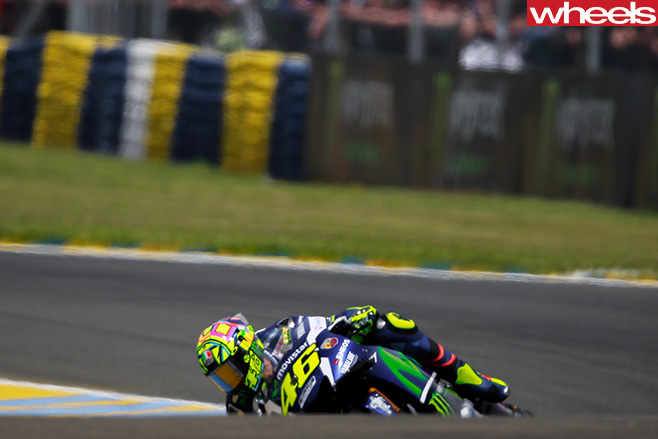
Marquez, Lorenzo and Rossi now have a mistake each to their name this season and with only 12 points between them in the championship; the action is just starting to warm up…
The MotoGP field now goes to Mugello, Italy, for round six of the MotoGP World Championship.
Fifty seconds went begging during McLaren fuel economy drive in Russia
A need to save fuel cost McLaren Honda the chance to match Williams in Sochi, says Boullier.
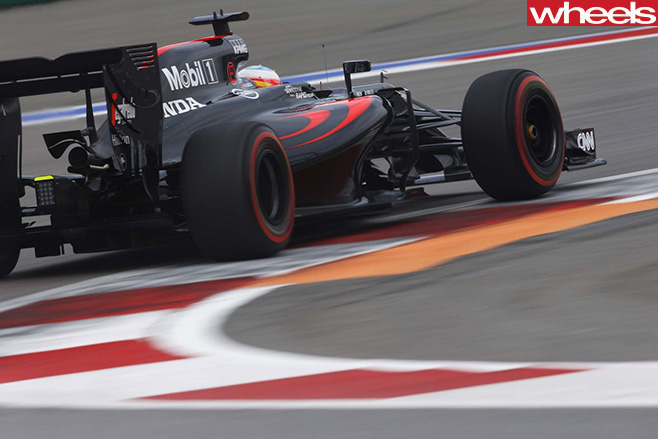
Fuel saving cost the thirsty Honda-powered McLaren 50-seconds in the 53 lap race, Boullier insists.
Fernando Alonso finished sixth, one lap down, but was 52.829secs behind fourth-placed Valtteri Bottas at Sochi.
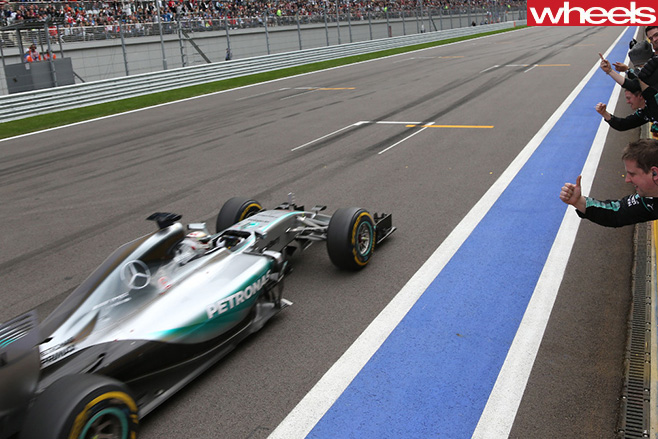
Towards the end of the race, with the fuel consumption managed, Alonso was more than 1.2secs faster per lap than Bottas.
So Boullier optimistically deducts that without fuel saving his cars would have been another 50 secs up the road.
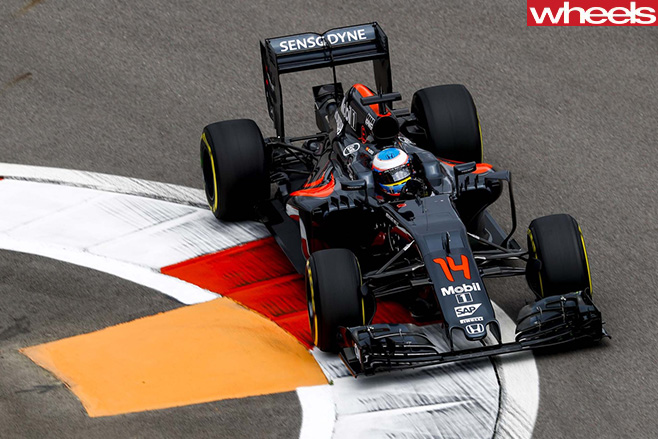
Said Alonso: “We had the fifth-fastest lap of the race so I think sixth position is what we deserve and I’m happy with the way everything is going.
“We seem more and more competitive every race, so let’s hope from Barcelona and Monaco to get some more points.”
The TV superstar from Brissie has never forgotten those who helped him early in his career
Leigh Diffey is the king motor sports commentator on NBC Sports but he remembers those who gave him a leg up…
In August, he’ll be off to the Olympics in Rio to call the rowing.
Diffey is a highly recognisable superstar of the small screen in the US, where he has lived for the past decade.
Through talent and persistence Diffey — the ex-school phys-ed teacher from Brisbane — has managed to cement a career in the TV big-time unmatched by anyone else from the Antipodes.
In a country where a foreign accent is often a handicap, Diffey’s Aussie twang has been welcomed, accepted and compartmentalised as part of the furniture.
His success is rare for an outsider but not so difficult to understand. His knowledge runs deep across everything with wheels. His recall is impressive too. He brings up colourful anecdotes or a fascinating fact from back in that impressive hard drive called the Diffey brain. Moreover, he loves motor sport (and golf, let it be said). The passion shines through. Diffey is also smart enough to tweak the right buttons. He doesn’t yell at his audience; it’s more like a cosy chat, then bringing in his fellow commentators and experts to trigger a little controversy and debate. He has opinions yet isn’t opinionated. See? C lever!
Over two decades, 45-year-old Diffey has honed his craft across three continents, in a career which so far includes covering V8 Supercars for Australia’s Network Ten as well as the World Superbike Championship and WRC for the BBC. If that wasn’t already impressive enough, Leigh’s also handled varied forms of motor sport for ESPN, Speed and NBC Sports in North America with aplomb.
Since 2013 Diff has been the main man – the cop directing busy “expert commentary” traffic around the battery of microphones – for the NBC Sports Network’s coverage of Formula One and the IndyCar Series.
Married with two boys, Diffey has also called NASCAR, sailing, golf, and the 2014 Winter Olympics at Sochi, where he handled play-by-play duties for bobsled, skeleton and luge.
Okay, so you get the picture… Diffey is a big wheel in the massive US TV market.
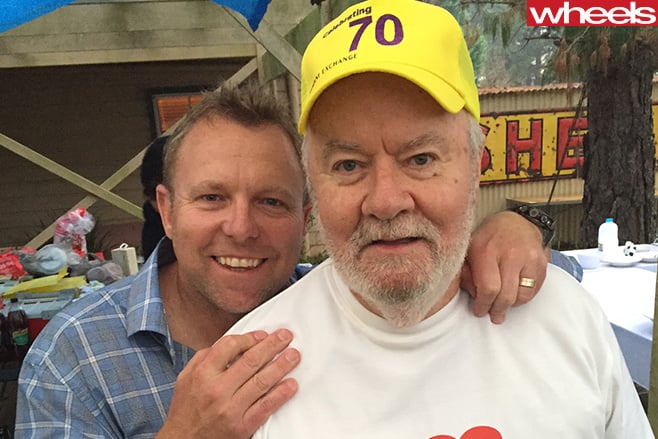
But this past weekend, Diffey had a rare weekend off. He could have chilled out at home in Connecticut, but instead flew from New York to LA to Sydney, and then drove to Mittagong to stun a long-time mate, Phil Christenson, and help him celebrate his 70th birthday.
Christensen — a motor sporting entrepreneur who’s run his own two-car team in the Bathurst 1000, and staged monster track shows — was also one of the group of three who created the phenomenon known as stadium supercross in Australia. He gambled on hiring the then unknown young Queenslander to call the action.
Diffey was on his way. And he has never forgotten. Which is why he flew halfway around the world on his weekend off to join the celebrations. And then back again. The birthday boy was blown away.
He’s a good bloke, is Leigh Diffey.
BMW’s flagship 3 Series and 4 Series models are available in Competition form from mid-May, costing an extra $5000 over the regular M3 sedan and M4 coupe, or $4000 over the standard M4 convertible.
The $144,900 M3 Competition sedan, $154,900 M4 Competition coupe and $165,500 M4 Convertible Competition each feature a modified twin-turbocharged six-cylinder engine that increases power by 14kW to 331kW. Torque remains at 550Nm.
BMW now quotes a time of four seconds for the M3 and M4 to reach 100km/h from standstill – an improvement of 0.1 seconds. It allows the sedan to match the rival Mercedes-Benz C63 S, while the coupe closes the gap to the C63 S Coupe to a tenth of a second.
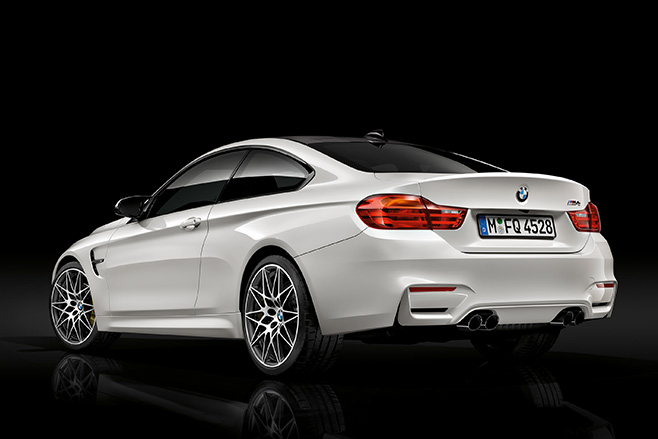
The M4 Convertible also speeds up by a tenth, to 4.3 seconds.
A six-speed manual gearbox is available as a no-cost alternative to the seven-speed auto, though it’s 0.2 seconds slower in the same sprint.
BMW says it has matched mechanical changes to the performance enhancement.
The standard suspension with multi-mode shock absorbers is revised, the Comfort, Sport and Sport Plus driving modes reconfigured, and the electronic differential that helps the M cars put their power to the ground via the rear wheels is recalibrated.
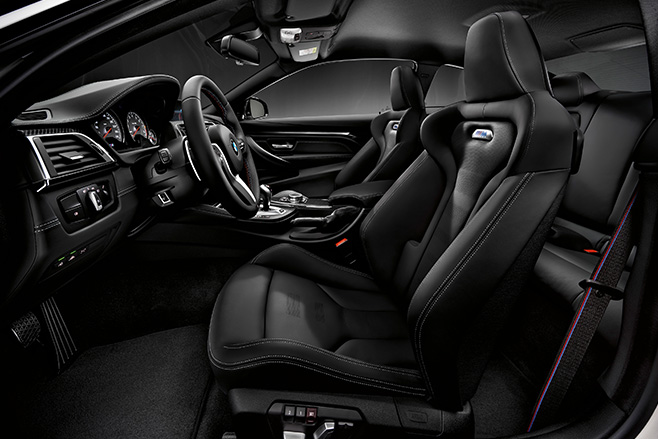
The Competition models are also fitted with bigger, 20-inch wheels featuring forged, machine-polished alloy rims and asymmetrical tyres that are 2cm wider at the rear.
A black high-gloss finish is applied to areas of their exteriors, including the ‘kidney’ grille, side vents, window trim and four exhaust pipes.
Inside, the M3 and M4 Competition cabins feature a trim from BMW’s custom Individual range called Shadow Line, and also gain leather sports seats with electric adjustment.
BMW M3/M4 PRICING
BMW M3 sedan $139,900
BMW M3 Competition sedan $144,900
BMW M4 coupe $149,900
BMW M4 Competition coupe $154,900
BMW M4 Convertible $161,900
BMW M4 Convertible Competition $165,900
It should be the automotive equivalent of a swear jar: tip a dollar every time someone remarks the Toyota 86 desperately needs turbocharging. The tin would be flush with enough cash for a Lexus RC200t.
Both are Japanese two-door four-seat rear-drive coupes. Both score 2.0-litre four-cylinder engines, but the posh Toyota adds that all-important hairdryer to its own in-line (rather than horizontally opposed) unit.
A healthy 180kW and 350Nm allows Lexus late entry into the premium-manufacturer downsized-plus-turbo party, without looking as though it has brought a Kylie CD to a hipsters’ record convention. Torque lathered on strong from 1650rpm to 4400rpm? Yep, come in, RC200t.
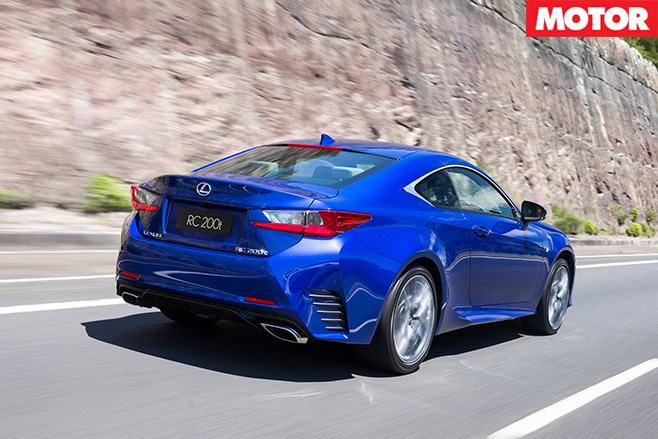
It is deathly quiet inside, its front seats are excellent and the cabin is loaded. The adaptive suspension strikes an excellent balance between luxury and sports – particularly on 35-aspect 19-inch tyres– in Comfort, Sport or Sport+ modes.
Those bank-vault suspension components may help explain the RC’s terrible weight problem though, because somehow this compact coupe with non-existent rear legroom weighs 1675kg.
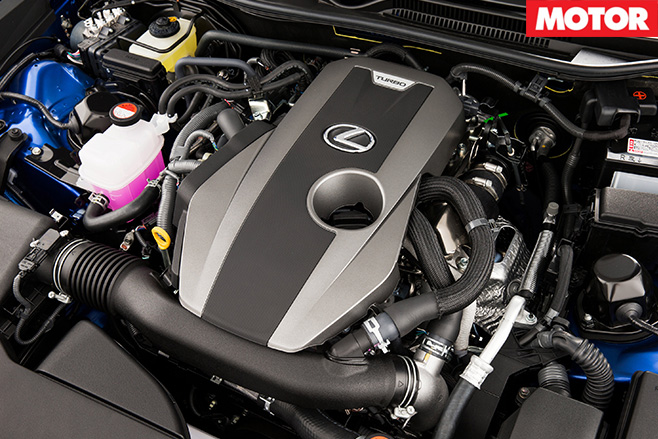
Lexus claims a 7.5-second 0-100km/h, only a tenth quicker than (gasp!) an 86. A 1470kg BMW 428i coupe with identical outputs is 1.7 seconds faster, while an RC350 shades the 200t by 1.4 seconds. The 350’s 3.5-litre V6 also revs beyond the turbo’s soft 6200rpm redline, and is sweeter and likely to be no thirstier (the turbo four recorded 13.6L/100km on test).An RC350 F-Sport also gets four-wheel steering and a variable-ratio rack that helps it feel nimble and pointy, but it hasn’t been engineered for the $3K-cheaper RC200t F-Sport, which is grippy yet blunt as a result. The Torsen LSD now standard on both sports grades is also pointless when the stability control scuppers even subtle throttle moves.

3 OUT OF 5 STARS
SPECS Engine: 1998cc inline-4, DOHC, 16v, turbo Power: 180kW @ 5800rpm Torque: 350Nm @ 1650-4400rpm Weight: 1675kg 0-100km/h: 7.5sec (claimed) Price: $73,000 Like: Excellent seats; ride; refinement Dislike: Dull drivetrain; dynamics lack sparkle of RC350 F-Sport
1. The 330e is the third most powerful plug-in hybrid on sale in Australia. Two other BMWs sit above it on the podium – the BMW X5 40e and i8.
2. Because the 330e is almost silent when driving in electric-only mode, BMW equips it with an Acoustic Protection Pack that emits a low level noise at speeds under 30km/h to alert pedestrians of a nearby car.
3. Engineers from BMW’s i division – responsible for halo electric vehicles BMW i3 and i8 – worked on the 330e’s battery technology. The energy pack is made up of 80 battery cells split across five modules. Total storable energy is 7.6kWh
4. BMW says the 330e’s boot can fit two golf bags with room to spare despite being 110 litres smaller than the rest of the 3 Series range.
5. There are three drive modes for managing the 330e’s electric power usage; Auto eDrive balances between electricity and internal combustion, Max eDrive favours electric power as much as possible, and Save Battery uses the petrol engine exclusively, leaving electric power for city driving later in a journey.
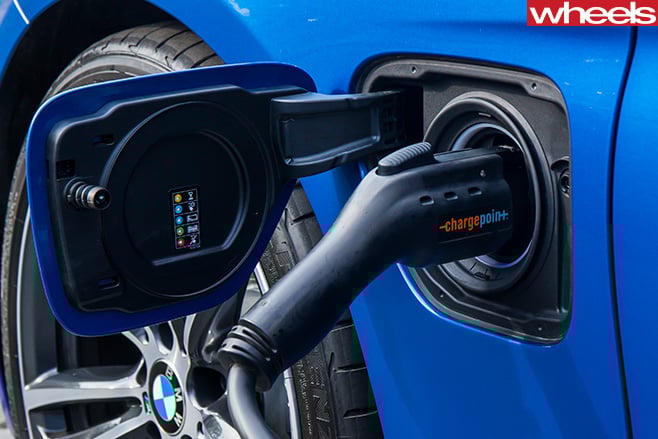
6. Features specific to the 330e include badges on the C pillar and bootlid, a charging point behind the front passenger side wheel, eDrive door sill trims, eDrive instrument cluster and info display, and eDrive button.
7. BMW has a smartphone app for its electrified cars called ConnectedDrive. It allows owners to monitor battery range, find charging stations and precondition the cabin by starting the climate control remotely before getting inside.
8. Charging the 330e can be done at home, work, or at any of the 262 public charging stations in Australia, 256 of which are free. Plans exist to expand the network to 950 by 2020.
9. The 330e’s hybrid battery pack has it’s own 6 year/100,000km warranty.
Mini has juiced up its Cabrio range with the new John Cooper Works convertible. Mini says the JCW Cabrio, with an estimated sub-$60k price, will accelerate to 100km/h in 6.5 seconds – a tenth quicker than the outgoing model.
The third-generation JCW is powered by a revised version of Mini’s 2.0-litre four-cylinder engine. JCW’s take on the new motor translates to a 15kW and 60Nm upgrade over the previous 1.6-litre JCW Cabrio, and a 29kW and 40Nm jump over Mini’s current open-air performance king, the Mini Cooper S Cabrio. All up, the new JCW-tuned drop-top produces 170kW of power and 320Nm of torque making it MINI’s most potent convertible yet.
Pricing is yet to be released, but the JCW Cabrio, in its six-speed manual guise, will likely sit in the $56k – $60k price range. It will also be offered with a six-speed automatic, like the previous version.
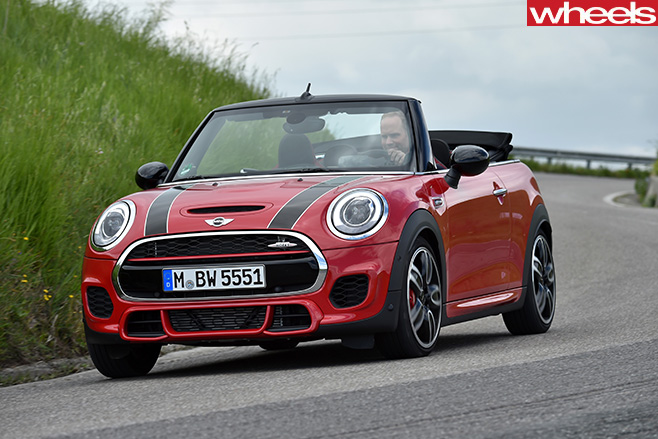
On top is an electrically powered textile roof that can be operated while travelling at speeds of up to 30km/h. Mini claims that it takes just 18 seconds to deploy or retract the roof. The extended silhouette of the open-top four-seater has been supplemented with JCW-specific design elements that are said to help in cooling and aerodynamics. The soft top is plain black; however an optional Union Jack design is available.
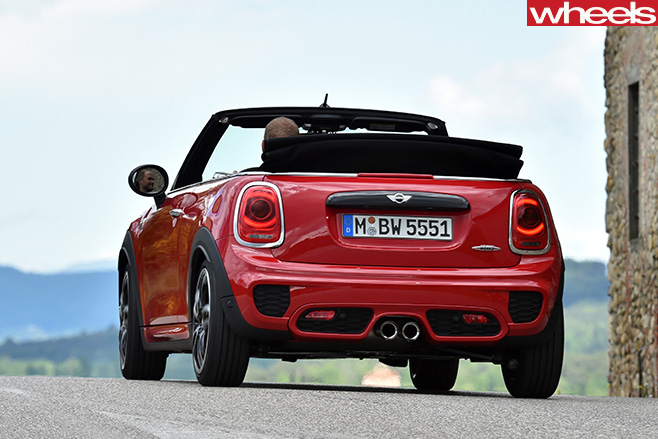
Special features for the open-top Mini include a sports exhaust, sports suspension, Brembo brakes, an aerodynamic body kit and a distinct JCW cockpit with bucket seats as standard. Performance technology includes Dynamic Damper Control as an option. Dynamic Stabilty Control, Dynamic Traction Control, Electronic Differential Lock Control and Performance Control are all as standard.
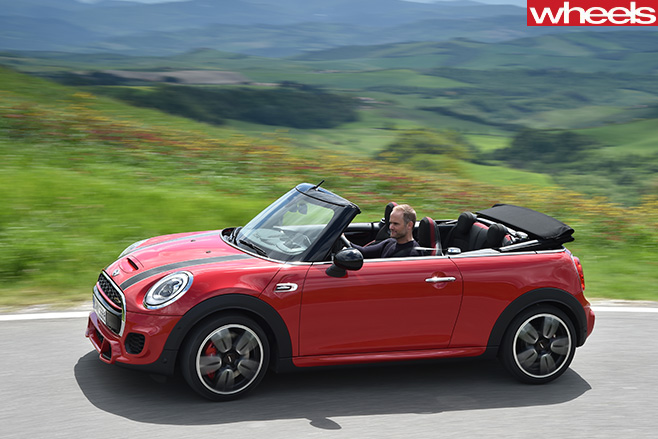
Local pricing for the new Mini John Cooper Works Convertible is yet to be confirmed, however the hatchback JCW sits at $47,400 (MRLP) which is $10,450 more than the base Cooper S. We expect the new JCW Cabrio will bear a similar price discrepancy over the base Cooper S Convertible which sits at $48,800 (MRLP).
TELL ME ABOUT THIS CAR
BMW created the 330e hybrid by coupling the petrol engine from the 320i with an electric motor and boot-mounted battery pack. Owners can plug the 330e into a conventional power plug at home and charge the battery in about three hours and 15 minutes. A fully charged battery gives pure electric range of 28-30kms according to BMW testing here in Australia. Combined fuel consumption of the petrol and electric system together is 2.1L/100km. It costs $71,900.
STRENGTHS
- Economy is the obvious benefit of the 330e. A full battery charge using green energy from a normal socket costs about $2 in electricity and gives enough electric range to get the majority of Australians to work and back without using any petrol. The 330e is cheap to run.
- The 330e’s $71,900 price tag is $2000 more than the 330i – the most popular model in the 3 Series range. The 330e and 330i are matched in terms of equipment and trim. BMW wants the 330e’s hybrid technology to be accessible to the majority of 3 Series buyers.
- Comfort comes first. The cabin is exceptionally quiet thanks to extra sound insulation and the almost silent electric motor. The transition from running on pure electricity to using both engines is almost impossible to detect through the drivetrain itself. The only clue is the slight rumbling sound as the petrol engine fires up.
- Electric motors can supply maximum torque instantly, meaning the 330e has sharp acceleration. It takes 6.1 seconds to hit 100km/h from standstill.
- Putting a battery in the boot of the 330e means cargo space shrinks to 370 litres. That’s 110 litres less than other 3 Series models. The 330e does have a level boot floor and 40/20/40 split folding rear seats helping to make up for some of the lost capacity.
- The 330e doesn’t have the 330i’s adaptive dampers, and they aren’t available as an optional extra. BMW’s engineers couldn’t find a way to fit them around the battery pack. The standard suspension tune isn’t bad, but missing out on adaptive dampers is a downside.
- Adding an electric motor and battery has increased the 330i’s weight by 165kg. The battery makes up 80kg of that, and sits above the rear axle which negatively impacts on the otherwise excellent handling.
The Mercedes-Benz C300e hybrid is priced slightly higher at $74,900. It has a little more torque than the 330e, but it is slower from 0-100im/h. It has a seven-speed gearbox rather than an eight-speed and uses a bit more fuel. Other rivals include the performance oriented Infiniti Q50 Hybrid S at $67,900, and the Lexus IS300h F Sport for $68,000.
Click here to read the full review on the BMW 3 Series range.
BMW has another go at a hybrid 3 Series, this time with less focus on performance and more real-world relevance.
WHAT IS IT? BMW’s second attempt at a plug-in hybrid 3 Series, executed with development knowhow from halo electrified vehicles BMW i3 and i8.
WHY WE’RE TESTING IT BMW says the 330e is relevant to Aussie buyers because its 30km real-world electric range is enough to get the majority of people to work and back emission free.
MAIN RIVALS Infiniti Q50 Hybrid S, Mercedes-Benz C300e, Lexus IS300h
THE WHEELS VERDICT The 330e is a polished yet unflashy hybrid that useably integrates the fuel saving and performance benefits of electricity with a practical level of compromise on the accomplished 3 Series package.PLUS: Economy, seamless integration of technology, instant torque MINUS: Added weight, smaller boot, no adaptive dampers
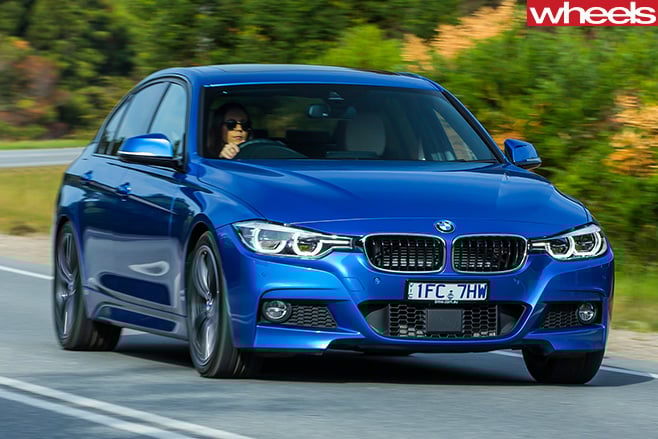
BMW has made a very deliberate decision to downplay the 330e’s eco status. The company already makes an excellent electric car for green planet ambassadors – the i3. Where that car sends a signal to neighbours and friends about environmentally-conscious decision making, the 330e is all about accessibility. It’s as concerned with saving you money as it is about saving the world.
The bare bones of the 330e’s drivetrain are the petrol engine from a 320i, and a 65kW/250Nm electric motor to assist. The 2.0-litre four-cylinder turbo has had an extra 20Nm squeezed from it; now producing 135kW and 290Nm. Maximum total output of the 330e is 185kW and 420Nm.
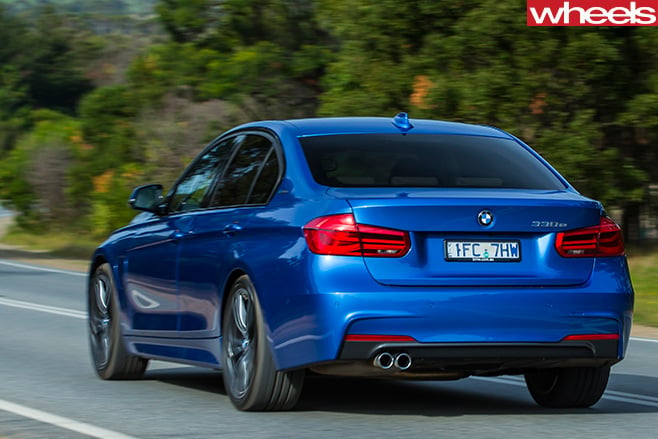
The payoff for that $2000 premium is frugal combined fuel consumption of 2.1L/100km. If short trips account for the majority of your driving, that figure could be less.
According to BMW research, Australians have an average one-way commute of 15.6km, and 50% of us drive less than 10kms from home to work. The company carried out “realistic” testing and claims the 330e has real-world pure electric range of around 28-30kms, down on the official European figure of 37km.
Theoretically, the 330e could get most Aussies to work and back every week without using a drop of petrol. Plug in each night and it takes around three hours and 15 minutes for a full charge using a conventional domestic socket. If that’s not fast enough, BMW will sell you a wall box for $1750 that drops the charging time to two hours and 15 minutes.
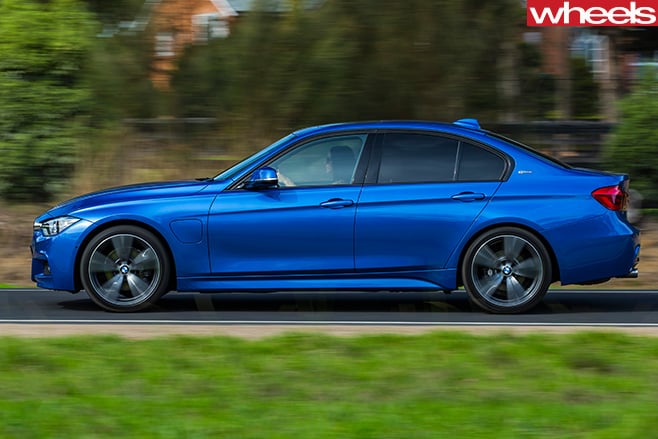
The 330e is the third most powerful plug-in hybrid on sale, behind BMWs X5 40e and i8. Its electric torque is available instantly, and there is plenty of it. It sprints from rest to 100km/h in 6.1 seconds. So, it’s brisk when you want it to be, and manages to be engaging to drive when you don’t.
Eking out every last metre of electric range and working the regenerative braking to gather more charge is strangely fun. The 330e, and hybrids like it, add a layer of involvement other cars don’t have. A display on the dash shows you where your energy is going in real-time. It’s almost like a video game.
Even when showing zero electric range on the dash, the 330e leaves a standstill under electric power. In this scenario the transition from electricity to internal combustion is nigh seamless, making the 330e’s stop/start system one of the easiest to tolerate.
The location of the cells drops cargo capacity by 110L to 370L and prevents fitment of adaptive dampers found in other 3 Series models. BMW’s engineers have put effort into reworking the suspension tune to compensate for this, and the added mass.
The resulting ride is a good compromise. It favours comfort over performance, but the inherent dynamic proficiency of the 3 Series is still felt when pressing into corners. It doesn’t wallow or lean too heavily on the outside wheels, and in its natural habitat of suburban streets and city lanes it capably manages speedbumps and scarred roads.
Comfort is the over-arching sensation the 330e conveys. It is serenely quiet. Not only because of the near-silent electric propulsion, but extra sound insulation makes up part of the 330e’s weight gain. Hard, run-flat tyres are the only thing working against the 330e’s desire to cosset.
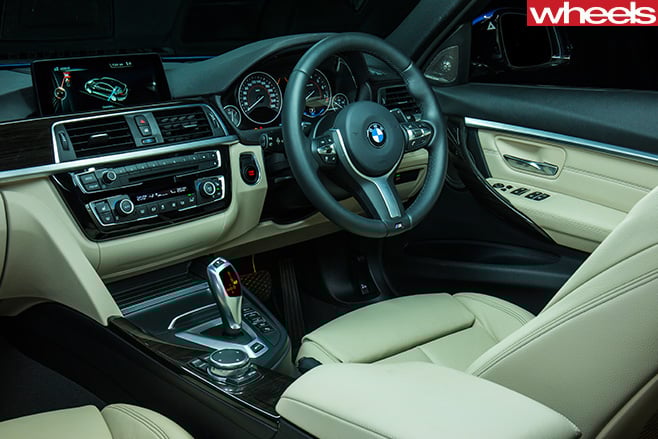
It costs roughly the same amount to buy a 330i with the heated seat option pack ticked as it does to buy the 330e. It’s a compelling offering. Anybody deterred by the added complexity need not worry about purity of product. The hybrid integration is almost undetectable. Clearly the magicians of ‘elec-trickery’ at BMW’s i division have learned from the development of i3 and i8.
The BMW 330e prefers to get on with things away from the spotlight. What was formerly sci-fi tech has trickled down to the masses. Not all hybrids are the flag-bearing crusaders we once knew them to be, and that’s just fine.
Welcome to the new ‘e’
It was 1987 the last time BMW placed an ‘e’ badge on the back of a 3 Series. The E30 325e had nothing to do with electricity. Its ‘e’ represented ‘eta’, a Greek symbol denoting efficiency. The 325e – and 525e of the same era – used a lazy 2.7L straight six with a 4,800rpm redline. A tall final drive ratio meant low freeway revs and better economy. It was slightly torquier than the 2.5L 325i, but made 35kW less and was viewed unfavourably.
SPECS Model: BMW iPerformance 330e Engine: 1998cc, 4cyl, dohc, 16v, turbo Max power: 185kW @ 5000-6500rpm Max torque: 420Nm @ 1350-4250rpm Transmission: 8-speed automatic Weight: 1660kg 0-100km/h: 6.1sec Fuel economy: 2.1L/100km Price: $71,900
Italy and Germany are the easy ones. But have you met the supercars from Mexico, China, Slovenia or Lebanon?
1. LYKAN HYPERSPORT
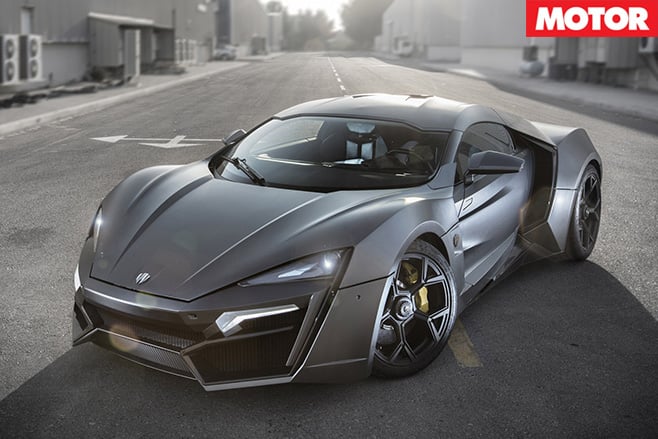
2. TUSHEK RENOVATIO
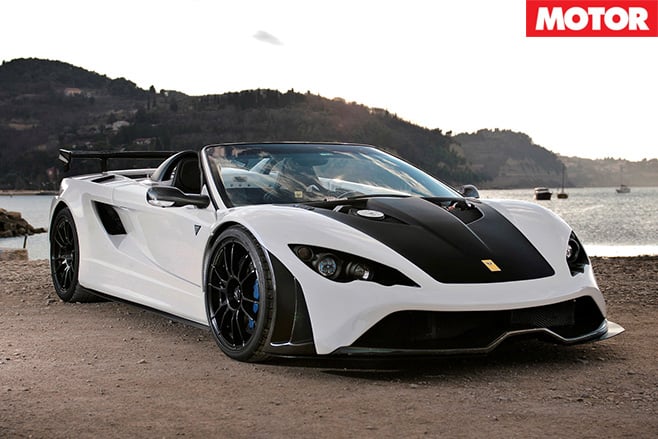
3. KOENIGSEGG REGERA
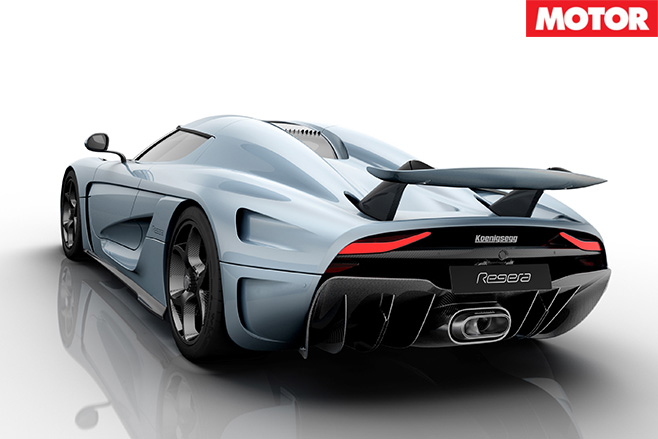
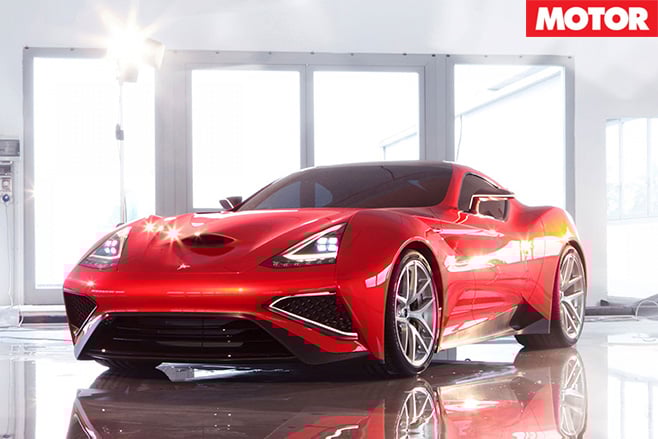
4. ICONA VULCANO
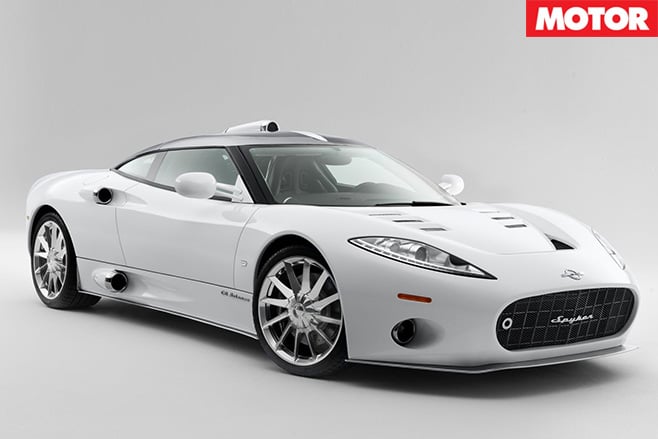
5. SPYKER C8 AILERON
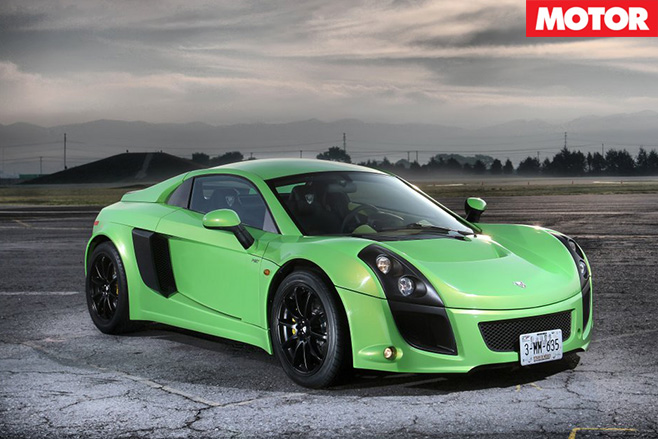
6. MASTRETTA MXT
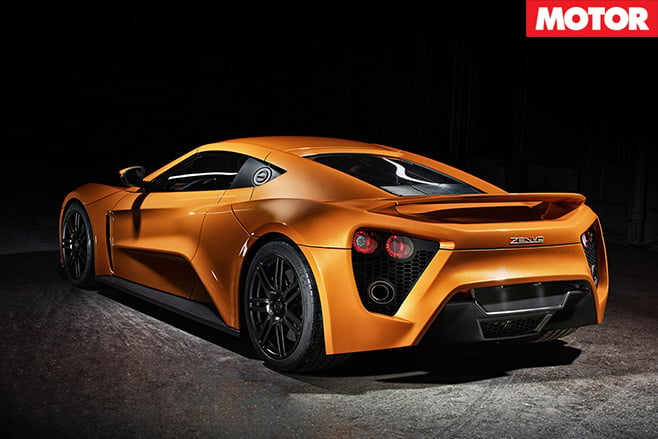
7. ZENVO ST1
8. HENNESSEY VENOM GT
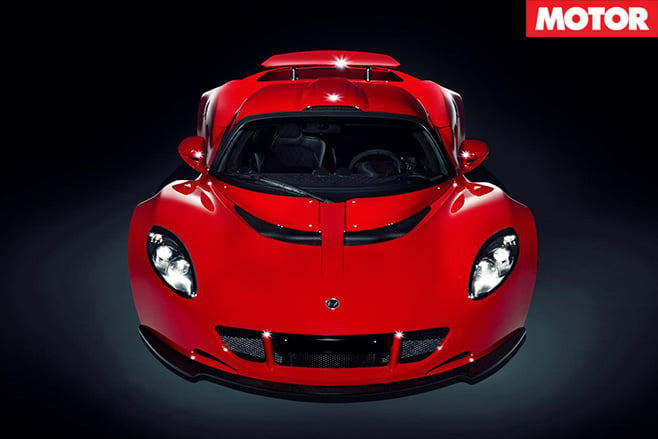
9. TRAMONTANA R
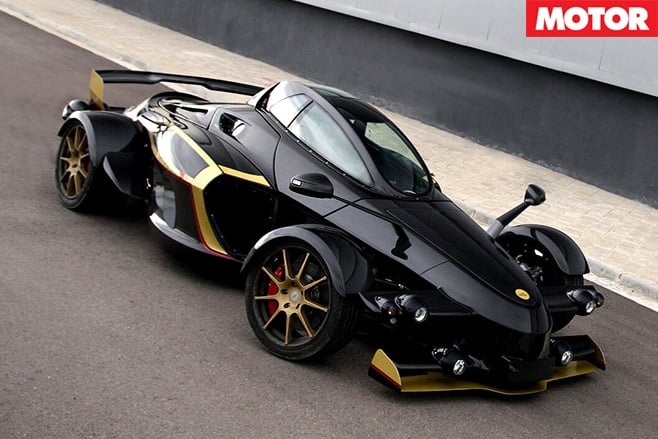
NOEL Tuckey emailed from Queensland to tell me that big brother Bill was soon to die. A series of strokes in 2010 followed, recently, by double pneumonia, was too much for an 80-year Bill and he died on Saturday, May 7.
A lot of us missed Bill over the six and a half years of his illness. We waited in hopeful expectation of a Tuckey story charting the stroke, but it never came. He refused visitors, worried, I think, that he might embarrass himself and wouldn’t be in charge of the conversation. So I was all the more grateful for the lunch we shared in August 2010, just a couple of months before Bill was laid low. Tuckey, garrulous as ever, was in fine form; talking up the books he was writing (by then 26) and even admitted to being 45,000 words “into a book about my life and career starting way back with my parent in England”. He bemoaned the many young motoring writers who, “think the motor industry began in 2000,” and told me in detail the story of double-beheaded murder in Maitland that he’d covered as a junior reporter on The Sydney Morning Herald in 1960. The manuscript of a book on the murders was finished and he was grumbling that he couldn’t find an Australian publisher.
A year earlier we exchanged emails and when I’d wished him a happy birthday, he gently reminded me that he shared his April 20 birthday with Charlie Chaplin and Adolf Hitler. “So I’m yet to decide whether I’m a comic megalomaniac or a megalomaniac comic,” he wrote. Makes a great line, except Chaplin was born on April 16.
One topic discussed over lunch was Tuckey’s enormous influence on a generation of Australian motoring writers, me included. Mel Nichols, Wheels’ former assistant editor and later editor of Car magazine in the UK, was writing a paper, to be delivered to the Cardiff University journalism school, on the global influences in motoring journalism and asked if Bill would name those who inspired his unique style. Bill happily quoted lines from Ernest Hemmingway and praised Henry Manney, the wealthy American who covered Europe and F1 racing for Road & Track. “I still have a copy of his marvellous piece on the Ford failure at Le Mans, based on the poem, ‘Casey at the Bat’.”
Tuckey at his best was The Best, pure genius, lyrical. His writing flowed effortlessly. He seamlessly included social commentary in car stories, he was biting, creative and enthralling, and a fine editor. Through Romsey Quints, his alter ego, humour became a weapon, first in Sports Car World (Wheels’ sister title) and later Wheels. Romsey, Bill explained, was created because the budgets were so tiny he couldn’t afford to employ more freelancers, so he created this mythical character to give the impression the magazines had more staffers.
I’d like to prove it with this extract from the September, 1965 SCW drive of a Lancia Flaminia GT: “There is a high country that I know where the grass grows green and thick right to the edge of the road and the clouds roll in like balls of cotton wool to fill the valleys so that you traverse the bends and dips between fields of rolling white. Up here you are perhaps 2000ft above sea level and on chill winter dawn mornings your breath hangs in solid clouds before your face and the air is blue and sharp. Sounds are amplified: the crack of your knuckles, the lowing of cows on the other side of a frosty slope. And from over the hills, and a great way off, you may one morning hear the sound of a car, travelling fast. If so, stop and listen, for it may be going very fast: you may hear the quick waa-rap of the upshifts, the squeal of discs clamped hard, the folding and unfolding crack-boom of the exhausts as the car dives between folds and out from behind hillsides. And suddenly it leaps over a brow into your sight and is there and past and gone, leaving a mind’s image of a gloved hand flashing, a rally jacket turned up high, and silver Touring bodywork rocking gently in its own violent slipstream. This, my friend, is the Country Of The Lancia.”
Quoting himself Tuckey wrote: “I think I was very drunk when I wrote that, but it still reads passably well.”
Paul Gover, for his excellent piece on Tuckey, originally for Australian Muscle Car, asked me what Bill brought to Australian motoring journalism. I concluded: “Bill believed there was no reason a car magazine shouldn’t aim for the highest standards of journalism.”
Wheels reflected that ambition and still does and that came from Bill Tuckey.
Upon hearing of Tuckey’s death, Mel Nichols sent me these notes, which warrant being republished in full:
“Bill was one of the world’s best and most influential motoring writers and car magazine editors. As a writer he was vibrant, inventive, witty, often provocative and always entertaining. As editor of Wheels from October 1963, he was original, innovative, energetic, brave and stylish. He was the agenda setter in Australian motoring journalism. The character and class he brought to Wheels endures today.
“What he did and how he did it influenced a generation of young motoring journalists and editors. A number of us went to the UK and through CAR magazine (which has had seven Australian editors) Bill’s influence flowed on to the next generation of British motoring writers, Jeremy Clarkson and Chris Harris (part of the new Top Gear team) among them. Via CAR, and the work of Aussie Angus MacKenzie at Motor Trend, it reached the US too.
“It’s no exaggeration to say that the shape of modern motoring journalism owes a huge amount to Bill. Everyone who enjoys reading good writing about cars, and may thank informed and fearless automotive criticism for contributing to the massive improvement in cars over the past 50 years, should raise a glass in thanks and tribute to Bill.
Ian Fraser, who preceded Bill as Wheels editor wrote:
“Bill had always been a terrific journalist, and as I read your e-mail all kinds of anecdotes came surging along my memory channels. His sense of humour and ability to write amusing copy was second to none. As I sit here in deepest Norfolk my clearest recollections of Bill involve humour, his hugely entertaining writing skills and his talent as an editor.
“The last time I saw Bill was over a cup of tea in Merimbula, sitting in the sun at an outdoor coffee bar. He was a world class motoring writer who really deserved better breaks than he actually got, although he had every reason to be proud of his huge output of books.”
Upon hearing the news Steve Cropley Tweeted: “Very sad to hear of death of Bill Tuckey, who inspired my generation of Aussie car hacks with brilliant, stylish, inclusive writing.”
You get the picture: William Philip Tuckey was a very special talent.
Peter Robinson was editor of Wheels from 1971-87
The Toyota 86 Shooting Brake was created by Toyota Australia’s Product Design division and hand-built in Japan for the brand’s local Festival of 86 event that took place last weekend.
The concept takes its name from the old English term Shooting Brake that in the early 20th century was used to describe vehicles designed for hunting but has evolved to indicate a sporty wagon.
Toyota’s design team turned the 86 coupe into a two-door hatchback-style vehicle by changing the roofline, reshaping the rear quarter section and stretching the side glass to taper into the extended upper sheetmetal.
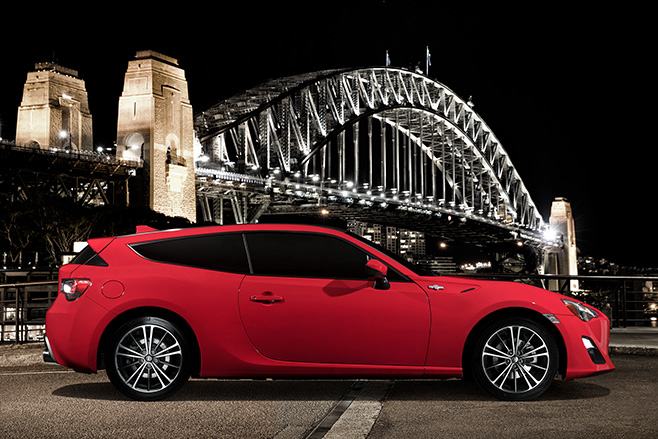
The bulk of the 86, including doors, front end and rear tail-lights and lower bumper are actually retained.
Toyota Australia’s design chief Nicholas Hogios said the Shooting Brake aimed to expand the appeal of the 86 coupe.
“The silhouette is still sporty, taut and energetic, but it’s more practical as it allows the roof to be used to carry surfboards, bikes or storage pods for a weekend away while the larger opening of the new boot enables much easier loading,” he said.
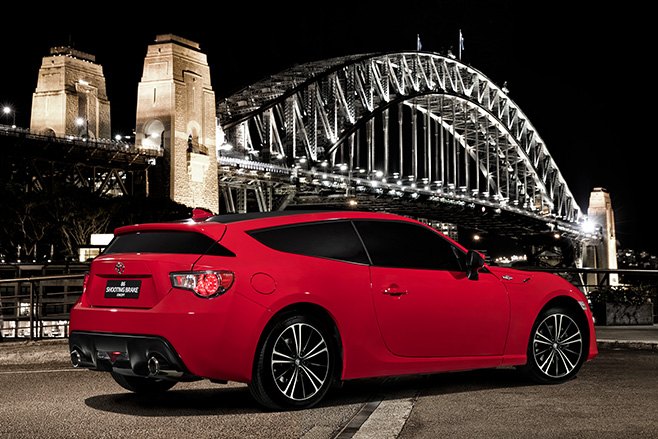
Toyota’s creation is reminiscent of Ferrari’s GTC4 Lusso (formerly the FF) and Honda’s now-discontinued CRZ, though Toyota’s chief engineer for the 86 said for now the 86 Shooting Brake wasn’t heading for showrooms.
“While we never say never, and I would love this concept to become a production reality, it is very much a concept that demonstrates the passion within Toyota for cars that are fun to drive,” said Tada.
Toyota has already shelved plans for a second body style for the 86. The company unveiled an 86 convertible concept in 2013 before deciding the business case for the model wasn’t strong enough.
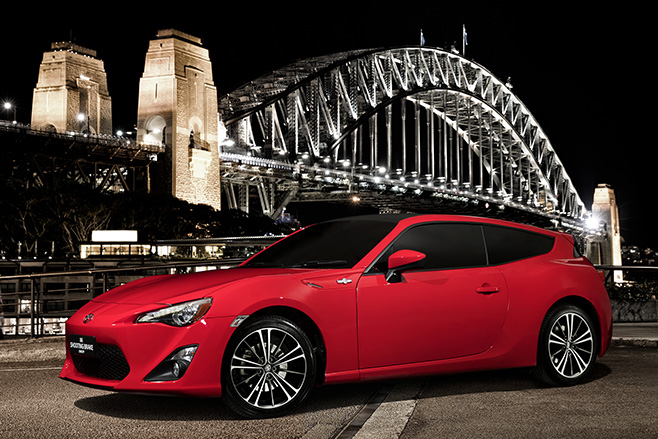
The concept’s unveiling has been a surprise as Toyota Australia’s design team has been quiet on the show-car front in recent years.
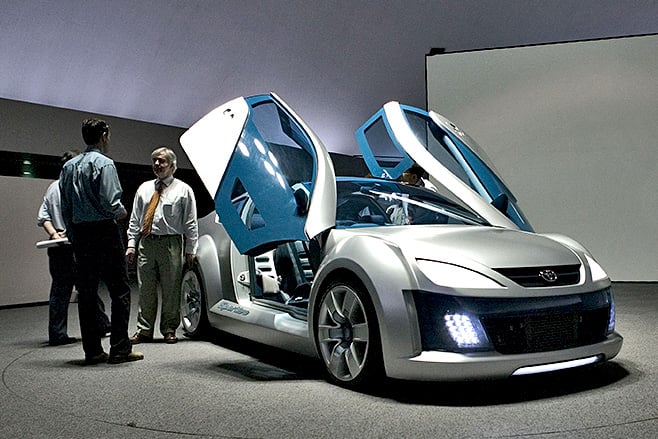
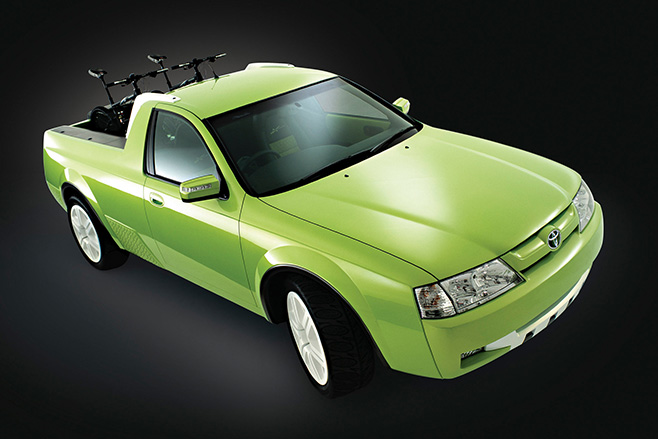
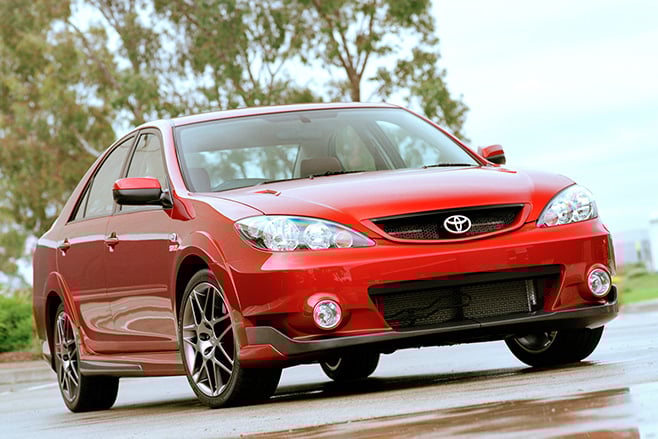
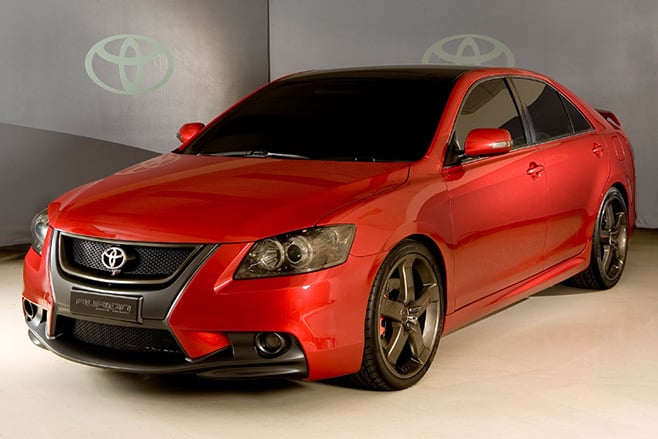
Between 2003 and 2009, Toyota Style Australia has produced numerous concept cars including:
TOYOTA X RUNNER COUPE UTE
SUPERCHARGED TOYOTA CAMRY TS-01
TOYOTA AURION SPORTS CONCEPT
TOYOTA HYBRID CAMRY CONCEPT
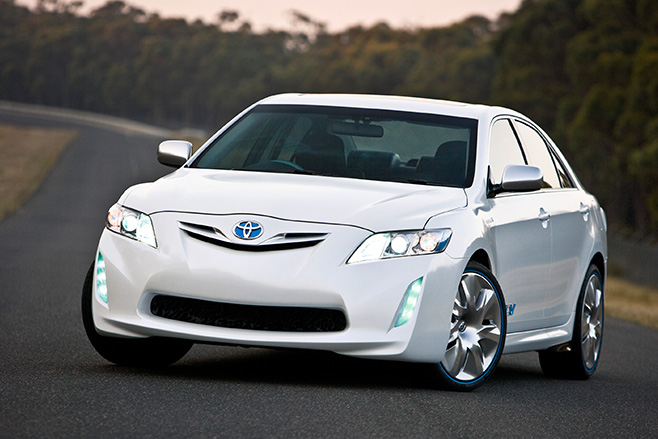
TOYOTA SP9R
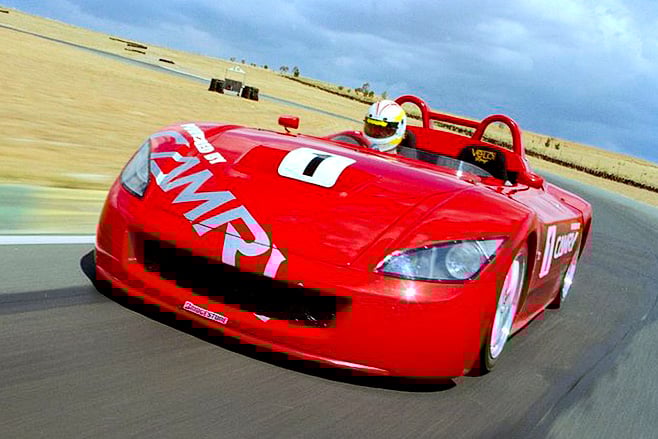
TOYOTA SPORTIVO COUPE