
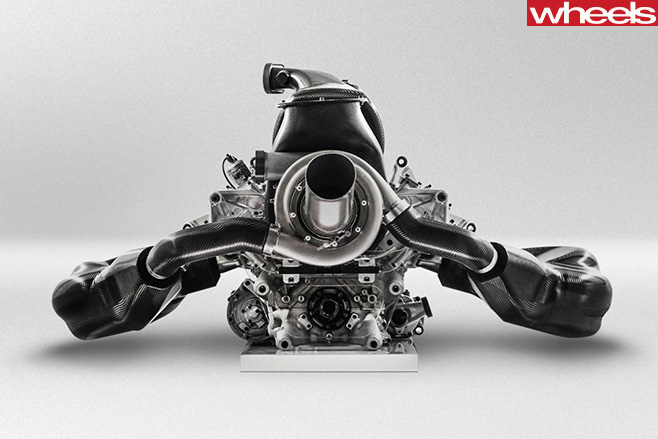
FORMULA One will have new power unit regulations for next season, with the intention to reduce eye-watering costs while guaranteeing supply for customer teams.
Under the new 2017 rules, the FIA can compel the manufacturer with the fewest customers to supply a F1 team that needs an engine.
The end target is to close the performance gap between engines, as well as improving the exhaust sounds they make.
Lengthy talks involving the four F1 power unit manufacturers – Mercedes, Ferrari, Renault and Honda – came up with agreement that the existing ‘token’ system for in-season engine development will go.
In part, the FIA statement revealed an agreement on power units covering four key areas relating to the cost and supply price, obligation to supply, performance convergence and the sound of the power units. The new regulation will apply to the 2017-2020 period.
From 2018, the annual supply price to customers will be reduced by a further €3m.
The FIA also insists supply of power units to customer teams will be ensured, as the homologation procedure will include an “obligation to supply” that will be activated in the event of a team facing an absence of supply.
There are also measures aimed at achieving performance convergence and constraints on power unit part weights, dimensions and materials, and on boost pressure will be introduced in 2017 and in 2018.
Based on the number of teams competing in the championship, the FIA can, if required, make it compulsory for the manufacturer with the lowest number of customers to step in.
This requirement won’t apply to a new power-plant manufacturer entering the sport.
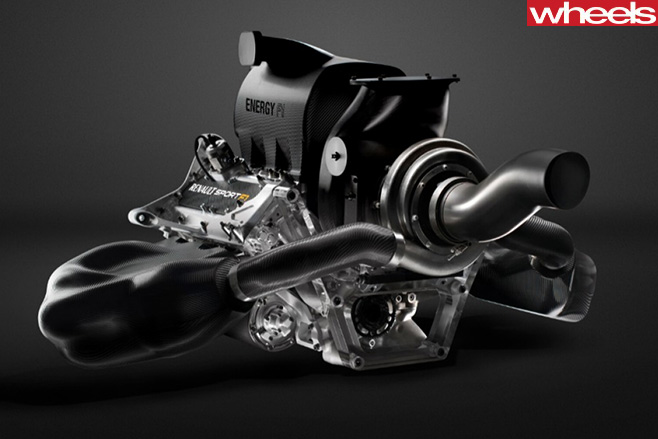
No. Mercedes is supplying Force India, Williams and Manor as well as its own factory team.
From 2018, there will also be a reduction in the number of engine parts permitted before penalty.
Each driver may use no more than three internal combustion engines, three MGU-Hs, three turbochargers, two energy stores, two sets of control electronics and two MGU-Ks per season.
At Sochi, F1 boss Bernie Ecclestone didn’t appear convinced that the engine situation is completely sorted. “We will have to see.
“All we really want to do is make sure all the engines are equal, so people that are supplying to customers and the customers get the same power unit.”
Ecclestone suggested the regulations would be scrapped if convergence did not happen.
He is no fan of the hybrid engines.
Plenty of C sensibilities mixed with an extra dose of driving verve make for an enjoyable two-door that’s also sensibly priced.
WHAT IS IT? The two-door version of Mercedes-Benz’s top selling car, the C-Class sedan. Based on the C-Class four-door that arrived in 2014, it is the second-generation model, codenamed C205.
WHY WE’RE TESTING IT The C Coupe has just arrived in Australia and we were keen to give it a spin on familiar roads. While it’s the C63 AMG we can’t wait to get our hands on, for now we’re limited to a taste test of the non-AMG models; the C200, C250d and C300.
MAIN RIVALS BMW 4-Series, Audi A5, Lexus RC.
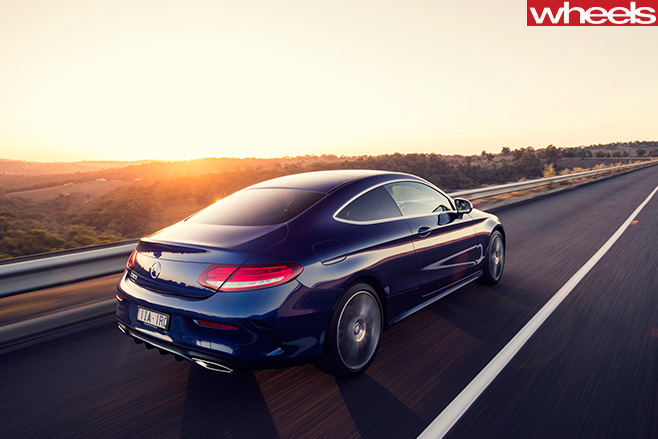
PLUS: Sharp pricing and decent equipment; rorty 2.0 turbo for C300; ride on Airmatic suspension; sleek design MINUS: Steering not as sharp as other dynamic aspects; C200 and C250d drivetrains aren’t particularly sporty; it’s a decent step up to C300.
THE WHEELS REVIEW Same wheelbase, same length, same width but 60kg more metal. Oh, and you pay more for it.
Like many two-doors, the Mercedes-Benz C-Class Coupe doesn’t start with the best sales pitch, although the brochure has glossy images of the elegant “diamond grille” and the sleek S-Class-Coupe-esque rump.
The AMG boffins have also chipped in with the suspension tune, diluting some of the cushiony ride of the C and injecting more cornering nous to liven things up.
Under the bonnet it’s pure C sedan, with a choice of three grades: C200, C250d and C300. There’s also the C63 AMG, which we’ll sample another day.
The petrol engines will account for the bulk of Coupe sales, with the tempting $65,900 price tag on the C200 key to its appeal. It’s no stripper, either. There’s electric seats with memory functionality, sat-nav, LED headlights, digital radio and 18-inch hoops.
Less convincing is the 2.0-litre four-cylinder engine. The flexible 300Nm defines its character, with loads of muscle around 3000rpm. Rev it towards its 6300rpm cutout and the 135kW is less convincing, a tad overwhelmed by the 1450kg it has to shift. Forget audible excellence, too; this engine is more about getting the job done.
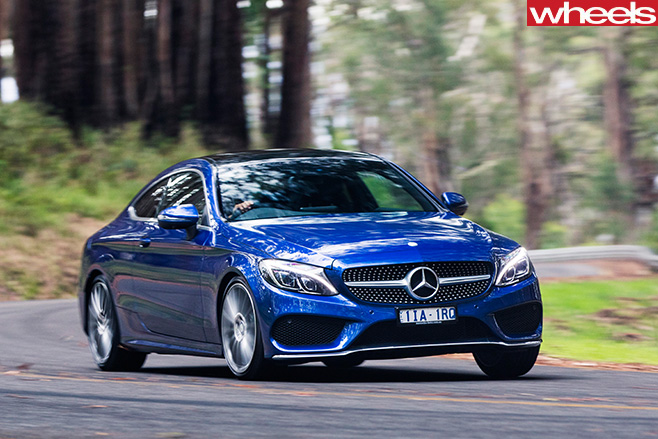
Less impressive are the gear shifts in Sport+ mode, with a full-throttle jerkiness that seems to bring little accelerative benefit.
Sport and Sport+ also add much needed weight to the steering, for added confidence. However, the steering doesn’t have the alacrity to match the rest of the car. While its ratio is quicker than that of C four-doors, an even shorter ratio would be more in keeping with the sleek personality.
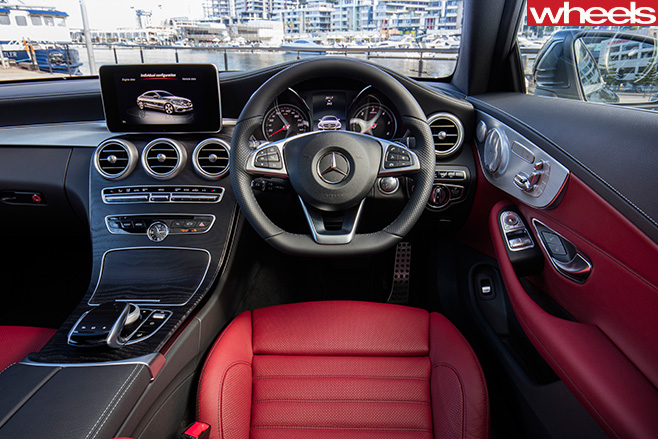
Similarly, the 2.1-litre four-cylinder turbo diesel (150kW/500Nm) has near-instant right foot force, but it’s more cruising effortlessness than dashing from corner to corner.
Inside, as with the sedan, simplicity and quality combine to deliver a cabin that exceeds its price tag. From the cool touch metal finishes on everything from the speaker grilles to the air vents to the warm matte wood dash inserts.
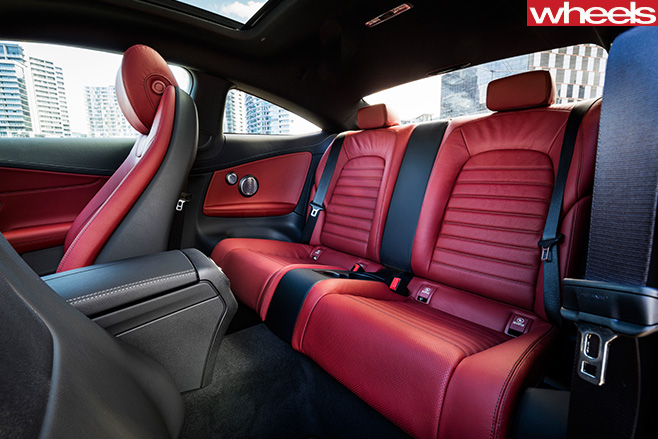
Indeed luxury is a large part of the sporty Coupe. The C200 and C250d, in particular, are more about getting there in style. But the C300 is a more convincing rorty sporty.
Coupe changes
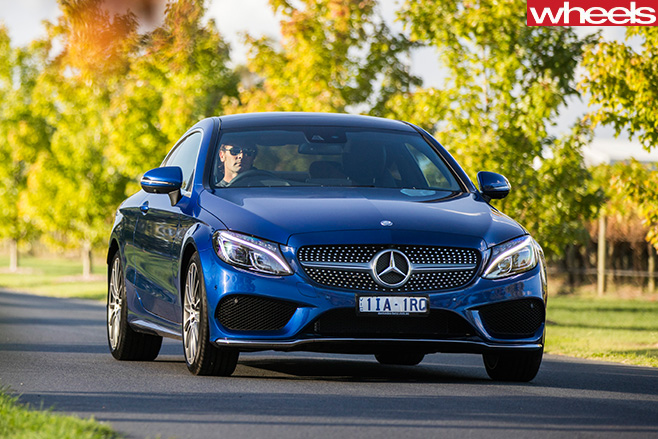
The Coupe’s front seats sit 14mm lower than those in the sedan, and it makes a noticeable difference, combined with higher window sills to create a more cocooned feel. Other Coupe changes include standard AMG-spec suspension and a quicker steering rack. Visually, apart from the coupe roofline, it’s all about the “diamond grille”.
SPECS Model: Mercedes-Benz C300 Coupe Engine: 1991cc 4cyl turbo Max power: 180kW @ 5500rpm Max torque: 370Nm @ 1300-4000rpm Transmission: 7-speed auto Kerb weight: 1490kg 0-100km/h: 6.0sec Price: $83,400 On sale: Now
On the eve of the 2016 Festival of 86 in Canberra, Toyota has sprung a huge surprise with the unveiling of its dramatic new “Shooting Brake” concept of its iconic 86 sports car.
The prototype was conceived and developed by Toyota Australia’s product design team and hand-built in Japan under the direction of the global sports car division.
The global premiere of the Toyota 86 Shooting Brake, in the unlikely location of the Sutton Road Driver Training Centre just outside Queanbeyan, is another in a sequence of 86 concepts, satisfying chief engineer Tetsuya Tada’s long-held ambition to eventually create a family of 86-based models.

The shock arrival of the 86 Shooting Brake concept will delight the huge crowd expect at the festival on Saturday.

Tada-san, usually very protective of his 86 baby, is more than happy with the Shooting Brake look, which he says retains the purity of the original design.
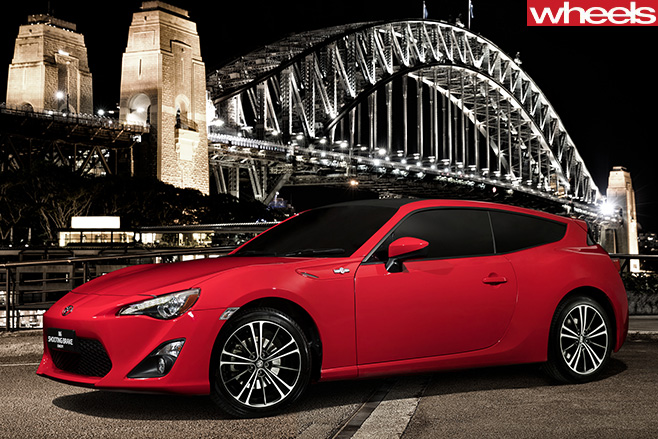
It weighs 39kg more than the coupe on which it is based, with most of the additional mass rearward, actually helping the weight distribution reach an almost ideal 51-49 balance.“The nicely weighted and direct steering of the 86 ensures the car retains the involving drive experience of the coupe with a slightly more neutral feel in tight corners on a driver’s favourite road,” Tada said.Tada-san said Toyota wanted to gauge reaction to the concept, although it was conceived as an internal design study and there were no plans for production. Production may be a long shot, but Tada suggests its creation is a demonstration of the passion within the automotive giant.
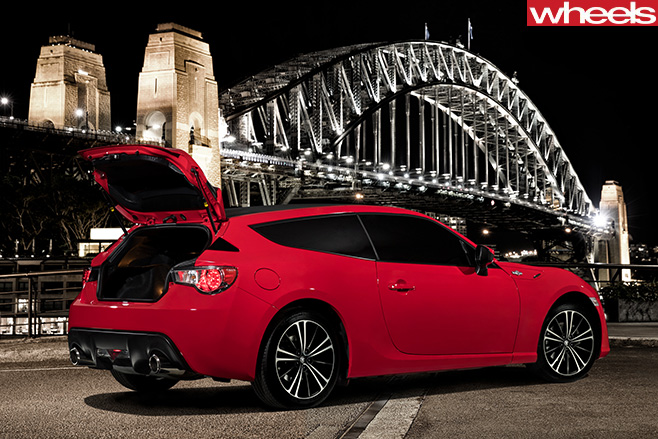
“However, like a good parent saying ‘no’ to too many sweets, we made the conscious decision to keep as much of the original 86 as possible, only changing what was absolutely necessary.“The silhouette is still sporty, taut and energetic, but it’s more practical as it allows the roof to be used to carry surfboards, bikes or storage pods for a weekend away while the larger opening of the new boot enables much easier loading.”
HOLDEN has posted a $128.2 million profit for 2015 – its first in five years – but added that making cars in Australia was still dragging the company’s profitability down.
The result is a turnaround from the $255 million loss reported in 2014 and a record $558.3 million in 2013, all associated with its decision to quit manufacturing in Australia in 2018 and become a full-line importer. Shutting down the Port Melbourne engine plant and the Elizabeth assembly line is costing the carmaker about $600 million.
The positive result is also in stark contrast to Ford Australia, which earlier this week posed a $162 million loss for 2015, its last full year as a manufacturer here. It also turns around a string of consecutive losses for the carmaker that have totalled almost $1 billion.
Holden managing director Mark Bernhard said the import side of Holden’s business was already consistently profitable.
“We’re paving a profitable and sustainable future for Holden for the long term. Put simply, Holden is profitable on our imported vehicle range, while our manufacturing business continued to run at a loss in 2015,” Bernhard said.
“We recorded significant charges, and therefore losses, in 2013 and 2014 due to asset impairments and employee entitlements. This is the cost of looking after our people and ensuring an orderly wind-down, and that remains our unwavering commitment.”
He said if Holden had continued building cars beyond 2018, the carmaking side of its business would have lost $85 million in 2015.
Bernhard indicated Holden would be able to improve its bottom line further once local manufacturing ended.
“I think as we move away from local manufacture where we’re losing money and we replace those products with imported products where we are making money, it would be safe to assume we will be increasing profitability,” he said.
Holden’s financial statements released today said it had also included “one-off accounting reversals” of $79.7 million – read cost savings – relating in most part to to a decision to keep its powertrain calibration engineering team on the company books, as well as $57 million in “supplier-related costs”.
Holden’s result is based on $3.9 billion in revenue earned from 102,951 vehicle sales in 2015, down three percent on 2014’s numbers.
On the manufacturing side, Holden said it had built 56,786 Commodore and Cruze cars for the year, down 13.5 percent on 2014’s numbers, and 50,397 six-cylinder engines, down almost 27 percent on the previous year.
In terms of exports, Holden sent 10,576 Commodores and Chevrolet-badged Caprices to markets including New Zealand, the Middle East and North America.
Holden said if it had not made the call to quit Australian manufacturing in 2018, it would have taken an extra $125 million hit to its bottom line, dragging its profit down to just 3.2 million for the year.
Government grants added $70.3 million to the carmaker’s bottom line.
Holden’s last full-year profit was $89.7 million, pegged in 2011 – the exact amount it received in taxpayer support for the year.
Holden said it had invested $70.9 million in research and development in 2015, paling in comparison with Ford Australia’s claimed $300 million spend for the year.
1. There are at least two airbags for each person in the C-Class Coupe, and the driver gets three. With seating for four, there are nine airbags in total; dual front airbags, a driver’s knee airbag, one in each door to protect your body in a side crash, and side curtain airbags to protect heads in a side impact.
2. While it looks a lot sleeker and more compact than the C-Class sedan, the Coupe is exactly the same length and width, and the distance between the front and rear wheels (wheelbase) is also identical. The only difference in exterior dimensions is the height; at 1442mm high the sedan is 37mm taller than the Coupe.
3. The front seats in the Coupe sit 14mm lower compared with those in the sedan. It’s all part of the more sports-focused driving experience in the two-door.
4. All C-Class Coupes run on runflat tyres, which can be driven on for short distances (usually a few hundred kilometres) after a puncture. However, if you drive on them when flat you’ll almost certainly have to replace the tyre rather than get it repaired.
5. All C-Class Coupes get a slightly firmer AMG-tuned suspension set up. It makes the cars bumpier but ensures it sits flatter in corners.
6. The C200 and C250d Coupes are about $5000 more than the C-Class sedans using the same engines. While they have two fewer doors, they do get more equipment, including a memory function for the electrically-adjusting front seats, four cameras to help with parking, “black ash” wood trim and a fake leather dashboard.
7. The main visual differentiator between sedan and coupe at the front of the car is the Coupe’s “diamond grille”. It includes dozens of chrome-finished blobs to give the grille a more elegant 3D appearance.
8. Despite being smaller, the C-Class Coupe weighs about 60kg more than the C-Class sedan.
9. This new model (codenamed C205) is the second generation C-Class Coupe. Prior to that Mercedes-Benz’s most affordable coupe was known as the CLK.
10. Mercedes-Benz has no plans to copy BMW and Audi by producing a four-door “coupe”. The 4-Series GT and A5 Sportback have been successful models, but Benz appears happy with its broad – and broadening – model range for now.
Click here to read the full review on the Mercedes-Benz C-Class range.
For this week Canberra will play home to the Toyota 86 Shooting Brake global reveal at this weekend’s annual Festival of 86.
Australian designers have played a pivotal role in the design of the Shooting Brake version of the four-year-old 86 coupe, creating the first sketches and CAD drawings of the model that was then sent to Japan to be refined and built.
Toyota is open in saying this is not a “glamorous” concept, with unfinished carbon-wrap roof trim and an awkward connection with the B-pillar that retains the coupe’s door aperture despite the raised roofline. It also insists that it is strictly a concept.
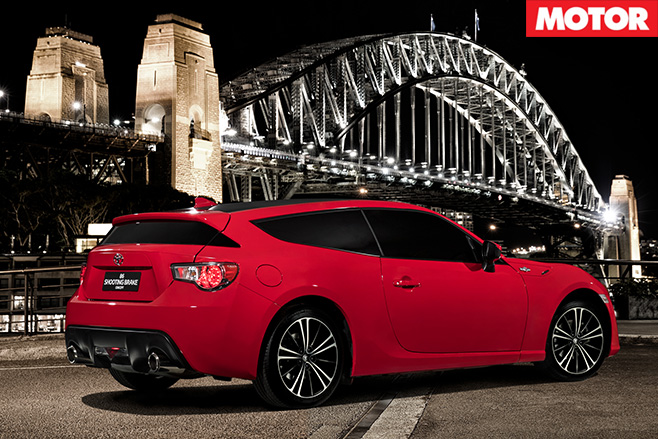
Speaking at the official launch function of the 86 Racing Series today in Canberra, Hogios said there was the temptation with this “after hours” project to change more styling elements of the 86 than just the roofline.
“But like a good parent, we resisted that temptation,” he added.
The 86 Shooting Brake is designed to extend the rear-drive model’s practical appeal, aimed at families who require extra luggage space, a more versatile loading area and a roof pod, surfboard or ski racks that attach easily on the roof compared with the swoopy coupe.
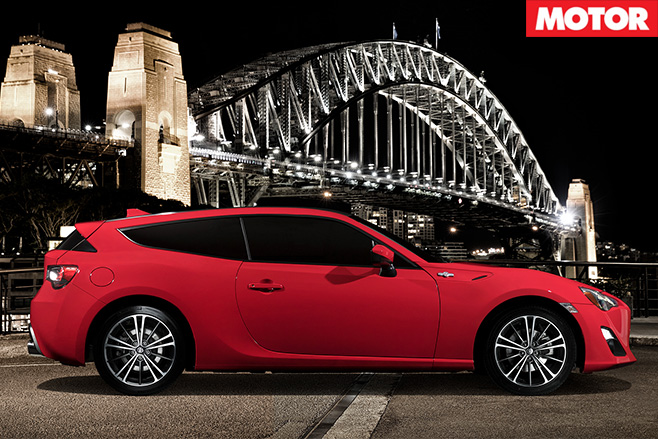
The local team then flew to Japan to work with Toyota’s design studio who then built the 86 Shooting Brake, which with a kerb weight of 1269kg is 39kg heavier than the coupe. It was then driven and shipped to Australia for its global reveal this week.
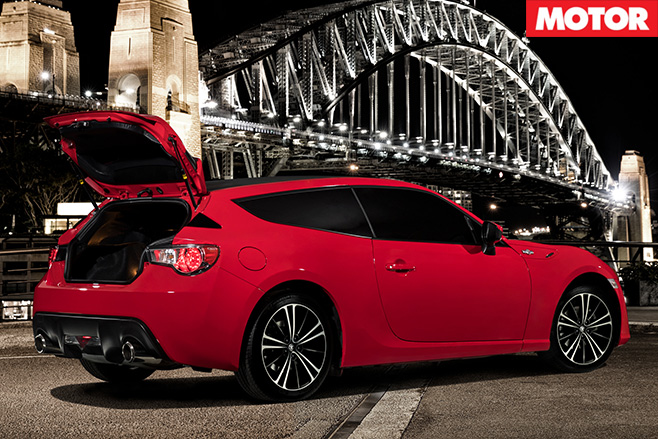
He cautioned, however, that “it is important to have a strong business case to go into production”.
The Toyota 86 Shooting Brake will be on display for the expected 500 punters attending the Festival of 86 this weekend in Canberra.
TELL ME ABOUT THIS CAR
The Abarth 595 is a small, cute and powerful hot hatchback based on the Fiat 500 city car. It’s the cheapest Abarth ever sold in Australia and bridges the gap between the regular Fiat 500 range and the existing, and more expensive, Abarth models.
STRENGTHS
- It has character. Like all Fiat 500s, the Abarth 595 is dripping with personality thanks to exterior styling that manages to be cute, retro and tough all at once.
- It’s fast. Actually brisk is a better word, given 0-100km/h takes 7.9sec, but the Abarth 595 feels sporty and is powerful enough to keep keen drivers entertained
- Even better news is you can probably afford one. Previous Abarth 500 models have been annoyingly expensive, but this new 595 model is the cheapest Abarth model ever offered in Australia. It starts at $27,500 for five-speed manual models, which undercuts the previous Abarth entry point by a sizeable $6500.
- It’s also the most comfortable Abarth model you can buy. Sure it has firm sports suspension but it’s not as stiff as other Abarth models. Smaller 16-inch wheels (other Abarths roll on 17s) ensure the 595 rides bumps with reasonable compliance.
- The retro interior is funky, but it’s beginning to show its age. There’s no central touch screen, no reverse camera and no cruise control
- The cabin materials also aren’t up to standard. The dash and door plastics are hard and scratchy, reminding you that the 595 is based on a much cheaper model
- Cabin ergonomics aren’t a strength either. There’s no reach adjustment on the steering wheel, the front seats feel too high and the pedals aren’t where you’d expect them to be. The foot rest for your left foot also feels like an after thought
- The handling isn’t as sharp as some rivals. The 595 is a hoot to drive in isolation with sticky handling and a rorty engine, but those interested in driving will prefer the Ford Fiesta ST or more polished Volkswagen Polo GTI.
For serious drivers, the Ford Fiesta ST is more fun and rewarding to drive quickly. It’s also marginally cheaper than the Fiat and is better equipped. The Volkswagen Polo GTI should also be on your shopping list due to its superb build quality and slick dynamics.
The fully-electric 2016 BMW i3 has been treated to a near 50 percent range upgrade thanks to a new 94Ah battery that jumped the car’s 190km range to a significantly longer 300km.
Existing owners in overseas markets will be given the opportunity to have the new 94Ah battery retro-fitted. This will allow their current i3s to attain the same increased range as the incoming model. A fast-charging 11kw wall-mounted charging station will also be sold.

The current BMW i3 starts at $63,900 and will remain for sale alongside the longer-legged model. BMW Australia stated that it was still in the early stages of working out pricing and specification but we expect a price-tag to arrive towards the pointy-end of the year.
The Triton GLX+ extends the GLX features list for no extra cost over the $36,990 RRP – or $39,490 for automatic instead of manual gearbox.
Extra features are 16-inch wheel rims made of alloy rather than steel, a rear-view safety camera, 6.1-inch colour touchscreen and rear step bumper.
All features except the wheels were previously only available by stepping up to the more expensive Triton GLS.
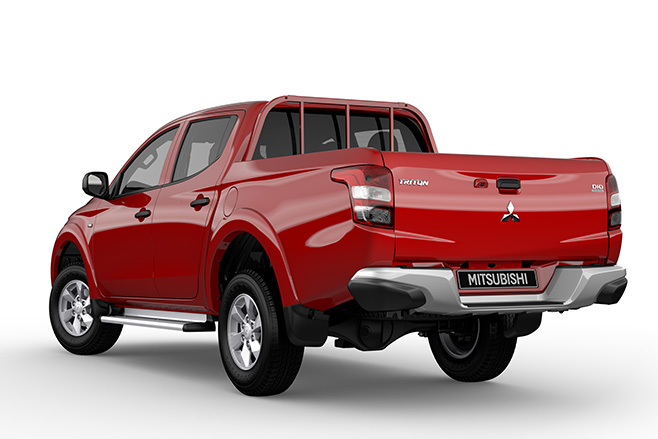
Both GLX models are powered by a 2.4-litre turbo diesel with 133kW of power and 430Nm of torque.
Mitsubishi Australia describes the GLX+ as a limited edition model, though doesn’t specify how long it will be available in showrooms.
The GLX+ follows Holden’s recent move to introduce a new LSX variant of its Holden Colorado, as ute manufacturers gear up for the end of financial year – with June traditionally the biggest month for business.
The GLX+ is already among a range of Tritons available with special End of Financial Year driveaway deals. From 1 May to 30 June, the GLX+ is available for $36,990 driveaway, with a free upgrade from the standard manual transmission.
Click here to read the full review on the Mitsubishi Triton range.
TELL ME ABOUT THIS CAR
When Suzuki released the Vitara compact SUV, consumer response was positive – a stylish, spacious, comfortable and versatile SUV. But it needed more grunt. Six months after the initial Vitara launch, the Japanese carmaker responded with the Vitara S Turbo.
This 1.4-litre turbocharged petrol engine produces 103kW and 220Nm. That’s a very handy 17kW and 64Nm more than the standard 1.6-litre model. But it’s not free. The more powerful engine, available with front-wheel or four-wheel drive, also brings a $4K price hike over the base model RT-S.
STRENGTHS
- The appeal is obvious. It’s packed with all the good stuff of the Vitara, enhanced by the turbocharged engine which definitely gives it a bit more oomph, especially at lower speeds. Suzuki has also had a fiddle with the steering, wiping away some of the stickiness of the Vitara.
- Vitara comes with a front-wheel drive and four-wheel drive option, bridging the gap in tech and price between the RT-S variant and the Rt-X. The 4WD option uses Suzuki’s AllGrip System which features a mode for auto, sport, snow or lock, but it doesn’t come cheap.
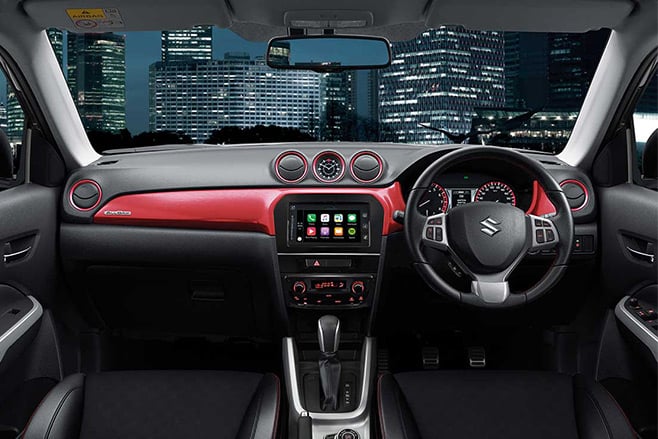
- It’s packed with equipment such as push-button engine start, parking sensors, LED headlights, sensor wipers, Apple Carplay and Android Auto, and leather or suede upholstery.
- There’s no question the styling in the Vitara looks good, but it’s the small details that really let the S Turbo down. Upgrading the interior’s cheap plastics and the mismatched headlights would really take it from Nicole Richie in the Simple Life, circa 2003, to the more sophisticated version of the reality TV star. Even things like the heavy doors which don’t close easily would be a simple but noticeable fix.
- While the Vitara Turbo drives better, it’s not perfect. It may have more real-world power, but the ride is firm and unsettled. You can feel the suspension working hard over bumpy roads, especially when carrying a load. By the same token, around town and as a solo driver, the S Turbo soaks up bumps adequately.
- Then there are the weaknesses we expect Suzuki to address in the near future. It doesn’t have a manual option, and only one colour combination is currently available – red with a blacked-out roof. But Suzuki has said more colour options will arrive in the future.
ANY RIVALS I SHOULD ALSO CONSIDER?
Since its launch last year, the Suzuki Vitara has done well in the small SUV segment, currently sitting as the seventh most popular behind the Mazda CX-3, Mitsubishi ASX, Honda HR-V, Nissan Qashqai, Holden Trax and Subaru XV. With the addition of the new S Turbo, the Vitara could gain ground on the segment’s best sellers. The CX-3 is a small, zippier option albeit a lot less spacious. The Honda HR-V, on the other hand, beats the Vitara in boot space by more than 70 litres, and gives the S Turbo a run for its money in terms of packaging. The new Volkswagen Tiguan launching later in 2016 could pose a threat to the S Turbo, offering a refined, premium and practical option to SUV buyers, albeit with a higher price-tag.
