
HYUNDAI’S N badge that will transform pedestrian passenger cars into street performance heroes won’t extend to the Korean carmaker’s standalone luxury brand, its chief designer says.
Instead, Peter Schreyer, the former Audi designer charged with transforming the image of Hyundai and its more upmarket Genesis brand from cheap transport to desirable driveway stuffers says the Genesis brand is likely to remain exclusive, and therefore pass on using the N badge to build excitement.
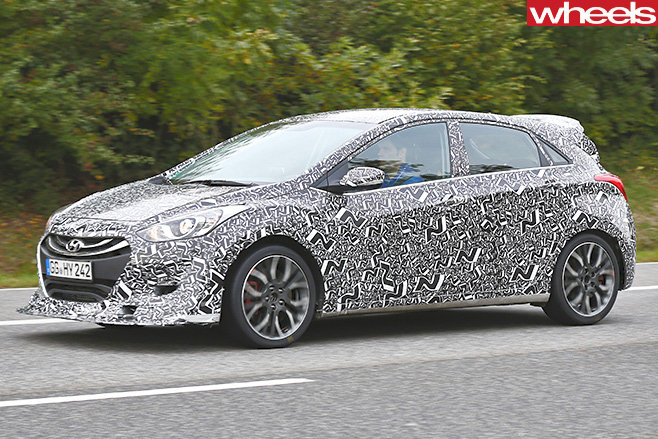
Anticipation has built for the N brand, which is shaping up to be Hyundai’s answer to the likes of Mercedes-AMG and BMW’s M Division, after former M Division engineering boss Albert Biermann defected to the Korean brand in late 2014.
EARDRUMS rejoice. The Audi R8 Spyder has arrived, making it easier than ever to enjoy the spine-tingling scream of that 397kW 5.2-litre V10.
Revealed overnight at the New York Motor Show, the Spyder is offered solely with the Audi R8’s less powerful V10, meaning there’s no 449kW/560Nm Plus version for now.
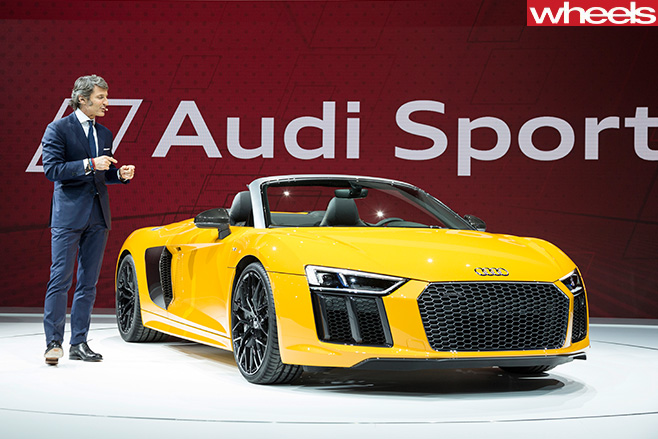
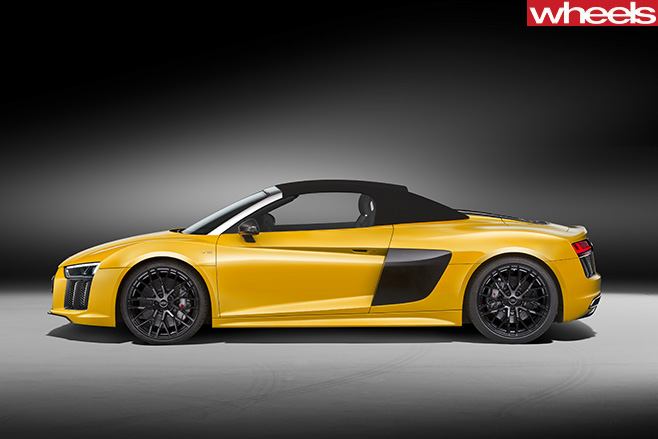
Similar to its predecessor, the Spyder makes do with a cloth roof which can now open or close in 20 seconds, and that rear glass window retracts, too, so you can still enjoy the V10 orchestra even when it’s raining.
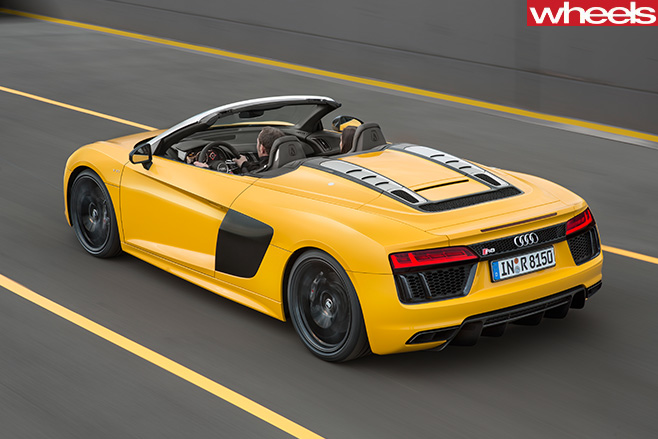
Inside, you get the same beautifully made cabin as the coupe, complete with Audi’s excellent 12.3-inch Virtual Cockpit display, and full suite of smartphone connectivity.
Hyundai’s new luxury division, Genesis, has followed up its G90 flagship limo earlier in 2016 with this concept that is set to be called the G70. It will debut in production form in 2017 before being imported to Australia, possibly a year later.
The sleek yet muscular design further showcases the Genesis brand’s “athletic elegance” styling language, led by former Bentley chief designer Luc Donckerwolke.
With its long bonnet, short front overhang and sloping, coupe-like roofline, the New York Concept creates a sporty take on the mid-sized luxury sedan.
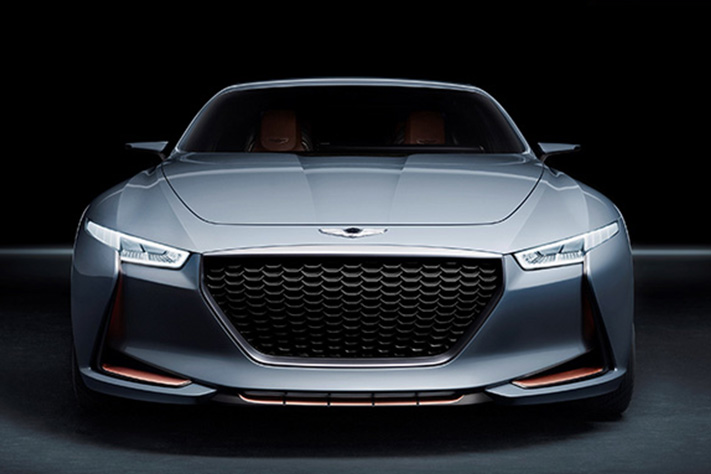
The concept’s four passenger doors feature near-invisible handles that sit flush with the bodywork, though expect more conventional doorhandles along with other exterior changes for the G70 that goes into Hyundai showrooms.
Dimensions of the concept aren’t revealed but it is understood to be about 4.6 metres long – placing it in the ballpark of its intended rivals that include the aforementioned 3 Series, Audi A4 and Mercedes-Benz C-Class.
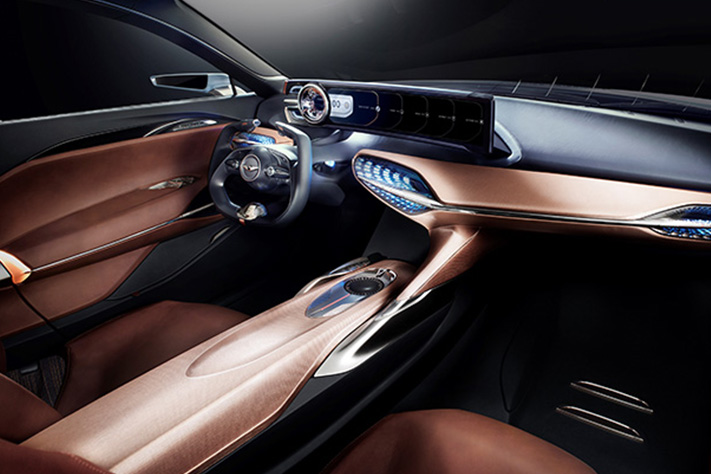
Inside, the New York Concept’s dash is dominated by an ultra-wide, curving 21-inch screen that incorporates both a circular instrument panel and digital multimedia displays that include a speedo. There’s also a Batmobile-style steering wheel notable for an open top section.
The cabin features a prominent spinal centre console that runs from the dash through to the two individual rear seats.
A hybrid drivetrain sits under the concept’s bonnet, comprising a 2.0-litre turbocharged four-cylinder engine, an electric motor and an eight-speed automatic gearbox.
Power and torque outputs of 180kW and 353Nm are quoted, which would put the G70 in the same engine-performance region as specific models such as the BMW 330i and Lexus IS200t.
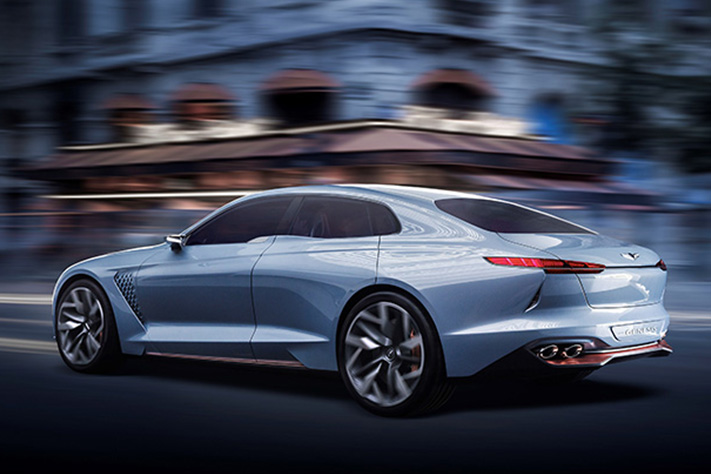
The production car will also follow those cars with a rear-wheel-drive set-up.
Hyundai’s Genesis brand will release five new models over the next years. They will include the G90, G70 production version of this concept, and the G80 that will become a rebadged version of the Hyundai Genesis sedan that went on sale in Australia in 2014.
THE Hyundai Ioniq range of EV, hybrid and petrol C-segment sedans is expected to land in Australian showrooms in 2017, yet the new Toyota Prius rival also points to the next i30 hatchback.
Shown at the New York Motor Show only weeks after the official unveiling at Geneva, the Ionic range is made up of three sedans, each with a different powertrain. There’s a full EV, as well as both plug-in and regular hybrids.
They’re built on a brand new front-drive platform not used for any other model range. With Hyundai’s i30 one of the oldest cars in the showroom – and most important in terms of sales – the Ioniq’s C-segment sized platform is a natural match for Hyundai to amortise the costs of the new architecture.

They not only include the hybrid technology, but also tech such as fuel-saving stop-start engines and a dual-clutch transmission.
On sale in the US towards the end of 2016, the Ioniq will be offered in 50 US states – the same commitment made over at the Toyota stand for its plug-in model, the Toyota Prius Prime. And although Hyundai won’t directly compare its Ioniq to the Prius, Hyundai Motor America product planner John Shon said that it would have to be price competitive with similarly sized rivals.
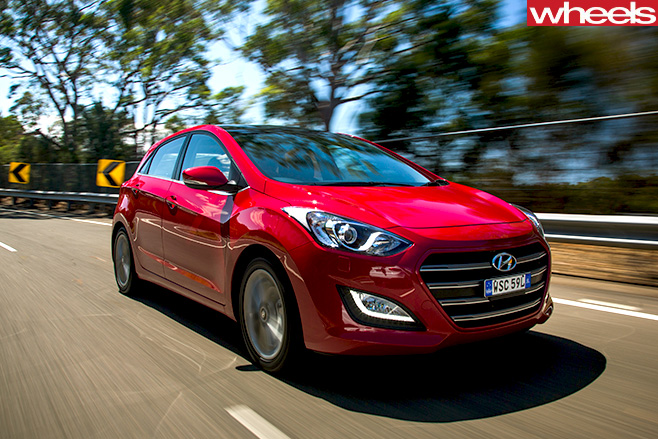
Hyundai Australia is chasing the plug-in and regular hybrid Ioniq for a proposed launch in 2017.
“Nothing’s been locked in at this stage – and we’re not ruling out the full electric, either,” said Hyundai Australia spokesman Guido Schenken.
MERCEDES-Benz’s bold new product strategy will add at least 10 extra body style vehicles to the 32-strong existing range within the next four years, Wheels has learned.
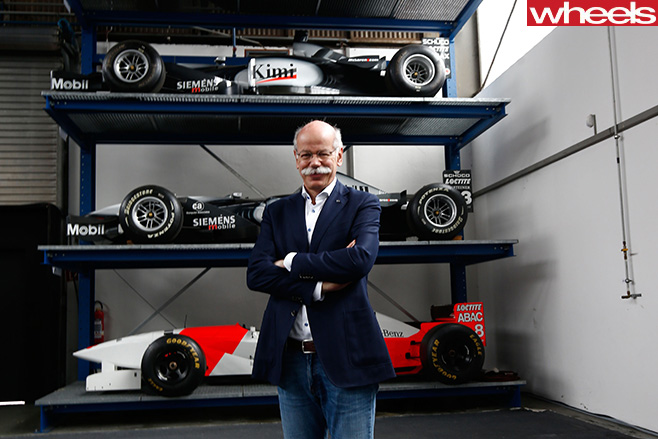
Mercedes board member for sales and marketing, Ola Kallenius (pictured, above), revealed the ambitious expansion plan at the New York Motor Show, confirming that Mercedes will have more than 40 different body style models by 2020.
“If you count the way we officially count – individual body styles – we have 32 now and we have laid a plan going up to 2020 to go slightly above 40. So we have another 10 or so new models that don’t have a predecessor coming in the next four years. Separate models.”
Wheels believes at least three of the 10 will be new SUVs, though not – thankfully – a convertible to rival the roofless Range Rover Evoque. First to arrive will be an all-road wagon based on the new Mercedes-Benz E-Class wagon that could arrive late this year. Kallenius also hinted at a Mercedes-Benz C-Class-based all-road wagon, too, saying there is a demand for a less SUV, more passenger car-style sporty wagon.
“These kind of SUV coupes [like the Mercedes-Benz GLC Coupe] – sports car and SUVs blended into one – is an example that you can find niches that are also very successful. [Beyond that] people are looking for a more individual choice, they like sporty driving, but still want to have some utility. [They want to] drive something that not everybody drives.
“So there is opportunity there and I still think we can find another area there or two in the SUV portfolio going from top to bottom where we can have decent volume.”
“I won’t rule that out. What’s interesting is the restart of the Maybach story [last year] with a slightly different [S-Class based] strategy has had a phenomenal start sales-wise.
“I think there is scope for growth in the Maybach brand. Maybach needs to be the highest exclusivity corner of the Mercedes-Benz family. Only on the top end would I see potential derivatives for Maybach, and not going downwards. So an E-Class, for instance, is not something we see on the cards. If and when we do more it will stay at the top end.”
Kallenius said Mercedes Benz was also working towards launching a purpose-designed electric car “due in the next couple of years. And as we build towards zero emission mobility, that [first] electric car will not be the only effort in that segment. Beyond 2020 we will have the opportunity to do more variants around electric vehicles as well.”
Anyone thinking the forthcoming Benz utility based on the Nissan Navara could account for two or three of the 10 new additions would be wrong, said Kallenius; it only counts as one.
Beyond those, AMG is expected to add a roadster version of the GT performance coupe, and is also working on a second AMG-only model, a four-door, four-seat rival for the Porsche Panamera and Aston Martin Rapide. But those are niche models, and Kallenius says not all of the 10 newcomers will be niche players.
“There could also be new cars in our portfolio in the next few years that are not niches,” he said.
So, significant sales volume opportunities not satisfied by today’s range? “Indeed.”
IT’S the car with stairs, hulking gullwing doors, five TV screens and a Hollywood superstar to attract attention.
But most of the theatre of the Lincoln Navigator Concept show car was exactly that; there are no plans for the gullwing doors or the stairs, no matter how big the new model that will arrive in 2017 is. And actor Matthew McConaughey is not part of the deal.
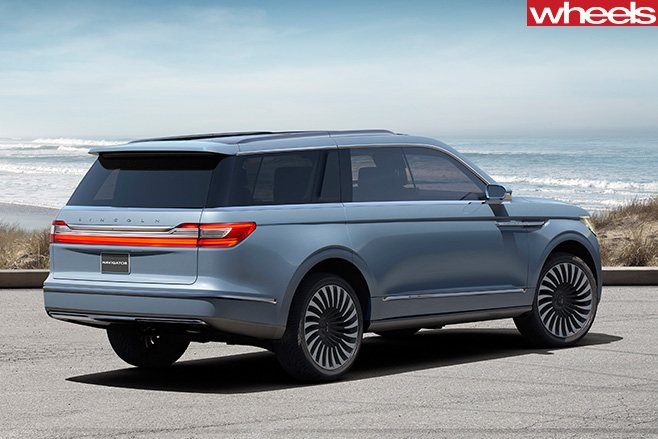
Lincoln design boss David Woodhouse told Wheels the intercom system between the seats of the Navigator Concept was something being considered for future models.
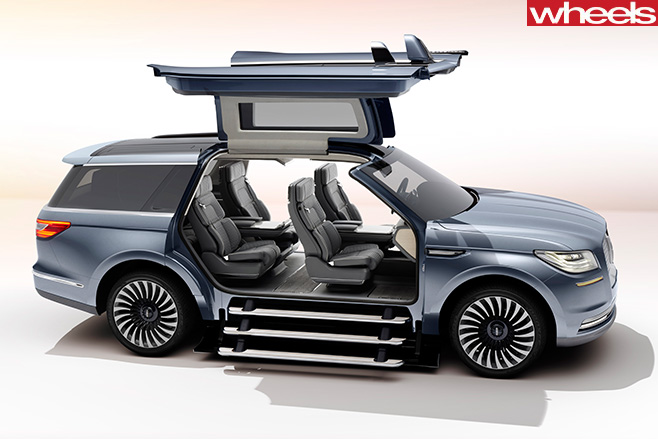
“There’s about seven screens; we’ve actually used them for some interesting ideas for the interaction socially inside the car. There’s an enhanced intercom integrated into the seats, so you don’t have to shout [up and down the car].
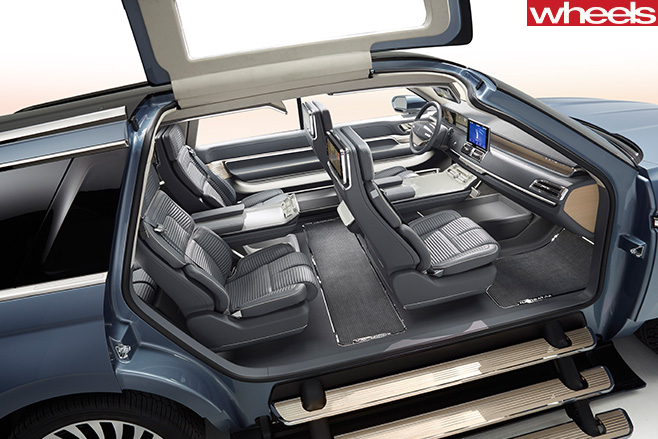
He suggested such a system could initially be offered as an option on future models, and later potentially filtering down to more mainstream Ford models.
“Part of the opportunity with a concept is visions and ideas about where some of the technology could go [in production cars],” Woodhouse said.

“One of the strengths of the design team in this company is we have studios around the world,” he said. “From time to time, yeah, we do call upon input from the global studios. They [Ford Australia] have provided work to me over the last couple of years.”
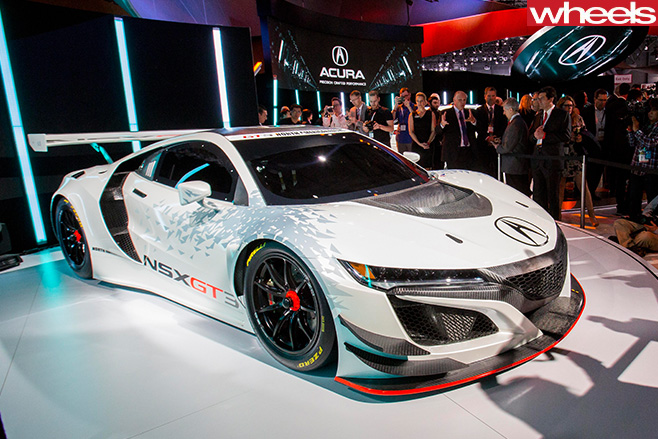
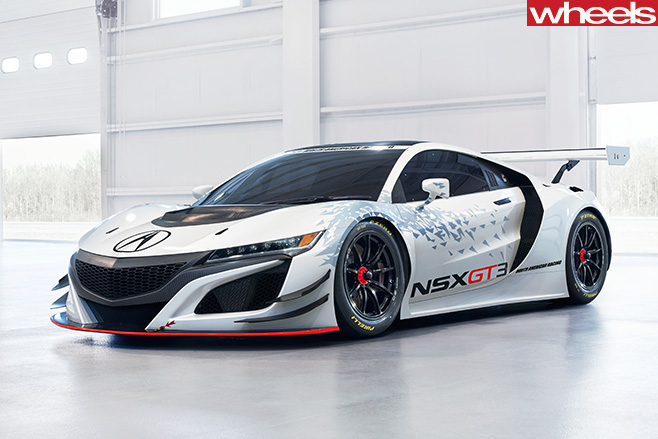
HONDA has hinted at a sharper, faster version of its upcoming NSX supercar with a race-ready GT3 version, unveiled at the 2016 New York Motor Show.
The NSX GT3 could spawn a road-going version that takes advantage of the race car’s more aggressive aerodynamics and lighter weight.
“Won’t make news on that today, but I’d certainly love to see that happen,” said a clearly hopeful American Honda boss John Mendel. “The performance aspects of the NSX are incredible … it [a road car GT3] certainly would be a fun project.”
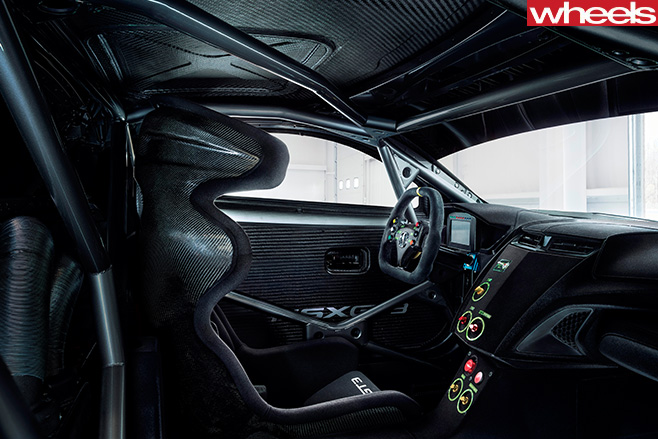
“The production car specification was built with racing in mind,” said St Cyr. “It’s strong enough, it’s fast enough, it handles well enough if we could find someone that would let us race it.”
When asked whether a road-going NSX GT3 would follow the race car’s route of dropping the hybrid system, he suggested it would not be necessary.
“We’re very confident our base technology, the hybrid system is very appropriate for performance driving, I don’t think necessarily we’d have to do that [get rid of the electric motors].”
THE Toyota 86 has been given a mid-life update, with the Japanese carmaker rolling out a string of styling, suspension and power tweaks.
The two-door Toyota – which in 2012 was named the Wheels Car of the Year alongside its Subaru BRZ twin – was revealed overnight at the New York Show, wearing a Toyota badge in the North American market for the first time as the carmaker brings its US market-only Scion brand back into the regular line-up.
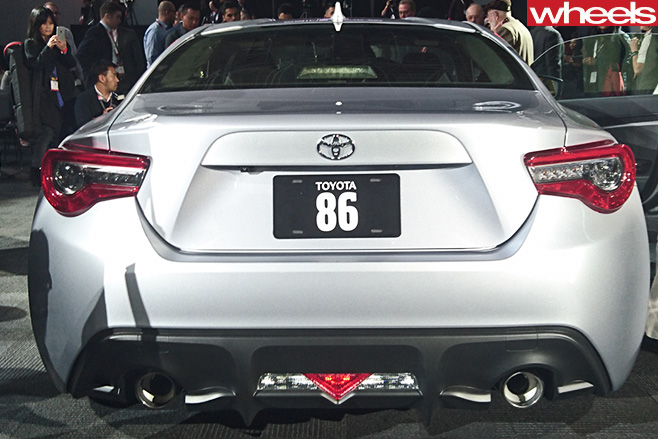
Beneath that body, there are revised spring and damper rates, as well as a change to the final drive on manual models. Manual-shift 86s have also had a slight tickle under the bonnet, with a 4kw/9Nm bump to 151kW/214Nm.
Opt for the flagship GTS model and you’ll also score ‘Grandlux’ trim on the dash, seats with silver stitching, and audio controls integrated into the steering wheel.
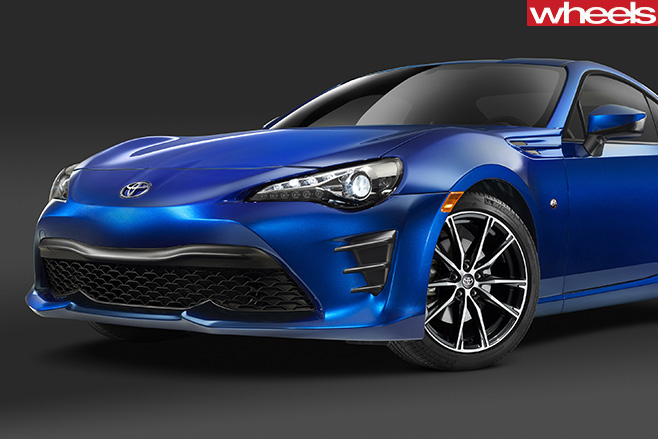
Toyota’s decision to dump the Scion badge in the US is a significant one for the carmaker.
Scion was Toyota’s youth-oriented sub-brand that was launched in 2003, selling largely re-badged Toyota models. It was somewhat successful: more than a million Scion-badged cars have been sold, with Toyota claiming that 70 percent of customers were new to the Toyota/Scion brand, and that half were less than 35 years old. Its best sales year was 2007, when it moved 173,034 Scions. That fell to a mere 56,167 in 2015.
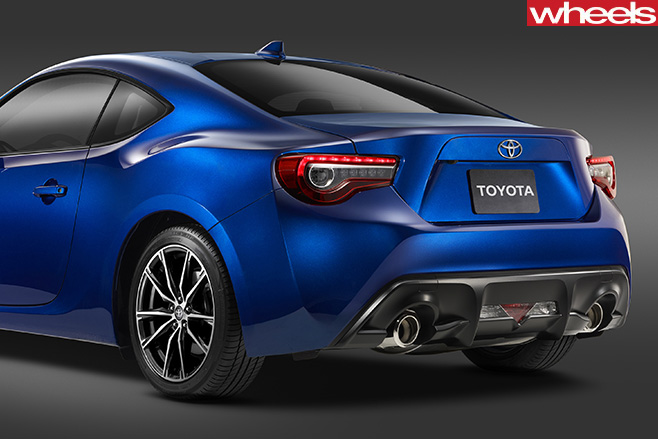
What does the refreshed 86 mean for its twin under the skin, the Subaru BRZ, which is built alongside the 86 in Subaru’s Gunma, Japan, factory? Nothing, apparently.
First it returned to F1 with McLaren and now Honda is preparing to race in the FIA GT3 class with this fully homologated NSX GT3.
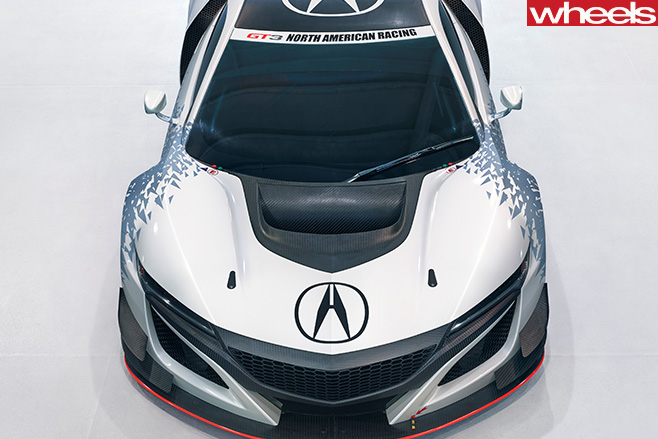
Officially slated as an Acura – Honda’s US luxury brand – the NSX GT3 will have its racecar body built in the same Ohio plant that exclusively produces the production road car. Enlarged bonnet vents, front bar diffuser and a large deck wing spoiler point to the major changes over the regular NSX.
The 3.5-litre twin-turbocharged V6 petrol engine uses the same block, heads, valvetrain, crankshaft, pistons and dry sump lubrication system as the production car. However it trades the heavy hybrid and all-wheel drive systems, and nine-speed dual-clutch transmission of the road-going NSX for petrol power only, rear-wheel drive and a six-speed sequential racing gearbox.

Honda says “initial development” of the NSX GT3 took place in Japan with the company’s racing arm testing the vehicle on circuits both locally and in Europe. The car will now enter an “additional development” stage including final homologation work to be done by Honda Performance Development (HPD) in California.
“The NSX was designed as a pinnacle expression of Acura Precision Crafted Performance, and we’re looking forward to proving out its ultimate performance capabilities in GT3 racing,” HPD said in a statement.
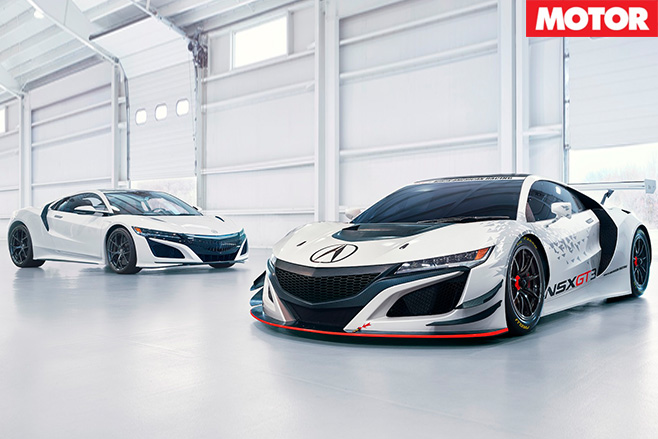
The NSX GT3 is expected to be all ready to go by late 2016.
It all means the once iconic Japanese supercar nameplate will now rub fenders with European rivals such as the Audi R8, Ferrari 488, Lamborghini Huracan, McLaren 650S and Porsche 911 both on the road and on the racetrack.
Mercedes-AMG is releasing new models in quicker succession than the 20 seconds it takes to lower the lid on this first-ever C63 cabriolet.
Based on the C63 coupe, the C63 cabriolet shares its stiffer rear suspension components and 50mm-wider rear track over with the sedan and wagon. Compared with a regular C-Class cabriolet, the bulging wheelarches push body width out by 65mm and 66mm front/rear.
It is a heavy unit, though. The 350kW C63 Cabriolet that we won’t get in Australia weighs 1910kg, while the 375kW C63 S Cabriolet that will arrive locally later this year tips the scales at a portly 1925kg.
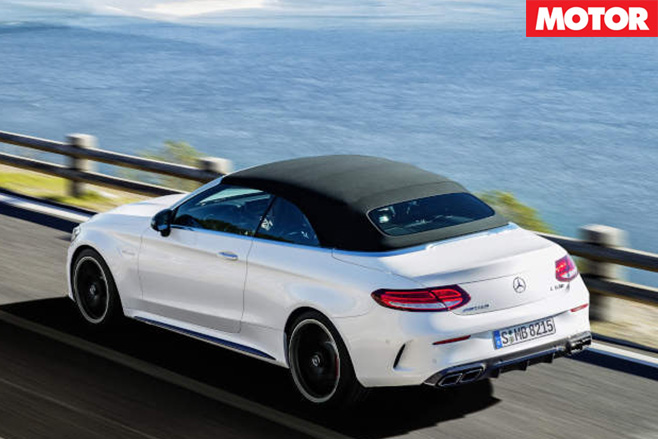
A limited-slip differential, front 19-inch and rear 20in alloy wheels, dynamic engine mounts, adaptive suspension with Comfort, Sport and Sport+ modes, and even Sport and Race modes for the seven-speed dual-clutch automatic, all make it over on the transition from hard-top to soft-top.
Two-mode active exhaust also carries over, but the sound from the twin-turbo V8 will be less restricted anyway thanks to all that roof insulation being taken away.

According to Mercedes-AMG CEO Tobias Moers aims to deliver a “new combination of intensive open-air ambience and powerful V8 engine (that) is unique in the segment.” Oh, and it also targets the M4 convertible.
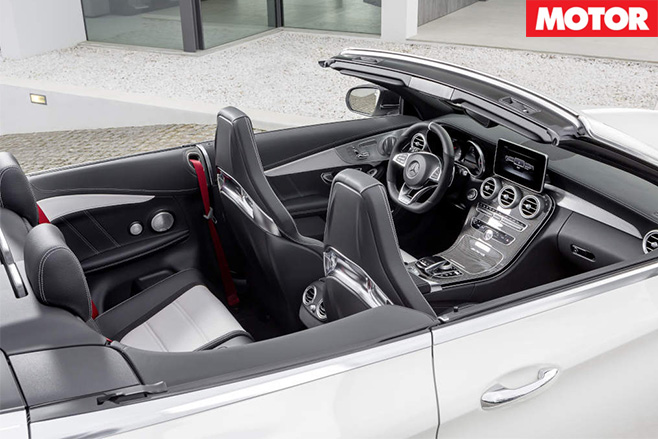
Expect the C63 S cabriolet to command a circa-$15K premium over the C63 S coupe that retails at $162,400 and goes on-sale locally next month.
