
Unlike other car brands, Tesla does not disclose specific powertrain and battery specifications. Some figures in this story are estimated by EV Database [↗].
April 2024: Price changes
The Model Y has been given a significant price cut, allowing it to keep a competitive edge against a growing number of rivals.
There are no mechanical changes, missing out on the faster acceleration and quicker battery charging given to the Chinese-market Model Y last year.
The minor update adds dark wheel covers as standard for the Model Y’s 19-inch wheels, and three new exterior paint options: Stealth Grey ($2300 extra), Quicksilver and Ultra Red (both $2600 more), with Midnight silver metallic and red multi-coat colours dropped.
This story has been updated to reflect the latest price changes.
2024 Tesla Model Y review
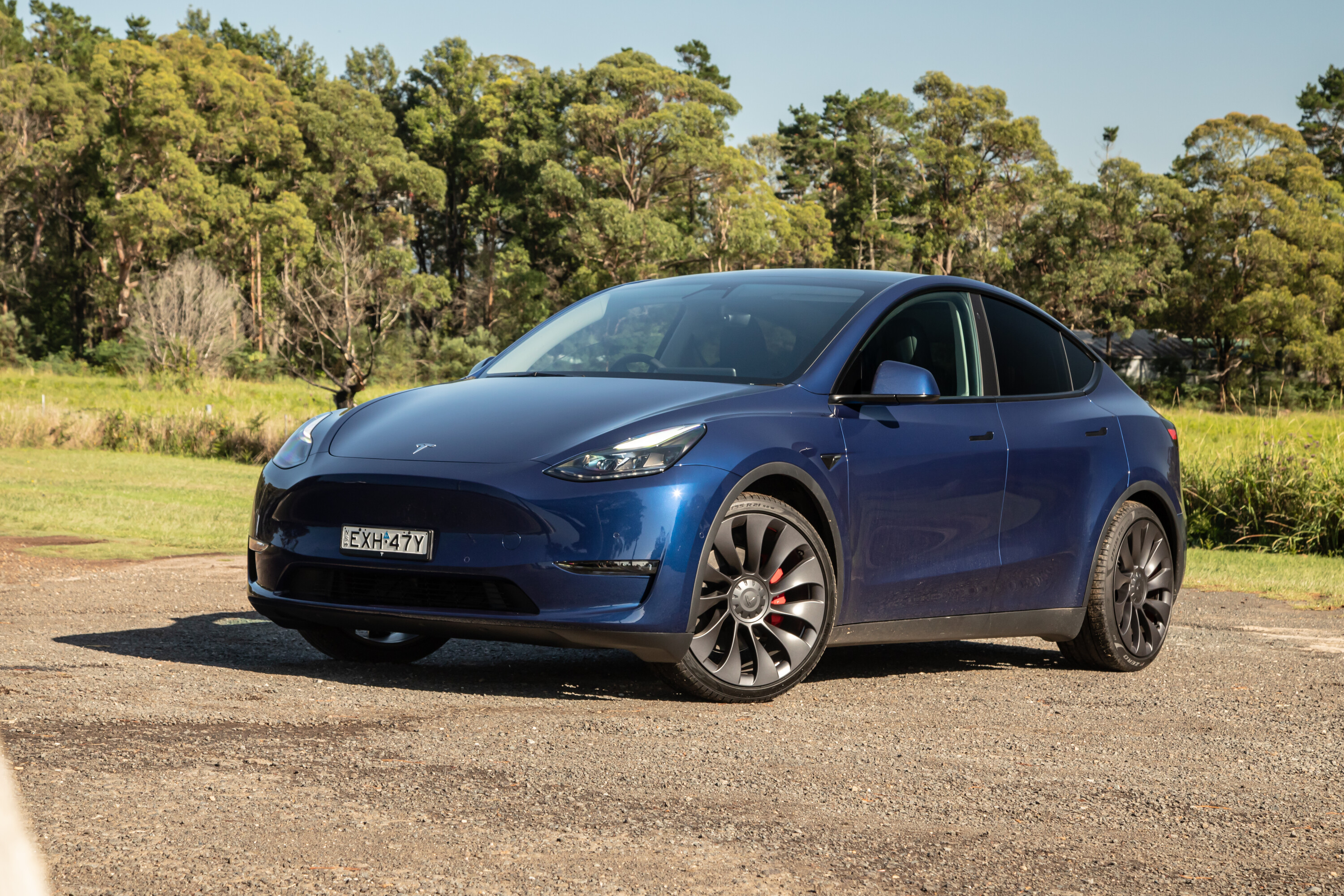
The Tesla Model Y is a medium electric SUV with a practical boot and frunk, minimalist interior, and efficient design.
It was launched in mid-2022 in Australia, but has been available globally since 2020.
The popular Model Y SUV is offered in three variants, with a mid Long Range variant joining the local line-up in April 2023. It is based on the smaller Model 3 sedan.
JUMP AHEAD
- Pricing
- What body styles are available for the Model Y?
- What features are standard in every Model Y?
- What key features do I get if I spend more?
- How safe is the Tesla Model Y?
- How comfortable and practical is the Model Y?
- How much boot space does the Model Y offer?
- I like driving, will I enjoy this car?
- Which version of the Model Y provides the longest range?
- What is the Model Y’s towing capacity?
- How long is the warranty & what are the Model Y servicing costs?
- Which version of the Model Y does Wheels recommend?
- What are the Tesla Model Y key rivals?
1
Pricing
We endeavour to keep this review up-to-date, but Tesla prices have a tendency to fluctuate periodically with little warning. Make sure to check out our Model Y pricing story for the most up-to-date figures.
| 2024 Tesla Model Y | Pricing (2024) | Difference |
|---|---|---|
| RWD | $63,500 | ($1,900) |
| Long Range | $72,900 | ($5,500) |
| Performance | $82,900 | ($9,660) |
| Prices exclude on-road costs, Tesla’s $400 order fee, and $1400 delivery charge, but includes the Luxury Car Tax on the Performance. | ||
What body styles are available for the Tesla Model Y?
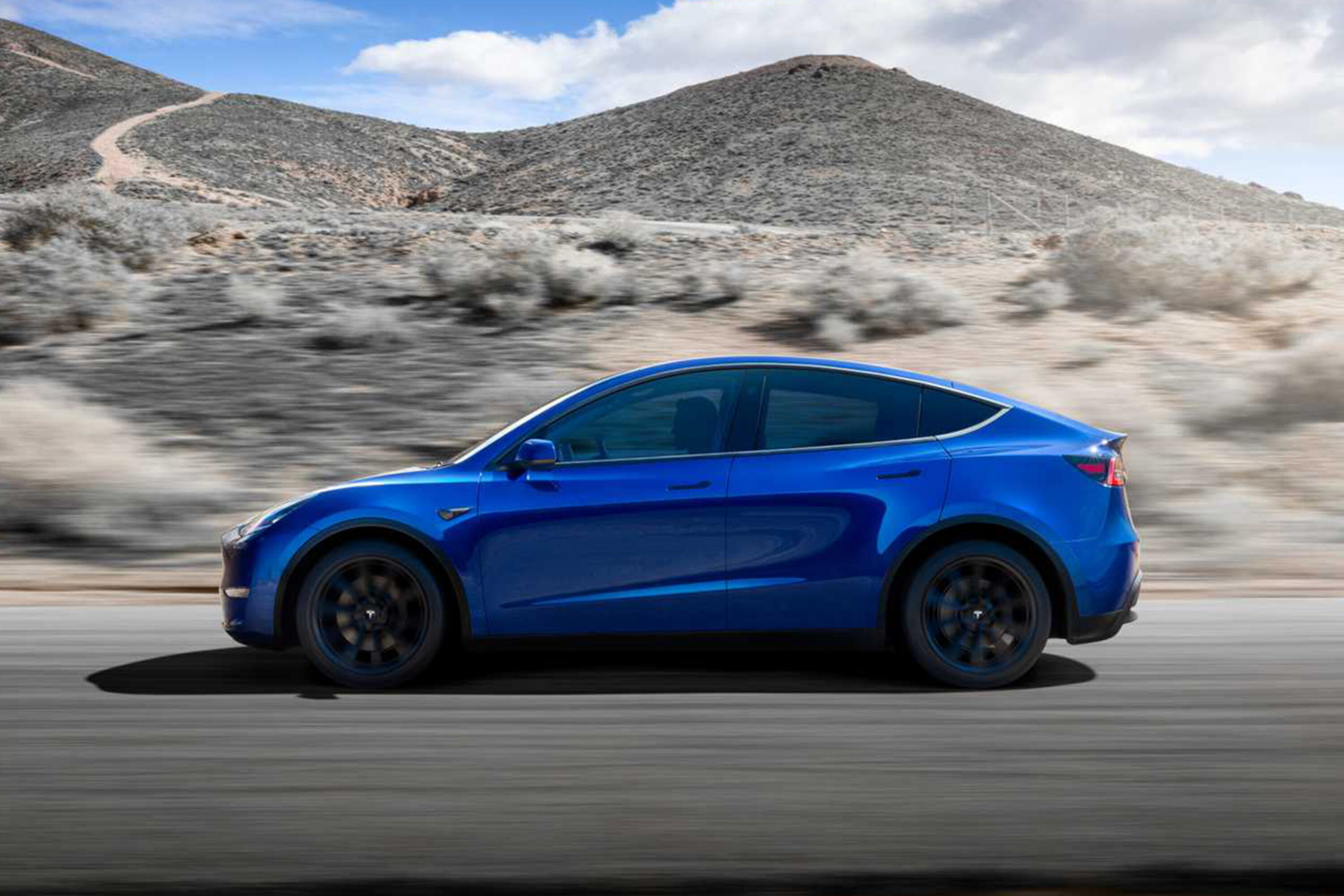
Five-door, five-seater SUV only. It is classed as a medium SUV.
The seven-seater option sold in the US remains unavailable for Australia.
1
What features are standard in every Tesla Model Y?
We endeavour to keep this review up-to-date, but Tesla tends to make minor ‘running changes’ without notice and public disclosure compared to other brands. The features below are correct as at the time of publication.
The base Tesla Model Y comes with most features as standard, with a single rear-mounted electric motor and a 57.5kWh usable lithium-iron-phosphate (LFP) battery (according to EV Database). It includes:
| 2024 Tesla Model Y standard features | |
|---|---|
| 19-inch u2018Geminiu2019 aero-covered alloy wheels | Fixed panoramic glass roof |
| Animal-free interior | u2018Tesla Visionu2019 camera-only u2018Basic Autopilotu2019 active safety assistance features |
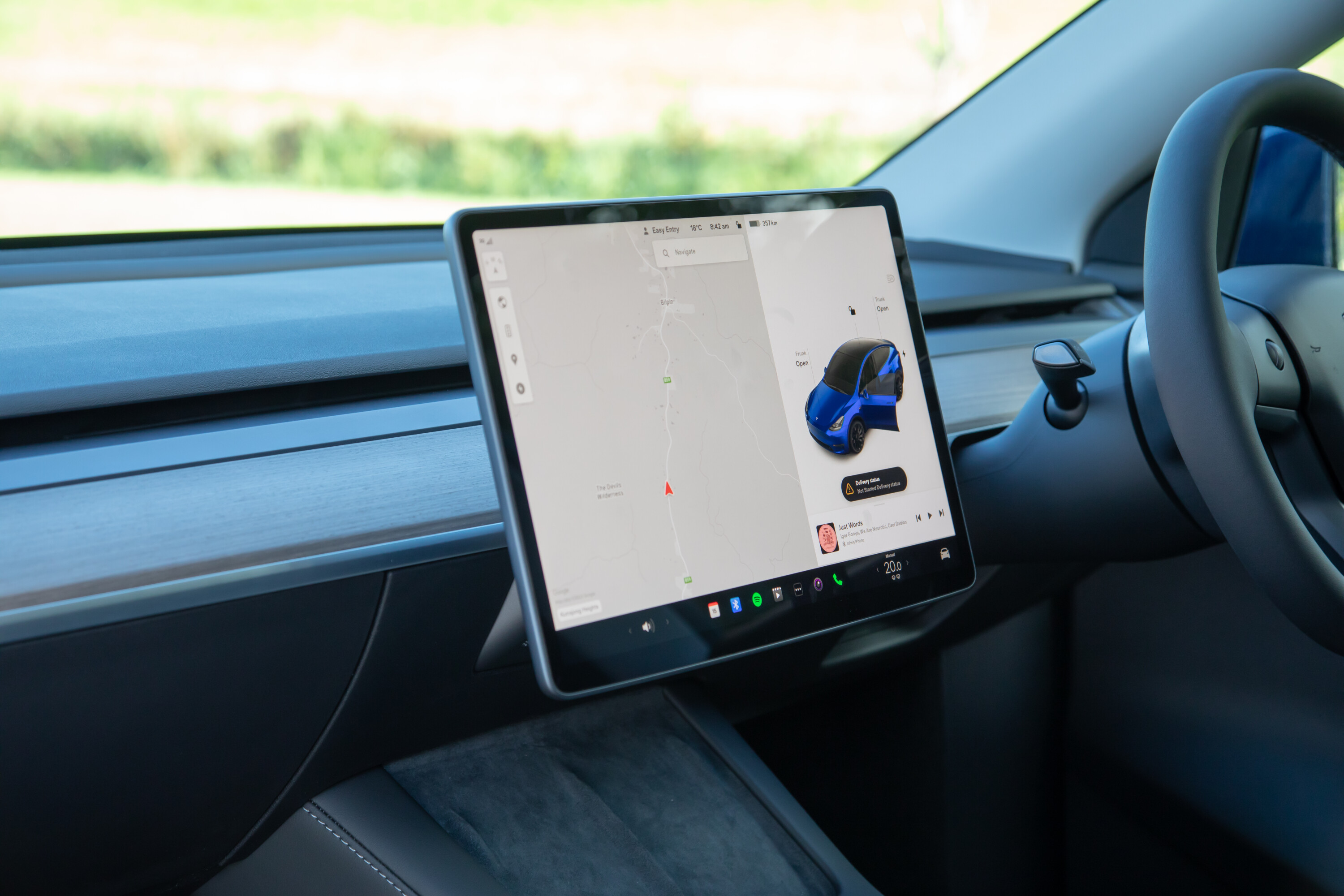
| 15-inch touchscreen with over-the-air software update capability | Reversing camera |
| Cellular connectivity with built-in Google Maps, music and video streaming apps | Blind-spot view side cameras |
| 30-day Premium Connectivity trial | Heated front and rear seats |
| Tesla mobile app connectivity | Heated steering wheel |
| Built-in Dashcam and Sentry Mode recording (128GB USB stick included) | Electrically adjustable driver and front passenger seat |
| 13-speaker premium audio | Double glazed front and rear windows |
| Dual Qi wireless charging pads | Full LED headlights with auto high beam |
| USB-C charging ports | Full LED tail-lights |
| Dual-zone climate control | Auto power folding, dimming, heated wing mirrors |
| High-Efficiency Particulate Air (HEPA) cabin filter | Electric tailgate |
| Flush door handles | Automatic wipers |
| 217km/h top speed | |
1
What key features do I get if I spend more?
We endeavour to keep this review up-to-date, but Tesla tends to make minor ‘running changes’ without notice and public disclosure compared to other brands. The features below are correct as at the time of publication.
Opting for the Long Range gains a larger 75kWh usable nickel-manganese-cobalt (NMC) battery (according to EV Database) and dual electric motors for grippier all-wheel drive traction, plus:
| 2024 Tesla Model Y Long Range features |
|---|
| LED front fog lights |
1
Stepping up to the most expensive Performance version adds a more potent dual-motor tune. Other additions include:
| 2024 Tesla Model Y Performance features | |
|---|---|
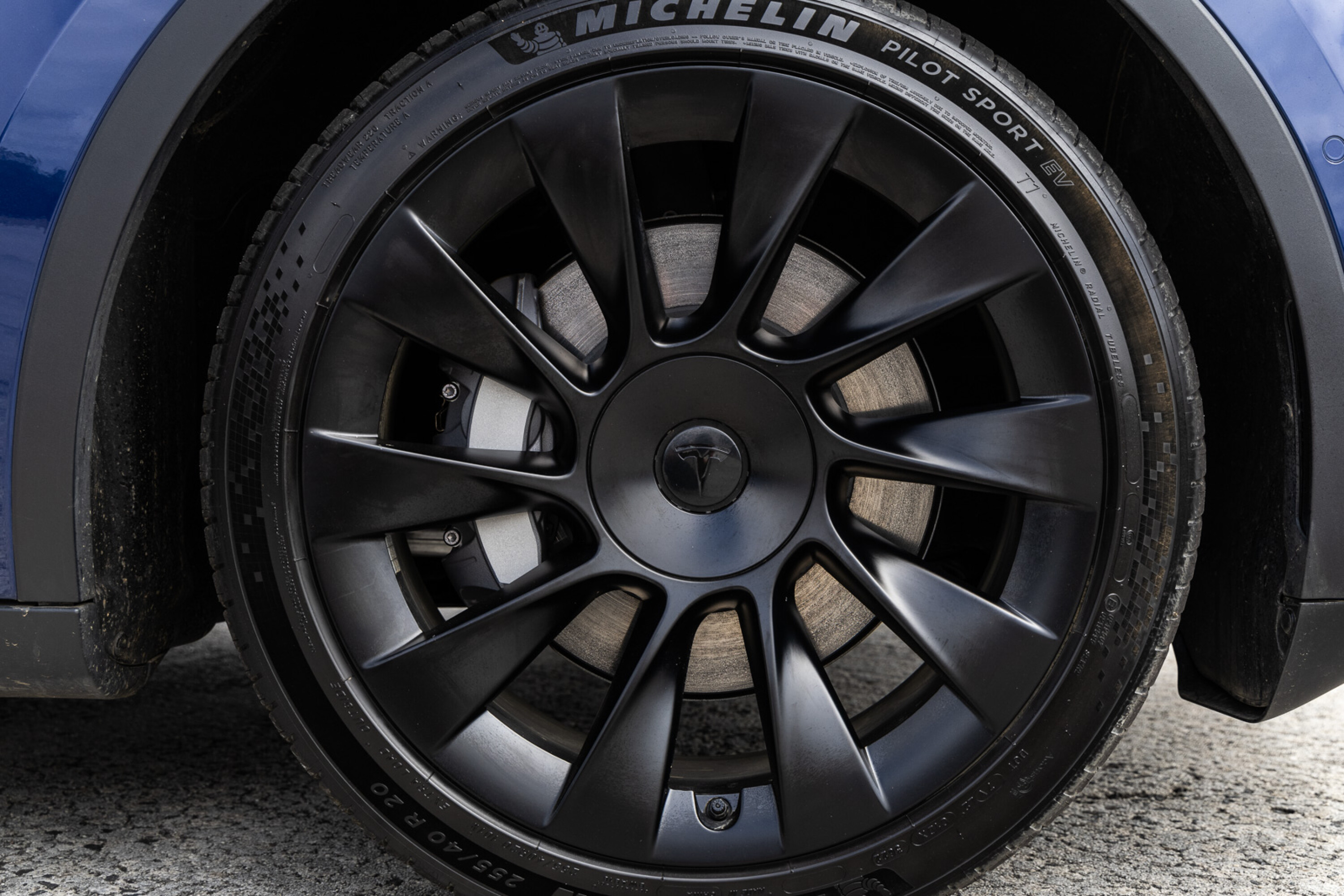
| 21-inch u2018u00dcberturbineu2019 alloy wheels | Carbon fibre rear spoiler |
| Performance Brembo front brakes, red-painted brake callipers | Track mode |
| Lowered suspension | Increased top speed to 250km/h |
| Aluminium alloy pedals | |
1
| 2024 Tesla Model Y options | |
|---|---|
| 20-inch Induction alloy wheels (RWD and Long Range only) ($2400) | Enhanced Autopilot ($5100) |
| White interior ($1500) | Full Self-Driving Capability ($10,100) |
| Premium Connectivity ($9.99/month) | Tesla Mobile Connector trickle charging cable ($550) |
1
| Feature 1 | Feature 2 |
|---|---|
| 19-inch Gemini aero-covered alloy wheels | Fixed panoramic glass roof |
| Animal-free interior | Tesla Vision camera-only, Basic Autopilot active safety assistance features |
| 15-inch touchscreen with over-the-air software update capability | Reversing camera |
| Cellular connectivity with built-in Google Maps, music and video streaming apps | Blind-spot view side cameras |
| 30-day Premium Connectivity trial | Heated front and rear seats |
| Tesla mobile app connectivity | Heated steering wheel |
| Built-in Dashcam and Sentry Mode recording (128GB USB stick included) | Electrically adjustable driver and front passenger seat |
| 13-speaker premium audio | Double glazed front and rear windows |
| Dual Qi wireless charging pads | Full LED headlights with auto high beam |
| USB-C charging ports | Full LED tail-lights |
| Dual-zone climate control | Auto power folding, dimming, heated wing mirrors |
| High-Efficiency Particulate Air (HEPA) cabin filter | Electric tailgate |
| Flush door handles | Automatic wipers |
| 217km/h top speed | |
How safe is the Tesla Model Y?
The Tesla Model Y obtained the full five-star safety rating by the Australasian New Car Assessment Program (ANCAP) under the 2022 testing criteria.
It achieved high scores including; 97 per cent adult occupant protection, 89 per cent child occupant protection, 82 per cent vulnerable road user protection, and 98 per cent for safety assist systems.
The electric SUV adopts a camera-only safety assist setup. It comes with as standard; front auto emergency braking with car/pedestrian/cyclist/junction detection, lane-centring and lane-keep assist, blind-spot monitoring, and adaptive cruise control.
A reversing camera and blind-spot view cameras come as standard.
About those ultrasonic sensors…
According to Tesla [↗], it is phasing out ultrasonic parking sensors globally in favour of camera-only based systems.
However, at the time of publication, Australian vehicles from the Shanghai Gigafactory appear to still be delivered with physical sensors, with Tesla not specifying an end date.
1
How comfortable and practical is the Tesla Model Y?
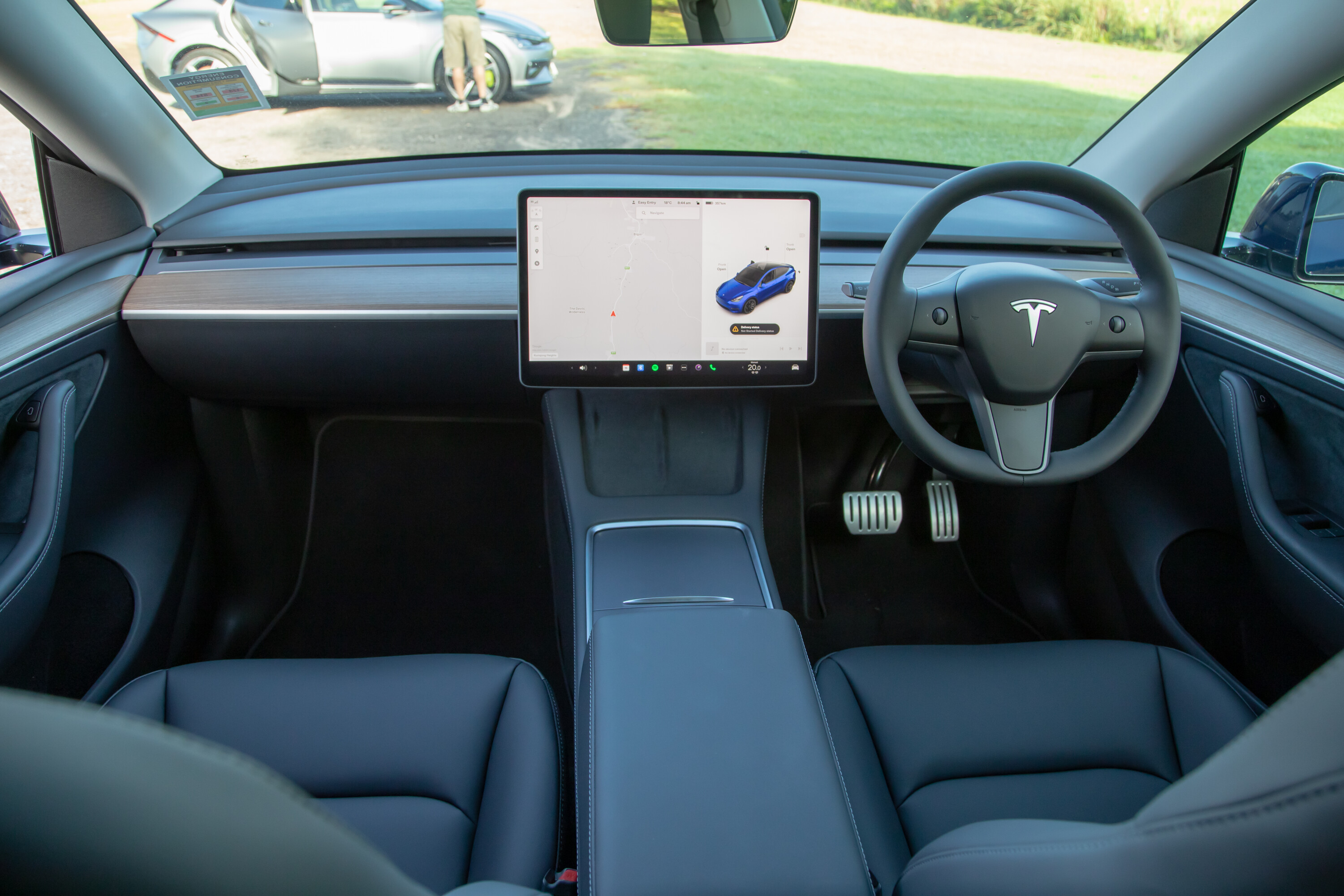
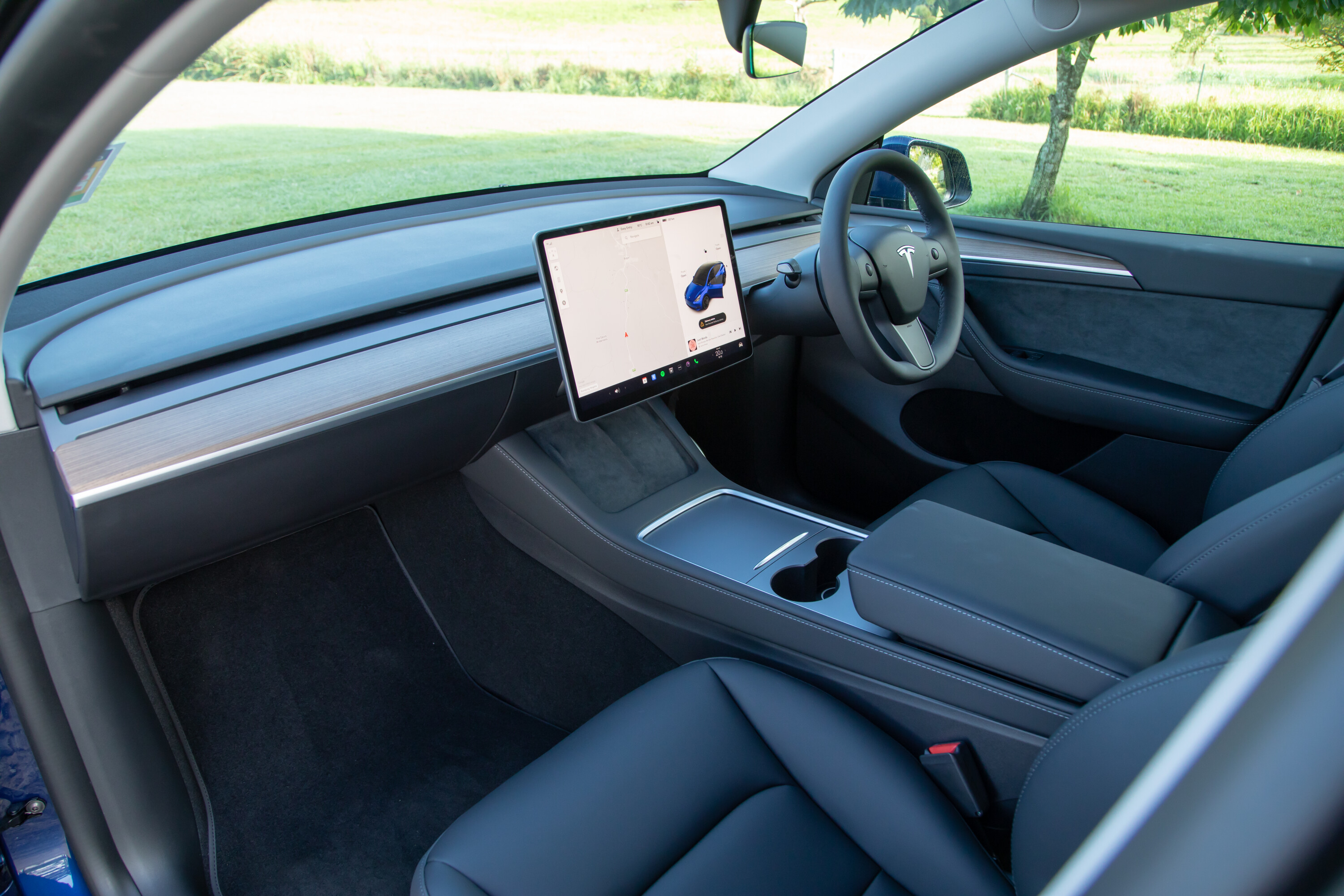
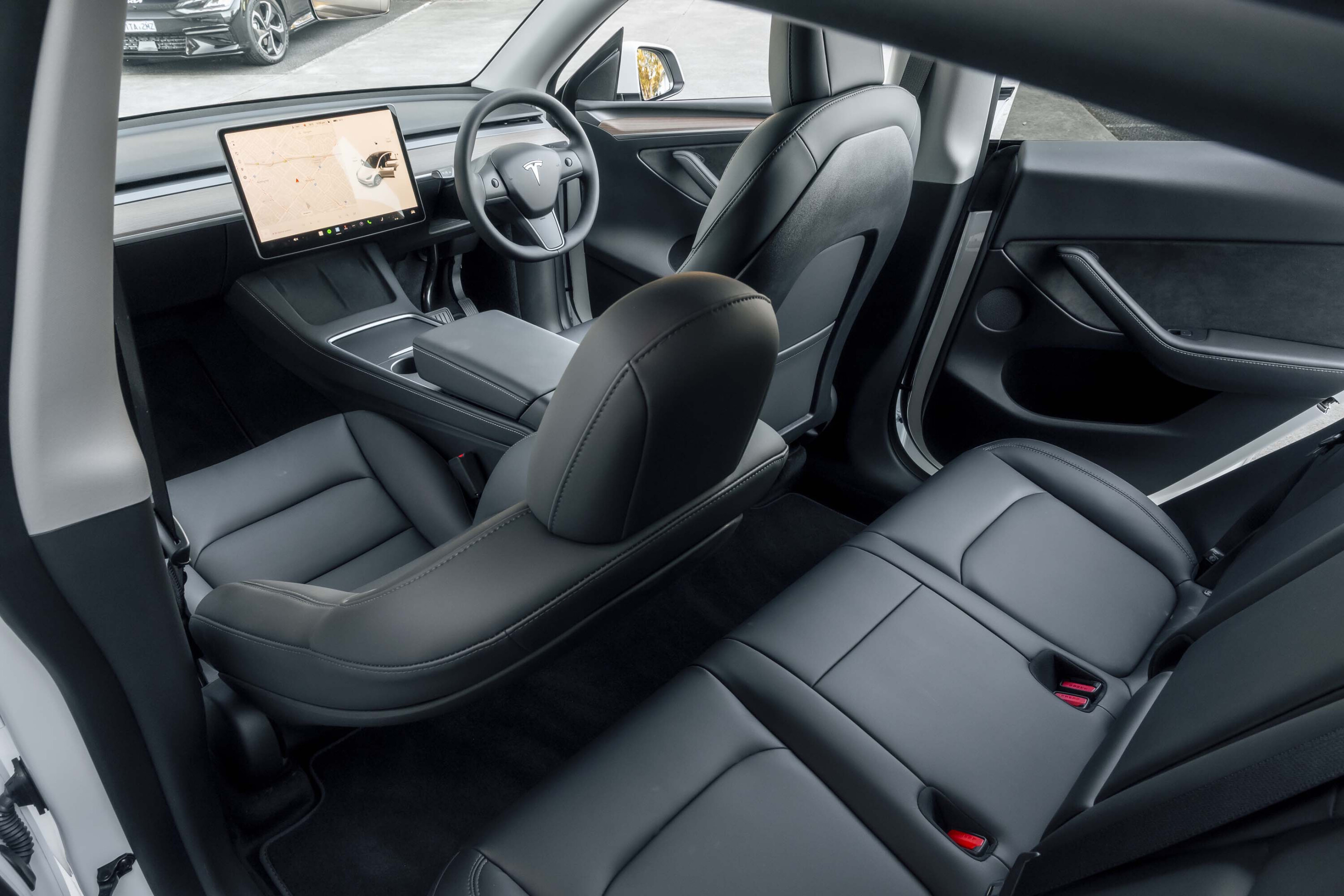
The Model Y medium SUV features an animal-free material black with wood trim interior as standard, with an all-white cabin available as a $1500 option.
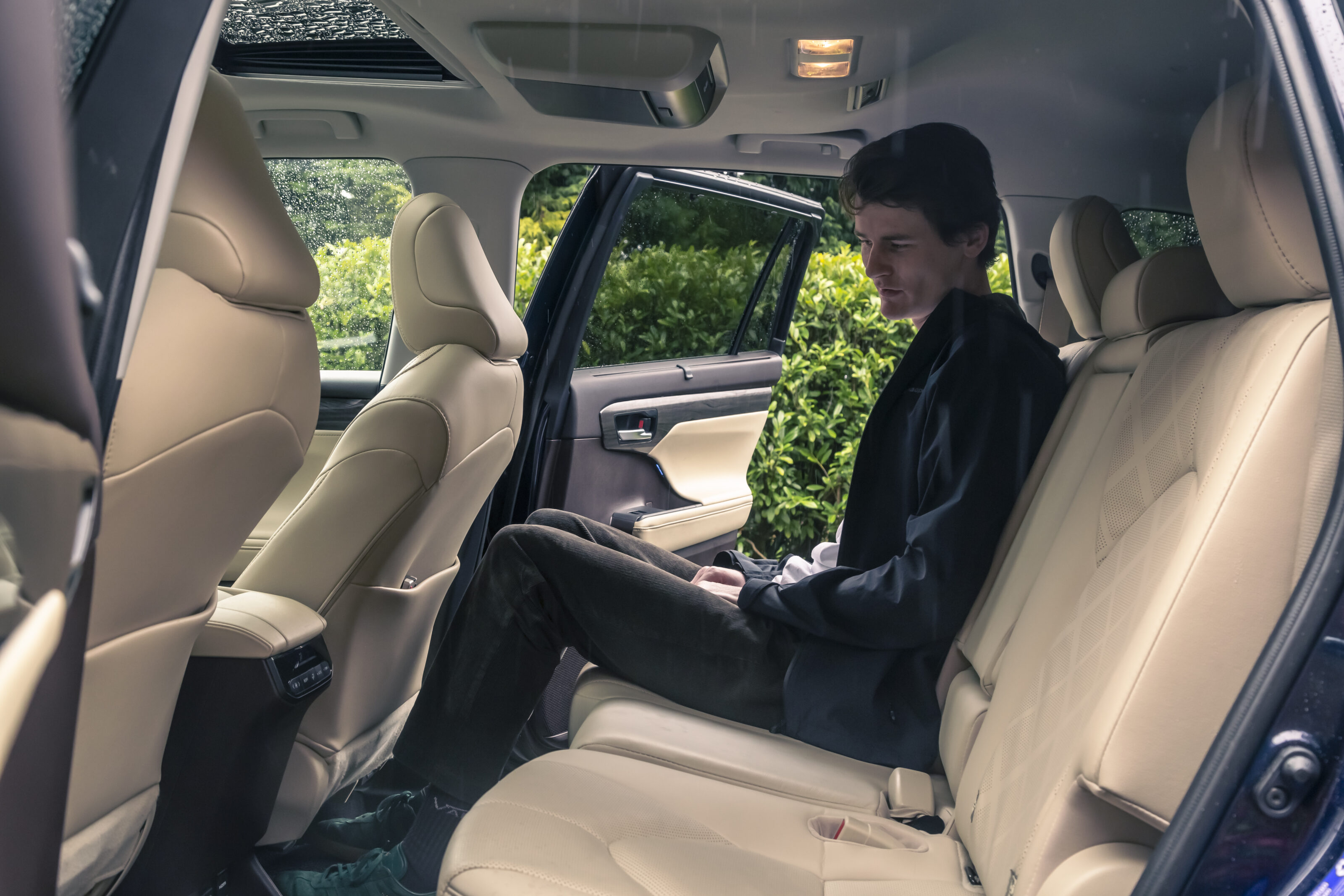
There’s little to distinguish between a Model 3 and Model Y cabin in design, but the SUV offers significantly more space – notably in headroom and rear-seat room, taking advantage of its higher roofline and longer body.
In our experience, we’ve found the black-vinyl seats – standard even on the most expensive Performance model – to be sweaty on hot days. Keeping the cabin cool on warm days isn’t helped by the fixed full-length sunroof.
1
While there’s a relaxing suppleness to the front seats, more side and shoulder support would be welcome. This is more of an issue when going around corners.
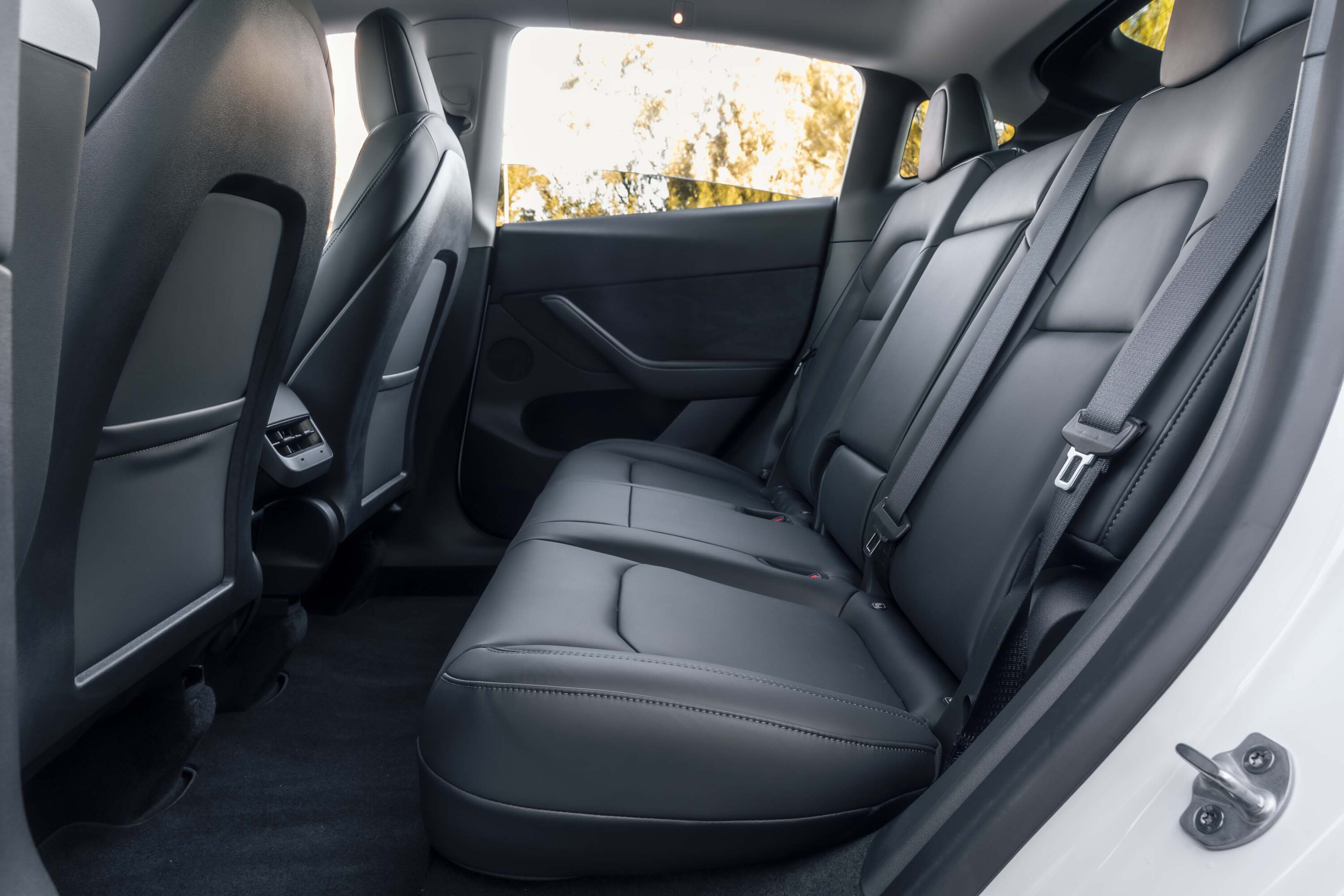
The Y gains recline functionality for its rear seats, if limited to two positions.
A flat cabin floor helps make life more comfortable for the middle-rear passenger.
1
The rear bench features two ISOFIX child seat anchor points in outboard seats and three top-tether points.
The Model Y’s dual-zone climate control is powered by ‘invisible’ air vents across the front dashboard, while rear passengers also have centre console vents.
The company’s Cabin Overheat Protection function automatically turns on the climate control to cool down the interior when it is above 40-degrees Celsius, but doesn’t operate when the EV is below 20 per cent battery.
It also benefits from ‘Keep Climate On’, camp mode and dog mode that keep the air-conditioning system running while the vehicle is stationary and locked.
A seven-seater version of the Model Y isn’t available in Australia, though US reviews suggest the two third-row seats are all but unusable.
1
How much boot space does the Tesla Model Y offer?
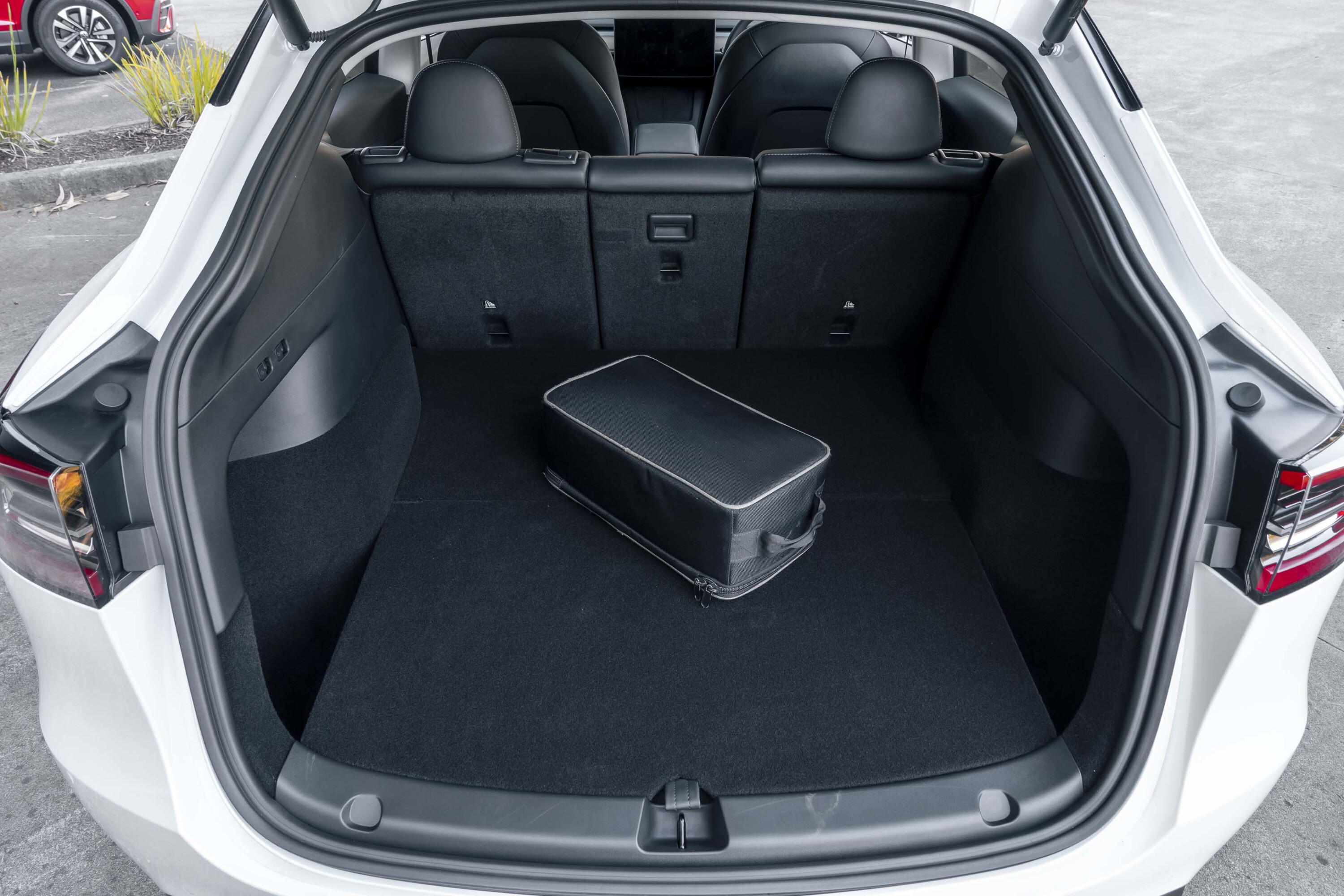
The Tesla Model Y SUV boasts a 854-litre boot (including the underfloor well), which expands to 2158 litres when the 40:20:40-split rear seats are folded down.
However, it’s worth noting the former number is larger since it’s measured up to the roof – instead of the more common VDA (Verband der Automobilindustrie) standard used by other rivals that measures up to the second-row seatback level only.
1
The tailgate is electrically opening/closing, but doesn’t have a hands-free function. The boot also doesn’t include a cargo cover.
The boot aperture is much larger than the 3 sedan’s, making it easier to fit bulkier items into the Y.
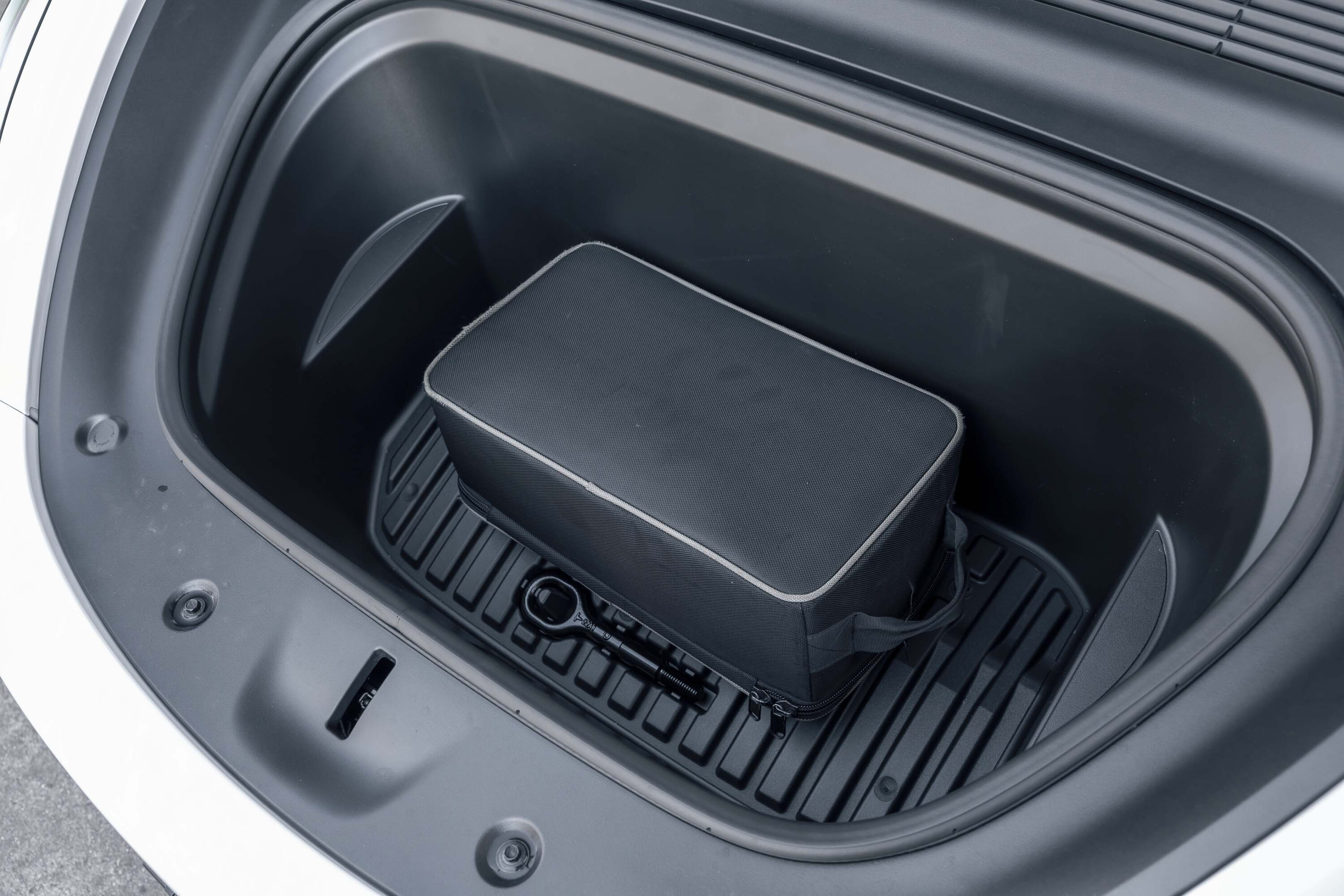
Additionally, there’s a 117-litre frunk storage space under the bonnet – significantly more space than that offered by some rivals that also use the area where an engine would normally sit.
1
I like driving, will I enjoy this car?
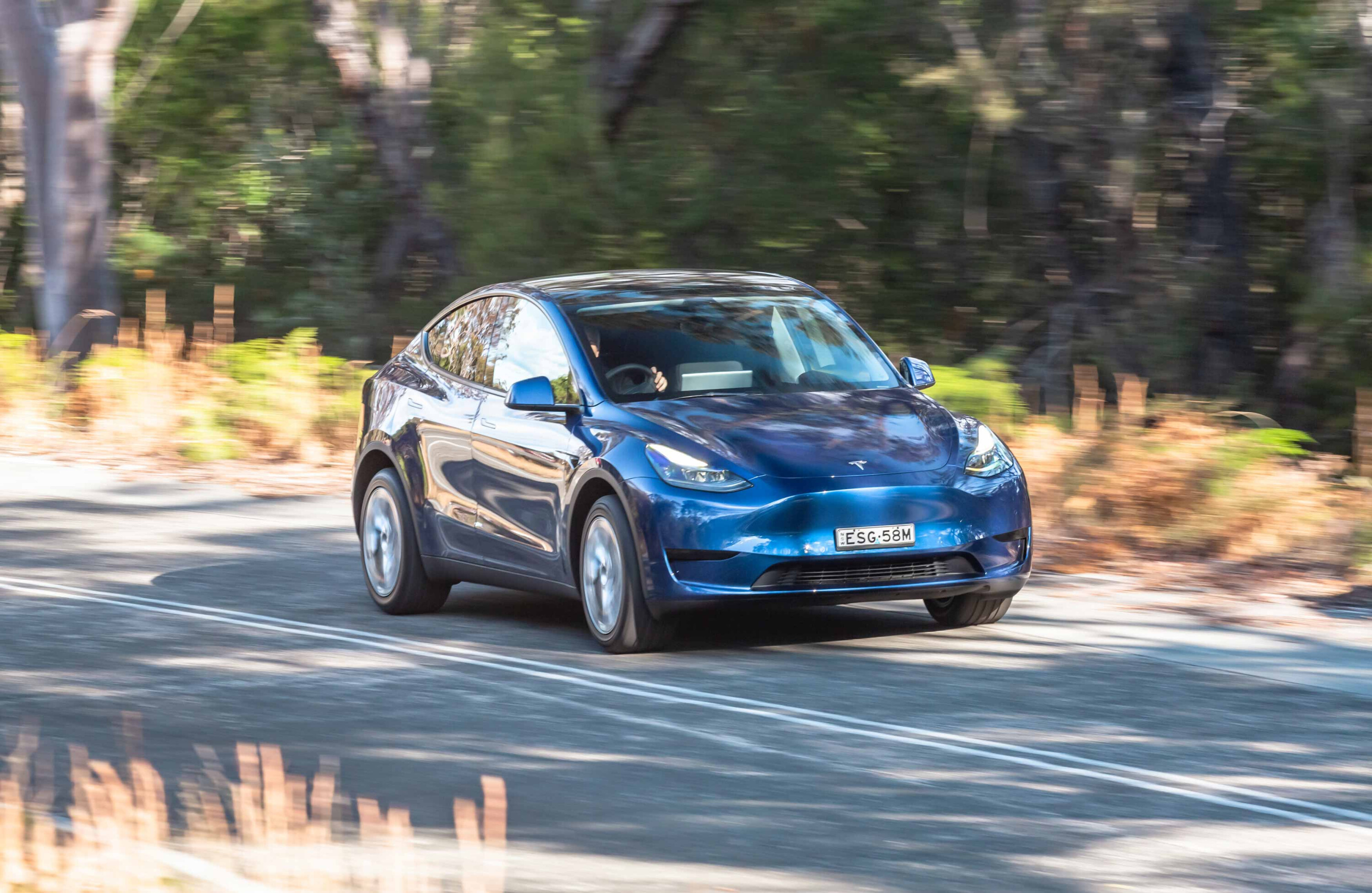
There’s plenty of satisfaction to be derived from how the Tesla Model Y provides smooth driveability regardless of how many electric motors it’s powered by.
Even if you’ve never driven an electric car before, the ability to largely drive the SUV with just the accelerator pedal – where you can slow the car gradually to a standstill just by lifting off the throttle – quickly becomes intuitive.
Satisfyingly strong acceleration is provided by the single-motor RWD, which has a claimed 0-100km/h time of 6.9 seconds.
1
Performance steps up with dual-motor, all-wheel-drive models: the Model Y Long Range reaches triple figures in 5.0 seconds, while the Performance takes just 3.7 seconds.
There’s impressive traction in all models courtesy of clever electronics and grippy Michelin or Pirelli sports tyres that are standard from base model upwards.
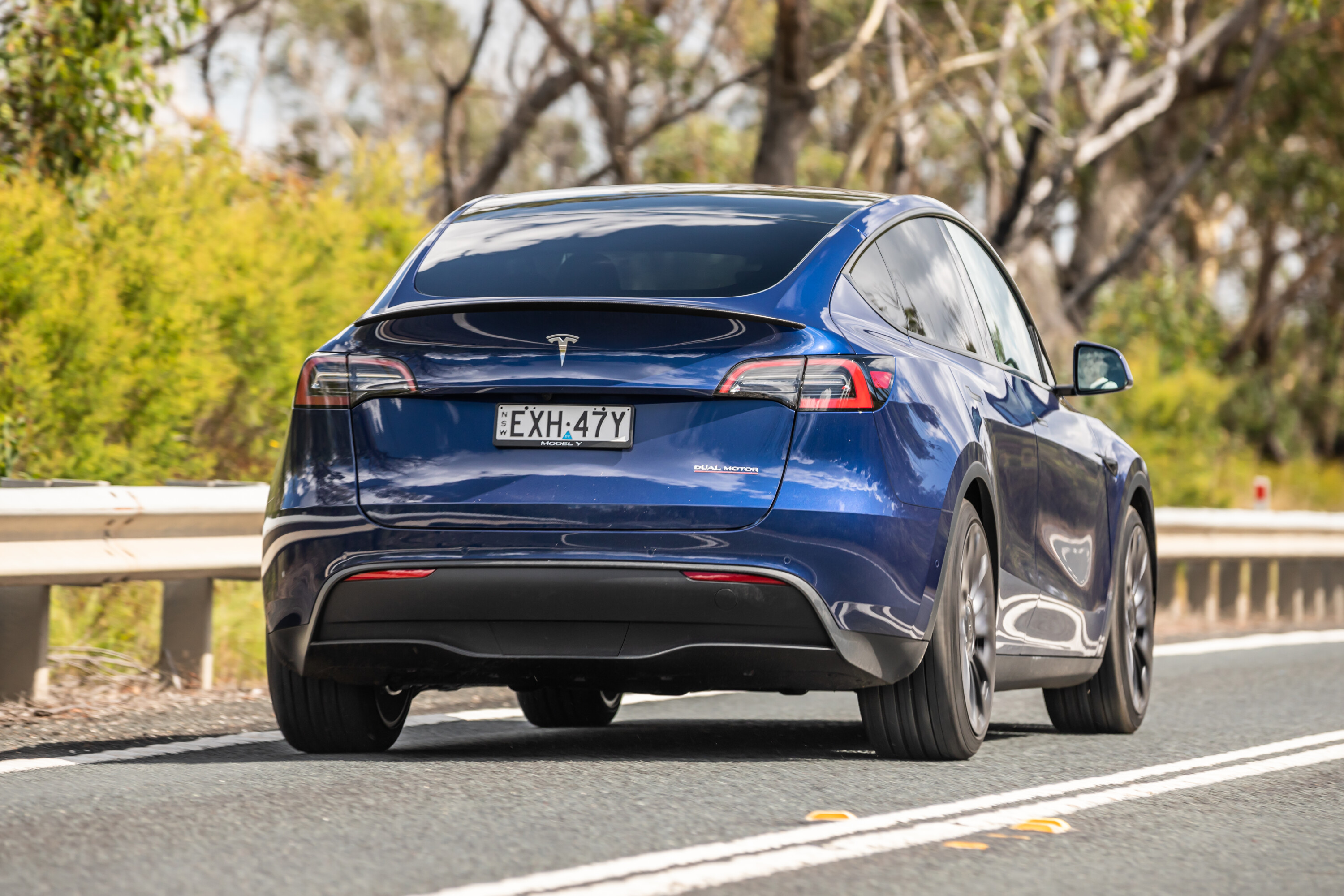
The rest of the Model Y driving experience is less positive. Riding on larger wheels than the Model 3 exacerbates the busy ride of the sedan. The SUV struggles to a greater extent to absorb bumps, while the Y’s suspension is noisier again than the 3’s underpinnings.
1
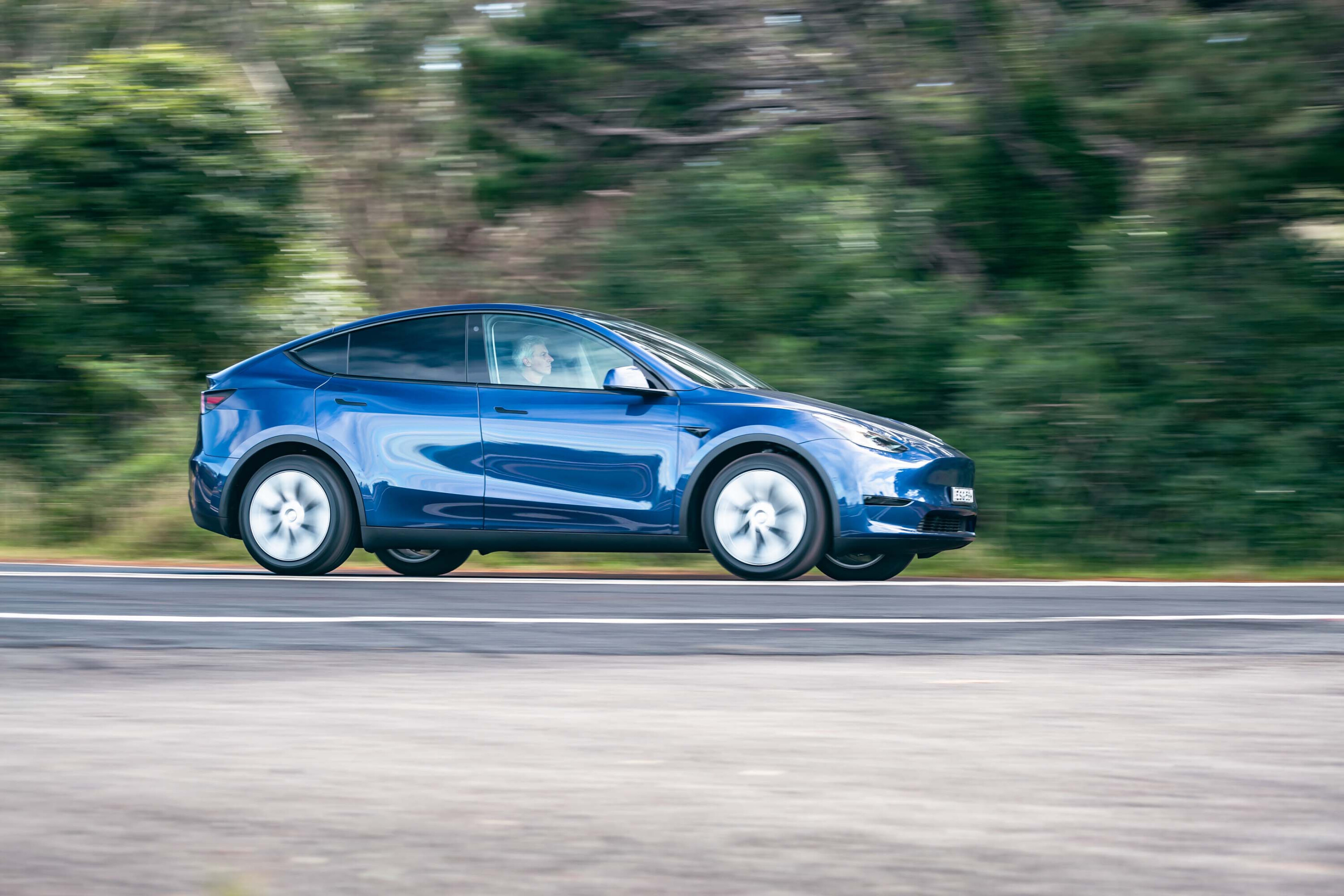
And while quick steering works well on the Model 3 with its lower centre of gravity, it’s less welcome with the tall-bodied Y that exhibits inferior lateral body control to the sedan and generally feels less composed in corners.
Ironically, the Model Y Performance features what Tesla calls a “Comfort’ suspension tune, which slightly improves ride smoothness but still leaves a lot of room for improvement.
Choose a Kia EV6 if you want a midsized SUV that is more comfortable and interesting to drive, or a Polestar 2 if an SUV body style isn’t non-negotiable.
1
Which version of the Tesla Model Y provides the longest range?
As its name suggests, the mid-pack Tesla Model Y Long Range offers the best driving range in the line-up, with 533 kilometres claimed on the WLTP combined test. It consumes a claimed 14.1kWh/100km of energy.
However, it’s worth noting that Tesla recommends charging the Long Range and Performance NMC battery to 90 per cent to maintain good health, whereas the RWD’s LFP pack can be regularly charged to 100 per cent.
The base Model Y RWD is $9400 cheaper than the Long Range and features 455 kilometres of claimed WLTP range from a 15.7kWh/100km energy consumption.
Meanwhile, the flagship Model Y Performance has 514 kilometres of claimed WLTP range and 17.1kWh/100km energy efficiency.
1
What is the Tesla Model Y’s towing capacity?
The Tesla Model Y electric car has a 1600kg braked or 750kg unbraked towing capacity.
The company offers a tow package accessory for $1970, which includes a steel tow bar, trailer harness and tow mode software.
Meanwhile, Tesla also sells a roof rack priced at $770 and is capable of carrying a of 74kg load.
The Model Y RWD has a maximum payload of 640kg, Long Range at 539kg, and Performance at 637kg.
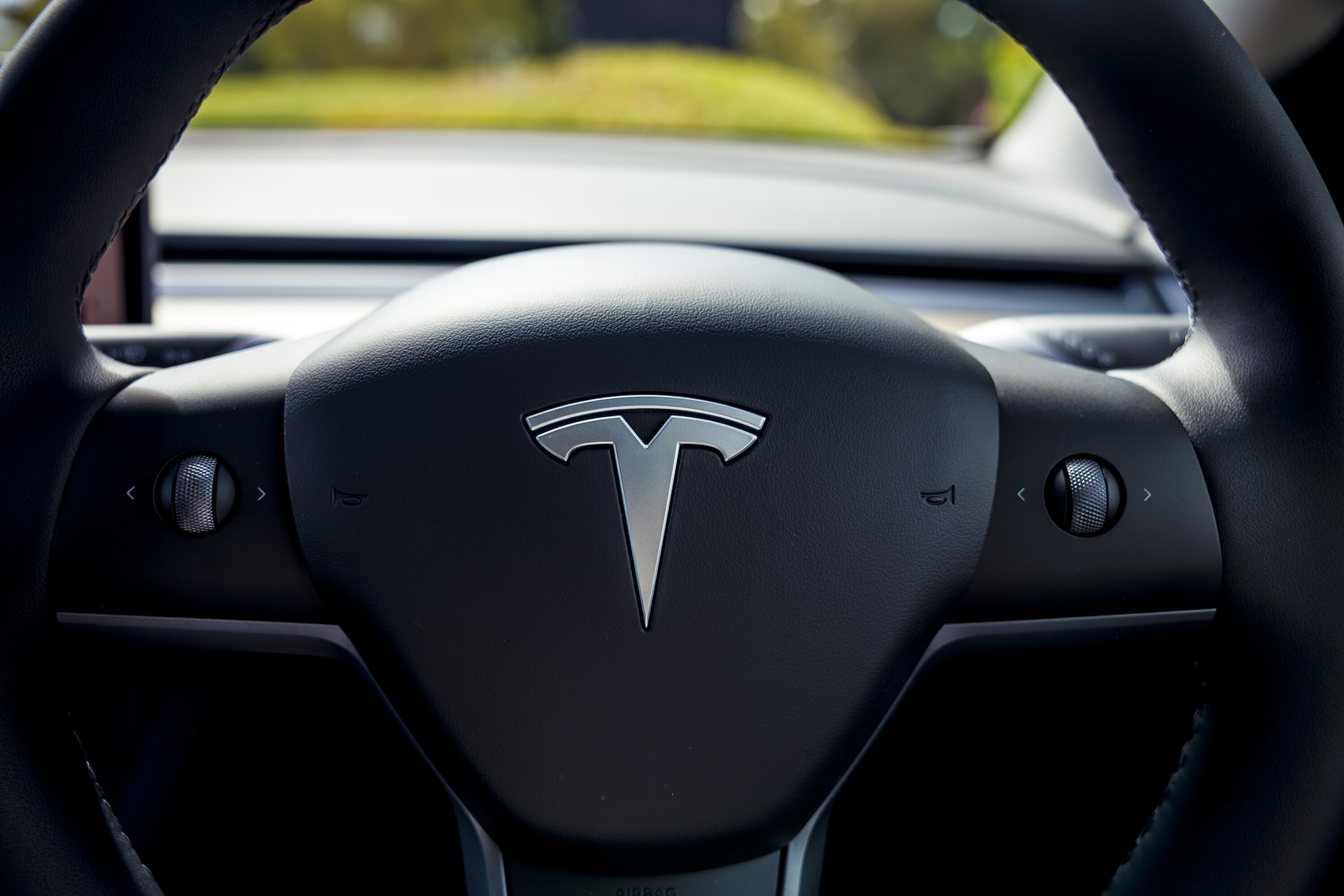
1
How long is the warranty and what are the Tesla Model Y’s servicing costs?
The Tesla Model Y comes with a shorter four-year/80,000km vehicle warranty. The touchscreen and media control unit are covered for two-years/40,000km.
Additionally, the entry-level Model Y RWD has an eight-year/160,000km battery and drive unit warranty, whereas the Long Range and Performance variants are backed for eight-years/192,000km.
Tesla promises all Model Ys will retain at least 70 per cent of its battery health in the pack’s warranty coverage period.
The carmaker uses a condition-based servicing scheme, where the vehicle’s sensors will detect whether specific parts need maintenance based on usage and notifies the owner via the touchscreen or mobile app to book a checkup.
It also recommends a range of routine maintenance tasks listed here [↗].
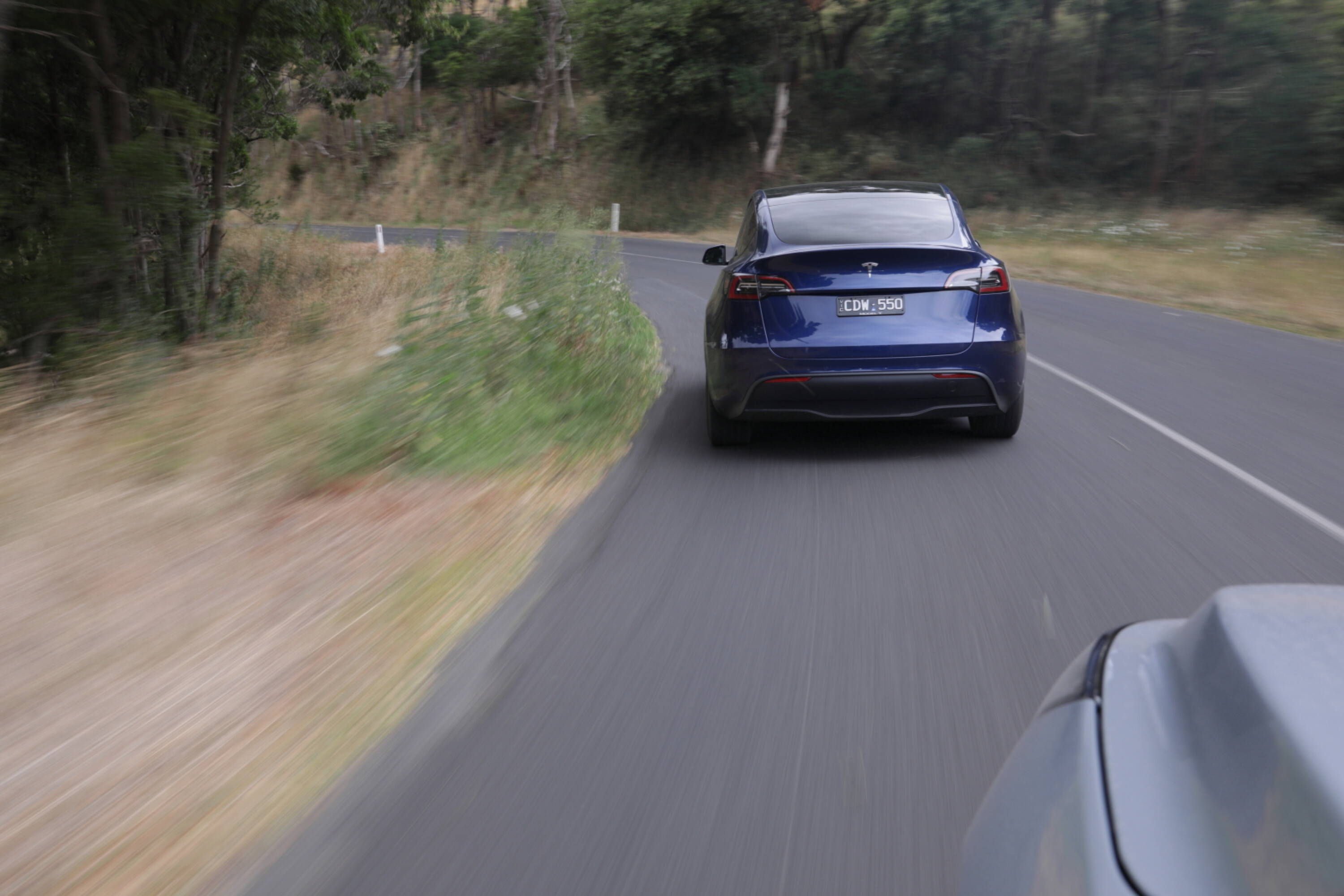
1
Which version of the Tesla Model Y does Wheels recommend?
We would opt for the entry-level Model Y – simply because it offers the best all-round value (just as is the case with the Model 3 range).
There’s not a huge difference in features between the RWD, Long Range and Performance; they’re essentially separated by the size of their batteries and electric-motor count.
Fingers crossed the RWD also adopts the Comfort suspension soon for some ride improvement, but otherwise its single motor provides ample performance and you still get all the practicality goodness of this cleverly packaged SUV.
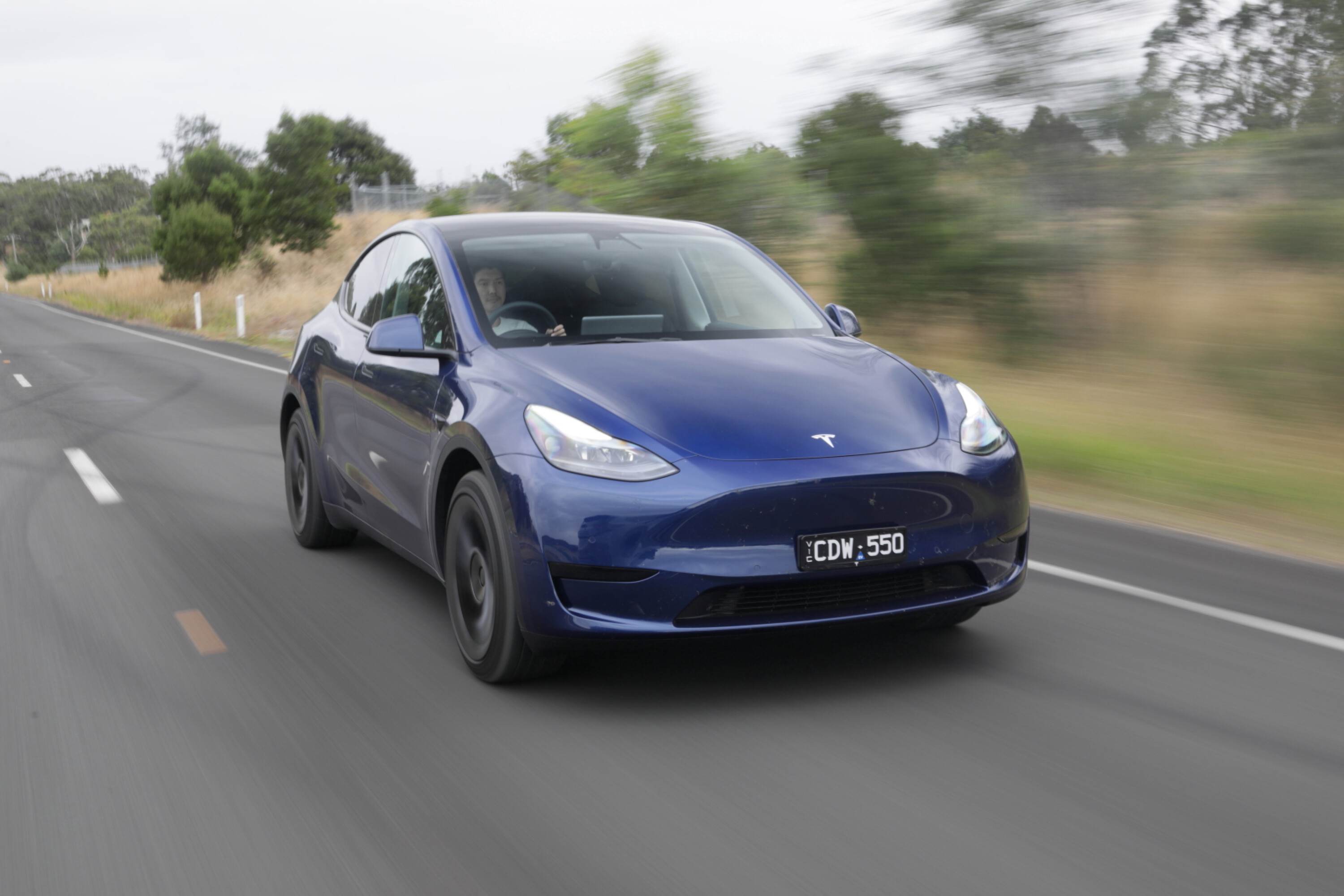
1
What are the Tesla Model Y’s key rivals?
The popular Tesla Model Y competes in a highly contested medium electric SUV segment, including high-performance EVs at the top-end. Key rivals include:
Snapshot
- 2024 Toyota Kluger pricing and features
- Price changes for 2024 sees every variant increase by around $2600
- Equipment levels and trims remain unchanged across nine-strong line-up
The 2024 Toyota Kluger is now up to $2630 more expensive following a recent price rise across the entire model line-up.
Nearly every variant in the nine-strong model range has gone up by $2630, except for the Grande FWD which has risen by $2623, with Toyota blaming inflation and higher production costs as the reasons behind the price adjustment. See the table below for updated pricing on each variant.
Despite the price bump, there are no changes to the Kluger’s features or standard specifications for 2024, and the structure of the model range also continues unchanged.
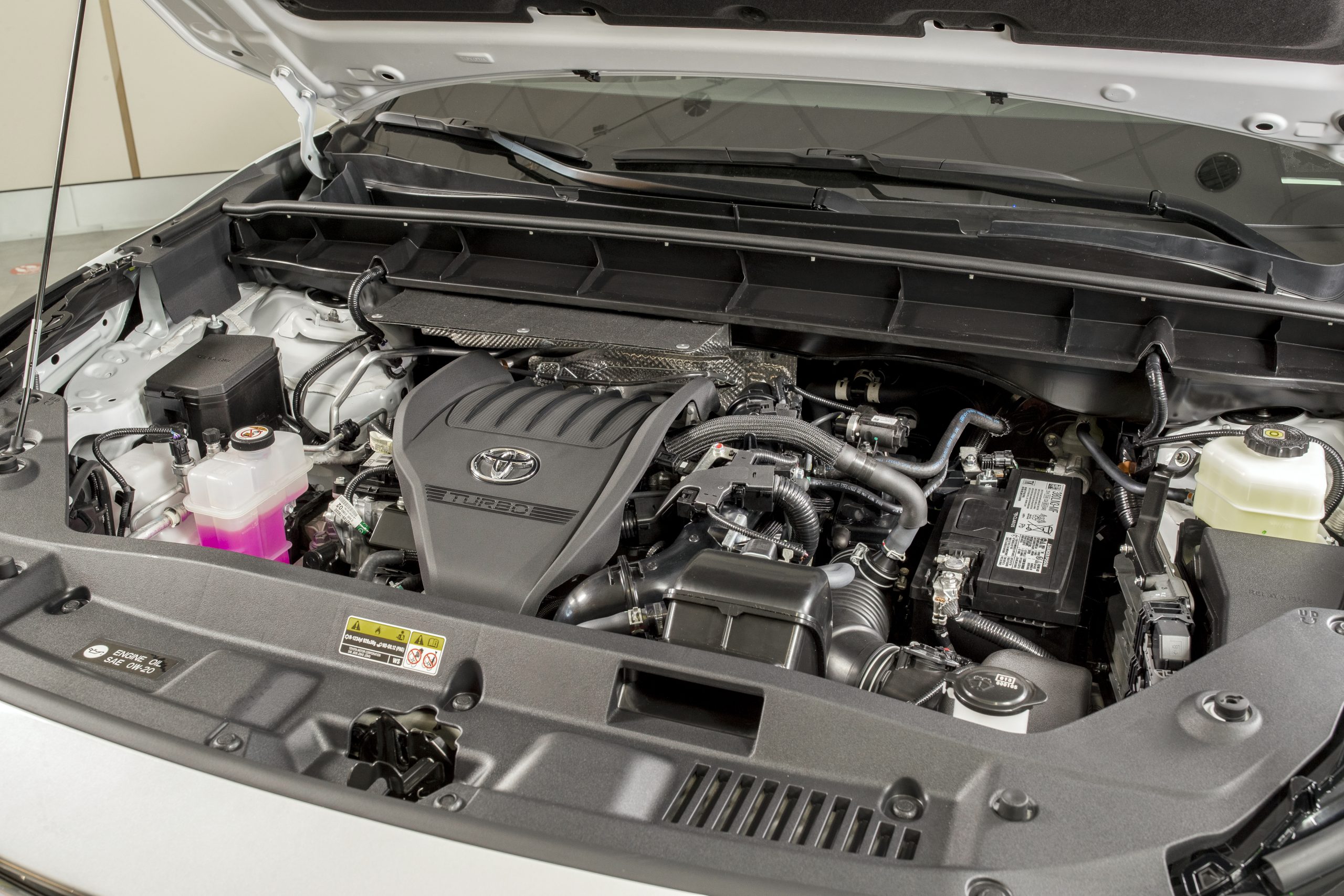
Three trim levels are offered (GX, GLX and Grande) and buyers have the choice of two powertrains: either a fresh 2.4-litre petrol turbo or a 2.5 petrol hybrid.
The 2.4-litre turbo petrol, which replaced the Kluger’s lusty and thirsty 3.5-litre V6 at the end of 2022, produces 198kW/420Nm and is available in both front- and all-wheel-drive guises. The Kluger hybrid is all-wheel drive only and has a combined system output of 184kW.
The price rises means the 2024 Toyota Kluger range now starts at $54,420 before on-road costs for the GX 2.4T FWD, while the flagship Grande hybrid is now the most expensive Kluger ever at $82,860 before on-roads.
1
As part of its previous update in 2023, the Kluger benefitted from Toyota’s latest infotainment software – as found in the Corolla Cross, and the latest RAV4 and Corolla.
It is matched to an 8.0-inch touchscreen in the entry-level GX, while the GXL and Grande adopt a larger 12.3-inch unit. The system supports wireless Apple CarPlay (but wired Android Auto), over-the-air software updates, and connected satellite navigation on select variants.
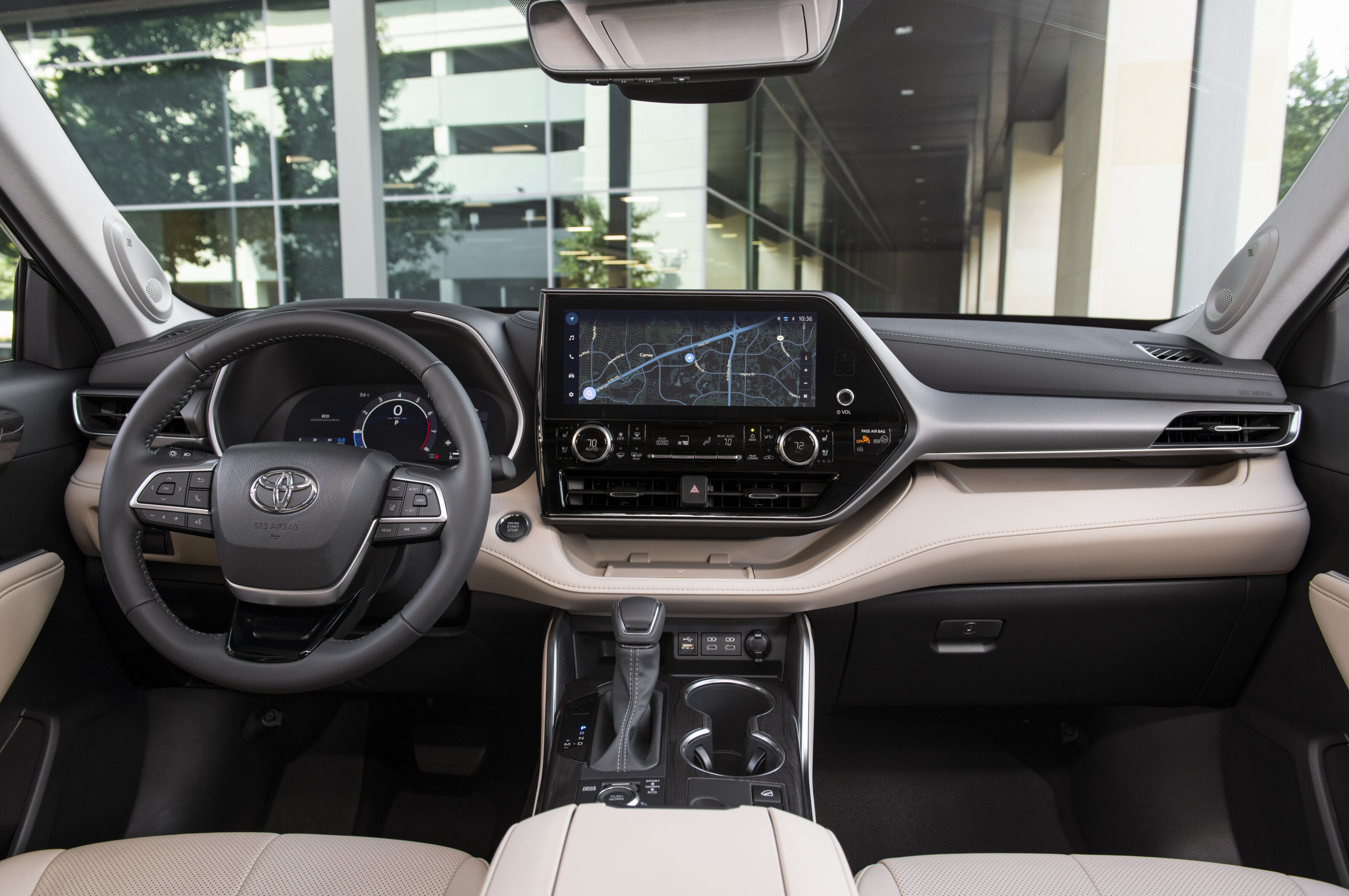
1
Toyota Connected Services is standard across the Kluger line-up, with a 12-month complimentary period before owners must choose between two monthly subscriptions to retain the service.
It features stolen vehicle tracking, remote engine start, SOS emergency calling, a vehicle locator, and the ‘Hey, Toyota’ voice assistant.
For a full run-down on the updated Toyota Connected Services, including every feature available and the cost of each monthly subscription, click on the read more link below.
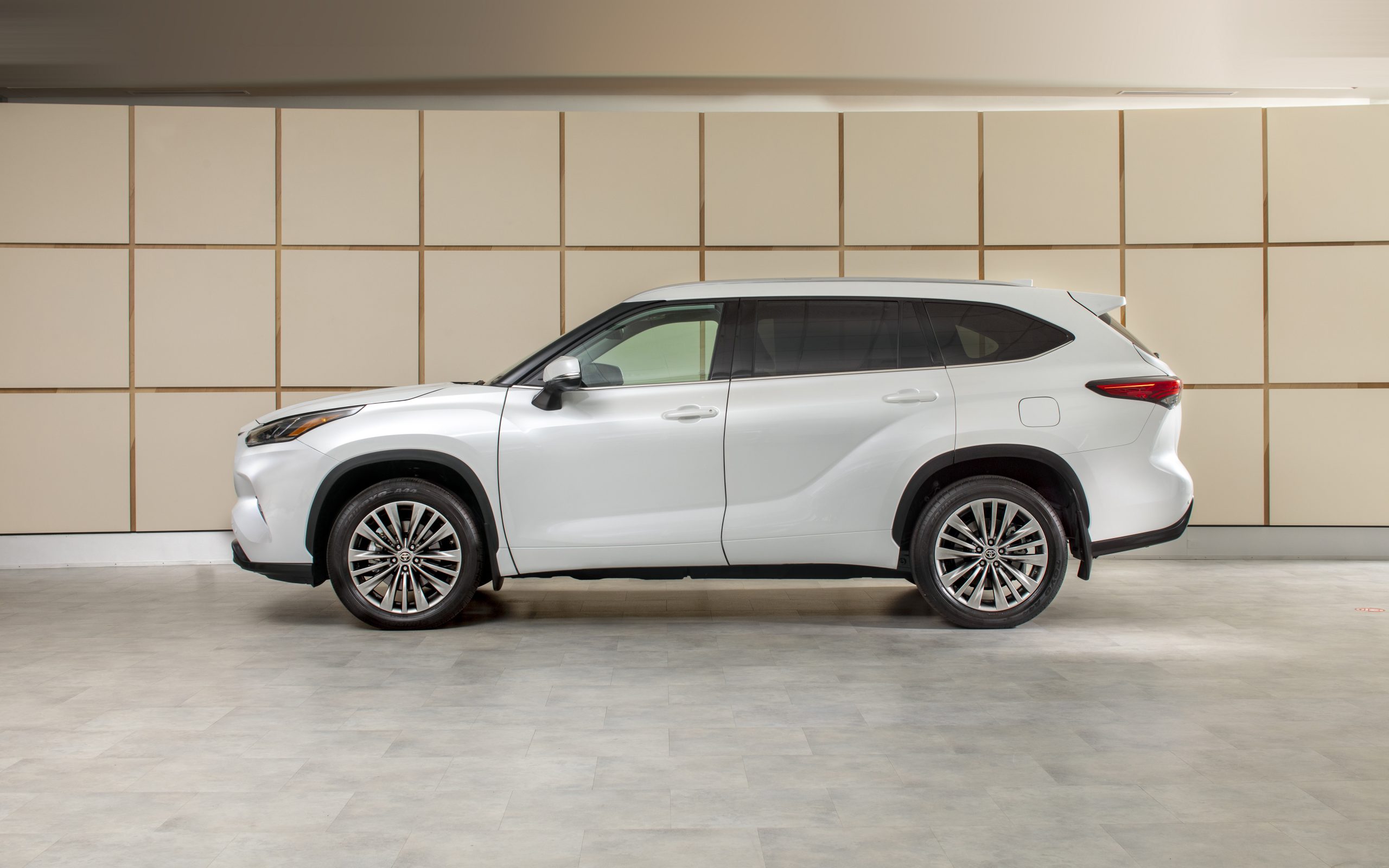
1
The price rises for the Toyota Kluger – which is Australia’s most popular monocoque large SUV, and a rival to the Mazda CX-9, Hyundai Palisade and Nissan Pathfinder – came into effect in March 2024.
JUMP AHEAD
- Pricing
- Features
- Options
- Colours
- Engine, drivetrain, and fuel economy
- Safety
- Dimensions
- Warranty and servicing
- Availability
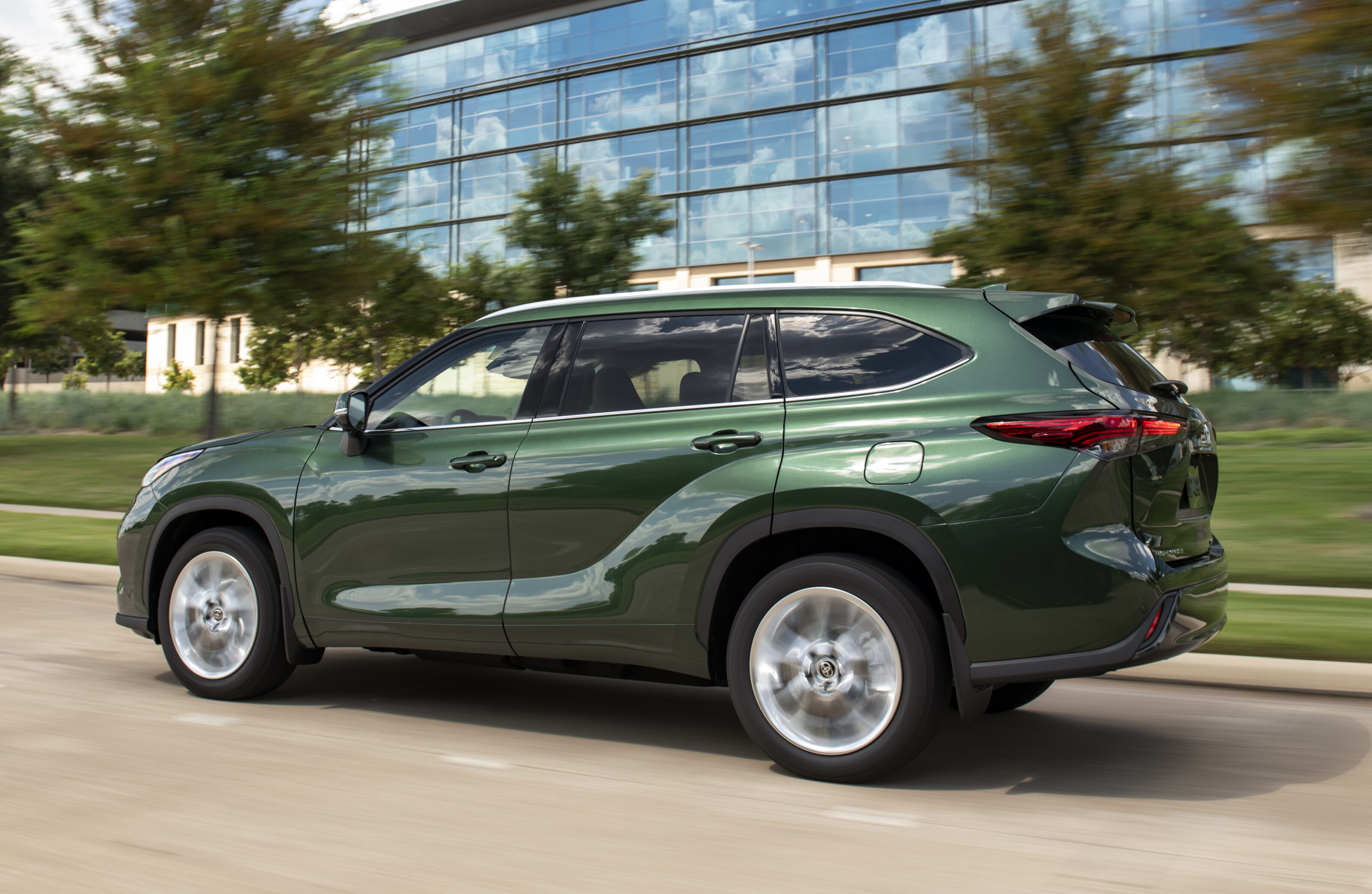
1
2024 Toyota Kluger pricing
Prices exclude on-road costs.
| 2024 Toyota Kluger pricing | ||
|---|---|---|
| Model | Pricing | Change |
| GX 2.4 T FWD | $54,420 | up $2630 |
| GX 2.4T AWD | $58,420 | up $2630 |
| GX 2.5 hybrid AWD | $60,920 | up $2630 |
| GXL 2.4T FWD | $63,940 | up $2630 |
| GXL 2.4T AWD | $67,940 | up $2630 |
| GXL 2.5 hybrid AWD | $70,440 | up $2630 |
| Grande 2.4T FWD | $75,880 | up $2623 |
| Grande 2.4T AWD | $78,290 | up $2630 |
| Grande 2.5 hybrid AWD | $82,860 | up $2630 |
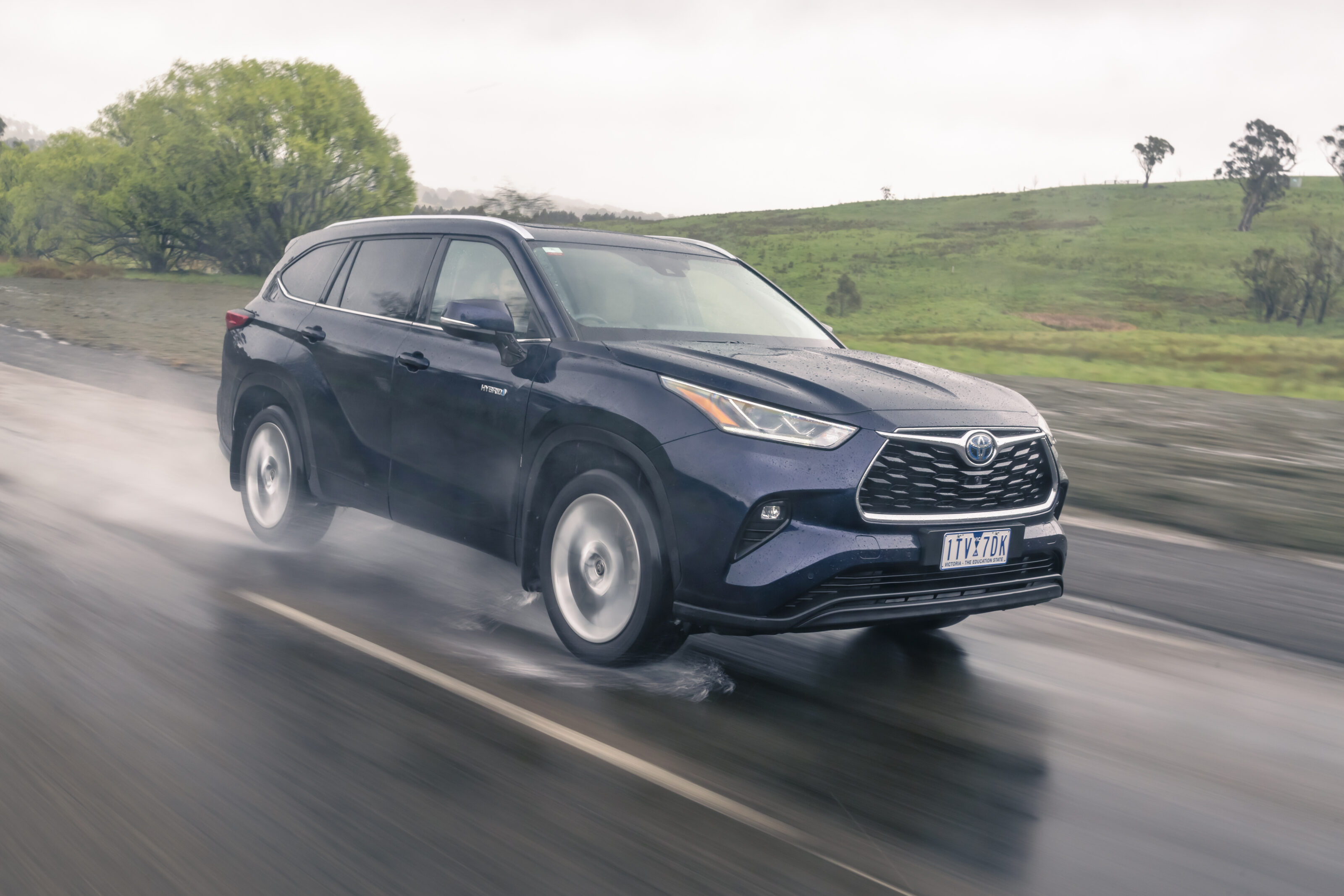
1
2024 Toyota Kluger features
GX
GXL
Grande
1
Colours
Metallic paint incurs a $675 premium.
1
Engine, drivetrain, and fuel economy
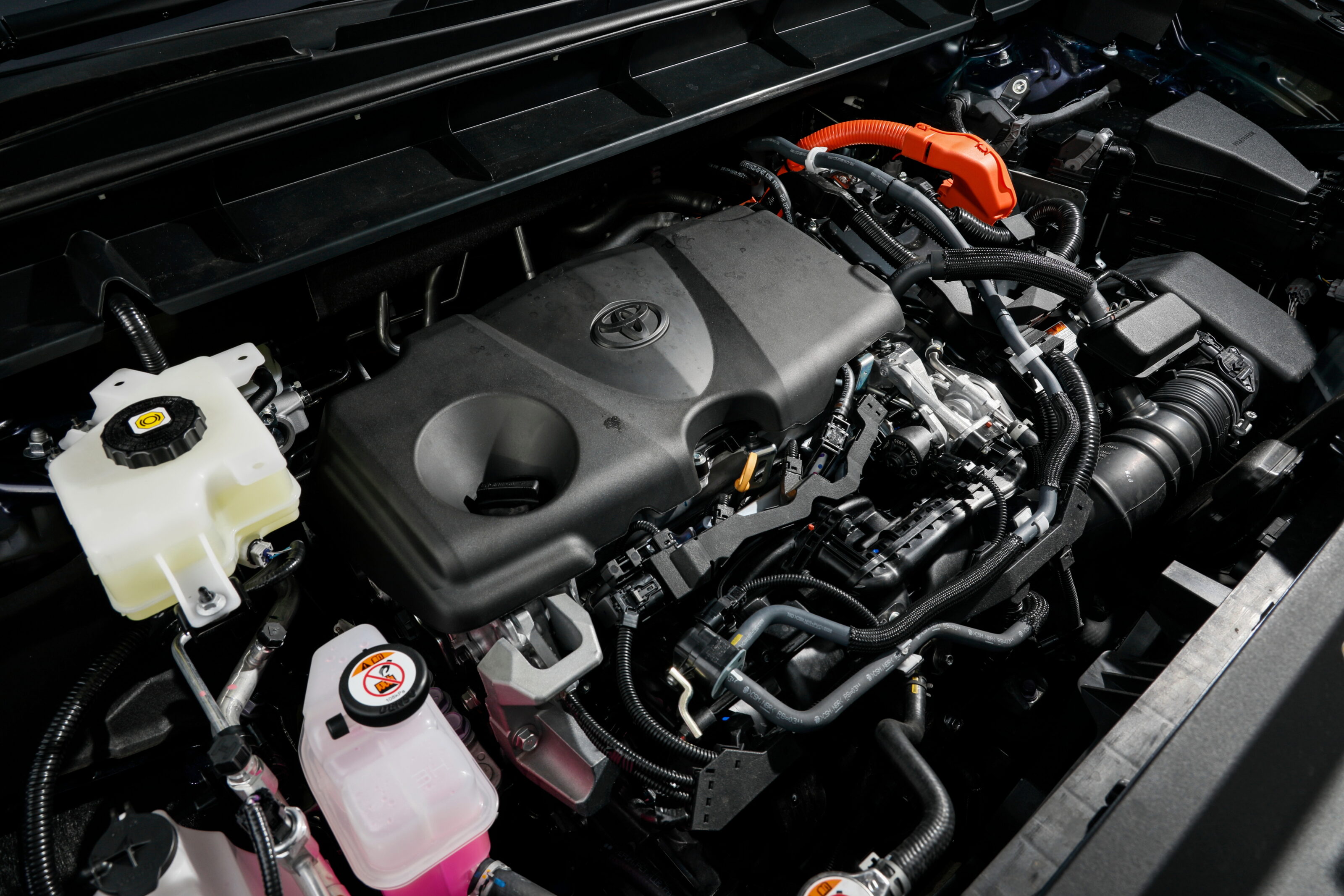
Under the bonnet, the Toyota Kluger is available with a 2.4-litre four-cylinder turbocharged petrol engine, or a 2.5-litre petrol-electric hybrid.
The 2.4-litre engine, also found in the Lexus NX and Lexus RX, produces 198kW and 420Nm – down 20kW but up 70Nm over the previous 3.5-litre non-turbo V6.
It is matched with an eight-speed torque converter automatic transmission, with the availability of front-wheel drive or, for $4000 extra, all-wheel drive across the range.
Toyota says the four-cylinder engine consumes up to 0.4L less per 100 kilometres, while peak torque is delivered from 1700rpm – down from 3000rpm in the V6.
1
A hybrid option is available across the Kluger line-up, with standard all-wheel drive. It comprises a 2.5-litre naturally-aspirated petrol engine, an electric motor and a 1.5kWh lithium-ion battery, with a 184kW total system output.
All variants of the Toyota Kluger have a 2000-kilogram braked towing capacity.
2024 Toyota Kluger fuel economy
The turbocharged petrol engine supports 91RON unleaded petrol, while the hybrid requires 95RON premium unleaded or higher.
1
Safety
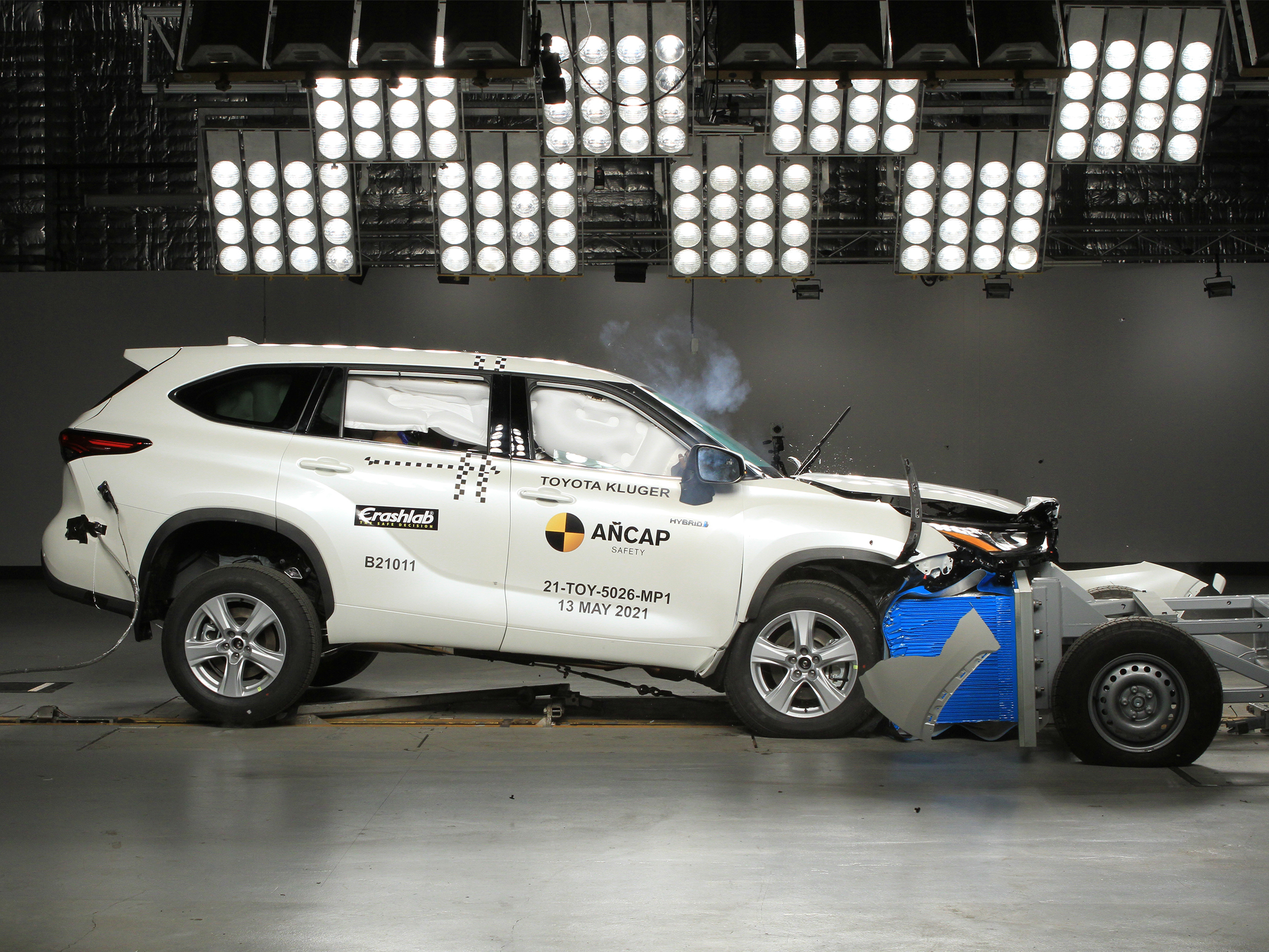
The Toyota Kluger is covered by a five-star ANCAP safety rating, based on testing conducted in 2021. This score applies to all variants.
It received a score of 90 per cent for adult occupant protection, 88 per cent for child occupant protection, 76 per cent for vulnerable road user protection, and 82 per cent for safety assist.
For the full report, click here.
Seven airbags (dual front, side, curtain, and driver’s knee) are fitted across the range.
Each variant includes the following active safety equipment as standard:
1
Dimensions
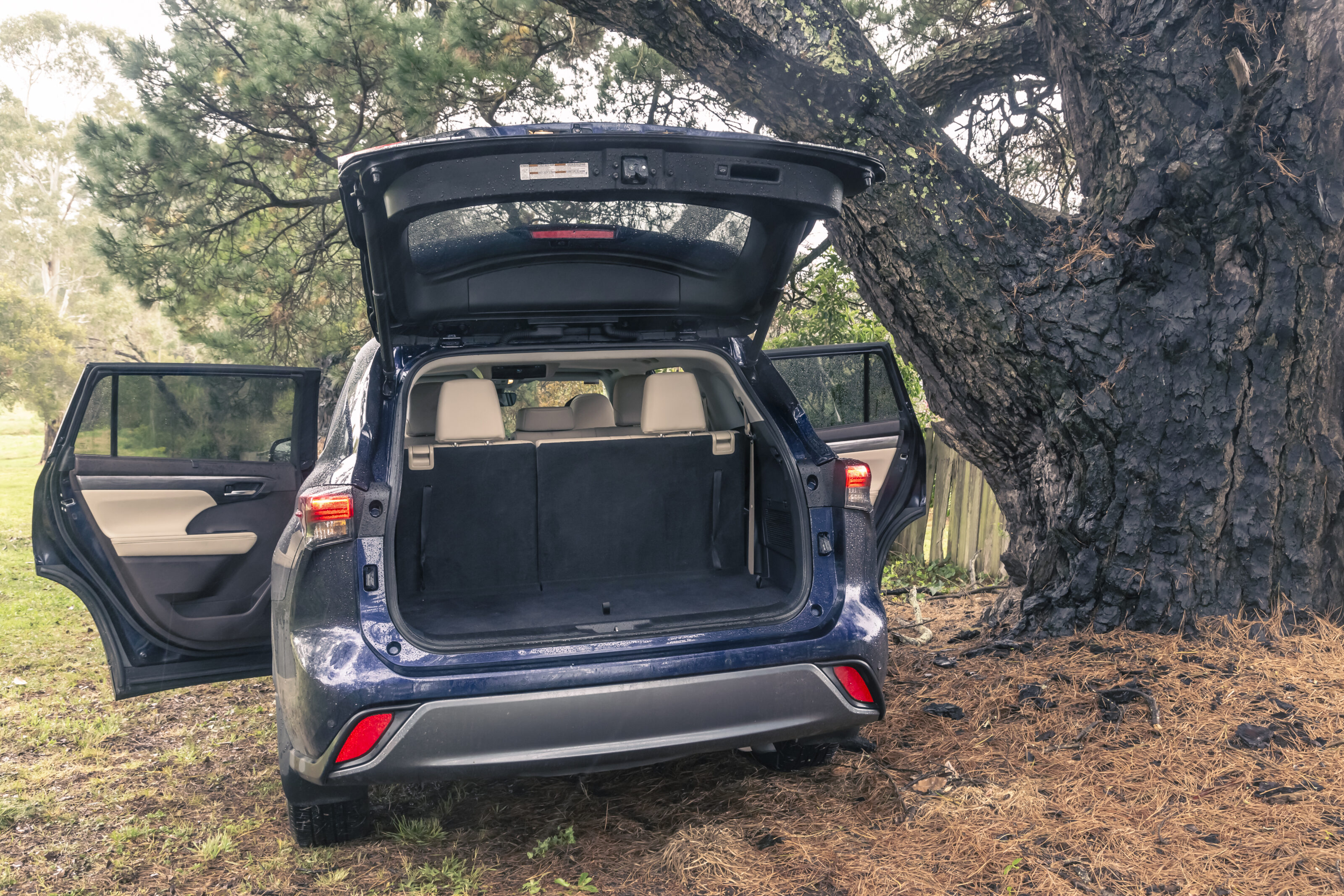
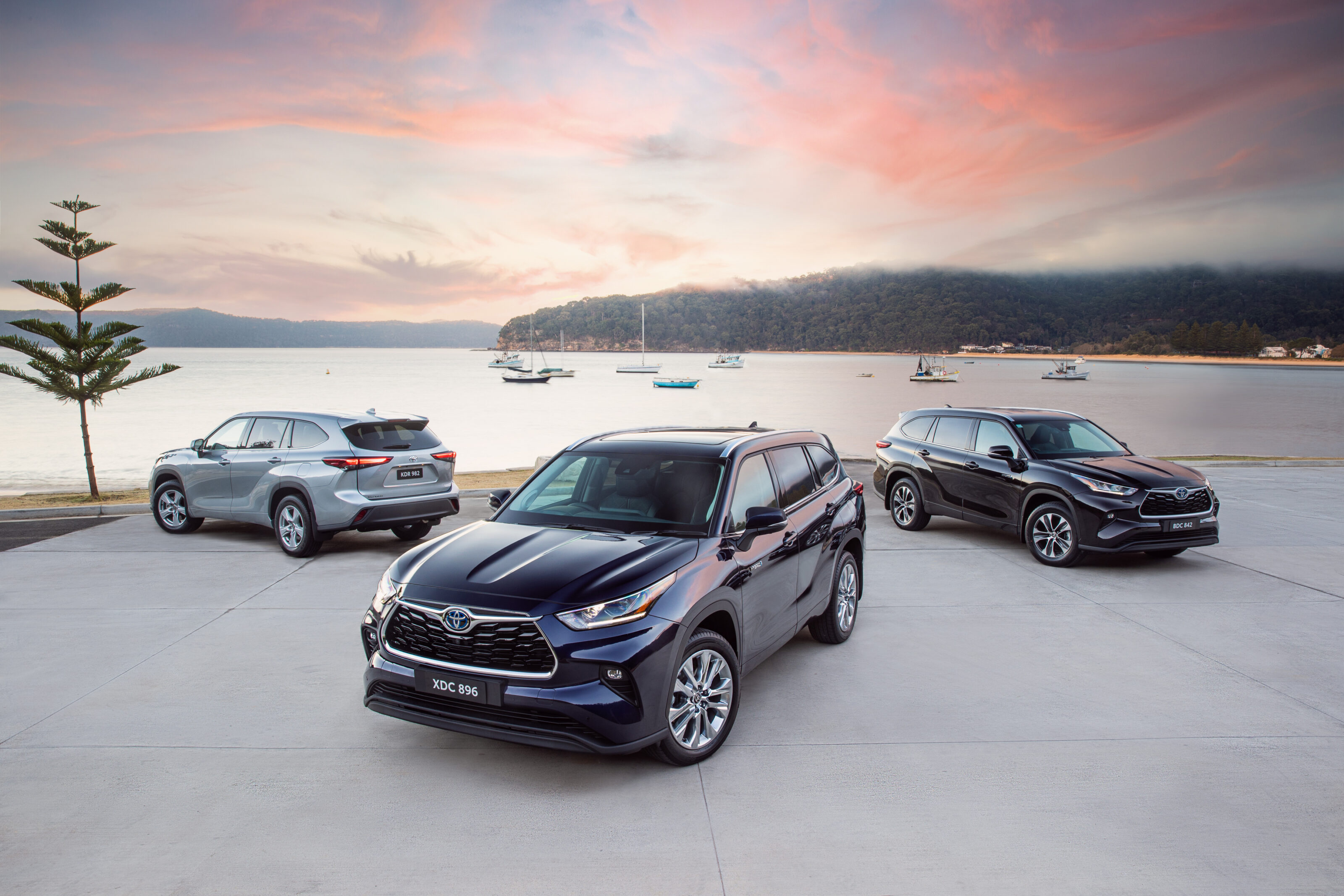
The Toyota Kluger has a 2850-millimetre wheelbase, and is 4966mm long, 1930mm wide and 1755mm tall.
2024 Toyota Kluger boot space
With the rear seats up, the Toyota Kluger has a 552-litre boot capacity.
Folding the second row increases luggage capacity to 1150 litres, while there’s 241L of storage with all seats in use.
1
Warranty and servicing
As per the wider Toyota range, the Kluger is covered by the brand’s five-year, unlimited-kilometre warranty.
Servicing for the Kluger is required every 12 months or 15,000 kilometres, whichever comes first.
Capped-price servicing is available for the first five years or 75,000 kilometres, priced at $215 a pop.
Availability
The 2024 Toyota Kluger is available to order now.
For information on Toyota’s wait times, click here.
MORE
Everything Toyota
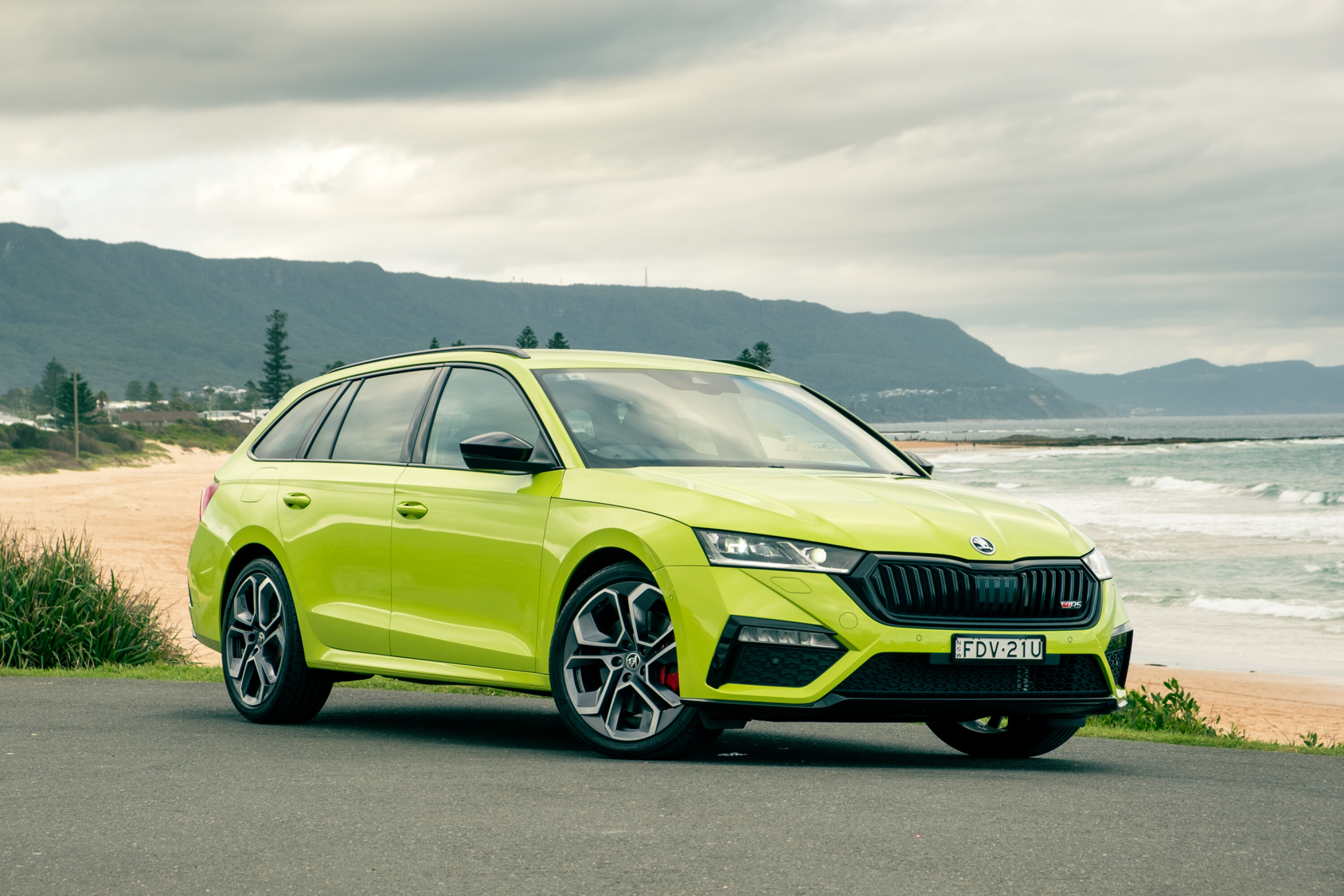
Skoda Australia is coming into its biggest year ever for product launches, with plans to introduce an unprecedented number of updated and new-generation vehicles throughout 2024.
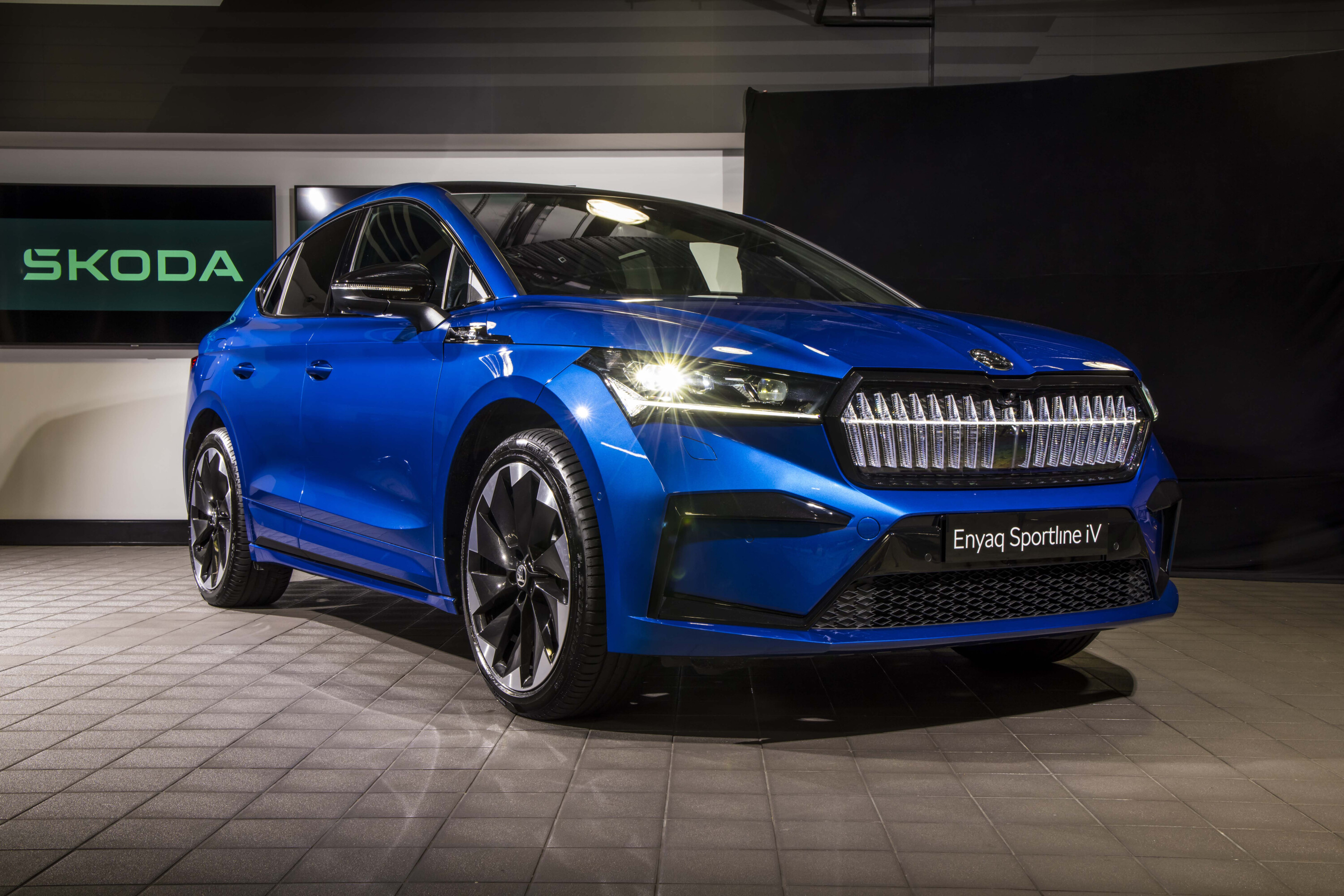
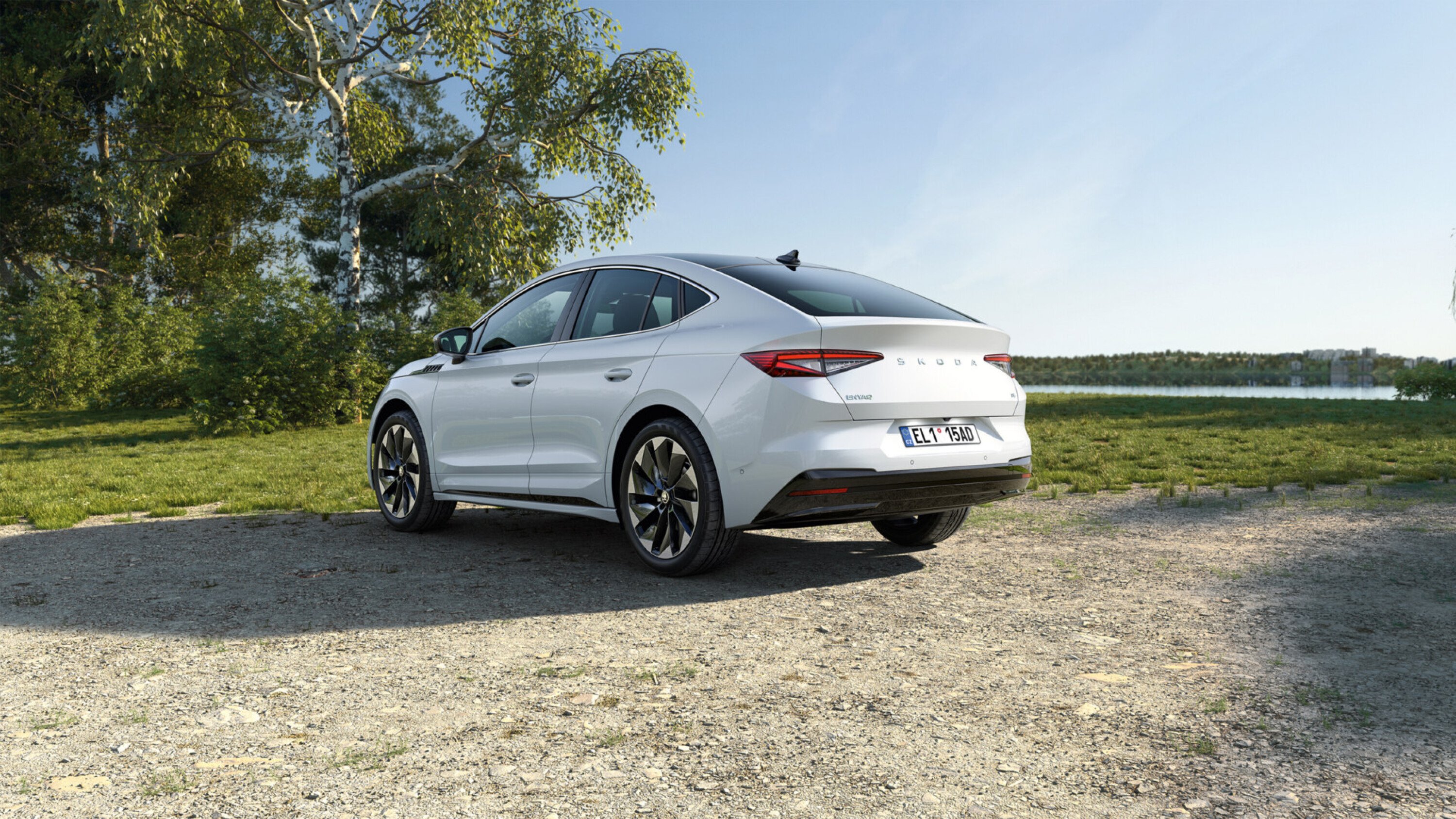
Skoda will finally join the EV race with the new Enyaq and Enyaq RS models in October, but the brand is yet to confirm its intentions with pricing and specifications for the much anticipated – and late to arrive – EV pairing. In theory, though, those models will line up against the Tesla Model Y, which now spans $63,500 to $82,900 plus on-road costs.
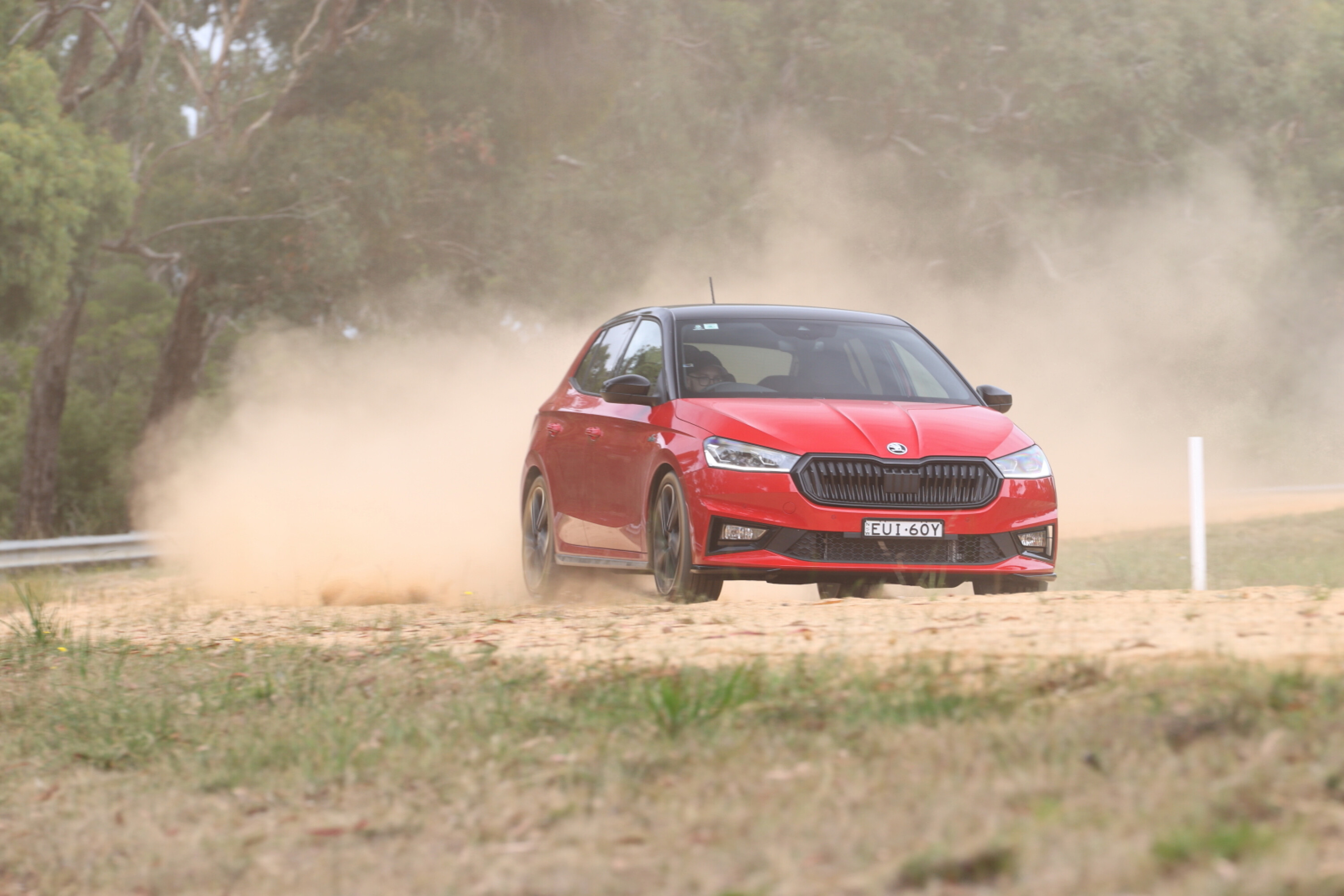
At the other end of the scale, Skoda will also finally add a new entry-grade version of the Fabia city car, which the brand describes as ‘actually more like a mid-spec’ – meaning you can expect it won’t slot in below $30,000 drive-away.
1
However, we’ve heard it will be ‘significantly’ more affordable than the Monte Carlo, which is $38,990 drive-away.
Above the Fabia in size but likely close on price will be the facelifted Scala hatchback, which is expected to retain a two-trim model range, but with modest price increases to support additional standard spec. The current Scala lines up at $33,990 for the 1.0-litre turbo three-cylinder 85TSI Ambition and $42,490 for the four-cylinder 1.5L 110TSI Signature spec.
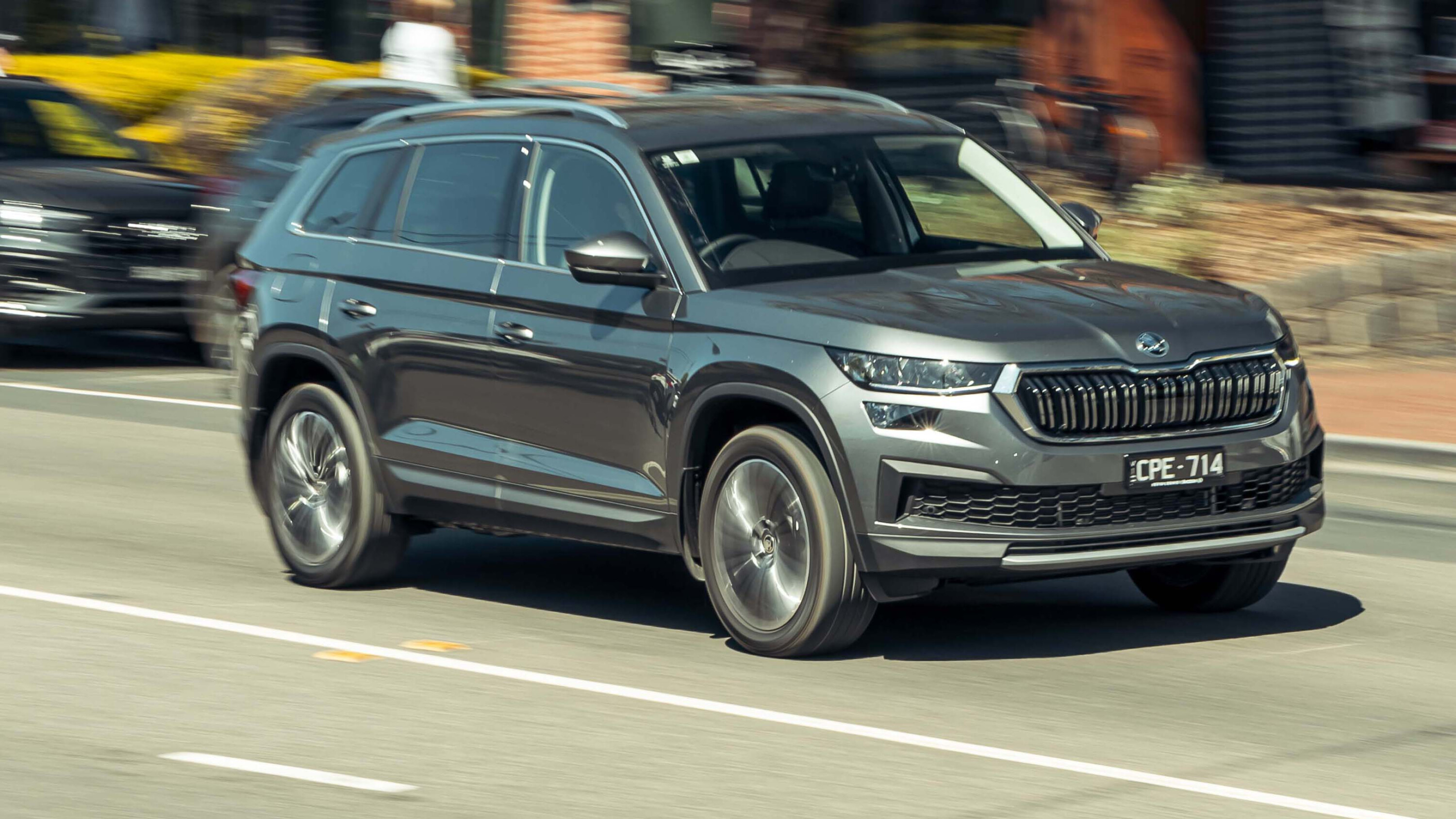
Also coming is the revised Kamiq small SUV, the facelifted midsize Octavia liftback and wagon, and the vital all-new Kodiaq seven-seater SUV.
And before the new-gen Kodiaq arrives, there’s a value-packed Sportline Run-Out model for $56,590 drive-away, adding $5000 of additional equipment at no premium over the base model Style.
1
Skoda Australia managing director, Michael Irmer, said the brand’s second-half of 2024 will be significant for sales in the years to come, following a couple of years of unprecedented global setbacks.
“Obviously in 2021, the disruptions happened. Supply and the semiconductors, we then had to switch and pivot to vehicles with certain de-specification.
“Then we saw these massive cost inflations going through, and rippling through the whole industry, the energy prices, then the war in Europe started, and that drove our price levels up.
“And that basically has led many manufacturers to increase prices because the costs were starting to spiral out of control, and we are no different there, either.
1
“I think we’re now coming out of this phase of total distortion in the marketplace, and in the meantime the market has also changed quite a bit,” he said.
Mr Irmer forewarned that 2024, despite all the activity, could well be pretty lean in terms of sales figures, as most of the launches will be in the second half of the year.
“It’s towards the tail-end, mostly,” he said. “So you won’t see this affecting sales until next year for those cars. And the first facelift will come mid-year, but a facelift is not the same as a full-new car. The new cars are the ones in quarter four,” he said.
According to the brand, the rollout is as follows:
| Skoda model rollout 2024 | |
|---|---|
| Kodiaq SportLine Run-Out | April |
| Kamiq facelift | June |
| Fabia entry-grade | July |
| Scala facelift | July |
| Enyaq coupe SUV | October |
| Enyaq RS coupe SUV | October |
| Octavia facelift | November |
| Kodiaq new-gen | November |
1
All the pricing and specs will be covered as the details for each of the new models are confirmed by the brand, and we can’t wait to see where the Enyaq EV models end up given the brand’s push to remain to be seen as an affordable brand from Europe.
“The world around us has changed as well,” Mr Irmer said. “The economic situation has changed, the supply shortage is gone, we can now equip the cars again the way we like it – we don’t need to constantly work around shortages of certain equipment levels. And we also don’t have this totally unprecedented shortage of production output anymore. So this is all gone.
“Skoda was always a brand with value and, a little bit also, the entry into the VW Group’s model portfolio. But in Australia, we’ve been experiencing … the brand has been able to establish itself differently based on what our mix of product was.”
It’s worth also keeping in mind that, unlike every other European brand on the market, Skoda Australia backs its vehicles with a standard seven-year, unlimited-kilometre warranty, and offers buyers the chance to add a seven-year prepaid servicing pack for considerably less than the pay-as-you-go rate.
MORE
Everything Skoda
The Toyota RAV4 set a sales record in March as the car maker’s hybrid volume doubled year-on-year to make up nearly half the brand’s total sales.
March 2024 saw more than 5000 RAV4s sold for the first time to be Toyota’s best seller, second only to the Ford Ranger overall.
Significantly, 4728 of the 5070 RAV4s sold (93.3 percent) were hybrid models – with the petrol-only share only several hundred – making the RAV4 hybrid its most popular vehicle.
The RAV4 made the biggest single contribution to a total of 24,722 hybrid and/or electric power Toyota sales year-to-date, making up 44 per cent of the brand’s 56,238 first quarter total.
A jump of 104 percent, the figure is also large enough for Toyota hybrid models alone to rank second overall for Q1, ahead of second-placed Mazda’s 23,716.
As well as the RAV4, sales records were set by hybrid versions of the Corolla, Corolla Cross, Camry and Kluger in the first quarter of 2024 as the brand delivered more than twice as many vehicles as any other car maker in Australia.
Key to the result was clearing the backlog of supply issues hampering sales in recent years.
“Now that supply has vastly improved for Toyota, there are clear indications of a resurgence in hybrid electric demand here in Australia and also in markets like Europe and the United States,” said Sean Hanley, Toyota Australia Vice President Sales, Marketing and Franchise Operations.
Toyota USA reported a 74.1 percent Q1 2024 sales increase for its hybrid and electrified vehicles, accounting for 36.6 per cent of its sales volume with the RAV4 hybrid also posting a best-ever first quarter result.
“That’s because consumers increasingly regard hybrid electric models as providing practical, capable and affordable vehicles compared to petrol variants that help cut their carbon footprint while reducing fuel bills – and they retain strong resale values,” Hanley added.
Toyota launched its first battery-electric model in Australia, the BZ4x, in February 2024 in the wake of criticism of its slow take-up globally of fully-electric vehicles compared to rivals including Hyundai, Kia, Mitsubishi and Ford.
The Japanese car maker maintains its long-standing ‘diverse powertrain’ approach to electrification with battery-electric vehicles part of a range of different propulsion types.
Global Chairman Akio Toyoda said a media briefing in February 2024 electric vehicles would not make up more than 30 percent of sales “regardless of technical advances” due to varied customer demands across different markets.
Toyota has also confirmed plans to introduce a battery-electric HiLux in 2025, with mild-hybrid HiLux scheduled for an Australian release by mid-2024.
MORE
VFACTS
MORE
PHEV and Hybrid Cars
MORE
Everything Toyota
Skoda Australia is banking on buyers choosing their in-house finance option – and if they do that, there’s a guaranteed trade-in price waiting at the end of their loan.
The company’s Guaranteed Future Value program is part of a renewed focus to be seen as a value-oriented choice for consumers – particularly now, when every dollar counts.
The fine print on the company’s site states: “This is the set minimum residual value of your vehicle which is determined up front by your choice of car, finance product, km limit and term”, and the calculator on-site helps you set the parameters.”
1
According to Michael Irmer, Skoda Australia managing director, this offers a big plus for customers who think beyond the attractive drive-away pricing and may be concerned about the resale or residual value.
“This is a relatively new concept to the Australian market; it has maybe gone through exactly one buyer cycle so far. We at Skoda, we’re having 20 percent take-up,” Irmer said.
“You might be thinking ‘that’s not much’, but it’s actually quite good, more than most other players. But is there more potential? Absolutely.”
The brand’s boss said in Australia and other markets, about 70 to 80 percent of new-car customers are seeking finance in one form or another, be it drawing from a mortgage or offset account, getting a loan from family, or taking out a car loan or personal loan from a bank.
Car dealership financing, Irmer said, perhaps isn’t considered as solid an option, given some unscrupulous dealings by OEM financial services businesses in the past.
“Car dealership financing is only getting a portion of this in Australia at the moment – it has to do with some of the history and the legacy of that industry, which was largely unregulated until recently,” he said.
“Regulation has improved, but there’s a lot of damage done to the perceptions. It’s not the first port of call to go to the car dealership for buying finance, because they’ve been exposed to a lot of bigotry and negative surprises – balloons set too high, so that you’re in negative equity. Things like that. Or no guarantee for your residual value. Or [varied percentage] rates for risk assessment.”
1
Mr Irmer said ambiguity in the terms and conditions of some loans was something Skoda Australia had aimed to negate with its clear and simple plans.
“We want to take that all away with this program. In the UK, for instance, roughly 70-80 percent of buyers buy with this program. But in Australia we come from a different starting point, so it will not get to that high level anytime quickly, but we want to evolve it further.”
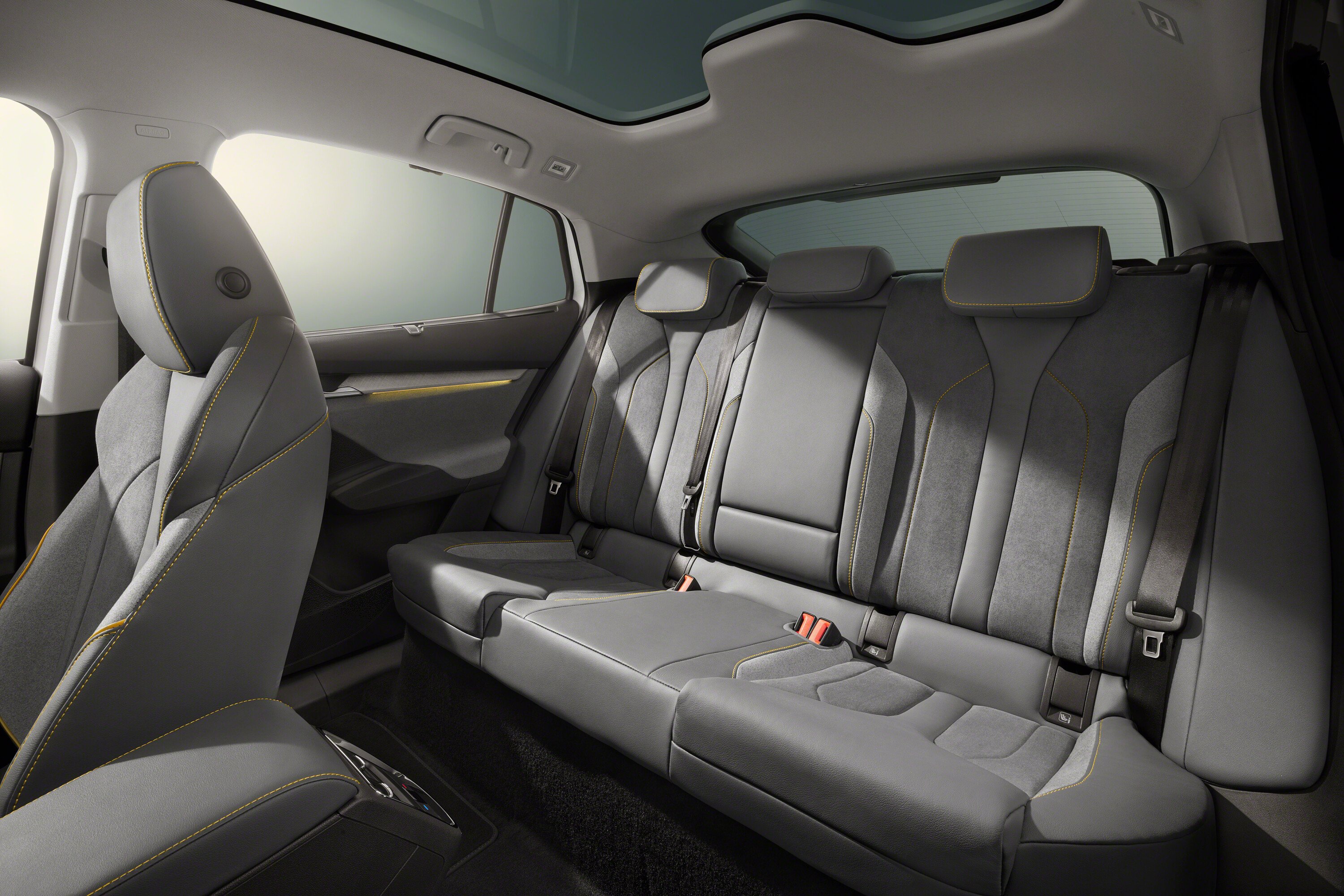
Skoda will soon launch its first EV model in Australia – the Enyaq SUV – which will be the most expensive Skoda ever. But, as has been evidenced in some other cases, the Enyaq could see a better residual value as a result of the ‘early adopter’ EV phase having passed.
Mr Irmer said the brand understands the level of uncertainty in buyer’s minds when it comes to EV resale values.
“Where it becomes really important is with electric cars,” he said. “There’s one thing that is unique [compared] to the ICE cars – the purchase price is a bit higher, but it comes with lower running costs.
“But for a consumer, there are two other things which are really important. One is, how is it going to be with selling the car in a couple of years – especially when you see the news coming from the UK, the Americas or from Europe, people are a little bit fearful [of EV resale values].
“What is it going to be, how is it going to be with the battery and the quick advances in technology?” he pondered.
1
“So then it is a really good thing to have such an asset [as GFV], and such reassurance that somebody taking the leap going into a BEV at least being protected from any surprises there. It’s even more important than in the ICE vehicles.
“Technology advances, and battery [improvements] are much faster at the moment. And that means it maybe also makes sense for many consumers to say ‘I want to be ready to transition maybe in four or five years’, and with the GFV program you can really easily do it,” said Mr Irmer.
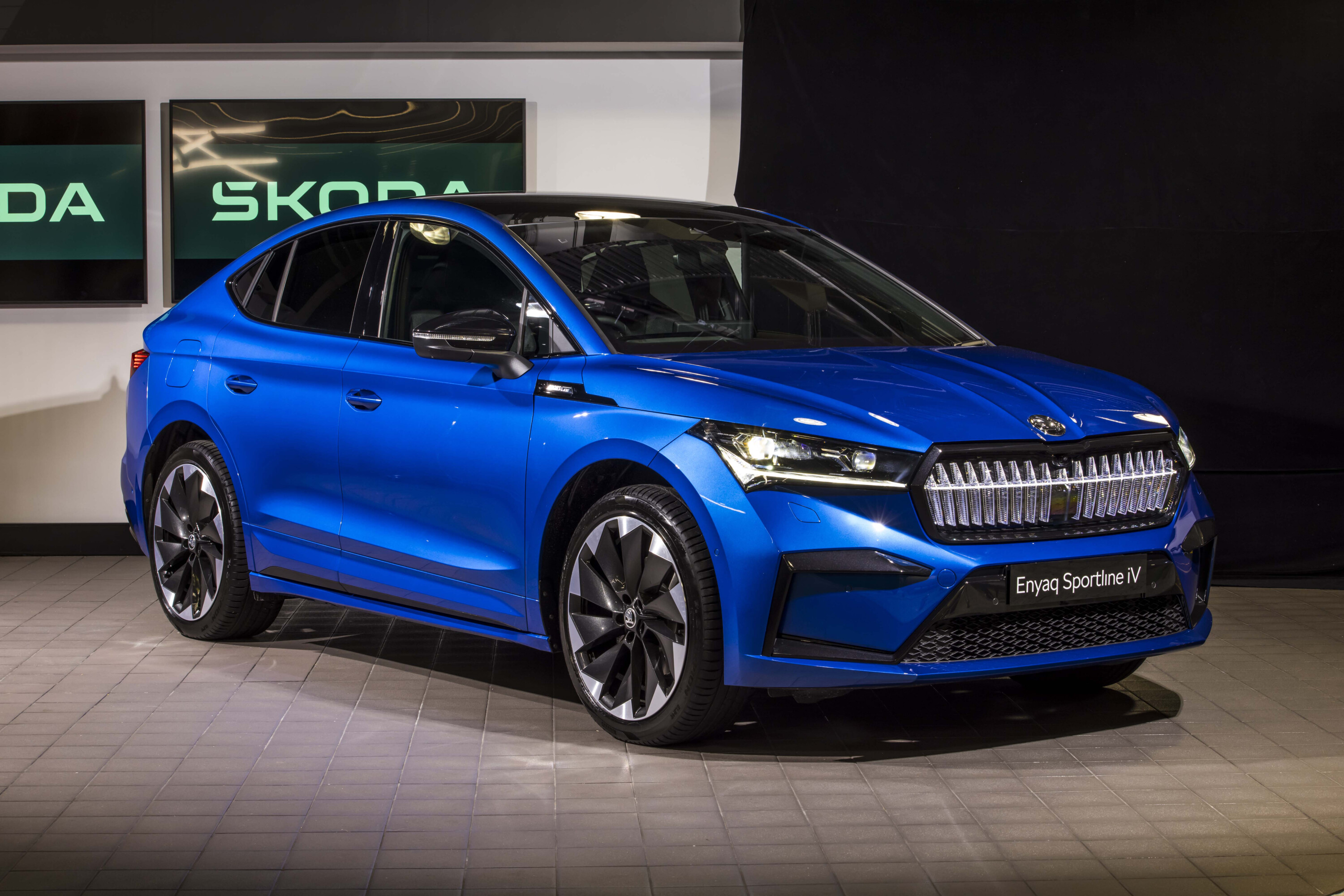
The Skoda Enyaq EV range will launch in October 2024, with the standard Enyaq ‘85’ with a single-motor layout and the dual-motor AWD Enyaq RS hitting the road then. Pricing for both is still to be confirmed, but both will come highly specified, and at launch, each will solely be offered in the Coupe-style body design.
MORE
Car Finance
MORE
Everything Skoda
The ute market as we know it: The Ranger and Hilux have a stranglehold on the top two sales spots, a bunch of other utes sell in huge numbers, and dual-cabs are everywhere from mines to school runs.
More are on the way, too, like the Kia Tasman and the GWM Cannon Alpha and BYD’s plug-in hybrid ute. So the manufacturers, at least, believe the market isn’t saturated yet.
1
Why not imagine some more, then?
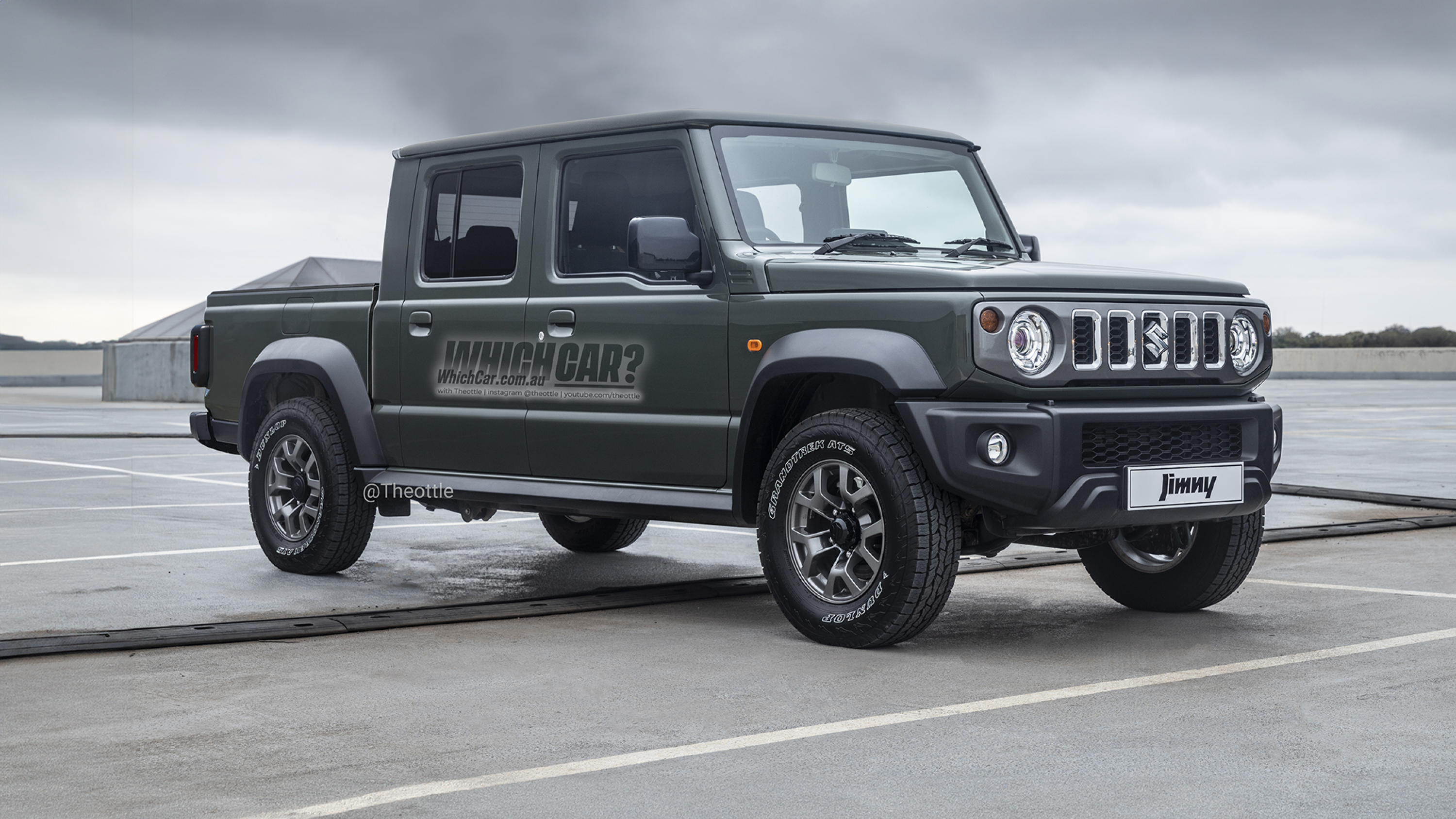
To kick off a compact ute market in Australia, our mate Theottle has imagined a Suzuki-badged entry into this crowded category – a kind of ‘Gladiator Junior’ based on the loveable Jimny.
The Gladiator is a bit much sometimes, based as it is on the hardcore Wrangler. So Theottle’s renders show how a smaller, more manageable, Gladiator-style dual-cab based on the Jimny could be designed.
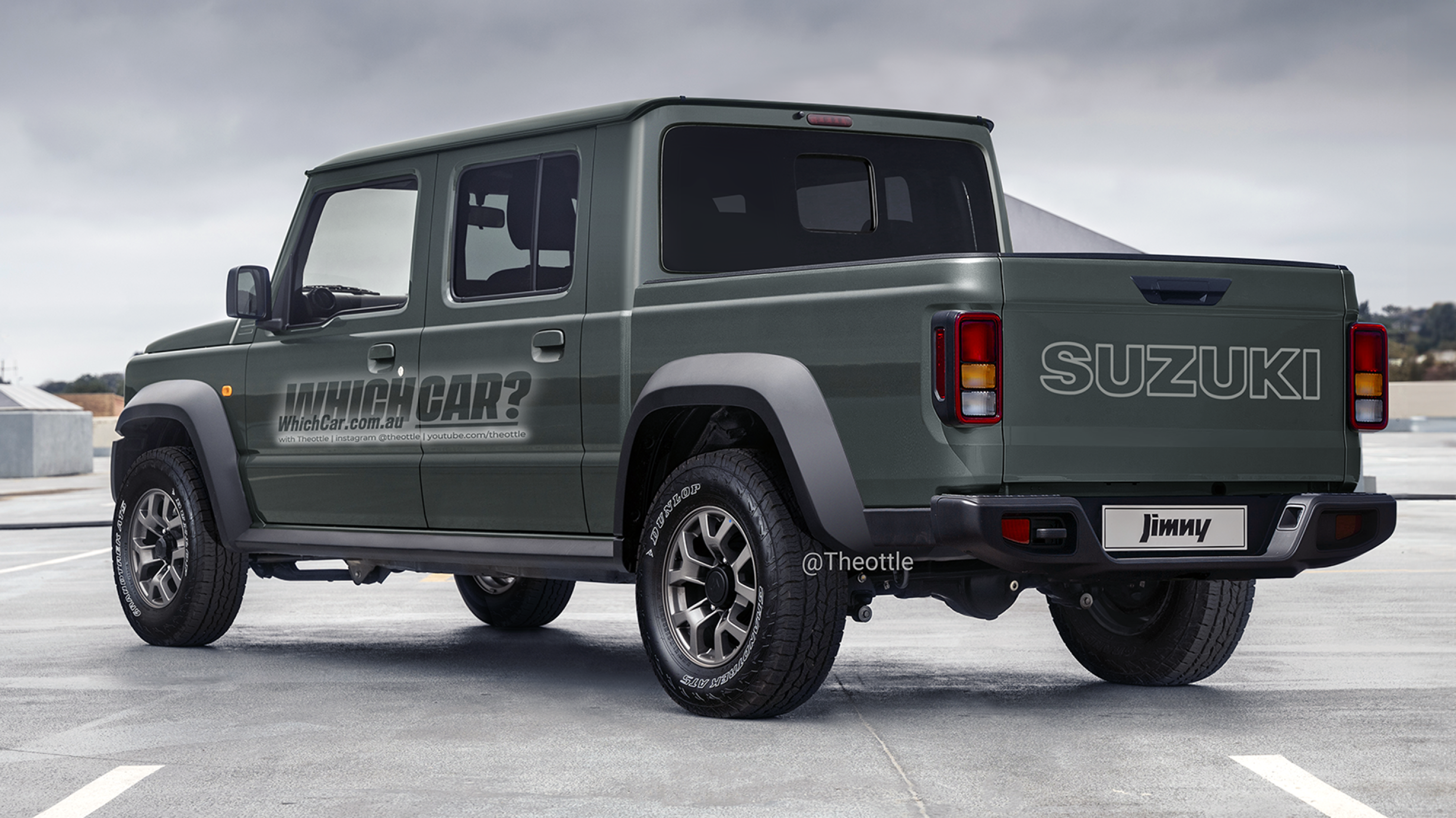
Theo’s most obvious tweak is the addition of a tray back, comprised of all new sheet metal, which looks to be in the order of a metre or so long. Jimnys have the entire tail light modules mounted in the rear bumper, meaning that Theottle’s chosen design would also have to be developed from scratch.
1
Moving forward, not only is all sheet metal to the rear of the doors new, but the rear doors are also revised, thanks to the rear wheels moving back to extend the wheelbase and keep the rear overhang in check.
The Jimny’s rear quarter lights have been removed and a solid near-vertical c-pillar features, channelling Land Cruiser 70-Series utes.
Everything forward of the B-pillar is unchanged from the Jimny wagons. Theottle’s ute revises quite a lot of the Jimny wagon’s body-in-white and delivers a visually balanced design.
Would you be interested in a Jimny Dual Cab?
Let us know in the comments below.
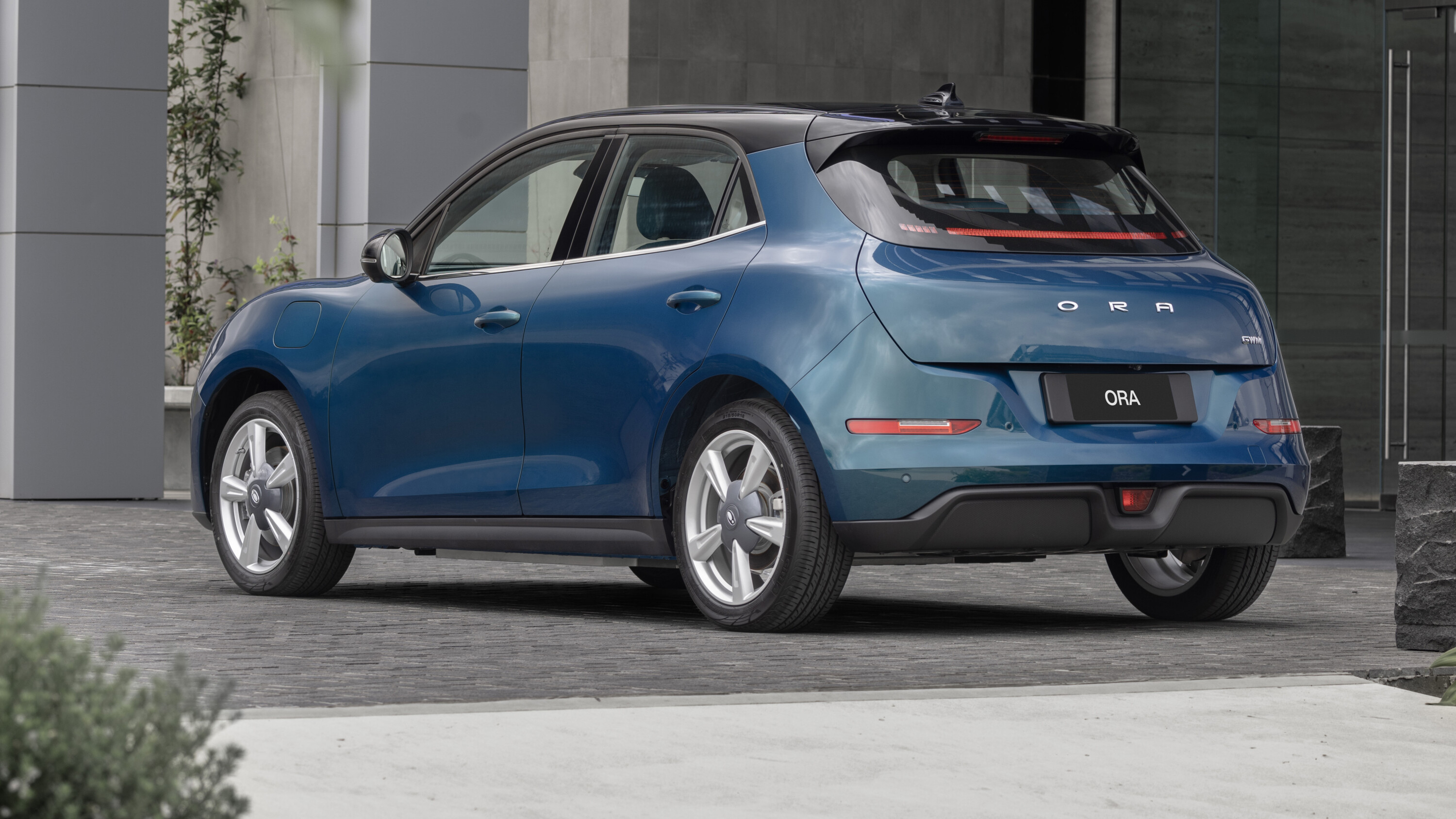
The GWM Ora now starts at $35,990 driveaway with new national pricing making it the most affordable electric vehicle in Australian showrooms.
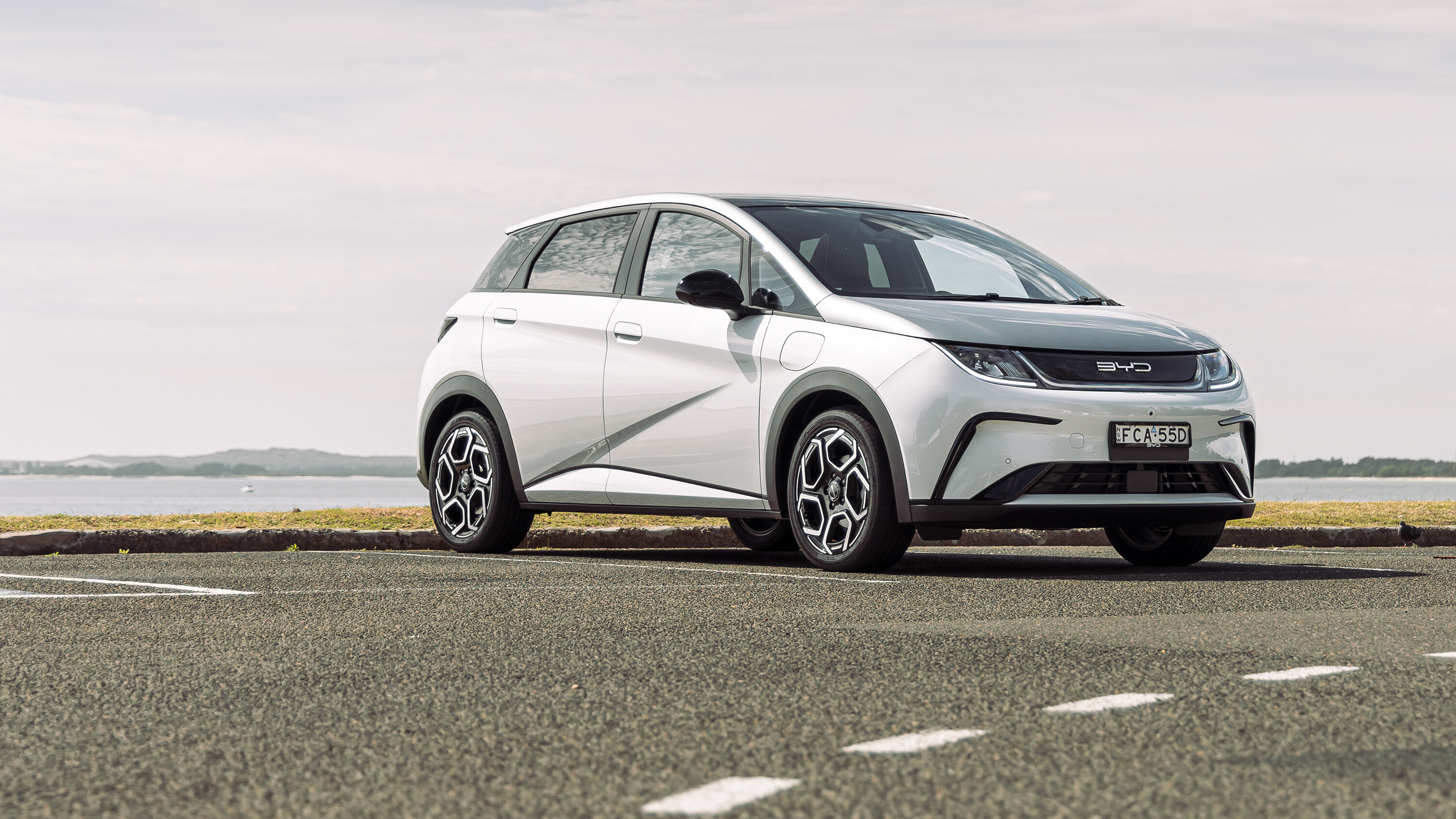
Previously priced at $39,990 before on-road costs, the new pricing sees the Ora take the title of Australia’s Cheapest EV from the BYD Dolphin, which is priced from $38,990.
Temporary run-out offers in late 2023, and up to the end of March 2024, had practically made the Chinese-built Ora the cheapest EV in the country, but the new national driveway price makes it the country’s most affordable even without any discounts.
The Ora and Dolphin have been competing with the MG4 for the eponymous title as Australia’s cheapest EV, with the BYD Dolphin priced at $38,890 a mere $100 cheaper than the MG4 it took the ‘cheapest’ mantle from in late 2023.
1
The MG4 starts from $39,990 drive-away.
In a statement GWM Australia said favourable exchange rates had helped its sharpen the Ora’s pricing.
The $35,990 driveway price for the Standard Range Ora – offering a 320km range from a 126kW/250Nm motor and 48kWH lithium-ion battery – comes with revised driveway pricing range-wide from GWM’s 95-dealer network.
The GWM Ora Extended Range is now $40,990 driveway, previously $45,990 plus on-road costs, and brings a larger 63kWh battery pack and 420km claimed range.
1
Above: BYD Dolphin
The higher-spec Ora Ultra Extended Range is $43,990 – down from $44,990 before on-roads – while the is flagship Ora Ultra GT $46,990, down from $51,990 before on-roads. All GWM Ora models are equipped with keyless entry, Apple CarPlay smartphone compatibility and a 10.25-inch centre display.
The news comes days after Tesla – which dominates the Australian electric vehicle market – announced price reductions of up to $8500 for the updated Tesla Model Y SUV arriving in showrooms in June 2024.
The Tesla Model Y was the best-selling electric car in Australia in 2023. https://www.whichcar.com.au/news/2024-tesla-model-y-pricing-features-
MORE
Everything GWM
The 2024 GWM Haval Jolion small SUV appears in line to receive a facelift soon.
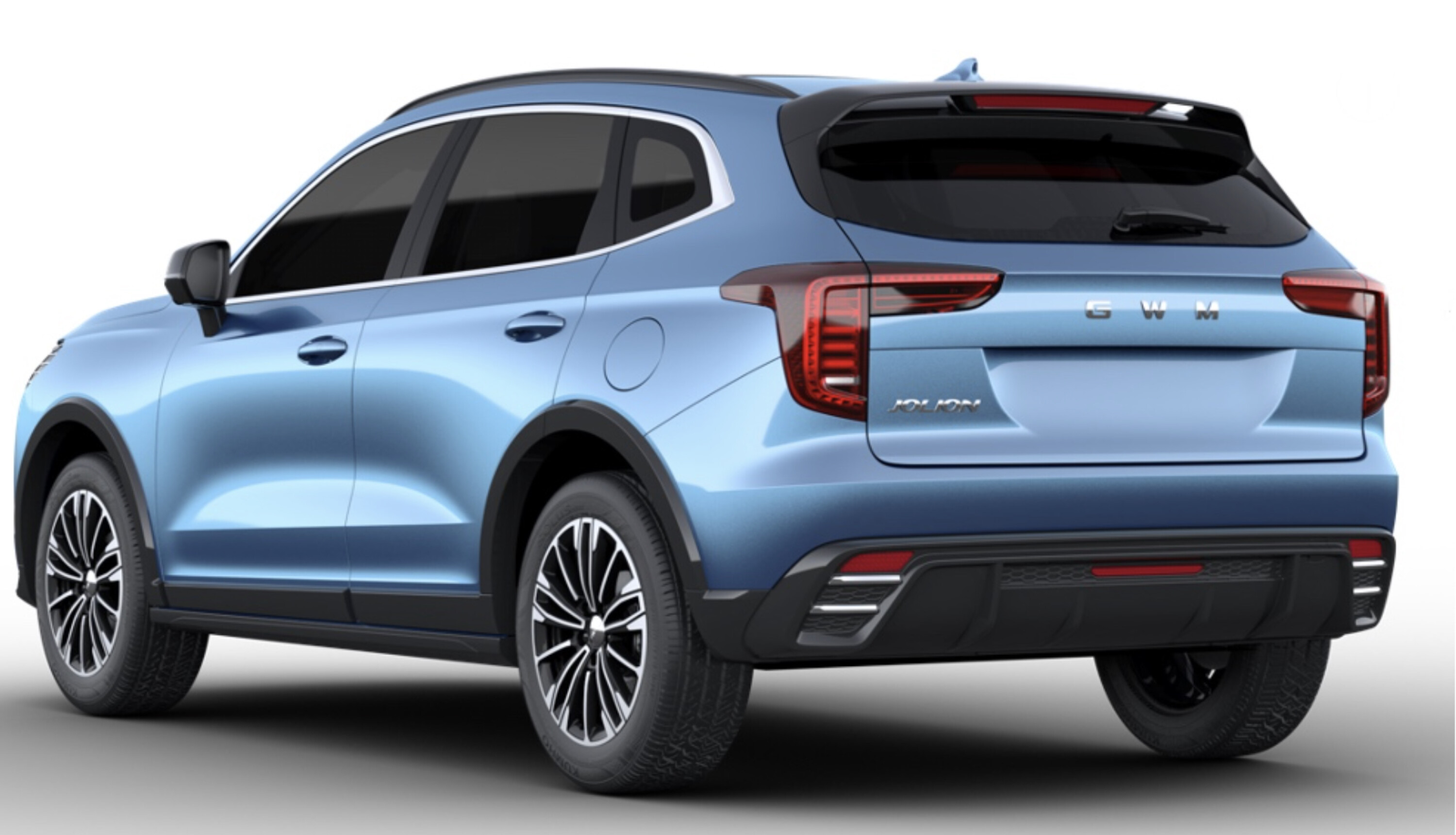
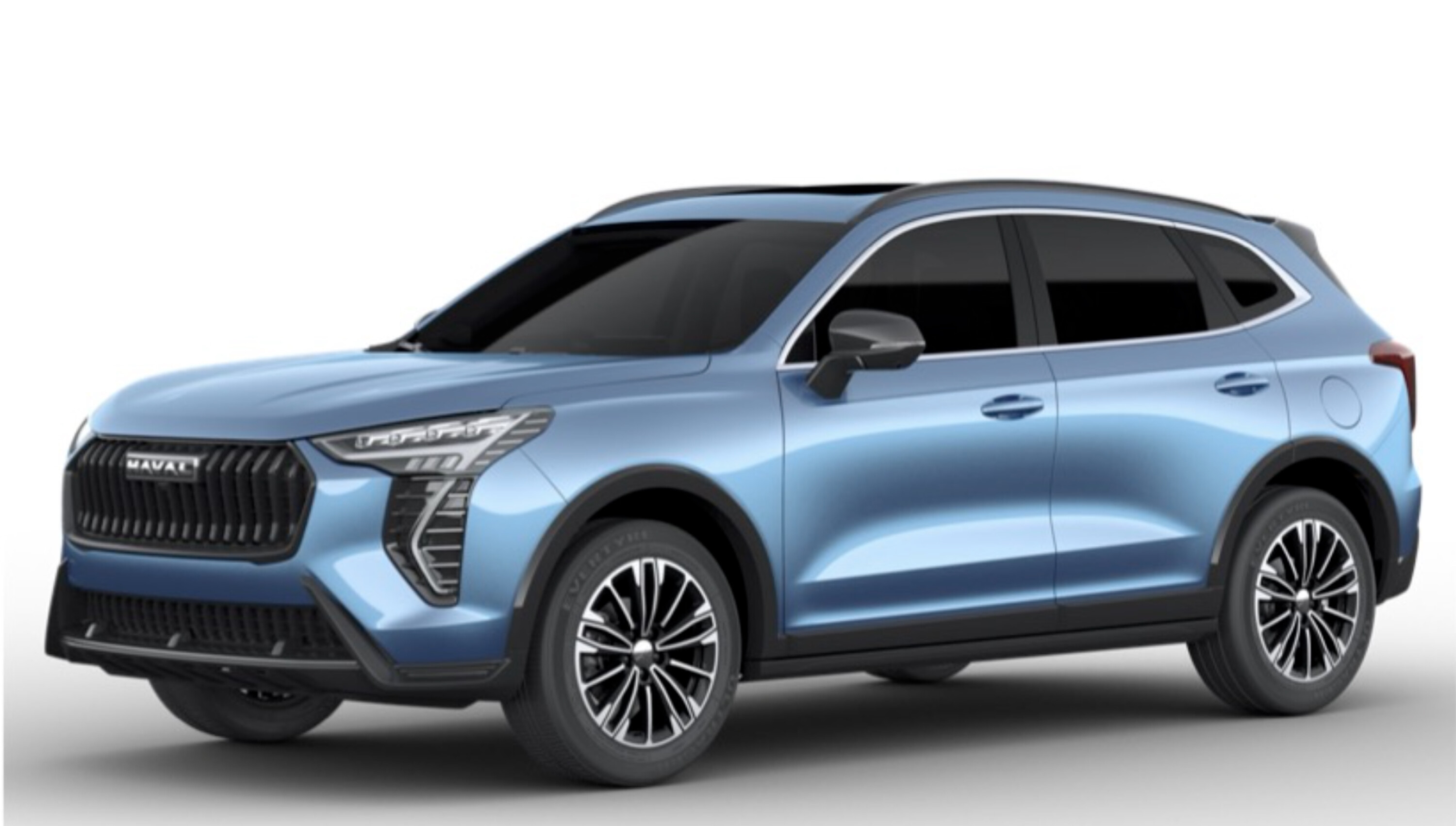
Official documents submitted by China’s GWM to the Federal Government’s new-vehicle approval database list two new Haval Jolion variants, known as the ‘A01 FL [facelift]’ with a different look to the current model.
The facelifted Haval Jolion is expected to be followed by another small SUV in GWM-Haval’s local line-up, the heavily-related Jolion Pro – also known as the ‘Chitu’ in its Chinese domestic market.
1
Similar to its MG ZS and ZST rivals, the Jolion Pro should replace current flagship versions of the Jolion, while the existing car will continue with a facelift for lower-cost variants.
The government approval documents list two variants of the facelifted Jolion, both featuring 17-inch alloy wheels and a 110kW/220Nm 1.5-litre turbo-petrol four-cylinder, matched to a seven-speed dual-clutch automatic transmission and front-wheel drive.
Styling changes for the facelifted Jolion include a new-look grille, revised front and rear bumpers, redesigned alloy wheels, grey side mirror caps, revised tail-light internals, and a ‘G-W-M’ tailgate badge in place of the existing ‘H-A-V-A-L’ logo.
1
It is unclear if GWM has updated the Haval Jolion’s interior for the facelift.
The facelifted 2024 GWM Haval Jolion will likely continue to be offered in Premium, Lux and Ultra variants in Australia, while the Jolion Pro could replace current S, Lux Hybrid and Ultra Hybrid models.
Like the current Jolion S and Hybrid, the Pro features multi-link independent rear suspension instead of the torsion-beam fitted to standard models.
Measuring 4470mm long, 1898mm wide and 1625mm tall, with a 2700mm wheelbase, the Jolion Pro is 2mm shorter, 57mm wider and 51mm taller than the Jolion, with an unchanged wheelbase.
In China, the Haval Jolion – which means ‘first love’ in Mandarin – replaced the Haval H2, while the Chitu/Jolion Pro is the successor to the Haval F5. Both models are based on GWM’s ‘LEMON’ platform.
Only the Chitu is still available in China as the Jolion became an export-focused model in 2021.
The facelifted 2024 GWM Haval Jolion and the related 2024 GWM Haval Jolion Pro are expected to arrive in Australia soon. Stay tuned to Wheels for the latest information.
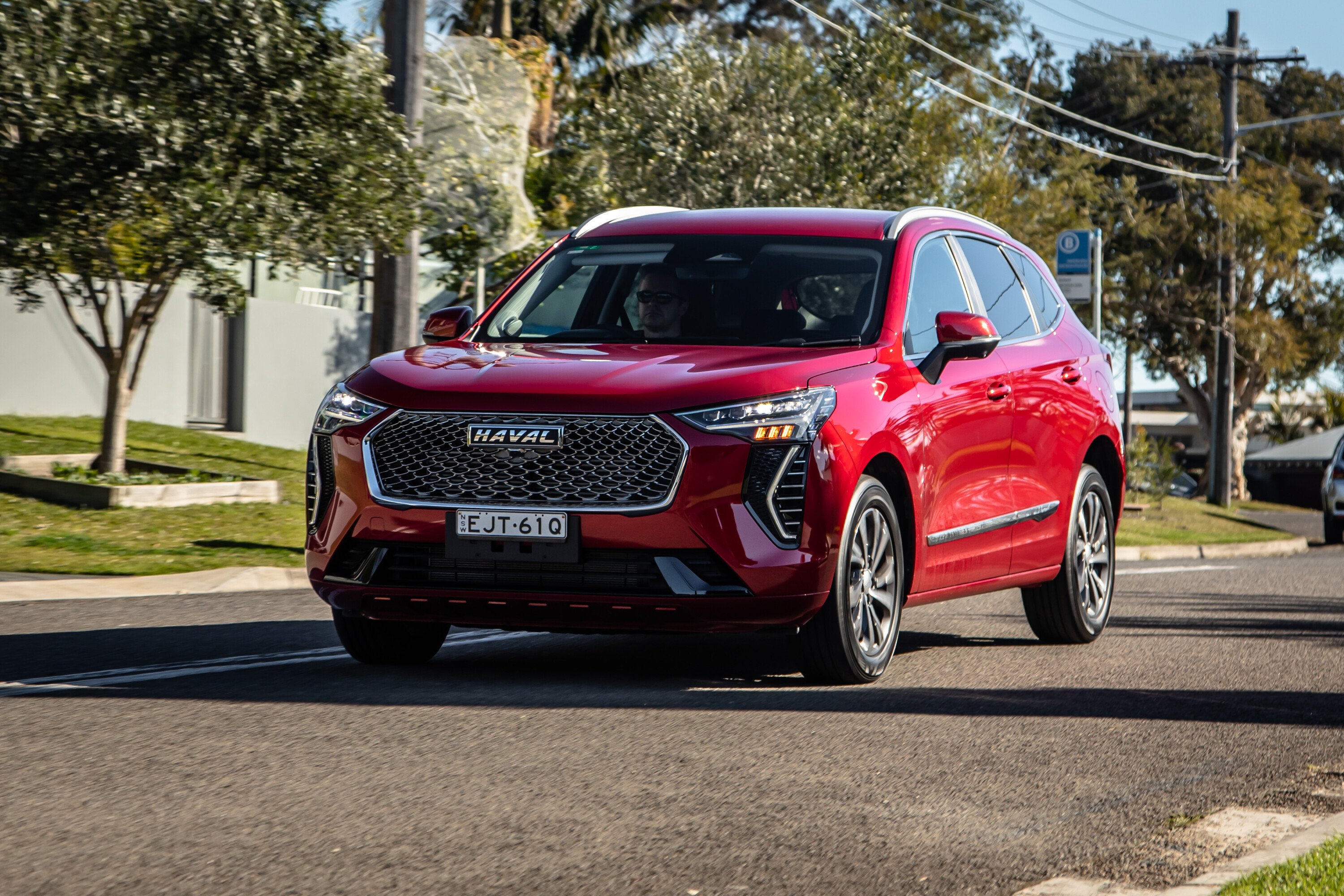
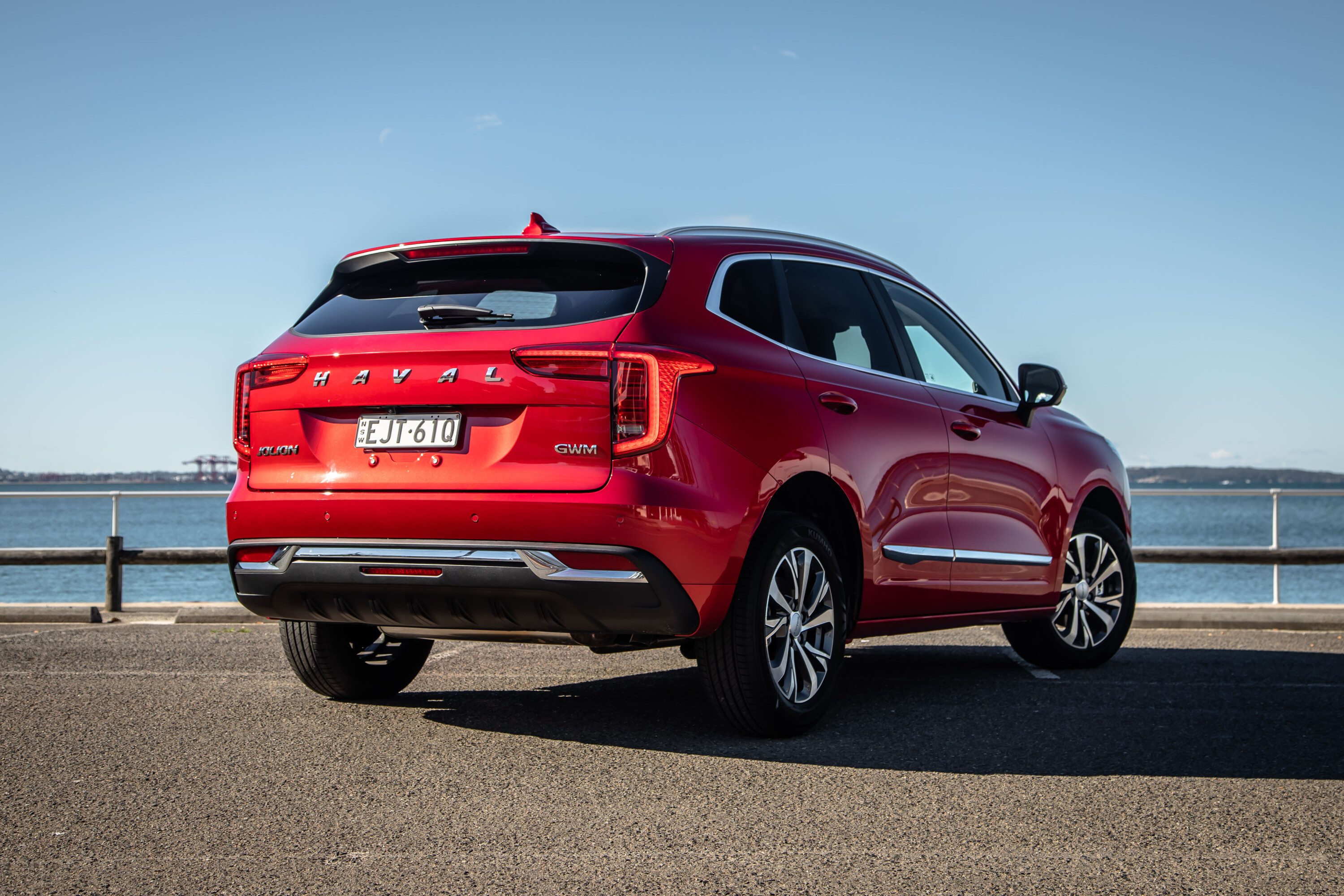
Below: The current GWM Haval Jolion
1
1
MORE
Everything GWM
Australia’s new car market has set another record month in March 2024 with the result cementing a new all-time benchmark for the first quarter of a calendar year.
Toyota finished up as March’s best selling brand while the Ford Ranger remained the best-selling nameplate.
March 2024 saw 109,647 new vehicle registrations, a jump of 12.7 per cent – 12,396 sales – compared to March 2023 when 97,251 vehicles were sold.
March’s record combined with January and February results sees a benchmark first quarter for new vehicle sales of 304,452 – an increase of 13.2 per cent over Q1 2023.
1
Almost every segment increases year-on-year in March, with the total passenger vehicle market up 426 units (2.5 per cent) led by a 20.7 per cent rise (11,105) in SUV sales.
The Light Commercial market – in the wake of controversial emissions laws from the Federal Government – increased 4.8 per cent (1049 vehicles) while the heavy market was the only area of decline, with a 4.1 per cent drop representing 187 vehicles.
Electric car sales cracked 10,000 units for the first time led by the Tesla Model Y.
1
Australia’s top 10 cars for March 2024
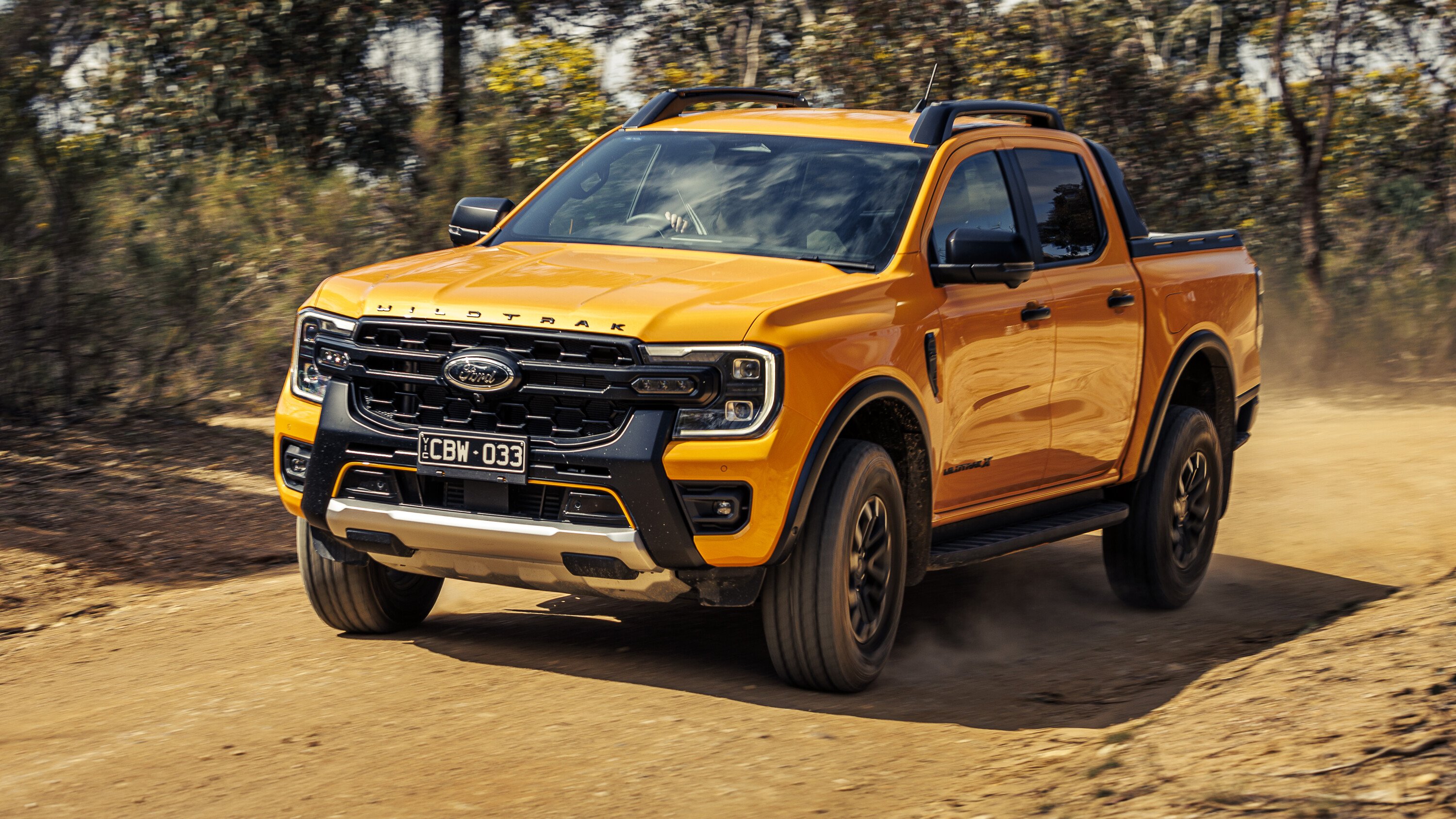
The Ford Ranger continued its reign at the top of the sales charts with 5661 sales, which is up 1153 units year-on-year (+25.6 per cent).
The Toyota RAV4 took the runner-up spot with 5070 sales – up from 1778 in March 2023 to post a 185.2 per cent increase, the greatest for the month.
The Tesla Model Y was the most popular electric vehicle and third overall with 4379 sales – more than double its March 2023 result of 1938 sales (+126 per cent).
1
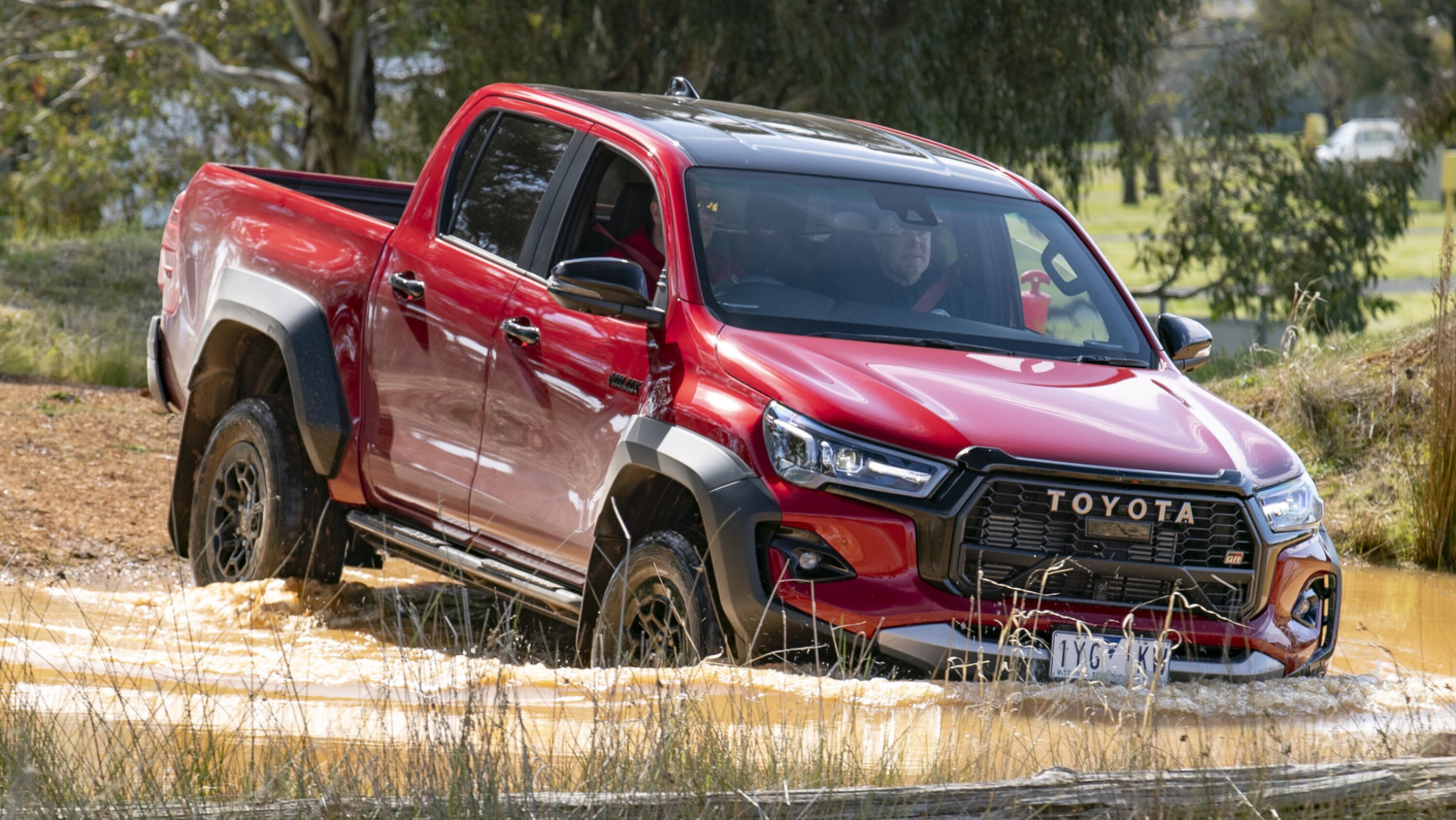
The Ford Ranger’s arch rival, the Toyota HiLux, held the number one spot 12 months ago but fell to fourth in March 2024 with 3995 sales, a drop of 12.8 per cent on its March 2023 result.
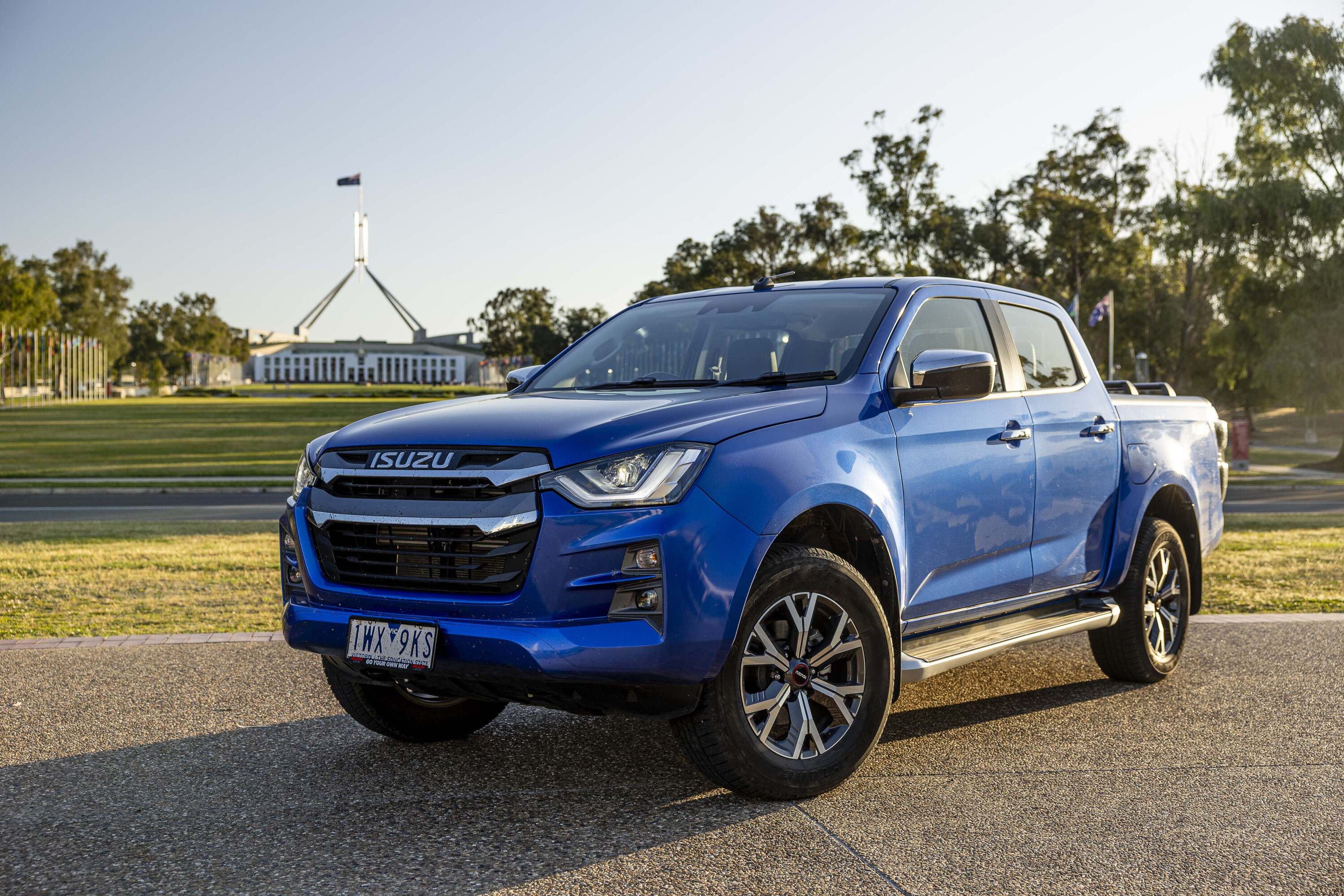
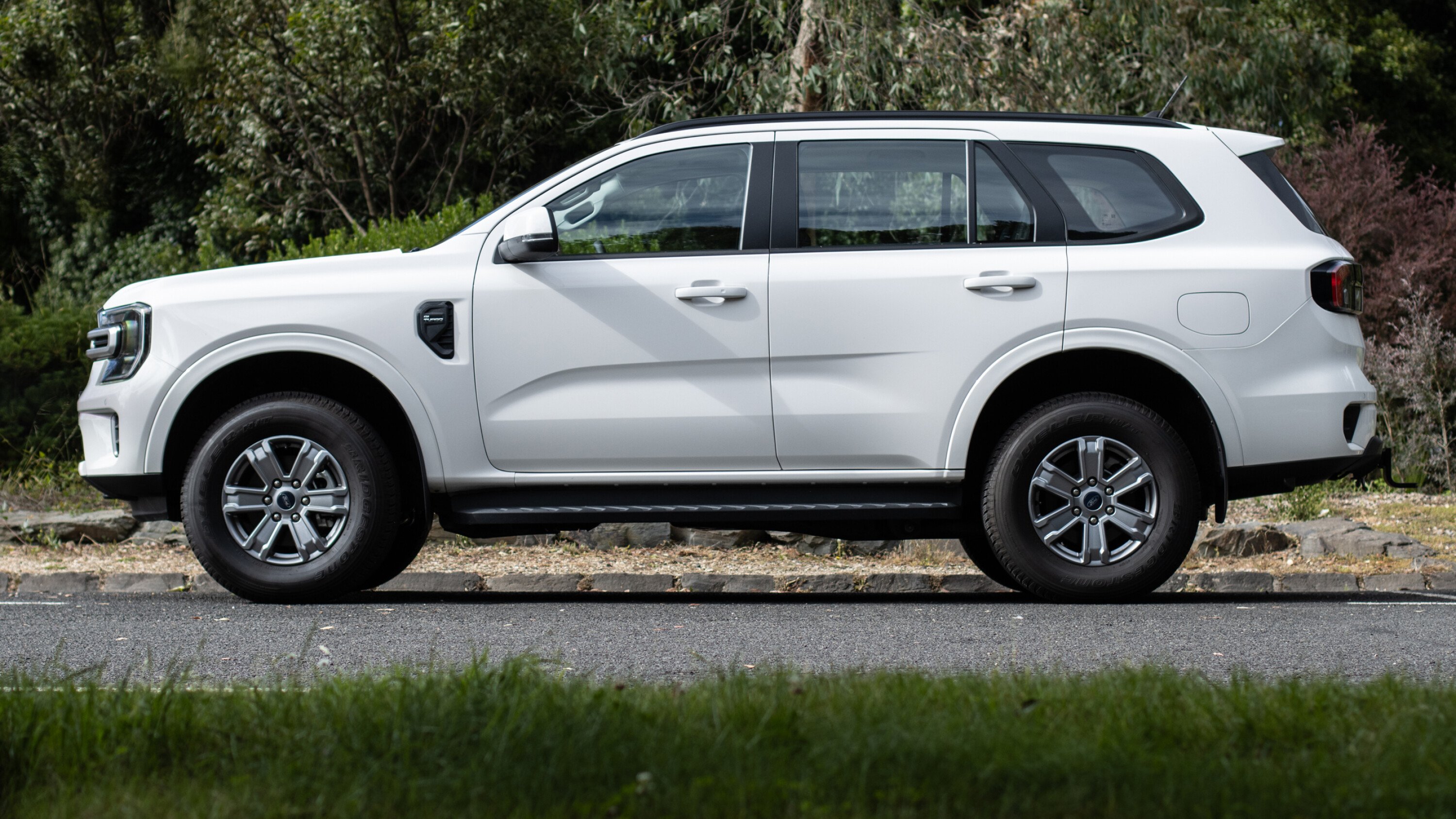
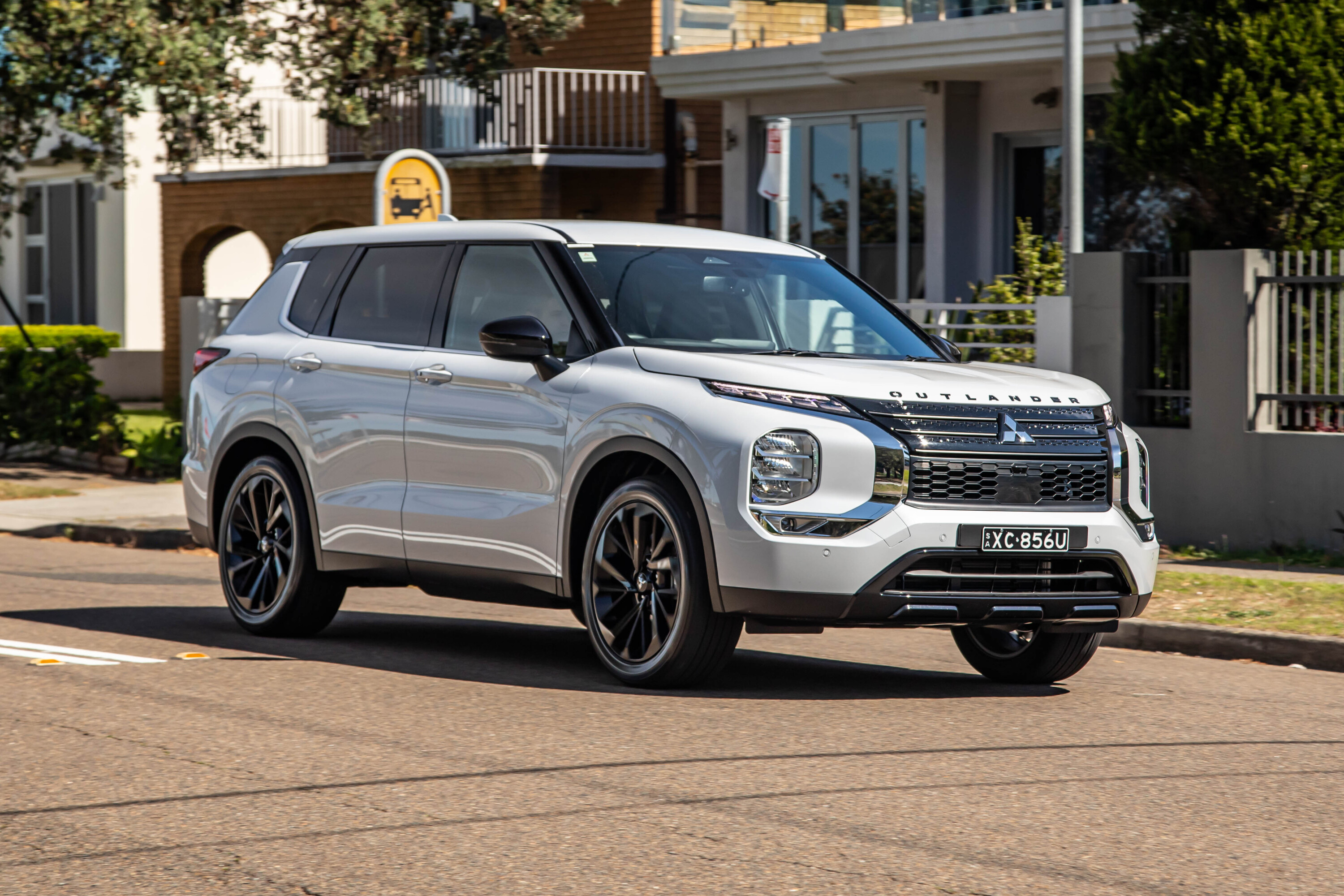
It was one of only two cars to decline year-on-year, the other being the Isuzu D-Max with its 2465 sales less than the 2789 sold last March. The D-Max was beaten to fifth place by the Mitsubishi Outlander (2764).
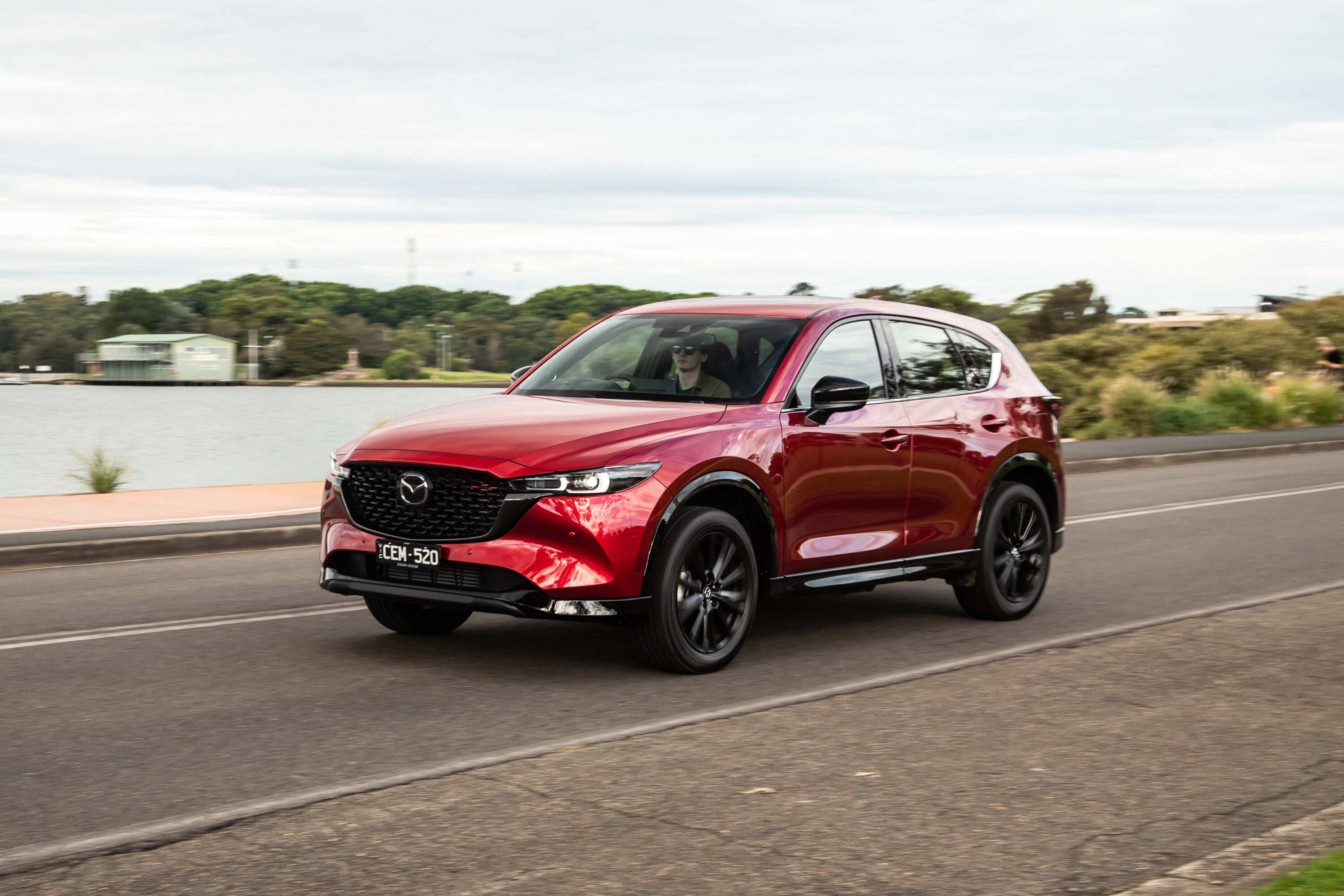
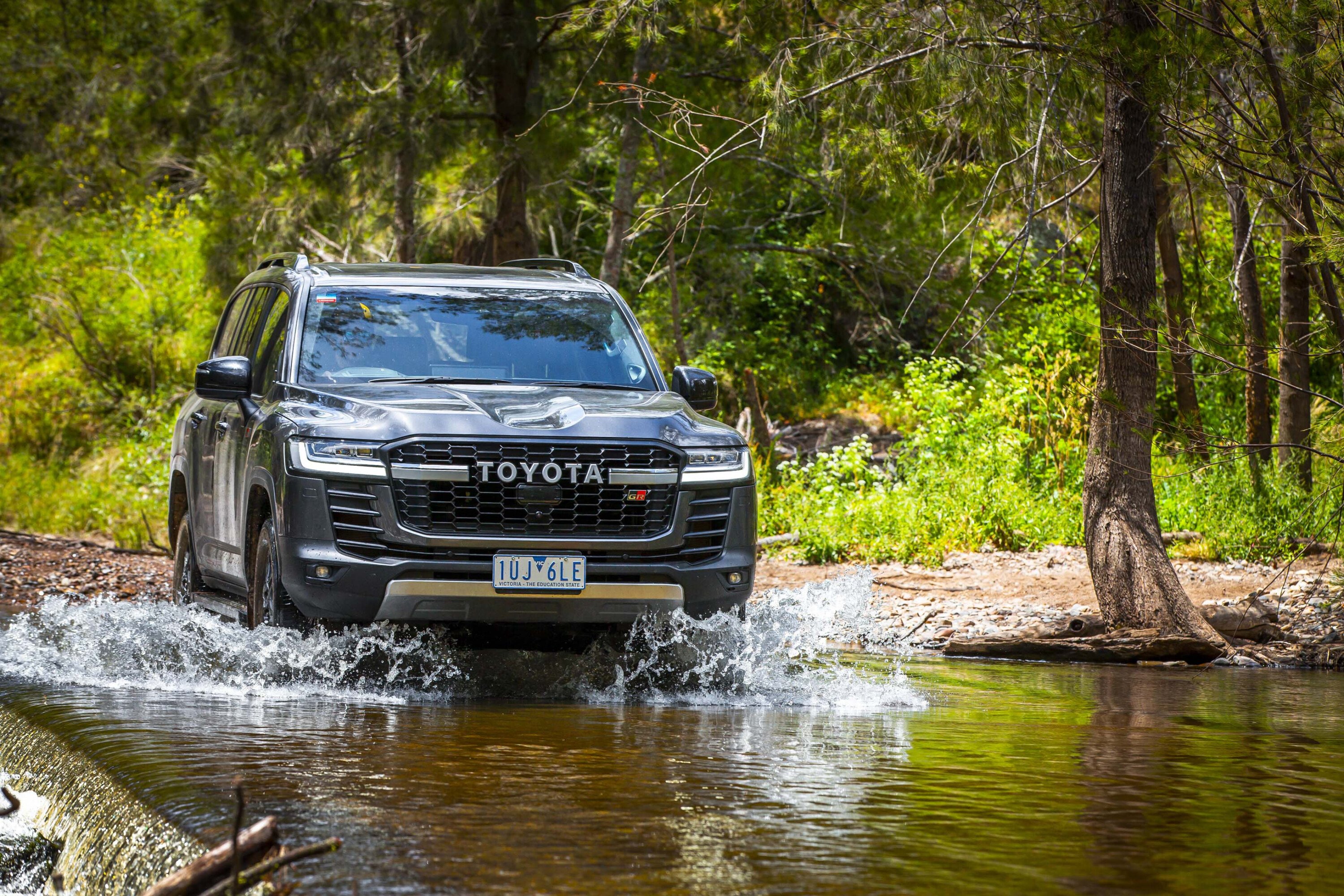
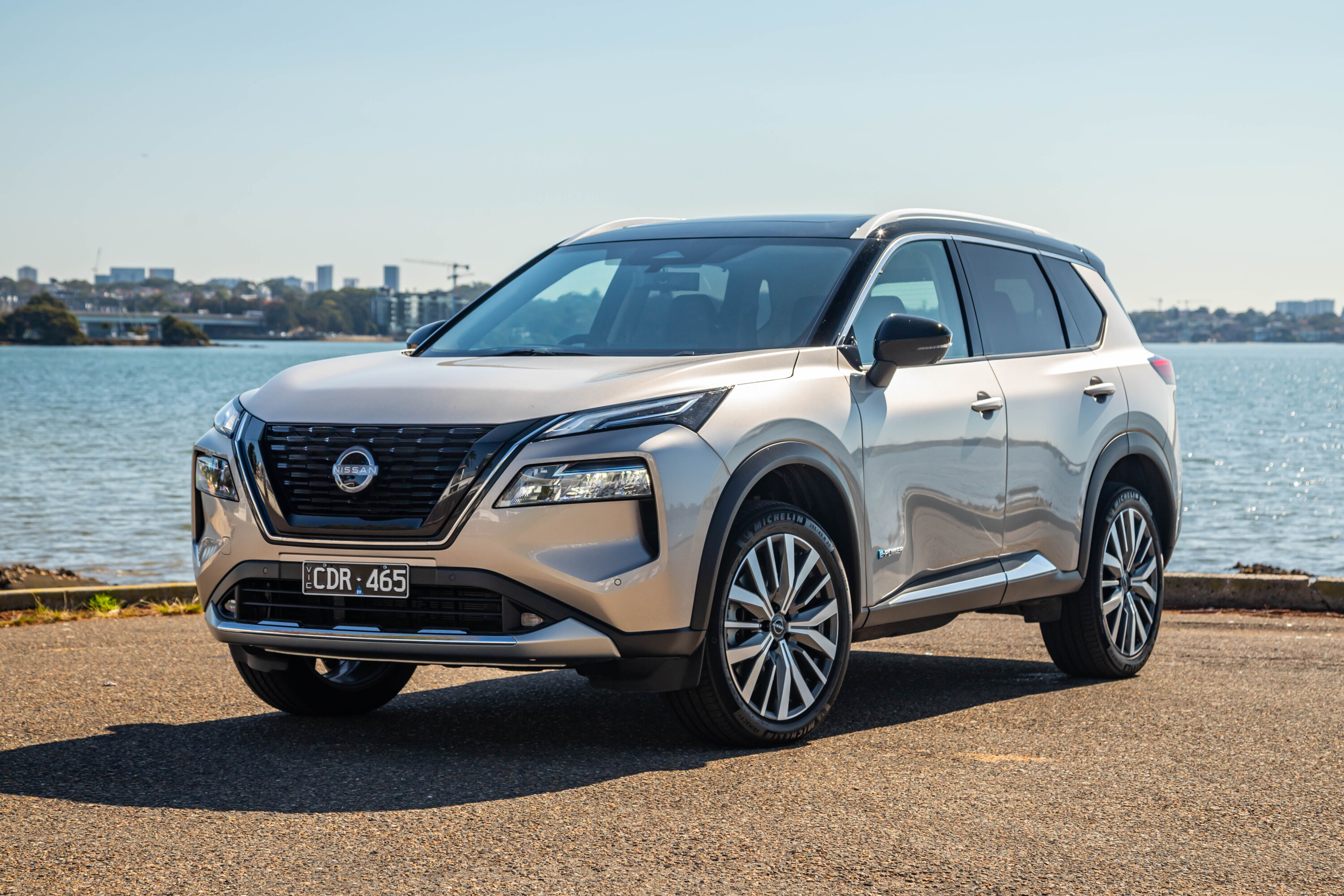
Seventh was the Ford Everest (2264) ahead of the Nissan X-Trail (2161), Toyota LandCruiser (2159) and Mazda CX-5 to complete the 10-best sellers.
1
Australia’s top 10 car brands for March 2024
Toyota was the best-selling brand with 18,961 sales for the month and a staggering 18.5 per cent total market share, up 37.4 per cent year-on-year and well ahead of Ford in second place.
Ford’s 8776 sales for March – with the Ford Ranger making up 5661 of that figure – was enough to take second position for the month ahead of Mazda which recorded 8246 sales (down 6.1 per cent over March 2023).
Despite being the only top 10 car maker to post a fall in sales year-to-date, Mazda is still ahead of Ford for the year so far, maintaining second place overall with 23,761 sales to Ford’s 22,657 (+18.5 per cent).
1
Mitsubishi was fourth – replicating the top four order from last month – with 7866 sales (+21.3 per cent), with Kia (7070, +2.8 per cent) pushing Tesla to sixth (6017, +22.9 per cent) and Hyundai to seventh (5985, +23.5 per cent).
Nissan (4976, +69.6 per cent), Isuzu (4351,+23.5 per cent) and MG (3948. +0.4 per cent) filled out the top 10 for March.
New South Wales registered the most vehicles with 33,808 sales, ahead of Victoria and Queensland with 30,099 and 23,550 sales, respectively.
1
Western Australia (11,074), South Australia (6992), Tasmania (1610), the ACT (1584), and the Northern Territory (930) followed.
“This is a terrific result for the sector however, all car brands are well aware that these results cannot be taken for granted,” said FCAI (Federal Chamber of Automotive Industries ) Chief Executive, Tony Weber.
“We need to factor in the ongoing cost of living pressures and the challenges for industry and consumers that will emerge with the introduction of the New Vehicle Efficiency Standard (NVES) in less than nine months.”
1
Tesla will not be accounted for from July 2024 given the brand’s decision to quit the Federal Chamber of Automotive Industries (FCAI) following the organisations stance on the Australian federal governments emissions laws.
Sales of battery electric vehicles increased 46.4 per cent year-on-year to 10,464 sales (up from 6612 in March 2023) led by the Tesla Model Y to make up 9.6 per cent of all sales. That’s up from the 7.2 per cent share for the full 2023 calendar year and 6.5 per cent at the end of March 2023.
Non-plug-in hybrid sales were up 118.6 per cent year-on-year to 13,935 with plug-in hybrid sales increasing to 1412 from 569.
1
? Australia’s top 10 cars for March 2024
Ups and downs ? ?
| Rank | Model | Sales 2024 | Sales 2023 | % diff |
|---|---|---|---|---|
| 1 | Ford Ranger | 5661 | 4508 | 25.6% |
| 2 | Toyota RAV4 | 5070 | 1778 | 185.2% |
| 3 | Tesla Model Y | 4379 | 1938 | 126.0% |
| 4 | Toyota HiLux | 3995 | 4583 | -12.8% |
| 5 | Mitsubishi Outlander | 2764 | 2169 | 27.4% |
| 6 | Isuzu Ute D-Max | 2465 | 2789 | -11.6% |
| 7 | Ford Everest | 2264 | 985 | 129.8% |
| 8 | Nissan X-Trail | 2161 | 963 | 124.4% |
| 9 | Toyota Landcruiser | 2159 | 1683 | 28.3% |
| 10 | Mazda CX-5 | 2134 | 1917 | 11.3% |
1
? Australia’s top 10 car brands for March 2024 (YTD)
Ups and downs ? ?
| Rank | Make | Mar-24 | Mar-23 | % diff |
|---|---|---|---|---|
| 1 | Toyota | 56,238 | 40,918 | 37% |
| 2 | Mazda | 23,761 | 25,317 | -6% |
| 3 | Ford | 22,675 | 19,131 | 19% |
| 4 | Mitsubishi | 20,188 | 16,639 | 21% |
| 5 | Kia | 18,918 | 18,409 | 3% |
| 6 | Hyundai | 17,850 | 16,682 | 7% |
| 7 | Nissan | 14,293 | 8,425 | 70% |
| 8 | Isuzu Ute | 12,801 | 10,361 | 24% |
| 9 | Tesla | 12,789 | 10,407 | 23% |
| 10 | MG | 12,429 | 12,385 | 0% |
In charts ?
March 2024 – Top 20 models
March 2024 – Top 10 brands
March 2024 – Overall segment sales
March 2024 – Category sales
March 2024 – Sales map
March 2024 – Buyer type
March 2024 – Sales race
MORE
All VFACTS stories
APRIL 4: Zeekr has been confirmed for Australia
Chinese brand Zeekr has confirmed it’s coming to Australia in 2025. We’ve updated this story to reflect the latest news.
——-
Australia is set to break the all-time new vehicle sales in 2023, as more than 1.1 million new vehicles have been registered so far this year.
Notably, battery electric vehicle (EV) sales have seen a huge increase with 80,446 delivered so far this year, marking a significant boost over the same period in 2023, at just 28,326 – proving the growing interest in low-emission vehicles among Australian consumers.
It’s easy to see the opportunity here in Australia for brands offering electrified models, and a few are jumping onto our humble island to offer more choice than ever before. (And steal a piece of that sales pie.)
In recent years, brands like MG, Chery and BYD have jumped into the mix with a range of electrified options, and while these value-focused cars are proving popular with Aussies, they’re only a drop in the ocean of opportunity.
Let’s take a look at some Chinese brands that may come along for the ride sometime soon.
1
Xiaomi
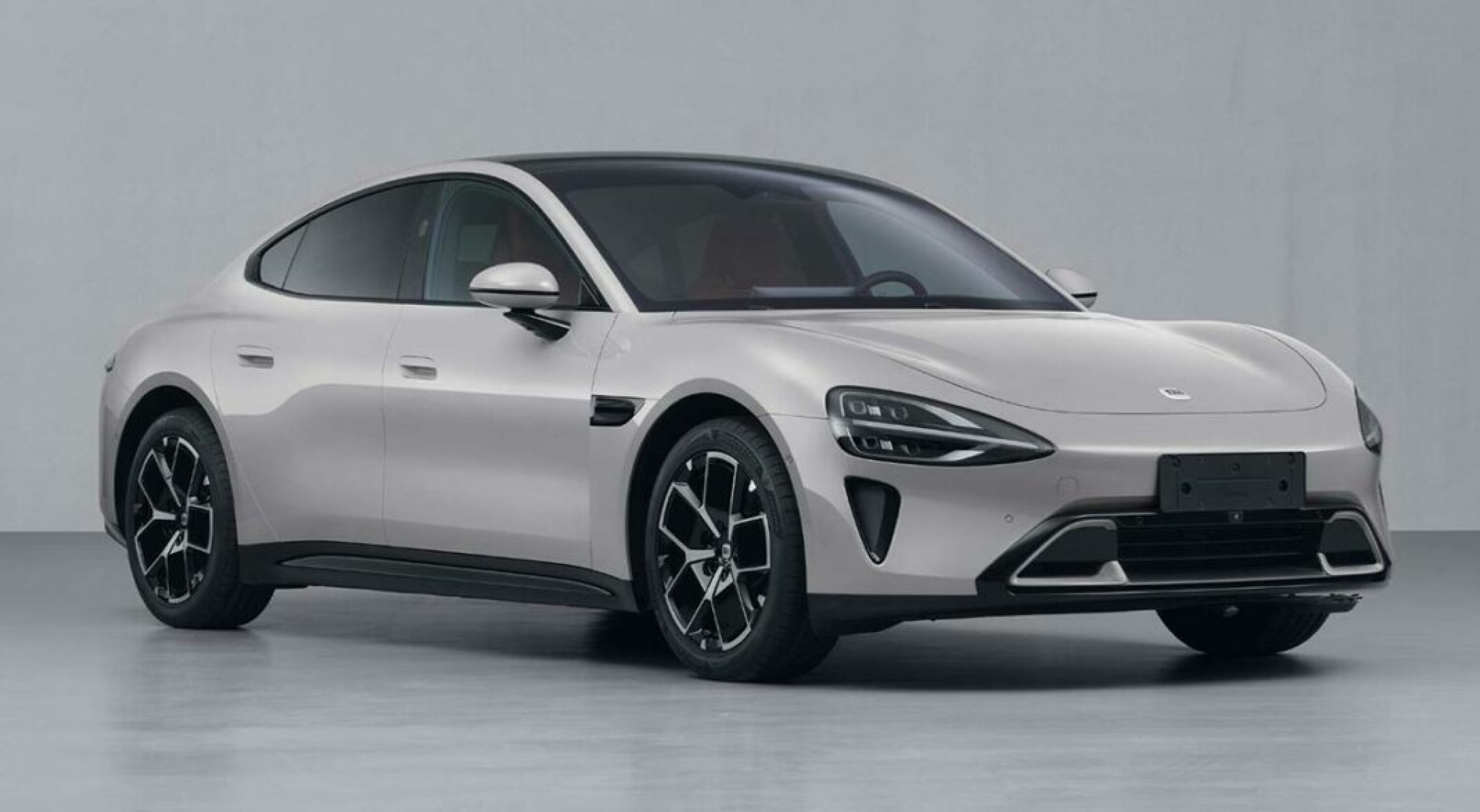
Xiaomi Automotive, a division of the well-known Chinese electronics company Xiaomi, is making a strategic entry into the EV market.
Announced in 2021, Xiaomi Automotive signifies an expansion beyond consumer electronics, reflecting the company’s ambition to become a key player in the rapidly growing EV sector.
The Xiaomi SU7 has been spotted in China recently wearing camouflage. Although the naming convention is a little confusing, the EV is an aerodynamic and sporty looking four-door coupe, which some have called a “Taycan for young people”.
1
Leapmotor
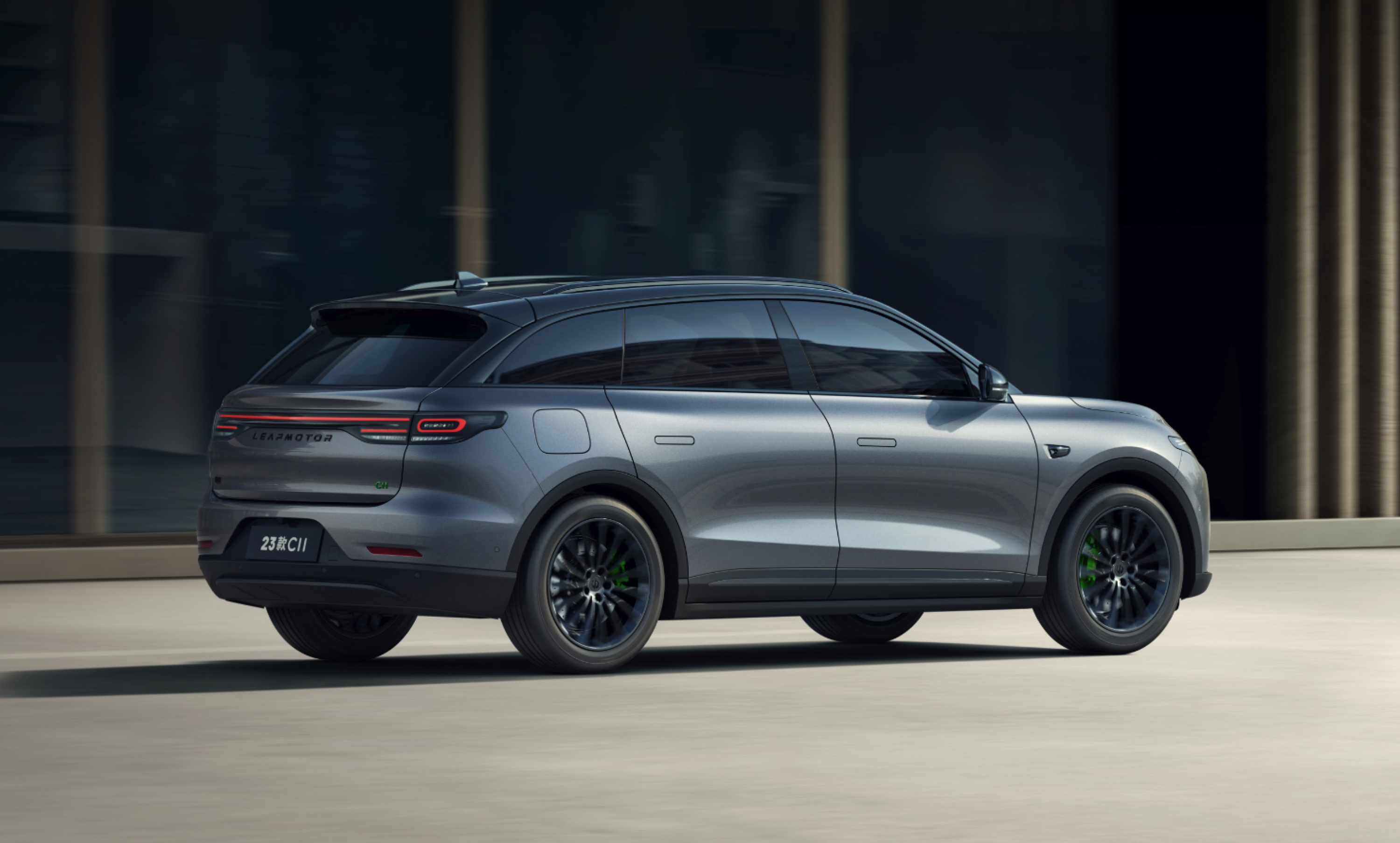
Leapmotor, an EV manufacturer established in 2015, is making waves in China’s automotive industry with its focus on sustainable and intelligent EVs.
Based in Hangzhou, China, Leapmotor says it aims to offer affordable, high-quality electric vehicles equipped with advanced technology, including autonomous driving and efficient energy systems.
The company’s proprietary battery technology and software enhance vehicle performance and safety. Leapmotor’s product range caters to various consumer needs, from compact city cars to spacious family vehicles.
Stellantis (think Jeep, Fiat and Peugeot) recently acquired approximately 20% of Leapmotor for 1.5 billion euros. The deal also highlighted the venture of Leapmotor International that gives the brand exclusive rights to sell Leapmotor products outside of China.
1
Deepal
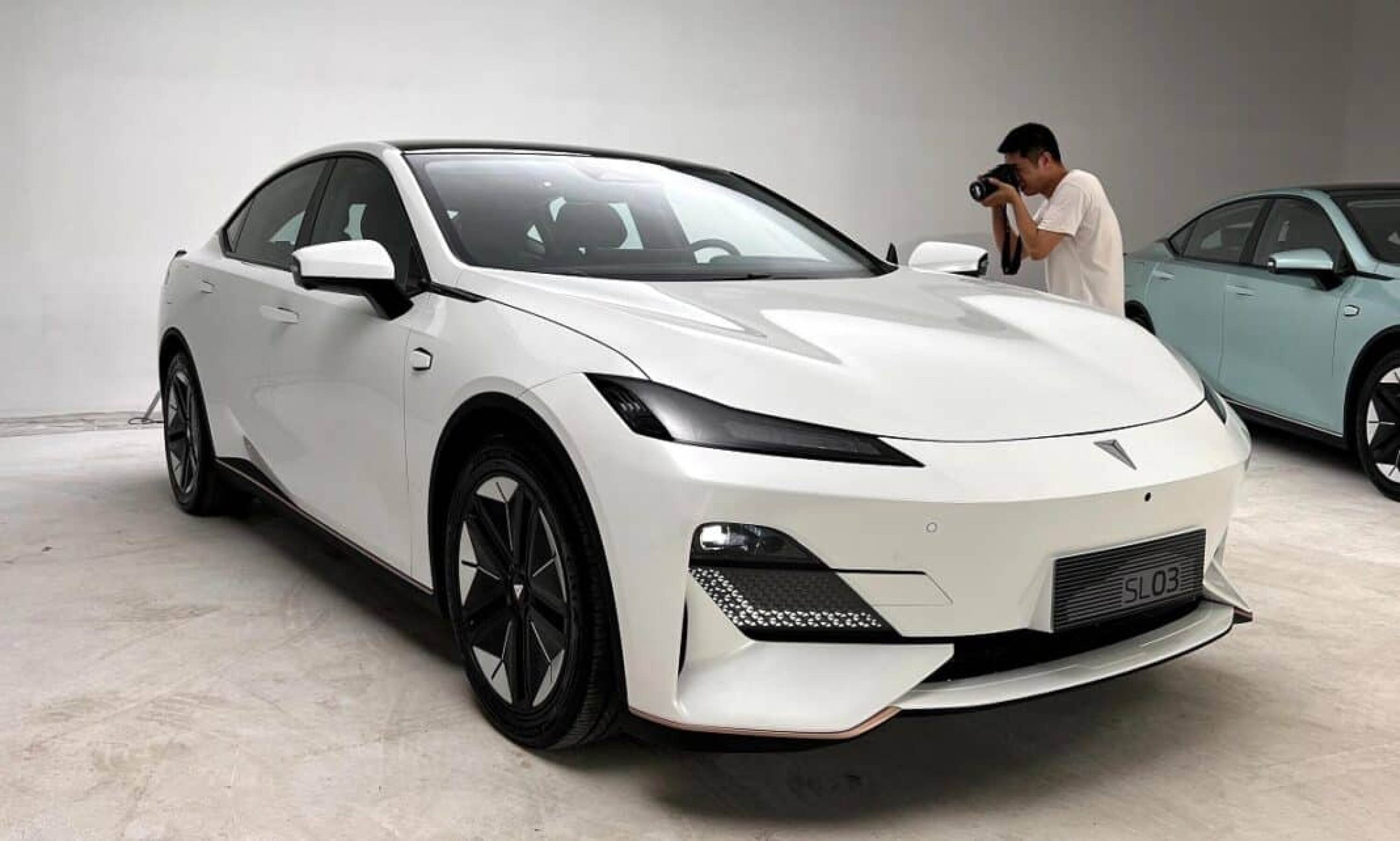
Deepal operates as an EV brand under Changan, which is recognized as the oldest automaker in China and the smallest among the ‘big four’ state-owned automobile companies.
According to CarNewsChina, Deepal’s CEO says the brand will aim to sell 450,000 EVs in 2024. This target was set to coincide with their expansion into European and ASEAN markets.
Two of its new models, the SL03i sedan and S7i SUV, launched only a few months ago. These models feature a valet autonomous parking system, allowing the vehicle to recall a previously taken parking route. Once a driver returns to a familiar parking area, this system can autonomously park the vehicle in the memorised spot, even in multi-level garages.
The system also includes enhanced features like in-car and remote parking assist, and can autonomously move the vehicle to another spot when the parking time limit is reached.
Zeekr
Since publishing this piece, Zeekr has confirmed plans to launch in Australia in 2025 with a luxury people mover and small SUV.
Launched in 2021, Zeekr is a premium electric vehicle brand operating globally under the Geely Group umbrella. If that sounds familiar to you it’s likely because Geely also owns Volvo and its electric counterpart, Polestar.
The brand has three models for sale globally, two of which will land down under soon.
First will be the Zeekr 009, a spacious family vehicle available in six- or seven-seat configurations, boasting impressive performance and a driving range of up to 800 kilometres.
Additionally, Zeekr plans to introduce a compact SUV, the Zeekr X, positioned as a competitor to the BMW iX1.
1
Neta
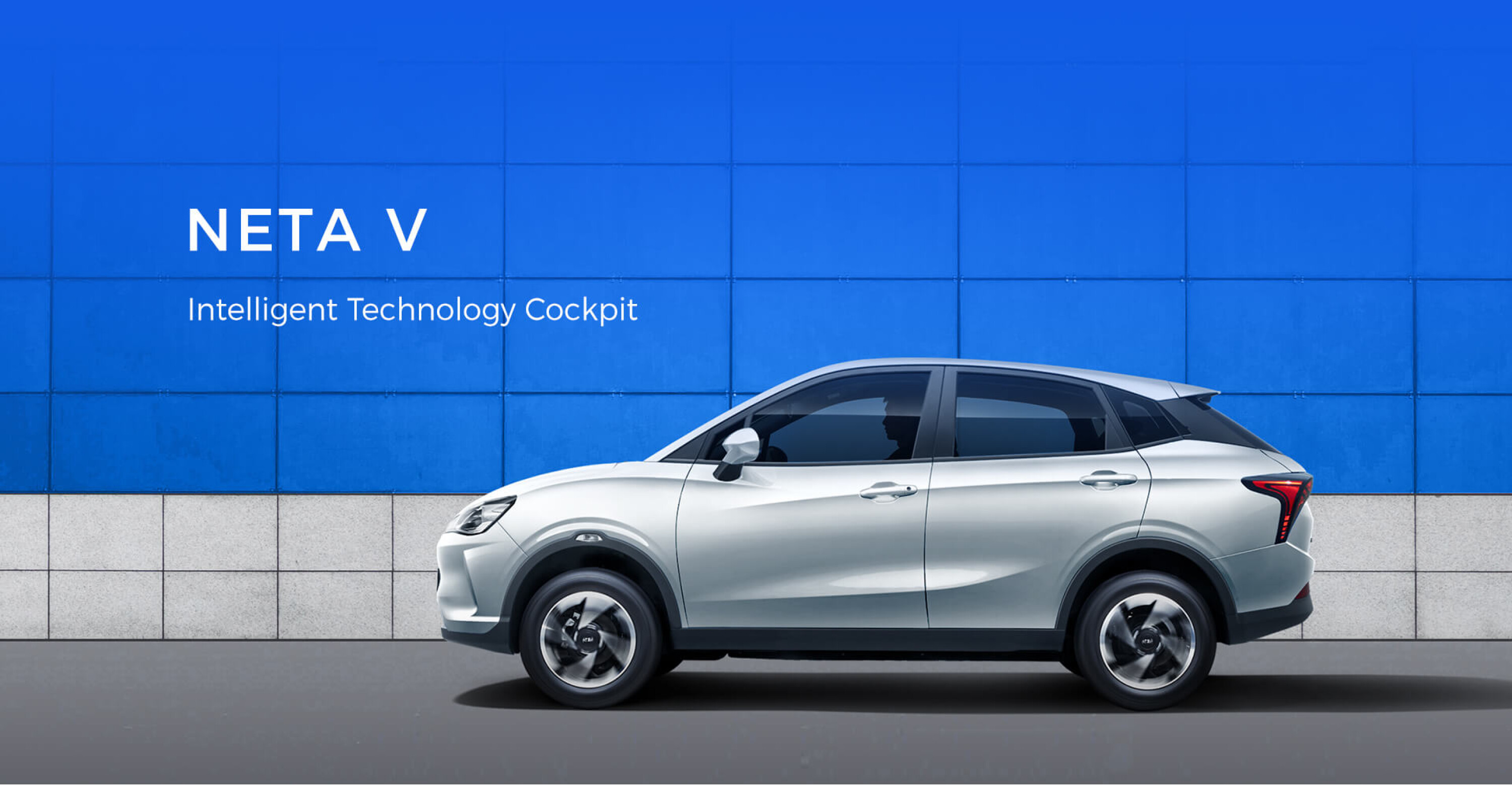
Neta, a brand of Hozon Auto, is another emerging EV maker, gaining recognition in the competitive EV market.
Launched in 2018 and headquartered in Zhejiang, China, Neta focuses on producing affordable and accessible EVs, aiming to make sustainable transportation widely available.
But it’s the international expansion where Neta wants to shine, as it’s building a plant in Thailand to make right-hand-drive vehicles.
In October, Neta announced its entry to the Middle East, and this month the company disclosed it will sell vehicles in the Latin American market, starting with Costa Rica, with the intention to launch in Europe soon after.
