
I’m guessing you know quite a bit about this car already.
After all, we’ve featured it extensively before, whether it was John Carey’s initial; prototype drive, Jez Spinks’ international first drive of the production version in Korea, or John Law’s Aussie preview drive and suspension deep dive with chassis engineer Tim Rodgers, or even my interview with the father of the car, Albert Biermann, this is a model that has been forensically scrutinised. By us at least.
So why are we here again with yet another review of it? Well, we’re going to cover how it goes on track. After all, as Biermann himself stated in our interview, “An N car is an N car and racetrack capability is the core element of an N car and we cannot play around with this.”
He had to face down some fairly vocal opposition within Hyundai who felt that a 2.2-tonne EV was never going to be made circuit-fit. It’s easy to appreciate their scepticism.
We’ve driven countless large SUVs of similar weight on racetracks and have come away admiring what they do but nevertheless fairly convinced that they shouldn’t be doing it.
1
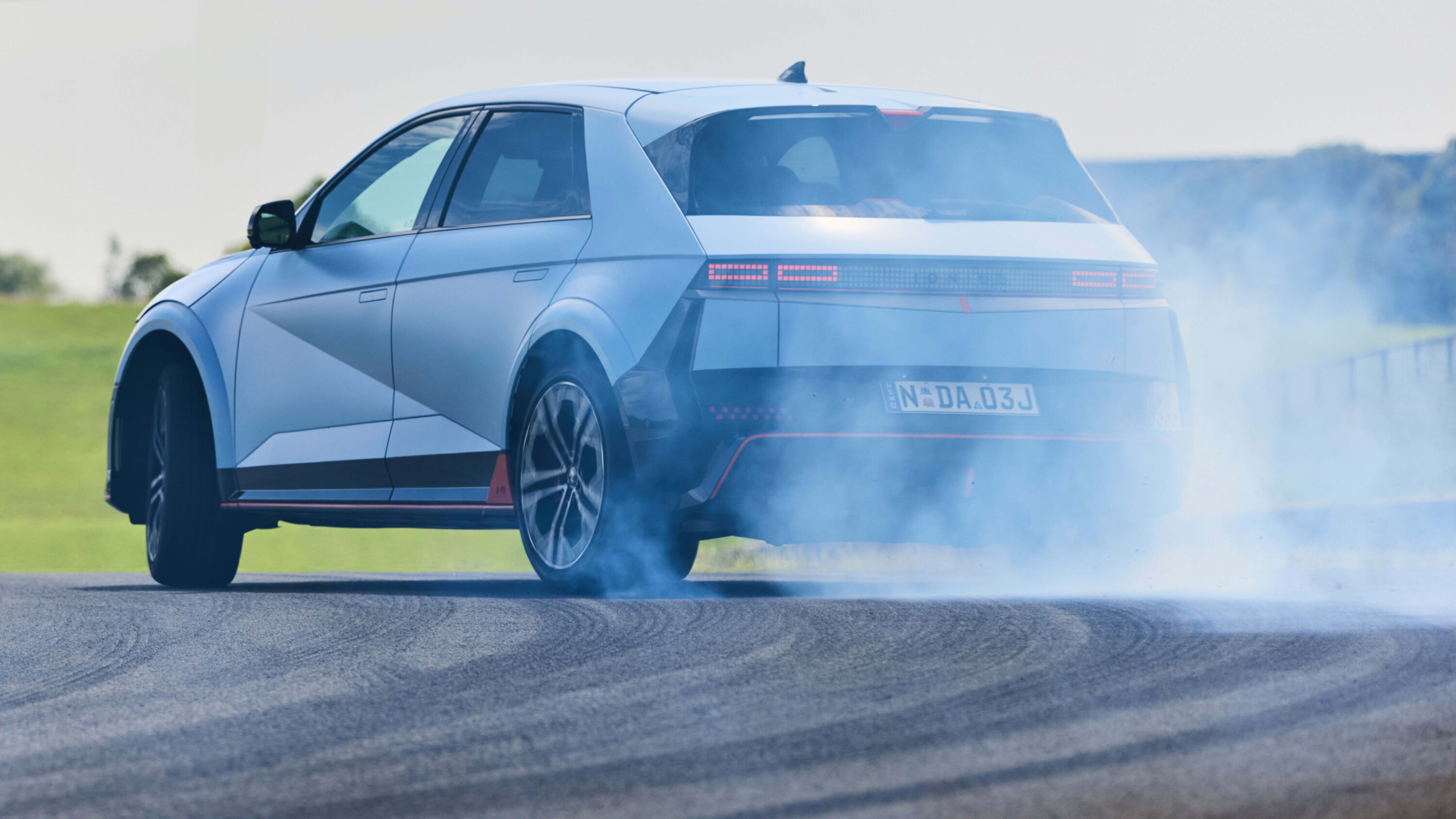
I’ll preface this with a bit of a spoiler, for which I apologise. The IONIQ 5 N makes a far better road car than it does a track car. We had the opportunity to drive it on a selection of mixed roads and the initial reports from John, Jez and Johnny are spot-on.
It’s a great driver’s car, with stacks of dynamic bandwidth, a refreshing element of practicality and so many set-up options that you could tinker for days with it.
1
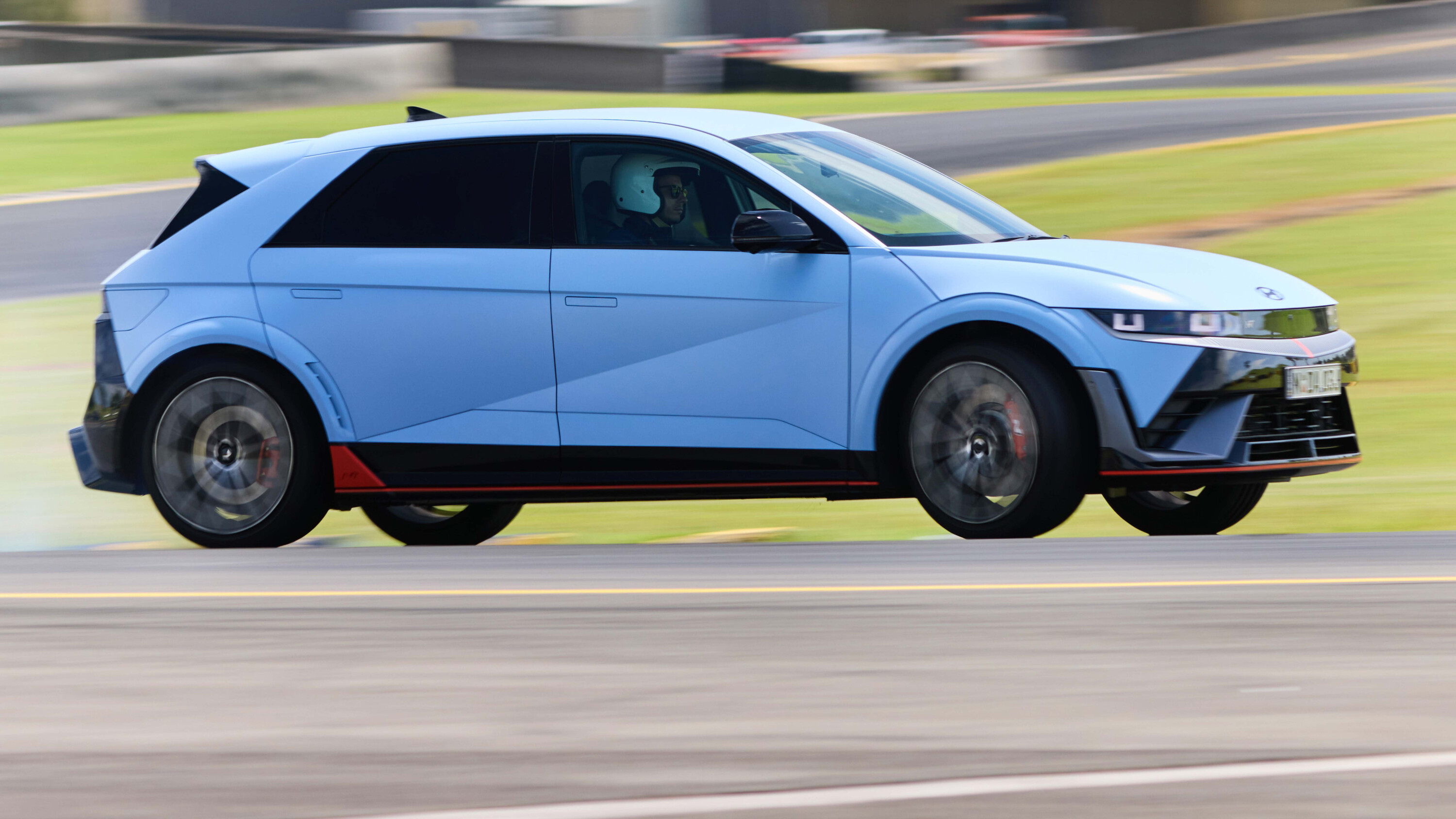
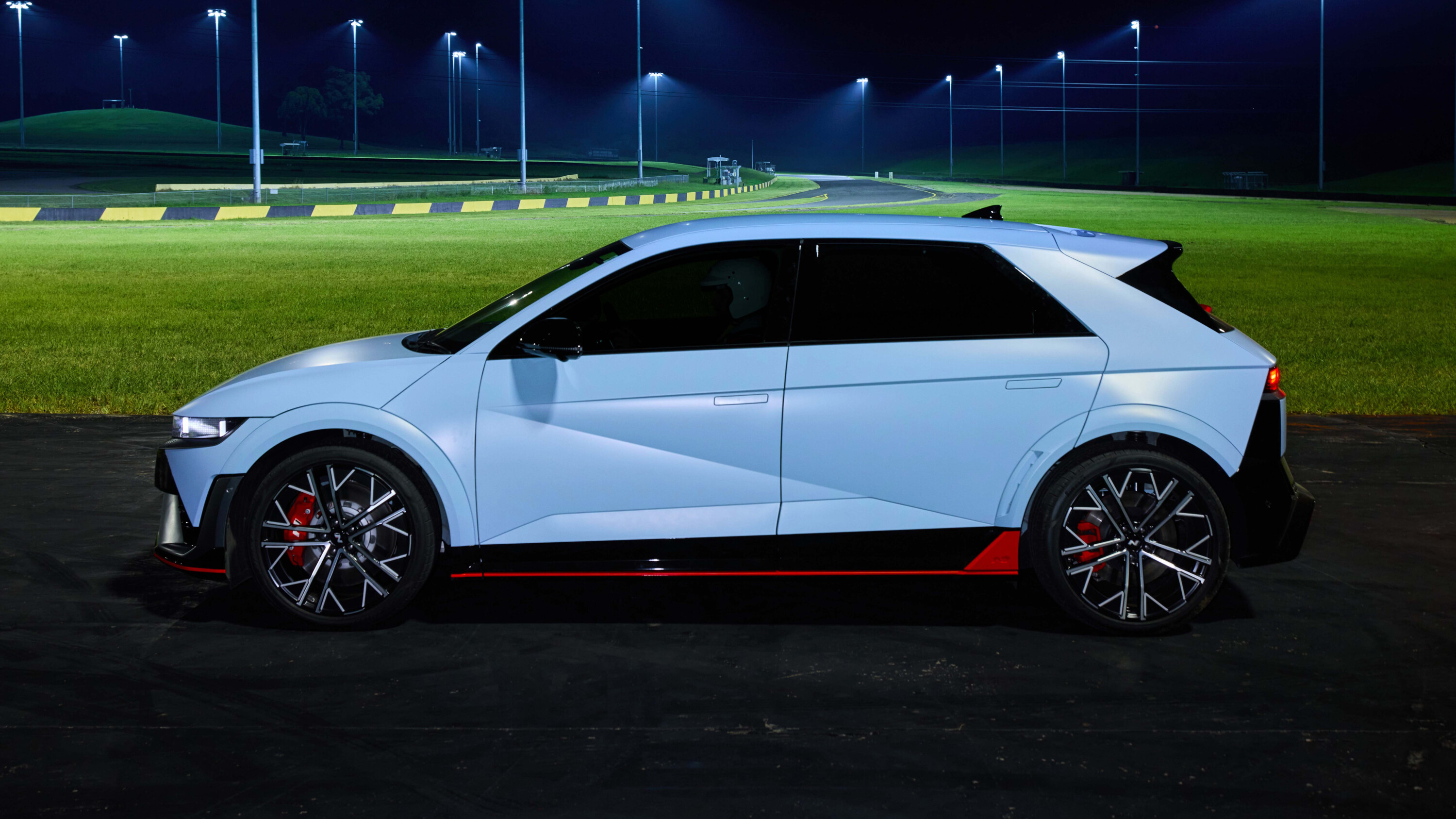
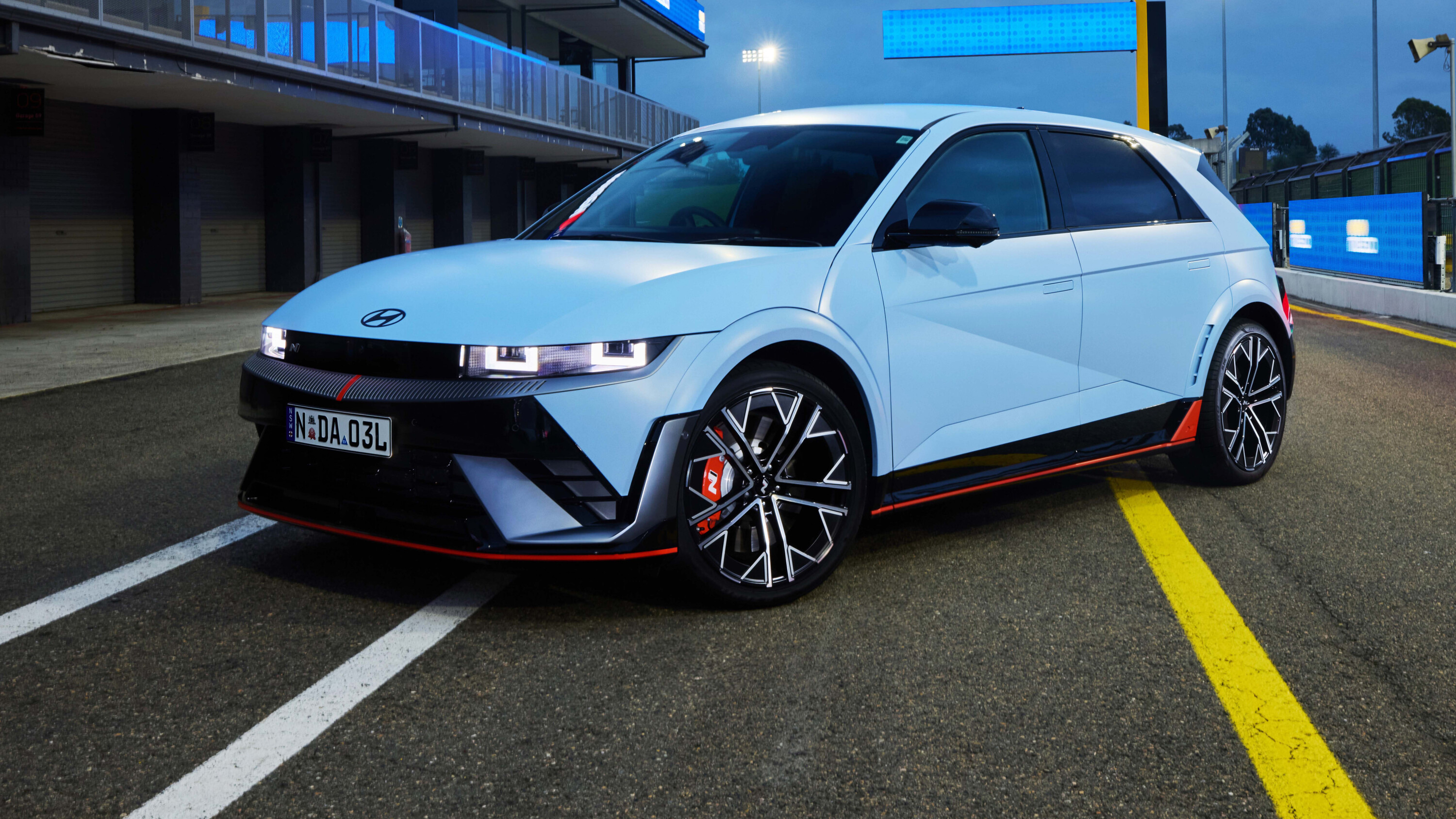
The styling is on point and even that $111,000 price tag doesn’t seem unreasonable. Remember, just ten years ago, if you were shopping for a sporty crossover, that much wouldn’t even have bought you a 180kW diesel BMW X6. There’s progress for you.
You’re also reminded of how far we’ve come when you see a row of IONIQ 5 Ns parked in pit lane at Sydney Motorsport Park. With the boost button pressed, this thing unleashes 478kW. A McLaren F1 can only hawk up a paltry 461KW, yet there are no special driving licences required or stern instructions from the Hyundai team before our drive. Just get in and have fun.
1
Okay, there was one word of warning, but it was one that painted a sneaky grin on a lot of faces.
“Please note that even with all the safety systems engaged, it’ll still feel very lively out there.”
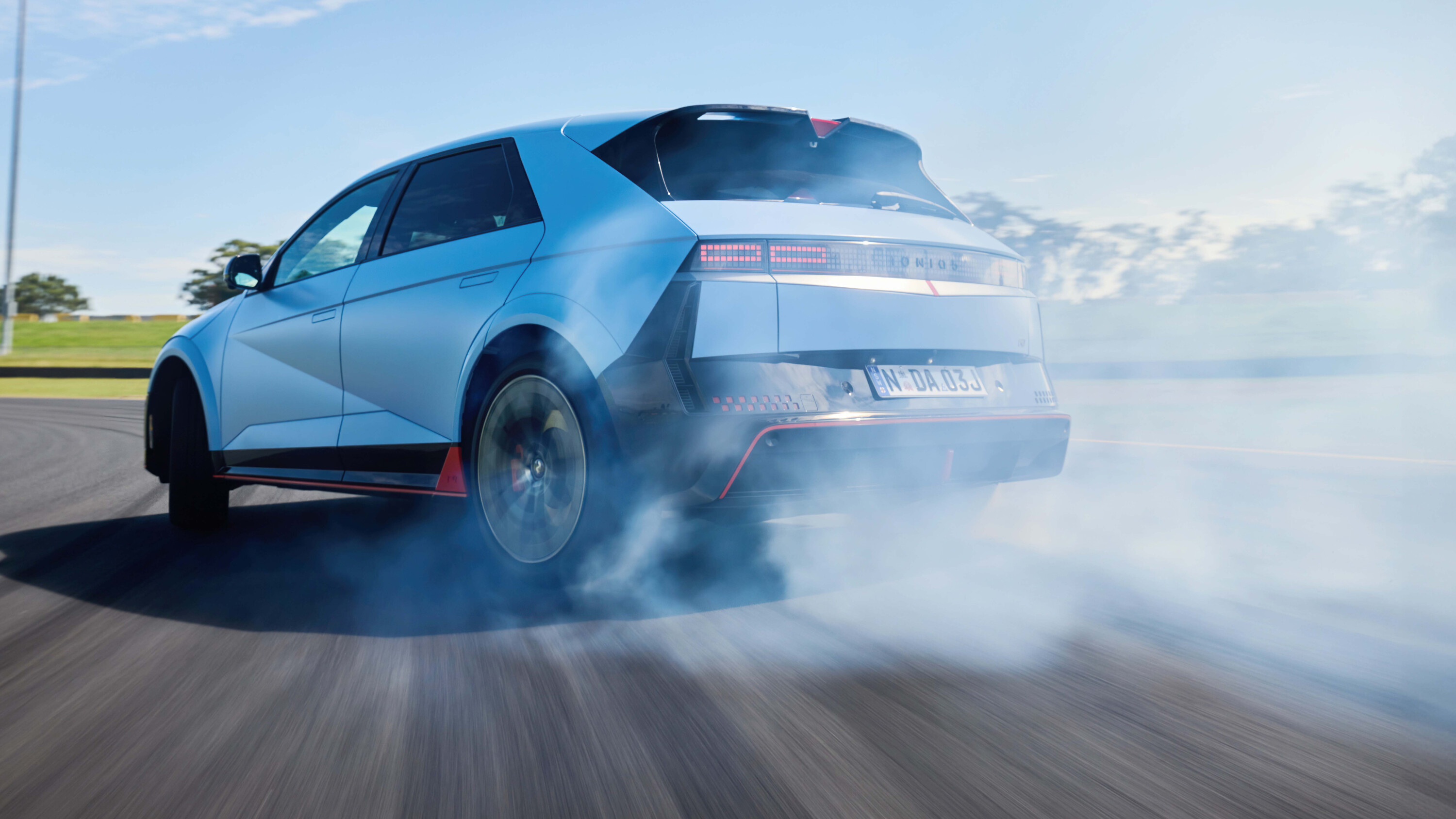
Hyundai also asked us not to set the car into its drift mode, not because they were worried we’d insert the 5 N into the scenery, but purely due to the fact that because of the recent shipping issues in the Red Sea, the Pirelli tyres required for it were in temporarily short supply. If everybody went out generating huge plumes of blue tyre smoke right from the get-go, the whole event would have been done and dusted within an hour.
1
The focus of the 5 N isn’t its ability to notch a killer lap time, more its ability to have its driver laughing like an idiot. On that score at least, it’s a winner.
Albert Biermann will point out that it can be set into an Endurance mode and string together two consecutive sub-8 minute laps of the Nordschleife without power de-rating, and that it can also achieve something he calls 20-20-20 (20 minutes of hot lapping on a track day, then 20 minutes on a high speed charger and then back out for 20 minutes on track again).
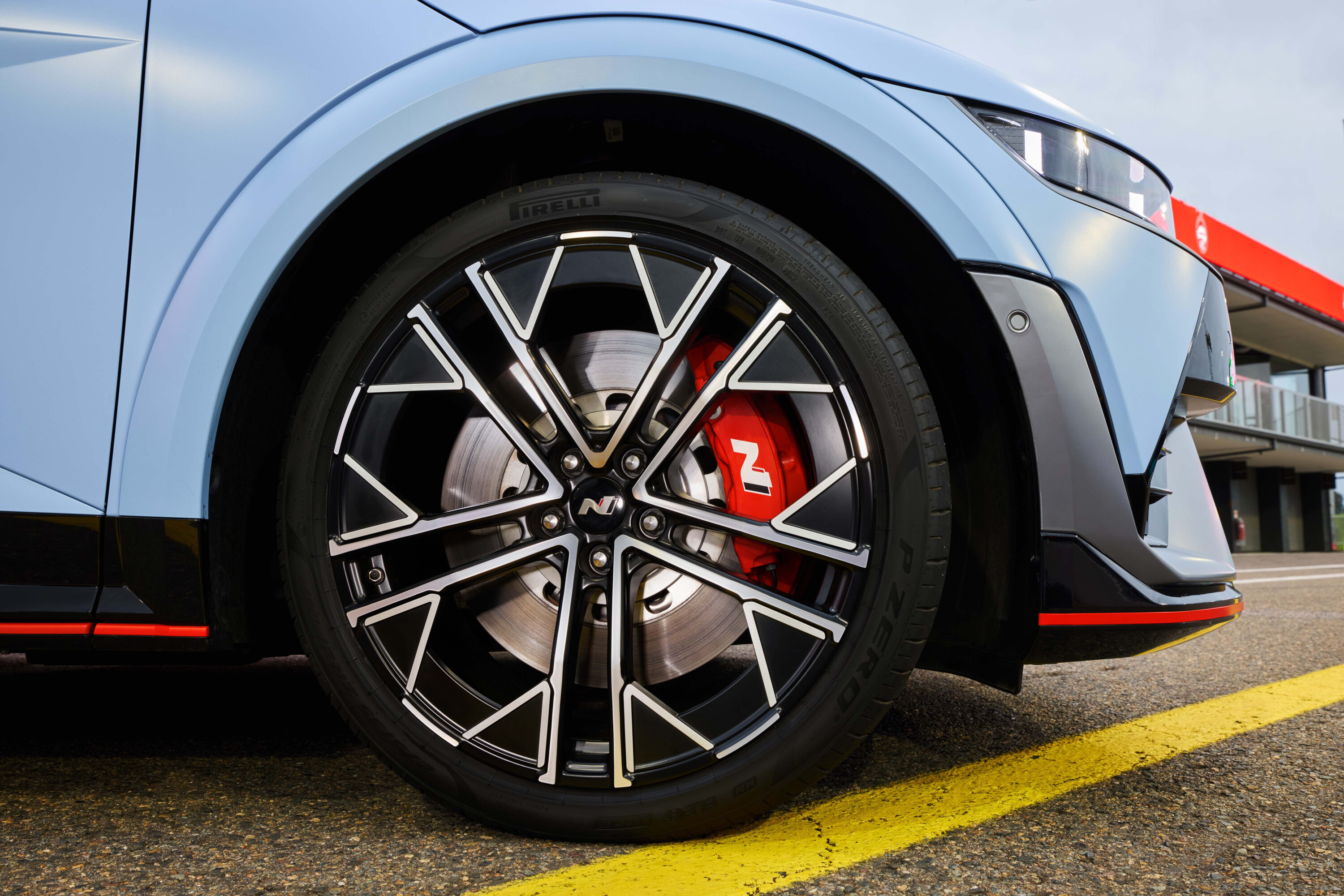
I’m somewhat sceptical of this claim, at least on the Pirelli P Zero rubber that the cars were on during our track test. The brief was to set off, perform one warm up lap, three fliers and then a cool-down lap. So that’s about six to eight minutes of hard driving around SMP.
1
By the time the second batch of journalists had returned from their laps, chunks were already starting to peel from the tyres of the 5 Ns as the carcass had overheated and begun to delaminate the contact patch.
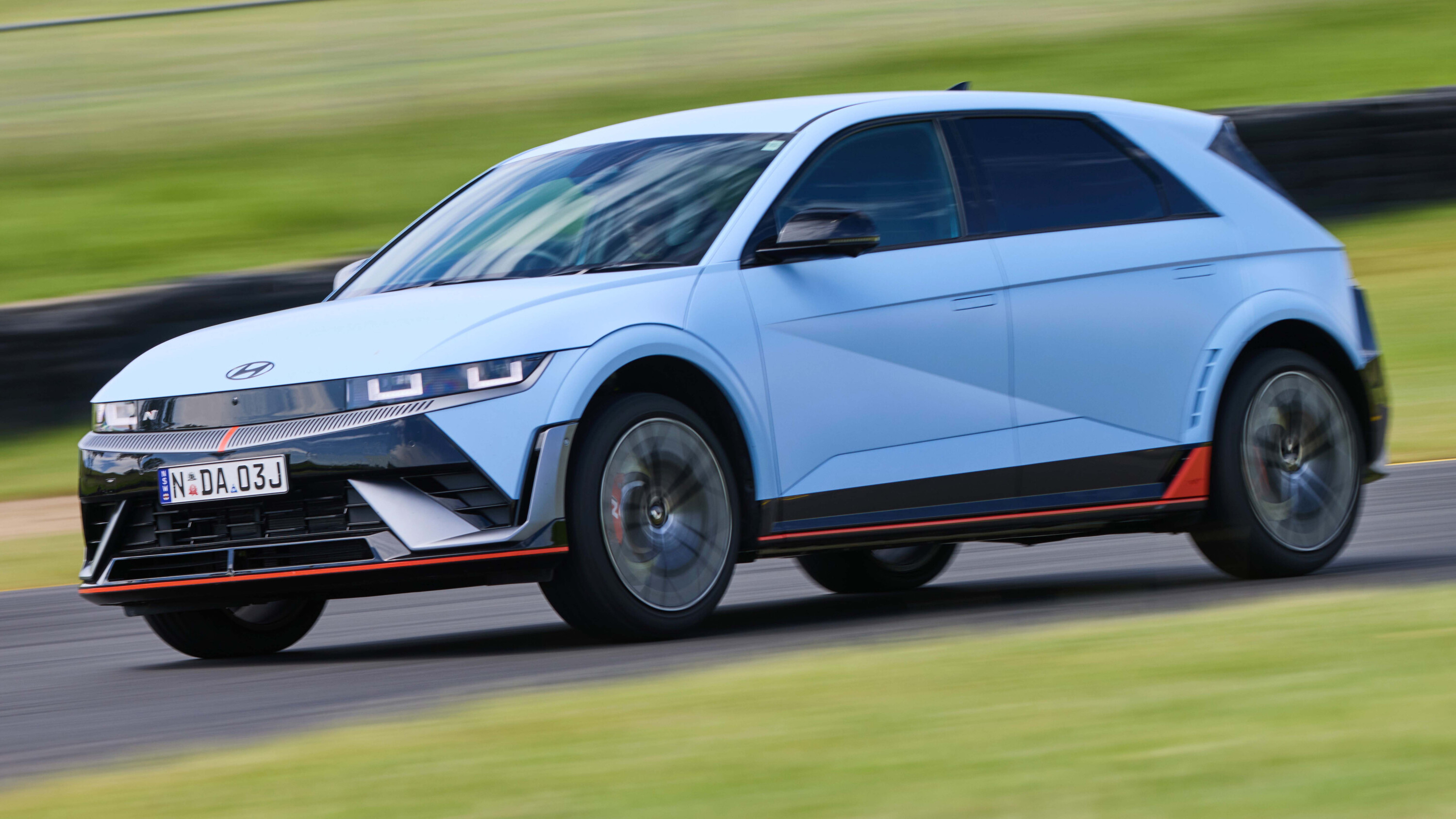
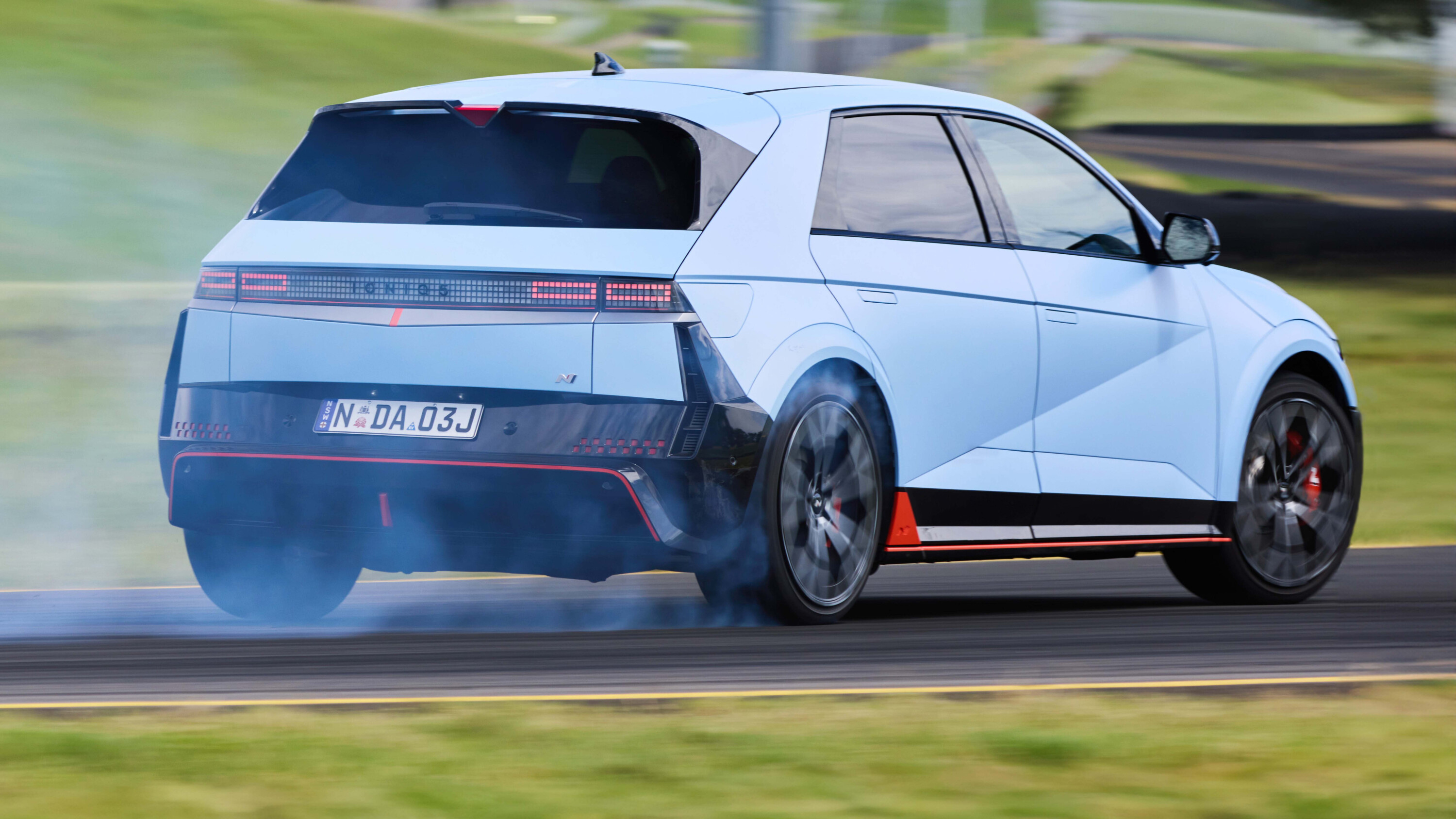
That’s a bit of a shame, because the 5 N, otherwise performed brilliantly. Hyundai was correct in counselling a certain care when using it with all the systems on. When diving into the hairpins on a trailed brake, the tail will swing wide, but due to the long wheelbase of the 5 N, it’s a lazy reaction that’s intuitive to correct.
Unless you provoke the car deliberately with all of the drive sent to the rear end, it grips up well on corner exit.
1
The steering is excellent, with three different user-configurable maps. Switch ESC off and put the motor into its N Sport mode and the car will allow for left foot braking if required.
The brakes are reassuringly meaty, which is a surprise. Most electric vehicles, despite their weight, are specified with underdone brakes, as regenerative braking is expected to shoulder much of the burden.
The IONIQ 5 N features meaty 400mm front discs, clamped by a hefty four-piston monobloc caliper. At the back, there’s a beefy 360mm rotor. Even before the friction brakes come into play, the IONIQ 5 N can generate 0.6g of regen braking.
1
Warm up lap completed, it’s a prod on the wheel-mounted ‘N Grin Boost’ button (let’s just call it NGS) and the IONIQ 5 N whooshes down the straight. It’s actually rather undramatic, but then most road cars feel a bit dwarfed on a FIA-rated circuit.
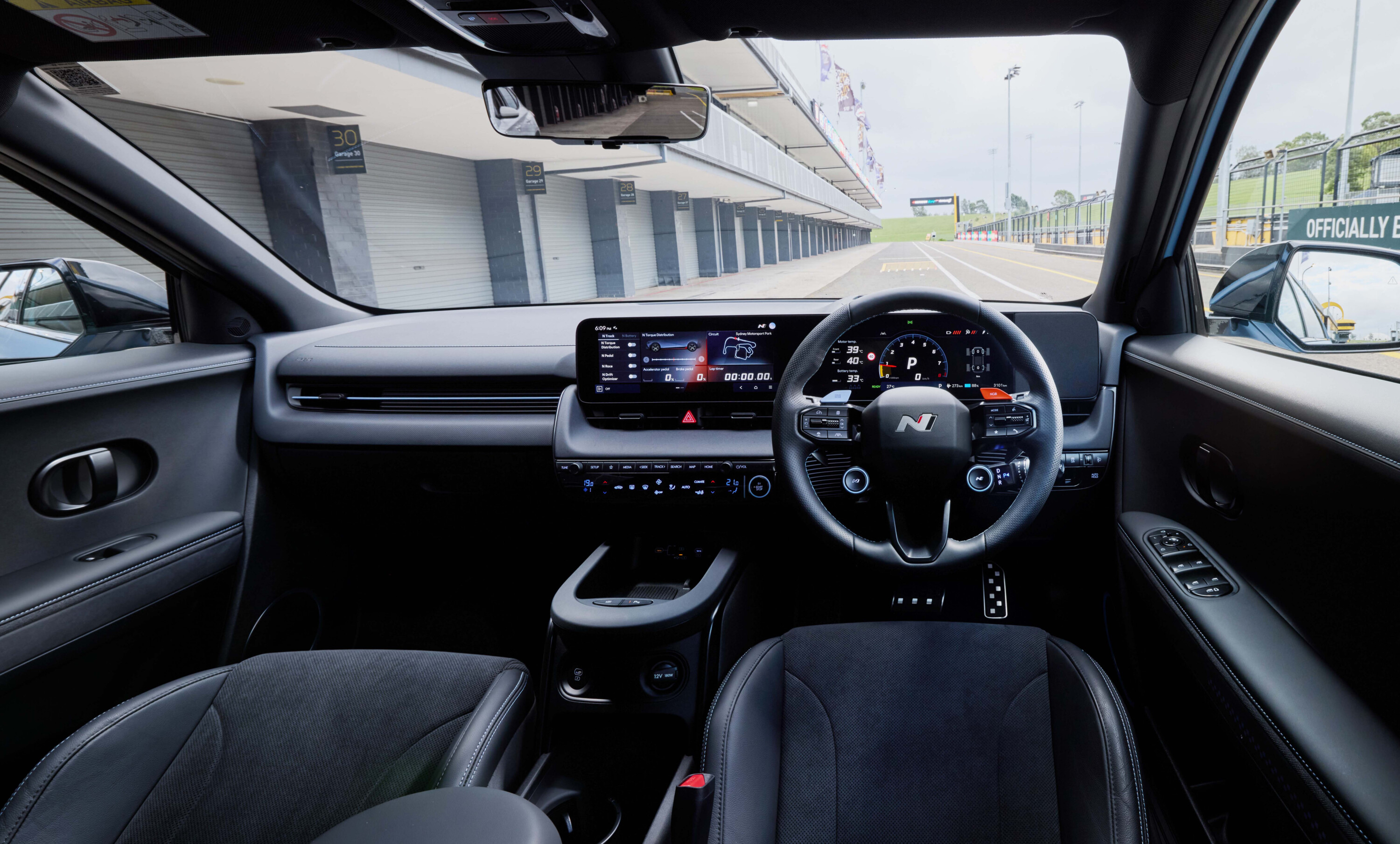
The first corner gets your attention because by the time the Hyundai arrives at the braking zone it has around 220km/h showing on the track-centric head-up display, which is altogether too quick for my resolve.
The brakes chirp as I bring it down to a more manageable speed for the sweeping left-hander, which could otherwise be the scene of a horrible digger. Exit out of that, bury the throttle again and it feels as if a celestial bungee is launching you at the next challenge, a left-handed hairpin. Throw the IONIQ 5 N at this and you feel its weight.
1
This is a corner that requires a certain patience, delicacy and subtlety of line, none of which I’m displaying today.
Take the attitude that you’ll throw it in and deal with the consequences on the way out, initially just leads to armfuls of scrubby understeer. Hmmm. We’ll come back to that one later. The high speed jinks left and right that follow are far more deftly managed by the 5 N, but anything that requires a big brake and then a serious change in direction feels a little clumsy.
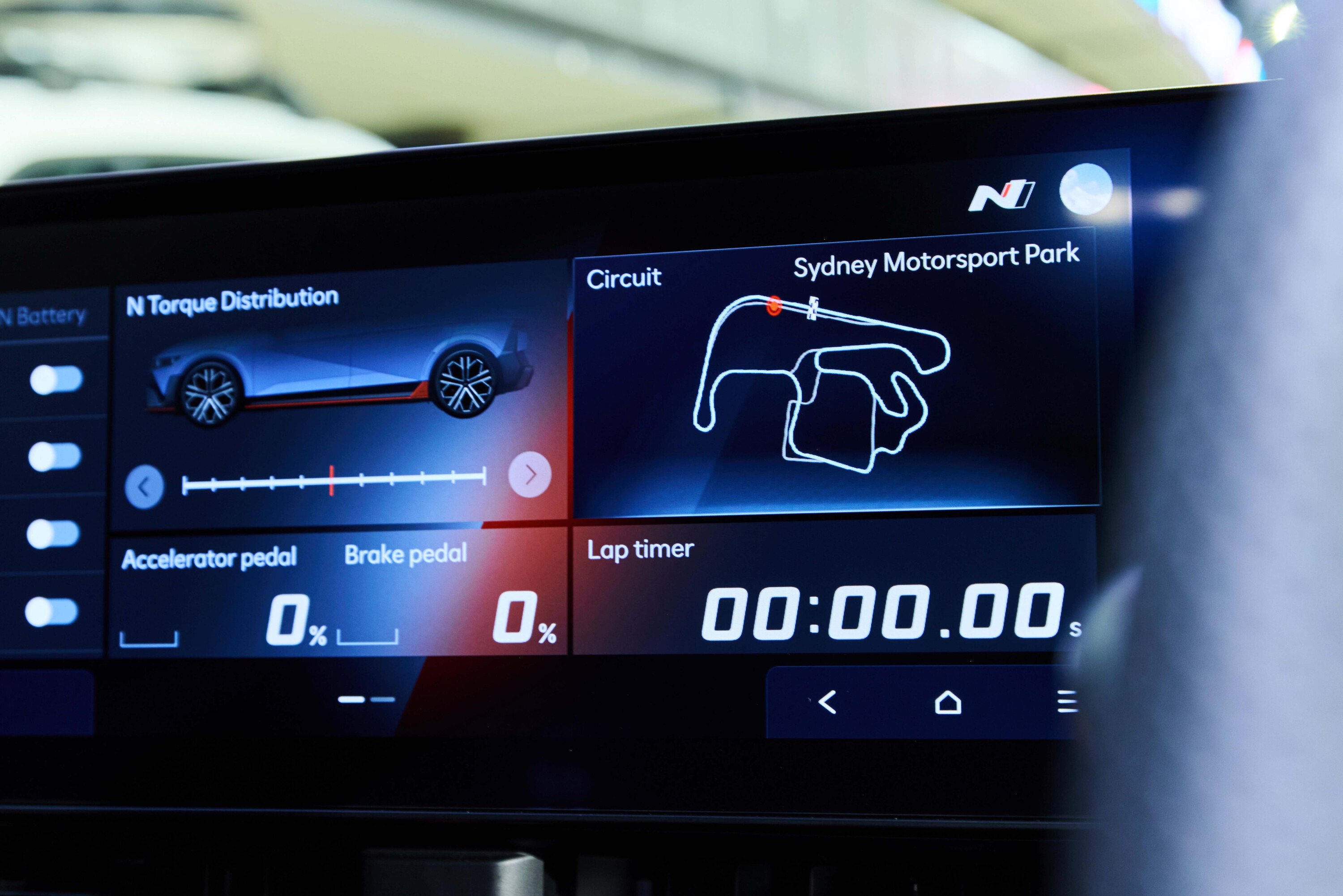
It gets better when I reassign the torque for a more rearward bias. Then, you can use the rear motor’s power to trim the line of the IONIQ through the tight corners. Fortunately, there are wheel-mounted N buttons where you can hot key some pre-stored setups into the 5 N.
1
I’d have them set up for a fast clean lap and then another setup programmed for fully idiotic.
In this instance, the right-hand N button has been assigned to toggle the N Shift mode. This mimics the effect of a dual-clutch transmission, complete with synthetic engine noises. I’m not altogether convinced by the sound effect, as they get a little bit ‘Need for Speed’ in the upper registers, but there really is a lot to be said for plucking gears yourself.
I know at this point, there will be some EV haters who claim that the only way they can be involving is to pretend to be an ICE car. I understand that argument because, yes, that is exactly what the 5 N is doing here. Hyundai even recruited the same guy who finessed the i30 N’s dual-clutch gearbox to get the calibration of this mode just right.

1
I’m glad they made the effort. Slightly dicky audio effects aside, it’s just great fun to drive in this mode.
Ping the left-hand paddle down as you approach a tight corner and you feel the drag torque of the nonexistent ‘engine’ come into play. Accelerate back out and through each gear you’ll feel the torque building, as if the phantom engine is coming on cam. Select the next gear and it happens again.
More importantly, there’s a certain audio/haptic cueing that goes on here that’s hugely reassuring, especially on road. I found it more useful when driving on road, assisting me in gauging my speed. I have no doubt that, on a track at least, the 5 N is faster just left in its silent automatic mode, but is it more fun? Almost certainly not, and fun is top of the agenda with this car.
1
It’s instructive to watch people’s faces as they get out of their stints in the IONIQ. Journos are usually a pretty reserved bunch, given to chin stroking and measured assessments.
In this case most get out of the car with grins wide enough to post a wok into. That’s a measure of success, at least by Biermann’s criterion.
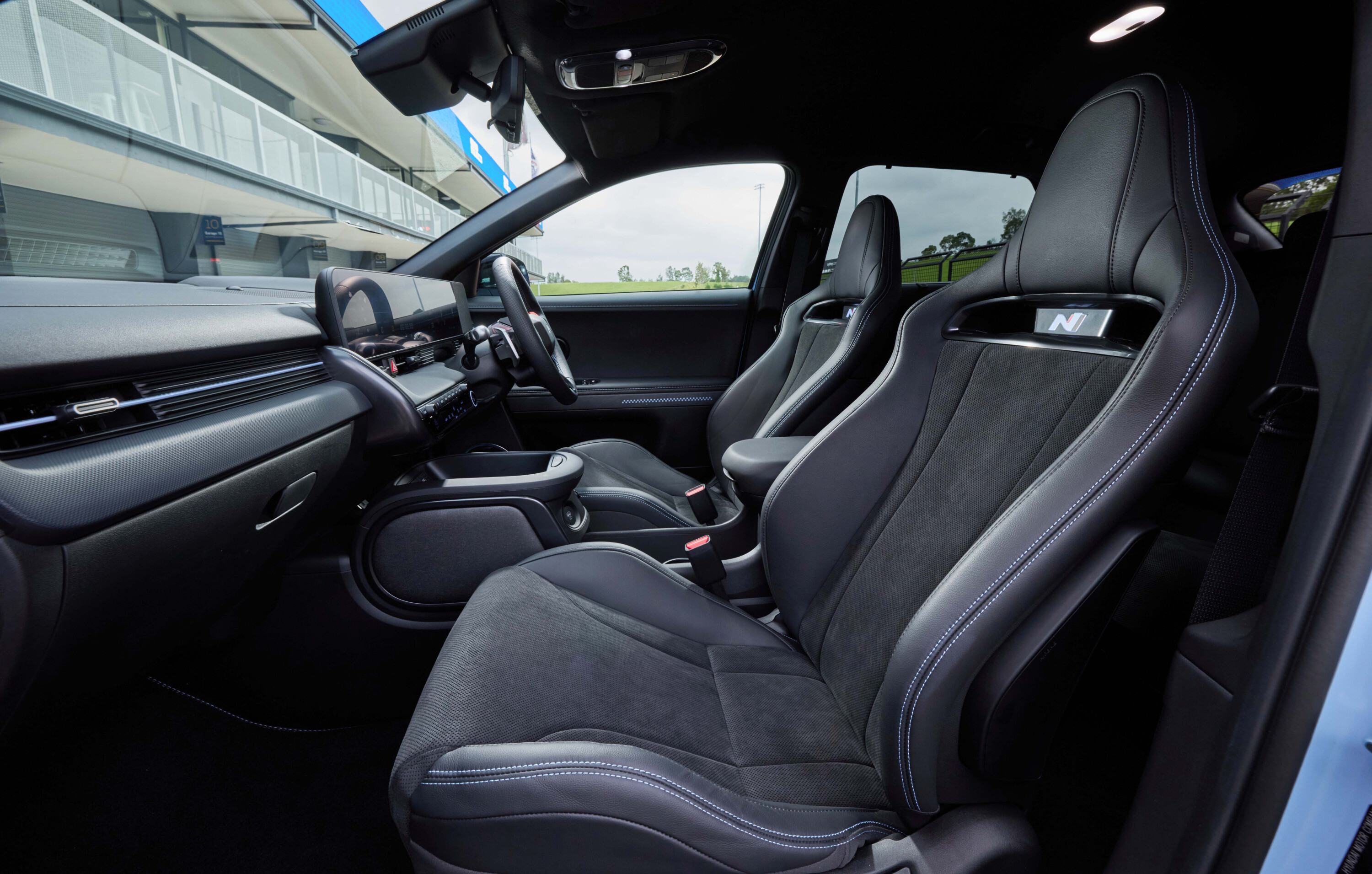
This car has clearly been engineered by people who love driving and fetishise vehicle dynamics. The body control is uncanny for such a weighty vehicle, and the power delivery is addictive. You’ve got to be a car nut to include a drift optimiser, fully configurable torque distribution and launch control with three user-selectable grip settings. There are other clues too.
3
The 21-inch forged alloy wheels are lower in unsprung mass than the 20-inch cast items on the rest of the IONIQ 5 range and offer a more favourably sized contact patch.
It feature deeply nerdy stuff life dual-axis hydro bushings for the motor.
Who cares that it does 0-100km/h in 3.4 seconds or that the only options are a $2000 glass roof (don’t) or $1000 matte paint (also don’t; it’ll delay your delivery and ruin your day when a bird poops on it)? The IONIQ 5 N is a car for drivers.
It’s at its best on road, but it’s great fun for a few laps on a track, more of a time attack weapon than something that’ll metronomically hit a time for lap after lap.
2
Tim Rodgers chuckles as he calls it a ‘supercar hunter’ and I can see why that would be a lot of fun, tailing a Porsche or a Ferrari out of pit lane and getting a grandstand view of them trying to shake off a family hauler.
Mission accomplished then? Yes, albeit with a caveat that you’ll need to watch your tyres. Hyundai has built a bit of a monster here. Its mantra can be summed up in three words at the end of an email between Albert Biermann and his team of development engineers.
“Driving still matters.”
MORE
Everything Hyundai
| 2024 Hyundai IONIQ 5 N specifications | |
|---|---|
| Body | 5-door, 5-seat SUV |
| Motors | Dual permanent magnet synchronous |
| Battery | 84kWh liquid-cooled lithium-ion |
| Max power | 448kW |
| Max torque | 740Nm |
| Transmission | Single-speed reduction gear |
| 0-100km/h | 3.4 second |
| L/W/H | 4715/1940/1585mm |
| Wheelbase | 3000mm |
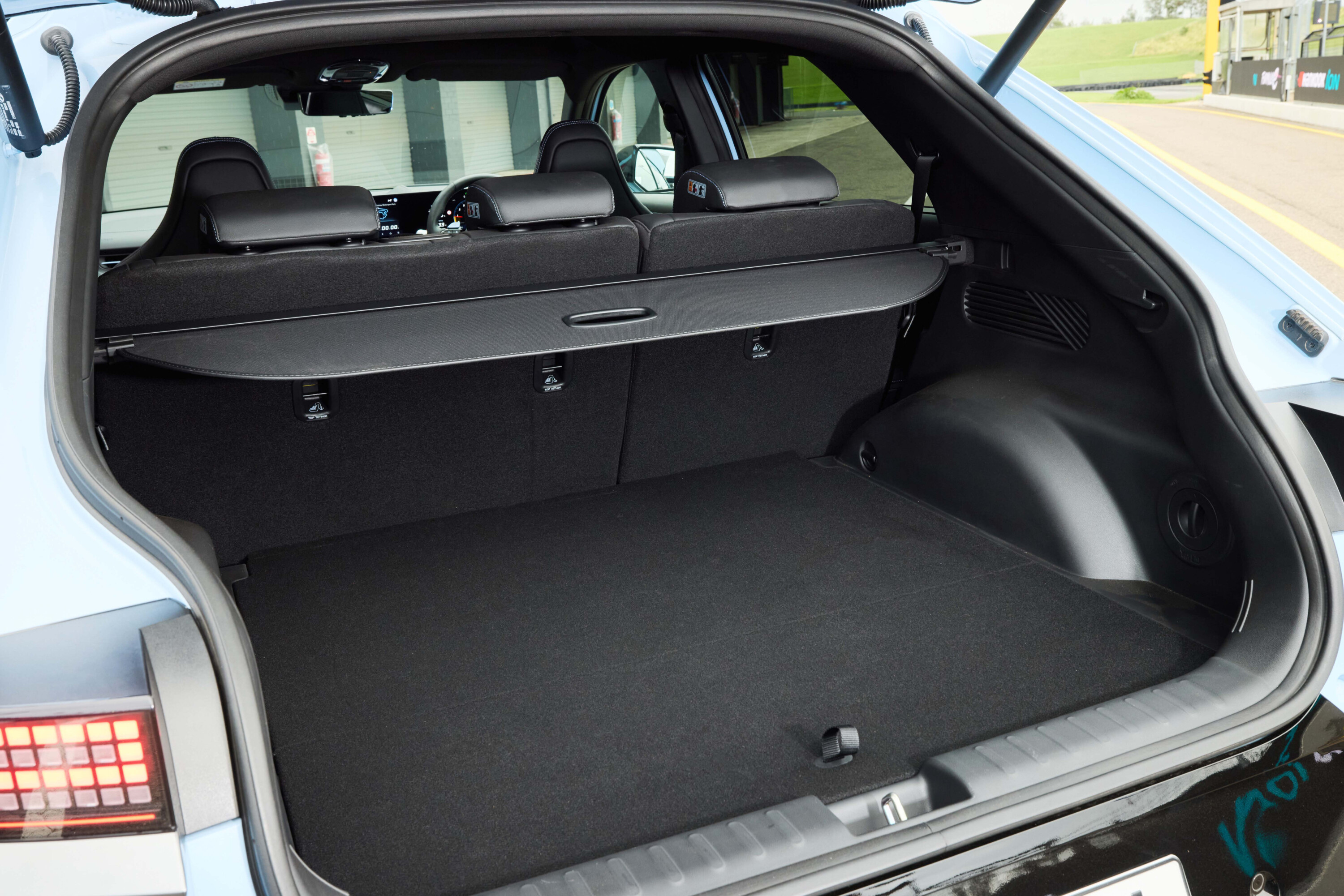
| Boot space | 480/1540L |
| Weight | 2230kg (tare) |
| Range | 448km |
| Energy use | 21.2kWh/100km (claimed) |
| Suspension | Struts, coil springs, adaptive dampers, anti-roll bar (front) Multi-links, coil springs, adaptive dampers, anti-roll bar (r) |
| Steering | Electric rack-and-pinion |
| Tyres | Pirelli P Zero HN 275/35 R21 103Y XL |
| Price | $111,000 + on-road costs |
After the success of the Volkswagen Walkinshaw Amarok, might VW be tempted to apply the treatment to the Touareg?
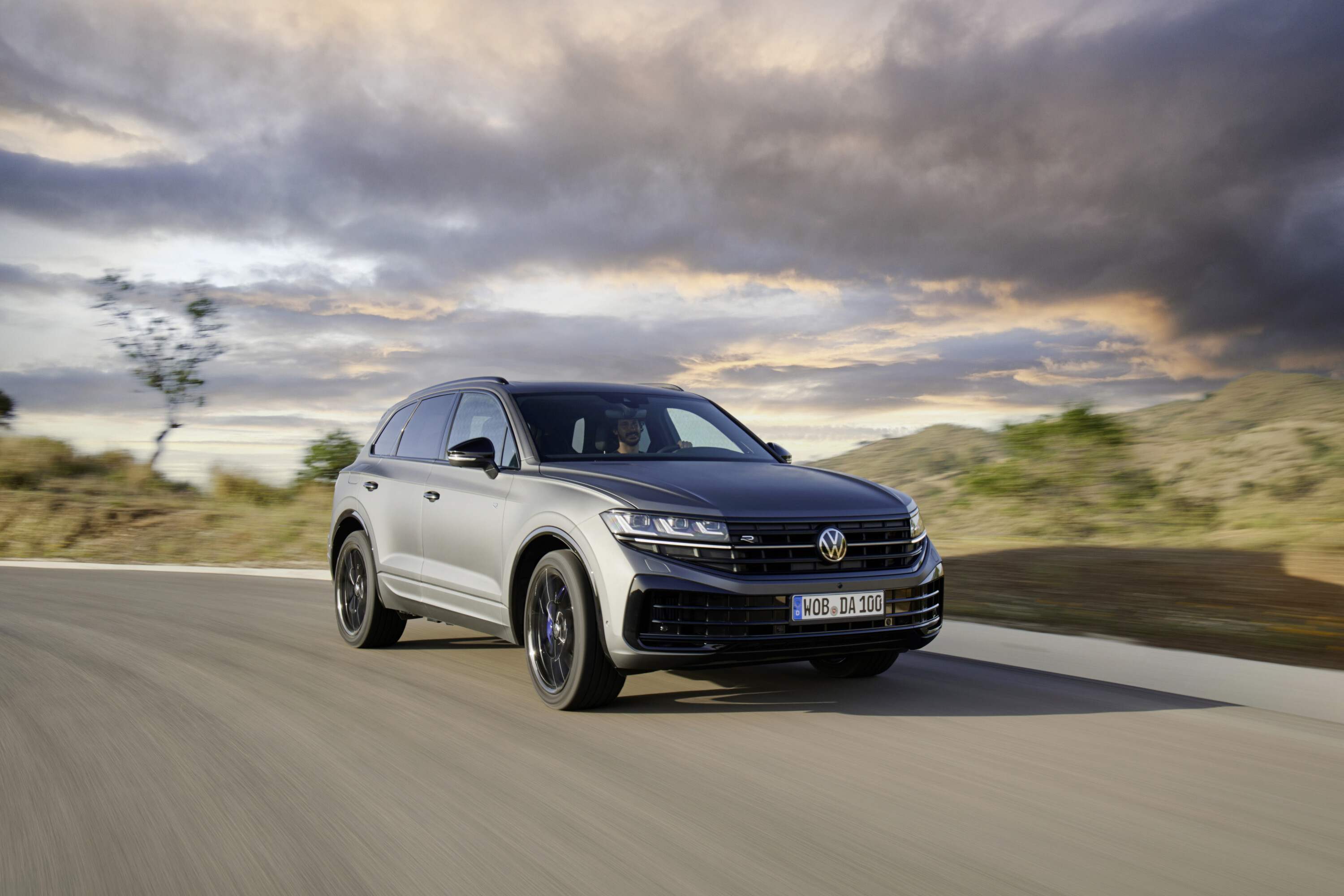
Firstly, and unlike the Amarok, VW already has a factory performance variant in the Touareg R – so a Walkinshaw Touareg would need to be positioned and specced carefully so as to not tread on the R’s patch.
It’s highly unlikely that VW would position a Walkinshaw Touareg above the new 340kW Touareg R e-Hybrid.
1
Modifying the complex hybrid drivetrain for any meaningful power hike would also likely be relatively challenging technically, time-consuming, and expensive. Walkinshaw is more likely therefore to work its wattage wizardry on the 210kW 3.0-litre turbo-diesel V6 fitted to 210TDI models.
There’s plenty of room between the 210kW diesels and 340kW e-Hybrids for a Walkinshaw
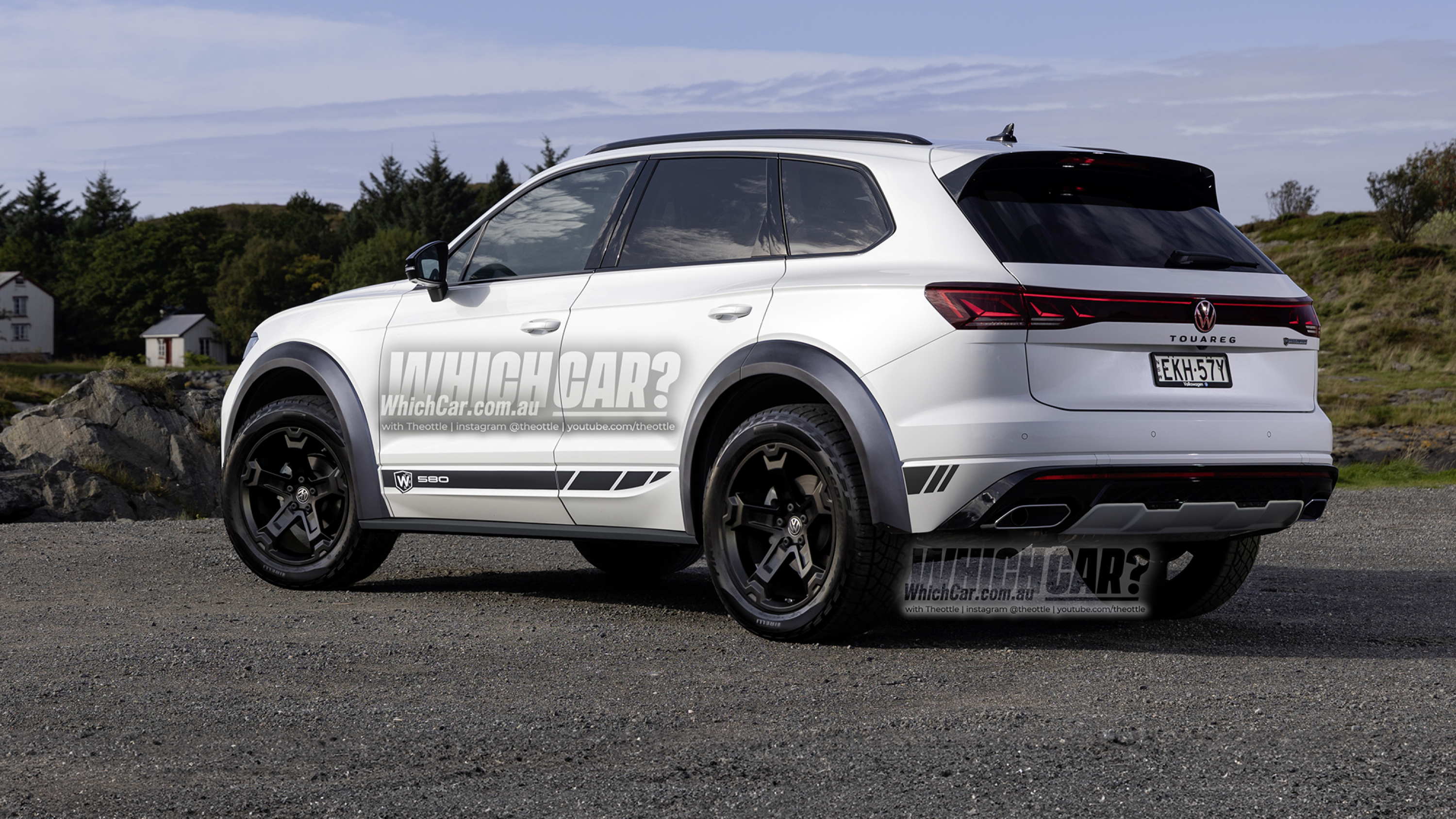
Visually, we’d expect something more akin to a Volkswagen Walkinshaw Amarok than the VL Group A ‘Plastic Pig’. To illustrate its potential to live alongside the Touareg R, our mate Theottle has produced a subtle restyle emphasising off-road performance, leaving bahn-storming to the R. Lairy boy-racer it is not.
1
A new front bumper features an integrated skid plate and considerably less grille area than the R, and Theottle has added a gloss-black technically-patterned grille similar to that on his Walkinshaw Amarok concept.
Wheel arch flares are noticeably fatter than the R’s on Theottle’s concept, housing rims that look to be an inch or two smaller, with a decent (four inch?) lift. Fairly subtle Walkinshaw signature decals pick up the stock swage line.
The tail is stock, but for the addition of a chrome Walkinshaw badge, remaining teutonically clean.
Would you like to see a Walkinshaw-worked Touareg? Let us know in the comments below.
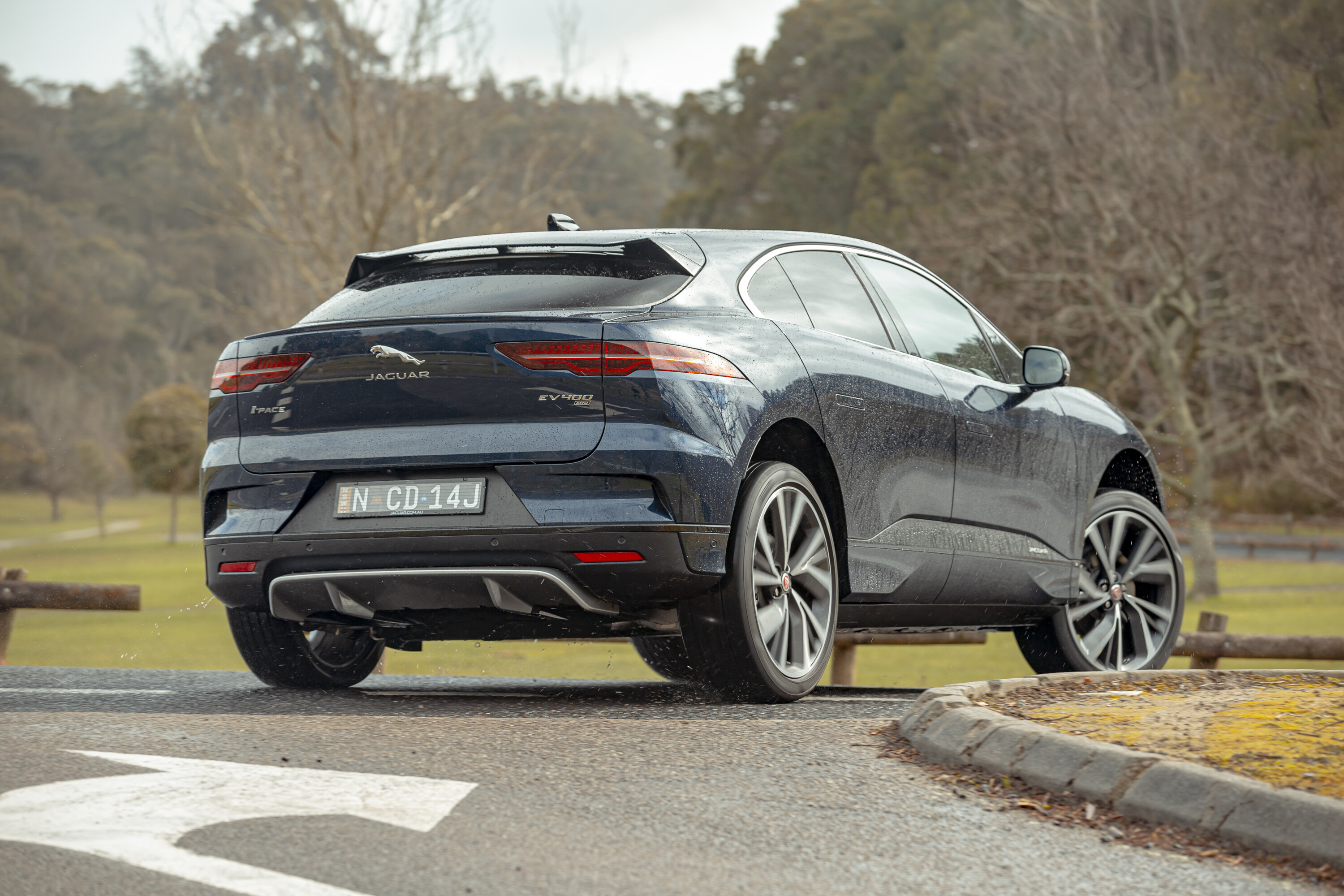
Jaguar will offer battery-electric vehicles only by 2025, axing all petrol model production by June 2024.
Three new models will emerge, sharing a new platform – JEA (Jaguar Electric Architecture) [↗], unrelated to the existing i-Pace EV.
The first battery-electric model will be a four seater grand tourer, is expected to arrive within 2024 and predicted to be on-sale by 2025. It will come with an estimated base price of AUD$154,000, and will feature upwards of 428kW available (the most powerful Jaguar yet) with an approximate range of 692km.
A second EV is due to arrive in late 2025, and a third in 2026.
1
“The plan is to sunset the current product portfolio and then launch the new ones.”
Speaking with Road and Track [↗], Joe Eberhardt, Jaguar Land Rover North America’s President and CEO mentioned that, “The majority of our products (F-Pace, XF, E-Pace and i-Pace) cease production in June, but they will be on sale for a much longer time… (with a) production schedule that enables us to have a continuous supply of vehicles until the new cars come, (in order to) have a clean handover.”
“The plan is to sunset the current product portfolio and then launch the new ones,” he added.
1
“We just knew that we didn’t want to be another volume luxury brand”
With a nine-figure cost to develop, and despite Jaguar’s previously cancelled fully electric XJ, the company is confident that an EV-only lineup is the best way forward, with Eberhardt offering, “There does come a point where you just need to focus on the future. It may not be a brand for everybody, and that’s by design… Brands need to be focused and to decide what their purpose is.”
Jaguar acknowledges that sales will suffer, with Autocar [↗] predicting that production could be reduced to just 50,000 units across the three upcoming models.
“We just knew that we didn’t want to be another volume luxury brand, that is not something that aligns with the Jaguar philosophy,” Eberhardt said.
MORE
Everything Jaguar
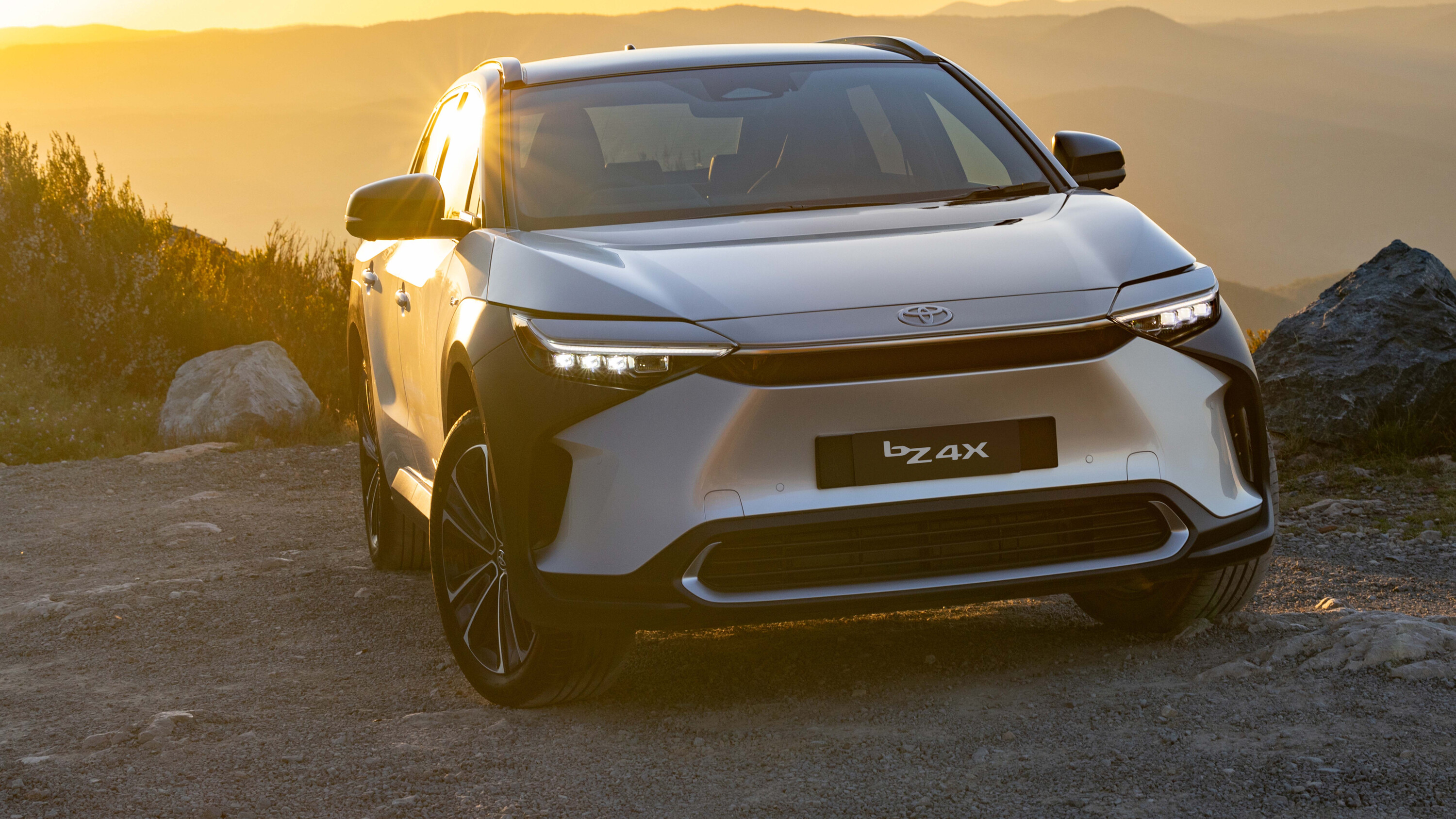
The 2024 bZ4X is Toyota’s first electric vehicle. And that’s big news, because, although it didn’t launch the first hybrid, Toyota’s Prius made petrol-electric cars cool (not to motoring enthusiasts, mind you); the nameplate transcended transport to become a statement piece for eco-conscious people in the limelight.
You’d think transitioning to battery electric vehicles (BEVs) should be a natural next step – hybrid battery know-how combined with Toyota’s obsessive pursuit of reliability.
1
But the bZ4X project was late to kick off with platform development not commencing until 2018.
A global reveal of the near-production concept in 2021 was frustratingly followed by delays and production issues for both the Toyota bZ4X and its platform-shared Subaru Solterra twin.
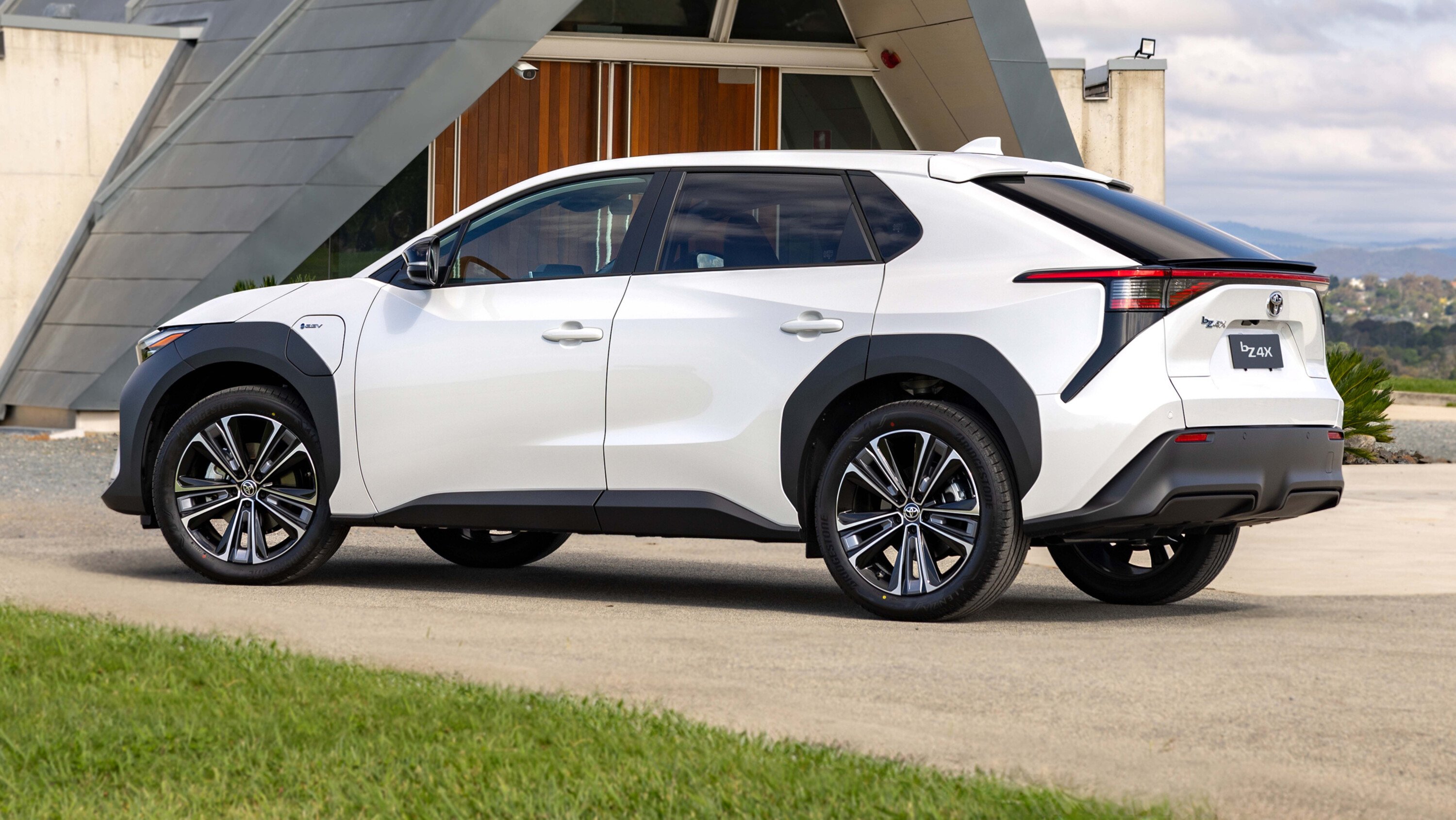
Three years later, the Toyota bZ4X has arrived in Australia with a modest goal of 1500 deliveries in its first 12 months on sale. We were invited to Australia’s capital, Canberra, (where plenty of EV-related discussion is occurring) to sample Toyota’s first effort on a combination of testing tarmac and dirt.
1
JUMP AHEAD
- How much is it, and what do you get?
- How do rivals compare on value?
- Interior comfort, space, and storage
- What is it like to drive?
- How safe is it?
- Efficiency and charging
- Warranty and running costs
- VERDICT
- Specifications
How much is it, and what do you get?
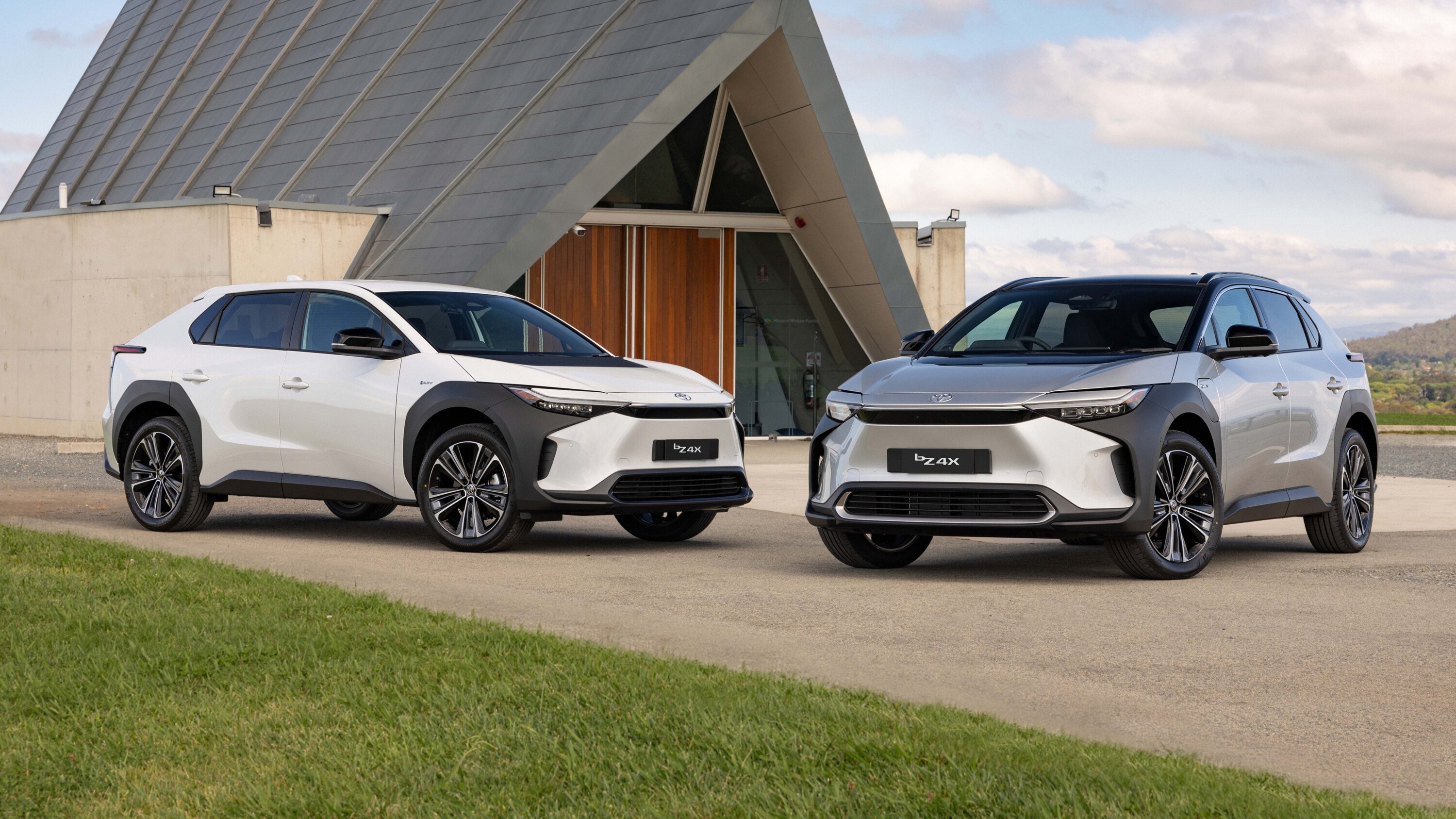
The bZ4X is available in two trims named by their powertrain, with the front-wheel drive entry grade priced at $66,000 (clickety-click) before on-road costs.
With a few more features and all-wheel drive the bZ4X AWD commands $74,990, also before on-road costs.
On the day of the media event, Toyota Australia vice president sales, marketing and franchise operations Sean Hanley confirmed there were around 170 orders in the bank for Toyota’s first EV. The brand still expects the front-drive model to be most popular.
| 2024 Toyota bZ4X FWD features | |
|---|---|
| 20-inch alloy wheels | LED headlights and foglights with adaptive highbeam |
| Auto tailgate | 7.0-inch digital driver display |
| Power tailgate | Keyless entry and push-button start |
| Fabric and ‘Softex’ lynthetic upholstery | Eight-way power driver’s seat with front seat heating |
| Leather-accented steering wheel | Dual-zone climate control |
| 12.3-inch touchscreen | Wireless Apple CarPlay and Android Auto |
| Hey Toyota’ voice functionality | Connected services with over-the-air updates |
| Four cup holders and eight bottle holders | Toyota Safety Sense including adaptive cruise control |
1
The range-topping AWD gets a few extra goodies, the most notable for our market being ventilated seats. It’s a shame that Toyota didn’t choose to offer this same trim with front-wheel drive for a lower cost.
| 2024 Toyota bZ4X AWD features | |
|---|---|
| Roof spoiler | Fixed panoramic roof |
| Gloss black bonnet accent | Premium full ‘Softex’ synthetic leather upholstery |
| 10-watt wireless charger | Ventilated front seats |
| Heated steering wheel | Blind-spot monitoring and safe-exit assist |
1
Toyota says its new full-service lease might be a better option for those nervous about electric vehicle residual values.
Monthly payments during the scheme’s three-year term cover the ‘rent’, servicing (including tyres), registration, and insurance costs.
At the end of the period you either hand the bZ4X back to Toyota or begin another three-year lease. It’s not cheap, though, Toyota’s configurator showing $1752 per month (at the time of publishing, subject to plenty of individual fluctuation) for the front-drive model if you travel 15,000km per year. That equates to $21,024 annually, or $63,072 over three years.
1
How do rivals compare on value?
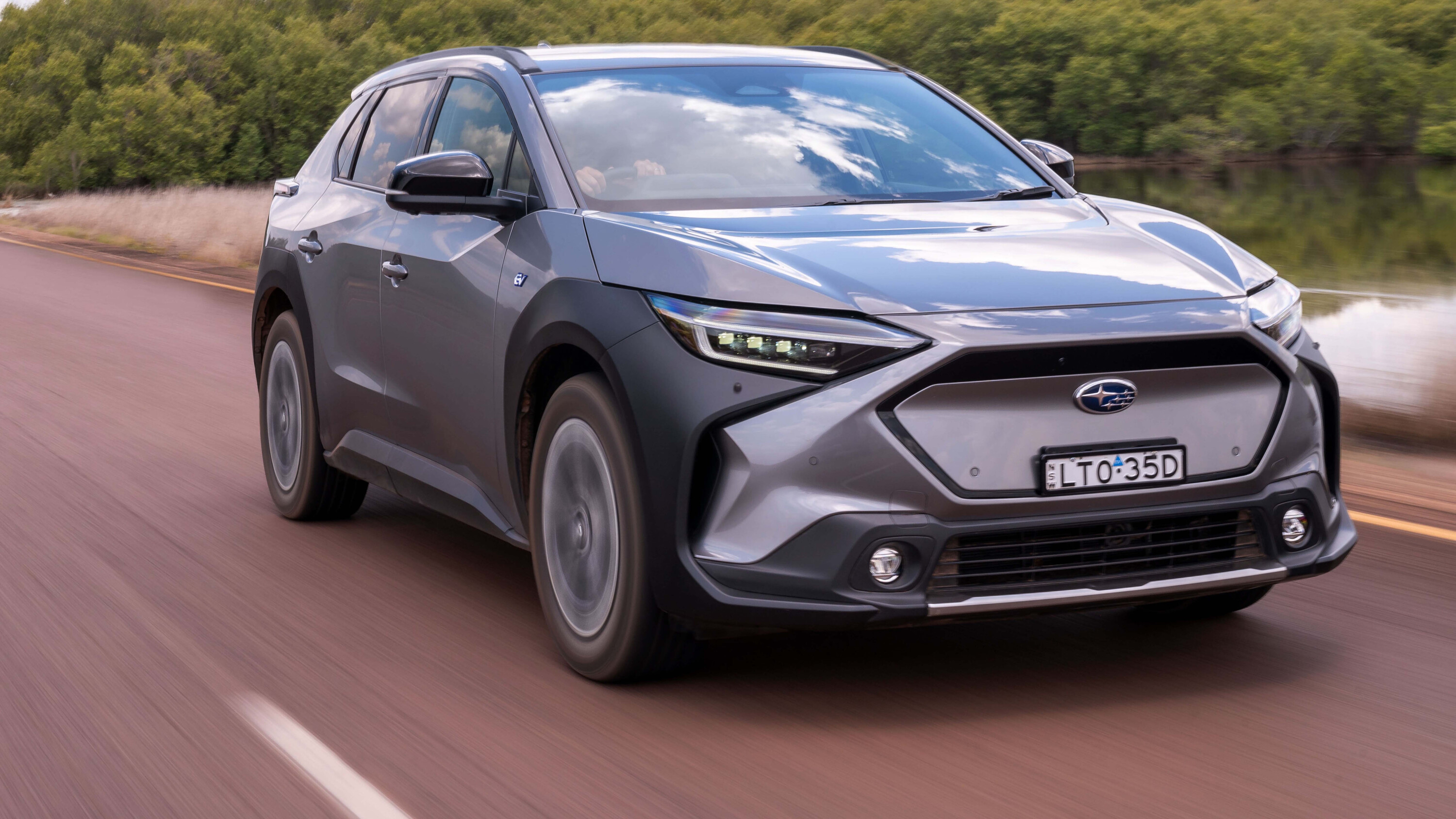
It’s hard to ignore Subaru’s very similar Solterra which had its price slashed just before last week’s launch.
That’s brought the Solterra and bZ4X much closer in price terms and unlike the pair’s similarly twinned GR86 and BRZ coupes, the two electric SUVs do differ quite a bit in specification.
As well as standard all-wheel drive, the base Solterra, for example, gets two motors, heated rear seats and steering wheel, digital rear-view mirror, blind-spot monitoring, and rear cross-traffic alert to help justify its $3990 premium over the front-drive bZ4X, yet misses the Toyota’s connected services.
1
At the pointy end, both vehicles get a little extra kit and match on 20-inch alloys, though the Toyota one-ups with front seat ventilation compared to the Solterra’s driver seat memory function.
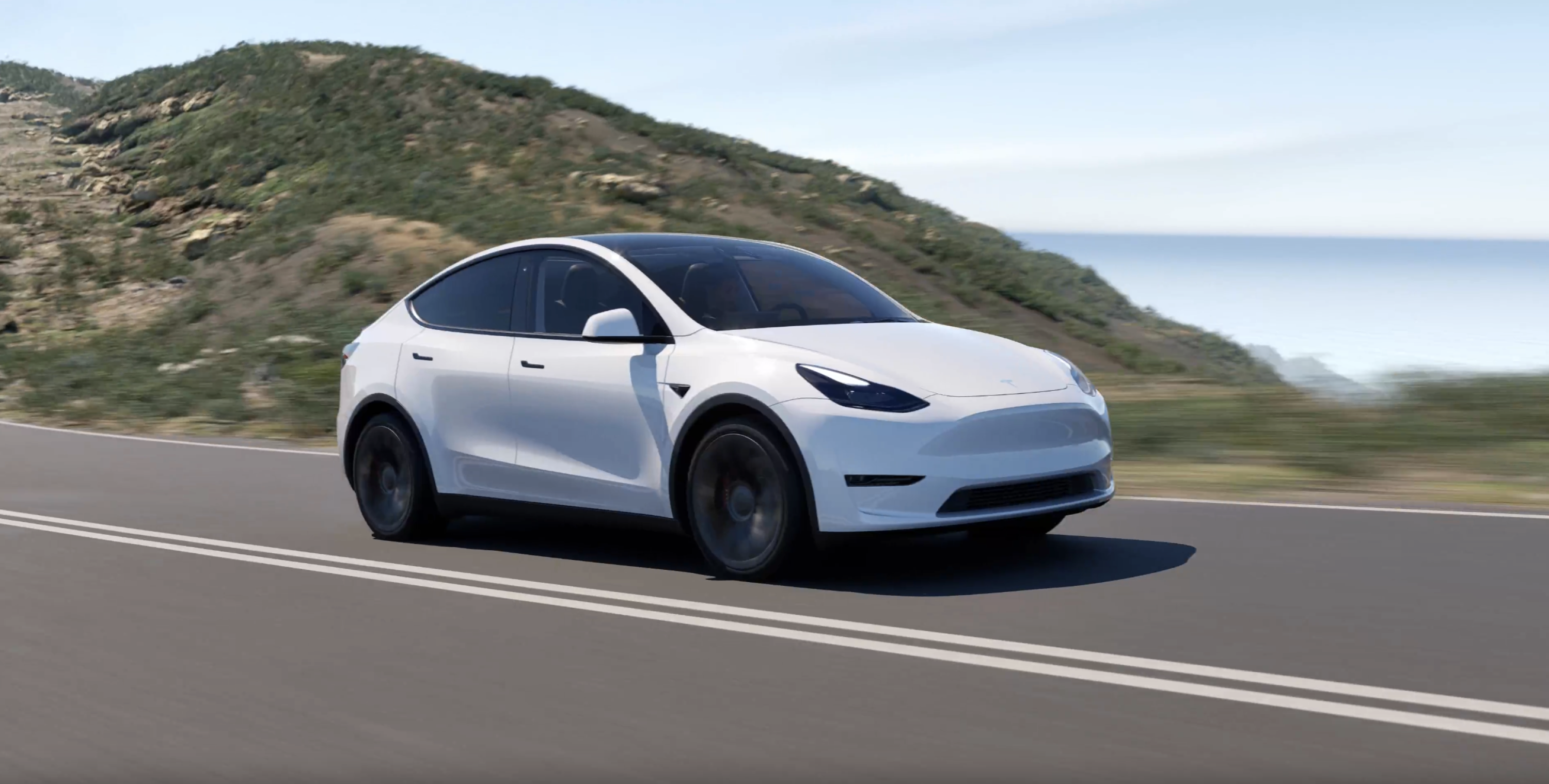
When it comes to non-related rivals, the bZ4X’s base price puts it a whisker above the $65,400 Tesla Model Y RWD (though the Toyota loses out on range and tech) while undercutting the 77.4kWh Ioniq 5 RWD ($70,400), so the bZ4X seems priced in the ballpark.
1
Interior comfort, space and storage
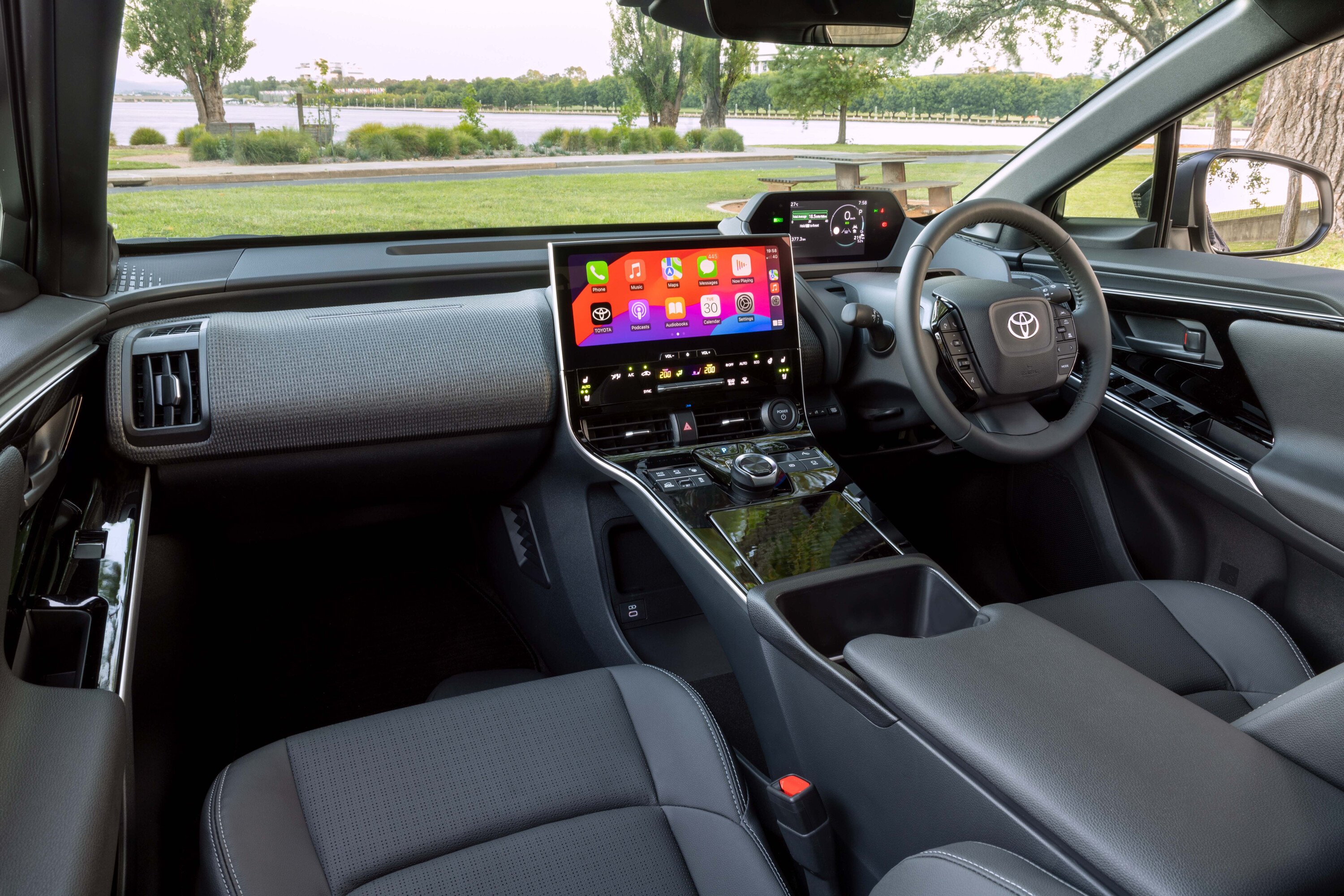
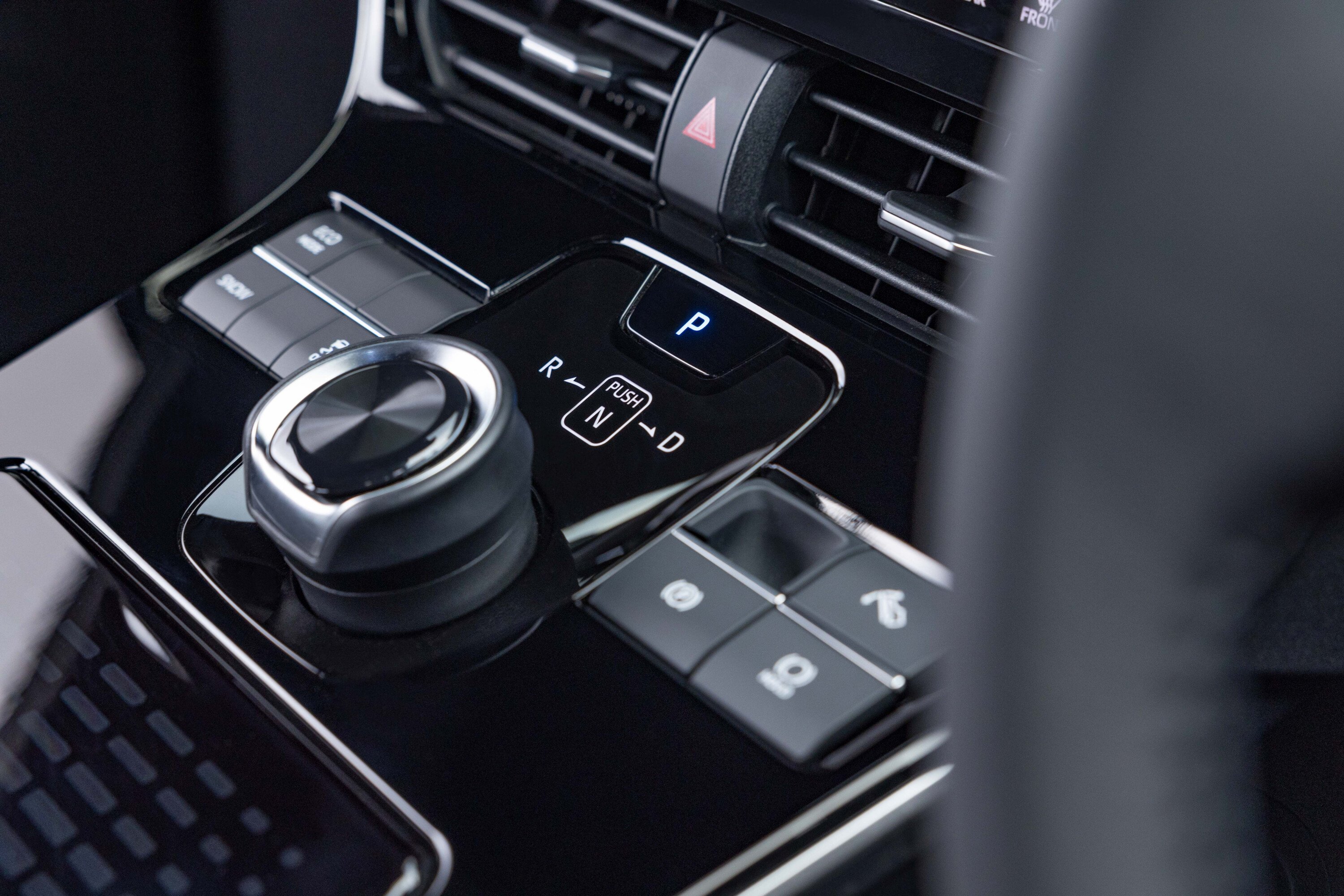
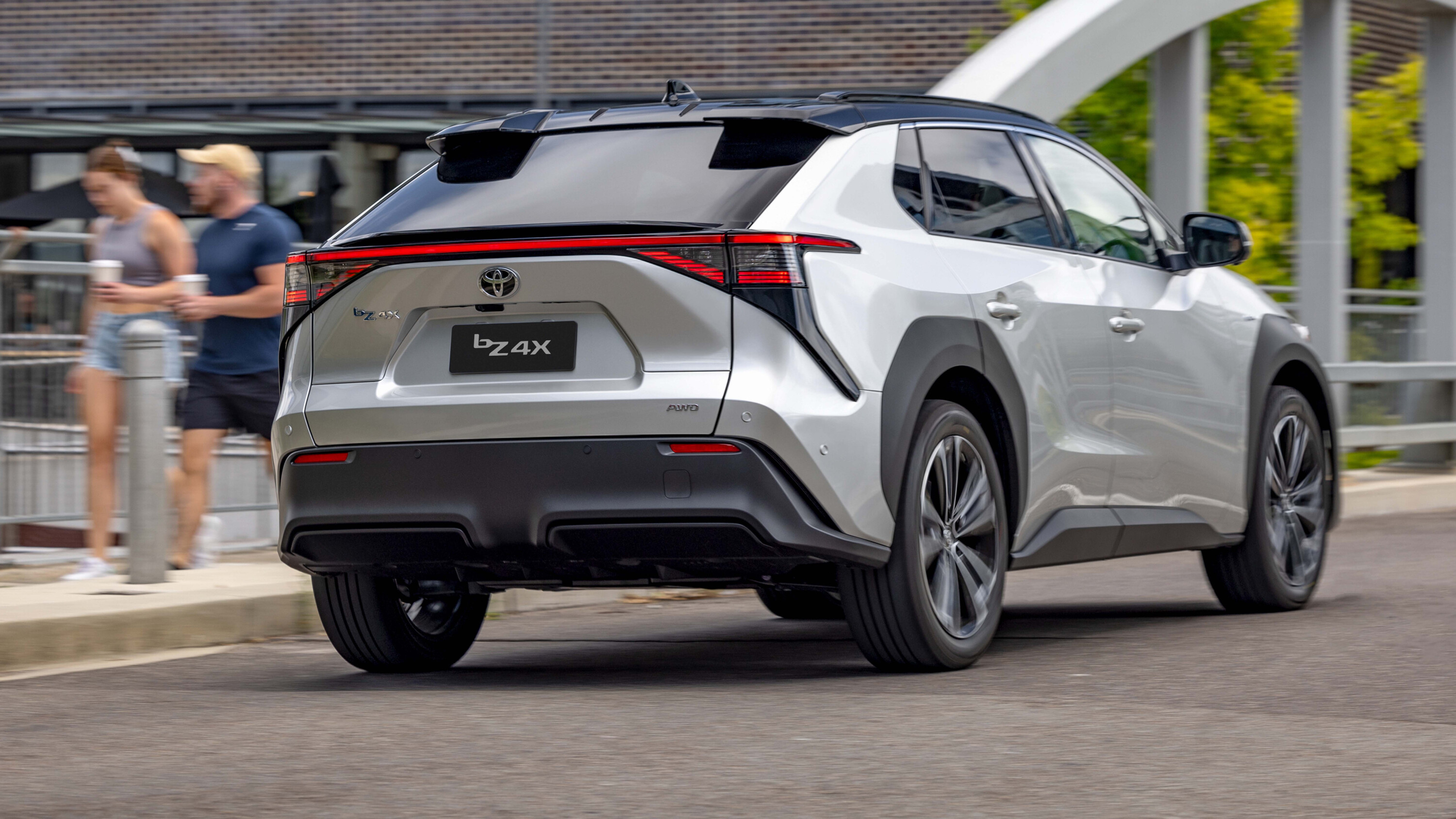
On a macro level, the bZ4X’s interior is quite a departure from Toyota’s normal style. It has a funky new centre console and unique dash design encased in a tactile cloth covering.
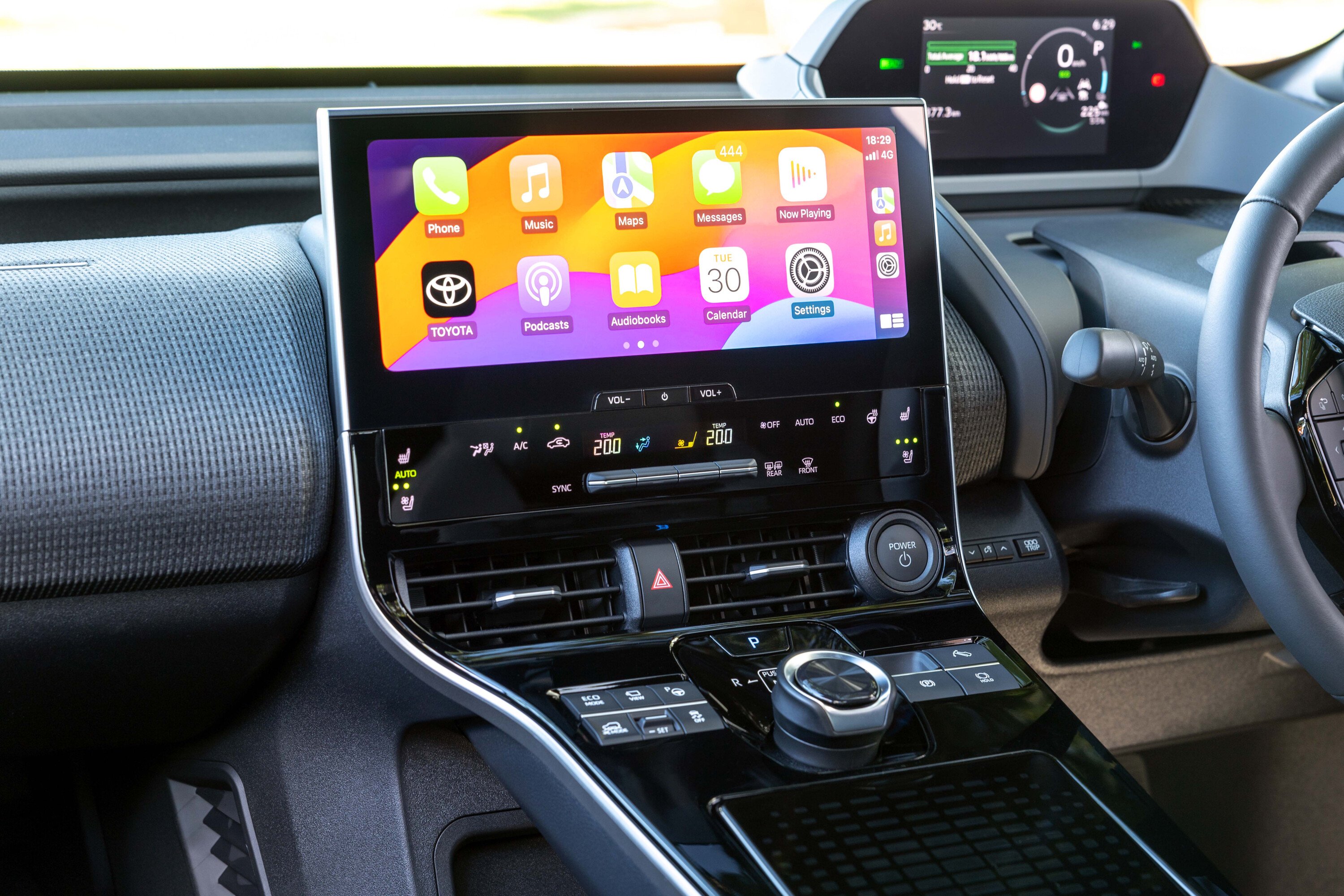
A deeper dive reveals familiar Toyota attributes: the operating system behind the 12.3-inch touchscreen is the same clunky software as a Corolla Cross (including wireless Apple CarPlay and Android Auto functionality), there are very familiar materials on the doors and steering wheel, and around the cup holders is a ring of scratchy HiLux-grade plastic that severely cheapens the vibe inside.
Practicality is excellent, though, with two deep cup holders, a reasonable cubby concealed under the sliding centre armrest, and space for both 1.5-litre and 500mL bottles in each door bin.
1
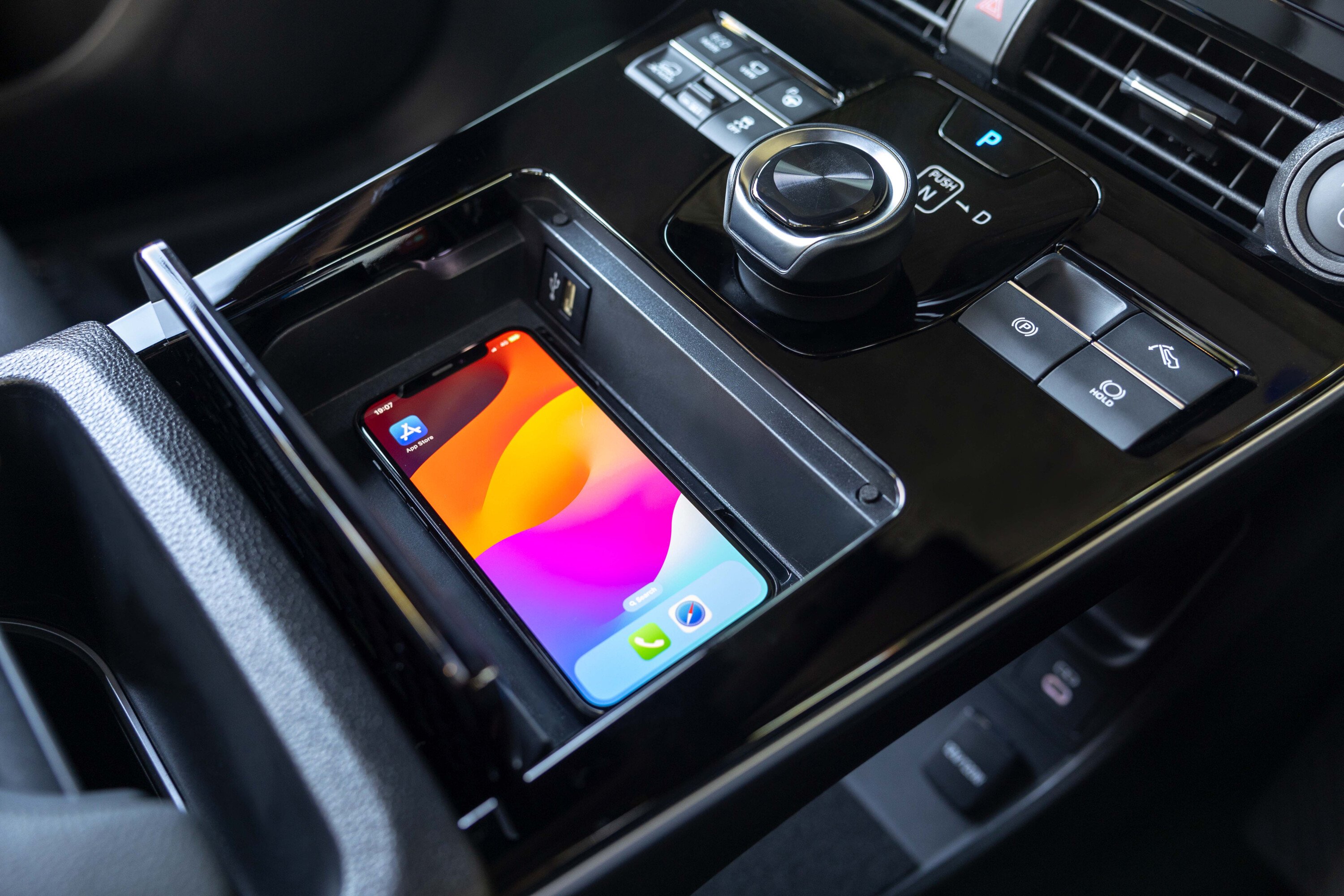
The bZ4X AWD’s wireless charging pad sits under a semi-sheer cover behind the unconventional gear selector with a USB-A charge point in there as well.
A further two USB charge points and a 12-volt socket can be found under the console where there’s also a space perfect for a small bag or snacks.
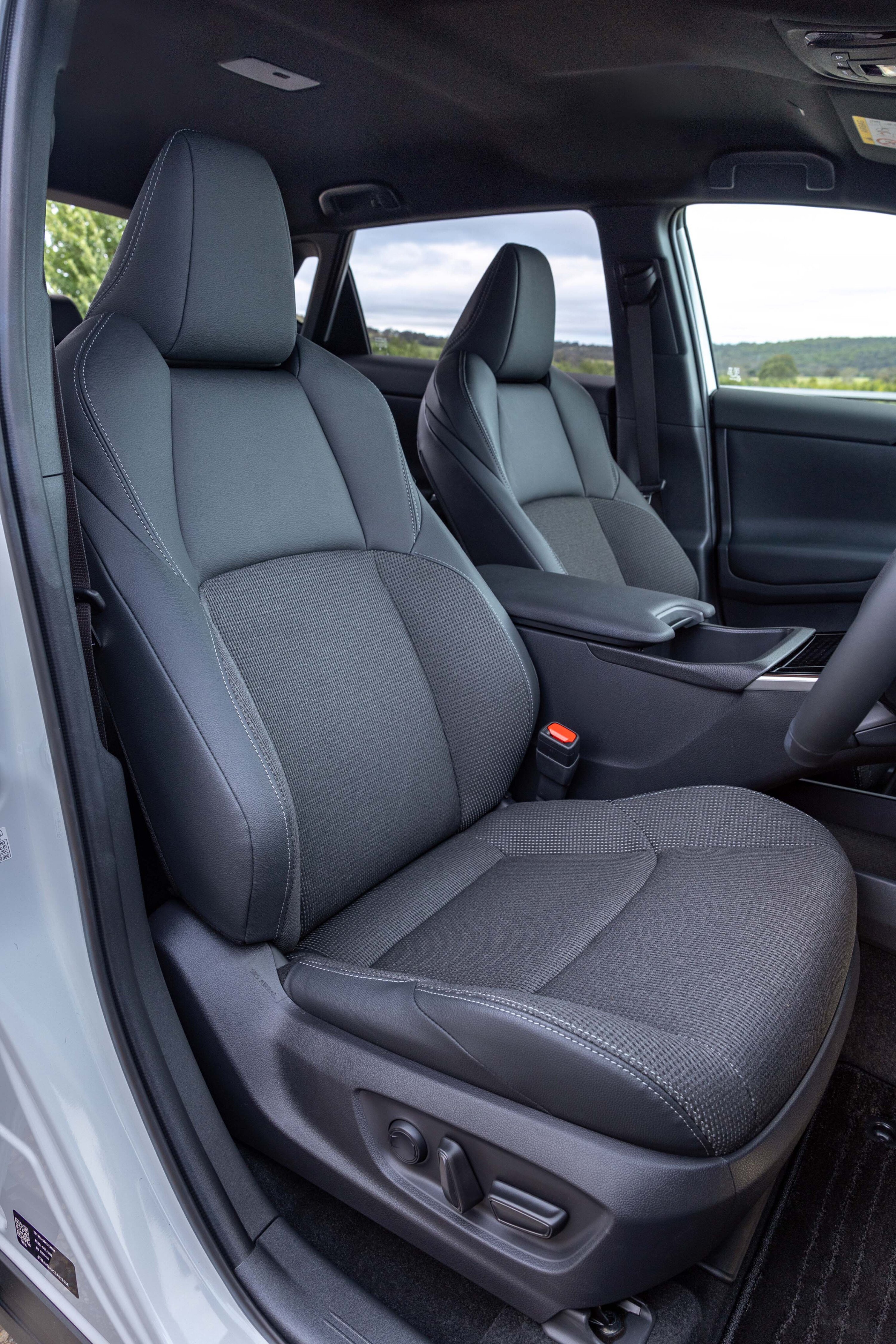
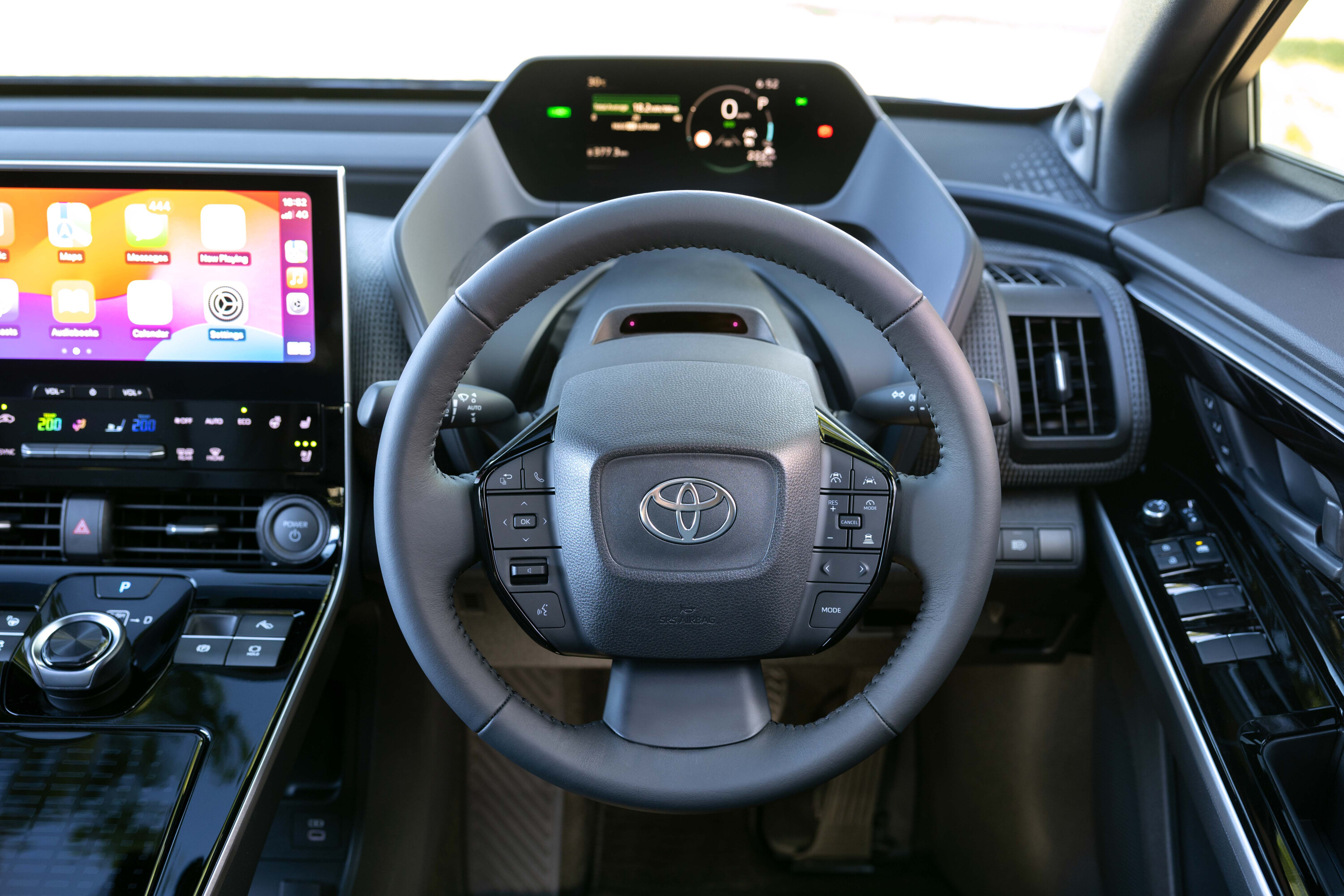
The seats (either cloth-centred or full ‘Softex’ synthetic leather) are comfortable with a good range of adjustment. The bZ4X’s unconventional ‘Peugeot-lite’ driving position and small 350mm diameter steering wheel mean some may struggle to find a comfortable driving position that also gives them a clear view of all information on the 7.0-inch instrument display.
1
On both grades, the front passenger seat is height adjustable and, as a bonus, the range-topping AWD has seat ventilation that helps massively on hot days – especially if you have the fixed glass roof’s blind rolled back.
Owing to that glass roof, the bZ4X has a more spacious-feeling cabin than a RAV4 – especially so with the AWD’s light grey interior option. The spacious feeling is backed up by raw numbers: it offers 68mm more front and 34mm more rear knee room than the popular mid-size SUV.
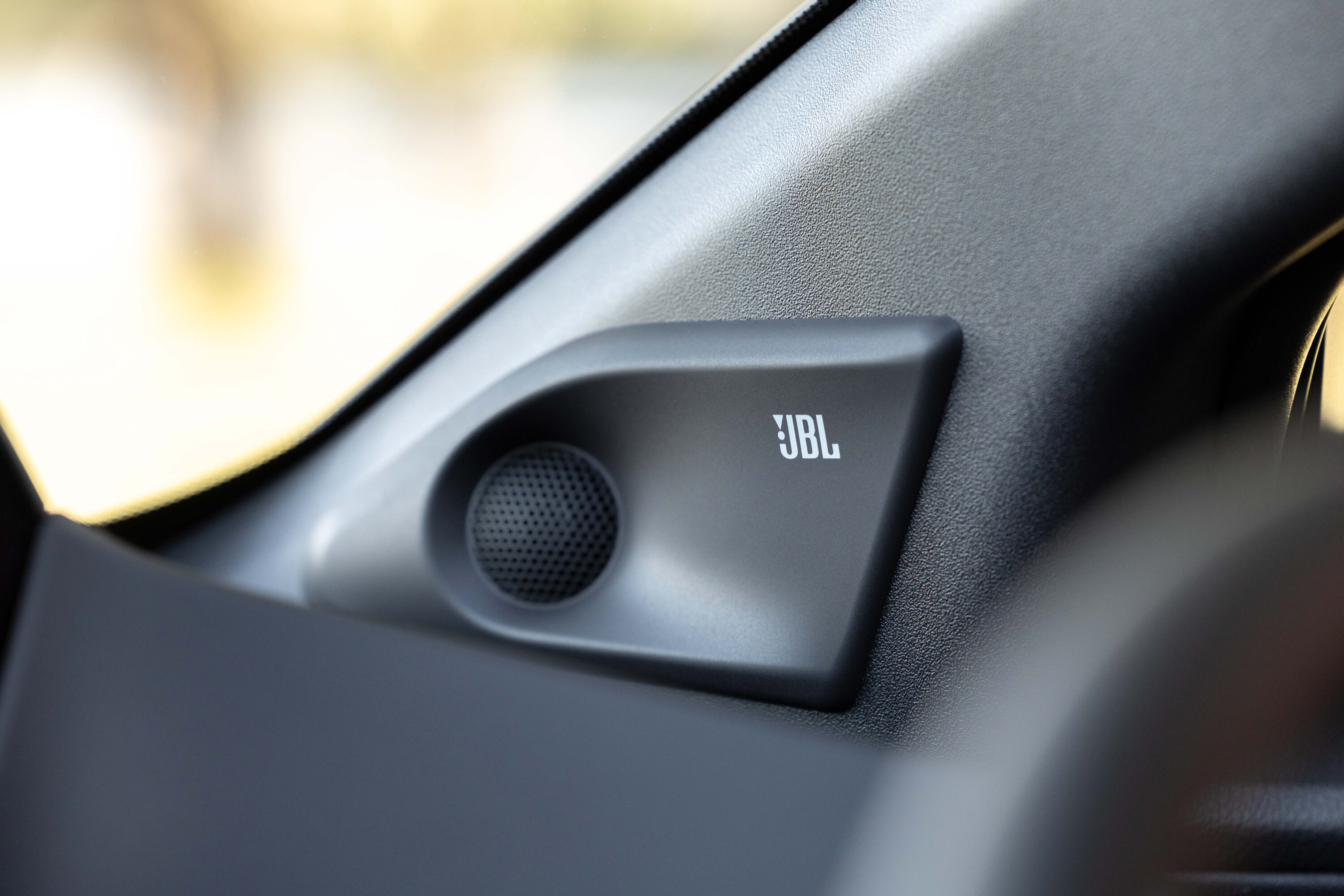
The rear bench is set fairly high, offers two recline positions and gives passengers a good view out. There are air vents back here (that appear to be the same part used in HiLux dual cabs) and USB charge points along with deep-pile floor mats that look straight out of the ’80s.
1
Being 35mm lower than a RAV4 has its disadvantages, though, not least in terms of rear headroom. If you’re under 180cm you probably won’t be bothered, but at 188cm my head brushed the ceiling.
Toe room is tight with the front seat in its lowest position and the bZ4X’s bench is lacking under-thigh support – both common complaints with skateboard-style EVs.
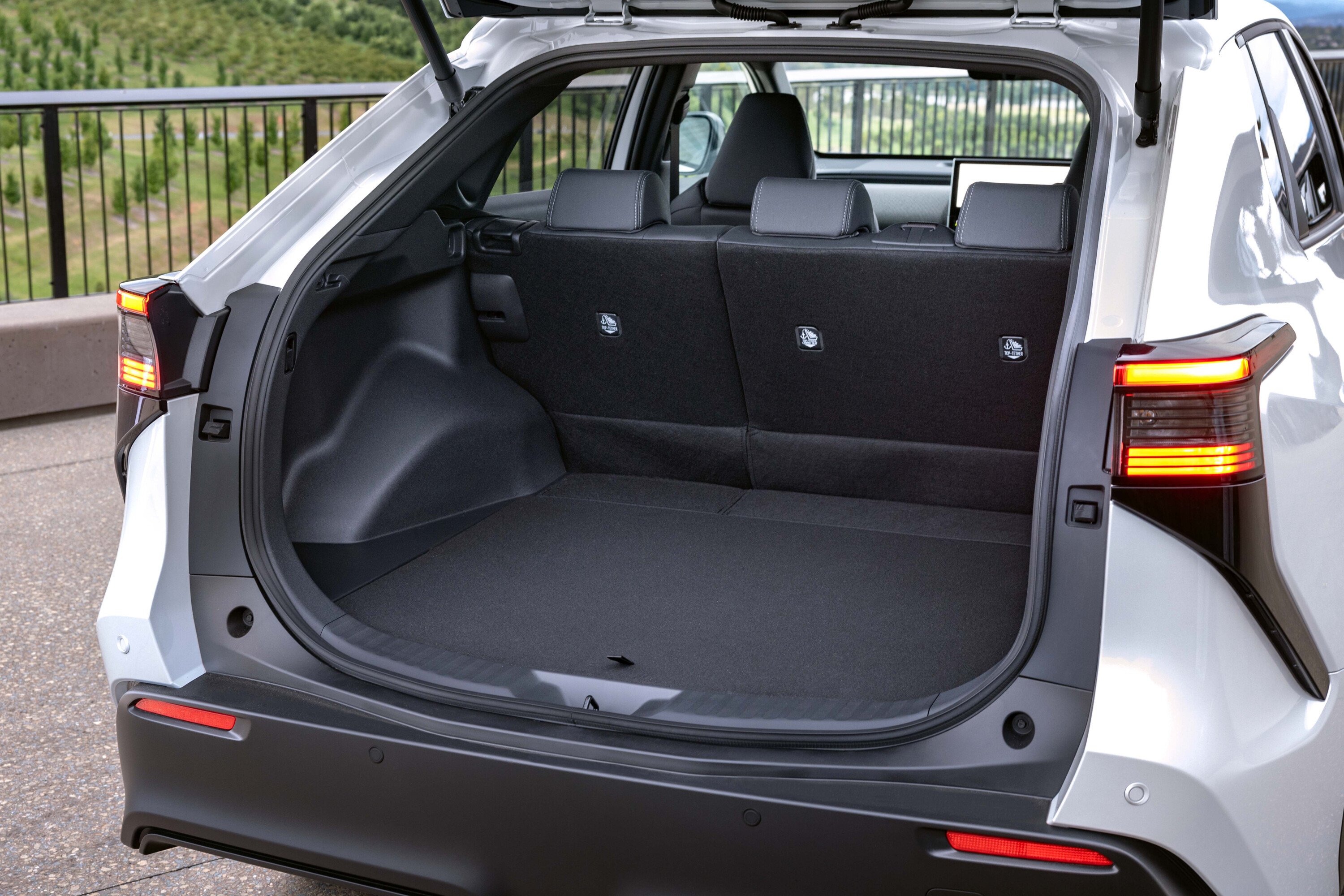
A power tailgate features on both grades with gesture-controlled hands-free opening on the AWD, beneath which is a boot that measures between 441-452 litres (including under-floor storage) depending on whether you go for the single- or twin-motor.
There’s a little storage beneath the false floor, ideal for storing charging cables and the cargo cover when not in use.
1
What is it like to drive?
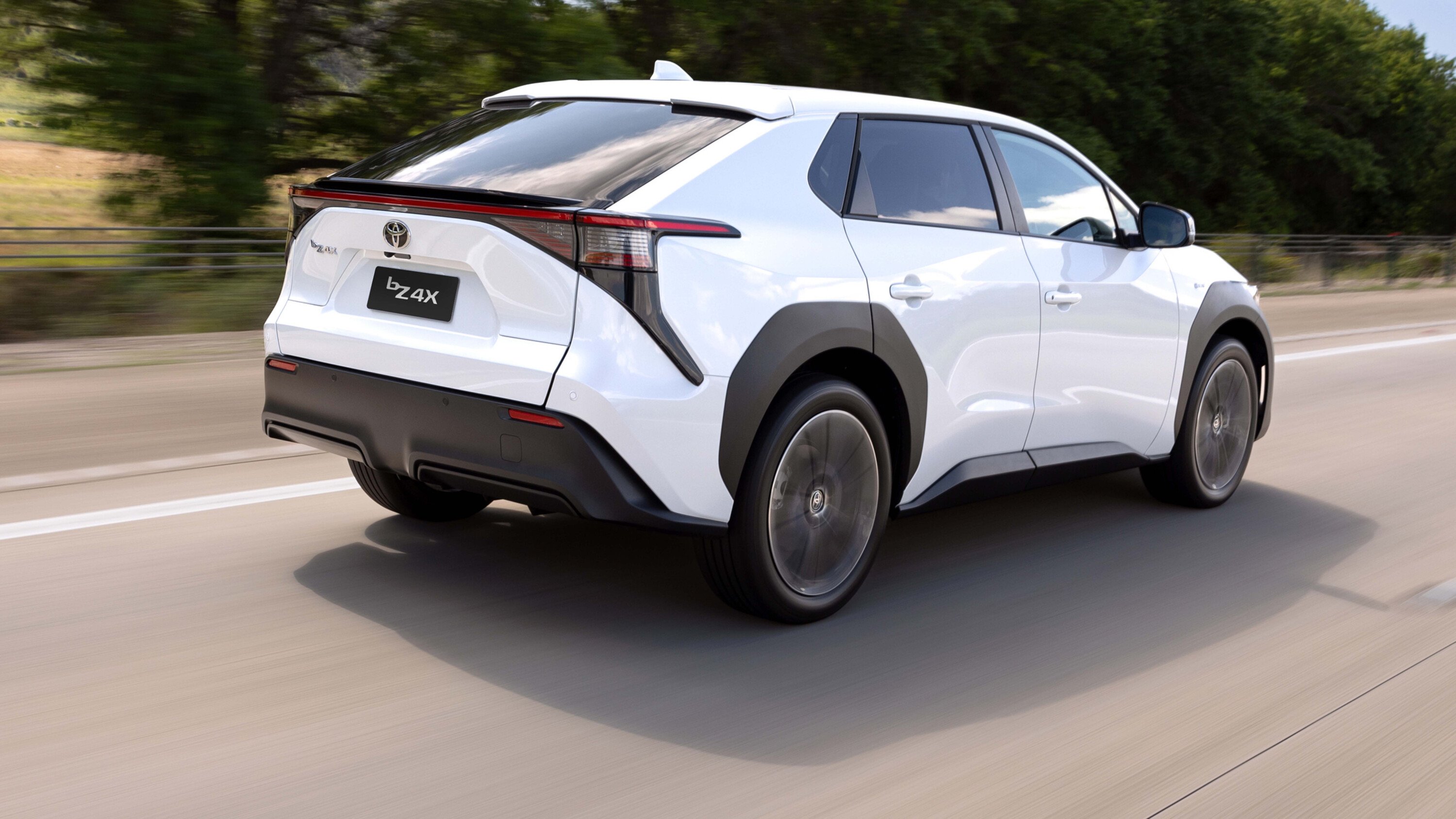
If you were to imagine an electric Toyota RAV4 with a little bit of Subaru Forester all-wheel-drive DNA thrown in, you’d be pretty close to the bZ4X experience.
Acceleration is plenty reasonable in either the 150kW/260Nm front-drive model or the slightly punchier 160kW/337Nm all-wheel drive models. Their respective 0-100km/h claims of 7.5 and 6.9 seconds feel believable.
Unusually, the AWD bZ4X uses a pair of 80kW motors to simulate Subaru’s signature symmetrical set-up, rather than rear-biased systems adopted by many rival manufacturers.
1
Toyota has clearly paid attention to accelerator and brake calibration, introducing a smooth tip-in for the bZ4X’s right pedal. The brake pedal – which blends regenerative and caliper braking – is also natural and progressive.
Rather than bring the SUV to a stop, the bZ4X’s maximum regen setting lets you creep at 7-10km/h like a regular automatic. The lack of a true one-pedal driving mode might rule it out for EV die-hards but it stops any nasty ‘cabby-foot’ lurching.
There are two on-road drive modes, Normal and Eco (which adjust all sorts of parameters, including air conditioning, which is smart enough to know many occupants are on board and keep only them cool without wasting energy).
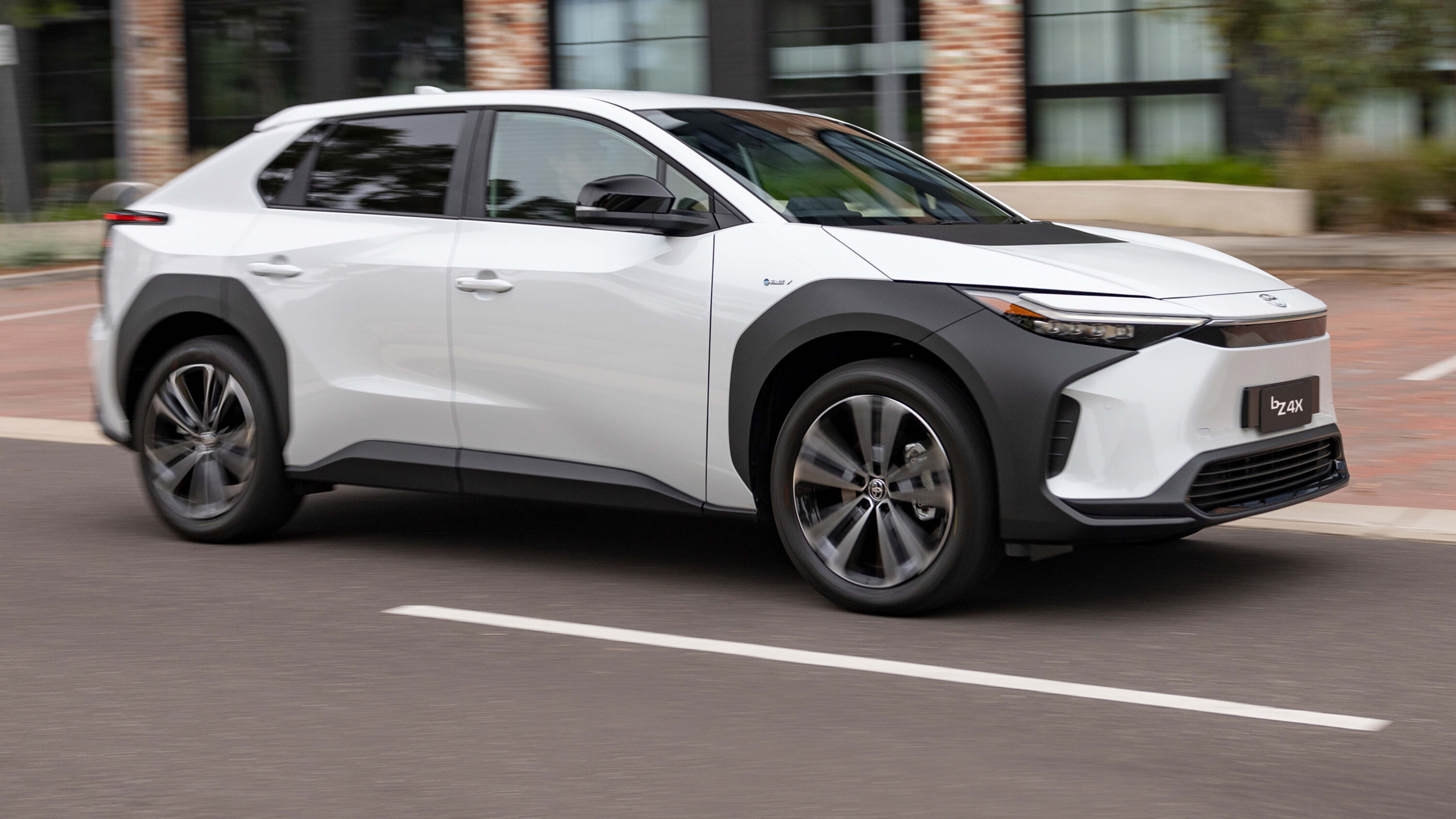
1
In all-wheel-drive guise, the bZ4X also shares Subaru’s X-Mode system that has settings for high-speed gravel ‘Snow/Dirt’ and low-speed technical obstacles ‘Deep Snow/Mud’.
There’s also a ‘Grip Control’ off-road cruise control mode that we tested extensively in Japan and left us mighty impressed. Toyota’s chosen drive program took us on some light dirt roads that both front- and all-wheel drive guise versions of the bZ4X dispatched easily. The AWD boasts 212mm of ground clearance so you can get a little more ambitious with your off-roading.
Heading back to the blacktop, where the bZ4X will live most of its life, revealed quite a lot of tyre roar from Australia’s gnarly coarse-chip tarmac. The 235/50 R20 Bridgestone Alenza tyres transmitted a high-frequency buzz into the cabin on these common surfaces.
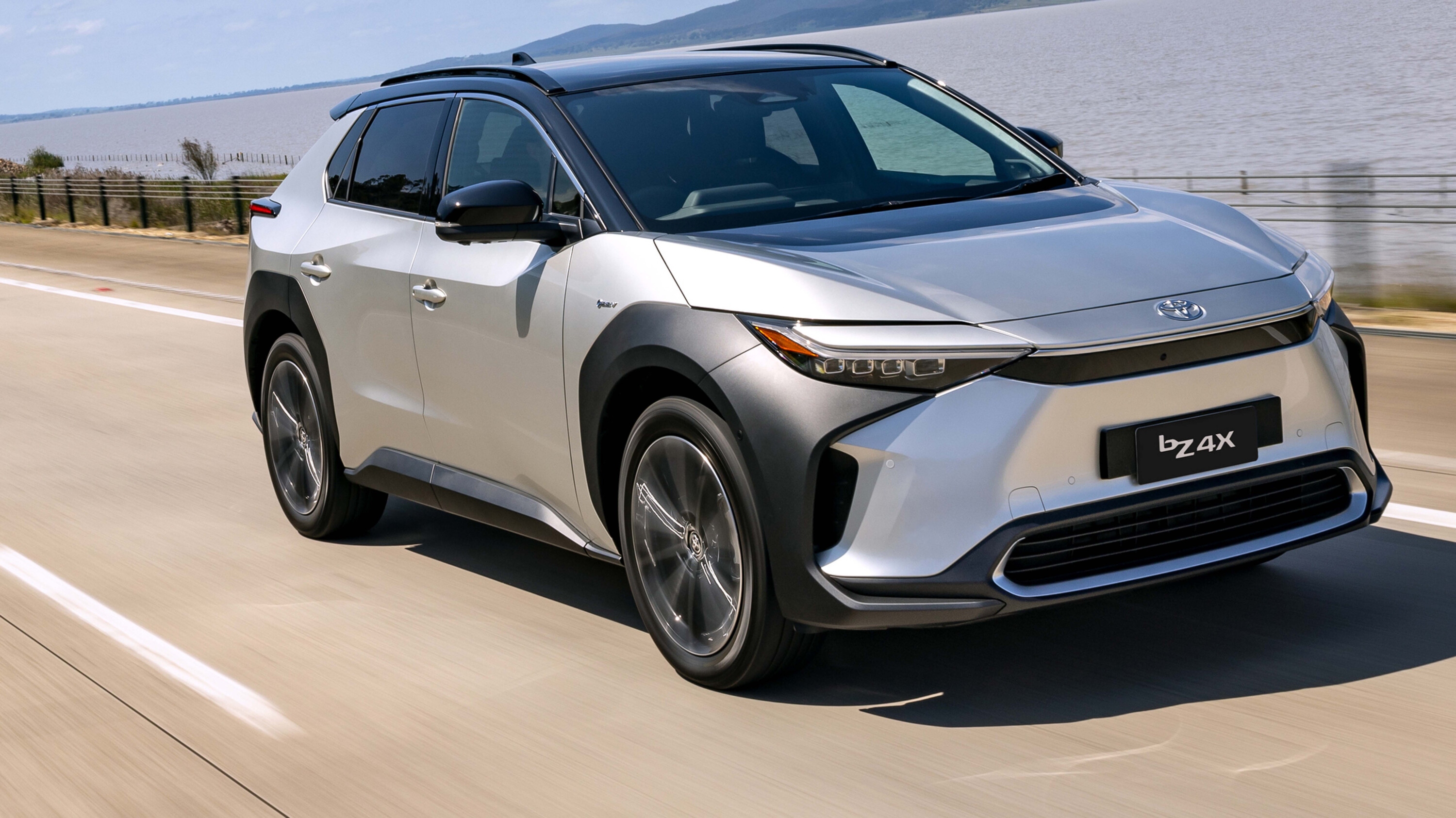
1
Ride comfort is generally good with struts up front and a multi-link independent rear axle, though the 1960kg-2055kg bZ4X is a firmer proposition than the looser-limbed RAV4.
The trade-off is minimal roll in corners and impressive dynamics; the bZ4X captures some of that TNGA magic that pervades Toyota’s current crop of passenger cars.
Although the all-wheel drive bZ4X was a little less dynamic and adjustable mid-corner, it won out overall for being secure and planted through bends.
1
“A Toyota person puts the brake on when you have a corner, but Subaru [drivers] put the accelerator on to control the vehicle.” – Toyota bZ4X chief engineer Masaya Uchiyama
This security comes from the joint venture, with chief engineer Masaya Uchiyama explaining the cultural difference behind each company’s driving style on loose surfaces at high speed: “A Toyota person puts the brake on when you have a corner but Subaru [drivers] put the accelerator on to control the vehicle”, he said.
When cruising through suburbs and country roads we found the bZ4X’s 2.81-turn lock-to-lock steering a little gluggy, though it lightens up when parking. There’s an auto-park feature on the top grade, too.
Visibility is good for this class of EV with a generous glass house, and the top-spec car scores a 360-degree camera system with multiple views.
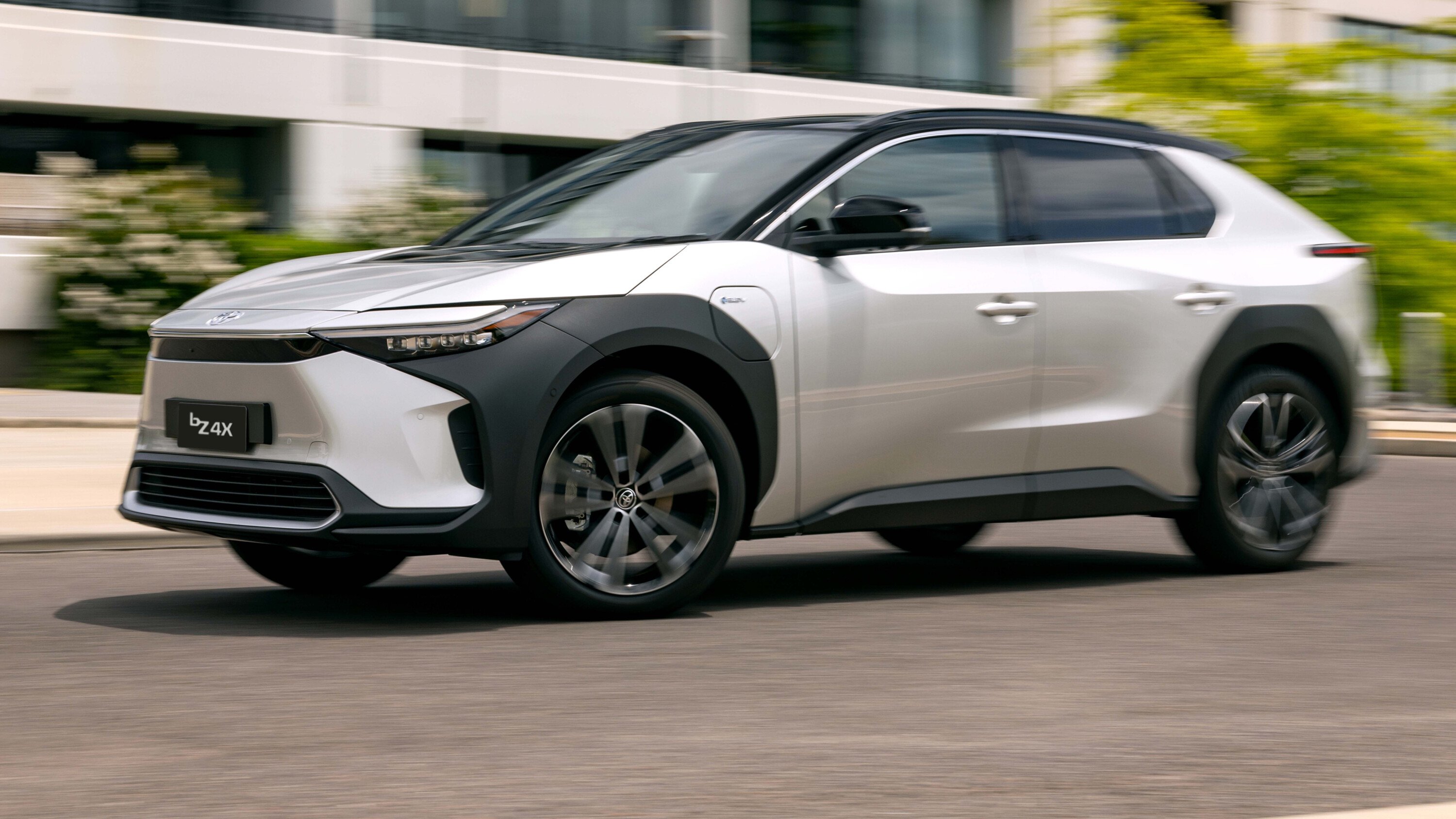
1
- What is a Powertrain or Drivetrain?
- Power vs torque
- Car suspension explained
- Automatic transmissions (‘gearboxes’) explained
- Chassis control systems explained
- Car vs Ute vs SUV: How the vehicle you buy should guide the way you drive
- What is the WLTP emissions and range test?
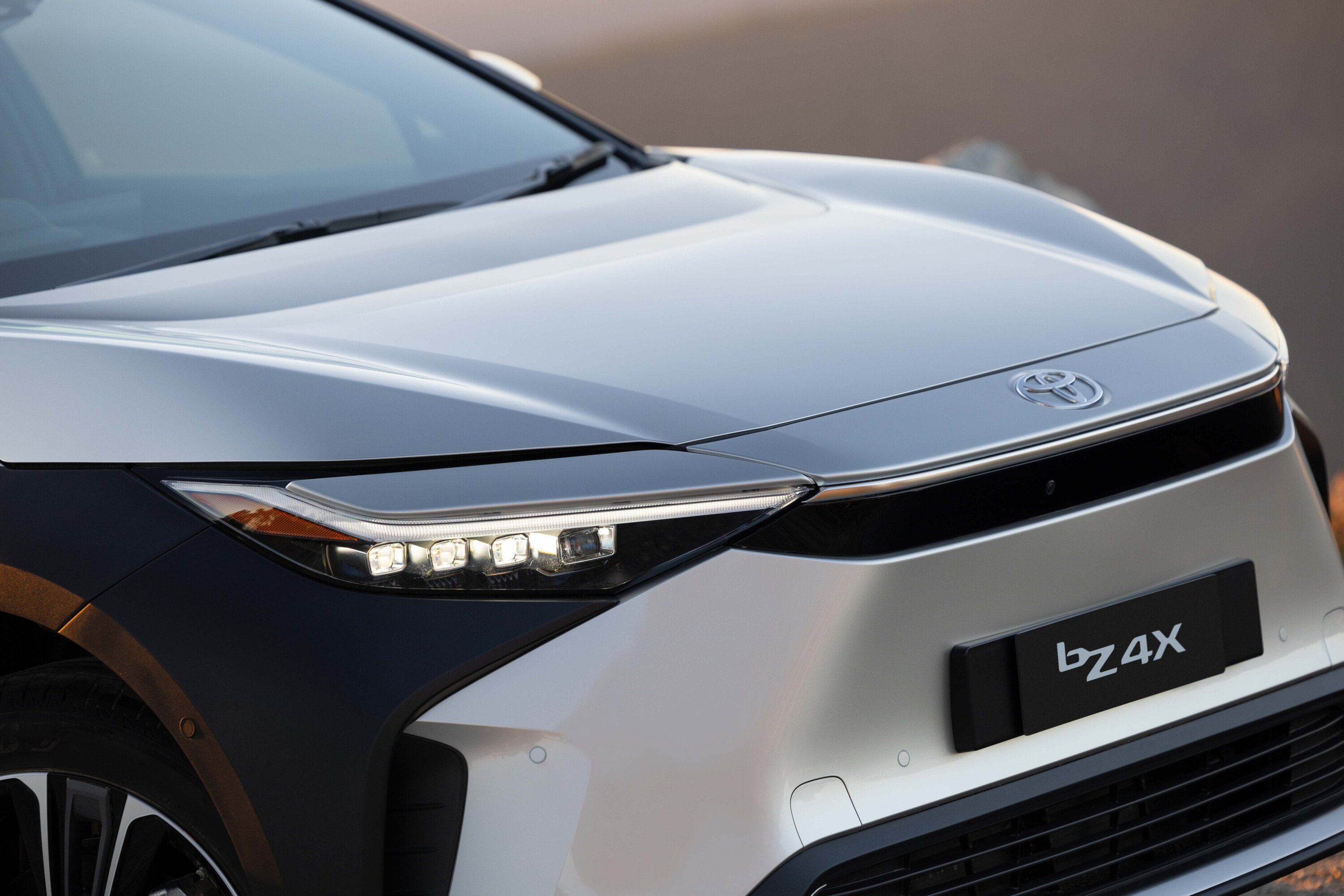
The Toyota bZ4X was awarded five ANCAP stars in 2022 testing.
It features front AEB with pedestrian and cyclist detection, adaptive cruise control, lane-keep assist and eight airbags. Driver attention and blind-spot monitoring are sadly reserved for the AWD trim – not the case in Subaru’s Solterra.
Toyota’s latest lane-keep assist is much-improved, but our preference was still to have it switched off. The AWD’s driver monitoring wasn’t too intrusive, either.
1
Efficiency and charging
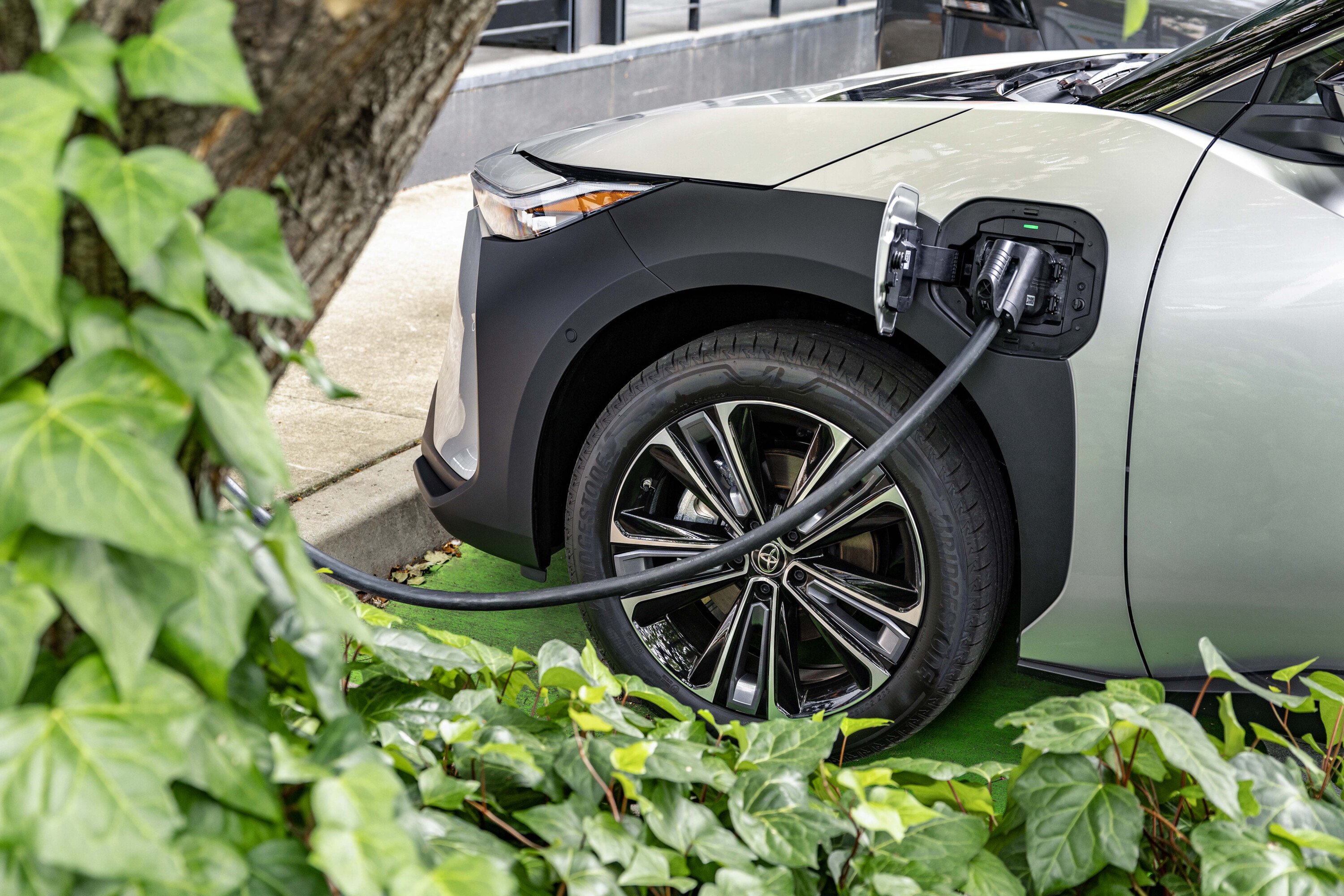
The bZ4X’s conservative engineering is most obvious when it comes to batteries. Toyota’s lithium-ion pack has a 71.4kWh gross capacity, yet its usable capacity is 64kWh.
It’s a much bigger gap between the total cells installed and usable capacity than you’d find in rivals such as the Hyundai Ioniq 5 (77.4kWh gross and 74kWh usable). Toyota says it chose to engineer in a greater margin of safety as it wishes to limit battery deterioration and fire risk.
Toyota quotes European WLTP ‘high’ test consumption results in its Australian literature, which are 16.9kWh/100km for the FWD and 18.1kWh/100km for the AWD resulting in respective 436km and 411km driving ranges.
1
After about 150km of country and suburban driving, the AWD bZ4X’s trip computer read 19.6kWh/100km for a real-world range of 335km.
Functionally, you’ll be able to travel around 230km (going from 80 per cent to 10 per cent charge) between stops at a DC rapid charger if you’re on a road trip.
The bZ4X will accept DC electricity at up to 150kW, rejuvenating its battery from 10-80 per cent in around 30 minutes. Three-phase AC charging at 11kW will take around seven hours to replenish the bZ4X’s battery from flat to full.
1
Warranty and running costs
Toyota covers the bZ4X with a basic five-year unlimited-kilometre warranty. Like its hybrid vehicles, this can be extended to 10 years if you come in for a health check after the first five.
Developed with Panasonic, the battery itself is under a different seven-year guarantee. However, Toyota’s testing has found deterioration is limited to 90 per cent over 10 years and 250,000km.
Servicing is due every 12 months/15,000kms, costing $180 for each of the first five. Why annually when Polestar and Tesla only mandate two years or per condition? Toyota says it helps keep tabs on wear items such as tyres and suspension components to ensure long-term safety and reliability.
1
VERDICT
If you’re the owner of a RAV4, Forester, Tiguan, or other conventional medium SUV, the bZ4X (and its Subaru counterpart) offer a friendly step into the world of electrification. This conventional mid-sizer isn’t going to tickle the fancy of Tesla fans, though.
The bZ4X driving experience is familiar and the cabin isn’t full of whizz-bang technology or massive screens. As for how the SUV shapes up against legacy rivals, it could do with some improvements to battery range and charging speed to match Hyundai, Kia, and Ford.
Ultimately, the bZ4X is a decent electric vehicle backed by the world’s biggest automaker. It’s a safe bet, though one that’s unlikely to tug at your heartstrings.
The longer-range bZ4X front-wheel drive is our pick – it’s significantly cheaper, with all the gear you need while sacrificing no on-road prowess.
MORE
Everything Toyota
MORE
Midsize SUVs
| Toyota bZ4X FWD | Toyota bZ4X AWD | |
|---|---|---|
| Price (drive-away) | $66,000 + on-road costs | $74,990 + on-road costs |
| Drivetrain | ||
| Engine | Single permanent magnet synchronous motor | Twin permanent magnet synchronous motors |
| Drive | Front wheel | All-wheel |
| Power | 150kW | 160kW |
| Torque | 266Nm | 337Nm |
| Gearbox | Front e-Axle single-speed 13.786:1 ratio transaxle with equal-length driveshafts | Front and rear e-Axle single-speed 13.786:1 ratio transaxles with equal-length driveshafts |
| Chassis | ||
| L/W/HB | 4690 / 1860 / 1650mm | |
| Wheelbase | 2850mm | |
| Weight (tare) | 1960kg | 2055kg |
| Battery size (gross/usable) | 71.kWh / 64kWh | |
| Energy consumption (WLTP high) | 16.9kWh/100km | 18.1kWh/100km |
| Driving range (WLTP high) | 436km | 411km |
| DC Charging (rate / 10-80%) | 150kW / ~30 minutes | |
| AC Charging (rate / 0-100%) | 11kW / ~7 hours 30 minutes | |
| Suspension | Front: Struts, coil springs | Rear: Mulit-link, coil springs | |
| Steering | 2.81-turn Electric power-assisted steering | |
| Front brakes | 328mm ventilated disc | |
| Rear brakes | 317mm ventilated disc | |
| Tyres | Bridgestone Alenza | |
| Tyre size | 235/50R20 | |
| Safety | ||
| ANCAP rating | 5* (2022) | |
| 0-100km/h | 7.5 seconds | 6.9 seconds |
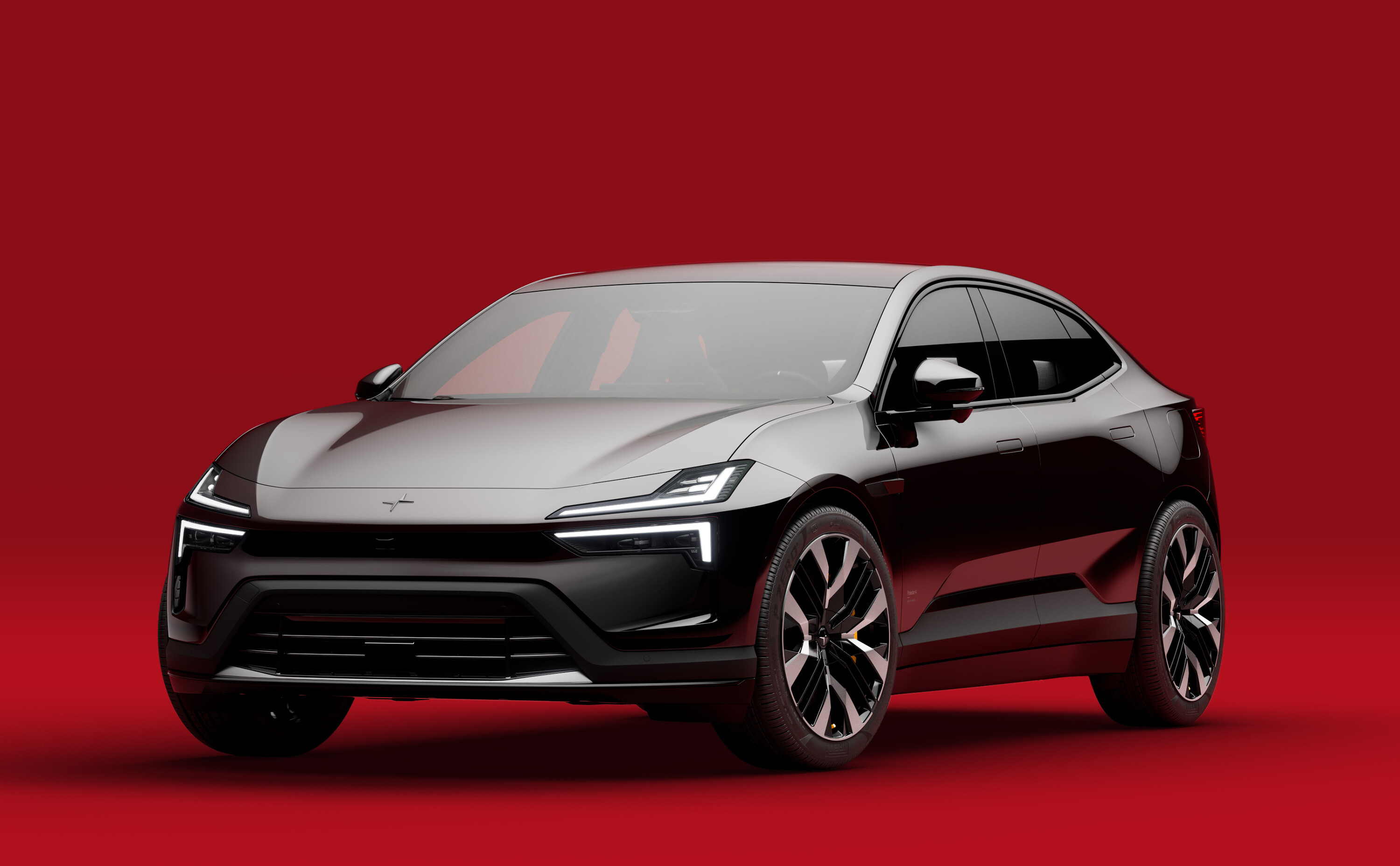
Undeterred by manufacturers backpedalling on EV-only lineups after disappointing sales growth, Polestar remains optimistic.
Despite Volvo recently abandoning Polestar due to disappointing sales growth, Polestar CEO Thomas Ingenlath feels confident of the EV lineup, and that industry doubters of EV and associated technology are falling into “an incredible trap.”
Ingenlath told The Telegraph [↗] that, “There’s an incredible threat and danger if you don’t embrace future innovation and believe in that technology – the electric drivetrains, the innovation in battery, the innovation in modern electronics and software.”
1
He added, “If [manufacturers] don’t participate in that and you think you can wait, and the customers are ready for it, it’s an incredible trap.”
Ingenlath is not disappointed that other automakers have left a gap in the EV market, as it provides a potential space for Polestar to fill, saying “It’s an incredible opportunity for Polestar that, in that sector of premium performance cars, there is indeed not that much competition coming.”
With a recently acquired $1.5 billion AUD funding package from a group of financial institutions, Polestar may witness the results of Ingenlath’s optimism.
MORE
Everything Polestar
MORE
Wheels Industry
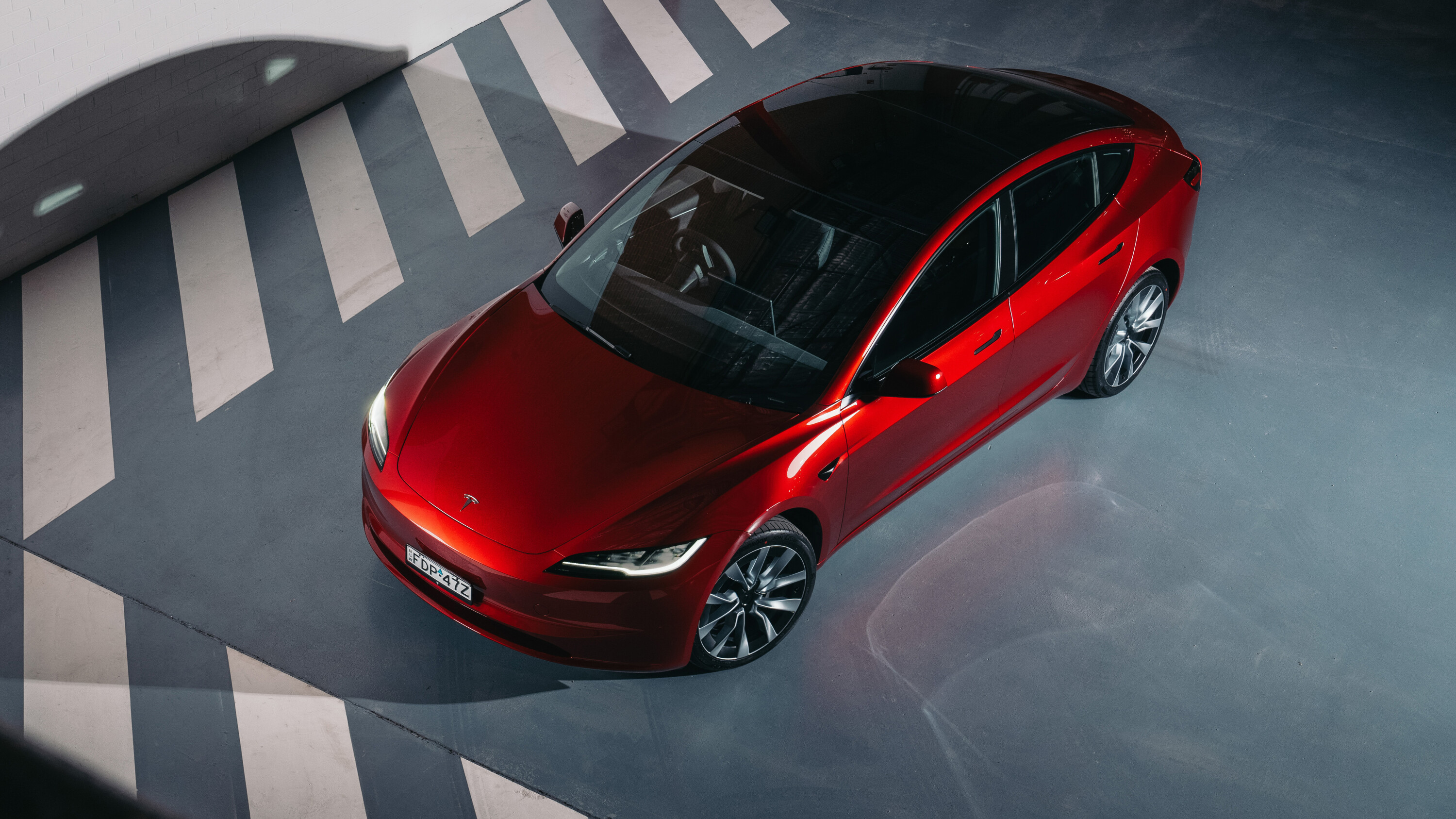
Australia’s biggest seller of electric cars, Tesla, has quit the nation’s car lobby and accused it of misleading consumers over claims car prices would rise once new efficiency standards are introduced.
In a strongly worded letter to the Federal Chamber of Automotive Industries (FCAI) on Thursday, Tesla voiced “serious concerns about false and misleading public comments” made by the lobby group over the impact that the New Vehicle Efficiency Standard (NVES) could have on car prices.
“Over the last three weeks, Tesla considers that the FCAI has repeatedly made claims that are demonstrably false,” said the letter. “Tesla is concerned that the FCAI has engaged in behaviours that are likely to mislead or deceive Australian consumers.”
Wheels understands that fellow EV-only brand, Polestar, will follow Tesla’s lead and also quit the FCAI.
1
Tesla has called on the FCAI to “issue timely public corrections to these false claims” and to “cease the public dissemination of misleading or deceptive information regarding the potential impact of the NVES”.
Tesla has confirmed it will sever ties with the FCAI at the end of the 2023/24 financial year but said it would continue to report its monthly sales figures through VFACTS reports until July.
Tesla also used its letter to refer the FCAI to the Australian Competition and Consumer Commission, saying “…the FCAI should be careful not to facilitate coordination among competitor companies about how they change prices or supply in response to regulations.”
Australia is one of the last countries in the developed world to introduce a vehicle efficiency standard, with the new policy set to come into effect from January 1 2025. The new standard, which will apply only to new cars, provides emissions targets that car makers must meet across their vehicle fleets. Over time this C02 target will be lowered, forcing companies to provide more efficient cars.
Earlier this year, the Electric Vehicle Council (EVC) accused the FCAI of lobbying against the NVES by claiming the new standard would increase the price of some popular vehicles by up to $6000-$25,000.
In today’s letter, Tesla cited several examples of the FCAI quoting or supplying misleading information to media outlets on how the NVES would impact car prices.
It also took issue with a graph allegedly supplied by the FCAI that the NVES would significantly decrease the price of key Tesla Models.
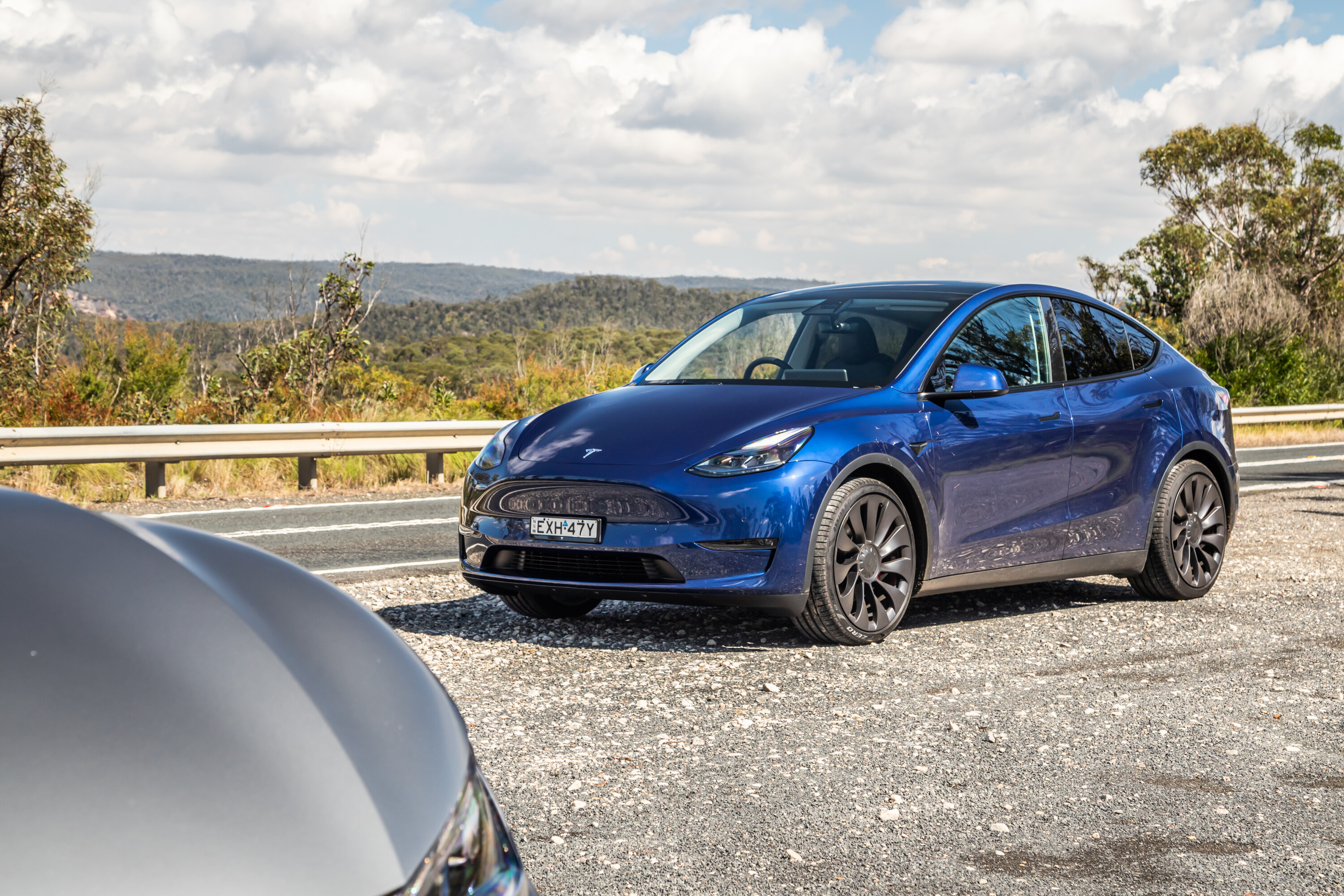
“According to these graphics sourced from and attributed to FCAI, next year the Tesla Model 3 will be $15,940 and the Model Y $15,390 under proposed new vehicle efficiency standards. This is simply untrue”.
1
Tesla also accused the FCAI of “cherry-picking the most polluting variants” from a car maker’s lineup when running its modelling and of misrepresenting how the new emissions standard would work.
“FCAI’s claims appear to be based on a simplistic and false calculation,” said Tesla in its letter.
The FCAI has released an official statement in reply to Tesla’s letter, saying it continues to support the NVES but that it “must act in the interests of the Australian automotive industry and Australian car buyers.”
“FCAI and its members represent more than 50 brands and over 350 vehicle models from battery electric vehicles, plug-in hybrid and hybrids to petrol and diesel drivetrains. Of those vehicle models, just two are Teslas.
“For more than 10 years we have been calling for an ambitious new vehicle efficiency standard that is right for Australia. It needs to reduce emissions while ensuring low and no-emission vehicles are accessible and affordable to all Australians.
“FCAI cannot support a standard that in the short-term might meet the needs and pockets of those at the premium end of the market while potentially hurting businesses and families who may be forced to deal with less choice and higher prices next time they buy a new car.”
Australian details for the 2024 Mercedes-AMG GLC 43 have been confirmed.
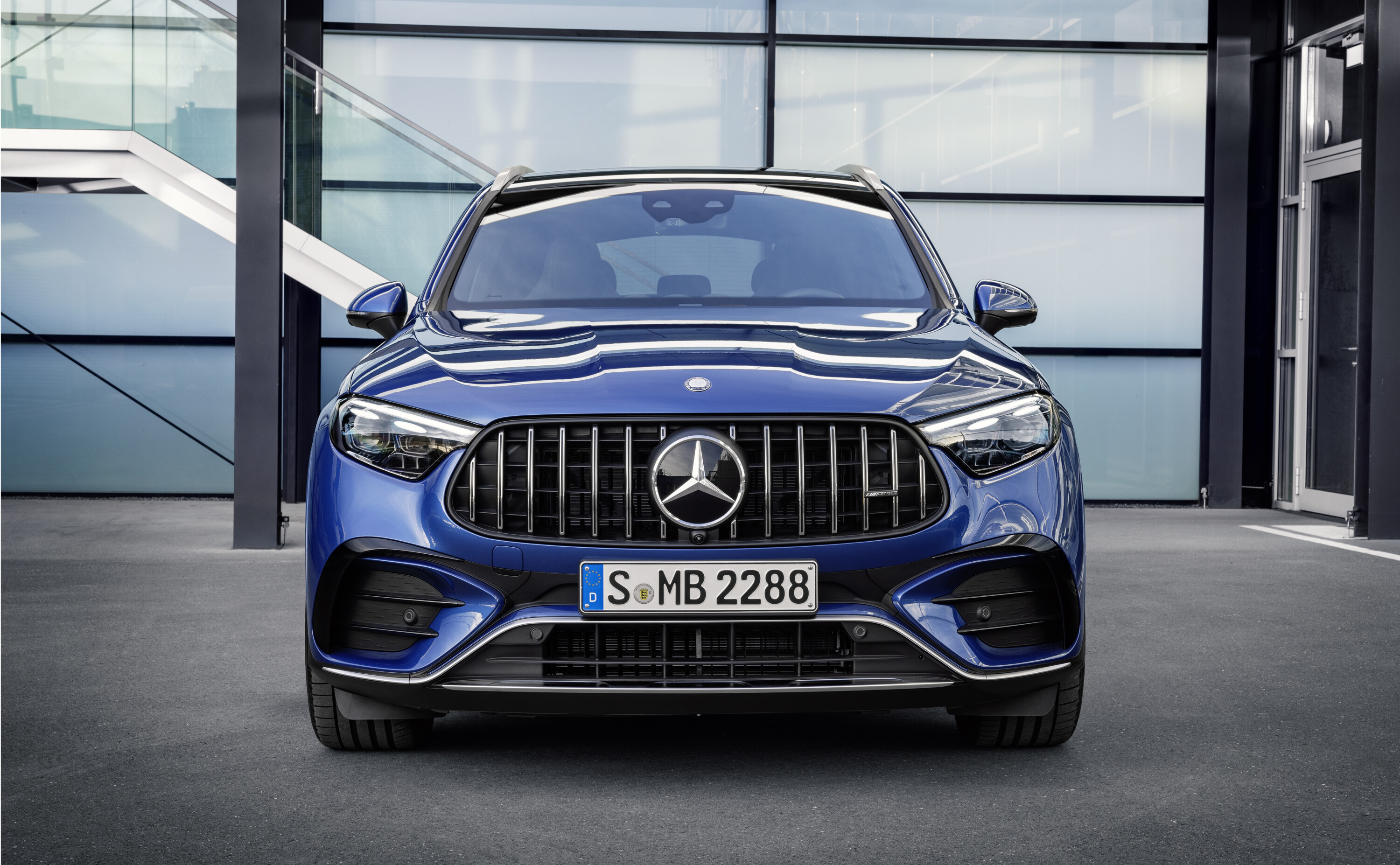
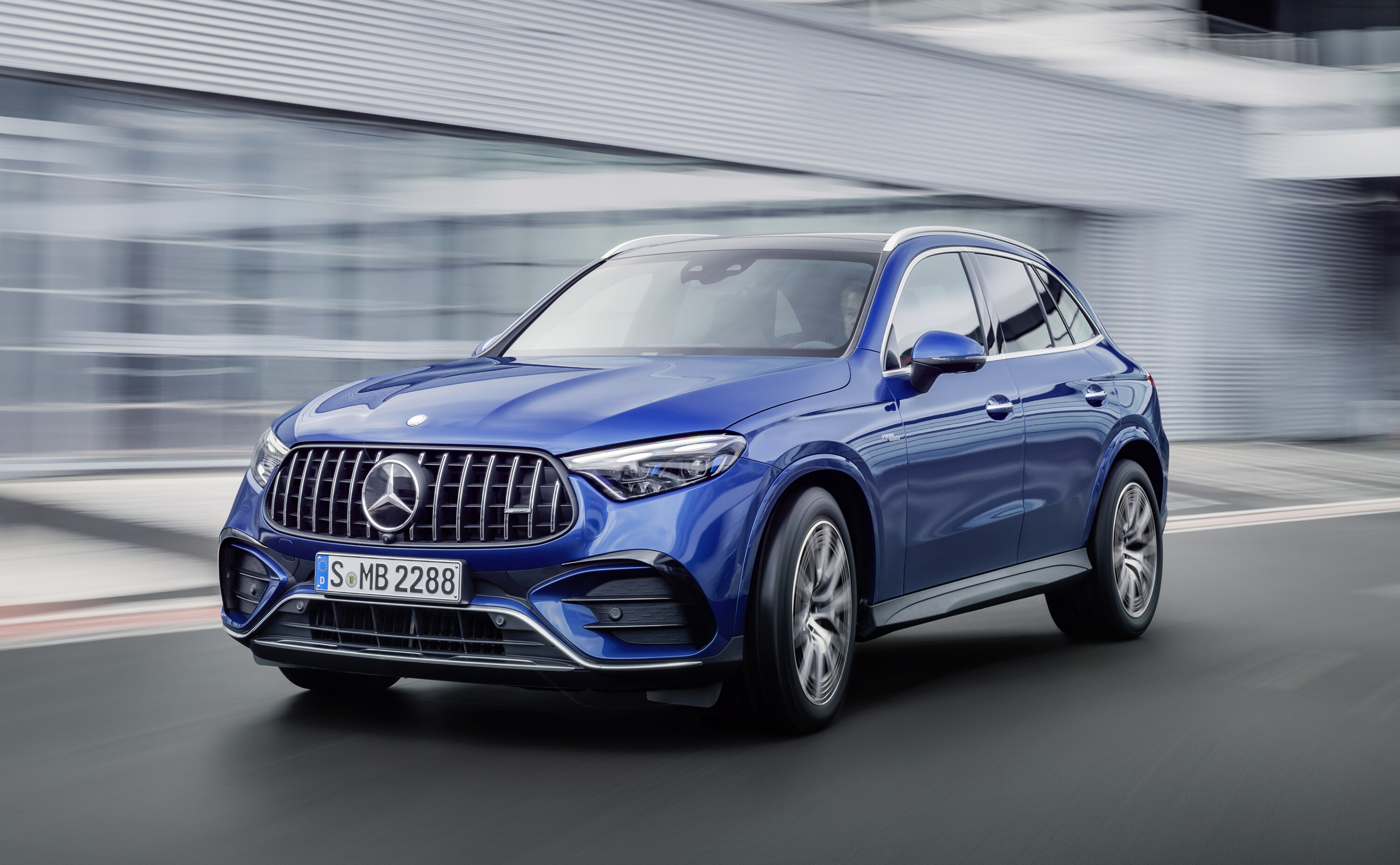
Mercedes-AMG has announced that the GLC 43 wagon will be priced at $136,400 before on-road costs or $146,900 plus on-roads for the GLC 43 Coupe.
That is a $7400 price increase over the previous V6-powered AMG GLC 43 for the wagon and $12,430 for the AMG GLC 43 Coupe – though the new model is faster and includes more standard equipment but loses two cylinders and some torque.
1
As detailed here, the second-generation GLC 43 – a rival for the BMW X3/X4 M40i and Audi SQ5 – switches from a 3.0-litre twin-turbo V6 petrol to a mild-hybrid inline-four like its Mercedes-AMG C-Class sibling.
The ‘M139’ 2.0-litre turbo-petrol four-cylinder engine employs a Formula 1-derived 10kW electric exhaust gas turbocharger for improved response at low revs. It sends 310kW/500Nm to all four wheels via a nine-speed multi-clutch automatic, up 23kW but down 20Nm over the previous AMG GLC 43.
A 0-100km/h sprint time of 4.8 seconds is claimed – a one-tenth improvement over the outgoing twin-turbo V6 model.
The GLC 43’s AWD system is rear-biased, with a default torque split of 31:69 per cent front to rear. It features three-mode adaptive dampers and five selectable drive modes, including a customisable ‘individual’ setup.
1
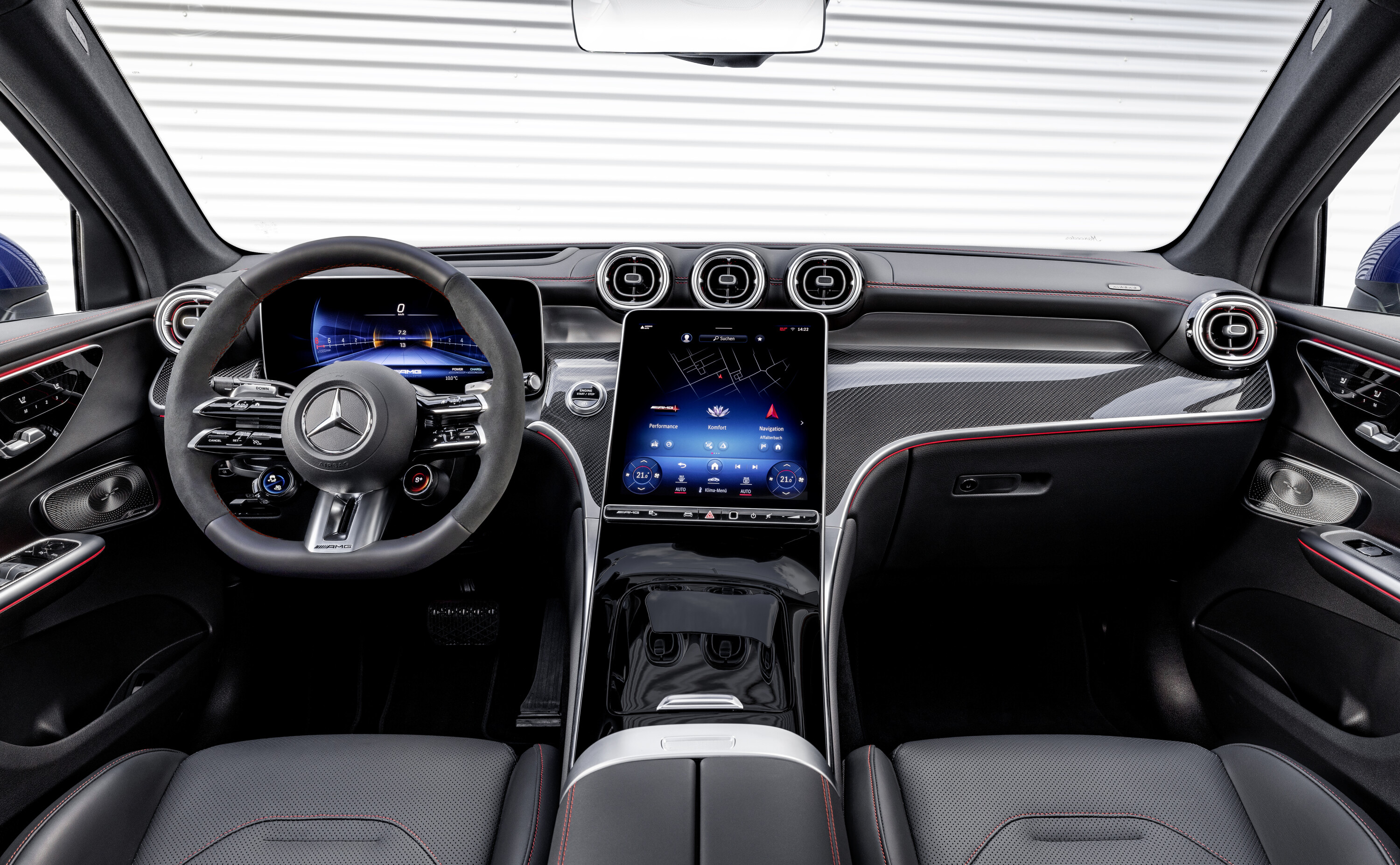
Above the standard GLC 300, the AMG 43 adds the features of the Plus Package as standard, along with active rear-axle steering, unique AMG trims, full-leather seats, and 20-inch multi-spoke lightweight alloy wheels.
The 2024 Mercedes-AMG GLC 43 will launch in Australia from March 11 online and at AMG retailers.
Mercedes-Benz Australia has confirmed the flagship AMG GLC 63 S E-Performance – which switches from a V8 to the M139 engine and a rear-mounted synchronous electric motor for a 500kW and 1020Nm total system output – will arrive here between April and June. Prices are due to be confirmed soon.
1
2024 Mercedes-Benz GLC pricing
| Model | Pricing |
|---|---|
| GLC 300 | $104,900 |
| GLC 300 Coupe | $113,900 |
| AMG GLC 43 | $136,400 |
| AMG GLC 43 Coupe | $146,900 |
| AMG GLC 63 S E-Performanceu00a0 | $TBC |
| AMG GLC 63 S E-Performance Coupe | $TBC |
| Prices exclude on-road costs.u00a0 |
| 2024 Mercedes-AMG GLC 43 features | |
|---|---|
| 20-inch AMG multi-spoke lightweight alloy wheels | Electric tailgate |
| AMG exterior package | 15-speaker, 710-watt Burmester 3D surround-sound audio system |
| 11.9-inch MBUX infotainment system | Wireless phone charger |
| Wireless Apple CarPlay and Android Auto | DAB+ digital radio |
| Panoramic sunroofu00a0 | Full-leather upholstery |
| Head-up display | Keyless entry and push-button start |
| 360-degree camera system with u2018transparent bonnetu2019 | Heated, power-folding side mirrors |
| Heated front seats | LED headlights, tail-lights and daytime running lamps |
| Front seat electric adjustment with memory | Three-mode adaptive suspension |
| 12.3-inch digital instrument cluster | Rear privacy glass |
| Digital Light | Heat and noise-insulating glass |
| Adaptive high-beam | Driver Assistance Package |
| Remote theft protection system | Augmented reality satellite navigation |
| Active rear-axle steering | Five selectable drive modes |
Tesla has launched an attack on Australia’s Federal Chamber of Automotive Industries – a body that counts Tesla among its membership and board members.
The American carmaker has submitted to the Federal Government its comments on the proposed New Vehicle Efficiency Standard (NVES), attacking the Federal Chamber of Automotive Industries for what it sees as lobbying against and lying about the proposal in an attempt to delay climate change action.
1
Tesla accused the FCAI of running a “concerted public campaign” and repeatedly making “plainly false” claims, including that prices of popular utes would increase by up to $13,000, despite knowing this was not how the scheme would work.
The FCAI, it says, proposes a scheme based on an existing voluntary program that it oversees, with open discussions within the FCAI acknowledging their proposal would not cut emissions before 2030.
1
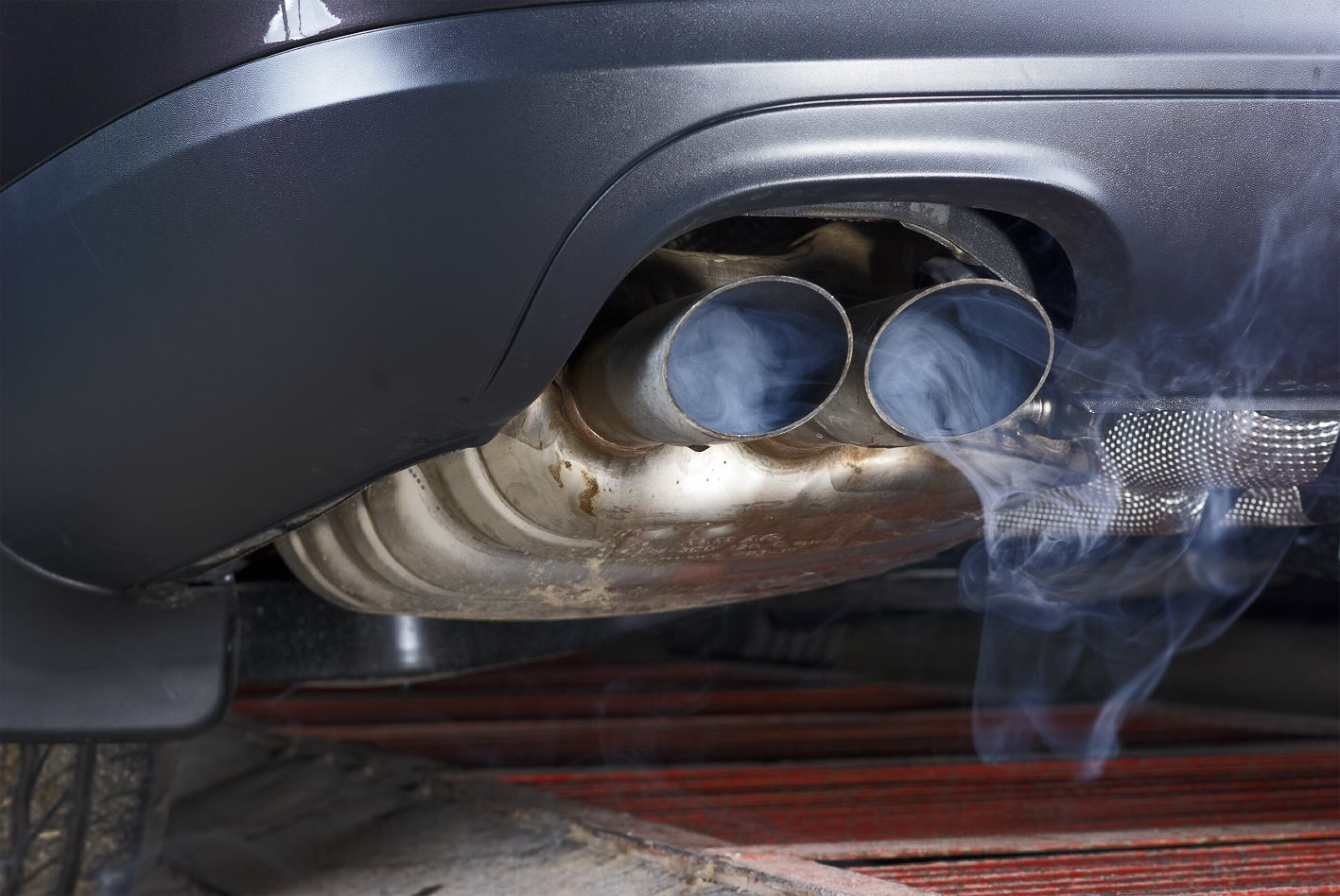
Greenhouse gas emissions from vehicles would actually increase 25% between 2024 and 2030 under the FCAI proposal, Tesla estimated.
“The FCAI knew that its targets would actually allow carmakers to increase emissions because of enormous loopholes that create hundreds of thousands of electric vehicles that only exist on paper,” Tesla said in its submission.
The Tesla submissions states that the FCAI:
- based its calculations on the most polluting type of each car model only;
- misrepresented how an efficiency standard would work (ignoring that penalties would not be applied to individual cars and companies would be expected to increase their range of clean vehicles to offset more polluting models); and
- claimed two popular Tesla models would fall in price by about $15,000 next year without checking with the company if this was the case.

1
Tesla claims the FCAI is not representing members equally
Many FCAI members have expressed support for the NVES, as well as publicly committing to stop selling ICE cars in major markets by 2035 (e.g. Ford, Jaguar Land Rover, Volvo and Mercedes-Benz).
Rather than representing all members, Tesla said the FCAI on this issue was “representing only one section of the industry: those companies who would continue to delay action on the climate crisis”.
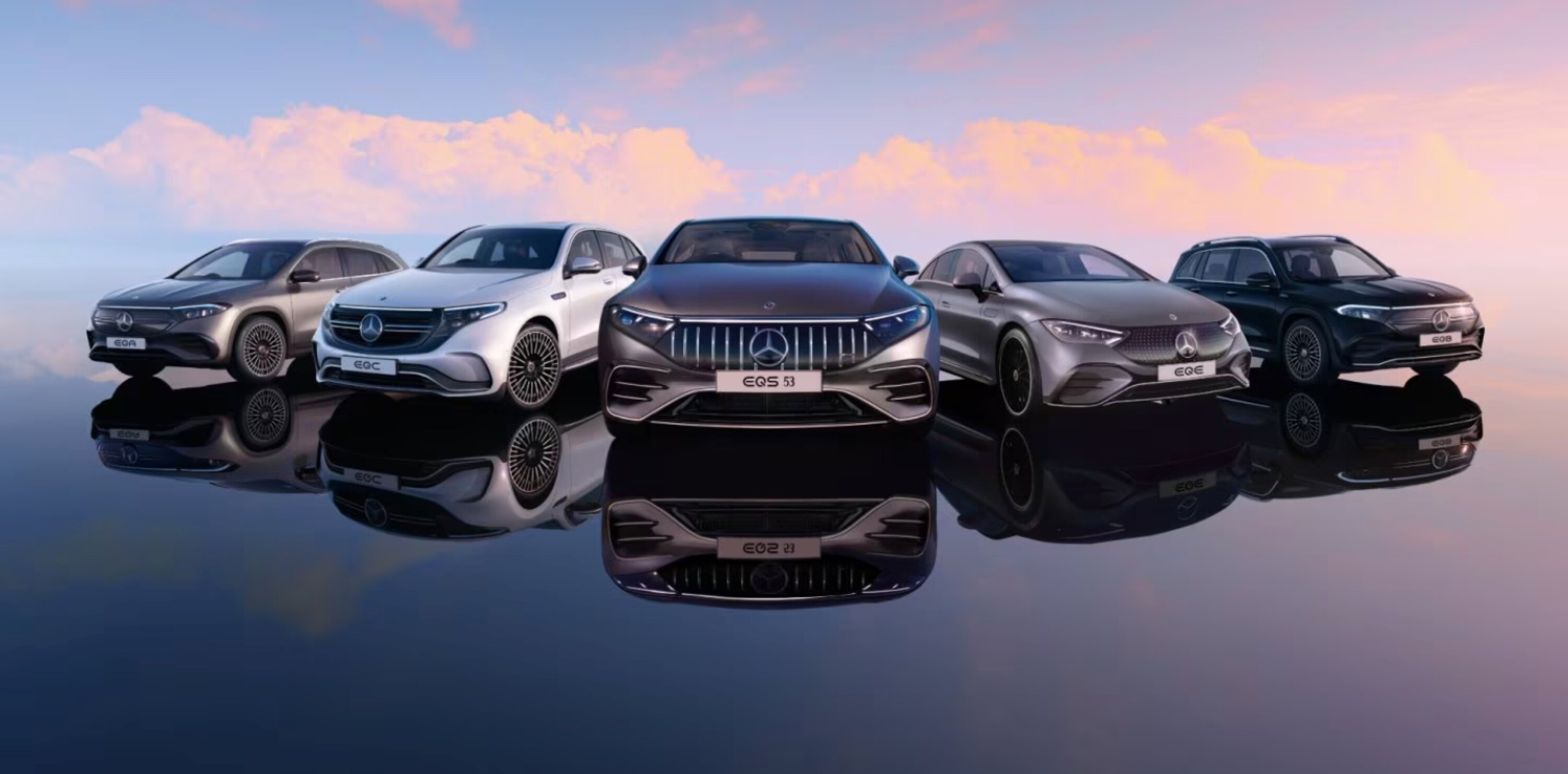
1
“Tesla is both a member of the FCAI and represented on its board, so it’s important that Tesla makes clear its disagreement with the submission made by the FCAI to this review, and with false claims it has made in the public discussion of vehicle standards.”
The FCAI responded, “The FCAI and its members, which includes manufacturers of vehicles ranging from battery electric through to petrol and diesel engines, want to continue to play their role in combating climate change and providing Australians with the zero and low emission vehicles they can afford, want to drive and … that meet their family, personal, recreation or work needs”.
It stands by its analysis of how vehicles sold in 2025 would be affected if last year’s sales patterns were repeated.
1
MORE
Everything Tesla
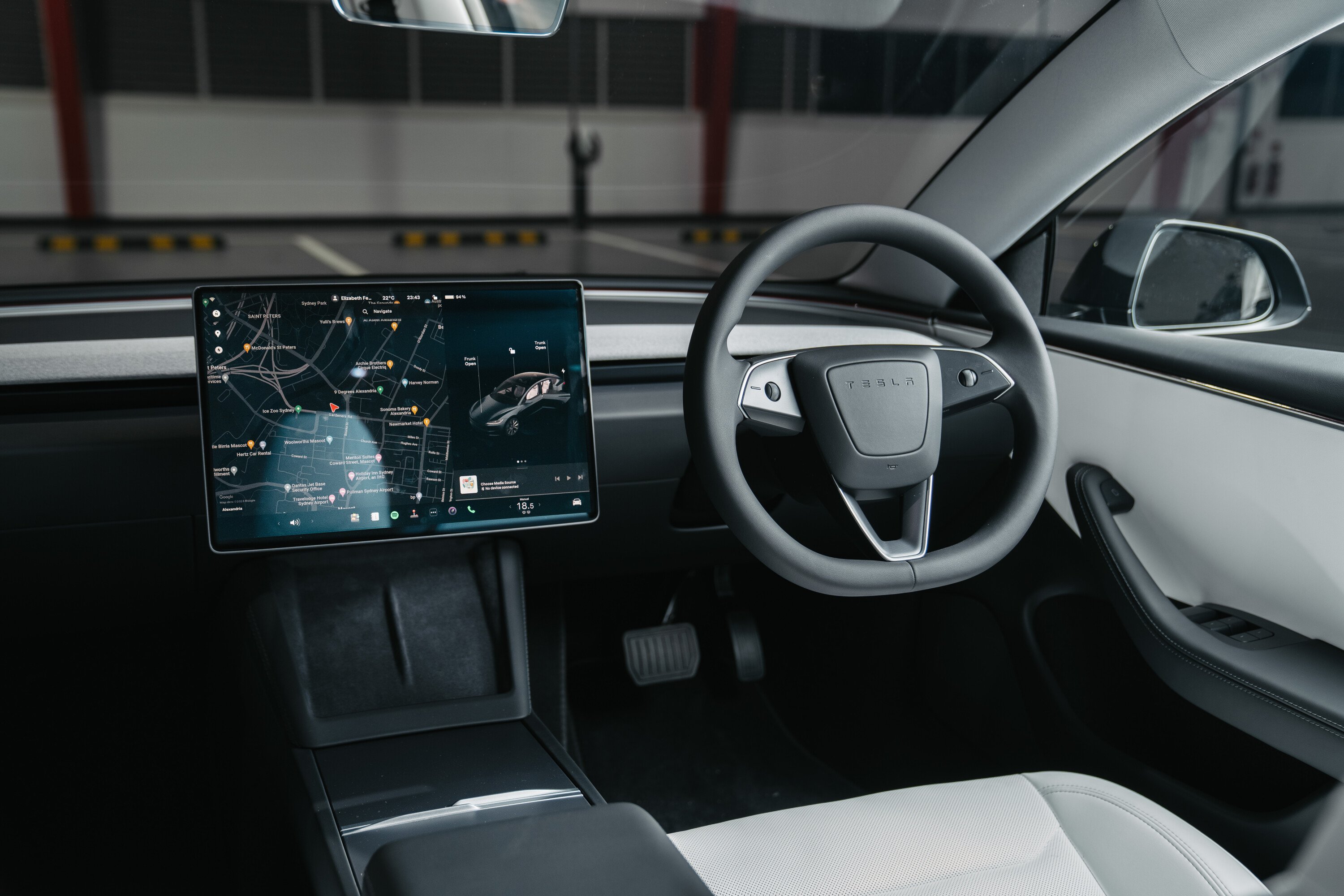
With Euro NCAP to introduce new testing rules in January 2026, car manufacturers will need to provide physical controls for functions such as indicators and wipers –rather than fiddly touchscreens – to achieve a full five-star rating.
As reported by the Times [↗], Euro NCAP [↗] plans to introduce new rules in January 2026, changing the criteria to achieve a top safety rating of five stars, a score that is widely boasted by vehicle manufacturers.
To achieve a full five-star safety rating, vehicles will require physical controls for hazard lights, indicators, windscreen wipers, SOS equipment, and the horn.
1
Modern vehicles have recently become littered with touchscreen displays and complicated interfaces, namely Tesla and Volkswagen models, mainly due to cost and material saving.
Matthew Avery, director of strategic development at Euro NCAP [↗], stated to the Times [↗] that “the overuse of touchscreens (in vehicles) is an industry-wide problem, with almost every vehicle-maker moving key controls onto central touchscreens, obliging drivers to take their eyes off the road and raising the risk of distraction crashes.”
While Euro NCAP testing is voluntary and the guidelines are not a legal requirement, manufacturers and buyers deeply consider the safety ratings, making these new rules prime for consideration. However, according to Matthew Avery, “… we have not yet finalised the evaluation procedure”.
Do you find touchscreens fiddly or prefer physical controls? Let us know below!
March 2024: EU claims evidence of Chinese govt subsidising EV manufacturers
The European Commission has published a document [↗] claiming “sufficient evidence” that Chinese EVs imported into the EU with increasing speed are being subsidised in a fashion it considers unfair and harmful to the European economy.
Government subsidies for domestic manufacturers are a standard piece of any economy, however, the commission says China’s subsidies to its EV makers qualify as countervailable – effectively a subsidy beyond the accepted norm, entitling the destination market to apply tariffs to offset the harm to its own industries.
Such tariffs have historically been described by interested parties as protectionist. This is accurate, in so much as tariffs applied in this way are intended to protect a country’s economy against unfair trade practices.
When the EU’s investigation was first announced in 2023, China’s Ministry of Commerce called it “a naked protectionist act that will seriously disrupt and distort the global automotive industry and supply chain, including the EU, and will have a negative impact on China-EU economic and trade relations.”
The ministry’s comments appear to ignore the circumstances leading to the investigation’s establishment. The European Commission’s report describes “critical circumstances where injury, which is difficult to repair, is caused by massive imports of a subsidised product in a relatively short period”.
China’s Ministry of Commerce claims the rise in imports is merely a result of increasing European demand for EVs.
Ahead of potential tariffs that would apply retroactively, the Commission has directed its customs authorities to register Chinese imports “so that measures may subsequently be applied against those imports from the date of such registration”.
September 2023: EU investigating Chinese EVs over reports of unfair subsidies
The European Commission has launched an investigation to determine whether further import tariffs should be imposed on cut-price Chinese-made electric vehicles.
Snapshot
- EU to investigate imposing further import taxes for Chinese-made EVs
- Argues Chinese government subsidies have unfairly kept prices low
- Seeks to protect local auto industry
In the Commission’s 2023 State of the Union Address, president Ursula von der Leyen said the rapid influx of Chinese-made EVs was concerning for European automakers despite declaring the market ‘open for competition’.
“Global markets are now flooded with cheaper Chinese electric cars. And their price is kept artificially low by huge [Chinese] state subsidies. This is distorting our market,” von der Leyen said.
“We must defend ourselves against unfair practices… But equally, it is vital to keep open lines of communication and dialogue with China. Because there also are topics, where we can and have to cooperate.”
1
Currently, the EU has a 10 per cent import tax for all foreign-made vehicles, but the investigation will seek to determine whether a further tariff should be enforced for Chinese-made EVs only.
These tariffs would not only affect Chinese makers such as BYD and SAIC but also western brands producing EVs in China such as Tesla and the BMW Group.
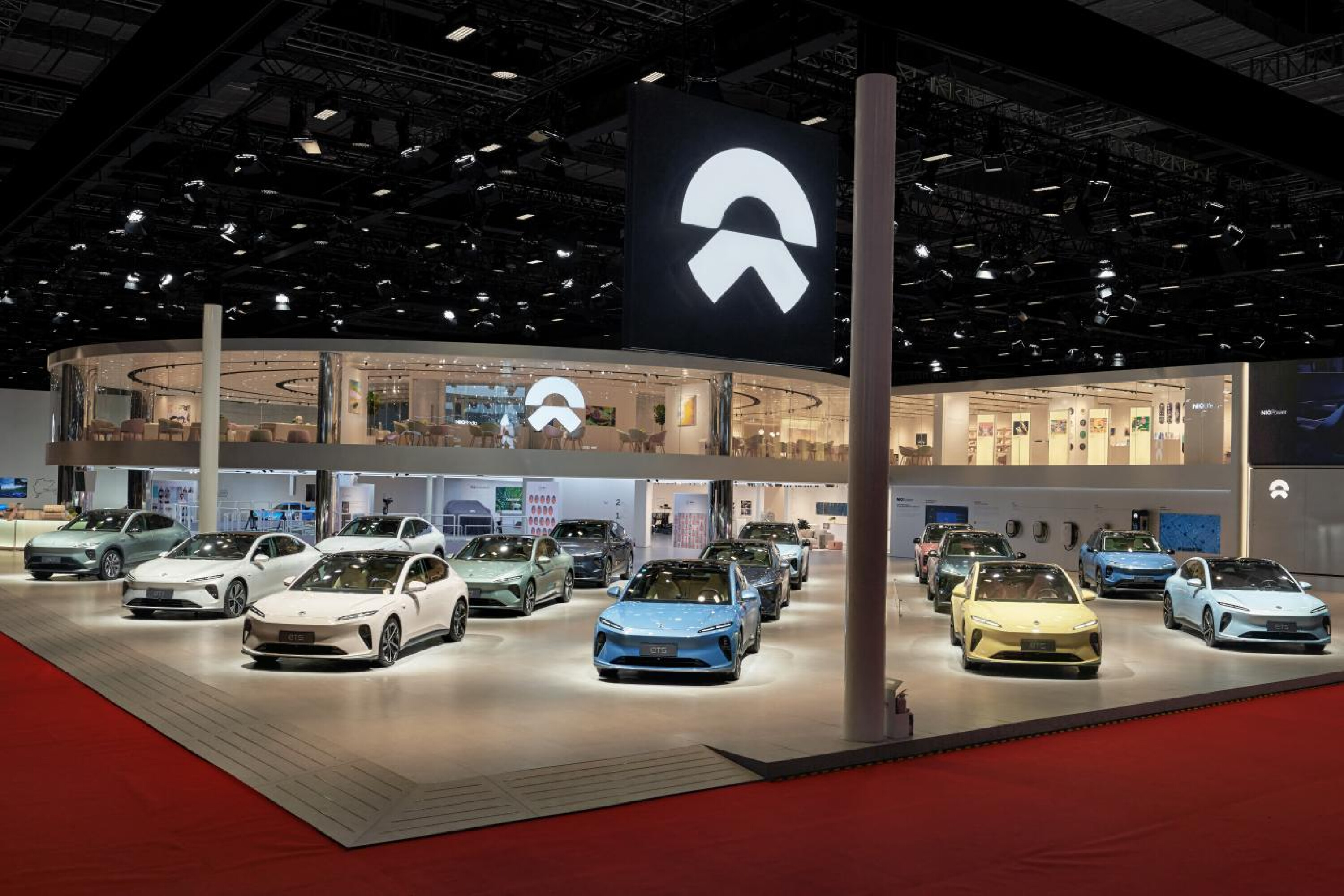
Despite the Commission president’s remarks, the Chinese Chamber of Commerce to the EU claimed to Reuters [↗] that Chinese-made EVs aren’t lower-priced because of government incentives for carmakers. Founder of EV Company Nio, for example, cited China’s stranglehold over raw materials and supply chain accounted for 20 per cent of savings.
It is difficult to deny state incentives playing a part, though, following consulting firm AlixPartners [via Reuters ↗] findings that around AU$88.7 billion in state subsidies were given between 2016 to 2022 for hybrid and electric vehicles.
Global markets are now flooded with cheaper Chinese electric cars
?? In context
In Australia, the top-selling new electric car list is dominated by Chinese-made models, which not only benefit from a short supply chain and lower manufacturing costs but also the China-Australia free-trade agreement. This gives China-made EVs an even larger price benefit in Australia compared to the EU.
Models from Chinese brands such as the BYD Dolphin, MG 4 and GWM Ora hatches start from below $40,000 before on-road costs and incentives. Meanwhile, a growing number of western carmakers now produce EVs in China, including the Tesla Model 3 sedan and forthcoming Volvo EX30 SUV which are both priced under $60,000 in Australia.
1
The EU’s competition concern
A tax to protect Europe’s legacy automakers from competitively-priced Chinese EVs could put further strain on the trading relationship.
European carmakers are already feeling the pinch from China with rapid expansion of new badges such as BYD, Geely, Nio and Xpeng looking capitalise on the booming EV market.
In the past five years, imports of Chinese-made cars to the EU have quadrupled, according to the China Passenger Car Association [via CNN ↗].
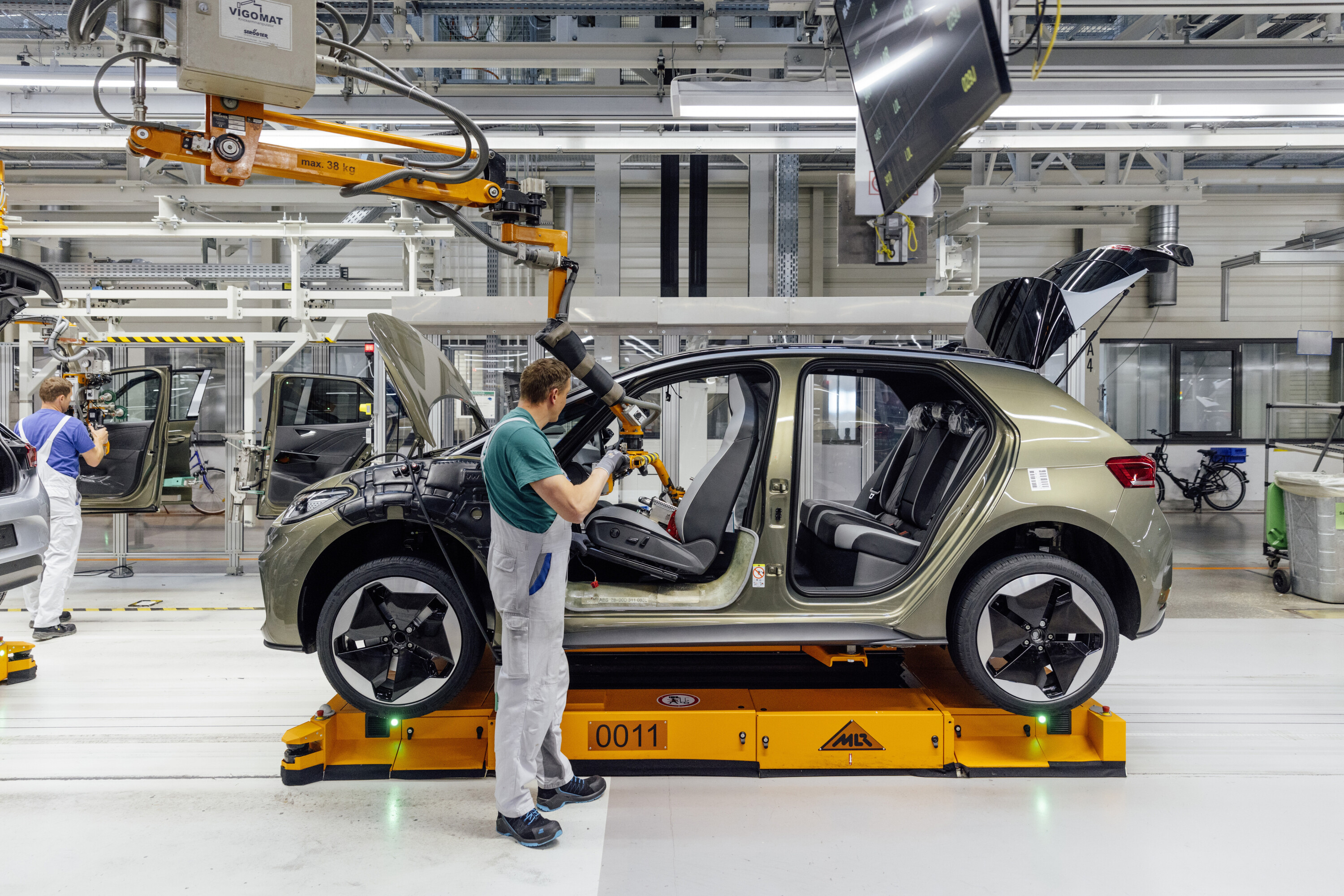
This week, Automotive News Europe [↗] indicated that Volkswagen plans to cut hundreds of jobs at its Zwickau factory in Germany, where it makes the recently facelifted ID.3, ID.4, ID.5, and Cupra Born for Australia. The reason according to the report is lower-than-expected demand for VW’s EVs.
