
Lotus is in the process of building a lighter and faster next-generation Elise and Exige, and it will soon lop the top of its Evora 400 flagship.
The specialist British car maker confirmed the news to Autocar, while also stating that the brand expects to announce a profit for this financial year for the first time in six decades.
“The next Exige and Elise will be faster and lighter,” said Lotus boss Jean-Marc Gales.
Autocar claims that Gales wants all future Lotus models to be made with this ethos, while at the same time also making them more practical. In Australian specification, the current base Elise weighs 876kg and sprints from standstill to 100km/h in 6.5 seconds, while the top Exige S tips the scales at 1182kg and its supercharged V6 shifts it to the same speed benchmark in 3.9sec.
At the pricier end of the spectrum, the Evora 400 is expected in Australia early next year priced from an expected $200,000. But the 300kW/410Nm supercharged V6 ‘supercar’ will now also be made as a roadster, Lotus has confirmed.
“We are working on it now,” Gales told Autocar, before adding that the new variant will come with no loss to structural integrity due to the strength of the carbonfibre tub, while the roof will be a two-piece design with stowage behind the front seats.
“It’s a quicker build,” he added. “The chassis is a tub, so there’s no impact with the roof off.”
With the coupe starting UK production next month, it is unclear how far off the roadster will be or if it will come here – though apparently the US market is the target.
The Evora 400 roadster could potentially arrive just in time for the Lotus brand to officially return to profitability.
“We will be cashflow-profitable in this financial year and profitable in the financial year beginning 1 April 2016 for the first time in 60 years,” claimed Gales.
Get your free weekly report from the world of fast cars – subscribe to the MOTOR newsletter!
The controversial styling of the popular Jeep Cherokee is set to stay as the American engineers concentrate on what might be a high-performance turbo version instead.
IS Fiat Chrysler planning a high-performance Jeep Cherokee SRT?
Sprung testing in Michigan nearly a year out from its speculated launch in the USA is what appears to be a facelifted version of the popular American medium SUV, wearing plenty of body camo to keep our spy photographers guessing. The hot-selling Jeep Cherokee has been selling brilliantly in 2015, taking the fight to the Mazda CX-5 and Toyota RAV4 opposition.
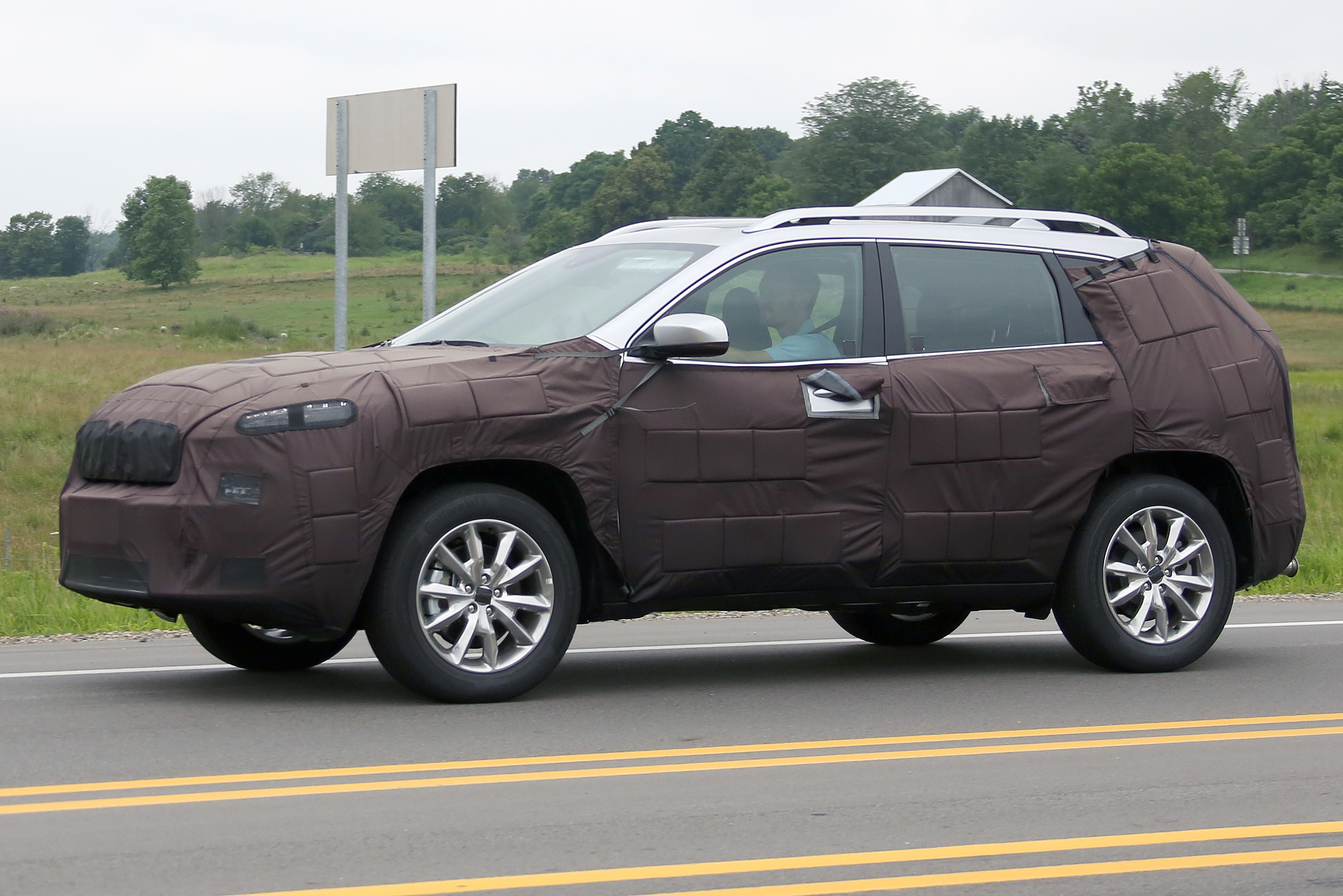
However, more questions than answers have been raised (with this prototype at least), since closer inspection reveals that almost no exterior panels have changed; even the lower front air intakes and wheels are the same as the KL-series model released in Australia in June 2014. One senior FCA executive has already gone on record as saying that the existing vehicle’s styling is “spot on”, so the lack of visual alteration should probably come as no surprise.
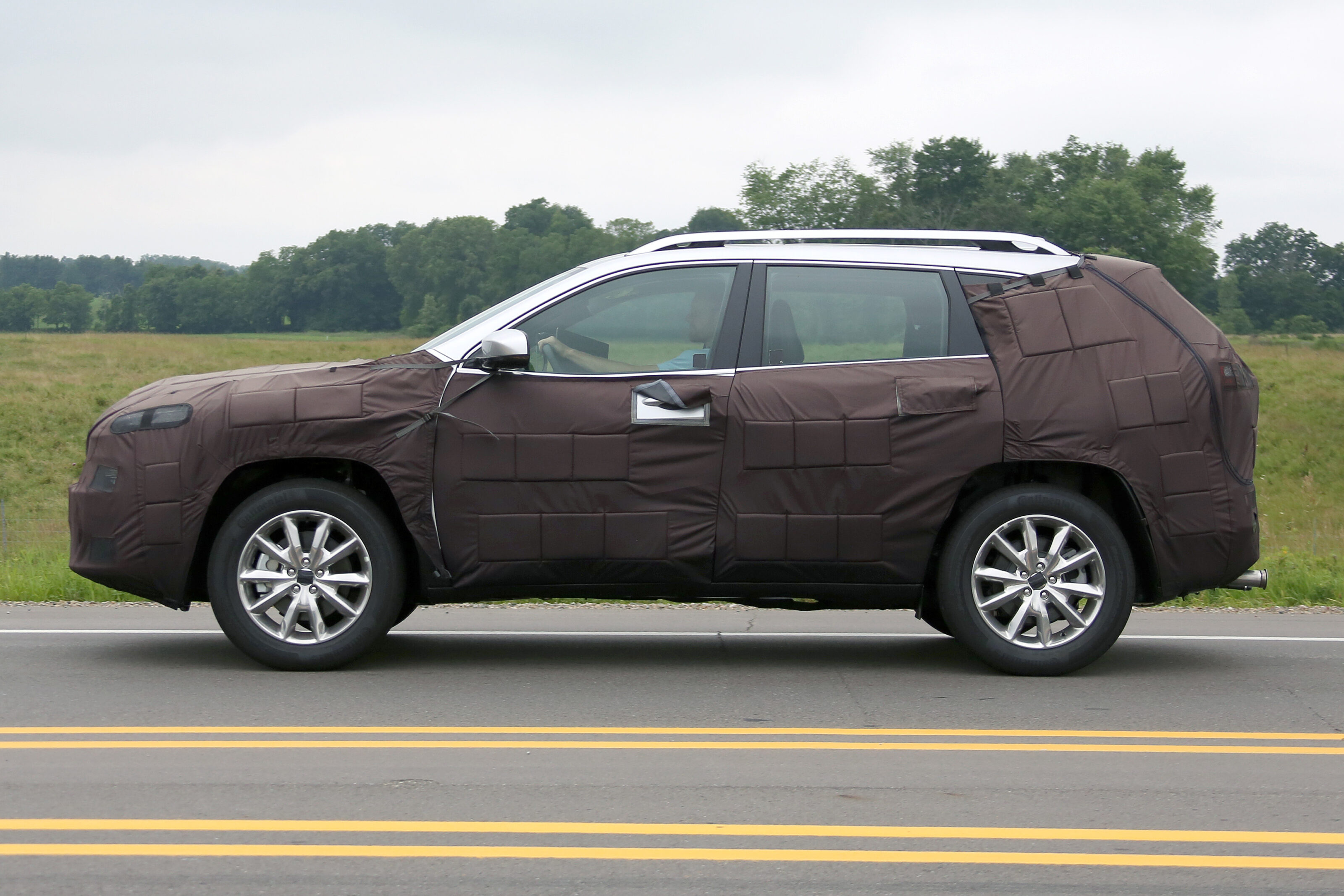
What we are hearing instead, though is that the 2017 Jeep Cherokee will undergo a series of engineering updates, including the fitment of more powerful yet efficient engines to help it meet more stringent economy and emissions targets.
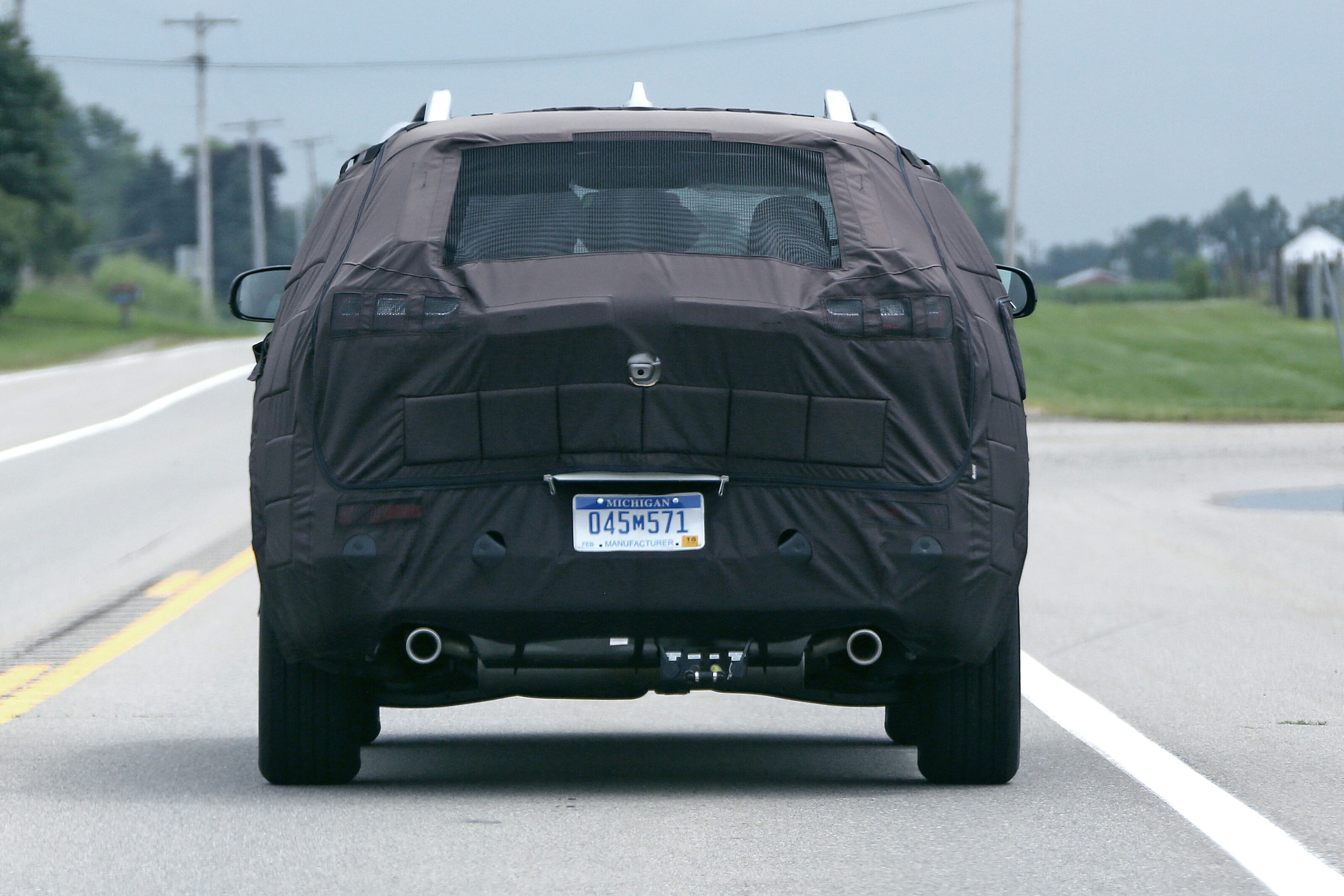
As the prototype’s dual exhaust pipes suggest beneath that extensive canvas body cladding, the latter will also include a turbocharged version of the existing 2.4-litre four-cylinder petrol engine. Also destined for the upcoming Dodge Dart SRT small sedan that the SUV shares many architectural components with, the ‘Tigershark’ turbo is rumoured to pump out over 220kW of power and 405Nm of torque.
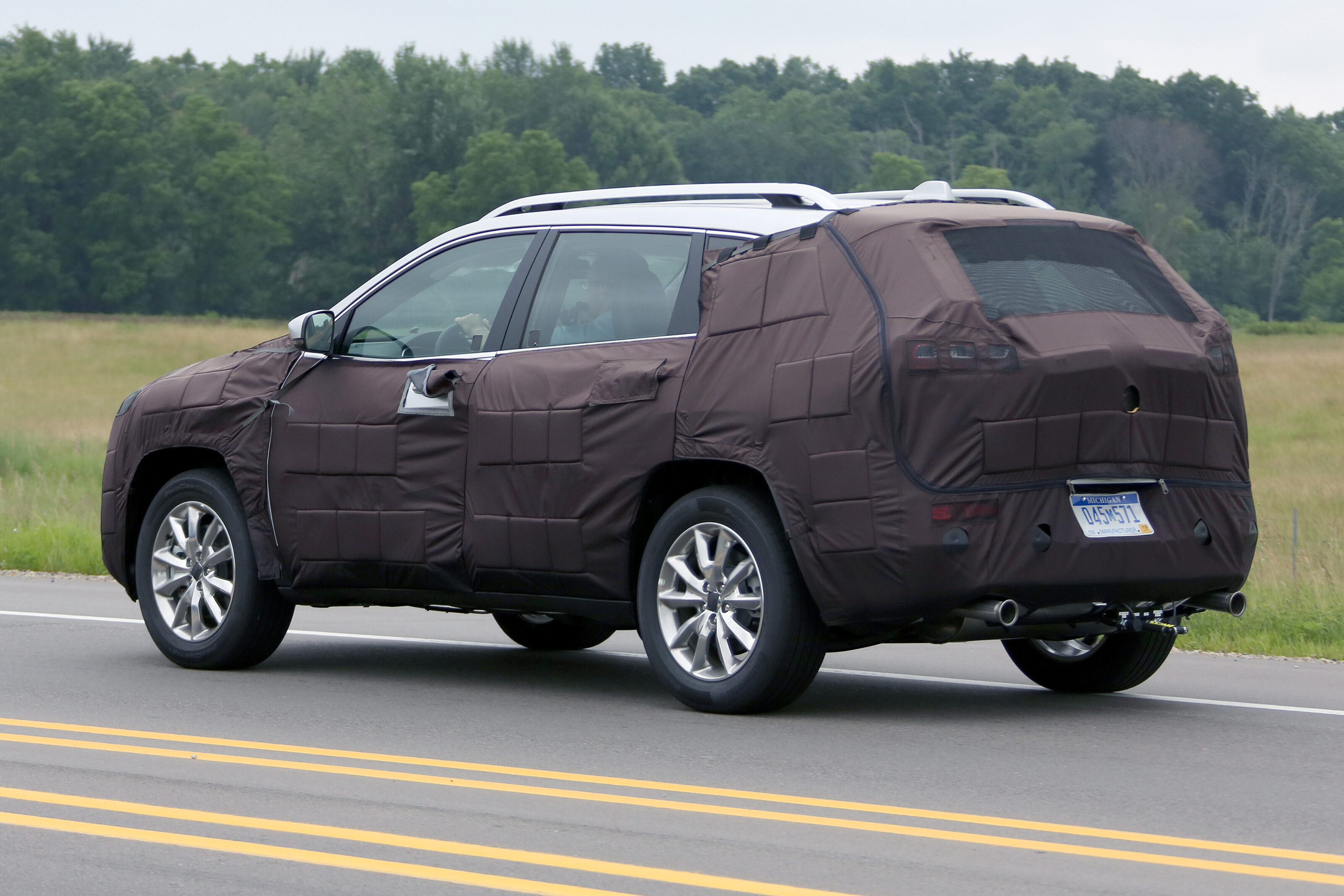
Additionally, it is being reported that the 2017 Jeep Cherokee will also receive retuned steering and suspension components, as well as an upgraded noise/vibration/harshness package to help make it both more dynamic and refined.
Not that buyers are complaining. A year on from its June 2014 launch in Australia, the current Cherokee has sold strongly, overtaking the admittedly ageing Kia Sportage and sitting just 40 units shy of the long-established Honda CR-V at 4297 sales year-to-date.
The only direct rivals that are doing better are the Mazda CX-5 (12,489), Nissan X-Trail (9272), Toyota RAV4 (9160), Subaru Forester (5678), and Mitsubishi Outlander (4431). In fact, to the end of June, Jeep as a while is up over the same period in 2014 with a 6.3 percent sales rise.
Should the 2017 Cherokee SRT make it to Australia, expect pricing to sit in the higher end of the medium SUV spectrum, against sportier opponents like the successor to today’s Volkswagen Tiguan 155TSI R-Line (from $44,990) and Forester XT Premium (from $47,990).
Have spy pics of your own? We’d love to see them. Send them to [email protected]
- Part One: Aerial Attack
- Part Two: What’s In A Name?
- Part Three: Haunted Howls
- Part Four: Le Sensible Trousers
- Part Five: Farewell, French Friend
Part One: Aerial Attack
It’s said to be good luck should a bird happen to do its business just as it’s flying over your head. If that is indeed the case, then MOTOR’s new Peugeot 208 GTi long-termer and I should be in for a very successful relationship. Thankfully, it was the car, not me, that copped the aerial attack.
Having picked up the car from Peugeot dealer Regan Motors, it was parked under a tree near the office, which was apparently home to a flock of Renault fans, as by the time we left for the day, the 208 was in a right state. I swear, birds must have been diverting from their migratory flights for the opportunity to take a dump on the poor Pug, it was that bad.
An unpleasant start for CTG 49F, but a quick trip through a carwash and the introductory period could begin.
So why’s it here? Well, the 208 had the unfortunate luck of arriving on the market at about the same time as the Fiesta ST, which has proved itself to be one of the most fun cars of modern times. Ford’s baby gave the 208 GTi a bloody nose in a comparison in our December 2013 issue, and repeated the drubbing at last year’s PCOTY, finishing third to the Pug’s ninth.
But burrowing away in the back of our minds was the suspicion the 208’s talents might not reveal themselves fully in the quick-burn comparison environment – here’s its chance to prove itself. First impressions are that our suspicions were correct. Having just returned a long-term Fiesta ST – Morley still won’t talk to us – we’re perfectly poised to compare the two on a day-to-day basis.
As fun as the Ford is, its frenetic nature can occasionally be wearing; the Peugeot’s calmer demeanour is paying dividends at this early stage. The softer suspension setup that costs it during max-attack motoring is proving its worth on the daily commute, rounding off the worst of irregularities Melbourne’s roads can serve up.
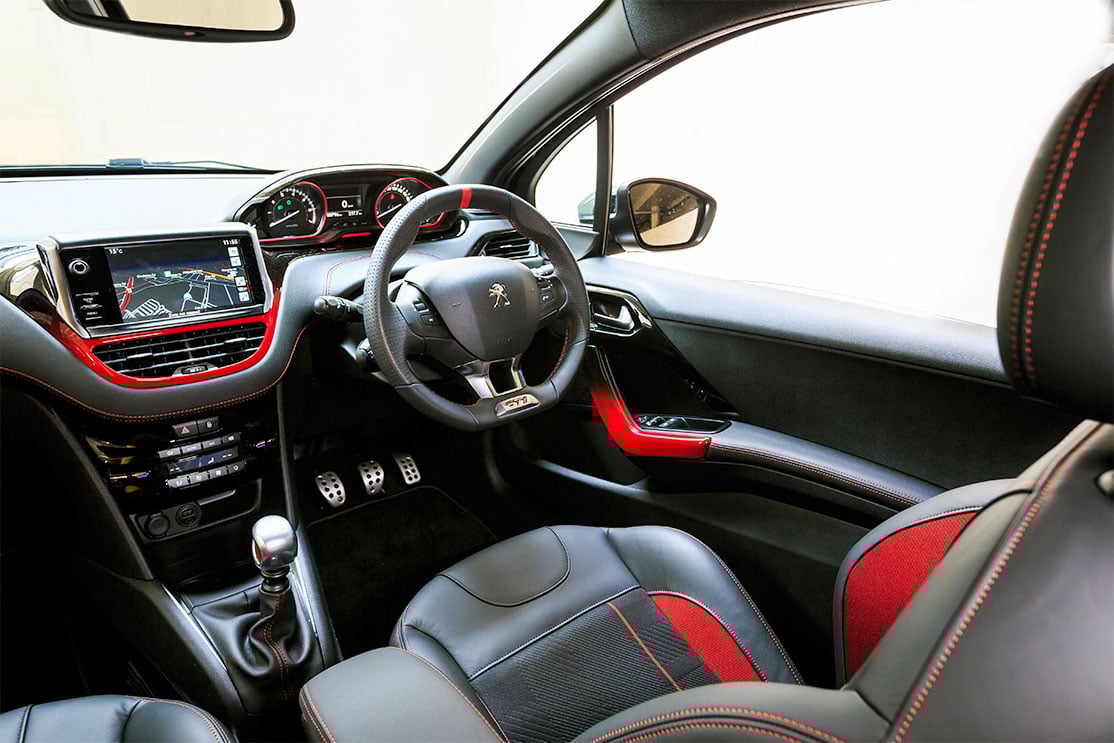
At $30,470 as-tested ($480 for metallic paint), the Peugeot asks for a hefty premium over the Fiesta, but the interior ambience justifies the extra spend. The seats are comfy, the seven-inch multimedia touch screen keeps the button count to a minimum and there are nice touches everywhere like the contrasting red stitching on the seats, steering wheel, gearshift boot and dash; red illuminated rings surrounding the dials, and the way the plastic fades from a rich red to a deep black on the door handles and screen surround.
But it’s not all so hunky-dory. The glove box may be chilled but it’s also so small it’s pretty much useless, the alloy gear knob is so cold in a Melbourne winter it burns to touch, and then there’s the driving position… but expect more on that in a future update.
Arriving with just 577km on the clock, the 208’s early use has been pretty gentle. The handbook doesn’t specify the need for any running-in procedure, but old-school mechanical sympathy is preventing the upper reaches of the tachometer being explored before the odo ticks over to at least four figures.
This is frustrating, as even with limited rpm the 208 is a rapid machine.
Part Two: What’s In A Name?
We’d yet to bond, Pug and I. I’m not traditionally a fan of naming cars, but with its blunt nose and forward-leaning stance, the Peugeot 208 GTi kind of resemblances those dogs that everyone bar me seems so fond of. It’s a lot catchier than CTG 49F, anyway.
Prior to this month’s Bang for your Bucks, Pug’s primary use had been boring commuter stuff. Its city-car origins make it quite adept at this, but this is a junior hot hatch, so I was looking forward to stretching its legs on track at BFYB. Here it acquitted itself well, holding its own against the Ford Fiesta ST and Renault Sport Clio in terms of pace, though its higher price and lower judges’ ranking cost it.
Well, slightly lower for most judges. While four of the five put Pug somewhere between fifth and seventh on their scorecards, one harsh critic put it 10th. Which was, erm, me. While enjoyable when chasing lap times, it lacked the Fiesta or Clio’s playfulness.
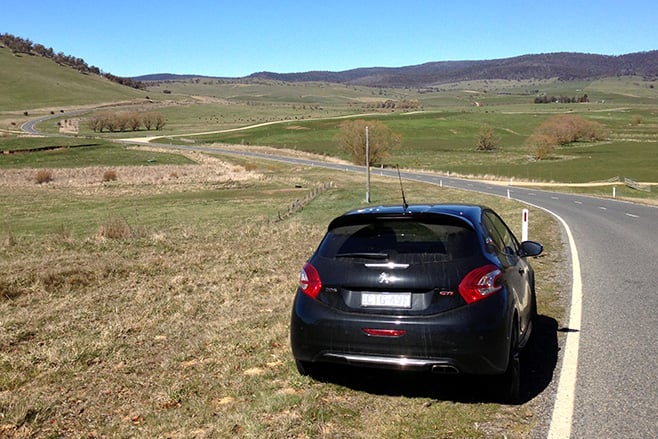
Obviously, judging it here solely on racetrack performance is ridiculous, so to make it up to Pug for being so mean I planned a (hopefully) redeeming road trip. Since moving to Melbourne in early 2011, I’ve been itching to try the Great Alpine Road over the Victorian Alps, connecting Wangaratta on the Hume Highway to the East Coast’s Bairnsdale.
Of course, to get to Wangaratta means 250-odd kilometres of speedo-watching on the Hume, lest you be pinged by one of the sneakily placed cameras or even more sneakily hidden Highway Patrol cars. Here the 208 proves comfortable and economical, if not quite as parsimonious as Peugeot’s 4.7L/100km highway claim.
A quick diversion to Glenrowan allows a visit to a section of the old Hume Highway, very close to where journo Mel Nichols famously managed to max a Phase III. Obviously, speed limits prohibit such behaviour today, but it’s interesting to note that at even its 227km/h max, the mighty V8 behemoth would see the little turbo hatch slowly edge away.
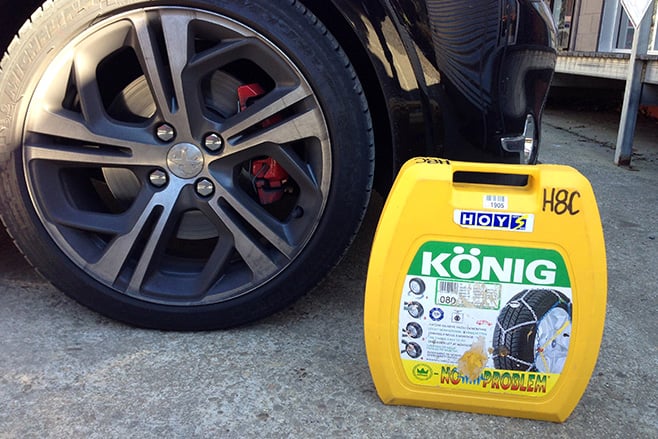
The first 100-or-so km of the GAR are relatively uneventful, but for a great road and sensational scenery, a diversion to Mount Buffalo is recommended. Following an overnight halt in Bright, chains are hired early next morning as, despite the crisp, clear skies and high-teens temperature, it’s a $2000 fine if you’re discovered travelling without chains during the declared snow season.
Beyond Harrietville, the road turns twistier and climbs steeply. These narrow Alpine passes should suit the Peugeot to a tee, but though it’s agile, and a class-leading 275Nm punches it out of tight corners well, it feels a bit soft at maximum attack. It’s still quick, but feels most rewarding at around seven- or eight-tenths.
Following the breathtaking views atop Mount Hotham, the road becomes wider with fast, flowing sweepers all the way to Omeo. It’s supercar country, but against expectations suits Pug well. Its slower steering and more stable balance inspire high-speed confidence and the soft brake pedal is less an issue rolling from one long corner to the next.
Past Omeo and the road changes again, winding its way through rocky canyons and thick bushland. The corners are medium-speed, third- or fourth-gear, with plenty of bumps to contend with, and it’s here the Pug’s supple chassis finds its sweet spot, soaking up undulations and settling into slight four-wheel drifts.
Over lunch in Lakes Entrance, I reflect that the last 100km proves the 208 GTi isn’t without its charms, but it does require a certain type of road to give its best. To draw a slightly strange comparison, the Peugeot is like the Grand Tourer of the mini hot hatch brigade.
I would’ve had more fun in a Fiesta ST or Renault Clio RS, but would I have felt as fresh in either after 970km over two hard days as I did in the Peugeot? I’m still not sure we’ve bonded, but there’s respect for its abilities that not had previously existed. And the road? It was epic.
Part Three: Haunted Howls
Let’s talk engines. Specifically, the 1.6-litre turbo-four under the bonnet of our long-term Peugeot 208 GTi. It’s the go-to configuration in the baby hot-hatch segment, now that 2.0-litre atmo engines are a relic of a bygone age and 2.0-litre turbos are deemed overkill.
With 147kW, Pug matches its rivals from Renault and Ford (the latter producing the figure on overboost), but the 208 is the torque king with 275Nm, at least until the new Volkswagen Polo GTI arrives next year with a thumping 320Nm from its ‘big block’ 1.8 and until the Fiesta’s overboost hits full stride in third gear.
Still, it’s 35Nm more than the Clio can muster, and it plays a crucial role in the Peugeot’s ability to punch out of corners.
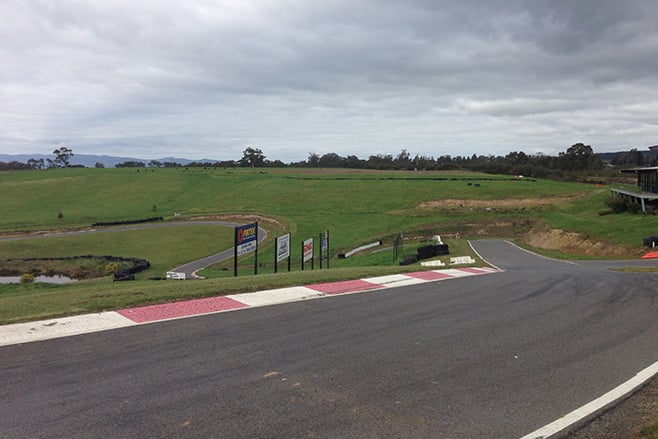
This attribute came in handy at a recent hillclimb, held by the Kyneton Car Club at Bryant Park Hillclimb, better known as Haunted Hills. Australian hillclimbing is a bit of a unique proposition, as quite often courses go downhill as well as up. I once spoke to a visiting Russian journalist who found this immensely confusing, saying: “For me, a hillclimb always climb!”
Regardless of the technicalities, Haunted Hills is a fantastic circuit; tight and technical, it rewards bravery yet punishes mistakes with enormous undulation and a great mix of corners. While a bit underwhelming on circuit, following last month’s epic road trip I suspected the layout might suit Pug.
Before departing, however, a change of tyres was in order. A full day’s trackwork at Bang For Your Bucks plus two days being flung around Victoria’s alpine region had taken their toll on the Peugeot’s front sidewalls, but the rears were still reasonably fresh so a quick front-to-back was all that was required.
Imagine my surprise when lifting up the boot floor revealed a full-size spare! Well done, Peugeot. Too often spare tyres are deleted to free up boot space or reduce weight chasing fuel economy figures, but they really are a godsend. It’s like insurance, you’ll be thankful you have it when you need it.
Unlike a track day, where you can go around and around to your heart’s content, slowly shaving time off each lap, hillclimbing piles on the pressure. We competed on two different course layouts, with four runs on each. Being my first time at the track (and not my car!) I decided a cautious approach would be best, getting a ‘banker’ time in and trying to improve from there.
My competition comprised a wild variety of cars, everything from a tidy Ford XY Fairmont with huge power to stripped-out Subaru WRXs on semi-slicks to dog-eared ’80s sports coupes (Honda Accord, Toyota Celica) living a second (or 10th) life as track hacks.
Lessons learned during the first couple of runs are staying off the kerbs in braking and traction zones as they’re incredibly slippery, but use them as much as possible mid-corner to widen the track and be more committed in the faster corners but more gentle with the throttle in the slower ones.
All that torque easily lights up the inside wheel, wasting precious tenths during corner exit.
The time improves from a 63.13sec to a 62.55sec over four runs, but the last was scrappy and I’m left disappointed, especially as another 0.50sec would’ve lifted me from 11th to sixth! From the first run on the second course, I can tell Pug enjoys the more flowing layout better, as do I. A clean final run nets a 67.38sec, good enough for fourth place.
Combining the times for both courses leaves Pug sixth outright, wedged between two WRXs – not bad for a totally standard road car on tyres that had given their best.
For a more in-depth look at the Haunted Hills circuit, check out the Peugeot’s live feed on our website, we’re already planning our next visit.
Part Four: Le Sensible Trousers
Time to (reluctantly) put my sensible hat on. The last couple of months’ updates have focused strongly on what the Peugeot is like to drive, but this month we’re investigating the more mundane but arguably more important topic of interior accommodation.
After all, unless you happen to moonlight as a Hollywood stunt double, all of your time travelling by car is going to be spent inside it. And the vast majority of that will take place in traffic jams, driving to the shops, picking the kids/partner up – y’know, boring everyday life stuff.
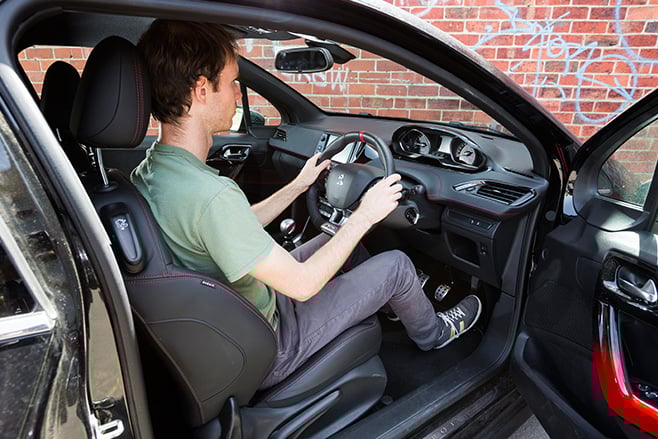
How does Pug stand up? Good. And bad. Let me explain. In general the Peugeot 208 GTi interior is a nice place to be. Premium touches like the way the plastic blends from black to red, the leather padding on the dash and the contrasting red stitching give it some flair and lift it above the likes of the Ford Fiesta ST and VW Polo GTI.
There’s definitely evidence of its cheap-car origins – the dashtop and top of the doors are made from hard, scratchy plastic – but Peugeot’s made an effort with the stuff you interact with every day.
The big touchscreen is welcome, though not particularly intuitive – things like switching to Bluetooth audio tend to happen by happy accident. Or maybe I just need to read the manual.
Possibly the most controversial aspect of the 208 GTi, though, is its driving position. The seat is quite high and to properly see the dials you need to have the wheel almost in your lap – it’s all very French. I can see why Peugeot did it. In its base form, Peugeot’s 208 is primarily a city car and the raised perch aids vision when dealing with traffic.
Trouble is, in a performance context you want to be as low as possible in the car, and it’s this lack of connection, rather than the unusual driving position itself, that for me is the bigger problem.
Pug goes home soon, which means in our instalment it’s time to say goodbye.
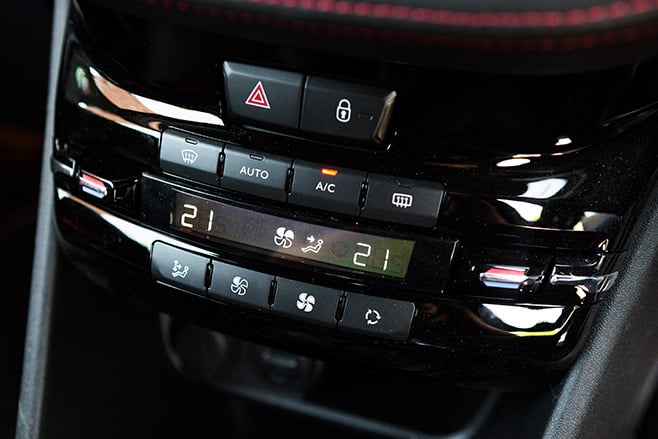
TEMPERATURE TANTRUMSFor some unknown reason, the 208 allows you to adjust the cabin temperature in half-degree increments until 24°C, above which it only permits whole-degree increments.
PERCHED ALOFTHigh driving position forces the wheel into your lap in order to clearly see the gauges. It’s not as bad as some make it out to be – you get used to it – but it feels slightly odd in a car with such sporty aspirations.
PEDALLING HARDPedal layout is a bit all over the shop, though in practice it isn’t as bad as it looks thanks to a fairly soft brake pedal. They are incredibly slippery with wet soles, though.
HANDS OFFAn alloy gearknob probably sounded like a great idea in a marketing meeting, but should it be a particularly cold or hot day it renders changing gear impossible without hand protection.
Click here to read our full review on the Peugeot 208 range
Part Five: Farewell, French Friend
After four months and just over 6000km, it’s goodbye to CTG 49F, better known as Pug. Is it a fond farewell, all misty eyes and waved handkerchiefs? Or more a case of see-ya-later, and don’t let the garage door hit you on the way out? Neither, really.
While there’s no doubt the Peugeot 208 GTi is a good car, not one member of staff managed to form a close bond with it, despite their best efforts. Certainly no one complained about driving it, but equally, no one was itching to snare the keys come weekend time. To put it another way, if Pug were a human, we’d hang out every now and then, but we’re certainly not besties.
Undoubtedly, Pug’s best attribute was its engine. Whether it was an urban 60km/h or a highway 110km/h, it was always surprising how quickly the speed limit arrived. A fulsome 275Nm, available from just 1700rpm, allied to the lightest kerb weight in its class, meant there were no complaints about the Peugeot’s straight-line prowess.
For those who care about such things, we clocked 0-100km/h in 6.96sec and a 15.14sec quarter-mile at 154.44km/h. Average fuel use of 8.2L/100km wasn’t too shabby, either, given we were fond of using the performance.
We liked the interior, too. Mostly. It feels like a nice place to be and there’s a decent amount of room in the rear. The folding rear seats came in handy on more than one occasion as well.
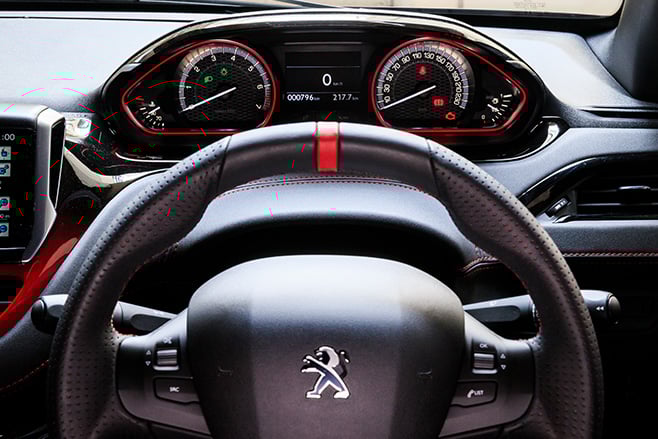
As you’d hope in four months, nothing fell off or stopped working, but a couple of things do work against it. Firstly, on hot or cold days, changing gear is near impossible without burning your hand on the alloy gearknob. Secondly, while the driving position works in a city car context, sitting so high with the steering wheel so low feels weird in what is a sporty hatch.
While we are on the subject of steering, with such a tiny tiller you would expect the steering to be razor-sharp, but it’s actually quite a slow rack – it’d be positively naval with a regular-sized wheel.
This lack of response manifested itself in other ways, too. The brakes were quite robust but the soft pedal never inspired confidence, though it did make it quite easy to heel-toe your way around town pretending to be a racing driver.
The handling was similarly soft-edged, though Pug did shine on a certain sort of road. Medium-speed corners, preferably with a few bumps thrown in, tackled at about eight-tenths were its forte.
Tighter roads – the type you would think a mini hot hatch would shine on – became an exercise in frustration, with the 208 lacking the front-end to turn in sharply and pivot the rear. It’s certainly quick, but just not capable of delivering the same involvement and fun factor as its key rivals.
Which is the whole point, really. For all its positives, if it were our $30K, we wouldn’t be driving away in a 208 GTi. If you get your buzz from driving neat and tidy, or if the 208 GTi is your first performance car, you’re probably going to love it.
Just make sure you never drive a Fiesta ST or Clio RS. And then there’s the updated Volkswagen Polo GTI coming later in 2015. In such a tough market, merely good isn’t good enough.
Hope is at hand, however, with the imminent of the faster, sharper, more focused 208 GTi 30th Anniversary. Can it take that crucial final step?
Sign up here for your free weekly MOTOR report
PSA Peugeot-Citroen wants to show the world that the French still know a thing or two about automotive luxury with its upmarket new DS brand.
WHAT IS IT? An extensive facelift of Citroen’s unconventional DS 5 ‘liftback’ that hit Aussie showrooms in 2013, except it’s no longer badged a Citroen – simply a DS 5. That means it’s quirky on the outside and high-tech on the inside, but misses out on Citroen’s signature ‘Hydractive’ suspension that underpins the C5 sedan and wagon.
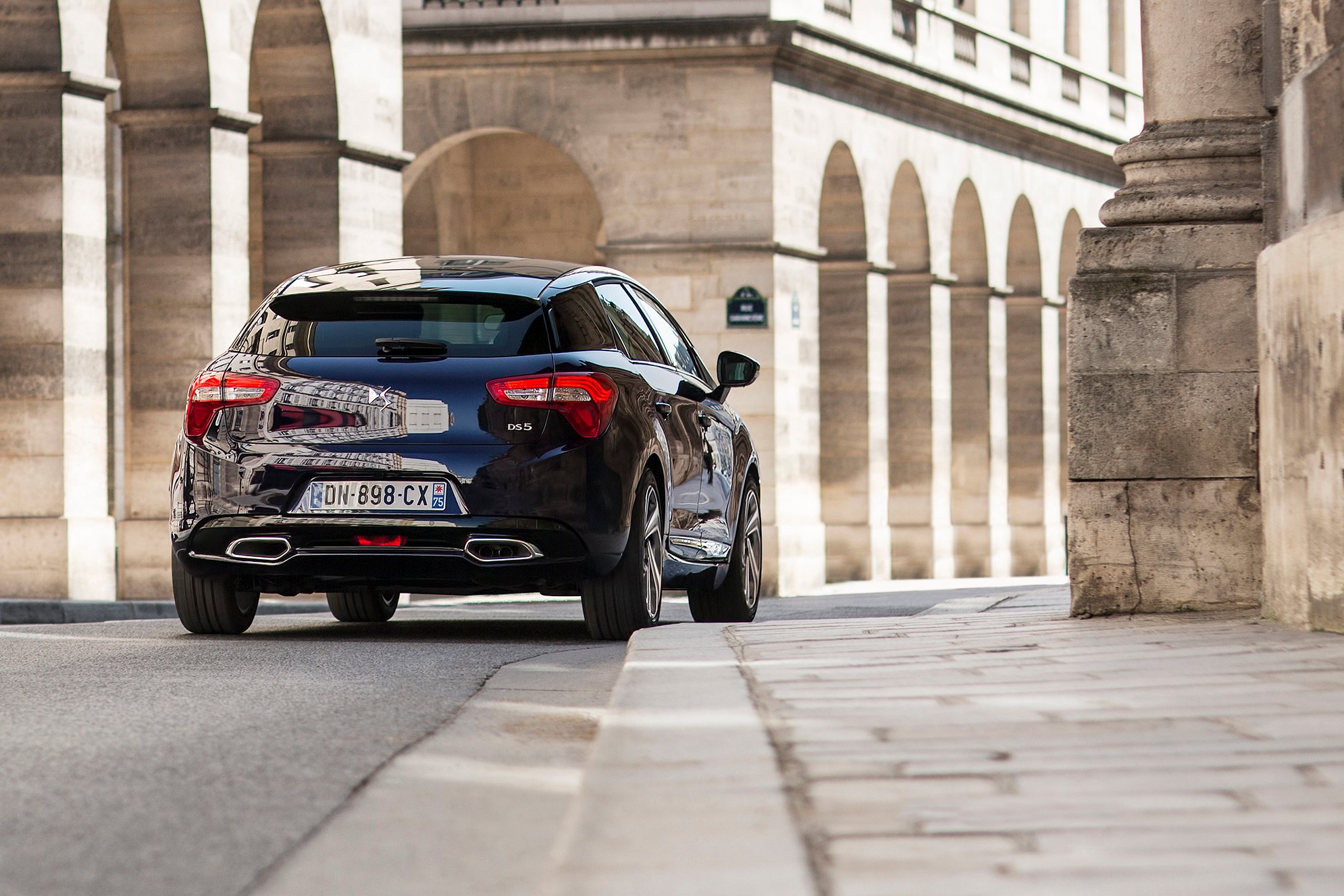
WHY WE’RE TESTING IT DS is now a stand-alone premium brand, specifically targeted at Audi. PSA admits it needs the profits generated by a premium brand if it is to survive. By 2020, DS plans six global models: the replacements for today’s Citroen-badged DS3, DS4 and DS5, plus two DS SUVs and a DS 9 sedan. Australia’s Citroen dealers will offer dedicated DS areas in their showrooms, starting from a brand launch in early 2016 built around the facelifted DS 5, DS 4 and DS 3. It’s a massive task: year-to-date (end of June), DS sold just 126 cars (Audi 11,343) in Australia. DS models won’t use bespoke platforms but will rely on unique styling, advanced technologies and personalisation to compete.
MAIN RIVALS Audi A5 Sportback 2.0 TDI, BMW 320d Gran Turismo, Honda Accord Sport Hybrid, Jaguar XE 20d Prestige, Lexus IS300h F-Sport, Mercedes-Benz C250 BlueTec, Peugeot 508 GT HDi, Volkswagen CC TDI, Volvo S60 D4 Luxury.
THE WHEELS VERDICT Unusual and interesting enough to appeal, backed by great seats, loads of technology and brilliant economy. But DS’s first attempt at a premium car doesn’t ride well enough, or sound refined enough, to truly channel the iconic Citroen DS that inspired it.
Plus: Unique Citroen-esque styling; generous equipment; $10K less than its chief German competition; strangely desirable Minus: Restless ride quality; vocal diesel; restricted rear headroom and visibility
THE WHEELS REVIEW THIS is not a Citroen. You won’t find the Citroen nameplate or the famous double chevrons on the new DS 5. It’s the first model to be sold as a DS, PSA’s new upmarket brand positioned above Citroen and Peugeot.
DS executives acknowledge that establishing a ‘premium brand’ aimed at Audi is going to take much time and lots of money. More, it admits, than a facelifted version of an old Citroen model with a large chrome grille, swivelling LED headlights and a new name, which is what the new DS 5 represents.
The dramatically styled DS 5 mixes elements of a high-roof hatchback, or station wagon, with a coupe profile, so it’s a real crossover and, true to French form, utterly unconventional without any obvious rivals. The interior is just as imaginative and feels expensive, with clever use of materials and design details, and loads of equipment. The facelift brings a new touchscreen that takes care of so many controls there are 12 fewer buttons. Excellent seats do their best to disguise the suspension’s failings. One shortcoming of the concept-car styling is poor visibility, especially to the rear with its shallow screen and thick pillars.
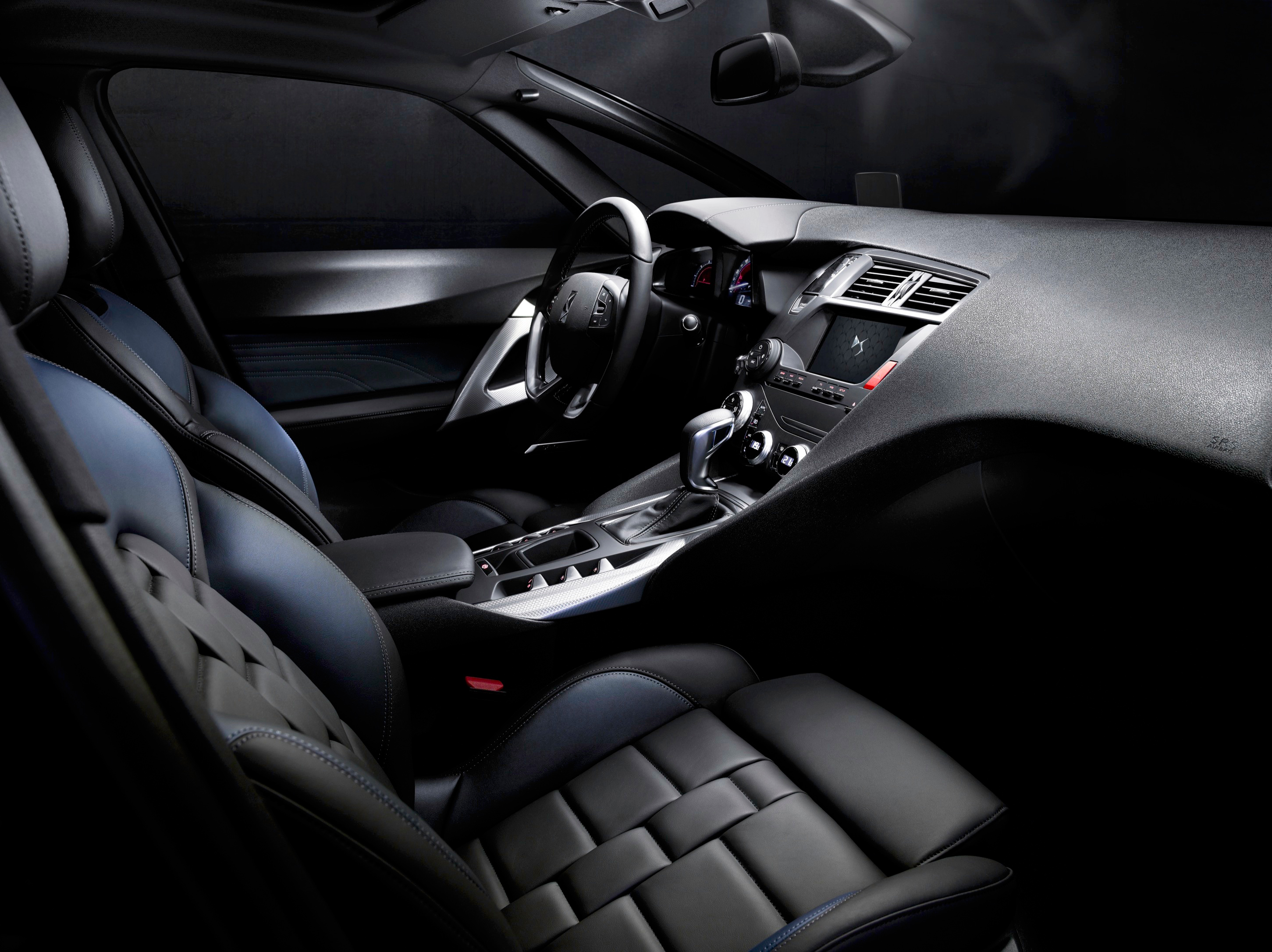
When the DS 5 arrives in Australia early next year there’ll be just one version, the upgraded 133kW Blue HDi turbo-diesel, attached to PSA’s brilliant new EAT6 six-speed automatic that’s sourced from Aisin. Performance is acceptable – 0-100km/h takes 9.2 seconds – economy is exceptional and refinement superb when cruising. Yet at suburban speeds, there is no denying the DS 5 is a diesel.
According to the hype, the three main prongs of the DS brand are design, comfort and technology. The DS 5 passes on design and technology, but fails on comfort. It doesn’t help that it’s based on the same ageing platform as the DS4, Citroen C4 hatch and Peugeot 3008, and not the C5. That means a torsion-beam axle rather than a multi-link rear suspension, let alone Citroen’s Hydractive suspension. You can forget about the soft, cushioning ride of previous big Citroens; the DS 5 is fidgety and overly firm, despite new dampers that are claimed to significantly improve the ride quality. Massive 235/45R18 Michelins don’t help the cause. But steering that’s quick and delivers old-fashioned feel as the front end begins to push is welcome.
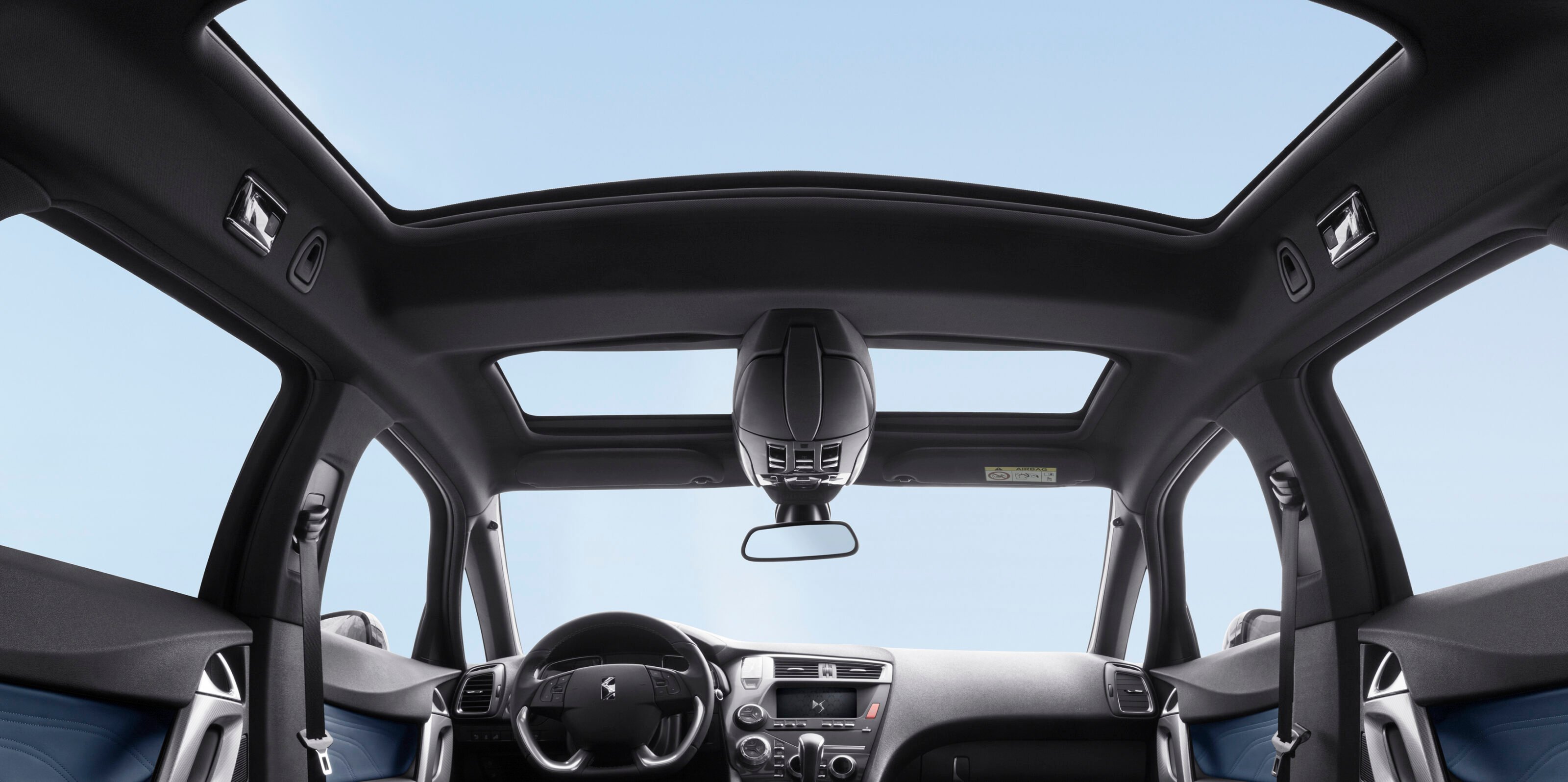
DS management knows the DS 5 is an interim model until genuinely new (and more refined) DS cars arrive in 2018. Yet somehow, despite the obvious limitations, the DS 5’s very uniqueness still makes it desirable.
SPECS Model: DS 5 Blue HDi Engine: 1997cc 4cyl, dohc, 16v, turbo-diesel Max power: 133kW @ 3750rpm Max torque: 400Nm @ 2000rpm Transmission: 6-speed automatic Kerb weight: 1540kg 0-100km/h: 9.2sec (claimed) Economy: 4.4L/100km (EU combined) Price: $60,000 (estimated) On sale: Early 2016
Dreaming about driving a Fiat down the Amalfi Coast, a VW through Germany, or a Jeep along Highway 61 in the US? Well, you’re not alone. But before you start packing the suitcase and selling your investments, there are a few things you’ll need to consider.
PERMITS AND LICENCES
The first thing you should do is look into driving permits. Your Australian licence is valid overseas, but in many countries you will also need an international driver’s licence, particularly if you intend to hire a car.
Be sure to check the country’s licensing requirements before you fly out (the Australian Automotive Association is a good place to start).
If you need a licence, it’s a no-fuss application to your state Australian Automobile Association (the NRMA/RACV/RAC etc.). You need to be over 18 years of age, have a full and current Australian driver’s licence and have a recent passport-sized photo to hand in with your paperwork. Oh, and it costs the grand sum of $36.50. Win!
INSURANCE
It’s a real gamble to drive a car without insurance, particularly overseas where language barriers, varied medical care and the simple financial implications of an accident can turn a holiday into a harrowing experience. Know your level of cover, excesses, whether you have breakdown assistance and, most importantly, your medical cover.
ROAD RULES
As you plan your route, take some time to read up on the road rules and the laws of the countries you’re visiting. Europe is pretty simple to drive through because the signage is almost standardised no matter what country you’re in.
Border crossings, on the other hand, can be a bit stressful and leave you confused and nervous if you aren’t aware of the rules before you roll into new territory. Usually in larger countries like Europe, USA and Canada, it’s usually pretty simple. But some countries have very different rules despite sharing borders. This is where travel guides really come in handy as well as travel agents. Beware that there may be forms involved – who doesn’t love holiday paperwork!?
Take particular note of countries which switch from driving on the right to driving on the left, and vice-versa. 66 per cent of the world’s roads are right-hand drive. While water, mountains or deserts usually separate the two, there are about 100 border crossings that have the switch; mainly in Africa, Asia, and South America. Just remember, no matter where you are in the world, the driver’s side of the car is always next to centre-line of the road. Keep that painted line on your side as you drive and you will never turn into oncoming traffic.
RESEARCH
Research, research and research. This word is your best friend when planning any overseas trip, especially one where you’re behind the wheel. Lonely Planet guides are always a good start. But the best information comes at a price – but don’t worry, not one big enough to sacrifice any of your trip. There are a few online resources available, but we like the Road Travel Reports from the Association for Safe International Road Travel has up-to-date information and e-newsletters for road conditions and special events in 150 countries for a small fee of $50. It’ll also highlight special events, recent road changes and even strange environmental hazards; for example, the annual amphibious migration of frogs in Germany each spring. The migration is so severe in some areas that new roads are automatically built with ‘toad tunnels’ to enable the frogs to cross safely. Some of the older roads, however, are not safe for amphibian or automobile, and the alternative paths – sans flattened frogs – are all listed.
MAPS
No matter how good modern technology is, or how much you rely on navigation, nothing beats a good old paper map. Plotting your trip on paper is still the best way to get your head around the route – plus it can make for some pretty momento-artwork. It also eliminates confusion, nerves and the horror of phone or GPS failure.
There are plenty of benefits of a self-drive tour for your next vacation. It gives you the chance to really explore off the beaten track, gives you full control over the places you visit and it gets you off a bus, which we think is a big tick.
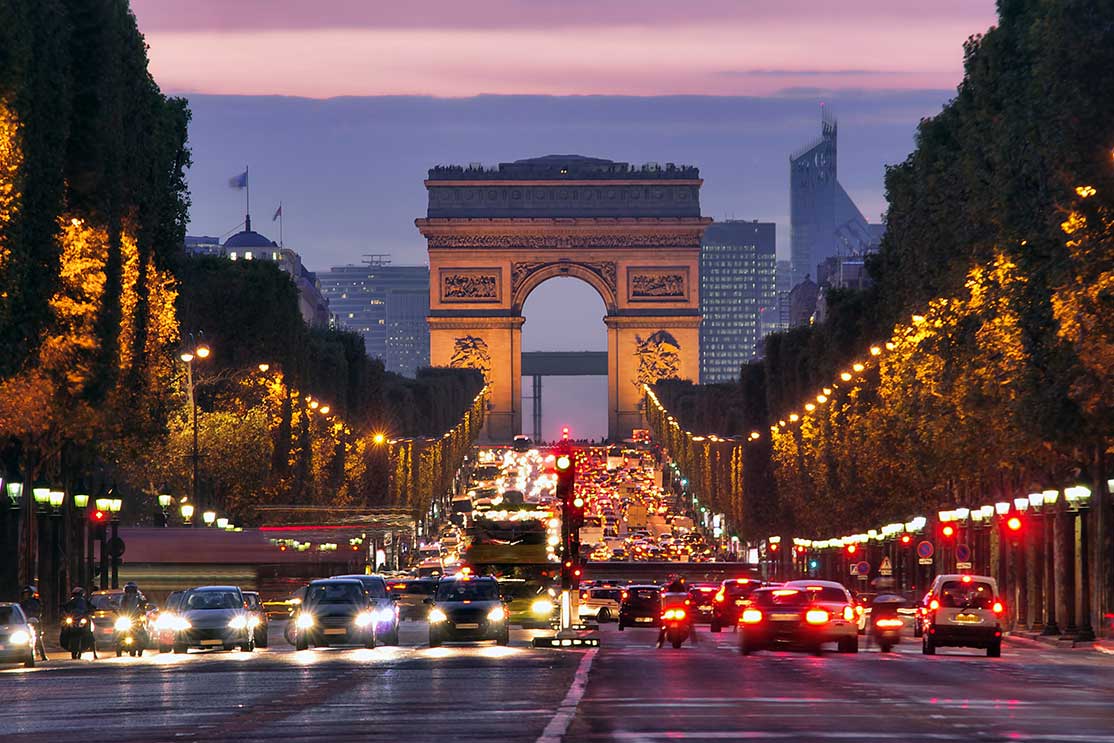
So get your permits, do your research and of course, have fun.
Safe travels!
While an international road trip may be a dream, there are plenty of options closer to home. Click here to read WhichCar’s selection of romantic drives in Australia.
Mercedes-AMG’s upcoming hotter GT will be dressed in air-hungry aero, as new photos reveal.
Tobias Moers, boss of Mercedes-AMG, has said the firm wants to extend the AMG GT range, and such plans looked to be moving forward when a disguised GT was spotted at the Nurburgring earlier this year.
However now we’ve been treated to a peek of another GT development vehicle, thanks to spy photos from Autoexpress, and this time the mule wears a much more focused outfit than any before it.
First off you might notice this car has one exhaust outlet, instead of two, and it’s plugged right in the middle of the GT’s butt. This has allowed AMG to whack a serious looking diffuser in the rear bumper, and suggests AMG wants to prioritise grip over grunt on the rear axle.
Flanking the mule’s rear window is a large wing. Like the Edition 1’s item, its fixed mounts hint at a more focused approach to performance, while its air-dragging angle and wider length further define the hardcore personality of this mule.While it’s known Moers wants to save the Black Series name for only Affalterbach’s highest offering, which suggests this mule may be named differently, the scooping flics on the mule’s front bumper are largely reminiscent of the circuit-hungry SLS AMG Black Series’ items, likely to help increase front axle downforce without the use of a kerb-vulnerable splitter.
Down the car’s sides are large five-spoke wheels, wrapped in Michelin rubber, that cage whopping carbon-stoppers and drilled discs.
As for what lurks in between its front wheels, the pictures don’t reveal too much. However Moers has revealed that rather than concentrate on power, AMG is looking to refine other areas of its vehicles. So it’s likely will see a tickled 4.0-litre twin-turbo V8 in the C63 when the car is revealed late 2015.
More photos of the Mercedes-AMG GT mule can be found at Autoexpress
Get your free weekly report from the world of fast cars – subscribe to the MOTOR newsletter!
This might come as no surprise to many of you, but the new Ford Mustang GT does a wicked burnout.
It’s not big, it’s not clever, but you can’t help but smile when Ford’s new pony car uses its 303kW/525Nm 5.0-litre V8 to turn tyres to atoms.
It’s a process made all the easier by the standard-fit ‘line locker’ function, which allows the rear tyres to turn freely while the fronts remain stationary.
Thanks to David Roscio and the crew from Adelaide-based outfit Streetfighter, we’ve had exclusive early access to the new Mustang, which you’ll read about in our next issue.
To see the new Mustang take on Holden’s SS V Redline on the quarter mile, click right here.
Get your free weekly report from the world of fast cars – subscribe to the MOTOR newsletter!
One could be forgiven for thinking four-wheel driving is an easy and inexpensive way to travel. Most drivers have taken their cars onto unsealed roads at some point and labelled it ‘off roading’. But there’s a lot more to four-wheel driving than jumping in a big car and driving away from the blacktop – and it’s certainly not cheap.
So it was time I kicked off my heels, strapped on my driving boots and joined a group of new Toyota Land Cruiser Club (Victoria) (TLCCV) members for the club’s driver awareness course. With limited four-wheel driving experience, the program was the perfect opportunity to see just what happens on a 4X4 beginners course and how much this fun-loving city chick could learn in just one weekend. And as I discovered, there was plenty!
The TLCCV course was conducted in two parts – a three hour theory night and a two day jaunt at the club’s property in Yarck, about two hours north-east of Melbourne. It was like learning to drive all over again, only there’s a lot more to four-wheel driving than ‘green means go’ and ‘red means stop’.
For those with little or no four-wheel driving experience, the terminology sounds like a foreign language – cross axle, diff lock, LSD, wind up, full-time, part-time, hubs, ruts, corrugations, and whoop-de-doos. Huh? A ‘Dummies’ Guide to Four-Wheel Driving’ would have come in handy. Thankfully, by the end of theory night, the lingo started to make sense.
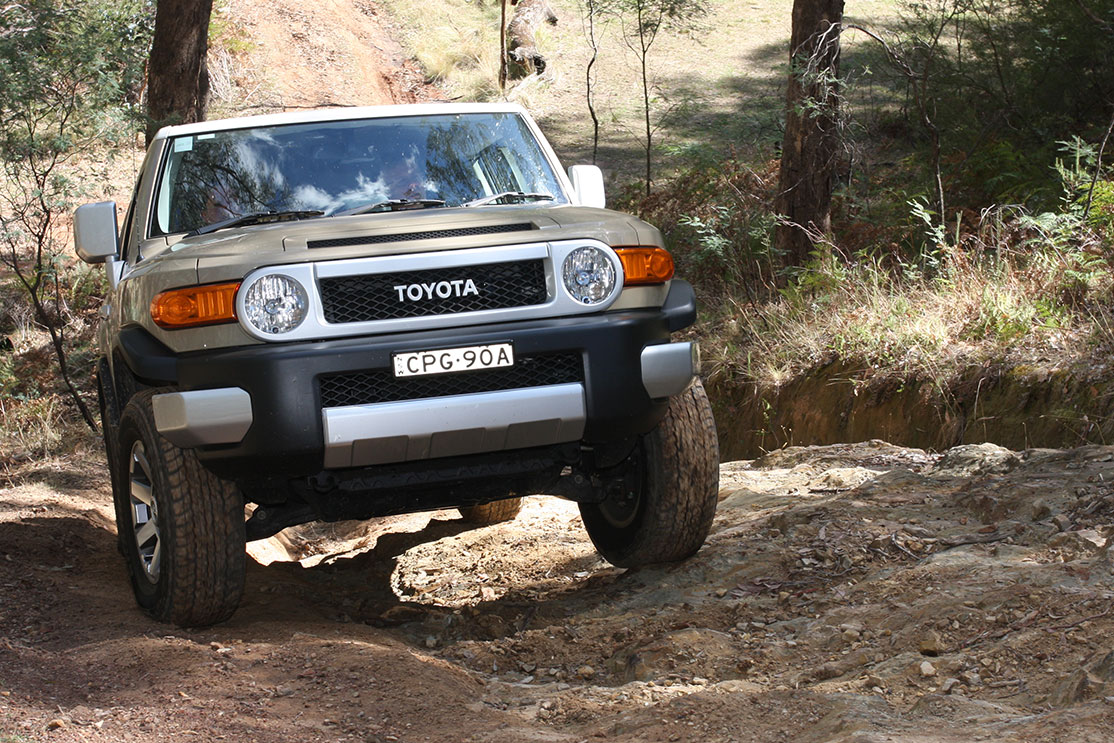
This first night acted as a prelude to jumping behind the wheel of a 4WD, and it gave a good indication of what to expect when venturing off the beaten track. The mechanics of the vehicle and the driving methods for hill descents and ascents, crossing slopes, various terrains and recoveries were all included in the session. So, with our brains overloaded with off-road know-how, it was time to put the new information into practice.
Six vehicles attended the practical weekend at Yarck, including our press car, a Toyota FJ Cruiser. Driving into the property didn’t look too overwhelming and the tracks looked simple – unsealed roads and no sign of rain, a beginner’s dream.
After spending the night on the property, it was rise and shine early Saturday for a quick briefing followed by vehicle inspections. A Prado and a Troopie were driven onto a hoist so we could check out the underside – a view of a vehicle most of the attendants had never seen before. Uh-huh, so the wheels are connected to the axles which are connected to the drivetrain. Got it! Following a demonstration of a winch and strap recovery, it was time to ‘hit the slopes’.
Standing at the bottom looking up at a steep hill is quite daunting for the inexperienced. One by one, each vehicle conquered the mounds, and confidence levels grew. Most students even attempted the frightening Whoopsey, an optional steep, rutted track. Then it was my turn. As the FJ’s nose protruded over the hill, the ground disappeared for what felt like hours, and my heart sunk with it. I started to wonder if I was actually driving Chitty Chitty Bang Bang – at least, I hoped I was because that car could fly. But what goes up must come down and I knew at any moment the nose of my car was about to dive.
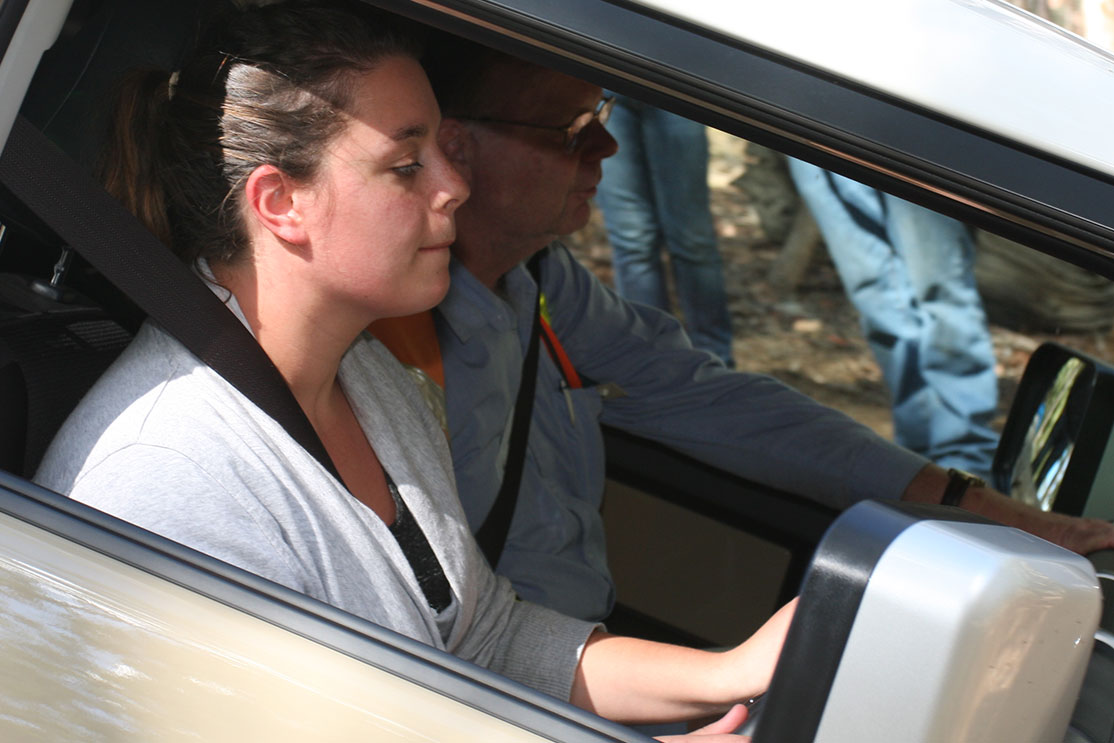
There was a lot to think about and my brain went through the process – don’t get your wheels stuck in a rut, try to keep the car as level as possible, break with your left foot, accelerate slowly with your right foot, don’t over steer, diff locks, low range. Don’t… lose… control. Help! Bang, the wheels hit the ground and then, before I could go through the list again, it was over. It wasn’t too frightening after all. Let’s go again.
Suddenly, having conquered Yarck’s Everest, everyone was eager to move on to the following challenges – ruts, steep hills, whoop-de-doos, bog holes, water crossings and sand driving. Four-wheel driving was not as simple as many of us had believed, but thankfully, with the aid of our experienced instructors, nothing throughout the day was too overwhelmingly frightening – well, that was until Mother Nature played her hand.
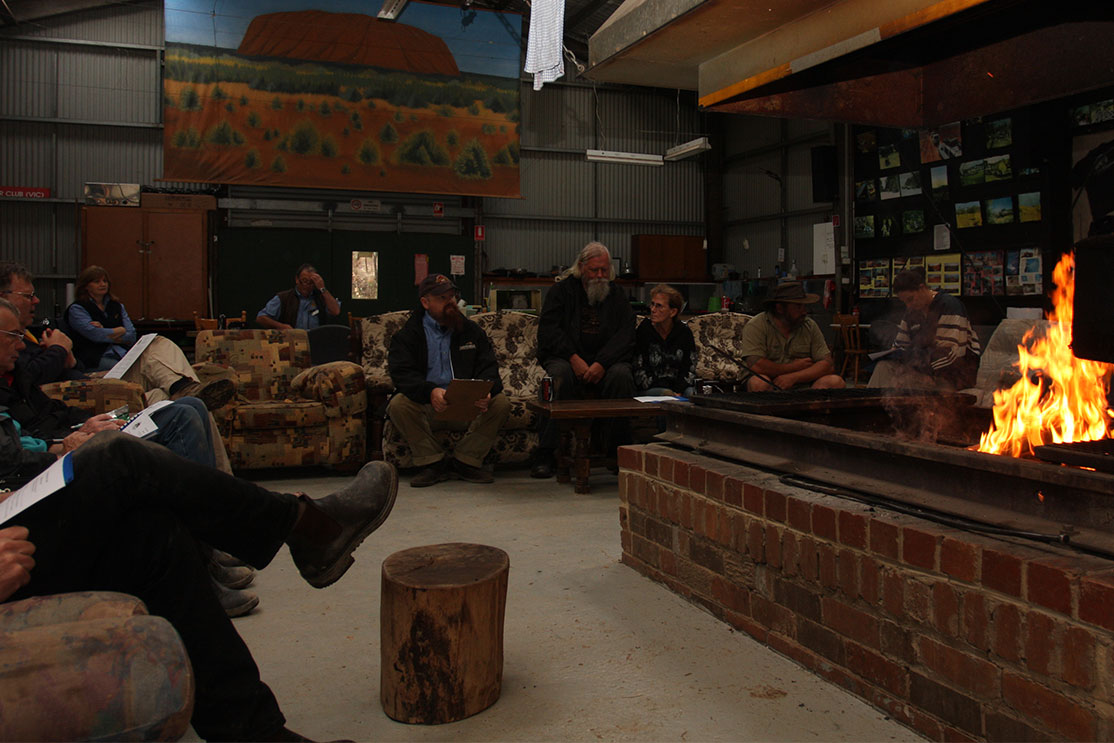
Sunday morning greeted us with the sound of rain and thunder, fused with flashes of lightning. The wet weather dampened our excitement as the roads became more like Slip ‘n Slides than beginner 4WD tracks. This was both a blessing and a curse, as it hardened the sand but cut up the tracks.
The eternal optimist in me figured it was a good opportunity to improve my skills in different weather conditions. The coward in me disagreed.
The wet weather certainly threw a spanner in the works. The tracks were slippery, steering was harder and if we thought the slopes were difficult before, well driving them in the mud was a whole new ball game. When losing control of a vehicle, our instinct is to brake, but everything you ever learnt goes out the window when wet weather arrives. Word of the wise, if you are driving downhill in slippery terrain, do not brake. Use your gears to slow down the car because when those wheels lose traction and lock, you’re in for one hell of a ride.
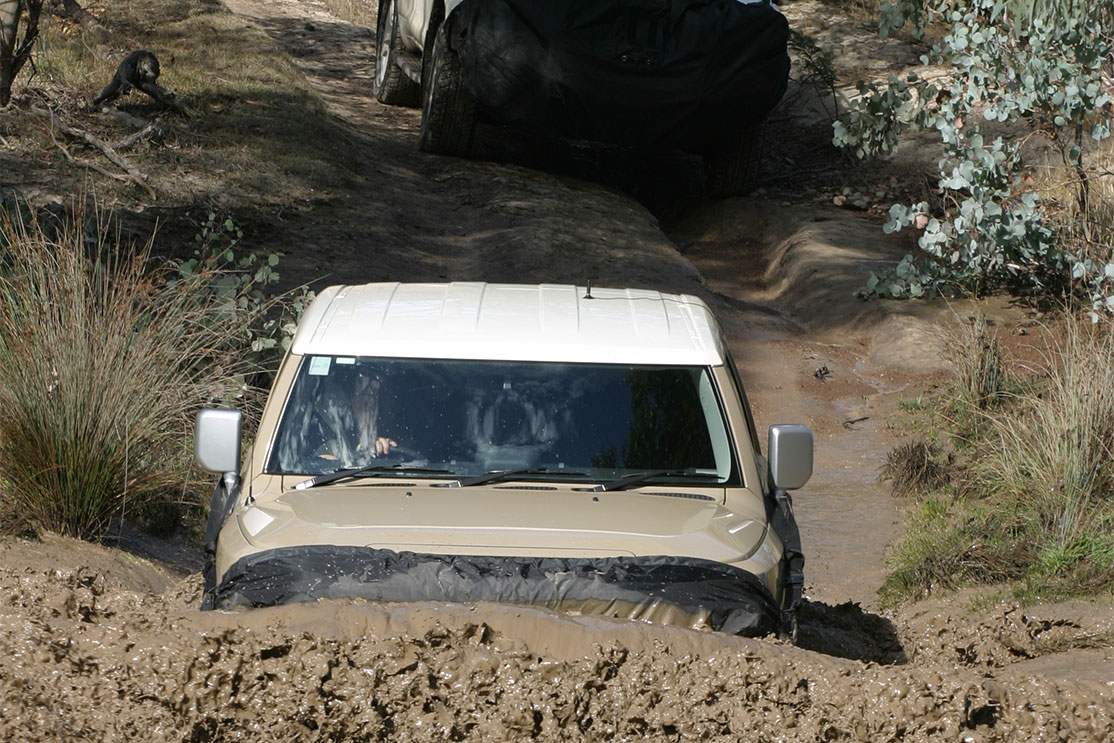
By the end of the weekend, the member who asked: “What do you do about the thing, when the other thingy gets caught in that, you know, thing?” was talking like a pro, and the lady whose hands were shaking with fear every time they called her name started discussing future trips to the Red Centre. Those of us who walked in with no idea drove away still inexperienced – and maybe a little bit hesitant – but more confident and excited to travel the roads ahead.
Not only is a four-wheel drive training course an opportunity to meet some new, like-minded people – and have a lot of fun on a maintained course – but it teaches (almost) everything you need to know about off roading. Even when Mother Nature unleashes her wrath.
For more on the Toyota Land Cruiser Club’s driver training programs, go to TLCCV.com.au.
This article was originally published in 4X4 Australia July 2014.
The most popular passenger car in Ford’s range costs more to get into, drops dual-clutch transmissions but offers better value where it matters.
THE 2015 Ford Focus has had its range shrunken, with fewer variants, just one all-new turbo-petrol engine, and no more diesels and dual-clutch transmissions.
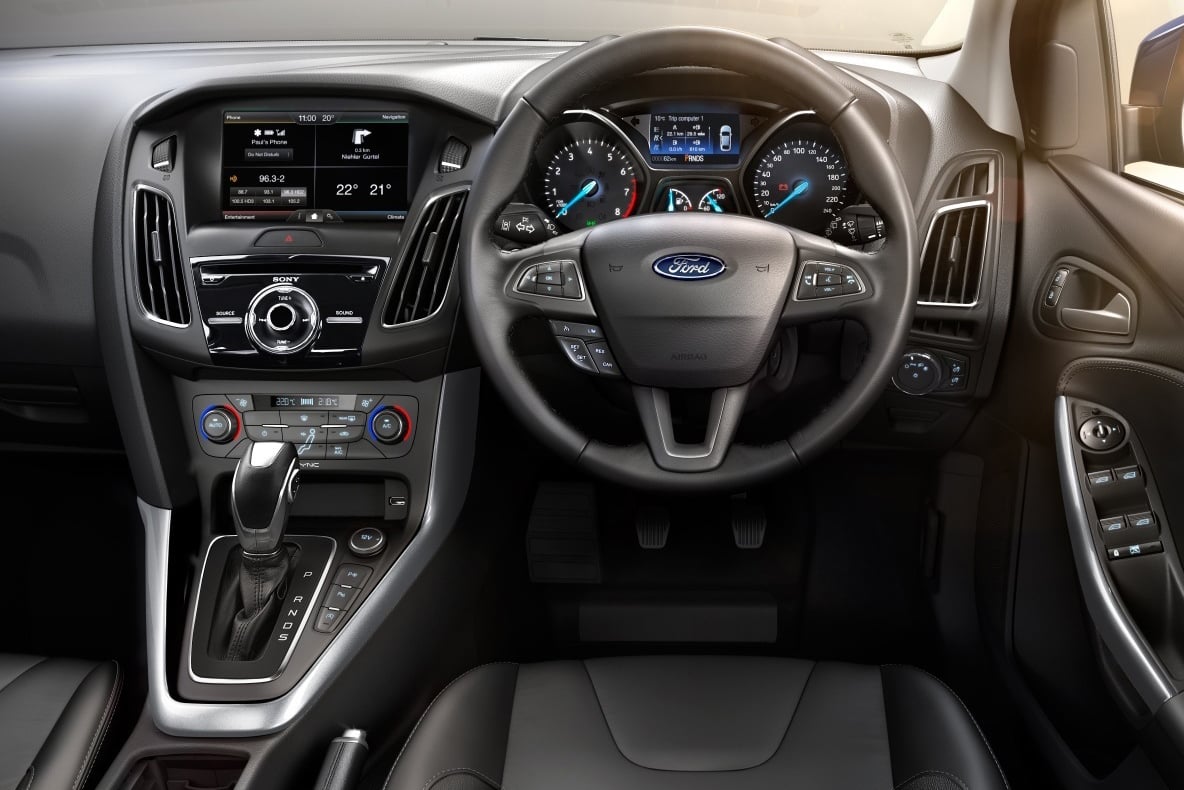
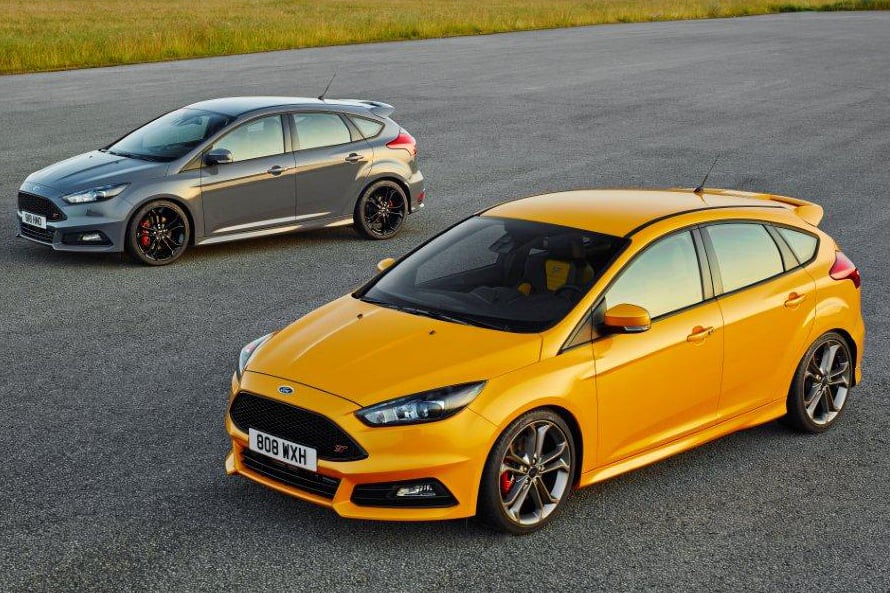
On sale from October brandishing sharper front and rear styling, a much smarter dashboard design, improved dynamics, standard-fitment touchscreen with sat-nav and rear camera, as well as additional safety tech, the mainstream LZ-series model from Thailand joins its recently released, German-built Ford Focus ST hot-hatch sibling in becoming a more targeted proposition against bestsellers like the Mazda 3 and Volkswagen Golf.
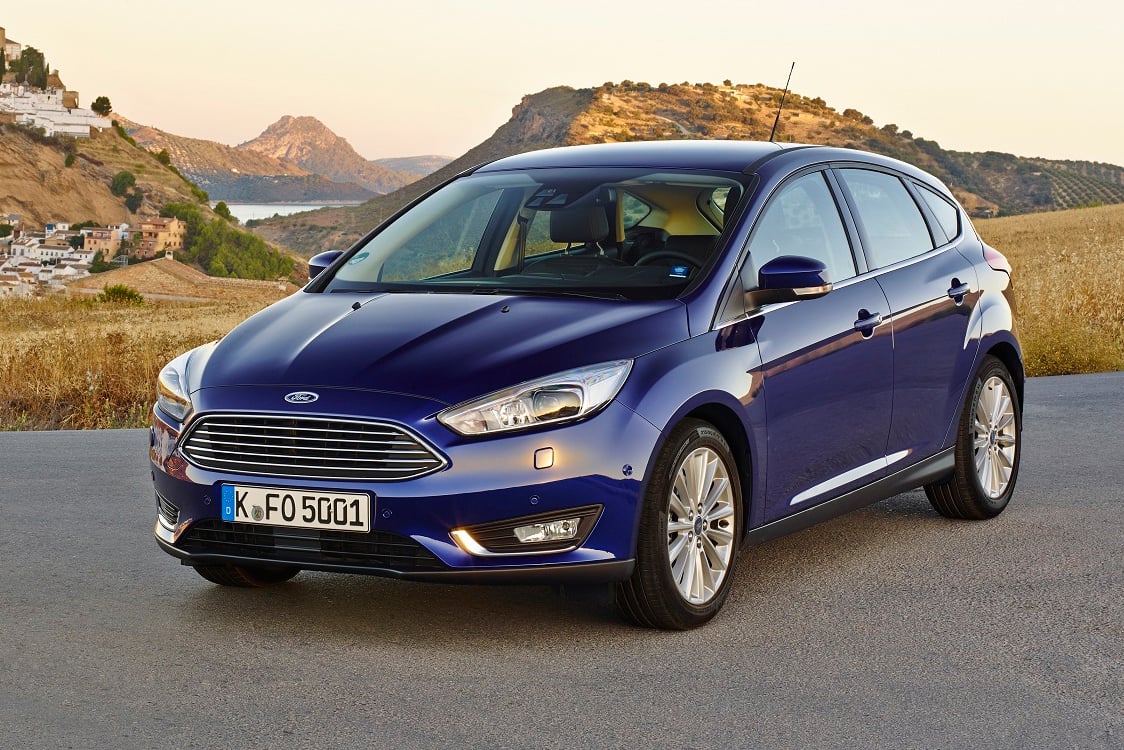
This means the disappearance of the base-level Ambiente (starting from $20,290 in the outgoing LW Series II range), for the $23,390 LZ Trend, making entry into Focus $3100 more expensive than before.
However, what Ford should be shouting from the rooftops (but isn’t, strangely) is the fact that the Trend automatic that is expected to snare more than one-in-two 2016 Focus buyers now costs just $100 more than before despite the big equipment hike, thanks to a switch from the old Getrag-designed Powershift six-speed dual-clutch transmission to a more conventional six-speed torque-converter unit. Going auto now adds only $1000 rather than $2200 to the bottom line.
This is on top of extra performance and economy gained by the move to a new 132kW/240Nm 1.5-litre four-cylinder EcoBoost turbo-petrol four-cylinder engine (similar to the one seen in the latest Ford Kuga SUV), which replaces two older naturally aspirated units – the Ambiente’s sweet old 92kW/159Nm 1.6 and 125kW/202Nm 2.0, as well as the ageing 120kW/340Nm 2.0 TDCI turbo-diesel.
In the Trend, the average combined fuel-consumption figure drops from 7.2L/100km to 5.8L/100km (auto: from 6.6L/100km to 6.2L/100km). As before, 95 RON premium unleaded is the minimum brew.
Additionally, all manual gearboxes are now of the six-speed variety – a Focus-first – building on a raft of improvements to the LZ range that sees a stiffer McPherson-type strut front-end, revised shock absorbers, retuned electric rack and pinion steering and a recalibrated stability/traction control system. All aim to enhance the small Ford’s dynamic capabilities.
Still on engineering advances, Ford’s speed/audio volume-restricting MyKey tech has been adopted for Focus, while the flagship Titanium (which actually now costs $300 less than before) also scores Rear Cross Traffic Alert and Blind Spot Detection tech, as well as upgrades for the Active City Stop collision avoidance and Active Park Assist.
However, Ford still has not democratised these safety systems to all Focus buyers, since they’re only fitted to the Titanium.
“We’re rebuilding the brand from the bottom up,” brand communications manager, Neil McDonald, told Wheels. “This is about pitching the car where we think the customers are, and the Trend is the volume model. Year-to-date, the Ambiente has only represented about 10 per cent while the Trend is up to 60 per cent of Focus volume. So adding more features to Trend, Sport and Titanium is the way to go. Clearly that customer is seeking more features. That’s the feedback we’re hearing.
“Also, with a $3500 premium, diesel take-up is less than three percent… and with the EcoBoost, we’re seeing far more efficient engines coming through, with significantly greater torque coming at a lower rev point.”
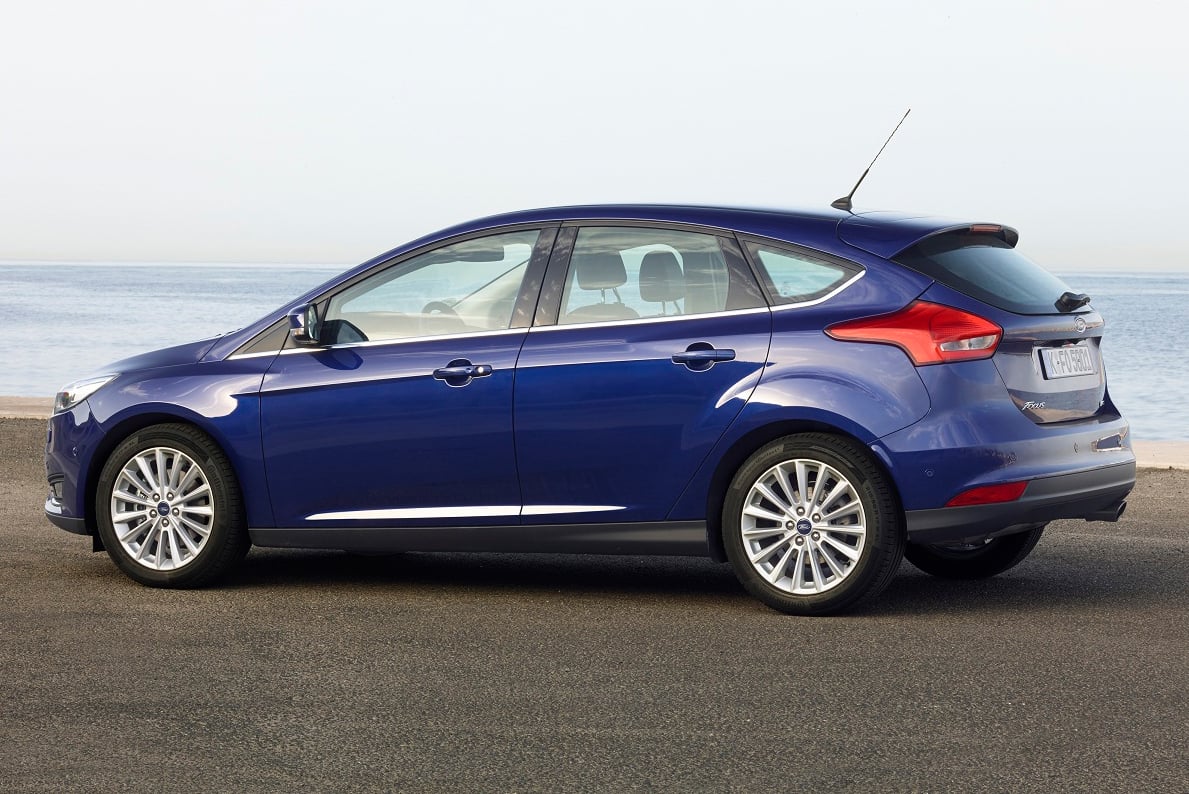
First seen in the LZ Focus ST facelift in April, the modifications run deeper than just new lights, grilles and bumpers, incorporating sheetmetal changes to the bonnet and front mudguards, as well as redesigns to the tail-light shapes, tailgate, and valance areas.
The dashboard’s centre console has also been completely overhauled, with fewer buttons, the inclusion of a much larger touchscreen display, and the incorporation of SYNC2 voice-control multimedia functionality. A restyled steering wheel, better centre armrest, improved storage, and increase in noise-suppression sound-deadening material complete the main changes from LW II to LZ.
McDonald confirmed that no Focus wagon or smaller 1.0L EcoBoost are available to Ford Australia due to their European rather than Thai factory sourcing, meaning the LZ will remain a five-door hatch or four-door sedan proposition.
2016 Ford LZ Focus prices
Trend 6MT $23,390 (+$1100)
Trend 6AT $24,390 (+$100)
Sport 6MT $26,490 (+$600)
Sport 6AT $27,490 (–$700)
Titanium 6AT $32,690 (–$300)
Sign up here to receive the latest round-up of Wheels news, reviews and video highlights straight to your inbox each week.
V8 Supercars will drop the first part of its name within two years, allowing more engine and body configurations to compete in the local racing series.
V8 Supercars CEO James Warburton officially confirmed the move when announcing the “first draft technical regulations” of the 2017 Gen2 Supercar program at the weekend’s racing in Townsville.
While Gen2 will allow four-cylinder and six-cylinder engines to join the eights, to keep an even playing field they will need to comply with current power, mass and even noise requirements – just to ensure another Godzilla doesn’t again come in and stomp over an Aussie eight.
The donks will need to produce no more than 635bhp (474kW), rev no higher than 7500rpm, place at least 200kg over the front wheels and deliver no fewer than 85 decibels in a bid to keep the racing loud. To these specifications, V8 Supercars is developing its own twin-turbo V6 engine to compete from mid-2016.
Of course, every engine will still need to direct its power to the rear wheels.
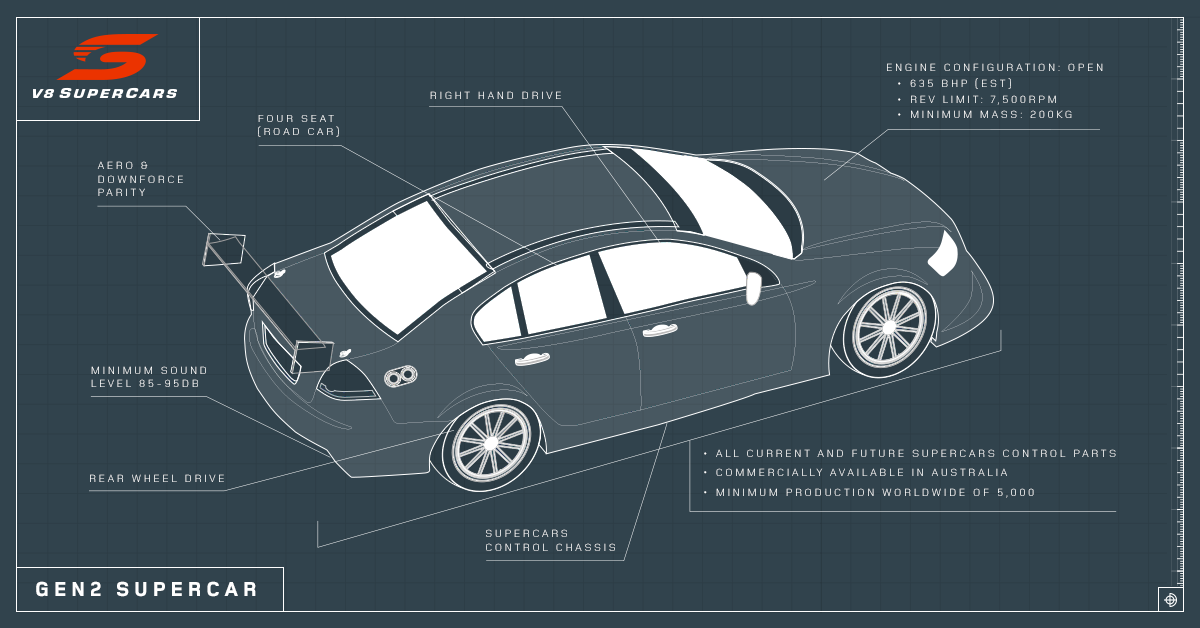
Warburton admits that while the V8 engine is expected to be the dominant source of power, and current players are likely to continue using sedans, the decisions around Gen2 are designed to lure in more manufacturers to the series.
“From our many discussions it is crystal clear manufacturers want to go racing with their DNA embedded on the inside and outside of the car they choose to race,” he said in a statement.
“They want to use their engine technology and body aesthetics. These regulations allow for that over time without forgoing the promise of fast, fearsome and loud touring cars.
“We want to grow our fan base and having one or two more brands on top of our existing brands would be an ideal outcome over time.”
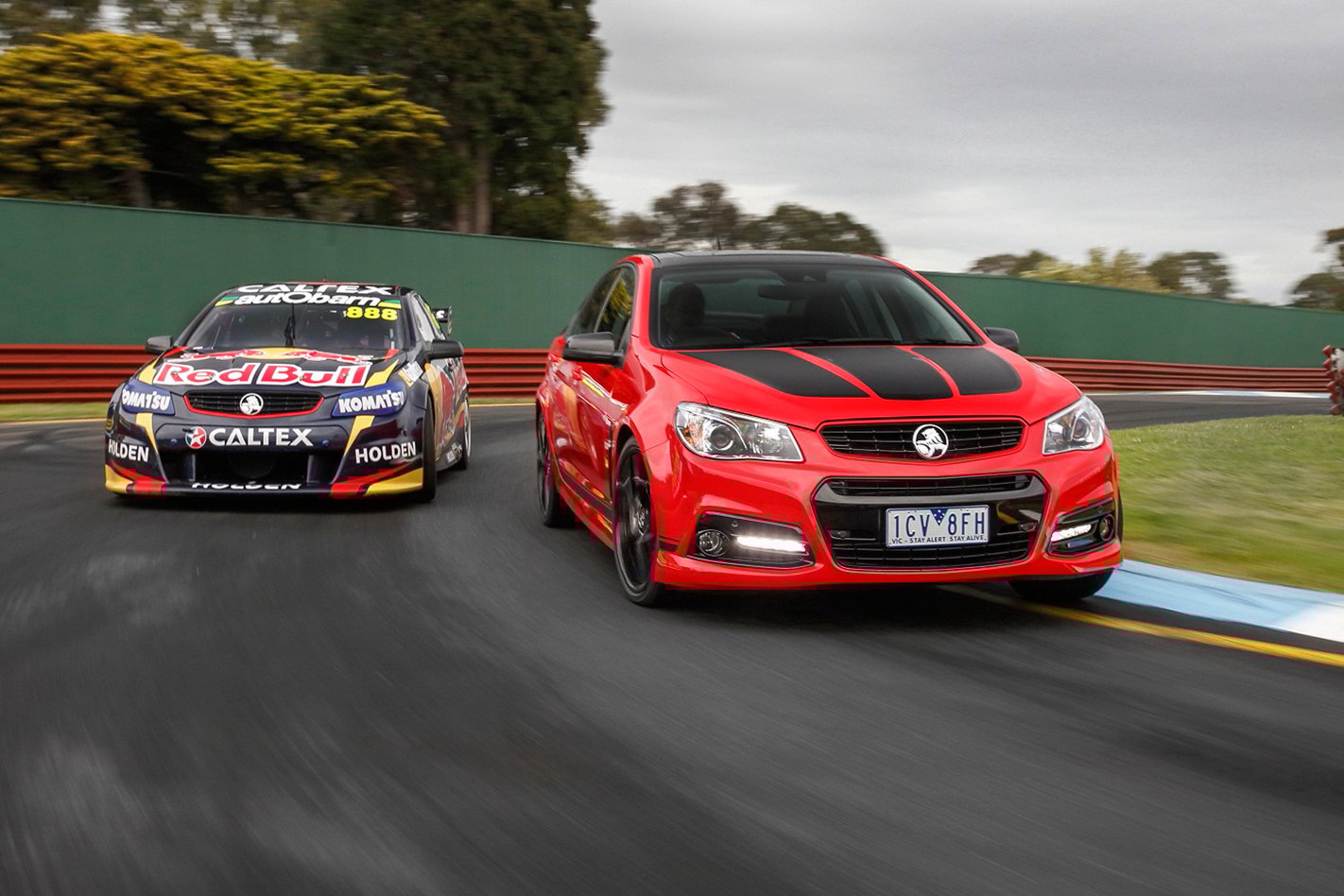
“The landscape has changed fundamentally,” confesses Warburton.
“We have to look for relevance. There’s no manufacturing here in Australia and what it [Gen2] does is it rips the garage door off and allows teams and manufacturers and really our fans to be accessible in terms of what we’re putting forward.
“Quite frankly the Gen2 supercar regulations are going to future proof our sport”.
