An electric blower may sound like something an Audi TT owner would use, but it’s an electric compressor that makes the Audi TT Turbo Concept a seriously fast compact coupe.
Basically, take one 2.5-litre turbo five-cylinder engine from the new Audi RS3 (and forthcoming Audi TT RS, presumably) and inject micro-hybrid technology.
Adding tiny lithium-ion batteries and a 48-volt electrical system that is around four times the voltage of a regular car means allowing a compressor to instantly build boost pressure to feed the engine when you touch the throttle. Even the best turbos still have lag, but an electric compressor doesn’t. You can then tune the mechanical turbocharger to make big boost at the top end because the compressor will more than fill in the gap down low.
The result? 441kW and 650Nm in a 1396kg, carbonfibre-reinforced polymer package, driving all four wheels via a six-speed manual transmission with a cool R8-style H-gate pattern.
Torque is produced between a staggering 3000rpm and 7000rpm, with a resulting 3.6sec 0-100km/h sprint and 310km/h top speed.
Thankfully that manually adjustable rear wing, 20-inch tyres and carbon ceramic brakes help when you want to go the other way (and the brakes furiously recharge the compressor’s batteries).
The electric compressor is far from a production pipe dream. Audi has shown the technology on the RS5 TDI concept before, and it is headed to production with the Q7 SUV. The Audi TT Turbo Concept is the first time the tech has been shown with TSI petrol power, and the combination of high-revving petrol engine and instant off-the-line boost sounds even tastier.
Time to blow away the stereotypes of both this Audi coupe and electric tech – this looks like a proper sports TT, with electric tech that’s more LaFerrari than Prius.
Get your free weekly report from the world of fast cars – subscribe to the MOTOR newsletter!
Forget Formula One, only a Top Fuel drag racer would have a chance.
The footage above is from the European Slot Car Championship finals, held in Finland.
The action starts at 41 seconds in and has to be seen to be believed.
The trouble is, you can barely see anything, as the cars are just nondescript blurs.
How anyone figures out who is winning or how many laps have been completed is beyond us, as the lap times hover around the two-second mark. Two seconds!
Our thoughts go out to the poor people that have to return crashed cars to the track, as despite being small, when moving at the speed of light surely even these little slot cars would leave quite a bruise.
Get your free weekly report from the world of fast cars – subscribe to the MOTOR newsletter!
Details have leaked in the US regarding the power outputs for the forthcoming BMW M2.
US outlet Car and Driver reports a contributor to BMW forum 2addicts.com has revealed the final production outputs for the new baby M-car.
An uprated version of the M235i’s N55 turbocharged straight six is expected to power the new M2 with outputs of 270kW/465Nm.
While those outputs are currently not confirmed, it would land the car nicely between the 240kW/450Nm of the M235i and the full-fat 317kW/550Nm offered by the M3 and M4.
That should be sufficient to launch the car from 0-100km/h in 4.5sec and on to a governed top speed of 250km/h.
While power will not increase massively over the current M235i, the chassis will receive a thorough going-over, with revised suspension, larger brakes and lightweight body panels.
The M2 has yet to be officially confirmed by BMW, it’s expected the car will appear at the Frankfurt Motor Show ahead of an overseas debut in late 2015.
We’ll bring you more news as it comes to hand.
Get your free weekly report from the world of fast cars – subscribe to the MOTOR newsletter!
BMW says its 3 Series sedan and wagon range will remain its most important model, despite buyers in key markets swinging their preference to higher-riding SUVs.
China, second only to the US in BMW sales for 2014, has started seeing a shift from sedans towards SUVs, with 3.82 million sold there last year. So, too, has Australia, where SUV sales are expected to surpass passenger sedan and hatch sales as soon as 2017.
Still, the company says that the 3 Series will remain Top of the Pops for some time yet. As BMW celebrates the 40th anniversary of its traditional bestseller at the launch of the 2015 BMW 3 Series in Munich this week, it says that the 3/4 Series range will remain its most important model range, despite undeniable SUV sales momentum.
“Clearly, it’s over 25 percent of our sales on this one model range; the sedan segment and derivatives that we have of it are still very, very strong sellers around the world,” Dr Ian Robertson, BMW’s sales and marketing boss, told Wheels at the 40th anniversary celebration at its Munich HQ.
“SUVs of course have been added in recent years and we enjoy a lot of success there as well, but I don’t think the sedan segment is fading in relation to SUVs, I think both segments have been growing also,” he said. The 3 Series will be offered in 130 countries, but the US and China will swallow 50 percent of the total supply.
When asked if it will still be the brand’s poster child in a decade’s time, BMW’s head of mid-size vehicles, Christopher Wehner, was adamant it would. “Definitely it will be,” he said. “Even longer … and in China as well. China is about 50 percent sedan sales, and while it has changed a little to SUVs, the sedan will be the most important concept.”
In Australia, private SUV sales for the first four months of this year are up 15.7 percent against 2014, yet for BMW the top-selling model is still the 3/4 Series. Its top-selling SUV, the BMW X5, has sold only one-third of the amount of 3/4 Series models, with 1272 units against 2298. Similarly, the Mercedes-Benz C-Class is the brand’s best seller here, while the Audi A3 holds the number one position for the Ingolstadt-based brand.
BMW’s arch-rival, Mercedes-Benz, has launched a slew of SUVs in direct competition to the Munich maker’s range; the latest Mercedes-Benz GLC Coupe is a direct alternative to the BMW X4 SUV, while German brand Volkswagen has pointed to its delayed entry into a variety of SUV segments for its poor sales results in North America.
Sign up here to receive the latest round-up of Wheels news, reviews and video highlights straight to your inbox each week.
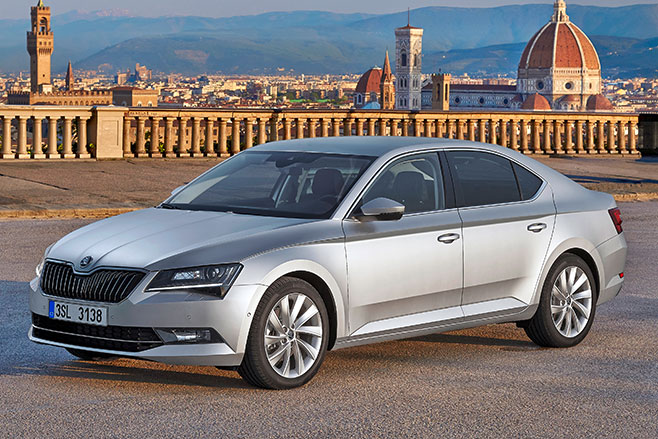
THE latest Skoda Superb is the third-generation version, based on the upcoming Passat. Out goes the dowdy styling and in comes a sleek, spacious and ultra-smooth hatch-backed sedan that deserves to make a massive splash when it (finally) surfaces in early 2016.
WHAT IS IT Based on the upcoming Volkswagen Mk8 Passat, the Superb is a five-seat liftback aimed at the large and upper-large segment. A 2.0-litre four-cylinder engine will power all three variants in either diesel or petrol guises, with front- and all-wheel-drive options. Value, luxury, and efficiency are this Czech upstart’s calling cards.
WHY WE’RE TESTING IT With the Ford Falcon and Holden Commodore as we know them fading fast, there will be a call for large family-sized sedans and wagons to fill their void – which is where the Mk3 Superb will step in. The Skoda is in some ways a more beguiling alternative to the equally new Volkswagen Passat, with the potential to give the Wolfsburg-based mother company headaches.
MAIN RIVALS Holden Calais/Caprice, Ford Falcon, Chrysler 300, Hyundai Genesis, Volvo S80, Mercedes E-Class, Audi A6, Volkswagen Passat
THE WHEELS VERDICT Skoda is deadly serious with the upcoming Superb. No longer the ugly duckling to the over-achieving Volkswagen Passat, the third-generation Czech-built large car will arrive with value, stacks of standard kit and a level of design and quality to raise eyebrows among rivals pitching similarly sized, but far-more expensive, premium and luxury sedans. Mark our words – the Superb punches above its weight.
PLUS: Elegant design, cushy ride, punchy engines, quiet cabin, massive interior MINUS: Dull steering, fat pillars, derivative dash, hard middle rear seat
THE WHEELS REVIEW WOLFSBURG, you have a problem.
The original 2001 Skoda Superb – also Volkswagen-derived – was a Europe-only toe-in-the-water exercise, leading to the retina-searing second-gen “sedan-back” oddball that since 2009 has skulked along on the outskirts of Australian motorists’ consciousness like a misunderstood motorised Quasimodo.
Not for much longer. Come next March, the far-sleeker Mk3 version will slink into view, looking like a Bohemian Brad Pitt alongside his Deutsch Doug Pitt sibling. In proportion at last, Skoda leverages the upcoming VW Passat’s MQB-B architecture, bringing the Superb a longer wheelbase and wider tracks, boosting space and exorcising unsightly overhang.
Shorter than a Holden Commodore, the Skoda Superb boasts Holden Caprice levels of rear-seat legroom, aided by huge doors and supportive outboard seats (though the middle one’s high and hard) that lend a sense of space. Limo owners, take note.
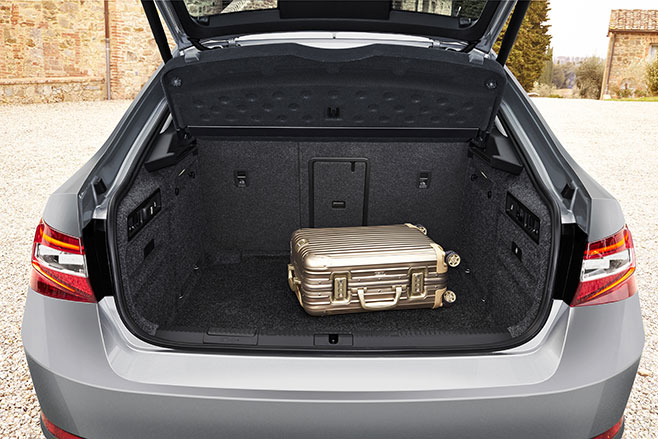
Meanwhile the 625-litre boot – accessed via a now-conventional, rather than the oddball “Twin Door” sedan-cum-hatch tailgate – is vast enough to be dubbed a basement. Folding the backrests liberates a mammoth 1760L. Some variants offer electric opening with remote foot actuation.
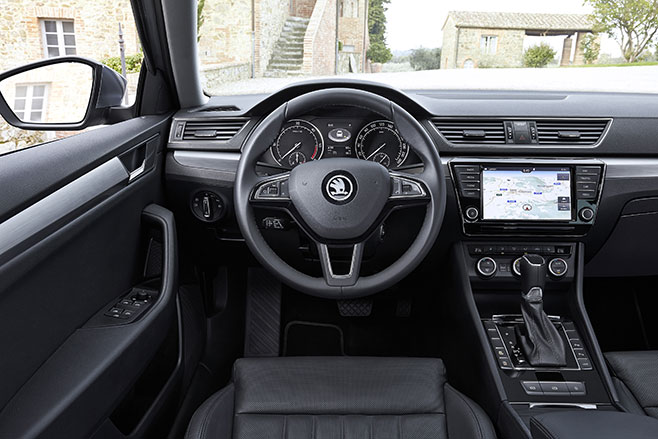
Too bad about the inspiration-free “dash-bored”, though. Yes, it has presence, is painstakingly crafted and is utterly functional – from the clear analogue dials and simple multimedia interface, to logically sited controls – but it’s just so Volkswagen Golf-like. The Mirrorlink connectivity, at least, keeps it feeling contemporary. What personality there is – such as the two Skoda Superb-signature umbrellas built into the doors and brilliant angled, Velcro-held plastic luggage holders – are out of sight. We’re no fans of the vision-vexing thick pillars, either.
Three 2.0-litre direct-injection four-cylinder turbo engines are coming, with two – a 140kW TDI diesel and 162kW TSI petrol – driving the front wheels via a six-speed DSG dual-clutch transmission. The flagship 206kW TSI 4X4 petrol is also a DSG, but in concert with a Haldex coupling capable of shuffling almost 100 percent of torque between each axle to improve traction. With power and efficiency improving by up to 20 and 30 percent respectively, the old V6 is history.
That’s no loss, for even the 140kW/400Nm 2.0 TDI is impressively muscular, stepping off the line quickly and cleanly, and picking up the pace with effortless promptness. Ours was fitted with a fine six-speed manual gearbox, yet there was still enough torque elasticity for low-speed, top gear crawling. The 0-100km/h sprint is 7.7secs, and its 4.5L/100km average appears achievable.
But as smooth and hushed as the diesel is, it is the revvy 162kW/350Nm 2.0 TSI – the expected bestseller – that is the more rousing performer, pulling away with robust yet refined determination, belying its 1.5-tonne mass to feel like a smaller and sprightlier thing, accompanied by a slick and intuitive shifting DSG.
Best of all is the 206kW/400Nm 2.0 TSI 4×4, dishing out its speed stridently from practically zero revs, despite a 100kg weight penalty. A rapid 5.8s to 100km/h isn’t shabby. On a rainy, high-speed stretch of serpentine autostrada, the Skoda Superb flagship stuck steadfastly to the road below with silky insouciance.
However, the Skoda Superb’s dynamics are dulled by overly light and feel-free steering. Otherwise, the Skoda delivers satisfyingly agile handling, combined with controlled cornering and a pleasingly supple (and quiet) ride quality, even on 18-inch wheels – though every example we drove also featured the optional DCC adaptive dampers. Unlike in most Skoda Octavias, all models include a multi-link rear end.
With pricing set to straddle the $40,000 to $65,000 sphere, large-car buyers are in for a treat. Skoda reckons the Mk3 Superb represents a new era for the brand from Mlada Boleslav. Ingolstadt, Stuttgart and Gothenburg also ought to be worried. VW may have made its Czech marque simply too clever.
SPECS Model: Skoda Superb 162kW 2.0 TSI DSG Engine: 1984cc 4cyl, dohc, 16v turbo Max power: 162kW @ 4500-6200rpm Max torque: 350Nm @ 1500-4400rpm Transmission: 6-speed dual-clutch Weight: 1505kg 0-100km/h: 7.0s Fuel economy: 6.2L/100km (Euro cycle) Price: $45,000 (approx) On sale: March 2016
THE new 2015 BMW 3 Series has been shown at a special event in Munich, Germany.
The mid-life update of the Audi A4 and Mercedes C-Class rival was revealed to journalists with confirmation of a three-cylinder engine as well as a new more affordable hybrid model to follow in 2016. “We are absolutely confident that the new vehicles will provide further momentum for our global sales,” said BMW board member and sales and marketing chief, Dr Ian Robertson.
The new 3 Series isn’t a step change, but a smart nip and tuck as you’d expect. The facelift of the F30 model, released in 2012, has been given new front and rear bumper and with subtle body tweaks. “When you’re asked to design the new 3 Series, it’s something one does as a designer with a lot of respect,” said BMW head of design, Karim Habib. “One thing we’ve tried intensively to do with the new 3 Series is to strengthen the aspect of precision.”
Up front there’s a new larger air-intake that allows the radar sensors to be hidden more effectively for a smoother look. “We’ve also made the line-work a little bit more technical, a little more precise,” said Habib. “The surfaces as well are a little more taught, so all-in-all just trying to strengthen the aspect of precision.
It’s at night that you’ll be able to spot the updated BMW 3 Series from the current F30 model. “We’ve really taken the design further with the headlamps; we have full LED headlamps, the first time on a 3 Series,” Habib said. “So you go away from the rings and tubes … the 3 Series was the first car in our line-up to connect the headlamps to the kidneys, but now we’ve connected it to the lights as well, so you not only connect the graphic but you also connect function.”
The light signature is also stronger at the rear, where there’s a new rear bumper with higher reflectors that are also further apart to give the 3 a wider stance while also differentiating between lower-spec and higher-grade models.
Inside, those open cupholders in the centre console have been blessed with a lid, smartening up the cabin, as has the replacement of matte finish for more gloss and chrome. New contour lighting and redesigned air vent frames wrap up the interior changes.
The biggest mechanical news is that the BMW 318i now comes with a 1.5-litre turbocharged three-cylinder engine that we’ve already seen in the Mini, and makes an identical 100kW/220Nm as the 1.6-litre turbo currently offered in the base 316i in Australia that it will replace.
The smaller unit brings several key advantages: the new engine produces its peak torque at lower revs, and its 9.1sec 0-100km/h claim is 0.1sec faster, while fuel economy betters the current model’s by 0.5L at 5.4L/100km for the eight-speed automatic.
It’s not the most efficient 3 Series though: at launch, the 320d EfficientDynamics boasts a 3.8L/100km claim for the automatic, a significant improvement over the current 320d’s best of 4.5L/100km. This model is not confirmed for Australia, but the regular 320d also has better economy, improving to 4.0L/100km.
Fuel economy has improved by up to 13 percent, and that average will get even better when the BMW 330e plug-in hybrid arrives in 2016 with a combined 2.1L/100km figure. That’s far more efficient than the six-cylinder ActiveHybrid 3, which was a technical showcase rather than a genuine eco-warrior with its 4.1L/100km figure.
The 330e will benefit from trickle-down tech from the BMW i division. It will be powered a 135kW four-cylinder engine, and an electric motor, for a combined 185kW output, with a 35km range on zero-emission electric power – a meagre 4km more than the forthcoming BMW X5 xDrive40e PHEV’s 31km.
The flagship 335i has been replaced by the 340i, with power increased from 225kW/400Nm to 240kW/450Nm and a corresponding improvement in acceleration, with 0-100km now in 5.1sec compared with 5.2sec.
Australian pricing and specification of the new BMW 3 Series facelift will be confirmed closer to its launch late this year, but if the Mercedes C-Class is anything to go by, expect prices to remain static, starting from $55,000.
The Isuzu D-Max X-Runner ute is thwarting Australia’s corps of motoring writers. We’re trying everything possible to get them hopelessly bogged on the beaches of Queensland’s Moreton Island, with visions of X-Runners bobbing out to sea to join the wrecks offshore.
It’s not that the D-Max is in any way unendearing, it’s just that Wheels has been invited to guinea pig one of Isuzu’s ‘I-Venture Club’ off-road driving adventures and we feel we owe it to the Japanese to plumb a level of boneheadedness that the public will be hard-pushed to equal.
You probably know the D-Max fairly well already. Powered by a gutsy 130kW 3.0-litre turbodiesel four that’s tougher than a $10 steak but no longer able to mix it with the likes of the Ford Ranger, this X-Runner version is a special edition. Isuzu is importing just 360 of them.
Of those, half will be Lapis Blue and the other half Pearlescent White. You’ll pay $51,990 for the privilege and Isuzu staffers are already wearing long face because they haven’t built enough. The last X-Runner edition quickly sold all of its 660 units. So far, so good.
But we’re really not here to talk about contrasting striping and decals, front and rear body kits, reversing cameras, alloy sports bars and tub liners. We’re here to see how well the D-Max copes with being driven into the Coral Sea. As the handbook advises that only the first 500mm of the Coral Sea’s depth should be negotiated, that plan is rapidly abandoned.
The generous approach, breakover and departure angles, the low-range transfer case and the 380Nm of torque that’s available from just 1800rpm make light work of the light sand trails on the island, traction assisted by dropping the Bridgestone Duelers to 18psi. The 225mm ground clearance is bettered by its Holden Colorado cousin and there’s no diff lock or hill descent control, although taking manual control of the five-speed Aisin auto ’box in low range means you won’t really need it. So capable is the vehicle that even sneaking it into rear-wheel drive mode will still see it tackle most of the sand trails: the only giveaway is a five-metre-tall rooster tail of sand. The handy shift-on-the-fly four-wheel-drive system means you don’t have to stop to incur the wrath of a man who’s been windscreen-wiping sand for a kilometre.
Some fellow motoring journalists are tapping the fascia with their knuckles, in order to gain a nuanced understanding of Isuzu build quality. They look unimpressed by the hard plastics, but the test of sending the D-Max clambering up a 50cm high sand ledge proved that it’s well up to snuff. The coil-sprung front and leaf sprung live axle rear end offer decent wheel articulation and despite the diff excavating a 30cm trench into the bank, it still emerges functioning exactly as originally specified. It also drives through quicksand without breaking stride and can sidehill to a 49-degree angle before it falls over. A Hilux is rated to 48 degrees before it does an impression of the Tirpitz.
The D-Max X-Runner is, annoyingly, a bit too capable for Moreton Island but those paying punters who do take theirs on an I-Venture Club event will probably be glad of that fact. It’s a smart move on Isuzu’s part, getting customers to see what their vehicles are capable of in the event that they might otherwise be diverted by something with more soft-touch plastics, a slicker infotainment system and a badge that wings in with a bit more clout.
All the basics are covered, from a rundown of the low-range transmission through to use of snatch straps and wading techniques – the sort of things we should know but might be a bit embarrassed to admit we don’t all fully understand.
The D-Max will never be the most glamorous ute but, as sales figures attest, Isuzu Ute Australia can’t get their hands on enough of the things. It’s easy to see the appeal of something this bulletproof and well-equipped. With updated Mitsubishi Triton, Ford Ranger and Toyota Hilux looming, the D-Max’s task is set to get a whole lot tougher.
SPECS Model: Isuzu D-Max X-Runner Engine: 2999cc 4cyl, dohc, 16v, turbodiesel Max power: 130kW @ 3600rpm Max torque: 380Nm @ 1800-2800rpm Transmission: 5-speed automatic Kerb weight: 1925kg 0-100km/h: 12.1sec (claimed) Economy: 8.1L/100km Price: $51,990 On sale: NowClick here to read the full range review of the Isuzu-D-Max
Who says you need petrol to go sideways? One of the benefits of electric cars is the massive slug of torque available as soon as you touch the accelerator pedal – ideal for drifting.
It seems Japanese drifting legend Nobuteru Taniguchi had the same idea when he rocked up to a Tokyo drift event in a Tesla Model S electric car recently.
The Model S P85+ Taniguchi is driving is powered by a 310kW/601Nm electric motor mounted on the rear axle. Some witchcraft has also been used to fully deactivate the Tesla’s stability control systems.
Normally the P85+ is good for 0-100km/h in 4.4 seconds with a range of around 480km, but it won’t be achieving those numbers in the hands of Taniguchi, who has a strong hatred for tyres.
Watch the video below to see the Model S doing a pretty decent job of drifting despite emitting nothing but tyre noises.
Get your free weekly report from the world of fast cars – subscribe to the MOTOR newsletter!
It seems that more and more performance cars are released every month, which luckily for us gives us plenty to write about!
Here’s a quick preview of what you can expect in this month’s mag, available in print at all good retailers or in digital form via iTunes or through Zinio, where you can currently subscribe for 12 months for $29.99 – that’s $2.50 an issue!
– In this month’s cover story, we talk to Australia’s top tuners about their big plans for the new Ford Mustang; expect plenty of big horsepower cars to appear shortly after the car’s arrival in late 2015.
– We pit the recently updated VW Polo GTI against Ford’s brilliant Fiesta ST to see which one wears the baby hot hatch crown.
– Speaking of hot hatches, we fly to Rome to experience Audi’s weapons-grade new RS3.
– Nissan’s R35 GT-R Nismo and Chevrolet’s Corvette Z06 face off in a showdown for track car honours.
– This year’s Tyre Test puts eight sets of rubber through the ringer to discover which are the best boots for your car.
– It’s hypercar madness, with first Aussie drive of the Porsche 918 Spyder, an exclusive drive of the insane McLaren P1 GTR and an in-depth look at the amazing hybrid Koenigsegg Regera.
– Our man in Japan, Peter Lyon, has driven the new Honda S660 and tells us why it’s positive news for Honda fans.
– All that and plenty more, including first drives of the Mercedes-AMG GT S and BMW X5M, long-term reports on the Renault Clio RS and Subaru WRX STI.
Until next month!
Get your free weekly report from the world of fast cars – subscribe to the MOTOR newsletter!
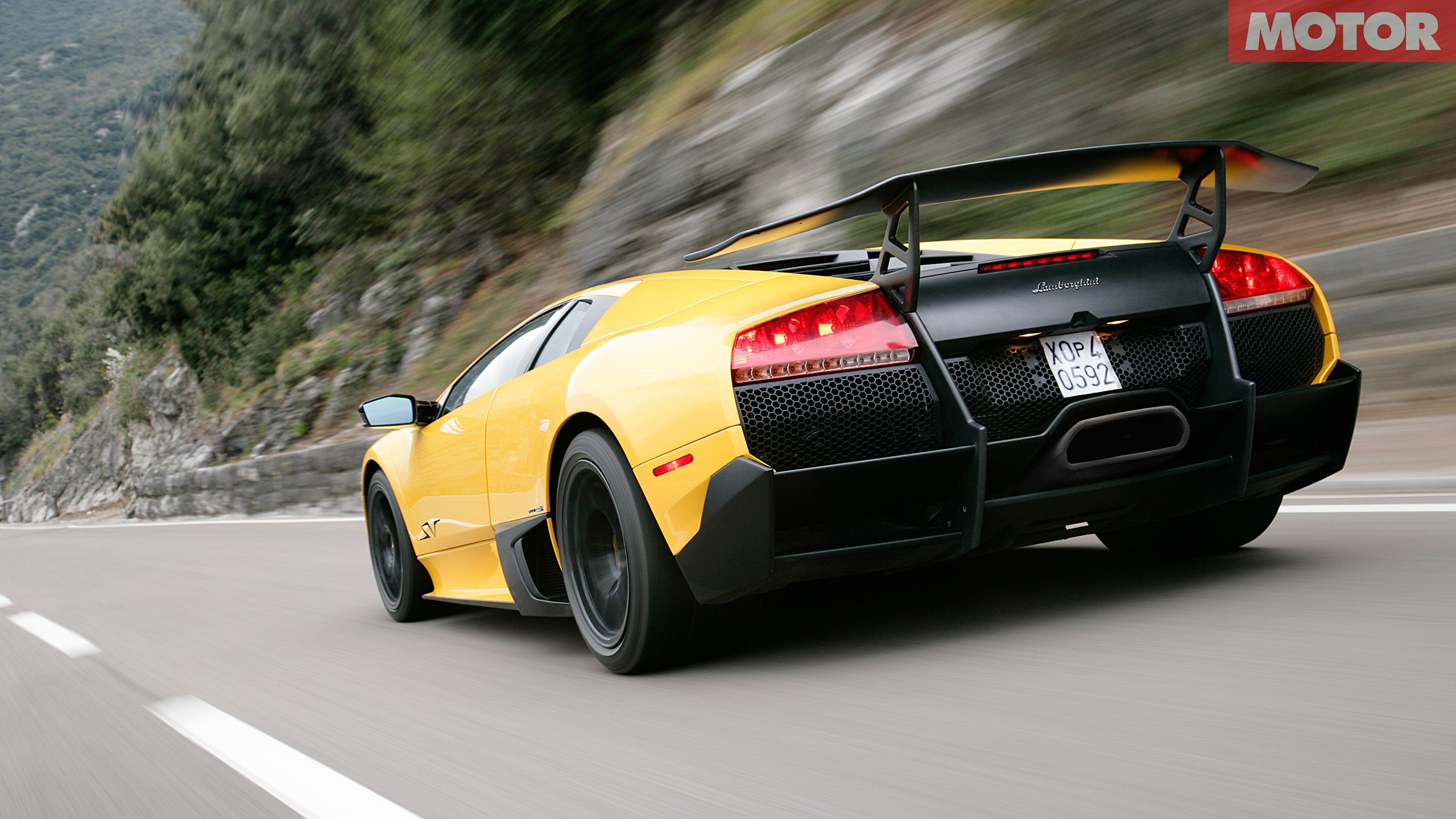
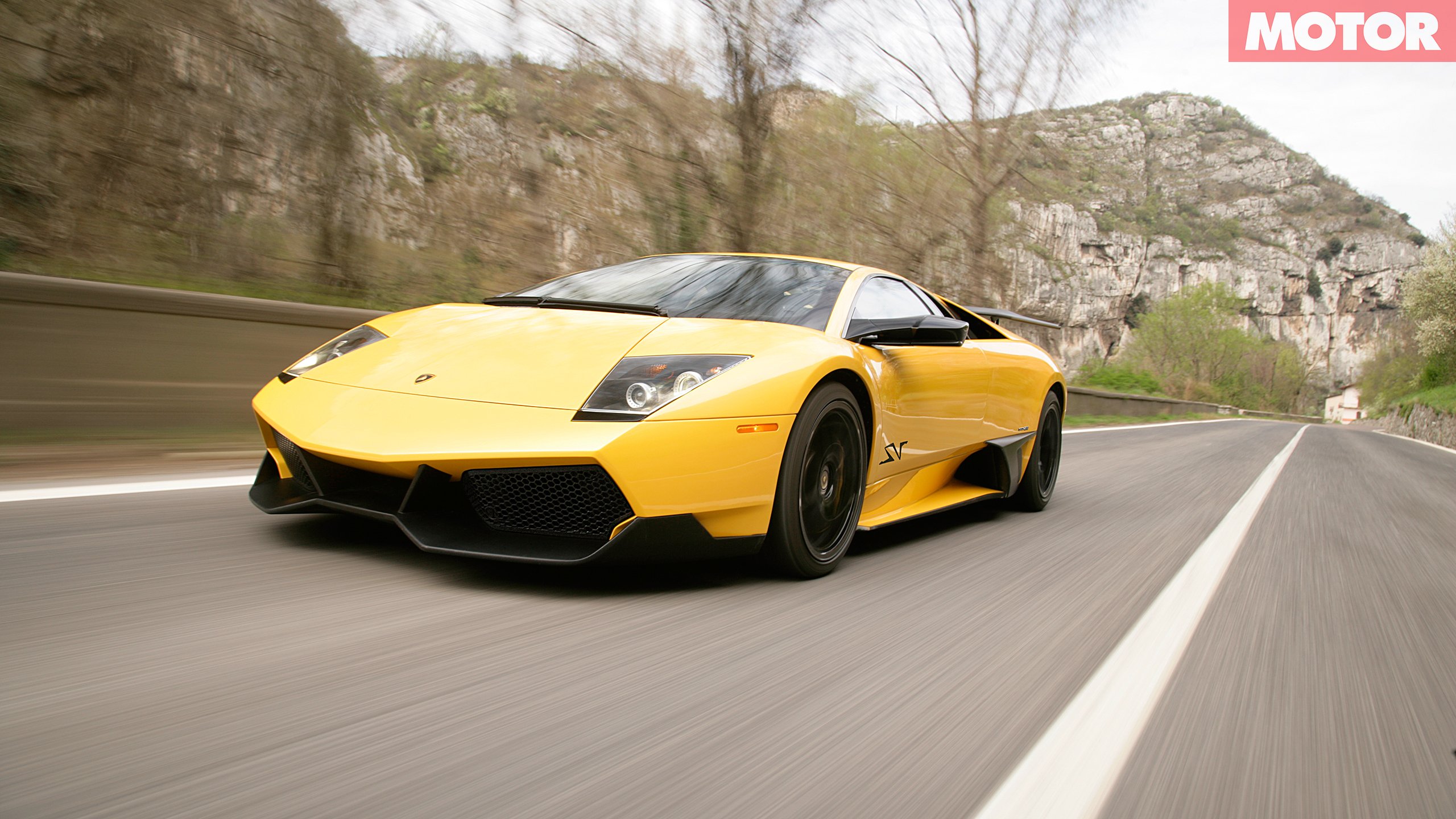
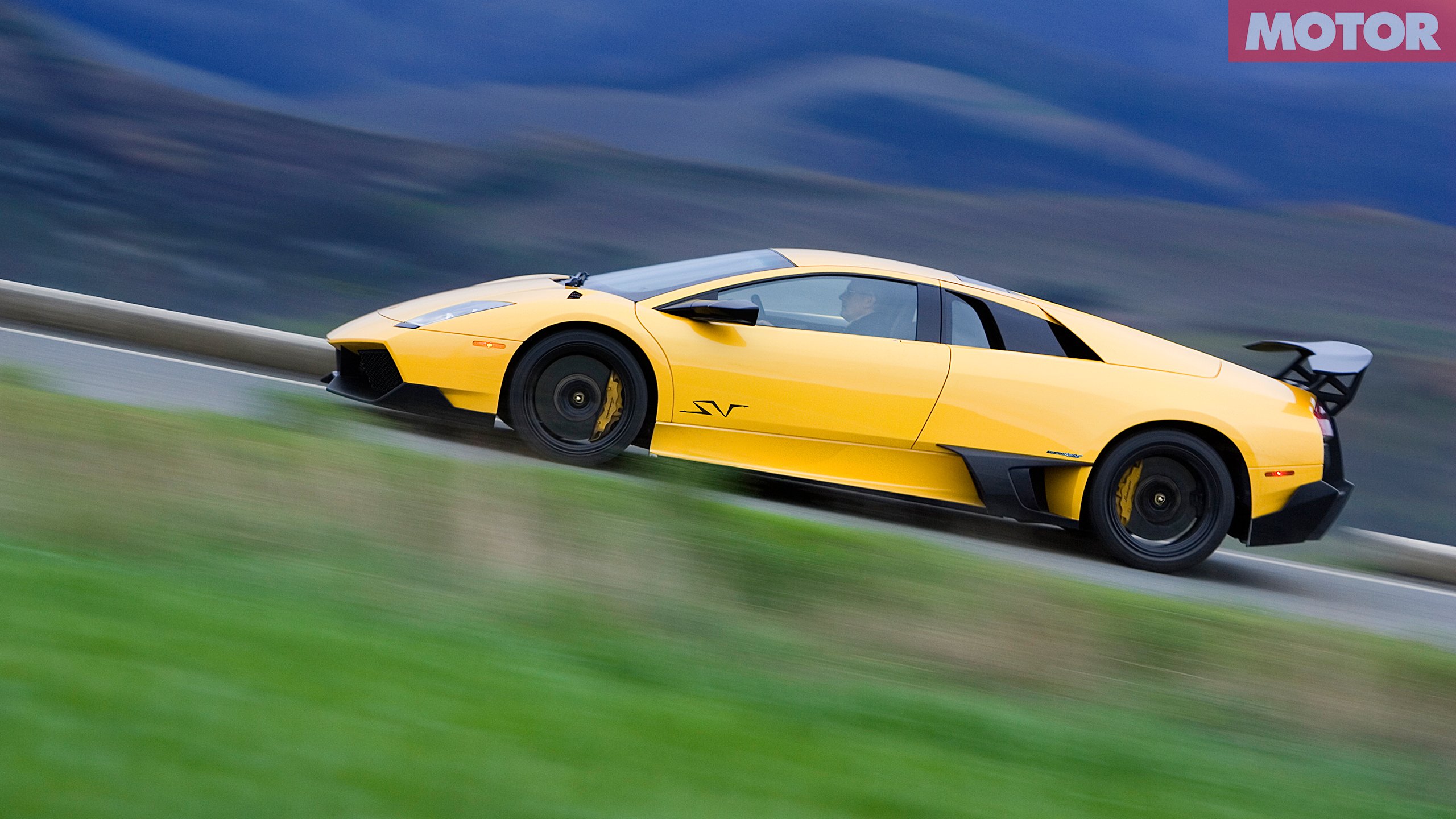
When the letters ‘SV’ arrive on a Lamborghini model you know it’s reached its final, and most extreme, stage.
The Murcielago, for instance, began life with 427kW nestled between its rear axles, however by the time the SuperVeloce fairies had visited it the supercar world was treated to something special.
Like a Murcielago being given the GT3 treatment, the LP670-4 SV was endowed with 493kW/660Nm, lightened of 100kg, and could evaporate triple figures in 3.1sec (MOTOR verified) before tearing on to a top speed of 342km/h if optioned with a ‘small’ wing.
As the Aventador now trundles towards retirement, the revered SV brand has made a return. And for that, we’ve decided to honour the hulking, maniacal the LP670-4 SV before it we drove in 2009, with the fantastic pictures of Mr Spaccarelli’s available to download.
You’re welcome.