
Click on the images in this story to view the full teaser gallery.
February 2024: Toyota bZ4X pricing confirmed
January 2024: ‘Around 1500’ bZ4X EVs available to Australia in 2024, more if needed
December 2023: February launch planned for BZ4x
The 2024 Toyota BZ4x is due in Australia in February. Here’s what we know about the electric SUV so far.
Snapshot
- 2024 Toyota BZ4x electric SUV: Initial Australian specs confirmed
- RAV4-sized mid-size SUV likely to start around $70k; twinned with Subaru Solterra
- Due in local showrooms in February 2024
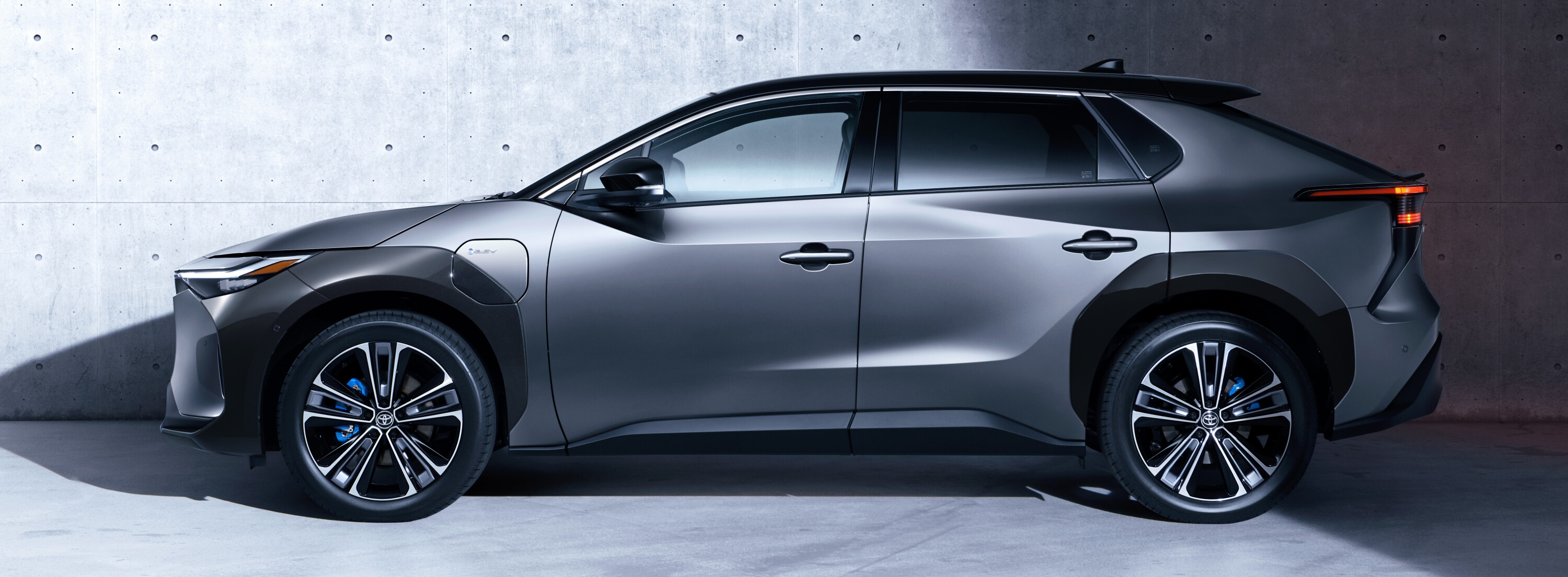
Twinned with the Subaru Solterra arriving in local showrooms this month, the BZ4x is a RAV4-sized mid-size electric SUV aimed at the Tesla Model Y, Kia EV6, Hyundai Ioniq 5 and Volkswagen ID.4.
Initially due to arrive here sometime in 2023, Toyota Australia has postponed its launch to wait for a minor update. Australian-spec production commenced last month.
1
The revisions, announced in Japan in October, are limited to reduced charging time in low-temperature environments, reduced power consumption, and new badges.
Toyota claims the charging time from when the low-battery warning appears to 80 per cent is reduced by up to 30 per cent “under low outside temperatures” due to improved battery heating.
It also has an optimised air-conditioner with a power-saving eco mode to warm occupants through more efficient methods, such as the heated seats and steering wheel, and a humidity sensor that “detects cloudiness in the windshield and controls the timing of outdoor air capture more precisely”.
Like other electric vehicles, the instrument cluster will now display key charging information, including time to 80 per cent and the difference in range between having the air-conditioner switched on or off.
Pricing and features
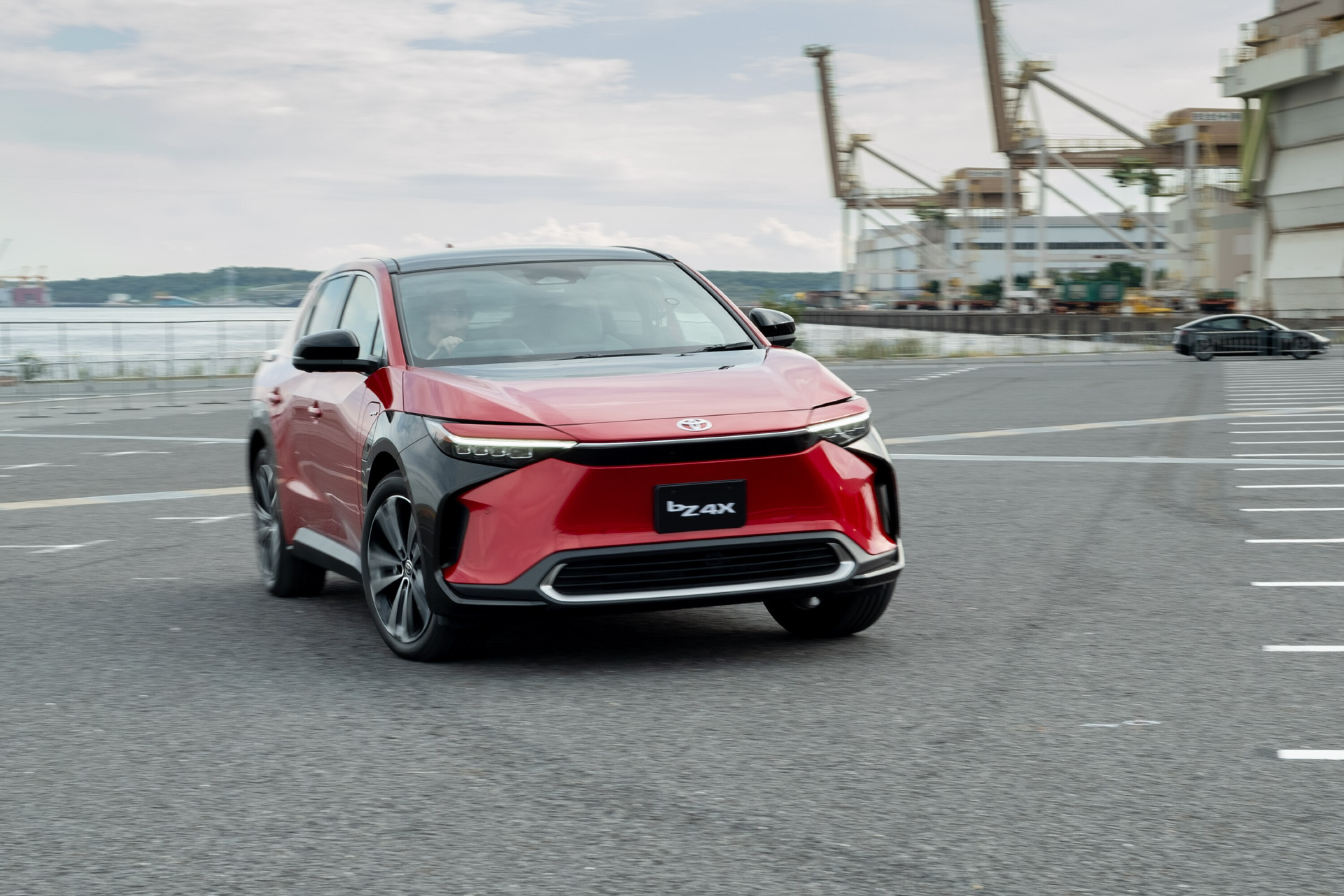
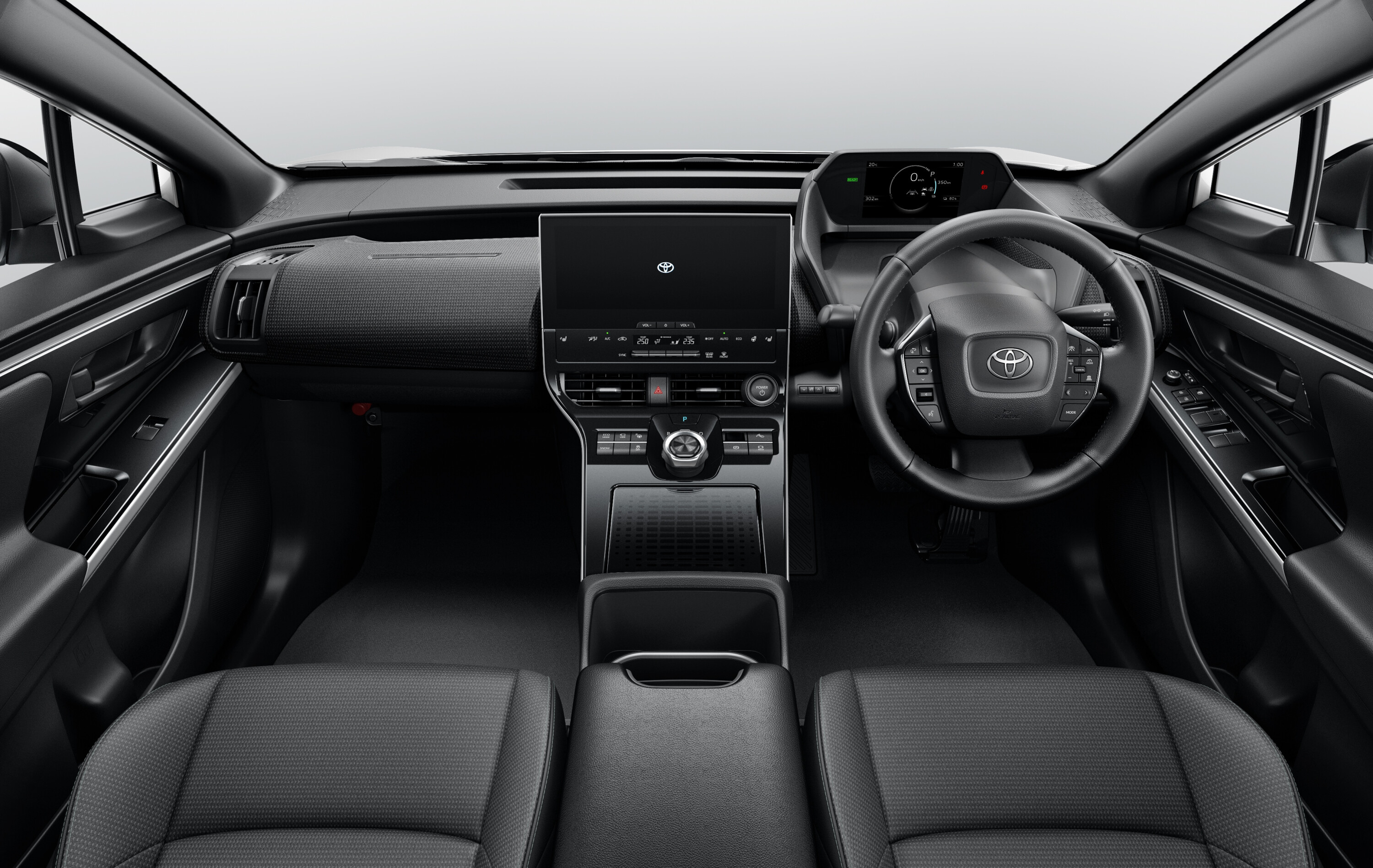
In Australia, all BZ4x grades will be fitted with 20-inch alloy wheels, dual-zone climate control, keyless entry and start, LED exterior lighting, a 12.3-inch infotainment system, wireless Apple CarPlay and wired Android Auto, Toyota Connected Services, heated front seats, and a full suite of active safety technology.
All-wheel-drive variants will add a nine-speaker, 800-watt JBL audio system, a fixed panoramic sunroof, ventilated front seats, a heated steering wheel, roof rails and spoiler, leather-accented upholstery, a wireless phone charger, and an X-Mode drive selector with snow/dirt, deep snow/mud, and grip control options.
“We expect approximately 60 per cent of sales to be [single-motor] front-wheel drive and 40 per cent [dual-motor] all-wheel drive including an [X-Mode] off-road mode,” said Toyota Australia’s sales and marketing boss Sean Hanley in August.
1
Toyota Australia said more details, including pricing, will be confirmed closer to the BZ4x’s launch in February.
We expect the Japanese-built SUV to start at around $70,000 before on-road costs for single-motor versions and climb above $80,000 for dual-motor variants, the latter price in line with its AWD-only Solterra twin.
The Subaru Solterra is priced from $77,990 before on-road costs for the base AWD variant, rising to $83,690 plus on-roads for the flagship AWD Touring with similar equipment to what Toyota has detailed for the all-paw BZ4x so far.
1
Powertrain, driving range and charging
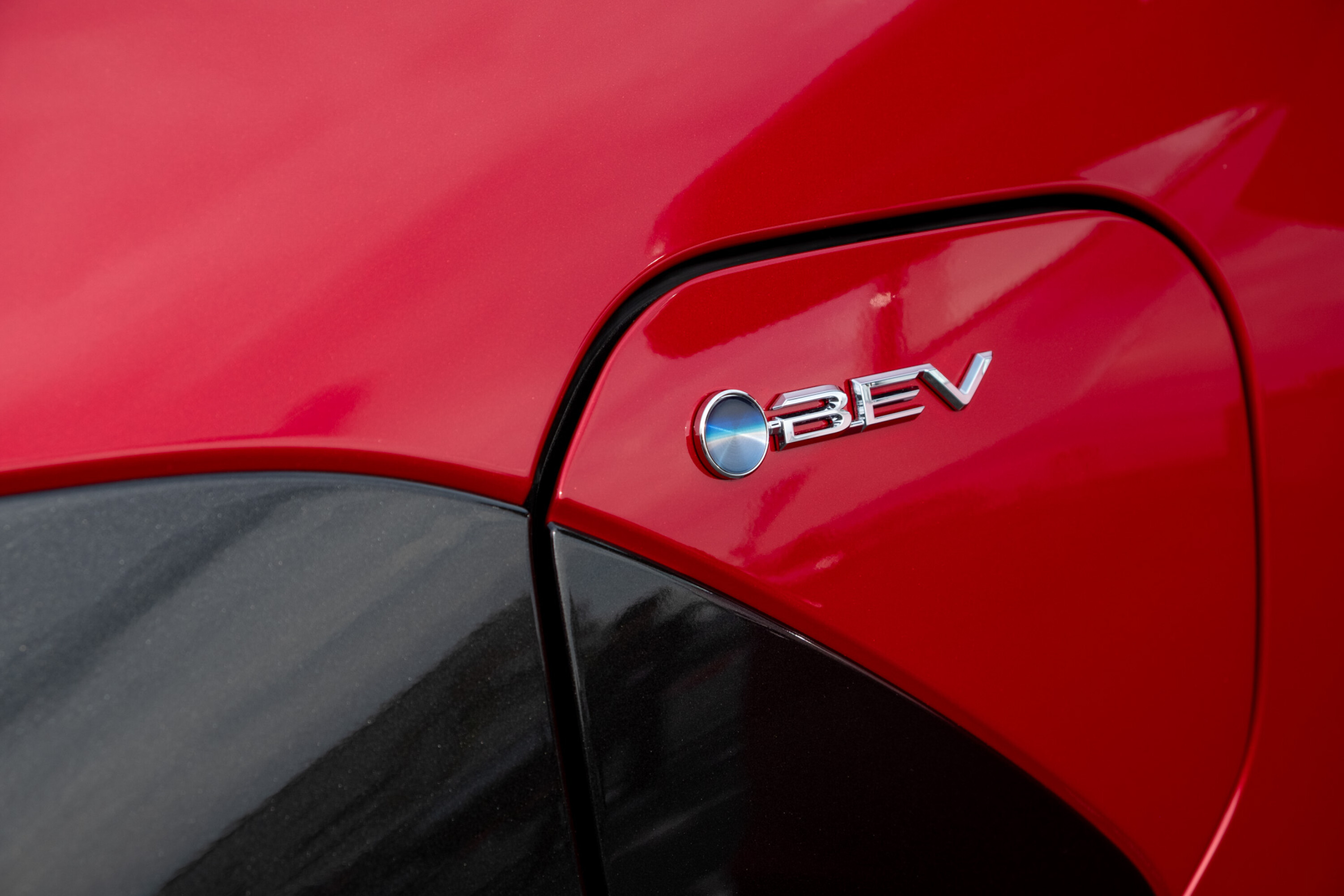
The Toyota BZ4x features a 150kW/266Nm single electric motor for front-drive variants, rising to 160kW/337Nm for the dual-motor AWD setup.
It has a 71.4kWh battery allowing for a driving range of up to 516 kilometres, a 10-80 per cent charge in 30 minutes at 150kW, and an 8.4-second (FWD) or 7.7-second (AWD) 0-100km/h sprint time.
1
Full-service lease option
Toyota Australia has confirmed it’ll also offer a ‘full-service lease’ option for BZ4x customers – in addition to the ability to purchase a vehicle outright.
Toyota Finance Australia will provide the all-inclusive lease – not its Kinto car-rental service – and cover “rego, insurance, service, roadside assist and [Toyota Connected Services] connectivity” for the life of the lease.
The full-service lease, to be paid monthly, will also include tyre replacement.
“It also provides certainty on resale values, which we understand are under immense pressure in markets including Europe and the United States,” said Hanley.
“We also make it possible to bundle Toyota genuine accessories, a home charger, and an EV charge card.”
Availability
The 2024 Toyota BZ4x electric SUV is due in Australia in February, with the brand promising dealers will have “a reasonable level of launch stock”.
“Further details will be announced when the bZ4X arrives in local dealerships,” said Toyota Australia in its most recent update.
MORE
Everything Toyota
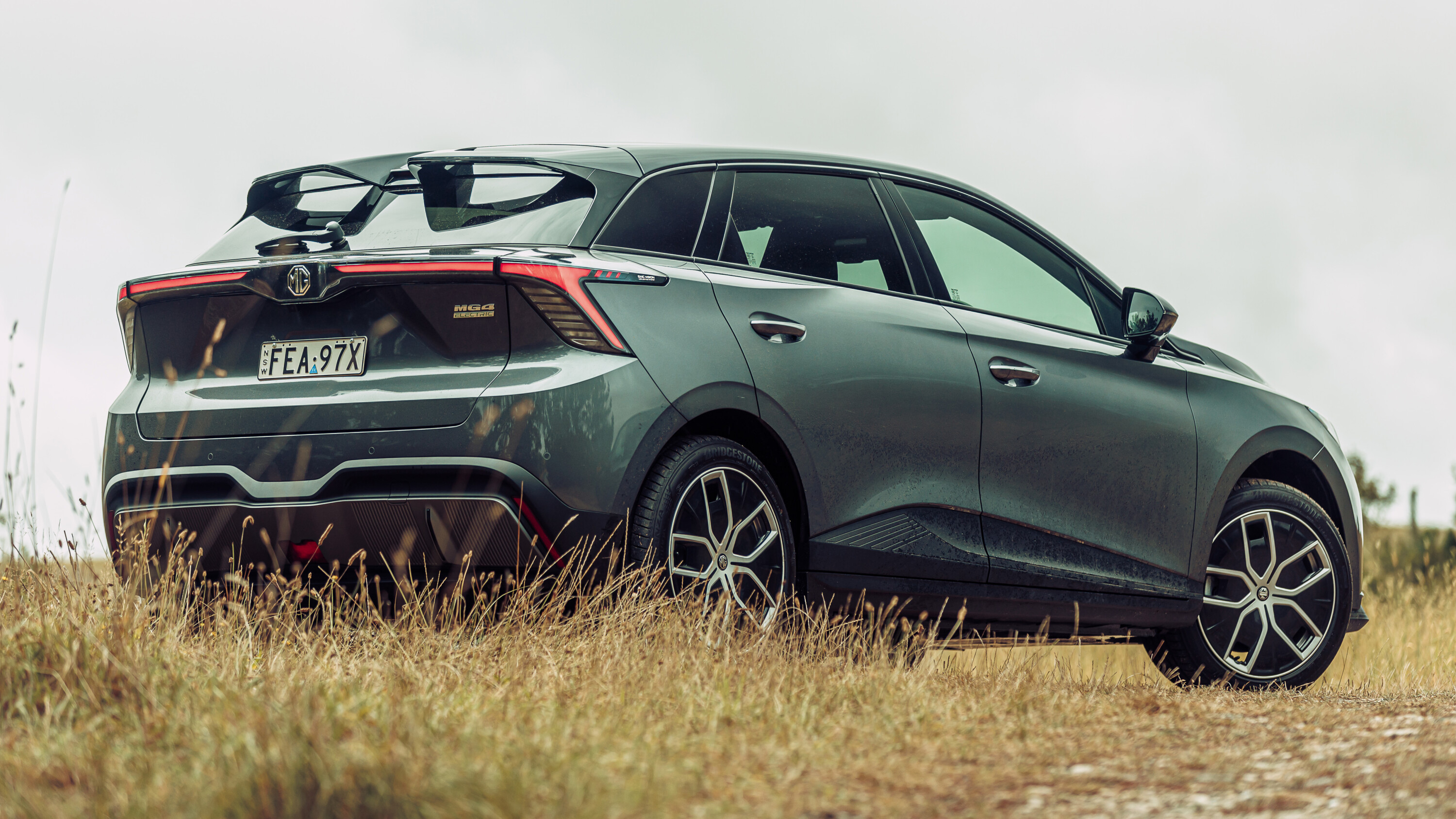
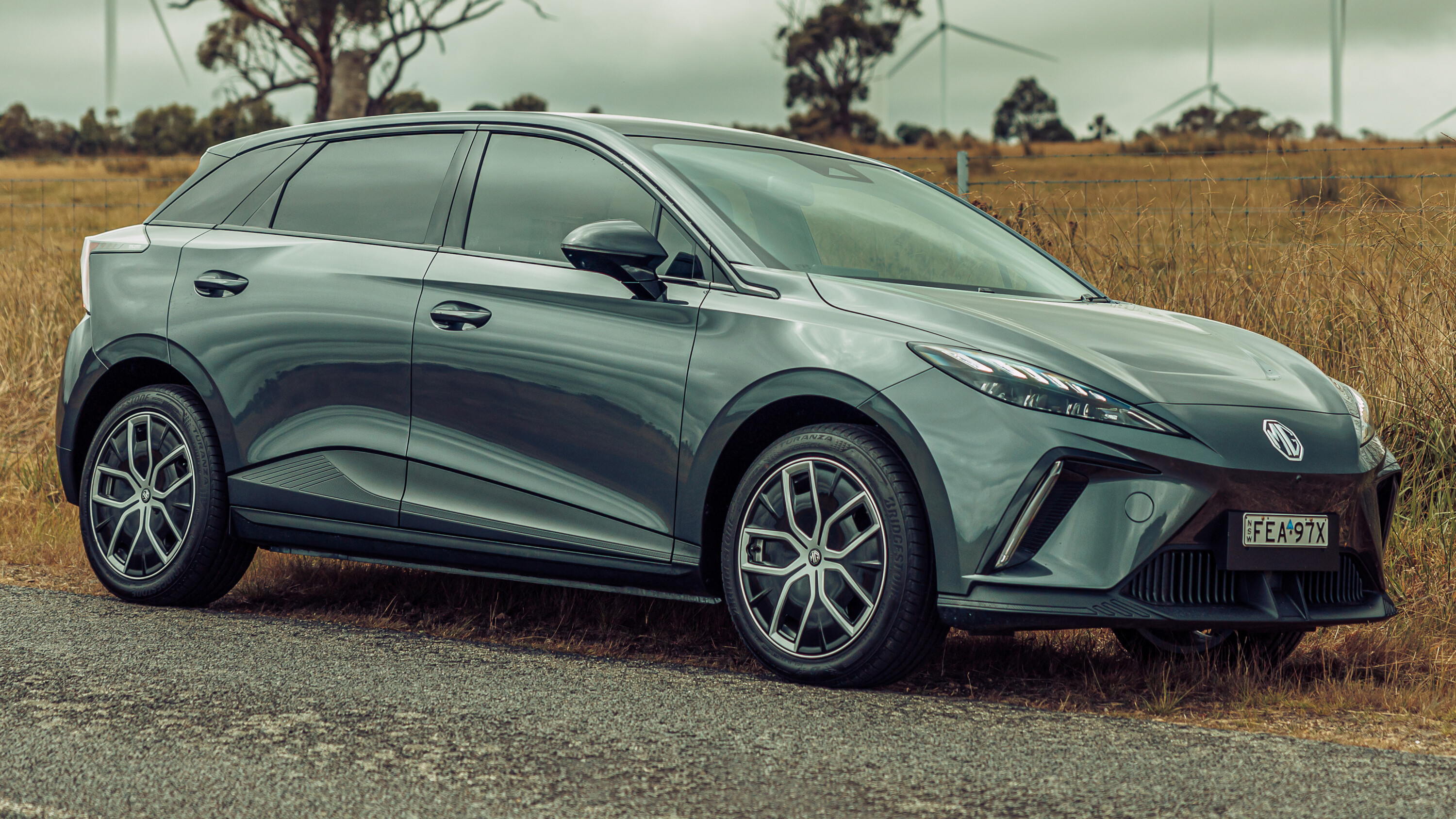
For under $60,000, the MG4 Long Range 77 is a compact electric car with proper touring range – and as much power as a VW Golf GTI, but with rear-wheel drive.
The marathon-running version of MG’s much-lauded new small electric car comes with 530km of claimed WLTP range (our own test results later).
Its 180kW/350Nm rear electric motor makes the Long Range 77 the most powerful single-motor MG4 you can buy.
At $59,803 drive-away, though, it is a not-insignificant $16,672 more than the base-model MG4.
While its bigger battery adds 76kg compared with the cheaper Essence 64 model, the additional 30kW/100Nm more than compensates.
1
The 77 can also recharge faster than the 64 , on AC at least – 11kW versus 6.6kW – dropping the flat-to-full time from nine to seven hours. DC fast-charging, meanwhile, is the same 150kW max.
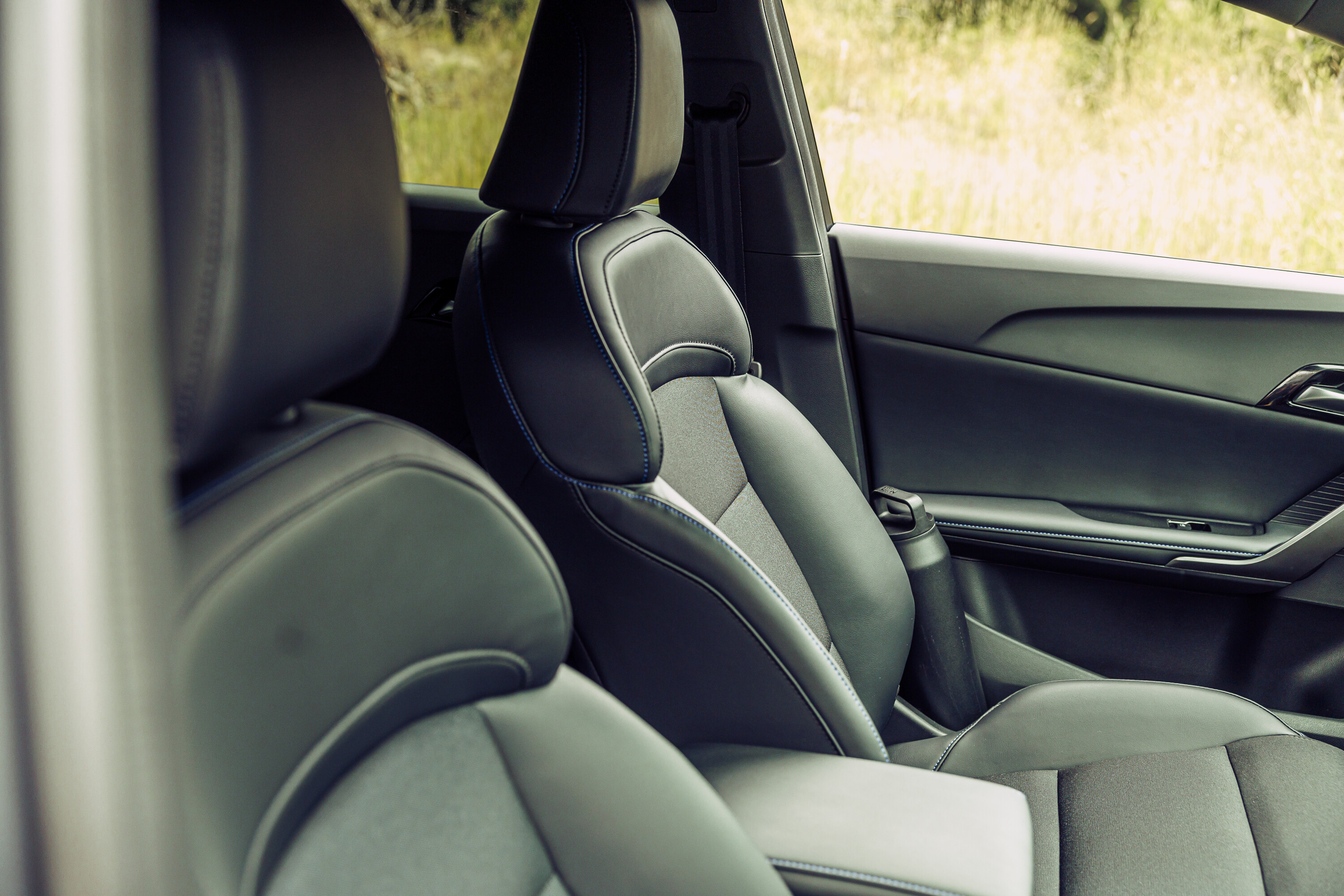
Climb inside and the Long Range 77 is the same as the richly-equipped Essence 64. There are high-quality vinyl seats that are heated and electrically adjustable; a lovely leather steering wheel and a floating centre console design, maximising the feeling of space.
Indeed MG has done an excellent job with the MG4’s packaging, with space abounding front, rear, and in the boot compared with other cars of its size.
1
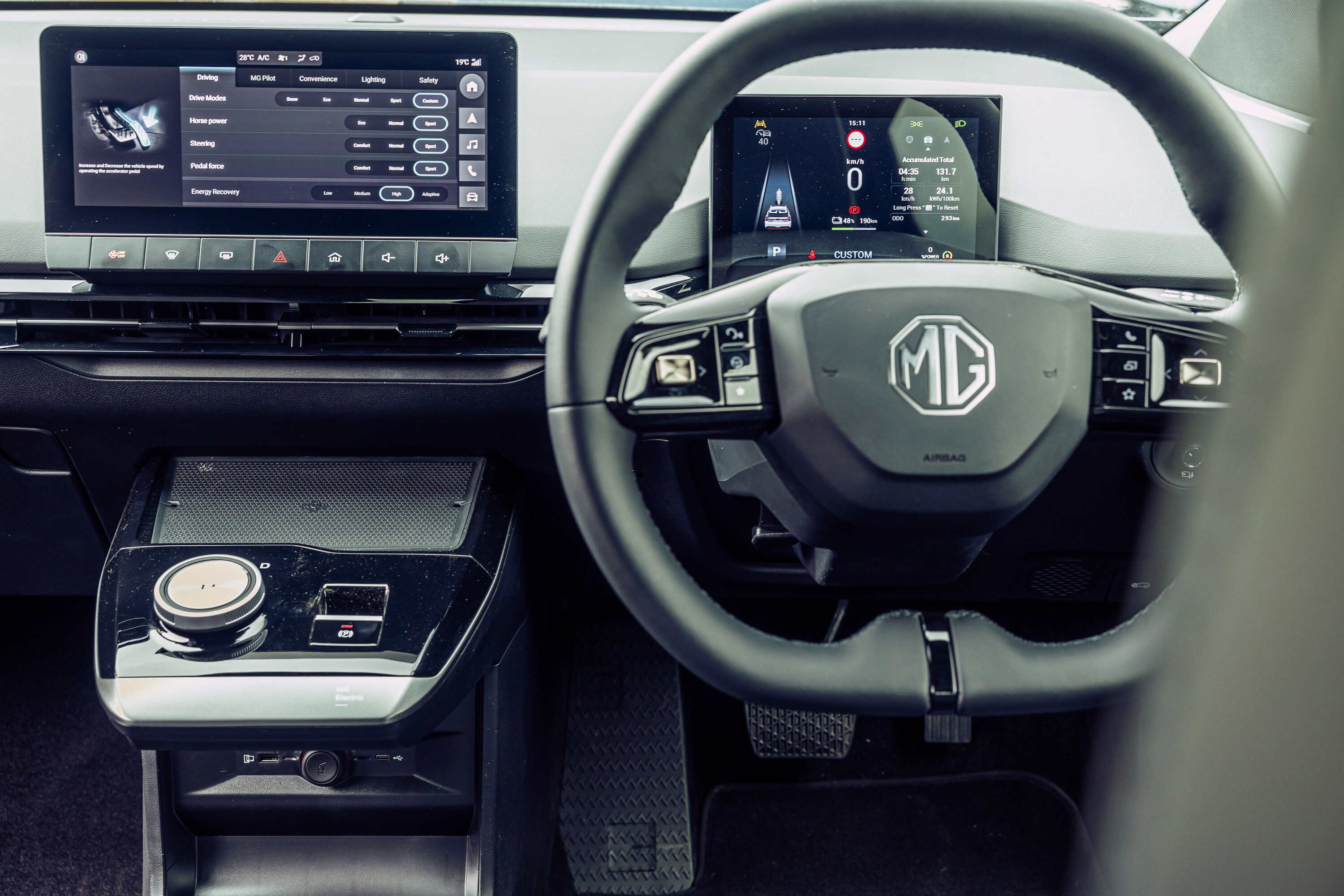
There’s a small, 7.0-inch digital instrument cluster (all you need) and a 10.25-inch infotainment touchscreen with distinctly functional graphics and operation, like it was made by a bunch of engineers rather than any designers.
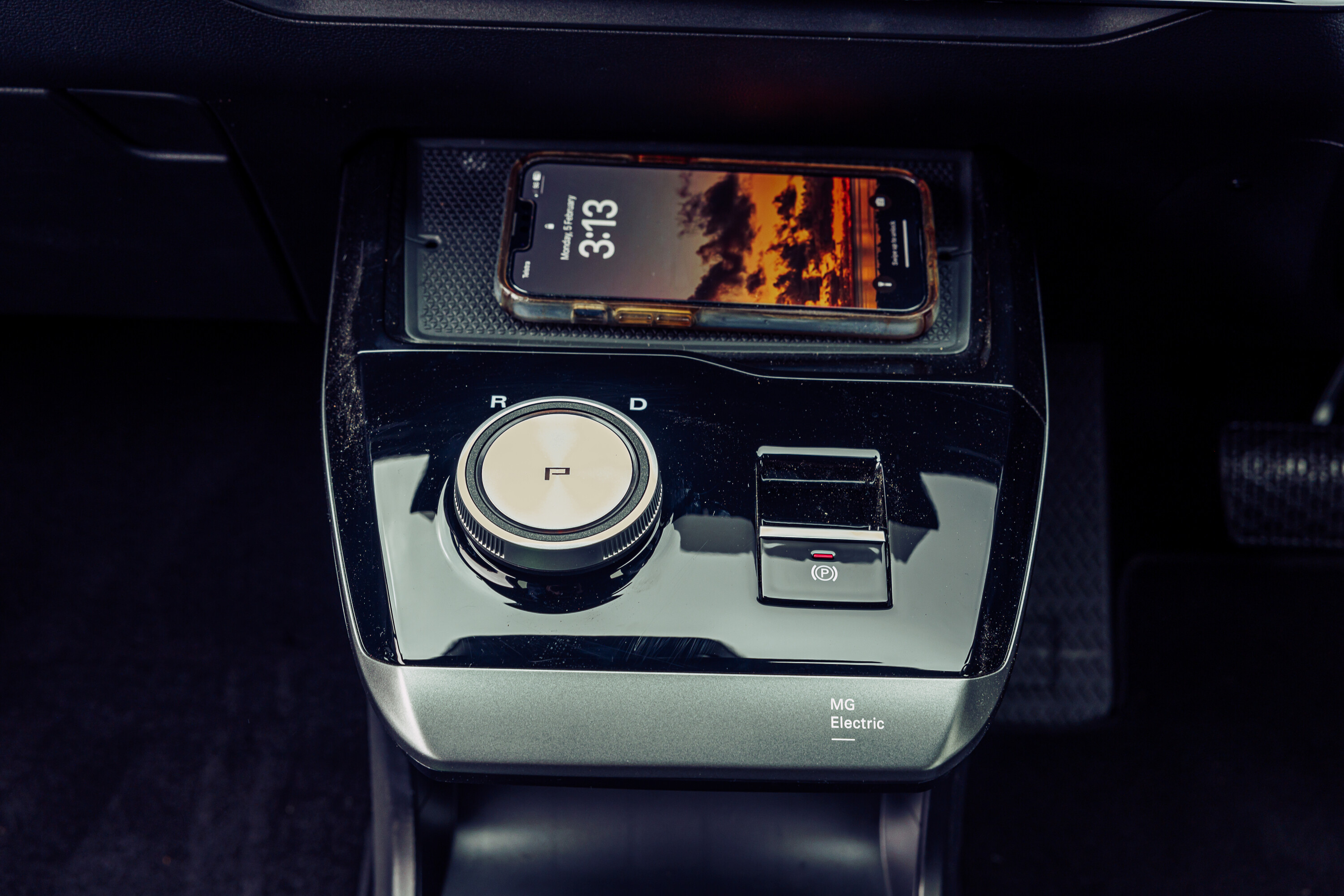
While there’s a wireless phone charger, Apple CarPlay and Android Auto are both wired-only.
Rear-seat passengers will find plenty of space and a soft, comfortable bench, although less pleasing is the single USB-A outlet and lack of any air vents. The powerful air-conditioning should be enough to cool the entire car on a hot day. Well, that is our theory, and hope, at the very least.
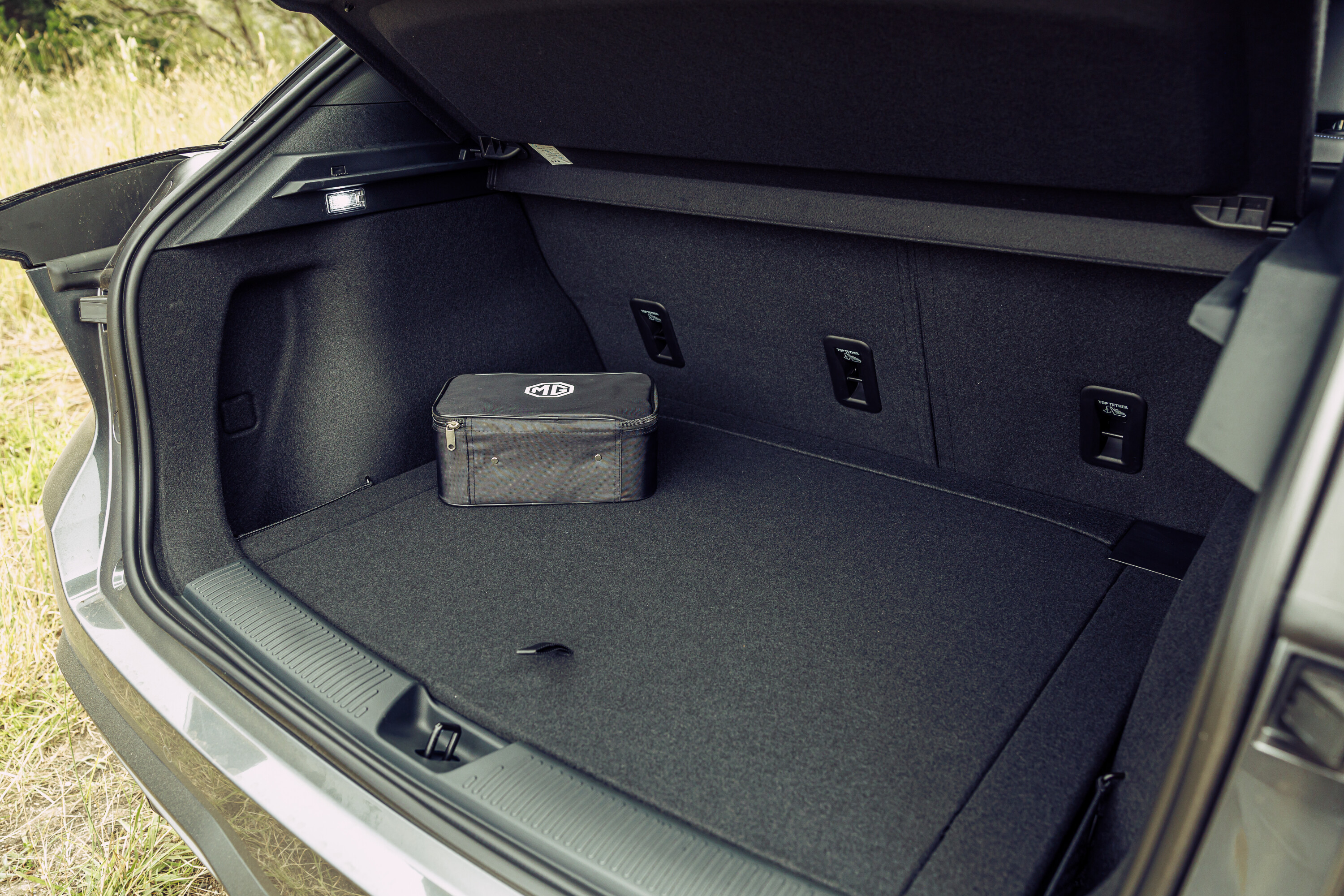
There are two sets of ISOFIX points on the outboard rear seats, and three top tether anchors, while the boot is a reasonable 350 litres. The rear seats offer a 60:40 split-fold, while there’s a not-very-touring-friendly puncture repair kit and no real room for a spare wheel. There is no under-bonnet storage, either.
1
Switching on the MG4 involves merely getting in, belting up and firmly pressing the brake pedal. There’s a bong, you select Drive with the central rotary controller, and off you silently go.
Forward visibility is okay, but the three rear head restraints almost fill the rear window, meaning you’ll want to take them out and put them somewhere when not ferrying about rear passengers – the middle head restraint, at least.
With 180kW/350Nm at your disposal – and a 6.5sec claimed 0-100km/h time – the acceleration is pleasingly brisk, inviting you to race away from traffic lights, punch into gaps as they open up and generally consume electrons with merry, range-depleting abandon.
1
Like all electric cars, the MG4 is instantly responsive and near-silent but is rare by today’s standards in offering no synthesised, Jetsons-like acceleration noise at all. There’s a bit of muted mechanical whine from the rear electric motor, your usual wind and tyre noise, and that’s about it.
The ride quality, meanwhile, is certainly on the sporting side – this is no cosseting EV. MG’s engineers have seemingly fitted stiffer springs to handle its 1748kg heft and, over larger bumps, the damping loses more than a bit of finer control. There’s definitely room for improvement here.
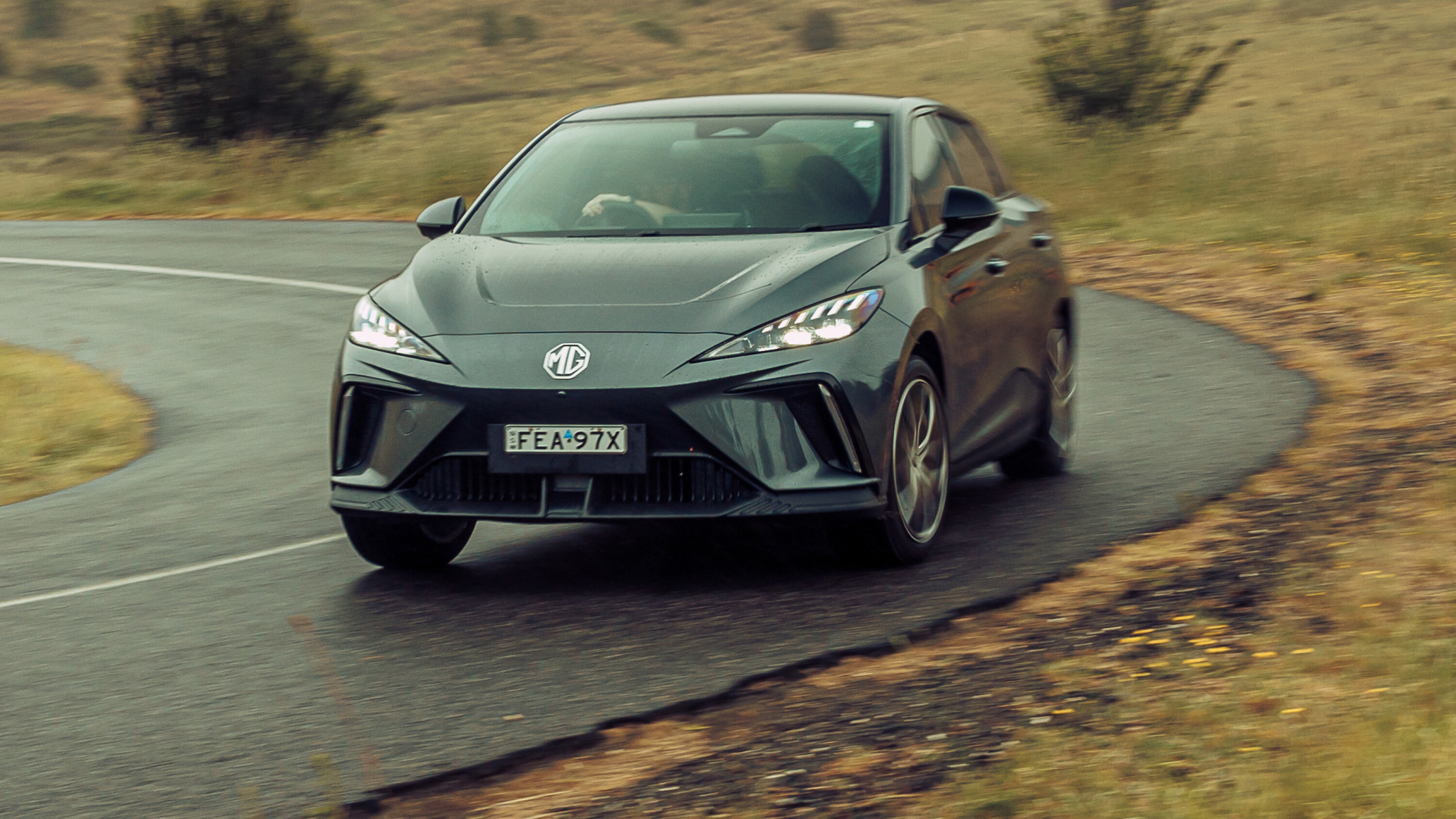
On the upside, this stiffer suspension does gift the MG4 with surprisingly decent handling. On a winding road, the additional weight of the Long Range isn’t noticeable, the car sitting flat and providing a fair amount of grip, with fast and accurate – if light and lifeless – steering.
1
There’s even a rear-drive personality to be discovered, inviting you to load the outside tyres up in what would be a second-gear corner and frighten the ESC into action with a bit of power oversteer.
While fun, it’s the kind of open-diffed tail-wag you would have enjoyed in a VE Commodore Omega back in the day – this is not an electric Toyota 86. Not yet, anyway.
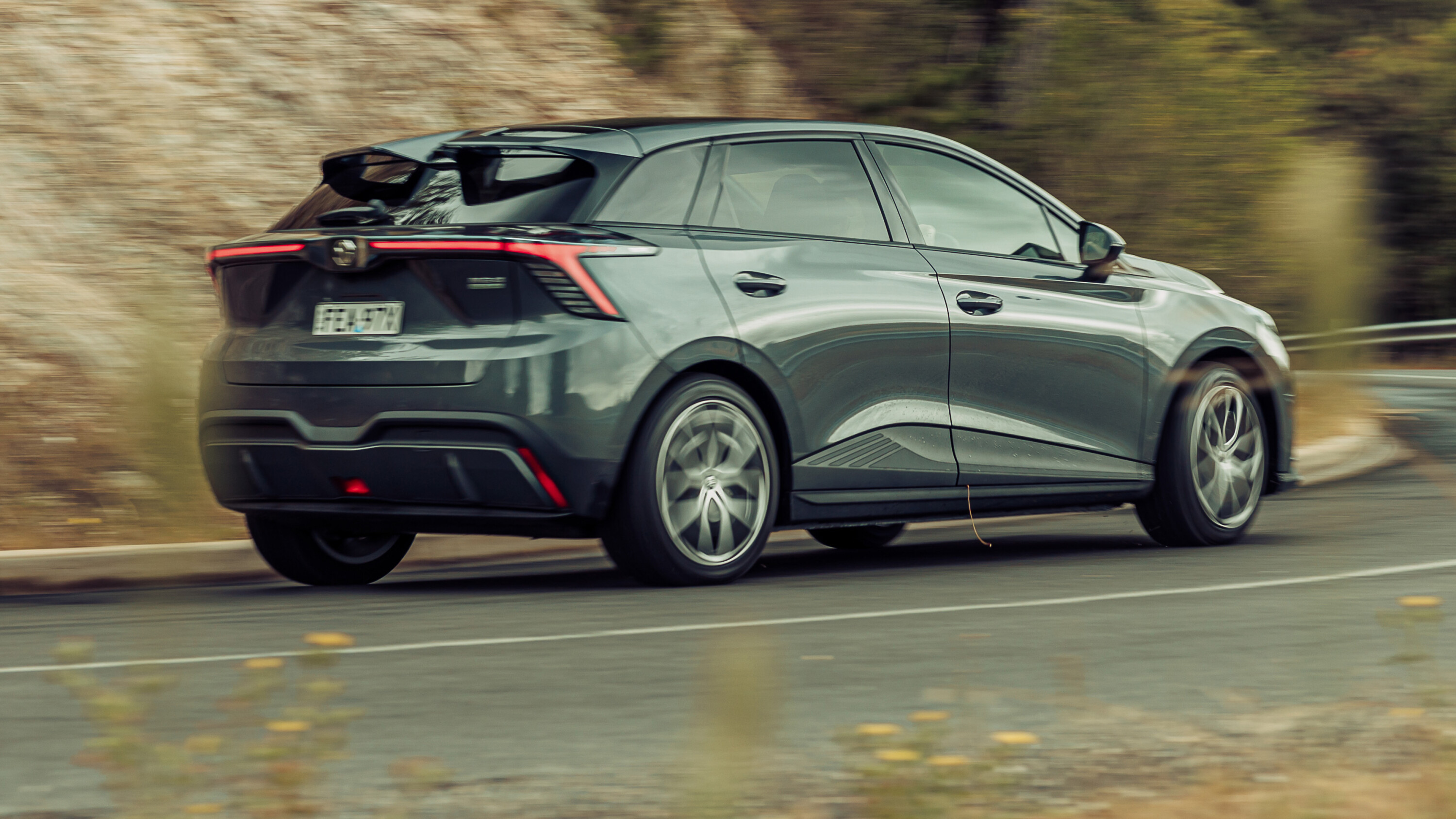
The best efficiency we saw was 15.4kWh/100km with an overall test average of 20.3kWh/100km (although that was enjoying the acceleration a lot). That means you could expect to get a real-world range of between 366km and 483km.
We don’t doubt 530km would be possible in an urban environment with a lot of lower-speed driving, but a range of 400-450km might be more realistic with mixed driving.
1
Impressively, and perhaps necessarily, MG offers a seven-year, unlimited-kilometre warranty – including for the battery.
Most other EV manufacturers warrant their vehicles’ batteries for eight years, although with limited kilometres – MG’s is at least unlimited.
The MG4 Long Range 77 requires servicing, conveniently, every two years or 20,000km – costing $1499 over six years, which is pretty cheap.
While compared to older-generation MG models – like the awful ZS – the MG4 is a revelation, there’s still plenty of room for fine-tuning. Even testing two separate phones and two separate cables, the Apple CarPlay was very unstable – on one 30-minute drive, it dropped out at least 10 times.
1
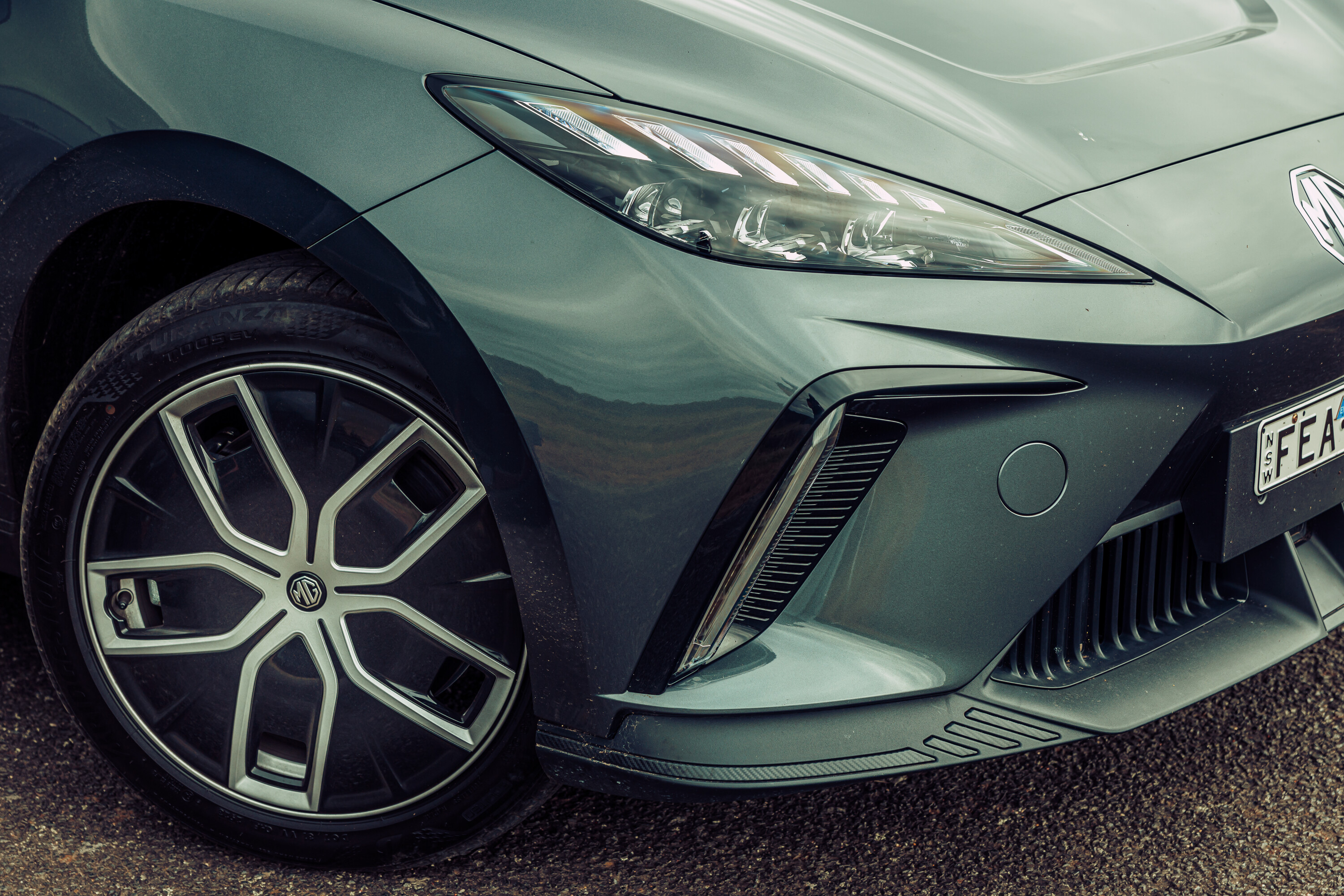
The lower door sills jut outwards, meaning it’s easy to hit your lower leg on them as you get in and out.
A lack of automatic wipers is also a bit of an oversight for a top-spec model. The wipers themselves are oddly loud, like an old Ford Laser (although this we also found somewhat charming).
The resolution of the 360-degree parking camera is low and grainy even during the day. We’d happily trade this for a higher-quality, single reversing camera. It’s also a little bit laggy – not something you want as you’re reversing within millimetres of another car, trying to fit in a tiny parking spot.
1
Similarly requiring more work are the MG4’s advanced driver assist systems. At one point on a narrow country road, the lane keeping got spooked and, with its steering “assist”, thought the safest course of action was an attempt to veer us off the road.
The semi-autonomous traffic jam mode also works – effectively driving the MG4 on its own at low speeds in congestion – but is dopey enough that after a while it’s easier just to do it yourself.
1
While not without some areas we’d like to see improved for an update, fundamentally the MG4 right now is an impressive car – MG or otherwise.
The packaging is clever, the interior smart and modern, the dynamics very good, and the value hard to beat.
However, unless your usage case means you specifically need the 95km of additional battery range, we’d consider the 64 – pocketing the $8336 saving and simply recharging your car slightly more often.
MORE
Everything MG
MORE
Electric SUVs
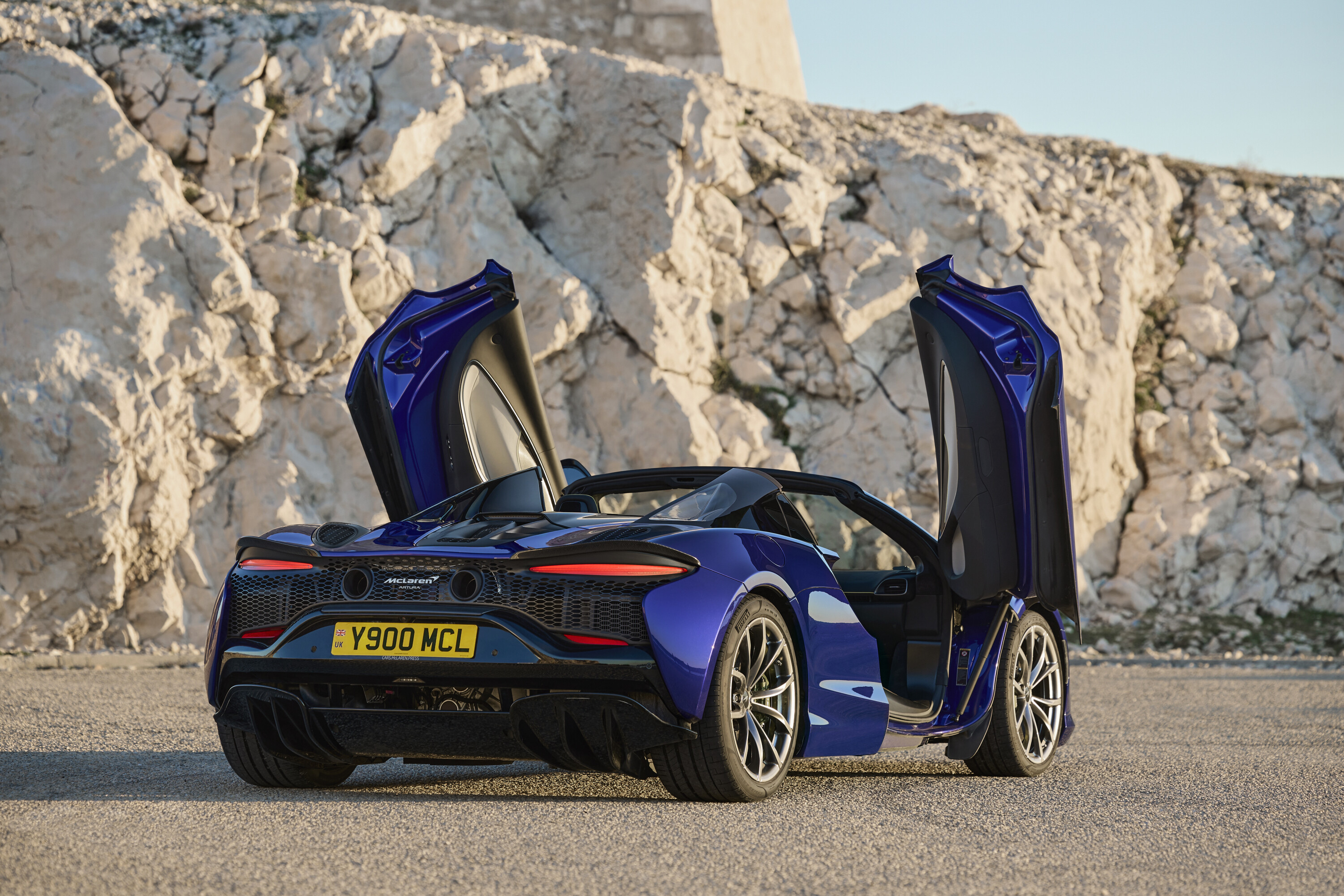
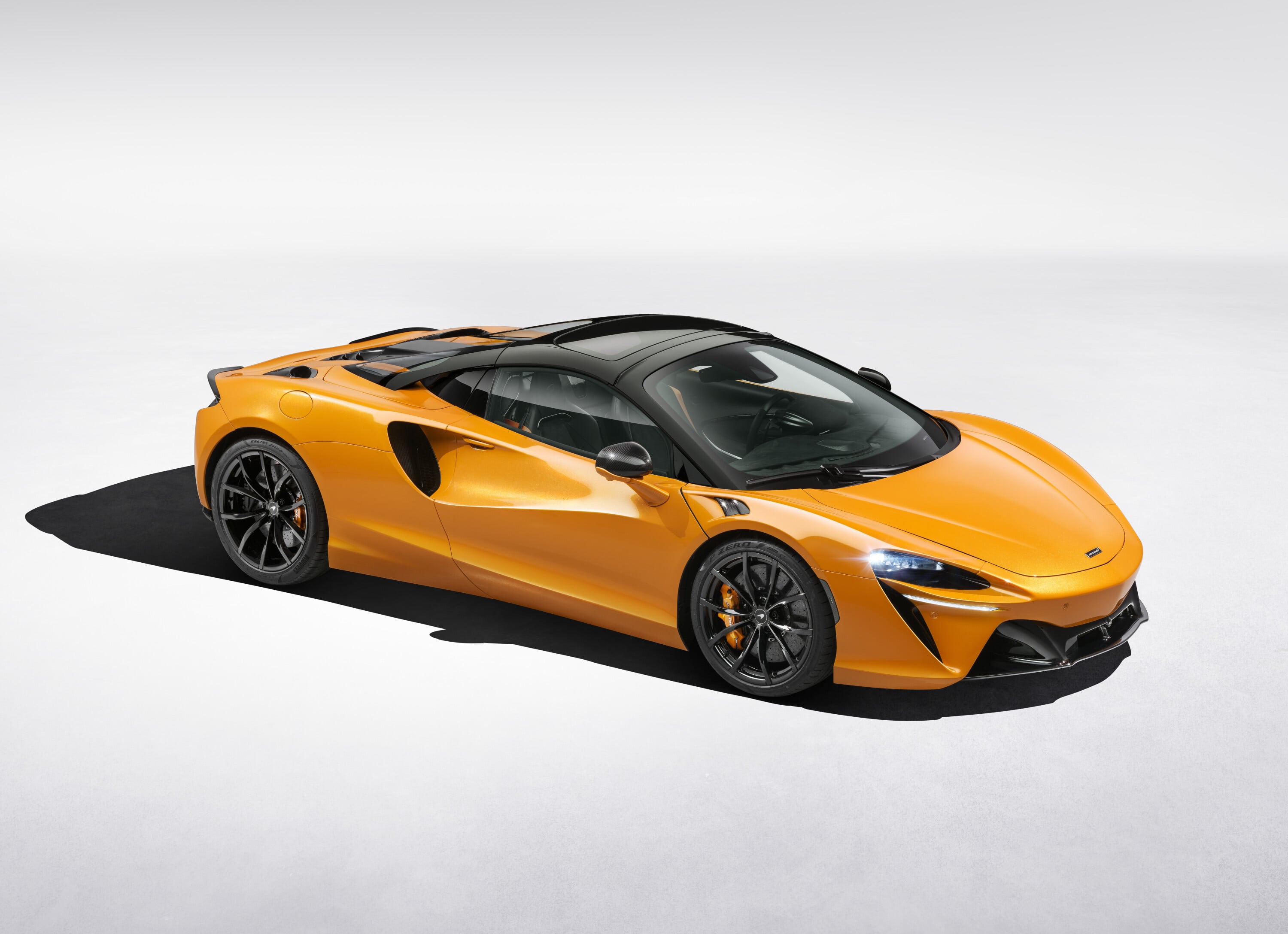
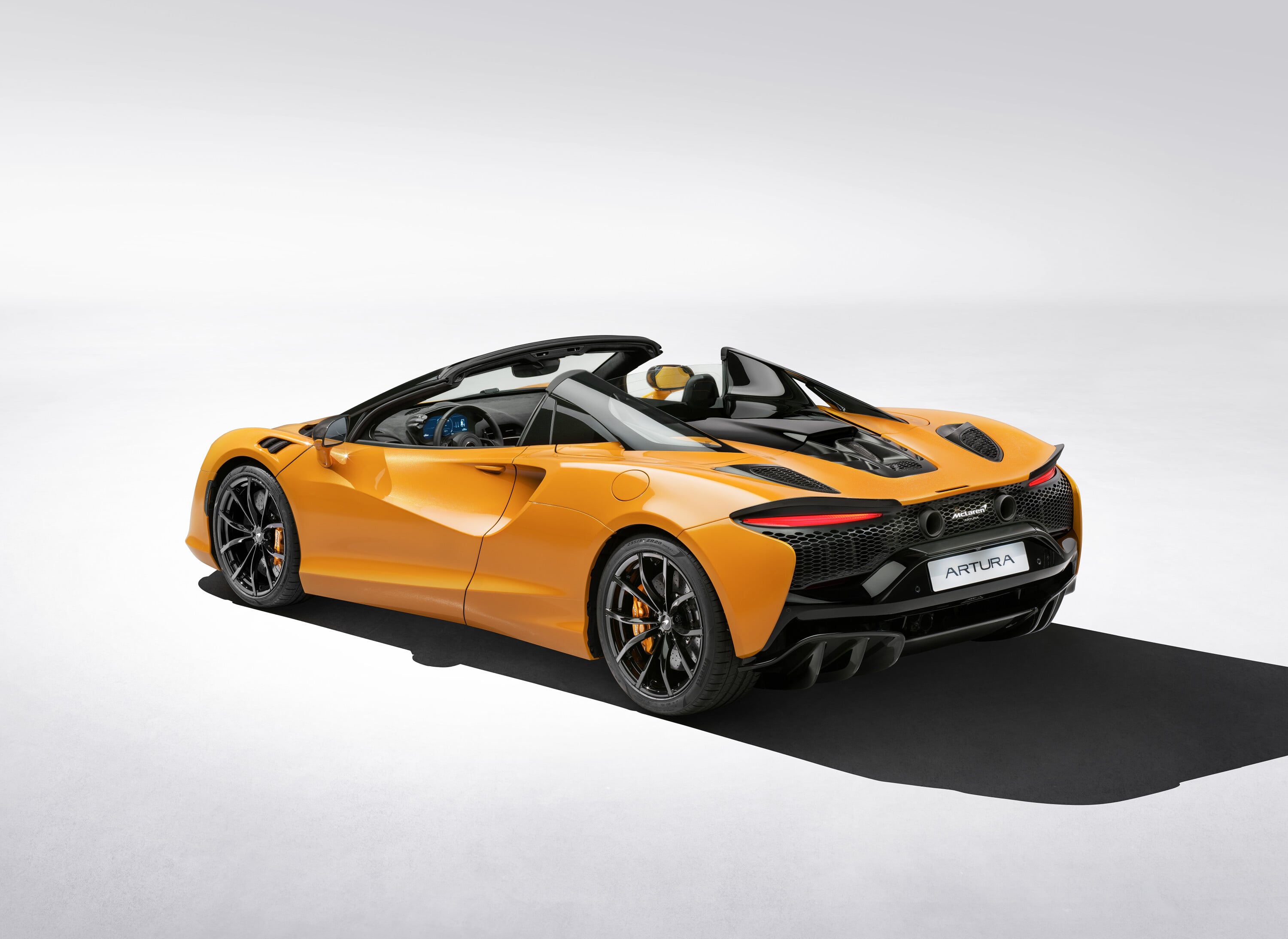
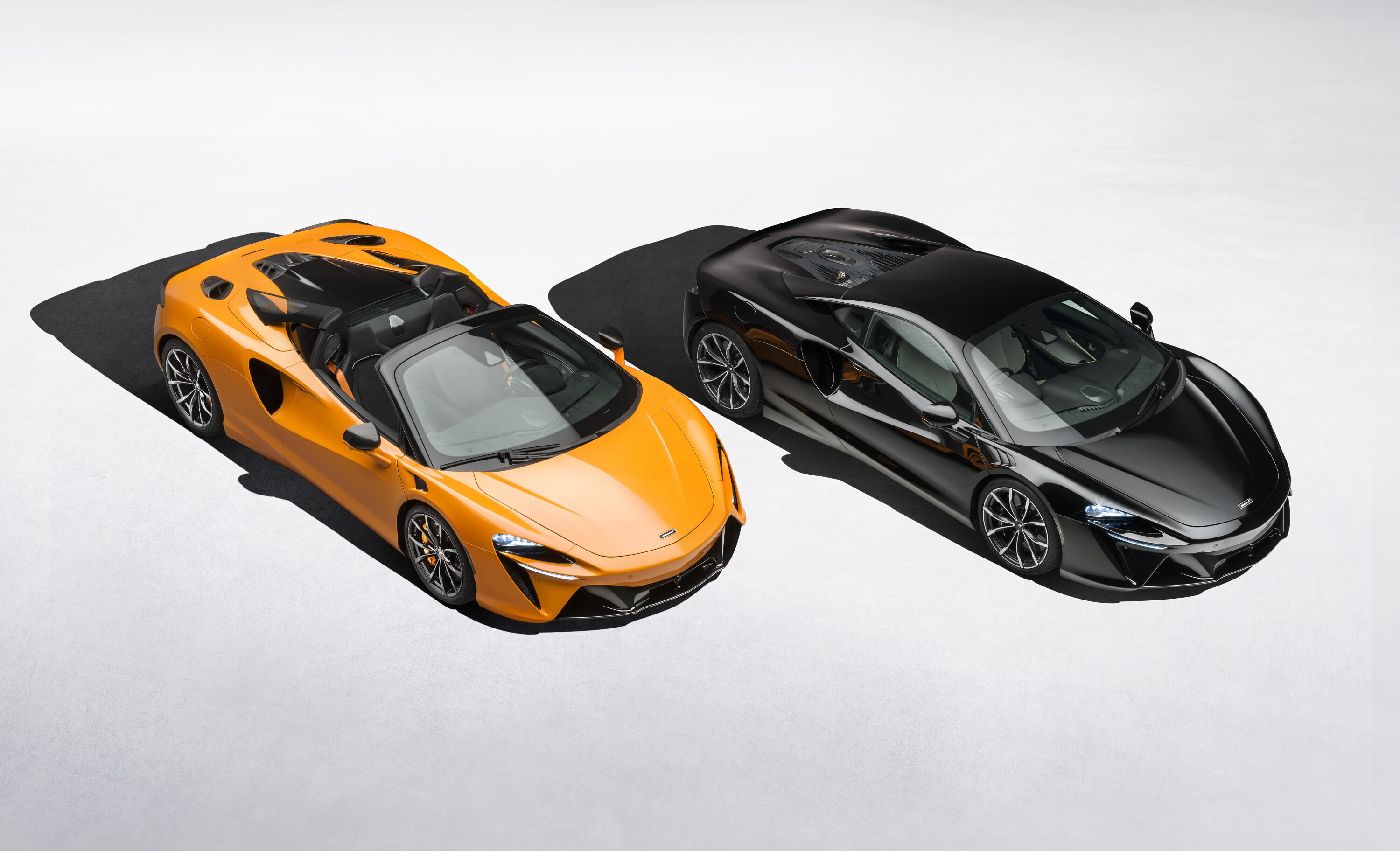
An updated 2025 McLaren Artura has debuted with a new Spider drop-top joining the Coupe first unveiled three years ago.
The new Artura Spider is McLaren’s first ‘high-performance hybrid’ convertible, with both the Coupe and Spider receiving a power boost for the 3.0-litre plug-in hybrid V6 to 515kW/720Nm – up 15kW – for 2025.
McLaren chief engineer Andy Beale said the improvement is solely from the internal combustion engine, which has improved calibration and optimisation – rather than the electric motor.
1
Existing owners of the 2024 McLaren Artura Coupe will receive the 15kW power bump at no additional cost. McLaren says it is working with its Australian retail network to finalise timing for the upgrade.
The Artura Spider will complete the 0-100km/h sprint in 3.0 seconds, equivalent to the Artura Coupe. The now-discontinued Ferrari F8 Spider reached 100km/h in 2.9s, the $140,000-dearer Ferrari 296 GTS has a 2.7s time, and the Lamborghini Huracan Evo Spyder is rated at 3.1 seconds.
McLaren lists an 8.4-second time for the 0-200km/h sprint, 21.6 seconds for 0-300km/h, and a 330km/h top speed. It becomes the lightest convertible supercar in its class with a power-to-weight ratio of 353kW/tonne – compared to 341kW/t for the F8 Spider and 309kW/t for the Huracan Evo.
1
Beale said the Artura Coupe and Spider are “very similar” in outright track performance. The convertible has a 1560 kilogram kerb weight compared to 1498 kilograms for the coupe (+62kg).
Improvements unique to 2025 Artura vehicles include a revised transmission calibration, a new pre-fill feature to deliver 25 per cent faster gearshifts, a new powertrain mount design to improve agility, and 90 per cent faster adaptive dampers to improve response to driver inputs and road surface changes.
McLaren has fitted a redesigned exhaust system with a refined engine note to allow more tone into the cabin, claiming the “crescendo of sound… envelops [the] driver, especially with [the] roof or rear window lowered” in the Artura Spider.
1
There is also improved braking power and consistency at high speeds, along with new cooling ducts to improve thermal management.
Both models have an increased electric-only driving range of 33 kilometres from the 7.4kWh lithium-ion battery, up from 30 kilometres.
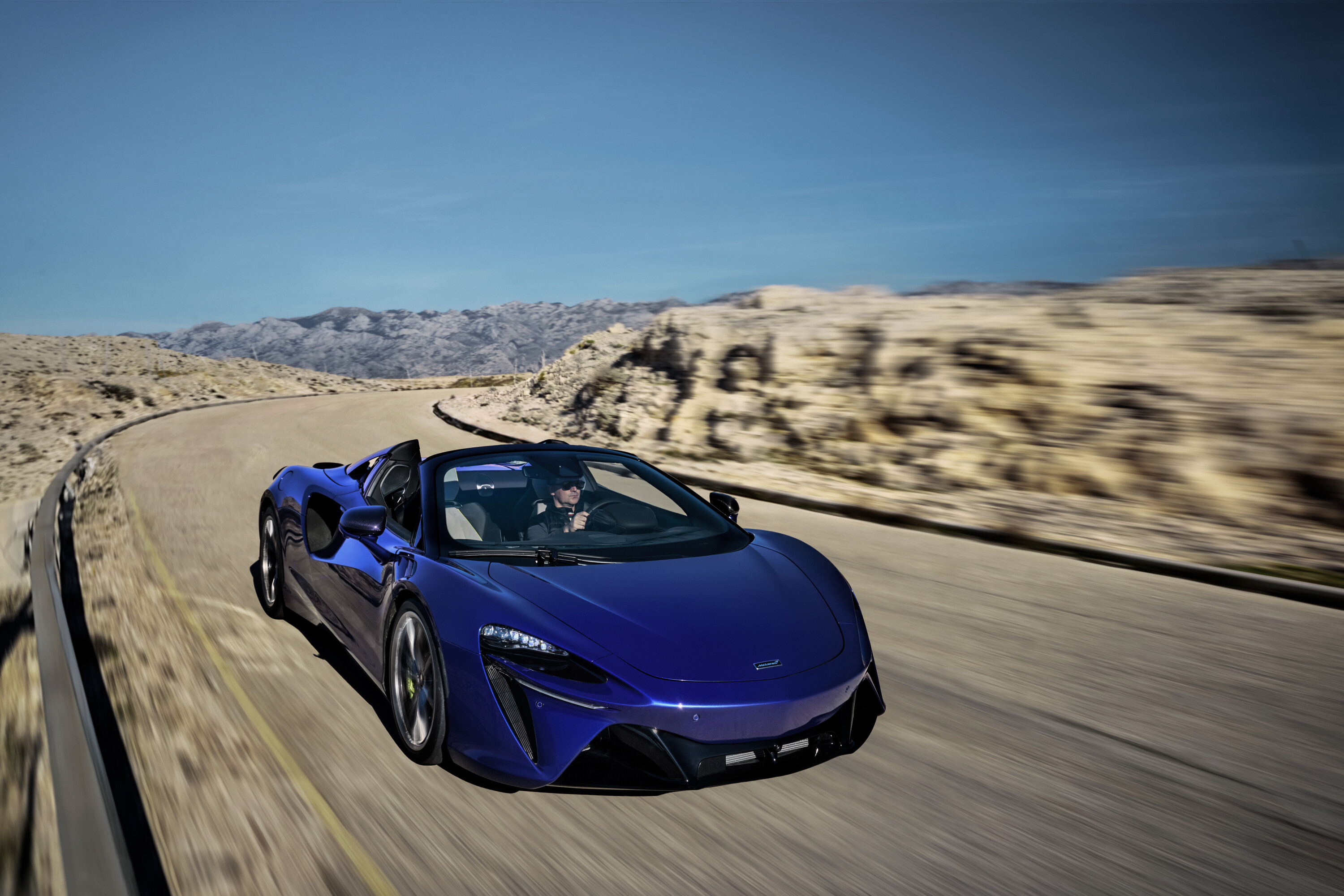
The Artura Spider’s retractable one-piece hard-top can operate electronically in 11 seconds at speeds of up to 50km/h using eight actuators, with an optional electrochromic roof panel available. The low and central hybrid components are said to have allowed packaging for the retractable hard-top.
1
It has a reshaped roof panel to direct airflow to a new thermal release ‘chimney’, along with windscreen gurneys to optimise airflow to reduce occupant buffeting when the roof is down.
Inside, a wireless phone charger is now available as an option with a retention system that uses soft materials to protect the device. The Artura Spyder has a unique Bowers & Wilkins surround-sound audio system with repositioned rear speakers, along with a new central speaker.
Lane-departure warning and traffic-sign recognition are now standard-fit for the Artura, while blind-spot and rear cross-traffic alerts are available as an option for the first time in a McLaren.
1
The Artura Coupe and Spider are available in new exterior paint colours for 2025, while there is new ‘stealth’ black badging with an optional silver finish.
The 2025 McLaren Artura is due in Australia between July and September, with the Artura Coupe priced at $477,310 before on-road costs – up $27,810 over the 2024 model. The new Artura Spider is priced at $525,010 plus on-roads.
2025 McLaren Artura pricing
| Model | Pricing | Change |
|---|---|---|
| McLaren Artura Coupe | $477,310 | up $27,810 |
| McLaren Artura Spider | $525,010 | new |
| Prices exclude on-road costs. | ||
MORE
Everything McLaren
Snapshot
- First new MG3 hatch since 2011 revealed
- Kia Picanto to become Australia’s cheapest new car with $5K price rise for next MG3
- Due in Australia mid-year
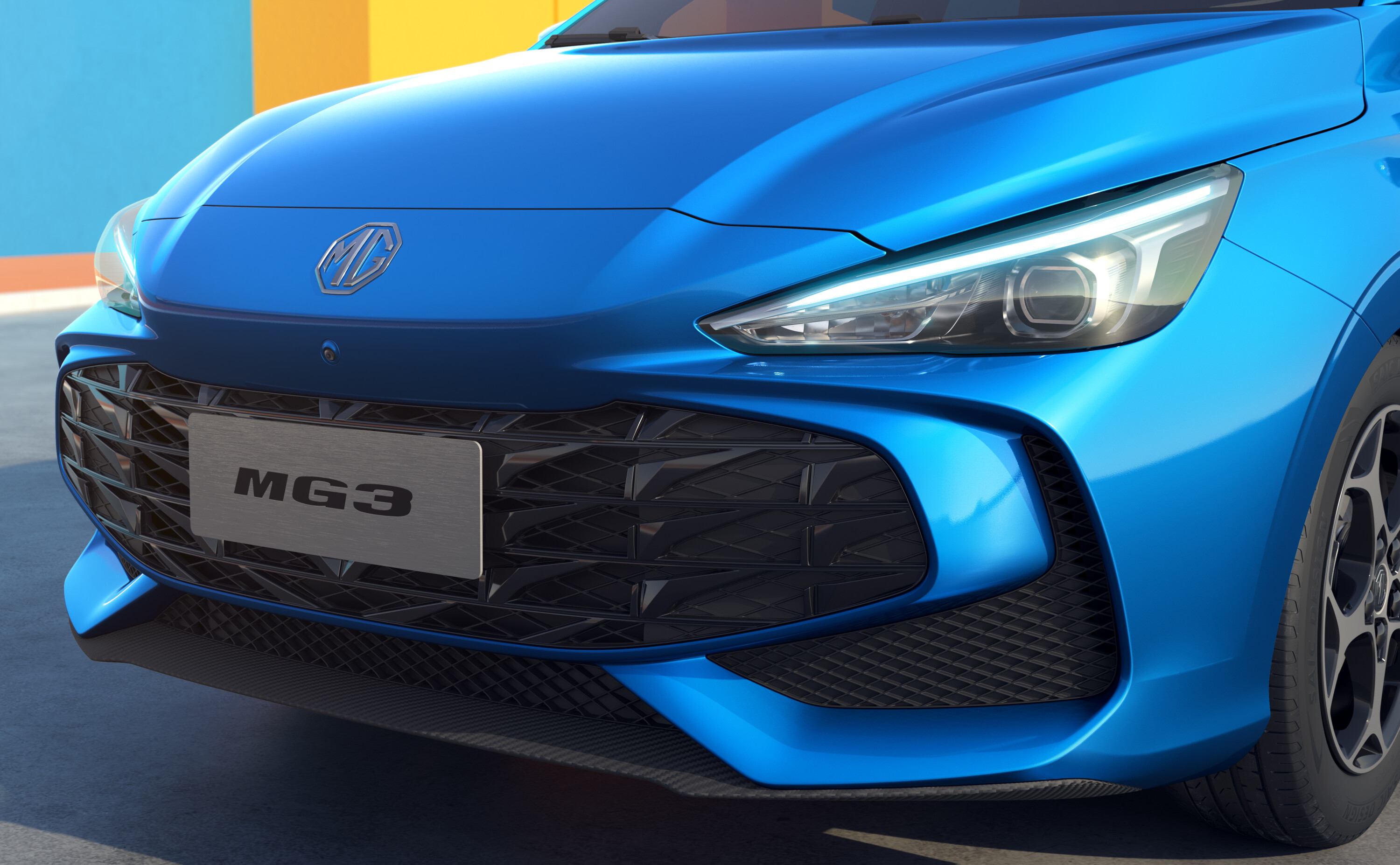
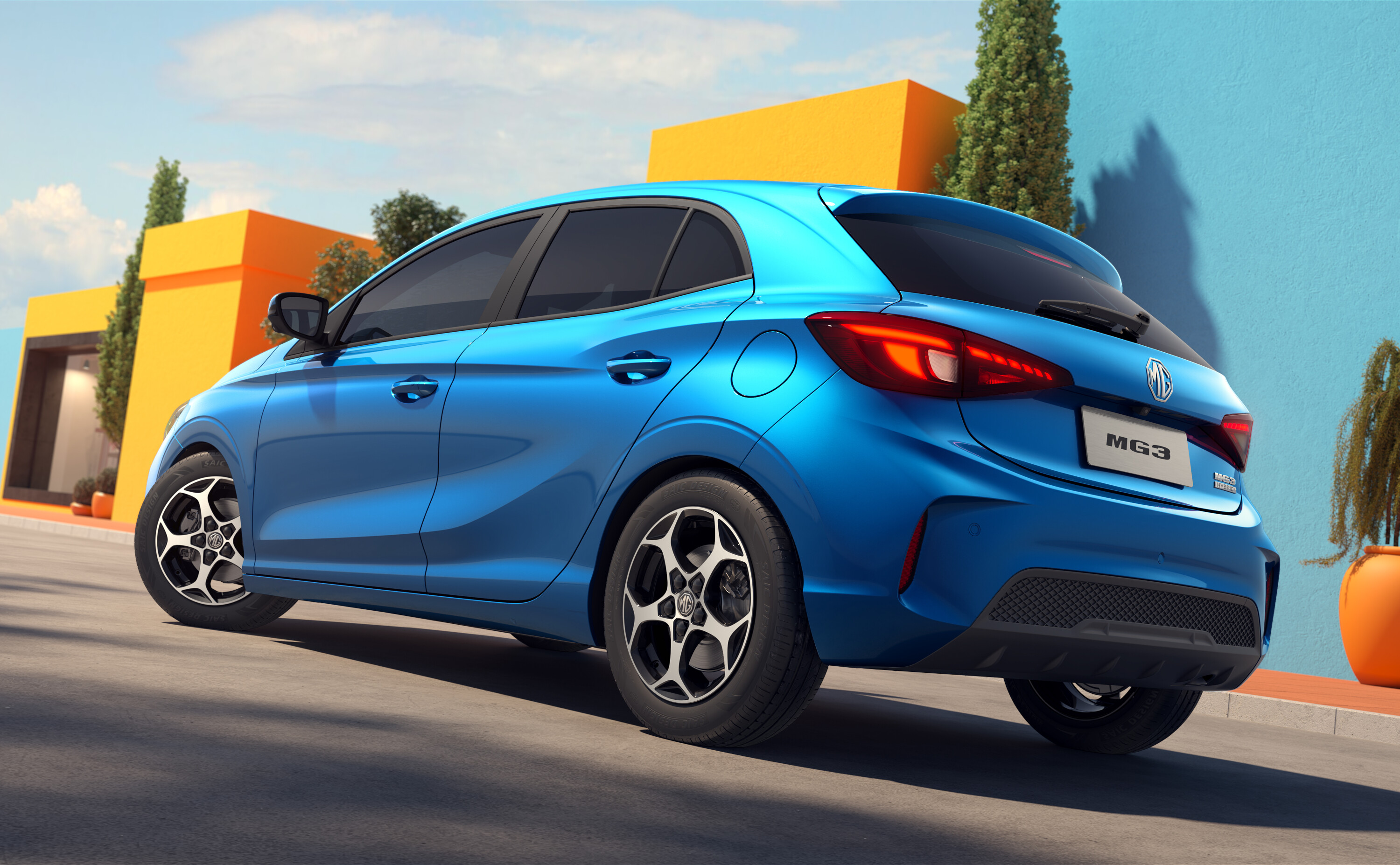
The latest-generation 2024 MG3 – the first all-new model since 2011 – has debuted ahead of its mid-year Australian launch.
MG Australia has confirmed that “due to advancements in technology, safety and specification”, the new MG3 will not be priced from under $20,000 when it arrives in local showrooms.
It will be the first time a new car hasn’t been available for under $20,000 drive-away, with the cost of the one-size-smaller Kia Picanto hatch also increasing following a recent mid-life update.
1
The current MG3 hatch debuted in China in 2011, arrived in Australia in 2016 at $13,990 before on-road costs, and is now priced from $19,990 drive-away.
“There will be a price increase of around $5000 associated with the new model, thanks to the introduction of new world-class technology, safety updates and all-new specification,” said an MG Australia spokesperson.
That would see the new MG3 priced from around $24,990 drive-away – up 25 per cent, and equivalent to the larger MG5 Vibe sedan due for safety upgrades later this year following a poor zero-star ANCAP safety rating.
1
MG has committed to a $4 million investment to improve the MG5’s safety, which would likely move it beyond its current drive-away prices to amortise these added development costs.
With an automatic transmission, the similarly-sized Mazda 2 and Toyota Yaris hatches start from around $28,500 drive-away, while the soon-to-be-replaced Suzuki Swift auto is priced from $25,990 drive-away.
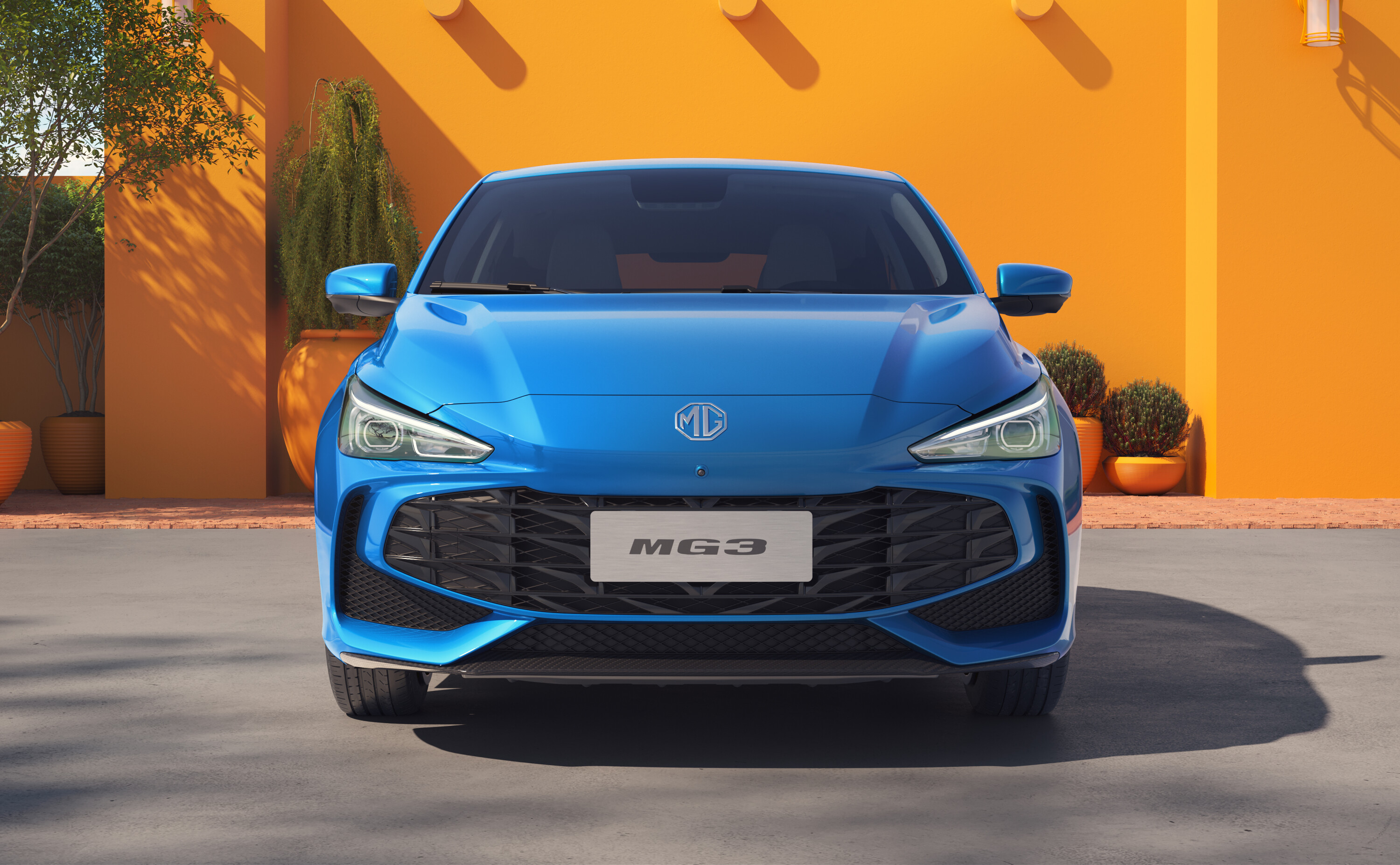
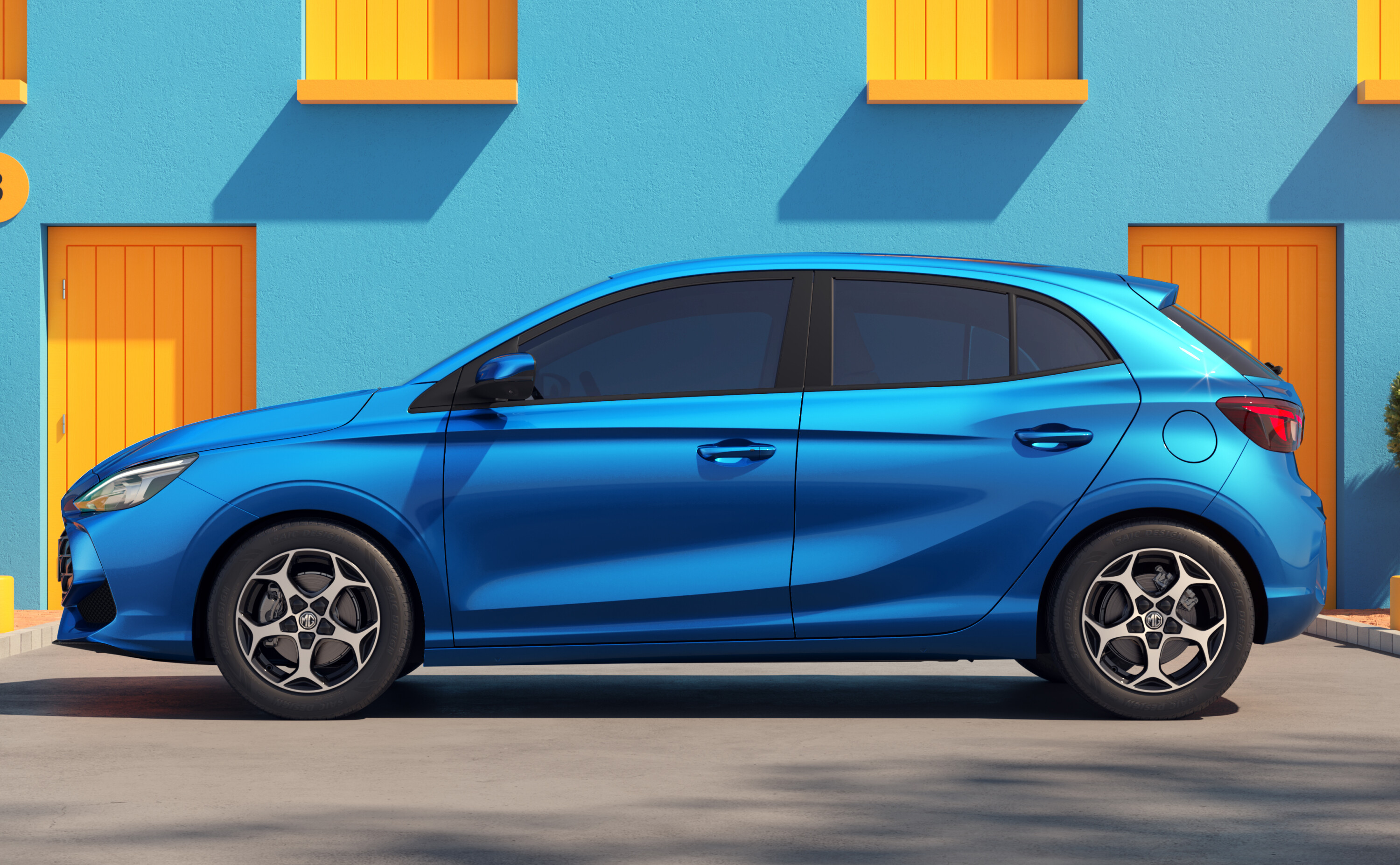
The new model has a revised exterior look inspired by the MG4 EV, MG5 sedan and MG One SUV, including a wider grille, pull-out door handles, and horizontal tail lights.
1
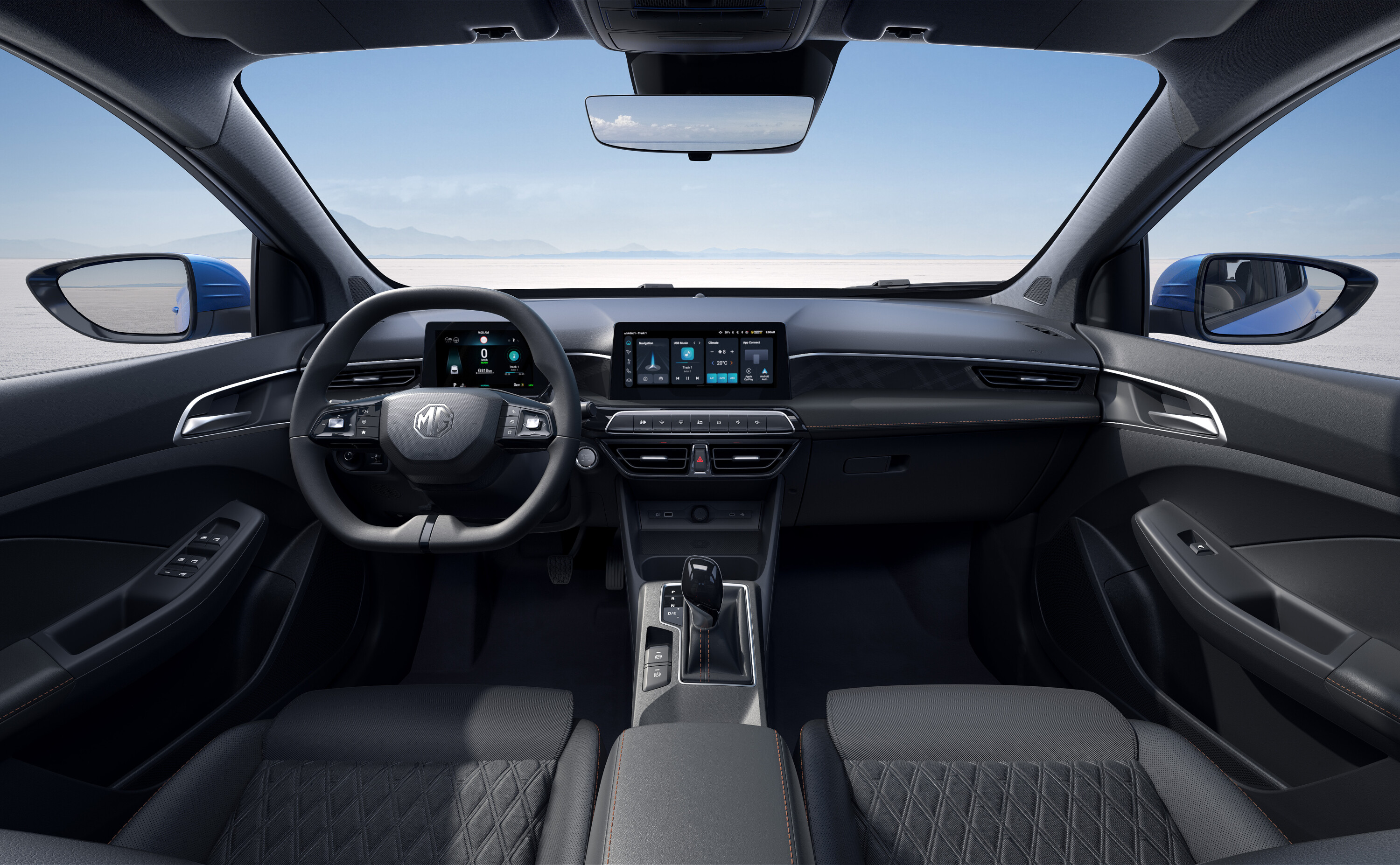
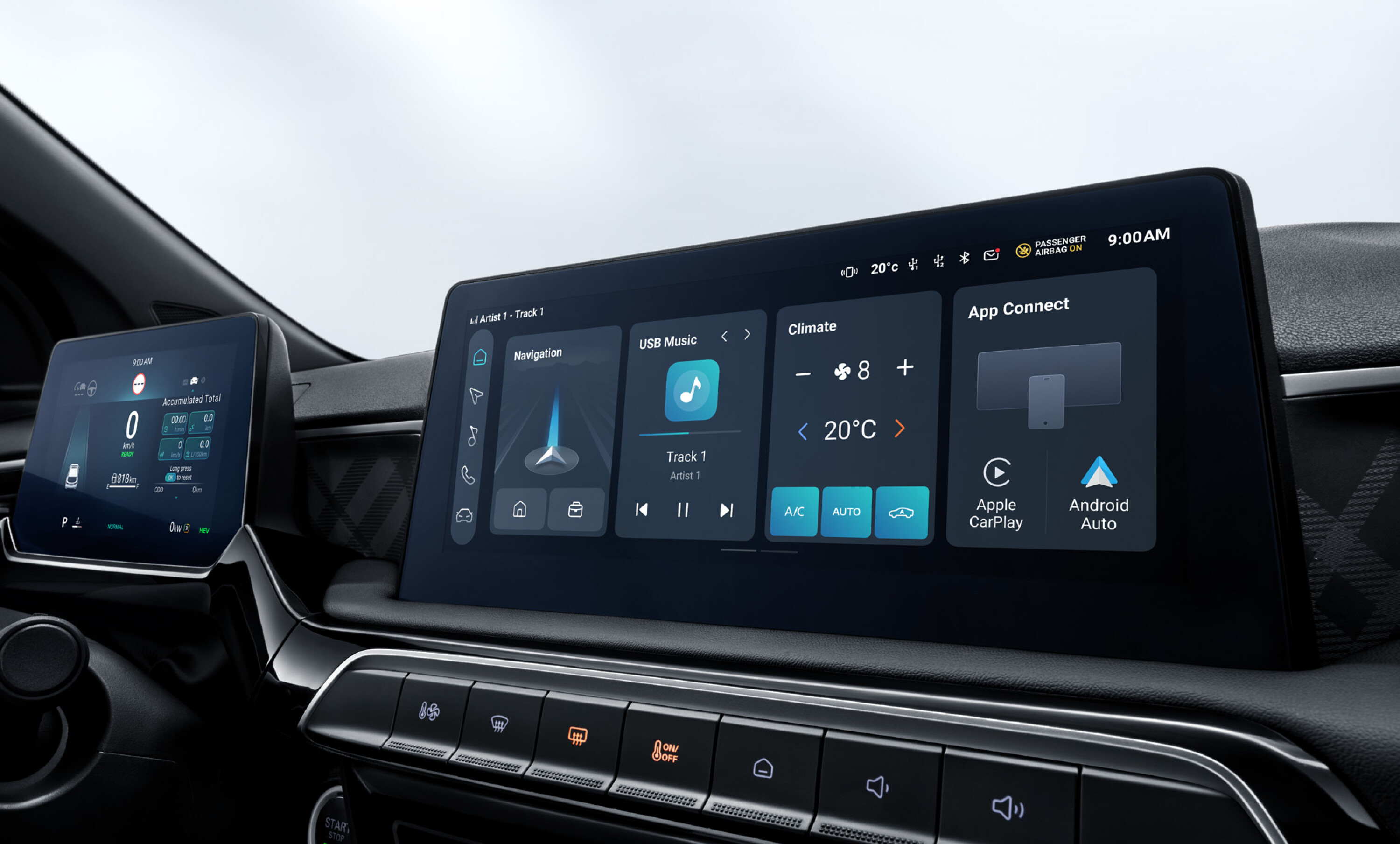
Inside, it features a wider 10.25-inch touchscreen running MG’s latest infotainment – which includes Android Auto missing from the current model – a 7-inch digital instrument cluster, hard-button shortcut controls, USB-A and USB-C charge ports, and a wireless phone charger.
There’s also an electronic parking brake with auto-hold function, an engine start/stop button, and a flat-bottom steering wheel derived from the MG4 EV with piano black controls.
It also adds active safety features absent from the current MG3, including autonomous emergency braking, lane-keep assist, lane departure warning, adaptive cruise control and traffic jam assist.
1
The MG3 will be available with a hybrid powertrain in its model line-up, becoming the second vehicle in the budget-focused, city-car segment to include the option of a fuel-saving powertrain after the Toyota Yaris.
The hybrid system combines a 75kW/128Nm 1.5-litre four-cylinder petrol with a 100kW/250Nm electric motor for a 143kW total system output.
It has a 1.83kWh battery and offers four drive modes: Electric-only, series-hybrid, ‘series and charge’, ‘drive and charge’, and parallel-hybrid.
MG claims an eight-second 0-100km/h sprint time, with a selectable ‘sport’ calibration to “get the best out of the combined power output”, along with ‘eco’ and ‘standard’ modes.
1
Oddly, the hybrid powertrain is matched to a three-speed automatic transmission, down one gear from the current MG3.
It has a WLTP-rated combined fuel consumption of 4.4L/100km, compared to 6.7L/100km for the outgoing model under the less stringent ADR testing cycle.
A non-hybrid version of the petrol powertrain will also be offered in Australia.
Under the skin, the MG3 is based on a new ‘scalable’ platform, which is said to improve comfort and dynamics. The chassis and suspension was developed in Europe and China, with unique tunes for different markets.
1
Measuring 4113mm long, 1502mm tall and 1797mm wide with a 2570mm wheelbase, the new model is 58mm longer, 2mm lower and 68mm wider with 50mm more between the front and rear axles. It has a 293-litre boot, down 14L.
More local details on the 2025 MG3 are due to be confirmed closer to its mid-year Australian launch.
“The current MG3 is at the end of its lifecycle which means that now is the best time to buy a brand new car for the price of a used one, before the new model hits our shores,” added the MG Australia spokesperson.
Below: The current MG3 hatch, which was last updated in 2018
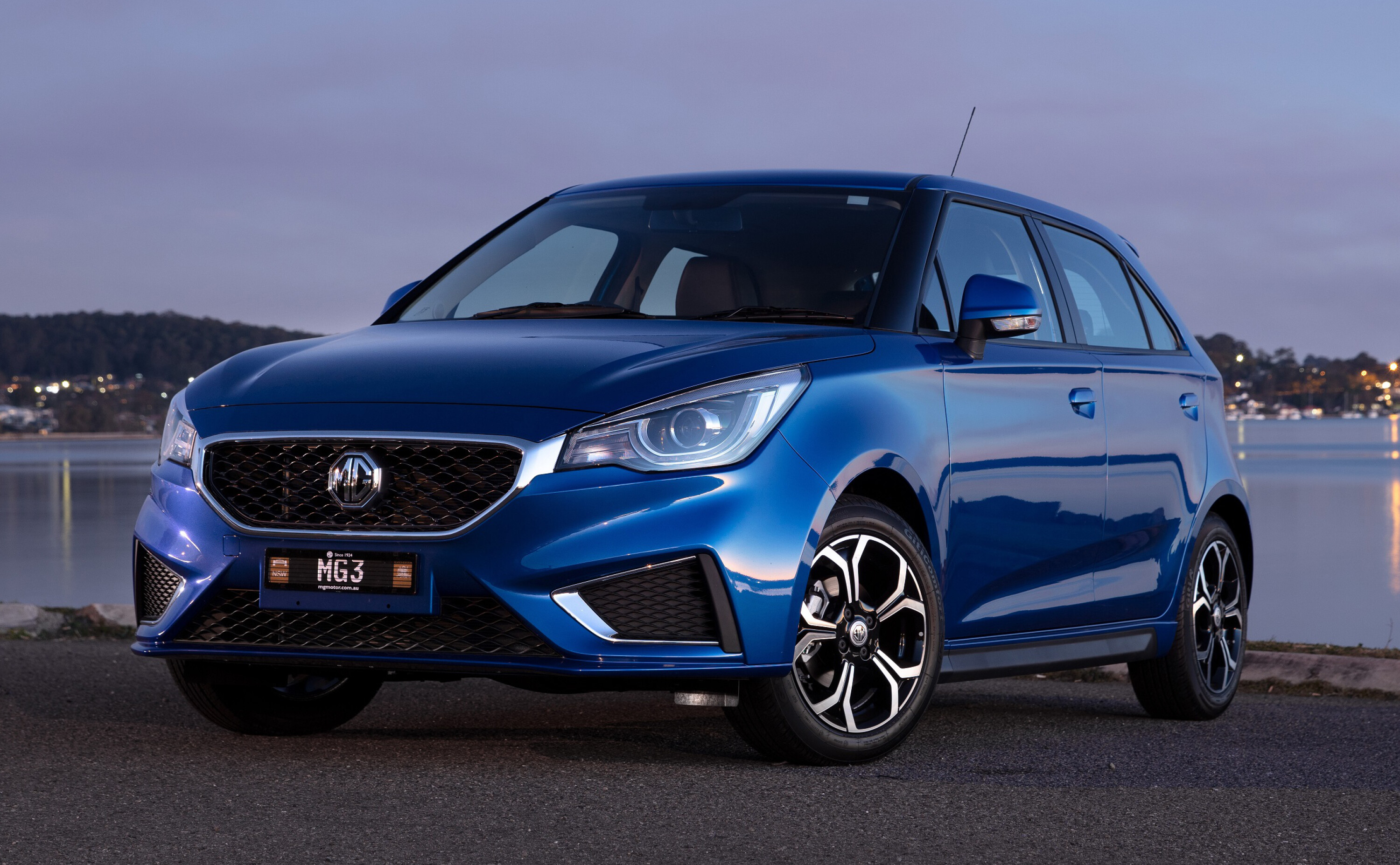
1
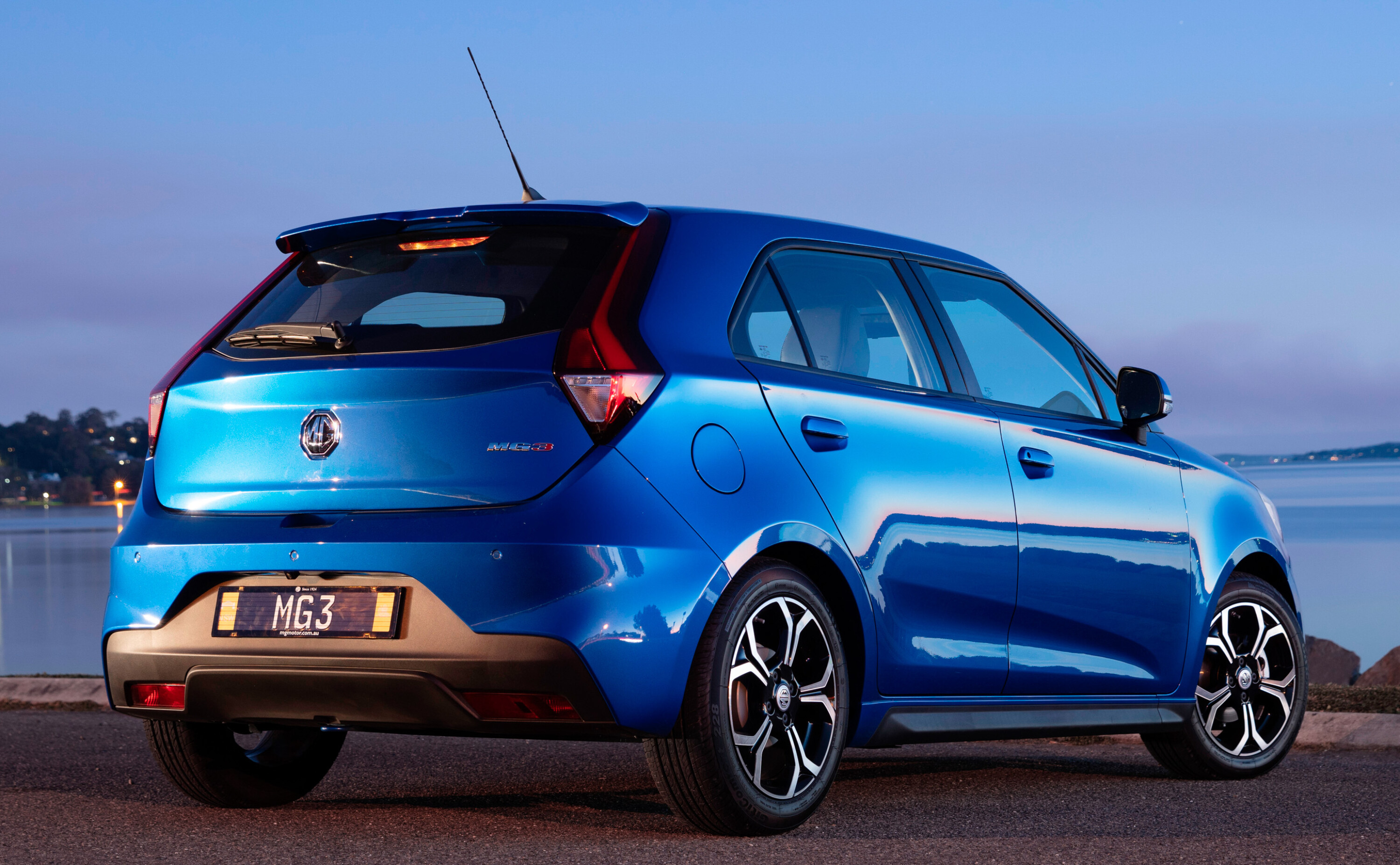
1
MORE
Everything MG
8:30pm: And now it’s been revealed!
Get all the details on the freshly unveiled Renault 5 at the story linked below.
February 26, 7:30pm: The Renault 5 is being revealed as we speak.
Check out the live video below, and watch for our detailed story to come shortly.
January: Renault 5 teased before Geneva debut
It’s been a long time coming, but we’re finally just weeks away from the return of the Renault 5 badge, set for February 26 at the Geneva motor show.
Destined to debut on the back of a new-generation electric hatch, the 5 name will be an important model in the ‘affordable EV’ space.
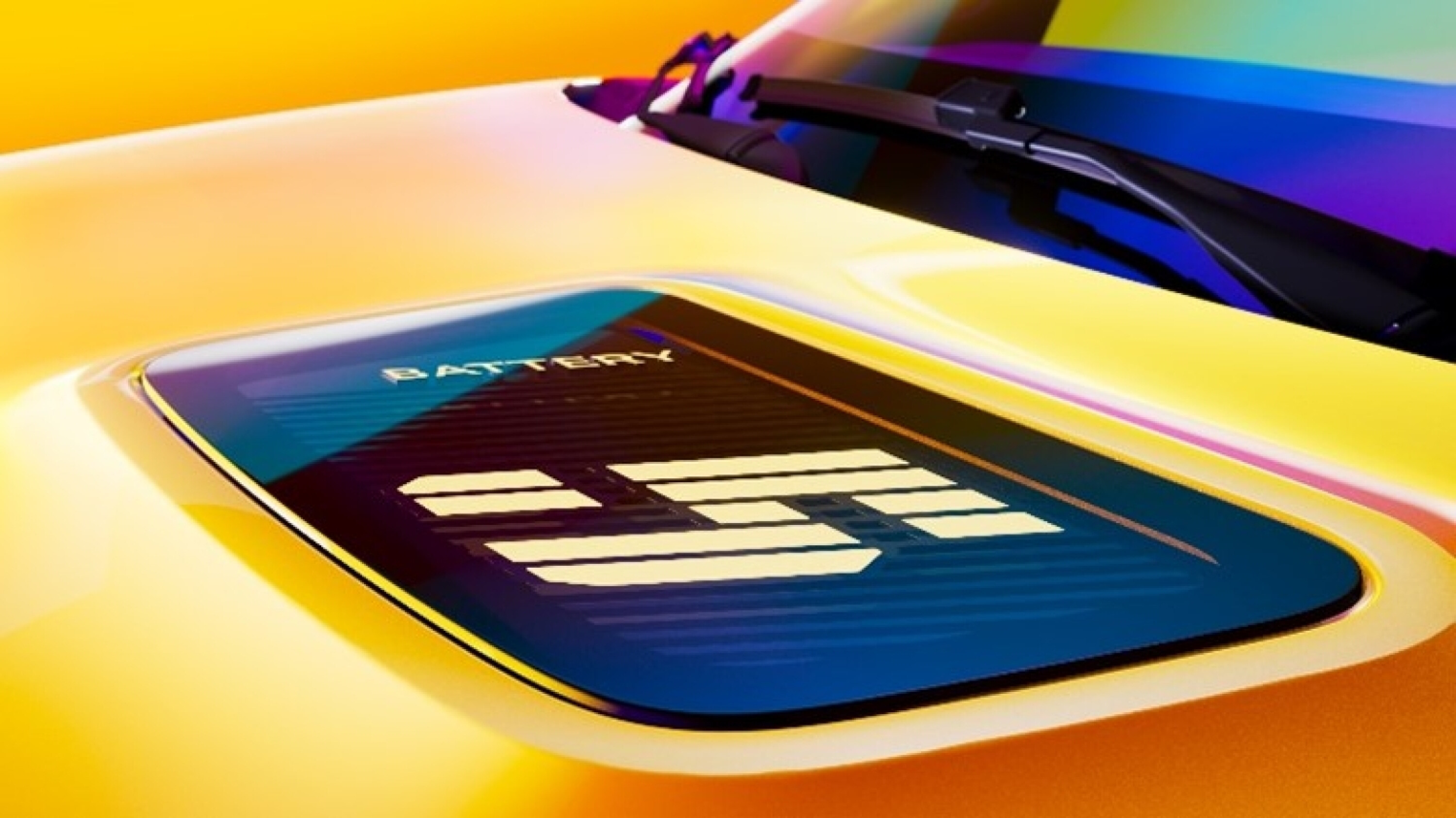
1
A set of new teaser images released at Christmas offer a first undisguised look at the new 5, although the tightly-cropped view means there is still much left to be revealed.
“Renault 5 E-Tech electric is a cult icon redesigned for the modern age,” says Fabrice Cambolive, head of the Renault brand in the wider Renault Nissan Mitsubishi group.
“We pulled out all the stops for this engaging car, designed and built in France. With its cheerful design and new-generation technologies, it’s out to make electric vehicles more affordable in Europe.”

1
The new 5 isn’t officially confirmed for Australia yet, but local boss Glen Sealey told Wheels in an early 2023 interview that it is one of the cars the brand’s Australian distributor is eager to introduce.
“If Renault makes [the 5] in right-hand-drive, we’ll put our hand up. It’s then a case of: will Renault make the additional investment to engineer a car to ADRs for Australia”, Sealey said.

1
In Europe, the 5 will open in the €20,000 to €25,000 range – roughly equivalent to $30,000 to $40,000 in Australia.
It would be quite an achievement if that price range is possible in Australia, given it’s a bracket currently dominated by Chinese EVs, while the similarly compact Fiat 500e is a $52,000 a proposition.
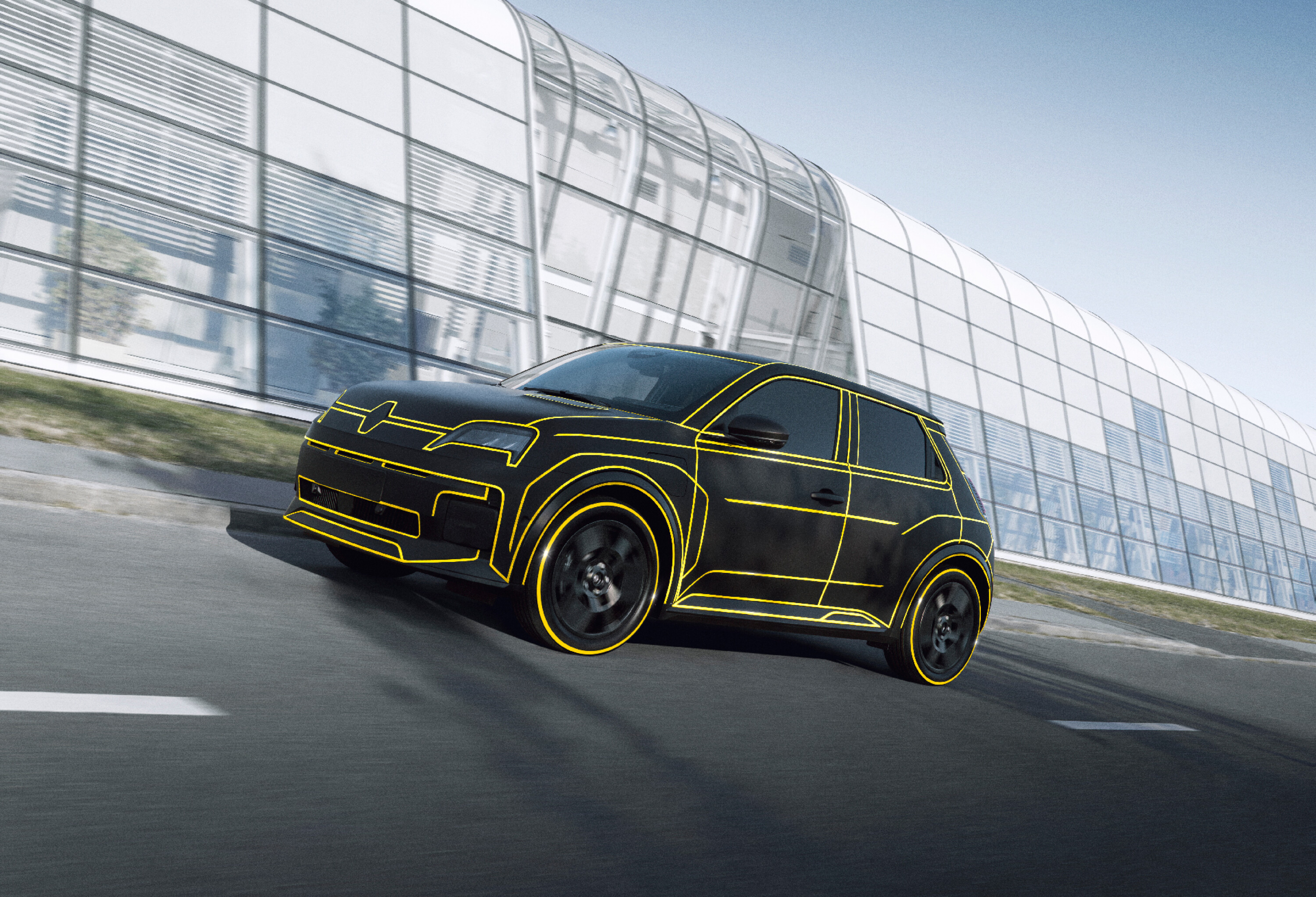
1
July 2023: 2024 Renault 5 electric hatch teased
The long-awaited Renault 5 revival has been teased in production-ready form for the first time, ahead of the Goodwood Festival of Speed on Thursday.
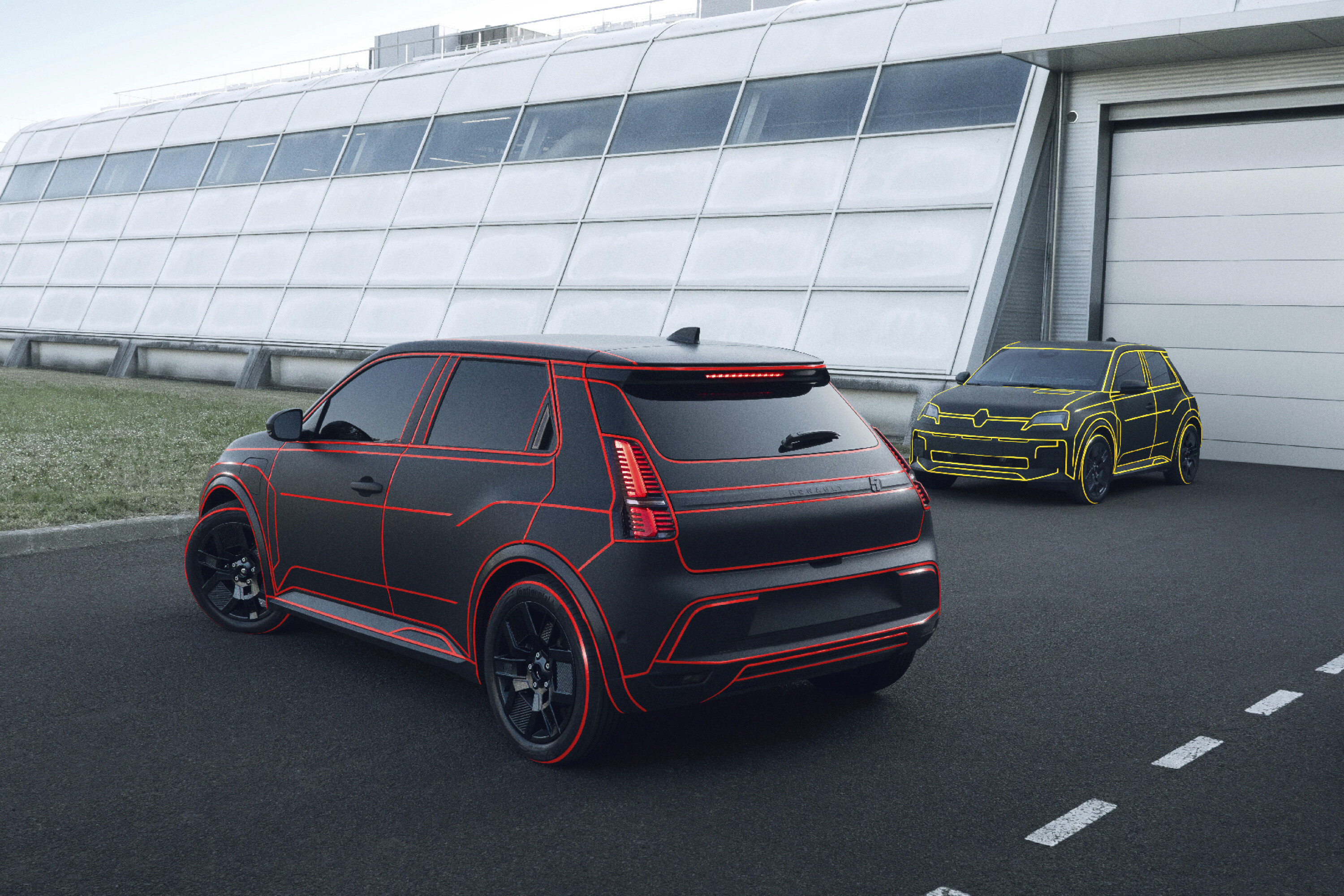
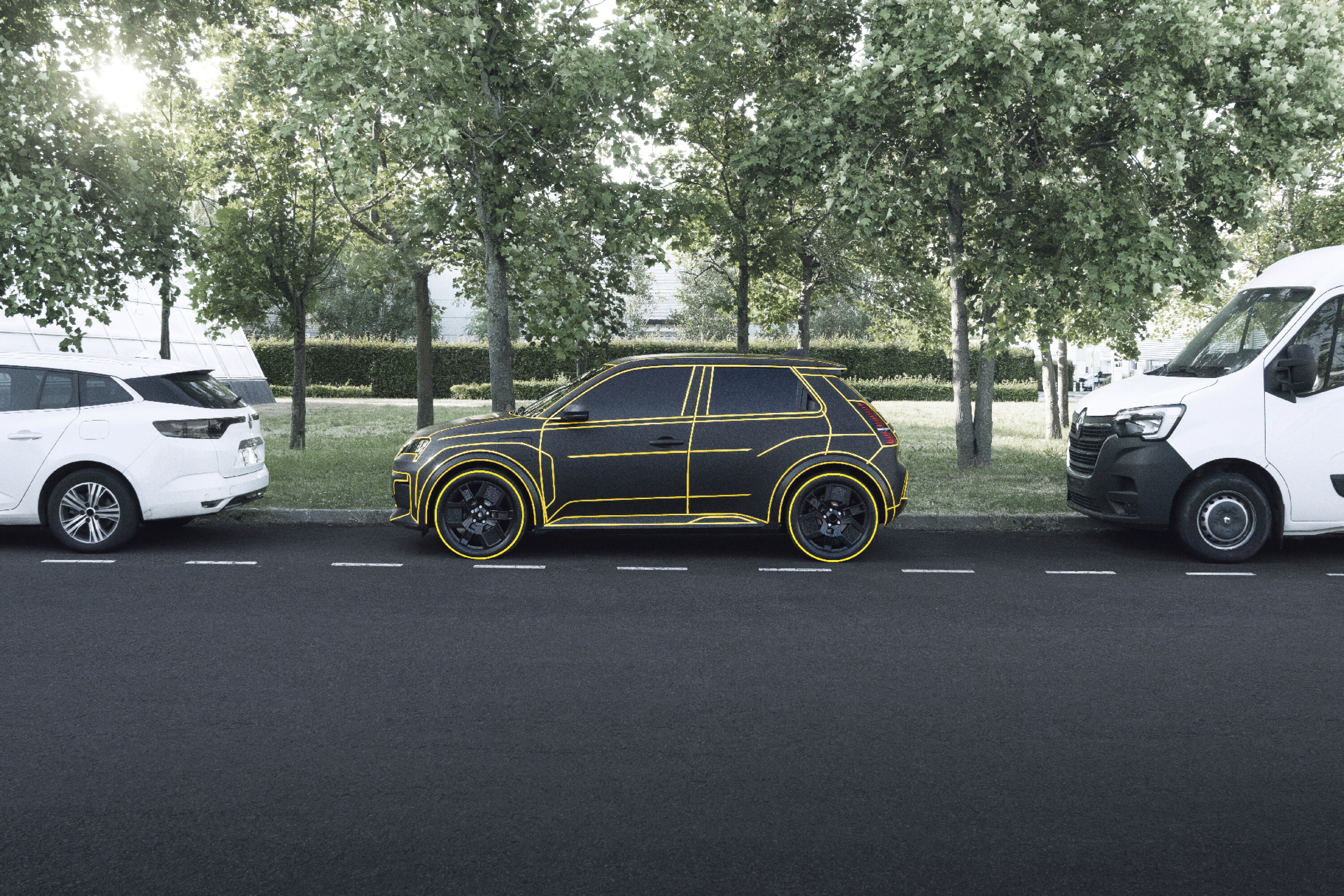
While the retro electric hatch was still wrapped in dark camouflage, it indicates the electric hatch will have straight body lines, a compact length with a wide wheelbase, and retro-sporty styling cues.
Interestingly, the front bonnet has a subtle protruding bump on the left side, the front bumper will feature a splitter, and a subtle full-width lip or light bar at the tailgate connecting the vertical tail-lights with a ‘5’ badge offset on the right.
The latter harks back to the post-1984 second-generation Renault 5 hatch, which had the carmaker’s diamond logo towards the left front grille.
1
Other details seen in the teaser include hidden rear door handles, Continental tyres, and a charging port located at the front-left of the car.
While Renault hasn’t detailed when the 5 EV will be unveiled, the teaser lines up with the Goodwood Festival of Speed event running from Thursday, July 13 to Sunday, July 16.
The annual event has become a new go-to for carmakers to tease or reveal new high-performance models in lieu of traditional motor shows, with electric cars such as the Hyundai Ioniq 5 N and MG Cyberster slated for this year.
5
April 3: 2024 Renault 5 initial details revealed
Initial battery and powertrain details have been revealed for the all-electric Renault 5, ahead of a 2024 unveil for the revived retro-inspired hatch.
Snapshot
- Renault 5 EV hatch set for 2024 unveil
- Cheaper to produce, simpler than Zoe predecessor
- Focus on fun driving dynamics
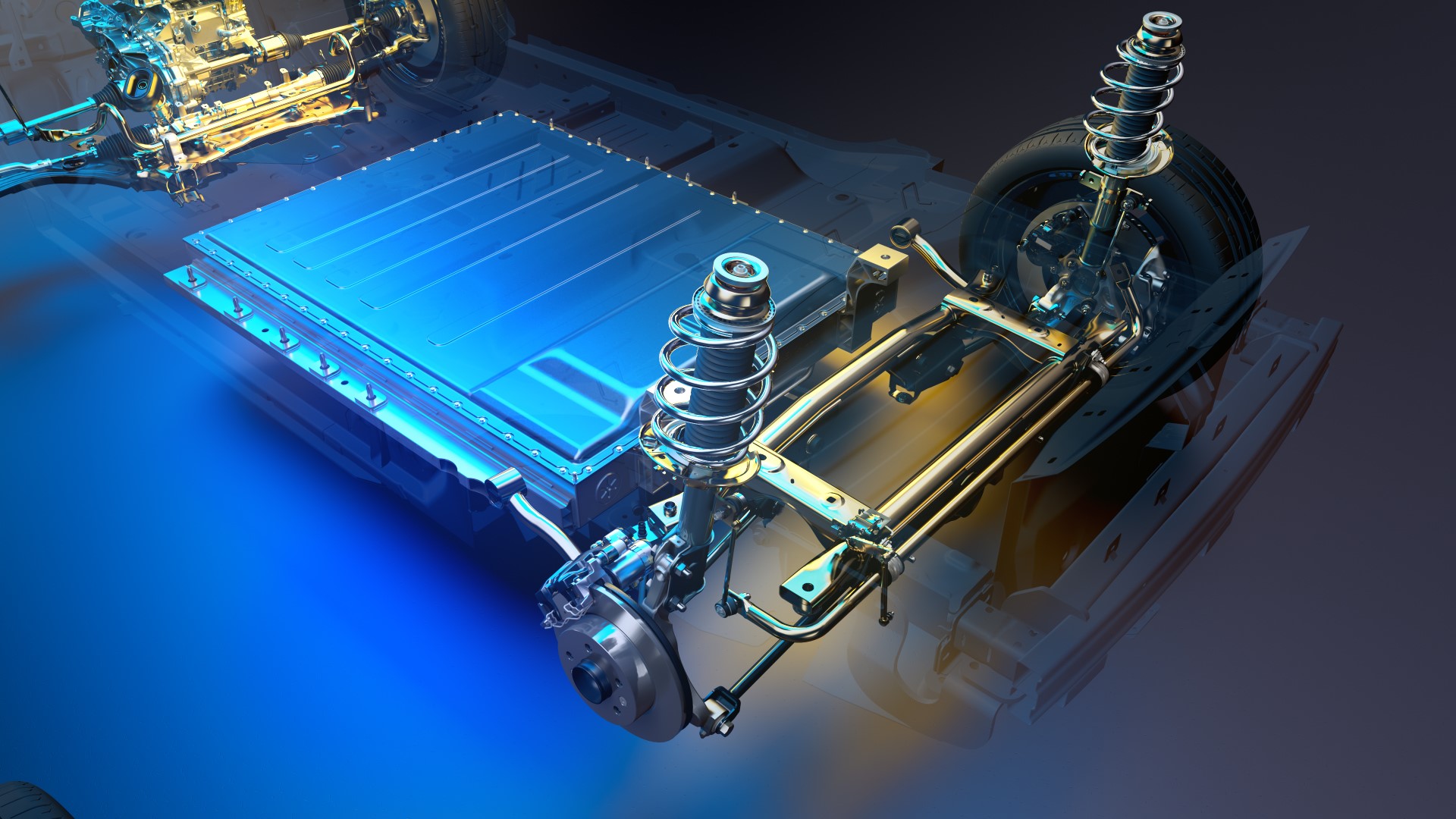
The 5 will debut Renault-Nissan’s Common Module Family-B EV (CMF-B EV) platform, which will be 30 per cent cheaper to manufacture than the Zoe electric light hatch overseas since it shares 70 per cent of parts from the combustion engine CMF-B platform used on the Clio and Captur city cars.

1
The Renault 5 will be the Zoe’s spiritual successor, with a design inspired by its original predecessors and focus on fun driving dynamics.
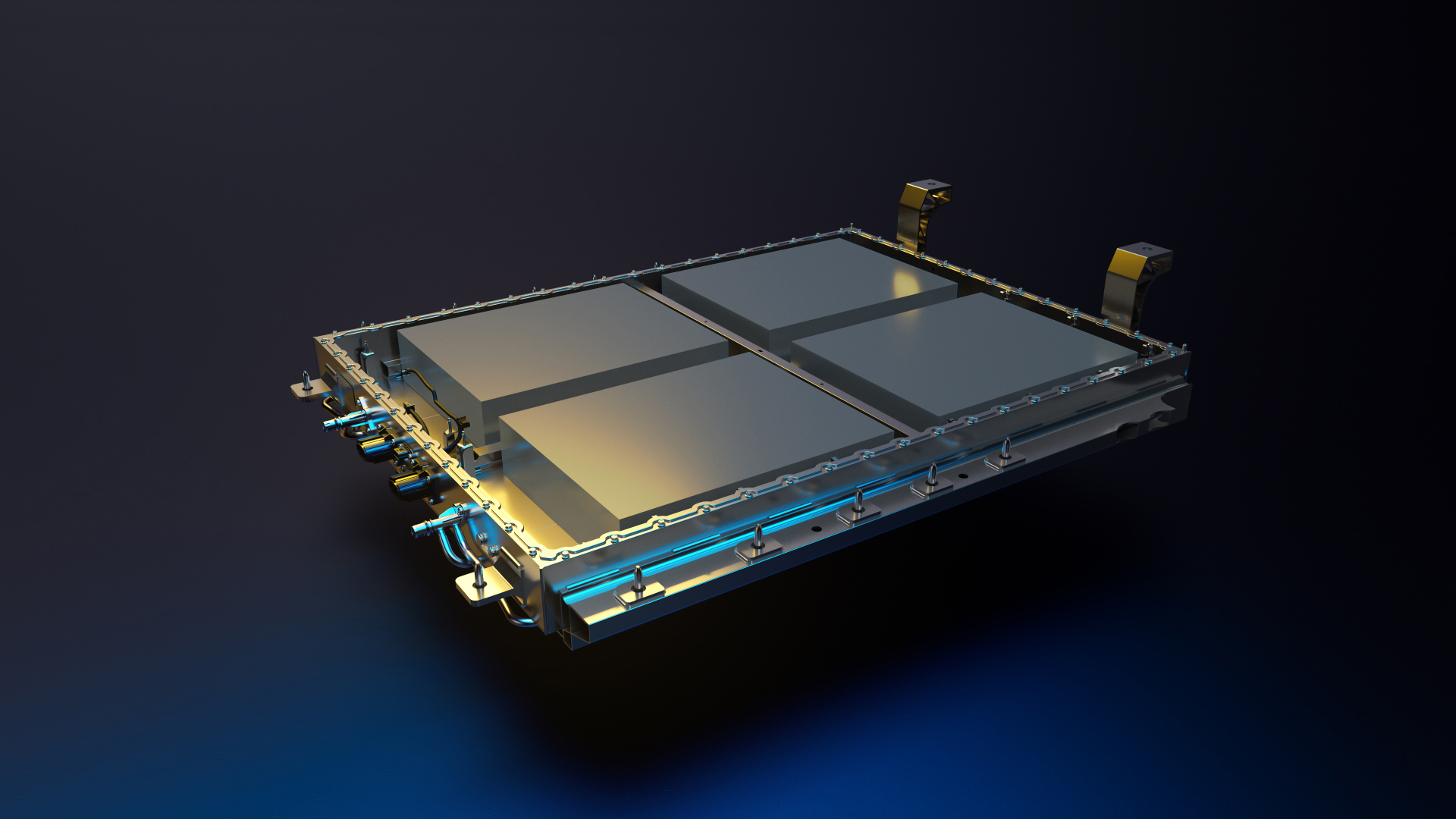
It will be home to a new battery pack with four large modules to be simpler (instead of 12 small modules like the older Zoe), 15kg lighter than the Zoe and more space efficient, while giving the underbody added rigidity to improve safety and cabin noise isolation.
Additionally, the Renault 5 will feature an electrically-excited synchronous motor that doesn’t use expensive and environmentally-unfriendly rare-earth materials, while delivering higher power outputs than a permanent magnet motor.
1
The electric city car will also have a more compact architecture – around 20kg lighter than the Zoe – by combining the DC/DC converter (which converts the battery pack’s 400-volts into 12-volts to power electronics), the onboard battery charger, and accessory box (which manages power distribution) into one unit.
The CMF-B EV platform also enables it to have multi-link rear suspension.
The first nine Renault 5 EV mules disguised as Clio hatches are currently being tested for comfort and handling on European roads, and the company’s private testing facilities, with initial drives indicating it is a “worthy descendant of the Megane E-Tech electric”.
When it does make its debut next year, it will revive the nameplate that dates back to 1972, but only lasted for two generations.
The Renault 5 was famous for its Alpine and Turbo hot hatch iterations, plus its entrance as a front-wheel drive rally car.
1
Will the electric Renault 5 come to Australia?
Renault has yet to confirm if it will build the 5 in right-hand-drive, but the company’s local distributor has confirmed it’s eager to bring the style-focused 5 in as a rival to the Abarth 500e and Mini Electric.
Local boss Glen Sealey told Wheels in February: “If Renault makes [the 5] in right-hand-drive, we’ll put our hand up. It’s then a case of: will Renault make the additional investment to engineer a car to ADRs for Australia?”
The 5 would come with a handy advantage of those two compact EVs when it comes to driving range, as the current Zoe can manage up to 395 kilometres.
For now, Renault Australia will launch the Megane E-Tech EV crossover SUV at the end of this year with a targeted circa-$70,000 starting price to compete with a highly concentrated segment, including the Tesla Model Y, Kia EV6, and Ford Mustang Mach-E.
MORE
Everything Renault
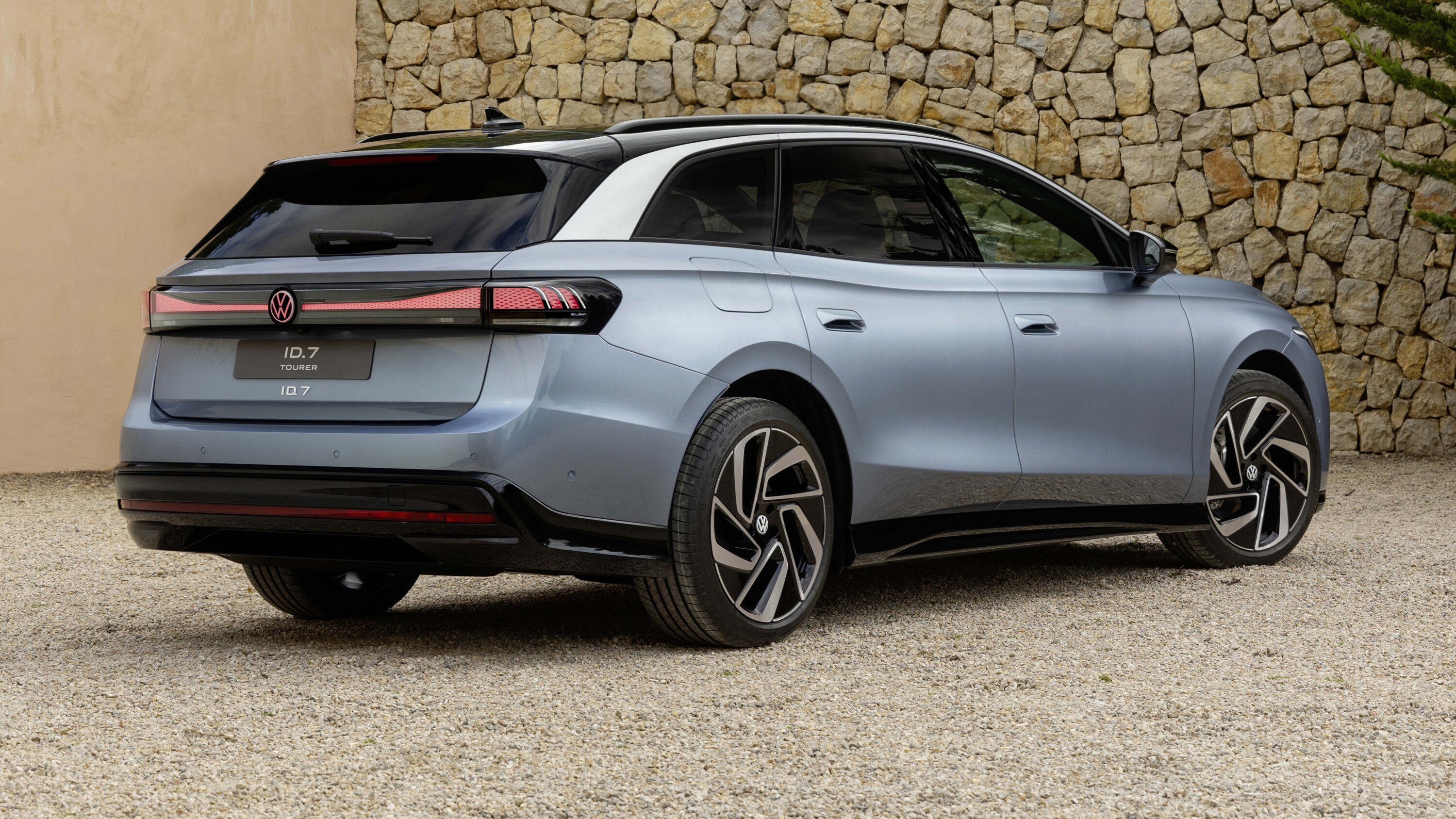
Watch out SUV lovers, and wagon enthusiasts rejoice! Volkswagen has unveiled the ID.7 Tourer – the long-roof version of last year’s ID.7 sedan.
That’s the good news. The bad news? It’s not likely to come to Australia. Or at least, not anytime soon.
When the ID.7 sedan was unveiled in April 2023, a Volkswagen Australia spokesperson said: “Volkswagen Australia is planning for several new electric vehicles to follow the ID.3, ID.4, ID.5, ID.Buzz and ID.Buzz Cargo. At this point, the ID.7 is not for our market as our focus will be on our electric SUV range.”
Given the general disinterest in wagons these days, the new ID.7 Tourer would be even less likely – although the Volkswagen group remains one of the few carmakers happy to own that niche in Australia.
1
If it does come here, the ID.7 Tourer – which is Volkswagen’s first all-electric wagon – could prove a compelling option for those niche buyers.
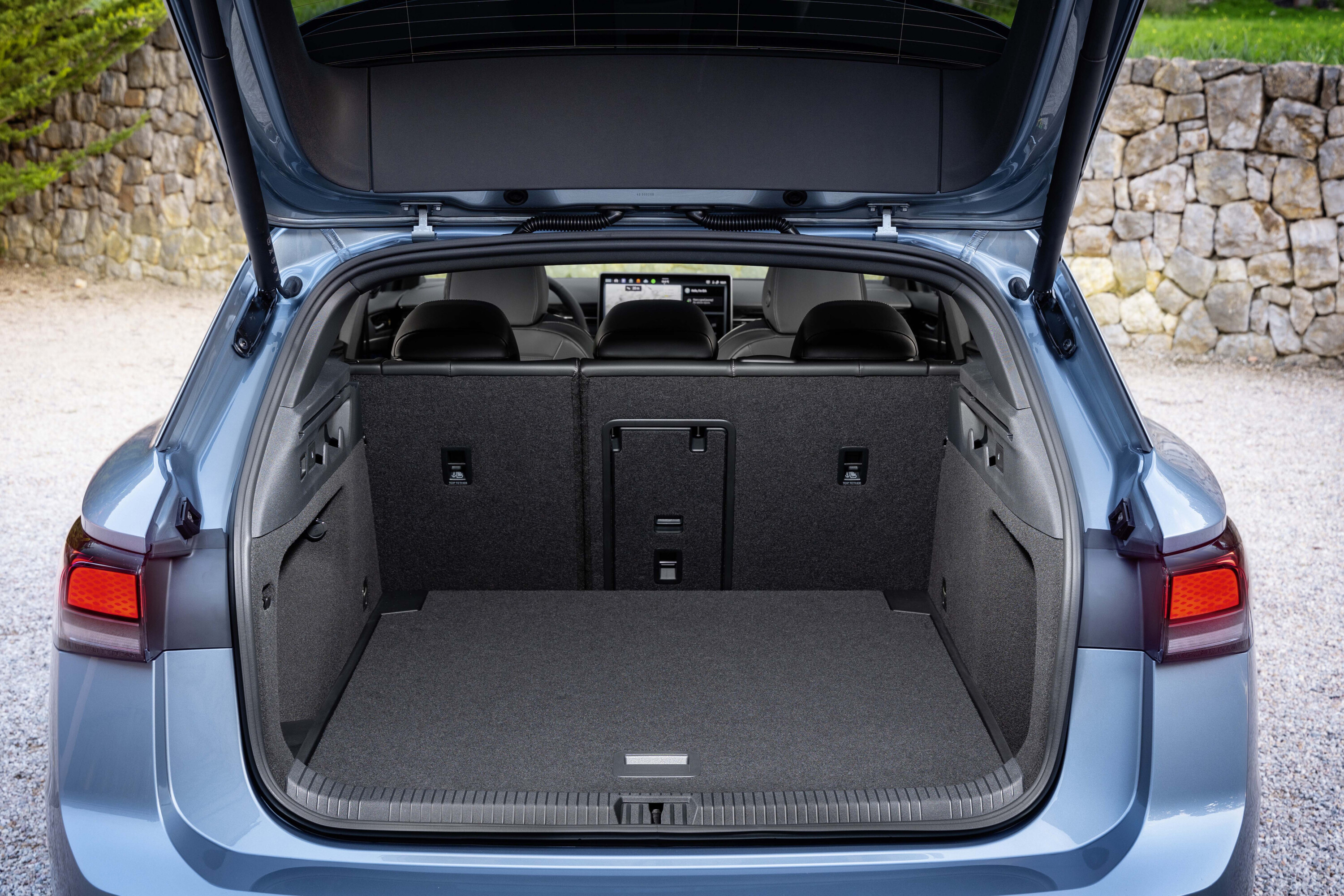
The most obvious point of appeal is its extended roofline, providing 605 litres of luggage space with the rear seats up, and 1714 litres with both rear seats folded down.
The ID.7 Tourer will be offered in two models – the Tourer Pro with a 77kWh battery, and the Tourer Pro S, with an 86kWh battery. Driving range is claimed at up to 685km.

1
Both models support up to 200kW at DC quick-charge stations, promising a 10-80% charge “in significantly less than 30 minutes”.
Both models share the same “AP550” drivetrain, sending 210kW and around 550Nm to the rear wheels. The ID.7 Tourer’s top speed is expected to be limited to 180km/h.
On the outside, the ID.7 Tourer features LED headlights and tail lights, diamond cut 19-inch alloy wheels, and roof rails. Aside from the smart-looking rear-end styling, the rest of the exterior styling is shared with the ID.7 sedan.

1
As promised in January, VW has also equipped the ID.7 with a voice assistant powered by OpenAI’s ChatGPT, offering the ability to answer a wide variety of questions and queries.
Volkswagen will also offer remote connectivity through a new “Wellness In-Car App” [↗], allowing for pre-conditioning of climate control and other options, before the driver and passengers enter the car.
For the driver, the ID.7 Tourer offers an augmented-reality head-up display, rear-view camera system, 10-colour background lighting, and two-zone climate control. A panoramic sunroof with smart glass, allowing for either transparent or opaque settings, is optional.
1
European sales of the ID.7 Tourer are expected to begin (in Europe) before the end of March 2024.
Are you keen to see this one in Australia? Get to hassling your VW dealer and it might just happen…
1
Indian giant Mahindra is getting closer to Volkswagen, with more of the German company’s EV tech to make its way into future models.
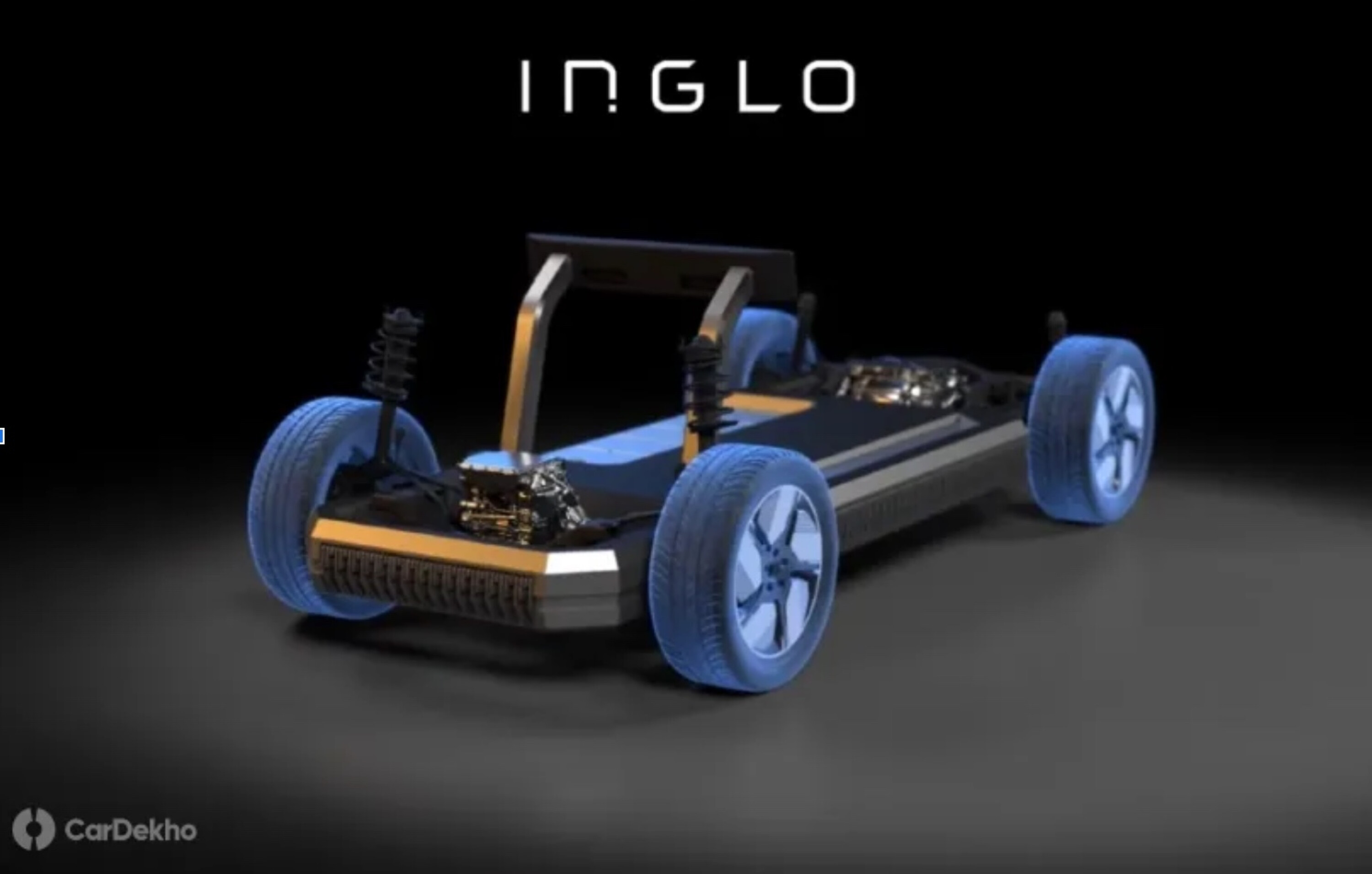
The two companies began collaborating in 2022 with a partnering agreement, and Mahindra’s new Indian Global (InGlo) EV platform will make extensive use of VW technology and components.
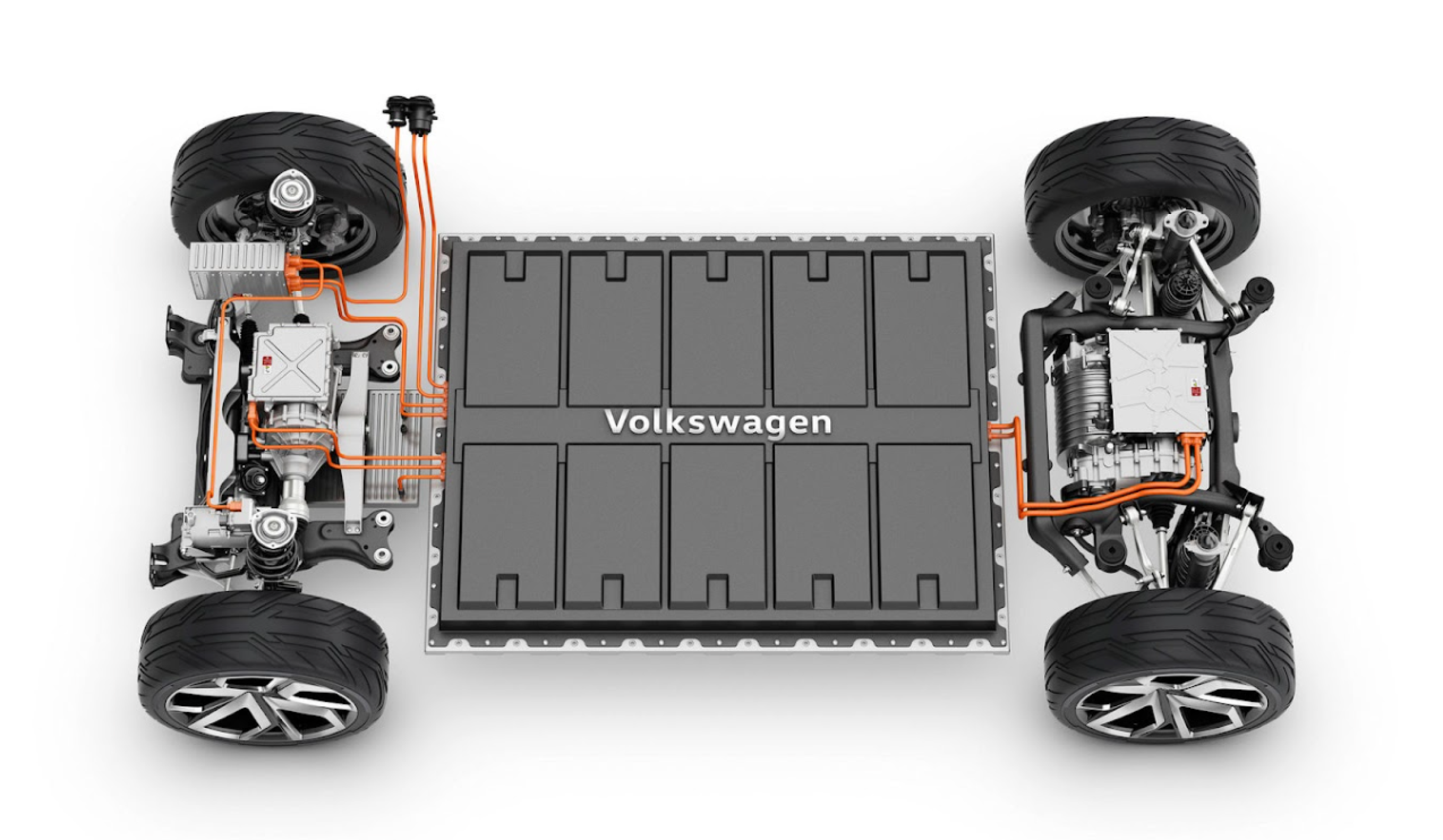
Mahindra will equip InGlo vehicles with Volkswagen‘s MEB electric components and PowerCo unified cells, and the company says it initially focus on a range of all-wheel-drive SUVs, up to 4.7m long and with around 80kWh in battery capacity.
MEB = Modularer E-Antriebs Baukasten (modular electric-drive toolkit)
MEB and InGlo are modular electric ‘skateboard’ designs with dual-motor / AWD capability, with flexibility to be used in vehicles ranging in size (the latest VW ID models are all MEB vehicles), hence their suitability for parts-sharing.
Details as to exactly which electric components will be shared between MEB and InGlo are scarce, but may include thermal management and motors. Potential sharing of in-vehicle systems such as operating systems, computers/electronic control units, and wiring harnesses has not yet been discussed publicly.
1
1
Vehicles on the InGlo architecture will use VW’s PowerCo Unified Cells
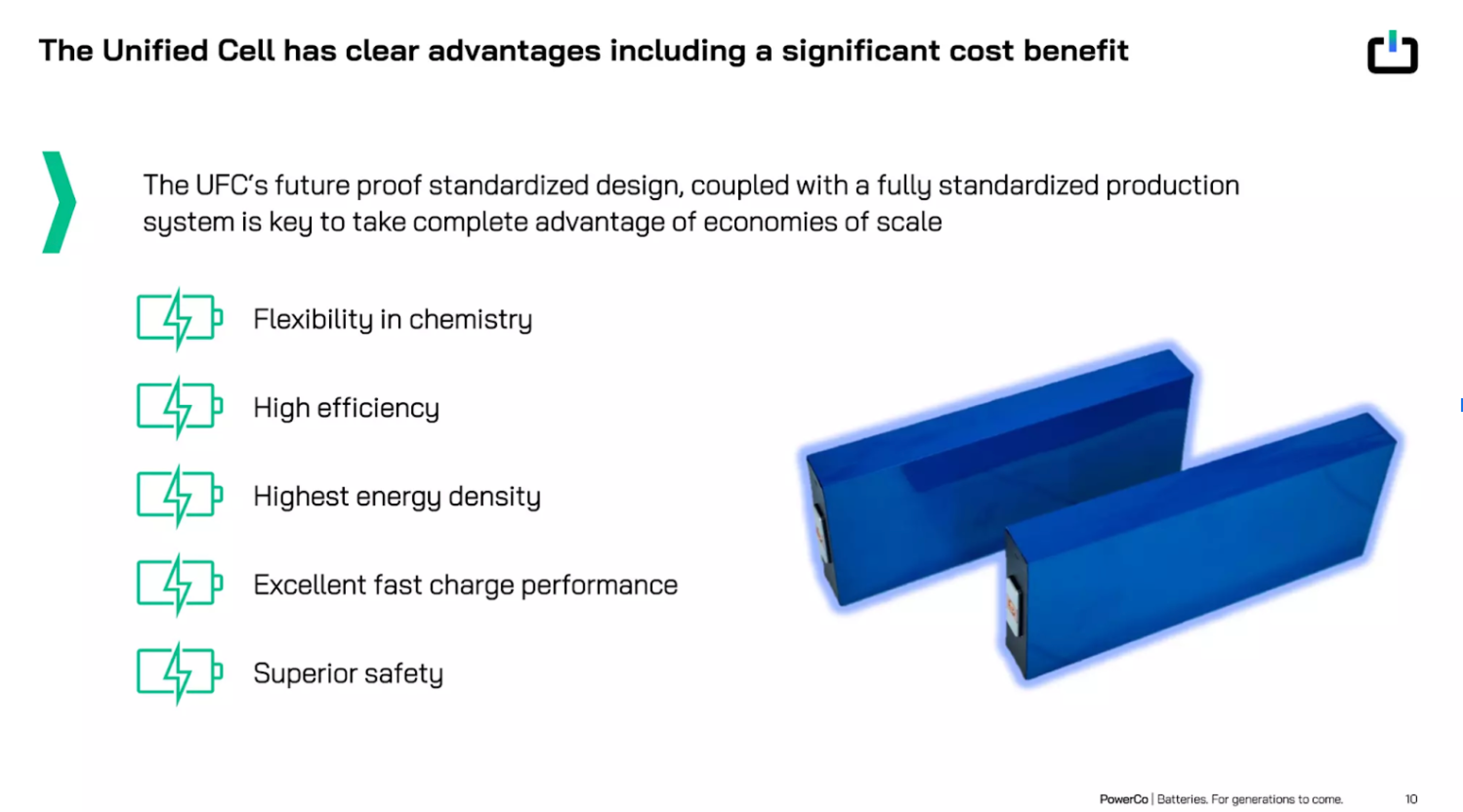
PowerCo, a VW subsidiary, is developing the unified cell – a battery cell format designed to be compatible with more than 80% of Volkswagen Automotive Group (VAG) products.
The cells are prismatic with a tab at each end, as opposed to blade cells as used by BYD, and can use different cell chemistries depending on the price point and performance characteristics required. Unified cell capacity ranges from 60-80kWh, with 175kW charging (up to 80% in less than 30 minutes).
Volkswagen claims “the intelligent and efficient Battery Management System with high precision, enhanced robustness and functional safety will deliver improved range, longevity and safety. Its high number of charge-discharge cycles coupled with a long lifespan will also help reduce waste.”
With partners, VW intends to operate six factories with a total volume of 240 GWh of capacity throughout Europe by 2030. The unified cell, according to VAG, “harnesses synergy effects and will reduce battery costs by up to 50 percent”.
1
Mahindra will use the ‘budget’ version of VW’s Unified Cell chemistry
VW classifies the unified cell chemistries as Entry – Cost optimum (Inexpensive Chemistry), Volume – Balanced cost and performance (Mainstream chemistry) and Best in Class – Performance optimum (High-end chemistry for high performance).
Mahindra will fit INGLO vehicles with the (inexpensive) LFP chemistry.
The Indian company will be the first outside partner to use the unified cells, with the supply agreement to have total volume of about 50GWh over several years.
Mahindra had previously stated InGlo will accept prismatic or blade cells, but it now appears it will use solely VW prismatic cells.
MORE
Everything Mahindra
MORE
Technology stories
Ford “almost pulled out of Australia” at an undisclosed period in recent years, it has been revealed.
Ford Authority [↗] reports Ford CEO Jim Farley said at a recent industry conference that the brand once considered leaving Australia – like once arch-rival Holden did in 2020 – following similar moves in Brazil and India.
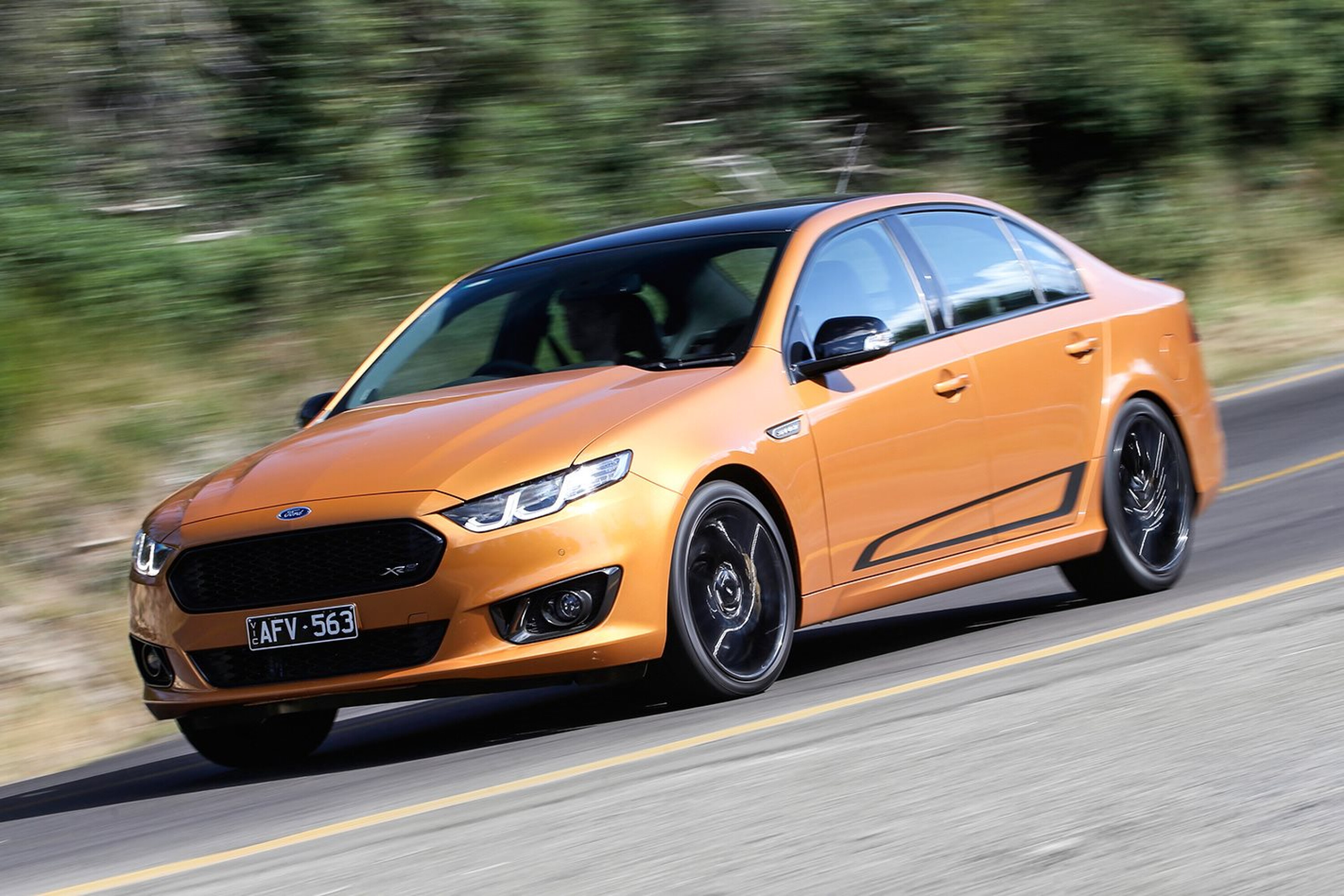
It is unclear when Ford bosses in Detroit were considering shutting down the Australian operation, but it was likely around the time local Falcon and Territory production ended in 2016 – before sales of the Ranger ute steadily rose to eventually become Australia’s top-selling vehicle in 2023.
“We don’t really talk about Ford anymore overseas, but we should because our Pro business is very profitable in Europe now,” said Farley. “We have a very small footprint in China. So, we’re totally unique among the other OEMs. Not a lot of risk, not a lot of reward, but we have a very profitable Ranger business. People wouldn’t realise this.”
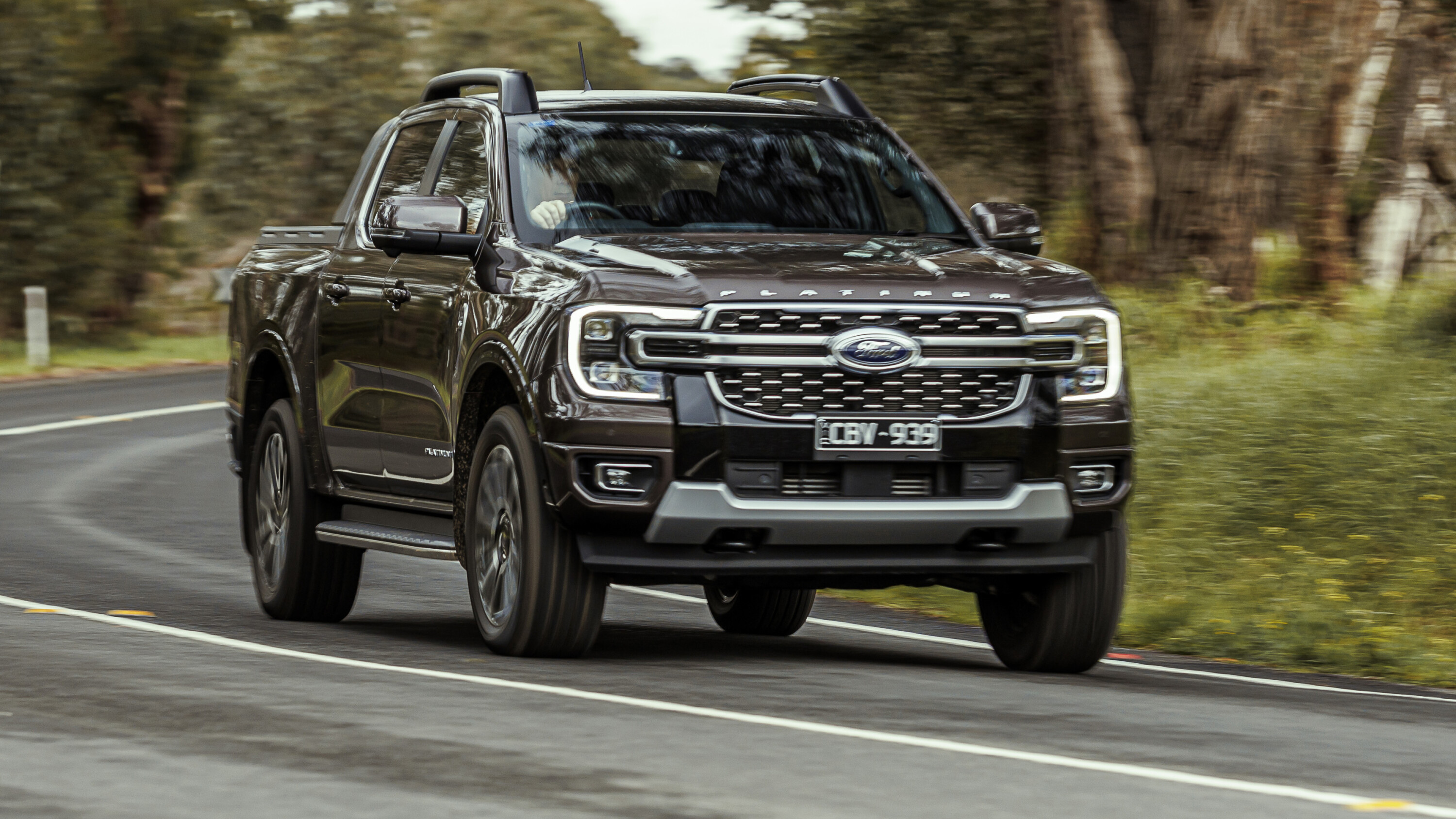
“The second highest volume vehicle at Ford is Ranger. Ranger globally outsells Super Duty. We are now number two in pickups outside of the U.S. and pickups are growing big time. We sell 5000 Raptors in China for US$150,000 each, and we’re the best-selling vehicle in Australia. We almost pulled out of Australia.
“The Ranger is number one in South Africa, huge pickup market. We’re number one in pickups in Europe. The Ranger is growing and super profitable in South America. It is our only vehicle in South America.”
1
In 2016, Ford Australia sold 81,207 vehicles with a 6.9 per cent market share before falling to 59,601 in COVID-affected 2020 with a 6.5 per cent market share.
In 2023, Ford sold 87,200 cars in Australia – mostly Rangers and Everests – with a 7.2 per cent market share, which was its best result since 2012.
Former Ford Australia boss Graeme Whickman told Wheels in a 2016 interview that the brand had been “in decline” and its “reliance on certain products had been obvious to everybody as it is with Holden [with Commodore]”.
In its shift from a local manufacturer to a full importer, Ford Australia promised a better customer experience, better dealer relations, fewer fleet sales, removing loss-leader models from its line-up, and rejecting volume for volume’s sake. It introduced a five-year/unlimited-kilometre warranty in mid-2018.
It also invested significantly in improving its local facilities, which were used to develop the latest Ranger and Everest – as well as its Volkswagen Amarok twin-under-the-skin – introduced in 2022.
However, Ford Australia ended around 120 contract roles in its development and design teams in 2022, along with a further 250 engineering jobs in 2019.
Ford Australia recently discontinued the internal-combustion Puma small SUV and Escape midsize SUV, but it will soon offer an all-electric version of the Puma known as the Gen-E.
It also axed the Focus ST and Fiesta ST hot hatches in 2022, following the deletion of standard Focus variants and the slow-selling, diesel-only Endura large SUV in 2020.
Ford has introduced the Mustang Mach-E, E-Transit and E-Transit Custom electric cars in Australia, while the segment-first Ranger Plug-In Hybrid will arrive in early 2025. The full-size F-150 ute – converted from left- to right-hand drive in Melbourne – was re-introduced in late 2023.
Additionally, the latest-generation Mustang sports car is due here soon, while the Tourneo – a people-mover version of the Transit Custom commercial van – will be introduced in Australia later this year.
1
Ford sales in Australia
| Year | Ford sales in Australia | Ford market share in Australia |
|---|---|---|
| 2000 | 113,810 | 14.5 per cent |
| 2001 | 106,730 | 13.8 per cent |
| 2002 | 109,194 | 13.2 per cent |
| 2003 | 126,581 | 13.9 per cent |
| 2004 | 135,172 | 14.2 per cent |
| 2005 | 129,140 | 13.1 per cent |
| 2006 | 114,965 | 11.9 per cent |
| 2007 | 108,071 | 10.3 per cent |
| 2008 | 104,715 | 10.3 per cent |
| 2009 | 96,501 | 10.3 per cent |
| 2010 | 95,284 | 9.2 per cent |
| 2011 | 91,243 | 9.0 per cent |
| 2012 | 90,408 | 8.1 per cent |
| 2013 | 87,236 | 7.7 per cent |
| 2014 | 79,703 | 7.2 per cent |
| 2015 | 70,454 | 6.1 per cent |
| 2016 | 81,207 | 6.9 per cent |
| 2017 | 78,161 | 6.6 per cent |
| 2018 | 69,081 | 6.0 per cent |
| 2019 | 63,303 | 6.0 per cent |
| 2020 | 59,601 | 6.5 per cent |
| 2021 | 71,380 | 6.8 per cent |
| 2022 | 66,628 | 6.2 per cent |
| 2023 | 87,800 | 7.2 per cent |
MORE
Everything Ford
In recent years, MG has made a significant impact with a lineup of new, cost-effective, and technologically advanced models in the Australian market.
The brand has been lauded for advancing the adoption of electric vehicles, particularly with the introduction of the new MG4.
For those in the market for a medium SUV, MG offers the HS, with the HS +EV catering to those seeking plug-in hybrid options.
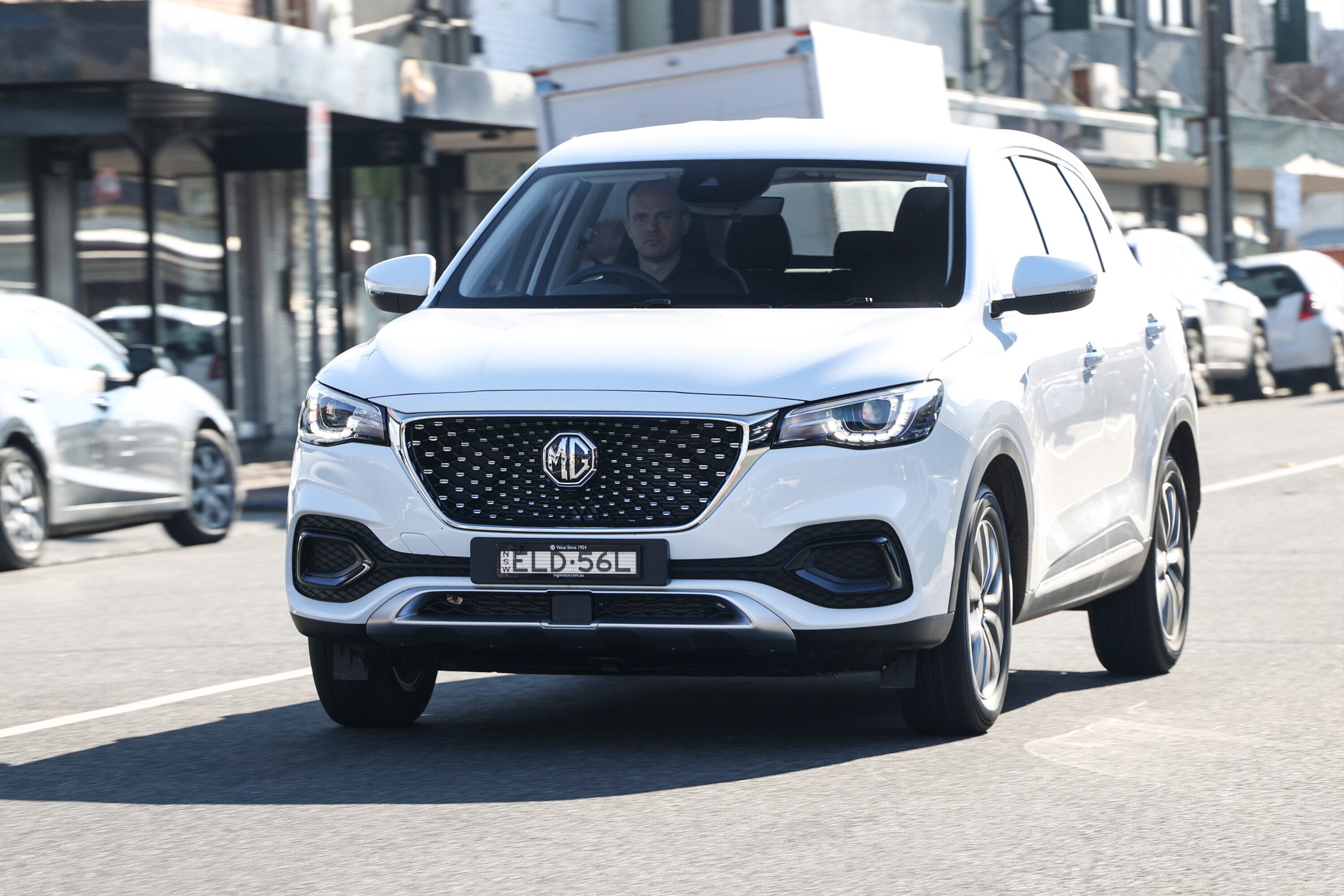
However, our focus today is on the Excite, the mid-level model in the HS petrol range.
1
Pricing and features
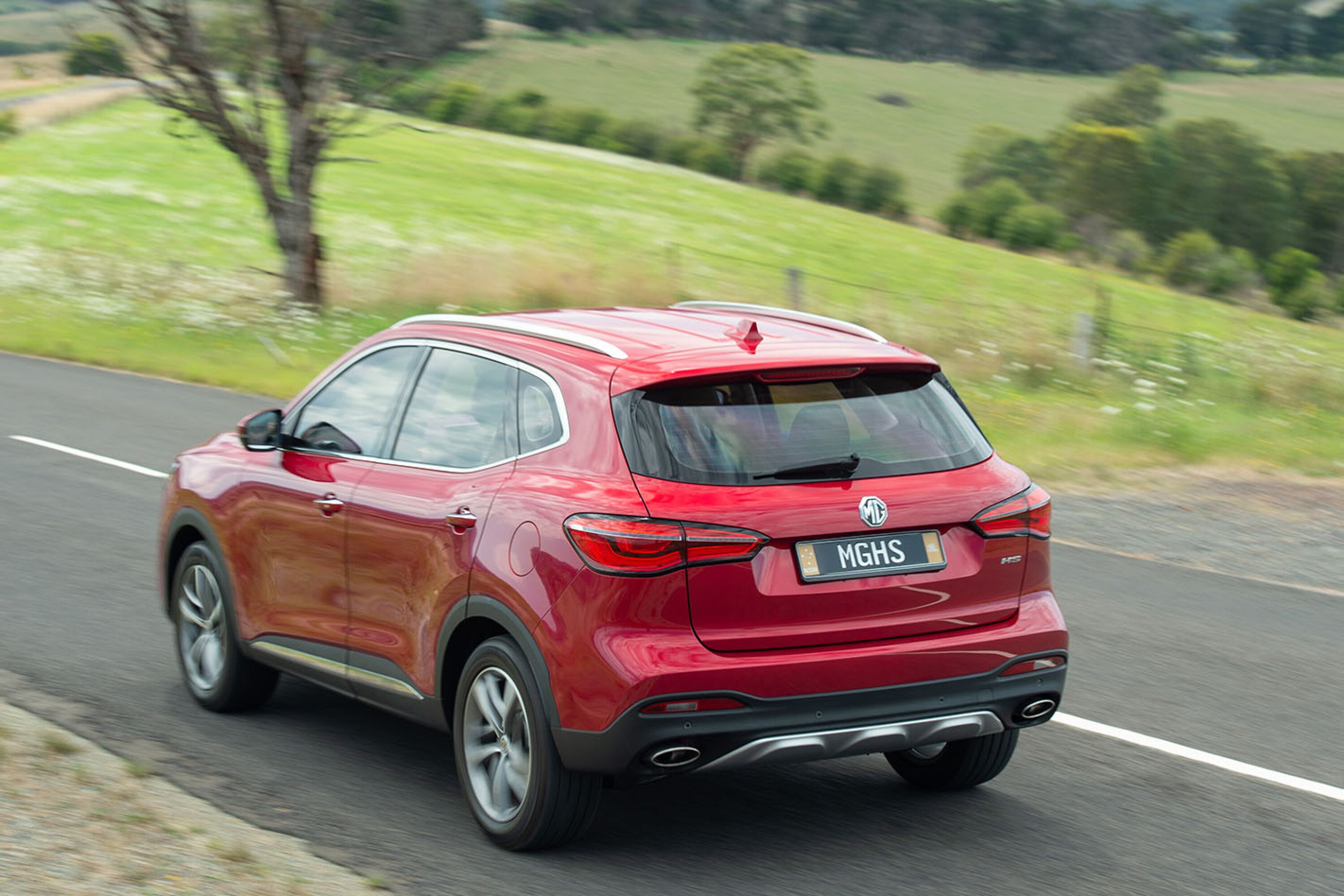
The MG HS features a five-door, SUV-style wagon design, with capacity to seat five passengers comfortably.
Available in both front-wheel and all-wheel drive options, it is classified as a medium SUV in the mainstream market, priced under $60K.
Within the petrol lineup, the mid-range Excite model is priced starting at $35,990 drive-away.
It comes equipped with a 1.5-litre turbo-petrol engine that delivers 119kW of power and 250Nm of torque. For those seeking higher performance, more power and torque are offered in the upper-range Excite X AWD and Essence X AWD models.
1
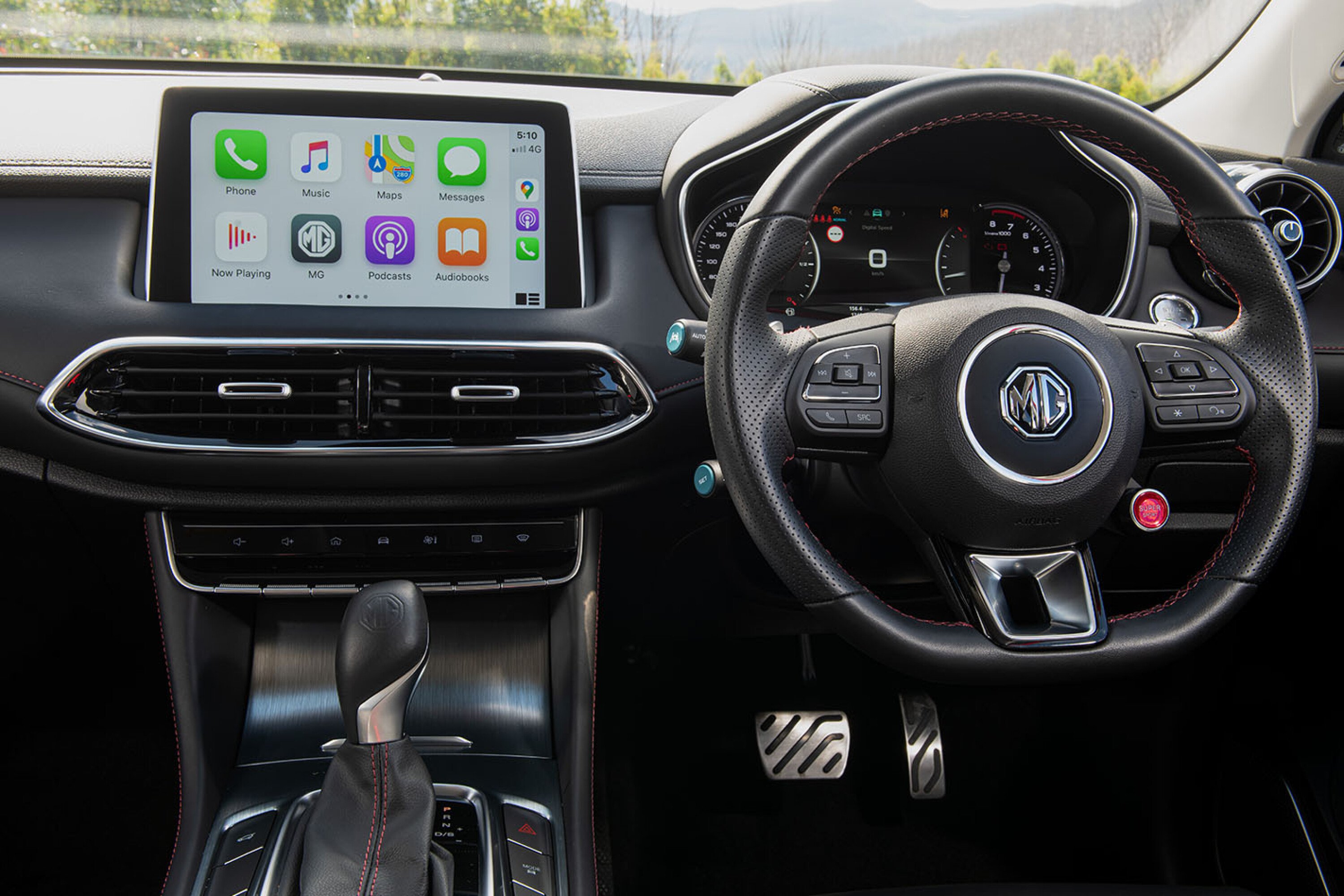
| 2024 MG HS Excite standard features | |
|---|---|
| 10.1-inch infotainment system | Leather-wrapped steering wheel and gear shifter |
| 18-inch alloy wheels | LED daytime running lamps |
| Air conditioning | LED tail lights |
| Ambient interior lighting | MG Pilot Driver Safety Suite |
| Apple CarPlay and Android Auto (wired) | Rear air vents |
| Continuous LED indicators | Rear parking sensors |
| Electric Tailgate | Reverse camera |
| Four USB-A ports (2x front and rear) | Roof rails |
| Front centre console with cooling | Satellite navigation |
| Front fog lights | Semi-digital instrument cluster |
| Halogen headlights | Six-speaker audio system |
| Heated, electrically-operated door mirrors. | Super sports mode |
| Keyless entry with push-button start | Synthetic leather seats |
1
Safety
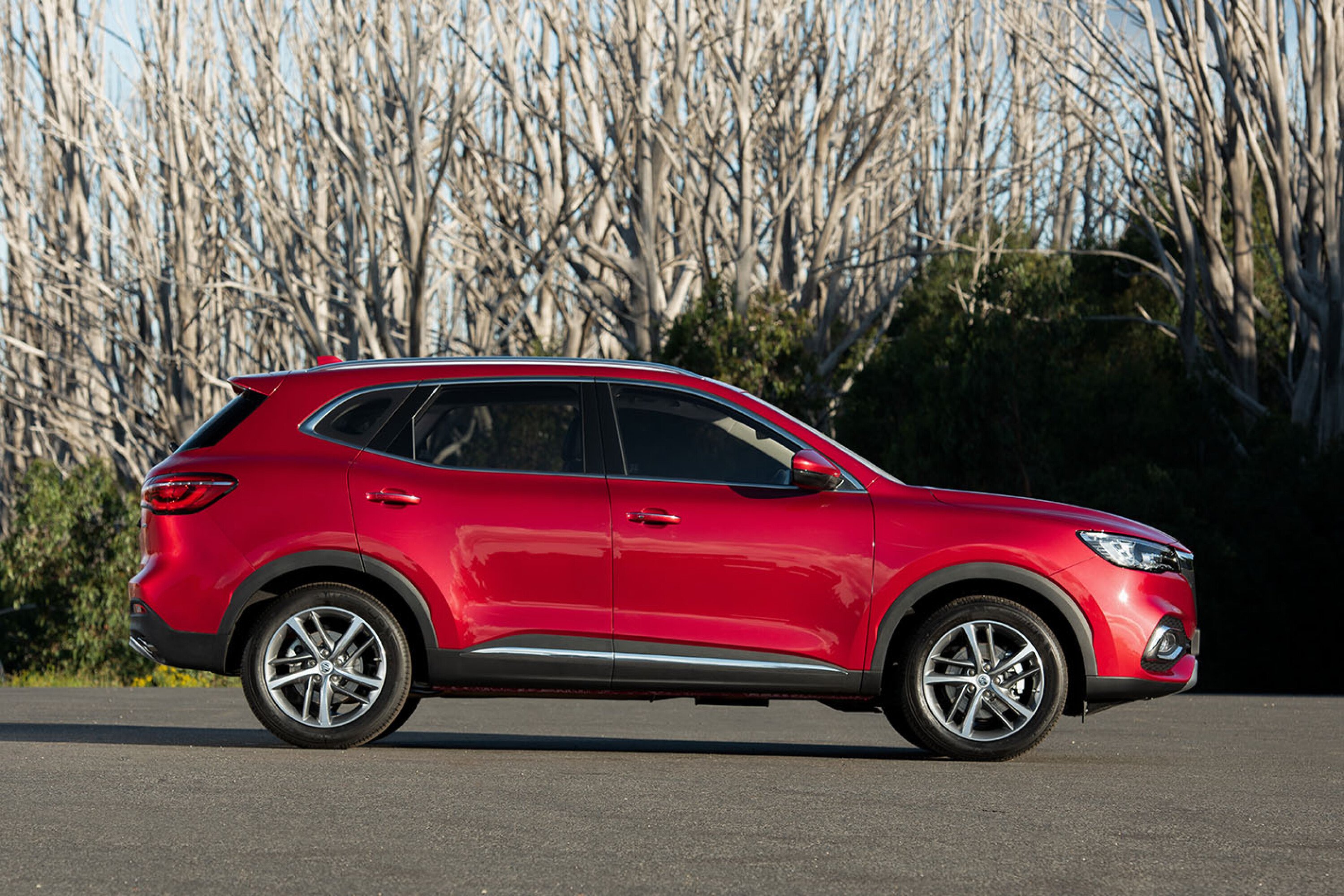
The MG HS Excite has received a five-star safety rating from ANCAP, following Euro-NCAP testing in 2019.
Each variant of the MG HS comes standard with six airbags (dual front, side, and curtain) to bolster passenger safety.
Additionally, the entire lineup benefits from the inclusion of the MG Pilot safety suite.
This extensive safety package features various active safety technologies, including autonomous emergency braking, lane-keeping assistance, forward collision warning, adaptive cruise control, traffic jam assist, blind-spot detection, rear-cross traffic alert, traffic sign recognition, automatic high beams, and a door opening alert.
1
Key rivals
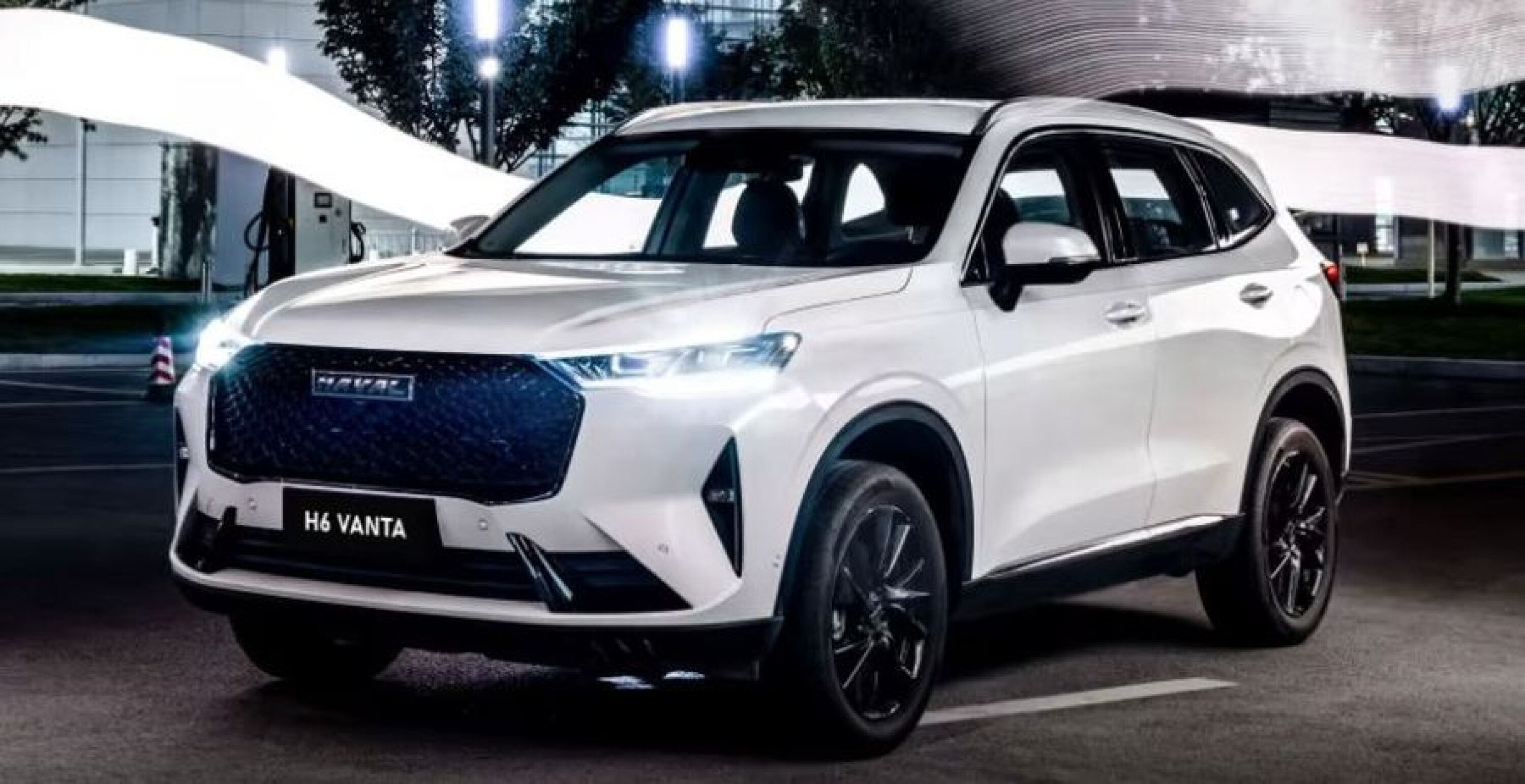
Directly competing with the MG HS are other well-equipped budget models like the Haval H6 and SsangYong Koran.
But at the Excite price-point there is plenty of competition from entry-level versions of much-loved favourites, such as:
1
Should I put it on my shortlist?
The MG HS Excite is a pretty value-packed option. This affordability factor significantly contributes to its appeal, especially for buyers looking to enter the medium SUV segment without breaking the bank.
At only $3,000 higher than the base Vibe model, the Excite brings a good amount of spec that really makes the car feel more premium both inside and out.
MORE
Everything MG
MORE
Midsize SUVs
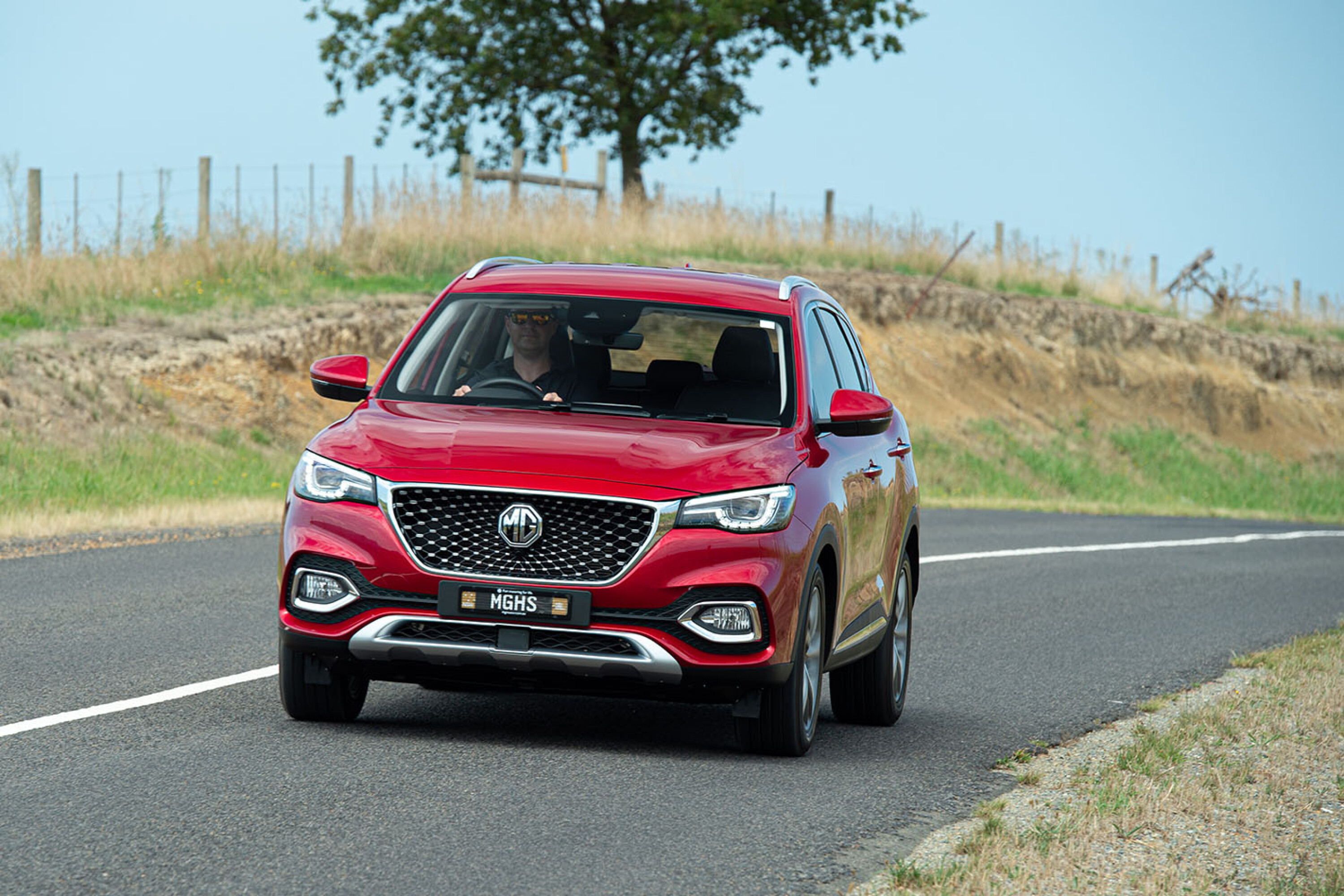
MG has hit the ground running in recent years, with an array of new, affordable, tech forward models in the Australian market.
They’ve been praised for leaping electric vehicle adoption forward with cars like the new MG4.
If you’re after a medium SUV, the HS is what MG has brought to the table, with the HS +EV covering the market for plug-in versions.
But today we’re looking at the Vibe, the entry into the HS petrol family.
1
Pricing and features
The MG HS is a five-door, SUV-style wagon, offering seating for up to five passengers.
This model comes in both front-wheel and all-wheel-drive configurations, positioning it within the medium SUV category in the mainstream segment under $60K.
Kicking off the HS range, the Vibe starts from $32,990 drive-away.
It is available in a single 1.5-litre turbo-petrol engine, producing 119kW and 250Nm. More power and torque is available higher up in the range with the Excite X and Essence X models.
1
| 2024 MG HS Vibe standard features | |
|---|---|
| 10.1-inch infotainment system | LED daytime running lamps |
| 17-inch alloy wheels | LED tail lights |
| Air conditioning | MG Pilot Driver Safety Suite |
| Apple CarPlay and Android Auto (wired) | Rear air vents |
| Four USB-A ports (2x front and rear) | Rear parking sensors |
| Front centre console with cooling | Reverse camera |
| Front fog lights | Roof rails |
| Halogen headlights | Semi-digital instrument cluster |
| Heated, electrically-operated door mirrors. | Six-speaker audio system |
| Keyless entry with push-button start | Synthetic leather seats |
| Leather-wrapped steering wheel and gear shifter | |
Additional features are available higher up the range such as a 360-degree camera, a panoramic sunroof and heated front seats.
1
Safety
The MG HS Vibe has been awarded a five-star ANCAP safety rating, based on Euro-NCAP assessments conducted in 2019.
Across all variants, the MG HS is equipped with six airbags, including dual front, side, and curtain airbags, enhancing passenger protection.
Furthermore, every model in the lineup is outfitted with the MG Pilot driver safety suite.
This comprehensive package includes a range of active safety features as standard, such as autonomous emergency braking, lane-keep assist, forward collision warning, adaptive cruise control, traffic jam assist, blind-spot alert, rear-cross traffic alert, traffic sign recognition, auto high-beam, and a door opening warning, ensuring a high level of safety and driver assistance across the range.
1
Key rivals
Directly competing with the MG HS are other well-equipped budget models like the Haval H6 and SsangYong Koran.
But key players in the segment, and indirect competition come from the:
1
Should I put it on my shortlist?
The Vibe model offers great value at approximately the $30,000 price point, making it one of the cheapest medium SUVs available in Australia.
Yet the front-wheel-drive (FWD) petrol Excite, with its additional features, warrants the extra expense if you’re in a position to send a bit extra.
Its price tag is only $3000 above the entry Vibe which is considered quite reasonable for the value it delivers.
MORE
Everything MG
MORE
Midsize SUVs
