
McLaren has stepped out of hyper/supercar territory with a super sports car that has the Mercedes-AMG GT, Audi R8 and 911 Turbo in its sights.
Revealed overnight at the New York motor show, the initial model in McLaren’s newly established Sports Series range, the 570S, is both familiar and a strikingly new spin added to the Brit maker’s road car portfolio.
The Sports Series now sits as the entry point of McLaren’s three-tiered road-going hierarchy beneath the supercar-level Super Series (ala 650S and 675LT) and its mega-exclusive, top-shelf hypercar grade called Ultimate Series (as in the P1).
Exterior styling is unmistakably McLaren, particularly its now ‘classic’ glasshouse and roof profile, though the 570S introduces new stylisms such as the F1-inspired front splitter treatment, blacked out ‘door tendons’ and other Sport Series-design visual addenda.
At 4.53m long, 2095mm wide and 1202mm in height, it’s roughly the same size and dimensions as a 650S.
Power comes from the evergreen 3.8-litre twin-turbo V8, though this revised ‘M838TE’ version boasts 30 per cent new components and produces 425kW (at 7400rpm) and 600Nm (5000-6500rpm), which is right on par for the sports segment it targets. The 570S adopts a variation on the seven-speed ‘SSG’ twin-clutch transmission used elsewhere in the McLaren range, while carbon-ceramic brakes are said to be standard fitment…at least in the context of its US-marketplace debut.
Thanks to predominantly carbonfibre construction, the 570S promises class-leading lightness too, with a claim of 1313kg of dry weight, or around 1400kg kerb weight, 58 per cent of which is across the rear axle.
How does that translate to performance? Official claims are that the 570S will demolish 0-100km/h in 3.2sec, 0-200km/h in 9.5sec and top out at 328km/h – though it’s not officially marketed as a bona-fide supercar, it certainly has the stats to suggest otherwise.
No word yet as to if and when the 570S joins its stablemates on Aussie terra firma, but if it gets the green light expect pricing in the vicinity of $300-$350K mark – 911 Turbo money – while undercutting the 650S by around $100K.
Get your free weekly report from the world of fast cars – subscribe to the MOTOR newsletter!
We hit the track in the latest junior formula racing car designed to unearth our next F1 champion.
WHAT IS IT? A hard-core, full-fledged racing car that the next generation of Daniel Ricciardos will drive on Aussie tracks in 2015. Think of it as a Formula Ford on steroids, complete with wings and slicks but with a more affordable pricetag and the ability to lap Aussie circuits faster than a V8 Supercar.
WHY WE’RE TESTING IT This isn’t just any new racing car: Formula 4 signals a massive shift for junior motor sport in Australia. New for 2015, the F4 championship only designed to be a cheaper, safer and faster first step after karts for young racers on the road to F1.
THE WHEELS VERDICT It looks, and goes, like a mini F1 car.
PLUS: No-compromise performance; handling; brakes; feels like a mini F1 car MINUS: We had only half an hour in it!
THE WHEELS REVIEW HERE’S a question I never thought I’d ask after stepping into a car: “Where’s the fire extinguisher?”
I’m sitting in the cockpit of Australia’s latest open-wheeler racing car – a hard-core Formula 4 – and all I can think, as the engineer clips the removable F1-style steering wheel into place and gives my six-point harness a final tug, is what happens if I crash.
It’s a fatalistic scenario to consider, but one I have to admit is a real possibility.
Here’s a quick history of my racing experience: there is none. I’ve never sat in, let alone driven a fully fledged racing car, yet right now I’m about to be let loose in a machine that can lap Australian racetracks faster than a V8 Supercar.
Even worse, this is the only Formula 4 in the country; 20 more earmarked for Australia are currently being built in France.
It’s enough to make my foot shake on the clutch, but before I flick the ignition switch and grab first, we need some context.
This F4 is the start of a new chapter for Australian motor sport, a brand new, cutting-edge category designed to be safe, fast and cheap; the aim is for F4 to be a clear stepping stone for the next generation of Daniel Ricciardos after karts. Think of it as Formula Ford on steroids, fitted with wings and slicks so youngsters can learn about aero.
The Confederation of Australian Motor Sport (CAMS) is running and promoting the category itself and plans to gift this year’s champion a $250,000 purse to pursue drives in Europe.
By any measure, this is a serious car; a lightweight, no-compromise racer that offers a taste of F1 thanks to a six-speed flappy-paddle gearbox, pushrod suspension and a carbonfibre chassis. There’s also a bitch of a clutch pedal.
Power comes from the same 1.6-litre turbocharged four found in the brilliant Ford Fiesta ST, but detuned to produce 120kW.
So while the F4 is quick in a straight line – remember this is a car that weighs just 565kg – it’s certainly not what you’d call neck-snapping fast.
But if it lacks straight-line fireworks, the F4 is other-worldly through the corners.
Never having driven a car on slicks before, I’m staggered at the amount of mechanical grip, let alone the immediacy of all the controls.
In any road car, no matter how hard-core, there’s always a delay between turning the steering wheel and the car responding as the body settles and the suspension reacts. But in the F4 you simply think about turning and the front tyres bite, hard, before the whole car rotates deliciously behind your hips and leans on the sticky 13-inch rear rubber.
Nearly all the controls (steering/brakes) are brutally heavy given there’s no power assistance, but the two exceptions are a feather-light throttle and an ultra-sensitive paddle-shift. Even the slightest touch of the super-thin paddle is enough to change gears and the shifts themselves are brutal; as hard and mechanical as swapping cogs in a Lexus LFA hypercar, only faster.
Pre-season testing will iron out the throttle niggles and fine-tune the super-heavy steering, but one thing is obvious – a Formula 4 isn’t intimidating to drive. Visibility is brilliant, despite the fact you sit on the car’s floor, the handling is balanced and predictable, and the brakes are so phenomenal I often find myself having to drive up to the corner.
It’s a testament to the car that even a plonker like me, with no racing experience, can tap into its performance and within a few laps have the confidence to drive quickly.
It’s probably like the V8 Supercar Wheels editor Glenn Butler drove last year; easy to drive at eight- or even nine-tenths, but beyond that requires the skill of an experienced racer.
Happily, 16 young F1 hopefuls with lightning reflexes and no sense of fear have already signed up to pedal an F4 this year. I can only imagine how it would feel to race on the ragged edge as 15 other young hot heads duck and dive-bomb around you. Fun is the word that springs to mind.
SPECS Model: 2015 Formula 4 Engine: 1596cc 4cyl, dohc, 16v, turbocharger Max power: 120kW @ 5700rpm (estimated) Max torque: 200Nm @ 1600-5000rpm (estimated) Transmission: 6-speed sequential manual Weight: 565kg 0-100km/h: 4.0sec (estimated) Economy: n/a Price: $170,000 (estimated) On sale: Now
Fiat Chrysler Automobiles is considering the introduction of an Australian chassis development program.
Suspension and steering localisation has been performed by the Korean brands Kia and Hyundai for some years, but most importers do little or no adaptation to Australia’s rough and demanding road conditions.
But Steve Bartoli, FCA’s global product planning chief for Jeep, Chrysler, Dodge and RAM Trucks, told Wheels this week that a local tuning program might be required as the company sought to broaden its appeal and boost sales here.
“I am honestly beginning to think that way, but I cannot tell you for sure,” Bartoli said. “I think there is value-add there and we need to give that serious consideration.
“We do take development trips and have been to Australia with development teams before, but maybe not as pervasively as we should be. So that is something I need to think about.
“It’s something for me to take back to Auburn Hills (FCA’s US headquarters) and get into with our engineering guys a bit more. So that’s an assignment I give myself.”
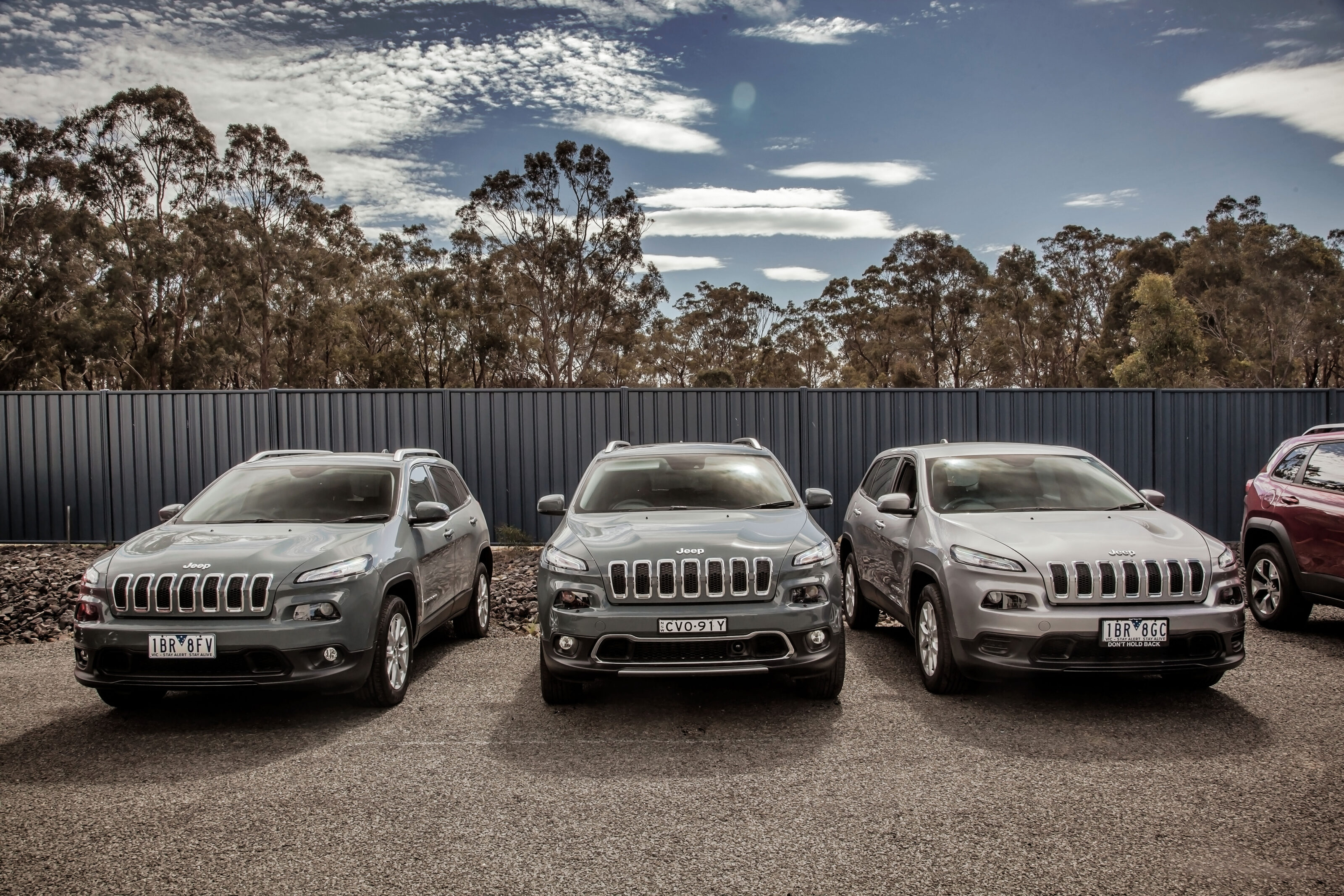
Bartoli is making his first trip to Australia to assess the market and conducting back-to-back testing with rival brands as part of the visit.
Kia and Hyundai launched their localisation programs after the behaviour of their cars were panned in Australian media reviews.
It is known FCA had high expectations for the KL Cherokee in 2014 Wheels COTY. It had swapped from a separate chassis and live rear axle to FCA’s CUS-wide monocoque platform, independent suspension, new range of four-cylinder engines and nine-speed automatic transmission.
But while praised for superior driving behaviour compared to its predecessor, the new Cherokee still left the judges unimpressed.
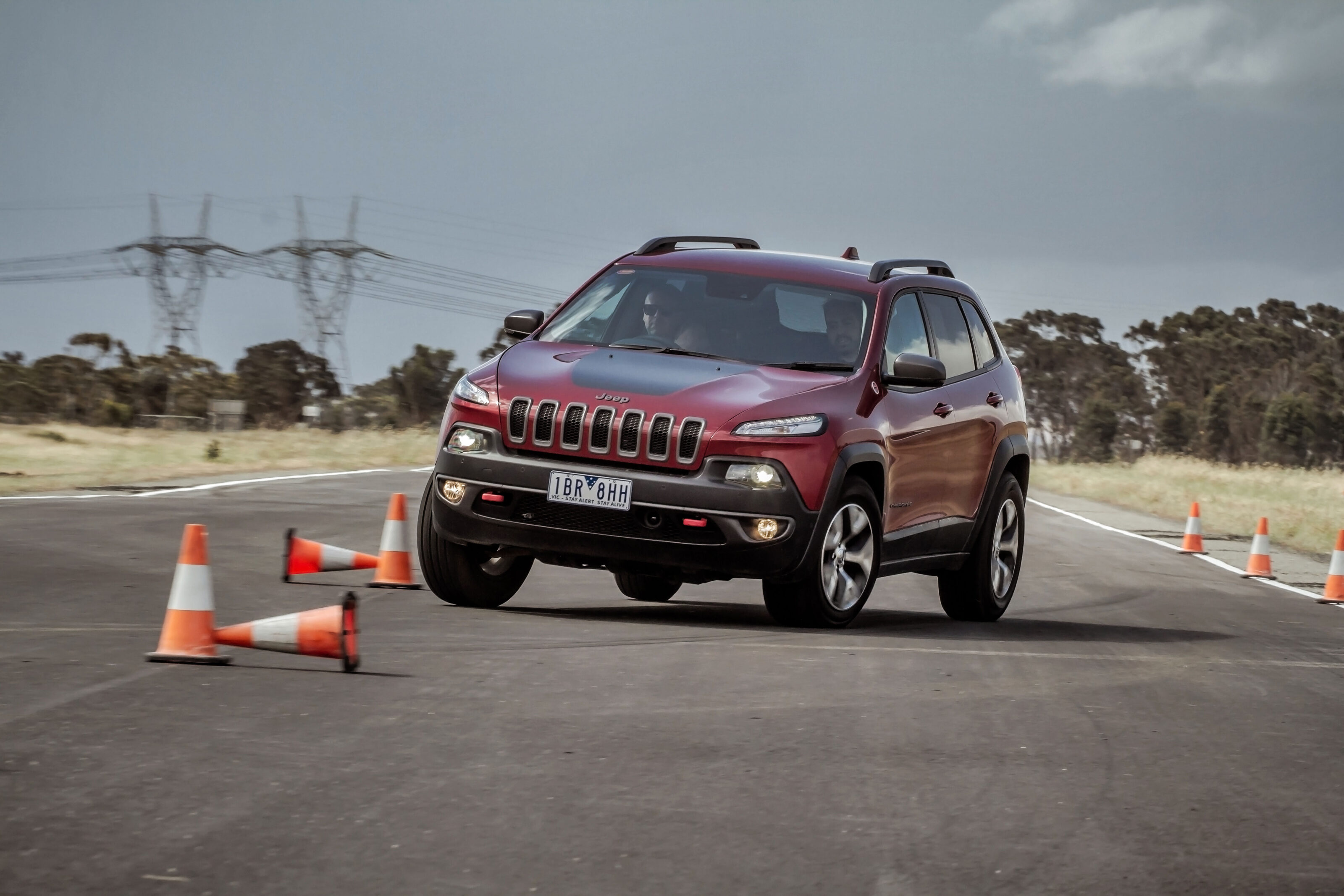
“For the most part, the Cherokee steers, brakes and grips with some capability, although the level of competence of each of those characteristics varies across the five-model range,” we noted in the January issue.
“The electric-assist steering rack had old-fashioned load-up when challenged by the demanding You Yangs durability course; the brake pressure varied from weak to wildly over-servoed and the cornering ability from quite composed to the laughably low for the Trailhawk’s cone-scattering Yokohama Geolandar rubber.”
Bartoli made it clear that localisation was an ongoing campaign at FCA and that it applied across a wider spectrum than dynamic tuning.
“That’s what we are trying to do right now and that’s why I am here right now,” he said.
“I really want to get into my head what Australian design culture is so I can lead the team back in Auburn Hills and make sure they understand what that is.”
In other developments, Bartoli said no decision had been made on more right-hand-drive performance V8s: “It largely depends how we size up demand. It’s not an easy business case.”
Ditto for the RAM 1500, which FCA Australia boss Pat Dougherty sees as a bonafide LCV competitor.
“You look at the 200,000-plus trucks that are sold here and you say, ‘There has got to be some gold in those hills for sure’,” Bartoli said. “But we have never done a right-hand-drive truck, so we are having the guys look into that.”
The mooted Jeep one-tonner, however, is a low priority.
“We have other pressing product opportunities that in my view outweigh the opportunities presented by a metric tonne truck, whether it’s a Chrysler, a Dodge, a Jeep or whatever.”
McLAREN has finally unveiled its new entry-level car, the Sports Series, at the New York motor show.
It has revealed the first variant – the 570S – while a less powerful ‘C’ version will follow soon, and we believe there’s also a ‘Long Tail’ in the works.
Despite its compact looks, the 570S is slightly bigger and heavier than the existing 650S, with a claimed dry weight of 1313kg “with lightweight options”.
The increase in mass is due to a switch to aluminium bodywork and also because the familiar McLaren carbonfibre monocoque has been engineered with lower and wider sills than the 650S.
Power comes from an evolved version of McLaren’s 3.8-litre twin-turbocharged V8 that drives the rear wheels through a seven-speed twin-clutch gearbox.
Although producing less power than the 650S, the engine still knocks out a healthy 420kW at 7400rpm and 600Nm at 5000rpm.
McLaren is quoting 3.2 seconds for the 0-100km/h sprint, a 9.5-sec 0-200km/h time and a top speed of 328km/h.
Unsurprisingly, given its price point, the Sports Series is less mechanically complex than the 650S, doing without that car’s sizeable moving rear wing and interconnected hydraulic suspension.
It sticks with the upward-hinged doors, though, and still packs plenty of visual aggression.
There’s no official word on pricing yet, although we’re told it will be priced against rivals including the Bentley Continental V8 and Porsche 911 Turbo S, which sell in Australia for $400K-plus.
We’ll have to see how that pans out over here, of course, but anticipate a decent discount on the 650S’s $441,500 pricetag.
With a carbon structure, turbocharged V8 power and a McLaren badge, it’s not hard to see the appeal.
Overshadowed by the NSX and Civic Type R, Honda’s other new performance release looks an absolute hoot – and could be heading for Oz.
Just launched in Japan, Honda’s brand-spanking mini-roadster looks set to shake up the ‘micro’ end of the car market in a very big way.
What is the S660? Think the spirit of The Big H’s now defunct S2000 sports roadster, but scaled a couple of sizes down, and with its engine mid-mounted.
First debuting at the 2013 Tokyo motor show, the S660 designation is tribute to its 660cc turbocharged three-cylinder engine producing 47kW and 104Nm.
While that sounds painfully undercooked by usual MOTOR measures, the outputs are to conform to Japanese regulations for its domestic ‘kei-car’ segment.
However, with a 7700rpm redline and pushing the two-seater’s scant 830kg mass in a thoroughly sport’s tuned package, the S660 promises what today’s motoring climate sorely needs: affordable and extremely lightweight fun factor.
Despite the mid-engined format, the S660 offers a perfect 50:50 fore-aft weight distribution, while a specific six-speed manual gearbox has been designed to rehash the tightly gated, short-throw glories of the much-loved S2000 transmission.
Handling-wise, the S660 is claimed to be capable of generating 1.2G of lateral acceleration in corners.
Honda’s engineers are said to have flamed the fire of speculation that a more powerful 1.0-litre engine is waiting in the wings, effectively creating a miniature MX-5 rival that would no doubt be branded an S1000.
With a potential output doubling the 660cc engine’s 47kW, an S1000 would not be an absolute rocket sled, its format perhaps more palatable for export markets such as Australia.
It would also be an inspired alternative in the sub-$30K sports segment to Japanese rivals in Toyota’s 86 and Mazda’s forthcoming new-gen MX-5.
Get your free weekly report from the world of fast cars – subscribe to the MOTOR newsletter!
Life might be a Cabrio for the Range Rover Evoque, old chum, ‘teased’ like a root perm as part of a series of controlled leaks from Land Rover
LAND ROVER is stretching its ‘Best 4x4xfar’ reputation ever further from off-road credibility with the upcoming Range Rover Evoque Convertible as evidenced by the latest leaked PR puff featuring a prototype barrelling through London’s new Crossrail train tunnel infrastructure.
Also ‘spied’ entering Land Rover’s UK HQ, lapping the Nurburgring and even skating along snowy Swedish back roads, the brand’s first soft-topped SUV looks for all the world like a jumped-up Audi A3 Cabrio wearing camo and hiking boots.
Set for a production debut sometime in 2016, some four years after appearing in concept form at the 2012 Geneva Show, the Evoque Convertible could blow in anytime, from this week’s New York show to LA in November. Both cities sit squarely within this RR’s demographic heartland.
Spied wearing the latest front-end treatment (albeit ‘disguised’ as not to give the game away too much), with all-LED headlights and a restyled grille treatment, the newcomer is clearly based on the more rakish three-door coupe’s profile. However, it boasts a unique Kamm-tail silhouette (just like the previous Audi ragtop), suggesting that quite a bit of fresh bodywork has gone into its creation. Certainly, the rear boot set-up is unique to this model.
It has been reported that the new Roll Over Protection System has required extensive testing in order for it not to pop up during the inevitable bush bashing that no owner will ever subject it too (barring a Brazilian of course…).
Engine choices ought to mirror that of the MY16 Evoque Series II, meaning low-emissions Euro 6-compliant 2.0-litre four-cylinder Ingenium turbo-diesels as well as upgraded versions of the Si4 petrol units. Expect either front or all four wheels to be driven via a new nine-speed automatic transmission.
A Land Rover representative has already confirmed his desire to see the four-seater Evoque Convertible in Australia, so expect to see it land here sometime during the first half of 2016.
Targeting said Audi as well as the BMW 2 Series Convertible and Mini Cabriolet Prices, the RR will, predictably, attract a premium upwards of 15 per cent over the existing L538-series hardtop range, which kicks off from a fiver under $50K to well over $80,000.
Have spy pics of your own? We’d love to see them. Email them to [email protected]
F1: Steamy Sepang springs slashing Ferrari win
THAT vocal army of detractors who long maintained that Sebastian Vettel won his four world championships only because be benefitted from a vastly superior Red Bull Racing car have been comprehensively silenced following the German’s stunning win for Ferrari in the Malaysian Grand Prix.
Sepang provided no shortage of shocks.
Most people had concluded on the evidence of the Australian GP that 2015 would be a Mercedes-Benz romp and that no other team would get close.
But something amazing happened in the two weeks since Albert Park.
The clear performance margin enjoyed by Mercedes disappeared on the wide open spaces of sweaty Sepang, as the improved Ferrari of Vettel split the Silver Arrows in final qualifying.
Changeable conditions made for a tough qualifying, with Merc’s Lewis Hamilton again putting it together from the impressive Vettel, a downbeat Nico Rosberg and a happier Daniel Ricciardo, who acknowledged his Red Bull Renault was benefitting from a “night and day” improvement following hard work since Melbourne.
But the Mercs were still favoured, with most of the smart chat based around whether Rosberg could lift enough to challenge the reigning world champion. No-one really expected the Ferrari to get up.
What actually unfolded in Malaysia has lifted faith in F1 right when it was needed after the snooze-fest that was the AGP.
Vettel took it to the Mercs and brilliantly won on merit and there were great scraps all the way down the field.
The McLaren Hondas were way closer to the front in lap times than anyone could have imagined – though neither went the distance – and the kindergarten Toro Rosso squad upstaged the parent RBR team.
“They probably struggled a bit with the heat – more than expected,” Vettel said when asked to explain the surprising win over the Silver Arrows.
Mercedes team boss Toto Wolff insisted it would be wrong to blame his team’s defeat on an early stop for new tyres under the safety car.
Wolff said there was no panic at Mercedes due to the shock loss, but conceded the hot temperatures hurt and that the team could not control the race as has been its habit. He said the team needed to look at why its cars struggled for long-run pace in the hot conditions.
Ricciardo’s fourth in the wet qualifying proved to be an overly optimistic sign because he struggled in the fine, hot weather of race day.
“A really frustrating race,” summed up the Australian, who finished one place behind his teammate Daniil Kyvat in 10th.
“I was ready for a fight going into the race and hoping for something special – but it wasn’t to be. I had a bit of contact on the first lap, which hurt us, and then we had a few issues throughout the race, which we had to manage.
“It took a long time to pass cars as we didn’t have the pace and we had some problems with the brakes, which didn’t make our afternoon easy.”
Ricciardo said his brake problems began early and left him a “passenger”.
RBR team principal Christian Horner elaborated on the problems: “A really difficult afternoon… Some contact at the first turn damaged Daniel’s front wing, which seemed to deteriorate through the race. Then after the safety car we started to see brake temperatures climb and needed to nurse the cars quite significantly through the second half of the race. I don’t think the drivers could have done any more today. There’s plenty to understand following this weekend and plenty to address before China in two weeks.”
Never has a 15th place brought such joy as that experienced by Roberto Merhi and the Manor Marussia team.
After the embarrassment and disappointment of Manor not getting either car to the start line in Australia, F1 rookie Merhi says it was a “huge reward” for the team to get one car to the finish the first time the team started a race this year.
The second Manor machine, to be raced by Will Stevens, could not be coaxed into active service on Sunday.
F1: Renault concedes it can’t win this year
TWO races into the 2015 world F1 championship, Renault believes the two teams who take its engines – Red Bull and Toro Rosso – have no show of winning races this year.
Daniel Riccardo need not bother preparing a victory speech for any of the remaining 17 races.
Renault F1 managing director Cyril Abiteboul told Autosport: “A race-winning engine on merit is not something that is going to happen this year, we know that.” Not music to Daniel’s ears.
After Ricciardo won three races during the Mercedes-dominated 2014 season, Renault had hoped to close the gap to the German team, but on the basis of what we’ve seen – and what the engine supplier is conceding – that program has been a massive fail.
Abiteboul said shortcuts taken by the engine supplier to accelerate development have backfired: “What we have done is shortcut and bypass the important steps in engine development. That means some of the stuff you should be doing on the dyno, you end up doing on the track.”
Tensions are high between the engine supplier and team.
V8 SUPERCARS: Guess who reigns at the Plains?
CHAMPIONS don’t stay down for long, and so it was in Tasmania at the weekend with Jamie Whincup bouncing back from an ordinary Clipsal 500 meeting and a so-so day on Saturday at Symmons Plains Raceway to take victory in the 200km Sunday race.
Whincup’s Red Bull Holden teammate, Craig Lowndes, was staring at a hat-trick of Symmons wins after two from two on Saturday, and a third pole for the weekend, but an indiscretion at turn two, when he turned around David Reynolds and copped a drive-through penalty, cost him the chance of a clean-sweep and his 100th touring car/V8 Supercars race win.
This opened the door for the ever opportunistic Whincup to take the win and steal the championship lead.
Ford’s Chaz Mostert bounced back from a tough Clipsal to take second while Tekno Holden ace Shane van Gisbergen also drove solidly for third.
After Lowndes’ tour of the pit lane, the unlikely villain of the opening lap contretemps powered through the field to finish sixth.
Reynolds, forced to take an unscheduled tour of the outfield by the Lowndes shove, also came back strongly and managed 11th.
“Unbelievable how things turn around – I thought I was just trying to hang in there today,” said a happy Whincup.
Lowndes knew he’d stuffed up. “I’m gutted because of the car speed we had today; we could have at least stood on the podium.”
Garth Tander was fourth followed by Mark Winterbottom, Lowndes, Scott McLaughlin, Andre Heimgartner, Fabian Coulthard and James Courtney.
Young Kiwi Heimgartner was one of the standouts of the weekend – his first at Symmons – culminating in a fighting eighth for the SuperBlack Ford in Sunday’s 200km race.
V8 SUPERCARS: Davo and Courtney agree to disagree
AN AGITATED verballing involving James Courtney and Will Davison perked up an otherwise quiet couple of V8 Supercars 25-lap lappers on Saturday at Symmons Plains.
The angry confrontation between Davison and Courtney followed a race two incident when the Erebus AMG driver was bunted into a spin.
While there was no doubt Courtney’s HRT Commodore made contact with the rear of Davison’s car, there was no subsequent action from officials.
Davison charged into the HRT garage to confront Courtney, who he accused of deliberately taking him out, to which Courtney replied, “Go and have a cry”.
“We are racing hard, he has got a little fired up,” Courtney said.
“I just told him to look at the footage and get back to me. He is probably regretting a few things he said now and looks like a fool.
“I thought it was funny. I think that made him even angrier that I was laughing it off.”
Davison continued his spray as he left the HRT camp.
“He’s telling me to have a cry and I’ll be right,” Davison said. “The arrogance on the bloke’s just pathetic. I feel sorry for him.
“So we were going to race clean and had a great start and I’ve been turfed.
“It’s just a shame. It’s not what you want for our guys, Betty [Klimenko]… it’s a big deal for us – someone of his calibre, he’s leading the Championship, and a move like that is… we’ll see if he was drilled from behind, but I doubt it. I think that’ll be after he hit me.”
Erebus later lodged an official protest, which was dismissed after stewards reviewed vision and data from the cars.
Davison’s spin was judged to be the result of a chain reaction at the hairpin that also involved Jamie Whincup, David Reynolds and Chaz Mostert.
V8 SUPERCARS: The Pye chart
WITH Marcos Ambrose choosing to stand aside from the Tasmanian round of the V8 Supercars series to seek a second opinion on the DJR Team Penske Falcon’s performance in light of his lack of competitiveness so far this season, there was great interest in the results posted by his replacement, young South Australian Scott Pye.
The bald facts are that Pye’s championship return yielded modest 18th, 17th and 18th finishes across the three races at Symmons Plains Raceway.
Ambrose, who has remarked on the lack of feel he had for the Falcon at the Clipsal and Albert Park events, must have been heartened to hear Pye report: “I was having the same problems he had been struggling with and I’m sure it was reassuring for him.
“I really want to help the team now and give the best feedback I can, but having Marcos here was a huge benefit to me, particularly at the debriefs.
“The team really learnt a lot this weekend and that was exactly what we were hoping to do. We got a direction, which is a good thing, and I’m sure the engineers will take that back to the workshop and look to the improvements we need for Perth.”
INDYCAR: Montoya jumps Power at St Pete
AUSTRALIA’S Will Power led a big slab of the opening round of the IndyCar Championship on the narrow streets of St Petersburg, Florida, but was jumped at the final pit stop by his Penske teammate Juan Pablo Montoya, who went on to victory.
Power, the defending champ, pulled back several seconds to the Colombian, who punished his tyres in his efforts to keep the lead.
As the laps ran down, a lunge at Montoya knocked off some of Power’s front wing. The Queenslander continued to push hard until he was trapped behind a slow lapped car. Game over.
Montoya went on to beat Power, with Tony Kanaan third. It was Montoya’s first road course victory in IndyCar since 1999, having returned to the category last year after lengthy stints in F1 and NASCAR.
Power wasn’t unhappy at finishing second and accepted his move on Montoya was “kinda optimistic”.
“That was the only place I could kinda get a run on him,” Power indicated. “It was my only chance. It’s hard to get close with these cars.”
Team Penske cars took four of the first five places.
Kiwi Scott Dixon finished 15th.
F1: Money talks
SOMETIMES it’s just too hard to take F1 seriously…
With no hint of wit, Lotus last week announced Adderly Fong as a development driver for 2015.
The Hong Kong driver will undergo a driver development program as well as contributing to the team’s simulator work for enhancing and improving the team’s E23. Fong will combine his Lotus F1 Team duties with competing in the GP3 Series and GT Asia.
Fong’s CV is hardly littered with experience and success in open-wheelers, although he practiced in an F1 Sauber in Abu Dhabi last November and he did win the Audi R8 LMS Cup series title in 2013.
He is obviously a handy enough driver, but he falls short – way short – of being the best young talent available.
No doubt he has shown amazing pace getting down to the bank to collect the sponsorship cheque for Lotus.
ARC: History as Molly Taylor takes ARC heat win
A STEADY performance on his debut weekend in the Citroen DS3 yesterday rewarded Eli Evans with victory in the 2015 Quit Forest Rally in WA.
Renault Clio driver Molly Taylor, who a day earlier won the opening heat, claimed second spot on the podium ahead of Eli Evans’ hard-charging sibling Simon Evans (Honda Civic).
Taylor made history on Saturday with the first-ever outright ARC heat win by a female driver.
“I’ve had a great weekend!” she beamed. “My first rally in this car, my first rally with Bill … just fantastic. I have so many people to thank and this hopefully pays back their support.”
Veteran navigator Bill Hayes was stunned by Molly’s speed and maturity: “Absolutely amazing from the very first stage of the weekend. Molly stays so calm and collected and her speed is just incredible.”
But off to the best possible start in the 2015 ARC was Eli Evans.
“It’s a big relief to get this result and the car never let me down,” said Evans the Younger. “The longer I drove it this weekend, the more comfortable I felt, and that resulted in more speed.”
MOTOGP: Brilliant Rossi wins as Jack crashes
VALENTINO Rossi showed that age has not dimmed his brilliance, riding aggressively to a superb victory under lights at Qatar in the opening round of the 2015 MotoGP Championship.
The Yamaha rider’s win thwarted the resurgent Ducatis of Andrea Dovizioso and Andrea Iannone, who took the lower steps on the podium.
Defending champ, Honda’s Marc Marquez, threw away his chances of a win when he ran wide in the opening laps, rejoining at the back of the field.
Rossi reprised his golden era with an incredible race. Starting from eighth on the grid, the nine-time world champion fell back to 10th and took a few laps to get a feel for the situation.
He then quickly moved forward and clawed his way to the front group of Dovizioso, Yamaha teammate Jorge Lorenzo and Iannone. This was the start of an incredible final battle between the two factory teams as the riders changed positions several times.
Rossi fought tenaciously against a defiant Iannone before overtaking his countryman for third with four laps remaining.
This set up a nail-biting duel to the flag with Dovizioso, the Doctor giving one of the best performances in his 20-year MotoGP career, winning by a tight 0.174sec.
“I am so happy because we suffered a lot during the practices and also the tests, but we worked very well for the 22-lap race and I was very strong,” Rossi said afterwards.
“First of all you have to be lucky, but especially the work that we do with the team during the weekend makes the difference for my pace in the race. It was definitely one of the best races of my career, considering where we were yesterday.”
Lorenzo took fourth behind the impressive Ducatis.
The mood at Honda, so dominant in past seasons, must match that of the Mercedes-Benz F1 team. Factory Honda pair Marquez and Pedrosa finished fifth and sixth.
Australia’s Jack Miller crashed out on his MotoGP debut after qualifying 22nd of 25 riders.
INDY LIGHTS: Matt Brabham sets lap record on return
BRIT Ed Jones took two dominant wins from two heats of the Indy Lights opener, but Australian Matt Brabham posted a new lap record after a bruising encounter on the streets of St Petersburg.
After qualifying eighth for the opening heat, Brabham was forced to pit early after damaging his front wing during an opening lap skirmish. Compounding his troubles, officials handed Brabham a drive-through penalty for his role in the incident.
Rejoining with fresh rubber, he used the clear air to his advantage, setting a new lap record.
The second race was highlighted by an intense battle between Brabham and Scott Hargrove over sixth place, resolved in favour of the Canadian.
LEXUS Australia is breaking boundaries. Toyota’s luxury arm plans to expand its presence in Western Sydney, where you won’t find Audi, BMW or Mercedes-Benz.
In February, Lexus announced a V8 Supercars pace car sponsorship, and hasn’t ruled out a race car assault when new rules come in for the 2017 season. At the same time, Lexus launched its first-ever rear-drive V8 coupe in Australia, the RC F.
Lexus Oz CEO Sean Hanely talks to Wheels about Lexus’s new direction.
Is Lexus Australia chasing a new kind of customer? What we’re trying to do is increase the consideration list for Lexus across a broader base.
So a different kind of customer? No, not a different kind of customer per se, but we’ve analysed very carefully the luxury market. What we understand both factually and statistically is that luxury market growth is being driven largely by people coming out of mainstream brands. What we’re seeing is, I call it the democratisation of luxury. In simple terms, luxury has no boundaries.
That’s very Henry Ford of you. So everyone can buy a luxury car? Well, people have more access to it now than they did 10 years ago. [Australians are] wealthier than we’ve ever been, cars are more affordable than they’ve ever been, our economy is generally quite strong in global terms.
We may pay more for luxury in this country, but more of us [have the means to] get there. Lexus has always been positioned as an aspirational brand. We want to appeal to everybody.
The RC F coupe is considerably cheaper than rivals. If the product is good enough to compete against BMW and Mercedes-Benz, why make it cheaper? Lexus prides itself in presenting the market with great quality, great engineering and superior value. So this direction is very clearly aligned to our direction of the last 25 years.
On top of that, we don’t offer only great value [and] high levels of specification, we also offer superior customer service, and this is the strategy that Lexus is built on.
Yet you’ll still have what you say is the best customer service, even if the car costs the same. You know, Lexus is a progressive luxury brand. To attract luxury buyers, you’ve got to be achievable. You’ve got to allow those that aspire from the mainstream to step up. Lexus and the RC F, it’s perfectly positioned to say to those step-up buyers and even those buyers in that current market, ‘Guess what, here’s a red-hot value prestige luxury car that you can afford’. And we’re inviting people to look at our brand and our performance credentials, and that’s clearly where the RC F is aimed at.
What are Lexus’s growth targets in Australia? Five percent [per year] is what I’m targeting in this product cycle (five years). I often say 5-10 percent. Realistically, if we got five percent growth year-on-year between 2015 and 2020, we’d be happy.
But a flat new-car market is predicted in 2015. I think the market overall may see some marginal growth on the previous year. I don’t expect it’ll drop dramatically, probably flatline. But I think the luxury component will grow again.
We’ve set our plans for the next five years, and our growth targets are not unachievable, and they’re not unrealistic.The decision to compete in V8 Supercars: is it Lexus Australia’s decision, or Japan’s? It’s 100 percent driven by the Lexus Australia management, and the board of Toyota Motor Corporation Australia. We as the Lexus brand will do the evaluation thoroughly. We’ll make a decision on that within [the] Lexus Australia group … and we’ll take that recommendation to our board locally for endorsement.
Of course we would consult with our Lexus global team to ensure that they’re aligned. [But] we ultimately make the decision at Lexus Australia.
Why get involved with V8 Supercars? V8 Supercars, or our motorsport partnership wherever that ends up – if it ends up anywhere – is simply to put the Lexus brand or Lexus performance on the consideration list. [It’s not] being driven by other luxury manufacturers entering the V8 Supercar space. In truth, we didn’t even think about it.
Little f, big F
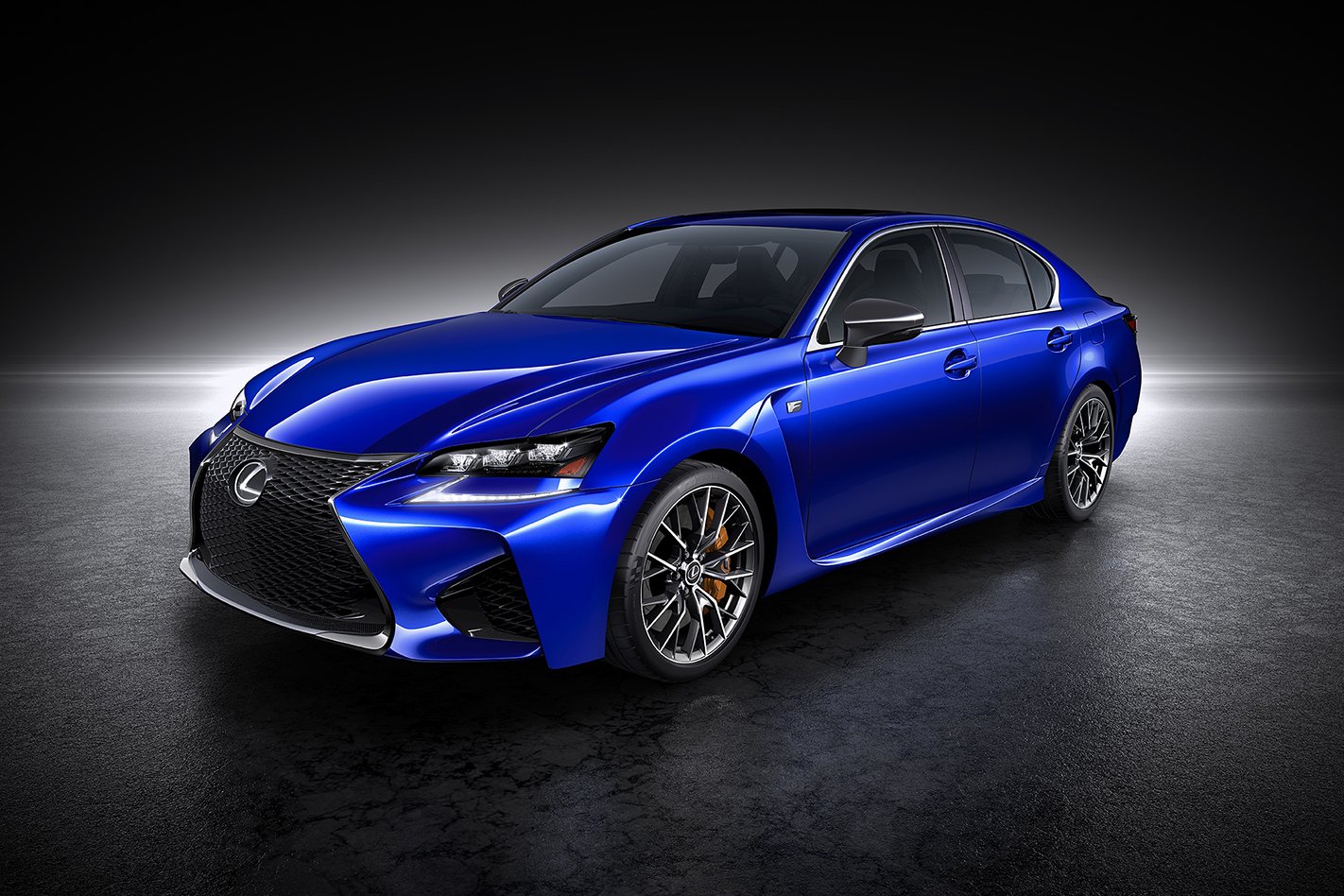
Lexus revealed the LF-SA at the Geneva show as an Audi A1 rival, yet the next piece of the Lexus puzzle for Australia is its answer to the BMW M5: the GS F sedan (pictured). Packed with the same 351kW 5.0-litre V8 as the RC F, it’s due in late-2015, priced at about $180K, undercutting the M5 by a cool $80K.
IT’S possible Markus Winkelhock thinks I’m the nervous type. “For today, I have been told zero risk,” the racer tells me as he pinballs from one Nordschleife kerb to the other at the opening of his first lap.
On the other hand, it could be that the two-time winner of the 24 Hours of Nurburgring wants to put a pre-emptive excuse on the record, just in case someone manages to put a shame-inducing overtake on him. If there’s risk today, this is it…
Small, powerful, agile cars are often labelled ‘Giant Killers’. It’s one of the clichés of motoring journalism, thoughtlessly applied but seldom, if ever, tested for truth. But what would happen if something quick and compact was taken to a place giants gather? Even with a professional pilot in the driver’s seat, would titans be toppled? Or not?
The venue had to be the Nurburgring’s Nordschleife, on a public day, when owners (and renters, too) queue to buy tickets allowing them to savour speed and display daring. Surely some of them would bring heavy metal to the legendary track. There are supercar owners. There are supercar drivers. But these are not always the same person.
It’s obvious that the means to purchase an exotic is not invariably accompanied by the expertise to exploit it. Or, as I once heard it put, a Ferrari owner ain’t necessarily a Ferrari driver. Into this gap we wanted to try and insert something surprising.
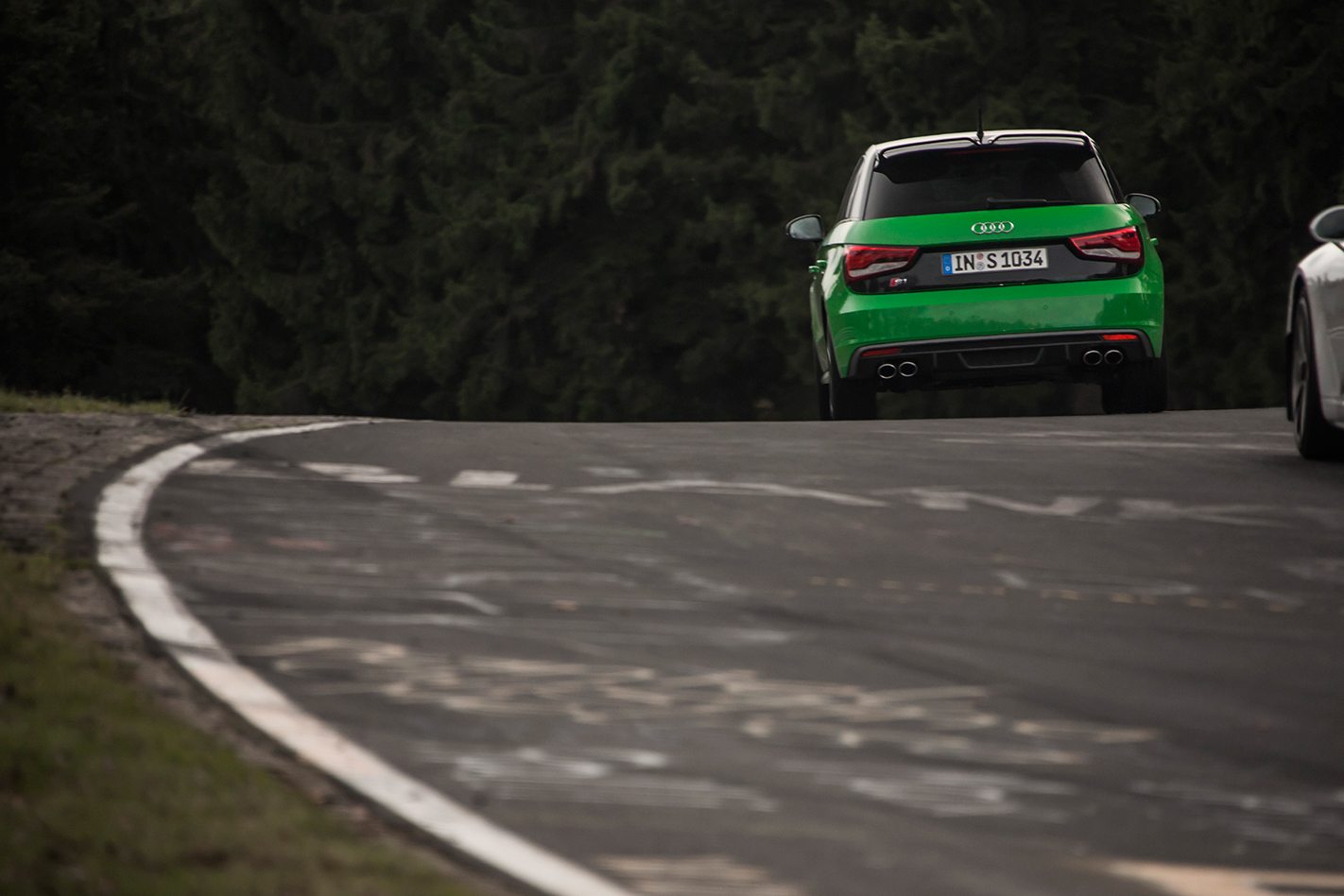
Audi didn’t laugh out loud when we explained our idea. In fact, they agreed to facilitate our experiment. They could provide a car and a Nordschleife-knowledgeable driver. So the plan was made. Collect an S1 Sportback in Ingolstadt. Drive halfway across Germany to the Nurburgring to rendezvous with Audi racer Winkelhock. Ride several laps of the Nordschleife with him as he hunts big game in a $50,000 hot hatch. What could go wrong?
Potential giant killers don’t come much scrawnier than Audi’s tiny hot hatch. But it fits the formula, no question. The S1 Sportback packs a turbocharged four, six-speed manual, all-wheel drive and lowered and stiffened suspension into compact dimensions.
There are versions of Audi’s 2.0-litre four-cylinder TFSI engine that produce way more power than the S1’s 170kW maximum (including the 210kW example in the S3, to name the most obvious example), but there’s a rich, 370Nm-deep vein of torque from just above idle to compensate.
It’s also true that the S1 is hefty for its size, weighing in at around 1400kg with driver on board. But a large chunk of the handicap it carries, compared with an ordinary A1, is due to it being the only model in the line-up equipped with Audi’s quattro permanent all-wheel-drive system.
So the S1 isn’t brutally powerful or feathery light.
A circuit-scorching monster it is not, but it is the kind of car that driving enthusiasts who also need day-to-day practicality buy. And it is decently quick. All-wheel drive means that next to nothing the engine produces is wasted as wheelspin, as its claimed (and believable) 0-100km/h time of 5.9 seconds testifies.
There’s no doubt Markus Winkelhock is the right man to extract the absolute maximum from the S1 Sportback’s relatively modest potential. If the surname of the 34-year-old German is familiar, it’s because he comes with a pedigree. He is the son of Manfred Winkelhock and the nephew of Joachim Winkelhock, gifted racers both.
Markus was five years old when his father died after crashing a Porsche 962C at the Mosport Park circuit near Toronto, Canada, during a round of the 1985 World Endurance Championship. Manfred had been a Grand Prix regular since 1980, driving mostly for the ATS team, but liked to mix Formula One with sports car and touring car racing.
Though he was too young to clearly recall this awful event, Markus does remember the effect it had on his surviving parent. “My mother said: ‘No, no, don’t go be a race driver. You should do something serious’,” he tells me when we meet. She wanted him to study photography instead.
But the call of the circuit was too strong for Winkelhock. He showed promise in a junior open-wheeler series, found support, progressed to DTM, made it into F1, then achieved success driving GT3 cars. In 2012 he was part of the four-member team that drove an Audi Sport Team Phoenix R8 LMS Ultra to victory in the Nurburgring 24 hour race. He did it again in 2014.
But before we meet this man with the big ’Ring reputation, there’s the matter of getting the S1 Sportback from Ingolstadt to Nurburg.
It’s early on a foggy Sunday when we depart from the Audi Forum. This precinct, which houses the company’s headquarters as well as its interesting museum, is almost deserted. Ingolstadt is in the German state of Bavaria. Not far south lie Austria and the Alps. If you’re looking for great driving in the region, this is where you want to head. But we’re not going that way. Nurburg and its Nordschleife are near Germany’s border with Belgium, about 500km north-west of Ingolstadt.
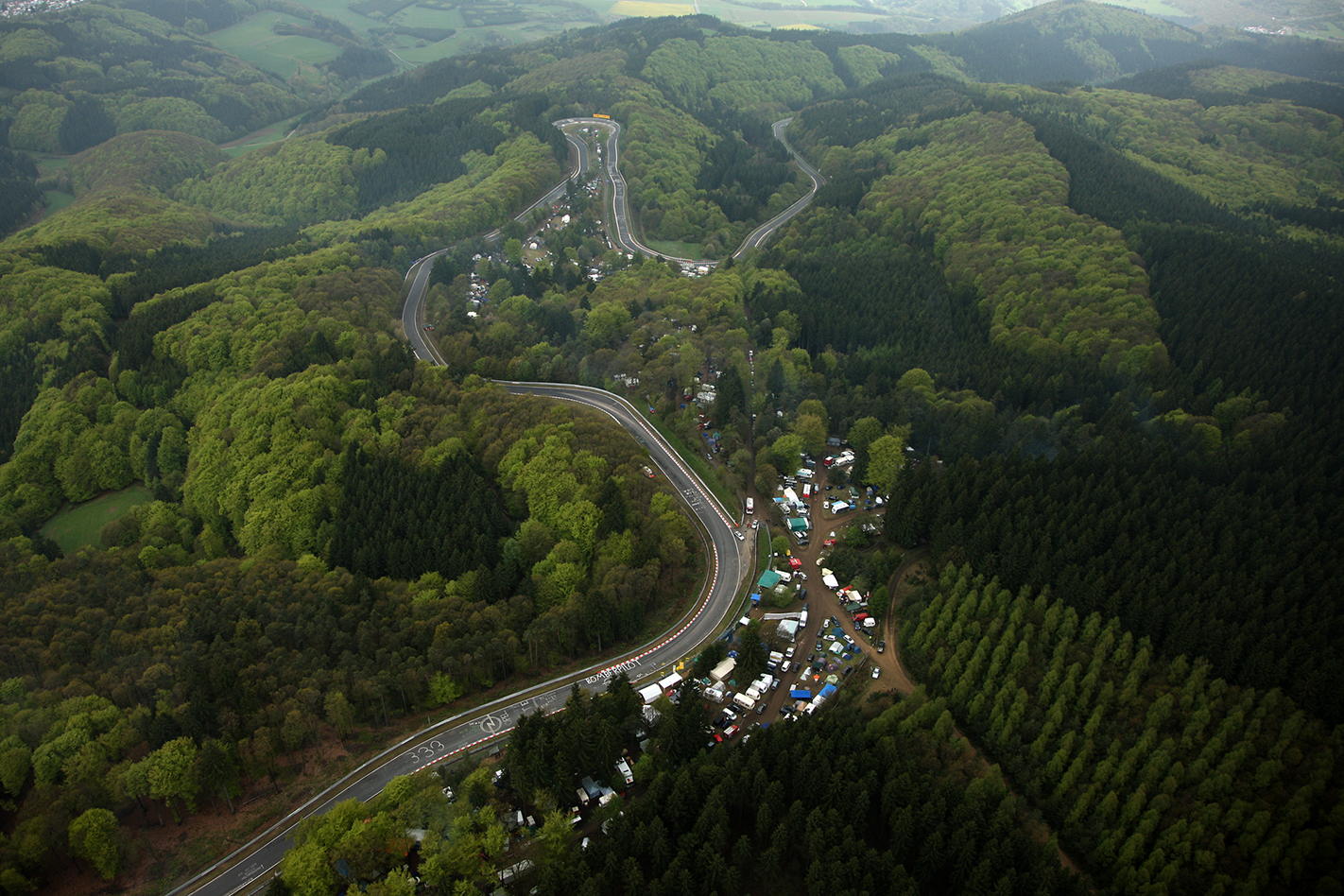
We visit the historic town of Eichstätt and explore a steep hillside covered in vineyards outside Erlenbach. From here we can see Neckarsulm, Audi’s other important base in Germany. It’s a beautiful day, warm and clear, but back at Ingolstadt, observant German photographer Tobi had noticed the S1 Sportback was wearing winter tyres. They weren’t a problem driving at a leisurely pace, but on the autobahn their blocky, squirmy tread pattern does nothing for high-speed confidence. Though we see 220km/h-plus a couple of times, directional stability isn’t great. Much more pleasant to cruise around 150km/h, a stressless Sunday-driver pace in Germany.
We arrive at Nurburg at sundown and I’m preoccupied with the tyre problem. We simply can’t hobble the S1 Sportback with winter rubber, so I’m playing phone and text tag with Audi to organise a solution. I go to bed after dinner and drinks at a couple of classic Nurburgring hang-outs, still worried.
By mid-morning the next day, ace Audi operative Petra has a plan. Photo chase car driver Helmut heads in his A4 Avant to an Audi dealership near Koblenz, about 60km away, where he’ll collect a set of summer tyres and wheels stripped from a showroom S1.
Technicians at Audi’s Nurburgring test facility will do a wheel swap for Winkelhock’s hot laps, then put the winter tyres back on when we’re done. As the Nordschleife isn’t going to be open to the public until 5.00pm, there’s ample time to get this done.
Winkelhock arrives on time, and in time for lunch. He’s bright-eyed and relaxed, but confused by our choice of the S1 Sportback. So I explain our quest, and what we’re hoping he can do.
He estimates 90 percent of his large tally of Nordschleife laps have been in race cars. But he has driven roadgoing Audis here, too, putting development laps on the RS6 and R8. It’s easier work in a racer, he insists. “Because, you know, the set-up is made just for the Nordschleife. You have got slicks, you have got downforce, the car feels so stable. In a road car it feels much more soft, and for sure with the road tyres you have not that much grip and the car is more moving, you know.”
An hour or so before the circuit is opened to the public we move to the cafe and bar beside the entry point. It seems Winkelhock is acquainted with half the people here today. He’s approached by a young American, a fellow racer and former team-mate who’s come to rent a Suzuki Swift Sport and show his accompanying girlfriend the Nordschleife. A few minutes later Winkelhock is off for a chat with Erich Zakowski, founder of Zakspeed, a famous team that in the late 1980s ran its own chassis and engine in F1. “My dad used to race for him,” explains Winkelhock when he returns.
The session for race-car testing runs over time, so the bright green Audi’s appointment with Green Hell destiny begins a little late. As we’re about to settle into the S1 Sportback, I ask Winkelhock if he’s ever driven one before. “No, never,” he replies.
Not that you’d know. He has the measure of the Audi’s limits inside the first few hundred metres of the first lap. Winkelhock’s intimate knowledge of the Nordschleife is obvious, and it’s a huge advantage. This daunting, legendary and frequently lethal 21km ribbon of bitumen is etched indelibly into his brain. It’s after our first time through Flugplatz that Winkelhock tells me he’s taking zero risks.
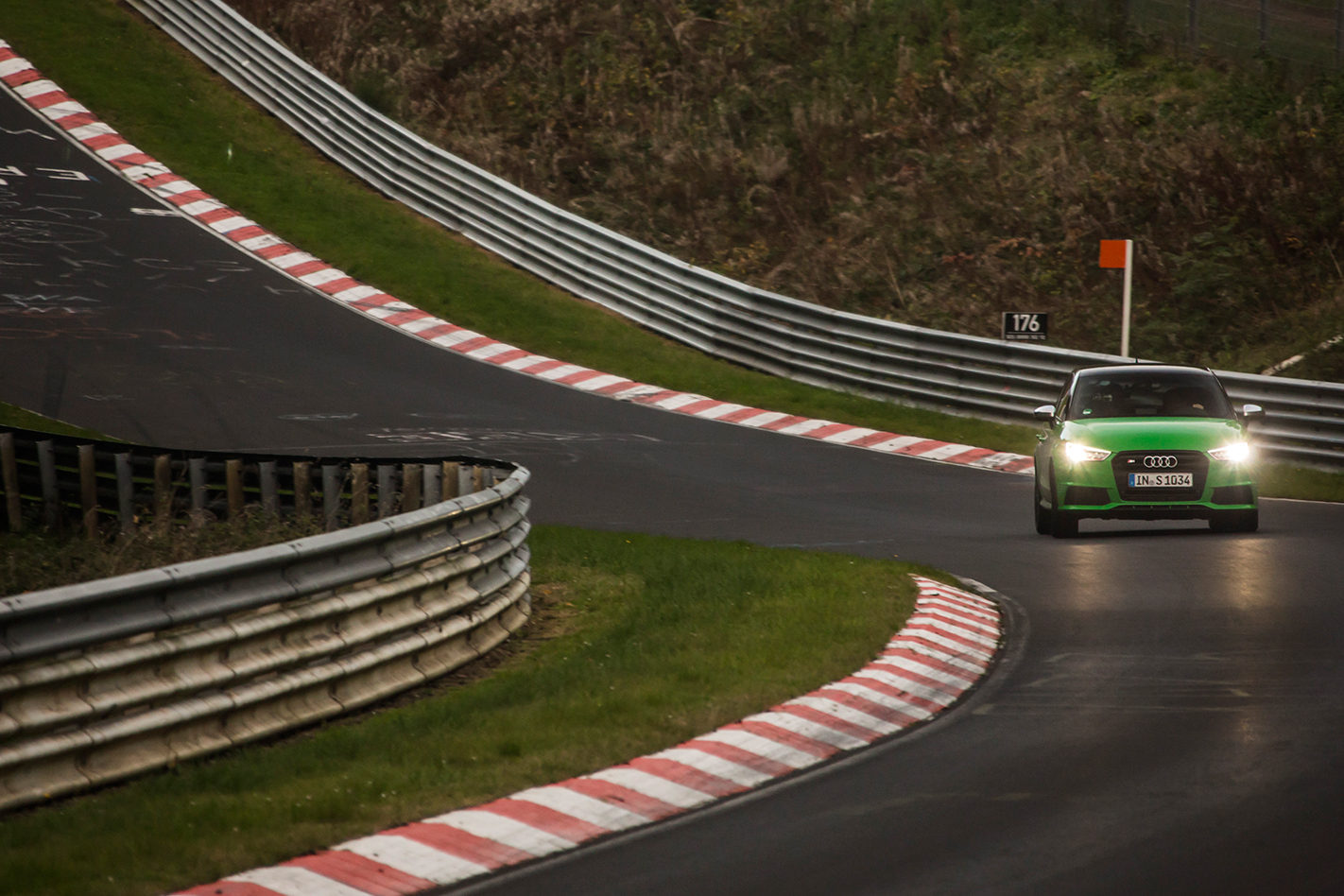
He’s using the circuit’s kerbs more than I’d expected, but his lines are a masterclass in the value of precise car placement. He’s connecting the Nordschleife’s corners with casual brilliance, at the same time chatting about how much more speed he would be carrying in a GT3 racer at each point.
Winkelhock’s fluidity yields ferocious speed. He’s using everything the S1 Sportback has to give, all of the time. Without ever making a mistake worth the name. It is an awesome display.
I’m enjoying it immensely, but Winkelhock seems to misread my expression. “Are you feeling okay?” he enquires after the first lap. “Fine,” I assure him, puzzled by the question. Then Winkelhock owns up to being a nausea-prone passenger, even riding with another racer he knows and trusts. The only thing that’s making my stomach churn is Winkelhock constantly mentioning scary-fast race car speeds.
The mix of cars and people here today is amazing. There’s a prim-looking young woman in a rented Swift Sport. She’s not fast, but she is neat and – very important here – watches her mirrors. A BMW 3 Series GT is being piloted by an average-looking middle-aged man. An accountant, maybe. There are some tatty E30 and E36 BMW 3 Series, well driven. I’m guessing they are track regulars, the so-called ‘Ringers’. Weirdest of all, there’s a British-registered Austin Maestro. This piece of crap from England’s darkest hour is painfully slow. We flash past so fast that I can’t get a look at the driver. However, we haven’t come here to claim victims such as these.
Winkelhock’s speed scores a Ferrari on the second lap. He catches the silver 360 very quickly, then runs the S1 Sportback up the inside on the way into a left-hander. Easy. The tally grows on our third and fourth laps. Several Porsche 911s, a Cayman, and more.
The Audi is overtaken during its four laps of the Nordschleife. But only by a pair of very serious 911s and a Skyline GT-R. No dishonour for the S1, or for Winkelhock. I only realise how hard he’s been working after it’s over and he climbs out of the car. It’s not a hot day, but the back of his shirt is sweat-drenched. He nips off to change it for a fresh one. Winkelhock’s toil, though, has proved the point. Knowledge and skill in a hot hatch can beat money and power in a supercar. No risk at all.
Tech giants have helped Ford lift its technical development and validated the car maker’s decision to root itself in Silicon Valley
GOOGLE and Apple potentially entering the automotive field has served as a wake-up call for Ford, according to its new Vice President of Research and Advanced Engineering. Dr Ken Washington, who has been in Australia this week meeting with Ford Australia engineers after joining the car maker last August, has told local media that the Google autonomous car and persistent rumours of an Apple car (most recently its tie-up with BMW) do not pose a direct threat the car maker.
“It’s actually pretty exciting to us that there is so much interest from the tech sector in automobiles – in the automotive sector – and we think that’s a case of rising all boats, so we’re pretty excited about that,” said Washington. “It’s also a bit of a wake-up call. We don’t have forever to figure out how to take our game to the next level in terms of driving innovation in our business and giving value out of connected cars and doing something real with autonomous vehicle tech.”
Google has presented its autonomous car and has made no secret of its development of autonomous software for electric vehicles. And while there’s been talk of an Apple car, so far the tech company is yet to show its hand by revealing its intentions; however it has recently extended its trademarks to encompass vehicles in a broad brush that may include motor vehicles. Apple also has tie-ups with car makers – including Ford – through its CarPlay user interface, yet Ford sees these moves as positive steps.
“It’s validated the need for us to be in in Silicon Valley,” said Washington, whose prevoius post before arriving at Ford was in the aerospace industry, based in Silicon Valley.
“It’s a pretty special place… I can tell you from first-hand experience that there are some pretty unique collaborations that happen in Silicon Valley where you’ve got a very high density of technology and venture capital investment firms, and universities and national laboratories doing very cutting edge research and technology development. By being a part of that community you have access to very vibrant community of innovative thinkers and technology innovators, so it was validating to us that technology behemoths like Apple and Google are paying attention to automotive industry.”
Earlier this year, Ford opened a larger facility in Silicon Valley that will support 120 staff. “We’re very serious about being there,” Washington added. “And being not visitors to Silicon Valley, but being members of the technology community there.”
