What is the Climate Council?
The Climate Council is an independent organisation that advocates for lower emissions. It wants to see emissions drop quickly from 2025, with a 74 per cent reduction by 2030 and net zero by 2035.

Just over three years since the original lobbed here – replacing the Elantra nameplate with ‘i30 Sedan’ solely for Australia – a mid-life facelift has arrived, incorporating many of the engineering enhancements of the new-generation Kona, as well as an extensive restyle, new drivetrains and a line-up reshuffle.
The timing couldn’t be more perfect as the existing i30 hatch – which accounts for 84 per cent of total (non-N) i30 sales in Australia – is currently in runout as it transitions from Korean production (which finished in December) to being sourced from the Czech Republic.
Not every variant will be available from launch, however. The standard 2.0-litre i30 sedan range – running the same 110kW/180Nm 2.0-litre ‘Atkinson cycle’ petrol four-cylinder as the new base Kona, with an impressively re-engineered automatic continuously variable transmission (CVT) replacing the previous six-speed auto – is already on sale in three variants (base, Elite and Premium).
The newly introduced hybrid is currently only available in base i30 sedan form – the Elite and Premium hybrids are some months away, with pricing still to be announced. And while the 1.6-litre turbo-petrol i30 sedan N-Line has had its pricing revealed, supply is essentially still on the boat.
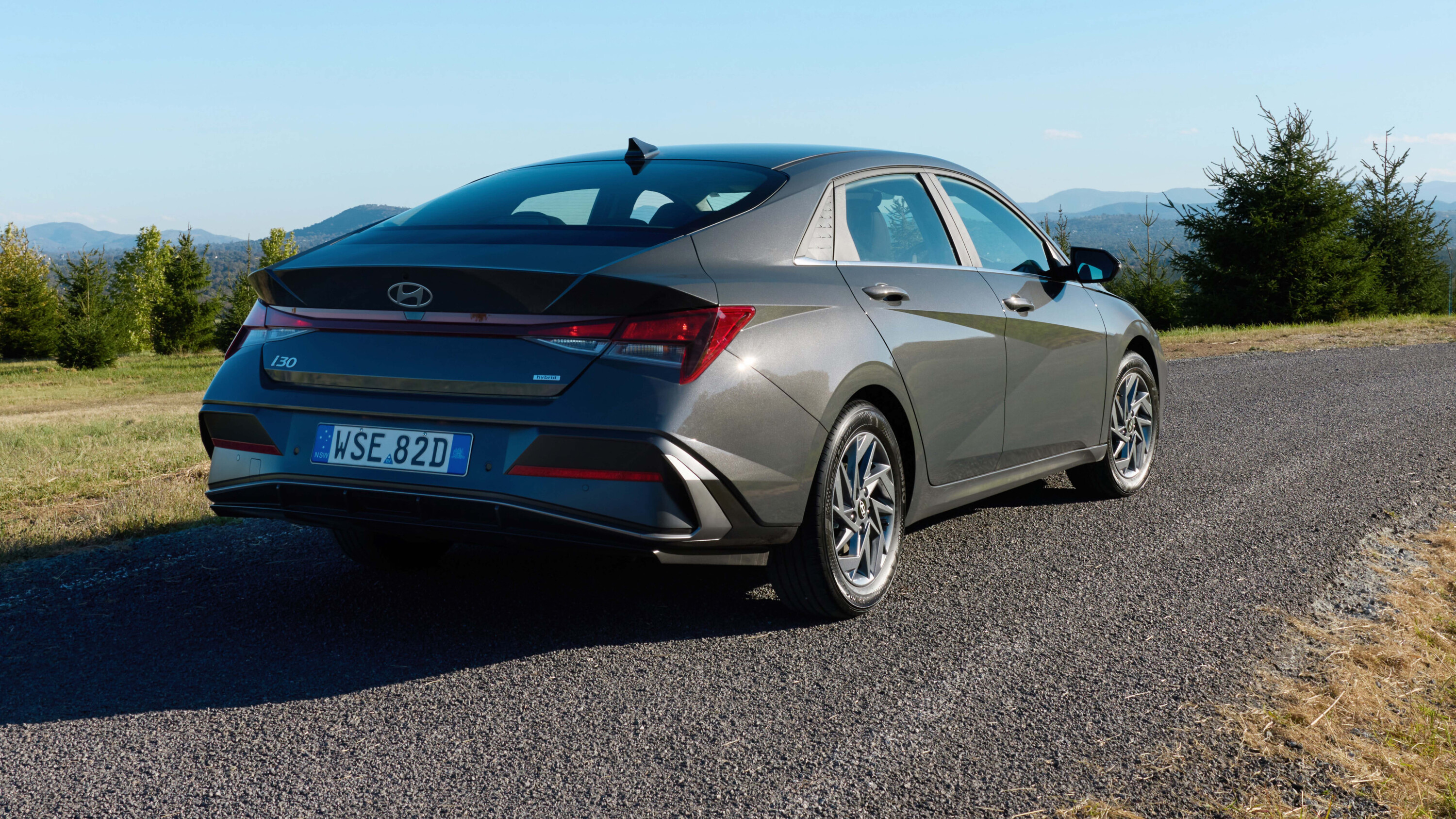
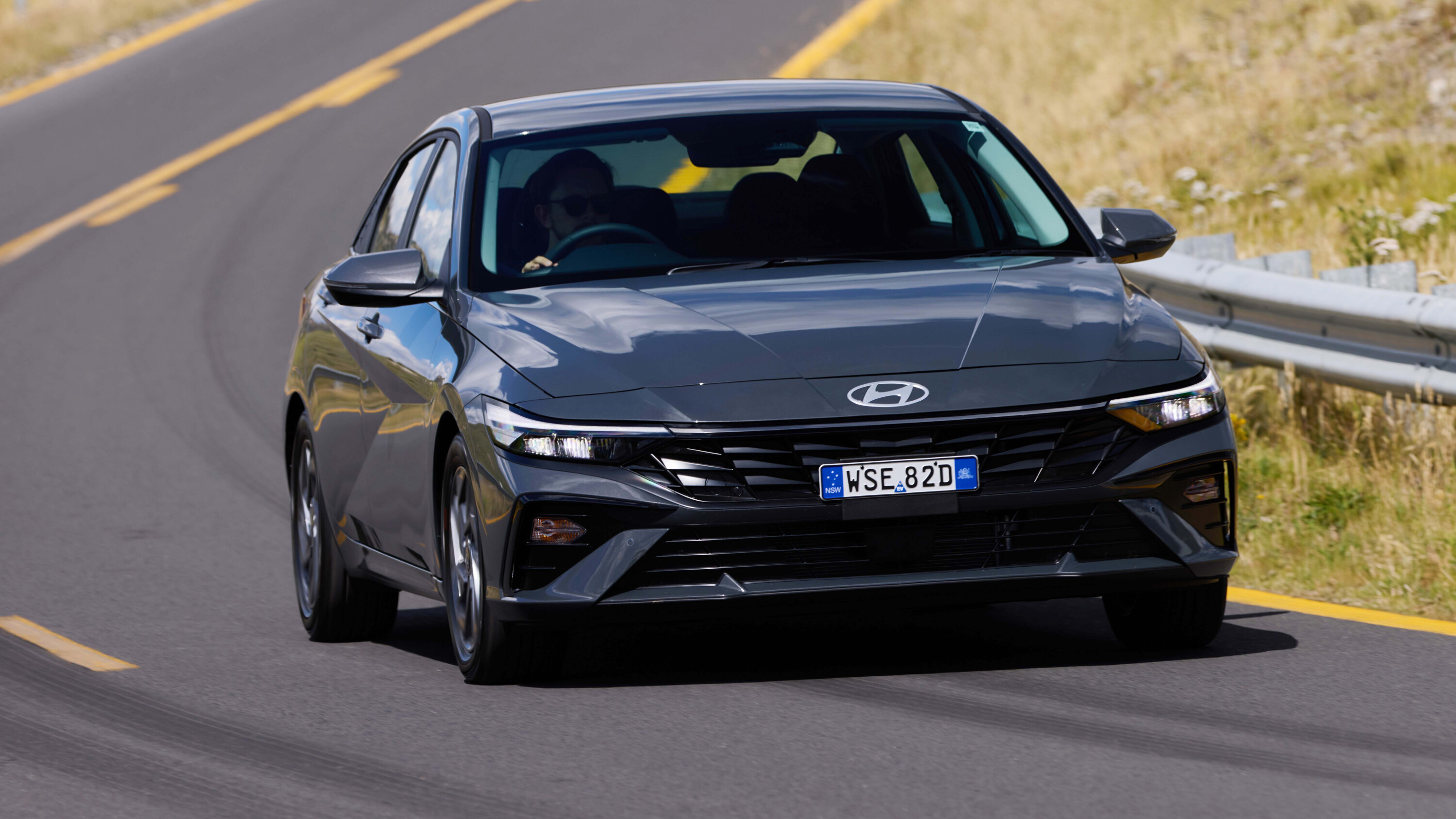
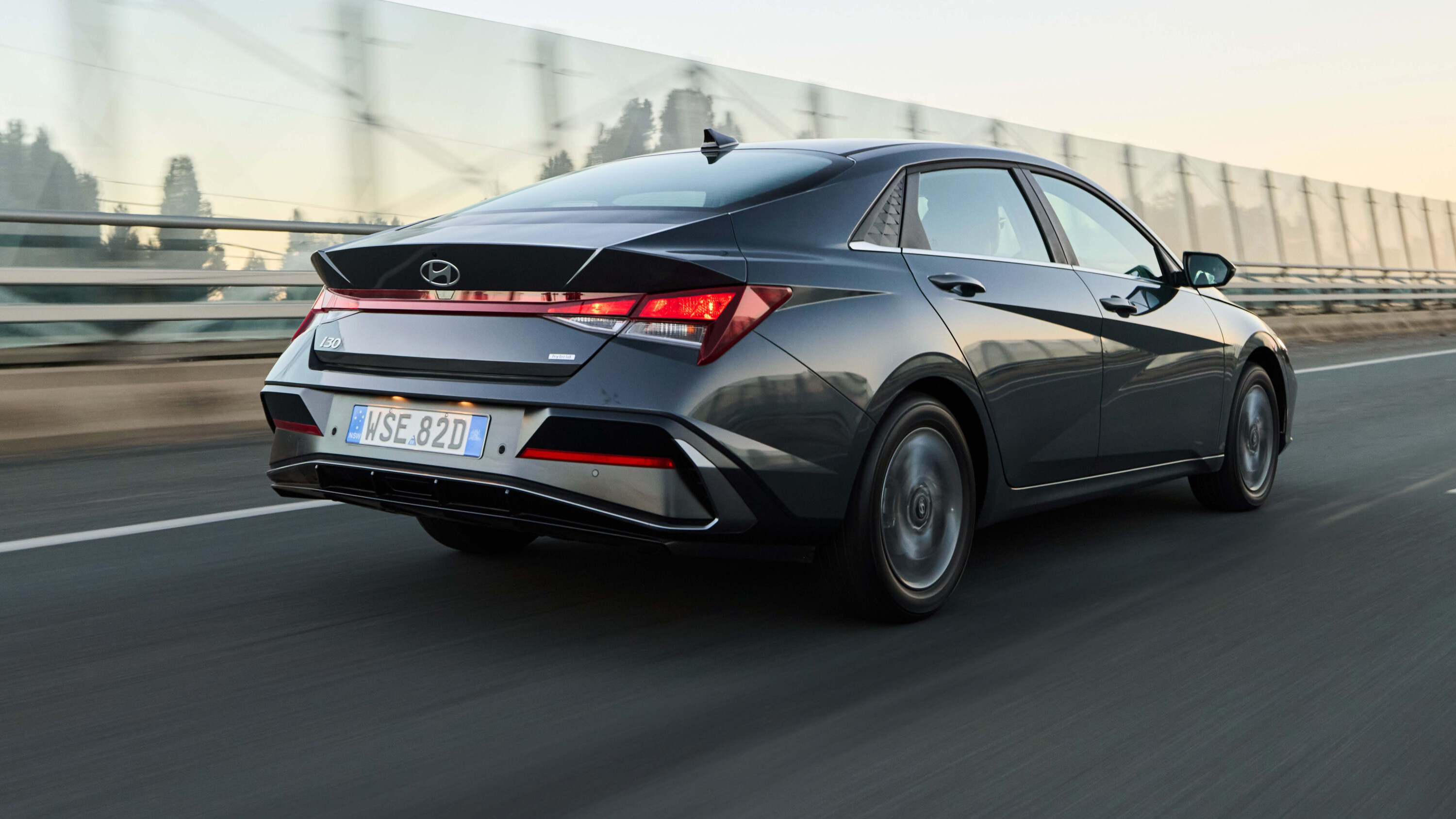
Its ‘Parametric Dynamics’ design language features striking sheetmetal creases – further enhanced by the 2024 model’s new horizontal front-end treatment – and its fastback-like silhouette stretches to a 4710mm length, making this ‘small’ sedan essentially medium-sized.
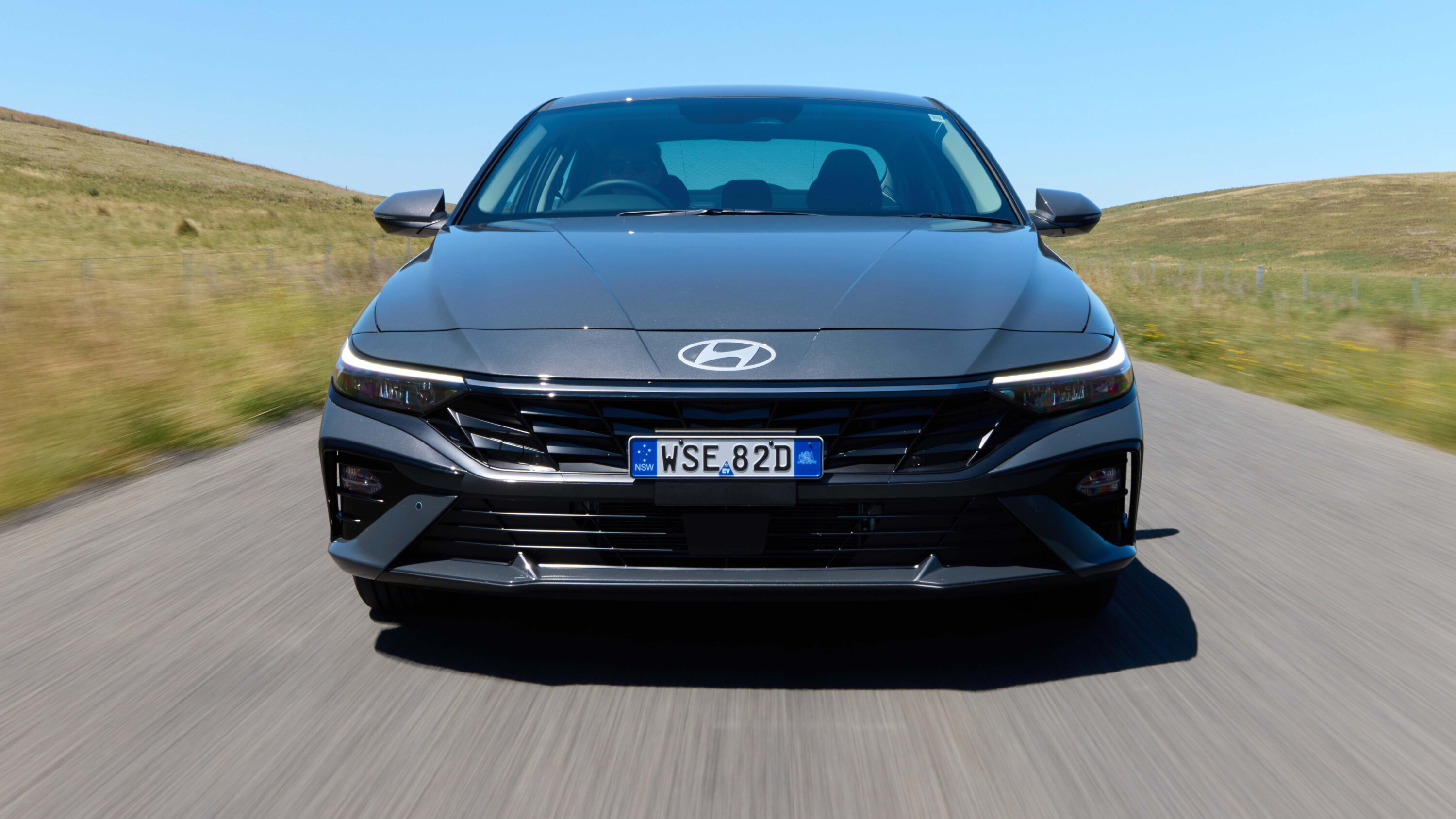
There’s no mistaking its sharp new LED headlights with matching daytime running lights, parametric-patterned grille and more aggressive lower section with air curtains at each side, as well as Hyundai’s new flush bonnet logo.
It’s all quite interesting, and definitely not bland, but the base version reeks of rental car austerity, and even the Elite and Premium still look rather ‘American’.
Thankfully, the N-Line is a completely different ball game, with a genuinely sporty and tough appearance that’s incredibly close to the actual N model in its blacked-out aggression and muscular stance. Wearing meshed 18-inch wheels and deeper front and rear bumpers, it’s the yang to the regular i30 sedan’s yin.
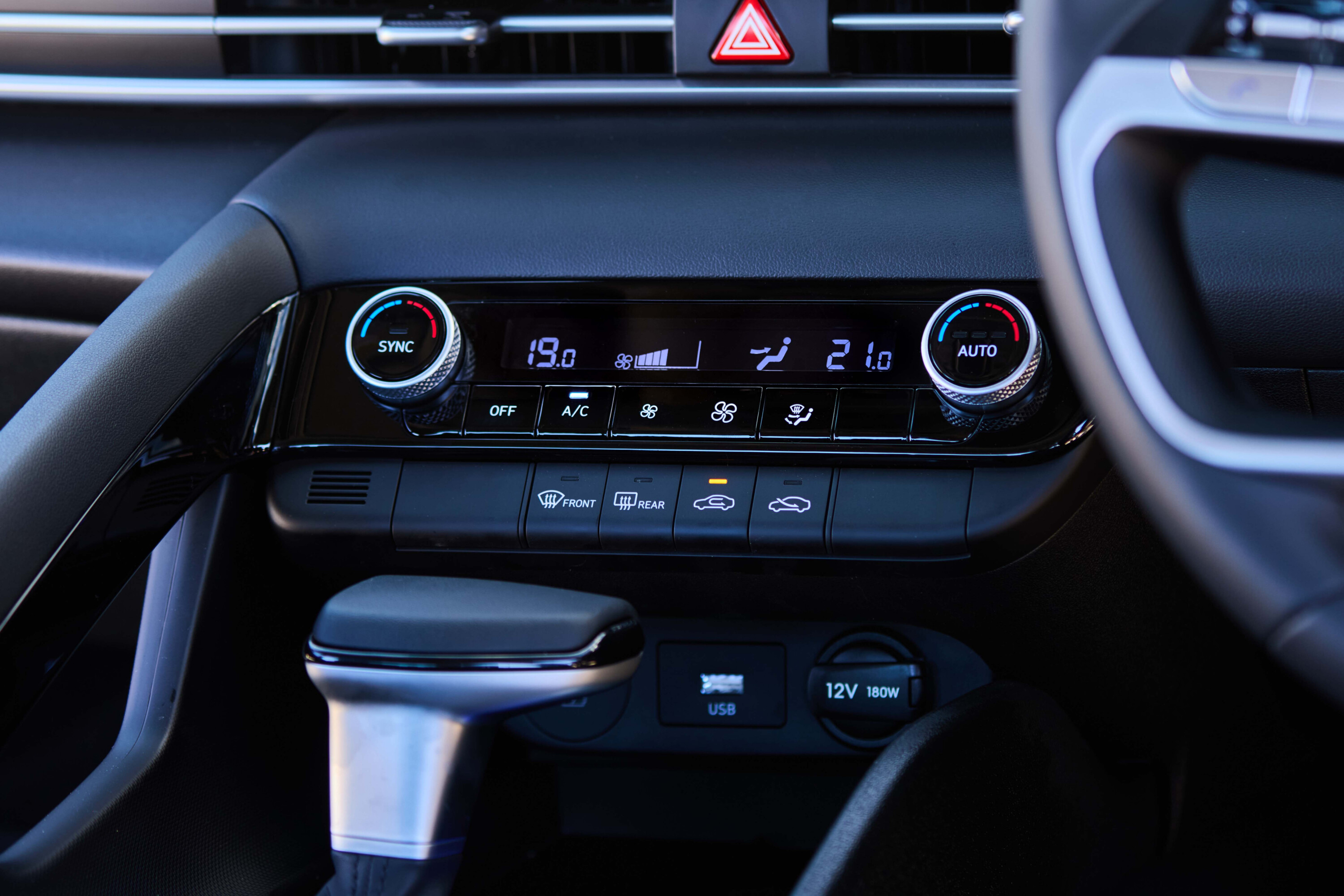
In place of the 2.0-litre’s torsion beam rear axle is a multi-link independent set-up, as per the turbo-petrol N-Line, and the hybrid also gets dual-zone climate control, auto defog and humidify functions, as well as rain-sensing wipers plus an obligatory bootlid badge.
All that joins a fairly extensive array of equipment for an entry-level model – especially one costing just $33,000 before on-road costs.
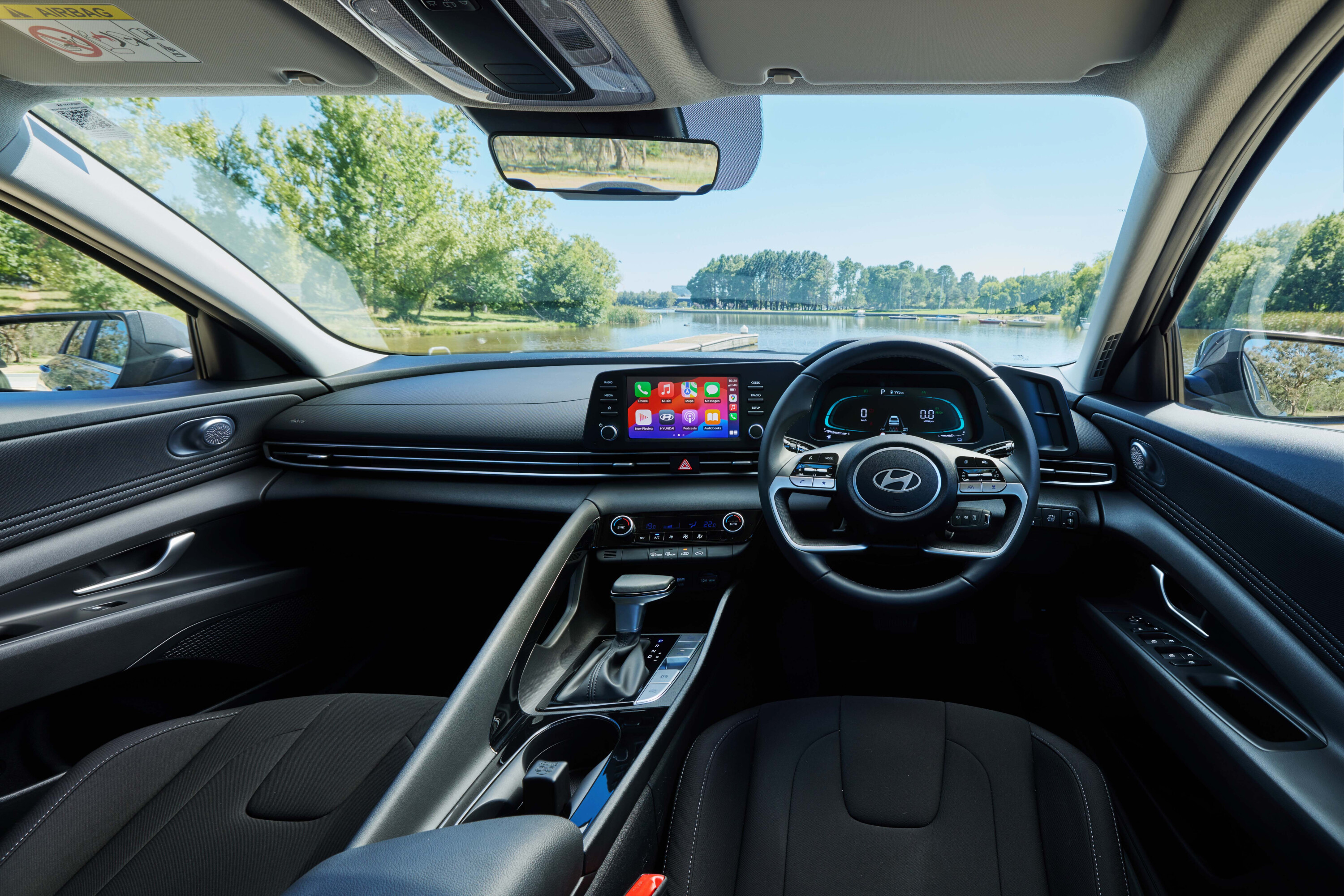
Safety-wise, the i30 sedan hybrid scores six airbags
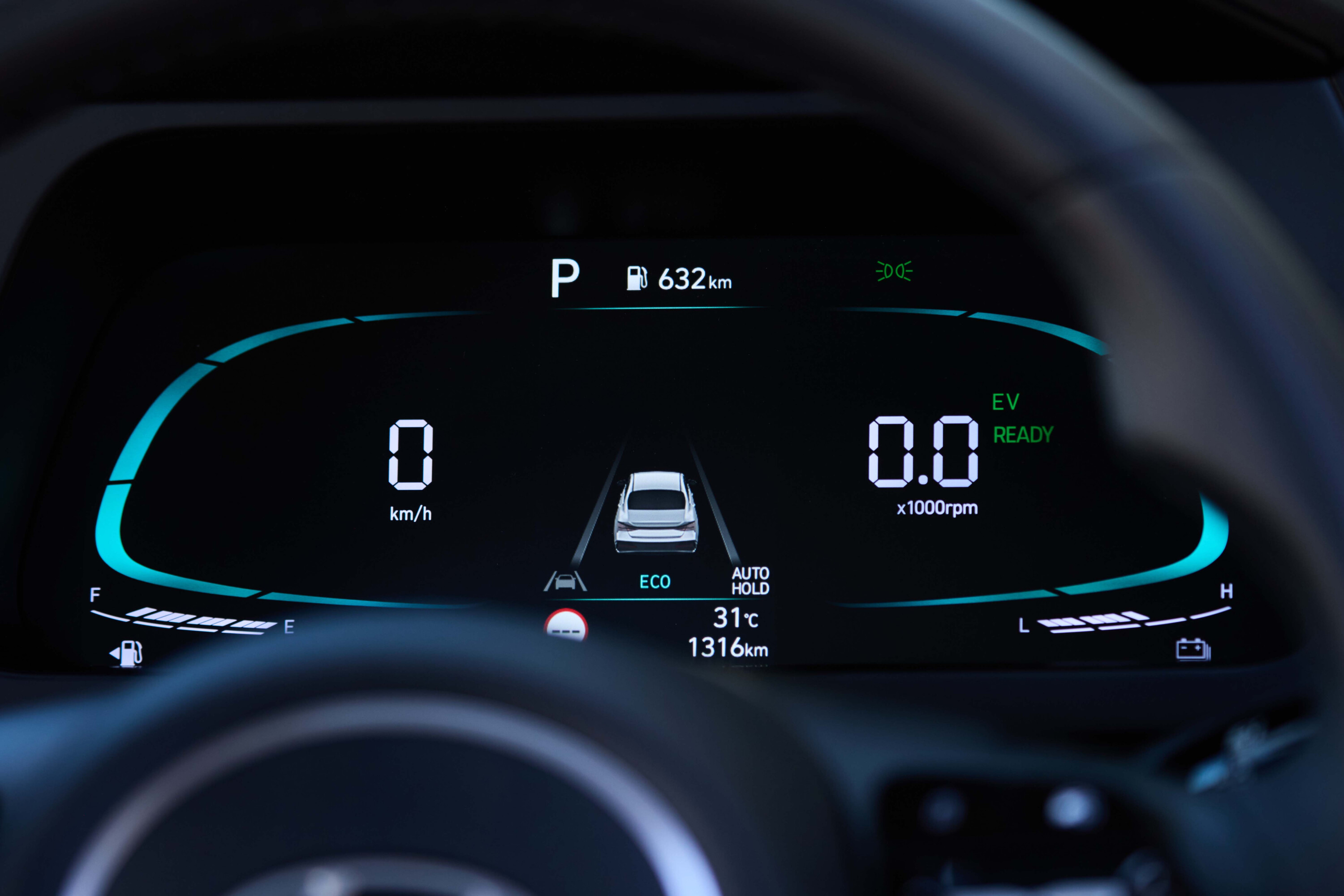
This includes satin-chrome 16-inch alloys, front and rear parking sensors, adaptive cruise control with stop-and-go function, LED headlights with auto high-beam, heated mirrors, an 8.0-inch multimedia touchscreen with wireless Apple CarPlay/Android Auto, a new 4.2-inch digital instrument cluster, a redesigned wireless charging pad to accommodate larger phones, new USB-C outlets (one front, two rear), leather steering wheel and gear selector trim, premium cloth seat upholstery, rear-seat air vents and a rear centre armrest.
Safety-wise, the i30 sedan hybrid scores six airbags, driver attention warning with leading vehicle departure alert, forward auto emergency braking with pedestrian/cyclist detection and junction turning alert, intelligent speed limit assist, lane following assist, lane-keep assist, and rear occupant alert.
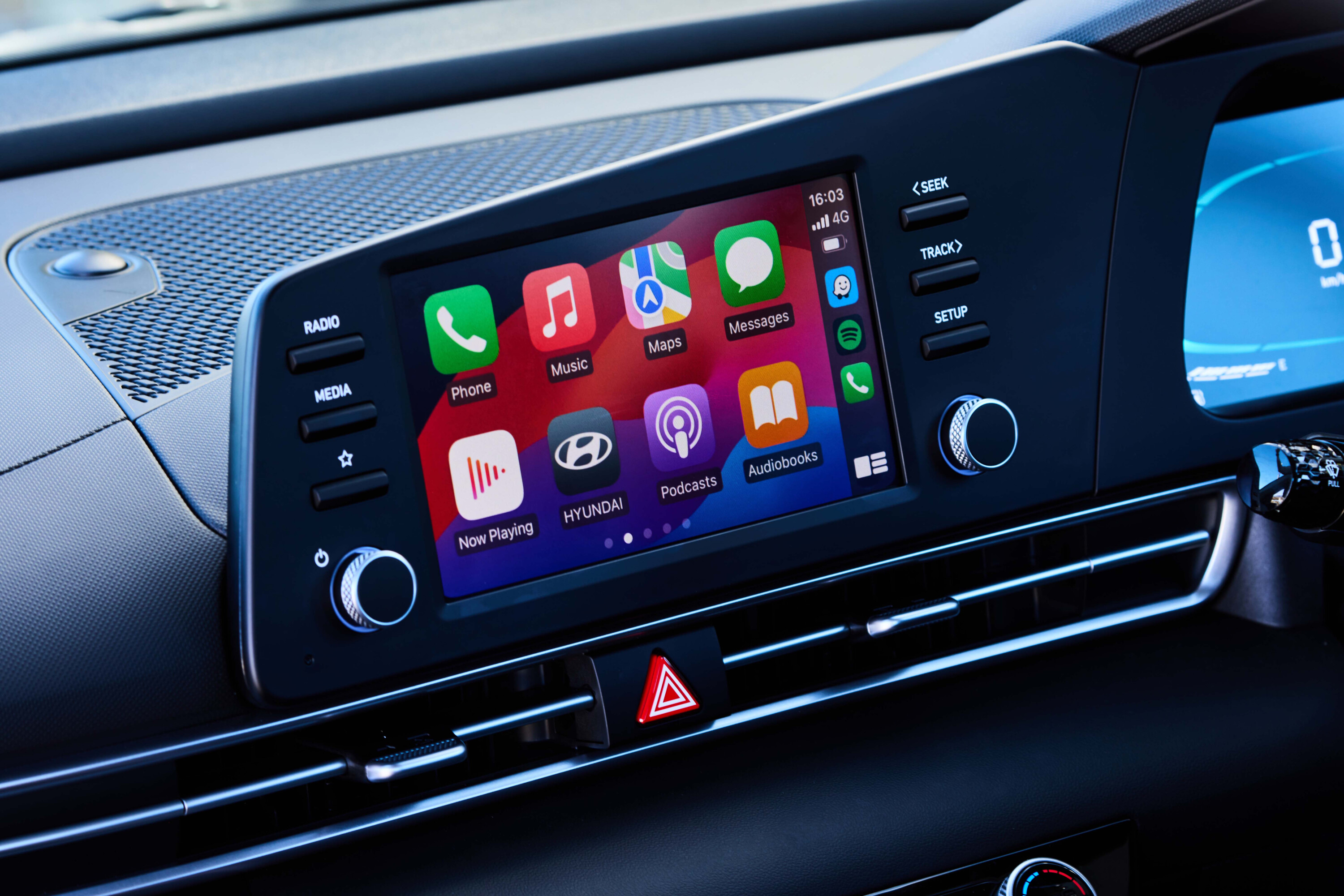
Plus, all the main touchpoints, including the stylish cloth seats, the nice-to-hold leather wheel and general driver ergonomics are bang on – even though the base hybrid only gets manual seat adjustment (including for height).
The functionality of all the switchgear is simple and consistent in its quality, and while the basic new digital instruments are hardly the last word in sophistication, they convey information fairly well.
Having wireless smartphone connectivity is also a big plus, though the six-speaker stereo is merely adequate in its strength and bass delivery, and it lacks the clarity of the eight-speaker Bose system in more expensive models. It also doesn’t offer DAB+ digital radio.
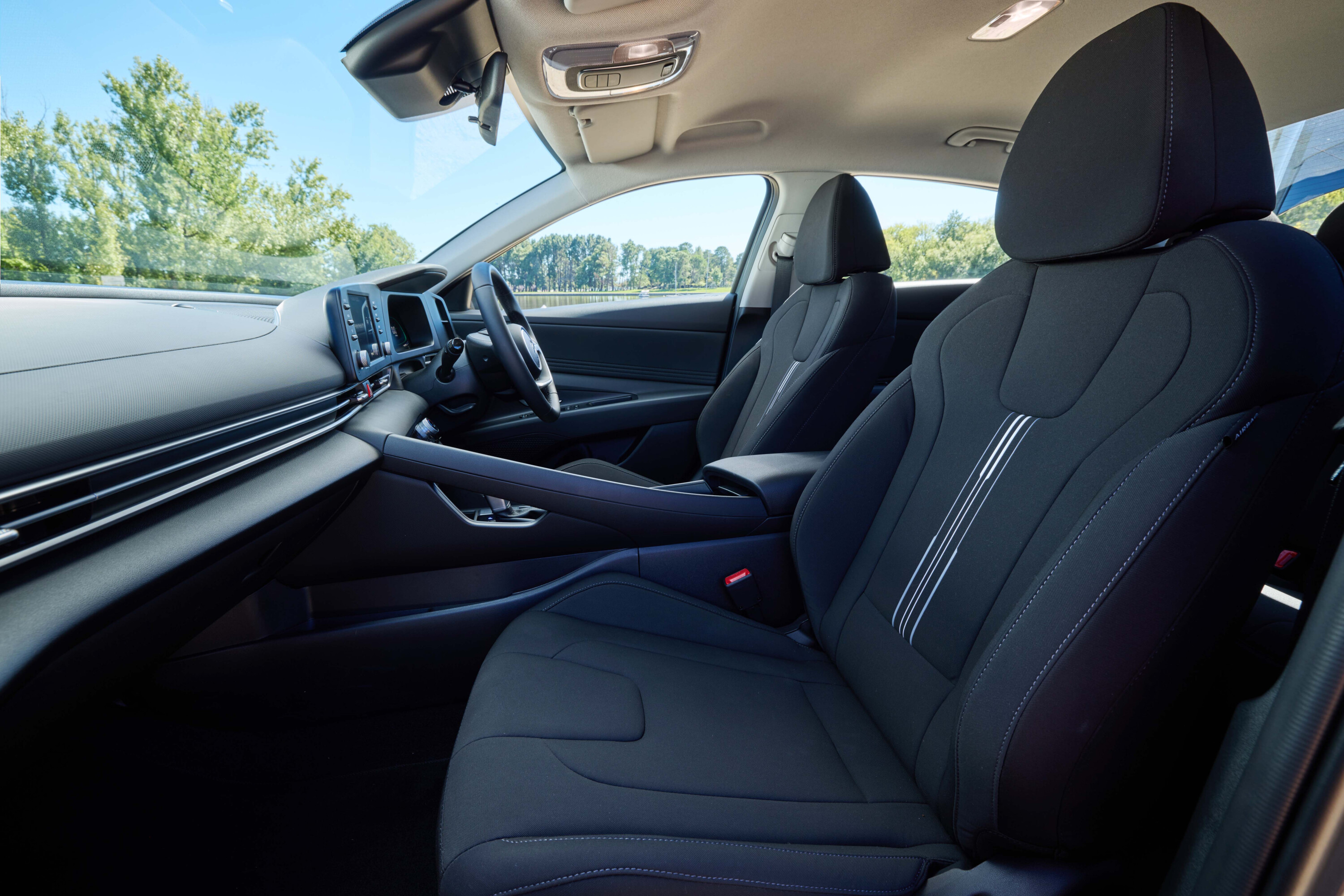
Where the i30 sedan falls down somewhat is in its materials tactility – everything is hard plastic, if solidly put together – as well as overall storage. The cup holders and centre console are generally fine, despite the front passenger’s design-led ‘Jesus handle’ on the console edge being a little intrusive.
It’s the door storage that’s below par, with awkwardly angled 600ml bottle holders in the front doors and stuff-all in the rear doors.
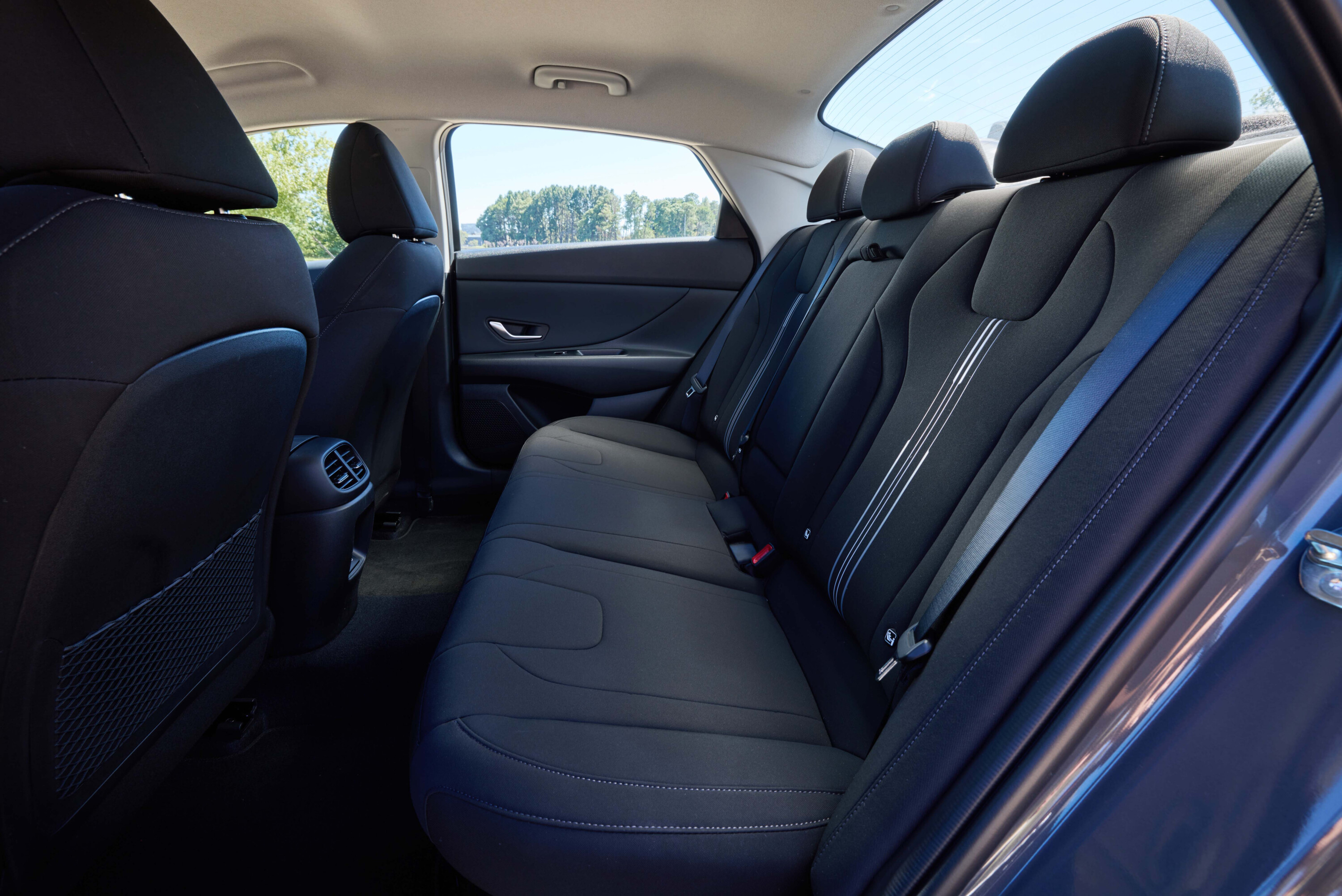
The base i30 sedan is definitely fit for purpose, but anyone with an ounce of aesthetic flair should be looking further up the range – in particular, the classy N-Line (which isn’t available with the hybrid powertrain in Australia, unfortunately).
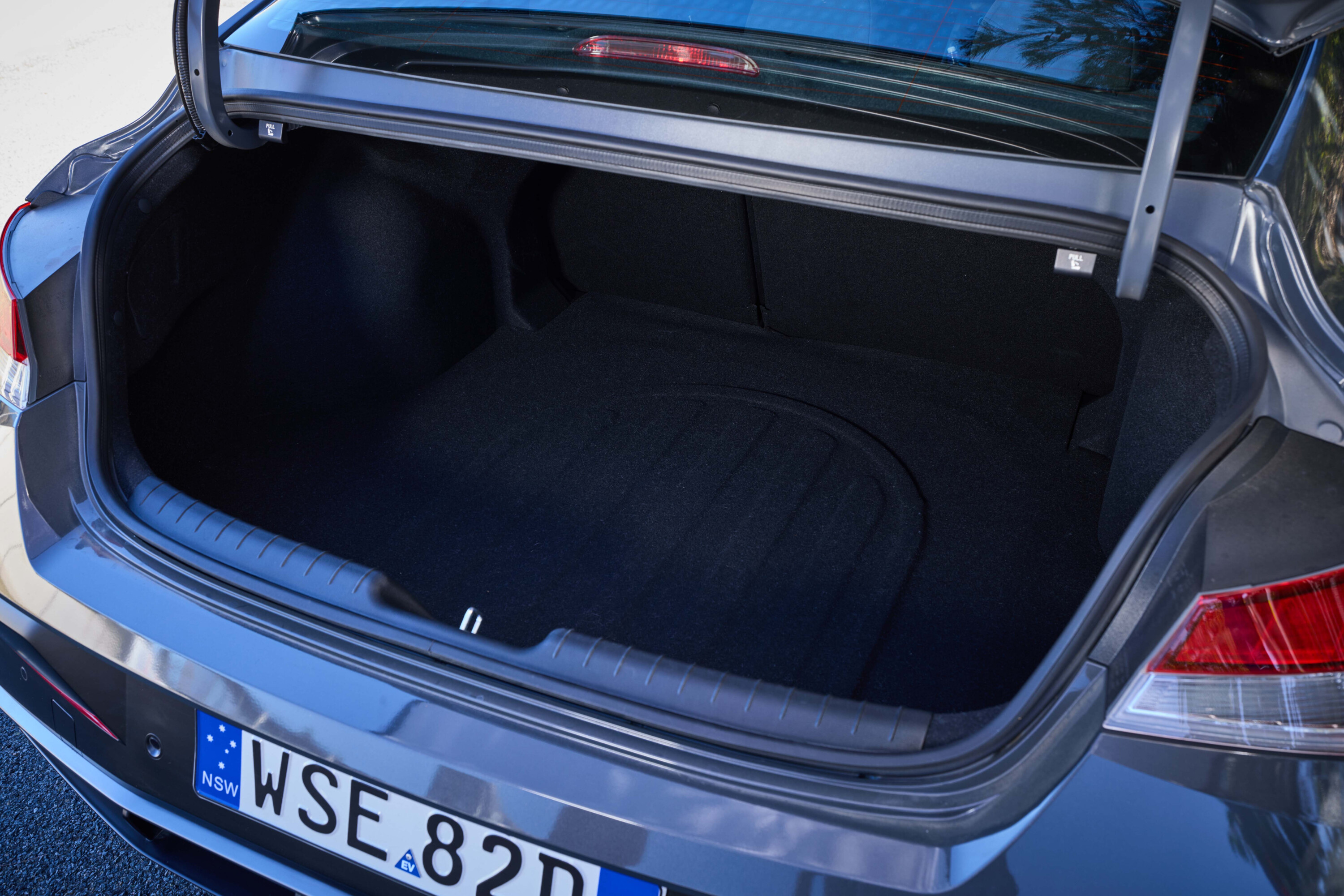
The i30 sedan’s huge 474-litre boot continues the theme. There’s a tonne of space and 60:40 folding backrests that flop onto the rear cushion (meaning a non-flat floor), but the trimming is sparse, the boot lid has nothing to grab onto when you’re closing it, and it doesn’t even have an outside release! Only the interior one next to the driver’s seat, or the keyfob.
While the new 2.0-litre petrol with ‘intelligent’ CVT is a far better performer on the road than it appears to be on paper, it can’t match the hybrid’s effortlessly torquey demeanour or its outstanding fuel efficiency.
The ADR81/02 official combined fuel consumption figure for the sedan hybrid is just 3.9L/100km (compared to 6.1L/100km for the 2.0-litre), which is exceptional for a vehicle this big. And on the road, despite being pushed hard through some Victorian high country, we averaged a superb 5.1L/100km over almost 200km of testing.
If ever there was a car that drives the opposite of the way it looks, this is it!
That included plenty of hills and corners, where the i30 sedan hybrid demonstrated the benefits of both its torquey drivetrain (with 265Nm), its slick six-speed dual-clutch automatic transmission, and its sophisticated multi-link rear suspension. If ever there was a car that drives the opposite of the way it looks, this is it!
Crisp electric steering (with just 2.5 turns lock-to-lock) combines with excellent chassis poise and really strong handling ability to make the i30 sedan hybrid feel rather like a base model Golf in its smooth and polished dynamic flavour.
And while the sedan hybrid’s ride isn’t plush, its well-controlled discipline and ability to devour Australian country roads with aplomb will be appreciated by everyone who rides in it.
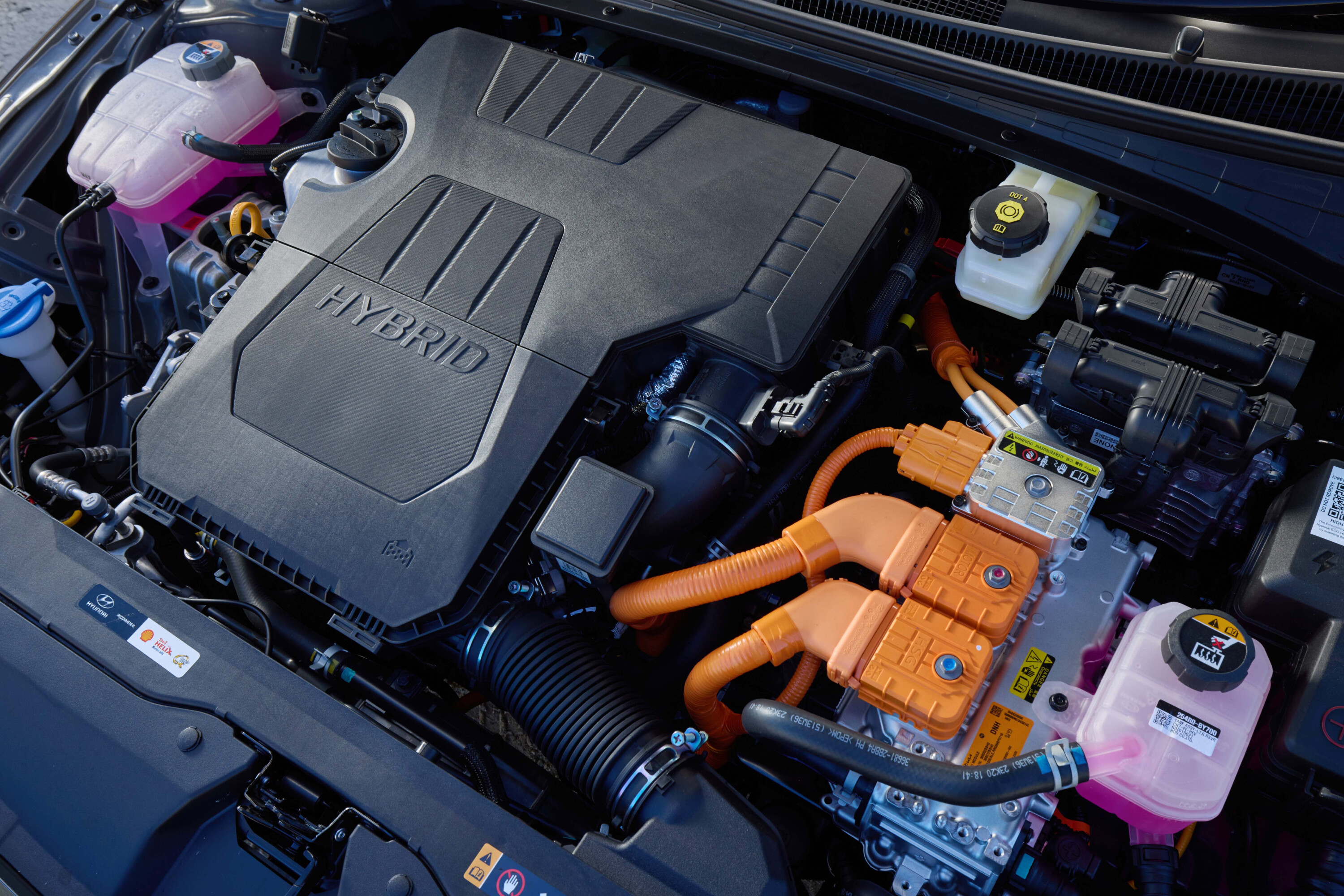
There’s no turbo here, but the small engine (with rather feeble 77kW/147Nm outputs) teams brilliantly with a 32kW/170Nm electric motor to deliver a driving experience far beyond what you may expect … even though its foot-flat performance (10.5sec to 100km/h) and high-rev refinement are nothing to write home about.
With this car, it’s the impressive all-round driveability – combined with superb fuel efficiency – that counts.
In its base form, as tested here with the new hybrid drivetrain, it’s a car for pragmatists. It reminds me of older German cars that were all about the engineering rather than the equipment tinsel … even though the base hybrid ticks pretty much all the boxes when it comes to stuff you need.
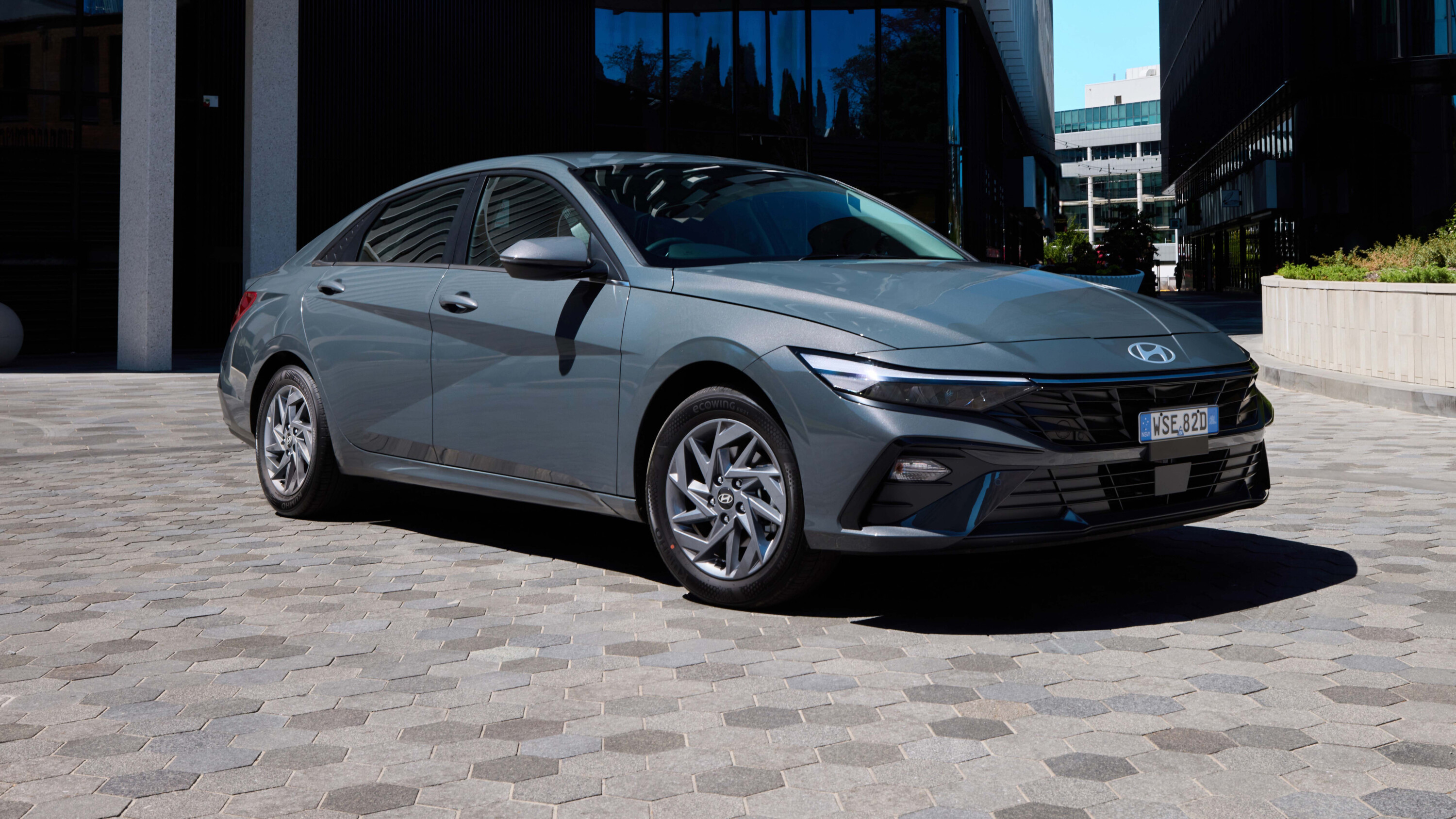
Roomy and rewarding to drive, there’s so much to recommend with the i30 sedan hybrid.
And if you want more than just a meat-and-three-veg appearance, there’s always the Elite and Premium versions that will arrive in the coming months featuring classier wheels, leather interiors and the up-spec cabin screens that make the sedan’s interior feel less like an Uber ride.
That said, this would be a brilliant ride-share vehicle! Quiet, comfortable, effortless, efficient, safe – lack of ANCAP rating notwithstanding – roomy and rewarding to drive, there’s so much to recommend with the i30 sedan hybrid.
This Korean four-door is the polar opposite of its Chinese contemporaries in that it’s not about how it looks – it’s what’s underneath that counts.
| 2024 Hyundai i30 sedan hybrid specifications | |
|---|---|
| Price | $33,000 (before on-road costs) |
| DRIVETRAIN | |
| Engine | 1580cc 4cyl, DOHC, 16v, direct injection |
| Electric motor | Permanent magnet synchronous |
| Battery | 1.32kWh lithium-ion polymer |
| Compression ratio | 13.0:1 |
| Drive | Front-wheel drive |
| System power | 104kW |
| System torque | 265Nm |
| Transmission | 6-speed dual-clutch |
| CHASSIS | |
| L/W/H | 4710/1825/1420mm |
| Wheelbase | 2720mm |
| Track (f/r) | (f/r) 1585/1599mm |
| Weight | 1360kg |
| Boot | 474 litres |
| Fuel/Tank | 91 RON/42 litres |
| Economy | 3.9L/100km (combined) |
| Suspension | Front: struts, A-arms, anti-roll bar |
| Rear: multi-links, coil springs, anti-roll bar | |
| Steering | Electric power-assisted, 2.5 turns lock-to-lock |
| Front brakes | Ventilated disc (280mm) |
| Reat brakes | Solid disc (262mm) |
| Tyres | Kumho Ecowing ES31 |
| Tyre size | 205/55R16 91H |
| SAFETY | |
| ANCAP rating | Unrated |
| 0-100km/h | 10.5sec (claimed) |
In the United States, the two-row Mazda CX-70 will be offered at the same price as equivalent versions of the three-row CX-90, which shares the same body and powertrains.
The CX-70 will be limited to the high-output 3.3-litre inline-six turbo-petrol and 2.5-litre four-cylinder plug-in hybrid when it arrives in US showrooms between March and June – meaning its starting price will be considerably higher than the CX-90 at launch.
Exterior dimensions for the CX-70 have been confirmed, revealing minor differences to the CX-90.
It is 20mm shorter at 5100mm due to its different bumpers and 3mm taller at 1736mm. Its wheelbase and width are identical to the CX-90.
The CX-70 will be offered with a unique red Nappa leather upholstery, along with black and two-tone quilted tan Nappa leather finishes derived from the CX-60 and 90.
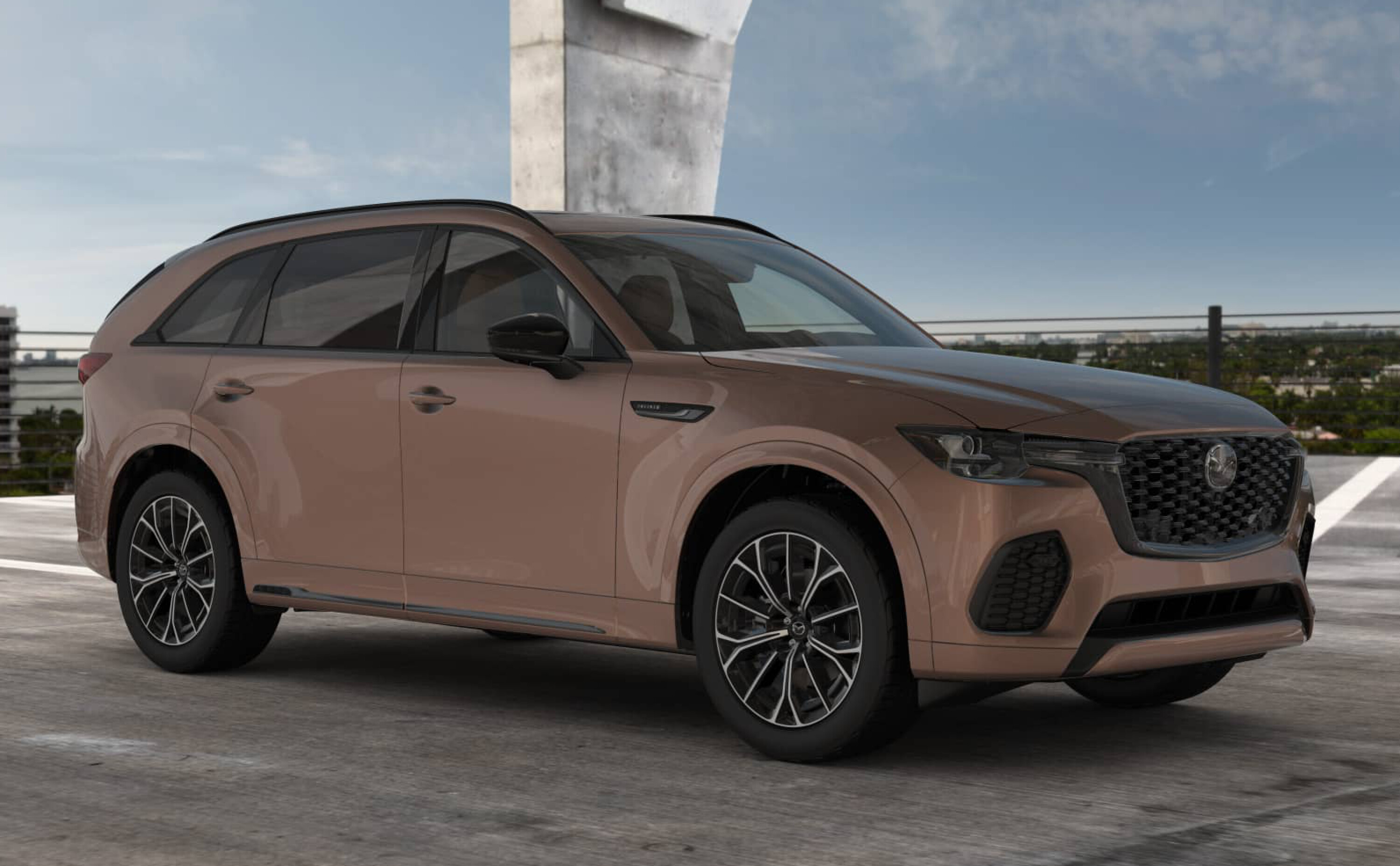
The CX-70 will also be available in ‘rhodium white’, ‘jet black’, ‘machine grey’ and ‘soul red crystal’, but Mazda’s ‘artisan red’ and ‘platinum quartz’ finishes will not be offered.
A 19-inch alloy wheel identical to the CX-90 features in entry-level variants, joining the unique 21-inch design revealed for flagship models in January.
Inside, the CX-70 has identical head, shoulder and knee room to the CX-90 in the first and second rows, and 2147 litres of luggage capacity with the second-row folded – compared to the CX-90’s 2101L with the second and third rows stowed.
It is expected to be positioned closely to the six- or seven-seat CX-90, which starts from $74,550 before on-road costs for the Touring petrol and tops out at $101,130 plus on-roads for the Azami SP petrol.
While plug-in hybrid versions of the CX-70 and CX-90 have been confirmed for Australia, local timing remains unclear.
Compared to initial pricing announced in November 2023, Subaru Australia has confirmed permanent price reductions between $6700 and $8000 for the two-variant Solterra line-up.
This sees the all-wheel-drive Subaru Solterra entry model move to $69,990 before on-road costs – down $8000 – while the Touring AWD, which has more standard equipment, falls $6700 to $76,990 plus on-roads.
Wheels is driving the Subaru Solterra, and its Toyota BZ4X identical twin, in Australia next week.
Toyota Australia has not confirmed pricing for the BZ4X, with local details due to be announced imminently. The BZ4X will be offered in both single-motor front-drive and dual-motor forms.
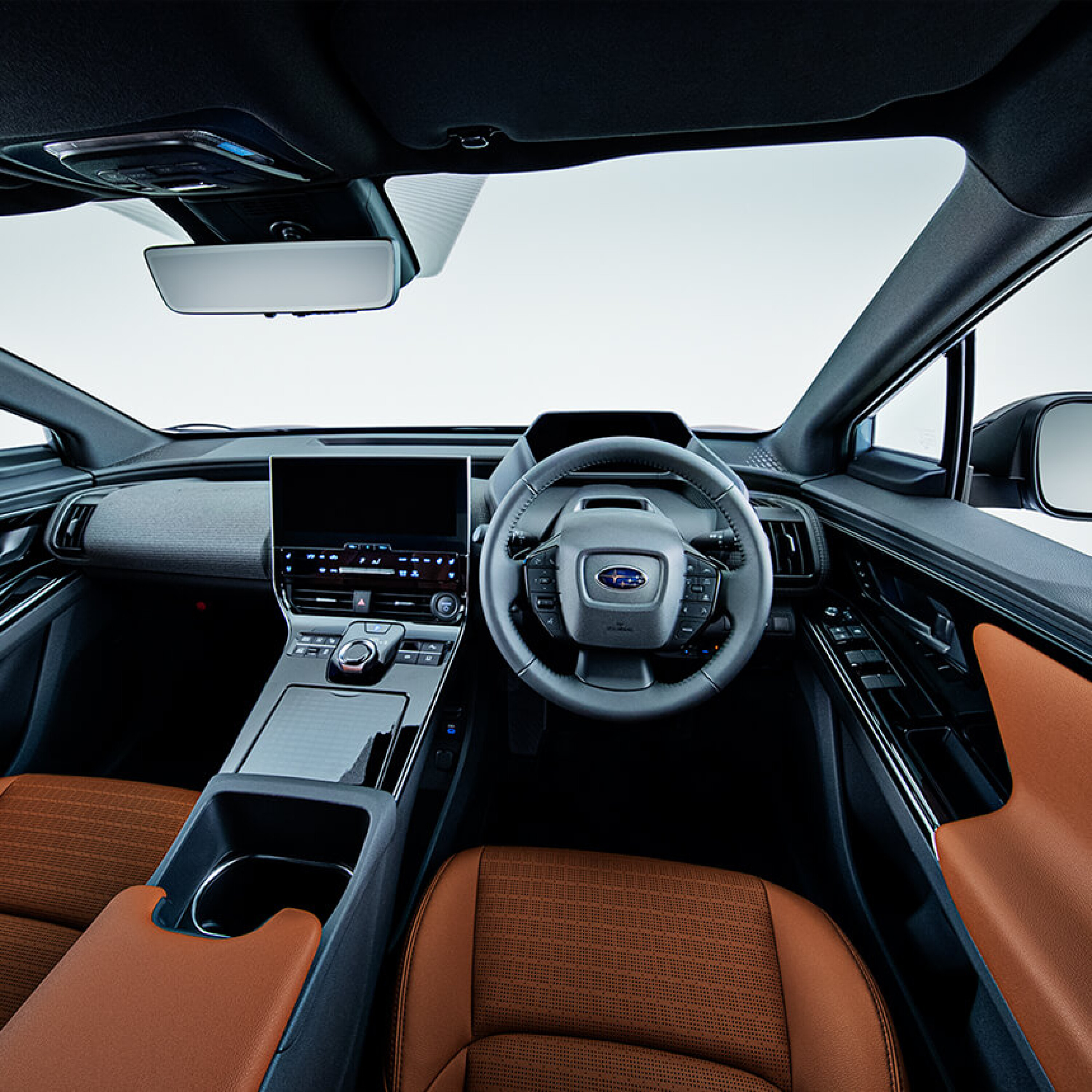
The Subaru Solterra is the latest electric vehicle to have amended pricing in Australia, with cuts also applied to its Ford Mustang Mach-E, Tesla Model Y and Hyundai Ioniq 5 rivals in 2023.
Other electric vehicles, including the GWM Ora and MG ZS EV, also saw pricing reductions, with the GWM’s price reduced at launch by up to $4000 in response to its cut-price sub-$40,000 MG4 and BYD Dolphin competitors.
In November 2023, Hyundai also offered a temporary Black Friday sale for the Ioniq 6 sedan with savings of up to $10,500.
| Model | Pricing (Feb 2024) | Pricing (Nov 2023) | Changeu00a0 |
|---|---|---|---|
| Solterra AWD | $69,990 | $77,990 | down $8000 |
| Solterra Touring AWD | $76,990 | $83,690 | down $6700 |
| Prices exclude on-road costs.u00a0 | |||
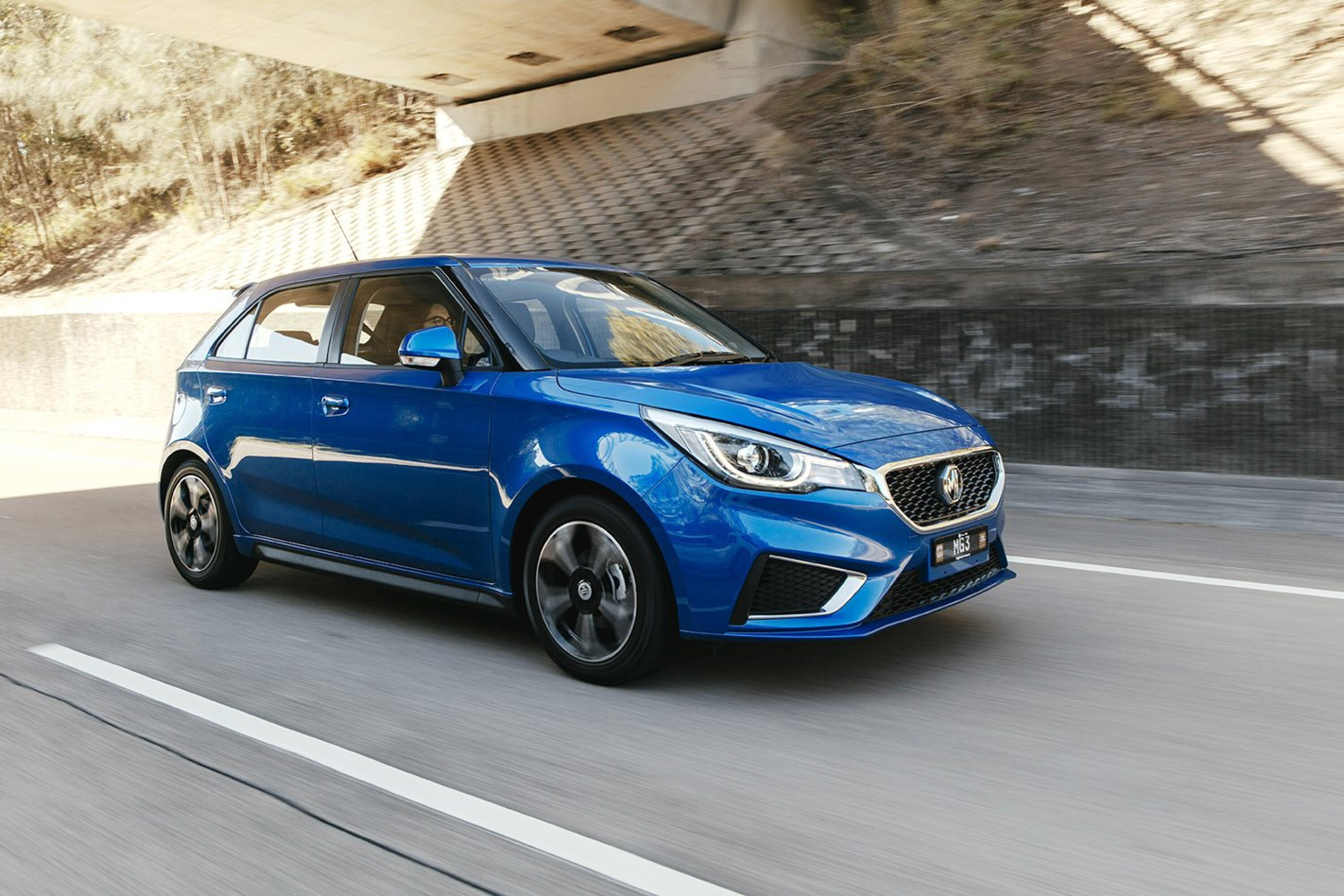
Fresh independent data from the Australian Automobile Association (AAA) shows that popular vehicles like the MG3 and BMW X3 actually consume up to 20 per cent more fuel in real-world conditions, while others far exceed Australia’s regulatory limits for oxide of nitrogen (NOx) or carbon monoxide emissions.
The MG3 was the worst offender when it came to carbon emissions, with its real-world test result being 85 per cent higher than the regulated lab test limit.
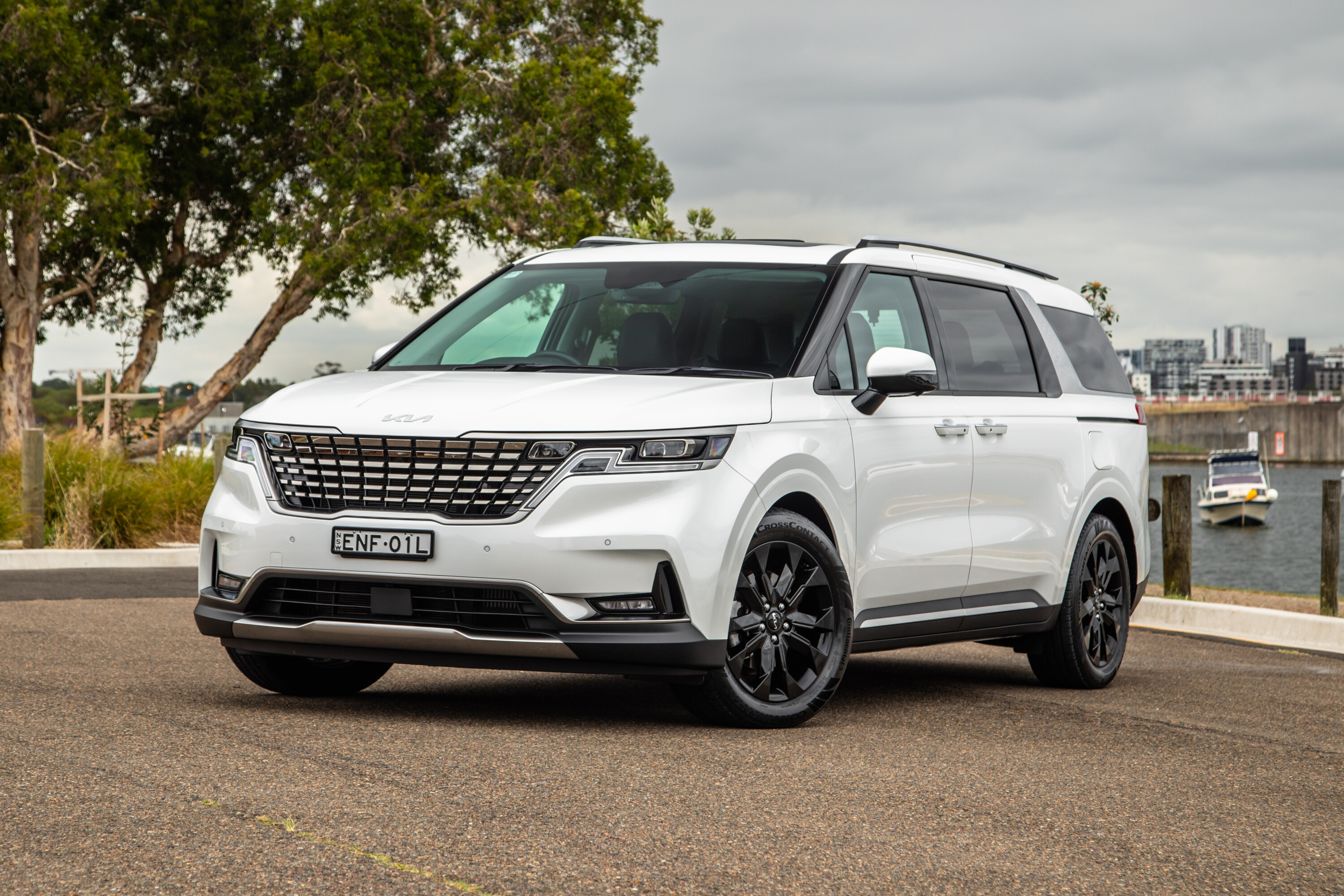
Over a strictly monitored 93km testing loop near Geelong, the diesel-powered Kia Carnival beat its official consumption claim by seven per cent.
The same test also found the Kia performed poorly for NOx emissions, though, with the people mover also exceeding the Australian regulatory limit.
This new data comes from the second round of the AAA’s $14 million real-world efficiency exercise which is designed to inform consumers about the difference between a vehicles’s official consumption claims and what they can actually expect to achieve during normal driving.
The AAA tested 13 vehicles in its second round, with the field comprising a mix of passenger cars, small and large SUVs, and people movers.
Five of the 13 vehicles recorded real-world fuel figures that were worse than their lab-tested claims by between nine and 20 percent, while four exceeded acceptable limits for carbon emissions.
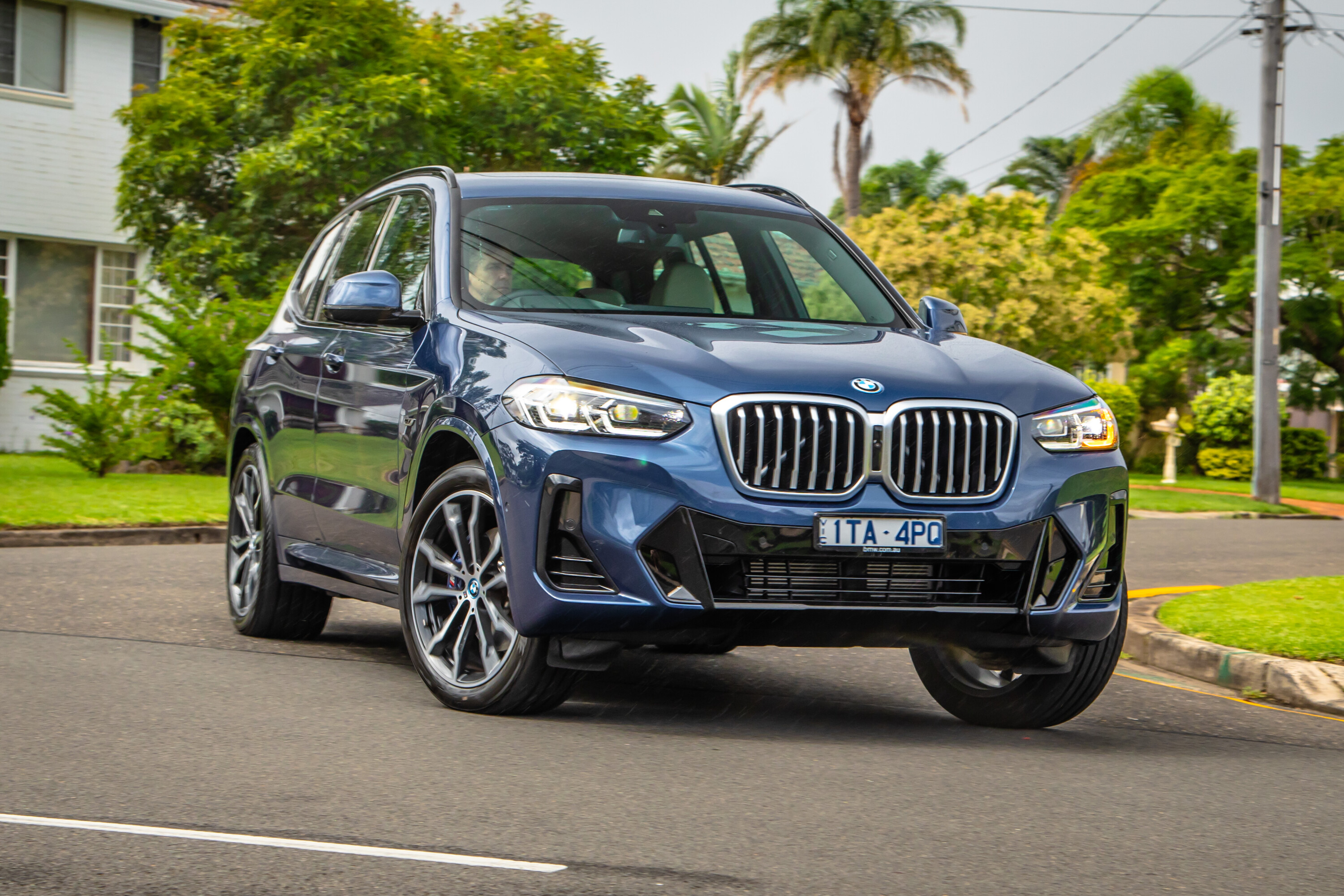
The worst offenders for fuel efficiency were the BMW X3 (+20%), MG 3 (+19%), Audi Q5 (+17%), Toyota Yaris Cross (+12%) and the Volvo XC40 (+9%).
Happily the majority of the field fared better, with seven of the cars delivering fuel figures within five per cent of their official claims. See our table below for the full results.
The AAA’s testing complies with European Union legislation and is carefully designed to produce accurate and repeatable consumption data that minimises the influence of human factors like driving style and different traffic levels.
The ongoing program with conduct testing over a four year period and plans to test 200 vehicles from a wide range of segments, including electric cars.
| Fuel efficiency results | |||
|---|---|---|---|
| Model | Real-world result | Mandated lab result | Variance |
| Audi Q5 | 5.6L/100m | 4.8L/100km | 17% |
| BMW X3 | 8.9L/100km | 7.4L/100km | 20% |
| Hyundai i30 | 7.5L/100km | 7.4L/100km | 1% |
| Hyundai Staria | 8.3L/100km | 8.2L/100km | 1% |
| Kia Carnival | 6.0L/100km | 6.5L/100km | -7% |
| Kia Sportage | 6.6L/100km | 6.3L/100km | 5% |
| MG3 | 7.9L/100km | 6.7L/100km | 19% |
| MG HS | 7.4L/100km | 7.3L/100km | 1% |
| Mitsubishi Eclipse Cross | 7.6L/100km | 7.3L/100km | 3% |
| Mitsubishi Outlander | 7.9L/100km | 7,6L/100km | 4% |
| Toyota Camry | 6.7L/100km | 6.8L/100km | -1% |
| Toyota Yaris Cross hybrid | 4.3L/100km | 3.8L/100km | 12% |
| Volvo XC40 | 7.6L/100km | 6.9L/100km | 9% |
Whether your buying priority is safe and convenient family transportation, towing capability, performance, value, or you simply have a specific budget ceiling, our categories here deliver the definitive independent expert insights.
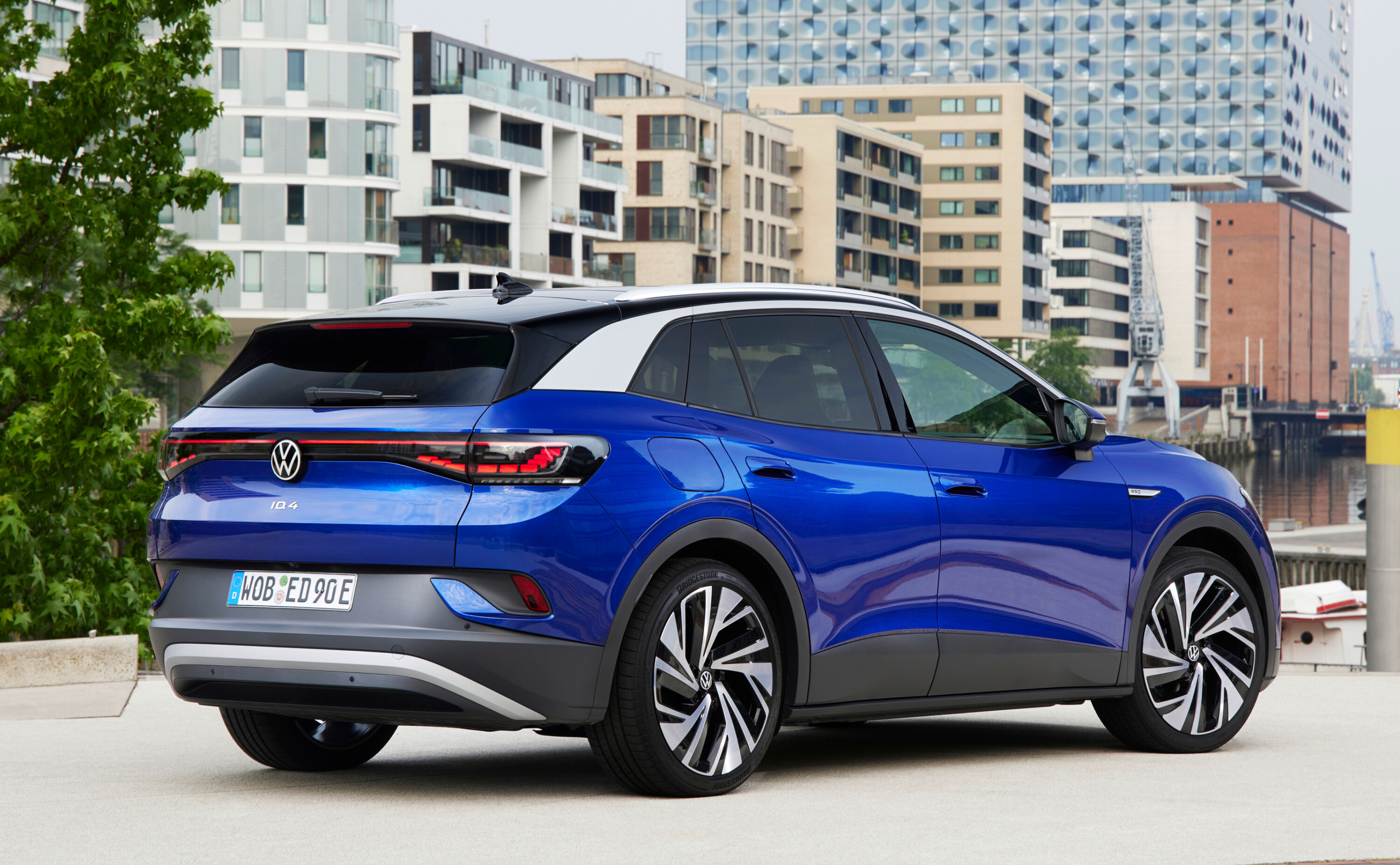
Volkswagen Australia will initially offer the ID.4 and ID.5 mid-size electric SUVs in Pro and GTX variants, with both featuring an 82kWh lithium-ion battery (77kWh usable) and a full suite of standard equipment.
The ID.4 and ID.5 Pro feature a rear-mounted 210kW/545Nm electric motor with a WLTP-rated 550km (ID.4) or 556km (ID.5) driving range, while the GTX adds a front-mounted motor for a 250kW/545Nm total system output with all-wheel drive and a slightly reduced range.
The rear-wheel drive ID.4 and ID.5 Pro are capable of a 135kW DC fast-charging speed, while the ID.4 and ID.5 GTX have a faster 175kW speed that can add 178km of driving range in 10 minutes at an ultra-rapid public charging station.
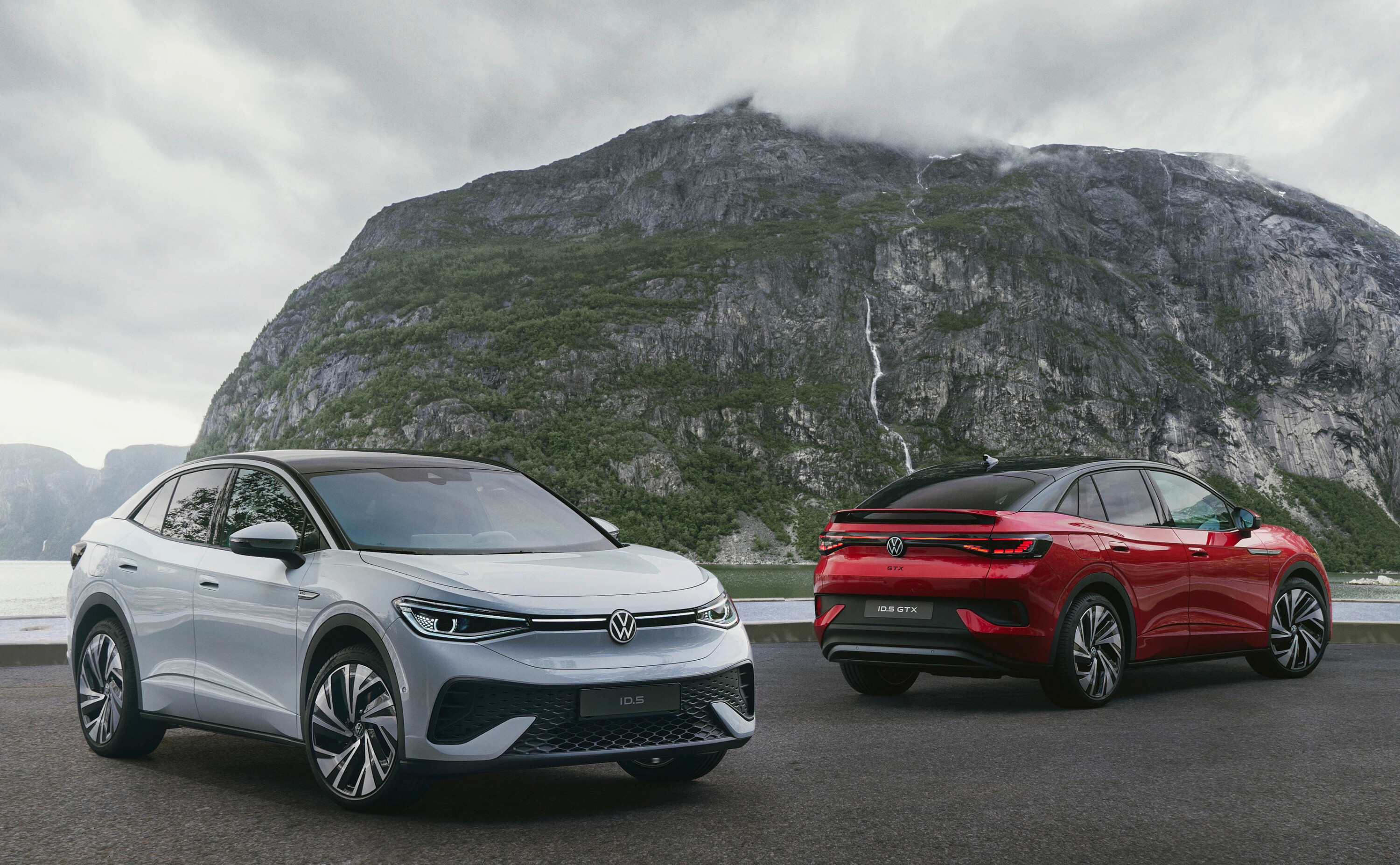
The ID.4 GTX sports variant will be priced around $12,000 more than the current Tiguan R SUV with a panoramic sunroof, which equates to around $88,000 before on-road costs – below the Luxury Car Tax limit for fuel-efficient vehicles.
It is capable of a 5.4-second 0-100km/h sprint compared to 5.1 seconds in the turbo-petrol Tiguan R.
Volkswagen Australia did not comment on expected pricing for the coupe-styled ID.5, but it should command a $1500 to $3000 premium over an equivalent ID.4 variant based on overseas pricing.
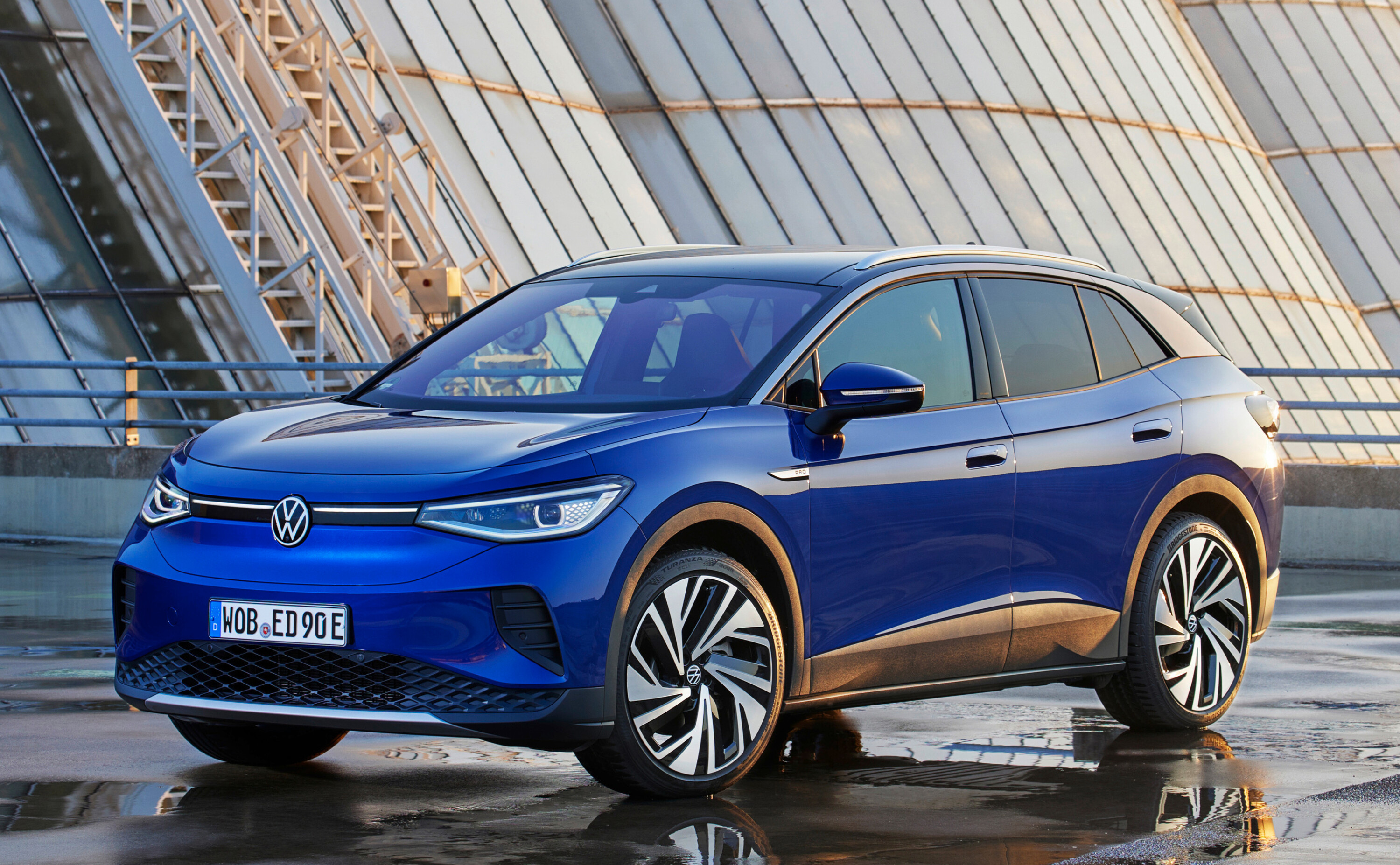
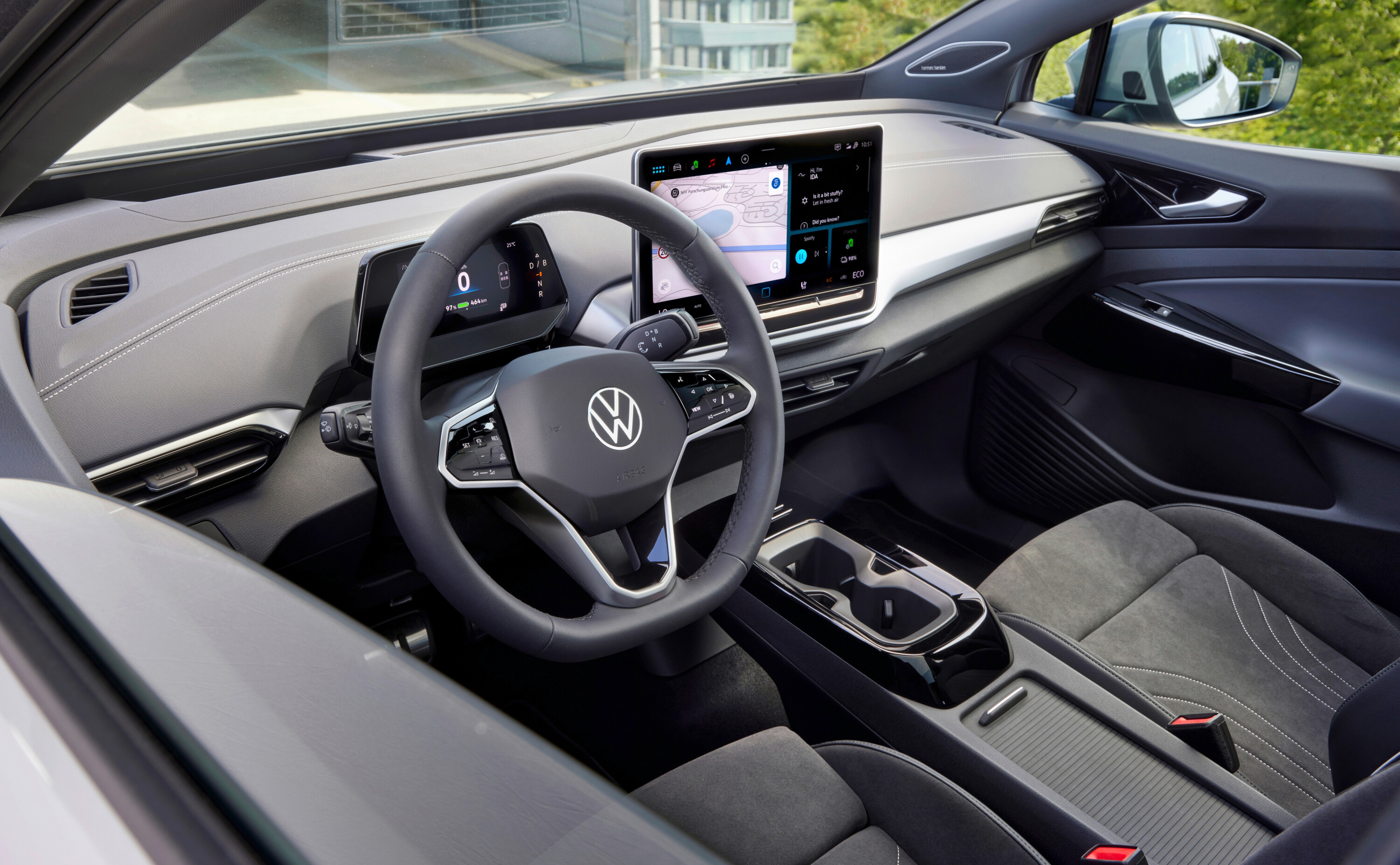
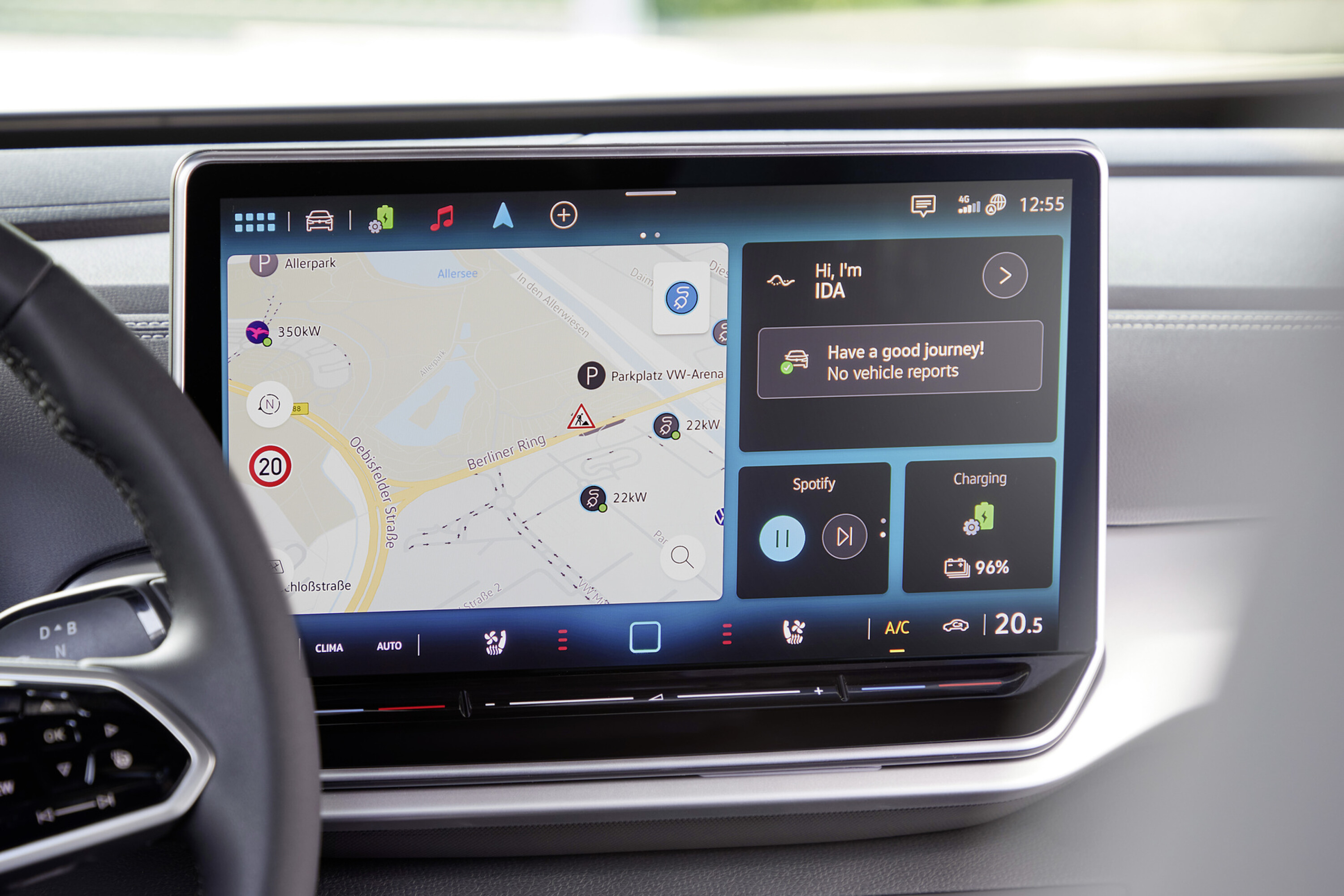
Standard equipment for the ID.4 and ID.5 Pro includes 19-inch alloy wheels, a 12.9-inch infotainment system, wireless Apple CarPlay and Android Auto, a panoramic glass roof, a hands-free electric tailgate, a Mode 2/3 charging cable, dynamic chassis control, adaptive matrix LED headlights, and a full suite of active safety technology.
ID.4 and ID.5 GTX variants add all-wheel drive, 20-inch alloy wheels, a Harman/Kardon audio system, and top sports seats with integrated headrests.
“Why we make it optional is because if you buy an ID.4 in Rockhampton, you’re probably not going to need the heat pump. If you bought one in Tassie, or Mount Hotham, you might want to want to take the heat pump option,” said Volkswagen Australia spokesperson Daniel DeGasperi.
The 2025 Volkswagen ID.4 and 2025 Volkswagen ID.5 electric SUVs are due in Australia around June or July, with full details – including pricing and detailed specifications – to be announced closer to launch.
Volkswagen Australia will triple the amount of SUVs it offers in the $60,000 to $90,000 price bracket over the next 12 months, with the ID.4 and ID.5 Pro and GTX models to be joined by the flagship new-generation Tiguan 195TSI R-Line and the facelifted entry-level Touareg 190TDI.
| 2025 Volkswagen ID.4 and ID.5 Pro features | |
|---|---|
| 19-inch alloy wheels | Panoramic glass roof with sunblind |
| 12.9-inch infotainment system | Three-zone climate control |
| Wireless Apple CarPlay and Android Auto | 360-degree camera system |
| 5.3-inch digital instrument cluster | Autonomous emergency braking |
| Adaptive matrix LED headlights | Lane-keep assist |
| Black art velour upholstery | Blind-spot alert |
| Mode 2 & Mode 3 charging cable | Rear cross-traffic alert |
| Power-adjustable front heats with memory function | Adaptive cruise control |
| Heated front seats | Travel assist |
| Dynamic chassis control | Emergency assist |
| 30-colour configurable ambient lighting | Traffic jam assist |
| Hands-free electric tailgate | Proactive occupant protection |
| In addition to ID.4 and ID.5 Pro | |
|---|---|
| All-wheel drive | Harman Kardon audio system |
| 20-inch alloy wheels | Top sport seats with integrated headrests |
| Model | Expected pricing |
|---|---|
| Volkswagen ID.4 Pro | $78,000 |
| Volkswagen ID.4 GTX | $88,000 |
| Volkswagen ID.5 Pro | $TBC |
| Volkswagen ID.5 GTX | $TBC |
| Prices exclude on-road costs |
This hatchback, constructed on a bespoke EV platform, is being commended for its competitive pricing, making the transition to electric increasingly appealing.
Launched in August 2023 in Australia, it is offered in two variants – Excite and Essence – with a selection of three battery capacities.
Featuring the company’s inaugural use of the Modular Scalable Platform (MSP), the MG4 is designed to offer a dynamic driving experience. Moreover, the eagerly awaited MG4 X-Power, a high-performance electric hot hatch, is anticipated to hit the Australian market later in the year.
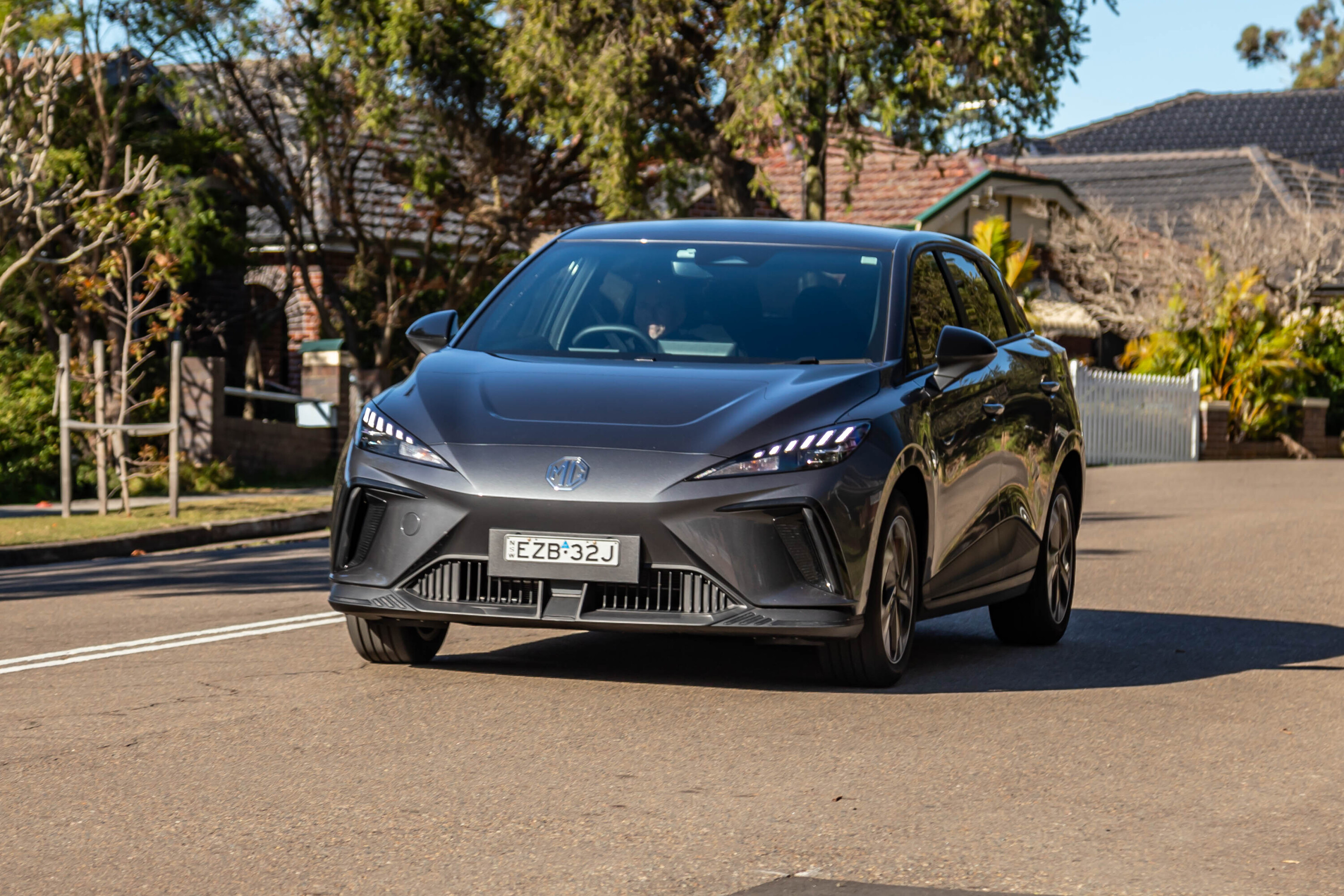
It’s a five-seater compact car, and dimensionally is similar to favourites like the Hyundai i30 and Toyota Corolla.
It comes equipped with a 62.1kWh battery pack, and has a quoted 435 kilometres claimed WLTP driving range on a full charge.
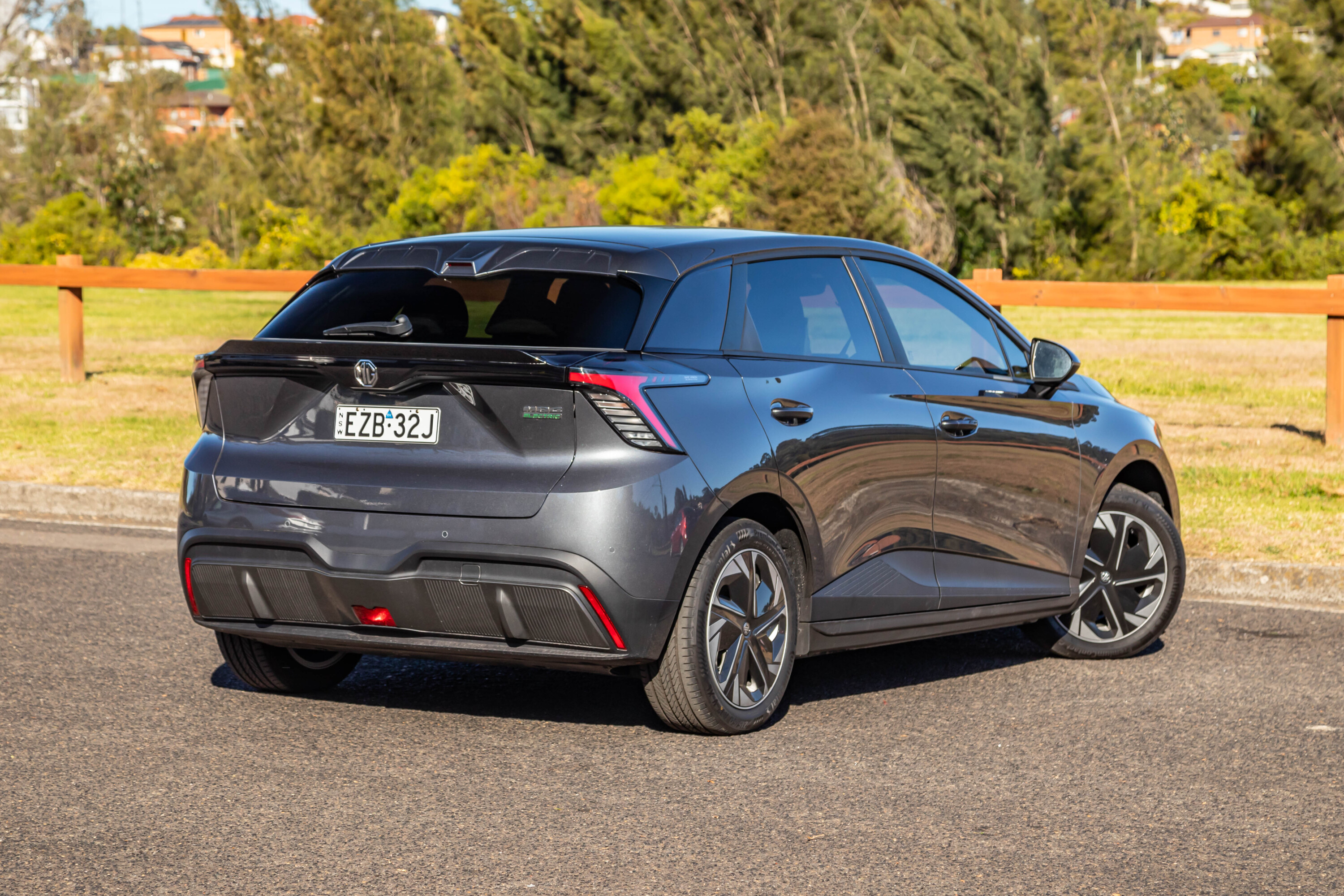
| 2024 MG 4 Excite 51 standard features | |
|---|---|
| 17-inch alloy wheels with aero covers | Fabric seats |
| 10.25-inch touchscreen | Six-way manually adjustable driver seat |
| Wired Apple CarPlay and wired Android Auto | Single-zone automatic climate control |
| 7-inch driver instrument display | Proximity key with auto start/stop |
| MG iSmart Lite mobile app connectivity | Electric park brake with auto hold function |
| Four-speaker audio | Overhead sunglass storage box |
| 10.5-watt USB-A and USB-C charging ports | Electrically adjustable wing mirrors with heating |
| Exterior vehicle-to-load (V2L) capability (separate accessory purchase required) | One-touch up/down driveru2019s side window |
| Auto LED and incandescent combination head- and tail-lights | Rear spoiler |
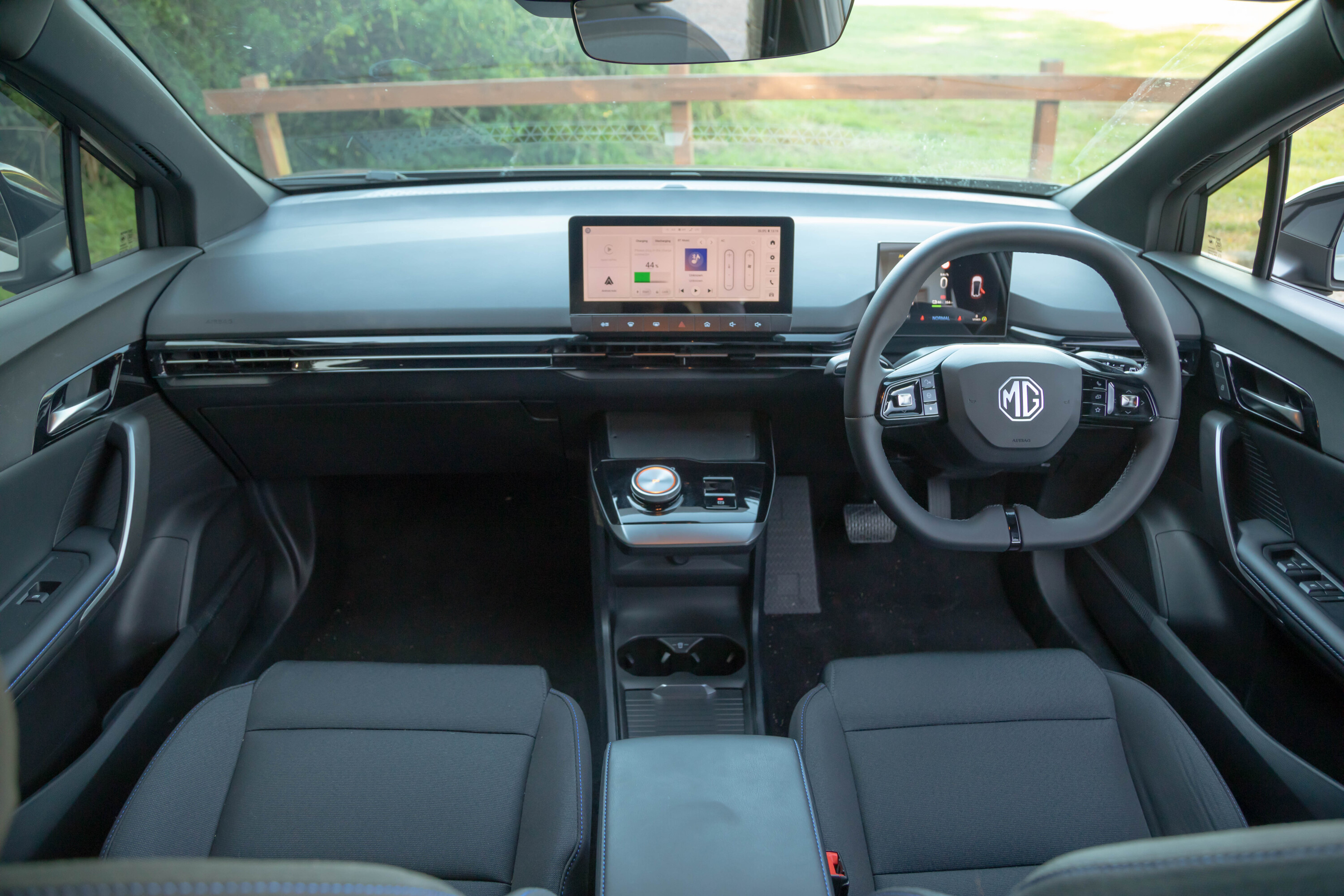
| Essence 64 adds | |
|---|---|
| 18-inch alloy wheels with aero covers | Synthetic leather and fabric seats |
| MG iSmart mobile bluetooth key remote with built-in voice control | Front heated seats |
| Built-in maps with EV charging stop planner | Six-way electrically adjustable driver seat |
| Qi wireless charging pad | Heated leather steering wheel |
| Six-speaker audio | Electric folding wing mirrors |
| Double split rear spoiler | Auto-dimming rear view mirror |
| Two-tone black painted roof | One-touch up-down for all four windows |
| Active intake shutter grill | Rear tinted privacy glass |
| Full LED head- and tail-lights with LED turn indicators | Two-level height adjustable boot floor |
The vehicle comes equipped with a suite of collision prevention technologies, such as autonomous emergency braking, active lane support, and fatigue monitoring systems.
| 2024 MG 4 Essence 64 safety features | |
|---|---|
| Six airbags | Adaptive cruise control |
| Autonomous emergency braking with pedestrian, cyclist and junction detection | Front and rear parking sensors |
| Lane departure warning | Tyre pressure monitoring system |
| Lane keep assist | ISOFIX anchorage points |
The entire MG4 range is covered by a seven-year, unlimited-kilometre warranty and roadside assistance.
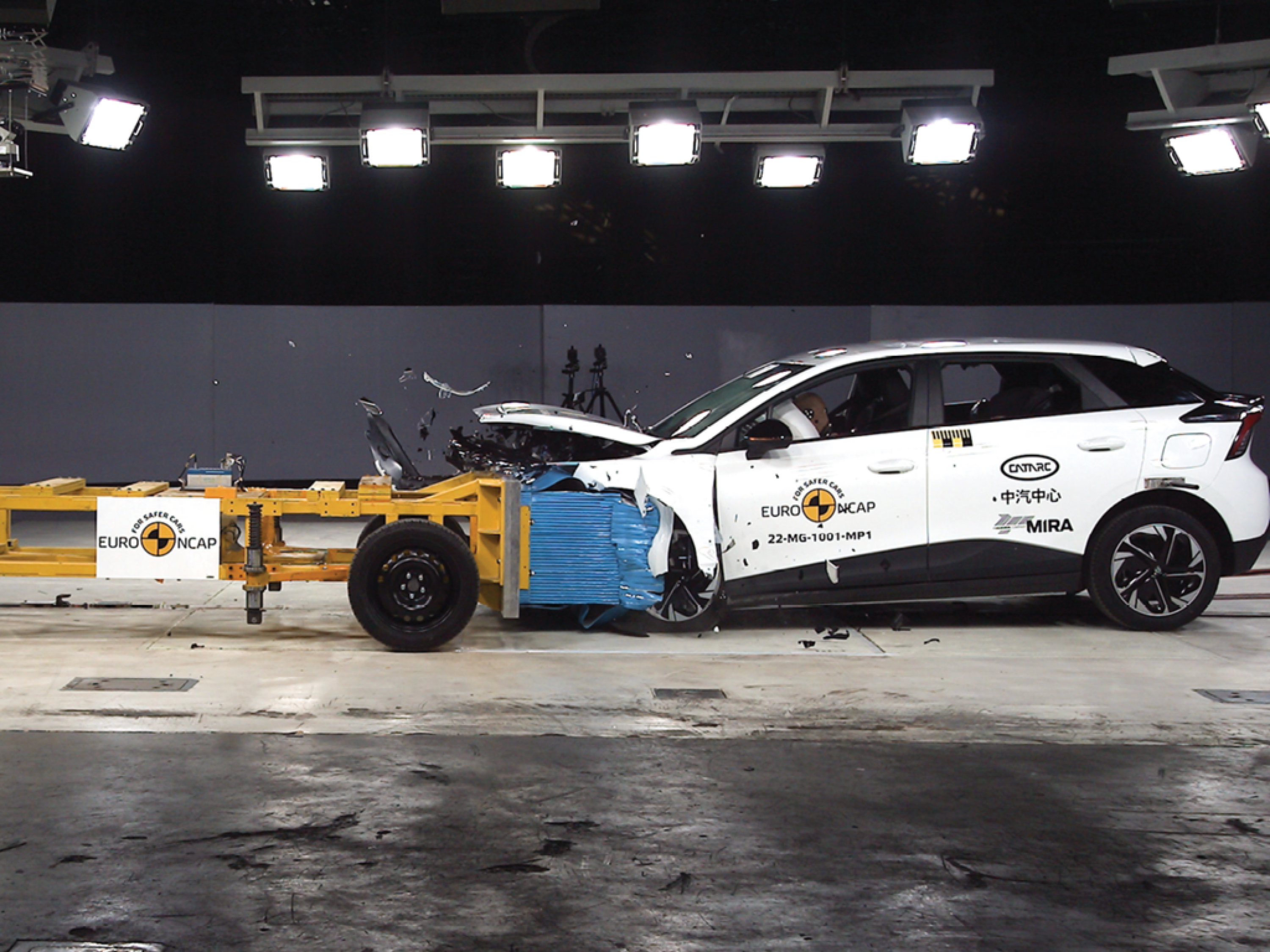
As one of the most affordable electric vehicles in Australia, the MG4 Essence 64 encounters competition from other cost-effective electric hatchbacks, sedans, and compact SUVs, including:
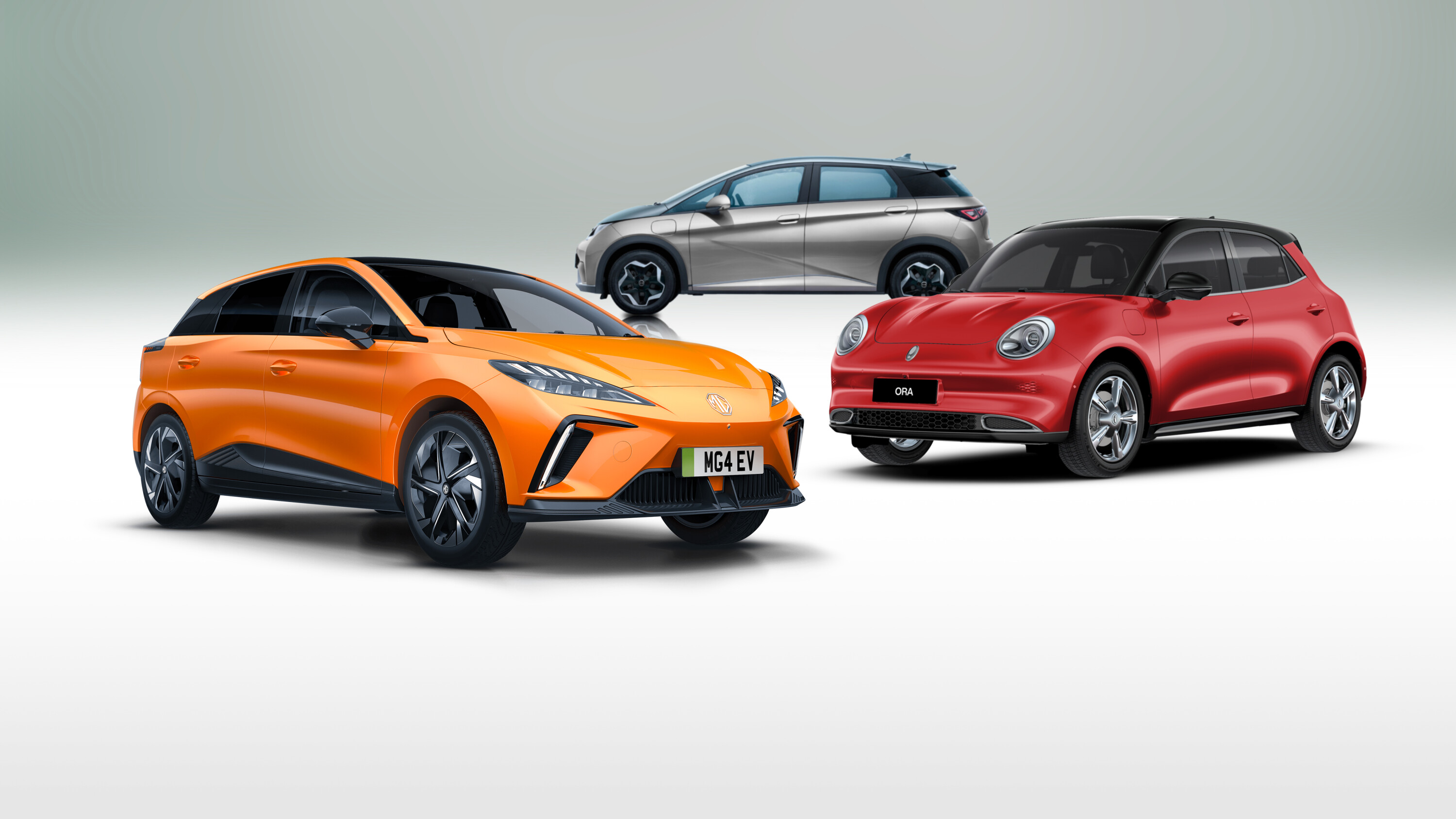
In the landscape of MG’s electric vehicle offerings, the MG4 distinctly sets itself apart from the current ZS EV, showcasing notable improvements and advantages. This new model shines with its affordability, enhancing its appeal by outperforming its predecessor in almost every category. Despite a few minor drawbacks, the MG4’s value, especially at its price point, is hard to overlook.
The MG4 Essence 64 offers an engaging driving experience and plenty of added features, not to mention the added range. For those contemplating the shift to electric, the MG4 might just be the beacon leading the way.
Not least when VW has looked a little on the ropes of late, facing the backlash of its recent ergonomic missteps. This car is an important step on the road to recovery.
Which might explain why VW has played the Tiggy’s new look with the straightest of bats. Where the outgoing car has chiselled lines and some neat tension to its design, its replacement looks, well, bland.

VW has played things safely for European buyers, too. Naturally, this third-gen car gets more electrification than ever, most notably a pair of plug-in hybrid models dubbed eHybrid, but pure petrol and even diesel remain on the menu.
Aussie buyers, meanwhile, are initially limited to just petrol cars.
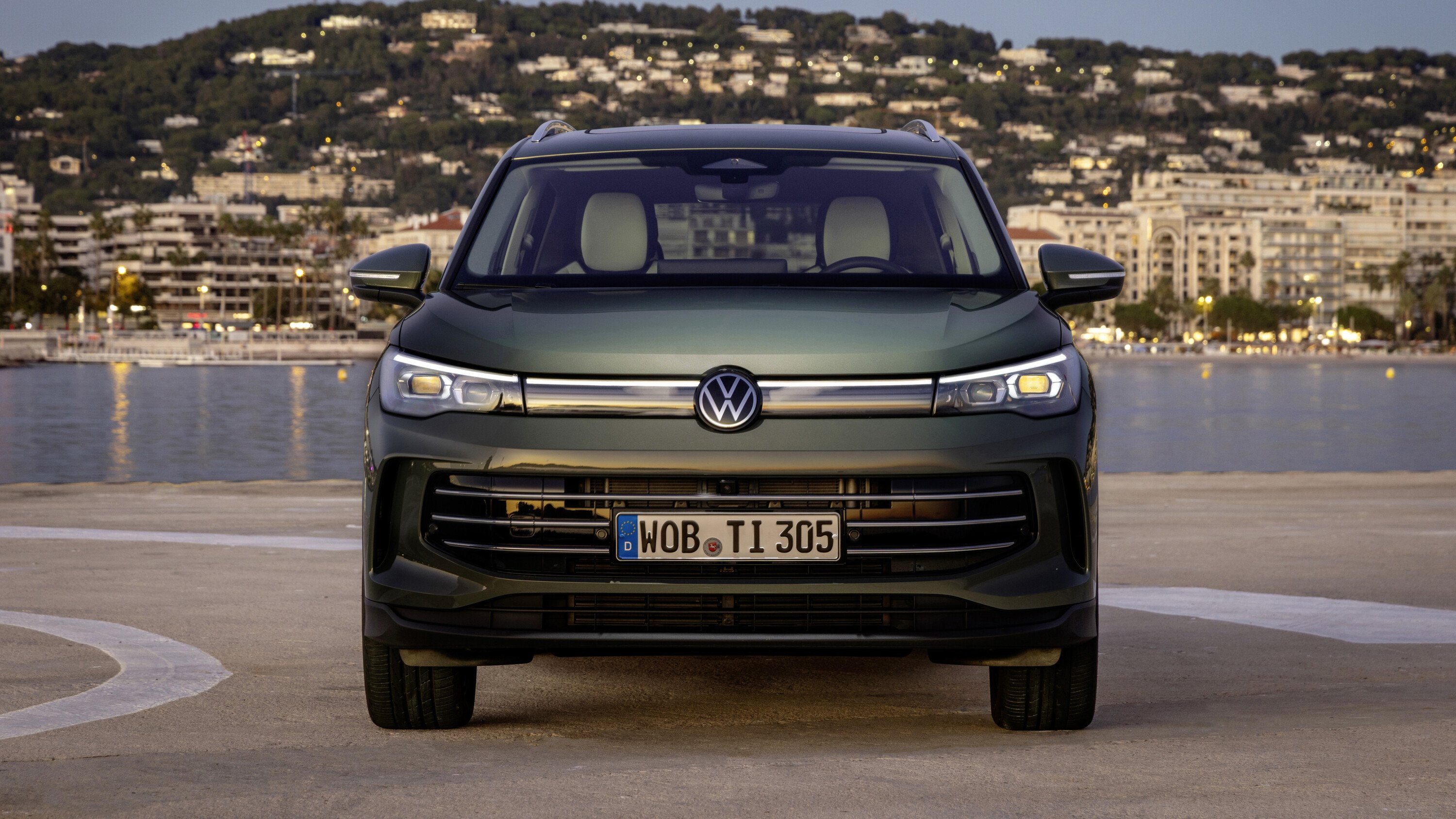
Australia’s range is yet to be defined, but European buyers get a choice of 96kW and 110kW outputs, both driving the front wheels through a seven-speed dual-clutch automatic transmission. Mild hybrid technology smooths out the idle-stop procedure and quells the engine during deceleration.
The 2.0-litre TSI lives on too, with 150kW and 195kW tunes, the latter just like you’ll find in the front of a Golf GTI and good for a perky 5.9sec sprint to 100km/h.

No manuals remain anywhere in the range, in fact, with the design team decluttering the centre console as a result – gear selection is now via the right-hand column stalk a la Mercedes-Benz, with the wipers and indicators incorporated on the left.
The resulting room allows for copious smartphone storage and wireless charging as well as a natty new drive mode dial that lifts the ambience more than you might anticipate.
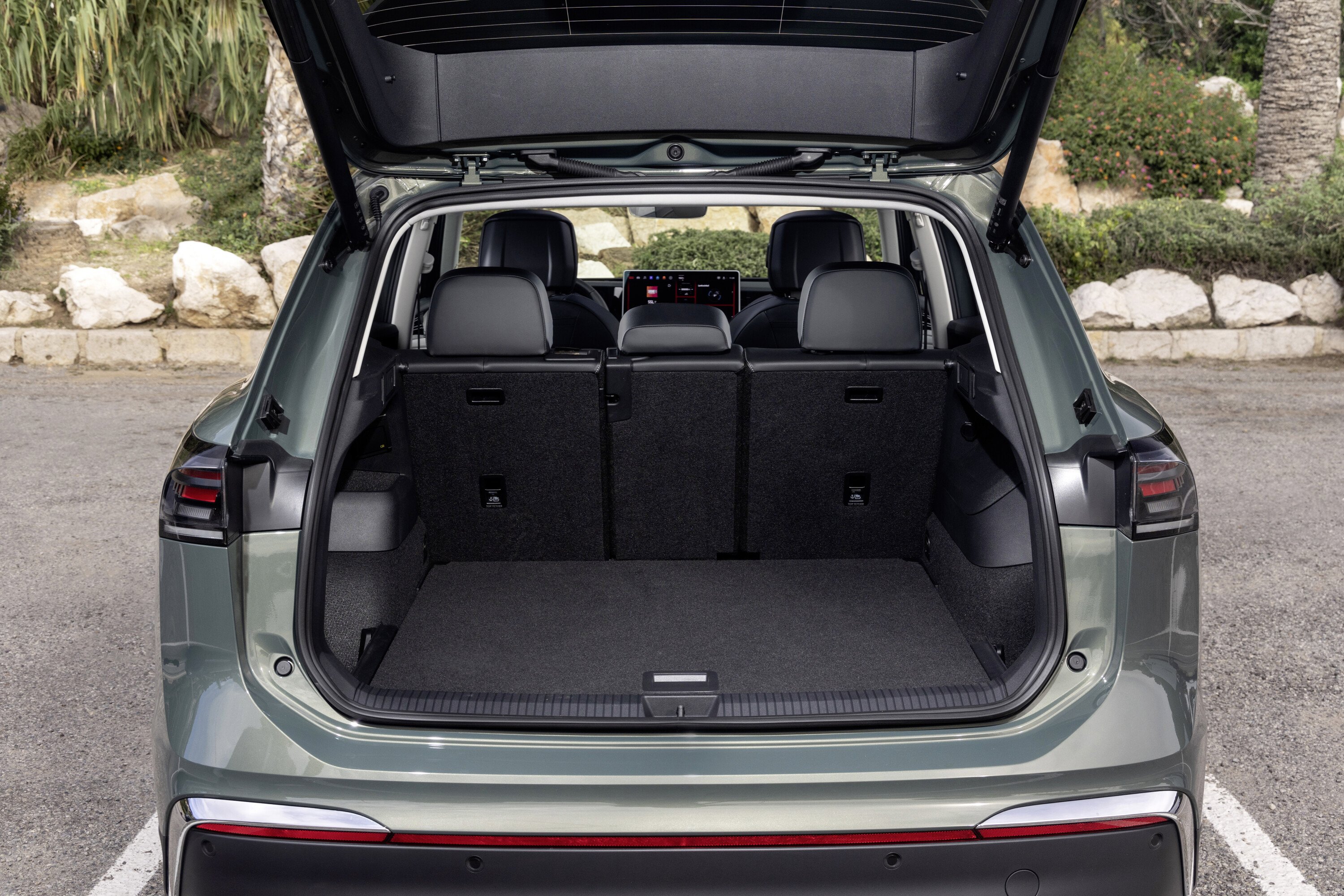
The Tiggy is an ever-faithful partner, its front flicking nicely into corners and the rear axle following tidily. Grip is unfailingly strong and handling utterly consistent. Body roll is impressively minimal for an SUV, too. It’s all very smart – but stops short of anything approaching true involvement.
And while a newly slippery aero profile (under 0.3Cd, beating a Ferrari Enzo) ensures the new Tiguan is quiet and placid at a cruise, the ride quality – particularly at low speeds – could be much better resolved.

But crikey is it boisterous over low-speed bumps and ruts, which feels like a facepalm when so many of these will trundle to and from suburban school gates or office car parks.
Another footnote is that we predominantly tried cars with the optional dynamic chassis control – perhaps a more balanced passive setup will strike a fairer balance.

A ChatGPT-boosted voice command system is designed to alleviate how often you flick your eyes from the road to fiddle with stuff, too, but in practice, it feels a bit of a work in progress.
It handles in-car requests reasonably well but fluffs its lines as you try increasingly obtuse trivia queries. Expect its abilities to ramp up with updates, however.
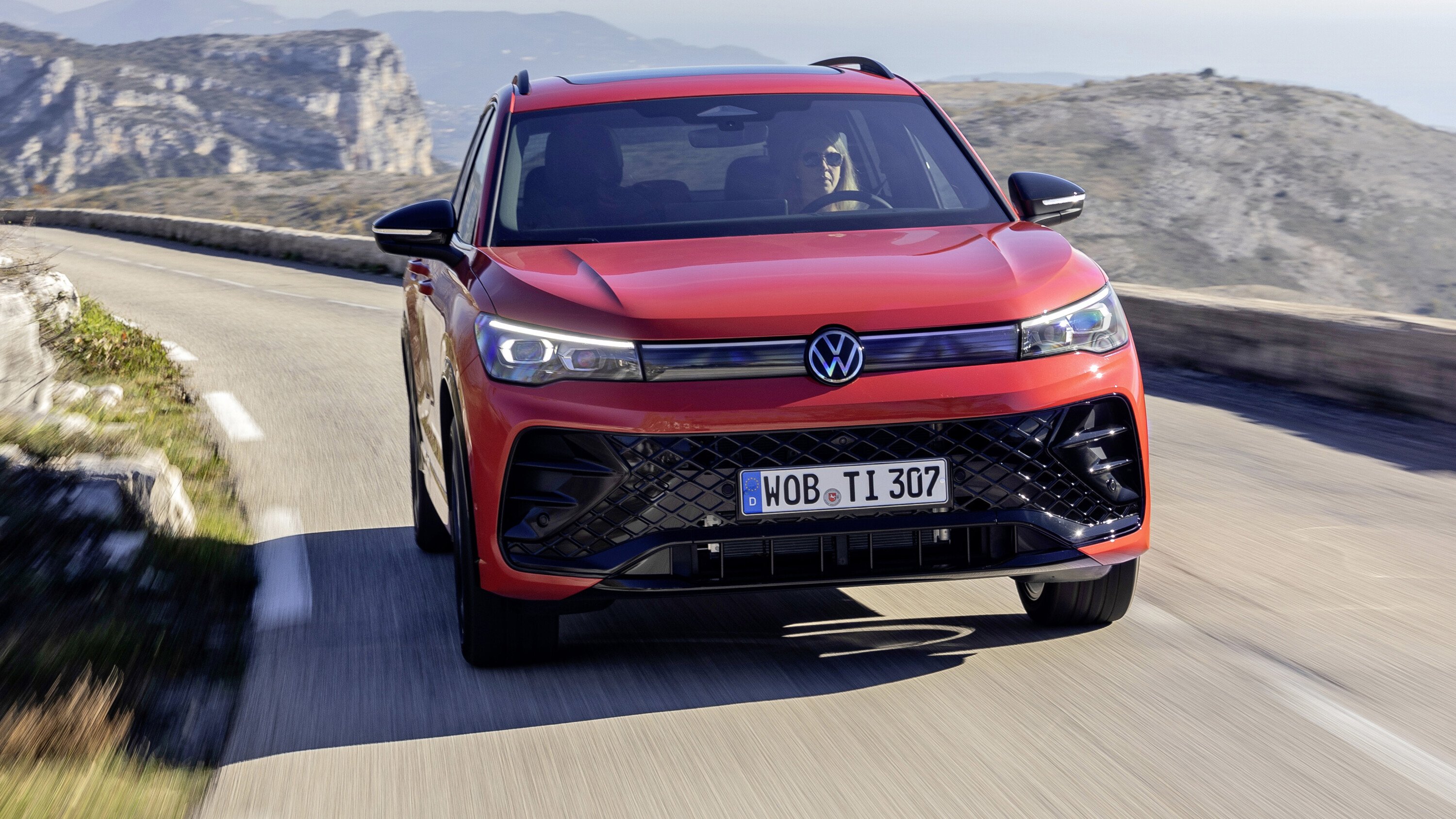
Yet boot space has swelled by 37 litres for a total of 652L with the rear seats still in place or a stocky 1650L once they’re flipped down.
Keep ‘em up and there’s decent space for two adults, not least because VW has ensured there’s plenty of room to tuck feet under the front seats, a common demerit in fully electric crossovers.
The bench slides fore and aft and the seatbacks can recline. Quality is pretty high too, with plush materials where your eyes and hands most frequently fall and harder-wearing plastics where they don’t. Heated, vented and massaging seats all lie on the options list or within plusher trim levels.

No wild design language or radical switch to full electrification here; traditional values sit at its core, perhaps to prove VW has sat up and paid attention to recent ergonomic critique.
This interior feels like it was too far down the line for a full fix, but it’s an improvement on early Mk8 Golfs, and the car beneath it handles tautly. It’s just a shame the ride is so tough, at least on the big rims.
Australian sales start in late 2024 and though we doubt you’re salivating in anticipation, this new Tiguan feels like a neatly if conservatively put-together option in a crowded marketplace.
The MG4 is a small electric car making waves in Australia.
Built on a dedicated electric vehicle (EV) platform, the hatchback is gaining praise for its sharp price-point, making the swap to electric a tempting choice.
In August 2023, it debuted in Australia, available in two models – Excite and Essence – and with three choices of battery sizes.
The MG4 introduces the company’s first electric vehicle (EV) utilizing the dedicated Modular Scalable Platform (MSP), aimed at delivering a sporty feel. Additionally, the high-performance MG4 X-Power electric hot hatch is set for its Australian release later this year.
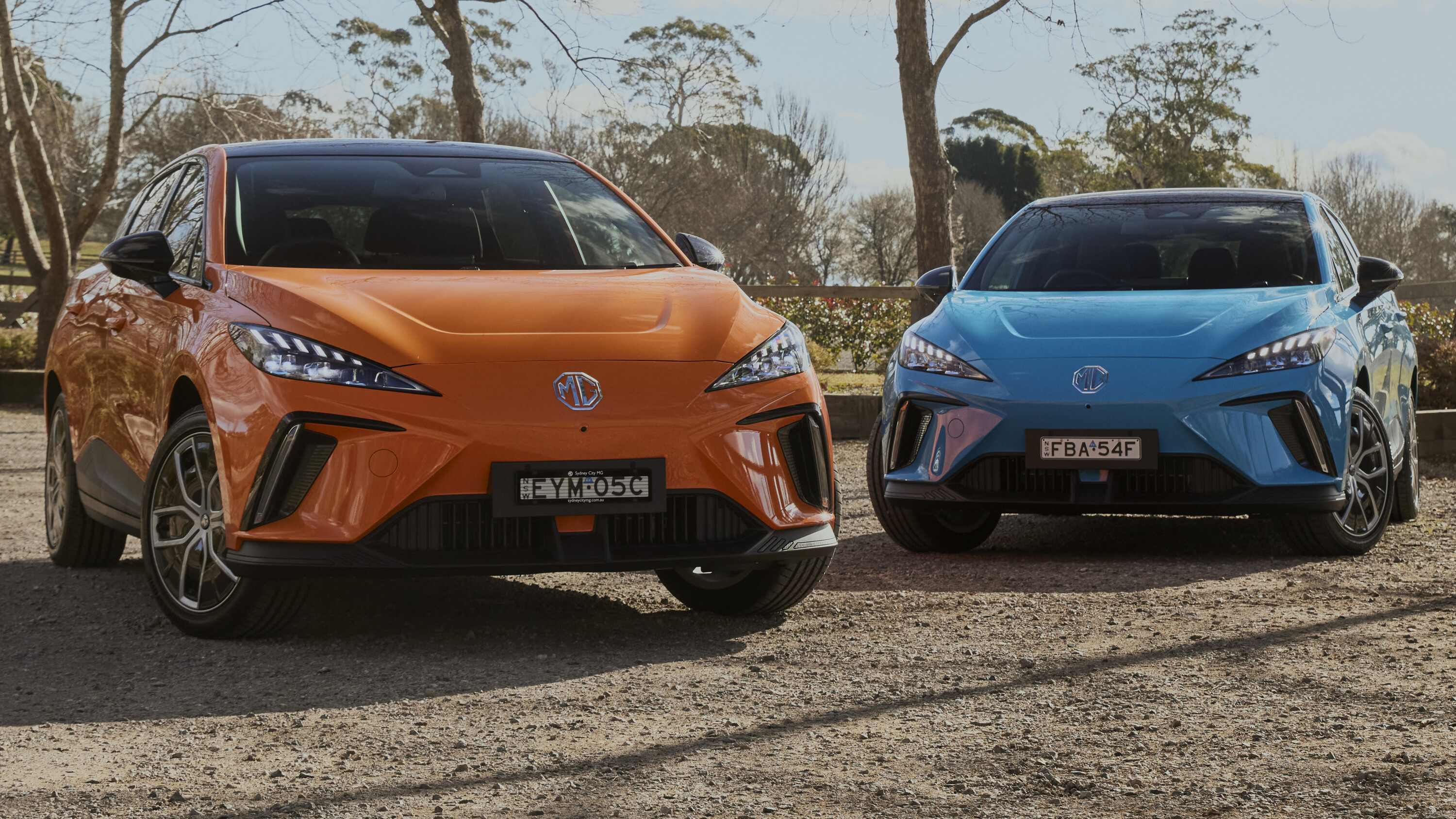
The MG4 Excite 51 is a five-seater small hatchback, and dimensionally is similar to petrol-counterparts like the Hyundai i30 and Toyota Corolla.
It comes equipped with a 50.8kWh usable lithium-iron-phosphate (LFP) battery pack, a single electric motor and is a rear-wheel drive.
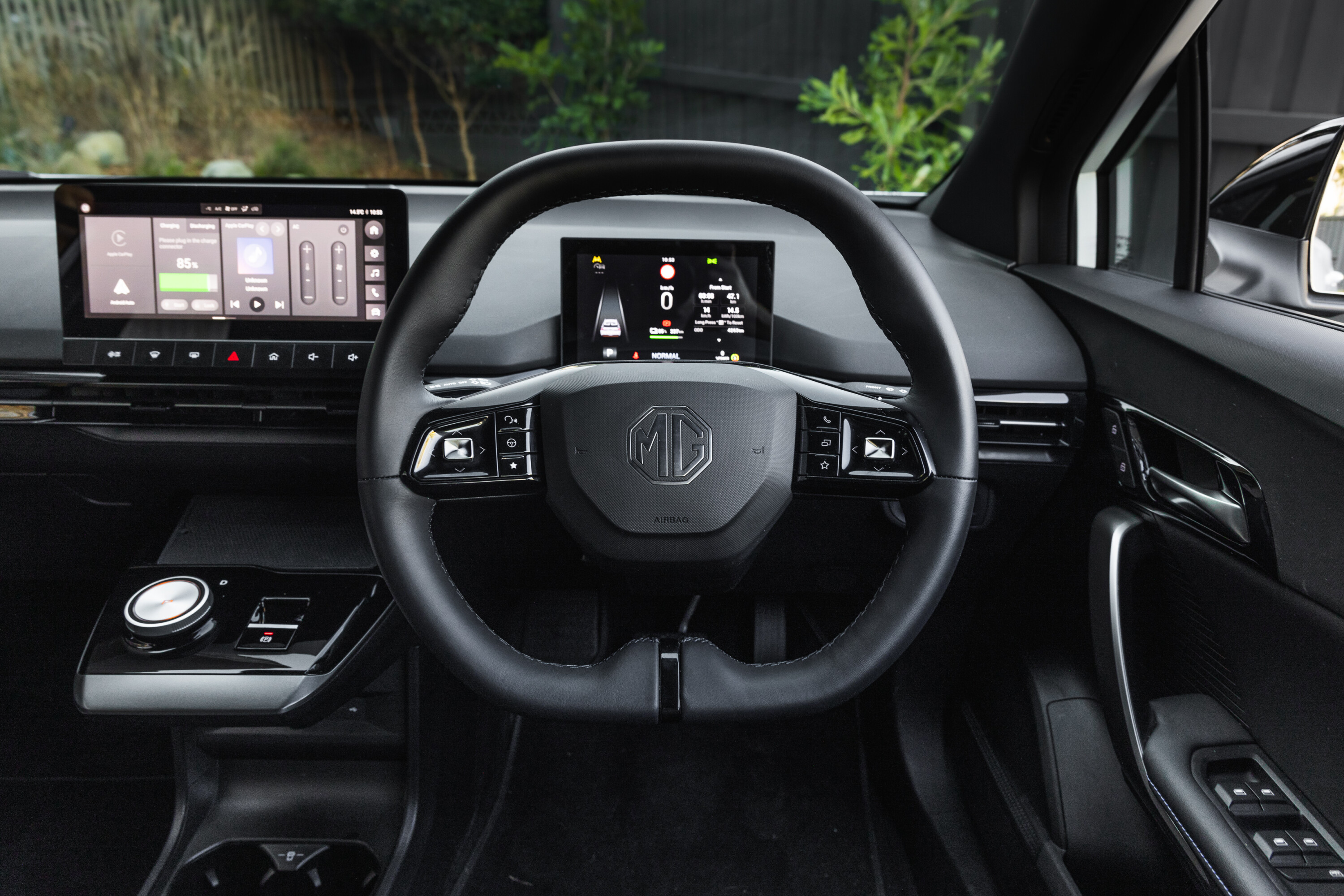
| 2024 MG 4 Excite 51 standard features | |
|---|---|
| 17-inch alloy wheels with aero covers | Fabric seats |
| 10.25-inch touchscreen | Six-way manually adjustable driver seat |
| Wired Apple CarPlay and wired Android Auto | Single-zone automatic climate control |
| 7-inch driver instrument display | Proximity key with auto start/stop |
| MG iSmart Lite mobile app connectivity | Electric park brake with auto hold function |
| Four-speaker audio | Overhead sunglass storage box |
| 10.5-watt USB-A and USB-C charging ports | Electrically adjustable wing mirrors with heating |
| Exterior vehicle-to-load (V2L) capability (separate accessory purchase required) | One-touch up/down driveru2019s side window |
| Auto LED and incandescent combination head- and tail-lights | Rear spoiler |
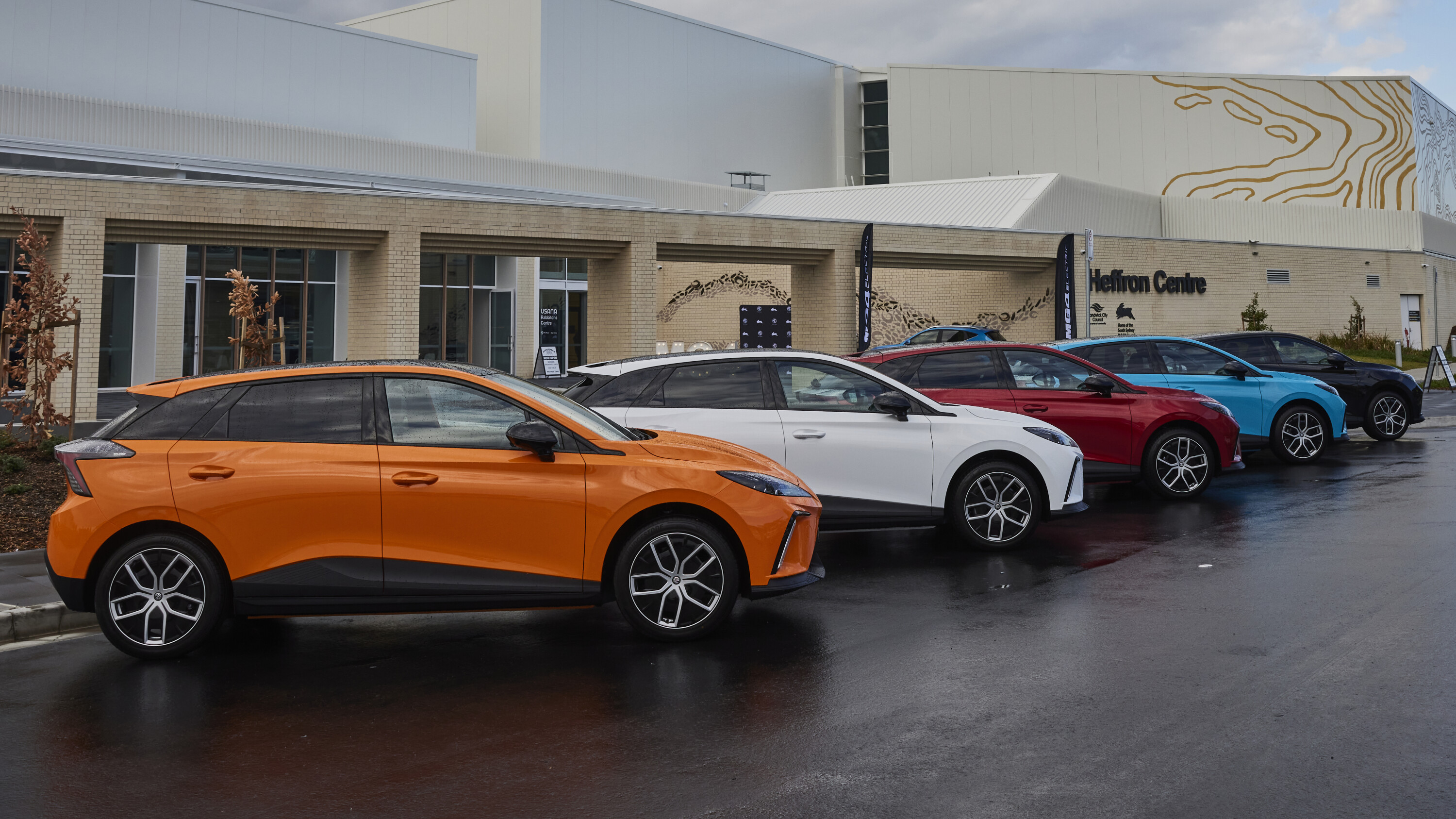
Excite 64, Essence 64 and Long range 77 variants – as the names imply – all have larger battery capacities meaning they provide additional driving range.
| 2024 MG 4 exterior colours | |
|---|---|
| Dover White | Standard |
| Black Pearl | $700 |
| Camden Grey | $700 |
| Sterling Silver | $700 |
| Brixton Blue | $700 |
| Volcano Orange | $700 |
| Diamond Red | $700 |
The vehicle comes equipped with a suite of collision prevention technologies, such as autonomous emergency braking, active lane support, and fatigue monitoring systems.
It demonstrated strong performance in tests for autonomous emergency braking, notably in situations involving turning across the path of an oncoming vehicle. However, it showed variable outcomes in tests for AEB Pedestrian scenarios.
As one of Australia’s cheapest electric cars, the MG4 Excite faces competition from other budget-friendly electric hatch, sedan and small SUV options, including:
Within MGs EV line-up, when compared to MGs current ZS EV, the MG4 highlights the new model’s distinct advantages. It’s not only more affordable but also improves upon its predecessor in nearly all aspects. While it’s not without its flaws, there’s a lot to appreciate, particularly its price point.
However, at this price there are other options to consider. The GWM Ora starts at a competitive $39,990 before on-road costs and the BYD Atto 3 has already made a lasting impression on our shores.
The MG4 Excite 51 offers a good driving experience, decent economy all with plenty of power a good amount of power. This could be the car you need to make the switch to electric.
One of the benefits claimed is savings on fuel, with more efficient vehicles proposed to save an average of $5710 over five years and $17,000 over the life of a vehicle, according to the government which has yet to release its modelling.
The Climate Council [↗] has investigated the potential of more fuel-efficient cars in Australia and found that buyers could save big on fuel bills, but perhaps not quite as much as the government is promising.
The Climate Council is an independent organisation that advocates for lower emissions. It wants to see emissions drop quickly from 2025, with a 74 per cent reduction by 2030 and net zero by 2035.
In the government’s preferred middle ground, new car sales here will be at that figure by 2027 and is better than the softest standard’s final goal of 99g CO2/km.
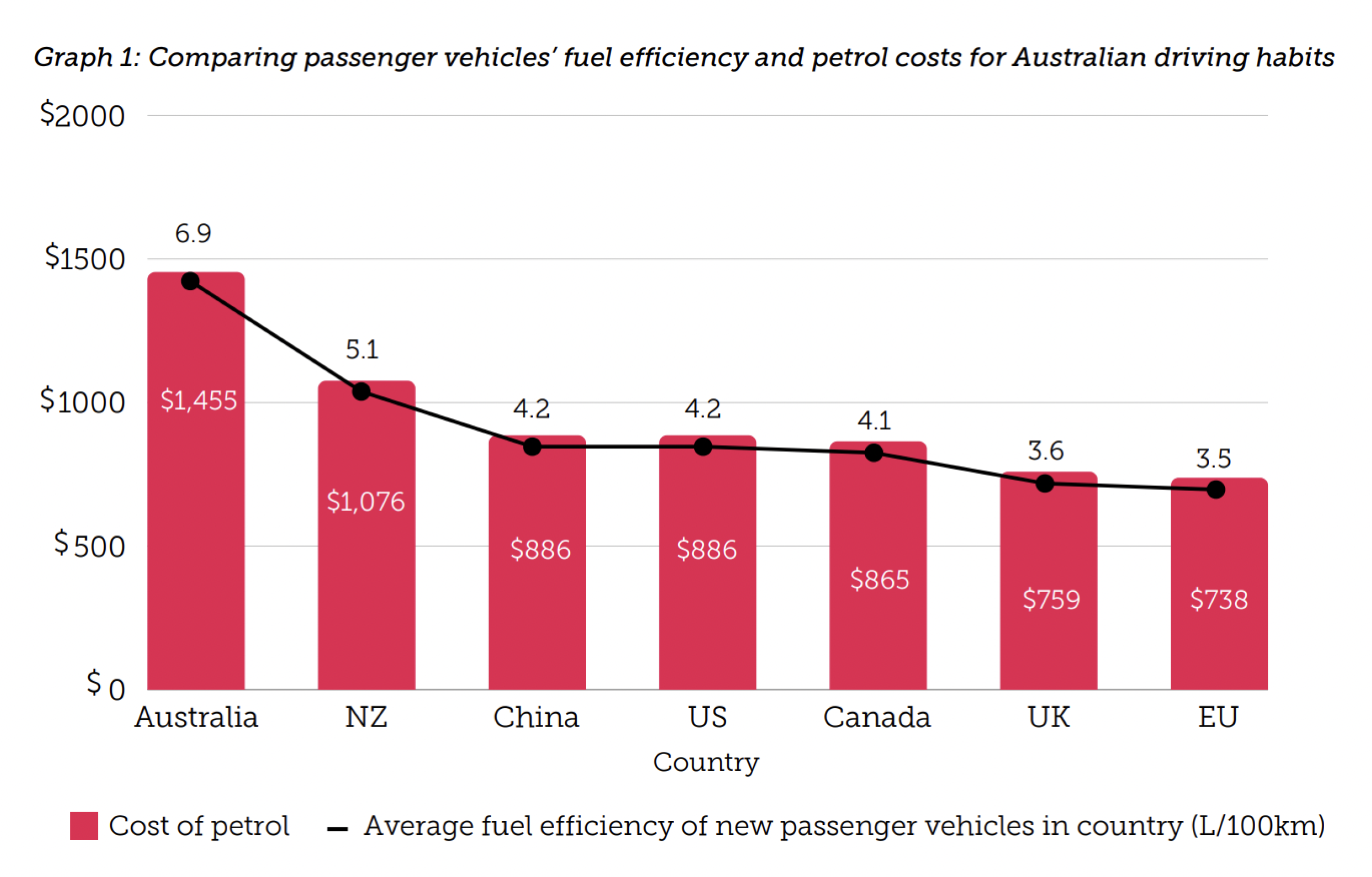
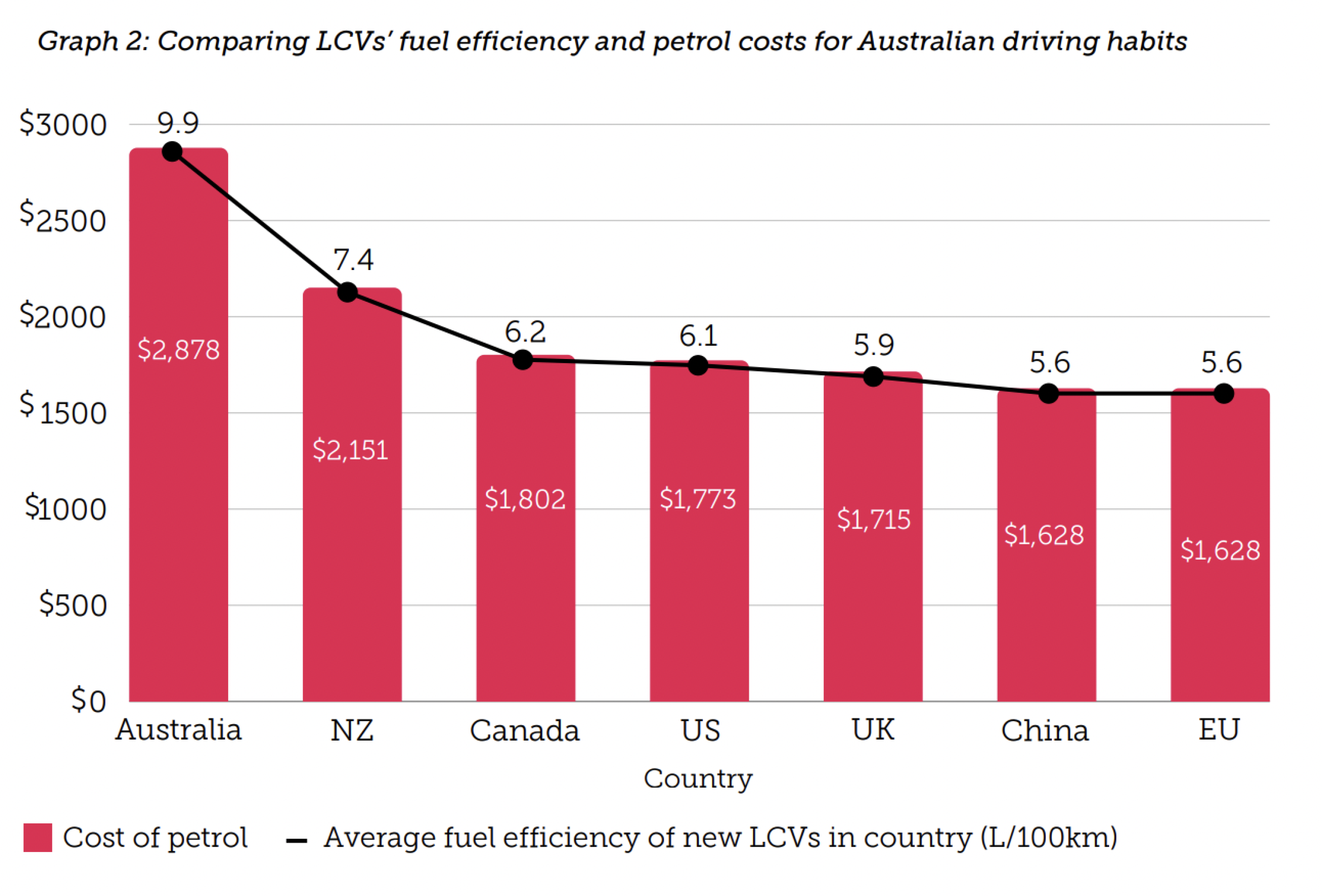
The Climate Council notes Aussies could save $720 per year if we match Europe’s fleet average while catching up with the US saves a still-significant $520 annually on fuel.
The modelling promises even bigger savings for light commercial vehicles, with the Climate Council calculations showing a $1105 saving for matching the US fleet (6.1L/100km) and $1250 for equalling the EU (5.6L/100km).
The Climate Council sites the Isuzu D-Max as an example, as the ute only sold in the UK and Europe with an ‘RZ4E’ 1.9-litre engine that achieves 6.7L/100km.
This is a skewed comparison as to get the 3500kg towing capacity Australians demand, buyers need to opt for the 3.0-litre ‘4JJ3-TCX’ mill that consumes 8L/100km, emits 207g CO2/km and makes up the lion’s share of Aussie sales.
Still, it’s damning that Australia remains so far behind the United States considering that market’s best-selling vehicle is the Ford F-150 full-size pick-up.
The FCAI warns that penalising emissions will therefore increase the price of vehicles that are popular today, such as utes and petrol family-sized SUVs.
However, the Climate Council denies this quite fiercely and notes that vehicle emissions standards have been in place the world over for years. In a global sense, then, manufacturers are well-versed in making more efficient vehicles including 4x4s and commercial vehicles.
The FCAI represents companies that distribute new vehicles and motorcycles in Australia.
Brands with ranges concentrated on utes and SUVs or without significant hybrid offerings, such as Isuzu and Subaru, may struggle to meet targets initially.
Some, such as Volvo, have already made their promises while Volkswagen (also in a good position) will focus mostly on EVs and existing powertrains, choosing not to offer efficient new-gen plug-in hybrid and three-cylinder powertrains in its Golf small car range locally.
