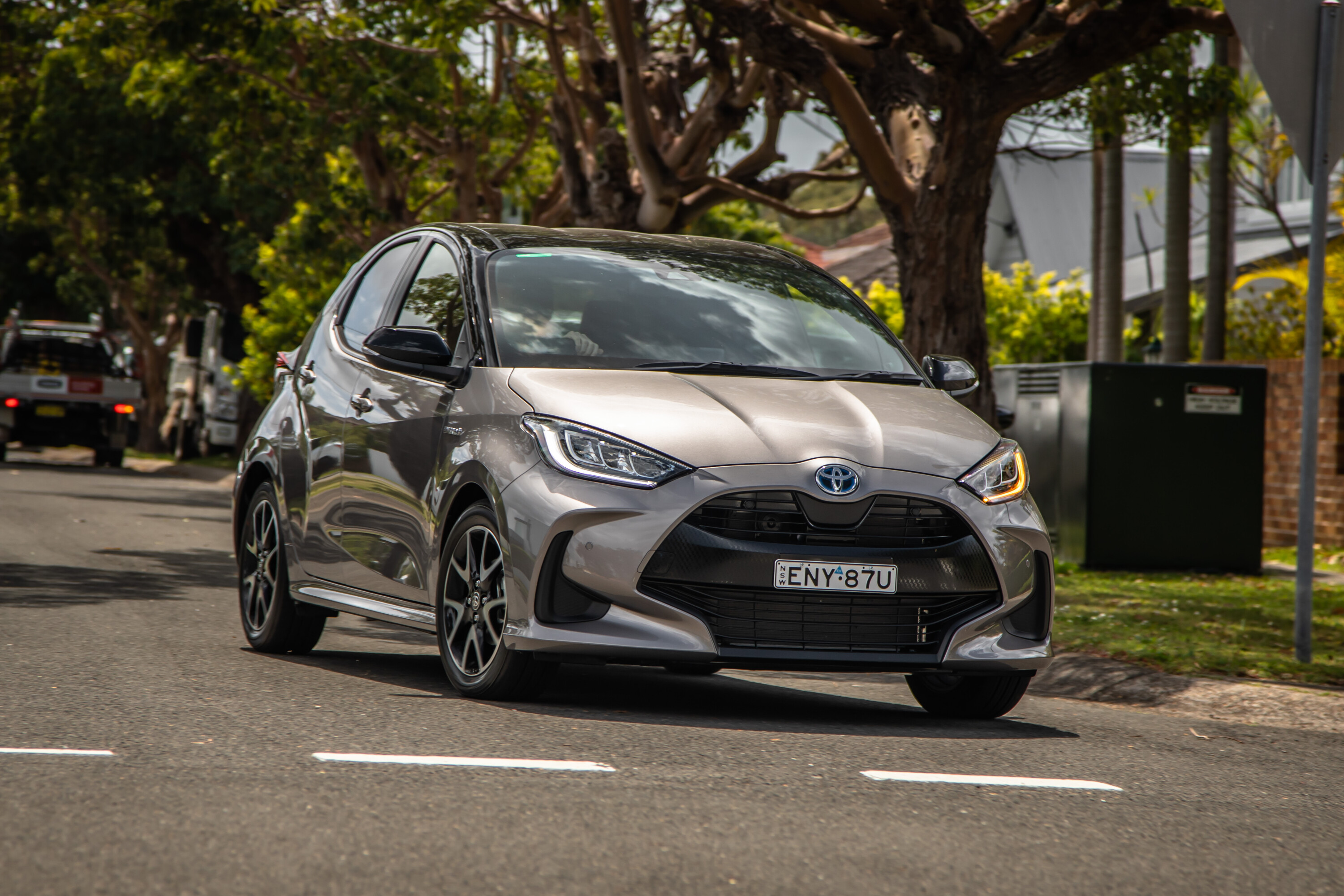
Due to a durability issue, the front lower suspension arm may develop cracks and corrode when exposed to road snow melting agents. This could cause the suspension to collapse and detach from the vehicle. As a result, the vehicle may experience a sudden loss of steering control.
What are the hazards?
A loss of steering control could increase the risk of an accident causing injury or death to vehicle occupants and/or other road users.
What should consumers do?
Owners of affected vehicles will be contacted by Toyota in writing, and are asked to make an appointment to have the front lower suspension arm replaced, free of charge.
Supplier details
TOYOTA MOTOR CORPORATION AUSTRALIA LIMITED
Who should owners/operators contact for more information?
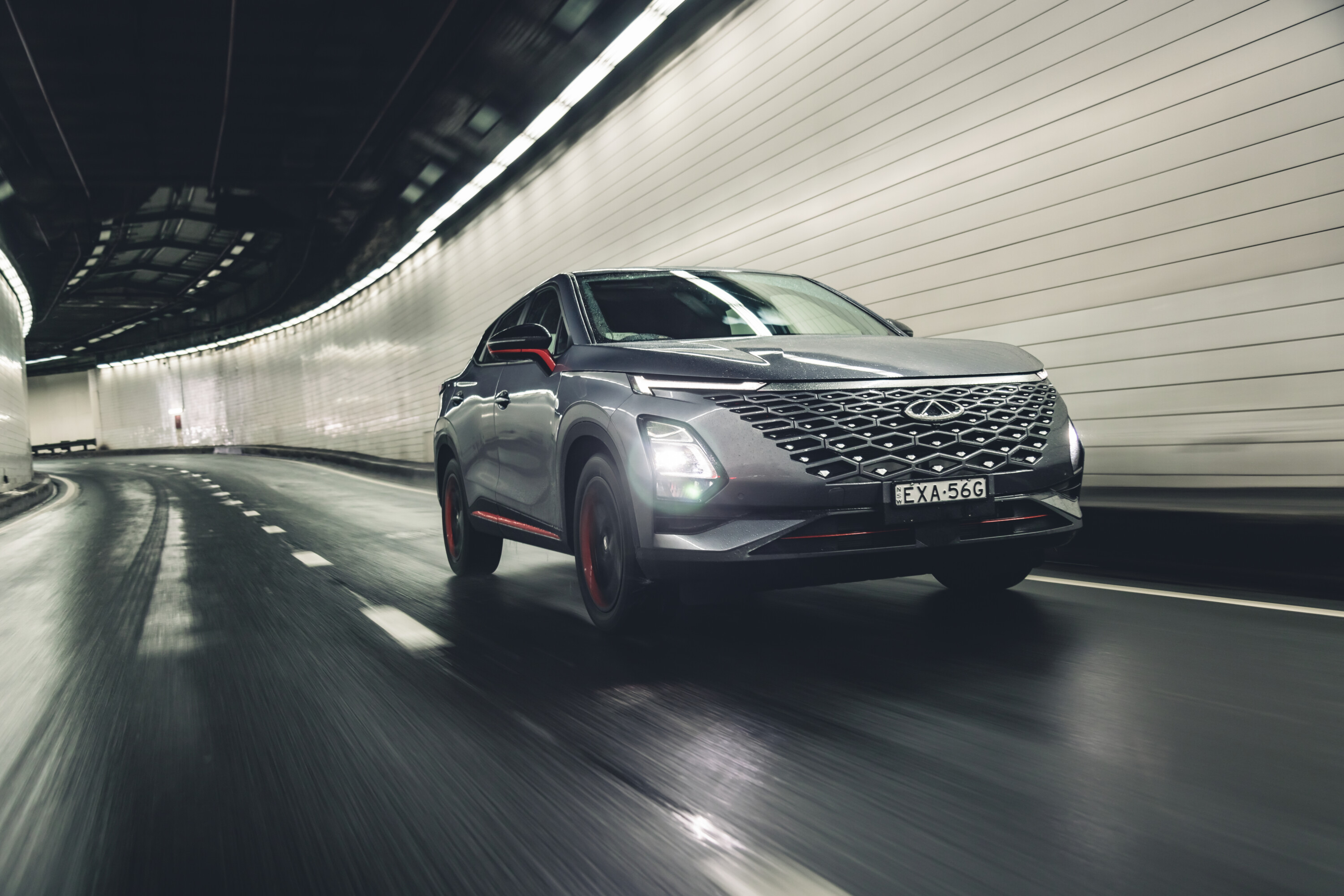
Due to a manufacturing defect, the bolt securing the brake pipe union may not have been tightened sufficiently. This could cause the brake fluid to leak and result in reduced braking performance.
What are the hazards?
A reduction in braking performance could increase the risk of an accident resulting in serious injury or death to the vehicle occupants, pedestrians and other road users.
What should consumers do?
Owners of affected vehicles can contact their nearest Chery dealership to request an inspection of the brake pipe union bolt and have the rectification if required completed, free of charge.
Supplier details
CHERY MOTOR AUSTRALIA PTY LTD
Who should owners/operators contact for more information?
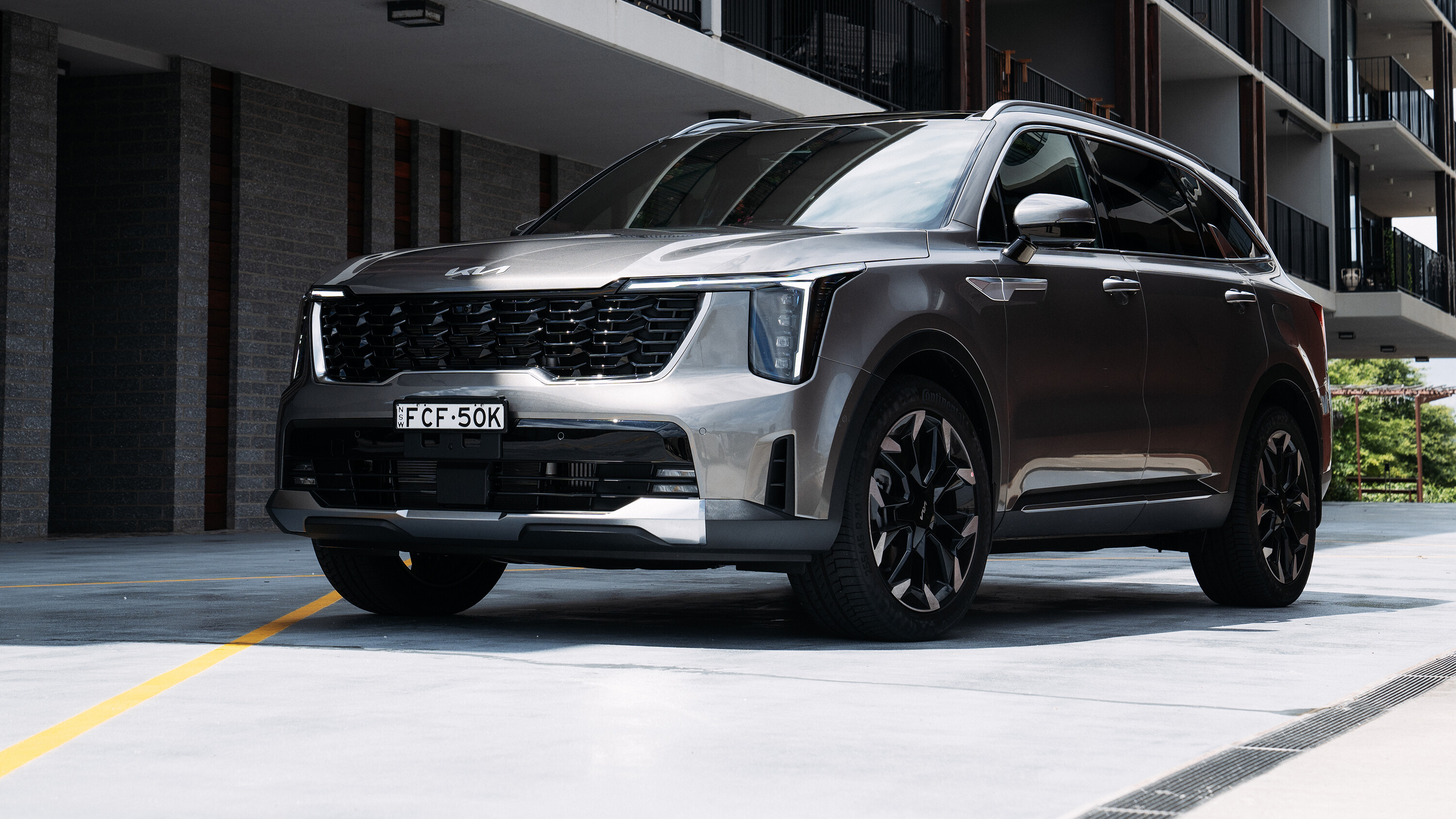
Due to a manufacturing defect, incorrect fuel consumption and emissions data has been provided on the fuel consumption label.
What are the hazards?
Vehicles do not comply with Australian Design Rule 81/02 – Fuel Consumption Labelling for Light Vehicles.
There is no safety hazard associated with this recall.
What should consumers do?
Kia Australia will contact owners of affected vehicles by mail. A replacement label with the correct information to affix to the vehicle will be supplied with the letter.
Supplier details
KIA AUSTRALIA PTY LTD
Who should owners/operators contact for more information?
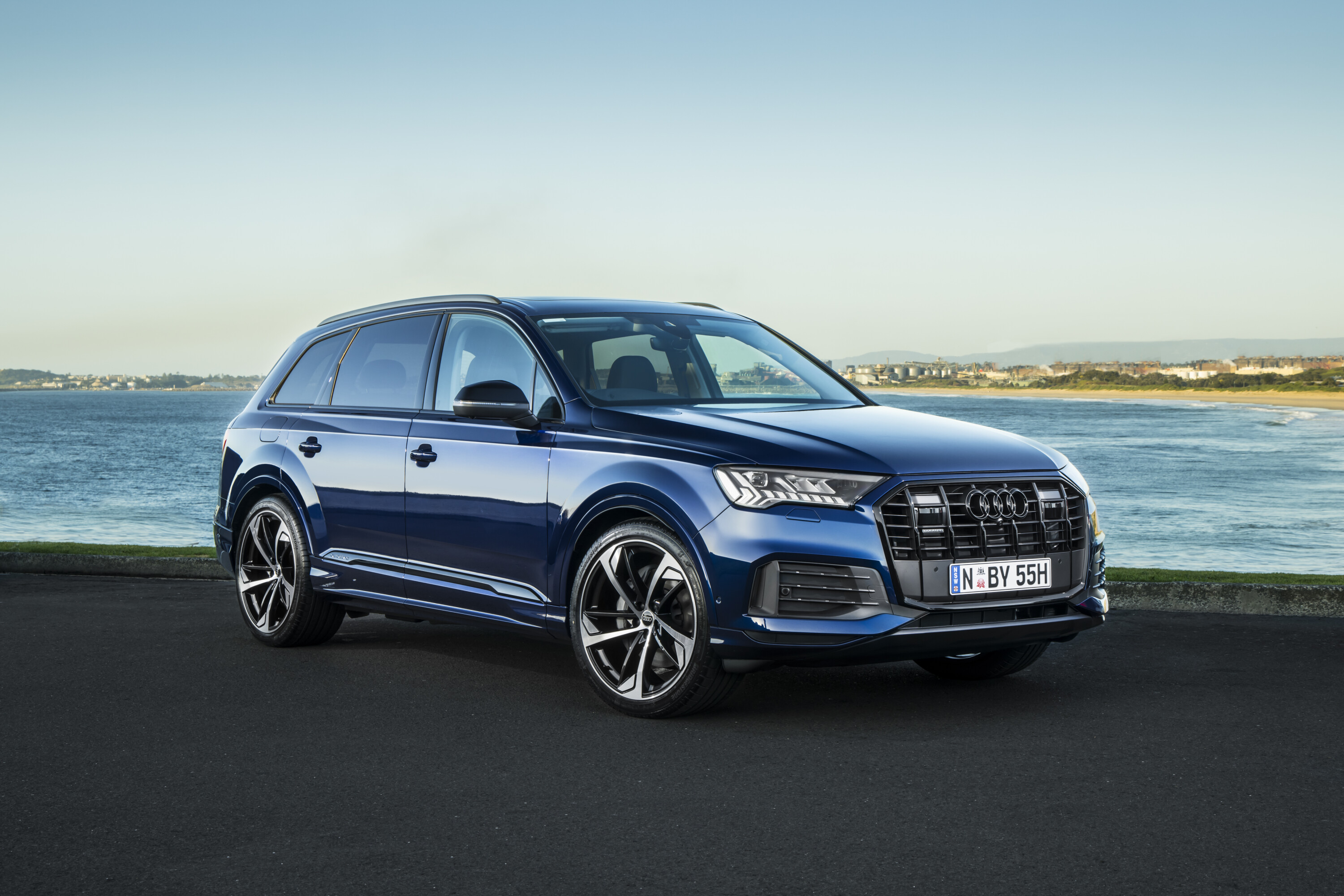
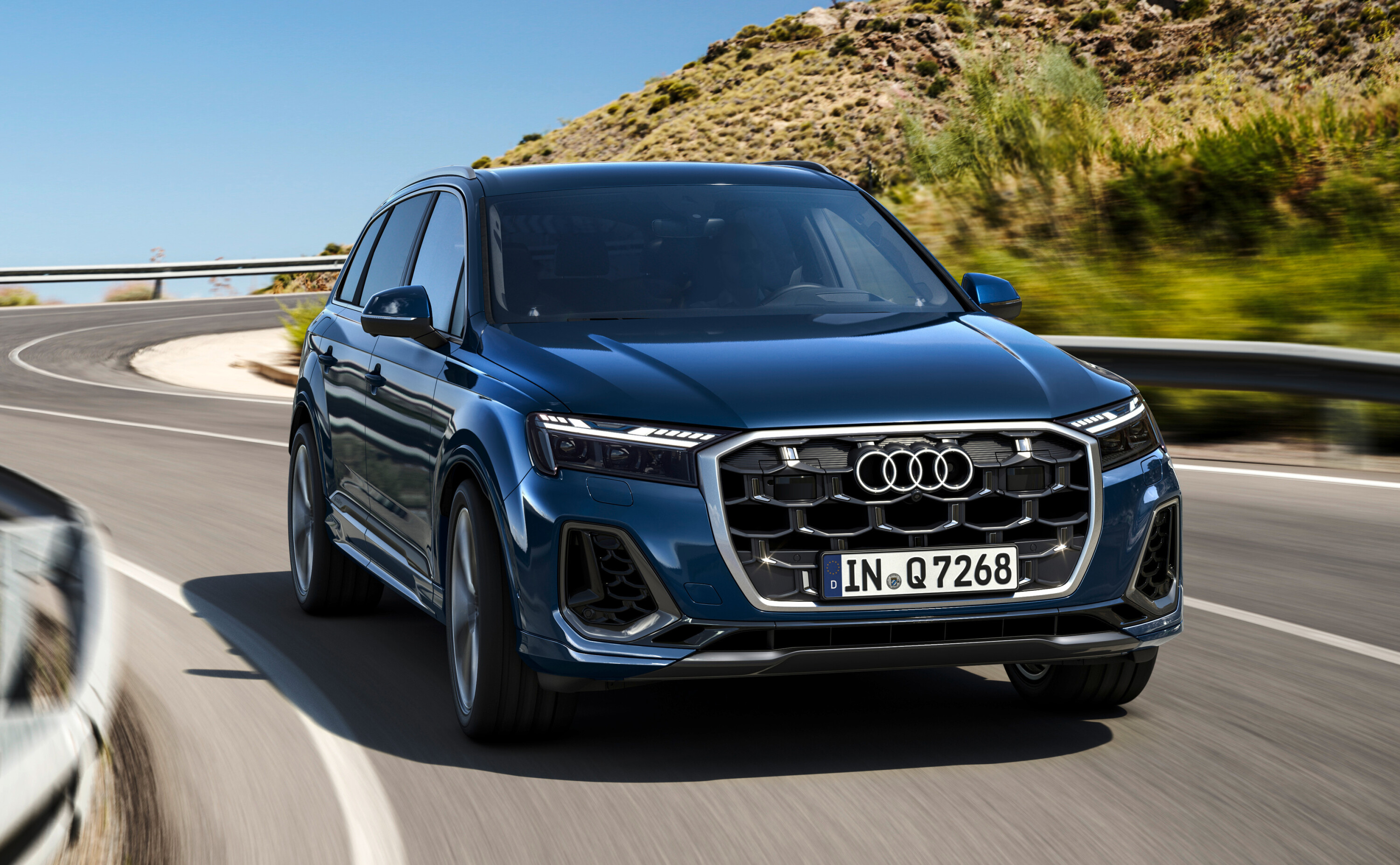
Due to a manufacturing defect, the front passenger airbag may not have been installed correctly.
What are the hazards?
In the event of airbag deployment in an accident, the airbag may not provide sufficient protection for the front seat passenger which could increase the risk of injury or death.
What should consumers do?
Owners of affected vehicles will be contacted by Audi Australia Pty Ltd and are asked to arrange to have the work carried out free of charge with their nearest authorised Audi dealership.
Supplier details
Audi Australia Pty Ltd
Who should owners/operators contact for more information?
Off-road-focused Altitude variant to join five-strong all-new Prado line-up due in Australia around May or June; pricing to be confirmed.
Could this be the next Mazda CX-5?
Everything we know about the replacement for Mazda’s top-selling CX-5 midsize SUV, which promises similar size and value to the current model.
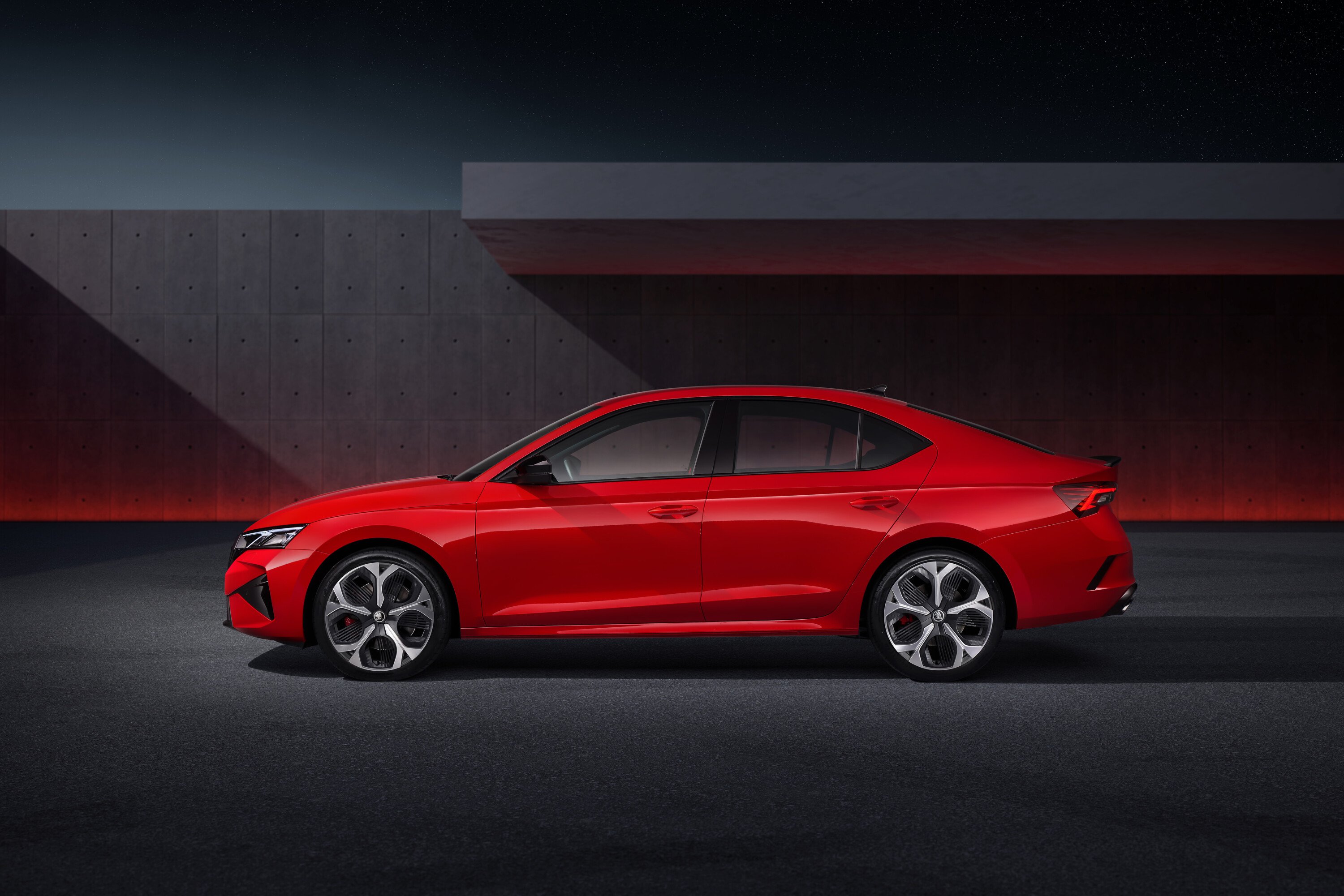
Power boost for new Skoda Octavia RS
Skoda updates popular Octavia liftback and wagon with a revised look, improved technology, and a power boost for the RS variant.
LONG TERM TEST: MG 4 electric hatch
MG’s new electric hatchback was one of the biggest (positive) surprises of 2023. We’re now going to find out what it’s like to own one for a few months.
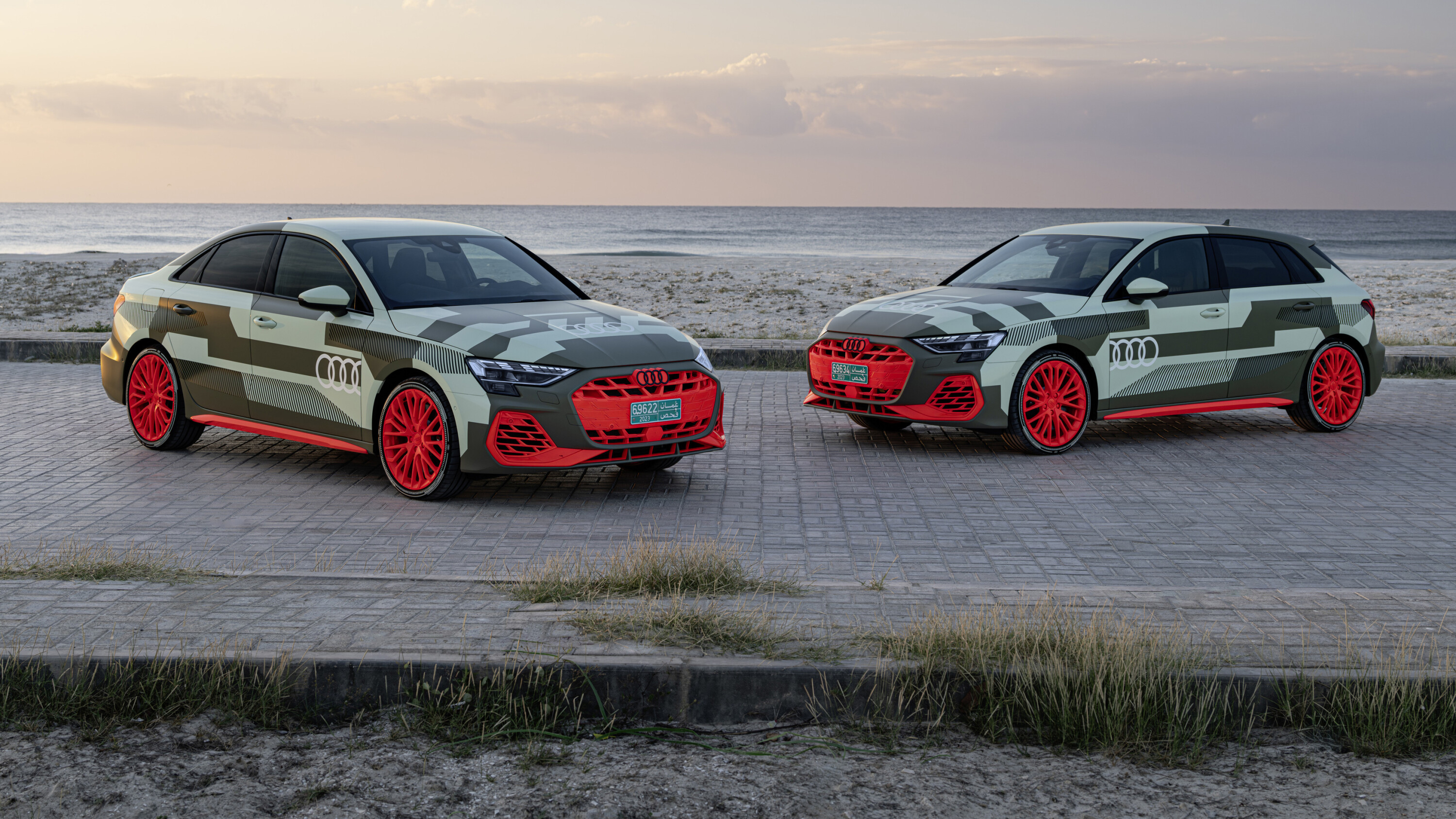
Revisions coming to the 2025 Audi S3 hot hatch and sedan have been detailed ahead of a full reveal in the coming weeks.
The mid-life update for the Audi S3 should make it more fun to drive with a new variable torque splitter borrowed from its RS3 big brother, along with larger brakes and revised suspension geometry.
Under the bonnet, the S3’s venerable 2.0-litre four-cylinder turbo EA888 engine will receive a slight power boost to align it with the related Volkswagen Golf R.
The many revisions announced should result in overall improved driving dynamics and enjoyment and include a new rear-biased drive mode, which should enable drivers to get the most out of the changes.
1
What’s new for the 2025 Audi S3?
Most of the revisions applied to the S3 are focused on handling and braking performance more than raw power.
“Torque Splitter”
The new S3 will feature the torque splitter from the more-powerful RS3 to increase agility and stability. It uses an electronically controlled multiple disc clutch on each drive shaft to enable active, fully variable torque distribution between the rear wheels. Torque distribution also varies depending on the drive mode selected.
1
Bigger brakes
Larger ventilated discs will be fitted to the front axle, now measuring 357mm in diameter and 34mm thick, for higher thermal capacity. The front brake calipers have been upgraded to twin-piston units.
Revised front suspension
A new pivot bearing will be fitted to the front McPherson strut axle, increasing negative camber, and the front wishbones have been stiffened.
Audi reports that the front camber has increased to nearly 1.5 degrees, more than double the current model, for improved steering response
1
‘Dynamic Plus’ drive mode
This new Audi drive select mode sends as much torque as possible to the rear axle and then the rear wheel on the outside of the curve, increasing controlled oversteer.
The engine and transmission have also been tuned specifically for the dynamic plus mode. Idle speed is increased by 200rpm to 1,300rpm, compared to the dynamic mode, to improve off-the-line performance, throttle response is more direct, and the transmission upshifts later and downshifts earlier.
Increased power to complement chassis enhancements.
Power for the 2025 Audi S3 will increase slightly from 228kW/400Nm to 245kW/420Nm, matching the most-powerful Mk8 Volkswagen Golf R.
Audi claims this reduces the 0-100 time by 0.1 seconds, to 4.7 seconds.
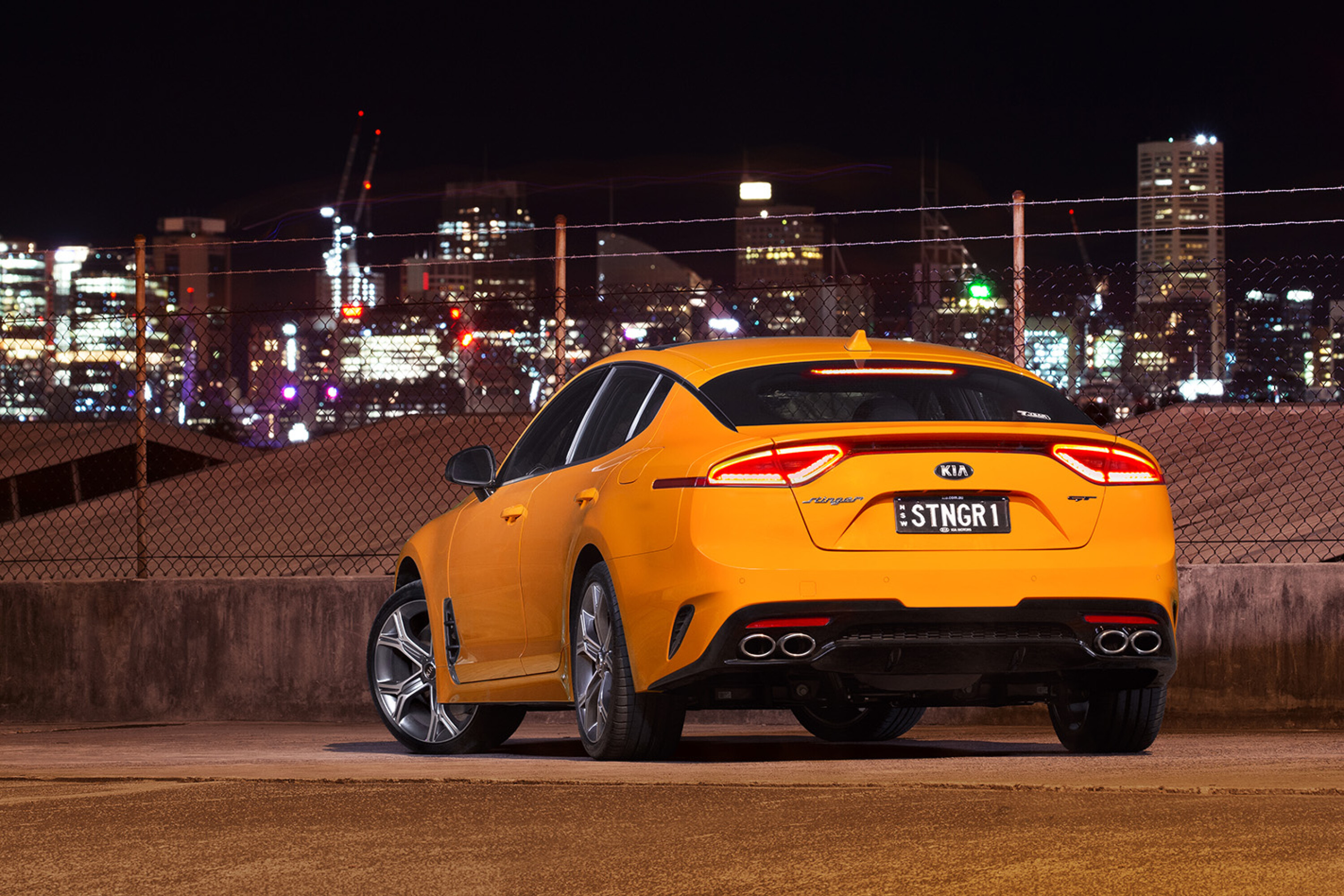
The now-discontinued Kia Stinger is due to eventually be replaced by a new all-electric sedan in 2026, according to a new report.
The Korean Car Blog[↗] has obtained a copy of a document called ‘Kia’s union new car production schedule’, which outlines model-by-model information about the Korean brand’s future models.
The Stinger will be indirectly replaced with a high-performance electric-powered sedan, which has been codenamed GT1.
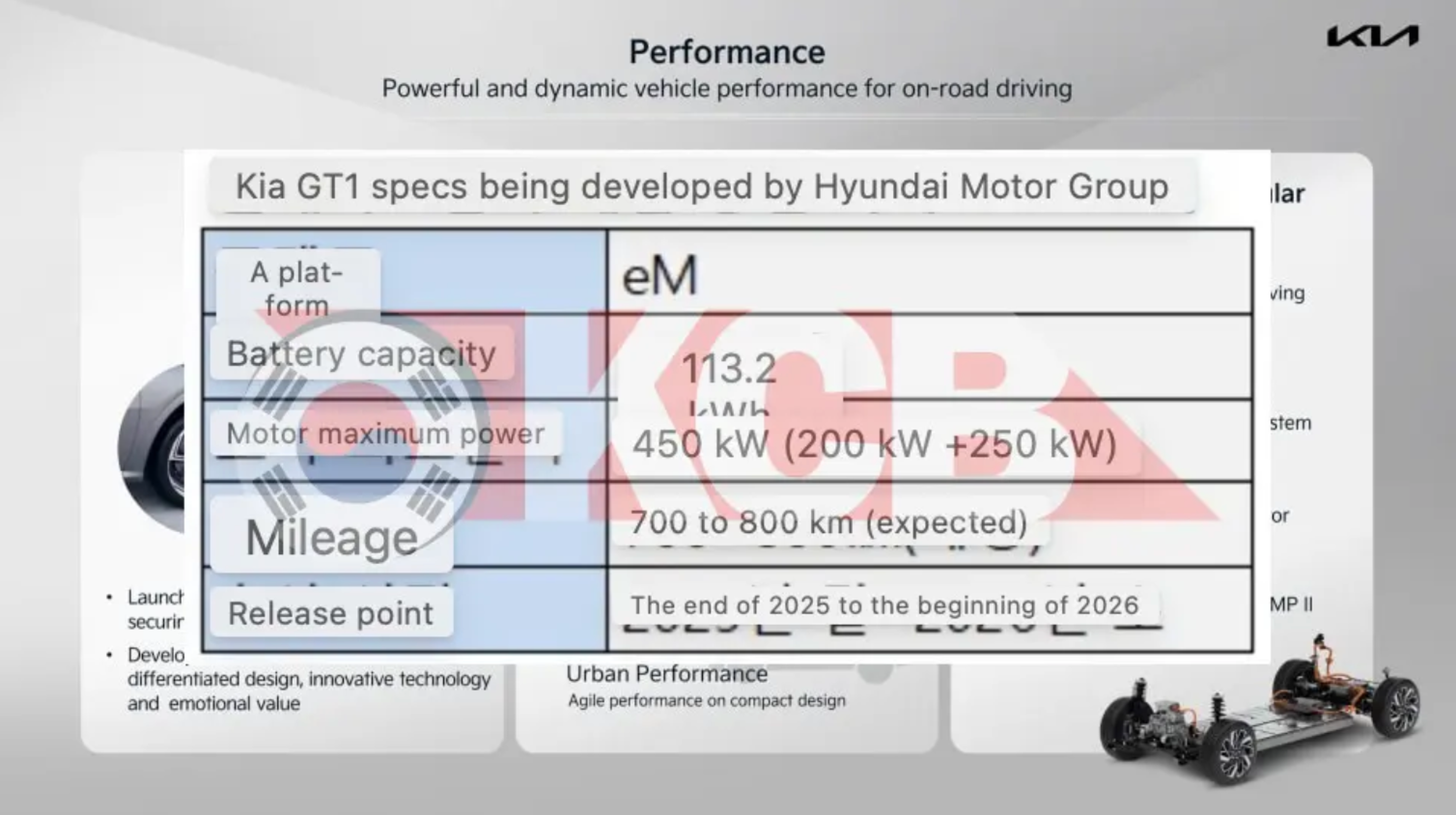
The production model, expected to be named Kia EV8, will start production in 2026 in South Korea with up to 450kW of power.
1
The EV8 will be Kia’s first vehicle on the forthcoming eM platform, which will eventually replace the E-GMP architecture used for the Kia EV6, EV9, Hyundai Ioniq 5, Ioniq 6 and Genesis GV60.
Kia will share this new platform with new Hyundai and Genesis models, with the Genesis GV90 upper-large electric SUV due in 2025 rumoured to be the first vehicle to use it.
1
Massive 113.2kWh battery likely to provide 700km-plus range
Hyundai Motor claims IMA will increase EV driving range by 50 per cent compared to current models.
To this end, EV8 will reportedly feature a 113.2kWh battery, which will be the largest yet used by Kia (EV9 is 99.8kWh). This will provide a range of 700 to 800 kilometres, according to the document.
The battery will allow the top-spec EV8 to have plenty of power, in addition to a high driving range. The flagship model is set to offer a 450kW total system output, which will be provided by a 200kW front engine and a 250kW rear engine (EV6 GT currently has 430kW).
An entry-level model with a single rear 160kW electric motor and an AWD model with another 160kW motor in the front (for 320kW in total) will round out the range.
1
High performance electric Stinger replacement unlikely to come to Australia
The Kia Stinger sedan – which offered a 2.0-litre turbo-petrol or 3.3-litre twin-turbo V6 – built a devoted following in Australia, launching into a marketplace that home-grown rear-drive performance cars were deserting.
Sadly, an unnamed source told Carsales [↗] that the EV8 will be left-hand drive only, preventing it from being offered in Australia.
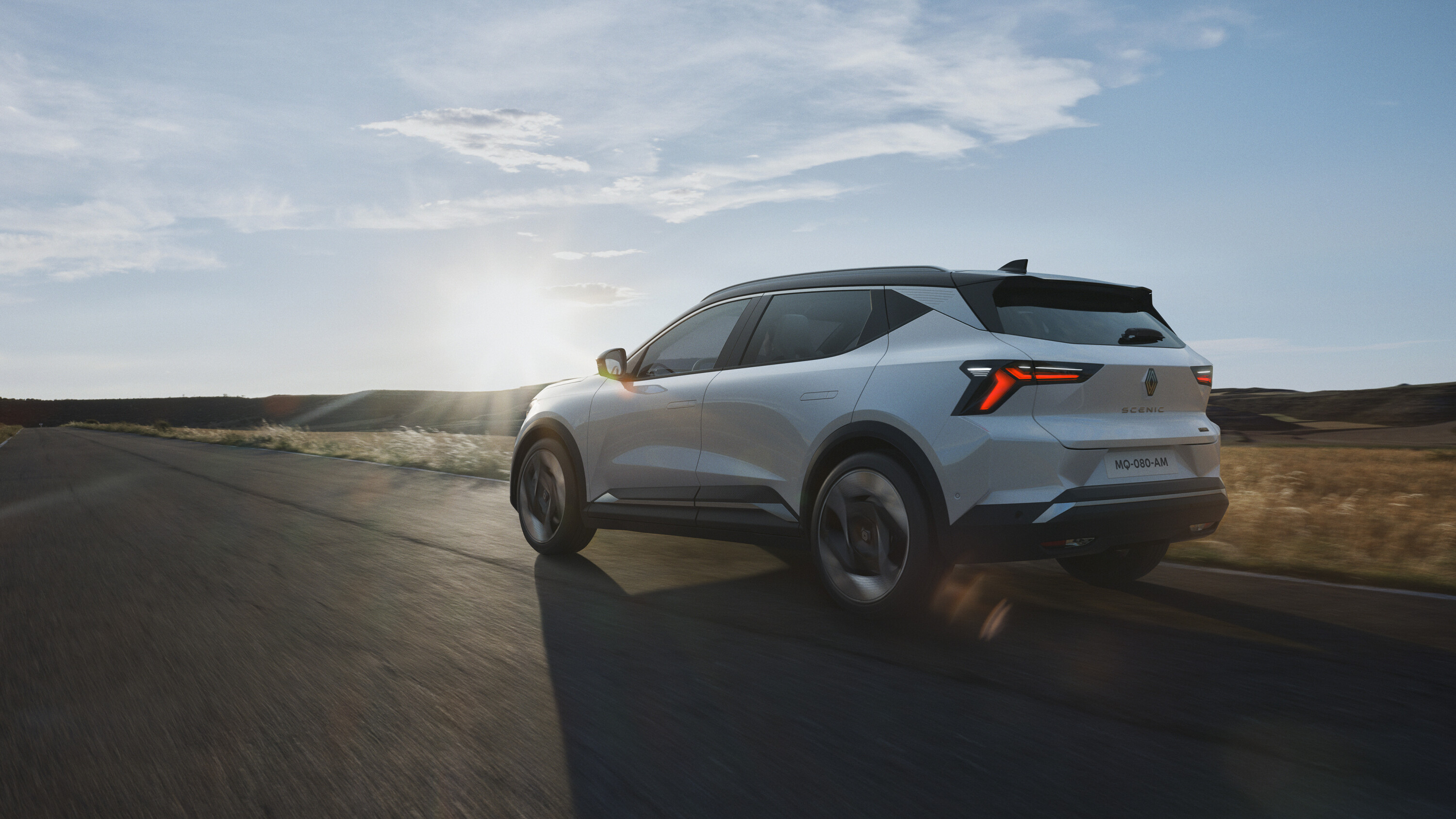
The Renault Scenic E-Tech – an electric SUV similar in size to the BYD Atto 3 – remains under consideration for Australia.
At the local launch of the smaller Megane E-Tech electric SUV this week, Renault Australia general manager Glen Sealey said the Scenic E-Tech is “under study” for Australia as it will be available in right-hand drive for the United Kingdom.
However, it will need to pass a business case, which would include what further investment is required to meet Australia’s unique design rules and how it could be positioned in the market.
“It has to meet the criteria of [whether] is it right for Renault to invest in terms of the ADRs here, does it represent the right mix for our [dealer] network, and then most importantly, does it represent value considering your brand equity to the customer. Is the customer going to pay for it and do they want it?,” said Sealey.
Compared to other markets, the Australian Design Rules require a child-seat top-tether anchor in the rear-middle position to retain a five-seat capacity, while the amount of tension required for each anchorage is more than the European standard.
First introduced in 1996 as a Megane-based small multi-purpose vehicle, the Scenic retained this body style across three generations until the last model ended production in 2022, with the nameplate now re-purposed for its fifth generation as an all-electric SUV.
1
The Scenic – and its Scenic RX4 four-wheel-drive derivative – was sold in Australia between 2001 and 2009.
Under the skin, the Scenic E-Tech is based on the same AmpR Medium platform (previously CMF-EV) as the Megane E-Tech and Nissan Ariya. It has a compact battery supplying up to 87kWh and an electric motor with up to 160kW.
Measuring a compact 4470 millimetres long, 1860mm wide and 1570mm tall, with a 2780mm wheelbase, the Scenic E-Tech is similar in size to the BYD Atto 3 small SUV rather than the larger Tesla Model Y, the world’s best-selling electric vehicle.
1
If introduced in Australia, the Scenic E-Tech would not replace the petrol-powered Koleos mid-size SUV, which is the brand’s most popular vehicle in Australia. It will remain available in Australia until at least the end of 2025, with further plans still to be confirmed.
“We will have an EV range and we will also have an ICE range [in Australia],” added Sealey.
However, Renault Australia has confirmed one potential successor for the Koleos won’t come to Australia.
“It’s a terrific car. But if you look at the pricing of Austral in Europe and the UK and you apply that to the Australian context and market, you’re not going to sell many,” said Sealey.
In Europe, the Spanish-built Austral starts from around $60,000 plus on-road costs with a direct conversion into Australian dollars – before a further five per cent import tariff, shipping costs, and further investment required to introduce it into the Australian market.
Renault Australia has not ruled out the Rafale flagship coupe SUV – which is related to the Austral and a rival to the $67,990 before on-roads Peugeot 408 hybrid – revealed for Europe in mid-2023.
At the time, a Renault Australia spokesperson said a business case would need to be analysed for the Rafale – which is planned to be sold in the United Kingdom – before a final decision is made.
The French brand plans to unveil the RenaultSymboiz hybrid small SUV in the coming months. It will slot between the Captur and Arkana, making it unlikely to replace the much larger Koleos in Australia.
A plug-in hybrid vehicle is a fiendishly complicated thing to get right. Think about it.
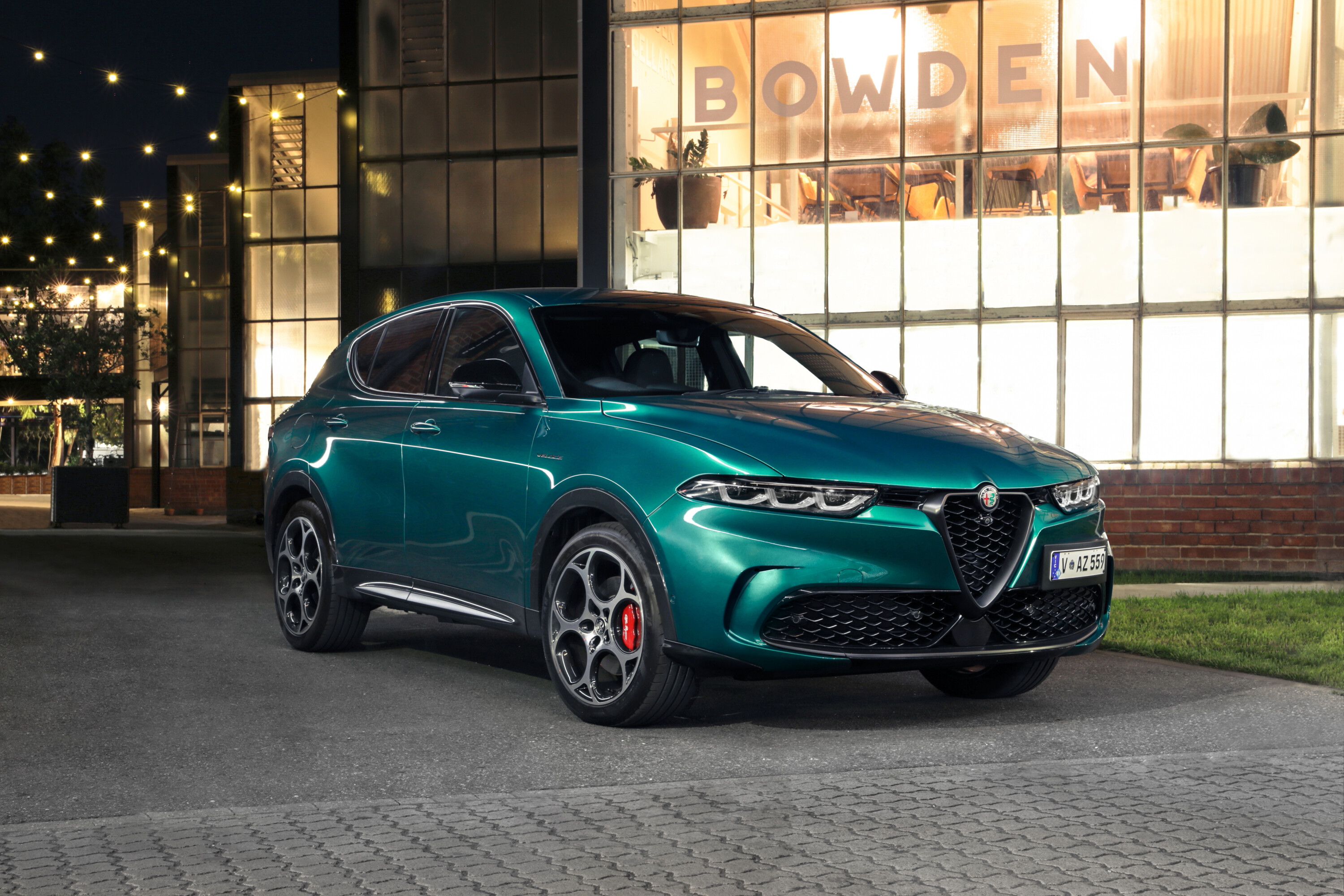
You need the best parts of an internal combustion engine vehicle, the best parts of an electric vehicle and then a whole extra entity that seamlessly blends the two. So now I’m going to ask a potentially rather loaded question: Would you trust Alfa Romeo to get all of that right?
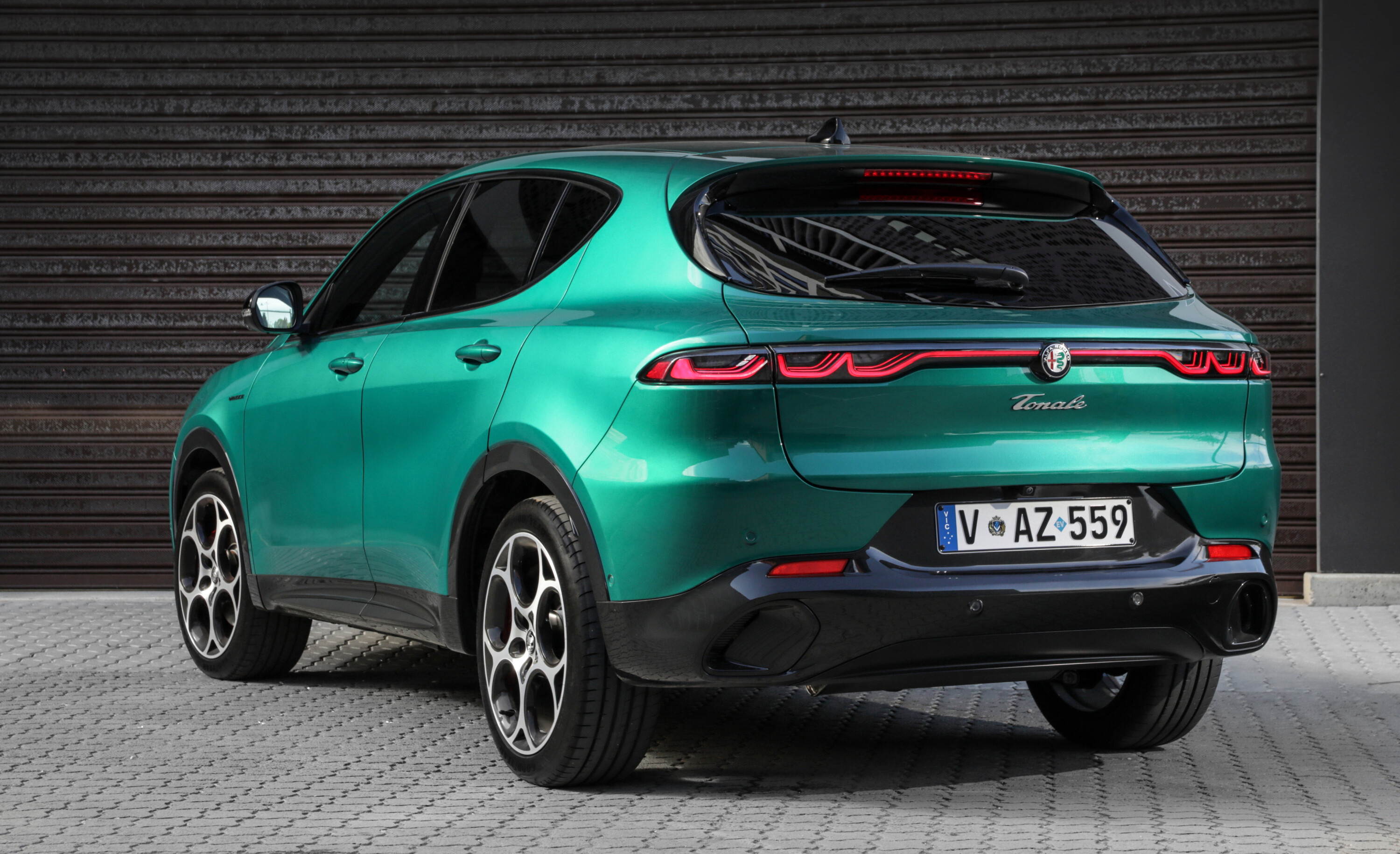
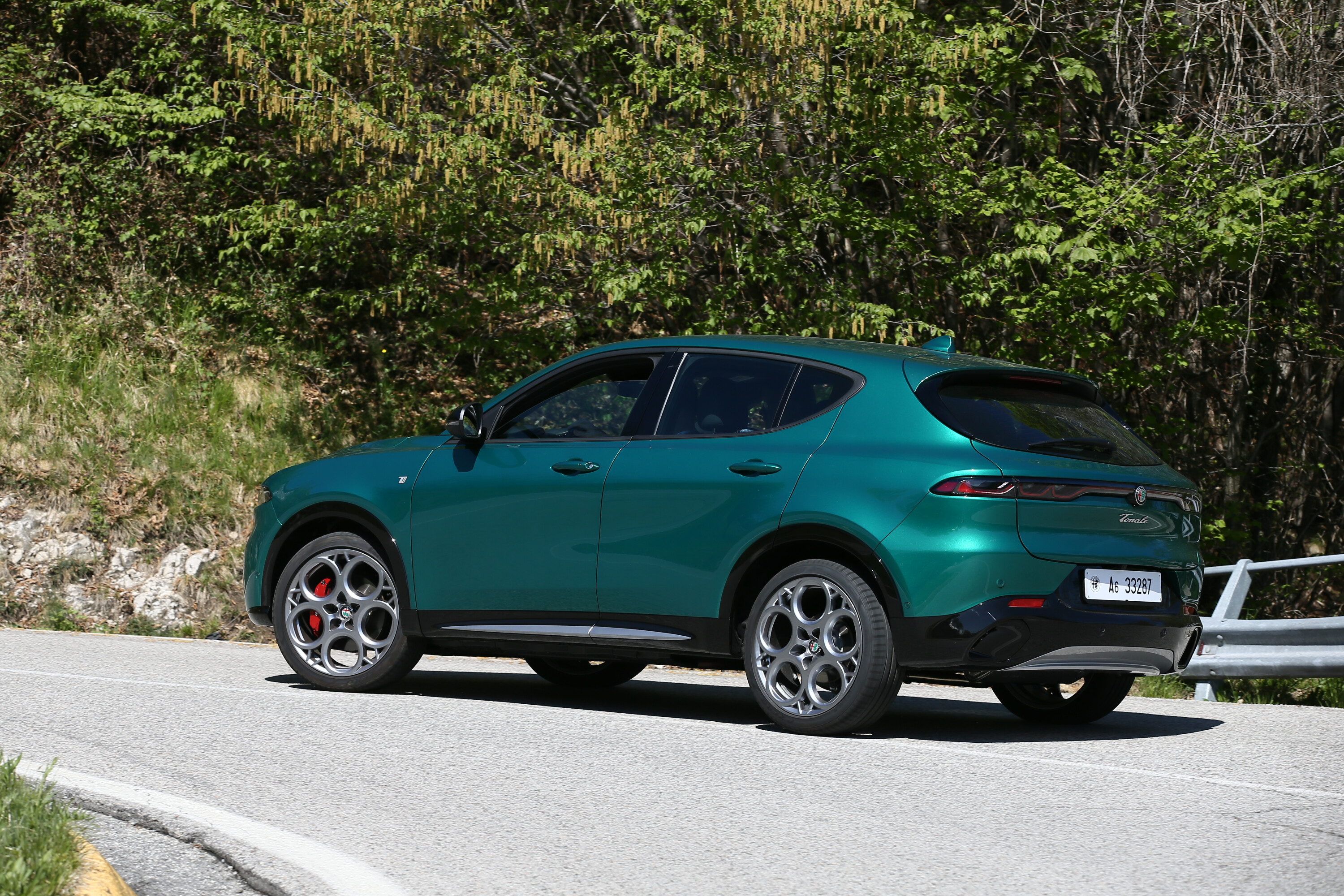
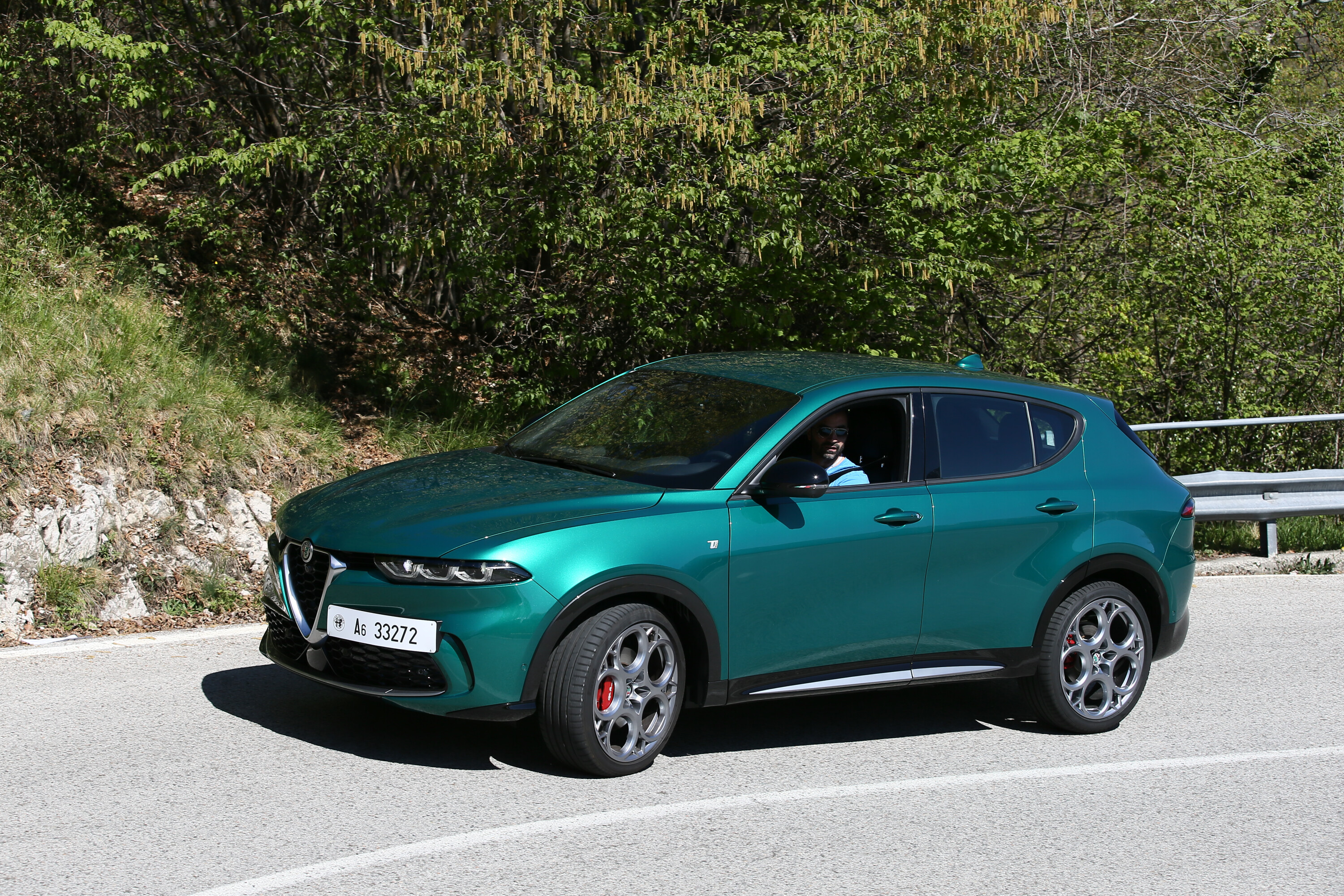
That’s what the success or failure of Alfa Romeo’s Tonale Q4 boils down to, isn’t it? If we strip away all the peripheral flim-flam, it’s a question of trust. I think most of us would trust the Japanese to be able to manage that level of complexity, but there’s a gulf in trust that Alfa Romeo needs to be able to bridge before buyers will decide that the Tonale PHEV is a prudent place in which to park $77,500 of their hard-earned (excluding on-road costs).
Let’s take a look and see if this fascinating compact SUV can lay the foundations towards building those bridges.
Ah yes, that price. It’s a hurdle. Fully $21,000 more than the existing Tonale Veloce hybrid, the plug-in appears a non-starter from the get-go.
Right now you’re probably starting to do the mental maths in order to figure out whether the payback period for the PHEV arrives before the heat death of the universe. But before you get into that, there are some mitigating factors to consider.
Firstly, this is a very different beast to the regular hybrid. That gets a rather mealy-mouthed 118kW 1.5-litre petrol engine that drives the front wheels and results in a vehicle that occasionally struggles to get out of its own way.
1
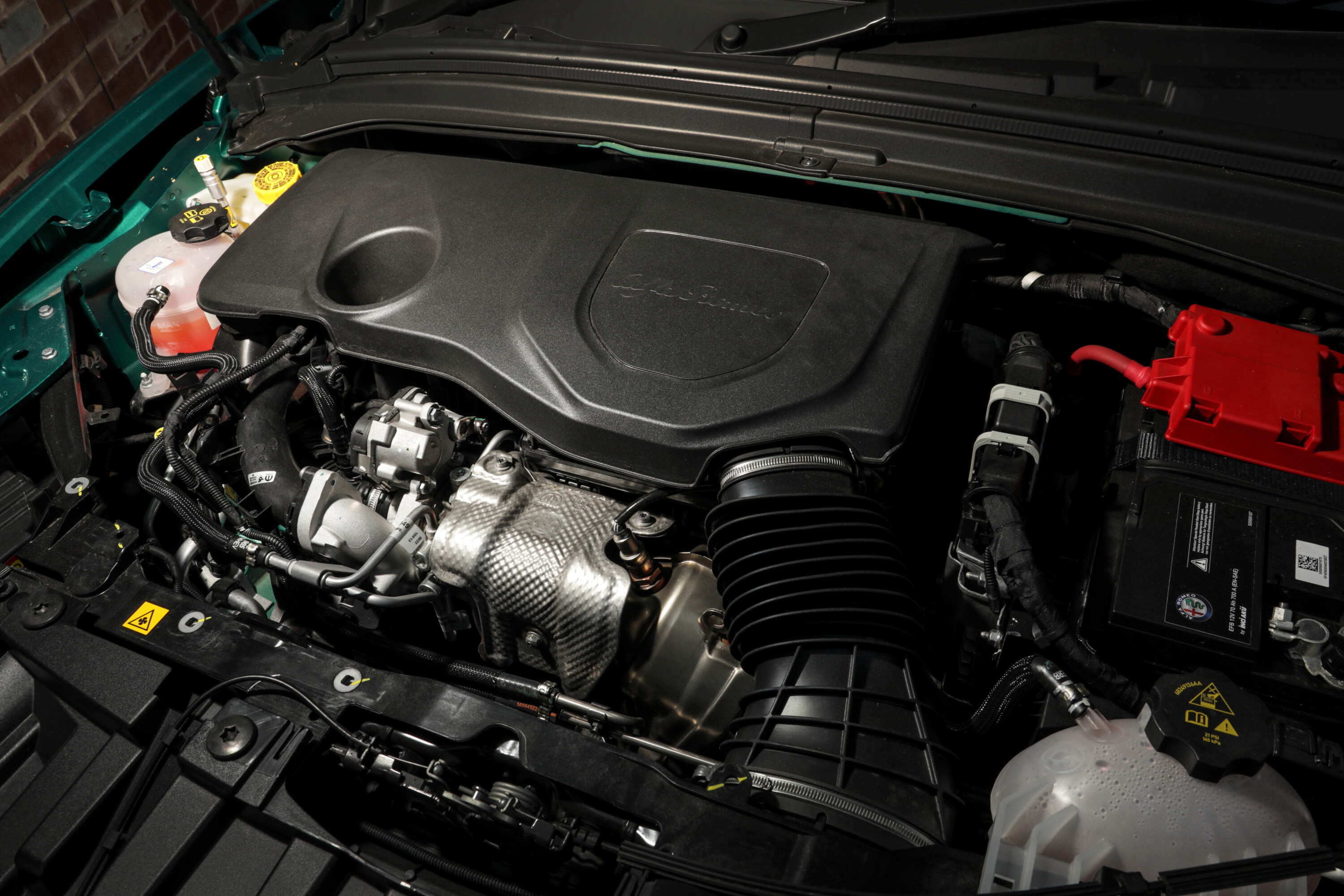
Although the Q4’s engine is even smaller – a bambino 1.3-litre unit – hybridisation means that all four wheels are driven and the system output is a very healthy 208kW.
Then there’s the fact that in Alfa-land, not all Tonale Veloces are created equal. This plug-in variant also benefits from the otherwise optional Lusso pack as standard. This adds:
Alfa Romeo Tonale Q4 Veloce Lusso pack
Perforated black leather seats
Heated steering wheel
Embroidered Alfa Romeo logo
Heated washer nozzles
Eight-way electric front seat adjustment
PTC heater
Driver’s seat position memory
14-speaker 465W Harman Kardon premium audio
Heated and ventilated front seats
Dark grey double stitching
1
The Q4 Veloce PHEV also bundles the following equipment over and above the normal hybrid Tonale:
Alfa Romeo Tonale Veloce PHEV features
Sunroof
Chromed exhaust tips
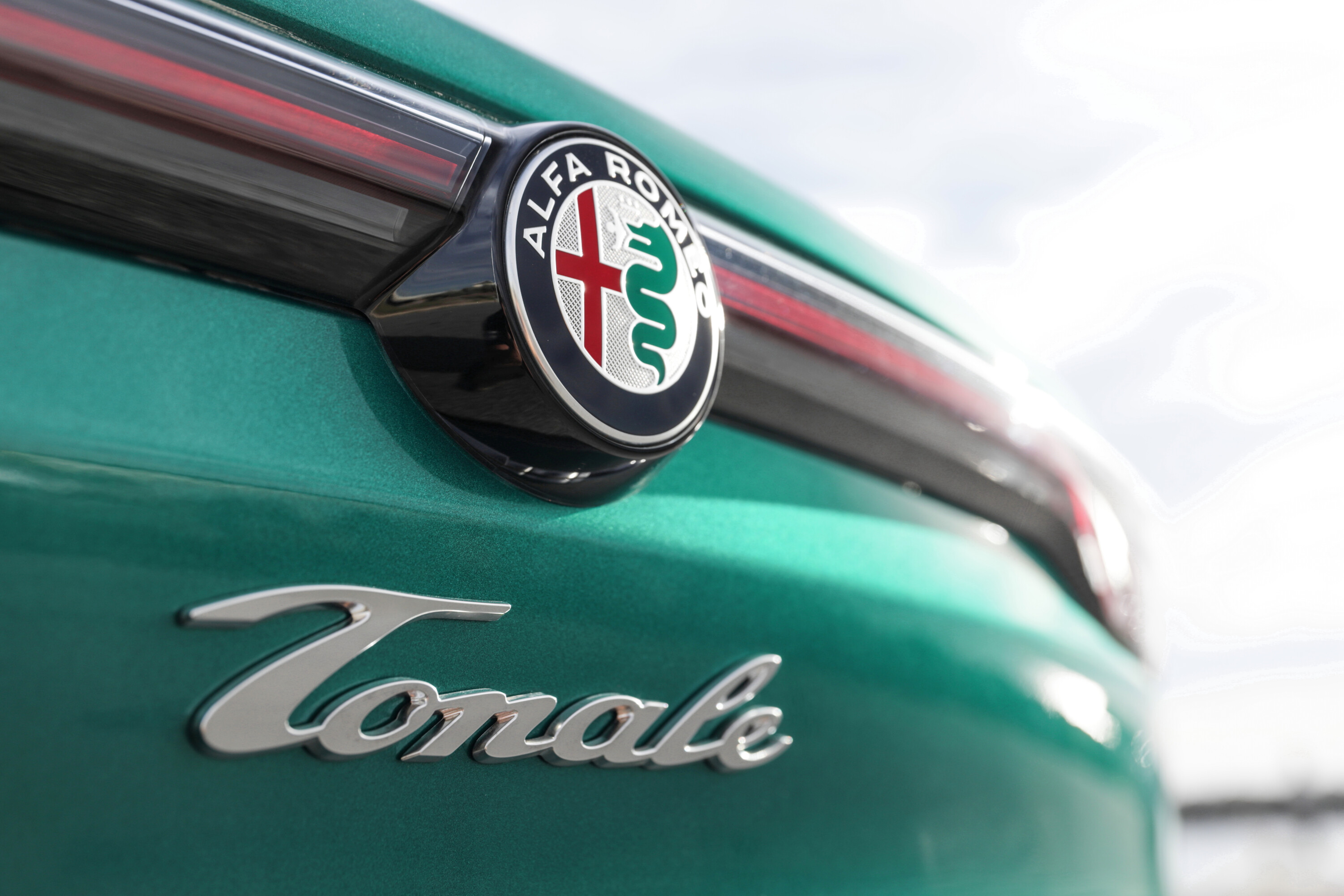
Elettro-Biscione logo on rear left window
Type 2 smart charging port and Mode 2 charging cable
In case you weren’t aware of the full trim list that this builds upon, features common to both hybrid models include:
Alfa Romeo Tonale Q4 Veloce equipment
19-inch diamond-cut alloy wheels
12.3-inch TFT instrument cluster
Brembo brake calipers
10.25-inch central touchscreen
360u00b0 cameras with dynamic lines
Wireless charging pad
Adaptive cruise control
Road sign recognition
Auto-dimming external mirrors
Automatic full LED matrix headlights
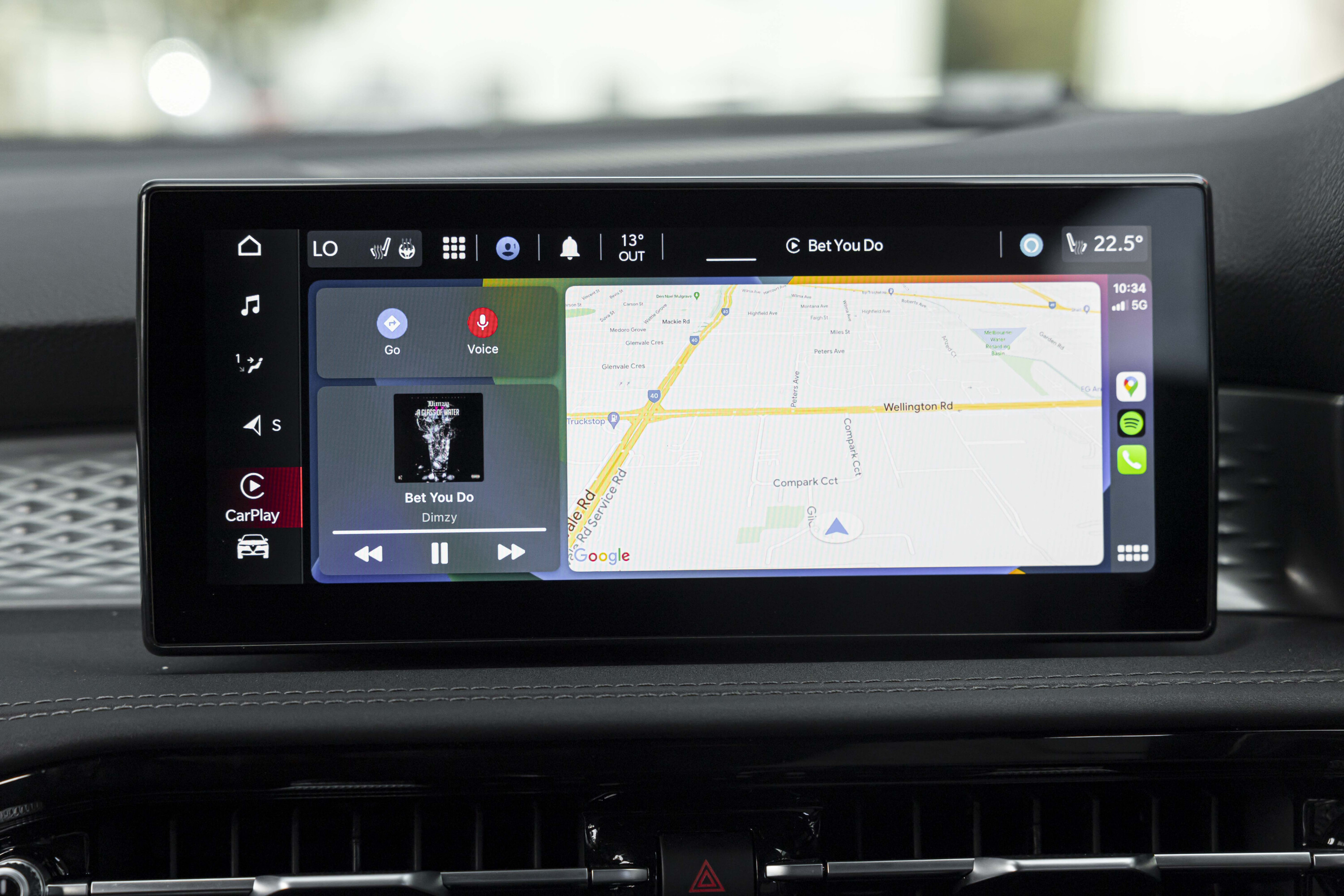
Wireless Apple CarPlay and Android Auto
Aluminium pedal set
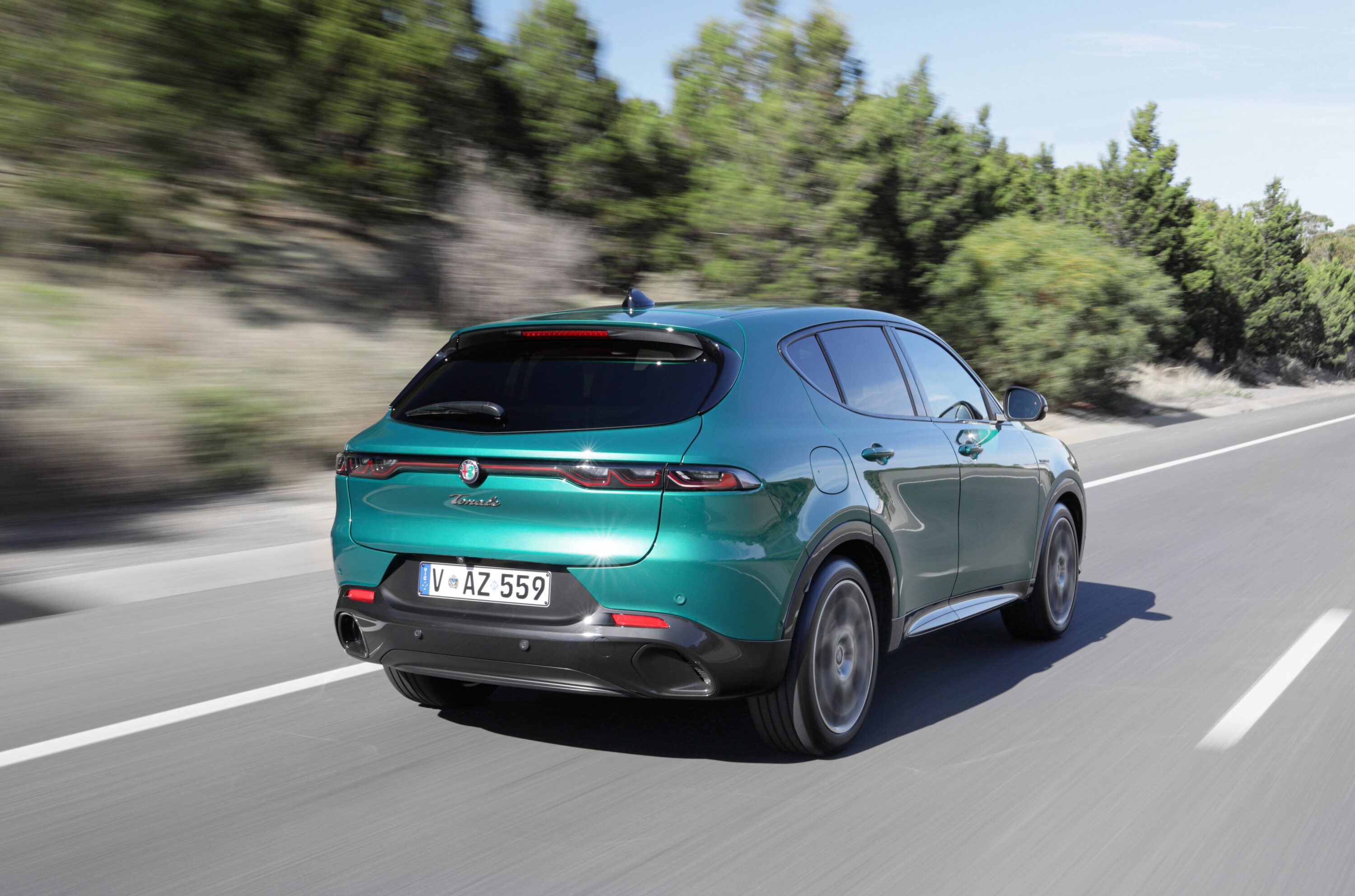
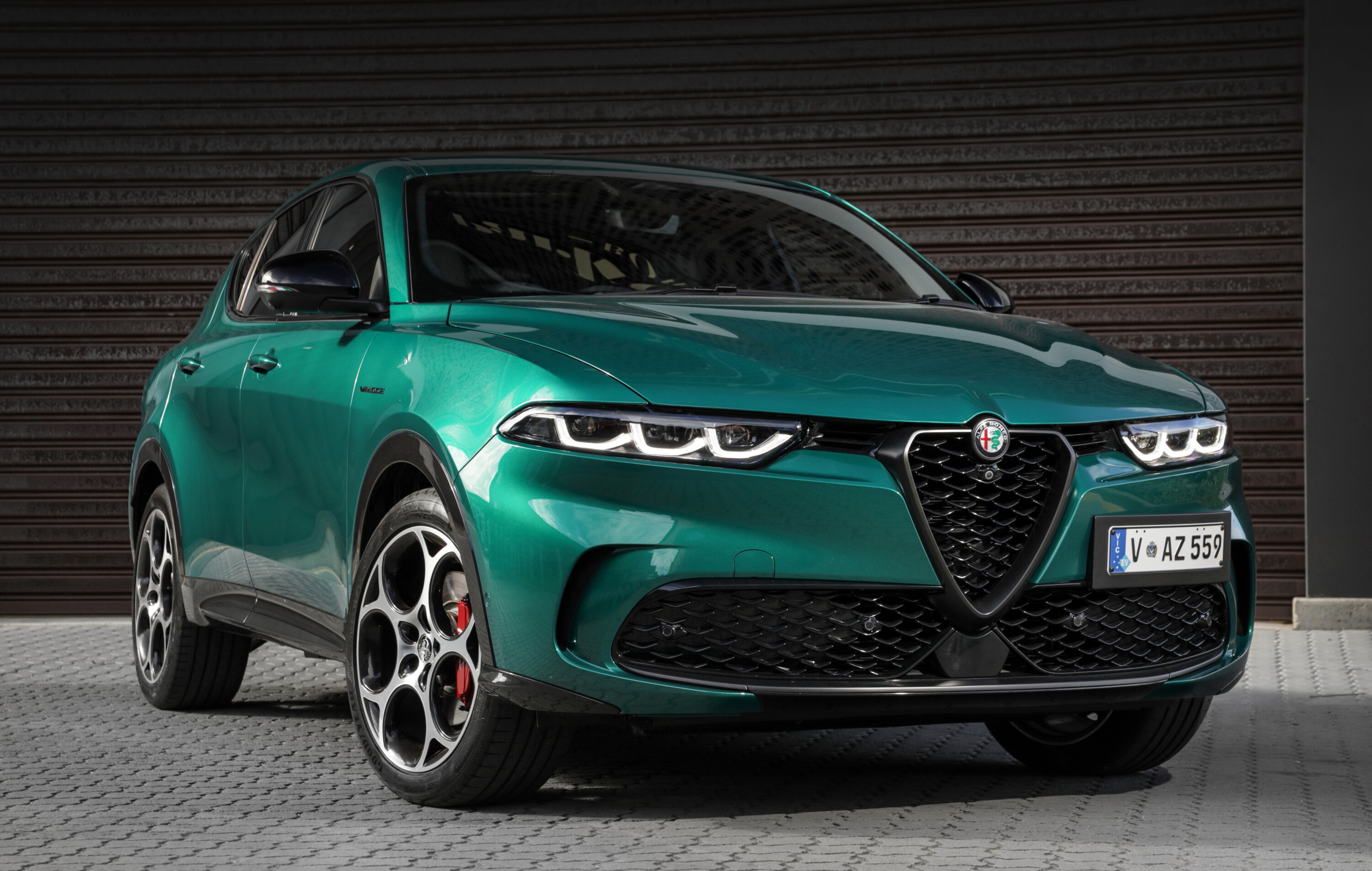
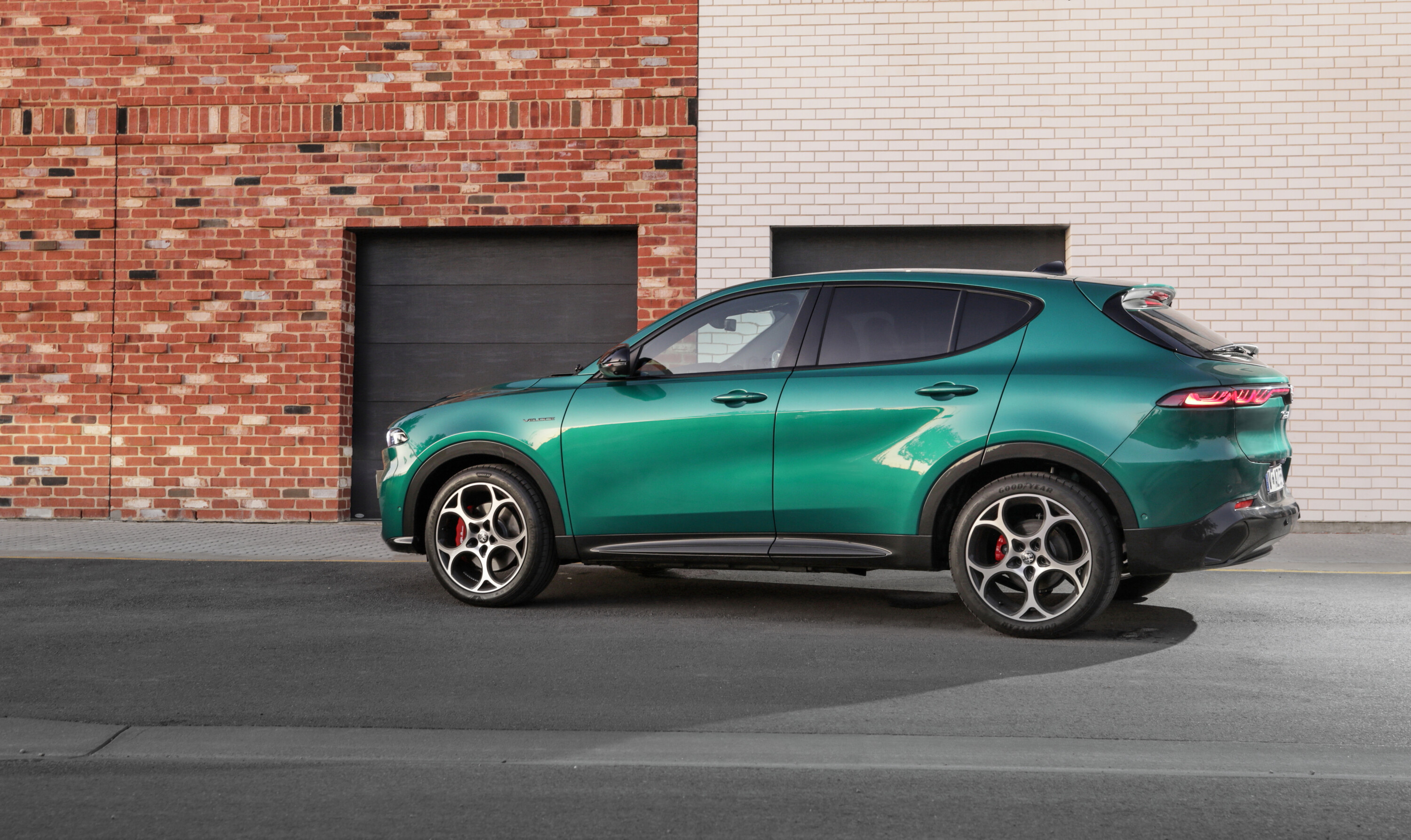
Alfa White is the only no-cost option paint finish available for the Tonale, with Alfa Red, Alfa Black (at some point somebody in the colour naming department ran out of imagination) complementing Vesuvio Grey and Misano Blue (all $1600 extra). Montreal Green tri-coat, a Veloce-exclusive paint finish, will set you back $2500 extra.
In terms of size, price and badge equity, you’d expect the rival set to ostensibly comprise the Audi Q3, BMW X1, Mercedes-Benz GLA, Lexus UX and Volvo XC40; each relatively compact five-seat SUVs with desirable badges that measure between 4400 and 4600mm from stem to stern.
The more perceptive among you will already have noted the caveat here. None are available as plug-in hybrids. Hybrids, maybe; EVs possibly, but you generally have to step up a class into something the size of a BMW X3, a Range Rover Evoque or an Audi Q5 to be offered the option of a plug-in hybrid model.
Given these start well into the six-figure bracket, who’s to say the Tonale PHEV is in any way overpriced?
1
You’ll pay $72K for a Mitsubishi Outlander PHEV of a broadly equivalent trim level, so maybe the asking price isn’t quite the issue many of us originally thought it was. Time will tell.
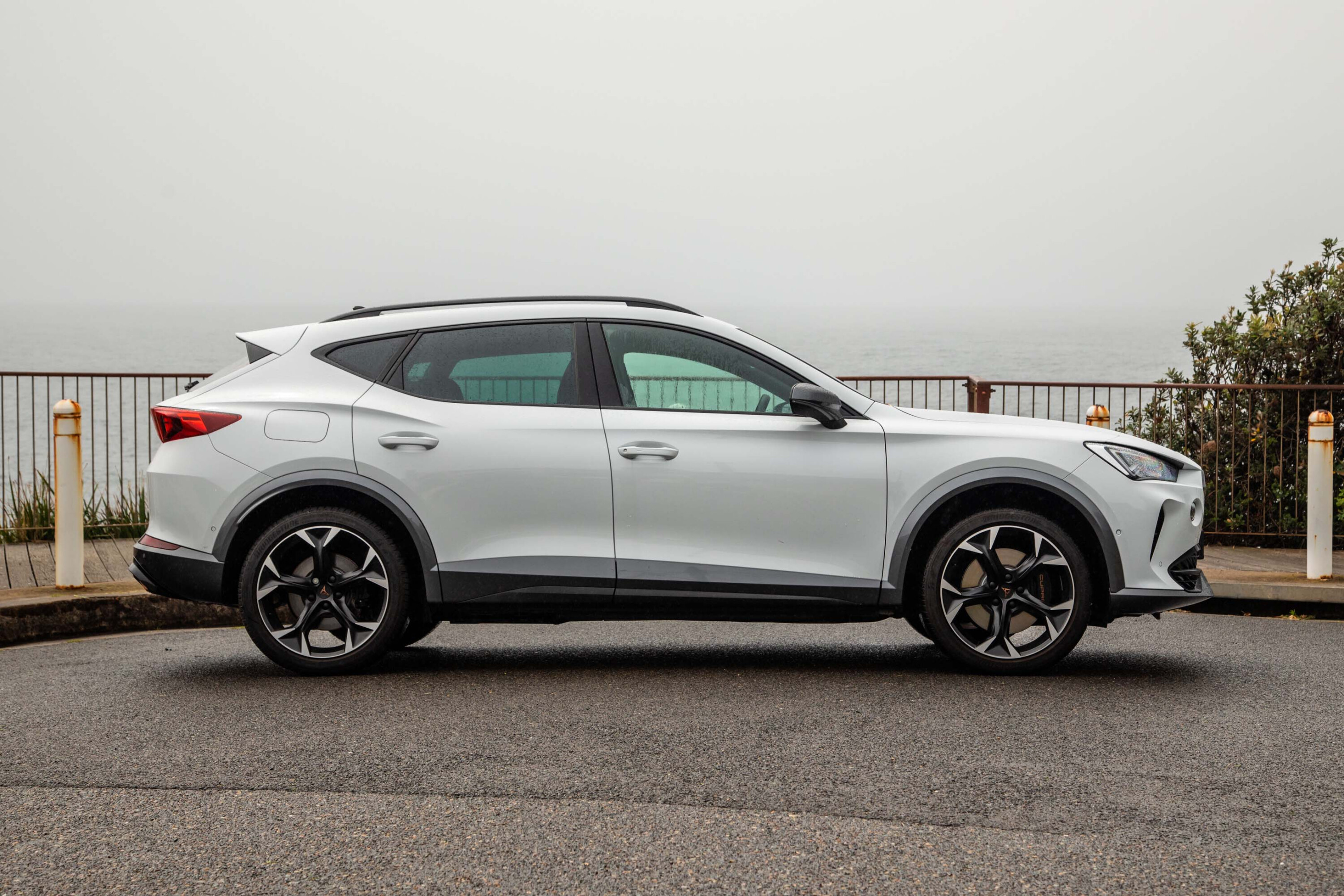
The most direct rival, on paper at least, is the $64,990 (excluding on-road costs) Cupra Formentor VZe. It’s neither as powerful nor as quick as the Alfa and sends drive exclusively through the front treads, but if you want a plug-in hybrid in this class, the Spanish car is an entirely credible and viable value pick.
An outlier in this group is probably the $81K Kia Sorento GT-Line PHEV, which appeals to a different audience than the Tonale. The Alfa’s more of a no kids yet/empty nester’s choice whereas the Korean seven-seater is resolutely family-oriented.
The Tonale is built on Stellantis‘ SCCS platform, a chassis that can be traced all the way back to the 2005 Fiat Grande Punto.
It also underpinned the likes of the Opel Corsa D and E, the Alfa MiTo, the Fiat 500X and even the Jeep Renegade. This version of the SCCS bones are stretched and broadened and dubbed ‘Small Wide 4×4 LWB’ and it sits under the Tonale, Jeep’s Compass and Commander as well as the Dodge Hornet and even the Ram Rampage ute.
Despite the chassis easing out the belt in two dimensions, the Tonale’s not a very big car. To give you some sense of scale, at 4528mm long, it’s 28mm longer than a BMW X1.
1
While the Alfa feels quite cosy up front, if you get your seat into the right position and try to climb behind, you’ll quickly come to realise that its 2637mm wheelbase is actually 30mm shorter than a Corolla‘s.
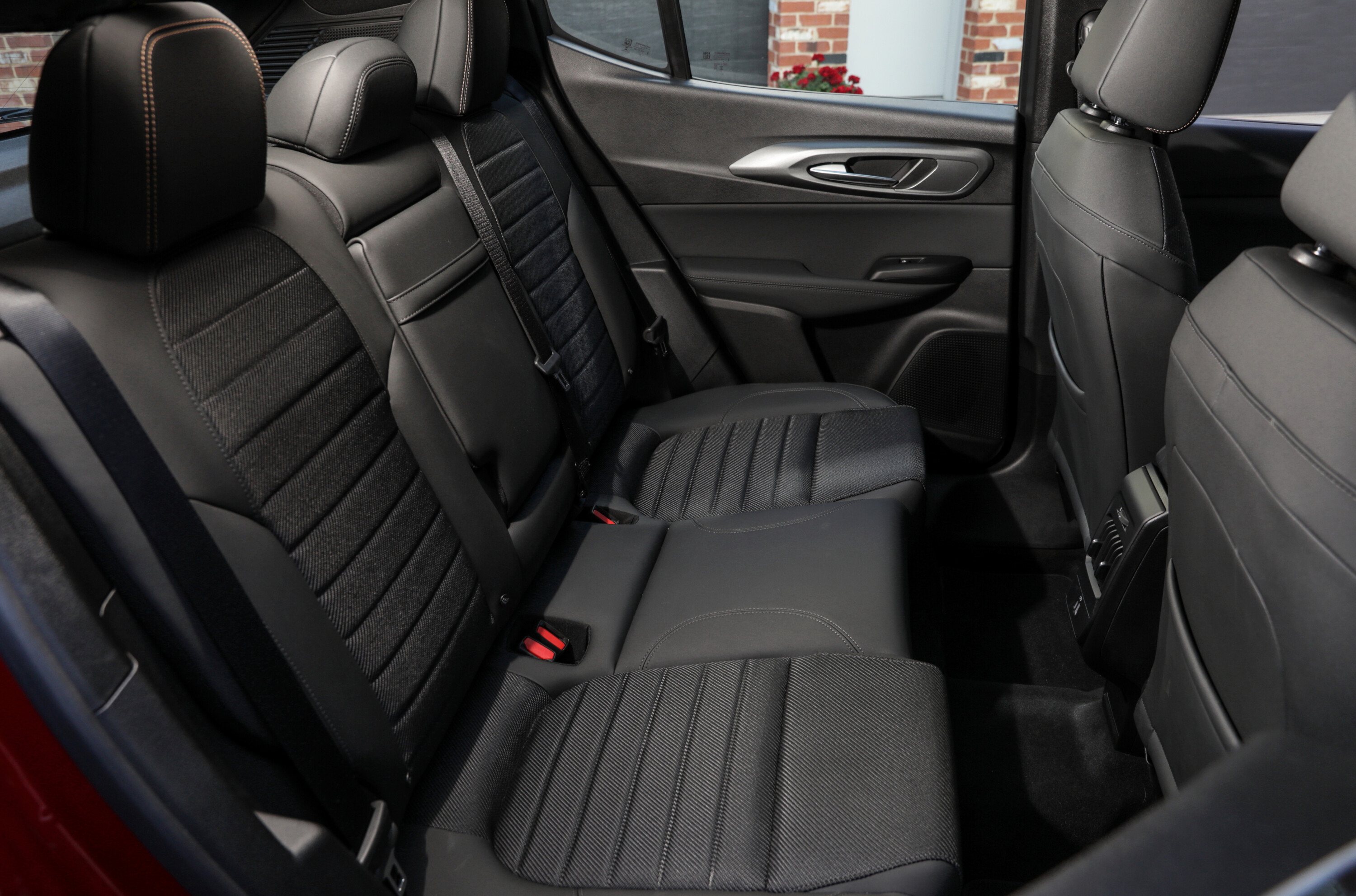
So it’s pretty squeezy back there. It’s not impractically tiny, and there are both USB-A and USB-C ports to fight over in the back as well as air vents, a retractable armrest and a through-load ski hatch. It just feels a little dark with the high window line and black leather trim.
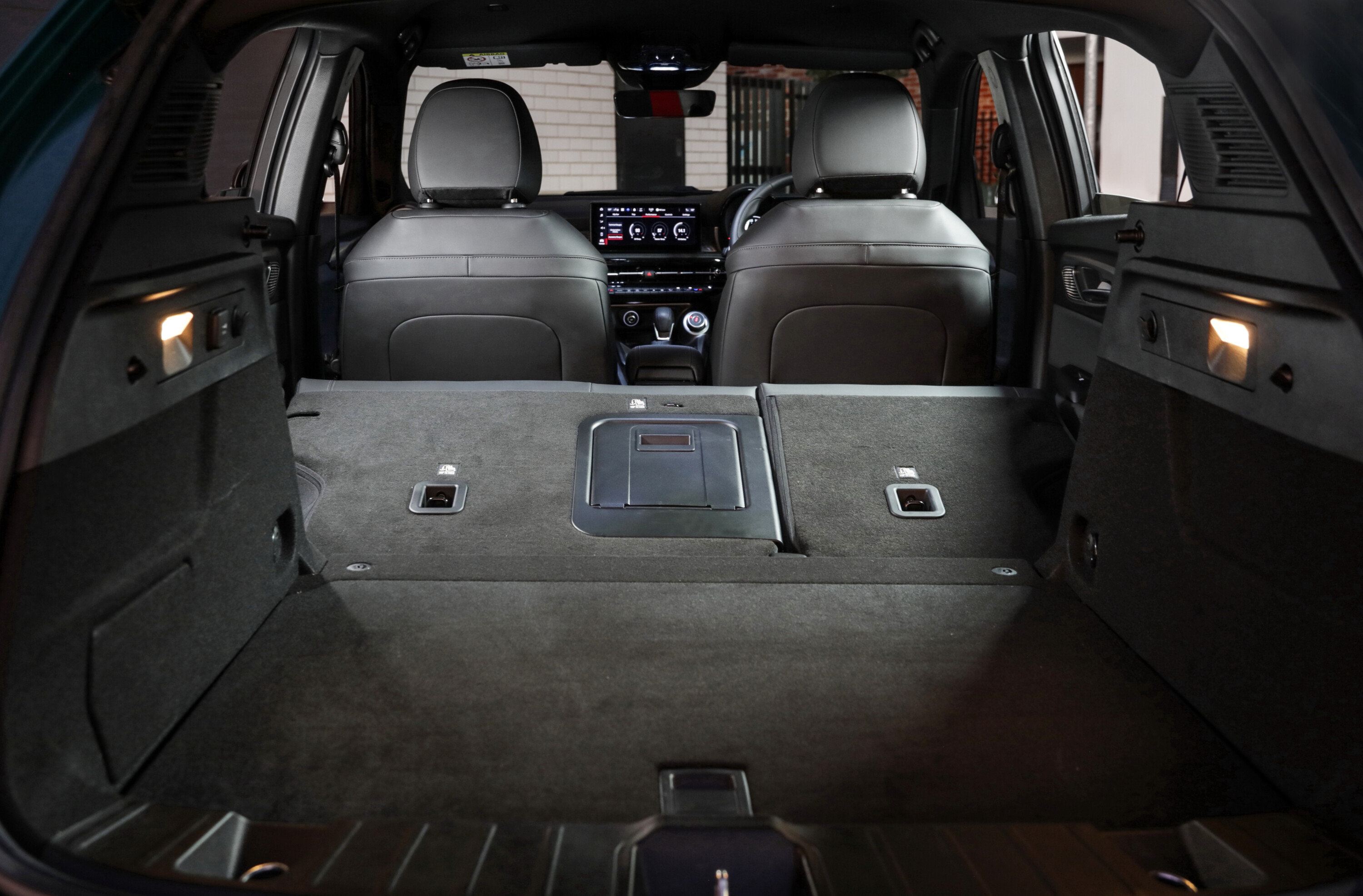
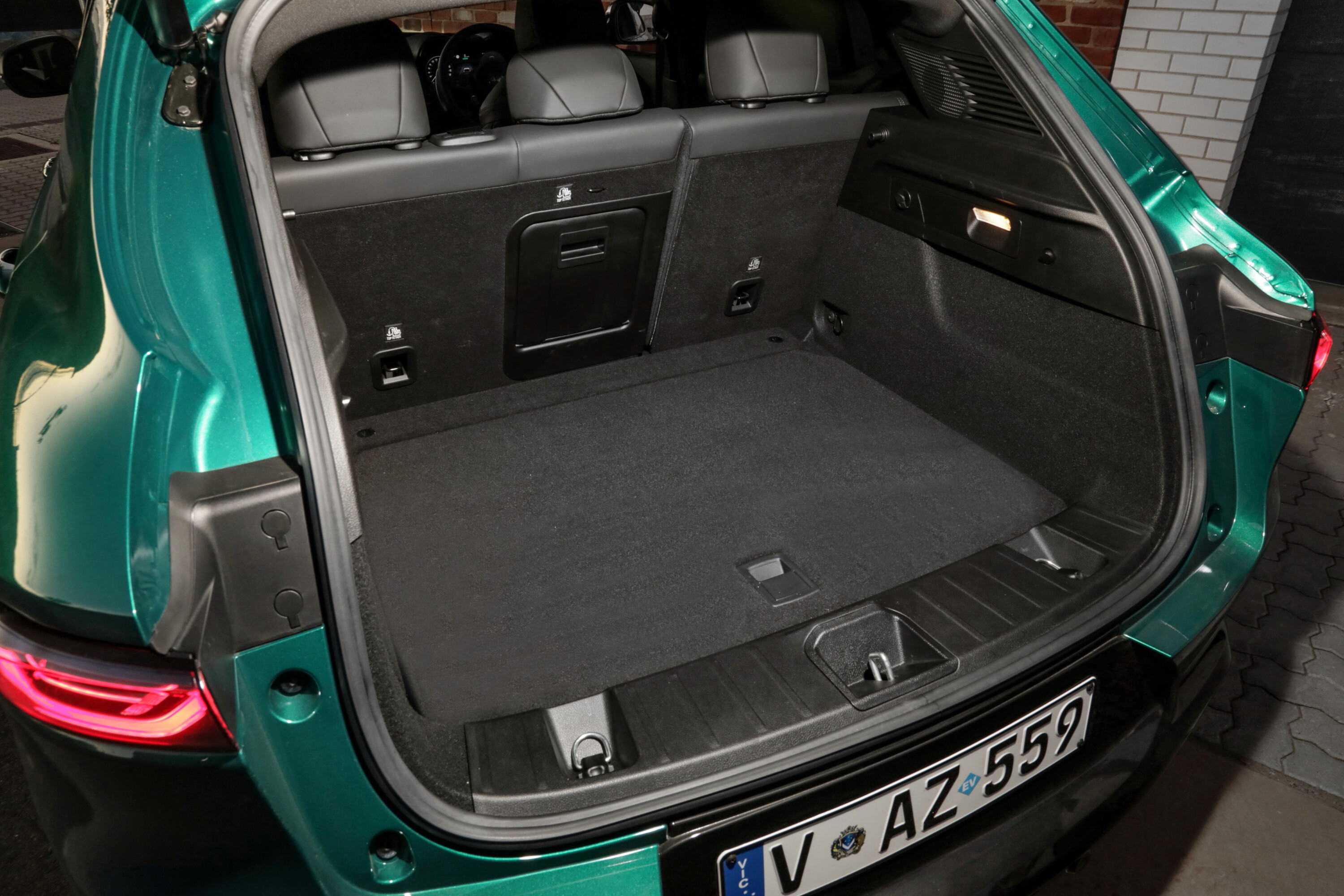
There’s also a penalty to pay for the all-wheel drive system and that’s a higher boot floor. This limits the storage space to 385 litres beneath the parcel shelf, although it extends to 1430 litres if you flip the 60:40 split rear bench down.
1
This vehicle is more about the front-seat occupants, however, and they’re well catered for.
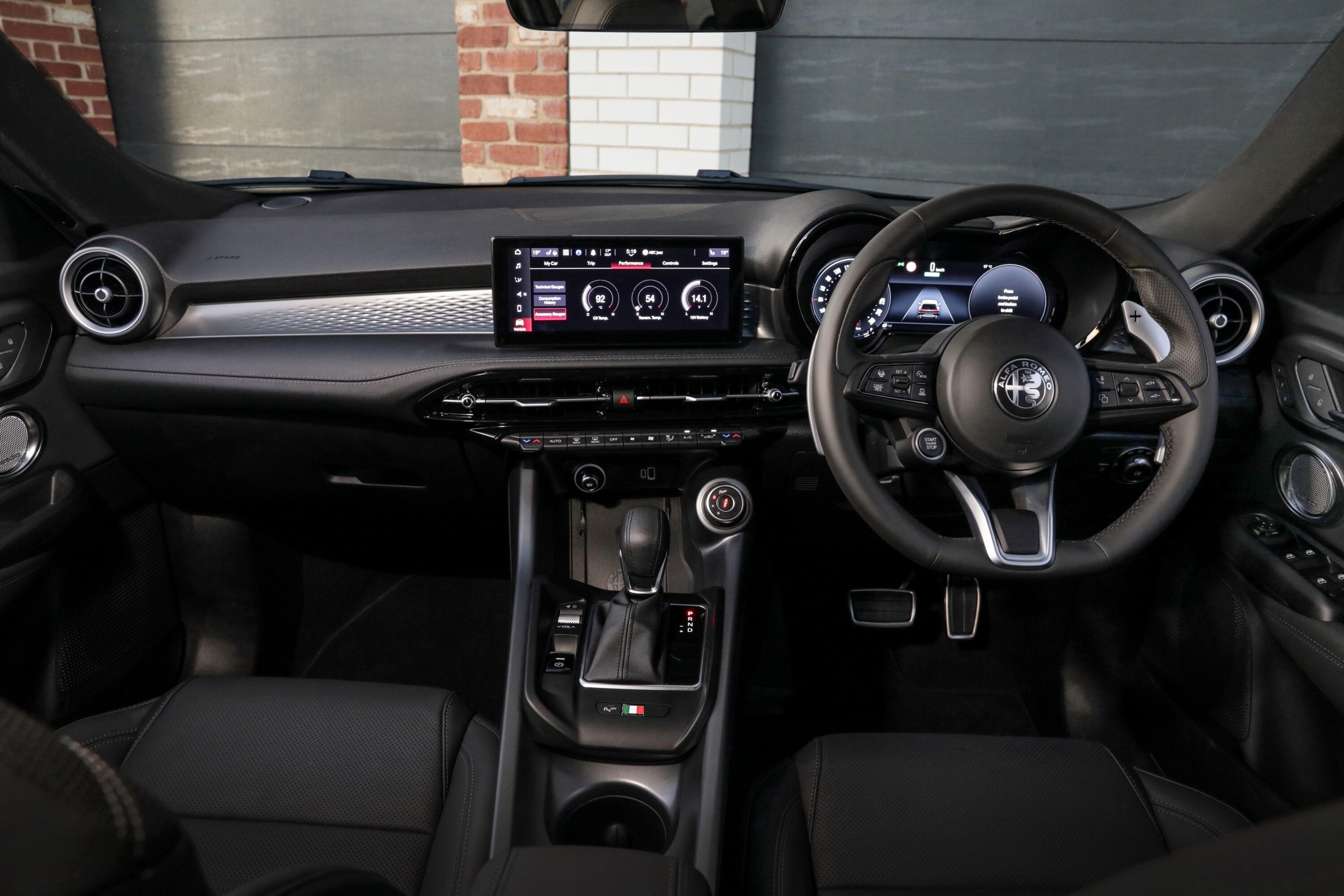
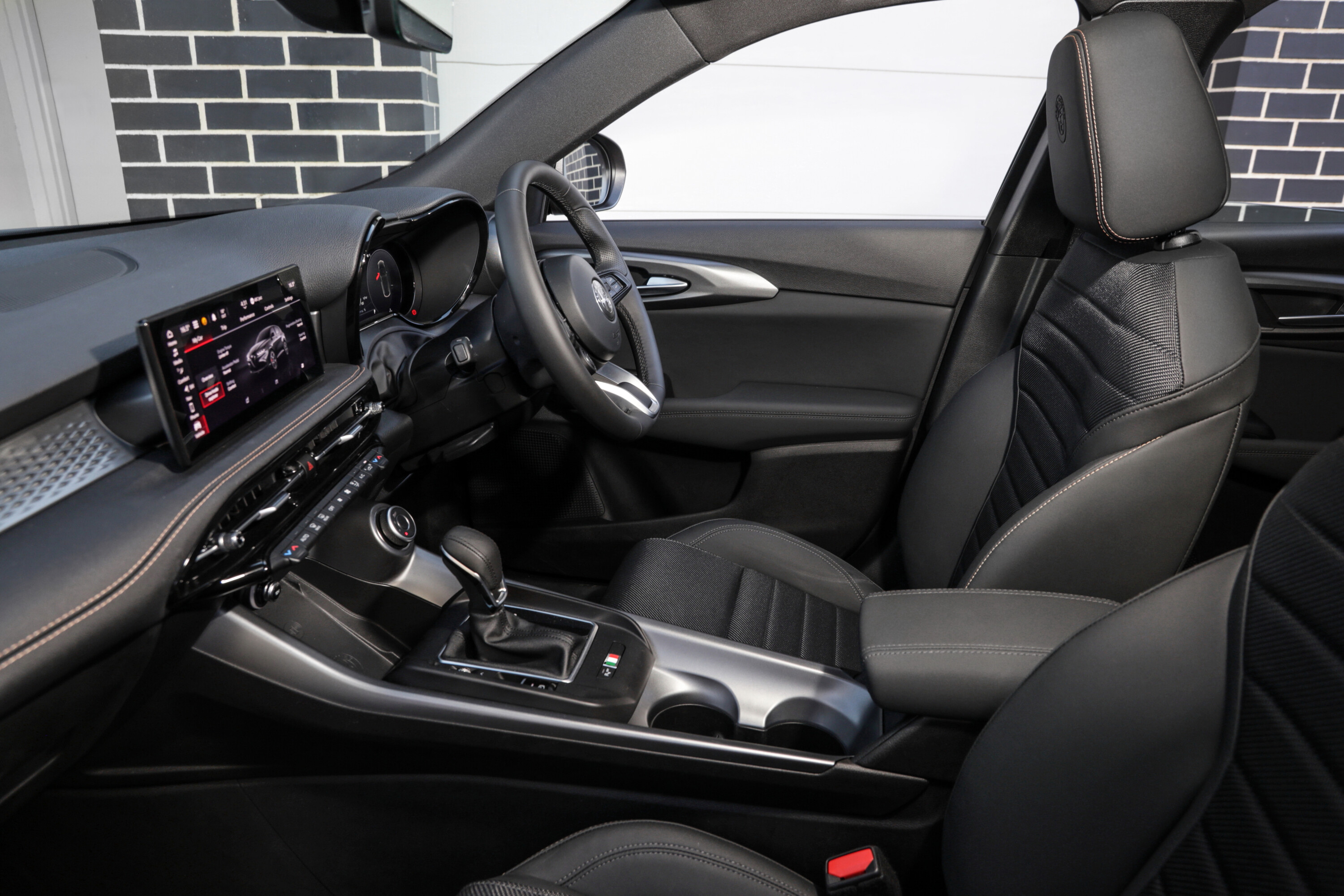
Its dash design is typically Alfa, with flared cowlings above the instrument pack and dashes of the Italian Tricolore contrasting with some very impressive quality finishes.
The sports seats deserve special mention, as they are supportive, they look great and they’re absolutely what you’d expect to find if you’d bought into the Alfa heritage.
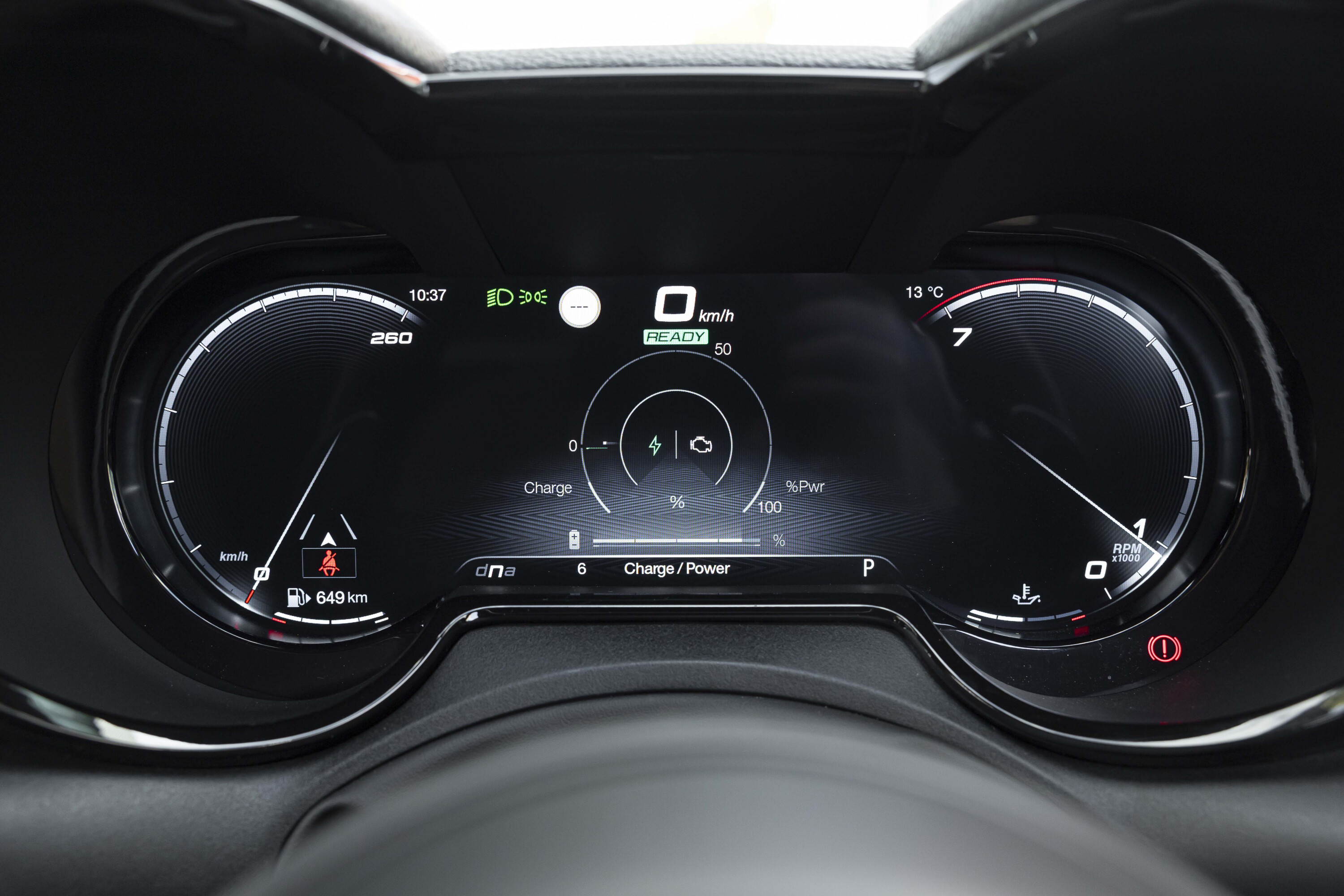
I’m not particularly sold on the instrument panel. In short, there’s a lot going on, with power meters and various other PHEV-specific gauges that are both unclear and broadly unhelpful even when you’ve taken the time to figure out what they’re trying to communicate.
1
I’m not convinced by the calibration of the DNA dial either. A plug-in hybrid should be able to very easily perform three functions: build charge in the battery, hold existing charge in the battery and absolutely rinse everything when you need full power.
Switching between those functions very clearly and easily ought to be the very first prerequisite when designing the user interface but with the Tonale, it’s all a little cryptic.
It’s not helped by the fact that the electronics in our test car were somewhat glitchy, rebooting the system spontaneously on occasion, freezing on others and constantly flashing messages that a phone was on the wireless charger which required a manual cleardown. Buyers in this class expect things to work and issues like this erode confidence.
The question I was asked more than any other after driving the Tonale PHEV was “Does it feel like an Alfa to drive?”
The answer to that is, annoyingly, ‘it depends’. Some elements of the Tonale’s genetics feel very Alfa. It rides tautly, which is why I’d counsel caution before ticking the options box for 20-inch alloys.
It certainly has some spirit if you switch the DNA mode dial to Dynamic and clog the throttle. The little 1.3-litre four sings its heart out and it’s all very invigorating. You could imagine zipping around the streets of Florence in one of these and feeling very pleased at having won the holiday hire car lottery.
1
All is not completely rosy, however. With both an engine and two motors plus a 15.5kWh battery pack to lug up the road, the Tonale Q4 is a heavy car.
Not heavy by the standards of EVs, but at 1835kg it weighs as much as, say, a Mercedes-Benz GLC 300. You’ll feel that heft the moment you throw it into a corner. Roll is generally well controlled, but the flip side is that the Tonale rapidly lapses into understeer, which the stability control system manfully tries to bring back into line.
The Tonale’s suspended front and rear on MacPherson struts, a rare layout for a car of this ilk, but it seems to work for a Porsche Cayman GT4. Another slight oddity is that despite being 320kg heavier than the regular hybrid, it uses smaller front brake discs (305x25mm versus 330x28mm).
1
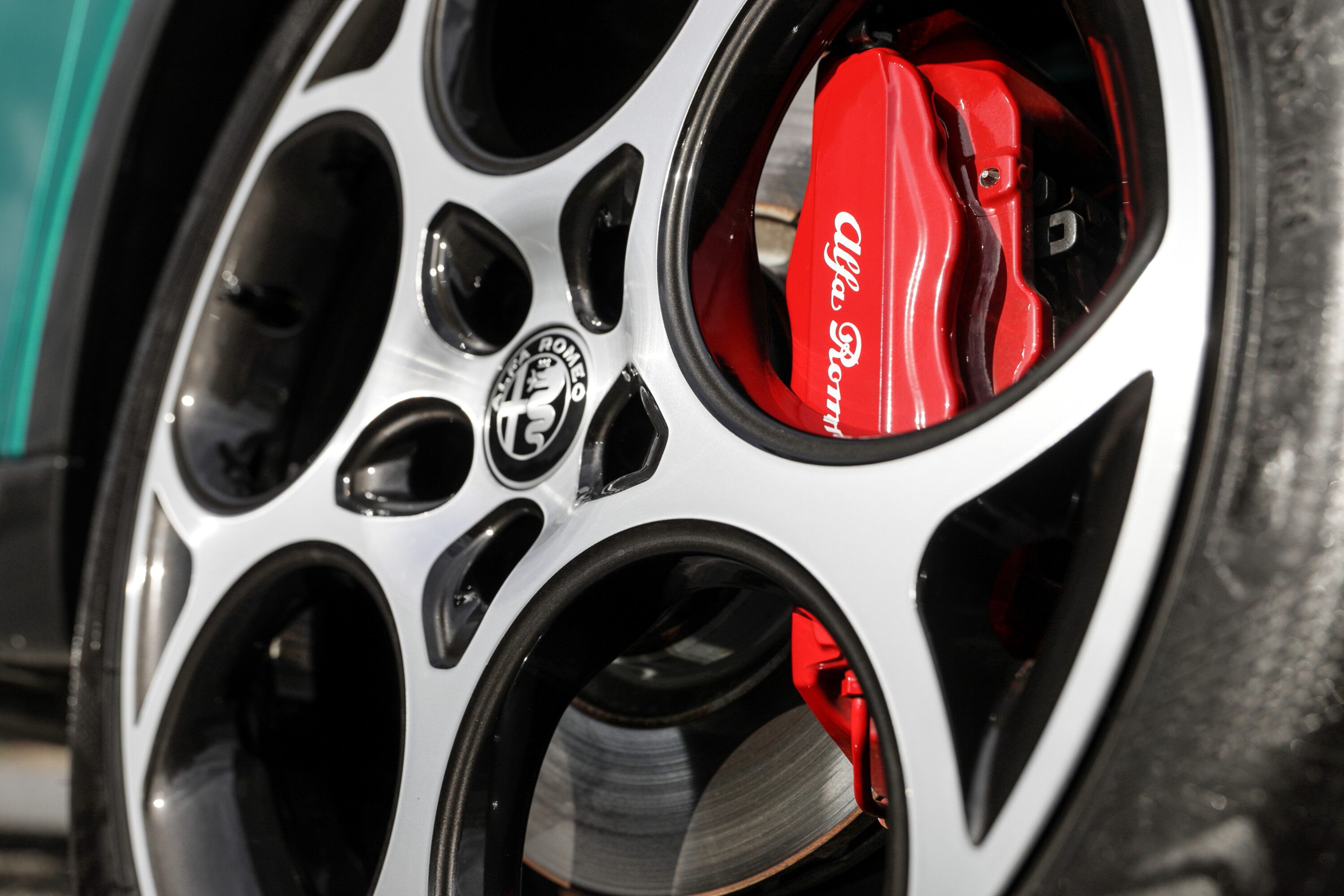
Part of the reasoning behind this is that regenerative braking takes up a percentage of deceleration duties, the other being that the regular hybrid uses a wholly basic single-piston floating caliper whereas the Q4 Veloce gets the meaty Brembo four-piston fixed items.
Any kind of typically Alfa-style ‘enthusiastic’ driving seems frowned upon. Tread on the brake pedal with any degree of brio and the car starts flashing its hazard lights as if you’ve performed some sort of socially reprehensible act.
The steering is also rather odd. If, like me, you grew up on a steady diet of Alfa Romeos, you expect decent steering. The Tonale’s is almost entirely devoid of feel when the vehicle is switched into its fuel-sipping Advance Efficiency mode. Granted, an early Corolla Sportivo is worse, but other than that, the only other steering system that I can think of that offers less feel is a vintage Atari Pole Position arcade game.
Things improve by twisting the dial into Dynamic. This brings some additional weight to the wheel, but not a great deal of detailed feedback.
1
You also get the option of switching the frequency-selective dampers into a softer mode, which helps improve grip a little on a twisty road. In this setup, the Tonale feels quite entertaining, but it’s still hard to mask all that weight.
The key issue that afflicts the Tonale Q4 is that you never quite know what the car’s doing beneath you. Pay attention, because this is like the science bit you find in shampoo commercials, but the drive system boils down to this:
Up front, there’s the 1.3-litre engine which, on its own, makes 132kW and 270Nm. That’s mated to a six-speed automatic transmission and it drives the front axle. So far so conventional.
At the back, there’s a 90kW electric motor that drives the rear axle, hence all-wheel drive. Software handles the coordination of front and back, shuffling charge in and out of the 15.5kWh CATL nickel-manganese-cobalt battery that sits beneath the centre tunnel and rear seat, adding 118kg to the car’s kerb weight.
1
The Tonale can therefore be front-drive, rear-drive, a mix of both and, by extension, petrol-driven, electrically powered or a blend of both.
It’s clear this is a car that’s going to reward you for getting to know it over an extended period, but with just a day at the controls, it’s not always intuitive or predictable that, in terms of handling, input A is going to invariably result in outcome B.
This erodes initial trust in the platform a little but, I’d like to restate that learning the dynamic complexities of the Tonale Q4 would be a fascinating and doubtless rewarding exercise.
What you’re never going to be able to learn your way around, though, is basic physics. If you are a genuinely keen driver, I’d be tempted to skip the Q4 PHEV. Buy something lighter and more agile and pocket the savings.
Read the press bumf that comes with the Tonale Q4 and fuel economy is a claimed 1.1-1.4L/100km. This is clearly nonsense in real-world conditions, but identifying the use case for those real-world conditions can be surprisingly tricky.
It’s easy to be overly cynical. The quoted range of the Tonale’s battery is 60km when fully charged, a process that, due to the battery’s modest size, can be accomplished overnight on a normal three-pin plug.
Fully expecting Alfa’s range claim to deliver 30-40km when driving the Tonale ‘normally’, I was surprised and delighted when a 40km backroads blat followed up with a 35km freeway drive resulted in the engine only coughing into life on the very last kilometre of my 75km round trip from work to home and back (and, annoyingly, when trying to reverse silently up my steep driveway).
1
That means that, for the vast majority of Aussies looking to use this car for their daily commute to work, petrol bills will, during the working week, probably amount to zero.
An obvious attraction of a plug-in hybrid is that during the weekend you’re not hampered by range anxiety, plotting charging points or any of that drudgery. Even when the battery’s depleted, you still have more than 530km of range from the petrol tank. That’s impressive.
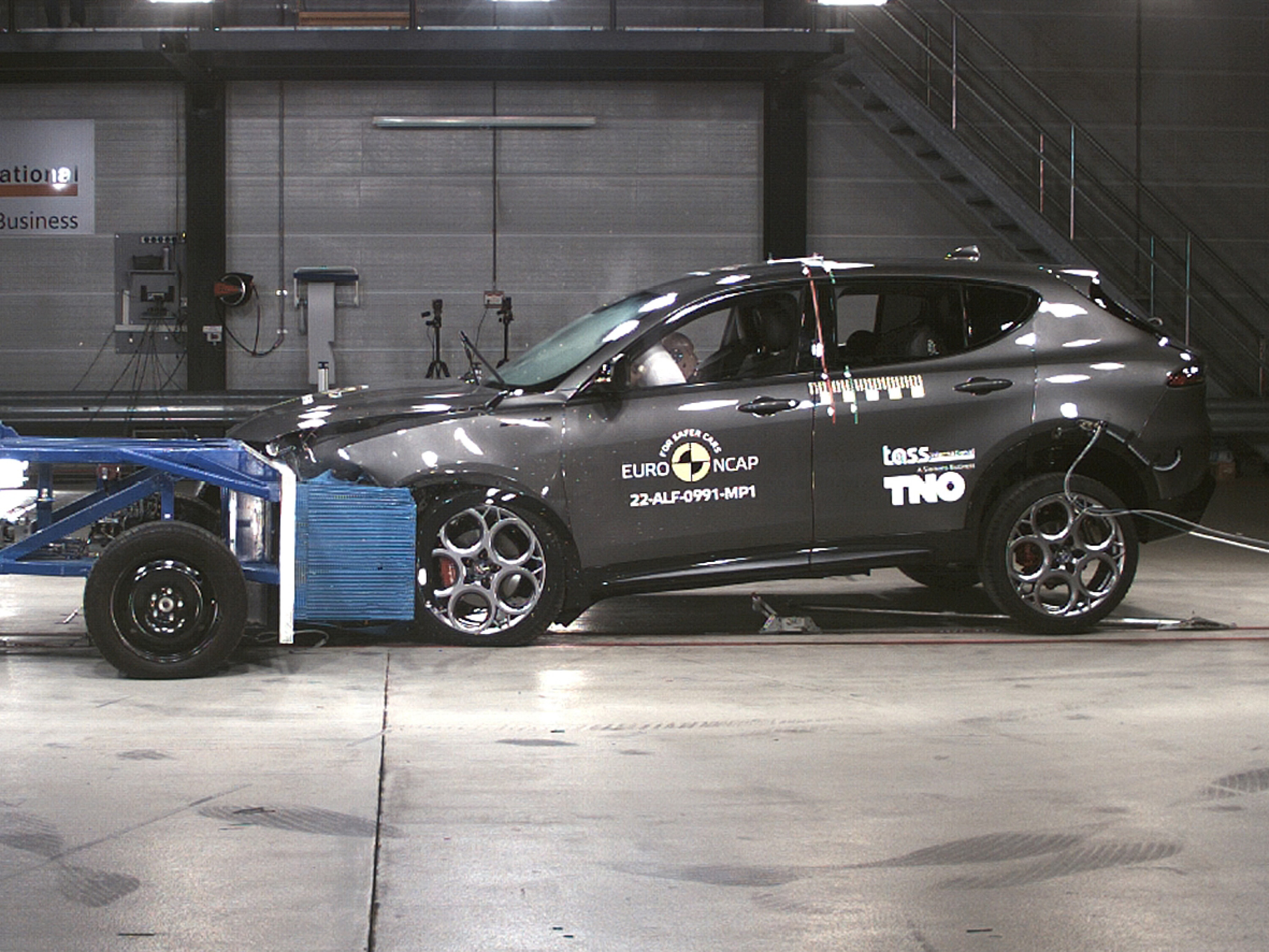
Equally impressive is the Tonale’s five-star Euro NCAP rating, which featured an 83 per cent score for adult occupant protection, 85 percent for safety assist systems, another 85 per cent for child occupant protection and 66 per cent for vulnerable road user protection.
The car has yet to be officially rated by ANCAP, although its mild hybrid sibling netted five stars in 2022, a rating that is valid until December 2028.
A long list of standard safety equipment comes with the Q4, some items of which are fitted to no other Tonale model.
Like all new Alfa Romeos, the Tonale Q4 gets a five-year, unlimited-kilometre warranty backed up with a roadside assist package of the same duration. The battery’s covered by an eight-year/160,000km deal.
Service intervals are pitched at 15,000km or 12 months, whichever arrives first.
The Alfa Romeo Tonale Q4 emerges as a vehicle that is in parts fascinating, frustrating and admirable.
You will read many reviews that either proclaim it as a worthy vehicle of the Alfa tradition or one that doesn’t live up to the Alfa tradition. Ignore them. The Tonale is a car that needs to break with Alfa tradition. The old way hasn’t sold cars for forty years and, in order to earn some relevance, Alfa Romeo needs to be more of a mainstream player and less of a niche badge.
This is absolutely key to assessing this vehicle. Were it not for the firm ride quality and the largely predictable visual tropes inside, this could be a car from one of twenty different manufacturers.
1
Manufacturers who know how to build a solid, technologically-dense compact SUV that doesn’t feel built down to a price.
That, in itself, is a measure of success for Alfa and credit to the quality control procedures at the Pomigliano d’Arco plant in Naples.
It is a step in the right direction but the journey isn’t over yet and several niggles remain. The overarching question of what an Alfa Romeo is in 2024 is only partially answered here.
1
It’s no longer a car that appeals to a vanishing constituency of sentimental tragics who are willing to put up with abysmal build quality and a slipshod customer experience.
Mainstreaming Alfa won’t take the magic away, it ought to merely round out a previously patchy skillset.
Who does the Tonale Q4 suit? It’s somebody who can make the most of its plug-in capabilities and values the badge cachet. It’s no longer necessarily someone who wants to corner on the door handles.
The idea of making a left-field choice without being punished for it is a seductive one and it’s into this somewhat Volvo-shaped void that Alfa Romeo now finds itself sidling. We wish it all the very best.
The Tonale Q4 features a peak 7.4kW AC charging rate which means zero to 100% in less than 2.5 hours.
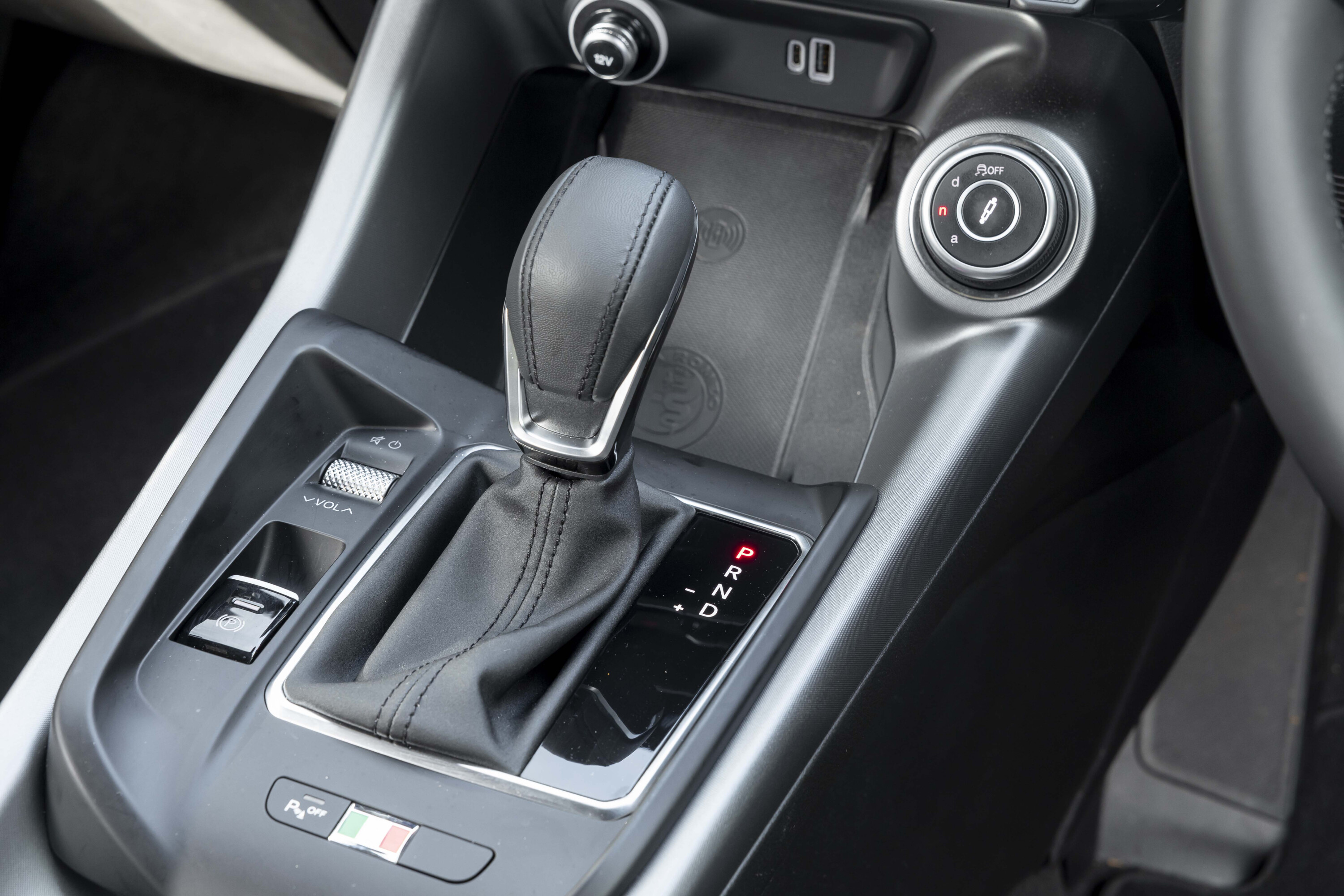
Yes. Flick the gear selector across and you can use the big, metal paddles either side of the steering column. There is an automatic override on the transmission, so if you’re about to hit the rev limiter, it’ll snick up a gear and if your revs drop to a point where stalling is a possibility, the system will snick down a gear or two.
Only up to a point. You don’t ever experience the sort of hard re-gen you can attain in a Hyundai or a Ford EV, for example. Most of the time, when you throttle-off in the Tonale Q4, it feels as if the car is sailing and barely decelerating at all. That takes a bit of getting used to.
In theory, 135km/h. I didn’t attempt to verify that claim.
Maybe. Thing is, it works and works well. Such is the Tonale Q4’s huge spread of electrically-assisted torque that you really don’t need a stack of ratios that the software then gets in a tizz trying to figure out which one it ought to be in.
The fritzy notifications of a wireless handset on the charger got old very quickly. Other than that, very little.
I liked the no-nonsense way that the Tonale booted into wireless Android Auto and held a steady connection. Also the feeling of solidity in the cabin was a very welcome surprise. I’ve been in similarly-priced Audis where the materials felt a grade or three below this Tonale.
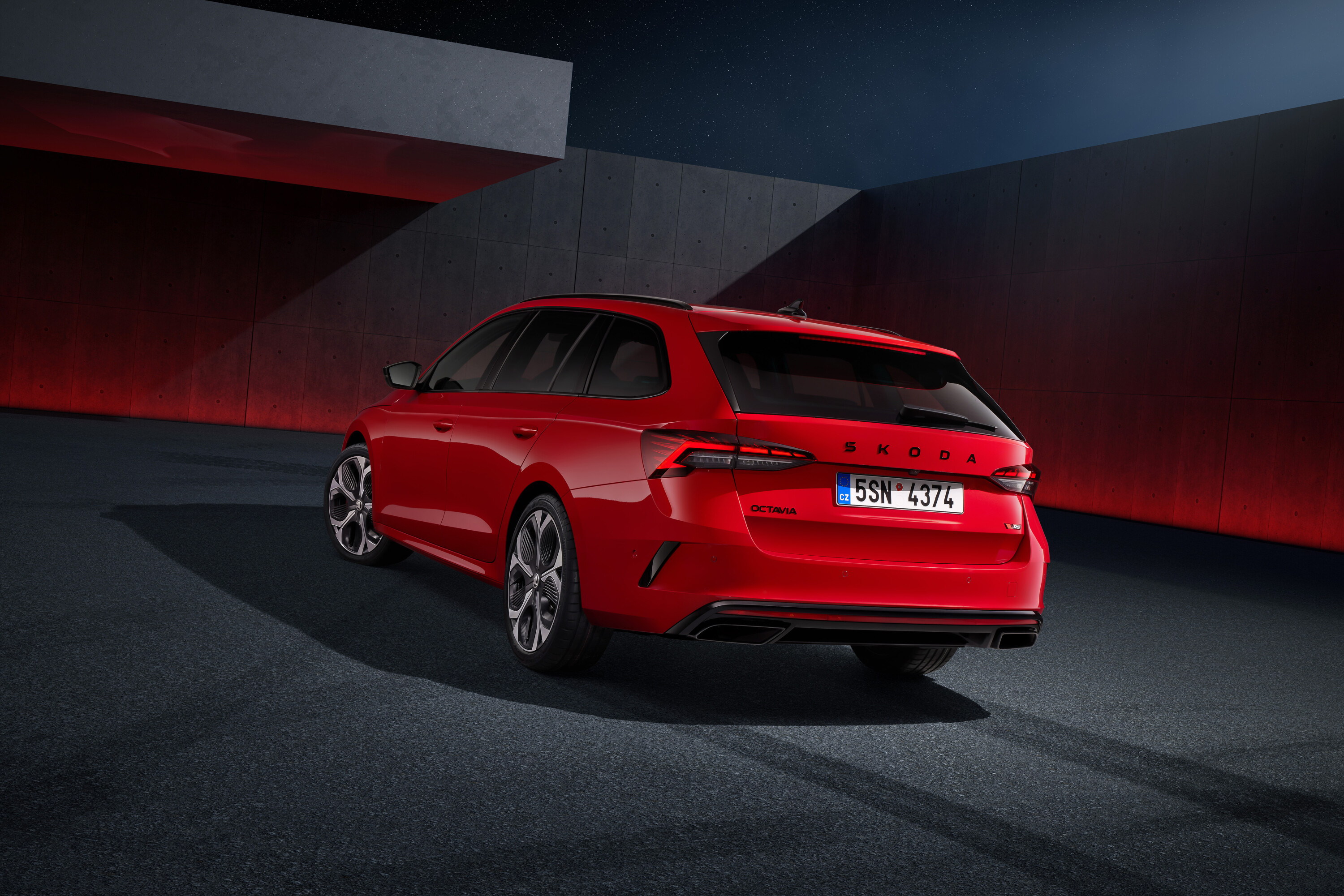
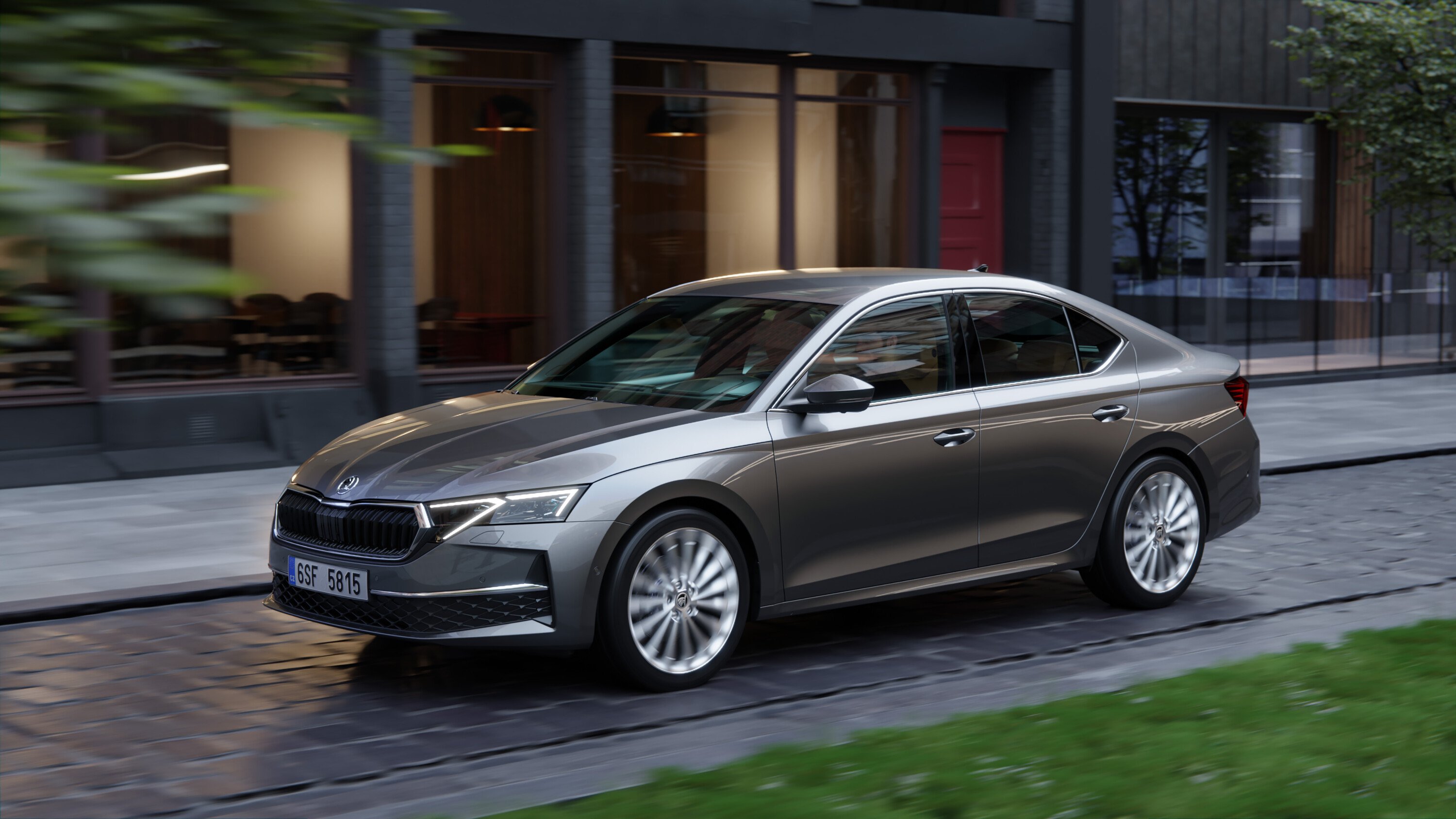
The facelifted 2025 Skoda Octavia has debuted with an updated look, added technology, and more power for the flagship RS variant.
Wheels has reached out to Skoda Australia for comment about local timing for the updated Octavia.
However, it will likely follow the facelifted Mk8.5 version of the heavily related Volkswagen Golf hatch, which is set to enter production for our market in Germany between October and December ahead of first arrivals due at the start of 2025. The Skoda Octavia is built in the Czech Republic.
1
Exterior design changes include redesigned headlights with a new daytime running light signature extending outside the main light unit towards a reshaped grille.
It also features second-generation matrix LED technology, which increases the number of individual segments in the main beam from 12 to 36. The fog lamps have been deleted from the lower bumper and replaced with an ‘all-weather’ function for the headlamps.
The updated Octavia also sports revised front and rear bumpers that make the liftback and wagon nine millimetres longer than before, as well as updated tail-lights with animated indicators, new alloy wheel designs, and updated Skoda badging.
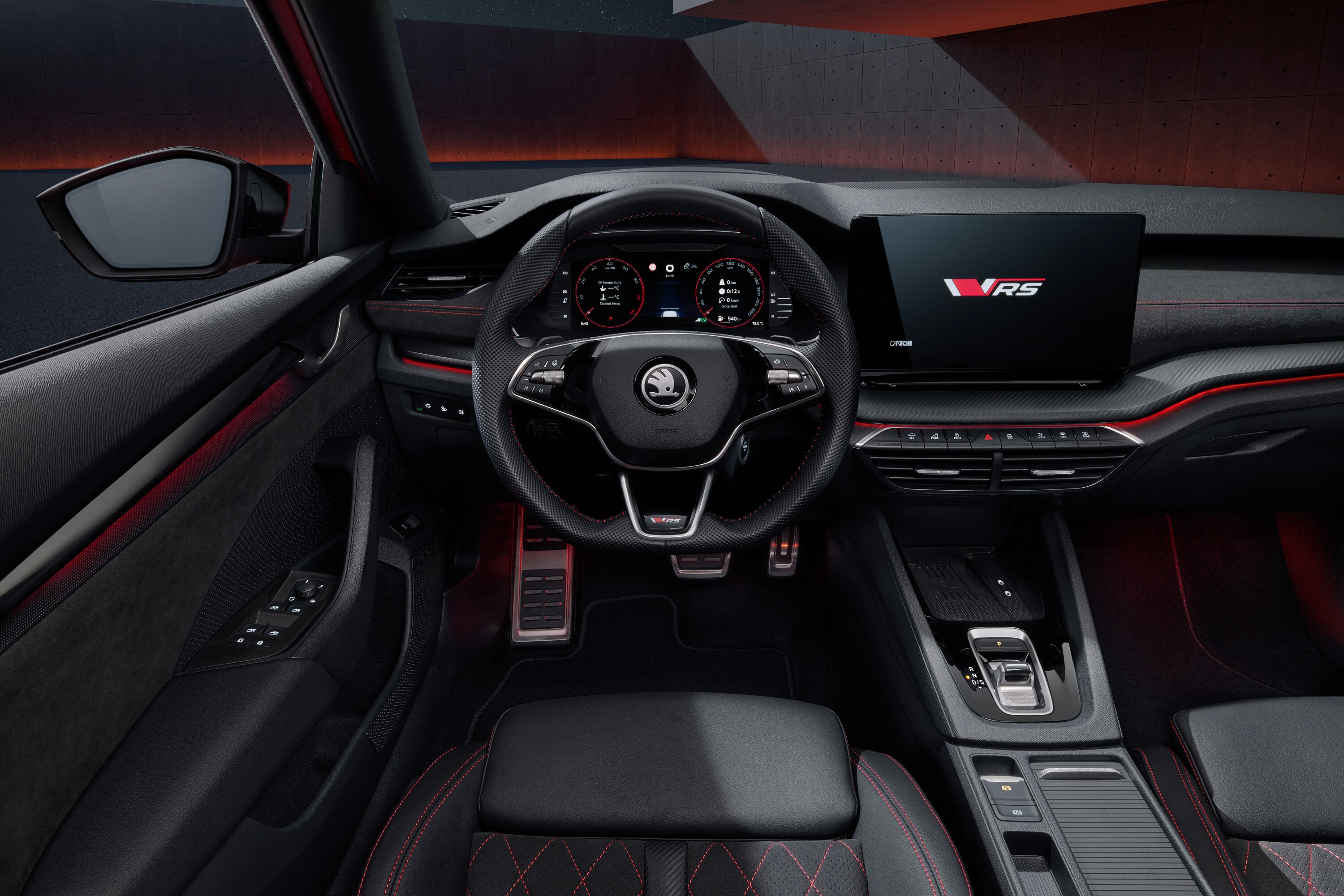
Inside, the Octavia receives an available 13-inch floating touchscreen – up from 10.0-inch in current models – running the brand’s latest infotainment system, which adds ChatGPT artificial intelligence within its built-in ‘Laura’ voice assistant.
1
The USB-C charge ports are now three times more powerful at 45 watts, while an improved keyless entry system can automatically lock and unlock the car when the driver is within 1.5 metres of the car while carrying the key.
The Octavia’s automatic parking system has been updated to also control acceleration and braking, while owners can control the vehicle in and out of parking spaces using a phone app in some markets.
It also has more sustainable materials and darkened interior trim, while its ‘simply clever’ features have been updated to include a new automatic retractable luggage compartment cover for the wagon, a dedicated storage box to hold rear passenger items, and the optional tablet holder can now be affixed to models with sports seats.
Updated active safety technology includes more advanced traffic sign recognition and more precise driver drowsiness detection which now monitors “information from various vehicle control units, such as lane assist” in addition to steering inputs.
1
Traffic sign recognition is currently unavailable in Australia – but this technology is making its first appearance in the facelifted VW Touareg due in April and could arrive in further vehicles from Volkswagen, Skoda and Cupra in due course.
The Octavia RS receives a power bump in Europe, with outputs for the 2.0-litre ‘EA888’ turbo-petrol bumped from 180kW to 195kW. Torque remains at 370Nm.
Skoda has adopted an updated Atkinson engine cycle, known as the ‘Budack cycle’, for the 2.0-litre turbo-petrol which is said to improve efficiency.
1
The Octavia RS also has a new genuine sport exhaust with black tailpipes and improved engine software for improved sound by increasing revs at start-up and “more enjoyment” in the sport drive mode.
Mid-range Octavia variants fitted with a less-powerful version of the 2.0-litre turbo-petrol – which was available in Australia in 2021 in a limited-run variant – increases from 140kW to 150kW in Europe. Skoda Australia has no current plans to offer this powertrain.
The 2025 Skoda Octavia is expected to arrive in Australia in the first months of next year, with local details to be confirmed closer to its launch.
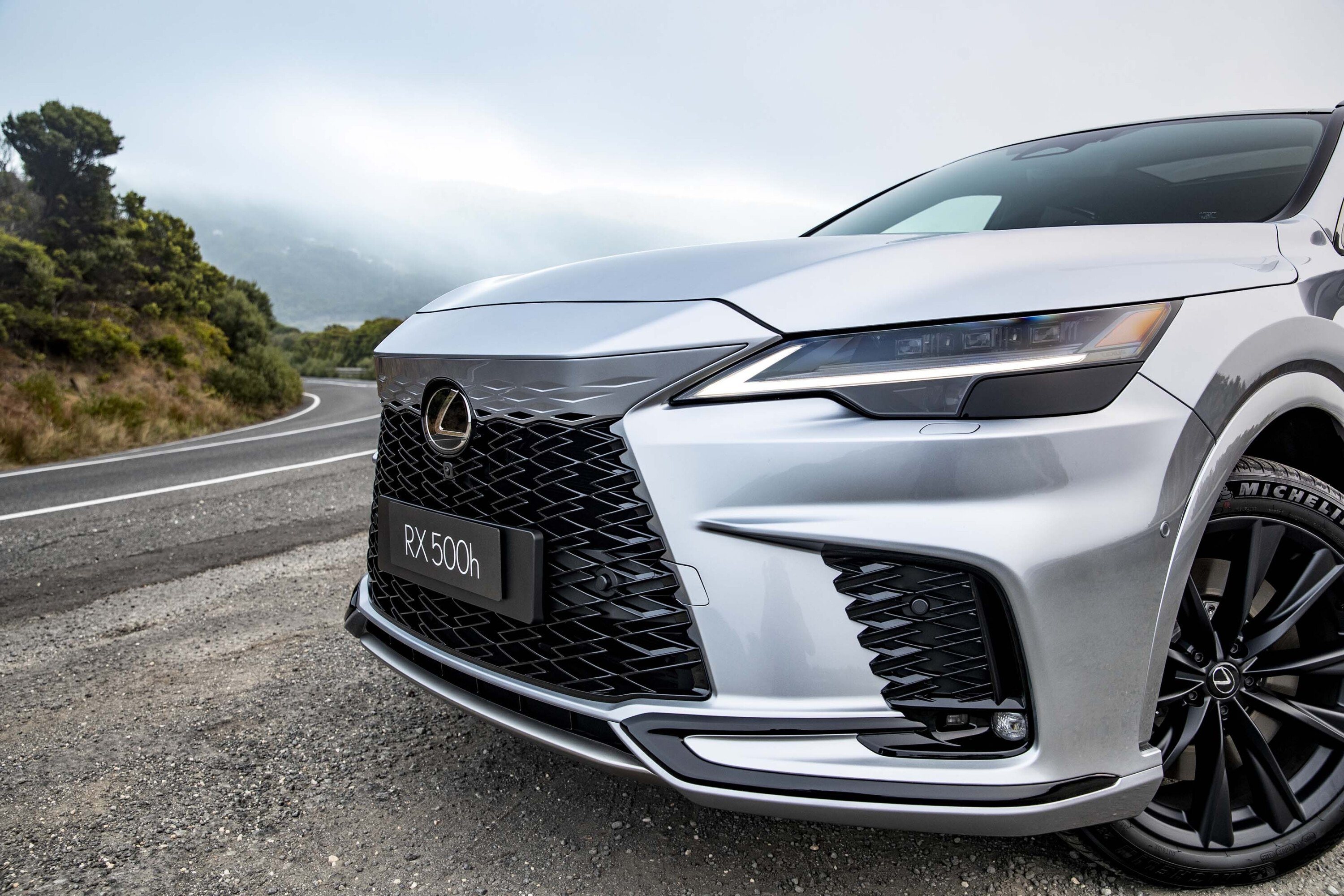
Introducing the Lexus RX 500h, the epitome of luxury and efficiency within the esteemed Lexus RX lineup.
As a distinguished member of the Lexus family, the 500h F Sport sits atop the RX line-up as the models most sporty variant, yet still as a hybrid.
In a competitive landscape filled with luxury SUVs, the RX 500h emerges as a true standout, if you’re not looking at insane performance figures.
1
Pricing and features
The range-topping Lexus RX 500h sits at an $7,700 premium to its one spot below sibling the 350h AWD Sports Luxury (including both the available enhancement packs) at $128,050 before on-road costs.
Powering the family SUV is a 2.4-litre turbo petrol engine producing 273kW. As we’re used to, Lexus doesn’t quote a combines torque figure however the petrol engine alone provides a commendable 460Nm– using a claimed 6.5L/100km.
The fifth-generation update saw dimensional growth in almost every direction. This means the current RX offers ample space, especially in the rear with 612L available.
1
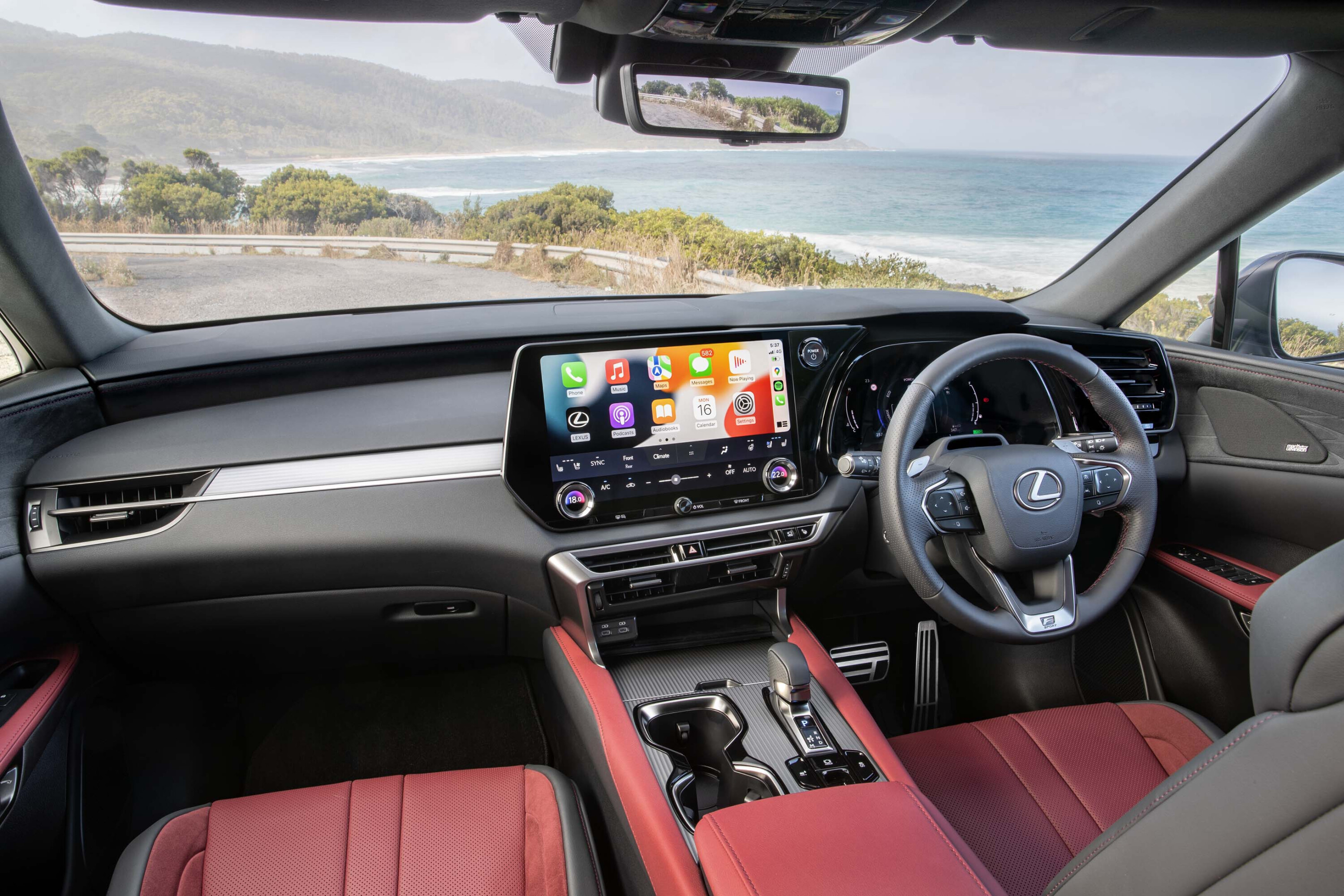
Spanning 14-inches, this infotainment screen ranks among the largest in its class. Powered by the brand’s latest user interface and software, the display is straightforward with a robust feature set and operates smoothly.
In addition to built-in navigation, the system offers wireless Apple CarPlay, wired Android Auto, DAB+ radio and a three-year subscription to Lexus Connected Services. This subscription grants owners access to emergency assistance, automatic collision notification, and remote functions via the Lexus Connected app.
Standard in the NX 500h F Sport you’ll get:
2-way power lumbar support for front seats
Head up display
21-inch alloy wheels
Heated & ventilated rear outboard seats
21-speaker mark levinson audio system
Heated steering wheel
3 zone air conditioning
Leather accented seat trim
8-way power adjustable front seats with memory
Leather accented shift knob
Active sound control
Panoramic roof
Adaptive high-beam
Panoramic view monitor
Adaptive variable suspension
Power back door with kick sensor
Black roof rails
Power folding rear seats
Cabin and door illumination
Rear privacy glass
Digital rear view mirror
Ventilated front seats
Easy-access entry (seat and steering wheel)
Wireless phone charger
F Sport grille, seats, bumpers and badging
Woodgrain ornamentation on steering wheel
1
Safety
The RX 500h was awarded a five-star safety rating by ANCAP, covering all its variants following evaluation in 2022.
For adult occupant protection, it attained a score of 90%, with 89% for both child occupant protection and safety assist systems.
Featuring the Lexus Safety Sense package, the NX500h offers comprehensive safety features throughout its range, ensuring thorough protection.
2024 Lexus RX Safety System features:
8 SRS airbags
Automatic High Beam
Blind Spot Monitor
Dynamic Radar Cruise Control
Lane Departure Alert
Lane Tracing Assist
Pre-Collision Safety System
Road Sign Assist
Parking Support Brake
Rear Cross Traffic Alert
Safe Exit Assist
Front and Rear Parking Sensors
Driver Monitor Camera
Tyre Pressure Warning System
Rear Seat Reminder
1
Key rivals
With its sporty focus, the RX500h F Sport competes against other performance variants of the following competitors:
In the world of luxury SUVs, there really is no shortage of options. Any box can be ticked from the super luxury to faster rivals. But the RX manages to tick all the boxes to some degree.
It’s a hugely refined offering that is even able to match the fuel economy of some hatchbacks.
Bit with that being said, ultimately the 350h offers much of the same. You’ll still get a heap of creature comfort features, the perks of a hybrid powertrain and a several thousand dollars back in your pocket.
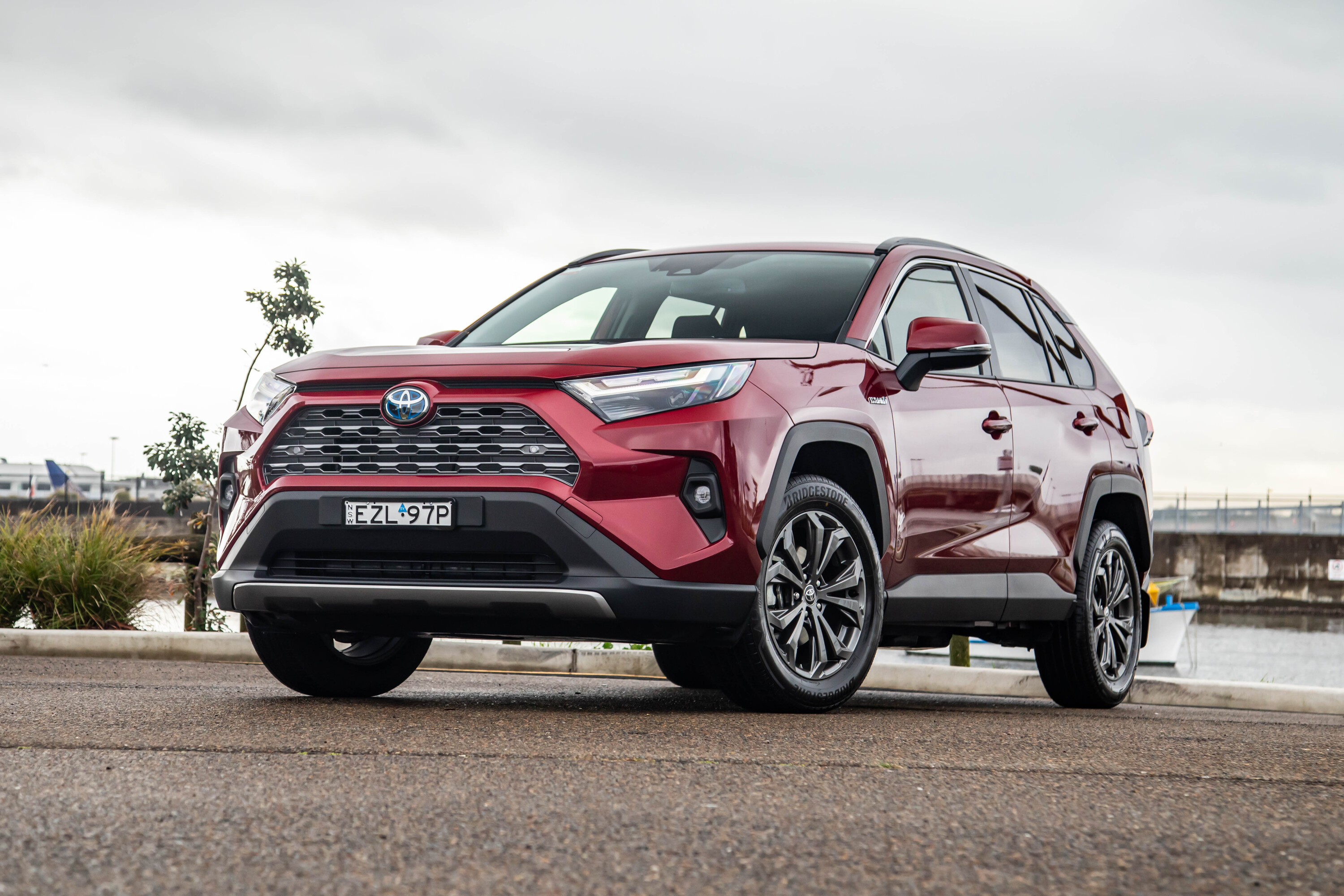
The massive wait times for new Toyota RAV4 Hybrids are finally coming down from highs of two or more years to about 12 months. But that’s still a helluva long time to wait, which makes a near-new RAV Hybrid seem an excellent alternative.
Those snaking backorder queues, and the inflated asking prices for used examples, point to the same thing: the RAV4 Hybrid is in hot demand, for good reason.
1
Take the 2.5-litre petrol-electric hybrid powertrain, which significantly cuts energy consumption compared with a conventional engine, without the cost or range anxiety of an EV.
And the RAV4’s TNGA platform, which adeptly delivers that holy trinity of ride, refinement and driver appeal.
You’d own a RAV4 just because it’s a Toyota and won’t fail you, even if it wasn’t much chop to drive. Dud dynamics certainly didn’t hurt the sales of the last two RAV4 generations.
While it may pain you to pay near new-car money for a used car, the payoff is that the RAV4 Hybrid’s appeal – and residual value – will hold up for many years to come.
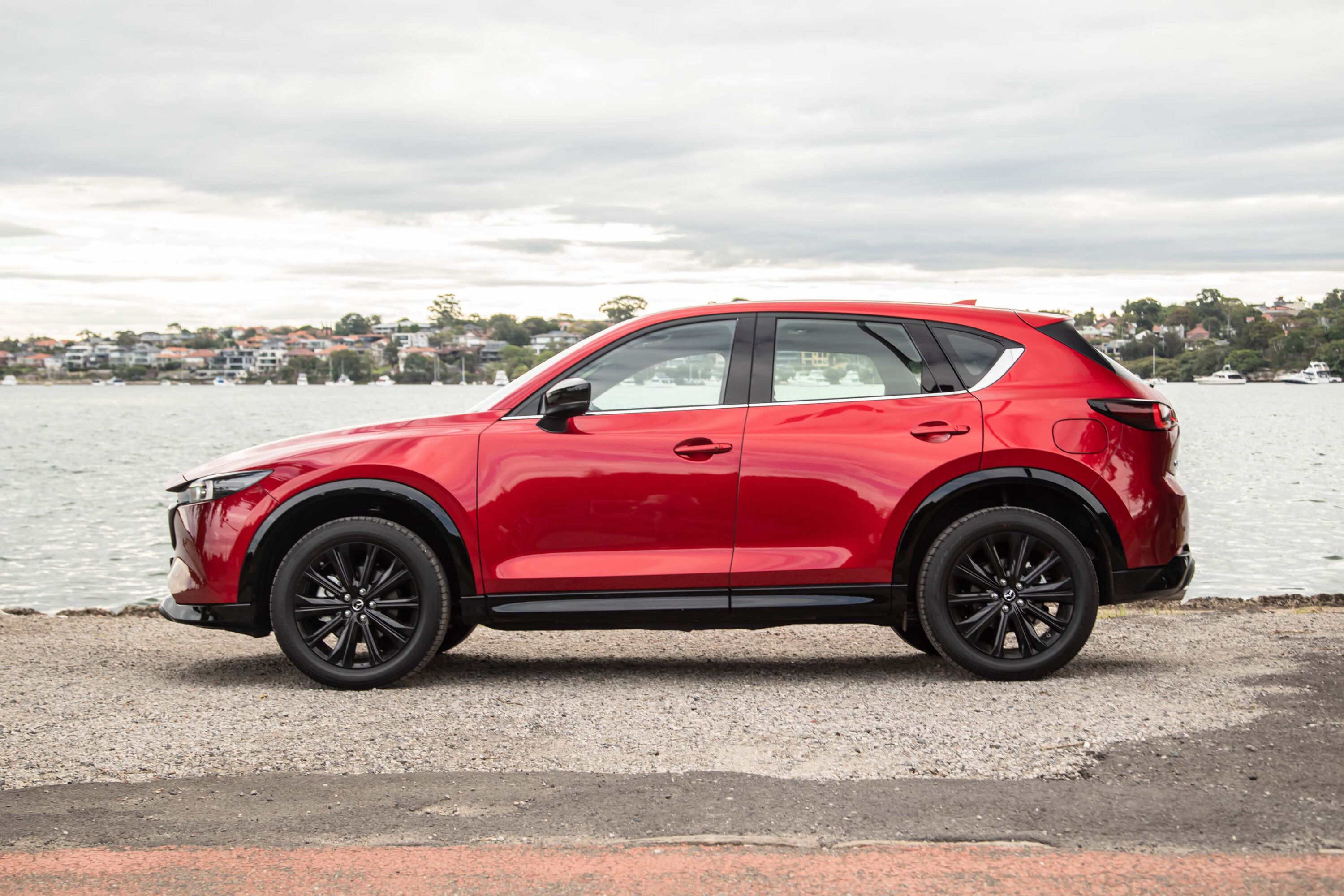
The Mazda CX-5’s uncanny ability to answer almost any automotive question you could ask makes it a go-to mid-range medium SUV.
Want a car that strikes a nice balance between snobby and bargain-basement? That’s a CX-5, ideally in Touring spec with ‘Grand Luxe’ synthetic suede trim and plenty of fruit, wearing a cool shade such as Deep Crystal Blue, Machine Grey or Soul Red.
1
Want an enjoyable powertrain that delivers decent economy without any turbo or hybrid tech to give trouble? That’s a CX-5 2.5-litre petrol, with a useful 140kW and 252Nm, and 7.5L/100km official combined consumption.
In this age (2017-ish) and price bracket, the 2.5 will come paired with a six-speed auto and AWD, which is a better bet than the 2.0-litre FWD (underpowered) or 2.2-litre turbo-diesel (anecdotally a bit iffy for durability).
Did we mention the CX-5 is fun to steer for an SUV, rides well, has reasonable refinement, is utterly dependable and has excellent resale? Phew! Yep, a used CX-5 sure does a lot of box-ticking.
There aren’t many bargains in the post-pandemic used market, in which asking prices reflect the craziness of 2021 (while buyer sentiment is in the dumps).
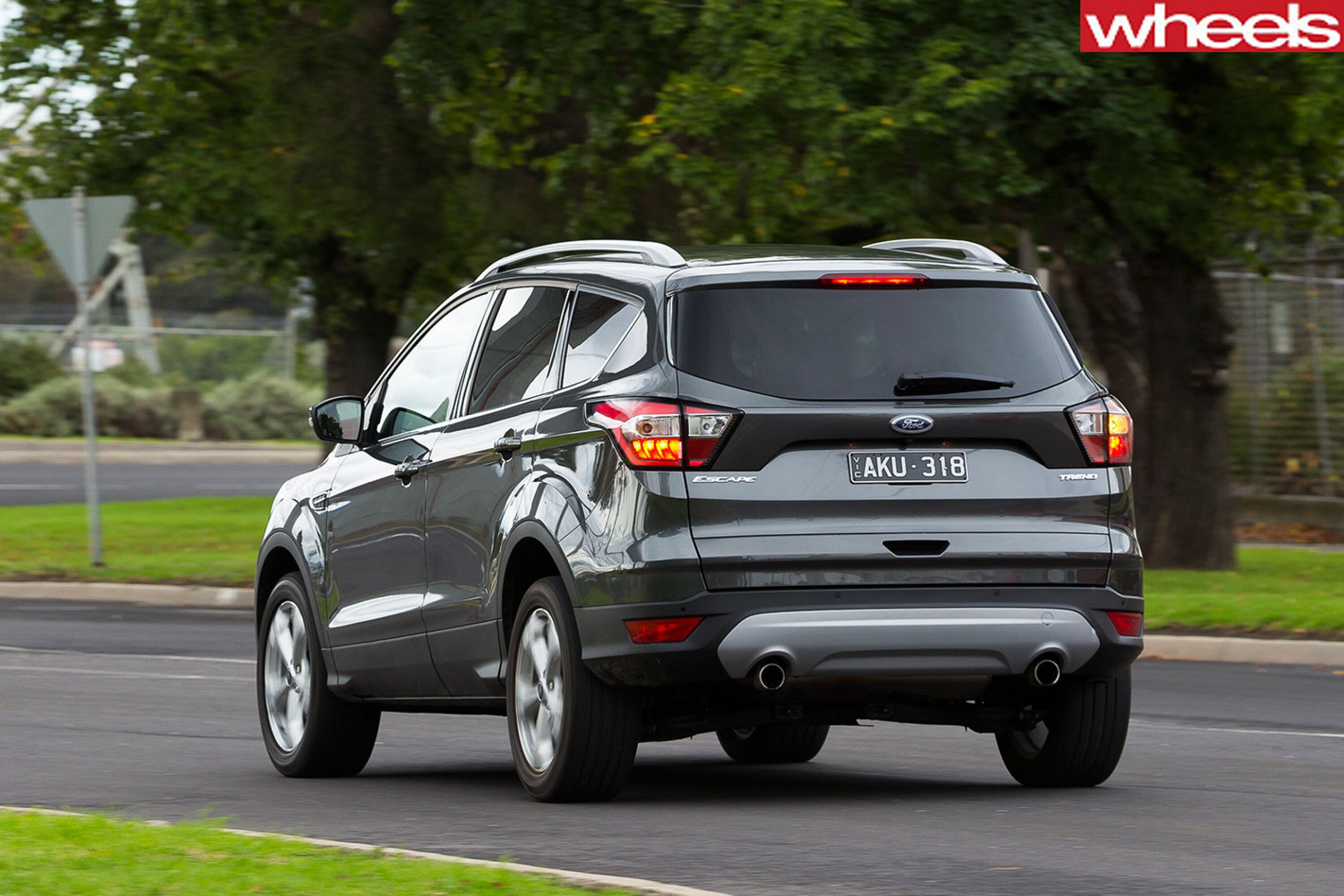
But a five- or six-year-old Ford Escape is one, as well as an SUV Wheels has rated for some time, chiefly because it’s a crisp steer and a tidy handler in a segment where such qualities are rare.
1
Escape’s strong-value status stems from the fact that, Ranger/Everest aside, Blue Oval products are a bit overlooked on the Aussie market these days, which is great for the few who know how much the mid-size Ford wagon has going for it.
Translation: While $15K doesn’t get you very far in the market for a Volkswagen Tiguan, it buys a decent Escape Trend or Ambiente with a strong, economical 1.5-litre turbo four.
Similarly, circa-$20K will be scraping the barrel on the CX-5 market but shopped wisely gets you into a nice Escape ST-Line or Titanium with 2.0-litre turbo urge.
Few cars you’d describe as being a peach, but the charming Skoda Octavia has always been a car to earn that moniker.
With plenty of thoughtful design and ergonomic touches, a beautifully executed ride-handling balance, and lots of grunt in RS guise, the Octavia is a very easy car to like in our books – especially in latest NX-generation guise (based on the same platform as the Mk8 VW Golf).
With Skoda’s seven-year new-car warranty, grab yourself a 2021 example and you’ll still have four years’ of factory-backed peace-of-mind.
You can get a 2021 Octavia 110TSI Style wagon (the higher-grade model) from about $27,000 with plenty of equipment, space and much of the latest technology and safety gear (including adaptive cruise, eight airbags and AEB). This is a vehicle that couldn’t make a stronger case for buying second-hand over brand new.
If the idea of owning and driving a Camry makes you flinch, it’s your loss – at least in the case of the annoying good current-generation XV70 Camry.
With surprisingly supple ride quality, plenty of space (including the back seat and boot), and miserly fuel economy in hybrid guise (less than 5.0L/100km), this is a vehicle you’ll hate yourself for liking as much as you do. Even dynamically, it’s pretty decent, with the tiniest amount of GR86 DNA.
Produced from 2017, they’re also safe as houses and you can get a top-spec SL from $20,000 to $25,000. Of course, being a Toyota, one day you’ll realise the warranty ran out years ago and you didn’t notice.
These things rack up thousands of kilometres needing little more than fresh fluids and some new wiper blades, which is probably why you’ve sat in the back of a dozen of them already when getting an Uber.
Putting a Holden badge on the front and a Commodore one on the rear was akin to taking a red paint brush and drawing targets on either side of this poor, unfairly maligned vehicle – one that is now a surprisingly great second-hand buy.
An Opel Insignia in Germany (where it was built), the ZB went on-sale in Australia in 2017 and came in ‘liftback’ sedan and wagon body styles, with either 2.0-litre turbo-petrol or diesel fours or atmo 3.6-litre V6 engines. Some were front-drive and others AWD, while Holden engineered its own suspension tunes, steering calibration, and even drivetrain configurations.
In 2024, you can get a ZB Commodore for as little as $14,000 – and even the VXR with its Twinster all-wheel-drive system (which can split torque not only front-rear, but also side-to-side) can be picked up for $25,000. While it might buy you some sour memories of a bygone time, it gets you a surprisingly fine car. If it helps you sleep better, rebadge it as an Insignia.