2023 Best Large SUV series
Looking to get into a brand-new large SUV? Our stories below will guide you to the model that best suits your needs!

Launching with two variants initially, the all-wheel-drive Macan 4 packs 300kW while the flagship Turbo develops a whopping 470kW and 1130Nm – enough to frighten a Hyundai Ioniq 5 N in a straight line.
This is Porsche’s first outing of the Premium Platform Electric (PPE) underpinnings that boast 800-volt capability, twin-valve dampers, rear-wheel steer, and a 96kWh usable battery pack in the Macan.
Although it’s distinctively Porsche, the larger second-gen electric Macan has a few new details including Taycan-inspired lighting signatures and a rounder rear end.
“We are taking the Macan to a completely new level – with exceptional E-Performance, the new Driver Experience, and a very impressive design,” said Oliver Blume, Chairman of the Executive Board of Porsche at the new Macan’s debut in Singapore.
Matching the zero-emission nature of the new Macan, Porsche will build the BMW iX3 and Mercedes-Benz EQC rival in a ‘carbon neutral way’ at its Leipzig manufacturing plant.
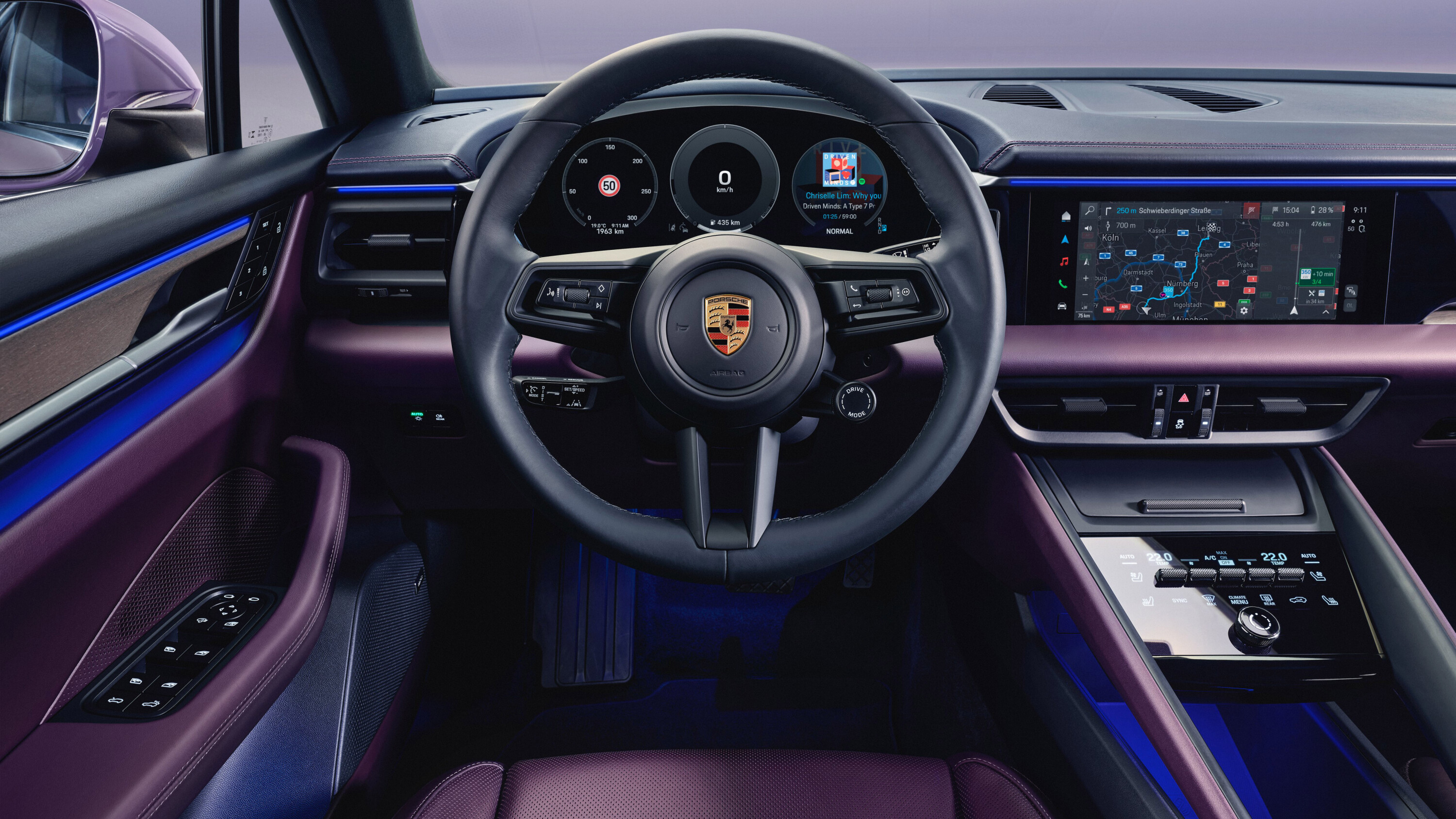
The Turbo, meanwhile, is a whopping $46,400 dearer than the ICE GTS. However, both are meaningfully more rapid; it’s hard to consider Porsche’s new Macan as a direct replacement for the old medium-sized SUV in price or performance terms.
Click here for an even clearer picture of how the new Macan compares to its predecessor.
Prices exclude on-road costs
| Variant | Price (before on-road costs) |
|---|---|
| Macan 4 | $133,700 |
| Macan Turbo | $188,100 |
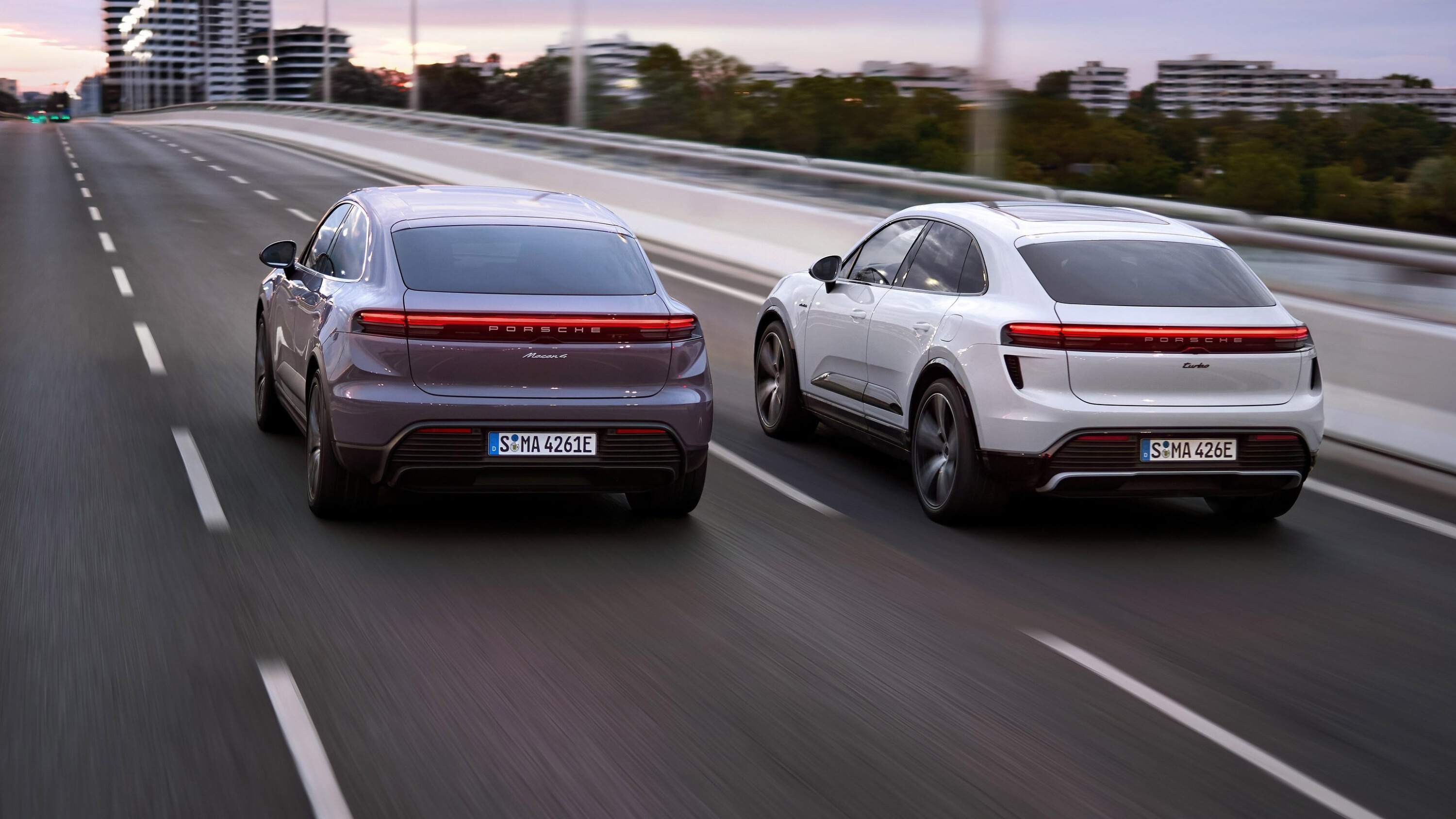
Inside it features a 12.6-inch curved digital driver’s display, and there’s a 10.9-inch infotainment touchscreen in the centre.
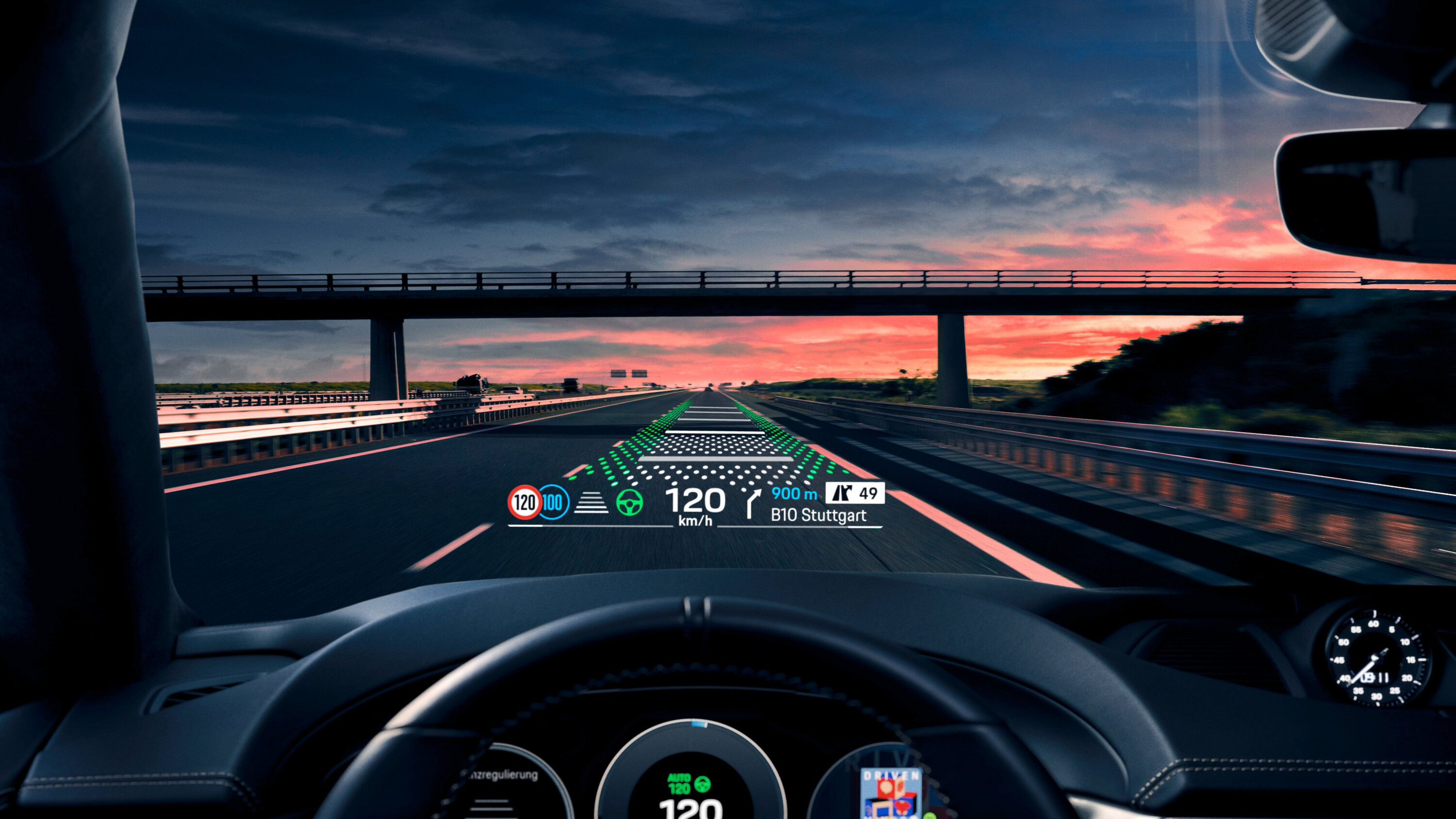
A first for the Macan nameplate is an optional 10.9-inch passenger display and augmented reality head-up display for the driver.
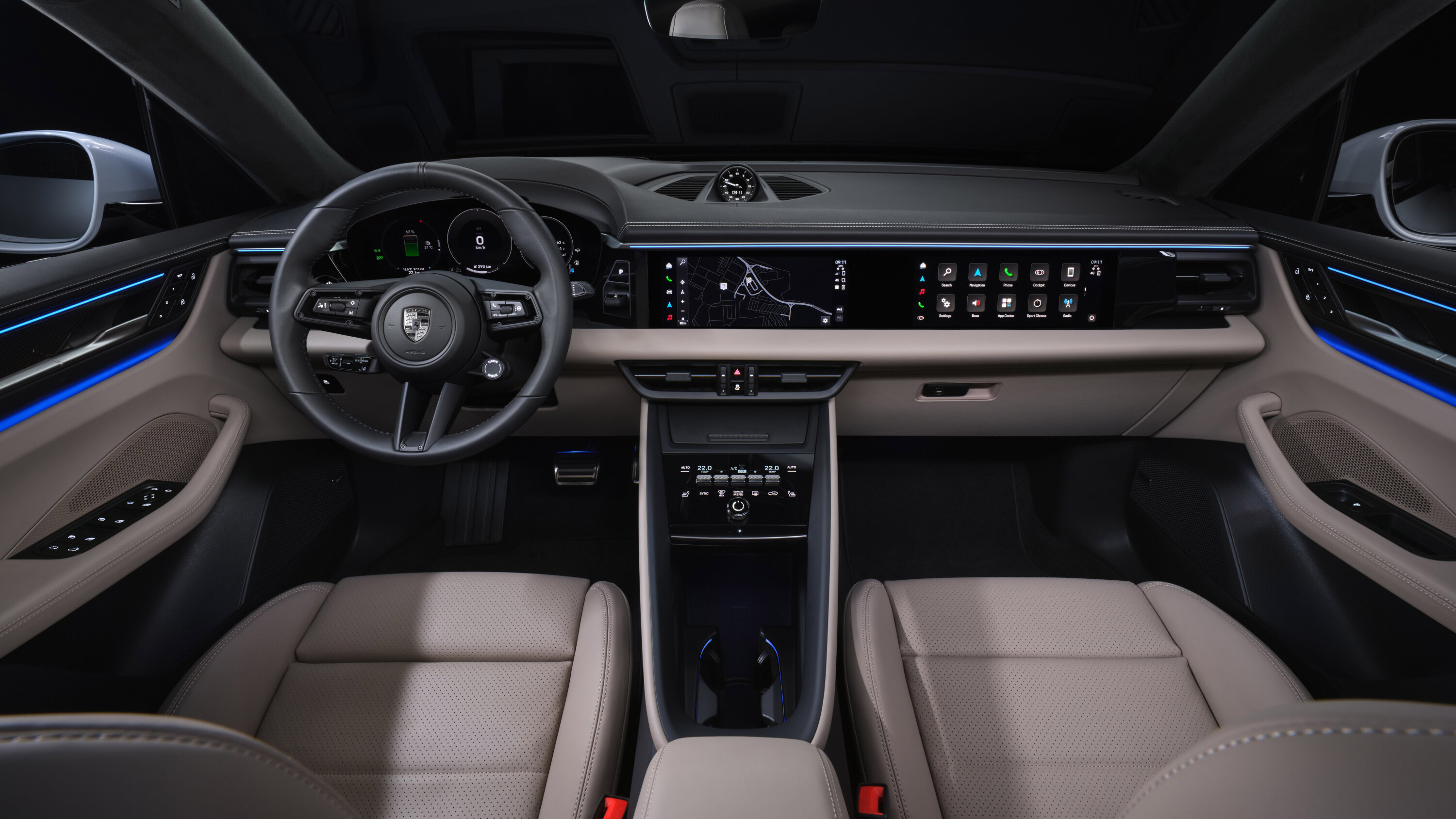
The dearer Turbo gets standard (all optional on the Macan 4) 21-inch alloy wheels (22s are optional), Porsche Active Suspension Management (PASM, or air suspension), power steering plus, and 14-way power adjust ‘comfort’ seats.
Turbo exclusives include a panoramic roof, Porsche Electric Sport Sound, Sport Chrono package, and four-zone climate control.
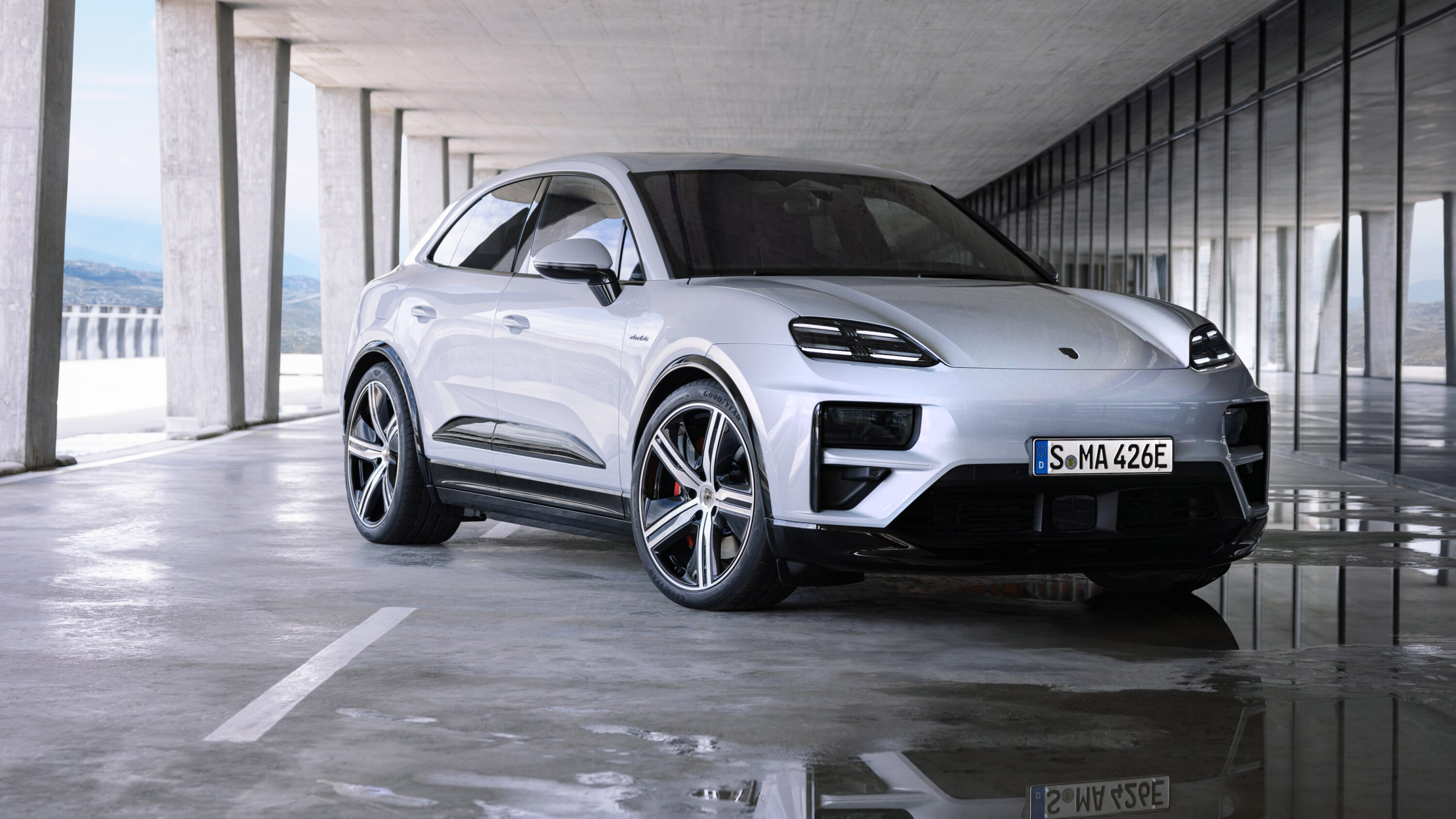
It’s bigger in every metric than the car it replaces (Porsche hasn’t quoted an official weight figure yet but expect it to be around 2200kg) and that means more cabin space.
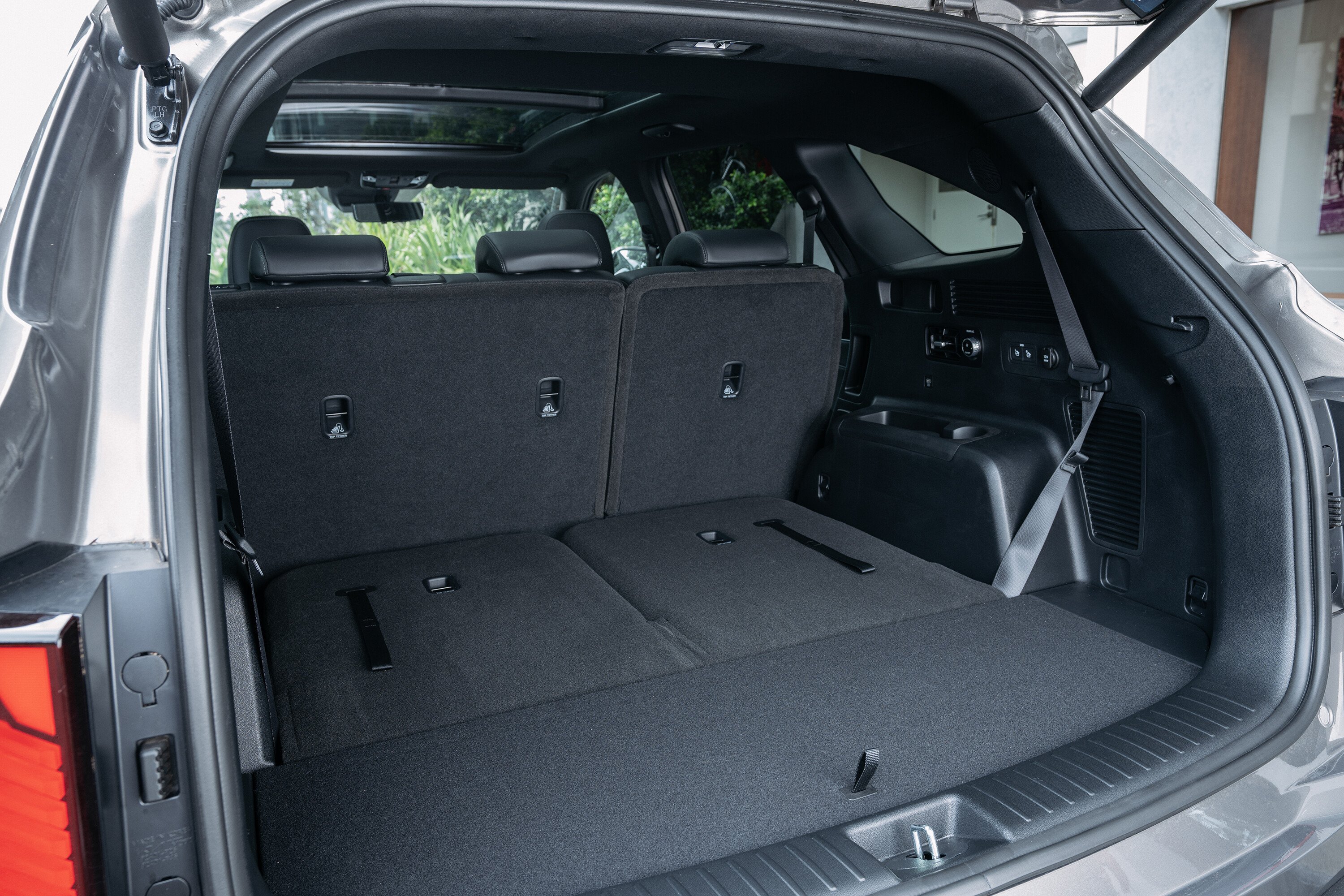
The front seats are 28mm lower and the rear 15mm lower with enhanced legroom. Cargo carrying is up, too, with 540L of boot space (87L more) and the bonus of an 84L ‘frunk’ under the bonnet.
It’s also capable of towing a braked load weighing up to 2000kg.
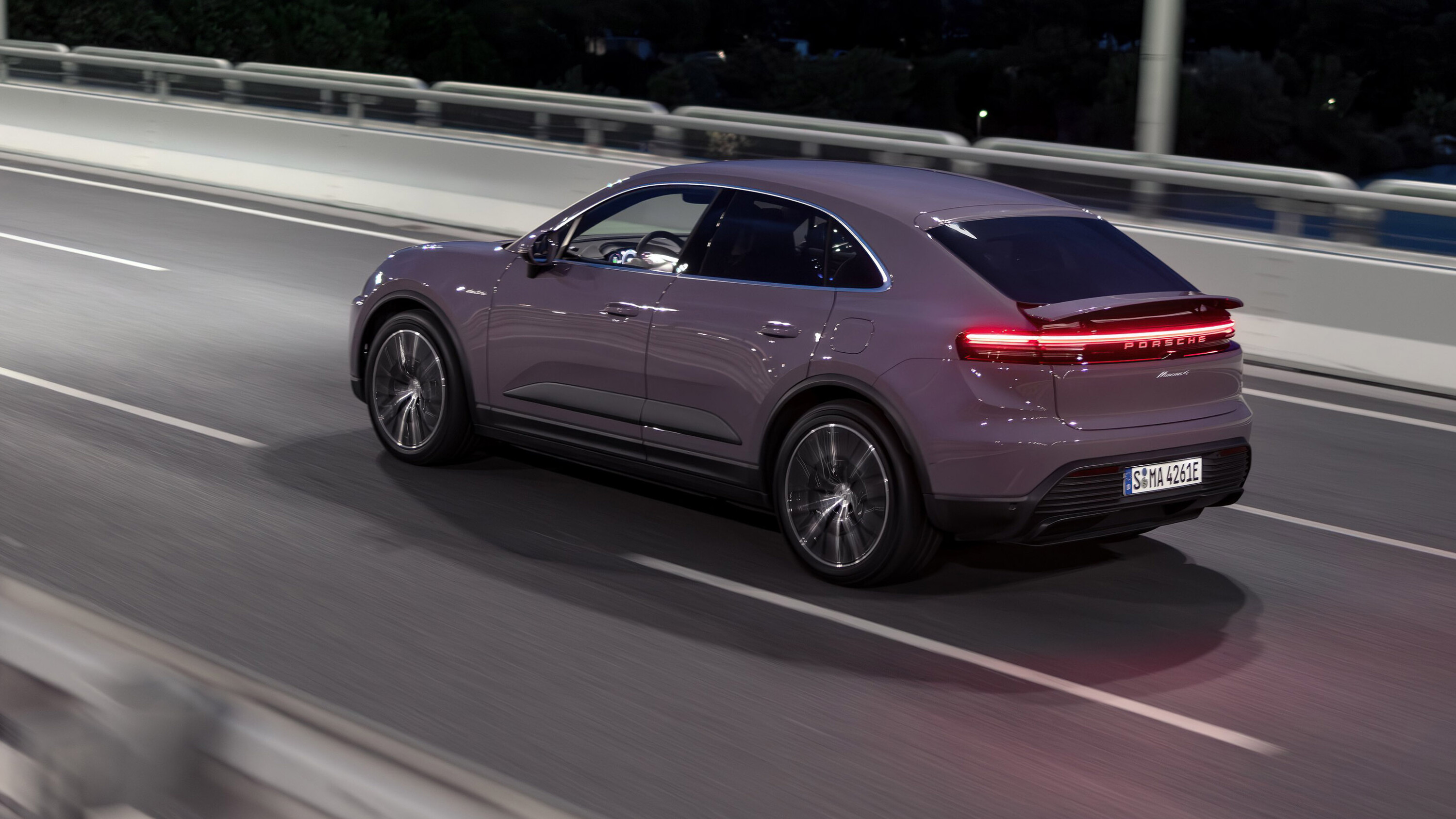
Porsche claims a 0-100km/h sprint of just 3.3 seconds, and a top speed of 260km/h for the Turbo.
The Macan 4 is no slouch, with its two motors you’ll experience 300kW and 650Nm in overboost mode, a 0-100km/h time of 5.2 seconds, and 220km/h top speed.
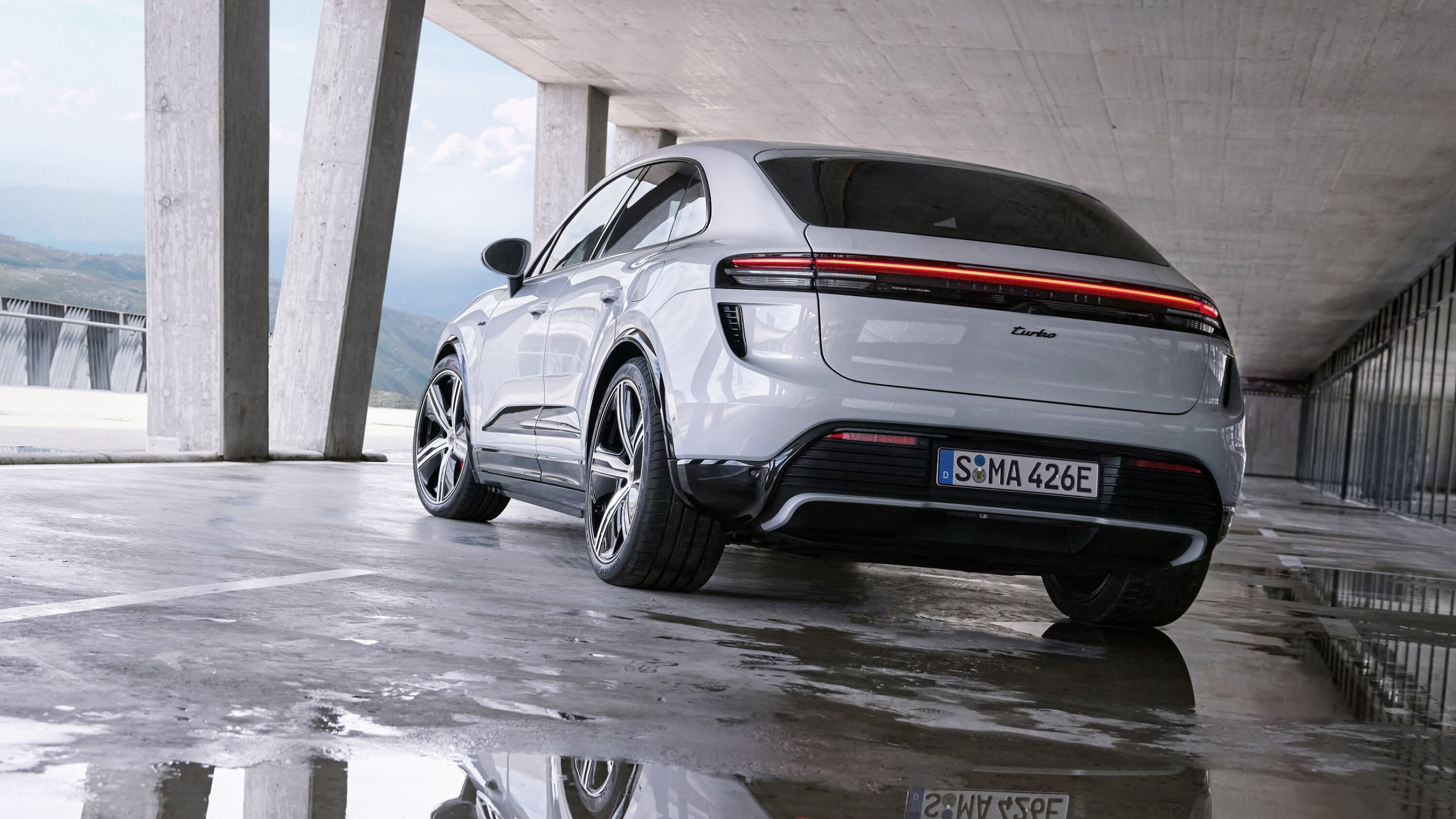
Putting the grunt to the road is Porsche Torque Vectoring Plus, an electronically locking rear differential.
Porsche also describes the Macan’s ‘Integrated Power Box’ (IPB) that allies the high-voltage heater, DC/DC converter and onboard AC charger to optimise efficiency.
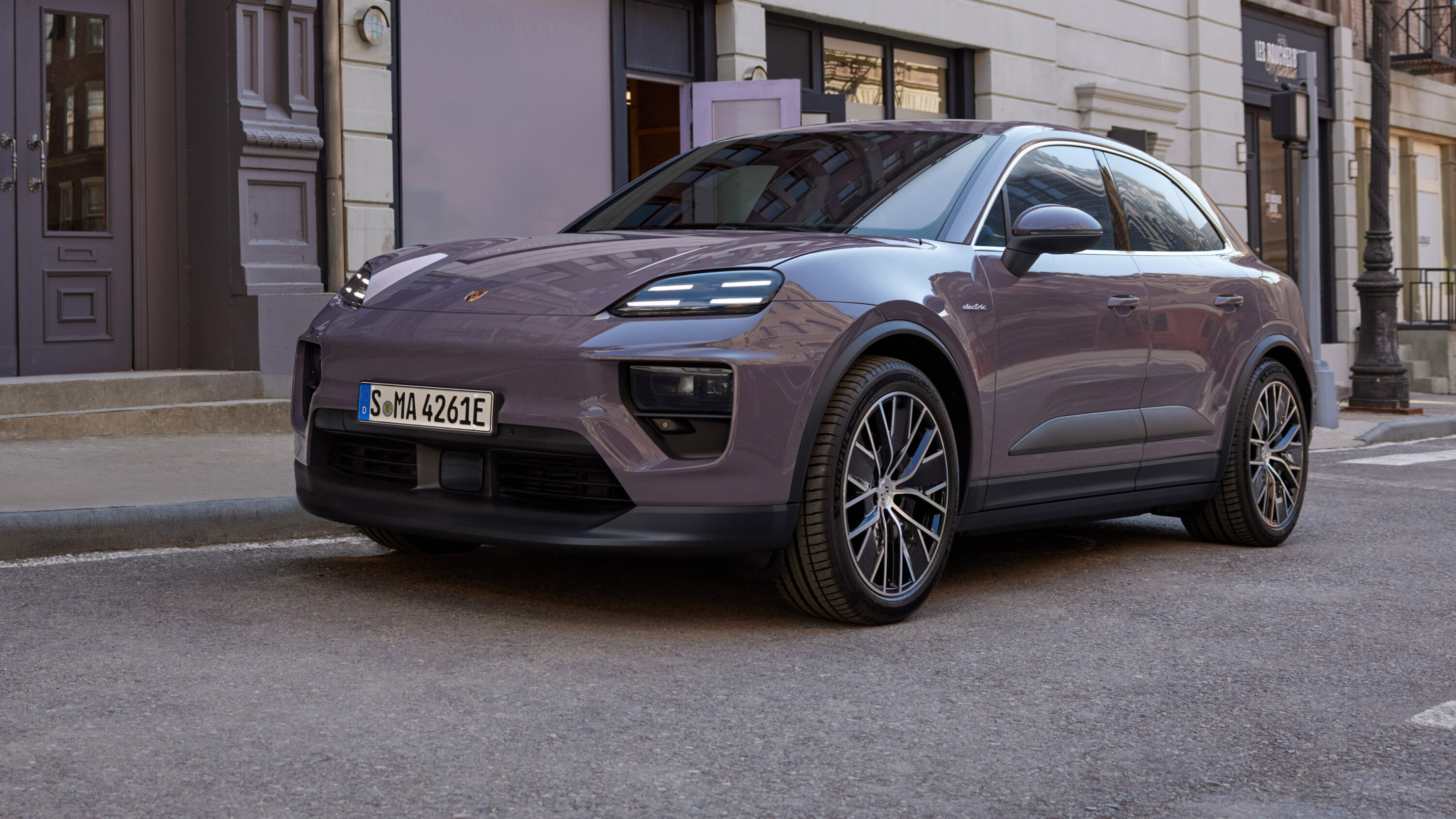
Porsche hasn’t published a final WLTP driving range yet, but a drag coefficient of 0.25 and active aero (including spoiler, air curtains, and other features) should see it achieve over 550km in the test.
It’ll charge quickly, too, thanks to the 800V architecture’s ability to take DC electricity on board at 270kW.
Porsche says 10-80 per cent at ultra-rapid charging locations will take 21 minutes, and the clever architecture can speed charging up at 400V DC locations to 135kW by effectively splitting the single 800V battery into two items.
The Macan will accept up to 11kW AC from a home wallbox.
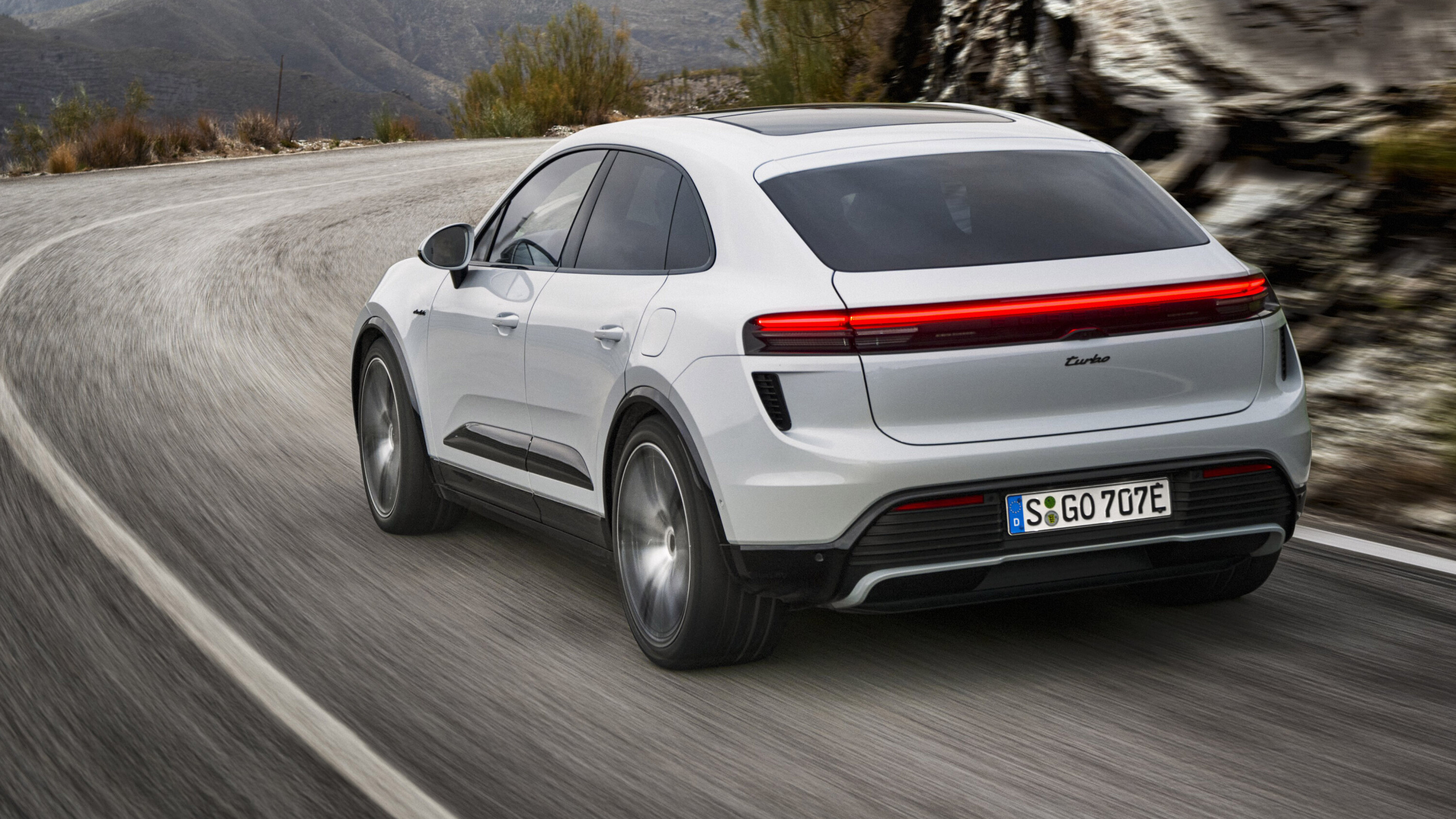
Porsche will include adaptive cruise control, lane-trace assist, autonomous emergency braking, blind-spot monitoring, a 360-degree camera, side airbags (and more) on all Australian-delivered electric Macans.
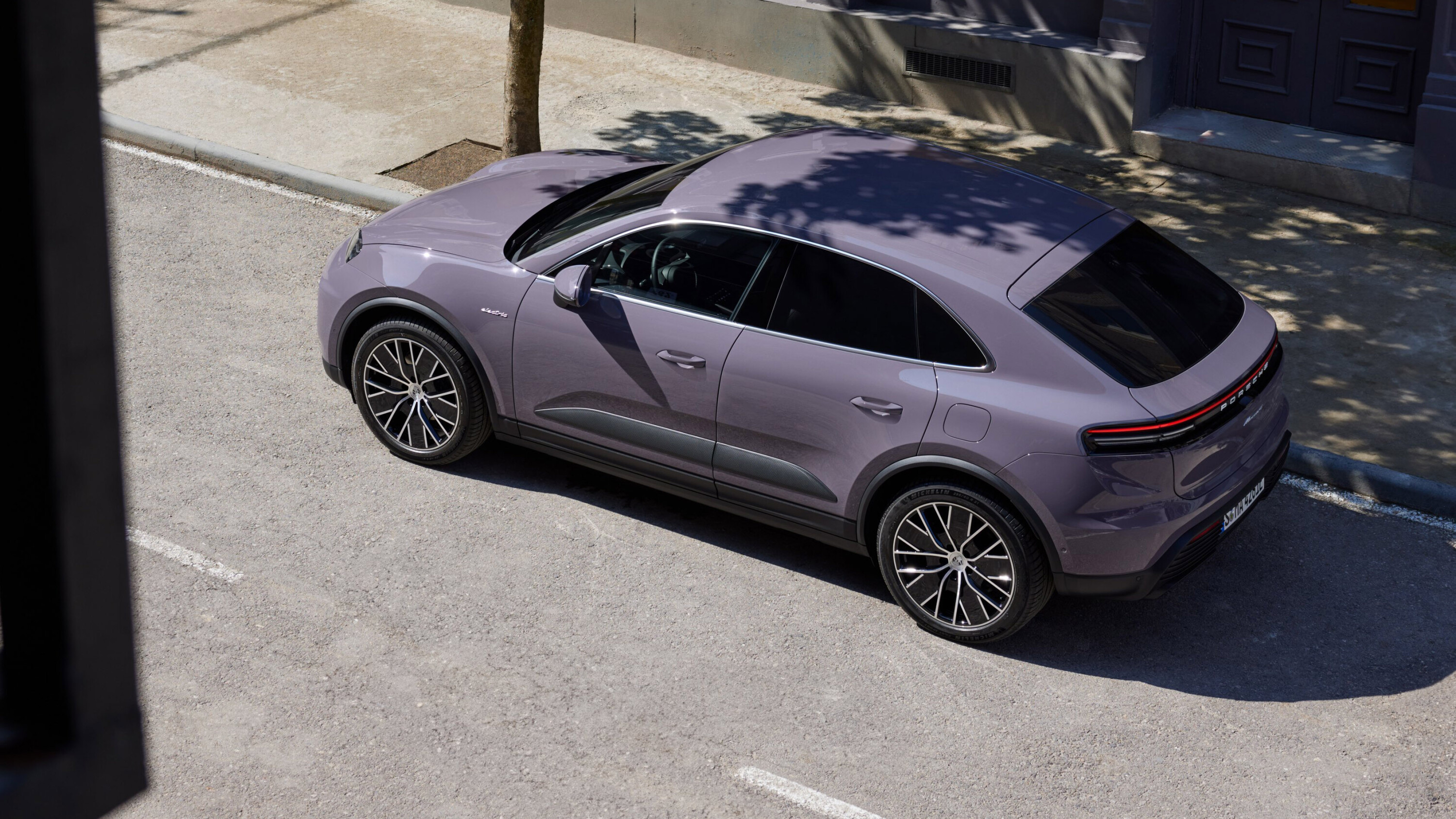
The second-gen electric Porsche Macan will arrive in Australia in Macan 4 and Macan Turbo guises in late 2024.
After the fillip from the Wheels COTY-winning EV6 and the excellent seven-seat EV9, the Korean giant has turned its attention to one of its volume favourites.
Late last year we tested the run-out version of its Sorento seven-seat SUV in a group test and it put some comprehensive manners on the rest of the bunch.
As such, there must be an element of hearts sinking into boots amid rival manufacturers as Kia whips the wraps off its Sorento PE. That’s ‘Product Enhancement’ in Kia-speak, but most of us would call it a mid-life facelift.
The Korean marque’s rapid push to electrification is well documented, with the EV6 and newly arrived EV9 spearheading the charge. Following later this year will be the baby Russian doll version of the EV9, in the Minecraft-rendered shape of the EV5.
But, let’s face it, not everyone’s after an EV, and Kia will still sell you (in ascending size) a Stonic, a Seltos, a Sportage or a Sorento. The seven-seat Sorento MQ4 generation only debuted in 2020, so it’s about due for a facelift.
As Dylan Campbell noted, “an abundance of black gives it a dark vibe, while its 10.25-inch infotainment display now seems a bit small for the richest grade. The menu graphics look a bit last-decade and the lack of USB-C outlets further betray its age – as does wired Apple CarPlay and Android Auto.”
Kia fixed all of that in this latest update to the Sorento and had it left the changes to that, it would, in all likelihood, have been enough to see this version of the car into its dotage at or near the top of the class. Unwilling to gamble on near or near enough, Kia went further. Quite considerably further.
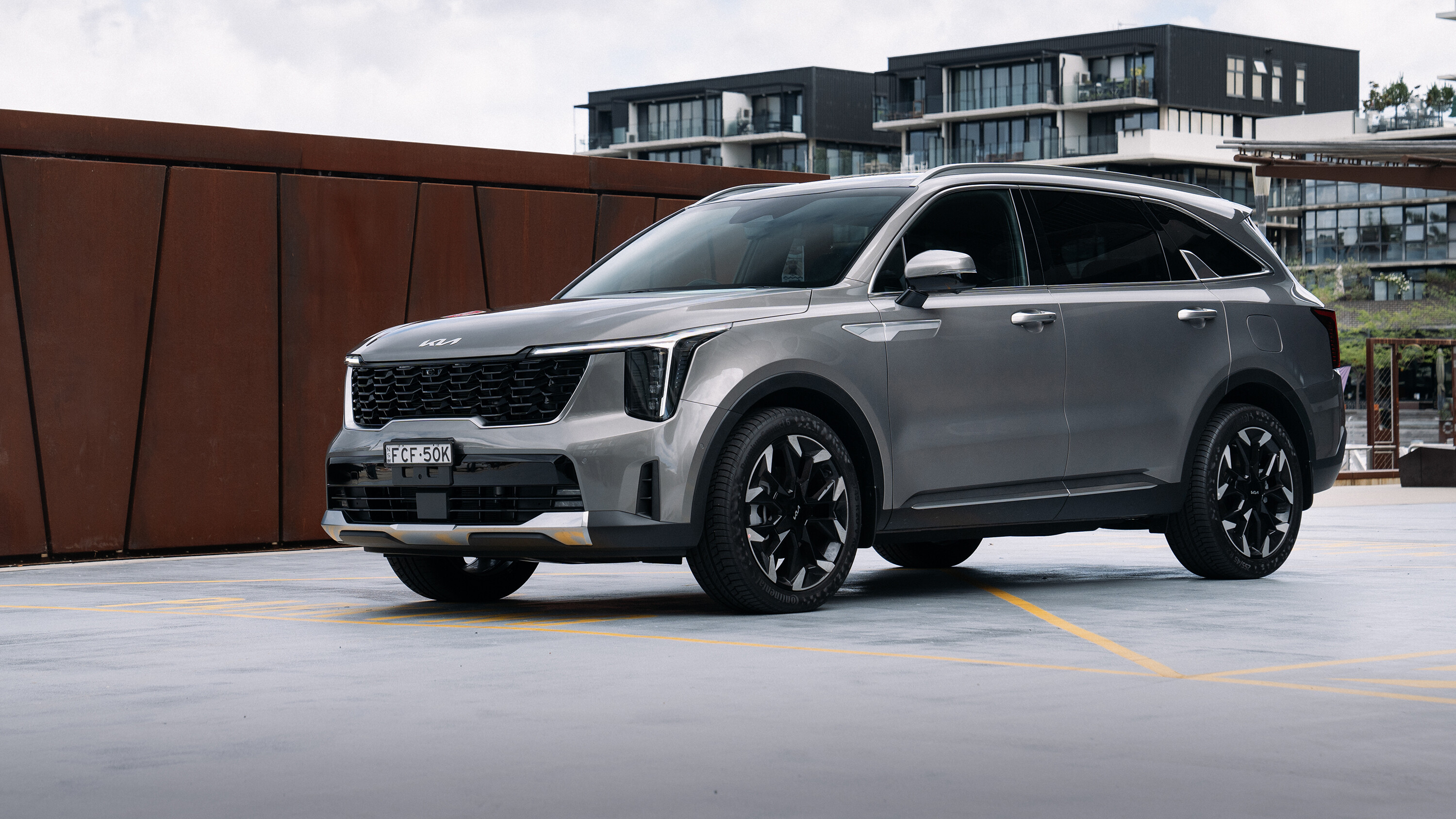
The 3.5-litre petrol front-wheel drive variant and the all-wheel drive 2.2-litre diesel model provides the power for the vast majority of Sorento customers and these come in four trim grades: S, Sport, Sport+ and GT-Line, the latter of which mops up over 30 percent of all sales. Kia expects the diesel engines to account for fully 80 percent of all Sorento registrations. So much for diesel being on the skids.
On top of that, there are hybrid and plug-in hybrid versions of the Sorento also offered – albeit solely in GT-Line trim – and they’ll be arriving on our shores later in 2024, so we’ll set those electrified models aside for the purposes of this review.
| 2024 Kia Sorento fuel economy | ||
|---|---|---|
| 3.5-litre petrol V6 FWD | 9.7L/100km | 222g/km |
| 2.2-litre diesel AWD | 6.1L/100km | 159g/km |
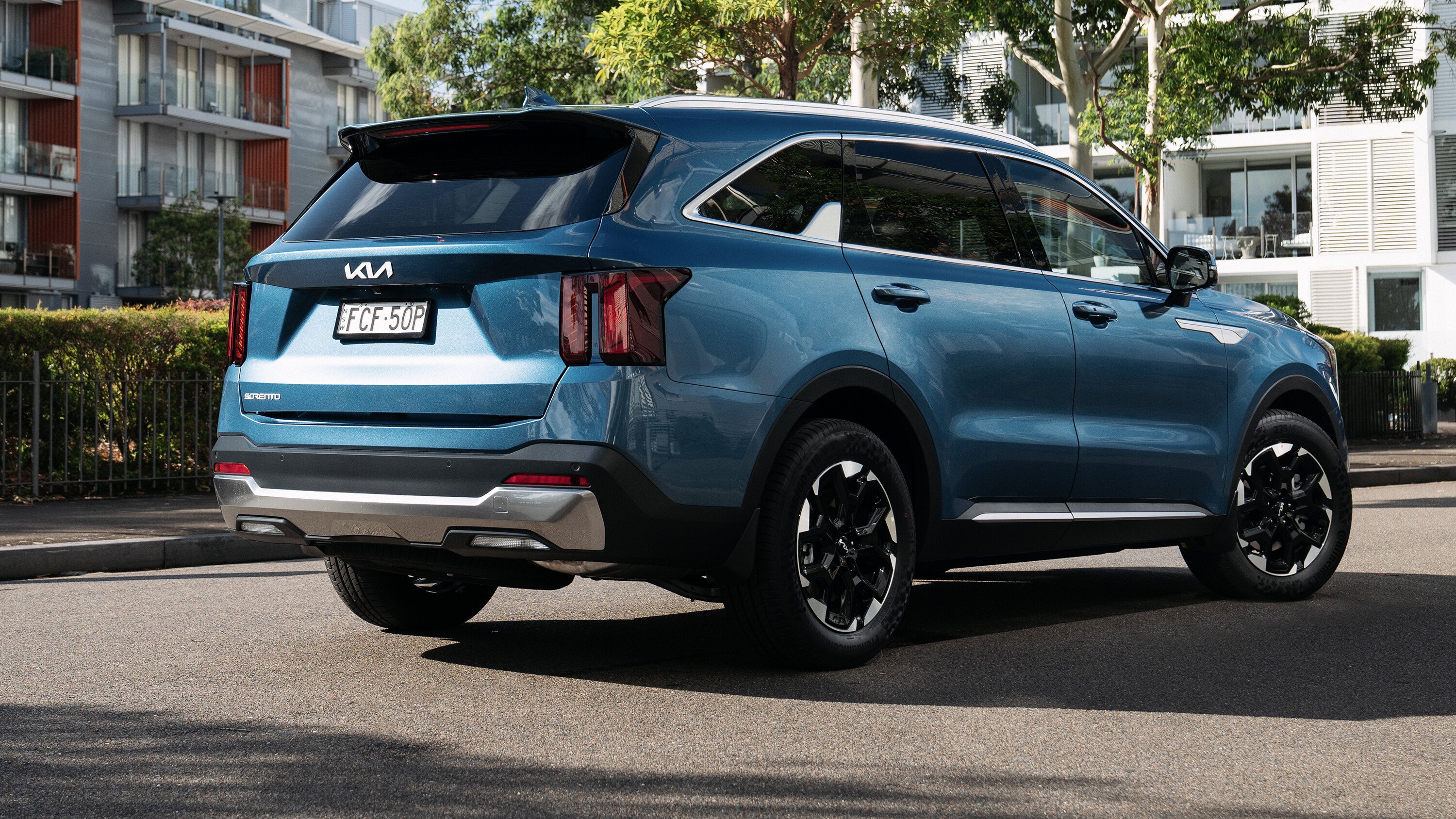
The styling changes are possibly the only real area of contention. The pre-facelift Sorento was an undoubted looker but, to me, the preoccupation with grafting elements of the EV9’s front end onto the Sorento has given it a pinched, squinty front end that’s neither one thing nor the other.

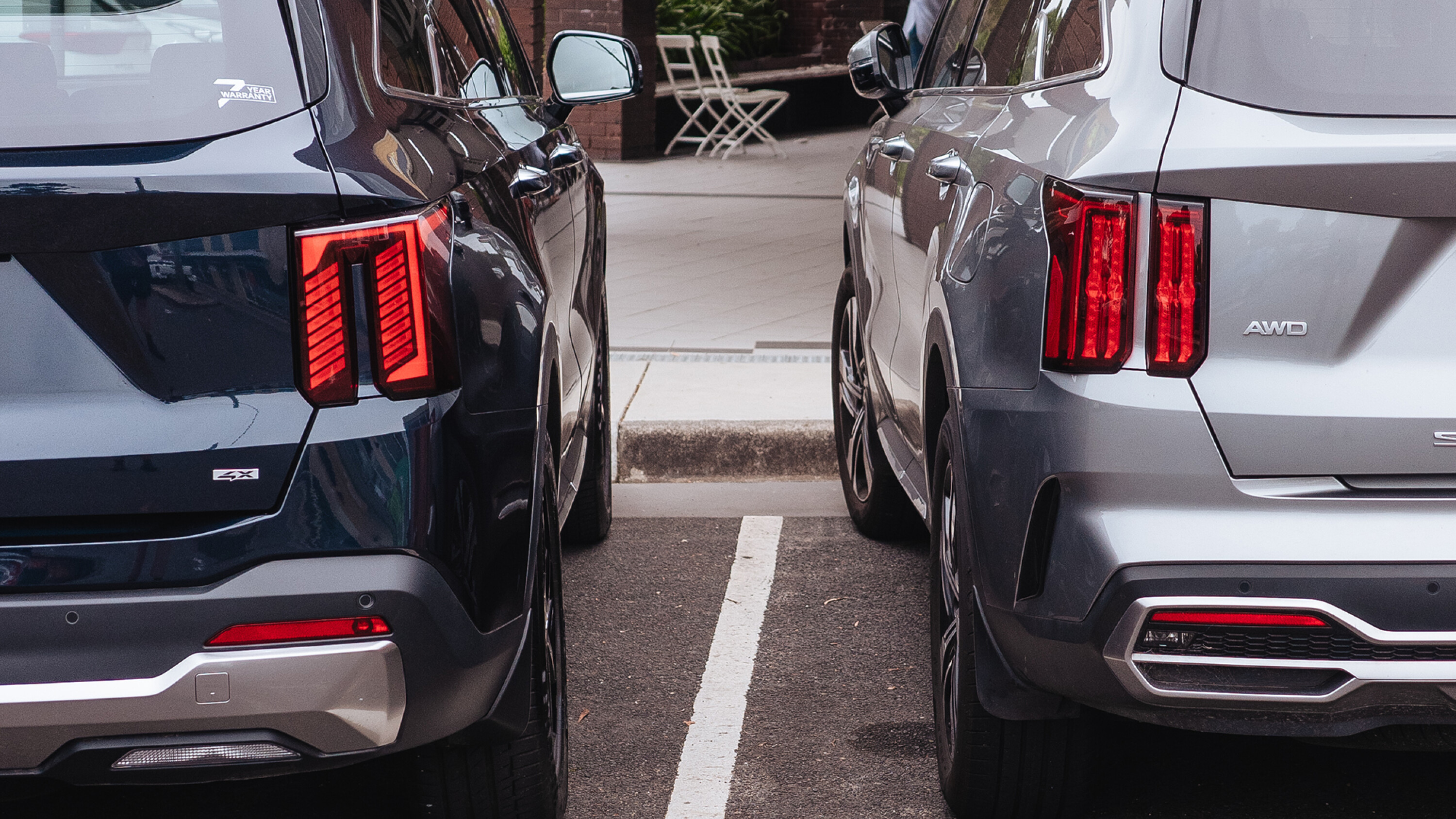
The rear end treatment is a good deal slicker, with neater rear lamps and a more rugged look to the bumper assembly and skid plate.
Two new paint finishes, Volcanic Sand Brown and Cityscape Green, have been added to the colour palette, bringing the exterior colour choices to a total of nine.
Unfortunately there’s only one no-cost paint finish, Clear White. You’ll have to pay extra for Snow White Pearl, Mineral Blue, Steel Grey, Gravity Blue, Silky Grey and Aurora Black Pearl.
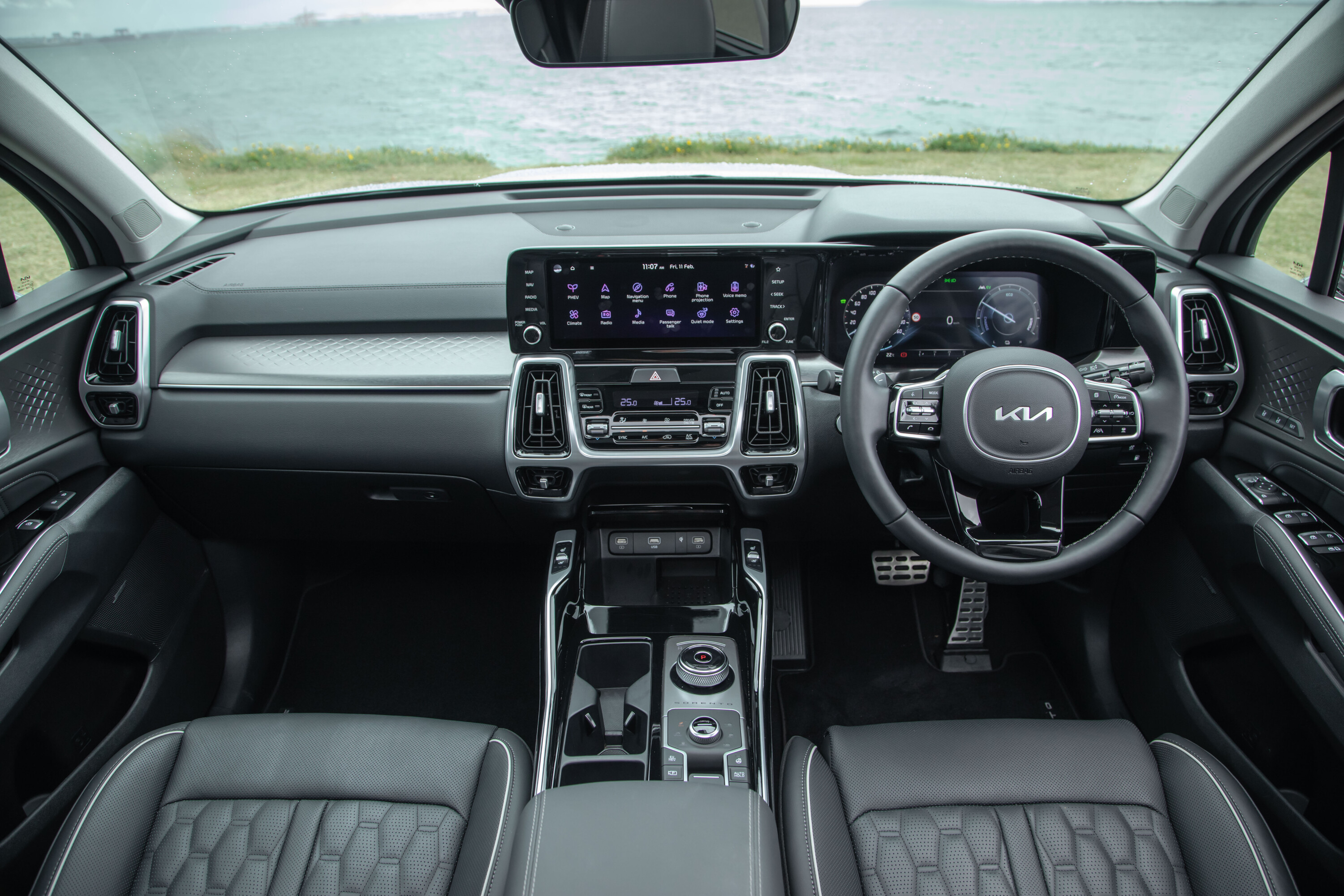
Much of the design influence hails from the EV6, with that car’s integrated curved display being introduced to first the Sportage and now the Sorento.
It not only comes with wireless Apple CarPlay and Android Auto, at last, but also features Kia’s latest iteration of the Connected Car Navigation Cockpit. As in the EV9, the latest Kia Connect system is installed, with its capability to receive over the air software updates.
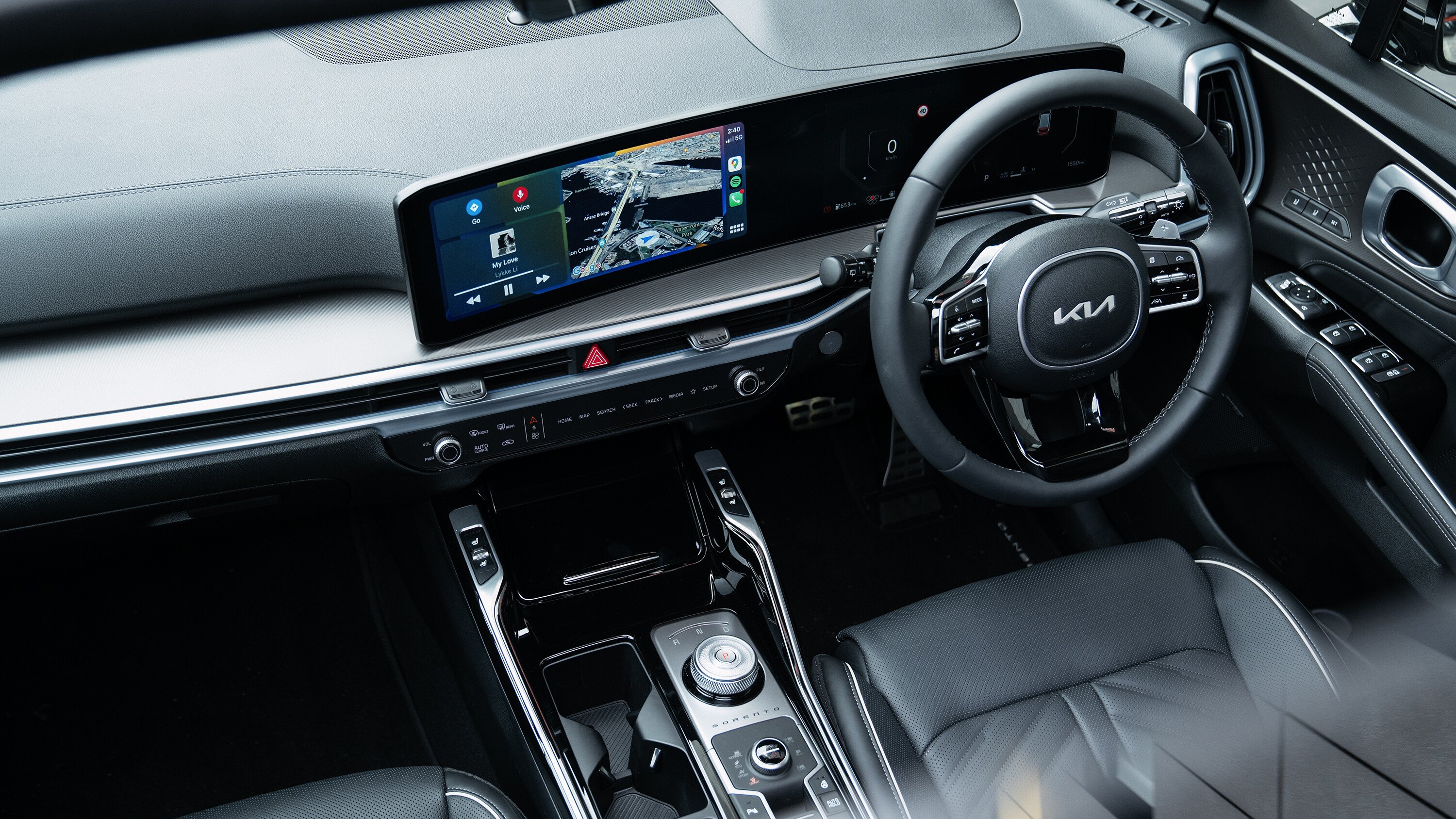
Kia Connect also includes some neat features like a valet mode that allows the user to monitor where and how the car’s being used, it can lock and unlock the vehicle beyond the range of a traditional key fob, can precondition the cockpit temperature and defrost the car and will adopt the driver’s last preferred settings upon system start.
Models from Sport+ upwards can also open the windows if required to vent hot air as you approach.
The GT-Line gets a 4.3-inch instrument cluster, and a huge 12.3-inch display with moveable icons, the performance boosted by a new chipset. There’s a capacitive touch control to switch between HVAC and infotainment. This is activated quite cryptically via a long press on a toggle switch.
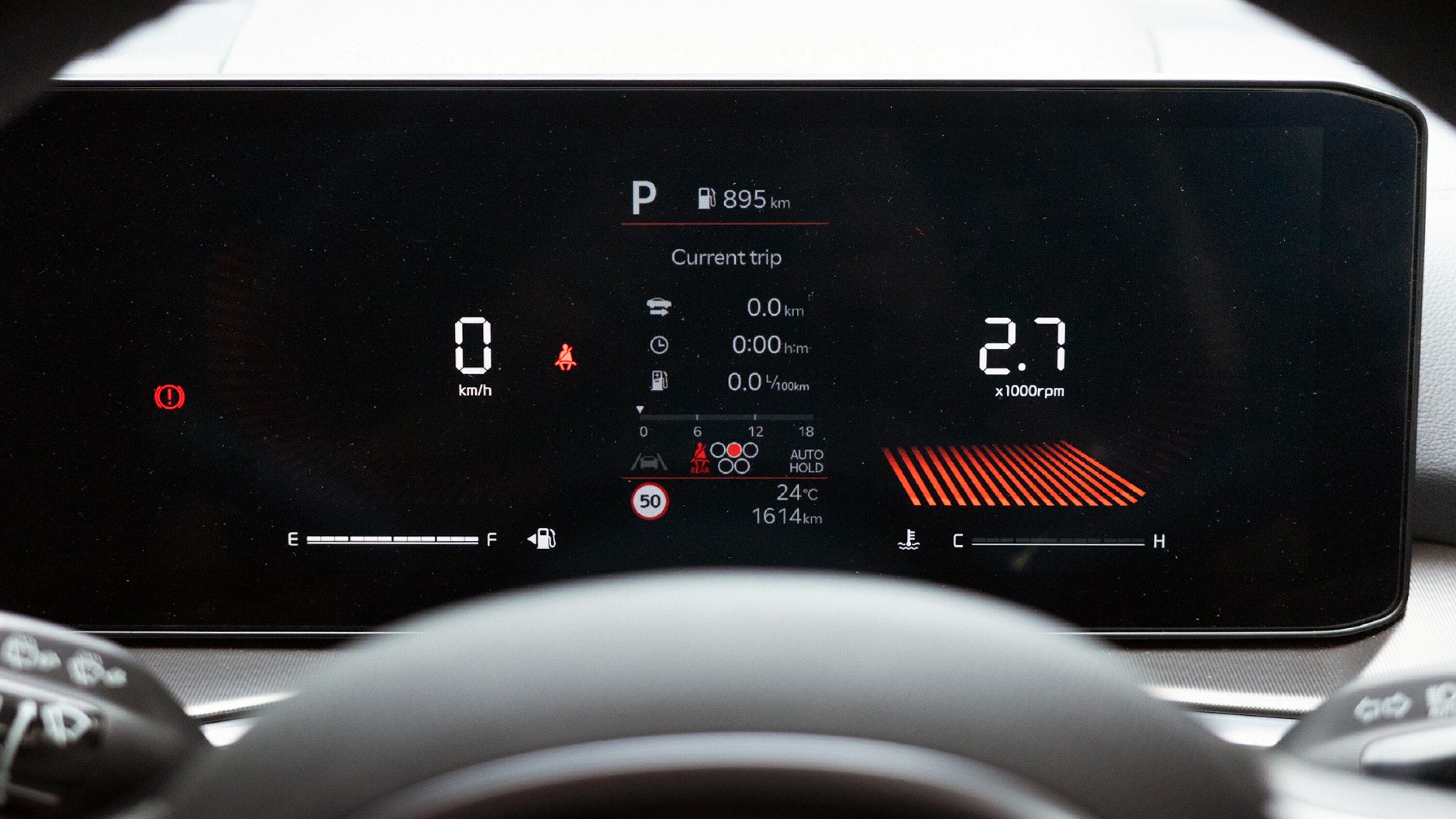
There’s a new and improved head-up display that now shows the turn-by-turn instructions from Android Auto and Apple CarPlay as well as Kia’s native nav. Like many such systems it disappears if you slip on a pair of polarised sunglasses.
There’s also a digital centre mirror that delivers a clearer and crisper image at night or in adverse weather. It’s also a boon if you’ve got a tall rear passenger in the middle seat or if you’ve loaded the Sorento to the gunwales.
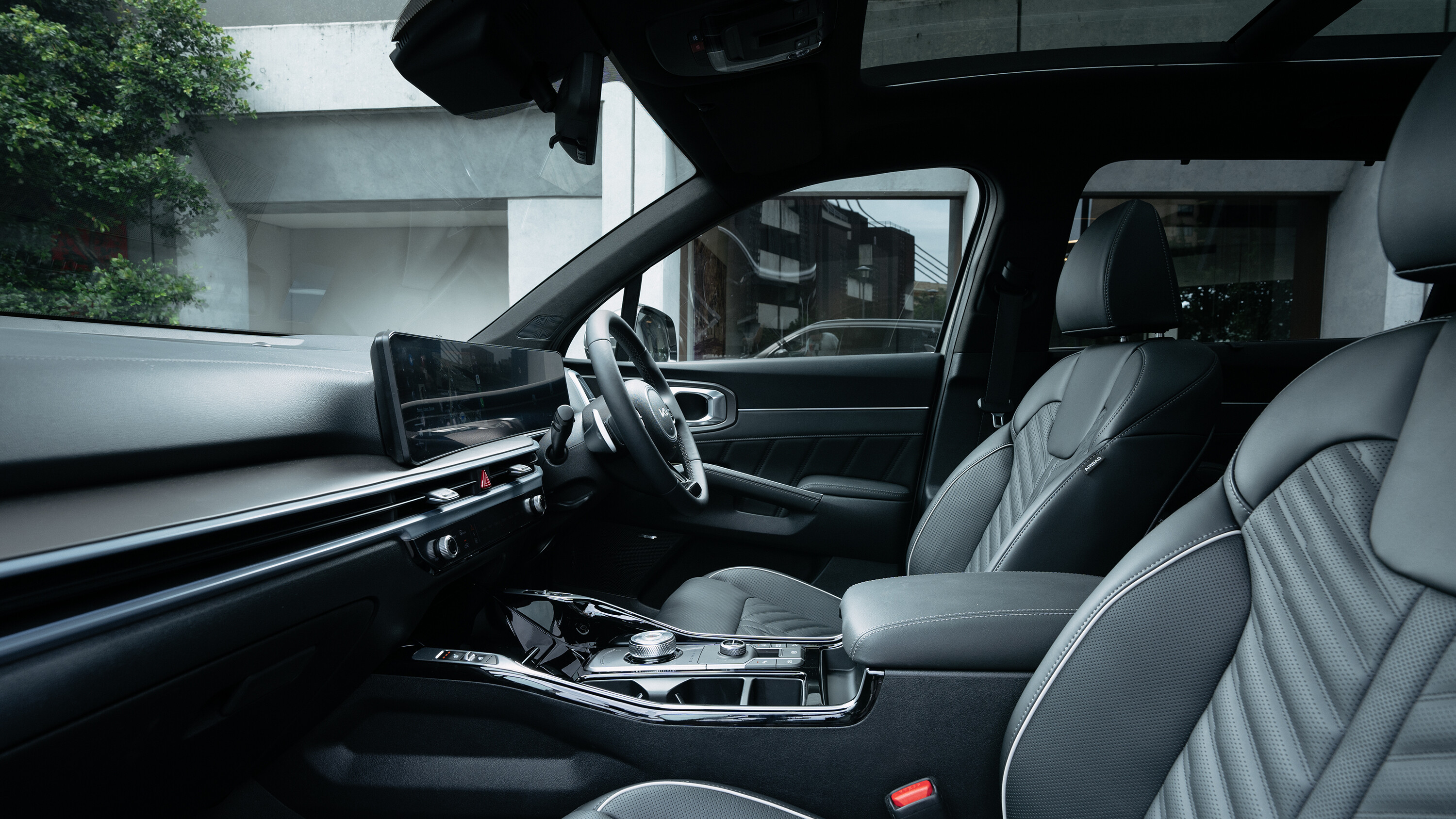
A 12-speaker Bose stereo is also a standard fit on trims from Sport+ up. The old T-bar shifter is no more, with a rotary gear shift dial now marshalling the eight-speed auto and creating a slicker look in the cabin. It even features a haptic response to let you know when you’ve shifted into reverse. Push button start and remote start are standard across the range.
Other equipment upgrades? Expect second row sunshades from Sport+ up and privacy glass from Sport. USB-C charging features throughout, replacing the old USB-A sockets for quicker charging and you’ll never have the old USB 50/50 lottery of plugging the cable in upside down.
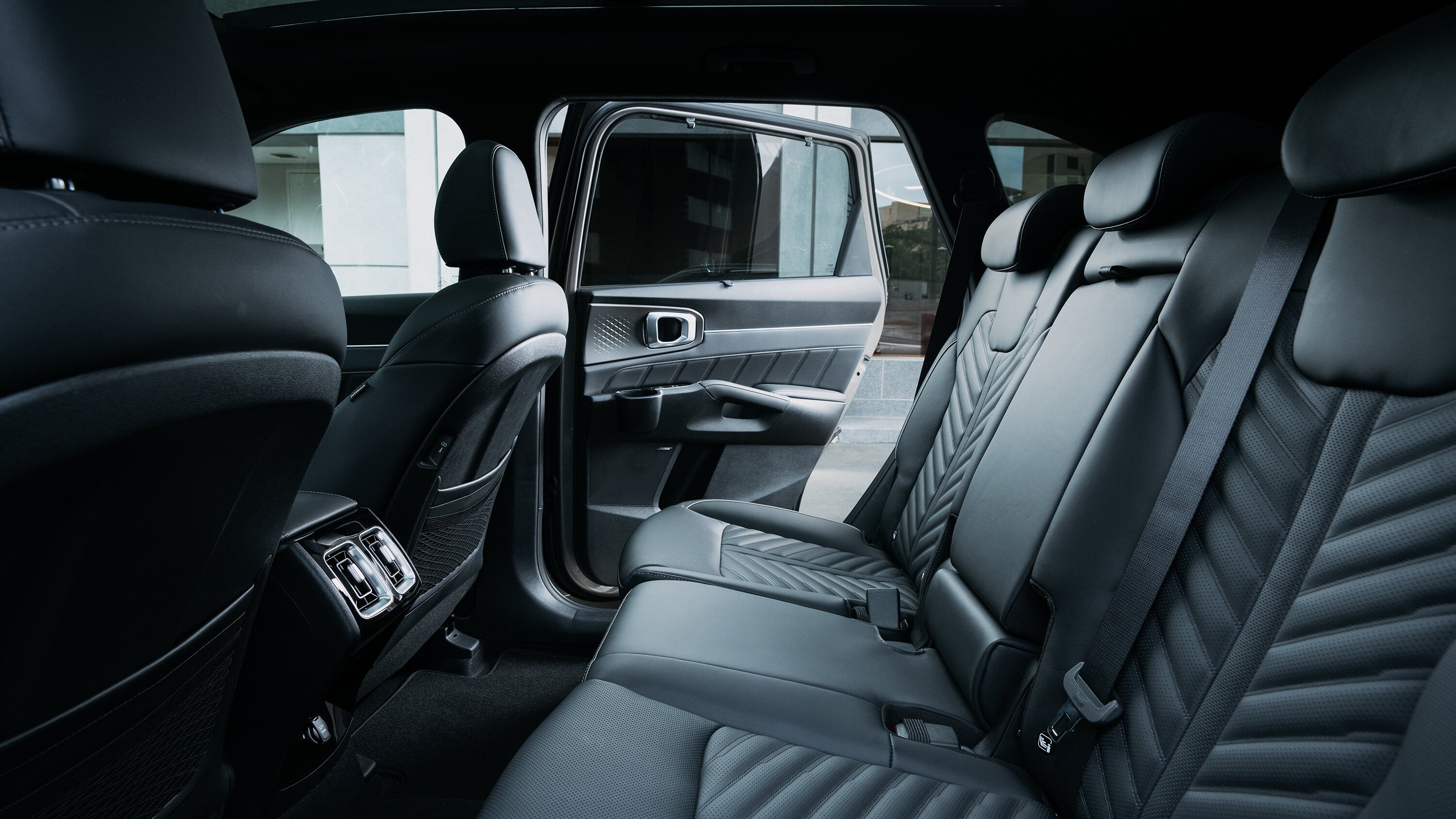
Models from Sport up also get Highway Driving Assist(HDA). This is an adaptive cruise control system with stop and go functionality that also packages a much-improved Land Following Assist system.
Nervous in shopping centre car parks? Go for the GT-Line and you’ll have the assistance of Parking Distance Warning which now features side alerts as well as the previous front and rear zones. Despite the changes to the front bumper and grille design, ANCAP Has pledged to carry across the MQ4 Sorento’s existing 5-star safety rating.
| 2024 Kia Sorento active safety features | |
|---|---|
| Autonomous emergency braking (vehicle, pedestrian, cyclist, junction-turning) | Intelligent speed limit assist |
| Lane-keep assist | Safe exit warning |
| Lane departure alert | Driver attention alert |
| Blind-spot warning with braking | High-beam assist |
| Rear cross-traffic alert with braking | Adaptive cruise control |
| Multi-collision braking | Rear occupant alert |
When we tested it last year, we found it agile and unexpectedly lively at the rear. This model features the same springs and stabiliser bars as its predecessor, but there have been some big changes in how the car is damped. Lessons learned in the development of the EV6 have been utilised here, with the Sorento now getting expensive ZF Sachs SDC3 dampers.
These feature ZF Sachs’ latest valve tech, and feature three separate valves and includes a special pocket valve designed especially for the Sorento. In other words, these shocks are even more capable than those fitted to the EV6 and further differentiates body control from ride comfort.
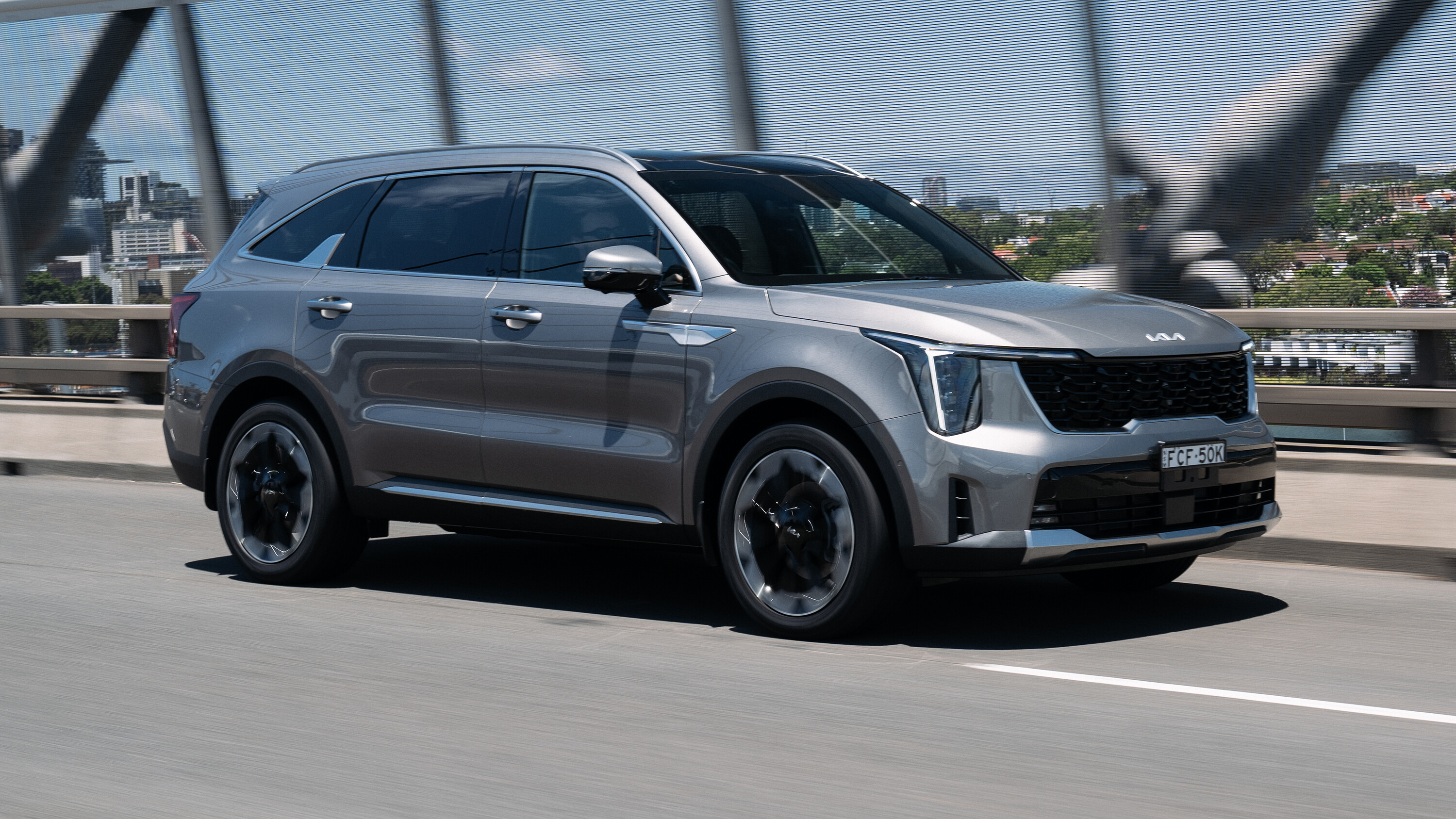
On typically poor Victorian country roads, this generation Sorento feels noticeably better damped than its predecessor and there’s an added benefit that there’s less noise, vibration and harshness transmitted into the passenger cell. As a side note, with the prior MQ4 Sportage, the petrol and diesel versions were treated to local chassis tuning whereas the hybrid models weren’t. That’ll change with this update.
If you’re an existing Sorento owner, you’ll also notice that the steering will feel different. That’s because this generation car has been treated to a revision of the electrically-assisted power steering. It still features a rack-mounted motor, but all of the software, including the firmware, the algorithm base and the steering maps are new. I’m a little less convinced about this particular update.
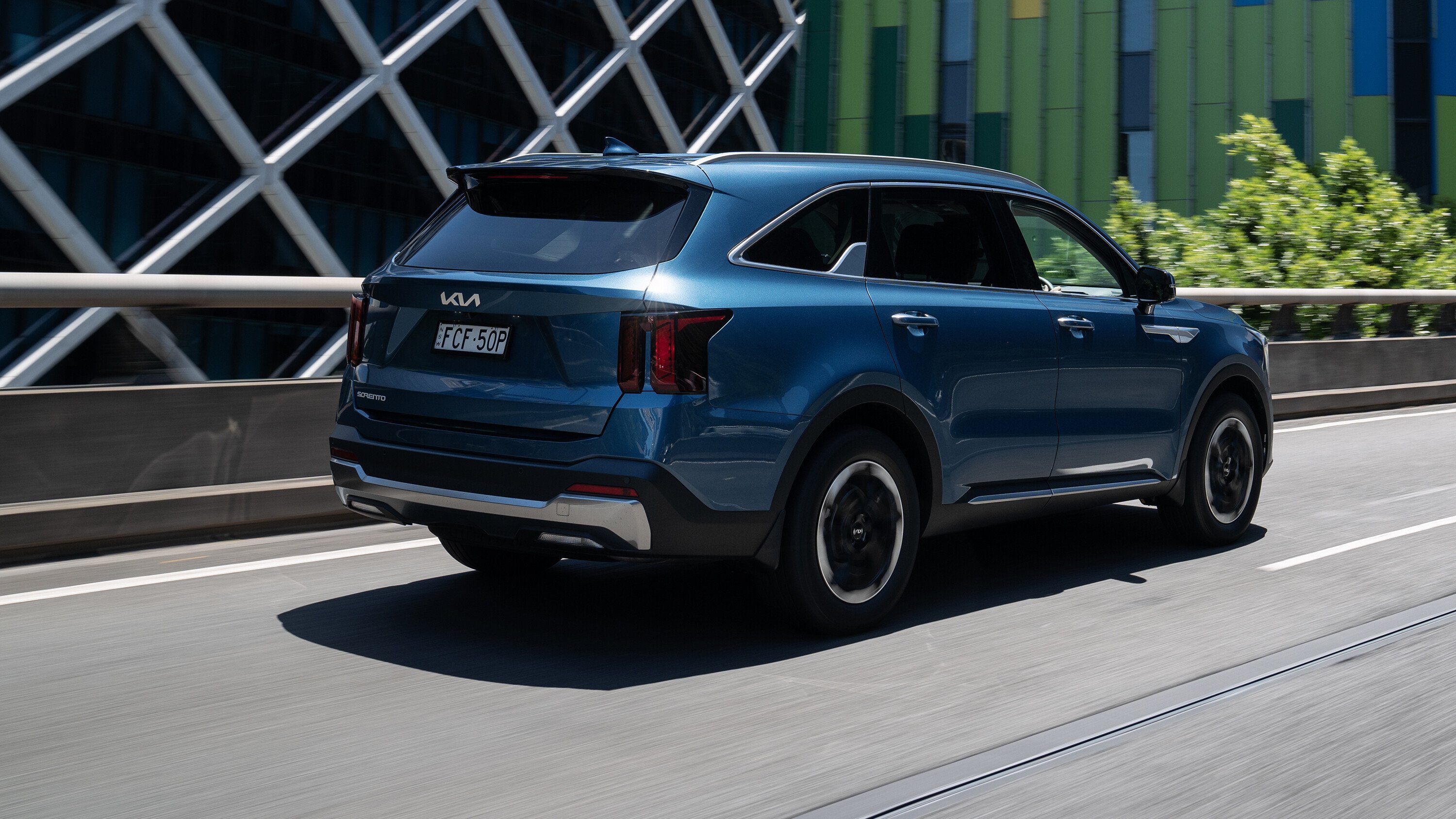
Having said that, it’s probably one of those things you’d notice in the first 24 hours with the Sorento and then never register again once you’d become accustomed to it. Kia has recently finalised the towing ratings for the new Sorento and reports that it comes to market with a 2.0-tonne braked towing figure.
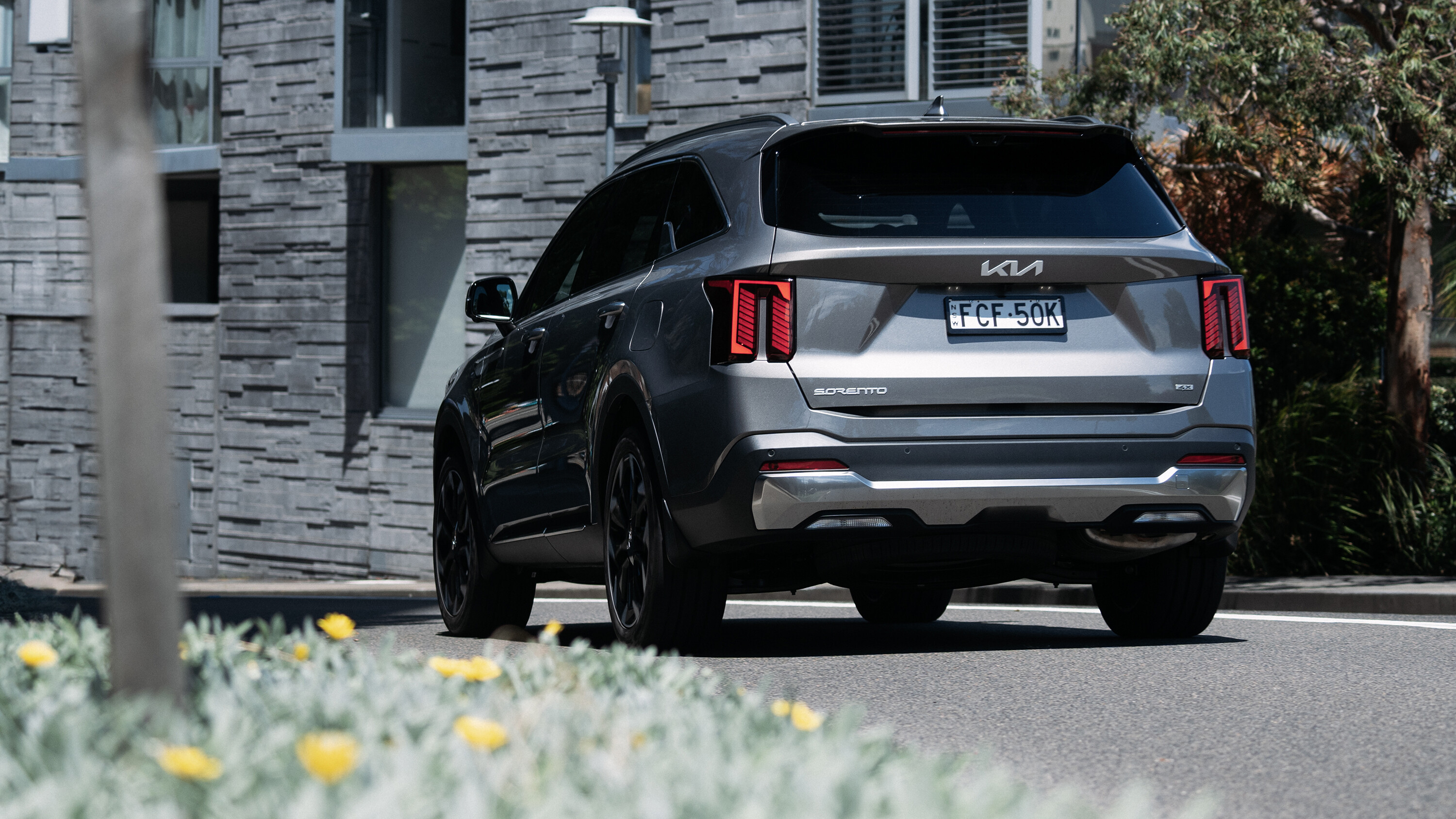
This latest update typically tacks around $3500 model for model on top of its predecessor. Its pricing will undoubtedly dent the value proposition a little, but even if this updated Sorento were pitched into that comparison again, it’d still be markedly the most affordable vehicle.
| 2024 Kia Sorento | Price | Change |
|---|---|---|
| S petrol FWD | $50,680 | up $3030 |
| Sport petrol FWD | $53,300 | up $3030 |
| S diesel AWD | $53,680 | up $3030 |
| Sport diesel AWD | $56,300 | up $3030 |
| Sport+ petrol FWD | $58,230 | up $3380 |
| Sport+ diesel AWD | $61,230 | up $3380 |
| GT-Line petrol FWD | $65,590 | up $3520 |
| GT-Line diesel AWD | $68,590 | up $3520 |
| Prices exclude on-road costs | ||
Kia was plagued by some severe supply issues in 2023, and was punished with order cancellation rates of around 20 percent from private buyers as a result, but the wait time for the new Sorento is estimated at between three and four months.
Kia’s local boss Damien Meredith doesn’t believe the cost of living issue will knock sales. “There’s a resilience in the Australian economy that we always underestimate,” he says.
“I’m confident in the economy, confident in the market and confident of what we’re getting into. We’re very happy with finishing fourth [by marque in local sales] but that’s historic data. We’re firmly focused on what we need to do in 2024.”

Service costs and schedules differ depending on the powertrain you choose, but all are covered by seven years of capped-price servicing. The turbo-diesel and petrol V6 Sorentos require servicing every 12 months/15,000km.
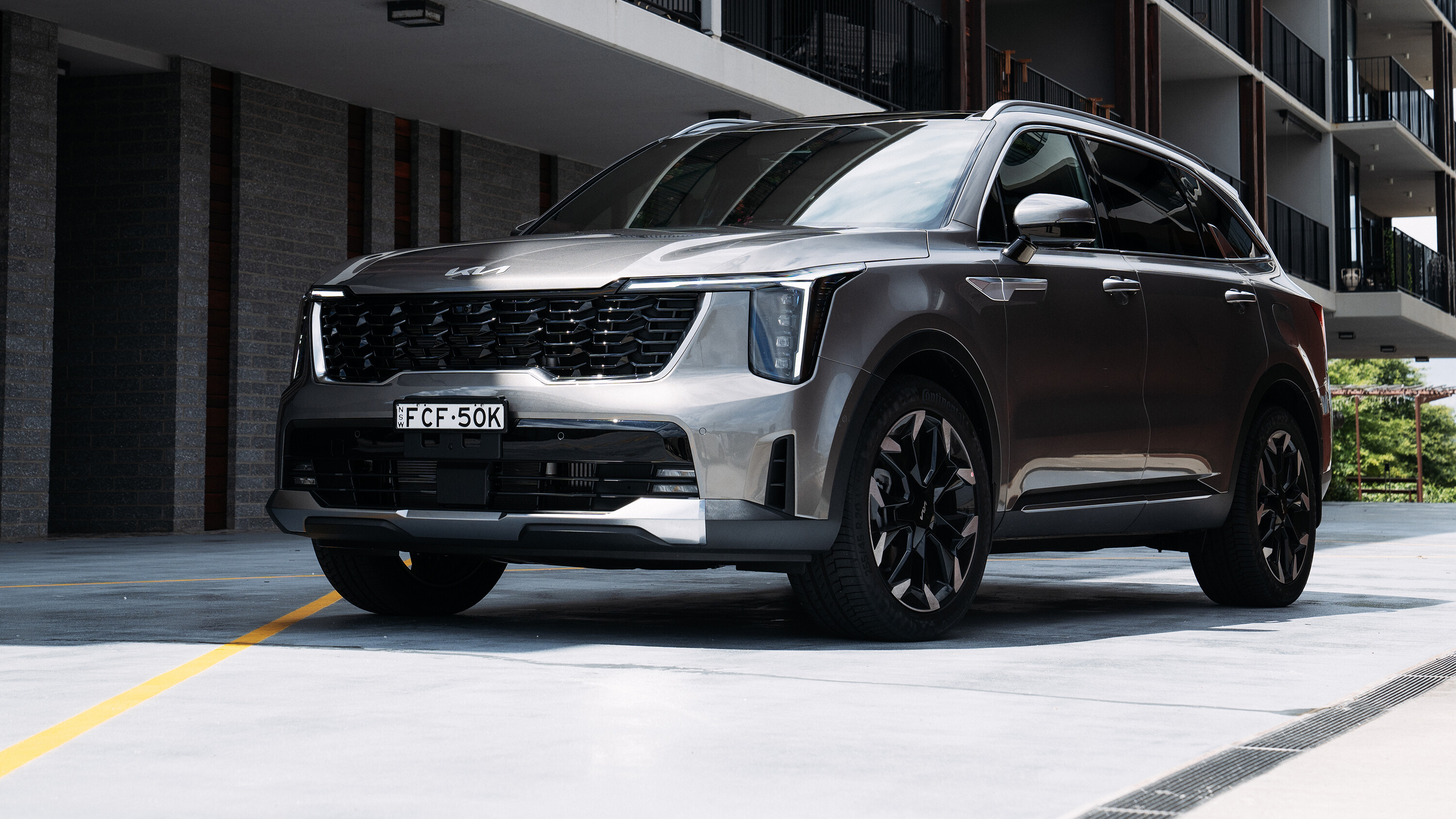
What’s more, it’s hard to see anything coming in the short term that’ll dethrone it for families looking for a safe, competitively priced, reliable seven-seat road-biased SUV. Job done.
| 2024 Kia Sorento specifications | |
|---|---|
| Model | Kia Sorento GT-Line AWD |
| Engine | 2151cc 4cyl, dohc, 16v, turbo-diesel |
| Max power | 148kW @ 3800rpm |
| Max torque | 440Nm @ 1750-2750rpm |
| Transmission | 8-speed automatic |
| L/W/H | 4815/1900/1700mm |
| Wheelbase | 2815mm |
| Weight | 1974kg (tare) |
| 0-100km/h | 9.2sec (claimed) |
| Economy | 6.0L/100km (combined) |
| Price | $68,590 before on-road costs |
| Availability | On sale Now |
As with earlier seasons of the show, this latest series will look back at the previous year’s championship – which means, this time, a big focus on the record-breaking run of Max Verstappen Red Bull Racing.
Expect other key ‘plot points’ to include the year’s starring moments from Aston Martin and McLaren, and the return of our local hero Daniel Ricciardo with AlphaTauri.
The past couple of years have also seen screen plans for Daniel Ricciardo and Lewis Hamilton, with Ricciardo signed up to produce a scripted F1 series for Disney’s Hulu service, while Hamilton is working on an F1 film for Apple, with Brad Pitt lined up to star.
Season 6 of Netflix’s Drive to Survive will be available to watch from February 23, everywhere around the world.
Netflix has yet to reveal how many episodes will be in season 6 of Drive to Survive, although all previous seasons had 10 episodes running between 30 to 60 minutes each.
Despite announcing the series return today, Netflix has not yet released a trailer for Drive to Survive season 6.
Images of the all-new, second-generation Porsche Macan have leaked online just hours before the fresh SUV’s official reveal.
Two images of the new Macan have been posted to instagram by WilcoBlok, revealing a fresh exterior design and dimensions that appear to be slightly larger than the outgoing model.
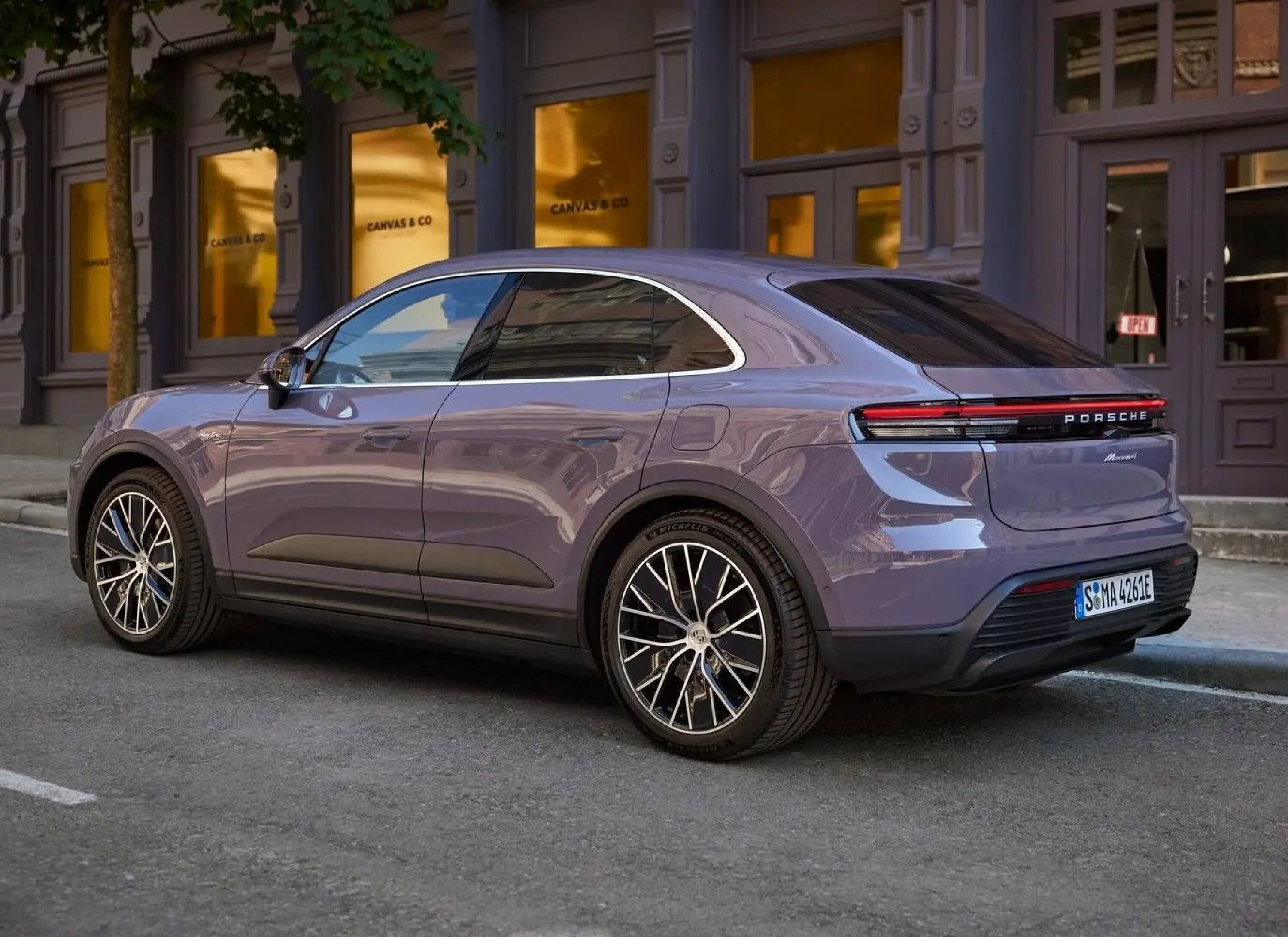
The wheelbase, in particular, seems to have grown, however we’ll need to wait for the Macan’s official reveal later tonight before we can confirm its exact dimensions.
Porsche has already confirmed some key details for the new Macan, including a driving range of up to 500km, power outputs of more than 450kW and a large 100kWh battery pack. Keep reading our story below to learn more.
Design wise, the new Macan debuts a cleaner, more minimalist look. Up front there’s a new, split-level lighting arrangement, while Porsche’s now familiar full-width light bar features at the rear.
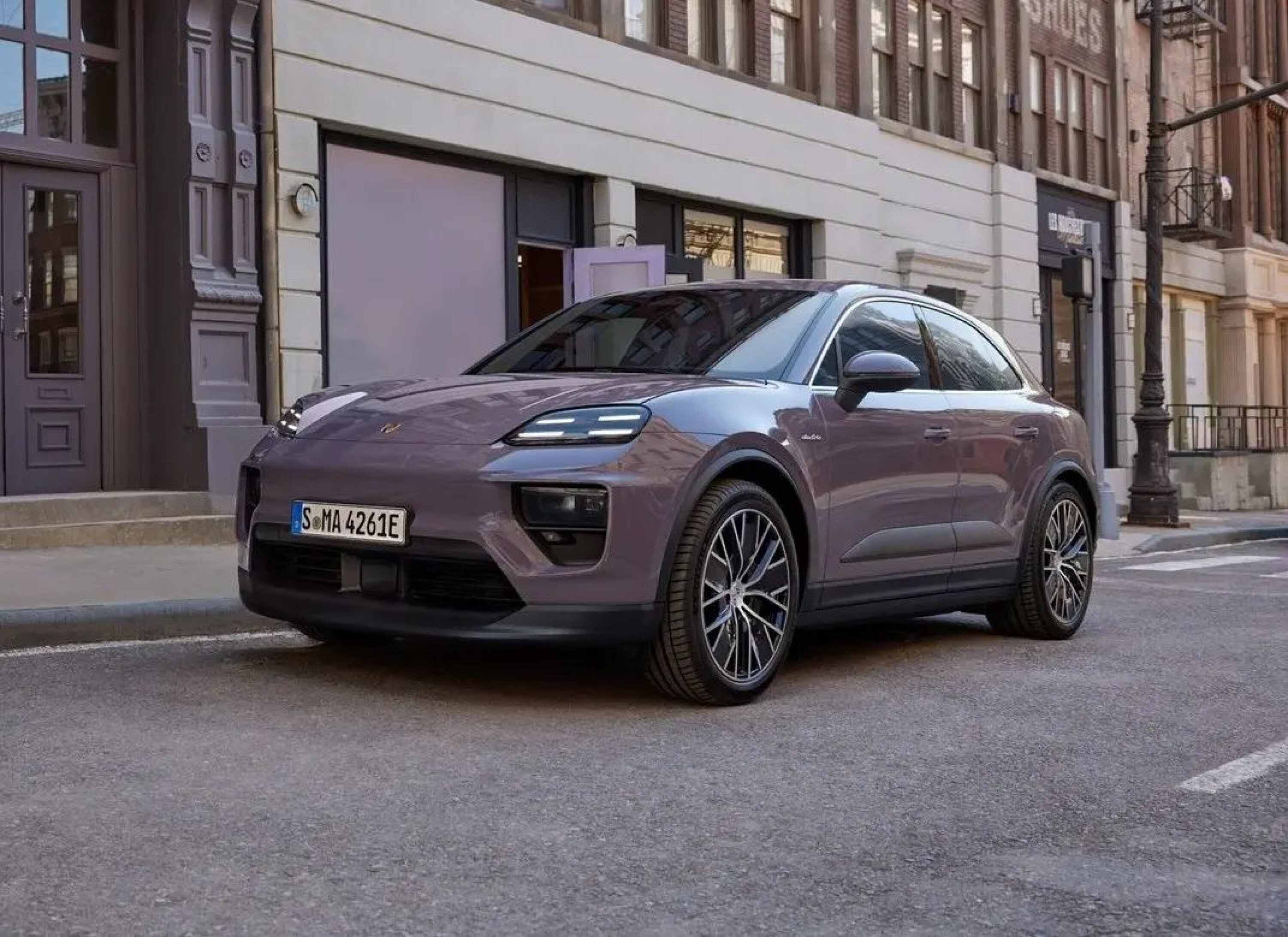
Inspiration from the Taycan and larger Cayenne are also evident in the new exterior design.
Perhaps the biggest change can be seen in the new Macan’s silhouette, courtesy of a new tailgate design that’s more steeply raked.
Stay tuned for the Macan’s official reveal but for now, let us know what you think. Do you like the fresh look?
This week the company confirmed at last that the electric Macan – the first EV built on the company’s Premium Platform Electric (PPE) architecture – will pack a big CATL-supplied 100kWh battery unit, with 95kWh of that being “actively usable”.
In a video released today (below), the company also confirmed a driving range of up to 500 kilometres will be achievable in the electric Macan, depending on the variant.
Thanks to its 800V architecture and 270kW speeds, the Macan will charge from 10 to 80% in “less than 22 minutes” at compatible DC ultra-fast stations, outpacing the likes of Hyundai and Kia whose 800V systems can charge a 77.4kWh battery pack from 10 to 80% in around 18 minutes (although these capabilities can vary dramatically).
This is helped by the electric Macan’s ability to split its 800V system into two 400V systems as needed.
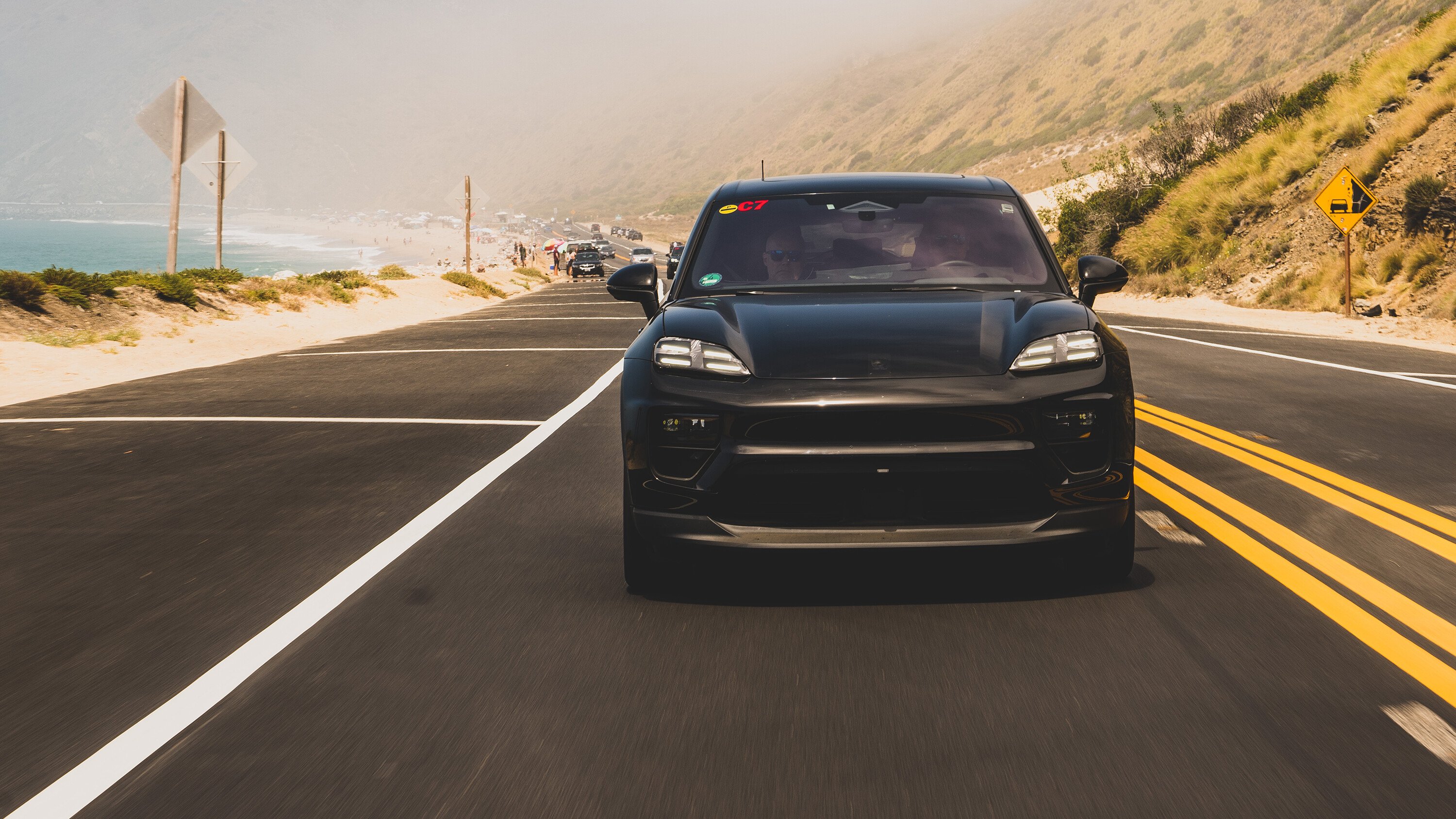
With a dual-motor configuration on-board, the electric Macan also boasts all-wheel drive. Power and acceleration figures are still to be revealed, but Georg Kacher’s first drive last year revealed we can expect the flagship Turbo (yep, no actual turbos included) to produce around 456kW and hit 100km/h in less than four seconds. That’ll do.
In entry-level form, the electric Macan is expected to deliver around 280kW, and closer to 300kW in boost mode.
Still, launch events are notoriously inappropriate sources of real-world data when it comes to fuel/power efficiency.
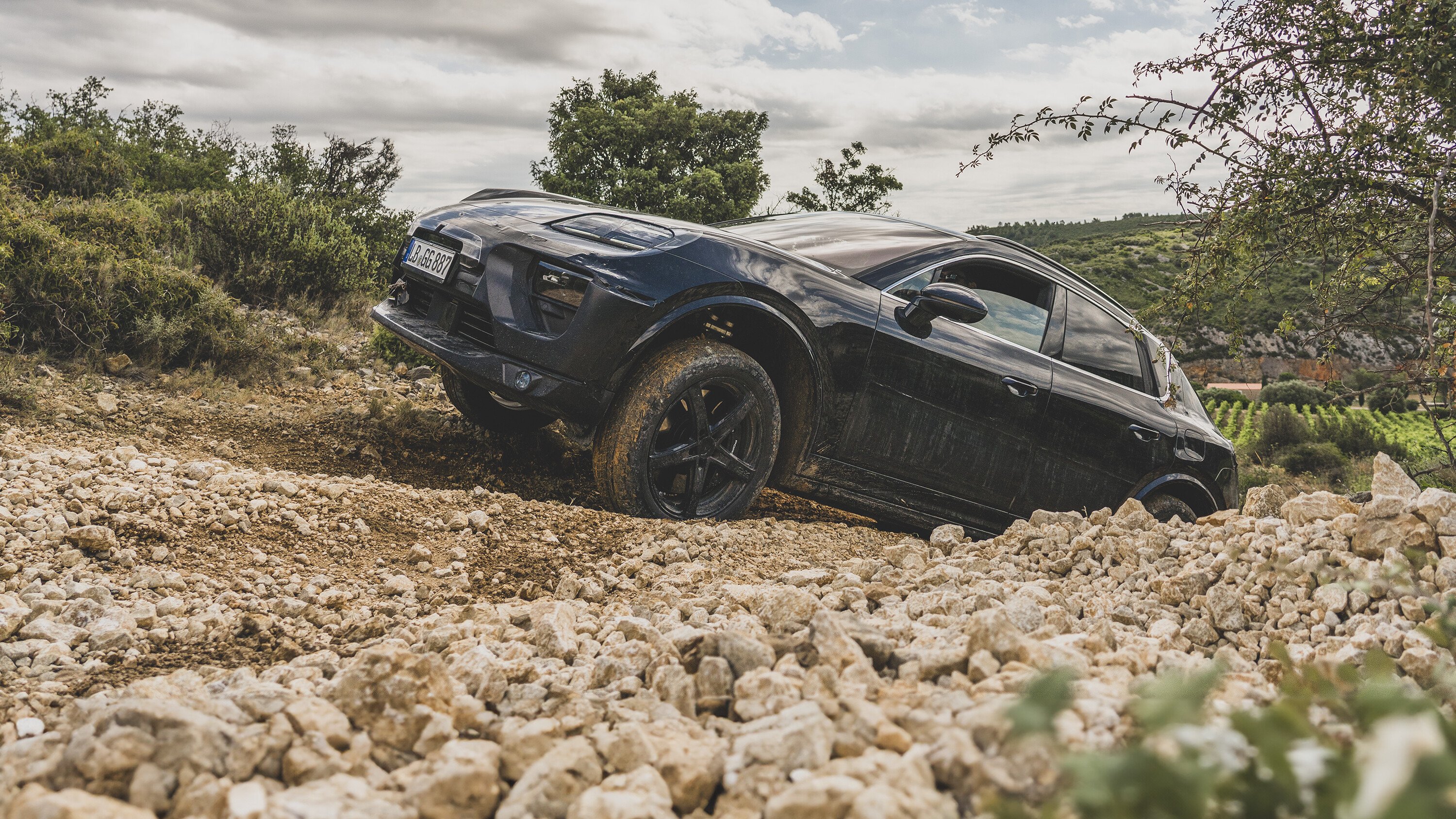
That figure is likely specific to the coupe-bodied shape shown here – but Porsche has yet to confirm if there’ll be a wagon version of the electric Macan.
Nothing especially new here, but nonetheless, here’s what Porsche says: “The active aerodynamic elements all significantly contribute to range,” says Thomas Wiegand, Director Aerodynamics and Aeroacoustics. “We have an automatically extending rear spoiler and active cooling flaps on the front air intakes.”
Porsche Cars Australia has confirmed the petrol-powered Macan SUV will be dropped from its line-up in 12 months’ time to make way for the new electric Macan E.
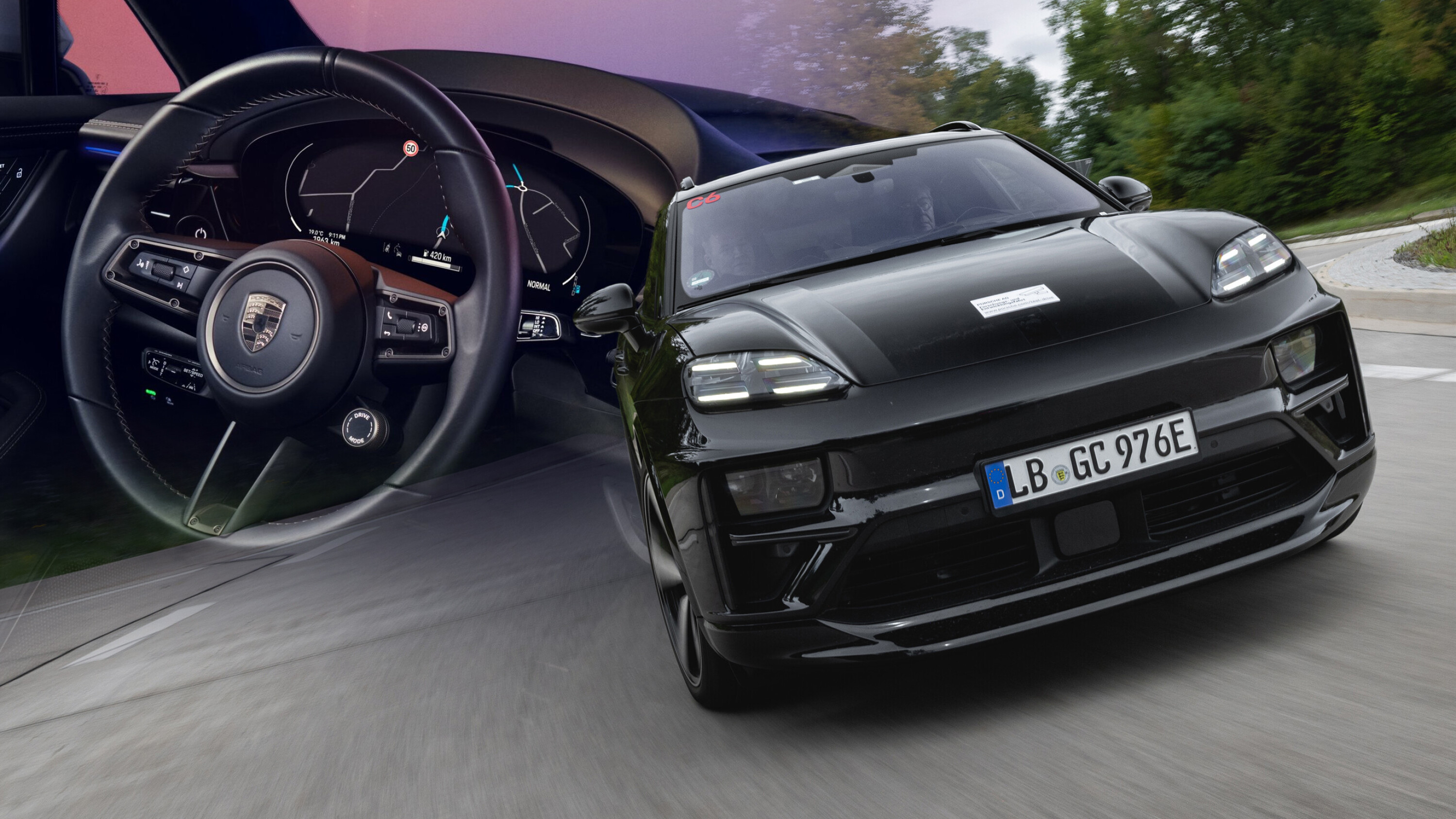
Porsche has revealed the first image and details of its first electric SUV as it continues a product tease ahead of a full reveal.
The as-yet-unnamed electric Macan is a significantly different proposition to the combustion-engined midsized SUV that has been around for nearly a decade, including sharing a new ‘PPE’ electric 800-volt platform with the upcoming Audi Q6 E-Tron.
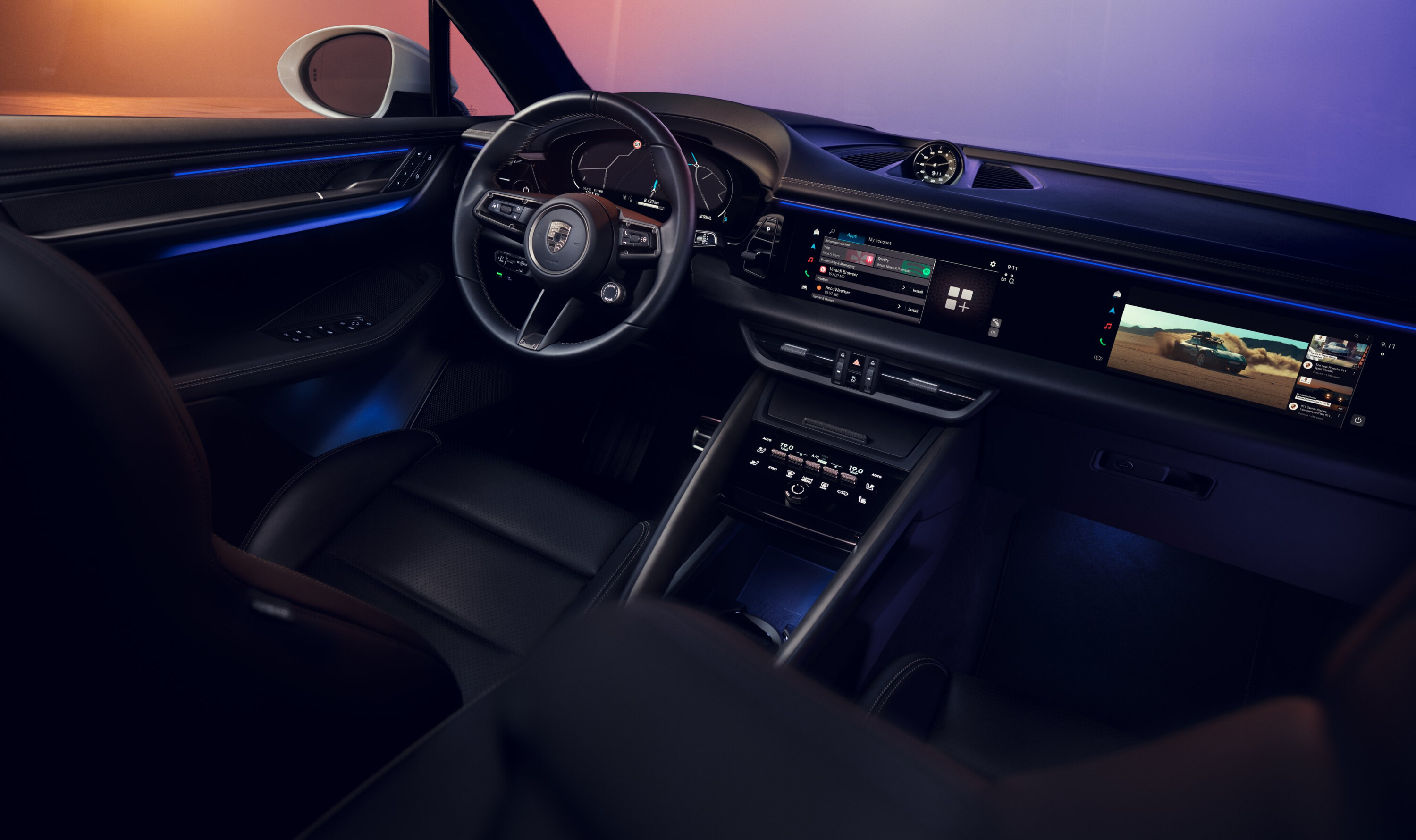
Central to an interior that differs notably from the regular Macan cabin, a Porsche Driver Experience dash combines a free-standing 12.6-inch curved digital display directly ahead of the driver, a middle 10.9-inch infotainment touchscreen, while another 10.9-inch information/entertainment touchscreen is available on the passenger side.
Porsche says the optional passenger display is covered with a special film so the driver can’t see streamed videos or games being played while driving.
A range of Porsche Apps will be standard or available for download.
The optional large augmented-reality HUD “corresponds to the size of an 87-inch display” the German car maker says, and it can overlay navigation arrows onto the view ahead to make route guidance simpler.
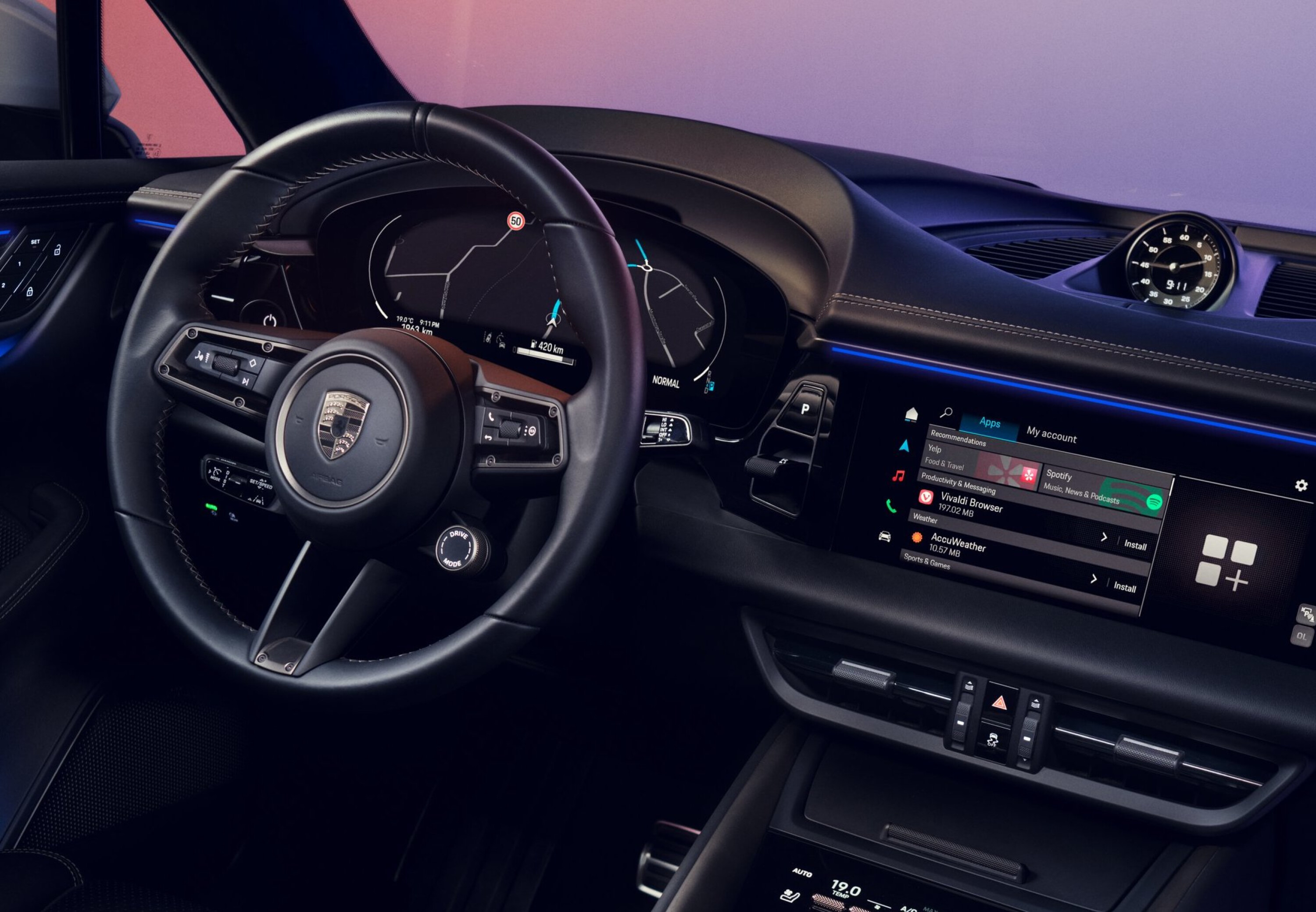
A Sport Chrono pack complete with its analogue clock, Porsche digital key, and Burmester audio system will be among traditional options.
The HUD, as well as the digital instrument cluster, can be customised via steering wheel controls.
A light strip is also prominent in the front cabin, featuring 56 LEDs, customisable colours, and a variety of animation sequences depending on whether the driver is entering the vehicle, charging the vehicle, or interacting with driver aids.
Although this is Porsche’s most advanced Macan yet, plenty of physical controls are present – including the climate and seat heating/ventilation panel, steering wheel controls including Drive Mode dial, and the small transmission lever on the dash.
There are new seats, too – 24mm lower than in the current Macan and with the choice of a comfort-focused chair or a race-style bucket.
Rear-wheel steering will another first for the Macan, an option that shrinks the turning circle to 11.1 metres by moving the rear wheels in the opposite direction to the front wheels at up to 80km/h – and by as much as five degrees at parking speeds.
Two versions of the electric Macan will be offered, with both featuring a circa-100kWh lithium-ion battery.
The flagship Turbo will produce about 450kW and more than 1000Nm, while an entry version of the electric Macan will offer about 280kW.
An all-electric version of the larger Cayenne SUV is expected by 2026.
Wheels was among the first media outlets in the world to drive a prototype of the electric Macan – read about it via the feature link below.
Local executives have already confirmed Australian-inspired suspension updates are in the plans for mid-life model updates of its existing models, the Omoda 5 small SUV and Tiggo 7 Pro medium SUV, after they were subjected to safety tweaks using software.
Following the two combustion-powered vehicles, Chery has a melange of models available in other parts of the world – including intriguing luxury-oriented export brand Jaecoo, and affordable Arrizo models – to potentially follow the Tiggo and Omoda’s paths to Oz.
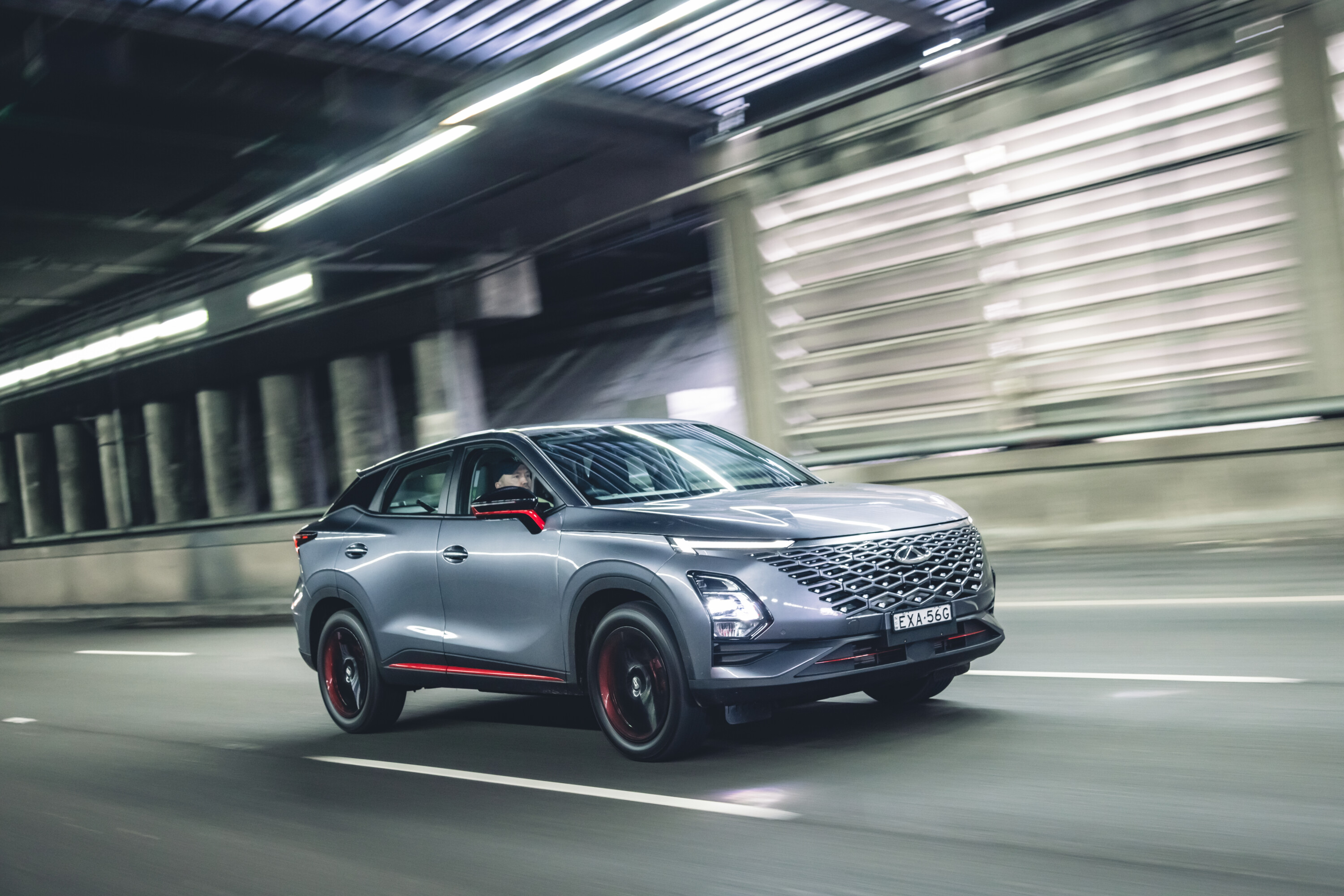
It’s not exactly straightforward picking, so it makes sense that the official response from Chery about these other model lines is that the local team is “constantly evaluating overseas product for the Australian market as a matter of course for the business”.
A rival for the MG ZS electric, BYD Atto 3 and Hyundai Kona, Chery is yet to confirm pricing. Unlike BYD and Tesla, for example, Chery’s expansion doesn’t leave behind typical bricks-and-mortar dealers.
This means the electric Omoda 5 may be a little dearer than the Atto 3 when it comes to market – though to compete with the pricepoint MG ZS Electric it’ll need to get close to $45K for a base model.
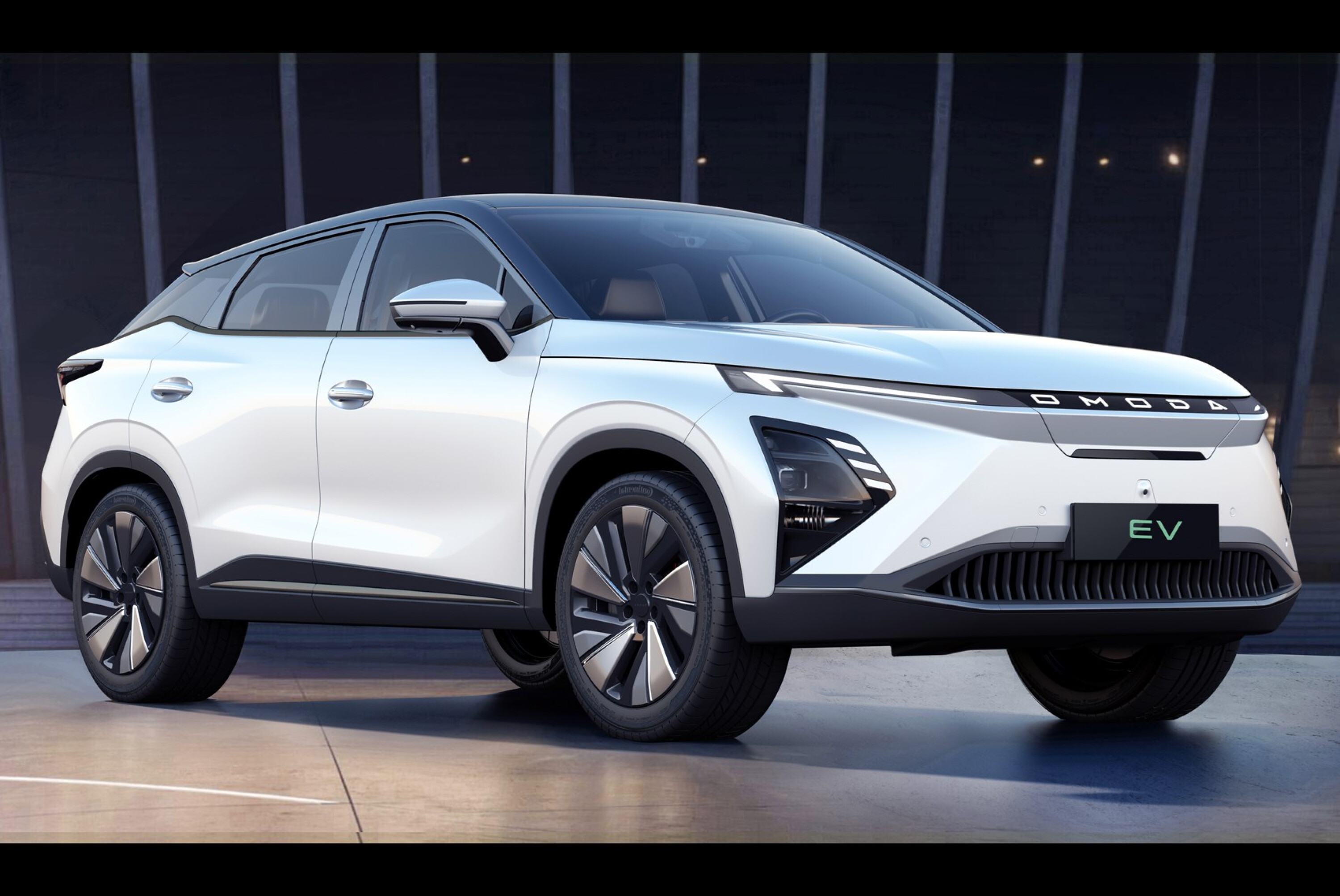
While it sits on the same basic architecture as the Omoda 5, there are distinct styling differences including the front clip and LED lighting details, wheel designs, and interior features.
The Omoda 5 is the first of Chery’s ‘4.0’ product series and will be followed by other Omoda-branded models in the future.
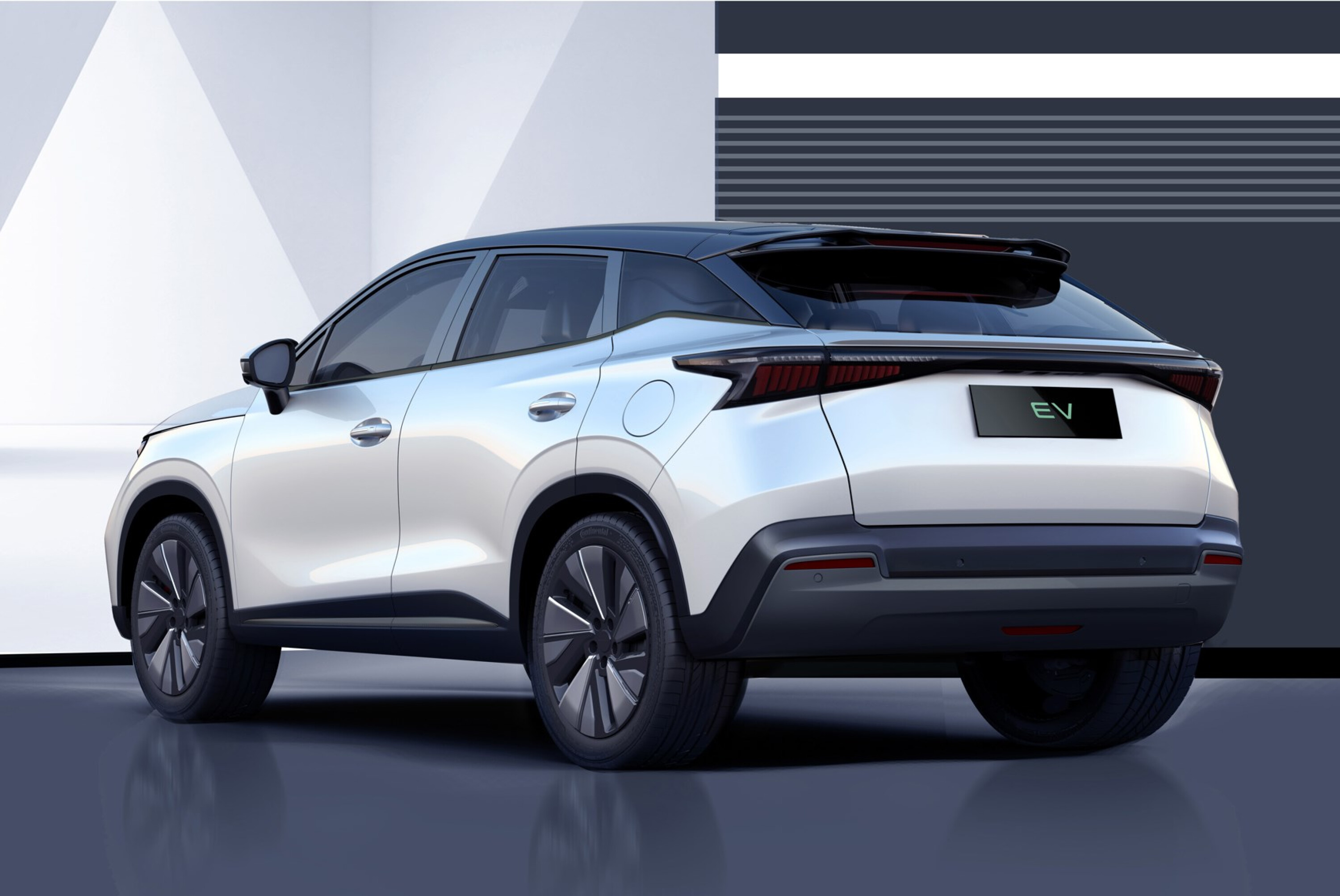
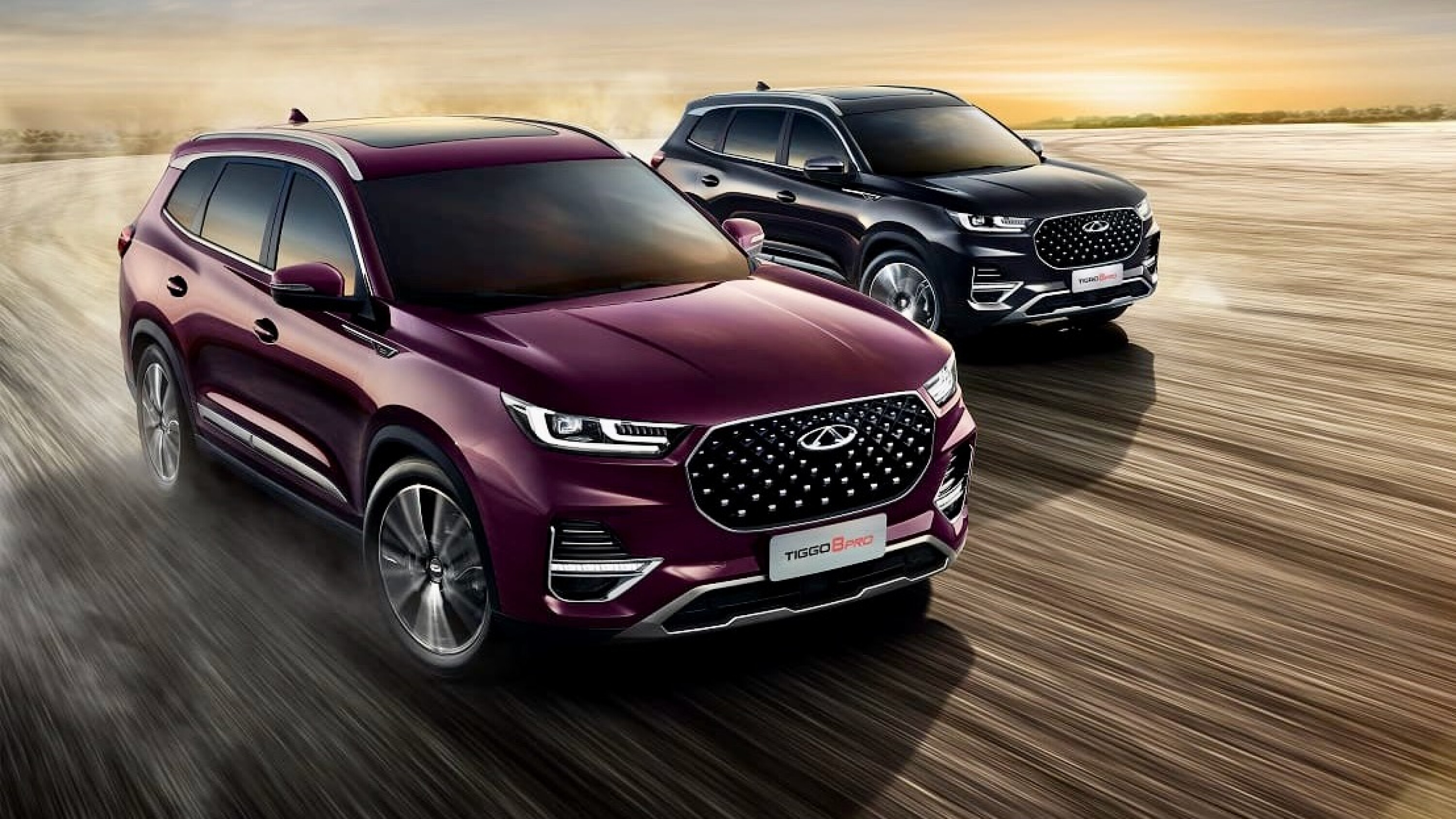
The seven-seat Tiggo 8 measures 222mm longer than the Tiggo 7 at 4.72 metres, with optional tan-coloured leather upholstery. Underneath, it uses the same ‘T1x’ platform as the Tigoo 7, but a more powerful 1.6-litre turbo–petrol engine teamed with AWD and a seven-speed dual-clutch transmission.
In China, Chery offers the Tiggo 8 Pro in ‘E+’ plug-in hybrid guise, which boasts 100 kilometres of EV-only driving range, 1L/100km fuel consumption, and a 0-100km/h sprint in 7.0 seconds. There’s no word on if that is coming to Australia.
Like the Tiguan Allspace, the Tiggo 8 Pro is a stretched version of a medium SUV and, if prices start off in the low $50K region drive-away, it could provide a good value-oriented rival for the Hyundai Santa Fe and Kia Sorento.
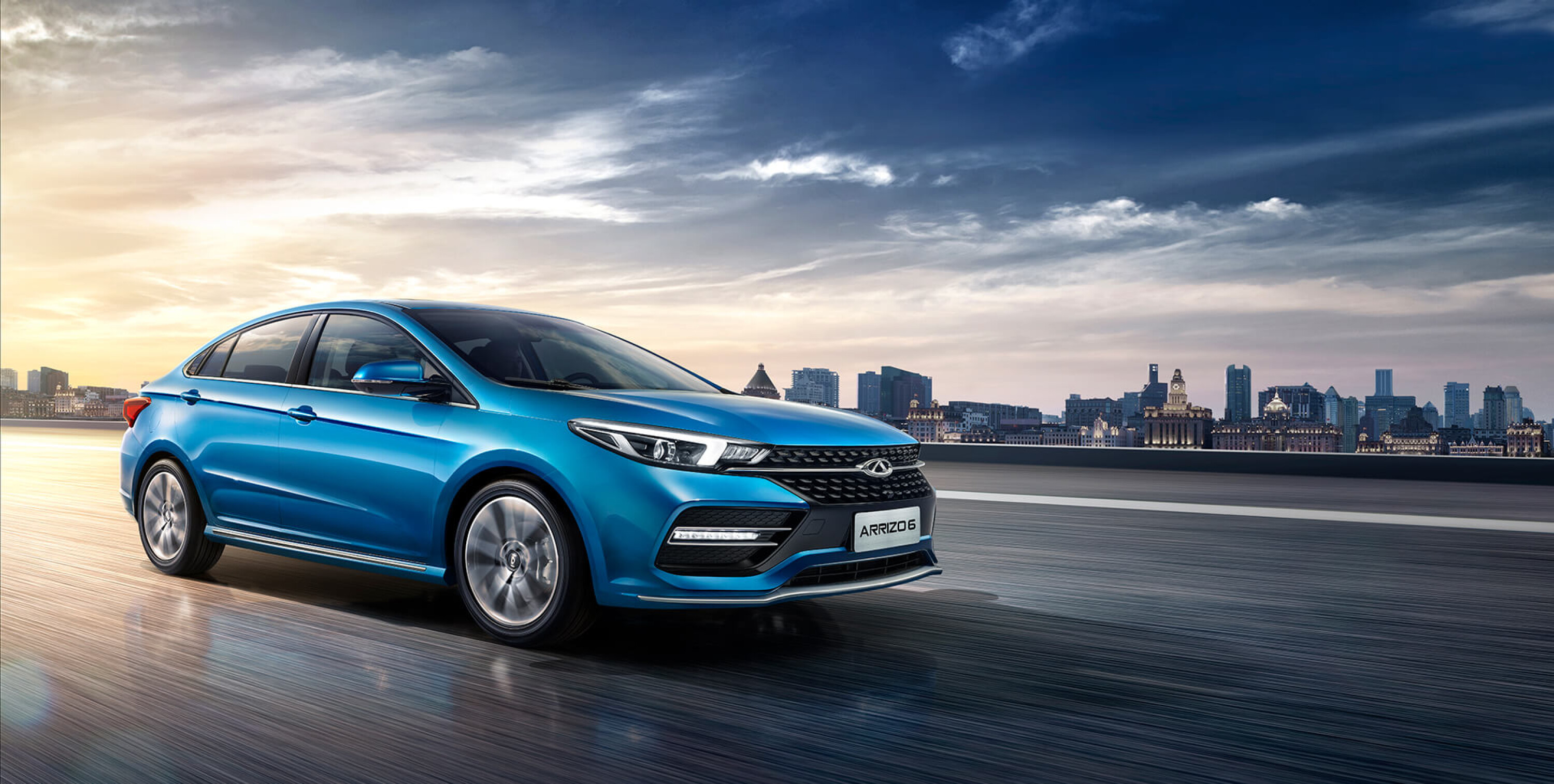
The Arrizo 6 is a small sedan, a rival for the Hyundai i30 sedan, Toyota Corolla, and chiefly the MG 5. It’s sold in other markets including China and Thailand with its eyes set squarely on value with a sporty GT variant was introduced in 2023.
There’s also the Arrizo 8, a larger take on the sedan from the Chinese brand powered by a gruntier 1.6-litre turbo-petrol four-cylinder – the same due in the Omoda 5 GT later this year.
Its likelihood for Australia is low, though if the MG 5 proves successful locally following its zero-star ANCAP result, Chery may look to copy that success.
There are a pair of models, the Mazda CX-5-sized Jaecoo J7 (known as the Chery Tansuo 06 or Explore 06 in China) and the Kia Sorento-sized Jaecoo J8 (otherwise known as the Chery Tiggo 9 in China… confused yet?)
With the Tiggo 7 and Tiggo 8 Pro models launched in Australia already, the more futuristic-looking Jaecoo products would potentially cannibalise the brand’s local sales.
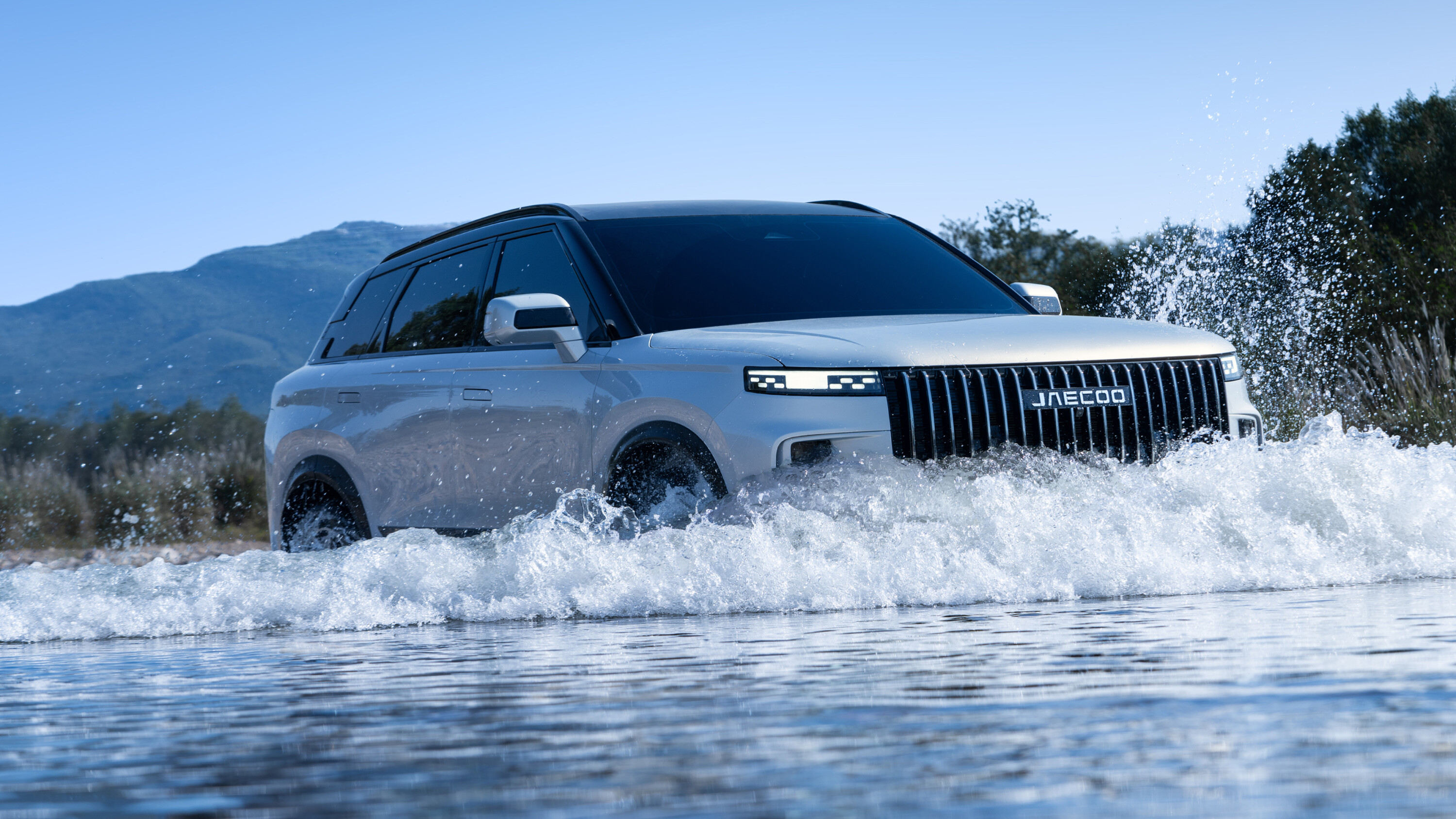
Chery / Jaecoo Malaysia describes the J7 as “exceptional urban off-road SUV within the premium segment”, so perhaps it could co-exist as a fancier choice than the Tiggo 7 Pro? Its 600mm claimed wading depth is certainly respectable for a family-oriented SUV.
Would you like to see Chery bring the Jaecoo brand down under? Leave a comment below with your opinion.
The bathtime-inspired name won 46 percent of the votes in a recent social media poll conducted by VW UK for the facelifted T-Cross compact SUV.
Two other new colours are spared the huge potential for puns: Clear Blue metallic and Kings Red metallic.
VW UK couldn’t resist bathing its press release in its own puns.
“Some might say putting a paint name to public vote is a quackers idea,” said Volkswagen UK’s T-Cross product manager, Oliver Lowe. “But we were confident people wouldn’t get in a flap while trying to decide on a new name, and we think Rubber Ducky yellow was a really eggs-cellent choice.”
While the updated T-Cross is making its way into UK showrooms, the Australian market has to wait until late 2024.
The optional yellow paint scheme will be known as its standard Grape Yellow here. If that doesn’t float your boat, then maybe get in touch with VW Australia’s social media team!
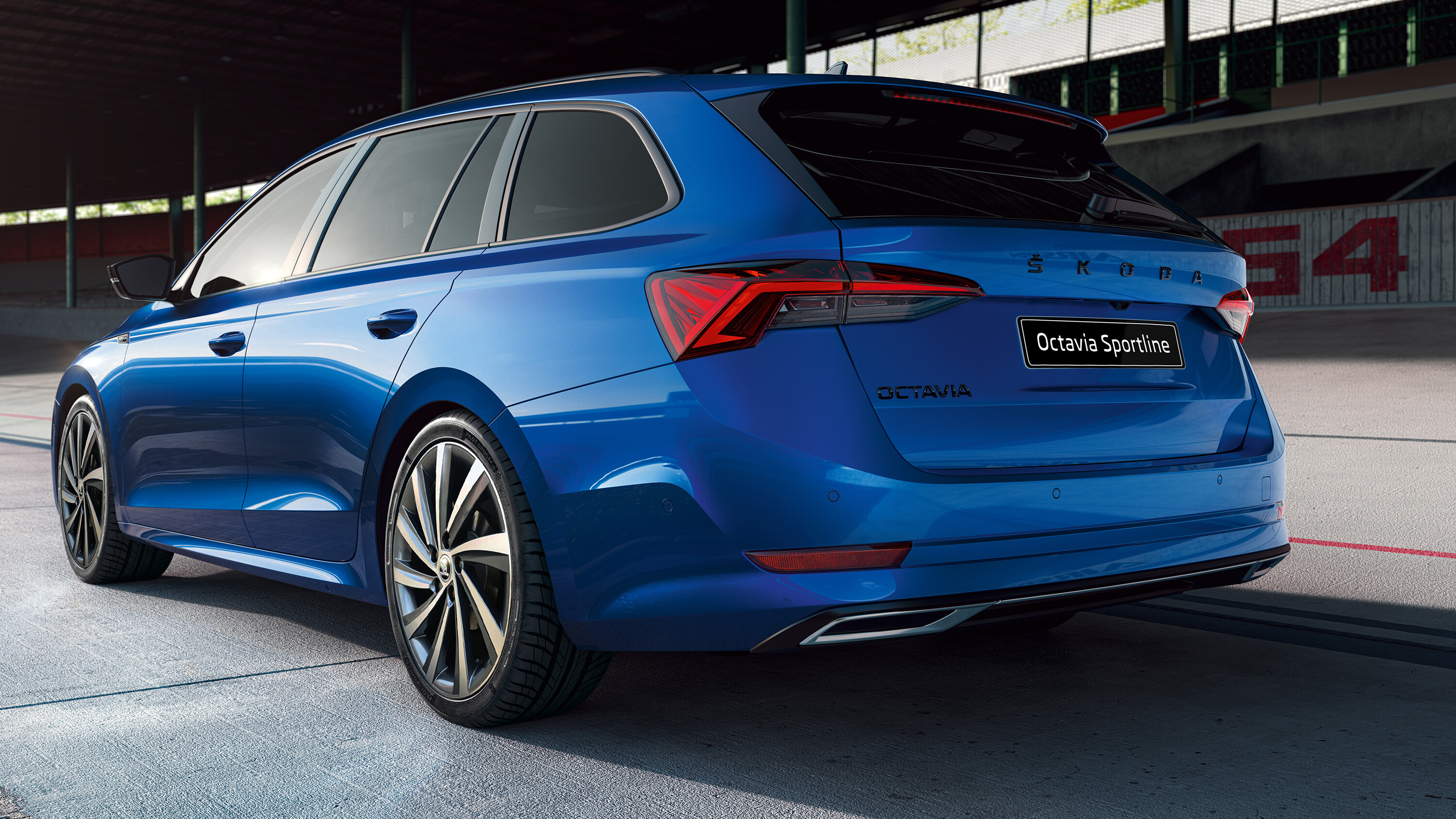
The new Octavia SportLine trim is available to order in both Liftback sedan and Wagon forms. It joins the existing Octavia Style as a no-cost package that adds a sportier look and feel, inside and out, along with a lower ride and a new Drive Mode selector.
As with the Style, the Sportline is priced from $40,590 before on-road costs, but Skoda also quotes national SportLine-specific drive-away prices of $42,490 for the Liftback and $43,990 for the Wagon.
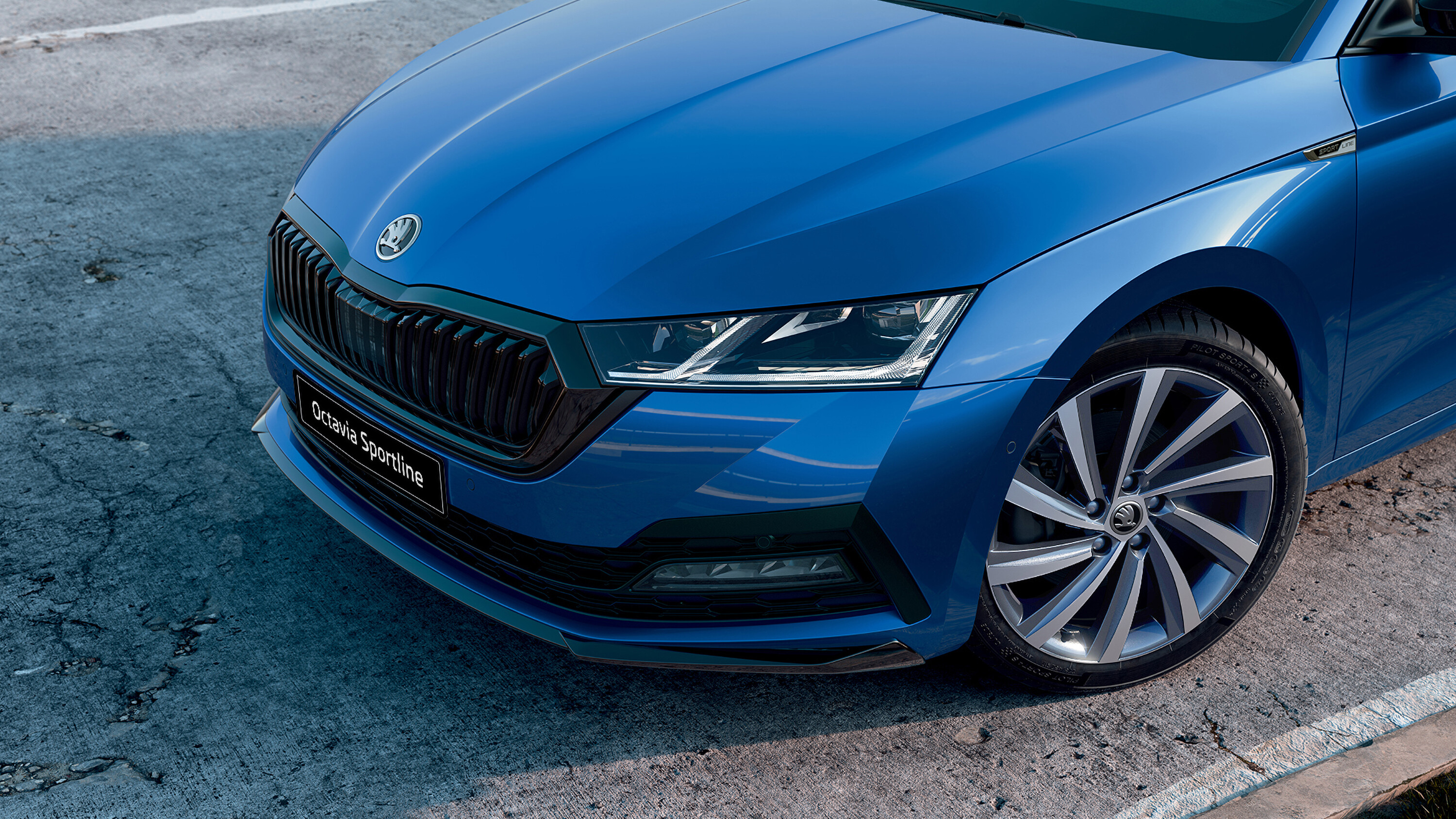
Both Style and Sportline trims of the Octavia are equipped with 18-inch alloy wheels, Matrix LED headlights and adaptive high-beam, heated exterior mirrors with auto dimming on the driver’s side, a powered tailgate, keyless entry and start, and dual-zone climate control.
Infotainment is via a 10.25-inch ‘Virtual Cockpit’ driver display, 10-inch main display with integrated satellite navigation, and wireless connectivity for Apple CarPlay and Android Auto.
Options include Velvet Red paint ($770 Liftback, $1170 Wagon), a $1900 panoramic sunroof for the Wagon, and a $3200 Premium Pack that adds Emergency Assist, Adaptive Lane Guidance, powered front seats, heated front and outboard rear seats, tri-zone climate control, DAB+ digital radio, and extra USB-C points including one behind the interior mirror for easy dashcam power.
Taking inspiration from the hero Octavia RS, the SportLine also adds a front spoiler and rear diffuser, dual exhaust tips, a matte-black finish on the window trim and new SportLine badges on the front guards.
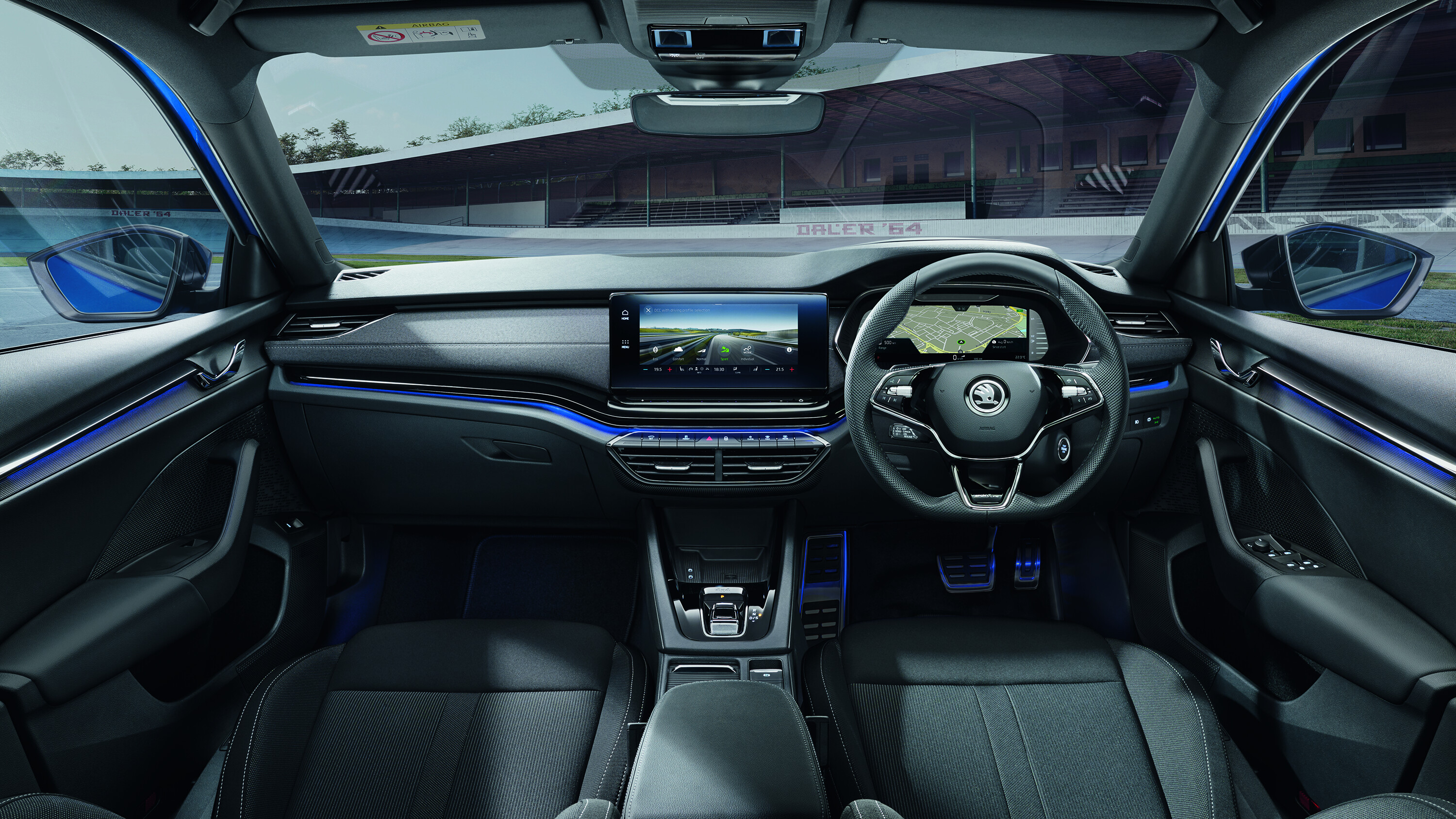
Inside you’ll find Skoda’s three-spoke, flat-bottomed, Sportline-badged steering wheel with paddle shifters, along with Sports Comfort front seats, aluminium pedals and a black trim to the headliner and pillars.
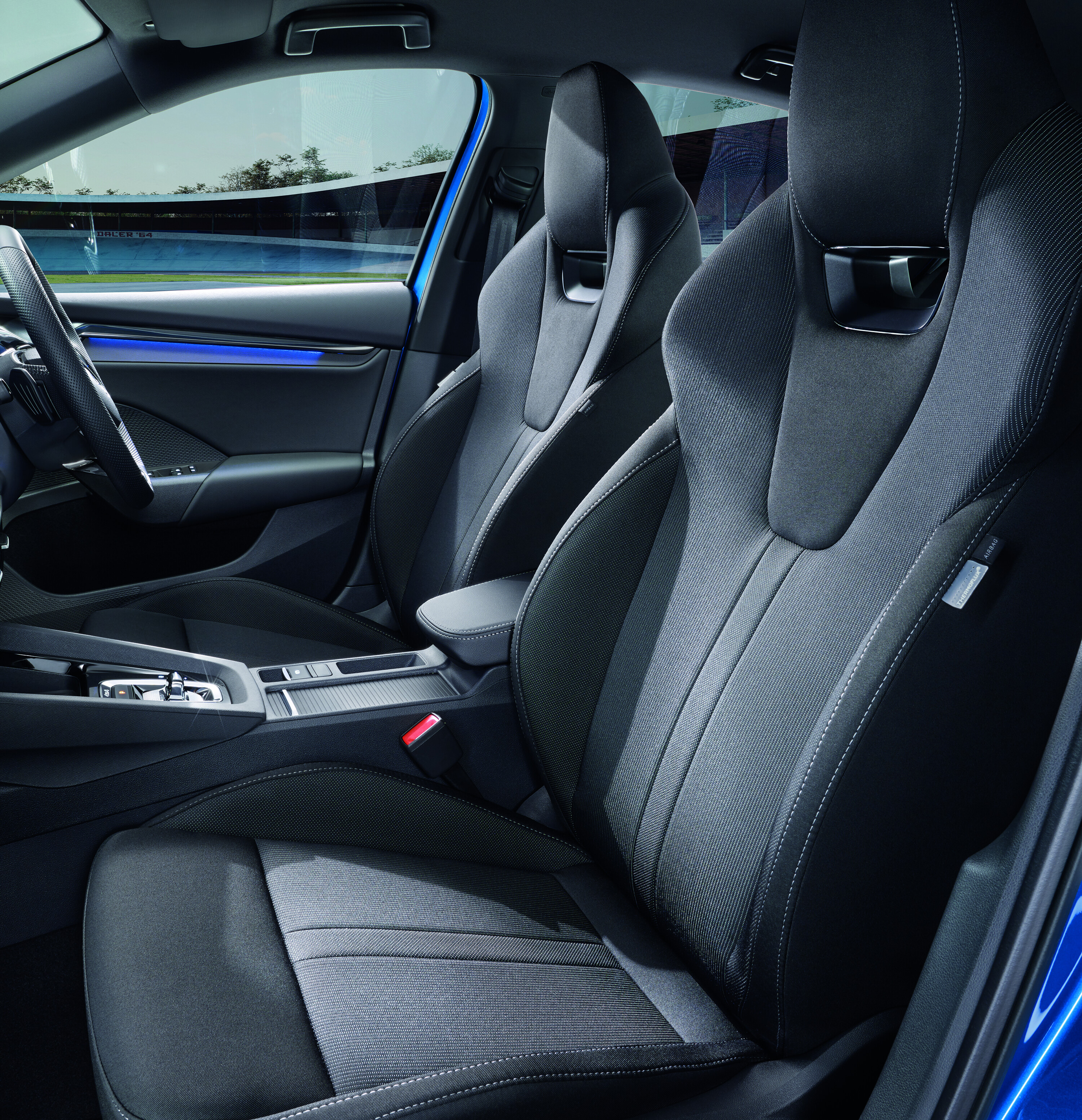
Power is provided by the same 110kW/250Nm 1.4-litre turbo petrol four-cylinder engine that drives the Style, likewise partnered with an eight-speed automatic transmission and a front-wheel drive configuration. But, while there’s no bumper in power or torque, the added Sport mode enhances steering, throttle and transmission responsiveness.
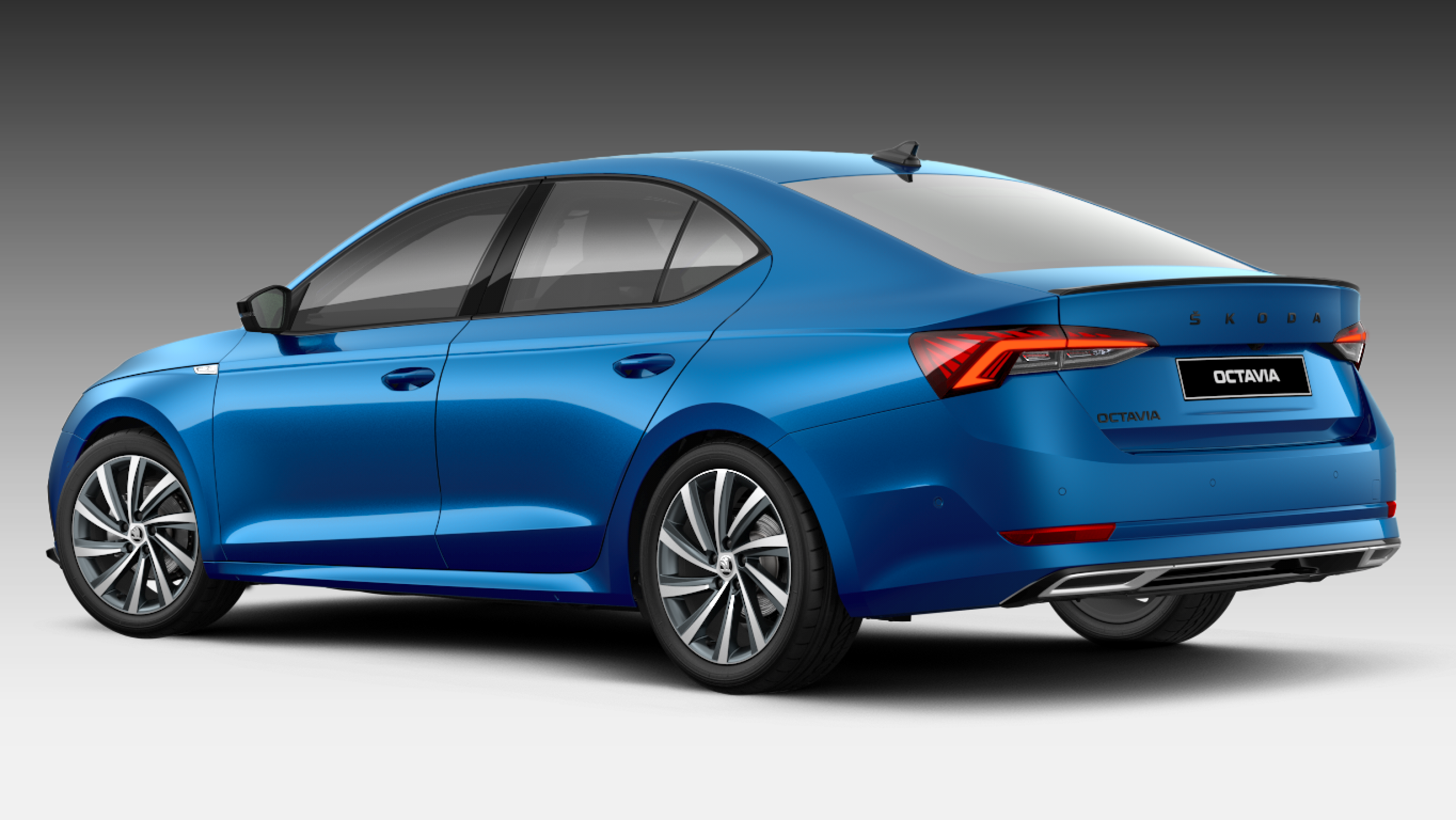
The Octavia Style and SportLine both list a retail price of $40,590, or for the SportLine specifically: $42,490 drive-away for the Liftback and $43,990 drive-away for the Wagon.
Pre-paid servicing is also available, at $2450 for five years / 75,000km, or $2800 for seven years / 105,000km.
All Skoda models are sold with a seven-year, unlimited-kilometre warranty and seven years capped-price servicing. Skoda also offers a Guaranteed Future Value and finance program through its Skoda Choice service.
Making a previously two-strong range double in size, the new Transit Custom Sport SWB starts at $59,990 before on-road costs, with the long-wheelbase version in double cab guise costing $62,990.
Additionally, the base Trend variants of the second-gen Transit Custom have climbed by another $600 since December last year.
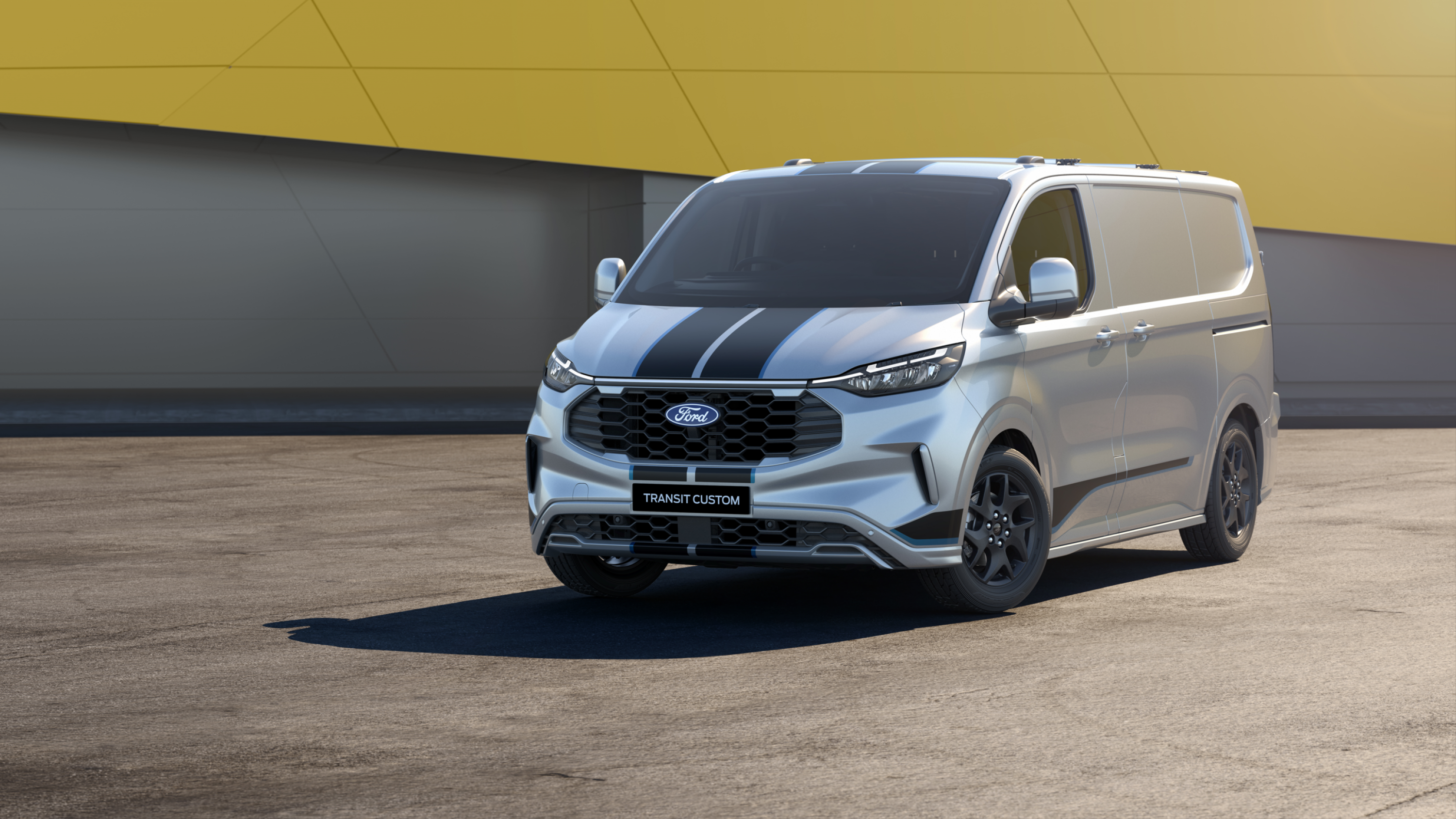
Ford Australia has not confirmed local specifications of the Sport yet, however, some of the upgrades are obvious from the pictures provided.
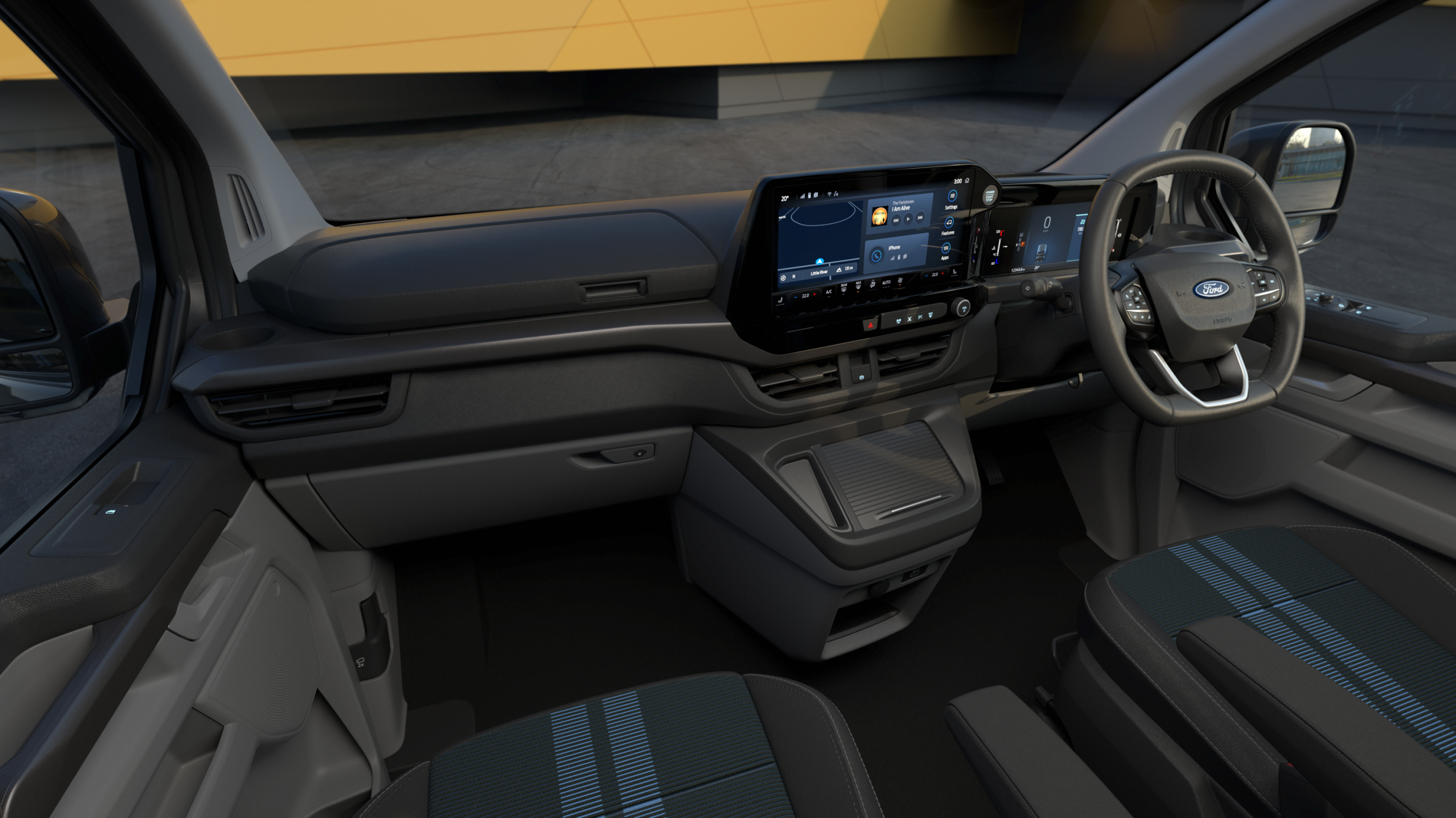
Expect a painted rear bumper, body-colour mirror caps and front valance, black alloy wheels, and a racey sticker pack. Inside, the Sport should feature cloth upholstery with contrast striping.
Premium paint colours will include Agate Black, Magnetic, Moondust Silver, Grey Matter and Digital Aqua Blue on top of no-cost Frozen White. More details will be announced closer to the Sport’s launch in Q3 2024.
Under the bonnet is the same 2.0-litre turbo-diesel four-cylinder producing 125kW and 390Nm. The core diesel range will be joined by the electric E-Transit Custom by the end of the year.
Despite higher equipment levels, the three-seat Transit Custom Sport SWB retains a payload of 1023kg, thanks to a tare mass of 2002kh and 3025kg GVM. Its braked towing capacity is 2.5 tonnes.
The LWB model picks up two extra doors and seating for five, though that eats into its payload which drops to 854kg.
Still, the extra seats will enhance the Transit Custom’s ability to perform double duty as a family and work vehicle, which is exactly what’s made dual cab utes (such as the Ford Ranger) so popular.
Both Sport variants can have the standard barn doors switched to a liftgate for $700.
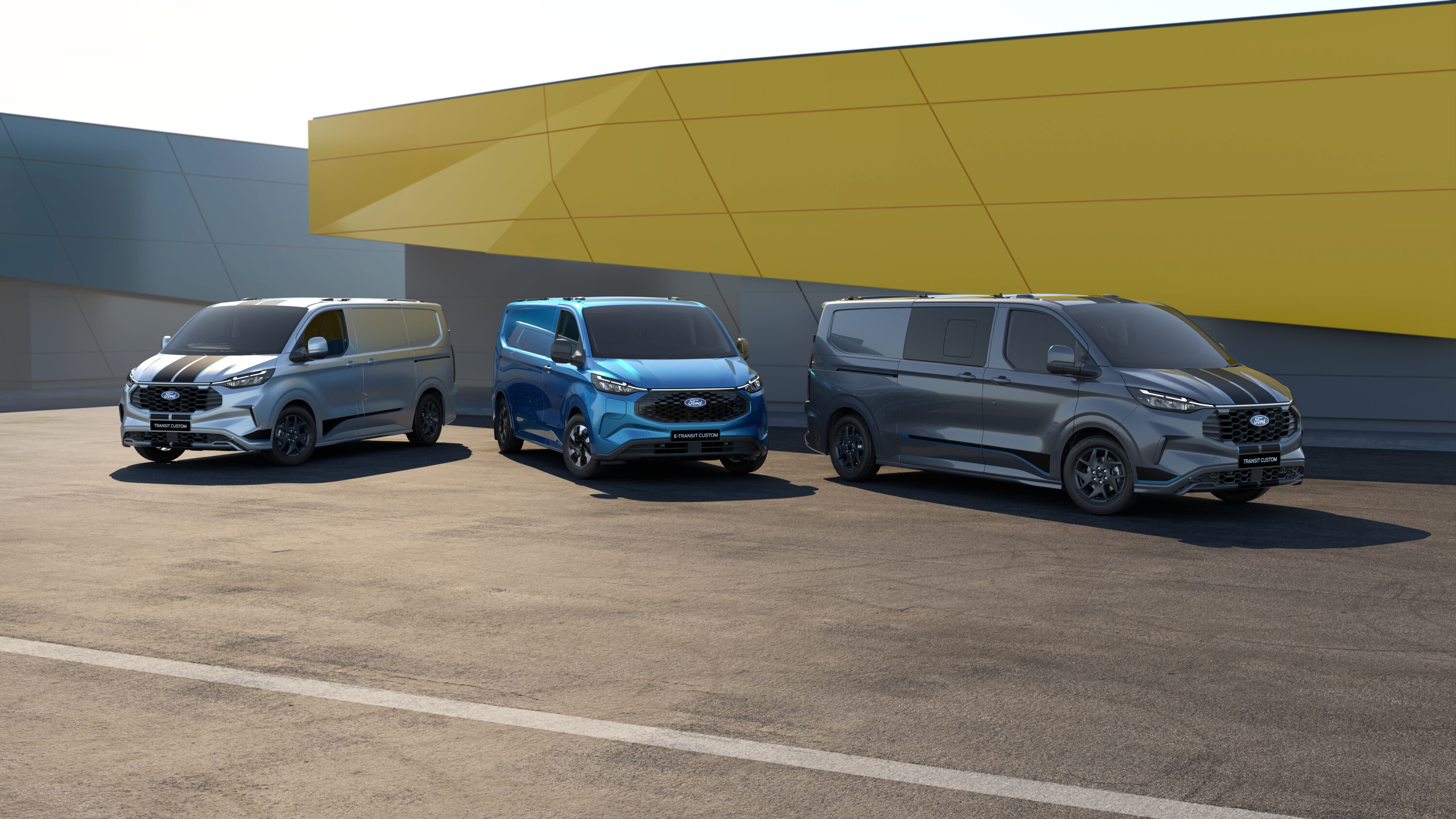
The other features, including the second-gen Transit’s lower cargo area and flat cabin floor, carry over to the Sport and will eventually be seen on the Transit Custom’s Volkswagen Transport T7 platform share.
For the MY24.5 Transit Custom update, Ford has added standard roof racks that are rated to carry loads up to 155kg (across all three bars).
There’s also the new Secure Visibility Pack ($700) that swaps rear windows for full steel doors, while a metal bulkhead provides enhanced security. Offsetting the loss in visibility is a camera rear-view mirror with in-built dashcam.
Ford is clear this isn’t a substitute for refrigeration, but it will help customers maintain more stable load temperatures ideal for transporting “plants, florals, cakes, pets”, according to the carmaker.
| Variant | Price (before on-road costs) | Change |
|---|---|---|
| Trend SWB Van | $56,590 | Up $600 |
| Trend LWB Van | $57,590 | Up $600 |
| Sport SWB Van | $59,990 | New variant |
| Sport LWB Double Cab | $62,990 | New variant |
✍? John Law
Our original story, below, continues unchanged
Priced from $55,990 plus on-road costs – up $5600 over the current model – the latest Transit Custom is offered a single low-roof Trend grade in short- or long-wheelbase form.
It is powered by a carryover 125kW/390Nm 2.0-litre four-cylinder single-turbo diesel – also found in base Ford Ranger and Volkswagen Amarok utes – matched to a new “high-efficiency” eight-speed torque converter automatic transmission exclusively sending power to the front wheels.
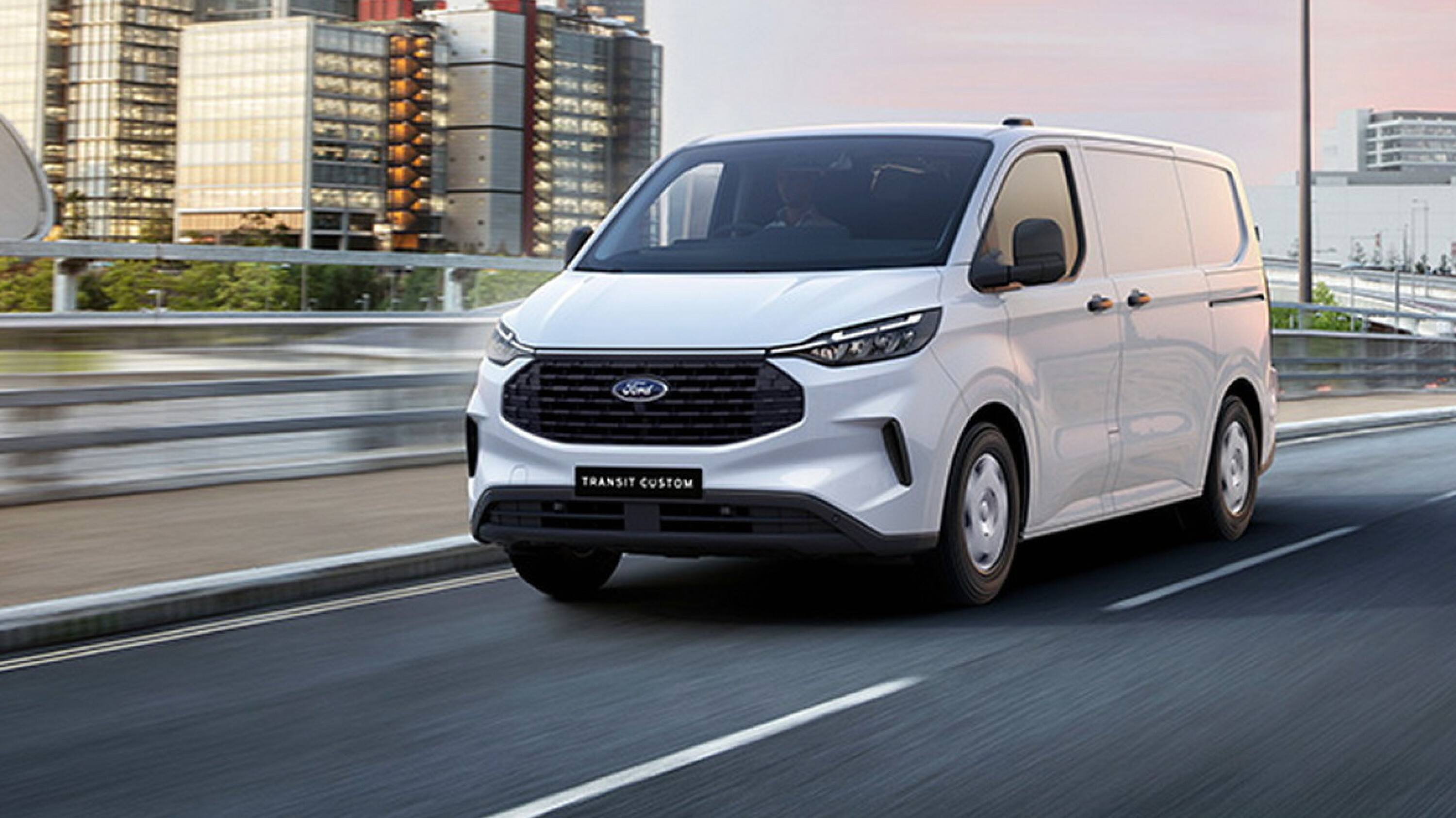
As with the current Transit Custom, it has a claimed combined fuel efficiency of 8.0L/100km – compared to 7.0L/100km for a Hyundai Staria Load or 8.2L/100km for a Toyota HiAce van.
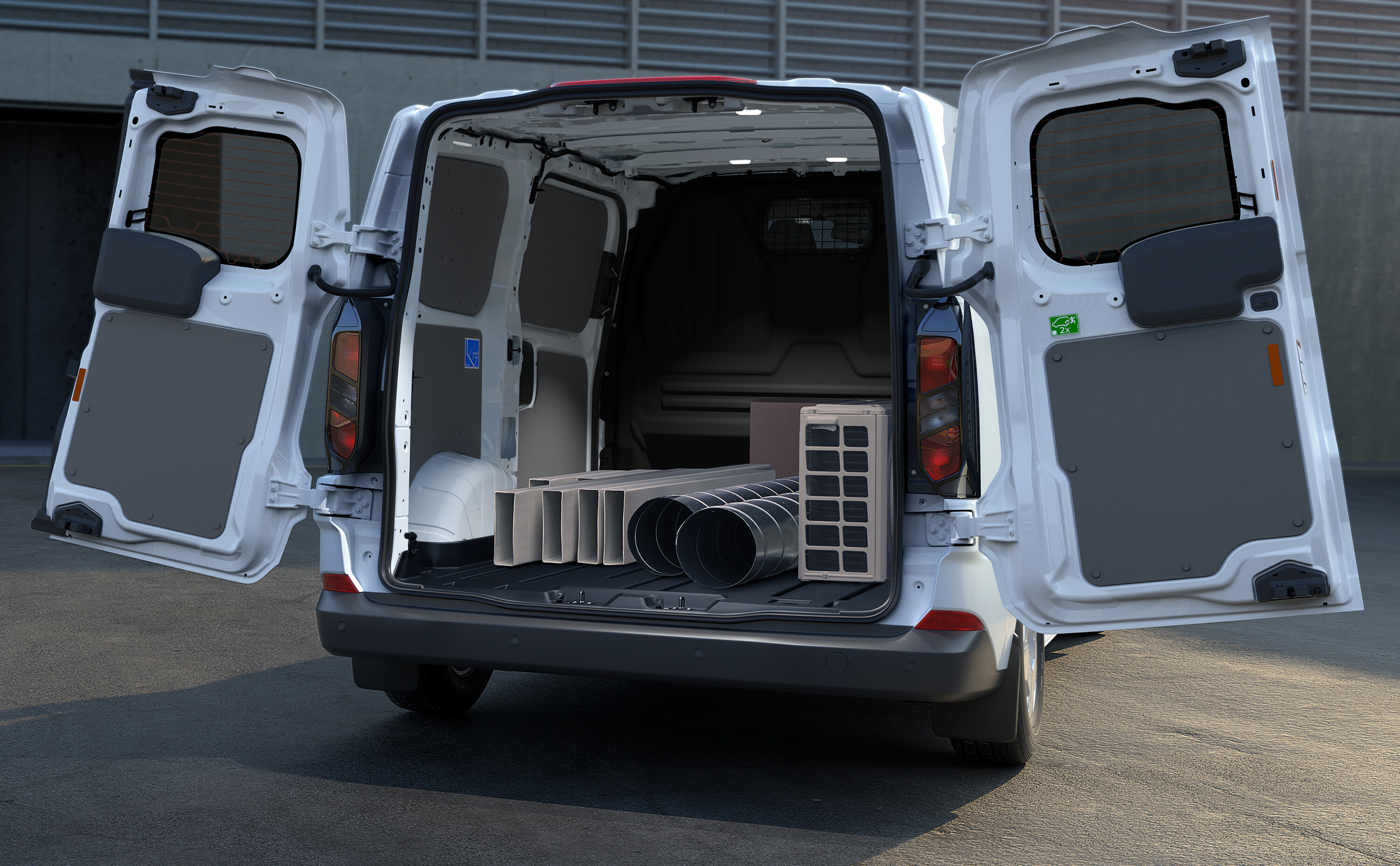
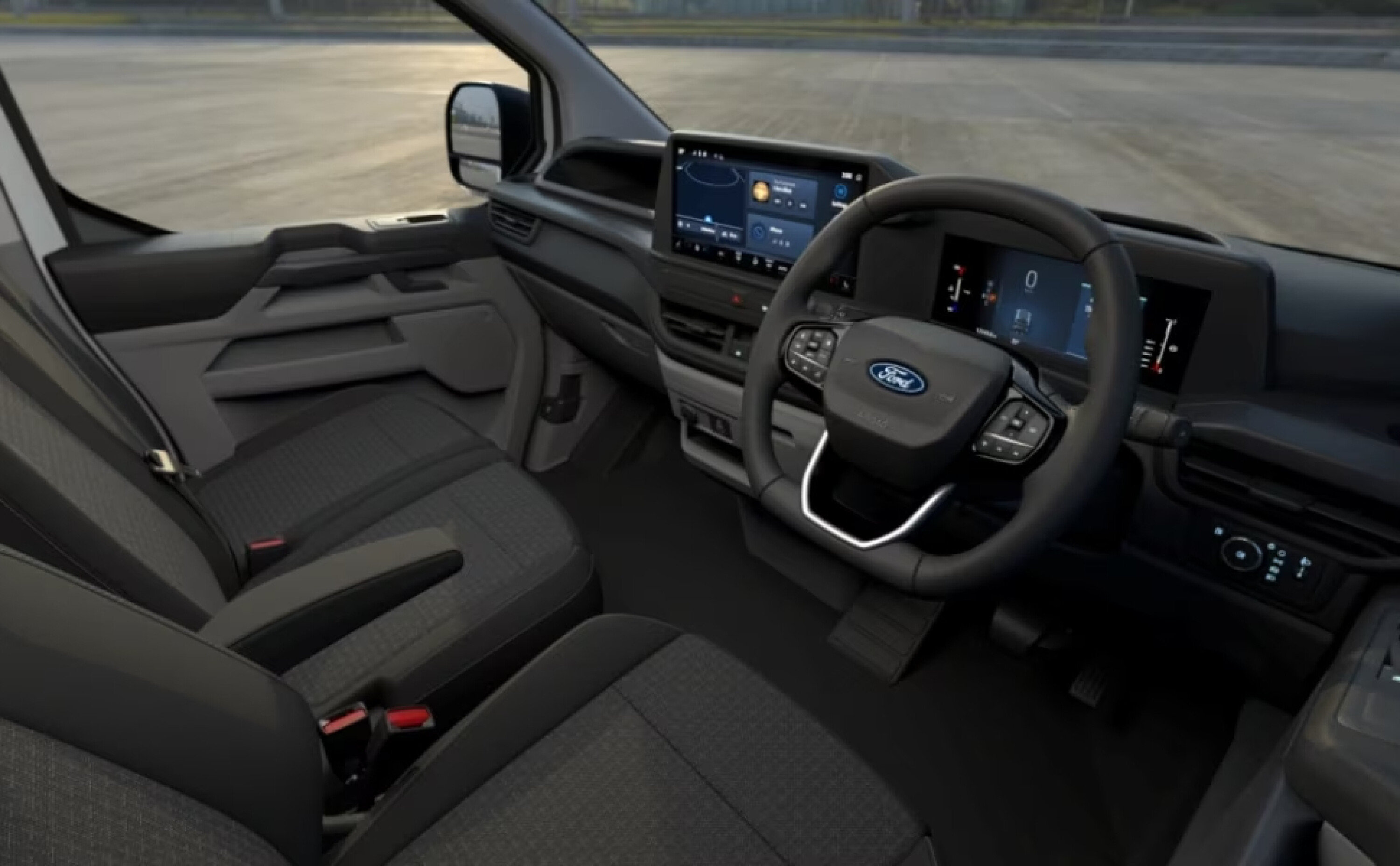
Despite looking like a reskin of the outgoing model that launched in 2012, Ford claims it is “designed from the ground up” with a lower cargo floor height. It is lighter than before, features independent rear suspension, and has an uprated 2.5-tonne braked towing capacity.
The new platform will also underpin the upcoming Volkswagen Transporter/Caravelle, as part of a commercial vehicle partnership that has spawned the Ford Ranger-based VW Amarok and the Europe-only, VW Caddy-based Ford Tourneo Connect.
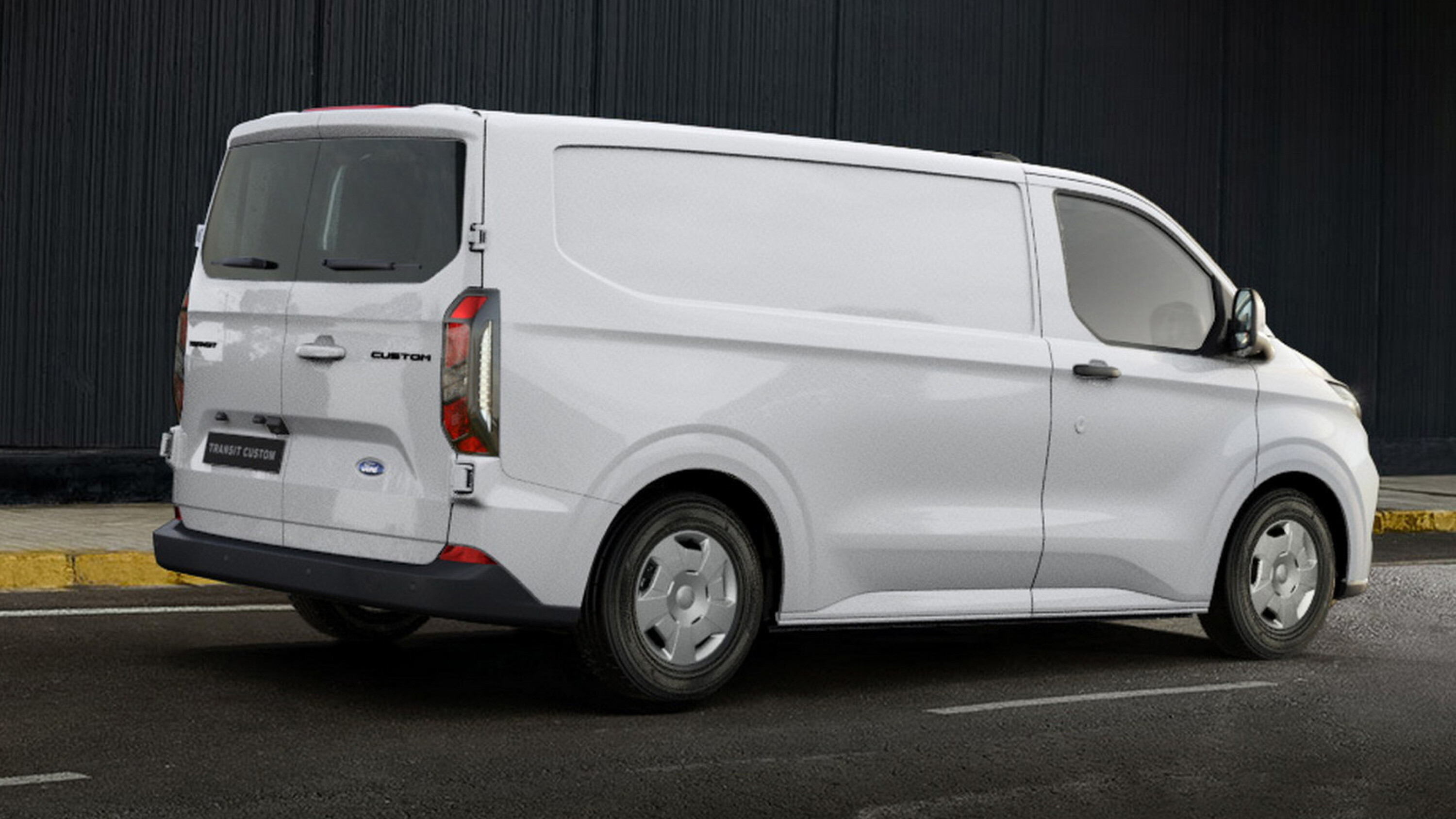
Both the Transit Custom and the new VW Transporter will be produced at Ford’s plant in Turkey.
An all-electric E-Transit Custom is due in Australia “later” next year. It harnesses a 400-volt electrical architecture with a 74kWh battery pack, enabling a WLTP-rated driving range of 380 kilometres.
The electric motor produces 160kW and 415Nm, and the E-Transit Custom has a DC charge rate of up to 124kW, allowing for a charge from 15 to 80 per cent in a claimed 41 minutes.
Short-wheelbase variants – with a 3100 millimetre wheelbase and 5050mm overall length – offer a 5.8 cubic metre maximum load volume and six tie-down points, while the 3500mm long-wheelbase variant extends this to 6.8 cubic metres and eight tie-down points. It has a 5450mm overall length.
The 2024 Ford Transit Custom diesel is due in Australia in the second quarter of next year (April-June inclusive).
“The all-new Transit Custom range will continue to expand with further variants, including the new E-Transit Custom, joining the line-up later in 2024,” said Ford Australia.
All prices exclude on-road costs.
| Model | Pricing | Change |
|---|---|---|
| Trend SWB | $55,990 | up $5600 |
| Trend LWB | $56,990 | up $4600 |
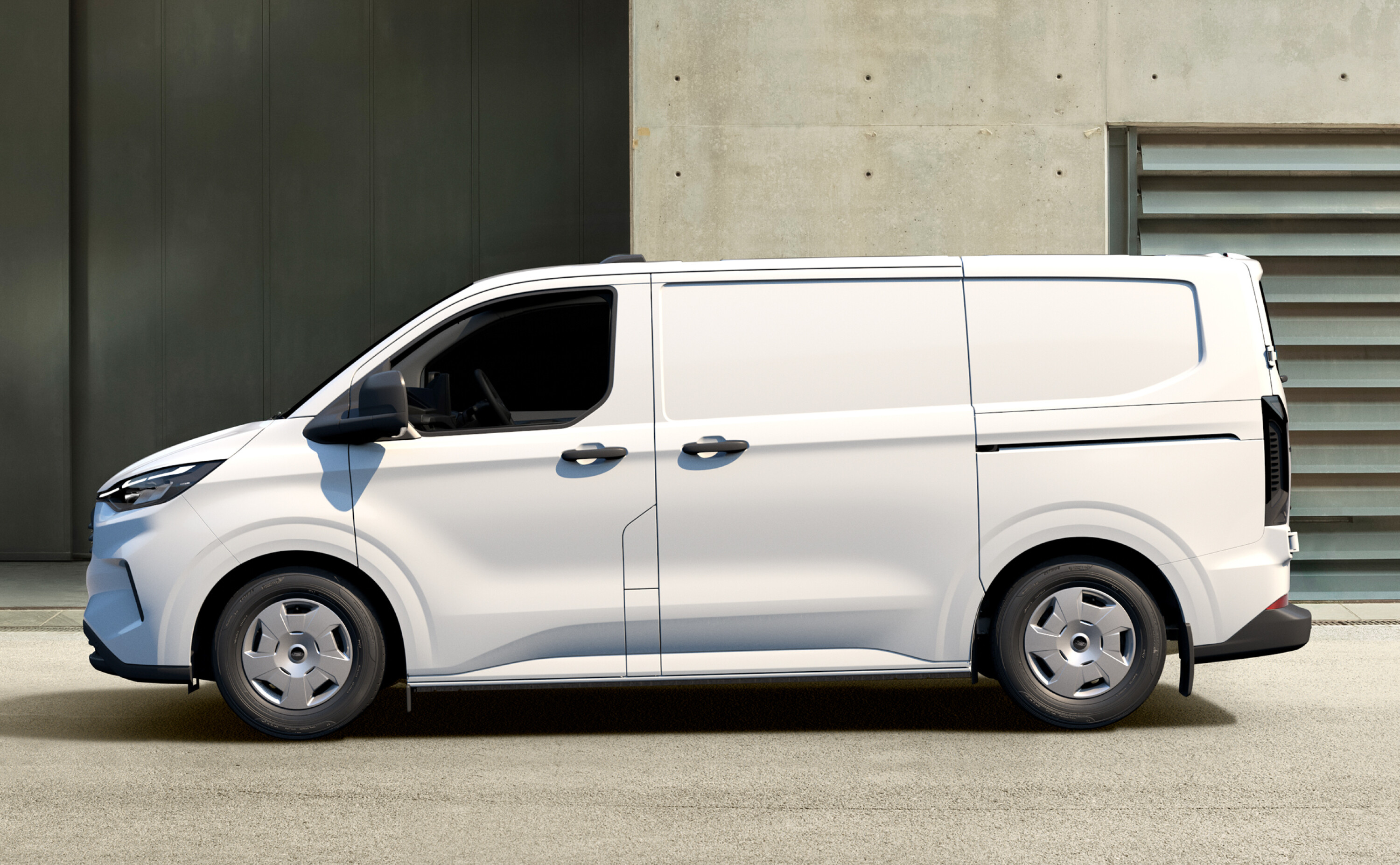
| 2024 Ford Transit Custom colours | |
|---|---|
| Frozen white | Magnetic* |
| Agate black* | Moondust silver* |
| *Premium paint, $700 | |
These days, however, car makers are helping soothe the deeply troubling introspection that used to come with buying a Toyota Tarago, and offering a seven-seat SUV instead. The question instead now is which one to get.
To help answer this, we’ve assembled four of the best seven-seat SUVs we could muster – two hailing from South Korea, one from Japan, and the other, the Land of the Free – all asking under, or about, $80,000.
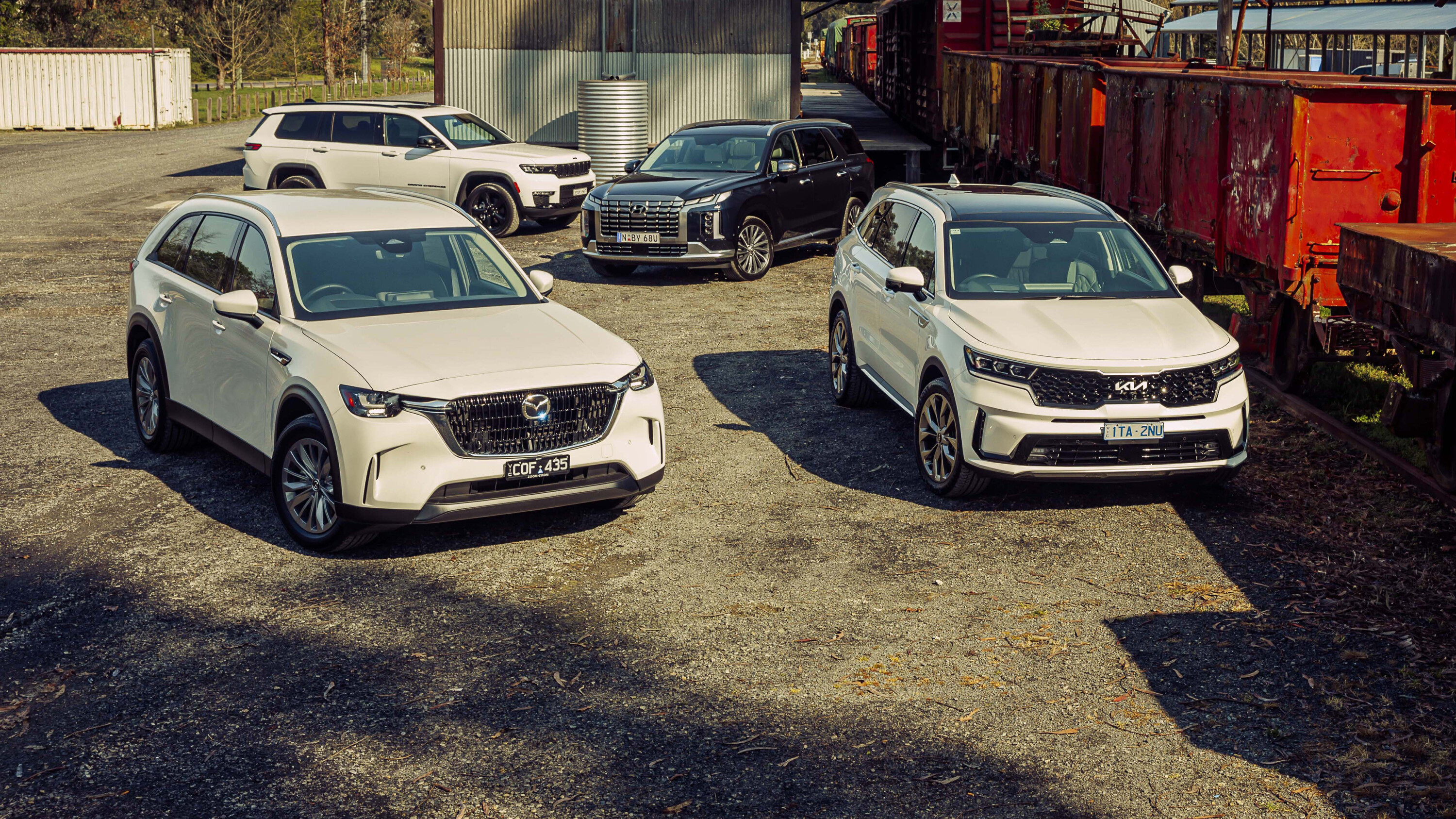
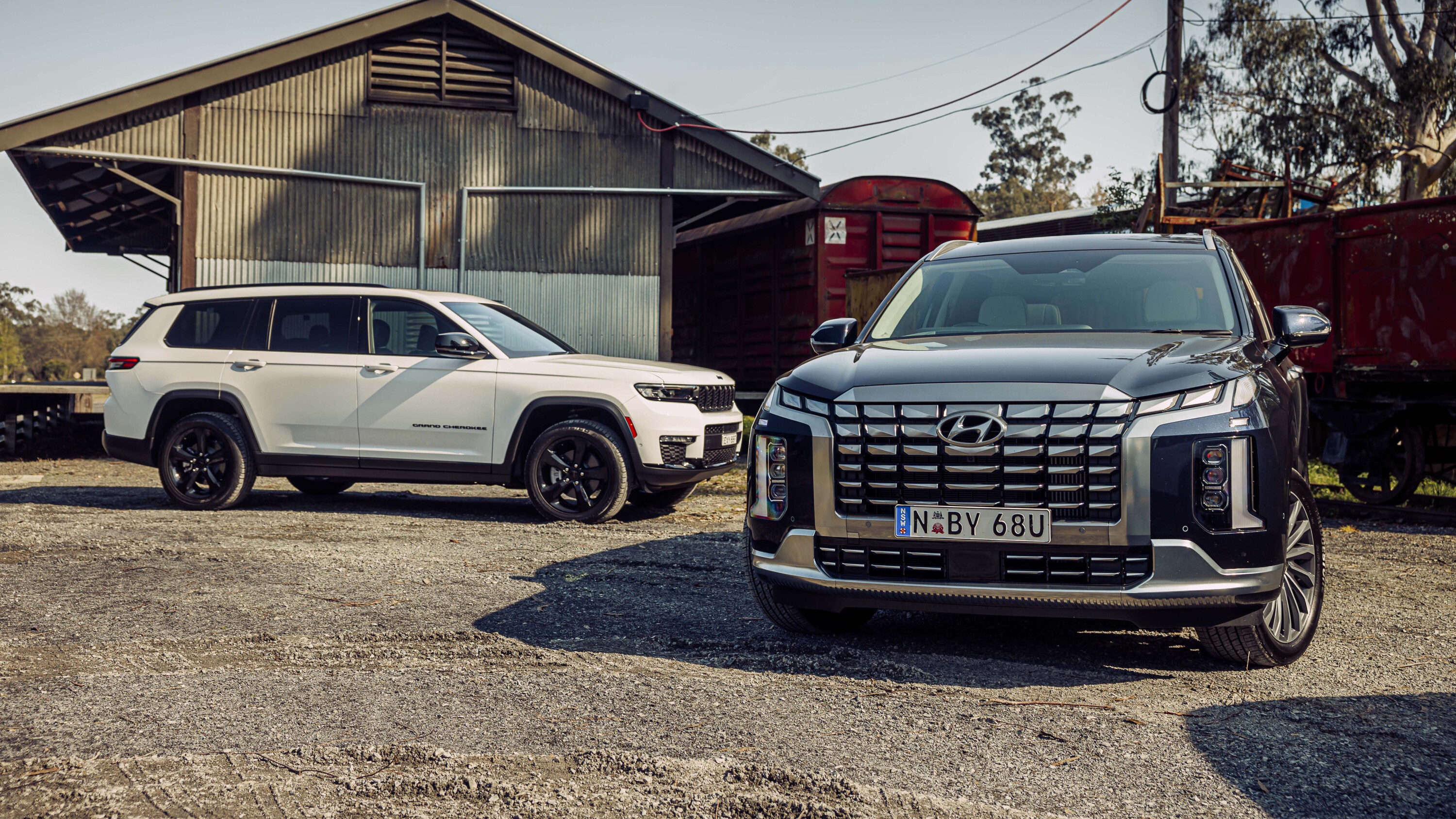
The seven-seat Jeep Grand Cherokee Night Eagle couldn’t be more American if you found it gently rotating in a hot dog warmer while singing the Star-Spangled Banner.
Under the bonnet is the familiar Pentastar 3.6-litre naturally aspirated V6, producing 210kW and 344Nm at a lofty 6400rpm and 4000rpm respectively. At 5204mm long, the big GC also has a very American-sized price – $77,950 before on-road costs to make it the second-most expensive vehicle here.
Where the Jeep is imposing, the classy, new Mazda CX-90 is handsome. Much like the Grand Cherokee Night Eagle, our D50E Touring is a base grade, coming in at $76,400 before on-roads.
That’s more expensive than even the flagship version of the CX-9 seven-seater SUV that is being discontinued at the end of 2023 (along with the CX-8). An all-new CX-80 SUV is set to be the CX-9’s direct replacement.
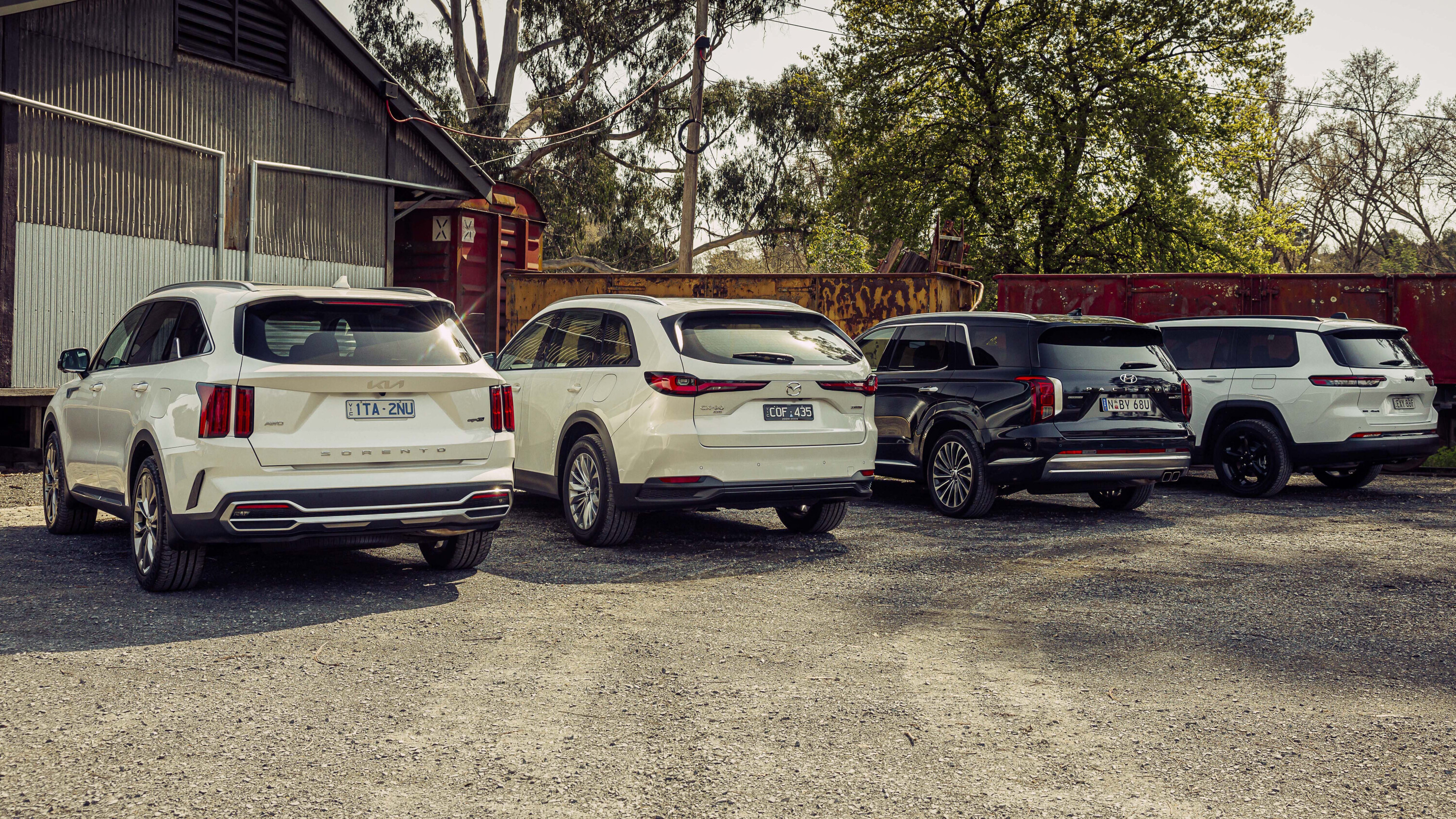
Under the long bonnet is a 3.3-litre turbo-diesel unit, cranking out 187kW and the most torque (550Nm) of any seven-seater here. With its 48-volt architecture, Mazda calls it a ‘mild hybrid’, and the CX-90 uses a new, in-house developed, eight-speed wet multi-clutch automatic transmission.
There’s no guessing which market the Hyundai Palisade and Kia Sorento have in their sights – especially when you consider they have 19 cup-holders between them.
The Hyundai Palisade Highlander we had for testing has since been replaced with the very poshly-named Calligraphy trim grade – a relatively minor update, but with just as much exterior chrome.
At $79,900 before on-road costs, it’s either a very expensive Hyundai or a very cheap luxury car – one they could have easily put a Genesis badge on, too.
Powering the Palisade is a 2.2-litre turbodiesel inline-four producing 147kW and a stout 440Nm, peak torque available from just 1750rpm. There’s an eight-speed torque converter auto and, like all the other cars here, the Palisade is all-wheel drive.
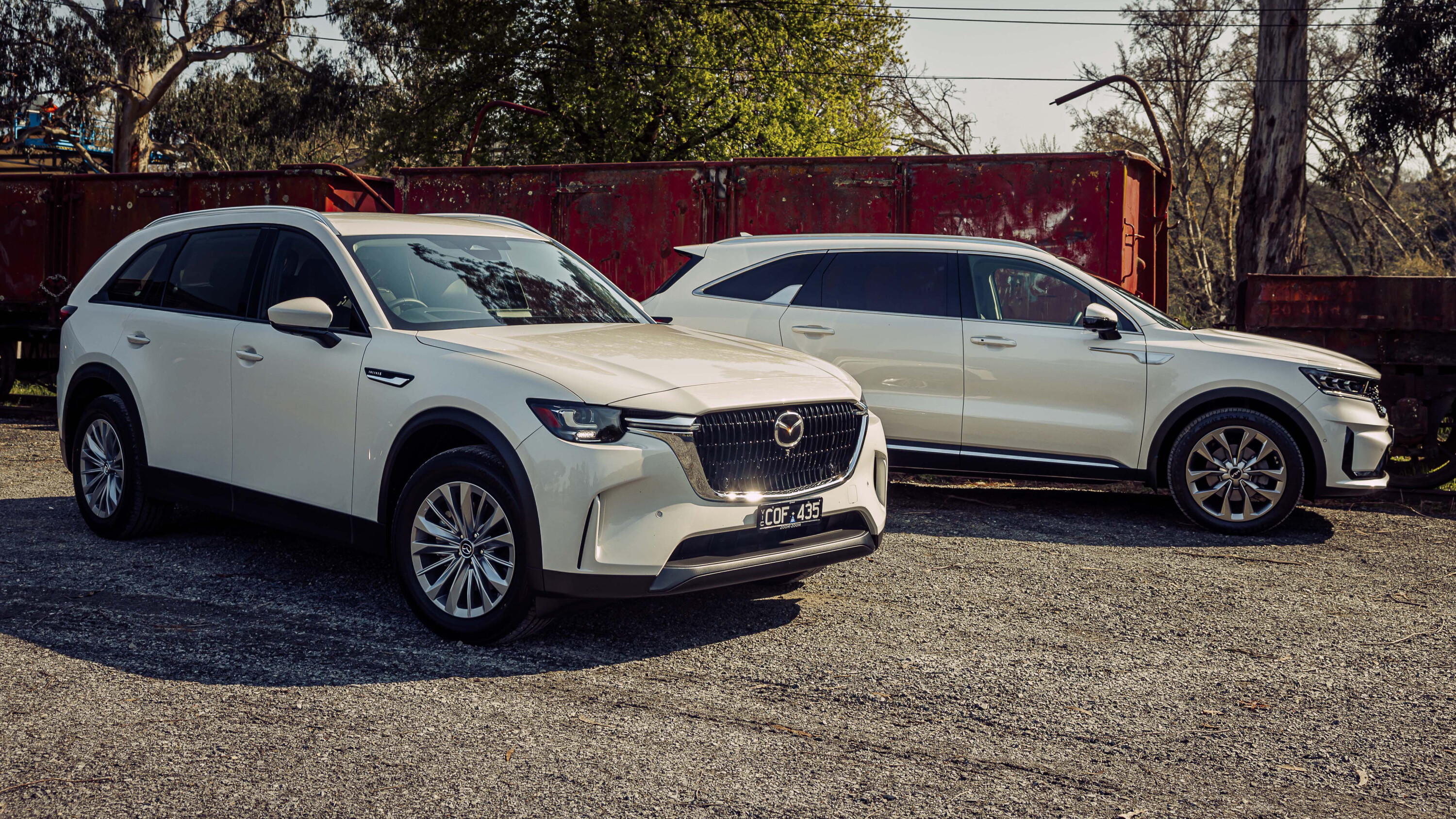
Parked amongst the other three, the Kia Sorento looks a size smaller – and indeed it is 394mm shorter than the Jeep. But this car is a seven-seat packaging masterclass, and amazing value on-paper.
At $68,990 – drive-away – it’s like Kia’s accidentally printed the Sorento’s cost price and the finance department hasn’t yet noticed. That’s for the top-spec, full-fruit GT-Line, too, which packs a similar turbo-diesel, eight-speed powertrain as the Palisade, although with one curiously cheeky extra kW (148kW).
While a major facelift is imminent, the fundamentals remain the same and, even as it stands today, this is firmly the SUV to beat, fresh from winning an earlier seven-seat SUV comparison conducted by Wheels in 2023.
On-paper value is where the Sorento extends an early lead, too.
For what it asks, you get quilted Nappa leather-appointed seats, giant full-length sunroof, heated steering wheel, head-up display, wireless phone charger, Bose 12-speaker stereo… it goes on, and on.
The Palisade’s standard equipment list is just as mighty. Suede headlining is standard, as are second-row Captain’s Chairs, although you can opt for a second-row bench if you want, granting seating for eight.
Compared with the Palisade, especially, the Jeep and Mazda look decidedly less generous. And that’s no surprise, as to get sort-of-similar standard equipment would require paying extra for at least the Grand Cherokee Limited and CX-90 GT grades.
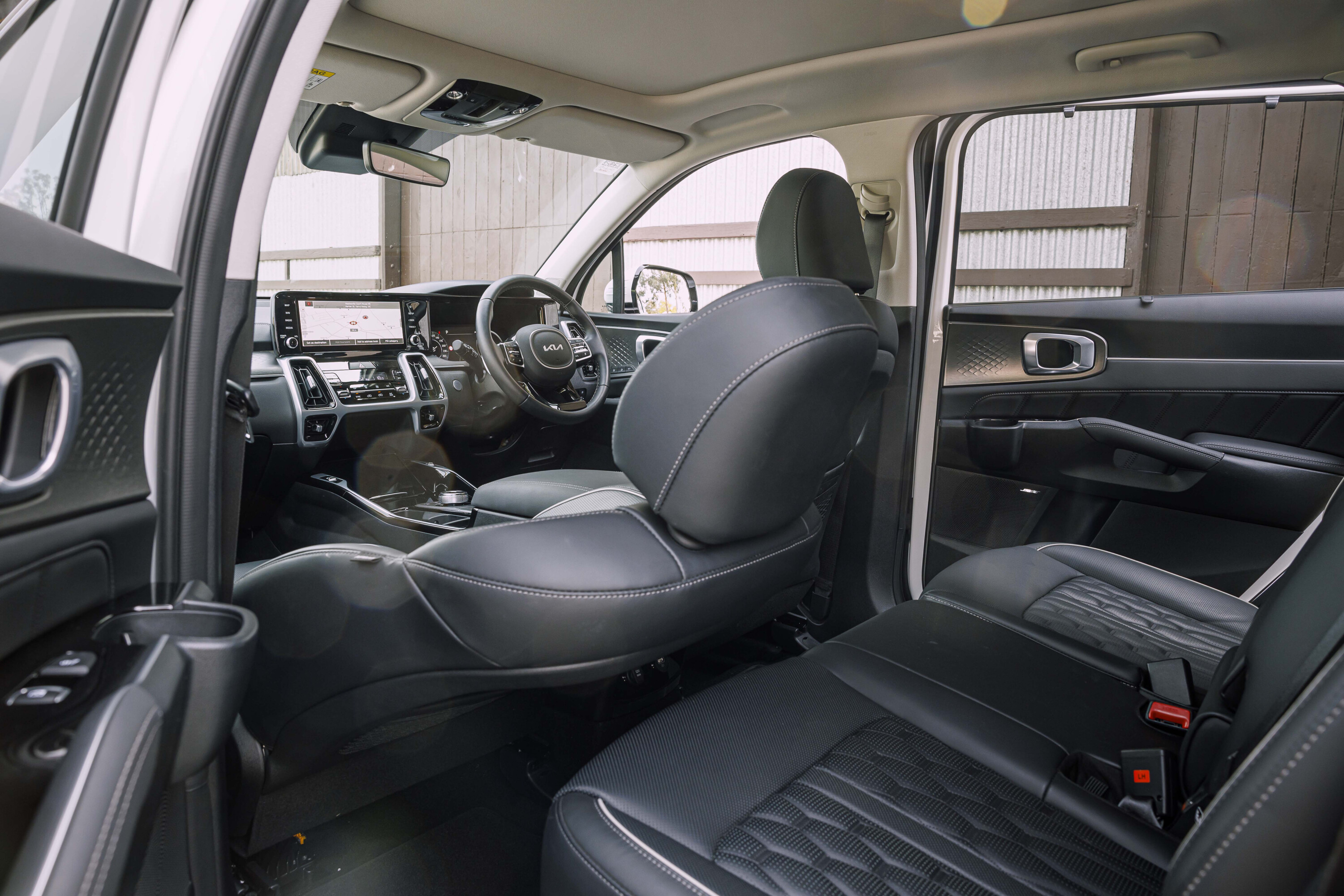
Jumping inside, if it’s outright luxury you’re after, the Palisade spoils the most. We love that suede headlining and the perforated, Nappa leather appointed-seats, even if the switchgear all does feel a bit Hyundai – which is to say, perfectly functional and forgettable.
There’s lots of storage cubbies and, in the middle of the dash, you’ll spot a 12.3-inch central infotainment touchscreen – although points are deducted for needing a cable for both Apple CarPlay and Android Auto.
No such problem in the Grand Cherokee, which offers wireless connectivity of each.
We like the Jeep’s central 10.25-inch screen, which has a beautifully bright, crisp resolution; a standard 10.25-inch digital instrument display also lends the Jeep interior a high-tech feel.
Otherwise, this is a bit of a drab, base-model place. If you’re thinking of buying a Grand Cherokee, do not for the love of your chosen deity sit in a Summit Reserve – unless you have the extra cash to splash.
Even though it’s also a base model, the Mazda CX-90 makes a stronger first impression than the Jeep with its thoughtful design, classy user interfaces, slim 10.25-inch infotainment display and metal door inlays, although the initial delight fades when you notice the dash is a big slab of budget soft-touch trim.
There is also a notable dearth of storage space around the centre console, while the CX-90 is afflicted by Mazda’s irritating policy of forcing users to navigate Apple CarPlay using only the hand controller – even though the screen is within easy reach.
Compared with the Palisade and, to a lesser extent, the Mazda, the Kia Sorento’s current interior has become a chink in its armour.
It still works great with plenty of space, but there’s no escaping it’s a narrower cabin than the others.
An abundance of black gives it a dark vibe, while its 10.25-inch infotainment display now seems a bit small for the richest grade. The menu graphics look a bit last-decade and the lack of USB-C outlets further betray its age – as does wired Apple CarPlay and Android Auto. The updated interior can’t come soon enough – and should be here by Christmas.
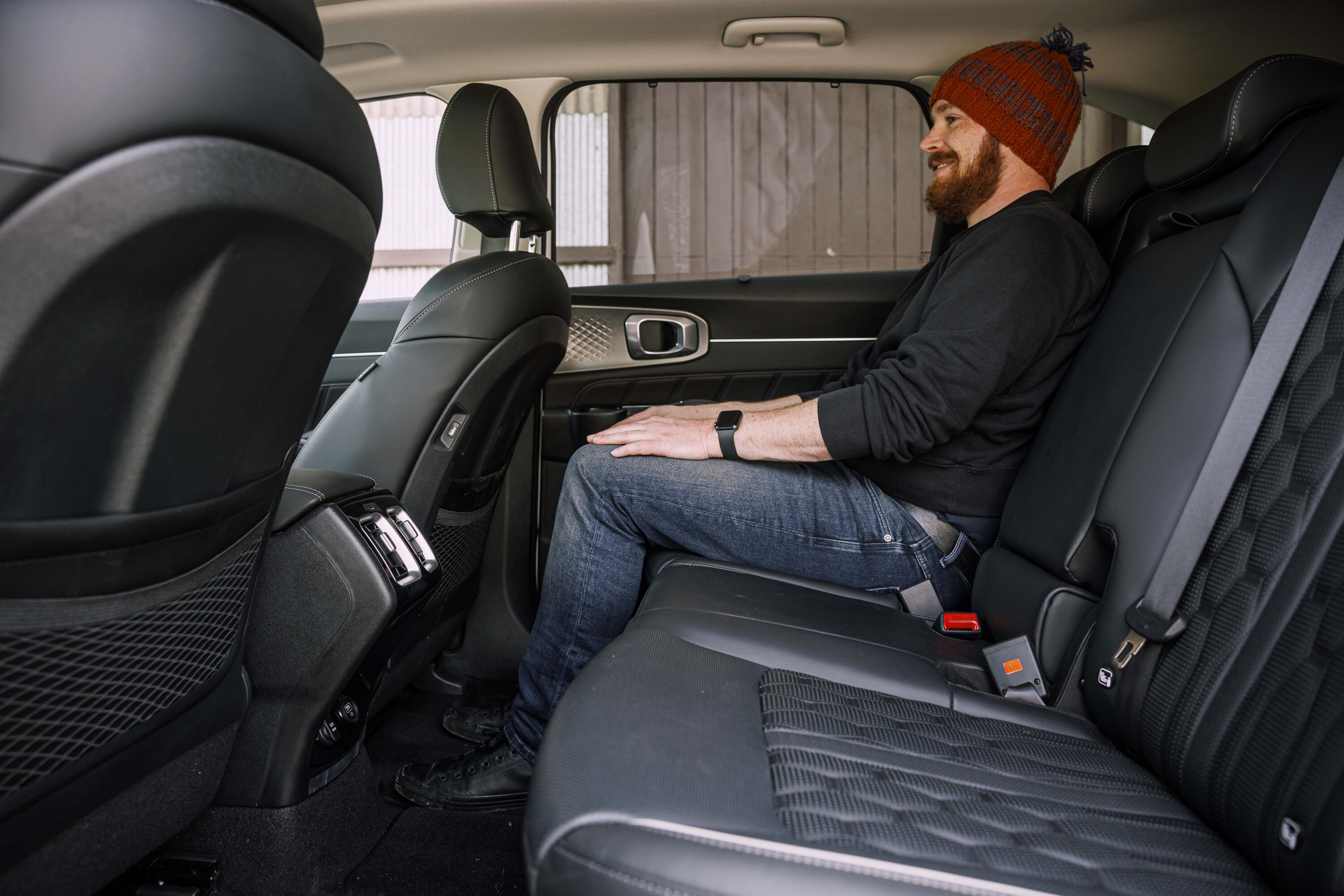
All four cars have spacious second-rows. The CX-90’s rear doors, which open extremely wide, are a highlight; the Palisade’s and Jeep’s are so long, to open them fully you’d almost need to park beside an empty car spot.
The Palisade, however, is the place to be, with its heated and cooled second-row Captain’s Chairs with adjustable arm-rests, while there’s both forward and ceiling air-vents.
If you owned one, you’d be tempted to pay someone to drive you around in it, as sitting in the back you feel like you’re the crown prince or princess of a small monarchical nation.
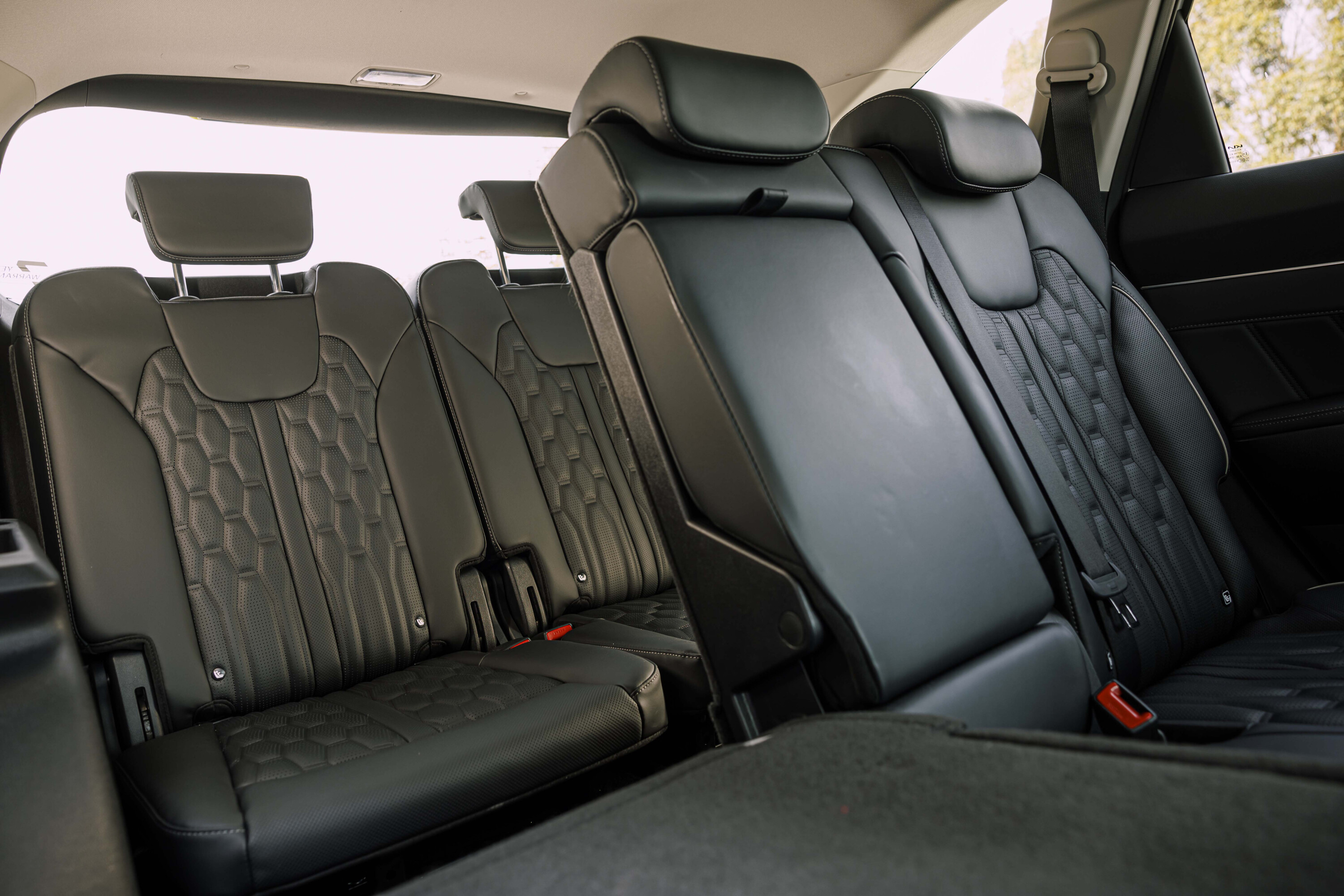
Each car has a decent third row – and all with third-row air-vents – although the spacious Jeep would be our pick if you often needed to transport seven people. The Kia’s is cosiest, and to seat seven in the Palisade would mean three in the third row, which would be a squeeze.
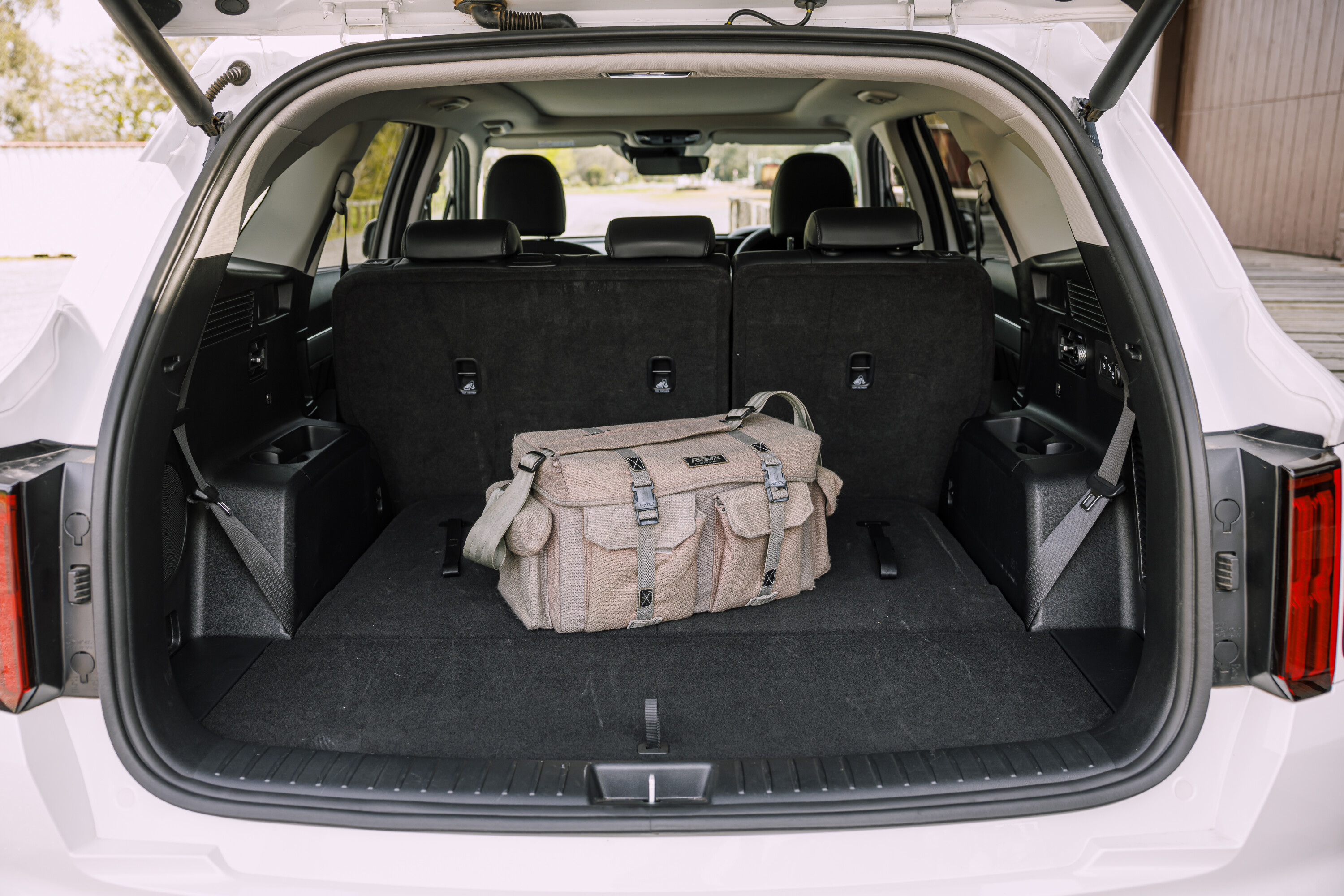
All four have enormous, deep boots – and all have standard electric tailgates – but if it’s ultimate luggage space you’re after, get the Palisade.
With the third row folded, gazing in from the rear it almost looks like you could load in a pallet with a forklift. The CX-90 gets an honourable mention for having a 220-volt outlet (like the wall at home), although a tut-tut for packaging a space-saver spare. All the others have full-size.
As for putting little tackers right up the back, it’s another win for the Kia which has two top tethers and, impressively, two third-row ISOFIX mounting points (for a total of five top tethers, and four ISOFIX points).
Next best is the Palisade with its single set of third-row ISOFIX points and two top tethers (for a total of four top tethers and three ISOFIX points).
While the Jeep has no third-row ISOFIX points, it has at least two top tethers (for a total of five top tethers) and redeems somewhat by granting three ISOFIX points in the second row.
The Mazda, meanwhile, makes do with two third-row top tethers (for a total of five) – and only two sets of ISOFIX points, both in the second row.
On the road in the city, the Palisade is the nicest car here to drive. While it’s not as quiet and plush-riding as the luxe-looking interior had us hoping, it’s still very refined, smooth, easy and comfortable. The diesel is muscular yet polite, the transmission beautifully refined and invisibly smooth.
While the CX-90 comes closest to the Palisade for cabin ambience, it’s not quite as nice to drive.
The turbo-diesel is an absolute torque-rich peach – one wanting for a better, more refined transmission. The ride is also a bit firmer at times than we’d like, and some of the fuel-saving technologies need more calibration. The brake pedal also feels a bit dead.
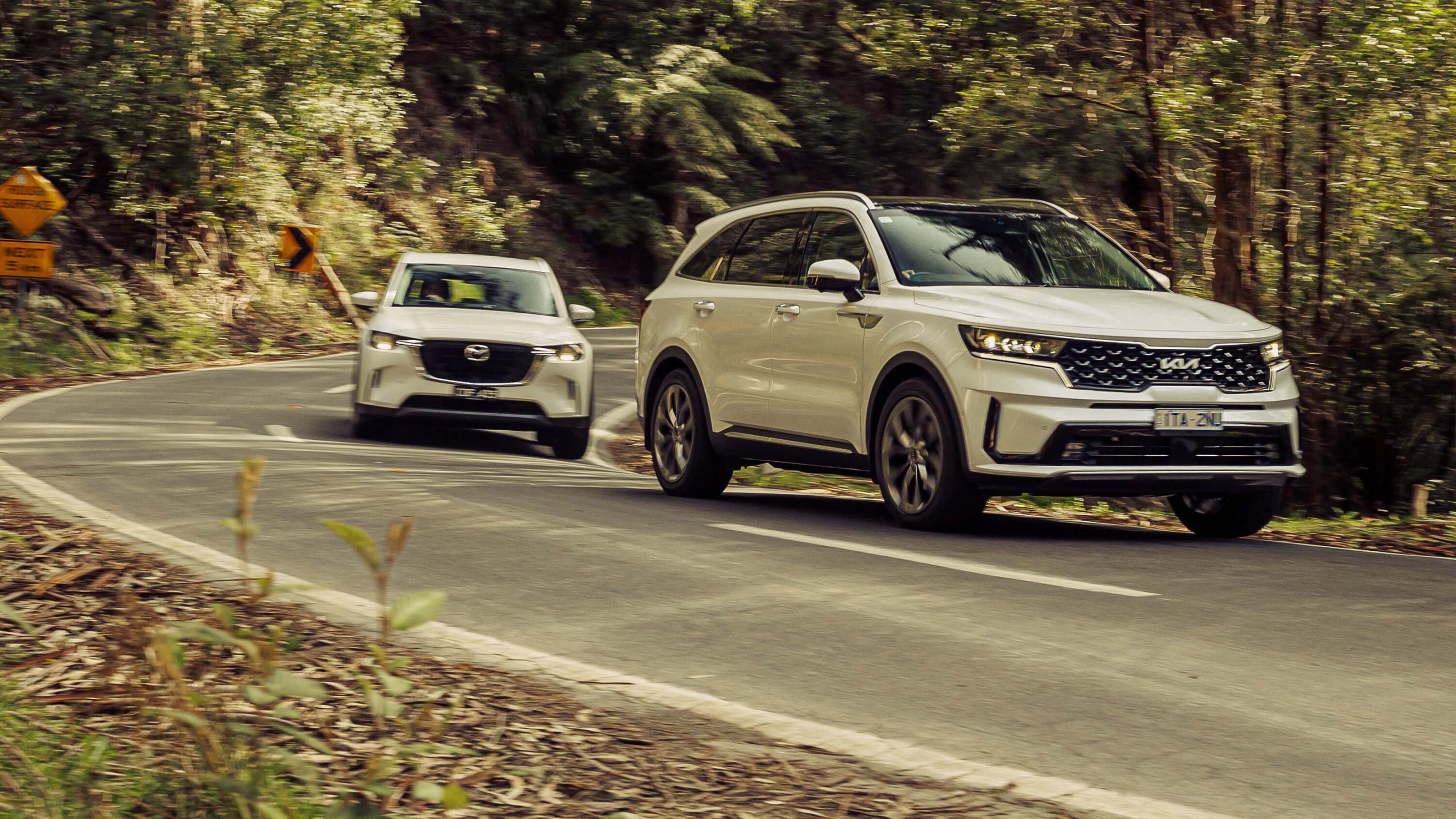
Like the Palisade, the Sorento’s 2.2-litre powertrain is muscular and smooth. It’s surprising how hard it’s becoming to find modern transmissions that switch quickly and smoothly from drive to reverse and back – as does the Sorento’s.
While the Kia’s ride quality, on 45-profile, 20-inch wheels, is merely good – we’re hard to please – it’s comfortable enough. Otherwise, the Kia is hard to fault, inoffensively so.
It’s much the same story in the Jeep. Ride quality and refinement is good, and there’s a lovely eagerness as you tip into the throttle – without feeling hyper. It’s just an easy car to drive around the city, even despite its size.
Break out of the urban jungle and find yourself on a winding road, and it’s curious how they all differ again, particularly the Mazda.
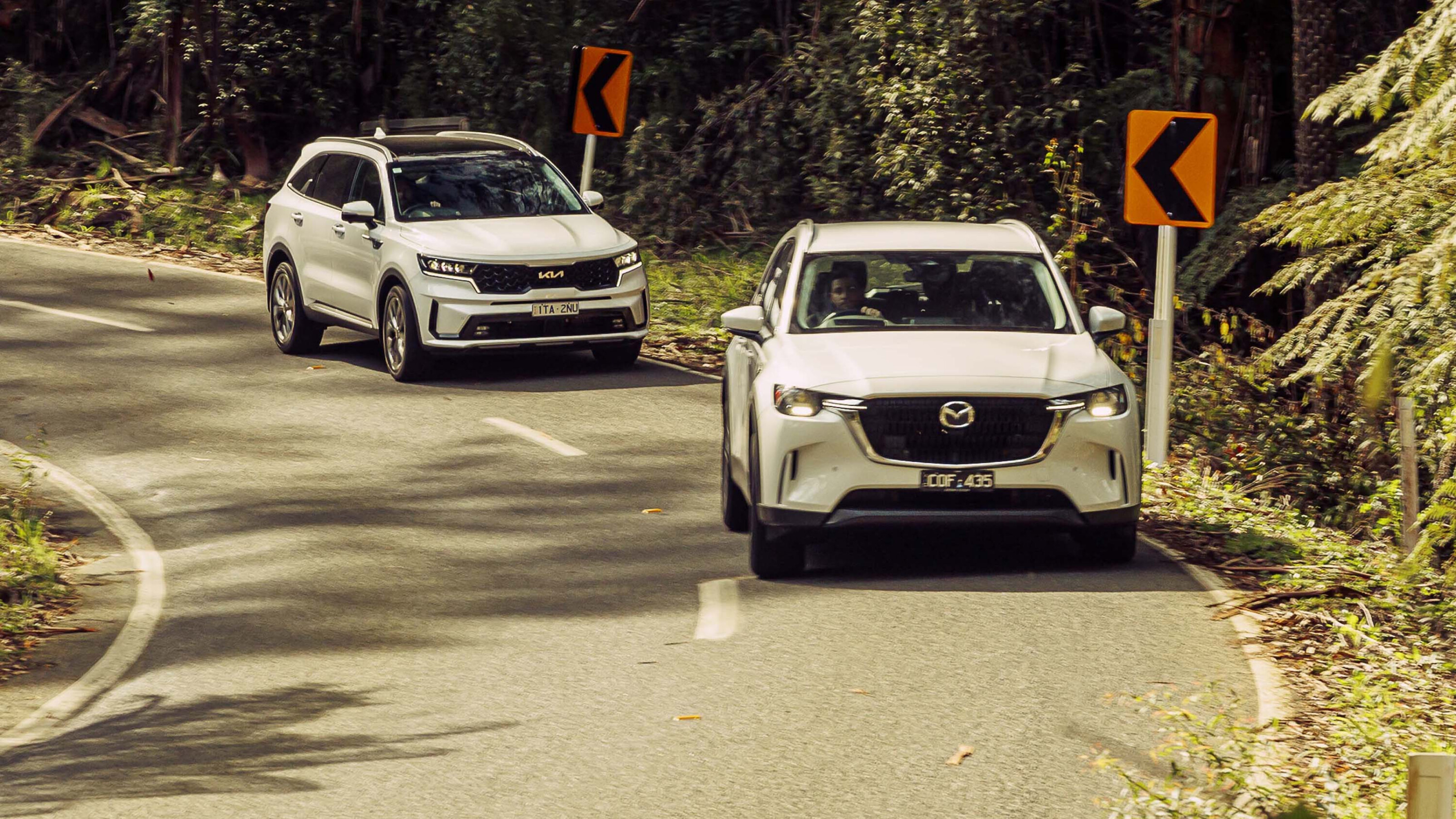
Select Sport mode and the digital tacho turns red, and the diesel straight-six pulls hard from 1300rpm right to its 5125rpm redline. Select pseudo-manual mode and it’ll even bounce off the limiter, while the other cars here shift up. The inline-six even sounds kind of good, complemented by a little artificial noise.
The Mazda has the most natural-feeling controls of all the cars here, and easy-to-trust handling that seems to pivot around the middle of the car.
While it’s a big, heavy vehicle, the weight feels well located and it’s got that mysterious quality of inviting you to push it harder, where it seems to get better. There’s loads of grip from the 265-section tyres, and it feels quite fast for what it is – likely the fastest here in a straight line. Of this bunch, for hardcore dynamics, the CX-90 is the driver’s pick.
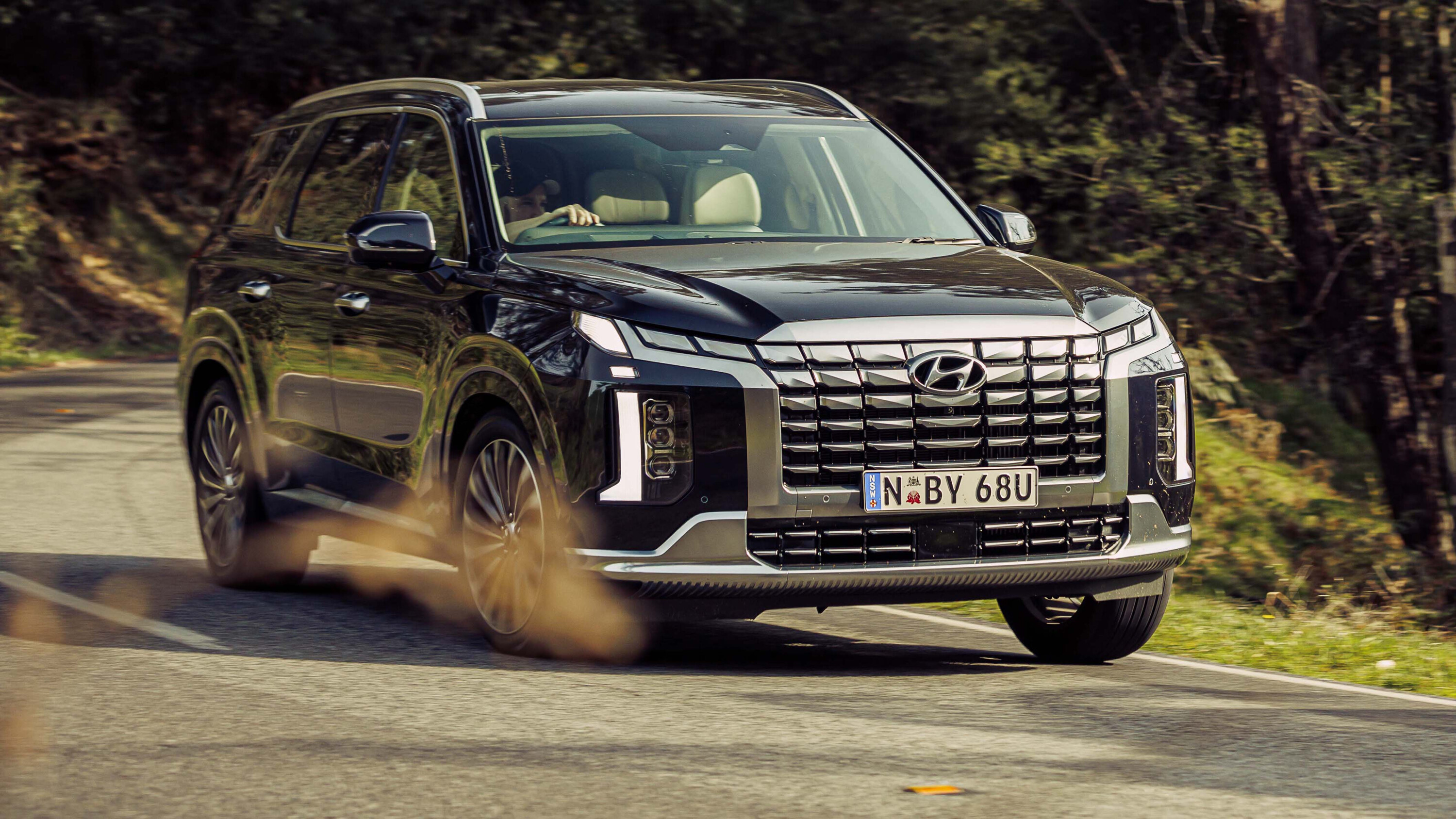
It’s a different story in the Palisade which, when presented with a winding road, is ultimately disinterested. There is a flaccid Sport mode, and a manual mode, but the engine is too quiet, making it hard to know when to change up gears.
The handling is good up to about eight tenths, where it starts feeling its two-tonne weight and near three-metre wheelbase. It’s much happier cruising.
After driving the Palisade and CX-90, the Kia Sorento feels delightfully smaller, lighter and nimbler. The handling is sharp, even if it rolls more and feels bouncier than the well-composed Mazda. Unexpectedly, it turns its nose up at the world of understeer, preferring to feel ‘on-the-nose’ and loose.
One of our testers, Alex, experienced the rear-end starting to step out on one slippery, moss-covered corner, necessitating a big steering correction – with no apparent ESC intervention.
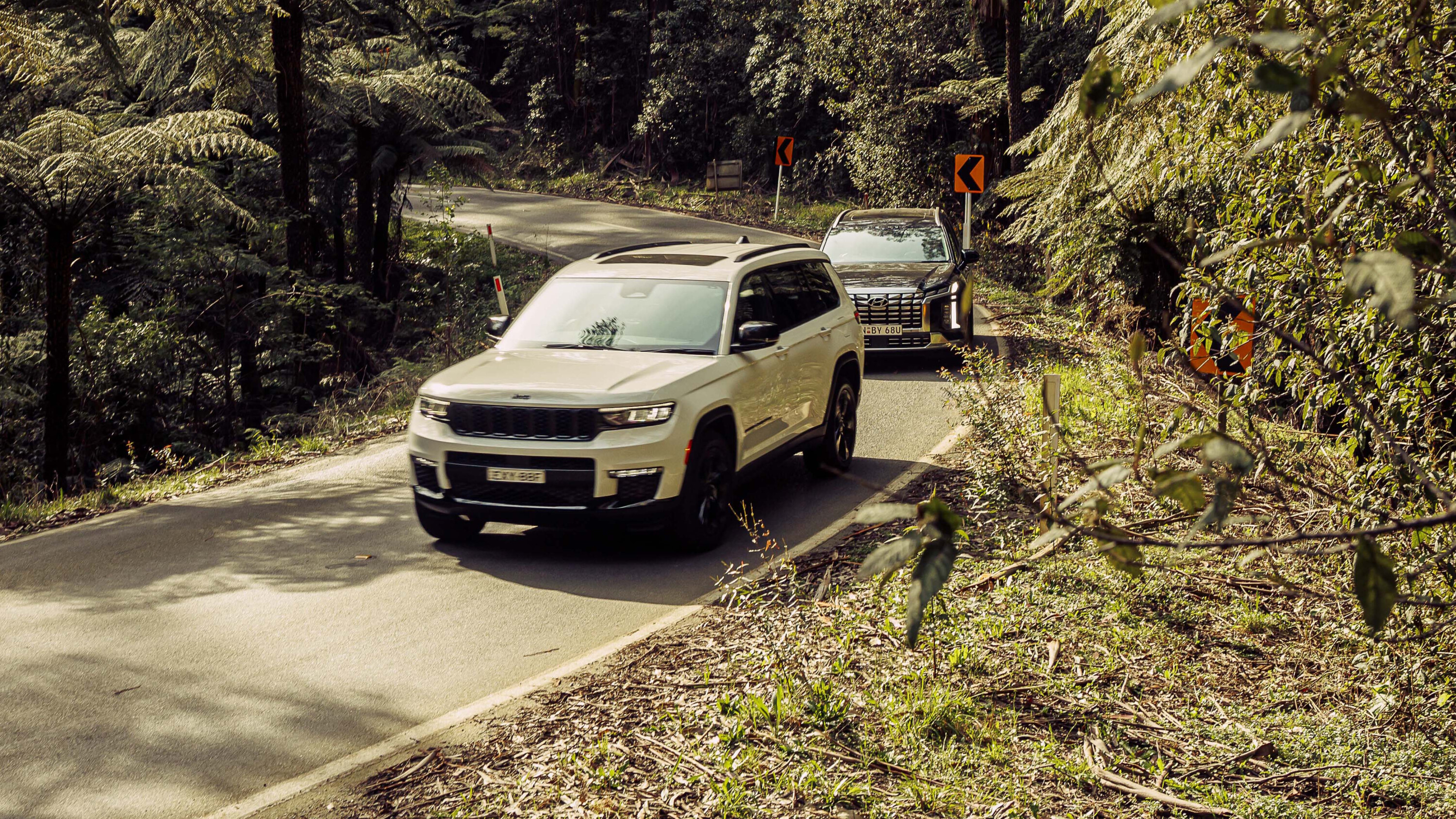
While the Sorento and Palisade powertrains feel very similar – they both have a curiously narrow power-band, giving their best from 2000rpm before deciding to shift at 4000rpm, despite a 4500rpm redline – the 2.2 certainly feels livelier in the lighter Kia.
As for the Jeep, we’re sure that, in isolation, if you were coming out of an older car, it would feel amazing, the V6 having a good bit of sting around its 6500rpm redline and the 265-section tyres enabling an impressive amount of mid-corner grip. But swap into it from any of the other cars here and push it a little, and the Jeep feels huge, flustered and overwhelmed, neither of you having much fun.
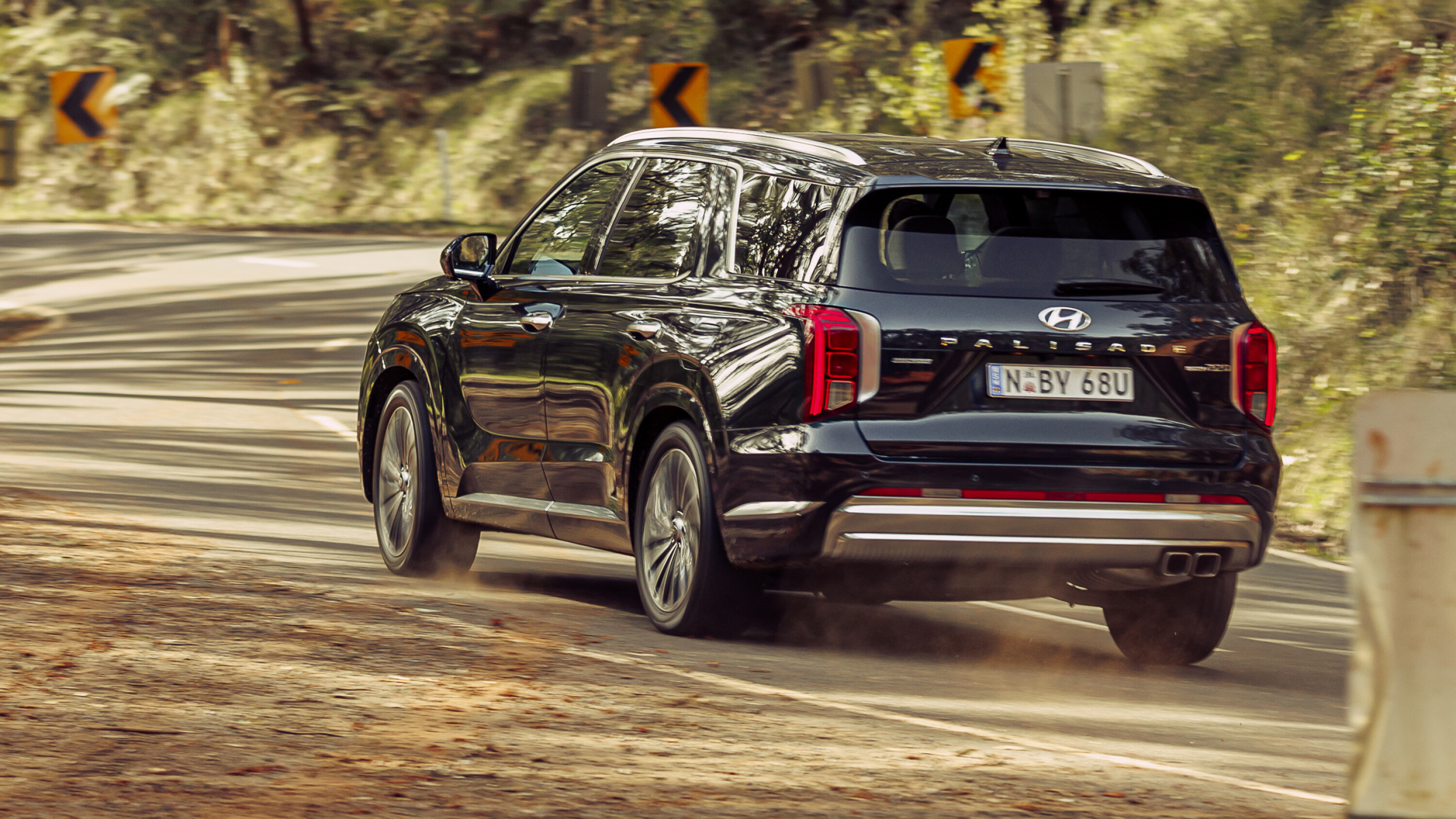
There’s plenty of incentive to wind things back and enjoy life at a more relaxed pace.
Away from the fantasy world where SUVs are driven like sports cars, for ownership costs it’s another win to the Sorento. At $2427, it’s the second-cheapest to service over five years; while its claimed combined fuel economy of 6.1L/100km is also really good. Its killer blow, however, might be its seven-year, unlimited kilometre warranty and the very positive effect it would have on depreciation.
Value has always been a Korean hallmark, so it’s not surprising the Palisade is the next most affordable car to run.
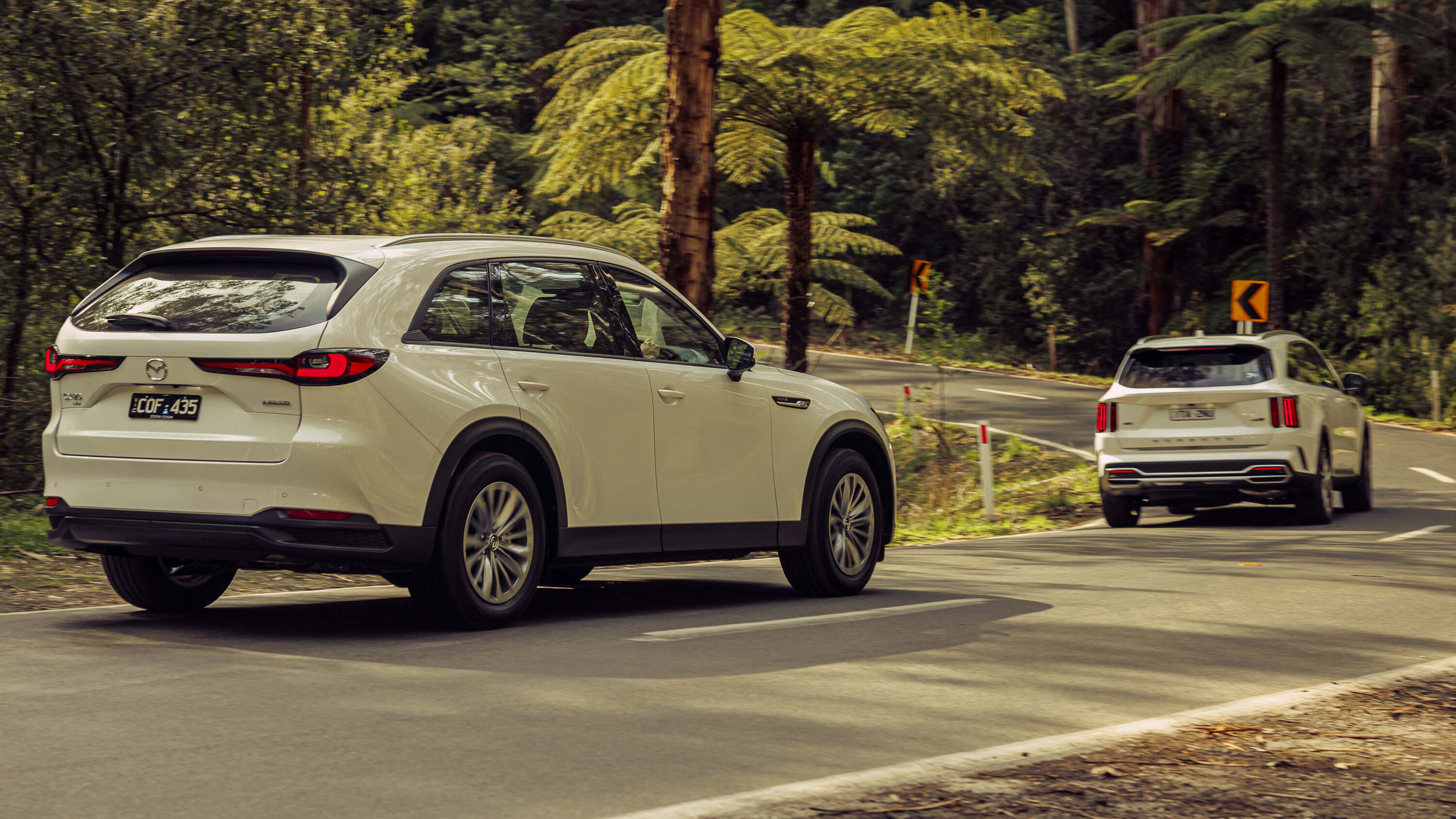
It will cost you $2445 to service over five years while it has a five-year, unlimited kilometre warranty and claims 7.3L/100km over the combined cycle.
The Jeep, meanwhile, is quoted at 10.6L/100km and will whack you the least at $1995 for five years of servicing, although you get slighted dudded on the warranty at five years or a limited 100,000km.
The CX-90’s $3217 for five years of servicing is pretty steep, although the five-year, unlimited kilometre warranty is about right. Its 5.4L/100km claimed combined consumption seems amazing, although it must be noted all these fuel figures are the questionably reliable ADR 81/02 test.
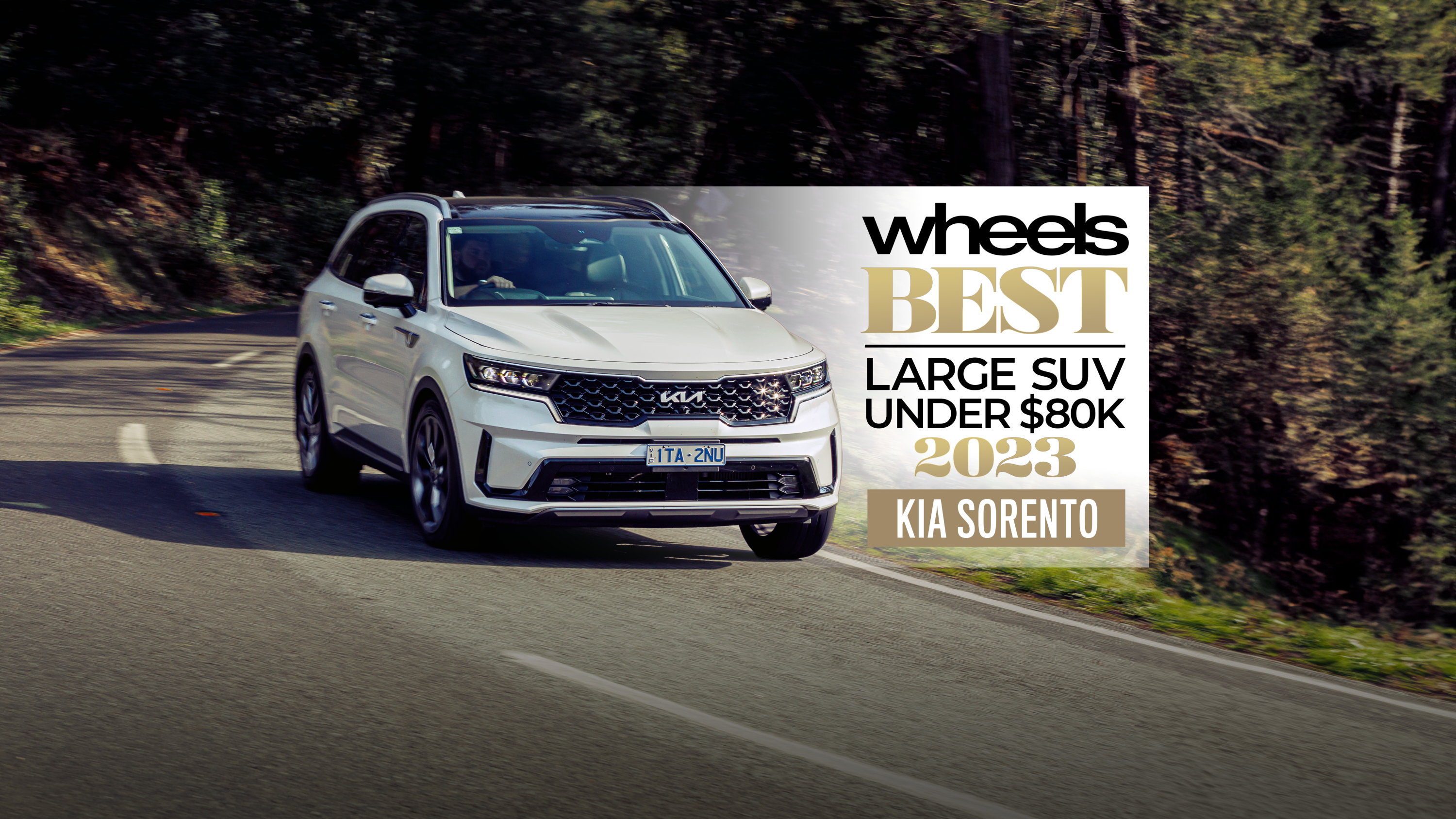
With its $68,990 drive-away price-tag, the Kia Sorento makes us feel like we’re back in 2019, that heady time when a $16 pint was a fanciful proposition and everybody was blissfully unaware of that thing that would happen a year later.
While even in GT-Line grade it’s nowhere near as swanky as the Hyundai, nor as stylish as the Mazda, the Sorento does a lot with less and is amazing value. It’s our winner today – and it’s only going to get better with the facelift.
Second place would be a sort-of-tie between the Hyundai and Mazda. While it doesn’t quite drive as luxuriously as it looks, the Hyundai feels like a bit of a treat at $79,900.
The Mazda would have pipped it, but the engineers need to polish some aspects of its calibration and refinement.
As for the Jeep, the Night Eagle feels like a base model yet costs almost the same as the Palisade Highlander we have here, and offers less. While it’s got more space than a C-130 Hercules, the engine is thrashy in a bit of an uncouth, old-school way, the interior isn’t a patch on richer Grand Cherokee grades, and it’s dynamically a solid fourth in this test. You’d have to be a committed off-roader to buy it.
Although it’s night-and-day better than a Tarago.
| 2023 Kia Sorento GT-Line | 2023 Mazda CX-90 D50E Touring AWD | 2023 Hyundai Palisade Highlander 7-Seat | 2023 Jeep Grand Cherokee Night Eagle 7-Seat | |
|---|---|---|---|---|
| Body | 5-door, 7-seat SUV | 5-door, 7-seat SUV | 5-door, 7-seat SUV | 5-door, 7-seat SUV |
| Engine | 2151cc inline 4cyl, 16v, DOHC, turbo | 3283cc inline 6cyl, 24v, DOHC turbo | 2199cc inline 4cyl, 16v, DOHC, turbo | 3604cc V6, 24v, DOHC |
| Power @rpm | 148kW @ 3800rpm | 187kW @ 3750rpm | 147kW @ 3800rpm | 210kW @ 6400rpm |
| Torque @rpm | 440Nm @ 1750-2750rpm | 550Nm @ 1500-2400rpm | 440Nm @ 1750-2750rpm | 344Nm @ 4000rpm |
| Transmission | 8-speed automatic | 8-speed automatic | 8-speed automatic | 8-speed automatic |
| 0-100km/h | 8.6 seconds (estimated) | 7.2 seconds (estimated) | 9.5 seconds (estimated) | 8.3 seconds (estimated) |
| L/W/H | 4810/1900/1700mm | 5120/1994/1745mm | 4995/1975/1750mm | 5204/2149/1815mm |
| Wheelbase | 2815mm | 3120mm | 2900mm | 3091mm |
| Track width | n/a | 1705/1708mm | 1708/1716mm | 1660/1660mm |
| Boot space | 616/187L | 608/257L | 704/311L | 1328/487L (to ceiling) |
| Weight | 1908kg (tare) | 2190kg | 2070kg | 2190kg (tare) |
| Fuel / tank | Diesel / 67 litres | Diesel / 74 litres | Diesel / 71 litres | 91RON / 87 litres |
| Fuel use L/100km | 6.1L/100km (combined, claimed) | 5.4L/100km (combined, claimed) | 7.3L/100km (combined, claimed) | 10.6L/100km (combined, claimed) |
| Suspension | struts, coil springs (f) multi-links, coil springs (r) | double wishbone, coil springs (f); multi-link, coil springs (r) | struts, coil springs (f) multi-links, coil springs (r) | multi-link, coil springs (f/r) |
| Steering | Electric rack-and-pinion | Electric rack-and-pinion | Electric rack-and-pinion | Electric rack-and-pinion |
| Brakes | 325mm ventilated disc (f/r) | 347mm ventilated disc (f); 350mm ventilated disc (r) | 340mm ventilated disc (f); 314mm ventilated disc (r) | 354mm ventilated disc (f); 350mm ventilated disc (r) |
| Wheels | 8.5 x 20 (f/r) | 8.0 x 19 (f/r) | 7.5 x 20 (f/r) | 8.5 x 20 (f/r) |
| Tyres | Continental PremiumContact 6 255/45 R20 | Yokohama Advan V61 265/55 R19 | Bridgestone Dueler H/P Sport AS 245/50 R20 | Continental Cross Contact 265/50 R20 |
| Price | $69,685 (as-tested, drive-away) | $77,395 (as-tested, before on-road costs) | $80,595 (as-tested, before on-road costs) | $81,200 (as-tested, before on-road costs) |
Looking to get into a brand-new large SUV? Our stories below will guide you to the model that best suits your needs!
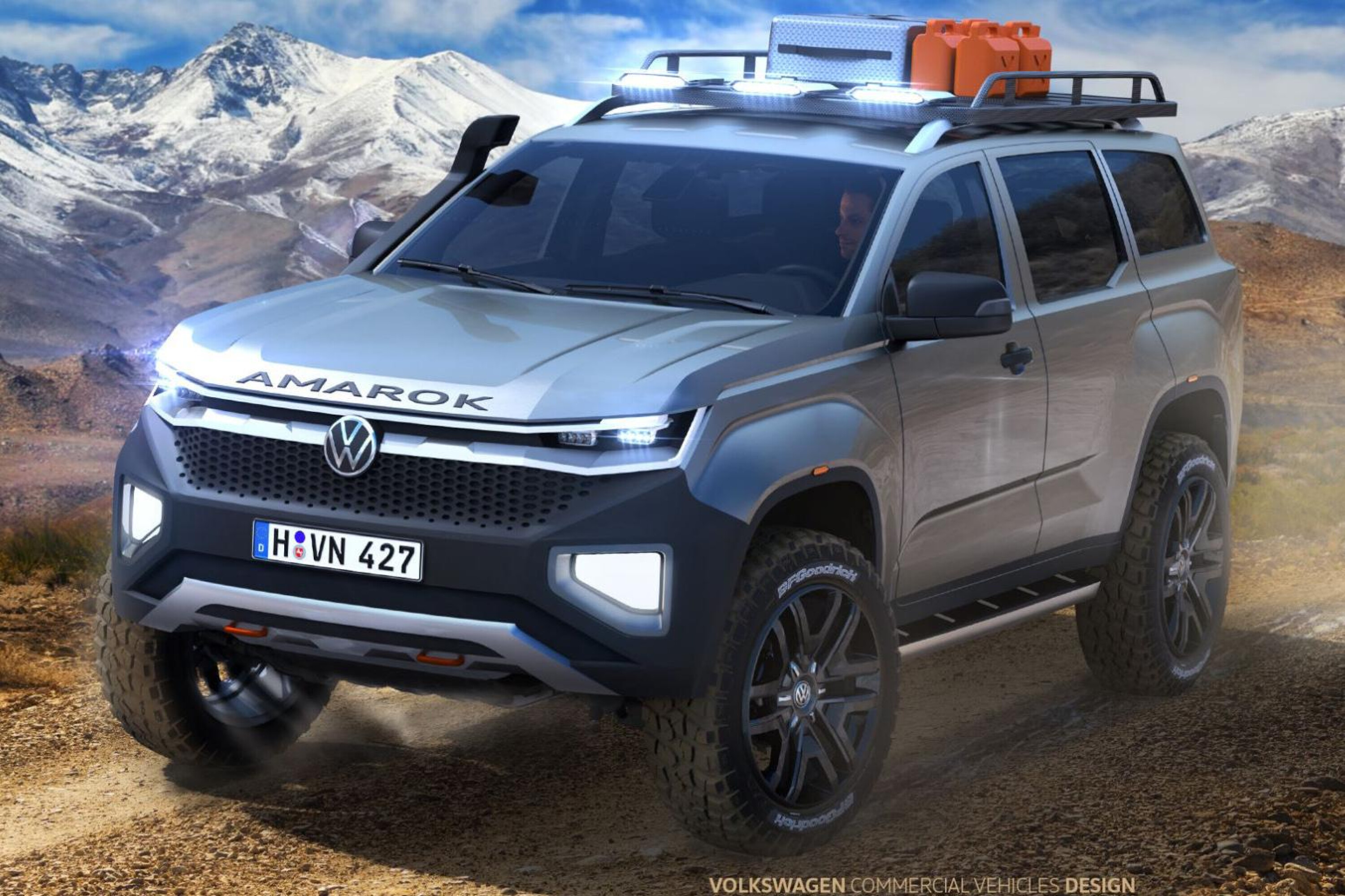
The image gives life to something lots of people have been asking: would Volkswagen build its own version of the Ford Everest given the two brands joined forces to co-develop Ranger and Amarok?
Spinning its own ute-based SUV out of the deal would seem to make sense for Volkswagen — and would likely sell in big numbers in Australia — but the company has long maintained an SUV version of the Amarok isn’t going to happen.
““[A rugged wagon-body vehicle] was not a scope of the previous [commercial vehicle partnership] negotiations [with Ford], so it was really what we were telling them we are not interested in [that style of vehicle],” said Petr Sulc, a senior member of VW’s global product management team, at the Amarok’s international launch.
Other Volkswagen execs have told Wheels that between Amarok and the more road-biased Touareg SUV, they had both based covered already.
Shared to LinkedIn by the head of Volkswagen Commercial Vehicles design Albert Kirzinger, the Amarok-based SUV sports a high-riding wagon bodystyle with chunky all-terrain tyres and a roof rack. We reckon it looks great.
“Exploring design ideas for the Amarok pickup truck!,” said Kirzinger in his post. “Our research phase back in the day took us on an off-road journey, and here’s a sneak peek with a rendering featuring a fully closed pickup bed. Ready for rugged adventures!”.
Kirzinger credited VW designer Simon T. Gorski with creating the concept, which looks more like a ute-based SUV than modified Amarok to our eyes.
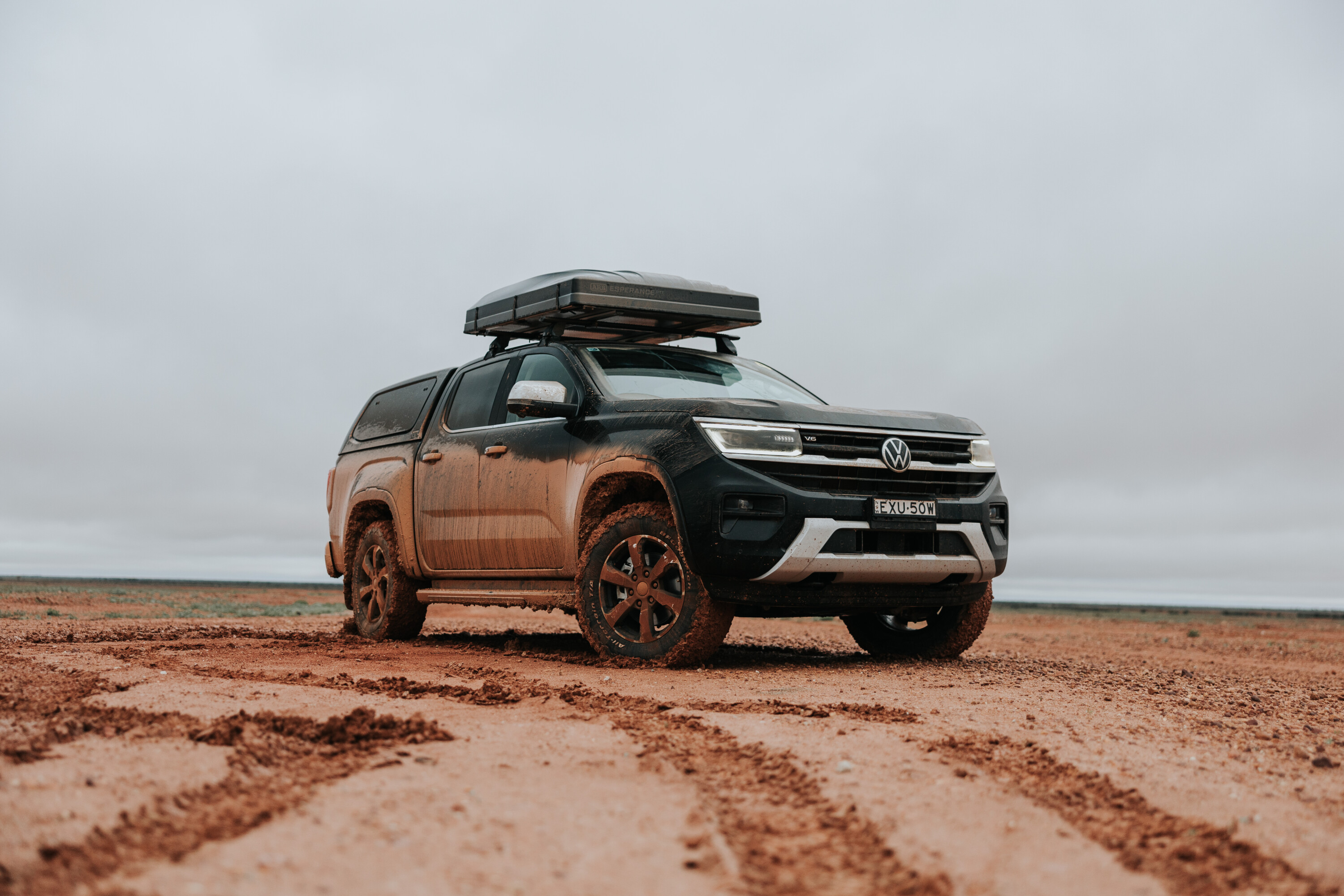
The roofline continues unbroken, for example, and the rear doors are integrated into the body and extend into the wheel arches. An Amarok’s rear doors end before the rear wheels to allow the fitment of different trays/tubs.

It’s unlikely the concept will ever make production, of course, but it’s cool to gain an insight into the different ideas that are generated by VW’s design team.
We wouldn’t write it off as pure fantasy, either. As Jez discovered at the Amarok’s launch in South Africa, there is a chance an Amarok-SUV could make production… if it’s powered by electricity rather than diesel.
