
As concerns about Australia’s fuel supply deepen with no end in sight for the latest Middle East conflict, NSW is the latest Australian state to announce plans to help drivers planning a shift to an electric vehicle.
NSW Energy Minister Penny Sharpe will release a revised and updated electric vehicle strategy for the state, designed not just to support urban owners but also fill some of the black spot gaps for
charging in regional areas around the state.
The NSW government has also committed to reducing the state’s transport emissions, by electrifying its heavy vehicle fleets in the pursuit of net zero by 2050.
As previously reported by WhichCar, sales of electric vehicles (up to 14.6 per cent of all new vehicles in March 2026, compared with 7.5 per cent of total sales a year earlier) have climbed sharply since the war in Iran broke out, as has online research from Australians concerned about fuel shortages and ongoing issues with supply. That doesn’t necessarily translate to sales, but the NSW government is preparing to ride the wave.
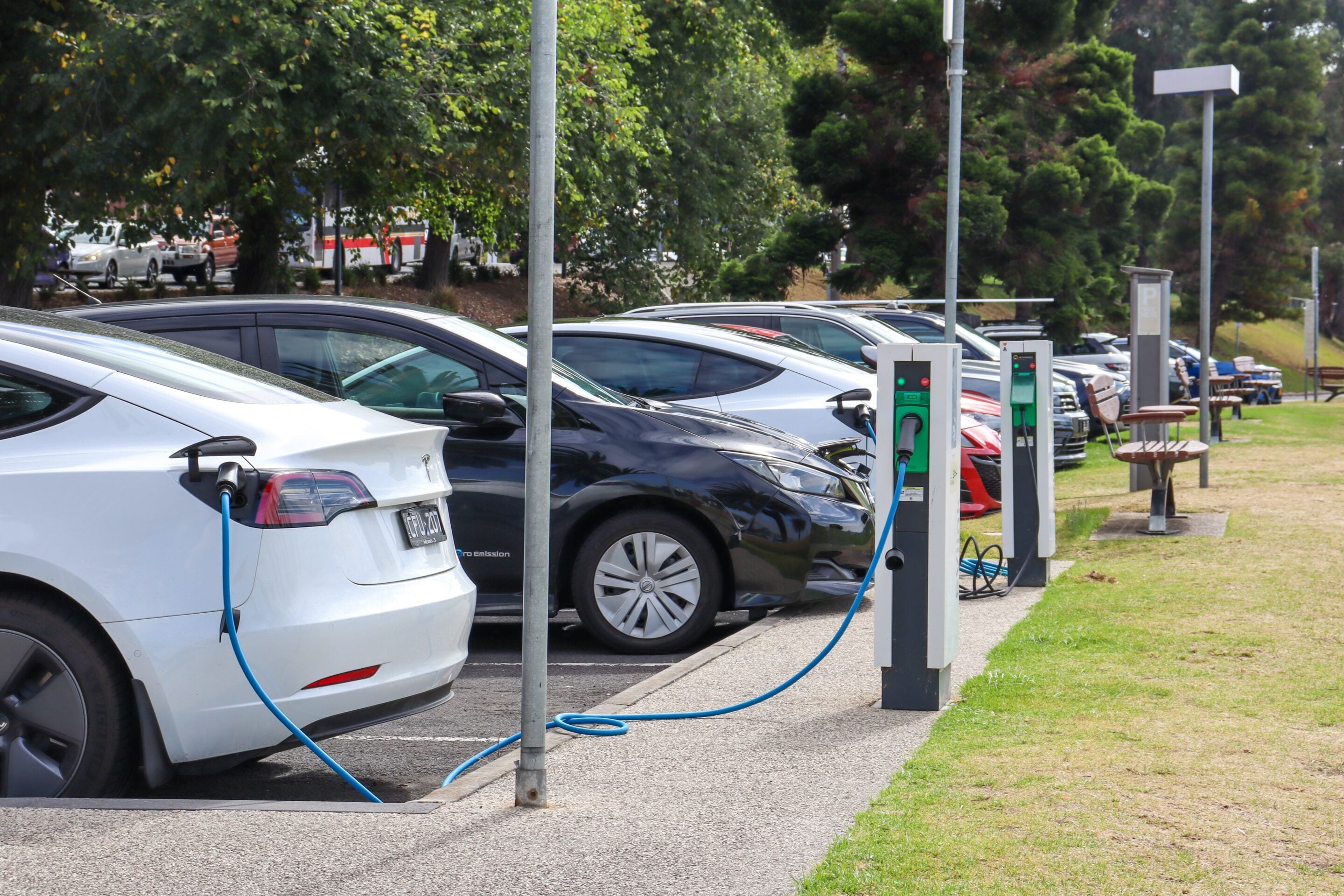
The chief concern among those considering an electric vehicle purchase, though, remains access to charging infrastructure, not just in remote areas, but even in outer urban areas and when heading off on a regular family road trip.
“Owning an electric vehicle helps households and businesses save thousands of dollars on fuel and around 40 per cent on maintenance,” Minister for Climate Change and Energy, Penny Sharpe said. “This Strategy will get more EVs on the road and help drivers travel and charge with confidence. These updates will help build a world-class charging network, support electric trucks and grow the skilled workforce needed to maintain EVs.”
A recent report by the Sydney Morning Herald revealed that dozens of Sydney suburbs remain with little to no public charging capability, fuelling concerns among potential buyers. “We’re making it simpler to go electric, with more chargers, better access and real savings over time,” Premier Chris Minns said.
The Minns government has pledged $100 million in new funding, which includes $45 million towards a significant expansion of new chargers, fast chargers specifically, in areas that are known to be blackspot for those attempting to travel outside the city and around NSW. These include regional areas and will be accessible via a series of grants.
The ‘2026 NSW Electric Vehicle Strategy’ as it’s called, will focus on five key areas – fast chargers where they are needed most, more kerbside chargers, electric trucks on the road sooner, a skilled EV workforce, especially in the regions, and clear, reliable information.

The government has lofty expectations and claims that the funding will see the roll out of up to 1000 chargers over the next few years, with slower, kerbside chargers, also part of the mix, as mentioned above. That style of charger, common in Europe and available in regular parking spaces around the city, charges at similar speeds to a home wall box, and has slowly started to become more common over the last few years in cities around the country.
Still the roll out of charging infrastructure, has not kept pace with the take up of electric vehicles.
The NSW government, has, to date, funded more than 3300 chargers at 1200 sites across metropolitan, regional, and remote NSW. And, it’s remote areas that need the most assistance to ensure that EV owners, who live in the city, can feasibly road trip into the bush, safe in the knowledge they will be able to charge their EV when they get there.
“For regional communities, EV chargers drive economic development, putting more towns on the map, bringing in visitors who might not have stopped before, and supporting local businesses,” Minister for Roads Jenny Aitchison, said.
For the first time, though, the grants will focus on heavy vehicles as well, which the government claims is a major source of transport emissions. Making up just one per cent of truck sales in 2024, heavy vehicles have a long way to go before they reach the kind of critical mass that will make a difference in the real world. Given the state’s second heaviest emitter is transport, the bulk of which comes from road transport, the focus on trucks and transport would be key in achieving the stated goal of net zero by 2050.
Mercedes-Benz has revealed its refreshed electric flagship sedan, the EQS, with Australian deliveries to begin in the fourth quarter (October-December) of 2026.
Headlining the changes is Mercedes-Benz’s next generation 800-volt electric architecture that brings WLTP-tested driving ranges of between 815-925km, depending on the variant. The new architecture also allows for 350kW fast-charging, the German brand quoting that between 305-320km of range can be added in just 10 minutes.
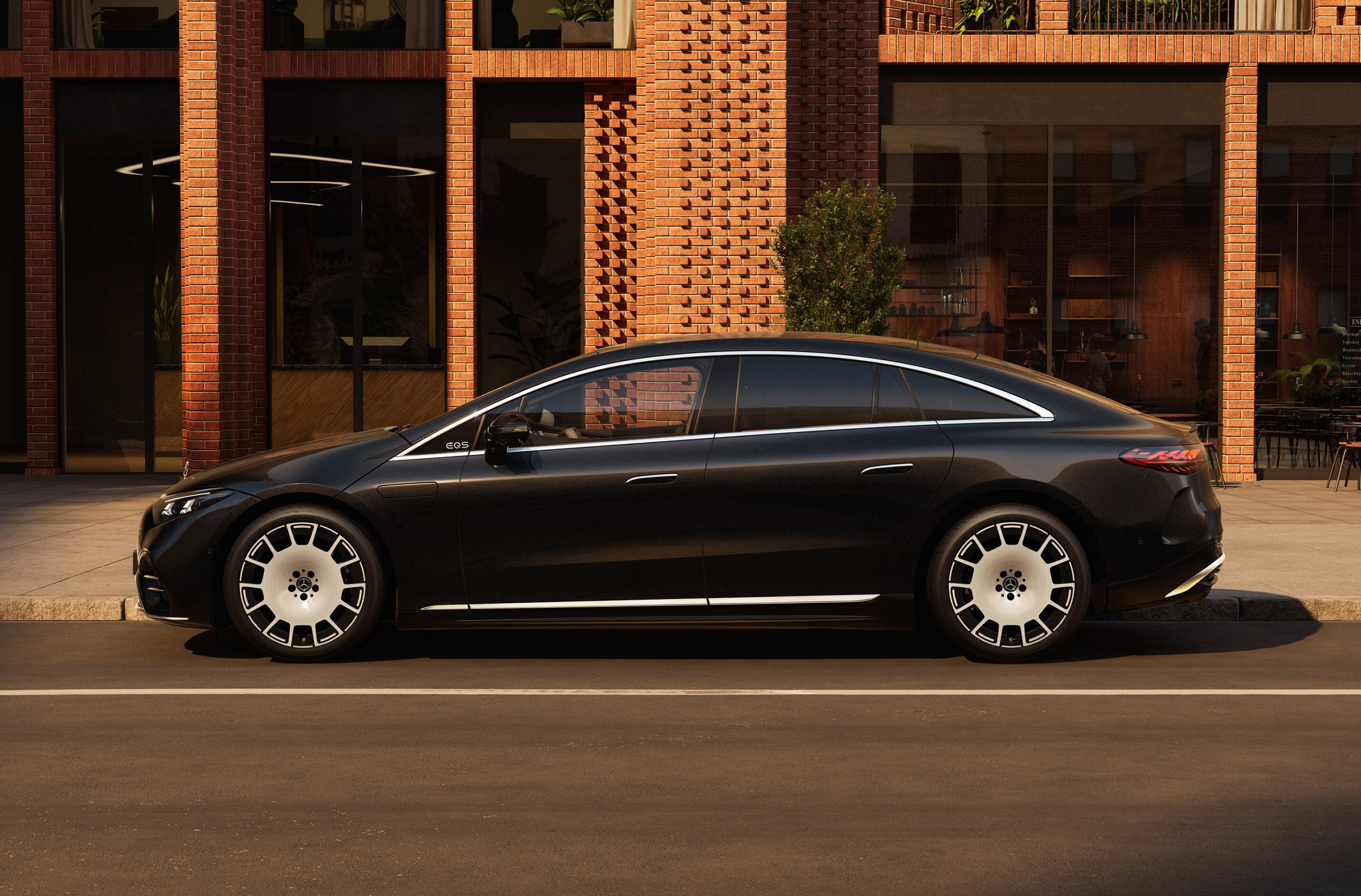
There are new Mercedes-Benz developed electric motors along with a new two-speed transmission and larger 122kWh batteries with revised cell chemistry providing around three per cent more energy, according to the German carmaker, despite being the same overall size as the outgoing model’s 115kWh units.
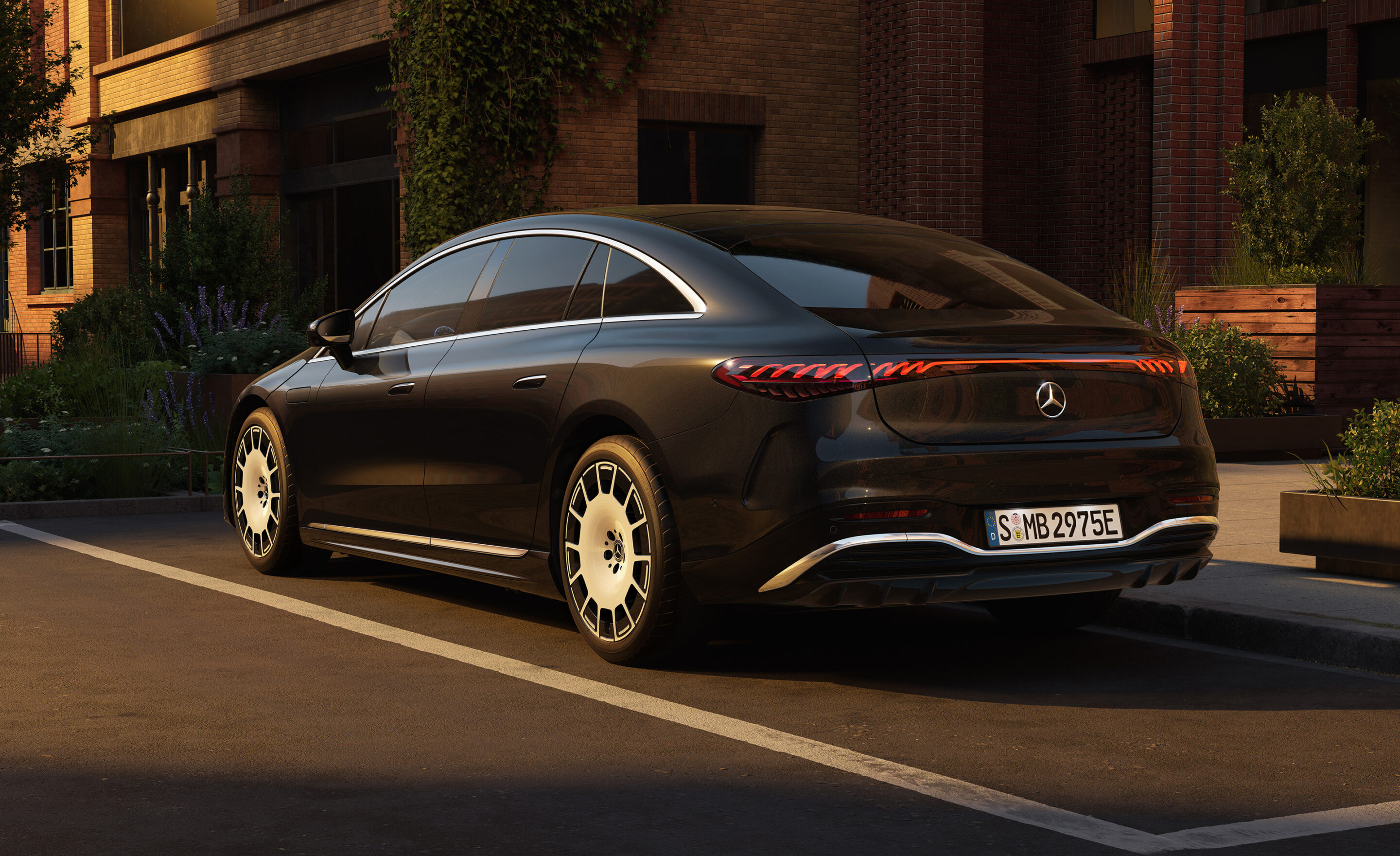
External design changes are subtle, the most notable a power dome on the bonnet and AMG Line side skirts. The wing mirrors have been subtly revised to improve air flow, thereby reducing drag helping the refreshed EQS achieve a drag coefficient of just 0.20Cd, making it one of the most aerodynamic production cars in the world. New headlight architecture incorporating micro-LED technology that bring a claimed 40 per cent improvement to the field of vision at night and two new wheel designs round out the exterior changes.
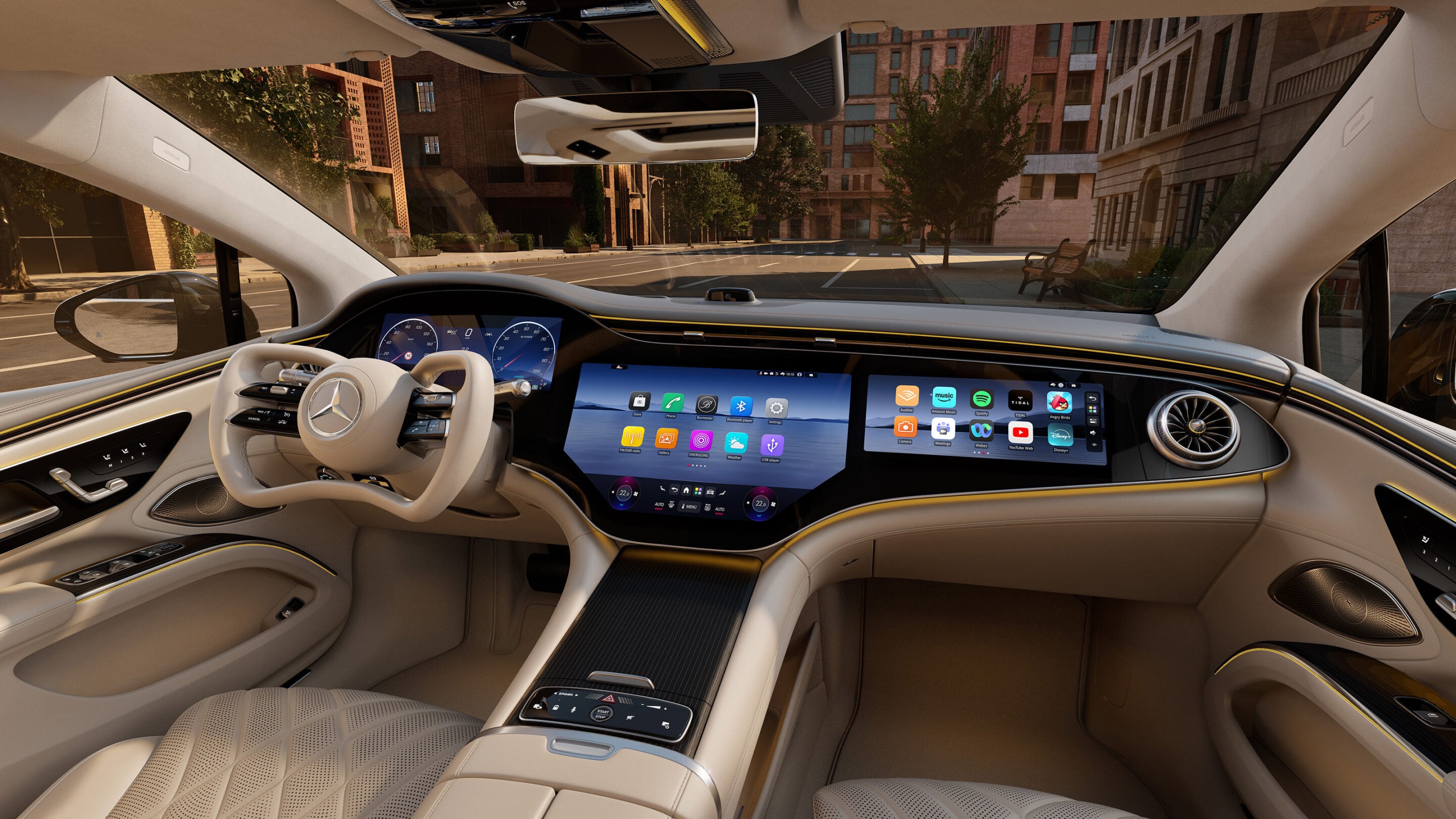
Inside, the EQS is fitted with Mercedes-Benz’s massive new 55-inch hyperscreen that runs the brand’s new MB.OS operating system. The second row features two 13.1-inch displays with individual remote controls.
Heated seat belts for the front seat occupants deliver, according to Mercedes-Benz “a soothing warmth up to 44°C in cold weather”.
Buyers can choose from up to 125 distinctive paint colours via the brand’s Manufaktur Made to Measure program while inside new open-pore wood trim enhances the feeling of luxury.
The biggest change inside is the optional steer-by-wire system replacing the traditional steering wheel and the mechanical connection between to the front wheels with a Formula One-style steering yoke and a digital system that utilises actuators and computer processing power to transmit steering inputs to the wheels. Mercedes-Benz will continue to offer the EQS with mechanical steering paired with a traditional steering wheel.
A raft of safety and driver assist technologies come standard as part of MB.Drive Assist and MB.Drive Parking Assist packages, the latter able to detect parking spaces and park automatically around 60 per cent faster than previously.
With Australian deliveries to get underway later this year, local pricing and specification (and which of the four-strong EQS line-up will make their way to Australian showrooms) is still to be confirmed. The outgoing model was previously priced at $219,900 for the EQS450 4 Matic with the AMG-fettled EQS53 asking for $327,075, both prices for on-road costs.
2026 Mercedes-Benz EQS
| EQS 400 | EQS 450+ | EQS 500 4Matic | EQS 580 4Matic | |
|---|---|---|---|---|
| Power | 270kW | 300kW | 350kW | 430kW |
| Torque | 505Nm | 505Nm | 750Nm | 800Nm |
| Battery | 112kWh | 122kWh | 122kWh | 122kWh |
| AC charging (max) | 11kW | 11kW | 11kW | 11kW |
| DC charging (max) | 330kW | 350kW | 350kW | 350kW |
| 0-100km/h | 6.2s | 5.9s | 4.5s | 4.1s |
| Top speed | 210km/h | 210km/h | 210km/h | 210km/h |
| Range (WLTP) | 815km | 925km | 875km | 875km |
Victorian motorists are being given a clearer view of fuel price disparities, with an update to the Service Victoria app now highlighting the most expensive service stations in real time.
The change expands the app’s existing fuel comparison tool, which previously focused on identifying the cheapest petrol outlets. Now, it also draws attention to the highest-priced sites, effectively “naming and shaming” retailers charging significantly more than nearby competitors.
Under the update, the app’s Servo Saver feature marks the most expensive stations with a red outline and a “highest” label, making them easy to spot on the map, reports Yahoo News Australia. Cheaper options continue to be flagged in green, allowing users to compare pricing at a glance.
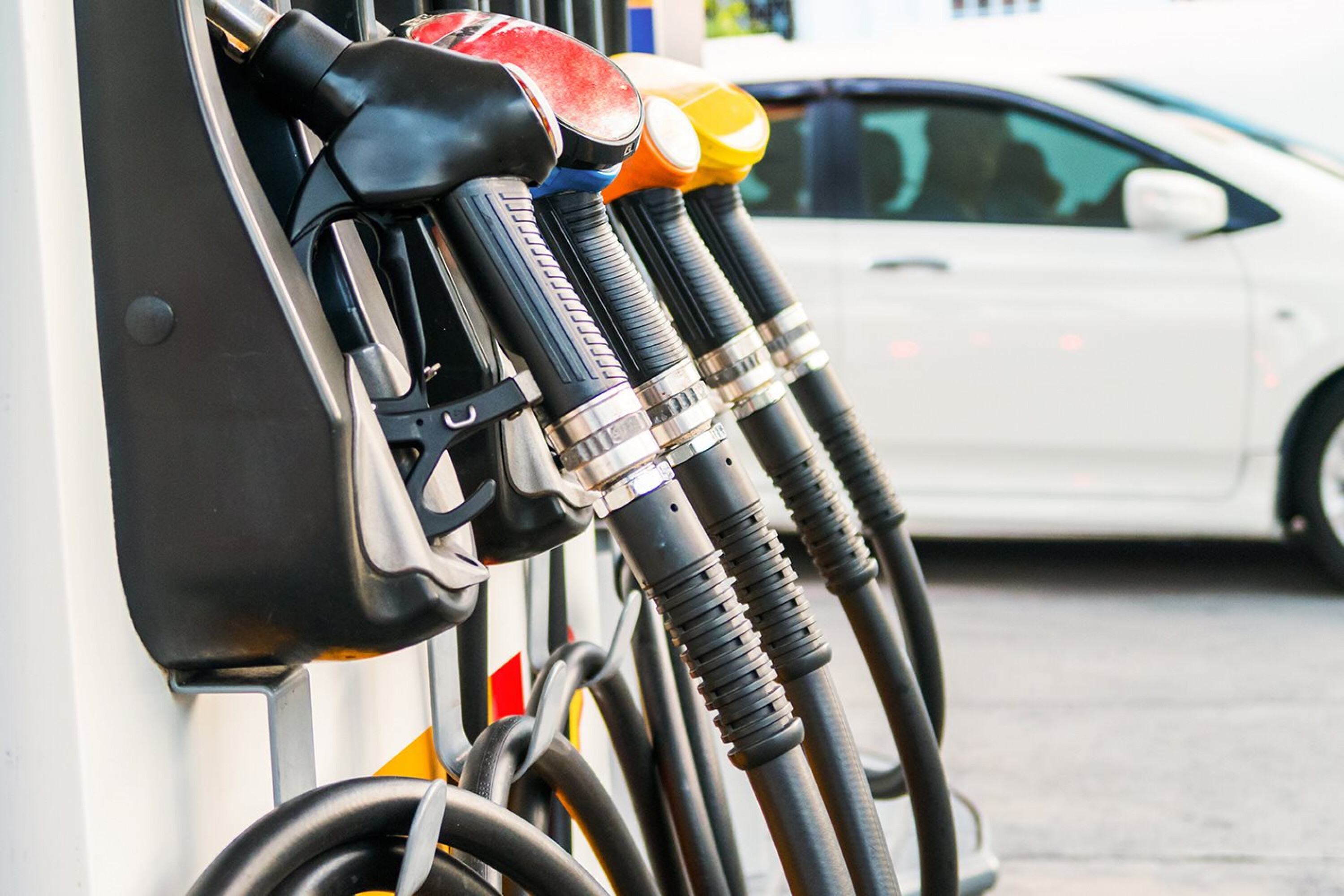
The move comes amid growing concern about fuel price inconsistencies across metropolitan and regional areas. In some cases, motorists are facing substantial price gaps between neighbouring stations. Recent examples show diesel reaching as high as $4.00 per litre at one Melbourne outlet, while unleaded petrol has been listed at $3.50 per litre at another – well above nearby alternatives offering significantly lower prices.
Authorities have also increased enforcement around fuel price reporting. Since early March, more than 25 retailers have been fined for failing to comply with requirements to accurately report fuel prices, with penalties totalling over $80,000.
In Victoria, fuel retailers are required to submit up-to-date pricing data and adhere to daily pricing rules designed to improve transparency for consumers. The app relies on this information to provide accurate, location-based comparisons.
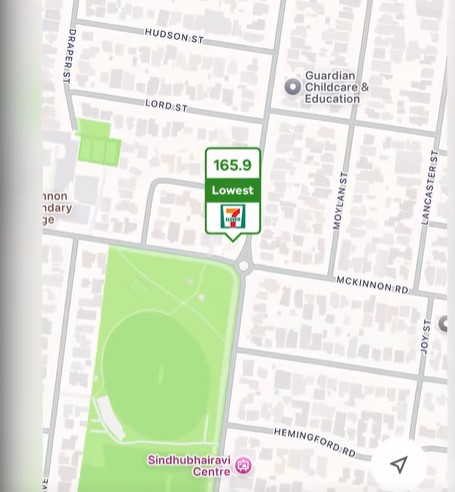
The addition of a “highest price” marker is intended to give motorists more context when choosing where to refuel, particularly during periods of volatility. By making pricing differences more visible, the feature may also encourage greater competition between retailers.
While fuel price cycles remain influenced by broader market factors, the updated app highlights just how wide the gap between the cheapest and most expensive servos can be – sometimes within the same suburb.
Sales of electric vehicles are booming in Australia as more and more buyers look to future proof themselves from the ongoing conflict in the Middle East.
Official sales figures from the first full month on record since the conflict began on February 28, show a massive spike in sales, with Aussies buying 15,839 EVs in March alone, a 42 per cent increase over February to bring the 2026 tally to 34,382, or around 14.7 per cent of the total new car market, almost double the 7.5 per cent recorded in 2025.
According to the FCAI there are around 100 EV models on offer in Australia, giving buyers plenty of choice when it comes to making a purchasing decision.
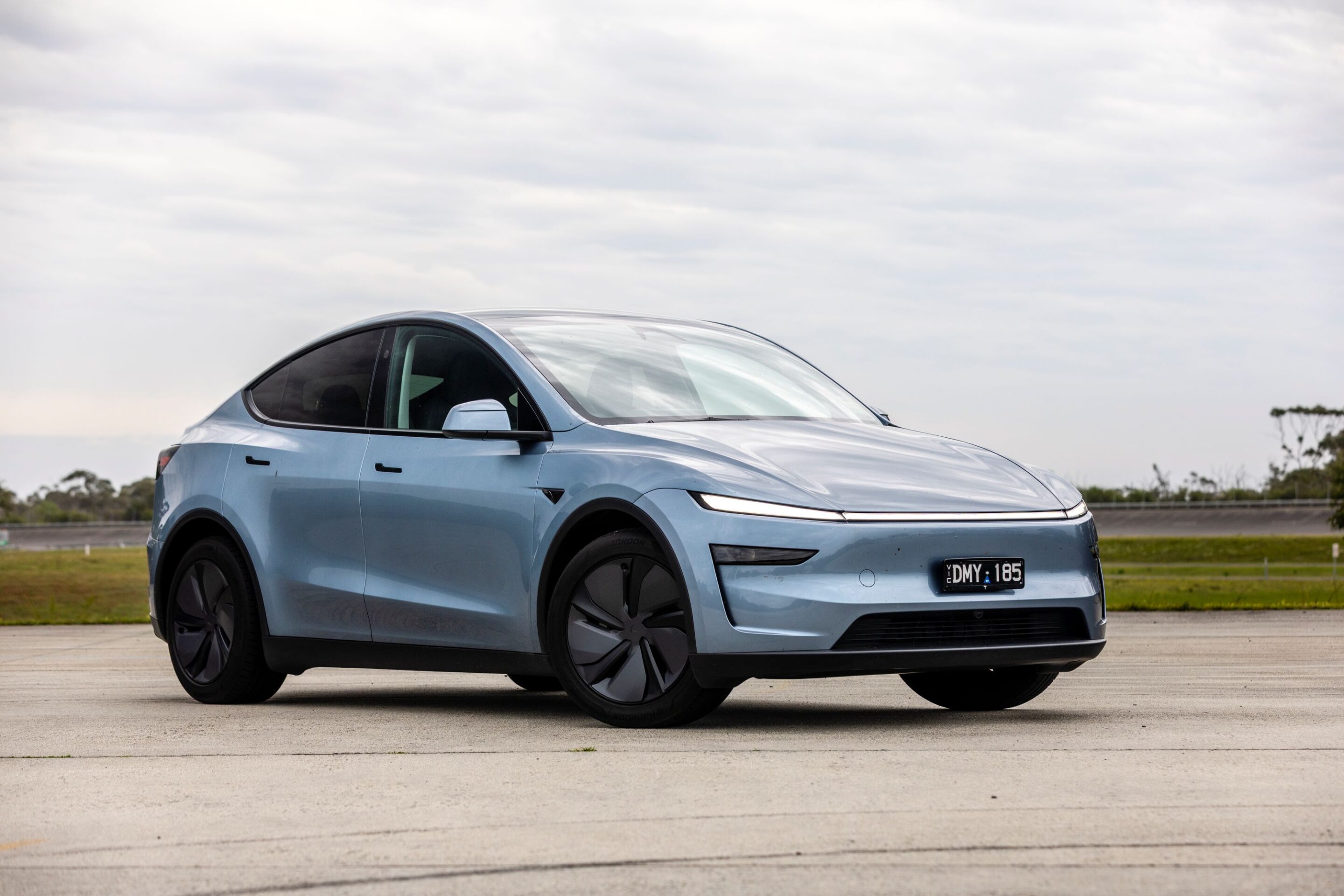
Established brands like Tesla and Kia are facing strong competition from challenger brands, all of them from China, an influx that has seen prices tumble to the point where EVs, in some instances, are reaching price parity with internal combustion counterparts.
So what were the top 10 selling electric vehicles in Australia in March? The list is dominated by Tesla and Chinese giant BYD, which between them have five models inside the top 10. But newcomers such as Zeekr, Geely and Jaecoo are beginning to make inroads into our market with a line-up of affordable EVs that blend sharp pricing with good driving ranges and decent standard equipment.
Australia’s most popular electric vehicles
| Model | March Sales | % change Mar ’25 | Year to date |
|---|---|---|---|
| Tesla Model Y | 2818 | +63.4 | 7260 |
| BYD Sealion 7 | 1970 | +243.8 | 4468 |
| Zeekr 7X | 679 | New | 1725 |
| Tesla Model 3 | 667 | -39.6 | 1363 |
| Geely EX5 | 606 | +223.3 | 1437 |
| Kia EV5 | 587 | +22.8 | 1148 |
| BYD Atto 2 | 572 | New | 1481 |
| Jaecoo J5 | 569 | New | 1153 |
| BYD Atto 1 | 488 | New | 1082 |
| BYD Atto 3 | 466 | +30.2 | 1084 |
Prior to 1976, the debate we’re about to have here was a non-event.
Up until then, if you wanted an affordable sports car, or a sporty car, or something that was engaging to drive, the formula was simple. Engine at the front, driven wheels at the rear, manual gearbox in between. In other words, the front wheels did the steering, and the rear wheels did the driving. It made for an intoxicating mix, the likes of which were tested in Wheels over the decades, igniting the interest of motoring journalists intent on extracting every last drop of fun from any drive. A flick back through the Wheels archives reveals the joy in testing what were, at the time, ground-breaking cars.
That all changed in 1976 when Volkswagen released what is universally acknowledged as the first hot hatch – the Volkswagen Golf GTI. While earlier examples like the 1973 Simca 1100Ti and Autobianchi-tuned versions of the Abarth are often cited as pioneering, it was the Golf GTI that delivered broad, affordable appeal to driving enthusiasts through the front wheels. Annoyingly, Australia missed out on the Mark 1 GTI, having to remain patient until 1984, when the Mark 2 arrived on our shores.
Volkswagen – whether it knew it at the time or not – rewrote the rules, reset the formula and enforced a theory that drivers could have hatch practicality along with that difficult to define driving engagement and genuine sporting aspiration. Connection between car and driver remained paramount, even if the way in which the power was put to the ground was different.
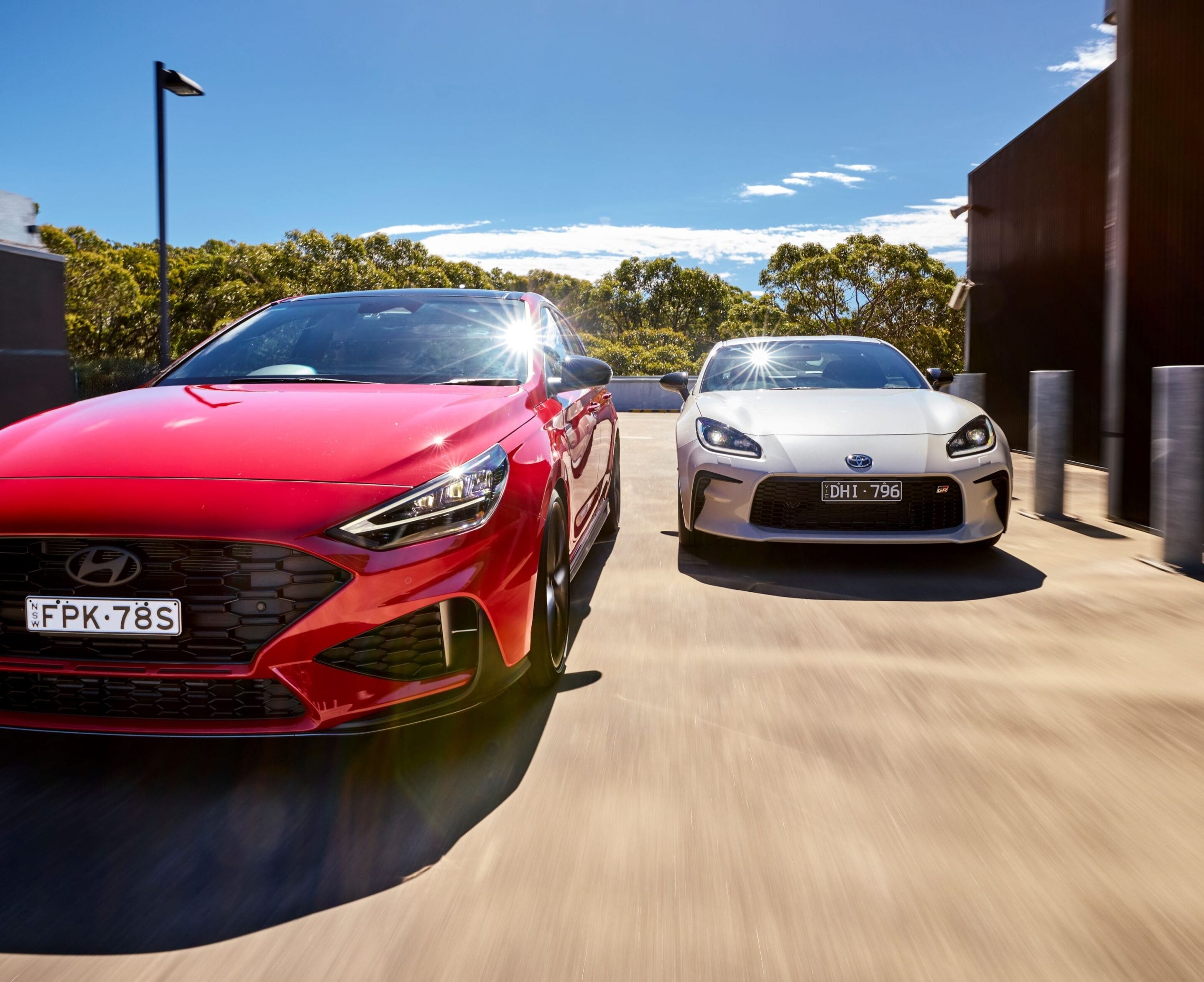
Fast forward 50 years, and the battle between the way it used to be done and the way it is largely done now is arguably as hot as its ever been, as evidenced by our two combatants this month – the 2026 Toyota GR86 GTS and the 2026 Hyundai i30 N Premium – both manual, both sporty, and both significantly more affordable than anything with a European badge on the sheetmetal. You could argue that a subset above the traditional hot hatch has now emerged, with the likes of Volkswagen Golf R, Mercedes-AMG A45 S, BMW M135i and others sending hatchbacks and their performance capability into another dimension. Even the EV movement wants a part, with the likes of Hyundai’s own Ioniq 5N making a heavy-hitting, hatch-bodied statement.
However, within the ranks of affordable hatches, the Golf GTI reigned supreme for a very long time. But a fear years ago, a new contender emerged. I still remember the first time I headed for my favourite back road in the then-new Hyundai i30 N, and not long after heading back to run it up against a Golf GTI. It was immediately evident that Hyundai had a serious performance hatch in its showroom, and one that was absolutely worthy of the hot hatch moniker. Crucially though, the i30 N was no-rushed-to-market thought bubble. It was a properly sorted, fast, engaging and enjoyable hot hatch.
It did everything expected of that type of vehicle, and perhaps most importantly, it felt special. Most impressively, it was a popping and crackling signal of intent from a manufacturer with no previous history of hot hatch execution. The incredible growth and strengthening of the N movement – and its owners – since that launch has been a reminder of our genuine love for cars in this part of the world. Especially cars that stir the soul like the i30 N.
Whether i30 N is still the standard bearer of the front-drive brigade is an argument for another day, but here we have two of the current favourites, even if they come at the prize from very different angles. In the red corner, there’s the rear-drive GR86 and in the blue corner, there’s the front-drive i30 N. Tradition versus the now? Japan versus South Korea? Purity versus practicality?
The differences don’t end at the driven wheels of course. While both are manual (a non negotiable for us for this test), one is turbo, one isn’t; 2.4 litres plays 2.0 litres; flat-four plays inline-four; turbo plays non-turbo and a genuine four seater plays a genuine two seater. This, on every level, is an intriguing matchup.
I write that manual transmissions were a must-have for a very important reason. We know that, invariably these days, the automatics on offer are faster and more precise (especially at speed) than us mere mortals can ever be, and they are available in just about every sporty application you can think of. However, the way we see it, while a manual is available it remains the purists’ choice, the more interactive of the two, and the one those of you who truly love driving will always want if you can get it.
I distinctly recall Ferrari announcing that its automatic was, in testing, faster than the reflexes of a certain Michael Schumacher, at the time quite a handy F1 driver. I (and you, I assume) don’t want to try to be Michael Schumacher or, more currently, Max Verstappen.
I do, however, want to feel like I’m directly attached to the driving experience, in the right kind of car. And these are exactly the kinds of cars that should have a manual shifter.
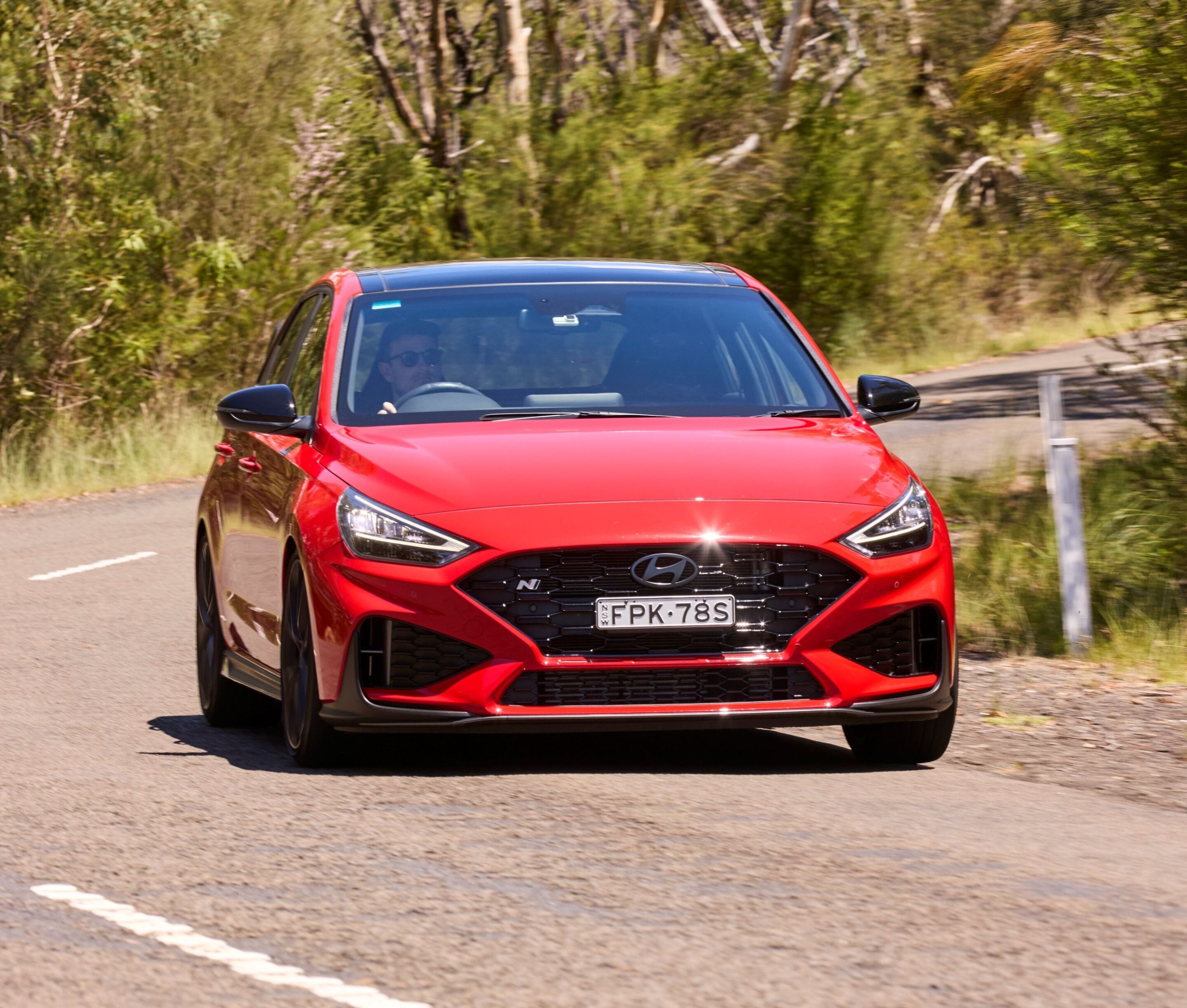
2026 Hyundai i30 N Premium
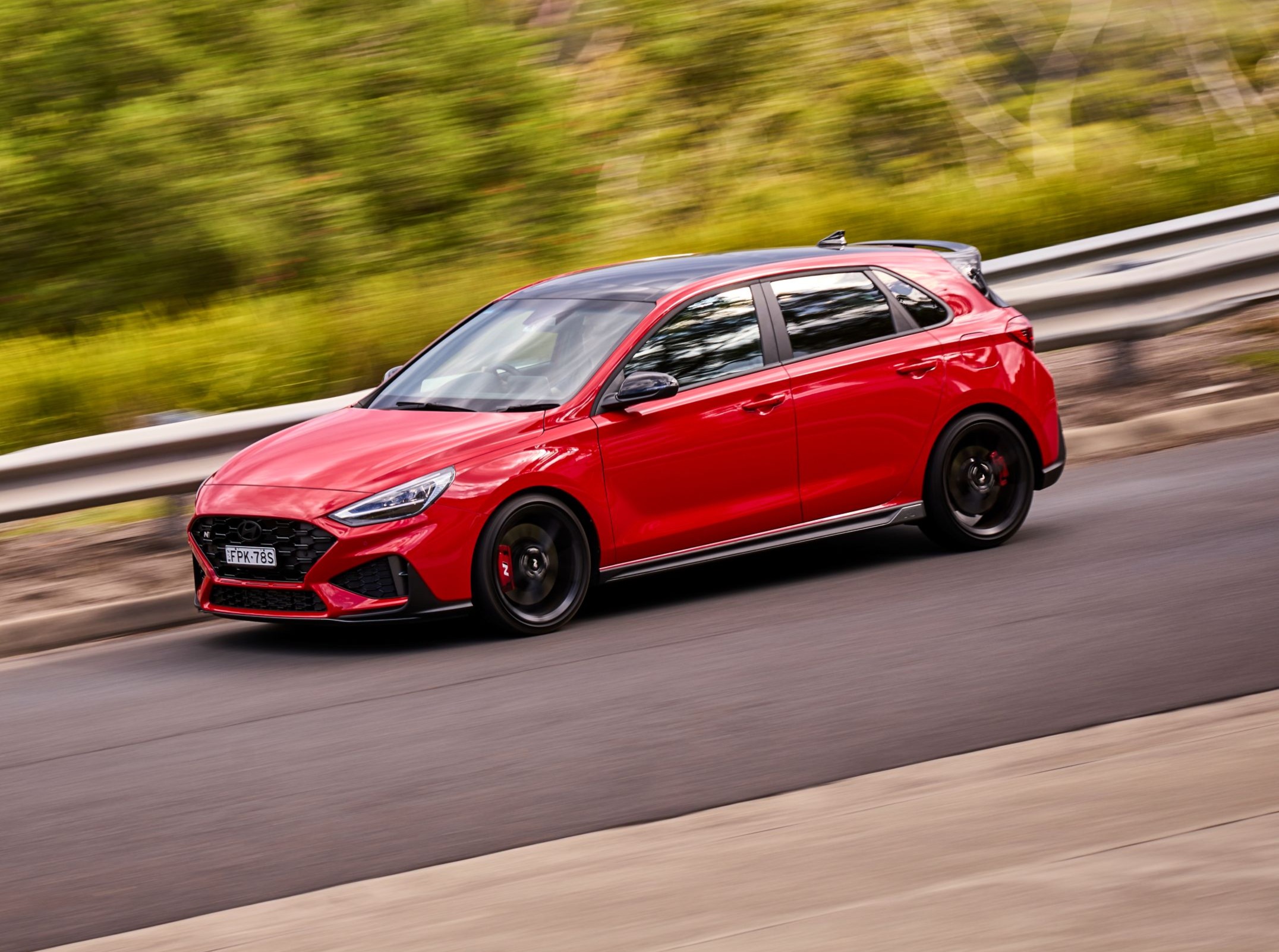
Let’s start with the Hyundai i30 N, then. At the time of testing, in manual guise, pricing started from $55,500 before on-road costs. And yes, that’s a lot of money for a small Hyundai hatch once you factor driveaway pricing into the equation, but the counterpoint is that you get a lot of car for the money. The 2.0-litre, turbocharged four-cylinder engine makes a healthy 206kW at 6000rpm and 392Nm between 2100rpm and 4700rpm, driving through a six-speed manual.
Hyundai claims a 5.8-second run to 100km/h and combined fuel use of 8.5L/100km. On test we used an indicated 11.9L/100km, keeping in mind Wheels’ interest in – ahem – enthusiastic driving. It drinks 95 RON fuel, the expectation for premium not really a surprise at this performance level.
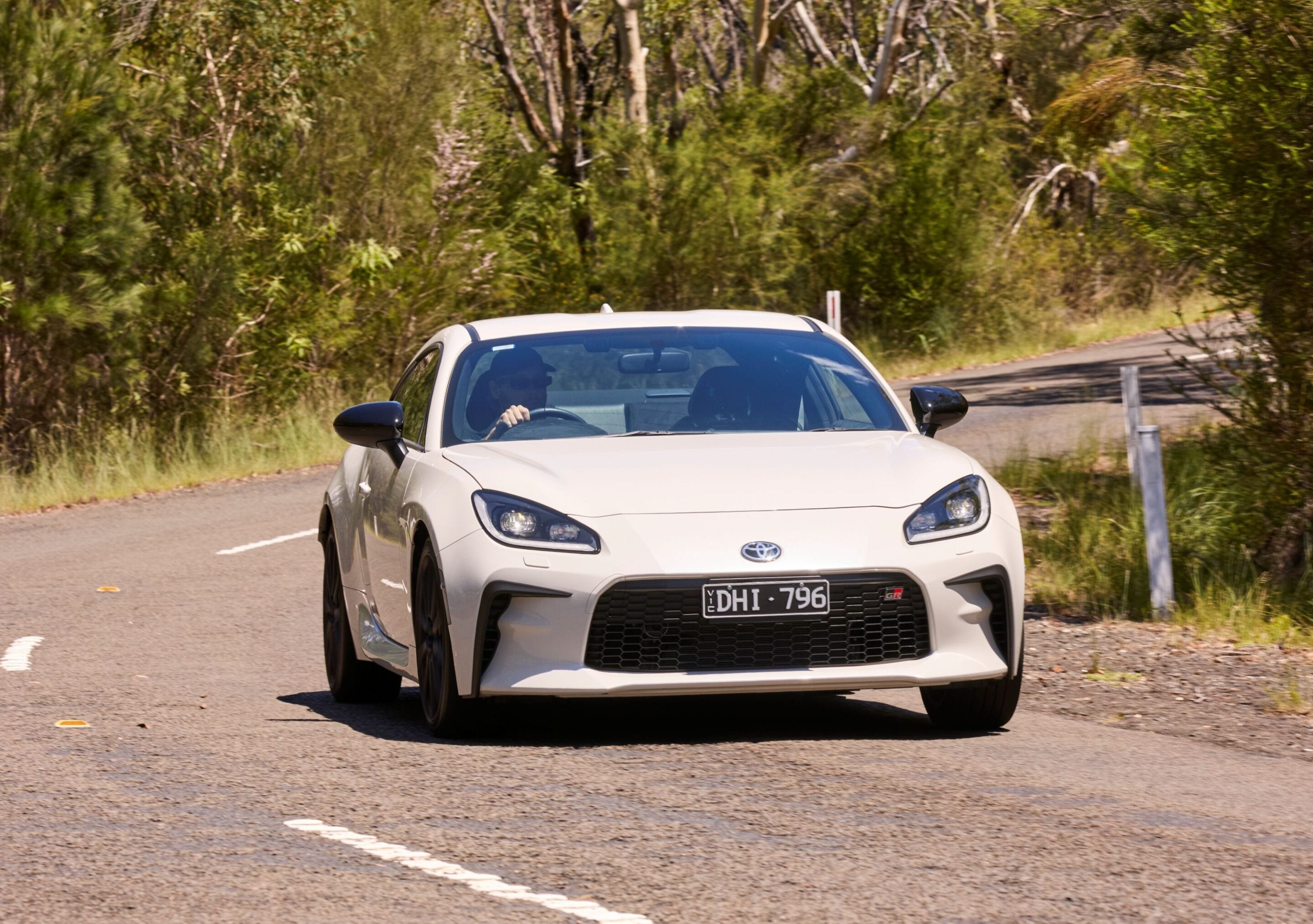
2026 Toyota GR 86 GTS
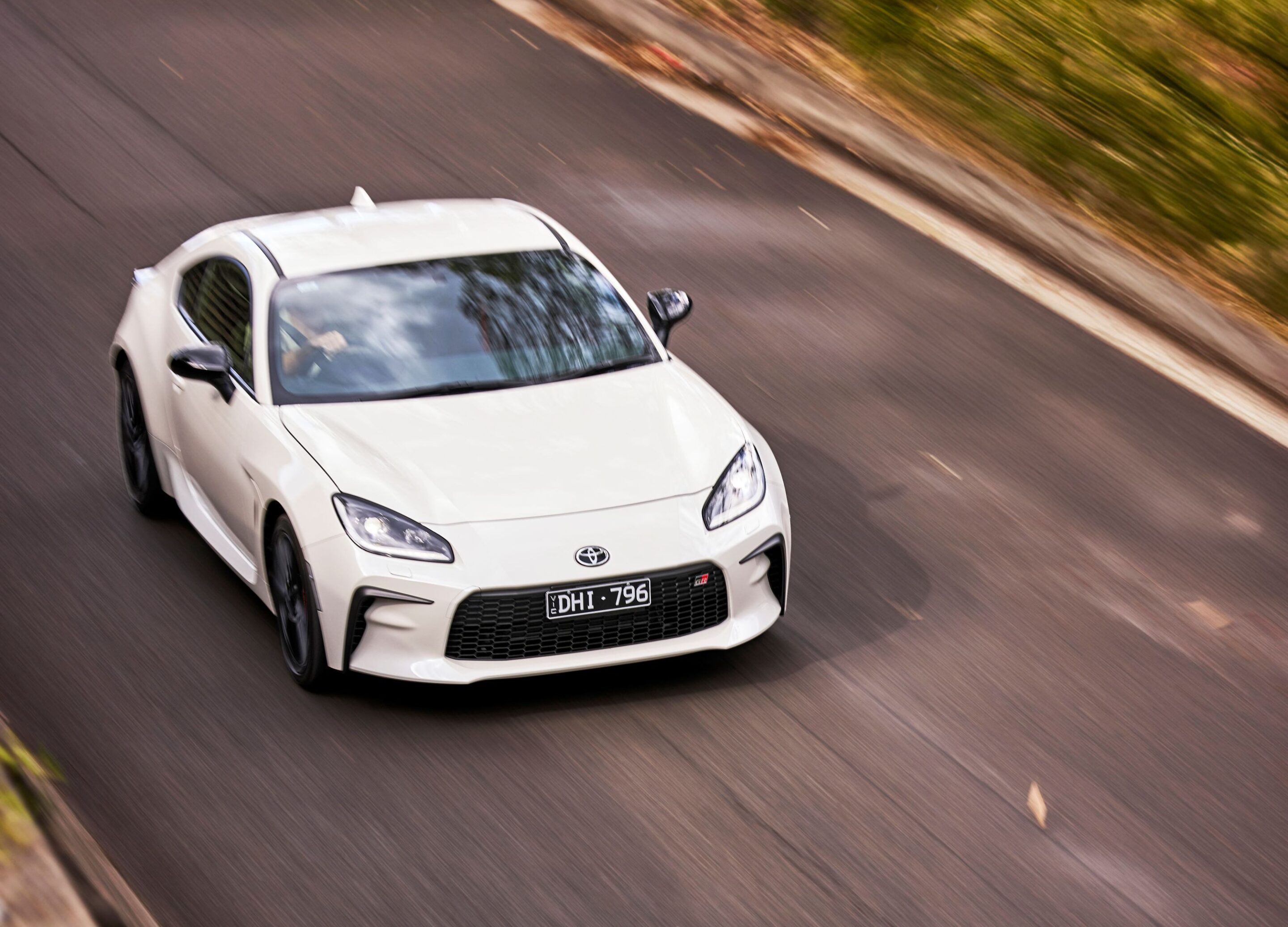
The GR 86 starts from $46,090 before on-road costs, with the manual transmission, which is a significant saving over the i30 N. You do however get two less doors, rear seats that are for appearance only, a smaller boot, and a far less elegant entry and exit manoeuvre thanks to the lower seat height. The 2.4-litre, horizontally-opposed four-cylinder engine makes 174kW at 7000rpm and 250Nm at 3700rpm, also driving through a six-speed manual, but to the rear wheels.
Toyota says its baby sports car will run to 100km/h in 6.3 seconds and use a claimed 9.5L/100km. Over the same driving roads, the GR86, which asks for 98 RON fuel, was more efficient than the i30 N, using 10.9L/100km.
Driving experiences
You’d expect the two to feel different in day-to-day driving, and they do. The i30 N is a much easier car to drive smoothly from the minute you get into position, related – we think – to the GR86’s tendency to flare the revs when you change gears, something that takes some getting used to. And it’s worth noting again here that getting into position in the cabin is easier in the hatch. The seat height is more neutral than the GR86, so you step into an i30 N, where you drop down into the GR86. Getting out of the hatch is therefore easier, too, and the Hyundai deals better with tight carparks that don’t allow you to open your door fully. The longer door on the coupe is less practical and calls for a gentler approach so you don’t whack the edge on the wall or the car next to you as you swing the door open. It’s the little things.
Back to driving, though. The shift action, clutch pick-up point and throttle pedal combine to deliver an easy driving experience, which is a big plus when you’re dealing with stop-start traffic. The GR86’s clutch, especially, is much more particular to master, meaning first and second are often a jerky affair if you’re not absolutely dialled in. Compare that with the i30 N, a car you’ll find yourself driving smoothly from the first shift.
There’s a saying that people – even those of us immersed in the motoring way of life – buy on horsepower (kilowatts these days), but drive on torque. That is, the torque – both the peak and the delivery – is what really injects the punch into any given drive. And, if you agree with that concept, it’s a difficult theory to argue when you’re rolling around at five- or six-tenths in these two.
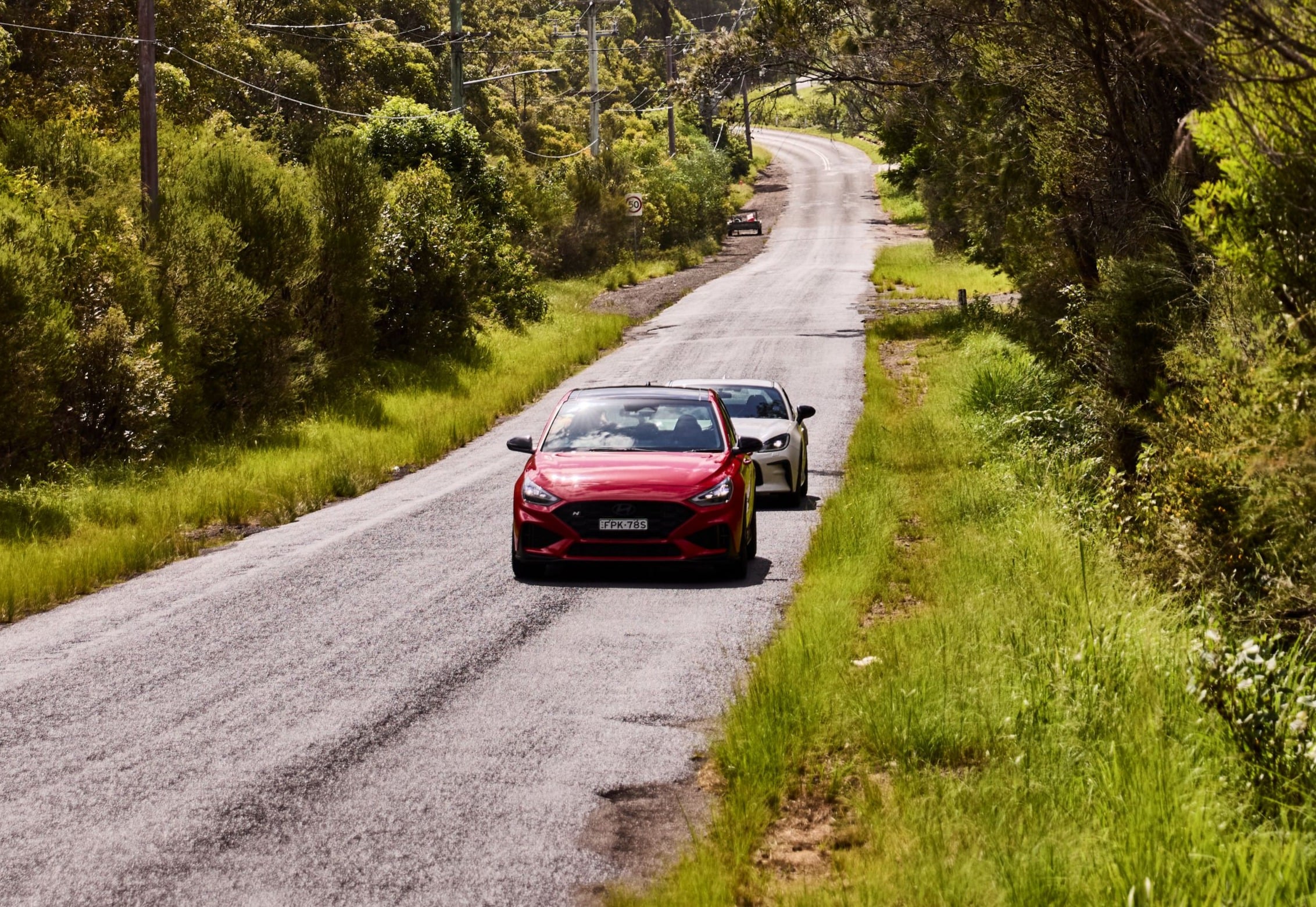
The i30 N’s chunky torque peak, found from as low as 2100rpm, gets the hatch up and cranking with an effortless surge, whereas the GR86 feels like it wants more revs on board to feel anywhere near as rapid. That story is borne out in the 0-100km/h sprint times, with the i30 N half-a-second to the good. Yes, the i30 N makes a decent whack more torque anyway, but it’s the earlier delivery of peak torque that’s most felt around town – 2100rpm for the Hyundai where the Toyota requires you to work the rev counter to around 3700rpm before it’s singing its most potent song. Interestingly, if you recall the glory days of
Subaru’s boxer engines in the late 1990s and early 2000s, there’s a lack of the deep gruff growl you might otherwise desire from the GR86. Smooth and refined to suit modern emissions requirements? Maybe.
Once you’re moving though, with revs on board, the full story starts to reveal itself, with a surprising detail you might not have thought would be the case. What is that detail? Power-to-weight ratio. Making 206kW and weighing 1478kg, the i30 N’s power to weight ratio is 139.4kW/tonne while the GR86, with its 174kW and weight of 1229kg, comes in at a slightly superior 141.6kW/tonne. As such, when you’re on the move and both engines are singing in their respective sweet spots, there’s precious little in it and a game of chasing the leader on a winding road is a close fought and fascinating blast.
Driving these cars back-to-back on a country road is also a fascinating assessment of small gains or driver preferences, depending on the mood you’re in. The GR86 feels like it has more in it, much like a Mazda MX-5 always has. It’s less urgent, quieter and more relaxed, with less frenetic energy seemingly being expelled around you. That’s not to say it’s not fast, tactile or responsive. It is, it just does what it does without clipping you around the ears. The i30 N’s rapid fire, shotgun-style exhaust note is more appealing to the ear, and the inner hoon within us, but is absolutely more boy-racer than the GR86, meaning you’re less likely to fly under the radar, if that’s what you prefer.
Where these two diverge most, boils down effectively to two crucial areas. First, the i30 N is undoubtedly more practical, and more useful day-to-day. If you need to move four people, carry more than a few bags in the boot, or feel more comfortable with better outward visibility, the GR86 can’t lay a glove on the i30 N. There’s practicality that comes with the hatchback design that the sports car – unless it’s twice the size – can’t match. You feel like you’re sitting on the i30 N rather than down into it, like you do with the GR86. There’s nothing unfair about that assessment, though; one is a sports car, one isn’t. While the Toyota isn’t as easy to get into or out of, once you’re in the seat, the sports car view of the world through the front screen is as intoxicating as it ever was. Still, it will never be as practical as what is effectively a mass-market hatchback body.
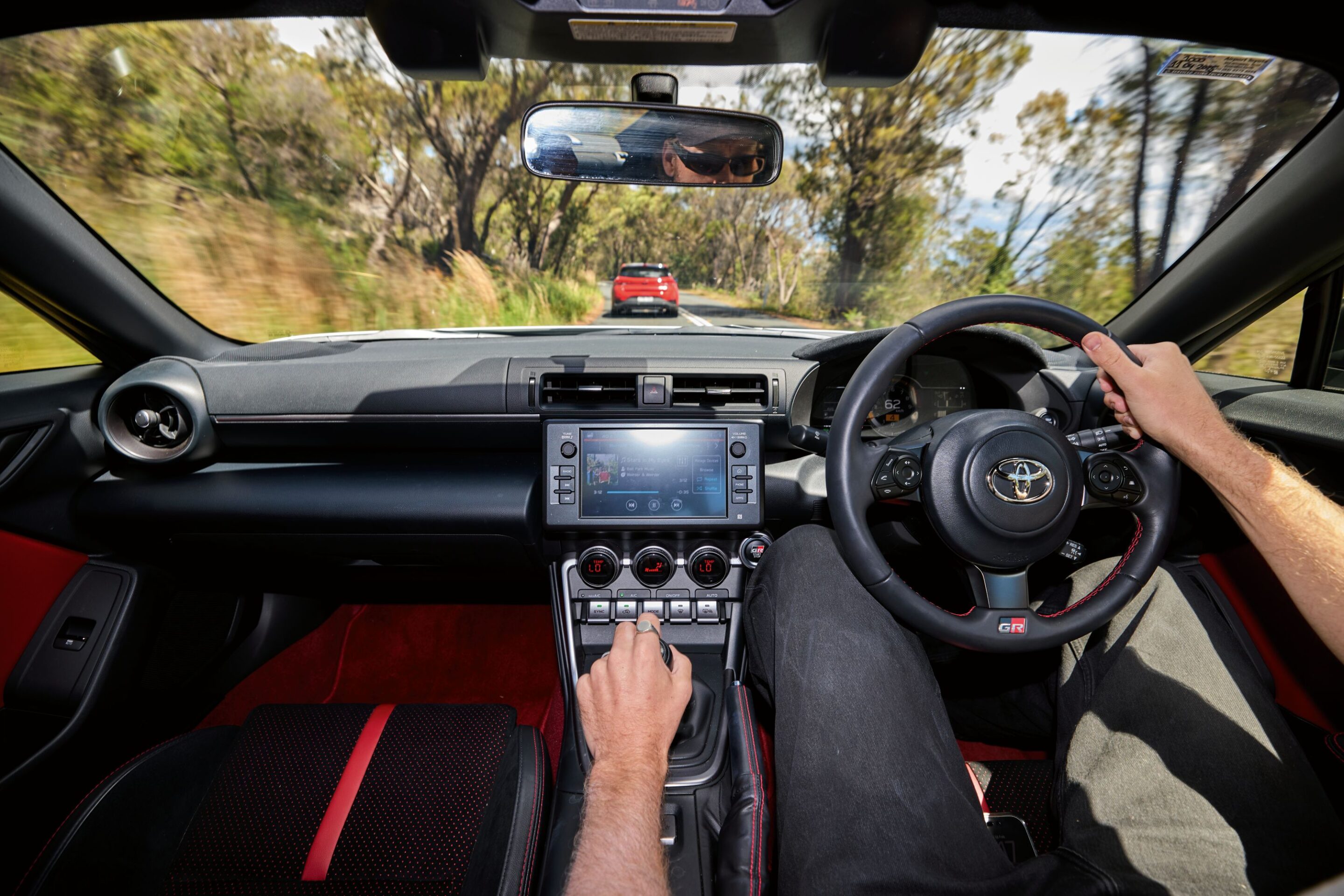
However, fire the GR86 into the first corner and everything that was always great about lightweight RWD sports cars is fed directly back through the palm of the driver’s hands. The precision of the steering, the balance over the front axle, the light weight and the overall response is sensational. The most recent update brought with it a revised throttle map, specifically aimed at sharper response and linearity, as well as retuned shock absorbers and revised electric power steering. Those changes are felt from behind the wheel.
The driver seemingly only needs to think about where to point the noise and it’s already headed there, such is the razor-sharp nature of the front end particularly. This is a brilliant driver’s car in every sense of the word, slightly underpowered though it might be, beautifully balanced and rarely unsettled on any road. As we’ve always done with the MX-5, though, I’d prefer to think of that slight lack of power as a ringing endorsement of the quality of the chassis, knowing it is proficient enough to deal with significantly more power.
On that score, the ride and bump absorption is a little softer to the seat of our pants, meaning the GR86 soaks up poor surfaces with a modicum more comfort, although it’s not a huge difference. There’s something utterly intoxicating about working the GR86 back from fourth to second, blipping the throttle on the down shift, settling the nose with the brakes, turning into the corner, and working the engine back up to redline as you fire into the next corner. While it doesn’t feel as rapid, it’s certainly as rewarding.
The i30 N – based on our road driving loop of course – would be the one you’d choose for semi-regular track day jaunts if you want to be as fast as possible, making as much noise as possible. It’s a car that will deliver thrills but you have to work a little harder to find them, finessing the hatch through the meaty steering wheel, working out the way to understand it better, and therefore extract its best performance. It doesn’t feel as sharp through the front tyres as the GR86, but that’s to be expected in a FWD versus RWD shootout.
The i30 N, almost all the time, on any road, at any speed, feels more urgent, and more like it’s straining at the leash, wanting to be set free. There’s appeal to that – a gentle lean on the throttle is all it takes for hilarity to ensure. What Hyundai started with its N movement is perhaps still best experienced via a manual i30 N – this is a sensational car to drive in any conditions.
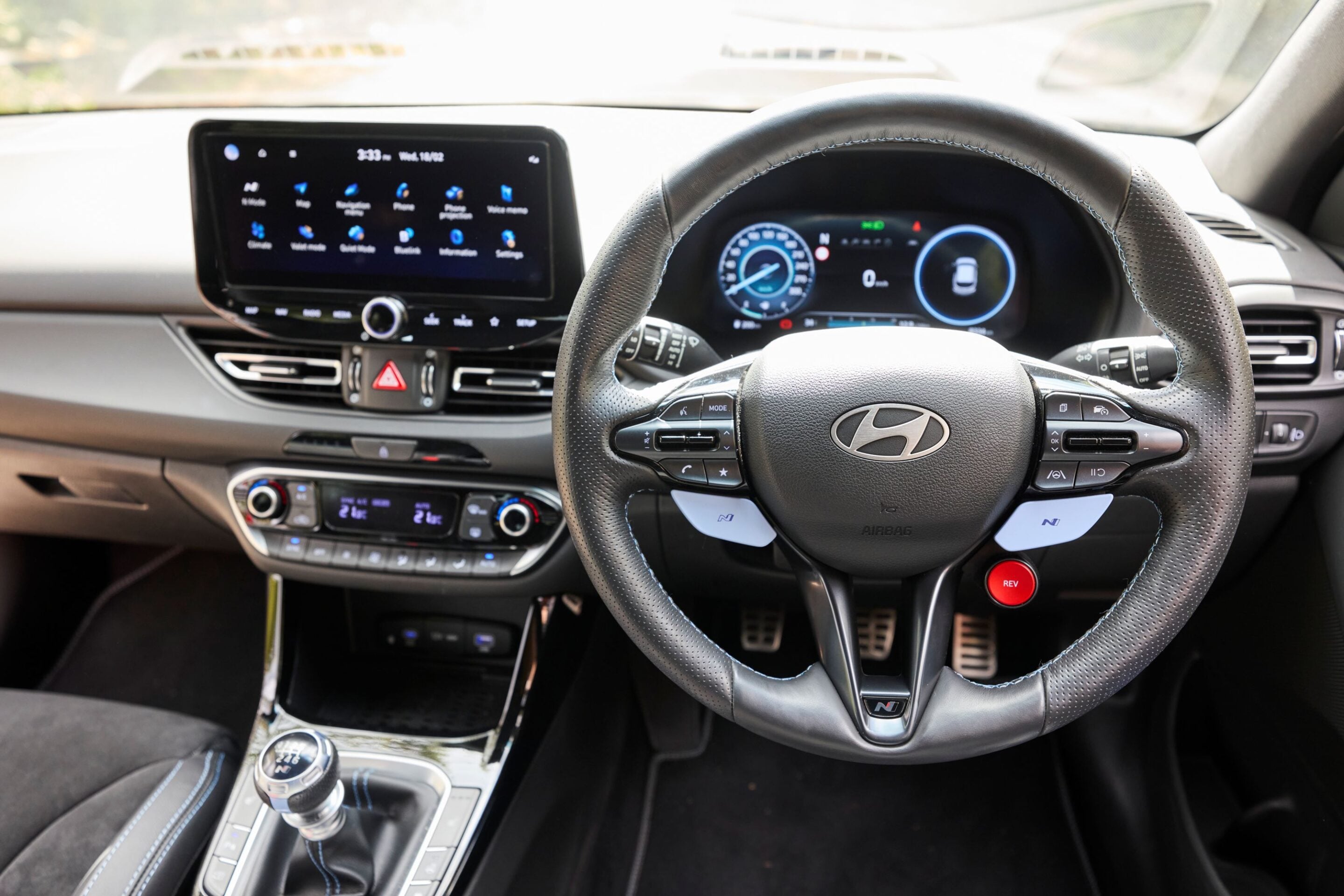
The factors that are less relevant to Wheels in this comparison are in favour of the i30 N. The infotainment interface, the screen, the controls and the way in which you interact with them, all feel a step ahead of Toyota’s, and there’s more practical and useful storage – something you’d expect when comparing a hatch to a sports car. If you’re the owner of a two-car garage, that might not matter to you, but if you’re buying one vehicle to do all things, it means the Hyundai is more practical than the Toyota.
On that note, if the GR86 were mine, I’d have the second row permanently folded down, treating the coupe like a two-seater, with a larger boot, such is their ‘occasional’ nature. And occasional is putting it very mildly – it’s tight back there, even for the shortest of occupants.
Neither car has an ANCAP crash rating – with the regular i30 getting a full five-star ANCAP rating. Neither i30 N or GR86 specifically have been tested by ANCAP, though. Both get five-year warranty coverage, but Hyundai’s can be extended to seven if you service it through Hyundai dealers.
Verdict
It’s easy to fence sit in a comparison such as this one – so different are the two vehicles when pitted head-to-head. The i30 N is a decidedly easier car to drive smoothly at sedate speeds, and it’s therefore much more comfortable just bumbling around town in traffic where it feels effortless all the time. If you value smoothness, there’s real currency in that, too. The punchy nature of the turbocharged engine means you don’t need silly revs on board to get moving at a decent clip. There’s room for four adults to travel in comfort. If you’re buying on practicality, then, the i30 N is the unanimous points winner.
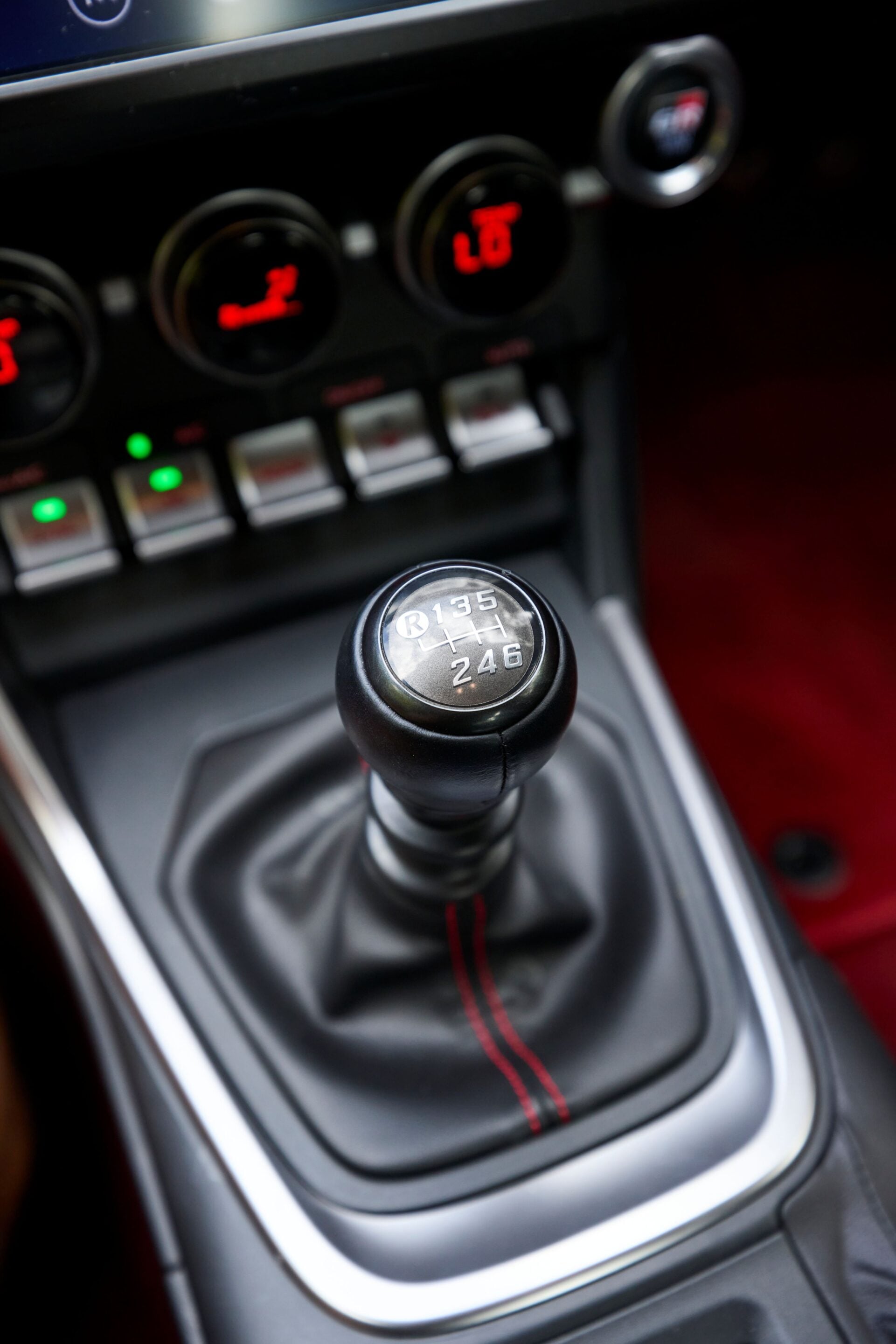
However, if it’s my money sliding across the table – or whooshing across the e-universe more accurately – I’m buying on driving purity. And on that score, the GR86 is the winner. The i30 N feels heavier over the nose and through the steering wheel, the reality of the front wheels doing the driving and the steering. By contrast there’s a razor sharp precision and lightness to the GR86 that makes every corner a cause for celebration.
The response of the naturally-aspirated (and finally right-sized for the vehicle) engine, which definitely needs more right foot work to sing, is a thing of beauty, a sensory pleasure almost lost in a world of ubiquitous forced induction. The linearity of the power delivery, and the way in which it soars to redline deliver what we think is the best modern take on an old school drive you can get, and that includes Mazda’s legendary MX-5.
We can only hope that the RWD versus FWD battle rages for decades yet, such is the beauty of
the comparison and the difference of the drive experience. Pick your poison, sure, but one undisputed fact remains. In a world laden with SUVs, dual-cabs and slabs that all too often feel as heavy to drive as they look, these two cars will remind you why you fell in love with driving in the first place.
They will leave you looking for the long way home every time. And they will leave you with a stupid big grin on your face every time you do. And, that’s something worth celebrating.
Specs
| Model | Hyundai i30 N Premium manual |
|---|---|
| Price | From $55,500 plus on-road costs |
| Engine | 1998cc turbocharged four-cylinder petrol |
| Peak power | 206kW (@6000rpm) |
| Peak torque | 392Nm (@ 2100 – 4700rpm) |
| Transmission | Six-speed manual, front-wheel drive |
| 0-100km/h | 5.8 seconds (est.) |
| Top speed | 250km/h (electronically limited) |
| Claimed combined fuel consumption | 8.5L/100km |
| Claimed CO2 emissions | 199g/km |
| Fuel type | 95 RON premium unleaded |
| Fuel tank size | 50 litres |
| Dimensions (length/width/height/wheelbase) | 4340/1795/1445/2650mm |
| Boot space | 381 litres (rear seats folded: 1287 litres) |
| Tare mass | 1478kg |
| Warranty | Five-year/unlimited km (extendable to seven years with dealer servicing) |
| Rating | 8.5 |
| Model | Toyota GR 86 GTS |
|---|---|
| Price | From $46,090 plus on-road costs |
| Engine | 2387cc naturally aspirated four-cylinder petrol |
| Peak power | 174kW (@7000rpm) |
| Peak torque | 250Nm (@ 3700rpm) |
| Transmission | Six-speed manual, rear-wheel drive |
| 0-100km/h | 6.3 seconds |
| Top speed | 226km/h |
| Claimed combined fuel consumption | 9.5L/100km |
| Claimed CO2 emissions | 217g/km |
| Fuel type | 98 RON premium unleaded |
| Fuel tank size | 50 litres |
| Dimensions (length/width/height/wheelbase) | 4265/1775/1310/2575mm |
| Boot space | 237 litres |
| Tare mass | 1229kg |
| Warranty | Five-year/unlimited km |
| Rating | 8.6 |
This story first appeared in the April 2026 issue of Wheels magazine, now on sale. Subscribe here and gain access to 12 issues for $109 plus online access to every Wheels issue since 1953.
The rapid rollout of AI-powered traffic cameras is driving a sharp increase in road fines across Australia, with new data showing automated enforcement is now responsible for the majority of infringements.
Reporting by the Australian Financial Review highlights how advances in camera technology are reshaping the way traffic offences are detected – and significantly boosting revenue collected by state governments.
In 2024, more than 80 per cent of fines for speeding, mobile phone use, seatbelt offences and red-light breaches were issued by automated systems rather than police officers. These cameras use artificial intelligence to monitor passing vehicles and identify offences with greater consistency and frequency than traditional enforcement methods.
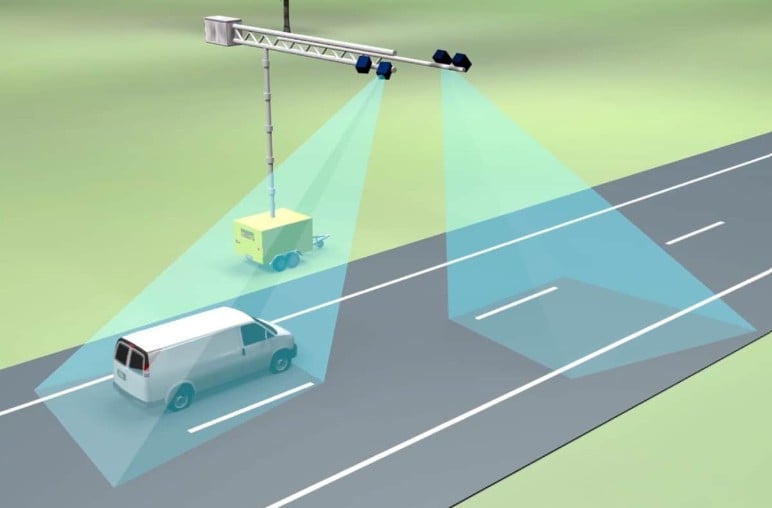
The result has been a noticeable rise in both the volume of fines and total revenue. In New South Wales, income from traffic-related penalties has increased by more than 38 per cent since 2019, with tens of millions of dollars added to state coffers each year.
Queensland is expected to collect close to $1 billion annually from fines and related penalties within the next few years, while Victoria’s revenue is also trending upwards and forecast to exceed $1 billion before the end of the decade. Other states, including Western Australia and South Australia, are also seeing substantial contributions from camera-detected offences.
The increase in revenue is being driven not only by higher penalty amounts—many of which rise annually in line with inflation – but also by the expanding network of detection systems. Programs targeting mobile phone use and seatbelt compliance have been particularly effective in capturing infringements that were previously difficult to police.
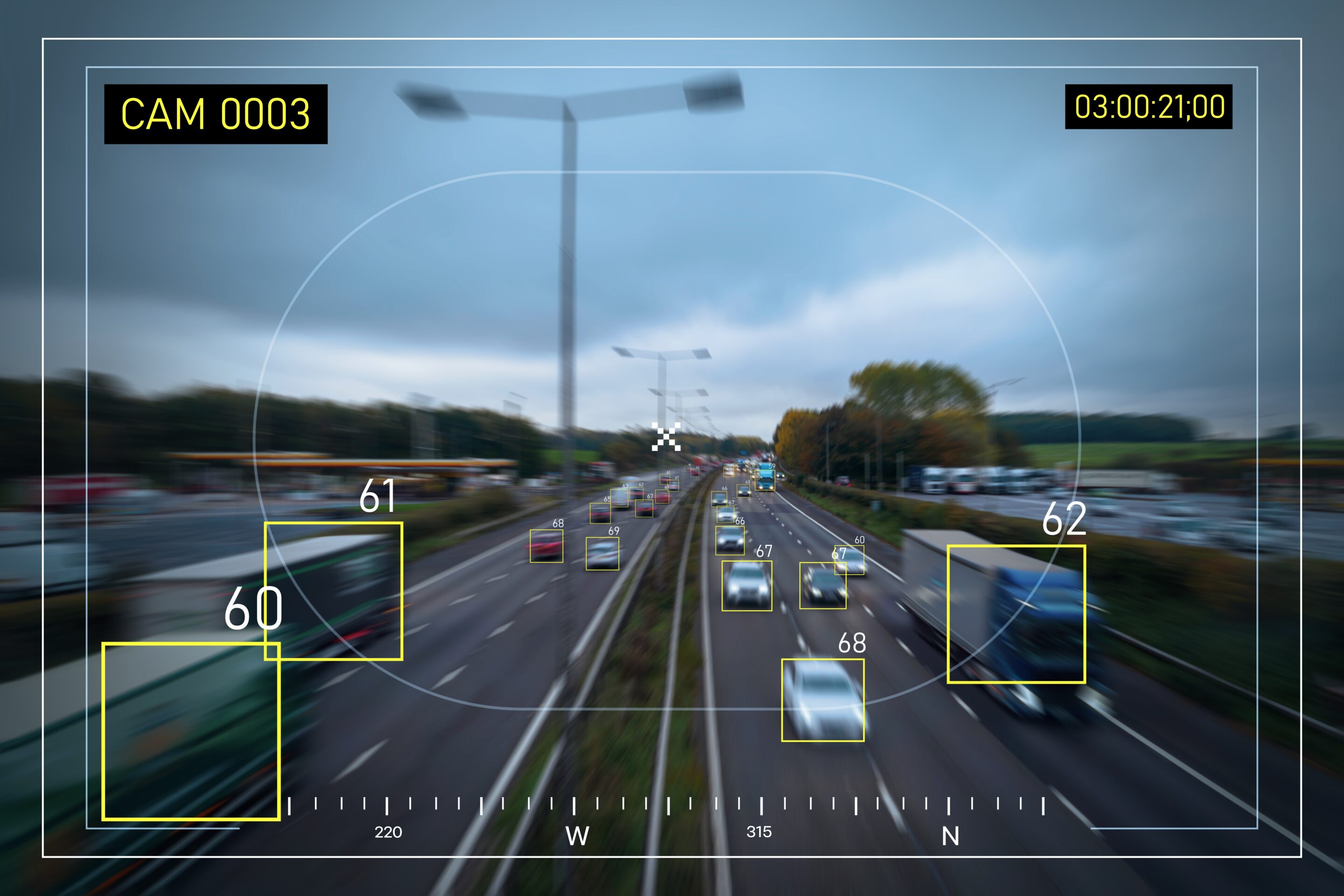
In Western Australia, for example, the introduction of AI-enabled cameras in late 2025 resulted in more than 31,000 fines in the first month alone, generating around $13 million.
Despite the increase in enforcement, there are ongoing questions about whether higher volumes of fines translate to improved road safety outcomes. While penalties are designed to deter risky behaviour, recent data suggests that road fatalities have not consistently declined in line with the growth in enforcement activity.
What is clear is that technology is fundamentally changing the enforcement landscape. AI cameras are capable of operating continuously and across a wider range of locations, making it far more likely that offences will be detected.
States will continue to expand these systems – but will they end up working more as a major source of government revenue rather than as a deterrent?
Porsche wants to make your new car more noticeable, according to its latest patent filing. New patents for hidden racing stripes have been filed by the company in an effort to make cars more interactive and personable, as well as making EV charging more convenient.
Using a film material that the company describes as electronic paper or a paramagnetic coating, the car’s colour changes when an electric voltage is applied, like when being charged. The patent calls it a “motor vehicle with a vehicle body featuring an actively controllable, optically changeable coating.”
Cars that can change their colour aren’t new, but the new patent shows different ways of how Porsche could apply the new tech to its cars, with the most notable being disappearing racing stripes. The filing shows that the stripe colouring could change depending on what drive mode the car is in – green for eco, red for sport, and so on.
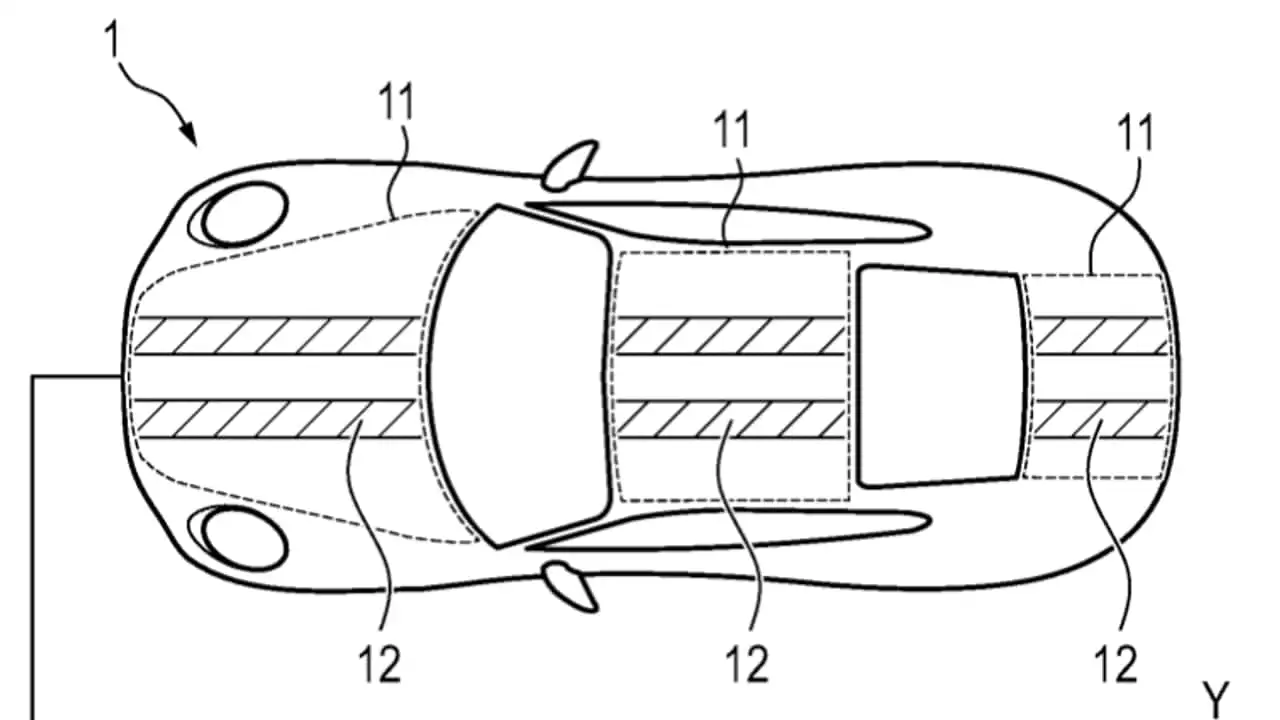
The patents also show the film being used behind the rear wheels and potentially being useful on an electric vehicle to show its charge status, which could add significant convenience for owners.
The use for this technology is not limited to production cars either – we can imagine it being quite useful in endurance racing too, like in Formula E for crews to see how much charge the race cars have in them.
Whatever the use, colour-changing cars could be coming to our roads very soon.
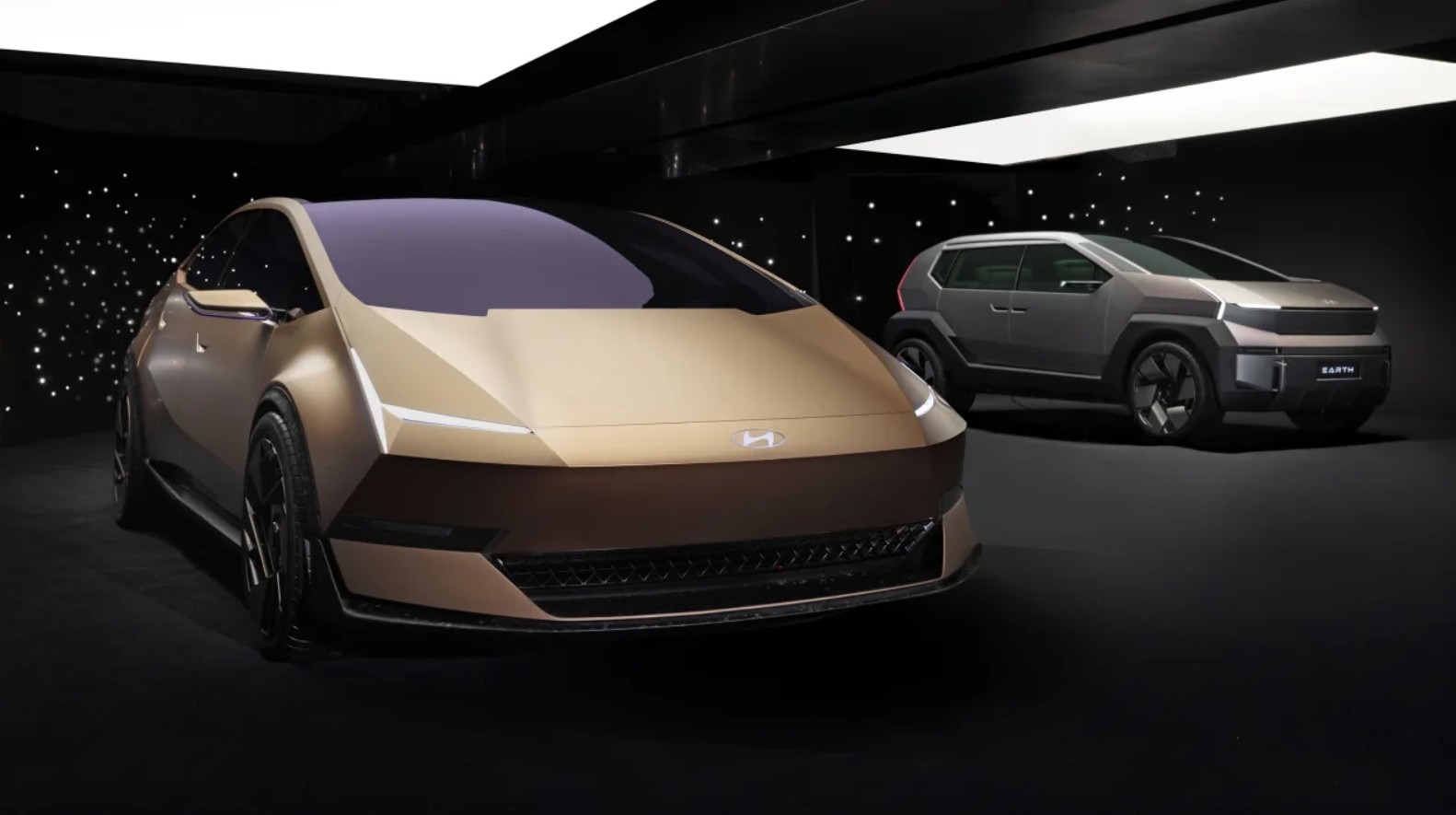
Hyundai has revealed plans to spin off its Ioniq electric vehicle line into a dedicated sub-brand for China, marking a significant shift in its global strategy. The move will debut with two concept cars, the Venus and Earth, developed specifically for Chinese buyers and unlikely to be sold in markets such as Australia or Europe.
While these models are region-specific, they are expected to preview design and technology that could influence future Hyundai vehicles globally.
Both concepts share a new technical platform offering pure electric and range-extender hybrid powertrains – an important change for Ioniq, which until now has been exclusively battery-electric. The inclusion of range-extender technology reflects local market preferences, where flexibility and extended driving range remain key considerations.
Hyundai has also confirmed that the new models will incorporate advanced autonomous driving systems developed in partnership with Chinese technology firms, underlining the brand’s focus on local collaboration.
The Venus and Earth concepts introduce a fresh design language tailored for China. Hyundai has moved away from the pixel-inspired styling seen on global Ioniq models, replacing it with cleaner, more cohesive forms aimed at improving brand recognition in a highly competitive market.
The Venus concept takes the form of a low, driver-focused sedan, though its proportions are far from traditional. A short front end and sweeping roofline give it a more contemporary silhouette, while the interior adopts a minimalist, tech-heavy layout with a wide digital display spanning much of the dashboard.
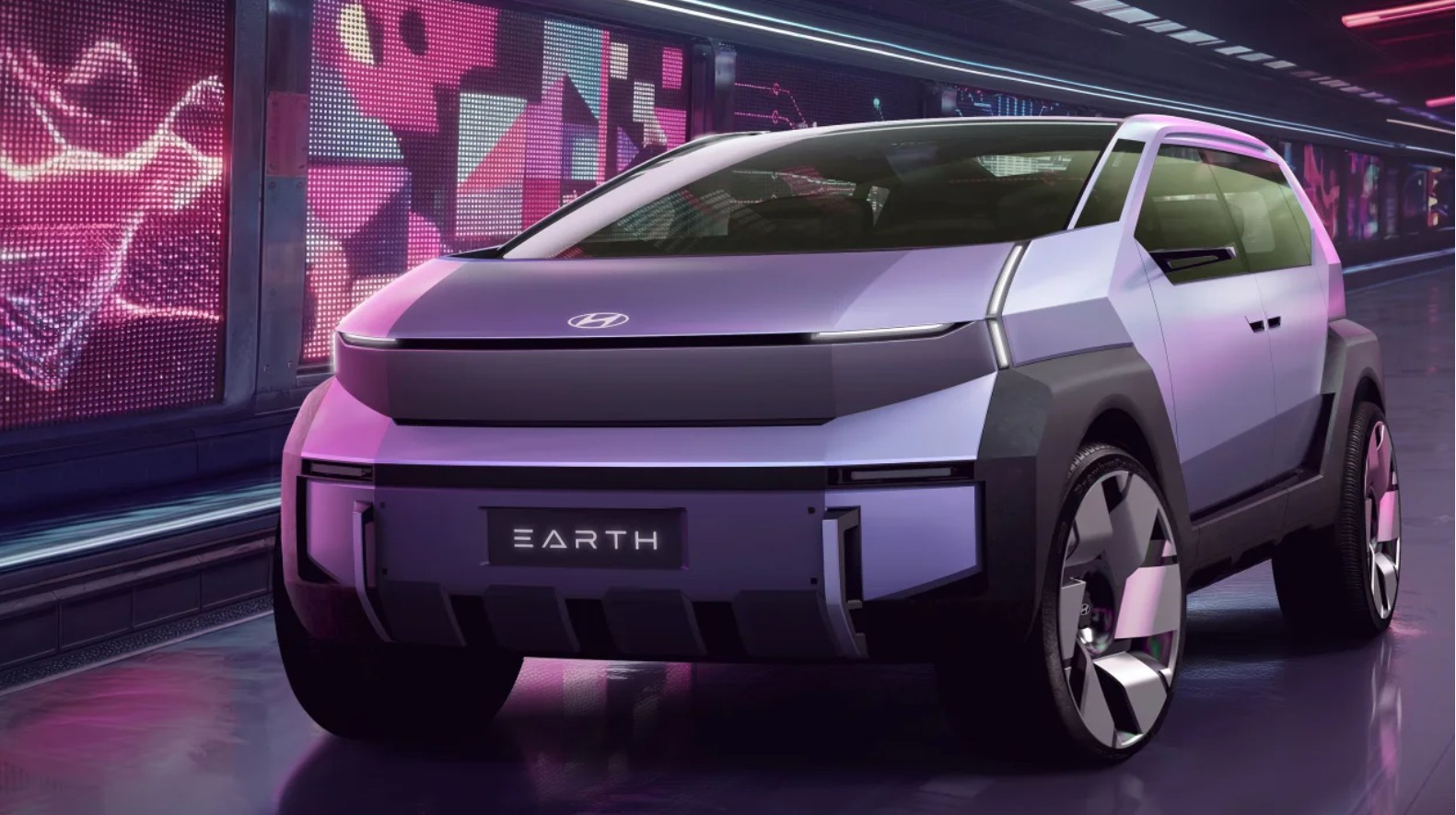
By contrast, the Earth concept is a more upright SUV, designed with practicality in mind. Its cab-forward layout maximises interior space, creating a more open, lounge-like cabin suited to family use. The design suggests a balance between urban usability and light off-road capability, aligning with current SUV trends in China.
Hyundai’s decision to create a China-specific Ioniq brand highlights the importance of tailoring products to local tastes. The new models will compete directly with established domestic players such as BYD, Geely and Chery, all of which have rapidly expanded their presence in the electric vehicle segment.
No technical specifications have been released for either concept, but Hyundai has confirmed that future models in the Chinese Ioniq line-up will adopt a new naming convention based on planets, starting with Venus and Earth.
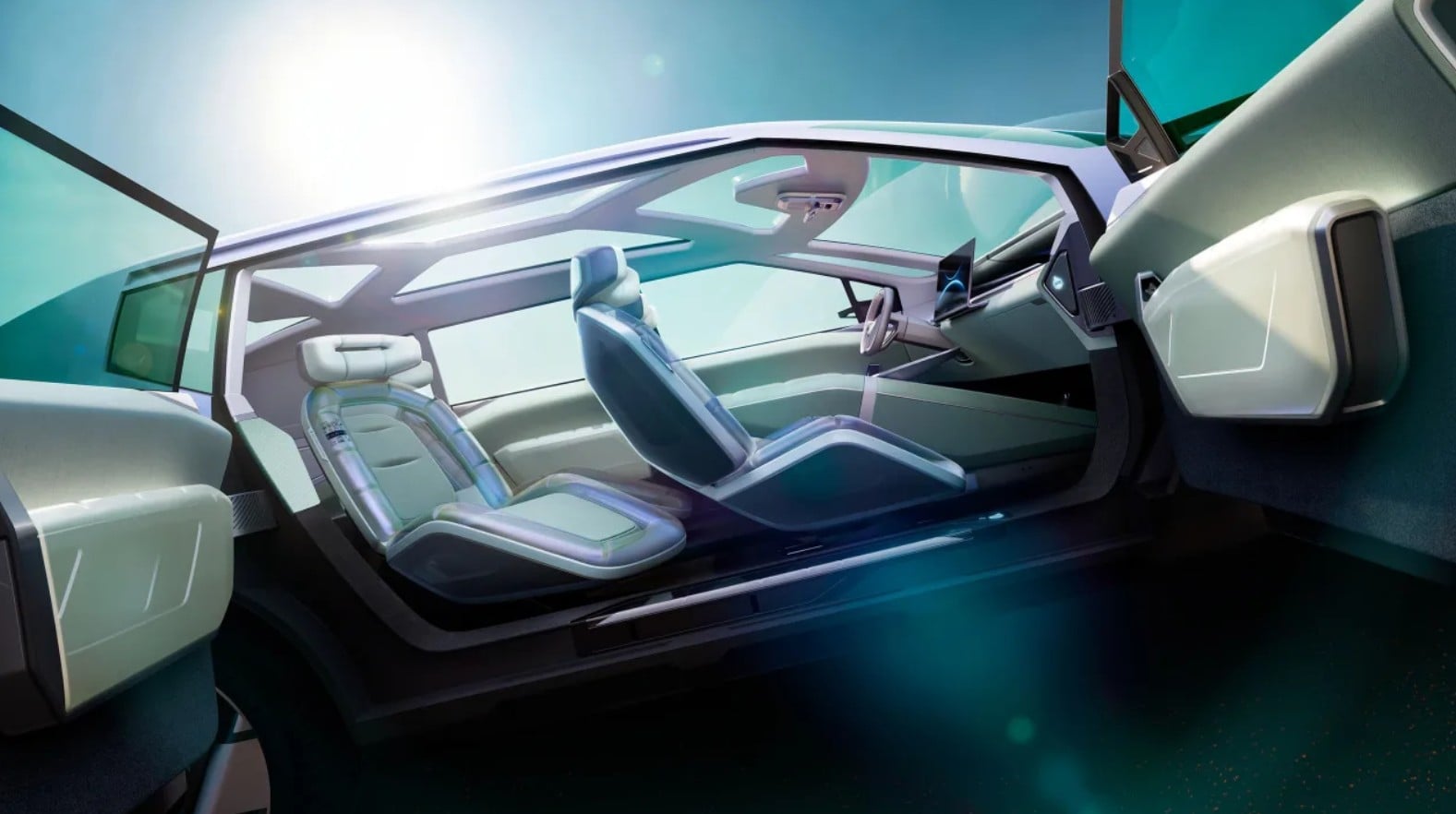
As Hyundai strengthens its position in China, these concepts signal a broader shift in how global manufacturers approach regional markets – developing vehicles not just for worldwide appeal, but for specific customer expectations.
First published in the December 1971 issue of Wheels magazine, Australia’s best car mag since 1953. Subscribe here and gain access to 12 issues for $109 plus online access to every Wheels issue since 1953.
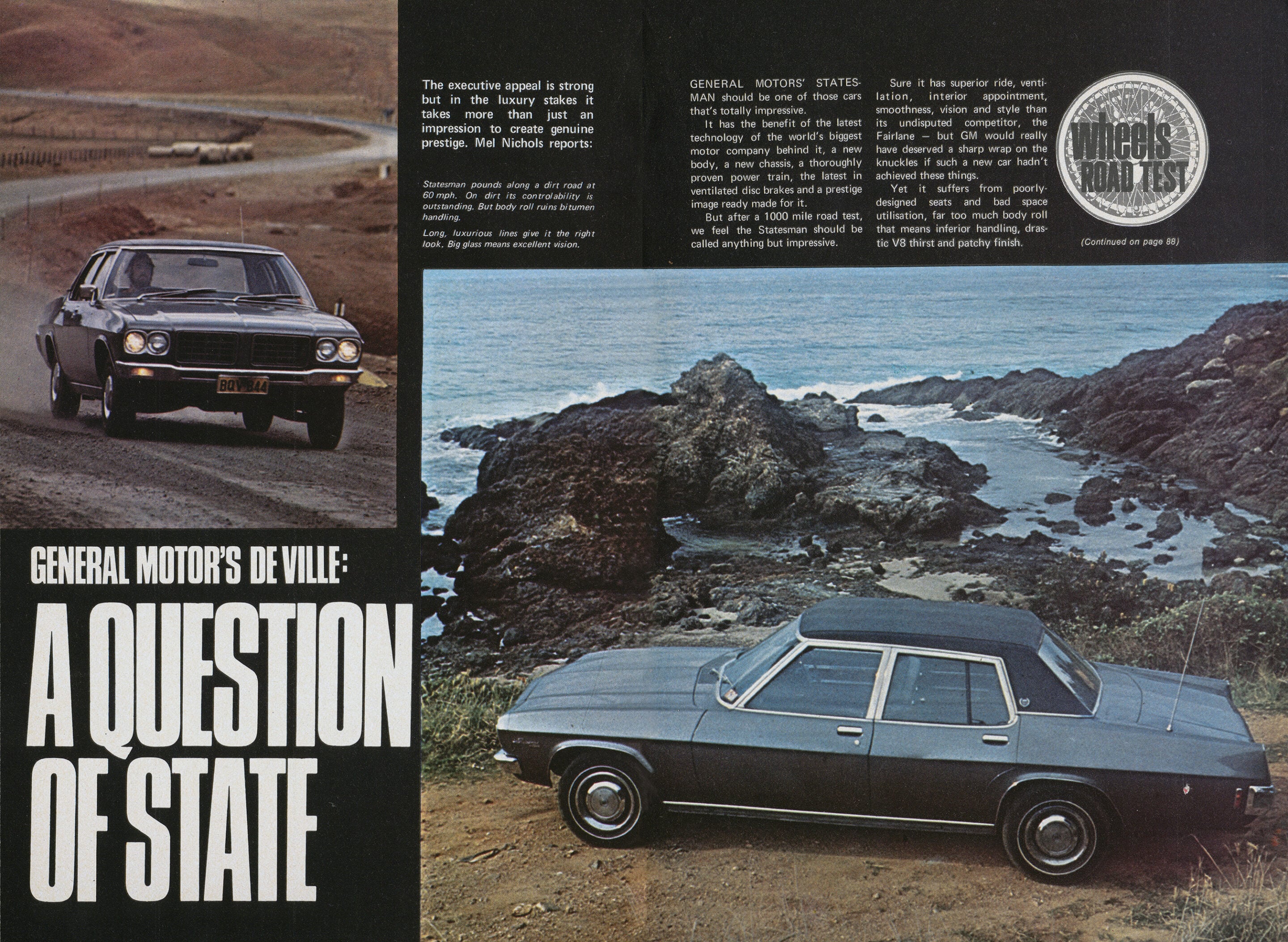
General Motors’ Statesman should be one of those cars that’s totally impressive. It has the benefit of the latest technology of the world’s biggest motor company behind it, a new body, a new chassis, a thoroughly proven power train, the latest in ventilated disc brakes and a prestige image ready made for it.
But after a 1000 mile road test, we feel the Statesman should be called anything but impressive. Sure it has superior ride, ventilation, interior appointment, smoothness, vision and style than its undisputed competitor, the Fairlane, but GM would really have deserved a sharp wrap on the knuckles if such a new car hadn’t achieved these things.
Yet it suffers from poorly-designed seats and bad space utilisation, far too much body roll that means inferior handling, drastic V8 thirst and patchy finish.
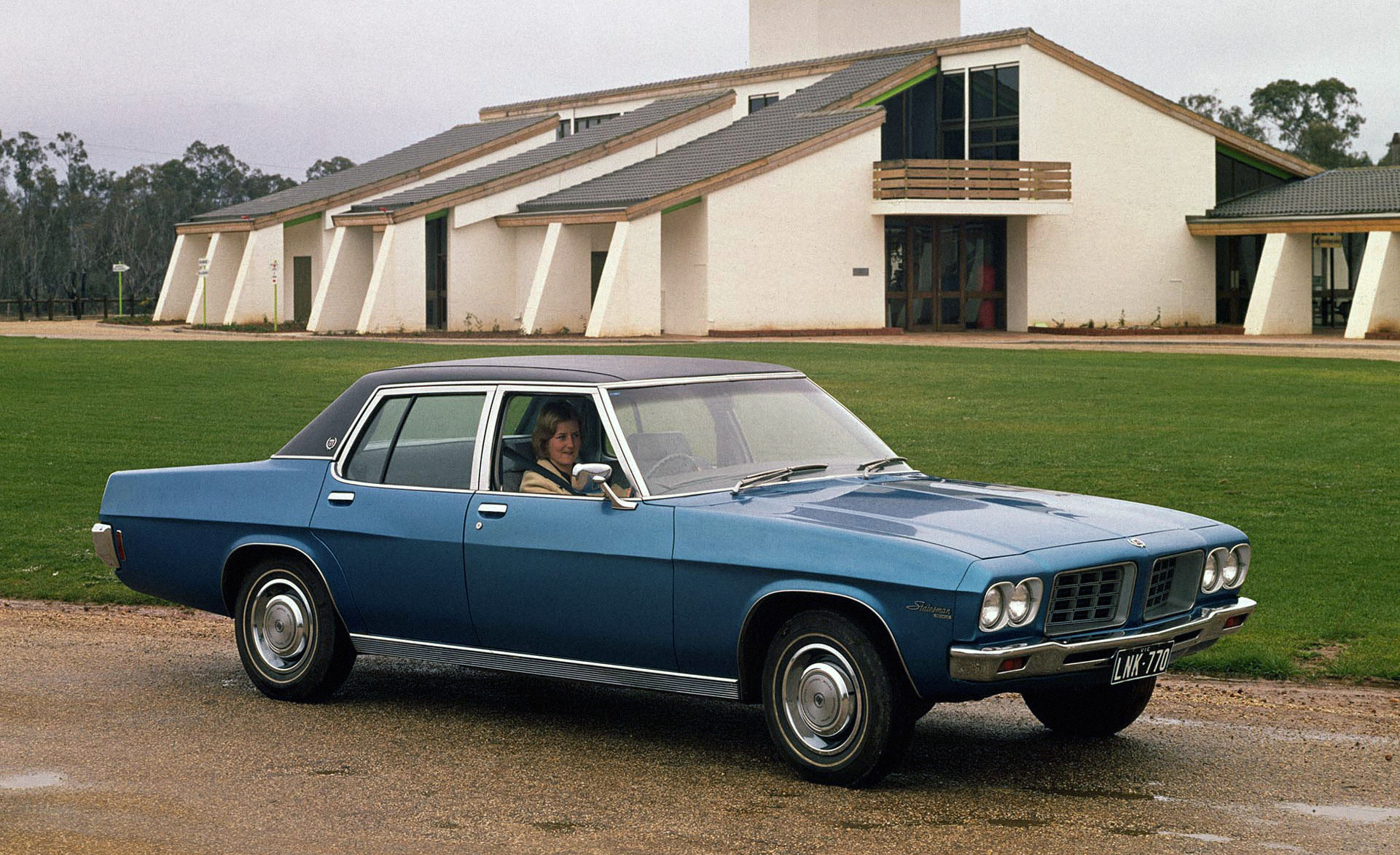
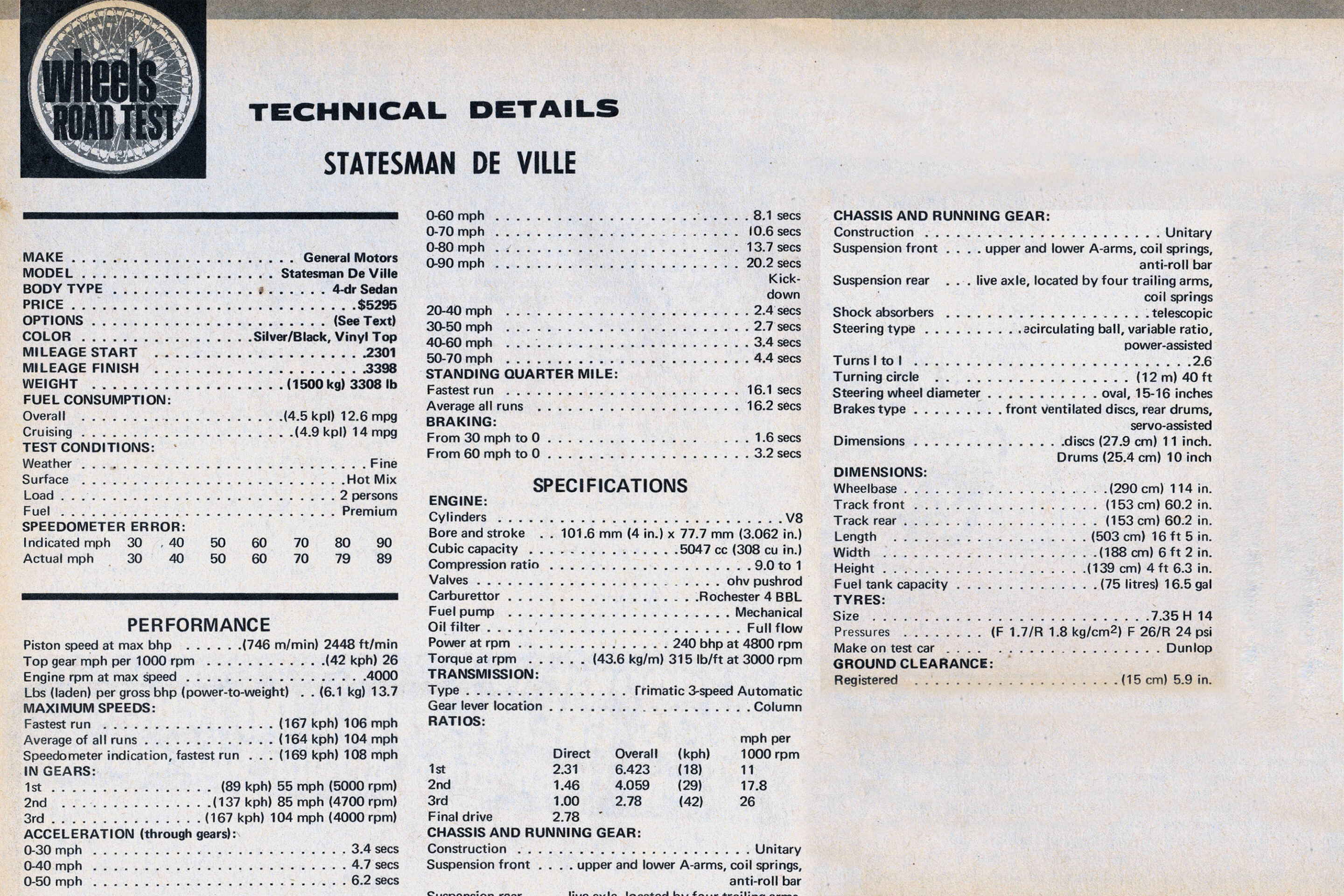
The Statesman we tested was a top-of-the-line deVille. Besides the 308 V8 engine, Trimatic transmission and variable ratio power steering that comes standard in the de Ville price of $4660 ($163 more than a Fairlane 500), it was heavily optioned with air conditioning, radio, power windows, power aerial, radio speaker and cloth trim. Inclusion of a bench front seat instead of the standard buckets knocked $70 off the price, but the bill still came to $5295.
We find it hard to understand why GMH dropped the bucket seats in favour of the bench on our test car like the rest of the HQ benches, uncomfortable, annoying and never allows a driver to find a good driving position. The springing in the bench is soft and pleasant, but the seat is shapeless, soon producing squirming and sliding both driver and passenger about in bends. The seat also lacks support under the legs, and our passengers rode only a few miles in the front before piling over into the back.
Poor as the rear seat is, at least it’s better than the front. We think GMH slipped badly in design and implementation of the Statesman’s entire seating. In terms of comfort even for ’round town travelling, the seats effectively negate the advantages the car’s phenomenal interior room could offer. You get the impression cloth-upholstered slabs have merely been slipped into the car and because they look pretty impressive, they’re going to be comfortable.
They’re not. The rear seat squab rises high, well up past shoulder level for people of average height. But the lap sash seatbelts (and remember, it’s law to wear them now in many States) pull the passenger out to the side of the car into a position that becomes unbearably uncomfortable after a few miles. For the first time ever in a road test car I broke our religious rule and undid the belt when I was riding in the back. Even then on a long trip I couldn’t get comfortable. The squab wasn’t giving enough support in the small of my back, and that tough rail on the front seat bottom ruined foot comfort and room.
Another point about the rear seat is that the transmission tunnel makes it far too hard in the centre for a fifth passenger to ride happily there. All this in a $5300 car.
Certainly, the comfort for the front occupants at least is improved considerably with the standard bucket seats, but in a big, luxury-image car the back seat is all important, so there is little else to say but that the Statesman is a major disappointment in this comfort area, particularly when with proper orthopaedic design so much advantage could have been taken of the cabin’s fabulous space. With the buckets there is still the problem of the low, hard bottom edges that prevent the rear man’s feet getting enough space.
It is unfortunate, too, that the interior comfort doesn’t match the good ride – the other important facet of a car like this – and its quietness.
The combination of the long 114-inch wheelbase (Holden sedan is three inches shorter at 111) and ultra-soft spring rates both in the front upper and lower A-arm system and the new four-link coil set-up at the rear combine to give an excellent ride.
It is soft and quiet in its bump-soaking operation. A quick indication of these qualities is a run at speed over joining strips in the road or a bridge. The Statesman barely notices them, with only a hint of tyre thump coming through to the cabin.
The ride doesn’t deteriorate with changing surfaces. The long suspension travel smooths out bumps, letting the 3308 Ib car cover them in a sort of floating motion. But pocked surfaces will test the damping to the extent minor rattle and thumping filters through to the occupants. Nevertheless, it’s the softest ride yet from an Australian manufacturer.
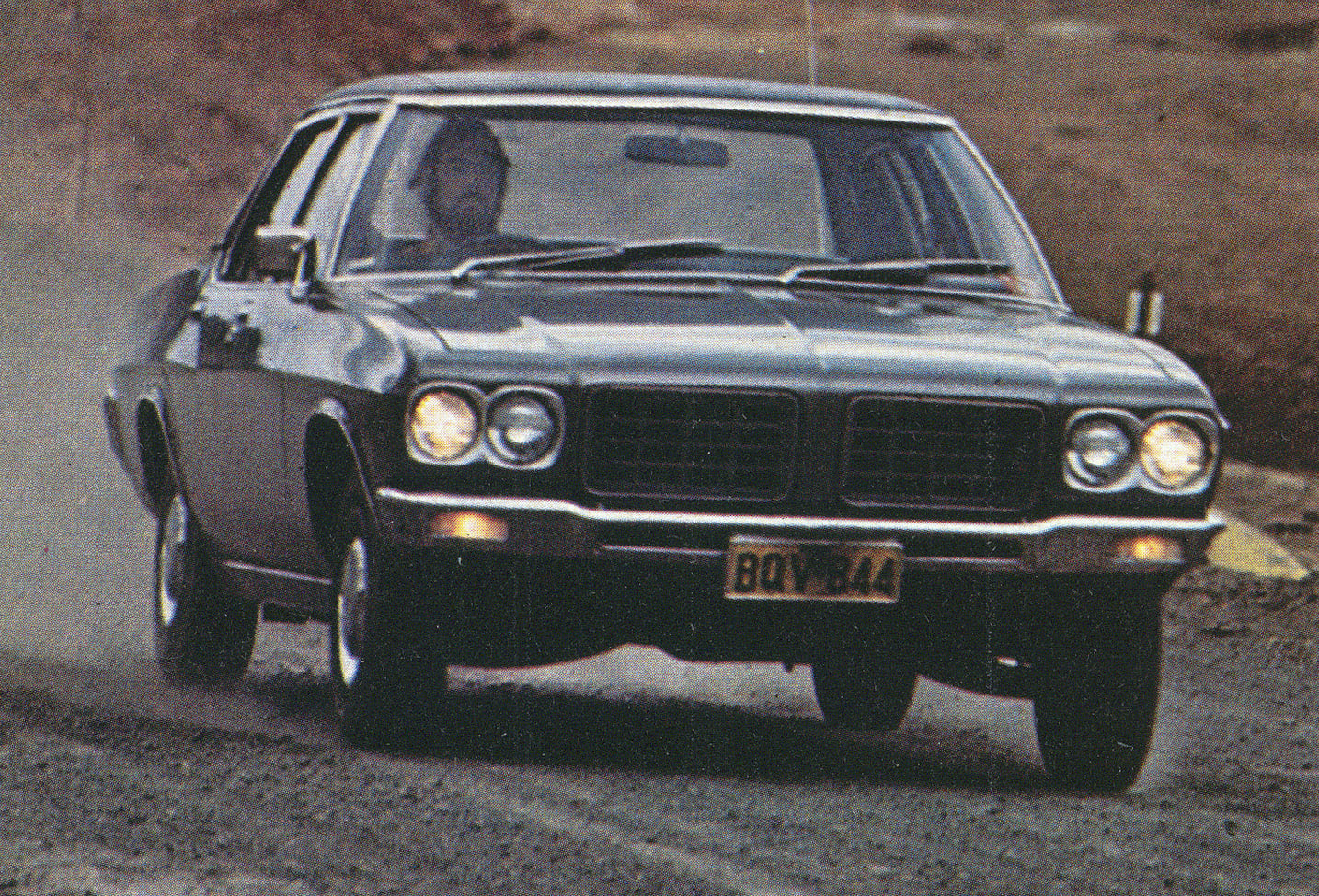
However, this ride was achieved in sad, typical American fashion by softening the spring rates, and that means the car is a strong body roller with consequent effect on the handling.
The roadholding is, in fact, quite good, and surprisingly the handling characteristic is not strong understeer as you might have expected. Rather, there is very mild understeer in slow, lazy driving that changes to body roll-induced oversteer when the car is pushed along. While control remains good – the tail is very easy to catch and a driver who likes throwing a car around can have quite an enjoyable time, the effect on passengers is rather drastic. They are slung from side to side and are likely to reach for the sea-sick pills.
Yet while all this is happening with the impression that the car is really belting through the bends, a quick glance at the speedo shows a speed 15 mph below what many, many other cars at the Statesman’s price would be doing in the same bend with none of this drama at all.
The car can, if the driver is prepared to forget his passengers’ welfare and sling it along hard, setting up a precise entry line, booting it through on full-power kickdown and getting an oversteer exit, put down reasonably brisk point to point times. But this is tiring even for the most enthusiastic pedaller – and it hardly fits the purpose of the people who would buy a Statesman. So it becomes quite a slow long-tripper. You’d be quicker and happier in a Premier with the same engine.
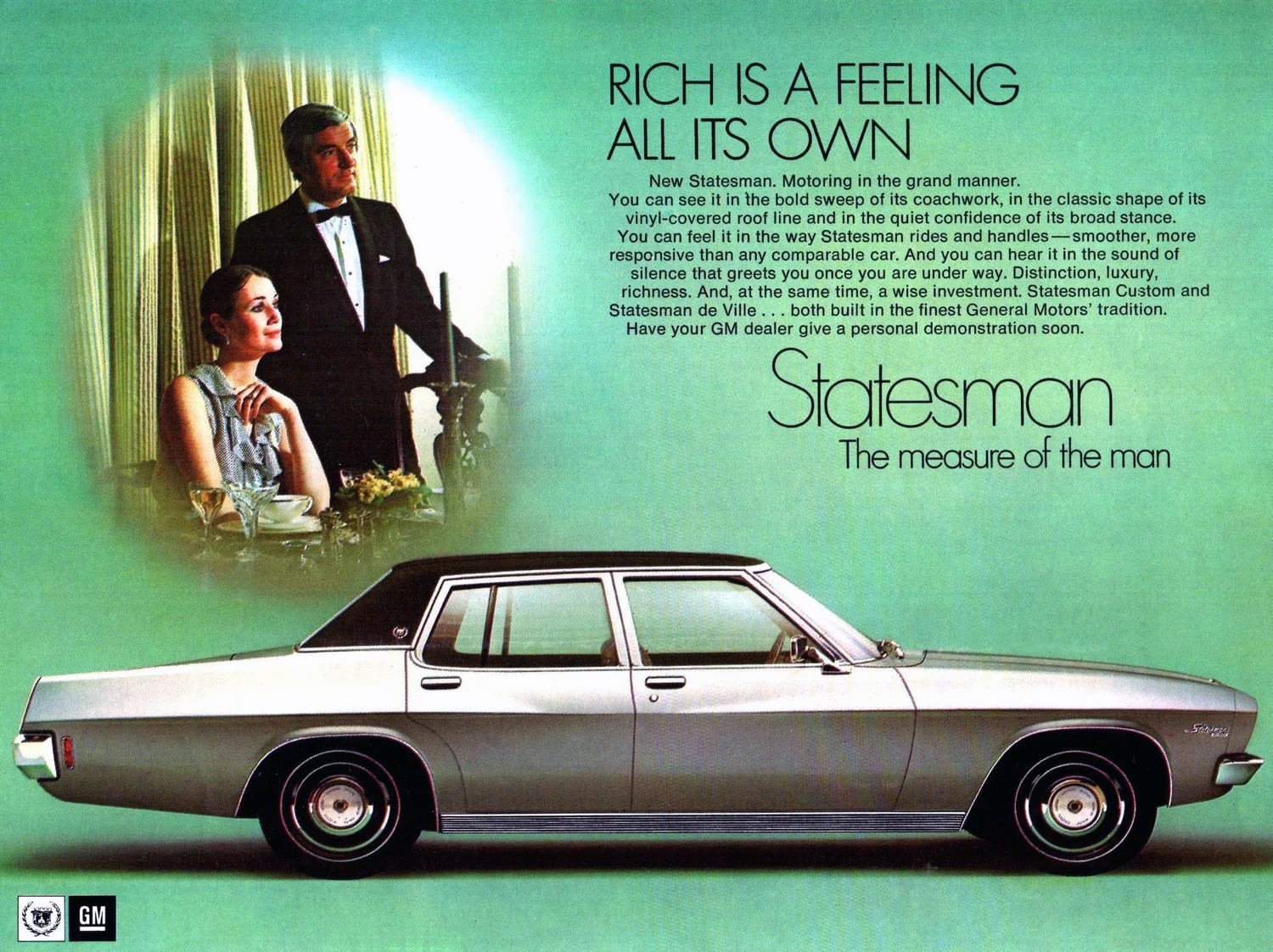
But a dirt road soon reveals another side of the Statesman’s handling character. It is remarkably pleasant and controllable in the gravel, but once again – from a handling point of view – in a way that doesn’t really fit in with its intended buyers. You can push it into a bend, let the tail fly out and catch it with delightful pleasure.
In relation to this dirt road ability, the new variable ratio power steering is one of the prime reasons for the excellent controllability. For power, it’s precise and the mere 2.6 turns lock to lock mean the driver can wrap the wheel over on to opposite lock very quickly and to just the right degree. It makes driving the big car much easier than with a normal system in all conditions – particularly city parking.
The variable ratio set-up means the further the wheel is turned from the straight ahead position, the faster the ratio becomes. At the straight ahead the ratio is 17.5 to one. As the wheel is swung, it varies down to 11 to one, thus reducing the number of turns lock to lock to 2.6 from what would be 3.6 on a constant ratio system.
While some of these new variable ratio systems we’ve tried on HQs have been smoother than others, it is generally very good – certainly the best on a local car. It’s a change to sit in an American-inspired car and only have to turn the wheel quarter to half a turn to get round most bends. But watch it from cold starts – until the oil circulates, the steering is almost impossibly heavy.
Linked to the Trimatic transmission, the 308 V8 engine in the De Ville gives smooth, strong quiet and very fast performance. Running up through the range with just a whisper and slight jerk as the changes come at 52 mph and 84 mph, it puts down scintillating 16.2 second quarter miles.
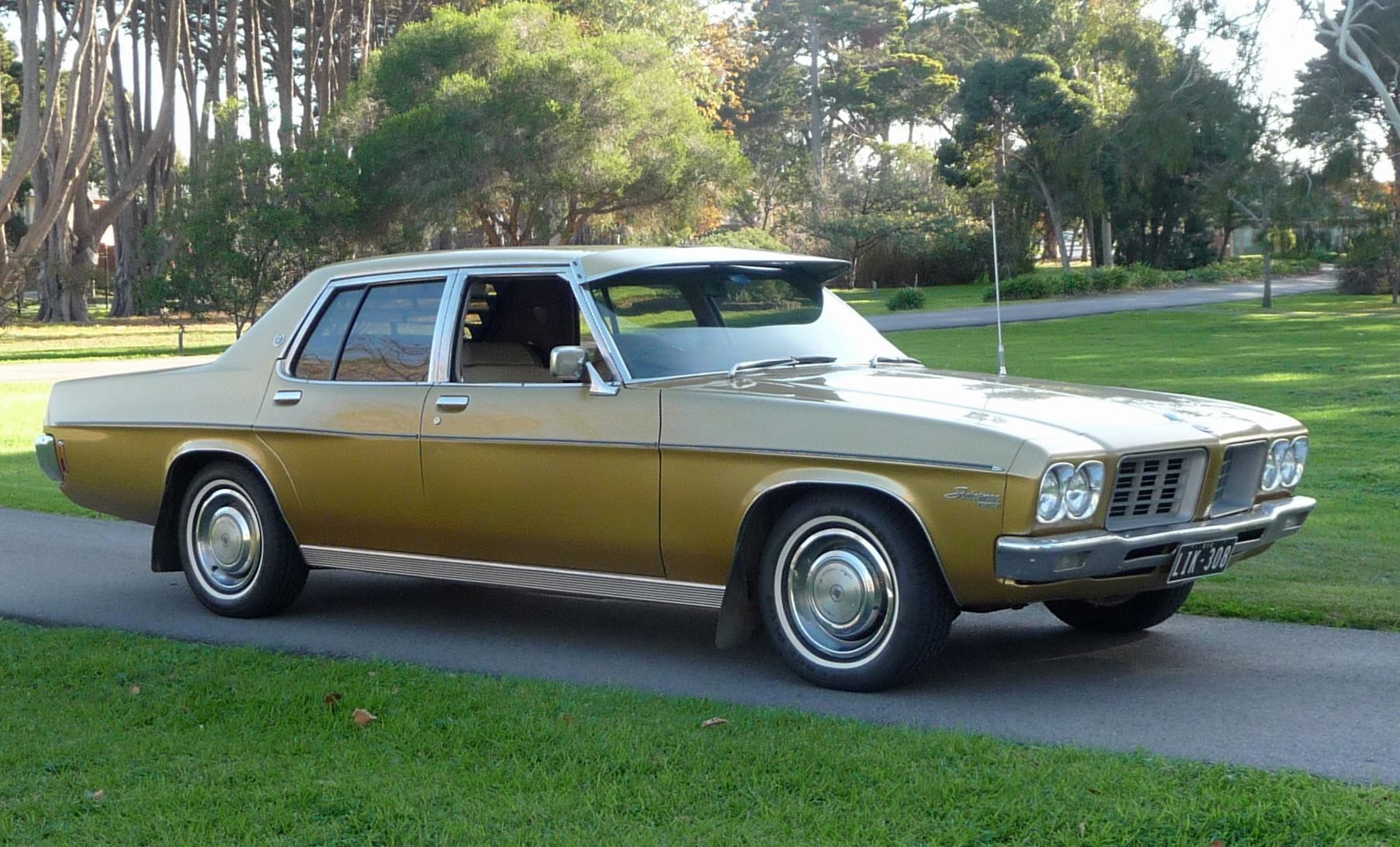
And while the low-down passing times, using the kickdown, are excellent (20-40 mph 2.4 seconds; 50-70 mph 4.4 seconds) the engine runs out of breath once second is finished so that for fast open road work the car is hard pressed to operate much above 80. You have to allow plenty of space if you want to pass another car moving that rapidly, and then you’re quite likely to find you can’t do it.
Worse, the engine is frightfully thirsty. On a 100-mile run up through hilly country using kickdown into second frequently we got 10.2 mpg – and it wasn’t a particularly fast trip (the body roll saw to that). Later, on a 50-70 mph run on expressway conditions we clocked 12.6 mpg. The average for city driving was 14-16 and you’d be hard pressed to get anything better.
The power-assisted disc and drum brakes worked well, pulling the car up in a full crash stop from 60 mph in a very good 3.1 seconds. One back wheel would lock, sending the rear skating sideways, but it was nowhere as bad as some other HQ models we’ve driven. Although the pedal got spongy and travel increased, after a number of crash stops fade resistance was good.
Control layout in the Statesman is pleasant and functional, except for the power window switches. They’re located so far forward on the driver’s armrest a man of average height can’t reach them without straining forward painfully on his seat belt.
The integrated air conditioning controls are very good. One sliding lever allows selection of air conditioning. It slides through “off”, “maximum”, and “normal” positions before reaching the heat stage with its “car” and “demist” positions. Another slide beneath it controls temperature from cold to hot. Leaving both levers lined up in the normal position gives a pleasant, constant temperature that’s comfortable for most weather. For full-bore cooling in the summer, a fan boots the air out hard.
Instrumentation (set into an imitation wood panel) is good with oil, fuel, 120 mph speedo, temperature gauge and clock.
The presence of air conditioning, power steering, power windows and aerial was apparently too much for the Statesman’s electrical system. Unless the motor was turning at very high revs the alternator warning light constantly glowed red, and the lights weren’t working at their full strength. Once, when the car was stopped while we picked up some people to whom power windows were a novelty, and they scooted them up and down a few times, the battery had barely enough charge left to restart the engine.
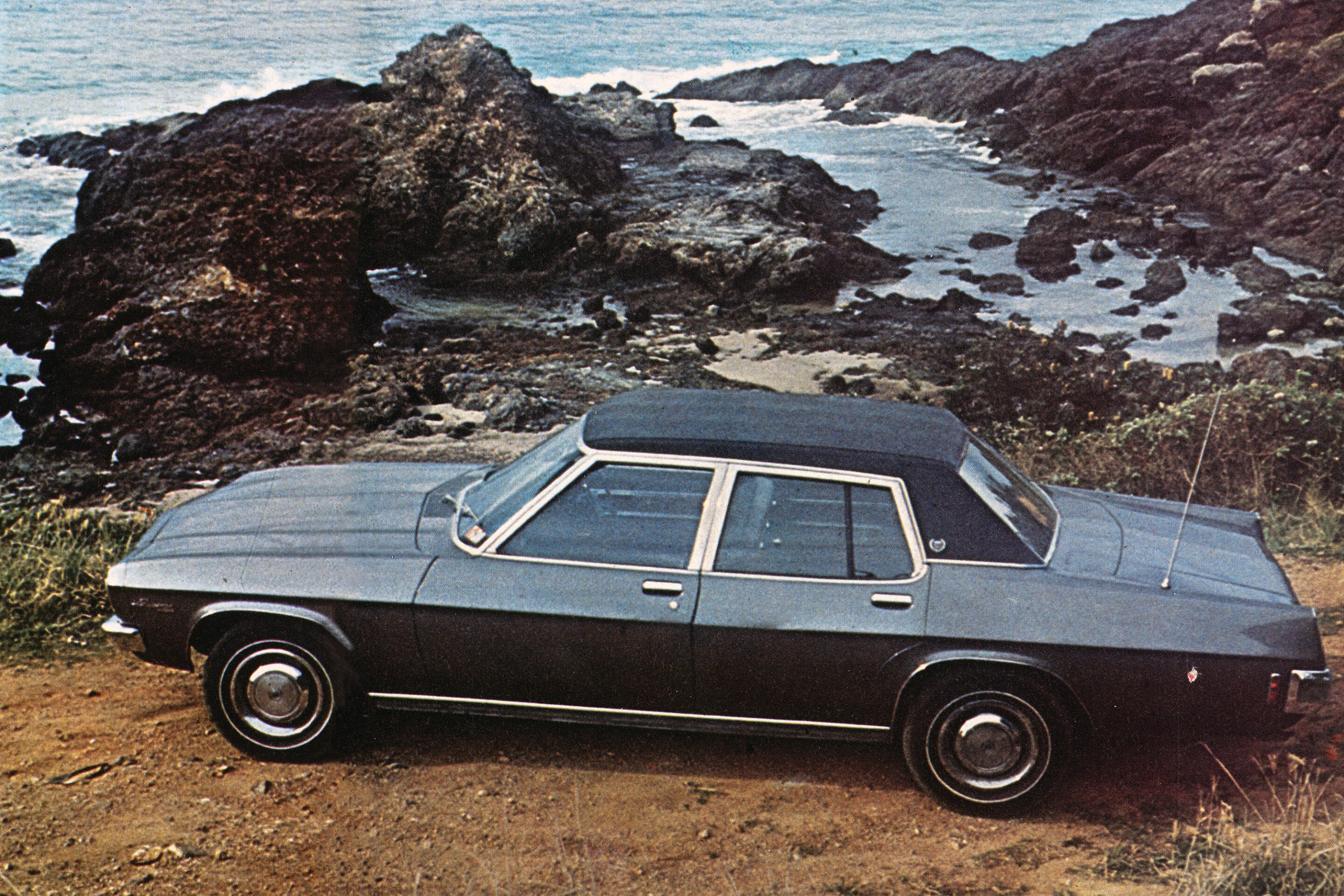
While the Statesman’s boot is very big, its usable space is spoilt by the spare wheel location and intrusion of the fuel filler pipe. Fitting the image, it is black carpeted, but on our car the carpet was peeling away from its glue and hanging down in three places.
The poor trim standard was noticeable inside the de Ville, too. The vinyl imitation wood strip across the back of the bench seat had split badly in three spots. One of the cheap-looking metal caps hiding the messy end of the grab straps on the back of the bench also fell off. A close look at the carpet cut and fit in the front and foot well showed it to be inferior to what you’d expect.
The seatbelts are also a disgrace in a car like this. Unlike Chrysler and Ford (with Cortina) GM has made no attempt to integrate its belts. They are still everyday belts you might buy across a speed shop counter fitted to unsightly locating brackets. The buckles are the normal strap type, not anchored clasps like the Valiant Regal’s, the Cortina’s, Mini Clubman’s or the Volkswagen Beetle’s.
They are hard to adjust, uncomfortable to wear and because there’s no recoil mechanism (normally found in expensive cars) they can flop in the mud when you’re getting in and out.
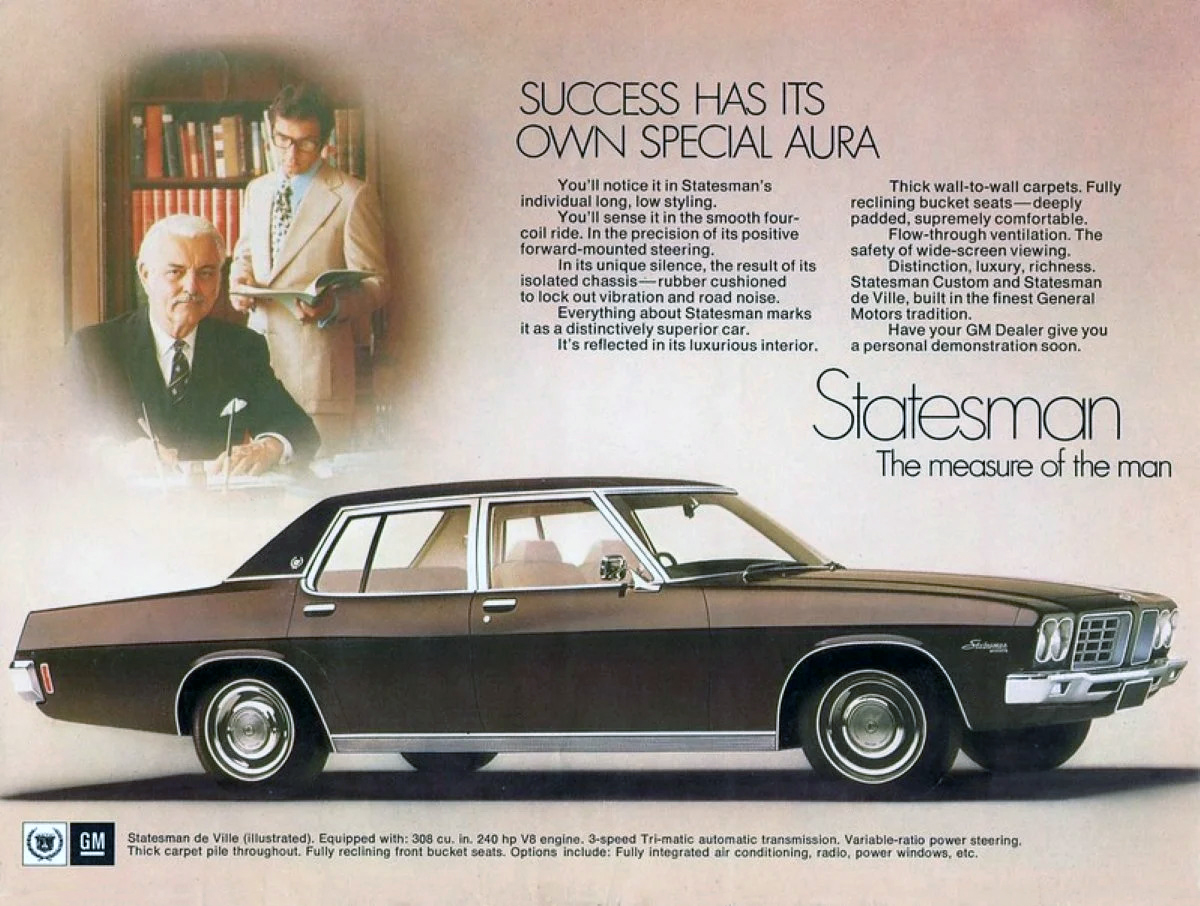
Businessmen won’t like the car’s ashtrays either. There are two in the front – one in either door armrest – but they’re much too small and fiddly. The single tray in the rear is located low down in the centre of the bench back and it’s hard to reach. At least there are twin map pockets on the back of the bench.
From the outside, this Statesman de Ville may achieve its design purpose and impress the populace as a big, expensive luxury car – a real status symbol. But to drive and travel in it over any reasonable distance is another story.
The body design and the concept is good, and the car is quiet and smooth and feels modern. But it is let down by poor space utilisation, inadequate seating, poor trim quality and the fact that GM’s engineers seem to have taken the easy way out by softening the spring rates to get a soft ride.
If, as GM says in its brochure, the Statesman de Ville is “The measure of the man” well…
Subaru Australia has announced local pricing and specifications for its upcoming Trailseeker electric off-road wagon, which is due locally in the next quarter of 2026. Positioned as a sleeker, electric-powered Outback but based on the Solterra electric mid-size SUV, the Trailseeker is priced from $67,990 plus on-road costs. Two Trailseeker models will be offered locally, with both using a single dual-motor drivetrain with a 74.7kWh battery providing up to 533km of WLTP range.
Twinned with the incoming Toyota bZ4X Touring, the Subaru Trailseeker is the second EV that Subaru will sell locally – the third, the smaller Subaru Uncharted, will arrive not long afterwards – with the Getaway (twinned with the electric Toyota Highlander) yet to be confirmed for our shores.
Like the Solterra, the Trailseeker uses a 74.7kWh battery for up to 533km of WLTP range (the Touring with its larger 20-inch wheels is less efficient and is rated at 488km instead). It can be charged at up to 22kW (AC) or 150kW (DC), and a 10-80 per cent charge reportedly takes as little as 30 minutes.
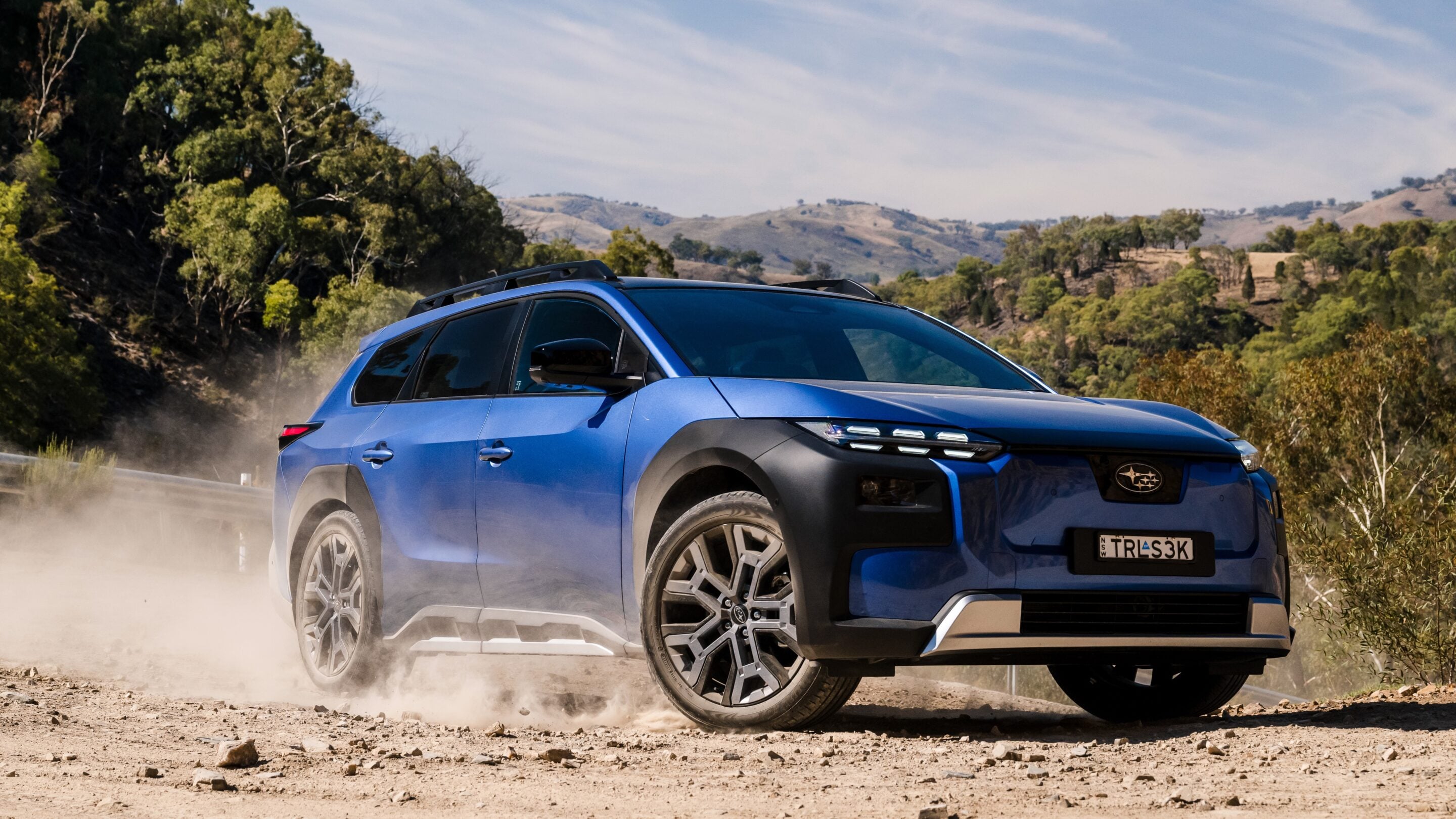
Both Trailseeker models use a dual-motor all-wheel drive set up making 280kW of power for a claimed 0-100km/h time of just 4.5 seconds, making it even quicker than the legendary WRX 22B.
Two Trailseeker models will be available: the base Trailseeker AWD and the upper-spec Touring AWD, with the former equipped with 18-inch alloy wheels, synthetic leather upholstery, a 14-inch touchscreen, dual wireless phone chargers, heated/electric front seats and a full suite of active safety features and the latter adding larger wheels, a panoramic sunroof, Harman Kardon audio and vehicle-to-load functionality.
“Trailseeker brings together attributes you rarely find in one vehicle. Genuinely quick, with the response and control of a performance car, the space and practicality of a large wagon, and the ground clearance and confidence of a true SUV. On the road it feels sharp, composed and effortless over distance – beyond it, that capability doesn’t fall away. The balance, traction and control are there to tackle back-country roads and real Australian terrain without hesitation” said Scott Lawrence, General Manager, Subaru Australia.
2026 Subaru Trailseeker pricing (excluding on-road costs):
| Trailseeker AWD | $67,990 |
|---|---|
| Touring AWD | $73,990 |
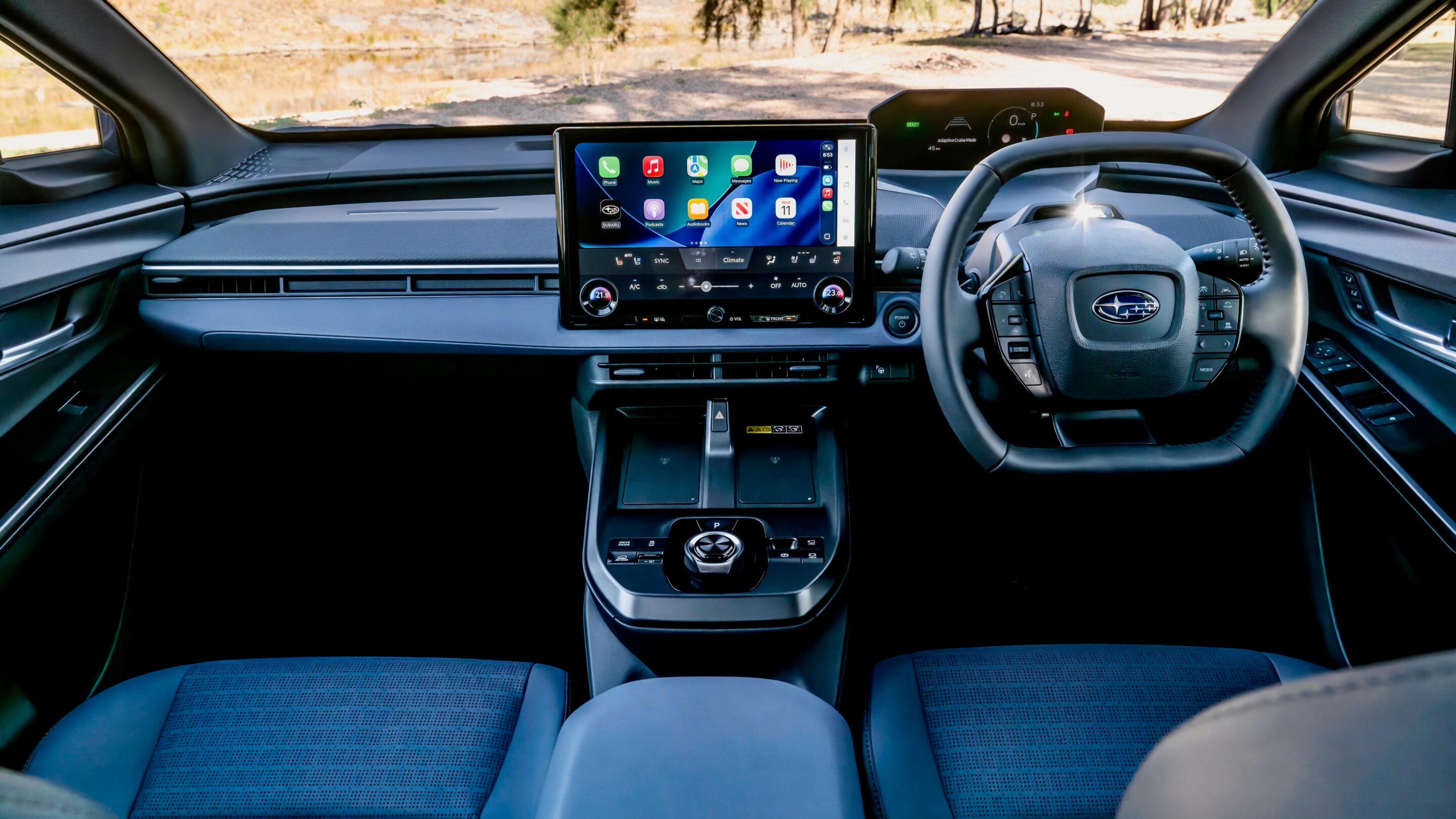
Trailseeker standard features:
- 18-inch alloy wheels with a tyre repair kit
- Dusk-sensing automatic LED exterior lighting
- Rain-sensing automatic wipers
- Keyless entry with push button start
- Hands-free power tailgate
- Heated/auto-folding mirrors with puddle lamps
- Heated 10-way driver/8-way front passenger electric seat adjustment
- Synthetic leather upholstery
- Heated leather steering wheel
- 7.0-inch digital driver’s display
- 14-inch touchscreen
- Wireless Apple CarPlay and Android Auto
- Satellite navigation
- DAB+ digital radio
- Six-speaker sound system
- 4x USB charging ports
- 2x wireless phone chargers
- 8x airbags
- Autonomous emergency braking
- Adaptive cruise control
- Lane keeping assistance
- Adaptive lane guidance
- Blind-spot monitoring
- Rear cross-traffic alert
- Rear occupant alert
- Adaptive auto high beam
- Automatic reverse braking
- Driver attention monitoring
- Traffic sign recognition
- Front and rear parking sensors
- 360-degree camera
Touring model adds:
- 20-inch alloy wheels
- Panoramic sunroof
- Blue-accented leather upholstery
- Ventilated front seats
- Driver’s seat and mirror memory
- 10-speaker Harman Kardon sound system
- Semi-autonomous parking
- Vehicle-to-load (V2L) capability with 220V front/1500W rear outlets
The Subaru Trailseeker will go on sale in Australia in the next quarter (April to June) of 2026.
