
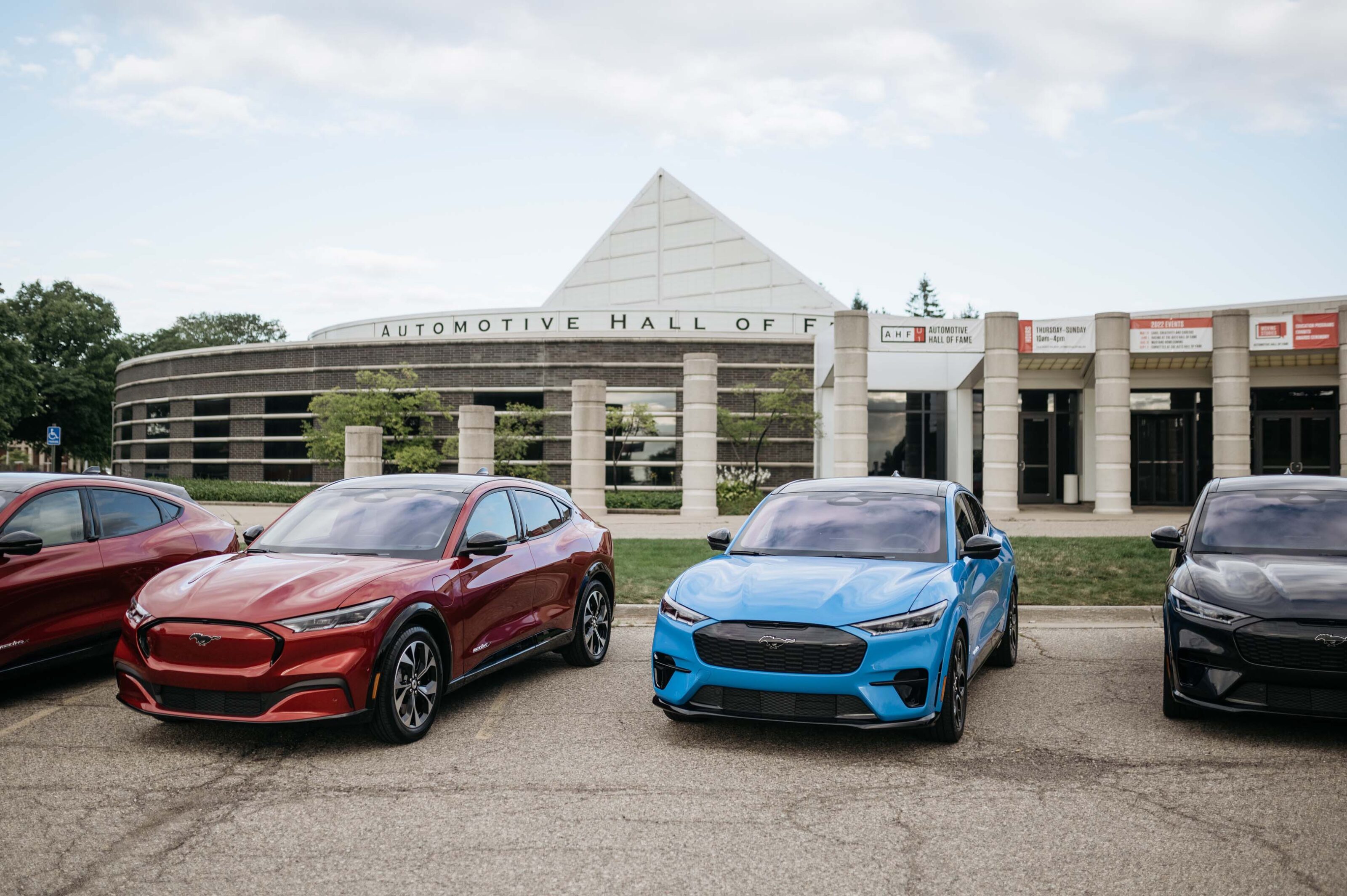
Ford Australia has confirmed local details for the all-electric Mustang Mach-E, with reservations now open. For the full run-down, click on the link below:
Icons aren’t born. Just like people they evolve over time, through events, chance meetings, wins and even losses until finally achieving hero status.
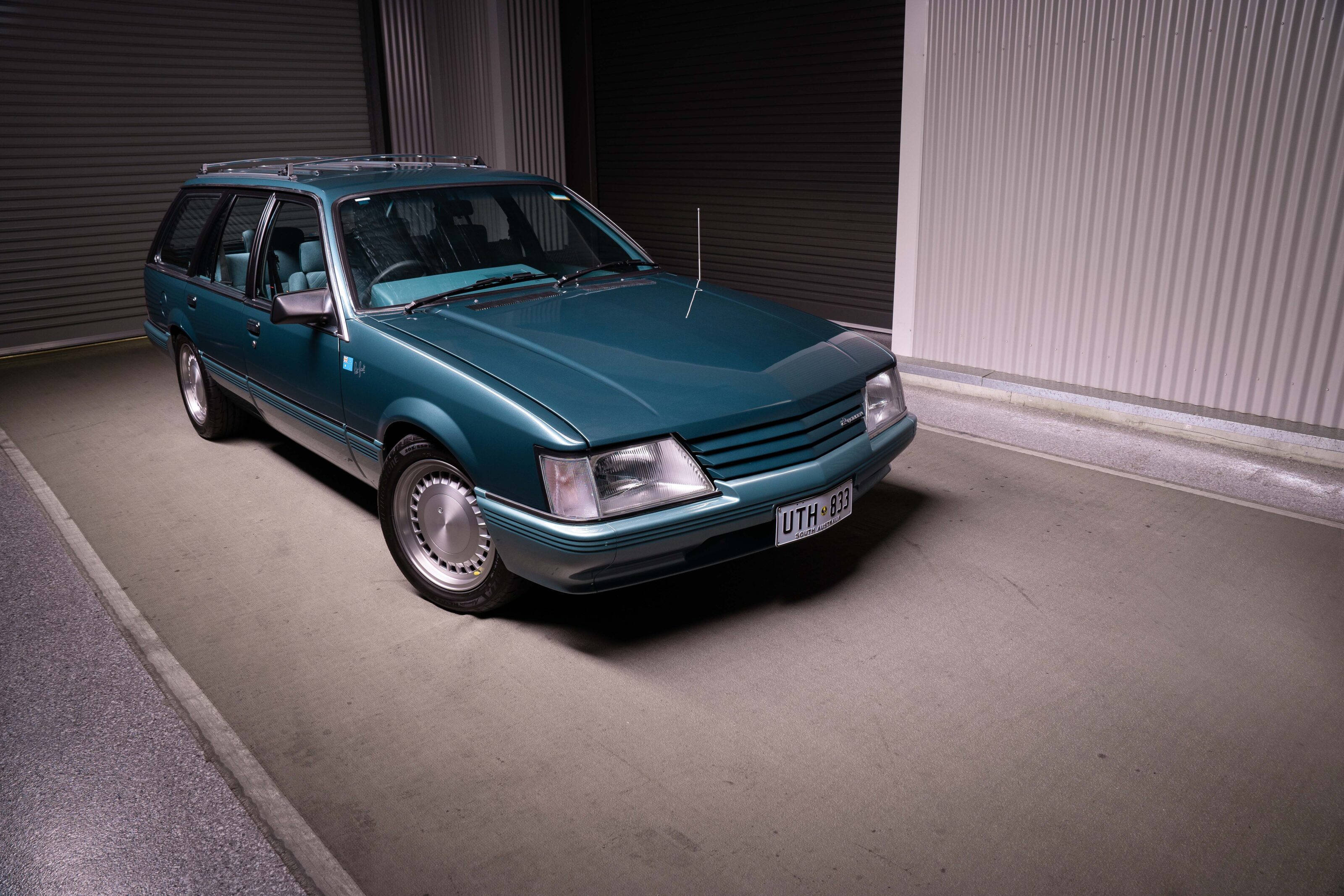
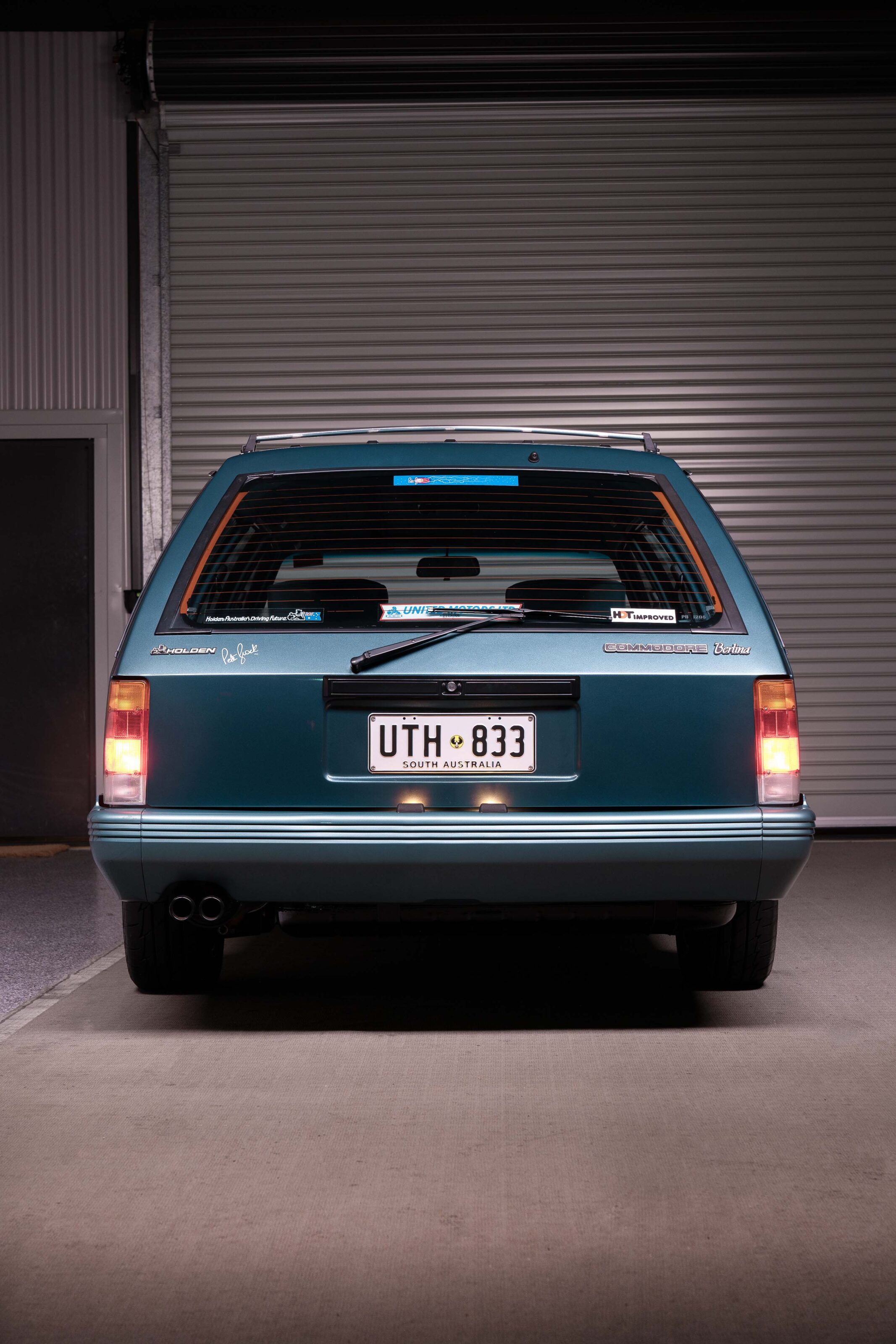
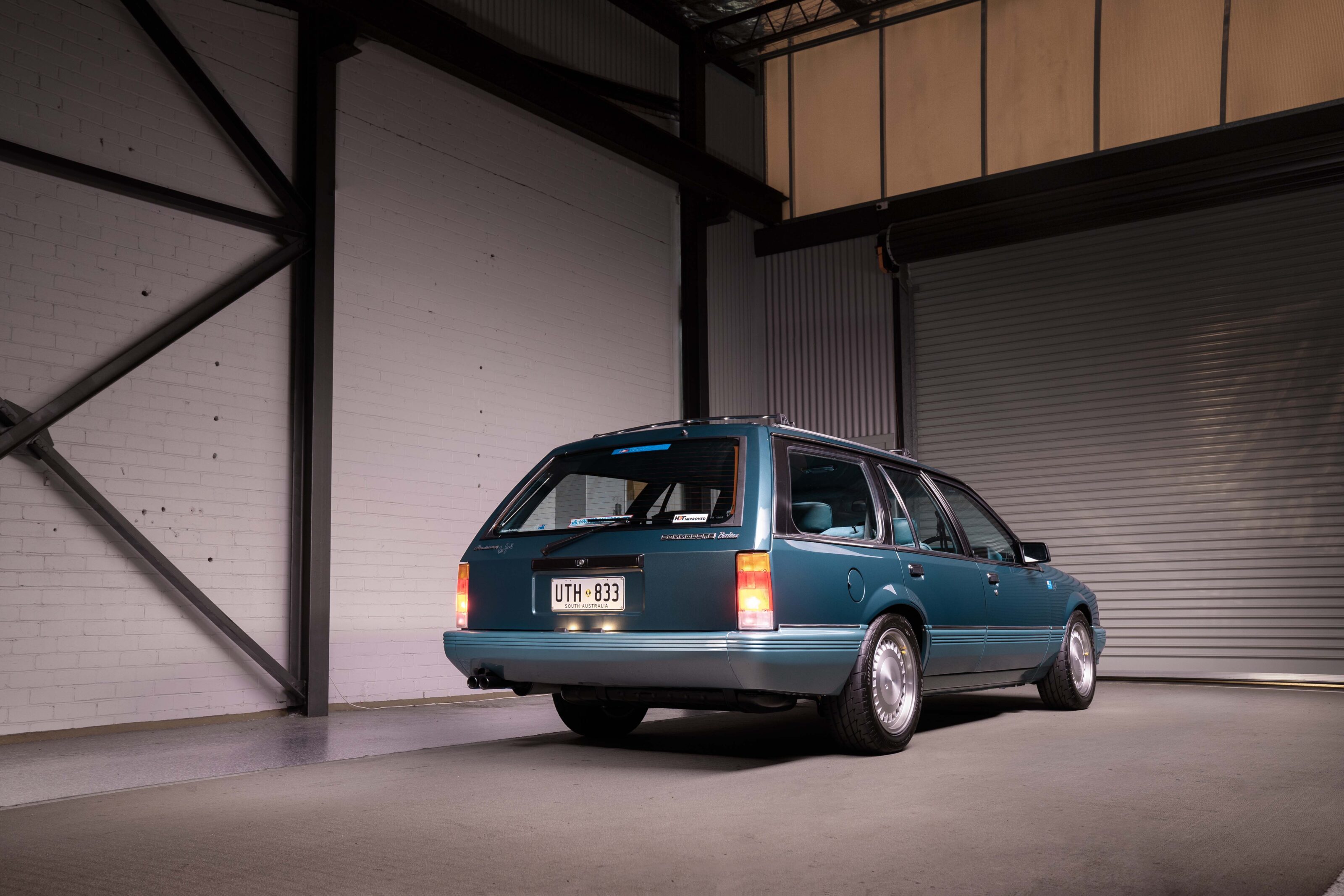
This is the story of an iconic car, the very first HDT Peter Brock Commodore Wagon.
Michael Dontas started his working life in his father Sam’s Electric Power Tool Services business in Whitmore Square in Adelaide. Over the years the business flourished. In March 1984 when Michael placed the order for the VK Wagon he was already the proud owner of a VH Group A SS.
1
George Zadow, a mate of Michael’s had taken a job selling cars at United Motors owned by Vin Keen who had helped Peter Brock set up HDT.
Michael approached George looking for something a little different to the SS for his wife Trish to drive. They had just had twins so there was a real need for more space. The VK was about to arrive in dealerships so the two set about speccing up the new family car.
Michael ticked every box on the options list. The VK Wagon in Cerulean Green would have the 5.0L V8, Cruise Control, Limited Slip Diff, Central Locking, the four-speaker Eurovox sound system and… “I had this idea in my head for what I wanted,” says Michael “and it all went from there.”
Zadow started the communications with HDT for the build and Tag Number L122760 became a reality. “We watched the car come down the line at Holden’s facility in Elizabeth.”
1
Michael fondly recalls his first visit to HDT.
“Larry Perkins, at the time in charge of engine development told me I would have to sign the secrets act before being admitted to the facility in Leveson St, North Melbourne. At first, I thought he was joking, but he was deadly serious.
The dayglo orange VK race cars were on rotisseries in build, and I was not to discuss anything that I saw. Larry asked me what I wanted from the engine, and from that, the choices were made.”
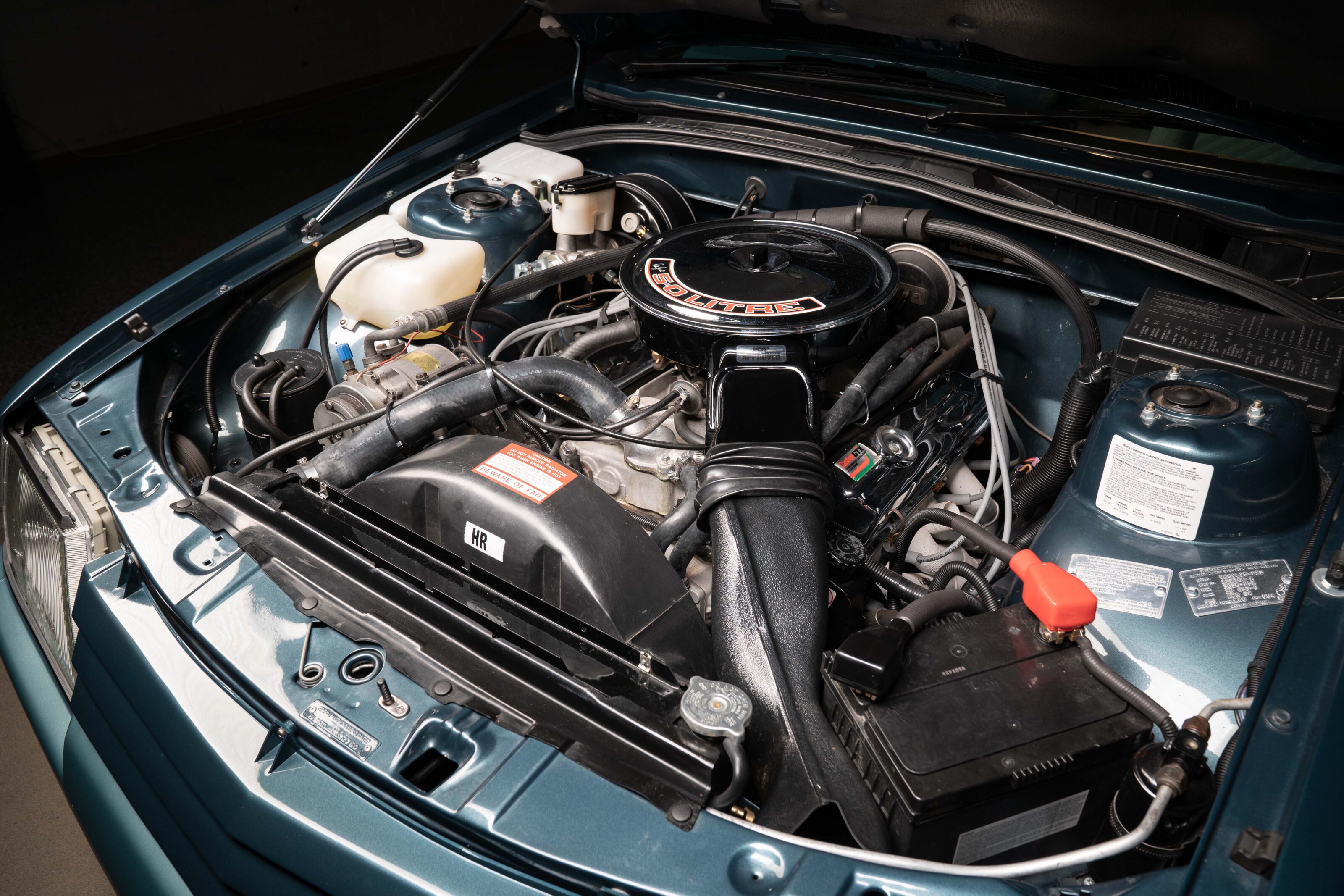
The new high output engine would have a baffled sump, different pistons, bearings, worked heads, a free-flowing air cleaner and a bigger exhaust, including headers. Fuel capacity was increased to 90 litres with a bespoke split-baffled fuel tank, chrome rocker covers and oil cap added some bling.
1
As well as more mumbo, the wagon got rear wheel discs and a bigger bore master cylinder.
Ride height was lowered, springs upgraded, Bilstein dampers all around, bigger front and rear sway bars, HDT rear lower arm bushes and even the strut top bearings were changed.
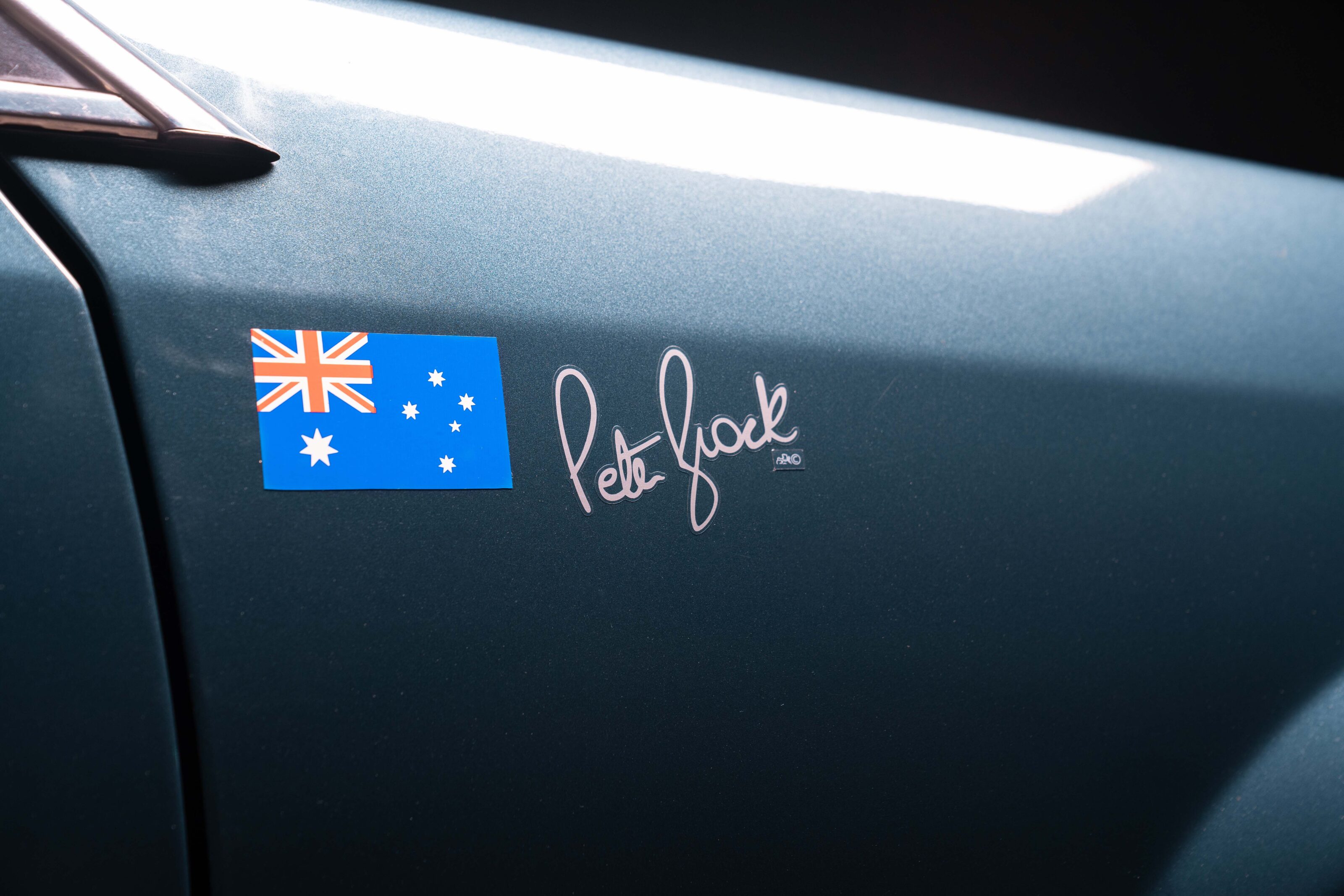
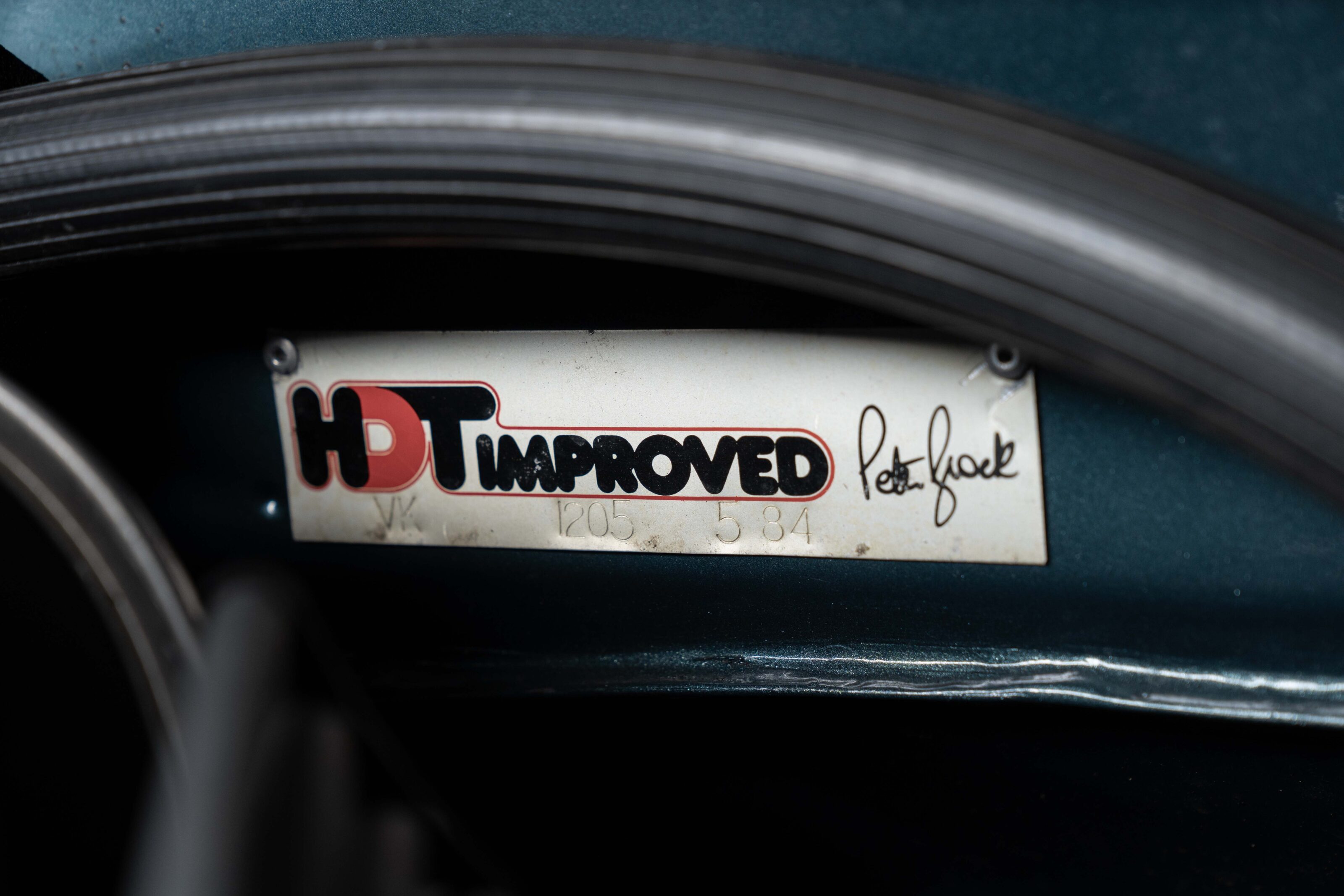
Headlights got bigger watt globes and the steering wheel was swapped for a black leather HDT Momo and a driver’s footrest fitted. Bumpers were colour-coded, Berlina Stripes deleted, and Calais side moulds fitted. Finally, the Peter Brock signature was added to the tailgate window as well as the Australian flags on the front guards.
1
“It was the first wagon they had done, and a very high spec car.”
“I went for the Centra Alloys with Yokohama A 008 tyres. It took about a month to complete and then Peter rang me and asked if they could use the car for their new marketing brochure. Of course, I said yes.” HDT 1205 was now a reality.
“It was the first wagon they had done, and a very high spec car. I think that’s why Peter took such an interest in it. At a delivered cost of $28,500, It would have compared in price to a Benz.”
Michael, like many HDT owners, was a keen follower of motorsport, especially the V8s. Through mutual friend Steve Ward (a name synonymous with HDT sales in Adelaide for many years) he was introduced to Peter Brock. “We shared a common interest in herbal teas, and we just hit it off,” recalls Michael.
That was the beginning of a long and close friendship with Australia’s most charismatic and revered race driver. “Brock always had time for everyone,” says Michael, “We had some really good times.”
1
In the days of the Adelaide Grand Prix which incorporated touring car races, it was commonplace for local businesses to provide corporate hospitality areas for their best clients.
Michael fondly remembers Brock joining them in the hospitality area and chatting with their client base.
This was a mark of the friendship between the two men. There was no financial arrangement and Brock was comfortable with that, often staying two or three hours at the site and frustrating his then-accompanying PA.
The VK immediately took up its daily duties carrying precious cargo in bassinets initially and then ferrying their boys Mark, and twins Craig and Troy to school over the next five years.
1
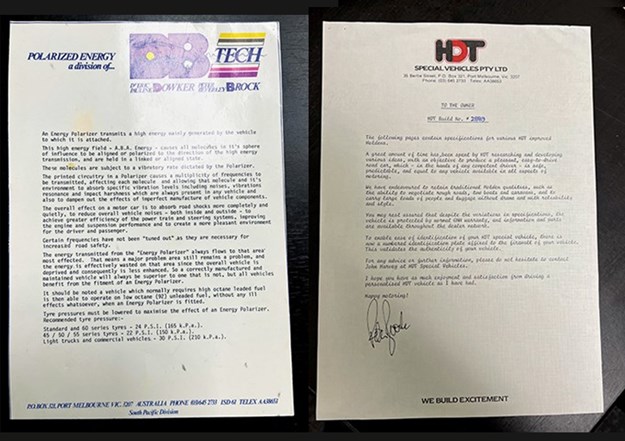
“The appearance of the wagon changed over time, with a new HDT grille and then an HDT body kit. Then we got Momo stars. I still have the body kit that goes with the car. The VK did receive a Plus Pack eventually including Energy Polariser which remains in the car today”.
In 1989 the wagon was traded on a new car for Trish at United Motors, but that wasn’t the end of the Dontas Family’s affair with the VK.
It was eldest son Mark who in the 1990s decided he wanted the VK back, sought it out and repurchased it as his daily driver. The relationship didn’t last however and the VK was again moved on.
1
Fast forward to 2014. Mark once again had a hankering to get the VK back and restore it to its former glory.
It had been such a part of the family history. After some clever detective work, Mark located the car (still in SA) and the whole family went to inspect it.
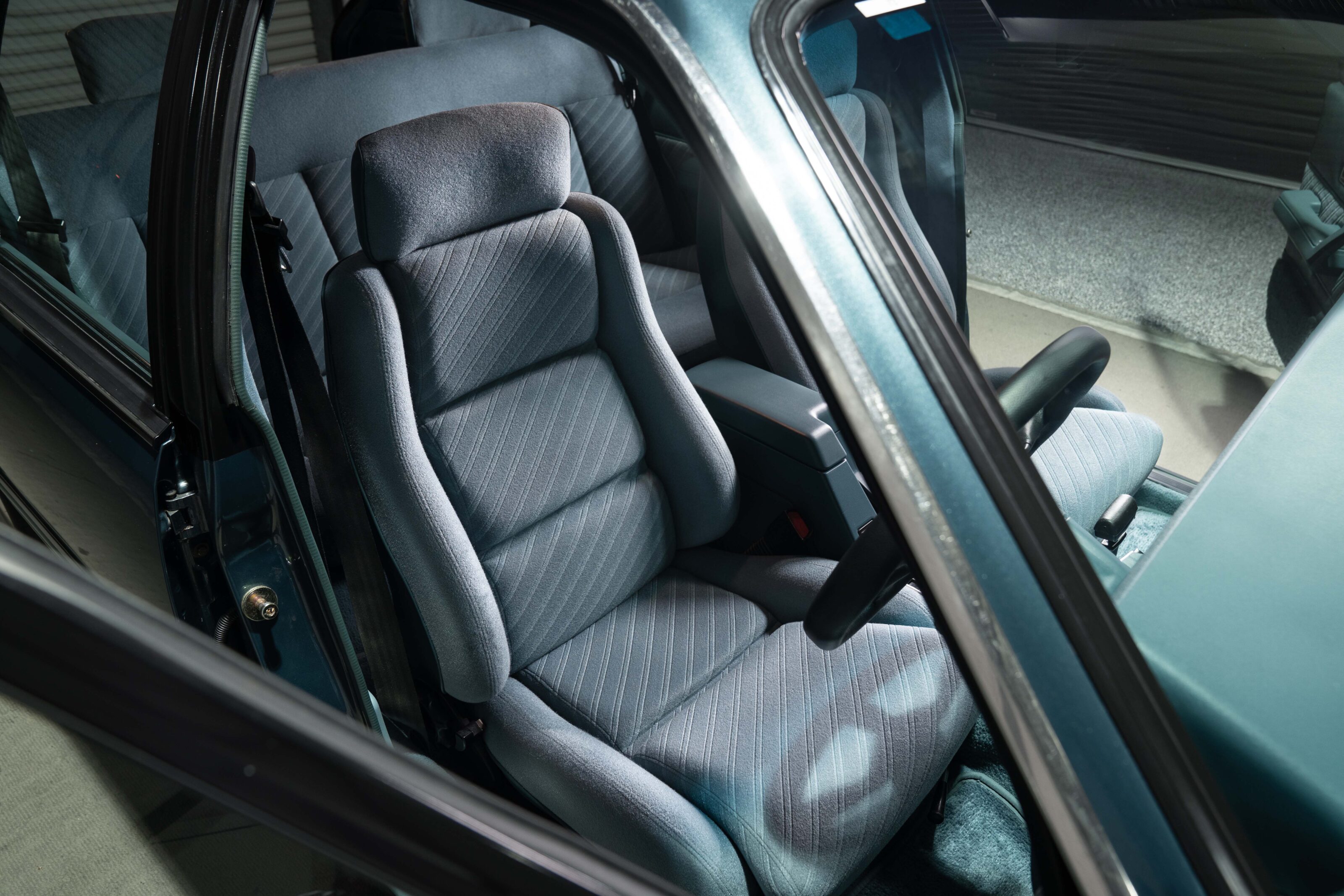
To their pleasant surprise, all the key features of the car were still there. The Scheel seats, although a little tatty were still in place, the original matching numbers engine, and the Eurovox stereo.
It was Michael’s wife Trish who had the deciding vote. “We have to buy it back,” she said, and they did… in pieces. Yes, that’s right the VK was in pieces. Following Brock’s untimely passing in 2006 the owner dismantled the car for restoration. Even the engine had been dismantled. There was a careful audit to ensure as much of the original car was present as possible and the bulk lot trailered home for the start of the next adventure.
1
The wagon was completely dismantled prior to transport to paint and panel. Once returned, it was entrusted to Holden enthusiast Craig Gough who completed the engine and got the car to key start once again.
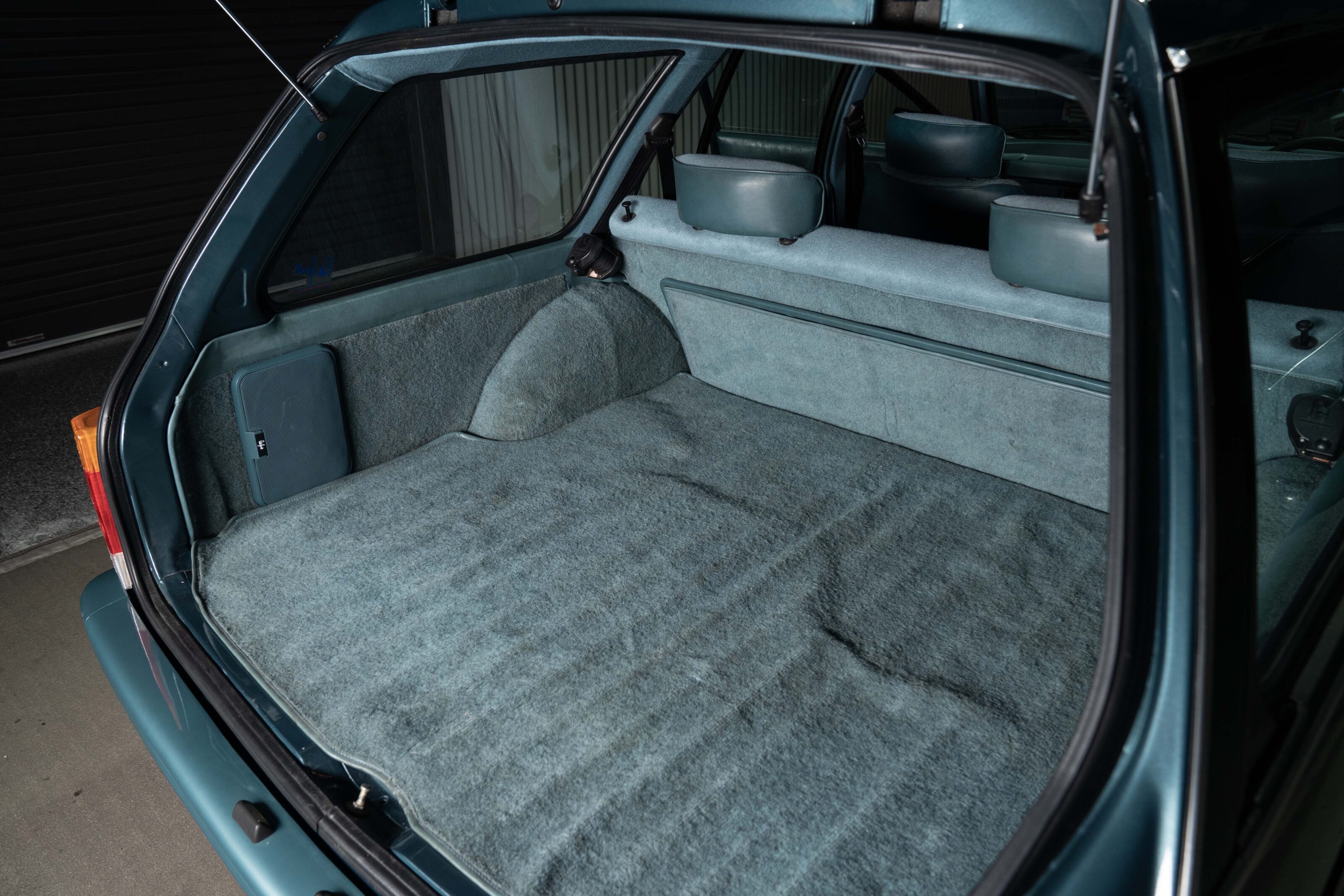
Winner products took care of the Scheel seats, headlining and carpets, and then it was all hands on deck to complete the job.
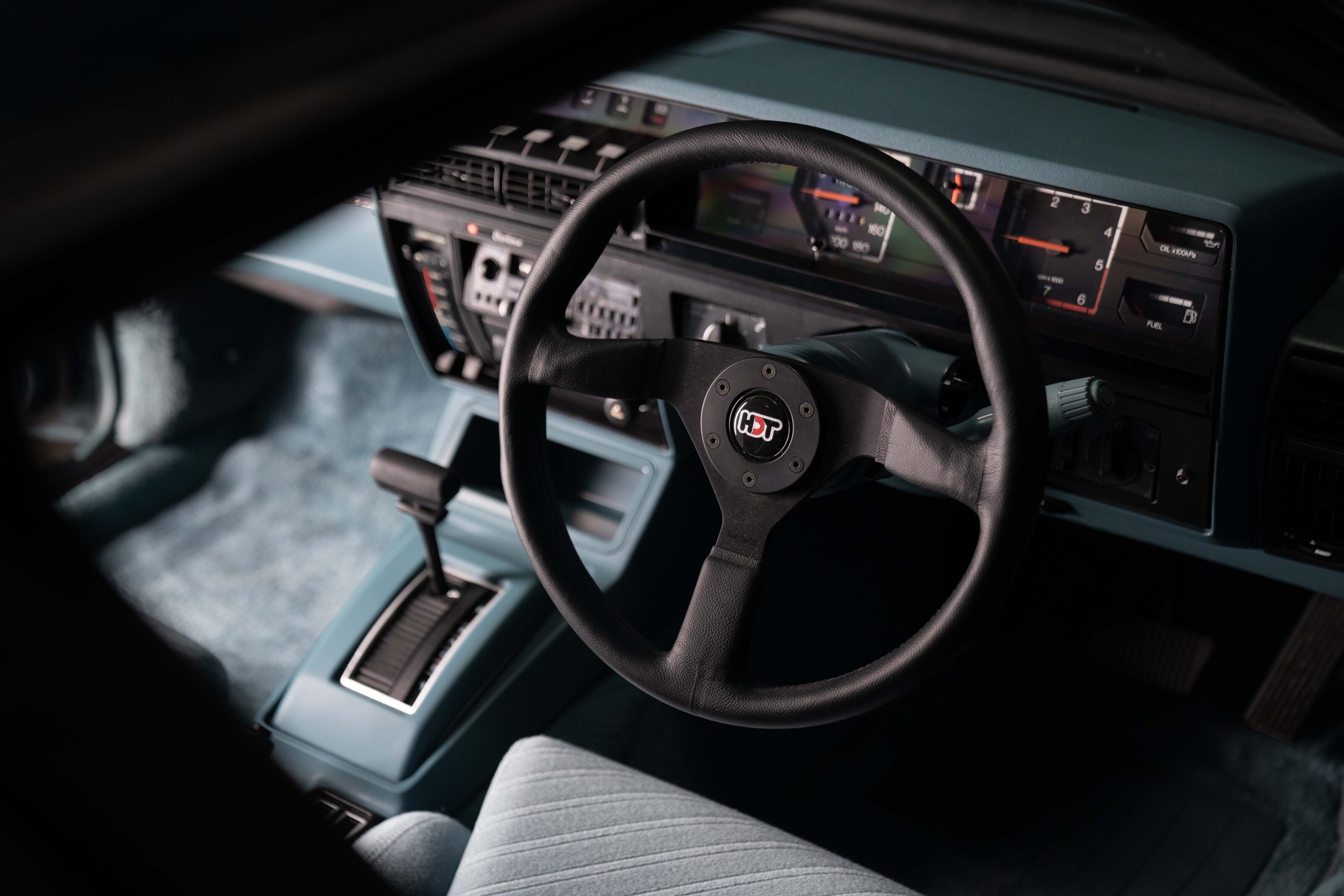
Michael recalls, “It took months to find replacement parts for the dash that were either brittle or broken. I scored a new Trimatic shifter and I put a Momo wheel back on it.
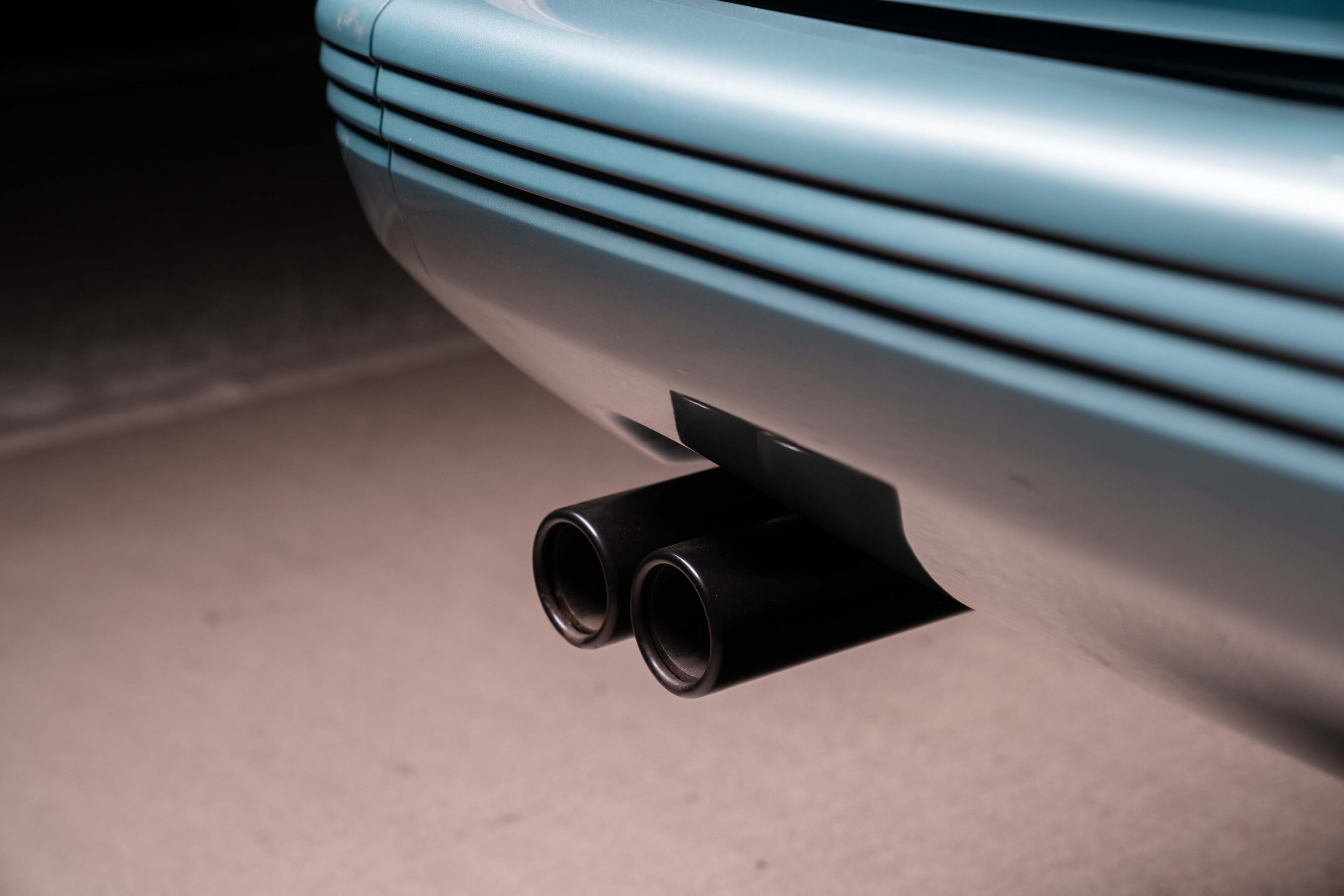
“The original exhaust is split but merges over the diff and splits again.
1
“I hunted all over the country to find the exact replacement. The worst part was the rear electric windows; they are cable operated. The heater is controlled by vacuum lines. Mark made them work but it was a long job. We fitted all new Bilstein shocks and new bushes.
“We tried three Eurovox stereos without success, but now we have a modern unit with the HDT facia. It’s much better.
“Even the air conditioner is better than ever. I think one of the nicest things was putting the Polariser aerial on the back window and the United Motors sticker. The decal for HDT improved I had made from a photograph because they weren’t available. But you have to do these things.”
1
Turning the key on the now fully restored Brock car evokes sentiments of a bygone era. There is a lumpy idle from the cam that makes you smile as the exhaust joins into the song.
It’s incredible in today’s oppressively corporate motor manufacturing world to think that a dealer could build a bespoke car for a customer with the manufacturer’s blessing. These were heady days and the cars that came from them are clearly time capsules that need to be preserved.
1
Originally published at our sister site, Unique Cars
MORE
Everything Holden
British author Lady Mary Montagu once said “Civility costs nothing, and buys everything”.
Spend a short amount of time on Australia’s roads and you may draw the conclusion that courtesy and civility are actually as expensive as To’ak chocolate-coated plutonium rolled in Martian saffron.
Perhaps your impression of our fellow road users is different, but in my experience, ‘common courtesy’ from Australian drivers is about as common as unicorn turds. I recently saw a meme that read “old mate would rather die than let you merge”, and like all the best memes, I’m afraid it’s funny because it’s not that far from the truth.
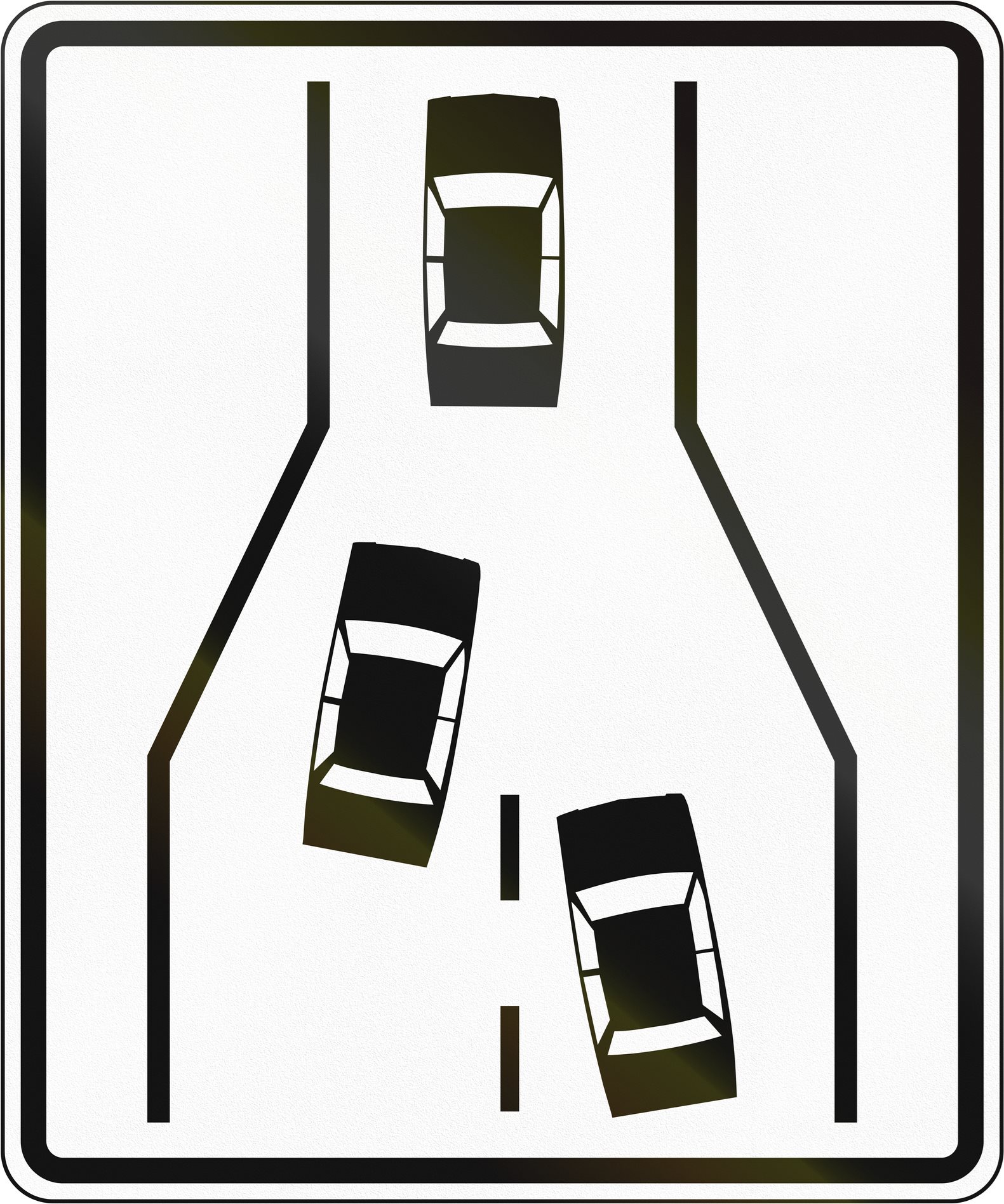
Unfortunately, the less funny side is the effect is has in practice. As Wheels readers and decent motorists, everybody here understands that when you see a closed lane ahead, the only option is to assist merging traffic like a closing zip fastener by allowing space for all vehicles to join one lane. (Right? Right?)
1
But more often than not, drivers will accelerate hard to close the gap as if you’re asking not for permission to pull in ahead of them, but to ceremonially sacrifice their children with fire.
This makes everyone angry and, for a while, I thought there was no solution and nothing could convince drivers to behave a little less selfishly behind the wheel. But, I recently spent 10 days driving in the UK, and I think there’s hope.
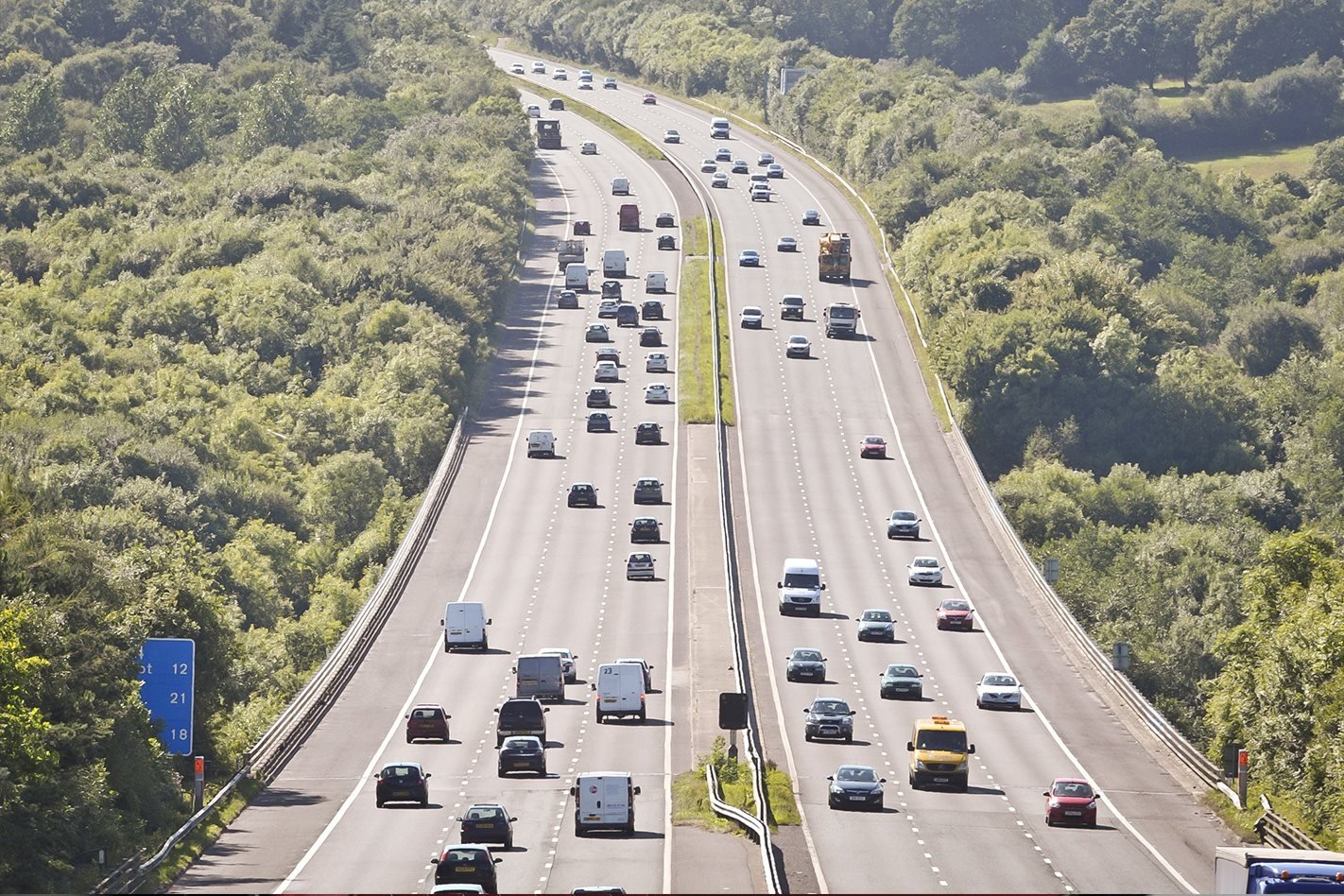
Unlike Australia, the United Kingdom does not have a surplus of space, and its roads are almost immeasurably older, which means modern-sized cars must often fit into lanes originally built to accommodate nothing wider than a fat horse. In many cases, widening these choked arteries would mean chamfering a 400-year-old church or exhuming a Roman burial tomb.
1
The alternative is courtesy.
In thousands of such restrictions, there are no traffic lights, flyovers or tunnels, and it’s simple consideration of others that allows the traffic to keep flowing. Stop and give way to another driver and if they’re not too stunned to acknowledge the gesture, I promise they will raise a hand and smile as they pass in the opposite direction.
The effect of this is that it makes you feel good for helping someone out and seeing a happy face, and when it’s their turn to return the favour a little way down the road, they will do it willingly. With each exchange, the good will is passed on and the net result is an entire nation full of happier, more considerate and attentive drivers.
Spend some time on British roads in the depths of winter however, and the effect is accentuated even further. Conditions in the UK’s dark months can become so treacherous that you simply must proactively watch out for hazards and other drivers to reach your destination without going via a hedge or with a star picket lodged through the windscreen.
The effect of this is that it makes you feel good for helping someone out and seeing a happy face, and when it’s their turn to return the favour a little way down the road, they will do it willingly.

1
On one particular roundabout I narrowly avoided an unplanned excursion into the outfield not because of snow or ice, but because the salt local councils scatter onto the asphalt to prevent freezing has the same frictional properties as a superconductor hovering on liquid carbon dioxide.
As such, other drivers who have recently escaped certain death on a range of wintery hazards will pass on the information with a flash of the headlamps or hazard lights or perhaps a polite ‘slow-down’ hand gesture. It’s the same if traffic starts backing up on a motorway, for example.
We’re so completely spoilt by space and decent weather on Australian roads that it has made us fantastically complacent.
If we want the next generation of drivers to be better, part of their education should include a week trying to survive the winter on British roads. Lady Montagu would have been a great driver.
?
I’ve tended to associate Harley-Davidsons with leather vests, flannel shirts and grey beards poking out of open-faced helmets, but with their model lineup undergoing an exciting refresh that stereotype is on the way out.
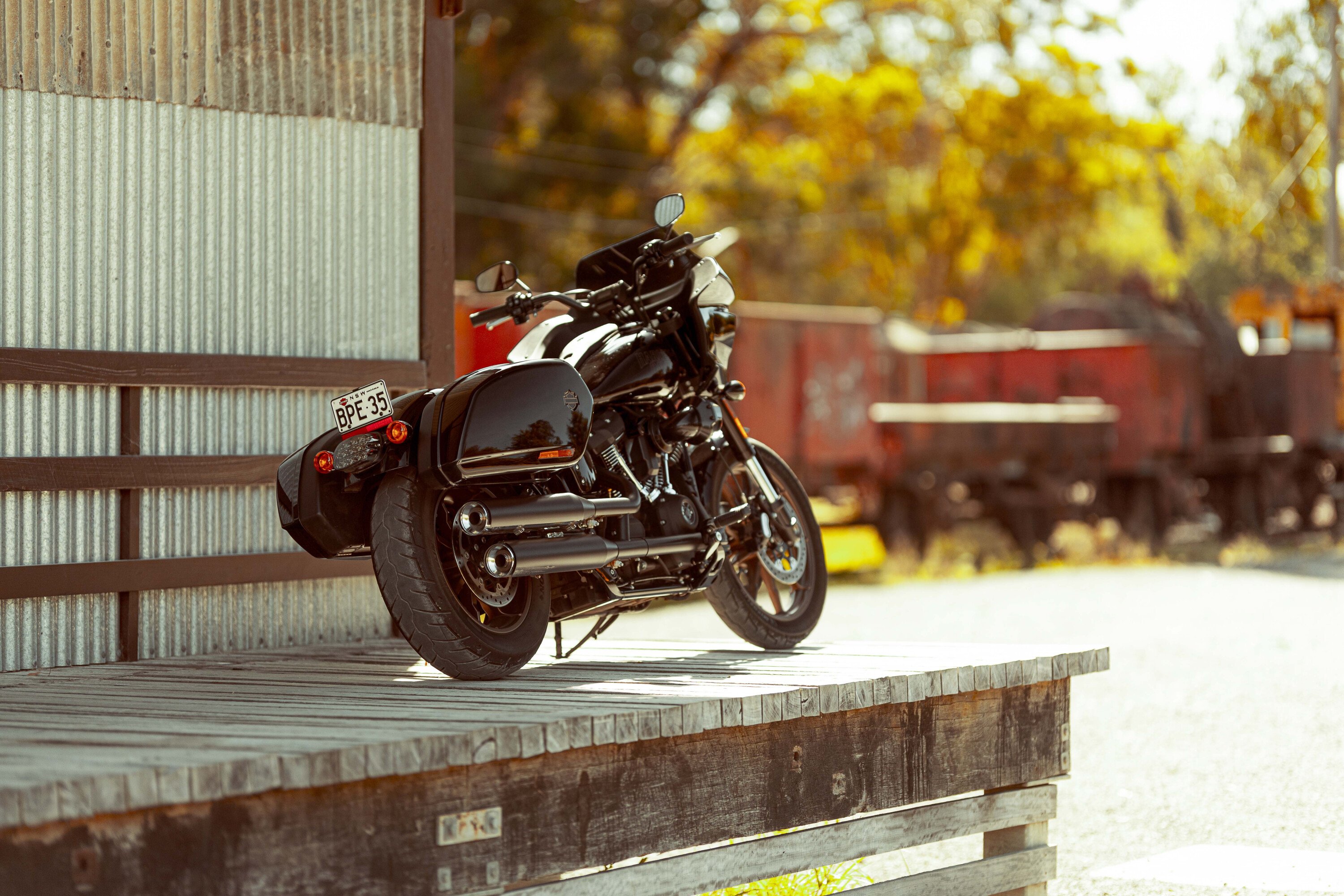
With iconic screen portrayals in Easy Rider, Harley-Davidson and the Marlboro Man, Wild Hogs and the more recent Sons of Anarchy series, the Harley-Davidson brand is imbued with popular culture and subculture baggage beyond what you’ll find in the Low Rider ST’s sculpted saddlebags, but what’s it actually like to ride?
1
JUMP AHEAD
- How much is it, and what do you get?
- Where is this model in its lifecycle?
- How do rivals compare on value?
- Interior quality, comfort, space and storage
- What is it like to drive?
- How is it on fuel?
- How safe is it?
- VERDICT
- Specifications
How much is it, and what do you get?
| 2023 Low Rider ST features | |
|---|---|
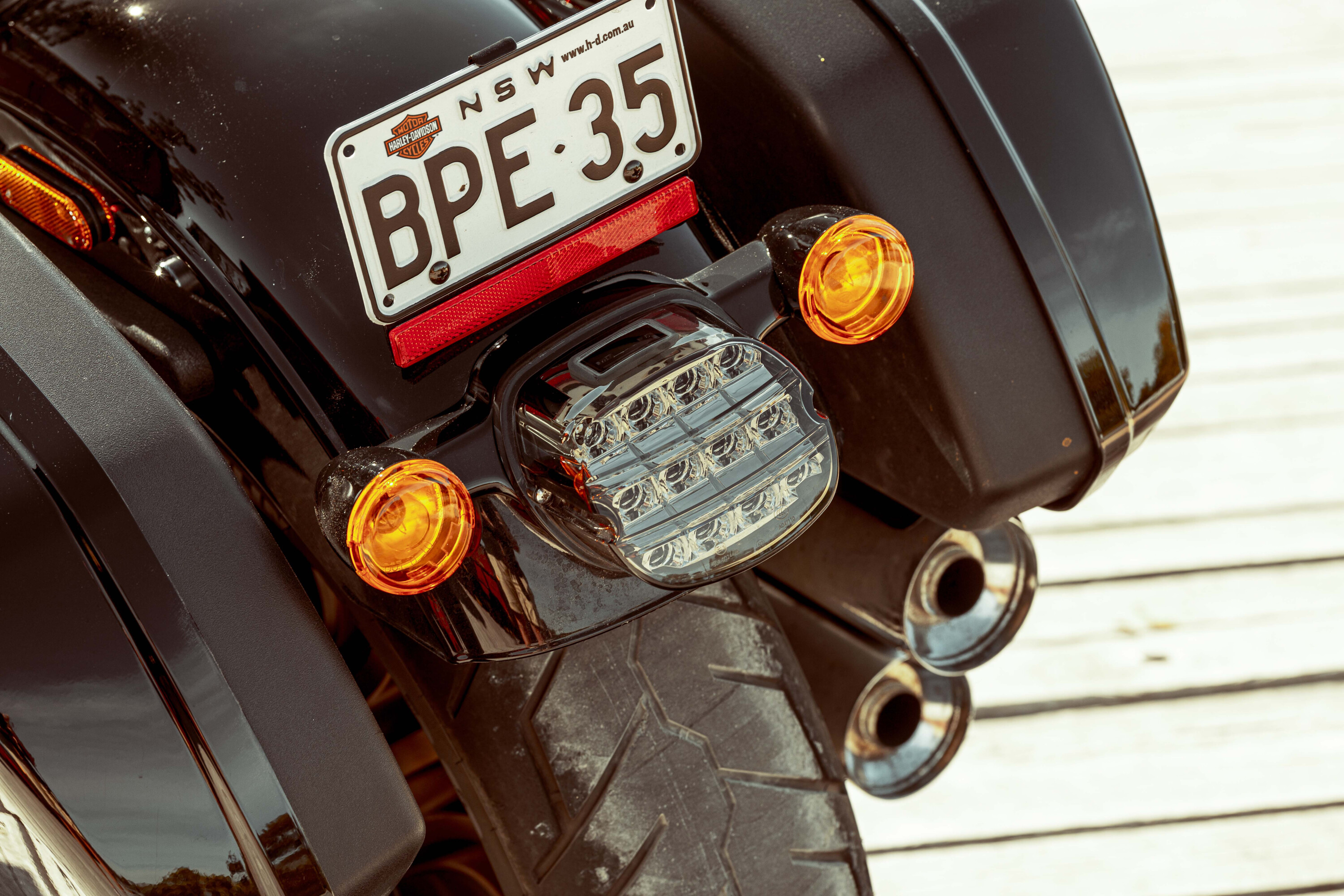
| Compact digital gauge | LED headlight and taillightu00a0 |
| Cruise control | ABS |
| Frame mounted windshield | 18.9L tank |
| Dark bronze aluminium rimsu00a0 | Lockable hard saddlebags |
| 117 cubic inch V-twin engine | Mid mounted footpegs |
1
Where is this model in its lifecycle?
The FXS ‘Low Rider’ nameplate was introduced by Harley-Davidson in 1977, with its recipe of flat bars, low seat height and longer forks translating to instant sales success, and the latest iteration takes the concept even further.
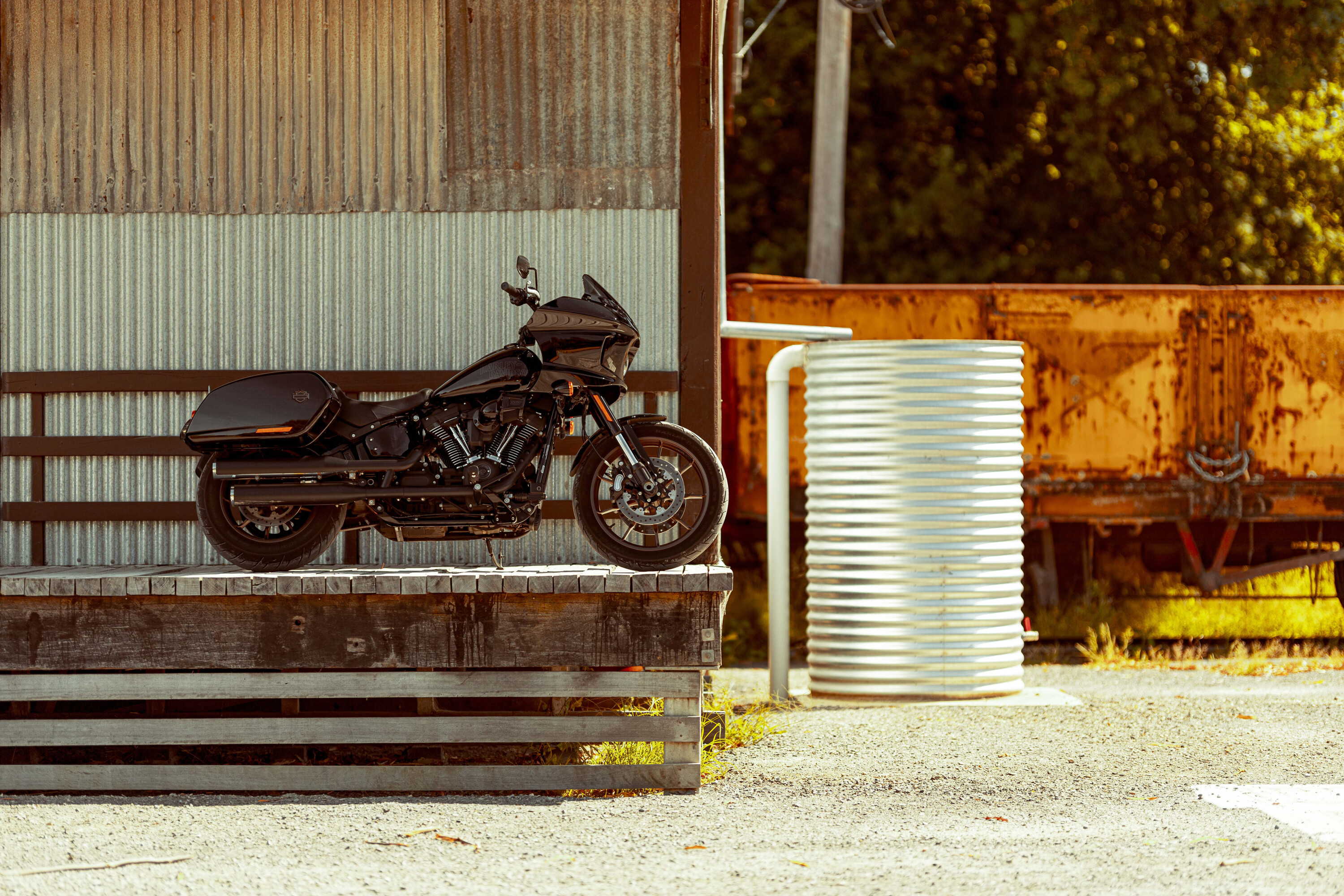
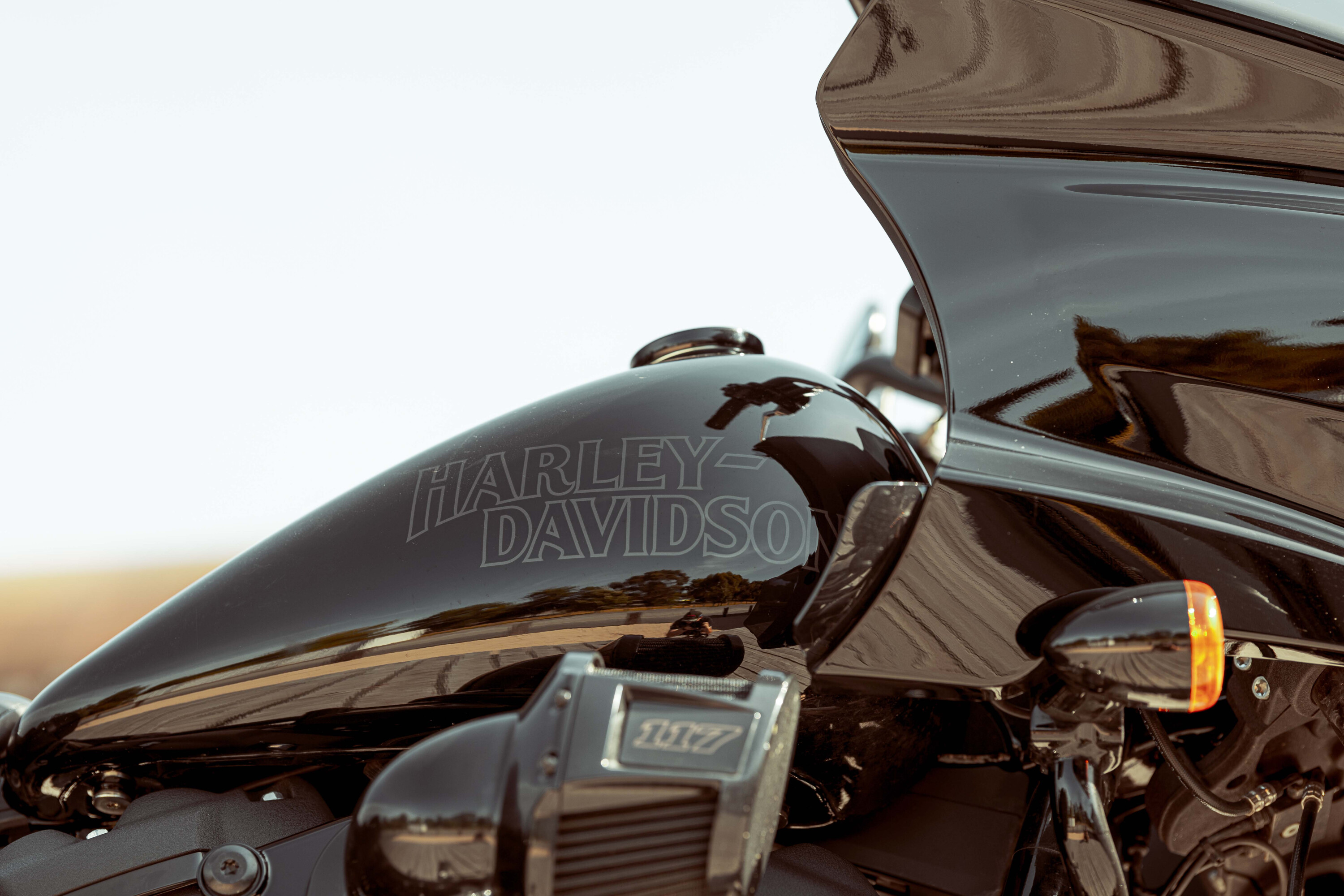
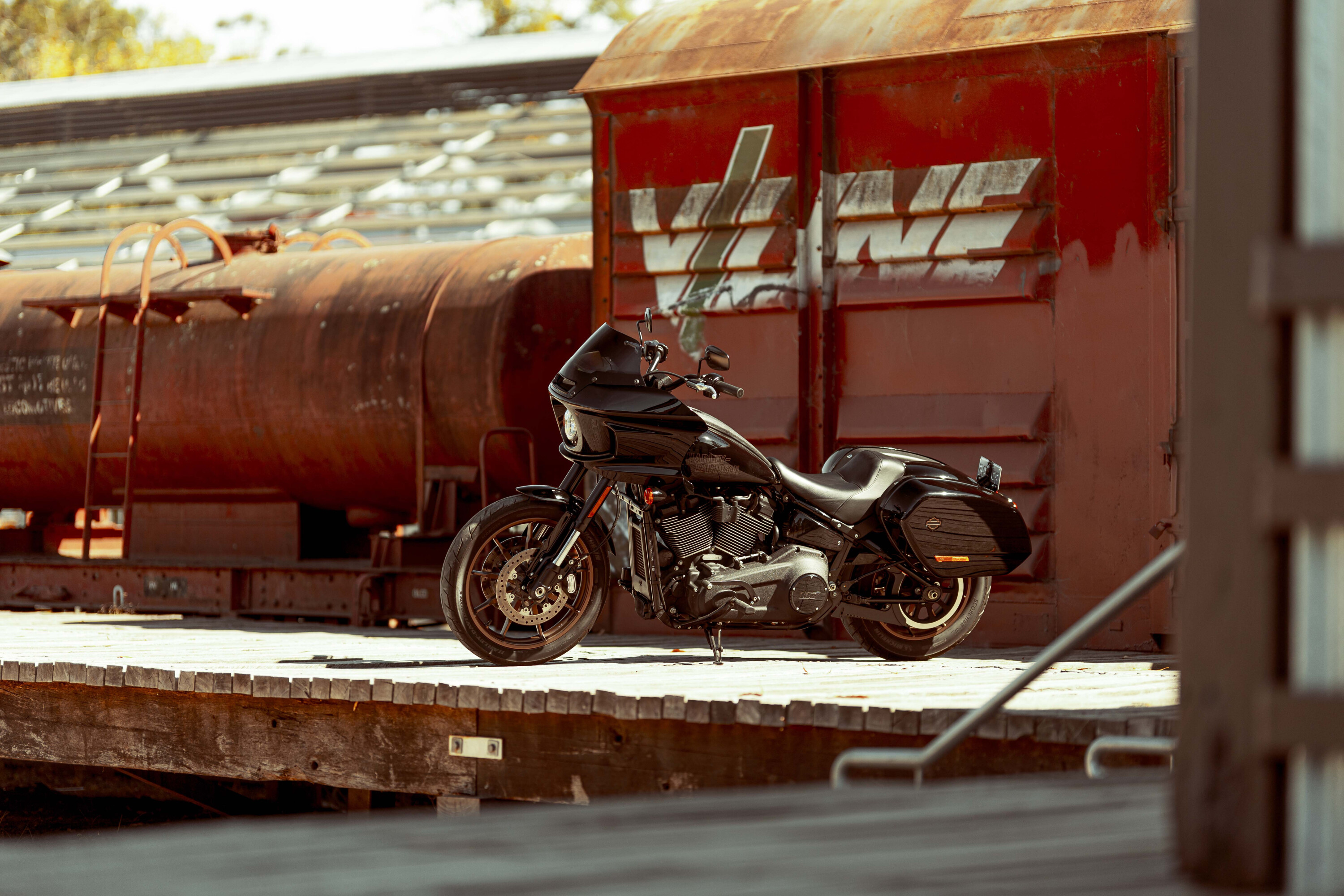
The murdered-out, black Low Rider ST looks sensational with its deep bronze wheels, dual shotgun exhaust, flat bars and stippled alloy drawing admiring glances from tradies and tourists alike on Healesville’s café strip.
1
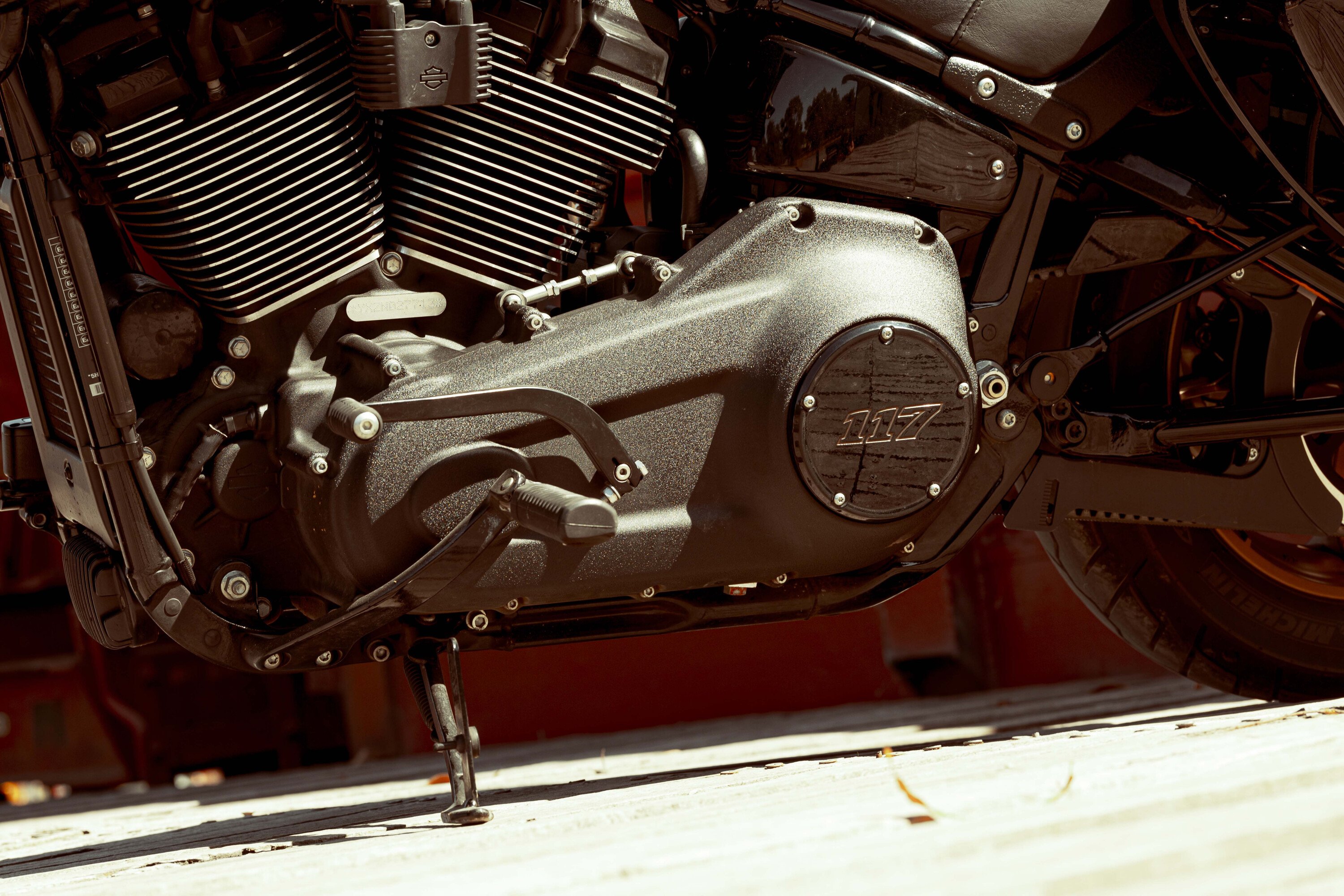
Along with updated styling, the the new FXLR ST receives the larger 117 cubic inch version of the ‘Milwaukee 8’ air-cooled V twin, previously only seen on the CVO models, hiking outputs to 105hp and 167nm – a not-insignificant 17nm of extra tyre-squishing grunt. This is aided by the ‘heavy breather’ air intake which is now positioned more aggressively forward of the engine.
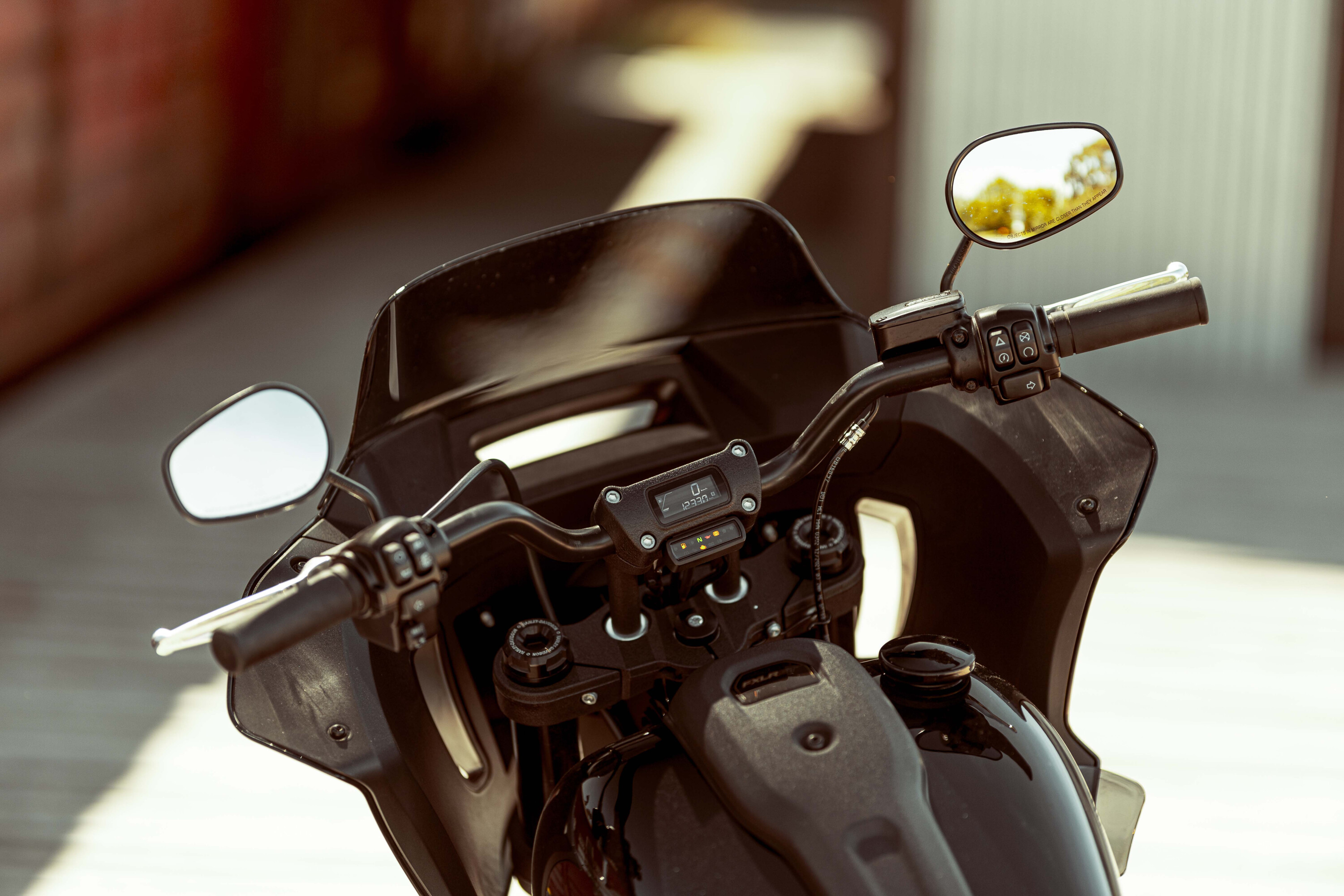
The analogue gauges get replaced by a tiny digital display sitting at a convenient viewing angle on the handlebar riser, contributing to the stripped back ‘no gauges’ feel from the cockpit. Functions including speedometer, gear, odometer, fuel level, clock, trip, range and tachometer are easily scrolled through via a bar mounted toggle switch.
As with all Harleys there’s an indicator switch under each thumb which feels very natural once you’re accustomed to it, and electronic cruise control now comes standard, operated by a simple to use switch on the left handle grip.
1
How do rivals compare on value?
At $36,995 (or $37,360 with White Sand pearl paint) the Low Rider Softail ain’t exactly cheap.
To find rivals that punch in the same weight category for performance and quality these days though you’re mainly looking at similarly priced European and US models.
The BMW R18 Classic comes with hard saddlebags and similar outputs from its 1800cc Boxer twin, but includes a large 10.25 inch TFT display, three riding modes, traction control, heated grips and a heated seat for $27,650. It’s feature-laden and a fair chunk of change cheaper, but missing some of the pugnacious attitude baked into the Low Rider’s gloss black flanks.
1
The Indian Darkhorse might be the most obvious competitor for the Low Rider ST with very similar specs including a 171Nm, 1890cc V-twin along with sinister black-clad styling. It also comes with remote locking saddle bags, 3 ride modes and low-speed cylinder deactivation for $38,995.
At the other of the spice scale sits the Ducati XDiavel 1260s, packing a significantly more powerful water cooled L-Twin and some edgy, in your face modern styling at $37,950, but I doubt many prospective Harley buyers are cross shopping with the XDiavel, or anything else really.
In reality I suspect the vast majority of buyers with a Low Rider ST shaped hole in the garage want something with a HD badge and nothing else will do.
1
Quality, comfort, space and storage
The Low Rider ST feels solid and brawny from the moment you climb on board, with the chunky forged aluminium levers and chest height fat grips that provide enough leverage to bench an Olympic barbell.
Once on the move though the FXLR ST doesn’t feel heavy, with it’s more central footpegs and flatter bars in comparison to the Road Glide ST giving the bike a more purposeful demeanour without compromising much in the way of comfort.
I did find my middle back aching slightly after some lengthy freeway jaunts to and from Victoria’s Yarra Ranges, with the reach to the bars resulting in a bit of a bar stool slouch, but this is something any owner would quickly rectify with some personalisation.
1
Engaging the super easy-to-use cruise control allowed me to stretch and adjust my seating position, and the seat itself is terrifically wide and supportive, allowing my behind to retain an acceptable level of feeling even after a full day of riding.
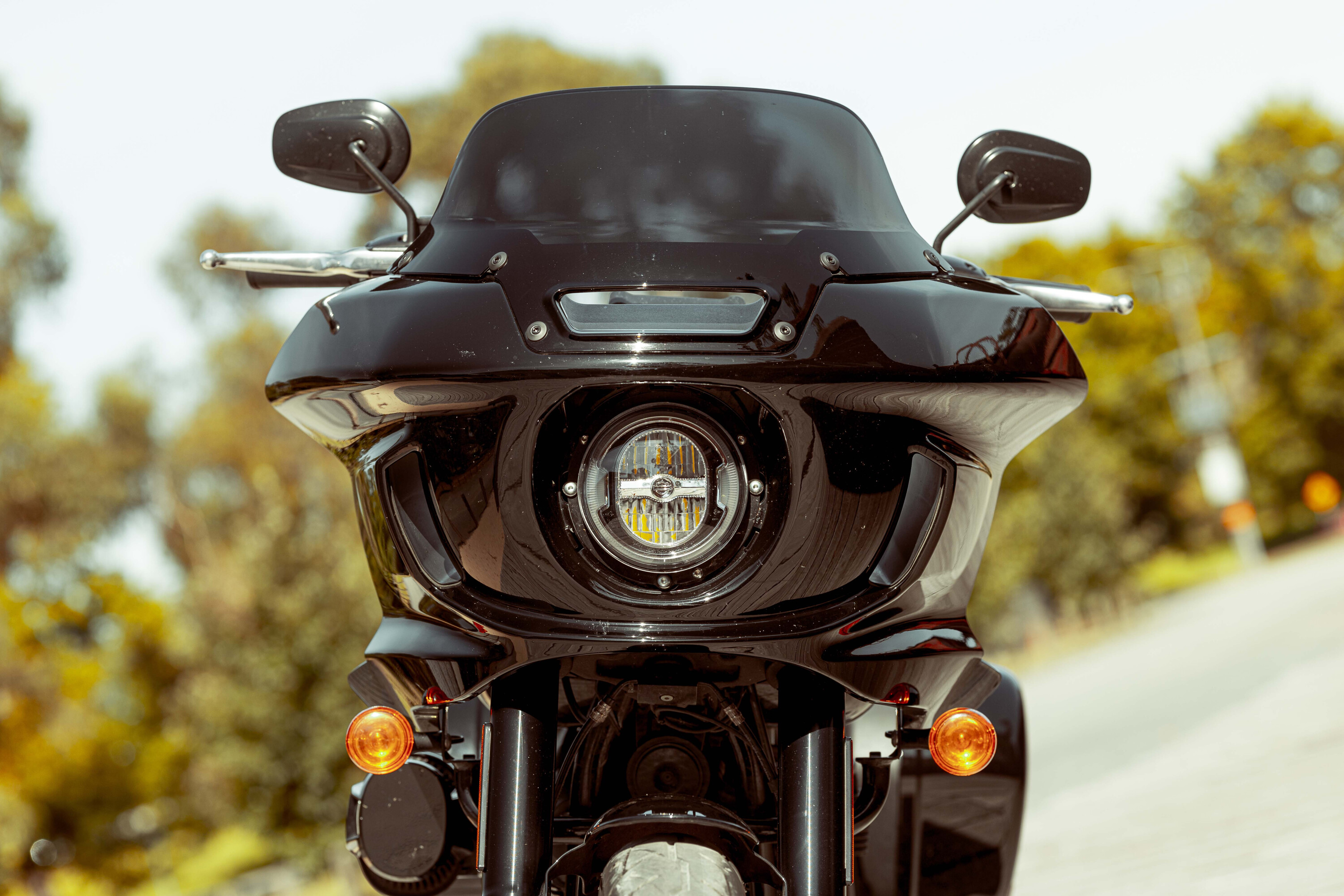
The Low Rider ST differs from the S version via a large frame mounted cowl adorning the front of the bike. In the flesh the screen is nicely proportioned and really suits the styling with panniers attached. It’s also quite effective at deflecting most of the wind blast off the head and shoulders, making long rides much less tiring.
1
Storage
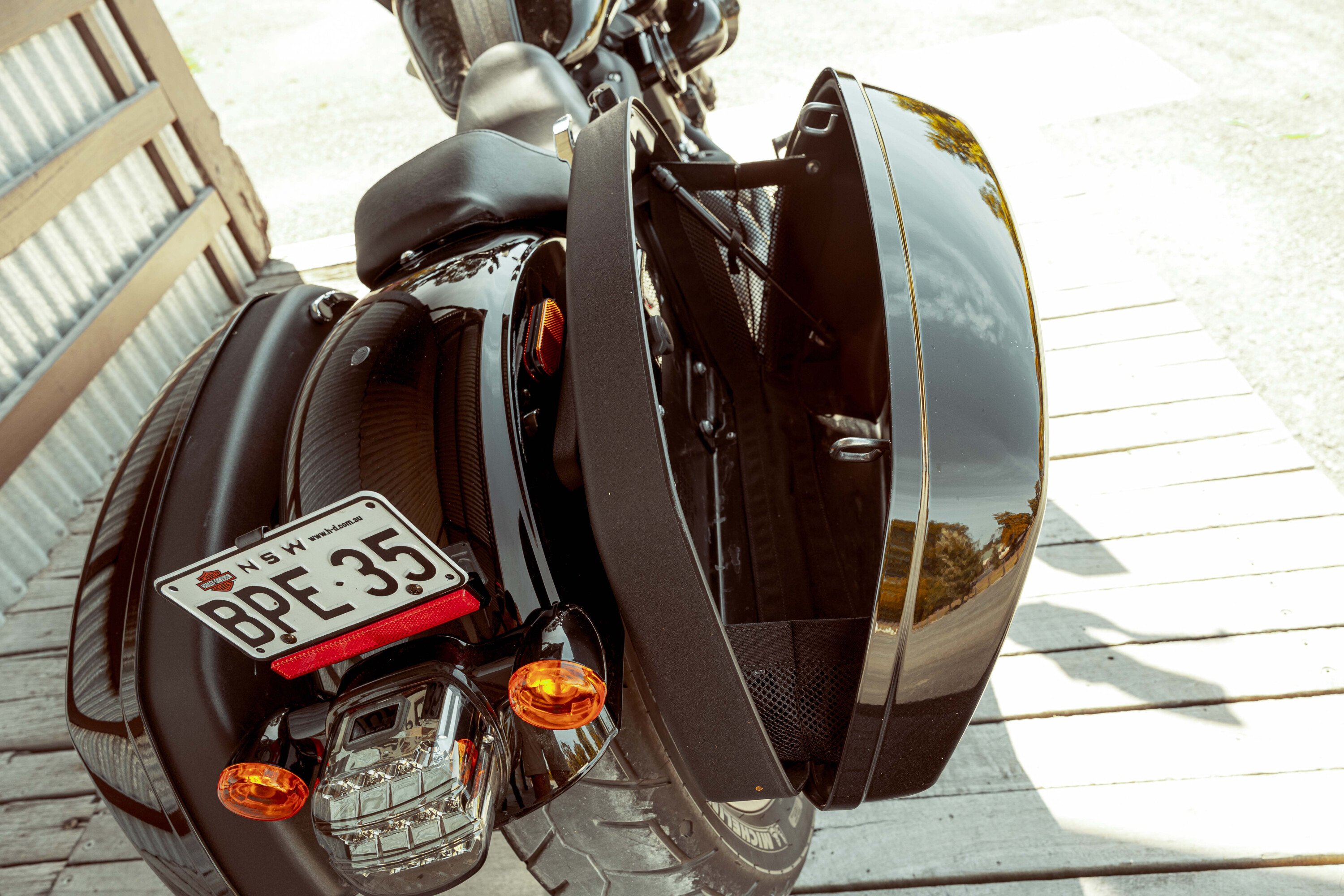
The Low Rider’s sturdy saddlebags combine for a total of 53.6 litres of luggage space, easily negating the need for a backpack if you need to stow a couple of six packs and a sleeping bag.
They’re a cinch to quickly stow your wallet or jacket in without needing to turn off the bike thanks to the keyless ignition, or if you want to leave the saddlebags at home they pop off in seconds thanks to the internal quick release mechanism. Gas dampers make opening and closing the saddlebags nice and smooth, but reduce the aperture size somewhat.
1
What is it like to ride?
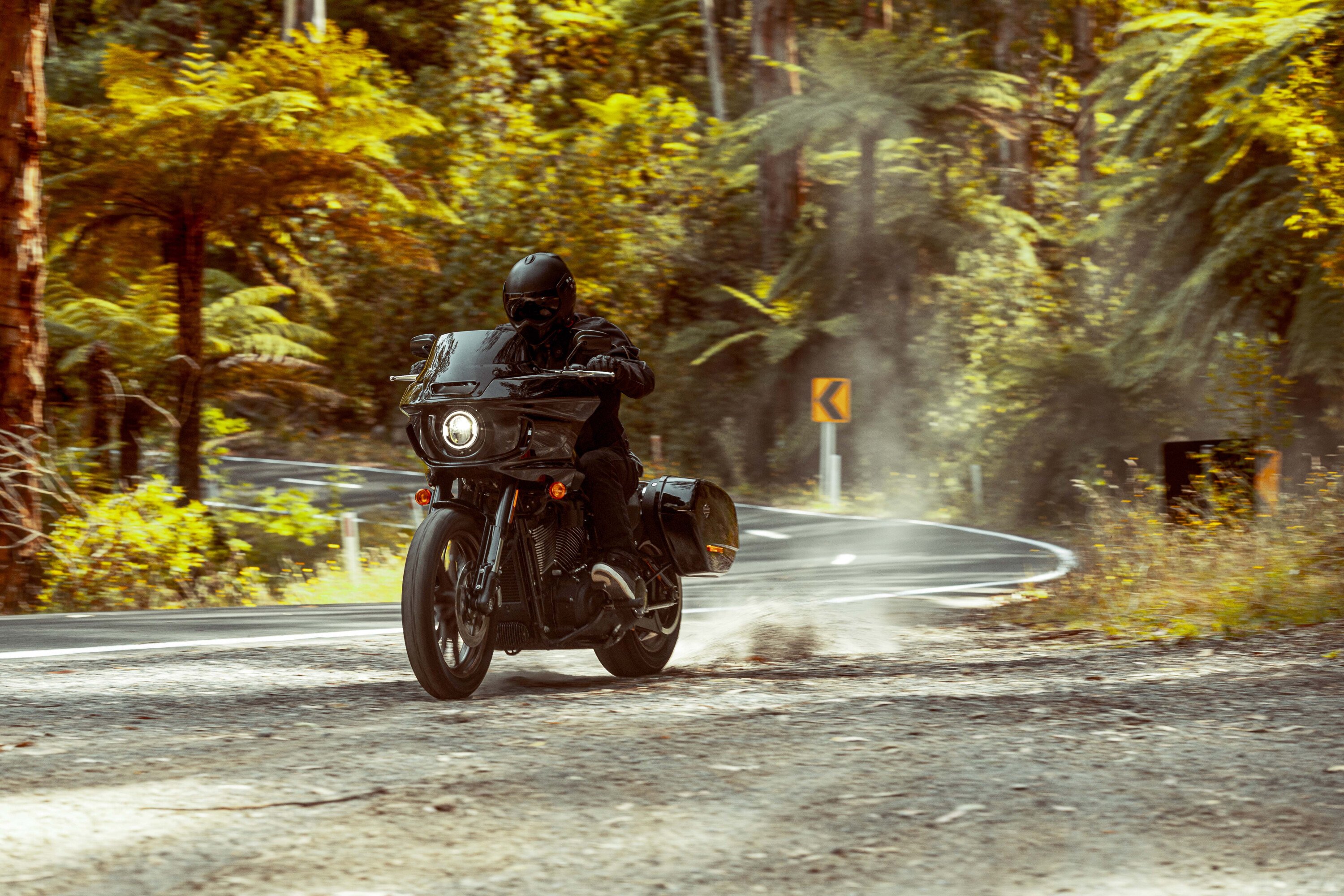
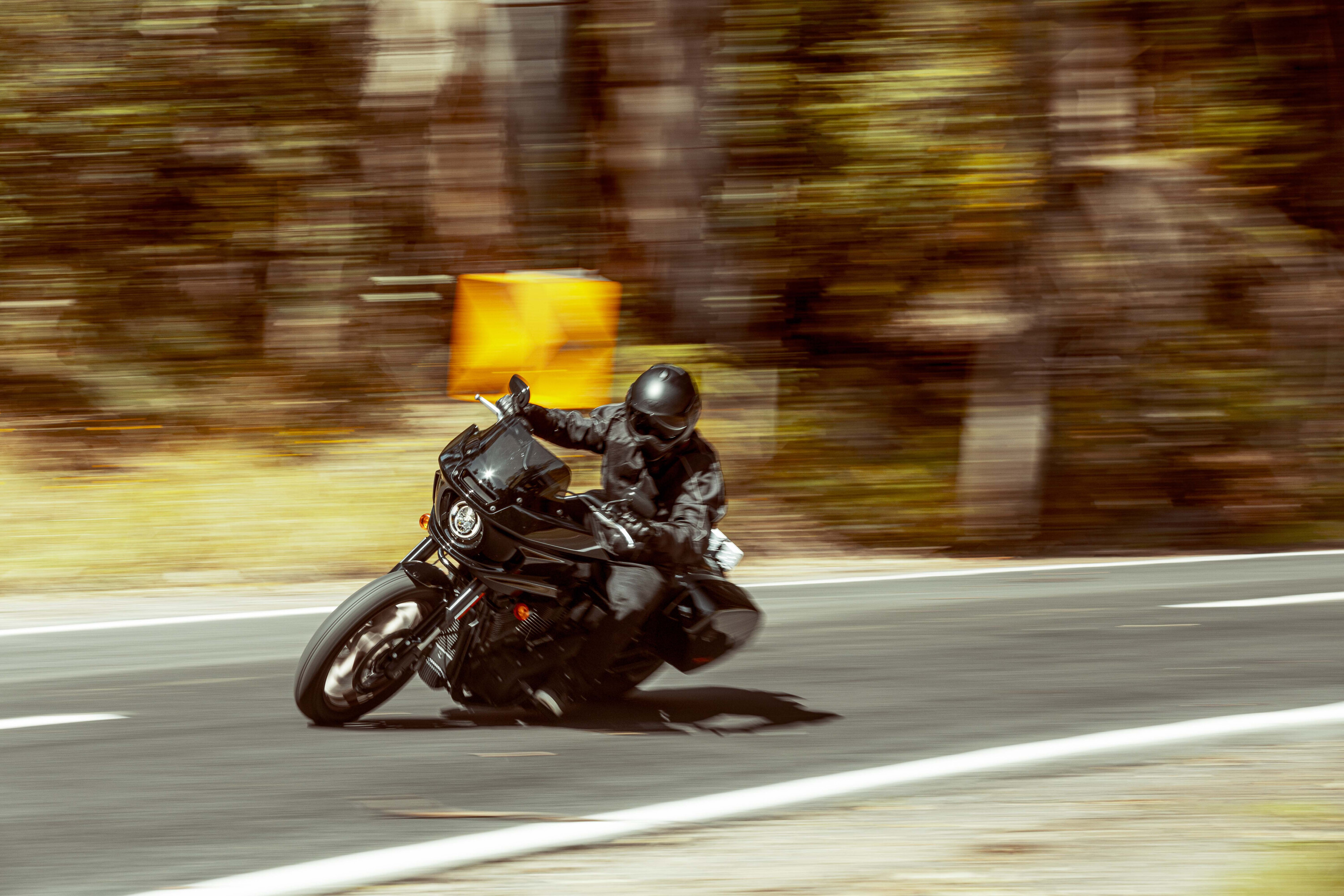
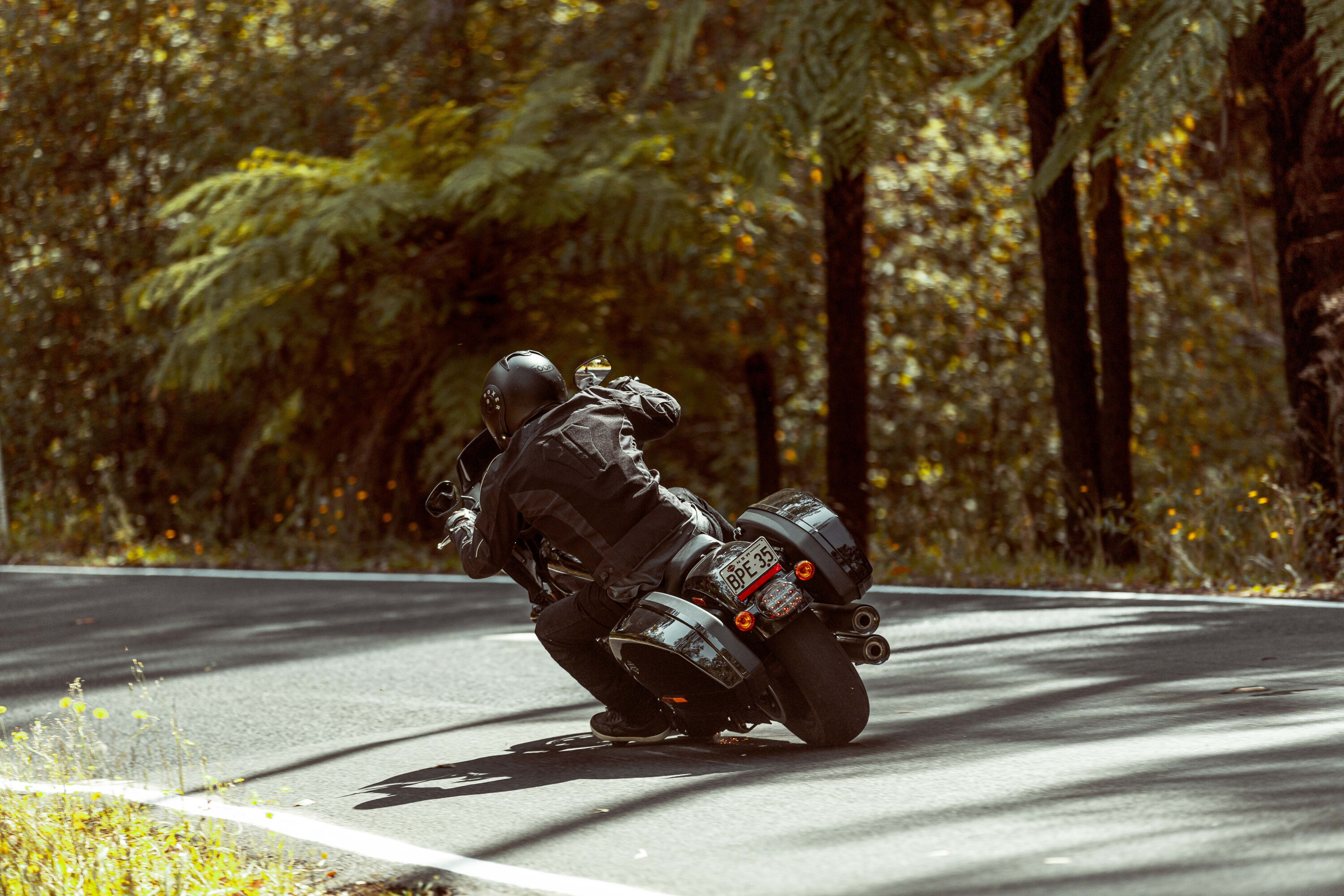
Once on the move the Low Rider ST glides through turns with a grace and fluidity that belies its size, with 31.3 degrees of lean angle on each side allowing it to be hustled through bends at a respectable pace before the hero knobs start kicking up sparks.
The Low Rider’s pegs are positioned slightly further rearward than its Road Glide sibling, making spirited riding feel a bit more natural. The damping from the front and rear feels well judged, ironing out all but the most egregious semi-trailer crafted road chasms, while still holding a line with aplomb though the Black Spur’s tightening sweepers.
1
Inspired by the improbably fast cruisers in the US ‘King of the Baggers’ racing series I even attempted to harry the occasional sport bike, but although the front 4 piston callipers offer good stopping power the Low Rider’s mass and compliant suspension make too many trail braking shenanigans inadvisable. Overall though I was pleasantly surprised by the ST’s mountain pass competence for a big cruiser.
Back in town I found myself starting to sweat a bit, courtesy of the humid weather and the heat accumulating from the big air-cooled twin while sitting stationary at Melbourne’s typically constipated intersections. Low speed manoeuvrability is fine though, with enough steering lock to confidently negotiate your way to the front of the traffic light queue when needed.
1
On the odd occasion I needed to swallow my pride and put my feet down for a walking pace turn, the low seat height made it possible with a degree of dignity.
This was aided by the surprisingly positive attitude I received from many drivers, some of whom were practically falling over themselves to make room for me in traffic.
I like to think maybe it was because people thought I was a tough outlaw bikie, but the friendly nods and waves make it more likely that there are just lots of Harley-Davidson fans out there.
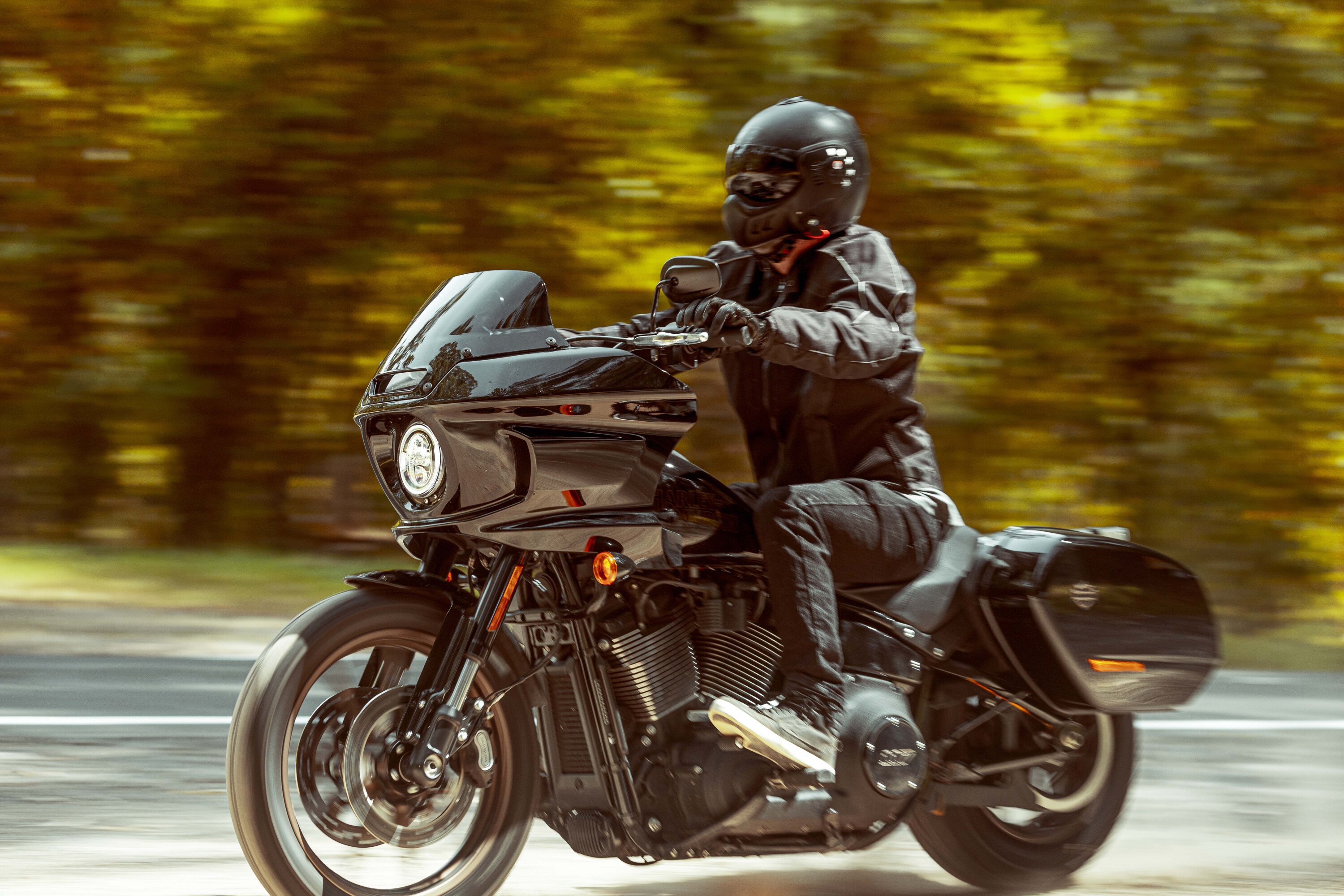
Drivers will certainly never be taken by surprise by the ST, thanks to the advance warning from the thumping air-cooled V-twin, with its milk-carton sized pistons creating pulses that massage your inner ear as it throbs along just above idle on the highway, before building to an angry bark when you need to blast past lane hoggers.
1
The aquifer sized reserves of torque from as little as 2000rpm negate the need to thrash the engine, but it pulls very smoothly throughout the rev range and the bass thump from the exhaust makes it hard to resist hanging onto gears for a bit longer than strictly necessary.
Forward progress is impressive without ever becoming hair raising, though one of the first things I’m sure nearly all owners will do is ditch the restrictive stock mufflers in favour of an item that liberates more performance, and traffic light throttle blipping antics.? Back to top
How is it on fuel?
Range from the 18.9-litre tank is decent, with over 300 kilometres of cruising between refills easily possible.
How safe is it?
The Low Rider ST packs ABS as standard but goes without ride modes or traction control.
Considering the normal use for this type of bike though the lack of an electronics suite isn’t really an oversight – it’s such an inherently stable motorcycle you’d have to be trying quite hard to break traction, and while you can find stunt riders wheelying Low Riders on YouTube that’s certainly not something that’s going to happen without some engine mods and a sadistic lack of sympathy for the clutch.
1
VERDICT
Harley-Davidson’s Low Rider ST is a stylish cruiser with plenty of attitude and a bit more cornering prowess for those who might seek out a twisty road occasionally.
Having never been a cruiser rider I wasn’t sure I would really gel with the ST but it was definitely with some reluctance that I grudgingly slid the Low Rider’s keys back across the desk at Harley Heaven.
It’s not cheap, but the styling, build quality and smoothly charismatic engine make the value equation seem not unreasonable. And there is still something about riding a Harley-Davidson beyond just the nuts and bolts, an undeniable cool factor that’s infectious to be a part of.
If I was to own the Low Rider ST I would option it with the excellent sound system that comes standard on the Road Glide models and bin the stock mufflers for something that sings the Harley war cry with more fervour, but the lovely Low Rider ST hits a real sweet spot in the Harley range – one that doesn’t require you to get measured up for sleeve tattoos before you can appreciate it.
Specifications
| 2022 Harley-Davidson Low Rider ST | ||
|---|---|---|
| Engine | 1923cc air cooled V-twin | |
| Power @rpm | 78kW @ 5020rpm | |
| Torque @rpm | 168Nm @ 3500rpm | |
| Transmission | 6 speed manual | |
| Body | Cruiser | |
| Seat height | 720 mm | |
| Wheelbase | 1,615 mm | |
| Saddlebag capacity | 53.6 litres | |
| Weight | 327 kg | |
| Fuel / tank | 91 RON / 18.9 litres | |
| Fuel use L/100km | 5.5 l/100 km (claimed) | 5.5 l/100 km (on test) |
| Front fork | Single cartridge 43 mm inverted with aluminium fork triple clamps; single rate spring | |
| Rear shocks | Hidden, free piston, coil-over monoshock; 56 mm stroke; hydraulic preload adjustment | |
| Brakes | 4-piston fixed front and 2-piston floating rear | |
| Wheels | Dark bronze, Radiate cast aluminium wheel | |
| Tyres | Michelin Scorcher “31” front and rear | |
| Tyre size & spare | Front 110/90B19, rear 180/70B16 | |
2024 Ford Mustang Mach-E pricing announced!
UPDATE: 2024 Ford Mustang Mach-E reservations to open next week
Jordan Hickey & Henry Man
Ford Australia has confirmed pricing and features for the Mustang Mach-E will be announced on Wednesday, May 10.
The electric SUV will become available to reserve online on “the afternoon of May 10”. According to the brand, the first allocation of Australia-bound Mach-Es will commence production “imminently”.
To purchase a Mach-E, customers must create an account on Ford’s consumer website, with a $1000 reservation fee. All buyers must facilitate ordering and servicing through Ford’s limited ‘approved EV’ dealer network.
Whether the base Mach-E Select will feature new lithium-iron-phosphate (LFP) batteries in Australia remains to be seen.
1
This week, Ford North America confirmed details for the updated Mach-E, headlined by the new cathode material – supplied by battery maker CATL – on standard range variants.
LFP benefits from a longer life cycle, is thermally safer, and doesn’t use raw materials such as cobalt to be cheaper to manufacture overall.
Despite being the same 70kWh usable battery size and the LFP chemistry typically being less energy dense than traditional lithium-ion packs, it has increased driving range on the rear-wheel drive (RWD) for a targeted 402-kilometre claim on the strict EPA testing cycle (a five-kilometre improvement).
A Ford Australia spokesperson told Wheels that it had “no news to share at this time” when asked whether the update will reflect here when it launches at the end of this year.
1
Prices for the Tesla Model Y rival have been cut by between US$3000 to US$4000 (AU$4480 to AU$5970) depending on the variant in the Blue Oval’s home country.
Ford states that the LFP battery now enables owners to charge to 100 per cent “more frequently” via an AC slow charging point, while DC fast charging reaches from 10 to 80 per cent in 33 minutes claimed (five-minutes quicker).
It’s already found on entry-level EVs, including the base Tesla Model Y RWD, MG ZS EV standard range, and GWM Ora Standard Range.
Mustang Mach-E standard range all-wheel drive variants also received a range bump and improved power, but only the standard range RWD is expected to land in Australia, with higher-end extended range models not getting any battery and range updates.
Our earlier story, below, continues unchanged.
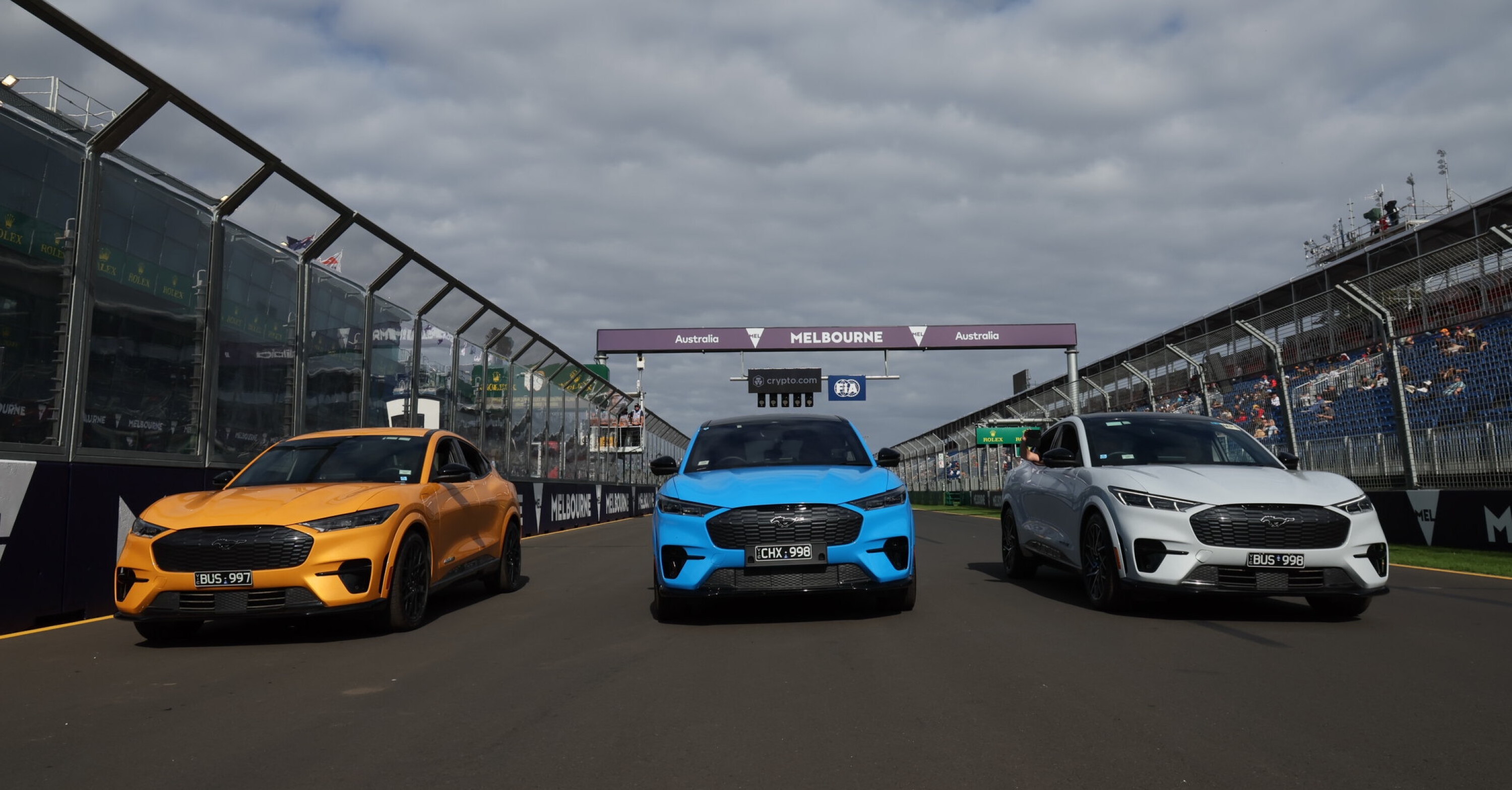
1
The story to here
March 2023: Ford Mustang Mach-E confirmed for Australia
The 2024 Ford Mustang Mach-E electric SUV has been confirmed for Australia – nearly four years since it was first unveiled
Snapshot
- Ford Mustang Mach-E locked-in for Australia
- Mid-size electric SUV due here in late 2023; three variants on offer
- GT is u201cthe quickest car Ford will sell locallyu201d, set to rival EV6 GT and Model Y Performance
Ford Australia has confirmed the mid-size Mustang Mach-E – a rival to the Tesla Model Y, Kia EV6, Hyundai Ioniq 5 and Volkswagen ID.4 – will arrive in local showrooms “from later this year (2023).”

2
It will follow the all-electric E-Transit commercial van due imminently, and it’ll be joined by the smaller E-Transit Custom confirmed for 2024 – plus the Escape Plug-In Hybrid medium SUV on sale now.
However, Ford’s local arm has “no plans to introduce” the new, Europe-destined Explorer EV based on the Volkswagen Group MEB platform shared with the ID.4 – meaning the Mach-E (riding on Ford’s existing in-house platform) will be its only all-electric passenger vehicle to rival the likes of Tesla, Kia, Hyundai and Volkswagen.
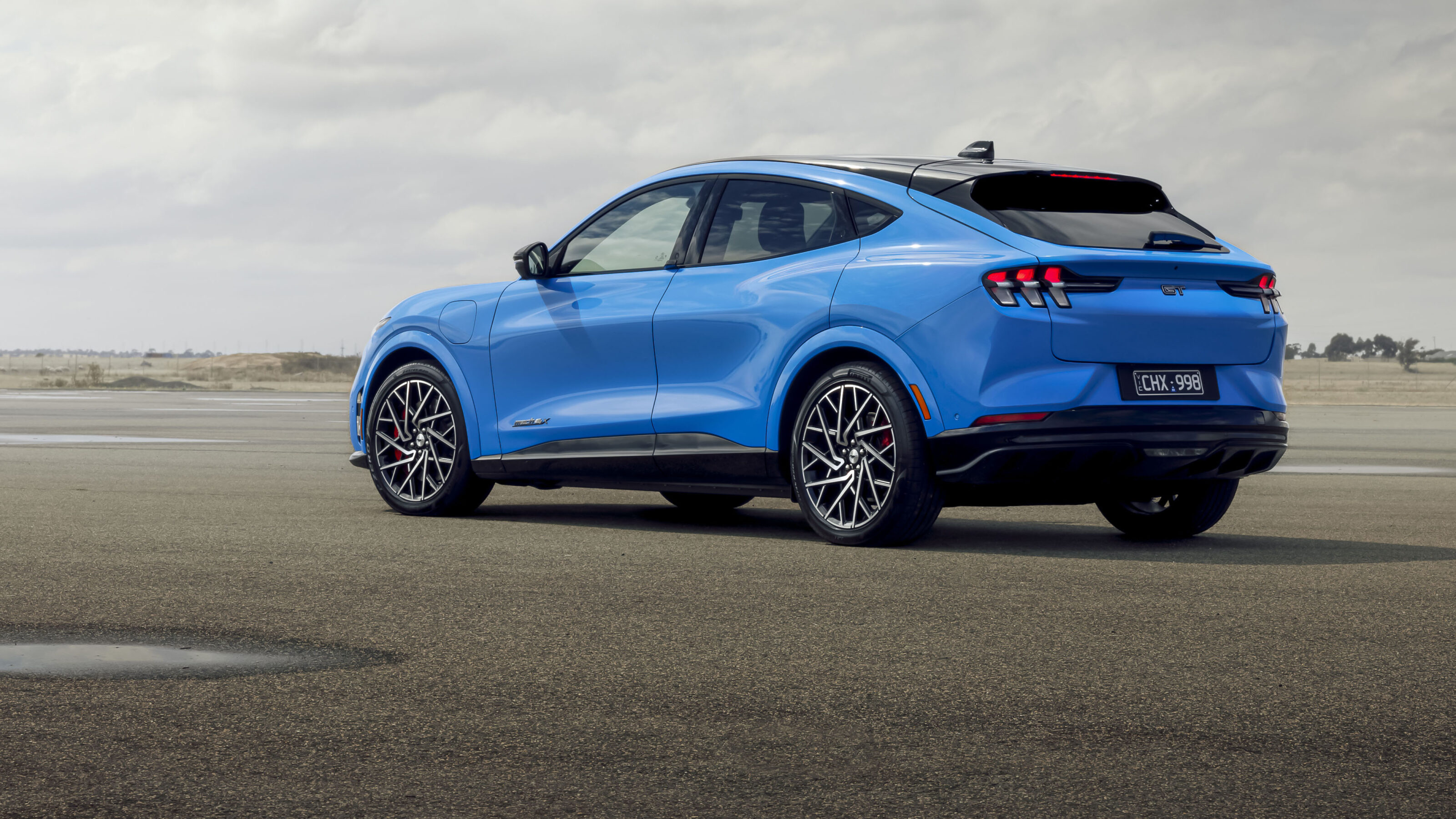
2
The confirmation of the Mustang Mach-E for Australia is no real surprise, with sales commencing in New Zealand this year – and Ford took us to Detroit for a spin in late 2022. You’ll find that written and video review linked below.
“At its core, the Mach-E has been designed to live up to its Mustang heritage, using modern technology to give drivers a new, exhilarating experience behind the wheel,” said Ford Australia.
The local Mach-E line-up – sourced from Mexico – will kick off with the entry-level Select grade, followed by the mid-spec Premium and the flagship GT performance variant.
It is tipped to start from around $70- to $75,000 before on-road costs for the single-motor Select rear-wheel-drive, rising to approximately $100,000 to $110,000 plus on-roads for the dual-motor, all-wheel-drive GT – similar to the Tesla Model Y and Kia EV6. Ford, for its part, has offered no comment on pricing.
Under the skin, the base Select features a rear-mounted 198kW/430Nm single electric motor. This variant currently has a 70kWh lithium-ion battery pack and a WLTP-rated 430-kilometre driving range in other markets.
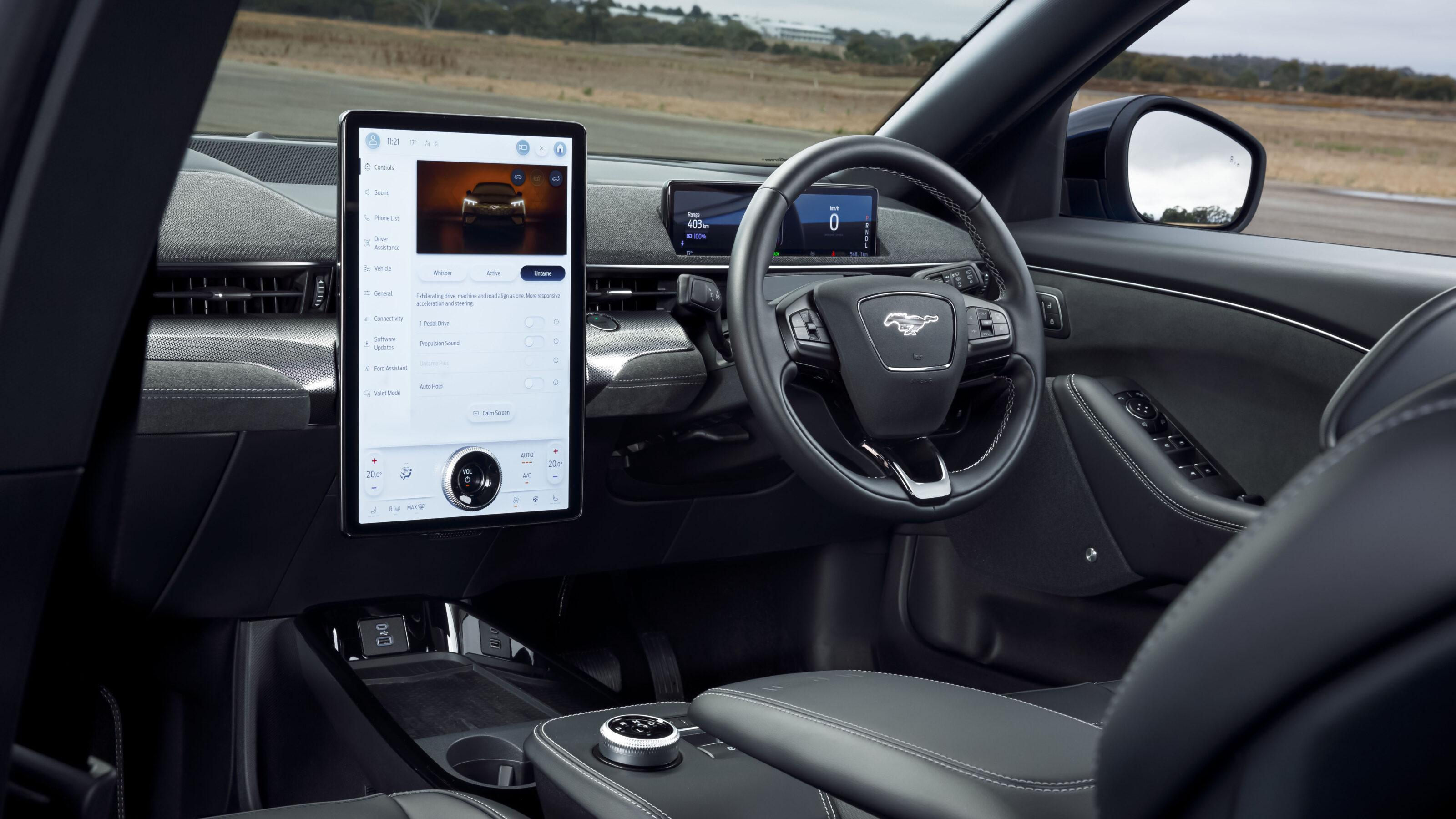
2
A new lithium-iron-phosphate battery pack will commence production this year, enabling a range of around 470 kilometres, but it’s not yet confirmed which pack will feature in Australian models.
The step-up to the mid-spec Premium will see the addition of a larger 91kWh battery and a more-powerful 216kW and 430Nm electric motor, allowing for an estimated driving range “close to 600km.”
While the top-spec GT retains the Premium’s larger 91kWh battery, it gains an electric motor mounted to the front axle, for a 358kW/860Nm total system output.
However, as with the Kia EV6 GT and Tesla Model Y Performance, this comes at the cost of range, with the Mach-E GT limited to 490 kilometres.

2
Other additions for the GT include MagneRide active suspension, beefier performance brakes, bespoke tyres, and a track-focused ‘Untamed Plus’ drive mode.
How much will it cost?
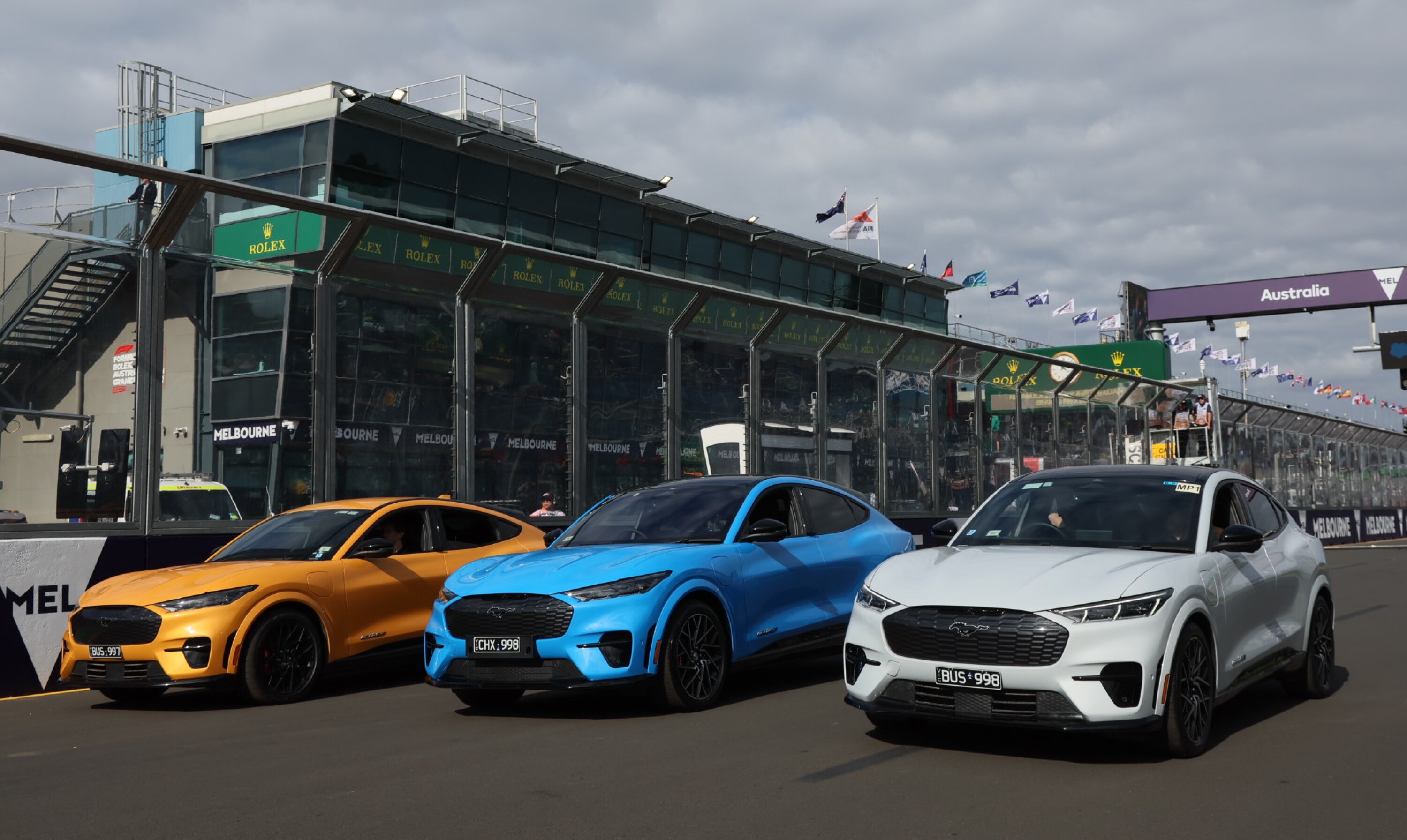
Australian pricing has yet to be announced but is coming, with Andrew Birkic, at the Australian Grand Prix, saying: “we haven’t announced pricing yet, but we will in the not too distant future.”
Mach-E is a big achievement for Ford Australia, and its arrival here has been a long journey hinging on a blend of customer demand, cost and viability, and the securing of supply.
In light of Ford’s overseas plants increasing their supply load, Birkic continues: “and really what we’ve got now is that formula where we can do that… that allows us to bring [Mach-E] in not only in sufficient quantities, but also with a sufficient mix.”
MINI MATCH UP: Ford Mustang Mach-E GT v Tesla Model Y Performance v Kia EV6 GT
| Ford Mach-E GT | Tesla Model Y Perf. | Kia EV6 GT | |
|---|---|---|---|
| Pricing (before on-road costs) | $100,000 u2013 $110,000 (est.) | $98,435 | $99,590 |
| Power | 358kW | 393kW** | 430kW |
| Torque | 860Nm | 660Nm** | 740Nm |
| 0-100km/h (claimed) | 3.7sec | 3.7sec | 3.5sec |
| Battery size | 91kWh | 75kWh* | 77.4kWh |
| Driving range (WLTP) | 490km | 514km | 424km |
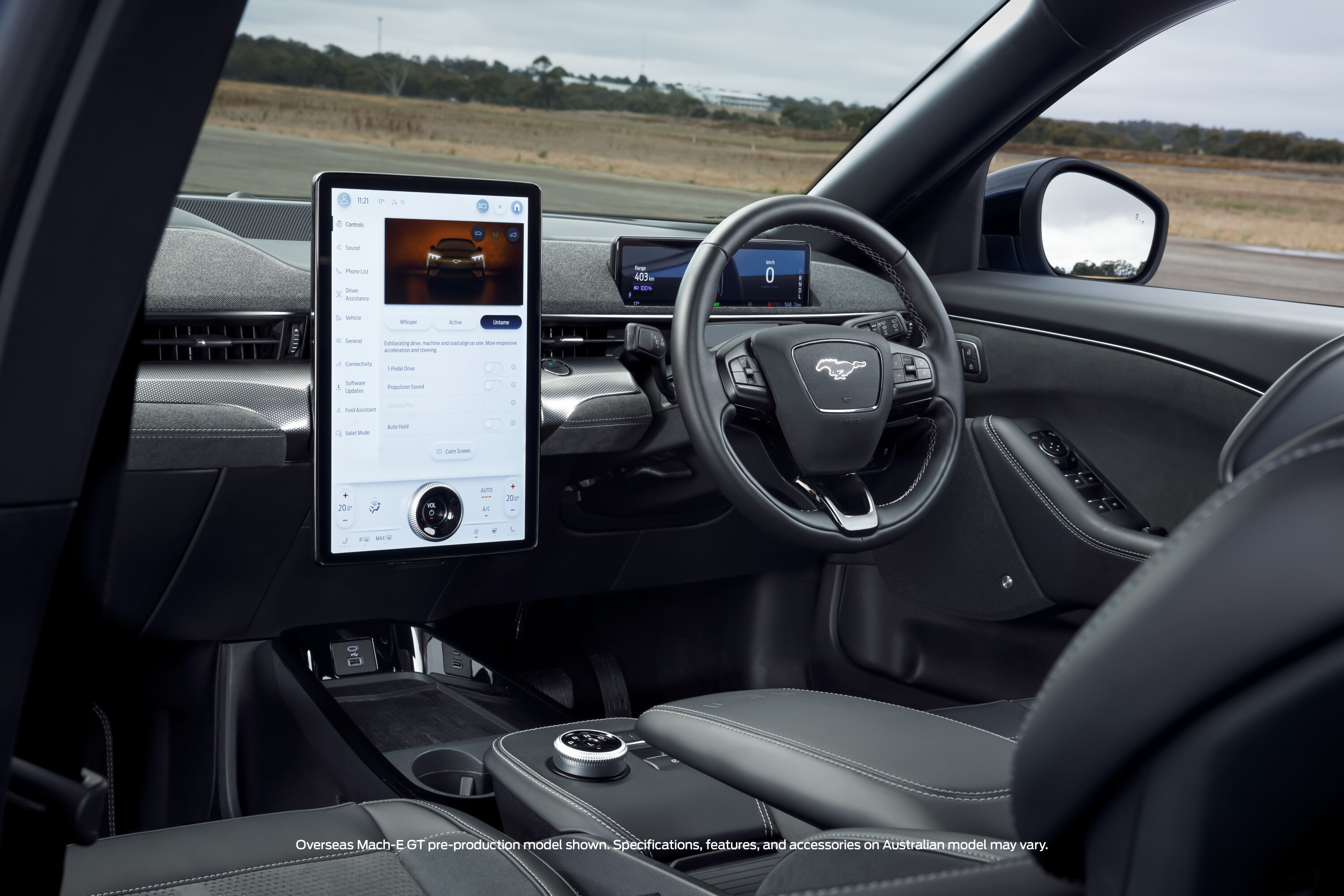
Ford Australia has confirmed every Mustang Mach-E will be fitted with a panoramic sunroof, while the vehicle’s 15.5-inch portrait-orientated Sync 4 infotainment system is expected to introduce Tesla-style over-the-air software updates for Ford vehicles in Australia – rather than the infotainment-only wireless updates seen previously.
SPEC BATTLE!
For more information on the Mustang Mach-E’s technical specifications and how it stacks up against its competitors, you can read our spec comparison against the Tesla Model Y, Kia EV6 and Volkswagen ID.4 by clicking below.
The 2024 Ford Mustang Mach-E will arrive in Australia later this year, with pricing and local details to be announced closer to its launch.
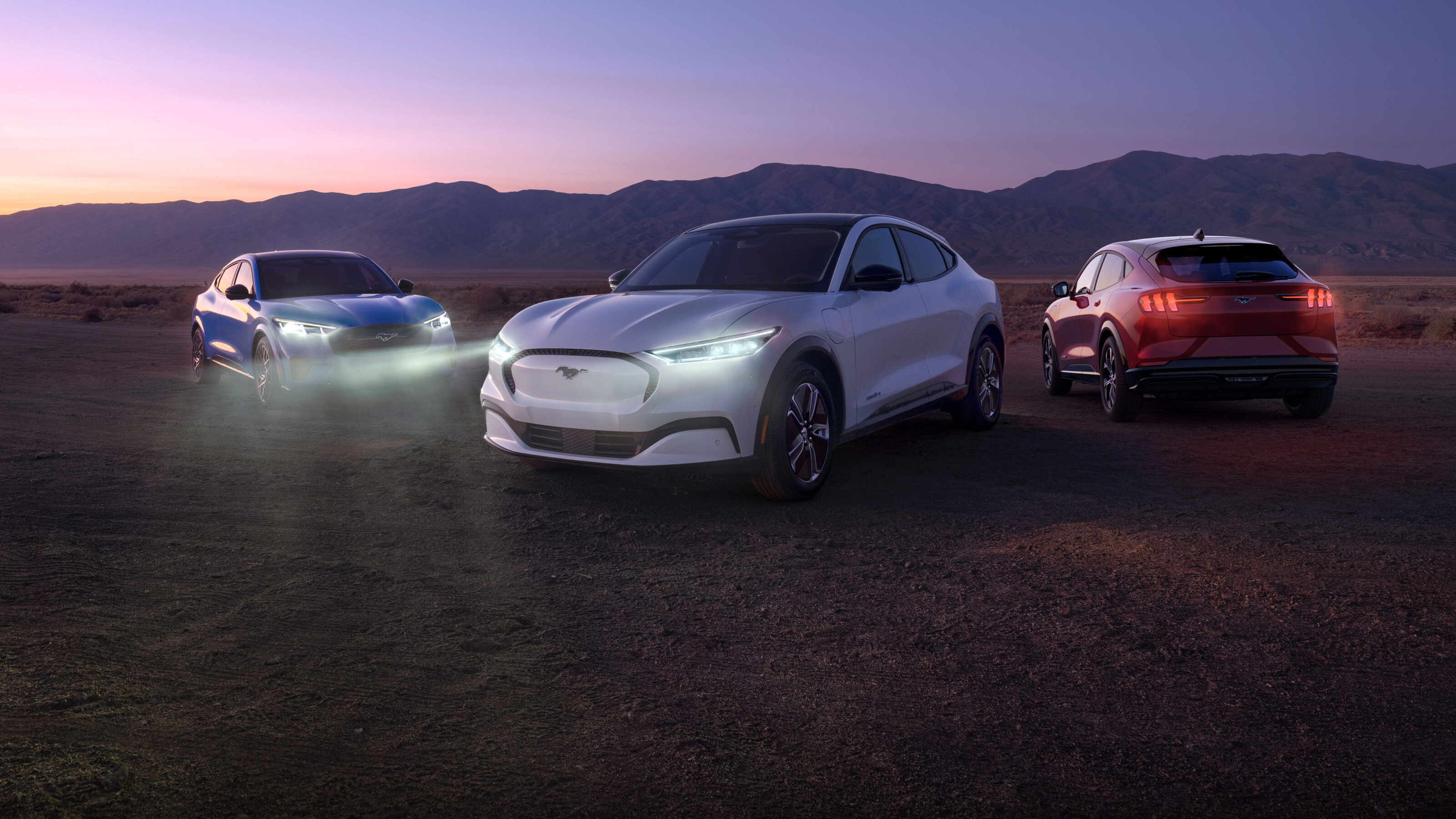
2
MORE
Everything Ford
1
⚡ More EV stories to help you choose the best car for your needs
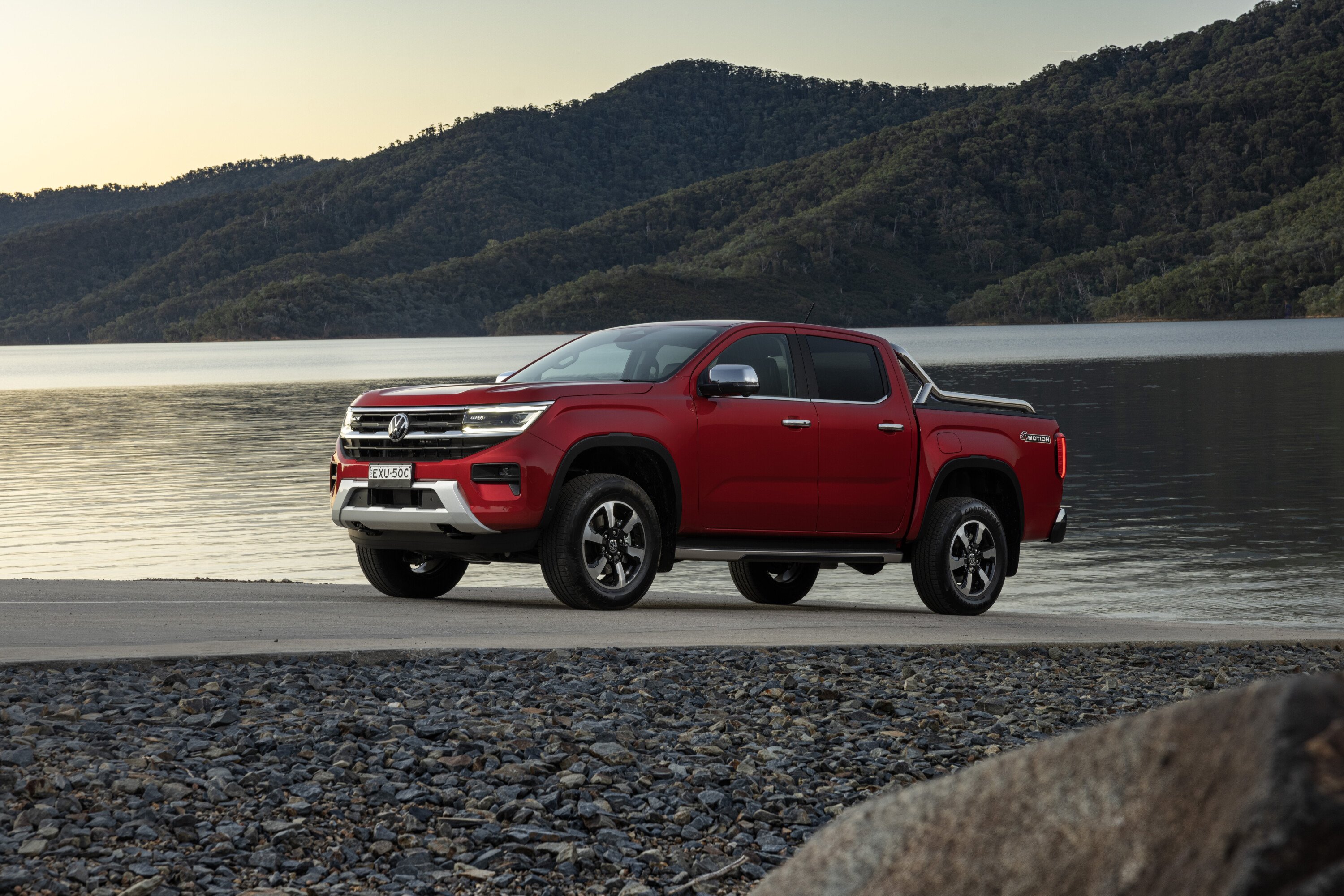
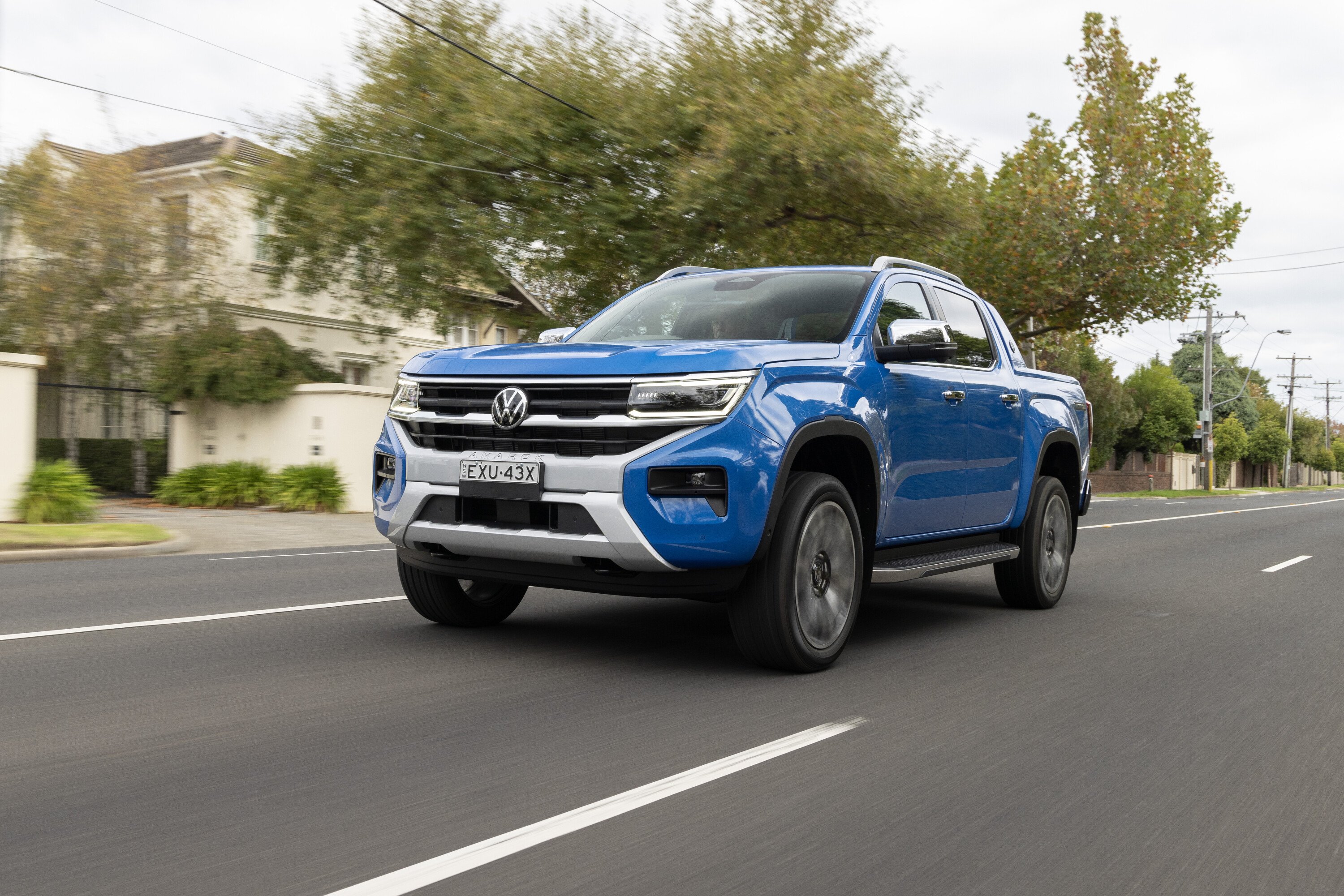
It could soon be more affordable to buy a new Volkswagen Amarok with V6 power.
Currently, the cheapest V6 version of the new, second-generation Amarok – which is now on sale in Australia – is the mid-spec Style variant meaning you’ll need at least $70,990 before on-road costs to get the 184kW/600Nm 3.0-litre V6 turbo diesel.
But VW Australia’s director of commercial vehicles, Ryan Davies, has told Wheels it’s possible that the bigger capacity diesel could be fitted to less expensive trim levels, perhaps as soon as early next year.
May 12: New Amarok driven in Australia!
Get the full story at the link below.
Story continues…
When asked if VW could offer more affordable Amarok V6 models, Davies replied:
“That’s a good question and one that we have considered. And once we get over the hump of this launch period we will definitely be going back to the factory to see if there’s any opportunity to expand that engine into the Life range for example.”
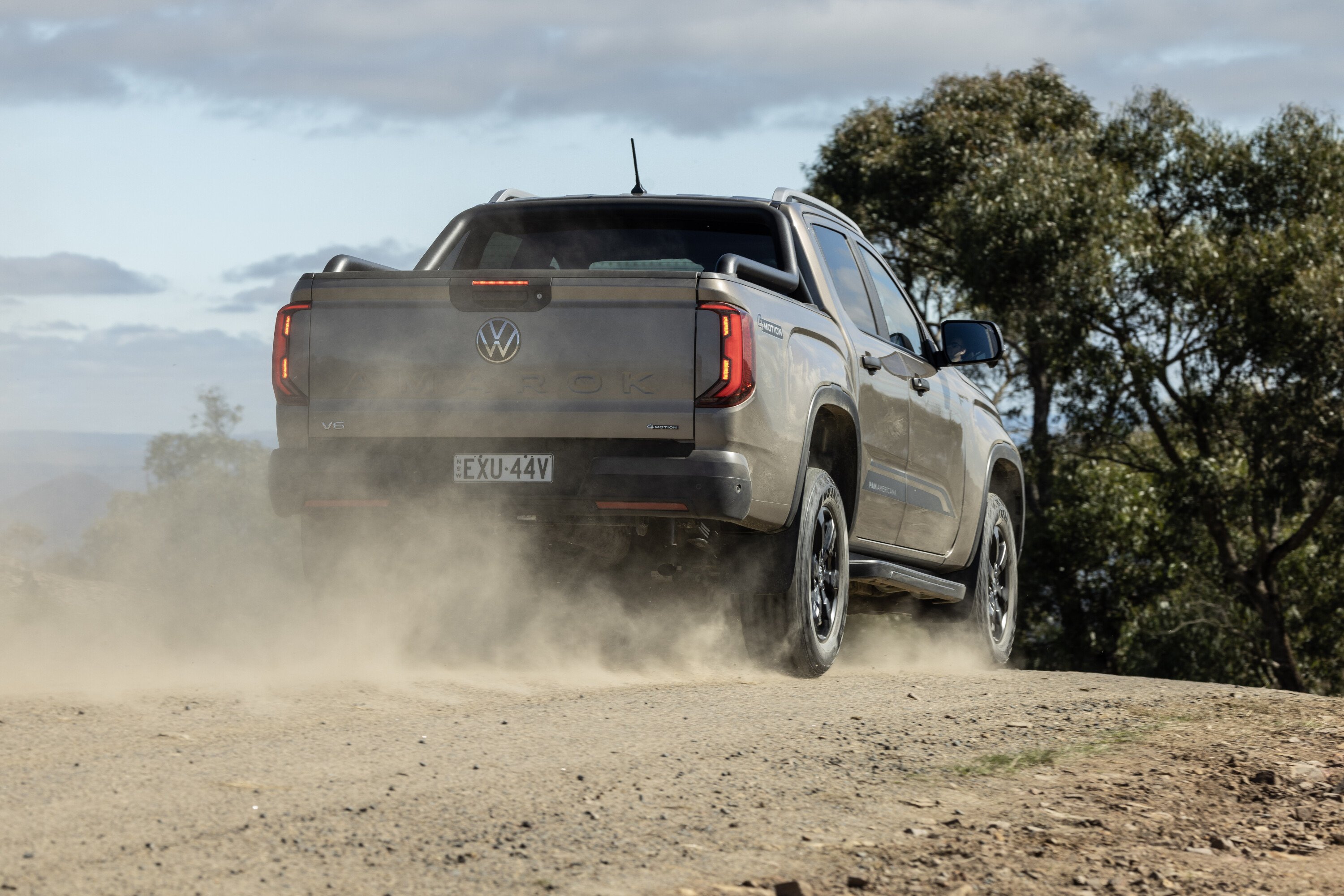
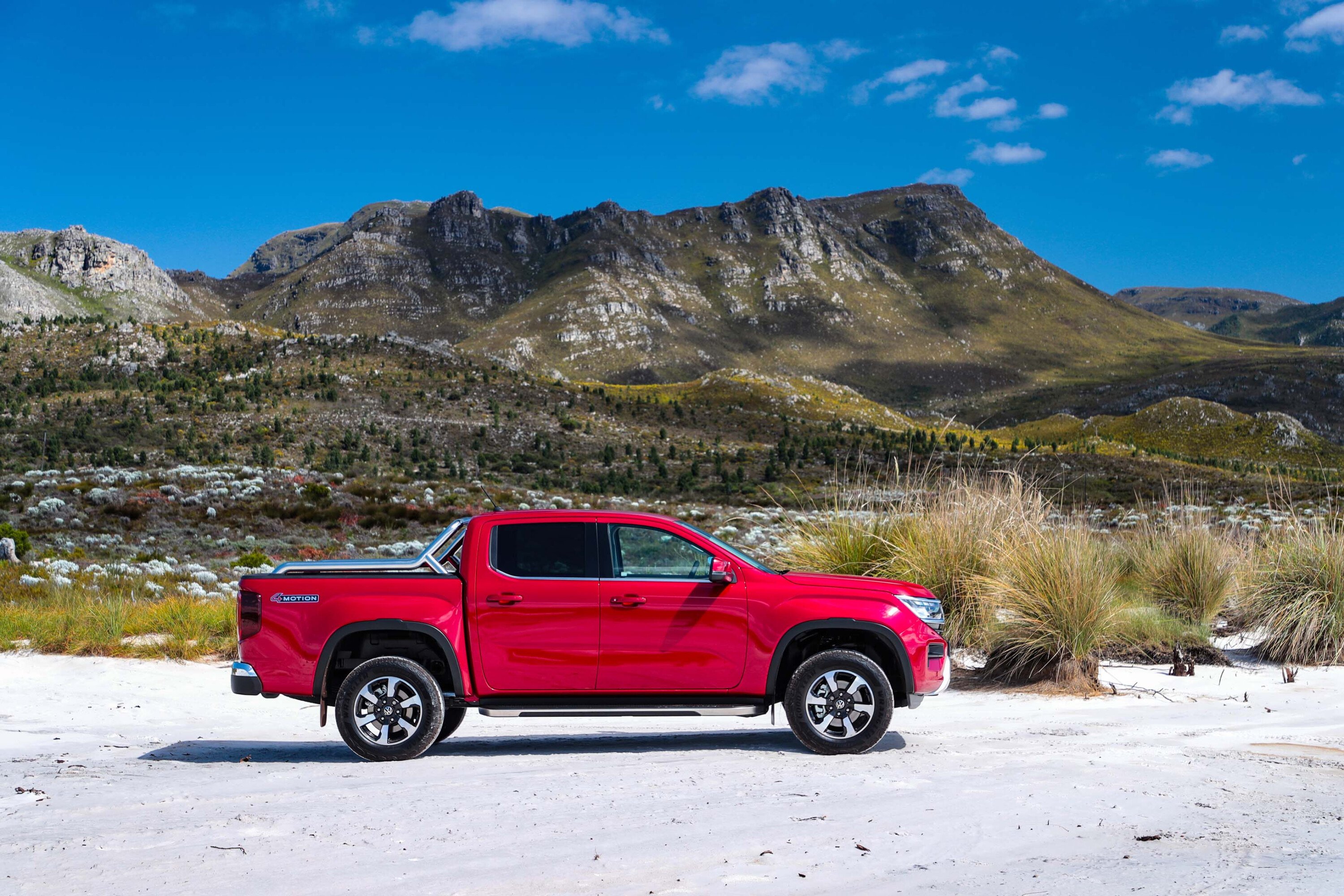
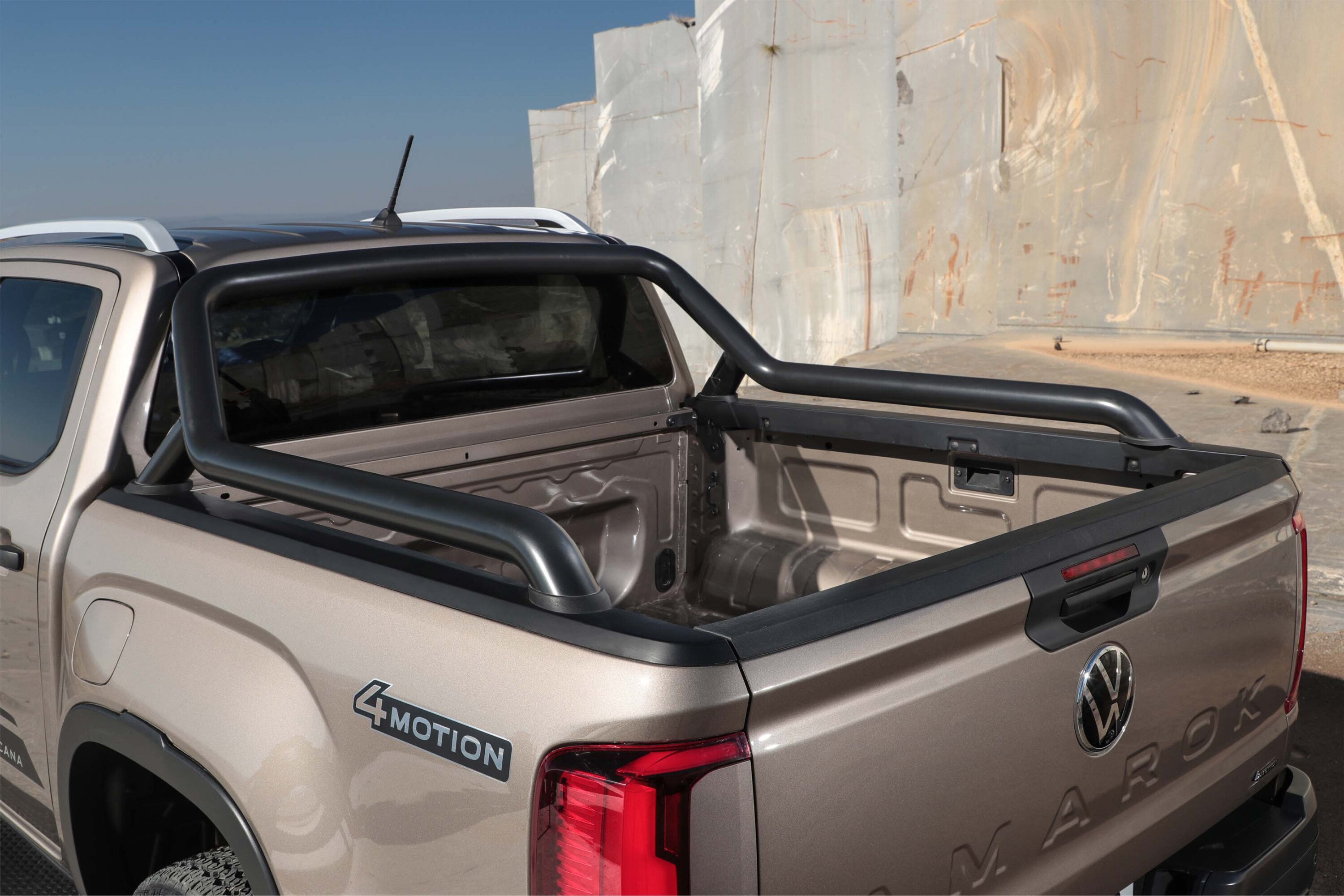
The Amarok line-up currently consists of five trim levels – Core, Life, Style, Panamericana and Aventura – with prices starting at $52,990 before on-roads for a 2.0-litre diesel Core and topping out at $79,990 for a flagship Aventura V6, again before on-road costs.
| Variant | Engine | Price |
|---|---|---|
| Core | 2.0L single-turbo diesel + 6spd auto. | $52,990 |
| Life | 2.0L bi-turbo diesel + 10spd auto. | $56,990 |
| Style | 2.0L bi-turbo diesel + 10spd auto. | $66,990 |
| 3.0L V6 turbo diesel. | $70,990 | |
| PanAmericana | 3.0L V6 turbo diesel + 10spd auto. | $75,990 |
| Aventura | 3.0L V6 turbo diesel + 10spd auto. | $79,990 |
| 2.3L turbo petrol + 10spd auto. | $79,990 |
1
Fitting the 3.0-litre V6 to the Amarok Life could see the price of entry for the V6 engine drop by as much as $10,000.
Volkswagen currently charges a $4000 premium for the 3.0L V6 in the Style variant, so applying the same logic to the Amarok Life, which currently costs $56,990 with a 2.0-litre bi-turbo diesel, would see a Life V6 start at around $61,000.
As for when a more affordable V6 could join the Amarok line-up, Davies ruled it out for 2023 and indicated the first half of 2024 is more likely, at the earliest.
“We don’t know how complicated it will be and what the timeline of that [adding the V6 to the Amarok Life] will be but it’s certainly not in the next I would say 8-12 months,” he said, “but it’s definitely something that’s on our radar and we want to look at.”
1
VW has a history of adding V6 power to more affordable Amarok models.
Back in 2018, VW added the Amarok Core V6, which dropped the price of entry for the V6 by around $6000 and had a lower level of standard equipment.
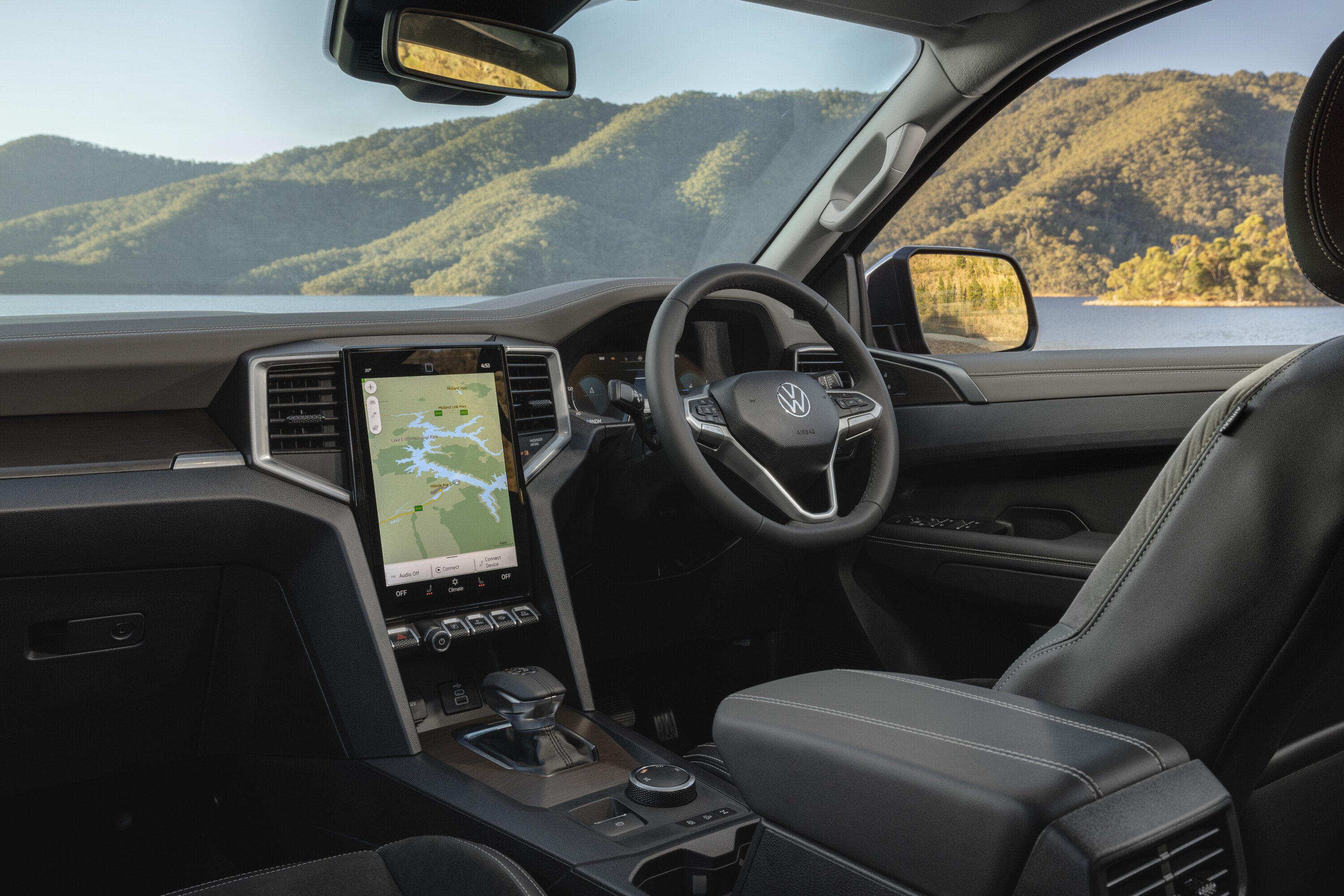
It’d be a similar result this time around. The second-gen Amarok Life lacks some of the desirable equipment fitted as standard to the Amarok Style, such as Matrix LED headlights, a larger 12.0-inch central touchscreen and 12.3-inch digital driver display, rear air vents, electric front seats and 18-inch alloy wheels.
But Davies is confident there are customers looking for V6 power at a sharper price point that are happy with a lower level of standard equipment.
1
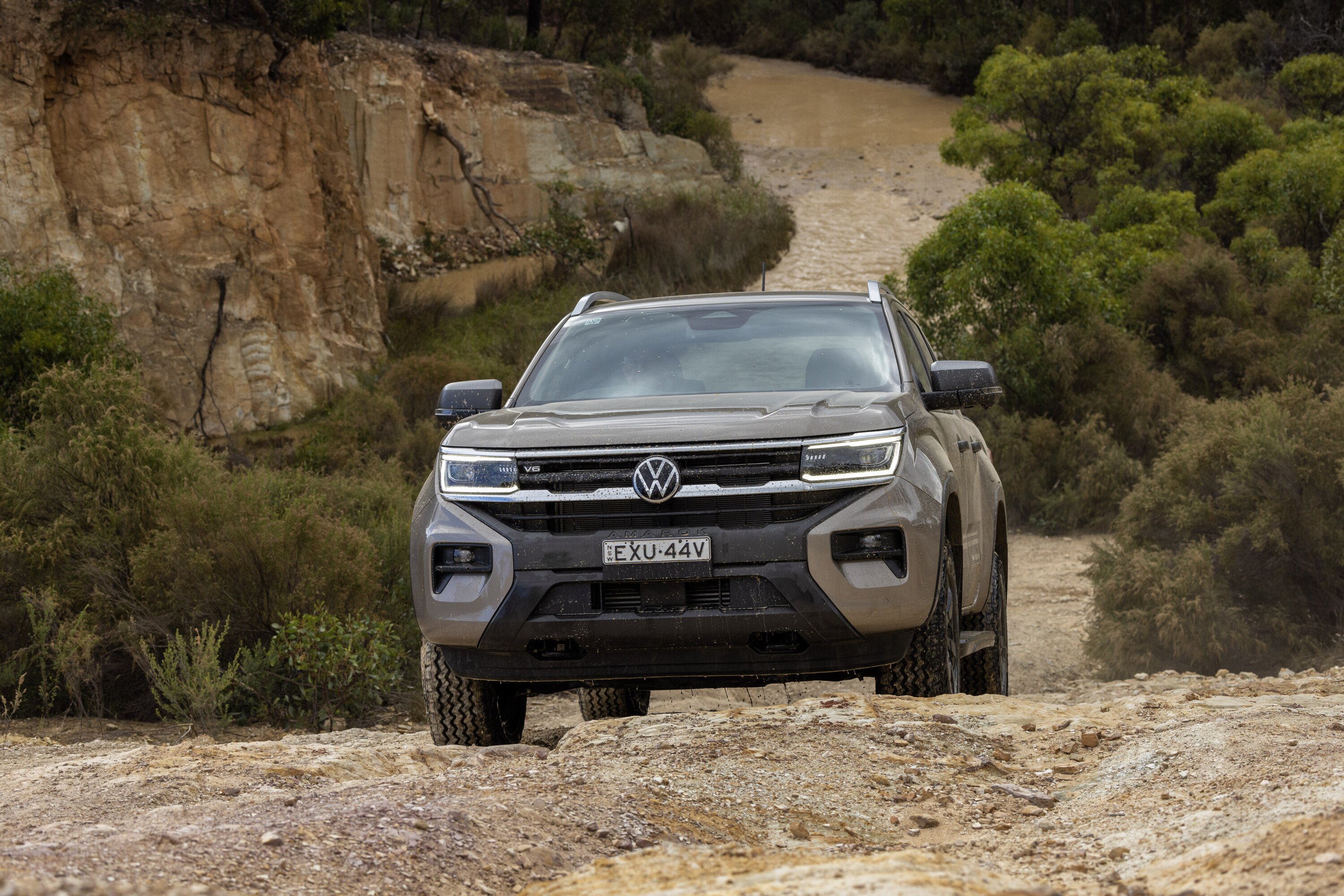
“We’ve got a lot of fleet customers that we sit in the pocket for in terms of pricing with the four-cylinder but some of those customers do want V6 power,” Davies said.
“So we’re definitely going to consider it but the timeline is something we’ve got to iron out with the factory.”
Another engine that could make its way into a more affordable trim level is the Amarok’s 2.3-litre four-cylinder turbo petrol. Like the rest of the new Amarok’s engine line-up, the 2.3-litre petrol is sourced from Ford where it’s used in a host of models, including some Mustang variants.
The 2.3-litre petrol makes 222kW/452Nm in the Amarok and is a unique proposition in the diesel-heavy dual-cab market, giving Volkswagen a clear point of difference to its rivals.
1
From launch, the 2.3 turbo four is only available in the flagship Aventura for $79,990 before on-roads, but Davies says that could change if there’s high demand for that engine.
“We haven’t assessed that yet because we wanted to launch with the petrol and see how it goes,” Davies said. “Given its total power output and generally where that engine sits in our range, we thought it best to launch with it in Aventura.
“There’s nothing to say we can’t adapt that moving forward but we still don’t quite know what the take up of that engine is going to be so we’ll probably assess that over the first three months and make a call on it.
“The interest has been solid but we only planned around three to five percent of our mix on that engine but we can ramp that up if we find we’re getting stronger interest.”
Volkswagen has revealed capped price servicing costs for the new-generation Amarok, with the fresh dual-cab set to be one of Australia’s cheapest utes to maintain.
The new Amarok will be covered by a five-year capped price servicing scheme that limits the cost of each visit to the dealer to between $329 and $414.
That puts the total cost over five years to $1800. The breakdown of each service is in the table below.
May 12: New Amarok driven in Australia!
Get the full story at the link below.
2023 VW Amarok Assured Price Servicing costs
| Service | Price |
|---|---|
| #1 | $329 |
| #2 | $329 |
| #3 | $414 |
| #4 | $319 |
| #5 | $400 |
| Total | $1800 |
1
The pricing puts the new-gen Amarok on par with the Ford Ranger for servicing costs – no surprise, given the pair were co-developed and share a platform and powertrains.
Ford limits the price of each of the first four visits to $329 but that excludes the cost of brake fluid and a replacement air-conditioning filter which VW has factored into its pricing. That’s why the Amarok’s third service is priced slightly higher at $414.
1
Service intervals for the Amarok are every 12 months or 15,000km which is now industry standard. Interestingly those intervals are a slight step backward for Amarok.
MY21 and onwards versions of the first-gen Amarok required a visit to the dealer every 12 months or 20,000km.
The new Amarok’s service intervals are still superior to a Toyota Hilux, however. A diesel Hilux requires a service every six months/10,000km meaning it’ll cost you $1740 over the first three years of ownership. That compares to $1072 for the Amarok and Ranger, which is a saving of $668.
Volkswagen Australia is confident that high demand and strong supply will see the new-generation Amarok dual-cab become the brand’s best-selling model in Australia.
Almost 2500 Aussies have already placed a pre-order for the new-gen Amarok and Volkswagen is confident it will sell more than 10,000 units per year, which would mark the first time VW’s dual-cab has cracked five-figure sales Down Under.
It also means the Amarok should surpass the T-Roc as VW’s most popular model in Australia, providing indications of strong supply for the new dual-cab don’t change. The second-gen Amarok was co-developed with the Ford Ranger and is built at Ford’s Silverton factory in Pretoria, South Africa.
May 12: New Amarok driven in Australia!
Get the full story at the link below.
Story continues…
“In the first month or two it’s looking challenging but from July onwards the supply starts to get a lot better,” said VW Australia’s director of commercial vehicles Ryan Davies.
“And what we’re seeing is our full pipeline of supply for the full year now so we’re not seeing any issues from a production perspective.”
1
Once supply is in full swing Davies said the Amarok won’t just be Volkswagen’s best-selling model – it’ll be number one across all of the brands that fall under the VW Group umbrella.
“Whether it is or not this year [the most popular model] we’ll have to wait and see how many we can get out the door with supply chain issues but we expect it to be about 8000 or so this year and climb to 10,000 plus beyond that,” he said.
“So that places it as the number one selling VW Group Australia product. And it doesn’t matter which brand you’re talking about from our stable, it’ll be the number one selling model.”
1
As for which version of the five-tier Amarok line-up will be the most popular, VW is expecting the mid-spec Style V6 to account for around 60 percent of sales.
Currently the Style trim level is the most affordable way to get into an Amarok with V6 power, though Davies did say VW is considering cheaper V6 models in the future.
Order books for the new Amarok opened two weeks ago and, while demand has been reassuringly high, the typical skew towards top-end variants has been softer than expected.
Comparisons
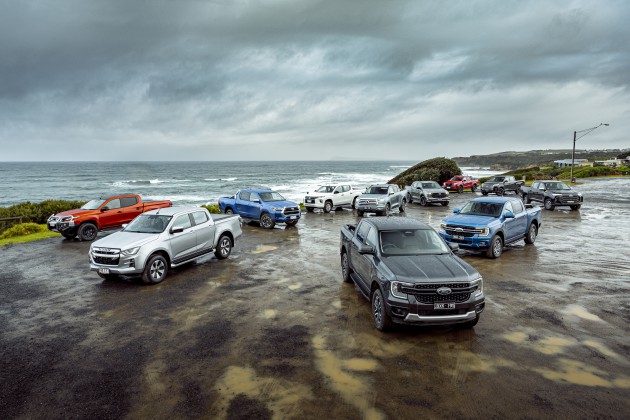
Best Utes: The Daily Living Test
Dual-cab utes have charged in as a firm favourite for family hauling and daily duties, well beyond the old mould of tradie tasks and off-road adventures. It’s time to see which are best suited to the role.
“We probably originally planned for a higher mix of Aventura and PanAmericana but we’ve had to adjust that mix slightly,” said Davies. “We’ve got a little bit more of Style and Life but these things happen in the early stages.
“I think overall we’re going to get the total volume we budgeted for the year. The mix won’t be perfect but it won’t be far from where we want it to be.”
1
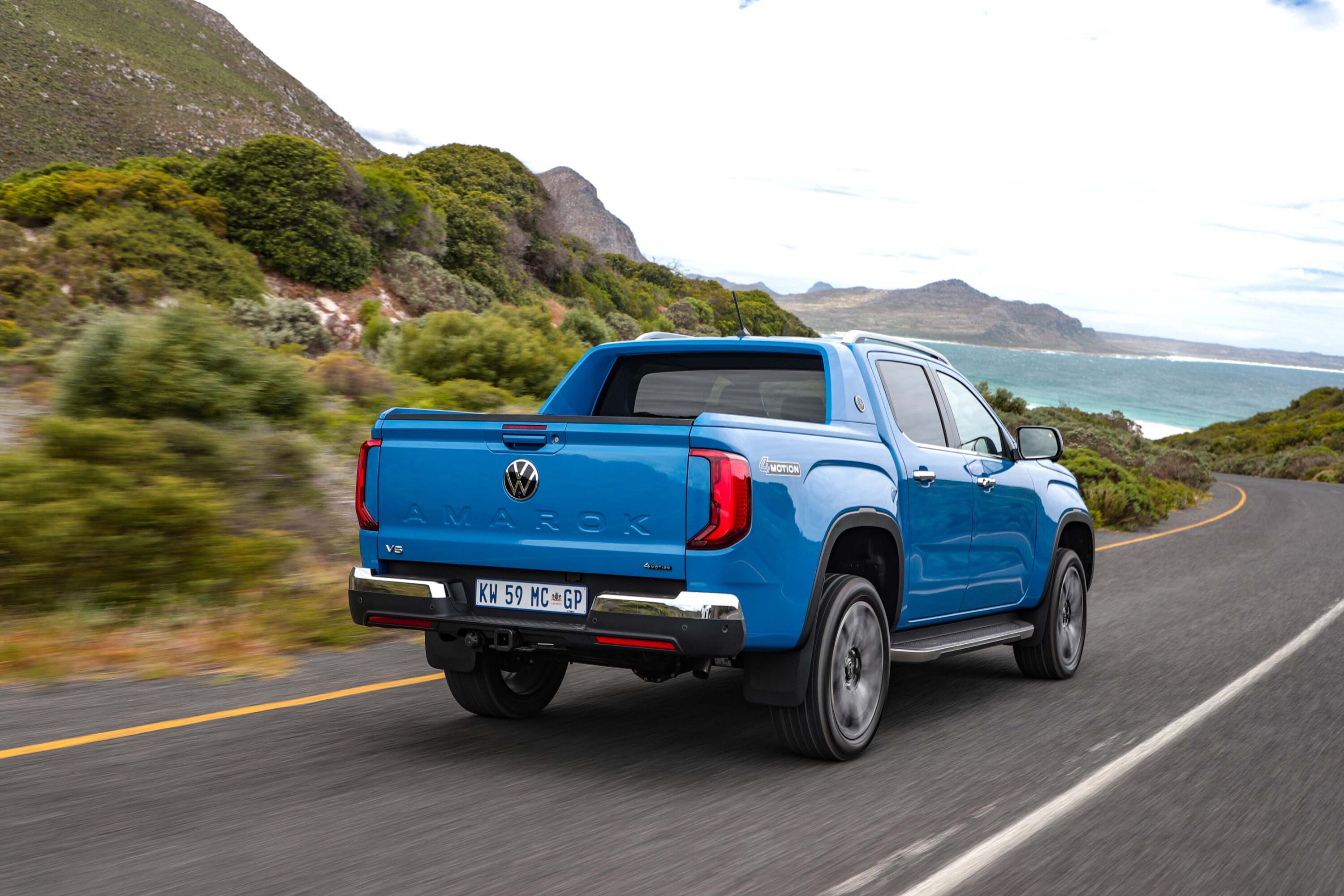
Pricing for the new-generation Amarok kicks off at $50,990 for a manual Core and extends to $79,990 before on-road costs for the flagship Aventura.
Four engines are available across the model range: two 2.0-litre diesels, a 3.0-litre turbo diesel and a 2.3-litre turbo petrol.
The turbo petrol is a unique offering in the diesel-dominated dual-cab segment and VW hopes it’ll attract buyers looking to upgrade from a Golf or Tiguan SUV.
“The interest has been solid but we only planned around three to five percent of our mix on that engine,” said Davies.
The 2.3 petrol engine is currently available only in the top-spec Aventura which costs $79,990 before on-roads.
Amarok sales in Australia
| YEAR | SALES |
|---|---|
| 2022 | 4515 |
| 2021 | 7659 |
| 2020 | 6271 |
| 2019 | 8304 |
| 2018 | 9059 |
| 2017 | 8722 |
| 2016 | 7498 |
| 2015 | 7630 |
| 2014 | 7716 |
| 2013 | 6941 |
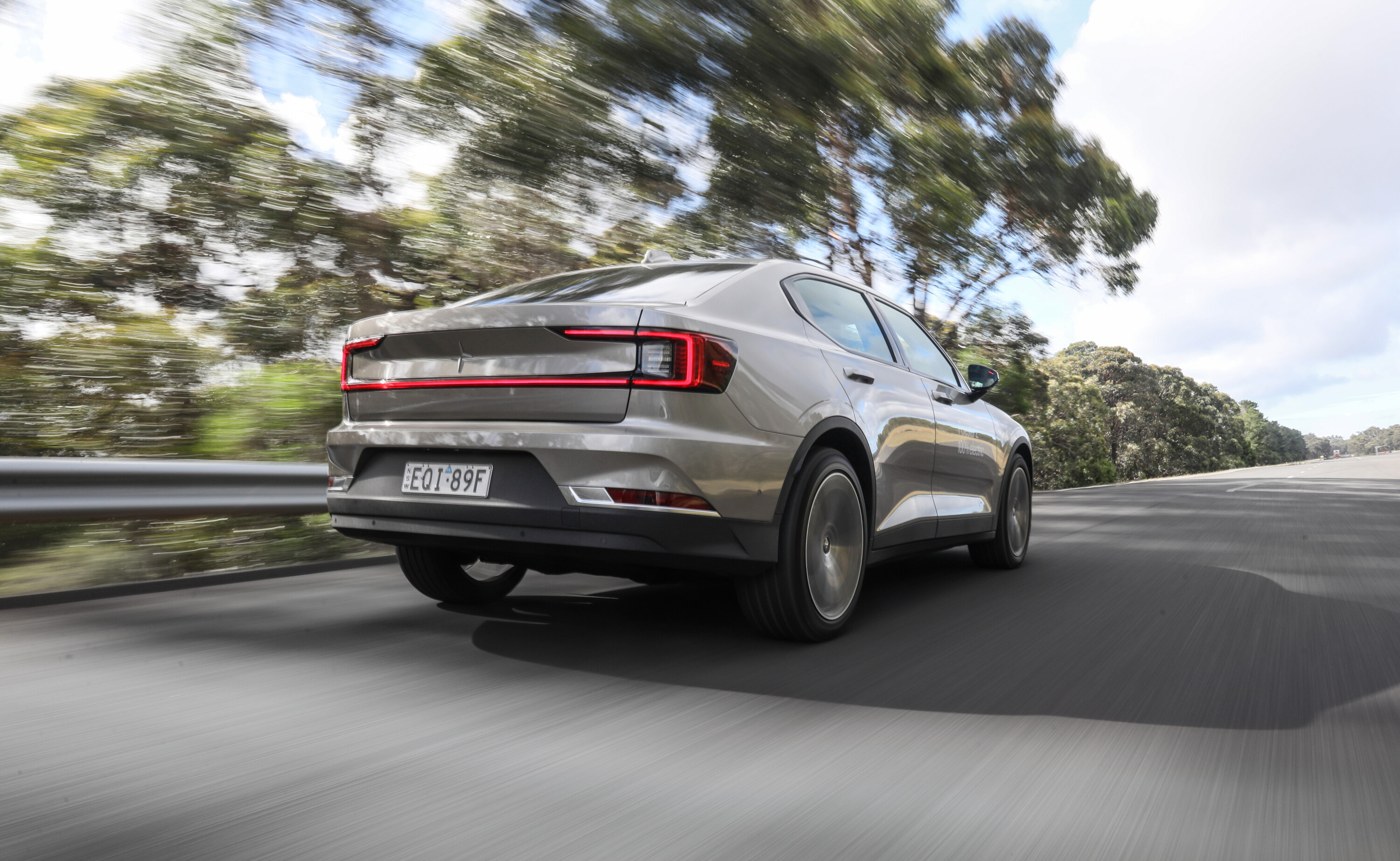
Electric vehicle specialist Polestar has teamed up with public charging provider, Evie, to offer $2000 worth of fast charging with the purchase of an in-stock Polestar 2 in the month of May.
Various other incentives are on offer for in-stock Polestar 2 models. The brand is offering a $3000 discount – labeled a rebate – for all in-stock models.
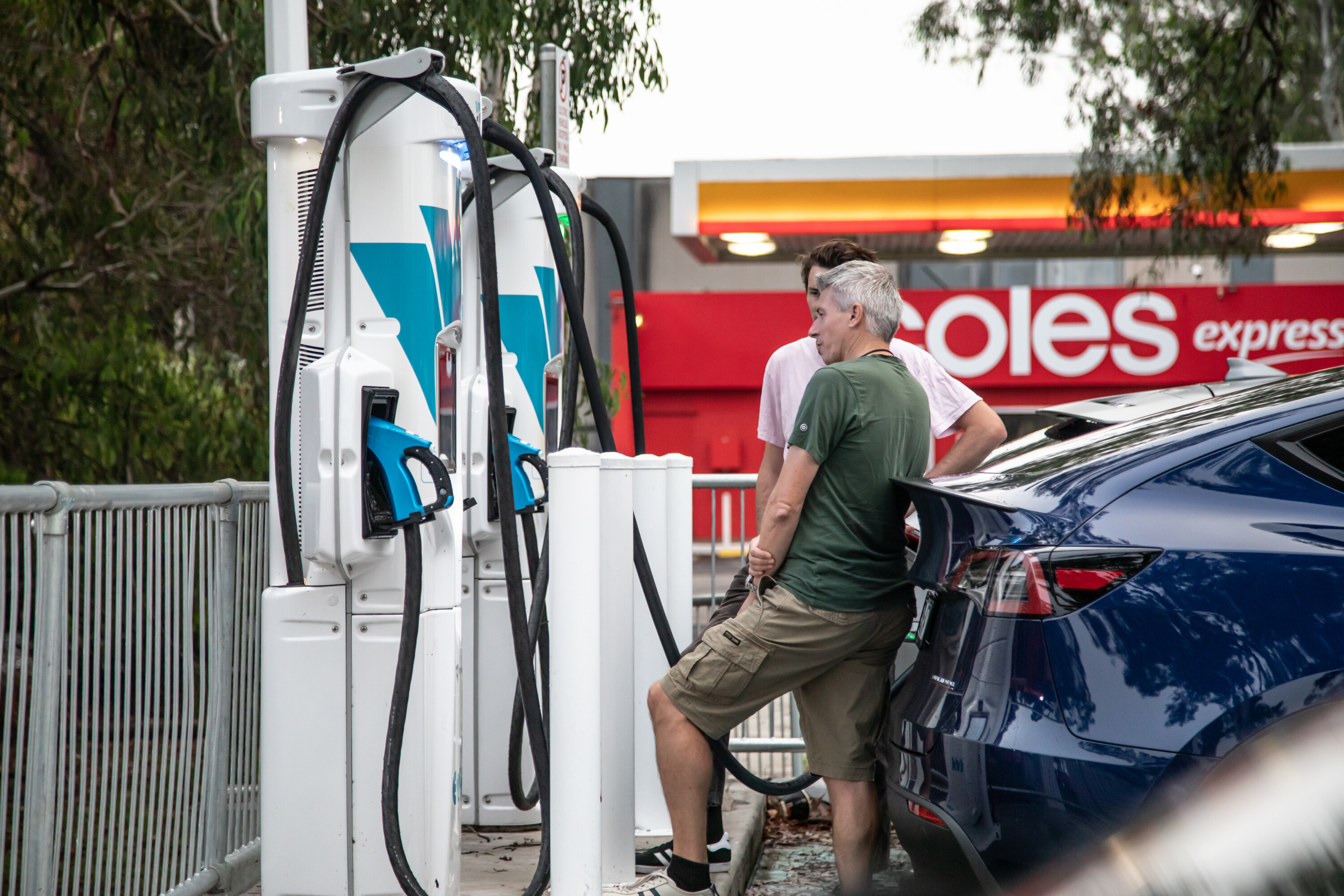
The deal began yesterday and is available to anyone looking to buy an in-stock Polestar 2 sedan in Standard or Long Range guise before 31 May. The voucher will effectively power your EV for a year if you only charge at public locations – longer if you mix it with home charging.
“Not everyone can install a home charger when they buy an electric vehicle and nor do they need to,” said Evie CEO Chris Mills.
1
“Our growing network enables drivers to have access to a national fast public charging network, using 100% clean energy,” Mills added.
The $2000 voucher will pay for up to 4400kWh of electricity using a 50kW charger at $0.45/kWh, or 3300kWh using 350kW locations ($0.60/kWh).
That amount of electricity equates to 1-1.5 years of average Australian motoring, with the 50kW chargers getting you 22,500km, and 350kW units 16,500km.
Instead of the Evie charging voucher, Polestar is also offering free Zappi home wallbox installation including a Type 2 cable.
1
Our original story, below, continues unchanged
The Story to here
September 5: Polestar 2 renters can charge it for free with Evie – but there’s a catch
Snapshot
- Hertz agrees to buy 65,000 Polestar electric vehicles over five years
- Polestar 2 will make up a bulk of the fleet before more models are introduced
- Australian roll-out has now commenced
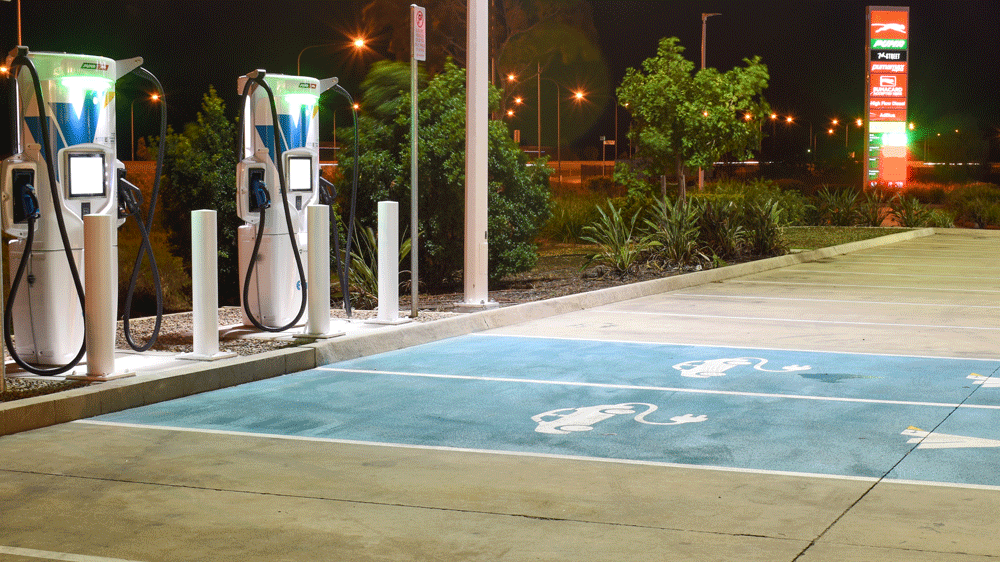
Customers who rent a Polestar 2 through Hertz can now get free charging on the Evie network during the duration of their rental – but for a limited time only.
The offer is only available from September 1 to October 27, but does apply Australia-wide.
“We’re excited to be collaborating with a company, such as Evie, that’s leading the growth of the electric vehicle infrastructure in Australia. We believe this partnership will help boost the rental of electric vehicles and allow Aussies to experience electric, particularly now more than ever, in the wake of rising fuel costs,” said Eoin Macneill, Vice President of Hertz.
Evie Networks’ CEO, Chris Mills, added: “It’s been fantastic for our team at Evie to partner with a highly respected international brand like Hertz. What makes it more special is that this is one of the first countries that Hertz is electrifying.”
Travellers can book a Polestar 2 from Hertz locations in: Adelaide, Canberra, Sydney, Melbourne, Brisbane, Perth, Hobart, and Launceston.
1
The story to here
August 11: Polestar 2 arrives in local Hertz fleet
The Polestar 2 EV is now available to book across Australia as its local rollout across rental firm Hertz’s fleet begins.
From today, travellers can book a Polestar 2 in Adelaide, Canberra, Sydney, Melbourne, Brisbane, Hobart, and Launceston.
“Our partnership with Hertz provides an exciting opportunity for more Australians to experience the thrill of driving an EV while reducing their environmental impact. For many customers, this will be their first experience in an electric vehicle and we’re proud to be able to share in their e-mobility journey,” said Samantha Johnson, Head of Polestar Australia.
1
June 10, 2022: Polestar 2 roll-out into Hertz rental fleet begins
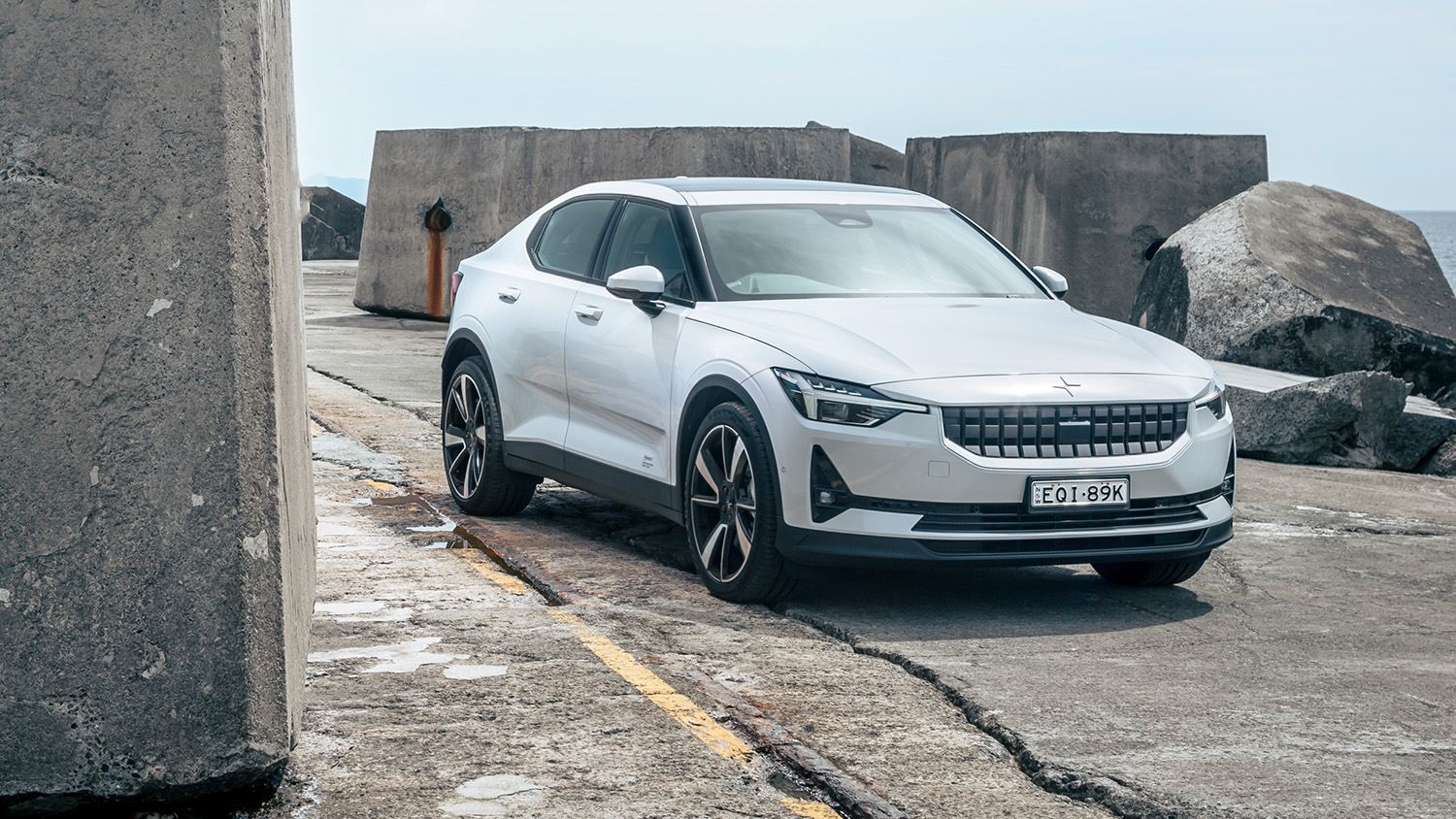
Rental company Hertz is receiving its first load of Polestar 2s across its international fleet, just two months on from the brands signing a supply deal.
Announced in April (further below), electric vehicle manufacturer Polestar has agreed to supply Hertz with 65,000 vehicles for its rental fleet over the next five years, comprised of its current Polestar 2 and the upcoming Polestar 3.
With Hertz’s order becoming one of the largest made by any company for electric vehicles, Polestar CEO Thomas Ingenlath believes the deal can only strengthen the manufacturer’s image.
1
“Our partnership with Hertz is an exciting milestone that provides the opportunity for a significant number of potential new customers to experience an EV for the first time, and it will be in a Polestar,” said Ingenlath.
“With over 55,000 Polestar cars already on the road across our 25 live markets there is no doubt that our brand is growing at an incredible pace.”
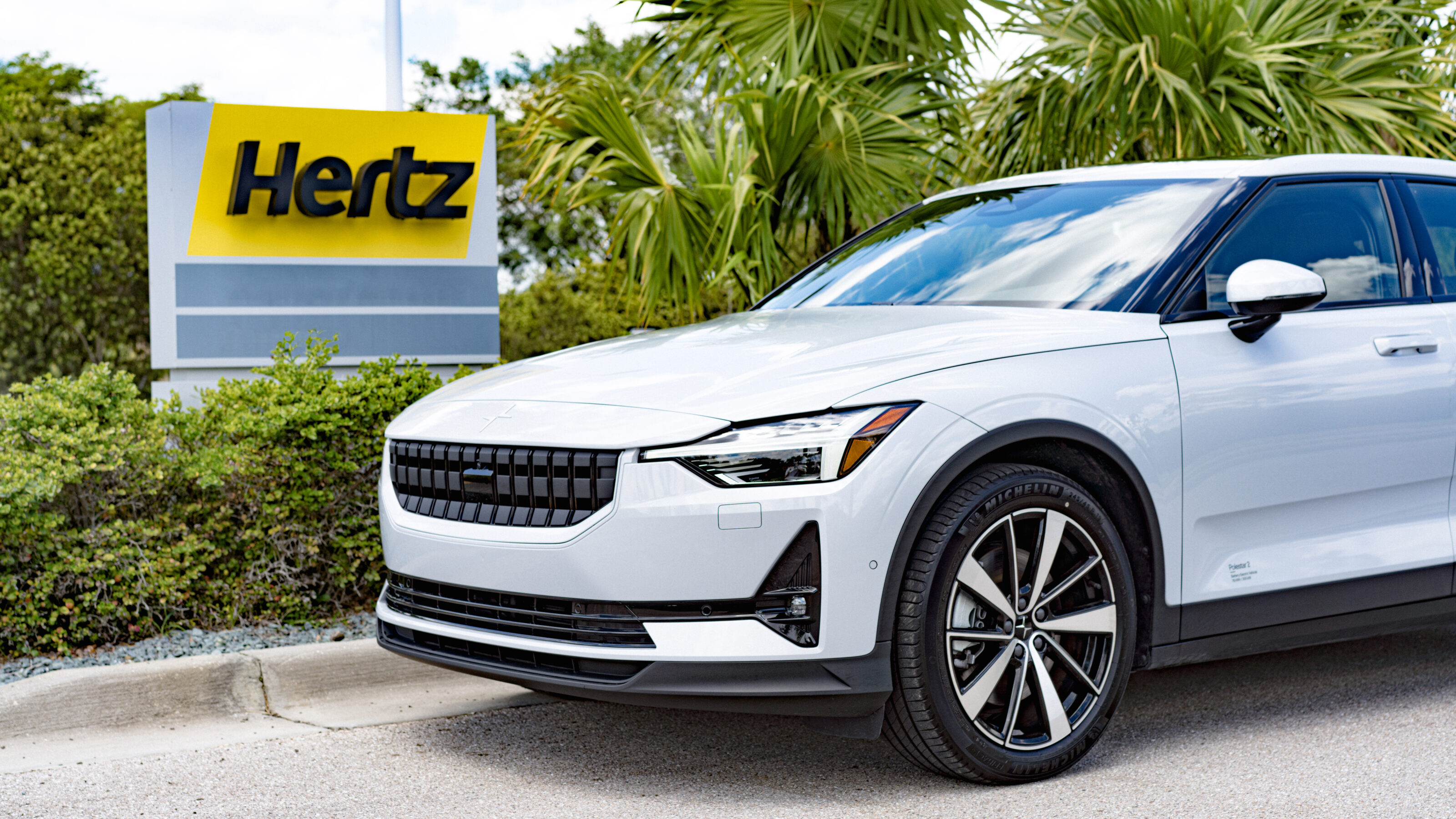
Hertz Australia is expecting to receive its first batch of Polestar 2s later this year, while the Polestar 3 is set for its official unveiling in October before going on sale next year.
1
April 5, 2022: Polestar signs five-year deal to supply Hertz with 65,000 EVs
Swedish electric vehicle manufacturer Polestar and rental company Hertz have signed a five-year deal which will result in 65,000 EVs joining the American brand’s global fleet.
Announced today, the deal will see Hertz take delivery of the Polestar EVs over the next five years, with the Polestar 2 set to make up a large portion of the fleet as the manufacturer’s only current fully-electric offering – although the upcoming Polestar 3 is expected to enter production in China and North America later this year.
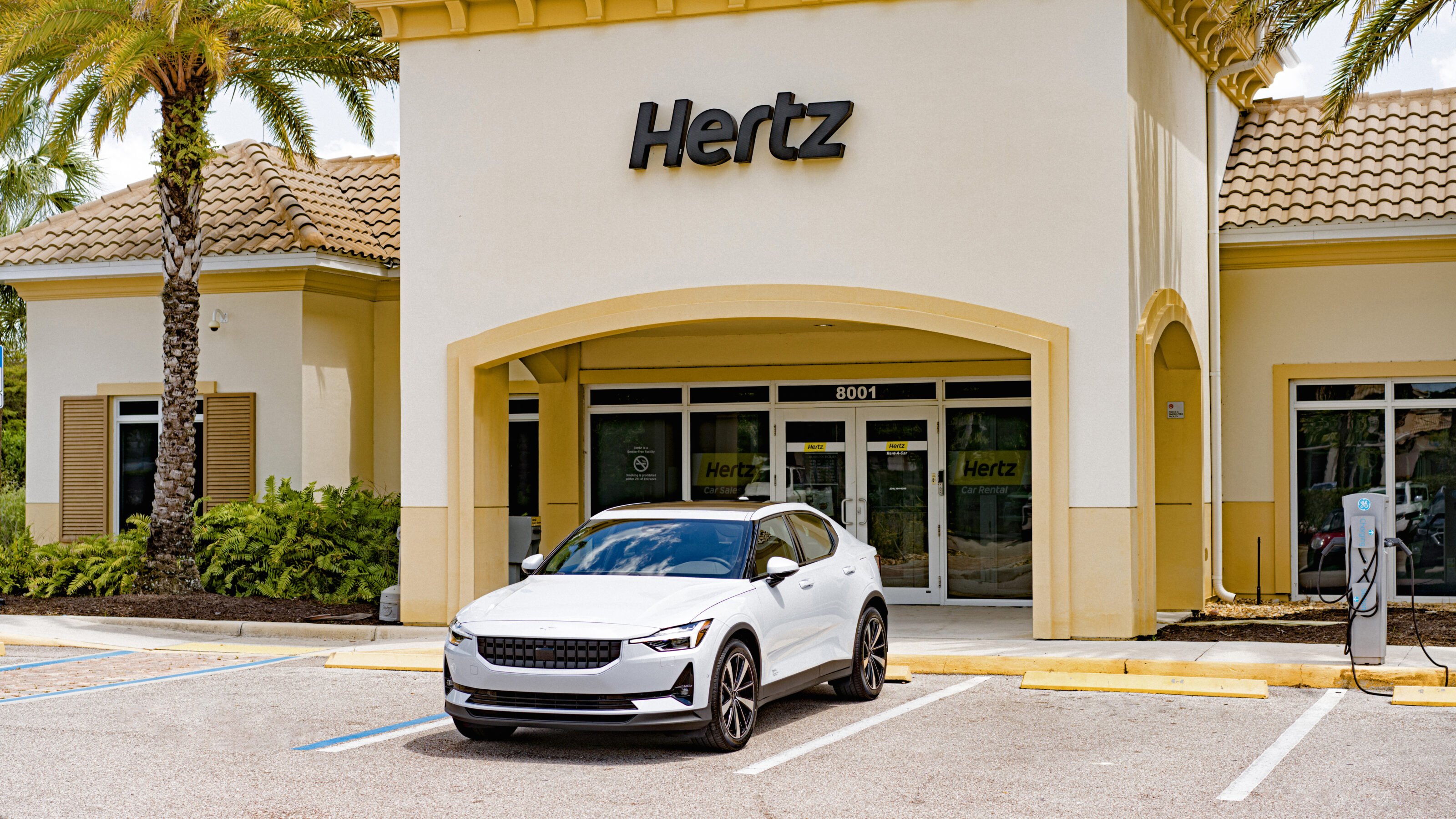
According to Hertz, the Polestar 2 will be available to hire in Europe from the Northern Hemisphere’s spring 2022 while customers in Australia and North America will have to wait until the end of the year, bolstering Hertz’s EV fleet in the States – claimed to be one of the largest in the world.
2
Polestar CEO Thomas Ingenlath said the Polestar 2 would be perfect for Hertz and its customers as the brand expands, targeting an annual vehicle production of 290,000 units by 2025.
“Polestar is committed to accelerating the move to electric mobility with a fascinating and innovative product portfolio,” said Ingenlath.
“We are delighted that Hertz has chosen Polestar as a strategic partner on its road to electrification. The partnership with a global pioneer like Hertz will bring the amazing experience of driving an electric car to a wider audience, satisfying a broad variety of our mutual customers’ short- and longer-term mobility requirements.
“For many of them it may be the first time they have driven an EV, and it will be a Polestar.”

3
Hertz CEO Stephen Scherr believes the decision to partner with Polestar can help accelerate the adoption of EVs while also reducing its own carbon footprint.
“We are excited to partner with Polestar and look forward to introducing its premium EV products into our retail and rideshare fleets,” said Scherr.
“Today’s partnership with Polestar further builds on our ambition to become a leading participant in the modern mobility ecosystem and doing so as an environmentally-forward company.
“By working with EV industry leaders like Polestar, we can help accelerate the adoption of electrification while providing renters, corporate customers and rideshare partners a premium EV product, exceptional experience and lower carbon footprint.”
Hertz was initially thought to be down and out after it filed for Chapter 11 bankruptcy protection in the United States in 2020 when the COVID-19 pandemic started, but its business deals in the past year include a partnership with EV manufacturer Tesla to join its fleet.
MORE
All Polestar
Volvo’s striking new coupe-styled C40 EV is coming in for an update already. Before it arrives, we’ve hit the road in Europe.
What’s significant about the updated Volvo C40 Recharge?
Key Points
- Now RWD in entry form!
- Faster charging
- Longer driving range
- More range means higher prices…
By 2026 every Volvo sold in Australia will take its power purely from a plug, and the C40 kicked off the process as the company’s first electric-only offering.
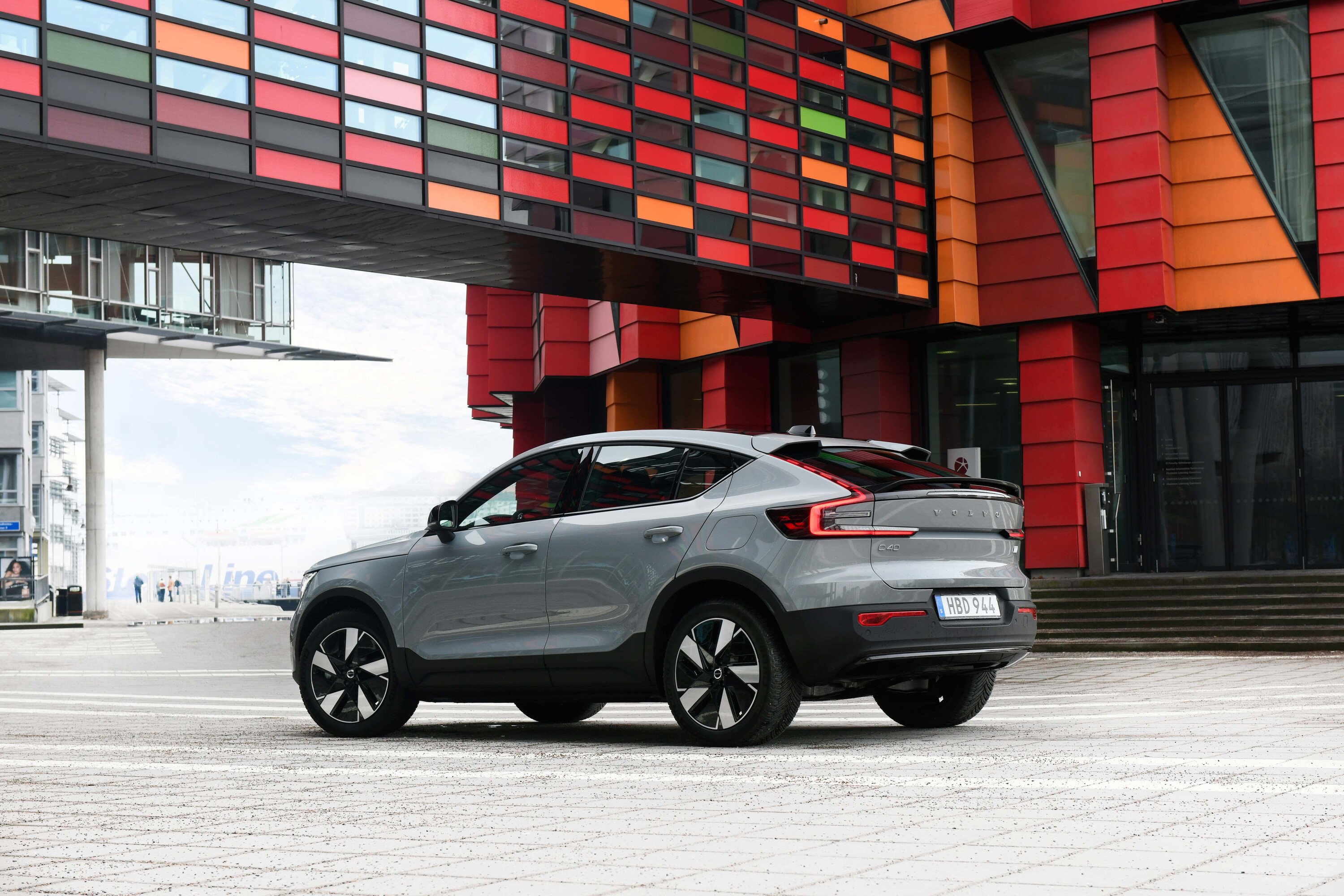
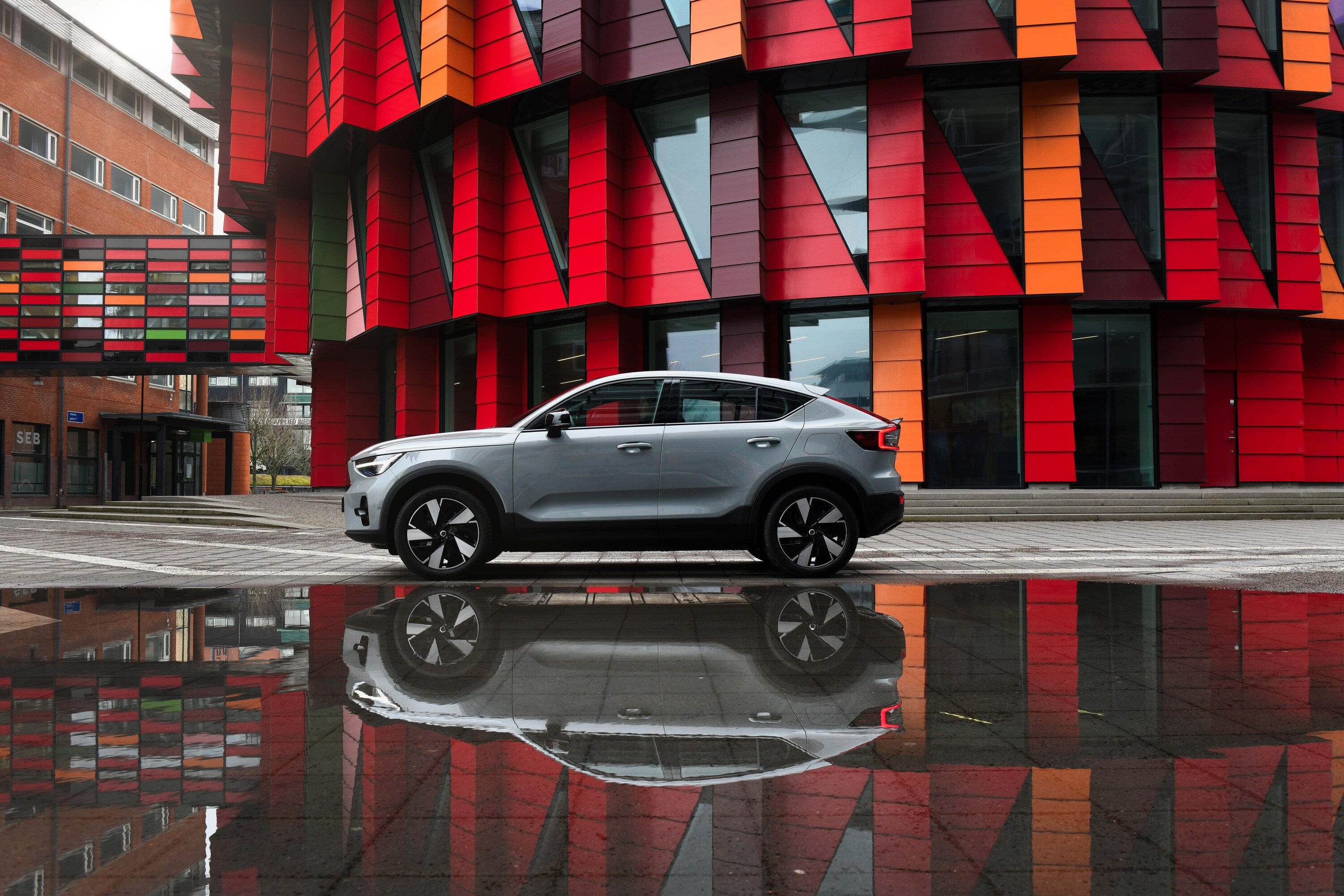
It also injected yet more pep into the Swedes’ increasingly contemporary range. Love or loathe the dawn of the crossover coupe, the C40 appears a pretty successful execution of the idea, at least stylistically.
This MY24 update arrives relatively early in the C40’s life, but that’s because it goes hand-in-hand with an identical update for its more practical XC40 sibling.
1
The headline is that the cheaper single-motor versions have switched to a rear-wheel-drive layout.
That would seem like a bizarre mid-lifecycle change in a purely petrol car, but it’s less of a manufacturing headache in the world of EVs.
The move is thanks to a new electric motor – designed and built in-house by Volvo – which sits at the rear for the sake of efficiency rather than handling, though we’re promised that’s sharpened up too.
The single-motor C40 Recharge climbs from 438km to 477km of range, while the dual-motor (and all-wheel driven) version jumps by a clean 100km for a total of 550km. Both figures are a mite larger than an equivalent XC40, too, credit going to the C40’s slipperier aero profile.
1
When is the MY24 C40 Recharge due in Australia?
The reworked C40 Recharge is due on our shores by October 2023.
Pricing is up, the single-motor car climbing $4000 to $78,990 while the AWD dual-motor version rises $5500 to $87,990 – both versions costing a couple of grand more than their equivalent XC40, too.
The single-motor C40 uses a 69kWh battery capable of 135kW charging while the dual-motor car gets a new 82kWh battery – from a fresh supplier – that allows 205kW. That means topping up from 10 to 80 per cent in around half an hour, nine minutes quicker than a MY23 car.
1
What’s it like to drive?
Volvo is proud to tell us that rear-wheel-drive is back on its menu after a break of 25 years. But while there’s talk of sharper handling, that’s never been the C40’s big USP anyway.
In a market rich in crossover options, Volvos lean more into easy-going comfort than tenacious cornering.
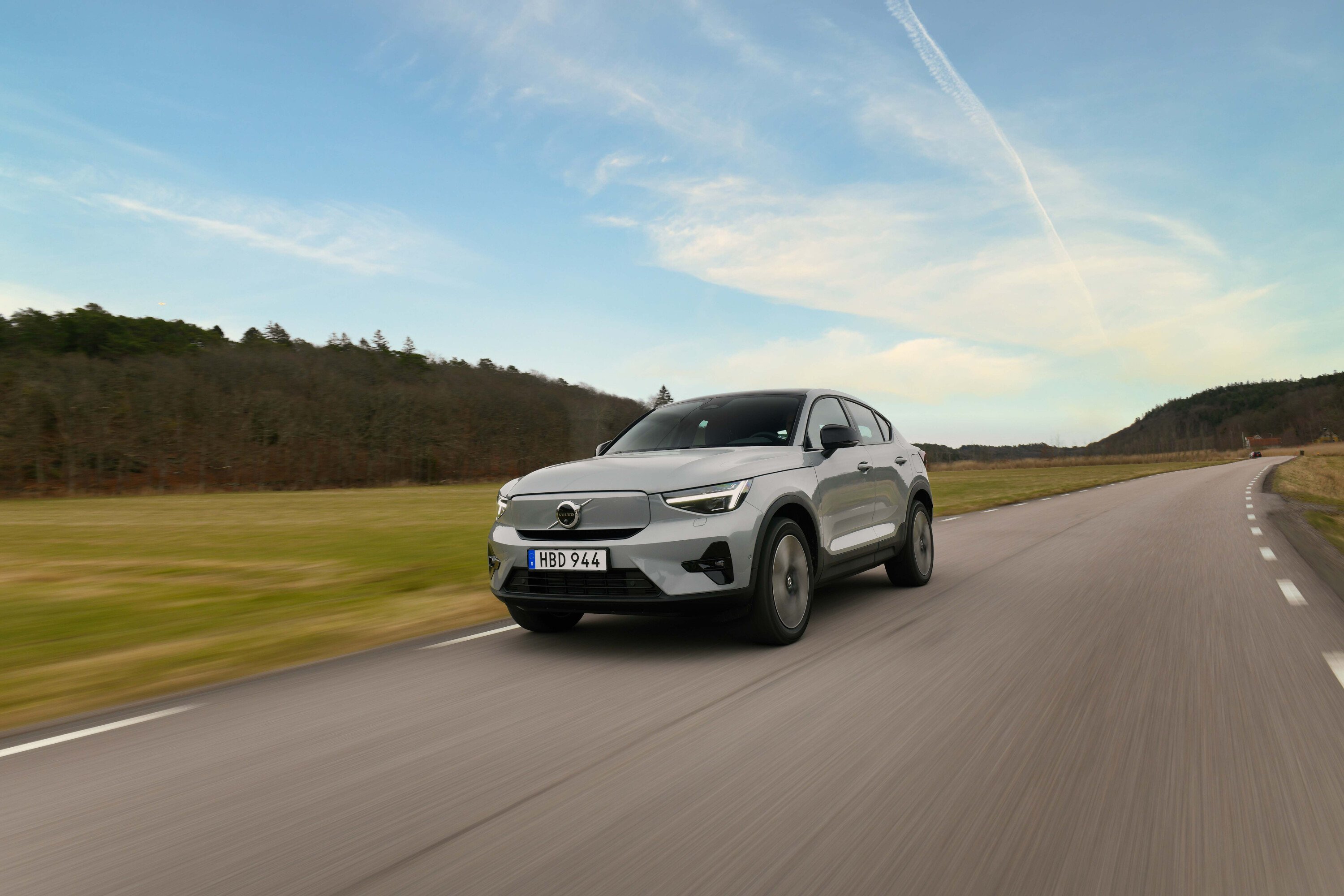
Still, if you push this new and improved C40 hard, you’ll sense drive coming from the other end. But with layers of safety systems between you and the road, it’s no drift king, rather an incrementally more responsive car with more incisive turn-in.
1
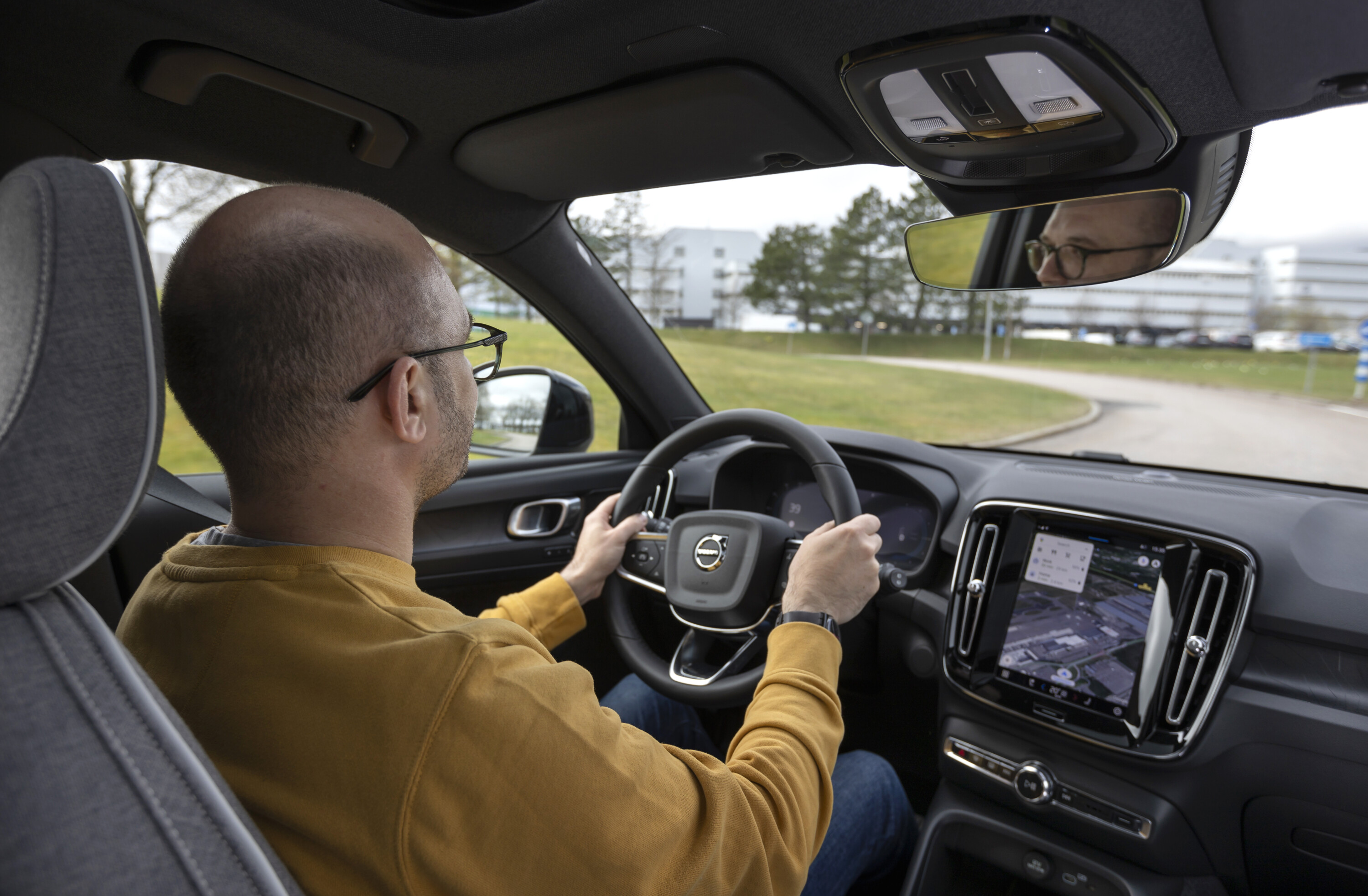
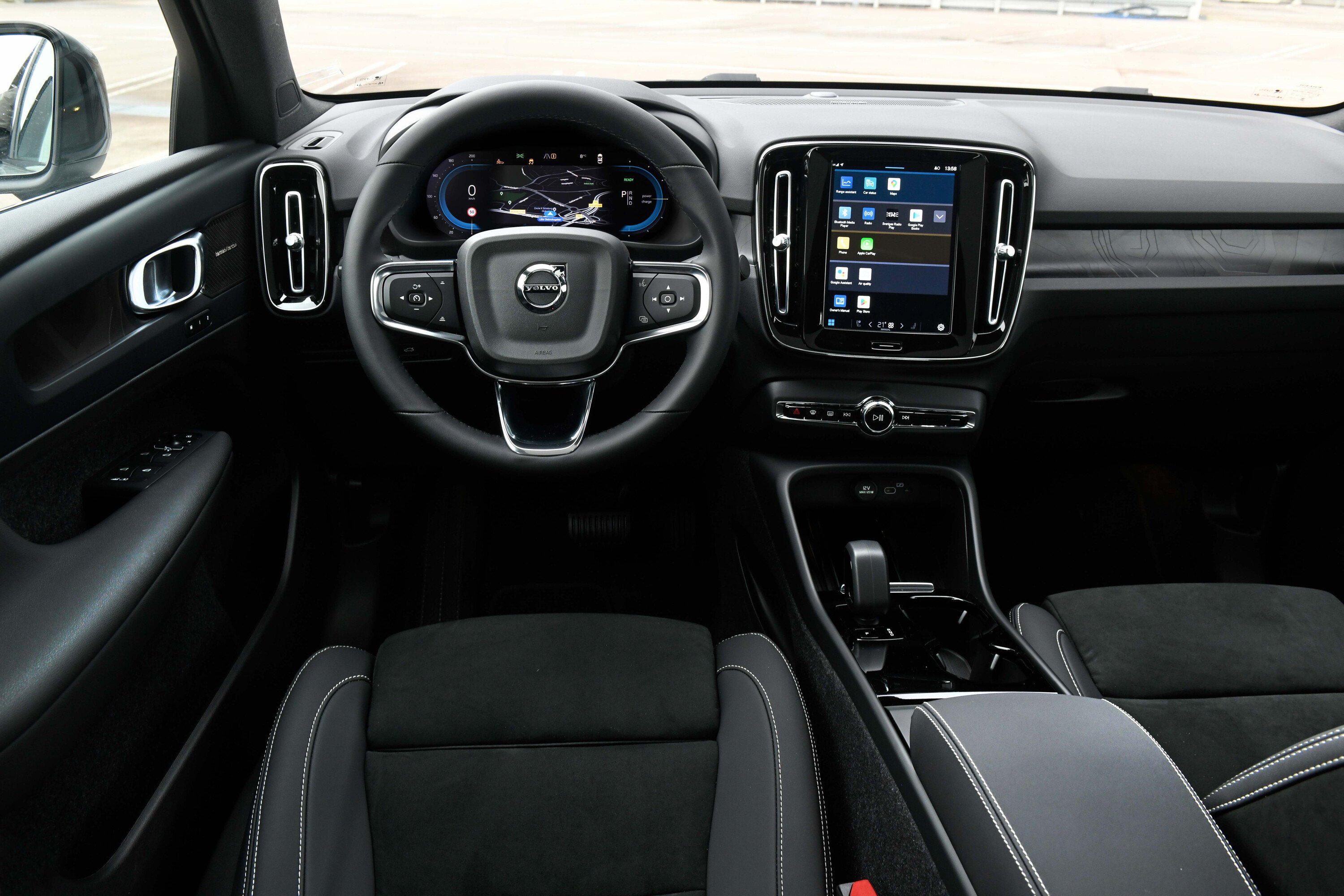
The focus is more on ease of use, and the comfort and quietness inside its contemporary cabin is impressive. Just with the usual caveat of slightly firmer ride on the optional 20in wheels and slightly intrusive tyre noise given the lack of powertrain fuss to smother it.
There’s enough brake regen on offer to make it a one-pedal car too – if you wish – but the system is either ‘on’ or ‘off’ and can’t be adjusted through different levels like several of its rivals offer.
Advice
Australia’s best electric cars for 2023
We’ve tested nearly every EV below six figures in Australia to rank the best on sale today
Volvo has forgone the idea of drive modes entirely to keep operation of the C40 pure and simple.
You can firm up the steering via a sub-menu, but we’re not really sure why you’d bother; it’s nicer in its more natural setting. It feels easier to argue the case of the cheaper, single-motor powertrain, its 175kW output more than ample for sensible family transport.
While its 7.4sec 0-100km/h time lags behind the 4.7sec of the dual-motor, the gap doesn’t feel quite so wide during typical urban driving.
1
It feels easier to argue the case of the cheaper, single-motor powertrain, its 175kW output more than ample for sensible family transport.
It’s only with sustained acceleration that the 300kW of the more potent car reveals itself – though it’s naturally good fun to uncork all of its performance every once in a while.
Still, both are talented cars which manage the instant torque of their EV motors well, and the AWD traction of the dual-motor car does possess its own appeal. But its longer range figure might prove a more obvious selling point.
Is it worth waiting for the MY24 C40 Recharge?
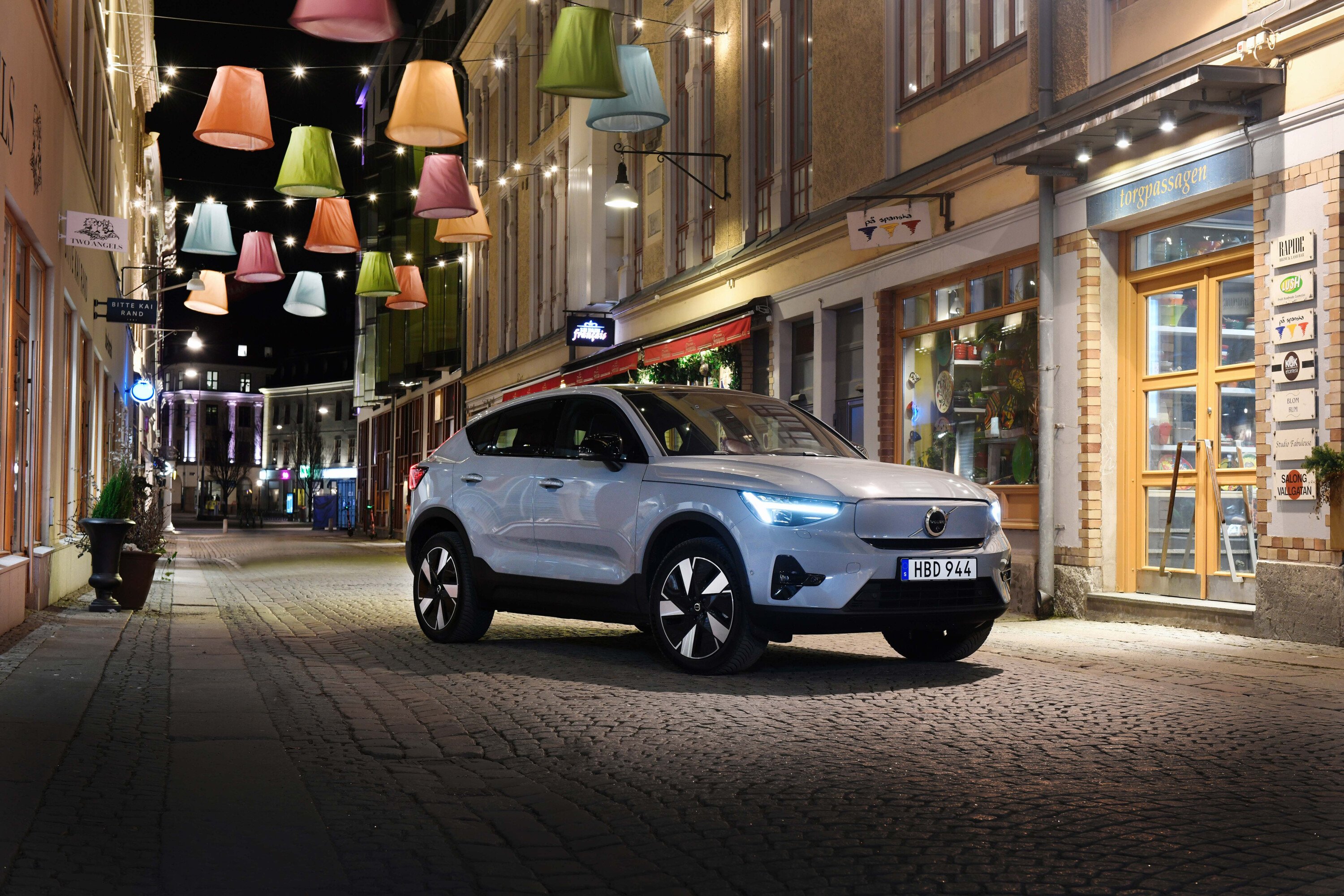
If you like the looks, then great – the C40 Recharge is more than talented enough to back them up. We’d just make absolutely sure that style is your priority.
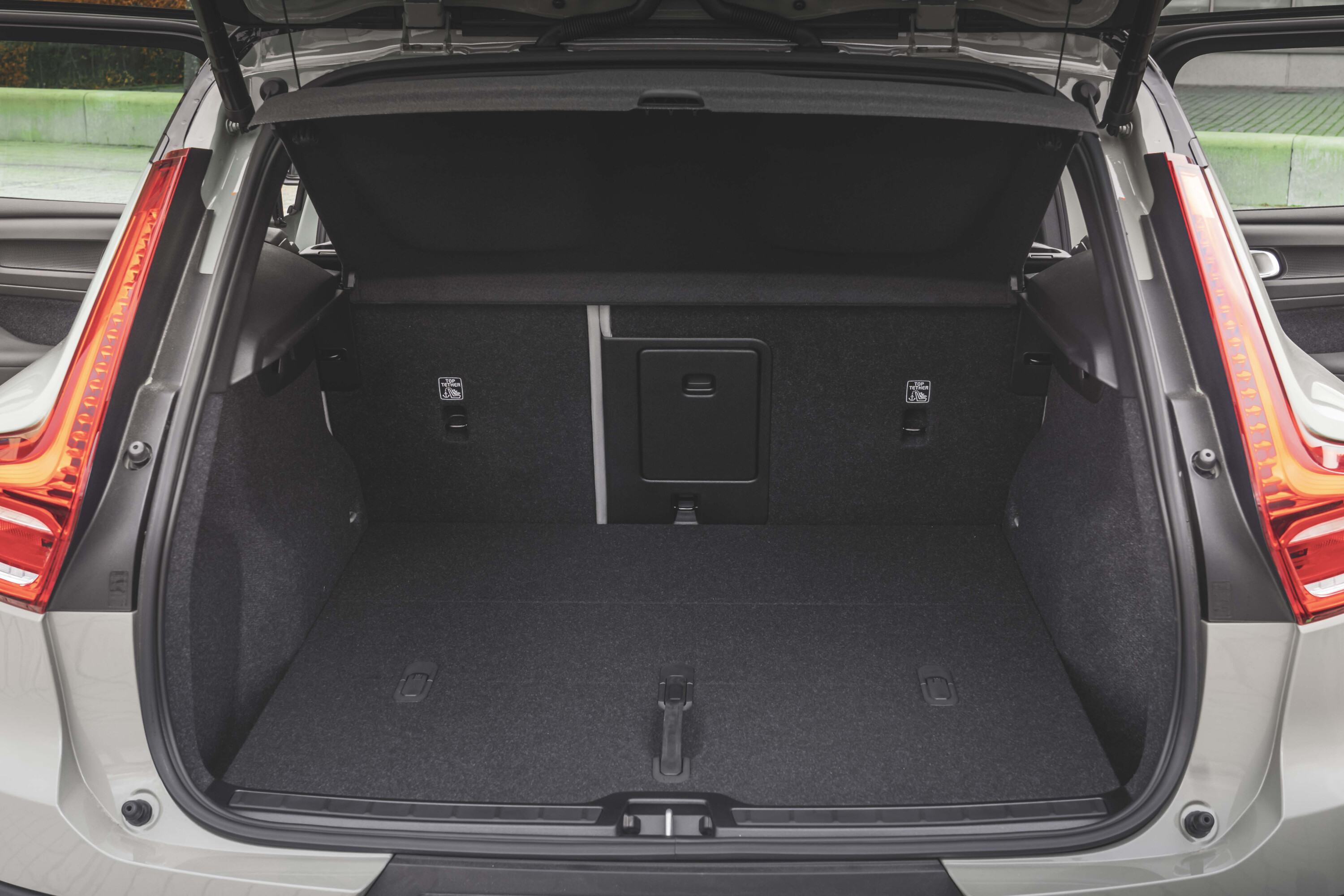
An equivalent XC40 will cover very similar range while offering a larger, more usefully shaped boot and a smidge more headroom.
The C40 exhibits the typical crossover coupe flaw of letterbox rear visibility, too. But if the style really does it for you, there remains plentiful substance beneath it all.
1
MORE
Everything Volvo
MORE
Electric Cars
⚡ More EV stories to help you choose the best car for your needs
Before the updated XC40 Recharge Pure Electric arrives in Australia, we’ve taken it for a spin in Europe.
What’s significant about the updated Volvo XC40 Recharge?
Key Points
- Now RWD in entry form!
- Faster charging
- Longer driving range
- More range means higher prices…
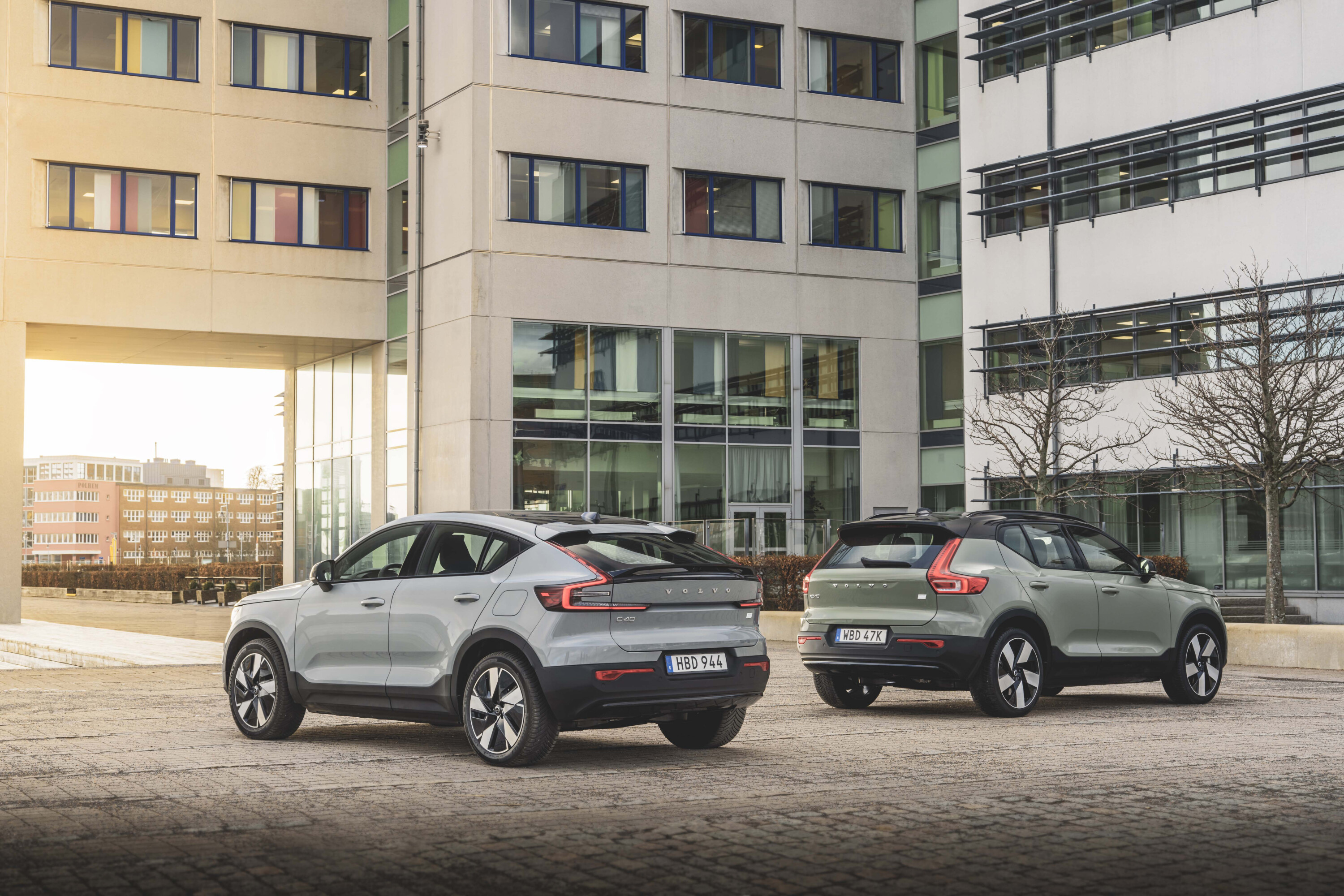
Volvo is pledging to be a fully electric brand in Australia by 2026, and you’re looking at a pretty important step in that direction: an updated version of the purely electric XC40.
This was already a pretty solid car – one of the funkier looking small SUVs on the outside while one of the comfier, more compliant to drive. A big overhaul wasn’t needed, merely detail improvements.
Nevertheless, Volvo has done something notable, switching the entry XC40 Recharge from front- to rear-wheel drive.
1
It’s a move that would usually constitute madness in the world of internal-combustion cars – but when you’re dealing with batteries and motors, it’s not such an earth-changing shift from a manufacturing perspective.
Before you get too excited, however, it’s more about efficiency gains than rekindling Volvo’s rear-driven past, however much the engineers’ eyes sparkle when we raise the topic. Don’t expect a drift machine.
But do expect to travel further on each charge: the single-motor version climbs from 425km to 461km of range, while the dual-motor (and AWD) version jumps a mightier 100km for a total of 538km.
1
When is the MY24 XC40 Recharge due in Australia?
We’ll see these updated, more efficient XC40s by October 2023. Pricing is a little punchier than before, with a $4000 rise for the single-motor car, to $76,990, and a $6500 hike for the AWD dual-motor, now $85,990.
The disparity can be explained by battery size, the former using a 69kWh unit capable of 135kW charging. The dual-motor car gets a new 82kWh battery – from a fresh supplier – that’ll take up to 205kW of charge.
That means topping up from 10 to 80 per cent in around half an hour, a cut of nine minutes on before.
1
What’s it like to drive?
Switch the driven axle of another car and we’d have lots to talk about. The Holden Commodore’s move to front-wheel drive couldn’t be anything but a major talking point.
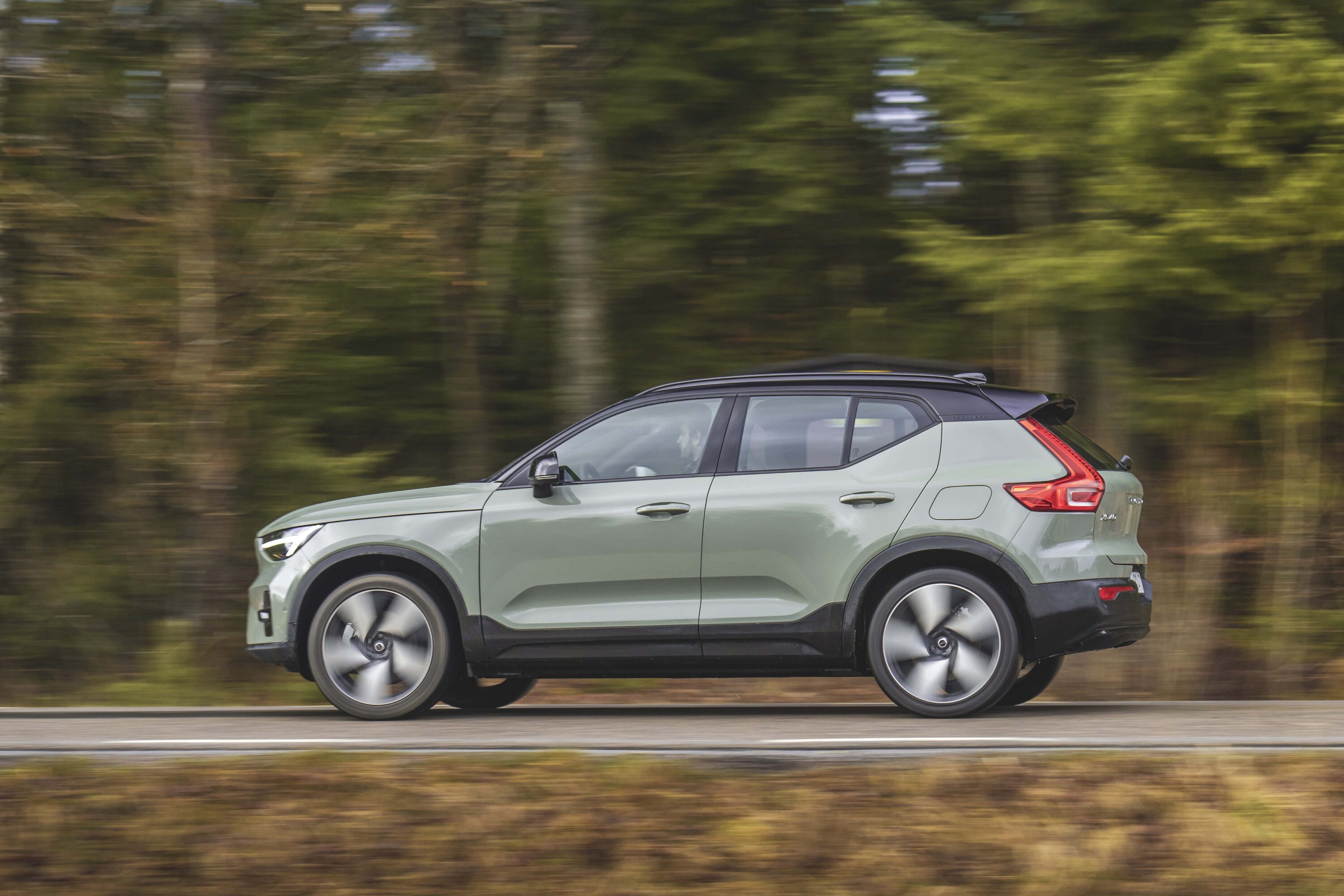
Here, though, any excitement surrounding the first rear-driven Volvo in a quarter of a century is short-lived. However urgent the delivery of its electric motor, this is no sports car in disguise.
If you really dig into its grip, you’ll get a slight sensation of being pushed out of corners rather than pulled. But it’s no stronger here than in a Volkswagen ID product with a similar layout.
1
The XC40’s main schtick is comfort and convenience, and the MY24 car carries the baton assuredly.
It rides on aerodynamically honed 19-inch wheels as standard, with optional 20-inch items fitted to our test car. We’d forgo their style to take some edge from its ride quality, while tyre noise is a little pronounced too.
Stiff suspension and exaggerated road noise are no strangers to heavy EVs, with more forces to contain in corners and no powertrain noise to cover other audible fuss. The XC40 can’t completely dodge them, but the interior is broadly a paragon of calm and on smooth road surfaces it proved hushed enough to hear our watch tick.
1
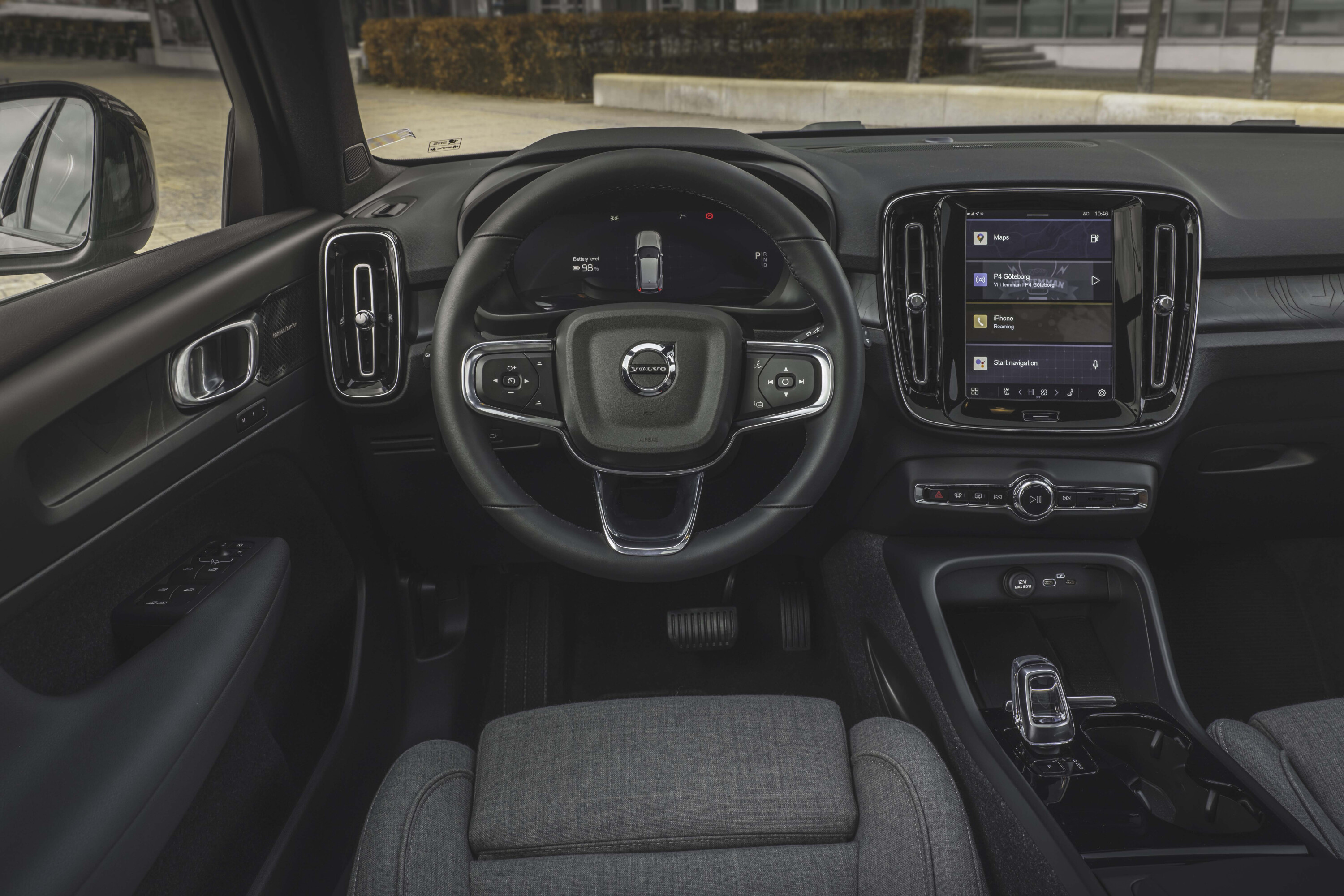
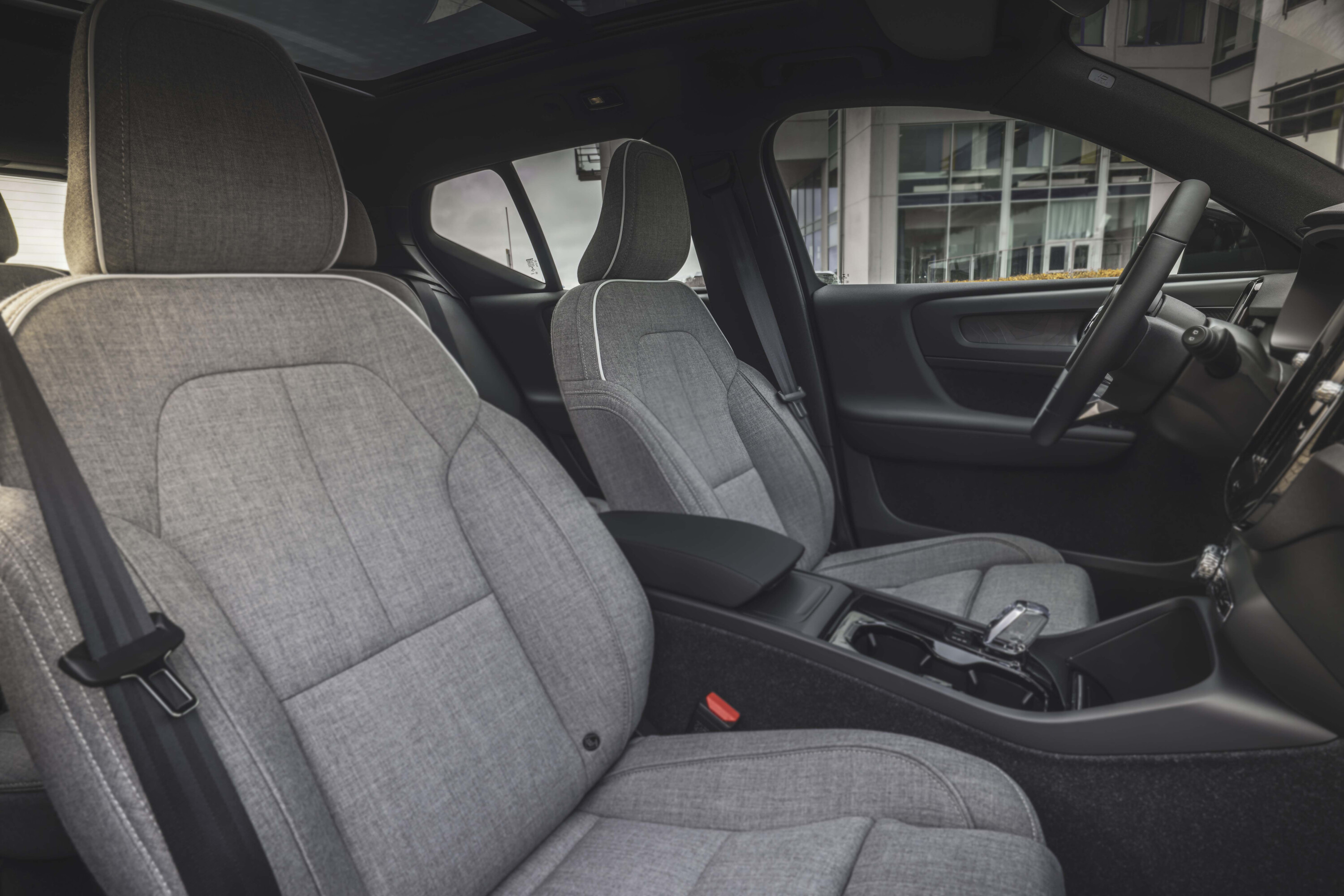
Updates fed in from the C40 fastback include natty and rather likeable illuminated door cards which mimic a topographical map, while the large portrait touchscreen will link neatly to your smartphone.
We’d go with the smaller powertrain option. It’s a shame the Australian market won’t get its longer-range iteration, which pairs RWD with the larger, quicker charging 82kWh battery, for a ‘best of all worlds’ package.
Advice
Australia’s best electric cars for 2023
We’ve tested nearly every EV below six figures in Australia to rank the best on sale today
The dual-motor XC40 is simply too quick for the task at hand, its 300kW and 660Nm peaks bordering on the cartoonish in a tall family car.
The power is managed admirably and with 50:50 weight distribution, the handling is neat. There’s nothing to actually complain about. But we’re not riding in a Polestar here and there’s no need to be knocking on Porsche’s door.
So we’d suggest sacrificing its 4.9sec 0-100km/h time and going for the eminently more sensible single-motor car. Weight distribution creeps backwards (47:53) while its 175kW peak is still more than ample.
Within all speed limits it feels nearly as urgent as its AWD sibling and it’s only with sustained acceleration that you’ll notice the sort of gulf its 7.4sec 0-100km/h time might imply.
2
Is it worth waiting for the MY24 XC40 Recharge?
There’s lots to like here.
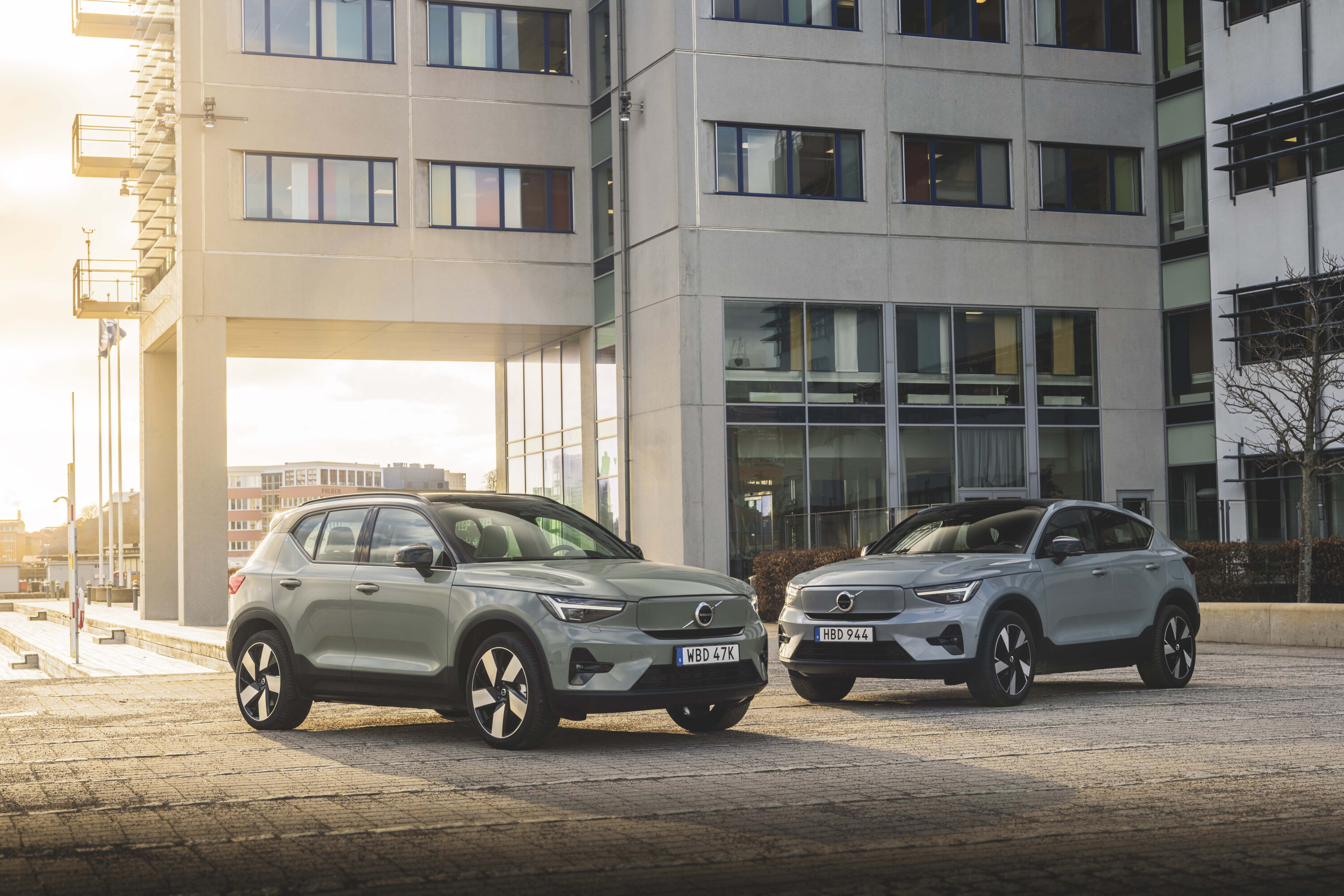
The XC40 looks cool, calm and unthreatening, giving the electric SUV market a softer-edged competitor. An approach reflected in its driving experience, too, especially if you opt for the more modest performance of the single-motor car.
But we’d advise checking out its Korean competitors before taking the plunge; an Ioniq 5 or EV6 offers similar performance and range with quicker charging, albeit edgier looks.
This is a market burgeoning with diverse options, whichever way you cut it.
1
MORE
Everything Volvo
