
Synthetic fuels are produced in an intensive process powered by renewable energy and carbon capture. While combustion engines running e-fuels still produce some local exhaust emissions, the holistic cycle is carbon-neutral.
Mercedes-Benz CEO Ola Källenius has emphasised that battery-electric vehicles are superior to synthetic e-fuels running combustion engines.
Snapshot
- Mercedes commits to EVs over e-fuels
- CEO stresses electric is more efficient, will overtake engines
- Charging infrastructure, raw materials are key challenges
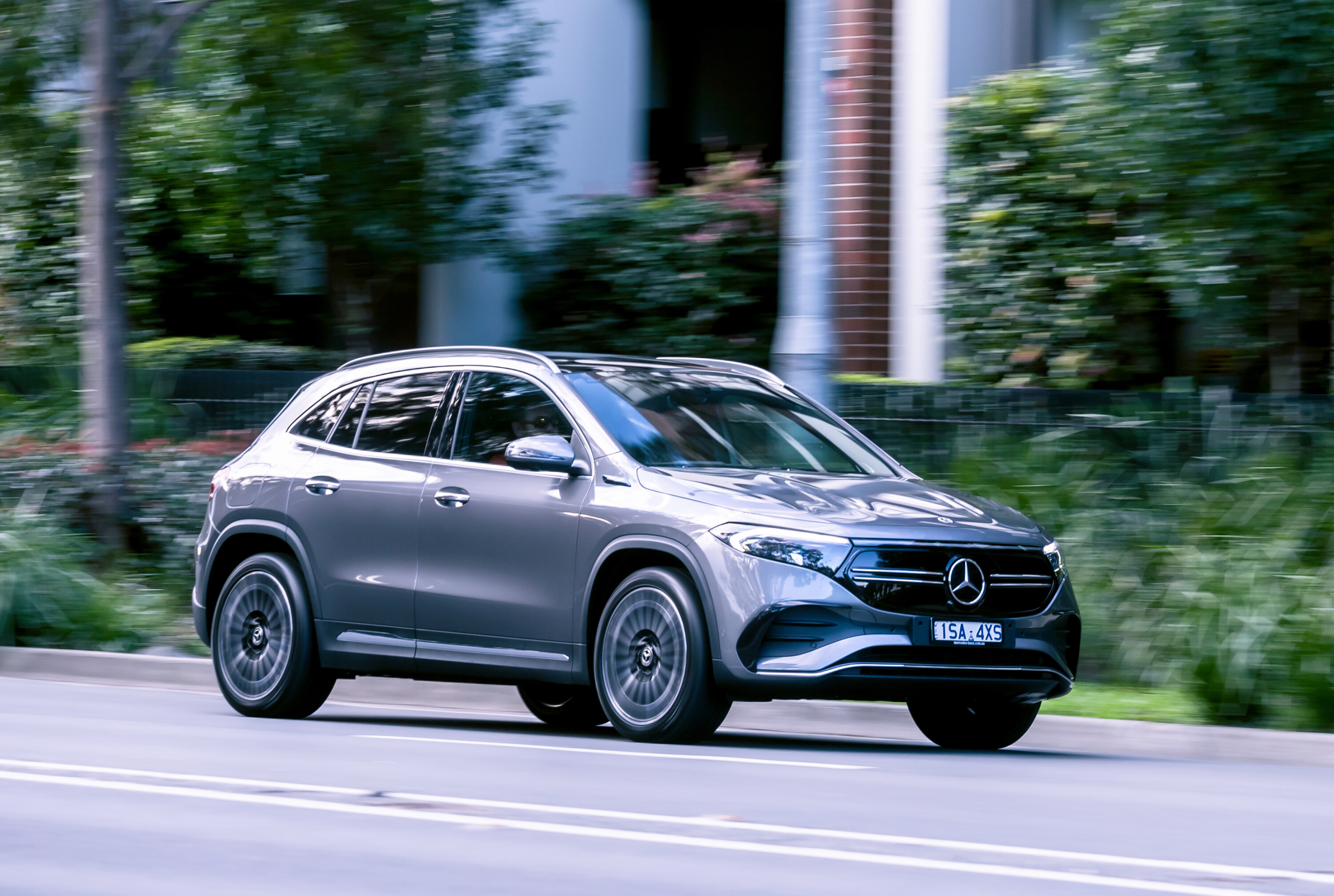
Speaking with German newspaper Frankfurter Allgemeine Zeitung [↗], the executive said the luxury carmaker has committed to “technically superior” electric drivetrains – despite the 2035 European ban exemption on the sale of new internal combustion-engined vehicles powered by carbon-neutral e-fuels.
“Of the electricity that you generate with a wind turbine [for charging an EV or producing e-fuels], for example, around 70 per cent of the energy arrives on the road as driving force in an electric car, while it is significantly less in the case of a combustion engine,” Källenius said.
1
“The efficiency is simply sensational. […] The electric car is still a young technology… We still see great potential for progress: the electric drive will overtake the internal combustion engine in terms of performance before the end of this decade.”
While the German marque is working to comply with impending stricter Euro 7 emissions regulations, it will reduce its investment in traditional combustion engines by around 80 per cent by 2026.
How are e-fuels made?
1
Charging, battery material challenges
Källenius said charging and raw materials remains a key challenge, and labelled lithium as the “new petroleum”.
“The charging infrastructure must be expanded as quickly as possible, and we must do everything we can to promote the generation of green electricity,” Källenius said.
“Building capacity in lithium mining and processing is a gigantic industrial undertaking.
1
“These raw materials will not all be mined in Europe. For that, we need trade agreements with Canada, South America and Australia. That is where government support is needed.”
The luxury car brand has already promised to only sell EVs by 2030 – but only where market conditions allow.
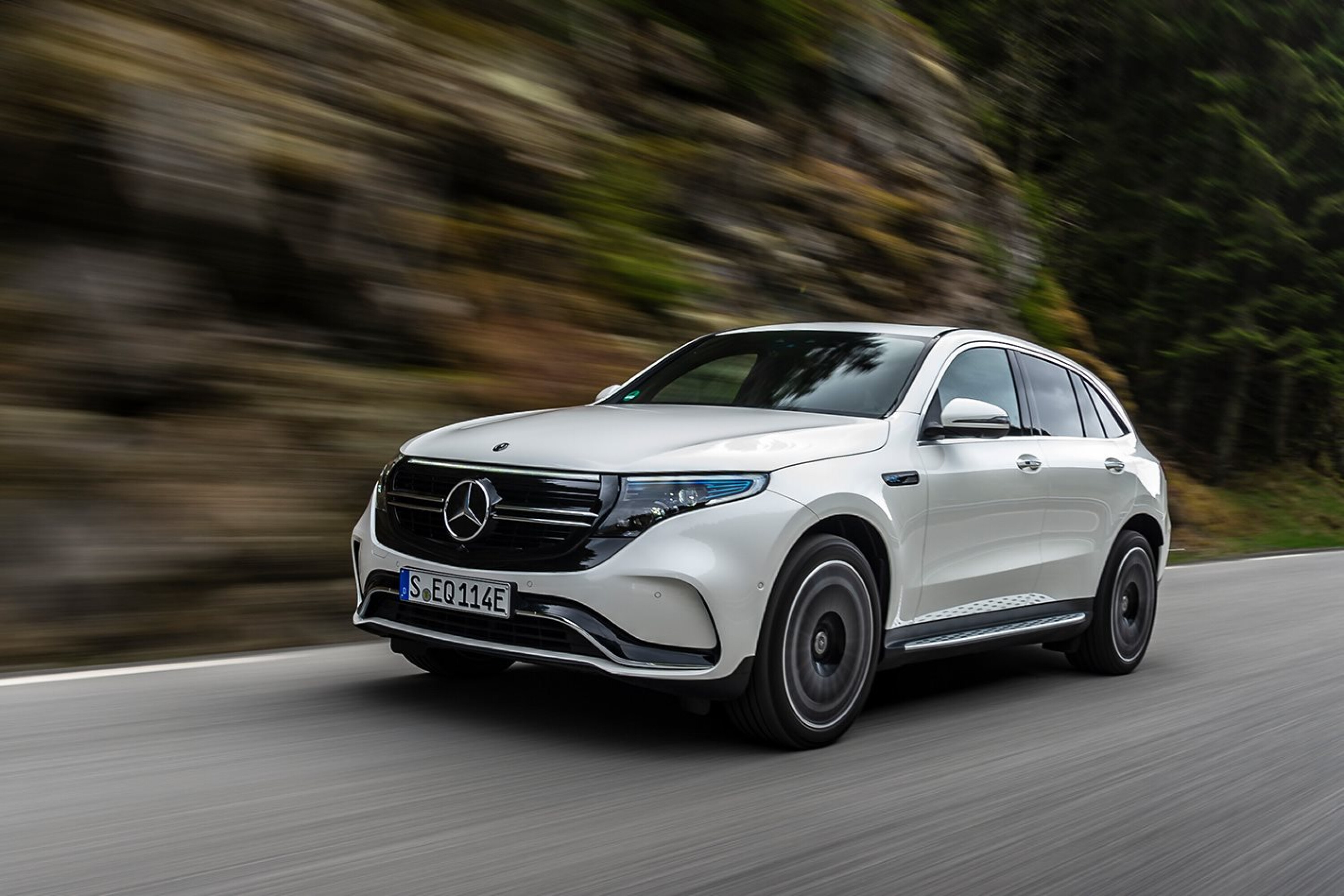
Mercedes currently sells one of the widest electric line-ups in Australia, ranging from the EQA small SUV to the EQS ultra-premium liftback, and eVito light commercial van.
⚡ More EV stories to help you choose the best car for your needs
A call for Australia to charge into electric utes? Not quite…
Snapshot
- Mazda BT-50, Nissan Navara are lower-emitting utes
- Couldu2019ve avoided at least 78,000 tonnes of CO2 emissions per year u2013 if every Australian ute buyer chose BT-50 in 2022
- More electric utes coming amid Thailand production targets
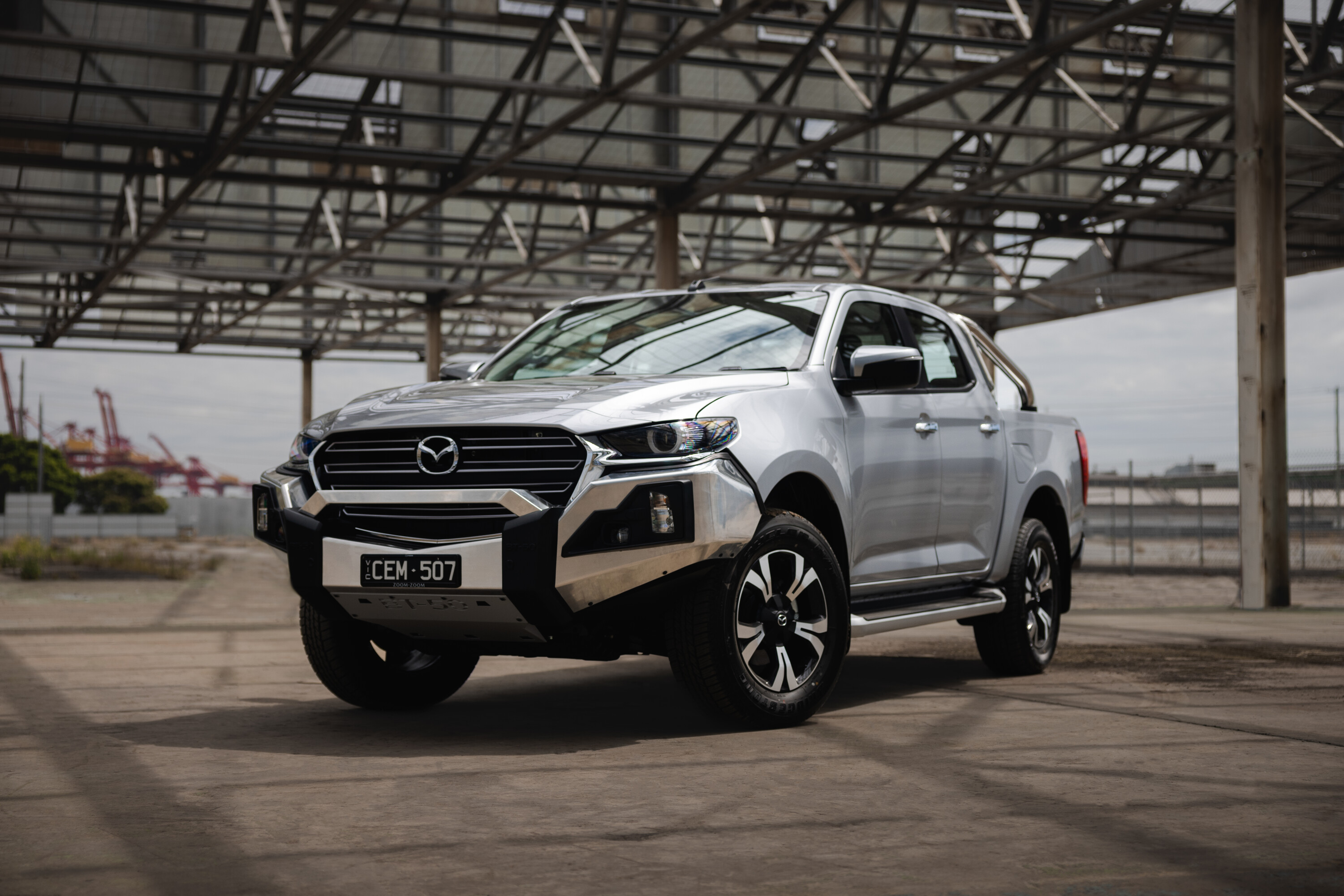
A report from the Climate Council reveals Australians could’ve saved more than 436,600 tonnes of harmful carbon dioxide (CO2) exhaust emissions over five years – if everyone opted for a lower-polluting new ute on sale, like the 2022 Mazda BT-50.
Editor’s note on the Climate Council’s research
The Nissan Navara, as noted below, seems to have missed getting its due praise in the report, while the BT-50’s platform twin the Isuzu D-Max also misses out, due to the Council’s research centring entirely on the government’s Green Vehicle Guide – which does not currently list 1.9-litre variants of the Isuzu.
1
Based on figures in the Australian Government’s Green Vehicle Guide, the Council claims the BT-50 had lower claimed diesel exhaust CO2 emissions in the booming segment last year, producing 190g/km on average.
If every Australian purchased a 2022 Mazda BT-50 4×2 last year, the Council claims it could’ve avoided more than 87,322 tonnes of CO2 emissions and saved more than $42 million in fuel costs per year.
Meanwhile, if every Australian bought a 2022 Mazda BT-50 4×4 variant, it could’ve avoided more than 78,204 tonnes of CO2 emissions and saved more than $32 million in fuel per year.
It’s worth noting that a table in the report (and verified using official data) shows the 2022 Nissan Navara has even lower average CO2 emissions than the BT-50, but the Council only gives the pre-update 2015 Navara ute with the ‘most efficient’ title.
Editor chiming in again…
In correspondence with this article’s author, a spokesperson for the Council could not adequately explain this discrepancy in the council’s research methodology and reporting.
It should also be noted that CO2 is the only variable measured in the Climate Council report. Diesels emit less CO2 in comparison with petrol vehicles, with more harmful noxious emissions not accounted for.
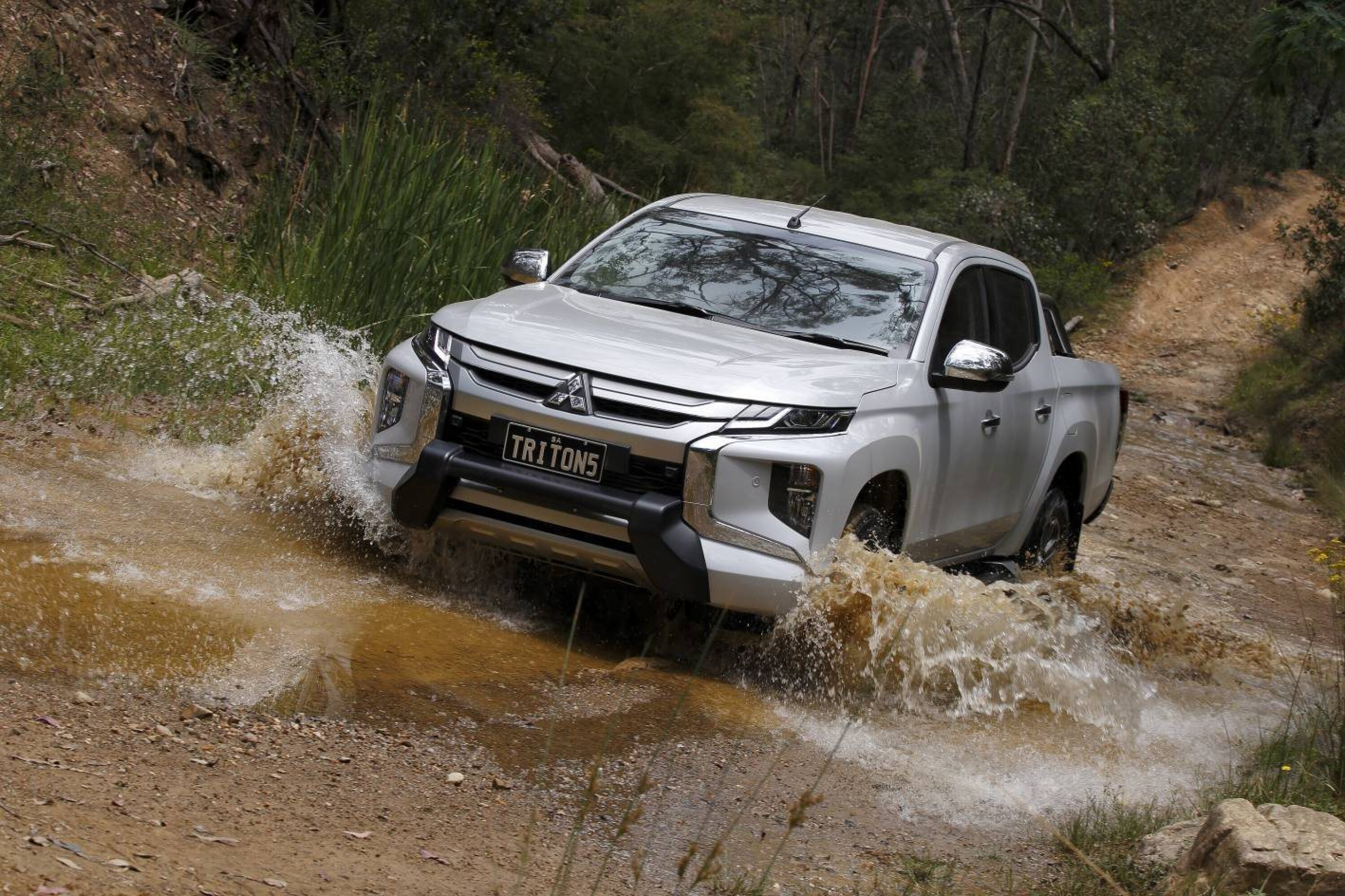
The worst offender in 2022 was the Jeep Gladiator’s 3.6-litre six-cylinder petrol engine that outputs 288g/km of CO2 on average, trailed by the Toyota LandCruiser 70 Series ute with 281g/km of CO2, and the Mitsubishi Triton’s 2.4-litre four-cylinder turbo diesel 4×4 unit producing 225g/km of CO2.
The latter has 20 per cent more CO2 emissions per kilometre and $380 in additional fuel costs per year compared to the Mazda BT-50.
1
Electric utes on the horizon
The biggest on-road emissions reductions will come from full battery-electric utes.
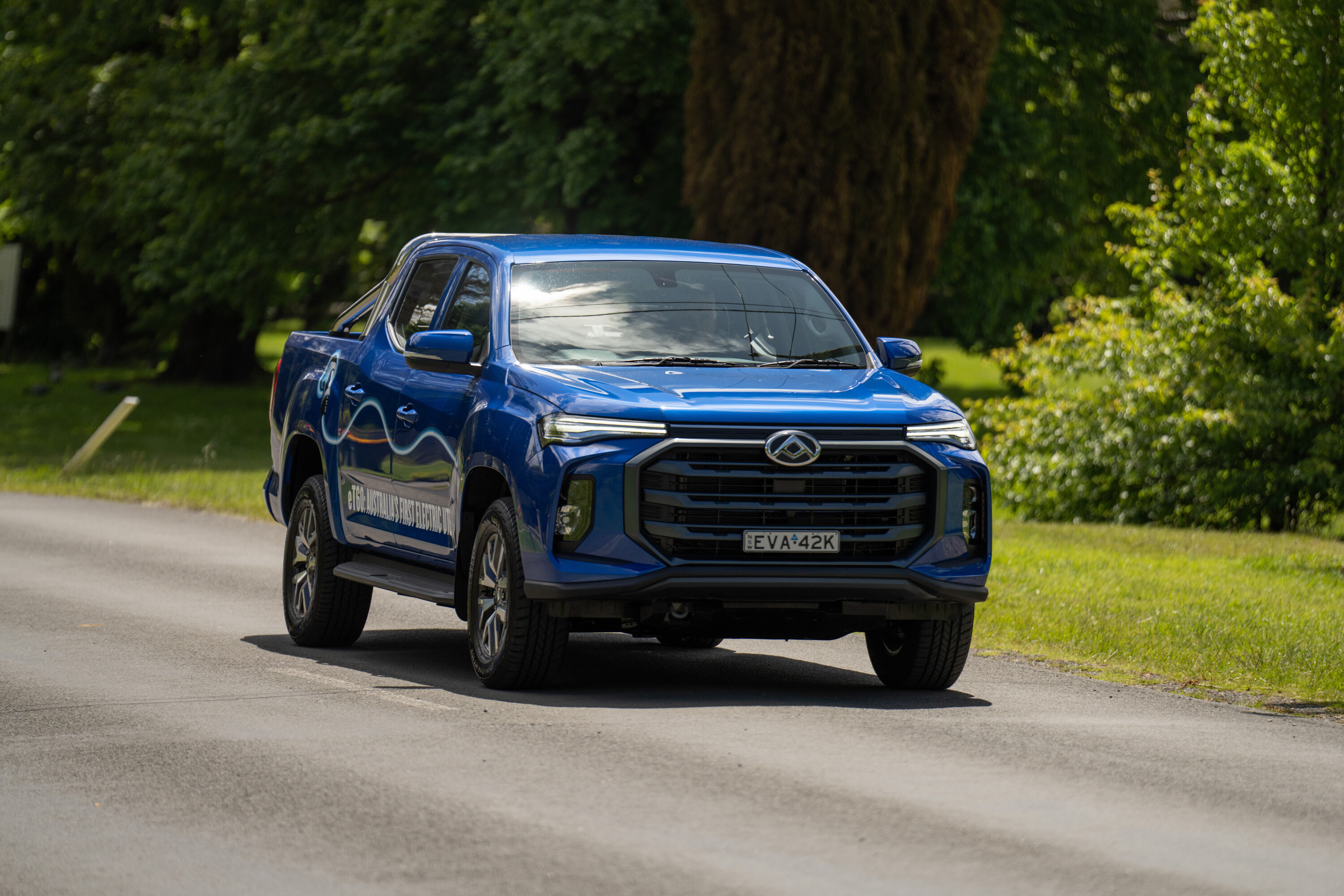
There’s only one ‘mass-market’ EV ute on sale today, the Chinese-born LDV eT60, with a high price tag and sub-par capabilities. And not quite ‘mass-market’ availability…
But, that’s all set to change, with Thailand – Australia’s biggest source of utes including the best-selling Toyota HiLux, Ford Ranger and Mitsubishi Triton – aiming to have 50 per cent of its manufactured vehicles be electric by 2030, and 100 per cent by 2035.
1
Meanwhile, local companies such as ROEV, SEA Electric and Voltra are converting current combustion-powered Toyota utes to zero tailpipe emission electric power to extend the life of commercial fleets.
The Climate Council also argues setting strong fuel-efficiency standards in Australia – which is one of the last developed countries globally to not have a mandate for average vehicle line-up emissions – will encourage more lower-emission or all-electric ute models with better specifications sold here, such as the Ford Maverick hybrid, Ford F-150 Lightning, and Rivian R1T.
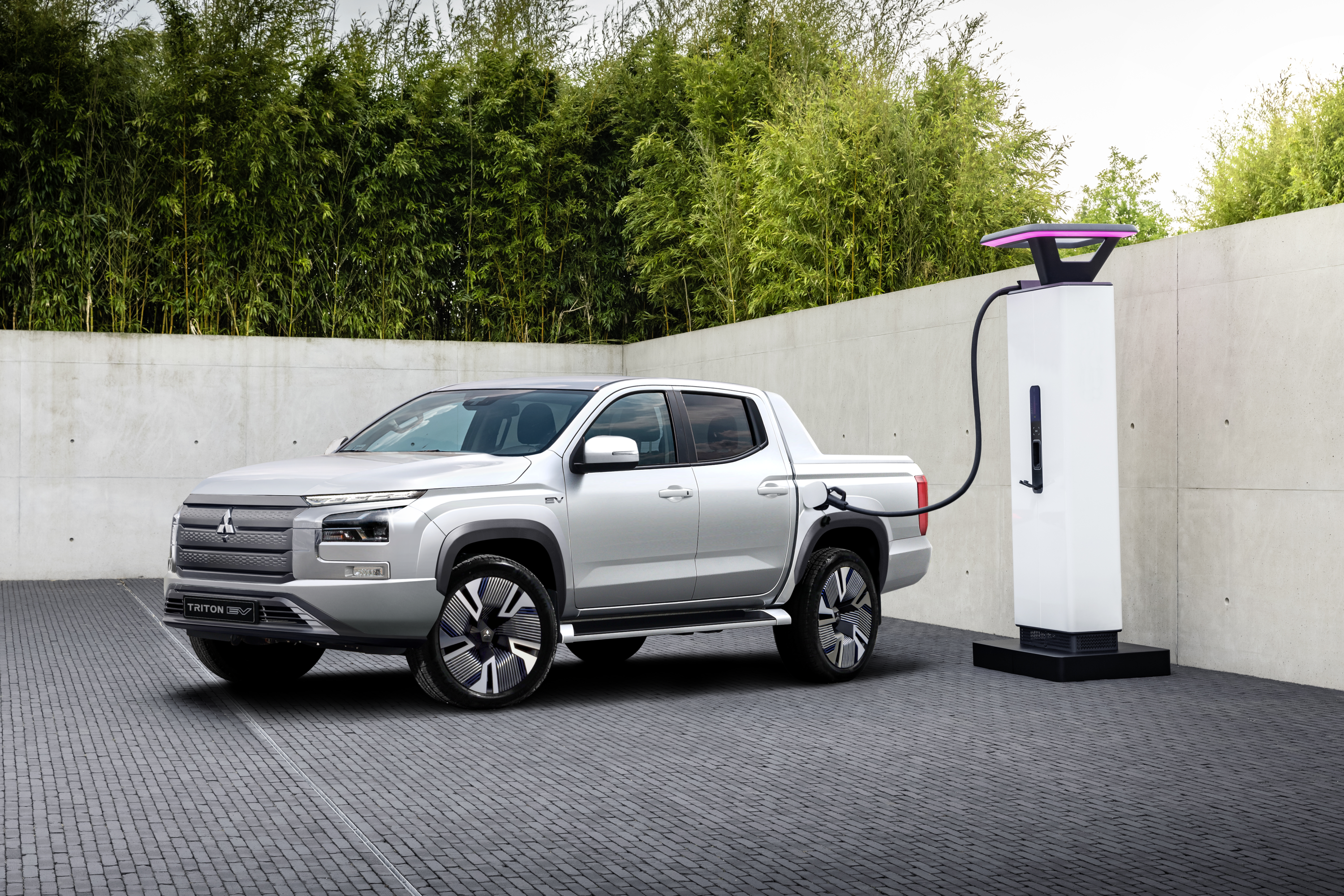
Full electric utes are on the horizon, though, including the new-generation Mitsubishi Triton EV and Volkswagen Amarok EV, plus a Ford Ranger plug-in hybrid rumoured in this decade.
1
Why the ute focus?
Transport is the third-largest source of Australia’s greenhouse gas emissions, with high-polluting diesel-powered utes consistently in the top-10 sales charts.
In the past decade, new ute sales have risen from 16 per cent market share in 2012 to 21 per cent last year, alongside a 20 per cent jump in light commercial vehicle emissions.
The venerable Toyota HiLux in particular has regularly been the top-selling car overall in Australia every year since 2016.
Despite heavy emissions regulations in Europe, most utes sold Down Under today only comply with Euro 5 rules that date back to 2009. Strict Euro 7 laws will soon be enforced in mid-2025.
MORE
Electric Cars
MORE
PHEV and Hybrid Cars
As soon as I’d seen pictures of the Blue Rag Range Track, I was hooked. How could you not be?
A thin brown line that teetered precariously along ridges and false summits, surrounded by the best mountain scenery in Australia that summited at a trig point some 1726m above sea level.
There was, however, one major impediment. Me. Or, more to the point, my rather limited off-roading skills. I share office space with the crew from 4×4 Australia and they’re cut from different cloth. They’ll talk for hours about portal axles, winches and transfer cases.
They sport impressive facial hair and battered leather hats and boots. I can’t even sidle into the conversation and casually drop a pretend-expert line about lockers or muddies without instantly being outed as a fraud.

1
What I do have is a Ford Everest Sport V6 and Google Maps.
I reckon that if I could drag myself out of bed early enough and line up a few podcasts, I could drive from home in South-East Melbourne, knock off the Blue Rag, head over Victoria’s highest piece of bitumen at Hotham Cross, drop down through Omeo and be back home in time for tea. It’s ambitious but seems doable.
Armed with a serious helping of overconfidence, a heavy jolt of caffeine and a survival kit that consists of Haribo Goldbears, I’m off at the crack of six o’clock. The drive down to Sale is uneventful, but the weather looks promising.
The Everest’s adaptive cruise makes light work of the kilometres and the seamless ease of wireless Android Auto or, if you’re that way inclined, Apple CarPlay, means that even I can’t get lost or bored.

1
I know it’ll turn to dirt somewhere, but quite where is beyond the scope of my research
The road heads north across the flatlands near Maffra, before I pick up the C601 to Dargo (population 99). I’ll admit that I’m not sure how far the blacktop lasts here. I know it’ll turn to dirt somewhere, but quite where is beyond the scope of my research. The terrain becomes a good deal more interesting the further north you go.
The roads that thread into Victoria’s high country do so for one of three reasons, gold, lumber or snow. Dargo, and the road to it, was founded to provide a welcome break for gold prospectors en route to the seams at Grant, Talbotville, and Crooked River in 1863s. As with all gold rushes, the easy wins petered out and by 1881 the commercially viable gold was gone.
Some miners laid down roots in Dargo and farmed sheep on the high plains. Others grew walnuts. By 1896 there was but one hotel in town, The Bridge. This burnt to a crisp in 1898 and rebuilt in the same spot. Today it’s known as the famous Dargo Hotel and well worth a stop if you’re in need of a parma the size of a manhole cover.

1
Not having the luxury of a leisurely lunch, I press north. Mobile signal comes and goes, the podcast eventually fizzling to nothing as the tarmac runs out. The Everest features a clever automatic four-wheel drive system which senses when you may need a bit more traction by detecting the amount of grip at each axle any time and apportioning drive accordingly.
It does all the work for you. The going is a little soft in places and it’s a case of keeping speed up in the shaded parts of the track where things are a bit muddy.
Fortunately the Everest is on the optional 18-inch all-terrain tyres. These are a no-cost option on the Sport V6 and if you’re planning to head off road, I’d recommend these over the 20-inch wheels with street tyres, as they’ll really extend the capabilities of your vehicle.

1
Without them, I think I might have given up on this drive a few kilometres back. Adventure bikers come the other way on their big twins, looking rather ashen. I wonder what’s ahead.
The answer comes sooner rather than later. The road climbs onto the Dargo High Plains, the scenery becomes bigger and the feeling of remoteness ramps up. I round a corner and suddenly my brain is scrambling to process exactly what I’m looking at. The entire road is reflecting the mountain above and it takes a second or two to realise that I’m about to drive into a lake.
I stop the car and wonder what to do. The wading depth on the Everest is quoted at 800mm, but I don’t want to get stuck in the middle of this mirror-still morass. My resolve is wavering. Without knowing how deep it gets, there’s no way I’m about to pitch in.
Without them (a no-cost switch to 18-inch all-terrain tyres), I think I might have given up on this drive a few kilometres back

1
Fortunately, someone does that for me. A group of drivers in tricked-out 4x4s, all snorkels and swags, comes the other way and I can see that, at its deepest, the water comes to the tops of their wheels.
None of them seem to be having any great issue with traction, so once they’ve cleared the water, I switch the drive mode into its Mud/Ruts setting, carefully pick my way through the hundred metres or so and breathe a big sigh of relief when I’m back on dry land.
Thankfully, the road stays a good deal drier as it gets higher. I almost miss the entrance to the Blue Rag Range Track while gawping at a pair of wedge-tailed eagles soaring over some distant peaks. There’s no gentle introduction. I switch the Everest into its low range mode, have a swig of water because my mouth has gone as dry as the bottom of a bird cage and set off up the first ramp.

1
Before long, I realise that most of the difficulty is in my head. The Everest feels bombproof.
I prod the off-road mode button which allows me to use the grille-mounted camera. This is key because there are big humps built into the track which, I’m assuming, are to help arrest a vehicle that’s having difficulty stopping when descending.
The only issue is, the track is narrow and as you ascend these humps, you have a windscreen full of sky. Engage the camera and its wide angle view allows you to see what’s on the other side using the central screen long before you drop the nose of the Everest.
The narrowness of the track means that you need to plan each mini-section with care so as not to encounter another 4×4 coming the other way at a key crux. At one point it drops towards a saddle on loose rocks. The inclinometer reads -20 degrees and it’s clear that I’m going to have to scramble back up this slope on the way back. I wonder if I’ve bitten off more than I can chew.

1
I pause halfway up and get a view of the destination, a flat-topped peak in the far distance. There are a few vehicles up there, tiny specks against the blue sky. I’ve come this far. It’d be a shame to turn back now and besides, I think the really tricky bit is behind me. Twenty minutes later, I realise that I’m wrong. The final pitch to the trig point requires quite a head for heights and a commitment to the throttle that really tests the Everest’s grip. One last push and I’m there.
The views are incredible, ghost gums stretching to every horizon. Mount Hotham sits to one point, scraps of snow still sitting in some of the high gulleys. The huge face of Mount Feathertop juts out over its shoulder, with Mount Buffalo to the north.
I realise that I’m rather conspicuous up here, a showroom-spec Ford Everest sitting amongst probably twenty 4x4s laden with gear. I sit and watch a few vehicles tackle that last pitch, revs pinging off limiters and suspension bouncing from full compression to full extension. I don’t remember it being that tricky.

1
The Everest hasn’t been in dealers too long and everybody has questions.
A bloke parks next to it with his Raptor and wants to know everything I can tell him about the rear suspension of the Everest.
I think he’s still trying to figure out how it got up the hill so easily. Come to that, so am I.
Getting down is far easier. Slotting the Everest in second gear in the low range gearbox provides all the retardation I need to descend at a reassuringly stately pace. It’s reassuring to know that if it gets really steep, there’s the backup of the standard hill-descent control system available. A bit of pace is required to climb back out of the steep saddle, but that’s achieved at the first try and from there I know I’m home and hosed.
There’s a massive sense of achievement having driven the Blue Range Rag Track. Yes, serious 4×4 guys might see it as a modest jaunt, but it feels like quite a day out for me. I head up to Hotham Cross, at 1845m, the highest sealed road in the state, drive through the deserted ski resort and point the nose downhill on the Great Alpine Road.

1
I think he’s still trying to figure out how it got up the hill so easily. Come to that, so am I
There’s 170km of corners between Hotham and Bairnsdale. It’s challenging and beautiful and just never lets up, joining the Tambo River beyond Omeo.
Would I be having more fun in a sports coupe? Maybe. Do I still have a grin wide enough to post a wok into? You bet. The A/T tyres hold on reasonably well and give plenty of warning if you’re starting to get a bit too enthusiastic, and both the steering and body control of this generation Everest are leagues ahead of its competitor set.
I grab a quick bite to eat in Omeo and carry on down the valley, past the old gold reefs of Cassilis and finally running out of downhill on the outskirts of Bairnsdale. From there it’s back on with the audio system and cruise control as I set the nav back to Melbourne’s south east.

1
The clock on the centre screen clicks over to 6:00pm as I pull up onto the drive. It’s been a solid twelve hour day in some very challenging conditions, but I don’t feel physically wrung out.
I feel a bit giddy at what I’ve done during the day, almost as if it can’t possibly have happened. I scroll through the pictures on my phone just to remind myself that I really did travel from a new-build suburb to the top of a mountain today.
The big Ford ticks cool as the frogs start chorusing from the pond at the end of the road.
It’s been one heck of a day.
Would I do it again? Probably not in one bite. That was a huge day. Overnighting in Dargo would make it far more manageable. I’m currently in training for that parma.
For information on the Ford Everest range and features please visit here [↗].

COTY
2023 Ford Everest: Wheels Car of the Year winner
Brilliant large SUV that’s designed for Australians by Australians snags Ford its first COTY since 2004. Here’s why.
MORE
Everything Ford
MORE
Large SUVs
The all-electric 2023 Peugeot E-2008 small SUV is now available to pre-order.
Snapshot
- 2023 Peugeot E-2008: Australian details confirmed
- Electric small SUV priced at $59,990 plus on-roads
- Set to launch between July and September
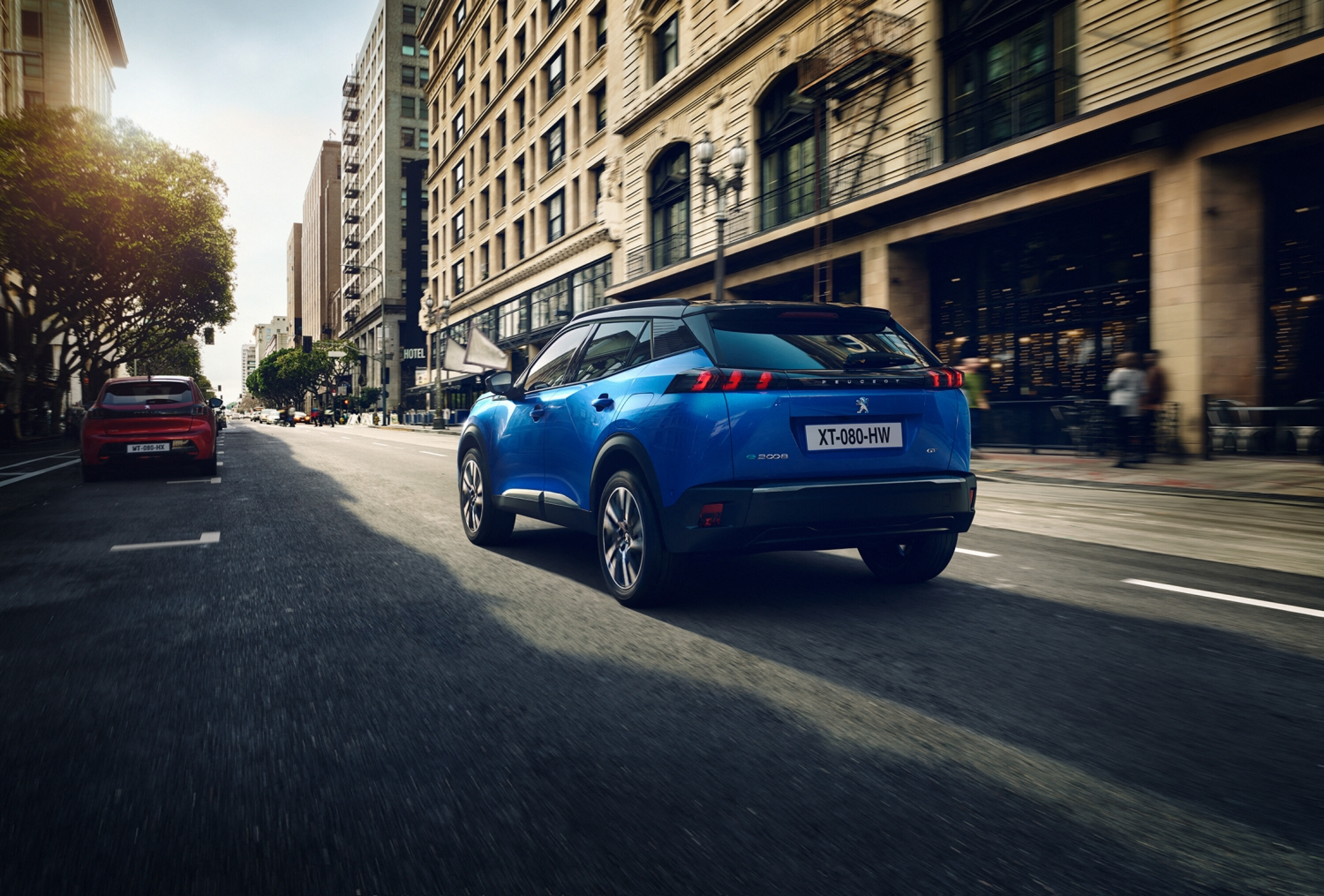
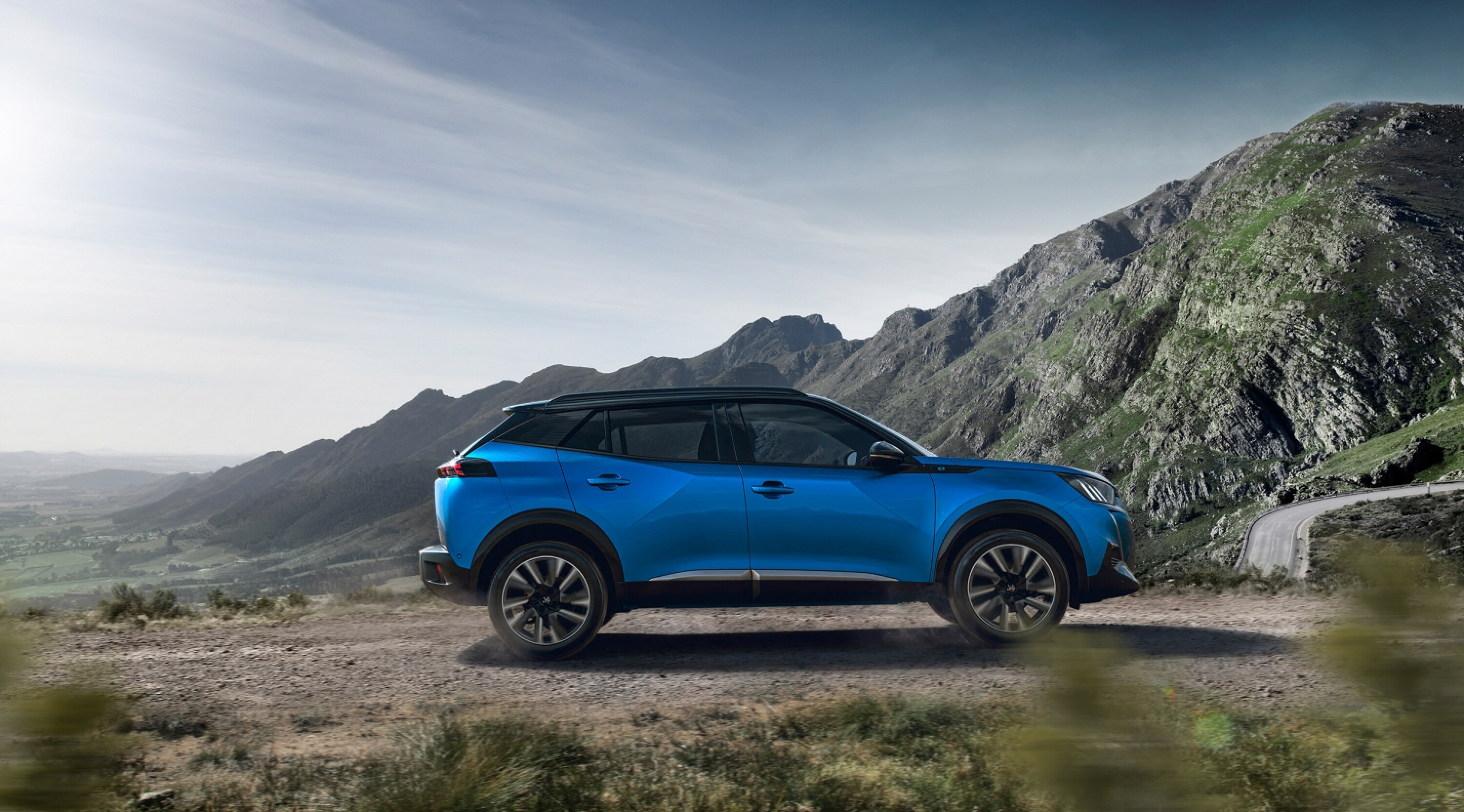
Peugeot Australia has confirmed the E-2008 will be priced at $59,990 before on-road costs when it arrives between July and September.
This places the electric small SUV in line with the Hyundai Kona Electric Standard Range Highlander ($58,000 plus on-roads), and the more powerful and longer-range Cupra Born ($59,990) and Tesla Model 3 RWD ($60,990)
Other small electric SUVs with a similar driving range – the MG ZS EV and BYD Atto 3 Standard Range – hail from China with a circa-$10k less price tag.
1
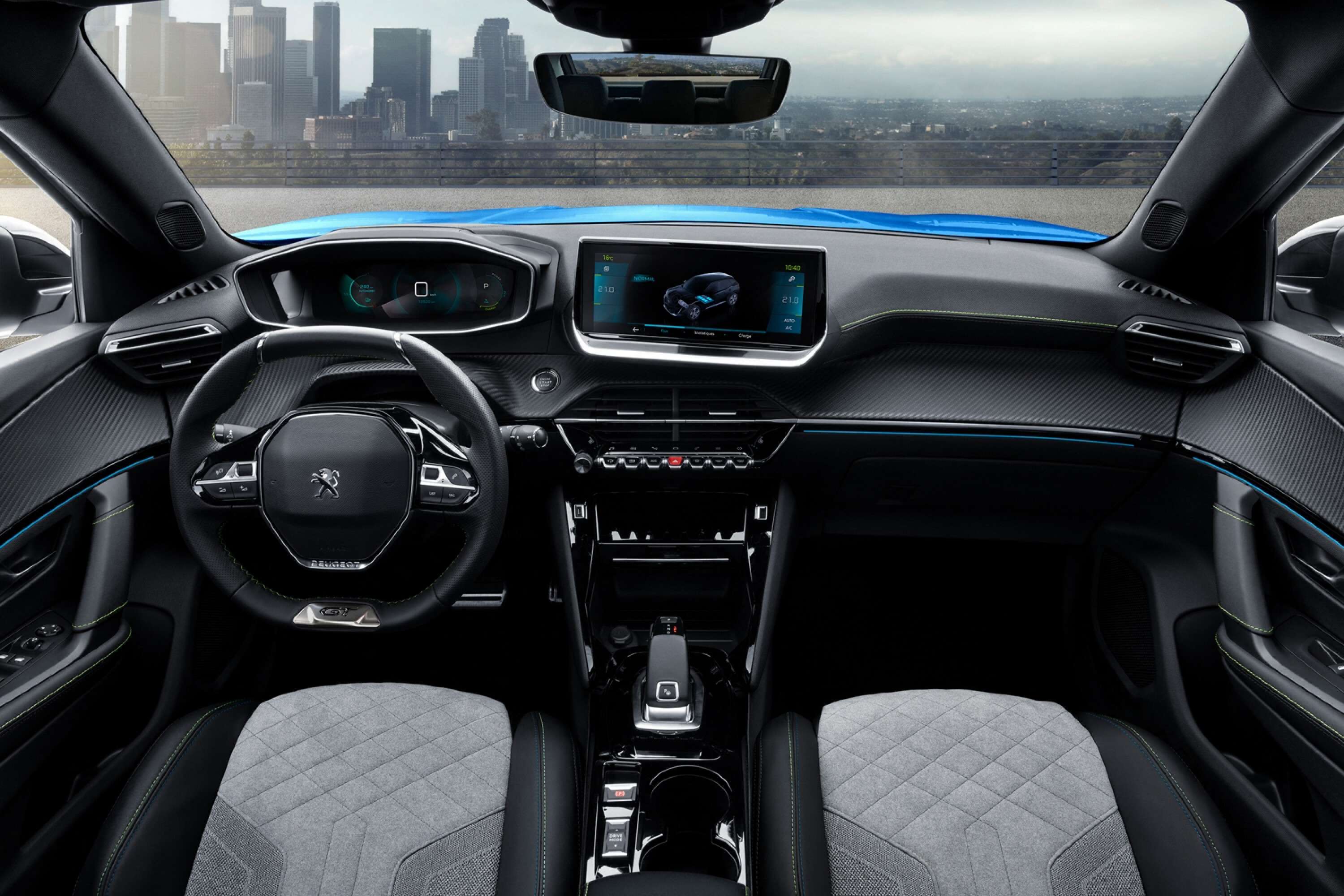
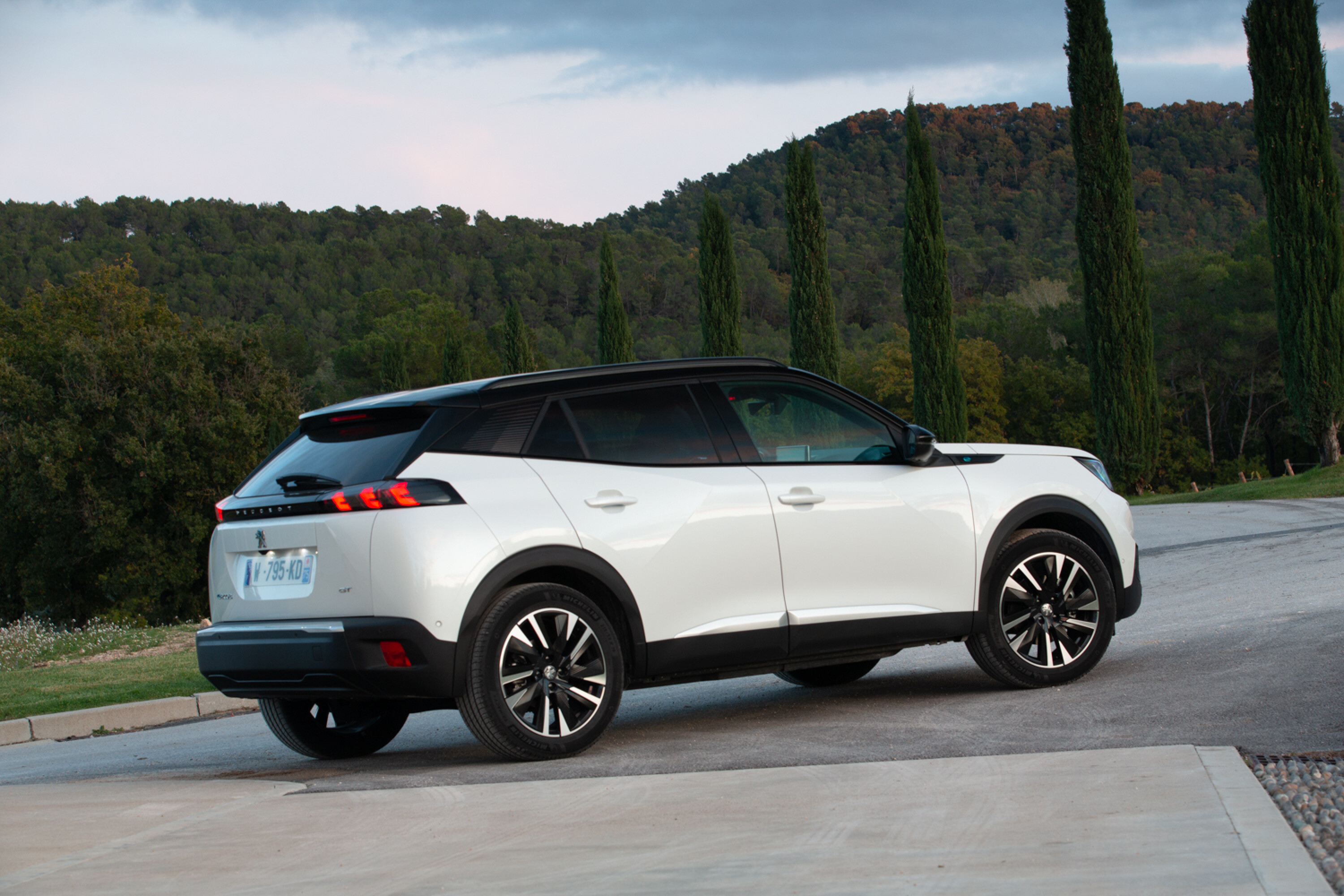
It will be available in single-variant E-2008 GT form, largely matching the petrol GT, with black 18-inch alloy wheels, heated front seats with a driver massage function and an optional panoramic sunroof from the range-topping GT Sport.
Since the E-2008 is based on the mid-spec GT, it misses out on low-light pedestrian and cyclist AEB detection, adaptive cruise control, lane-centring and semi-autonomous parking, which are limited to the petrol GT Sport.
The E-2008 will also rival the Renault Megane E-Tech Electric due later this year, with Renault Australia’s general manager, Glen Sealey, confirming it will be priced around $70,000 plus on-roads.
1
As with the petrol 2008 – priced between $38,945 and $51,188 plus on-roads – the E-2008 is built on the brand’s CMP platform. It is manufactured in Spain.
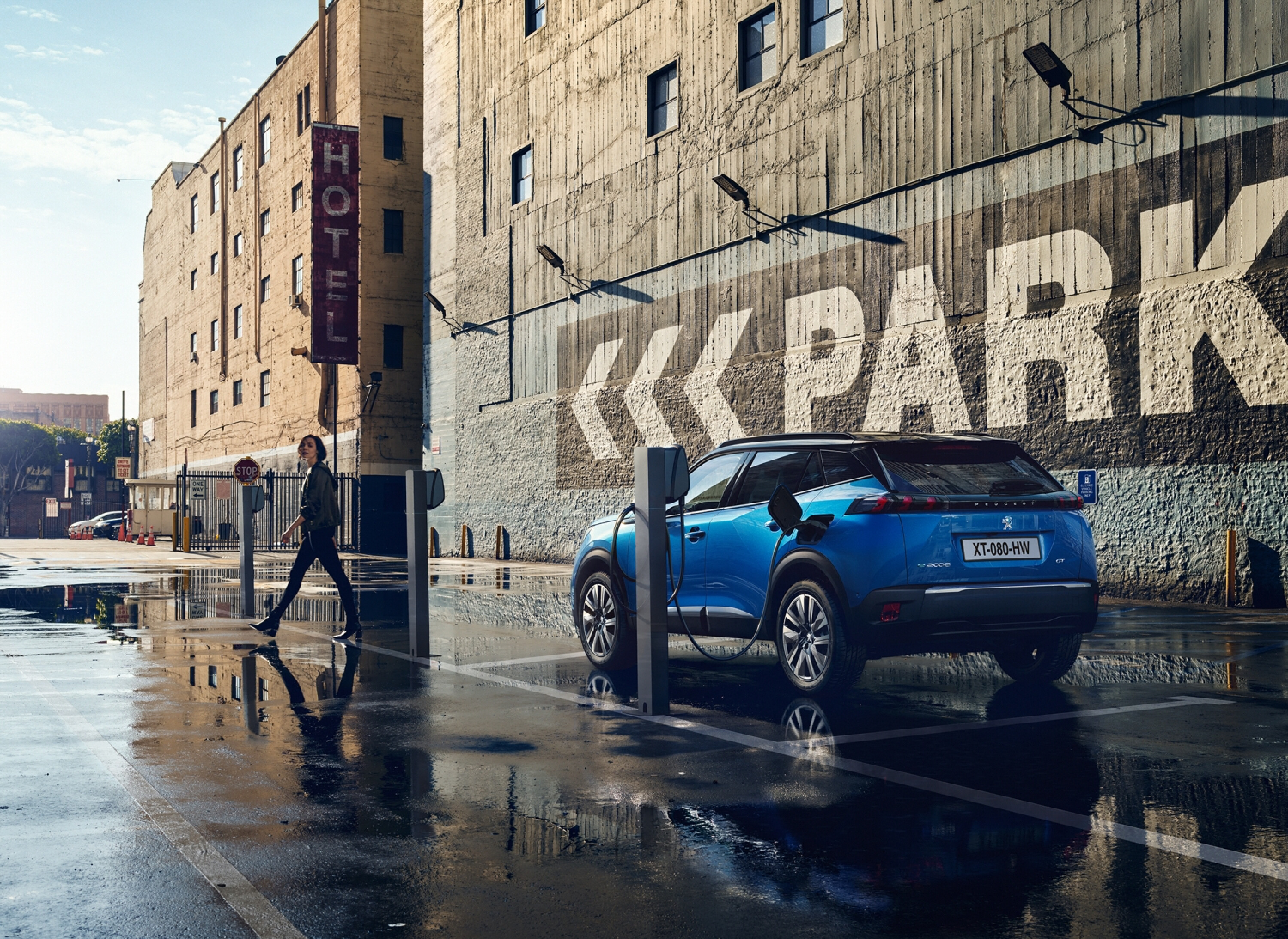
Peugeot’s local division – managed by third-party Inchcape – has expanded its electrified line-up in 2023, with the plug-in hybrid 508 and 3008 joined by the 308 GT Sport PHEV, and the all-electric E-Partner small van and E-2008. The electrified 408 is also due in the coming months.
For everything you need to know about the 2023 Peugeot E-2008, continue below.
1
JUMP AHEAD
- 2023 Peugeot E-2008 pricing
- 2023 Peugeot E-2008 features
- Powertrains, charging, and driving range
- Safety
- Dimensions
- Warranty and servicing
- Availability
2023 Peugeot E-2008 pricing
Price excludes on-road costs.
| Model | Pricing |
|---|---|
| E-2008 GT | $59,990 |
1
2023 Peugeot E-2008 features
| 18-inch alloy wheels (black) | Heated front seats |
| u2018Eu2019 badging and body-coloured grille | Driveru2019s seat massage function |
| 10-inch infotainment system | Leather steering wheel |
| Wired Apple CarPlay and Android Auto | Power-adjustable driveru2019s seat |
| 3D satellite navigation | Manual passenger seat adjustment |
| DAB+ digital radio | Keyless entry and push-button start |
| Six-speaker audio system | Front and rear parking sensors |
| 3D i-Cockpit digital instrument cluster | Heated, power-folding side mirrors |
| Four USB-A ports | Black headlining |
| LED headlights, tail-lights and daytime running lamps | Frameless auto-dimming rear-view mirror |
| Adaptive high-beam | Tyre pressure monitoringu00a0 |
| Leather-accented upholstery with green stitching | Manual cruise control. |
A panoramic sunroof is optional, though pricing is currently unconfirmed. ? Back to top
1
Powertrains, charging, and driving range
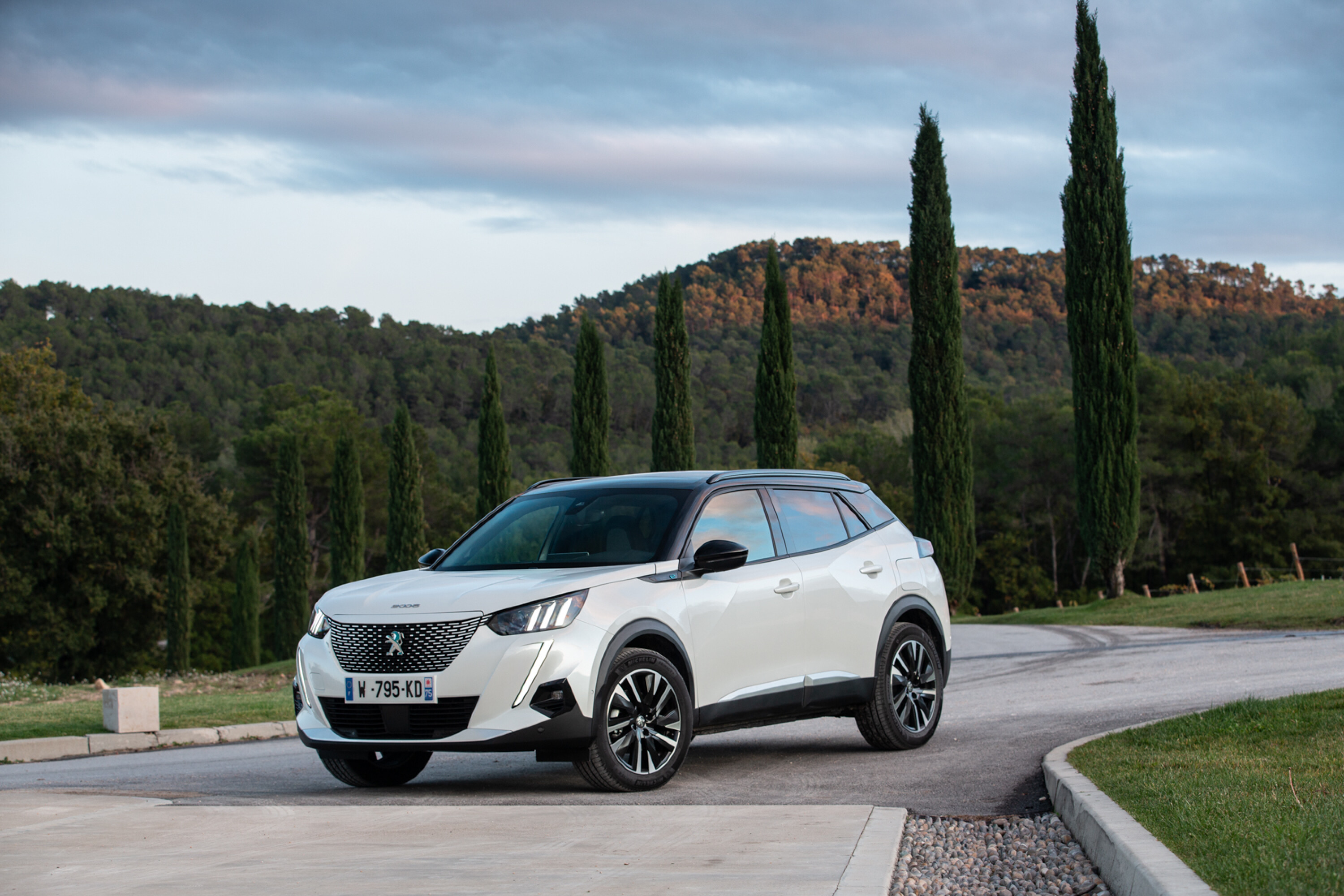
The Peugeot E-2008 is fitted with a 45kWh lithium-ion battery pack and a single 100kW/260Nm electric motor powering the front axle, for a WLTP-rated 328-kilometre driving range.
In the E-2008, public fast-charging reaches 100kW DC for a 10-80 per cent top-up in 26 minutes, while AC charging is capped at 7.4kW for a seven-hour and 15-minute 0-100 per cent charge.
MINI MATCH-UP: Peugeot E-2008 v rivals*
| Model | Peugeot E-2008 | Cupra Bornu00a0 | Hyundai Kona EV Standardu00a0 | BYD Atto 3 Standardu00a0 | MG ZS EV Standard | Tesla Model 3 RWD |
|---|---|---|---|---|---|---|
| Price (+ ORCs) | $59,990 | $59,990 | $54,500 u2013 $58,000 | $48,011 | $43,990 u2013 $47,990 | $60,990 |
| Power | 100kW | 170kW | 100kW | 150kW | 115kW | 239kW (est.) |
| Torque | 260Nm | 310Nm | 395Nm | 310Nm | 280Nm | 420kW (est.) |
| Battery size | 45kWh | 82kWh | 39.2kWh | 49.9kWh | 50.3kWh | 62.3kWh (est.) |
| WLTP range | 328km | 511km | 305km | 345km | 320km | 491km |
| DC charge speed | 100kW | 170kW | 100kW | 70kW | 50kW | 170kW |
| * as of April 28, 2023 | ||||||
1
Safety
The Peugeot E-2008 does not have an ANCAP or Euro NCAP safety rating.
However, the petrol-powered 2008 is covered by a five-star ANCAP safety rating, based on testing conducted in 2019.
It scored 93 per cent for adult occupant protection, 87 per cent for child occupant protection, 73 per cent for vulnerable road user protection, and 72 per cent for safety assistance.
Six airbags (dual front, side and curtain) are fitted as standard.
| 2023 Peugeot E-2008 active safety features | |
|---|---|
| Autonomous emergency braking (vehicle, daytime pedestrian and cyclist) | Blind-spot alert |
| Forward collision warning | Driver attention alert |
| Lane-keep assist | Traffic sign recognition |
| Automatic high-beam | Reverse camera.u00a0 |
1
Dimensions
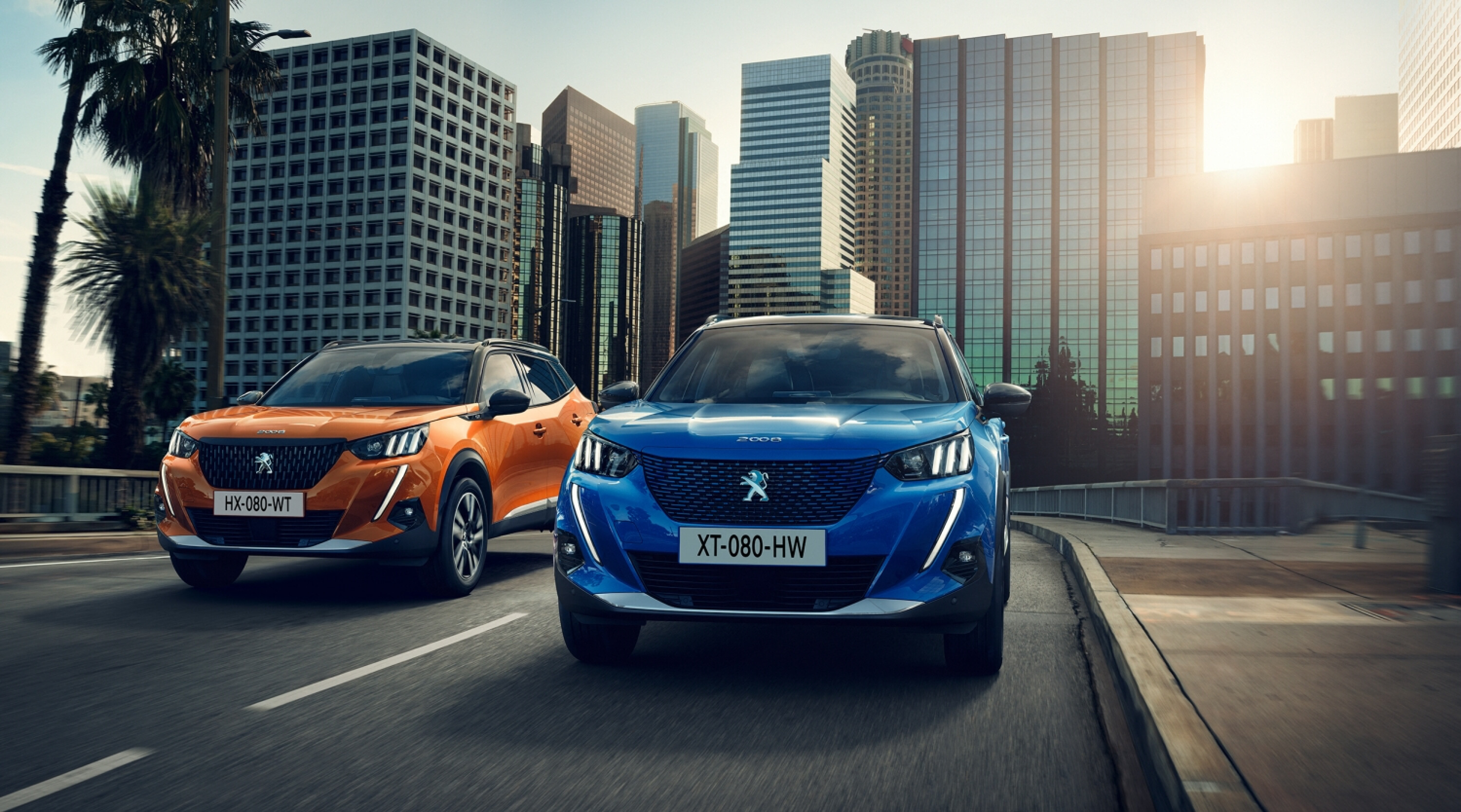
The 2023 Peugeot E-2008 measures 4300 millimetres long, 1770mm wide and 1550mm tall, with a 2605mm wheelbase.
2023 Peugeot E-2008 boot space
The Peugeot E-2008 has a 405-litre boot capacity, down from 434 litres in petrol models.
1
Warranty and servicing
As with the wider Peugeot range, the E-2008 is covered by the brand’s five-year, unlimited-kilometre warranty.
It has a complimentary roadside assistance program during the warranty period.
Maintenance for the E-2008 is required every 12 months or 25,000 kilometres, whichever occurs first.
| 25,000km/12 months | 50,000km/24 months | 75,000km/36 months | 100,000km/48 months | 125,000km/60 months | Total |
|---|---|---|---|---|---|
| $258 | $360 | $258 | $374 | $272 | $1522 |
Service pricing can also be pre-purchased, consisting of a three- or five-year package.
| Three-year | Five-year |
|---|---|
| $600 | $1000 |
Availability
The all-electric 2023 Peugeot E-2008 will arrive in Australia in the third quarter (July to September inclusive), with full details to be announced closer to launch.
It is now available to configure and pre-order on Peugeot Australia’s website.
MORE
Everything Peugeot
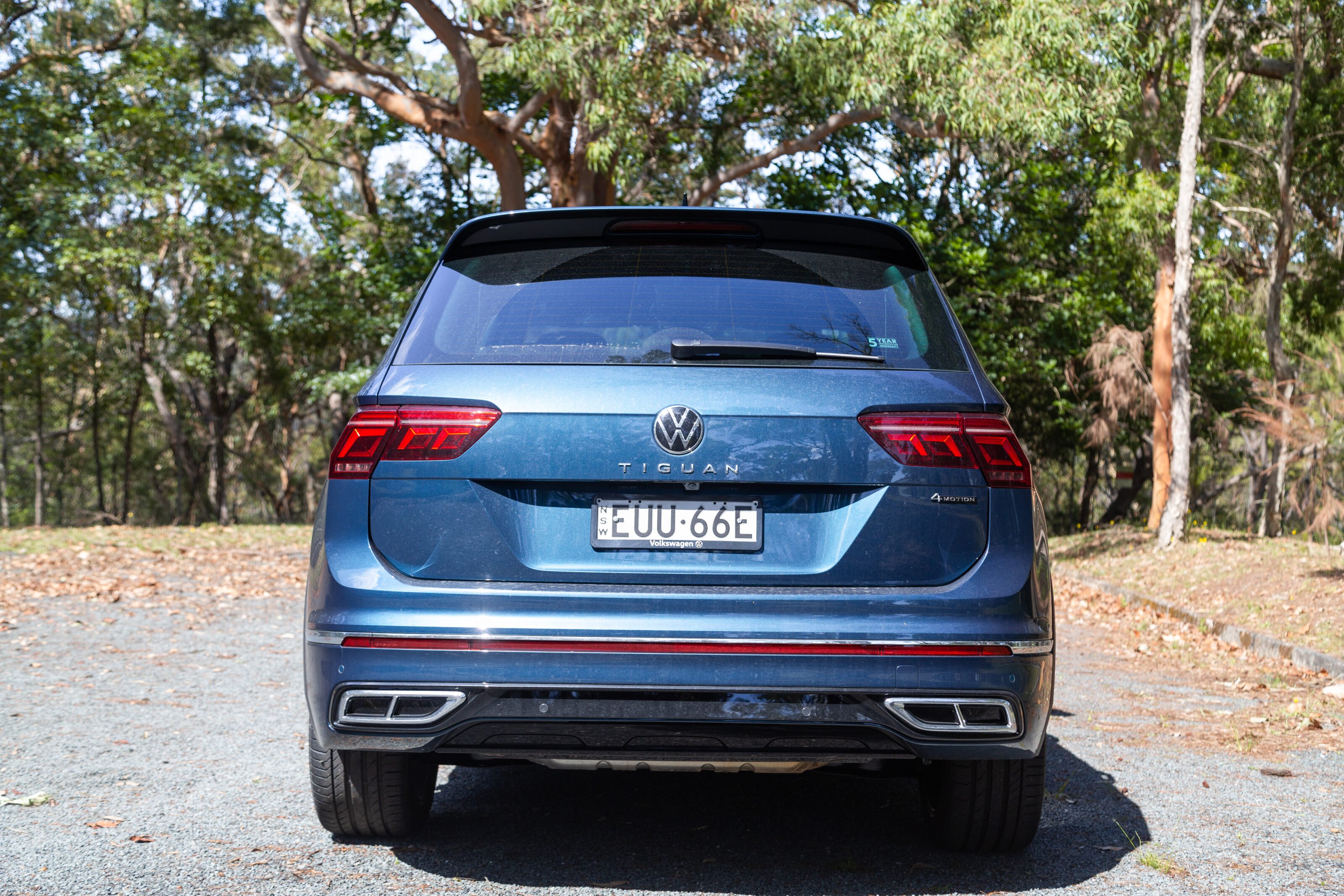
If you caught our medium SUV Megatest, you might have spotted a near-identical ‘Nightshade Blue’ Tiguan 162TSI R-Line.
With the context of a $50K ceiling, the top-spec (R performance flagship notwithstanding) VW Tiguan couldn’t contest top-place honours with the comfortable and spacious X-Trail Ti ($50,490 before on-road costs).
Thing is, if your budget stretches to $57,790 (before on-road costs) and you’re a keen driver, the all-wheel drive turbo-petrol Tiguan is an awfully charming medium SUV. Space-efficient and classily finished inside without being gaudy, the Tiguan is backed up by a chassis that feels more hot hatch than soft-roader.
You’ll struggle to get one at the moment, of course, because this 162TSI R-Line is the variant everyone wants. VW will sell you a slightly de-contented Monochrome version if you wish, which gets the adaptive dampers and punchy engine that make this Tiguan such a compelling package.
1
Volkswagen Tiguan 162TSI R-Line: The basics
| Volkswagen Tiguan 162TSI specs | |
|---|---|
| Price | $57,790 (before on-road costs) |
| Combustion engine | 2.0L turbo 4 cylinder, DOHC |
| Transmission | 7-speed DSG |
| Power | 162kW |
| Torque | 350Nm |
| Economy | 8.5L/100km (ADR 81/02) |
| Boot space | 520L/615L |
JUMP AHEAD
- How much is it, and what do you get?
- How do rivals compare on value?
- Interior comfort, space and storage
- What is it like to drive?
- How much fuel does it use?
- How safe is it?
- Warranty and running costs
- VERDICT
- Specifications
How much is it, and what do you get?
At the top of the regular non-R Tiguan tree, you’re given a choice of turbocharged 2.0-litre diesel or petrol power and the option of luxo Elegance or sporty R-Line trims.
The confident diesel pairs brilliantly with Elegance ($55,790 before on-road costs), but the R-Line is deserving of the more alert petrol powertrain.
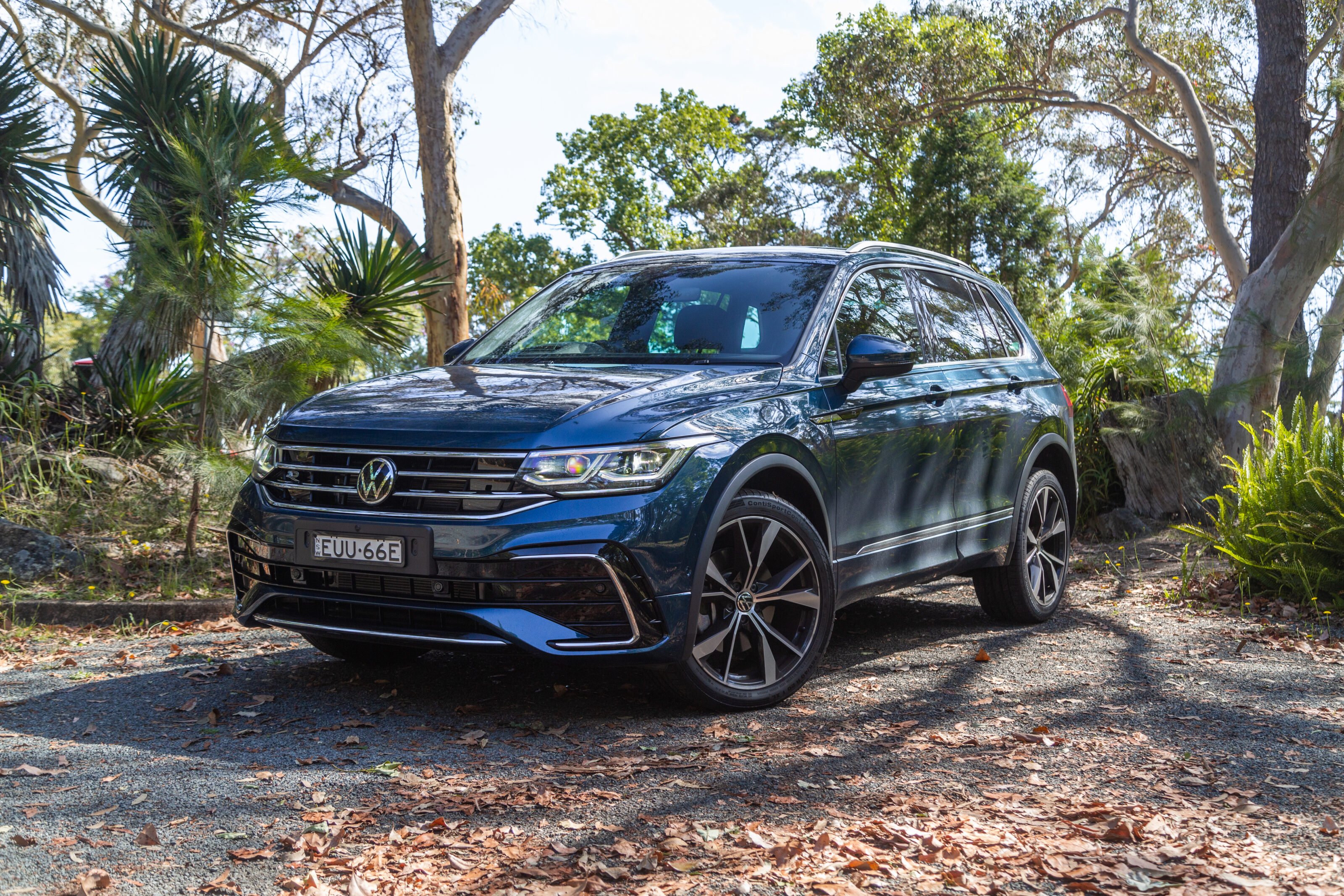
The R-Line cops a host of visual tweaks such as a handsome body kit, 19-inch diamond-cut alloy wheels and chrome garnishes to denote its sporty status.
1
| Volkswagen 162TSI R-Line features | |
|---|---|
| 19-inch alloy wheels | LED headlights |
| 9.2-inch touchscreen | Wireless Apple CarPlay/Android Auto |
| 10.25-inch digital cockpit | 8-speaker sound system |
| Dual-zone climate control | Power front seats |
| Keyless entry | Heated seats |
| Automatic wipers | R-Line bodykit |
The test car has a few extras, including a Sound and Vision package bringing a head-up display, surround-view camera and a classy 10-speaker Harman Kardon sound system for $2600. A panoramic sunroof will cost you an extra $2000 on top. Premium paint like our test car’s Nightshade Blue is $900.
1
How do rivals compare on value?
The Tiguan splits mainstream and premium positioning in Australia – not quite as glam as an Audi Q5 35 TDI ($67,900), but decidedly dearer than a top-spec Mazda CX-5 Akera ($54,000) and Nissan X-Trail Ti-L ($52,990) – all before on-road costs.
Volkswagen’s great perceived quality, powerful engine, planted chassis and clever cabin packaging justify Tiguan’s semi-prem position better than the Peugeot 3008 GT-Line ($63,390 before on-road costs).
Interior comfort, space and storage
VW’s upmarket pitch is more than smoke and mirrors.
You can feel the sturdiness and quality of the uniform paint finish as you grab the Tiguan’s door handles (all of which are equipped with comfort access sensors).
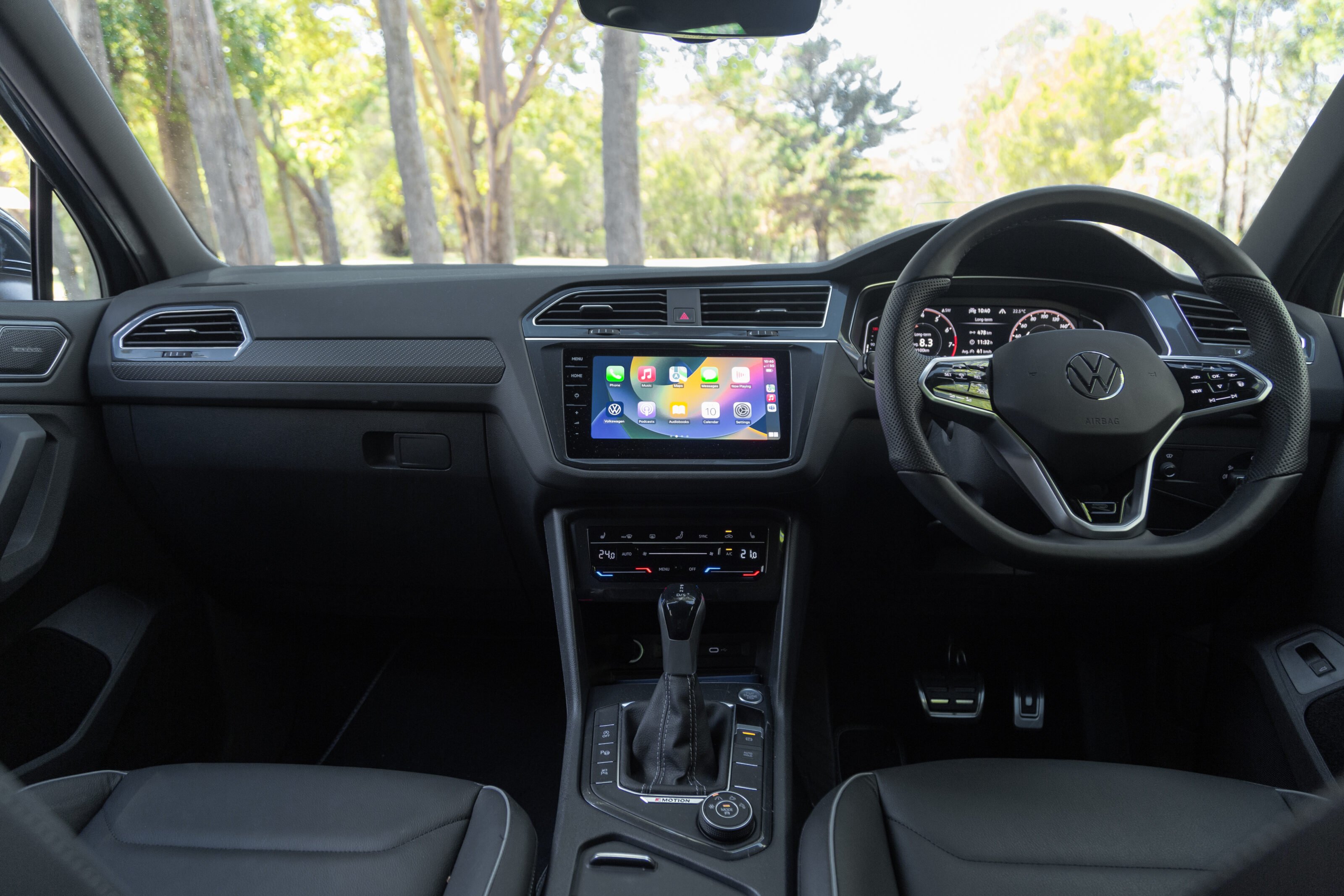
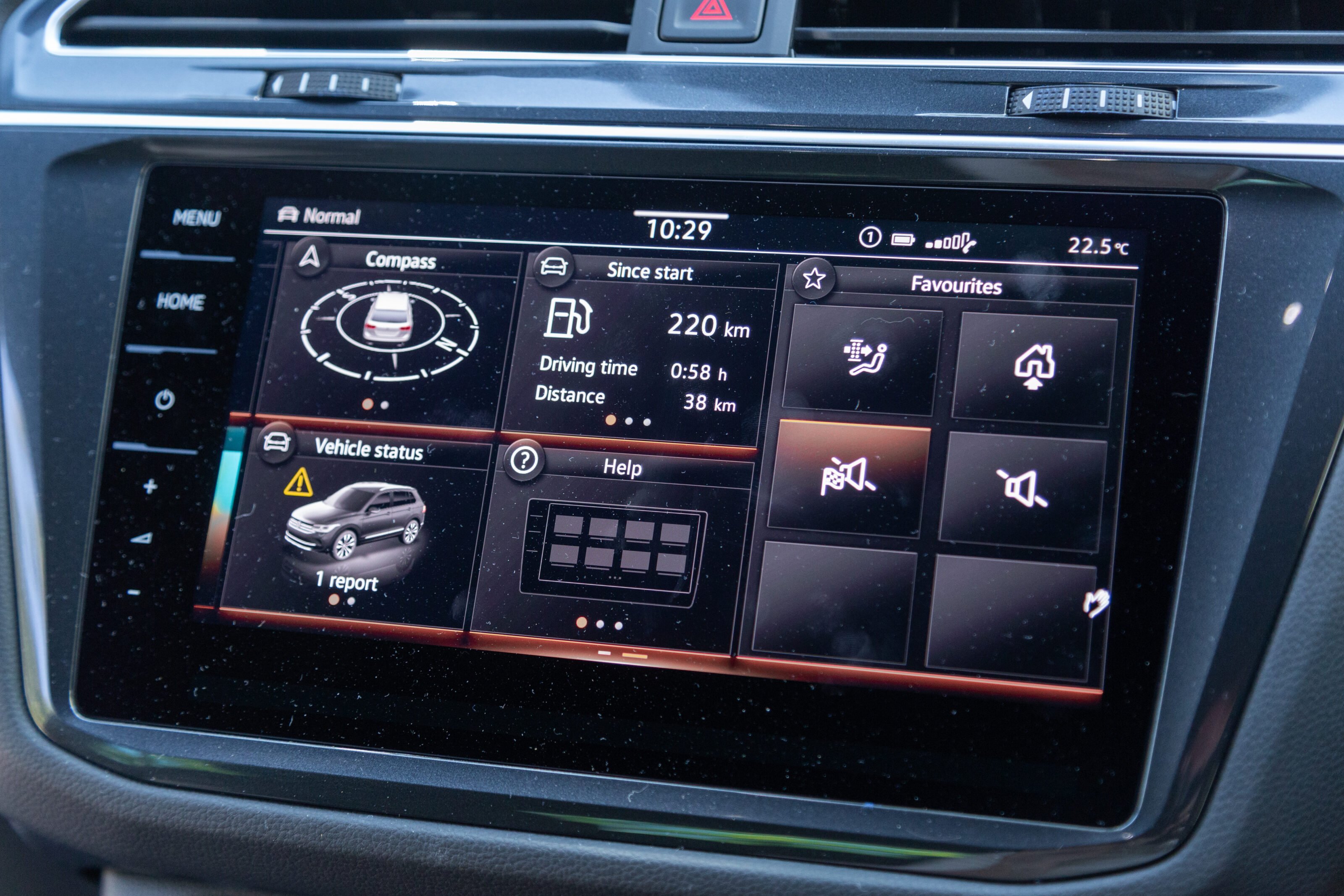
Once inside, you’ll find extremely ergonomic vertically laid-out controls that make the cabin feel spacious – if not cutting-edge on the technology side.
The Tiguan’s 9.2-inch touchscreen is smaller than you’ll find in an up-spec Golf, but the Tiguan’s dual-zone climate controls are mercifully separate, located lower down with capacitive touch sliders. These can be finicky at first, but you grow accustomed to the functionality with time.
1
Wireless Apple CarPlay and Android Auto are standard as of the December 2021 facelift, too, which is a frustrating rarity among mainstream medium SUVs. A pair of USB-C charge points and an inductive smartphone charging pad feature to keep devices juiced up.
While it’s been around for a while, VW’s 10.25-inch digital instrument display is yet to be outdone within its competitive set. It’s incredibly legible and with the ability to show a moving interactive map, allowing you to predict the road ahead with soothsayer-like accuracy. It also means you’re unlikely to get lost in an unfamiliar city with the standard navigation.
Material quality is respectable, if not ultra-plush. There are soft plastics where they matter such as on the dash and front door cards, and the door bins are flock-lined to stop bottles rattling about. Interestingly, the Tiguan we drove in Sydney appeared to have slightly lower build quality than our Melbourne tester, with a few dash creaks evident over nasty bumps.
1
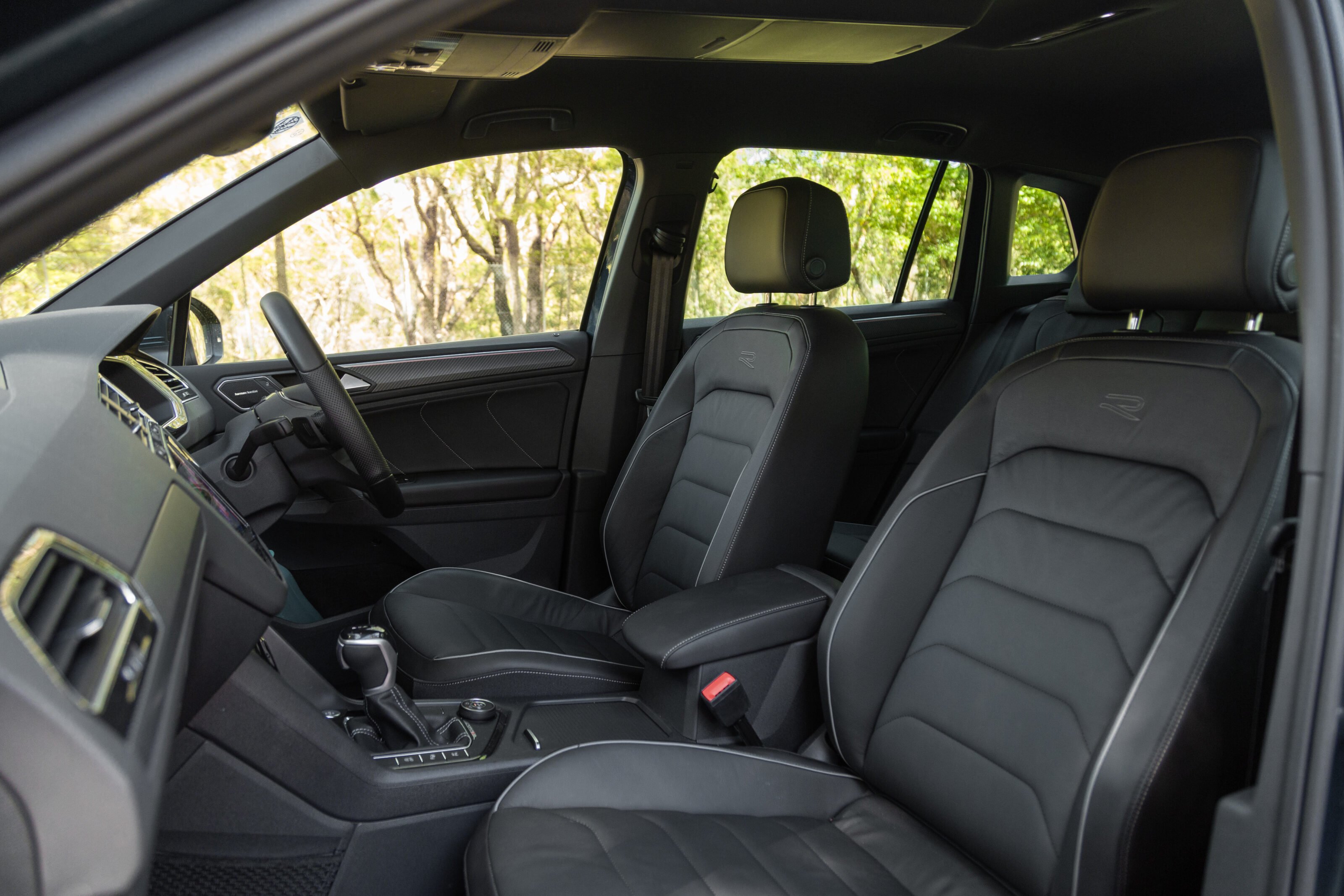
Seating is taken care of by heated and power-adjustable leather-appointed pews that are just to die for – supportive in the bolsters without ever being ‘too’ sporty for a family SUV; very well judged, Volkswagen.
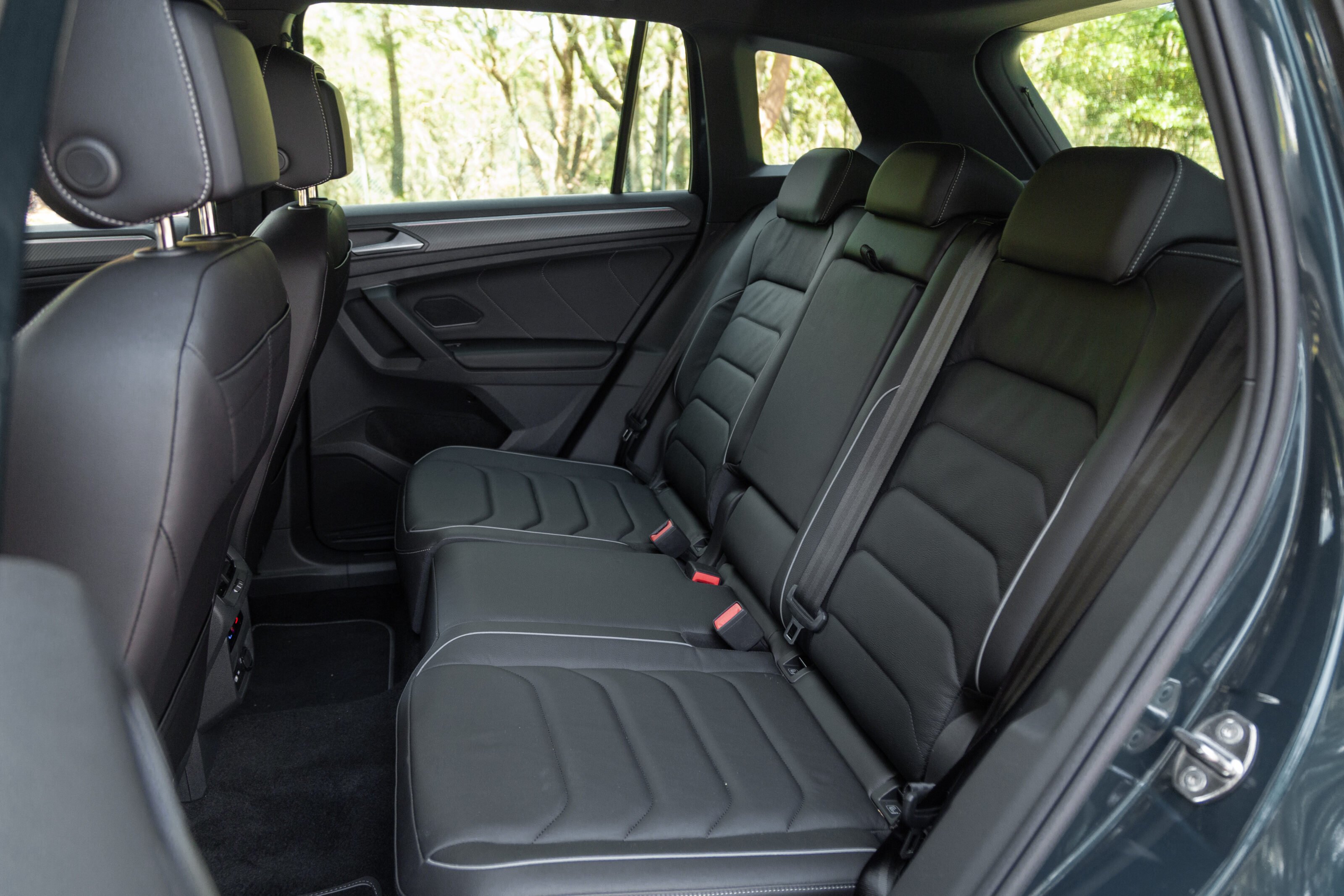
It may be one of the shortest medium SUVs – just over 10cm longer than something like a Kia Seltos or Mazda CX-30 from the next size down – but the Tiguan is tremendously accommodating, with its high roof guaranteeing great headroom and a sliding bench allowing you to shift priorities between occupant and cargo space.
Tiguan boot space
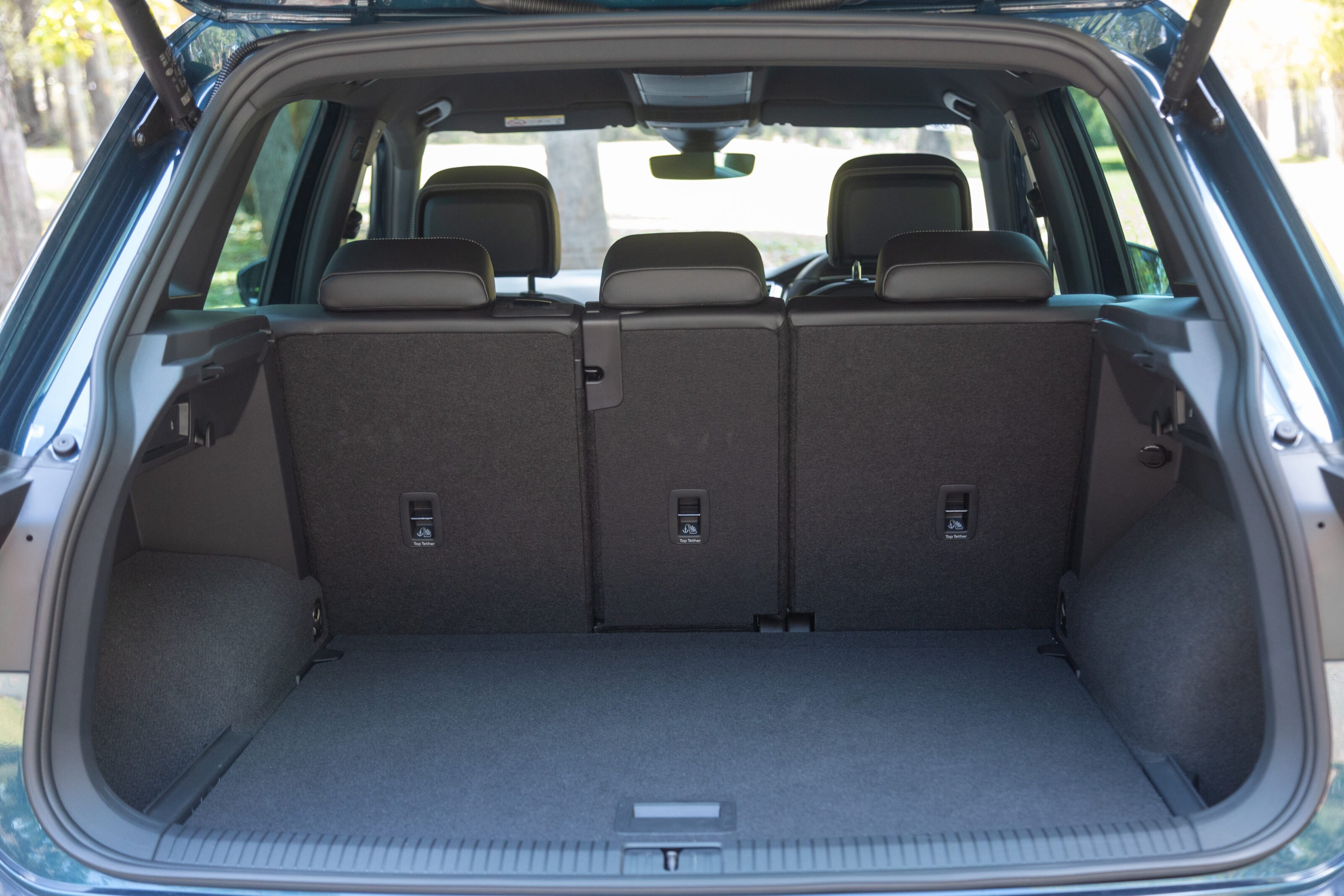
With a maximum boot capacity of 615 litres (even minimum load space is 520L), the Tiggy’s a very clever car.
Under the boot floor is a space-saver spare tyre, while there are practical shopping bag hooks, hidden netted areas, and the ability to install a cargo net thanks to four tie-down points.
For those chasing more space and a third row, the Tiguan is available in long-wheelbase Allspace guise, too.
1
What is it like to drive?
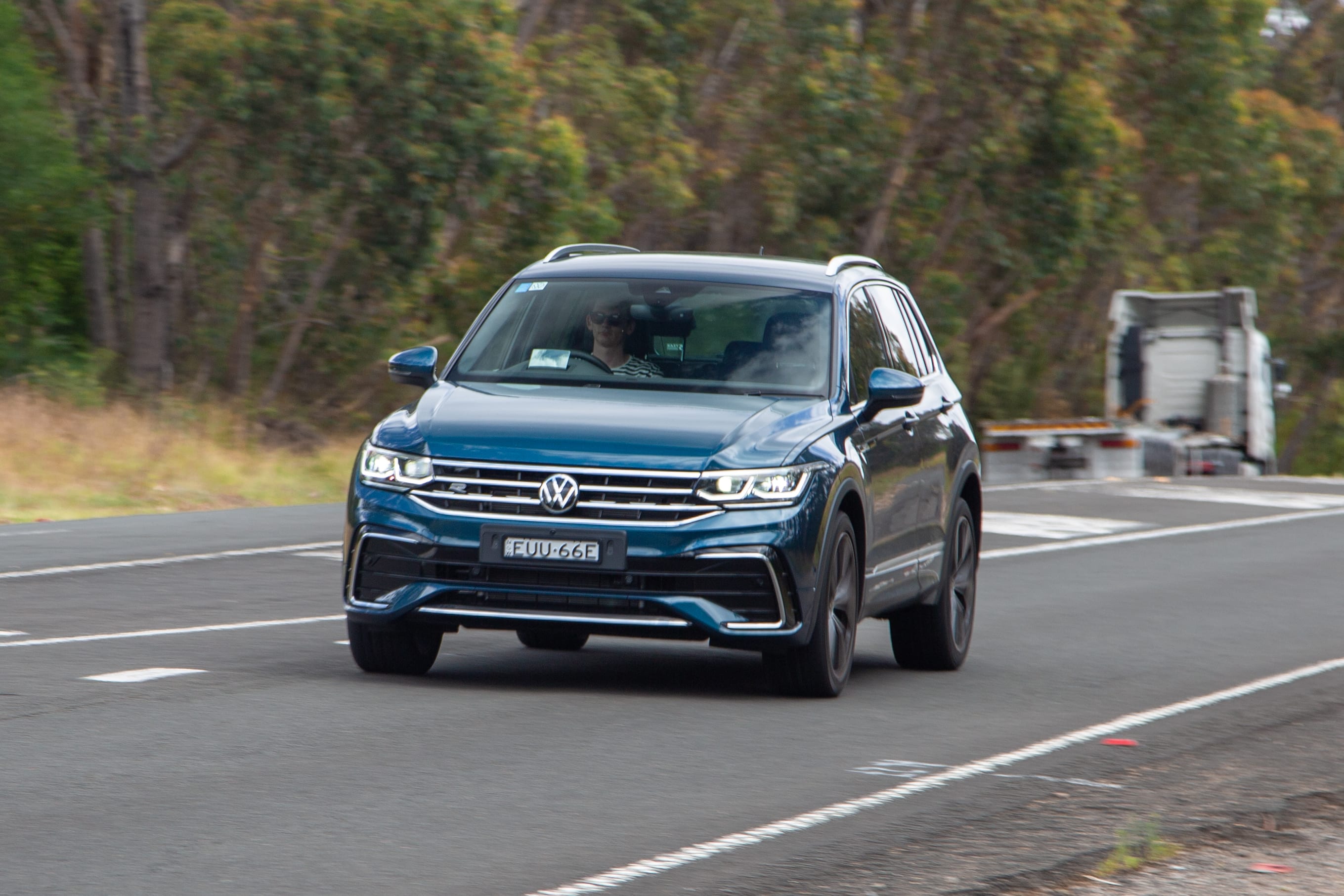
With an upright driving position, low dash and generous glass house, the Tiguan has excellent visibility in all directions making it easy to judge each corner, unlike larger and more heavily-styled rivals.
This more conventional shape may look a little dated to some, but the Tiguan is certainly not dated in the way it drives. The Tiguan range offers four powertrain choices in total, including the aforementioned diesel and two lower-tune petrols, but the high-power 162TSI is Australia’s favourite.
In this state of tune, the VW Group’s ubiquitous ‘EA888’ engine is powerful, tractable and refined, with a little bit of exhaust bark at high revs to match the sporty character. Although some bemoan dual-clutch transmissions, Volkswagens equipped with the wet-clutch variety shift smoothly and – generally – reliably.
1
The seven-speed DSG is quicker and more satisfying to use than a conventional automatic, too.
The Tiguan is also equipped with strong brakes attached to a reassuringly meaty pedal.
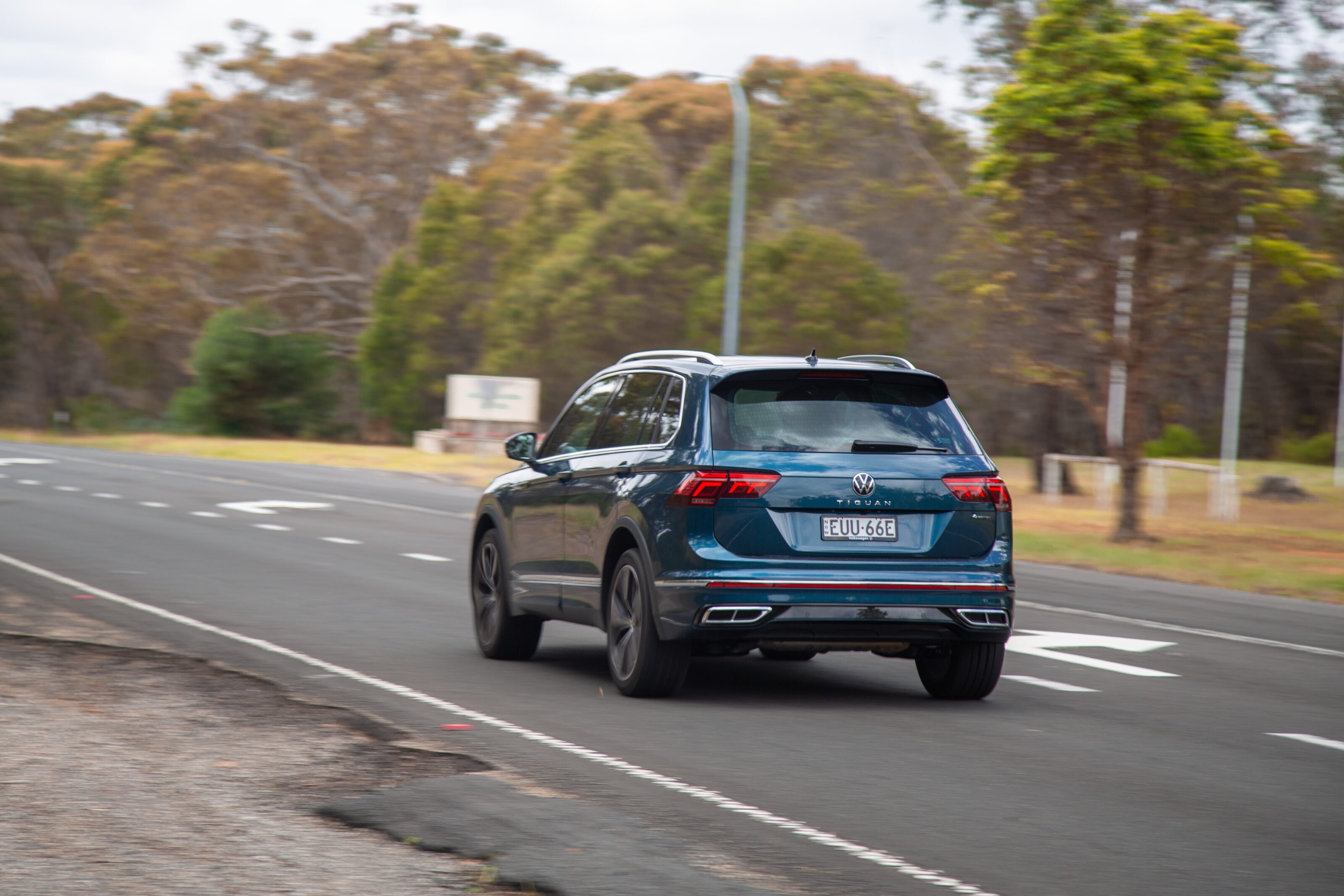
Steering in this R-Line model has a progressive ratio, so it requires very little effort around town with its sharp 2.1-turn lock-to-lock ratio, though at higher speeds the tiller settles and is never nervous like a Tesla Model Y’s sharp rack can be.
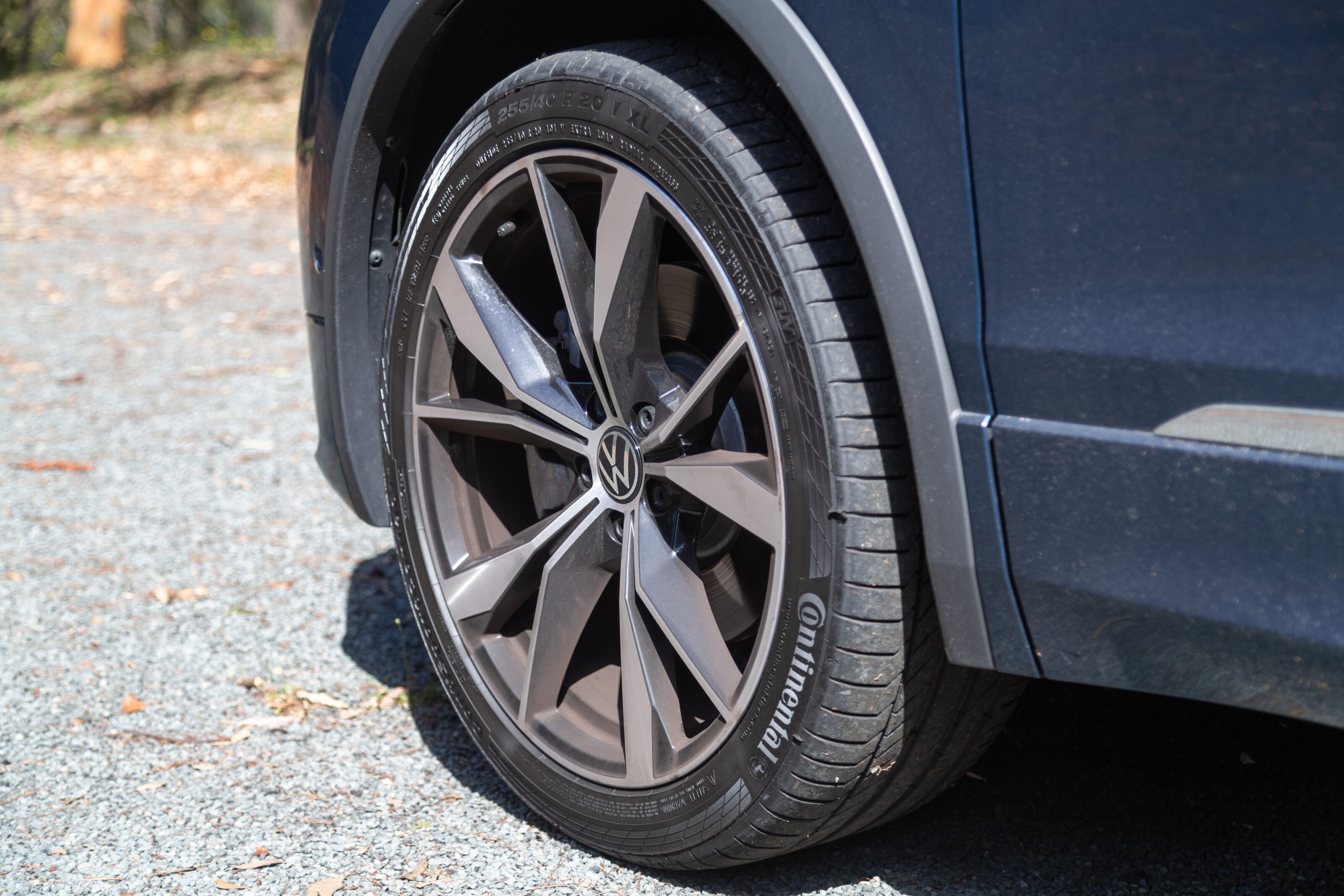
Standard-fit adaptive dampers are rare at this point in the market and bestow the R-Line with excellent breadth, providing both a comfortable urban ride in Comfort mode (despite 255/40 series Continentals wrapped around 20-inch alloys) yet rock-solid body control in Sport mode.
If there are some complaints, the Tiguan can sometimes be a little abrupt over the worst sharp-edged bumps whereas rivals with more sidewall iron out the hits. But the cabin refinement and NVH suppression are superb, and the suspension is never noisy.
1
How much fuel does it use?
The Tiguan 162TSI R-Line is rated to use 8.5L/100km in the combined ADR 81/02 cycle.
In the real world, you’ll see that closer to 9.0L/100km in a mix of urban and suburban driving, with it falling closer to 7.0L/100km on long highway slogs.
Volkswagen recommends 95 RON premium unleaded petrol for the Tiguan 162TSI R-Line.
1
How safe is it?
The Volkswagen Tiguan scored five stars in 2016 safety testing – although with ANCAP’s updated protocol, that is no longer considered valid in 2023.
Of its rivals, the Tiguan has one of the most relaxing semi-autonomous modes. Highway Travel Assist is what VW calls it, and it combines adaptive cruise control with lane-trace assist to ease nerves on the freeway.
As part of the $2600 Sound and Vision pack you get a 360-degree camera, though its resolution could be better. Further driver assistance systems include auto emergency braking (AEB) with pedestrian, cyclist and junction detection, as well as reverse AEB. For 2023, the Tiguan is still not fitted with blind-spot monitoring or rear cross-traffic alert.
Warranty and running costs
The Volkswagen Tiguan is covered by a five-year, unlimited-kilometre warranty in Australia.
Servicing is due every 12 months or 15,000km, Volkswagen offering both capped-price plans and the ability to pre-purchase service packs, which is the most affordable way to go. A three-year/45,000km pack costs $1650, while a five-year/75,000km pack is $2950.
1
VERDICT
If you want the best mainstream medium SUV when it comes to driving dynamics, engine and drivetrain calibration, it’s hard to go past a Tiguan.
However, it is expensive in its class, and with its expired ANCAP rating and slightly old-hat cabin design, some of its rivals are looking pretty enticing in showrooms.
The Tiguan really hits back as a vehicle to live with, though. At 4.5 metres long it’s barely bigger than a hatchback, so it’s easy to park. Yet the space inside is scarcely believable – this is an excellent inner-city family car.
Even though the 162TSI R-Line is expensive and in short supply, Tiguan’s broad range means there’s probably one that fits your budget; both 110TSI and 132TSI are well worth considering.
Although not a comparison winner, the Tiguan remains one of the best medium SUVs out there.
MORE
Midsize SUVs
| Volkswagen Tiguan 162TSI specifications | |
|---|---|
| Body: | 5-door mid-size SUV |
| Drive: | all-wheel |
| Engine: | 2.0-litre four-cylinder turbo |
| Transmission: | 7-speed dual-clutch |
| Power: | 162kW @ 6200rpm |
| Torque: | 350Nm @ 1500-4400rpm |
| Bore stroke (mm): | 82.5 u00d7 92.8 |
| Compression ratio: | 9.6 : 1.0 |
| Fuel consumption: | 8.5L/100km (combined) |
| Weight: | 1697kg |
| Suspension: | struts front/multi-link rear, adaptive dampers |
| L/W/H: | 4509mm/1839mm/1684mm |
| Wheelbase: | 2681mm |
| Brakes: | ventilated disc front / solid disc rear |
| Tyres: | 255/40 R20 Pirelli Scorpion Verde |
| Wheels: | 20-inch alloy wheels (space-saver spare) |
| Price (as tested): | $61,990 + on-road costs* |
note
*Power tailgate ($600), Nightshade Blue metallic paint ($900), Sound & Vision pack ($2700)
More Cupra Born supply now available for Australian buyers
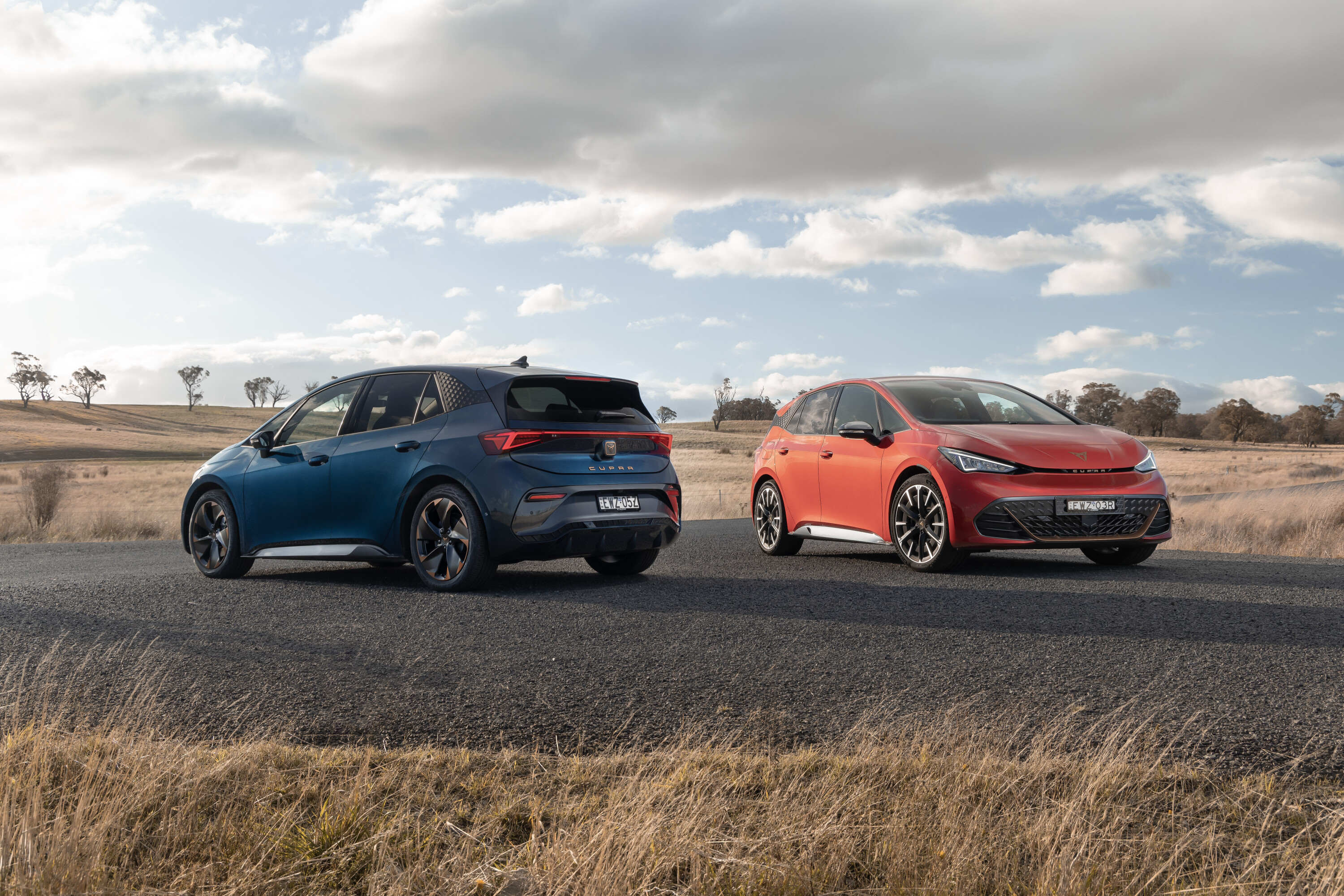
With over 500 orders placed and 600 Australian vehicles already built, Spanish brand Cupra is confident it can secure a healthy enough supply of electric Born hatches to maintain an always-on sales status.
“If demand is there, we’re confident we can deliver four-figures [of Borns] this year”, Jeff Shafer, Head of Product and Planning told Wheels at this week’s Australian launch event.
1
December 16: Cupra Born Australian pricing announced
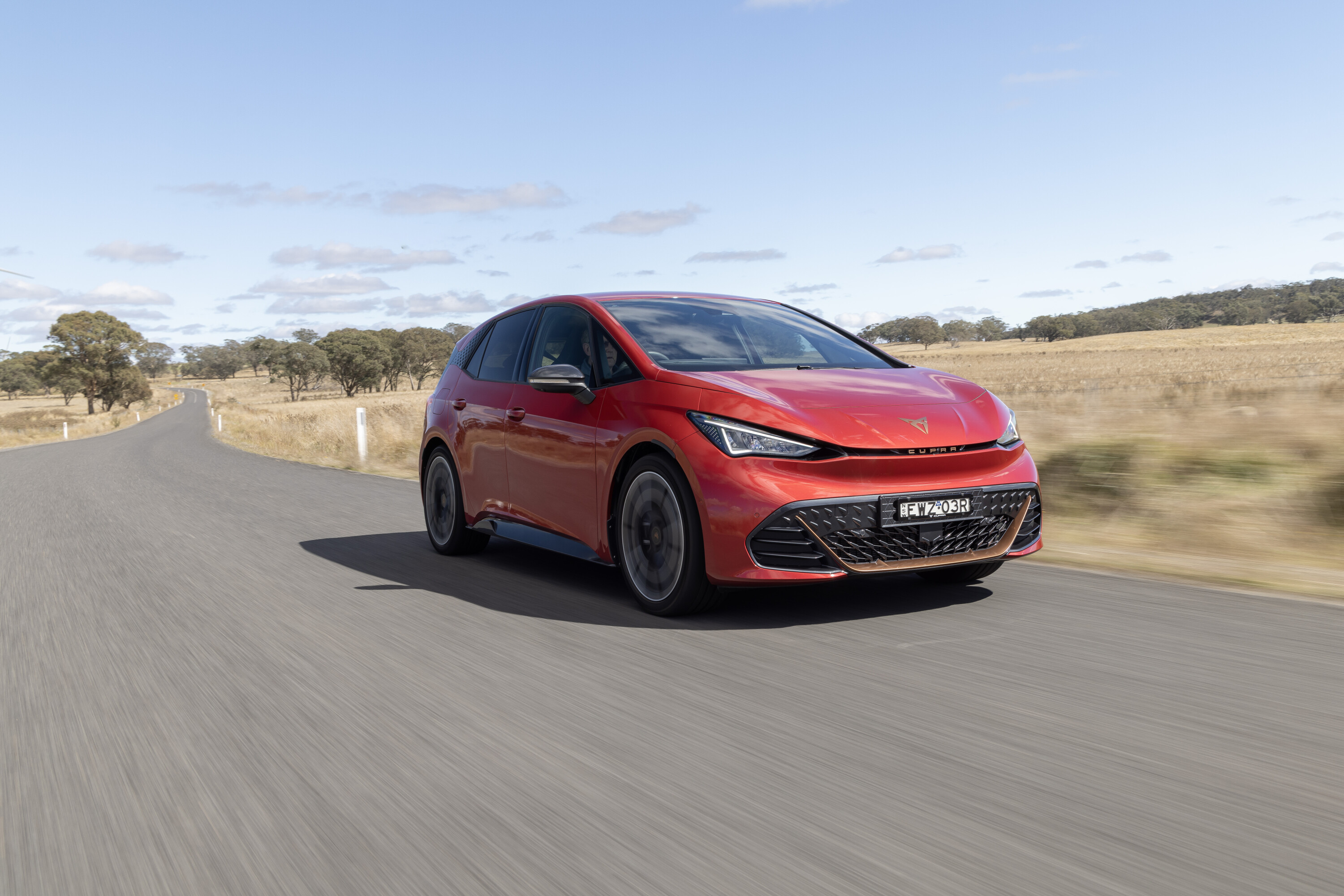
The 2023 Cupra Born five-door small hatchback will touch down with an asking price of less than $60,000, with order books initially opened on December 19, 2022.
Starting from $59,990 before on-road costs, the Born adds another option to Australia’s most affordable zero-emissions vehicles.
How much is the 2023 Cupra Born EV?
| State | RRP | Driveaway | Incl. Incentive (if eligible) |
|---|---|---|---|
| ACT | $59,990 | $61,990 | + Interest free loan |
| NSW | $59,990 | $62,490 | $59,490 |
| QLD | $59,990 | $63,490 | $57,490 |
| SA | $59,990 | $64,490 | $61,490 |
| VIC | $59,990 | $64,990 | $61,990 |
| WA | $59,990 | $66,490 | $62,990 |
While it is priced higher than the more affordable MG ZS EV, BYD Atto 3, Hyundai Kona Electric and Nissan Leaf, the Born is the cheapest electric car from a European brand.
The Born is Cupra’s first EV, and it also marks the start of Volkswagen Group’s range of more accessible EVs in Australia, leading the way for the Volkswagen ID.3 and ID.4, as well as the Skoda Enyaq, all of which roll on the same MEB modular platform.
Cupra has also offered drive-away pricing for the Born, with total costs ranging from $61,990 for customers in the ACT to $66,490 for customers in WA, although recently introduced incentives may offer further reductions depending on the state.
1
2023 Cupra Born powertrain and features
A single variant will be offered from launch equipped with a 82kWh battery, rear-wheel drive and 170kW/310Nm, however, Cupra is offering customers a number of option packs to create a more individual Born.
| 2023 Cupra Born features | |
|---|---|
| 19-inch alloy wheels (black and copper) | Auto-dimming rear-view mirror |
| 12-inch infotainment system | Drive mode selector |
| Wired Apple CarPlay and Android Auto | Tyre pressure monitoring |
| DAB+ digital radio | Front bucket seats |
| 5.3-inch digital instrument cluster | Recycled fibre upholstery |
| Four USB-C ports (2x front, 2x rear) | Dual-zone climate control |
| Wireless phone charger | Adaptive steering |
| Colour-adjustable ambient lighting | Sports suspension |
| Leather-wrapped heated steering wheel | Automatic parking |
| LED head and tail-lights | Rain-sensing wipers |
| Rear spoiler | 360-degree camera system |
| Heated power-folding side mirrors | Carpet floor mats |
| Keyless entry and push-button start | |
Options
| Performance pack: $2600 | |
|---|---|
| 20-inch alloy wheels | ESC-Off mode |
| 235/40/20 Michelin Pilot 4 tyres | Dynamic Chassis Control |
| Interior pack: $2900 | |
|---|---|
| Dinamica seats | Front seat massage function |
| 12-way power seat adjust | Beats 9-speaker 395W stereo |
| Front seat heating | |
2
Like the Performance Pack, the Interior option reduces the seat-count to four. Aside from $475 Aurora blue metallic paint, all other Born equipment is included in the price.
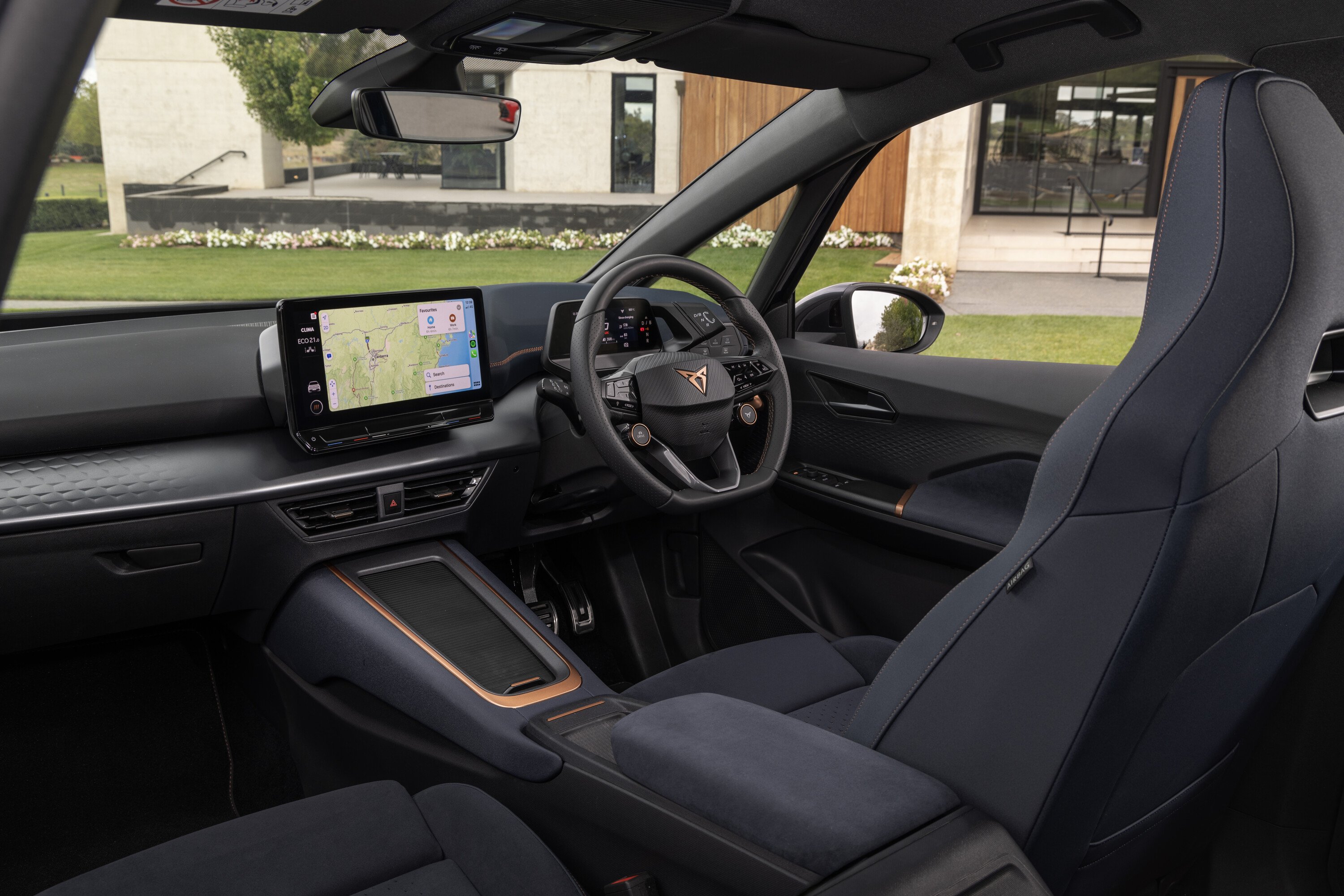
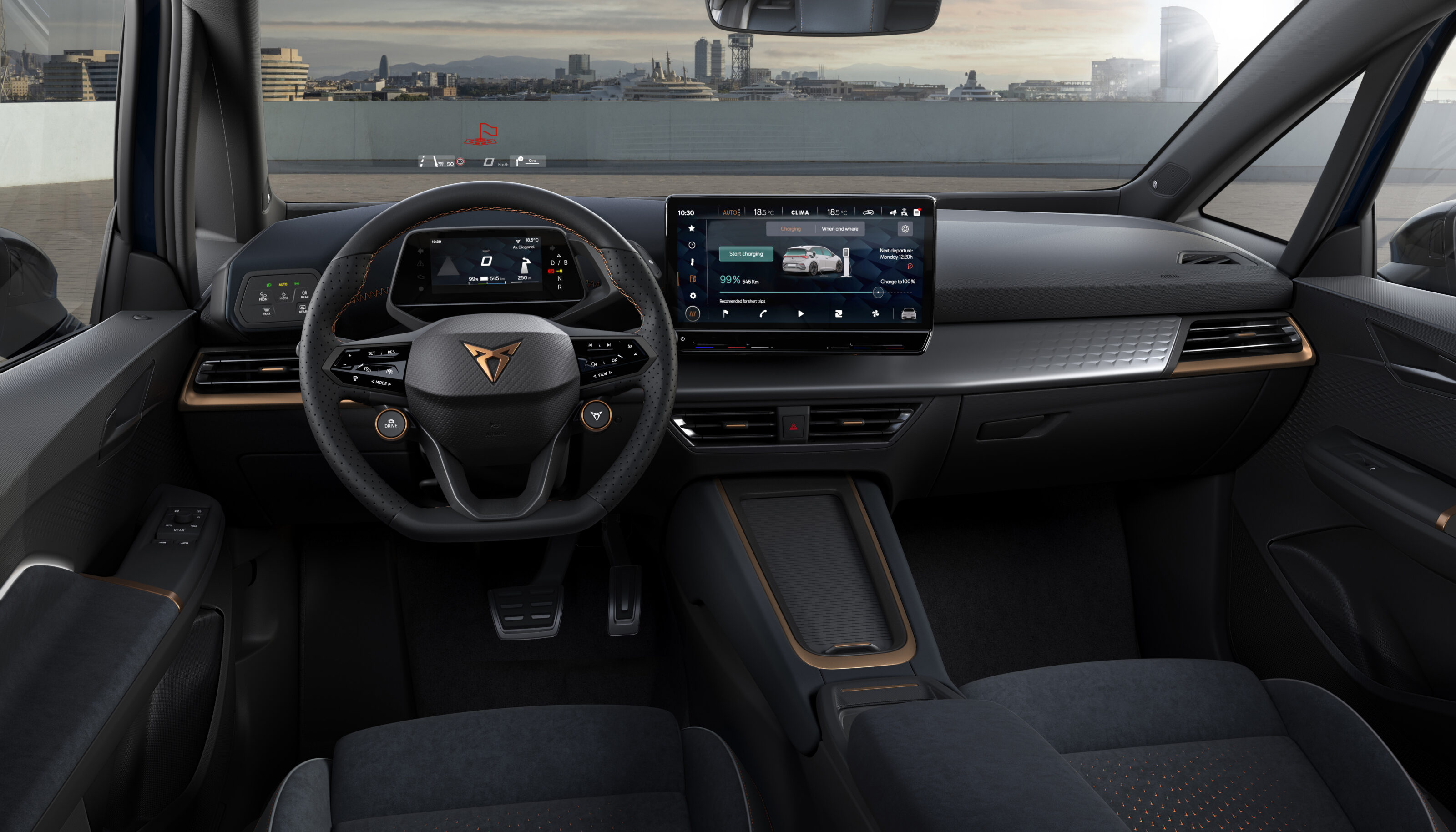
Its main central touchscreen measures 12.0-inches and is complemented by a 5.3-inch driver’s instrument cluster, and Android Auto/Apple CarPlay is standard, although not wirelessly.
Other tech highlights include LED headlights, cordless device charging, two USB-C sockets for the front occupants and two for the rear, and ambient cabin lighting.
Comfort and convenience features include; keyless locking/unlocking and start, a heated leather steering wheel, dual-zone climate control, tinted rear windows, and a 385-litre boot.

1
Cupra Born safety features
There’s also a decent amount of safety and driver assistance features offered in the deal, with a 360-degree camera, tyre pressure monitoring, seven airbags, automatic headlights and wipers.
There’s also lane-departure and parking assistance, adaptive cruise control, driver fatigue monitoring, and autonomous emergency braking with pedestrian and cyclist recognition.
Performance to match entry Model Y
Cupra claims the Born offers ‘hot hatch’ appeal and, with a claim 0-100km/h time of 7.0 seconds, the Born has comparable performance to the entry-level Tesla Model Y or mid-range Audi A3, for example.
Cupra Australia director Ben Wilks explained that its first electric vehicle would be one of the most significant in the brand’s evolution.
“To combine a long 500km-plus EV [driving] range with instant electric performance and controllable dynamics through the sharp steering and rear-wheel-drive chassis, places the Cupra Born in an exclusive part of the market,” he said.
“From range and pricing to space and driver satisfaction, the Born will be the most important vehicle that Cupra launches as it defines class leadership”.
1
Warranty and servicing
As per the wider Cupra range, the Born will be covered by the brand’s five-year, unlimited-kilometre warranty.
Cupra Australia has yet to announce details for battery coverage and servicing information for its electric vehicles. The high-voltage components in its plug-in hybrid range are covered for eight years or 160,000 kilometres, whichever occurs first.
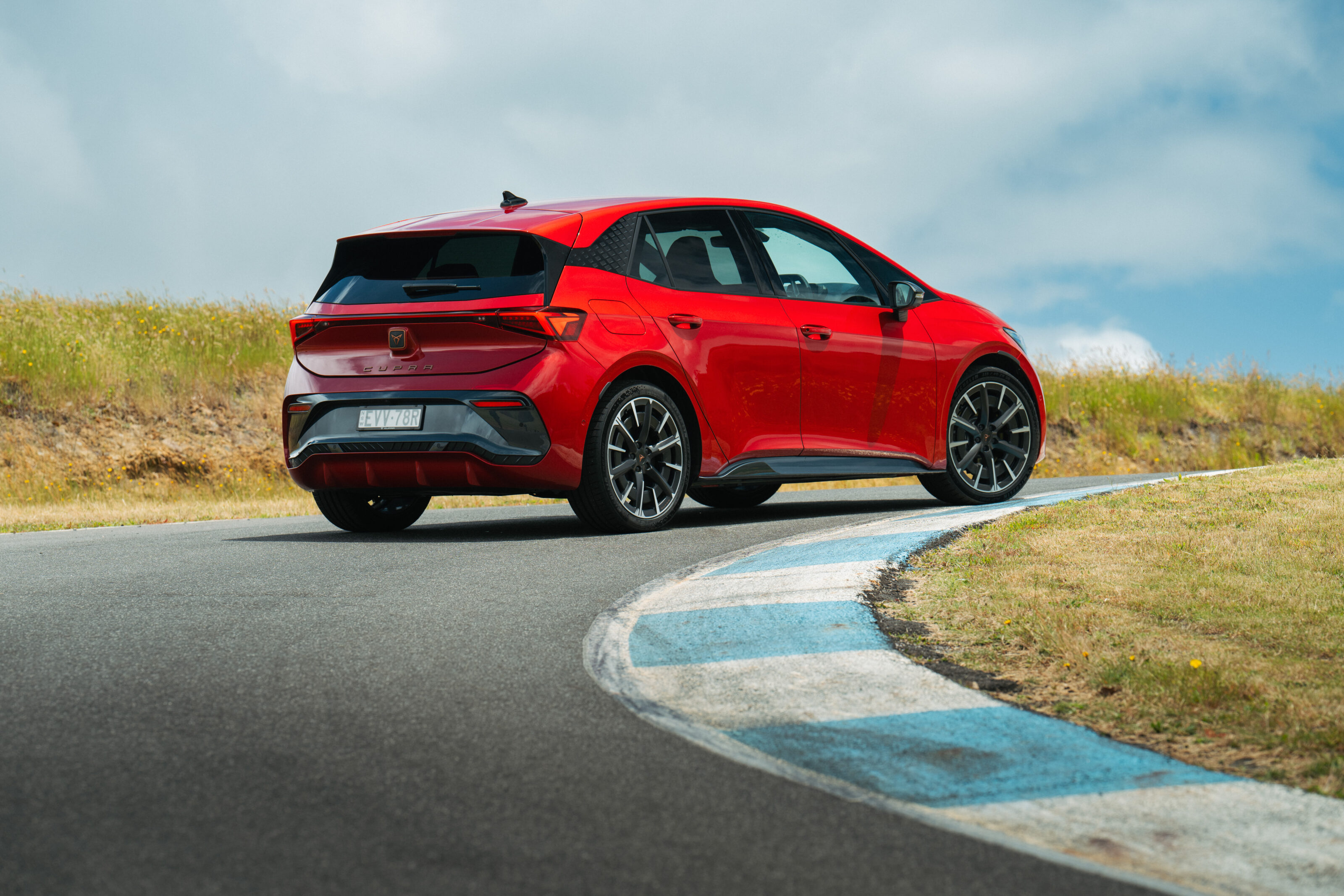
1
Cupra Born driven in Australia!
The Cupra Born is now in Australia, and we’ve driven it. Get Daniel Gardner’s full review at the link below.
With a long range, unique styling, generous standard equipment and European appeal, the new Cupra Born is quite possibly the easiest electric vehicle to recommend in the current zero-emissions market.
MORE
Everything Cupra
⚡ More EV stories to help you choose the best car for your needs
Cupra is proud to announce that the last of Australia’s initial production batch of 600 Cupra Borns is rolling off the production line, with the factory pledging a healthy supply of the $59,990 (before on-roads) electric hatch from henceforth.
Lingering supply chain and logistical issues remain but are perpetually improving, with local spokespersons, speaking to Wheels, stating they are confident that they can ensure an always-on-sale status for the significant electric hatch.
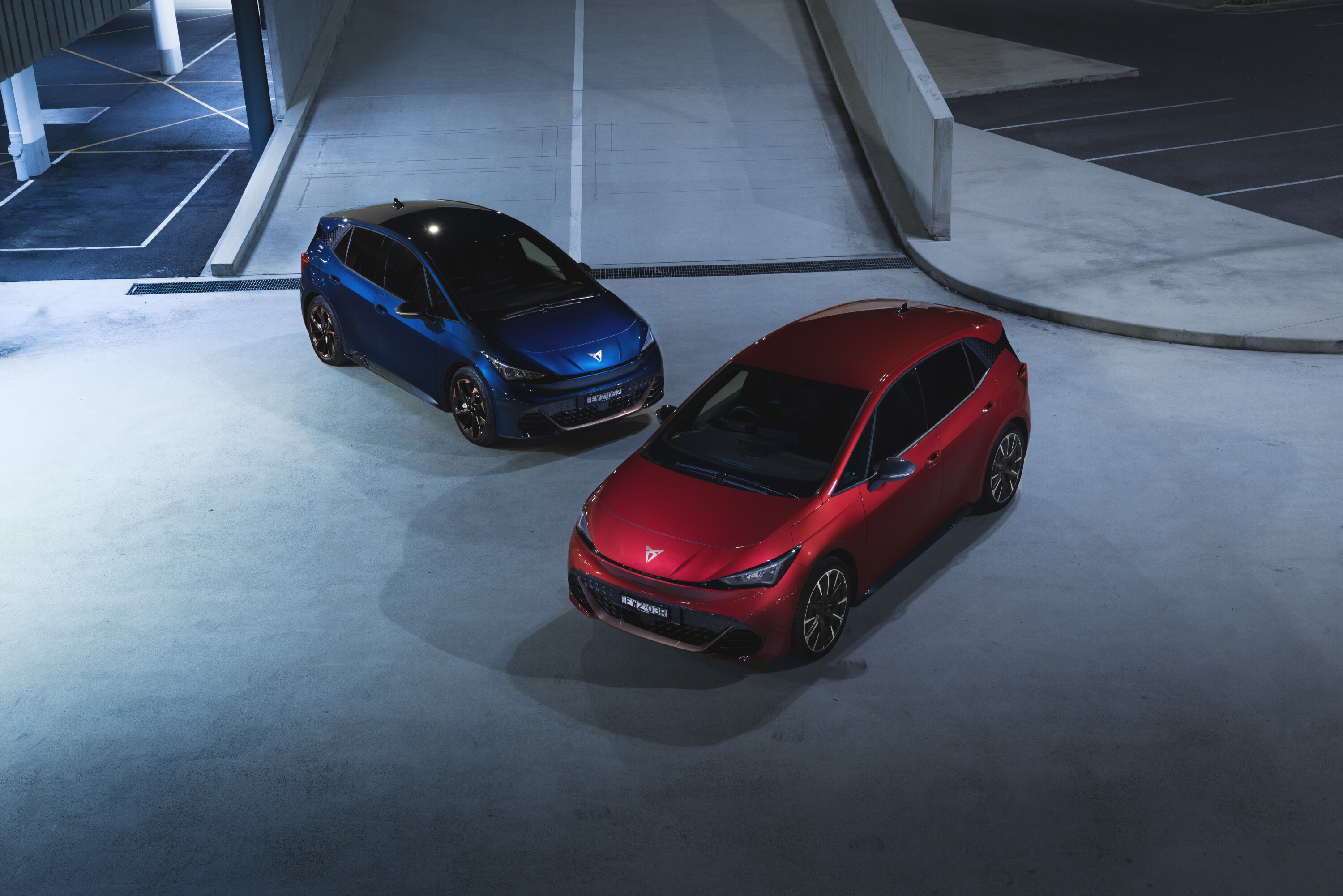
1
Jeff Shafer, Head of Product and Planning, speaks resolutely, saying that, short of anything disastrous happening, they believe that the “Born will be the best-selling European EV this year”.
Cupra Australia’s Brand Director, Ben Wilks, states that “over 500 orders” have already been placed since pre-orders initially opened in December. Popular demand saw Cupra Australia up its initial production batch of 400, to 600 Cupra Borns. Any remaining available Borns are to be added to Cupra’s central online inventory in the coming days.
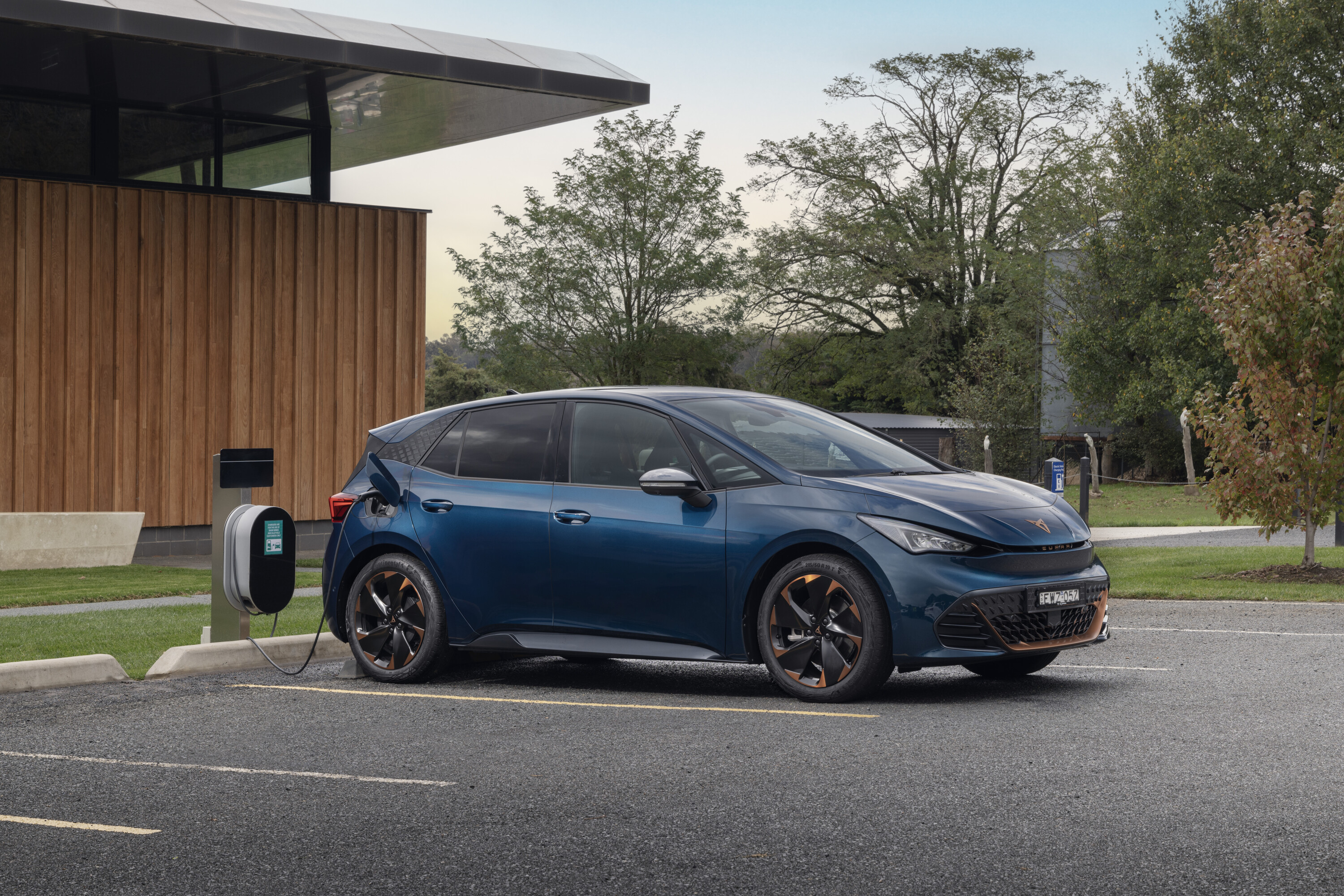
1
Shafer, speaking to Wheels, later adds that “if demand is there, we’re confident we can deliver four-figures [of Borns] this year”.
In town for the local launch of the Cupra Born (stay tuned for Wheels’ first local drive, dropping Thursday, May 4), Cupra’s global Vice President Kai Vogler was proud to share that over 300,000 Cupras had been delivered to customers’ hands since the brand’s launch five years ago. More than half of those deliveries took place in 2022, bolstering Cupra’s position in Europe as the fastest-growing brand, pegging a 98 percent year-on-year improvement in new registrations from 2021 to 2022.
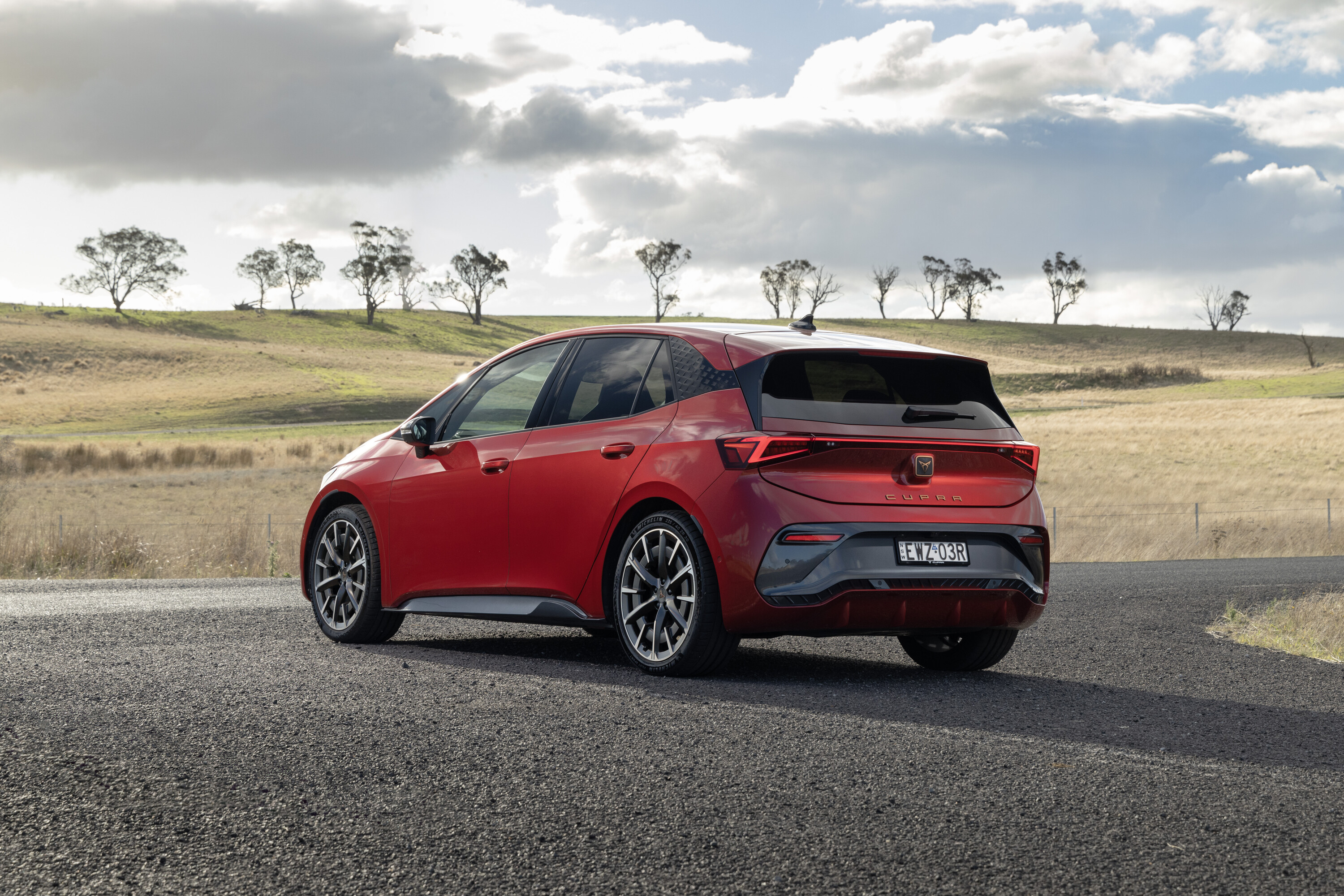
1
The first quarter of 2023 saw Cupra’s biggest month to date, delivering 46,000 new vehicles globally.
In overseas markets where Borns have been available since 2021, over 31,000 Cupra Borns have been delivered to customers.
1
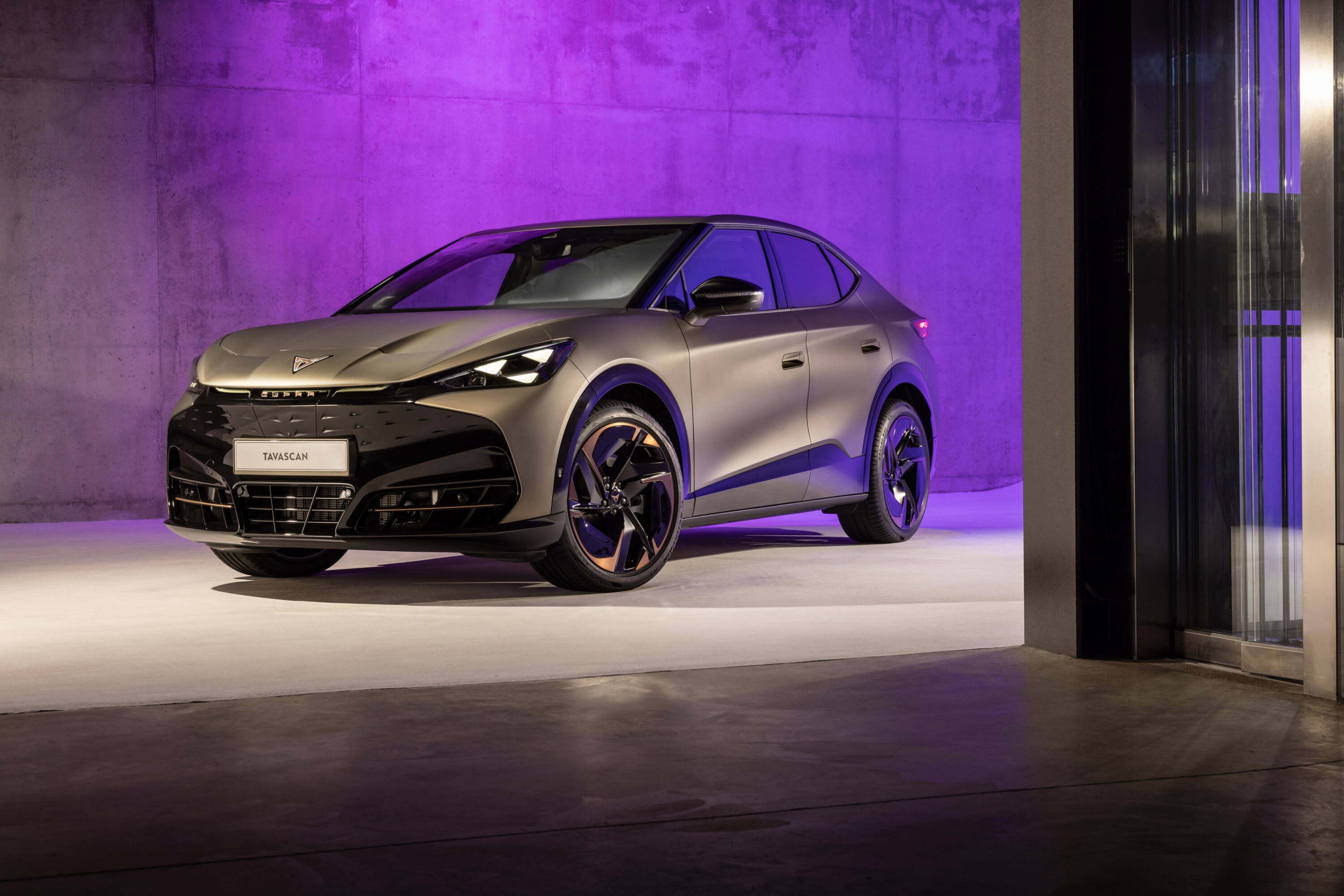
Also in Cupra’s product pipeline are the Tavascan (confirmed) and Terramar (Australian launch likely) SUVs, along with the Urban Rebel.
Snapshot
- McLaren 750S super car replaces 720S
- Over 30% new parts including see-through A-pillars
- 552kW/800Nm makes it most powerful non-limited McLaren
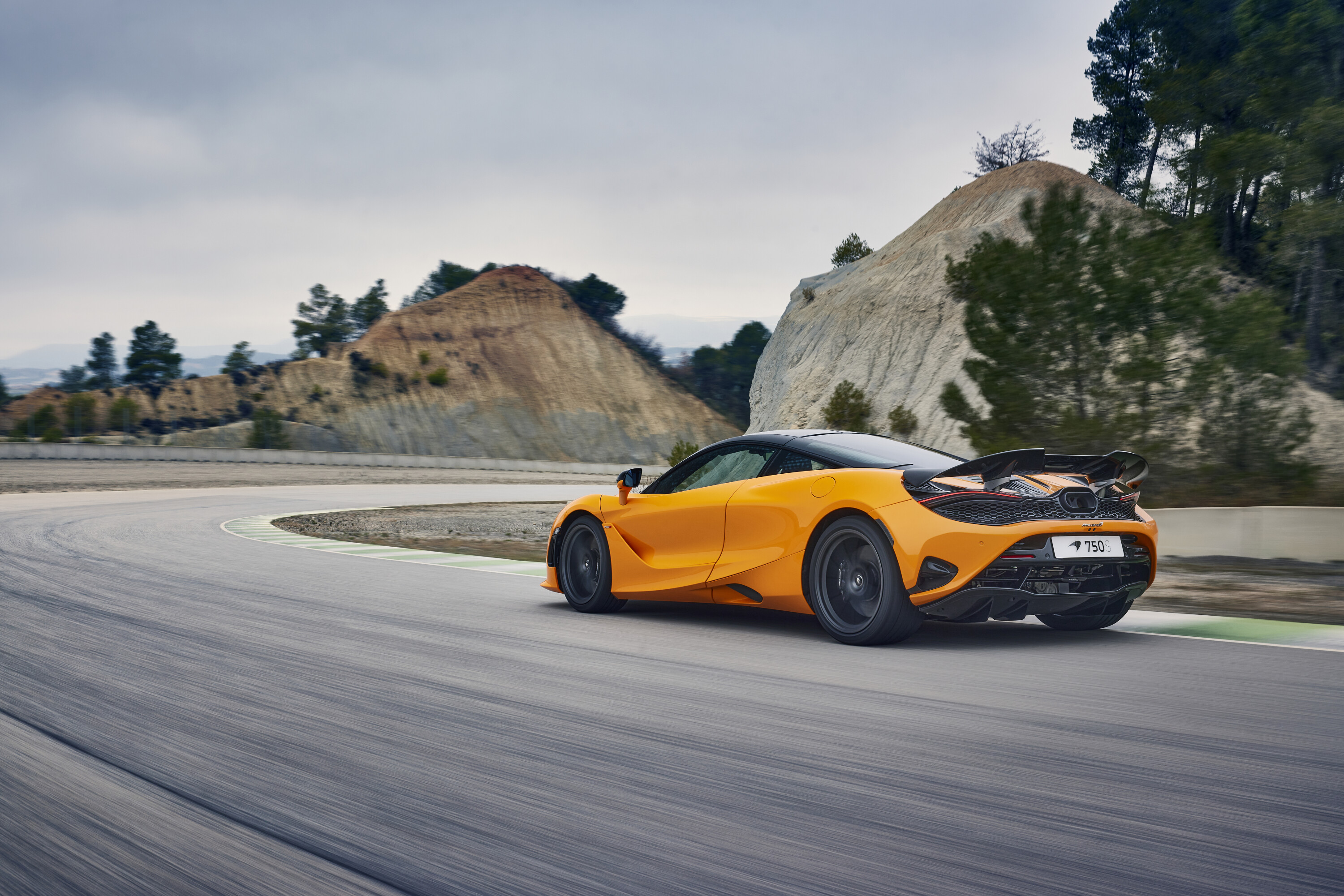
McLaren has unveiled its most powerful series-production car yet, the 750S. Effectively an overhaul of the existing 720S, the 750S will be available in coupe and spider body styles, with pricing from $585,800 before on-road costs.
Outside, the 552kW 750S is more sculpted and aggressive than the 720S and McLaren claims the latest supercar is 30 per cent new compared to its predecessor.
1
Revised V8 engine
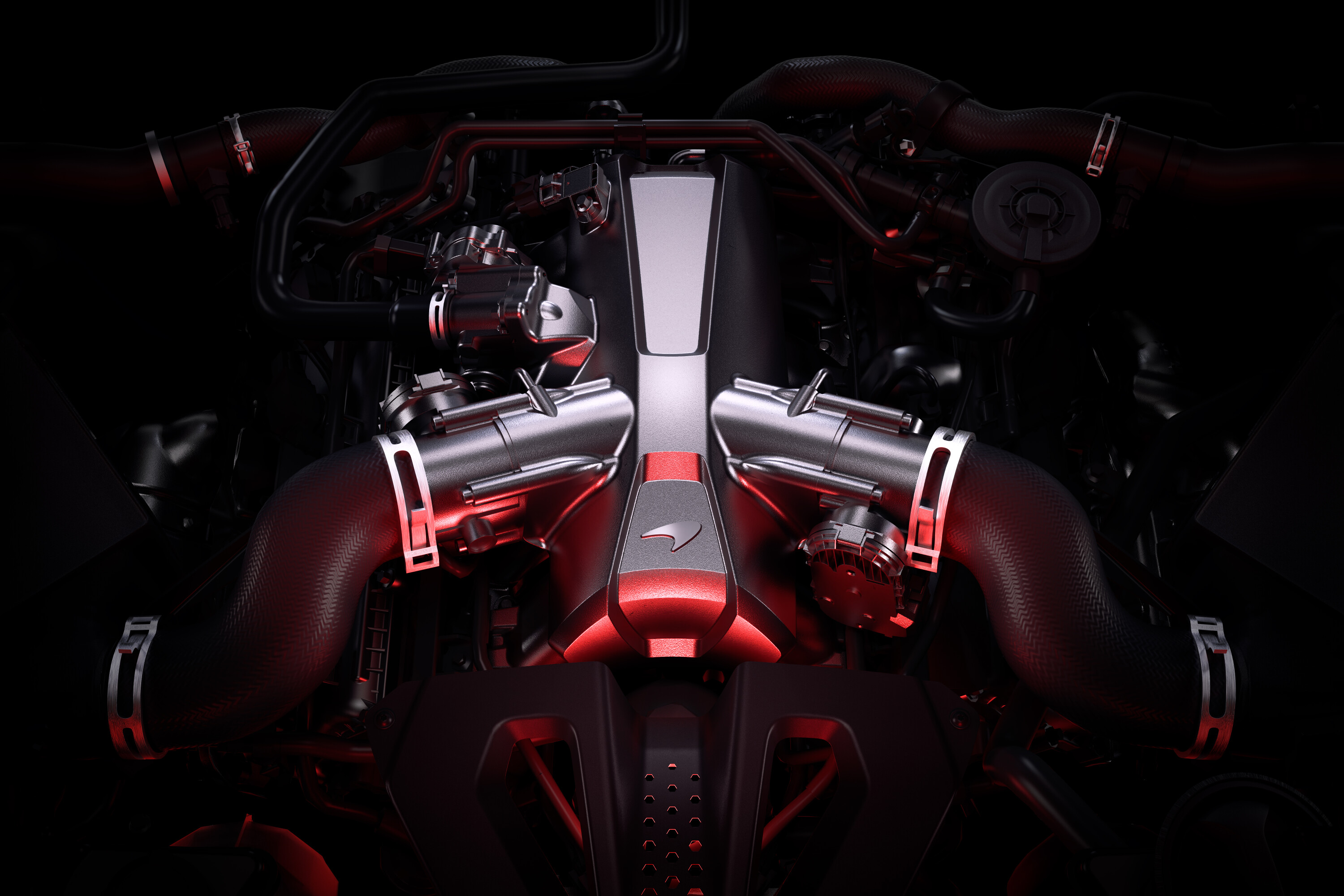
Under the 750S’ partially-plexiglass rear deck is a revised version of the brand’s 4.0-litre twin-turbo V8 that features racecar-derived technology including a flat-plane crank and dry-sump lubrication.
It develops 800Nm (+30Nm) at 5500rpm, 552kW (+22kW) at 7500rpm, and revs to 85000rpm. There’s a seven-speed sequential gearbox onboard, all of which is enough to rocket the rear drive midship supercar from 0-100km/h in 2.8 seconds.
More astounding are the other acceleration times, though, the 750S is able to reach 0-200km/h in 7.2 seconds, and the quarter mile in just 10.1 seconds (coupe).
1
Weight and chassis
McLaren has worked tirelessly to axe weight with a revised carbon-fibre tub – dubbed Monocage II – that allows the 720S to feature glazed A-pillars to maximise vision. The DIN kerb weight is 1389kg for the coupe – around 30kg lighter than the 720S – and the spider is only 49kg heavier.
The 750S features 19-inch front and 20-inch rear alloy wheels attached to the chassis via double wishbone suspension. There are adaptive dampers with nose lift functionality that offer three modes: Comfort, Sport, and Track Active.
As in the 720S, the 750S doesn’t feature metal anti-roll bars. Instead, it uses a linked hydraulic system – known as PCC III – in conjunction with passive coil springs to adjust roll characteristics in each drive mode.

1
The 750S chassis modes match those of the powertrain and can be linked or selected separately to best suit the road/track conditions.
McLaren has retained its signature electro-hydraulic power steering though it gets a faster ratio and new pump. There’s also a Senna-derived ‘track’ carbon ceramic brake option available.
Pricing and availability
The 750S is available to order now, costing $585,800 for the coupe and $654,600 for the drop-top.
In Australia, the 750S will sit beside the just-launched plug-in hybrid Artura supercar ($449,550) and the softer McLaren GT ($403,500). External rivals include the Ferrari 296 GTB and Lamborghini Huracan.
MORE
Everything Mclaren
2024 Ford Mustang Mach-E pricing announced!
Ford Australia has confirmed local details for the all-electric Mustang Mach-E, with reservations now open. For the full run-down, click on the link below:
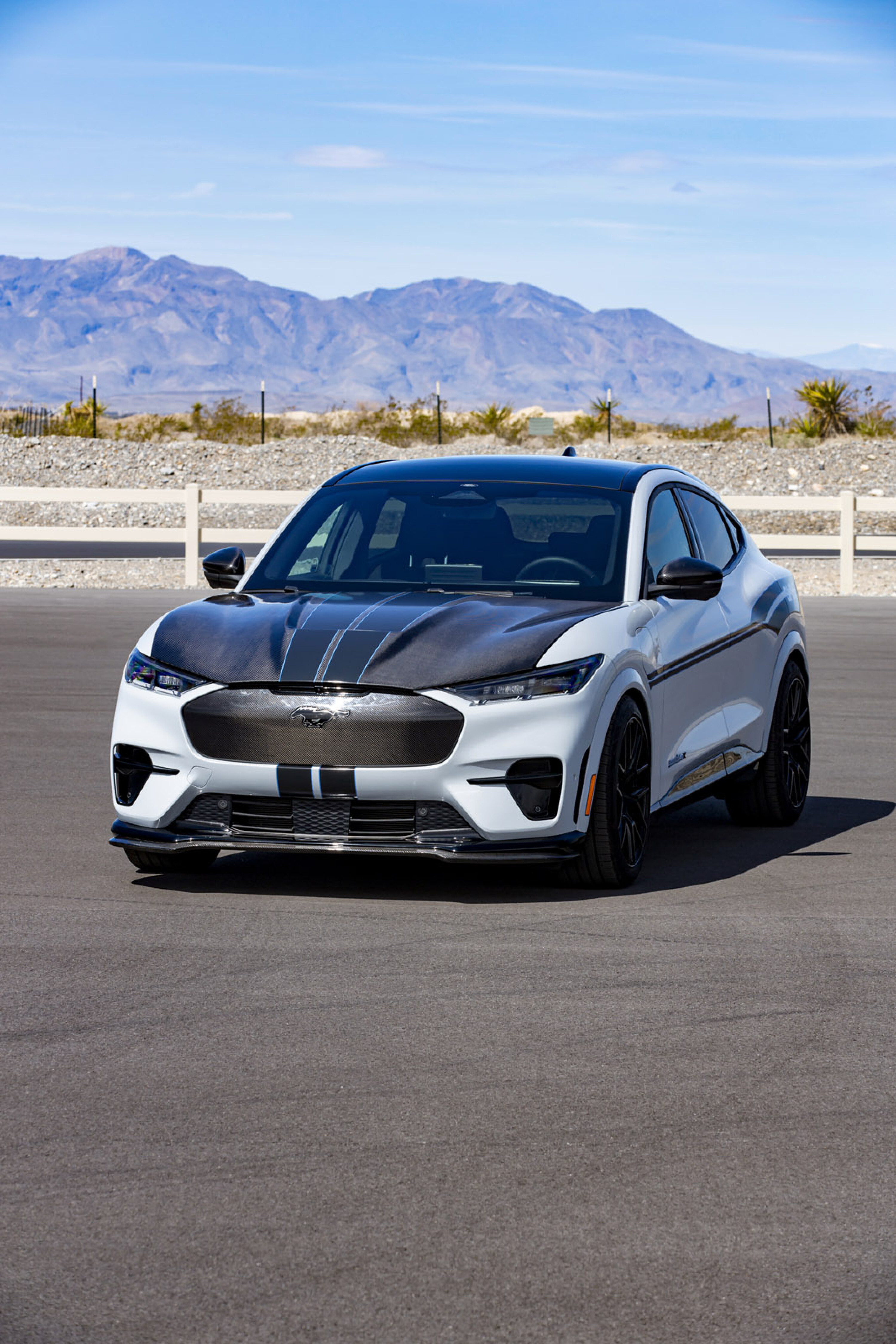
Shelby has announced a hot retrofit for the Mustang Mach-E GT, marking the iconic high performance brand’s first tinkering with an electric car, with a SUV body.
Snapshot
- Shelbyu2019s first EV retrofit for Europe only, limited to 100 units
- Mustang Mach-E GT lowered, forged wheels, carbon fibre
- Adds Borla sound system to simulate combustion engine sounds
There’s a catch, though: it’ll be limited to 100 units this year (numbered to honour the founder’s birth) and sold to private European owners of the top-spec Mach-E GT spanning model-years 2021 to 2023, with upgrade production starting in July.
Starting from EU€24,900 (AU$41,400) on top of the vehicle price, the Shelby package is focused on reducing the unladen weight of the 2348 kilogram medium electric SUV, while giving it a spicier exterior design.
1
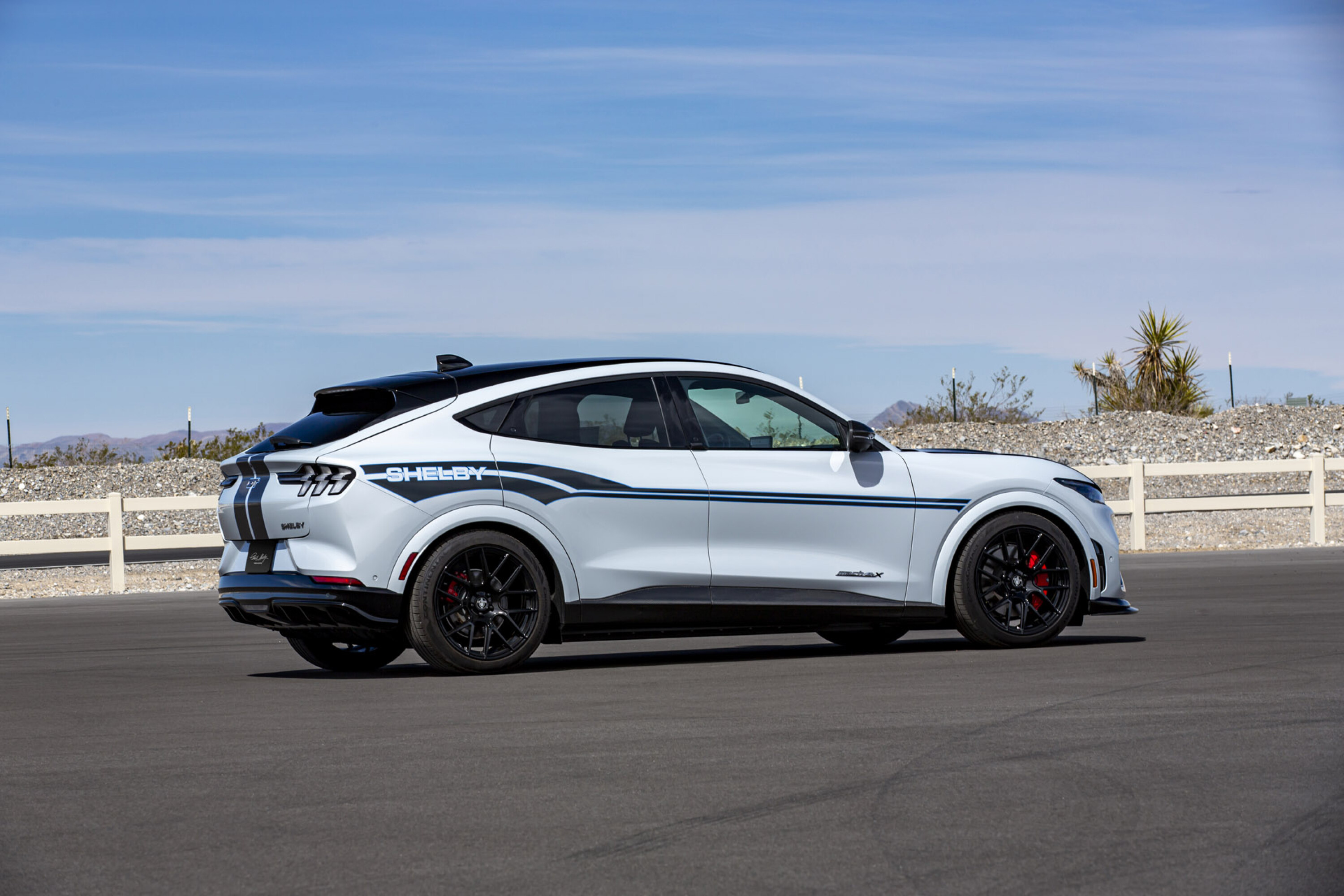
It adds lowered performance springs (reducing its height by more than 25mm), lighter forged aluminium Monoblock wheels, and lightweight carbon-fibre pieces across the hood, front grille, lower front splitter, lower doors and wing mirrors.
The Shelby package also adds a Borla Active Performance Sound System – which replicates the combustion engine note of models such as the Mustang Shelby GT500 through the speakers. Though, it is subject to ‘late availability’.
Other cosmetic touches include vinyl racing stripes with blue accents, custom interior floor mats, Shelby interior and exterior badging, and a numbered plaque on the dash.
1
Shelby hasn’t fiddled with the Mustang Mach-E GT’s all-wheel-driven electric drivetrain software, which produces 358kW of power and 860Nm of torque.
It’s unknown whether the weight savings and lowered height will improve its 4.4 second 0-100km/h acceleration time, nor whether it impacts its 490 kilometre claimed WLTP driving range. There’s bound to be some impact, though.
Advice
Australia’s best electric cars for 2023
We’ve tested nearly every EV below six figures in Australia to rank the best on sale today
When will the Mustang Mach-E launch in Australia?
While the limited-edition Shelby electric SUV retrofit won’t be making its way to our roads, the Ford Mustang Mach-E will reach Australia in late 2023.
It’ll launch locally with three variants, including the high-performance GT range-topper that will rival the Tesla Model Y Performance, Kia EV6 GT, and forthcoming Hyundai Ioniq 5 N.
MORE
Everything Ford
MORE
Electric SUVs
⚡ More EV stories to help you choose the best car for your needs
The second-generation 2023 Volkswagen Amarok has received a five-star ANCAP safety rating.
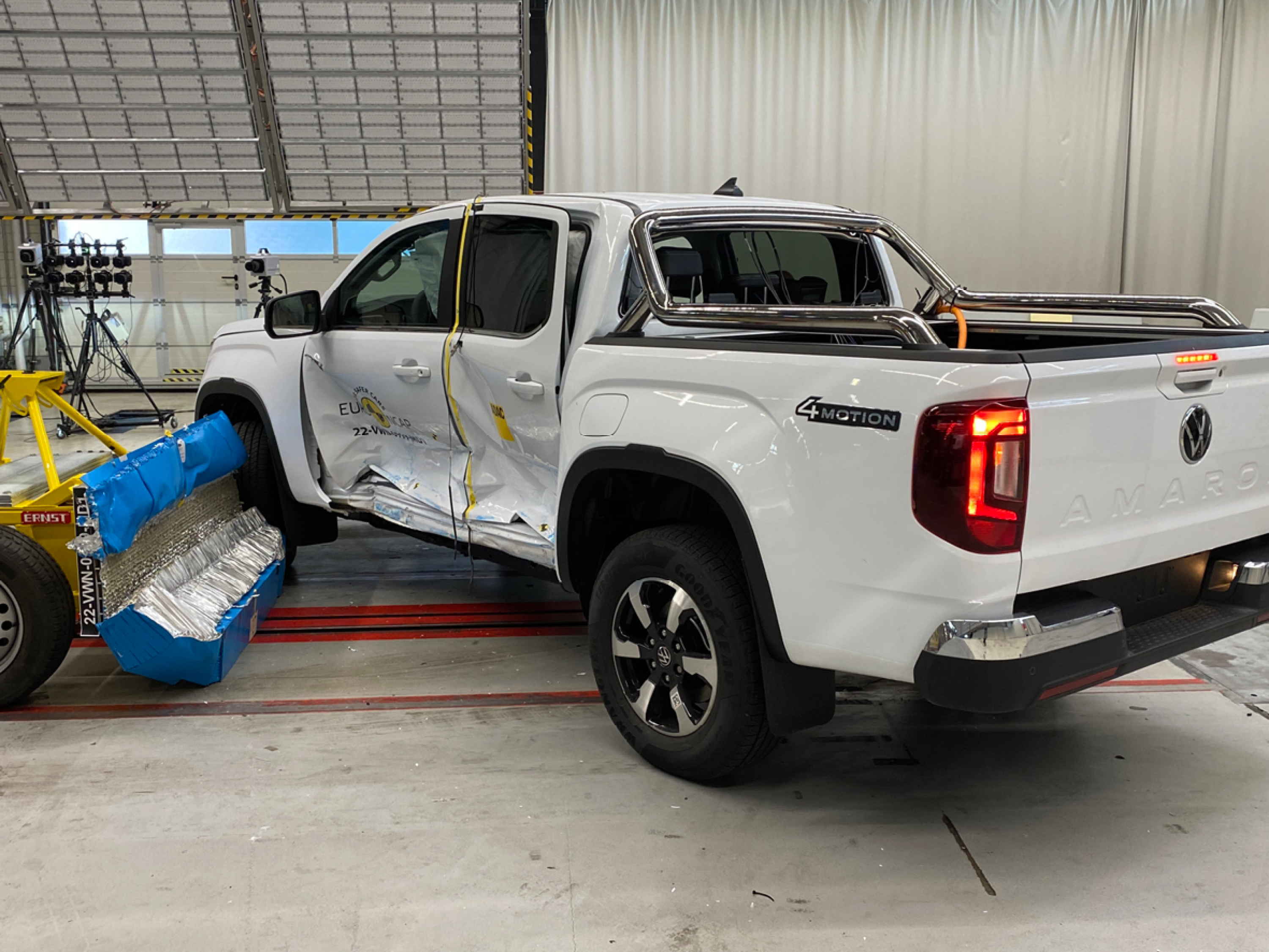
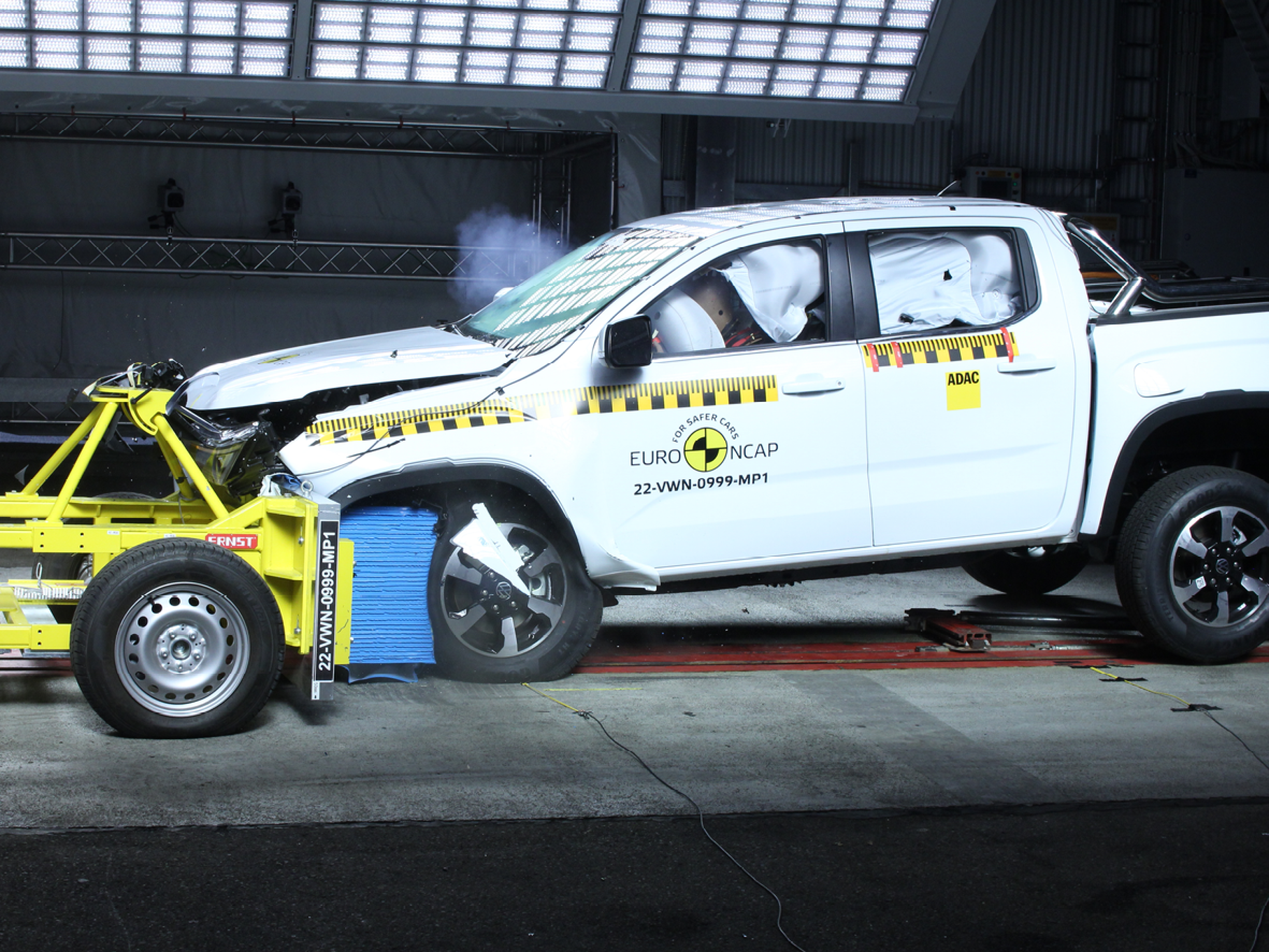
This rating is based on ANCAP’s testing for the related Ford Ranger, with additional frontal offset and side-impact assessment of the Amarok conducted by Euro NCAP in 2022.
The Amarok’s five-star ANCAP rating applies to all variants, including the turbo-petrol Aventura, and carries a 2022 date stamp, in line with the Ranger – and the Isuzu D-Max and Mazda BT-50 twins.
May 12: New Amarok driven in Australia!
Get the full story at the link below.
Story continues…
The new Amarok scored 86 per cent for adult occupant protection (32.98 out of 38 points), 93 per cent for child occupation protection (46 out of 49 points), 74 per cent for vulnerable road user protection (39.96 out of 54 points), and 83 per cent for safety assist (13.39 out of 16 points).
For context, the Ford Ranger has a lower 84 per cent rating for adult occupant protection, but identical scores in the other fields.
1
“The dual-cab ute segment is always very competitive, and this five-star rating now elevates the VW Amarok in line with its contemporary peers,” said ANCAP chief executive officer, Carla Hoorweg.
As with other utility vehicles and larger SUVs, ANCAP noted the “increased risk to occupants of oncoming vehicles in a crash”, with a 3.57 point ‘compatibility’ penalty applied.
1
The latest Volkswagen Amarok has nine airbags (dual frontal, side chest, side head, curtain, driver and passenger knee, and front-centre), up from just four in the outgoing model.
Standard safety equipment includes; autonomous emergency braking with junction-turning assist, lane departure warning, lane-keep assist, adaptive cruise control, and traffic sign recognition.
| 2023 Volkswagen Amarok active safety features | |
|---|---|
| Autonomous emergency braking (vehicle, pedestrian, cyclist, junction-turning) | Traffic sign recognition |
| Lane-keep assist | Adaptive cruise control |
| Lane departure warning | Multi-collision braking |
| Rear parking sensors | Reverse camera |
| Blind-spot and rear cross-traffic alerts are unavailable on the entry-level Amarok Core. | |
The Amarok showed good results in crash testing, obtaining high scores for protecting adults in frontal-offset, side-impact and far-side impact tests.
However, it received a ‘marginal’ rating for the full-width frontal crash test and the driver’s chest protection in the oblique pole test. A ‘good’ rating applies for child occupants in frontal-offset and side-impact crashes.
It is important to note that ANCAP highlights that the rear-centre seat is not recommended for transporting children as it lacks a top tether anchorage.
The 2023 Volkswagen Amarok dual-cab ute will be launched in May, and its price ranges between $52,990 and $79,990 before on-road costs.
Comparisons
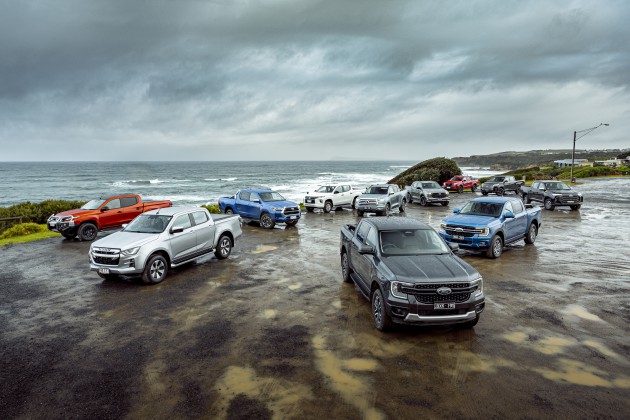
Best Utes: The Daily Living Test
Dual-cab utes have charged in as a firm favourite for family hauling and daily duties, well beyond the old mould of tradie tasks and off-road adventures. It’s time to see which are best suited to the role.
MORE
Ute Buyers Guide
