If ever there was a year where Ferrari came of age, then 1984 can rightfully stake its claim.
In the space of just three months in that most Orwellian of years, Maranello gave the world two of its most iconic models ever: one an utterly gorgeous homologation special, the other a slightly garish grand tourer that divided opinion from the moment it made its public debut.
Ferrari got the ball rolling at the Geneva Motor Show in February with the reveal of the stunning 288 GTO, widely regarded as Ferrari’s first true supercar. Built for Group B racing, the 288’s twin-turbo 2.9-litre V8 made around 295kW, helping to propel it to a top speed of 304km/h and giving it the distinction of the first road-legal production car to break the 300km/h barrier. Legend status assured.
Just 272 were built and while Group B was ultimately shelved amid growing safety concerns, the 288’s true legacy came just over three years later in the shape of the F40. But this story isn’t about the 288 GTO, the brief snippet here just to provide some context on what was going on behind Maranello’s closed gates during the early months of 1984.
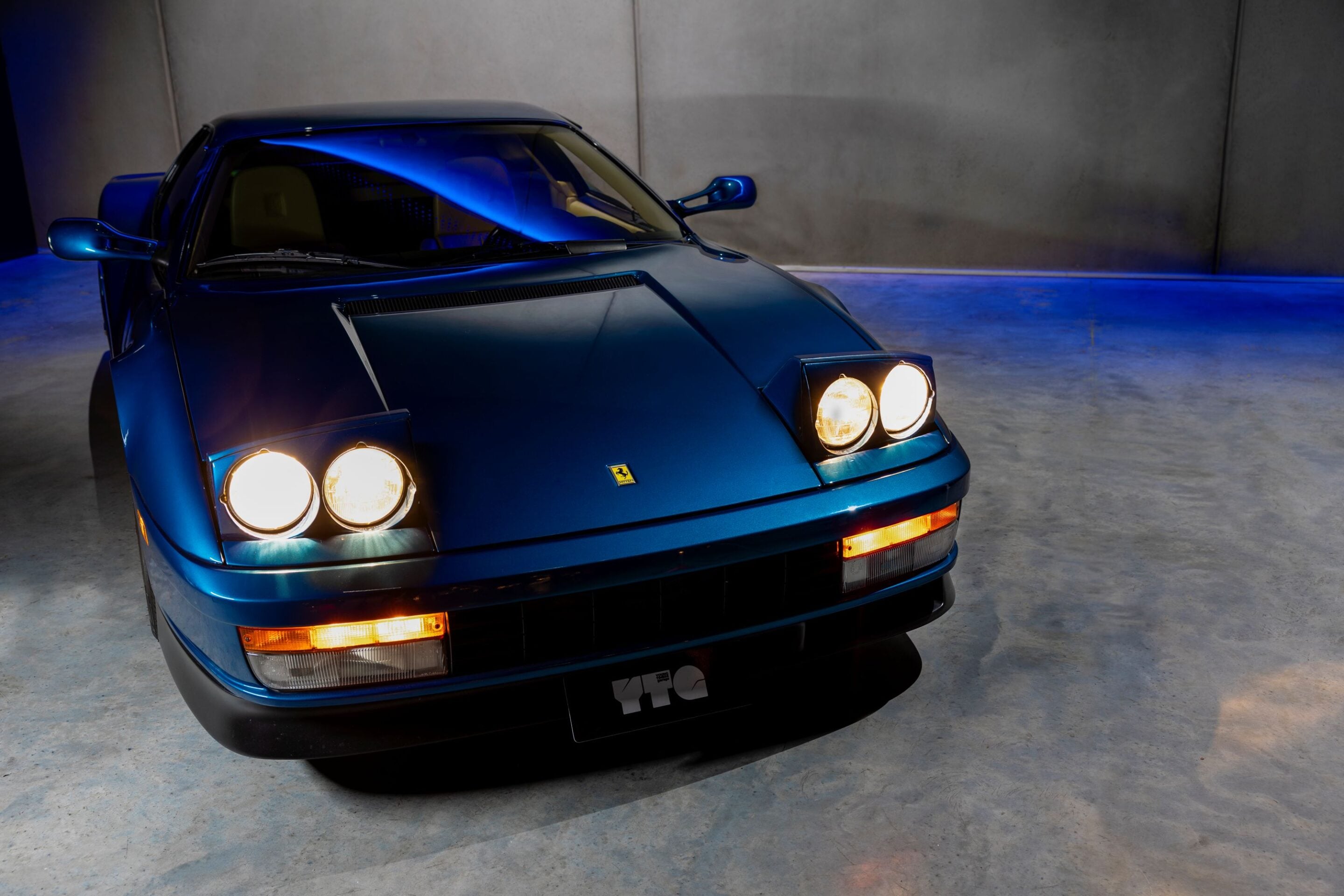
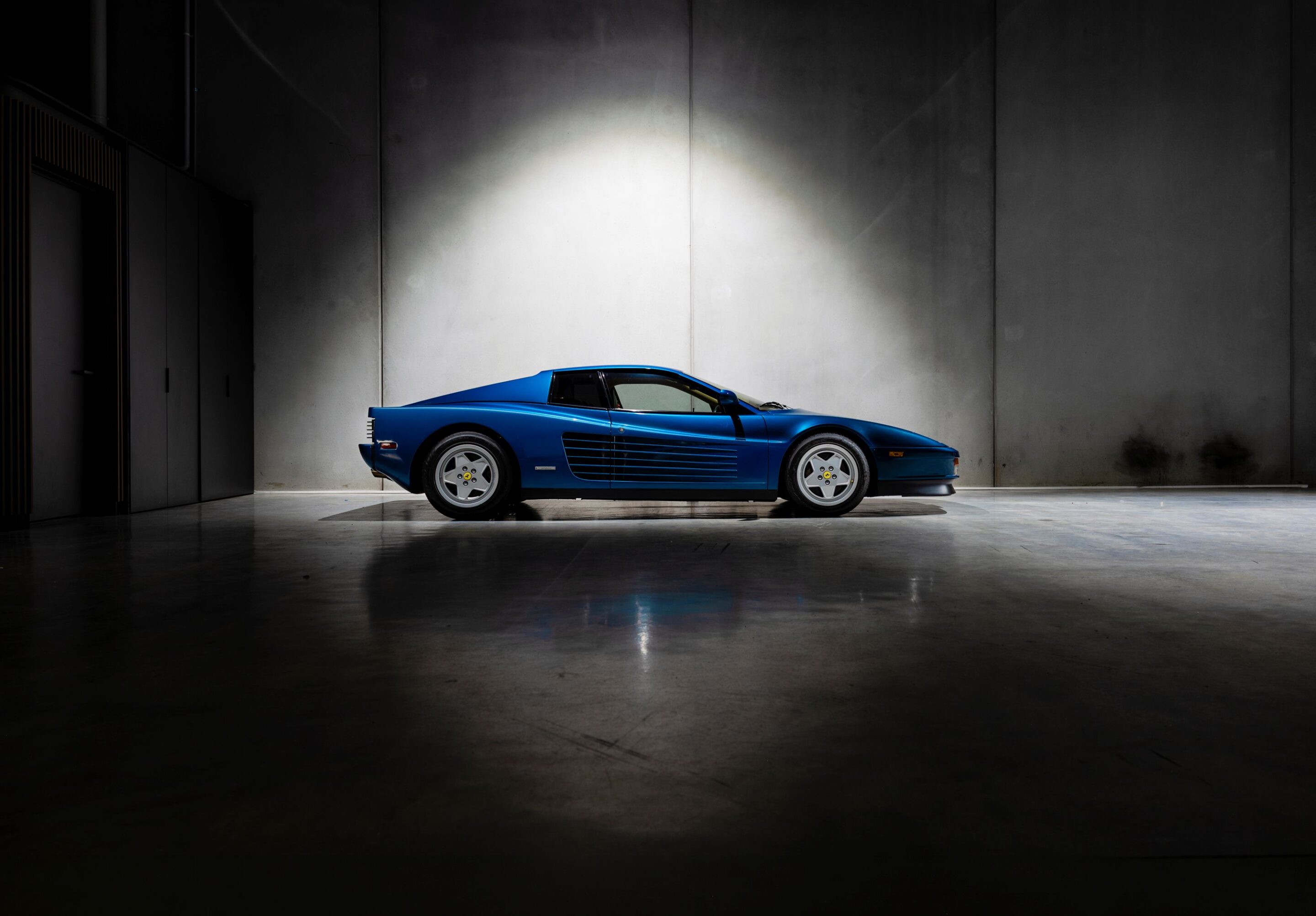
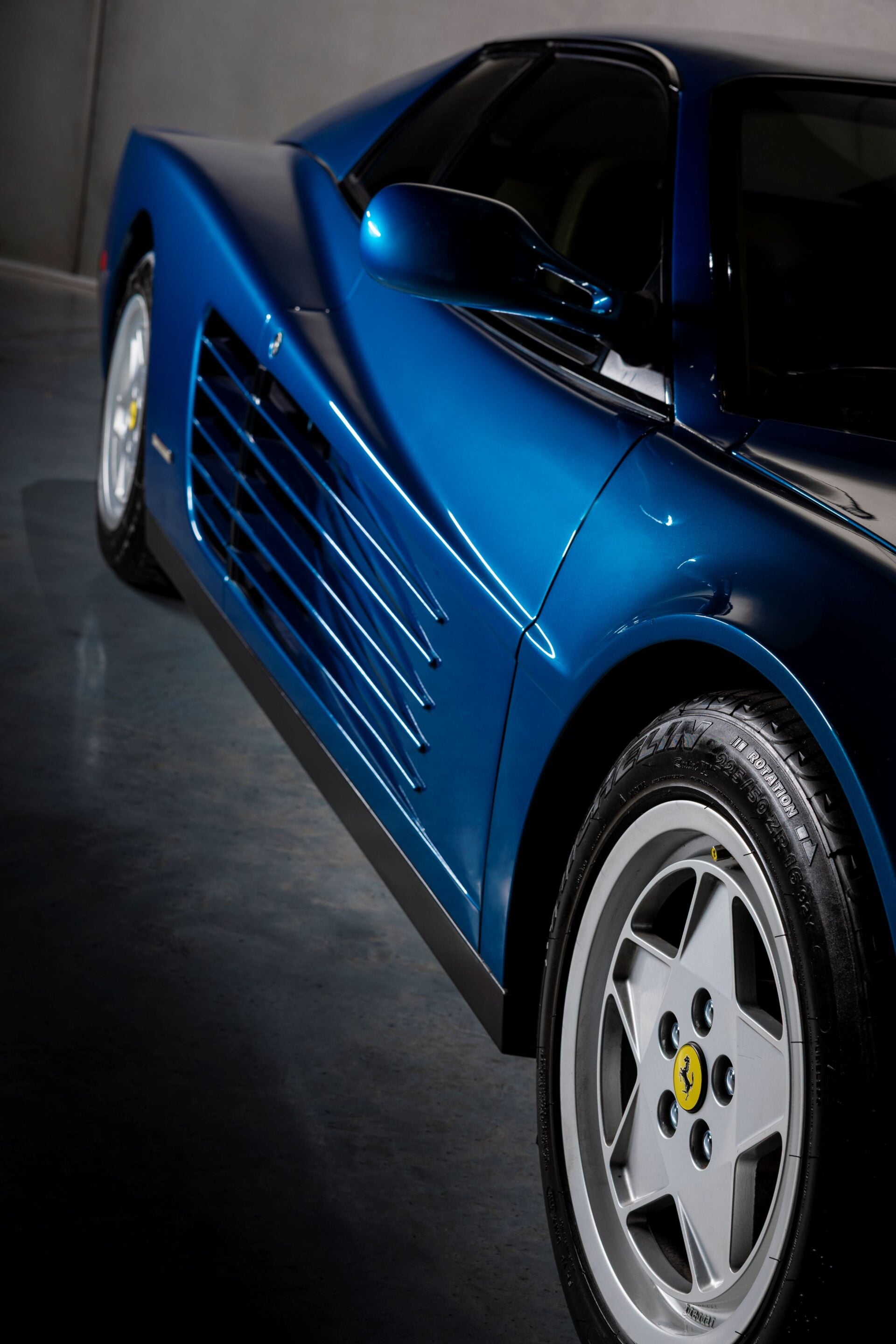
Fast forward to May and the streets of Paris, where the defining car of ‘1980s excess’ took its first public outing – the Ferrari Testarossa. The reception was two-fold. Critics and reviewers weren’t sold on the Testarossa’s widebody stance, and especially its signature strakes that soon earned the epithet of ‘cheese grater’. But the public, on the other hand, loved it, praising its bold imposing size and in-your-face styling.
But more than just a talk-track, the Testarossa’s polarising design emerged out of necessity, even if Sergio Pininfarina – he of the storied Italian design studio which penned the Testarossa – described it as “an exaggeration in flamboyance”. Flamboyant it certainly was, but the story of how Pininfarina and Maranello’s engineers arrived at that point bears telling.
Work on what would become the Testarossa began in 1978, Ferrari needing a replacement for the stunning but flawed 512 BB. The engineering and design team, led by Ferrari’s Angelo Bellei (project manager), Nicola Materazzi (engine department) and Maurizio Rossi (experimental department) were joined by Pininfarina’s Leonardo Fioravanti who headed up the design team.
Their brief was simple – the new car needed to address the overheating issues plaguing the 512, be available to US buyers, improve practicality and add power as well as better handling and traction than its svelte predecessor.
To understand how the Testarossa took shape it’s important to briefly look back at the 512 BB preceding it. Here was a classic Ferrari wedge, powered by a thundering flat-12 mounted amidships. But its stunning proportions and wedge-shaped profile was also its Achilles Heel.
With the 512’s 5.0-litre flat-12 mounted directly on top of the gearbox and just behind the cabin, there was precious little space left over for cooling components which remained resolutely located up front.
That resulted in a necessarily complex cooling system that didn’t always work at optimal levels, leaving not only the high-revving engine overheating, but also creating an uncomfortable amount of heatsoak for anyone inside the cabin.
The 12-cylinder engine also presented problems for the US market, its carburetted (and later fuel-injected) design failing the States’ increasingly stringent emissions regulations, meaning the 512 could not be sold in what was, and is, arguably Ferrari’s largest market.
The new car then, had to be designed with one eye on the US market, and by extension the rest of the world, the Testarossa today widely regarded as Ferrari’s first truly ‘world car’.
The 512’s 4943cc horizontally-opposed fuel-injected 12-cylinder engine was carried over, but now
featured four valves per cylinder, a re-engineering that improved not only power, but also emissions.
To keep the engine cool, not to mention the car’s occupants, Ferrari’s engineering team favoured two radiators, one on each side, mounted just behind the door openings. But that presented packaging problems and the solution was to widen the car dramatically at the rear (front track was up 12mm over the 512 BB, while the rear track had increased by a staggering 105mm), creating space for the radiators to tuck in neatly behind the Testarossa’s wide body work.
Radiators, of course, need airflow and while early design studies highlighted NACA-duct style intakes, a la Lamborghini Countach, Ferrari’s engineers were concerned at how much turbulence the large openings generated. The solution was to cloak the intakes in what has become the defining feature of the Testarossa, those ‘cheese grater’ strakes that lead into the rear of the Ferrari in an ever-widening dance of function over form.
Moving the cooling system to the side of the car brought other tangible benefits, with greatly increased luggage space under the bonnet, addressing a common complaint of the 512 BB.
The strake theme continued at the rear of the Testarossa, so wide it looked like it was wearing that other great excess of the 1980s – shoulder pads. Here Ferrari had done away with its signature circular tail-light arrangement. Instead, a matte black louvre running the full-width of the body covered rectangular tail-lights, the combination unifying the Testarossa’s striking design elements.
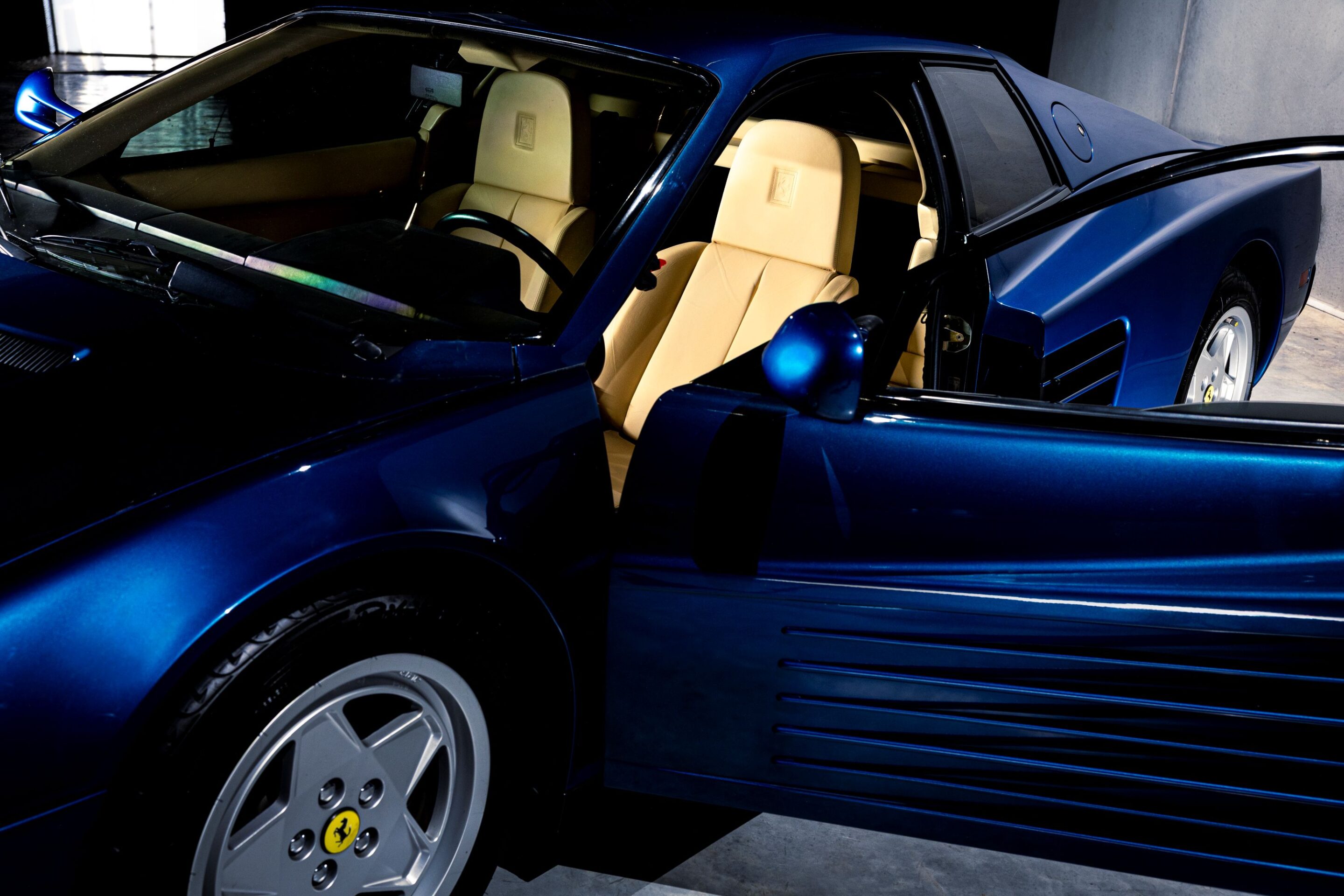
Another quirky design element of early models was the monospecchio mirror, a single door mirror mounted high and wide on the A-pillar in order to meet what Ferrari erroneously believed were European rear visibility regulations. Derided at the time for its controversial positioning, and for only being fitted to the driver’s side, by 1986 they had been replaced by more conventionally-located wing mirrors on each side of the car. Those early models with what was known as the ‘flying mirror’ have become highly sought after by collectors today.
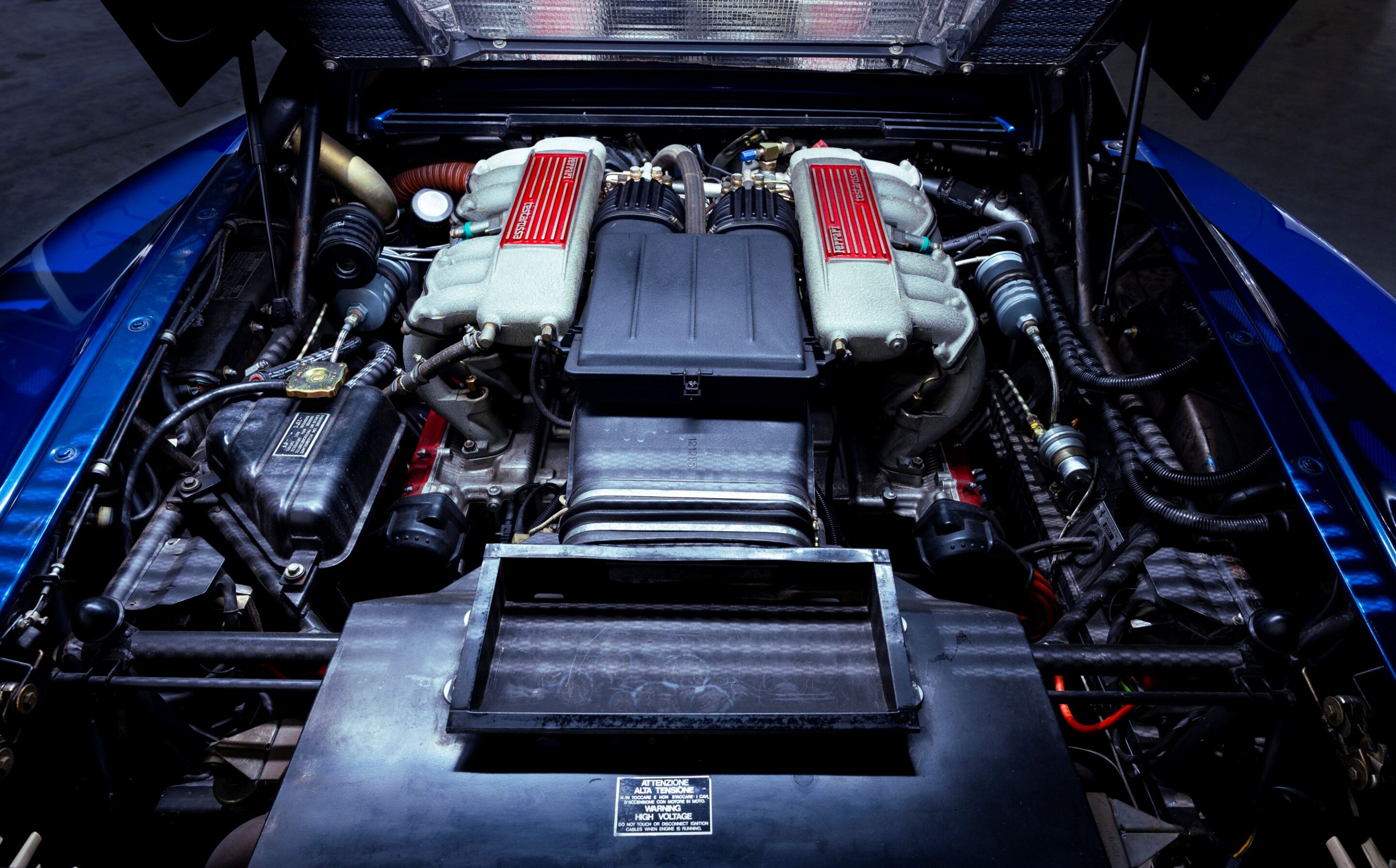
Under the skin, the evolutionary 4943cc flat-12 was a masterpiece of 1980s engineering. With a bore and stroke of 82mm and 78mm respectively, each cylinder featured four-valve technology fed by Bosch K-Jetronic mechanical fuel injection. Two belt-driven overhead camshafts per cylinder bank were driven directly off the camshaft as opposed to idler gears found on earlier Boxer models, such as the 512 BB.
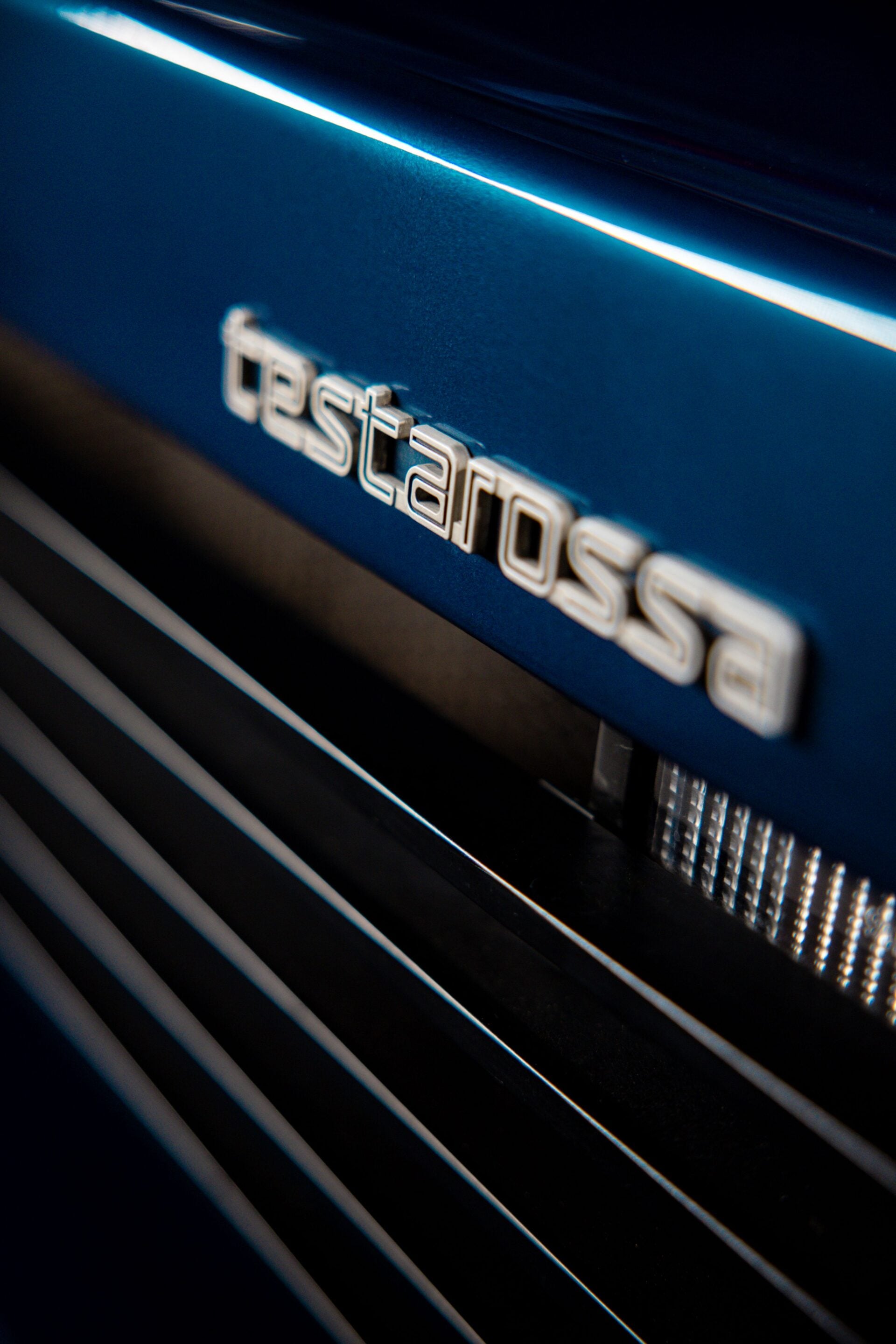
As it was in those earlier models, the engine was mounted longitudinally on top of the five-speed manual transmission sending drive to the rear wheels. Twin bright red cam covers that lent the Testarossa (Italian for ‘redhead’) its name completed the engine bay.
Performance was prodigious for the era, the 12-cylinder pumping out a quoted 287kW at 6300rpm in European spec while US models made do with 279kW at a slightly detuned 5750rpm to placate the emissions nannies.
The sprint from 0-100km/h was said to take 5.8 seconds which seems comically slow by today’s standards but made it one of the fastest accelerating cars of its time. Top speed was a claimed 290km/h, just trailing the 292km/h claimed by that other great poster-child of 1980s flamboyance, the Lamborghini Countach.
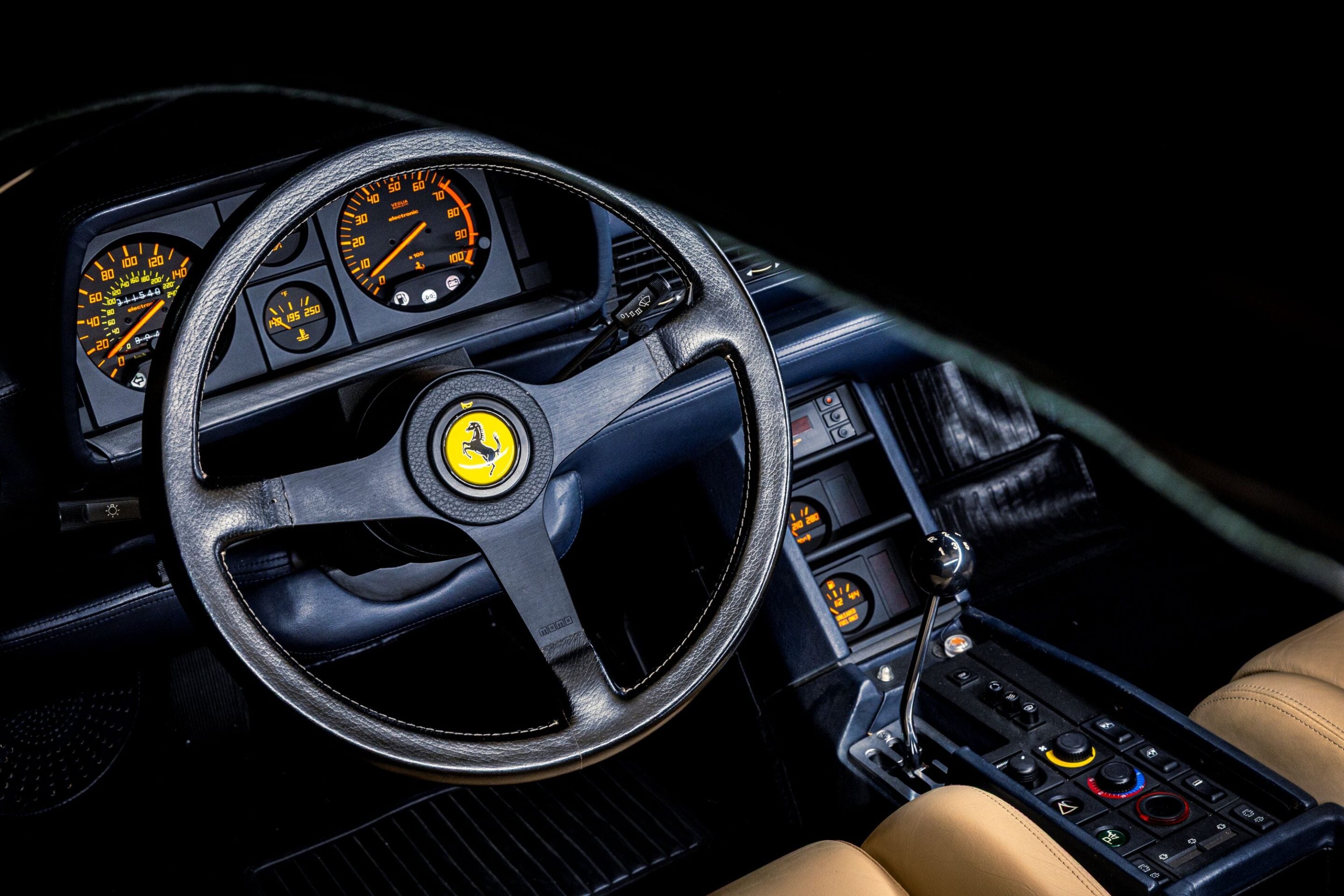
Unlike Maranello’s great rival from just up the road in Sant’Agata, the Testarossa was a far more forgiving car to drive, blending supercar performance with grand touring comfort. Despite its size, and especially its width (it stopped the tape at a huge 1978mm at its widest point), the Testarossa remained user-friendly.
A lighter clutch meant less leg work for drivers while getting in and out of the low-slung supercar (it measured just 1130m tall) was made easy thanks to wide-opening doors and a flatter floor. Occupants sat in air-conditioned comfort while powered mirrors and windows were luxury items conspicuously absent from a number of the Testarossa’s erstwhile rivals.
Early reviews were overwhelmingly positive, especially in the US where the pain of missing out on the 512 BB was soon banished.
“The 4.9-litre double-overhead-cam flat twelve behind us whirs, hums, whistles, and whines deliciously as the revs rise and fall,” wrote Car and Driver in its September 1986 issue, adding that “Even when driven at a comfortable eight-tenths, though, the Testarossa can cover more ground in less time than almost anything else on four wheels.”
Over the Atlantic, British magazine Performance Car noted “As a blender of outright speed and cruising comfort, roadholding and responsiveness, dynamics and driveability, the Testarossa is as good as they come.”
Here at Wheels we had to wait until 1988 to sample the Testarossa, but when he finally did, Steve Cropley was effusive.
“The 4943cc 290kW engine sounds like no other. Anything else, even the Lambo V12 has an exhaust like a series of muffled explosions. This is a hum, then a howl, then a wail near the 6300 rpm where maximum power is delivered,” wrote Cropley in our September 1988 issue.
“The chassis beneath clings to corners with only a trace, and not a serious threat, of the Boxer’s terminal oversteer. And its noise suppression, ergonomics, ride and comfort – as well as its finish – are well up to the standard of 1988 exotic cars. Even the somewhat over-produced German ones,” he added.
Whether it was because it had the go to match the show, or whether its devilishly rakish styling set hearts aflutter, the Testarossa soon adorned the bedroom walls of enthusiast children and adults alike everywhere, Ferrari’s entrance into the mid-80s supercar club joining a short but stellar line-up of ’80s poster cars that included the Countach and Porsche 959.
A starring role in that oh-so-1980s cop drama Miami Vice didn’t hurt its reputation either, the exploits of Tubbs and Crocket almost playing second fiddle to the scene-stealing Testarossa, gleaming white under Florida’s hot sun.
How the Testarossa ended up with a starring role on US television is a story worth telling. And like all good stories, it started with a lawsuit. When the show first aired in September 1984, its two lead characters swanned about Miami in a black Ferrari Daytona Spider. Only, it wasn’t a real Daytona, but rather a well-built replica. And it’s this what got Enzo’s back up. Cue lawyers.
Thankfully, a resolution was reached which amounted to Ferrari offering the production team not one, but two Testarossas for use in the show. Originally delivered in black, the show’s producer, Michael Mann, quickly had them resprayed to white for better on-camera visibility during night-time scenes.
The Testarossa subsequently made its acting debut in season three of what had become, by then, one of the biggest shows on TV. Suddenly the Testarossa was in 20 million homes every week, becoming a cultural icon of that decade.
Such was its influence on popular culture, and particularly in the US, after-market body kits mimicking the Testarossa’s signature strakes proliferated, appearing on a variety of mild-mannered sports cars and even a Mazda pick-up truck, earning it the nickname, ‘Truxtarossa’.
The Testarossa remained in production from 1984 until 1996, with a shade under 10,000 cars produced across several updates including the final iteration F512 M, a limited run of 501 cars. It featured a more powerful 323kW version of the now legendary Tipo F113 flat-12, improving 0-100km/h to 4.7 seconds and a top speed of 315km/h. The Testarossa’s hard edges had been softened too, while pop-up headlights, the epitome of supercar cool in the ’70s and ’80s, made way for fixed headlamps.
The Ferrari 550 Maranello replaced the Testarossa in 1996 with some key distinctions. A front-mounted 5.5-litre V12 – Tipo F133 – presaged the brand’s future grand touring strategy. That leaves the Testarossa as the last ever road car from Maranello to feature the complex but beguiling flat-12 engine mounted behind the driver.
Its lasting legacy remains firmly in place, the Testarossa the automotive embodiment of the 1980s wrapped in a “flamboyant” package that helped usher Ferrari into the modern age.
Our Ferrari Testarossa
The Testarossa was never officially available in Australia, largely because factory right-hand drive cars are exceedingly rare with – according to various sources – just 438 right-hookers produced for the UK market over its lifetime.
But that hasn’t stopped a small number of Testarossas calling Australia home, including the car illustrated on these pages.
A 1990 model, this US-market car made its way to Australia in 2023 and has remained in its original left-hand drive configuration.
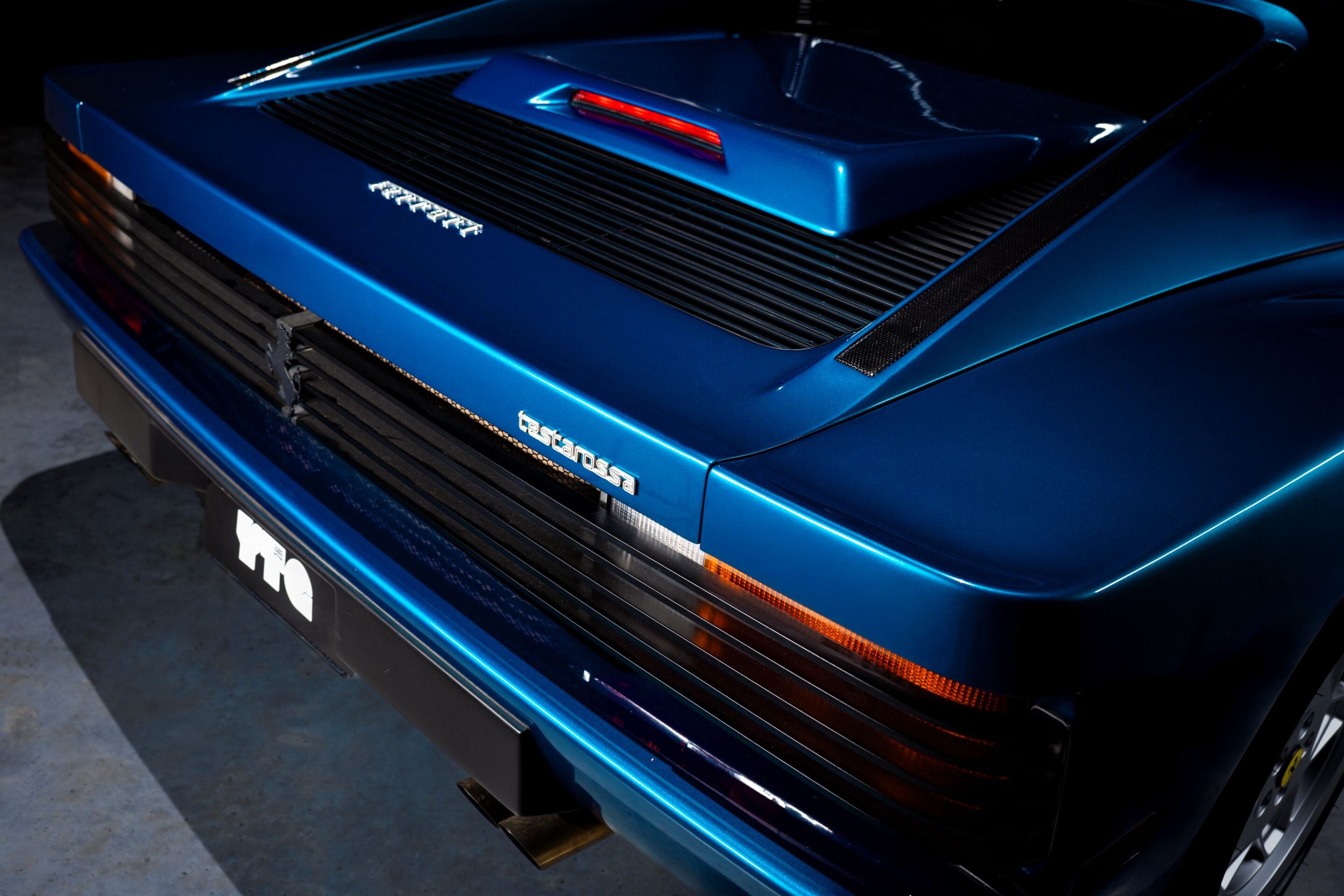
Delivered new in June 1990 through Hollywood Ferrari Motors, this striking Blue Chiaro over Crema Nappa leather example remained in the original owner’s hands for over 20 years before passing on to its second owner.
The car has received all-important certification by Ferrari Classiche, confirming that it’s a matching numbers car with the original engine and finished in the original factory colour with 11,500 (18,507km) showing on the odometer. This LHD example is also fully compliant with Australian Design Rules.
The car is currently for sale through Melbourne’s Young Timers Garage, with an asking price of $439,900 plus applicable government charges.
Specs
| Model | Ferrari Testarossa |
|---|---|
| Engine | 4943cc DOHC flat-12, four valves per cylinder |
| Power | 287kW @ 6300rpm |
| Torque | 490Nm @ 4500rpm |
| Transmission | Five-speed manual |
| Wheels | 16in x 8in front; 16in x10in rear |
| Tyres | Michelin TRX |
| L/W/H/WB | 4485/1976/1130/2550mm |
| Weight | 1506kg (dry) |
| 0-100km/h | 5.8s (tested) |
| Top Speed | 290km/h |
| Price (now) | $439,900 |
This story first appeared in the April 2026 issue of Wheels magazine, now on sale. Subscribe here and gain access to 12 issues for $109 plus online access to every Wheels issue since 1953.
New Chinese brand Forthing, part of the Dongfeng Motor Corporation, will launch in Australia in June 2026. Forthing will launch locally with an electric and plug-in hybrid small SUV called the Taikon 5, which will offer one of the longest pure electric driving ranges of any PHEV locally.
The Taikon 5 will not be the brand’s only offering locally. The brand is yet to confirm which other models will be added to the line-up but there are a range of electric SUVs, people movers and even a sedan among its range for the Chinese market to choose from.
Shaun Garrard, who has previously worked for automakers in China and more recently specialised in emerging brands at the Ateco Group, has been announced as the National Manager of Forthing in Australia.
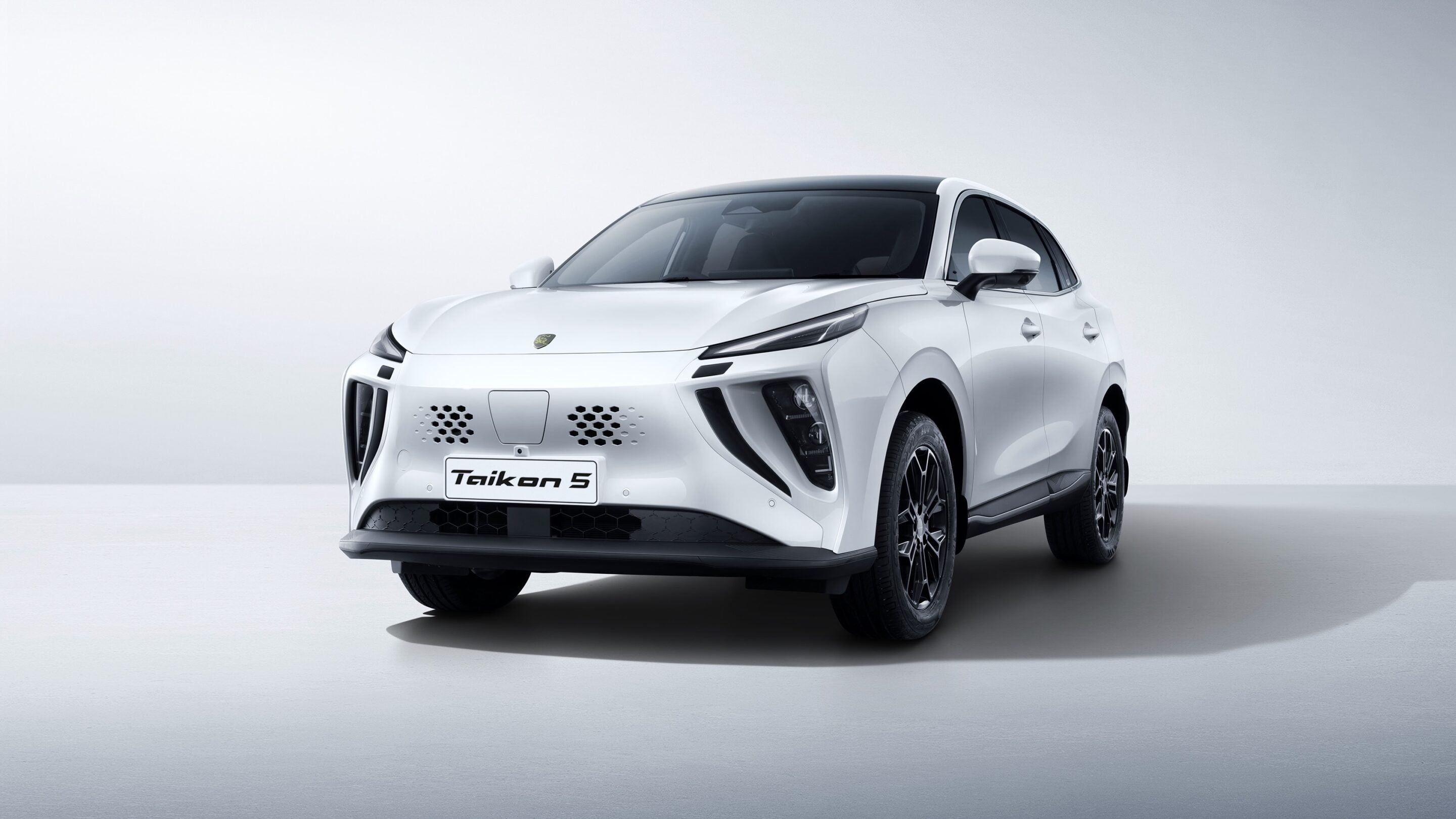
“We see huge potential in the Forthing brand in this highly competitive market, with its comprehensive line-up of new-energy vehicles,” said Mr Garrard. “A lot of new automotive brands are making bold promises. With Forthing’s strong product portfolio … we are well positioned for long term success.”
The brand is also about to launch in New Zealand where the Taikon 5 will be available with two drivetrains that we expect will be mirrored in Australia: a 150kW/240Nm electric version with a 64.4kWh battery for 400km+ of range, or a range-extender plug-in hybrid with a 155kW 1.5-litre petrol engine, 120kW/240Nm electric motor and 31.9kWh battery for a WLTP-rated all-electric range of 170km and a total range of 937km.
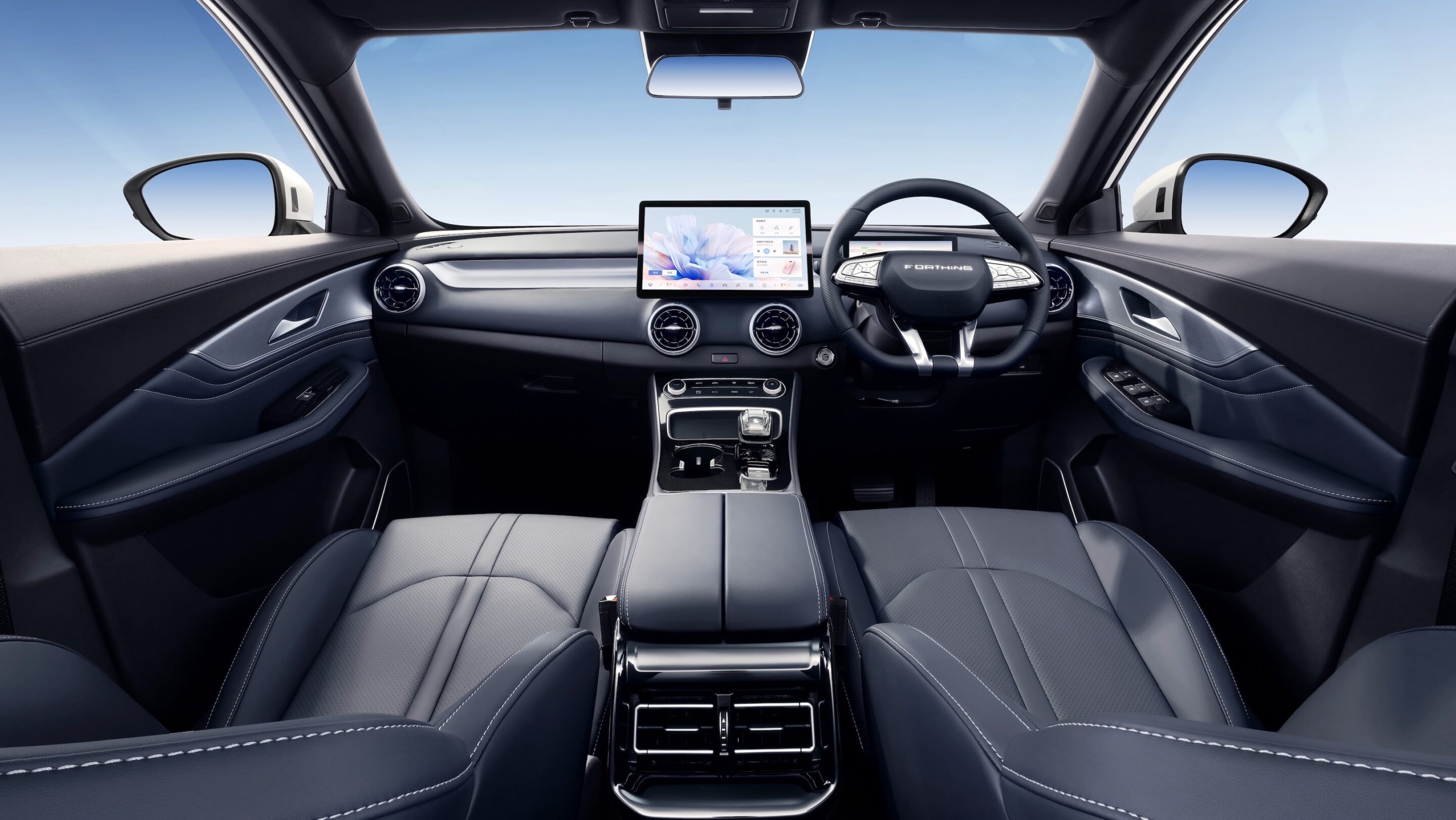
Two specifications are available in New Zealand: entry-level Luxury and Exclusive, with the Luxury equipped with 19-inch alloy wheels, 10-way electric driver seat adjustment with heating, ventilation and massaging, an 8.8-inch digital driver’s display, a 14.6-inch touchscreen and active safety features like adaptive cruise control and a reversing camera. The upper-spec Exclusive adds a leather steering wheel, automatic air-conditioning, a panoramic sunroof, extra speakers and a wireless phone charger.
In New Zealand, a long seven-year/200,000km warranty will cover the Forthing range, with Australian warranty, equipment and technical details yet to be revealed.
More local details about the Forthing range, such as pricing, will be announced at its June 2026 launch.
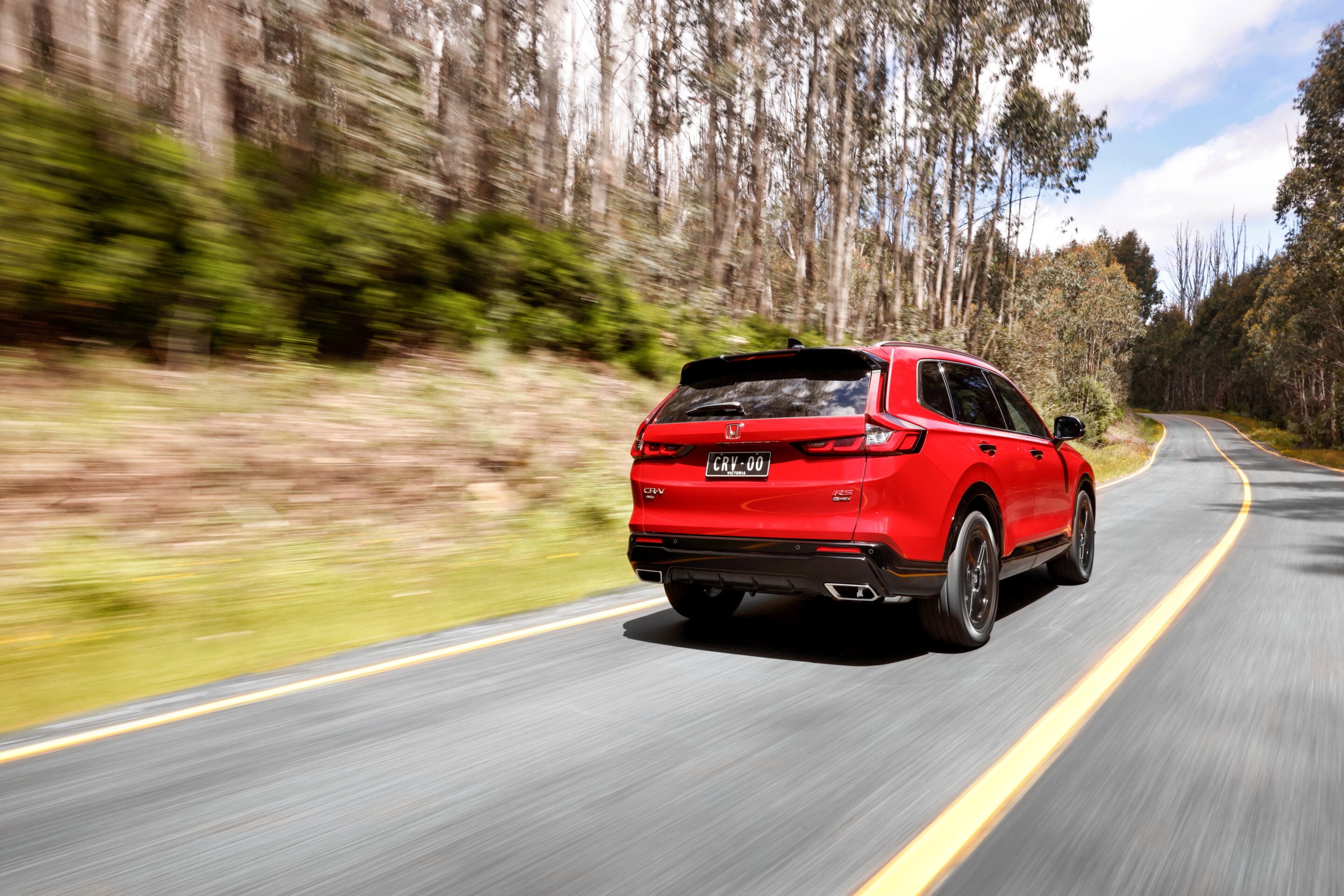
Honda Australia has detailed pricing and specifications for its updated 2026 CR-V medium SUV range, with a broader mix of hybrid variants and a lower entry point aimed at widening its appeal in the medium SUV segment.
The refreshed line-up starts from $44,900, while hybrid versions now begin at $49,990 – a reduction of $10,000 compared with the previous model’s hybrid entry price. The range now includes both front- and all-wheel drive hybrid options, along with a seven-seat configuration.
Central to the update is the wider rollout of Honda’s e:HEV system, which pairs a 2.0-litre four-cylinder petrol engine with a dual-motor hybrid setup. Honda claims the system can deliver more than 1000km of driving range between refuelling stops under combined conditions.
The expansion comes as hybrid demand continues to grow in Australia, with more buyers seeking improved fuel efficiency without moving to full electric vehicles.
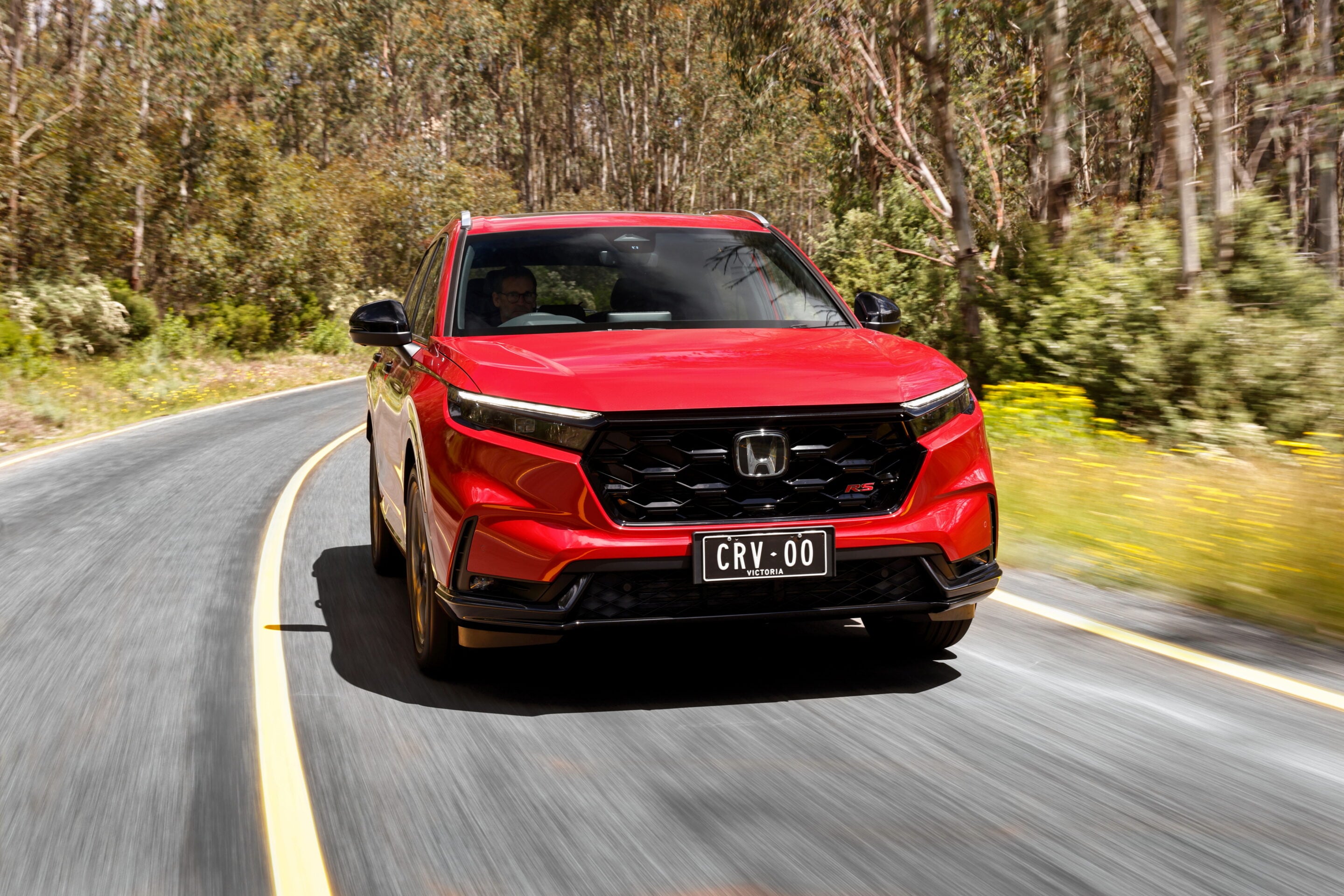
Beyond powertrain changes, Honda has introduced a series of technology and equipment upgrades across the range. All variants gain the latest version of Honda Connect with Google built-in, while higher grades add features such as a 360-degree camera, head-up display and upgraded comfort items including heated steering wheel, ventilated front seats and heated rear seats.
Honda Australia director of automotive Robert Thorp said expanding the availability of the hybrid system was a key focus for the updated range.
“Australians are choosing hybrids in record numbers, and expanding e:HEV down the range means you can now get into a hybrid CR-V for less,” he said.
The addition of all-wheel drive hybrid variants also broadens the model’s appeal, particularly for buyers seeking extra traction without sacrificing efficiency.
The CR-V remains one of Honda’s most established nameplates in Australia, competing against high-volume rivals such as the Toyota RAV4, Mazda CX-5 and Mitsubishi Outlander.
Honda continues to bundle ownership incentives with the model, including a five-year unlimited kilometre warranty, five years of roadside assistance and capped-price servicing.
The updated CR-V range is available to order now through Honda’s fixed-price agency sales model and dealer network.
| Grade | Powertrain | Drive | Seats | Price |
|---|---|---|---|---|
| VTi X | 1.5L VTEC Turbo + 2WD | 2WD | 5-seats | $44,900 |
| VTi L7 | 7-seats | $54,900 | ||
| e:HEV X | 2.0L Atkinson + 2-motor Hybrid system + 2WD | 2WD | 5-seats | $49,900 |
| e:HEV L | $53,900 | |||
| e:HEV LX | 2.0L Atkinson + 2-motor Hybrid system + 2WD | AWD | 5-seats | $58,900 |
| e:HEV RS | $64,400 |
BYD Australia has announced local pricing for its new Seal 6, which is a plug-in hybrid mid-size sedan and wagon. Priced from $34,990 plus on-road costs for the Essential sedan, the Seal 6 is reportedly capable of travelling over 1400km on a full charge and tank of fuel (on the WLTP cycle). The Seal 6 arrives at a great time considering Australia’s record fuel prices and resulting surge in plug-in hybrid vehicle sales.
Using a 1.5-litre Atkinson Cycle petrol engine and BYD’s ‘DM 5.0 Super Hybrid’ technology, the Seal 6 Essential sedan is capable of a 55km all-electric range from its 10.08kWh battery, with the upper-spec Premium wagon using a larger 19kWh battery for a claimed 100km electric range.
In the UK, the Seal 6 with the smaller battery is rated at 135kW for total output, and 156kW for the larger unit – Australian-spec technical data is yet to be revealed.
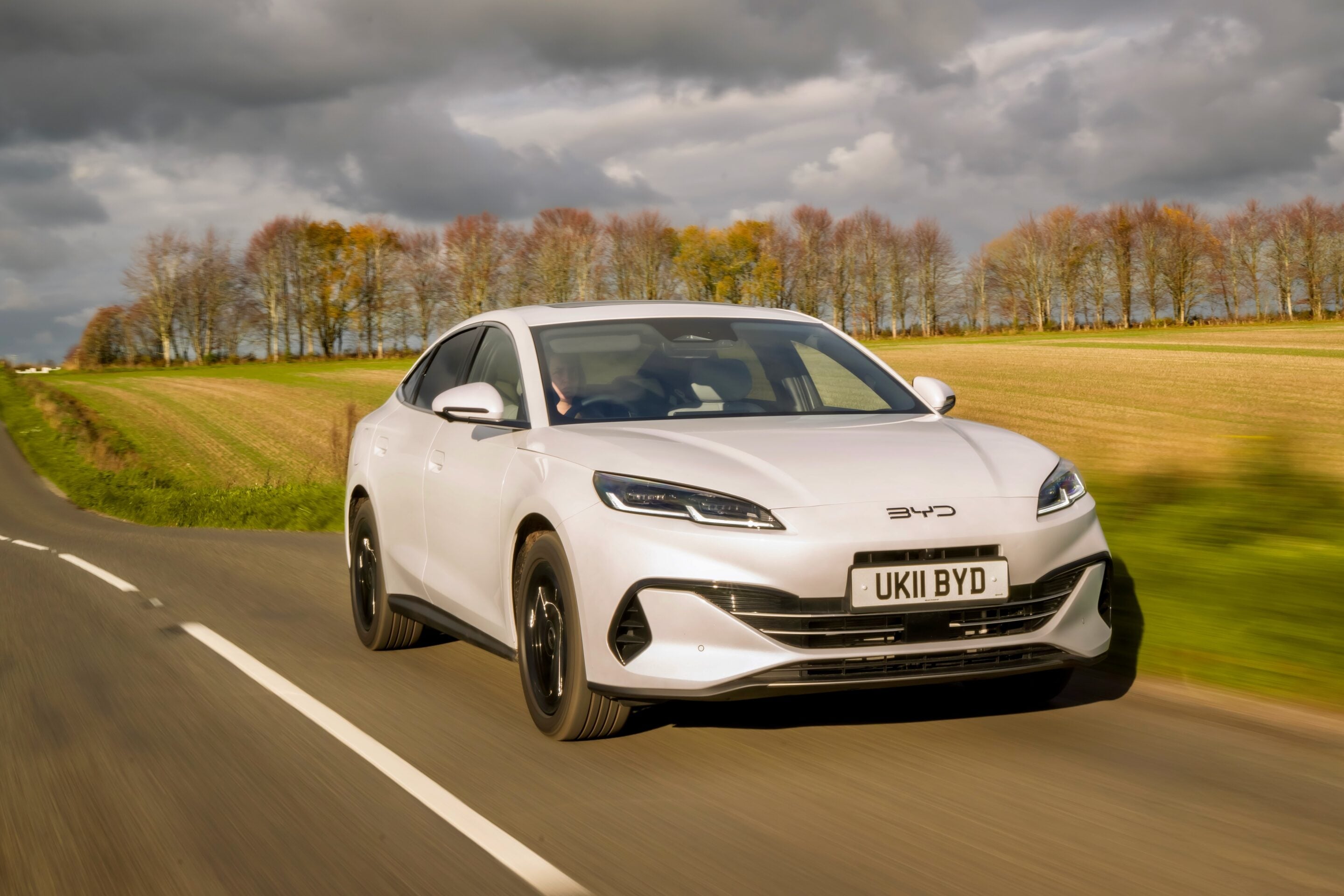
Two bodystyles will be offered in the local Seal 6 range: the sedan, which sports an impressive drag coefficiency of Cd 0.255 and a 491-litre boot, and the more practical wagon that offers 670 litres of boot space with the rear seats up and 1535 litres with them folded. The Seal 6 sedan is only offered in entry-level Essential trim, with the wagon only offered in upper-spec Premium trim.
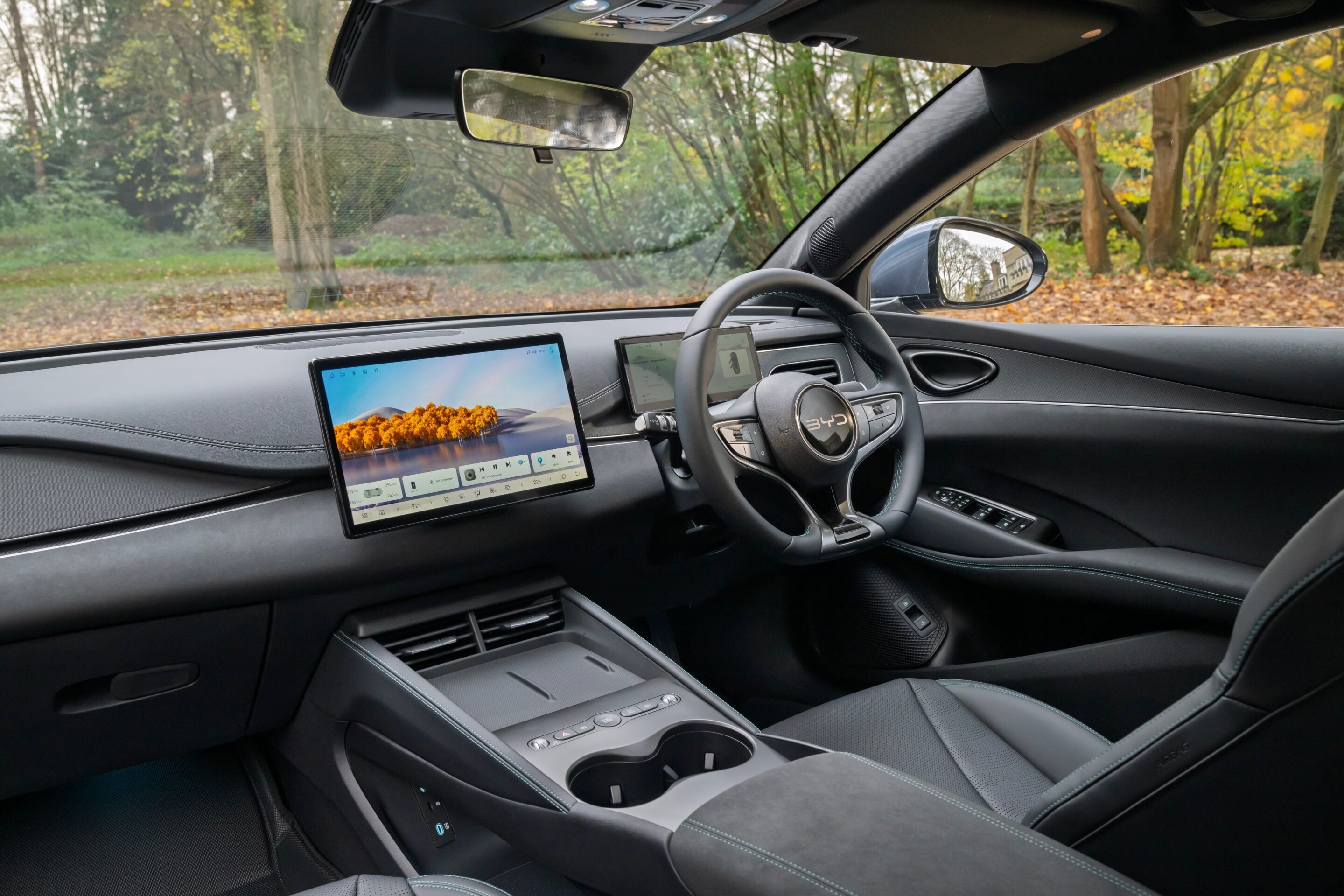
BYD Australia is yet to announce full specifications for the Seal 6, but standard equipment highlights across the range will include an 8.8-inch digital driver’s display, a 12.8-inch touchscreen with wireless Apple CarPlay and Android Auto, seven airbags, autonomous emergency braking, adaptive cruise control, blind-spot monitoring, child presence detection and level two autonomous driving assistance.
BYD Australia Chief Operating Officer Stephen Collins said the Seal 6 expands the choice of new energy vehicles for Australian buyers. “The Seal 6 Sedan and Seal 6 Touring continues the BYD commitment to offer Australians a range of advanced electric and intelligent plug-in vehicles that suits their needs and lifestyles.”
BYD Seal 6 pricing (excluding on-road costs):
| Essential sedan | $34,990 |
|---|---|
| Premium wagon | $39,990 |
The BYD Seal 6 will be available to order from April 9, with local deliveries to commence soon afterwards.
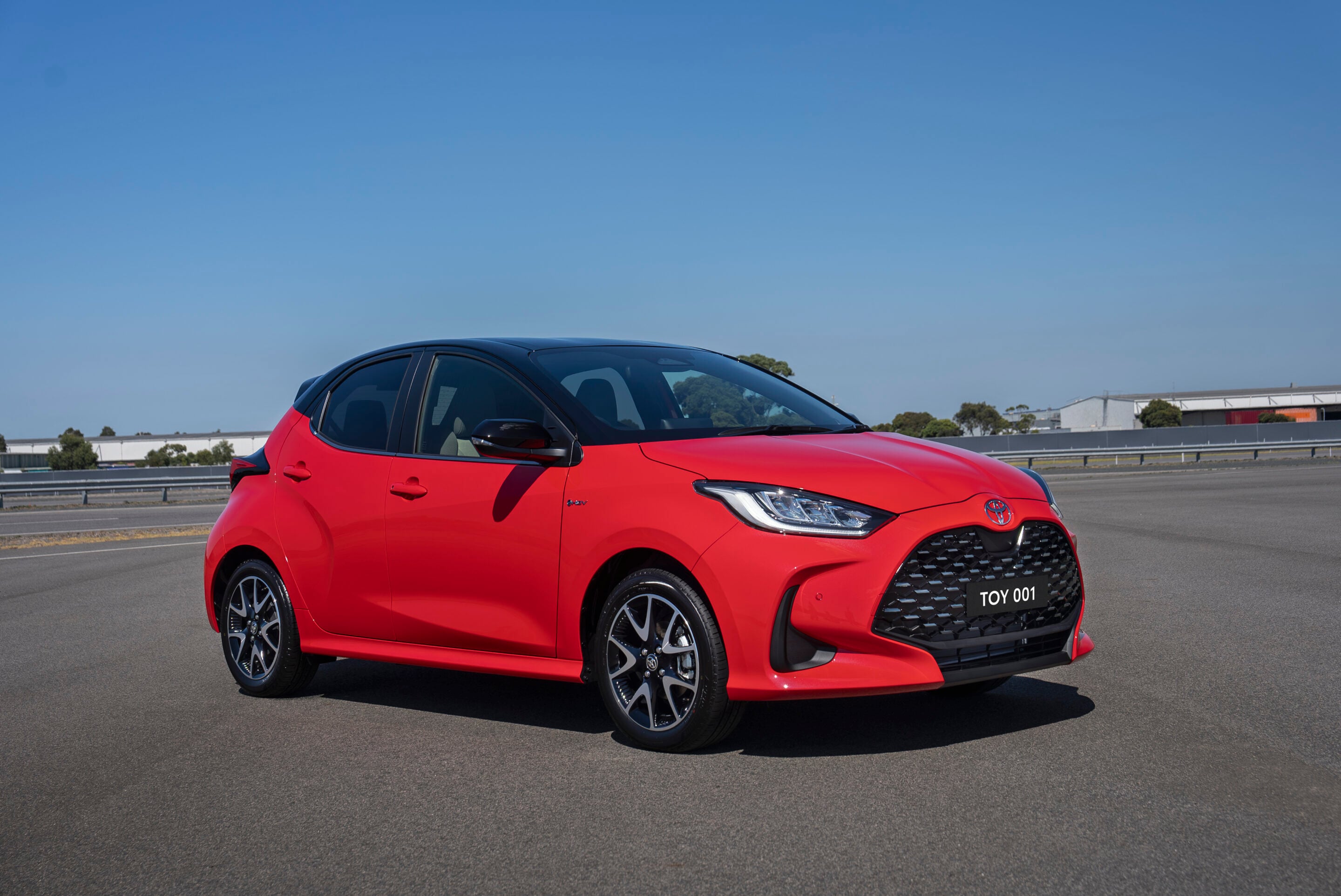
Owners of the latest generation of Toyota hybrids are being warned to drive regularly to avoid a potential threat to their vehicles.
Toyota Australia also says hybrid owners should minimise the use of any accessories that could deplete their car’s 12-volt battery. A growing number of battery problems and failures has been reported by owners to Wheels, all linked to the way the Toyota hybrid system operates.
It gives priority in charging to the vehicle’s 48-volt hybrid battery, ensuring it always has the highest possible power reserve for hybrid operation. But this system can leave the 12-volt starter battery short of charge if the vehicle is only driven on short trips and the 48-volt system is not at full capacity. If the starter system gets too low, usually if the vehicle is not driven enough or parked for any length of time, the 12-volt battery can run completely flat. If this happens repeatedly then a new 12-volt battery can be required.
“Since the day of purchase, I have repeatedly encountered the low battery warning. Despite multiple attempts to resolve this issue, the problem persists,” one Toyota hybrid owner, Vedanayagam Gudiyattam, told Wheels.
The owner of a Lexus UX hybrid, had a similar story.“While this is a very nice little car to drive, it’s not working for me. I don’t want to go down to my garage and find the battery flat again,” said Angela Westacott. “Lexus have told me not to use the radio, headlights in the day time and not to lock it in the garage, Also they mentioned a trickle charger.”
Jeanette Fitzsimmons, owner of a Yaris Cross Hybrid, reported a series of incidents where she has needed starting assistance from her state’s motor club.“Is my car just a lemon? Why is mine so problematic?,” she said.
Toyota Australia admitted to Wheels that it has begun an education program with customers and dealers to explain the operation of its hybrid charging systems to avoid future problems. It also said that regular driving is essential.
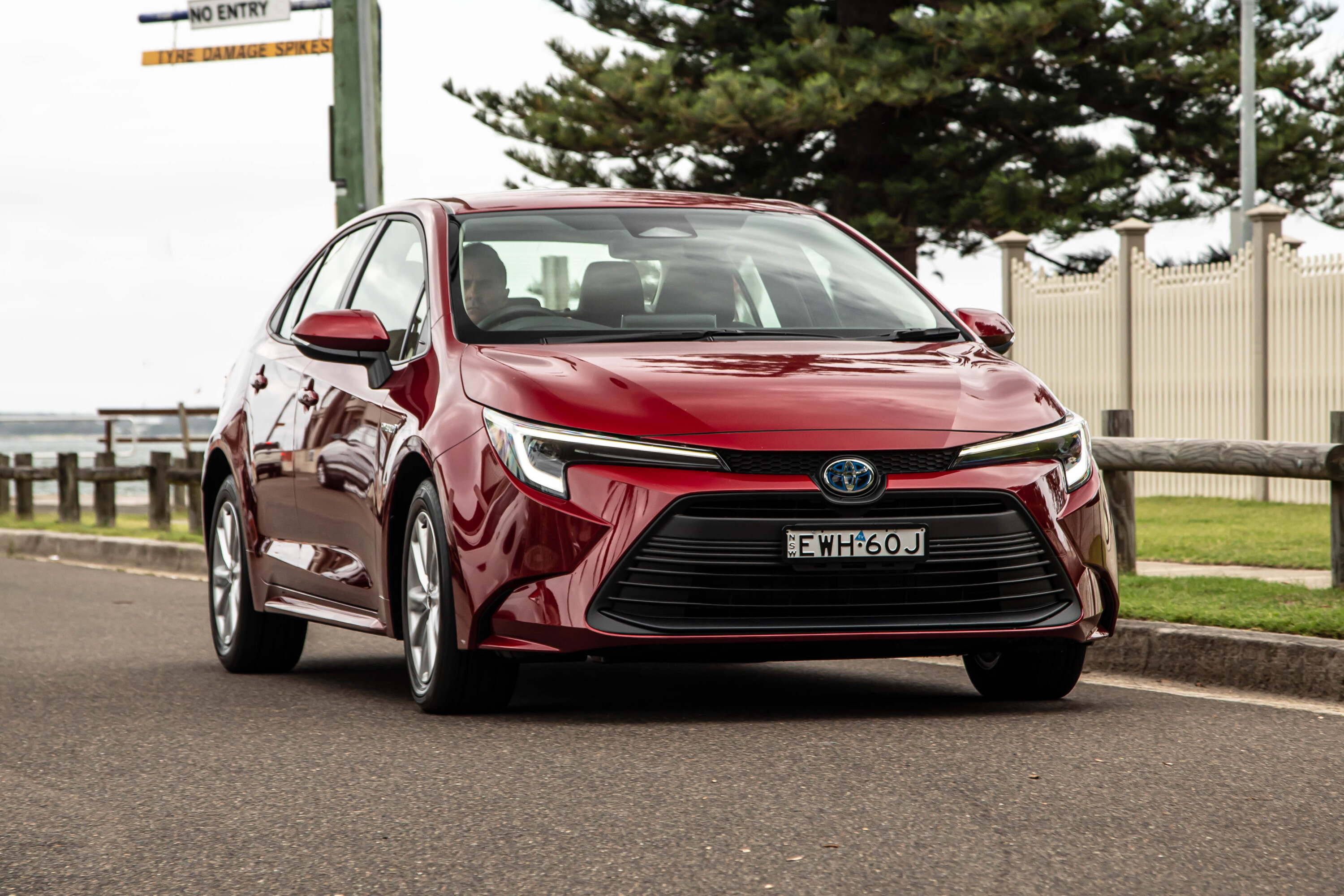
“In order to maintain battery health and charge, Toyota recommends continuous driving for at least 30 minutes every two weeks. In colder temperatures, this may need to be extended,” a spokesperson advised Wheels.
“In any vehicle, the 12-volt battery can run low when it is used only for very short or infrequent trips, or through extended use of electrical features such as lights or multimedia systems while the vehicle is not running.”
It also highlighted other potential 12-volt drainage.
“Customers should also ensure any accessories are switched off when the vehicle is not running, minimise use of high-current accessories such as extra lights, dash-cams or GPS trackers, and have their battery inspected regularly by their local Toyota dealer.”
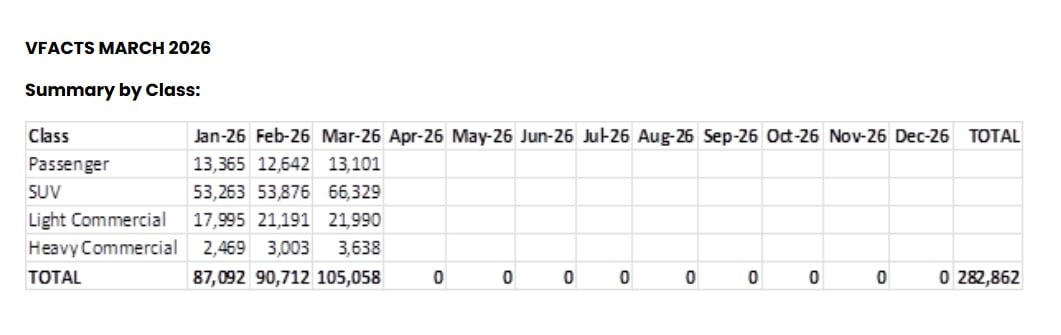
Electric vehicle sales reached a record share of the Australian new car market in March 2026, according to the latest VFACTS data, as consumer interest surged despite an overall decline in total vehicle sales.
A total of 15,839 battery electric vehicles (BEVs) were sold during the month, representing 14.6 per cent of all new vehicles delivered. This marks a significant increase from March 2025, when EVs accounted for just 7.5 per cent of total sales, effectively doubling their market share year-on-year.
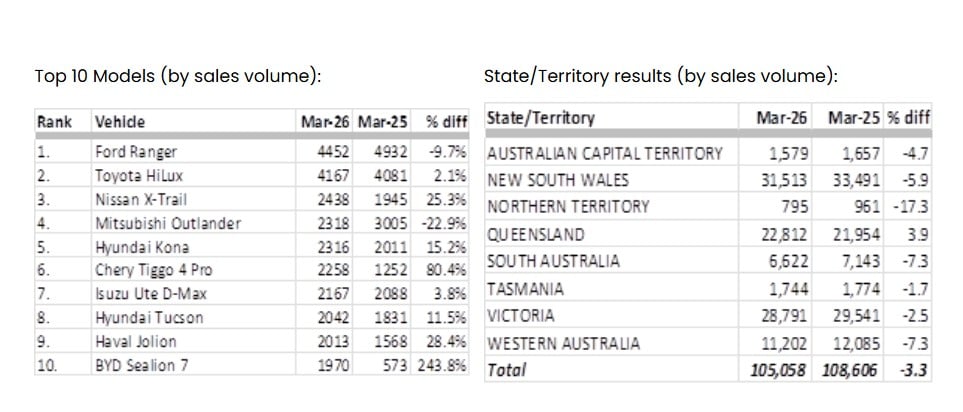
The broader market, however, softened slightly. Overall vehicle sales in March totalled 105,058 units, down 3.3 per cent compared to the same period last year.
Federal Chamber of Automotive Industries (FCAI) chief executive Tony Weber said the figures highlight strong growth in EV demand but warned against interpreting the surge as a long-term trend.
“It is too early to determine whether this represents a structural shift in the market,” Mr Weber said. “More consumers are considering EVs due to the disruption to fuel supply caused by conflict in the Middle East, along with the review into the fringe benefits tax concession for EVs.”
Mr Weber added that while the industry would welcome sustained growth in EV adoption, several external factors may be temporarily influencing buyer behaviour.
“The automotive industry would welcome a sustained shift to EVs, given its substantial investment in bringing more than 100 EV models to the Australian market and the industry’s efforts to meet ambitious NVES targets,” he said.
He also emphasised the importance of infrastructure development to support continued growth.
“A long-term shift to EVs will require Australian governments to sharpen their focus on public charging infrastructure, particularly in regional areas and locations where home charging is not practical,” Mr Weber said.
“Ensuring infrastructure keeps pace with consumer demand will be critical to enabling sustainable growth in EV adoption beyond short-term influences.”
In the overall market, Toyota retained its position as the top-selling brand with 16,574 units, followed by Kia (7,320), BYD (7,217), Mazda (7,156) and Ford (7,149).
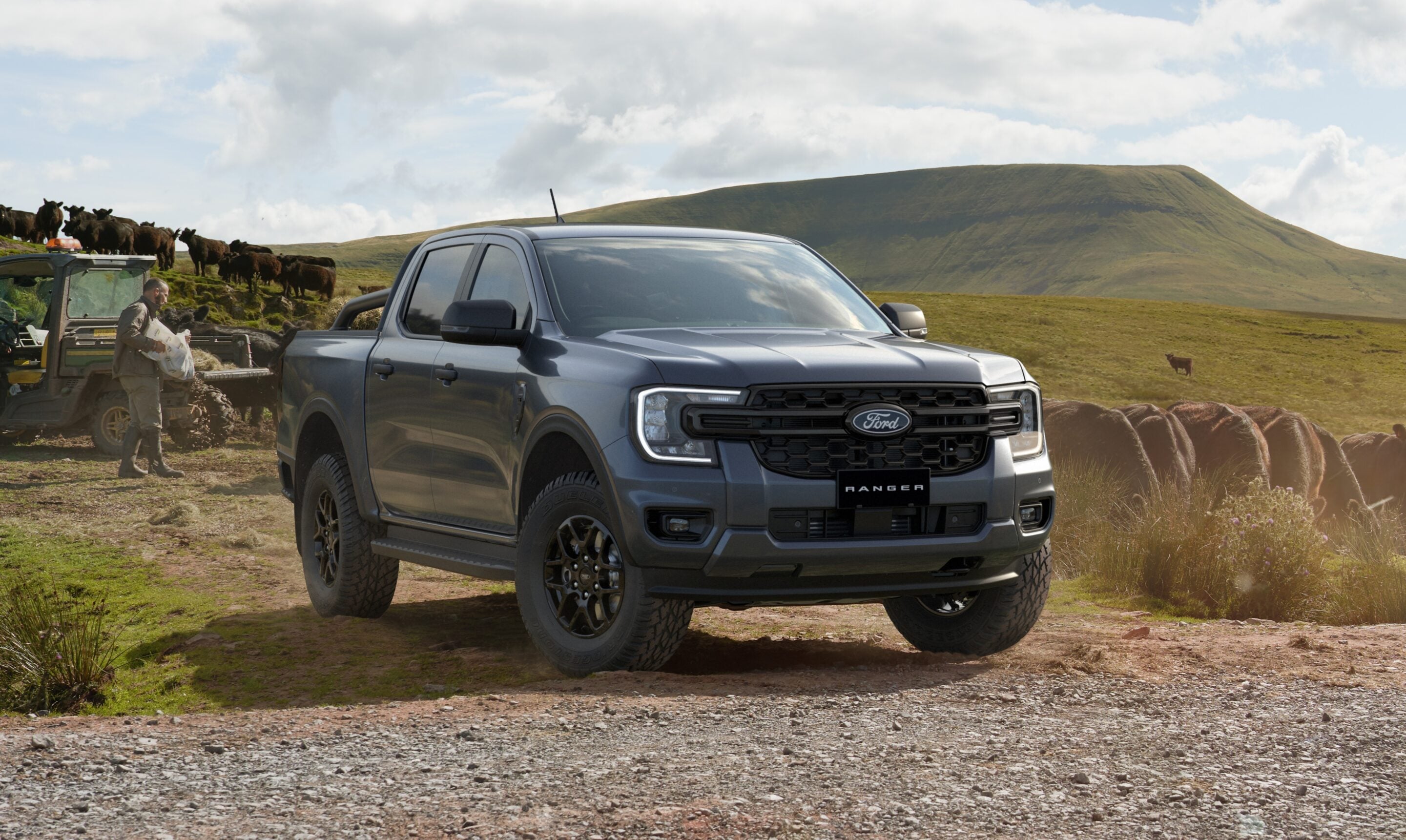
Australia’s best-selling models for March were the Ford Ranger (4,452), Toyota HiLux (4,167), Nissan X-Trail (2,438), Mitsubishi Outlander (2,318) and Hyundai Kona (2,316).
Additional data from the Electric Vehicle Council further highlights the scale of demand, with Tesla leading EV sales in March with 3,485 deliveries, taking its year-to-date total to 7,260. Polestar recorded 160 sales for the month, reaching 465 units so far in 2026.
First published in the February 1973 issue of Wheels magazine, Australia’s best car mag since 1953. Subscribe here and gain access to 12 issues for $109 plus online access to every Wheels issue since 1953.
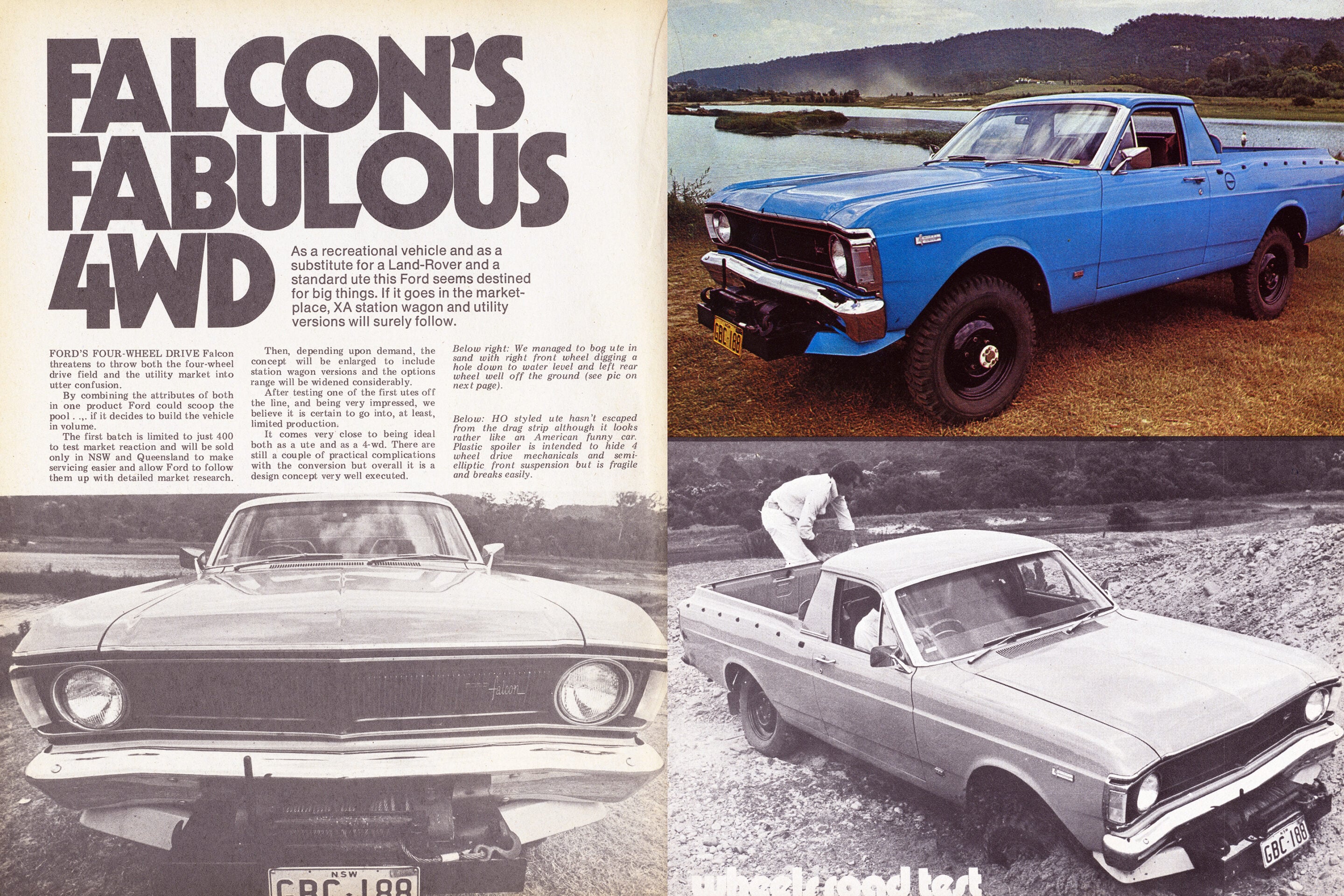
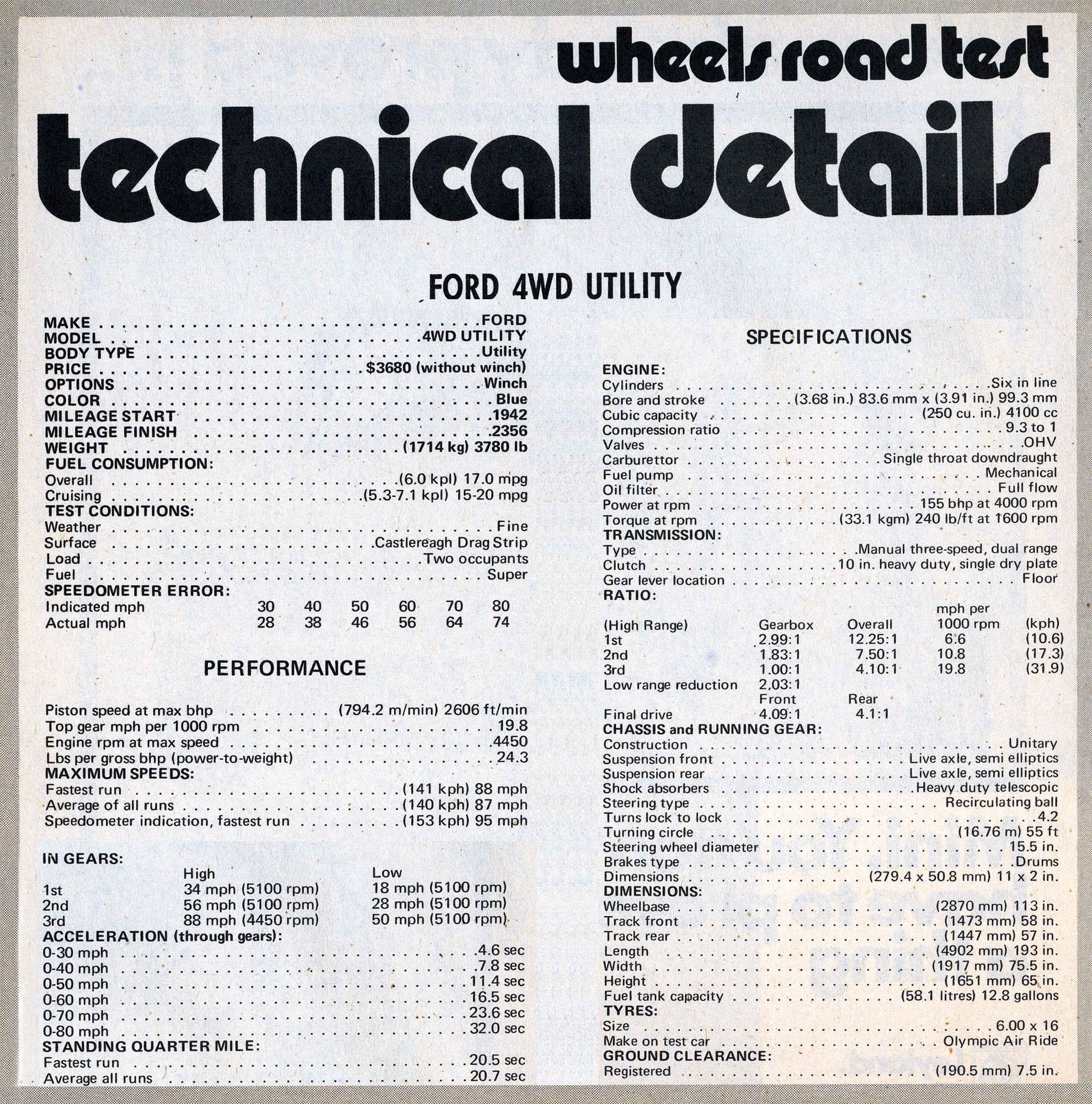
As a recreational vehicle and as a substitute for a Land Rover and a standard ute this Ford seems destined for big things. If it goes in the marketplace, XA station wagon and utility versions will surely follow.
Ford’s four-wheel drive Falcon threatens to throw both the four-wheel drive field and the utility market into utter confusion. By combining the attributes of both into one product Ford could scoop the pool… if it decides to build the vehicle in volume.
The first batch is limited to just 400 to test market reaction and will be sold only in NSW and Queensland to make servicing easier and allow Ford to follow them up with detailed market research. Then, depending upon demand, the concept will be enlarged to include station wagon versions and the options range will be widened considerably.
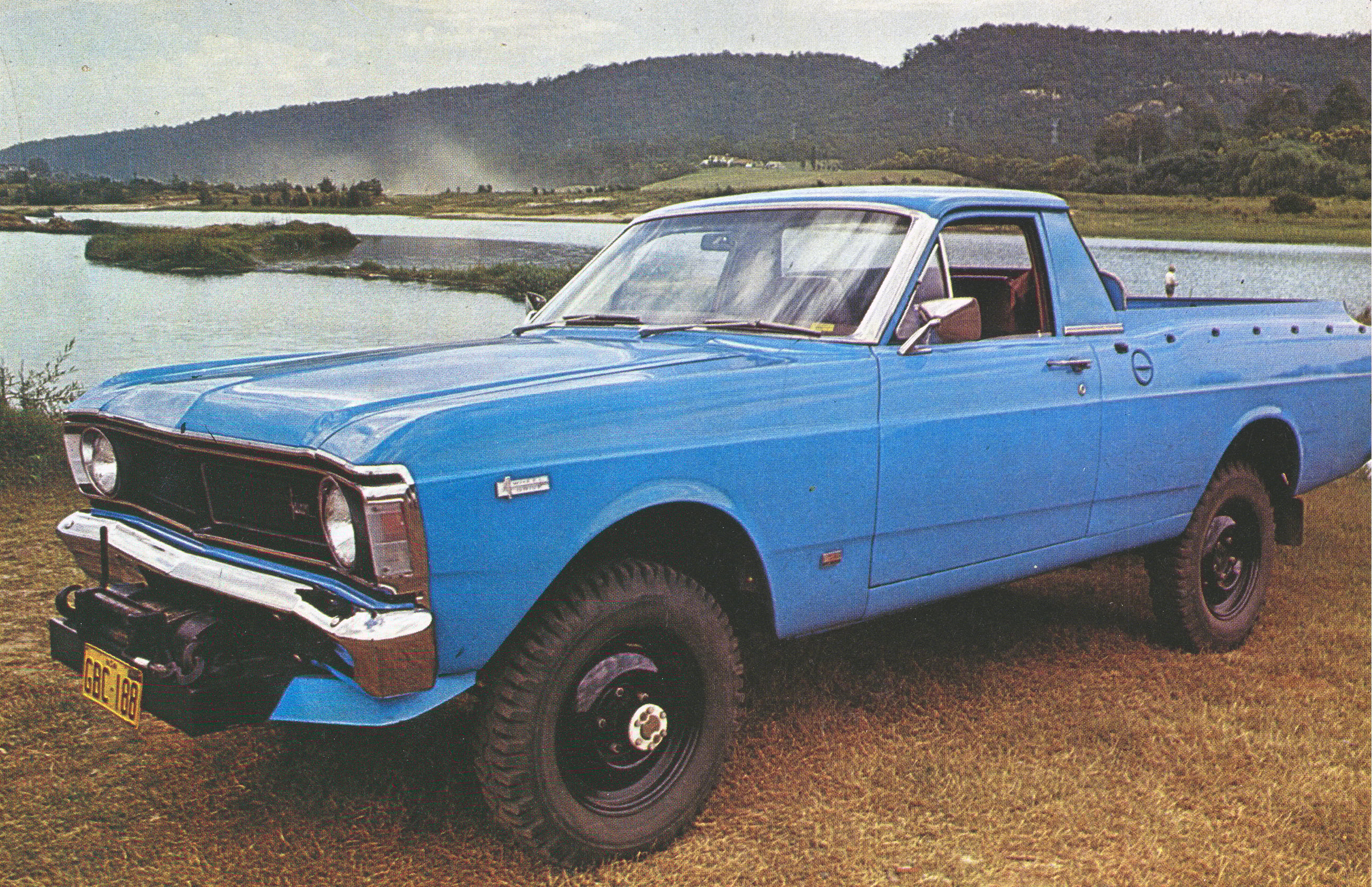
After testing one of the first utes off the line, and being very impressed, we believe it is certain to go into, at least, limited production.
It comes very close to being ideal both as a ute and as a 4WD. There are still a couple of practical complications with the conversion but overall it is a design concept very well executed.
The initial batch of 400 are all 250 ClD powered models in the old XY utility body. Ford struck durability problems early on with the adaption of Jeep 4WD bits and this delayed the program at least 12 months. However it was decided that it was better to continue with the old body rather than switch to the new, and much bigger, XA utility. Any future Falcon 4WDs will be in the new body.
The first thing you notice about the ute is its height, it seems much more than 65 inches. The ground clearance is quoted as 7.5 inches under the front axle and 8.0 inches under the rear axle but again it appears to be much more, probably because the body is several inches higher than the axles.
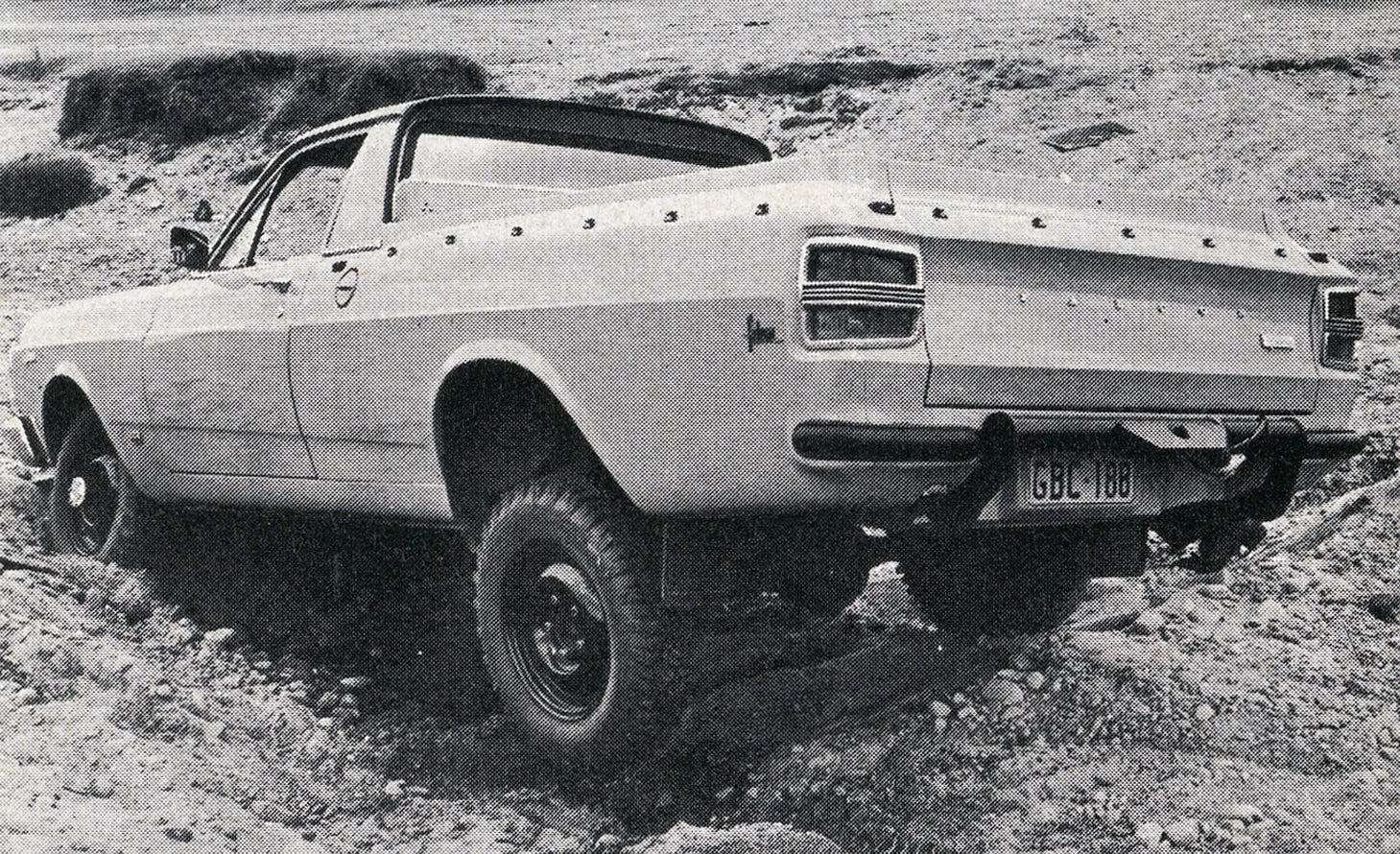
The big six doesn’t breathe very well in standard form so the useful maximum speeds are 30 and 50 mph for first and second in the three-speed all synchromesh gearbox.
Steering is a little heavy at parking speeds but lightens up on the road although it does become vague and sloppy because of the steering damper fitted to reduce any shocks passed up through the steering wheel in very rough country.
The big problem, however, is a 55-feet turning circle which makes turning in a confined space difficult and time consuming. With 4.2 turns lock-to-lock the steering is indirect for the road, but then it needs to be to allow the driver to negotiate ploughed paddocks and rocky rivers without the wheel spinning in his hands as it strikes obstacles.
Ford research has revealed that 4WDs spend only 10 per cent of their time with the front wheels powered; for the other 90 per cent the Falcon, apart from the turning circle, might well be a normal ute. The cruising speed is an easy 75 mph while the top speed is almost 90 mph. Once you get used to the hum from the tyres the 4WD is remarkably quiet in top gear and handles smoothly with roll oversteer under full power. We expected strong understeer and were surprised by the car’s normally neutral stance through the corners. All that applies on dry roads.
When it rains you need a steady throttle and very deliberate steering wheel actions to avoid getting the tail out in wild slides.
Almost uncontrolled wheelspin from a standing start and the ability to spin the wheels freely in second gear are other problems inflicted by the use of winter tread tyres.
However, if the Falcon is to make the most of its 4WD layout these tyres are essential. Experience with standard tyres on 4WD vehicles has shown that they lose much of their effectiveness in adverse conditions.
The only answer would be to have two sets of wheels, one with the all purpose tyres for 4WD work and the other with normal tyres for any long distance running on sealed roads. You can run the Falcon in 4WD on the open road – there is no loss in performance – but tyre wear at the front increases dramatically and, although traction is improved, wet roads still show up the lack of adhesion in the tyres.
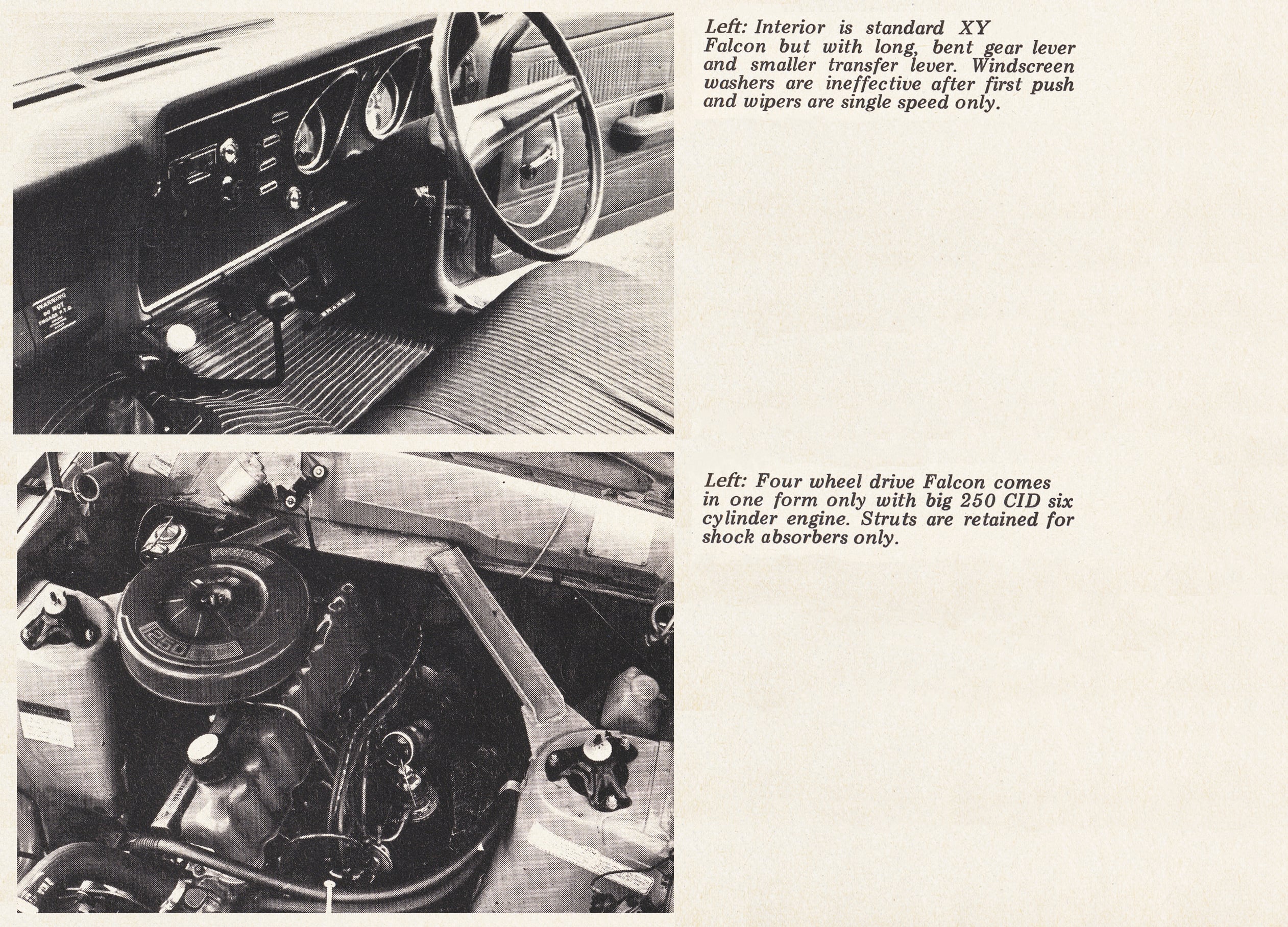
Switching from two- to four-wheel drive requires the driver to turn the front hubs with a key to engage the front diff. A transfer case then gives the driver the choice of two-wheel drive with the front diff engaged but not driving, four-wheel drive high ratio and four-wheel drive low ratio. Low ratio is not available in two-wheel drive.
With low range 4WD engaged the gearing is effectively twice as low as in the high range. First runs out to a maximum of 18 mph, second to 29 mph and maximum speed, together with various symphonic noises, is about 55 mph.
With the low gearing comes all the pulling power of four-wheel drive. We drove the ute through water crossings, sandy creek beds, slippery grassy surfaces and loose gravel and managed to bog it only when we struck water six inches below sand and with one of the rear wheels almost a foot off the ground. Half-an-hour spent digging with bare hands had the Falcon out. We might add that the same spot bogged a Nissan Patrol and Range Rover some months ago.
Ford claims the Falcon can climb a 45 per cent gradient; we tested it up a 35 per cent gradient and it pulled steadily to the top so we have no reason to doubt the claim.
Braking is by 11-inch drums all round. They work effectively in normal driving with pedal pressures just a bit higher than with a good disc set-up. However, after driving the ute through water, pressures increased, the car began to pull from side to side and there was a real lack of stopping power.
Gentle application of the pedal, while still moving, heated the brakes and dissipated the water after a couple of miles. Considering the utes added weight of 3620 lb over the standard Falcon ute – partly from an additional cross member for greater strength and rigidity and also because of the winch (a $500 option which adds 160 lb) and the added drive train – the performance is good. It runs to 60 mph in 16.5 seconds and over the standing quarter mile in 20.5 seconds. Two-wheel drive produces plenty of wheelspin under hard acceleration but four wheel drive cuts this out completely and gives exactly the same time.
Flexibility is good but not quite up to the standard of the Nissan and Toyota four-wheel drives. Top gear pulls away from 27 mph smoothly, below this it needs a change down to second to get any performance.
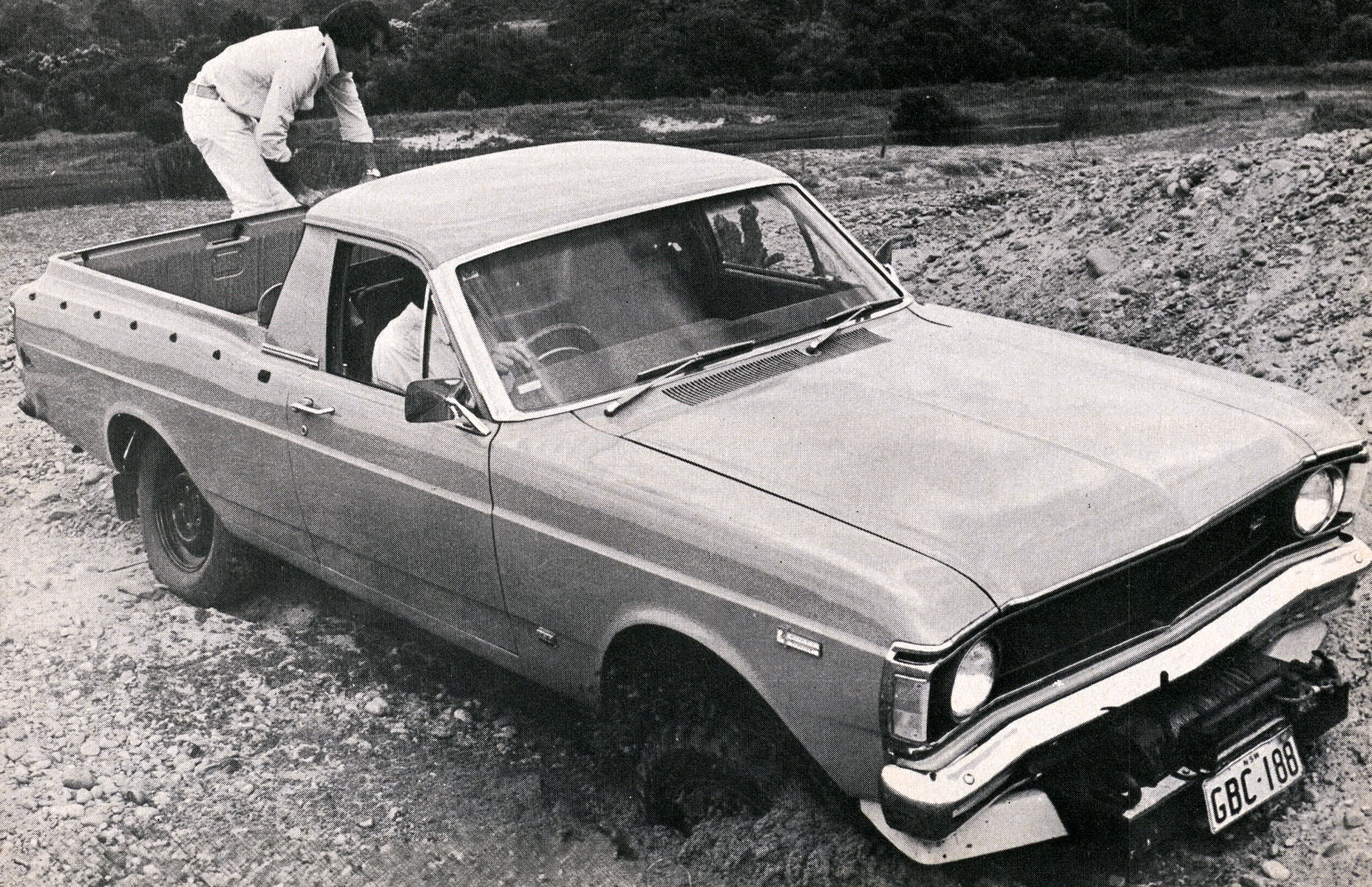
A payload of 1380 lb (or 1400 lb with the winch) is about average for a ute. The load area measures 67.5 long x 59 wide (44.5 inches between the wheel arches) and 16.5 inches deep.
If the interest shown in our test vehicle is typical then Ford will be building 4WDs for many years. With the booming recreational market plus the rural field, in which the Falcon can easily fill the role of a ute and 4WD, it seems certain of success. The price of $3680 appears high at first glance but is excellent value compared with the other 4WDs on the market.
An ambitious plan to build an eFuels plant in Australia, with Porsche as a key customer, has effectively stalled. The green fuel factory was originally predicted to be operating in Tasmania in the second half of 2025 but it has yet to progress beyond the planning stage.
Even the plan itself has changed, with the site moved from a location close to Hobart to a derelict factory near Burnie, as HIF Global – claimed to be the world’s leading eFuels company – pivots on its Australian plan.
HIF Global is already operating a pilot plant in Chile and part of its production output is used by Porsche in its motorsport program. But Porsche has gone quiet on eFuels as it battles the billion-dollar losses from its unsuccessful drive towards an all-electric future.
“Our focus remains on delivering a competitive project in Burnie,” a spokesperson for HIF Global, Ian Lawrence, told WhichCar by Wheels. “Last year we announced the relocation of the project to Burnie’s former Pulp Mill site. We are continuing to progress through engineering and environmental permitting.”
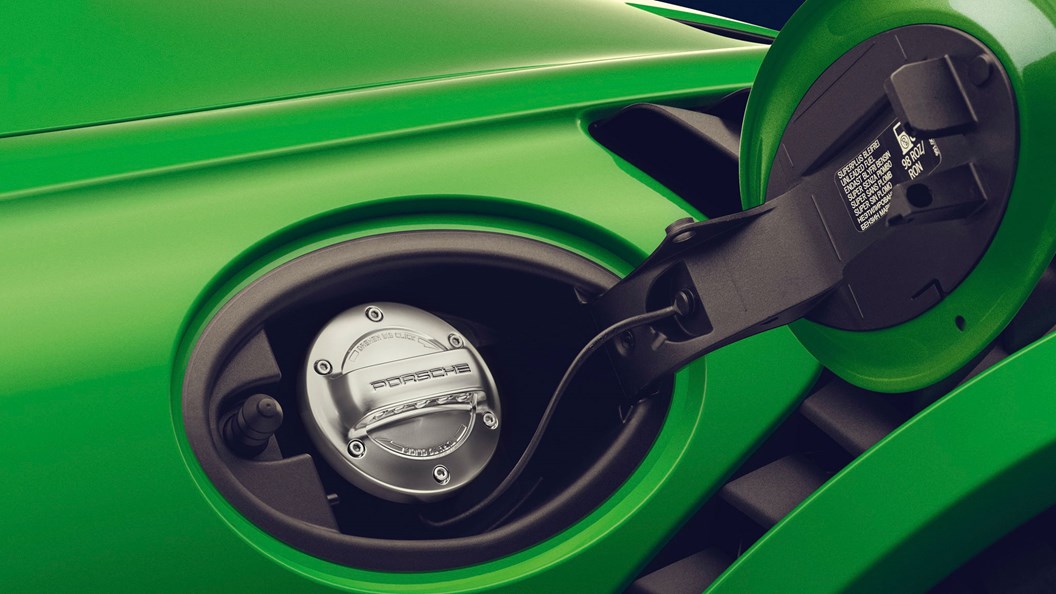
Porsche, which once touted its eFuel commitment with the bold promise, ‘We can save the world’, is shifting the focus to HIF. “Porsche is neither a fuel producer nor a project developer for production plants. However, we continue to see eFuels as a meaningful complement,” the manager of eFuels at Porsche in Germany, Fabian Ehrat, told WhichCar by Wheels.
“We would welcome an industry ramp-up, as well as supportive regulatory frameworks from policymakers. Responsibility for this rests with HIF Global, in which Porsche is an investor.”
The Tasmanian plan is now focussed on a former paper mill site in South Burnie, in the north of Tasmania. It is predicted to eventually produce more than 200,000 tonnes of e-Methanol a year, as well as creating several hundreds construction jobs before a permanent workforce of around 200 people.
HIF Global said operations could commence by 2030 for a relatively simple production process. Renewable electricity is used to power electrolysers that separate hydrogen from water. The hydrogen is then combined with recycled carbon dioxide from plantation residues to create e-Methanol, a synthetic fuel that can be used in shipping or converted into e-Fuels for aviation, cars, and trucks.
Apart from Chile and Tasmania, HIF Global is also working on eFuel sites in the USA, Uruguay and Brazil. “The company remains committed to e-Fuels and continues to advance a portfolio of e-Fuel projects,” said Lawrence. “Switching to a site closer to Burnie’s deepwater port enables deployment of significantly larger modules, which reduces construction time. Our efforts to reduce costs, coupled with Commonwealth Government measures supporting the establishment of new low carbon industry in Australia, means that Tasmania remains an attractive location.”

Porsche, too, believes there is future potential in eFuels. “The goal is to show that renewable, market-compliant, high-performance, low-emission fuels can help reduce emissions from combustion engines. Porsche works closely with industry and academic partners on their development and began evaluating the potential of electricity-based renewable fuels about 10 years ago,” said Ehrat.
“Porsche is currently the exclusive off‑taker of the fuel produced at the (HIF Global) pilot plant in Chile. The goal, of course, is to accelerate access for additional users in order to enhance the learning process, increase demand, and highlight the versatility of eFuels as a genuine solution for decarbonising mobility –not only in the automotive sector, but also in shipping and aviation.
For this reason, it will be particularly important to attract additional customers as the project moves toward industrialisation.”
But Porsche says there are still significant headwinds for eFuels.
“Regulation needs to create the right framework to give investors long-term planning and investment security, which is currently lacking. In addition, the expansion of eFuels is being delayed by several challenging external conditions, including difficulties in obtaining local permits, an uncertain political and regulatory environment, ongoing geopolitical tensions, and limited international investment readiness. Together, these factors significantly slow progress and hinder broader deployment,” said Ehrat.
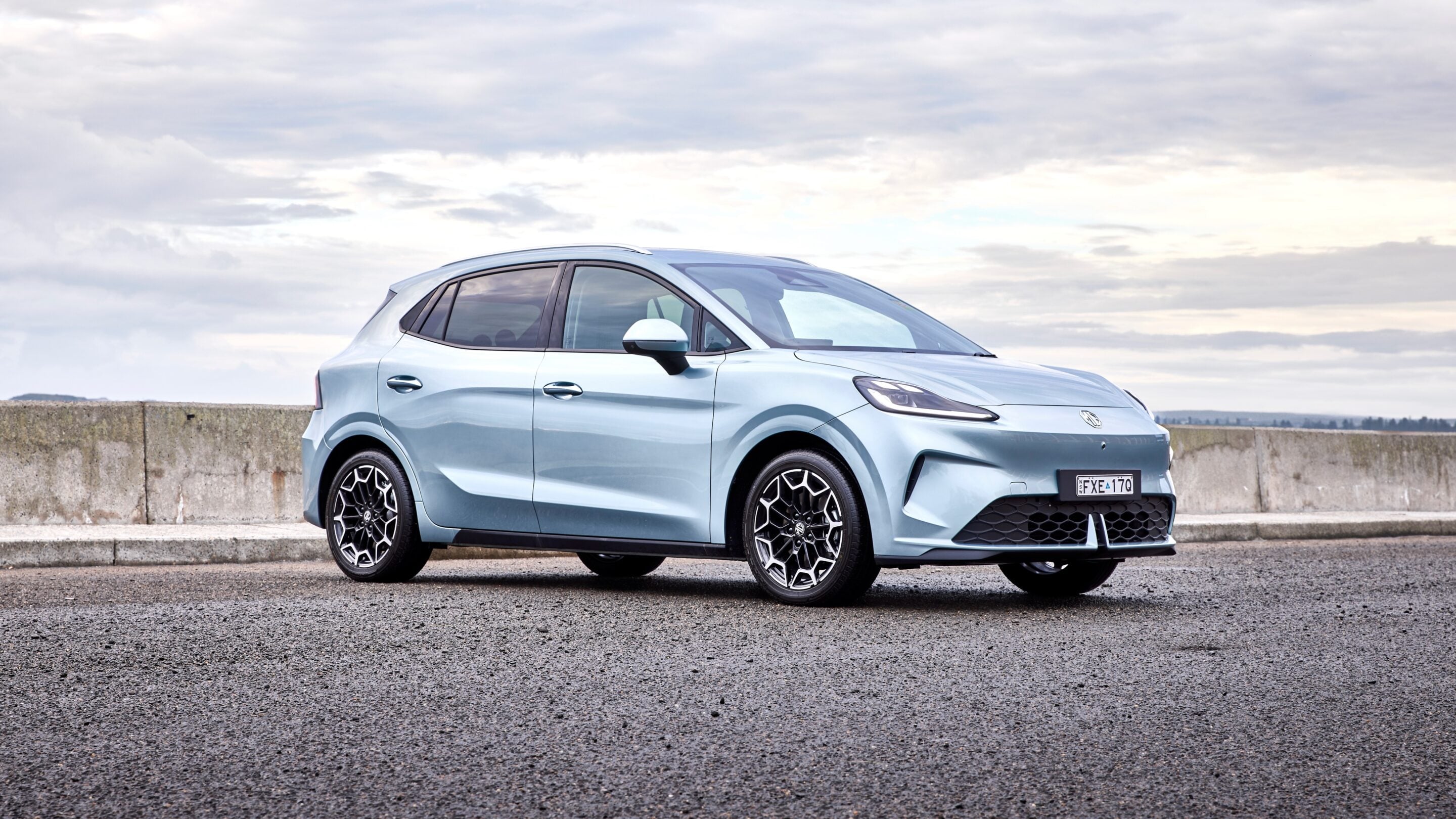
The new 2026 MG 4 Urban is a sharply priced small car – starting from $31,990 drive away for the entry-grade model, making it the second most affordable new electric vehicle on the market, trailing only the BYD Atto 1, a significantly smaller city-focused hatch. And in this small car segment, the fight is a tough one – electric or otherwise.
One way you challenge the pricing ask – according to MG – is simplify the platform. As such – and as we’ve seen previously even with a globally-popular hatch like the Volkswagen Golf – MG has opted for a torsion beam rear suspension system, which the manufacturer says is simple (and keeps costs down) but also effective.
You’re no doubt familiar with the existing MG 4 small car which has been on sale since 2023, but the new Urban has a roomier cabin, with an sharper focus on comfort and amenity. It is, according to MG, a targeted value proposition, directly responding to Australians who want a more cost-effective EV in that crucial size segment (small car) traditionally occupied by favourites like Toyota Corolla, Mazda 3, Kia Cerato (now K4) and Hyundai i30.
How much does the MG 4 Urban cost to buy?
Here’s the good news, and the central theme of the new MG 4 Urban, according to MG. This EV has been unashamedly designed, engineered, priced and executed to appeal to a budget-conscious buyer, and to take the fight to similar price-point internal combustion vehicles.
As such, the 43kWh MG4 is $31,990 drive away from launch, while the 54kWh model is $34,990 drive away, both in Essence trim grade. That means the only decision you’ll have to make is the battery size that suits your needs. Scroll down the page for the standard features list, but the MG 4 Urban doesn’t feel like it’s been built down to a price, which is always going to be the issue as manufacturers attempt to get EVs to a more palatable starting price for buyers.
How far can the MG4 Urban travel on a charge?
Urban will be available from launch with two different battery packs as mentioned above – 43kWh and 54kWh – with the claimed driving ranges 316km and 405km respectively.
There’s up to 150kW DC fast charging capability, meaning you can access fast charging speed on the run if the charger will facilitate that. Best case scenario, then, and you’ll get the Urban’s battery from 10 to 80 percent in as little as 30 minutes.
On test around town, the 54kWh battery model that we drove indicated that it would get close to the claim in the real world, such is the usefulness of the regeneration delivered by the system. As we know, on the highway, the live energy usage will climb somewhat, but we’ll test that more specifically post launch.
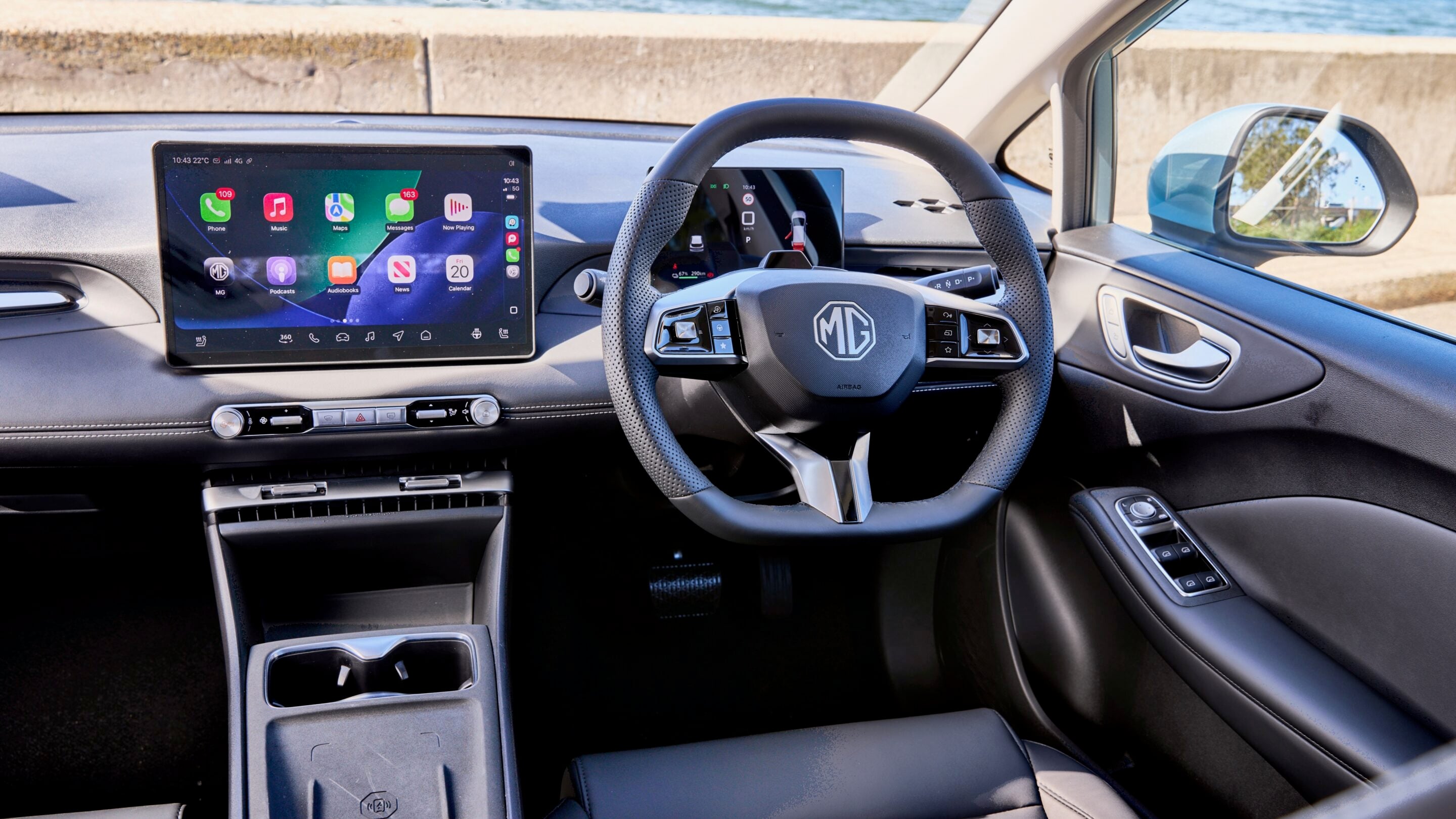
What is the MG 4 Urban like to drive?
Our launch drive extends to around town urban running with no highway running as yet, but think of the target market for this car as being similar to the buyers of vehicles like Volkswagen Polo, Kia Picanto, Mazda 2 and other city-focused small hatches – with a catch. The MG 4 Urban is sized a segment larger than those affordable petrol alternatives.
Urban rides on MG’s new E3 platform featuring advanced ‘cell to body’ technology, which delivers high rigidity, reduced weight, more cabin space, and prioritises packaging, space and storage. Critical here is the enhanced cabin space, but also the lower centre of gravity.
There’s also an integrated battery protection beam to protect the battery in the event of an impact. All up, Urban has a 55:45 weight distribution, which means it feels quite balanced on the road, with a compact, 10.5m turning circle.
In that light, over the typical patchwork network of inner Sydney roads, the Urban does a decent job of ironing out the worst the city can toss at it. The torsion beam rear suspension certainly doesn’t detract from the driving experience, and there’s a sense of calm inside the cabin, even over coarse concrete sections that ensure it’s a comfortable place to spend your commuting time.
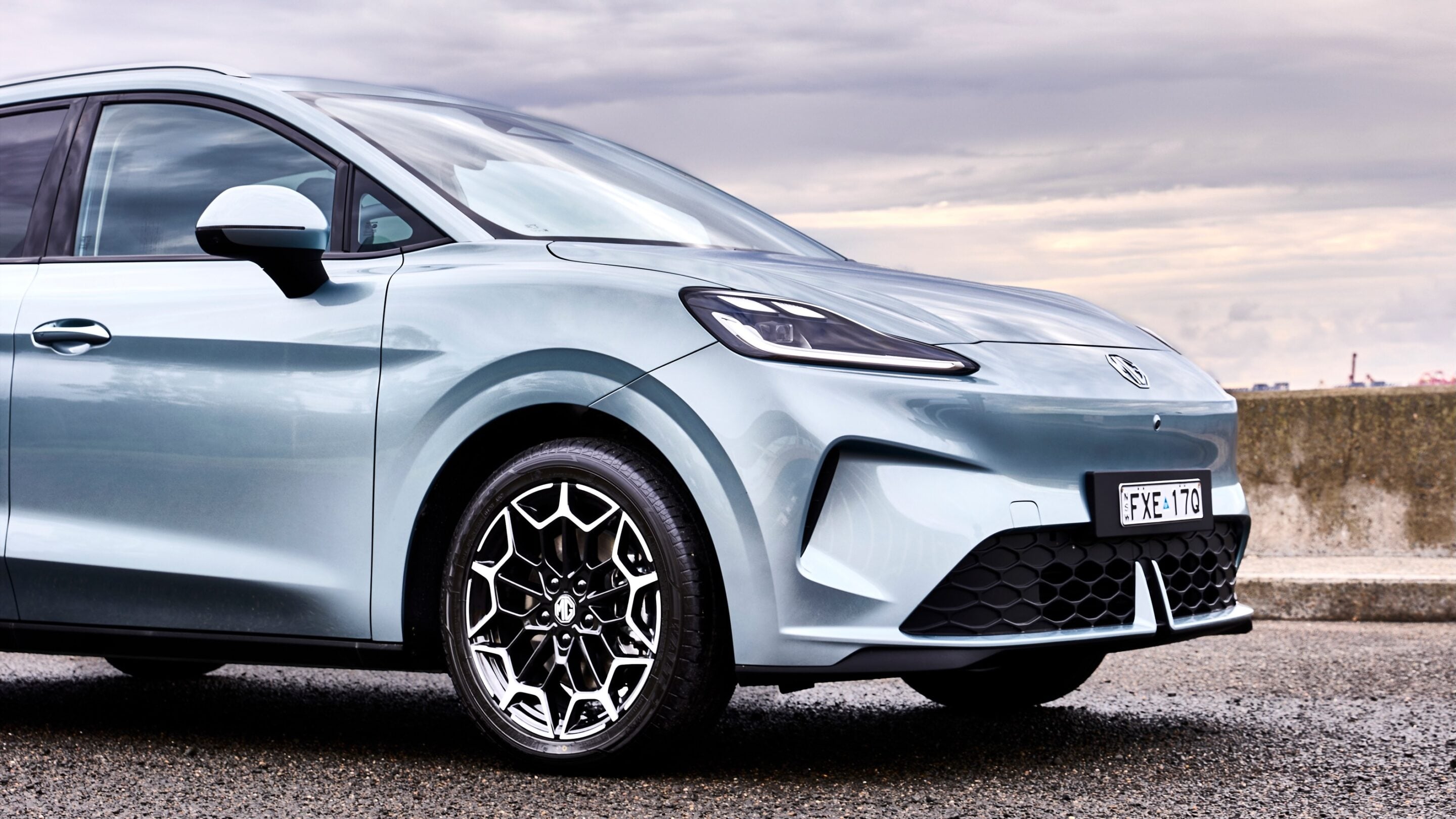
The entry-grade Essence 43 makes 110kW and 250Nm driven through the front wheels with a single electric motor, while the Essence 54 makes slightly more power from the same drivetrain – 118kW. MG’s new 6-in-1 electric drive system is in effect, which is the new FWD architecture that changes the game by putting multiple different components into a single compact unit.
I like the fact that this EV isn’t about outright pace, rather it’s a sensible take on what the average buyer will need it to do day-to-day. The 118kW model feels more than capable in the daily grind, never feeling underpowered, but certainly not alarmingly fast like some EVs are. The way we see it, that’s no bad thing. The simple fact remains that you don’t need anywhere near as much power as most EVs have, and it’s refreshing to drive one that does the things we expect of a new car with ease.
MG claims some level of suspension assessment for local conditions, and exactly how deep that goes, we don’t know, but it rides nicely with large bumps not crashing through the cabin. You’ll quickly get used to the one-pedal driving capability, and the turning circle is excellent for city work, too.
How practical is the MG 4 Urban?
In simple terms, one dedicated packaging unit contains the motor control unit, the power distribution unit, the on-board charger, the DC to DC charger, the motor and the reducer. Thus, the use of the ‘6 in 1’ terminology from MG, and a large part of the reason that the cabin especially, is such an efficient use of available space.
According to MG, the design reduces overall system weight, which in turn adds to passenger and luggage space by as much as 20 per cent compared with the MG 4 already on sale. It means that in any of the four main seats, you feel like you’re sitting in a vehicle that is larger than it is. There’s space in the second row for a lanky six-foot-three adult, to sit behind an adult of the same height.
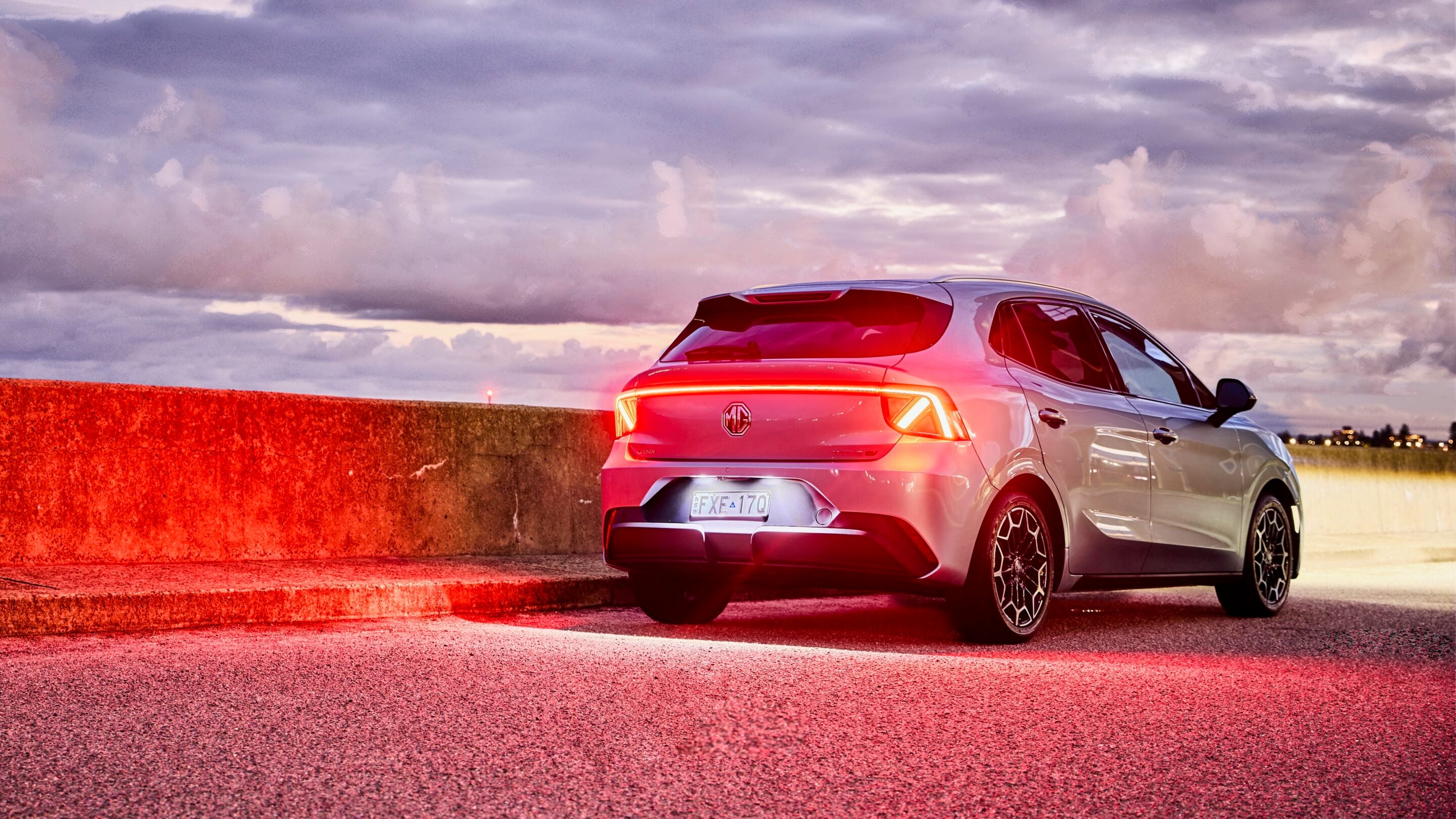
MG4 measures in at 4395mm long, 1842mm wide, and 1549mm tall with a 2750mm wheelbase, making it a bigger car by all metrics than the current MG4. Using perennial favourite Corolla (hatchback) as a comparison – 4375mm/1790mm/1460mm/2640mm – you’d expect that the 20mm increase in overall length to be barely noticeable, and you’d be right. However, the 90mm extra length in the wheelbase makes for a significantly roomier cabin, especially in the second row. ZR Corolla, which doesn’t have a spacer-saver spare, gets 333 litres in the boot, while the MG 4 Urban can accommodate 382 litres. It is, in other words, a very useful and space-efficient, city car.
What warranty covers the MG 4 Urban?
MG covers its vehicles with a seven-year/unlimited kilometre warranty, which is extendable out to 10 years/250,000km if you service the Urban at authorised MG service centres.
Servicing is required every 12 months or 25,000km, whichever comes first. Capped price servicing covers the first five years and costs $149, $286, $310, $472 and $149 respectively over that timeframe, for a total of $1366.
Should I buy the MG 4 Urban?
MG has unashamedly aimed the new MG 4 Urban at – surprise, surprise – urban buyers who do what most of us do, which is live and drive in the city. The good news is, it hits the target square in the bullseye.
Without the focus on pace, power and equipment the city buyer doesn’t need, the MG 4 Urban is exactly what the city buyer does need. Further, the range will take most buyers far enough to cover a road trip without range anxiety eating into the enjoyment.
The pricing is sharp, making it an even more attractive package, and if you’re in the market for an electric vehicle in the small segment, the MG 4 Urban should absolutely be on the shopping list. Australians have been asking manufactures to rationalise the price of electric vehicles for a while now, and the MG 4 Urban does exactly that.
MG 4 Urban standard specifications:
- 17-inch alloy wheels
- roof rails
- dusk-sensing automatic LED exterior lighting
- heated/auto-folding mirrors
- keyless entry and start
- synthetic leather upholstery
- heated front seats
- single-zone automatic climate control with rear air vents
- 12.8-inch touchscreen with live services
- wireless Apple CarPlay and Android Auto
- three USB-C charging ports
- seven airbags
- autonomous emergency braking
- adaptive cruise control
- lane keeping assistance
- driver attention monitoring
- blind-spot monitoring
- rear cross-traffic alert
- auto high beam
- 360-degree camera.
Specs
| Model | MG4 EV Urban Essence |
|---|---|
| Price | From $31,990 plus on-road costs |
| Motor | Front-mounted permanent magnet synchronous |
| Peak power | 110kW (43kWh), 118kW (54kWh) |
| Peak torque | 250Nm |
| 0-100km/h | 9.0 seconds (43kWh), 8.7 seconds (54kWh) |
| Top speed | 160km/h |
| Transmission | Single-speed |
| Battery | 43kWh or 54kW LFP |
| WLTP range | 316km (43kWh), 405km (54kWh) |
| Peak DC charge speed | 150kW |
| 10% to 80% charge time | 28 minutes (43kWh), 30 minutes (54kWh) |
| Dimensions (L/W/H/WB) | 4395/1842/1549/2750mm |
| Boot capacity | 382 litres (rear seats up), 1266 litres (rear seats folded) + 98L under floor storage |
| Tare mass | 1460kg (43kW), 1520kg (54kWh) |
| Warranty | 7-year/unlimited km (extendable up to 10 years/250,000km with dealer servicing) |
| On sale | Now |
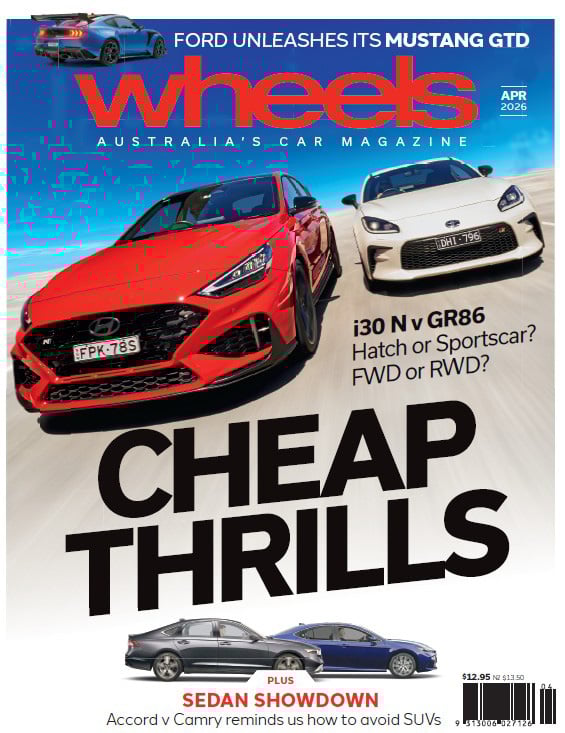
The April 2026 issue covers all sectors of the Australian new-car market, from electric SUVs, budget hatches, fuel-efficient sedans and some truly jawdropping pieces of machinery.
On the cover, Toyota’s GR86 GTS and Hyundai’s i30 N Premium take opposing approaches – rear-drive coupe versus turbocharged hot hatch – yet arrive at a similar place of delivering accessible driving enjoyment.
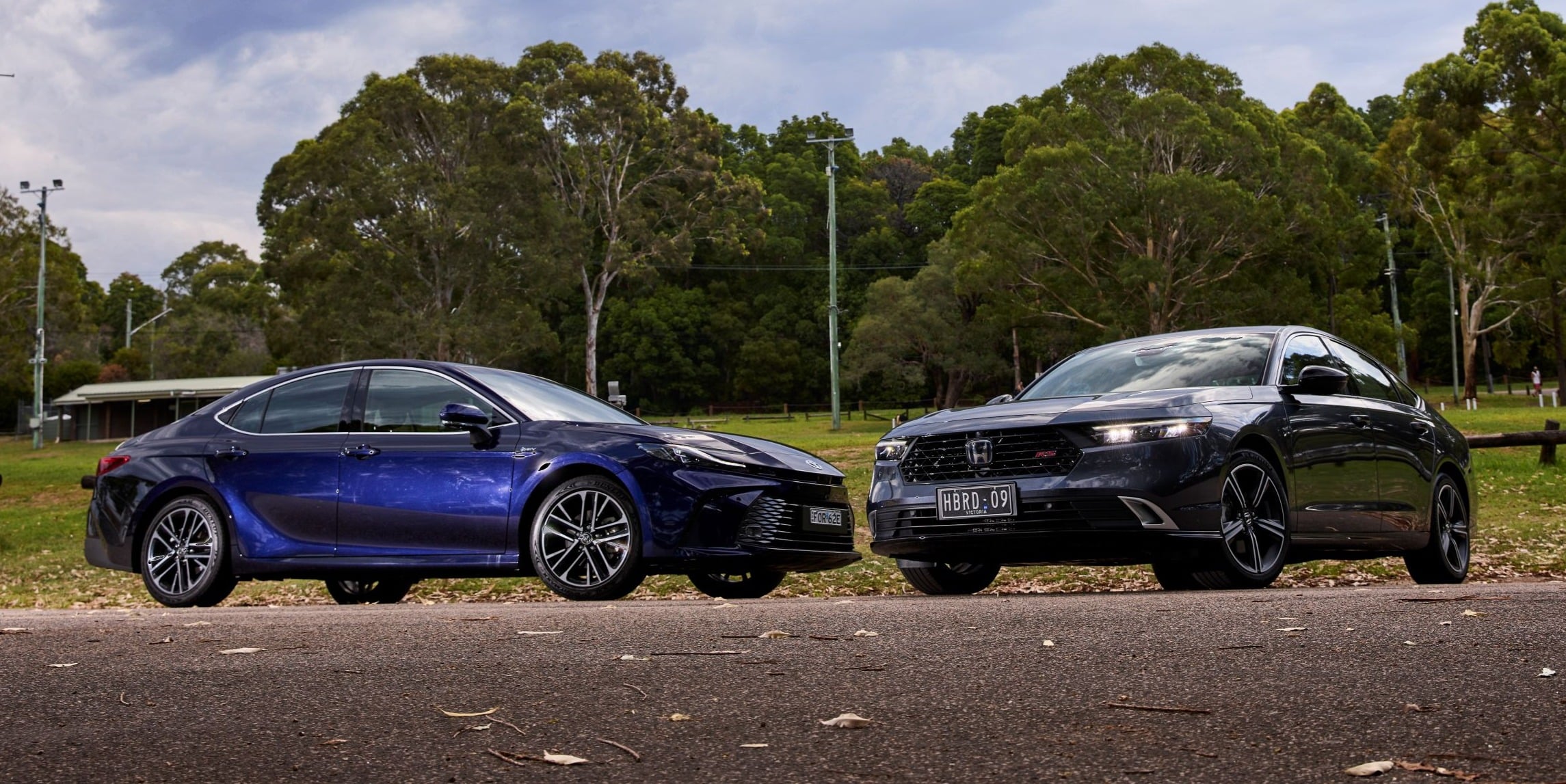
We bring together two of the country’s most established hybrid sedans, the Toyota Camry and Honda Accord (below), to assess how they continue to deliver comfort, efficiency and driver satisfaction in a market increasingly dominated by high-riding alternatives.
At the other end of the spectrum, Ford’s Mustang GTD explores just how far a road car can lean towards motorsport. With supercharged V8 power and a heavy focus on track capability, it represents a very different interpretation of performance.
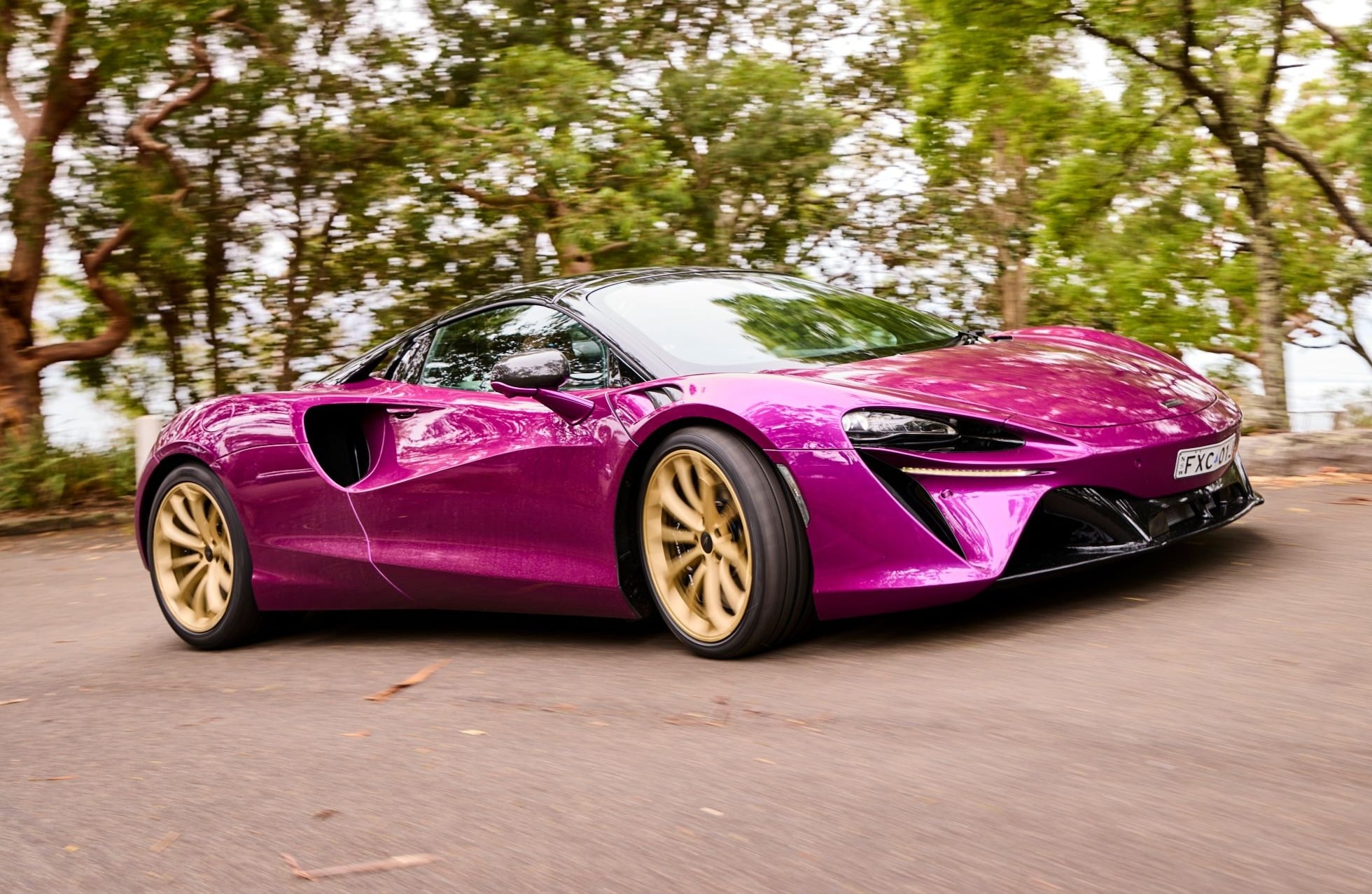
For something more exotic, the McLaren Artura Spider (below) combines hybrid performance with open-top driving, while our Modern Classic revisits the Ferrari Testarossa (see gallery), a car that helped redefine the supercar template.
Our First Drives section covers a broad mix of new arrivals, from the focused BMW M2 CS to the increasingly influential presence of Chinese brands with the Denza B8 and BYD Sealion 8. There’s also a look at Audi’s plug-in hybrid RS5 Avant, Lexus’s GX550 Overtrail and Porsche’s Manthey-enhanced 911 GT3 RS.
Elsewhere, Michael Stahl reflects in a personal tribute, Paul Gover considers the gradual loss of a familiar driving skill, the Buyer’s Guide continues to provide a comprehensive 22-page overview of the new-car market and our last-page Wayback Machine returns to April 1998 and the arrival of the AU Falcon.