
Note: CX-60 pictured at top of article, with the CX-80 not yet unveiled.
Snapshot
- Mazda CX-9 removed from the brandu2019s lineup globally and in Australia
- CX-9 has sold more than 82,504 units in Australia
- Will be replaced by CX-80 and CX-90
Sad news this afternoon if you’re the sentimental type: the Mazda CX-9 will soon be no more.
Mazda Australia has today confirmed that the CX-9, which has been the brand’s flagship large SUV for the previous fifteen years and is a previous Wheels Car of the Year Winner, will soon be removed from its lineup both globally and in Australia.
The CX-9’s axing comes as Mazda prepares to introduce a raft of new large SUVs, including the recently confirmed 2023 Mazda CX-80 and the soon-to-arrive CX-90.
While not direct replacements for the CX-9, the new models effectively occupy the same large seven-seat SUV segment that the CX-9 has filled since its introduction in Australia in 2007.

1
| Mazda CX-9 sales (2007-present) | |
|---|---|
| 2023 (YTD) | 952 |
| 2022 | 6460 |
| 2021 | 6630 |
| 2020 | 6768 |
| 2019 | 7148 |
| 2018 | 8094 |
| 2017 | 9012 |
| 2016 (second-gen model introduced) | 5123 |
| 2015 | 3384 |
| 2014 | 3344 |
| 2013 | 4184 |
| 2012 | 4587 |
| 2011 | 3857 |
| 2010 | 4096 |
| 2009 | 3975 |
| 2008 | 4605 |
| 2007 | 285 |
The new SUVs will also be much younger than the ageing CX-9 and are built on Mazda’s fresh ‘Large Platform’ architecture, which features a sportier rear-wheel drive bias and new inline six-cylinder engines.
The CX-9’s discontinuation will not affect the Mazda CX-8, even though it also has considerable crossover with the new Large Platform SUVS.
“We’re just about to introduce the biggest update to the CX-8 since we’ve brought it to market, so we’re pretty happy with it,” said Mazda Australia’s head of marketing, Alastair Doak. “We’re looking forward to getting that new CX-8 out and about. It’s a good car.”
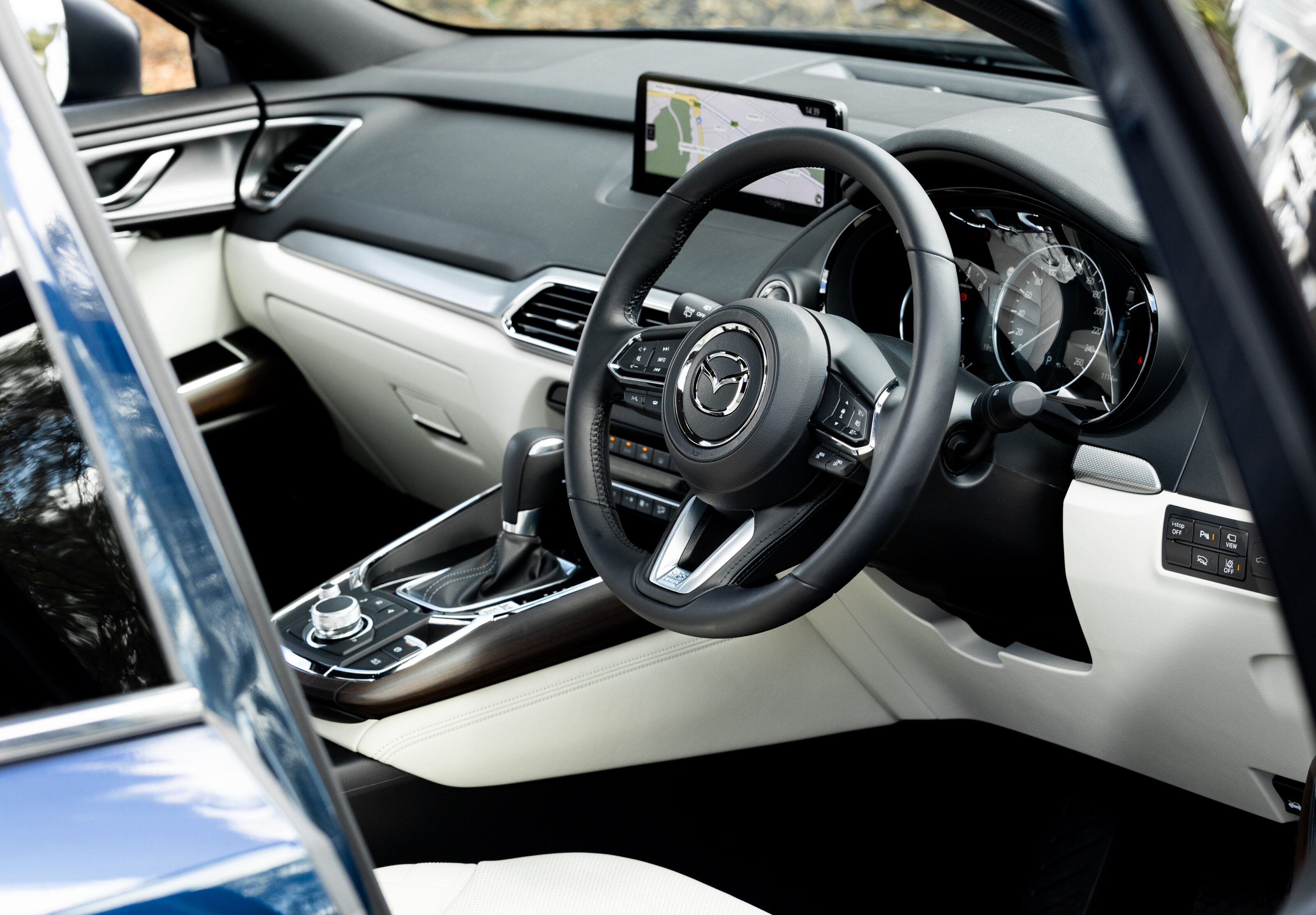
1
Retaining the CX-8 also ensures Mazda still has an affordable 7-seat SUV to compete against mainstream rivals like the Mitsubishi Outlander, Nissan X-Trail and Volkswagen Tiguan Allspace.
Pricing for the CX-8 currently kicks off at just over $40,000, however Mazda’s new ‘Large Platform’ SUVs will carry higher price tags as the brand continues to push into premium territory in Australia.
The CX-60, for example, which is the cheapest of the new models and is only offered as a five-seater, starts at $59,800 and stretches to $85,675 for the flagship plug-in hybrid model. Pricing for the CX-80 and CX-90 is yet to be confirmed, but the entry-point to their respective ranges will be higher than the CX-60.
1
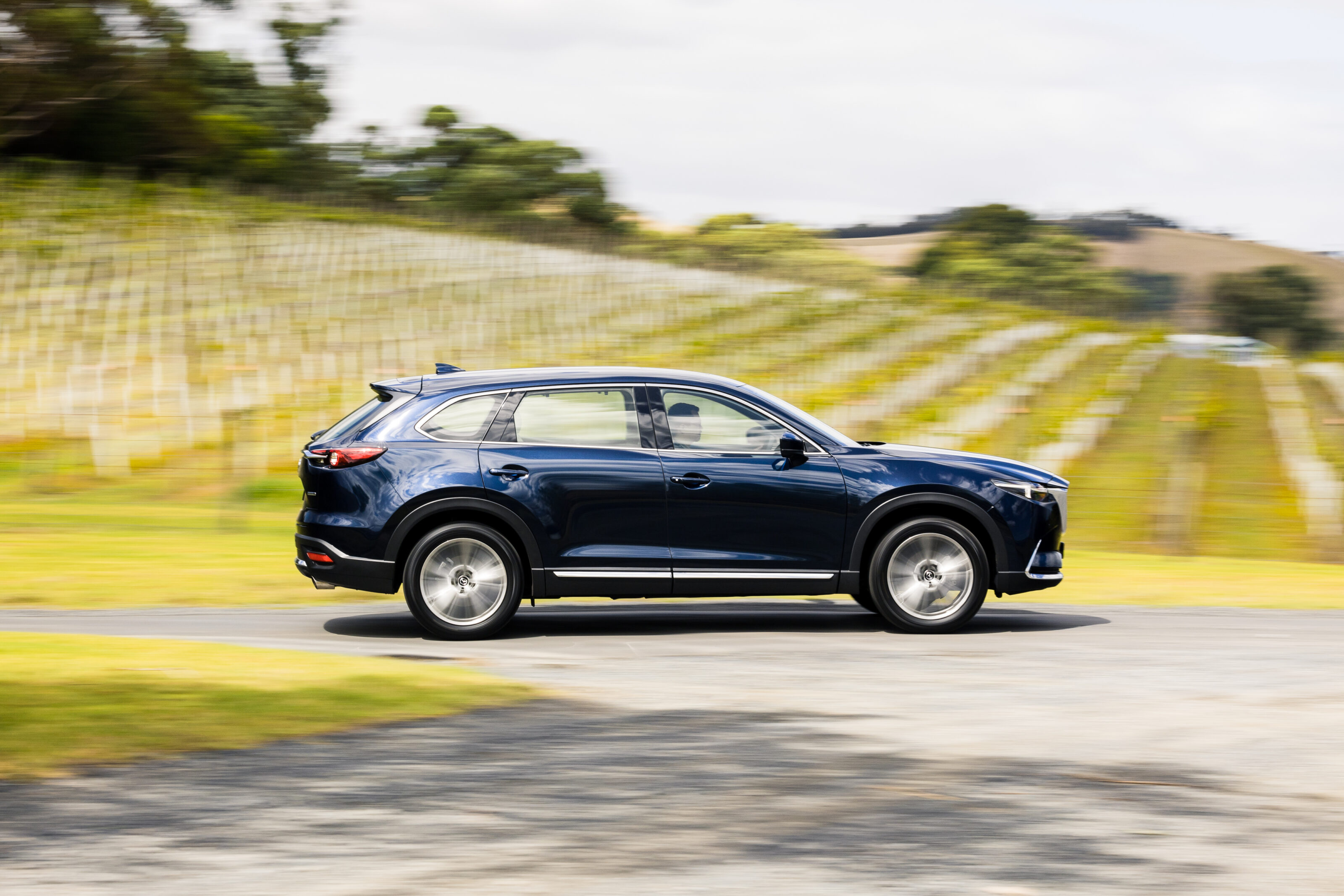
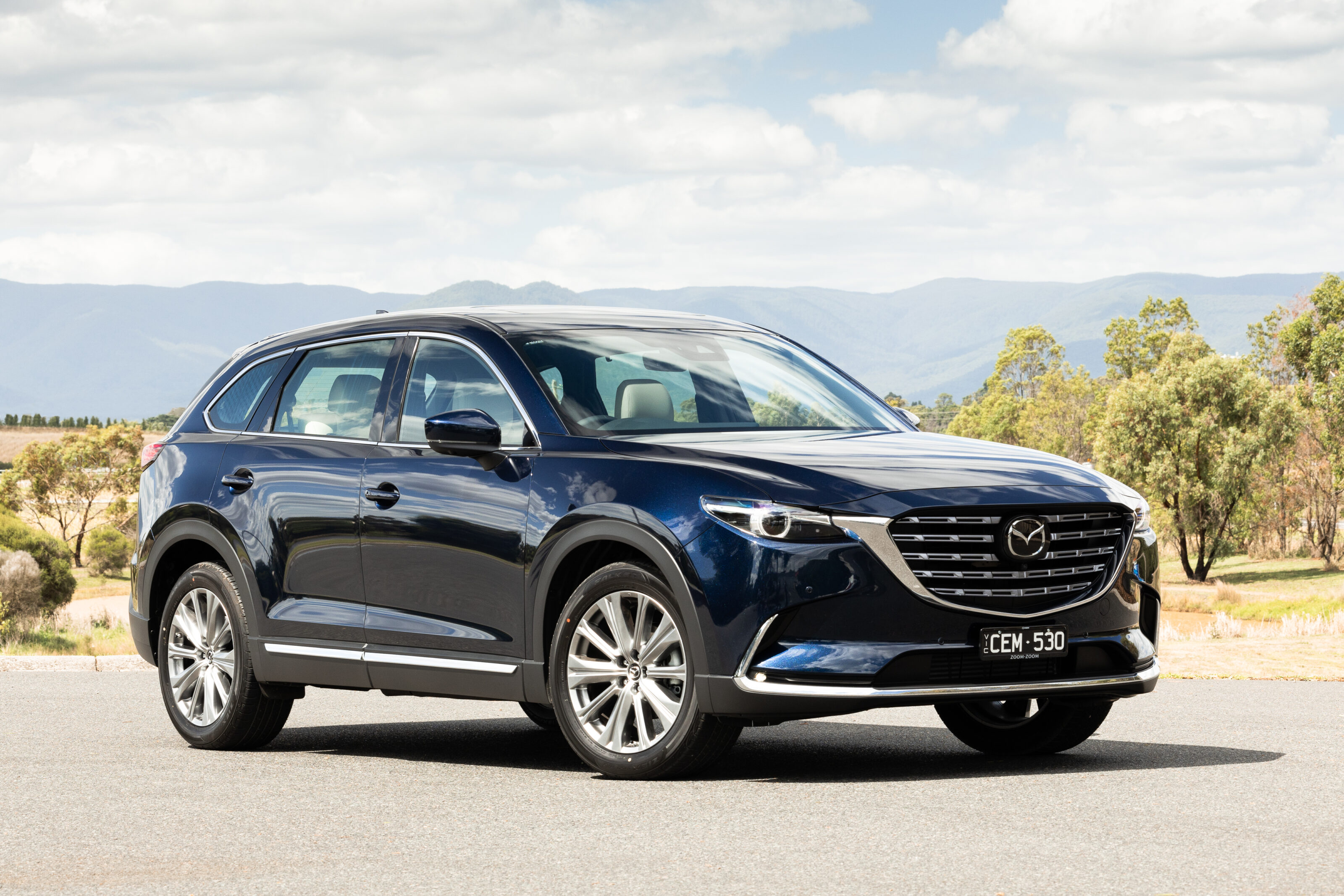
The second-generation Mazda CX-9 won the Wheels Car of the Year award in 2017 when it was praised for its eye-catching design, interior comfort and practicality, and its strong performance and driver appeal.
Despite the decision to drop the CX-9, Mazda Australia isn’t concerned about losing market-share, with the brand instead confident its influx of fresh product will actually see it gain sales in the popular large SUV segment.
“We’ve certainly positioned the CX-90 in the marketplace as a very compelling value proposition,” added Mazda’s Alastair Doak. “Even though it will be a higher price [than CX-9] there’s still a very strong value offering there.
1
“I think it’s natural for people to move up when they replace their car in terms of performance and luxury and technology. The CX-90 is a physically larger car with a bigger boot at 500+ litres with three rows in place, it has third row air vents and all the latest safety tech. And then there’s the powertrains – which are a huge step up for refinement, performance and sporty characteristics. So there are many compelling reasons why people will step up.
“If that doesn’t happen, you’ll be able to buy a CX-9 in this market for most of this year,” he added. “We also sell the CX-8, we’re just about to update that car, and then we’ll have CX-80 in the ranks as well.
“So we’re going from two three-row SUV choices (CX-8 and CX-9), to three three-row SUVs (CX-8, CX-80 and CX-90). So we’re actually increasing our offering in that space so we’re very comfortable we’ll have a destination for existing customers either to stay where they are or move up.”
MORE
Everything Mazda
Snapshot
- CX-80 nameplate confirmed for Australia
- Will slot between CX-60 and CX-90 for size and price
- Based on Mazdau2019s new u2018Large Platformu2019
- Comes at the expense of CX-9
Mazda will soon add yet another large, three-row SUV to its local lineup with the brand today confirming the CX-80 will be offered in Australia.
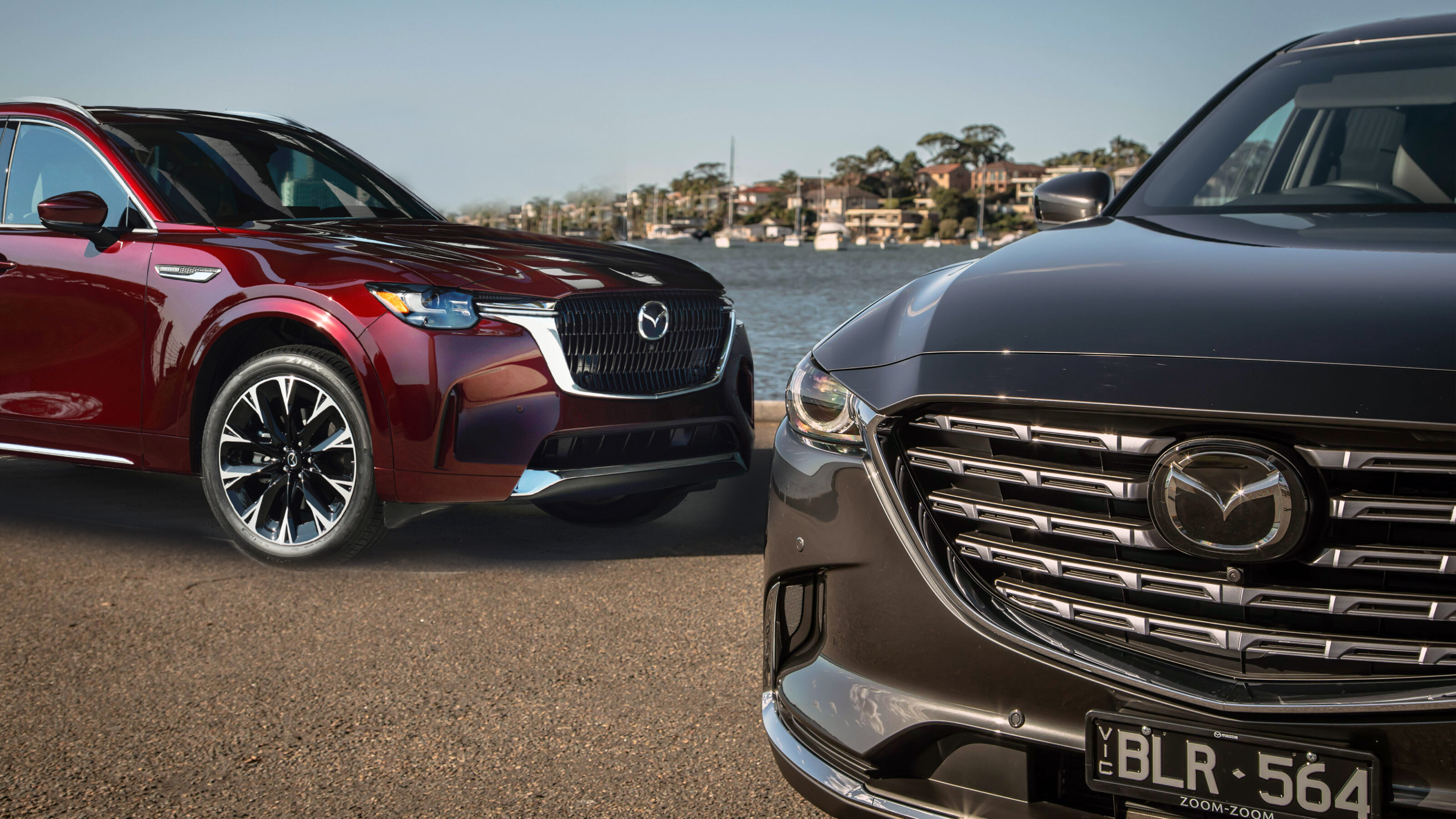
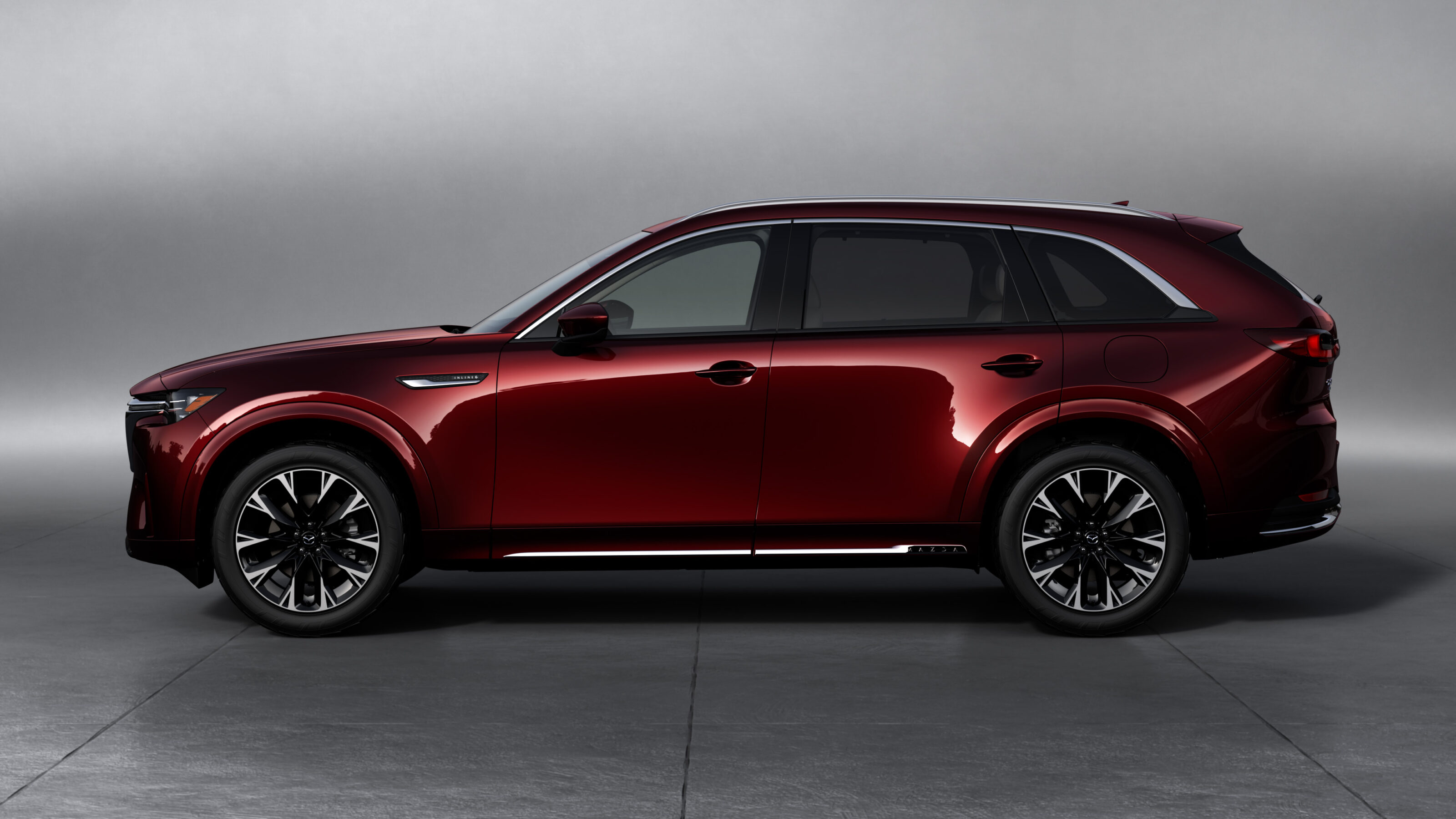
The new model, which is yet to make its global reveal, will be the third new SUV spun off Mazda’s fresh Large Platform architecture and will slot between the soon-to-arrive CX-60 and CX-90 for size and price.
It won’t, however, be sold alongside the existing – and Wheels Car of the Year winning – Mazda CX-9, which is being retired at the end of 2023.
Read our story here to understand more about why Mazda is axing the CX-9 from its global lineup.
1
Although the CX-80 is now confirmed for Australia, little official detail is know about the new model.
We’re yet to see any official images (or even teasers) of the exterior or interior design, and no details about its size, powertrains or pricing have been confirmed by Mazda. And it seems it might stay that way for a while yet.
“All we can confirm today is that CX-80 is coming to Australia,” said Mazda Australia’s marketing chief, Alastair Doak. “Mazda Corporation hasn’t said anything about that model [CX-80] since the initial press release 18 months ago when it confirmed there would be four SUVs off the new Large architecture.”
1
Three of those four SUVs are now confirmed in the CX-60, CX-80 and flagship CX-90 with the fourth slot likely to be filled by the CX-70 – which will be a sportier, two-row version of the larger CX-90.
All of the new SUVs will be based on Mazda’s ‘Large Platform’ architecture that features a rear-wheel-drive bias and ushers in a family of fresh inline six-cylinder engines.
It’s therefore reasonable to assume the CX-80’s engine choices will mirror that of the CX-60, which offers three powertrains: a 3.3-litre Skyactiv-X six-cylinder petrol, a 3.3-litre six-cylinder diesel and a plug-in hybrid, which combines a 100kW electric motor with a 2.5-litre four-cylinder petrol engine.
1
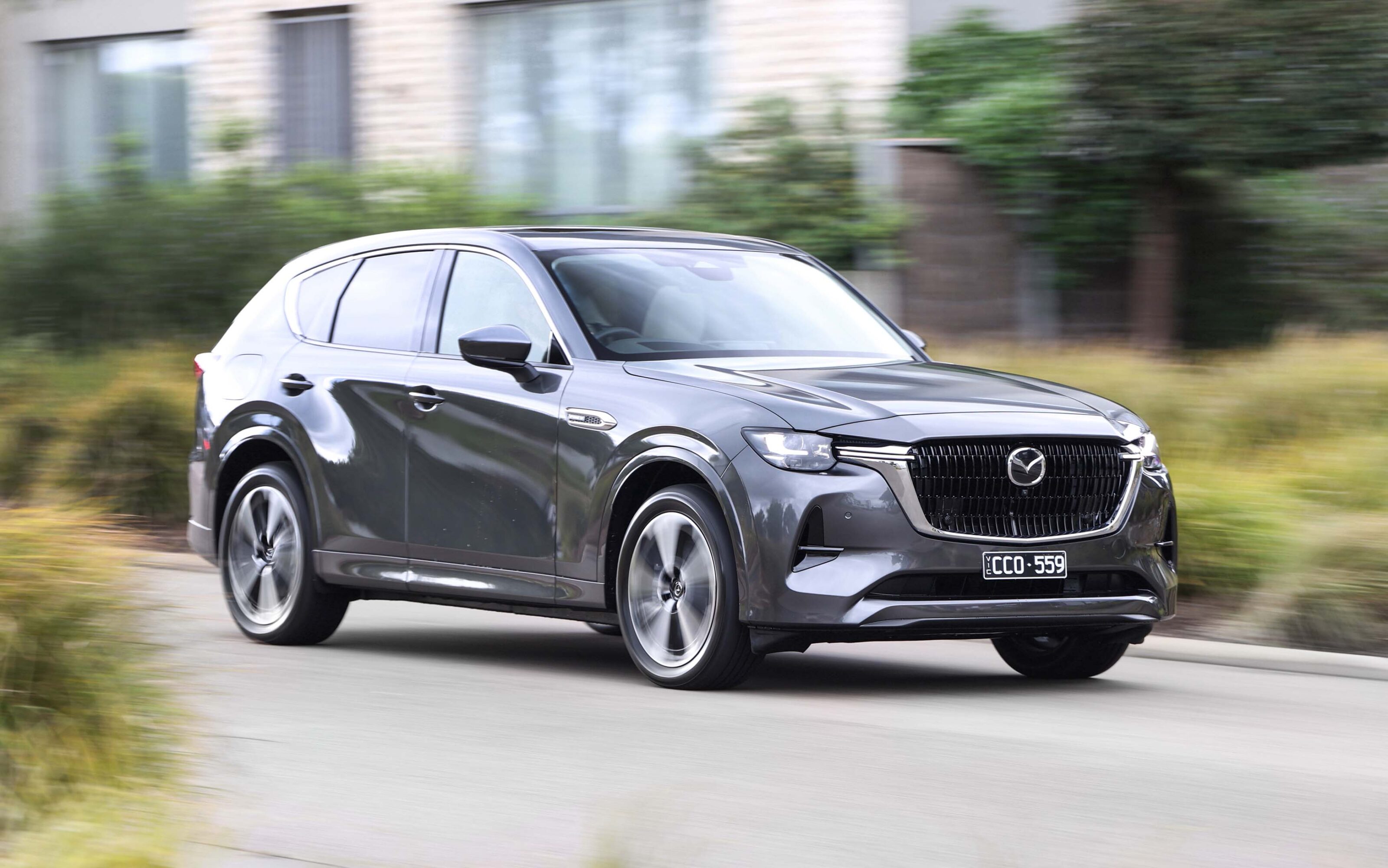
As for how Mazda will position the CX-80 within its growing SUV model range (it will soon sell eight SUV models in Australia in the form of the CX-3, CX-30, MX-30, CX-5, CX-8, CX-60, CX-80 and CX-90, while the CX-70 will be the ninth model) it will essentially be a slightly narrower and smaller version of the CX-90.
Much in the same way as the CX-8 is differentiated from the CX-9, the CX-80 is targeted at the European and Japanese markets, while the CX-90 is focused more on America and will have a larger body.
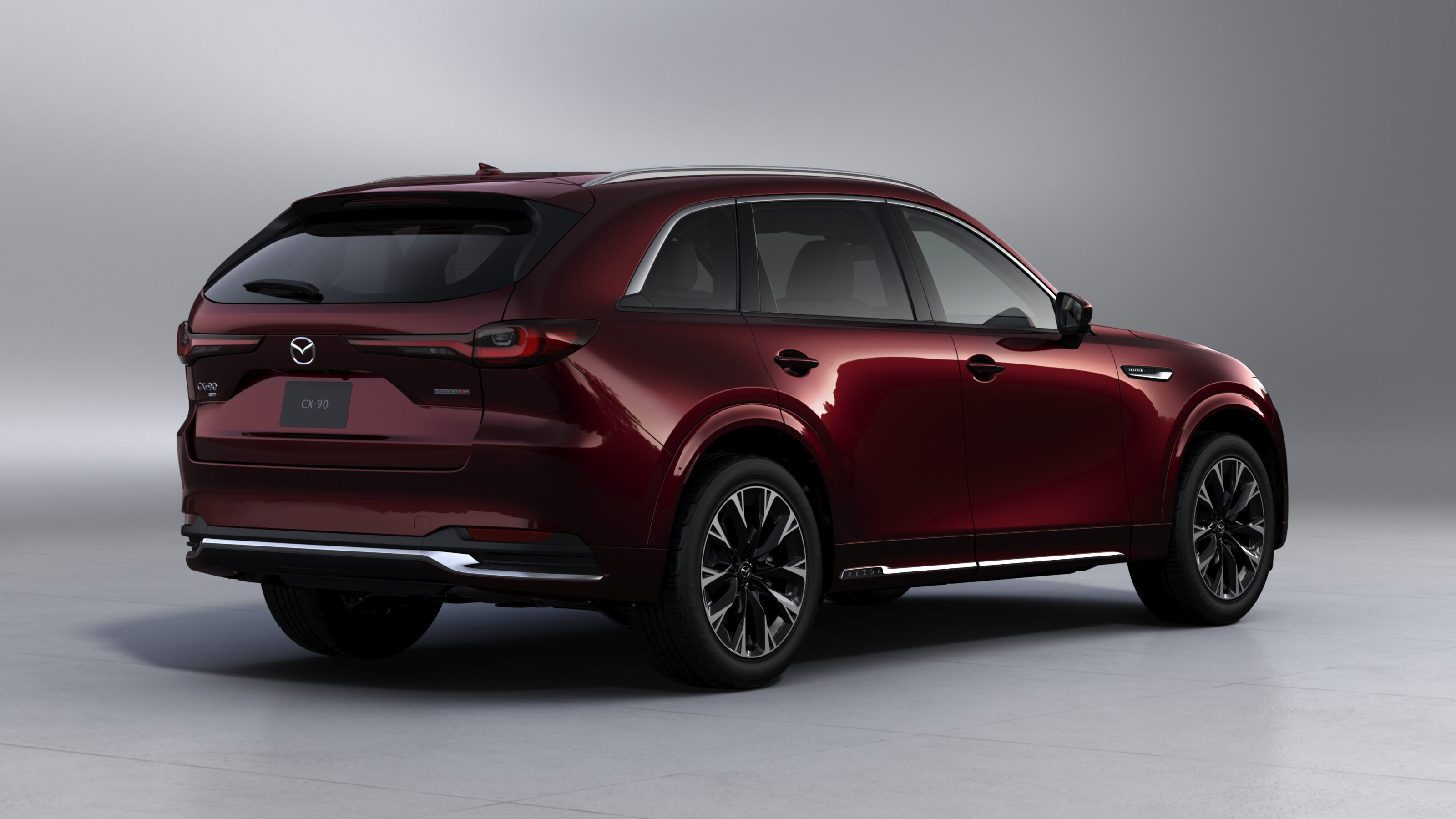
The seven-seat CX-80 will also carry a slightly more affordable price tag than the flagship CX-90, although it will be pricer than the majority of Mazda’s existing model range as the brand continues its ‘premium push’ here in Australia.
1
With the smaller CX-60 starting at around $60,000 and stretching to $85,000 for the flagship PHEV variant, it’s fair to assume pricing for the CX-80 will being in the $70K bracket.
So when will the CX-80 be revealed? Mazda is remaining tight-lipped officially, although the company’s European boss, Martijn ten Drink, did let slip recently that we will see the CX-80 later in 2023.
That means it’s unlikely the CX-80 will make its way into Aussie showrooms this year, with a 2024 Aussie launch a safer bet.
MORE
Everything Mazda
MORE
Large SUVs
UPDATE: The ACT becomes fourth state to legislate against the act of “ICEing”.
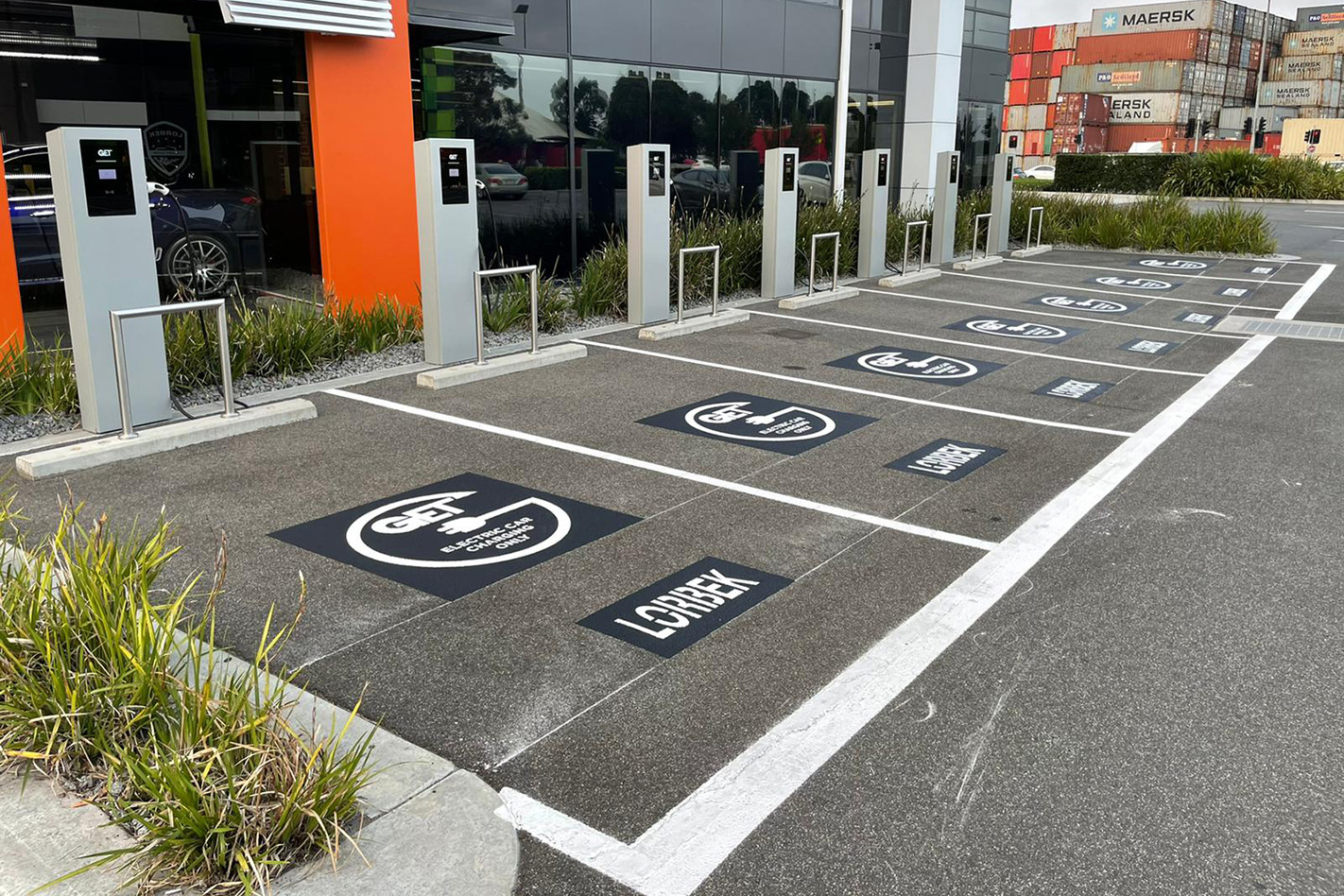
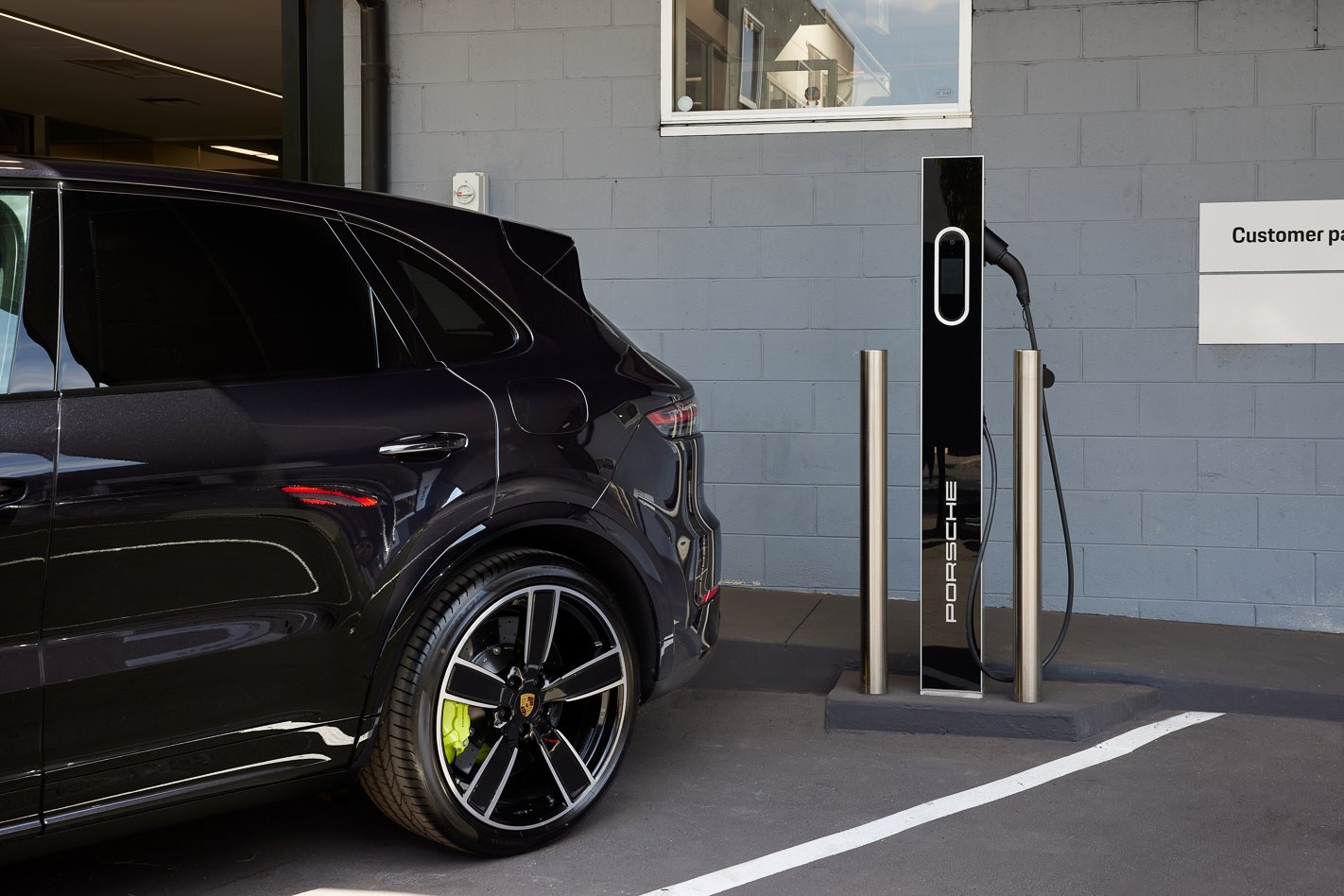
Motorists within Australia’s capital can face fines of as much as $3200 for blocking an electric vehicle charging space with a combustion vehicle – the harshest penalty in the nation.
Queensland and NSW also have introduced four-figure penalties for blocking access to EV chargers with a petrol or diesel vehicle. In NSW, the fine could cost up to $2200, while in Queensland it could sting drivers up to $2875.
1
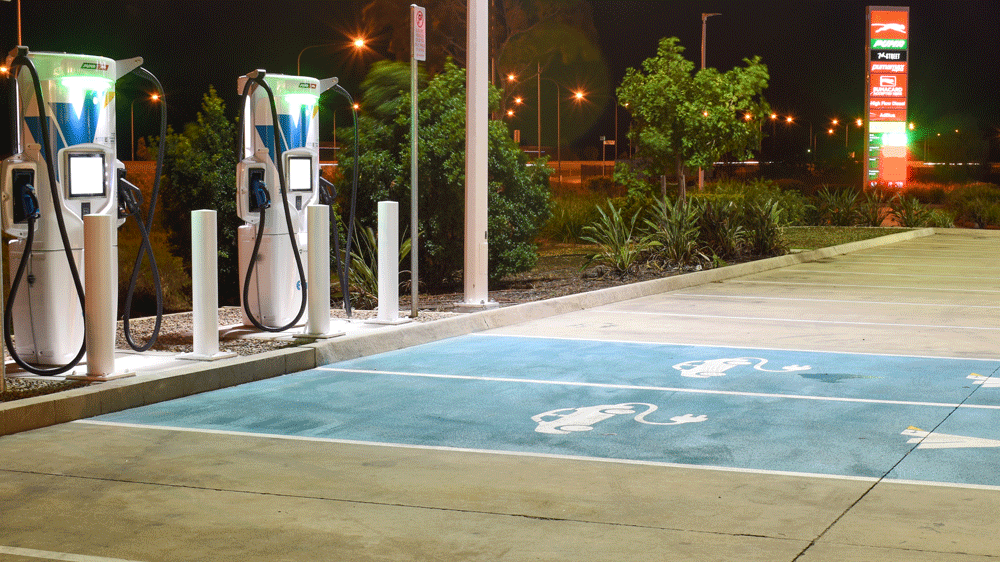
The ACT’s legislature also applies to electric vehicle owners who occupy charging spaces but are not recharging their vehicle. The intention is to encourage EV adoption while preventing the electric equivalent of someone ‘parking in front of a fuel bowser’.
NSW’s law, passed in November but announced earlier in March, does not specify that an EV must also not block a charger if not actually using it.
Victoria’s penalty for misusing an electric vehicle charging space is $369.
1
Chris Jones, national president of the Australian Electric Vehicle Association, said that, while penalties for blocking EV infrastructure are high, they were necessary to educate the public who may have not considered the repercussions.
“No one would like it if I parked my vehicle in front of a fuel bowser and walked inside and ordered lunch”, said Jones.
“There needs to be an acknowledgement that there are places you can park and places you can’t – and right in front of an EV charger is one where you can’t.”
1
Electric Vehicle Council policy head, Jake Whitehead, said fines deliver “a very clear and strong signal”, but further explained that greater education may also be needed for combustion vehicle drivers who are increasingly encountering EV chargers being added to existing car parks and public spaces as infrastructure slowly improves.
Whitehead also touched on the need to educate new EV drivers who don’t recognise the need to vacate charging locations as soon as practical.
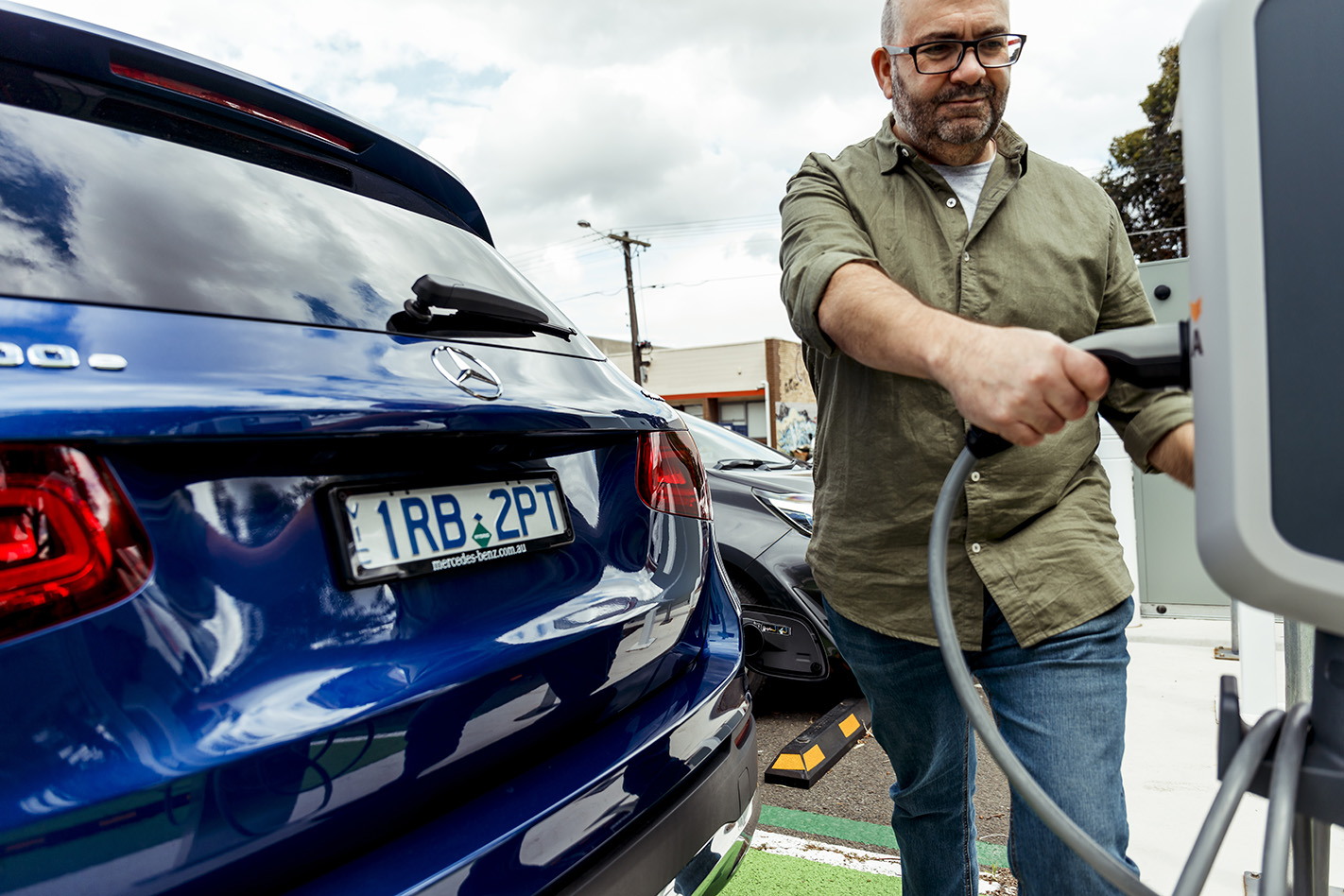
“Every charger available is critical and valuable to the fleet of 80,000-odd EVs in the country and we need to make sure they’re not blocked, either intentionally or accidentally,” he said.
1
“There are genuine mistakes made by some people, but we need to have a broad recognition across society that these chargers need to be available to EVs so we can have more on our roads.”
According to the EV Council, there are more than 83,000 electric vehicles in Australia. Recent monthly sales data from February indicates that EVs represent 6.8 per cent of all new car registrations nationally.
The story to here
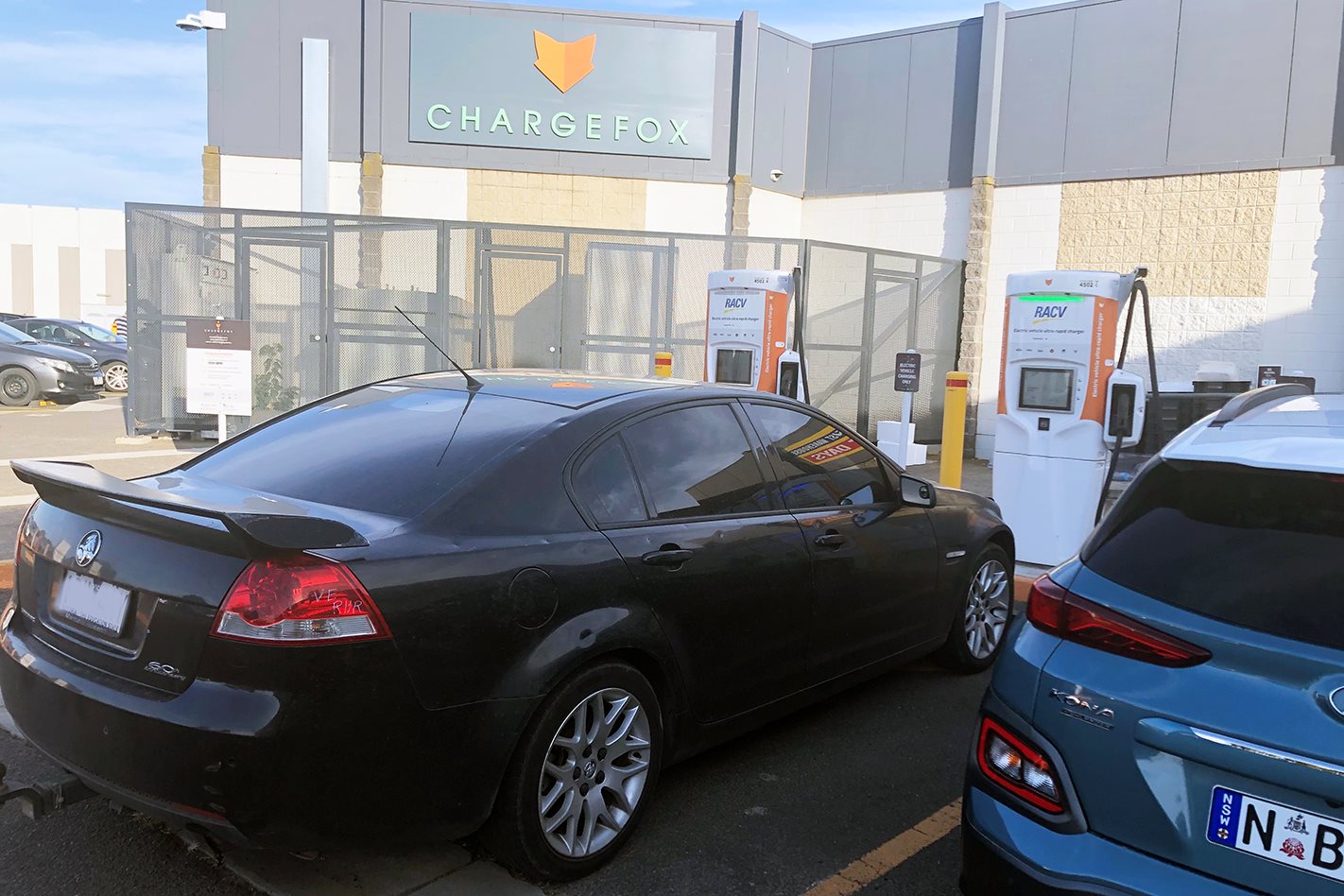
March 6: New South Wales has brought in legislation to stop petrol- and diesel-powered (ICE) vehicles from taking up parking spots reserved for electric cars.
The law change, which was quietly implemented in November but publicly published in March, is aimed particularly at stopping ICE vehicles from blocking EV chargers in the state.
ICE vehicle owners caught doing so could be fined up to $2200, the equivalent of 20 penalty points.
1
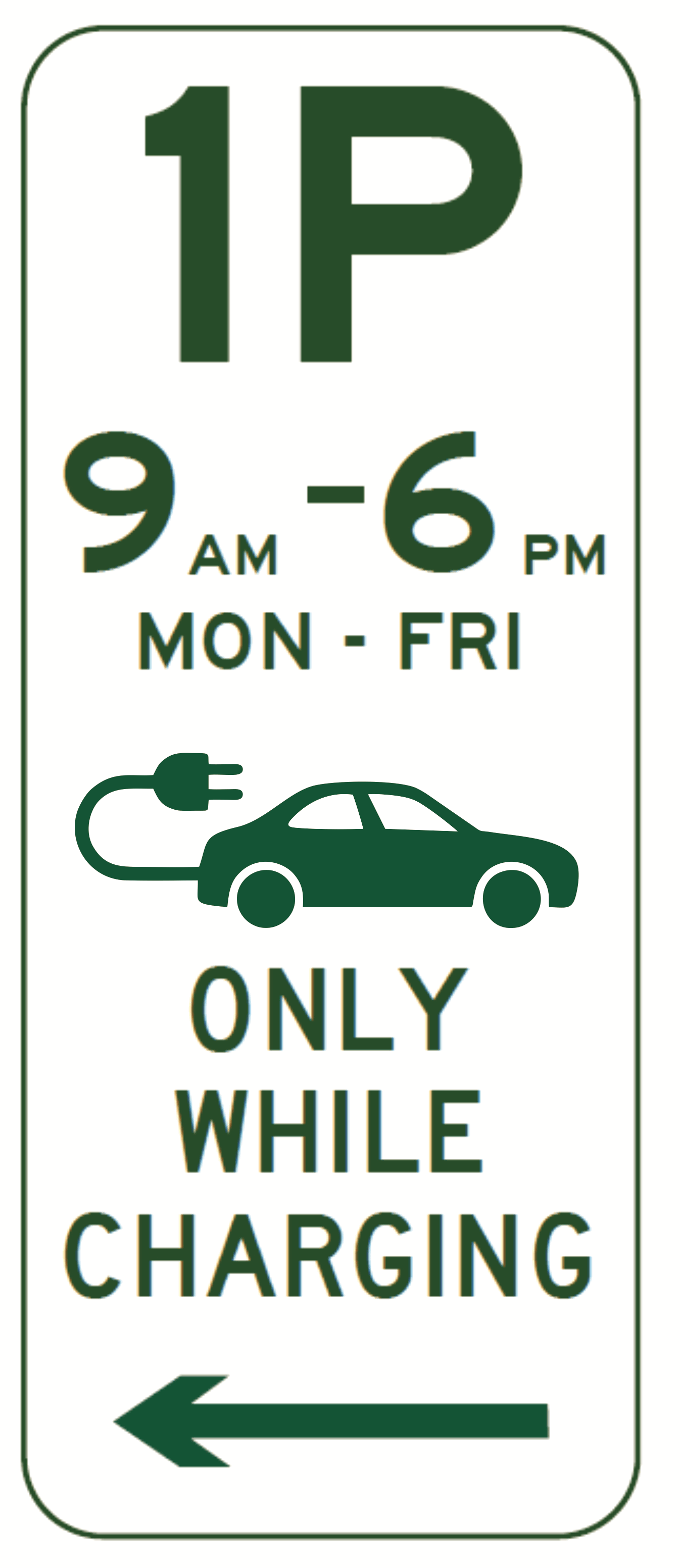
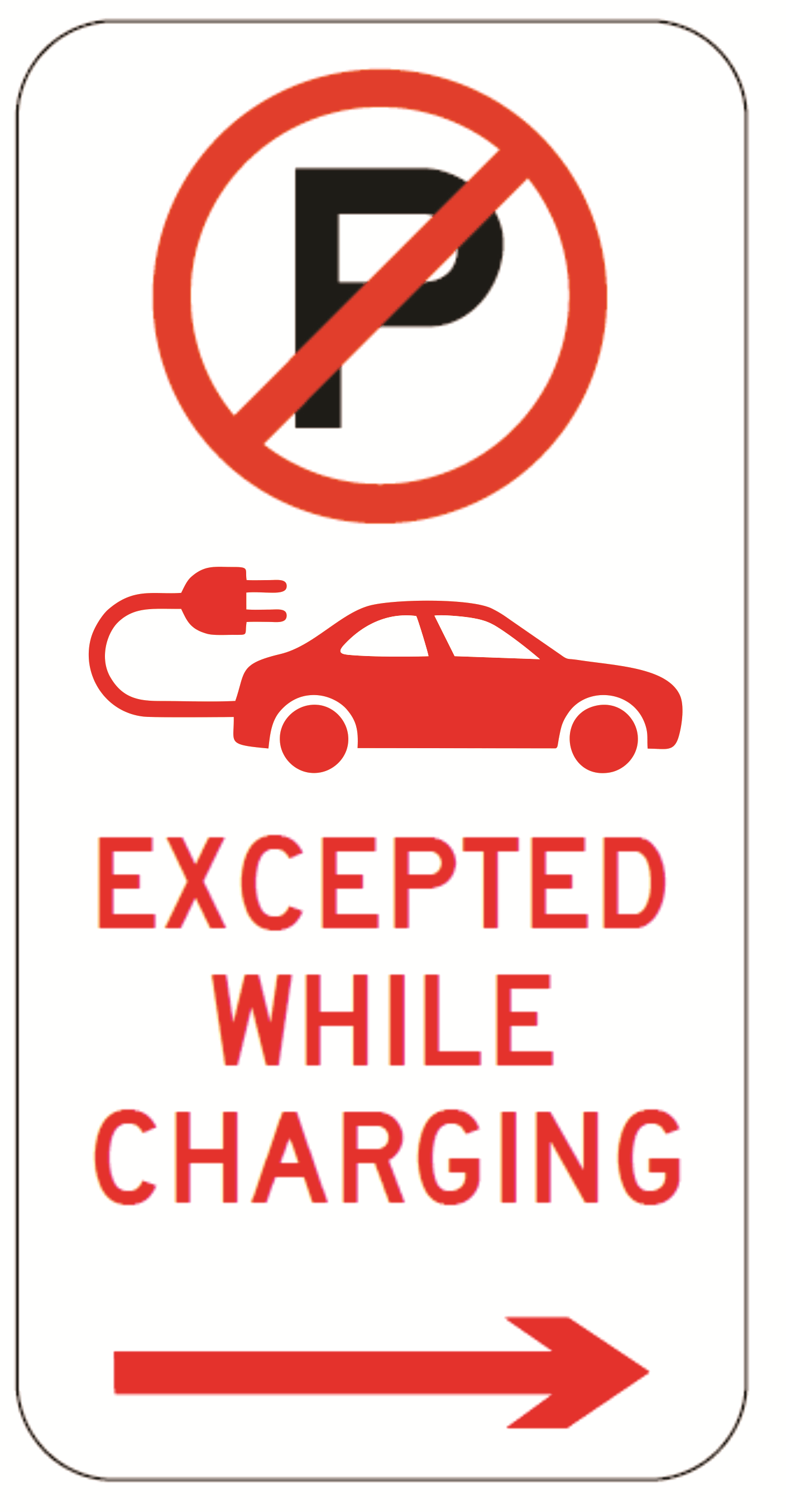
The addition to the NSW Road Rules, first reported by The Driven, states: ‘A driver of a vehicle that is not an electric-powered vehicle must not stop in a parking area for electric-powered vehicles.
‘A driver must not stop in a parking area for the charging of electric-powered vehicles unless—
(a) the driver’s vehicle is an electric-powered vehicle, and
(b) the electric-powered vehicle is plugged in to an external source of electricity.’
1
1
While the updated legislation doesn’t specify that an EV must also not block a charger if it’s not actually using it, it does refer to a parking area being somewhere indicated by a permissive parking sign or road marking with the words ‘while charging’ on it.
Back in December 2020, Victoria became the first state to introduce penalties for blocking EV parking spaces and chargers, with fines starting from $99.
Queensland also followed suit in early 2022.
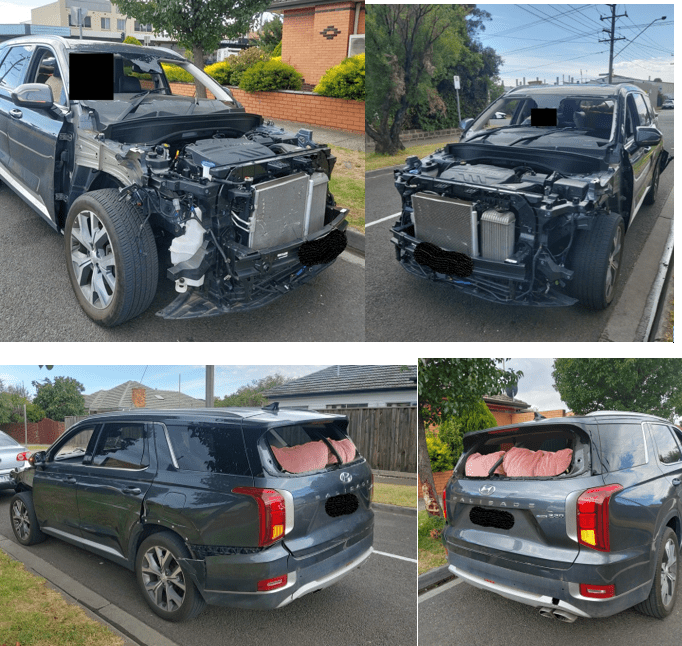
Victoria Police stopped a 41-year-old woman who was driving a Hyundai Palisade with no bonnet, front guards, windscreen, rear glass, or front bumper.
Police “had to do a double-take”, according to a media release, when officers noticed the Palisade passing by them on McIntyre Road, in the West-Melbourne suburb of Sunshine at 3.30pm on Saturday.
The driver had been issued with a defect notice by police on the prior Wednesday and been advised not to drive the vehicle. The area where police stopped the Palisade was over 25 kilometres from the woman’s place of residence in Brighton.
The penalty issued for driving the smashed-up Palisade was three demerit points and a $740 fine, for “using a light vehicle in breach of a major defect notice.”
Police did not reveal further details about what caused the extensive damage to the Palisade in question.
1
It does not appear that airbags were deployed in a prior accident, but there are two orange pillows in the back. It’s anyone’s guess where the front bumper, guards, and bonnet went.
MORE
Everything Hyundai
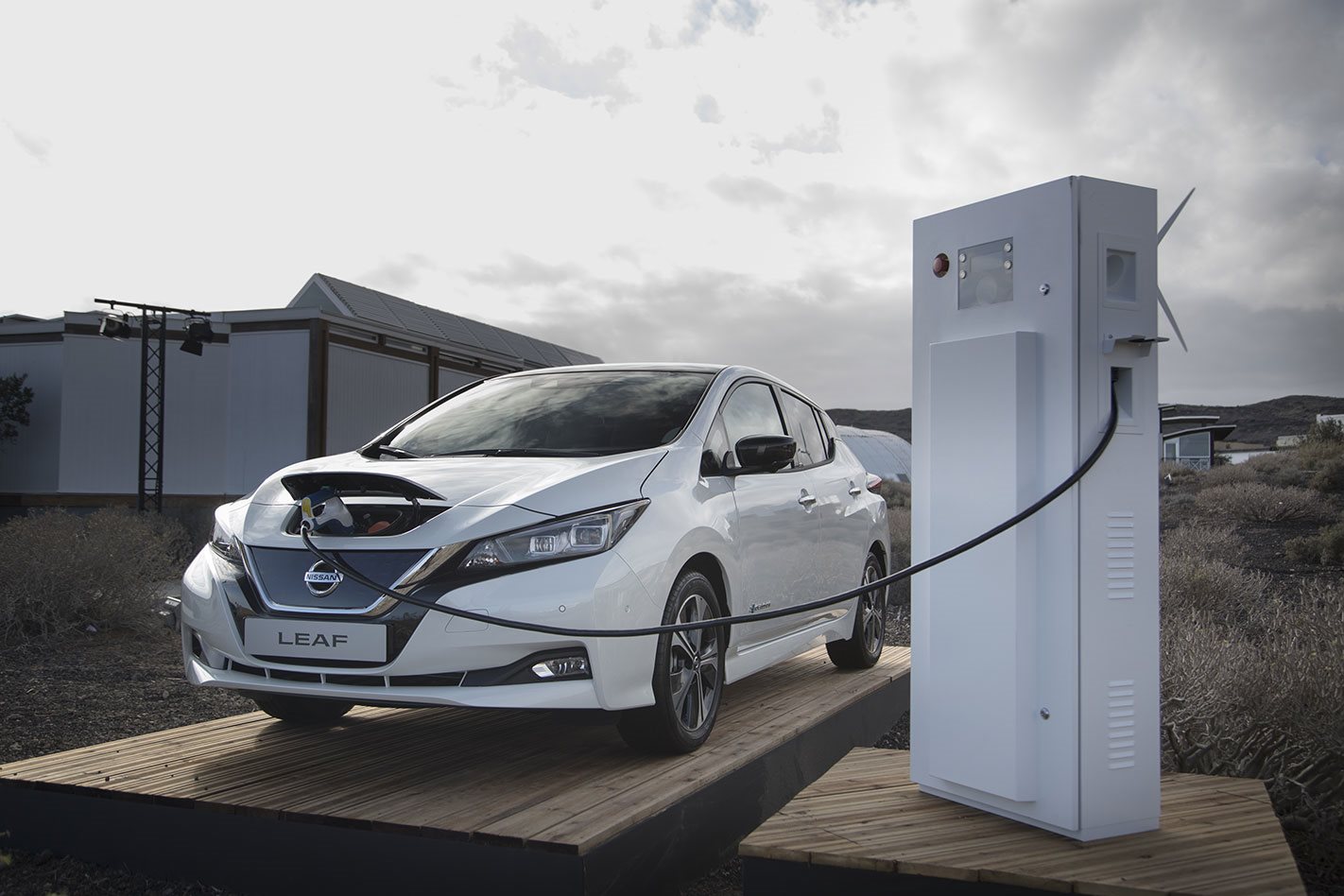
Electric vehicles might just be entering the mainstream now, but the technology has been around for centuries.
Battery-powered EVs are poised to be the main transportation powertrain in the next decade or so, yet it took some failed attempts that were downplayed by regulators, automakers, oil giants, lobbyists, and governments.
1
When EVs were popular
In the early 1800s, a few forward-thinking European and American entrepreneurs invented an electric motor, using non-rechargeable batteries, to power a car or ‘horseless carriage.
By the turn of the 20th century, EVs had started gaining traction with buyers, thanks to their ease-of-use, no smelly pollutants, and quiet driving compared to steam- or gasoline-powered cars. These qualities made early EVs especially favoured among women.
Incredibly, between 1900 to 1912, EVs accounted for one-third of vehicles on US roads, according to the US Department of Energy.
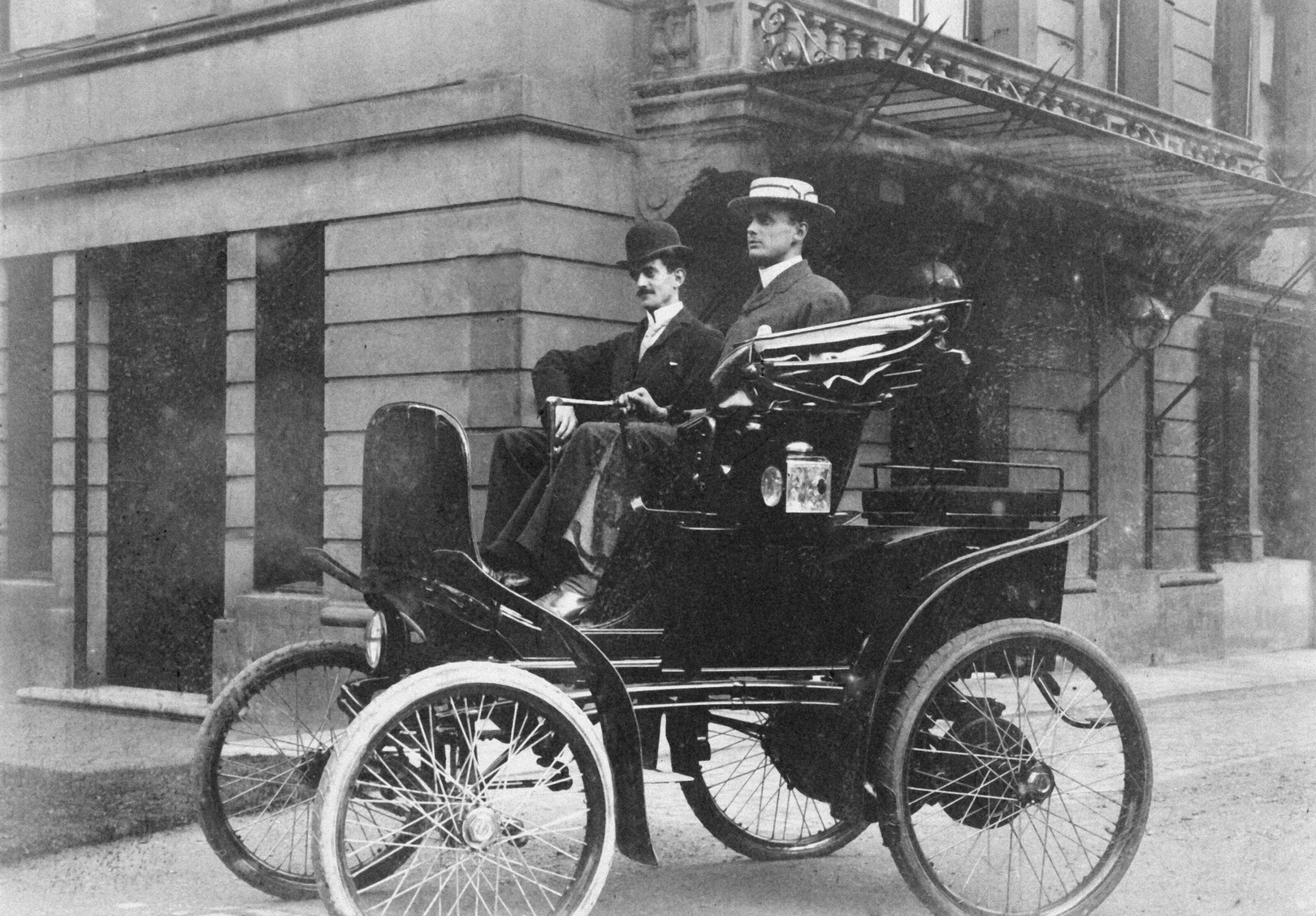
1
Inventors such as Thomas Edison – who created the incandescent light bulb and motion picture camera – vowed to improve battery technology, and the founder of ultra-luxury car brand Rolls-Royce, Charles Rolls, even declared EVs the future of motoring.
However, by 1935, EVs eventually gave way to internal combustion engine (ICE) vehicles in the US, due to the increasing availability of cheaper crude oil and the advent of the electric starter (instead of hand-cranking).
Mass production, kickstarted by the Ford Model T, also ensured significantly better affordability and availability of new ICE cars.
They could also be refilled anywhere with a container of fuel, instead of relying on the electricity infrastructure that only existed in city centres.
Almost overnight, EVs fell out of favour.
1
How California encouraged, and then killed EVs
Interest in EVs was renewed in the late 20th century as gas prices soared – no surprises there – but the turning point came after General Motors (GM) won the Darwin to Adelaide World Solar Challenge race using its Sunraycer EV, and subsequently started developing the GM Impact prototype EV (eventually called the EV1) for the masses.
In 1990, the California Air Resources Board (CARB) saw this as an opportunity to address the high levels of smog in the state, which was gaining attention for causing increased chronic respiratory diseases such as asthma, cancer, and adverse child lung development rates.
It mandated the zero-emissions vehicle legislation that forced automakers to sell a set number of EVs in order to still be able to operate in the state – which became more strict every few years.
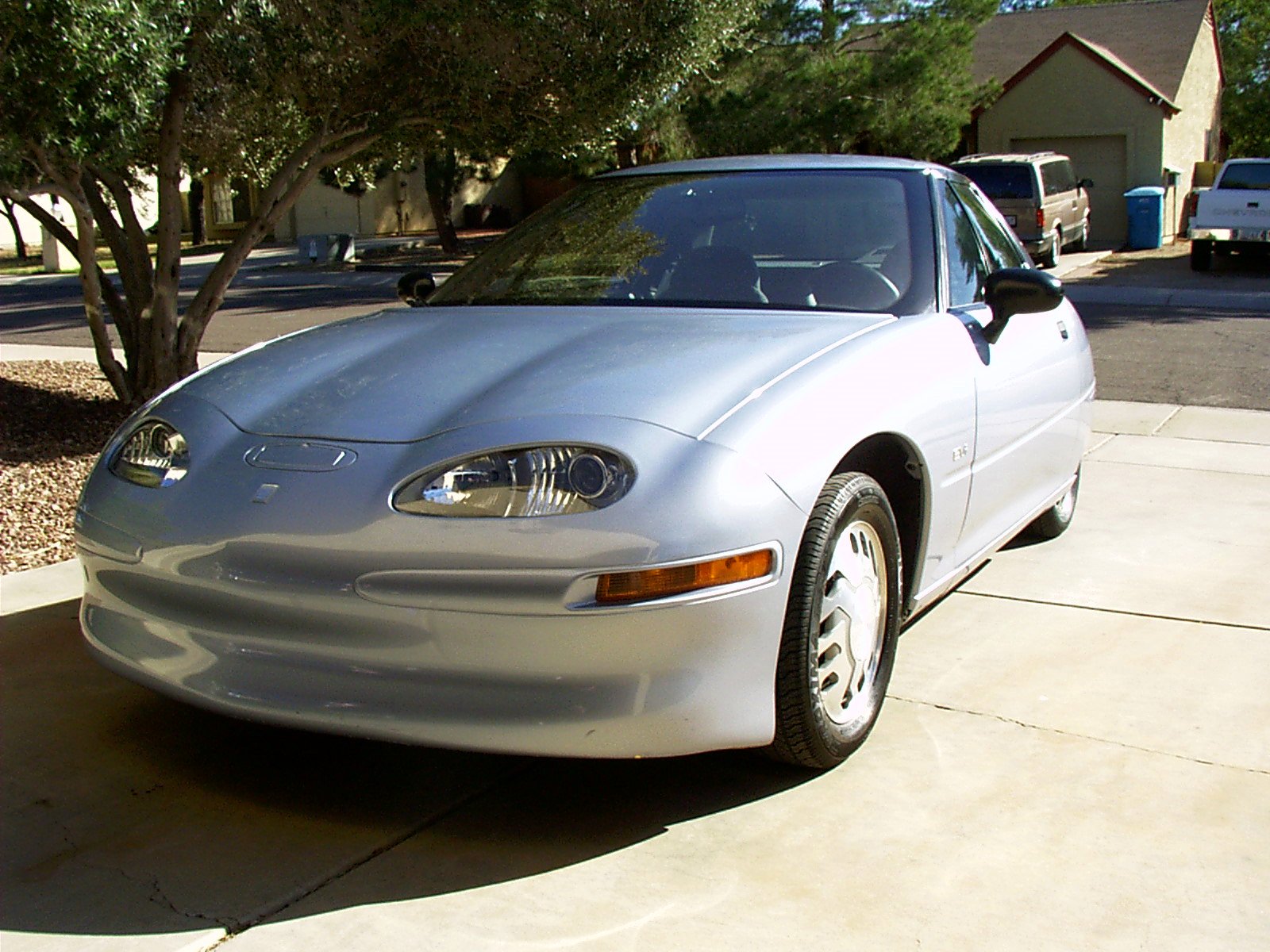
1
This resulted in the two-door, production-ready GM EV1 (above), along with converted engine-to-electric models, including the Honda EV Plus, Ford Th!nk, Tesla-based Toyota RAV4 EV, Ford Ranger EV and Nissan Altra EV. Most had lead-acid batteries at launch and then were offered with improved nickel-metal hydride (NiMH) packs – all before lithium-ion batteries revolutionised what could be achieved with an EV.
They were supported by a growing public charging infrastructure – even though plugging in at home and work was still preferred, and seen as more convenient due to the limited range.
However, carmakers were still reluctant and negotiated with regulators to include flexibility in the mandate, which was successful. Subsequently, CARB only required companies to build EVs in accordance to market demand – instead of meeting set sales targets.
GM leased 800 EV1s between 1996 to 2000, but the rollout was paradoxical – with claims that a confirmed 4000-people waiting list shrunk to just 50 after GM told would-be drivers of EV limitations. A difficult application process, and a general lack of consumer awareness, only further reduced interest in the market.
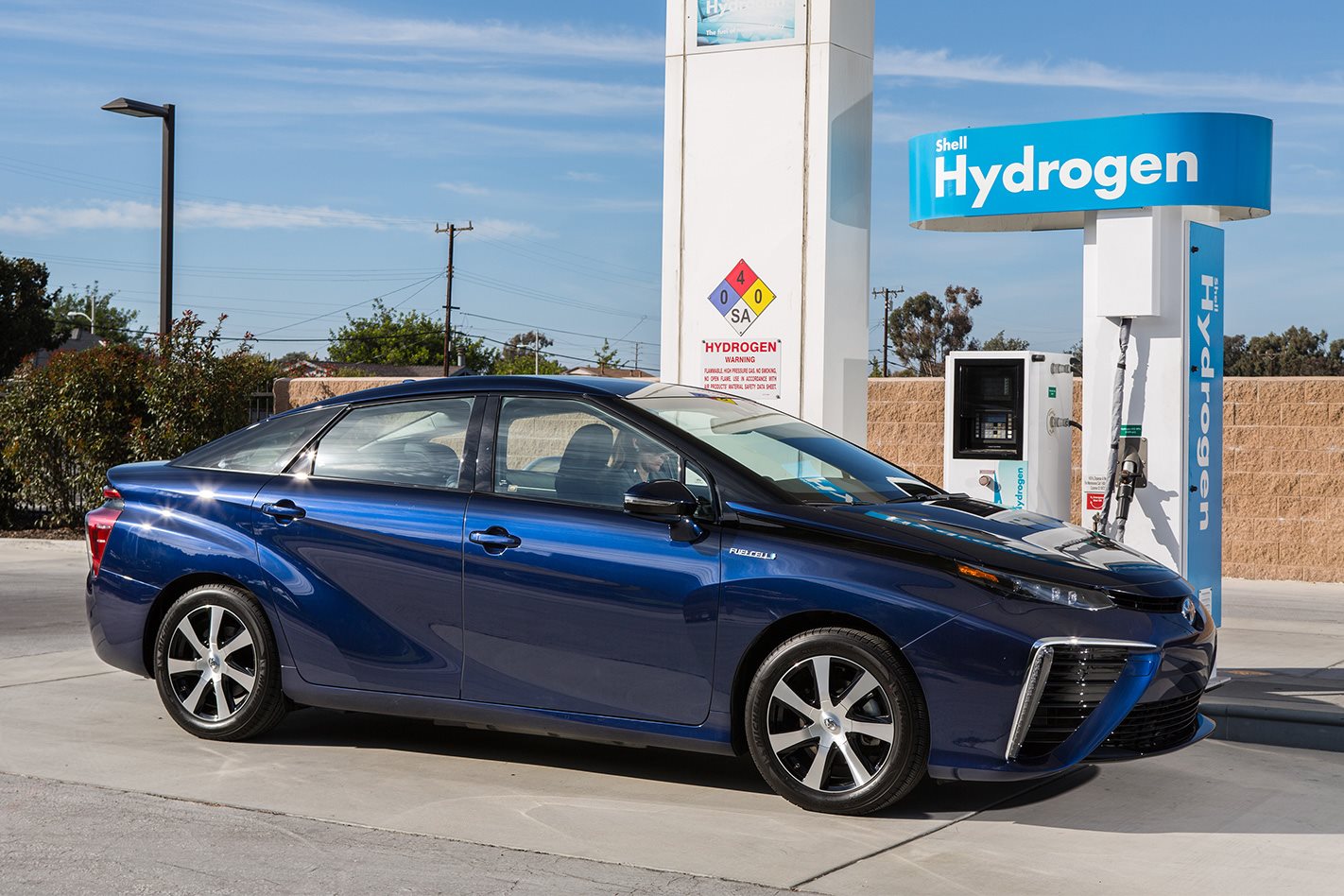
By April 2003, California regulators axed the EV mandate in response to intense pressure (and lawsuits) from carmakers, oil company lobbyists, and the federal government – which were all powerful and close allies to each other. Those groups all touted hydrogen fuel-cell electric vehicles (FCEVs) as having a more promising future, while hybrids and plug-in hybrids appeased all stakeholders as stopgaps.
Controversially, all leased EVs were gradually confiscated by each automaker – crushed allegedly without recycling any components – and American car companies focused on selling fuel-guzzling models such as the Hummer, Ford Explorer and Chevrolet Suburban, among others.
1
The state of EVs today
What happened in California two decades ago draws startling parallels with EVs today.
Looming strict Euro 7 emissions mandates in 2025 and the ban of selling new internal combustion models from 2035 overseas (including the Australian Capital Territory) are forcing car companies to invest hundreds of billions of dollars in full zero-emission vehicles as soon as possible.
However, Germany – which is powered by a strong automotive industry – successfully pushed the European Union (EU) to explicitly exempt combustion engines run on synthetic fuels for the 2035 ban, despite regulators not mandating any type of technology to achieve emissions-reduction targets.
1
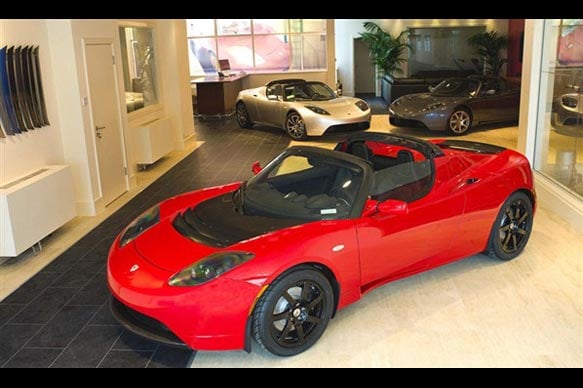
Tesla was one of the first to restart the EV revolution, with founders Martin Eberhard and Marc Tarpenning selling the first-generation Roadster (a converted Lotus Elise) in 2008
In 2012, Tesla started selling its first bespoke EV, the Model S large liftback, complete with a large touchscreen, over-the-air software updates, and fledgeling Supercharging network – a private infrastructure investment unheard of at the time.
Despite early success from the Nissan Leaf, arguably the true catalyst for today’s relative boom in EV sales was the Model 3 sedan in 2017, which combined a sleek and family-sized design with a luxurious interior (if initially stricken by quality issues) and long-range electric driving with a sub-$100,000 price tag.
Today, the frequently updated Model 3 and Model Y twins dominate electric car sales globally, but emerging competition is fierce from rapidly growing Chinese brands such as Build Your Dreams (BYD), Great Wall Motors (GWM), SAIC Motor, and Geely – especially in the entry-level ‘affordable’ EV arena – alongside compelling options from the Hyundai Motor Group, Volkswagen Group, and BMW Group.
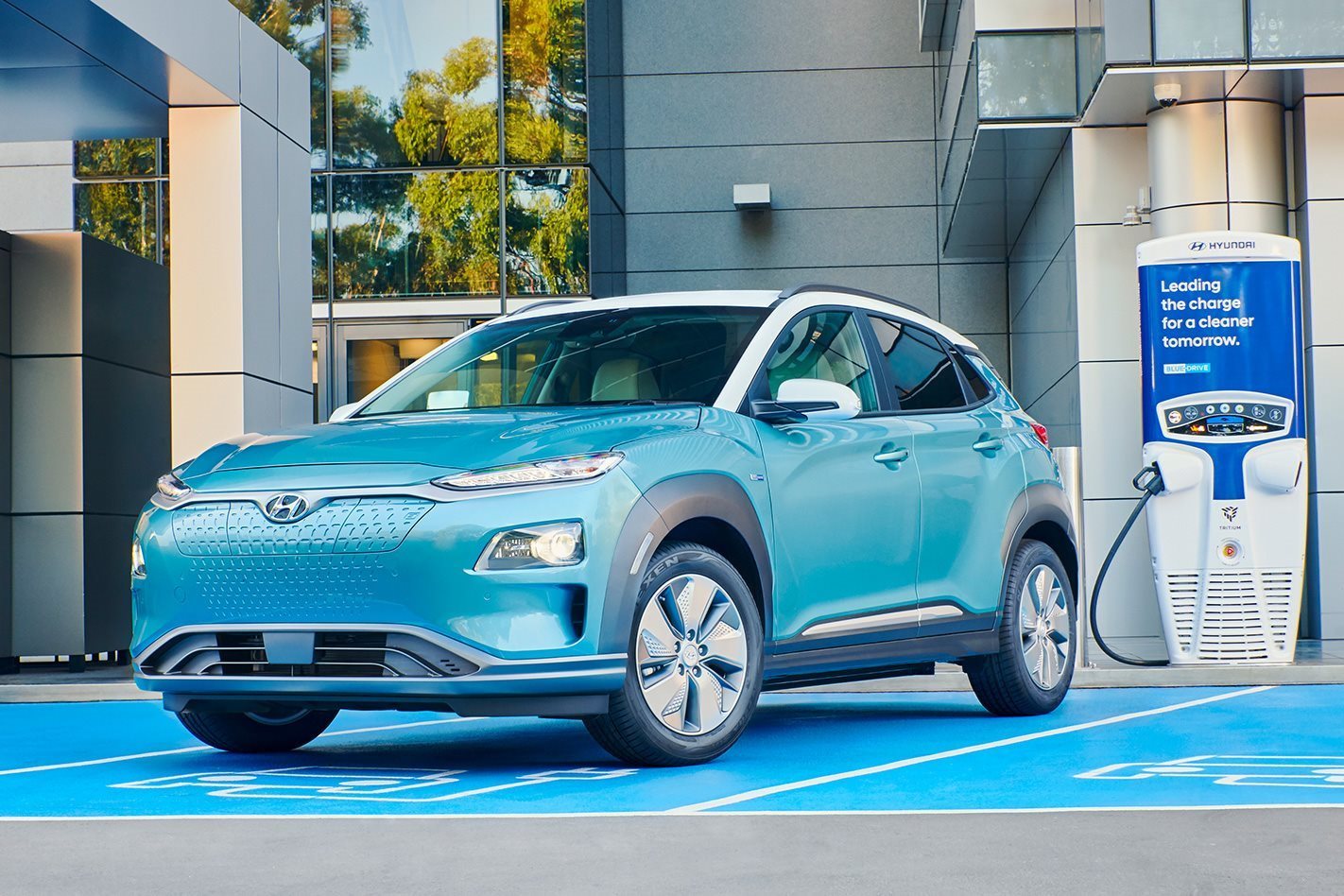
The same consumer scepticism still applies, including concerns around driving range and charging infrastructure, and some governments continue to spruik hydrogen tech (which might still have a place) – but it seems battery EVs are here to stay in the long-run.
⚡ More EV stories to help you choose the best car for your needs
The 2023 Chery Omoda 5 small SUV will debut in Australia on March 23.
Snapshot
- 2023 Chery Omoda 5 sales to commence on March 23
- Pricing to start from $29,900 before on-road costs
- Two variants initially, AWD to follow
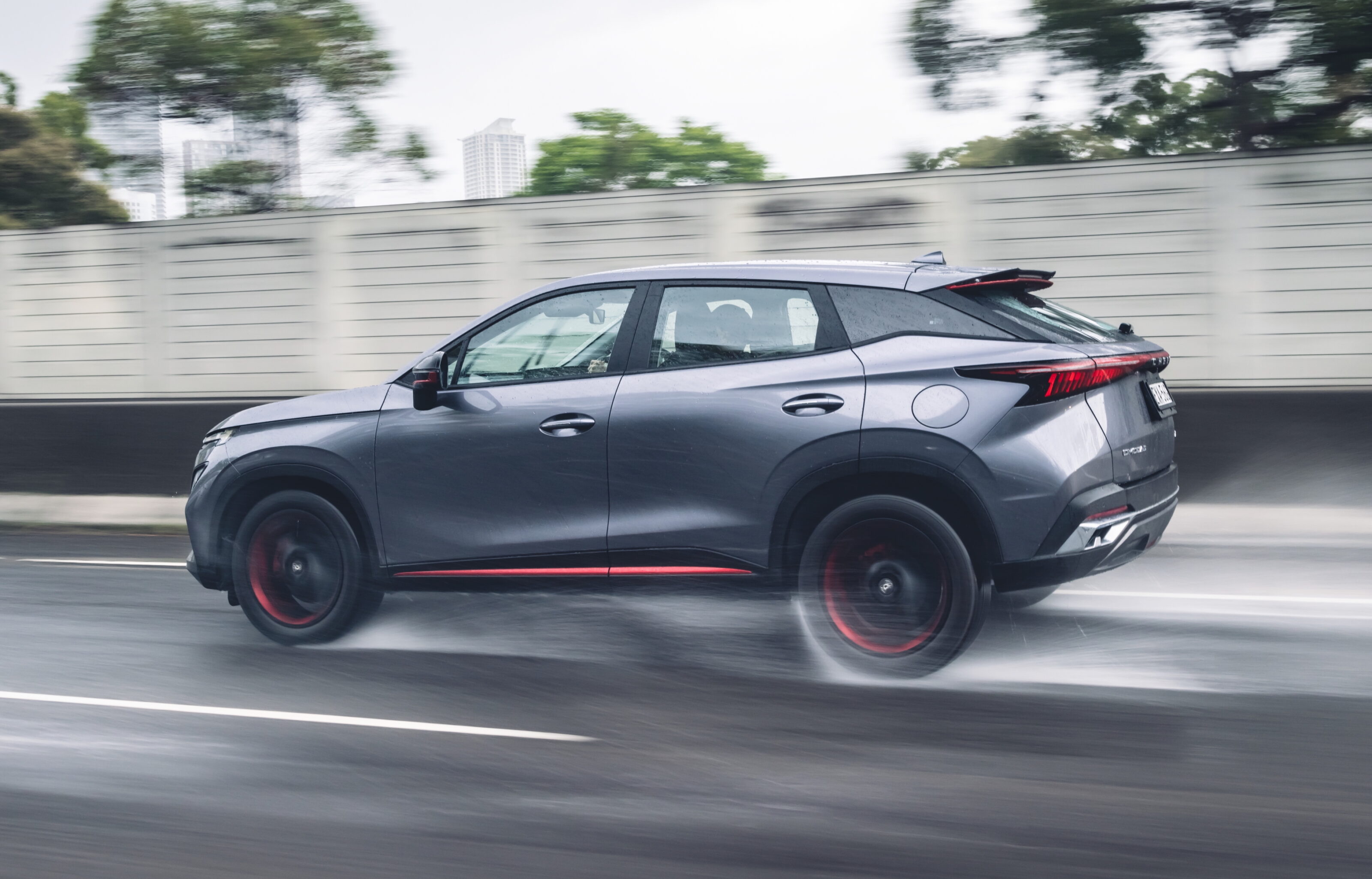
The Chinese brand – re-launching in Australia after an eight-year hiatus – has revealed the Omoda 5 will be priced from $29,900 before on-road costs.
Designed, developed and manufactured in China, the small SUV will wade into a fierce field, with established names such as Mazda CX-30 Pure ($31,210 before on-road costs) and Toyota Corolla Cross GX ($33,000 before on-road costs).
It will also compete against new Chinese names such as the GWM Haval Jolion Premium ($28,490 drive-away) and MG ZST Excite ($30,990 drive-away).
UPDATE: We’ve driven the Omoda 5 – watch the video or read the full review below.
There will be a single 1.5-litre turbo-petrol four-cylinder producing 108kW and 210Nm. The front wheels are driven via a constantly variable transmission (CVT).
A more powerful AWD Omoda 5 boasting a 1.6-litre turbo-petrol will follow later in the year, and an EV will land in 2024.
Note: Chery updated the specifications of the Omoda 5 before going on sale. In Australian testing, the 1.5-litre turbo is rated at 108kW/210Nm, not the 115kW/230Nm it is in China. This story has been updated to reflect that.
1
Meanwhile, the Tiggo 7 and Tiggo 8 SUVs are slated for Australian launch towards the end of 2023 to fill out the range.
There are currently 40 Chery dealers online across every state and territory in Australia, with more to be added in the coming weeks.
1
JUMP AHEAD
- 2023 Chery Omoda 5 pricing
- 2023 Chery Omoda 5 features
- Engine, drivetrain, and fuel economy
- Safety
- Dimensions
- Warranty and servicing
- Availability
1
2023 Chery Omoda 5 pricing
Prices exclude on-road costs.
1
2023 Chery Omoda 5 features
Omoda 5
Omoda 5 EX
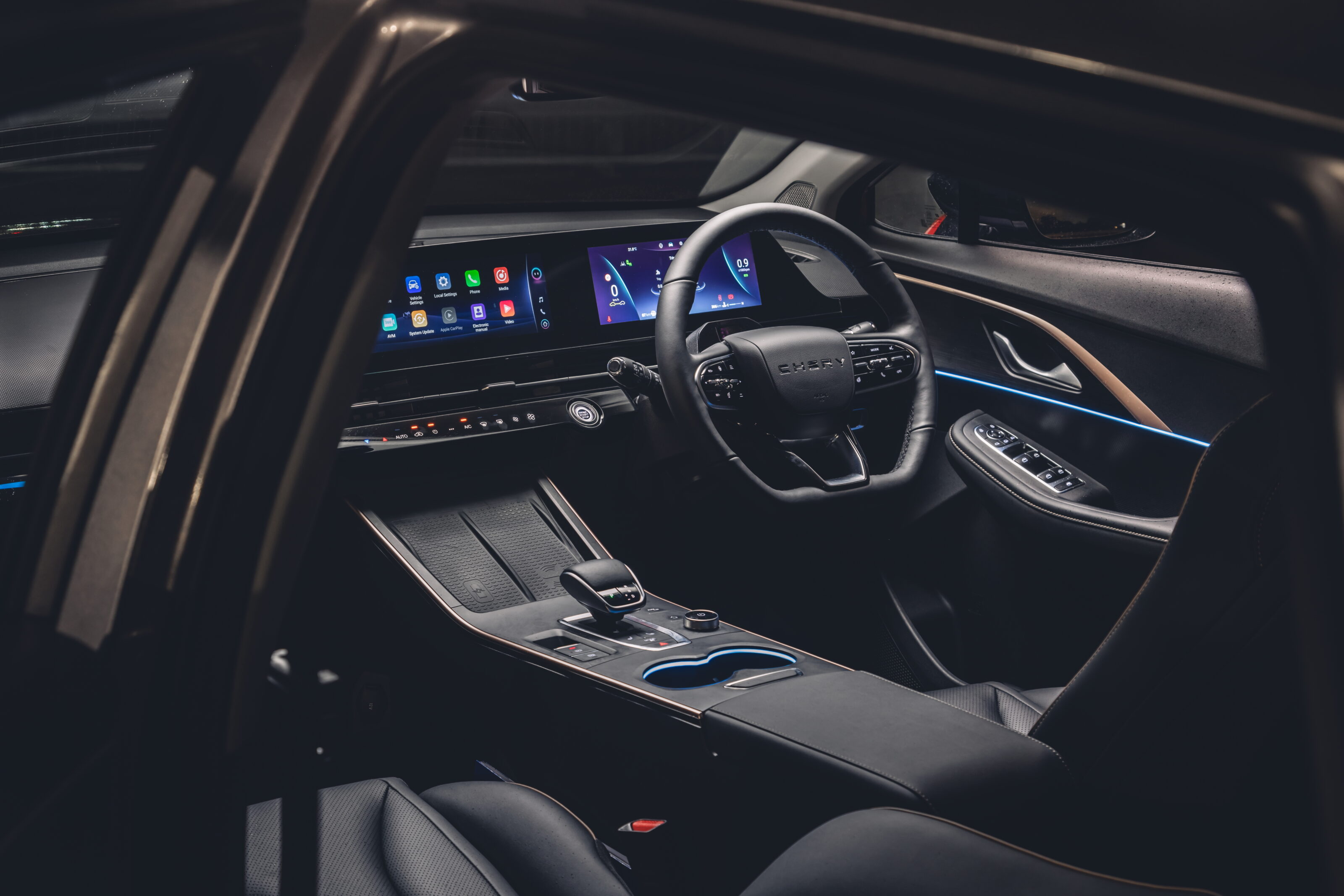
There’s no difference to suspension or powertrain, but the EX does add some extra luxury, including:
1
Engine, drivetrain, and fuel economy
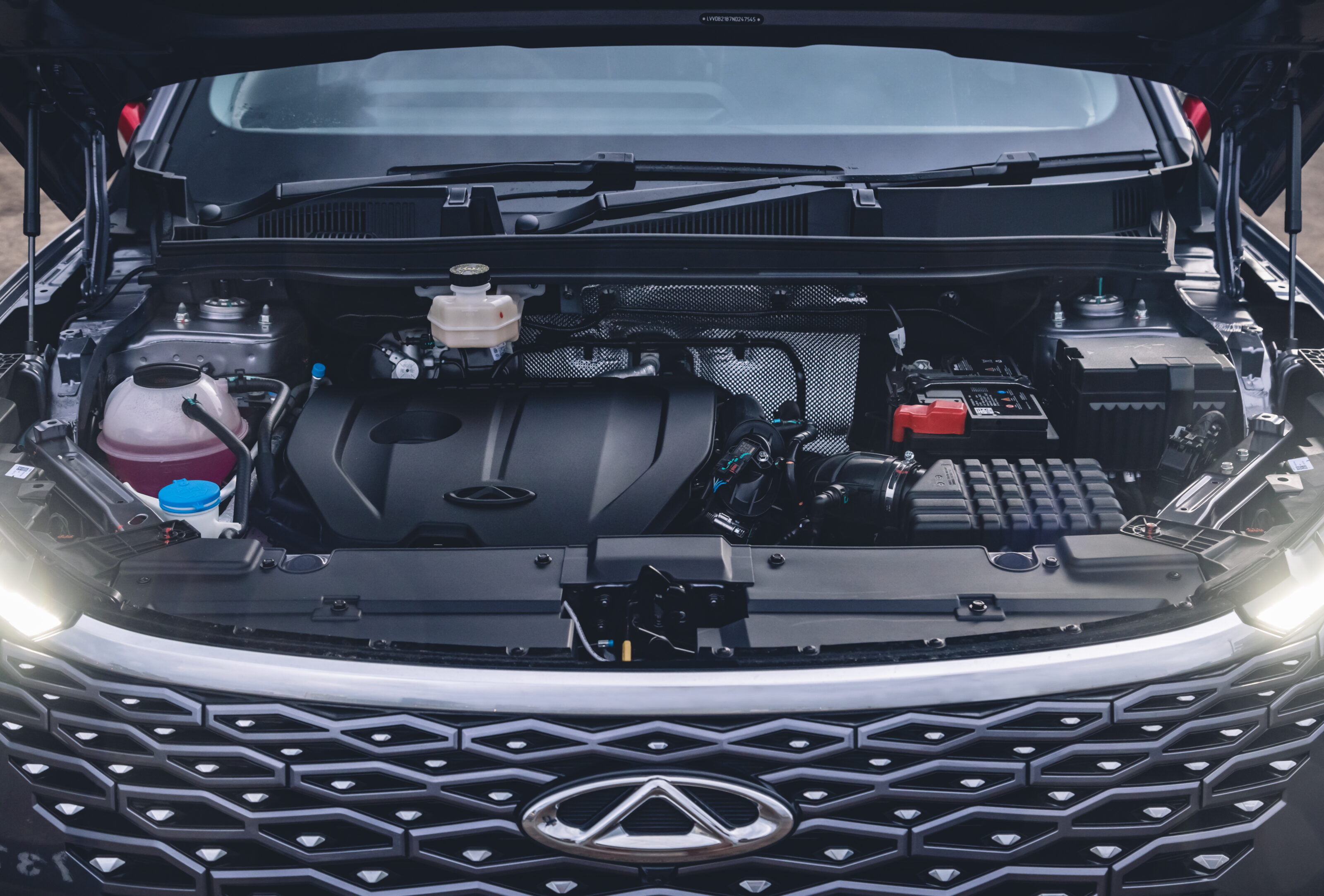
The Chery Omoda 5 debuts a new platform for the brand, unrelated to the Tiggo range sold elsewhere. The engines are also said to be new and are built in-house by Chery.
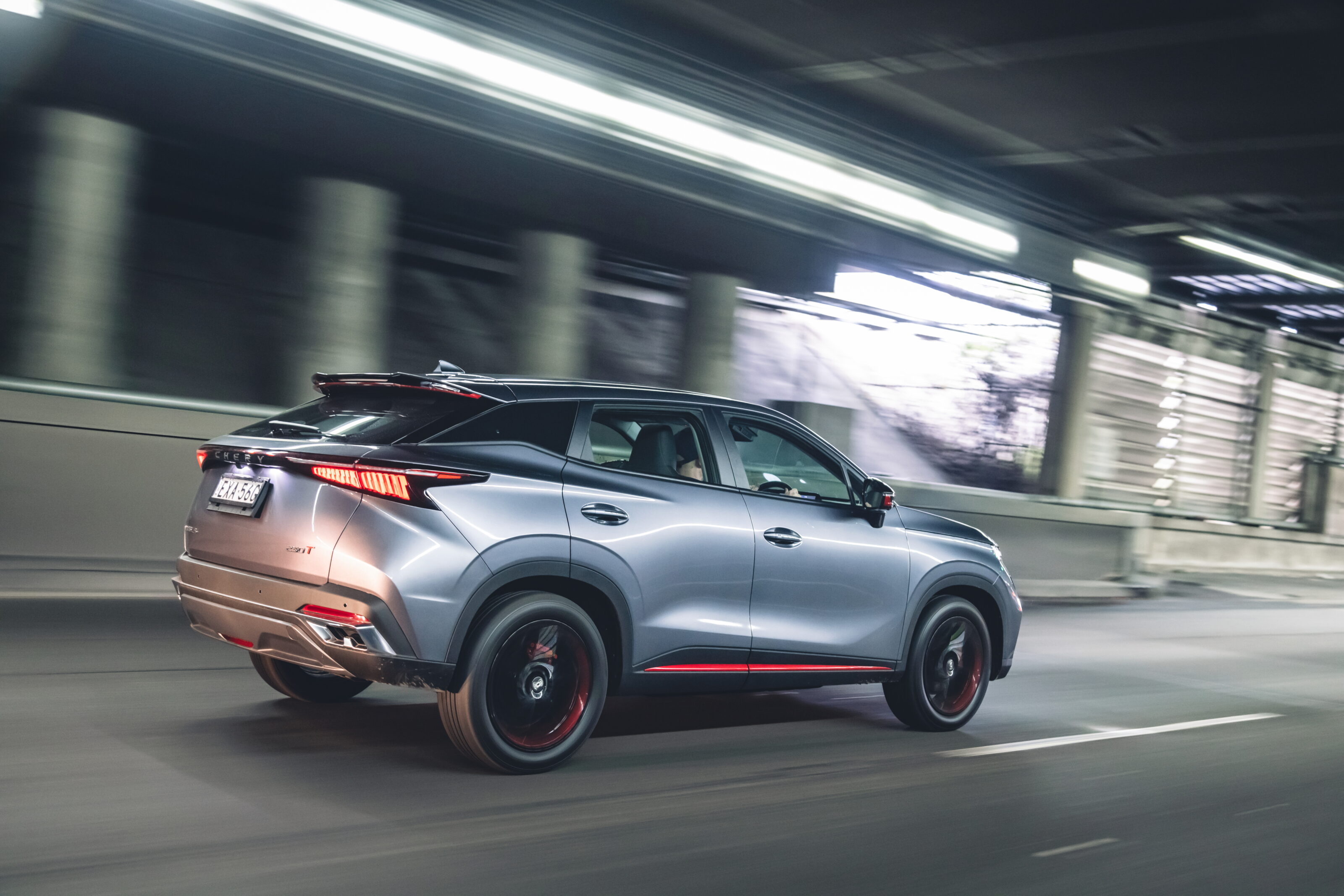
Initially it will be front-drive only, with a 108kW/210Nm 1.5-litre turbo-petrol engine – badged 230T – driving the front wheels via a CVT.
The Chery Omoda 5’s rated ADR fuel consumption is 6.9L/100km in the combined cycle.
More powertrains are expected, including a more powerful 1.6-litre turbo-petrol four-cylinder that employs a seven-speed dual-clutch transmission. It will be available in front- or all-wheel drive configurations in the second half of 2023. Outputs are 145kW/290Nm.
Chery has confirmed an electric variant will join its combustion counterparts in the first half of 2024, though outputs, range, and price are not being discussed. To compete with BYD Atto 3 and GWM Ora, it will need at least 400km in a long-range version and 150kW.
1
Safety
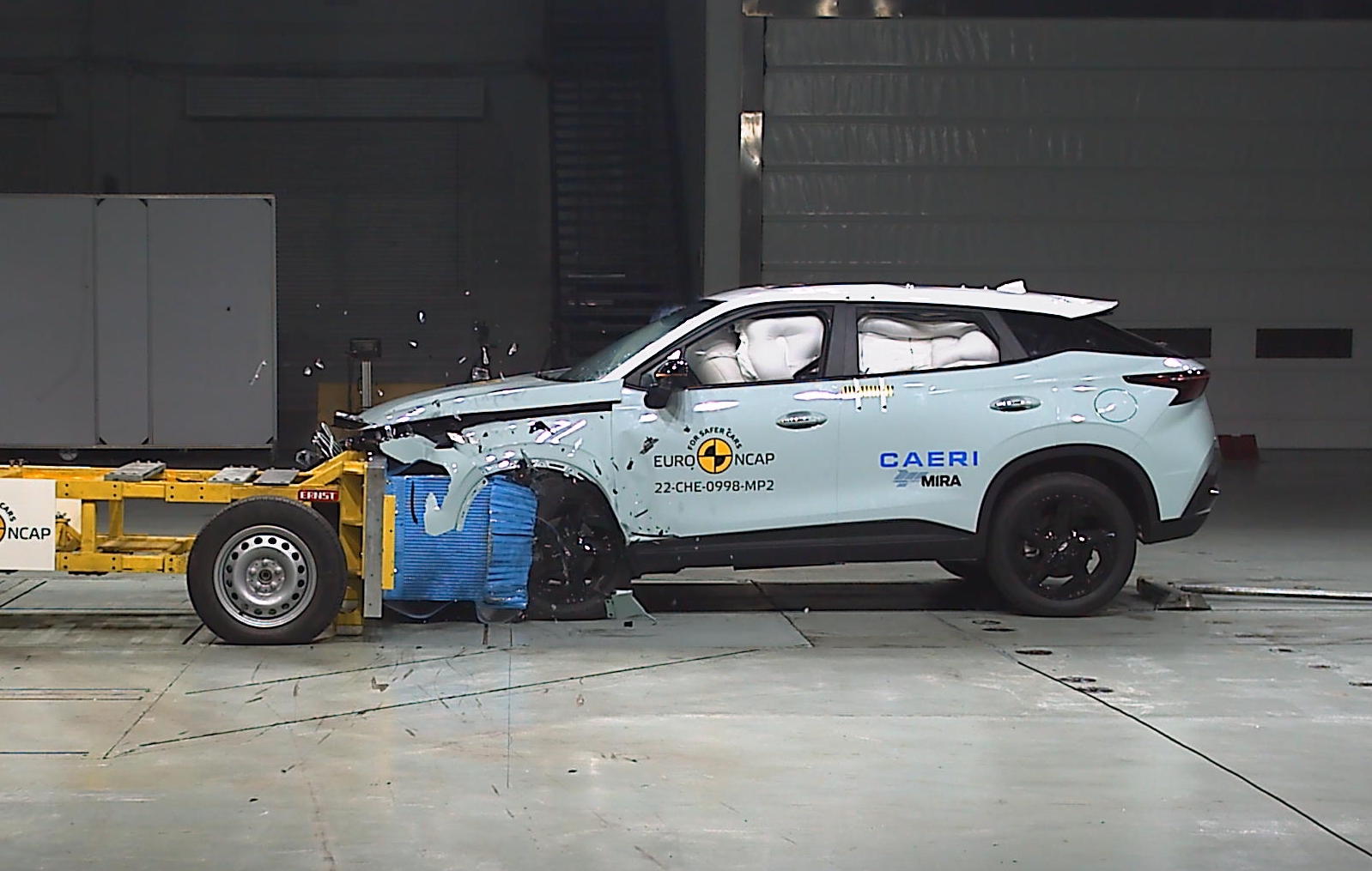
The Omoda 5 scored five stars in Euro NCAP crash testing when evaluated in 2022. It’s expected the rating will be ported across to a five-star ANCAP rating in due course.
With 16 active driver assistance features, including adaptive cruise control, lane-trace assist, blind-spot monitoring, rear cross-traffic alert, traffic-sign recognition and AEB with pedestrian, cyclist, and junction detection, the Omoda 5 scores well on paper.
We’ll have to wait and see whether the features suit Australian conditions, but Chery assures us that the vehicle has been subjected to a 12-month local evaluation program for suspension and adaptive driving aids.
1
Dimensions
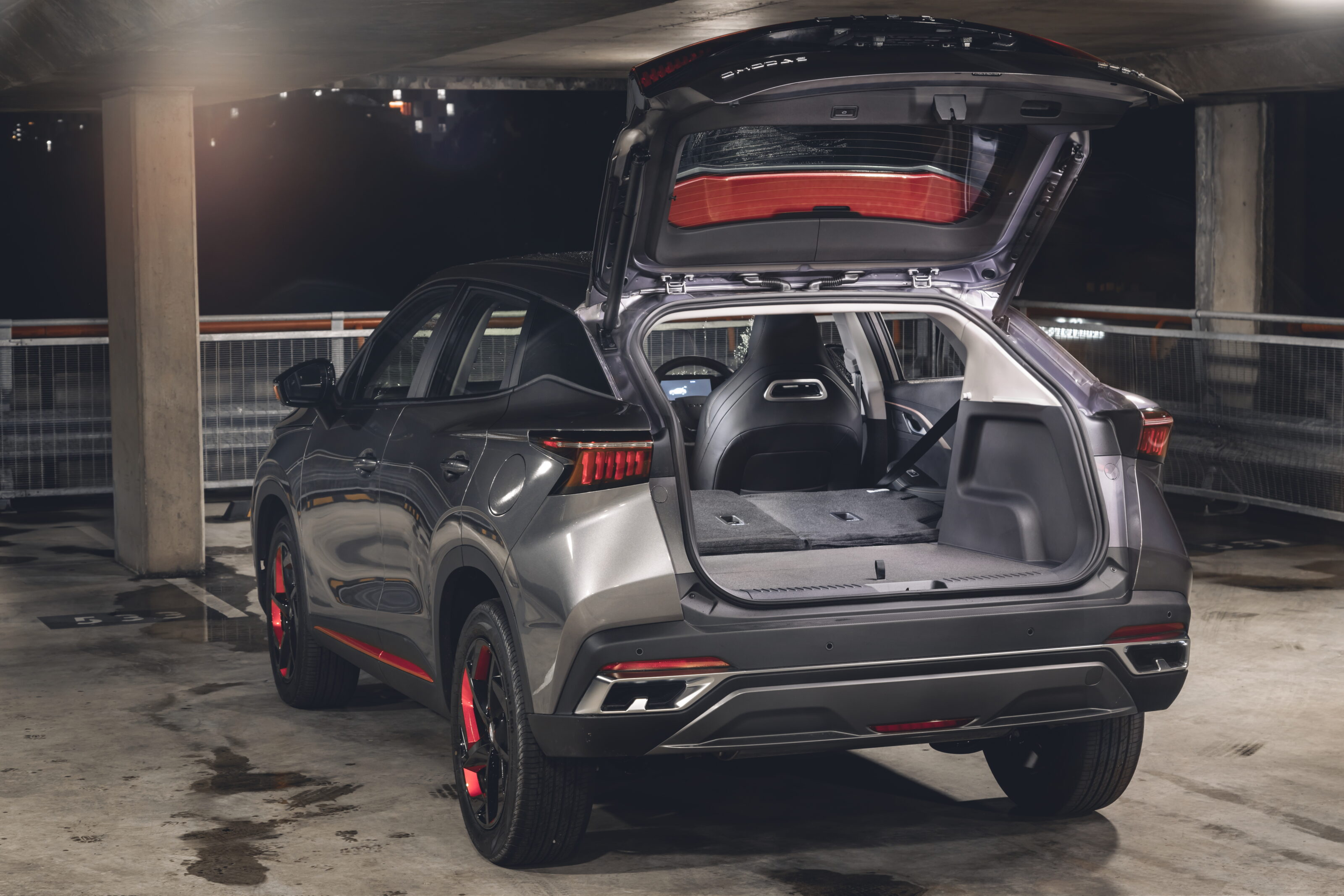
Measuring 4400mm long, 1830mm wide, and 1588mm tall, the Omoda 5 is similar in stature to a Mazda CX-30 or Toyota Corolla Cross. It rides on a 2630mm wheelbase, which makes the vehicle relatively roomy for a small SUV.
See how it stacks up against key rivals by clicking on the link below:
2023 Chery Omoda 5 boot space
Chery has not homologated boot space for Australian cars, but lists between 292-360L VDA. Our cars have a space-saver spare tyre beneath the boot, so expect the number to be on the lower end of that spectrum.
1
Warranty and servicing
Chery is relaunching in Australia with a convincing after-sales deal: a seven-year, unlimited-kilometre warranty complemented by the same period of roadside assistance, and seven years of capped-price servicing.
Service pricing is yet to be finalised, as are intervals for the Chery Omoda 5.
Availability
Chery hopes to capture eight per cent of the small SUV market share over the next 12 months, equating to around 11,000 sales, which would put the vehicle third in the top five small SUVs, and ahead of the Haval Jolion.
Chery will begin sales in March and is confident stock and supply will not be an issue for Australia. Even if stock is sparse at dealers, Chery said it will keep wait times below 80 days in Australia.
We’ll have a full 2023 Chery Omoda 5 review live shortly, so stay tuned to Wheels for the latest.
MORE
Everything Chery
The 2023 Chery Omoda 5 revives the Chinese brand’s Australian presence, following an earlier venture that ended in 2014.
Known for selling Australia’s cheapest car – the Daewoo Matiz look-a-like J1 – and a near-clone of a second-gen RAV4, the J11, the Chinese car-maker’s return promises to be longer-lived this time around.
But that all hinges on the Omoda 5 being successful. As a rarity, this small SUV is not just new for Australia, it’s Chery’s flagship global vehicle. It gets a brand-spanking platform, fresh engines, a sophisticated (on paper at least) technology package, actual dealer stock, and an entry price of $29,900 before on-road costs. Colour us intrigued.
Chery is renowned for daring to ‘copy’ mainstream manufacturer’s design details (the aforementioned J1 was embroiled in a lawsuit with General Motors China) and the new Omoda 5 upholds this tradition.
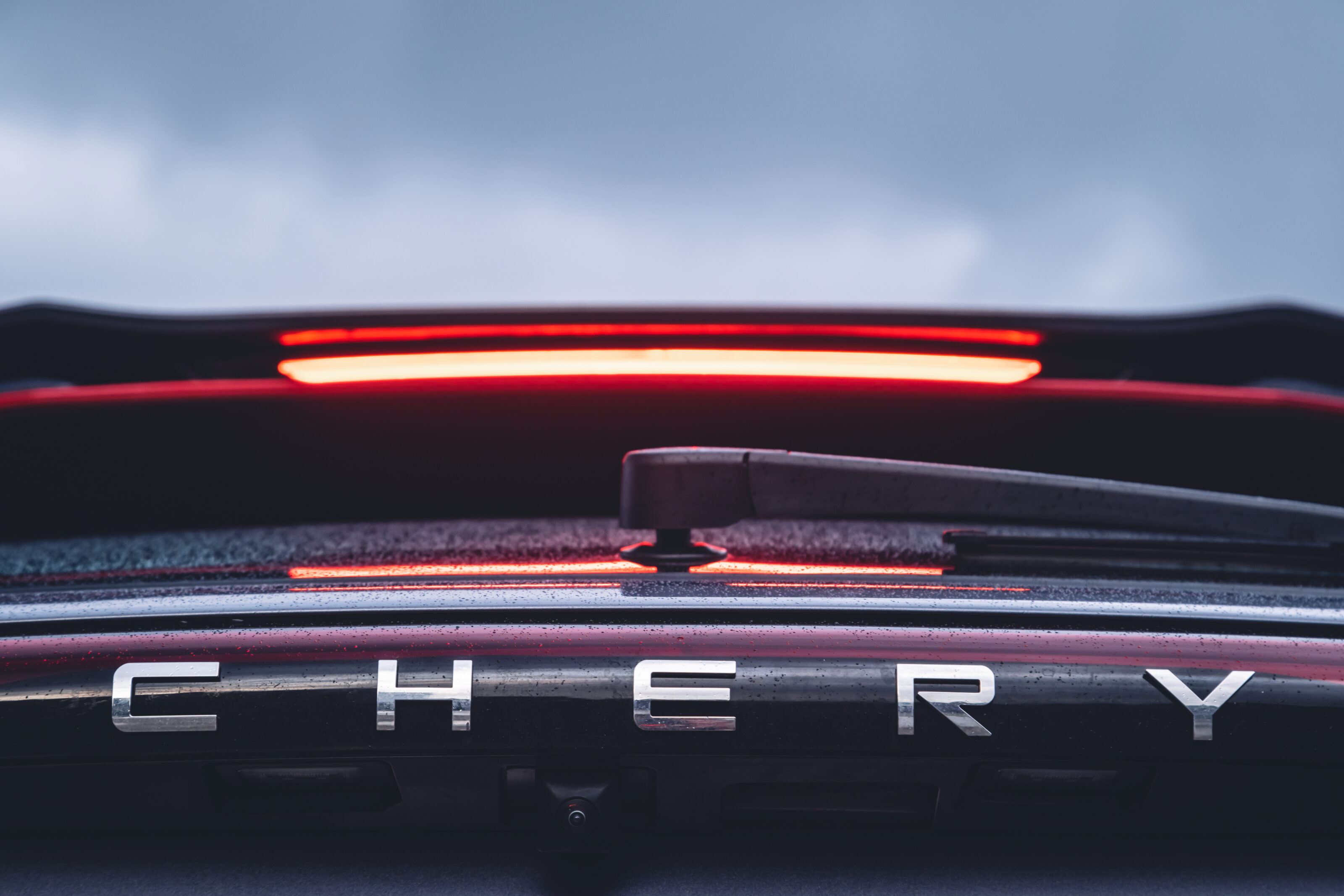
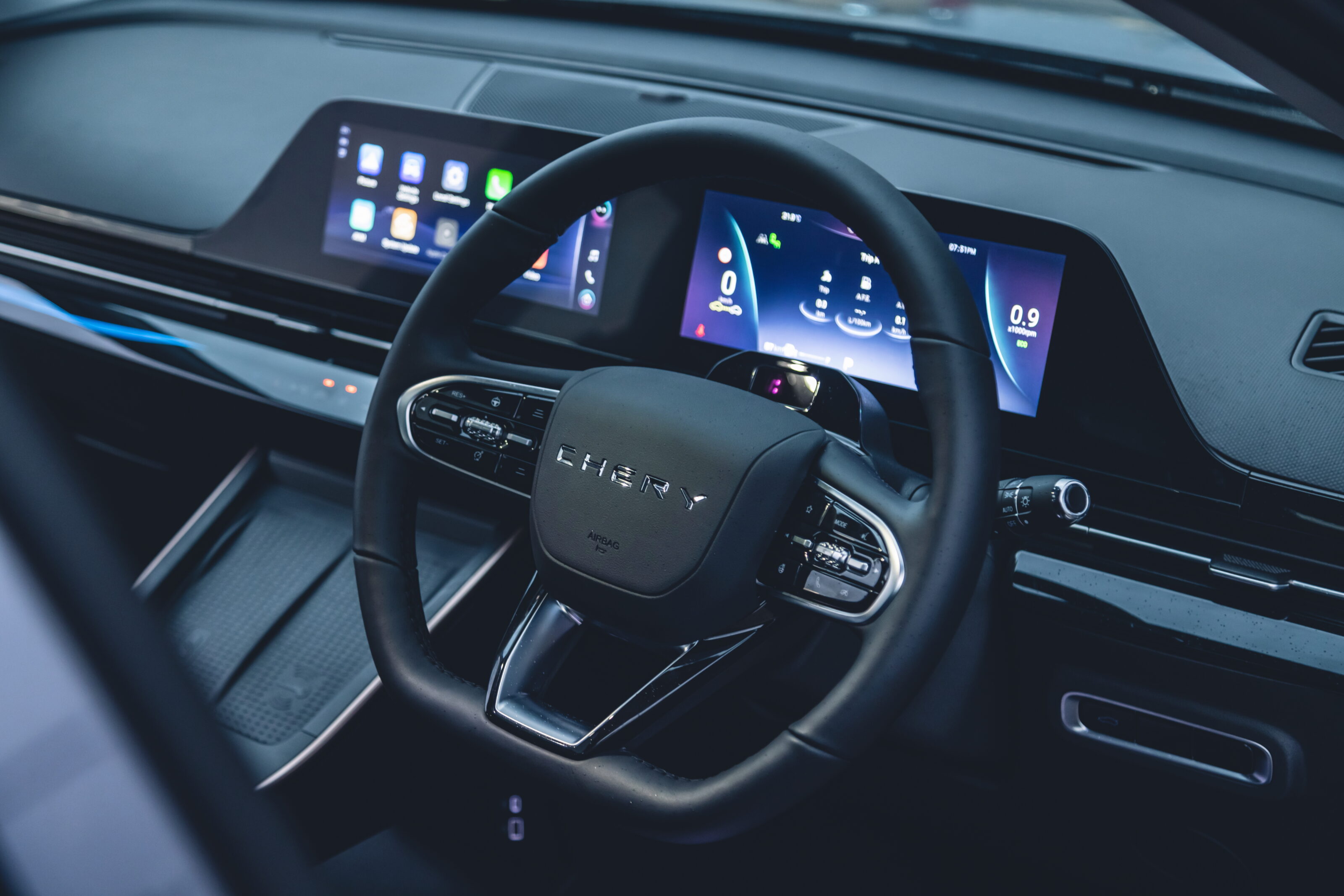
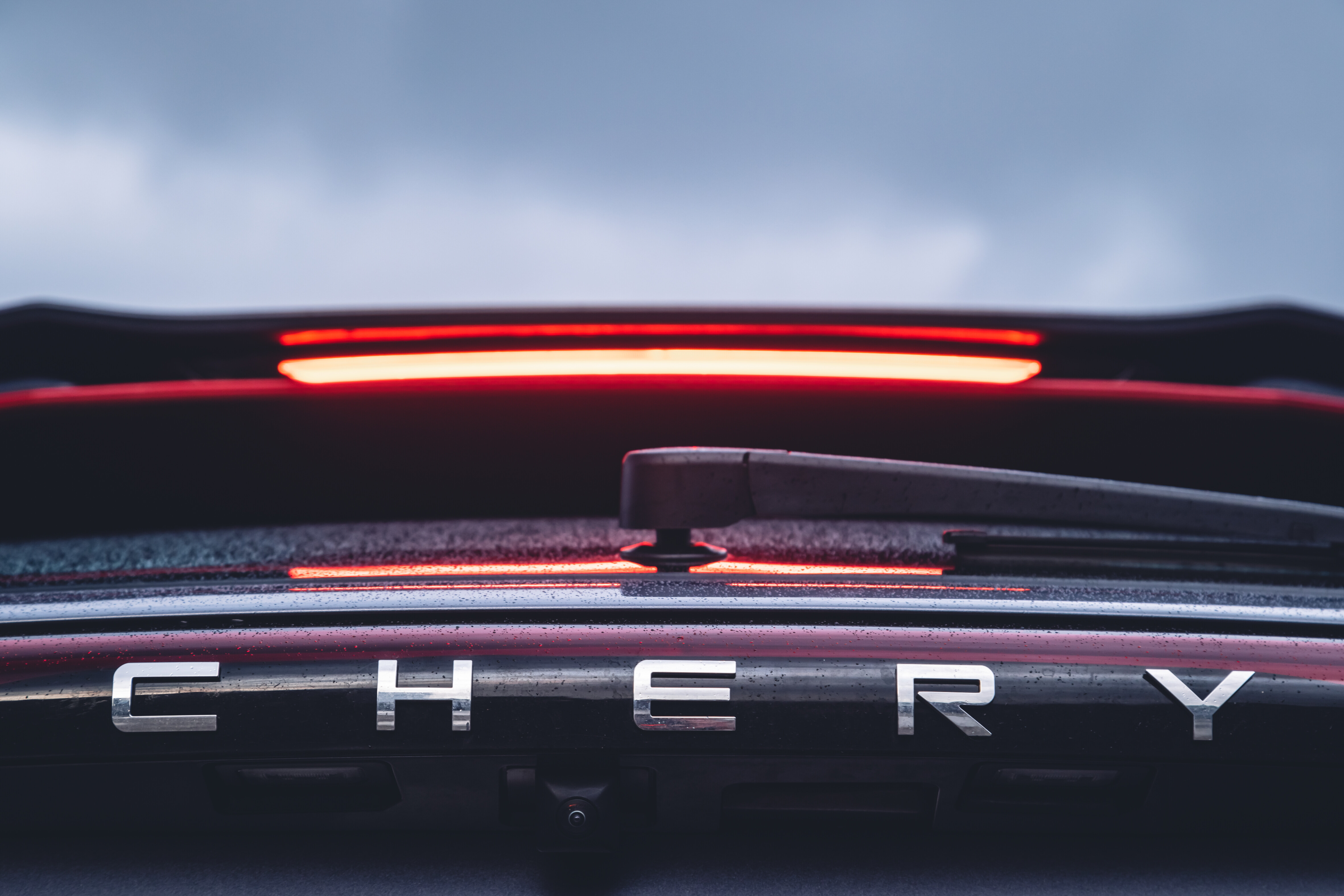
With a Tesla-inspired wireless charging pad, Kia-like infotainment system, Thor’s hammer LED lights reminiscent of Volvo, and a grille that reminds us of the Hyundai Tucson, the Omoda 5 is certainly derivative.
Still, it’s no Land Wind X7; the shape and combination of design flourishes are unique to the Omoda 5.
This small SUV also promises to be just the start for Chery here, the brand planning to add all-wheel drive Omoda 5 variants before new Tiggo 7 and Tiggo 8 medium and large SUVs arrive later this year, as well as an all-electric follow-up to the Omoda 5 in 2024.
What we’re here to talk about, though, is how the Omoda 5 performs as a package, everything from cheap entry price and high stock levels through to the incessant and occasionally dangerous safety aids.
1
JUMP AHEAD
- How much is it, and what do you get?
- How do rivals compare on value?
- Interior comfort, space and storage
- What is it like to drive?
- How much fuel does it use?
- How safe is it?
- Warranty and running costs
- VERDICT
- Specifications
How much is it, and what do you get?
The Chery Omoda 5 range starts at $29,990 before on-road costs.
Chery initially promised a national drive-away price for Australia, though backed down before launch due to unforeseen complexities and nuances between states.
Aside from colour choice (premium paint is $500), there are no options. Chery is encouraging early adopters to lodge a $500 pre-order with the inclusion of premium duco plus a choice of either a free first service or floor mats in return.
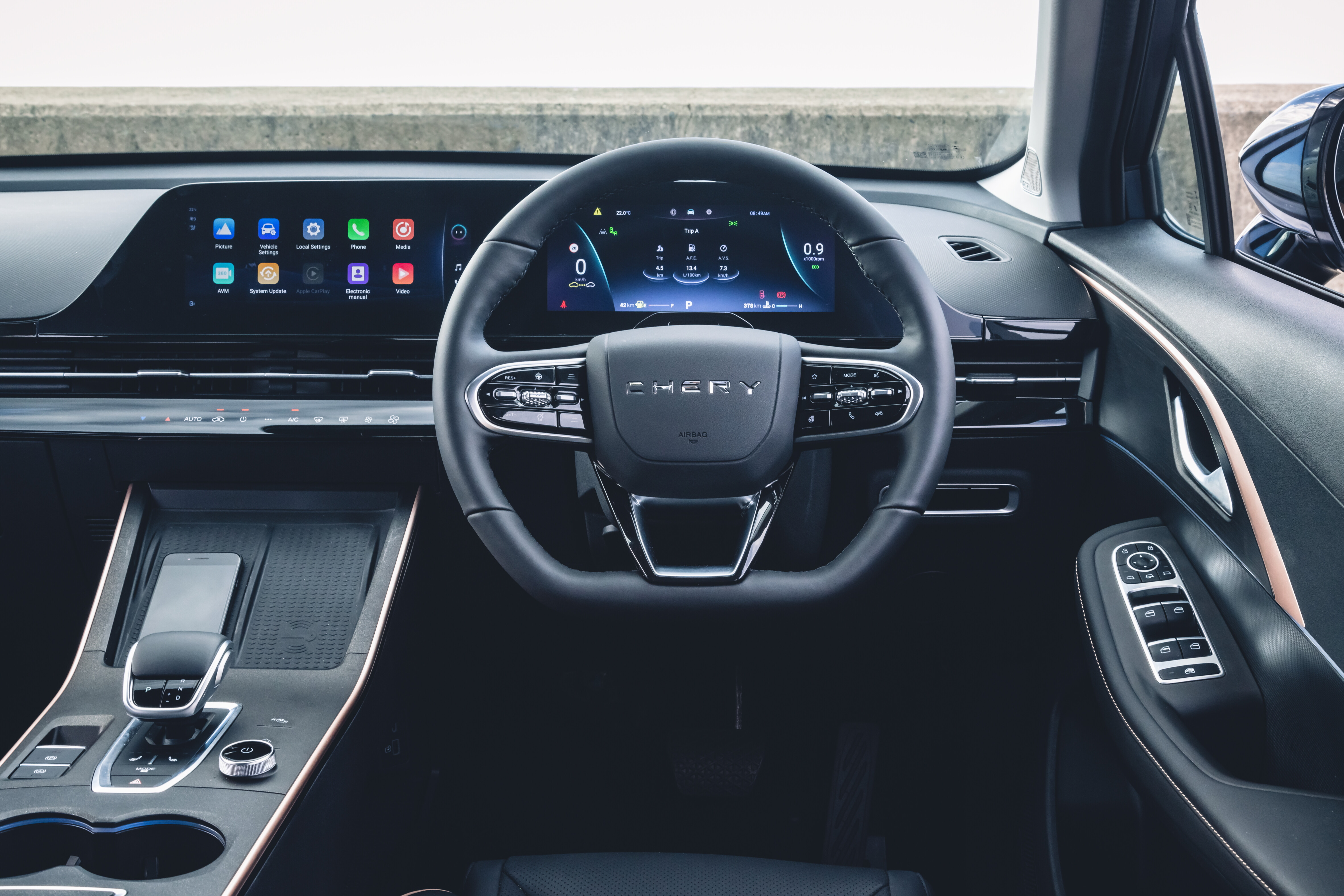
| Chery Omoda 5 features | |
|---|---|
| 18-inch alloy wheels | LED headlights |
| Vinyl upholstery | 6-way power driveru2019s seat |
| 10.25-inch touchscreen | 10.25-inch digital driveru2019s display |
| Wireless Apple CarPlay, wired Android Auto | u2018Hello Cheryu2019 voice control |
| 8-speaker Sony sound system | Acoustic windscreen |
| Wireless smartphone charging | Dual-zone climate control |
1
We drove the Omoda 5 EX – the sportier, upmarket trim that’s hard to miss with its red exterior accents that will probably fade quite quickly in Australia’s harsh sun. There are some extra goodies in the EX that justify its $3K premium.
| Chery Omoda 5 EX adds | |
|---|---|
| Opening sunroof | Red accented wheels, mirrors, brake calipers |
| Power adjust passenger seat | Seat heating |
| Power tailgateu00a0 | 360-degree camera |
1
How do rivals compare on value?
The Omoda 5’s entire schtick is to offer more for less.
To get similar levels of functionality from mainstream rivals such as the Mazda CX-30 G20 Touring SP ($40,110), Toyota Corolla Cross Atmos petrol ($43,550), and Kia Seltos GT-Line FWD ($41,500) – all before on-road costs – you’re over the $40K mark. That’s 20 per cent more than the equivalent Omoda 5.
When you look at other Chinese rivals – such as the MG ZS T Essence ($33,990 drive-away) and Haval Jolion Ultra petrol (also $33,990 drive-away) – the Omoda 5 is closer to the ballpark.
Some clever inclusions, such as the AI-powered ‘Hello Chery’ voice control (that makes you feel like Seinfeld’s hateable postman), help the Omoda 5 stand out on the showroom floor, but it ultimately offers a similar level of substance to direct rivals from China.
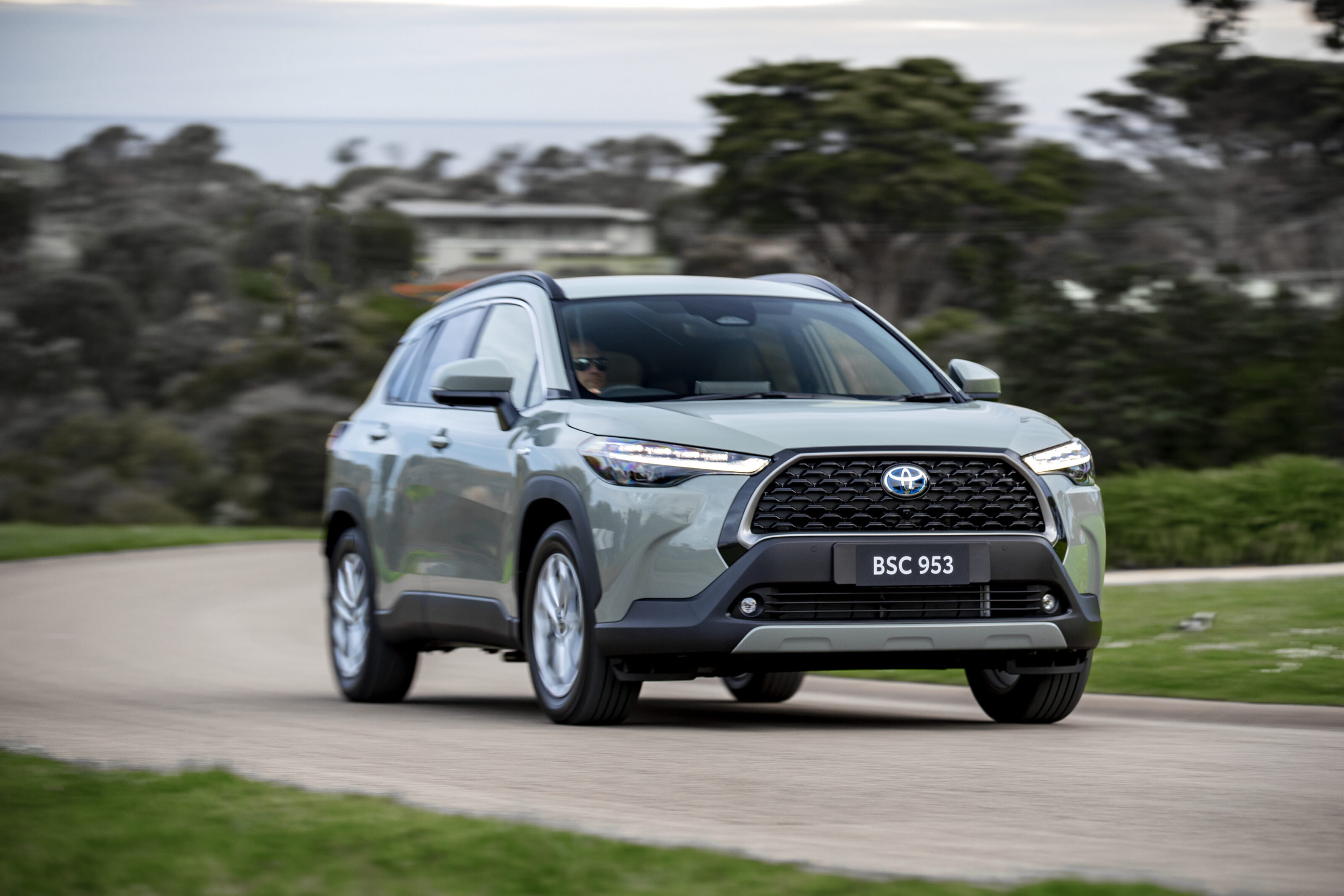
1
Interior comfort, space and storage
The Omoda 5’s cost-saving only becomes evident as you start hunting through the cabin.
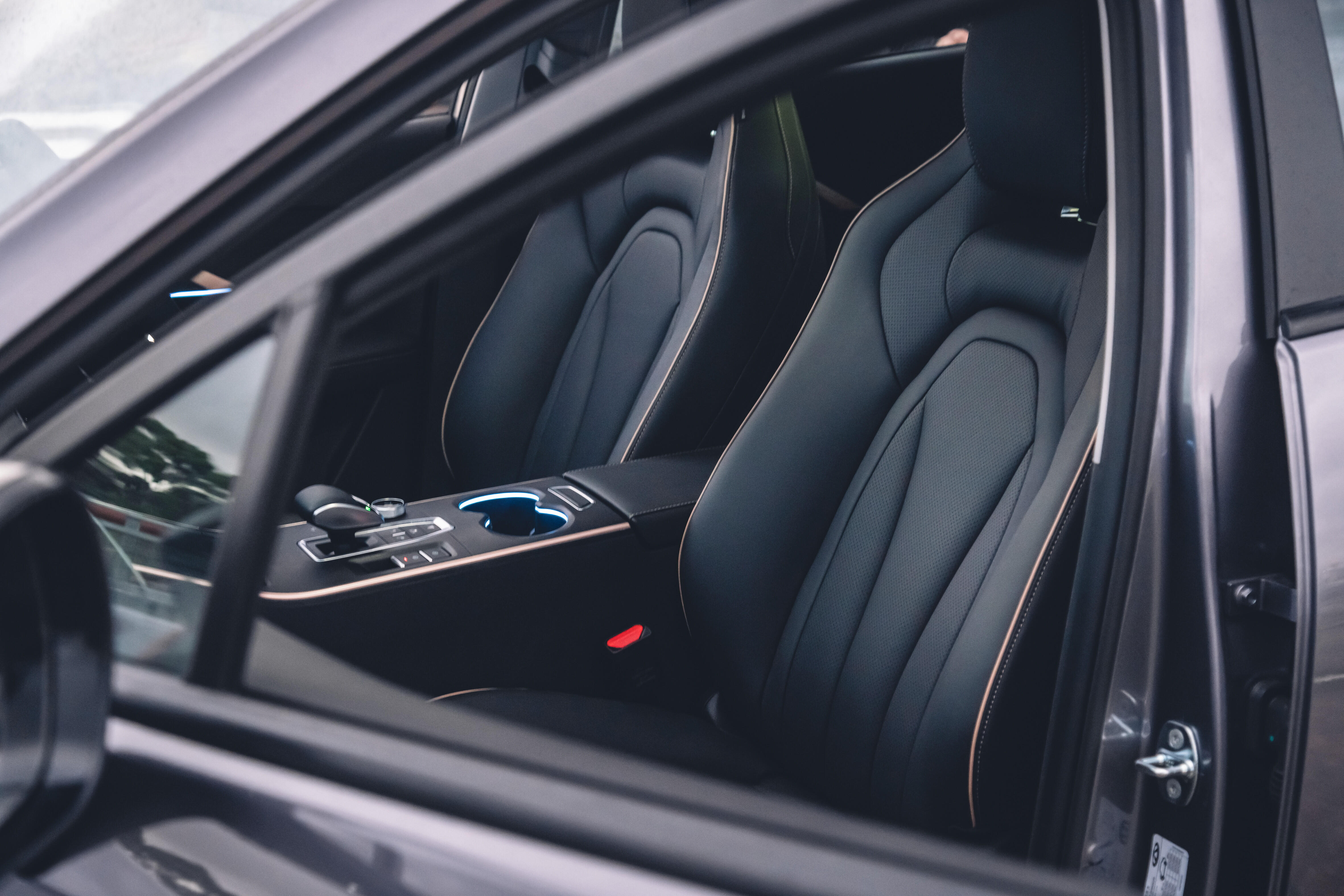
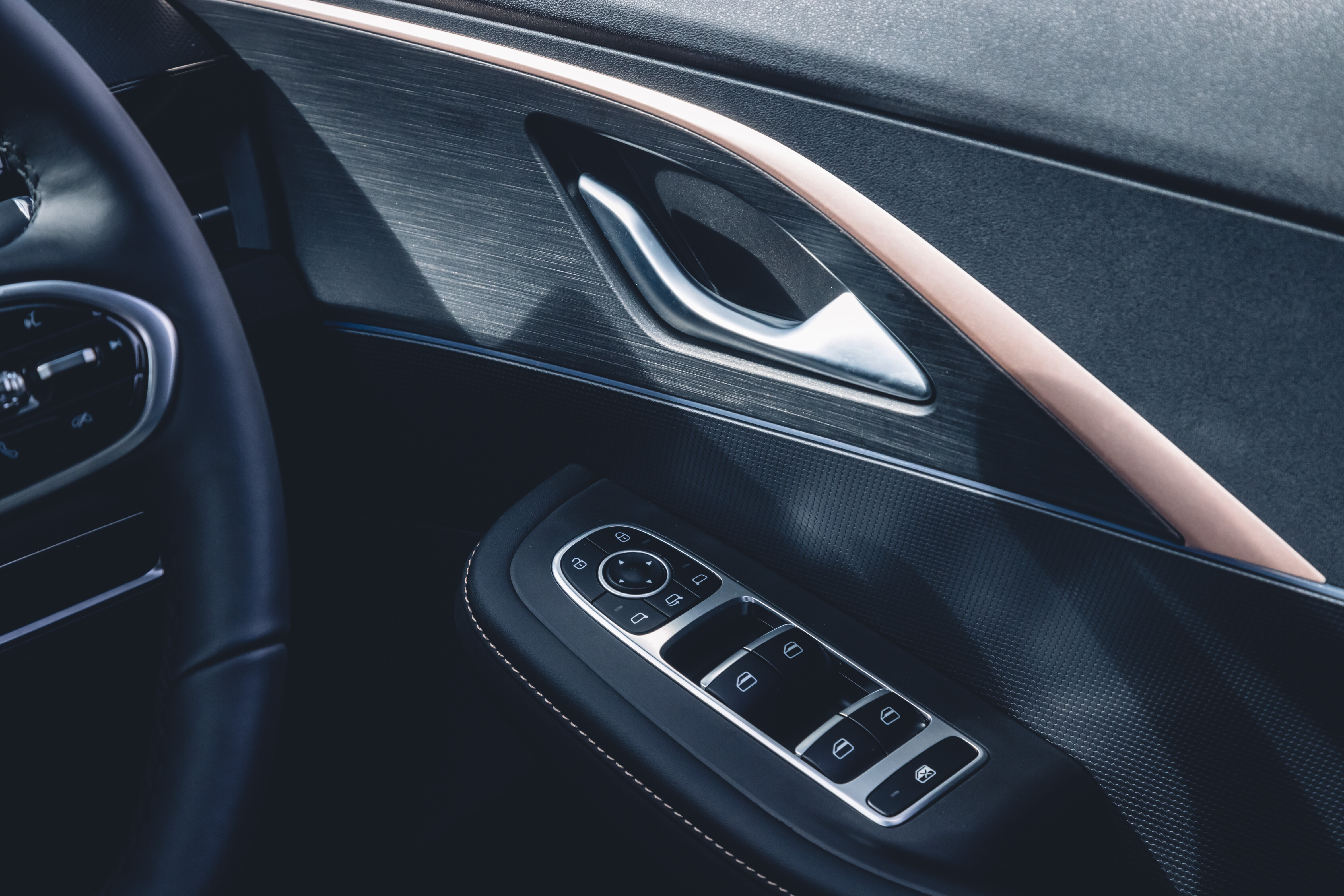
There’s a pleasing veneer of soft-touch plastics and piano-black infotainment system bezels that go a lot further than the horrific J11, but these give way to scratchy and inconsistent plastics below the beltline, a creaky touchscreen, and a centre bin that doesn’t open properly because the front seats’ bolsters are too fat.
For the less concerned prospector, these quirks are unlikely to spoil the joy of keeping an extra $8K in your pocket. Having poked a few Omoda 5s, though, we do worry about build discrepancies between each vehicle. For example, our test car had a small ridge running through the sheet metal next to the sunroof on one side, but not the other.
Chery does deserve praise for getting Omoda 5’s driving position mostly right. Although the seat base isn’t adjustable for tilt, there is respectable under-thigh support. The steering wheel telescopes and you can adopt a natural driving position – that’s more than can be said for Haval’s Jolion.
1
The Omoda 5’s infotainment software is easier to use than Haval’s (in fact, it’s probably better than VW’s), and presented more attractively than MG’s. There’s no in-built navigation though, and Apple CarPlay was vexingly laggy during our test.
Cabin storage is thoughtful and, once you do get that central bin open, you’ll find it’s deep and has an openable vent connected to the HVAC, great for keeping drinks chilly. You can also pop out the bottom of one cup holder (though we have no idea why). There’s also extra storage beneath the centre console for bags, with USB-A, USB-C, and 12-volt sockets.
As stylish as the Tesla-style twin wireless charging pad is, only one side actually inductively charges your smartphone. The other is not entirely useless at least, as it still holds a phone quite nicely.
1
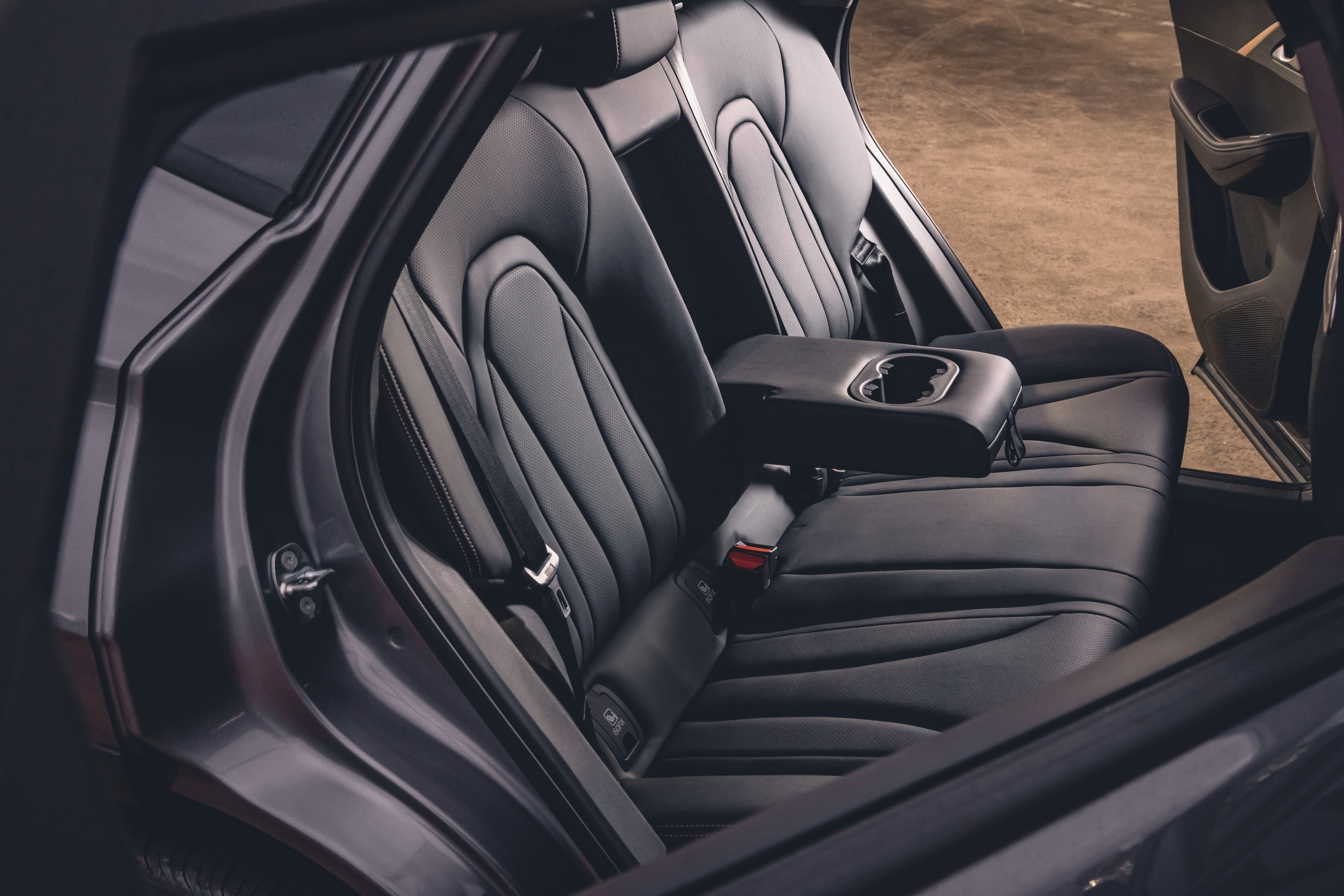
The Omoda 5’s sloping roofline also hurts its rear seat space. Those under 180cm will be fine, but taller riders will be compromised for headroom and legroom. Toe room is also compromised owing to the high-set floor; it’s almost like an EV. That’s not uncommon in this segment, suiting empty-nesters and young couples that typically choose small SUVs.
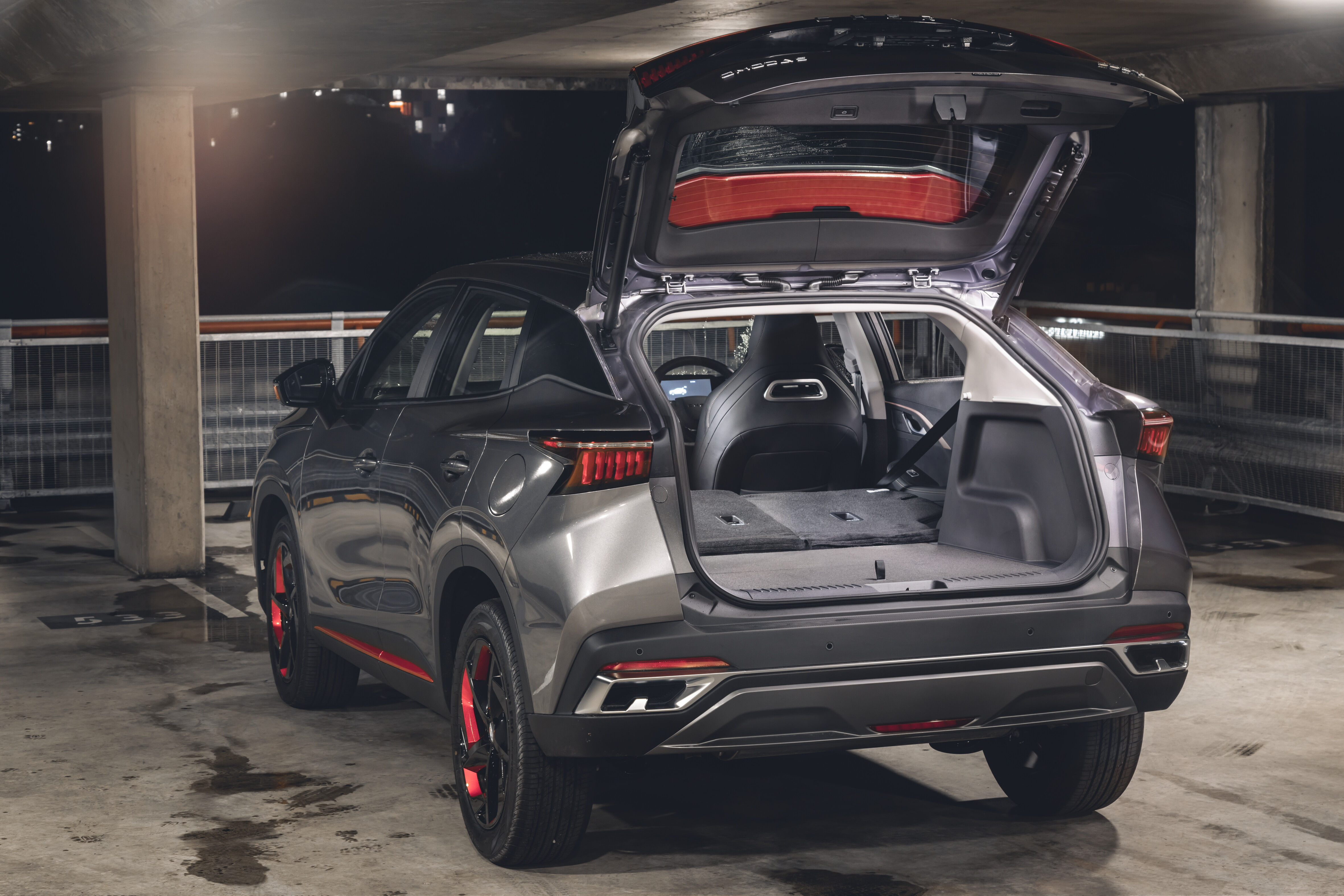
Chery could do with studying some European boots, as the Omoda 5’s 360L luggage compartment does without shopping bag hooks or anything to separate it from rivals. There’s a space-saver spare tyre beneath the boot floor, and the seats fold flat in a 60:40 split.
1
What is it like to drive?
To be fair, there are few truly terrible cars on sale anymore. It used to be different, with some real clangers (that’s you, SsangYong Stavic), but there’s currently a level of driving homogeneity across the industry from which the Omoda 5 benefits.
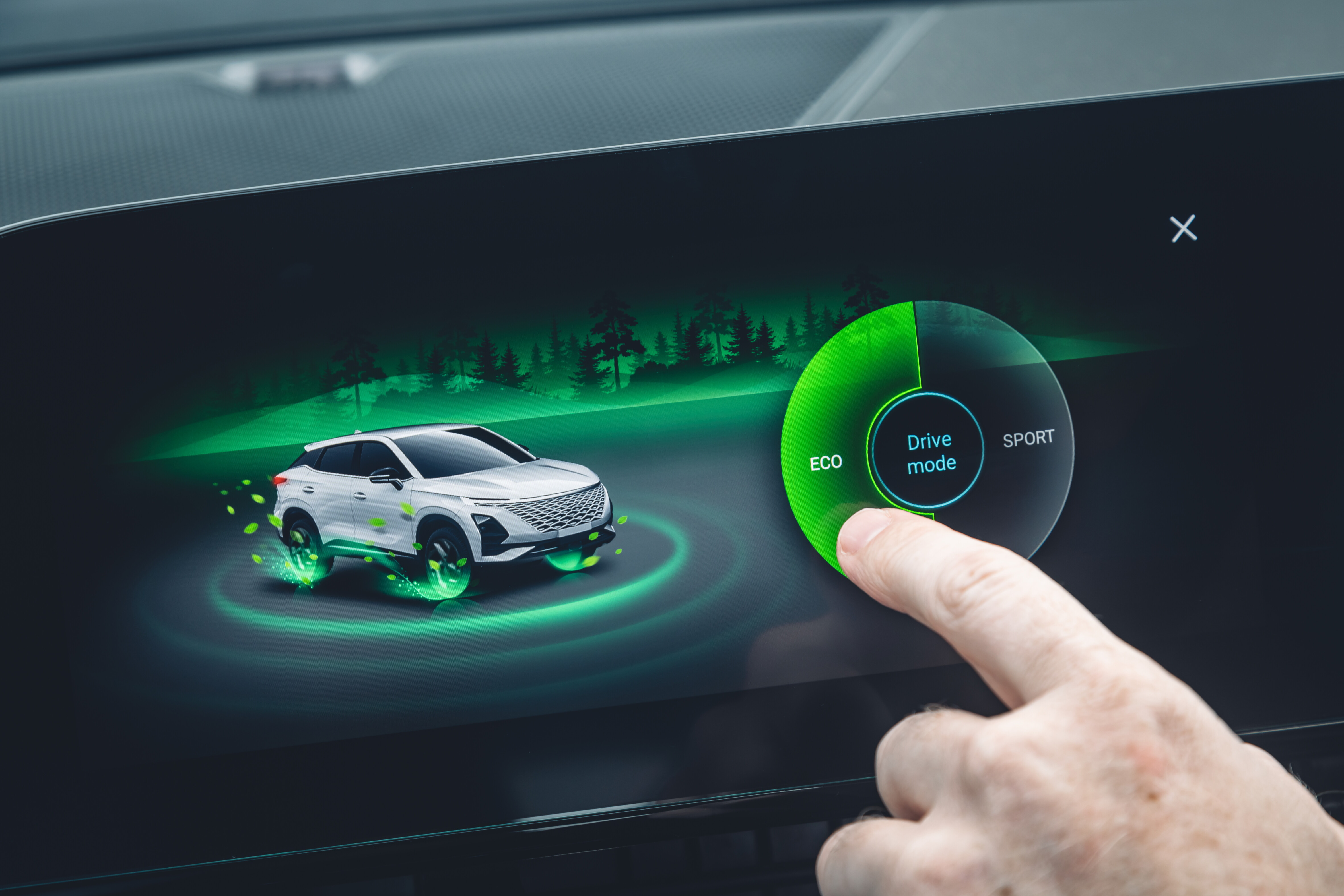
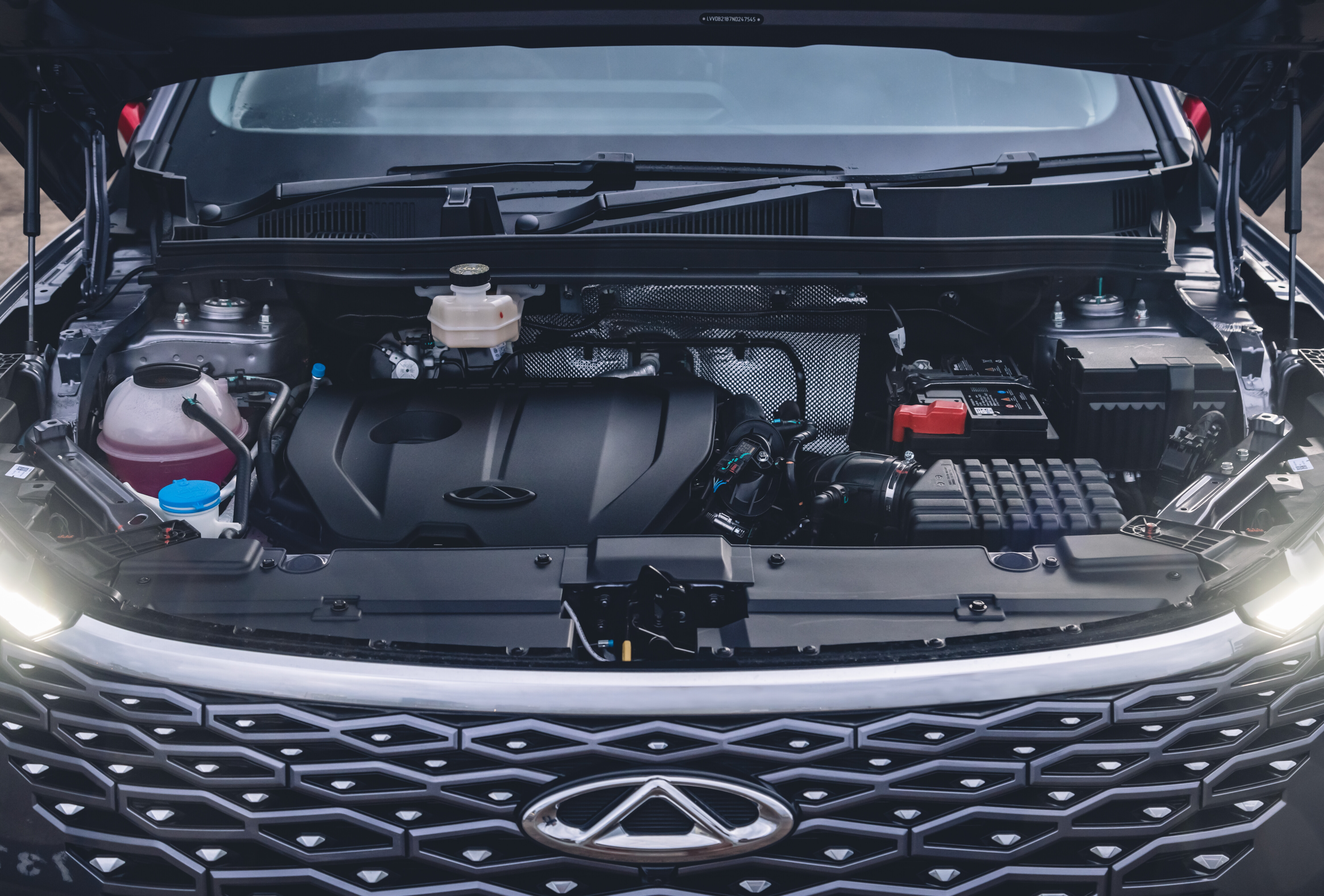
A relatively hushed and tractable in-house 1.5-litre turbo-petrol four-cylinder develops 108kW at 5500rpm, and 230Nm from 1750-4000rpm. Oddly, the Omoda 5 is rated at 115kW/230Nm in its home market (hence the 230 badging on the rear), Chery says this is because “the Australian standard is different to the Chinese standard when it comes to measuring equipment.”
The engine is hooked up to a CVT with nine stepped ratios, it does a better-than-average job of getting grunt to the front wheels. The Chery’s throttle calibration is a bit peculiar – a touch of gas sees it jump away from the lights like a scalded cat, yet it responds lazily at high speeds.
Comparisons
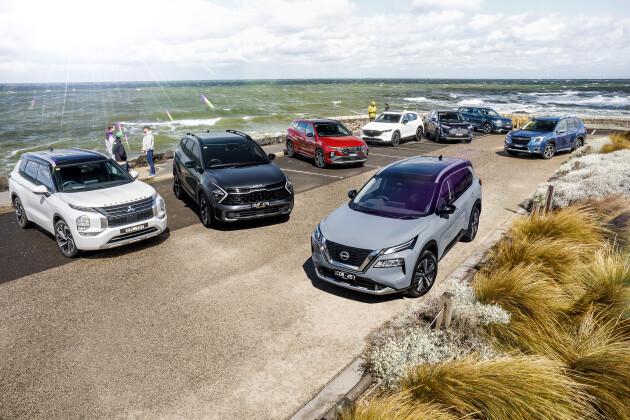
Medium SUV comparison: 2023 Mega Test
Thinking of buying a new mid-size SUV this year? We test eight of the best and most popular contenders to see where you should spend your money
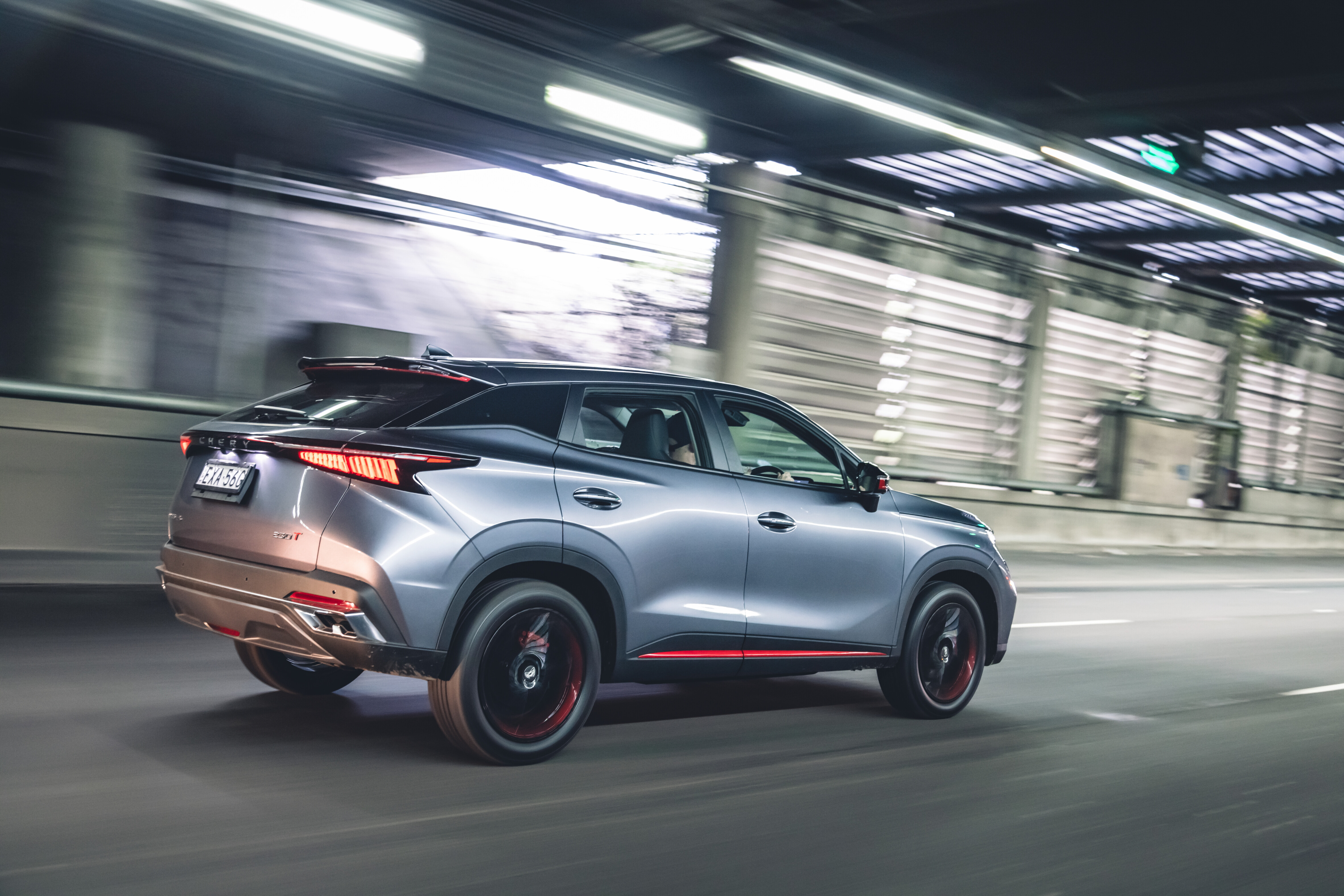
The steering is light and vague with a big dead spot on-centre, but it’s generally unobtrusive. Suspension is a simple set-up of struts at the front and a torsion beam out back. Chery has tuned the handling with safety a long way ahead of dynamics, so a chronic understeerer the Chery may be, but that’s safer and more predictable than a wayward back end.
A weak point is the 215/55R18 GitiComfort F50 tyres, with little grip in the dry and an even more approximate relationship with wet bitumen.
Small, repeated bumps are enough to disturb passengers at low speeds, but the Omoda 5 does quietly surprise when it comes to ride quality, especially when it comes to big hits which the Chery absorbs well without sacrificing body control.
1
How much fuel does it use?
Fuel consumption is respectable. The official ADR combined consumption rating for the Omoda 5 is 6.9L/100km. We managed a respectable 8.4L/100km, according to the trip computer.
The Omoda 5 has a 50-litre fuel tank and will accept 91 RON unleaded. A more powerful AWD variant is due to land this year, and an electric version is promised for 2024.
1
How safe is it?
Although it received five ANCAP stars and is equipped with a litany of safety features, the Omoda 5’s driver assistance package is its kryptonite. More than frustrating, the Omoda 5 is borderline dangerous.
In Sydney’s quiet and perfectly marked M8 tunnel, the Omoda 5’s adaptive cruise control and lane-trace assist systems were jerky but fine.
Introduce traffic, bright sunshine or mediocre line markings, though, and the Omoda 5’s semi-autonomous features are swiftly reduced to hindrances. Then there’s the driver attention monitoring system, which sounds a warning every time you look in the mirrors to merge.
1
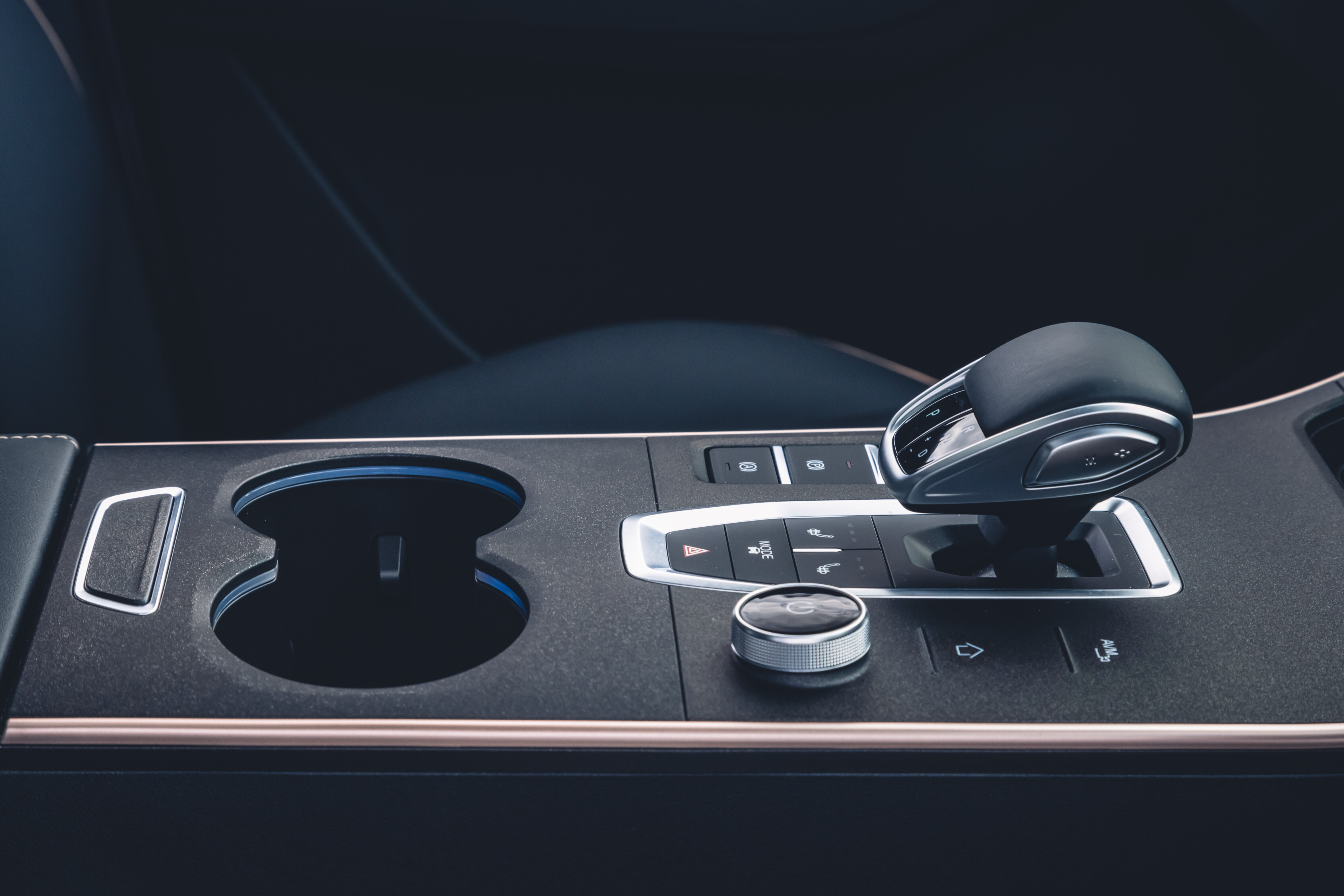
The emergency lane-keep assist, though, is what’s frightening. Sensing a departure from the lane (despite 30cm between rubber and white paint), the Omoda 5 will yank the wheel from your grasp firmly enough to introduce a moment of yaw, then wrestle itself inside the lane, before packing in and letting you drift out of the road markings, all the while beeping inanely.
The systems turn on every time you start the car, too, and disabling them requires several layers of menu hopping.
1
Warranty and running costs
Chery is launching in Australia with a seven-year, unlimited-kilometre warranty to give buyers peace of mind.
This is complemented by an equal period of capped-price servicing. The first five scheduled services (due every 12 months or 10,000km) are pretty affordable and at $280 per visit it’ll cost you $1400 over the first five years or 50,000km.
You’ll pay more for the sixth and seventh services, but at $2086.58 the Omoda 5 promises to be a more affordable car to maintain over seven years than a Kia Seltos ($3040).
VERDICT
For all its appetite-whetting warranty support, affordable servicing and cheap price of entry – not to mention healthy stock levels – the Chery has a fatal flaw.
That’s a shame because, in a sales scenario, the otherwise competent Omoda 5 represents great value. The technology suite is user-friendly, with standard voice commands making it even easier to interact with, and the spacious interior is well-appointed for the price.
Add to that reasonably well-tuned suspension and a safer chassis than Haval’s Jolion, and the Omoda 5 really does make a case for itself.
Yet, the poorly calibrated – and borderline dangerous – active safety systems spoil the Omoda 5’s competitive edge.
It’s worth test-driving one out of curiosity, but until the brand invests in proper driver aid calibration, lower-grade established rivals such as the Kia Seltos Sport, Corolla Cross GX, and Mazda CX-30 Pure remain vastly better buys.
MORE
Everything Chery
MORE
SUV Buyers Guide
| Omoda 5 EX | |
|---|---|
| Price | $32,900 + on-road costs |
| DRIVETRAIN | |
| Engine | 4cyl, 1.5-litre, dohc, turbo-petrol |
| Layout | front engine, transverse, front-wheel drive |
| Power | 108kW @ 5500rpm |
| Torque | 210Nm @ 1750-4000rpm |
| Transmission | continuously variable, 9 stepped ratios |
| CHASSIS | |
| Body | steel, 5-door, 5-seat small SUV |
| L/W/H/Wu2013B | 4400/1830/1588/2630mm |
| Weight | 1393kg |
| Boot | 360L |
| Fuel/tank | 91 RON / 50 litres |
| Economy (combined ADR81/02) | 6.9L/100km |
| Suspension | Front: struts, coil springs, stabiliser bar. Rear: torsion beam, coil springs |
| Steering | electric rack-and-pinion, 2.4 turns lock-lock |
| Front brakes | sliding single-piston caliper |
| Rear brakes | sliding single-piston caliper |
| Tyres | GitiComfort F50 |
| Tyre size | 215/55R18 |
| SAFETY | |
| ANCAP rating | 5 stars (2023) |
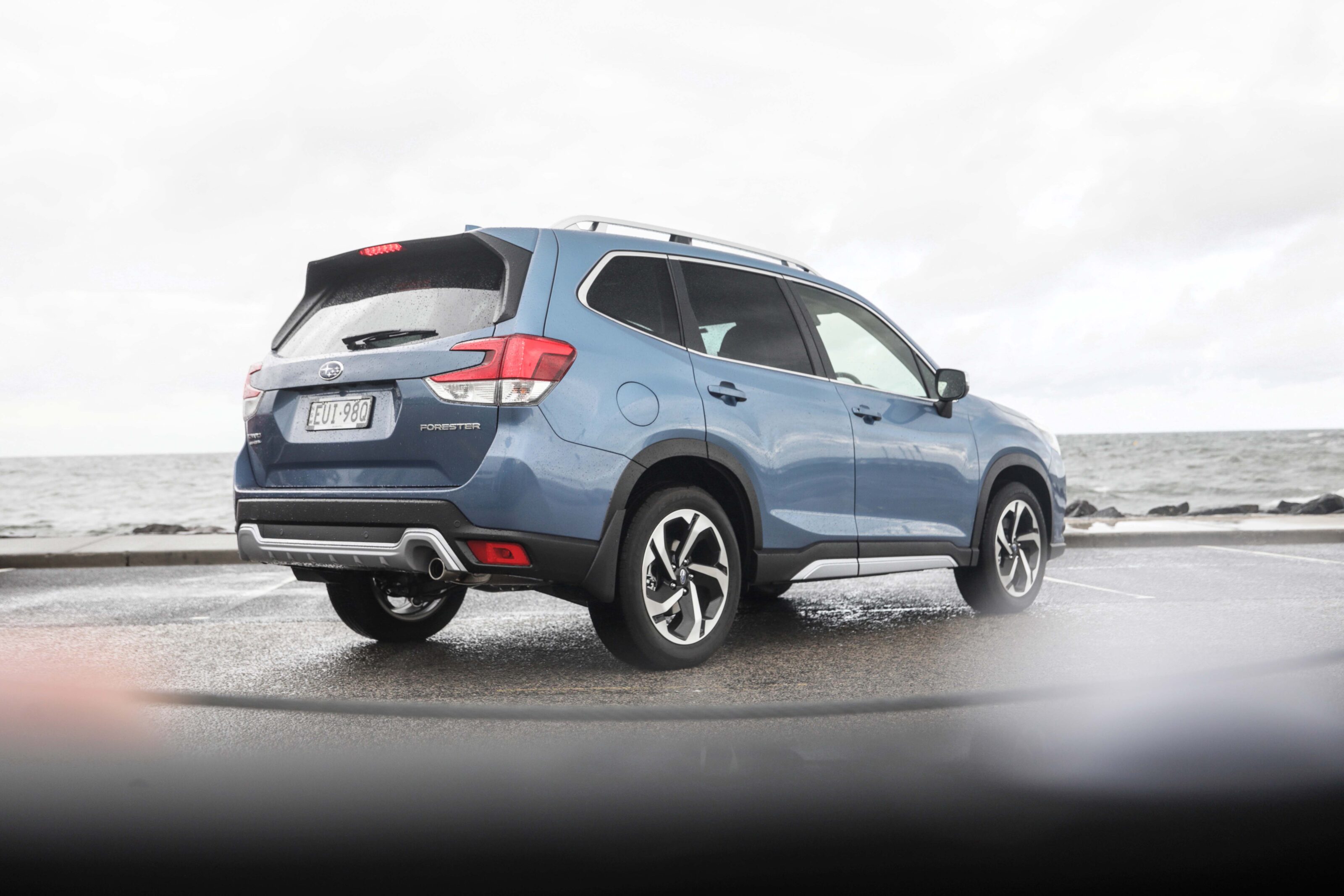
There’s something about cars that don’t shout about their virtues. Cars that don’t brag, but rather quietly get on with the job of transporting their owners with minimal fuss but maximum competency.
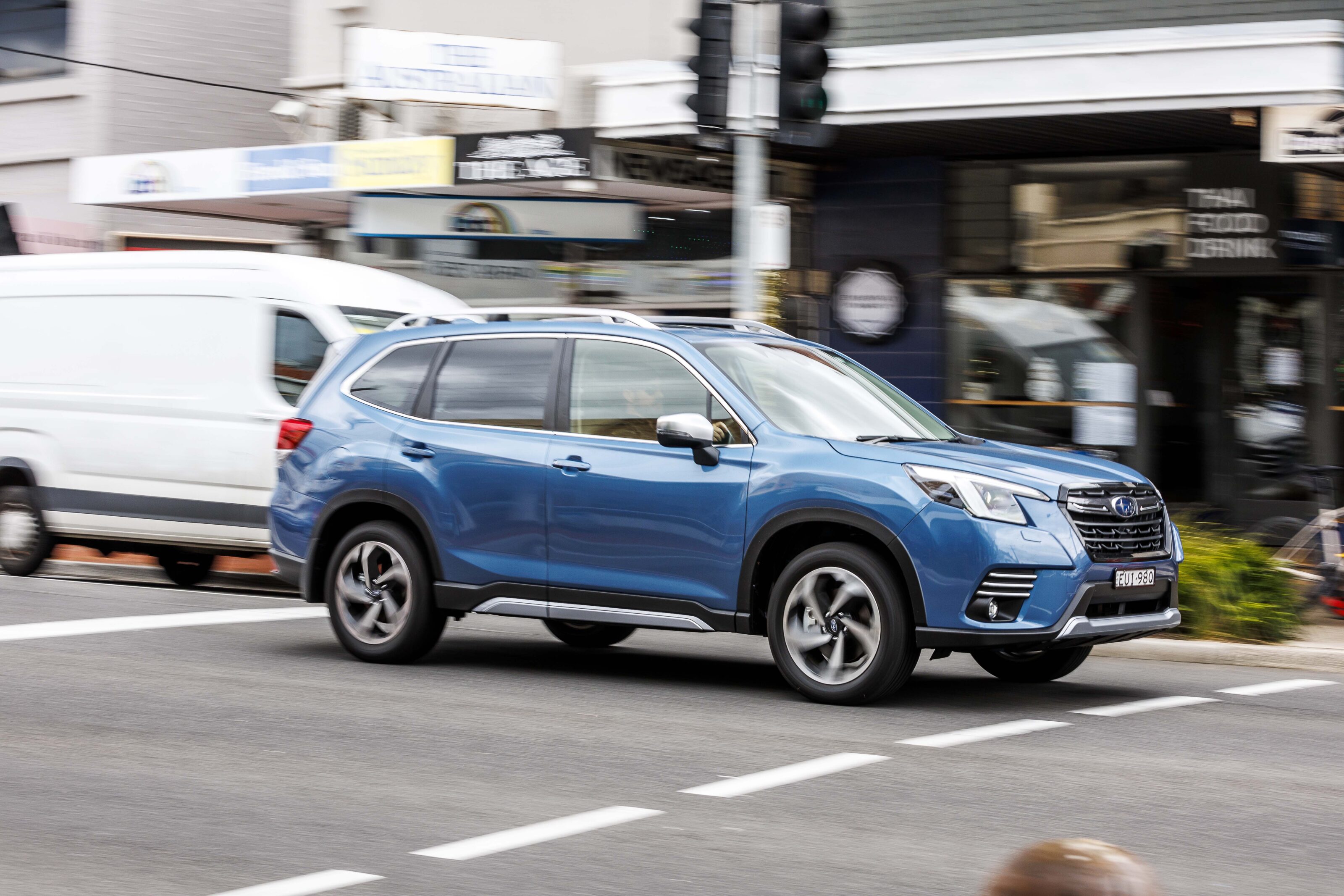
Subaru’s Forester is one such car. Japanese compatriots like the Mazda CX-5 and Nissan X-Trail continue to creep further toward premium positioning, while Korean and European rivals flaunt ever-edgier designs. Against this backdrop, the Forester is a comparative introvert.
Its powertrain has no sparkle to its numbers and its demure cabin won’t ever be confused for something high-end, but make no mistake: Subaru’s mainstay SUV gets the fundamentals so very right.
1
JUMP AHEAD
- How much is it, and what do you get?
- How do rivals compare on value?
- Interior comfort, space and storage
- What is it like to drive?
- How is it on fuel?
- How safe is it?
- Warranty and running costs
- VERDICT
- Specifications
How much is it, and what do you get?
The Forester 2.5i-S sits at the top of the Forester’s specification hierarchy alongside the Hybrid S and is priced at $46,340 before on-road costs, or $51,429 drive-away.
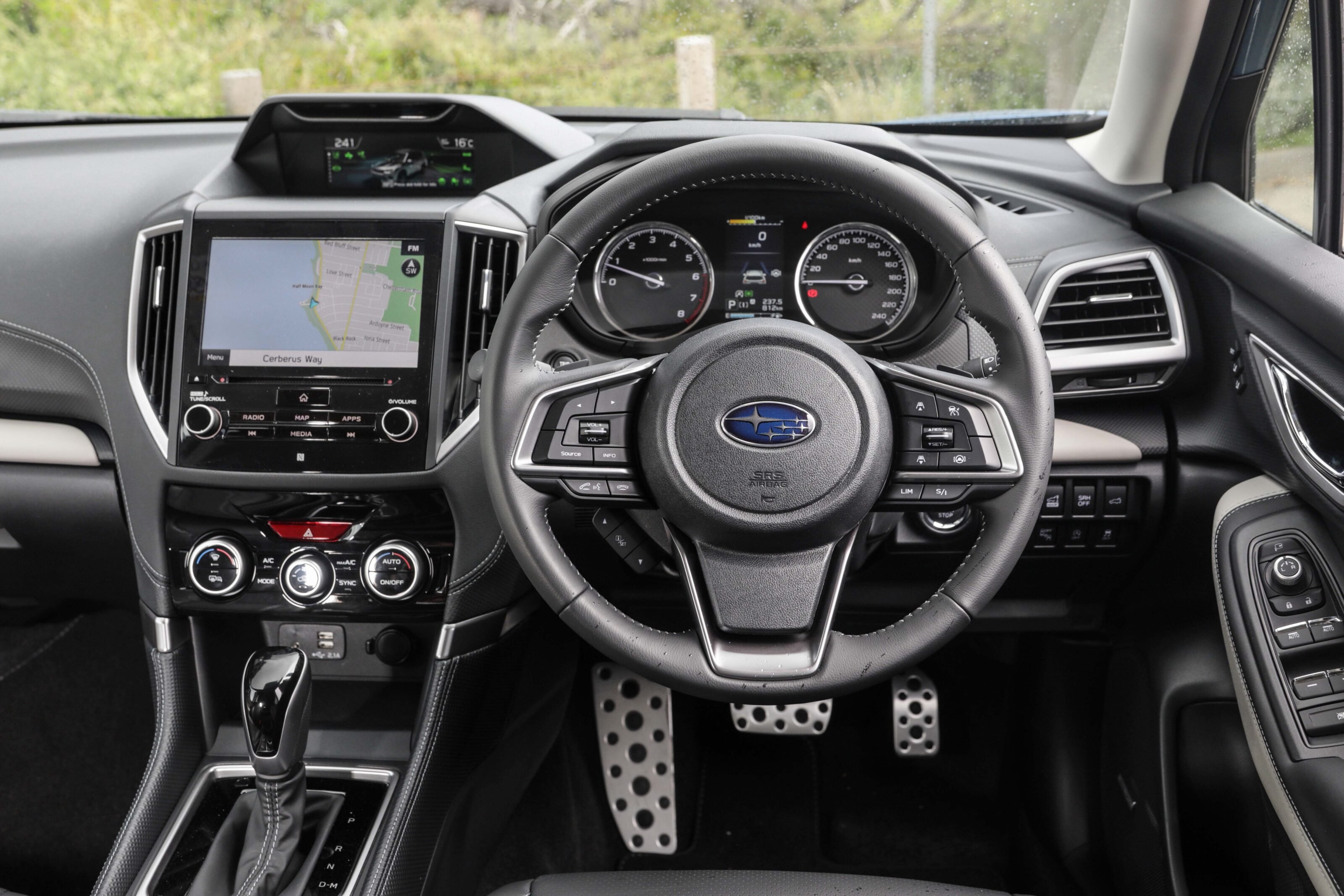
As a high-grade model, the feature list is generous. Leather upholstery, a power sunroof, an eight-speaker Harman Kardon sound system, built-in sat-nav, keyless entry and ignition and a power-operated tailgate are all standard at the 2.5i-S level, alongside other quality-of-life improvers like dusk-sensing headlights, rain-sensing wipers, self-dimming rear-view mirrors, heated and power-adjustable front seats, adaptive cruise control and dual-zone climate control.
The primary infotainment display is an eight-inch touchscreen (though other driver information is displayed on the separate 4.2-inch trip computer readout at the top of the dash, as well as within the instrument panel), and besides the baked-in sat-nav also offers AM/FM/DAB+ radio and smartphone mirroring via Android Auto or Apple CarPlay.
1
How do rivals compare on value?
When comparing like-for-like offerings, the Forester 2.5i-S has an edge on value for money.
Typical top-spec rivals from Japan and Korea tend to retail above the $50K mark yet the range-topping petrol Forester stays well below that while also providing owners with a feature to which almost all of its competitors attach a significant premium: All-wheel drive.
Competitors that align most closely on size, equipment, mechanical stats and price include the Volkswagen Tiguan 132TSI Life ($46,490), Nissan X-Trail ST-L 7-seat ($46,290), Toyota RAV4 GXL Hybrid AWD ($45,600), Mitsubishi Outlander Aspire AWD ($45,740) and Honda CR-V VTi-L AWD ($46,200). All prices are before on-road costs except for the Honda’s no-haggle drive-away figure.
Comparisons
Medium SUV comparison: 2023 Mega Test
Thinking of buying a new mid-size SUV this year? We test eight of the best and most popular contenders to see where you should spend your money
Interior comfort, space and storage
After five years, age may be starting to introduce some figurative crow’s feet to the Forester’s somewhat busy and slightly chaotic interior design. While a facelift applied in 2021 brought a revamp to the exterior, the Forester’s cabin went largely unchanged. As such, the cabin feels a little bit old-school in 2023. Ageist? Maybe, but the presence of a CD slot is definitely quaint.
Yet this is one of the better-executed SUV interiors around. A low shoulder line, tall roof and huge windows flood the cabin with light and allow little ones in the back to get a great view outside, while driver vision is aided by the slim A-pillars, stalk-mounted wing mirrors and big quarterlight windows on the front doors.
There’s plenty of adjustability to the front seat and steering column and the seats themselves boast great cushioning that promotes long-distance comfort.
1
There are also small touches that really cement this as a well-thought-out interior, such as the sun visor extensions that help plug the gap between visor and mirror when the sun is dipping low over the horizon, or the parking ticket holder above the driver’s right knee. Getting the fundamentals correct is important, but the little things matter too.
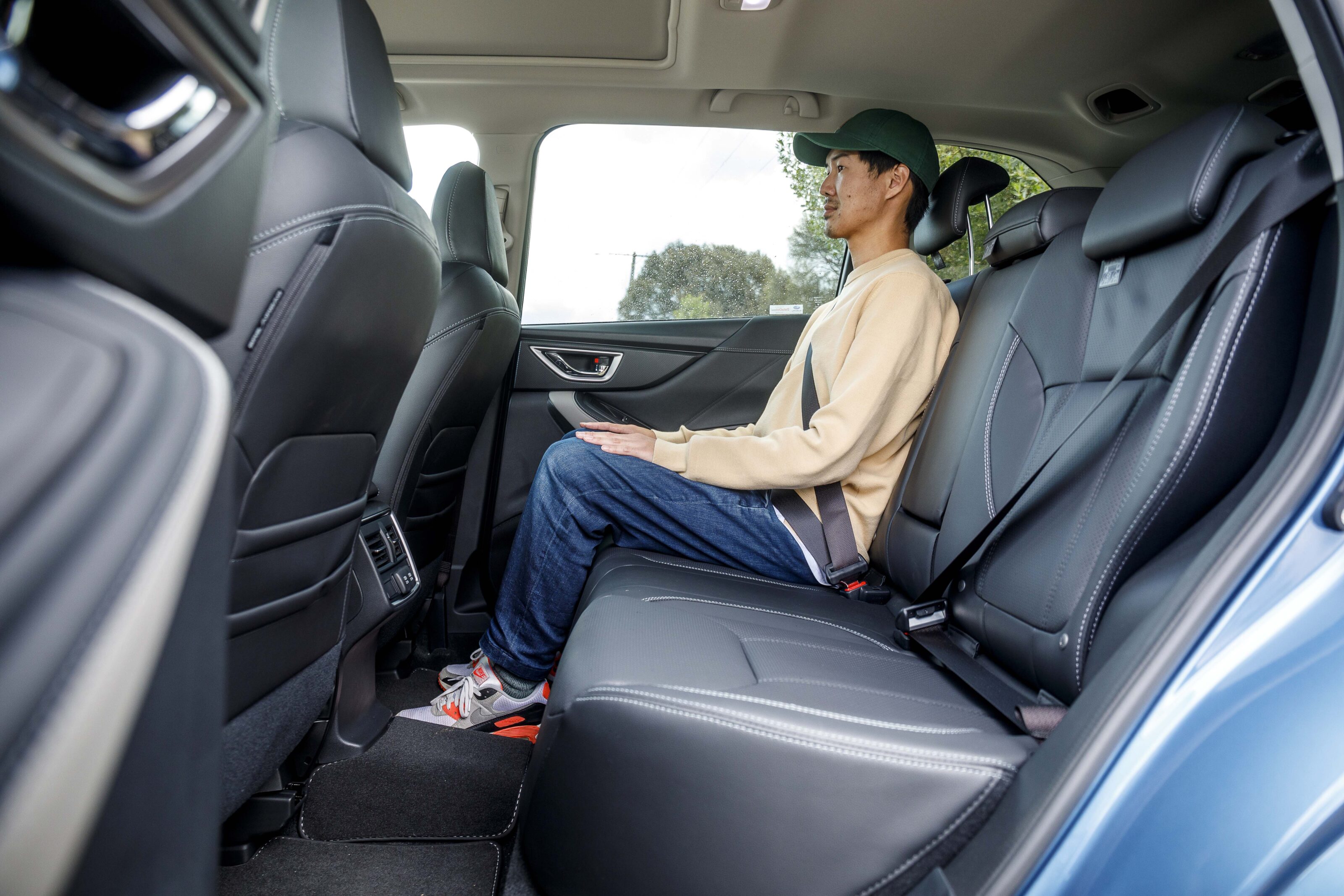
Backseaters enjoy plenty of knee room and legroom as well as a reclinable backrest and wide centre armrest (though the centre belt still spools out of the roof, annoyingly), and a pair of ISOFIX child seat anchorages equip the outer rear seats. Air vents on the back of the centre console keep them cool, while this flagship variant’s massive panoramic glass roof provides plenty of light to the rear cabin.
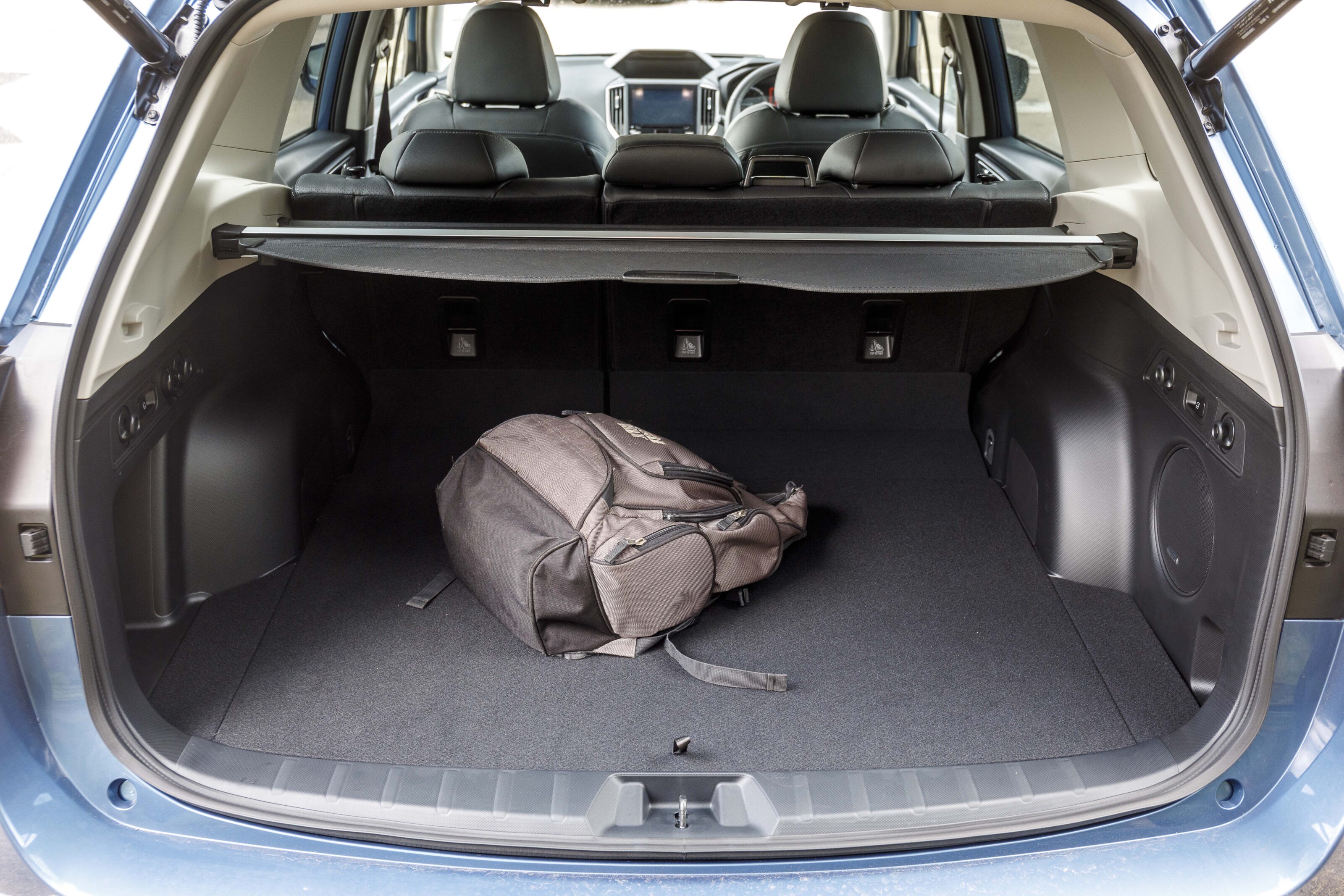
The Forester’s 509-litre boot space may not be the biggest in the segment, but it’s far from the smallest and it packs useful features like four shopping bag hooks and remote releases to fold down the rear seatbacks from the tailgate area – conveniences that are far from universal in this segment.
1
What is it like to drive?
With a 2.5-litre naturally-aspirated flat-four engine producing 136kW and 239Nm, the Forester only offers modest mechanical performance. Its automatic continuously variable transmission (CVT) does at least mesh well with the engine, working to keep it spinning in the thickest part of its torque band and minimising the need for big revs during typical driving, while a relatively svelte 1576kg kerb weight helps.
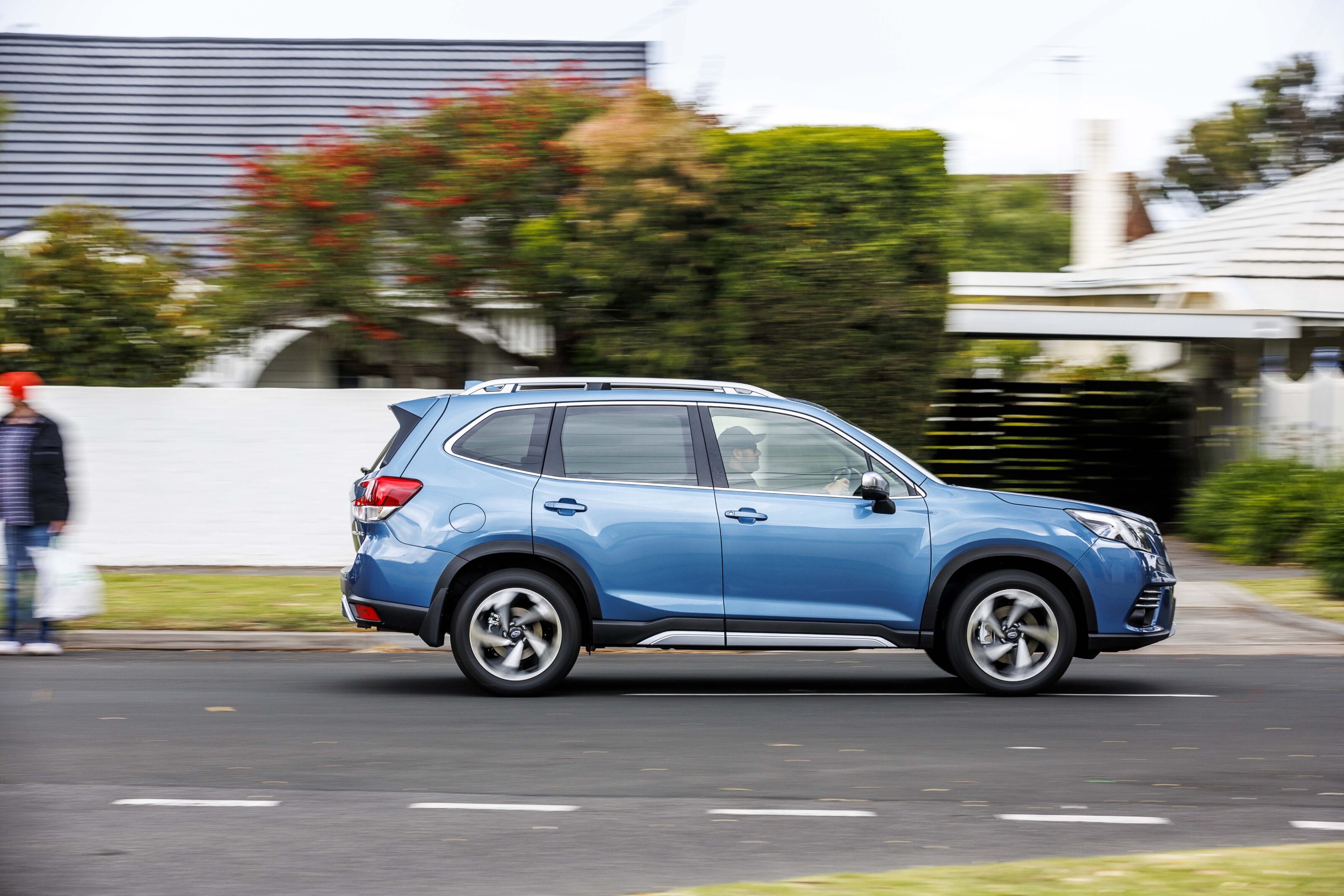
Its suspension is more impressive. With long travel and an excellent calibration of spring rate and dampers, the Forester soaks up pretty much whatever surface you point it at with the kind of suppleness and compliance that is getting harder to find in the SUV segment.
This is not at the expense of body control either, for the Forester also flaunts a surprisingly chuckable chassis that encourages keener drivers to seek out curvier bits of tarmac, and has nicely-weighted steering to match it.
1
How is it on fuel?
Subaru claims an average fuel burn of 7.4L/100km on the combined cycle, while our road test returned a much higher figure of 10.0L/100km.
To be fair to the Forester, our route includes a fair portion of aggressive driving and very little highway cruising to offset it, so the higher-than-claimed result is no big surprise.
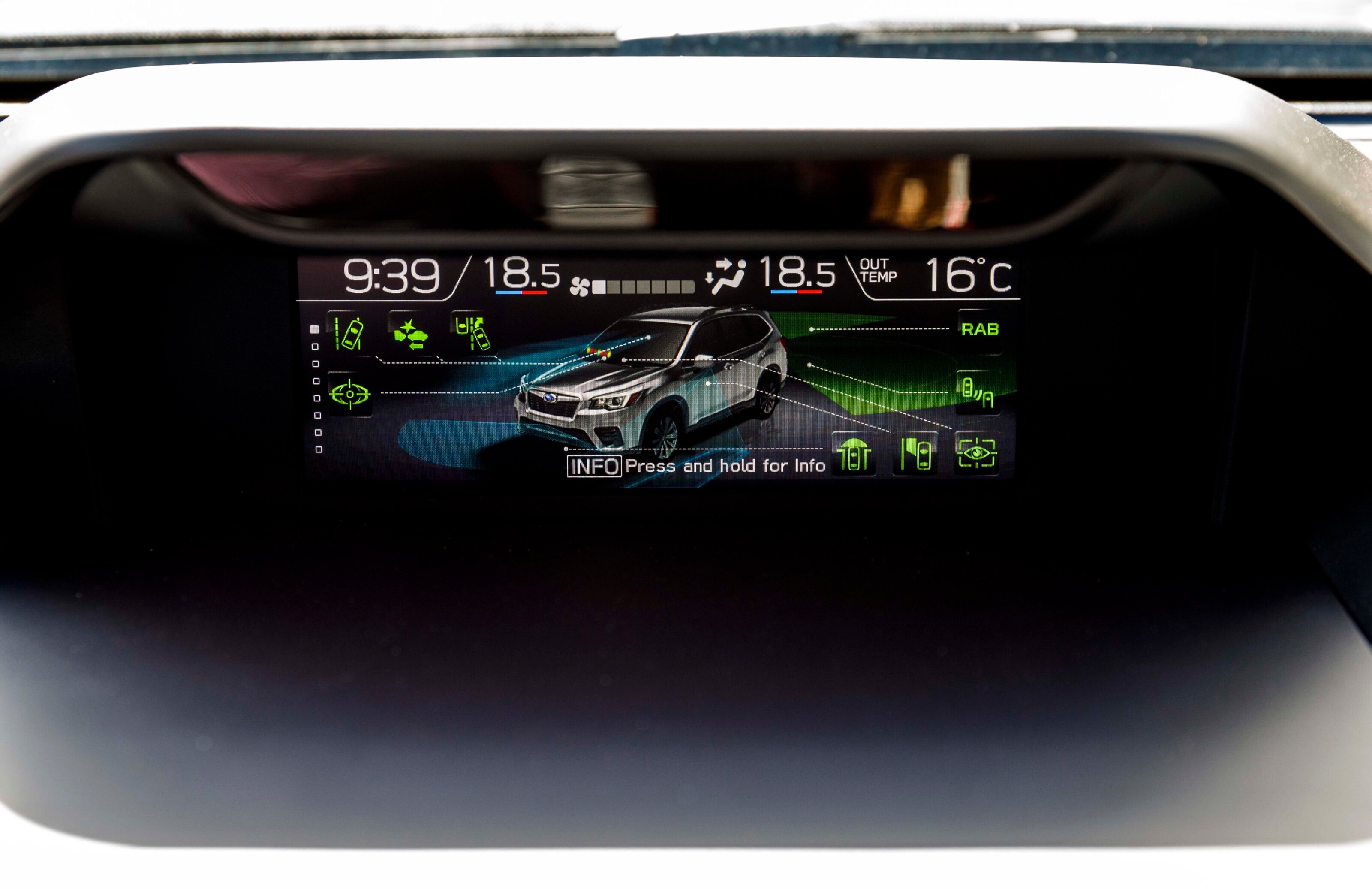
Auto engine start-stop is standard, with Subaru also helpfully displaying how many millilitres of petrol have been saved each time you come to a halt. Rated for 91 RON, you can also get away with putting the cheapest petrol in your Forester.
1
How safe is it?
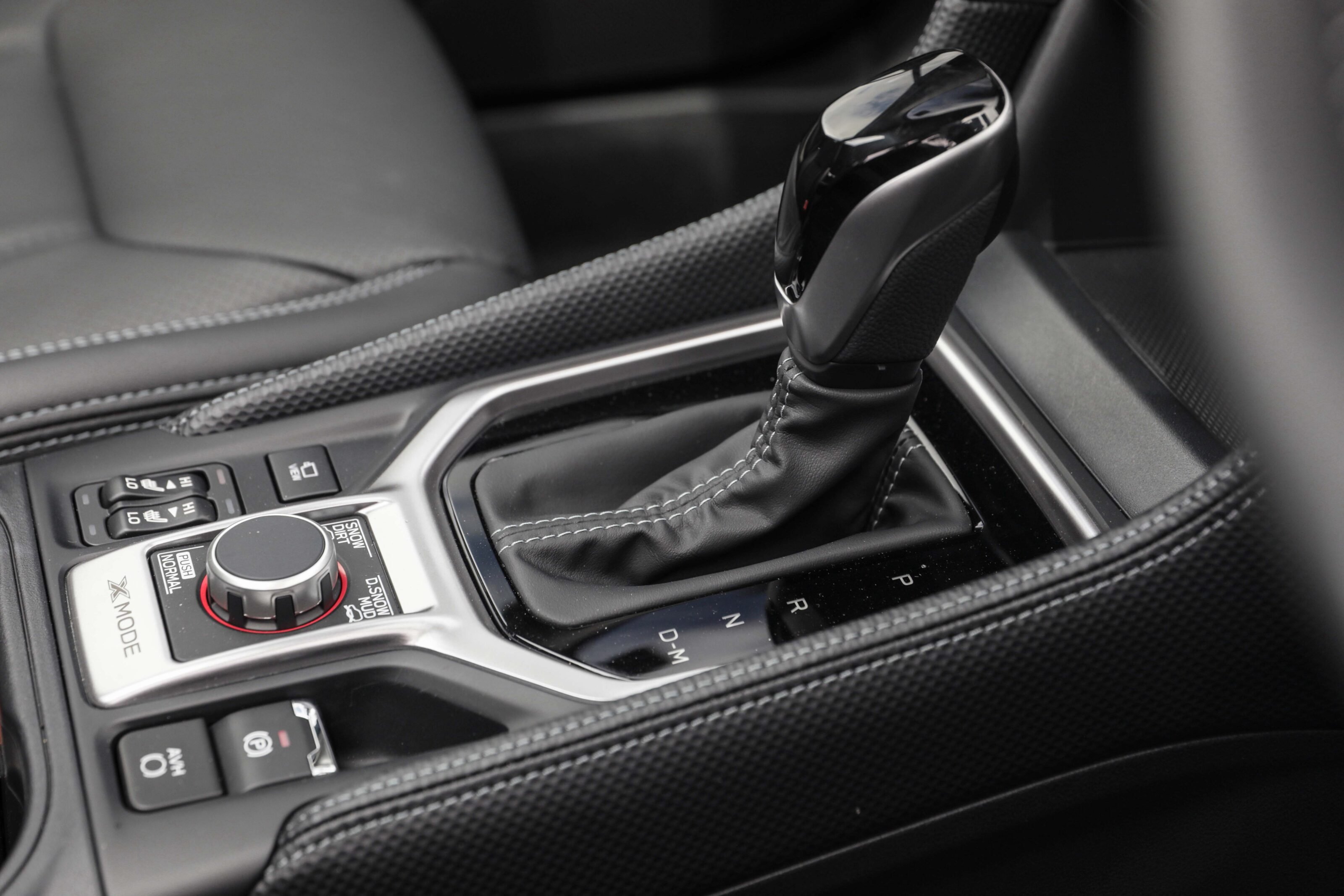
Standard safety gear includes a full suite of airbags (front, side, curtain, driver’s knee), autonomous emergency braking at both low and high speeds as well as reverse, rear cross-traffic alert, stability control, traction control, adaptive cruise control, lane departure warning, lane-keep assist, blind-spot monitoring, 360-degree parking cameras and driver fatigue monitoring.
1
MORE
ANCAP
Warranty and running costs
The Subaru Forester is warranted for five years and unlimited kilometres. Service intervals are set for every 12 months or 12,500km with capped-price servicing costing a total of $2674.64 for the first five years or 62,500km of ownership, or $1387.25 for the first three years or 37,500km.
VERDICT
There’s not much gloss or glitter to the Forester, but as a car built for families or people who just like the idea of being able to escape the Big Smoke every once in a while, it’s easily one of the most rational choices in a very crowded segment.
Its packaging is as superb as its ride comfort and handling, and while the engine could do with some additional spice, that’s arguably not a great concern for the kind of driving most SUV pilots do.
It’s sized right, engineered right and, perhaps most critically, priced right.
1
MORE
Everything Subaru
MORE
SUV Buyers Guide
| Model | Subaru Forester 2.5i-S |
|---|---|
| Engine | 2498cc 4cyl, dohc, 16v |
| Max power | 136kW @ 5800rpm |
| Max torque | 239Nm @ 4400rpm |
| Transmission | continuously variable automatic |
| Weight | 1576kg |
| 0-100km/h | not specified |
| Fuel consumption (ADR combined) | 7.4L/100km |
| Fuel consumption (tested) | 10.0L/100km |
| Price | $46,340 + on-road costs |
Snapshot
- 10 new Audi EVs to debut by 2026
- Electric-only A3 replacement confirmed
- u201cBest combustion engines are yet to comeu201d, but will phase out by 2033
Audi is plotting an electric push, with at least 10 new battery-powered models slated by 2026.
“We are on the verge of the biggest product initiative in our history,” Audi CEO Markus Duesmann said at the carmaker’s annual conference.
“By 2025, we will have launched around 20 new models, more than 10 of which will be all-electric. By 2027, we seek to offer an all-electric vehicle in each core segment.”
1
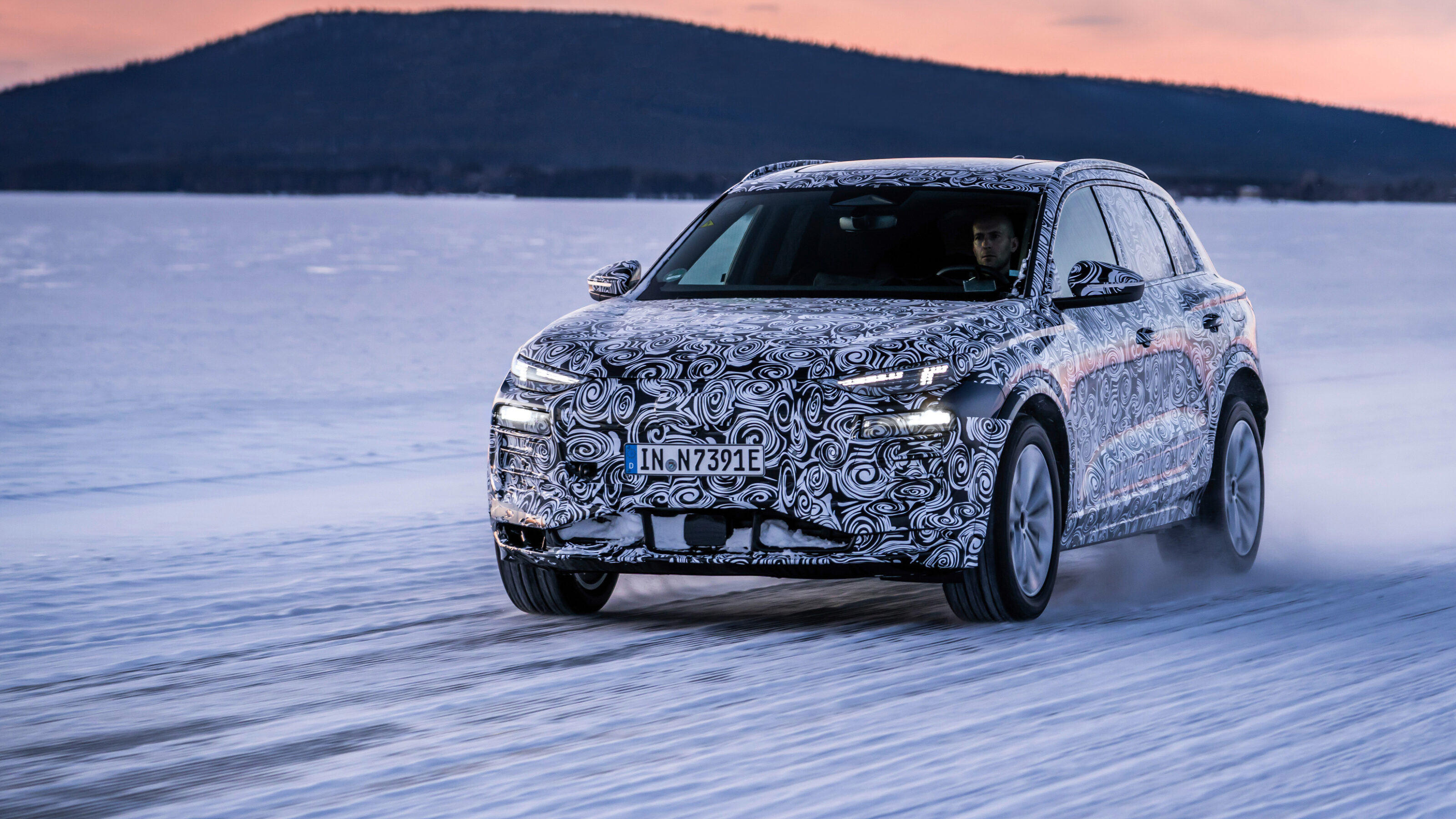
Audi’s electric offensive will be spearheaded by the forthcoming Audi Q6 E-Tron medium SUV, which will be the first model to debut Audi-Porsche’s Premium Platform Electric (PPE) and offer more than 600 kilometres of claimed driving range.
However, Audi’s small A3 hatch and sedan won’t live on with petrol power, with the entry-level A1 already facing the axe due to looming Euro 7 emissions regulations, according to Automotive News Europe.
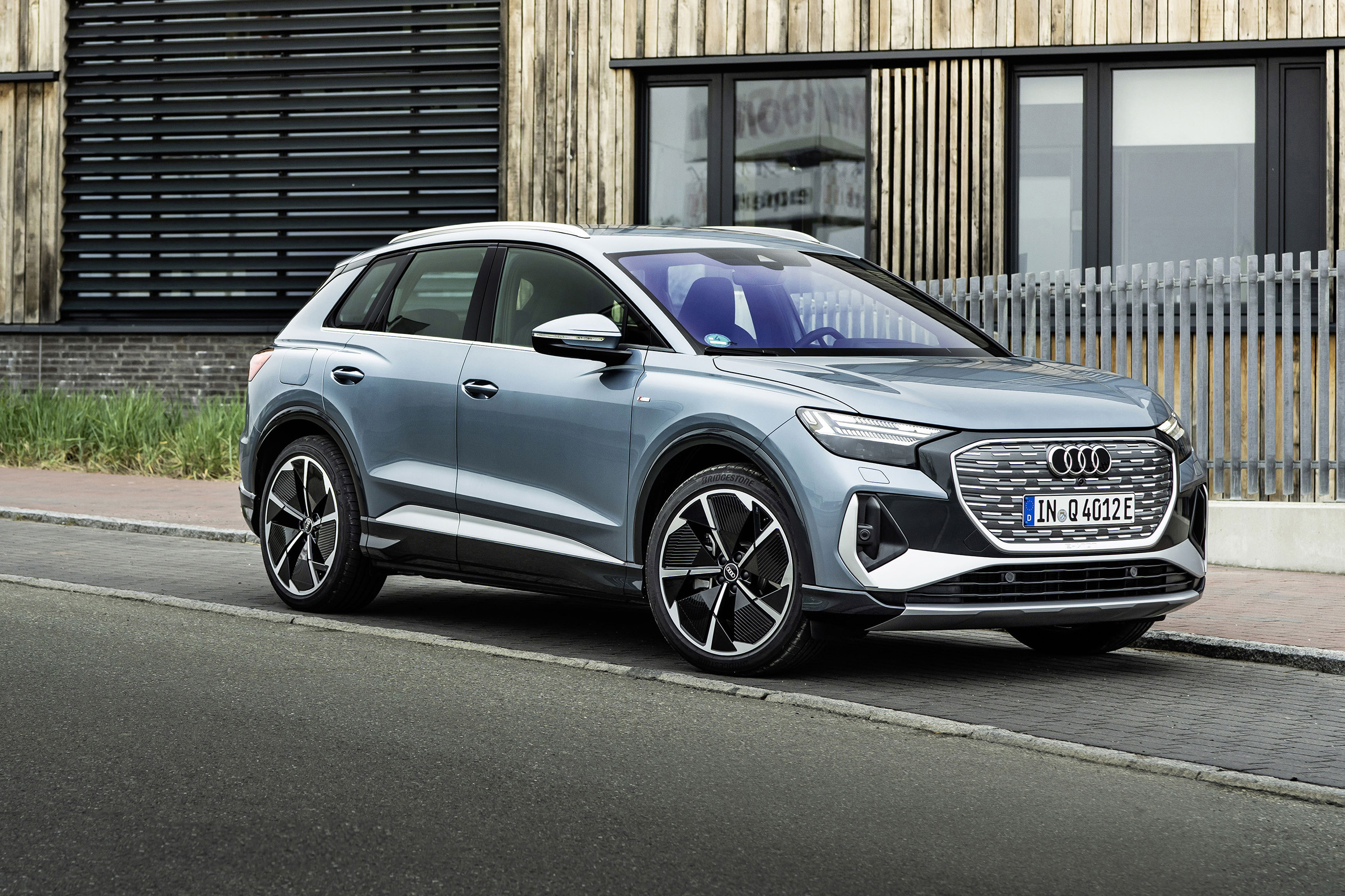
Hoffman confirmed to Autocar a new A3-sized EV will launch by 2027 to sit under the current Q4 E-Tron small SUV sold overseas, and could be based on the Volkswagen Group’s unified Scalable Systems Platform (PPE).
1
This could also hint at a potential hot electric RS3 at some point, as the Volkswagen ID.3 small car is set to gain a higher-performance GTX variant soon.
Markus also told Auto Bild that EV models will be badged with even numbers and the ‘E-Tron’ designation will stay, while other combustion engine-powered models will be in odd numbers.
This means the current petrol-powered Audi A4 and A6 sedans will eventually become A5 and A7 when they’re updated within the next three years (and A4 and A6 being electric-only), with chief technology officer Oliver Hoffmann telling the German publication: “The best combustion engines are yet to come.”
1
However, the premium brand is committed to phasing out petrol and diesel engine cars by 2033 ahead of the 2035 new car sales ban in Europe.
In Australia, Audi will launch the updated Q8 E-Tron large SUV later this year to join the E-Tron GT sports sedan.
However, the BMW iX1-rivalling Q4 E-Tron small crossover still isn’t coming Down Under until at least 2024, despite being sold in Europe since 2021.
MORE
Everything Audi
MORE
Electric Cars
With widespread electrification making its inexorable advance, it’s a brave move on Toyota’s behalf – and perhaps a long-overdue one – to finally introduce a high-performance variant of its big-selling Corolla so late in proceedings.
We’ve now had two decades’ worth of Volkswagen Golf R variants, a bunch of Honda Civic Type-Rs and a barrage of other high-quality hot hatches, yet the ‘Gazoo Racing’ GR Corolla GTS is the first genuine attempt by Toyota at a red-hot ’Rolla since … um, the Celica-engined Corolla Sportivo in Australia (2002-06) and the Corolla-based, V6-engined Blade Master in Japan (2007-12).
Yet Toyota’s loyal fanbase has remained ever-faithful – scrambling to acquire every build allocation of GR product the world over, starting with the GR Yaris in 2020 and now continuing with the new GR Corolla.

1
Developed mostly to satisfy the North American market (which doesn’t see the Yaris version), the hairiest Corolla carries over much of its baby brother’s hardware and performance focus – including being six-speed-manual-only – blended into a more refined package … though as we shall see, the highly focused GR Corolla is more incidentally liveable rather than deliberately cushy.
Australia and New Zealand are among a handful of markets to receive both GR Yaris and GR Corolla models, with Toyota Oz managing to secure 700 examples of the five-seat GR Corolla GTS ($62,300) over the next 12 months – officially on sale from the first week of March – and 25 examples of the more hardcore two-seat Morizo Edition ($77,800) arriving later in 2023. Both before on-road costs.
By virtue of its similar focus, performance, AWD handling flavour and pricing, the fiercest rival to the GR Corolla is clearly the Mk8 Volkswagen Golf R ($66,990 before on-road costs), though VW Australia is currently not taking orders until our MY23 production resumes during the second quarter.

1
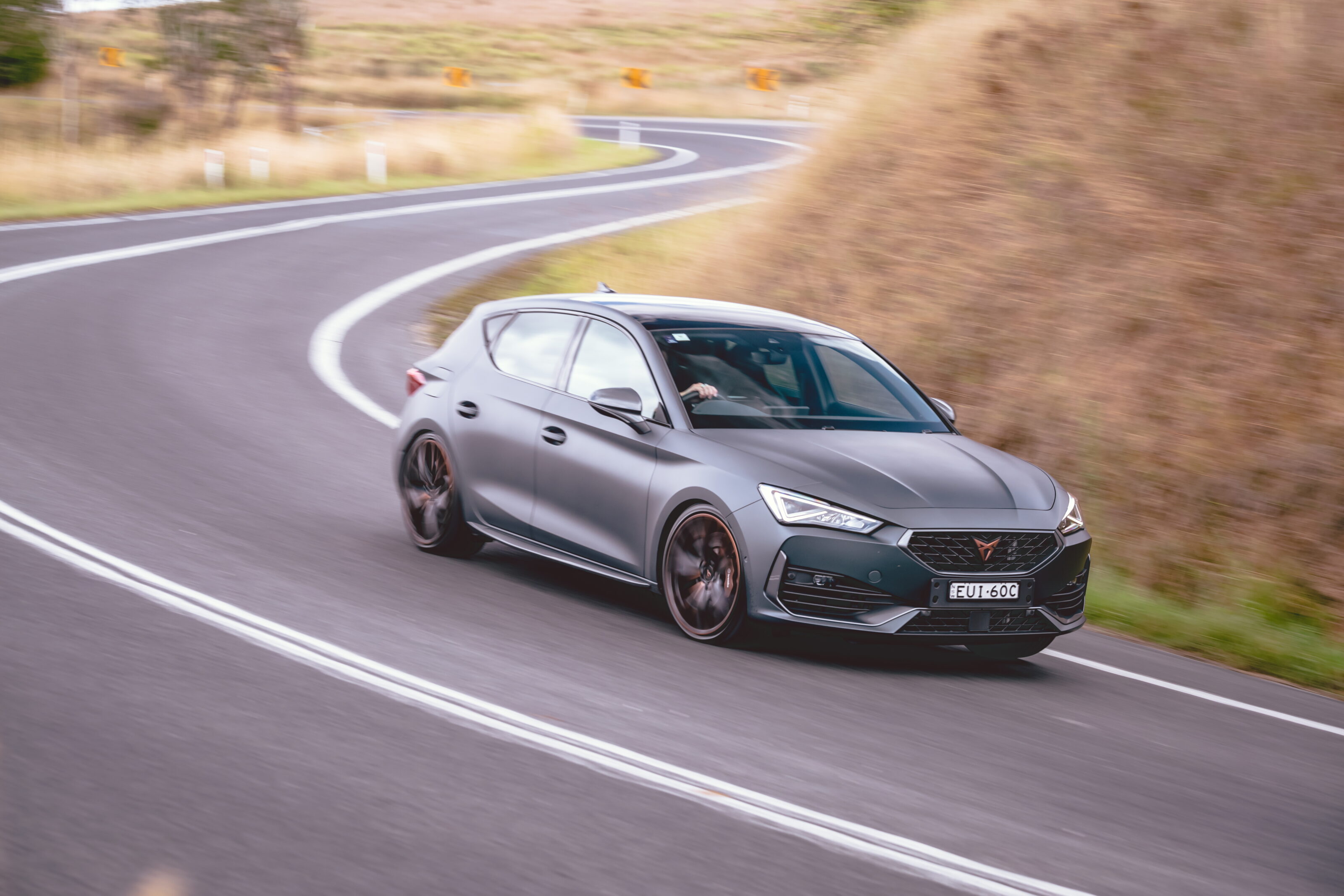
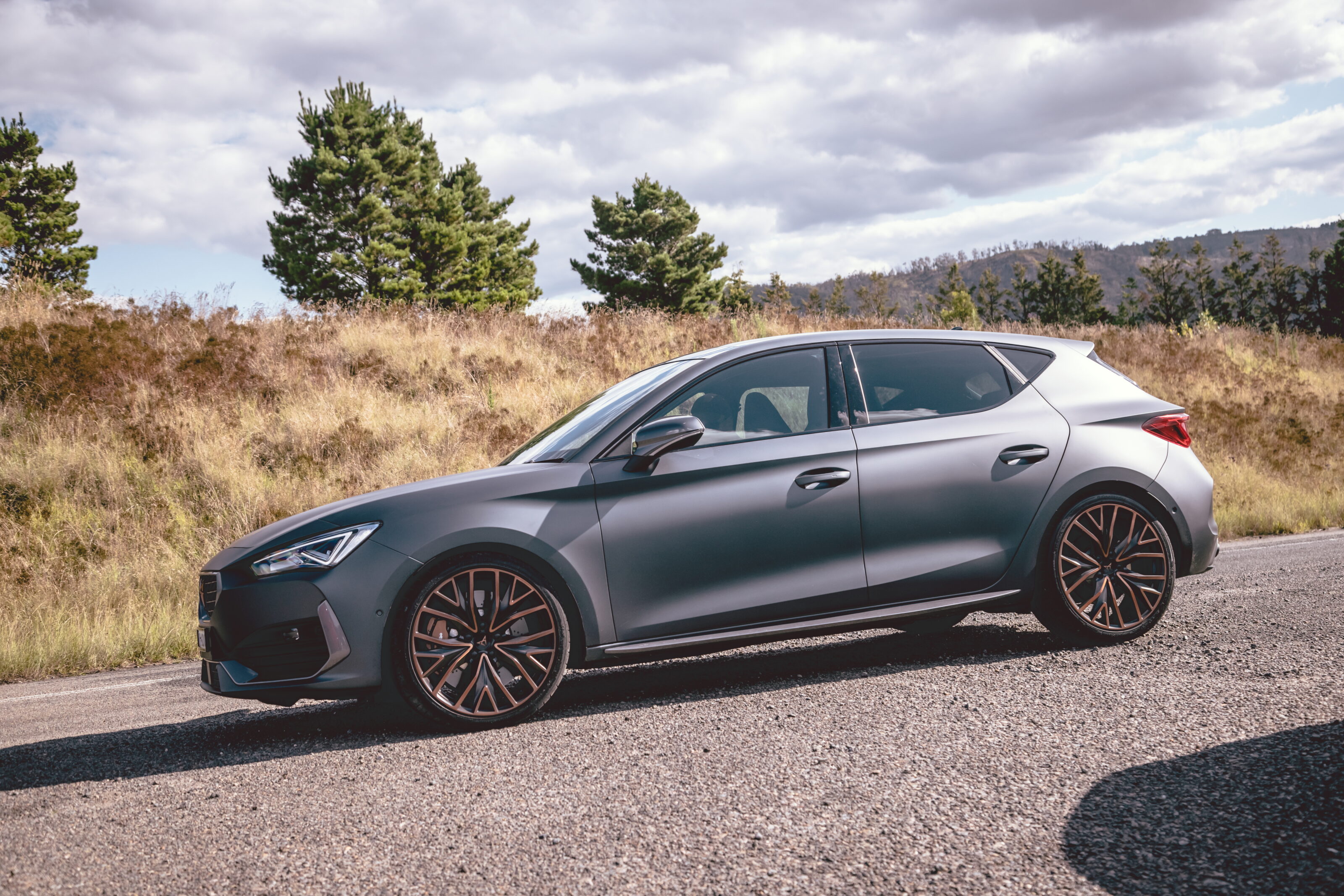
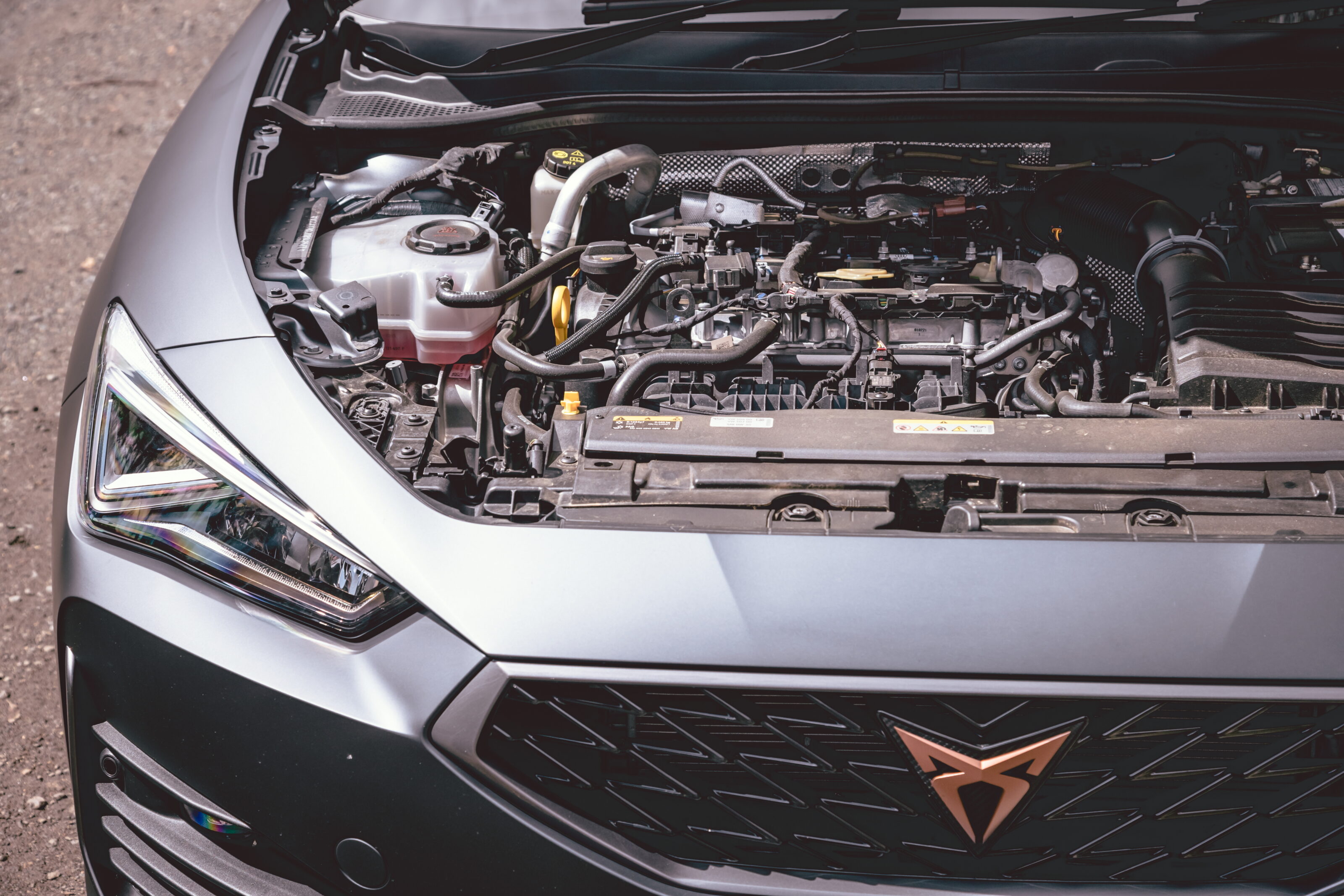
So as a substitute, we headed leftfield for the GR Corolla’s first comparo and opted for the Golf’s arguably cooler Spanish cousin, the Cupra Leon VZx ($59,990 before on-road costs). It’s the top variant in the Leon hatch line-up, complete with a GR Corolla-matching 221kW, though sent to its front wheels via a seven-speed dual-clutch transmission.
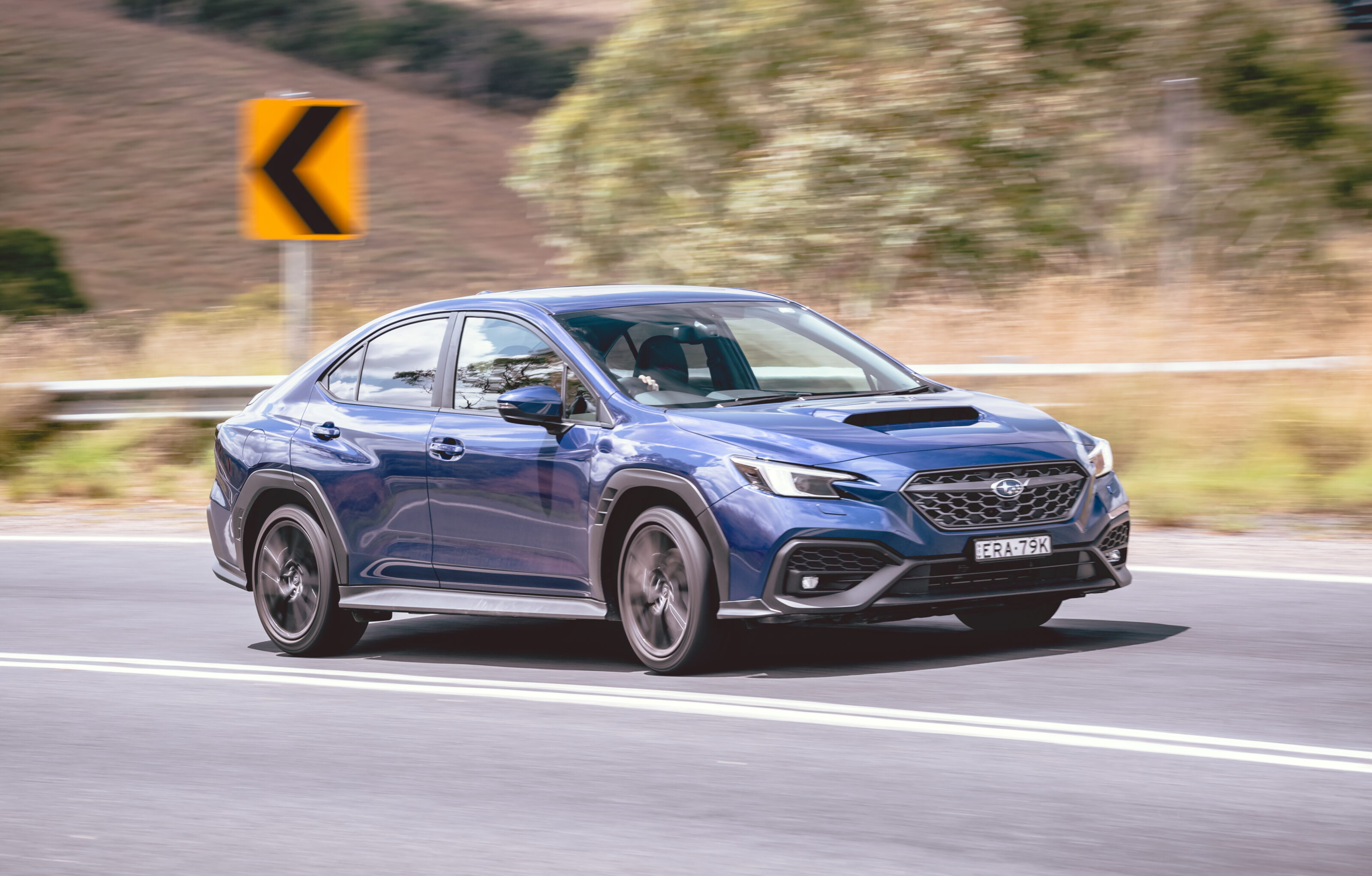
To keep the manual-only AWD GR Corolla honest, we’ve included Subaru’s new-generation WRX AWD sedan in RS manual form. While the purist’s WRX seems curiously positioned in the line-up – lacking the excellent adaptive dampers and multi-adjustable drive modes of the CVT-equipped WRX tS flagship, as well as its smattering of STi-branded kit – it does possess one major advantage, and that’s price.
At $50,490 before on-road costs, the firmly suspended WRX RS manual seems almost cheap compared to its Toyota, Volkswagen and Cupra competitors, though is that pricing coup alluding to something missing from its repertoire?
1
In performance terms, the Subaru feels strong in isolation but does concede a degree of animalistic intent to the GR Corolla and Leon VZx. On paper, its 2.4-litre turbo-petrol flat-four punches out a solid 202kW at 5600rpm and an accessible 350Nm from 2000-5200rpm, though you don’t need to be Alan Turing to decipher that reduced outputs from greater engine capacity equal a significantly lower state of tune.
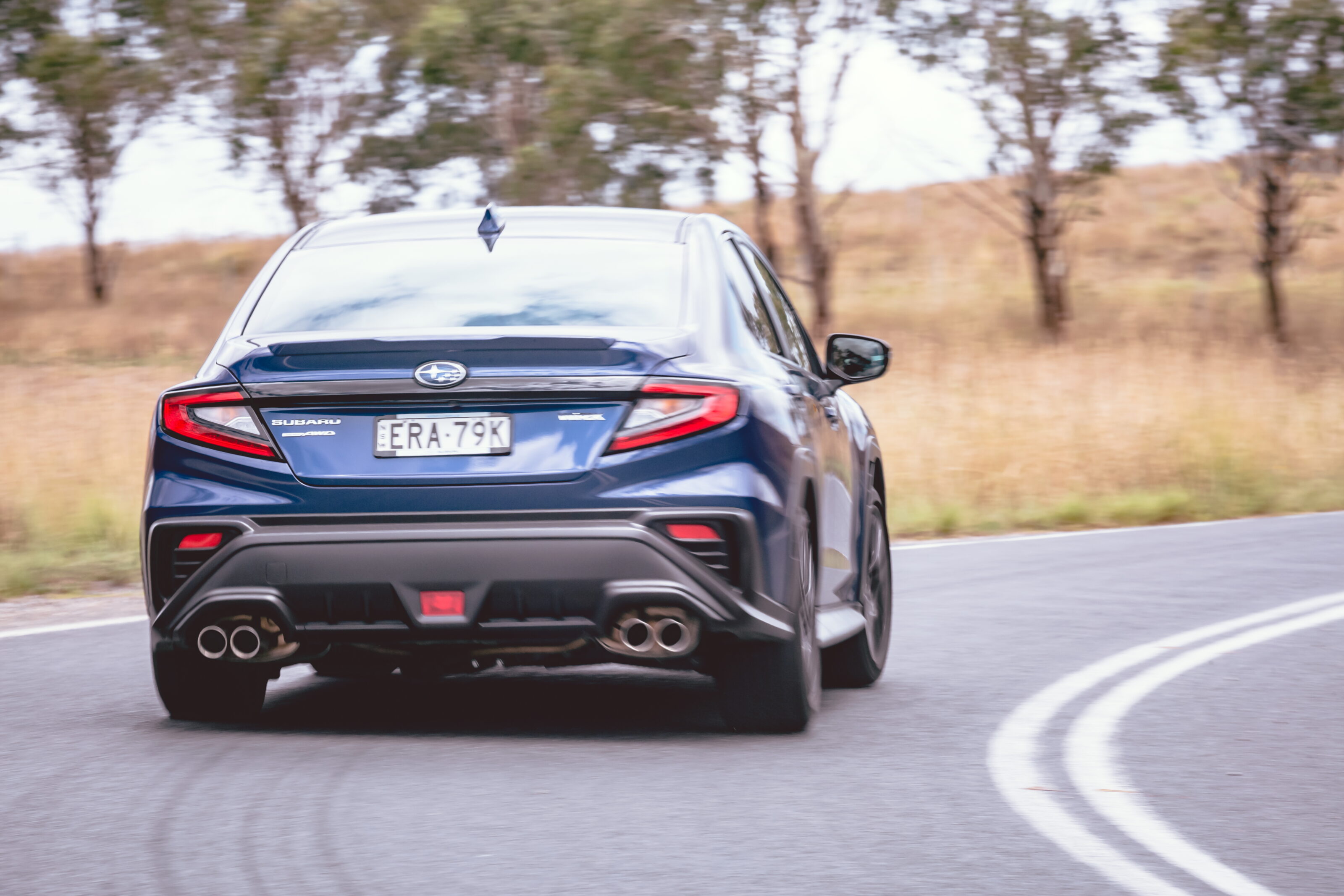
The WRX deploys its all-wheel-drive purchase and tight-ish gearing to nail 0-100km/h in a respectable 6.0sec, yet the Subaru’s drivetrain is more about effortless torque and silken refinement than genuine thrills. The FA24 engine has a likeable flat-four sweetness about it, though it doesn’t really have any induction sound, or any exhaust note to speak of – at least from inside the cabin.
And while its tractability is admirable, it doesn’t have the bite that performance drivers would like it to have. It’s all very soft-edged – especially the RS manual’s throttle response (it doesn’t offer the ‘SI-Drive’ throttle-sensitivity tuning of the CVT versions), even at 4500rpm or higher.
1
The GR Corolla offers a completely different flavour.
Like the WRX, it needs 2000rpm showing to start boosting, and 2500rpm to really start hauling, yet from there, its muscularity simply grows and grows.
It has the sensation of power, performance bandwidth and sharpness of throttle response that elude the softer Subaru, as well as the headroom to explore its peachy, thrummy three-cylinder ripeness right to 7200-7300rpm, despite its urgency starting to fade beyond six-five. Yet what makes this engine such a delight is that it blends this addictive personality with a classy level of refinement. A vibey three-pot this most certainly is not.
While the GR Corolla’s 1618cc turbo-triple is clearly the same unit as the GR Yaris, Toyota has lifted power by 21kW (to 221kW at 6500rpm) and expanded its 370Nm torque spread from 3000-5550rpm (instead of 3000-4600rpm) via a triple-exit exhaust with reduced back pressure, reinforced pistons and exhaust valves, and increased capacity for the direct-injection fuel pump and engine oil cooler.

1
That said, with overall weight increased by around 200kg, the GR Corolla’s claimed 0-100km/h time (5.29sec) is marginally slower (5.2sec for GR Yaris) and its claimed top speed is the same (230km/h).
Given it doesn’t have the off-the-line traction of its AWD rivals, the Leon VZx’s impressive 5.7sec 0-100km/h claim is reflective of just how rapid this Euro hot-hatch is – especially on the move.
Packing 221kW from 5300-6500rpm and a meaty 400Nm from 2000-5200rpm, it capitalises on this vast output spread and the lightning-quick upshifts of its seven-speed DSG to deliver ballistic rolling acceleration, despite Cupra claiming a chunky 1503kg kerb weight that positions it mid-way between the AWD Toyota and Subaru. In reality, it feels much lighter on its feet than that figure would suggest.
1
Where the Leon VZx loses out somewhat, at least in comparison to the barky Golf R, is engine acoustics.
In ‘Cupra’ drive mode (or with the engine at its sportiest in Individual mode) there’s a degree of crackle from its super-cool four-outlet exhaust when backing off at light- or mid-throttle positions but in flat-out driving, it’s all exhaust whoosh and turbo slurp from the driver’s seat (though maybe less so outside the car).
It doesn’t have the purity of sound of the ballsy Corolla yet, conversely, it doesn’t have the purity of sound of the smooth WRX either, though the Cupra does seem much sportier than the Subaru.
Translate the considerable performance of this turbocharged trio into dynamic situations and three similarly disparate personalities emerge – each with their own individual charms, combined with really satisfying chunks of driver appeal.
1
With its adjustable drive split (60:40, 30:70 or 50:50 front-to-rear), Torsen limited-slip differentials on the front and rear axles, and 349 additional spot welds to improve body rigidity (among multiple other improvements), the GR Corolla is the most intriguing on paper and offers the broadest array of talent on the road.
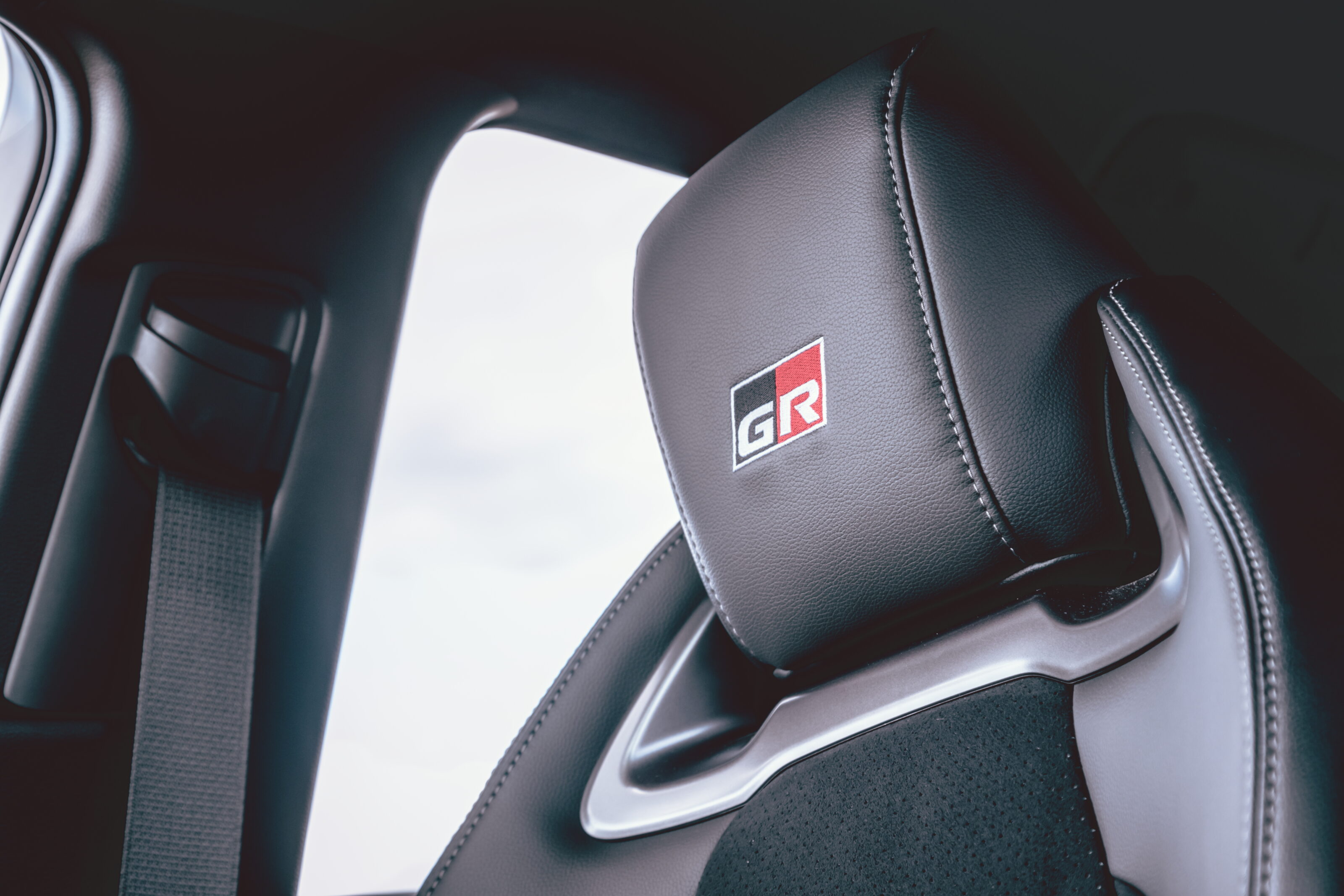
Seated in its lovely perforated-suede bucket seats, the gear lever is right next to the driver’s left leg and the round shift knob feels instantly tactile, so even before taking off, the GR Corolla offers a neatness and an ergonomic synergy that seems perfectly suited to a performance hatch.
Being 2023, it offers multiple drive modes (Eco, Normal, Sport and Custom), though given it doesn’t have adaptive dampers, Toyota would’ve been better off just choosing one ideal setting.
1
All three testers agreed that Sport adds arguably too much weight to the steering unless you’re absolutely flogging the GR (though it does sharpen throttle response slightly), leaving Normal as the crisper preference for day-to-day driving (or the preferred steering option in Custom drive mode).
For our hard-charging back-to-back route, however, I put the GR Corolla in Sport, switched the stability control to ESC Sport Expert (which is the closest to having it turned off) and set the drive split to 30:70.
Under brakes (which are excellent), lifting off turning into corners, it’s not oversteery – rather you can feel the GR settling its weight and balance on the tail – making it feel incredibly chuckable and fun. In that respect, it has loads of bandwidth.

1
The wider the road and the better the surface, the greater the fun potential with the Toyota in terms of cornering approach.
It offers plenty of nuance through tight, bumpy bends and even though it feels stiffly suspended, it absorbs bumps better than the Subaru. It feels more level than the WRX, without its vertical movement, though it doesn’t move around as much in the mid-corner.
But when it does start moving – sliding its tail out or holding oversteer drifts, which is achievable depending on your chosen drive setting – it’s the organic nature of the GR Corolla’s attitude adjustment that really shines. Here is a ballsy, tough-looking, high-tech AWD hot hatch that can actually feel surprisingly analogue, almost as if it’s rear-wheel drive at times.
On a perfectly smooth surface, the GR Corolla defines ‘on rails’ handling, yet on dusty country road bends, it doesn’t have the front-end bite of the Subaru because the Yokohama Advan Apex V601 tyres tend to serve up initial understeer unless you very deliberately trail-brake the nose into a corner, much like a pre-997 Porsche 911.
1
In that respect, the GR Corolla is very much a performance car with multiple layers – including a surprisingly liveable and absorbent ride – though we suspect a different high-quality road tyre could improve its all-surface handling considerably, and perhaps even its all-pervading road noise, which is a constant companion.
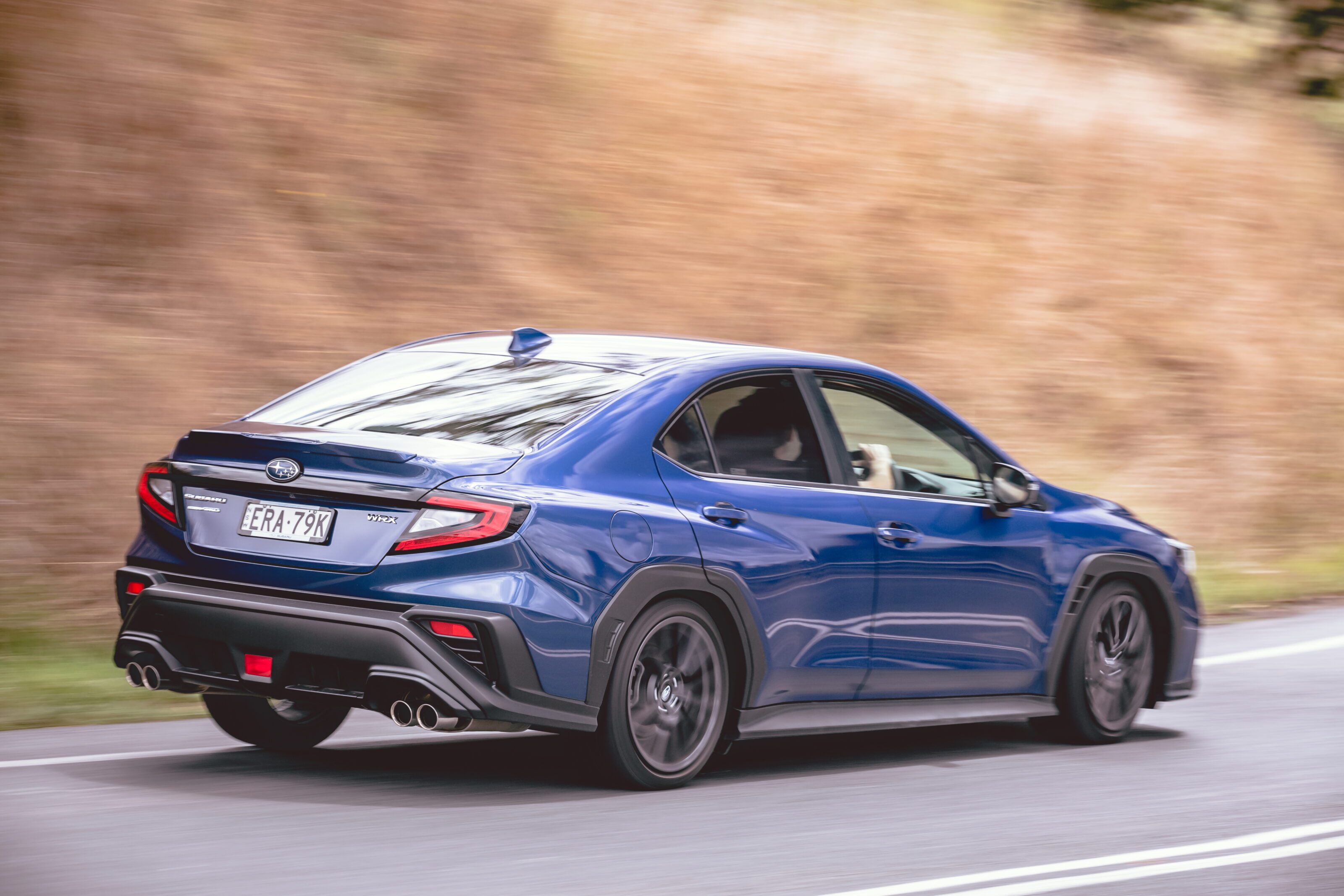
With the WRX’s engine maxing out at just over 6000rpm on a very soft cut-out (compared to the GR Corolla’s almost theatrical rev limiter), there’s an obvious disconnect between the way the Subaru performs and the way it handles and rides.
The drivetrain doesn’t have the sharpness that you want, which is at odds with the chassis because the non-adaptive RS suspension is really quite firm. The sharpness of the WRX’s steering and the general point of its dynamics are really positive, yet that’s the opposite of its throttle response – making it feel like two completely separate teams did the tuning.
1
While the Subaru’s steering is very quick off-centre and really does turn in well, it doesn’t have enough weight or feel particularly natural.
And the steering wheel itself seems too thick, with oversized spokes and grainy, rough-textured leather that doesn’t feel at all sporty.
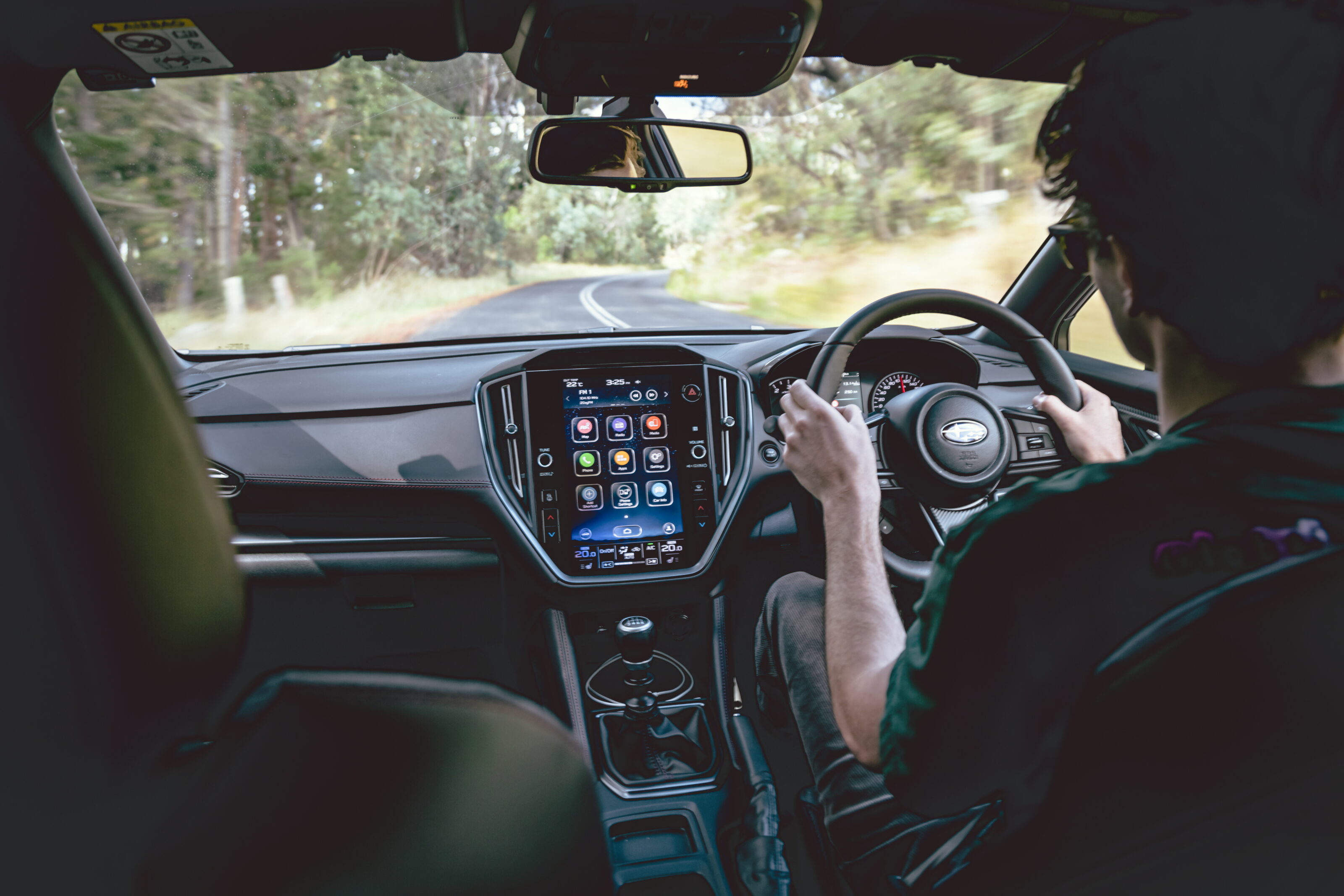
At least its gear change has a nice, snicky feel once you get used to it, and its all-electric front seats are excellent, though the gear lever placement is distant from the driver – meaning it lacks in the in-cabin intimacy of the Corolla. Yet as a general performance sedan, the WRX has plenty of appeal. Its handling is well-balanced, grippy, and almost adjustable.
It moves around a little over bumps, yet that seems to amp up its involvement. But its brakes feel wooden, with quite a lot of pedal travel, and don’t provide the initial retardation you’d expect from a car like this. They simply don’t inspire the confidence that proper performance brakes should.
1
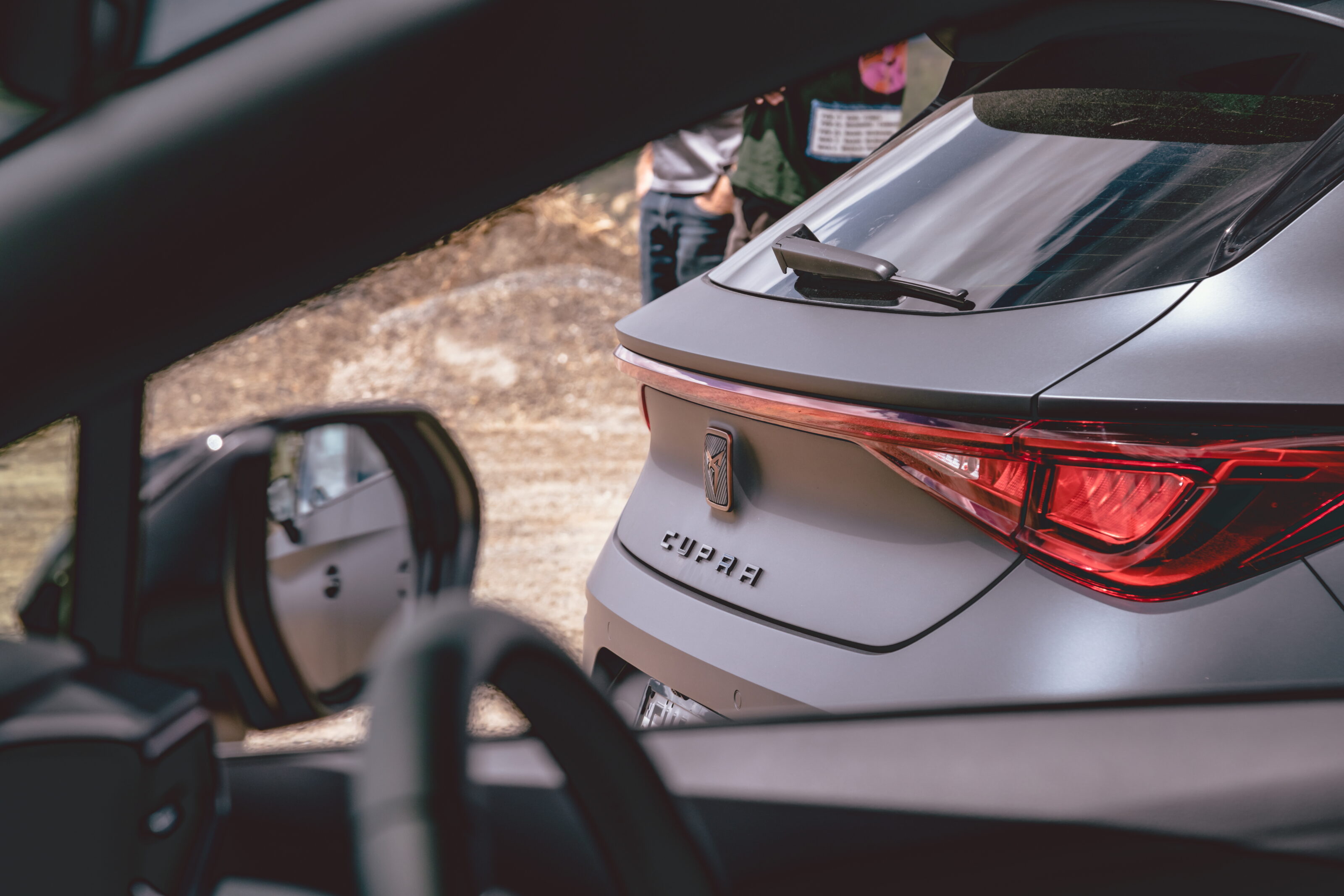
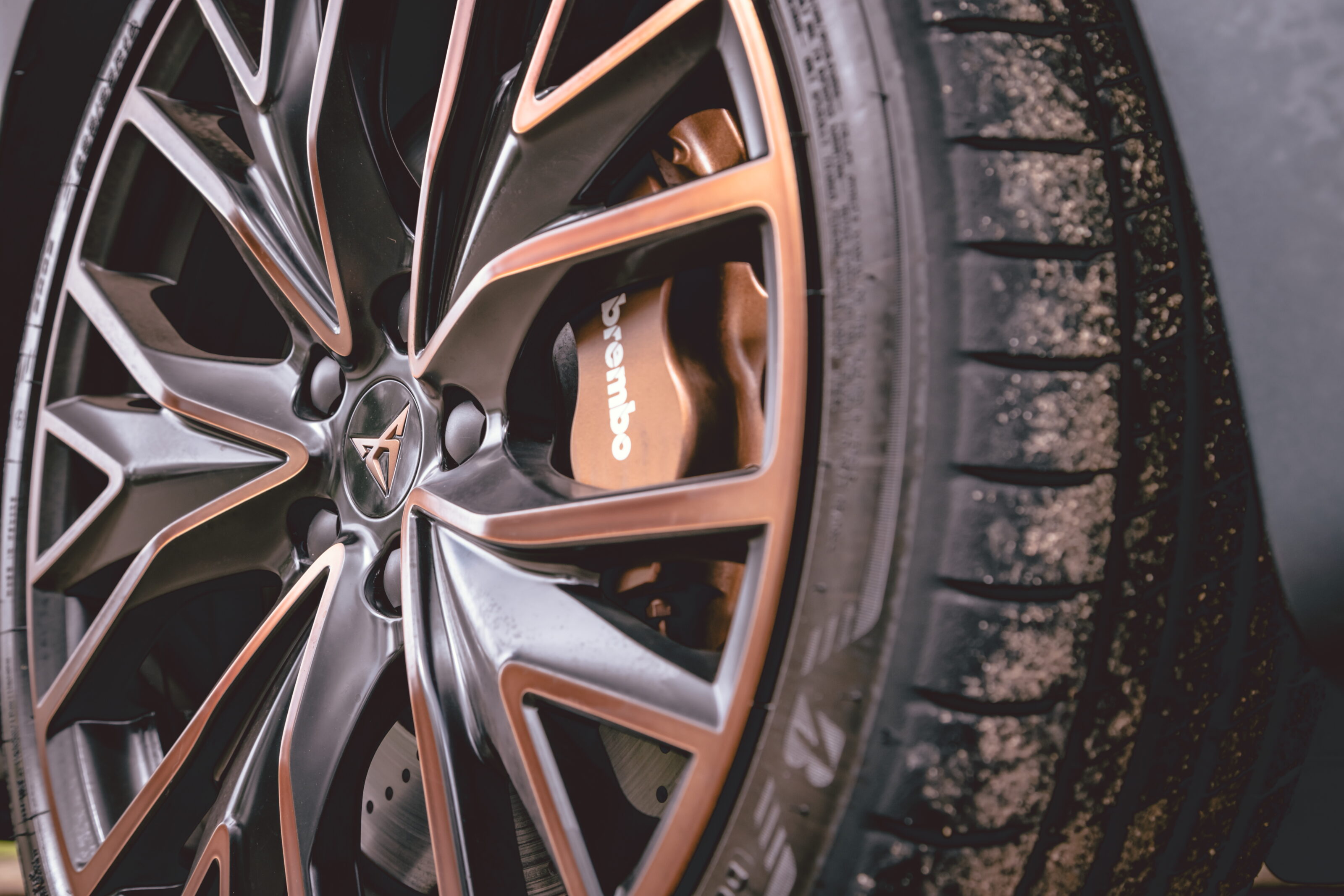
With optional Brembo front calipers ($3600) clamping much larger rotors, the Leon VZx has none of those issues. And on smooth roads, with its wheel-mounted drive mode button set to ‘Cupra’, it’s a cracking hot hatch – feeling light on its feet with razor-sharp turn-in and excellent power-down out of tight corners thanks to the deftness of its front limited-slip diff.
But on our much bumpier dynamic route, the Leon’s kryptonite proved to be the brittleness of its ride, despite being the only car here with adaptive dampers.
In one direction, on the way down a tight, challenging hill, I left the Leon in Sport mode and it felt too stiff – the front wheels crashing through over a few bumps, which could perhaps also be attributed to the fact its tyre placard recommends an inflation of nearly 40psi.
On smooth roads, with its wheel-mounted drive mode button set to ‘Cupra’, the Leon a cracking hot hatch
1
Before heading back up in the other direction, I selected Individual drive mode – positioning its dampers between Comfort and Sport – and it delivered a much better compromise, absorbing more road hits than before (though even in Comfort mode it’s still not exactly plush). But if you can live with the Cupra Leon’s firmness of ride, you’ll revel in its handling involvement and throttle adjustability.
The way you can move the tail around and precisely drive it on the throttle through corners is superb, though the steering really needs to be in Cupra mode to get closest to offering the weighting meat it deserves because all the other modes feel generally too light.
Still, the tactility of its flat-bottomed steering wheel is outstanding, with beautifully supple leather – perforated in sections – and a really cool design.
1
Where the Leon truly shines is as a proper adult-sized hatchback.
It offers genuine four-person capability, with the in-cabin storage to match, and its 380-litre boot is superb – as good as any small hatch on the market, let alone a performance version.
Clearly, this is a true European family car turned into a sexy fire-breather, whereas the GR Corolla merely compounds the packaging issues of Toyota’s regular Corolla hatch.
Only the driver gets (manual) seat height adjustment in the GR, leaving the front passenger sitting so close to the ceiling that they actually have less headroom than anyone misfortunate enough to be sitting behind them in the claustrophobic rear seat.
You can fit four adults in the Toyota but only the driver will feel truly at home. And with just 213 litres of boot space, you’ll need to be very choosy about what luggage to bring along.

1
In terms of vision and overall space, the WRX almost feels like an Outback XT sedan. There’s an expansive feel to it, like everything has been super-sized to house larger-than-average American bodies, and combined with a 411-litre boot, you have the capacity to carry all their stuff as well.
But it stumbles in the details. Oddly placed USB ports, undersized door storage and an unlined boot all seem to compound the fact that it costs so much less – even though the top-spec WRX sedan is afflicted with the same issues.
All of which places the likeable Subaru behind its two rivals. Even though this RS manual is the sportiest the WRX can get in terms of its purity, it’s still one sizeable step away from being where it really needs to be to have the proper edge that its badge and heritage deserve.

1
With a suitably tuned drivetrain, its sharp handling would be adequately supported from an overall driver’s perspective. As it stands, you’d be better off with a WRX tS sedan, seeing that its CVT transmission is surprisingly good and its adaptively damped suspension offers superior sophistication.
For $10K extra, the Cupra Leon VZx gets much closer to the GR Corolla in terms of driver appeal. Being front-wheel drive fails to detract from its dynamic involvement, given its handling adjustability and its front-end diff smarts are so deeply satisfying.
Yet it doesn’t quite get it together in terms of ride comfort – feeling far better suited to smooth European roads than our turbulent surfaces – and seems to lack the ultimate absorbency polish of its Golf GTI and R relatives.
That said, the handsome Leon VZx is ballistically quick, and it possesses an X-factor in terms of appearance and individuality that should lure performance punters like flies to a summer barbecue.
Which leaves the GR Corolla as the king of hot hatches – at least in this comparison test.
There’s a performance focus to the GR Corolla that is so clearly evident, yet it has multiple layers to its personality, rather than one decent one and a few that aren’t quite realised as with the WRX.
Sure, its accommodation is compromised but from a driver’s perspective, the Toyota is really on another level. It’s both the most comfortable and the most fun, and defines the sort of bandwidth that makes a hardcore hot hatch truly great in 2023.

1
Interiors
Toyota GR Corolla
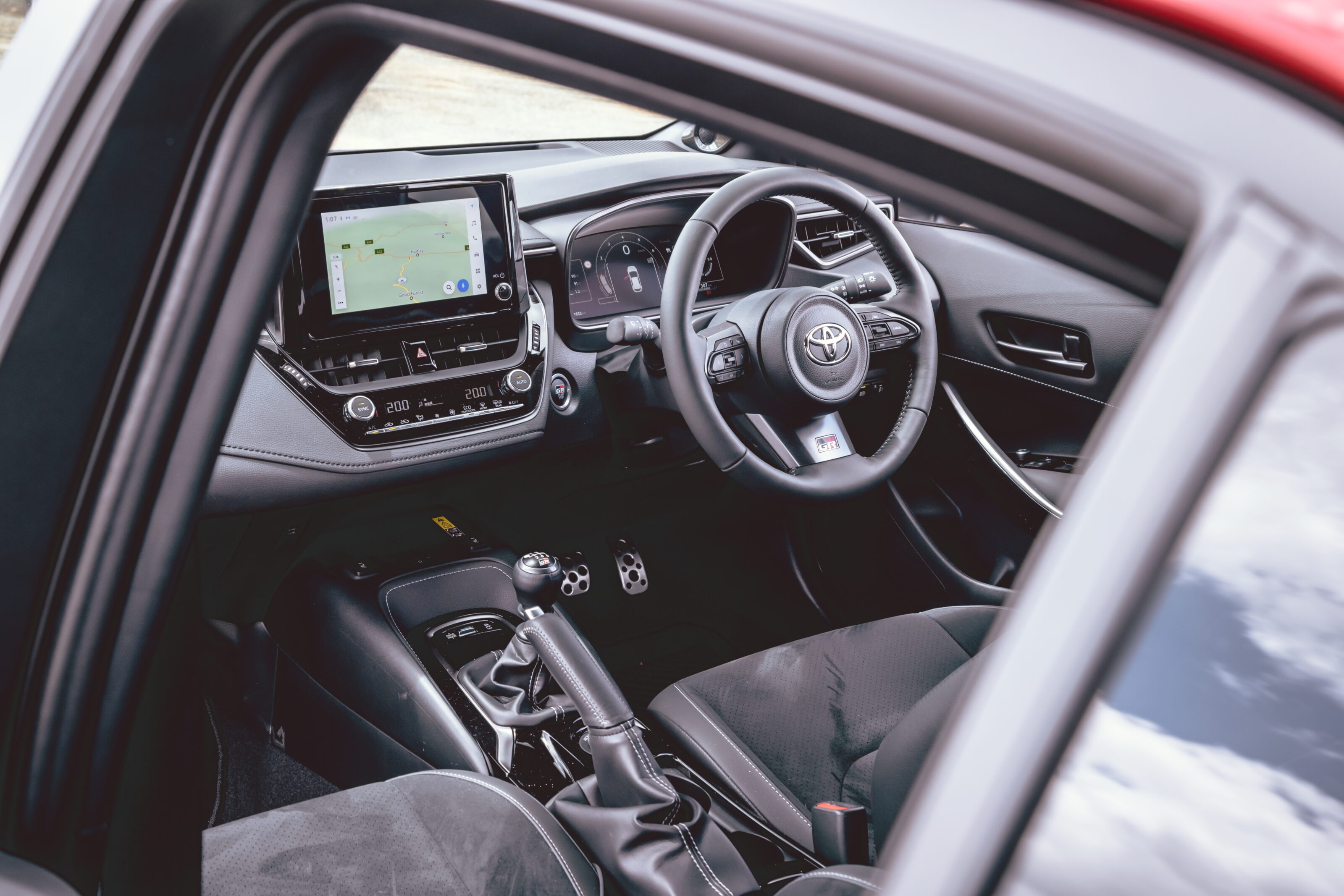
The Corolla-on-steroids has an ergonomic synergy from the driver’s seat, with a superbly petite steering wheel, great gear lever and pedal placement, and delightfully huggy suede front seats (with all-manual adjustment) – perfect for a performance hatch.
It has a deeper cowl and less vision than the WRX – though still decent – unlike the claustrophobic rear-seat and emaciated boot. The GR’s all-digital 12.3-inch instrument pack looks great and works well (once you master the steering wheel buttons), while drive mode/drive split controls near the gearstick make logical sense. A strong eight-speaker JBL stereo is offset the merely adequate 8.0-inch touchscreen.
1
Subaru WRX RS
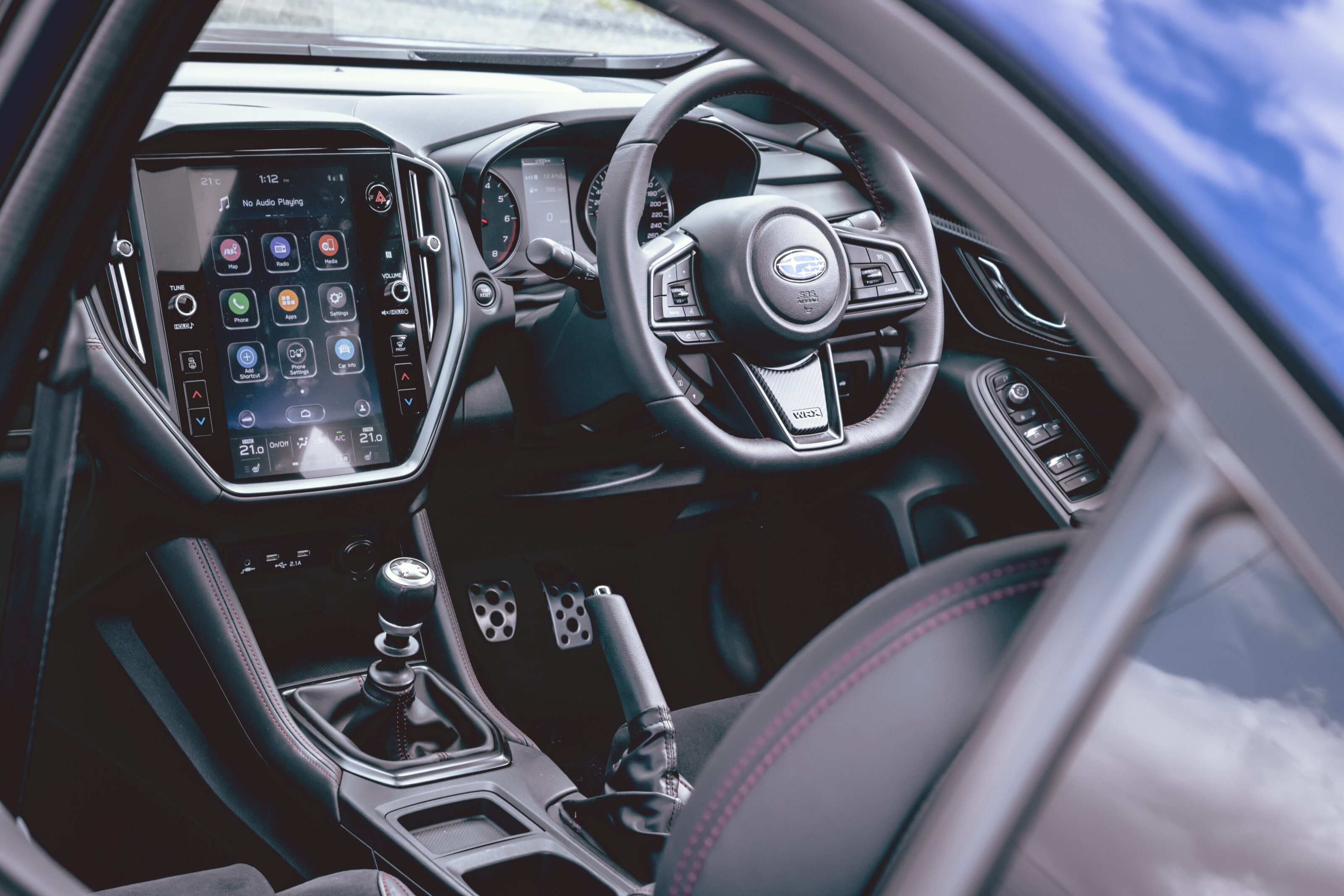
Similarly supportive seats to the Corolla, though broader, mounted higher, and all-electric. The WRX’s best aspect is its superb all-round vision, though it does feel rather like the sedan version of a turbo Outback – as if everything is super-sized, rather than slim-fit (apart from stingy door storage and detail flaws) – and its busy steering wheel is way too chunky, with grainy-feeling leather.
No drive modes in the manual RS either, which impedes its immediacy. But the portrait centre screen is intuitive, the 10-speaker Harman Kardon stereo is excellent, the rear seats are vast and boot space is generous (though cheaply finished inside).
1
Cupra Leon VZx
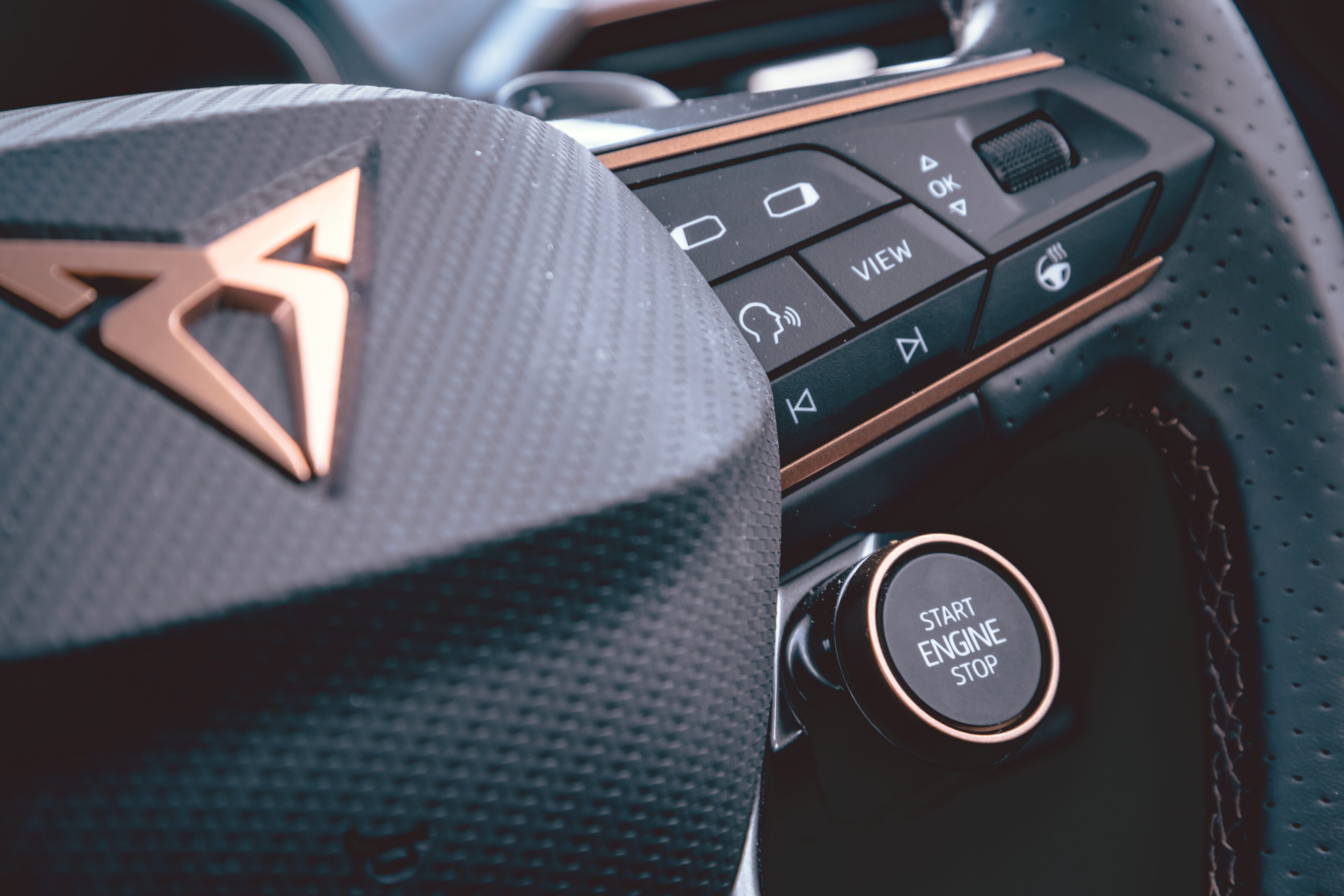
Petrol-coloured upholstery and copper stitching instantly set the Cupra apart, which is not only the classiest inside but also the most practical. Proper door grabs, great bottle storage, an enormous boot (for a hatch), and a pervasive feeling of quality. Although our MY22 test car’s touchscreen proved somewhat glitch-prone, that is amended with upgraded software and a new 10.25-inch screen for MY23.
The Leon’s steering wheel feels superb, with a Porsche-inspired drive mode button, and the winged seats do a brilliant job of accommodating all body types. A nine-speaker Beats stereo matches its rivals cracking audio delivery.
1
SCORING
? Toyota GR Corolla GTS: 9/10
What we liked
- Delightful drivetrain
- Tough appearance
- Excellent driving position
- Crisp steering
- Multi-layered handling
- Decent ride
- Arresting brakes
Not so much…
- Restricted boot size
- Claustrophobic back seat
- Too-high front passenger seat
- Mediocre multimedia screen
- Constant road noise
? Cupra Leon VZx: 8.5/10
What we liked
- Handsome proportions
- Superb packaging
- Rapid acceleration
- Adjustable handling
- Interior trim quality
- Strong brakes
Not so much…
- Abrasive ride quality at times
- Whooshy engine note
- Patchy multimedia software
- No manual transmission option
? Subaru WRX RS: 7.5/10
What we liked
- Class-leading vision,
- Prodigious grip
- Well-balanced handling
- Spacious interior and boot
- Drivetrain refinement
Not so much…
- Steering doesnu2019t feel natural
- Soft-edged throttle response
- Cabin storage flaws
- Vertical ride movement
- Wooden brake feel and response
MORE
Everything Toyota
MORE
Everything Cupra
MORE
Everything Subaru
Specifications
| Toyota GR Corolla GTS | Cupra Leon VZx | Subaru WRX RS | |
|---|---|---|---|
| $62,300 (before on-road costs) | $59,990 (before on-road costs) | $50,490 (before on-road costs) | |
| DRIVETRAIN | |||
| Engine | 3cyl, dohc, 12v, turbo-petrol | 4cyl, dohc, 16v, turbo-petrol | flat 4, dohc, 16v, turbo-petrol |
| Layout | front engine (east-west), all-wheel drive | front engine (east-west), front-wheel drive | front engine (north-south), all-wheel drive |
| Capacity | 1618cc | 1984cc | 2387cc |
| Power | 221kW @ 6500rpm | 221kW @ 5300-6500rpm | 202kW @ 5600rpm |
| Torque | 370Nm @ 3000-5550rpm | 400Nm @ 2000-5200rpm | 350Nm @ 2000-5200rpm |
| Transmission | 6-speed manual | 7-speed dual-clutch | 6-speed manual |
| CHASSIS | |||
| Body | steel, 5 doors, 5 seats | steel, 5 doors, 5 seats | steel, 4 doors, 5 seats |
| L/W/H/Wu2013B | 4407/1851/1479/2640mm | 4398/1799/1444/2689mm | 4670/1825/1465/2675mm |
| Track (f/r) | 1589/1624mm | 1554/1520mm | 1560/1570mm |
| Weight | 1485kg | 1503kg | 1516kg |
| Boot | 213 litres | 380 litres | 411 litres |
| Fuel/tank | 98 RON / 50 litres | 98 RON / 50 litres | 95 RON / 60 litres |
| Economy | 12.8L/100km (tested) | 11.8L/100km (tested) | 12.8L/100km (tested) |
| Suspension | Front: struts, A-arms, anti-roll bar | Front: struts, A-arms, adaptive dampers, anti-roll bar | Front: struts, A-arms, anti-roll bar |
| Rear: double wishbones, coil springs, anti-roll bar | Rear: multi links, coil springs, adaptive dampers, anti-roll bar | Rear: double wishbone, coil springs, anti-roll bar | |
| Steering | electric rack-and-pinion | electric rack-and-pinion | electric rack-and-pinion |
| Front brakes | ventilated discs (356mm) | ventilated discs (370mm) | ventilated discs (316mm) |
| Rear brakes | ventilated discs (297mm) | ventilated discs (340mm) | ventilated discs (290mm) |
| Tyres | Yokohama Advan Apex V601 | Bridgestone Potenza S005 | Dunlop SP Sport Maxx |
| Tyre size | 235/40R18 91W | 235/35R19 91Y | 245/40R18 97Y |
| SAFETY | |||
| ANCAP rating | 5 stars | 5 stars | 5 stars |
| PERFORMANCE | |||
| 0-100km/h | 5.3sec (claimed) | 5.7sec (claimed) | 6.0sec (estimated) |
