
Yep. It’s expected that the new Kona will not be offered with wireless Apple CarPlay or Android Auto, thanks to what is believed to be an ongoing stoush between Hyundai and either Apple or Google, over the topic of whose maps system should be appear when the system first loads up – theirs or Hyundai’s. Neither Hyundai, nor its stablemate Kia which suffers the same issue, have been prepared to comment on the matter. Owners will still be able to use a wired connection, at least.
July 2023: The Honda ZR-V is now on sale in Australia, and we’ve driven it
Sorry, CR-V – ZR-V is the medium SUV poised to bring Honda back to the pointy end of the sales race. Read our full review at the link below.
▶ Story continues: ZR-V confirmed for Australia
The new Honda ZR-V will join the Japanese brand’s Australian line-up in mid 2023 after confirmation of one of the medium SUV segment’s worst-kept secrets.
Snapshot
- Will sit between HR-V and CR-V
- 3 grades with turbo petrol power and 1 grade with hybrid drivetrain
- Launching locally mid 2023
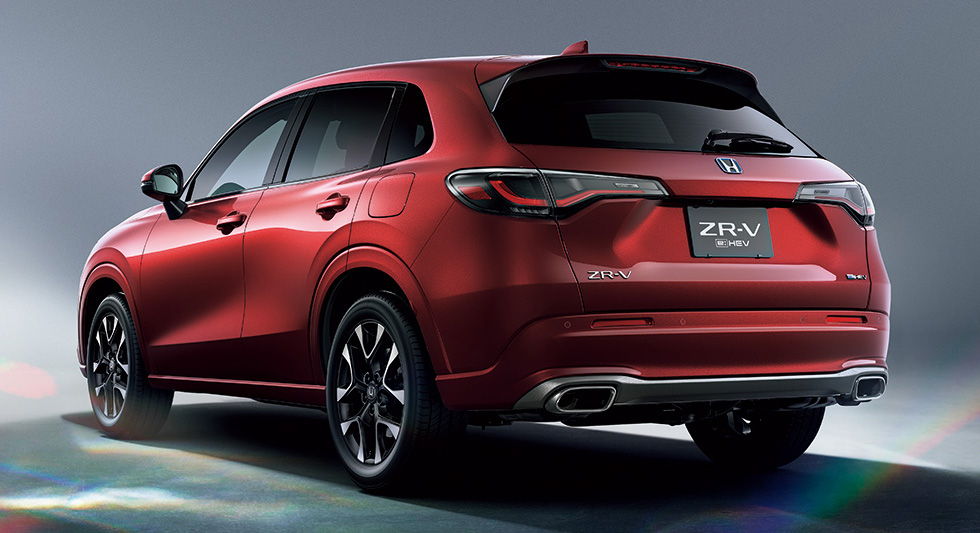
Honda’s first-ever ZR-V will sit between its longer-running SUV nameplates, the HR-V and CR-V.
It will essentially replace the CR-V as Honda’s direct rival to the likes of the Mazda CX-5 and Toyota RAV4, with a larger, new-generation CR-V – also due this year – moving into the large-SUV space.
2
How big is the Honda ZR-V?
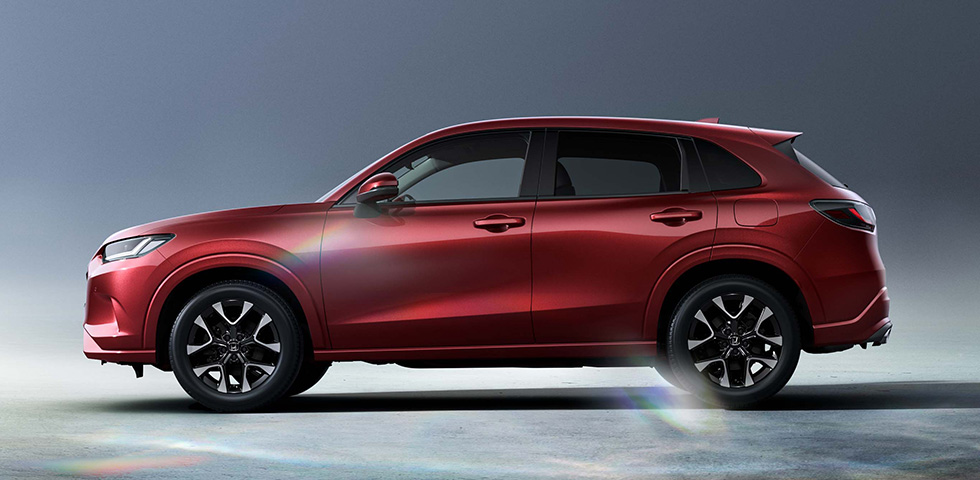
The Honda ZR-V is 4566mm long, based on Honda USA details – where the SUV is badged HR-V with the smaller SUV not offered in North America.
That’s just a fraction longer than the Civic, and compares with the 4335mm-long HR-V and 4694mm-long new-generation CR-V.
1
Features and equipment
Pricing and detailed specifications will be announced closer to the model’s local launch, but Honda has confirmed the ZR-V will be offered with both petrol and hybrid drivetrains – both borrowed from the Civic hatchback.
The 1.5-litre turbo petrol and CVT combination is installed in the VTi X, VTi L and VTi LX grades, while the e:HEV LX that’s likely to be the flagship variant features a 2.0-litre petrol engine, dual electric motors and an e-CVT transmission.
In the Civic, the 1.5L turbo produces 131kW and 240Nm while the hybrid produces 135kW and 315Nm.
Honda Australia will have the option to pick ZR-V models with either front-wheel drive or all-wheel drive, giving them one clear distinction over the small HR-V that is front-drive only. The CR-V is expected to continue being offered in a mix of front- and all-wheel drive and will continue to be the only Honda SUV available with seven seats.
Honda’s global media information for the ZR-V suggests all but the base VTi X will feature driving modes, with Eco, Normal, Snow and Sport settings that adjust accelerator-pedal response. Hill Descent Control is also available.
The VTi X will sit on 17-inch alloy wheels, with all other grades featuring 18-inch alloys.
1
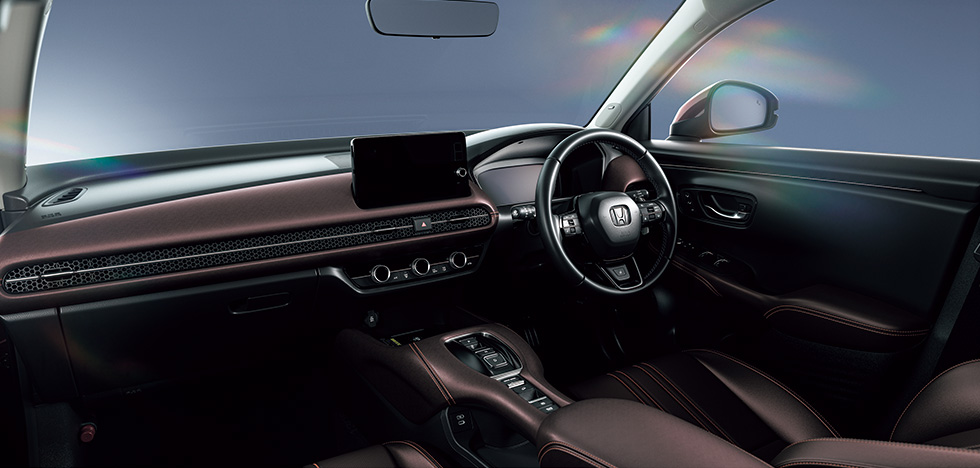
Other confirmed features for now include anti-dazzle LED headlights, adaptive cruise control, speed-limit notification, front/rear parking sensors, and a 9.0-inch infotainment screen with wireless Apple CarPlay and wired Android Auto. An automatic tailgate will also be standard on all models, according to Honda.
Honda Connect Telematic services will be complimentary for five years, mirroring the likes of Kia and Hyundai – while others such as Toyota stick with shorter trials.
Honda says the ZR-V crossover features a sedan-like driving position and provides a flat cargo area when rear seats are lowered.
The design of the ZR-V is quite a departure from either the slightly quirky HR-V or more conventional new-generation CR-V – with an uncanny resemblance to Maserati’s Levante luxury SUV.
How much will the Honda ZR-V cost in Australia?
A starting price somewhere under $40,000 would seem likely for the ZR-V to ensure it competes with its closest rivals.
The smaller HR-V costs between $36,700 and $47,000, while the outgoing CR-V ranges from $35,900 to $53,600.
MORE
Everything Honda
Snapshot
- Formentor is the first bespoke Cupra model. Prices range from $50,690 to $61,990
- Judges praised its dynamics, surprisingly roomy cabin and eye-catching design
- Formentor squared off against 16 other contenders at COTY to finish second
- Only one brand has won COTY in its first attempt: the Lexus LS 400. Cupra almost replicated that feat with the Formentor
COTY winner debate, Wheels HQ. Spent coffee cups litter the table and with the final vote looming large, the mood amongst the seven judges is intense.
We’ve been here for hours already and, after some fierce back-and-forth, our group of finalists has been narrowed down to two potential winners: the Cupra Formentor or the Ford Everest.
This is rarefied air for Cupra. For a brand to rock up to Car of the Year and snag the trophy in its very first attempt is a feat that’s only been achieved once, when Lexus turned out the landmark LS 400 way back in 1990.
By now, of course, you’ll have deduced that the Cupra has ultimately fallen short – but it was a close thing. In the final ballot, the Formentor secured a number of votes from the judges; there just weren’t quite enough to secure a majority.
WHEELS CAR OF THE YEAR 2023
1
So how did a brand-new and relatively unknown Spanish crossover get within cooee of our top honour? Well, we liked it almost immediately.
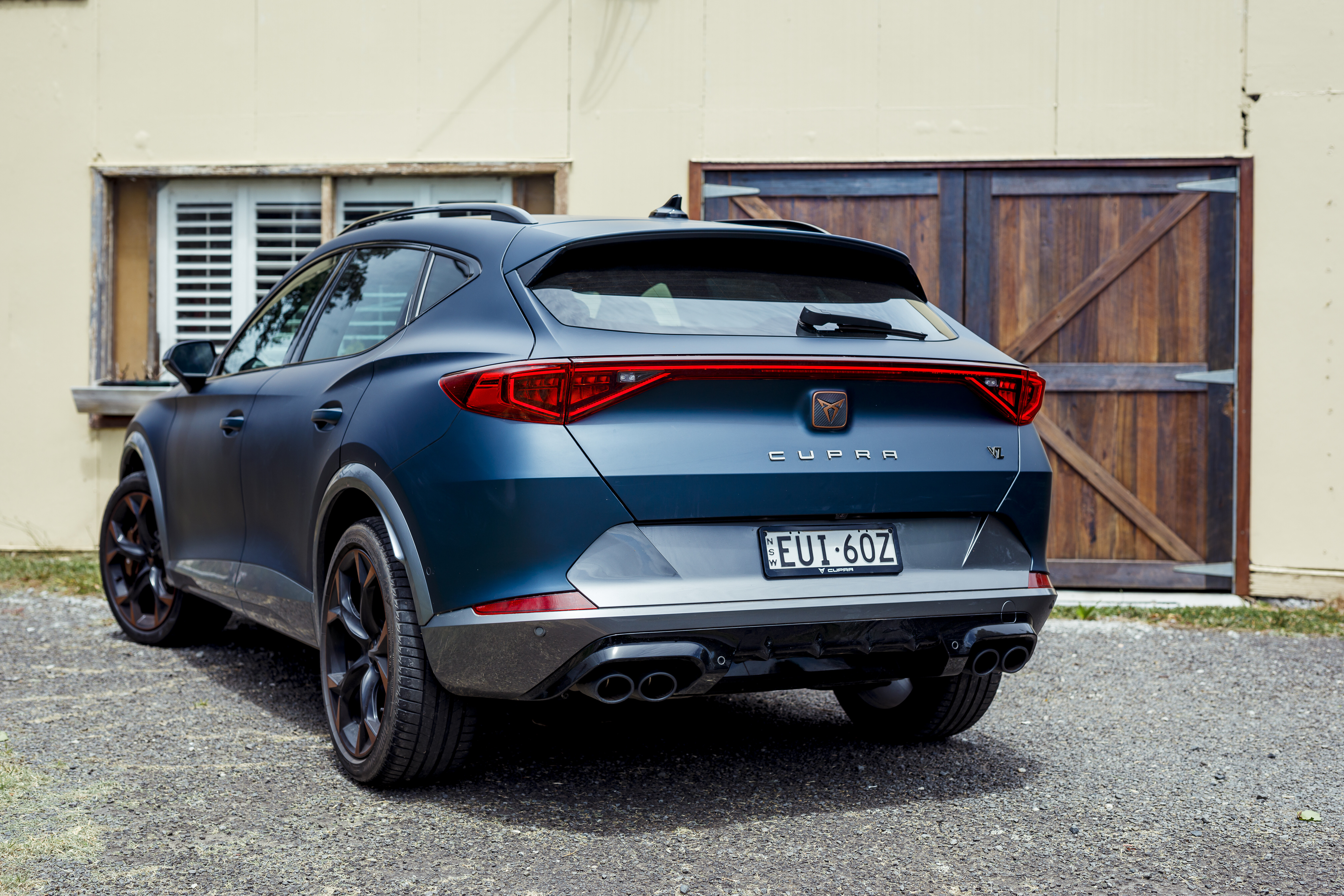
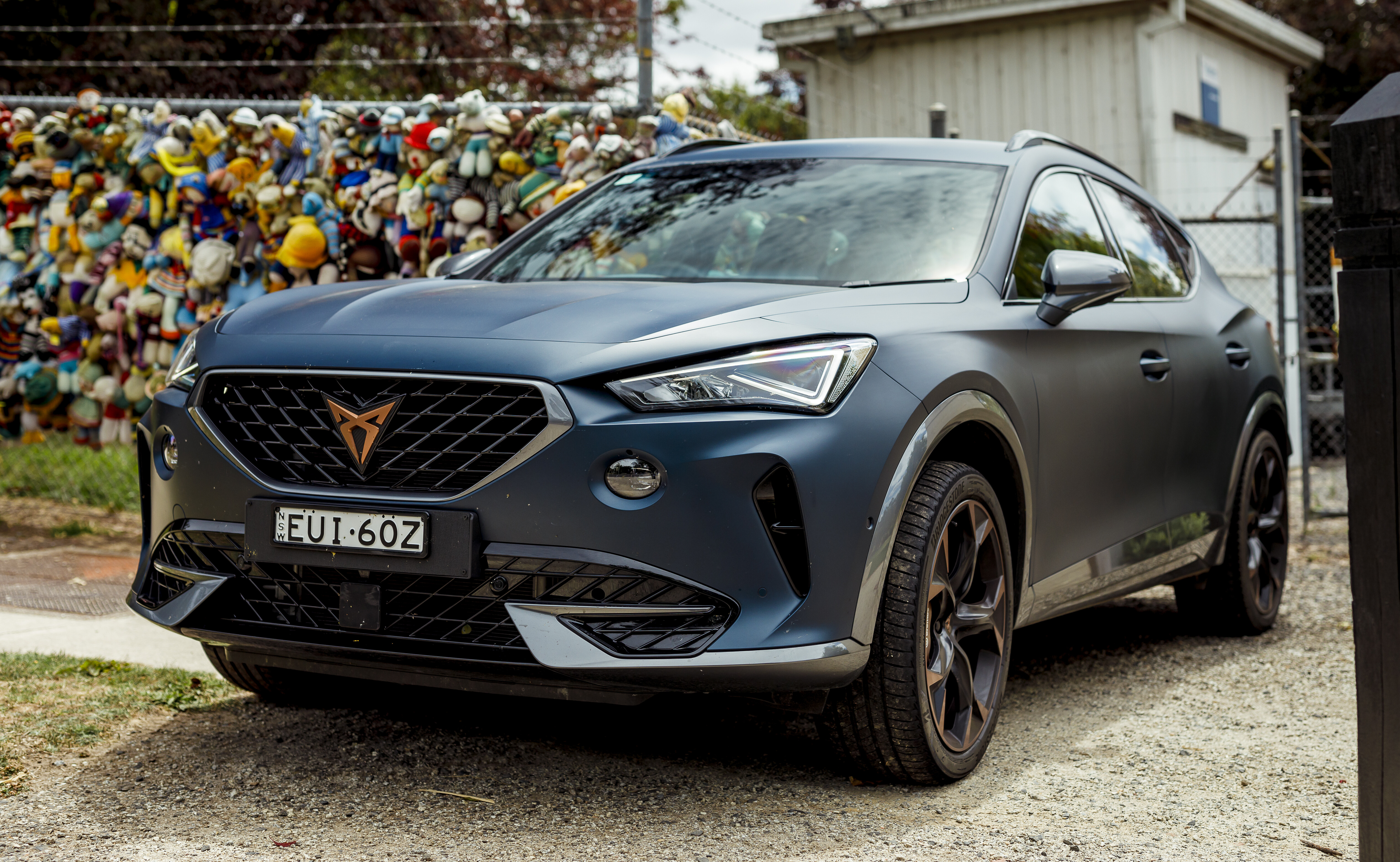
The Formentor is the first bespoke Cupra that isn’t a rebadged and uprated Seat, and at Lang Lang its striking design, surprisingly roomy back seat and silkily calibrated dynamics earned it instant praise.
“A very pleasant surprise; feels composed, alert and fun,” is the first note in Editor Enright’s judging book. Alex Affat was equally impressed and, just before he zoomed off for another lap of the ride and handling track, he managed to nail why the Cupra had gotten under our skin so quickly: “It feels like it’s been built by people who care about driving!”
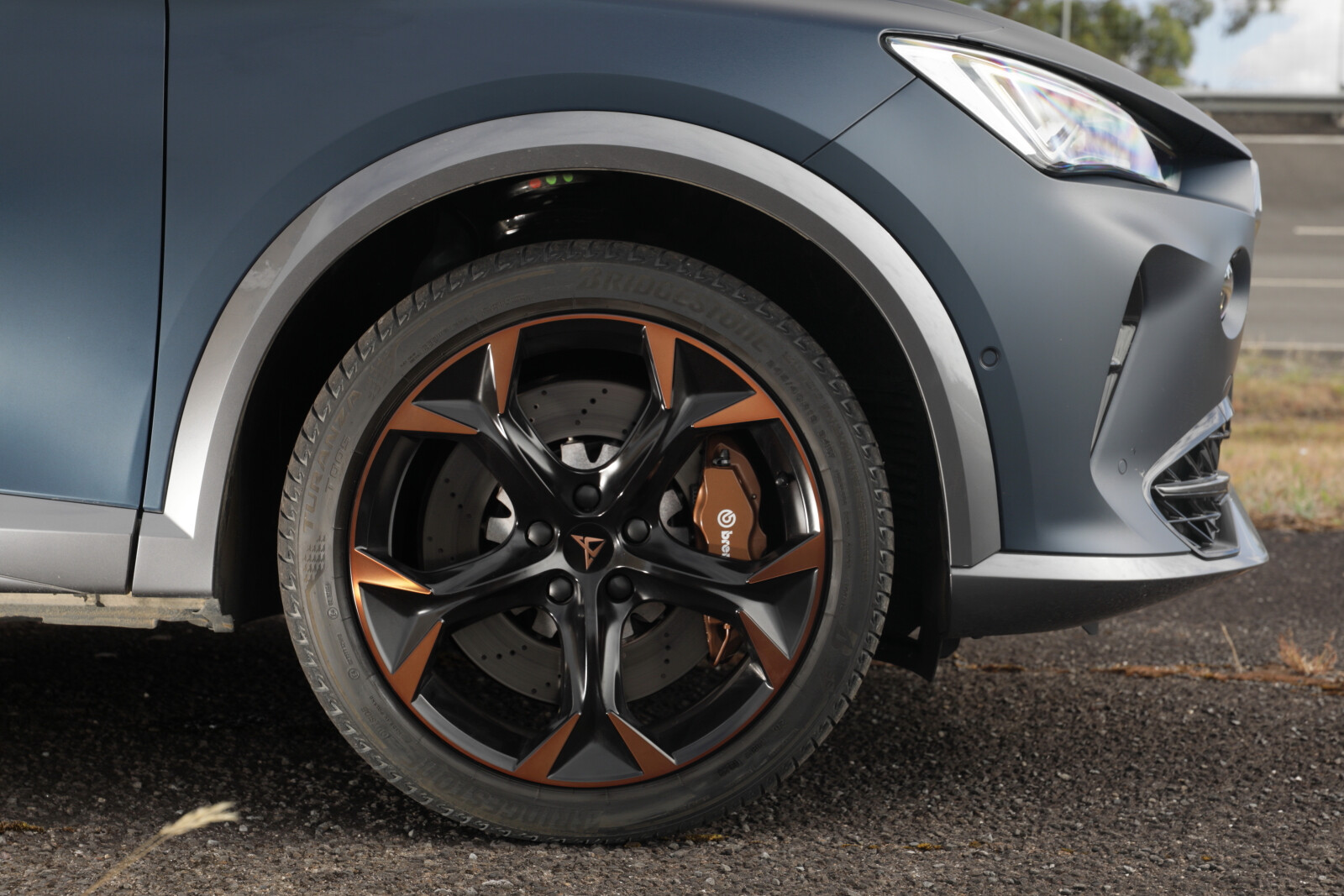
1
Cupra isn’t an entirely new brand, of course. Before splintering off on its own in Europe in 2018, Cupra had a long history as the go-fast division of Seat. Think Polestar’s trajectory with Volvo and you’ll have a fairly good grasp on Cupra’s journey. And although it’s a fresh brand to the Aussie market, having launched here last year, Cupra is backed by the might of the sprawling Volkswagen Group.
“A triumph of calibration, beautiful to drive in almost any situation” – Dylan Campbell
Underneath that distinctive bodywork, the Formentor is built on the same tried and proven underpinnings as the iconic VW Golf. Same MQB Evo platform, same engines, same gearboxes. In fact, of the three Cupras we had at COTY – the VZ, the hybrid VZe and the flagship VZx – it was hard not to think of them as “This one is the Golf GTi tune and that one is the Golf R”.
But before you get dismissive of those shared underpinnings – “It’s just a Golf with a different body isn’t it?” is a common and shortsighted comment – Cupra’s engineers have worked hard to carve out a unique personality for the Formentor.
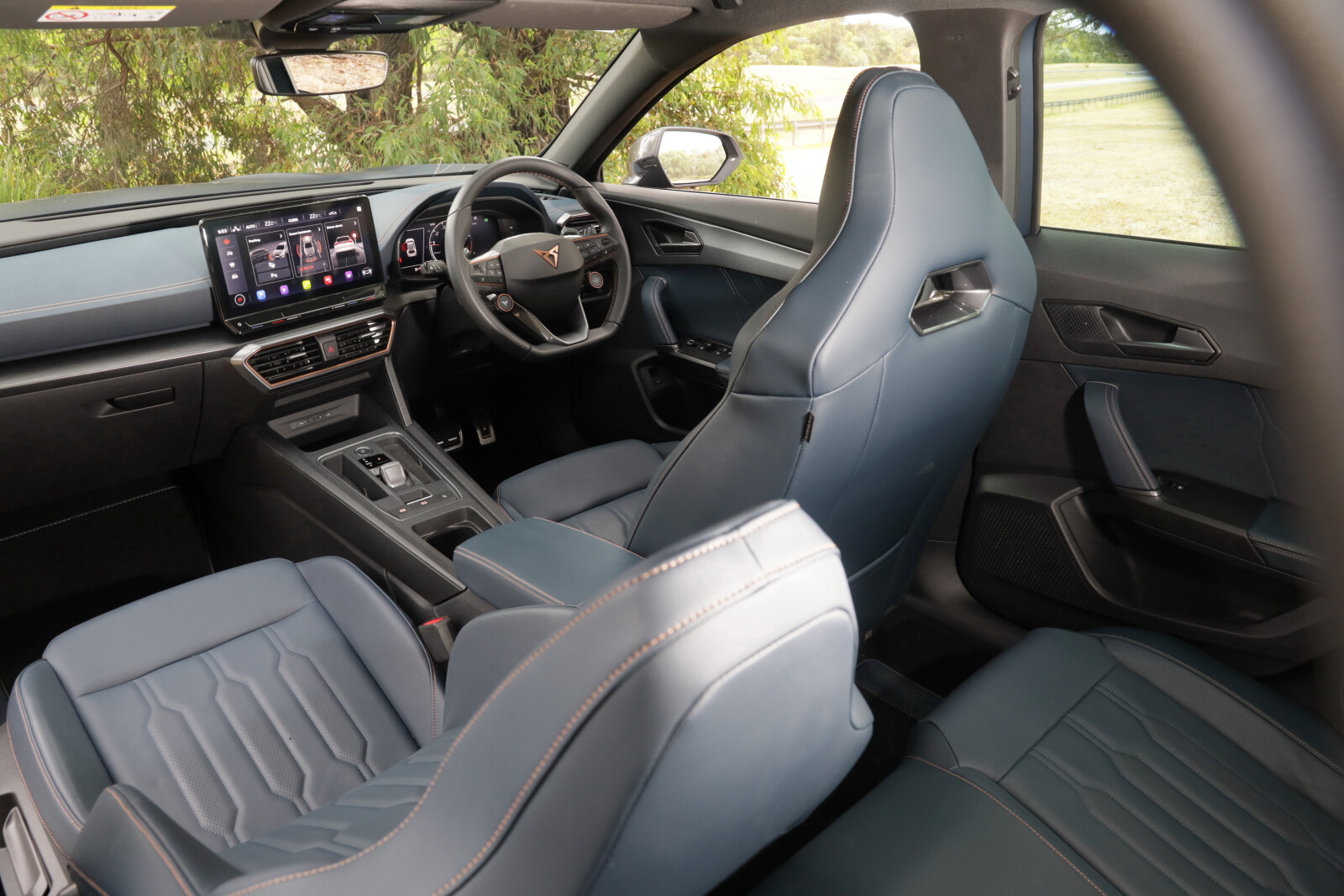
1
One key distinction is its size. Compared with a Golf, the Formentor is 166mm longer, 50mm wider and 54mm taller. It also rolls on a wheelbase that’s 44mm longer and the result of this additional size is an appreciable boost in cabin room. The front seats are cosseting and comfortable, there’s decent cabin storage and the space in the back is generous, despite the Formentor’s rakish rear-end styling.
Rear passengers benefit from useful kneeroom and toe room and there are also dedicated air vents, central cup holders and twin USB-C outlets. The 450L boot (the hybrid VZe has 420L) is larger than you might expect, too, and doesn’t only offer a useful increase over a Golf (374L) but easily gazumps the load-lugging ability of an Audi Q2.
A style-driven crossover that doesn’t forgo rear-seat room or skimp on family utility? That’s a masterstroke of packaging.
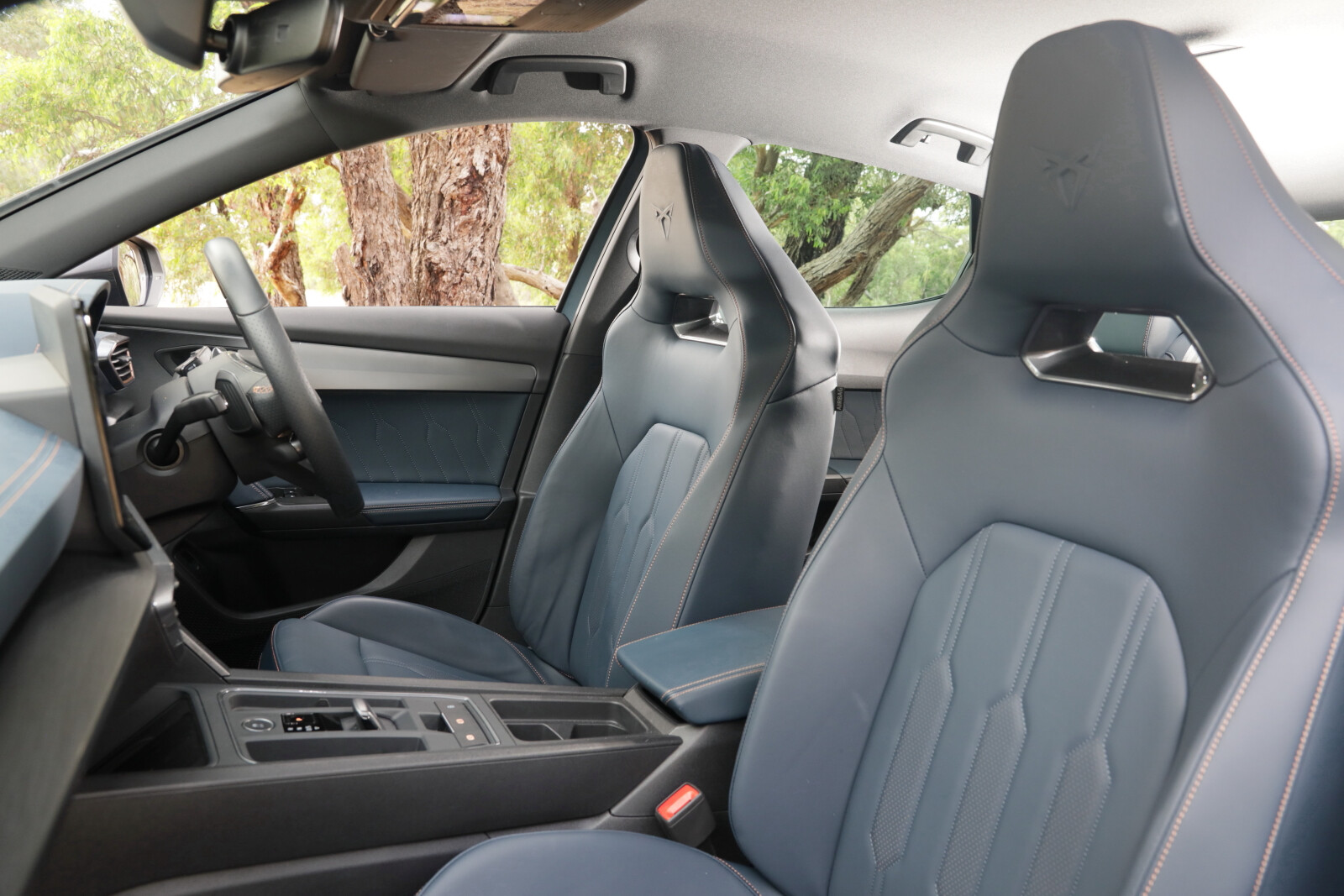
1
The cabin design also feels unique, despite the familiar mix of VW-derived screens and other switchgear. The lashings of bronze detailing add a sense of flair and the mix of materials and sense of solidity certainly aren’t shamed by the Audi A3 we also had at COTY.
Better yet, Cupra’s Aussie product planning team has done a fine job of positioning the Formentor for price and performance. Tit-for-tat, the Formentor VZ undercuts a Golf GTi by $1200 while the flagship, all-wheel drive VZx is $4000 less than a Golf R.
And the hybrid VZe, which combines a 1.4-litre turbo-petrol with a 13kWh battery pack, offers a fuel-efficient, electrified alternative that’s currently missing from the model ranges of VW, Skoda and Audi. Three years’ free servicing is a further sweetener to the Formentor’s scorecard against our Value criteria.
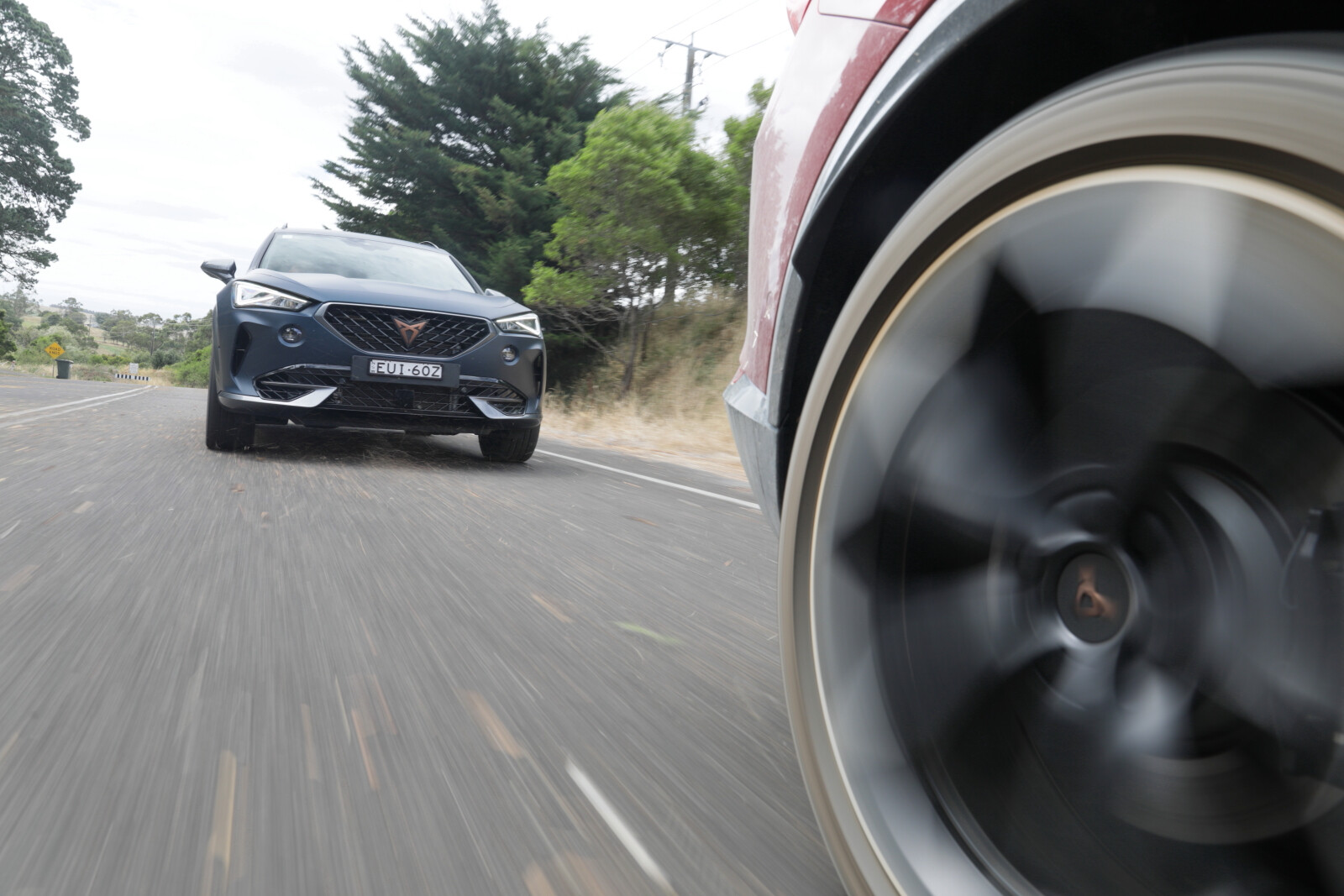
1
The real genius with the Formentor, however, is in how it drives.
Around Lang Lang’s challenging ride and handling course, all three variants scored highly for their crisp steering, punchy powertrains and a ride/handling compromise that strikes an almost ideal balance between comfort and control.
“A dynamic delight,” enthused Campbell. “Feels like a Golf GTI or Golf R but with a dash of body roll like a Mazda MX-5.”
“Very little handling compromise imposed by taller crossover body,” added Enright. “You have to keep reminding yourself that you’re not in a hot hatch.”
Excellent dry braking distances and sharp acceleration figures courtesy of proven VW powertrains (all three Cupras on test actually beat their official 0-100km/h claims) only cemented the Formentor’s position as one of the tidiest handlers of the entire COTY field, with the all-wheel drive VZx easily the pick for outright driver appeal.
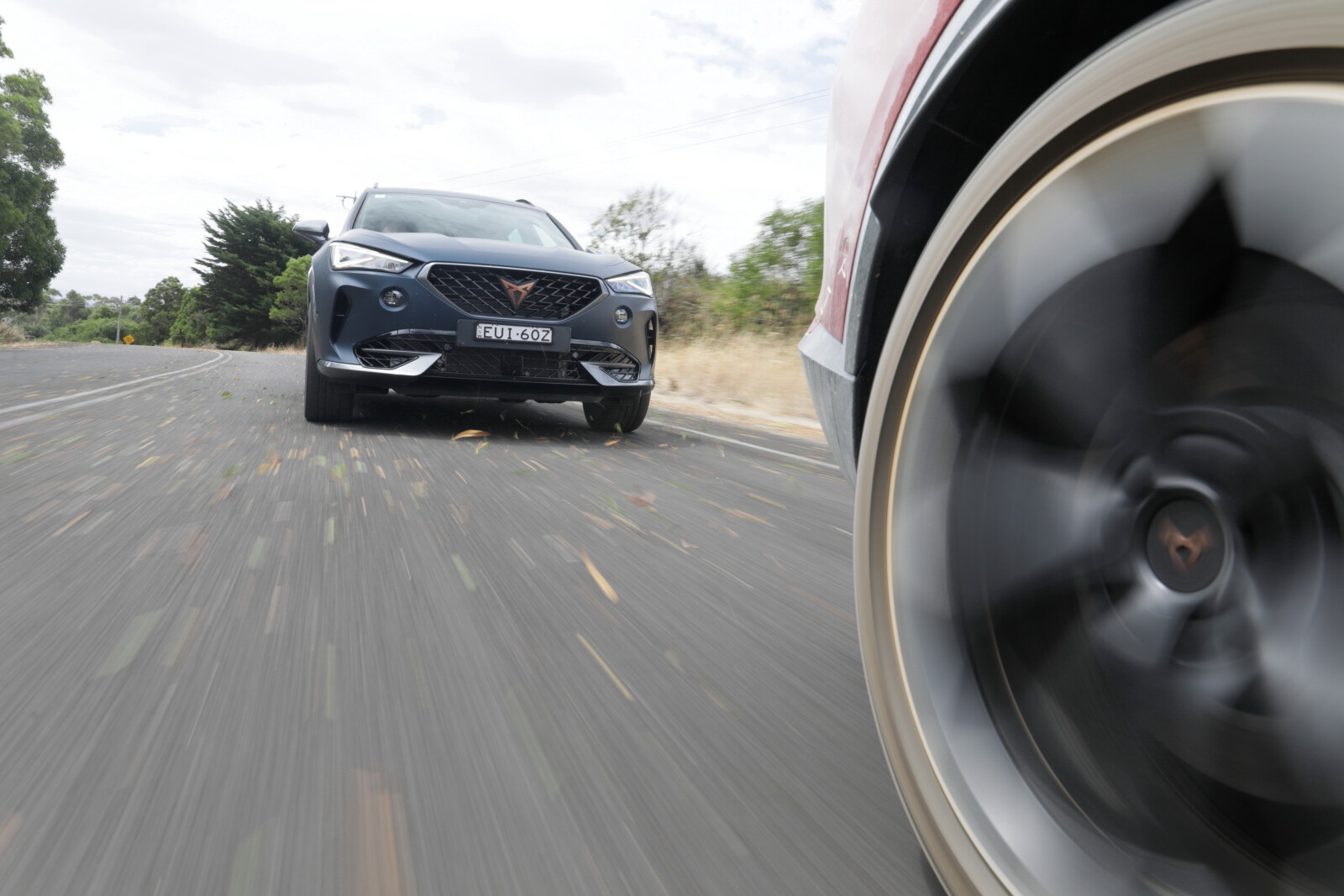
1
While it lacks the torque vectoring clutch packs and Drift Mode functionality of the Golf R, the VZx’s punchy EA888 2.0-litre, quick steering and adjustable and engaging chassis combine to deliver dynamics that aren’t only engaging and fun but also feel uniquely like a Cupra. John Law went one further, noting the Formentor as: “The most differentiated MQB-based Volkswagen product available.”
The weak link in the range, dynamically at least, is the VZe. While it offers GTi-like levels of performance (outputs are 180kW/400Nm) and an EV-only range of 50km, the extra heft of its battery and e-motor spoiled the sweet ride/handling balance evident in the VZ and VZx. “I found the brake pedal inconsistent and drivetrain calibration clumsy,” added Law.
Some other criticisms started to surface, too. Only the top-spec VZx is available as standard with an electric tailgate (it’s part of an optional ‘power pack’ on other models), which took the shine off its family friendliness a little.
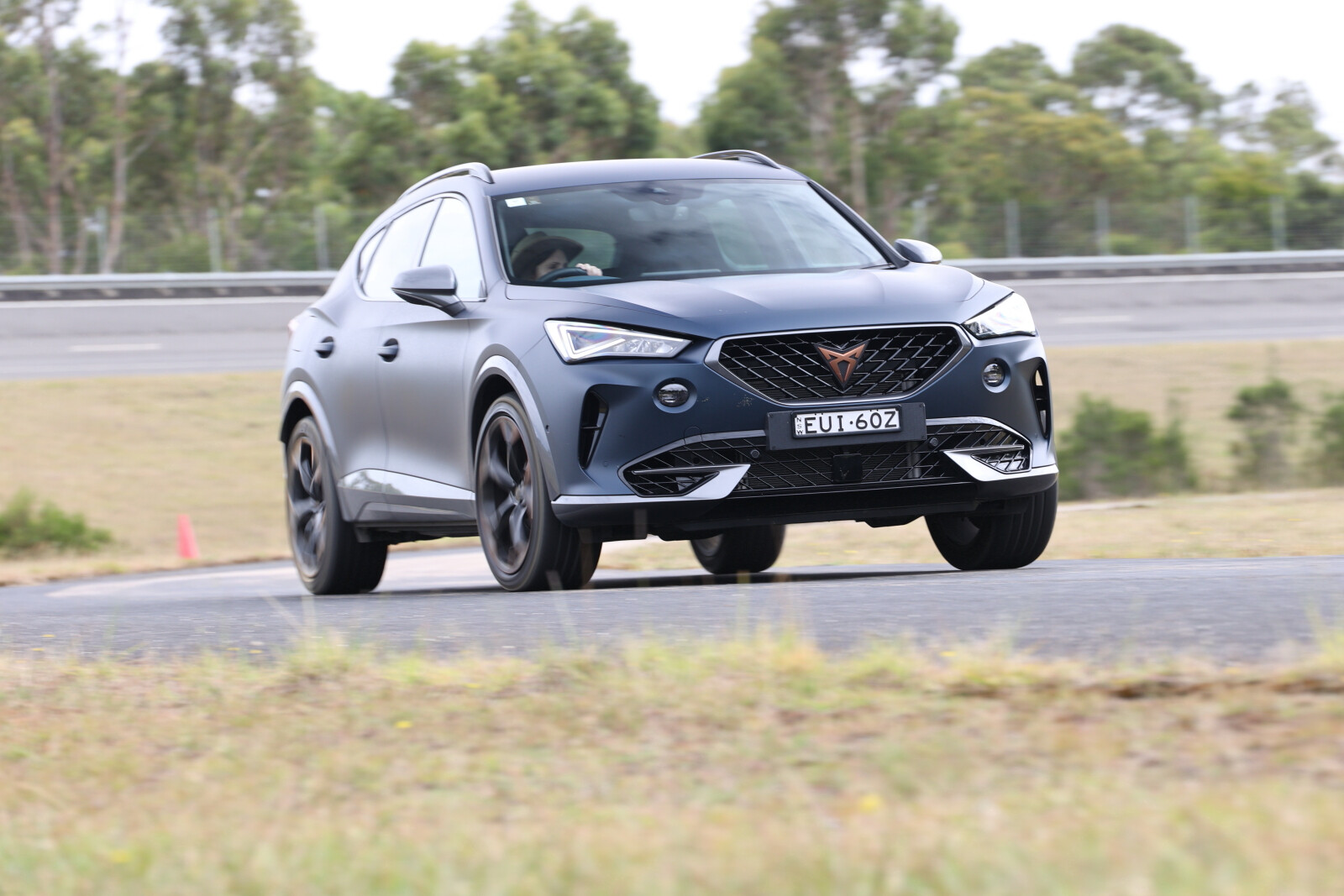
1
None of the three versions we had on test had electric adjustment for the front passenger seat, which some judges felt was a touch stingy, especially on the $61,990 flagship VZx.
Another niggle was burying key functions inside the central touchscreen, with some judges taking multiple laps of our course to discover where the VZ’s drive mode selector was hidden. Only the VZx has a drive mode button on the steering wheel; elsewhere the modes are tucked away in the convoluted central menu.
Still, with strong marks against our criteria for Value, Cabin Execution and How it Drives, the Formentor was a shoo-in as a finalist. And on our country and urban road loops, it continued to excel.
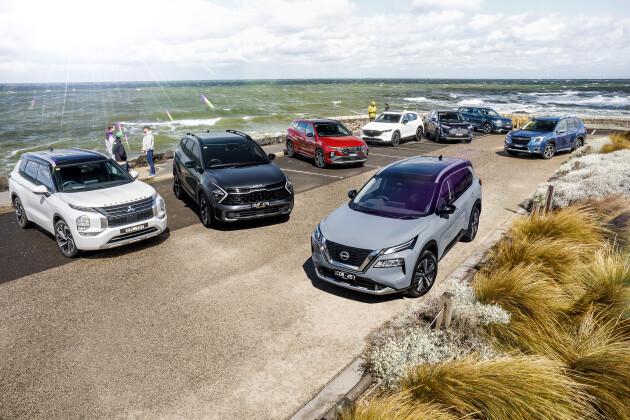
Comparisons
Medium SUV comparison: 2023 Mega Test
Thinking of buying a new mid-size SUV this year? We test eight of the best and most popular contenders to see where you should spend your money
With greater seat time, the judging panel further appreciated the fast and accurate steering (2.1 turns-lock-to-lock) which, compared to our other finalists, merely required a roll of the wrists to navigate our twisty country-road sections.
But it was the deft chassis tuning that really stood out. Every Cupra bar the $50,640 entry-level V variant rolls on 19-inch alloys as standard and while the ride can err on the firm side, it nails the ‘small sporty SUV’ brief for compliance and control.
There was a recurring issue, though – the usability of the infotainment screen. Like many modern VW products, the Formentor’s cabin has very few physical buttons and instead forces you to prod and swipe at the (impressively large) 12.0-inch central screen and touch-sensitive sliders.
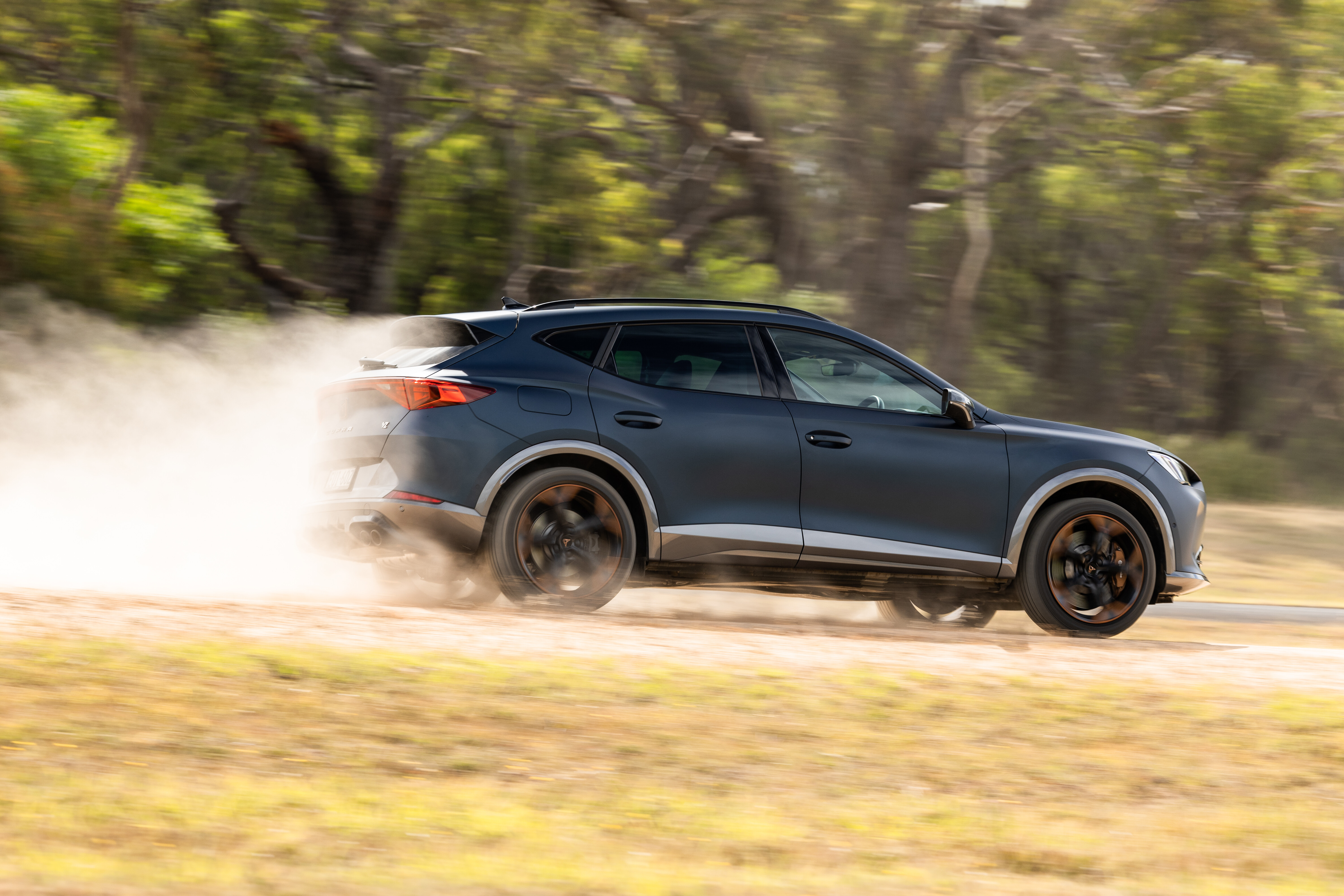
1
“It’s fussy and takes the driver’s eyes off the road,” lamented Affat.
“Basic functions like climate and stereo volume are also adjusted via the central screen or feedback-less touchpads below. Really hard to use while driving.”
Campbell also took issue with the Formentor’s unintuitive ergonomics. “I hate tapping on inanimate bits of trim to adjust the temperature,” he said. “Volkswagen, your HVAC dials are good. Bring them back!”
But annoying functionality issues aside, it was obvious that the Formentor stood a chance of winning as we headed into our final round of judging. It was the clear ‘driver’s pick’ of our finalists and a small SUV that, despite its familiar VW ingredients, felt much more than the sum of its parts.
1
So, why didn’t the Formentor secure more votes in the final reckoning for a winner?
The infotainment and cabin ergonomic fumbles were a sticking point for some judges. “Would almost not buy it, on the infotainment alone,” muttered Campbell, but ultimately it was a case of our winner offering slightly more against the criteria, rather than the Cupra scuppering its own chances.
Call it a situation akin to the career of Aussie cricketer Stuart MacGill; a brilliant talent robbed of top billing by the timing of a rival, in his case one S K Warne.
So while it couldn’t quite replicate the debut feat of the Lexus LS 400, Cupra’s first tilt at COTY remains deeply impressive. The Formentor’s easily our favourite Cupra yet and also our pick over established rivals like the BMW X2, Audi Q2 and Mini Countryman.
We even might encourage friends to buy one over a fast Golf if they’re looking for something with a dash more personality and compliance. That’s how good it is.
MORE
Everything Cupra
MORE
SUV Buyers Guide
| Cupra Formentor | VZ FWD | VZe Phev | VZx |
|---|---|---|---|
| Price | $53,790u00a0 | $60,990 | $61,990u00a0 |
| Body | Five door, five seat SUV | Five door, five seat SUV | Five door, five seat SUV |
| Drive | Front-wheel drive | Front-wheel drive | All-wheel drive |
| Drivetrain | 1984cc inline-4, turbo petrol | 1395cc inline-4 (110kW/250Nm) turbo petrol; 13kWh battery, single electric motor (85kW/300Nm) | 1984cc inline-4, turbo petrol |
| Power | 180kW @ 5000rpm | 180kW @ 5000rpm | 228kW @ 5450rpm |
| Torque | 370Nm @ 1550rpm | 400Nm @ 1550rpm | 400Nm @ 2000rpm |
| Transmission | 7-speed dual-clutch | 6-speed dual-clutch | 7-speed dual-clutch |
| Fuel consumption | 6.9L/100km (NEDC) | 1.9L/100km (NEDC) | 7.7L/100km (NEDC) |
| Kerb weight | 1608kg | 1730kg | 1650kg |
| Towing capacity | 750kg/1600kg | 750kg/1500kg | 750kg/1800kg |
| 0-100 | 7.1sec | 7.0sec | 4.9sec |
| L/W/H/W-B | 4446/1839/1520/2679mm | 4446/1839/1520/2679mm | 4446/1839/1511/2679mm |
| Boot space | 450L | 450L | 420L |
| Warrantyu00a0 | 5yr/unlimited-km | 5yr/unlimited-km | 5yr/unlimited-km |
| Safety rating | 5 star ANCAP (u201821) | 5 star ANCAP (u201821) | 5 star ANCAP (u201821) |
MORE READING
Now that you’re done reading about this COTY 2023 contender, you should go back to catch up on anything you might’ve missed. Check out the links below, or find it all at our COTY page.
After a new Kia, but not sure how long you’ll have to wait?
Issues such as semiconductor chip shortages, shipping problems and sickness and isolation have affected the ability of manufacturers like Kia to keep their production lines going over the last three years.
As such, all of the brand’s models are currently experiencing some delays.
However, some models are in greater supply than others, with flexibility around powertrains, specification and vehicle colour likely to see a vehicle in your driveway sooner.
Overall, according to Price My Car, the average wait time for a Kia is now 146 days – compared to 181 days in January 2022.
The quickest arrival is the Rio light hatch, with an average wait of 69 days, followed by the Stinger sports sedan at 77 days. Both vehicles will be discontinued later this year.
Meanwhile, the worst-affected models in Kia’s lineup are the Cerato small car, Sportage medium SUV and Carnival people-mover, with a wait time of 198 days, 186 days and 147 days, respectively.
Kia average model wait times 2023
NOTE: This information is current as of March 8, 2023. This article will be reviewed and amended as new details come to light.
A spokesperson for Kia Australia said supply is improving across many other high-demand models, including the petrol and diesel Sorento.
However, due to global demand, orders for the Sorento hybrid and plug-in hybrid have been paused to focus on fulfilling existing backorders.
Due to the ongoing supply challenges, new orders for top-spec Sportage and Carnival variants are experiencing longer-than-expected delays.

1
At this point in time, Carnival V6 petrol variants will have a longer wait time than four-cylinder diesel models.
In early 2023, Kia Australia said it is “in constant dialogue with head office to access additional stock to positively impact wait times”.
“Estimating wait times isn’t straight forward as the situation is so fluid and there are many variables to take into consideration such as model, specification, colour and production scheduling,” they added.
With all of the above in mind, it is important to consider this article a guide only.
MORE
Everything Kia
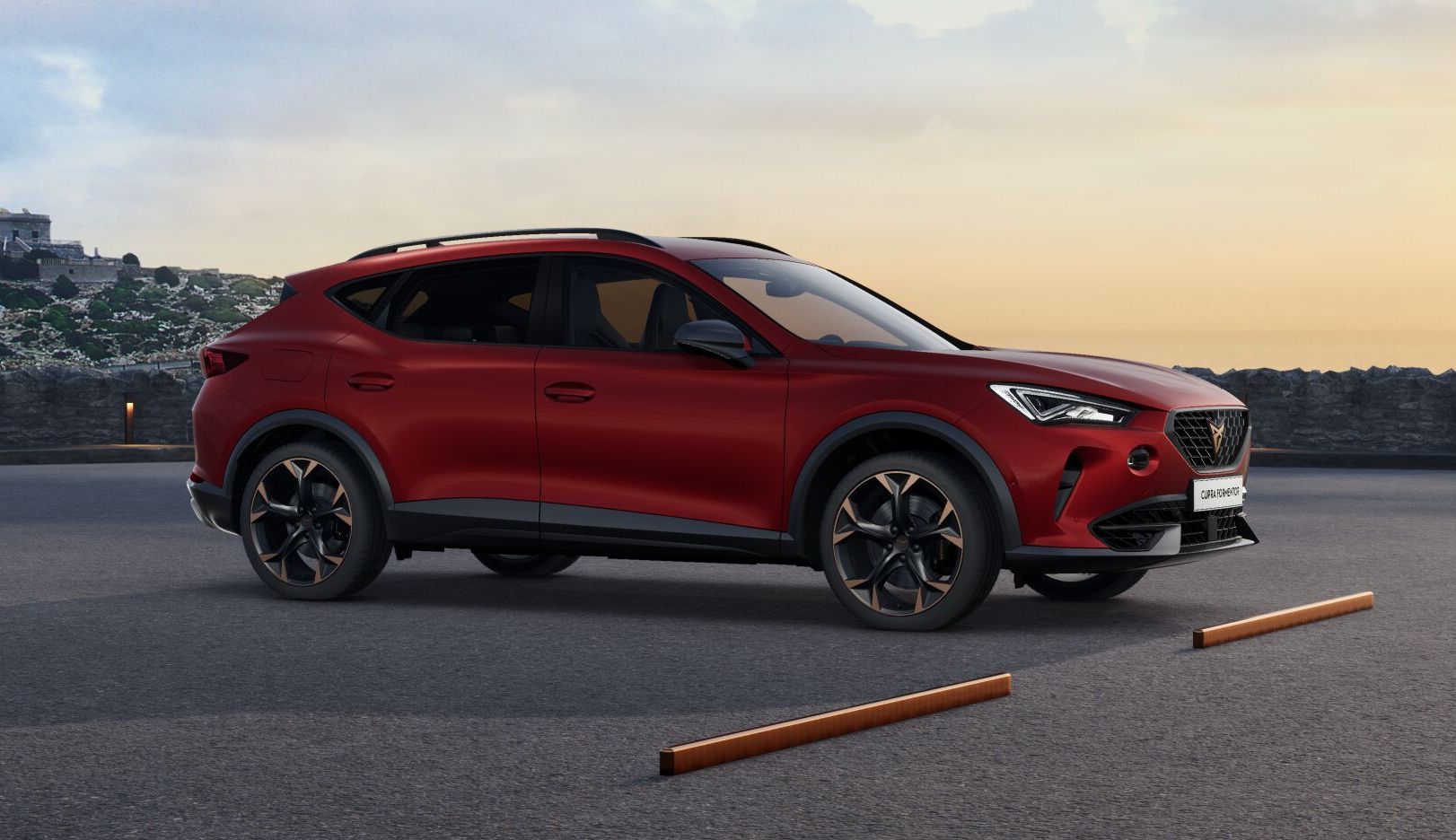
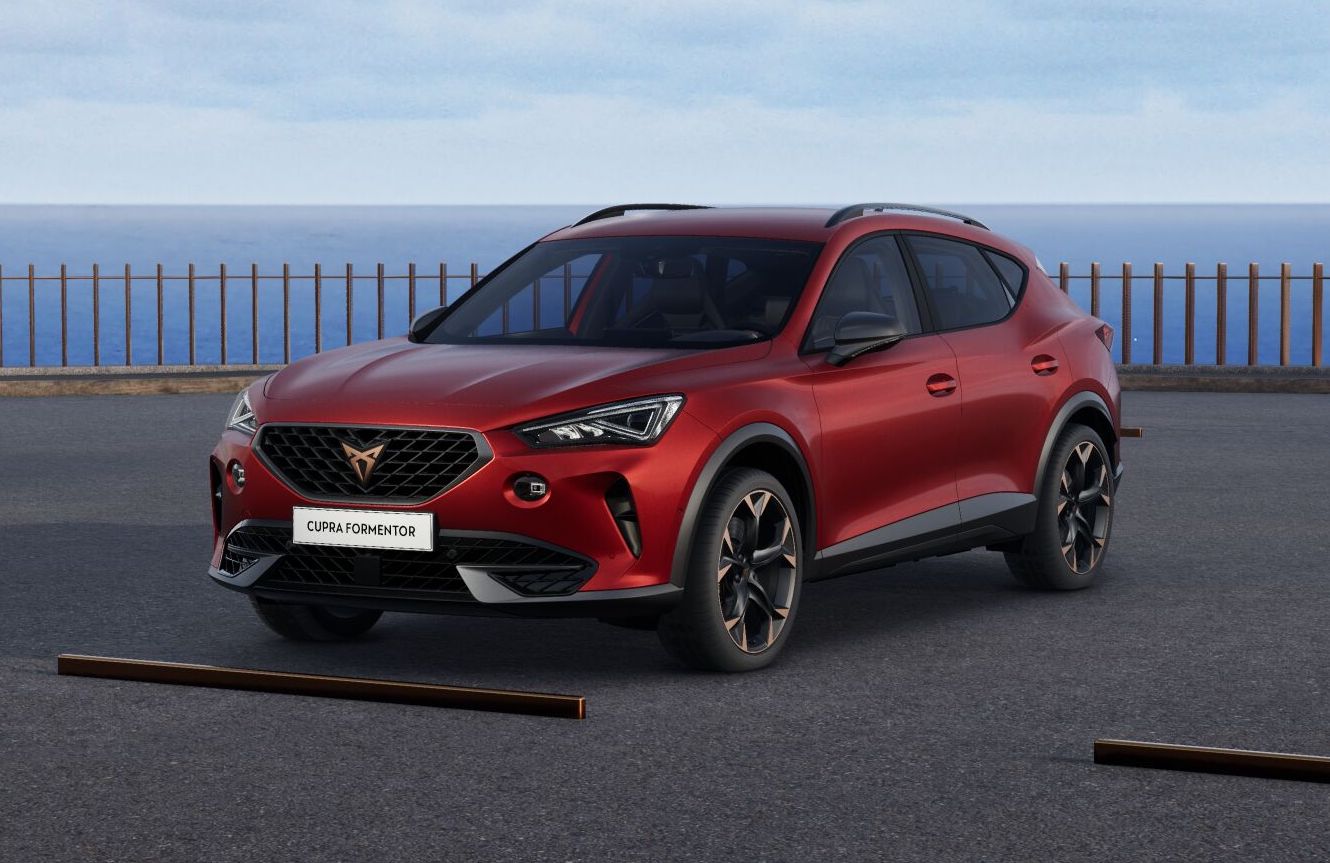
The 2023 Cupra Formentor VZx – a Wheels Car of the Year finalist – has a new red paint finish.
However, there’s a caveat: it will be limited to 30 units locally, in a special edition variant dubbed ‘Rojo’, the Spanish word for red.
While ‘desire red’ is available on the entry-level Formentor V (and Leon V), Cupra’s flagship series – VZ, VZe and VZx – is restricted to white, black, dark blue and a range of grey finishes in Australia.
“You never want a customer seeing red, but the determination of a prospective Cupra buyer to own a flagship-grade Formentor VZx in no shade but that, was partly responsible for the… Rojo edition,” said Cupra Australia.
1
“A highly-motivated customer has written to myself and Cupra’s global boss, Wayne Griffiths, over their disappointment that the Formentor VZx hasn’t been available in red,” added brand director, Ben Wilks.
As standard, the Formentor VZx Rojo will be fitted with a panoramic sunroof and black Nappa leather upholstery, replacing petrol blue.
It is priced from $66,490 before on-road costs or $71,490 drive-away nationally – $500 more than a standard Formentor VZx with the optional $2100 panoramic sunroof.
1
Without the panoramic sunroof, the Formentor VZx retails for $63,990 plus on-roads, following a $2000 price hike in January.
Cupra said the Formentor VZx is its top-selling variant in Australia.
The 2023 Cupra Formentor VZx Rojo is available to order today, with local deliveries due in May or June.
MORE
Everything Cupra
JANUARY 2024: Kona Electric driven in Australia
Hyundai’s new electric Kona is here, finally, and it presents as a more thought-provoking option than any would’ve thought when we first drove it way back in November.
July: New Kona driven in Australia!
The new-generation Kona is in Australia now, and you can find our news and reviews at the link below.
1
June 26, 2023: Kona Australian pricing revealed
Hyundai has locked in pricing and features for the second-gen Kona, including the hybrid!
UPDATE: Watch our design walkaround review
The new 2024 Hyundai Kona won’t reach Australia until the second half of 2023, but we’ve had a change to get up close with the new model.
Watch our videos, and get more Australian-spec details, in the story linked below.
March 1: 2024 Hyundai Kona Electric showcased in new video
Hyundai has handed down a new video of the next-generation 2024 Kona Electric, offering a detailed look at its exterior and interior design. You can see the video below.
We’ll have details on Australian specs and equipment for the new Kona range, including petrol and electric, on March 7 when the news embargo drops.
Be sure to check back here for all the information.
The story to here
January 2023: New Hyundai Kona detailed for Korea
The next-generation 2024 Hyundai Kona has launched in Korea this week, with additional specifications announced for petrol and hybrid variants.
Hyundai said more information for global markets, including the Kona Electric, will be announced in March.
Our reveal story, below, has been updated to reflect the latest details.
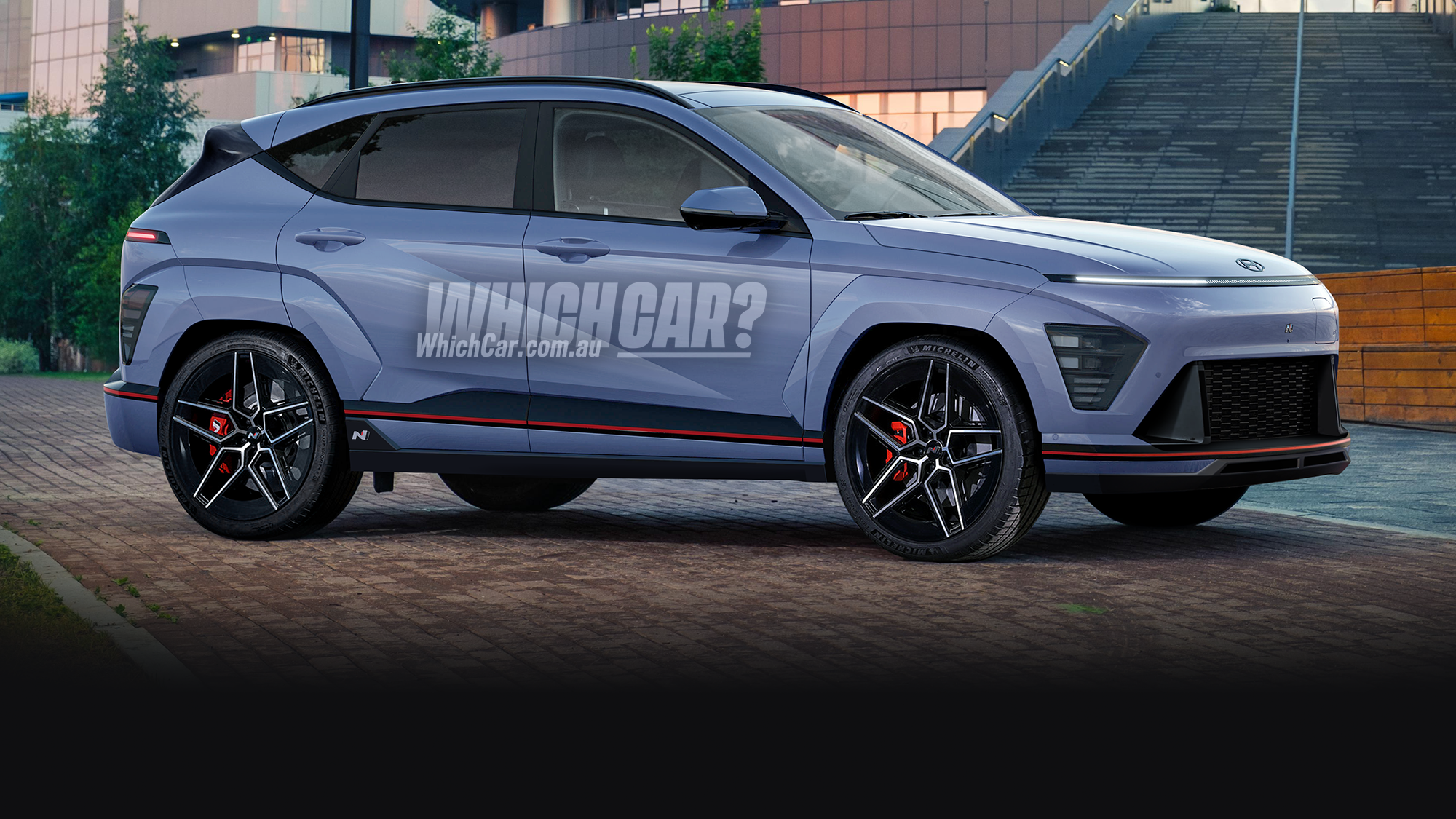
1
2024 Hyundai Kona revealed in petrol and electric forms
Hyundai has revealed the 2024 Kona ‘SX2’ that’s expected to launch in Australia mid-year, with the entire range centred on the battery-electric variant.
Snapshot
- New 2024 Hyundai Kona unveiled
- New platform; bigger in every dimension; EV focus
- Expected in Australia mid next year
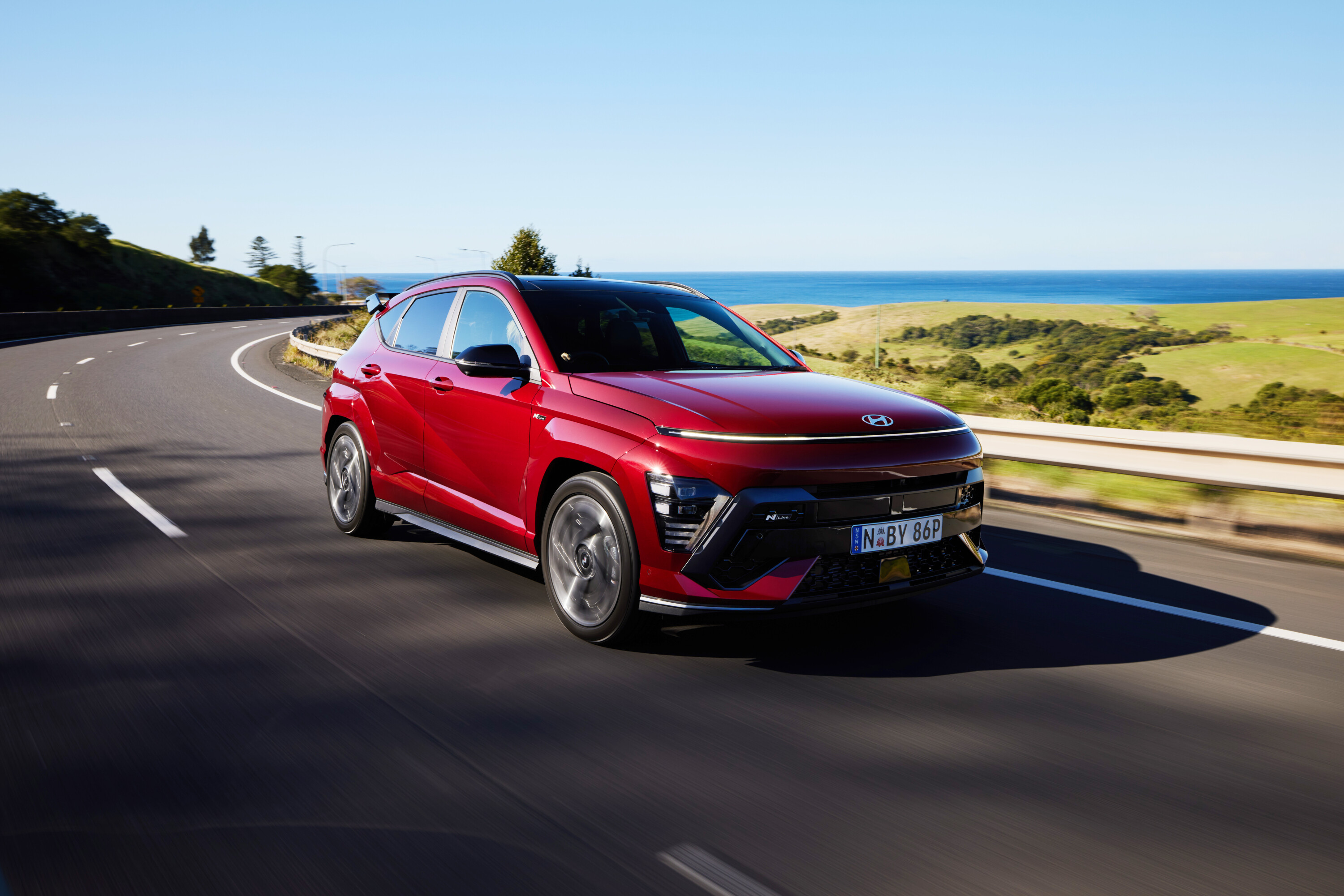
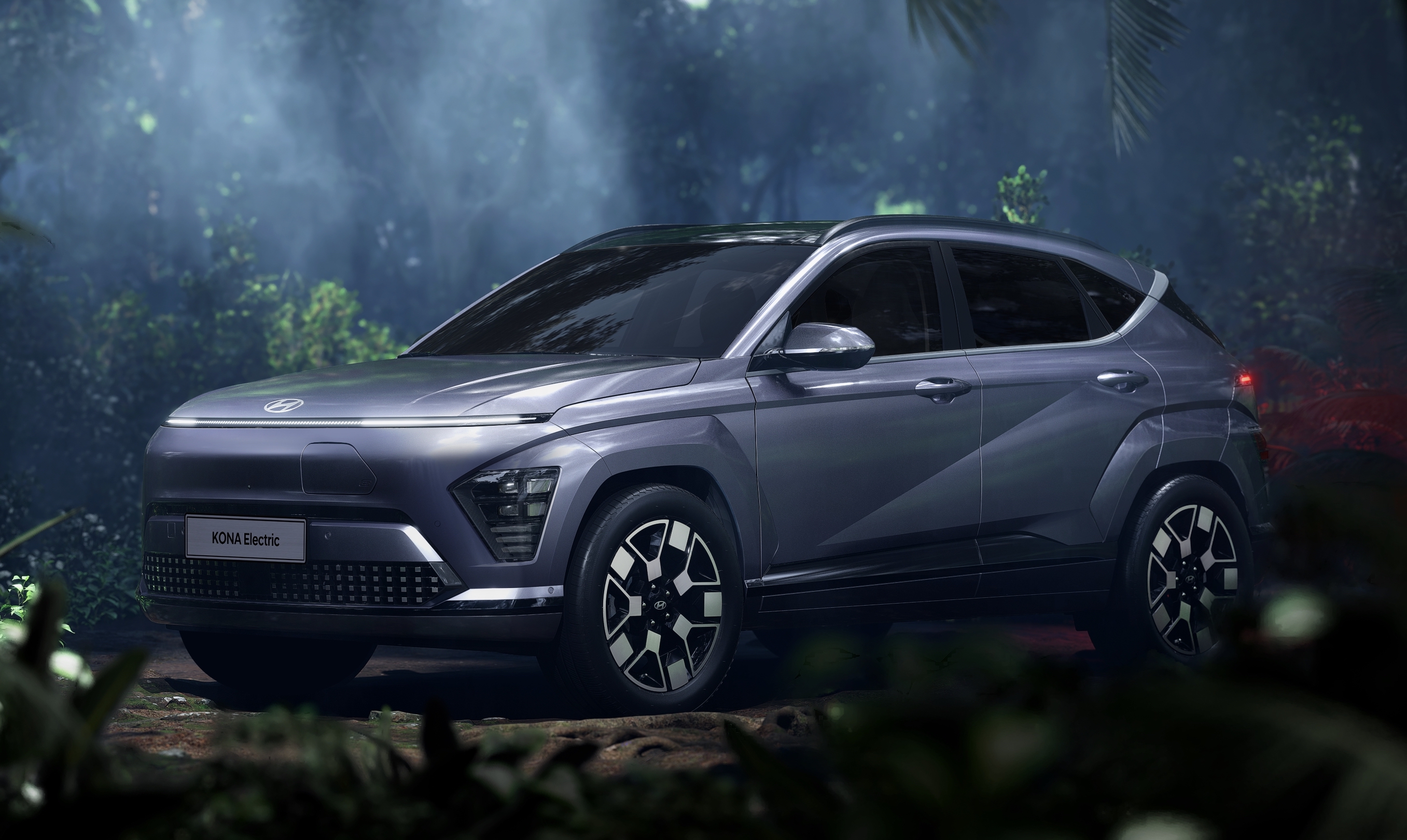
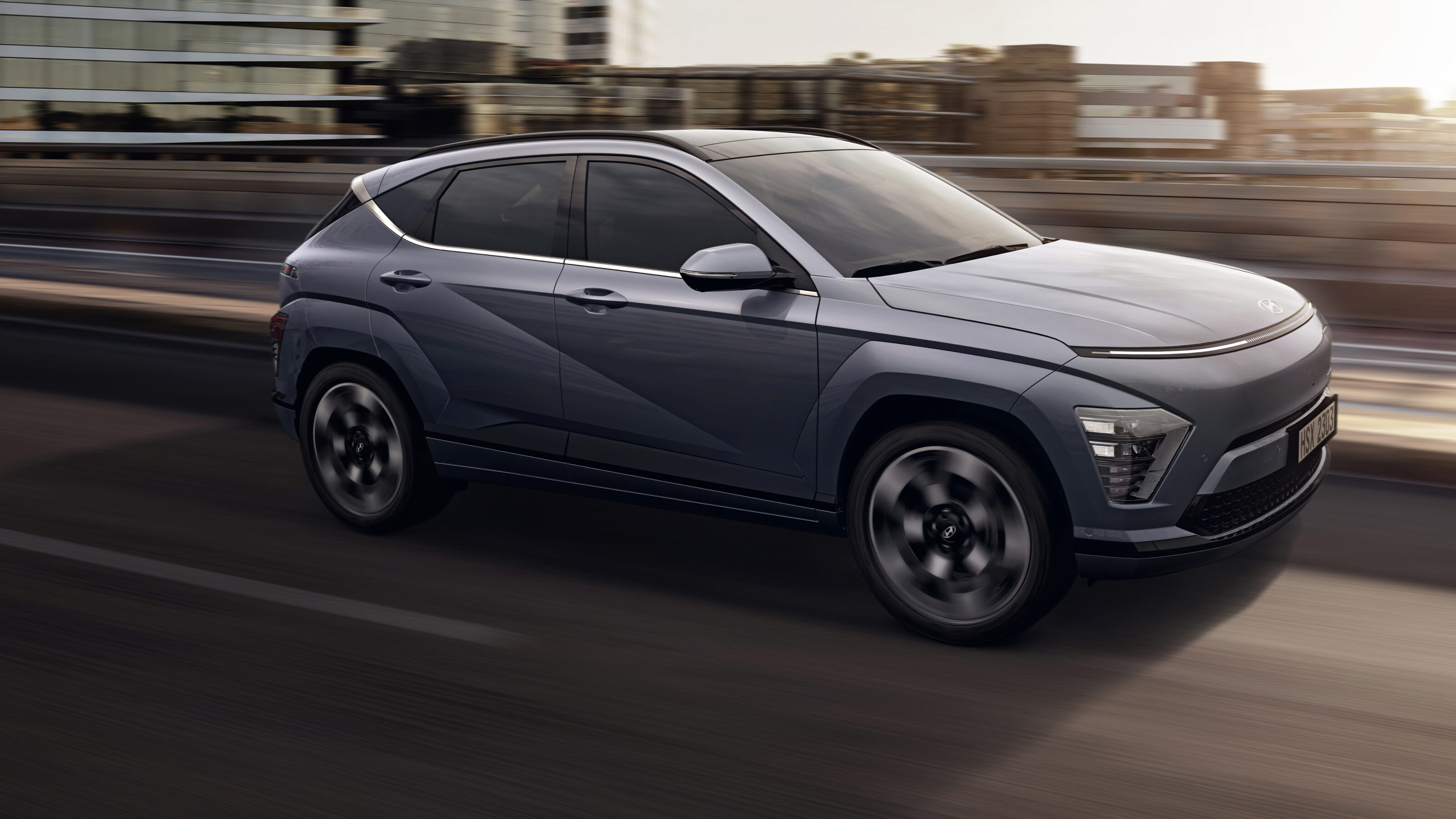
The Kona’s design has been pushed even further, lifting cues from the brand’s Ioniq range with broad, but thin, LED lighting details, and futuristic wheel designs.
“Kona has evolved in every respect to embrace an even wider range of diversity, to become a true lifestyle supporter”, SangYup Lee, executive vice President and head of Hyundai Design Center, said.
JUMP AHEAD
- 2024 Kona petrol and electric for Australia
- New Kona is much bigger!
- Interior styling
- Powertrains
- Safety
- Will there be a new Kona N?
- What will the Kona Electric offer?
- What will the new Kona cost in Australia?
- When will the new Kona go on sale?
Will the 2024 Kona be petrol and electric in Australia?
Exact powertrain details and precise Australian release timing are as-yet unconfirmed, but it is likely we’ll receive every variant offered globally this time around – including the EV and hybrid – with a local launch mid-year.
With the small SUV segment growing more competitive by the day, the potential addition of a hybrid powertrain with the new model will help Hyundai’s Kona compete with the Honda HR-V, Nissan Qashqai and Toyota Corolla Cross.
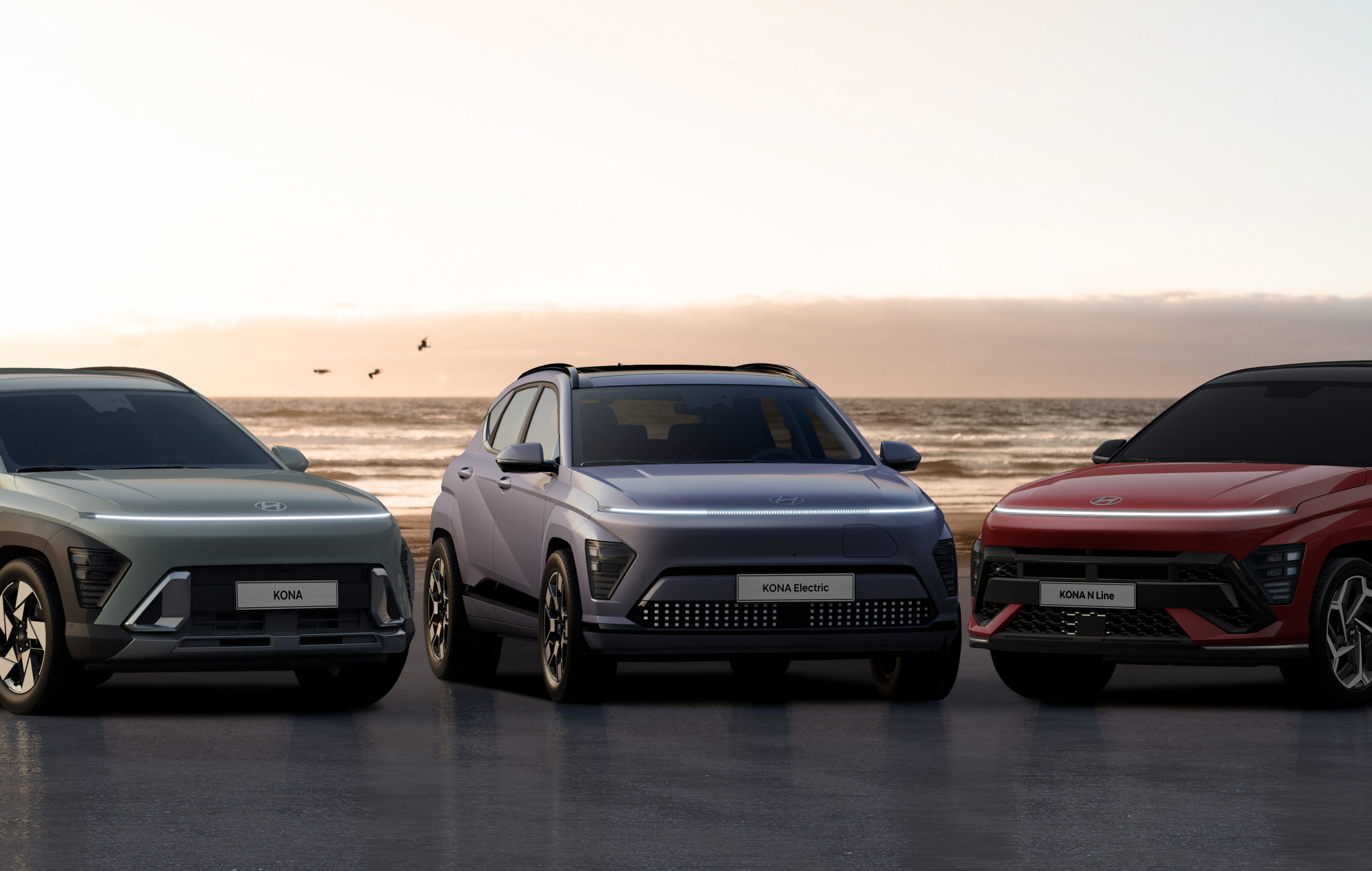
5
2024 Kona grows in every direction
The new Hyundai Kona rides on a much longer wheelbase, making it a more practical option for buyers looking for space in their small SUV.
The new Kona will share its platform with the i30 Sedan and Kia Niro, but its dimensions differ somewhat, with a wheelbase of 2660 millimetres – 60mm longer than before, but still 60mm shorter than the related vehicles.
Overall length grows to 4355mm – up a significant 150mm – while growing by 25mm in width to 1825mm.
The brand claims this equates to 77mm longer legroom and 11mm taller headroom in the second row, which is said to be best in class.
For local context in the small SUV segment, the popular Toyota Corolla Cross rides on a 2640mm (-20mm) wheelbase and measures 4460mm in overall length (+105mm) and is an identical 1825mm wide.
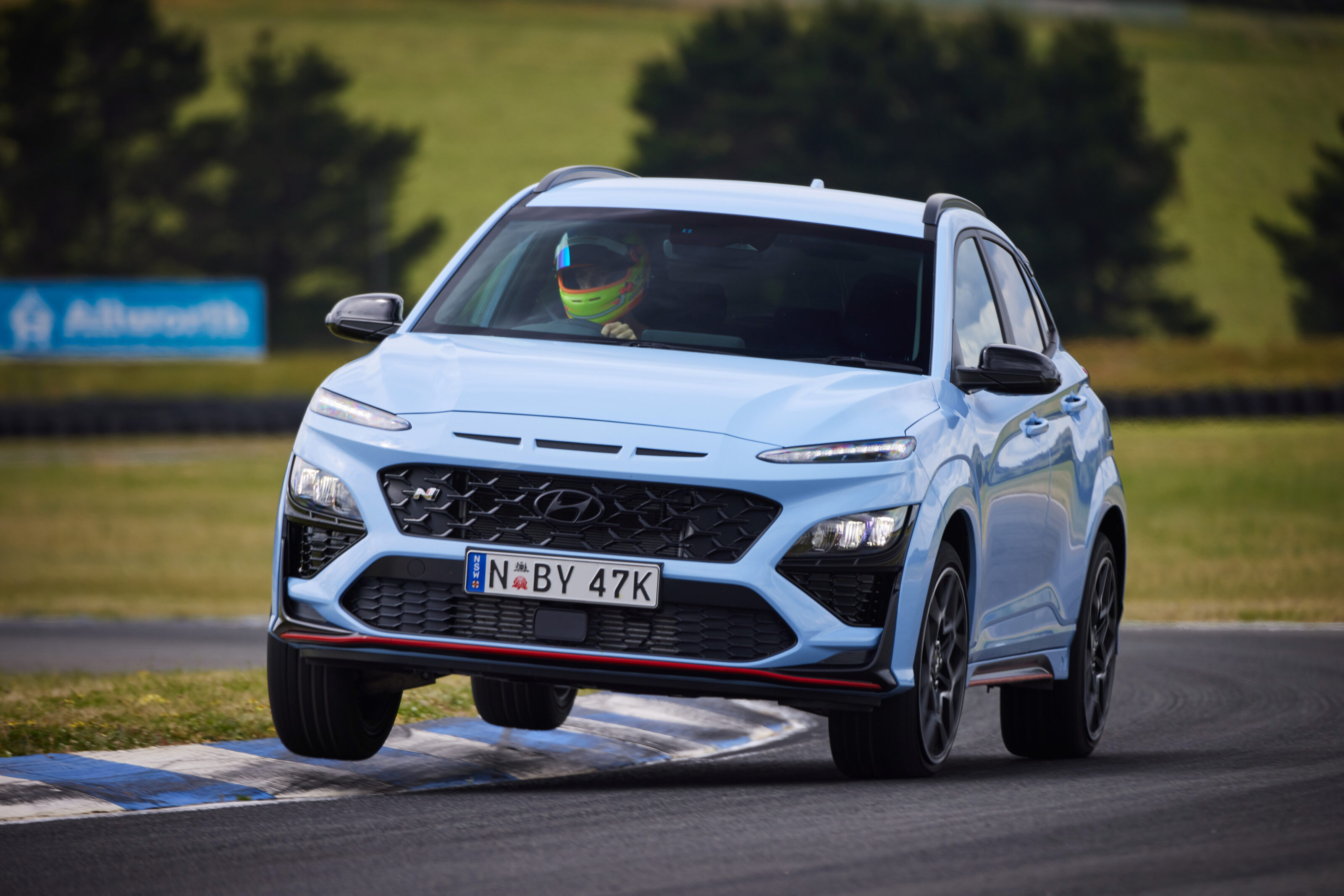
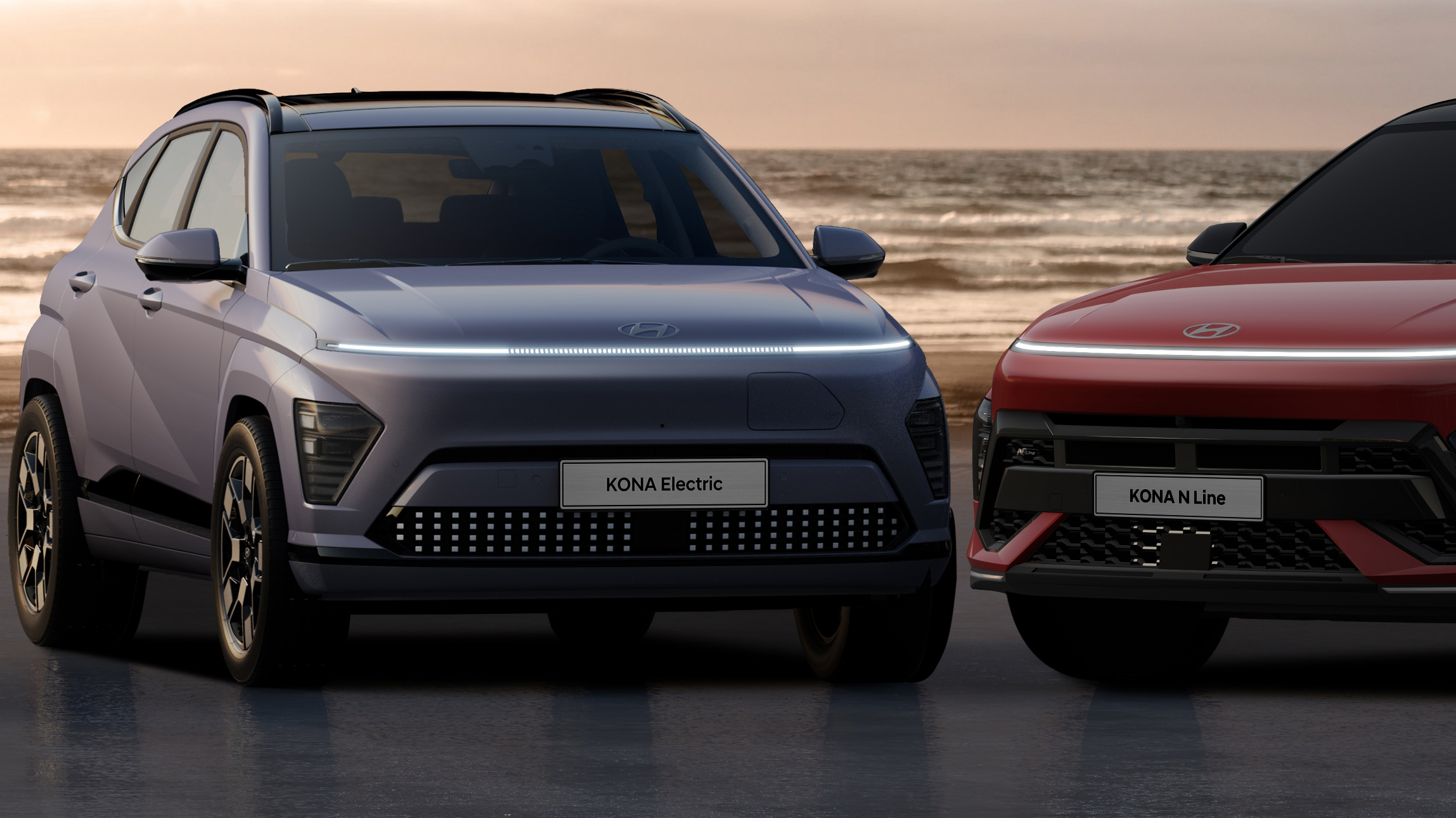
Hyundai’s designers penned the Kona Electric first, followed by the regular Kona and sportier N Line variants. The result is a unified range and crisp detailing, such as the ‘horizon lamp’ daytime running lights at the front.
The Kona EV and regular Kona have aerodynamic front ends without grilles, reminiscent of the previous electric model, while the N Line takes a more aggressive approach with squared-off air intakes and grille.
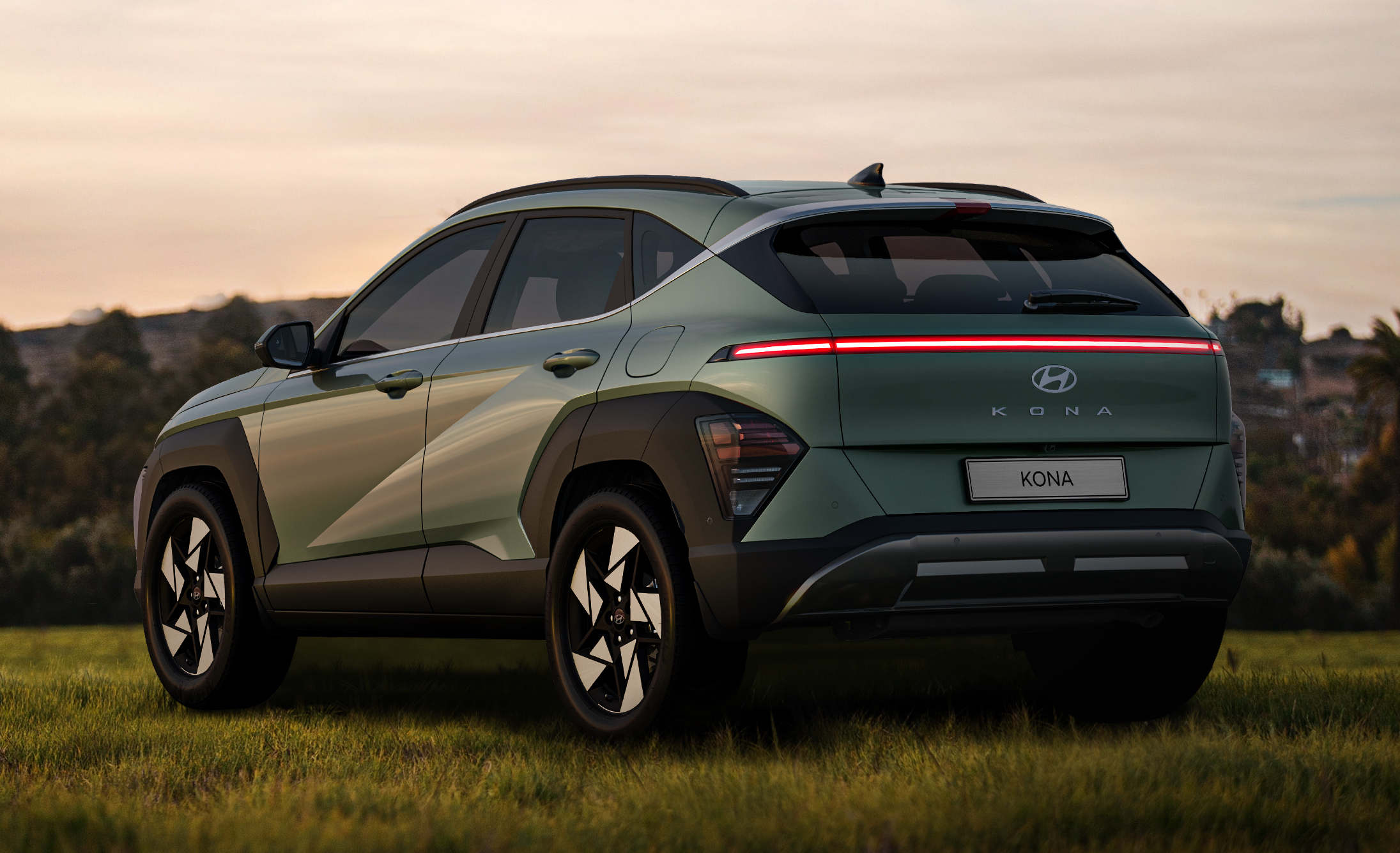
2
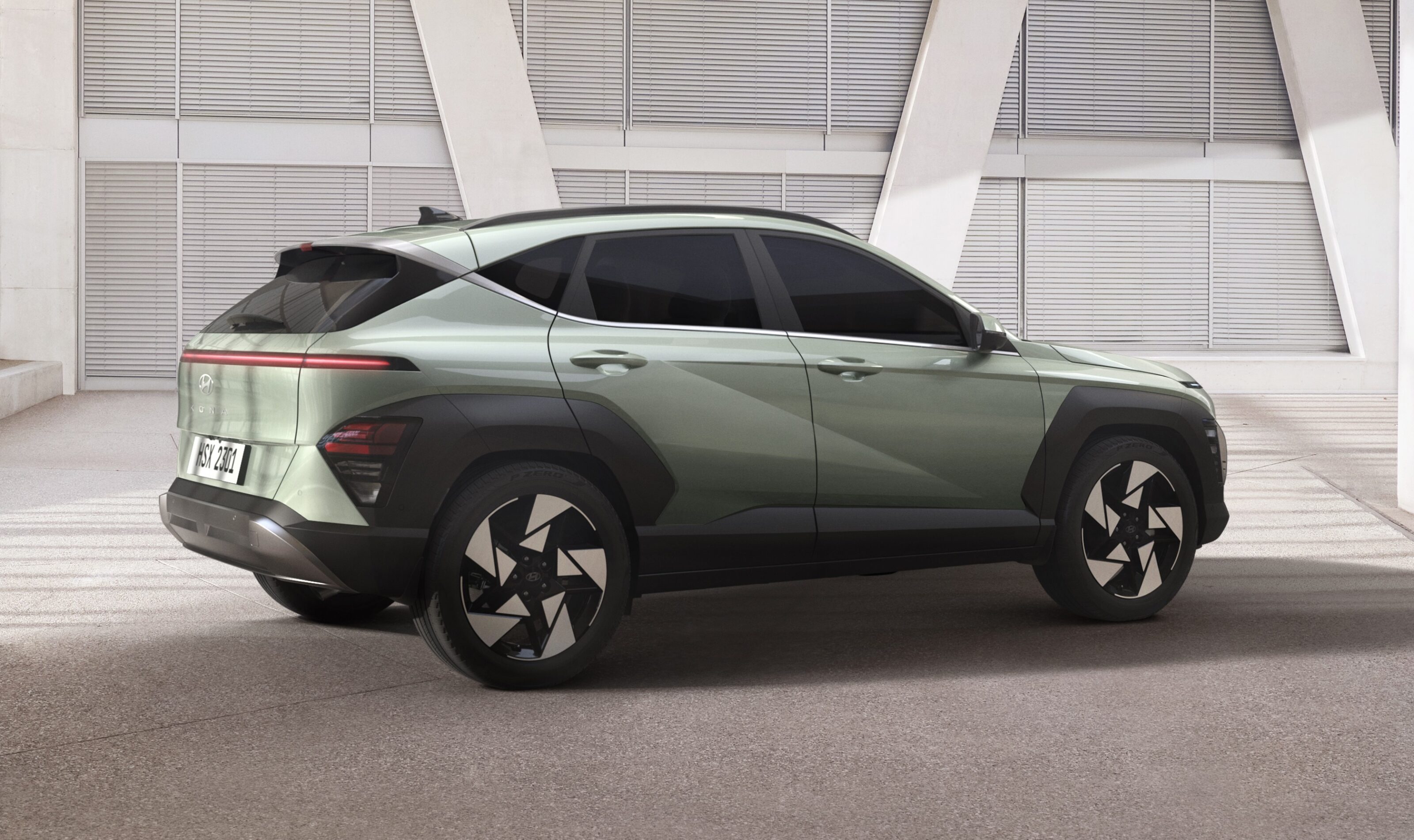
Down the flanks, the new Kona takes cues from the Tucson and i30 Sedan’s elaborate, origami-like sheet metal on the doors.
Around the rear, there’s a single LED light bar, with high-mount brake lights hidden beneath the rear spoiler. The electric version can be told apart easily by the broken-up LED bar, whereas combustion-powered Konas have a solid glow.
Additionally, the electric Kona can be identified by ‘pixel’ inspired 19-inch alloy wheels, an inch up on what’s currently available. The N Line will also wear big 19s, but it’s likely the N Line will be the toughest Kona, with the N Performance model’s future in doubt in light of tightening emissions standards in Europe.
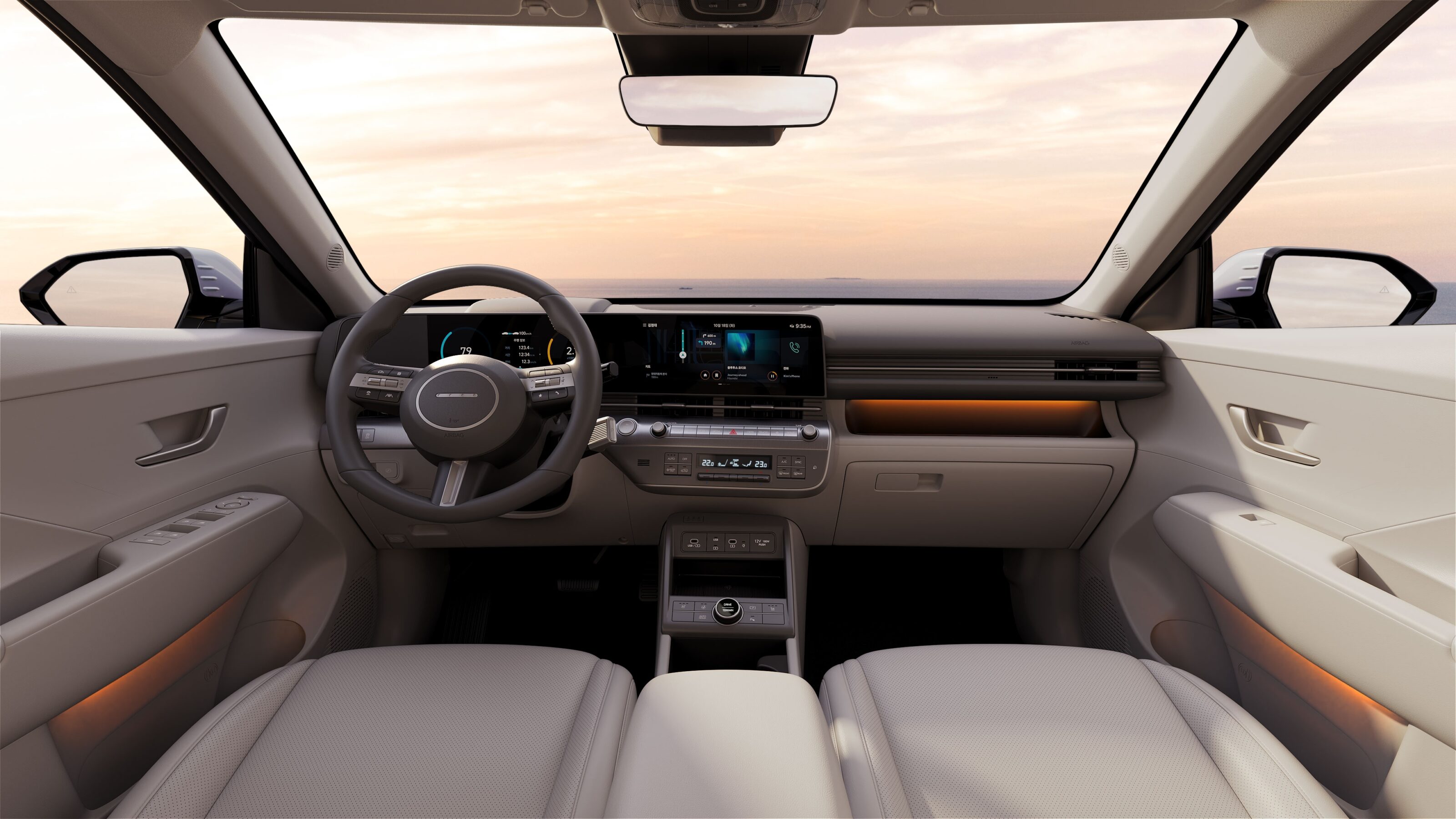
1
Inside the new Hyundai Kona’s cabin
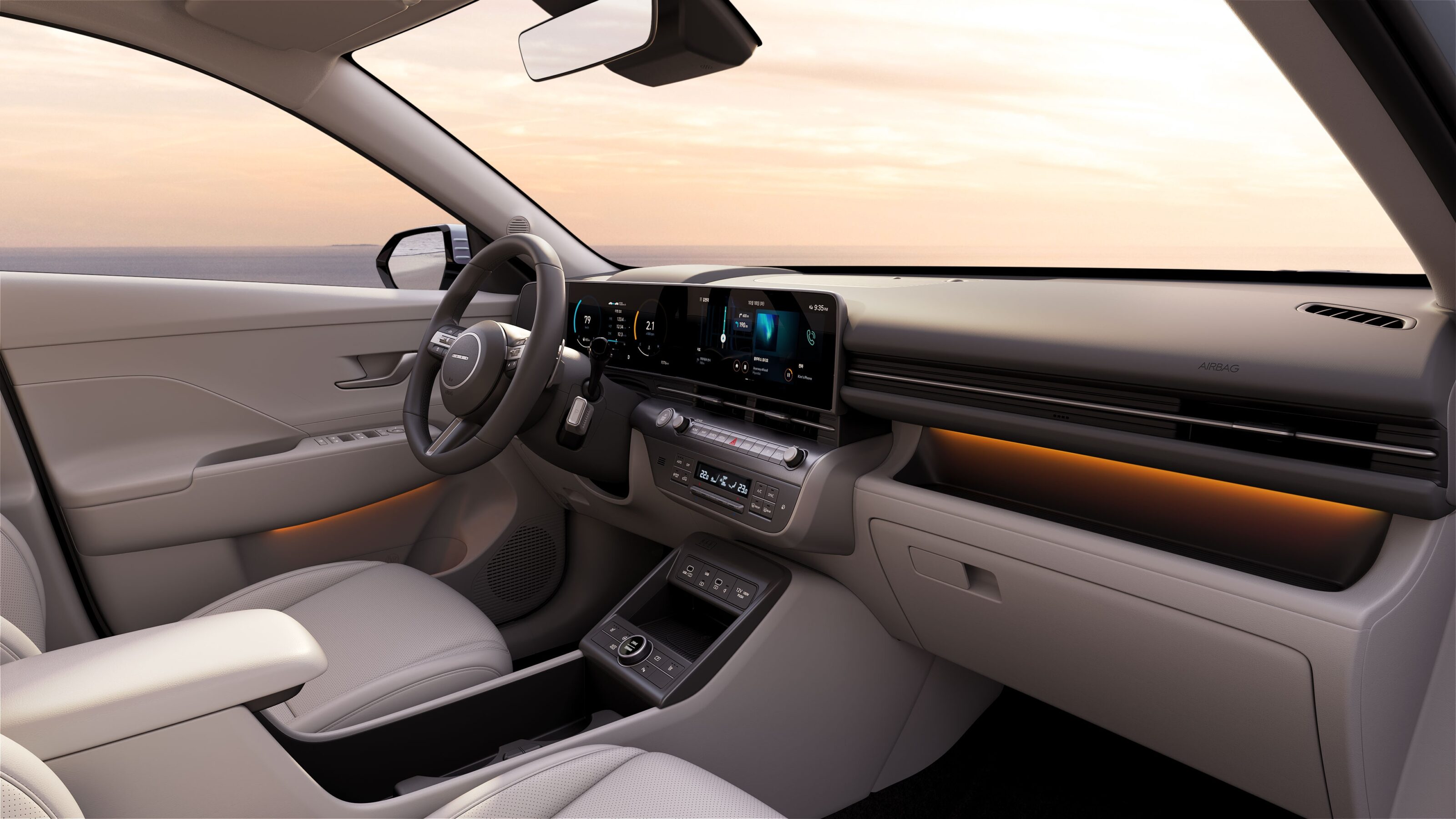
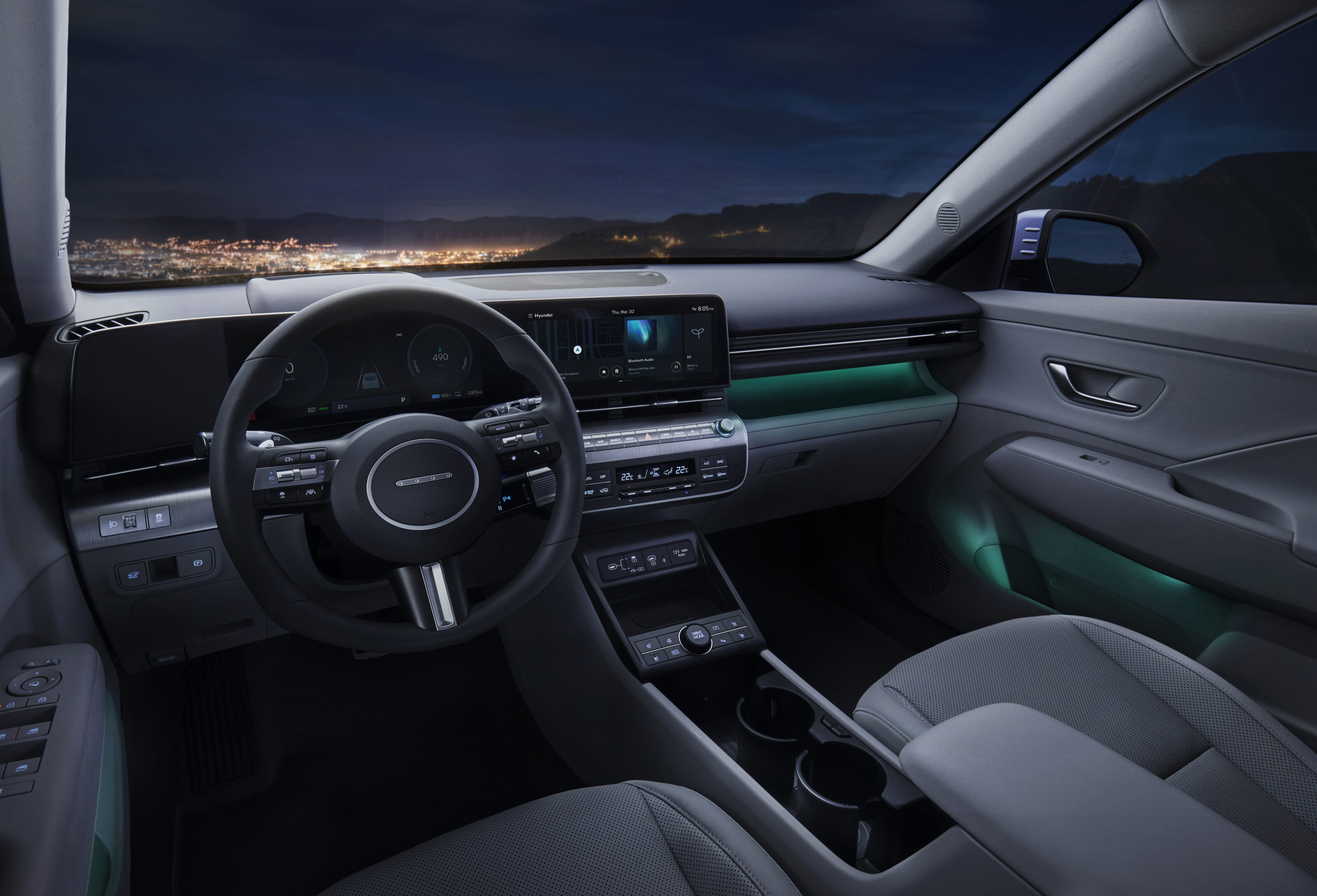
The Kona’s interior takes many cues from the Ioniq 5. It features an available light-coloured leatherette upholstery with a manually-adjustable front passenger seat, and in front of that seat, there’s a clever in-dash storage cubby with ambient lighting.
Although the platform has to support electric, hybrid and pure internal-combustion engines (ICE), Hyundai has done its utmost to make an airy, EV-like cabin – and even if the front footwell isn’t completely seamless like an Ioniq 5, the rear floor looks to be. The Kona is shaping up as a more generous family car than before.
Technology-wise, the Kona sports a pair of 12.3-inch digital screens set into a single housing, as seen in the top-spec Kia Niro GT-Line.
It appears to be running the brand’s latest ccOS operating system, with support for over-the-air software updates and a digital key, allowing owners to lock and unlock their Kona using near-field communication on a compatible smartphone or smartwatch.
2
Powertrains
Hyundai says that electric, hybrid and petrol engines will feature in the new Kona.
It’s likely Europe will end up getting the bulk of electric and hybrid models, while Australia will see more action from the combustion engine – although this will likely flip in favour of hybrid power if Australia continues to prioritise emissions reductions.
At the bottom end of the Kona range, the current Atkinson-cycle 2.0-litre naturally-aspirated four-cylinder petrol engine will carry over, producing 110kW and 180Nm, matched with a CVT automatic transmission.
The new 1598cc turbo-petrol four-cylinder found in the i20 N and Tucson will feature in the new, all-wheel-drive Kona N Line in 146kW/265Nm tune, replacing the current 1591cc unit.
We’d expect the updated 1.6-litre turbo Kona to follow the Kia Seltos by replacing its seven-speed DCT auto with a conventional eight-speed automatic – which will be good news for DCT detractors.
As for the hybrid powertrain, it is the same as that found in the Kia Niro, meaning 104kW and 265Nm fed to the front wheels via a six-speed dual-clutch transmission. The hybrid’s Australian arrival is looking more likely this time around, too.
1
Safety
The next-generation Hyundai Kona will feature an updated suite of active safety technology, with new additions including; intelligent speed limit assist, blind-spot view monitor, navigation-based adaptive cruise control, lane following assist, and highway driving assist.
Its autonomous emergency braking system will now support junction-turning and reverse detection, while remote smart parking assist will be available on flagship variants.
A front-centre airbag is almost a certainty in order to achieve a five-star ANCAP safety rating, but has yet to be confirmed.
1
What about a new Kona N hero?
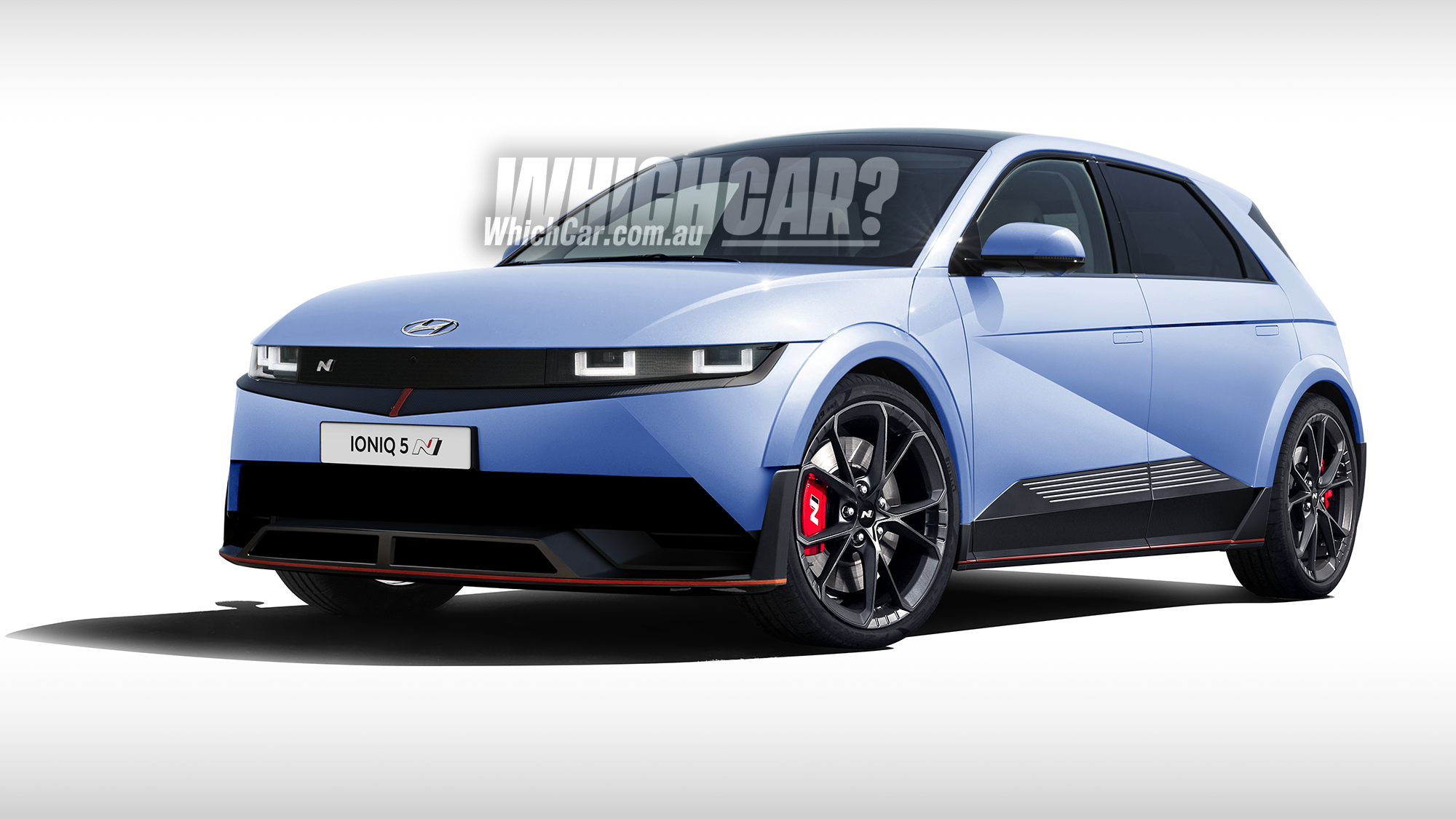
A petrol N? No chance. A Kona N Electric..? Now that’s food for thought.
Again, we can only speculate, particularly as there was no mention of an N model anywhere in Hyundai’s announcement – and the company’s local arm couldn’t be moved to comment on the matter.
1
What we’ve learned in recent weeks is that Hyundai will no longer produce combustion-powered N models, meaning any potential for a new Kona N will simply have to come in the form of a Kona N Electric – no ifs, ands or buts.
Of course, we can look to the upcoming Ioniq 5 N for inspiration on that one, and we’d expect it to be a whole lot meaner than the current N model‘s 206kW/392Nm outputs and 5.5 seconds to 100km/h.
1
2024 Kona Electric: What can we expect?
Playing flagship, the electric Kona will likely arrive in Australia with similar tweaks to the latest ‘SG2’ Kia Niro, meaning less torque from a single electric motor – now 150kW/255Nm – and improved driving range.
The Kona Electric is already a strong performer when it comes to efficiency, recently achieving 490 kilometres of driving range from its 66kWh battery in a real-world WhichCar EV test. Expect the new car to improve again.
Full details for the 2024 Hyundai Kona Electric will be announced in March, so stay tuned to Wheels for the latest information.
Comparisons
Best Electric Cars Under $65k: Affordable EVs Rated
Welcome to part one of three price-based EV buying guides, this one focused on the most affordable electric cars available in Australia today
What will the new Hyundai Kona cost in Australia?
It’s too soon to know what buyers will be asked to pay for the new Kona range, but its larger and more useful dimensions will likely see it jump in price.
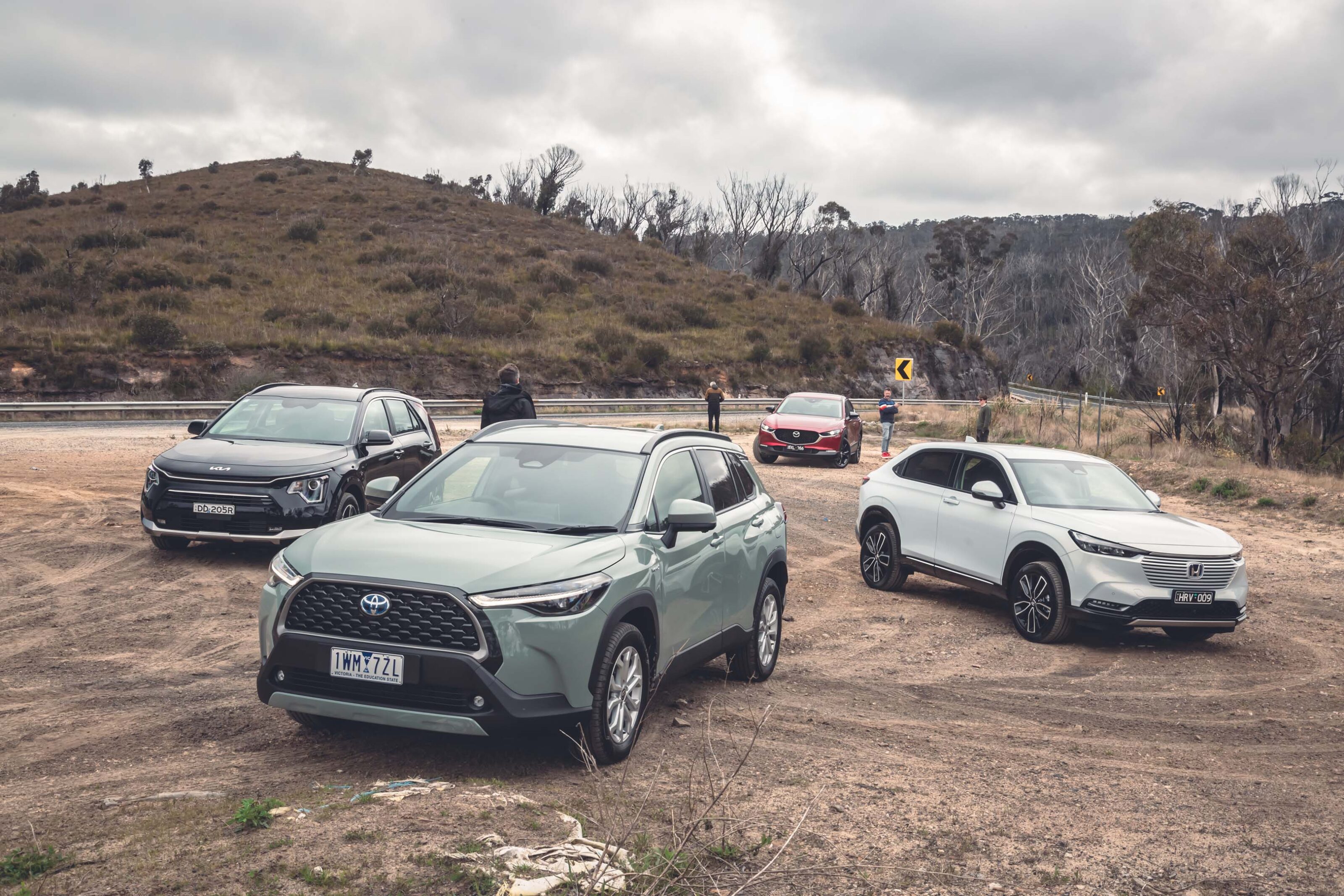
The current Kona range is priced from $26,900 before on-road costs – but the Toyota Corolla Cross, a key rival to this new Kona, kicks off from $33,000 plus on-roads. Pricing for the regular Kona range currently tops out at $43,200, while the petrol hero Kona N enters from $49,200, and the Kona Electric begins at $54,500.
There are no electric or GR performance heroes in the Corolla Cross range, but the cheapest hybrid variant is just $35,500 before on-road costs, and the range tops out with the Atmos hybrid AWD at $49,050.
Expect the new Kona range to debut with pricing set to challenge the Corolla Cross, although trim grades and standard equipment levels will obviously result in pricing differences.
1
When will the new Hyundai Kona go on sale in Australia?
As noted above, the new Kona range is set to reach Australia in mid-2023, although we can at least expect a staggered launch, with the electric variant likely to debut later in the year or in early 2024.
The hybrid, on the other hand – as a critical variant for the Kona to take on the Corolla Cross – could form part of the initial launch line-up. Whether Hyundai can supply enough models to meet Australia’s increasing interest in hybrid vehicles, is another question.
Watch for more on the 2024 Kona range to come in the months ahead.
MORE
Everything Hyundai
JANUARY 2024: Kona Electric driven in Australia
Hyundai’s new electric Kona is here, finally, and it presents as a more thought-provoking option than any would’ve thought when we first drove it way back in November.
July: New Kona driven in Australia!
The new-generation Kona is in Australia now, and you can find our news and reviews at the link below.
1
June 26, 2023: Kona Australian pricing revealed
Hyundai has locked in pricing and features for the second-gen Kona, including the hybrid!
March: Australian details revealed
The next-generation 2024 Hyundai Kona small SUV will arrive in Australia mid-year, with two model grades expected at launch.
Snapshot
- 2024 Hyundai Kona detailed for Australia
- Two grades available across petrol, hybrid and all-electric powertrains; N Line Option Pack
- Petrol models due in Australia mid-year, electric and hybrid to follow in fourth quarter
1
The first arrival will be petrol-powered Kona variants, with the all-electric and new-for-Australia hybrid versions due in the fourth quarter (October to December inclusive).
Hyundai Australia notes timing for N Line variants – expected to be offered as a range-wide N Line Option Pack, rather than a standalone trim – is currently unconfirmed.
The petrol range is similar to the existing Kona lineup, with two four-cylinder engines – a 2.0-litre naturally-aspirated and 1.6-litre turbocharged petrol – expected to be offered for both variants.
Videos: In-person design walkaround
As with the current Kona, the front-drive 110kW/180Nm 2.0-litre non-turbo petrol will be matched to a continuously variable automatic transmission (CVT).
However, the all-wheel-drive 1.6-litre turbo-petrol will follow the updated Kia Seltos in switching to a revised engine with an eight-speed torque-converter automatic, replacing the seven-speed dual-clutch unit.
The entry grade is expected to sit between the outgoing Active and Elite variants, suggesting a price hike over the base Kona priced from $26,900 before on-road costs.
2
As such, it is expected to follow the Mazda CX-30, Toyota Corolla Cross and Nissan Qashqai with a drive-away price of around $35,000 for the entry-level variant – up from approximately $30,000 drive-away for today’s model.
The hybrid powertrain – a front-drive 104kW/265Nm 1.6-litre unit shared with the Kia Niro, matched to a six-speed dual-clutch transmission – will be offered across the range.
A combined fuel consumption figure around 4.0L/100km and CO2 emissions below 100g/km are likely.
1
Kona Electric
In Europe, the Kona Electric has a 65.4kWh lithium-ion battery and a 160kW electric motor, with a WLTP-rated 490-kilometre driving range – up six kilometres over the current Extended Range variant.
However, this applies to Czech Republic-built versions. The local range will be produced in South Korea, with slight differences in specs and figures expected. Hyundai Australia does not yet have these details confirmed.
As with the current Kona Electric, a less-powerful and more-affordable Standard Range option will be available, but with a price rise likely, it’ll pull further away from the BYD Atto 3, MG ZS EV and GWM Ora.
2
Standard equipment outlined for new Kona range
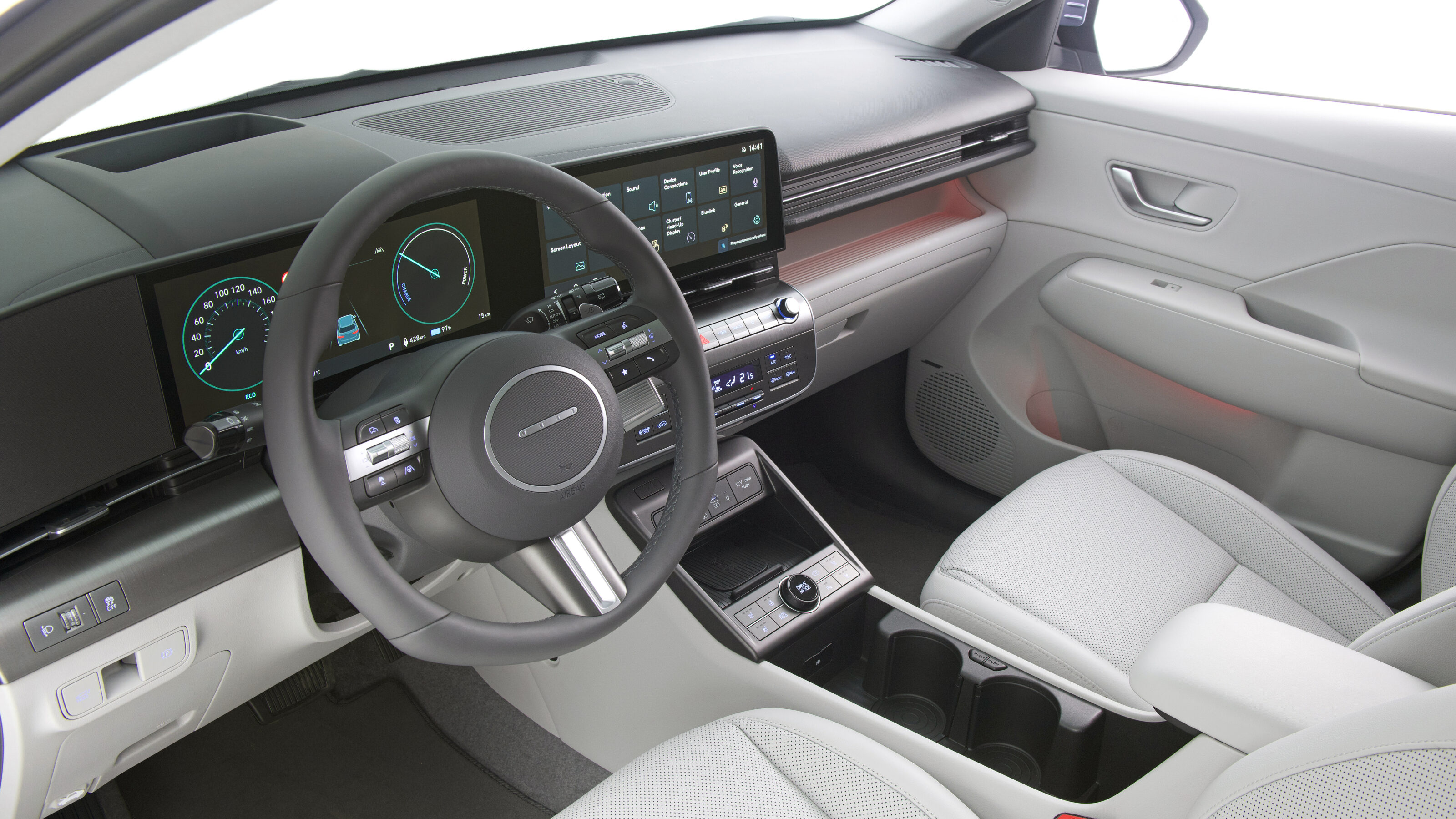
While local pricing and features have yet to be locked in, Hyundai Australia has confirmed LED head and tail-lights, a 12.3-inch centre display, dual-zone climate control, and Bluelink connected-car technology will be standard across the range.
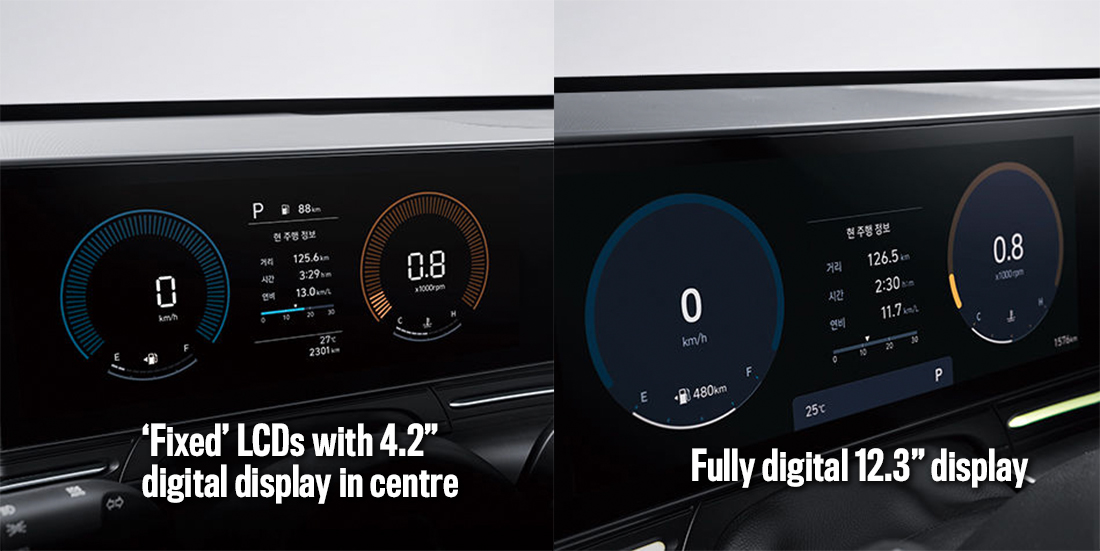
Only the EV models and high-grade petrol/hybrid variants will get two 12.3-inch displays – one in the centre of the dash and one behind the steering wheel. Lower-grade variants will get a version of the fixed/static LCD speedometer and rev meter (a cosmetically fancier take on old-school LCDs), with a 4.2-inch multifunction digital display between them.
This means that while high-grade models will have a full digital instrument cluster with mode-specific graphics and an integrated blind-spot monitoring camera, the lower-grade models will show pleasant but largely ‘dumb’ meters either side of the multifunction display.
1
WTF: Still no wireless Apple CarPlay or Android Auto?!
1
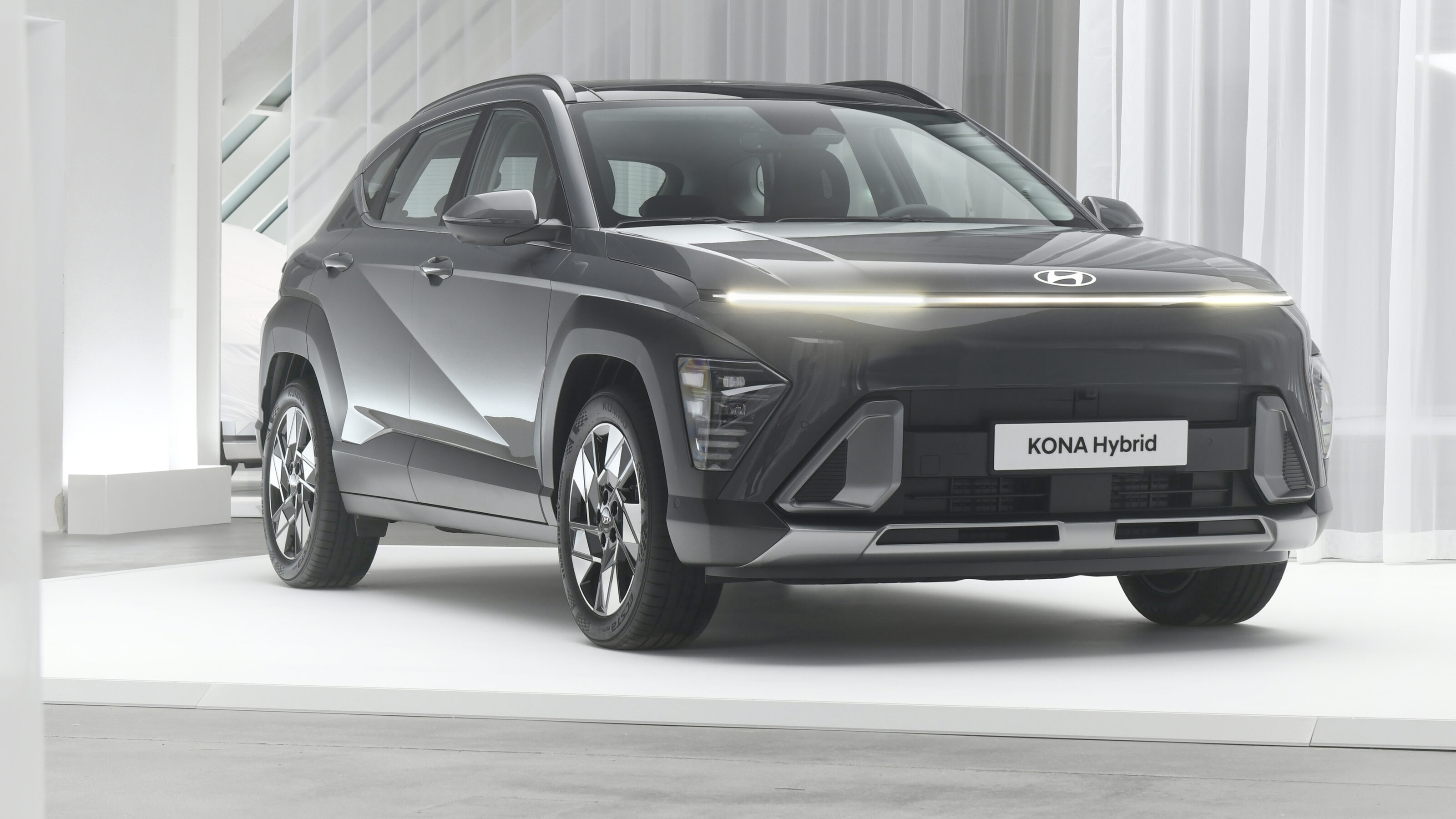
In addition, flagship variants will gain a blind-spot view monitor, a 360-degree camera system, a wider sunroof, an electric tailgate and a shift-by-wire gear shifter – adding to the equipment available on the current Elite, Highlander and N Line Premium.
All petrol and hybrid variants will pack a space-saver spare wheel, but Hyundai Australia says it has not yet confirmed whether the EV will have a space saver or, instead, a tyre repair kit. The current Kona EV is offered only with the latter.
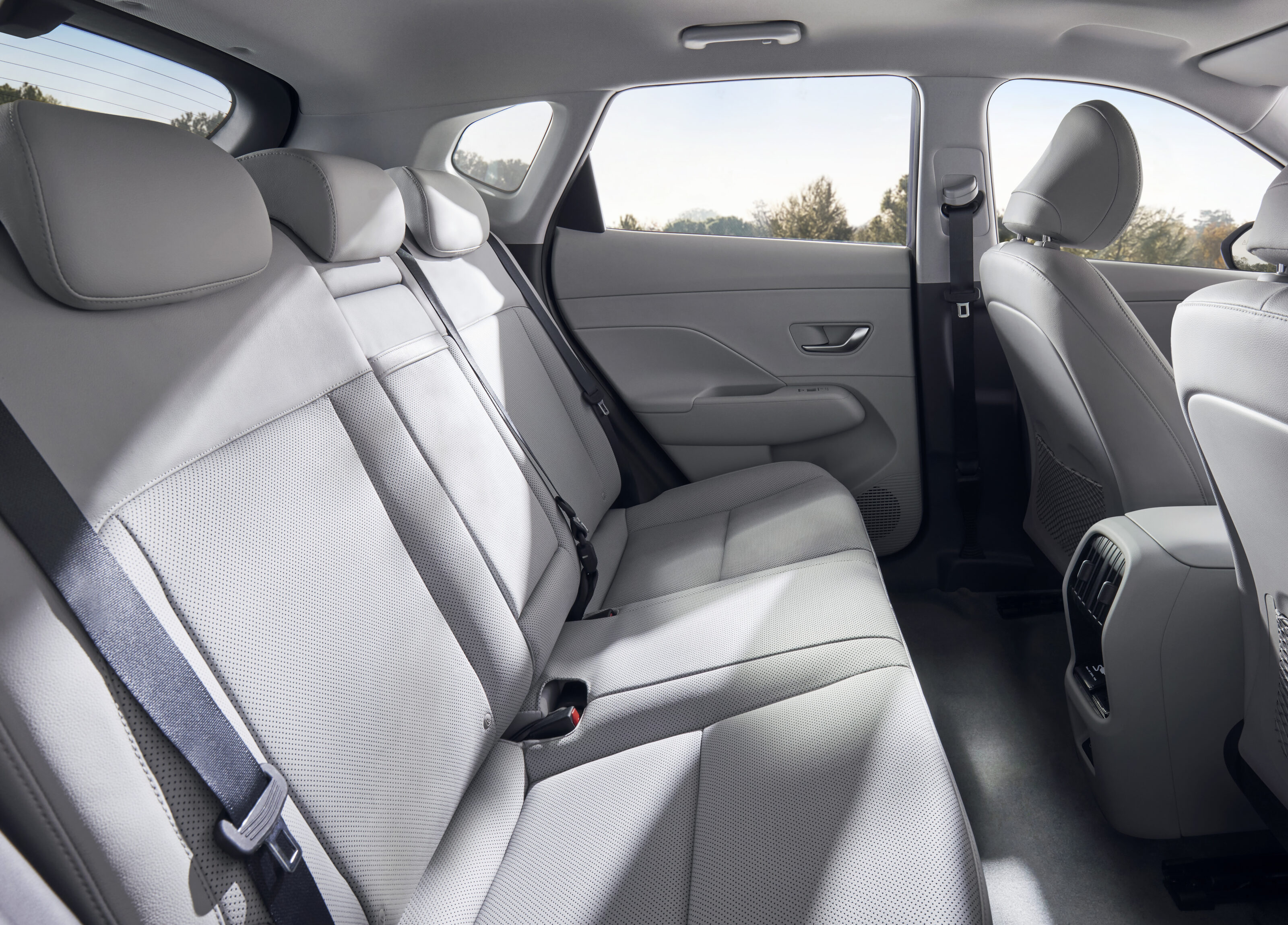
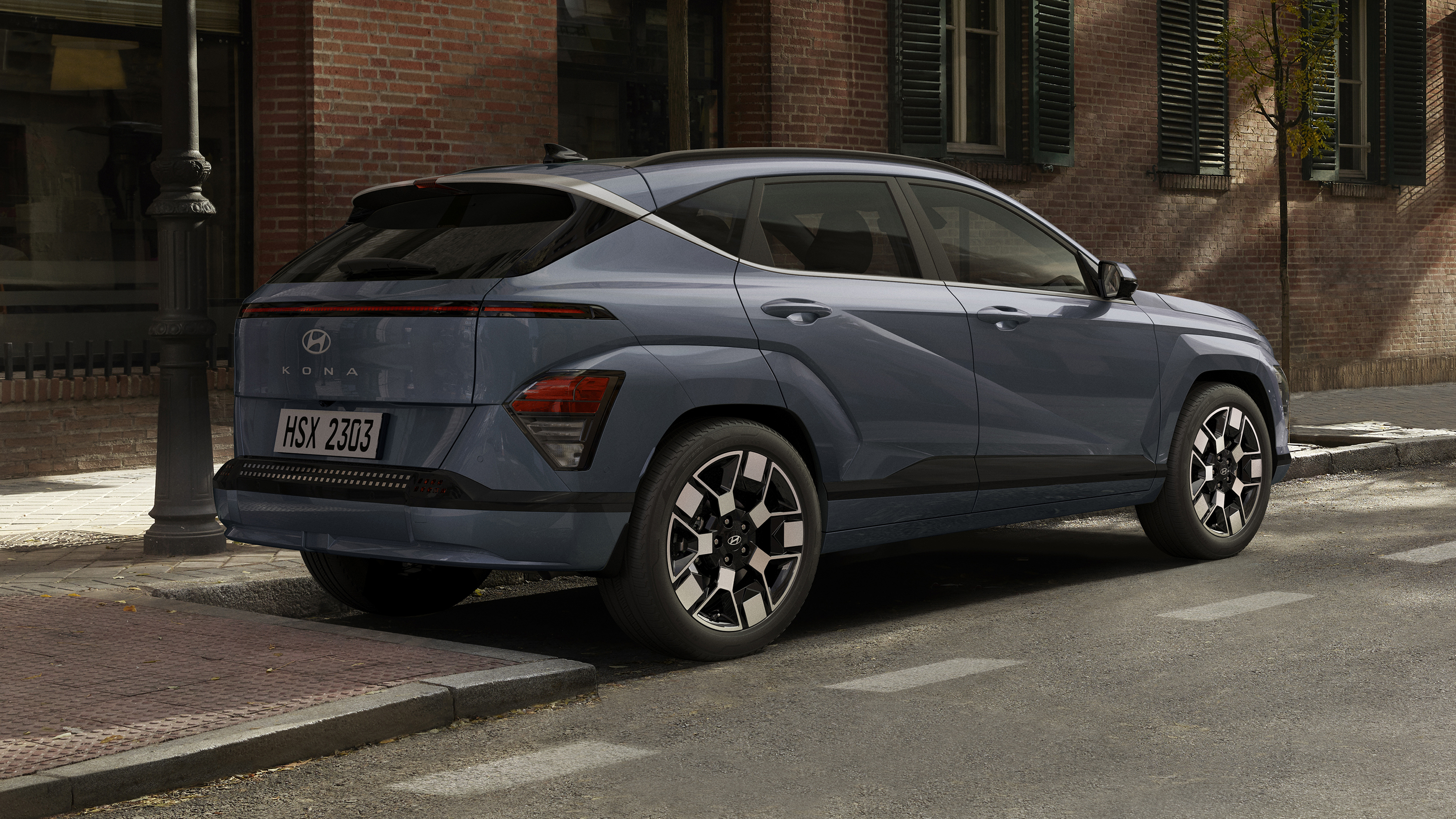
A welcome upgrade for the new Kona is that rear passengers, in all trim grades and variants, will benefit from air-conditioning vents in the centre console position – whereas the previous model suffered by having no rear vents.
2
Safety
Five-star rating expected under ANCAP’s tough new requirements
Hyundai Australia said it is targeting a five-star ANCAP safety rating, with a front-centre airbag and an updated suite of active safety technology.
This includes; intelligent speed limit assist, blind-spot view monitor, navigation-based adaptive cruise control, lane following assist and highway driving assist, while its autonomous emergency braking system now supports junction-turning and reverse detection.
Similar to the Mazda CX-30 and GWM Haval Jolion, a driver-monitoring camera will be available on selected variants.
2
Dimensions and space
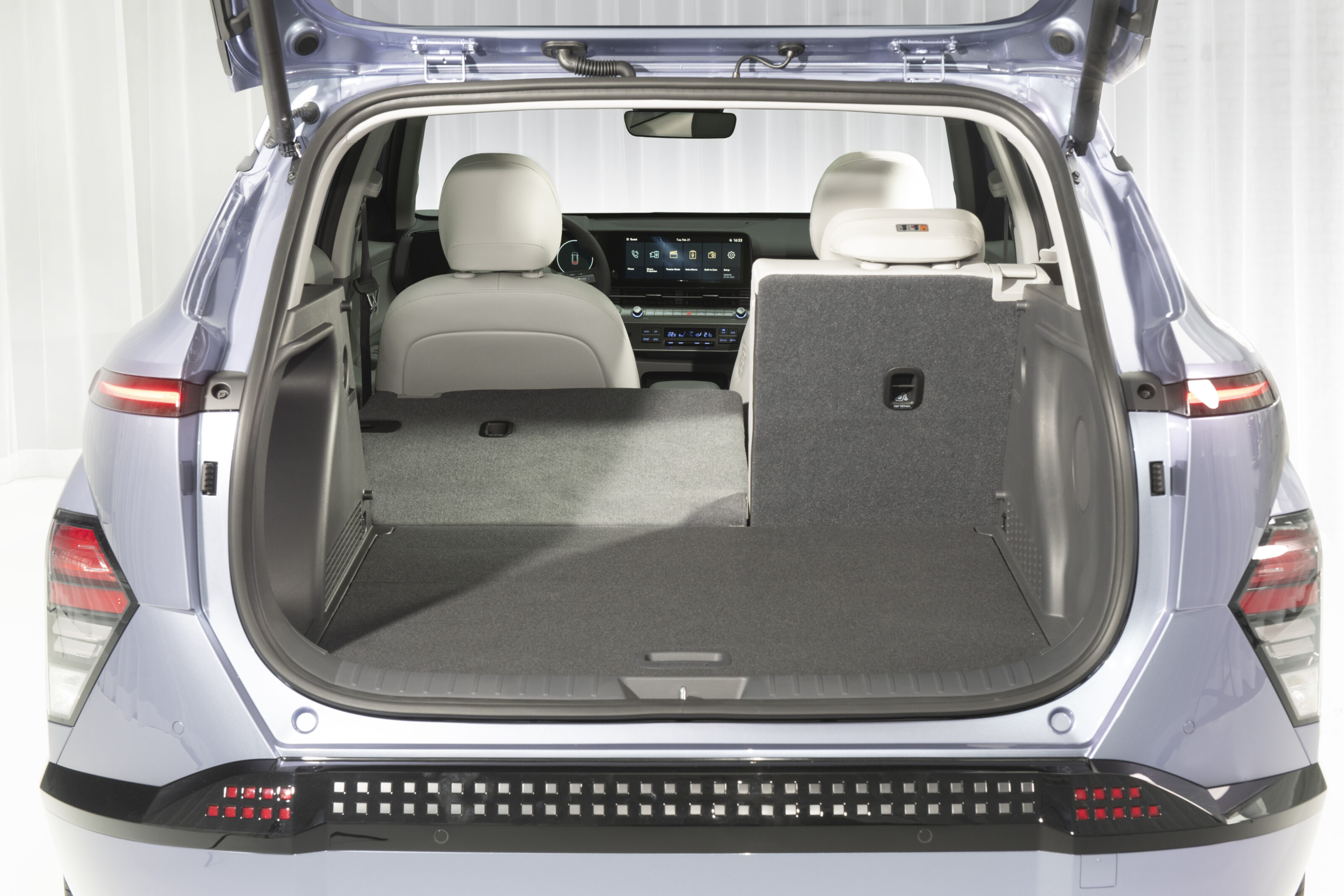
As reported, the second-generation Kona rides on an updated platform shared with the i30 Sedan and Kia Niro. However, its dimensions differ somewhat, with a wheelbase of 2660 millimetres – 60mm longer than before but 60mm shorter than the related vehicles.
Overall length grows to 4355mm – up a significant 150mm – while growing by 25mm in width to 1825mm.
The brand claims this equates to 77mm longer legroom and 11mm taller headroom in the second row, which is said to be best in class.
1
For context, the popular Toyota Corolla Cross rides on a 2640mm (-20mm) wheelbase, measures 4460mm in overall length (+105mm), and is an identical 1825mm wide.
Hyundai’s designers penned the Kona Electric first, followed by the regular Kona and sportier N Line variants. The result is a unified range and crisp detailing, such as the ‘horizon lamp’ daytime running lights at the front.
Watch for more on the new Kona to be revealed in the weeks ahead.
MORE
Everything Hyundai
The Toyota Corolla Cross isn’t exactly struggling in its appeal to Australian buyers, with nearly 2600 examples sold in 2022 – despite having only launched in November – and 511 finding homes in February 2023.
The Corolla Cross’s rivals in the small-SUV segment include the price-friendly MG ZS (22,466 sales in 2022), the style-driver Mazda CX-30 (13,891), elder statesman Mitsubishi ASX (12,753), the soon to be superseded Hyundai Kona (11,538) and the newly facelifted Kia Seltos (8504), among a handful of others.
Whether the Corolla Cross will overtake the top-sellers in 2023 is hard to call from here, although its February result outdid the CX-30 (481). Others fared better, like the Kona (659), ASX (642), Eclipse Cross (823), the new Qashqai (682) and perennial value king, the MG ZS (2047).

1
So, we’ve come to wonder: is the Corolla Cross just not handsome enough to compete?
The hybrid spec has proved popular, and Toyota’s reputation for reliability always helps with a buying decision – but many buyers are driven by either price or style, as shown by the popularity of the Corolla Cross’s key rivals.
Would a stylish facelift help the Corolla Cross leapfrog the competition to take over the small-SUV segment?
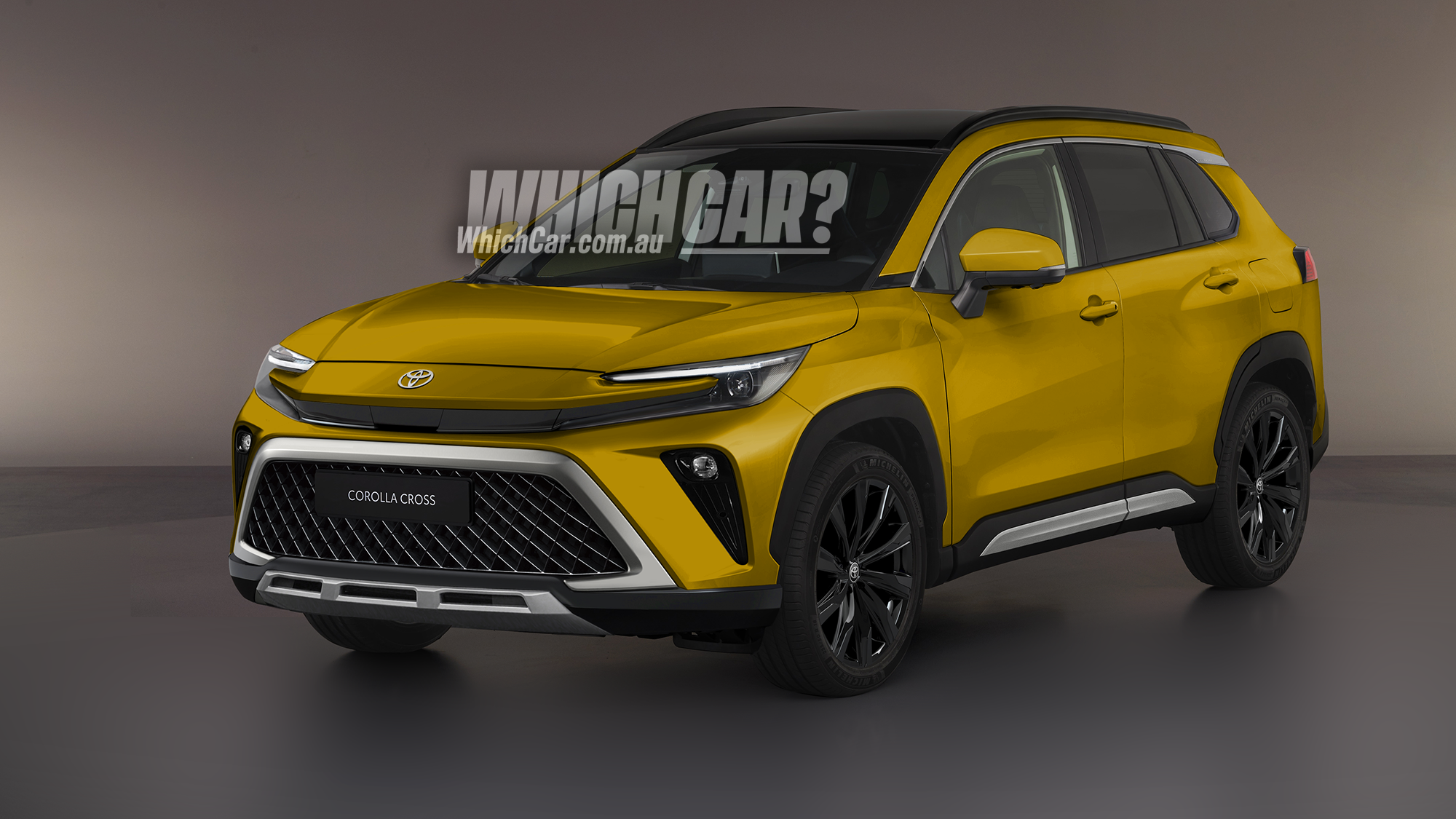
To see how that might look, we’ve put together some speculative renderings of a facelifted Corolla Cross – which might debut in late 2023 or early 2024, around three to four years after it first hit the global stage in 2020. (It’s had a mild facelift since then, but nothing dramatic.)
1
Crown and Prius-inspired style
For inspiration, we looked to Toyota’s newest models like the Crown family and the new Prius – neither of which are planned to be offered in Australia, but we’d expect to see those styling themes eventually reach our market.
At the front end, we’ve got the big T’s new hooked lighting design, with the lower section joined through the centre of the nose by a silver bar that hides a suite of active safety systems.
To accommodate this design, the Corolla Cross’s huge grille moves further down into the bumper, flanked by sporty new foglight housings.

1
1
The buttlift
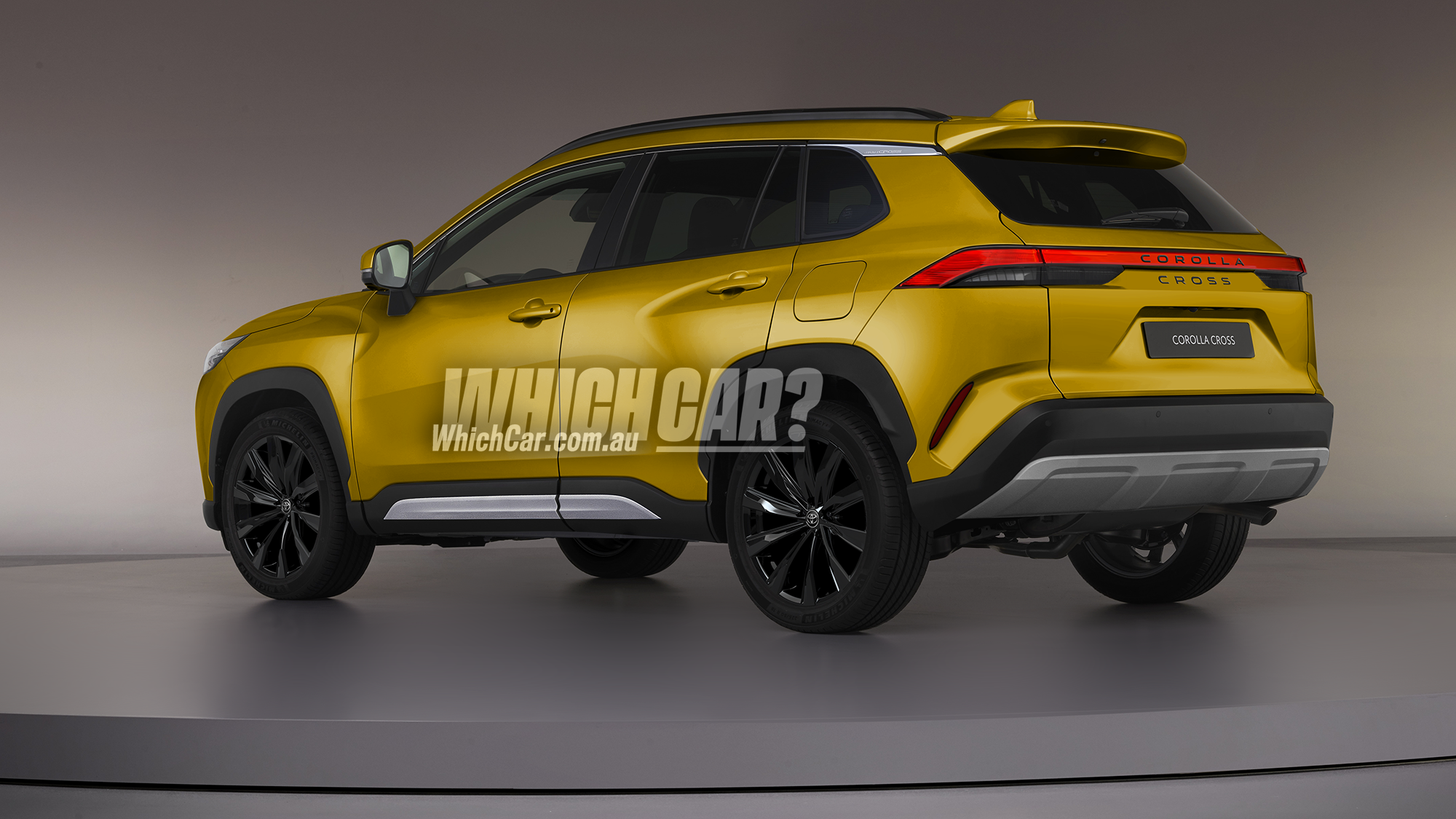
The Prius- and Crown-inspired styling continues at the rear, with sharper new tail lamps connected through an LED-light or reflector-emblazoned bar, replacing the Toyota badge with Corolla Cross lettering – as is the trend of the moment in automotive design.
Could Toyota handle the idea of ditching its famous badge at this end of the car? It’s not uncommon in Japan, where Toyota cars are often sold with their own model-specific badging, but the Australian arm might not be quite as confident.
What do you think of our redesigned Corolla Cross? Let us know in the comments below!
MORE
Everything Toyota
MORE
SUV Buyers Guide
Snapshot
- New-generation Ford Everest wins Wheels COTY
- Fordu2019s first COTY since 2004 when it last won with the Territory
- Everest edged out 16 other contenders to win
- Judges praised its value, dynamics and thoughtful design
- Everest is largely designed and engineered in Australia and it feels purpose-built for Aussie buyers
The judges’ quotes were telling. “Really well thought-out. Ford has not just copied best practice in SUVs; it’s established best practice in many areas,” noted one.
“Software has been developed by Australians for our conditions. You can feel the difference, especially in the effectiveness of the ABS calibration on gravel,” said another.
“The chassis stability system’s tuning is outstandingly effective in Australian conditions.” Yep, they absolutely loved the Territory back in the February 2005 issue, marking the last time Ford walked away with the Wheels Car of the Year award.
Fast-forward 18 years and there’s a strange kind of symmetry that marks the Blue Oval’s long-overdue return to the top step of the podium. The Territory benefited from an eligibility change in the rules that allowed it to become the first SUV to win COTY. Prior to 1999, they were categorised as Light Trucks and, as such, denied invitation.
“Everest is far more composed than Ranger through the lane change” – Alex Inwood
2
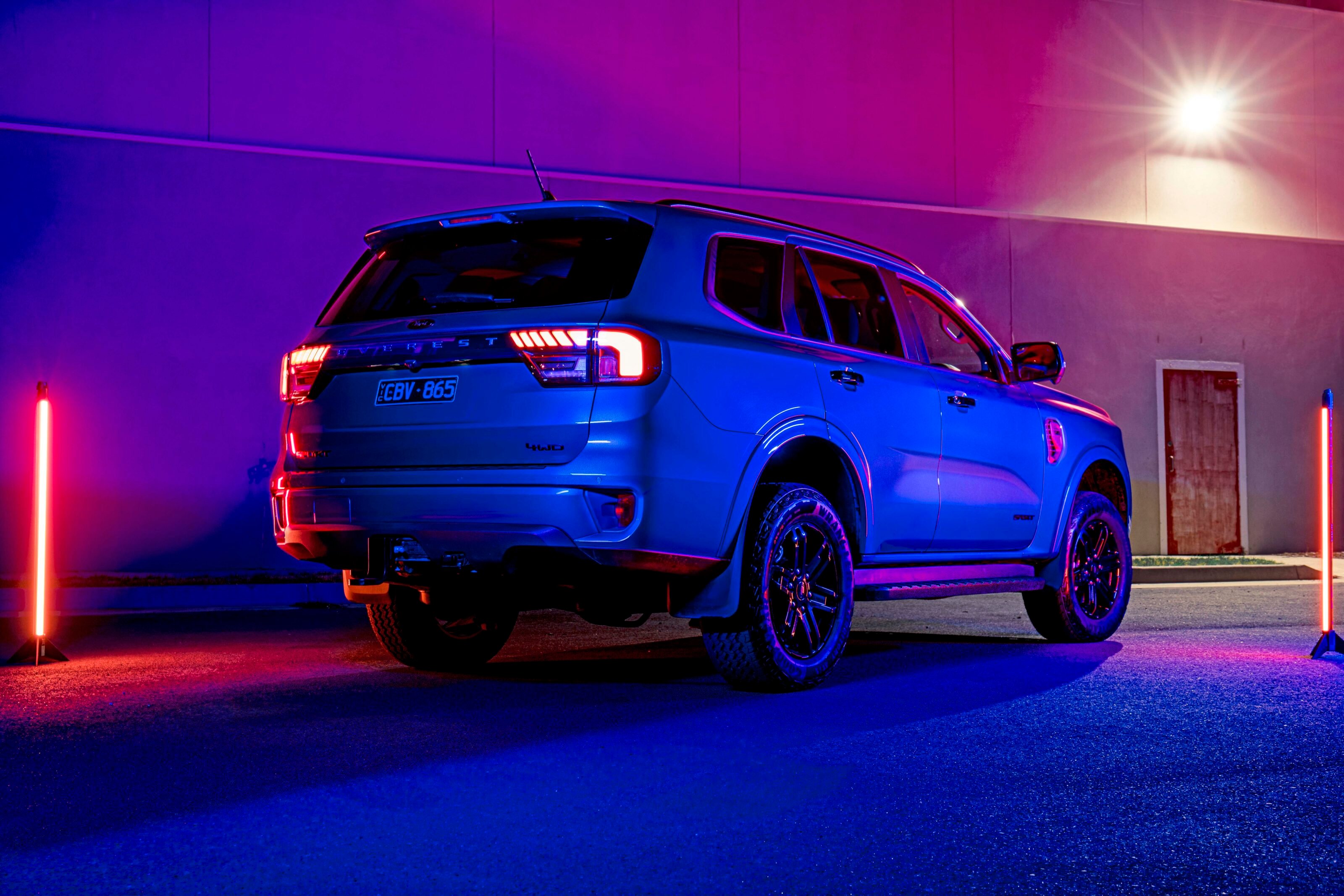
This year, dialling back the dogma to allow hugely popular ladder-framed vehicles to enter the fray has resulted in the Ford Everest carrying home the crown.
Controversial? Maybe. It was clear right from the outset that body-on-frame SUVs and utes arriving on all-terrain tyres would occupy the wooden spoon positions in dynamic tests such as high-speed avoidance and dry braking, and so it proved. Yet every judge climbed from the Everest absolutely blown away at how much this offers for the money. It hasn’t so much raised the bar in this sector as elevated it to a point worthy of its nameplate.
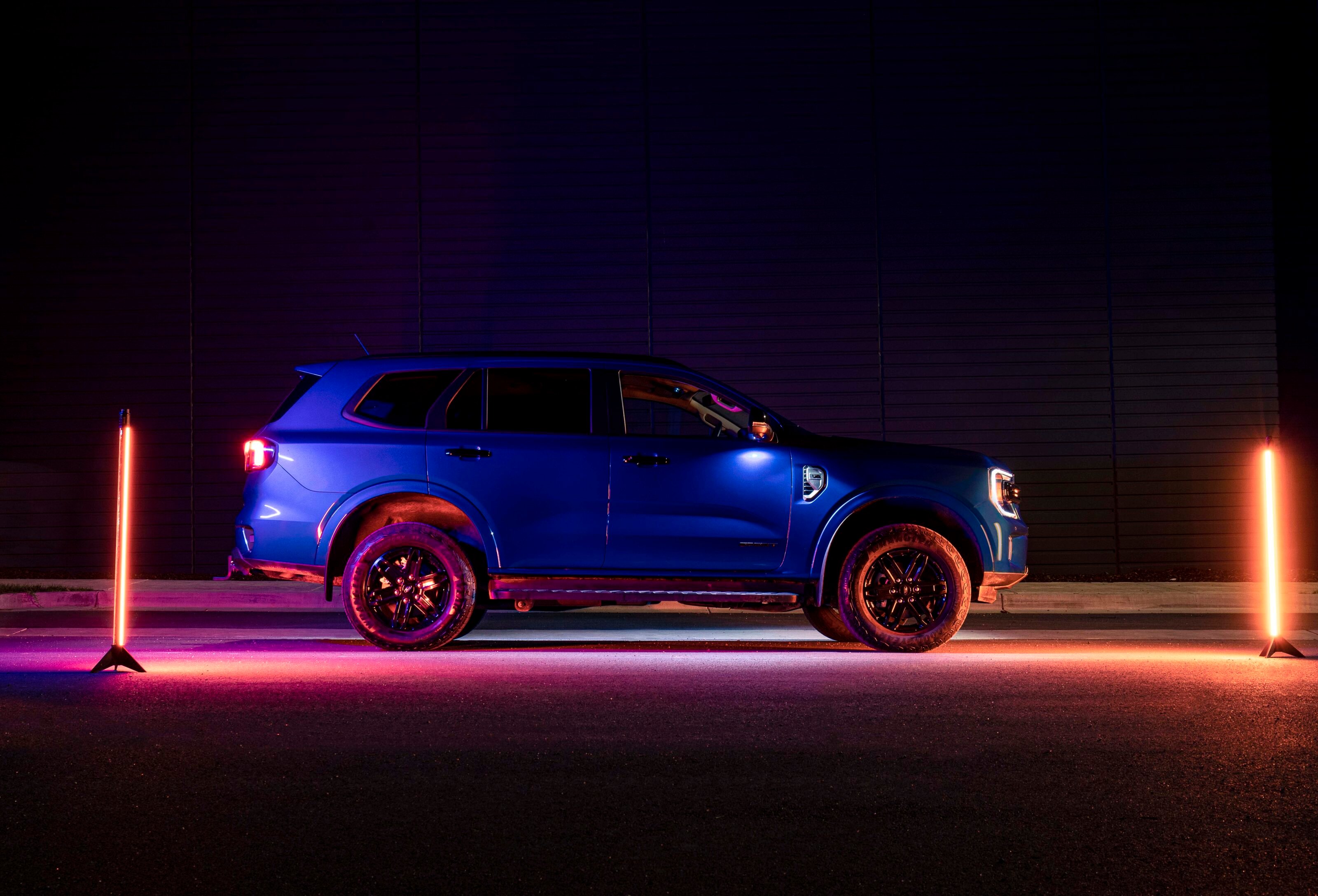
“It feels like a large SUV designed and built to meet the demands of Aussie buyers. And it doesn’t just tick the boxes; it goes above and beyond in virtually every metric,” commented a clearly impressed Inwood.
2
“So far ahead of its segment rivals as a driving experience.” – Jez Spinks
“There’s so much room everywhere, it’s hard to imagine you could run out of space … it’s clear Ford has created Everest with family practicality in mind,” Fisk reckoned.
“The stability control system is inspired on dirt. Seriously. This vehicle has clearly been built by people with a deep understanding of how it’s going to be used by its key market,” said
Thai-built it may be, but we’re the biggest market for this vehicle, the next-largest regions in turn being India, Vietnam, Thailand and Philippines. In other words, some of the most punishing markets on earth where ‘Built Ford Tough’ needs to be not so much a strapline as a basic prerequisite.
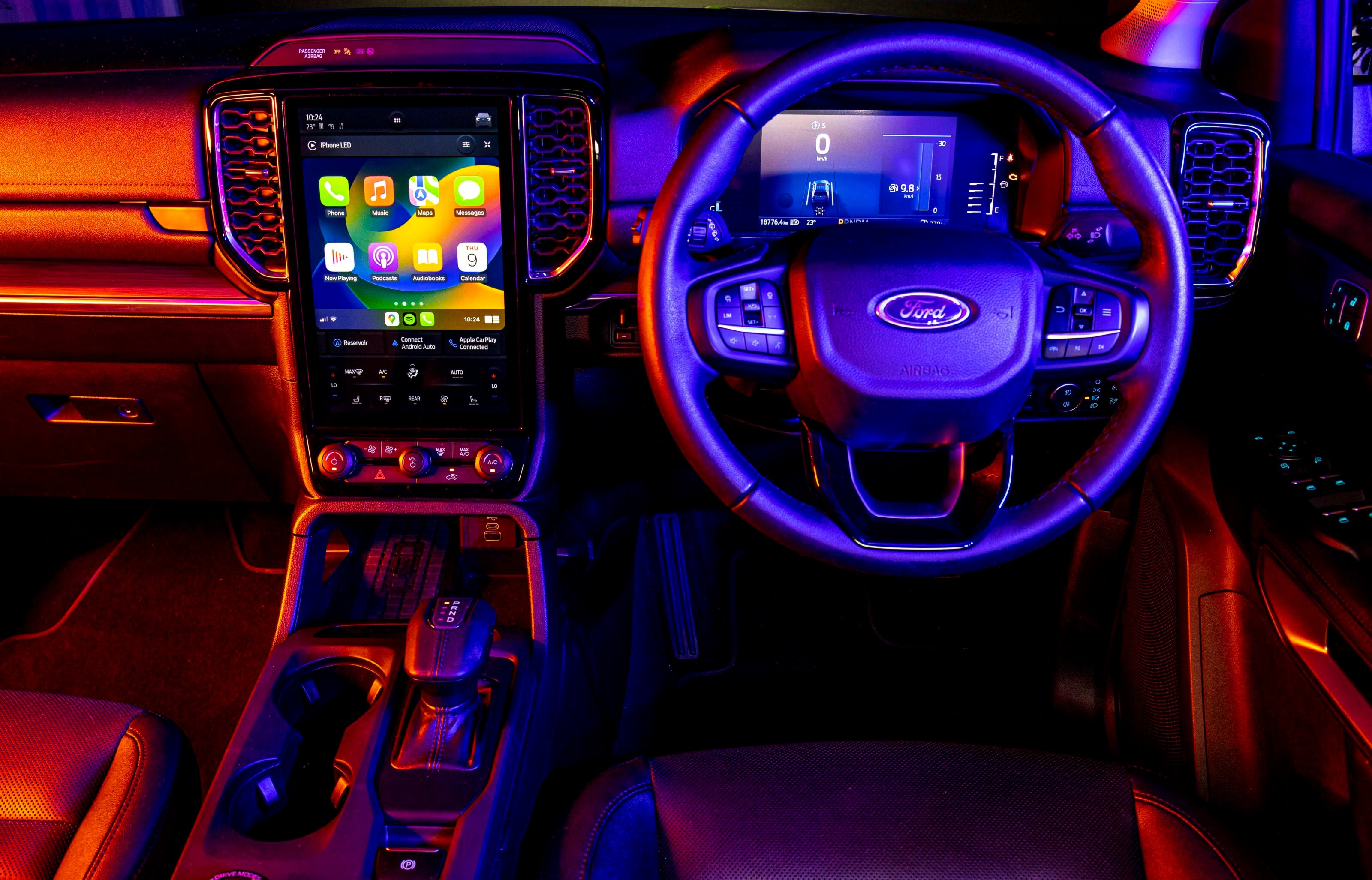
1
? Any COTY winner needs to ace the criteria
The Everest covered that assignment quite comfortably.
The ground it lost on brake-testing and lane-changing, it clawed back on its event-best dirt performance, its innovative towing tech, its near-genius off-road functionality and its expertly calibrated and easy-to-operate onboard driver assists.
Cabin design and execution also came in for praise, with acres of space, intuitive infotainment including wireless CarPlay and Android Auto, decent materials quality and solid ergonomics.
It drove well too, with both the 2.0-litre bi-turbo and 3.0-litre V6 powerplants getting the clever automatic all-wheel-drive function, unlike the Ranger where you need to step up to the V6 engine in order to net this functionality.
While the V6 diesel might be able to trace its roots back to some point shortly after the industrial revolution gained significant traction, constant updates have made it a standout in the pack.
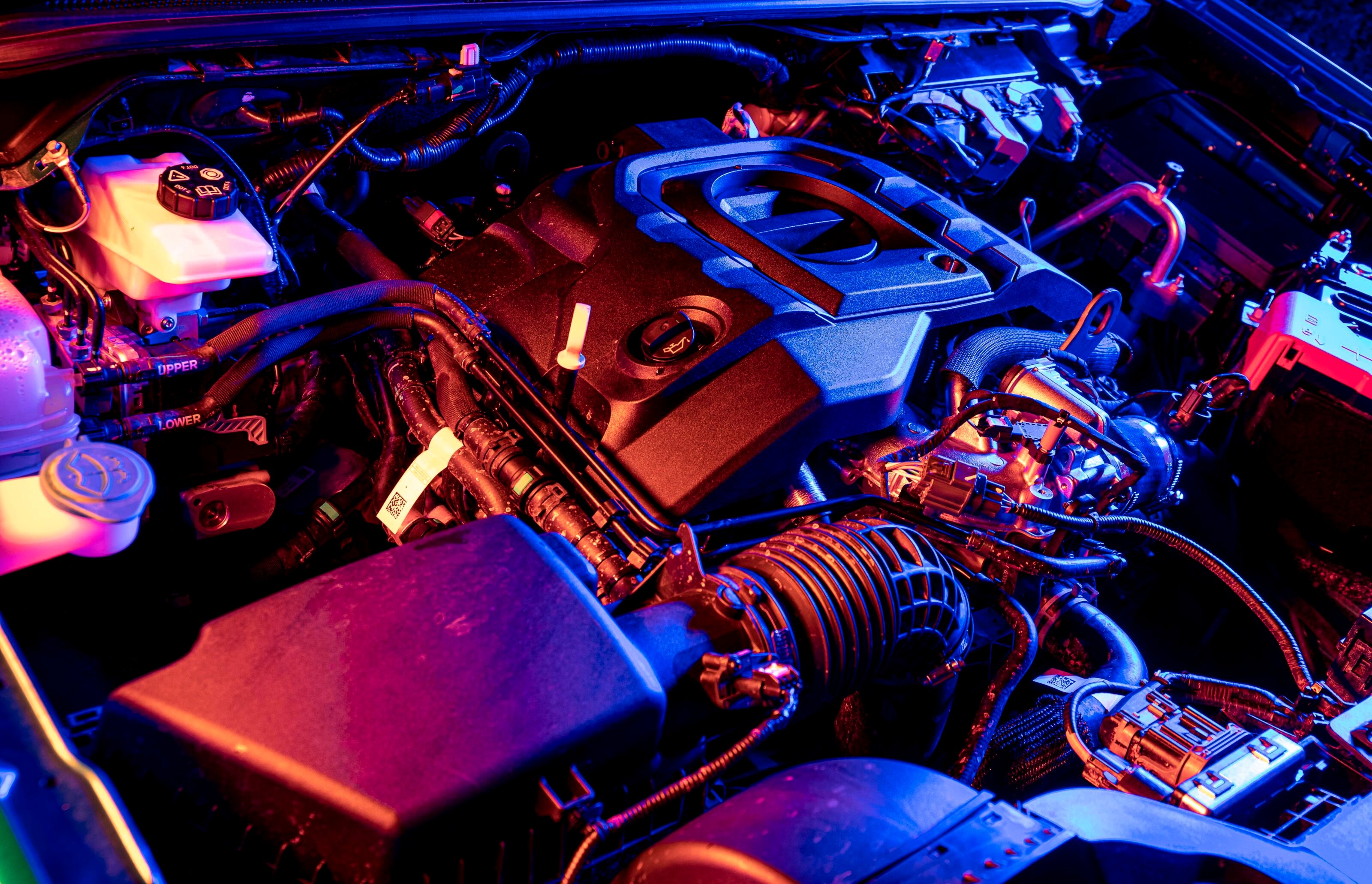
1
At this juncture, it pays to remind ourselves exactly what that pack comprises.
It’s made up of vehicles like the Toyota Fortuner, launched in 2015. Or the Mitsubishi Pajero Sport, launched in the same year. Alternatively, the Isuzu MU-X, the second-gen model of which arrived in 2021.
Stating that none of these gets close to this new Everest’s predecessor would appear to damn this latest version with but the faintest praise. It’s a low bar – even when you stretch to a Prado, the fourth-gen version of which arrived in 2009, which is closer to the Territory winning COTY than today.
In terms of superiority over its rival set, the Everest is the standout vehicle at this year’s COTY, especially as Ford has latterly ceded the Ranger’s clear air by allowing Volkswagen to piggyback off its engineering chops with the impressive next-gen Amarok.
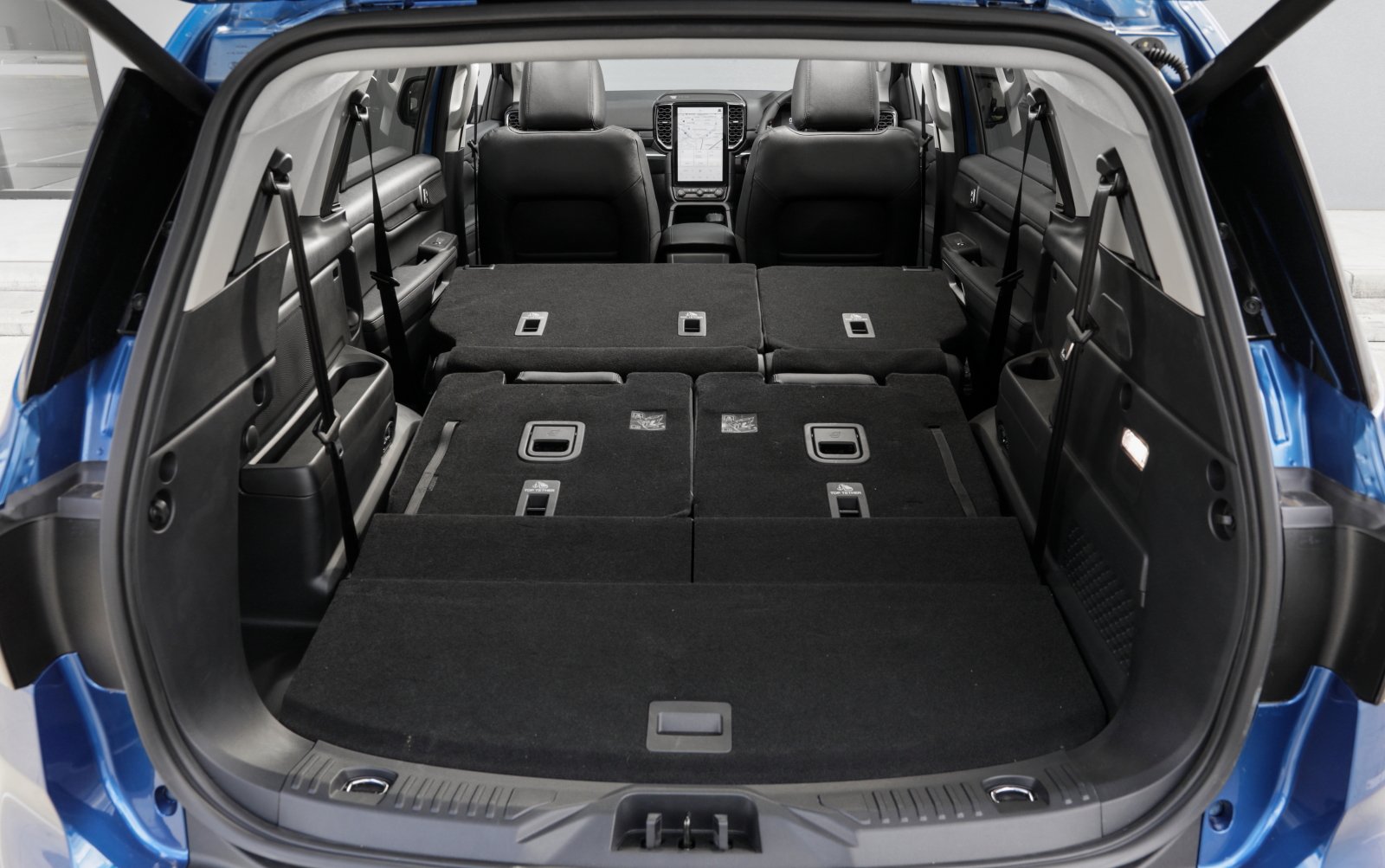
1
The only Australian-developed wagon in existence was an easy pass through to the final four.
Both myself and Spinks had some reservations about the Everest’s ride quality on poor roads and were curious to see how the rest of the judging panel would take to it, outside of the controlled environment of Vinfast’s proving ground.
Opinions diverged on the 2.0-litre diesel. While all agreed that the new torque converter had eliminated the old version’s problem of hunting up and down the 10-speed ‘box for the right ratio, there were those who felt that the smaller engine was a little shy of the NVH polish they’d like. Others considered it more than acceptable.
Remember that Ford modified the 10R80 transmission back in 2019 to fix once and for all the oil-pump drive gear reliability issues that afflicted early versions of this ‘box.
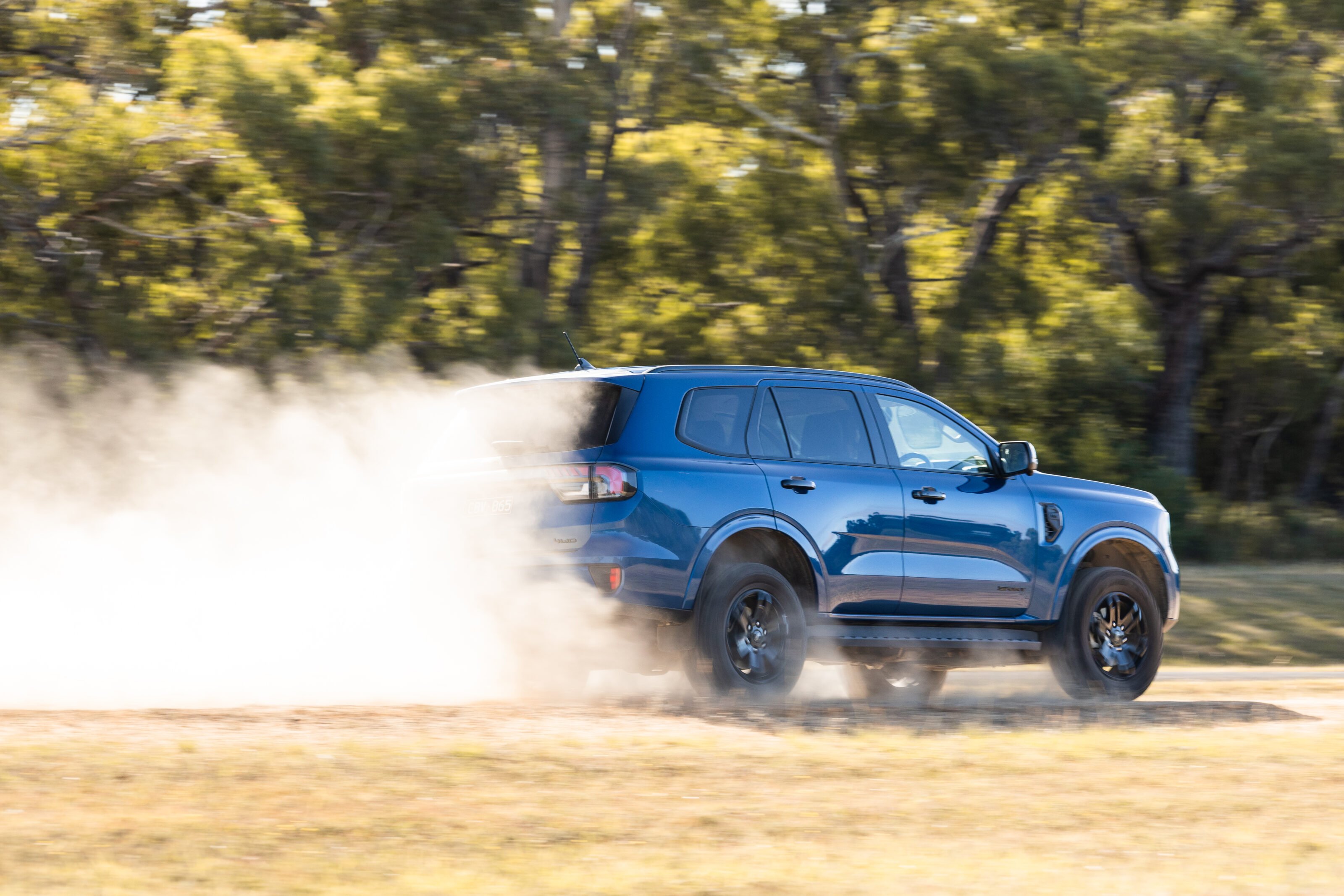
1
All judges agreed that the six-pot engine was the pick, however, delivering a cultured note – for an oil burner – at the top end and 600Nm on tap to tow up to 3500kg braked. It feels as if it could drag an errant tectonic plate back into line.
“The Everest is predictably excellent on dirt, but miles better than you’d suspect on bitumen” – Andy Enright
The Everest’s smartphone-activated trailer towing light test sequence is just another example of making life easier for owners. As is the blind-spot monitoring that takes the total length of your vehicle, including the trailer, into account. Or the grille-mounted camera that can peer over a sharp off-road crest while the driver can see nothing but a windscreen full of sky. We could go on but you get the point. It’s everyday utility done smarter.

1
Road testing on the Wheels test loops did highlight a few chinks in the armour.
The rear seat, while spacious and fairly comfortable, lacks lateral support and the shiny leather only exacerbates the slip ’n’ slide through tight corners.
Tyre pressure monitoring is a rare equipment miss in Sport trim and seems a no-brainer for a vehicle with such off-road ability. You’d need to spring for the range-topping Platinum to net TPMS, along with features such as a B&O stereo, matrix headlights and debatably desirable 21-inch alloys.
The Everest feels large on twisty roads and the no-cost option all-terrain tyres don’t relish rapid changes of direction. Once you tune into the Everest’s cadence and give the body a beat to take a set, there’s enough composure and outright grip to inspire confidence, especially in the sort of inclement weather we encountered while testing.
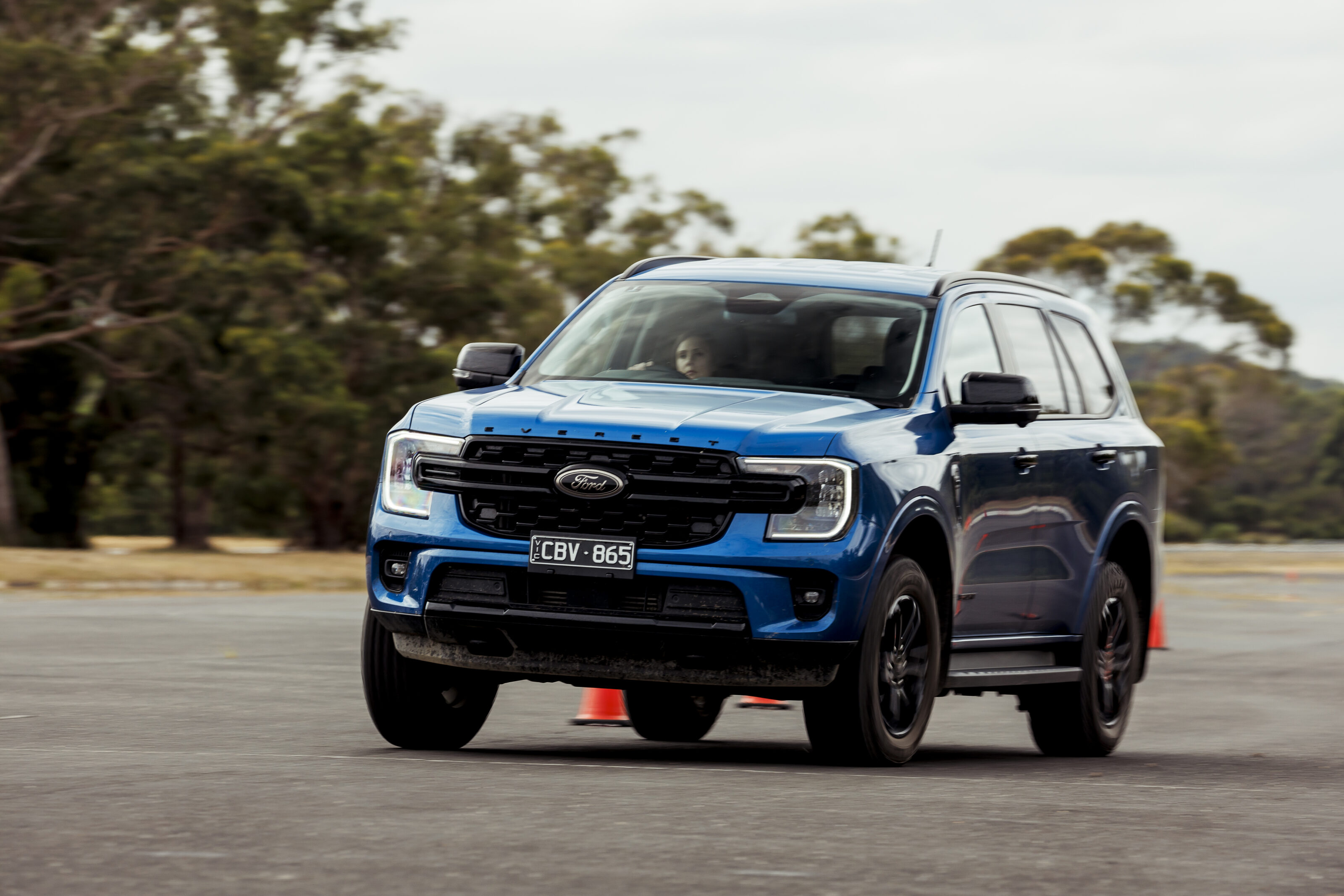
1
It’s probably fair to say that the difference in ride quality between a leaf-sprung Ranger and a coil-sprung Everest is noticeable but possibly not as great as some might have hoped; probably more of a tribute to the Ranger engineering team than a slur on Everest chassis development.
Nevertheless, there is some head toss when negotiating drop kerbs at an angle that is part and parcel of a tall, body-on-frame vehicle. It’s worth noting at this point that our Sport V6 was fitted with 18-inch alloys to complement the no-cost option A/T tyres. Go for the road tyres and your Everest Sport rolls on 20s with a less malleable sidewall. We’d happily stick with the 18s.
The best part about the Everest is that it really does feel engineered for Aussie conditions. Take it anywhere. Forty-degree day in the bush? The Ford’s air-conditioning is powerful enough to make you feel like an underdressed Shackleton.
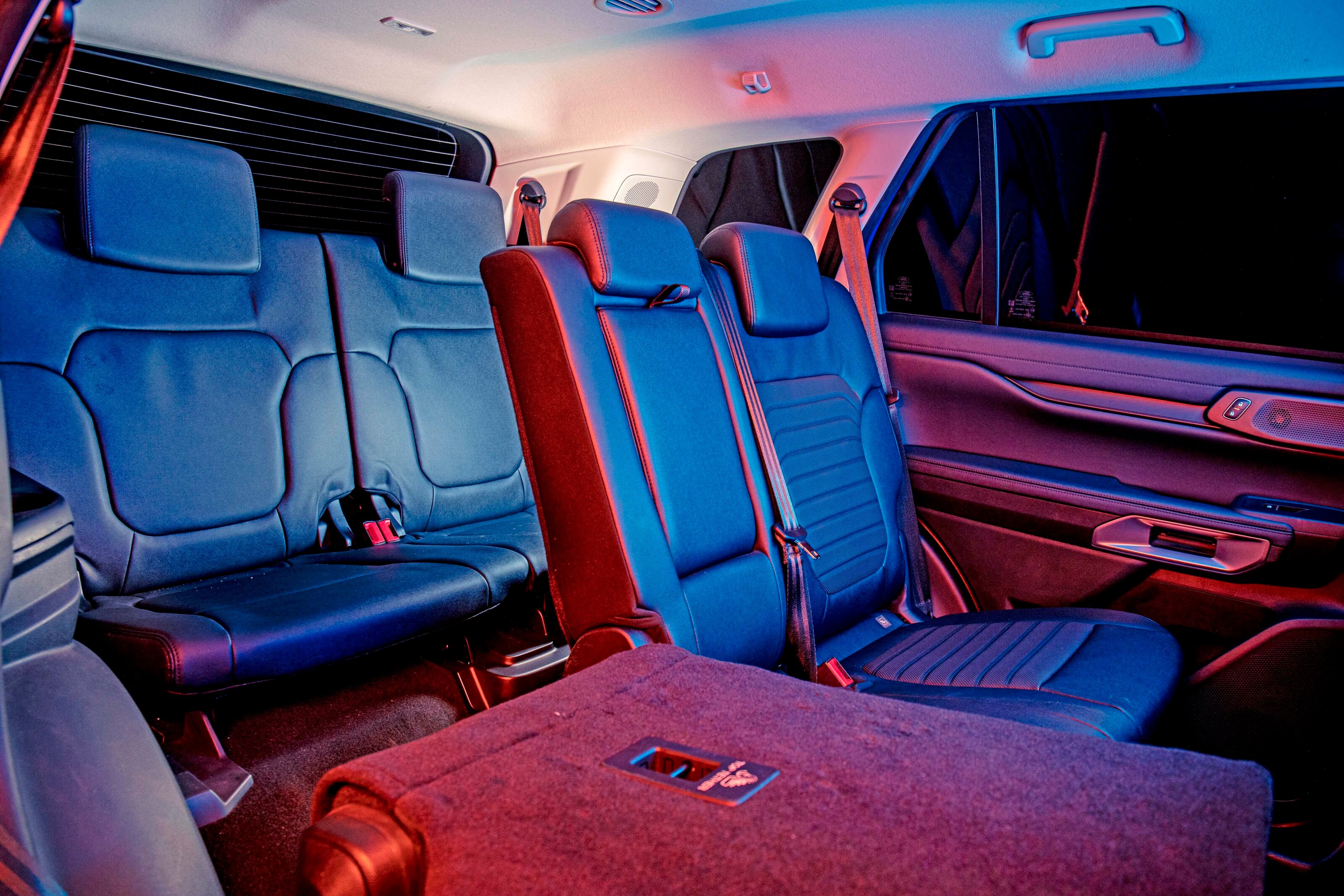
1
Its 800mm wading depth will see it through most fords, the proper low-range transfer case and the rear diff-lock enable it to clamber up anything that seems vaguely categorised as motorable, while an 80-litre fuel tank gives it a long-legged 900km cruising range between fills.
“Even the Trend model is stacked with wireless Apple CarPlay & Android Auto, LED lights, keyless entry and power tailgate” – Alex Affat
There’s even a slot next to the drinks holders front and rear to park a portion of fries if you’ve nipped into the drive-thru at Maccas. It feels sturdy too. “Gives the sense that after 500,000km it would look and feel exactly the same,” said Campbell.
One detail really underscores how Ford has engineered the Everest for its target market. We live in a hot country. Like everywhere else, cold air sinks and hot air rises.
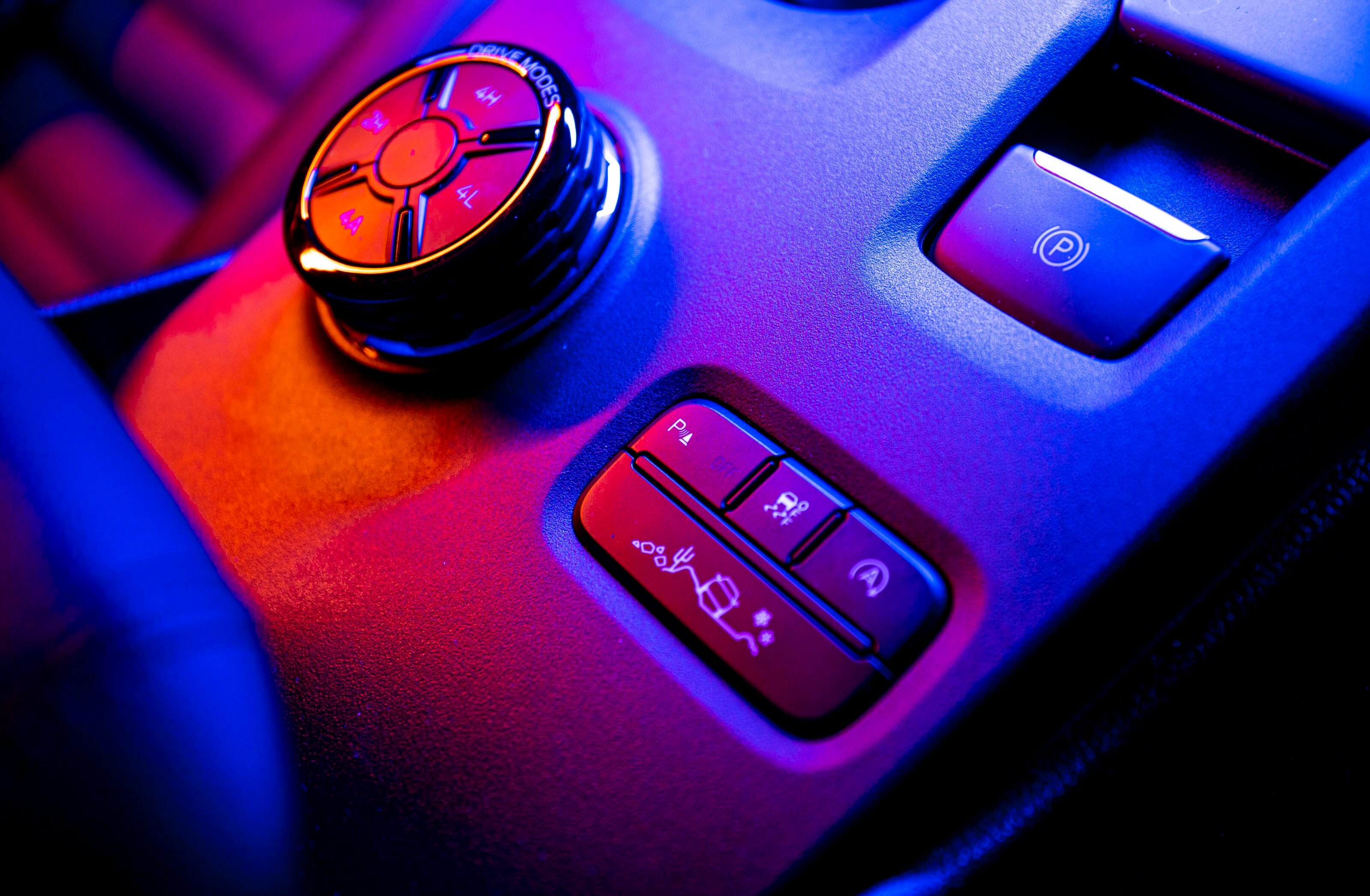
1
Ford has gone to the considerable engineering effort of routing the rear air conditioning plumbing along the roof of the Everest to drench rear-seat occupants in a waterfall of cooling air – while its rivals feebly fire cold air at passengers’ shins.
Put simply, the Everest couldn’t be a great deal better suited to how Aussies typically use their vehicles.
Just as a softly sprung Citroën feels perfect on a French rural route, a 7 Series sedan is imperious on an autobahn, a flyweight Lotus an ideal fit along an English country lane and a drop-top Mustang the perfect partner on the Pacific Coast Highway, the Everest revels on home turf.
There will be some who might look at a two-tonne truck and wonder whether we’re being particularly progressive in our choice here. Ford has tried to sell a very good utility vehicle that’s half a metre lower and 500kg lighter in this country and very few formed a queue for Mondeo wagons, so the point may well be moot.
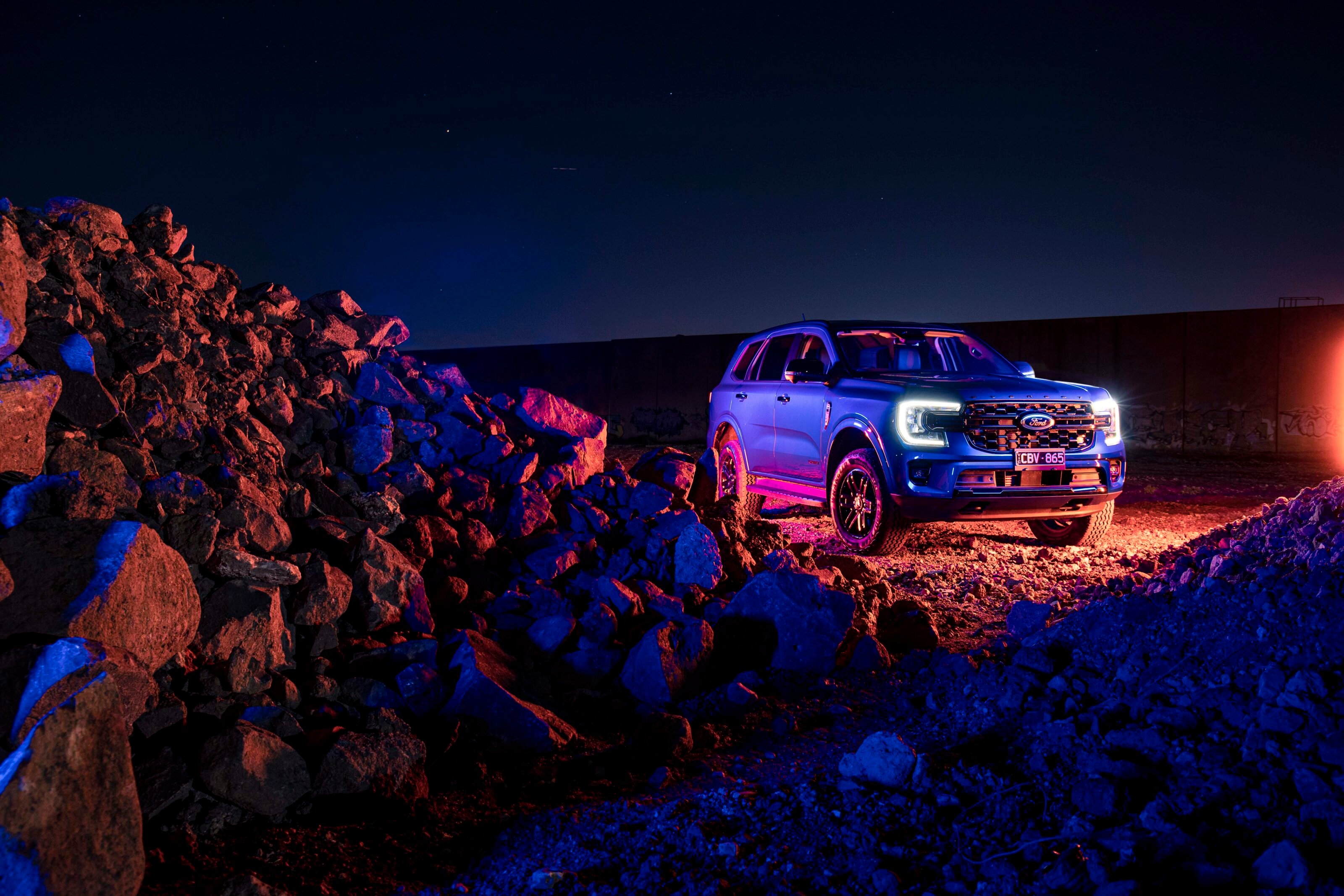
2
The Everest is clearly relevant and laser-focused on buyers’ needs right now – and that’s what counts
In the final tot-up, the Everest tallied a decisive majority on the scorecards. It’s a thoroughly impressive vehicle that offers so much capability and is packed with such ingenuity at such a keen price that it’s a clear winner for 2023. Designed in Australia, by Australians, for Australians.
Turns out there’s something to be said for that after all.
MORE
Everything Ford
MORE
Large SUVs
| Ford Everest | Trend 2.0L bi-turbo | Sport V6 |
|---|---|---|
| Price | $65,290 | $69,090 |
| Body | Seven-seat, five-door body-on-frame SUV | Seven-seat, five-door body-on-frame SUV |
| Drive | All-wheel drive | All-wheel drive |
| Drivetrain | 2.0-litre 4cyl bi-turbo diesel | 3.0-litre V6 turbo diesel |
| Power | 154kW @ 3750rpm | 184kW @ 3250rpm |
| Torque | 500Nm @ 1750-2000rpm | 600Nm @ 1750-2250rpm |
| Transmission | 10-speed automatic | 10-speed automatic |
| Fuel consumption | 7.2L/100km | 8.5L/100km |
| Kerb weight | 2383kg | 2454kg |
| Towing capacity | 3500kg | 3500kg |
| 0-100 | 10.0sec (estimate) | 9.0sec (estimate) |
| L/W/H/W-B | 4914/2207/1842/2900mm | 4914/2207/1842/2900mm |
| Boot space | 239/898/1823L | 239/898/1823L |
| Warrantyu00a0 | 5yr/unlimited km | 5yr/unlimited km |
| Safety rating | 5 star ANCAP (2022) | 5 star ANCAP (2022) |
MORE READING
Now that you’re done reading our COTY 2023 verdict, you should go back to catch up on anything you might’ve missed. Check out the links below, or find it all at our COTY page.
A NOTE ON CRITERIA
Always a controversial topic. It’s linked above, but if you need a refresher on how we define eligibility and our testing criteria, the What’s new for 2023? story is where you need to be.
UPDATE: After revealing a plan to improve electric vehicle ownership, the City of Sydney council has made its first concrete step with the installation of a public power pole charger.
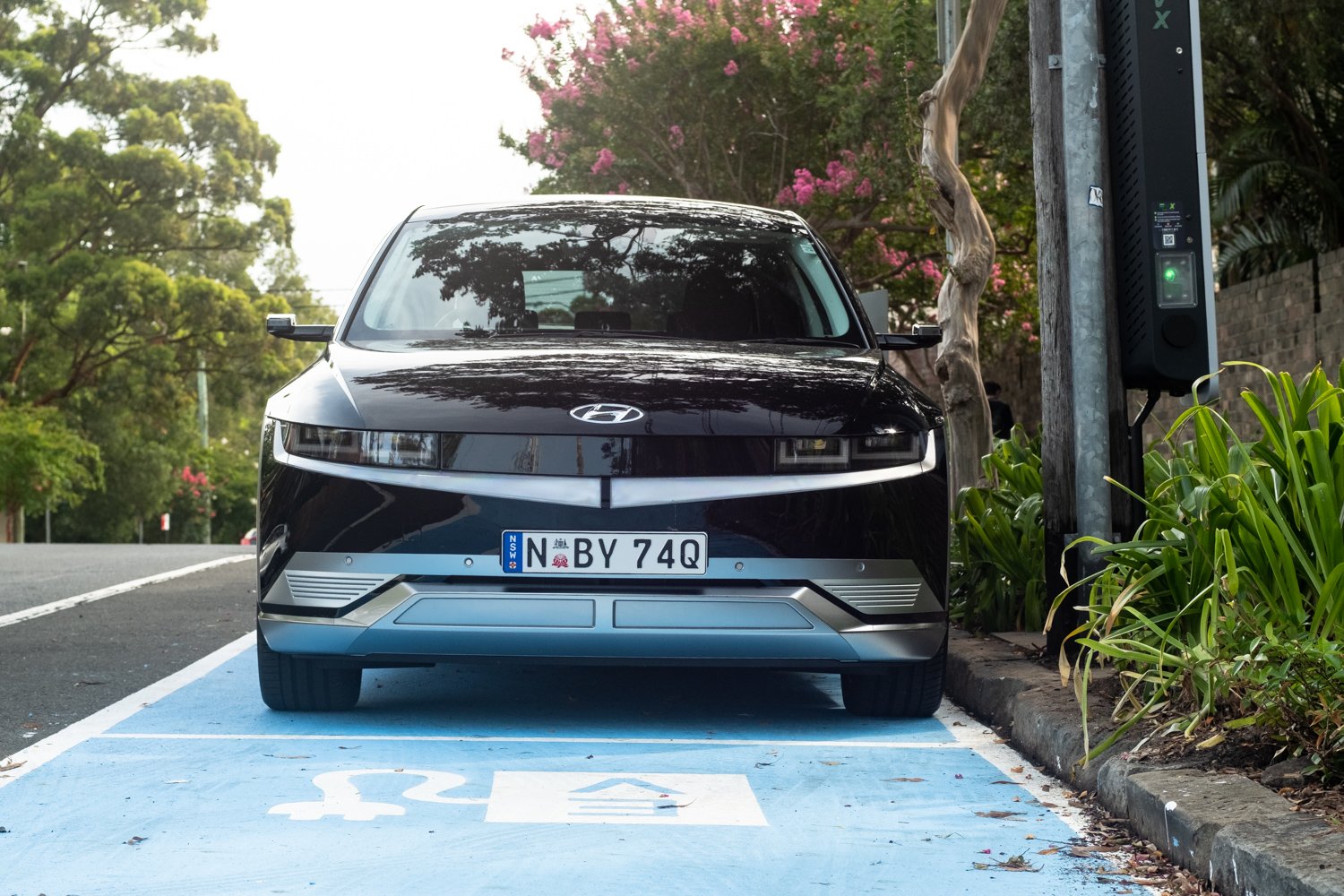
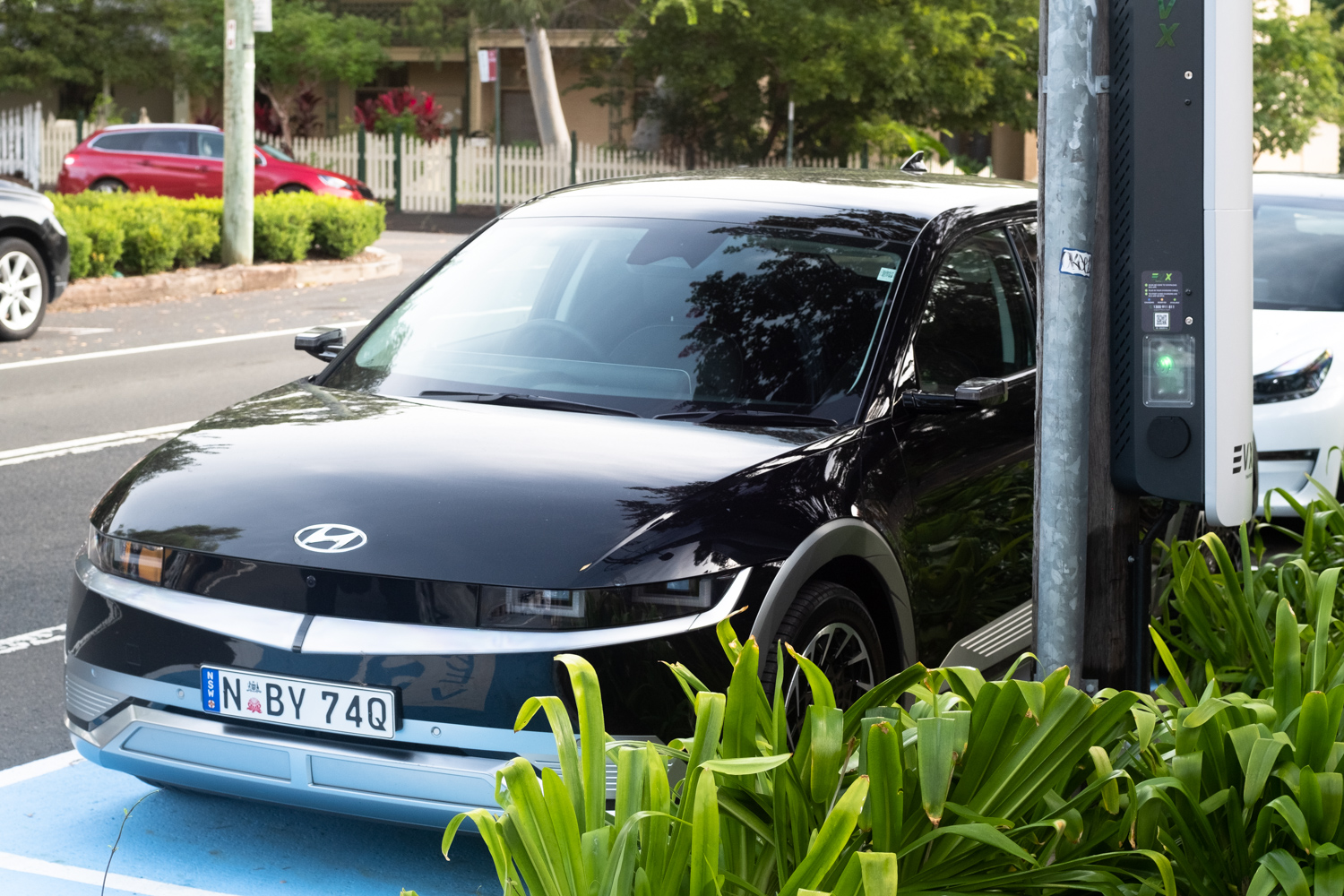
The single Type 2 charger was installed by Ausgrid and is capable of delivering AC electricity at 22kW. It’s located in Sydney’s inner suburb of Glebe on St Johns Road, between Derwent Street and Glebe Point Road and you’ll need to bring your own cable.
Run by EVX, the charger is powered by 100 per cent renewable energy, though the cost is fairly steep at $0.50 per kWh of electricity delivered. For reference, an ultra-rapid Chargefox, Ampol or Evie location costs $0.60/kWh, and a Tesla Supercharger $0.52/kWh. The average cost per kWh in NSW is $0.28.
1
For those wondering, charging your EV at the location is price competitive with parking meters. For an hour of time in an EV that accepts current at 7kW, an hour will cost you $3.50, whereas 60 minutes of metered parking costs $3.90.
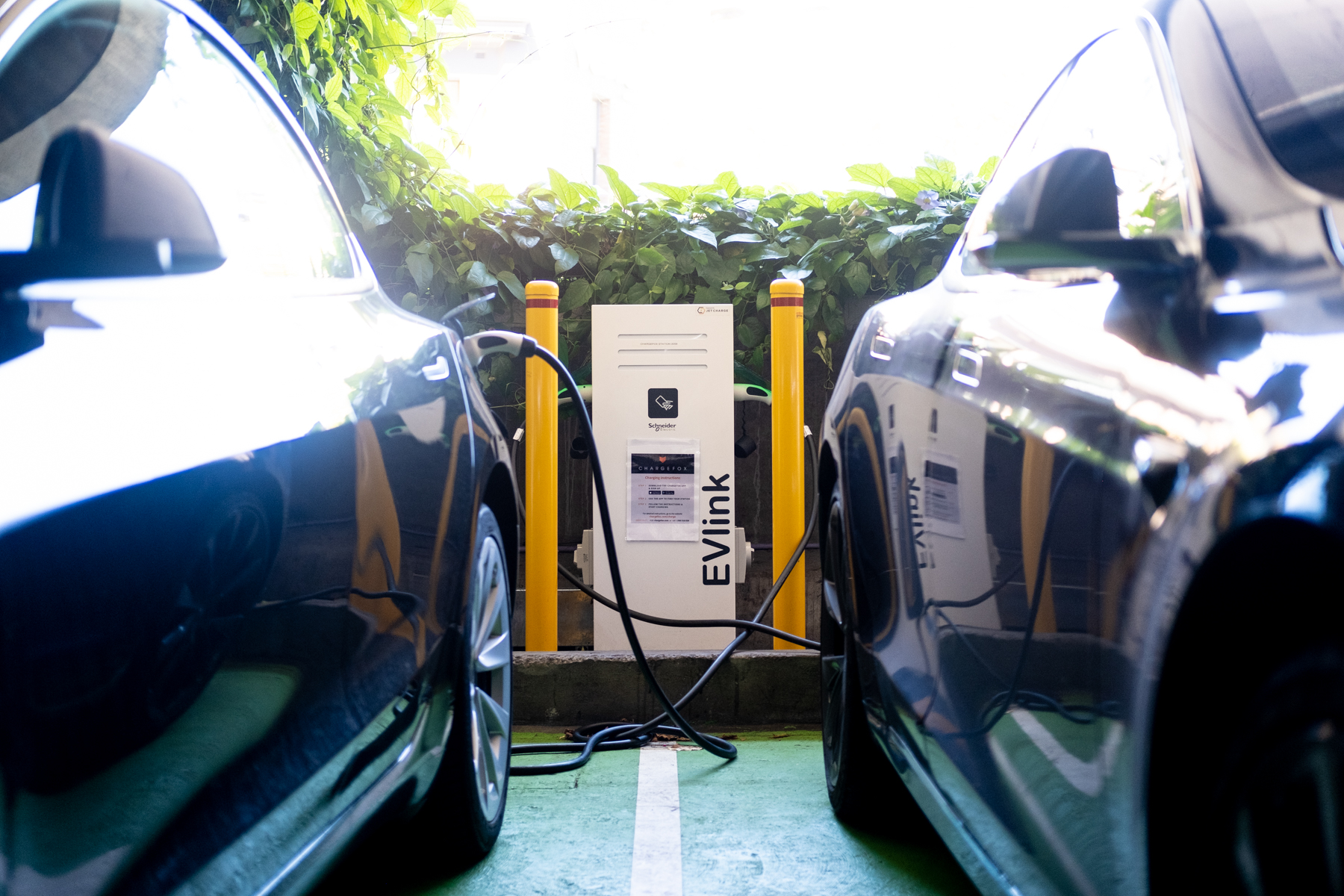
An electric vehicle that takes electricity at 7kW, such as the Hyundai Ioniq 5 pictured, will add 13 per cent charge in an hour, or about 60km driving range.
While one location won’t revolutionise charging for those living in the inner city, this installation is being seen as a trial. If the council deems it successful, then more are likely to be rolled out.
1
Ausgrid converted a Mona Vale substation to a charge point in 2021, and installed its first power pole charger in Newcastle in December last year. The company has pledged 30,000 public power pole installations by 2029.
Our original story, below, continues unchanged
UPDATE Feb 27: The City of Sydney Council has detailed a plan to improve electric vehicle infrastructure on its way to achieving net-zero emissions by 2035.
Promises include doubling the number of EV chargers in carparks, implementing on-street charging, and consulting with strata and building owners for home charging.
The Greater Sydney Area is largely suburban with high levels of car ownership, but the metropolitan City of Sydney is unique, with one-third of residents surveyed not currently owning a car and 75 per cent of the population living in flats.
Lord Mayor Clover Moore has been actively encouraging low emissions forms of transport such as cycling, walking, and public transport, but until now little has been done to improve EV ownership for inner-city folk.

1
A lack of public infrastructure has led to bizarre scenes, such as extension cords dangling from balconies of 19th-century Balmain terraces charging Teslas, illustrating just how quickly the availability of EVs has leap-frogged infrastructure in urban areas.
“Reducing private vehicle dependence is the most effective way to cut emissions, so we remain focused on delivering our comprehensive bike network, supporting ambitious public transport projects, and ensuring our city is a pleasant and accessible place to walk to, from and around”, said Sydney Lord Mayor, Clover Moore.
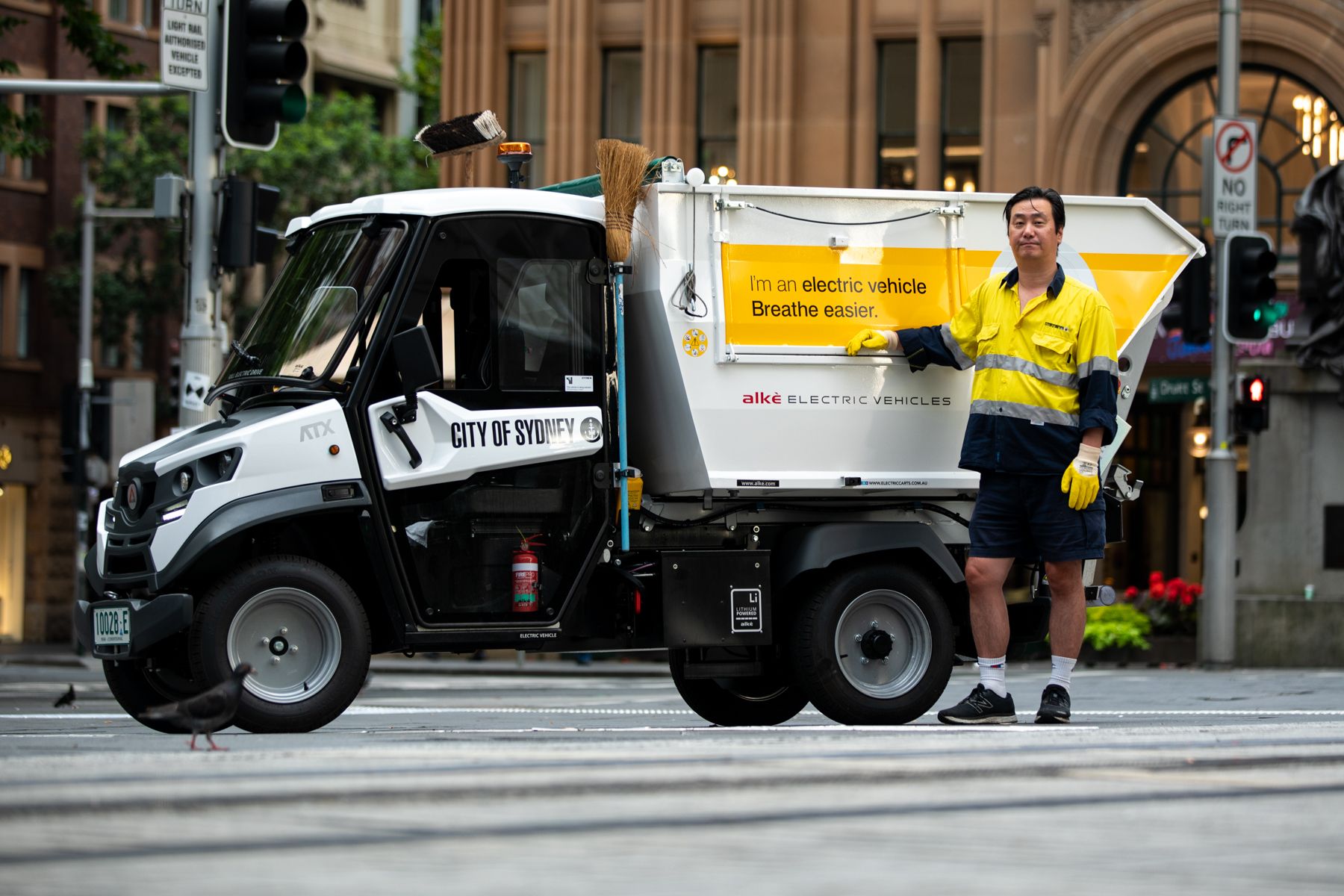
“Not all trips can be completed on a bike or public transport, so electrification of high-impact fleets such as delivery and service vehicles, as well as private vehicles, will help complete the journey to net-zero transport”, Moore added.
1
What’s the City of Sydney’s plan for public charging?
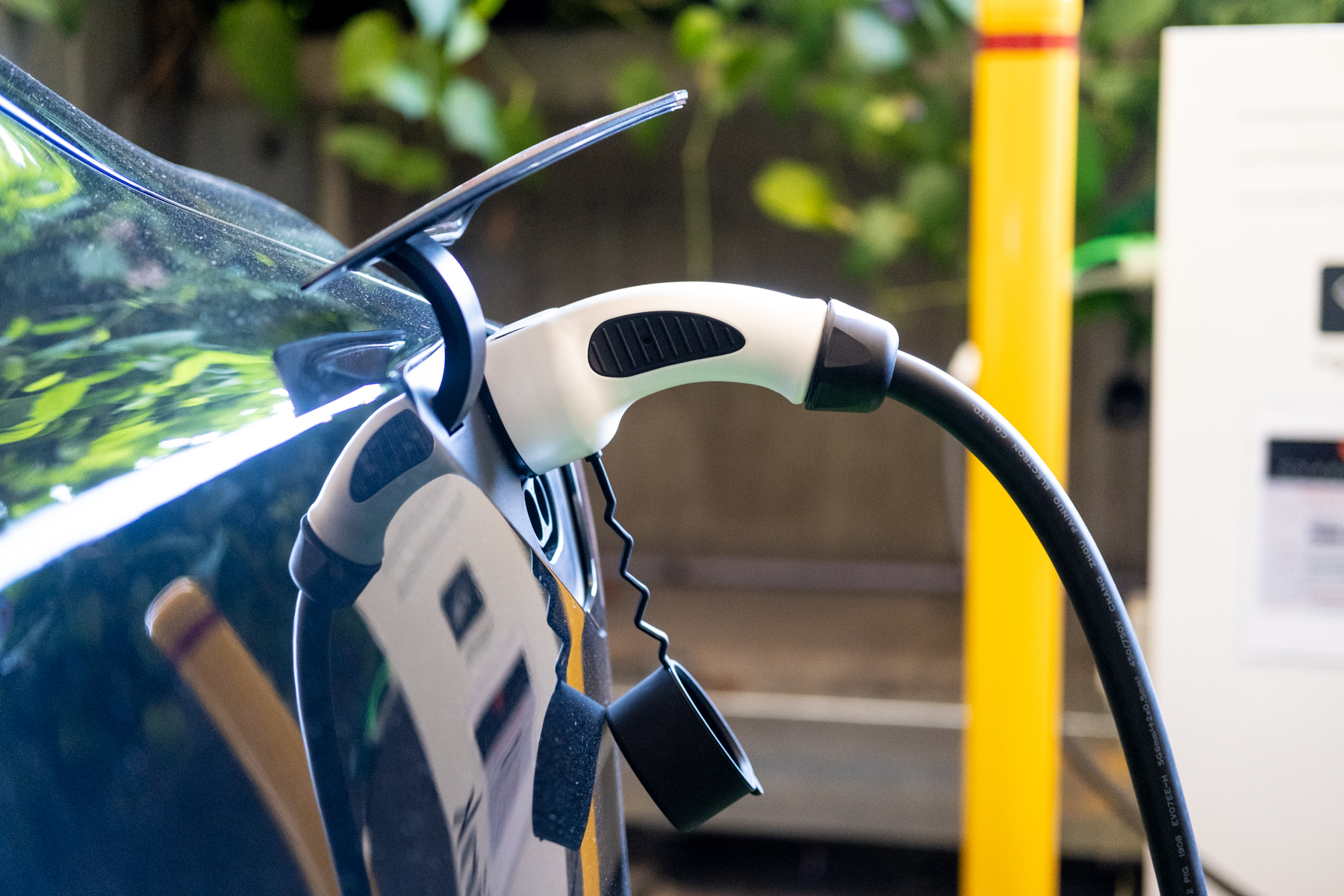
The City of Sydney is focusing on home-style AC charging, with rates up to 22kW, rather than fast and rapid charges above 50kW, which will be left to private companies such as ChargeFox and Evie.
There are plans to increase the existing number of charging points in council-owned car parks in the CBD and Kings Cross to 18, as well as adding new 22kW chargers in Newtown and Redfern.
In the inner-city suburb of Glebe, the City of Sydney will also feature London-style public on-street AC charging stations. The plan doesn’t discuss the cost of charging, but it’ll likely be cheaper that the $0.60/kWh charged by rapid-charging networks.
The Council has also promised to work with private off-street parking providers and service stations.
1
What about charging at home?
For those who own a detached property, the benefit of a roof-top solar installation and home charging is clear. Those who rent dwellings, or own flats, often don’t have the same freedoms.
In the City of Sydney, 75 per cent of the 210,000 residents live in apartment buildings. To aid EV adoption, Moore’s strategy involves liaising with strata companies as building chargers in underground car parks isn’t as simple as it sounds.
“Many of these apartments have off-street parking spaces and we know that most of them will look to charge their electric vehicles in those spaces. The more who can, the less spillover there will be into other charging systems.
“But owner’s corporations need to juggle complex metering, demand management and efficiency, safety standards and insurance and of course, questions over who pays and how”, the Lord Mayor said.
1
“We will be conducting a comprehensive research project in a range of different building styles and ages, to figure out how to overcome these challenges and outline best practice options for apartment buildings looking to retrofit.”
Additionally, the City of Sydney will introduce a mandate for all new buildings to be constructed with electric vehicle charging in mind.
Snapshot
- Greenpeace has complained to ACCC about Toyota’s practices
- Follows ACCC crackdown on misleading claims across several sectors
- Toyota rejects claims about its commitment to sustainability
Toyota is facing an investigation by the Australian Competition and Consumer Commission (ACCC) after Greenpeace filed a complaint about the carmaker’s environmental claims.
The complaint, made by the Environmental Defenders Office on behalf of Greenpeace Australia Pacific, focuses on claims made by Toyota regarding the environmental performance of its vehicles and its net-zero ambitions.
Greenpeace’s request for the watchdog to investigate the automaker, filed on Friday, follows an announcement by the ACCC it would step up its probe of companies’ sustainability claims after a survey found 247 businesses and brands had made misleading statements.
1
The basis of the complaint is that; Toyota’s net-zero by 2050 plans ‘appear inconsistent with its current plans for car production’, Toyota is ‘not seeking a rapid transition to eco-friendly cars and has a global track record of lobbying to delay, block or weaken vehicle emissions standards’ and its vehicles ‘may not meet emission standards in real-world use as opposed to test conditions’.
The use of environmental and sustainability claims is becoming more common in the marketing of consumer goods, according to the ACCC. However, there are concerns that a significant proportion of the claims made by businesses may be false, misleading, or have no reasonable basis. This is often known as ‘greenwashing’.
“We believe Toyota Motor Corporation’s advertising is misleading Australian consumers by understating its cars’ emissions and overstating its commitment to clean transport,” said Lindsay Soutar, Director of Greenpeace Australia Pacific’s Electrify campaign.
1
“Toyota Motor Corporation makes claims in its advertising that give the false impression the company is leading the transition to clean cars, but the truth is Toyota is not leading the transition but is acting globally to block the take-up of electric vehicles.
“All companies have a duty to tell the truth about their products. That standard must apply especially to a company like Toyota, which is Australia’s largest and until now most-trusted car maker. There needs to be a level playing field so that consumers can make informed choices about how to use their purchases to protect the environment.
“The people — and, increasingly, the corporate regulators — are calling out these misleading practices and holding these corporations to account,” added Environmental Defenders Office Managing Lawyer, Kirsty Ruddock.
“If companies like Toyota continue to behave in this manner, they run the very real risk of eroding their social licence and seriously damaging their brand and their customer base.”

1
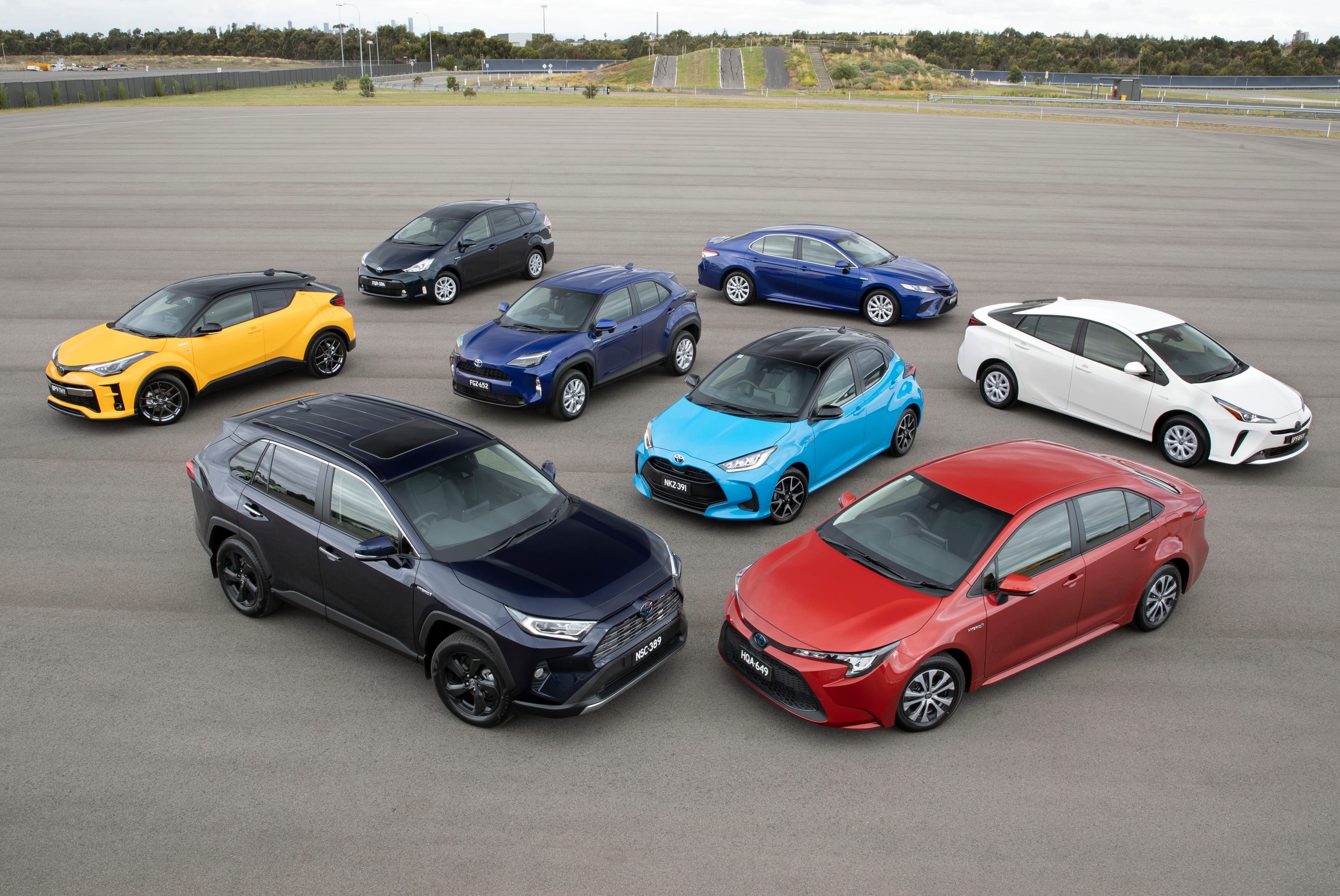
Responding to the concerns, a spokesperson for Toyota told Wheels: “Toyota Australia has a long track record in helping customers reduce their vehicle emissions, including through the supply of over 315,000 hybrid-electric vehicles and investment in reduced tailpipe emissions vehicles and carbon-neutral technologies. We are committed to achieving a sustainable future and reject any claims to the contrary.”
In February, it was revealed Toyota’s incoming CEO Koji Sato promising a major shift to prioritise battery-electric vehicles (BEVs) – while sticking with a diverse powertrain strategy.
Sato plans to “drastically” revamp the Japanese automaker’s EV strategy – which has long been criticised for its reluctance to commit to the technology – by accelerating the roll out of a next-generation platform expected around 2026, positioning Lexus to lead the charge, and appointing younger executives.
MORE
Everything Toyota
