Due to component shortages, Kia Australia has temporarily suspended new orders for the flagship Sportage GT-Line. Get the full details here.
This story will be updated when GT-Line orders resume.

The Polestar 2 launched in Australia in November 2021 and has had a strong start to its sales life. Despite being heavily impacted by supply constraints, this all-electric fastback has gone on to defy the typical SUV sales trend by shifting 1524 units last year to achieve fourth place in the EV sales race, ahead of the Hyundai Ioniq 5 and Kia EV6, but a long way shy of Tesla’s Model 3 and Y.
Polestar is still in its infancy, with only one model on sale and a second due on Aussie shores in early 2024. But, in its short tenure since Australian deliveries commenced, the Polestar 2 has already matured.
For a start, the base price has climbed by $3500 for this mid-spec Long Range Single Motor variant, which is now $68,400 before on-road costs.

There are no additional features, but Polestar has delivered on a carbon reduction program. The 2 now uses aluminium for its wheels refined using green energy (in this case, Chinese hydro-electric power) that, according to the brand, cuts roughly a tonne of CO2 from production.
It’s an almost Colin Chapman-esque exercise, but instead of ‘simplify and add lightness’, it’s probably more like ‘cut emissions and give parts procurers brain aneurysms in the process’.
If you’ve been tracking Polestar developments, you’re probably also aware that a significant mid-life update is due in the second half of 2022. The Polestar 2 LRSM will switch its single motor to the rear, improve charging speeds and range, too.
| Motor | single motor, front-wheel drive |
|---|---|
| Power | 170kW |
| Torque | 330Nm |
| Transmission | single-speed |
| Body | 5-door, 5-seat medium liftback |
| Driving range (WLTP) | 551km |
| Boot space | 405L + 41L frunk |

The Polestar 2 is a fairly basic package without options, so it’s important to get into the configurator and consider what you need.
Which is both a blessing and a curse. For example, the Pilot Lite package has features that we’d typically consider a blot when missing from a premium car’s spec sheet – lane-trace assist and adaptive cruise control – but the ability to skip them is refreshing.
As standard, all Polestar 2s are equipped with four-way power-adjustable front seats with cloth upholstery, keyless entry and go, power tailgate, an eight-speaker sound system, over-the-air software updates for life, LED headlights and 19-inch alloy wheels.

Technology also sets a high standard with an 11.2-inch portrait-oriented touchscreen powered by Google’s Android Automotive software providing access to downloadable apps such as Spotify, Plugshare and more. There are four USB-C charge points in every Polestar 2.
A 12.3-inch digital driver’s display with handsome graphics features Google Maps with live traffic updates, as well as a connected 4G SIM card to power the functions associated with the touchscreen (free for three years). Wired Apple CarPlay and Android Auto feature on the Polestar 2.
Our tested vehicle was fitted with extras that are commonplace on Polestars delivered to Australia, bringing its total price to $79,300 before on-road costs.

The $6000 Plus pack adds a heat pump and warmed washer jets, 12-way electric front seats adjustment with power lumbar, black ‘Weavetech’ upholstery; heated rear seats and steering wheel, PM2.5 cabin filtration and air quality monitor, wireless smartphone charging pad, a fixed glass roof and a 10-speaker Harman Kardon sound system.
On top of that, the Pilot Lite pack brings blind-spot monitoring, rear cross-traffic alert, reverse auto emergency braking, and adaptive cruise control with lane-trace and traffic assist for an extra $3400.
Finally, $1500 worth of metallic paint – in this case a deep sandy flecked beige called Jupiter – and we’re at the $80K total. Do you need all the extras? Probably not. Without the Plus pack, the Polestar 2 is still a fine car, but we do think the Pilot Lite pack should be standard.
All the above extras are available on any Polestar 2, but the 300kW/660Nm Long Range Dual Motor model is the only one available with the Performance pack ($8000). This adds lightweight 20-inch forged alloy wheels, gold Öhlins adjustable suspension, matching gold seatbelts and six-piston front brakes.

Starting from $63,900 before on-road costs, the Tesla Model 3 is more affordable than a base Polestar 2, although the Long Range AWD Model 3 is dearer than the tested Polestar 2, though the twin-motor Tesla promises a faster 0-100km/h time and all-wheel drive, as well as a larger touchscreen.
Although Tesla’s interior presents splendidly, the Polestar’s build quality and material tactility remain a cut above the American start-up.
It’s hard to beat Tesla’s captive Supercharger network, though, which currently remains closed to other brands. A Hyundai Ioniq 5 Dynamiq rear-drive costs $69,900, while a Kia EV6 Air RWD $72,590, both before on-road costs. Each is similar in price to the Polestar but trade more cabin space for less material finesse.
Looking outside EVs for a moment, the Polestar 2 compares favourably with the standard luxury trio, too. A BMW 330i will set you back $93,400, an Audi A4 45 TFSI $75,700 and Mercedes-Benz C300 $93,500 (all before on-road costs).

We’ll start with the Polestar’s shortcomings first, some of which are very noticeable in Australian conditions. Insipid air conditioning combined with a glass roof and Weavetech upholstery (a recycled textile designed to regulate cold, Scandinavian winters, not searing Aussie sun) make the 2 a heat box in 30ºC+ temperatures.
Teslas suffer a similar fate with their ‘vegan leather’ (read: vinyl) upholstery and glass roof – though it must be noted that the Weavetech is preferable to PVC. You can also opt for sustainably tanned Zinc leather with fan-cooled seats for an extra $6000.
The back seat isn’t great either. Despite being an EV, the Polestar 2’s converted CMA platform retains a high transmission tunnel. Legroom and toe-room are solid, but headroom is compromised for taller occupants. It’s also a dark place to be, and the Polestar 2 has a firm ride in the rear.

Back to the good stuff though, the Polestar 2’s boot measures 405L and has a generous hatchback opening (there’s another 45L in the ‘frunk’, too) and while there is a load lip to hoist heavy goods over, it’s not as bad as sedans of old. Polestar has also borrowed a fold-up shopping bag organiser from sister company Volvo.
Ergonomically, the Polestar’s front cabin is stunning. Unlike a Tesla Model Y or Hyundai Ioniq 5, the Polestar snuggles the driver’s seat right down into the car. With quality plastics rising high to ensconce you and flourishes of Black Ash wood trim, Polestar 2 is no knock-off mid-century modern lounge, but rather an audiophile’s listening room.
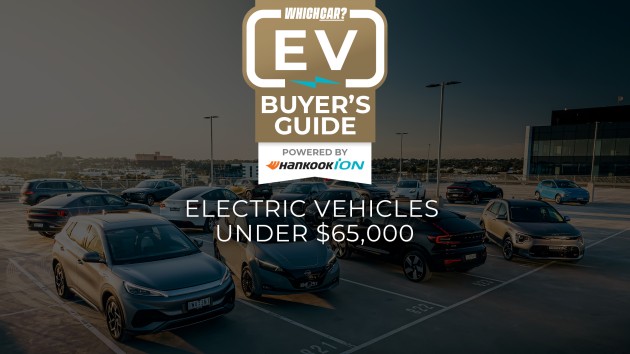
Welcome to part one of three price-based EV buying guides, this one focused on the most affordable electric cars available in Australia today
The Plus Pack helps that analogy with its 10-speaker Harman Kardon stereo (tuned by the sound brand, not Polestar), delivering cracking renditions of your favourite music with deep, powerful bass and clear mid-tones.
As icing on the cake, the Polestar 2’s stubby gear selector has a perfectly flattened top and is placed ideally as a wrist rest when interacting with the touchscreen as you drive. Even the indicator sound is pleasing.

With headline claims made by the dual-motor all-wheel drive Polestar 2, you might have forgotten that the front-wheel drive Single Motor versions exist, but with 170kW of power and 330Nm of torque available instantly and a 0-100km/h sprint of 7.4 seconds, the 1994kg Polestar 2 is no slouch. It feels about the same in pace terms as a Mazda 6 turbo, thanks to its instant pick-up.
Polestar’s one-pedal driving mode is excellently calibrated, too. There are three settings: Off, Low and Normal. If you’re au fait with regenerative braking, you’ll be like a duck to water in the most aggressive setting, but the option to lower its power is welcome too. You can also easily enable or disable a ‘creep’ function in the Polestar 2’s driving menu.
In the same menu, you can play with the steering feel. Firm gave the most confidence while remaining light enough around town. There’s no real weight build-up through a corner to give you an impression of how hard the car’s front axle is working, but the rack itself is direct, consistent and smooth all the way through.

The Polestar 2 has a reassuring balance that defaults to safe understeer as you push beyond the limits of its 245/45 R19 Michelin Primacy tyres. When equipped with the Performance pack, the Dual Motor version eliminates the body roll of the cooking models for a rally-car-like ride.
Even on the softer standard spring and damper package, the Polestar is firm, especially at urban speeds. On smooth roads, the rear end settles but the high-frequency stutter bumps that litter Sydney roads tend to jiggle the Polestar 2’s occupants vertically. Above 70km/h, the ride improves and on country roads, body control is excellent with minimal head toss.
The Polestar 2 is also quiet and refined; it’s amazing how much of a luxury not hearing a combustion engine whirring away actually is.

The Polestar 2’s driving experience and interior are cohesive and enticing, but its energy use isn’t quite as outstanding.
Its rated WLTP energy consumption is 13.6kWh/100km, for a driving range of 551km from its 75kWh lithium-ion battery. We returned an average of 15.5kWh/100km over a week of testing, for a 484km real-world driving range.
That’s a reasonable roving range. Polestar also has a dynamic range calculator to help plan trips as, unlike combustion-engined cars, EVs are typically less efficient when travelling at 110km/h on the highway.

Some of the inefficiencies can be attributed to using a converted combustion car platform, but there are other factors at work. In Single Motor guise, the Polestar 2 uses a 10.51:1 ratio in its single-speed transmission, comparable to Ioniq 5’s 10.64:1.
In the recent Wheels EV megatest, the most efficient car tested was the Hyundai Kona electric. Although now dated and running – like the Polestar – on a mixed-use platform, its higher 7.981:1 ratio likely has a part to play in keeping efficiency high, if sacrificing some initial kick.

The Polestar 2 has a peak DC fast-charge speed of 150kW, for a 10-80 per cent (52-441km of WLTP range) in 37 minutes.
In practice, it took the Polestar 2 22 minutes to charge from 28-67 per cent on a 350kW ultra-rapid charger, with a peak speed of 135kW noted. Previous testing has shown us that Polestar’s charge rate drops off significantly after 80 per cent.
Home charging will take eight hours from 0-100 per cent using an 11kW three-phase wallbox, 12 hours on a 7kW single-phase unit and 38 hours from a three-pin socket.

The Polestar 2 was rated five stars in ANCAP safety testing. Its rating applies to all grades and will expire in December 2027.
As standard, the Polestar 2 is equipped with eight airbags, forward auto emergency braking with pedestrian, cyclist and junction detection, lane departure warning and speed sign recognition.
To get all the safety features – reverse AEB, a more advanced adaptive cruise and lane-trace assist – you need to pay $3400 extra for the Pilot Lite pack. Polestar’s lane-keep assist was good to use but the adaptive cruise did once run up to 5km/h above the set speed, which isn’t ideal in a country obsessed with speeding laws.

The Polestar 2 is covered by a five-year, unlimited-kilometre warranty, while the 27-module battery is guaranteed to remain above 70 per cent capacity for eight years or 160,000km.
Each battery module can be replaced in the Polestar 2, and there are provisions to do this in Australia. This means less potential downtime should you need to replace a module at a dealer.
Servicing is due every two years or 30,000km – double that of a typical combustion car. Routine maintenance is also included in the price of purchase for the first five years or 100,000km. Five years of roadside assistance comes complimentary with all Polestar 2s.

The Polestar 2 is not a perfect electric vehicle for Australians. The cabin is a hot place to be with the fixed glass roof, and its real-world efficiency falls a little short of both the brand’s claims – and rivals such as Tesla.
But as a product that you can walk out to and appreciate, there is little that comes close to the Polestar 2. Its pumped shoulders, menacing stance on the road and architectural cabin make it very attractive indeed.
That it happens to ride pretty well, go around corners excellently and have a rapid turn of speed with up-to-date technology is the icing on the cake.
When judged on its EV credentials, the Polestar 2 isn’t a stand-out, but next to increasingly samey luxury rivals, it’s a refreshing and bold choice.
Thing is, with big improvements on the way later this year, you’re probably best holding off on buying a Single Motor until it goes rear-drive and bumps driving range to nearly 600km.
| Price | $68,400 + on-road costs |
|---|---|
| Body | 5-door, 5-seat medium liftback |
| Drive | single motor, front-wheel |
| Max power | 170kW |
| Max torque | 330Nm |
| 0-100km/h (claim) | 7.4 seconds |
| Battery size | 75kWh |
| Energy consumption | 15.5kWh/100km (tested) |
| Driving range | 484km (tested) |
| Charge time (DC 10-80%) | 37 minutes |
| Charge time (AC 0-100%) | 8 hours |
| Weight | 1994kg |
| L/W/H/W-B | 4606/1891/1477/2735mm |
| Cargo capacity | 405L + 41L frunk |
Manufacturers of news vehicles are forever including new and interesting safety features to their latest products. They do this to not only make the cars safer for users and pedestrians, but also to achieve/maintain the five-star safety rating that is considered essential for successful sales.
While the usefulness of some of these features is debatable, there’s no denying that most of them make motoring safer for all of us.
Systems like anti-lock braking (ABS), electronic stability control (ESC) seat belts, airbags, collapsible steering columns and the like are all lifesavers – while a reminder to check the back seat of the vehicle before exiting is more an indicator of whether you should be allowed on the road at all.
There’s one system that is not so common in new cars because it isn’t required for a five-star safety rating, but is probably more essential than any other. That is a tyre pressure monitoring system (TPMS).
While some of you are crying out that you check your tyres every week and everyone should do the same, you’d be in the minority. Most drivers on the road have no idea what pressures their tyres are at, or even what condition those tyres are in.
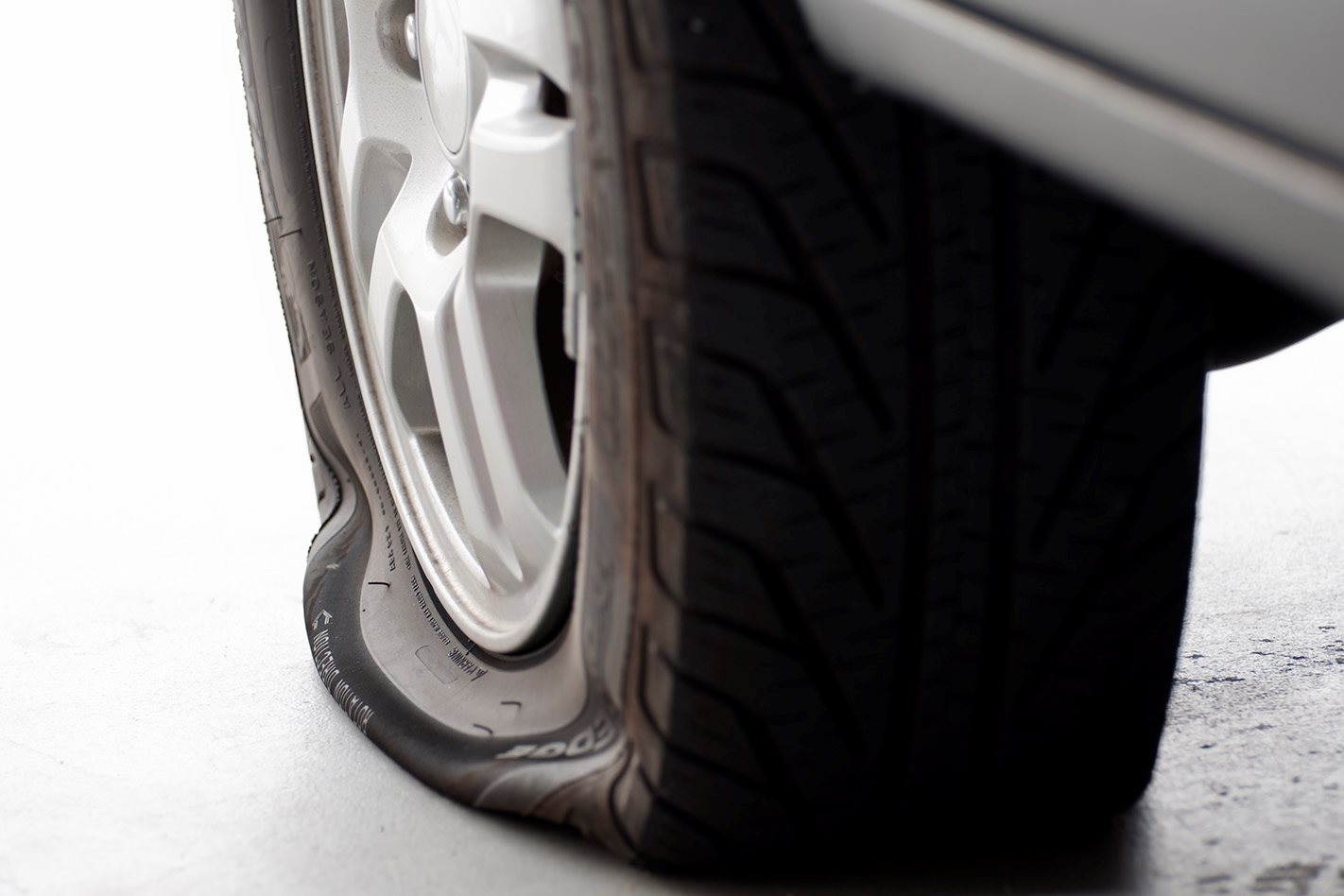
The tyres on your car are they only point of contact between the car and the road, and they’re subject to many different loads, in different directions, when the vehicle is turning, accelerating and braking.
Add to these variables, the variety of driving conditions including wet, dry, gravel, damaged, icy, hot and cold roads and you begin to realise the important task those four relatively small tyre contact patches have in safely controlling the dynamics of your car.
While many of the newer safety systems such as ABS, ESC, lane keeping, electronic traction control (ETC), and autonomous emergency braking (AEB) are all designed to better control the way a vehicle performs on the road and reduce the probability or risk of an accident, these systems still rely on a proper and appropriate connection of the four tyres on the road surface.

Every new-fangled safety system in your car still relies on a proper and appropriate connection of the four tyres on the road surface.
A vehicle manufacturer can employ the world’s most advanced chassis-control systems in their cars, but the effectiveness off those systems will be limited if the vehicle’s tyres are not in optimal condition.
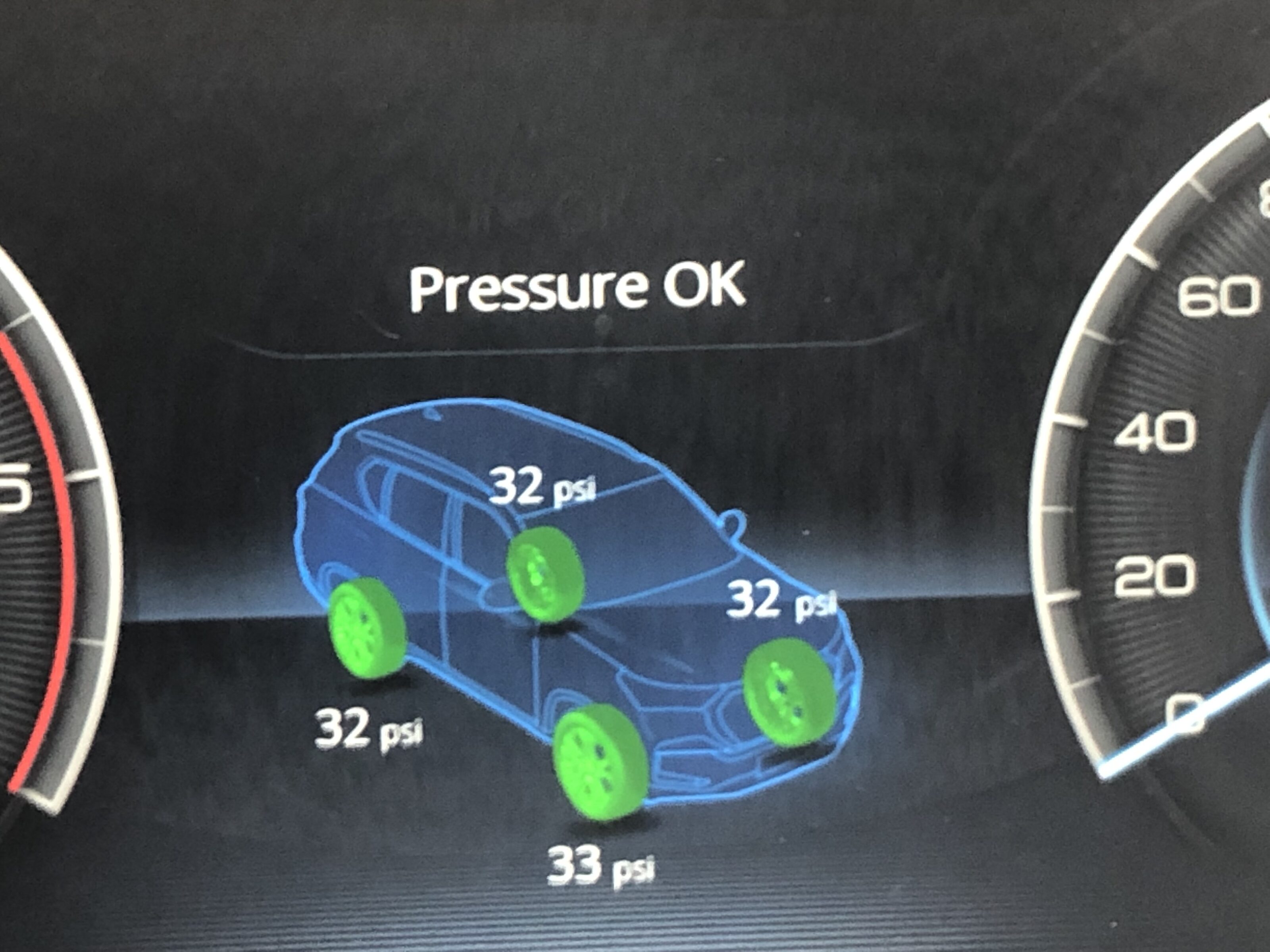
A good TPMS constantly monitors the temperature and pressure within the individual tyres on the car and will warn the driver if any exceed or drop below the set temperatures and/or pressure. The best systems have a display on the dash to give a constant or daily reminder of their status.
In the Ford Ranger I currently drive daily, the pressures are permanently visible up in the gauge cluster, so I always know where they are at. The SsangYong Musso that I used to drive would randomly flash the TPMS screen up on the dash to remind you of what pressure they were at, or the TPMS display could be called up at the press of a button.
The Musso sounded a warning when the rear tyres got hot and exceeded their pre-set pressure on a particularly hot country road, and issued another warning when one of the tyres developed a slow leak – which I was then able to monitor before getting it fixed at a tyre store.

At the very least they could alert you to a problem with the tyre before it gets worse and destroys the tyre. Tyres are a consumable item and good tyres aren’t cheap, so no one likes having to buy new ones.
This information is generally available on the tyre placard which you will usually find in the door jamb or the owner’s manual. Still not sure? Ask at your dealer the next time you take the car in for service or at any major tyre store.
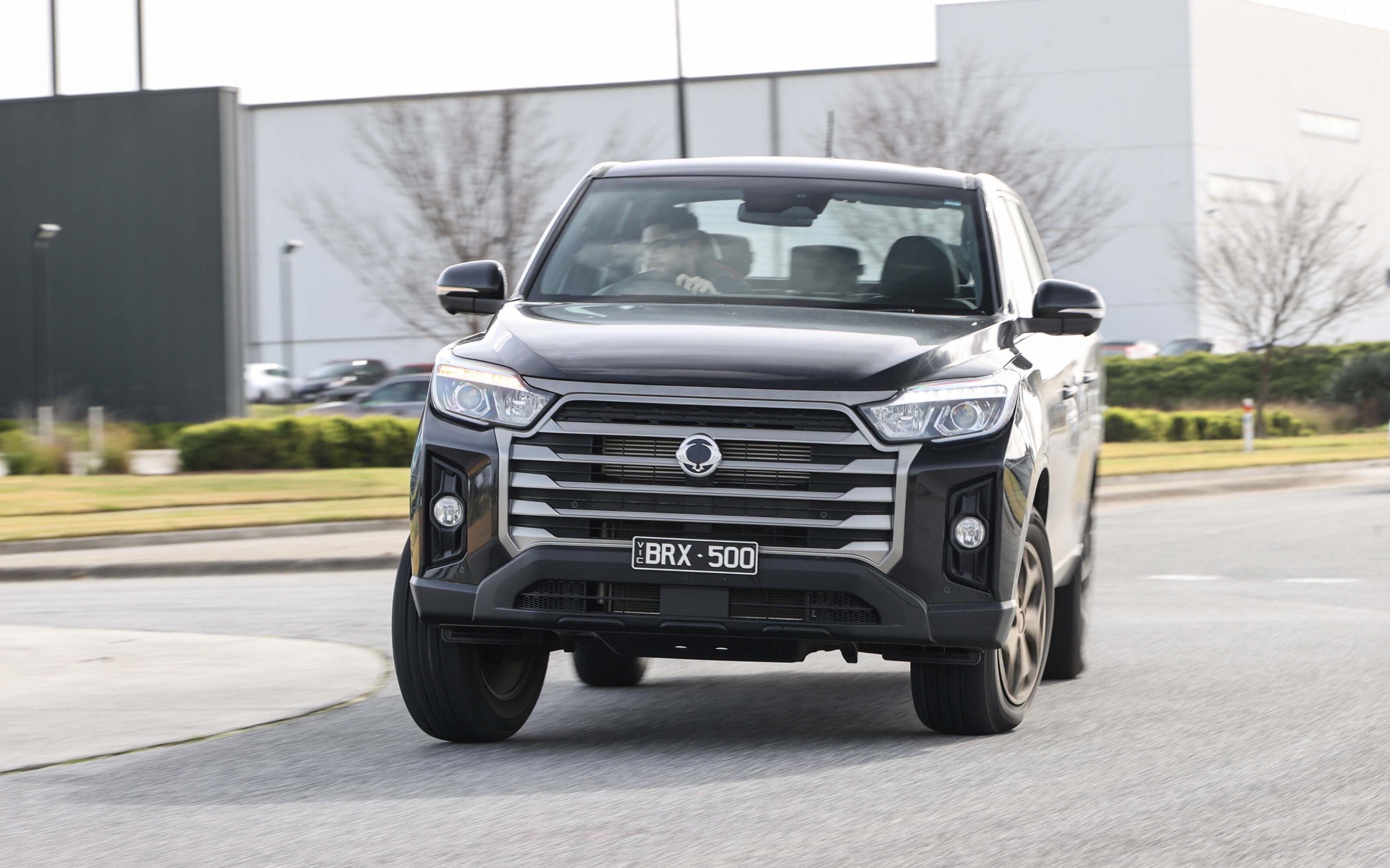
Tyre pressure monitoring systems come standard in some cars and are optional in others, and it’s not just in premium vehicles you’ll find them. As mentioned, the Musso ute has an excellent TPMS as standard equipment.
It is a feature that operates all the time and something that has more potential to save a life than a ‘check rear seat’ reminder.
We couldn’t resist. With fresh new images of the new-generation 2023 Hyundai Kona now available, we tasked our imaginative mate Theottle to craft a couple more Kona N Electric concepts in the digital realm.
Alas, Hyundai has effectively confirmed there will be no second-generation Kona N. We already know all future N models will be electric, so that rules out a full-bottle Kona N in petrol form.
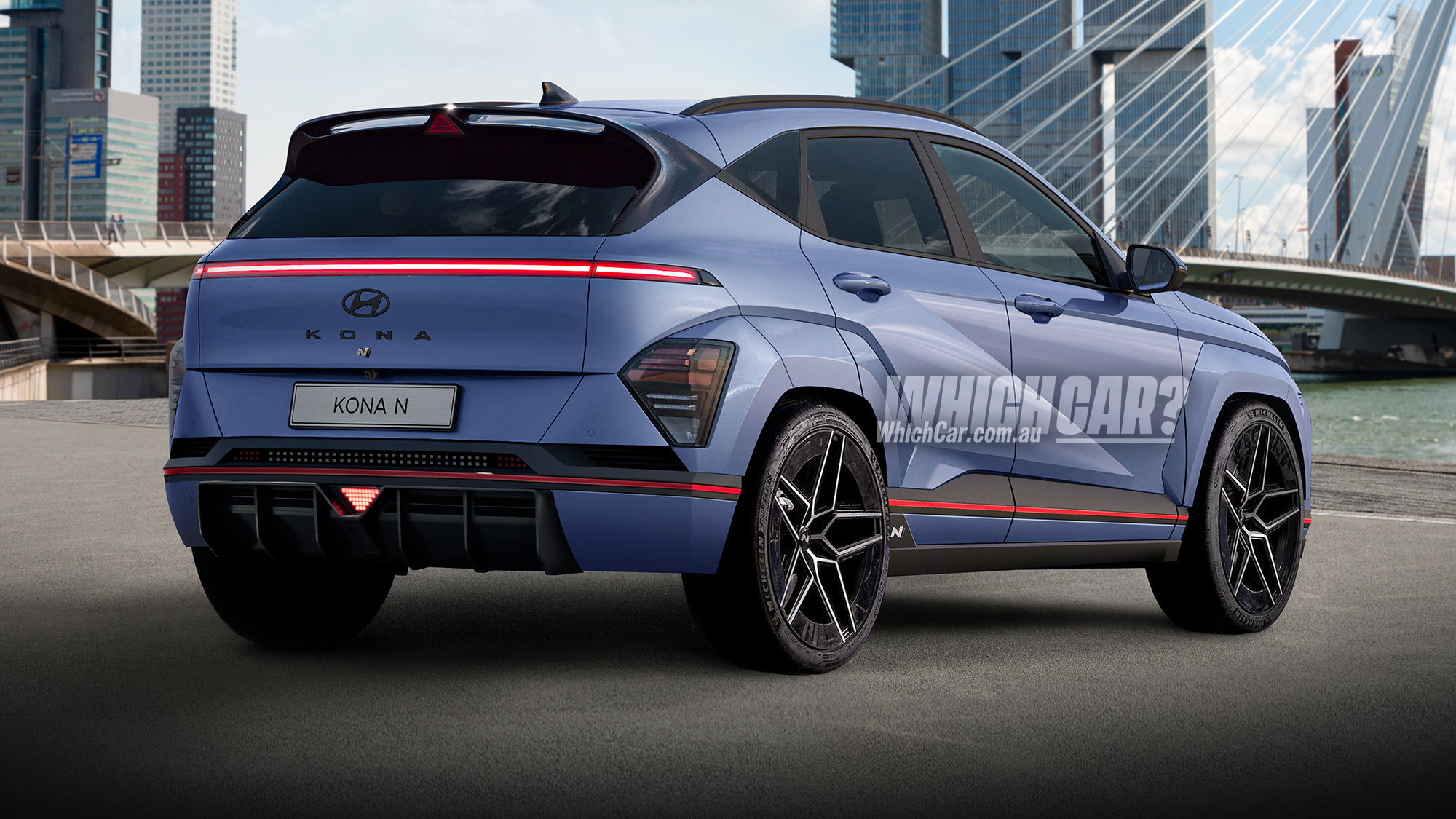
To make matters worse, depending on what you want from an N car, the brand’s performance boss Albert Biermann has also confirmed that the new Kona Electric’s affordability-focused 400V architecture makes it unsuitable for full N tuning.
Still, there’s room for a Kona Electric N-Line, which I detailed in my original story below. Keep reading and tell us what you think!
I’m off to Berlin later this month for our first in-person look at the new Kona, so keep an eye out for that report, and a walkaround video, soon.
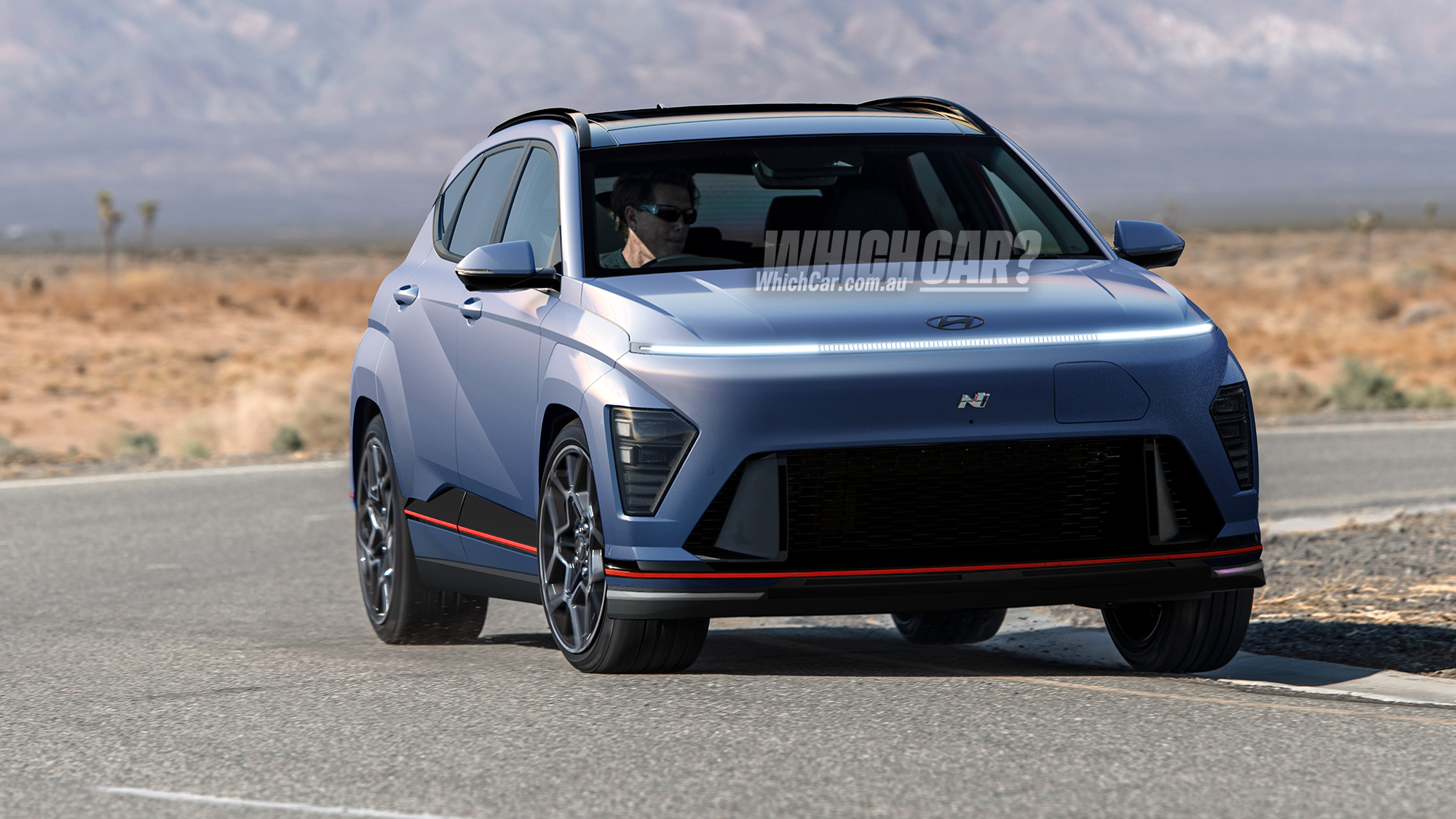
So far, Hyundai has shown the striking new Kona in its petrol, hybrid and Electric forms, with a sporting N Line variant revealed in a group shot.
Conspicuously absent was a hero Kona N, but since the current N model was a latecomer to the range, we shouldn’t expect to see it form part of the second generation’s launch line-up.
Speaking with media at the recent N Festival at The Bend, Hyundai’s global ‘Executive Technical Advisor’ Albert Biermann said that while there won’t be another petrol-powered i30 N hatch, the newer i30 Sedan N will yet ride into a new generation with a petrol engine.
We also know, however, that Hyundai’s all-electric Ioniq 5 will soon introduce a powerful N flagship. A new Ioniq 6 N, based on the RN22e prototype, is expected to follow.
And, with important markets like Europe and, increasingly, the United States pushing brands further towards electrifying their line-ups, it’s likely we’ll see more performance-oriented EVs in the Hyundai line-up.
Indeed, if the company wants to maintain its momentum as a leader in electrification and as a new king in the performance market, merging the two divisions is bound to be an ongoing conversation at Namyang.
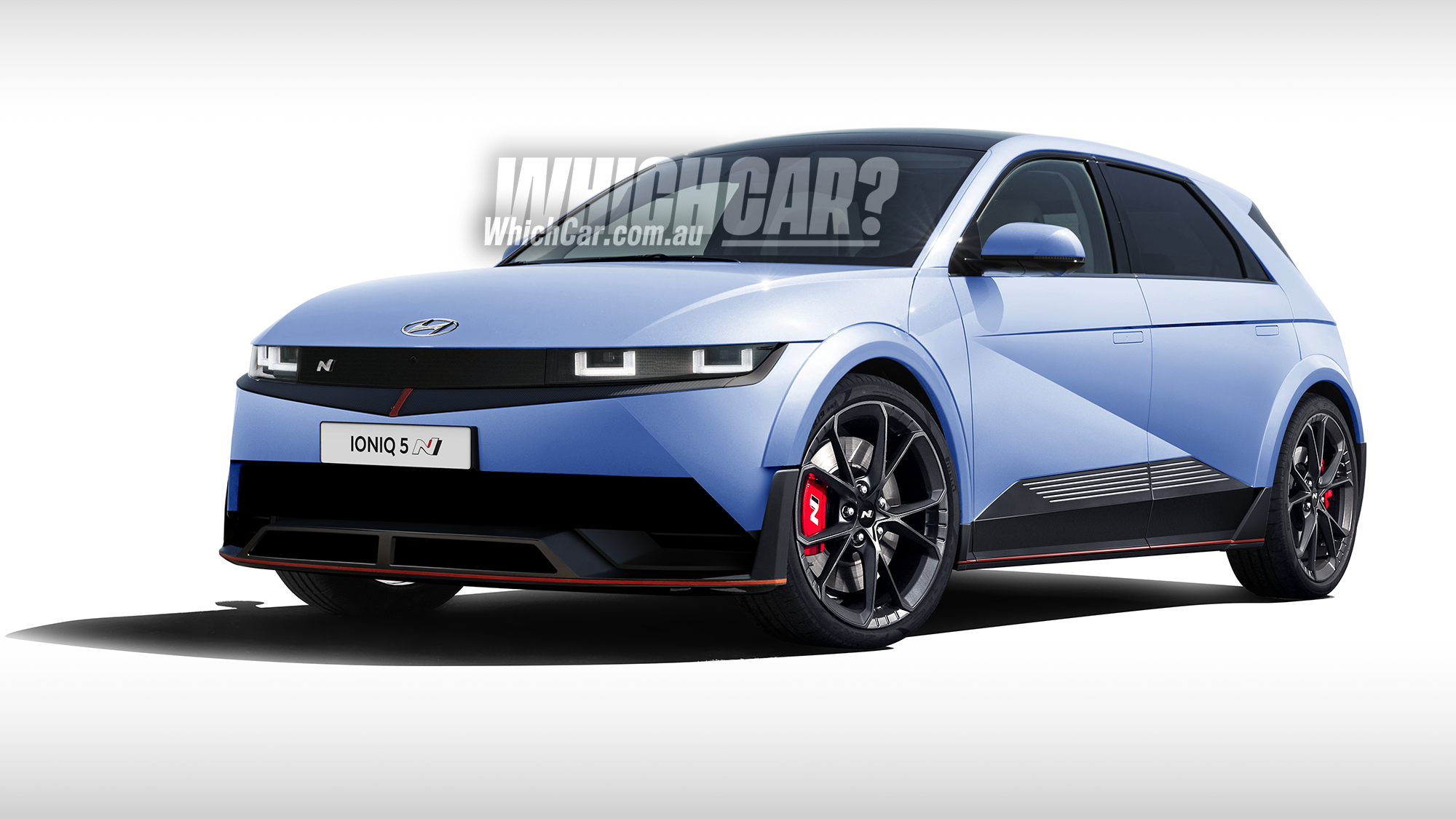
Comfortably more powerful than any existing N model, an electric Kona N would potentially prove popular as a more affordable alternative to the Ioniq 5 N.
Of course, we could also see Hyundai take a middle ground, introducing a Kona Hybrid N or even a Kona Plug-in Hybrid N, depending on what it needs and wants to achieve in balancing emissions obligations against an affordable but capable performance model.
I previously wrote that a new petrol Kona N won’t happen, so an electric version sounds like an easy enough solution, right? Not once you dig into the technical realities of performance-focused EVs.
As Biermann told Drive at The Bend, the Ioniq 5 benefits from a big battery and, more importantly, an 800V electrical architecture that allows faster charging and higher constant outputs without frying the battery and drive system.
The Kona Electric, as a cheaper model, will continue with a more common 400V system and a smaller battery pack, somewhat precluding its performance potential.
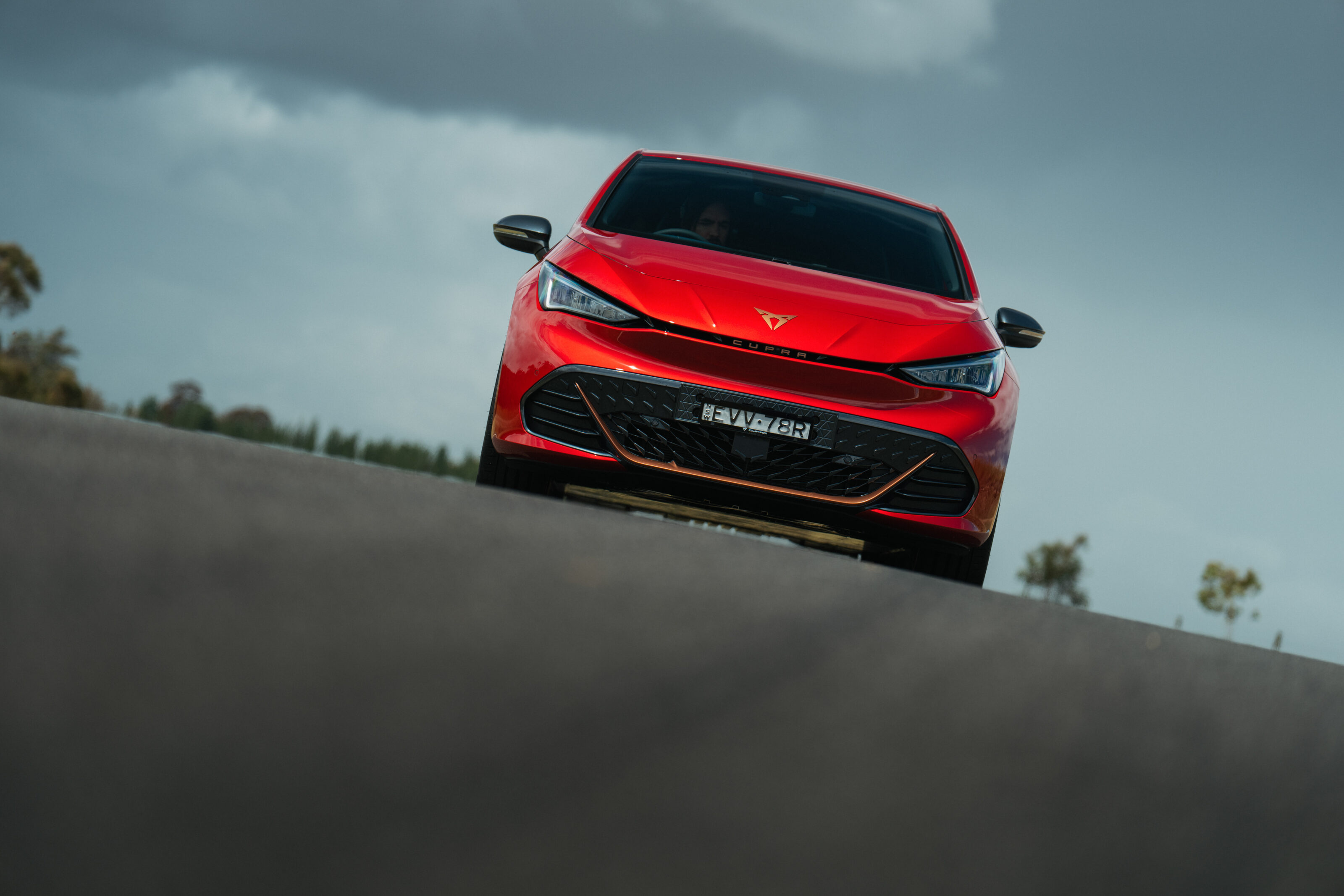
Even the new Cupra Born, a sporting EV from a new sports-focused brand in the VGA stable, drives as more of a ‘warm hatch’ than any sort of performance hero (nor is Cupra marketing it as one).
For now, all the fastest and most performance-oriented EVs are larger cars that can be sold at a higher price point to cover the technology costs, and even some of those are still using a 400V system, such as the Polestar 3.
The Ioniq 5 N is likely to cost upwards of $100,000 (as with the now revealed Kia EV6 GT), but it’s unlikely buyers would pay a great deal more for an electric Kona N when the current model is ‘only’ $50,000 – no matter how much faster a Kona Electric N might be.
Welcome to part one of three price-based EV buying guides, this one focused on the most affordable electric cars available in Australia today
None of this means the Kona Electric can’t be bloody fast – Biermann is simply saying its architecture isn’t up to what he expects from an electric N car. Which really must be some epic numbers when you consider what a 400V EV can achieve.
After all, even a sub-N Kona Electric N Line could conceivably boast dual-motor outputs big enough to compete with the 300kW/660Nm Polestar 2 Dual Motor and its 4.7-second 0-100km/h claim.
That’s on a 400V system too, you know, and its $69,900 price wouldn’t be an unreasonable target for a comparable Kona. It’d still sit comfortably below the Ioniq 5 N, which will likely have power and a price similar to the 430kW/740Nm EV6 GT – which claims a 0-100km/h time of 3.5 seconds.
The startup’s co-founder and director Anthony Broese van Groenou told Wheels that it will be priced from the low to mid-$50,000 mark, depending on the trim level and used EV condition.
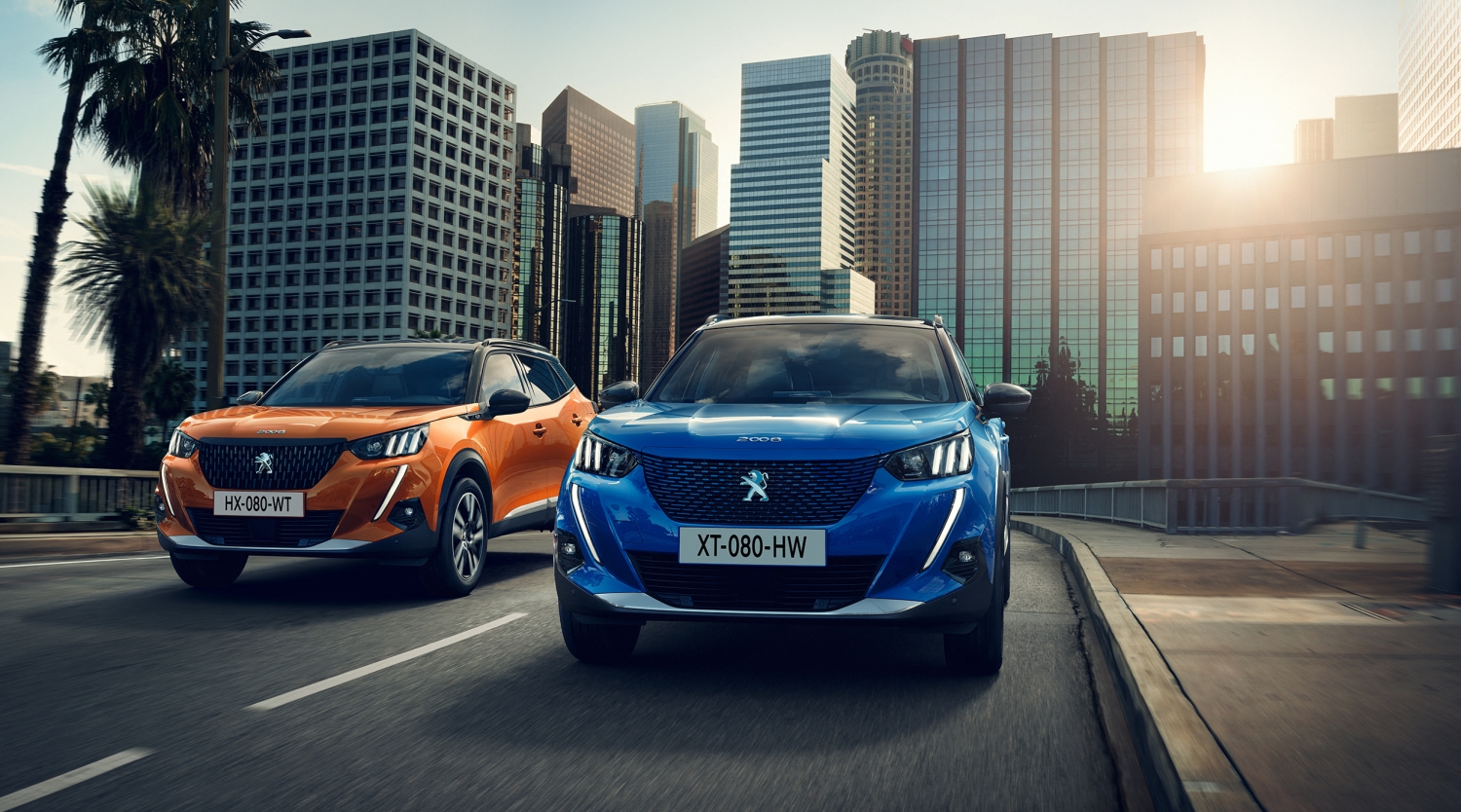
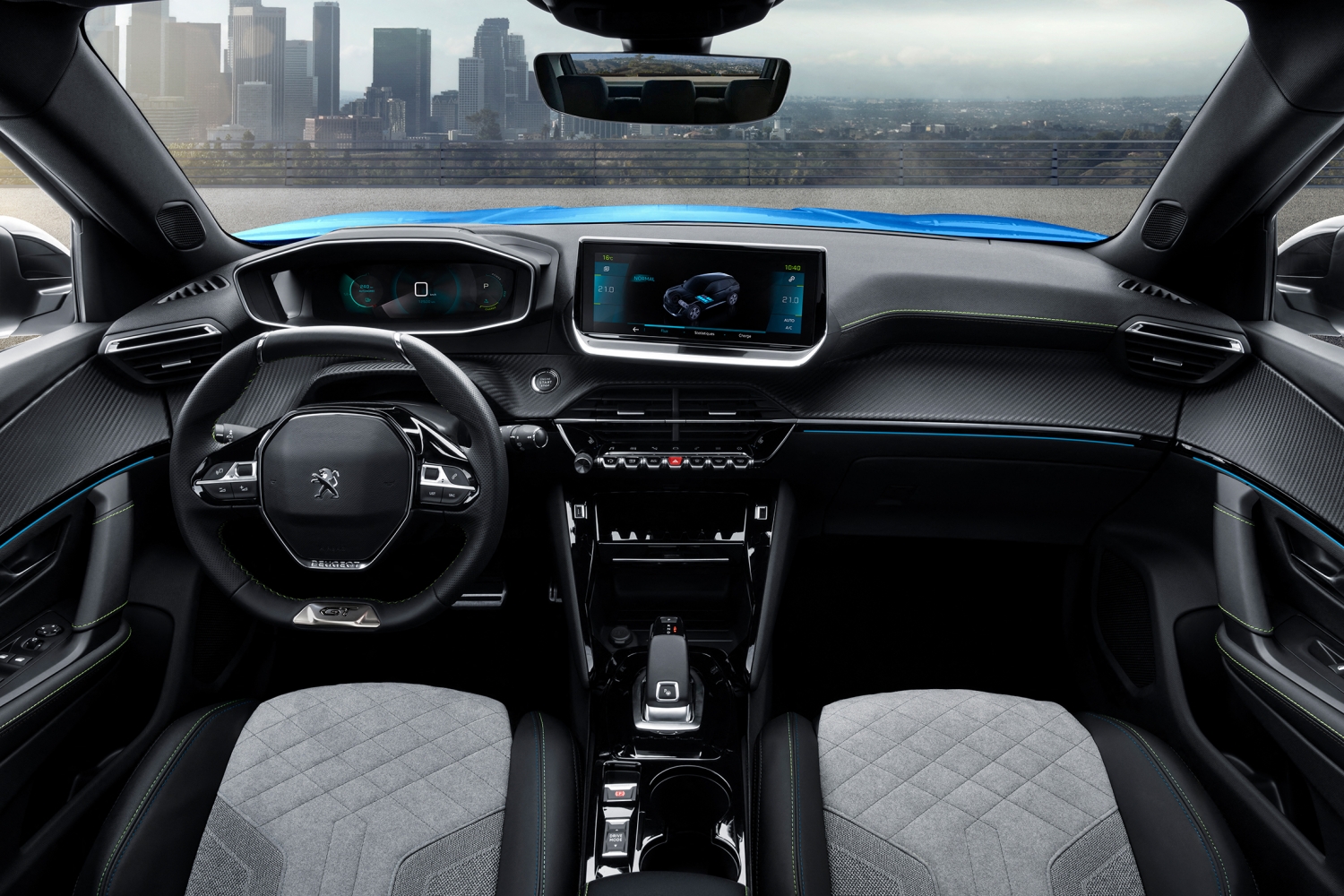
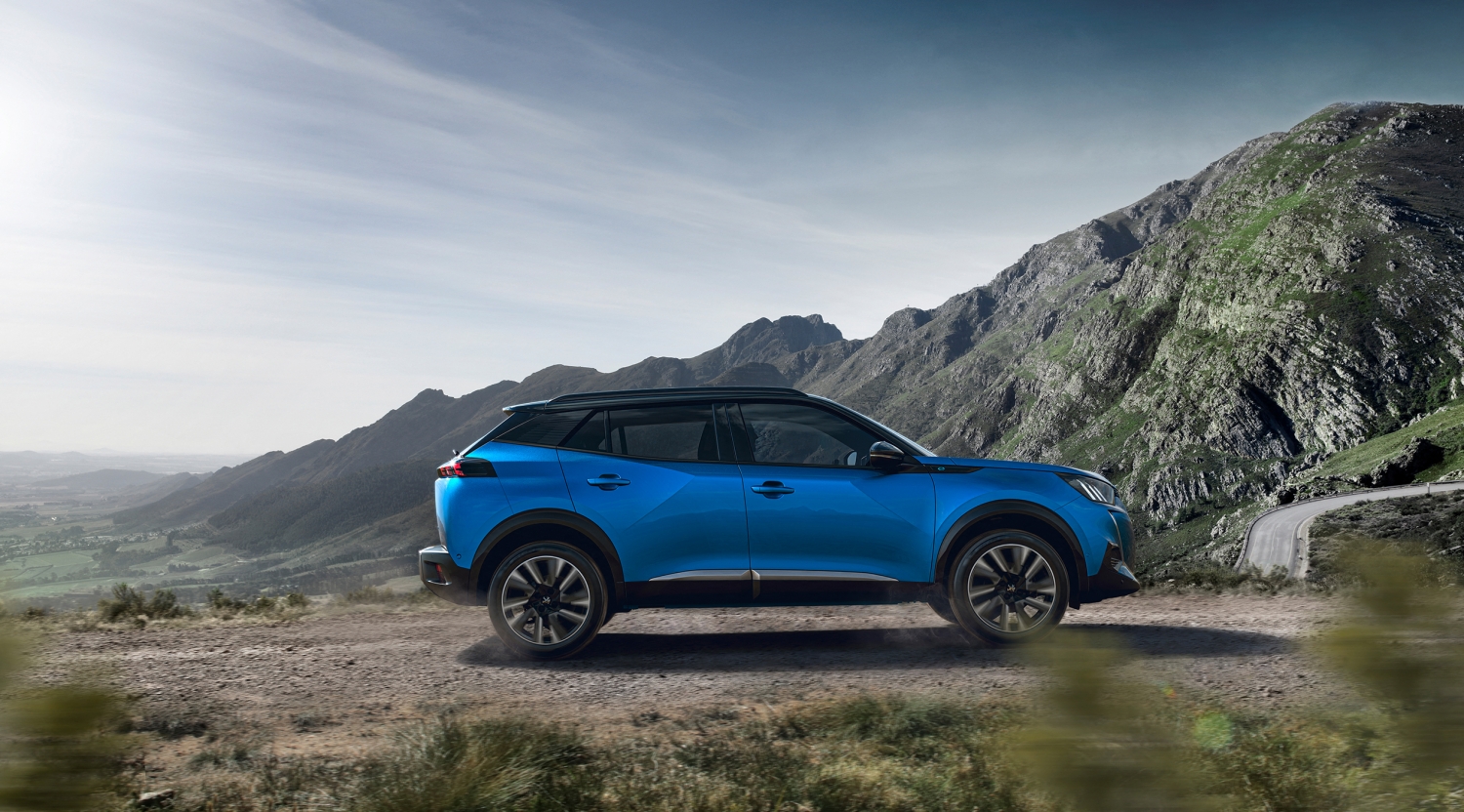
The Good Car Company will import e-2008s from both Japan and the United Kingdom featuring CHAdeMO or CCS2 DC fast charging port types respectively, although British examples will be more expensive.
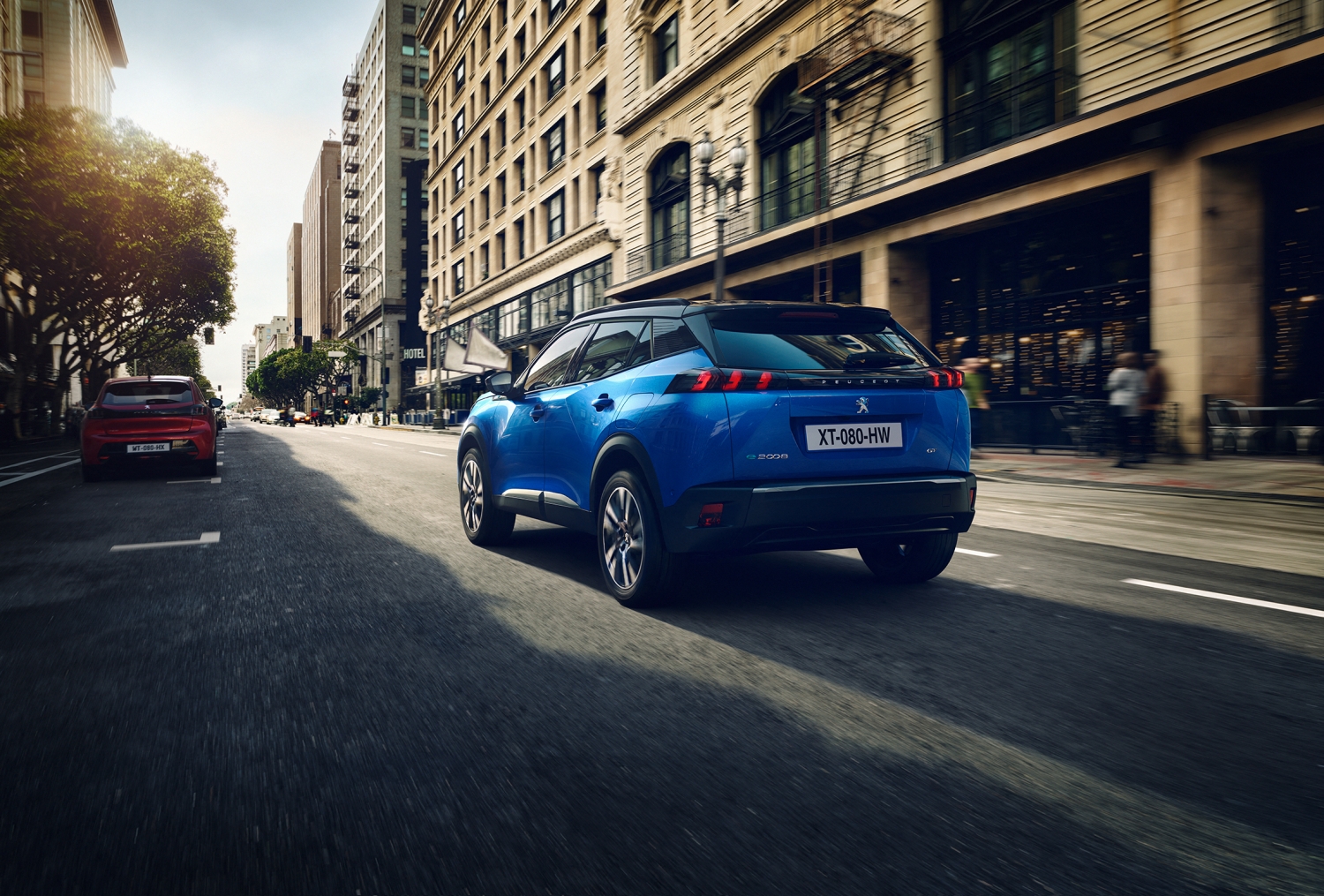
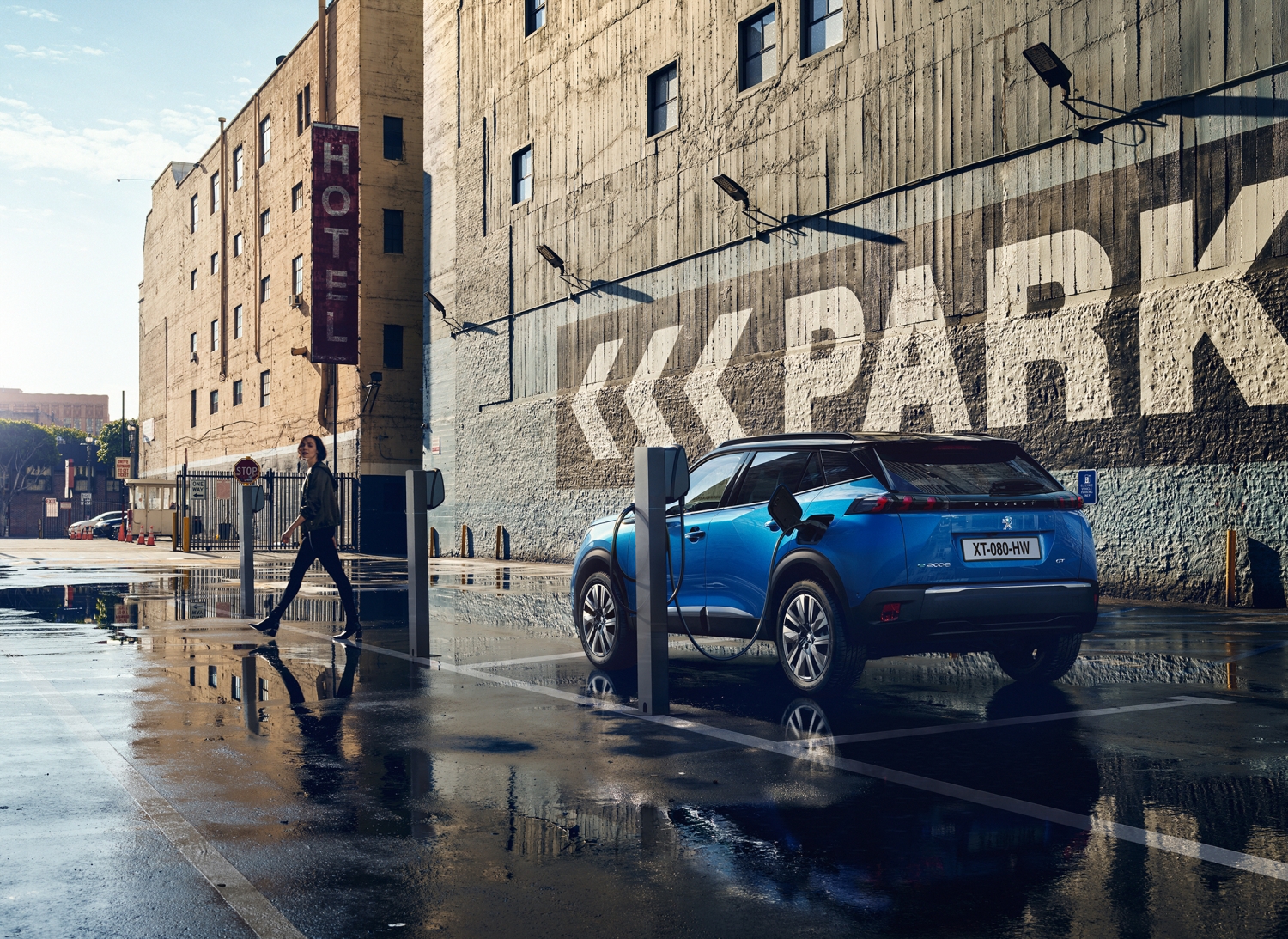
Despite the rarer CHAdeMO standard, it has chosen to import Japan-spec e-2008 EVs as it enables vehicle-to-grid (V2G) bidirectional charging, which is currently being trialled in South Australia.
All Peugeot e-2008 models provide up to 330 kilometres of claimed driving range from a 45kWh usable battery and are capable of recharging at up to 7.4kW AC and 100kW DC speeds.
Groenou confirmed his company will also import the nine-seater Peugeot e-Traveller people-mover, while other commercial electric vehicles and smaller city-sized EVs are on the cards.
The Tasmanian-based startup was founded in 2019 selling ‘grey import’ models such as the Nissan Leaf hatchback, eNV200, and Peugeot e-Expert vans to lower the price barrier to EV adoption.
Uniquely, it offers community bulk-buy programs that target key areas to collectively transition to EVs, including regional towns and key political seats to help raise awareness and encourage action from policy-makers.
It received a $10 million funding boost from philanthropic company Boundless, which is backed by Australian billionaire and Atlassian co-founder Mike Cannon-Brookes, along with $1 million from Canva co-founder Cameron Adams and ex-Canva head Lisa Kate Miller.
Peugeot Australia’s distributor Inchcape has promised to debut its electric vehicles this year, including commercial EV vans, but it’s still unclear which models will arrive from the French brand.
| Peugeot e-2008 specifications | |
|---|---|
| Usable battery capacity | 45kWh |
| Claimed driving range (WLTP) | 330km |
| Max AC charging | 7.4kW |
| Max DC charging | 100kW |
| Bidirectional charging | V2G (Japan spec only) |
| Charging connector type (AC / DC) | Type 2 / CHAdeMO (Japan) or CCS2 (UK) |
| Drive type | Front-wheel drive |
| Power | 100kW |
| Torque | 260Nm |
| 0-100km/h acceleration | 8.5 seconds |
| Length x width x height | 4300 x 1987 x 1530mm |
| Wheelbase | 2605mm |
| Ground clearance | 189mm |
| Boot volume (min / max) | 434 / 1467-litres |
All vehicles sold from the Good Car Company are backed by a six-month/7000km vehicle warranty, with 12-months of NRMA roadside assistance.
The company expects the Peugeot e-2008 will likely be covered by the same three-year/36,000km battery warranty as per the e-Expert, and newer Nissan Leaf and eNV200 examples currently available.
When procuring second-hand EVs, it prioritises a healthier battery state-of-health (checked via an on-board diagnostic tool), mechanical and cosmetic condition, and then the kilometres driven.
Although car brands and dealers don’t support imported vehicles locally, Groenou said it’s partnering with third-party technicians to establish a nationwide EV servicing network – thanks to new ‘right to repair’ laws requiring car manufacturers to share service and repair information with independent repairers from July 2022.
“We feel really confident that we can provide a really high level of support for everybody, regardless of whether it’s a vehicle that’s come from us,” Groenou told Wheels.
“So, getting those consumer protections in place is just critical for making us transition [to EVs] en masse… that trust is really critical.
“We have a dedicated fund to deal with warranties and recalls to support the vehicles and making sure if anything happens, people are protected from any warranty or recall issues.
“The cool thing is these national servicing networks also have international servicing partners as well. So, even though we have the ‘right to repair’ and OEMs [original equipment manufacturers] are meant to release all their documentation and servicing diagnostic data – sometimes they don’t – there’s a lot of knowledge sharing between other territories to get all the data and specs from the country of origin.”
Expressions of interest for the Peugeot e-2008 are now open. Lead times are estimated to take three months from ordering, with first deliveries to start from mid-2023.
All used imported Good Car Company EVs are sold via its website and the targeted community bulk-buy program, which the e-2008 will eventually be part of.
It also offers a seven-day return policy, provided you meet reasonable use conditions.
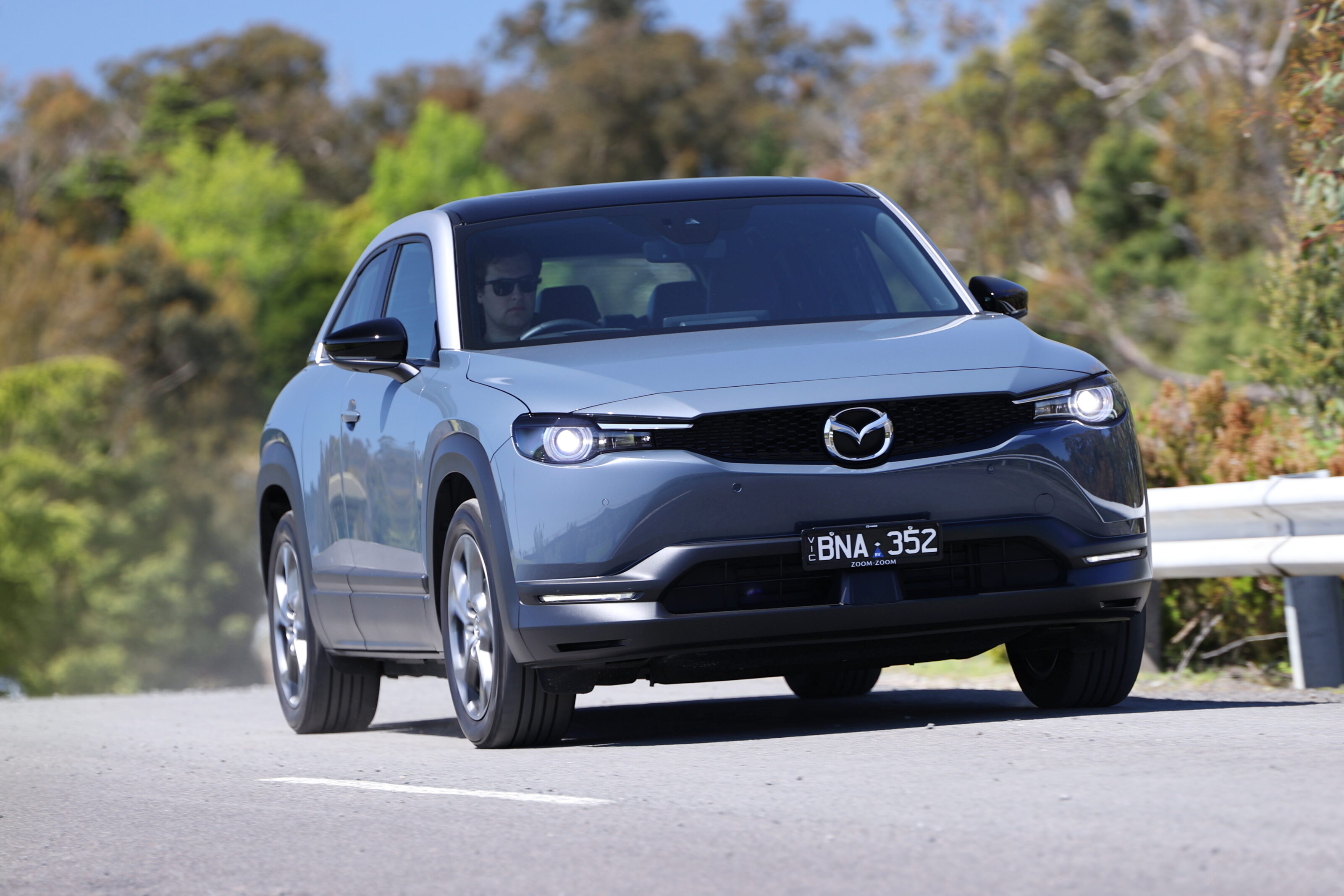
The Electric Vehicle Council’s (EVC) CEO Behyad Jafari has labelled Mazda Europe CEO Martijn ten Brink’s criticisms as ‘confusing’ and ‘coy’.
Last week, Brink suggested European regulators are discouraging carmakers from investing in alternative zero-emissions powertrains other than battery-electric vehicles.
“I’m quite confused by the complaint, because the EU [European Union] has done what the automotive sector always asked for, which is to set the targets and let the companies come up with the technology to help meet it,” Jafari told Wheels.
“It hasn’t mandated any technology to achieve 100 per cent emissions reduction by 2035.
“In fact, there’s even a provision where it’ll investigate permitting internal combustion engine vehicles, as long as those vehicles are using 100 per cent synthetic fuels or renewable fuels by 2035 as well.”
The European Union will ban the sale of new internal combustion engine (ICE) petrol and diesel cars from 2035 in favour of any zero-emission electric vehicle (ZEV), including battery-electric and hydrogen powertrains.
Locally, the Australian Capital Territory will adopt a similar mandate come 2035.
Jafari alleges Brink’s comments foreshadow another message to policymakers instead.
“[I suspect] what he’s really being coy about asking for here is: delay your targets, be slower, give us more time. He wants Europe to have weaker emissions reductions targets and, in a nervousness to outright say that, he’s criticising battery-electric vehicles.
“Unfortunately, this is something that policymakers around the world are very used to and have gotten tired of hearing, which is future technology development being used as a delaying mechanism [for emissions reduction targets]
“I suspect he’s pointing to the Japanese market because OEMs [original equipment manufacturers] there have lobbied to have weaker standards and not have the market be 100 per cent zero-emissions by 2035.”
However, Jafari welcomed the introduction of alternative zero tailpipe-emission powertrains, which are being developed by major car brands such as Toyota, Honda, Hyundai, Renault and BMW.
“Now, the trend very clearly shows that it looks like the automotive market will be run on battery-electric vehicles or at least overwhelmingly so. And so they [carmakers] also need to be investing further as well and provide those products.
“If there’s another technology that can help them achieve those big targets that are being set, excellent. Invest in all of them. I think that’s a great outcome for there to be a lot of different solutions available.
“What isn’t a reasonable outcome is to ask policymakers around the world to stop what they’re doing, slow down and to provide less benefits to their citizens because it’s not in your best interests.”
Strict Euro 7 emissions regulations are set to be introduced even sooner from mid-2025 for passenger cars, which pushes for the end of pure petrol- and diesel-only cars.
“I personally find it extremely difficult to get my head around,” Brink told Top Gear in response to the impending 2035 ban of new petrol and diesel car sales in the EU and UK.
“Not because I don’t like electric vehicles, but what I find a shame is that we have made a choice for technology, and usually the most innovation comes when you set a goal but you don’t tell engineers and developers how to get there.
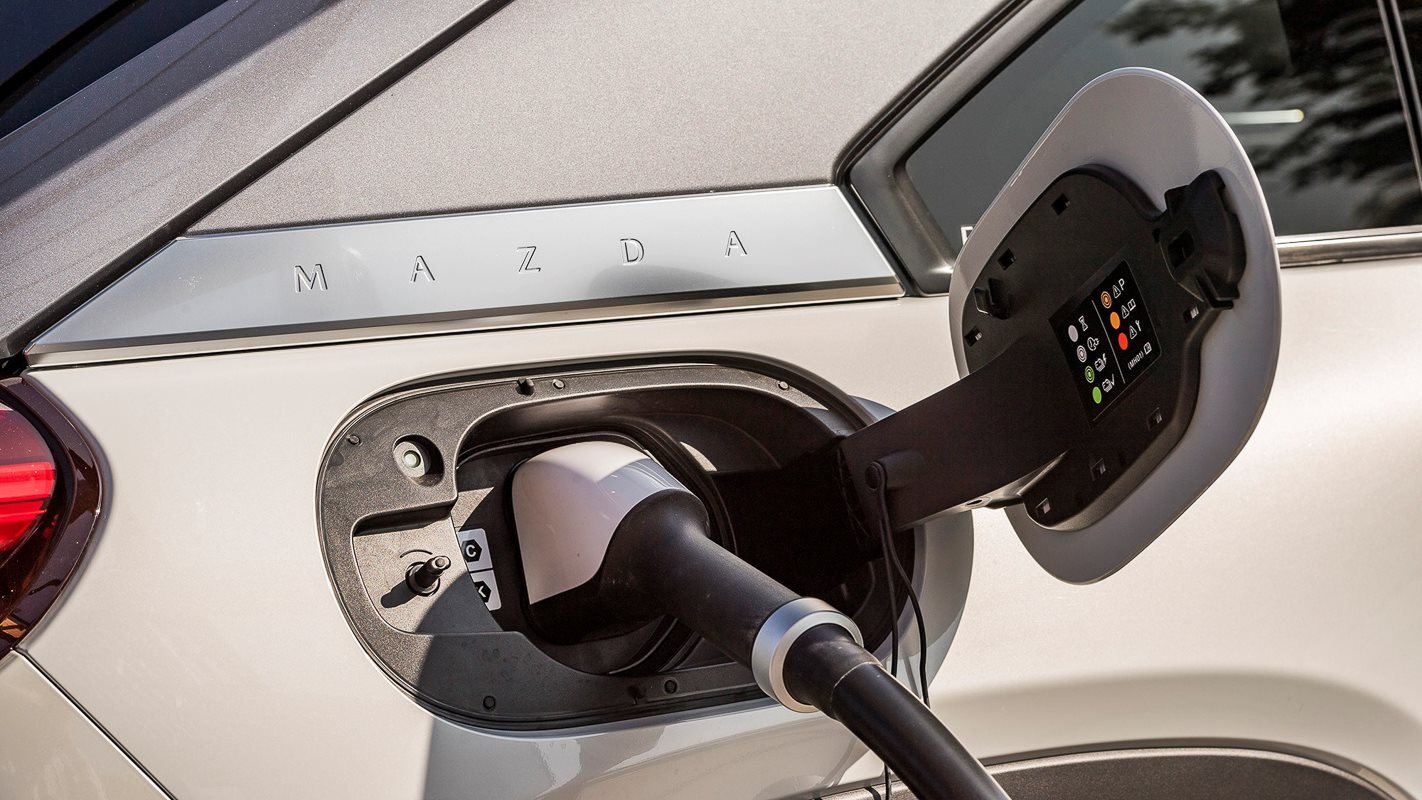
“I have a problem with the fact that they’ve [the politicians] decided how to get there. And that is only electric. You’re really going to just discard everything else? Even the stuff that you don’t know exists yet?,” he said.
“I think that is a disgrace of the politicians. That is not their job. Their job is to demand a zero-emission future, but how you get there should rely on entrepreneurship and creativity.”
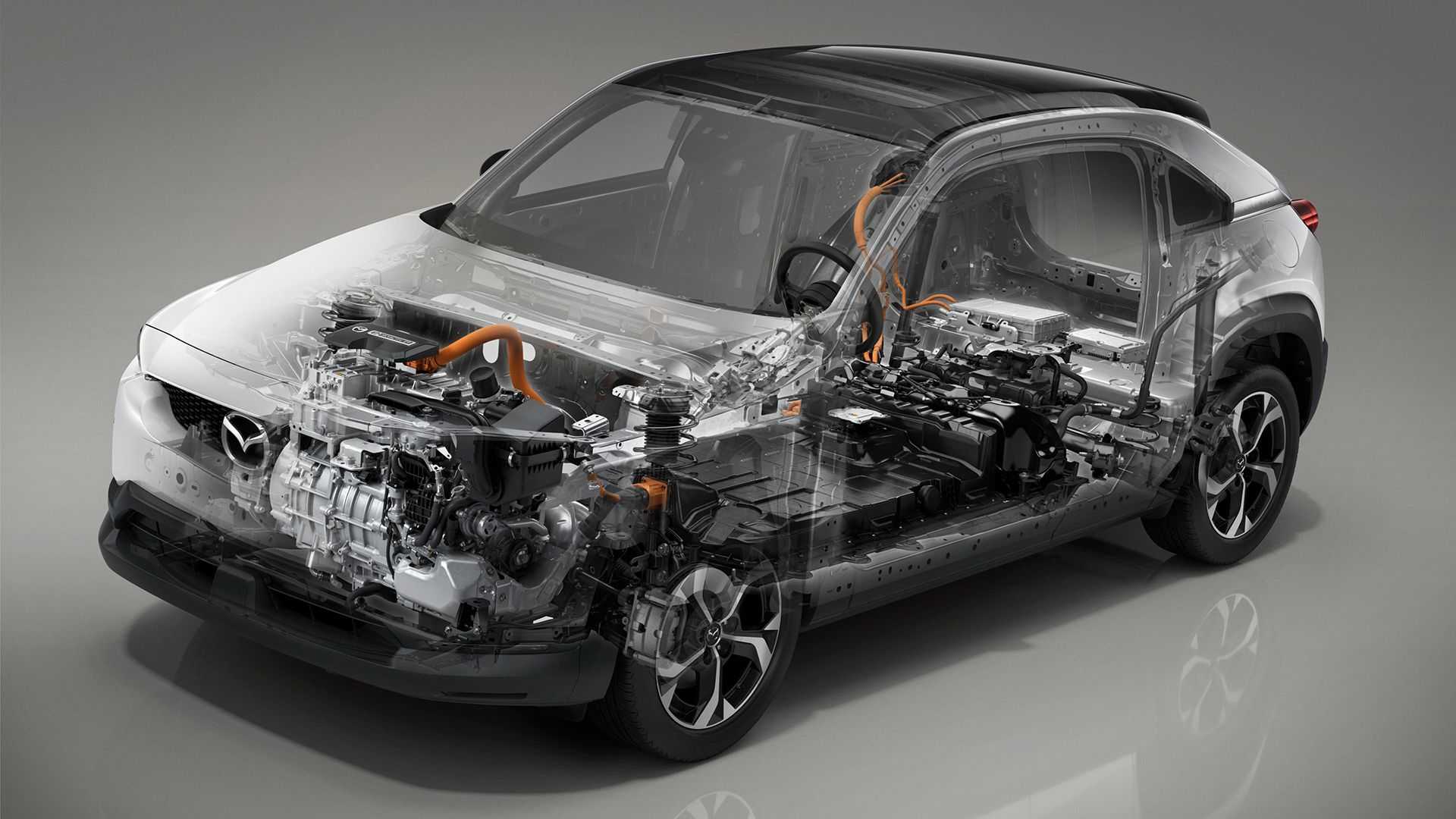
The Mazda European boss – who has been working at the division for more than 21 years and is now facing looming strict Euro 7 emissions regulations – suggested mandates inhibit exploring hydrogen fuel-cell and synthetic eFuels as alternatives to BEVs.
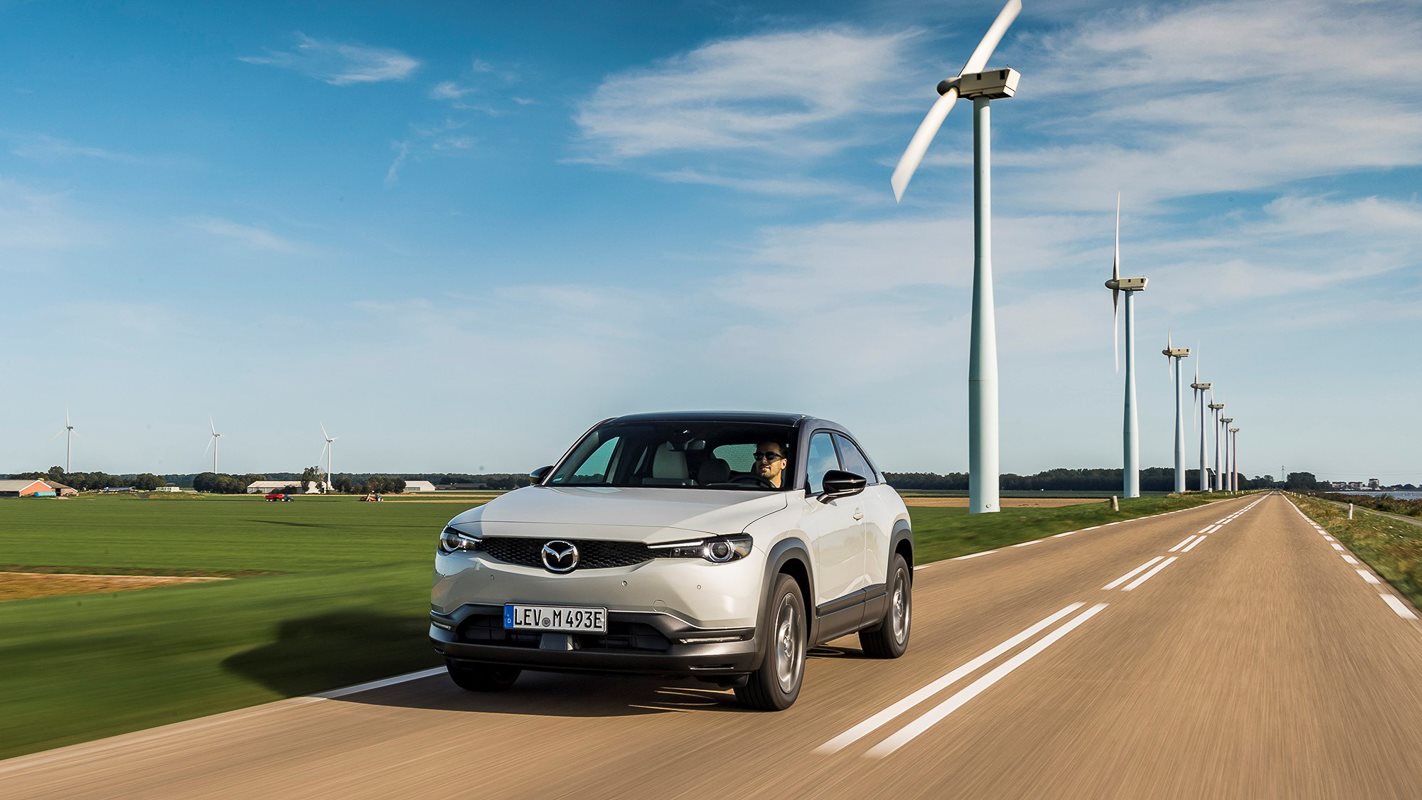
“The Japanese have also set carbon-neutral targets, but they include certain biofuels and green hydrogen, and they are willing to look at things which are new but might not be quite there yet.
“Here everybody stops investing in those areas because the legislation doesn’t allow it, and I think that’s a big mistake. I think selling only zero-emission vehicles by 2035 is fine, but that they have to be electric with batteries I think is a bit of a shame. Personal opinion.”
Brink’s sentiments echo Toyota’s former president (now chairman) Akio Toyoda, who stresses a multi-solution to eco-friendly powertrains that suits each market.
Mazda updated its EV strategy last year, aiming to achieve 25 to 40 per cent of global EV sales by 2030 as it ramps up launching pure-electric models from 2028.
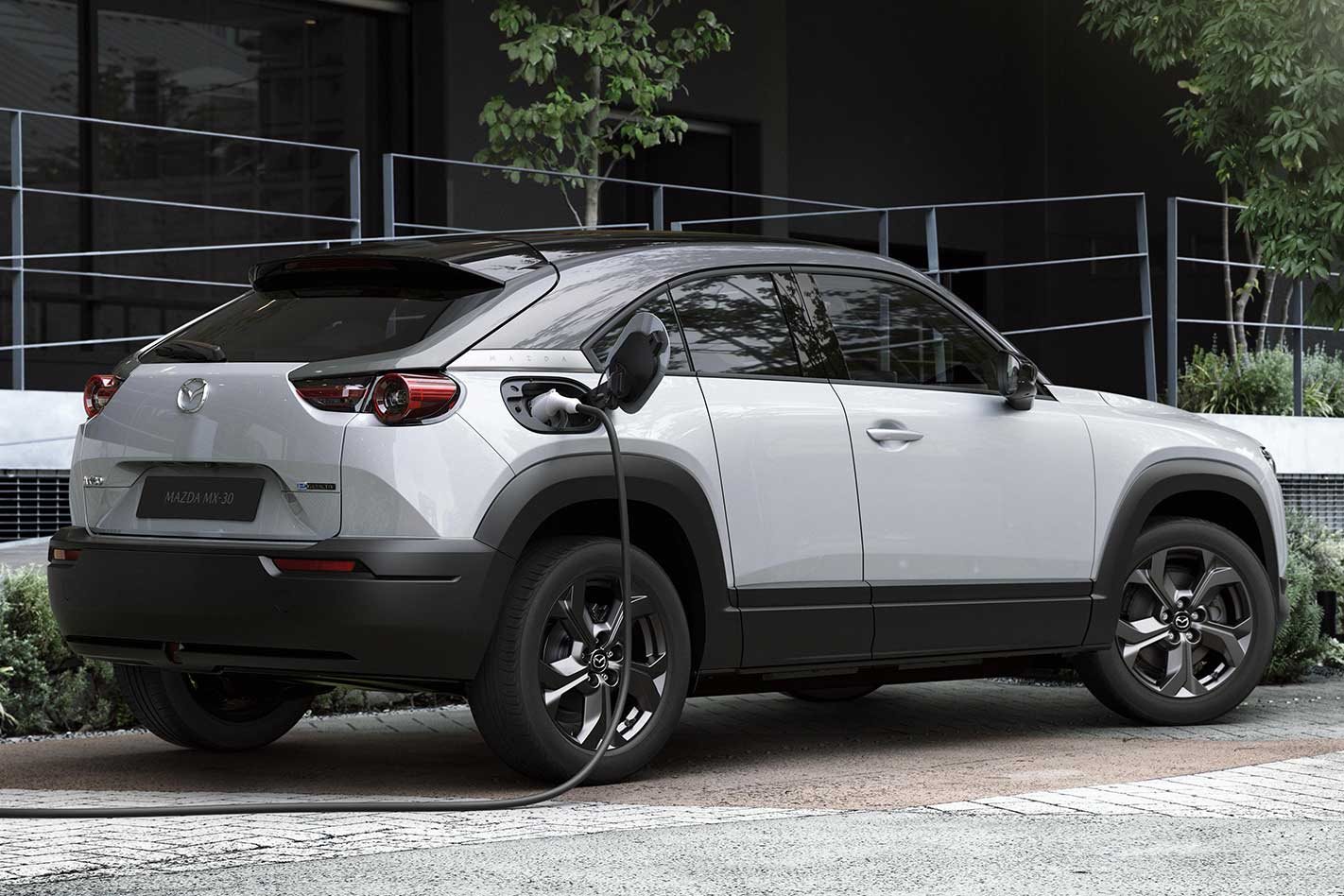
The Japanese carmaker currently only sells the MX-30 Electric city crossover and is launching the all-new CX-60 SUV with a plug-in hybrid powertrain option later this year.
But, for now, it’s still sticking with traditional petrol and diesel engines with the CX-60 and larger CX-90 debuting turbocharged inline six-cylinder powertrains.
Just in case what exactly? Do you really want a car that big? Hire a Carnival when you need one, I would invariably say, and pocket the savings.
That was until smaller-format seven-seaters appeared.
There are only three of them, really, since the demise of the incredibly versatile Kia Rondo – the Mazda CX-8 (okay not that small), Mercedes GLB (admit it, you had no idea that car existed) and the Volkswagen Tiguan Allspace.
You can have a Tiguan in a variety of guises but, for some reason, the 132 TSI is the least popular. There must be a reason for it. Let’s find out.
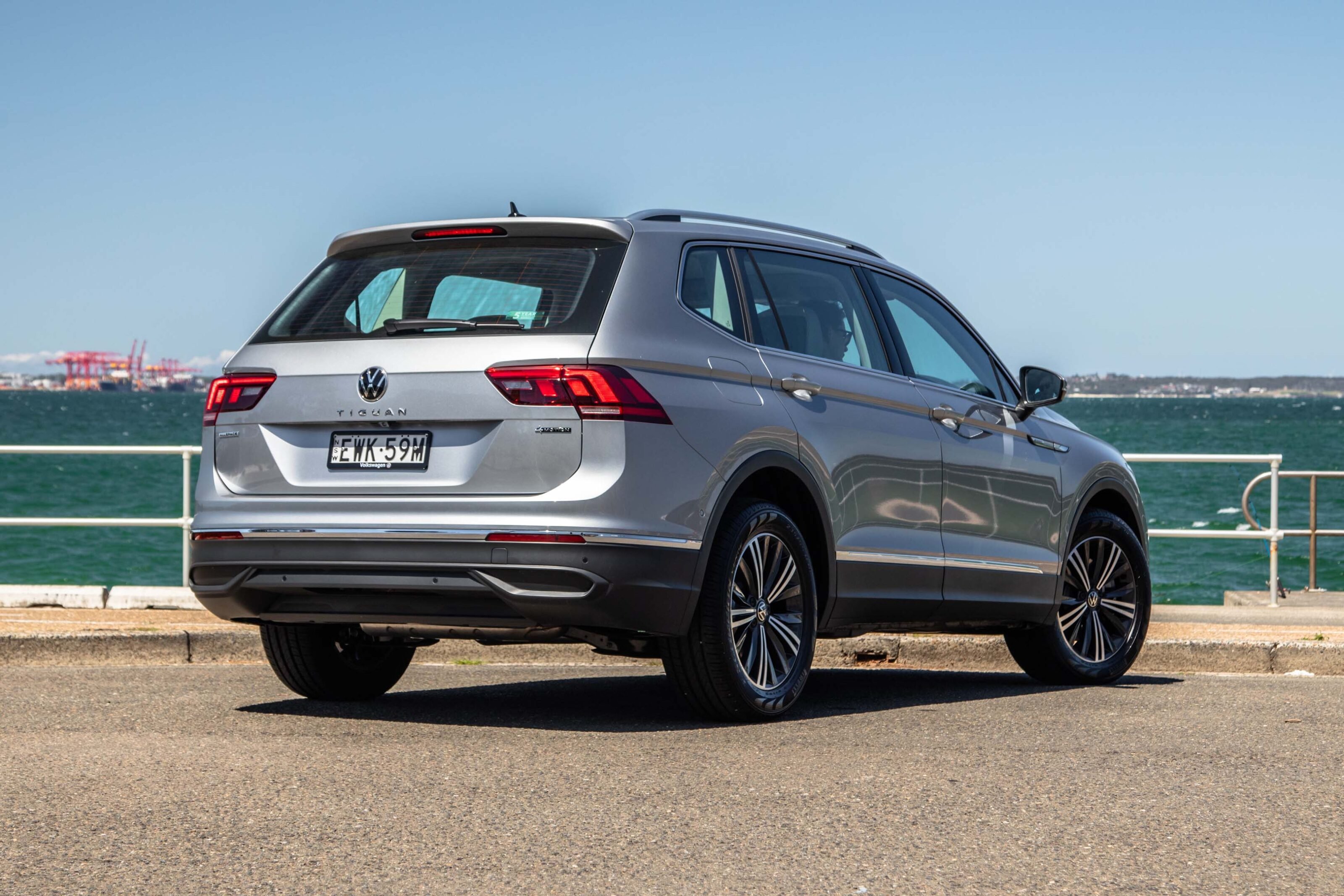
The 132 TSI did launch in June at $48,590 but with the loss of a couple of key specification bits due to the ongoing (but easing) supply chain crisis, the price has dropped to $47,290. Both before on-road costs.
It would be cause for applause if one of the things that went wasn’t reverse cross-traffic alert as this is a piece of tech that would be mighty helpful on this car. But there’s a weird wrinkle there, which I’ll cover in the safety section. Suspense!
| 2023 Volkswagen Tiguan Allspace – equipment highlights | |
|---|---|
| 18-inch wheels | digital dashboard |
| 8-speaker stereo | front and rear parking sensors |
| 8.0-inch touchscreen | reversing camera |
| adaptive cruise control | satellite navigation |
| auto LED headlights | space-saver spare |
| auto wipers | three-zone climate control |
| cloth interior | Wireless Apple CarPlay and Android Auto |
| DAB+ digital radio | wireless phone charging pad |

| 2023 Volkswagen Tiguan Allspace – luxury package | |
|---|---|
| Comfort sport front seats with heating and adjustable lumbar support | Panoramic glass sunroof |
| Electric adjustment for driver’s seat with memory function | Vienna leather seats |
| Heated and adjustable exterior mirrors with memory | |
Most of your money seems to go to the admittedly gigantic sunroof, but the rest of it isn’t particularly must-have stuff. I think the leather, while nice enough, renders the front seats less comfortable (but not uncomfortable) than the standard cloth seats.
As with the 110 TSI, the powered tailgate is a $600 option whereas the first batch of updated Tiguan Allspaces to land here had it as standard. But, again, this car is cheaper than that first batch as it lost the tailgate and reverse cross-traffic alert, something we covered in the launch story.
What we didn’t cover in the launch story was this particular car, as it wasn’t available to us to drive and is one of the slowest-selling Allspaces in the range.

Let’s start with the bigger but not particularly roomier Mazda CX-8 Touring SP that arrives at $48,390 before on-road costs with a 2.5-litre petrol and front-wheel drive. Its third row is basically as accessible and usable as the Tiguan’s, which means they’re not really for everyday use.
The Mazda has a quite nice spec but compared to the VW is let down by fairly ordinary front seats.

Mitsubishi’s Outlander is really a 5+2 with its close-to-useless third row. The $39,740 LS is a long way behind on spec, so you’d be looking at either an Aspire AWD at $45,740 or an Exceed $50,990, which has a lovely interior and a lot of equipment. All before on-road costs.
For the Allspace 132 TSI to reach the Exceed’s spec level, you’d need to go with the Luxury Package, but neither the Exceed nor 132 TSI with the add-on is particularly good value unless you absolutely want a sunroof.
The Mazda drives pretty well and while the new Outlander comprehensively banishes the memory of the old car, there’s still a bit of work to do on the handling and the combination of naturally aspirated engine and continuously variable transmission (CVT) can get a bit breathless.

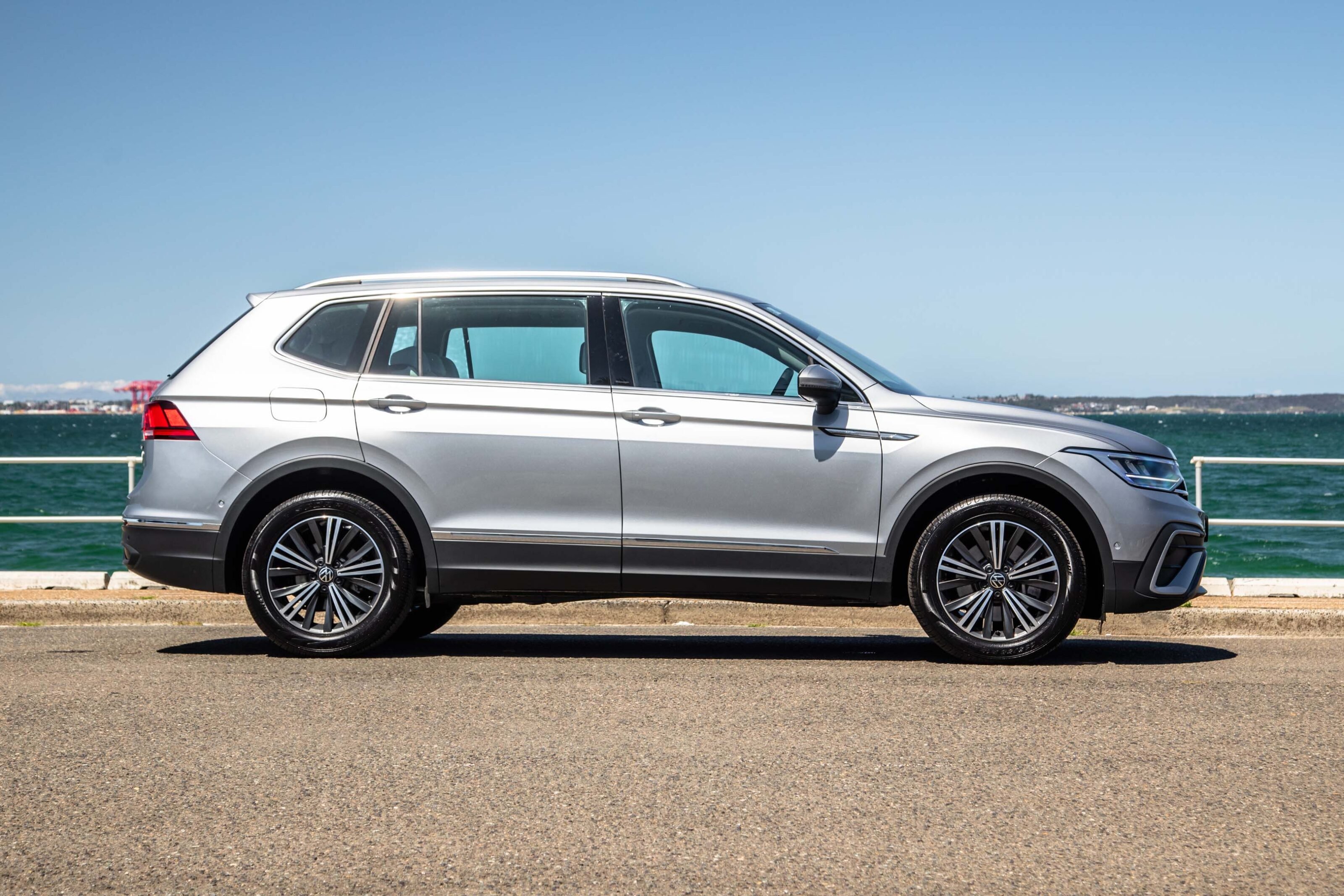
Half of the Allspace’s 22cm in extra length goes to the rear overhang, which looks shorter than it is owing to a longer wheelbase that balances things out.
Cargo space starts with a creditable 230 litres – say eight or nine bags of shopping – with the third row deployed. Drop that third row and you have a very decent 700 litres, an increase of almost 15 per cent over the regular Tiguan’s already huge boot. With both rear rows folded away, you have a 1775-litre capacity.

Sitting in the third row is easier than getting in but as these things go, it’s not too difficult. The middle row slides forward and mostly out of the way and you just need a good heave to get in there. Smaller kids won’t need to expend so much energy of course.
Once there you have a pair of cup holders on one side and a storage slot on the other. The middle row can slide forward to make room for longer legs, but really, the third row of an Allspace is for occasional use.
The middle row is very pleasant indeed with its reclining, sliding 40:20:40 seating, centre rear armrest with two cup holders, 12-volt power outlet, USB-C port and its own climate zone. The outboard back seats are very comfortable, the middle less so with the high transmission tunnel and harder cushion.

Some of the best front seats in the business carry driver and passenger, although I have to repeat my claim that I thought the standard cloth versions were more comfortable than this test model’s optional leather. Nothing wrong with the leather per se, I just thought they felt a bit firmer which upset the fine balance of fabric-upholstered seats.
Here you get an under-armrest bin, two cup holders that retract to clear the space for non-cup things, huge bottle holders in the doors matching the two in the rear (and carpeted for silent chattel carriage), wireless charging and two USB-C ports.
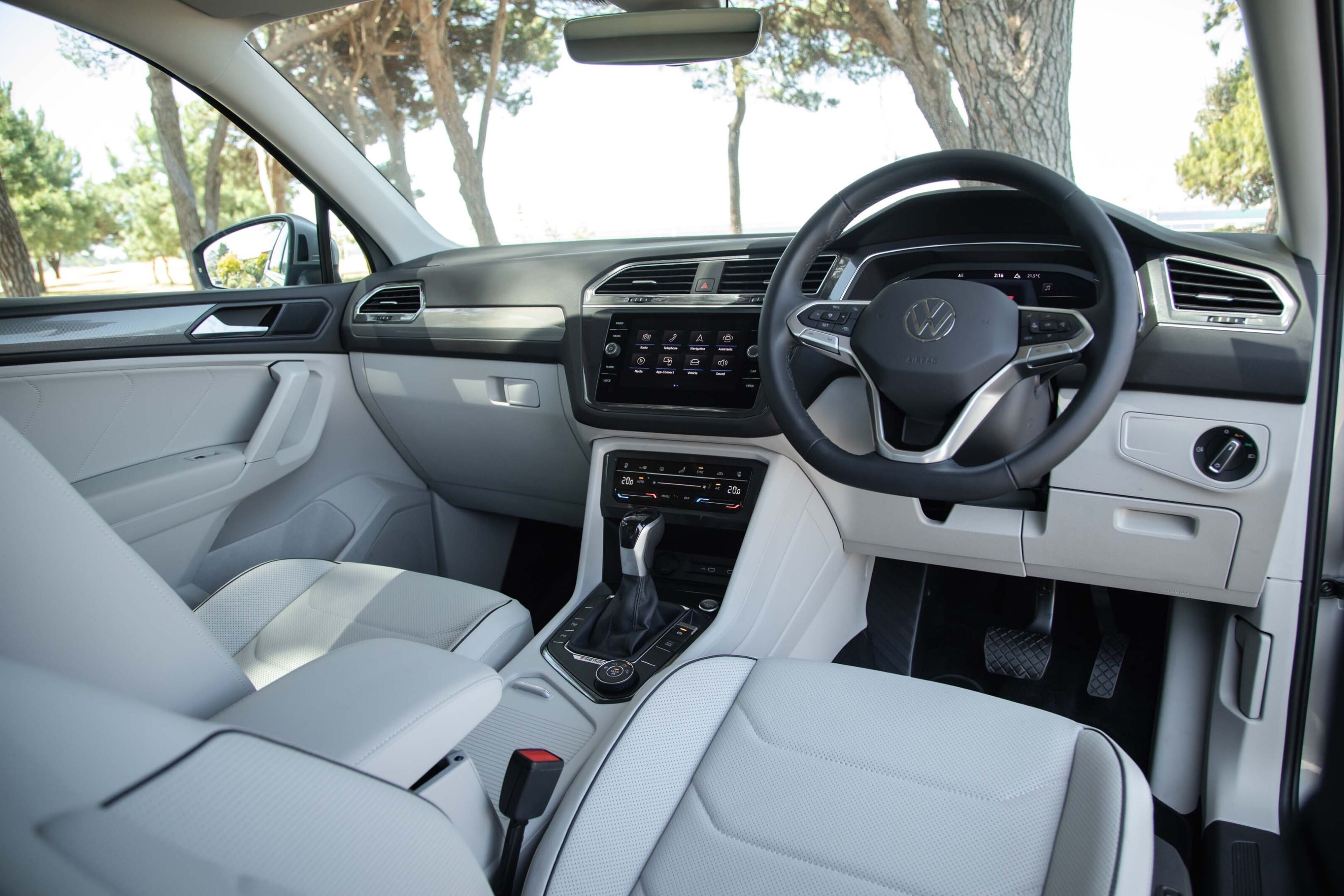
It’s a great-looking interior and feels teach heavy even with the smaller 8.0-inch touchscreen of the 132 TSI because it has a digital dashboard as well.

| 2023 Volkswagen Tiguan Allspace 132TSI | |
|---|---|
| Drive | all-wheel |
| Engine | 2.0-litre four-cylinder turbo-petrol |
| Transmission | 7-speed dual-clutch |
| Power | 132kW @ 4387-6000rpm |
| Torque | 320Nm @ 1500-4387rpm |
| 0-100km/h | 8.2 sec (claimed) |
Peak outputs of 132kW and 320Nm take more than a second off the 0-100km/h time of an Allspace 110, with more traction from the presence of all-wheel drive enabling you to appreciate the extra 22kW and 70Nm at play.
The seven-speed auto doesn’t feel as convincing in the 132 as the six-speed unit of the 110, which is a bit of a shame because it doesn’t feel as smooth and assured as it might otherwise.
Upsides are plentiful, of course.
Planting the foot means a less dramatic break into traffic and the extra torque means overtaking requires a little less planning. Hills are not as daunting either and, as you load up, you feel less penalised.
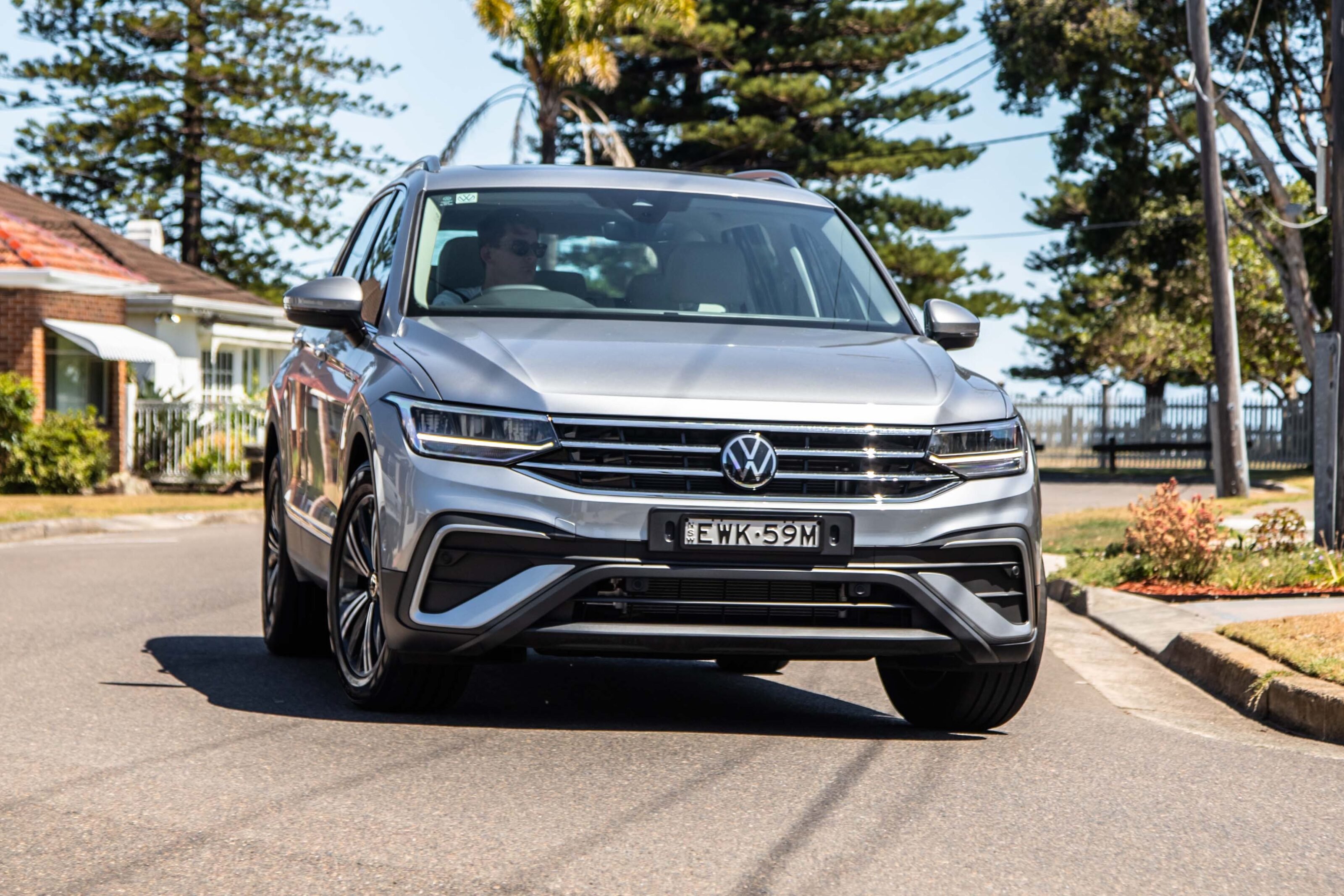
The engine itself is absurdly quiet and composed, spinning cheerfully to the redline with just a distant whirr. The transmission is at its best once you’re up and running and is more than happy to accommodate your whims when in Sport mode.
It’s less happy in stop-start traffic. Well, that’s probably not quite fair. It’s mostly happy in stop-start traffic but will occasionally be baffled by your right foot’s indecision and you can trip up the idle-stop system. That in turn confuses the transmission and things can get a bit lurchy while you’re waiting for the engine and turbo to spin back up.
You’ll find yourself rolling backwards more often than is ideal, too. The 110 TSI’s six-speed dual-clutch seems better at this sort of thing than the seven. It probably doesn’t help that the 2.0-litre engine has a bit more turbo lag than the 1.4.

But, as I say, the extra power is more than compensation. And the fact it is quiet and well-mannered at speed is another bonus.
The steering in the all-wheel drive car is weightier than the 110, while the suspension feels slightly tauter. That does upset the ride on rare occasions compared to the 110TSI (with which I am clearly hopelessly in love) but again, you do get a more secure feel when you’re exploiting the extra power.
As with most of the Tiguan range, the ride is largely impeccable but the suspension can sometimes be a little too vocal over some bumps.

| 2023 Volkswagen Tiguan Allspace 132TSI – fuel consumption | |
|---|---|
| Fuel consumption: | 8.9L/100km (combined) |
| On test (trip computer) | 10.4L/100km |
| Fuel type (min) | 95 RON |
| Fuel capacity | 60 litres |
Assuming a modest improvement with some steadier running, you should get about 600km from a tank.
| 2023 Volkswagen Tiguan Allspace 132TSI – safety features | |
|---|---|
| 7 airbags | forward auto emergency braking |
| ABS and stability controls | forward collision warning |
| adaptive lane guidance | lane-keep assist |
| driver attention detection | reverse AEB |
Without a centre front airbag, it’s unlikely that rating would be renewed if retested now, so VW will be aiming for the next iteration due in 2024 to get the coveted full marks.
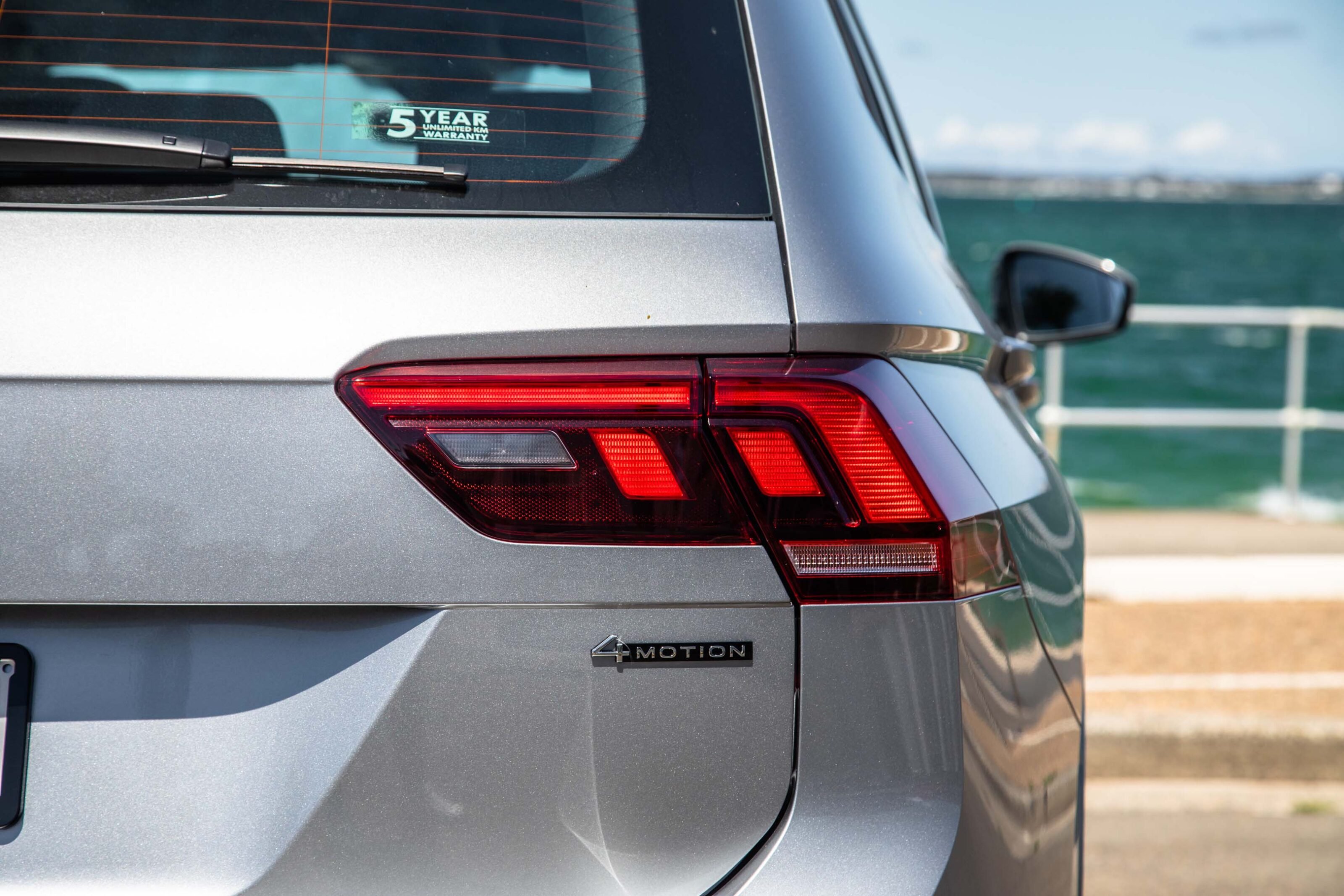
Just to remind you, reverse cross-traffic alert and side assist are unavailable for the time being, which is annoying because RCTA is a good thing to have, especially in a car like this. Weirdly, however, reverse auto emergency braking is still present because VW tells me that they use two different systems, so the most important part remains.
The airbag count includes a driver’s knee airbag and the curtain airbags reach the third row.
VW will offer you a pre-paid care plan for your servicing, which comes around every 12 months or 15,000km.
A five-year plan will cost $2950 and save you a whopping $1023 over a pay-as-you-go arrangement for the same duration. Three years of maintenance costs $1650, saving a more modest $222.
The 132 is an entirely pleasant and swift seven-seater for people who don’t need a third row all that often.
The Tiguan Allspace 132 TSI is probably the least-loved because, well, I don’t really know why. I guess it’s there to catch Mazda CX-8 and Mitsubishi Outlander cross-shoppers but they either don’t choose it (for whatever reason) or see a 162kW version and say, I’m having that.
Or if they’re me, saving some cash and going for the 110 TSI.
Anyway, the 132 is an entirely pleasant and swift seven-seater for people who don’t need a third row all that often. It’s not obscenely priced, has all the good things you can get in a Tiguan and if you pre-pay your servicing, that isn’t outrageously expensive either.
I went in thinking I’d know why it was the one people avoided (relatively speaking), but now I’m not at all sure.
| 2023 Volkswagen Tiguan Allspace 132TSI specifications | |
|---|---|
| Body | 5-door, 7-seat large SUV |
| Drive | all-wheel |
| Engine | 2.0-litre four-cylinder turbo-petrol |
| Transmission | 7-speed dual-clutch |
| Power | 132kW @ 4387-6000rpm |
| Torque | 320Nm @ 1500-4387rpm |
| Bore stroke (mm) | 74.5 x 80 |
| Compression ratio | 11.65 : 1.0 |
| 0-100km/h | 8.2 sec (claimed) |
| Fuel type (min) | 95 RON |
| Fuel consumption | 8.9L/100km (combined) |
| Weight | 1732kg |
| Towing capacity (unbraked/braked) | 750kg/1500kg |
| Gross vehicle mass | 2420kg |
| Gross combination vehicle mass | 4920kg |
| Suspension | MacPherson struts front/multi-link rear |
| L/W/H | 4734mm/1839mm/1689mm |
| Wheelbase | 2791mm |
| Ground clearance | 186mm |
| Brakes | ventilated disc front / solid disc rear |
| Tyres | 235/55 R18 |
| Wheels | 18-inch alloy (space-saver spare) |
| Price | $47,290 + on-road costs |
Due to component shortages, Kia Australia has temporarily suspended new orders for the flagship Sportage GT-Line. Get the full details here.
This story will be updated when GT-Line orders resume.
Apart from a new ‘4X’ all-wheel-drive badge, there are no other changes to the fifth-generation Sportage medium SUV, which arrived in Australia in 2021 with a higher level of safety and equipment.
National drive-away pricing was available for the Sportage at launch; however, this has shifted to a state-by-state model.
It shares its all-new ‘N3’ platform with the related Hyundai Tucson, with the option of a 1.6-litre turbo-petrol for the first time in Australia.
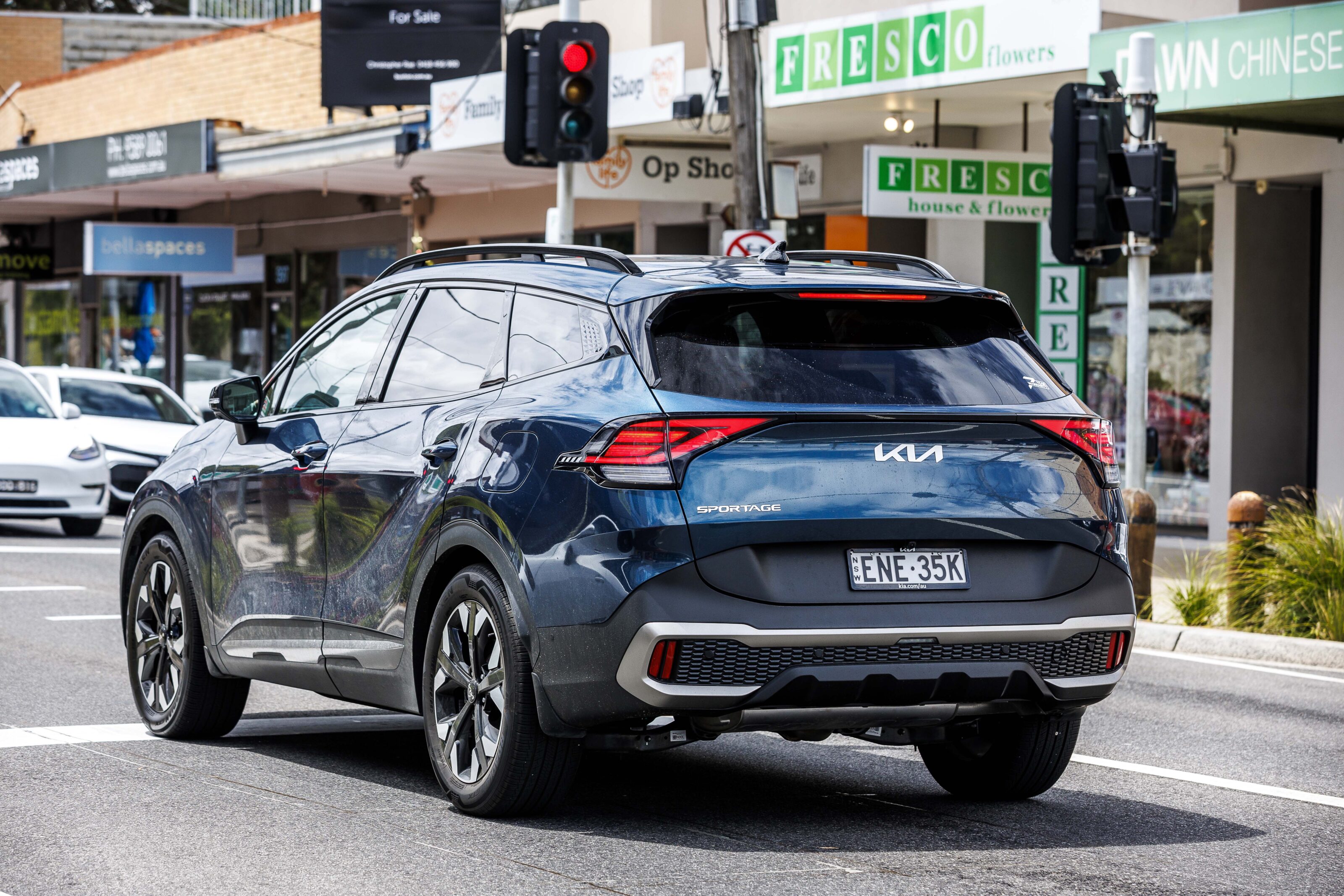
While the Tucson has gained Hyundai’s Bluelink connected-car technology for 2023, a Kia Australia spokesperson confirmed its system – Kia Connect – won’t become available until the Sportage receives its mid-life update in 2024 or 2025.
LED headlights, traffic sign recognition, tyre pressure monitoring, lane-keep assist, blind-spot monitoring, rear-cross traffic alert, and adaptive cruise control (automatic only) are standard from the base S upwards.
The latest Sportage also gains the front-centre airbag first introduced on the Sorento, which is designed to prevent the driver and front passenger from clashing heads in the event of a side-impact collision.
A hybrid version of the Kia Sportage is closer to Australia, with the brand’s local product planning boss confirming it is expected in the coming months.
The Kia Sportage competes in the medium SUV segment in Australia, with rivals including the Toyota RAV4, Mazda CX-5, Hyundai Tucson, Mitsubishi Outlander, Nissan X-Trail, Subaru Forester and Volkswagen Tiguan.
Watch our video review of the Kia Sportage GT-Line above, or check out the written review here. For all Kia Sportage reviews, click on the read more link below:

Prices exclude on-road costs.
| Model | Pricing | Change |
|---|---|---|
| S 2.0L FWD manual | $32,795 | up $350 |
| S 2.0L FWD auto | $34,795 | up $350 |
| SX 2.0L FWD manual | $35,350 | up $350 |
| SX 2.0L FWD auto | $37,350 | up $350 |
| S 2.0D AWD auto | $40,195 | up $350 |
| SX+ 2.0L FWD auto | $41,850 | up $350 |
| SX 2.0D AWD auto | $42,750 | up $350 |
| SX+ 1.6T AWD DCT | $43,850 | up $350 |
| SX+ 2.0D AWD auto | $47,250 | up $350 |
| GT-Line 1.6T AWD DCT | $49,720 | up $350 |
| GT-Line 2.0D AWD auto | $52,720 | up $350 |
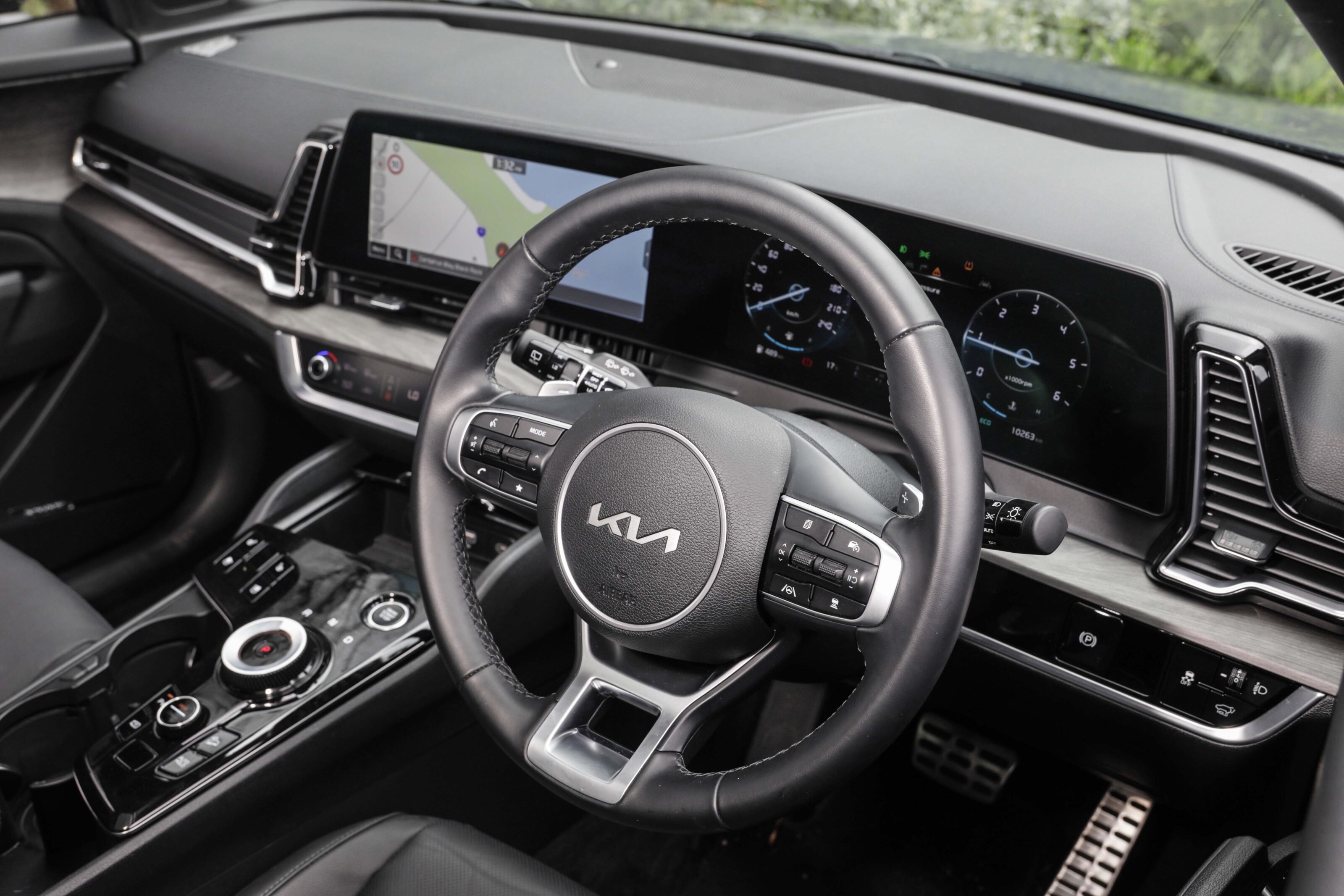
Metallic paint incurs a $520 premium.

With the smaller Seltos recently swapping out its seven-speed dual-clutch automatic transmission for a more conventional eight-speed torque-converter auto for the 1.6-litre turbo variants, Wheels Media believes Kia may do the same with an upcoming update to the Sportage.
Under the bonnet, the Kia Sportage is available with three engine options.
The range starts with a naturally-aspirated 2.0-litre petrol engine producing 115kW and 192Nm.
It is matched with a six-speed torque converter automatic transmission and sends power to the front wheels only. This powertrain is standard on S, SX and SX+ variants.
For the first time locally, a 1.6-litre turbocharged petrol engine with a seven-speed dual-clutch – borrowed from Hyundai’s sister SUV, the Tucson – is available.

Matched with all-wheel drive, it produces 132kW and 265Nm, and is optional on SX+ and standard for the GT-Line.
A diesel powertrain is optional across the range, comprising a 2.0-litre turbocharged unit with 137kW and 416Nm. It features an eight-speed torque converter automatic and all-wheel drive.
Opting for a diesel AWD auto over a 2.0L petrol FWD auto carries a $5400 premium.
All variants have a 51-litre fuel tank. Petrol versions are compatible with 91RON regular unleaded.
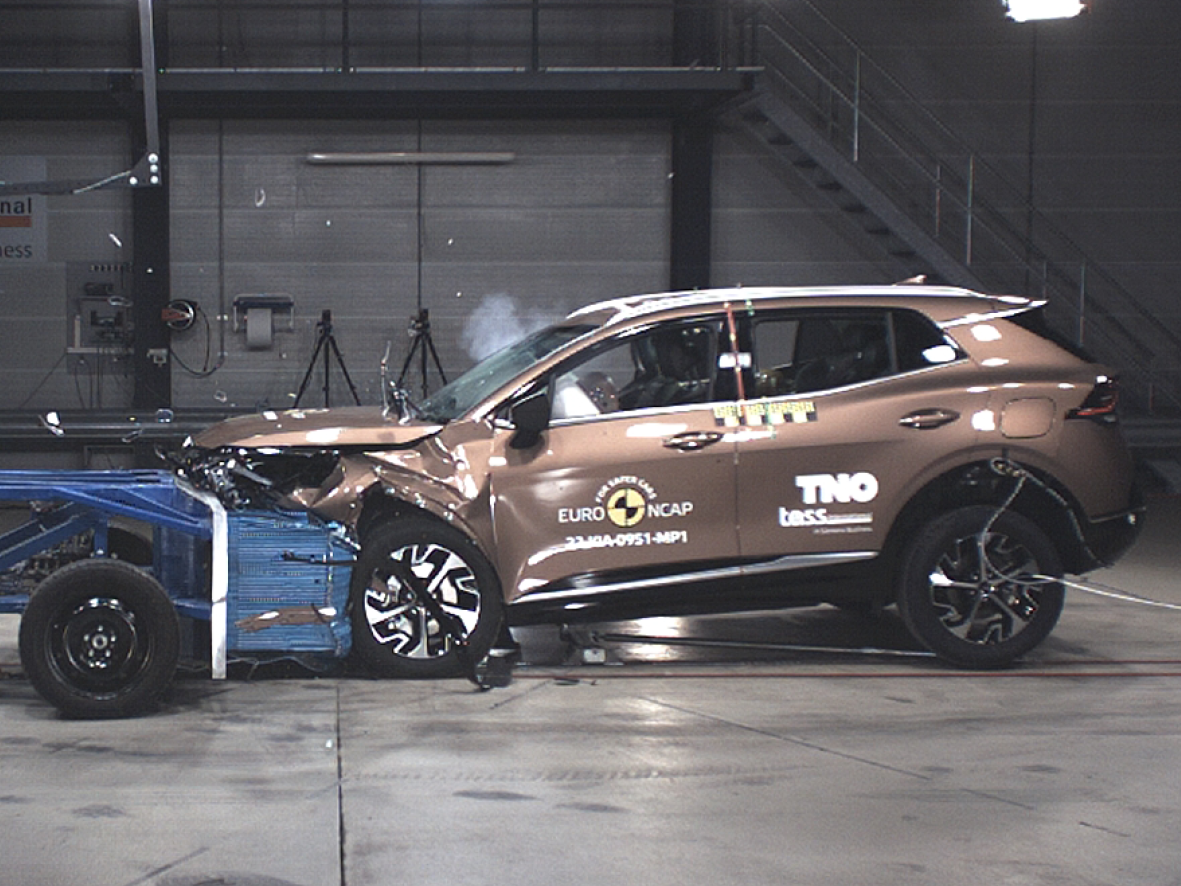
It has an 87 per cent score for adult occupant protection, 87 per cent for children, 66 per cent for vulnerable road users, and 74 per cent for safety assist.
For the full report, click here.
Seven airbags (dual front, side head, curtain and front-centre) are fitted across the range.
Adaptive cruise control, high-beam assist, and collision avoidance for blind-spot alert and rear-cross traffic alert are exclusive to automatic models.
GT-Line variants feature a reverse autonomous emergency braking system.

The Kia Sportage has a wheelbase of 2755 millimetres, and is 4660mm long and 1865mm wide.
S and SX grades are 1665mm high, while the SX+ and GT-Line are 1680mm tall.
It has claimed 543-litre boot capacity, expanding to 1829L with the second-row folded.
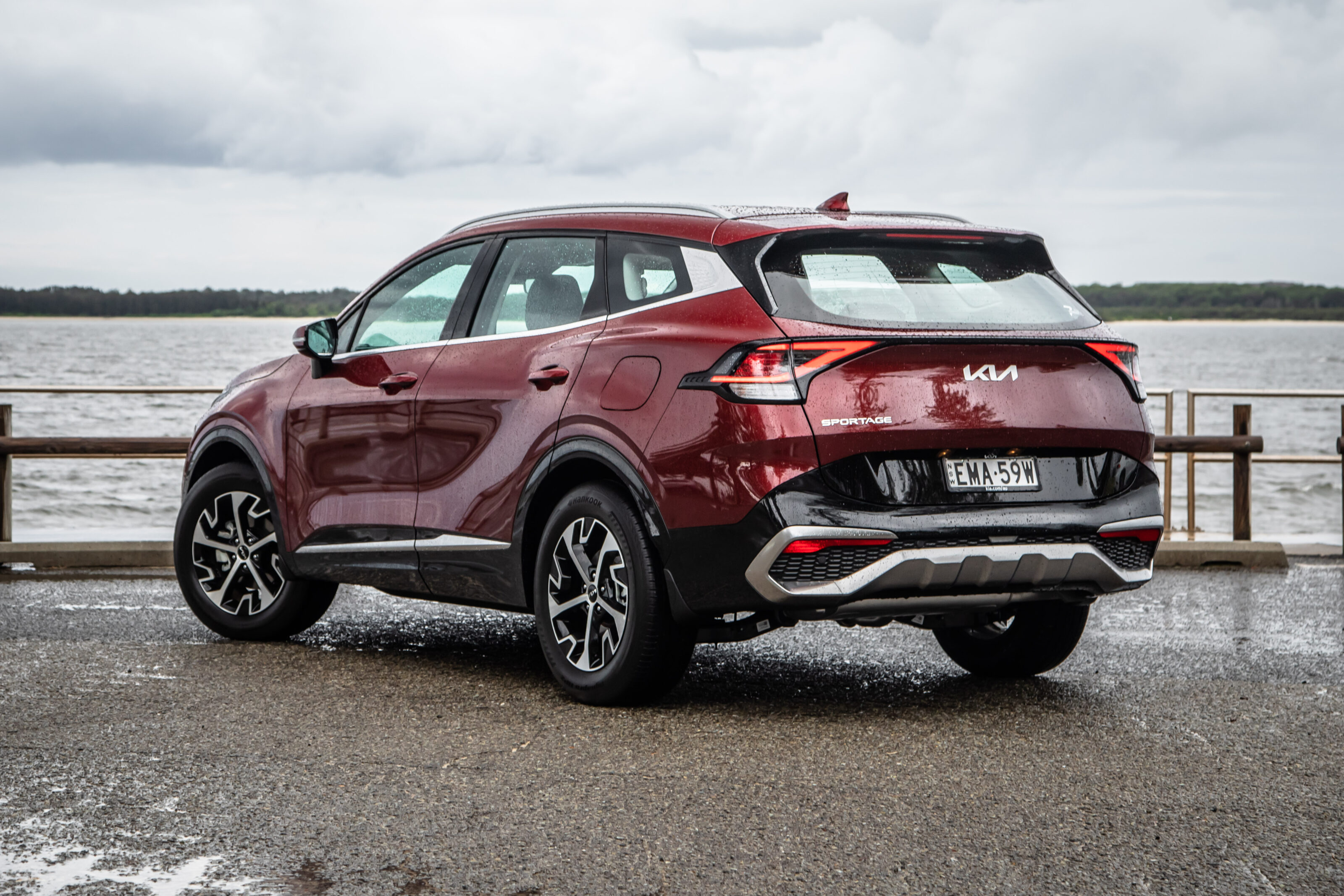
As per the wider Kia range, the Sportage is covered by the brand’s seven-year, unlimited-kilometre warranty, along with a complimentary one-year roadside assistance program.
This can be extended to eight years through annual servicing at a Kia dealership.
Capped price servicing is available for seven years, with costs dependent on the powertrain and service interval.
Two-litre petrol and diesel variants require servicing every 12 months or 15,000 kilometres, whichever occurs first. The 1.6-litre turbo has a shorter 12-month/10,000-kilometre interval.
Two Wallbox Quasar V2G chargers have been fitted by JetCharge, each costing around $10,000 each. The project makes Mitsubishi the first automaker in Australia to adopt the technology, despite not having a pure-electric model in its range.
The new system allows the Japanese brand to use its V2G-compatible Mitsubishi Eclipse Cross and Outlander plug-in hybrid electric vehicles (PHEVs) as a 13.8kWh and 20kWh home energy storage system respectively.
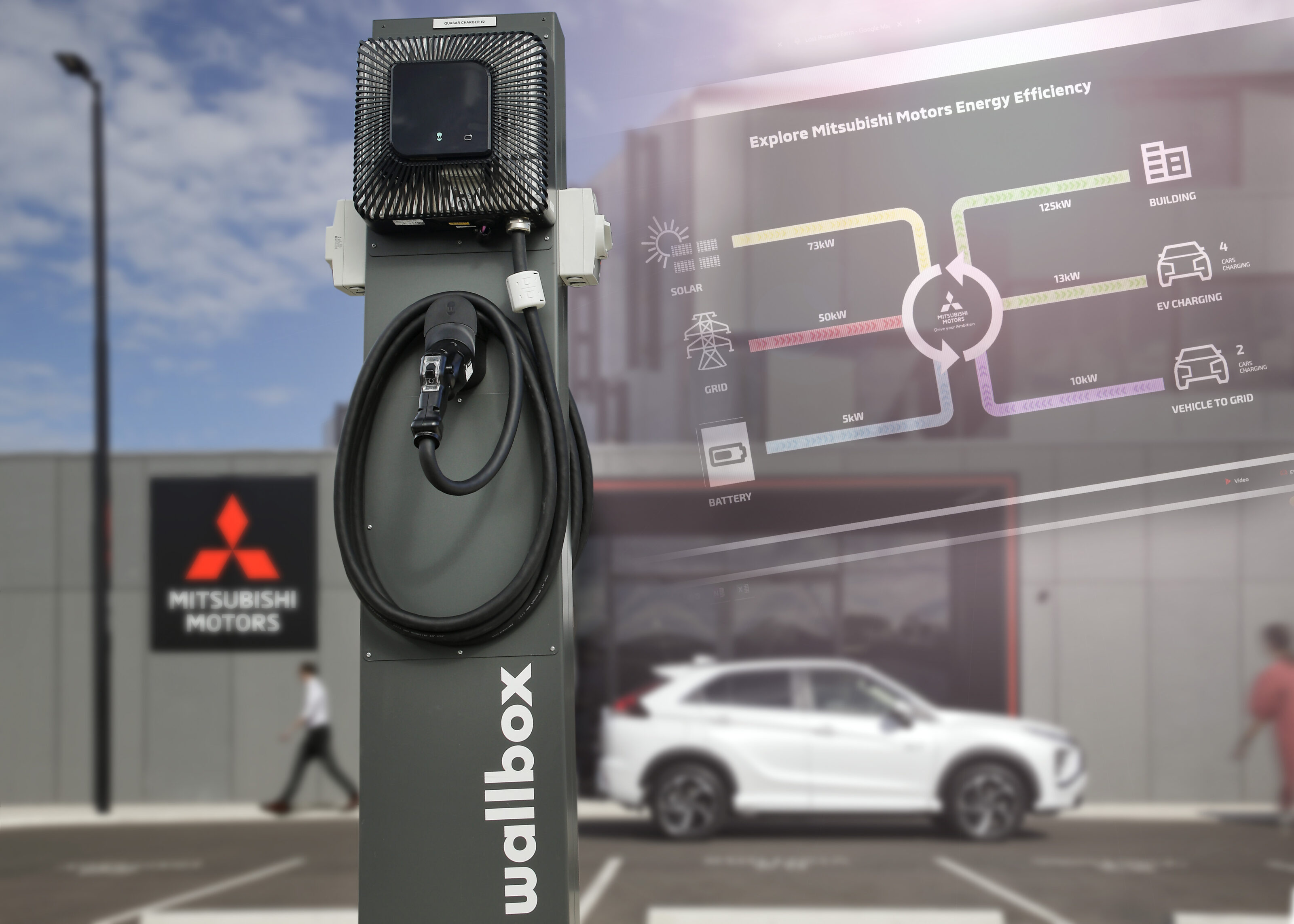
By plugging in the CHAdeMO DC port when they’re parked, the SUVs feed their battery charge to power the office and even sell it back to the electricity grid in peak periods – if there’s leftover energy.
Then, when the sun’s out, it will recharge the PHEV batteries automatically, using the limitless free energy hitting Mitsubishi HQ’s 100kW solar array.
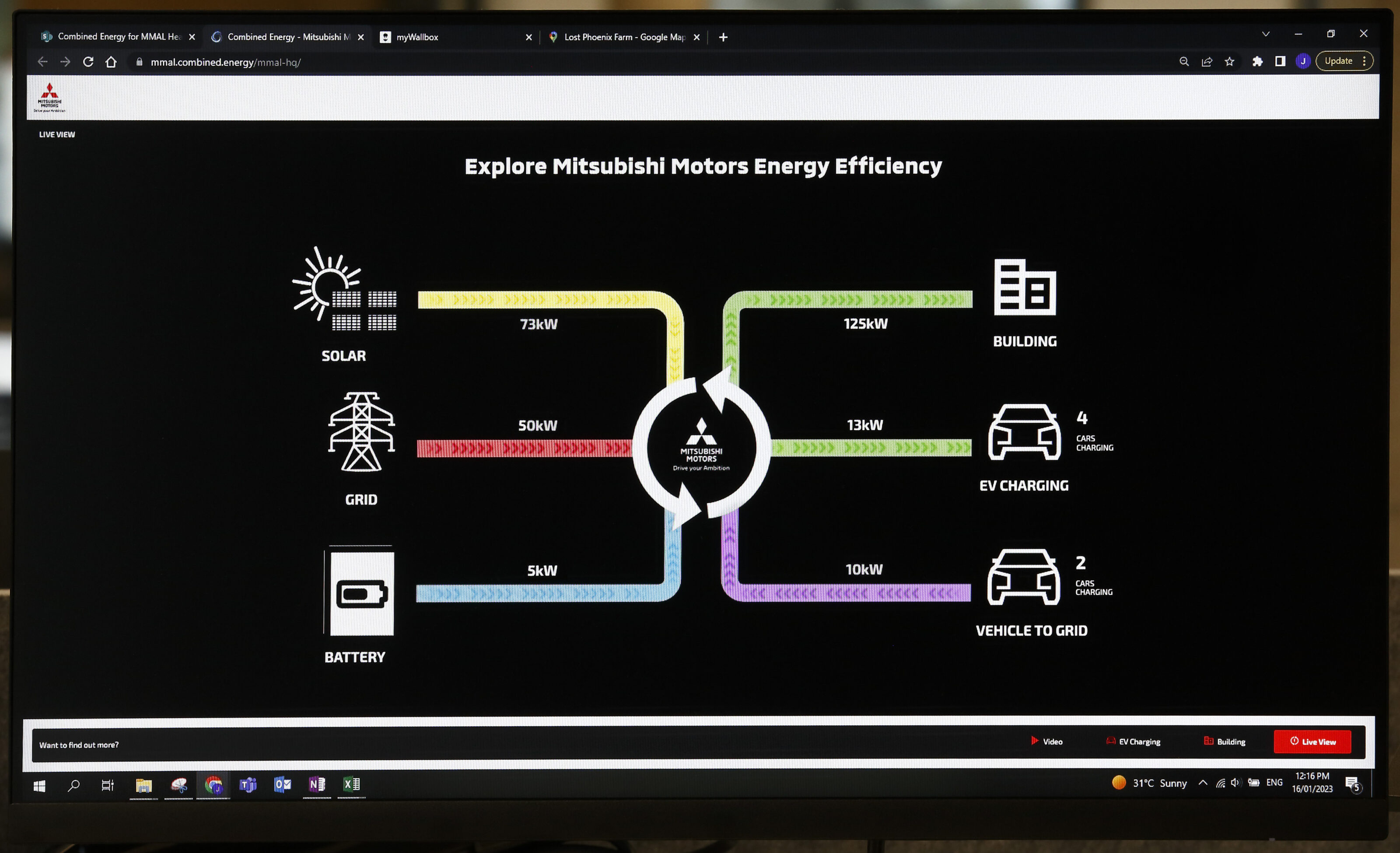
“We are immensely proud to be the first automotive brand in Australia with bi-directional charging capability,” Mitsubishi Motors Australia CEO Shaun Westcott said.
“It’s the next step in realising our vision to deploy Mitsubishi [PHEV] technology and become a more environmentally sustainable operation. Recent power outages are a timely reminder of this technology’s value.
“The e-mobility space is continually evolving, and likewise we are evolving how Mitsubishi [PHEV] users can unlock the benefits of battery energy storage on wheels, and how this can support the grid of the future,” he said.
It follows the approval of V2G for South Australians in December last year with a few pilot sites, helping homes and businesses go off-grid when combined with solar panel systems.
Currently, only the Japanese Nissan Leaf battery-electric vehicle, Mitsubishi Eclipse Cross PHEV, and Outlander PHEV support bidirectional charging, with more EVs expected to adopt the tech over time.
V2G differs from vehicle-to-load (V2L) found on electric cars such as the BYD Atto 3, MG ZS EV and Kia EV6, which can only discharge its battery to power a device – instead of going both ways to power an entire home and recharge the battery automatically.
Cupra Australia has announced revisions for model-year 2024. Click on the story below for more information, or continue reading below to see more details about the Leon.
The entry-level 2023 Cupra Leon V hatchback is now available to pre-order.
Initially designed for the local market, the Leon V is the cheapest vehicle offered by Cupra Australia, priced from $43,990 before on-road costs – or $47,990 drive-away nationally.
It follows a price adjustment for the Cupra Leon in late January, with the flagship VZe plug-in hybrid and most-powerful VZx now in line with the all-electric Born at $59,990 plus on-roads.
Our earlier story, below, continues unchanged.
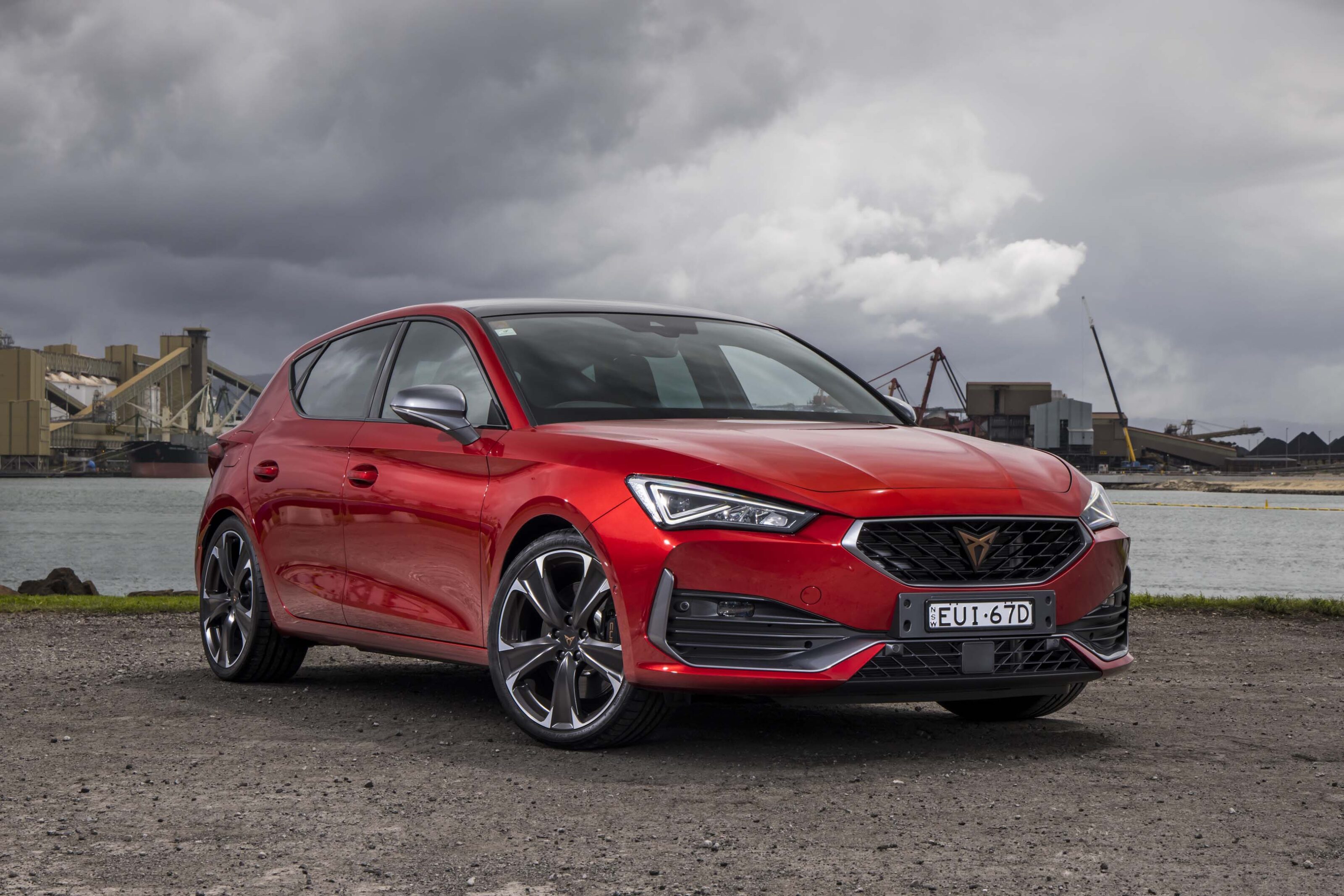
The entry-level 2023 Cupra Leon V will be available for pre-order in January.
Cupra has confirmed the hatchback, priced from $43,990 before on-road costs – making it the brand’s most affordable vehicle – will arrive in Australian showrooms in the first half of 2023.
It will join the all-electric Born hatch, which is also due here in the first half of the year, which will start from $59,990 plus on-roads.
The Leon V will be offered at $47,990 drive-away.
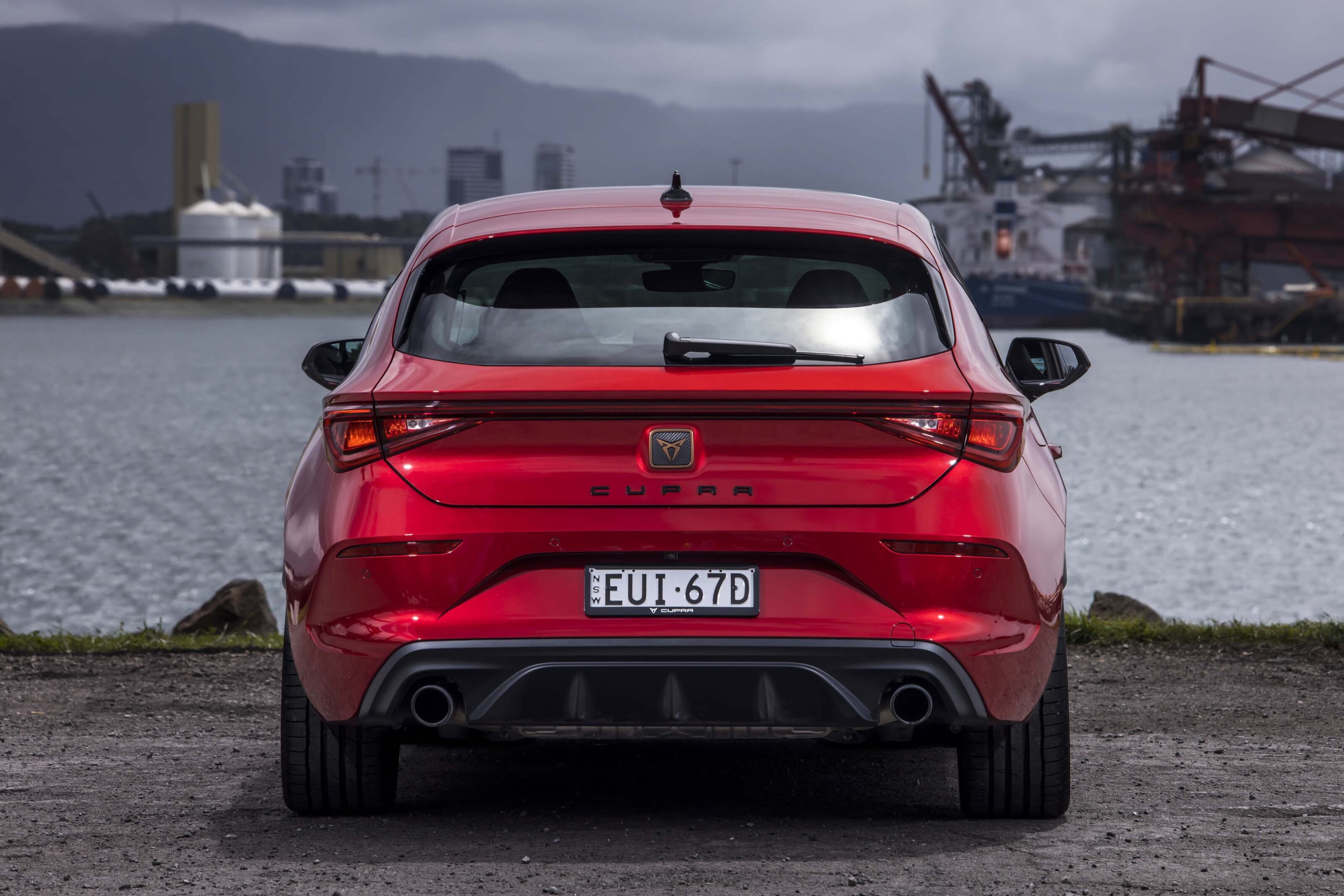
Pricing and features for the 2023 Cupra Leon have been announced.
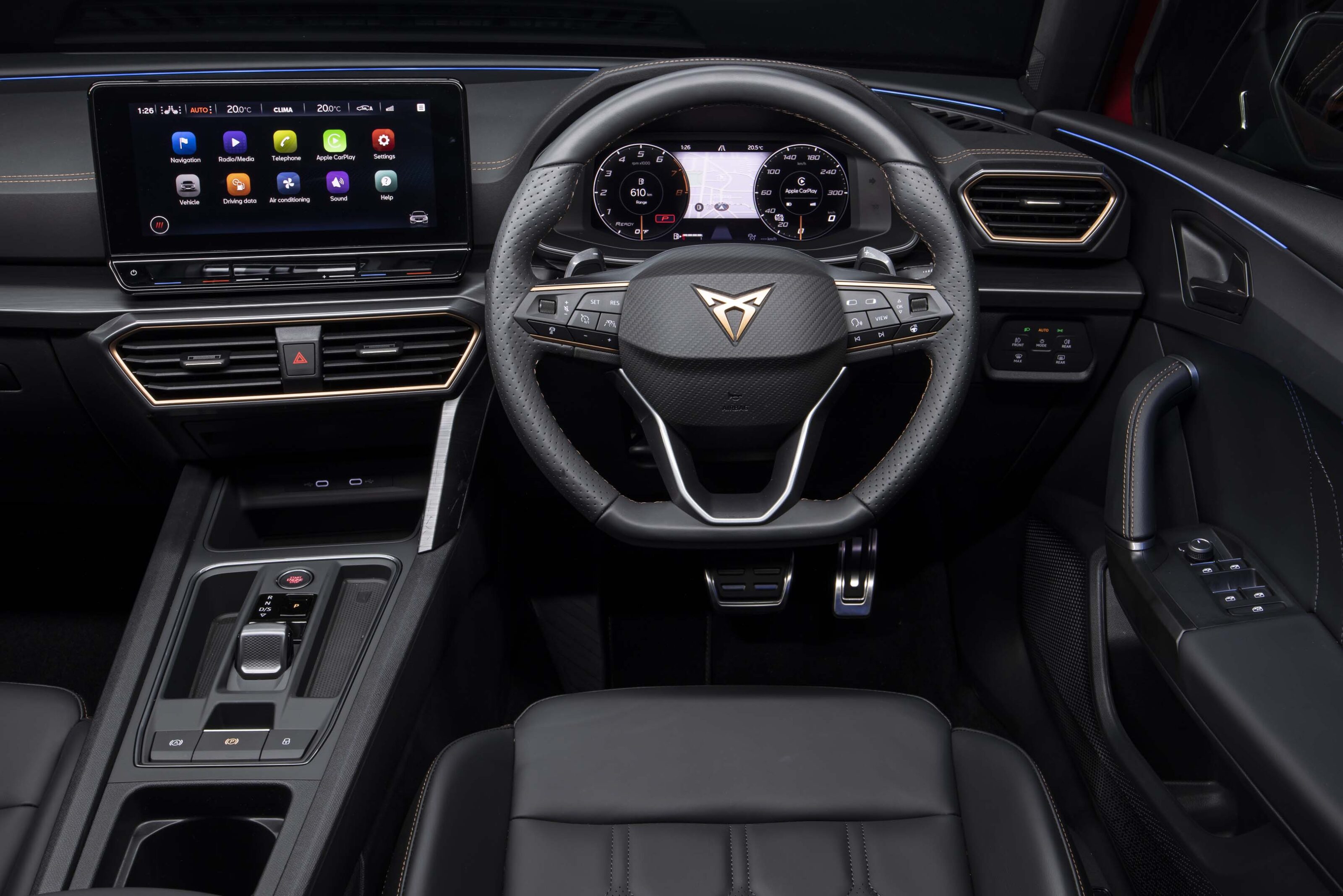
The updated Leon small hatchback gains a larger 12-inch infotainment system, while scrolling indicators have been replaced by static indicators in the tail-lights.
This upsized screen will replace a smaller 10-inch unit, set to feature on model-year 2022 examples available to order from today – July 8, for a month until MY23 sales commence.

It also sees the entry-level V and plug-in VZe and officially join the range, set to arrive in the first quarter of 2023 or later this year, respectively.
Pricing has increased by $400 on the VZ, and by $500 for the VZe and VZx.
Our original story, first published in April, has been updated to reflect this information and continues below.
Cupra has revealed local details surrounding its anticipated Leon hatchback. Deliveries are expected to commence from mid-2022, with four variants making up the range.
The range comprises of the base Leon V, the mid-spec VZ, a plug-in hybrid VZe, and top-spec VZx.
The newly launched Cupra brand isn’t pulling any punches with its market penetration strategy, offering high levels of specification along with a five-year, unlimited-kilometre warranty that includes three years of complimentary scheduled servicing.
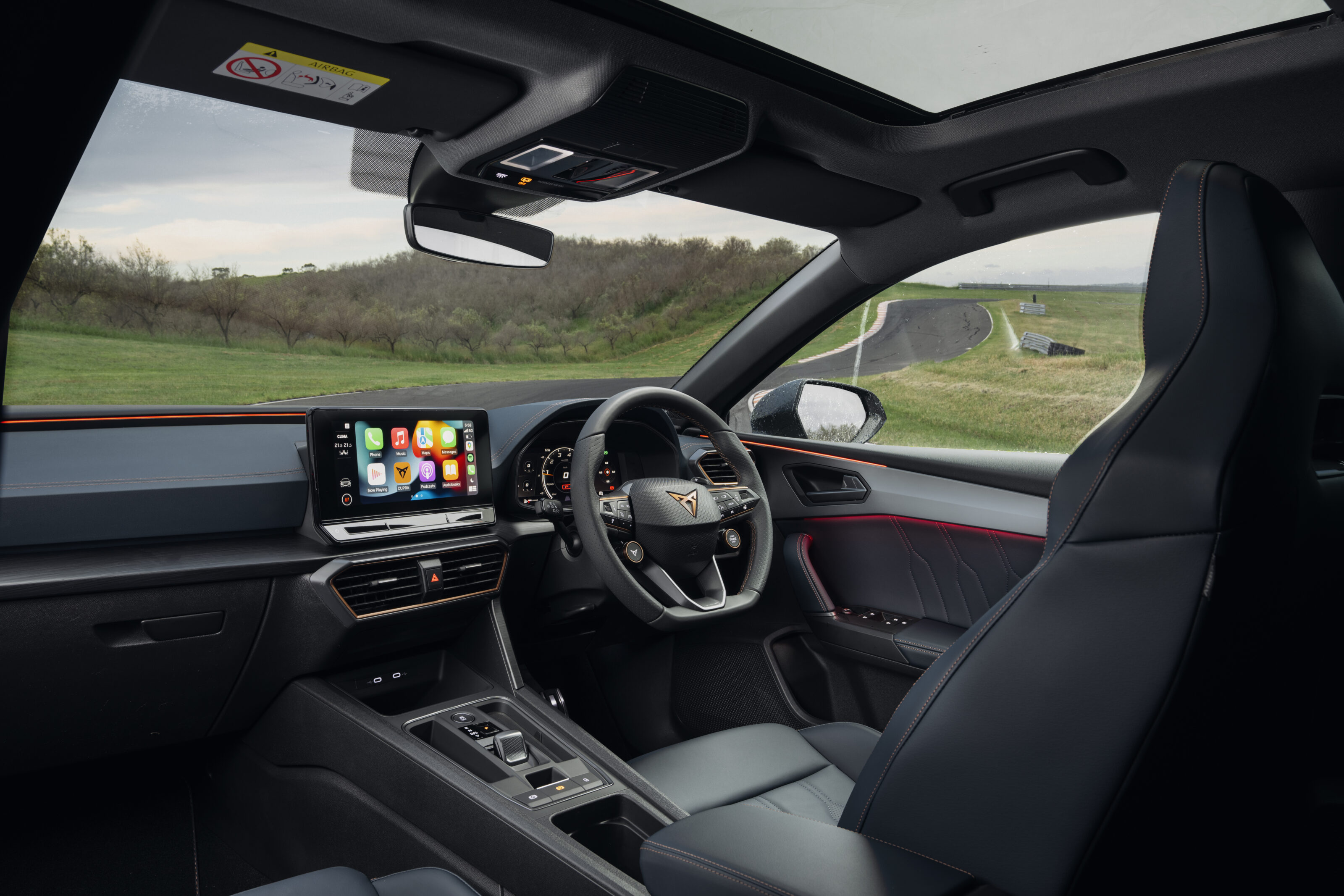
Prices exclude on-road costs.
| Model | Pricing |
|---|---|
| Leon V | $43,990 RRP ($47,990 drive-away) |
| Leon VZ | $52,990 RRP ($57,490 drive-away) |
| Leon VZe | $60,490 RRP (see below for drive-away pricing) |
| Leon VZx | $61,490 RRP ($65,490 drive-away) |
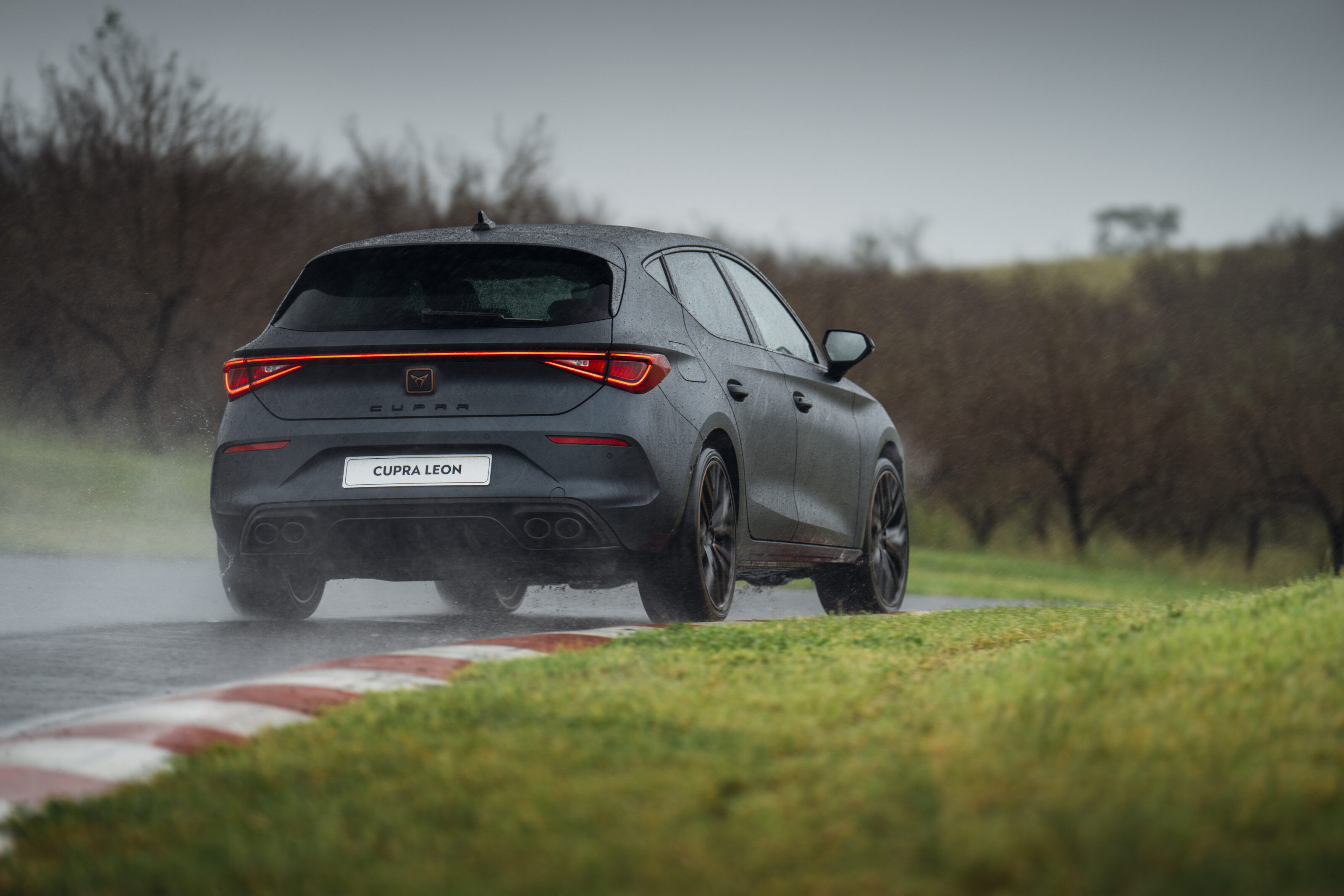
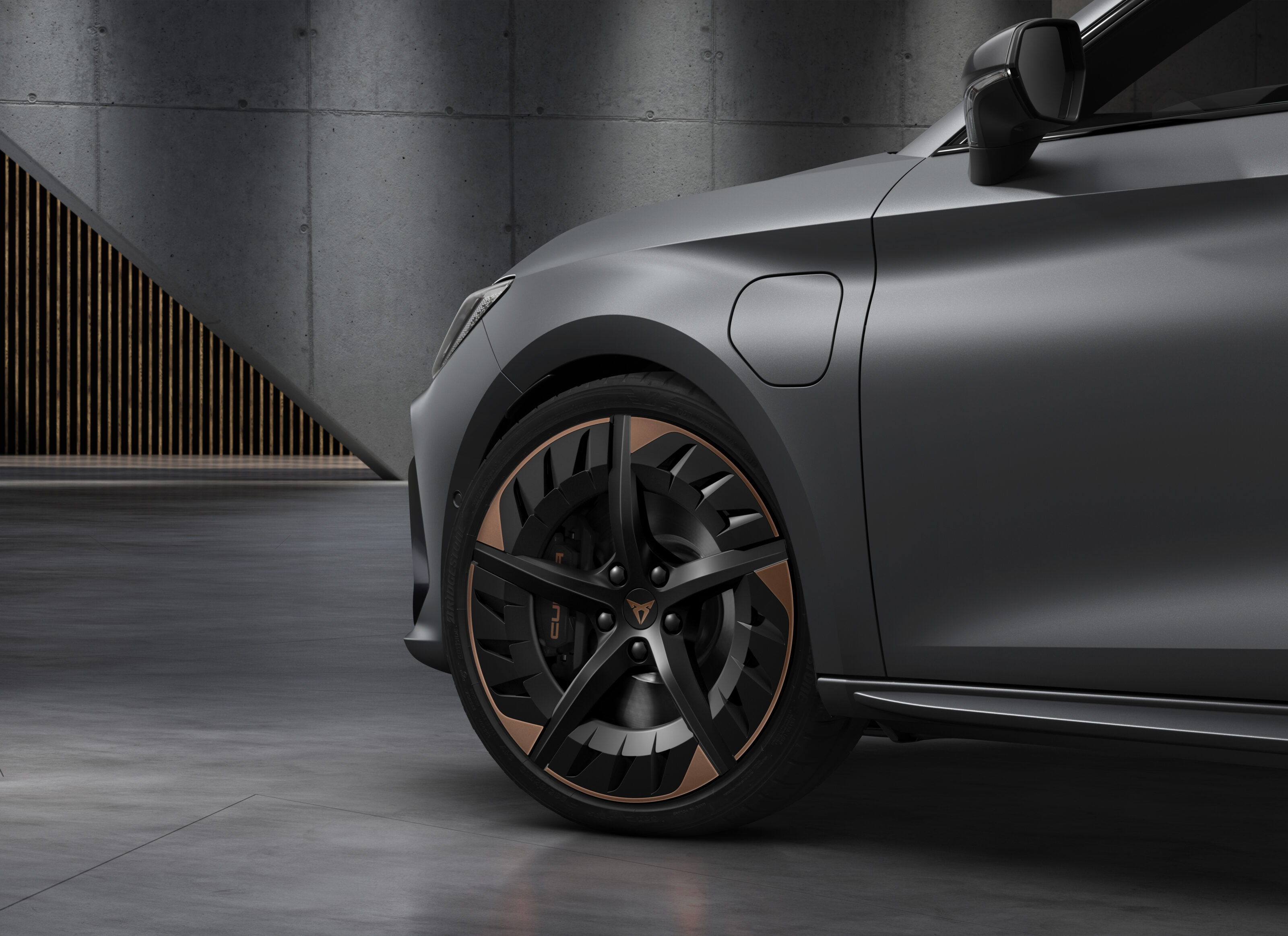
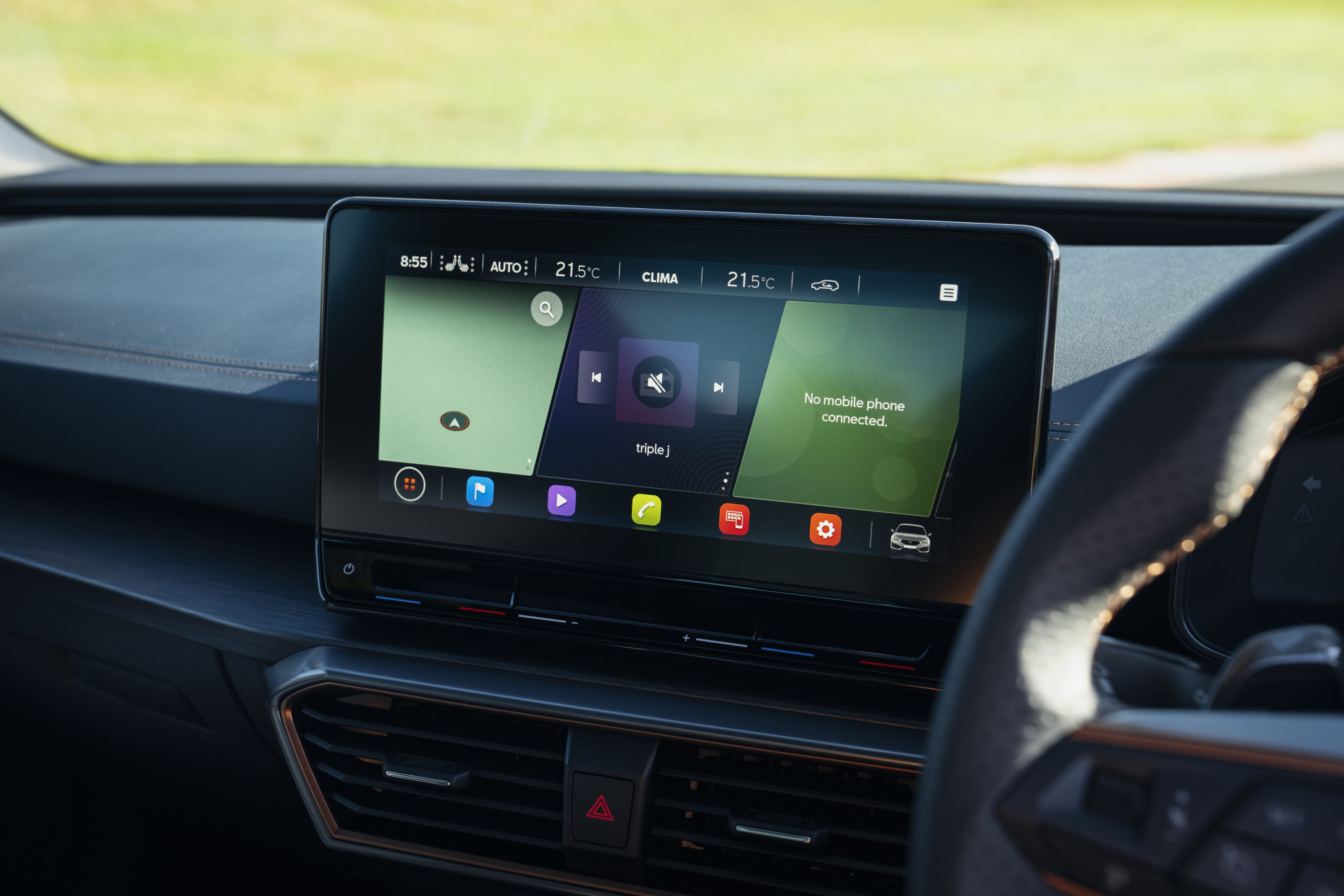
The young Cupra brand is well supported by its Volkswagen Group parent, with much of the Leon range powered by the prolific and flexible EA888 turbo four-cylinder in various states of tune.
It’s a logical progression as you walk up through the range, with the basic Leon V comprising of the turbo-four and seven-speed DSG transmission, producing 140kW and 320Nm.
The VZ utilises the same mechanical package, with the wick turned up to 180kW and 370Nm.
The VZe breaks convention, harnessing a lower-capacity 1.4-litre turbo four-cylinder producing 110kW and 250Nm in conjunction with an 85kW/300Nm electric motor to produce a combined 180kW and 400Nm. It shifts through a six-speed wet-style dual-clutch.
The VZx tops the range, with its EA888 producing 221kW and 400Nm, and may prove an attractive front-drive stopgap model between the Golf GTI and incoming Golf R.
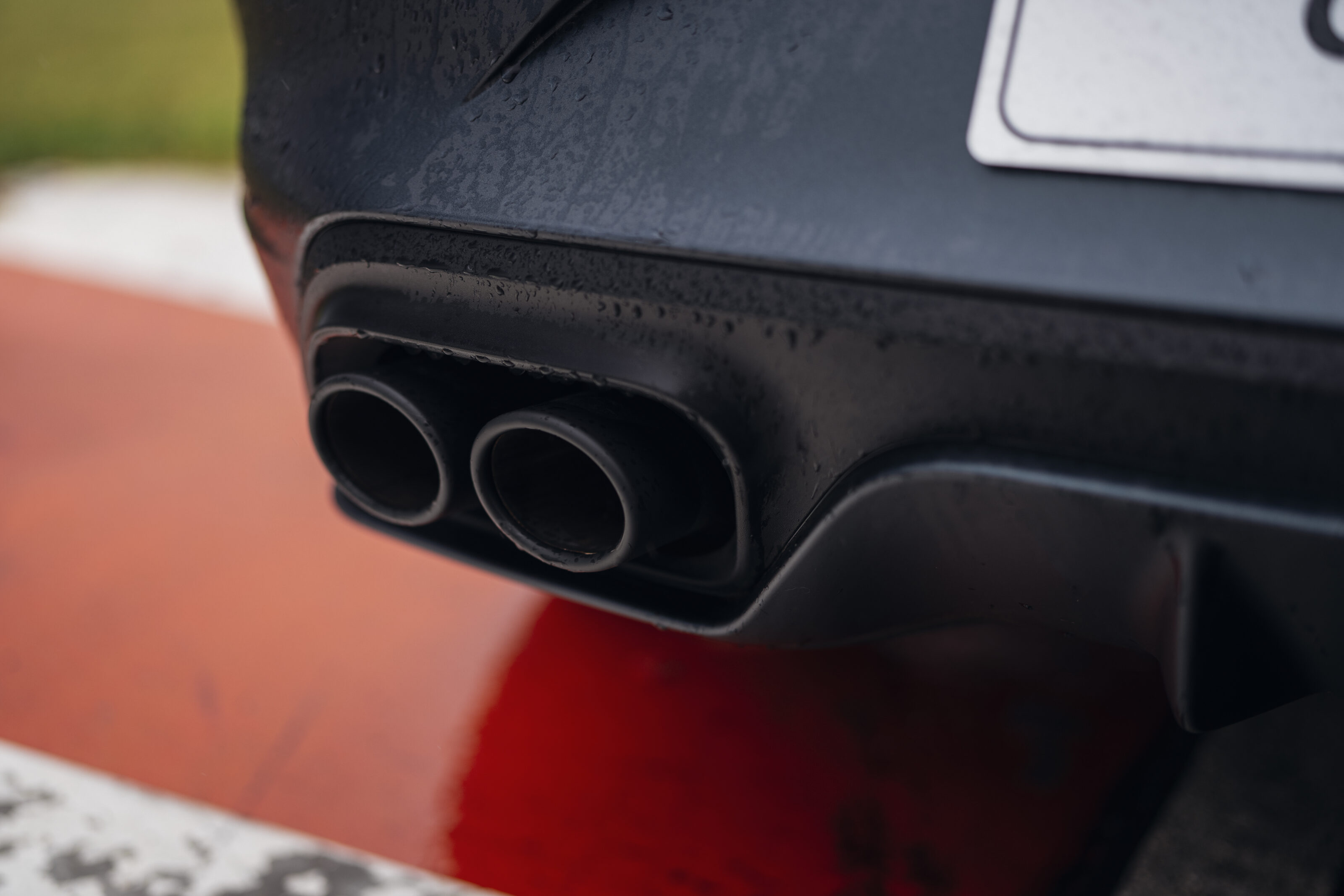
The Cupra Leon rides on a 2683mm wheelbase, and measures 4398mm in overall length and 1442mm in height.
Body width measures 1799mm, swelling to 1992mm at the widest point of the side mirrors.
Boot space is quoted at 380 litres, although the plug-in hybrid VZe loses some stowage space due to its battery pack, reducing capacity to 270 litres.
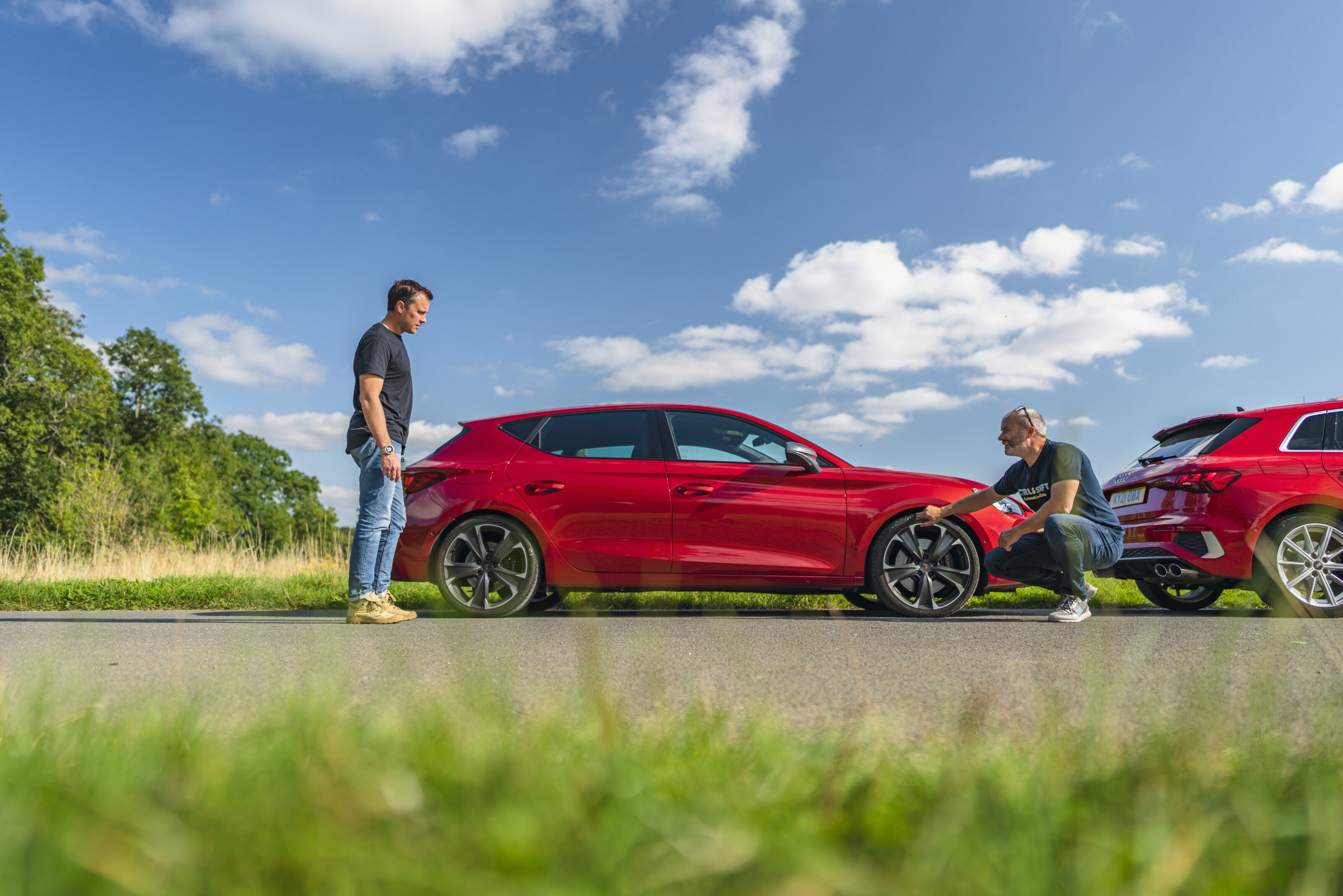
In Australia, the Cupra Leon range is covered with a five-year, unlimited-kilometre warranty and three years of free scheduled servicing.
The 2023 Cupra Leon VZ, VZe and VZx are now available, while the entry-level V is slated to arrive in early 2023.
Volkswagen CEO Thomas Schäfer has confirmed to Auto Bild Spain that the upcoming Mk 8.5 Golf facelift, which is due in 2024, may be the last with a conventional petrol engine.
“We are working on a portfolio to see what will be the successor to the current Volkswagen Golf.”
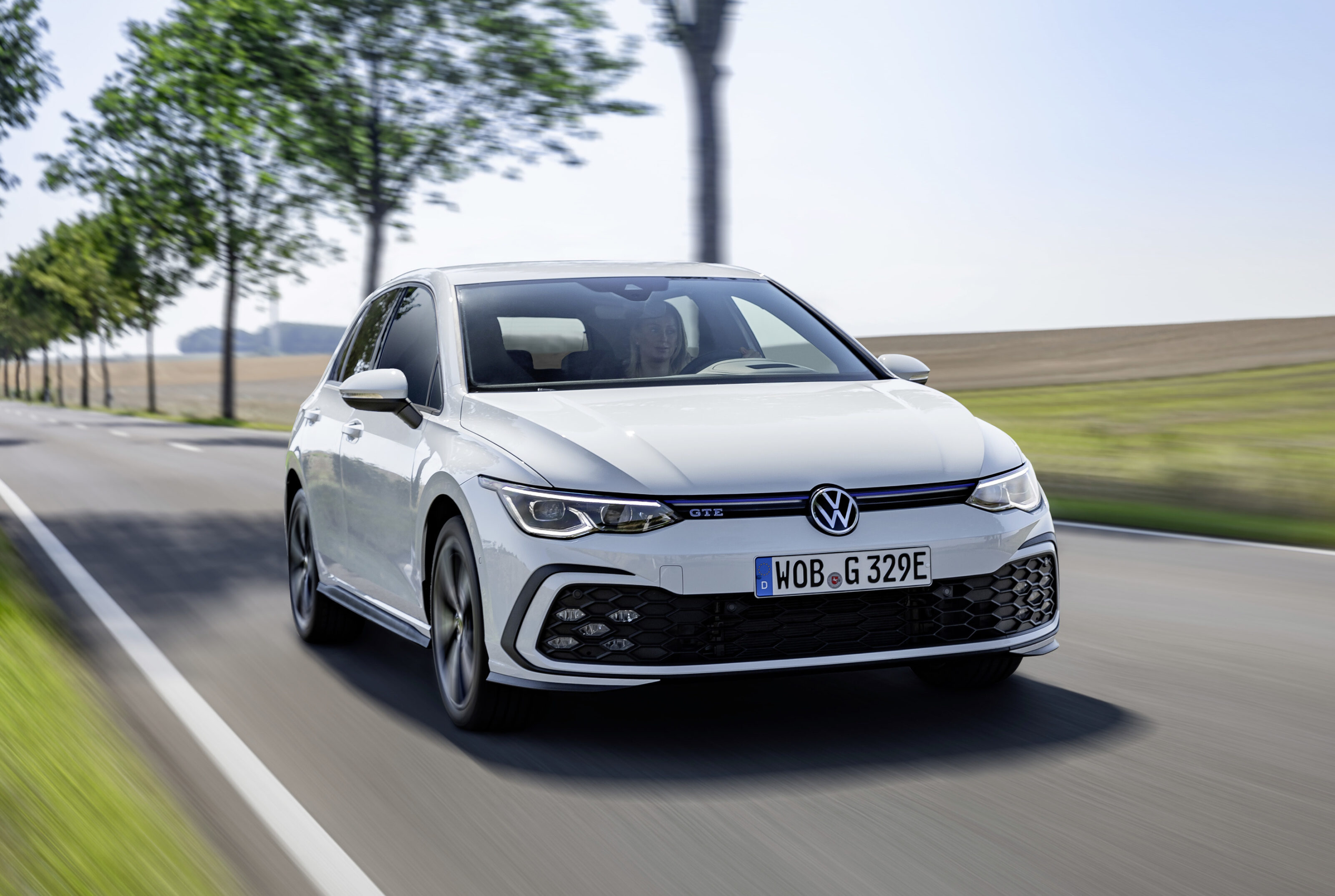
“From my point of view, it won’t be one with a combustion engine. It must be an electric vehicle,” Schäfer told the Spanish publication.
Schäfer’s comments support previous reports below that the next-generation Mk9 Golf will be electric and sit alongside the comparably-sized ID.3 EV hatchback.
However, it downplays hope that an all-electric Golf will be available in the current lifecycle prior to 2029.
Following Volkswagen CEO Thomas Schäfer’s comments at the LA Auto Show, company sources told German publication Handelsblatt that the car giant is considering either launching a new all-electric Golf hatchback by 2026 – prior to the release of Mk9 Golf.
Also floated was the idea of an electric version of the Tiguan medium SUV, after the carmaker’s Trinity concept’s release was delayed. It is understood Volkswagen is considering only one or the other, but not both electric Golf and Tiguan.
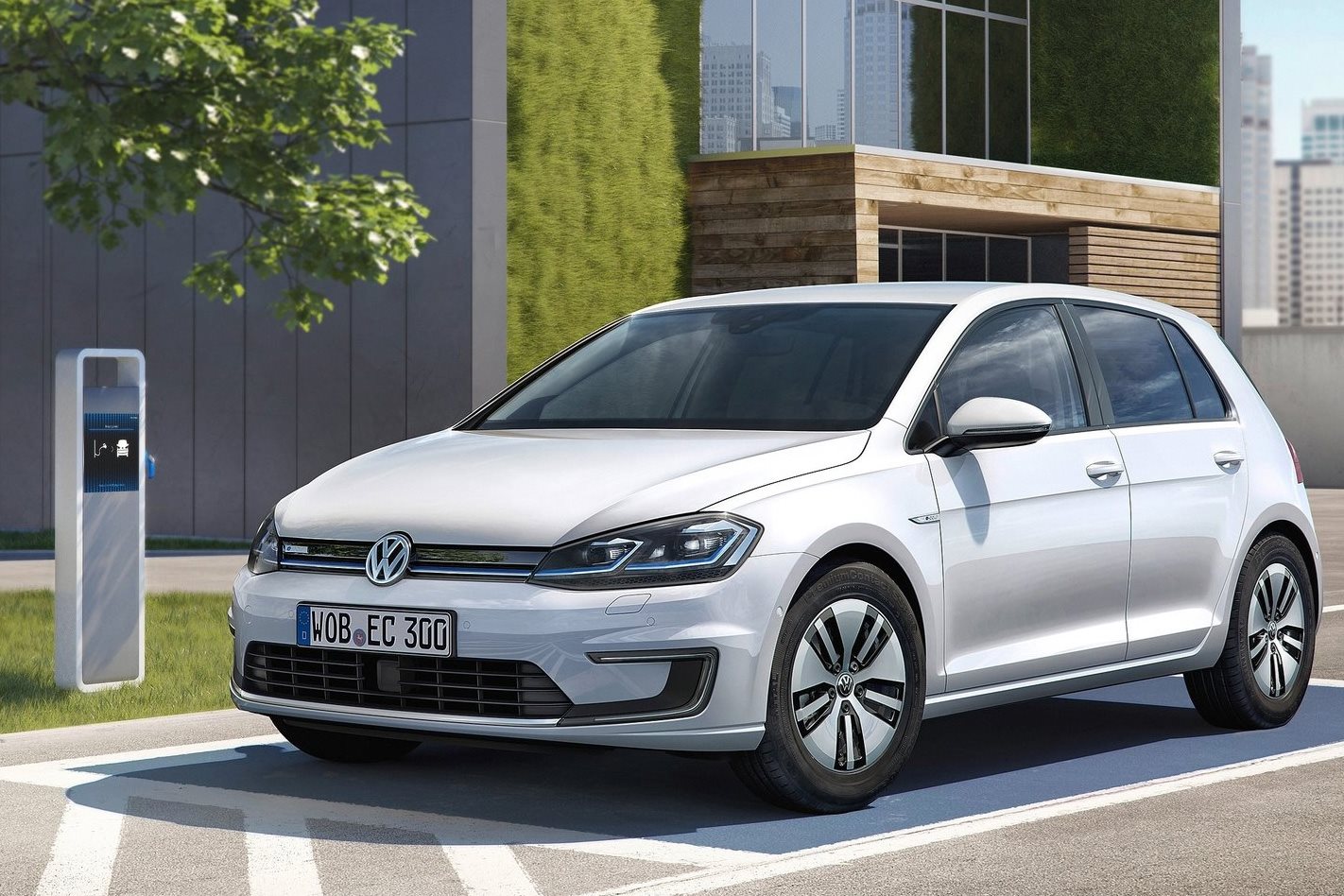
It’s reported that the electric Golf would be based on an updated version of the current Modular Electric Toolkit (MEB) platform that underpins Volkswagen Group electric vehicles such as the Volkswagen ID.3, Skoda Enyaq and Audi Q4 E-Tron.
It would be produced at Volkswagen’s main Wolfsburg factory to keep it running at capacity as more car buyers switch to EVs and move away from combustion engines over time.
This means we might not need to wait until the next-generation Mk9 Golf for a battery-electric version, which isn’t due until 2028. The report suggests either a Golf or Tiguan EV is being considered due to software development concerns delaying its long-range Trinity EV project to 2030.
The current Mk8 Golf uses an updated version of the MQB platform. Likewise, the third-generation Tiguan is expected to debut next year riding on the same updated MQB guise.
Our original story, below, continues unchanged
Volkswagen CEO Thomas Schäfer has confirmed the ninth-generation Golf hatchback will be offered with a fully-electric variant, but it won’t be replacing the current ID.3 EV.
Instead, Schäfer suggests the iconic 48-year-old Golf nameplate could merge with the current line-up of dedicated ID. branded electric vehicles at the end of the decade – potentially ID.Golf?
“There is a connection with VW and ID, and there is no need to cancel [ID.],” Schäfer told Autocar.
“We have iconic brand names, Golf and GTI. It would be crazy to let them die and slip away. We will stick with the ID. logic but iconic models will carry a name.
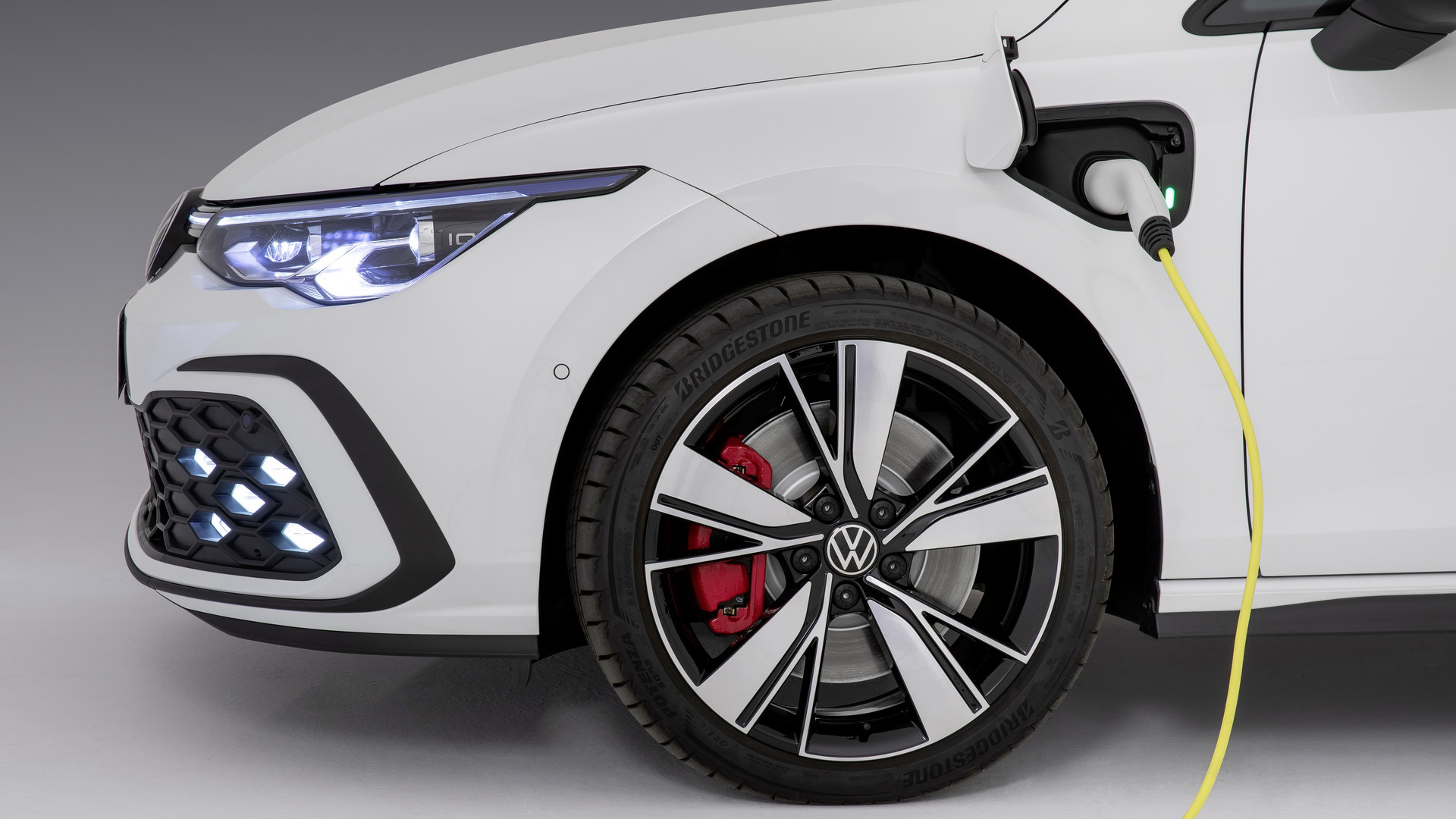
“The ID.3 has never been a successor to the Golf, it is more a Golf Plus.”
That’s despite the automaker stating that the ID.3 is the third-generation Volkswagen product after the Beetle and Golf when it first debuted globally in 2019.
When the current Mk8 Golf retires by 2028, the all-new Mk9 Golf is expected to still offer combustion and electric powertrains, and sit underneath the ID.3 – which will likely be in its second-generation form by then.
The German carmaker is set to debut its scalable Scalable Systems Platform (SSP) from 2026, which will underpin most of the group’s new vehicles and succeeds the Modular Transverse Matrix (MQB) and Modular Electric Toolkit (MEB) platforms currently used in the Mk8 Golf and similarly-sized ID.3 respectively.
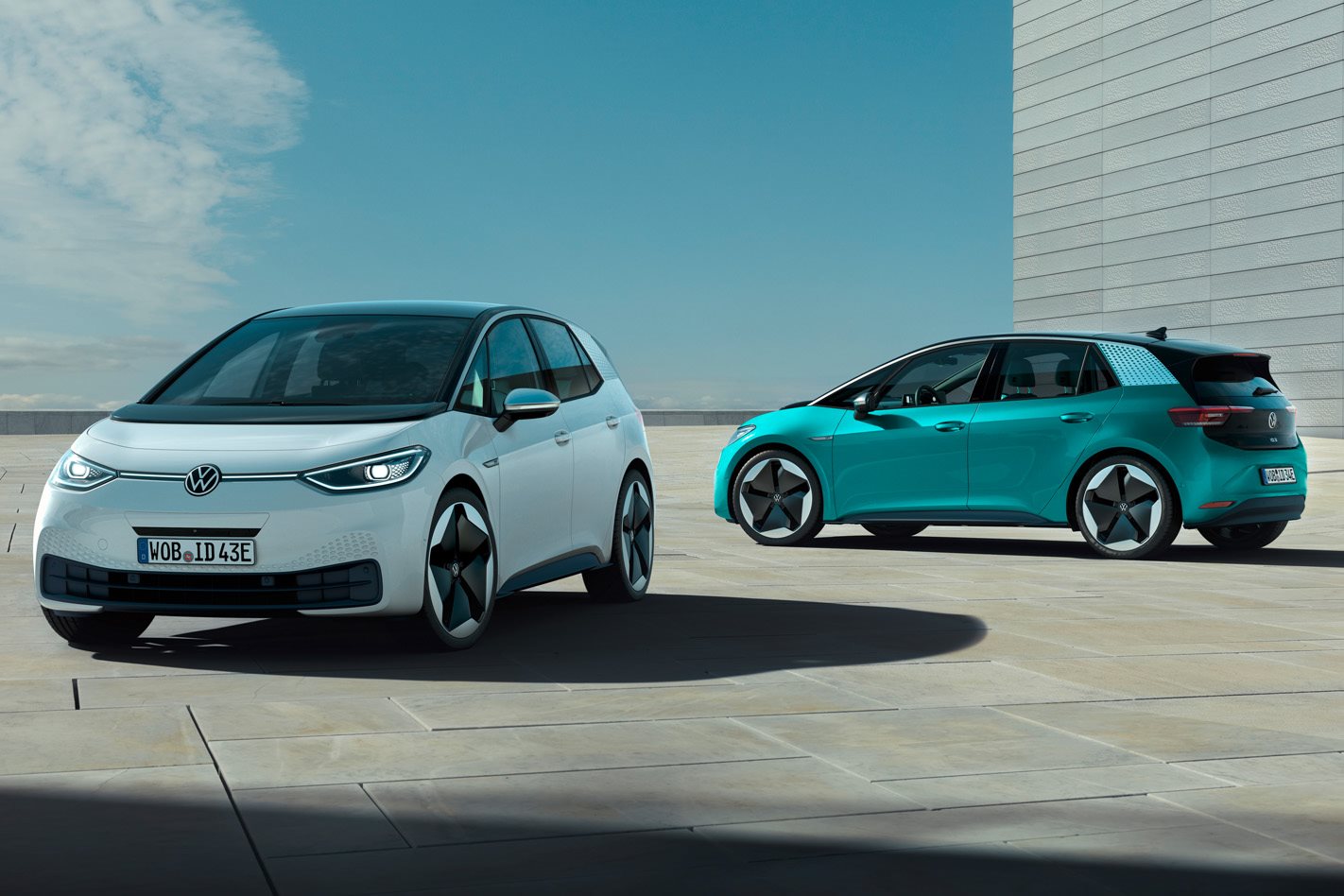
Despite the Volkswagen ID.4 and ID.5 medium SUVs and ID.3 small hatchback, the ID.Buzz retro van and ID.Aero concept car sedan suggests the line-up won’t be limited to numerical nomenclatures.
It seems like the ‘ID.Golf’ would be a similar approach to the Mk7 and Mk7.5 small car, which was offered in a pure-electric version called the e-Golf overseas. It was sold between 2015 to 2020 and featured an identical design to the standard petrol-powered Golf, bar more aerodynamic wheels, a tweaked front bumper and blue lines stretching from the headlights.
The ID.4 and ID.5 are due to land in Australia from late 2023, while a mid-life facelifted version of the ID.3 is expected in 2024. However, the latter will be ousted by the sportier-looking Cupra Born as the group’s first MEB-based small hatch to lob locally early next year.
