
Snapshot
- Hertz research: electric rental cars ideal ‘try before you buy’ experience
- 59 per cent of respondents considering going EV next
- Ex-rental cars will bolster second-hand market
New research conducted by Hertz has found 67 per cent of respondents considered renting a Polestar 2 or Tesla Model 3 as the perfect ‘try before you buy’ experience for an electric car.
This is unique from petrol or diesel rentals that are typically convenience- or business-related.
Of the respondents, 59 per cent said they were considering an EV as their next car, with cheaper fuel prices (78 per cent), reduced carbon footprint (75 per cent), keeping up with the times (63 per cent) and lower maintenance costs (33 per cent) reasons for switching.
These numbers demonstrate serious interest in the technology, especially when considering only two per cent of respondents owned an EV and fewer than five per cent had ever driven one.
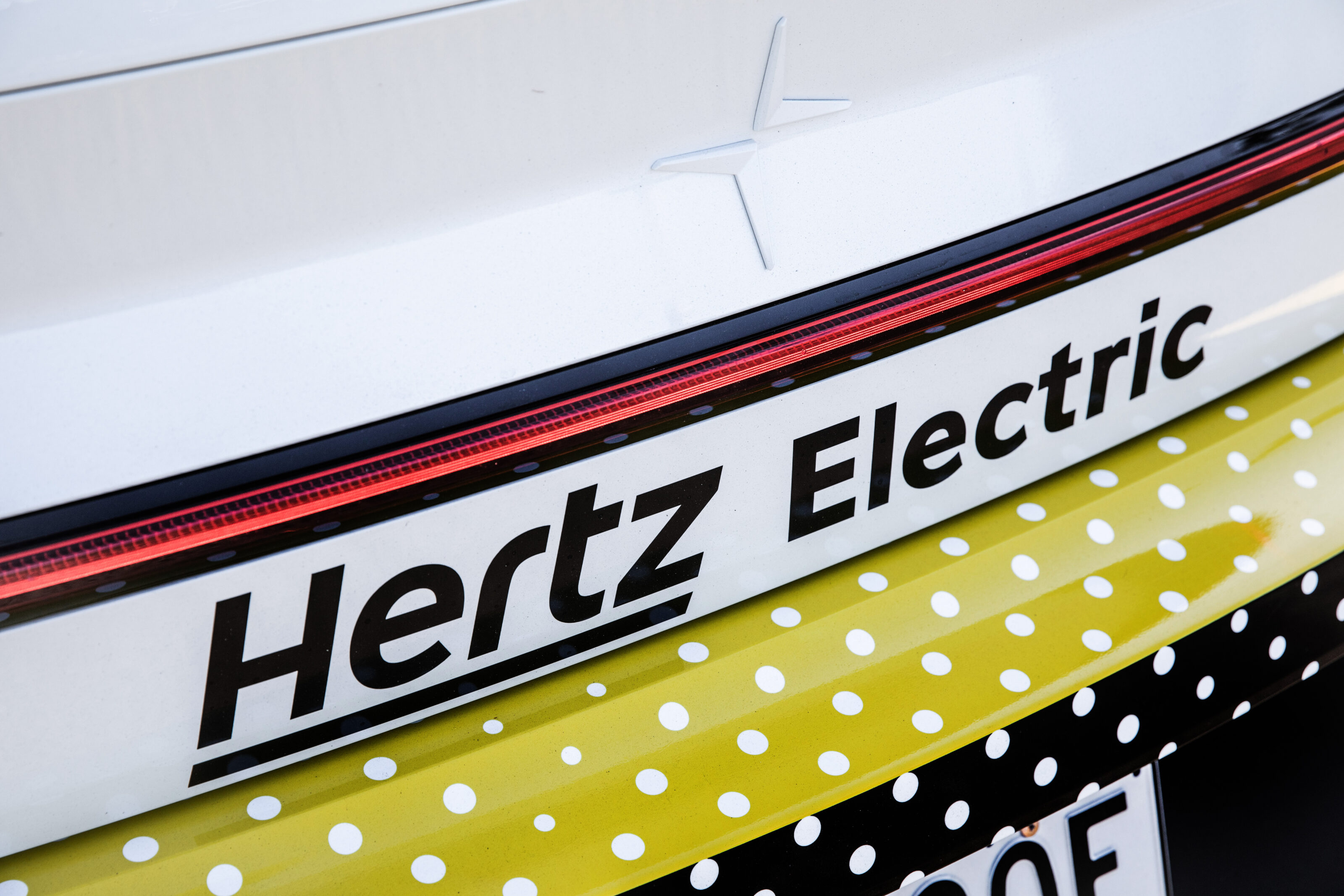
Hertz has signed deals internationally with electric carmakers Tesla and Polestar, and while these brands have become part of the street furniture in Los Angeles and Norway, in Australia the story is a little different.
Tesla has been making huge inroads – breaking into Oz’s monthly top-10 sellers with its Model Y SUV – but what these start-up brands don’t offer are traditional bricks-and-mortar dealerships, so the classic Sunday test drive is a little harder to come by.
That’s where Hertz says it has the potential to step in, offering not only low-emissions vehicles for holidaymakers, but also extended test drives for prospective customers.
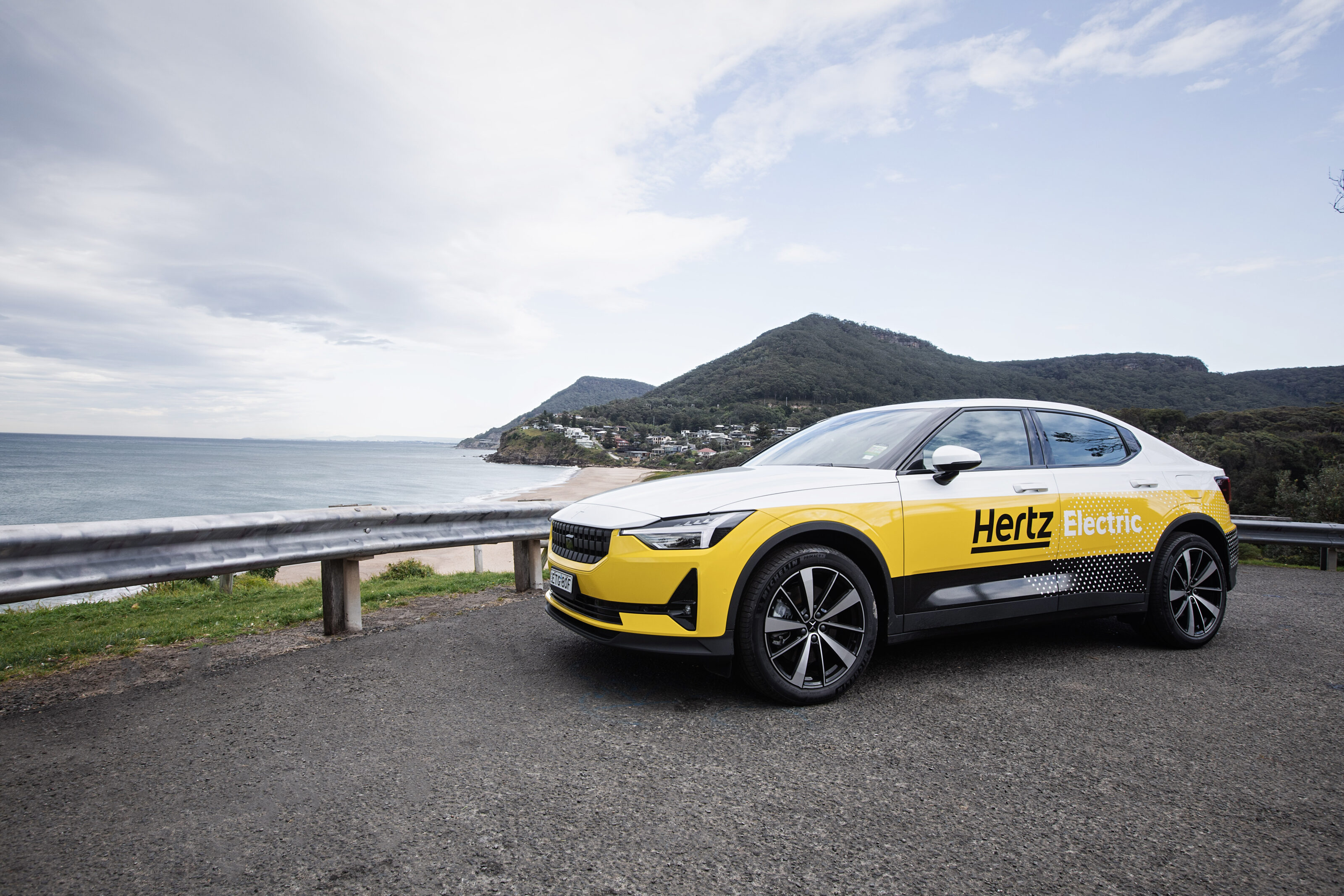
“As a country, we are becoming more environmentally conscious. In fact, our research found that the vast majority (80 per cent) of Australians identify themselves as eco-conscious,” said Hertz APAC vice president, Eoin MacNeill.
“At Hertz, we’re prioritising providing our customers with the opportunity to travel more sustainably and the response to date has been excellent.”
Price the biggest barrier for EV adoption
One of the key barriers to adoption noted in Hertz’s research was the perceived price of EVs, with 70 per cent of respondents saying they believe electric cars are too expensive.

It’s a story WhichCar sees playing out in comment’s section discourse, and of course, Hertz will have a role to play in making EVs more affordable as rentals finish their fleet lives and move into the second-hand market.
The typical life cycle of a rental car, according to the company, is between 18-24 months of service with a cap of 50,000 kilometres. However, noting the lack of a combustion engine to maintain, MacNeill said that EV’s fleet lives could be extended.
“With an EV, there’s potential for us to extend the vehicle’s life to double that mileage, as the kilometres do not have the same wear and tear on an EV’s engine the same way it does with an internal-combustion engine (ICE) vehicle. This will be assessed over time once we have more EVs on fleet and have experience of the longevity.”
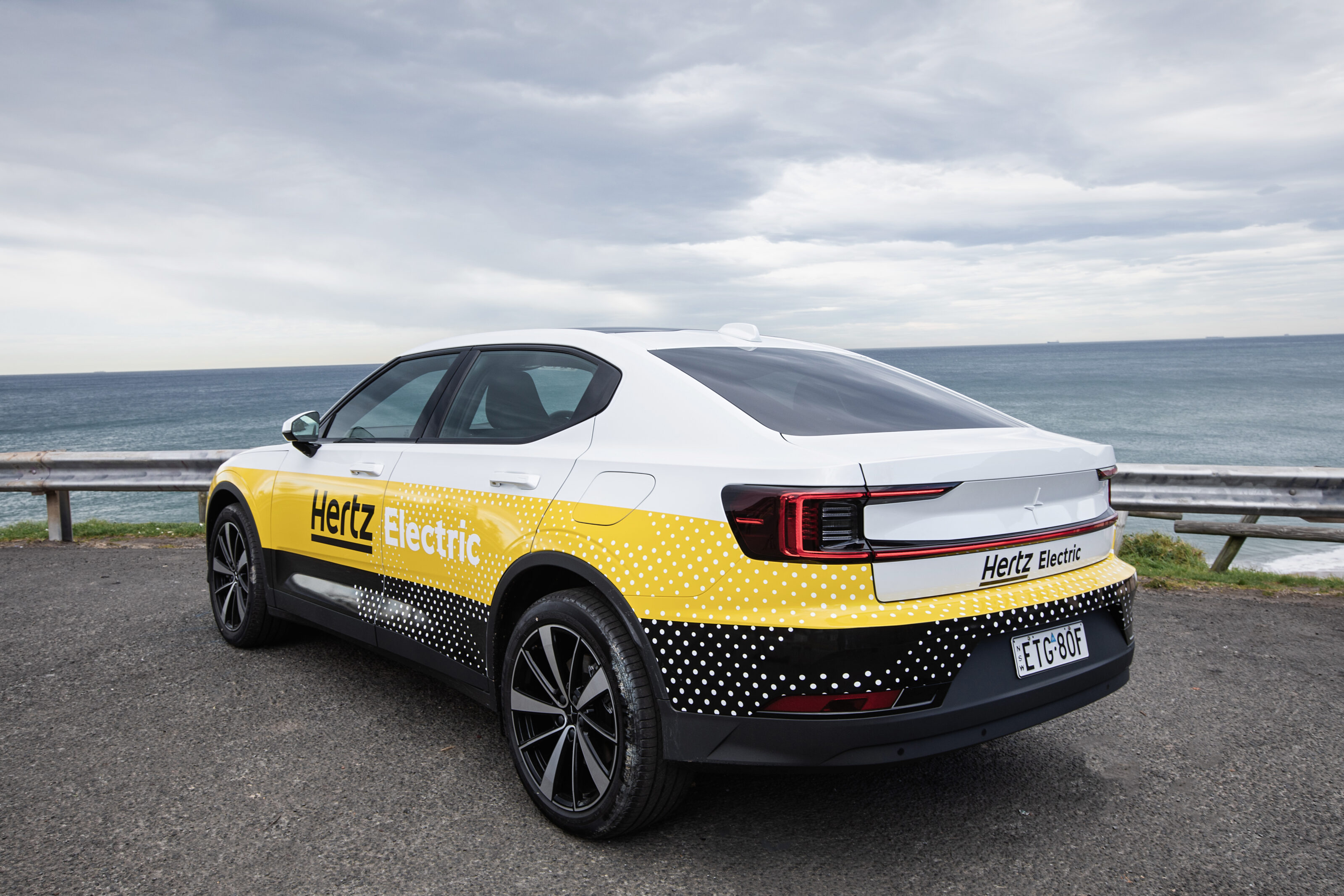
Buying a second-hand car from a rental fleet is something that’s typically not advised – especially when it comes to ICE vehicles that may not have been treated as sympathetically by renters as a paying owner would.
Eoin MacNeill assured WhichCar that its Polestar and Tesla vehicles will be maintained at authorised repairers, with the 30,000km intervals of the Polestar observed and condition-based Tesla servicing completed as required.
Additionally, before sending the cars to auction Hertz has vowed to have their conditions assessed thoroughly.
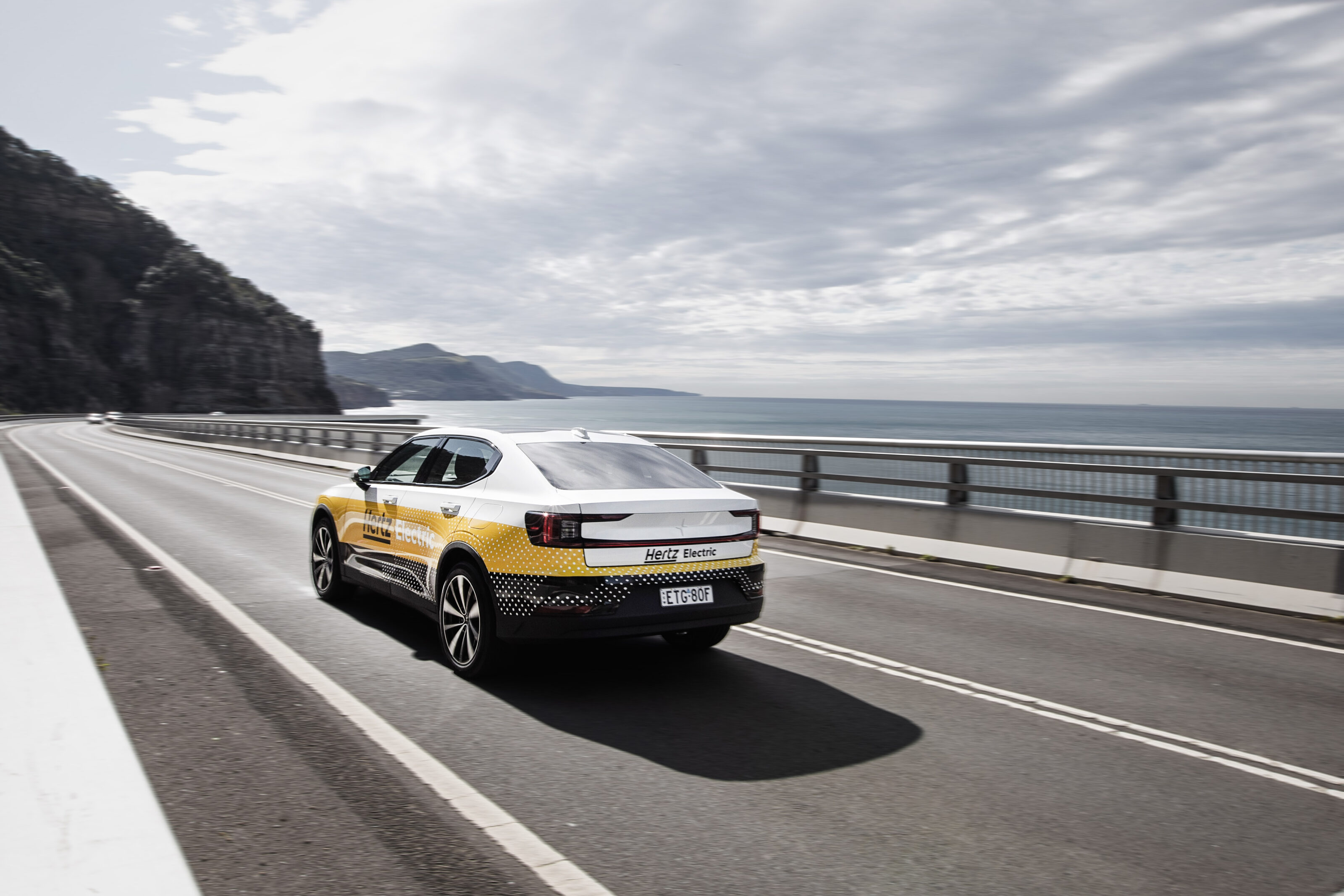
“Before EVs are sold on the used car market, they will undergo a thorough review which includes assessing battery health, how well the charging system is operating, the condition of the charge sockets, the condition and operation of any portable electric vehicle supply equipment (EVSE) and lastly, how well the EV operates in different driving modes.
“We want to ensure that consumers seeking to get into the second-hand EV market are able to purchase a vehicle that runs optimally.”
What else is holding back adoption?
Hertz’s research also found 52 per cent of respondents thought charging infrastructure was lacking, and that 28 per cent simply didn’t have enough knowledge of electric vehicles.
“We’re finding that customers who try our EVs, love them. Not just because of the environmental benefits, but also because the experience is helping them to dispel some of the predetermined myths they may have had about driving one”, MacNeill said.
Snapshot
- Flagship EV6 GT arriving January 2023
- Circa-100K price tag makes it dearest Kia ever
- 430kW of power and 740Nm of torque
- Full Australian chassis and steering tune
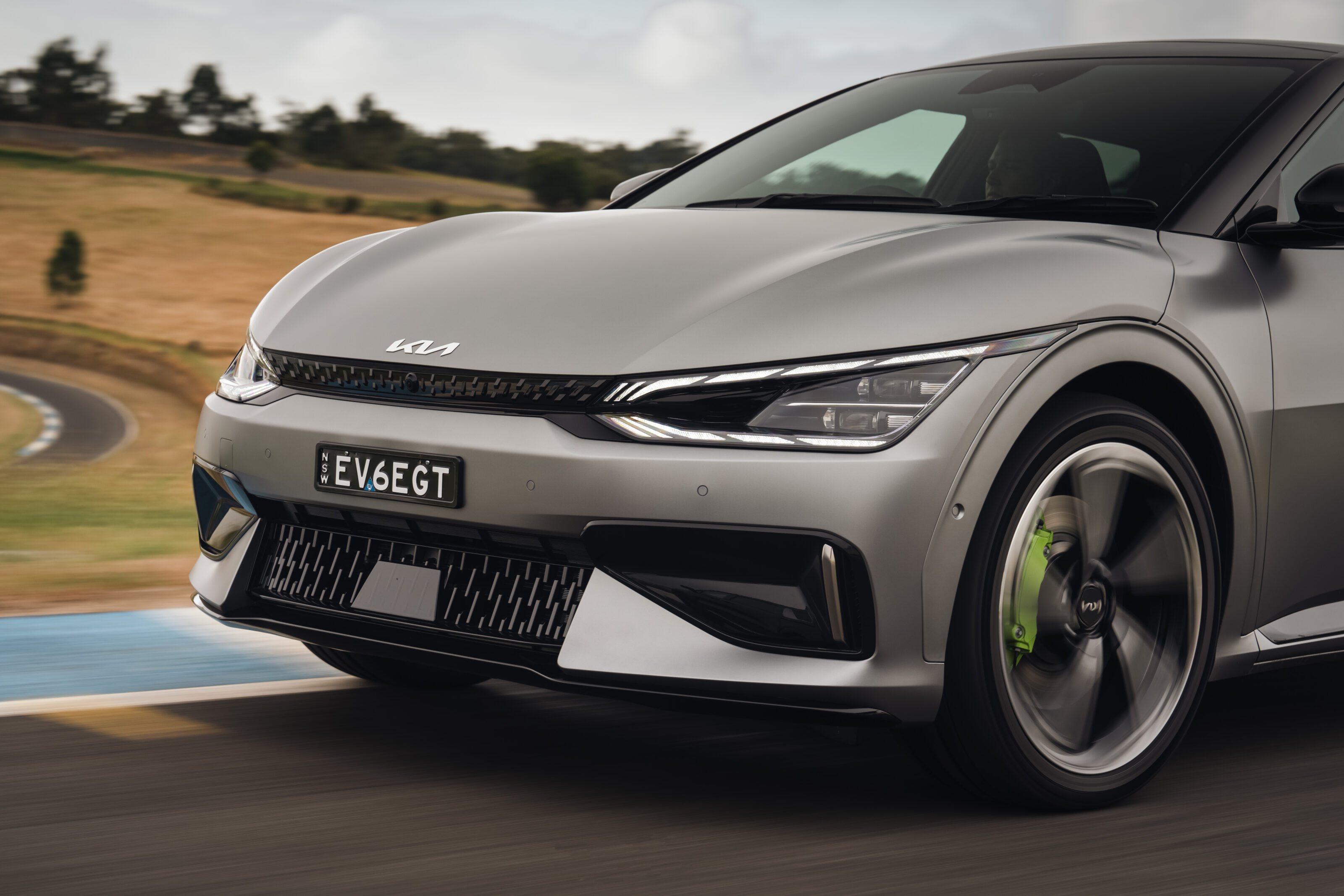
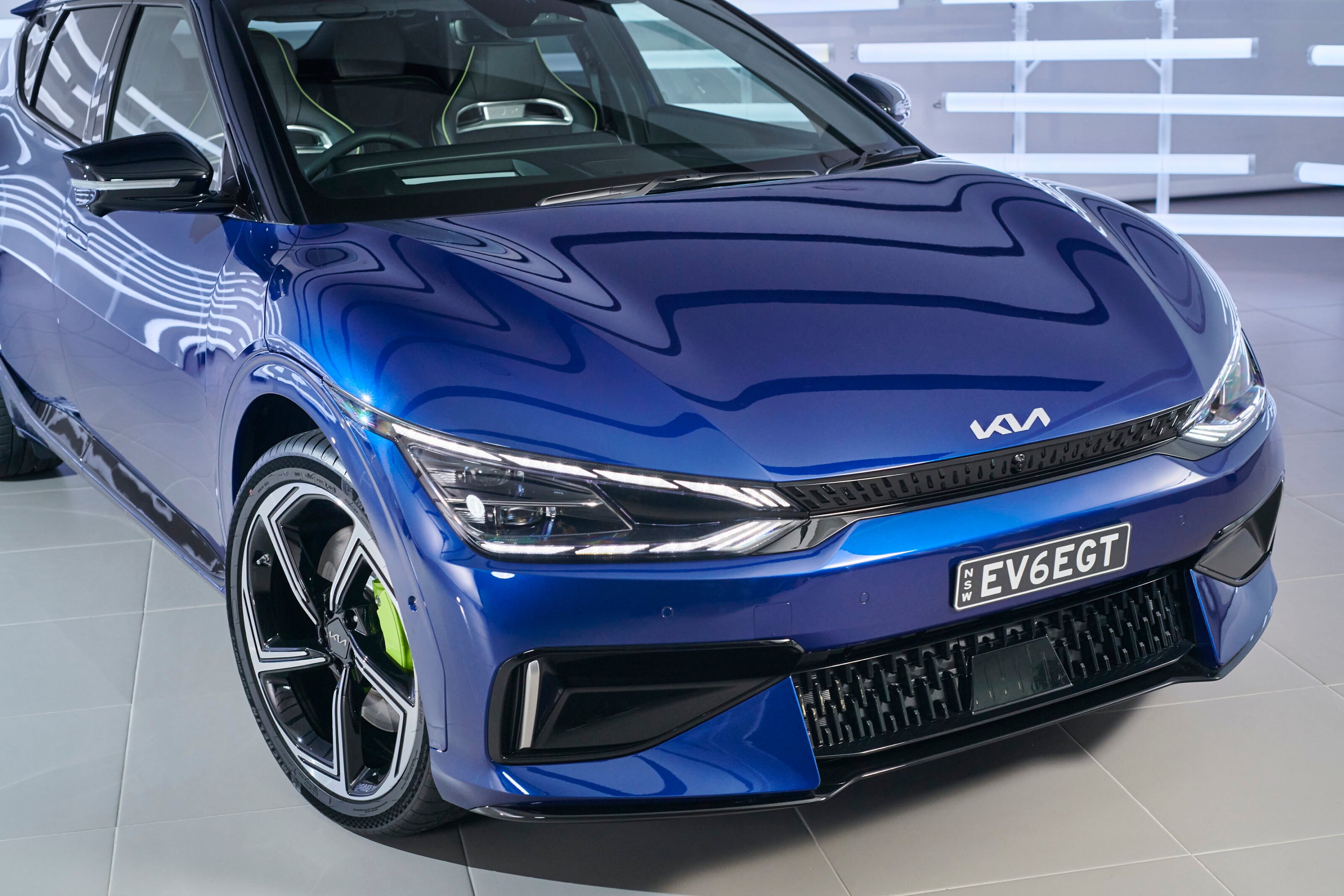
The EV6 GT – Kia’s most powerful and expensive vehicle yet – is set for an Australian release in January 2023.
A list price of $99,590 before on-road costs was leaked earlier in the month, though Kia is yet to confirm this is the final ask. Still, justifying that expected price are 430kW/740Nm outputs courtesy of two electric motors, for a 0-100km/h sprint time of 3.5 seconds.
Driving range for the E-GMP-based EV6 GT is rated at 424 kilometres on the WLTP combined cycle from the same 74kWh lithium-ion battery pack as cooking EV6 GT-Line and Air variants.
UPDATE, January 2023: Kia EV6 GT driven in Australia
“This isn’t even my final form”, chuckled the 239kW & 605Nm EV6 GT-Line last year. Now we understand… see our first drive review of the flagship EV6 GT, including a track test, at the link below.
Story continues…
The EV6 offers a fair bit of punch, and will square up against the Tesla Model Y Performance ($98,425) as well as the Ioniq 5 N when that electric hot hatch lobs.
The EV6 has another party trick: the ability to disable ESC and traction control and initiate a rear-biased drift mode offering up smokey slides from a rear limited-slip differential – provided there’s more than 70 per cent in the battery.
As part of Kia’s USP, the EV6 GT has also been treated to local tuning by chassis dynamicist Graeme Gambold and his team, who have tweaked steering, anti-roll bars, adaptive damper valving and programming to hone the 2125 kilogram EV for Aussie roads.
Who is the EV6 GT customer?
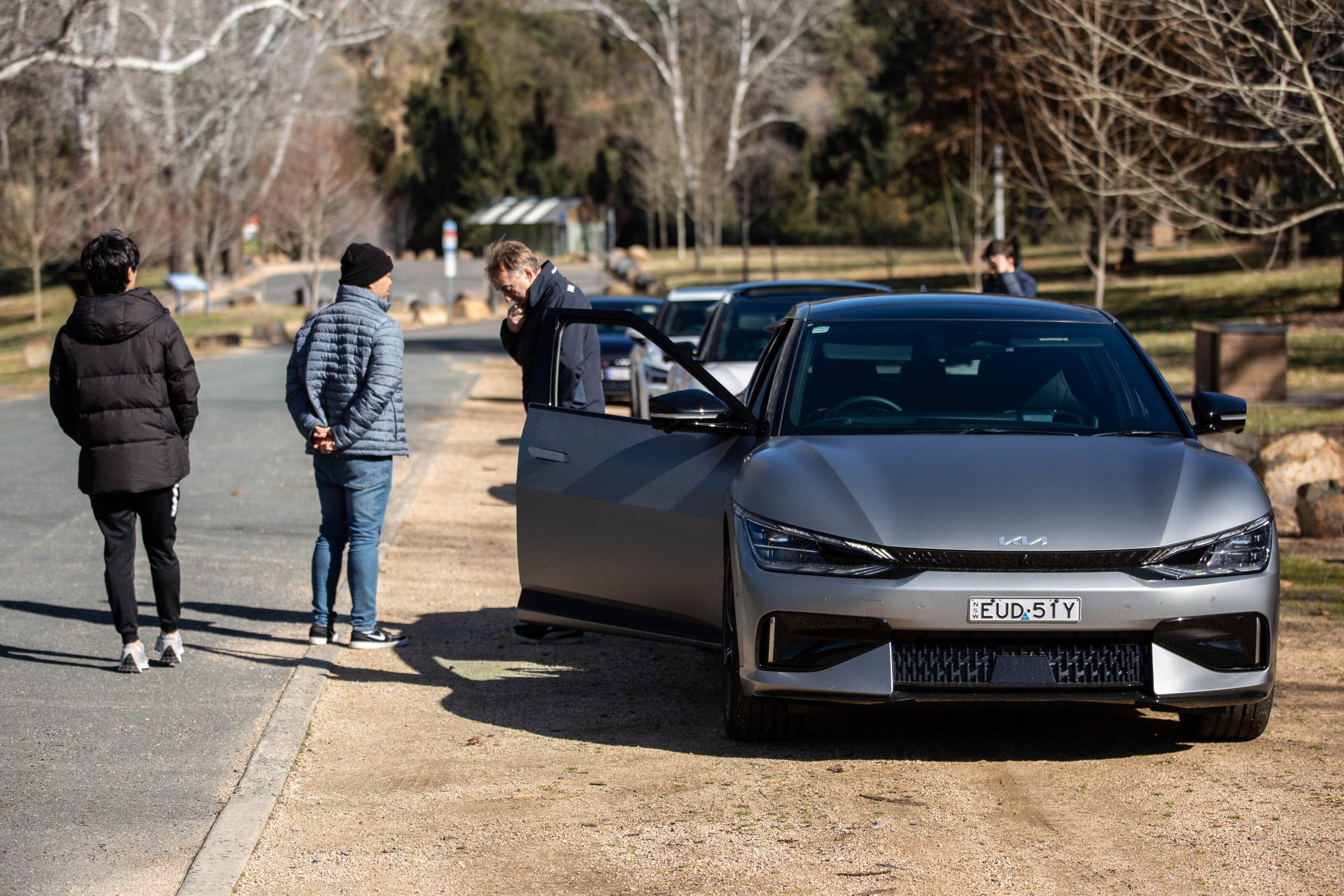
According to Kia’s general manager of marketing, Dean Norbiato, the EV6 GT is attracting a whole host of new customers, with 50 per cent of web traffic from those interested in traditional luxury brands, 30 per cent from Kia’s existing customer base, and 20 per cent elsewhere.
Despite the high price-of-entry ‘for a Kia’, COO Damien Meredith was adamant the brand’s new halo won’t be driving customers away from the brand.
“I don’t think we’re alienating customers… I think there’s two pots of EV sales at the moment, there’s the price-driven EV and the performance-driven EV.
“We’ve gone for the performance pot in regards to what we’ve done with the [EV6 GT] specifications. There’s definitely a price pot there, but as time goes on, and we get more EVs into play you can be sure that we’ll be, probably not at the lowest end, but we’ll be coming down the pyramid”, Meredith said.
Kia GT brand expands
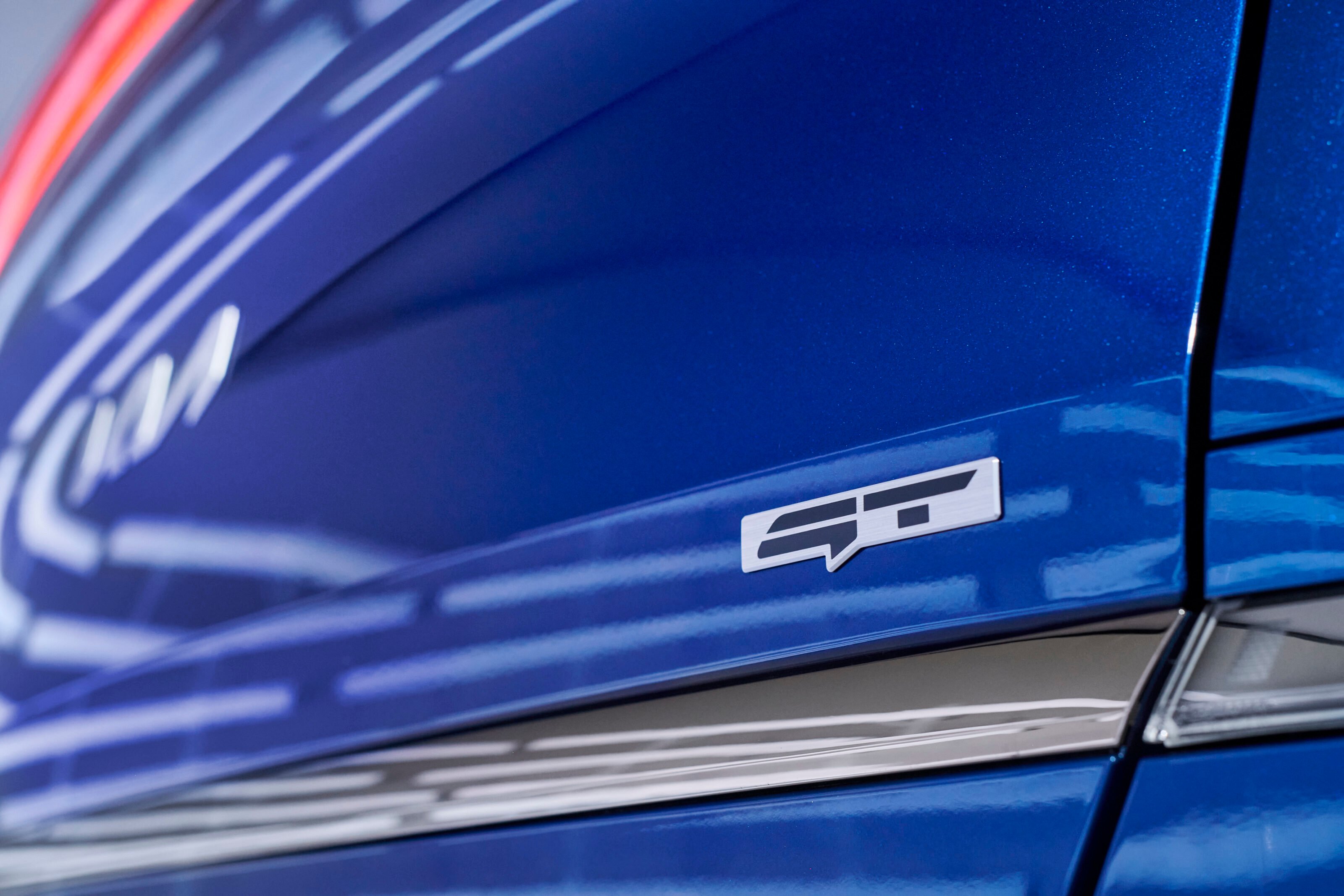
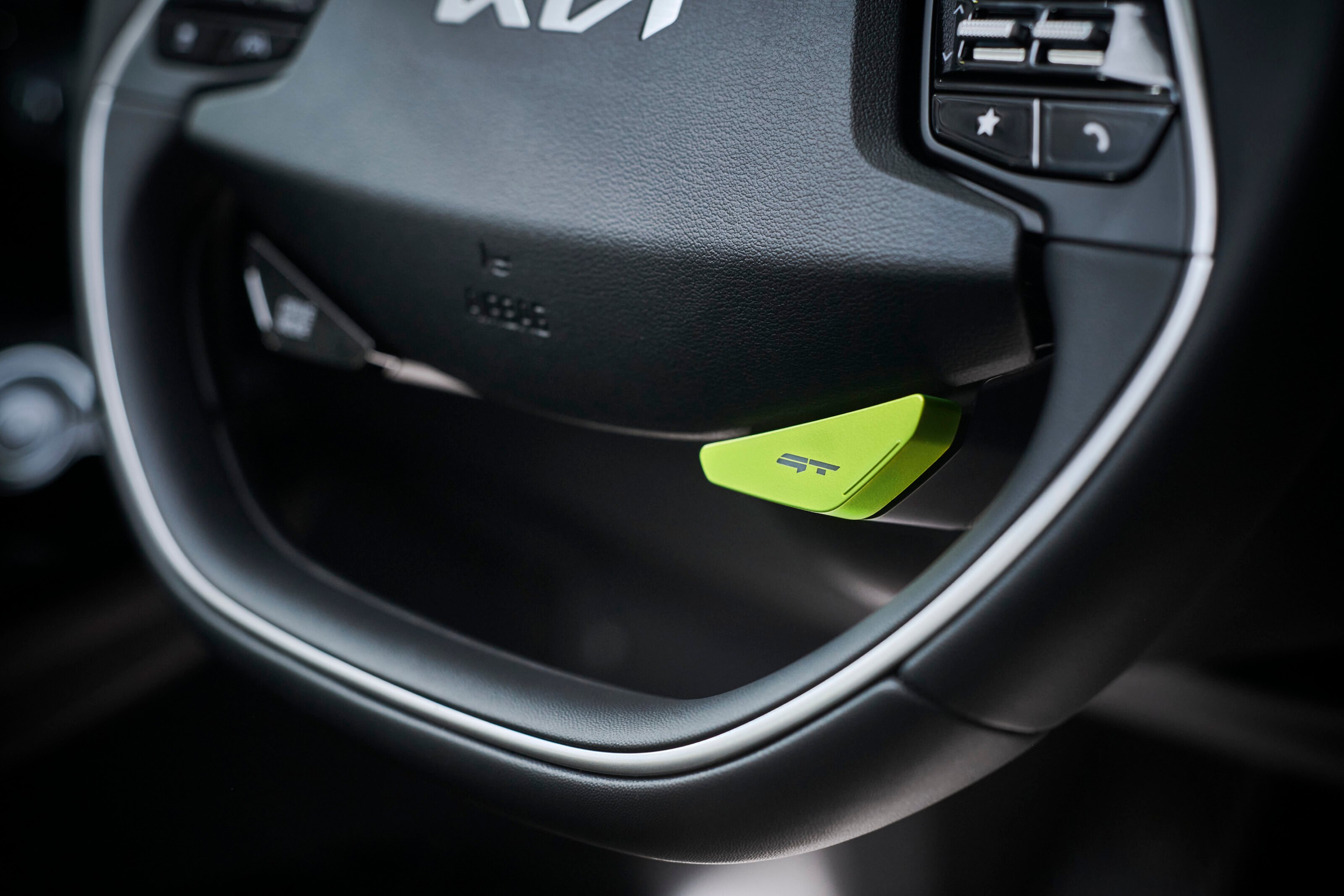
With Kia’s GT brand becoming more serious by the day, performance driving and track days are likely to become part of the EV6’s wheelhouse. Norbiato said tie-ins with the Broncos NRL Football team will happen, but also that buyers are interested in programs and events similar to those we’ve seen from Hyundai’s N Performance brand.
“The punters are quite active now, the amount of Facebook groups popping up for [the EV6 GT] in particular is high.
“We’re going to look at trying to create some user-generated content from that, because we do feel that the GT does suit the track experience, more so than the GT-Line and Stinger”, Norbiato said.
As for the future of the GT brand, the Kia team notes that like the carmaker itself, the performance moniker will evolve in line with global intentions, though likely with stricter definitions of the cars and segments that are allowed to wear the badge.
EV6 GT Australian supply
Supply will be crucial to the EV6’s continued success, especially after well-documented wait times and slow shipments in 2022. For 2023, Kia is looking to secure a greater number of EV6s.
“Our expectation is that supply will be pretty good”, Meredith said optimistically. “It will probably be a bit over two-and-a-half to three times what it was this year.”
With a month left in 2022, Kia has managed to shift 533 EV6s. That’s a little adrift of Hyundai Ioniq 5s (678), less than half the number of Polestar 2 sales (1265) and not in the ballpark of Tesla’s staggering 8257 Model Y registrations.
With two-and-a-half to three times 2022’s supply, we can expect upwards of 1500 EV6 deliveries in the next calendar year.
“Now, obviously, there’ll be more orders than there is supply”, Meredith added, though Kia will be able to chop-and-change specification within that limit.
Effectively, if the predicted 70 per cent of demand comes from EV6 GT, Kia will be able to accommodate this. And as the demand changes month-on-month, as will the production to reflect what customers want.
EV6 GT Australian chassis tuning
Despite being equipped with the same visage as everywhere else, Australian EV6s are a little different under the skin, having had their steering, anti-roll bars and active dampers fettled for our market.
“Our road conditions are quite different from the global measure, so we spent a lot of time having to tailor the suspension tune and vehicle dynamics to be suitable for Australian conditions.
“So the focus for [the EV6 GT], certainly against the European European tune, is that we’ve been looking to improve its rough road grip, and confidence at the limit”, Gambold told Wheels.
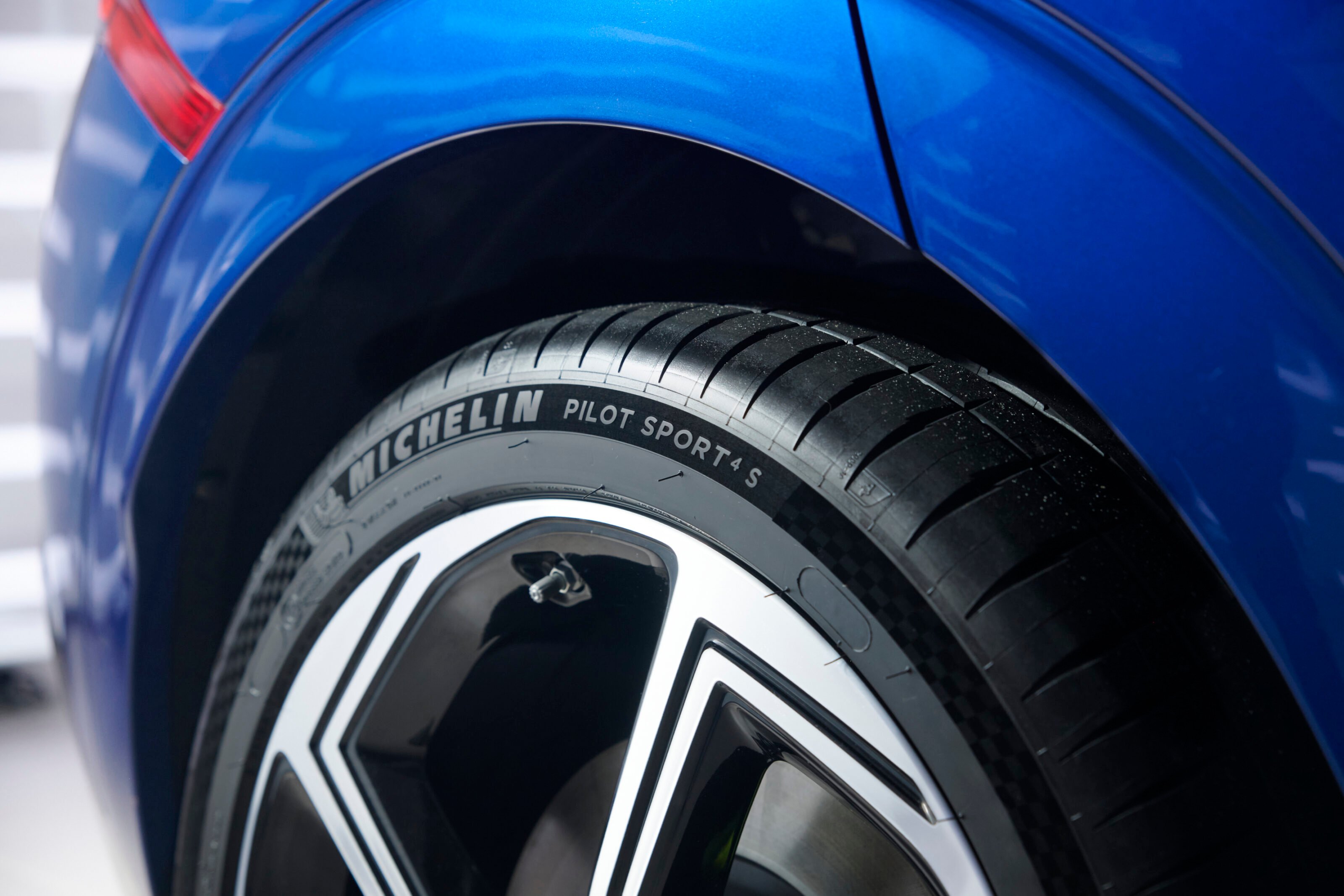
As for what that looks like – and if Kia has managed to make the ride on 255/40 R21 Michelin Pilot Sport 4 S tyres agreeable – we’ll have to wait until our first drive in January 2023.
Australian pricing, specification and details
One aspect the $100K EV6 GT doesn’t offer is extensive customisation, with only six colours to choose from, one upholstery pattern and no options, there isn’t as much choice as Polestar or Tesla offer for similar money.
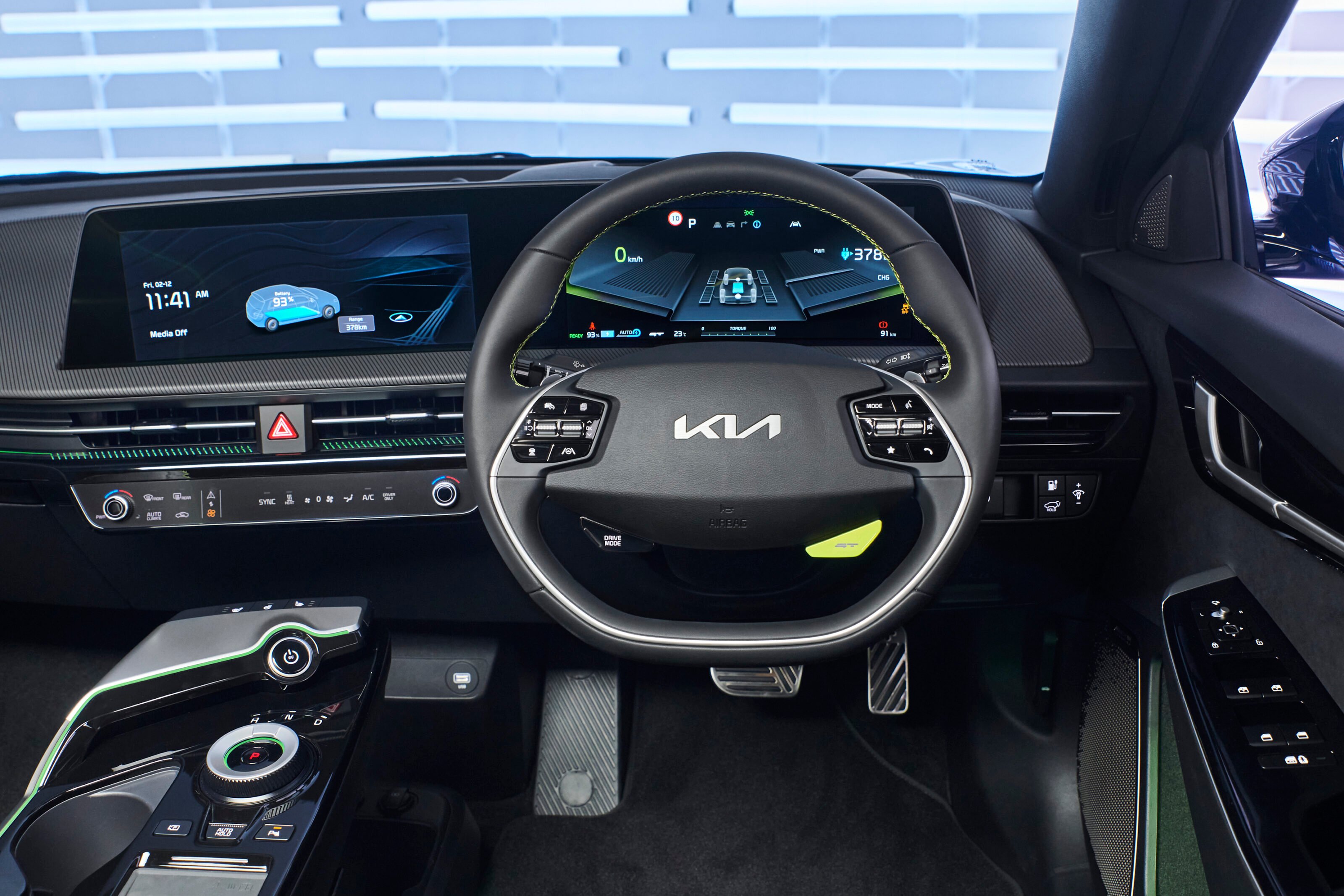
Inside, there is a familiar architecture with wireless charging pad, dual 12.3-inch screens – one touch for infotainment and the other for the digital driving display.
The EV6 GT also ditches the GT-Line’s luxurious power leather-appointed seats for low-set manually-adjustable buckets designed to better interface with helmets.
EV6 GTs will begin rolling out onto Aussie roads in earnest next January, with pricing almost certain to start at $99,590 before on-road costs.
If Costco sold vehicles (well actually, Dan…), its warehouse racking would be stacked to the purlins with cars like the Nissan Pathfinder.
In recent years, the large SUV has stood as a monument to the fact that sometimes quantity is the most important factor in choosing a new car, with cost a close second.
But it hasn’t always been that way. When it was introduced in 1985, the Pathfinder was a relatively capable two-door off-roader with body-on-frame construction and design by the same guy who penned the 1968 Pontiac GTO.
As it evolved, however, the Pathfinder slid further in a conservative direction, becoming a price-led ‘soft-roader’ with families as its majority audience.
For the fifth-generation model though, Nissan wants to rekindle some of that original sense of adventure and a Pathfinder that can stand out from the large affordable SUV crowd rather than disappear into it.
JUMP AHEAD
- How much is it, and what do you get?
- How do rivals compare on value?
- Interior comfort, space and storage
- What is it like to drive?
- How is it on fuel?
- How safe is it?
- Warranty and running costs
- VERDICT
- Specifications
How much is it, and what do you get?
The fifth-generation Pathfinder kicks off from $54,190 for the entry two-wheel drive ST, but as Nissan is pitching its new model as a more capable and adventurous iteration, we’re focusing here on the $70,030 high-spec Ti in all-wheel drive form (both prices before on-road costs).
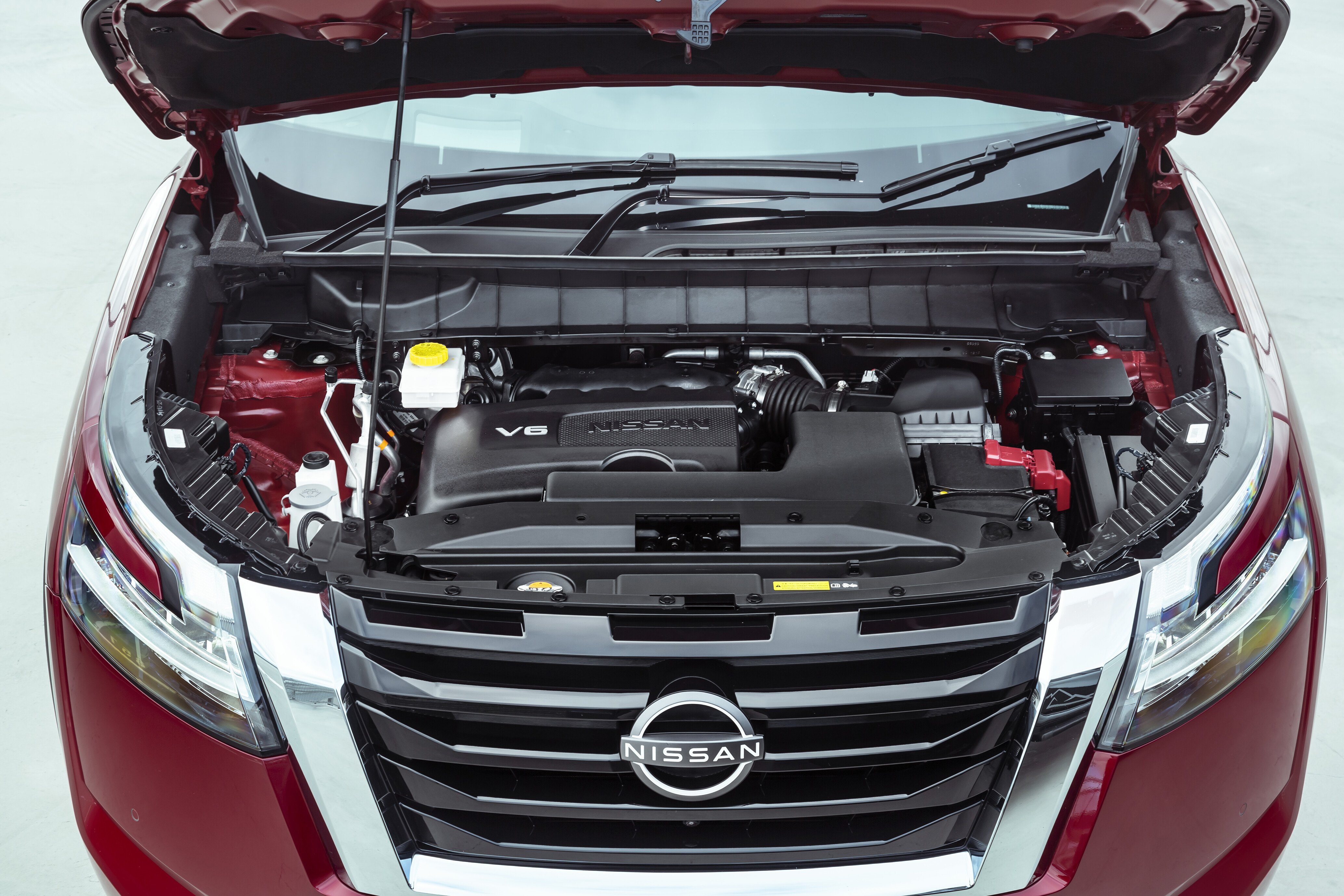
There’s only one variant above it with the Ti-L at $80,227 before on-road costs. Regardless of which version you might be interested in, each Pathfinder has the same driveline combination with a carry-over 3.5-litre V6 petrol engine.
The big powertrain news is a switch to a more traditional nine-speed automatic transmission which replaces the polarising CVT of the previous generation.
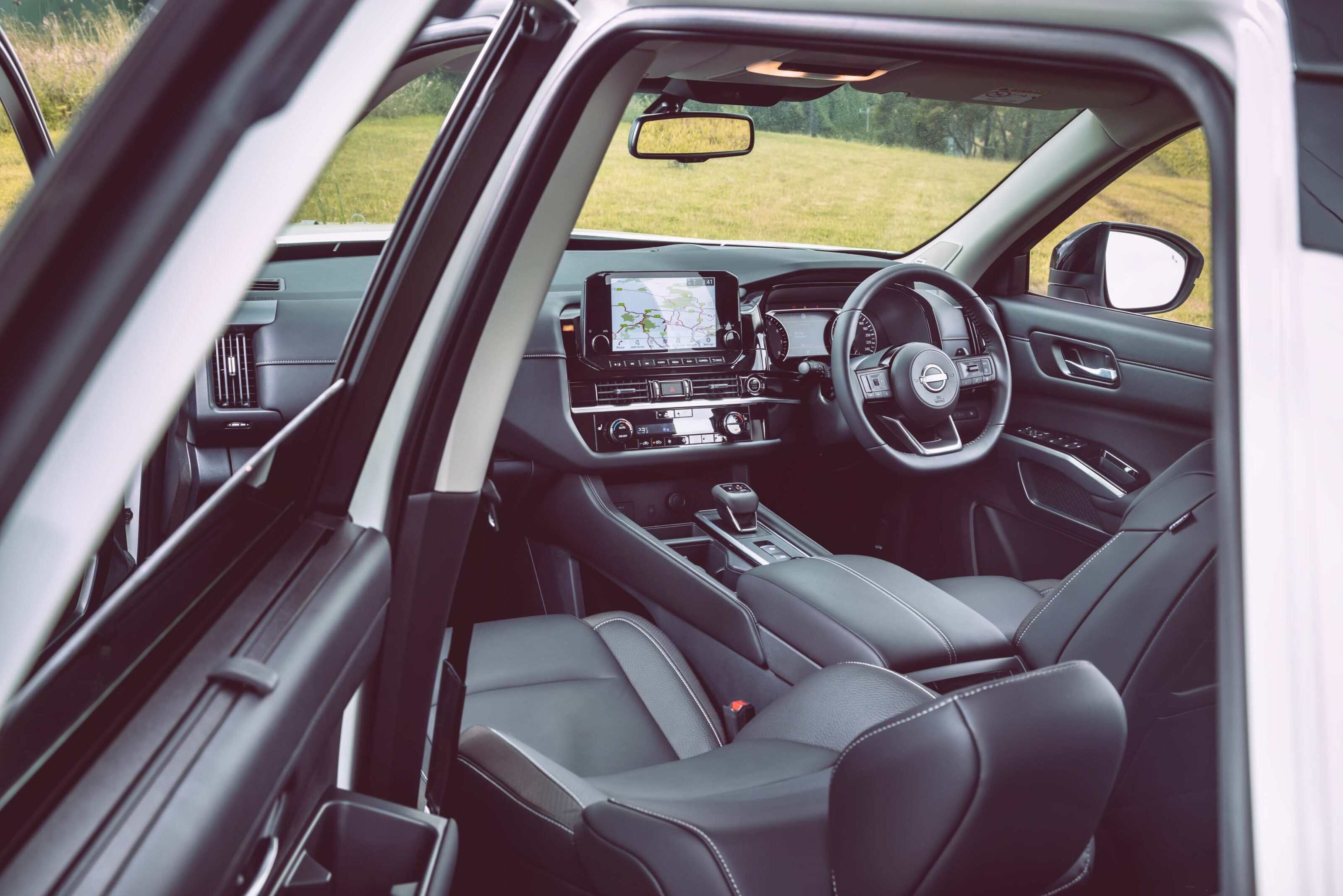
Even at entry level, the Pathfinder is impressively equipped, all versions treated to auto LED headlights, keyless entry and start, heated front seats, electric park brake, a comprehensive suite of safety and driver assistance systems, tri-zone air conditioning, a 10.8-inch head-up display, 9.0-inch central touchscreen and a further 7.0-inch digital display positioned between the driver’s dials. Opt for the Ti-L and Nissan will turn this into a full 12.3-inch digital instrument cluster.
There’s also a whopping 12 cup holders plus six door bottle holders and seven seats for the top-spec Ti-L while all others get places for eight occupants.
Step up to the AWD-only ST-L ($61,790 before on-road costs), however, and the Pathfinder gains ProPilot driver assistance system that Nissan describes as ‘semi-autonomous’, Mud and Sand driving modes take the total to seven (along with hill-descent control), the steering wheel is leather-wrapped, parking sensors are added to the front end and Nissan throws in a power tailgate and remote engine start along with LED fog lights.

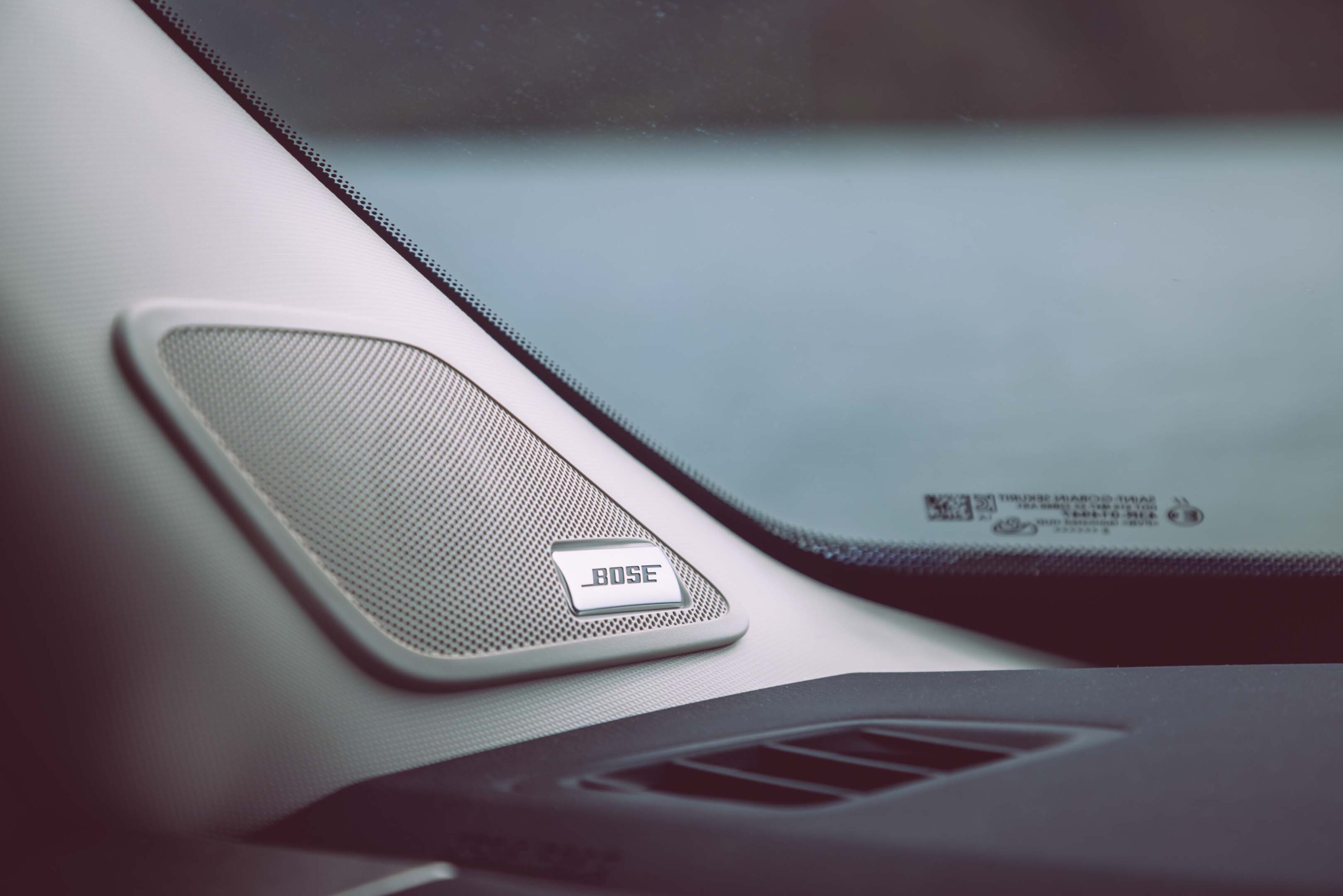
The Ti (available with front- or all-wheel drive) gets all that plus heated rear seats, part-leather upholstery, wireless device charging and wireless Apple CarPlay (although you’ll need to plug in for Android Auto), a 13-speaker stereo courtesy of Bose, and sunshades for the second-row seats.
Finally, another fifth-generation model enhancement has revised the Pathfinder’s platform and underpinnings, which has increased the maximum braked towing capacity to a respectable 2700kg for all versions.
How do rivals compare on value?
The affordable large SUV segment is a fearsome and unforgiving battleground and pricing is paramount with key rivals from Kia, Hyundai, Mazda, Toyota and Ford all offering something in the class for the same price.
Kia’s Sorento can be had with a choice of petrol, diesel and hybrid power and is a top-quality package of refinement and kit. Its pricing aligns closely with the Pathfinder upwards of the mid-range variants.
It’s the same case with the Mazda CX-9, although it’s only available with the excellent turbo 2.5-litre petrol across the board.
Like the Pathfinder, the venerable Kluger competes with a 3.5-litre V6 petrol with no turbo (although that is about to change) but there’s also a four-cylinder hybrid in the range too, while Ford’s recently arrived Everest offers a choice of turbo four-cylinder or turbo V6 diesels along with its tech-packed and modern cabin.
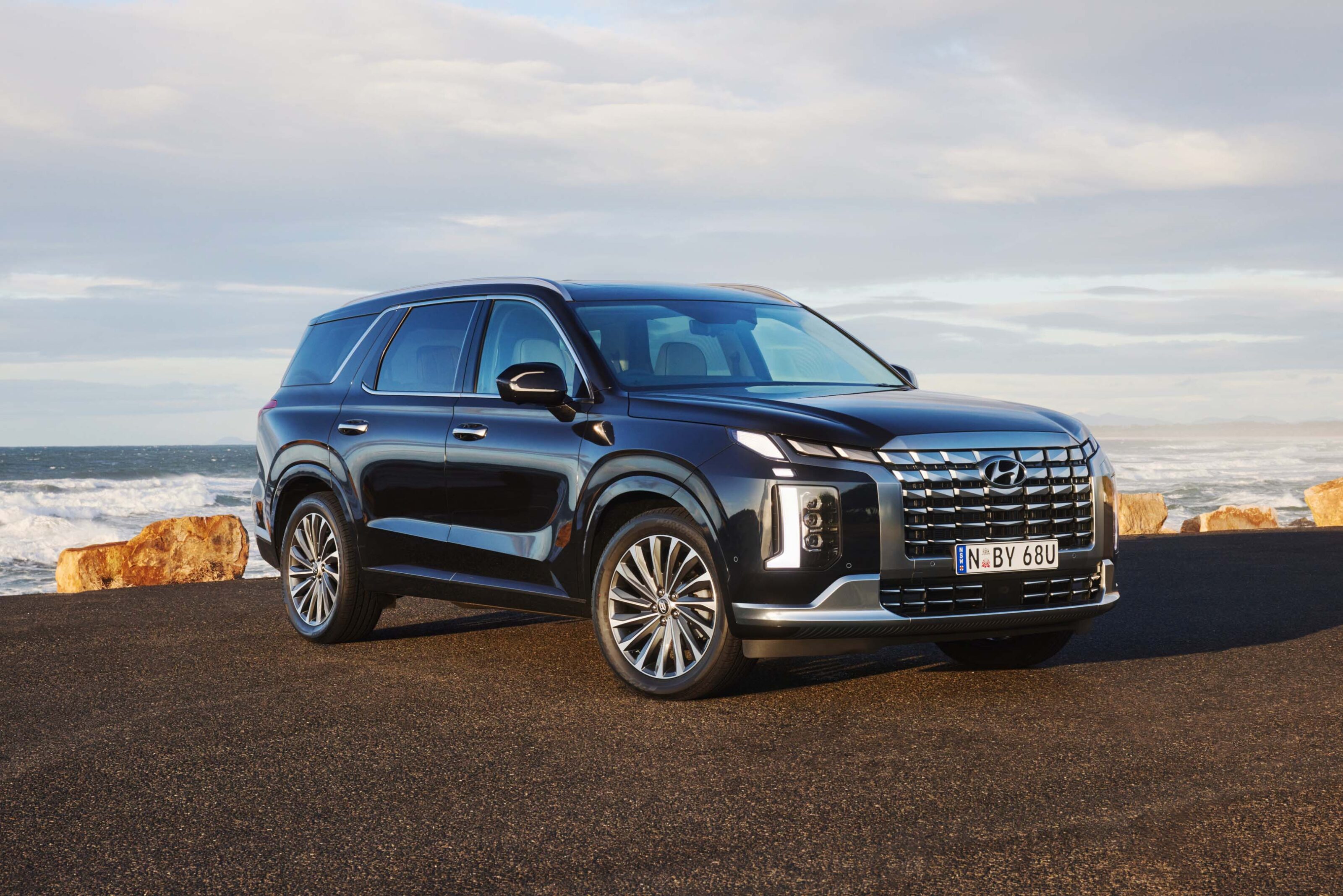
However, it’s only the Hyundai Palisade that can compete with the Pathfinder’s eight-seat configuration that is standard for all but the flagship Ti-L.
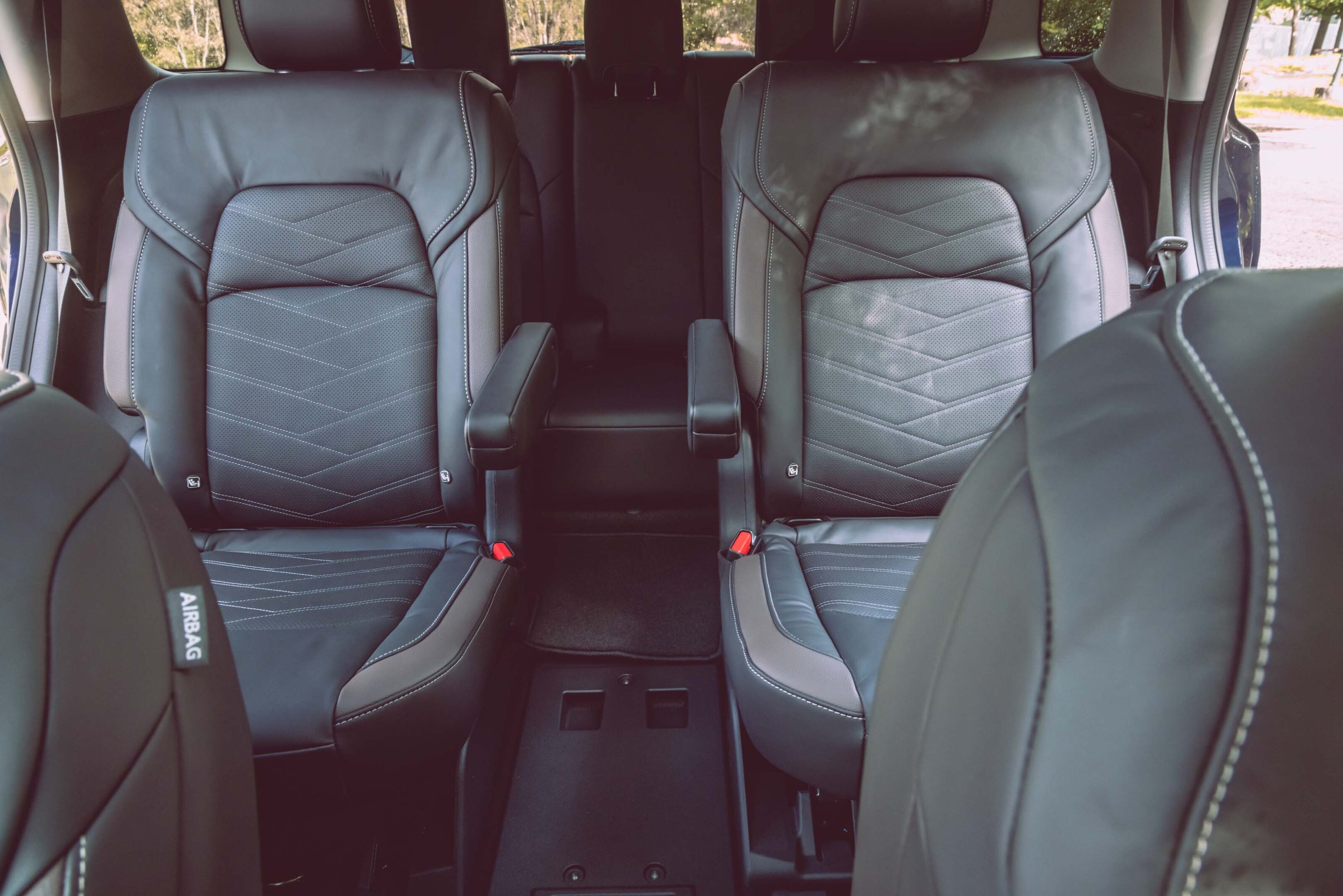
It gets a pair of captain’s chairs in the second row while the third row remains a three-seater bench.
Interior comfort, space and storage
The Pathfinder’s cabin is tangibly vast with interior space growing over the fourth-gen model despite an overall length reduction of 38mm. A transmission tunnel is noticeably absent, boosting leg room for rear passengers, while rear doors that open to nearly 90 degrees make getting in and out a breeze.
Simplicity of access also applies to the third row thanks to the ‘Ez Flex’ system which allows the middle seat to be tilted and rolled forward with the touch of a button.
It is a clever solution that means third-row occupants no longer feel like prisoners until someone releases them.
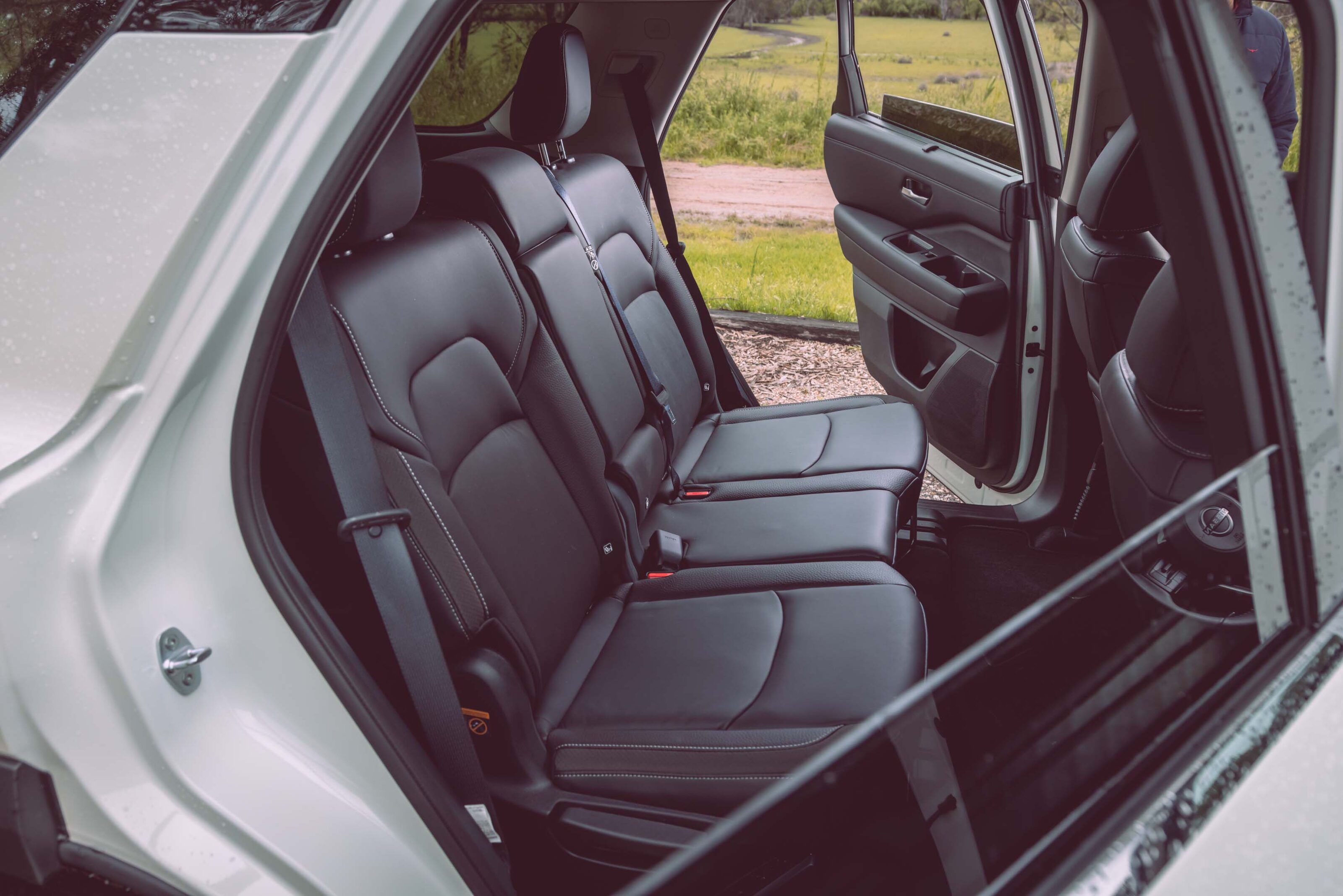
Yes, the third row does offer three seats but that would only really apply to very small people. That said, there is a surprising amount of room for two adults out back. Adding to the impressive comfort levels are roof-mounted vents, a USB charger and two cup holders per side.
2023 Nissan Pathfinder boot space
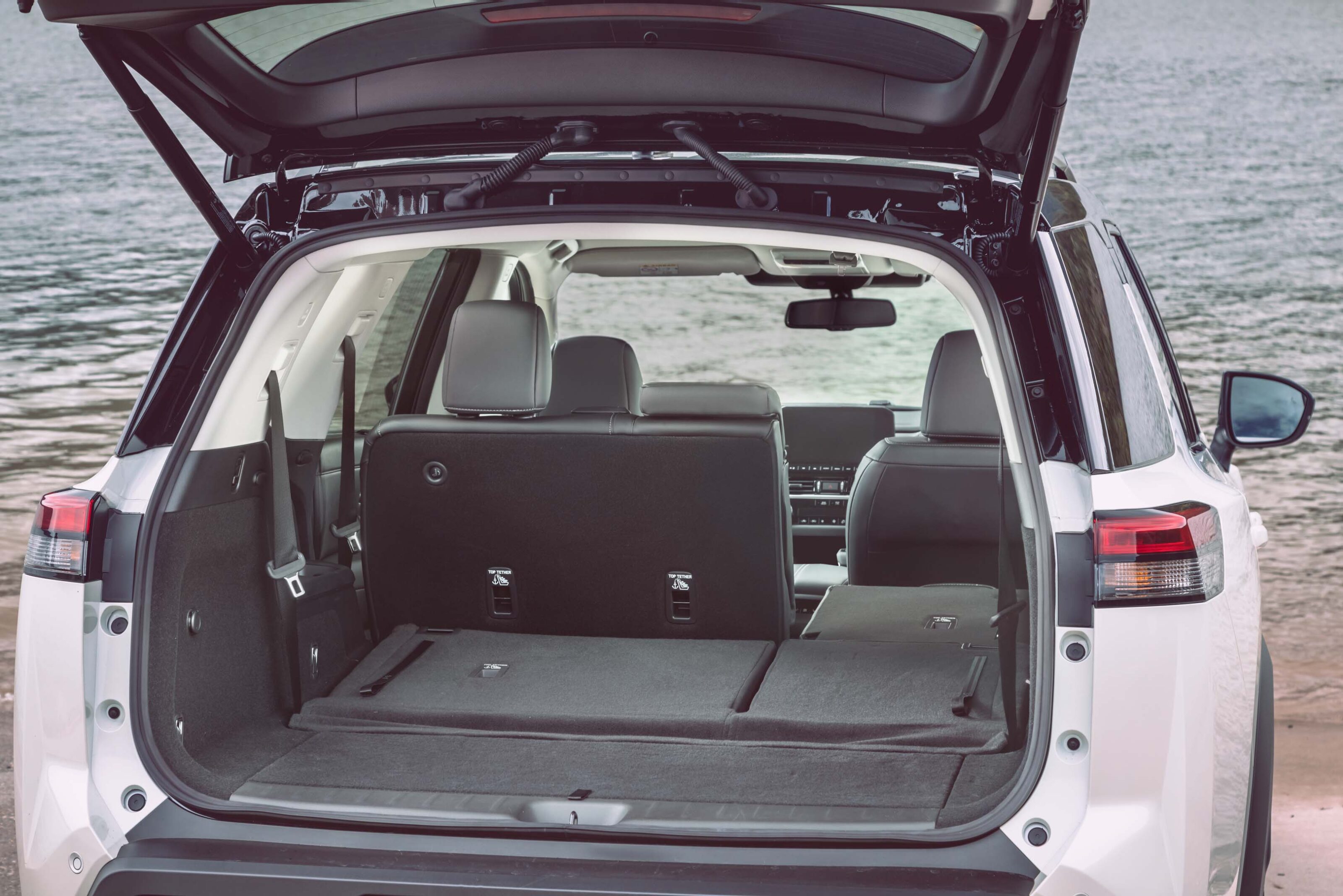
There’s also masses of storage volume depending on the seat configuration. Capacity (VDA) is listed at 205 litres with all three rows in place, 554L with the third row folded, and a massive 2280L with only the front seats in place.
An underfloor boot storage box boosts the storage options while the entire cabin is dotted with neat stowage options such as a little shelf in front of the front passenger and a flying centre console with yet more storage found underneath.
What is it like to drive?
With a somewhat conventional engine under its bonnet, the Pathfinder’s 202kW and 340Nm can be best described as adequate for this 2.0-tonne SUV. Without diesel or turbo-petrol torque, the 3.5-litre V6 needs to be revved to get the most meaningful performance, at which point the increased fuel consumption will likely give your bank balance a battering when you come to fill the 71-litre tank.
The good news is that even though the engine remains only slightly evolved, the transmission bolted to it is a significant upgrade. Gone is the simple and cost-effective continuously variable transmission (CVT) and in its place is a more sophisticated nine-speed torque converter auto.
While the new unit is doubtless an improvement over the droning and uninspiring CVT, it doesn’t quite live up to expectations, which is a little disappointing – especially as it’s supplied by auto authority ZF.
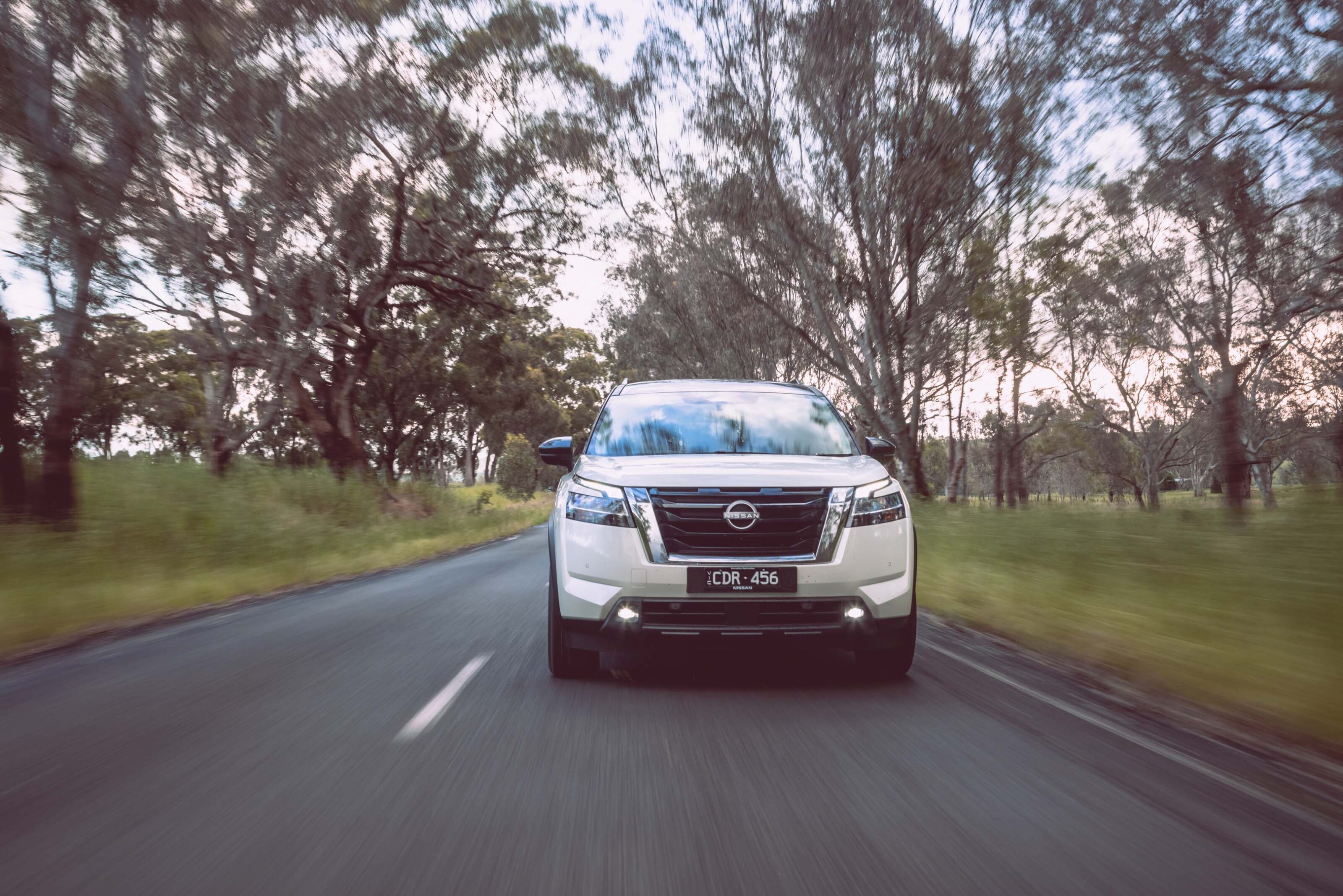
Gear changes are very smooth and torque efficiency feels equally as good but there’s something about the calibration that feels just a little half-baked. When more performance is required, the accelerator needs an unreasonably aggressive prod to prompt a kick-down, while regular shifting up and down through the ratios seems a little lazy at times.
Either way, however, it’s still an improvement over the previous model and you can pick gears manually with the paddle shifters.
As for the rest of the driving package, the Pathfinder feels neat and tidy on the road with enough steering involvement to partially conceal its weight and large SUV status, while the ride is another step up in Pathfinder evolution.
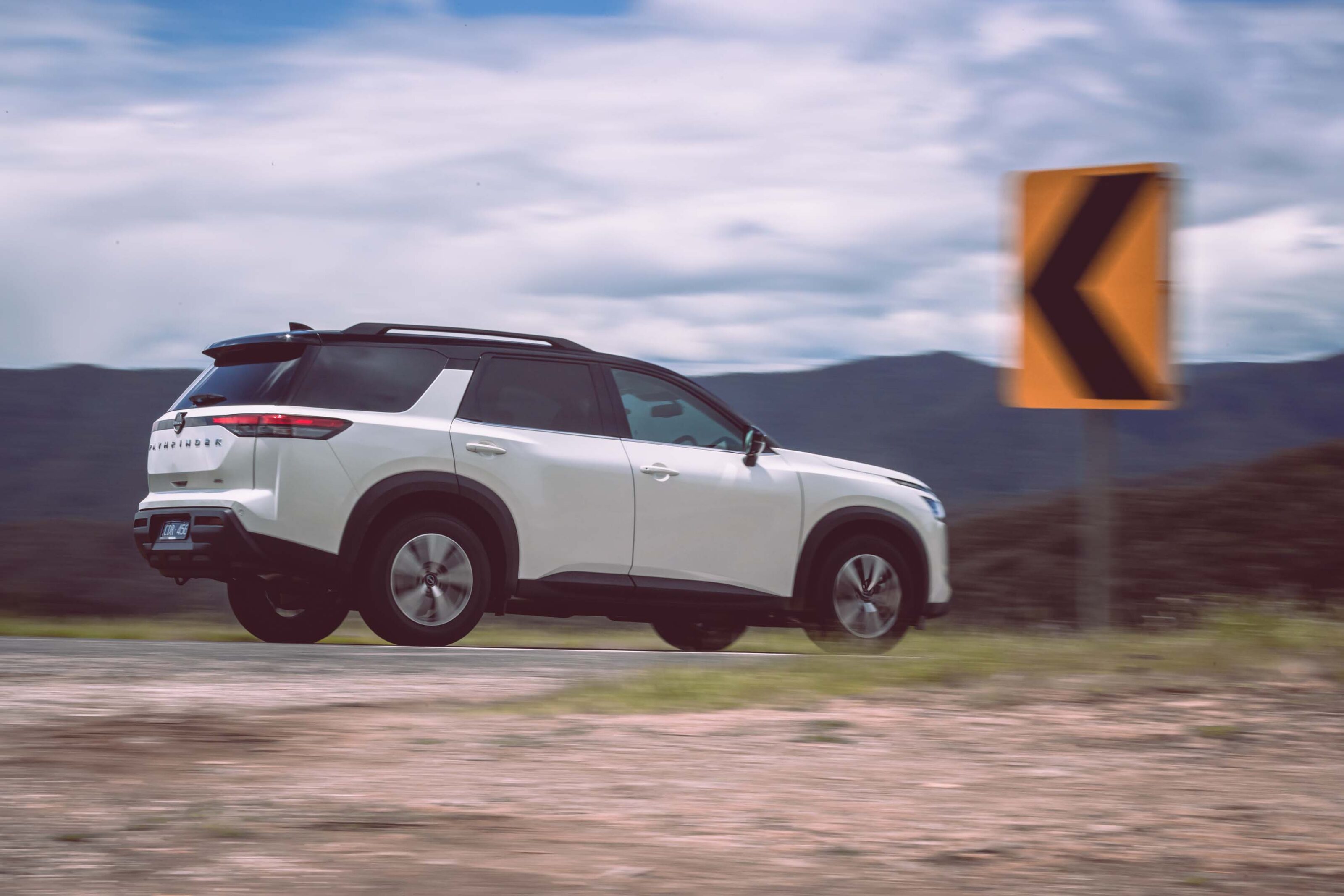
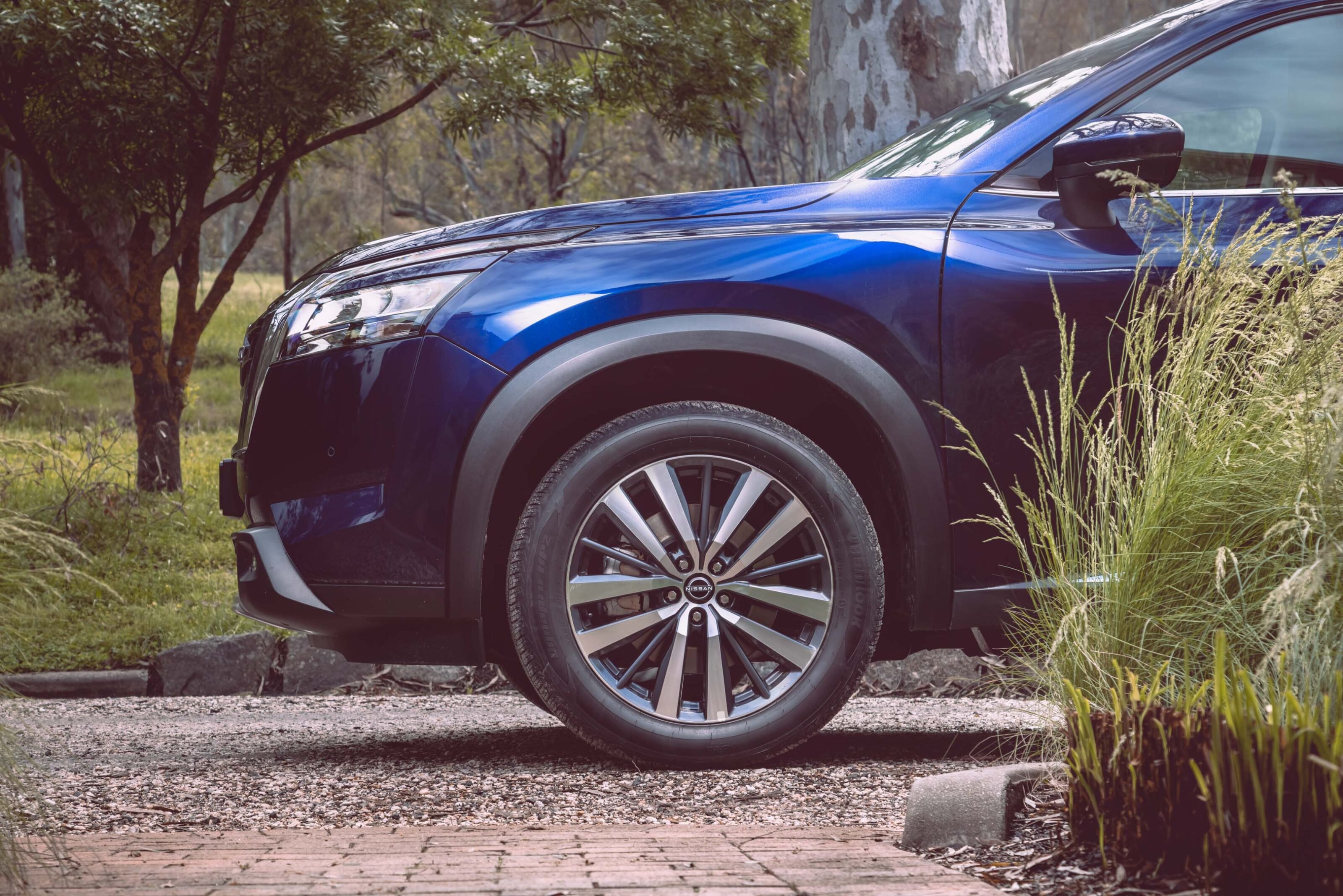
Road noise levels are generally low for occupants in the first and second rows while comfort is improved over the previous model despite rolling on up to 20-inch wheels. Our pick is the 18-inch alloy wheels fitted to the ST-L, which gets surprisingly good Kumho Crugen HP71 rubber and boosts the ride quality even further still.
Should you find yourself away from the beaten track, the Pathfinder has a particularly good nature on unsealed surfaces and a few kilometres navigating damp gravel brought its capable manners to the surface.
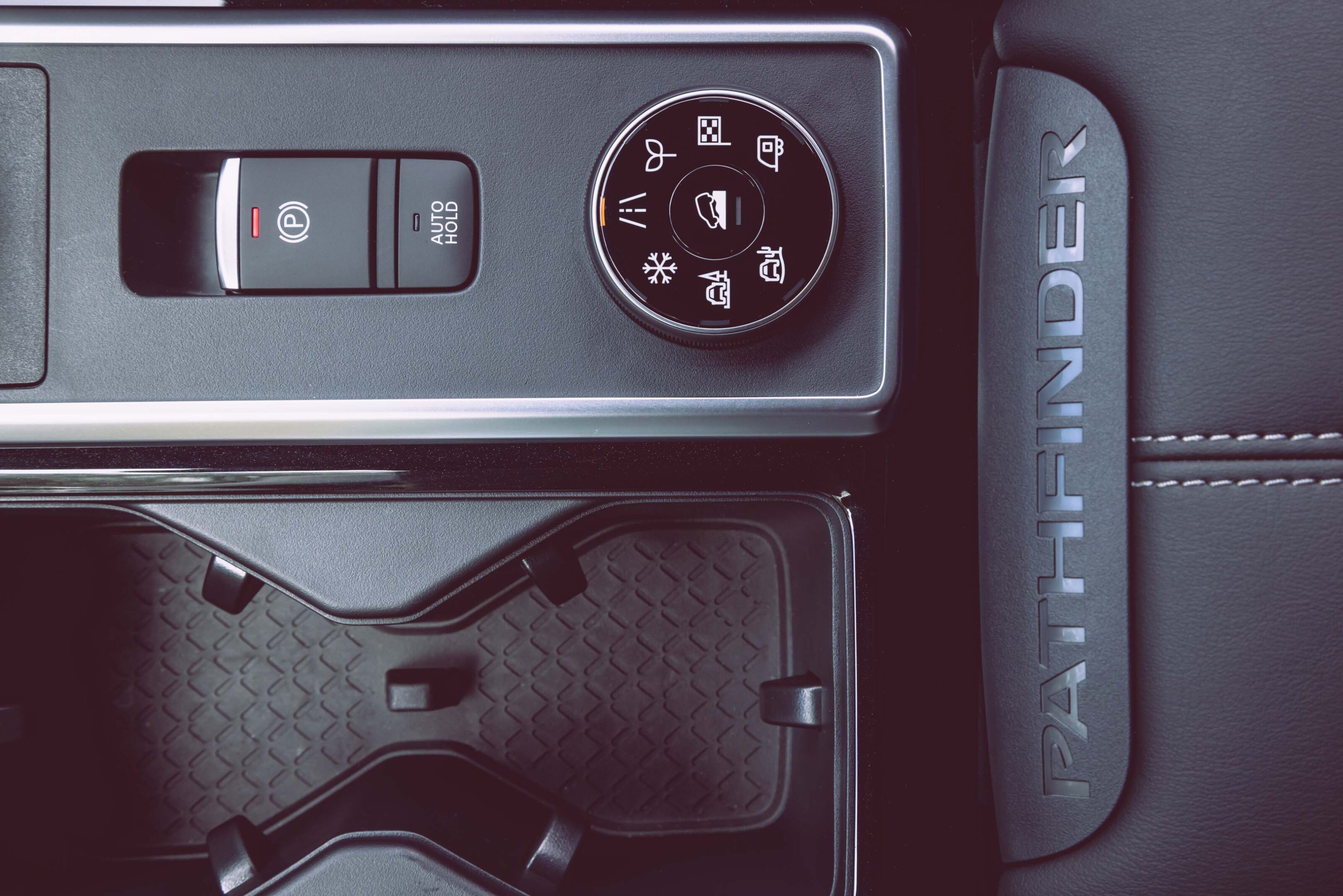
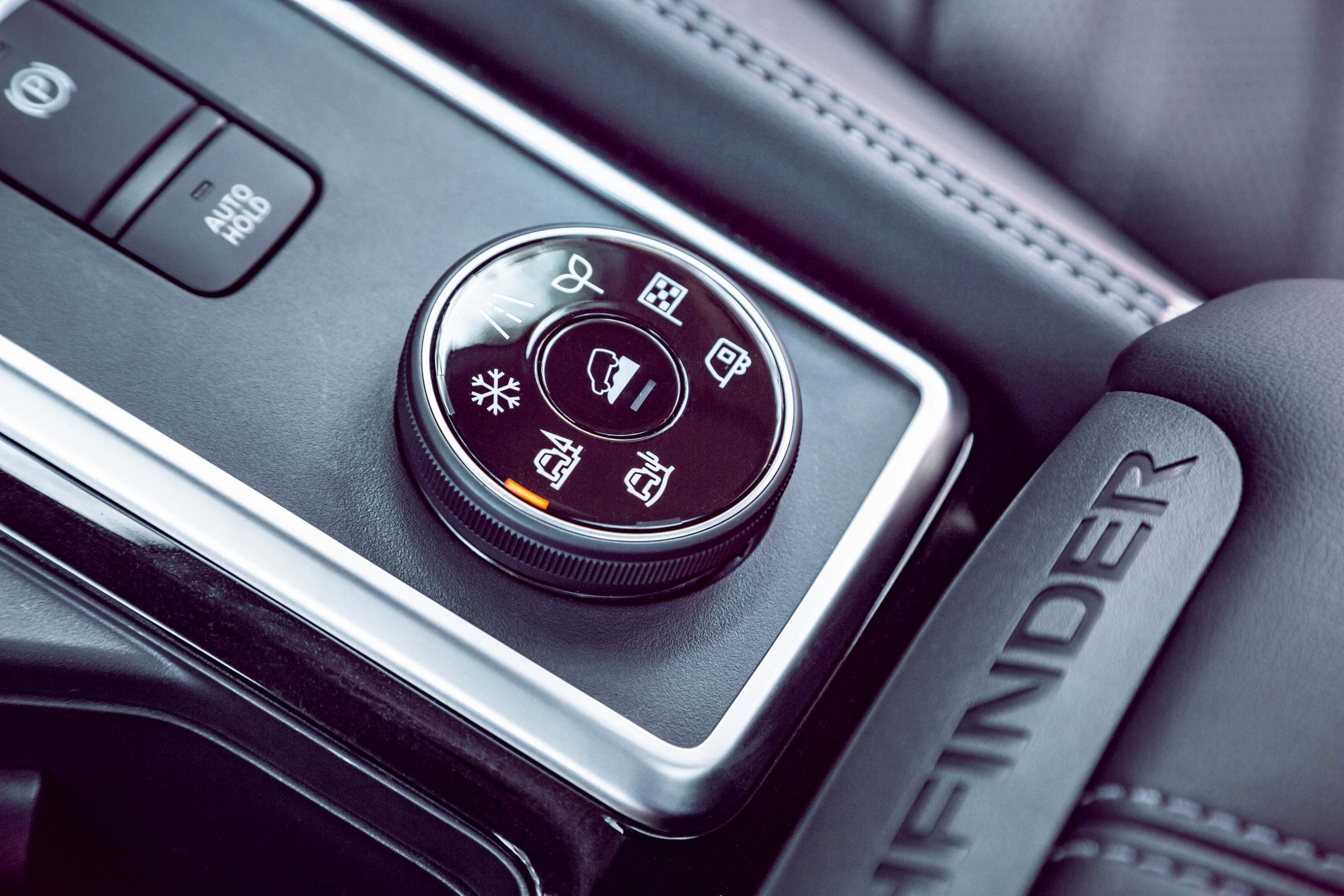
As part of Nissan’s bid to infuse the Pathfinder with a more adventurous spirit, seven modes are offered by the Drive and Terrain system. With the dial rotated round to Mud and Ruts, the traction and stability levels on potentially scary surfaces were admirable.
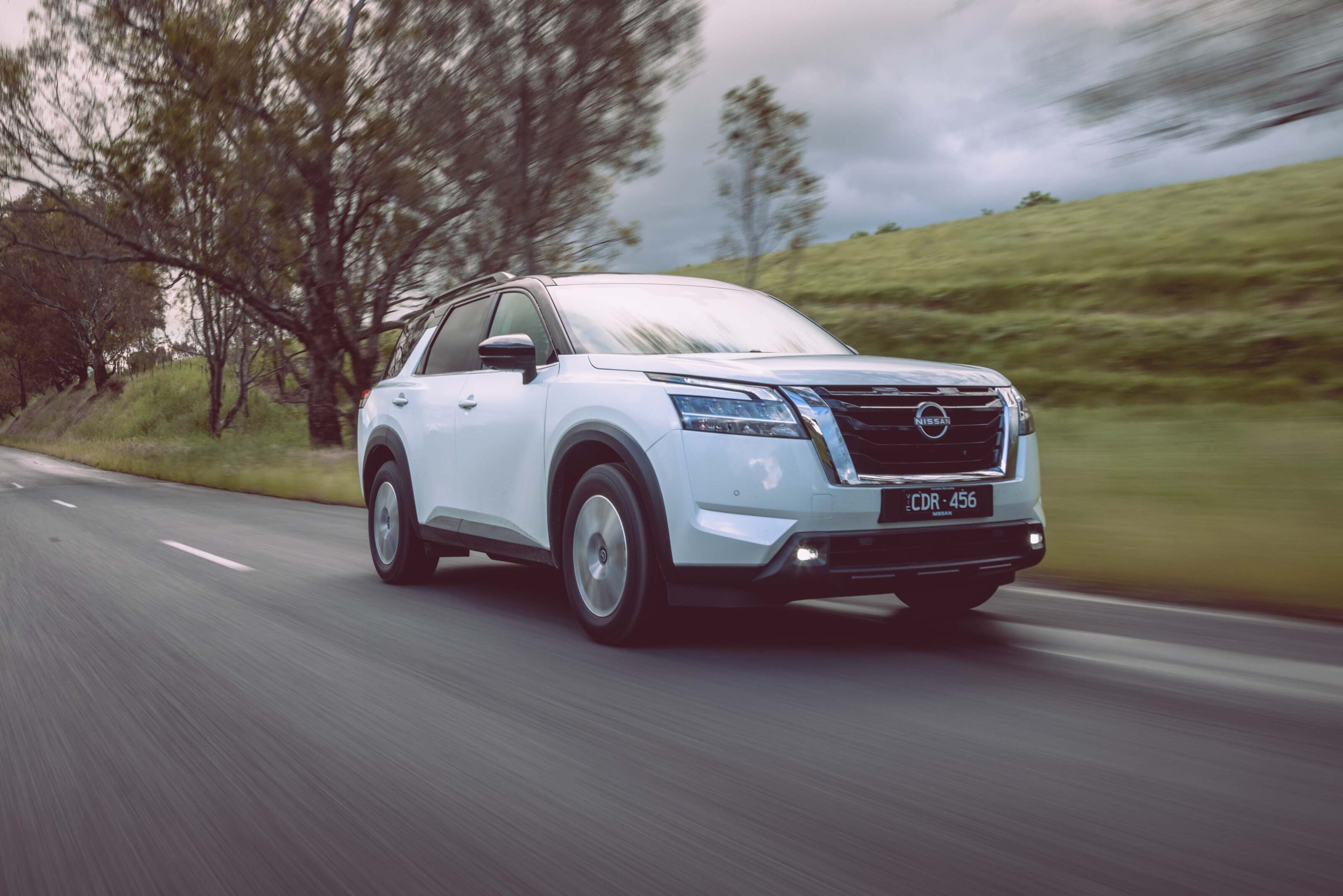
We would have loved to sample the Pathfinder’s true off-road ability but I guess that’ll have to wait for another day. It’s worth noting to families that do want to stray away from the beaten trail that the Pathfinder has a space-saver spare wheel and not a full-size item most favoured by adventure seekers.
We did, however, get a chance to test the towing capability with a jet ski weighing close to the 750kg un-braked limit hooked up. While acceleration and braking performance is notably impacted, it’s clear the new Pathfinder has been engineered to tow and won’t break a sweat under the pressures of light hauling duties.
Quite how the atmo V6 would cope with the increased braked towing rate of 2700kg will also have to wait for more organised testing.
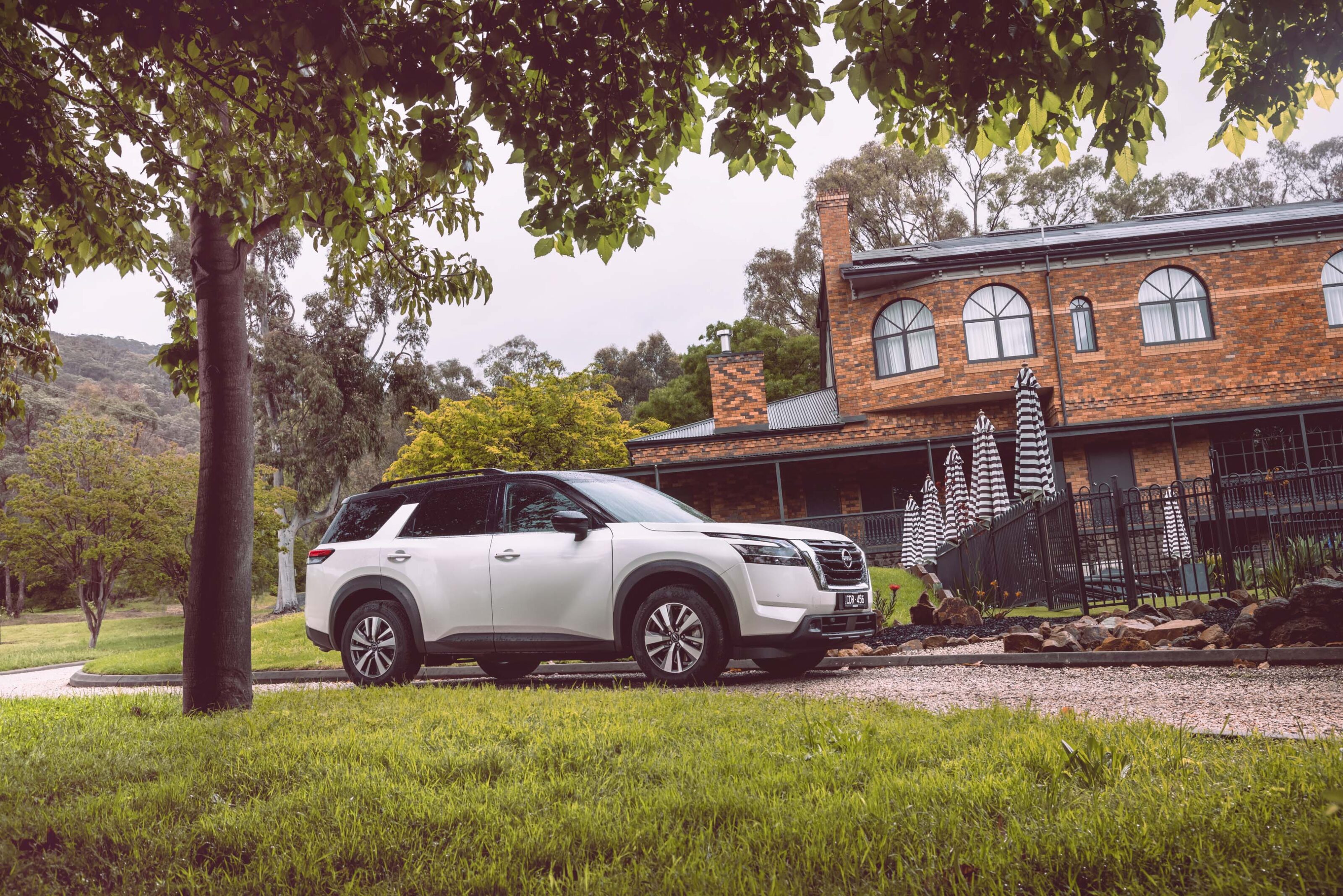
How is it on fuel?
It wasn’t possible to run our own fuel use calculations during an action-packed local launch program but we certainly will once the new Pathfinder is on the Wheels test fleet in the near future.
Before that though, the claimed combined-cycle fuel economy figure makes for interesting reading. Nissan reports 10.0 litres per 100km for two-wheel-drive versions and 10.5L/100km for the all-wheel drives.
With the addition of a new nine-speed auto and revised V6, it would be fair to expect the fuel efficiency to have improved, but the previous model Pathfinder had a claimed figure of 9.9L/100km and 10.1L/100km respectively.
How safe is it?
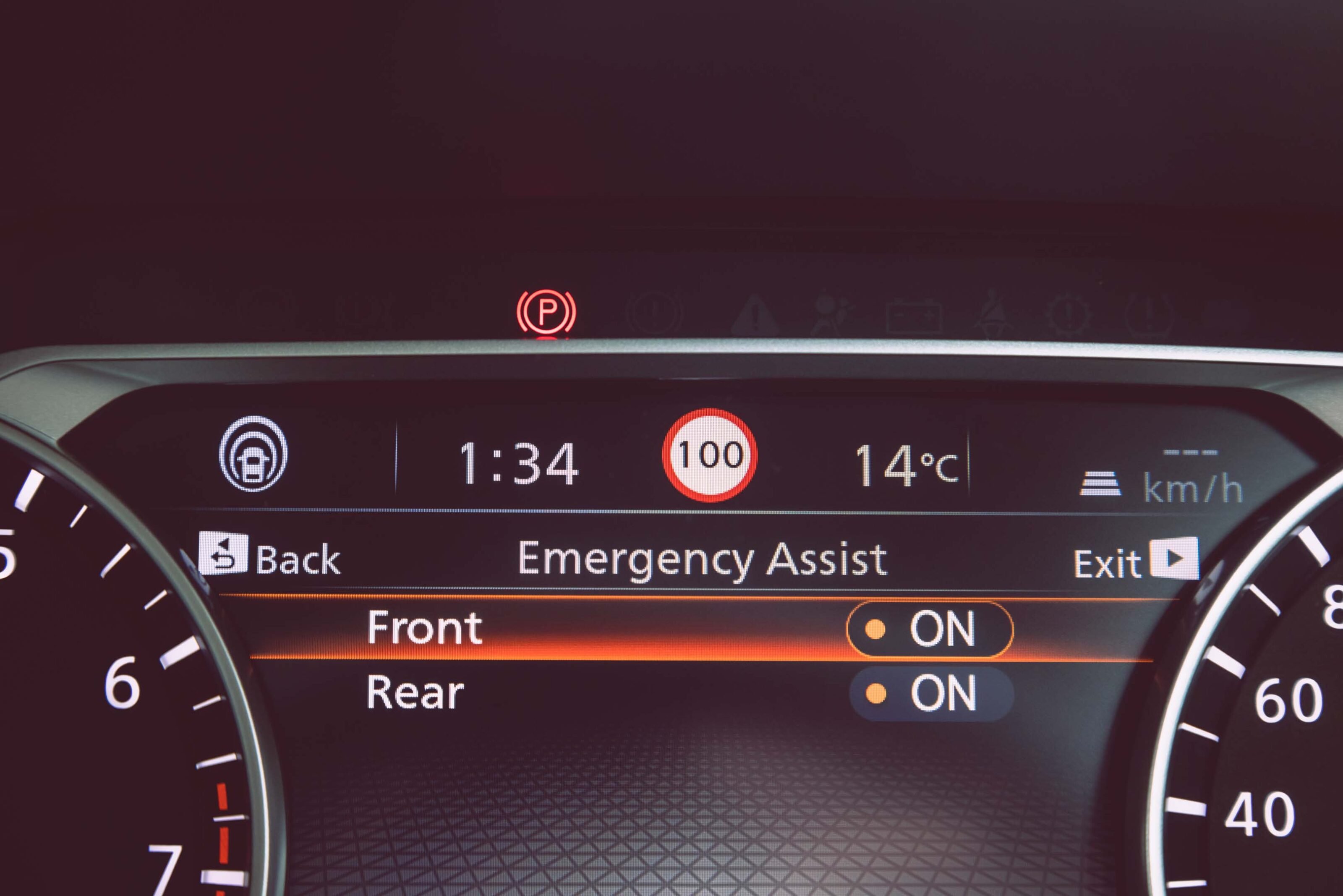
All versions of the Pathfinder are equipped with a generous level of safety equipment including forward collision warning and auto emergency braking which works with pedestrians and cyclists, driver attention monitoring, blind-spot monitoring and assistance, lane departure warning and assistance, rear cross-traffic alert and braking, cruise control, speed limit recognition and tyre pressure monitoring.
Step up from the entry ST and Nissan will throw in an additional layer of protection with the ProPilot system, which offers adaptive cruise control with steering assistance.
Curtain airbags protect occupants in all three rows of seating, while seat side airbags are provided for the first and second rows along with a centre airbag between the front two seats.
The Australasian New Car Assessment Program (ANCAP) has awarded the new Pathfinder with a maximum rating of five stars.
Warranty and running costs
Like all new Nissans, the 2023 Pathfinder is offered with a five-year, unlimited-kilometre warranty along with roadside assistance for the same period.
All Nissans registered from the 1st of January 2018 are eligible for capped-price servicing, which limits the maximum price paid for routine servicing and maintenance for the first six planned visits.
Customers can also buy a pre-paid maintenance plan which covers the first three, four or five scheduled services with a single payment.
VERDICT
While Nissan’s Pathfinder used to be one of the most cost-effective ways into large SUV life, the latest evolution is creeping north in pricing, especially at the pointier end of the line-up. Yes, there’s still the sub-$55K ST but with front-wheel drive and the least kit, Nissan says this is the variant very much targeting fleets.
It’s at the relatively premium end of the spectrum and the $70K Ti that Nissan expects the volume to exist, at least initially.
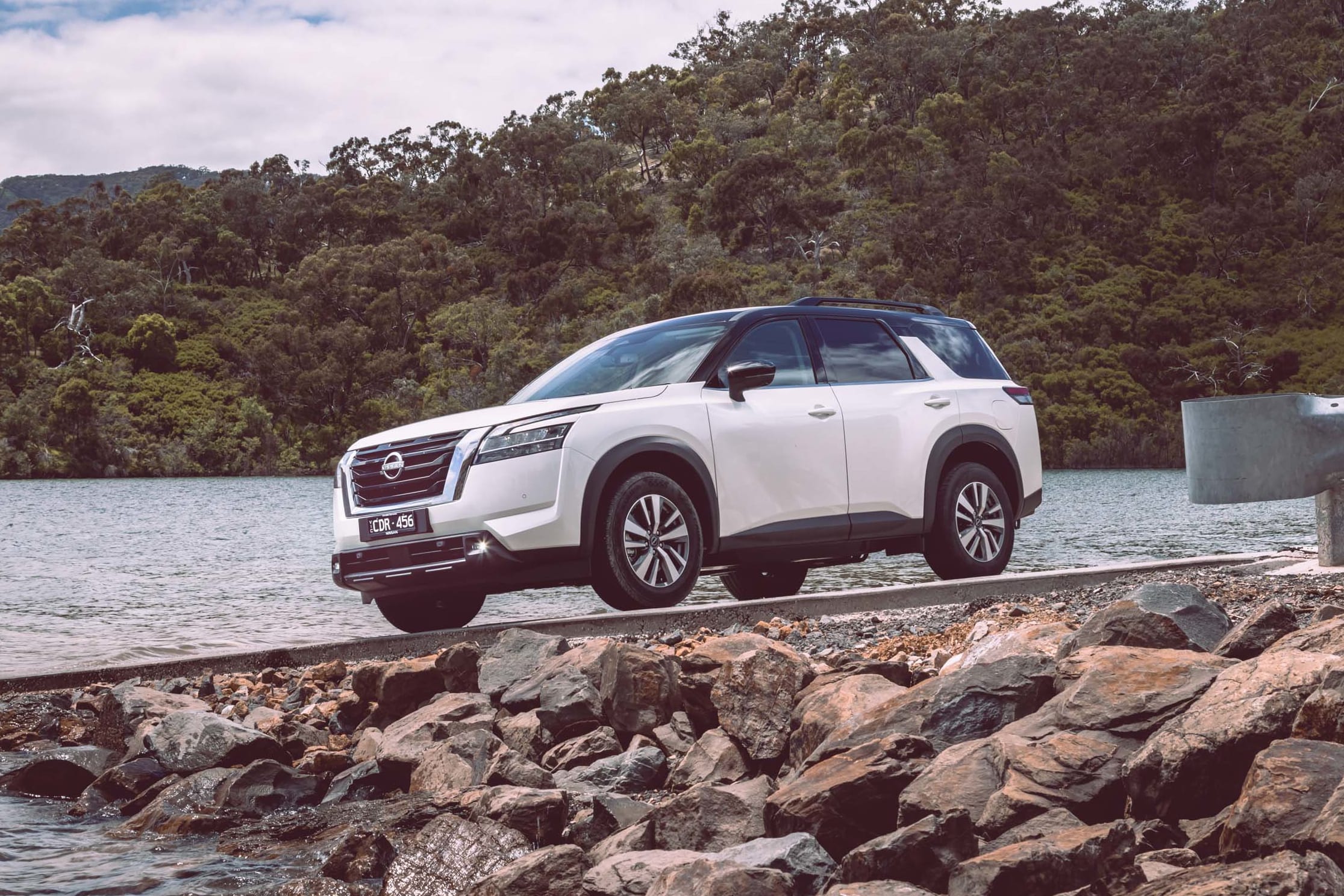
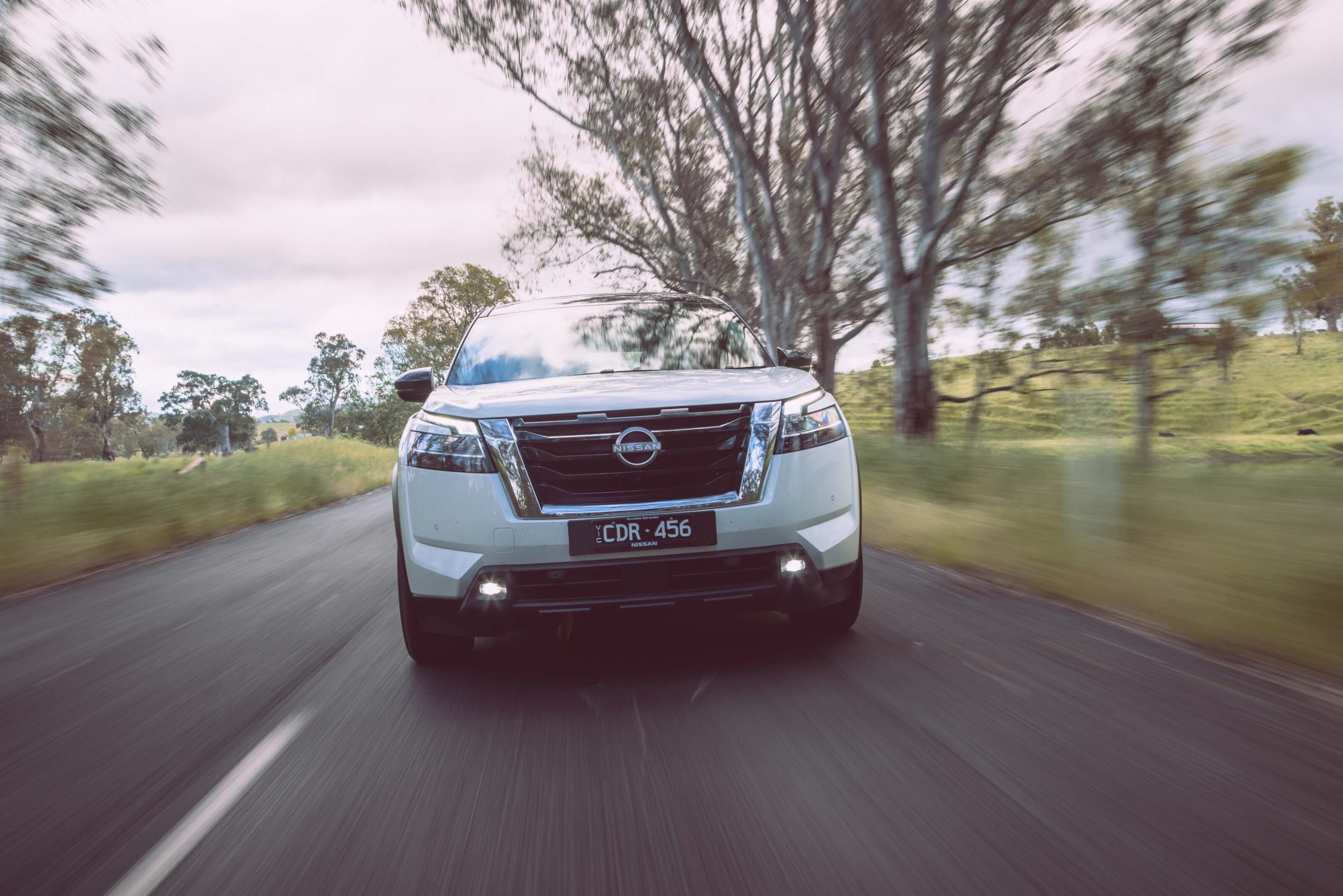
However, with the increase in pricing, the fifth-gen model does come with some notable enhancements to quality, technology and comfort. On the outside, the Pathfinder is looking like a tough all-terrain SUV and not the slightly daggy budget bus it once was, while a sea of screens lifts the comprehensively improved interior.
Coupled with a third row you genuinely can slot two adults into and clever practical touches throughout, and the venerable Pathfinder is a welcome return for the Nissan family. And quite possibly yours.
| Model | Nissan Pathfinder Ti 4WD |
|---|---|
| Engine | 3498cc V6, dohc, 24v petrol |
| Max power | 202kW @ 6400rpm |
| Max torque | 340Nm @ 4800rpm |
| Transmission | 9-speed automatic |
| Economy | 10.5L/100km (claimed) |
| Weight | 2040kg |
| L/W/H/W-B | 5004/1978/1802/2900mm |
| 0-100km/h | 9.5sec (estimated) |
| Price | from $70,030 + on-road costs |
| On sale | now |
Snapshot
- 2023 Nissan Pathfinder pricing and features
- Overhauled cabin with standard head-up display and 9-inch infotainment system
- Priced from $54,190 before on-road costs
The next-generation 2023 Nissan Pathfinder large SUV has landed in Australia.
First revealed in early 2021, the fifth-generation Pathfinder is available locally in four grades, with an overhauled design, a carryover naturally-aspirated V6 engine, available second-row captain’s chairs, and price rises compared to the outgoing model.
While the outgoing model – last updated in 2020 – was on sale in ST, ST+, ST-L and Ti variants, the new SUV will be available in ST, ST-L, Ti and Ti-L grades.
Both the entry-level ST two-wheel-drive and flagship Ti-L four-wheel-drive Pathfinders have been hit by a significant increase over the old model, while the ST-L and Ti are up by around $2000 each.
A rival for popular large SUVs like the Mazda CX-9, Hyundai Palisade and Toyota Kluger, the fifth-generation Pathfinder also offers a braked towing capacity of 2700 kilograms, which Nissan claims is the highest in its segment.
An overhauled cabin that’s more luxurious than before and a comprehensive suite of active safety systems also feature, although unlike Nissan’s other new SUVs – the Qashqai and X-Trail – the Pathfinder does not ride on an all-new platform.
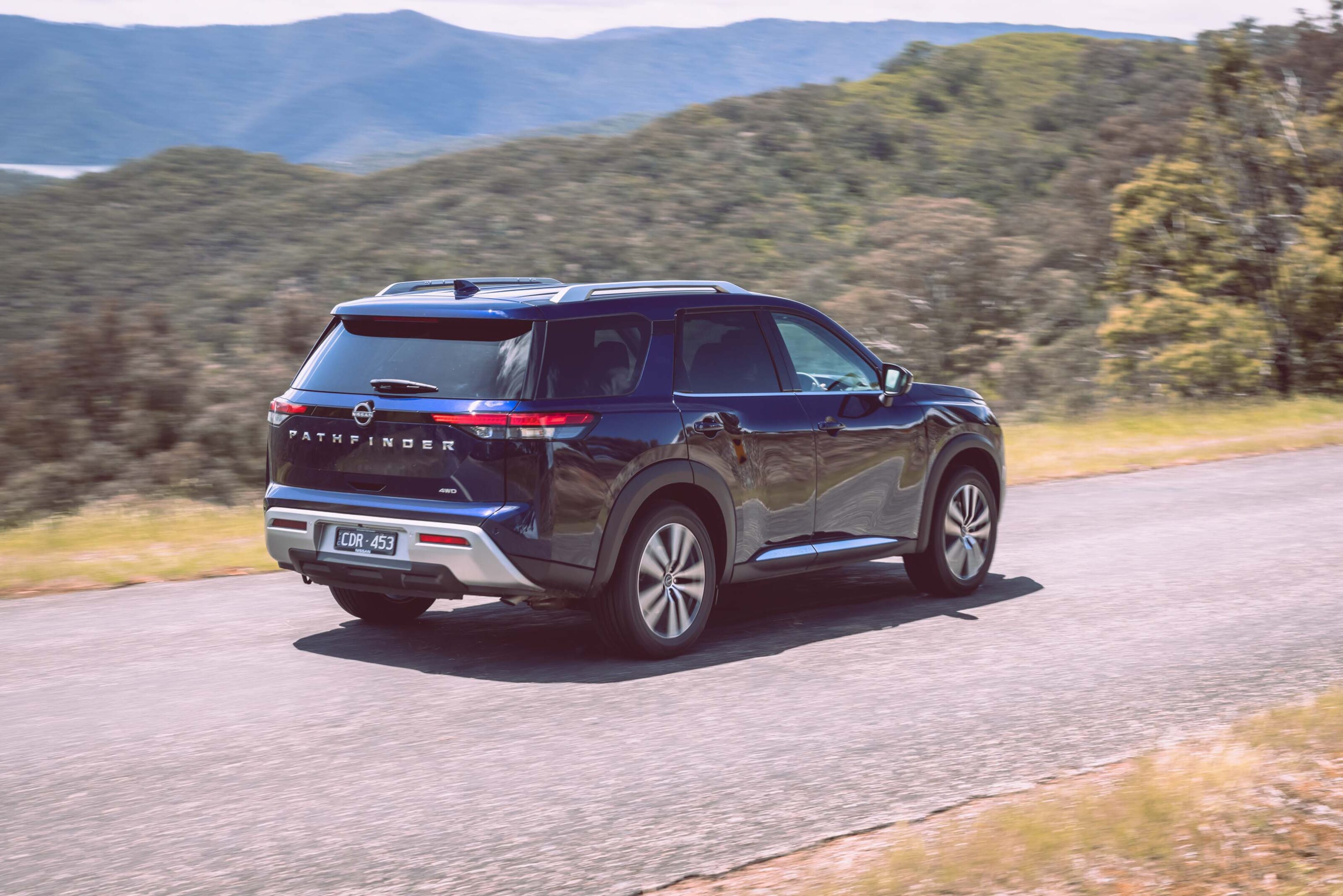
Outside, the design of the fifth-gen Pathfinder is bolder and more four-square than its curvy predecessor, but it’s inside where customers will notice the biggest change.
The cabin now features a much cleaner design, and the quality of materials has taken a substantial leap forward. In-car tech is also a vast improvement, with every model in the range boasting a 9.0-inch centre screen, 10.8-inch head-up display and a digital instrument cluster. Wireless Apple CarPlay is also standard, although Android Auto requires a wired connection.
Eight seats are offered as standard, but like Mazda CX-8 and CX-9, the flagship Pathfinder Ti-L offers two captain’s chairs in the second row, converting to a seven-seat layout.
JUMP AHEAD
- Pricing
- Features
- Colours
- Engine, drivetrain, and fuel economy
- Safety
- Dimensions
- Warranty and servicing
- Availability
2023 Nissan Pathfinder pricing
Prices exclude on-road costs.
2023 Nissan Pathfinder features
ST
ST-L
Ti
Ti-L
Colours
Metallic paint incurs a $700 premium. A two-tone black roof option is available on Ti and Ti-L in ivory pearl, scarlet ember, gun metallic and boulder grey for $1200.
Engine, drivetrain, and fuel economy
Under the bonnet, the Nissan Pathfinder retains its 3.5-litre naturally-aspirated V6 producing 202kW and 340Nm; however, it is now paired to a nine-speed torque converter automatic transmission, instead of the outgoing model’s CVT.
Nissan says this should deliver a small gain in fuel economy, but the Pathfinder is still expected to be one of the thirstiest family SUVs in its class. Many rivals offer smaller capacity engines or thriftier diesel powertrains and, unlike the outgoing Pathfinder, this new model won’t be available as a hybrid.
The new Pathfinder is produced in the United States and a hybrid powertrain is not currently available at the factory. This means Nissan won’t have a rival for electrified versions of the Toyota Kluger, Kia Sorento and Hyundai Santa Fe.
As before, the Pathfinder will be available in front- or all-wheel-drive guise, with AWD needed to achieve the 2700-kilogram braked towing capacity.
2023 Nissan Pathfinder fuel economy
| 3.5-litre FWD | 10.0L/100km | 234g/km |
| 3.5-litre AWD | 10.5L/100km | 245g/km |
Safety
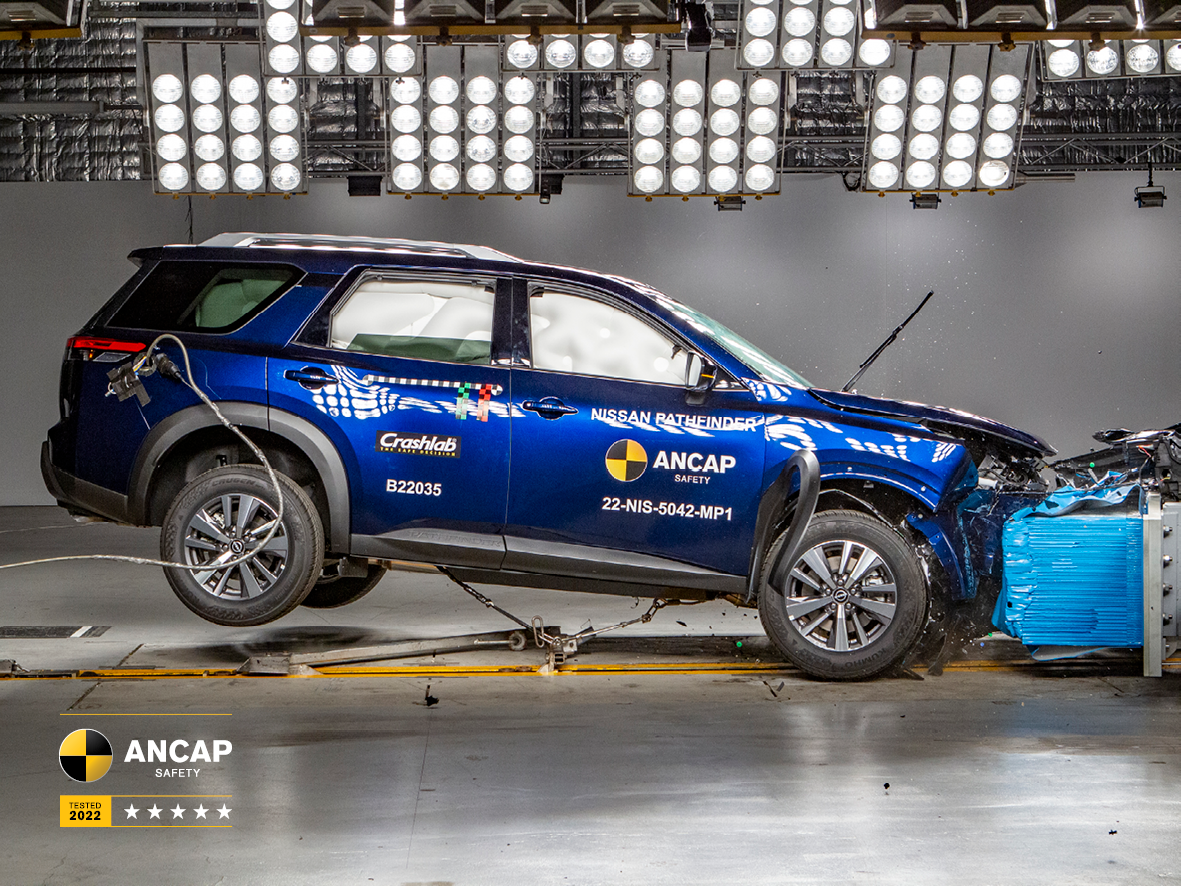
The 2023 Nissan Pathfinder is covered by a five-star ANCAP safety rating, based on testing conducted under the latest 2020-22 criteria.
It has a 86 per cent score for adult occupant protection, 93 per cent for children, 78 per cent for vulnerable road users, and 85 per cent for safety assist.
For a full run-down on the Pathfinder’s crash performance, click here.
Seven airbags (dual front, side, curtain, and front-centre) feature across the range.
Each variant includes the following active safety equipment as standard:
ST-L grades and above also include Nissan’s ProPilot+ safety suite, allowing semi-autonomous highway driving in certain situations.
Dimensions
While its body is redesigned, the latest Nissan Pathfinder uses an updated version of the old model’s underpinnings meaning its wheelbase is carried over. The general proportions are also largely the same, although this new model is slightly shorter and wider.
It has a wheelbase of 2900 millimetres, and is 5004mm long, 1978mm wide and 1802mm tall.
2023 Nissan Pathfinder boot space
With the rear seats up, the Nissan Pathfinder has a 554-litre boot capacity.
Folding the second row increases luggage capacity to 782 litres, while there’s 205L of storage with all seats in use.
Warranty and servicing
As per the wider Nissan range, the Pathfinder is covered by the brand’s five-year, unlimited-kilometre warranty, with complimentary roadside assistance across the same period.
Maintenance is required every 12 months or 10,000 kilometres, whichever occurs first.
Nissan has yet to confirm capped-price service details for the new Pathfinder, but the outgoing model has the following costs over five years:
Availability
The fifth-generation 2023 Nissan Pathfinder is on sale now.
For more information on Nissan’s wait times, click here.
Get more on Nissan’s big 2023 line-up refresh
UPDATE: As of December 8 Paul Sansom has stepped down from his role as managing director of Volkswagen Group Australia, read our update here.
On January 1 this year, Brit Paul Sansom took over the top job at Volkswagen Group Australia – leading not one, but four brands for the first time in his career.
But he didn’t start at the top – or even in the automotive sector, instead beginning his working life in banking.
“Life after college didn’t start in automotive,” Sansom tells Wheels. “It was in banking, and from there I got co-opted into a project that led me into vehicle financing and so on. Around the turn of the century I was headhunted to go work at Jaguar, which I did for a couple of years, though it was not a great company back then.
“And then I started to convince everyone that I needed to move to automotive, which all my family and friends thought was a crazy idea – having had quite a responsible position in the bank that was all going quite well and was nice and safe.
“My father had worked all of his life in the bank as well, so they all thought I was nuts. And then, when it wasn’t really working out at Jaguar, I thought I better find the employer of choice and I believe that was Volkswagen Group. I’ve been here ever since.”
I started to convince everyone that I needed to move to automotive, which all my family and friends thought was a crazy idea
After finding his place at the VW Group, Sansom rose through the ranks – starting out as director of customer service at Audi UK from 2009-2011 before becoming the premium brand’s UK sales director for two years after that.
Showing international leadership promise, Sansom was chosen to then take the helm of Audi South Africa as its Managing Director from 2014-2017 before taking on the top job at Audi Australia – where he spent five years until the end of 2021.
Until Sansom took over the role of Group MD, Volkswagen and Skoda had been separate from Audi in Australia, a unique setup not found in his home market in Britain where VW, Skoda, Seat, and Audi all operate from under one roof, overseen by Group management.
“[The divide of VW and Audi in Australia] was very unusual for me. I was much more familiar with our global business model, which we’ve got in the UK and we also had in South Africa where I was before that. We didn’t have that here, so we’ve put that right now and we’re much stronger together as an organisation.
“We’ve been busy in these first nine months dealing with the post merger, but I think it has obviously been compounded by all the new ways of working and the way that the world’s sort of returning to work and to a hybrid model [after COVID-19]. We’ve got a new office here and new ways of working. So, yeah, it’s been a lot to manage.
“We’ve come a long way when there’s obviously still some huge headwinds out there in the supply chain that are affecting us probably more significantly than some other brands here in Australia. Despite that, we are selling pretty much everything we can lay our hands on, and our order banks are really strong across all of our brands – including Cupra now that’s just started up.
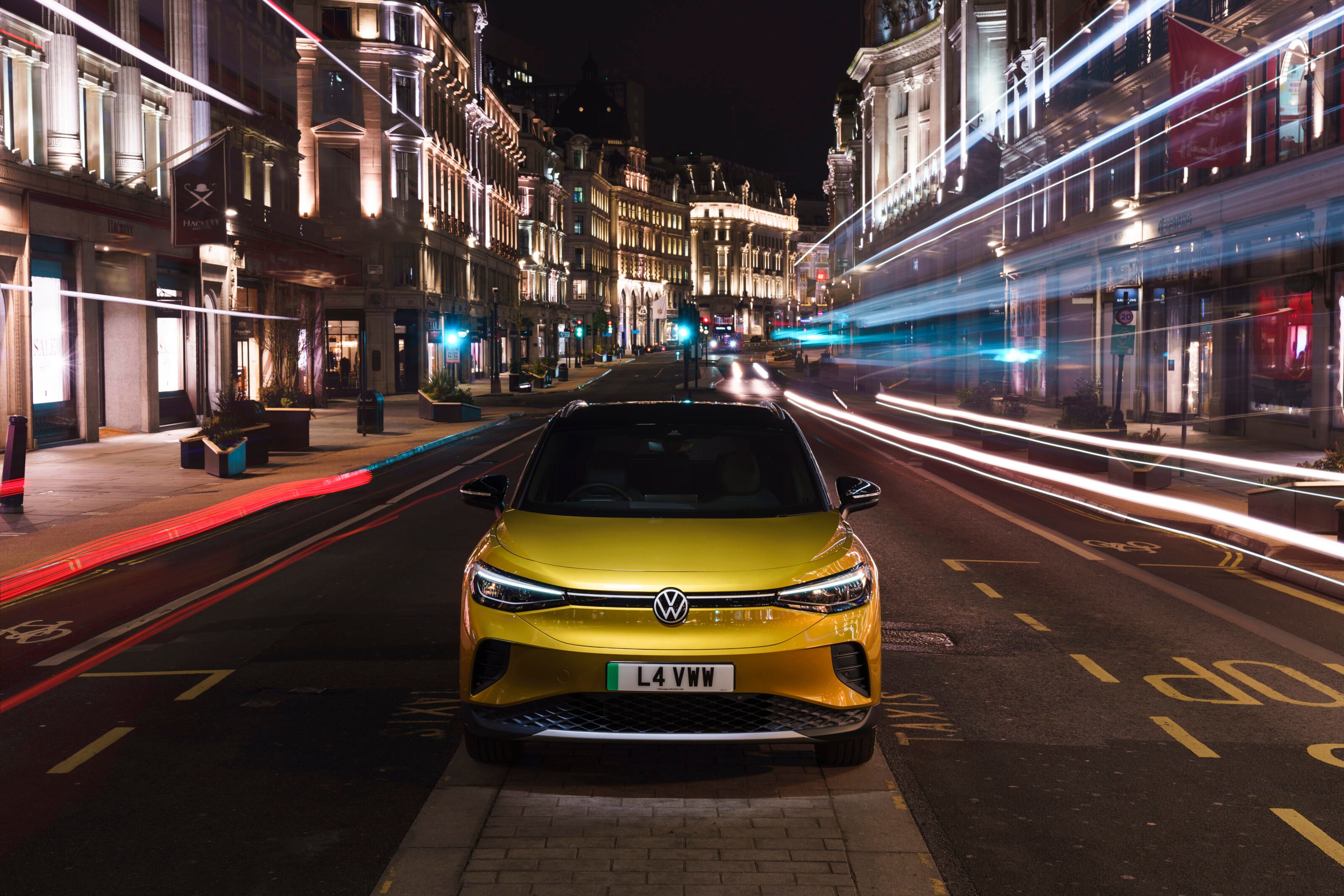
“We’ve used that time to really sort of set the foundations for our business. There’s a new vision and strategy for Volkswagen Group Australia now, we’ve really set ourselves on becoming the dominant force here as a European manufacturer and importantly we want to be the leader in electric vehicles as well.”
Sansom’s views on Australia’s lagging EV policies are well documented, having been outspoken on the subject for the last few years, but there’s always one issue that rears its ugly head whenever he does so – Dieselgate.
We want to be the leader in electric vehicles
“I don’t mind being asked that question at all now,” Sansom admits to us. “I mean, there was a time if I’m really honest there where it was harder to answer as we were in the midst of it, no one enjoyed that period. But looking back now, there’s no doubt that that’s really shaped our global organisation’s strategic direction, in a way that no other has really followed yet – certainly of our scale, we are really leading the way.
“As Churchill said; ‘never waste a good crisis’ and, you know, the Volkswagen Group, is a good example of that, because we’ve taken that moment in our history, and recognised the actions of a few that had to be rectified by everyone that remains in the organisation.
“There’s so few people that were responsible for it, you know, and there’s 660,000 people who are now putting right those wrongs. And that’s something that I’m really, you know, I’m really passionate about. So, when people ask me about that question, I can acknowledge that wasn’t a great moment in our history, but it’s certainly been the catalyst to really accelerate a transformation that was already starting to take place to be honest. And we want to echo that here in Australia.”
In a personal capacity too, Sansom has also been trying to do good for the community – taking part in a sleep out in a cardboard box for homeless charity Vinnies in Sydney in June.
“Recently I found myself explaining to my seven-year-old son why he’d seen some people sleeping on the streets,” he says. “He reflected on this and asked me to take him home so he could pick up his pocket money and give it to the particular person he had seen. Not satisfied, my son then went in to the nearest store and bought the gentleman a chocolate bar and gave it to him. It was a moving experience to not only witness my son’s kindness, but it made me stop and think more deeply about the homelessness issue.
“[The Sleep Out] was a pretty incredible experience actually. I try and use this platform that I’m privileged to occupy to try and do some good.
“By coincidence the email came in my inbox for Vinnies’ CEO Sleep Out just afterwards. I’d seen it the year before and thought I should get involved in that next year. And so the stars aligned and I did it and raised personally just over $8000 – but that was a drop in the ocean compared to the near $9 million that was made out the CEO Sleep Out this year, which was incredible.
“What really struck me about it was just the type of people that maybe I’d previously perceived as a homeless person. The vast majority are just people, like you and I, that have come on some really hard times. They might have had an injury at work that means they can’t work anymore, they can’t keep up their repayments and so on. And they’ve suddenly gone from a relatively safe environment into a downward spiral that was dramatic.
It’s a very humbling experience. I’m glad I did it
“I slept out on the Harbour in Sydney and it was freezing cold, and it was wet. It was just awful and I was lucky enough to be able to drive my car home and have a hot shower and a cup of tea the next day. But you think about these guys that are out there on the streets every night and have to maybe get up and go to work or whatever they’re doing the next day.
“It’s a very humbling experience. I’m glad I did it. And I’ve been able to raise some awareness since about this issue in Australia – because it’s a pretty bad one and getting worse unfortunately.
“There’s definitely a lesson in that for my son, and I hope he’ll grow up to remember that he’s very fortunate.”
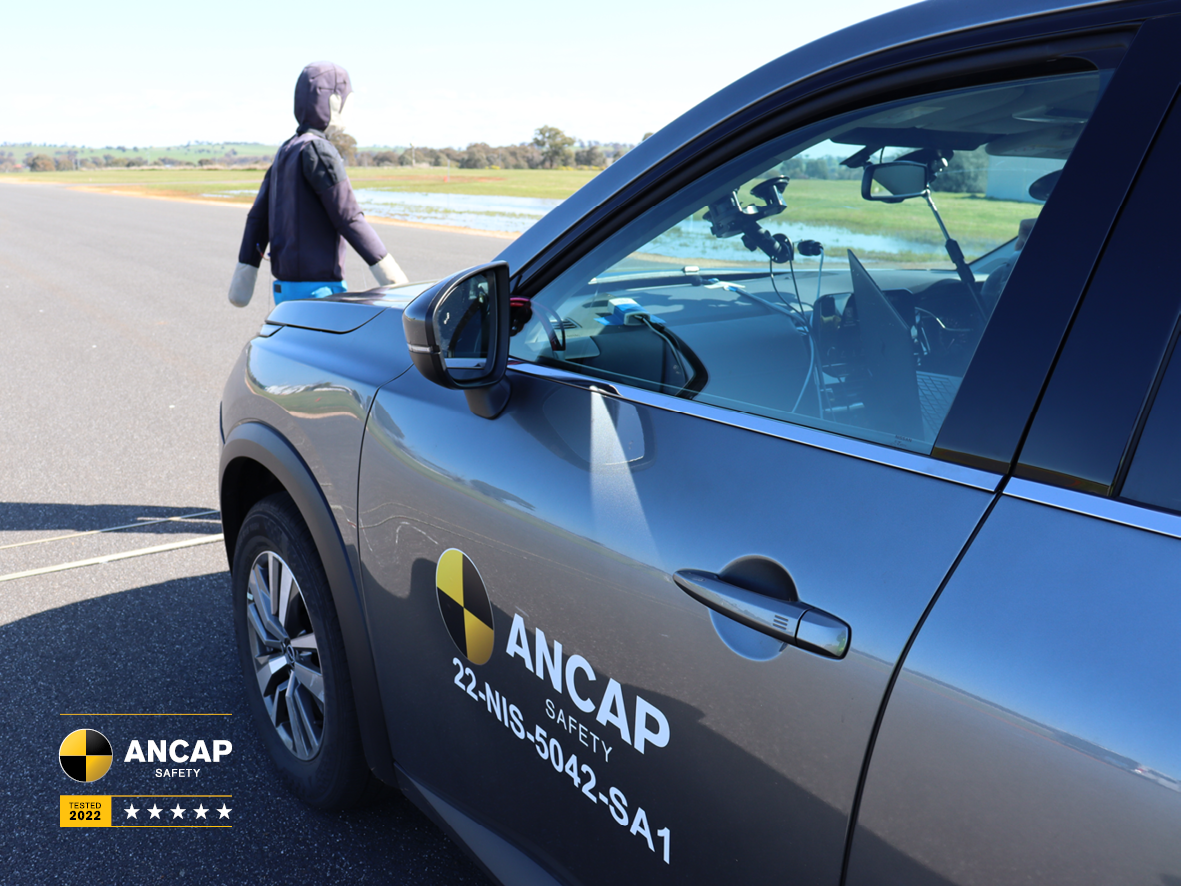
The 2023 Nissan Pathfinder has been awarded a five-star rating in the latest round of crash testing by safety authority ANCAP.
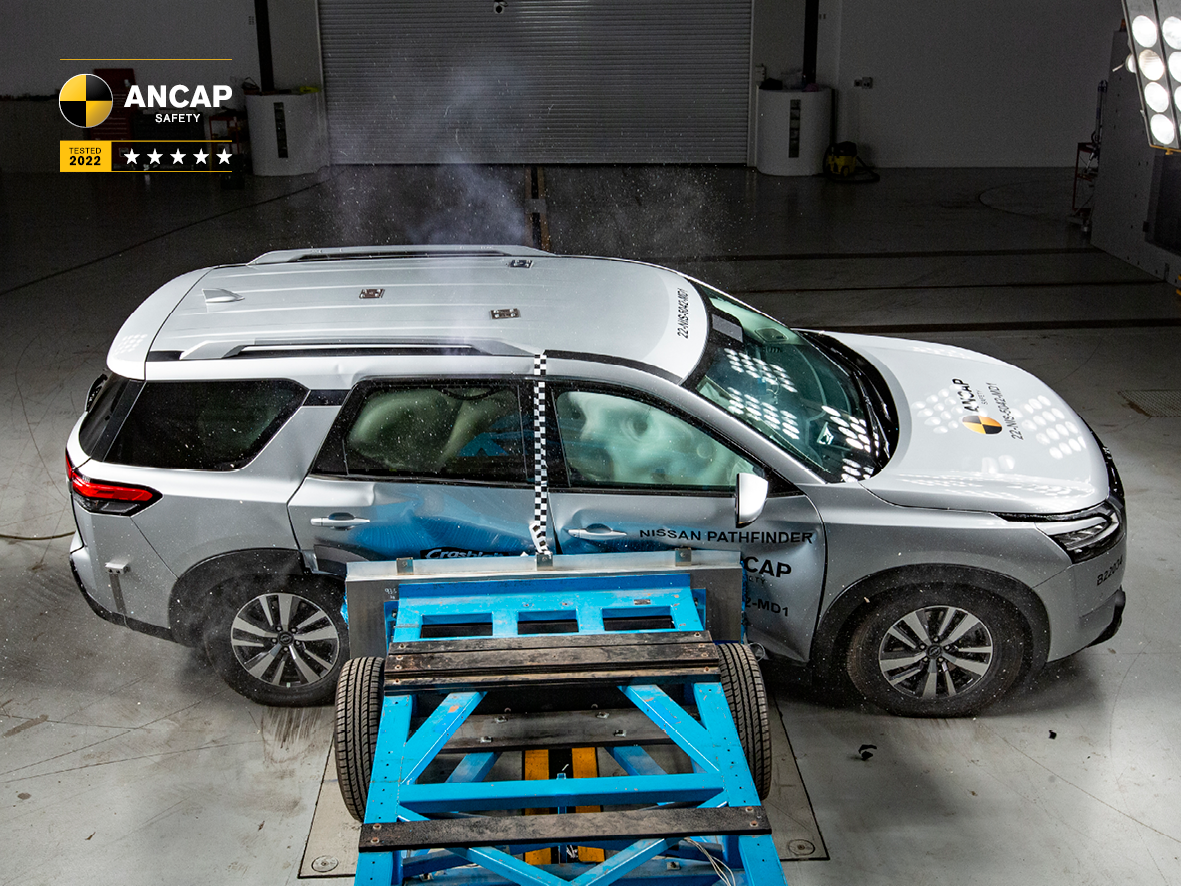
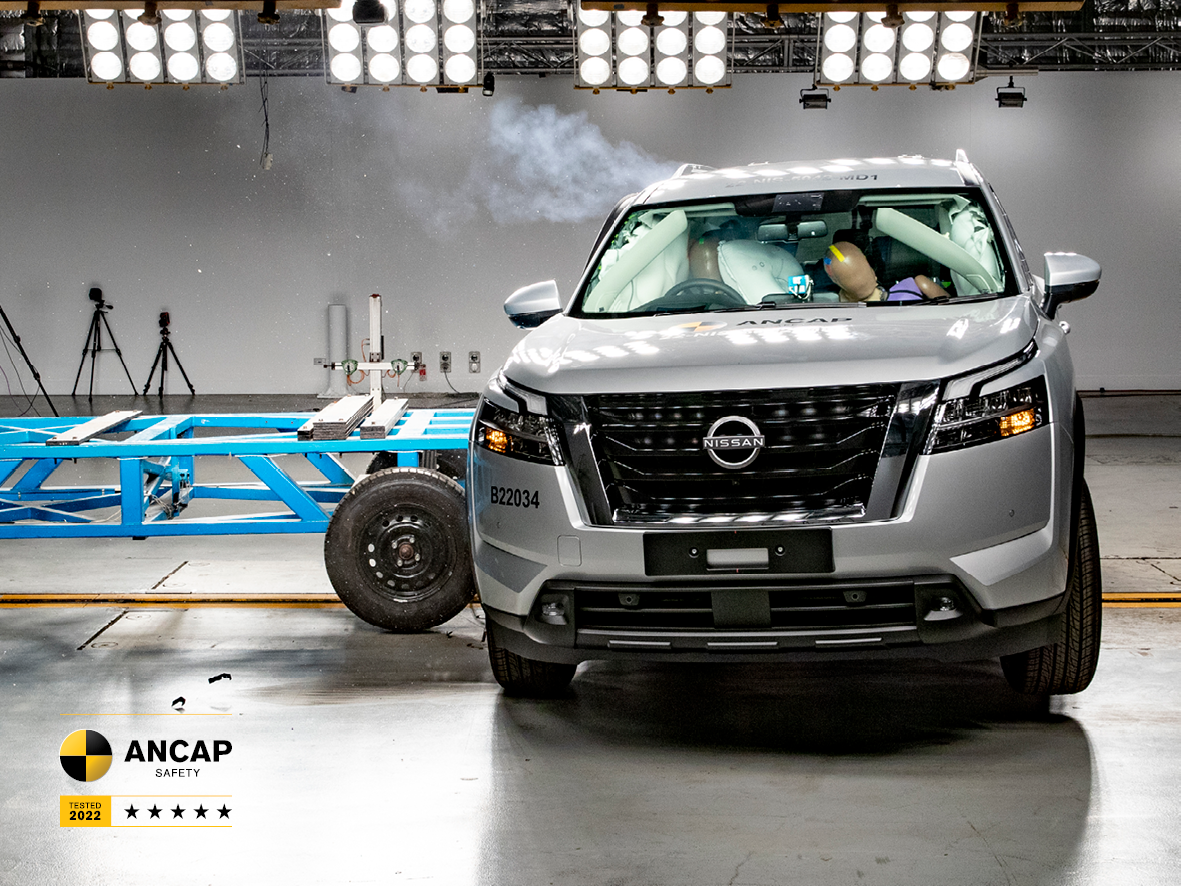
The Australasian New Car Assessment Program (ANCAP) awarded the new model top marks in both the adult protection side impact and oblique pole tests, and the front-seat passenger in the frontal offset test – giving it an overall score of 86 per cent.
High scores were also awarded for protection of the driver in the full width frontal test, however chest protection for the rear passenger in this test was dubbed ‘weak’.
In the child protection frontal offset and side impact assessments, the Pathfinder scored maximum points, helped by being fitted with Isofix and top-tether anchorages for all three seats in the second row, and in the left-hand seat of the third row. An overall score of 93 per cent was awarded in the category.
ANCAP also praised the new large SUV for having nine cabin airbags, including full-sized bags protecting all passenger rows, as well as a new far-side airbag between the two front seat occupants.
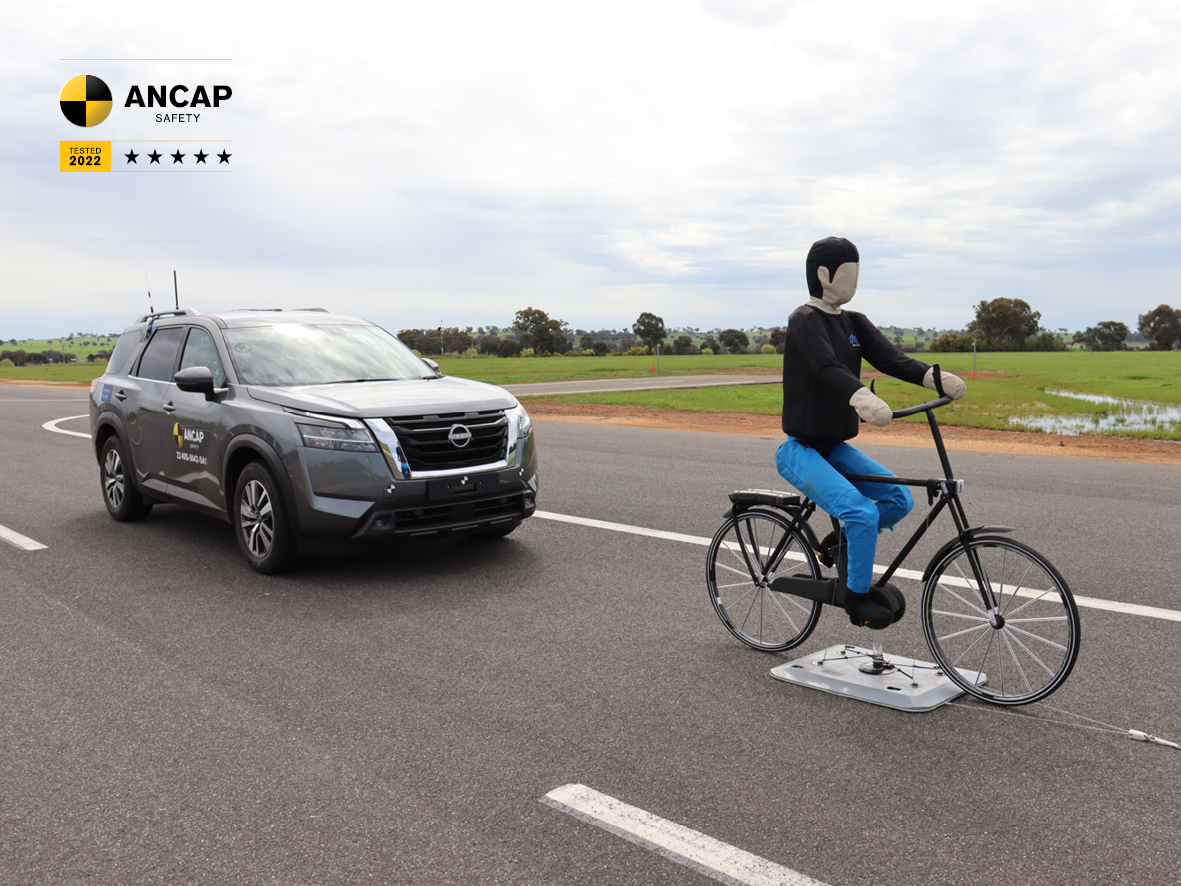
Additionally, the crash testing authority found the autonomous emergency braking (AEB) functionality to work well, though it performed better for cyclist protection and when facing a collision with another car than it did for pedestrians.
The rating applies to all Pathfinder variants, which include the ST, ST-L, Ti and Ti-L.
The Pathfinder’s ANCAP result follows five-star safety ratings for the all-new Nissan Qashqai and Nissan X-Trail.
“We’ve seen some impressive safety results from Nissan this year with the Qashqai, X-Trail, and now the Pathfinder all achieving five star safety ratings,” said ANCAP’s Chief Executive Officer, Carla Hoorweg.
“We look forward to seeing Nissan continue their commitment to offering the highest levels of safety for Australian and New Zealand customers with future models.”
The 2023 Nissan Pathfinder will boast a four-tier model range and the option of captain’s chairs in the second row when it arrives in Australia in the coming days.
A rival for popular large SUVs like the Mazda CX-9, Hyundai Palisade and Toyota Kluger, the fifth-generation Pathfinder also offers a braked towing capacity of 2700 kilograms, which Nissan claims is the highest in its segment.
An overhauled cabin that’s more luxurious than before and a comprehensive suite of active safety systems also feature, although unlike Nissan’s other new SUVs – the Qashqai and X-Trail – which arrive Down Under around the same time, the Pathfinder does not ride on an all-new platform.
Also unchanged is the Pathfinder’s engine, with a 3.5-litre naturally-aspirated V6 set to be the only powertrain offered at launch. The V6’s outputs are carried over at 202kW/340Nm – although it’s now paired to a new nine-speed automatic, instead of the old model’s CVT.
While the outgoing model – last updated in 2020 – was on sale in ST, ST+, ST-L and Ti variants, the new SUV will be available in ST, ST-L, Ti and Ti-L grades, representing a mix of price increases and decreases when comparing nameplates like-for-like.
Pricing starts from $54,190 for the ST before on-road costs, and rises to $77,890 for the Ti-L + ORC.
Key Points
- Puma EV will share same underpinnings as current petrol model
- Minor design tweaks expected
- City-sized electric crossover unclear for Oz
The upcoming battery-electric Ford Puma is slated for 2024 and will use the same Global-B platform as the current petrol-powered model.
However, the light crossover will use a slightly modified underpinning to adapt it for pure-electric propulsion, as is the case with the forthcoming Ford E-Transit Custom cargo van.
“Puma EV will be based on the current Puma’s success and will continue that car’s themes and attributes,” Ford UK chair man, Tim Slatter, told Auto Express.
In March, Ford’s European division released a shadowy teaser of the Puma EV depicting a revised LED daytime running light signature and potentially a closed-off front grille.
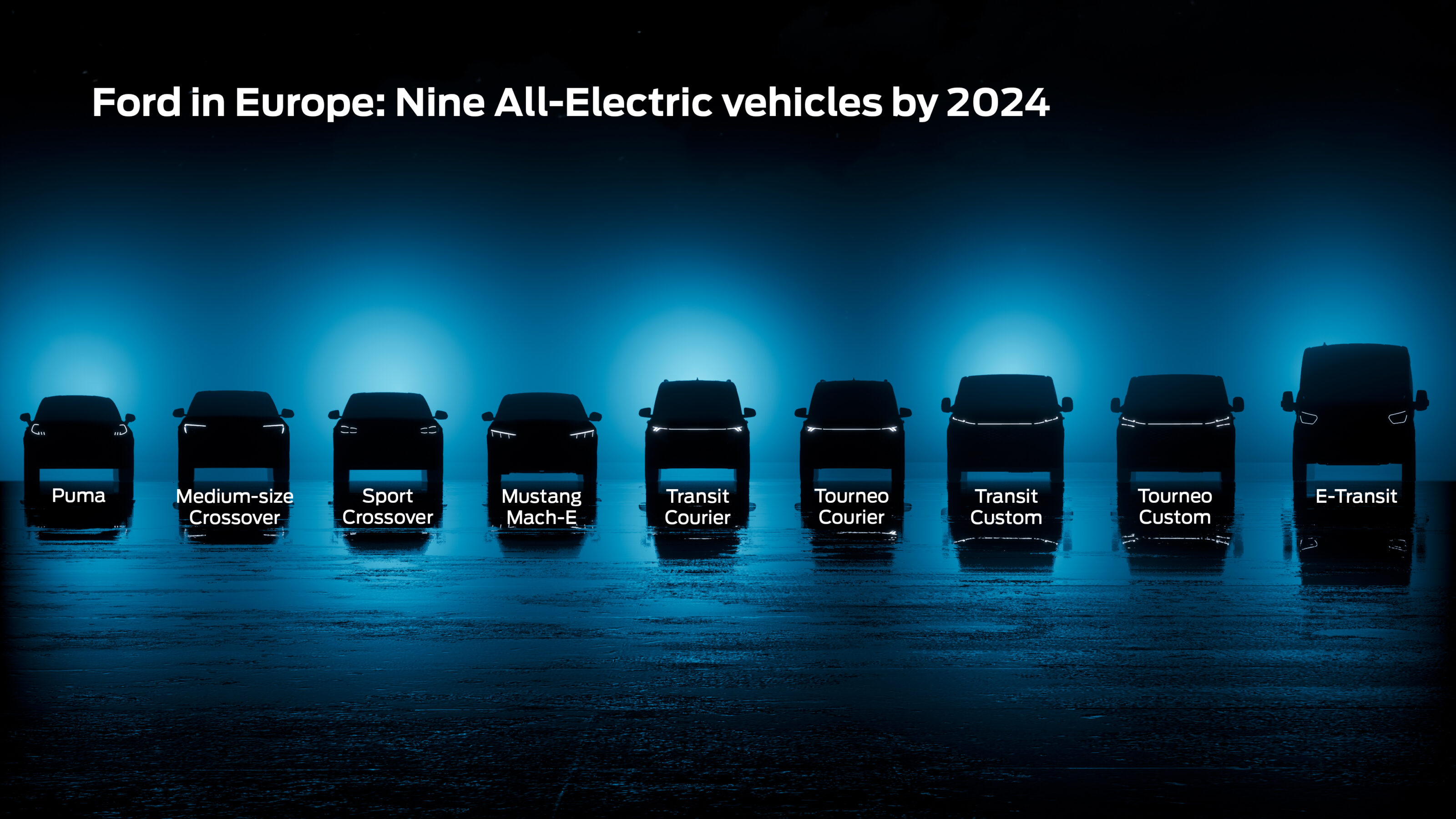
In October, the Puma EV was again hinted in a video released farewelling the Ford Fiesta city hatch nameplate, which shares the same bones. It was already axed in Australia back in August and only the flagship Fiesta ST hot hatch version was sold.
The Puma EV will be produced alongside Ford’s upcoming electric commercial vehicles in Romania.
Meanwhile, two other teased electric SUVs – a medium-sized crossover and sporty crossover – will be made at its Cologne plant in Germany and will adopt Volkswagen’s Modular Electric Toolkit (MEB) platform that’s currently used on models such as the Volkswagen ID.4, Cupra Born and Skoda Enyaq.
It’s unclear whether the Ford Puma EV will make its way to Australia, though. The local arm has only promised to bring at least five electrified vehicles by 2024.
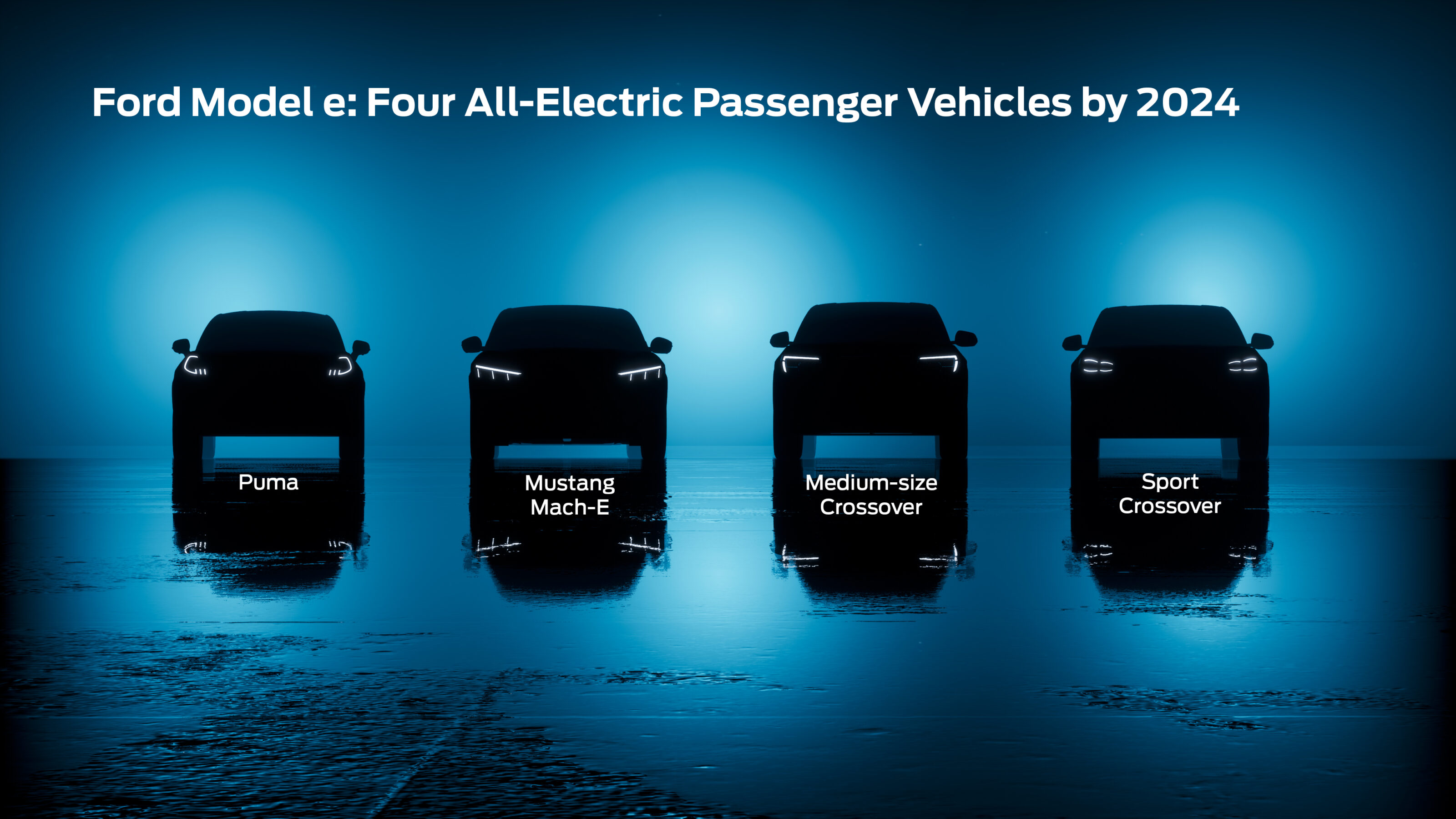
The Ford Escape plug-in hybrid is already on sale, while the E-Transit large pure-electric delivery van will lob in 2023 and the medium-sized E-Transit Custom has been confirmed for 2024.
The Mustang Mach-E crossover is likely on the cards, while E-Tourneo Custom people-mover was unveiled last month, but Ford Australia remained tight-lipped on its plans.
The Transit Courier and related Tourneo Courier light van pair are the remaining models that haven’t been unveiled yet as part of its push to launch seven EVs in Europe by 2025.
Snapshot
- Built-in Waze is finally arriving for Android Automotive touchscreens in 2023
- But only limited to two new Renault models at launch
- Shares code with Android Auto app, released in 2017
Community-based navigation app Waze will finally launch for Android Automotive in-car systems in 2023, but it’ll only be available for the newest Renault models.
Only the all-electric Renault Megane E-Tech (confirmed for Australia) and recently launched Austral crossovers use the Android Automotive-powered OpenR Link software in Europe.
This notably leaves out newer models from Polestar, Volvo and General Motors, which use the built-in Google operating system.
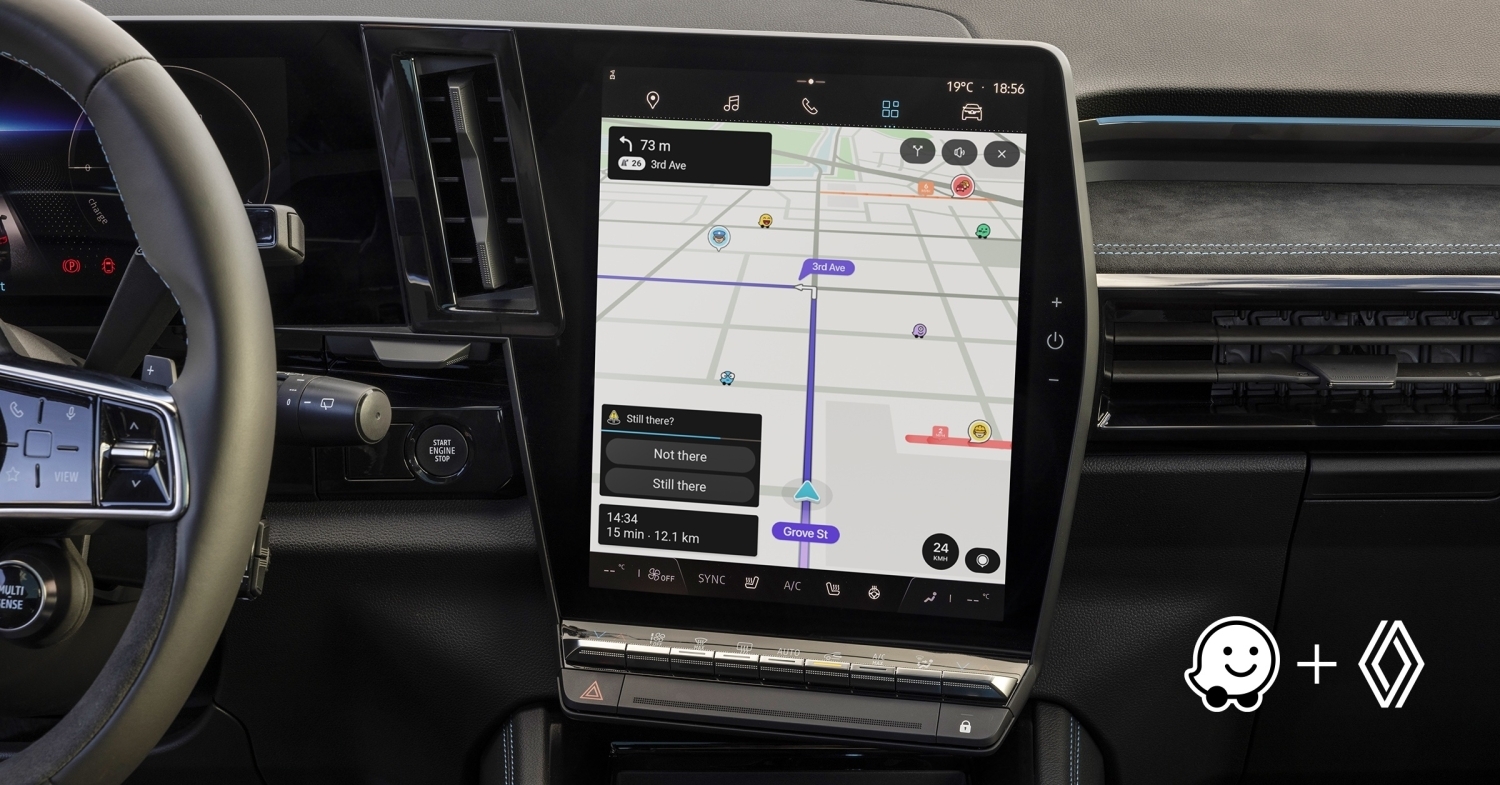
It’s unclear whether this Waze-Renault alliance means it won’t be available on Android Automotive systems in other car brands as Renault’s OpenR Link is essentially a user interface skin on top of Google’s software.
Waze is distinct from Google Maps as a crowdsourced navigation platform (also owned by Google) that allows users to report road conditions to alert other drivers like mobile speed cameras, objects on the road and any stopped vehicles, while providing real-time speed limit alerts based on GPS.
When it rolls out next year, European owners can install the built-in Waze app via the Google Play Store or My Renault mobile app.
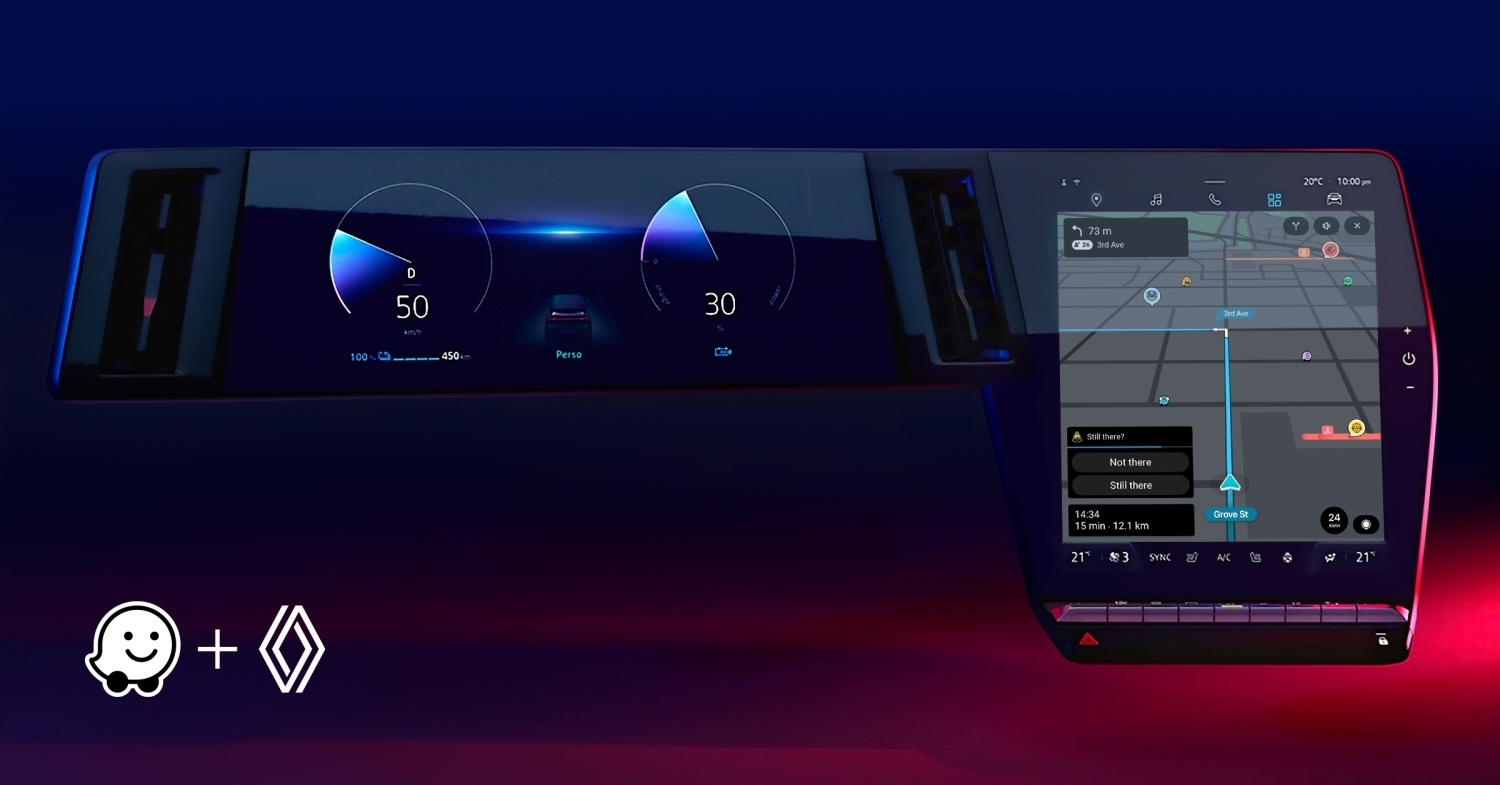
“As more and more Waze users join us on in-car platforms and as this type of technology continues to evolve, it is important that we provide them with the best driving experiences,” Waze’s director of marketing, Aron Di Castro, said.
“We look forward to bringing this all-new driving experience to as many users around the world as possible in 2023.”
Android Automotive launched globally in 2018 on the Polestar 2 electric liftback offering built-in Google services like Maps, Assistant voice control and the Play Store using the vehicle’s embedded SIM card – instead of relying on a connected Android smartphone to run Android Auto.

In 2021, the tech giant announced that app developers can share the same underlying code between built-in Android Automotive and smartphone-based Android Auto. Waze launched on the latter in 2017.
Ford, Nissan and Honda have also promised to deploy Android Automotive infotainment systems.
While the touchscreen software is Android based, it is still capable of offering Apple CarPlay smartphone projection for iPhone users.
Snapshot
- 60 Daimler and Volvo electric trucks will join parcel fleet in western Sydney from 2023
- Arena funding almost half of $44.3 million project trial
- u2018Depot of the Futureu2019 trial includes installing chargers and battery storage
Freight and courier company Team Global Express (formerly Toll Global Express) will have Australia’s largest logistics battery-electric truck fleet trial thanks to funding from the Federal Government’s Australian Renewable Energy Agency (Arena).
The $44.3 million ‘Depot of the Future’ project, of which $20.1 million Arena is donating, will see 24 light Daimler/Mitsubishi Fuso eCanter and 36 medium Volvo FL Electric trucks join its express parcels fleet at its Bungarribee depot in Western Sydney.
The 60 all-electric trucks will gradually join the fleet over 18 months from early 2023 and make up one-third of the depot’s force.
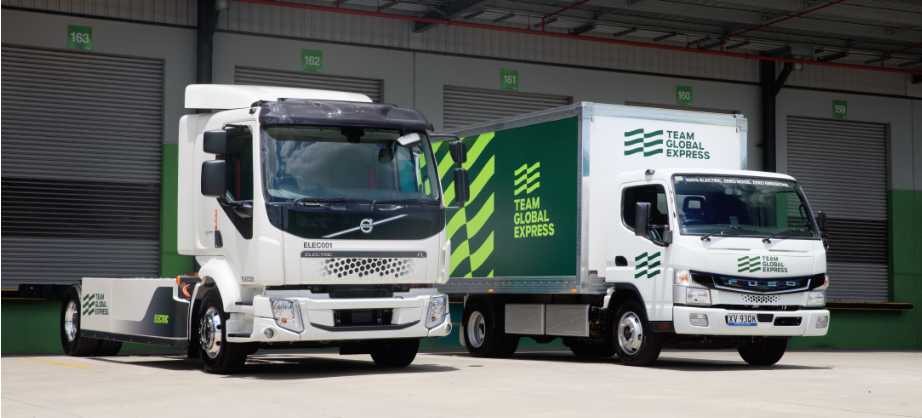
They’ll operate on a ‘back-to-base’ model, where they travel from distribution centres to Greater Sydney customers in urban and residential areas, then return back to the depot for charging.
The Bungarribee site will be fitted with chargers to top-up the trucks using generated solar energy, a new battery storage system and renewable energy from the grid.
Team Global Express says it chose the parcels fleet due to travel into urban areas where the electric trucks can better utilise regenerative braking, while reducing vehicle noise and air quality in the city.
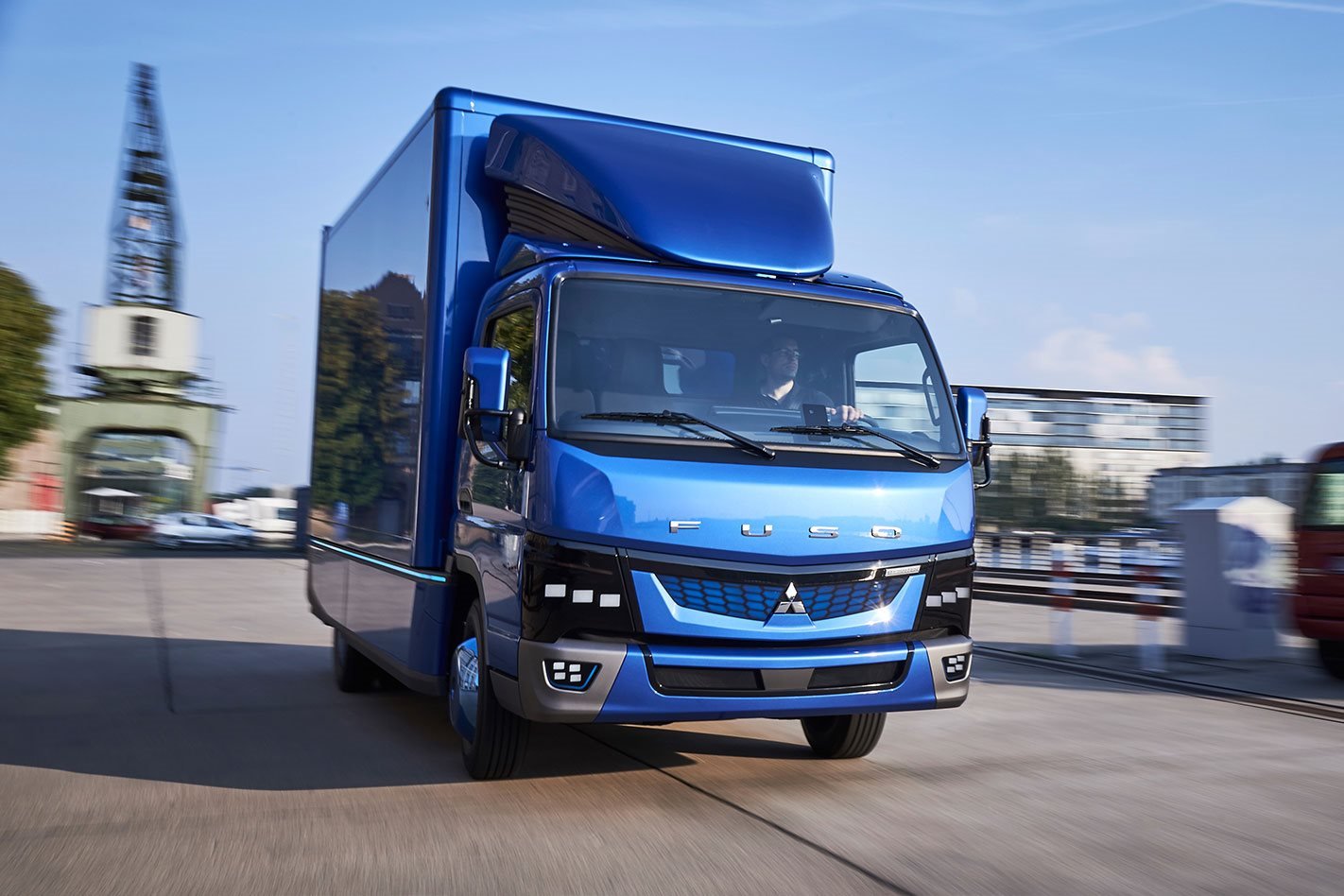
The Fuso eCanter’s offer between 100 to 200km of claimed driving range depending on the model, while the FL Electric can drive for up to 300km.
“We expect the project will provide valuable insights into the costs and operational aspects of transitioning its wider fleet to zero emissions vehicles. Importantly, our goal is for the heavy vehicle industry to learn from this project as others consider their transition pathway,” Arena chief executive Darren Miller said.
“Operating a fleet of battery-electric heavy vehicles will help to address some of the key barriers to adoption, including overcoming the higher upfront purchase price, and uncertainty of integrating electric vehicles into existing operations at scale.
“Understanding these barriers will help to build market confidence around EV technology and show that the transition to heavy electric vehicles is possible.”
Arena has given more than $100 million into the transport sector since 2016, including part-funding the rollout of public EV chargers from Evie Networks, Ampcharge, Chargefox and Engie providers.
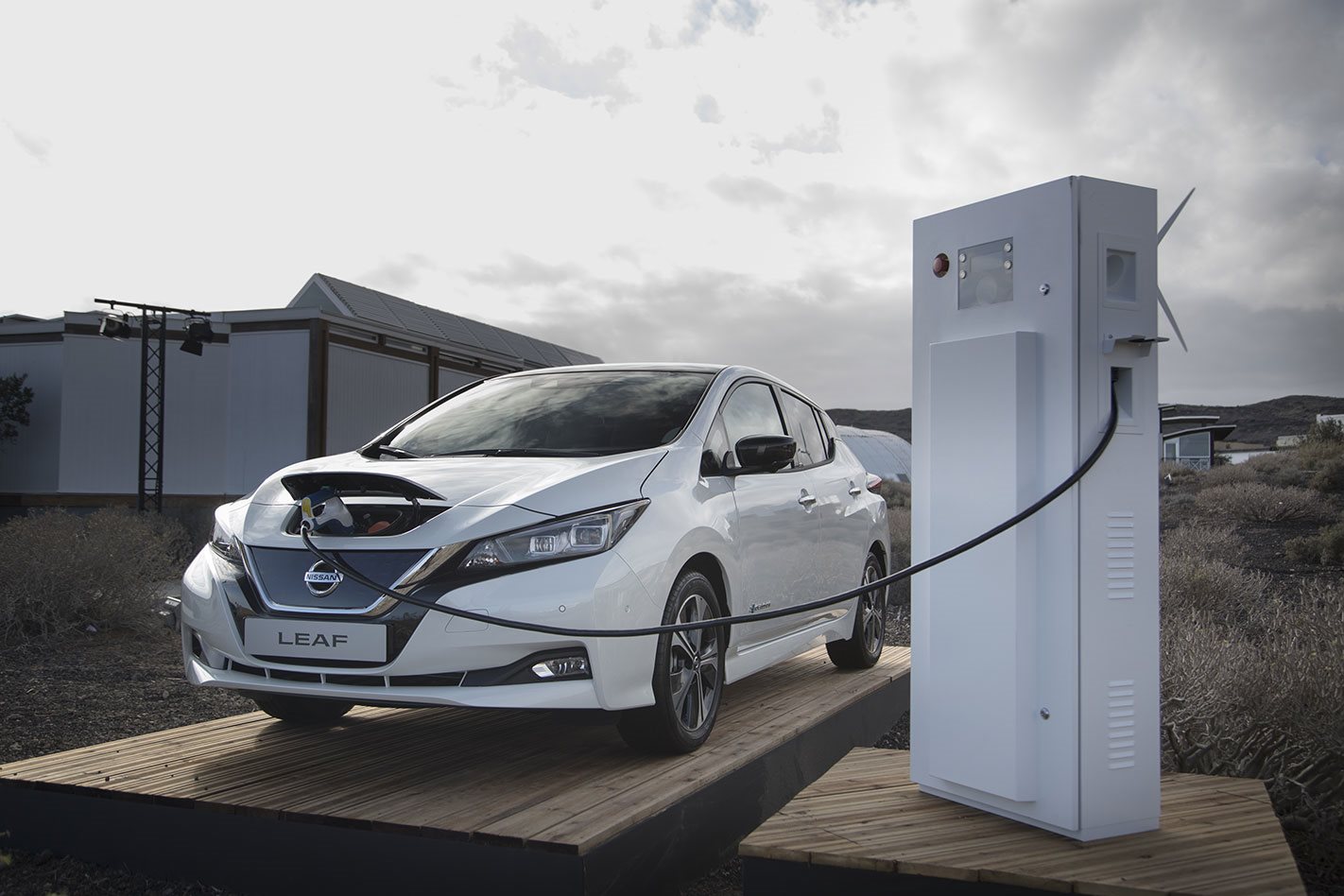
It has also committed to other trials like vehicle-to-grid (V2G) for the ACT Government’s Nissan Leaf EV fleet and installing street-side power pole chargers with Intellihub in NSW.
Snapshot
- BMW X1 small SUV receives five-star ANCAP under 2022 criteria
- Weak performance for protecting the driveru2019s chest in frontal offset test
- Does not apply to all-electric iX1 version
The all-new 2023 BMW X1 has been awarded a five-star ANCAP safety score under the 2022 testing criteria.
But, it only applies to the petrol-driven X1 variants with the fully-electric iX1 remaining unrated for now.
ANCAP says the Barvarian carmaker’s entry-level small SUV had weak performance for protecting the driver’s chest in the frontal offset test and was marginal for the chest of the rear passenger in the full-width test.
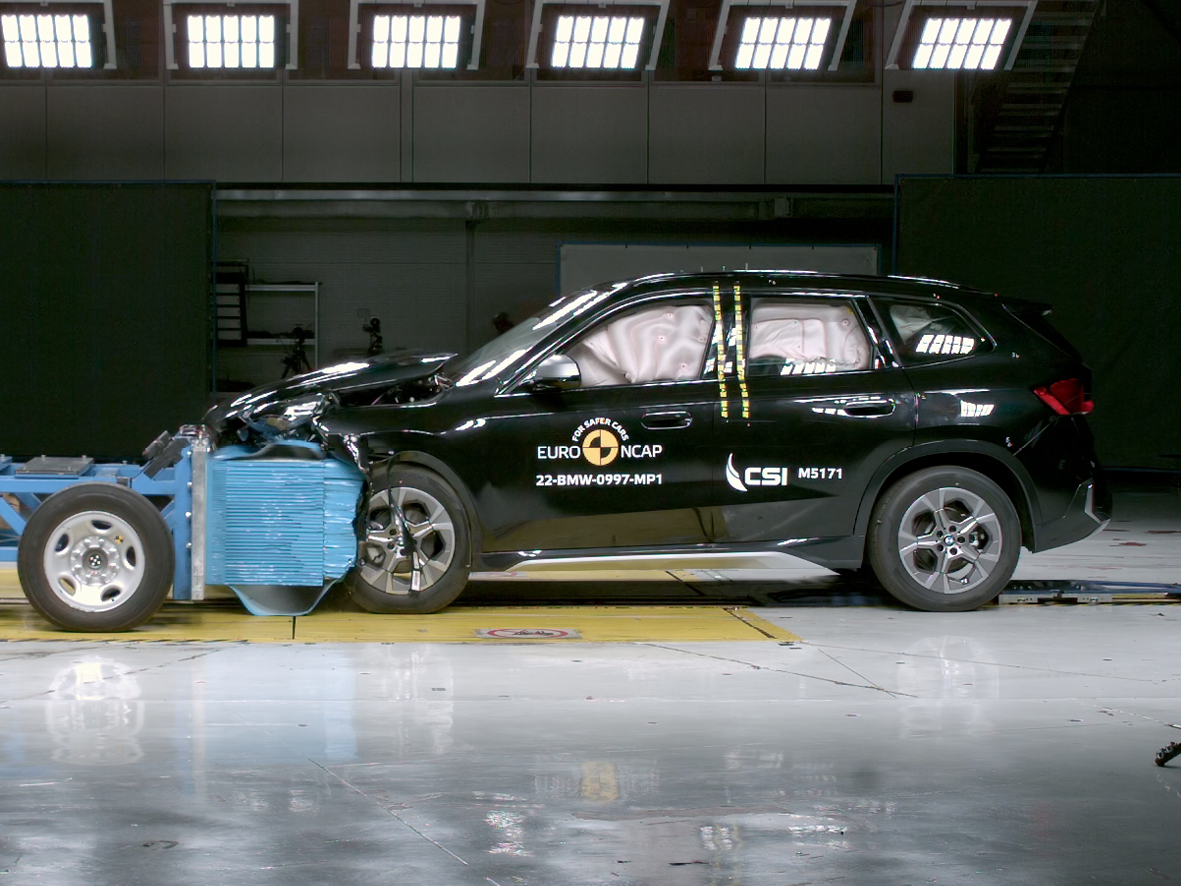
The reverse auto emergency braking (AEB) system also doesn’t detect pedestrians.
The third-generation X1 scored 86 per cent for adult occupant protection, 88 per cent for child occupant protection, 76 per cent forvulnerable road user protection, and 94 per cent in the safety assist category.
The more stringent 2023 testing criteria will come into effect soon, which will assess vehicle floodwater submersion, systems that detect whether a child has been left in the cabin, and car-to-motorcycle safety assist tests.
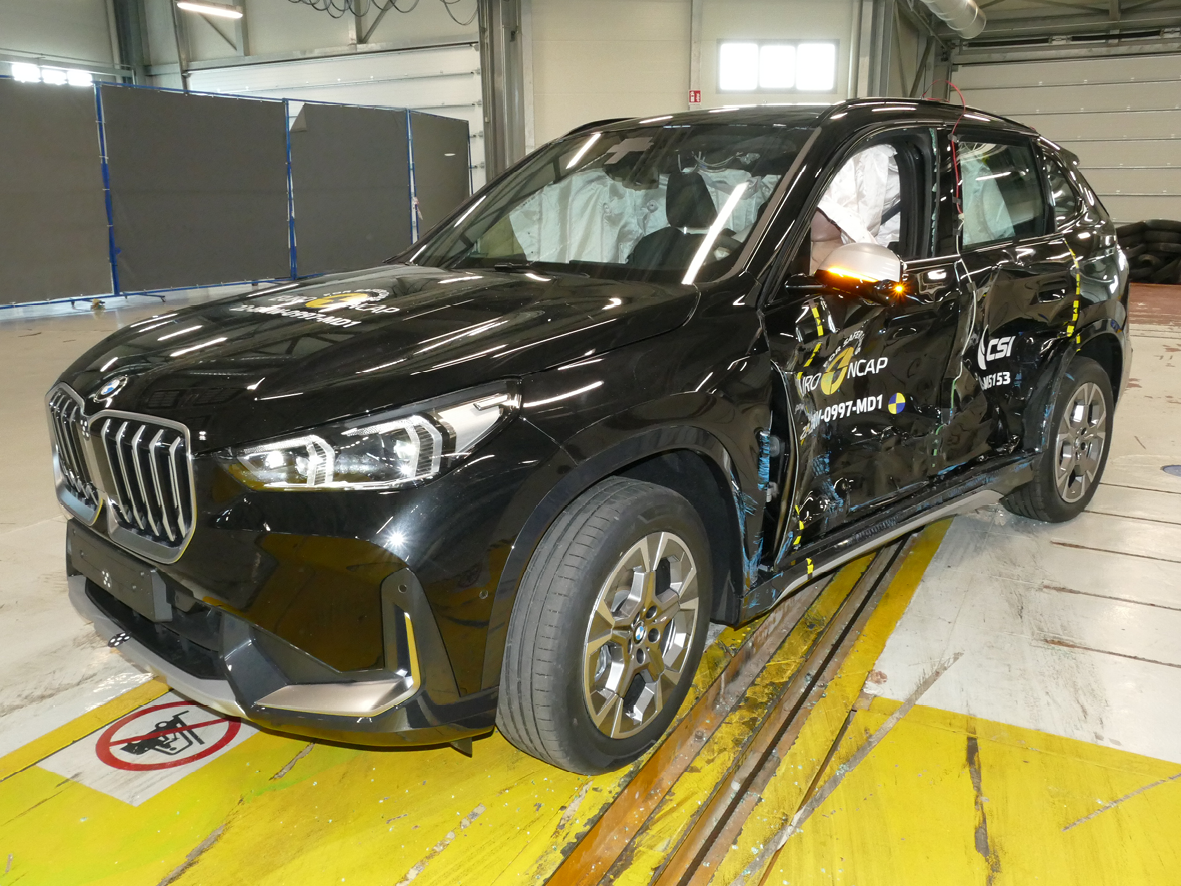
The 2023 BMW X1 is priced from $53,900 before on-road costs. It features AEB with pedestrian and cyclist detection; blind-spot monitoring; lane-keep assist; rear cross-traffic alert; adaptive cruise control; traffic sign recognition; safe exit warning; a 360-degree camera; and front and rear parking sensors as standard.
Stepping up to the xDrive20i variant adds Driving Assistant Professional with a steering and lane control assist. This can be optioned on the base sDrive18i as part of the Enhancement pack.
