
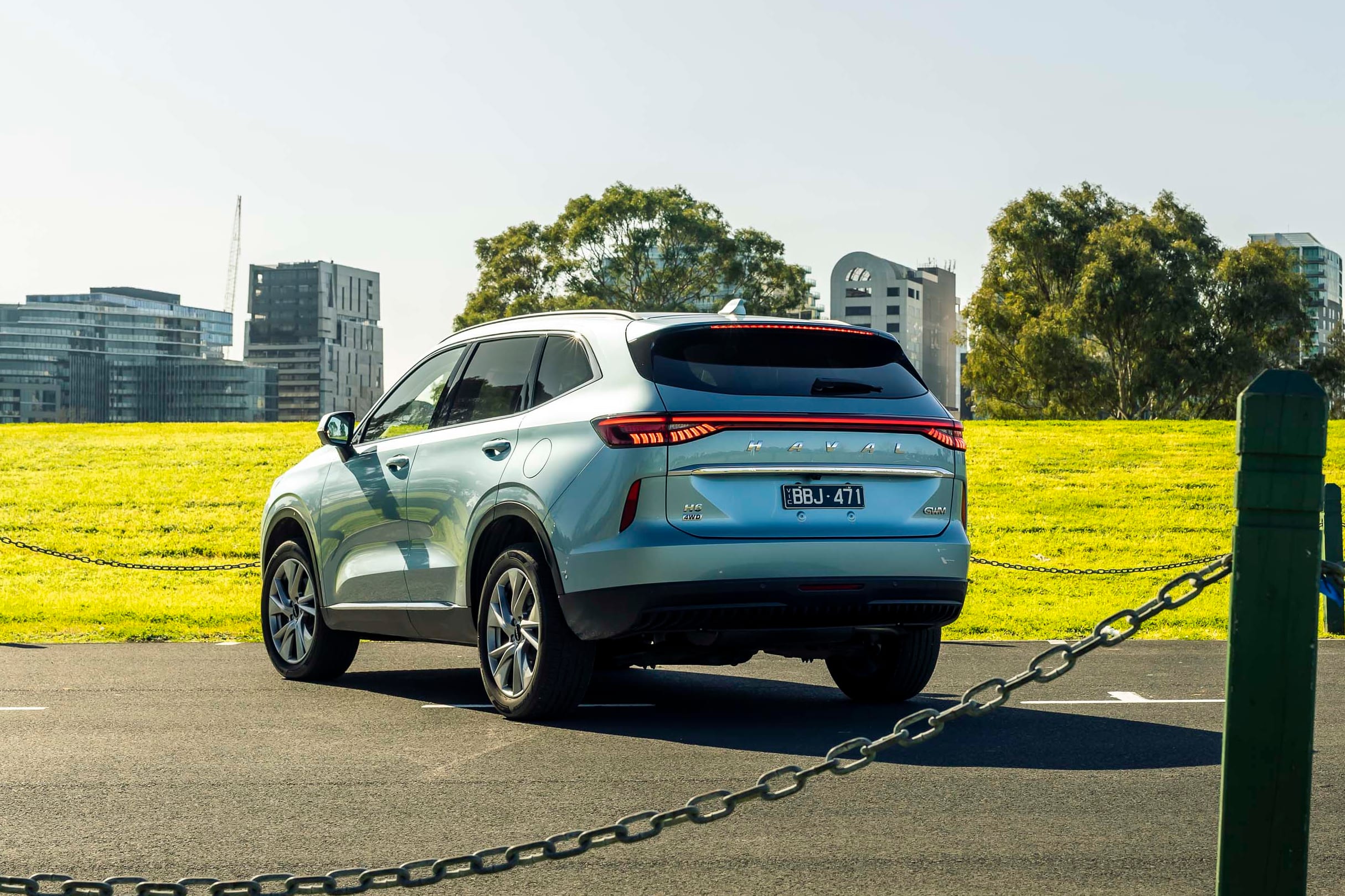
Offerings from Chinese brands like GWM Haval are fast climbing up the sales charts in Australia and, of those, the H6 mid-sized SUV is proving to be one of the most popular, with buyers attracted to the value-for-money proposition.
While the H6 is not yet causing sleepless nights for the best-selling contenders in this busy segment, such as the Toyota RAV4, Mitsubishi Outlander or Mazda CX-5, it has already outgunned established models like the Ford Escape, Skoda Karoq and Volkswagen Tiguan (though the supply crisis continues to make sales data difficult to interpret).
With a premium cabin experience and plenty of safety kit tucked away inside too, the H6 has the potential to cause concern for closer competitors such as the Honda CR-V and upcoming Nissan X-Trail and – with some improvements to its driving dynamics – it could catch up to the Kia Sportage and Hyundai Tucson in the long run.
Pricing and features
The basics
| Engine | 2.0-litre turbo-petrol |
|---|---|
| Power | 150kW @6000-6300rpm |
| Torque | 330Nm @1500-4000rpm |
| Transmission | 7-speed dual-clutch |
| Drive | all-wheel |
| Fuel consumption | 8.3L/100km (combined) |
| Price | $43,485 drive-away, including premium paint |
The 2022 Haval H6 comes in four grades, starting with the entry-level Premium priced from $33,990 drive-away.
The range then moves up to the mid-spec Lux from $36,990 and finishing up with the Ultra and Ultra Hybrid, which cost from $39,990 and $45,990 respectively. All prices are drive-away.
The Ultra we have here costs $43,485 drive-away, because it comes with all-wheel drive and is coated in $495 worth of Energy Green premium paint. There are also four other optional colour choices, with just Hamilton white offered free.
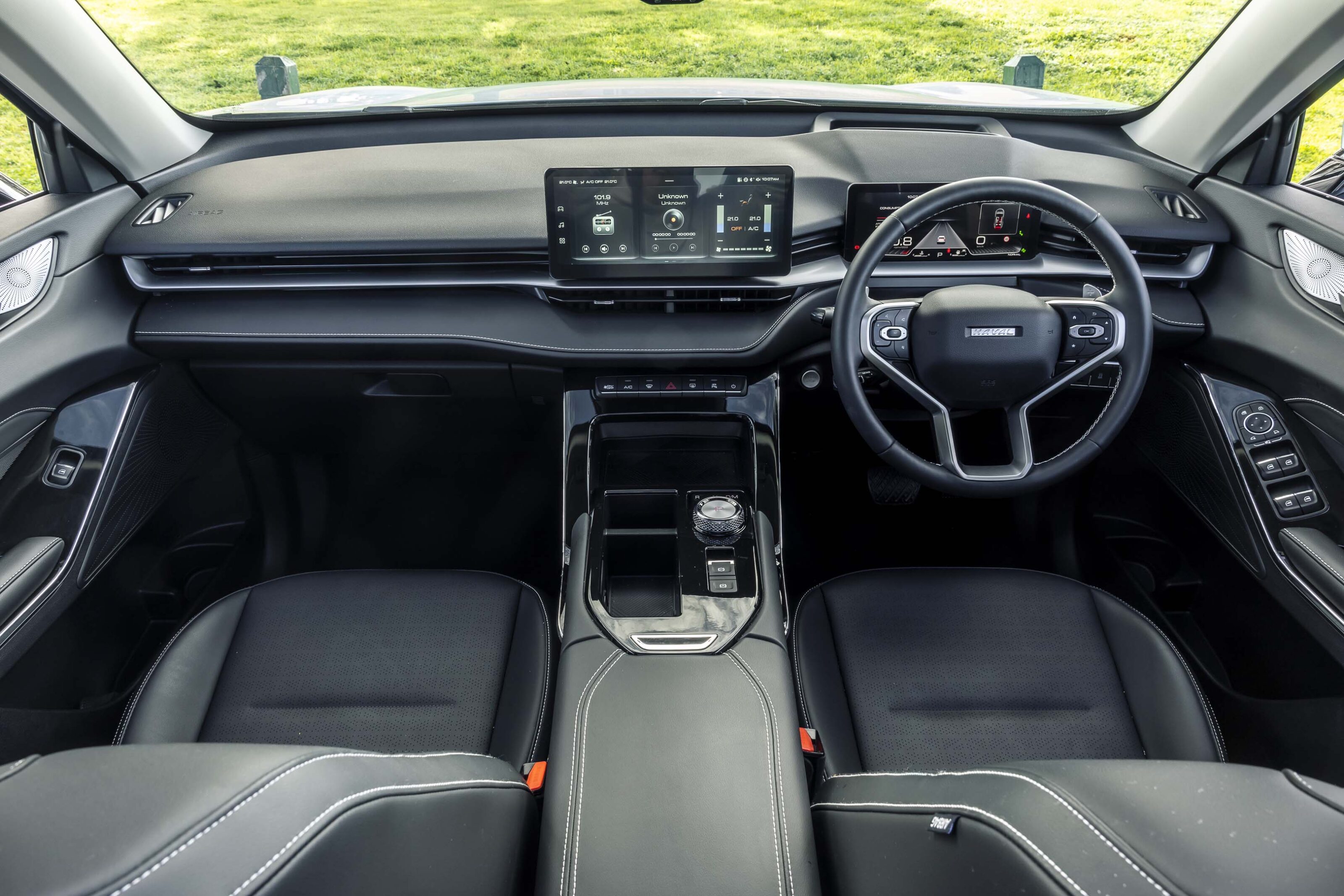
Being a top-spec grade, the H6 Ultra has all the bells and whistles and doesn’t really want for anything, packing in a lot of kit for under $40K if you skip the posh paint and opt for the front-wheel drive version.
To get roughly the same amount of kit in a rival such as the Kia Sportage GT-Line or Hyundai Tucson Highlander you’d be looking at upwards of $54K for one with all-wheel drive.
For the money, in the H6 Ultra you get as standard: a powered tailgate, electric seats for both the driver and front passenger – which are heated and ventilated – a heated steering wheel, wireless phone charging, dual-zone climate control, heated wing mirrors, eight speakers for the audio system and a head-up display.
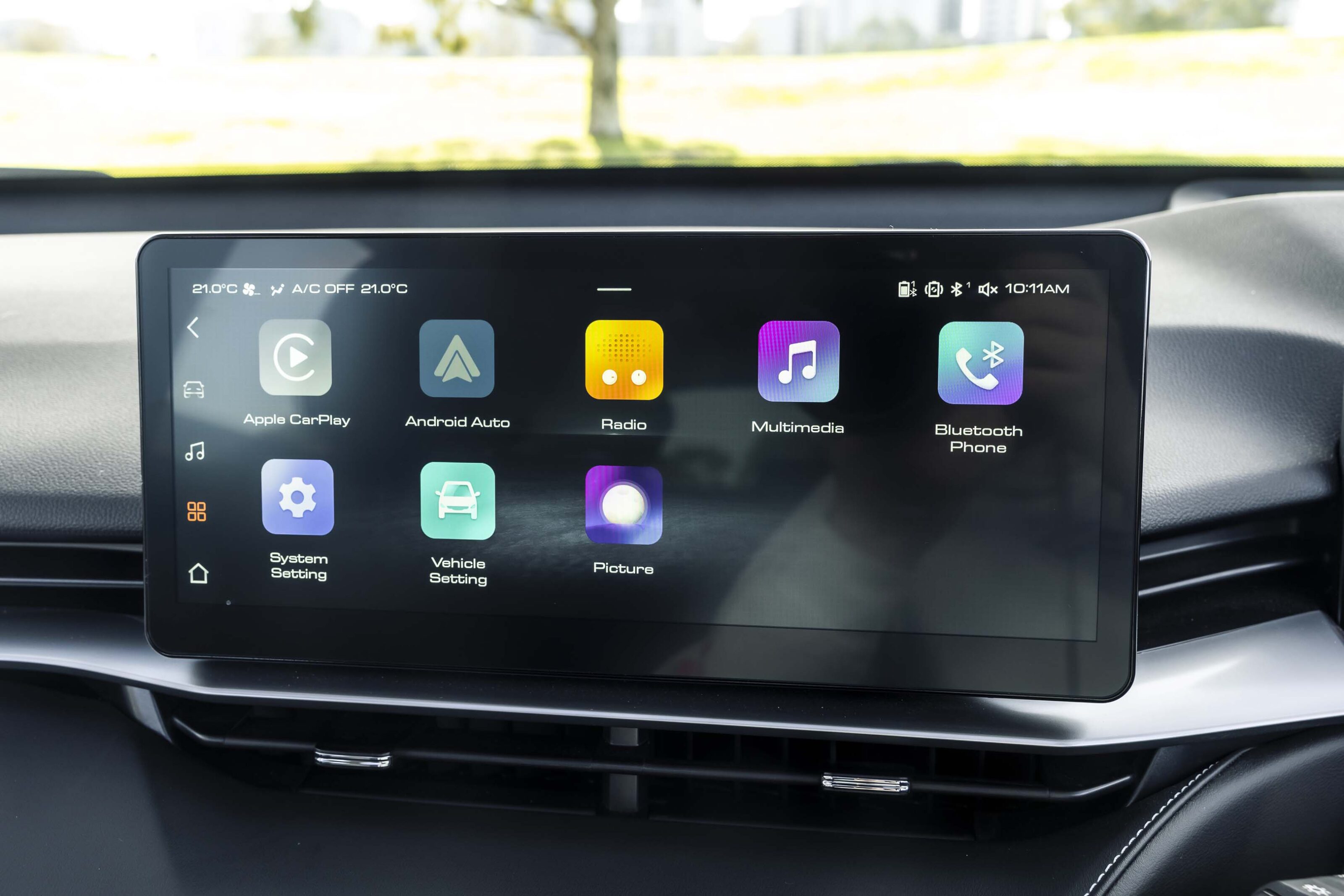
It also has wired Apple CarPlay and Android Auto on a nice big 12.3-inch screen, versus the 10.25-inch unit found in lower-spec variants.
The infotainment system, accessed via said 12.3-inch touch screen, is simple to use if a little basic in its functions.
Slightly awkward is that contained within the menus are things such as the heated seats and heated steering wheel – as well as the driving modes – which would all be better as physical buttons, as accessing them on the go is fiddly and distracting.
Other niggles include the positioning of the two front USB ports, which are located low down on either side of the centre console near your feet – with the one that operates Apple CarPlay and Android Auto on the passenger’s side rather than the driver’s (likely a hangover from the conversion to right-hand-drive for the Australian market) and, though the doors are keyless, they don’t offer a touch lock/unlock function.
Better news comes from a sunroof so big it spans almost the entire length of the car, drenching the cabin in sunlight, and an impressively clear and feature-packed 360-degree camera system that makes parking a doddle.
As range-topper, the H6 Ultra has GWM Haval’s full safety tech suite.
Key safety features for the 2022 Haval H6 include adaptive cruise control, rear cross-traffic alert and braking, intelligent cornering control, front and rear parking assist, forward collision warning, lane-keep/centre/departure assistance and blind-spot monitoring to name just a few.
Additionally, the Haval H6 has a five-star safety rating, awarded by ANCAP in 2022.
Comfort and space
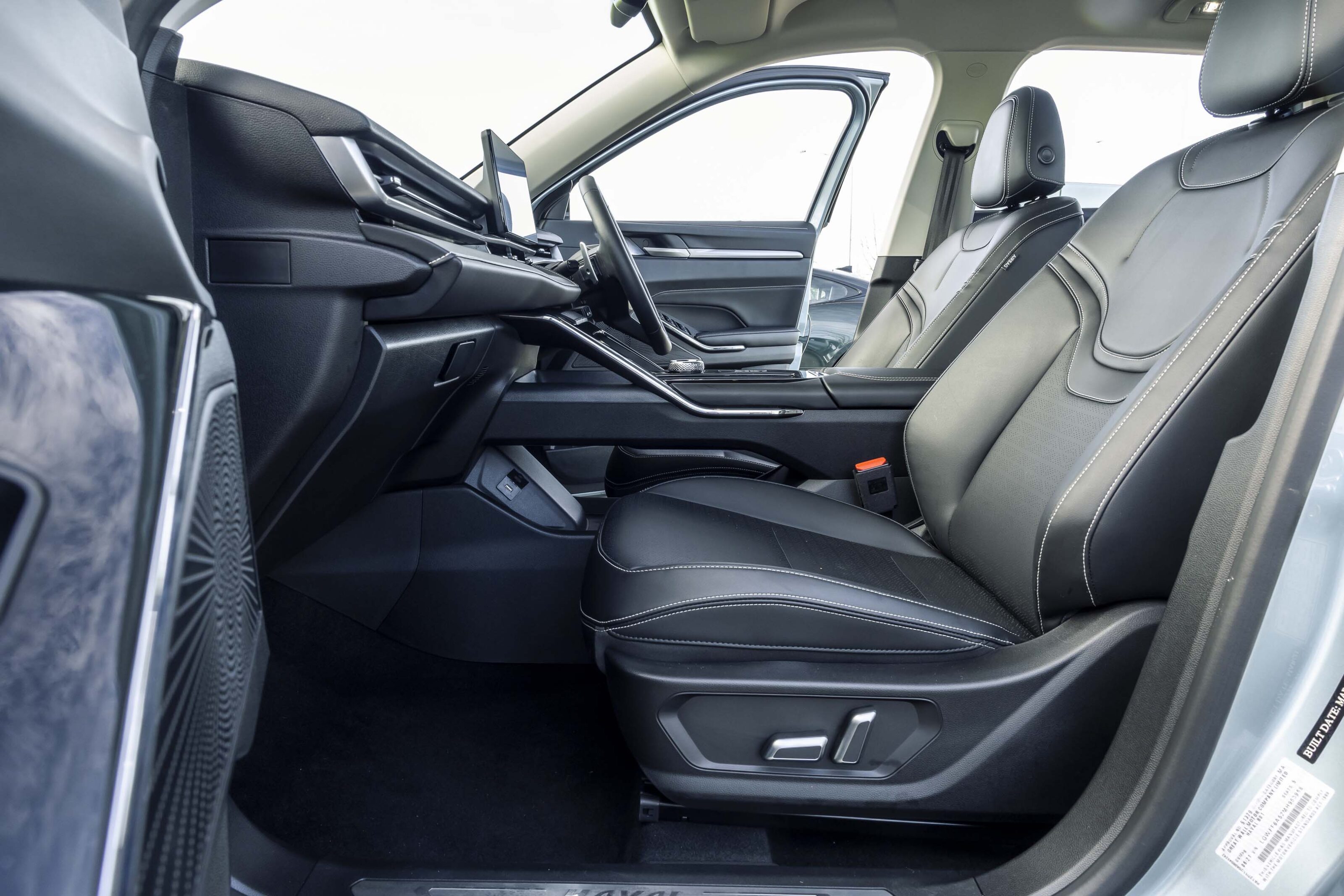
The interior of the H6 looks and feels premium. From the second you get in, you’re immersed in a cabin that on the surface appears to punch well above its weight for the price point.
GWM Haval’s leather-like Comfortek upholstery wraps the seats and major touch surfaces. Front occupants are treated to seat heating and ventilation but, to us, the cushioning feels a little too firm.
The 12.3-inch touchscreen is very on-trend and sits in the centre of the dash, with a floating centre console that sits snugly in between the driver and front passenger providing lots of space.
A cubby bin underneath has ample room for a small handbag or wallet, which is handy for stopping them from rolling around on the passenger seat or in the footwell.
Rear occupants get a pretty good deal too with heaps of legroom, an almost flat floor thanks to a low transmission tunnel that really opens up the space, two USB-A ports, air vents, privacy glass and map pockets on both sides.
The seats are nice and deep too, meaning little ones can rest their feet on the edge while sitting in a child seat rather than have them dangle down, a plus for child comfort.
Only super-tight space in the door cards lets the rear of the H6 down; there’s not even enough room for a small drink bottle as only one of those silly teeny tiny airline-sized ones containing barely a few gulps will fit.
Rear occupants get a pretty good deal too with heaps of legroom and an almost flat floor that really opens up the space
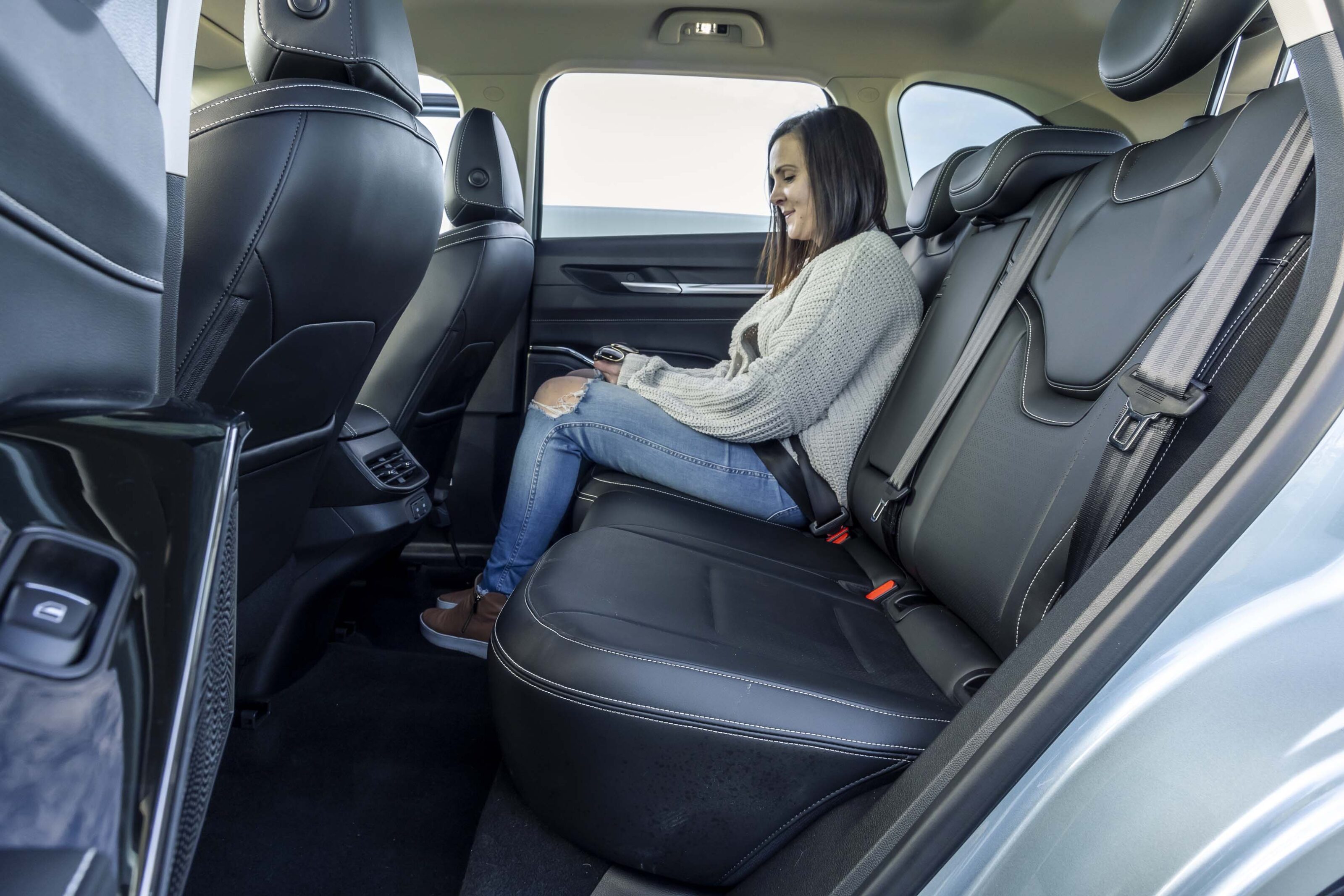
The doors themselves hold themselves open on an incline and provide a wide aperture for getting things such as child seats – or small people – in and out.
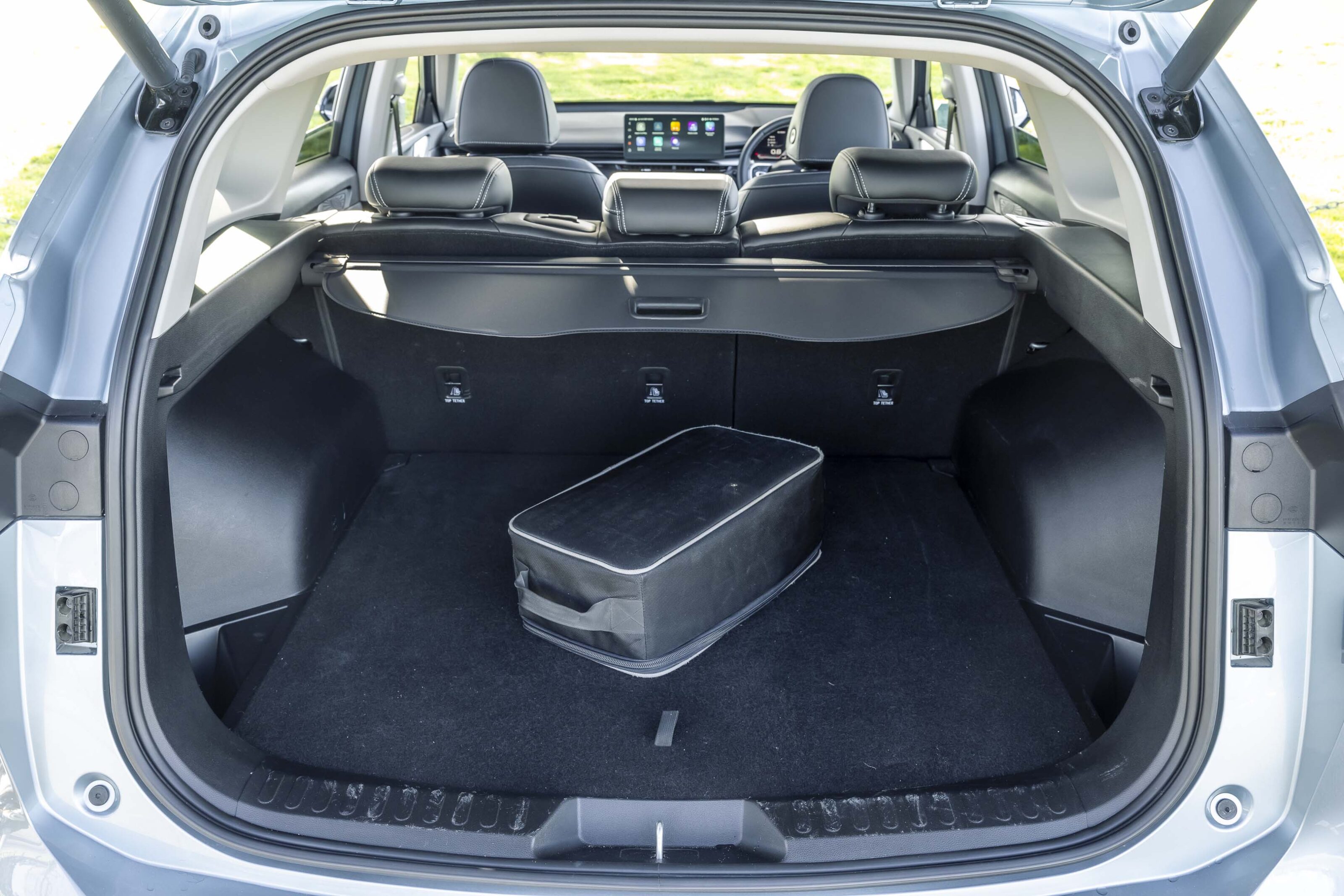
A pair of ISOFIX points for installing said seats are easy to locate and click in, and access to top tether anchorages via the incredibly cavernous boot is good too.
2022 Haval H6 boot space
Offering 600 litres of capacity with the second row up and 1485L with it folded down, the Haval H6’s boot space is a real selling point of this car. A glance over the shoulder from the back seat gives the impression it goes on for miles.
It easily beats the HS, X-Trail and Sportage too – their respective boot capacities being 463L, 565L and 543L – although the Sportage bests the H6 with the seats down at 1829L.
It’s also significantly more space than you’ll find in the coupe-style H6 GT, which shrinks to 392 litres as a result of the more dramatically sloped rear end.
On the road
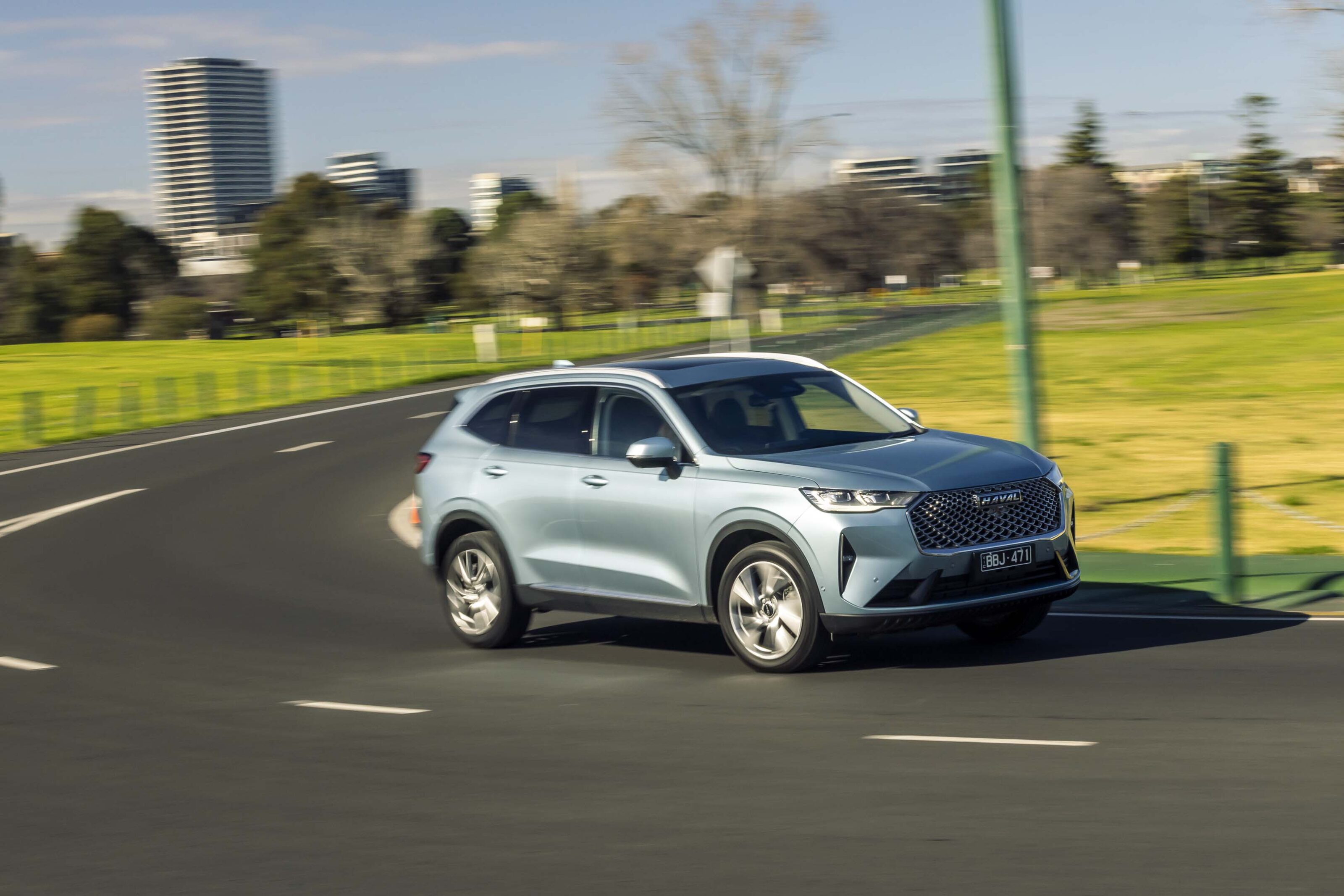
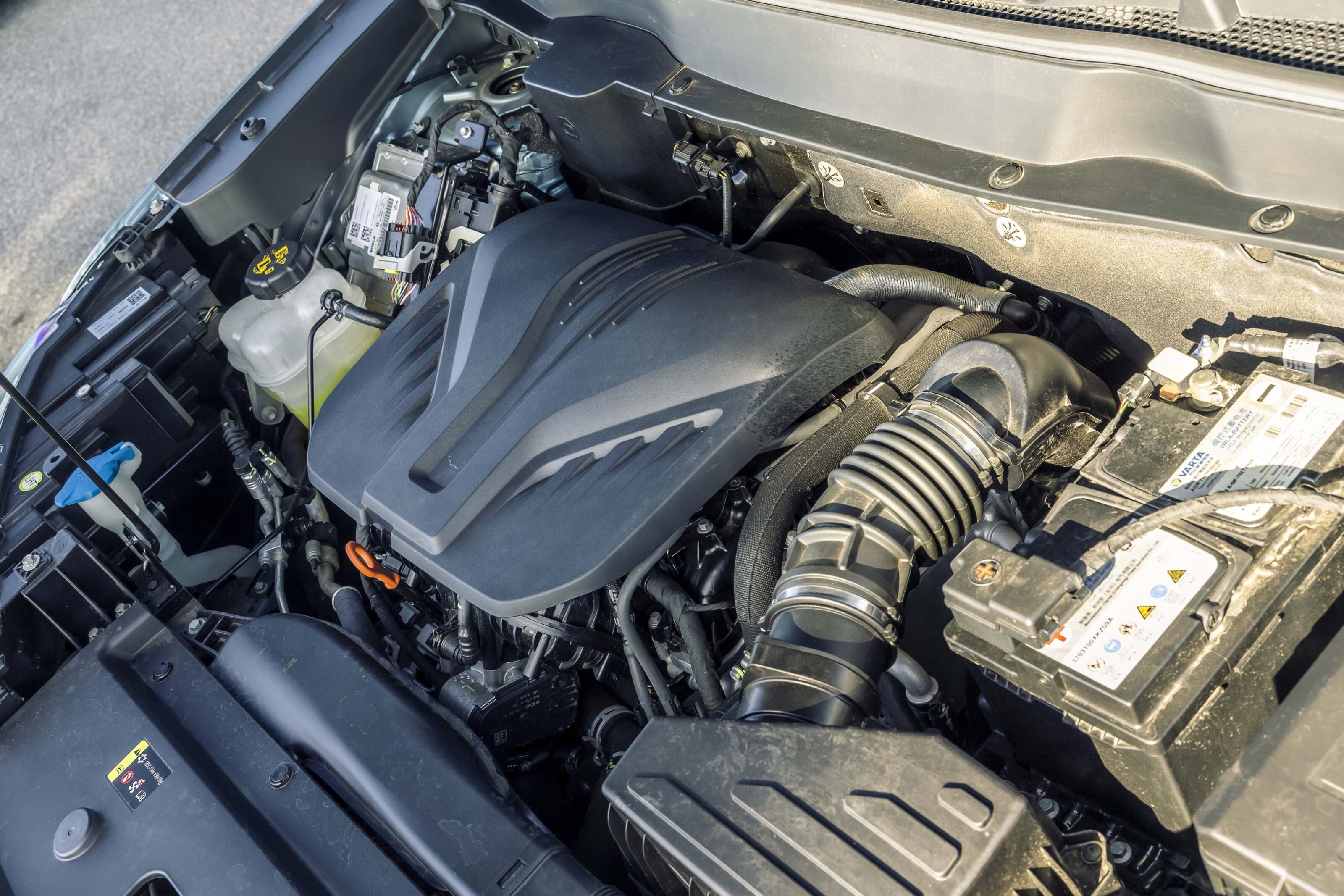
With the exception of the Hybrid, each H6 trim grade is available with the same 2.0-litre turbo-petrol engine and seven-speed dual-clutch automatic transmission, with either two- or all-wheel drive.
Our Ultra on test here is the AWD version, with power and torque rated at 150kW and 320Nm respectively.
The 2.0-litre is eager, providing a noticeable – but not unpleasant – induction rasp and making the H6 surprisingly quick for a car of its size and road presence.
Its healthy torque figure helps make overtaking a breeze, and it can haul a full load of people and their possessions with little impact on performance.
There’s a bit of turbo lag when moving away from the lights on occasion, though the bigger issue is that the idle-stop/start system can be reluctant to get going again.
The transmission is a little unwilling to shift quickly, especially in manual mode, where it feels like you can count more than a second between some downshifts.
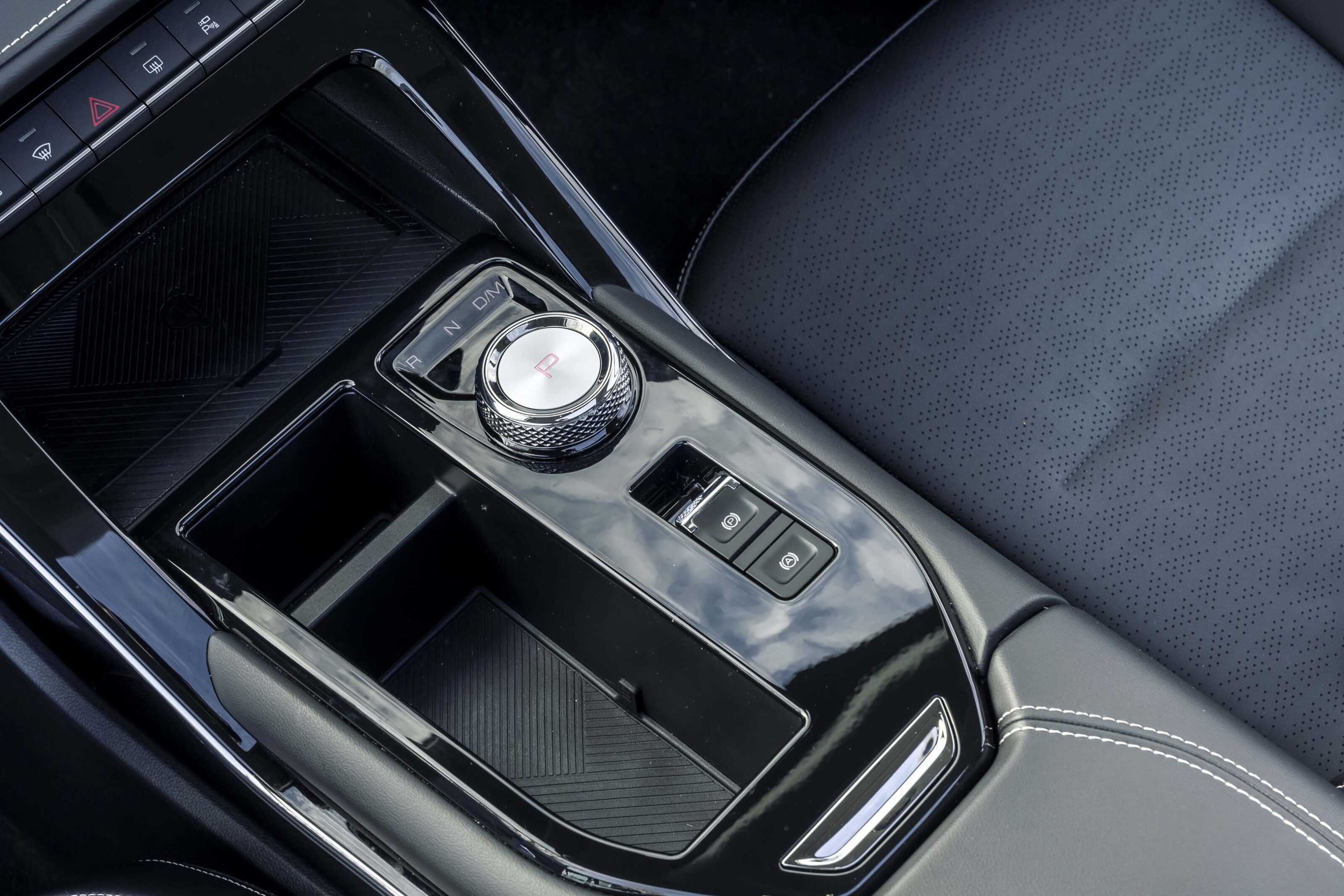
The rotary dial used to control it is also a bit finicky because it doesn’t solidly click into place as others do, instead performing like a toggle used to flick through menu options, meaning you have to really check what gear you’re in before trying to move away.
In contrast, the H6’s steering is more than capable, with no real evidence of dead spots, and its weight can be adjusted via a function buried in the touchscreen menus.
We found Light mode is a bit too, well, light for our liking and while Sport is responsive without being too heavily weighted, we spent most of our time in Comfort.
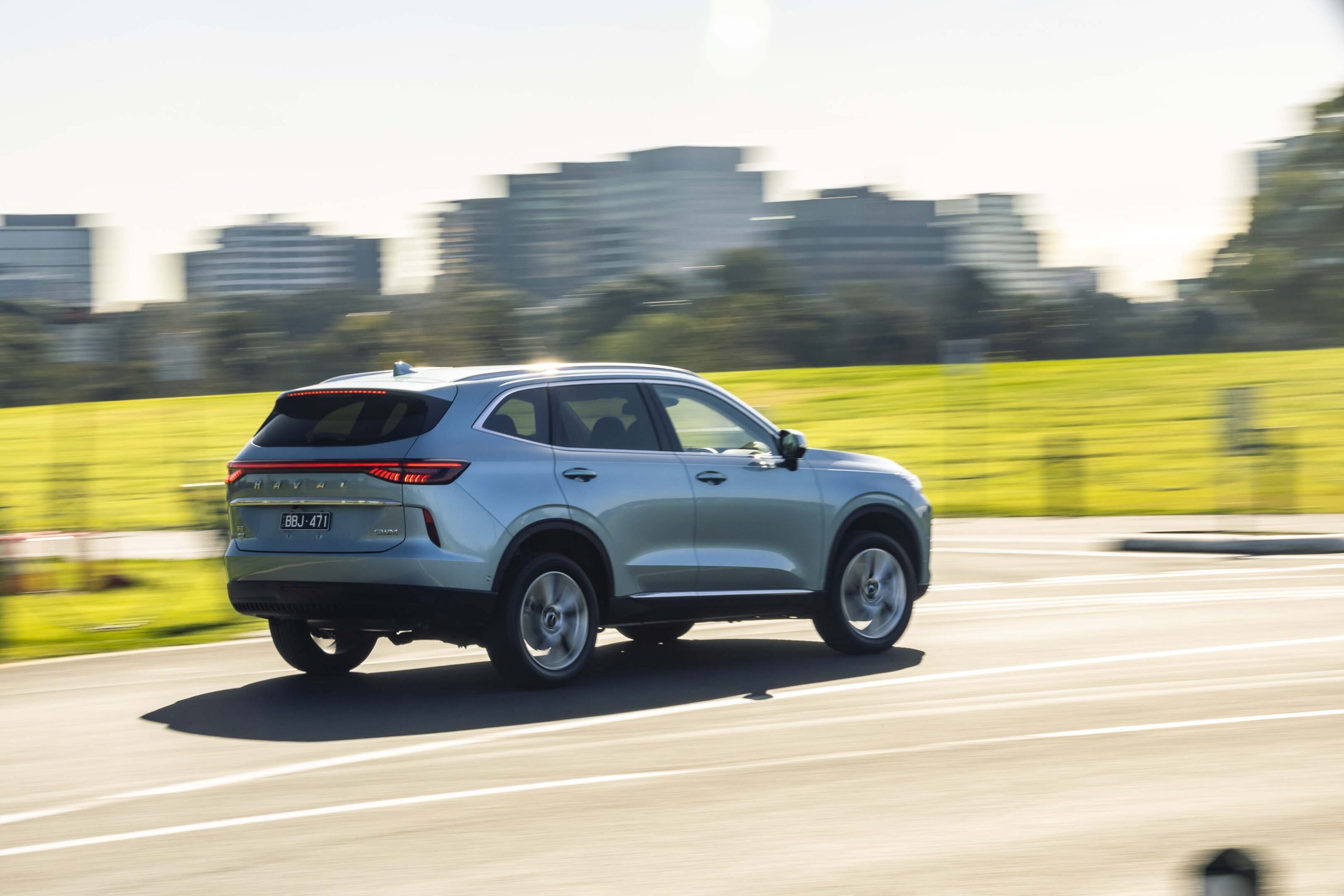
There are also four regular driving modes; Normal, Eco, Sport and Snow. An additional two for the AWD Ultra – and slightly more Aussie-appropriate than Snow – are Off-road and Sand.
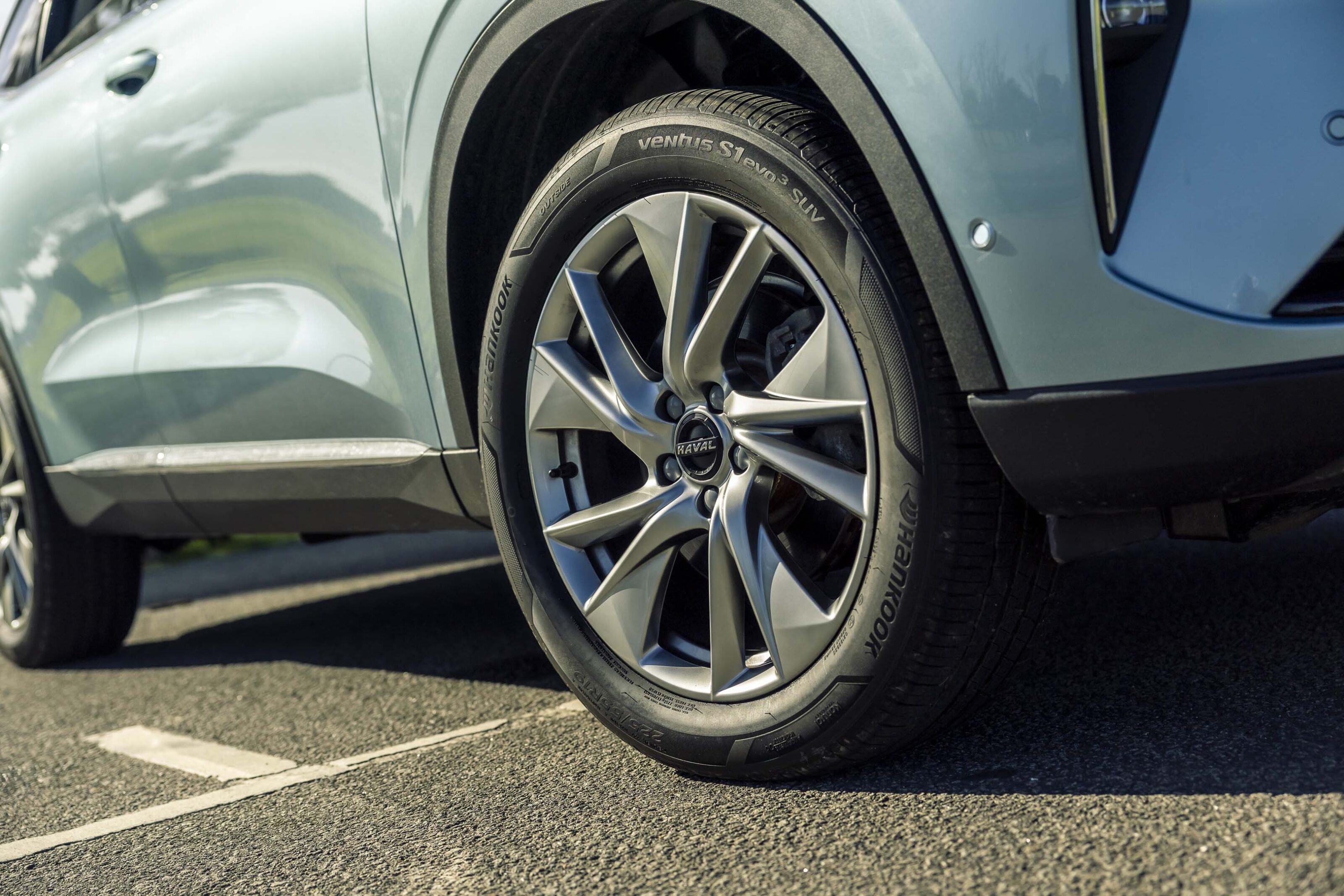
We didn’t take the H6 away from sealed roads during our time with it, but even on normal driving surfaces, the AWD and Hankook rubber combo offers decent grip. The suspension is soft and comfortable, only slightly unsettled on poor-quality roads.
Fuel economy for the 2022 Haval H6 Ultra AWD is rated at 8.2L/100km, which is adequate for an all-wheel-drive vehicle of its size, and we slightly bested that during our test with a result of 8.1L/100km.
By comparison, the front-wheel drive Haval H6 is claimed to use 7.4L/100km.
If fuel efficiency is important to you, there’s an Ultra Hybrid variant available with 5.2L/100km consumption. This drivetrain also brings more power and torque, though a trade-off is losing all-wheel drive, as it powers the front wheels only.
Ownership
Like all GWM products, the 2022 Haval H6 Ultra has a seven-year, unlimited-kilometre warranty, five years of roadside assistance and five years of capped-price servicing.
Servicing is every 12 months or 15,000km – except for the first year which is 10,000km – with pricing as below:
| Year | Kilometres | Cost |
|---|---|---|
| First year | 10,000km | $210 |
| Second year | 25,000km | $280 |
| Third year | 40,000km | $480 |
| Fourth year | 55,000km | $580 |
| Fifth year | 70,000km | $210 |
VERDICT
For a practical family hauler, it doesn’t do much wrong.
Being fully loaded with desirable features, a premium-feeling cabin, lots of safety tech and all this for a lower price than many of its rivals, the GWM Haval H6 Ultra would fit in very well with families who want creature comforts and need extra space.
Throw in the seven-year warranty and some very affordable servicing costs, and the H6 could start to look even more tempting for those who prioritise long-term ownership and value for money over driving performance. Even in that regard, the H6 confidently stands its ground.
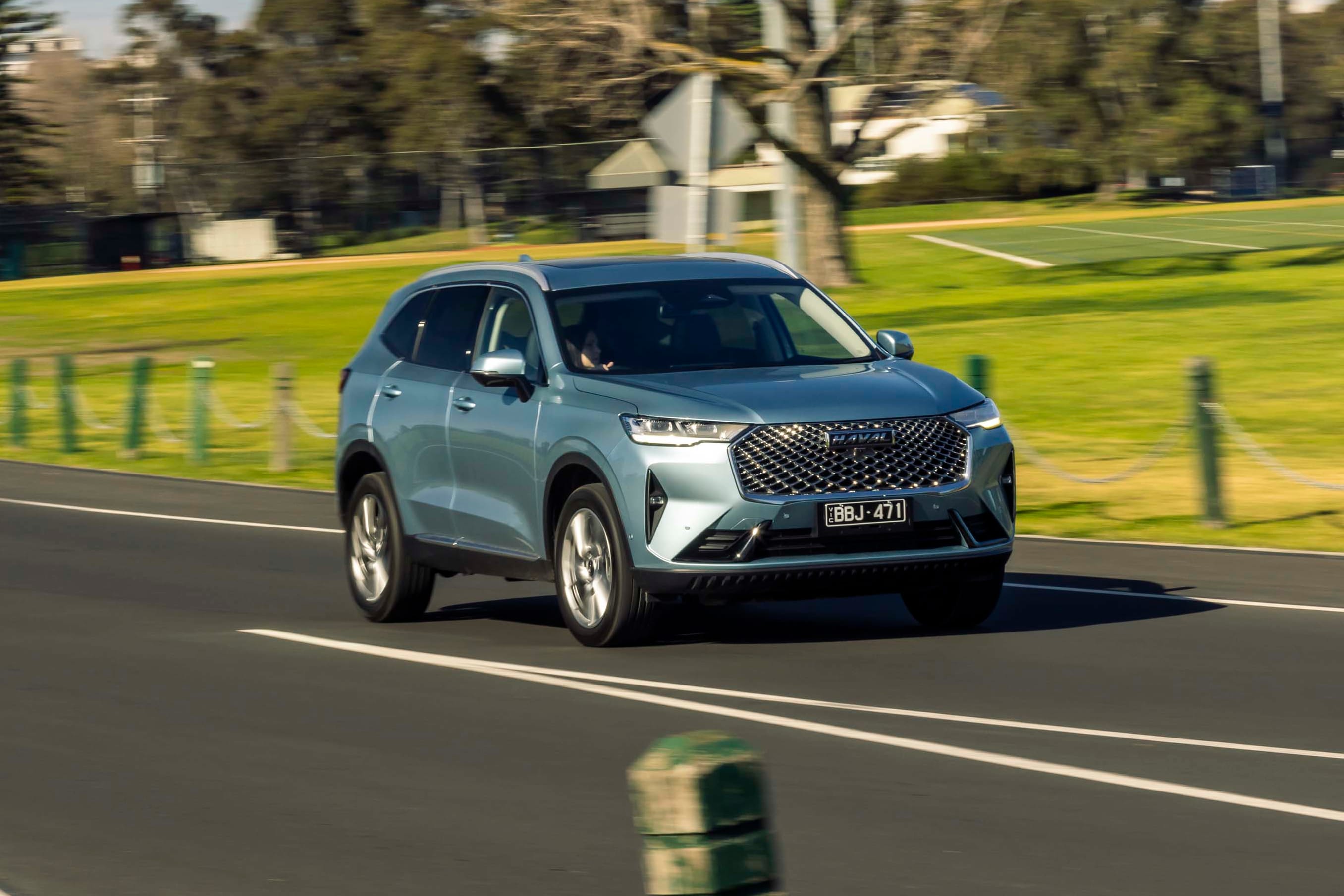
It may not be the segment leader by a long shot, but should the H6 be on the shopping list? Absolutely. For a practical family hauler, it doesn’t do much wrong.
Haval H6 Ultra turbo petrol AWD specifications
| Body | 5-door, 5-seat medium SUV |
|---|---|
| Drive | all-wheel |
| Engine | 2.0-litre turbo-petrol |
| Transmission | 7-speed dual-clutch |
| Power | 150kW @6000-6300rpm |
| Torque | 330Nm @1500-4000rpm |
| Fuel consumption | 8.3L/100km (combined) |
| Suspension | struts at the front, multi-link at the rear |
| L/W/H | 4653mm/1886mm/1724mm |
| Wheelsbase | 2738mm |
| Tyres | 225/55 R19s Hankook Ventus S1 Evo3 |
| Wheels | 19-inch alloy |
| Price | $43,485 drive-away, including premium paint |
October: Mustang Mach-E Australian review
Finally! The Mach-E is now in Oz, and we’ve driven it. Get our full review at the linked story below.
May 2023: Mustang Mach-E Australian pricing detailed
Not only is the Mustang Mach-E now confirmed for Australia, but we have full pricing and details.
Catch it at the link below, and then continue reading Dan Gardner’s first-drive review here.
REVIEW: Dan Gardner drives the Mustang Mach-E in America
Officially, the Ford Mustang Mach-E is not coming to Australia but let’s take a quick recap of all the evidence that would suggest the exact opposite.
Right-hand drive production has already started, Ford New Zealand has announced it will introduce the model in 2023, in January this year Ford Australia filed a trademark registration of the Mustang Mach-E name and, if that wasn’t enough of a statement of intent, the Blue Oval recently invited us to Detroit to drive it.
This electric baby is so close to popping, I wouldn’t be surprised if the confirmation is made between the time these words were written and the time they appear on your screen. So let’s just assume it’s a done deal, shall we?
I really hope so. Not only does an increasing number of EV options in local showrooms promote more investment in supporting infrastructure, but as long as Australia struggles for supply of EVs of any brand, more is very much the merrier.
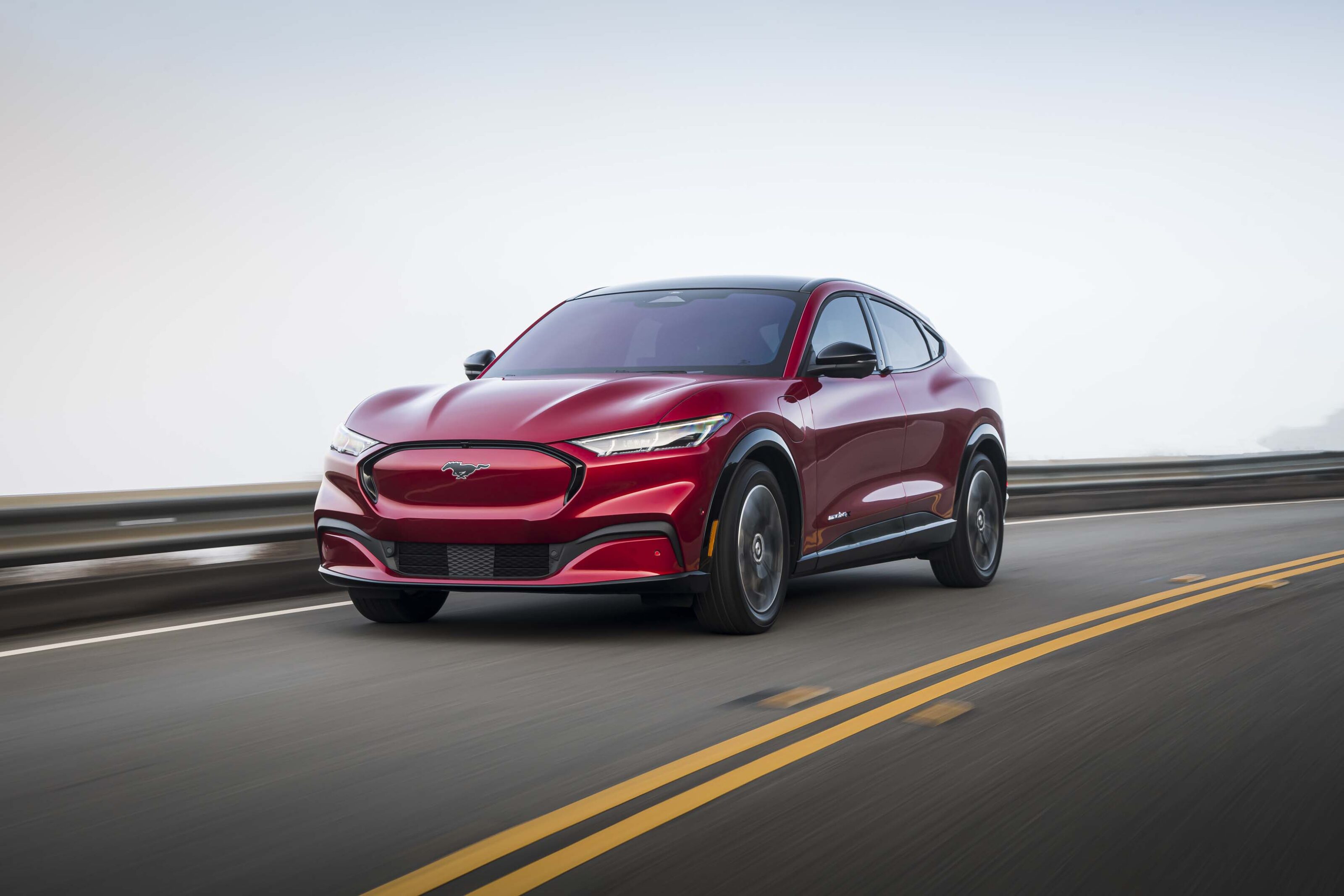
All of the above applies regardless of whether the model in question is a pragmatic $47,000 MG ZS or an aspirational Porsche Taycan Turbo S and, after a first taste of the Mustang Mach-E I’m happy to report Ford’s electric crossover is a lovely balance of both.
In the US, the Mach-E is available in a wide range of configurations including a rear-drive entry version, a Premium all-wheel drive and a GT, with options of a standard battery or a bigger extended-range pack depending on the variant. Then there’s the GT Performance and a California Route 1 special on top of all that.
A brief ride in the GT Performance quickly exposed its insufferably hard ride. Instead, as the mid-range Premium with AWD is likely to find the greatest audience Down Under, that’s the one we saddled up for a longer look.
Local pricing is anyone’s guess at this stage but its ticket price in the US provides a ballpark. Starting at about $49,000 (AU$73,000), the mid-range Mach-E packs in a lot of kit. Premium is no word of a lie.
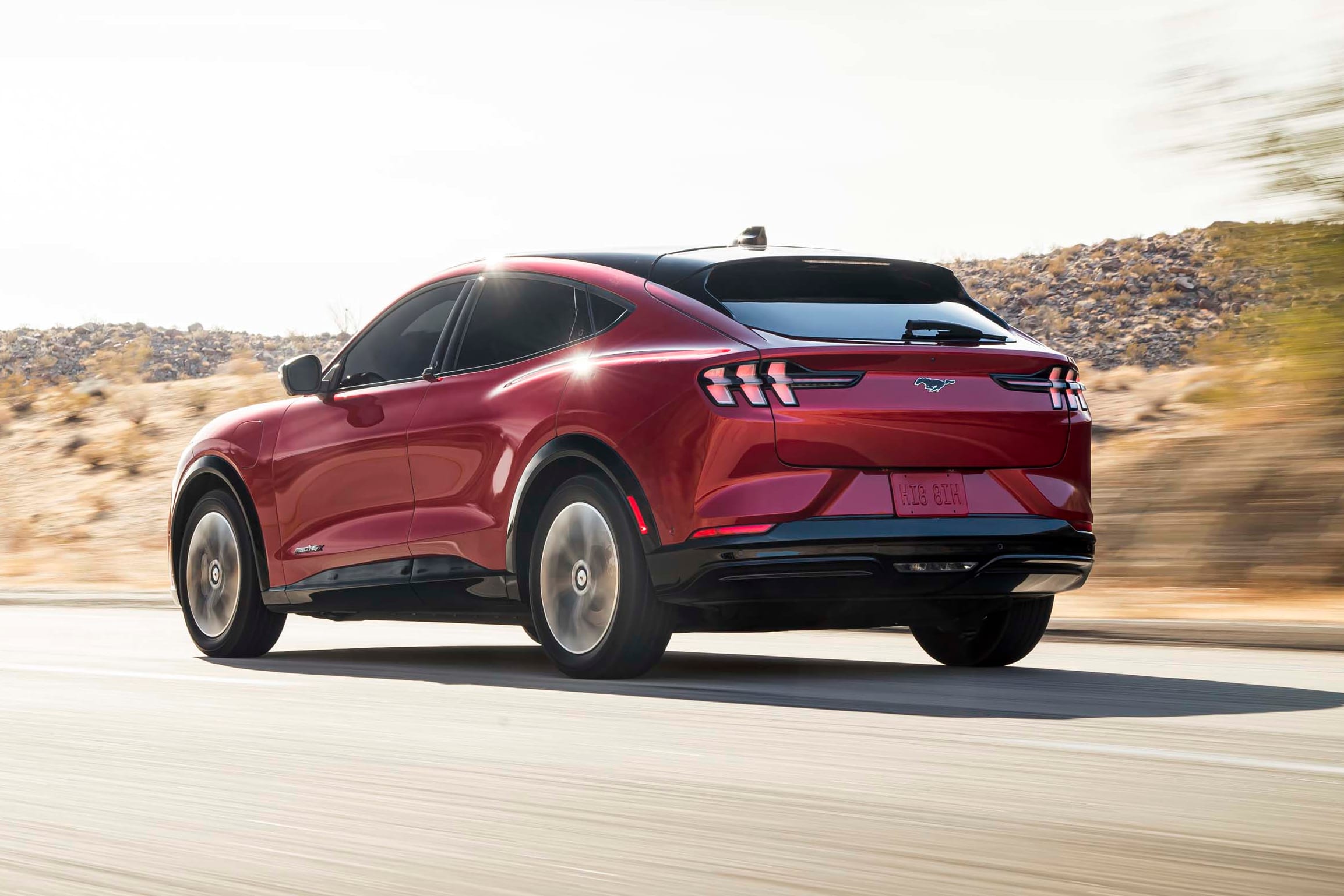
It gets 19-inch wheels, a beautiful expansive panoramic glass roof, its 15.5-inch portrait-oriented touchscreen is common to all variants, as is the 10.2-inch conjoined digital instrument cluster, bundled with wireless device charging, multi-coloured ambient lighting, heated and electrically adjusted front seats, a heated steering wheel, and a Bang and Olufsen 10-speaker sound system.
Ford’s Sync4 operating system is proliferating throughout its range, including the Mach-E, and it brings standard navigation, over-the-air updates and the option to use your smartphone as a ‘key’. It’s also a pleasure to navigate with the vast Telsa-esque touchscreen, cool graphics and plenty of features unique to the Mustang-Mach-E.
We loved the cool humming start-up sound when the ‘ignition’ is pressed, and the reference to ‘ground speed’ for the speedometer.
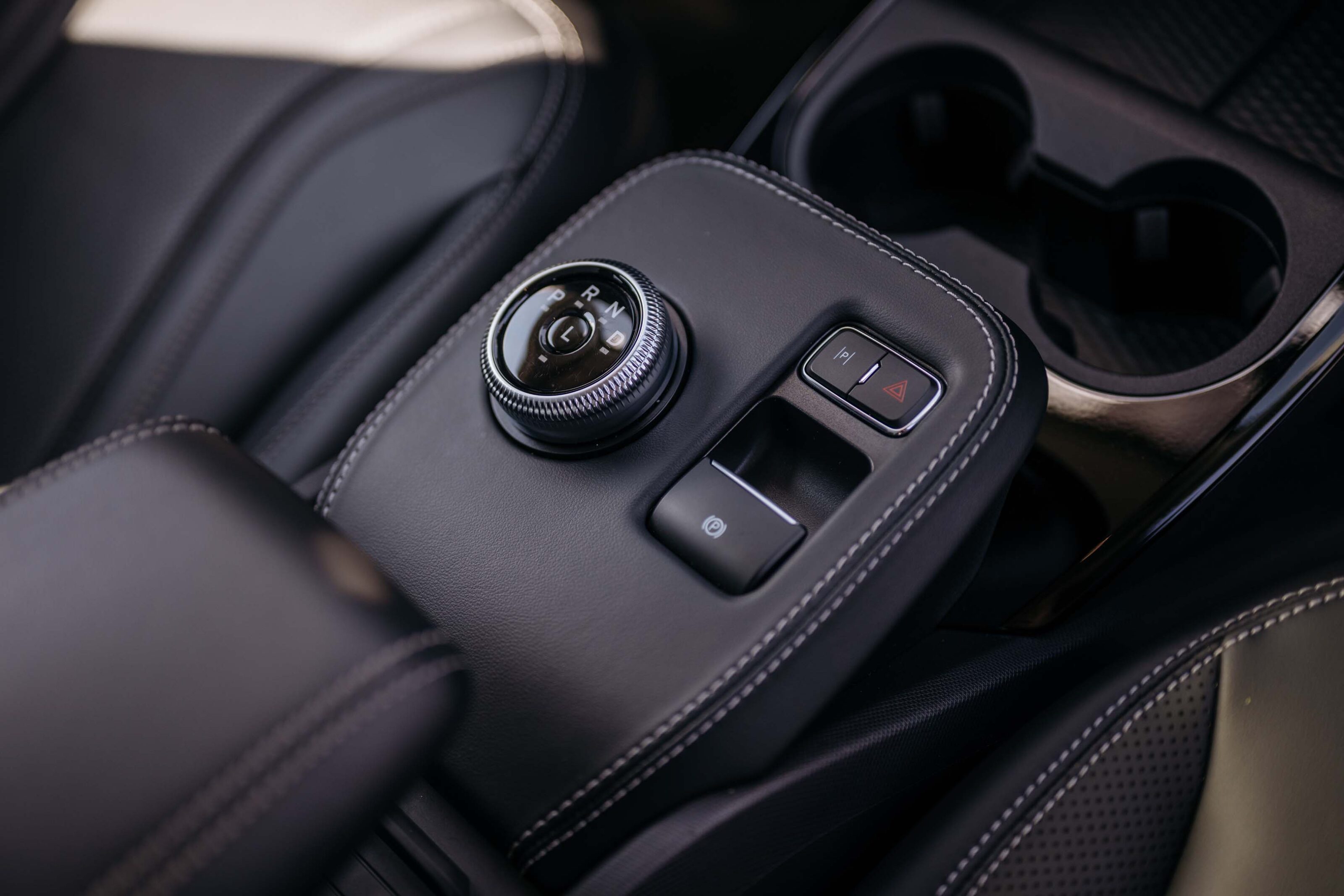
Perhaps a few too many of the comfort and entertainment controls have been moved away from physical switches and into the virtual touchscreen realm, and we’re still not completely sold on the rotary drive selector but owners will get used to this even if they don’t love it at first.
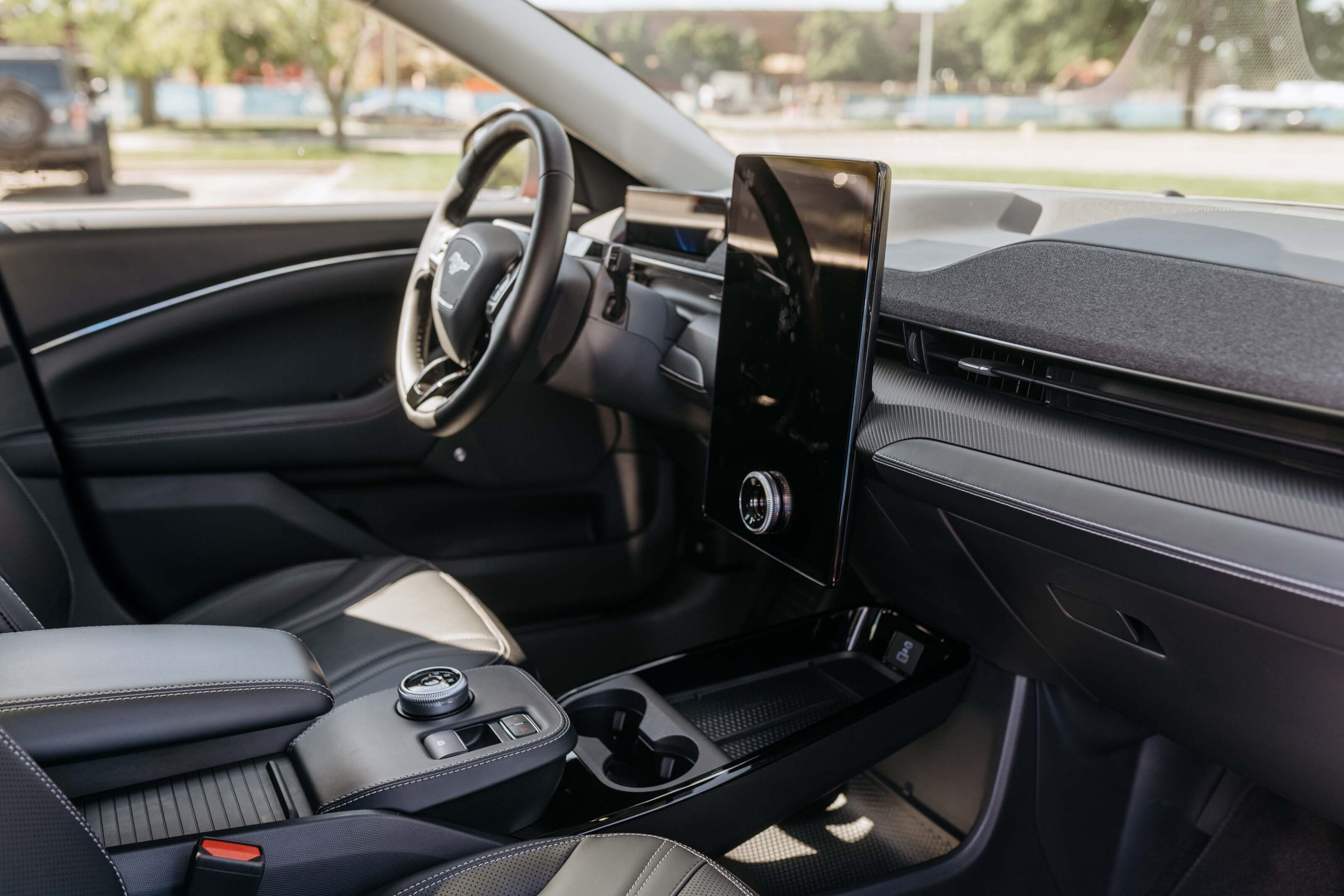
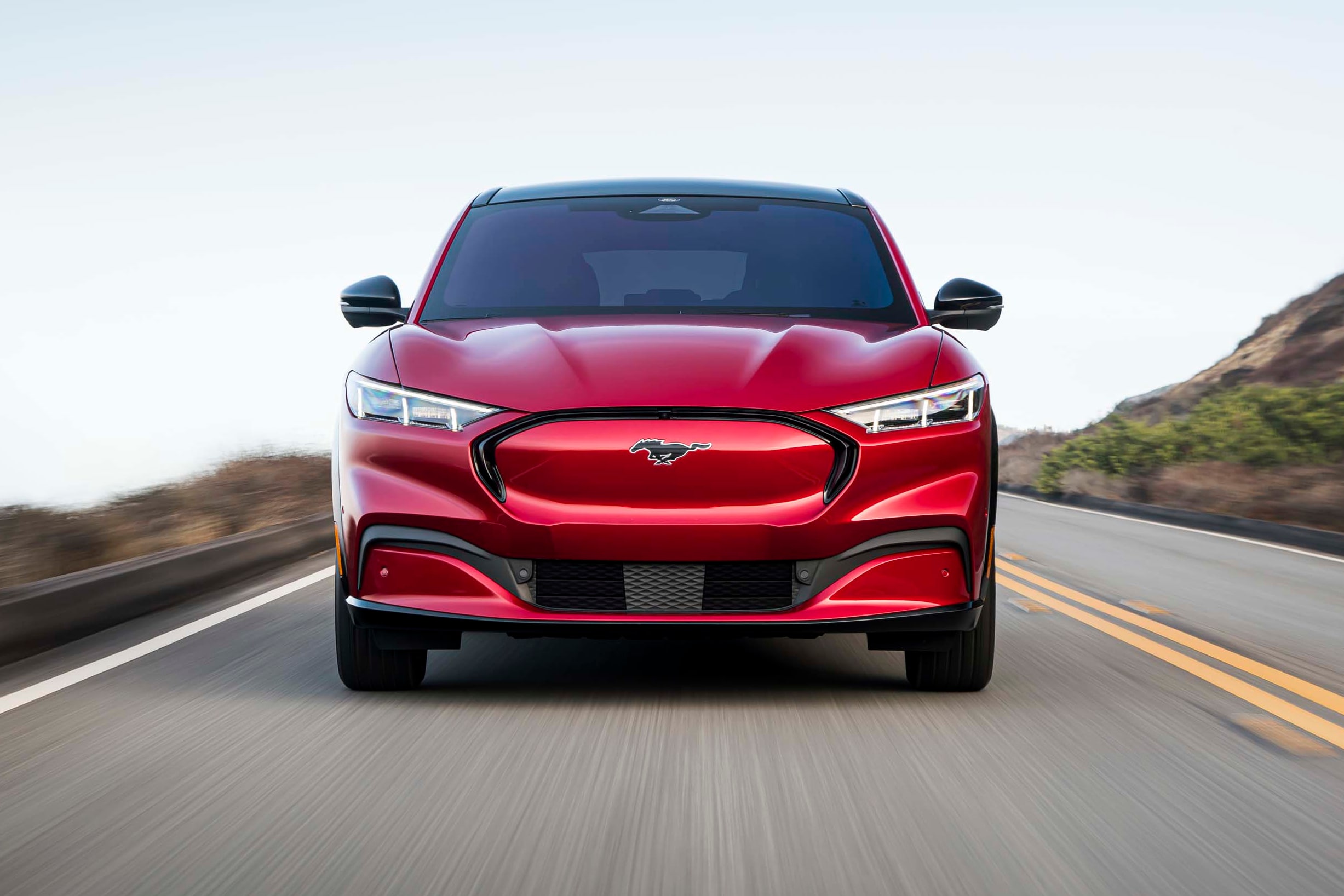
The Mach-E has enough of the long-bonnet, broad-shouldered presence to connect it to the full-fat Mustang coupe, but it combines that with a four-door crossover body and posture
Android Auto and Apple CarPlay are standard inclusions, allowing the Mach-E to get one up on Tesla’s Model Y, while the choice of materials and perceived quality are also more impressive than the Ford’s American rival.
Ergonomically speaking, the Ford feels well thought-out. The sporty seats fitted to our car were comfortable and not excessively bolstered – although that might be noticeable for the wrong reasons on faster, twistier roads –while the main touchpoints including the chunky steering wheel are well designed and finished.
Once again, only time will tell exactly what level of equipment Australian Mach-E versions will bring, but, given Australia’s taste for high spec, a grade similar to the Premium we sampled in Ford’s home of Dearborn is likely.
Defining this Mustang derivative’s segment is not immediately obvious on first meeting. The Mach-E has enough of the long-bonnet, broad-shouldered presence to connect it to the full-fat Mustang coupe, but it combines that with a four-door crossover body and posture.
The blend continues on the inside with surprising cabin space for a car that slots into mid-sizer category.
There’s enough room for adults in the second row without having to pretend you’re comfortable, although headroom is not abundant. But the front row feels light and spacious, thanks in part to the massive panoramic roof fitted to ours.
With a more coupe-esque profile, the Mach-E’s boot sacrifices a bit of practicality; its offering of just over 400 litres is on the small side (Volkswagen’s ID.4 manages closer to 550L), although there is a small 81-litre load space at the other end where a Coyote V8 might once have lived. We particularly like the frunk’s hose-out design.
If carrying things around in an electric Ford is your primary concern then the Blue Oval offers the mighty F-150 lightning or the even more accommodating E-Transit, which has been confirmed for Australia. The Mustang Mach-E, however, is far more focused on driving.
Depending on the battery and drivetrain combination, the Mach-E will do the 0-100km/h dash between 6.1 seconds and a bristling 3.7s so there’s a version to compete in performance stakes with any other EV in its class. Our version is claimed to do the dash in 5.1s and it felt every bit as quick.
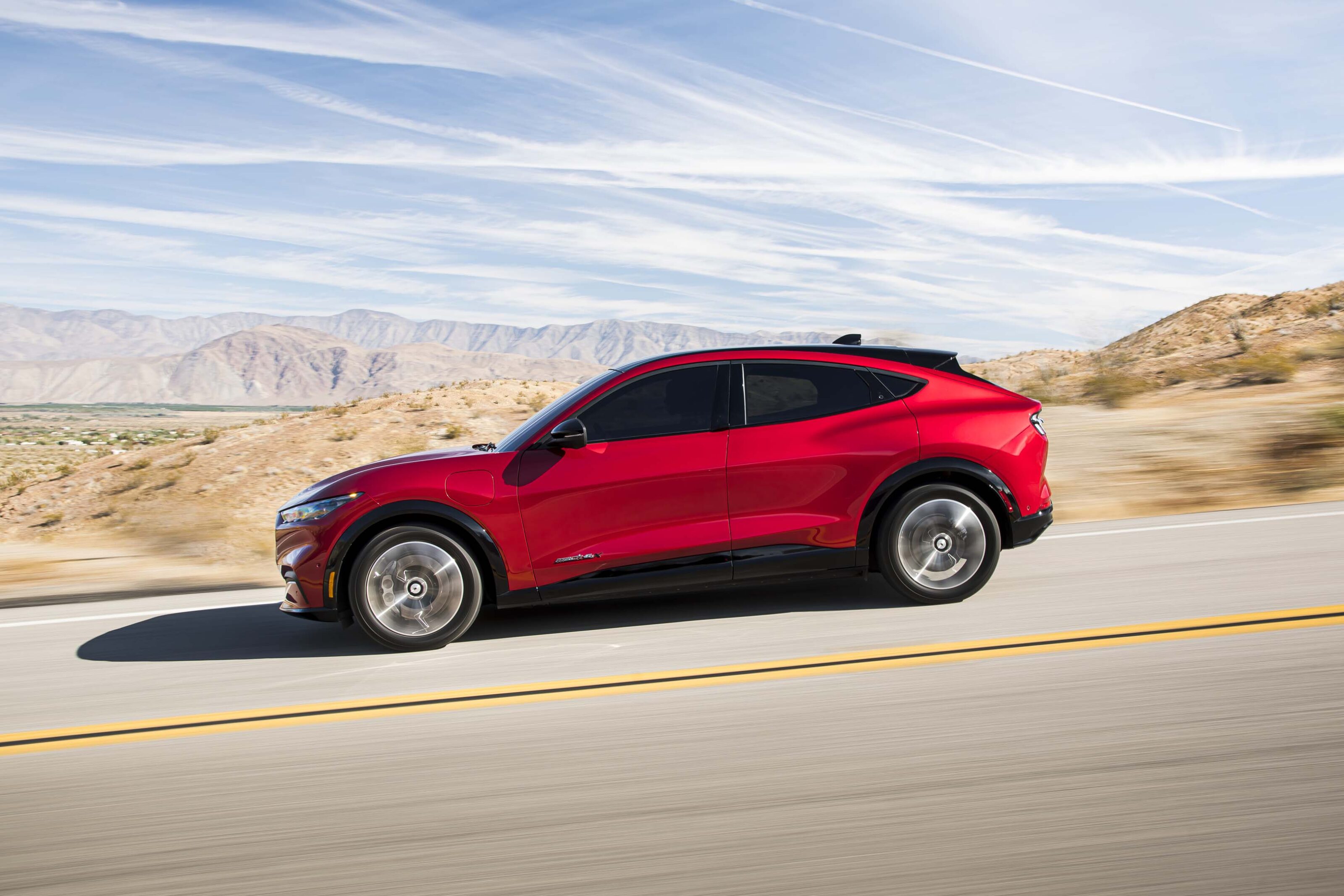
The surge of electric torque is delivered smoothly and without drama.
There’s minimal motor whistle, nothing piped in through the stereo unless the synthetic rumble is switched on, and the Mach-E’s interpretation of pace is surprisingly civilised.
Braking from the Mach-E’s four-piston front calipers is confident and if the initial pedal bounce is pushed through, feel is firm and progressive. That said, selectable levels of regenerative braking including a one-pedal option are sufficient for covering almost all driving situations.
Our test route offered little in the way of dynamic evaluation roads but the few turns we did find to get stuck into highlighted a steering calibration that is certainly leaning more toward Mustang than Mondeo (for what it’s worth, we quite liked the Mondeo).
Its front end has the same responsive and pointy nature as its petrol coupe namesake and while the feel is a little light about the dead-ahead mark, it weights up nicely with a bit of angle despite a ratio that’s geared on the slow side.
Ride can be fairly described as on the firm side but certainly not excessively so for a performance-focused car.
On our 19-inch rims, the various road surfaces we encountered produced no comfort horror stories although the jury’s still out on the optional 20-inch wheels. Base variants get 18-inch wheels but a little extra sidewall is unlikely to completely alleviate the slightly fussy ride.
Its electric credentials also position the Mach-E as a compelling option among a growing number of rivals. The extended-range 91kWh battery offers a claimed 460km range for the AWD version or up to 490km with rear-drive only.
A full top-up is possible in 10 hours using Ford’s home charging hardware, a 50kW public charger will do up to 90 per cent in about 90 minutes while full-fat infrastructure will allow the Mach-E’s maximum 150kW charging rate and a 10 per cent to 80 per cent top-up in about 45 minutes.
Thankfully, the Mustang Mach-E is not trying to be an electrified version of its unapologetically petrol-powered sibling. There’s more traditional Mustang DNA than we were expecting and probably just enough to justify the boot badge, but the most likeable facet of the Mach-E’s character is the stuff it does differently to the coupe and convertible.
It’s technologically one step ahead of even the freshly released seventh-gen Mustang with touches such as push-button door release as well as the numerous driver assistance systems including autonomous emergency braking, lane-keep assist and adaptive cruise control, and more cameras than a Centrelink waiting room. It also gets over-the-air tech updates.
A multitude of zero-emissions drivetrains, coupled with an overall temperament that leans more towards the performance avenue than outright comfort, along with its technological strengths, have cleverly positioned this very different Mustang within Ford’s ranks.
It’s close enough in relation to the iconic muscle car version but stands at enough of a distance to confidently carry the pony car badge into an entirely new era without harming the magic of the original.
Now about that Australian confirmation, Ford…
May 2023: Psst, just a reminder: Australia is now confirmed, and our pricing story is right here.
2023 Ford Mach-E specifications
| Model | Ford Mustang Mach-E Premium Extended Range eAWD |
|---|---|
| Motors | dual (front and rear) |
| Battery | 91kWh |
| Max power | 259kW |
| Max torque | 580Nm |
| Weight | 2040kg |
| L/W/H/W-B | 4714/1882/1626/2985mm |
| 0-100km/h | 5.1sec (claimed) |
| Range | 490km (claimed EPA) |
| Price | from $75,000 (estimated) |
| On sale | TBC |
UPDATE: 2023 Skoda Karoq video review
We’ve added a fresh new 2023 Skoda Karoq video review to this story, so dive in and enjoy.
Will you be looking at a Karoq for your next car? Tell us in the comments below. And if not, what are you looking at instead?
In 2018, Skoda finally filled the mid-sized-SUV-shaped gap in its growing local line-up with the Karoq. With a choice of just one engine and even the option of a manual transmission, it initially appeared as though Skoda was merely testing the water. But in 2020 the company got serious about the segment by introducing an updated version of the initial 110TSI, dropping the manual and topping off the range with a new 140TSI Sportline.
When we drove the refreshed and bolstered line-up, the Karoq made a good impression with generous standard equipment, lively driving dynamics and plenty of Skoda’s ‘simply clever’ features. And yet, two years on, with less than a two per cent share of the sub-$60,000 medium SUV market, the Karoq is still struggling to gain the attention that many (myself included) believe it deserves.
At the time, some argued that a model priced from $29,990 in a heavily price-led segment was too expensive. If that remains true today, the Karoq is in trouble because this latest update starts at $42,990 drive-away.
But wait. It would be too easy to ignore this compelling car purely on the grounds of cost before taking the time to look into exactly what it’s offering for the cash. In short, there’s a lot.
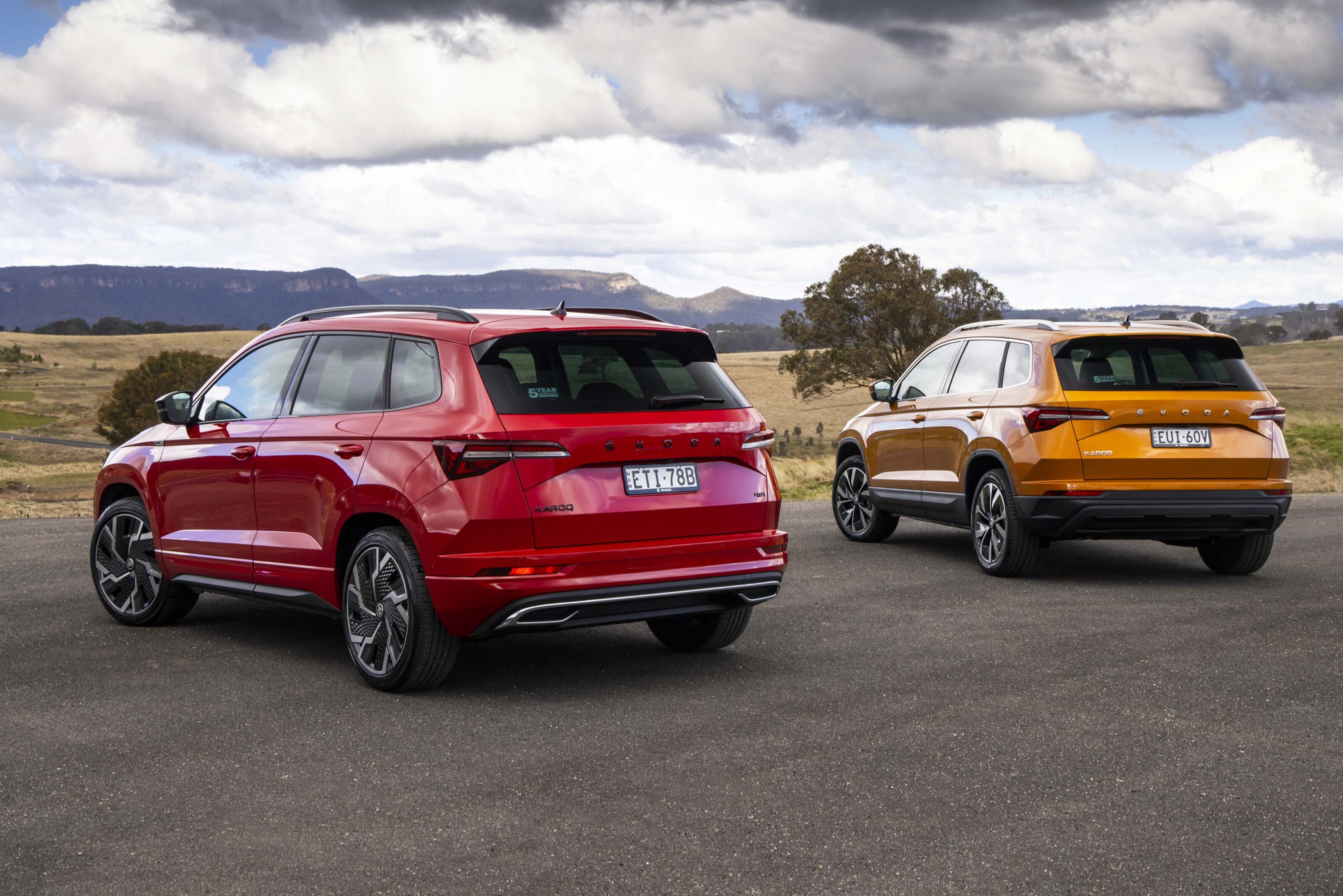
With the latest mid-life refresh, the entry-level Style now costs $42,990 drive-away, while the Sportline has risen to $49,990 drive-away, which makes the Karoq more expensive than equivalent variants of Honda’s CR-V, the Mazda CX-5 and Toyota RAV4 for example.
It doesn’t take long behind the wheel of the Karoq, however, to realise a genuine equivalent doesn’t really exist in any of the established Japanese players’ ranges.
The Skoda takes its underpinnings from the Volkswagen Group’s MQB platform which closely relates the Karoq to premium offerings such as the Audi Q3, Volkswagen Tiguan and Cupra Formentor, and it shows.
It doesn’t take long behind the wheel of the Karoq to realise a genuine equivalent doesn’t really exist among the Japanese brands.
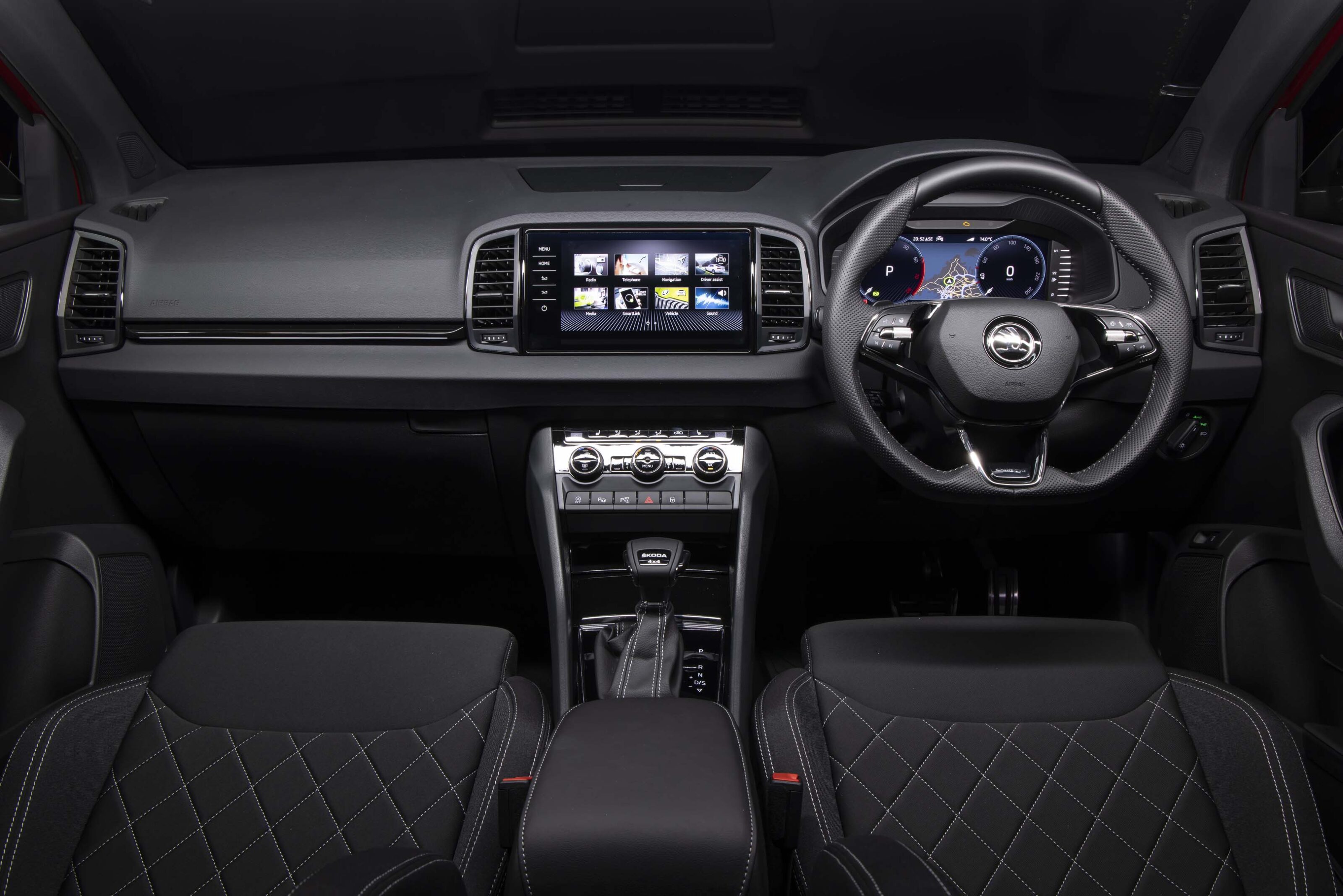
Even at the entry point, Skoda has laden the Karoq with gear including a fully digital instrument cluster known across VW Group brands as the Virtual Cockpit. Keyless entry and engine start is standard, as is a power tailgate with hands-free opening, ventilated glovebox, cool Skoda-branded welcome lights and dual-zone climate control.
Technology is equally well catered for with Android Auto and Apple CarPlay offered in both versions. You’ll have to step up to the Sportline to provide a wireless connection to these smartphone mirroring systems, but at least in the Style there are contemporary USB-C connectors.
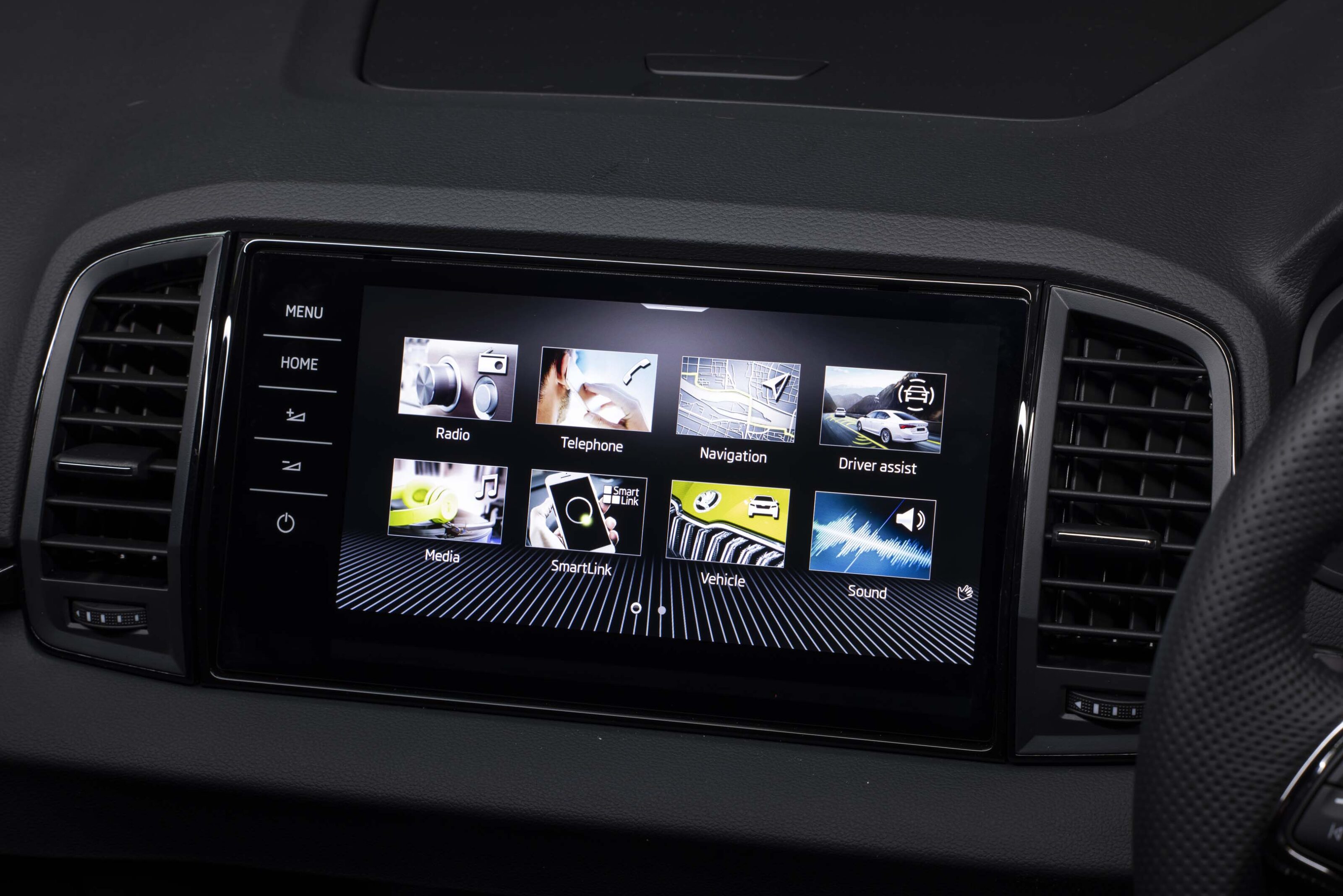
And while others in the game have touchscreens to rival the 8.0-inch standard offering, few can match its sharp resolution and fast, intuitive operation.
Driver assistance and safety features complete the compelling list of kit included in the price, with parking sensors all round complemented by a sharp, wide-angle reversing camera, autonomous emergency braking, automatic braking during parking and adaptive cruise control.
The latter is one of the most natural in operation but it’s calibrated to follow cars in faster lanes and prevent undertaking, which wouldn’t be a problem in Europe where freeway drivers generally keep to the slower lanes unless overtaking. In Australia however…
Even in off-the-shelf trim, the entry-level Karoq feels premium. From its beautifully contoured leather steering wheel to the upholstery fabric that feels almost as special as leather (and certainly more interesting), it has pleasant interior materials throughout and a roomy feel.
Regardless of variant, the lack of seat tilt adjustment detracts from an otherwise excellent seating position, while the most impressive 9.2-inch central screen with navigation and clever gesture control is only available as an option.
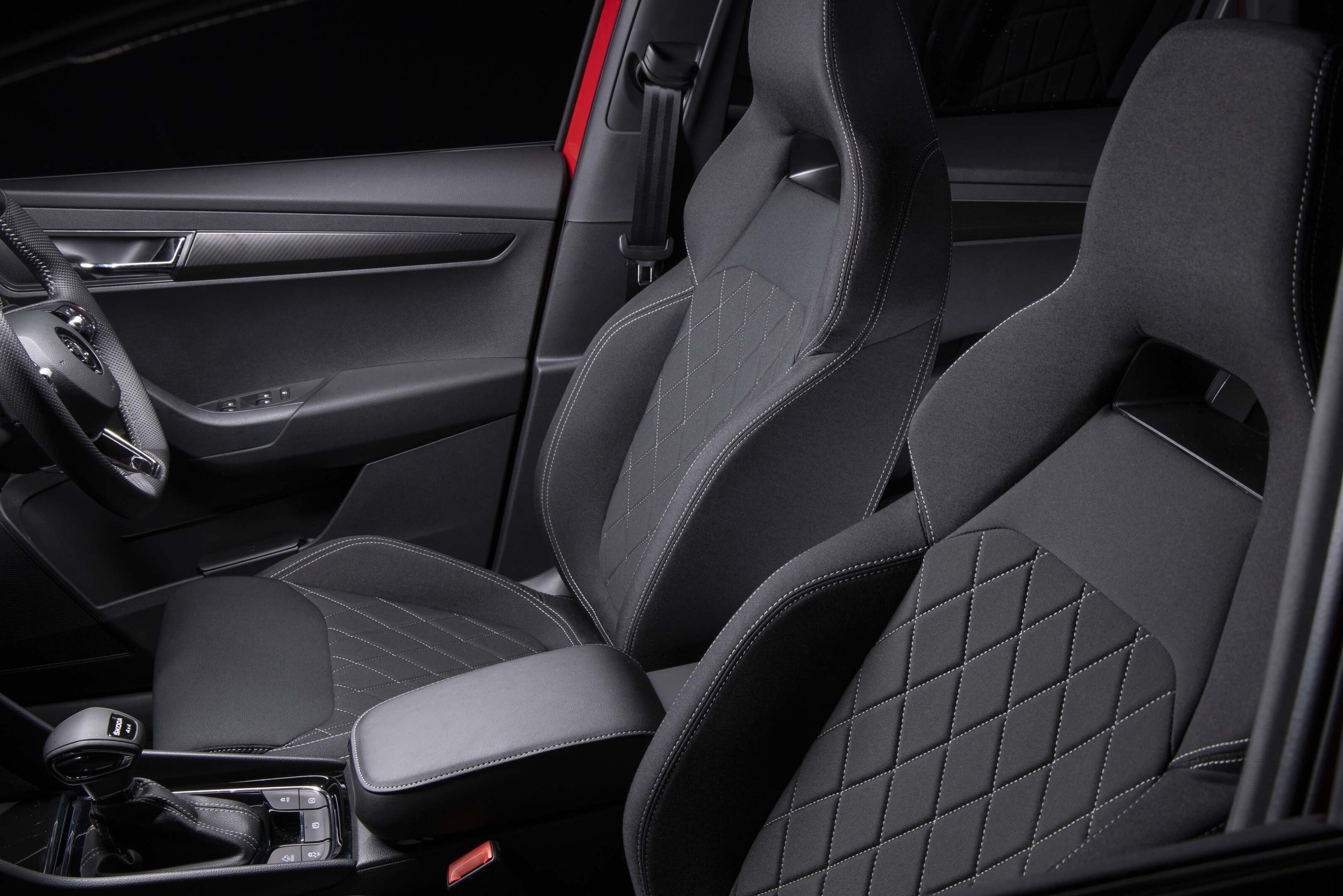
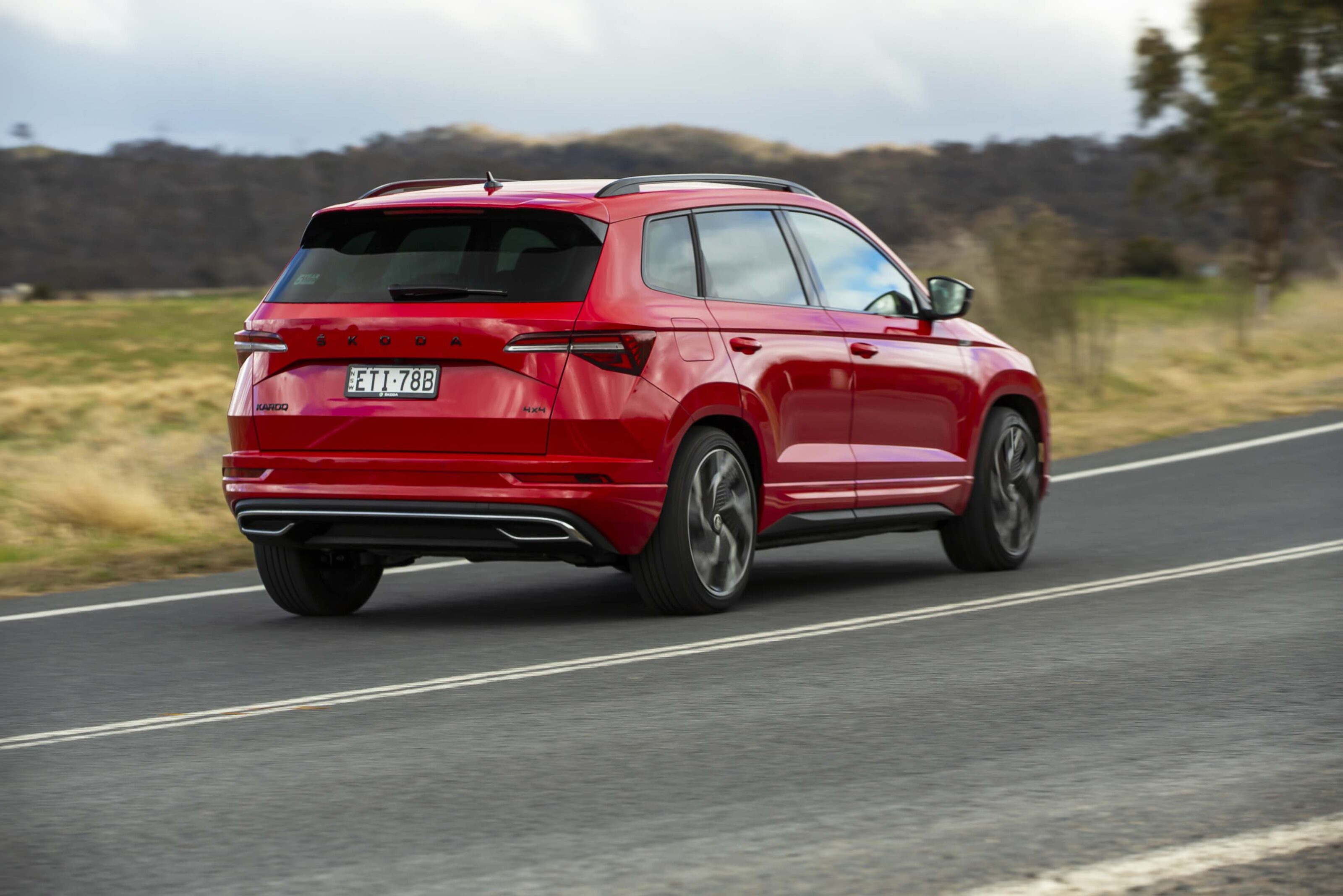
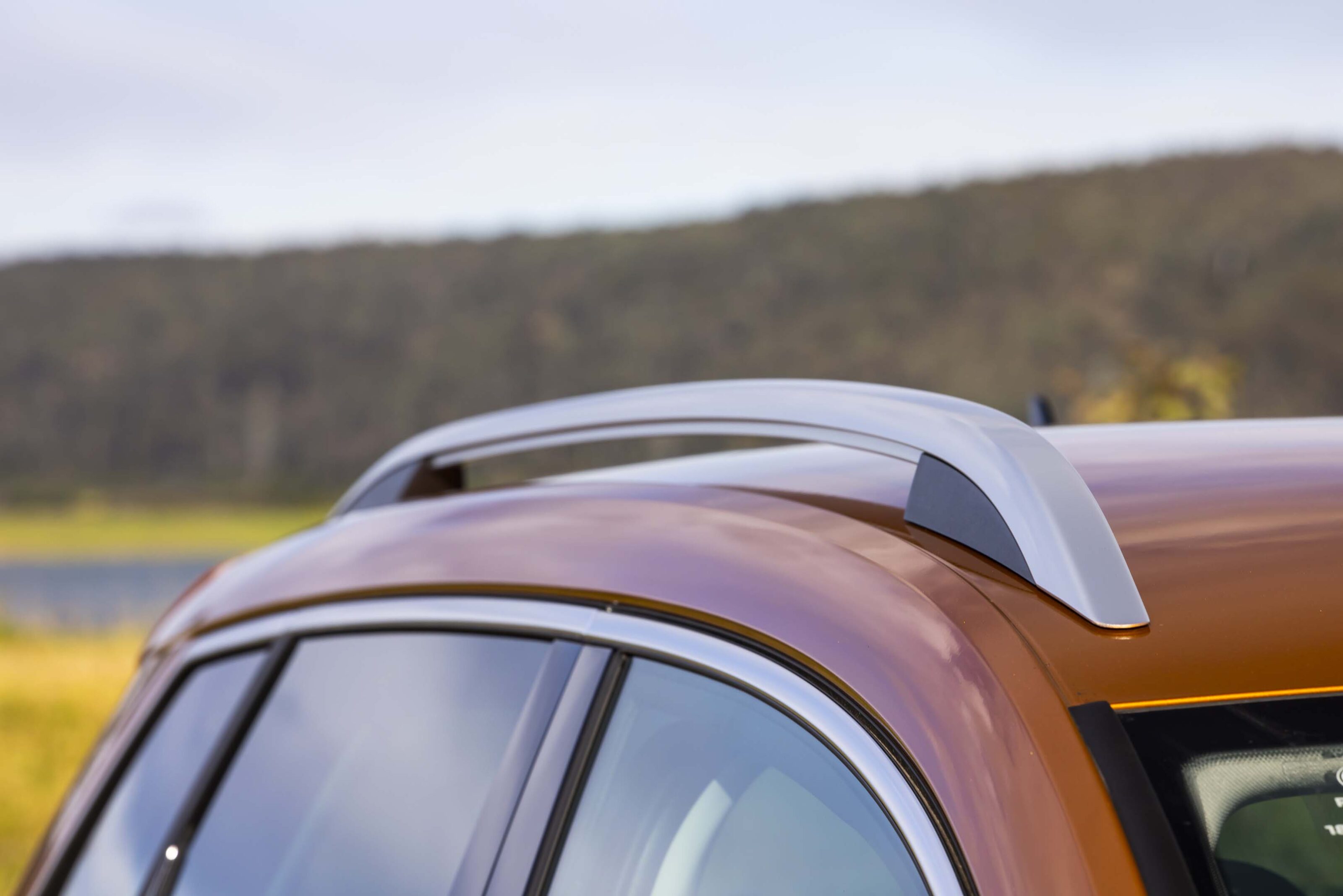
From an equipment perspective, not a huge amount changes when stepping up to the flagship Sportline as most of the upgrades are limited to aesthetic touches. It rolls on larger 19-inch alloy wheels, the headlights gain adaptive LED matrix technology and black exterior highlights continue inside the cabin, which also features sports seats.
A majority of its price premium comes down to a larger engine, sportier transmission and all-wheel drive, but more about that later.
In both cases, the Karoq’s value for money is stacking up well but some excellent practical features keep adding to the virtues.
With an extra differential to accommodate under the boot floor, the Sportline has the smallest luggage capacity but can still swallow up to 521 litres of things, expanding to 1630L with the second row of seating folded.
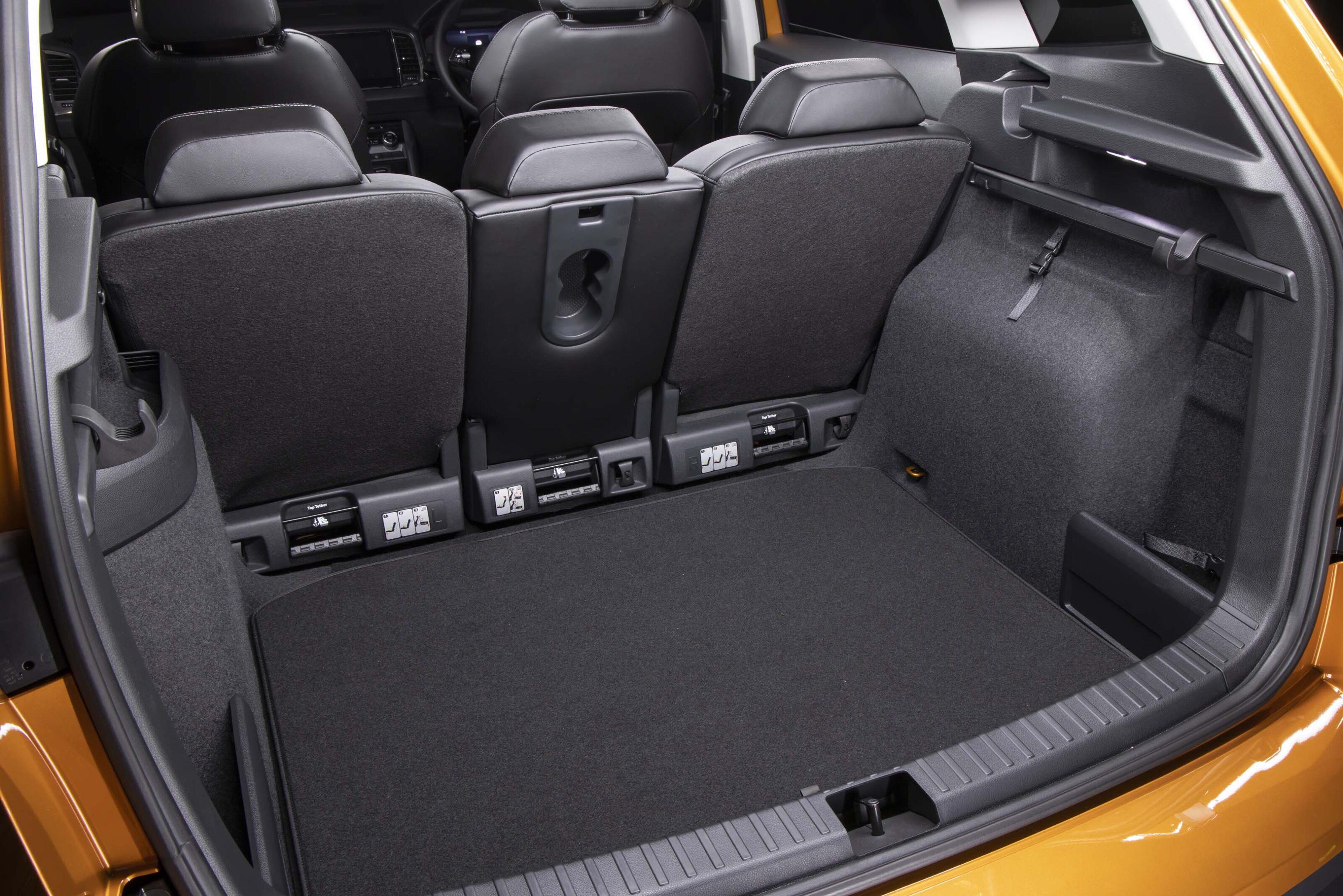
The Style, however, is the load champ with an excellent 588-litre boot, but its Varioflex rear seats are the secret space weapon. This feature allows the second row to fold and tumble toward the front seats but if this still doesn’t liberate enough volume, the entire row can be quickly and simply unlatched and completely removed from the car in three pieces. This clever trick expands the useable load space to a whopping 1810 litres.
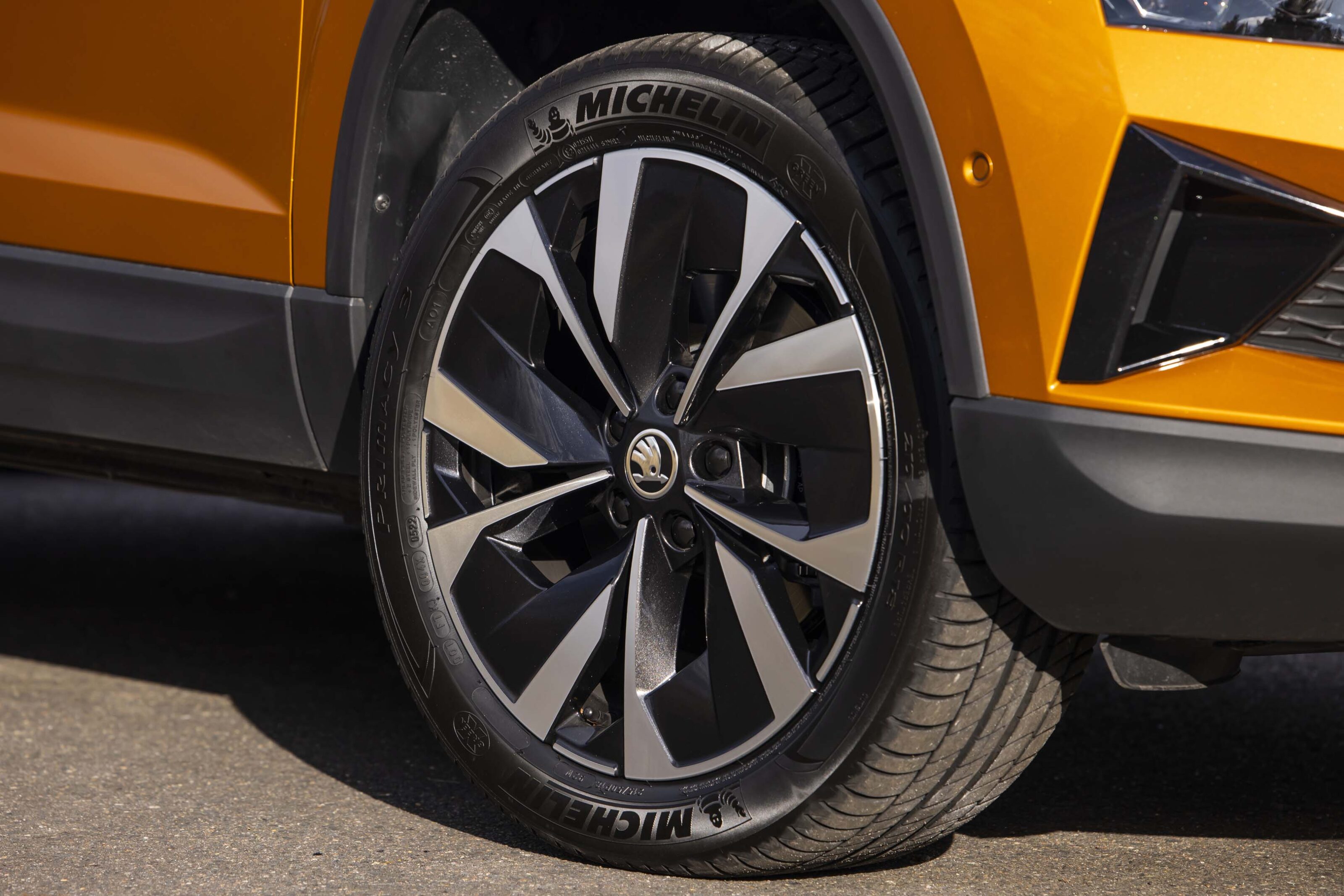
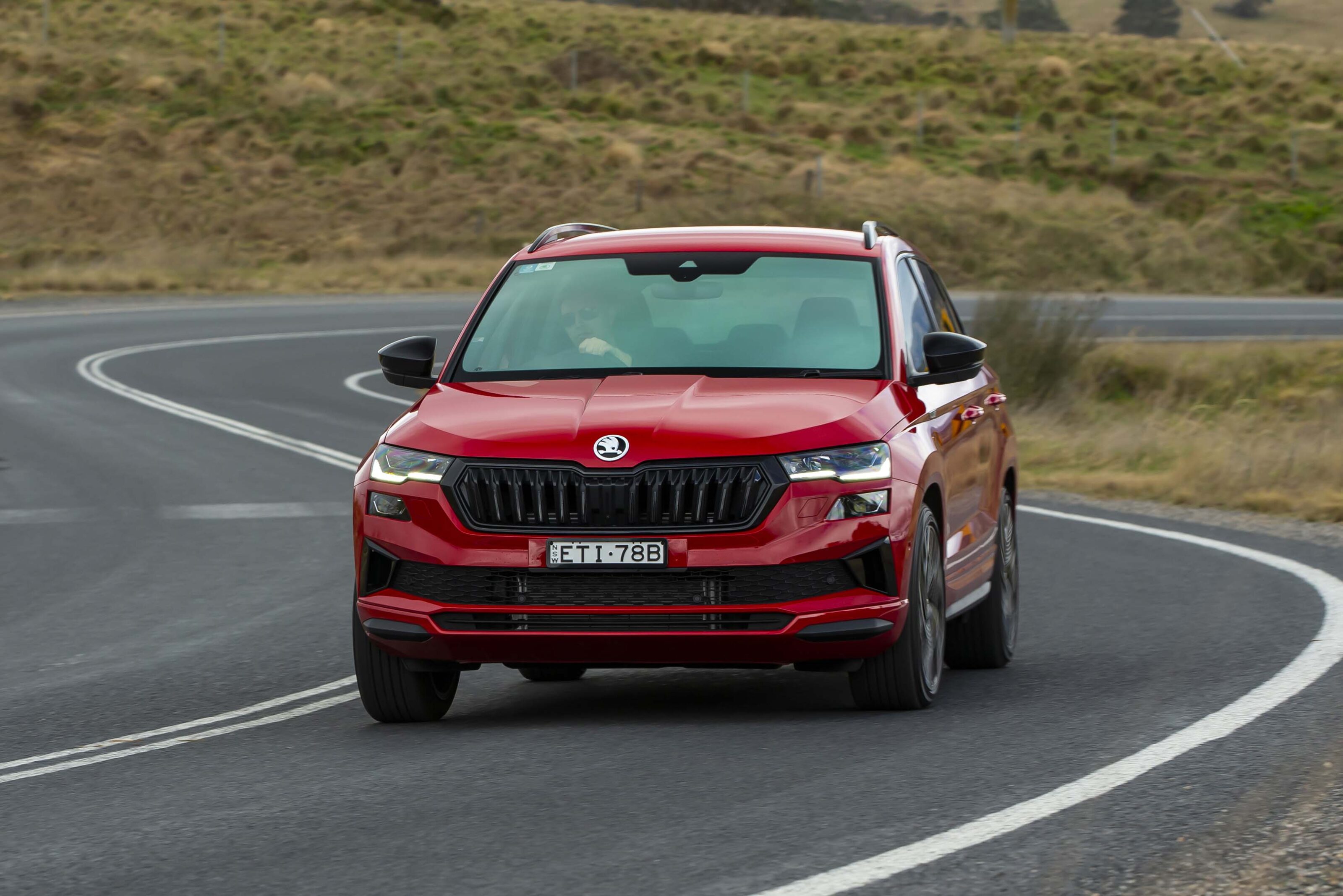
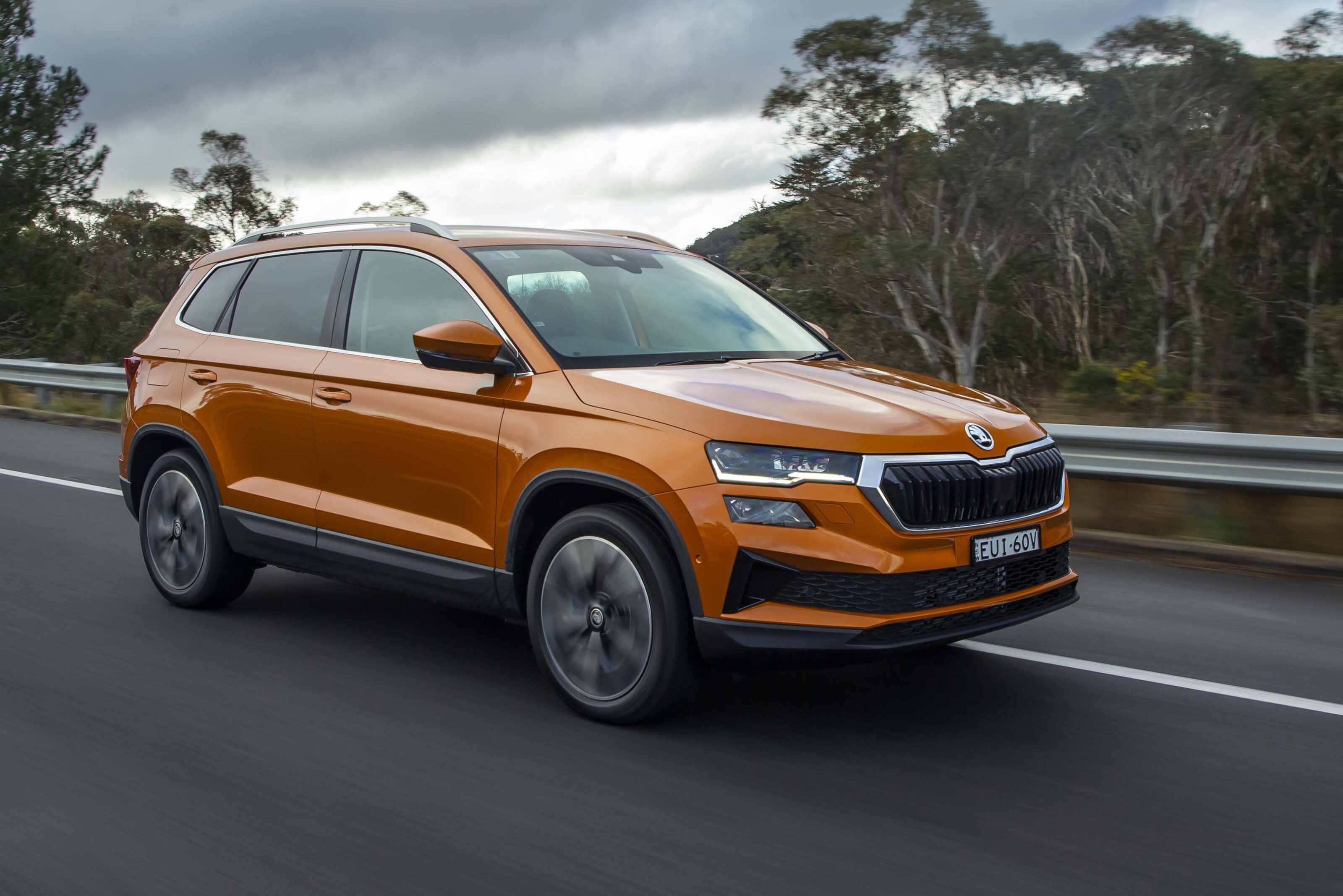
On the Style’s exterior, the 2022 Karoq update has brought a noticeable design refresh incorporating LED headlights at the front and dynamic LED indicators at the tail end. 17-inch alloy wheels have grown to 18 inches and are now presented in a cool Miran design with a black finish.
While the previous version could look a little rental-fleet spec, especially in white, the updated Karoq has a far greater premium feel and presence.
It’s worth pointing out that in Europe, the Karoq is available in two variants beneath the Style version we’re offered as the most affordable option in Australia, which explains both the respectable levels of equipment and the corresponding pricing. Think not of the Style as a pricey base version, but as a reasonably positioned mid-range option.
Those who want a version of the Karoq that really is expensive, however, need only get a little too enthusiastic with the optional packages.
Upgrading the Style to a bigger touchscreen, matrix LED headlights, extra driver assistance features and ambient lighting costs $5900, although Skoda points out that the Tech Pack kit would cost $8330 if all its goodies were optioned up separately.
Think not of the Style as a pricey base version, but as a reasonably positioned mid-range option.
The Premium Pack brings leather seats with electric adjustment and memory for the front row, heaters for the four main seats as well as the steering wheel – which gains paddleshifters – for a hefty $10,900, but that’s still 24 per cent cheaper than individually picking each item, says Skoda.
Given the Sportline’s higher overall level of specification, the option packs cost less to apply. This means upgrading to the big screen with sat-nav, seat and steering wheel heating, adaptive damping and a few other goodies adds $5900 to the bottom line, while leather upholstery and electric front seat adjustment are bundled at $3200.
Here’s a top tip: If you intend to get stuck into the options packs then it certainly makes more sense to start with the Sportline as your not-particularly-blank canvas.
With both packs optioned onto each variant, the Style actually works out $700 more expensive, so you could say the Sportline’s more powerful driveline, sporty looks and all-wheel drive are essentially offered for free.
Otherwise, the Karoq Style is the value pick with its surprisingly comprehensive list of kit included in the base asking price.
Really though, the decision comes down to a drive, and a blast through the Blue Mountains starts to put more air between this pair.
With a 140kW 2.0-litre four-cylinder turbo-petrol up front, the Sportline has a wonderfully solid and familiar feel on the open road. That’s because the EA888 engine that powers so many other high-performance VW Group models delivers its output in exactly the same way here.
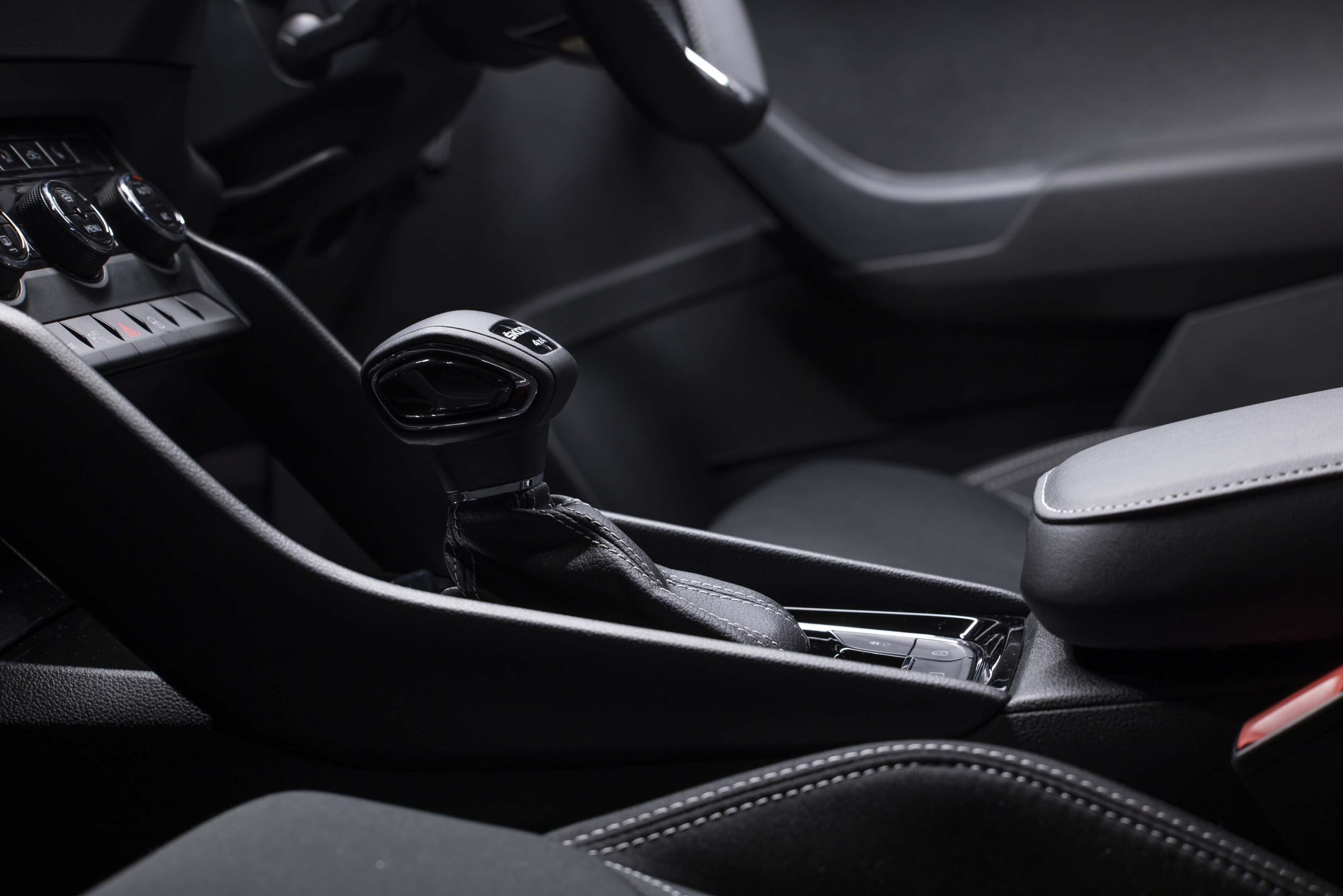
It’s coupled to a seven-speed dual-clutch automatic transmission and a variable all-wheel drive system that would doubtless get you out of a spot in a muddy field, or an alpine car park that’s copped a blizzard overnight.
With a 140kW 2.0-litre four-cylinder turbo-petrol up front, the Sportline has a wonderfully solid and familiar feel on the open road.
Like a slumbering teenager, the turbocharged engine can be difficult to rouse into life, though this is mostly due to the transmission’s preference for selecting higher gears in the name of fuel economy. (Skoda claims a combined average of 6.6 litres per 100km.)
But when the driving mode is flicked through to Sport, the gearbox is far more eager to hold a lower gear to enable full rev-happy power to be extracted.
That said, the Sportline produces a very handy 320Nm of torque from just 1500rpm, which allows a completely different approach to progress. With the turbo puffing hard, the Karoq dispatches hills effortlessly and with little drama.
Also common to its MQB architecture is a lovely steering feel that is deceptively light in the hand considering how much feedback is offered in return, along with an impressive ride and handling combination.
In good conditions, the effect of its all-wheel-drive system is really only appreciated when pulling away from a standstill (especially with some steering lock) and when negotiating potholed surfaces at speed. The system responds quickly to changing surface conditions and the Karoq maintains excellent body composure.
Spend another $5900 for the Premium Pack and Skoda will add its ‘adaptive chassis’ technology, the effect of which is most noticeable when switching from a so-equipped Sportline to the Style on which this option is not offered.
It might only have a relatively diminutive 110kW 1.4-litre four-cylinder turbo-petrol under its bonnet, but the most-affordable 110TSI Karoq is front-wheel drive and weighs 165kg less than its 140TSI sibling.
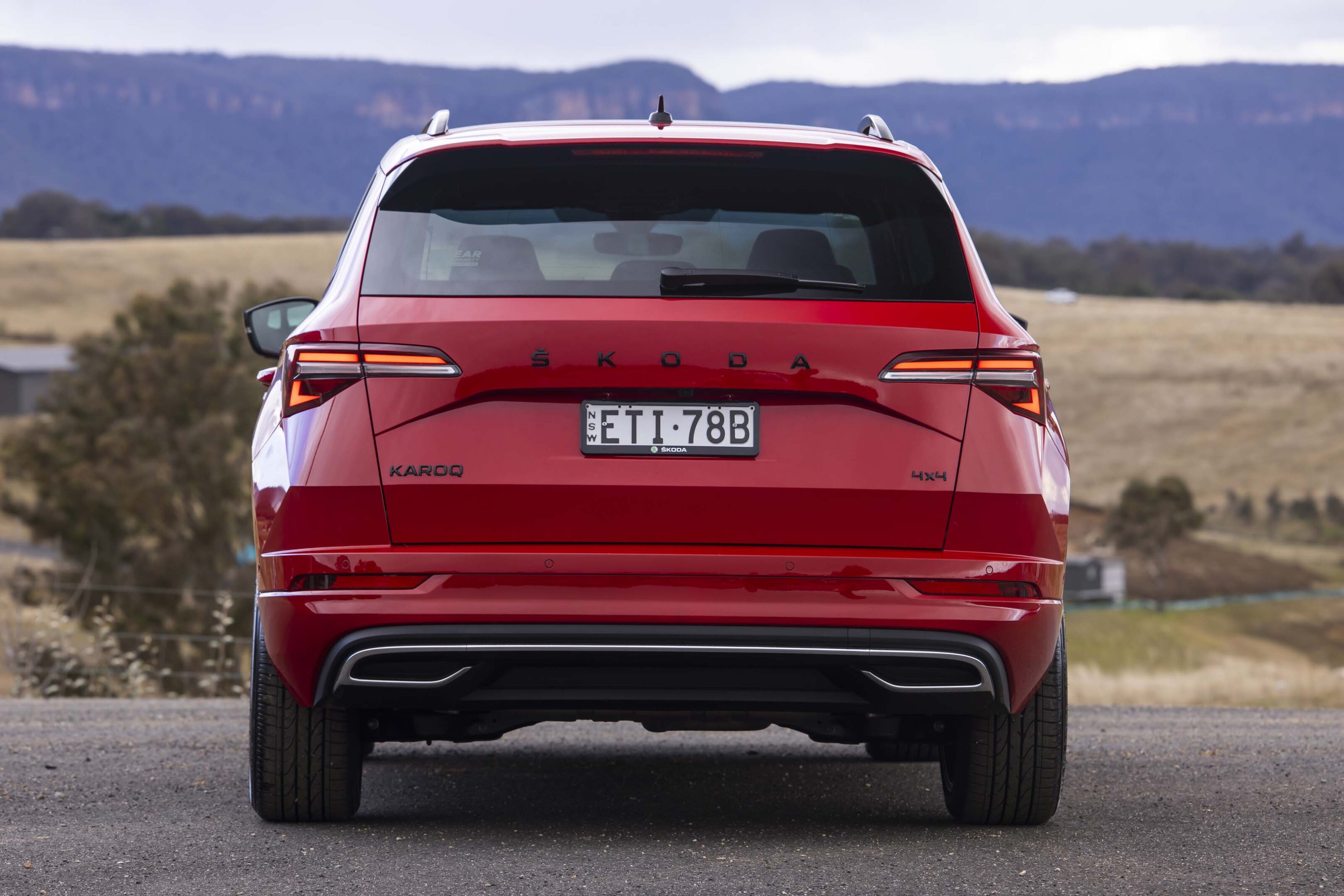
Where the Sportline has a solid and planted feel at speed, the Style has a lightness on its feet that’s better appreciated at a slower pace.
Paradoxically, its smaller wheels are better at dealing with large potholes and noisy roads, but it lacks the optional chassis tech that bestows the 140TSI with better cruising manners. Six of one and half a dozen of the other, perhaps.
With such a significant weight difference, the performance disparity is not as obvious as the claimed zero-to-100km/h figures suggest. The Sportline does the dash in 7.0 seconds whereas the Style needs nearly 10s, but a respectable torque figure of 250Nm makes it feel more muscular.
Performance is certainly adequate for mid-sized SUV duties but you’d be wrong to assume the combination of smaller engine and lighter weight translates into significantly better fuel economy, with just 0.1L/100km in it at 6.6L/100km vs 6.5L/100km.
VERDICT
It’s the 110TSI Style that has matured the most in the transition from the 2020 model.
Both variants offer a good balance of fun and comfort but the choice of transmission decides where each is most at home. While the eight ratios of the 110TSI’s torque converter auto are pushed tightly together and prefer a smooth shift, the dual-clutch seven-speed unit in the 140TSI has a more split personality and is able to deliver more aggressive cog swaps when required.
It also has the option to pick a gear manually using the paddleshifters whereas the Style only gets that option with the expensive Premium Pack.
With just two variants in the range, the Karoq manages to present two very different personalities. As its name suggests, the 140TSI Sportline is the more capable athlete with the looks to match its decent all-round manners on a variety of roads.
But it’s the 110TSI Style that has matured the most in the transition from the 2020 model. With a thoroughly comprehensive kit list, a pleasant nature on the road, manageable proportions and excellent practical features, this entry-level choice is the unlikely hero of the Karoq range.
2023 Skoda Karoq specifications
Volkswagen Australia has announced that MY22 examples of its Arteon and Touareg models will now receive a complimentary five-year Care Plan if the car is purchased before December 31.
The Care Plan is fully transferable should the car leave your ownership within the allotted term, easing the cost of scheduled servicing for five years or up to 75,000 kilometres across all variants of Volkswagen’s passenger flagships.
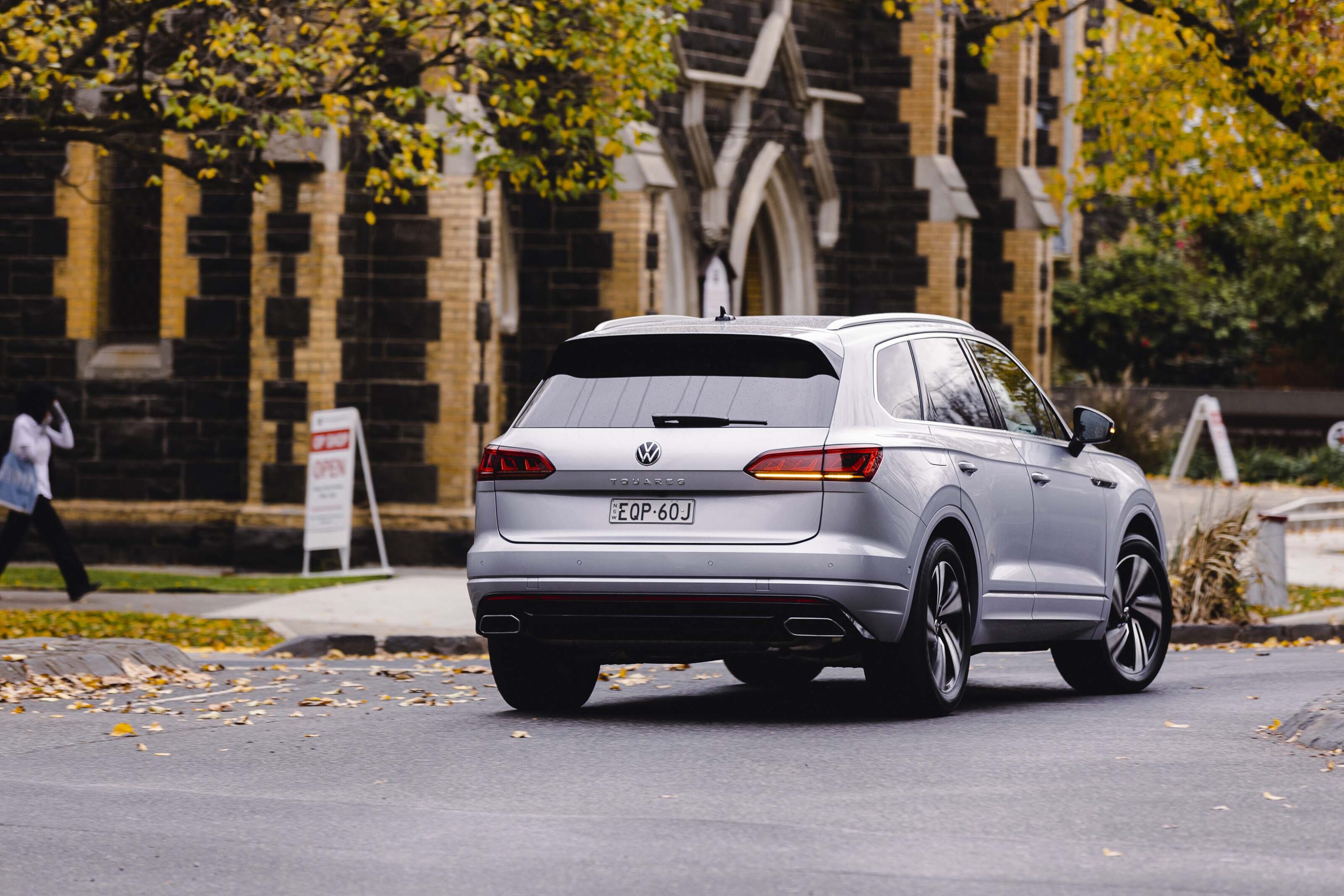
Touareg 210TDI customers save $3600, while entry 170TDI buyers keep $3000 in their hip pocket.
Buyers of the Arteon 206TSI and 140TSI save $2700 and $2500, respectively.
The deal is available regardless of whether the vehicle is purchased outright or with finance.
With much of the industry facing rising costs due to various ongoing global factors, Volkswagen Passenger Vehicles Director, Michal Szaniecki, said: “Our team has been working to provide solutions to the rising production costs and supply restrictions that are global and industry-wide challenges”.
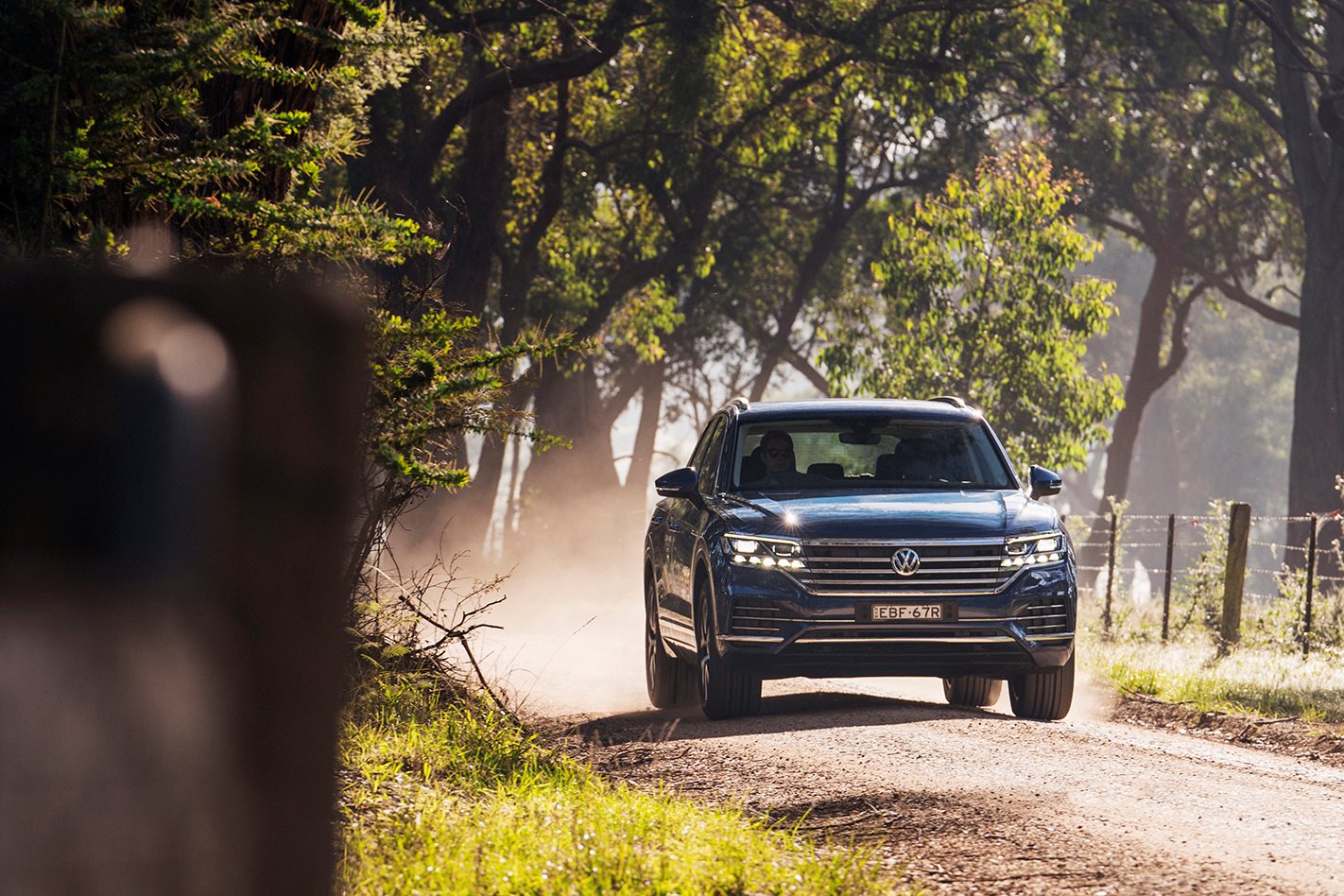
“We have successfully negotiated greater production for Touareg… and now, reduced servicing charges and provided drive-away pricing offers as elements we can control locally.”
Earlier this year, Volkswagen Australia announced shipments of an additional 1000 Touaregs had been secured for Australia in 2022, the first time full supply of the current-generation model has been available locally.
The German marque is also currently offering a number of drive-away offers for MY22 models until December 31.
| Model | Price* DA |
|---|---|
| T-Cross 85TSI Life | $32,990 |
| T-Cross 85TSI Style | $36,990 |
| Tiguan Allspace 132TSI Life | $49,990 |
| Tiguan Allspace Adventure | $54,990 |
| Touareg 170TDI | $94,990 |
Nissan has revealed the roadgoing Nismo Z with Chris Forsberg behind the wheel
The 45-second video shows a few changes made by the in-house tuner, including wider wheels, an aggressive body kit, and a new Sport+ drive mode. Get the full story at the link below.
September 28: Nismo reveals GT4-spec Nissan Z ahead of 2023 competition debut
The 2023 Nissan Z GT4, Nissan’s latest Nismo-developed customer racing car, has been revealed ahead of its competition debut next year.
The GT4-spec racer bolsters the Nissan Z’s already buzzing motorsport program, competing in Japan’s Super Taikyu series under the ST-Q manufacturer class, as well as in SuperGT’s top-flight GT500 division.
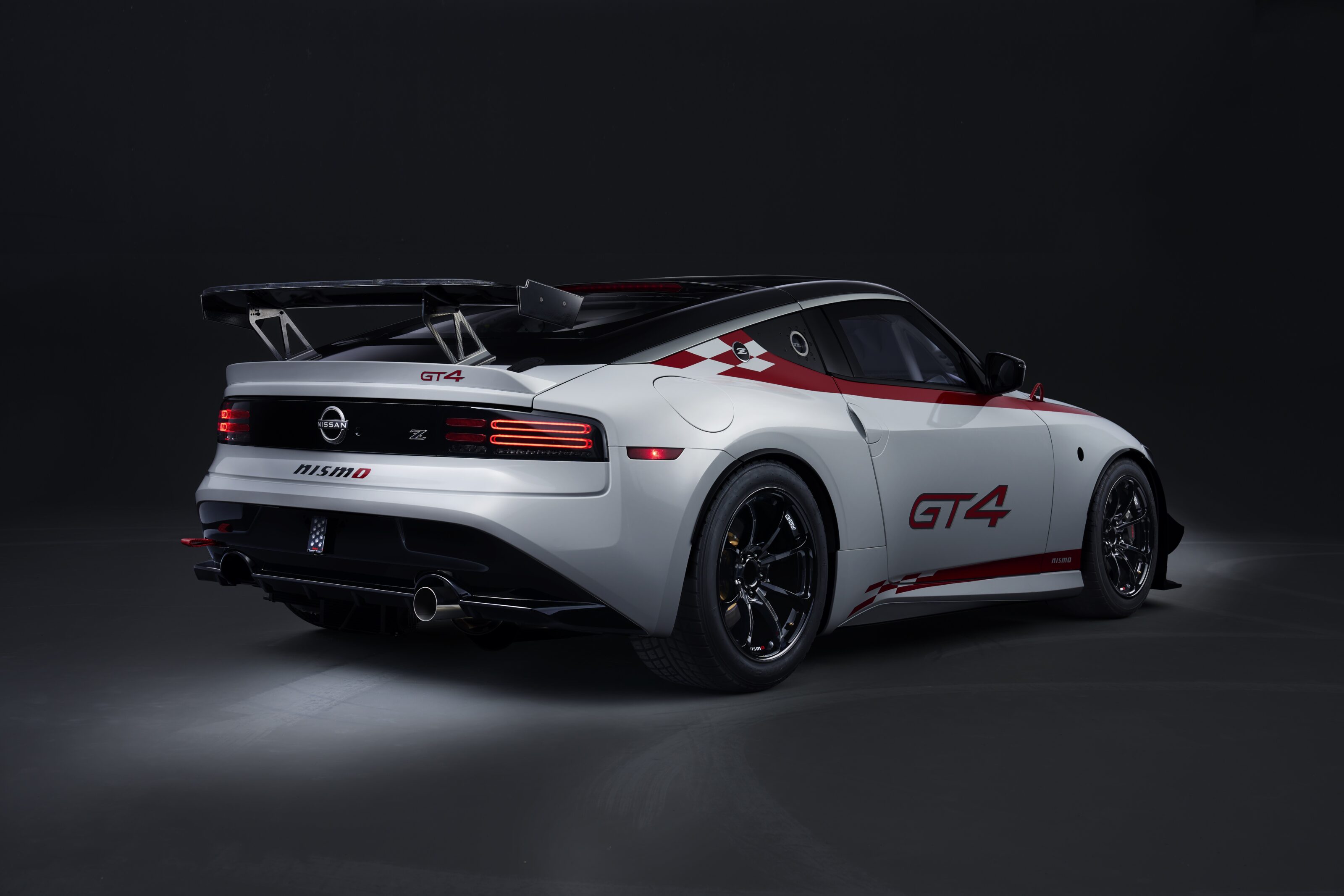
Like all GT4-spec machines, the Nissan Z GT4 Nismo is a track-only performance machine, extensively modified but still based on a standard production vehicle.
The transformation from road car to racer was overseen by Nismo Racing Division, which has fettled the factory-fitted 3.0-litre VR30 twin-turbo V6 and optimised the chassis, suspension and aerodynamics for global GT4 competition.
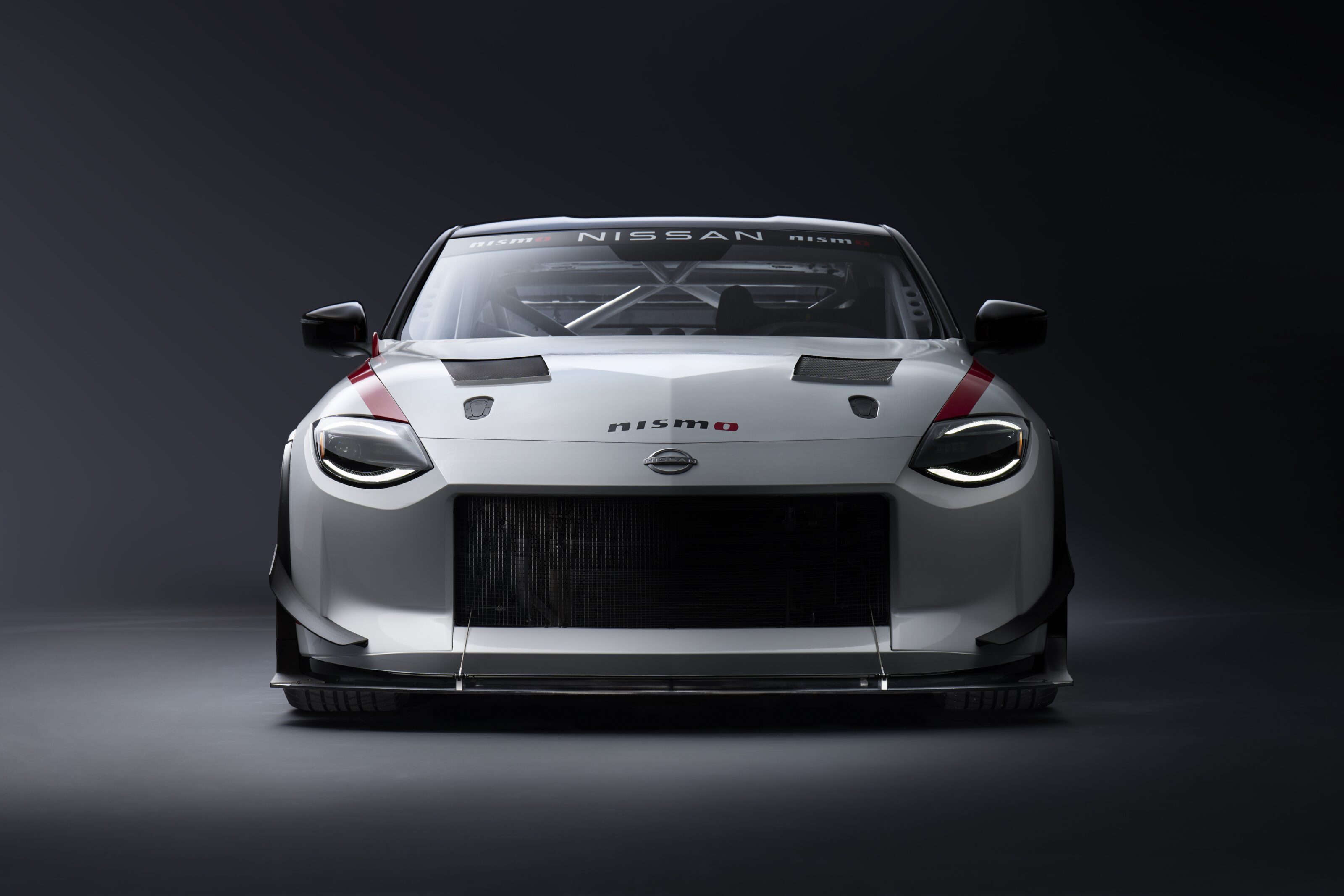
GT4 is regarded as an entry-point to global GT racing, with grids comprising much more affordable (comparatively speaking) and less powerful vehicles. The class is geared towards pro-am ‘customer racing’, with Nismo’s turnkey machine requiring a balance between professional competitiveness and amateur accessibility.
Final specifications will be released at this year’s SEMA Show, taking place in the US from November 1-4. Nissan states that customer racing deliveries are expected from the first half of 2023.
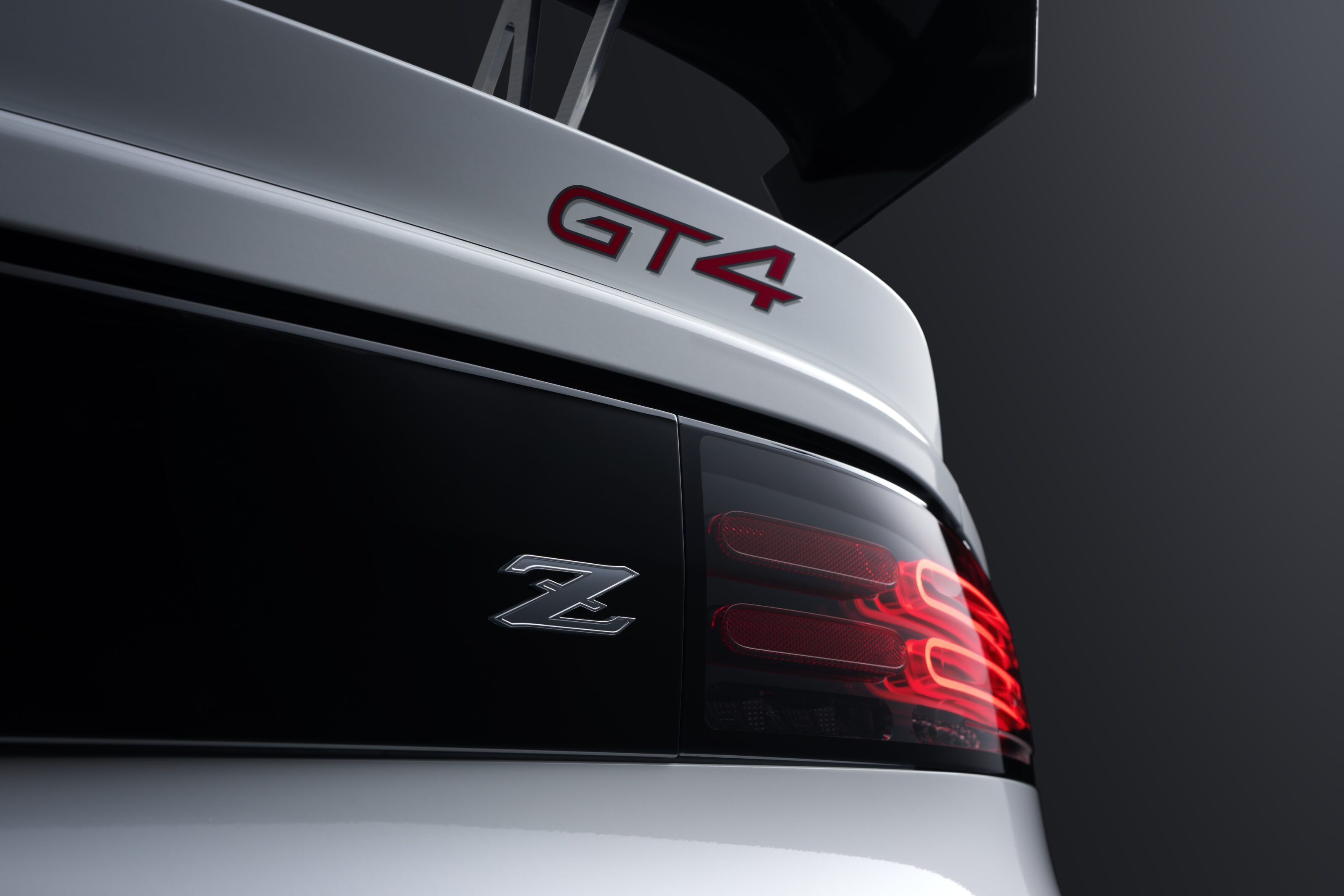
Until then, feel free to drool over the photos and watch Nissan’s reveal video above.
September 27: Nismo to reveal factory-built GT4-spec Nissan Z tomorrow
Nismo’s new Z is being unveiled tomorrow, but it’s not the (still officially unconfirmed) road-going model you’re waiting for.
Instead, the curtains will drop on what’s heavily expected to be a factory-built Nissan Z racing car destined for global GT4 competition.
Nissan’s global headquarters in Japan has posted a shadowy teaser image on Twitter, with a link to a virtual premiere scheduled to take place at 9:00am Australian Eastern Standard Time, Wednesday September 28.
Through great use of the ‘enhance’ function by Wheels’ very own CSI (Car Special Investigations…) division, the de-shadowed teaser clearly illustrates a race-ready Z, and its side is emblazoned with ‘GT4’.
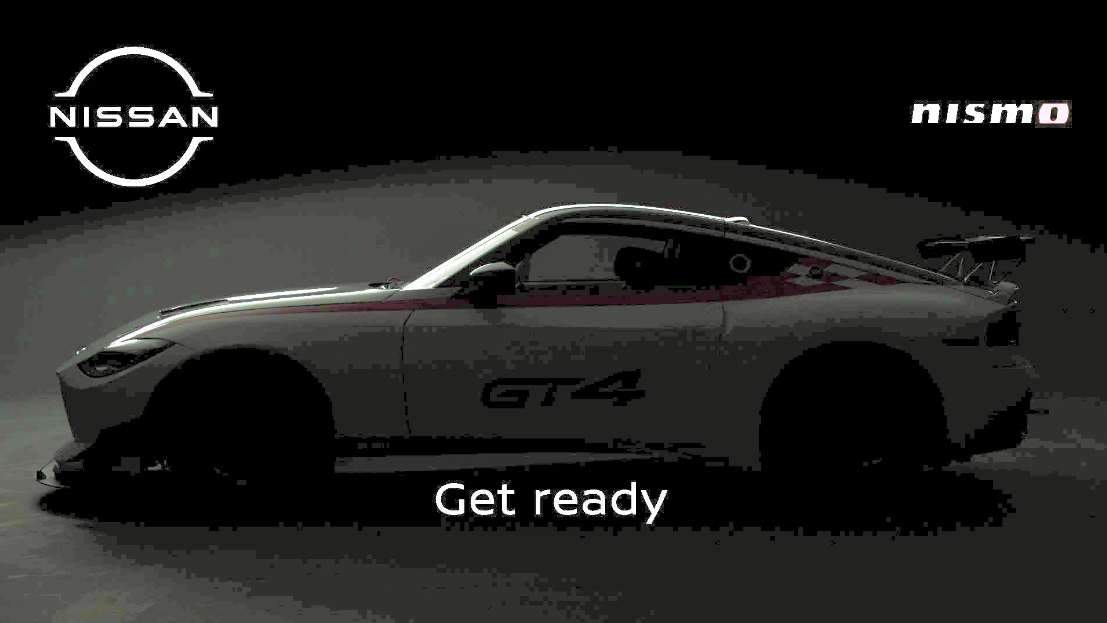
The presence of a fixed-back bucket seat with wrap-around head restraint wings, as well as what looks to be a ‘Dry Break’ fuel coupling indicate that this is no road-going Z, but one destined for the circuit.
A jutting splitter and dive planes are mounted on the front bumper, followed by a vented bonnet and a fixed single-plane wing at the rear.
The car wears a retro throwback livery to the Nismo chequered flag motif, similar to those seen on Nismo’s line of upgraded S- and R-tune Zs and Skylines of the 2000s.
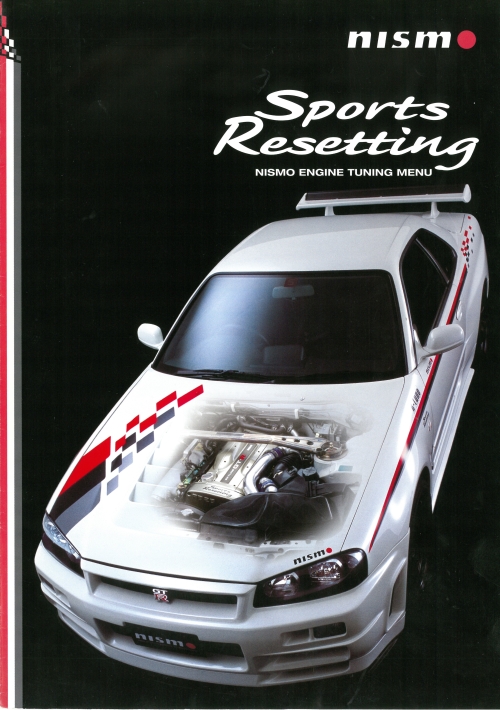
The GT4-spec Nissan Z is a logical progression from the existing Nissan Z racing cars already participating in Japan’s Super Taikyu season.
Super Taikyu is Japan’s Pro-Am GT racing series and the largest of its kind in Asia, boasting nine racing classes ranging from FIA GT3 to sub-1.5-litre commercially available road-based vehicles.
There are already two factory-backed Nissan Zs competing in the ST-Q class (and also in the top-flight GT500 class) of Super Taikyu, with ST-Q catering to manufacturer-developed non-homologated racing cars, providing an exciting test bed for the likes of Toyota, Mazda and Subaru to experiment with things like hydrogen-ICE powerplants as well as bio and synthetic fuels.
The ST-Q-spec Z looks very similar to the GT4-spec car, with the main visual differences being observed in the aero.
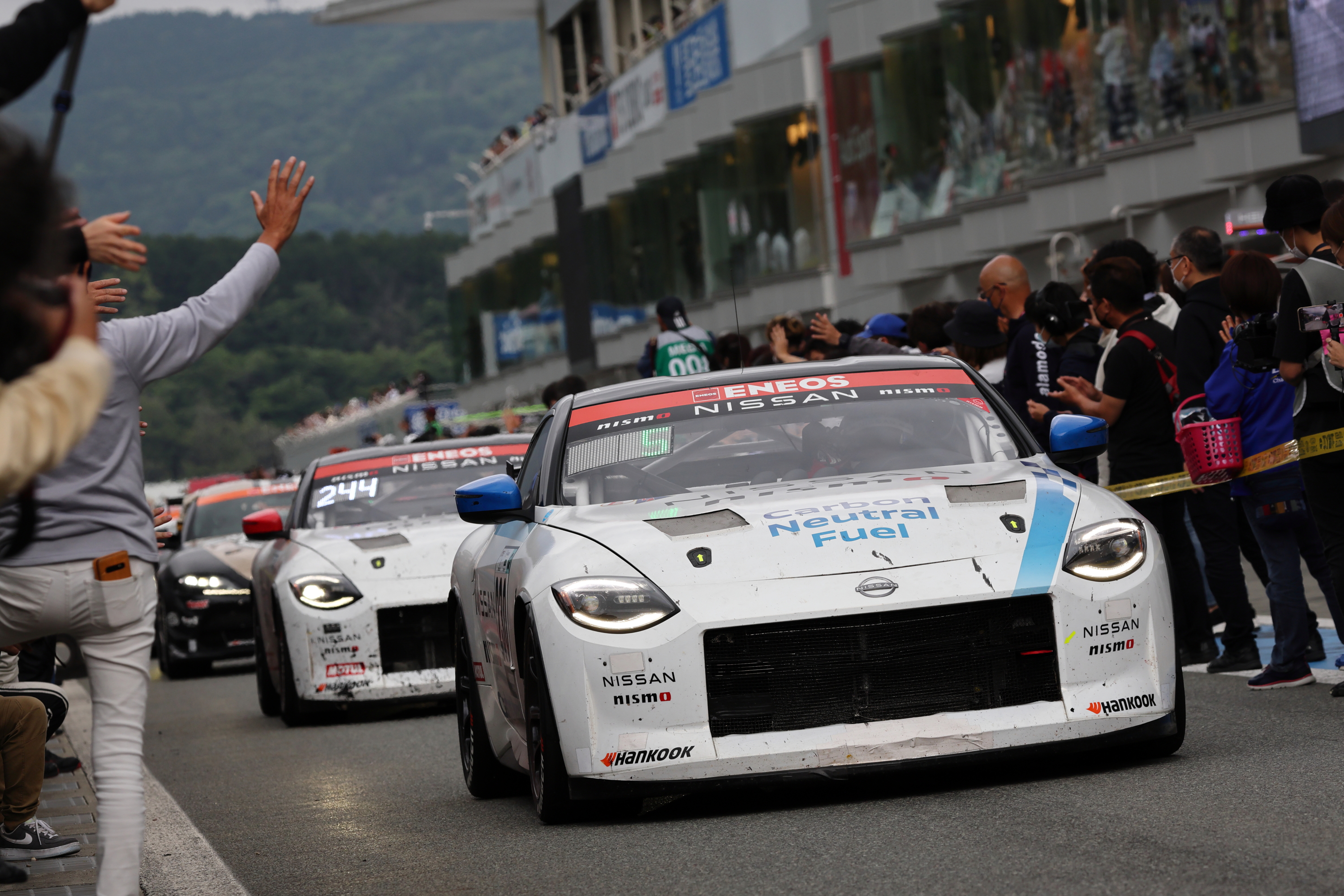
Just like the preceding 370Z, whose road-going Nismo model was aided by learnings and developments gained from the car’s participation in SuperGT, it’s expected that the Nissan Z’s multi-pronged motorsports program will result in a road-going Nissan Z Nismo, with recent reports from Japan indicating a possible 2023 reveal.
Read more below and stay tuned for the latest Nissan Z news.
September 26: 2023 Nismo Z? Japanese reports suggest hotter Nissan Z is on the way
Designs filed with the Japanese Patent Office suggest a more hardcore variant of the new Nissan Z is in the works – and could be revealed as soon as 2023.
Japanese automotive outlet Best Car reports there is a hotter version of Nissan’s new Z in the pipeline, citing recent patent filings and modified test mule spottings.
In its domestic market of Japan, the hotly anticipated Nissan Z has enjoyed significant success, with delivery times reportedly blowing out beyond two years and forcing Nissan Japan to pause orders at the end of July.
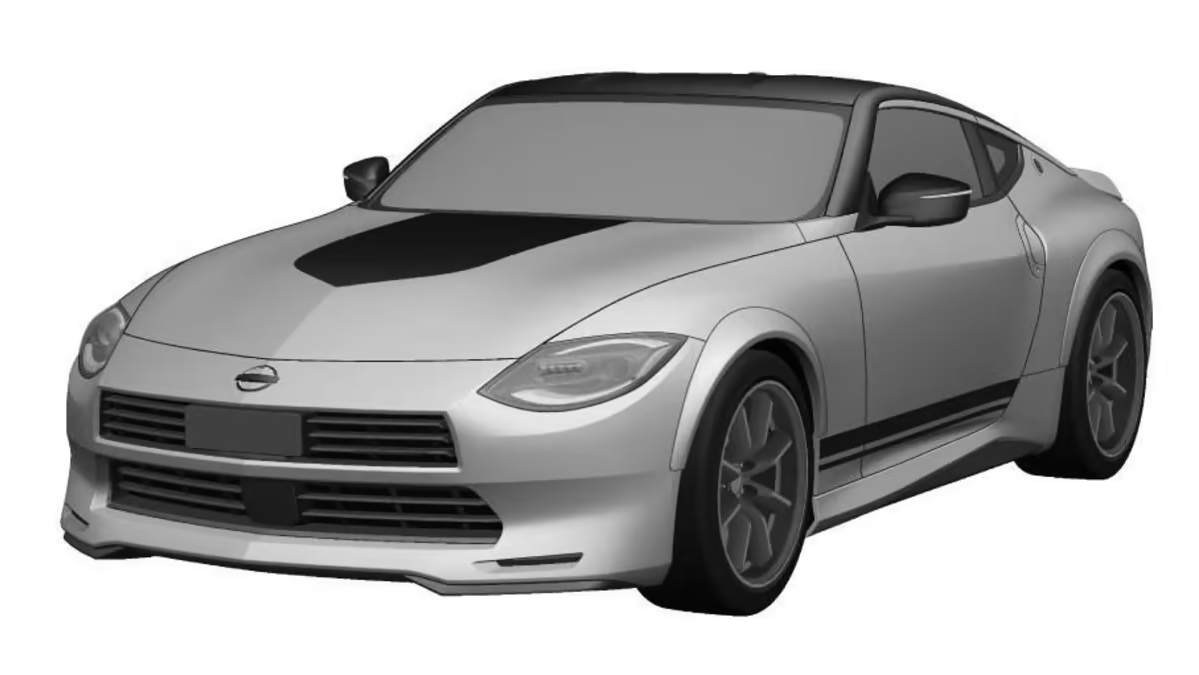
Patent images shared by Best Car show a kitted-up Z that looks almost identical to the modified Nissan Z ‘Customized Proto’ concept car that was displayed at Tokyo Auto Salon 2022.
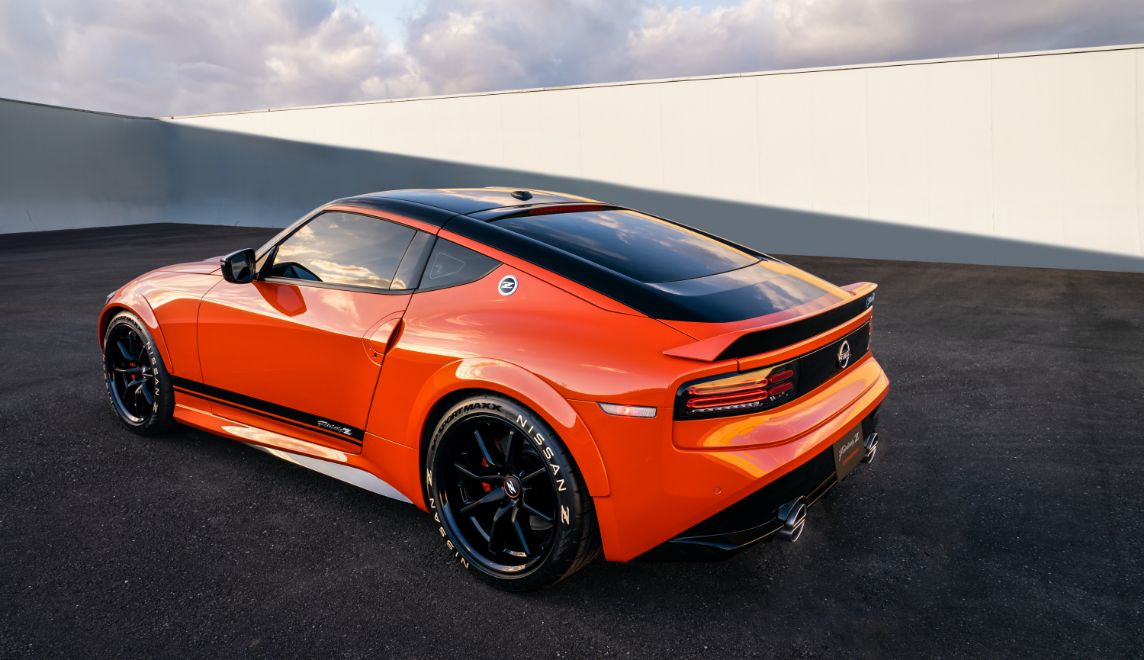
Camouflaged American test mules were also spotted in California and Arizona last month wearing the same split-front bumper arrangement, chinned front lip and featuring ‘Nismo’-branded seats.
https://www.instagram.com/p/Cg2SmnYPY_P/
Whether this kitted-up variant is a forthcoming Nismo Z variant, or something else, remains unclear.
While not officially confirmed by Nissan, many expect some form of Nismo-tuned Z to join the range in the future, with the previous generation 370Z’s Nismo variant appearing just one model year after launch. The new Z is already participating in Japan‘s Super Taikyu series, and is being built for GT4 spec-racing – so there is already motorsport engineering and development to trickle down into the road car.
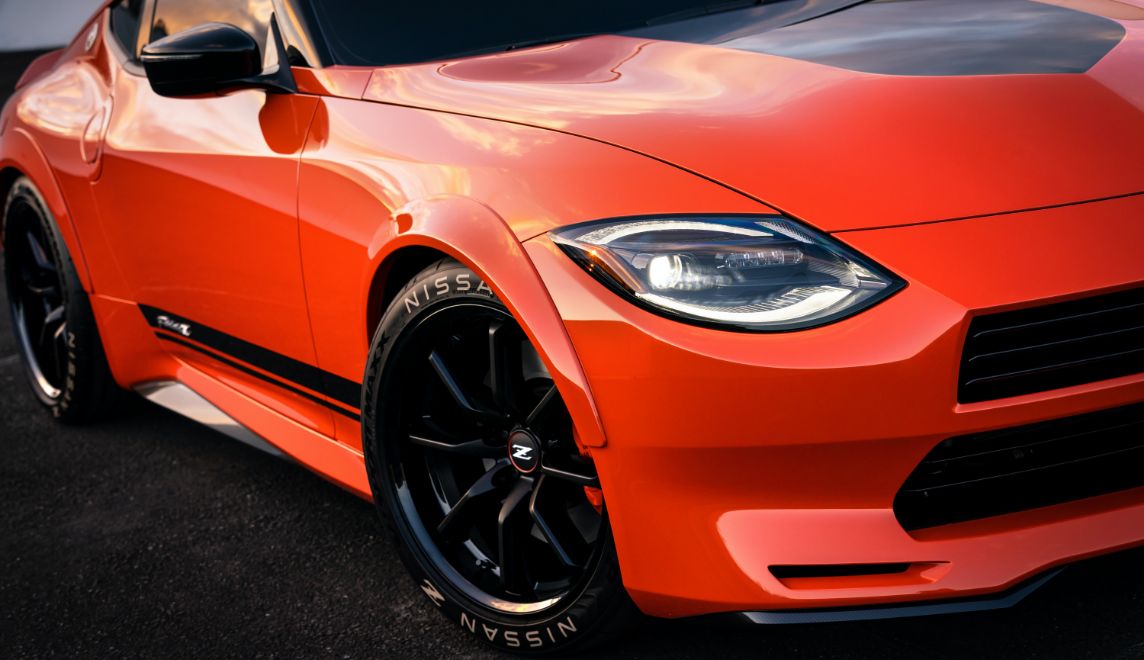
If this forthcoming Z variant isn’t a Nismo-branded product, what else could it be? There is a large precedence of anniversary models found in prior Z generations, with 2023 marking 90 years since Nihon Sangyo first appeared as ‘Nissan’ on the Tokyo Stock Exchange in 1933.
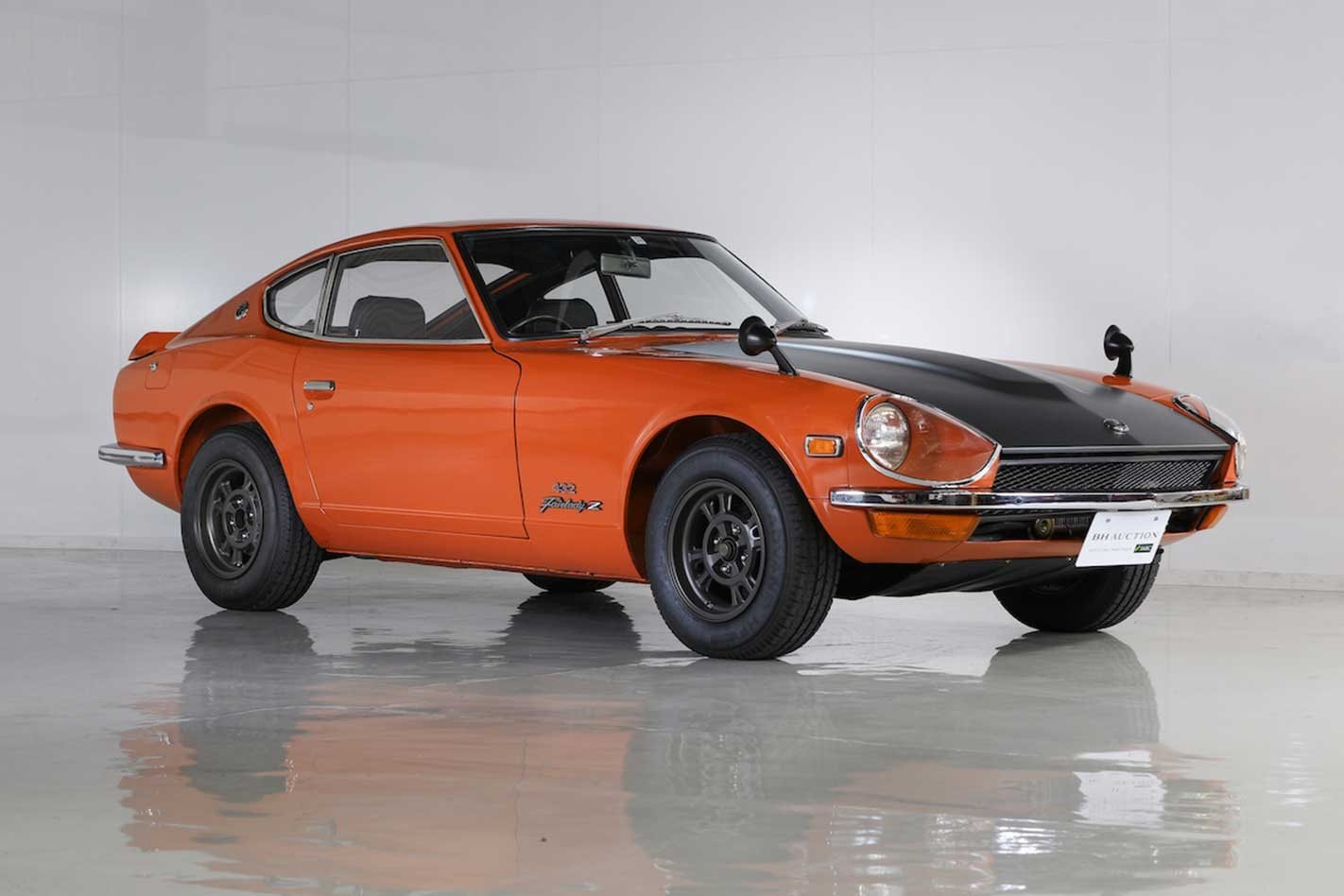
The modified Nissan Z display vehicle unveiled at this year’s Tokyo Auto Salon was designed in tribute to the original Datsun 240Z Z432R factory-built racing car.
Between 30 and 50 of these factory lightweight racers were produced in 1970, with no radio or air-con, acrylic glass, FRP panels and 0.2 millimetre-thinner body panels for ultimate weight-saving.
The ‘432’ denotes the four valves-per-cylinder, three Mikuni carburettor and dual-overhead cam configuration of Datsun’s famous S20 inline-six engine. That S20 engine was famously lifted from the original Skyline GT-R – the ‘Hakosuka’ PGC10 – which in turn sourced its powerplant from Prince’s Grand Prix-winning R380 race car.
Like so many of its rivals and Stellantis stablemates, Citroën is looking to the past for inspiration as it navigates its electric future.
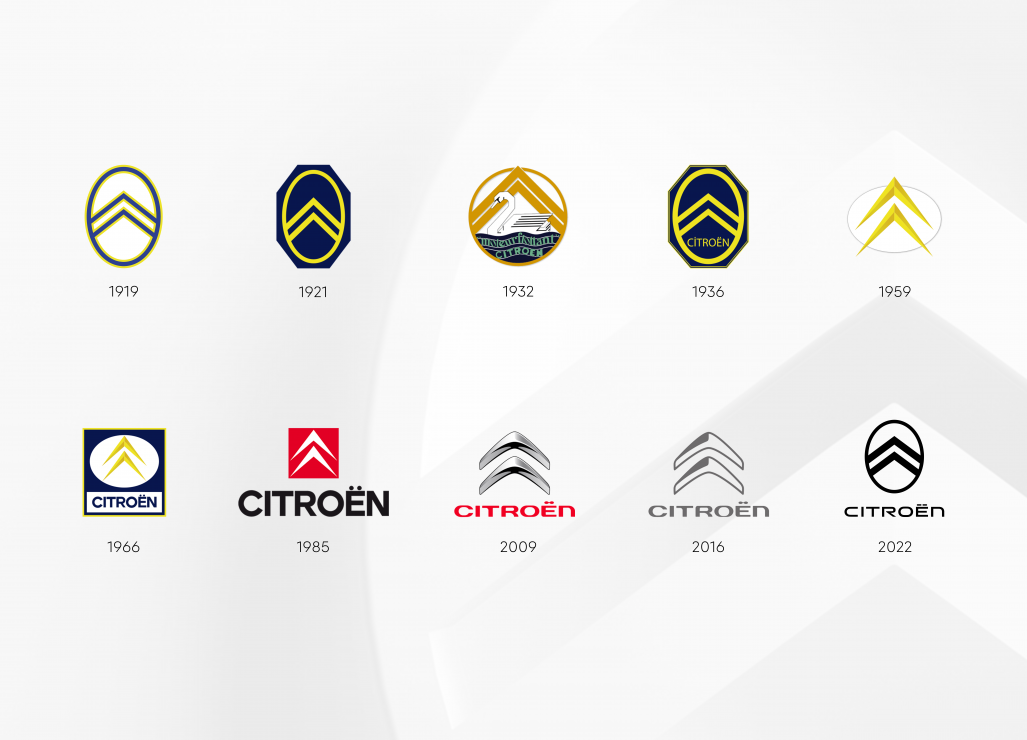
In the case of its brand and that iconic “deux-chevron”, Citroën has cast its vision back to the logo it launched with in 1919 – marking the 10th evolution of its badge in 103 years.
Interestingly, three of Citroën’s printed logos – including this latest version – have been introduced in the past 13 years alone, with just seven- and six-year stints between them.
(How much cheaper could new cars be if brands weren’t regularly budgeting for new branding across their offices, dealerships, stationery and workwear…)
Of course, the Citroën brand has kept up with graphic design trends through the 2000s and 2010s.
In 2009, Citroën revealed a curvaceous logo with subtle metallic tones through the chevrons – just like many of its rivals – before embracing the ‘flat’ design theme that had grown out of the online space, eventually affecting (infecting?) just about every industry in the world.
Now, in 2022, Citroën is again paring back what little complexity remained in its modern logos, returning the chevrons to their earliest, encircled look – inspired, by the way, not by military chevrons but rather by the herringbone pattern of the massive double helical gear design André Citroën had bought the rights to in the early 20th century.
“The elegant new emblem signposts the brand’s transition and evolution, and will debut at the end of September on a significant conceptual Citroën family vehicle,” the company says.
“Versions of it will then progressively enhance future Citroën production and concept vehicles from mid-2023 on.”
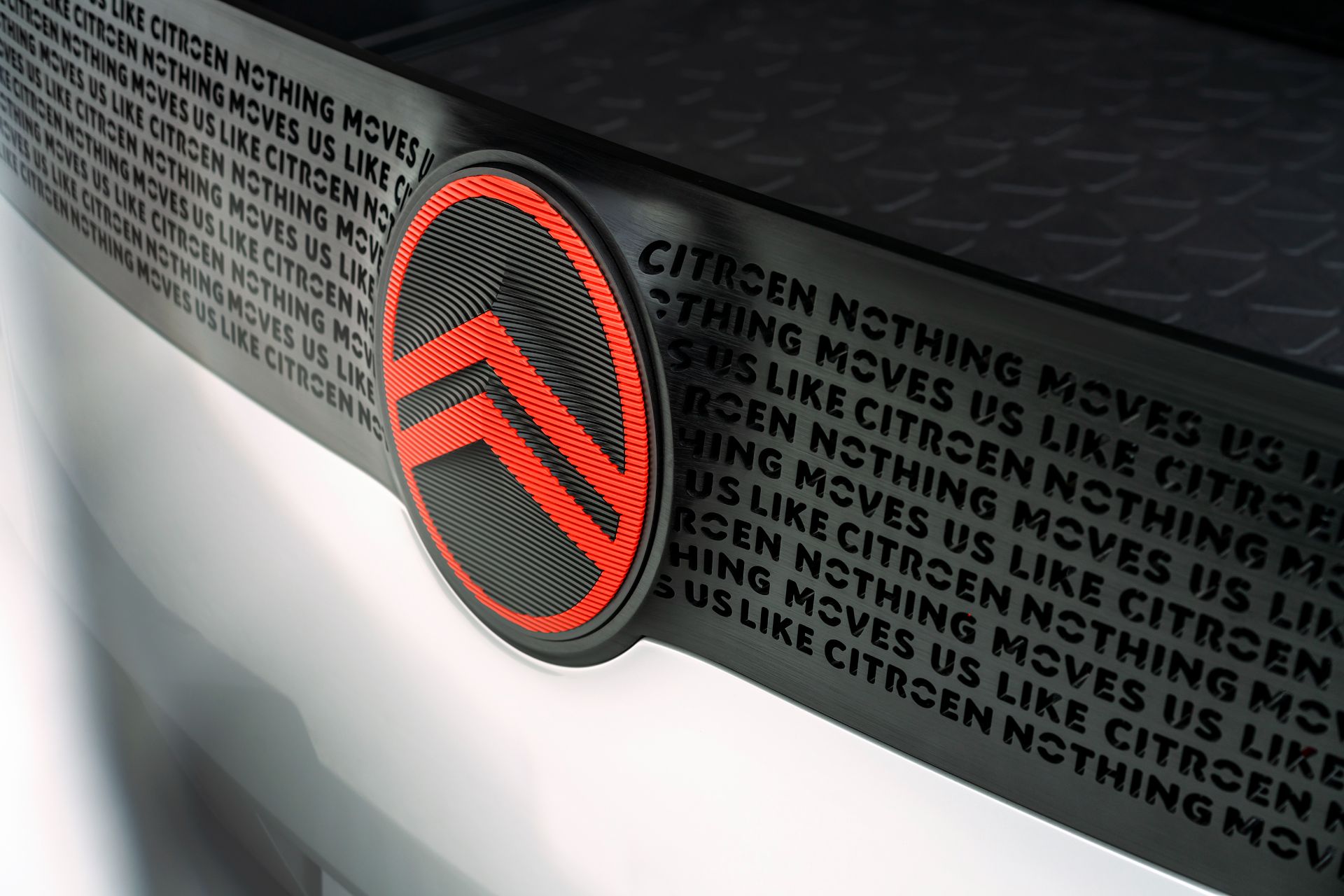
Citroën will also roll out a new slogan to accompany the new logo: “Nothing Moves Us Like Citroën”.
Watch for new Citroën cars to show their new chevrons in 2023.
“It’s super nice to hear the engine sound, but at the same time there are no emissions”
Snapshot
- Hydrogen tested as a replacement for unleaded petrol
- Rally stars reckon it adds more punch
- An (almost) zero emissions alternative?
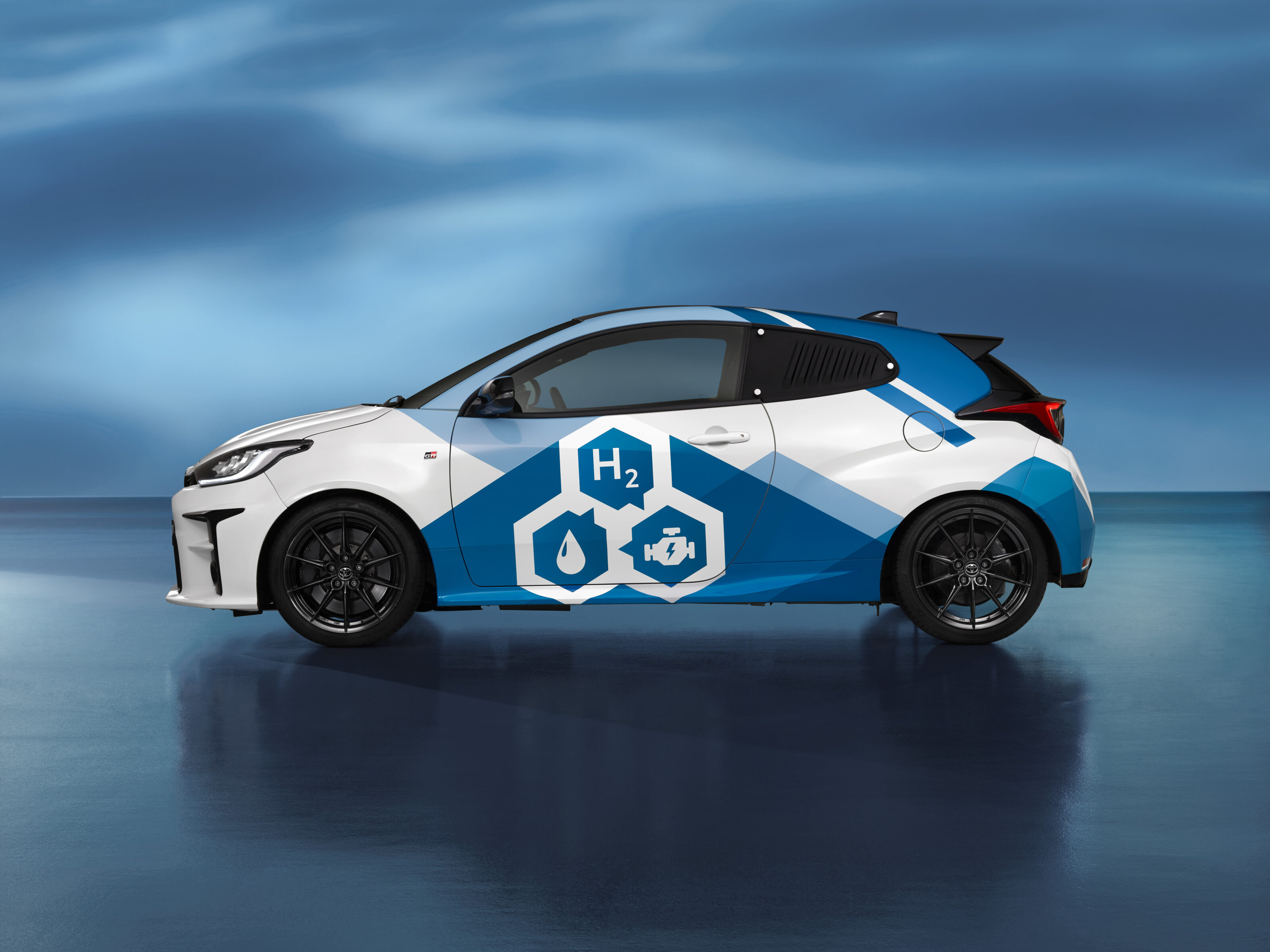
Toyota has taken a prototype GR Yaris powered by liquid Hydrogen fuel to the World Rally Championship (WRC) as the official sweep car in a bid to further test alternative fuels.
At the hands of rally royalty Juha Kankkunen and Jari-Matti Latvala, the lightly-modified GR Yaris was tested at the recent Belgian round of the WRC.
The H2-powered Yaris has been kicking around since December 2021, but it sounds like the boffins are learning what makes this fuel type tick.
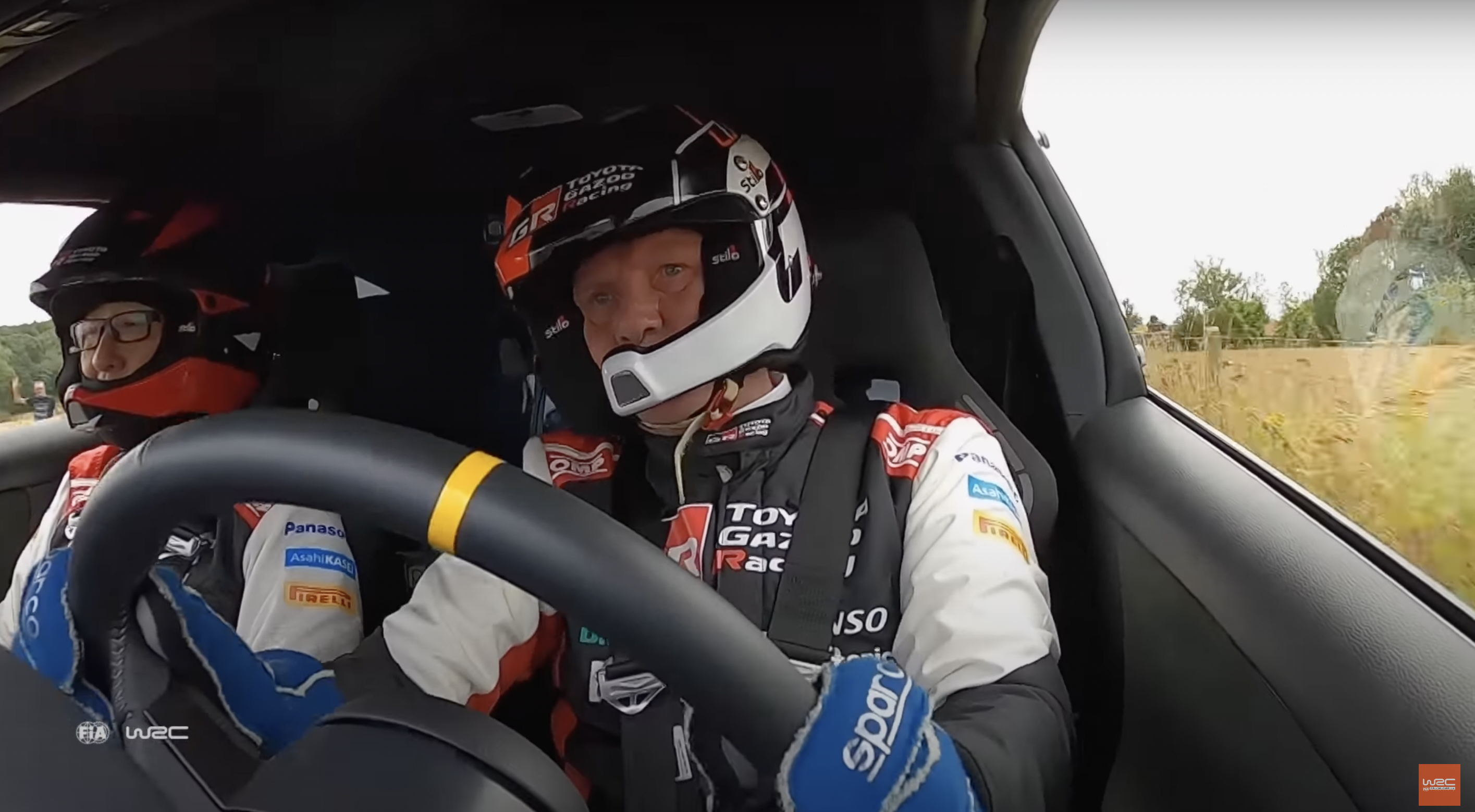
In a new video shared by the carmaker, Kankkunen says: “The first feeling is that it’s much more powerful than the standard road car, especially the torque. The top power is maybe not much more than the normal car, but the torque is really good.”
Meanwhile Latavala, Gazoo racing team principal, summed up why enthusiasts might enjoy hydrogen fuel: “It’s super nice to hear the engine sound, but at the same time there are no emissions”
Toyota isn’t claiming hydrogen is the silver bullet to killing emissions from motor vehicles, but it is continuing to test the tech following the hydrogen-powered Corolla hybrid endurance racer and 335kW/540Nm 2UR-GSE hydrogen-powered V8 co-developed with Yamaha.
While hydrogen is unlikely to overthrow petrol or BEVs as the energy of choice, it could be the solution for sound-loving driving enthusiasts providing an even cleaner burn than proposed synthetic fuels. The same could be said for racing series such as the WRC.
How does Hydrogen fuel the GR Yaris?
You may be more familiar with hydrogen fuel-cell vehicles (FCEVs) such as Toyota’s own Mirai sedan, or the Hyundai Nexo. Both vehicles are in testing in Australia as BEV alternatives, though it seems the current technology better suits heavy goods vehicles.
Aside from a 12V battery there’s no electrification in the hydrogen-fuelled GR Yaris – which maintains its gruff three-cylinder burble from the G16E-GTS.
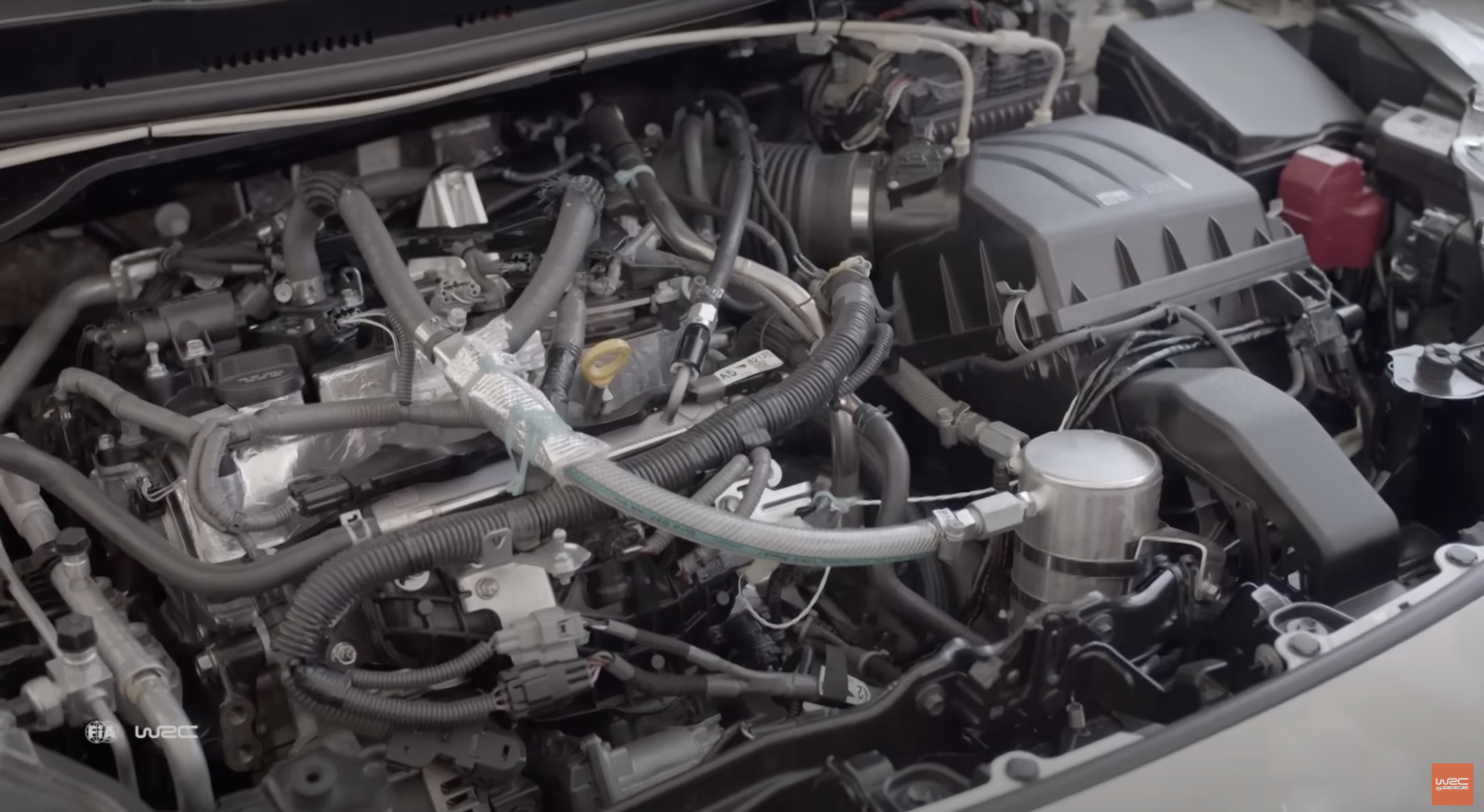
Toyota has modified the injectors and fuel delivery system, but the engine internals are untouched.
Toyota says that liquid hydrogen has a faster burn than petrol for improved response. However, as it combusts at a faster rate than petrol, the hydrogen-powered GR Yaris’s driving range won’t match a petrol engine – at least for now.
The hydrogen also needs to be made via energy-intensive electrolysis and transported to its final destination. Unless done using zero-emissions tech, hydrogen as a combustible fuel still has wheel-to-well emissions.
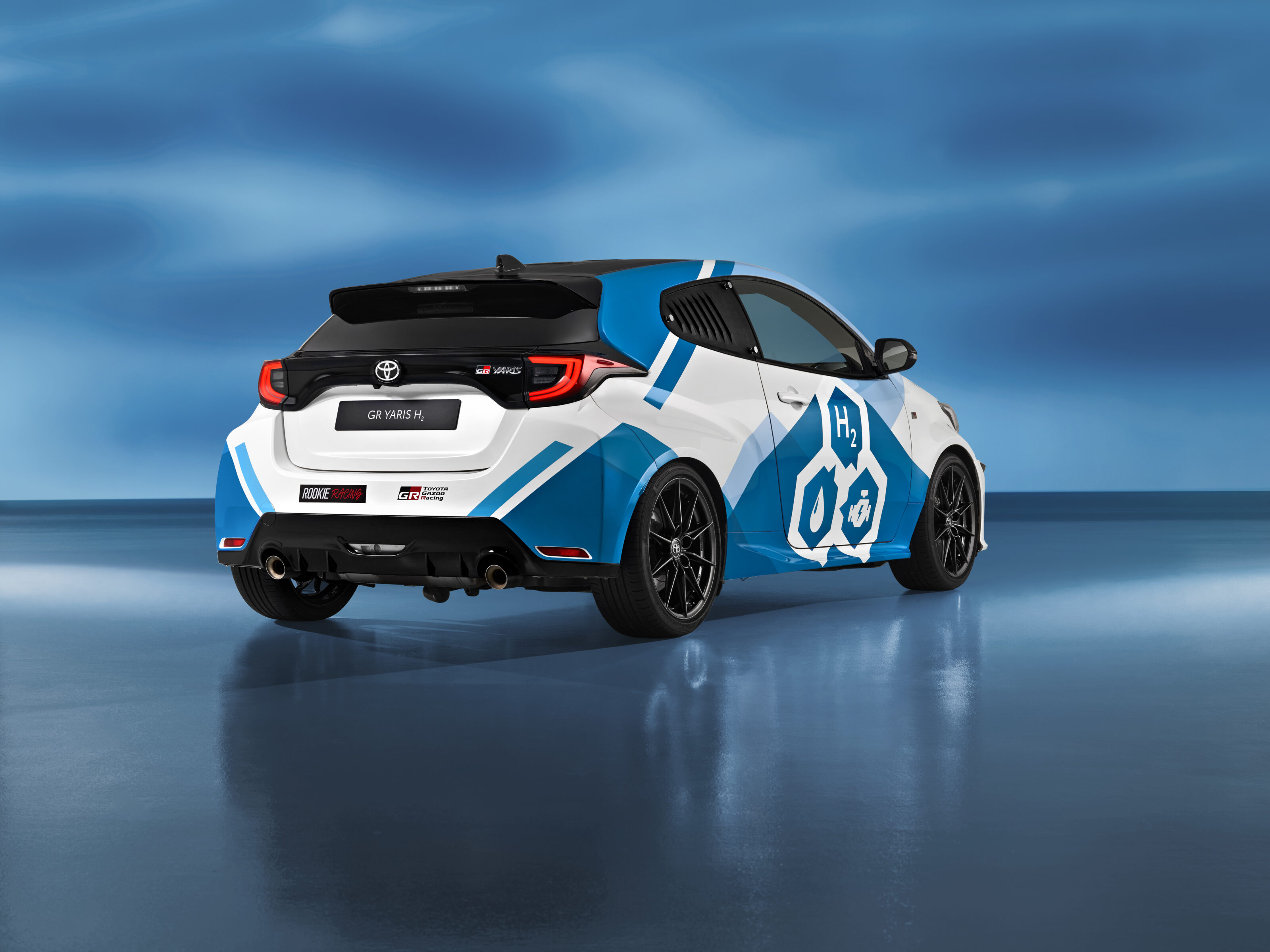
While the combustion of hydrogen in the GR Yaris’s cylinders produces no carbon emissions in theory, it’s true that small amounts of oil and lubricants in the engine will inevitably get pulled into the burn.
Most of these particulate emissions will be cleaned up by the car’s catalytic converter, but unlike a BEV or FCEV, a hydrogen-fuelled car will still produce some local emissions.
Storage also factors into hydrogen’s use as a combustible fuel. Generally, it’s stored in tanks that are pressurised at between 5000-10,000psi.
“The Lamborghini Aventador was a game-changer at its launch”
Snapshot
- Aventador production comes to an end after 11 years
- No more naturally-aspirated V12
- Successor to be plug-in hybrid
Production of the Lamborghini Aventador has come to an end after 11 years and 11,465 sales worldwide.
The naturally-aspirated V12 ‘big Lambo’ is the last of its kind. Its successor will be unveiled in due course, but now is the time to celebrate the life of this bull.
Born after Lamborghini’s growing success in the mid-2000s with the Murcielago and booming sales of the heavily Audi-era V10 Gallardo, the Aventador cemented the carmaker’s contemporary image.
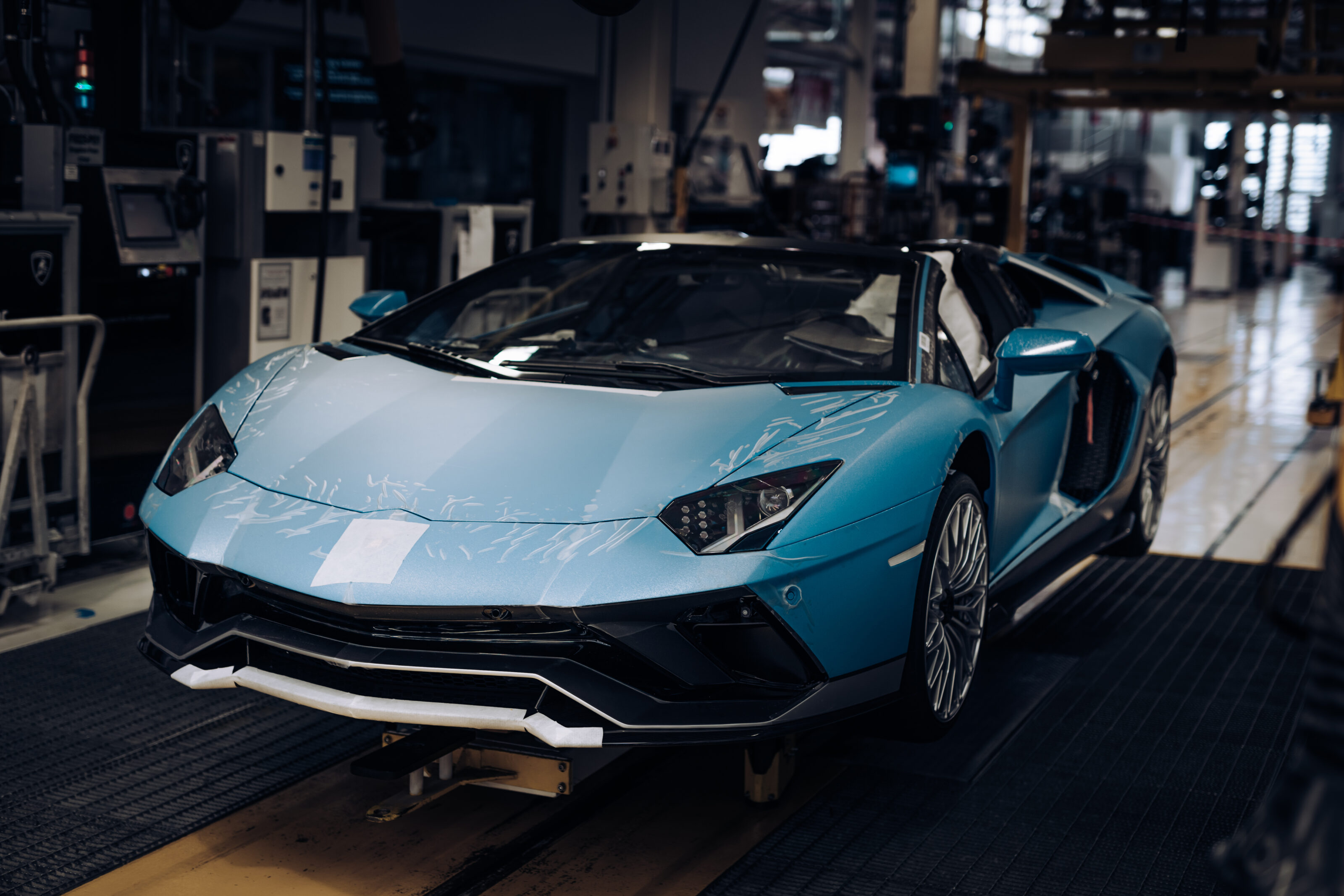
“The Lamborghini Aventador was a game-changer at its launch, and the flagship Lamborghini model for 11 years of production,” said Stephan Winkelmann, chairman and CEO of Lamborghini.
Ostentatious it may have been, but that’s what people want from a supercar. The Aventador became the best-selling V12 Lamborghini ever, after outselling the Murcielago in just five years.
The success of the Aventador (and Huracan little brother) saw Lamborghini branch out to SUVs early with the Urus, where Ferrari and Aston Martin lagged behind.
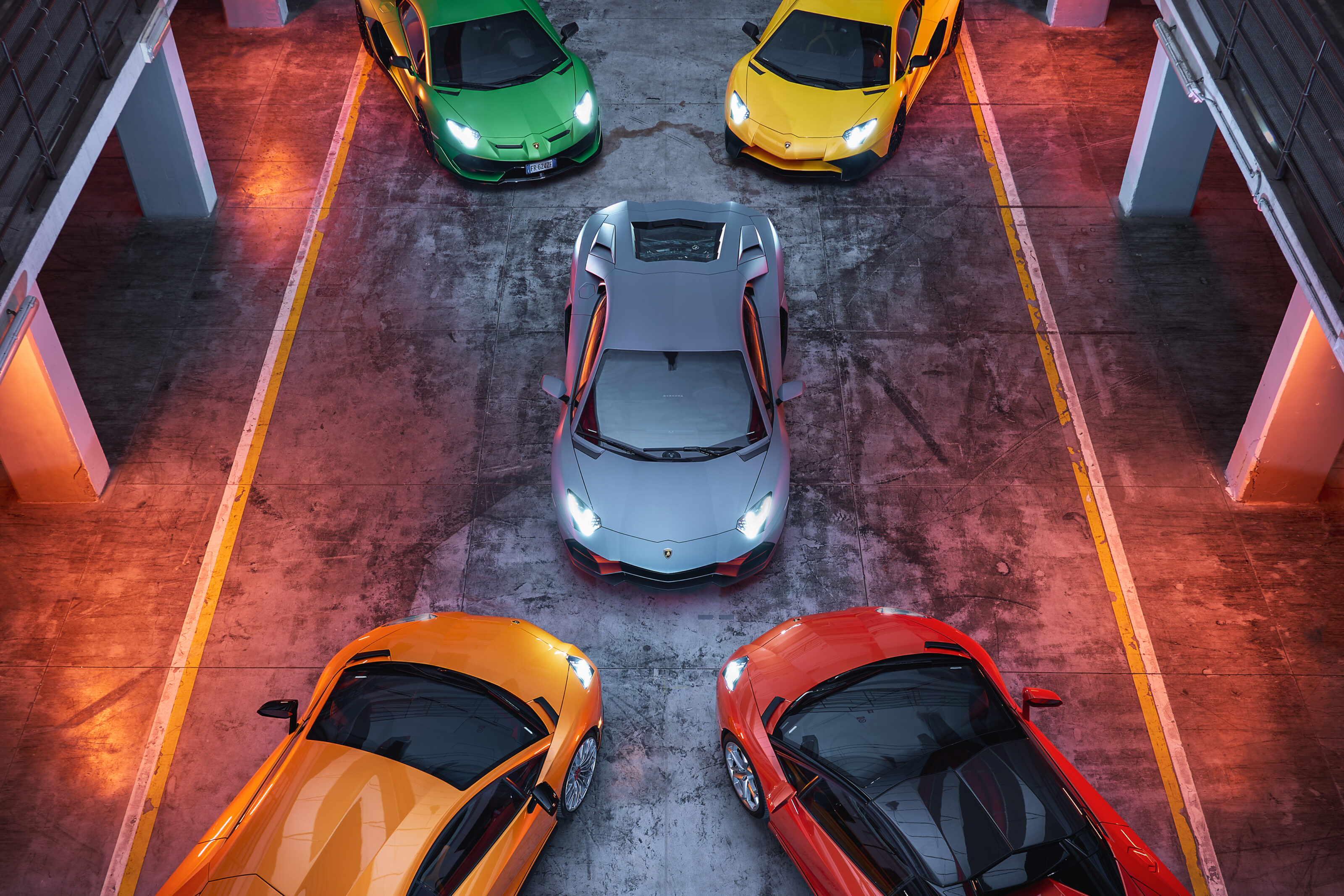
By its end, the Aventador’s 60-degree angle 6.5-litre V12 had grown in output from 515kW in early LP700-4 form to 574kW in the last-of-the-line LP780-4 Ultimae.
Throughout its life, the Aventador used a seven-speed single clutch automatic transmission sending drive to all four wheels.
What was the last Aventador?
The final Aventador to roll out of Sant’Agata was an LP780-4 Ultimae Roadster finished in a unique ‘Ad Personam’ (Lamborghini’s custom colour scheme) light blue colour. The roadster is on its way to a Swiss collector.
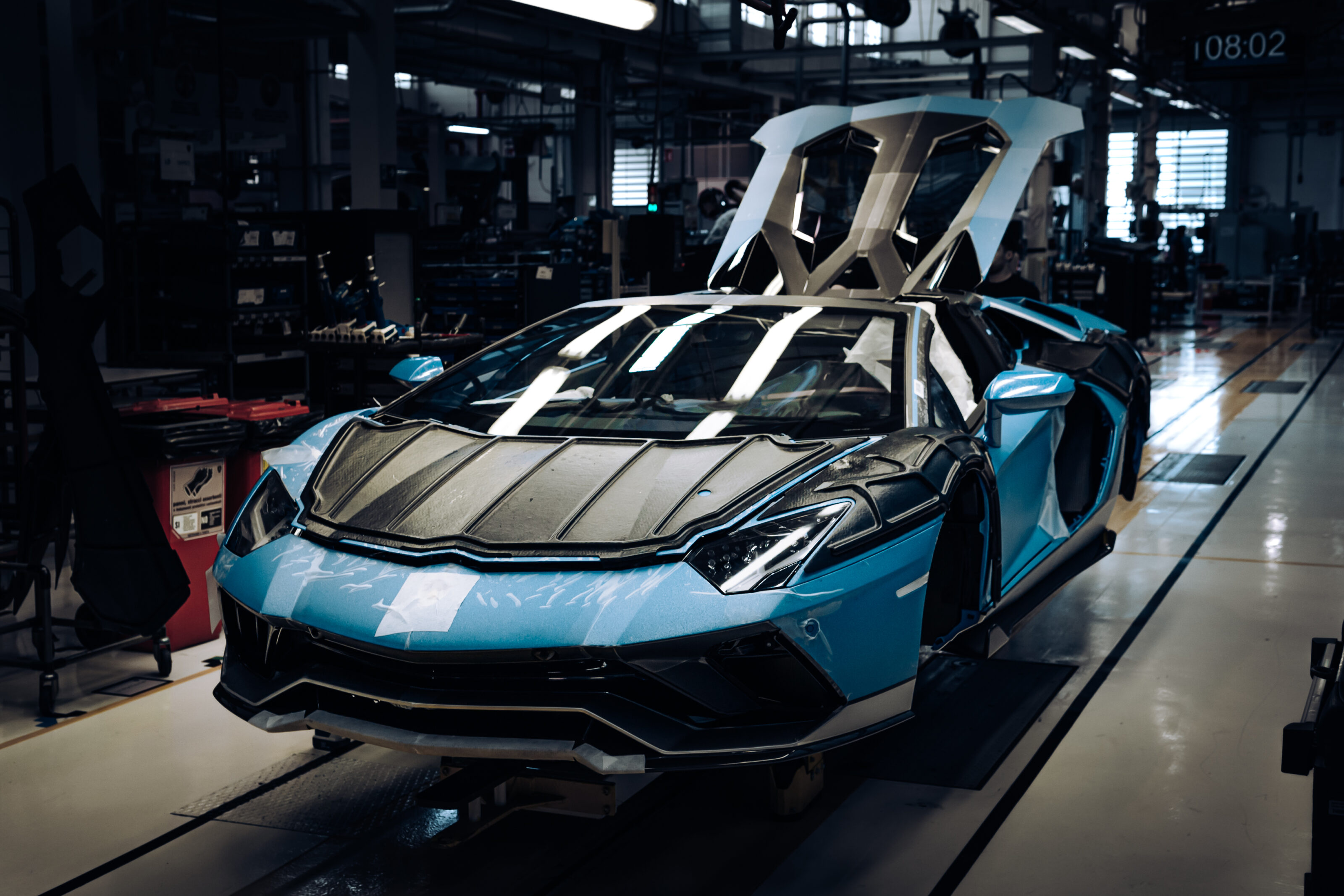
As an aside, Lamborghini was expecting to shut Aventador production down sooner, but when a ship sank in the Atlantic ocean carrying 15 bulls, manufacturing restarted briefly to cover the lost cars.
Lamborghini’s Aventador has been the basis for several concepts and small-run statement supercars over the years, including the Veneno, Sián and reimagined Countach LPI800-4.
The Aventador’s successor will use a plug-in hybrid powertrain – like the Ferrari SF90 – with a pair of electric motors. But don’t fret, a V12 will form the combustion heart of that powertrain.
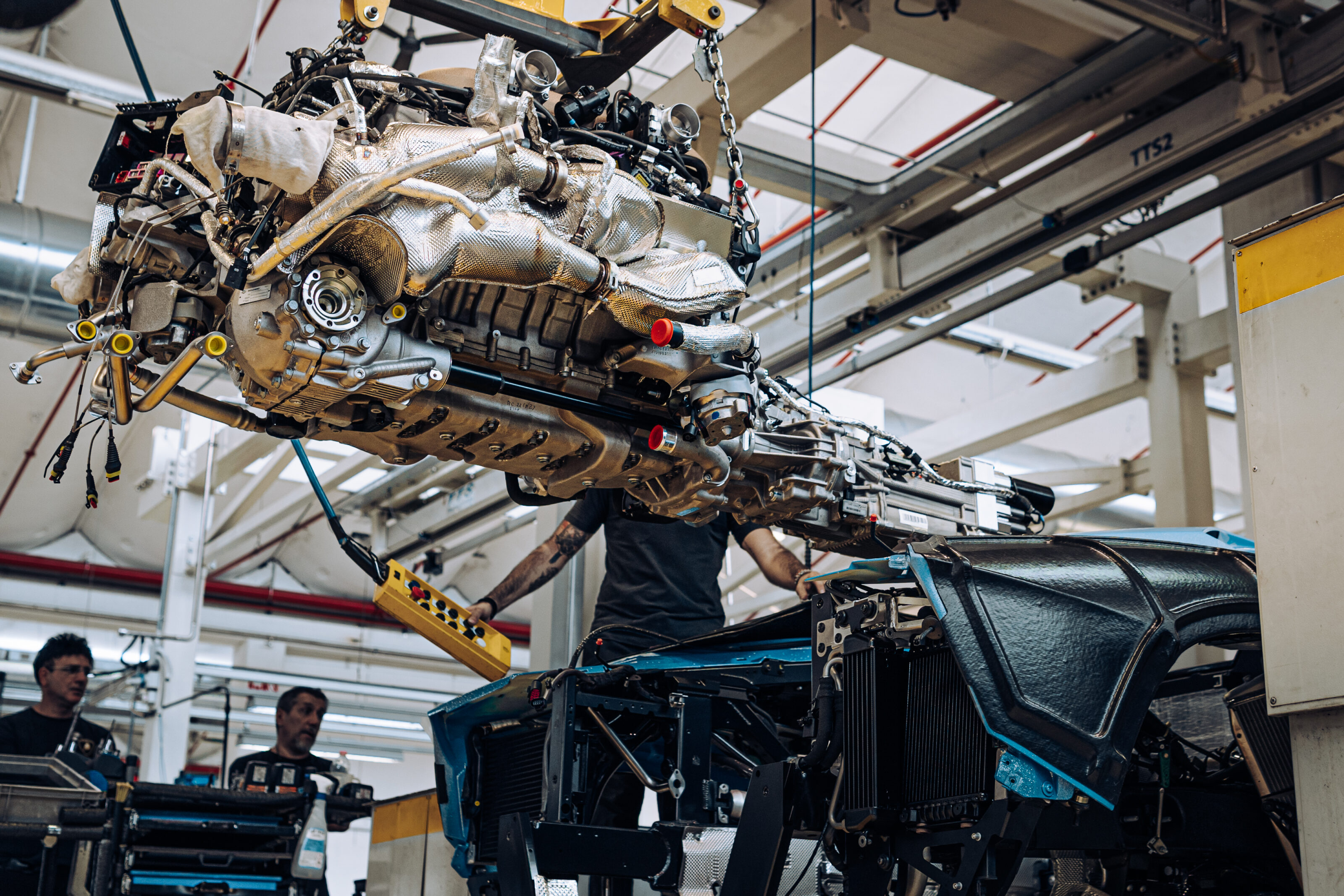
Winkelmann said emotion from combustion engines is still very important for the brand.
“The V12 engine has been part of Lamborghini’s heritage since the company’s earliest days; the beating heart of models from Miura to Diablo, Countach to Murciélago,” he added.
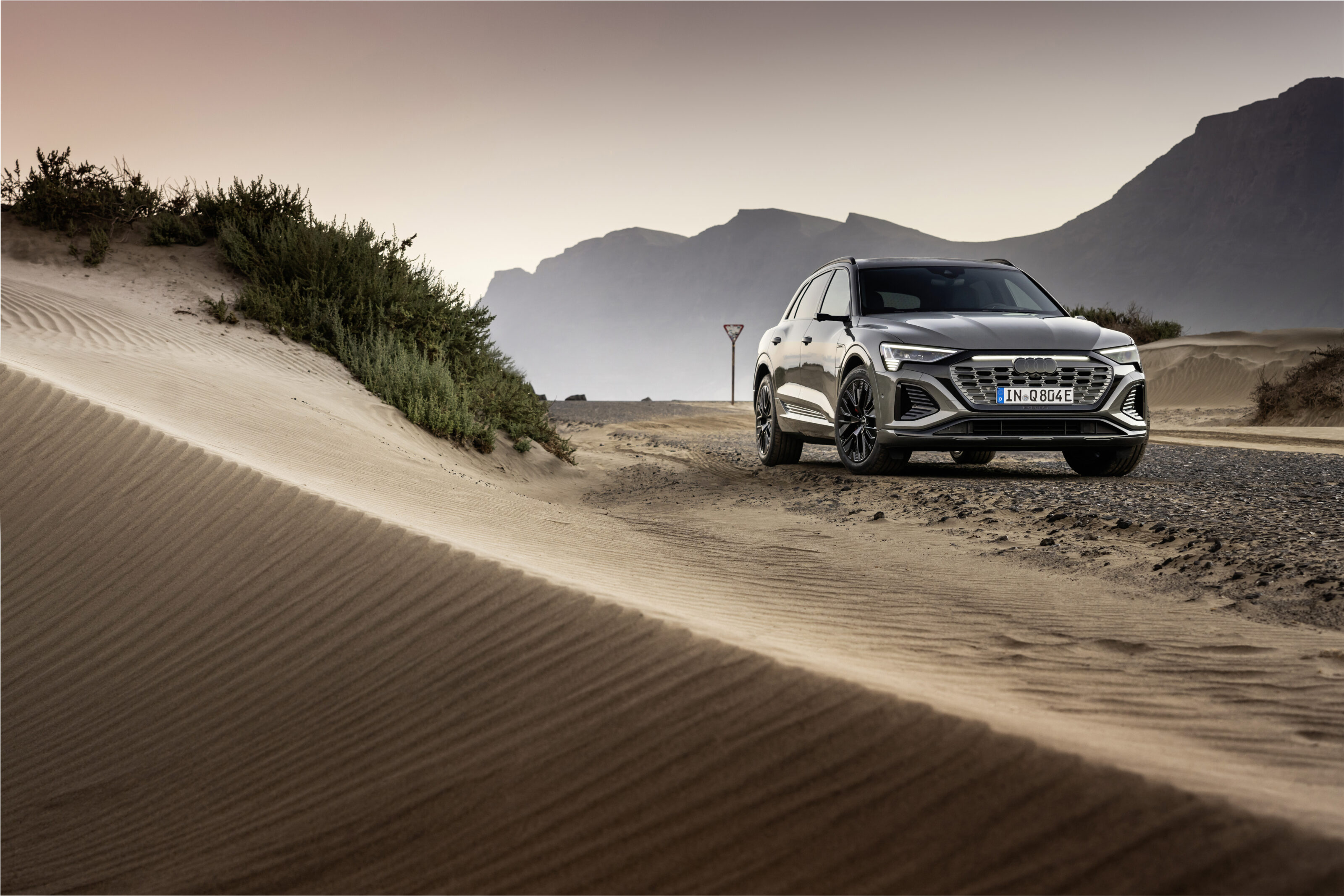
UPDATE, December 19: Q8 E-Tron driven!
Following its unveiling in November, we’ve now driven the updated Audi Q8 E-Tron (the SUV formerly known as ‘E-Tron’). Get our full story at the link below.
The story to here
November 2022: Renamed Audi Q8 E-Tron revealed
Audi’s facelifted E-Tron, now known as the Q8 E-Tron, has been revealed. It has no relation to the existing Audi Q8, of course, but giving it a ‘Q’ name at least now brings it in line with the growing E-Tron line, including the Q4 E-Tron and E-Tron GT. Get the full story at the link below.
The story to here
Snapshot
- Facelifted E-Tron previewed in camo
- Lightly refreshed exterior styling
- Greater driving range likely
Audi teased a facelifted E-Tron SUV in camouflage at the E-Cannonball rally event in Hamburg, Germany last week.
Although Audi did not directly refer to the vehicle as the facelifted E-Tron, its body shape, camouflage and the ‘prototype’ script on the bonnet all-but confirms this is an updated E-Tron.
The pictured vehicle debuts a new ‘single-frame’ grille with an open mesh upper. There are also updated air curtains, different front valance and side-skirt design. The wheels are painted black, but appear similar to the current car’s design.
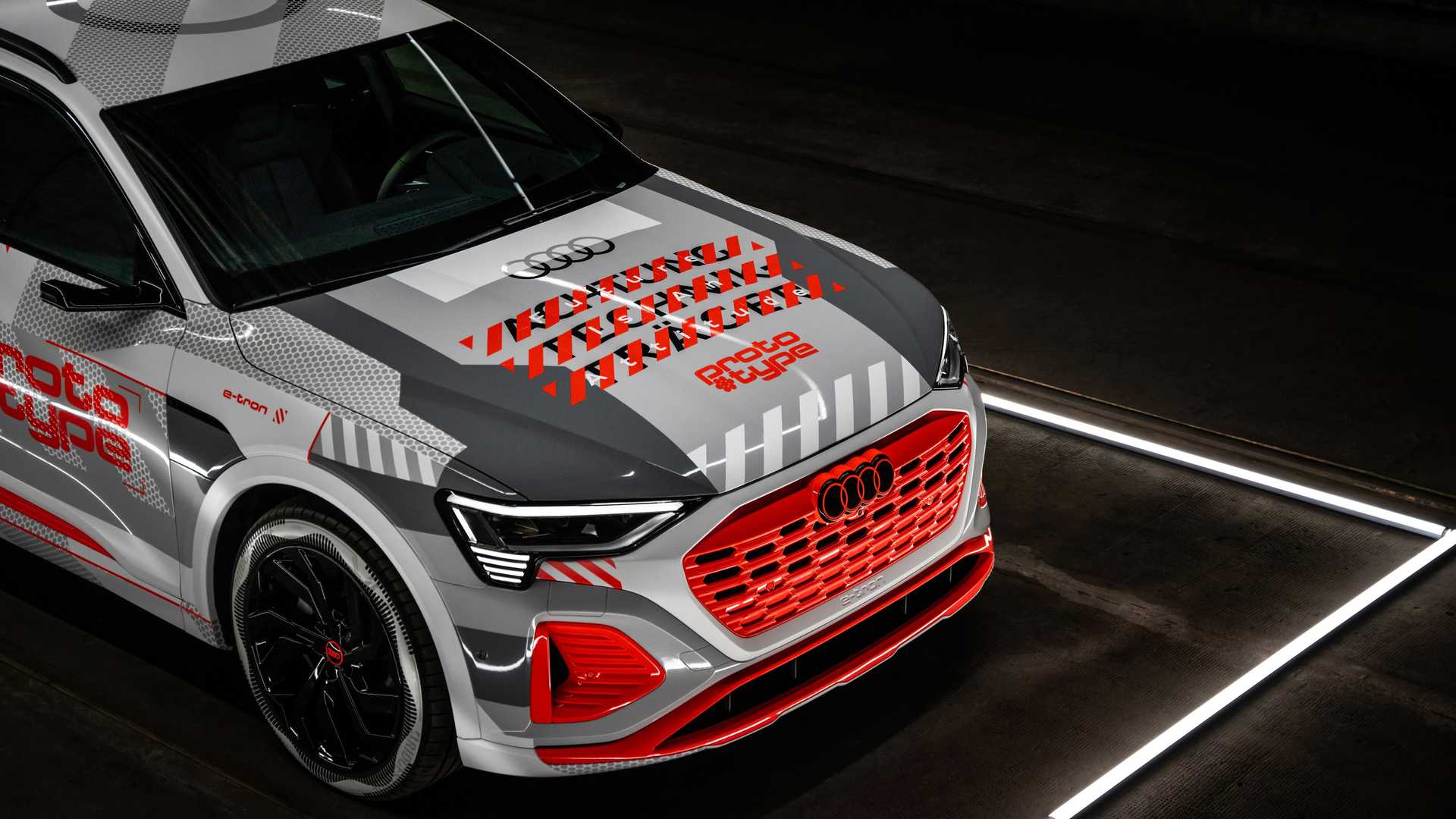
Additionally, the LED lighting signatures look very similar to the current car’s, though Audi claims there are innovations. Perhaps similar functionality to the facelifted Q5’s animated OLEDs.
When will the facelifted E-Tron debut?
The E-Tron SUV launched globally in 2018 and Australia in July 2019. Audi sticks to a 6-7 year product cycle with a mid-life refresh, meaning the four-year-old E-Tron is indeed due a facelift before eventual replacement in the mid-decade.
Audi has begun transitioning its EVs to similar names as its ICE vehicles with the launch of the Q4 E-Tron – hopefully coming to Australia soon – Chinese-market Q5 E-Tron and forthcoming Q6 E-Tron.
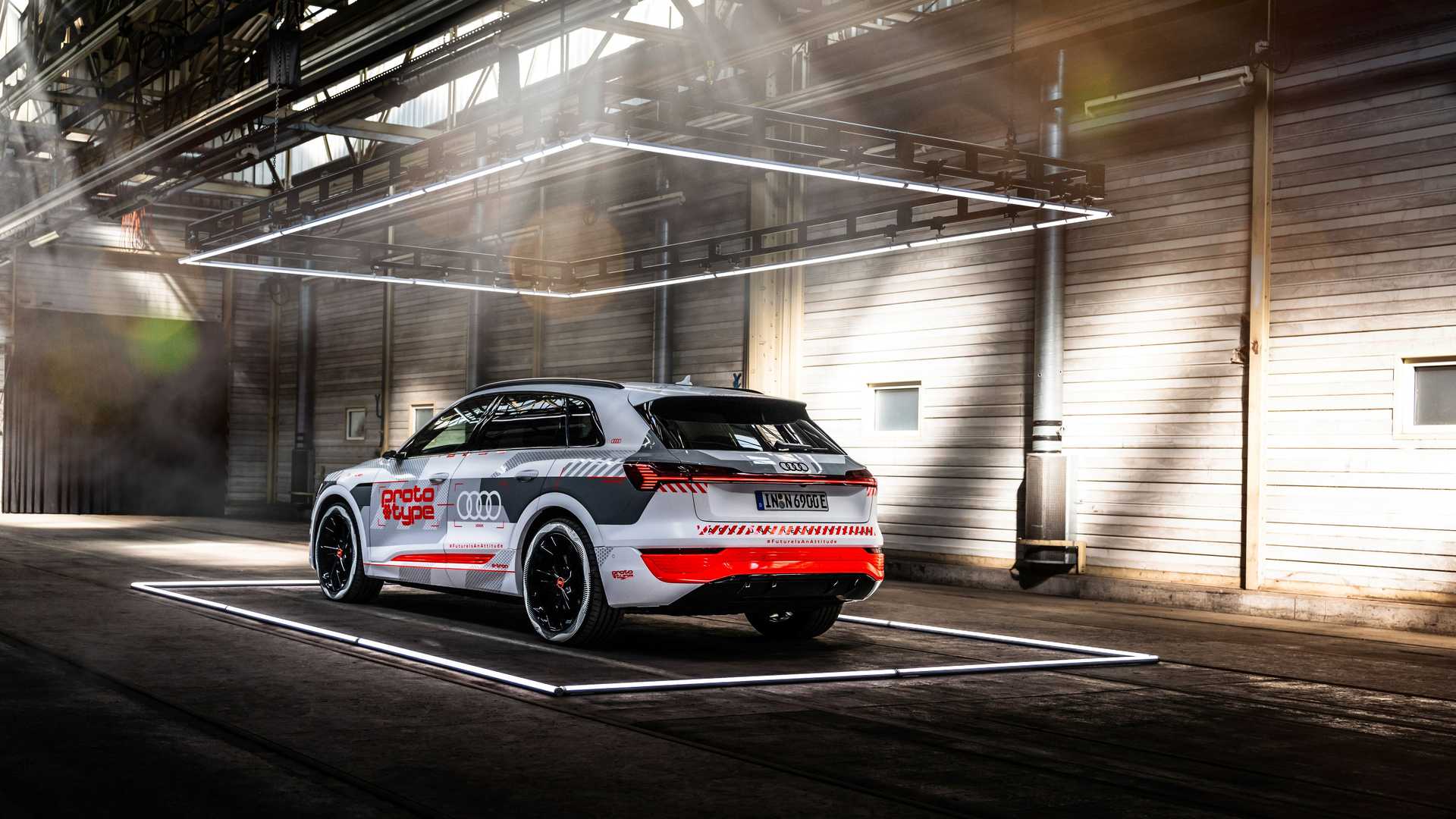
Given the E-Tron SUV’s size proximity to the Q8 (and rumours from Europe that Audi will use that name for the car’s successor), the updated vehicle may adopt the Q8 E-Tron badge early. However, Audi is still referring to it as the E-Tron.
More driving range likely
The facelifted E-Tron will continue with EV-converted MLB Evo underpinnings, rather than MEB, the VW group’s in-development SSP platform, or Porsche’s premium PPE underpinnings. That means max 155kW DC charging remains.
However, according to an Autocar report from November 2021, the E-Tron SUV is in for a battery upgrade. The current E-Tron has driving range claims between 341km-441km (WLTP). The report claims upwards of 600km of driving range will be possible in the future.
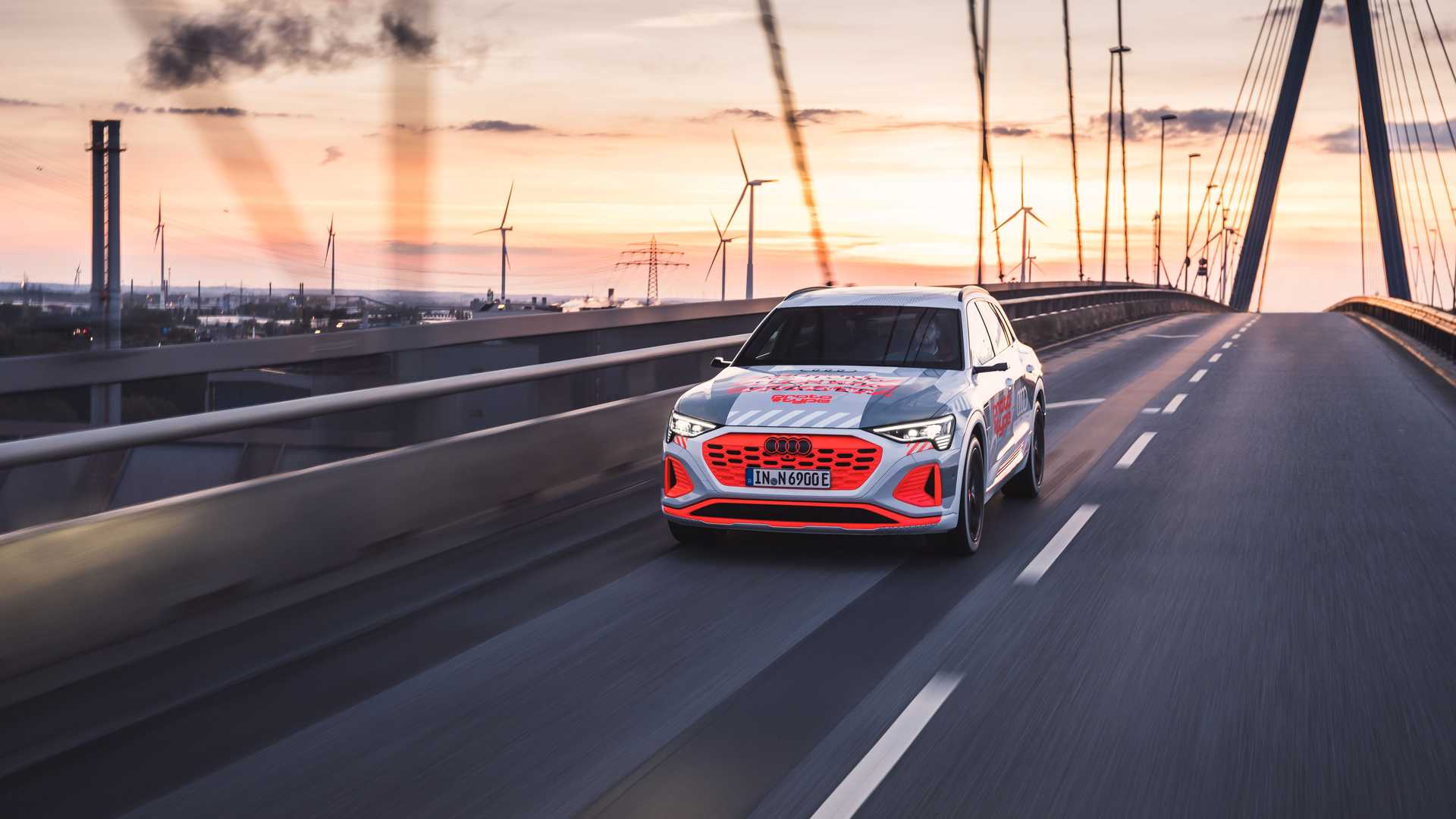
With the E-Tron’s WLTP vehicle consumption rating of 19.0kWh/100km a 114kWh battery would be necessary to achieve that driving range.
Audi has also claimed improvements to its motor efficiency for the updated E-Tron though, so it remains to be seen how much larger the updated vehicle’s battery will get than the current 86.5kWh (usable) battery.
Snapshot
- Level five autonomy promised
- Will form pelotons with other Gen.Travels
- Seating for four, sleeping for two
Volkswagen has debuted its Gen.Travel concept vehicle at the Chantilly Arts and Elegance show.
The concept, revealed at the event alongside the Renault Turbo 3E concept, looks forward to an age where drivers are no longer needed – an idea that’s been thrown around for some time, most publicly by Tesla.
The future of cars isn’t so much about power, driving range, or feel, but sustainable mobility for the masses.
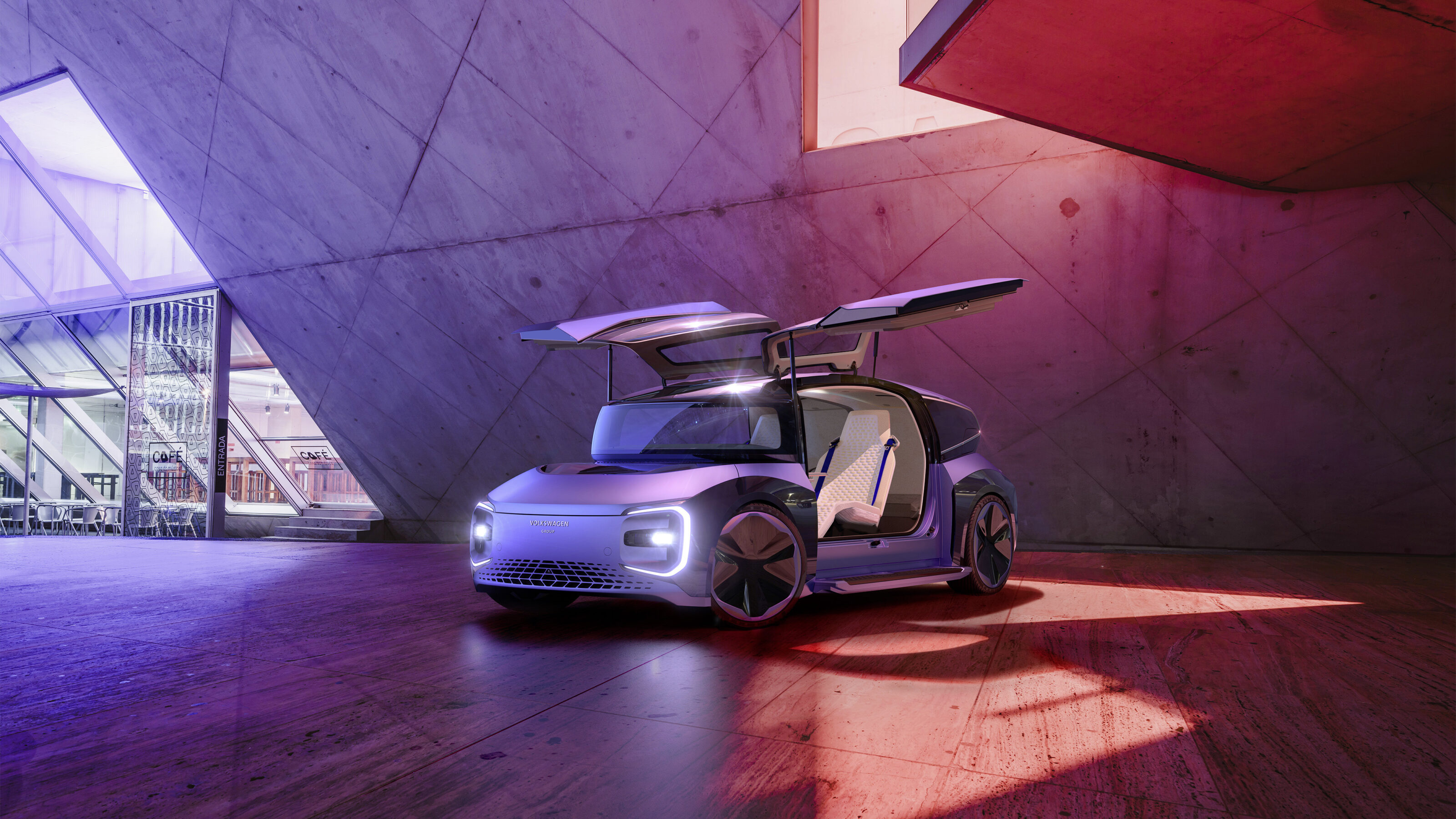
The Gen.Travel concept is all about carrying occupants in maximum comfort with minimal interaction. It boasts level five autonomy, defined as needing no human interaction during operation, effectively an alternative for short-haul flights not unlike Volvo’s 2018 360C concept.
Head of Volkswagen Group Innovation, Dr Nikolai Ardey, elaborated on VW’s future, saying: “With its ‘New Auto’ strategy, Volkswagen defines the mobility for generations to come – sustainable and digital.“
One of the most obvious ‘new VW’ things about the Gen.Travel concept is the lack of a badge. Instead of the famous VW logo, the insignia just reads “Volkswagen Group”.

Between sedan and MPV
The Gen.Travel is very much a design study. VW doesn’t claim driving range, power, or any specifics. Rather, it’s about imagining the future of mobility.
Four chairs are fitted, with a table able to be erected in the middle for business conferences with up to four occupants. On longer trips, two chairs can fold into beds with the user’s eyeline below the Gen.Travel’s windowline for privacy.
The innovative shape gives the Gen.Travel plenty of glasshouse to let sun in on a nice day, while gullwing doors provide easy access.

Under the skin, VW says the concept has ‘active body control’ that works with artificial intelligence and live mapping to predict the road ahead and adjust suspension settings accordingly.
To increase driving range, the VW Gen.Travel will be able to identify like-minded AI vehicles on the road. Eventually, they will be able to join up, forming a peloton – VW calls this ‘platooning’ – where the vehicles can draft one another to lower energy consumption.
