
Almost half of Australians are in favour of banning petrol and diesel cars by 2035, according to a new survey.
Surveyed for EV brand Polestar, a global study of 18,000 people took in responses from buyers across Australia (1000 people, considered a statistically valid sample size) as well as Europe, Asia Pacific and North America, found that 34 per cent of consumers support an internal combustion engine ban (ICE) by the end of the decade.
That number rises to 47 per cent by the slightly later date of 2035, and 48 per cent in Australia specifically.
Polestar doesn’t specify the lifestyles of its Australian respondents, but the results suggest a mostly urban spread.
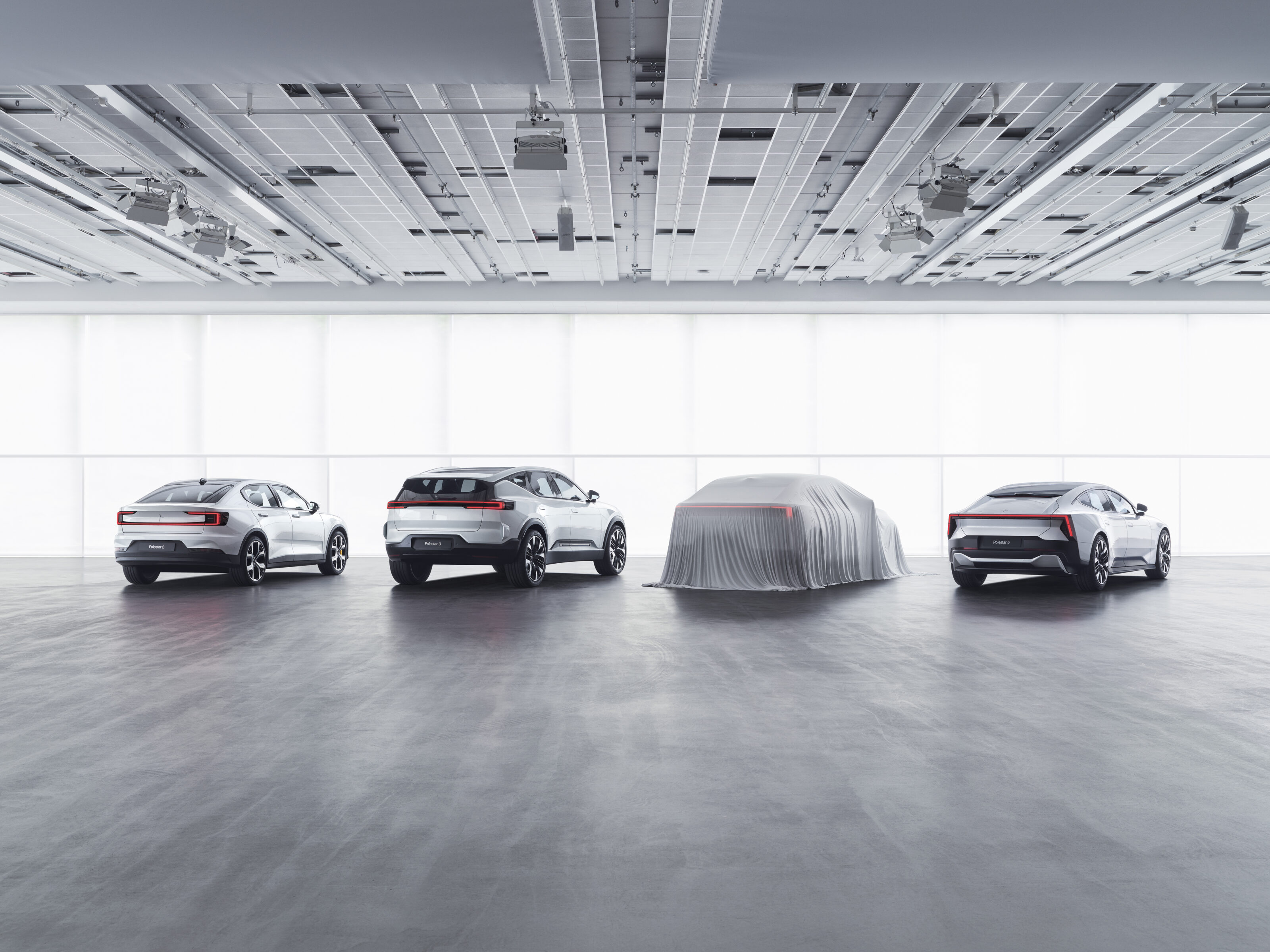
Could Australia ever really consider any sort of ban on combustion-engined vehicle sales?
At present, Australia doesn’t have a timeframe in mind for stopping ICE sales, though the ACT has set its own goal of 2035.
Following Labor’s election in May, Australia committed to a 43 per cent reduction of greenhouse gas emissions by 2030 below 2005 levels, but as year does not have a legalised fuel-efficiency standard for cars – this month it has launched a consultation to rectify that.
Head of Polestar Australia, Samantha Johnson, acknowledged Australia has a long way to go to meet its target of achieving net-zero by 2050, but the Government’s recent passing of the Climate Change Bill signals a new direction.
“With the introduction of the Bill, Australia will have more certainty, more transparency, and a clearer path to emissions reduction,” she said. “A low emission vehicle strategy is the obvious next step, and we welcome the opportunity to help shape that strategy with the release of the Government’s discussion paper later this month.”
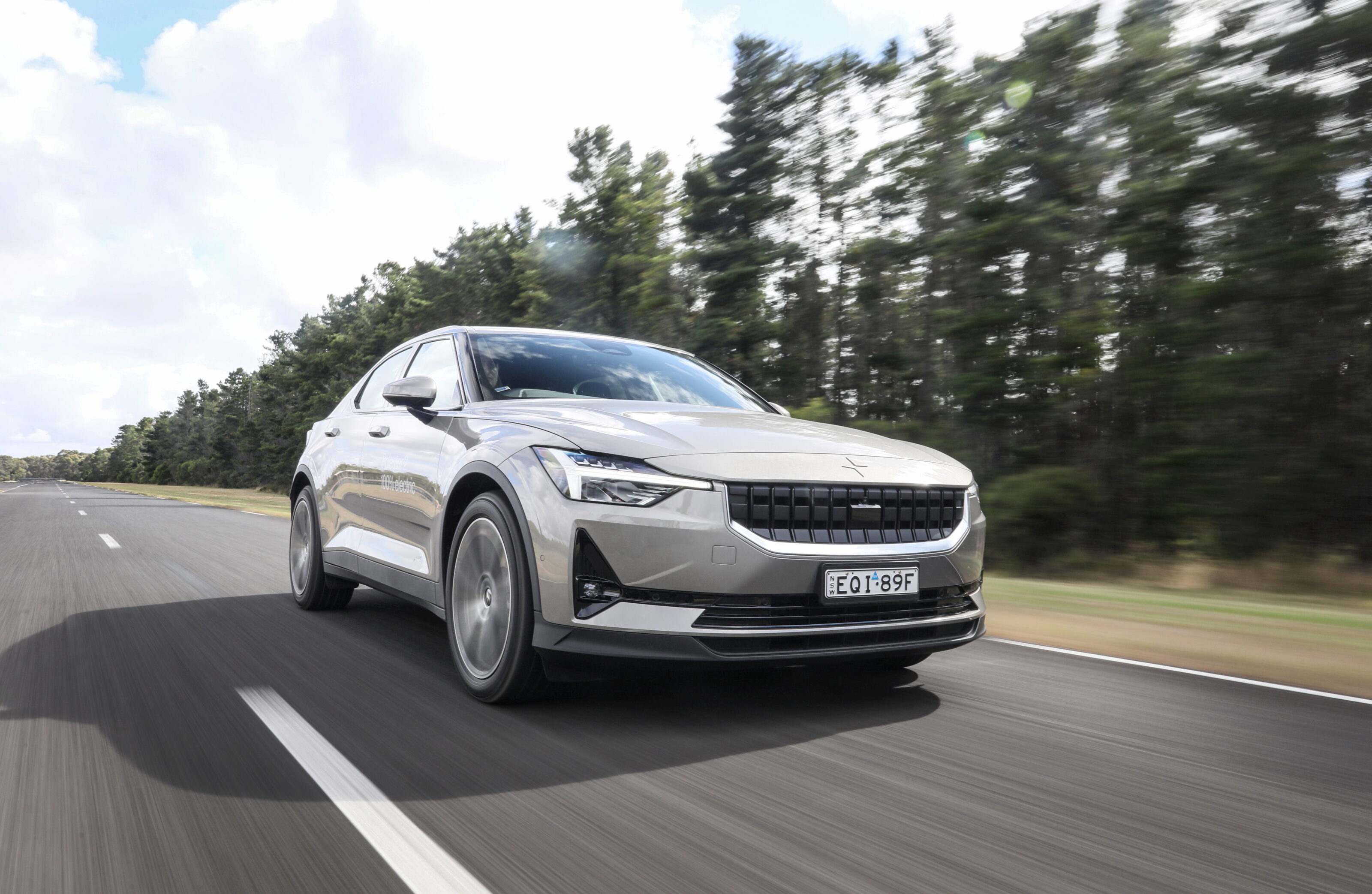
In June, the European Council of Environmental Ministers agreed that by 2035, new cars placed on the EU’s market must be zero-emission vehicles.
Similarly, at COP26 late last year a number of automakers joined the ‘Glasgow Declaration on Zero Emission Cars and Vans’ – a commitment to phase out fossil fuel vehicles between 2035 and 2040.
But Polestar CEO Thomas Ingenlath argues that a global ban on ICE vehicles must come sooner.
“With just 1.5 per cent of the vehicles on the road being electric today, it is clear we are living in an EV bubble, not an EV boom,” he said.
“This decade is the most critical we have ever faced when it comes to not overshooting the Paris agreement. We need governments to lead the charge with robust policies, both on infrastructure and addressing electricity prices so that drivers can confidently go electric, but more importantly, carmakers must act now and not wait for policy changes.”
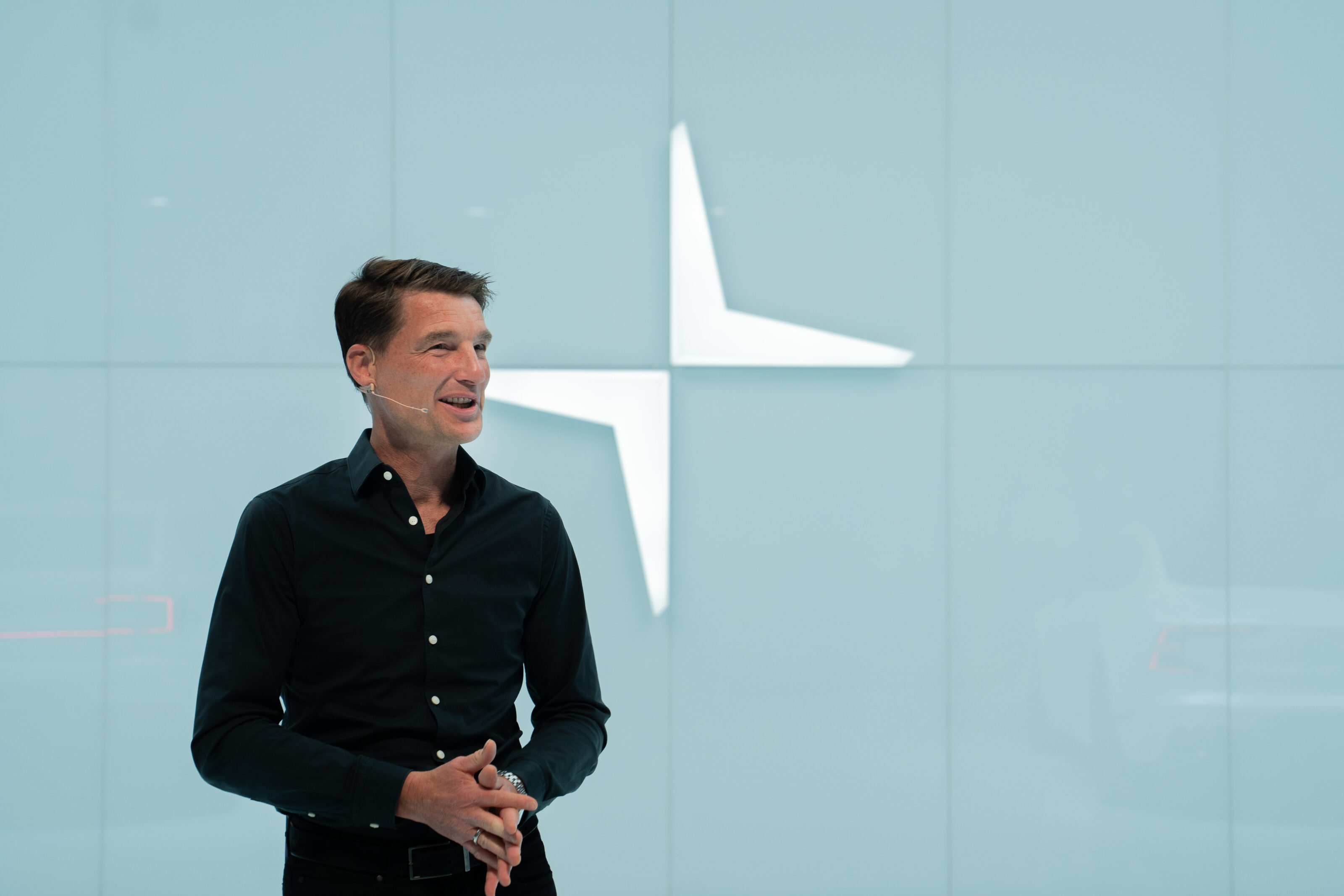
The new study also found that three-quarters of those surveyed believe society needs to consume differently to preserve the climate and the environment for future generations.
“As climate leaders meet this week in New York, and with COP27 around the corner, it is clear there is climate meeting fatigue,” added Ingenlath.
“Companies and consumers can become the antidote to that. While we don’t write the policies, we have the power to act now and drive real change. We have a responsibility, and it is up to us to send a signal and show we’re ready.”
The forgotten buyers
Unlike many overseas markets, particularly Europe and the many heavily-populated urban areas of North America, Australia is a massive island content with a much smaller population spread across distant, smaller capitals – and an even more sparsely populated set of regional cities and towns.
For Australia to entertain the notion of a ban on combustion-engined cars, a federal government brave enough to set a date would likely also need to pour billions into renewable energy and high-speed charging infrastructure along the nation’s many regional roads that most urbanites can barely visualise.
It would also need to pour billions into incentives to make larger EVs more affordable, given most options suited to family needs are currently priced upwards of $60,000.
Any sales ban would likely also need to include a number of caveats to support buyers and businesses in regions until that investment is complete, allowing sales of new combustion-engined models to continue in some areas.
“A strong majority of motorists oppose a 25 cent per litre increase in fuel excise”
Snapshot
- AAA says motorists are more accepting if excise is spent on roads
- Fuel excise returns to $0.44/litre from Wednesday 28
- On average just over half the excise collected goes towards roads and transport
Research carried out by a leading motoring group has shown motorists would be happier to pay more in fuel excise if funds were entirely allocated to roads and transport.
The federal fuel excise will return to $0.44/litre on September 28, 2022, after six months of being halved to ease cost of living by the former Government earlier this year.
Of the 1910 people surveyed by the Australian Automobile Association (AAA) 67 per cent of said they would support the idea of all excise revenue being spent on transport infrastructure.
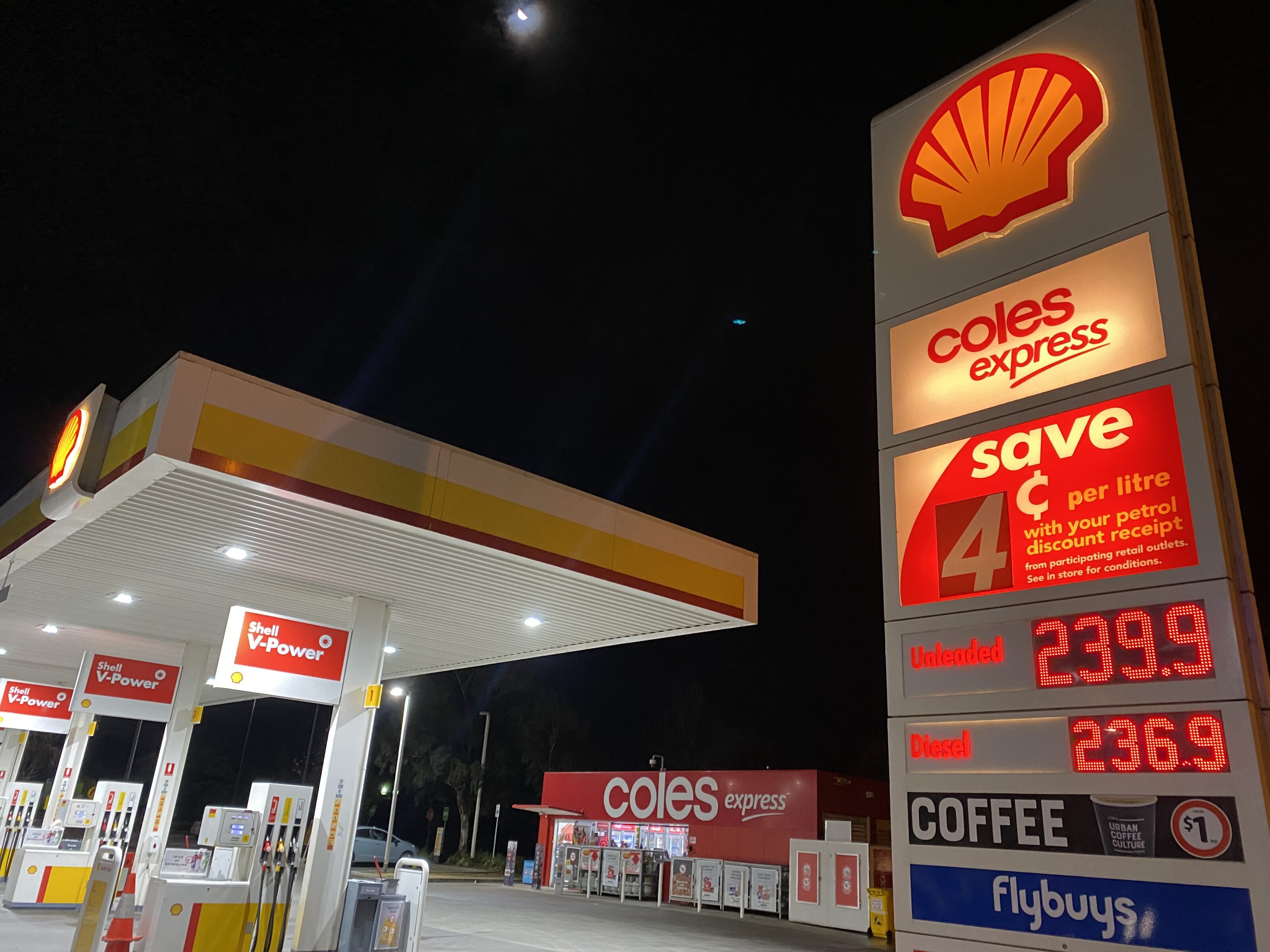
A smaller 56 per cent supported the increase if all revenue is spent on transport, while 60 per cent were against the raise if no new measures are put in place.
“It is clear that a strong majority of motorists oppose a 25 cent per litre increase in fuel excise, but motorists are more accepting of this tax if they see it being spent on the roads and transport infrastructure their communities need,” said AAA Managing Director Michael Bradley.“The AAA again calls for the October Budget to allocate 100 per cent of fuel excise revenue raised to Commonwealth funding of land transport infrastructure.”
What happens if all excise revenue goes to roads?
Over the last decade, the total revenue generated from the fuel excise in Australia has consistently exceeded road and transport infrastructure spending.
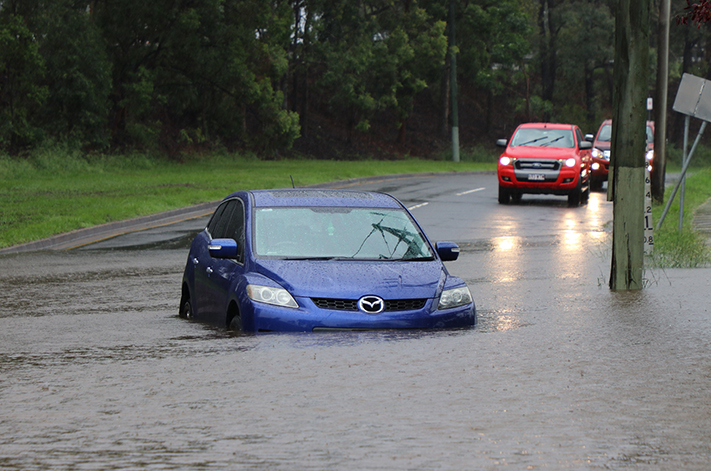
On average 53.7 per cent of the $6.84 billion collected by the Treasury is put towards road and transport projects, with the 2020-21 financial year marking the largest percentage (69.9 per cent) of fuel excise reinvested in roads in the last decade.
In 2020-21, the federal expenditure on roads and transport was $8.88 billion, while fuel excise accounted for $12.73 billion revenue.
The extra $4 billion is money the AAA wants to see put back into transport infrastructure, however this means essentially redirecting this money from other public, federally-funded areas such as healthcare and education.
What about EV drivers?
While drivers of electric vehicles do not pay the fuel excise, it’s not the case that electric vehicles use our roads for free.
Being generally higher in purchase price, EVs attract more fees through Government taxes at the time of purchase.
For example, a 2023 Hyundai Kona Highlander lists at $38,300 before on-road costs, attracting $1594 in stamp duty and registration fees in NSW. An already dearer $58,000 Kona Electric Highlander commands 63 per cent more ($2651) for the same charges.
In Victoria, EV owners also have to pay a road user charge per kilometre driven. In 2022 that’s 2.6c/km for fully-electric vehicles and 2.1c/km for plug-in hybrids – which are effectively doubled taxed because they also pay the fuel excise.
It’s also worth noting that, when charging an EV from the grid, electricity attracts 10 per cent GST. The amount an EV owner contributes also differs by state, with Victoria charging $0.026/km.
A car that uses 8.0L/100km of fuel costs around one cent per kilometre more in excise than an EV, which works out to $0.035/km in Victoria.
UPDATE: New 2023 BMW 3 Series review
The new 2023 BMW 3 Series has made its European debut, and we’ve driven it. Get our review at the link below! Continue reading for full pricing and features.
The story to here
September 14: 2023 BMW 3 Series pricing announced for Australia
Key Points
- Due locally by end of 2022
- Sedan and Touring bodies offered
- Pricing from $78,900 (before on-roads) for 320i sedan
Local pricing and features have been revealed for the 2023 BMW 3 Series, with the facelifted model due to arrive by the end of this year. After three years on the local market, BMW‘s spearhead 3 Series is soon due for its midlife update, bringing fresh styling and significant new tech features, including a 12.3-inch curved driver display and the implementation of BMW’s latest iDrive 8 infotainment.
Both sedan and touring body configurations will be offered, powered by BMW’s flexible 2.0-litre turbocharged B48 four-cylinder – with or without hybrid plug-in hybrid assistance – or the 3.0-litre turbocharged B58, also found in the Toyota Supra/BMW Z4.
2023 BMW 3 Series Australian pricing
*Prices exclude on-road costs
BMW 3 Series sedan
| 320i | $78,900 |
|---|---|
| 330i | $93,400 |
| 330e | $97,400 |
| M340i xDrive | $104,900 |
BMW 3 Series Touring
| 330i | $97,400 |
|---|
2023 BMW 3 Series features
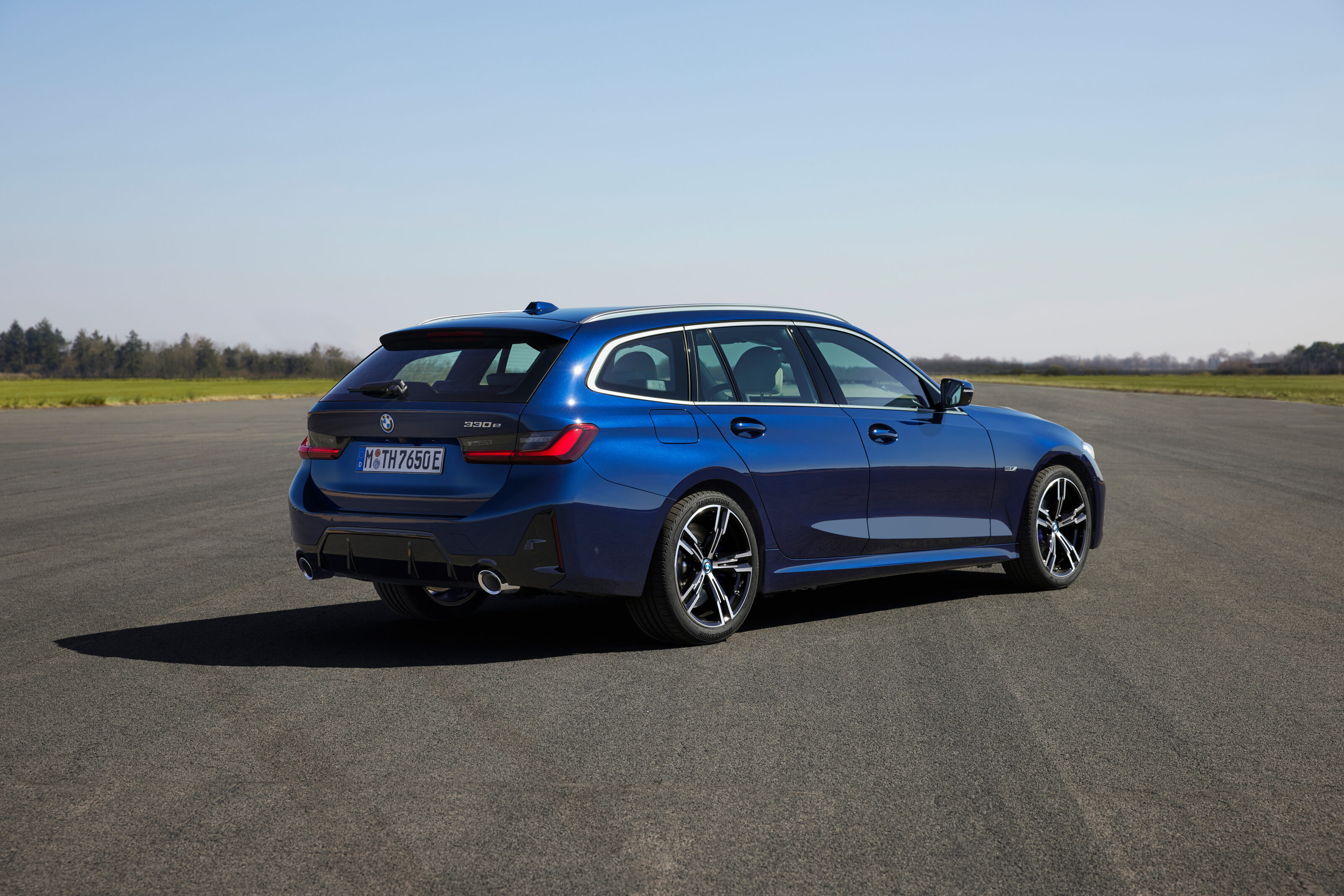
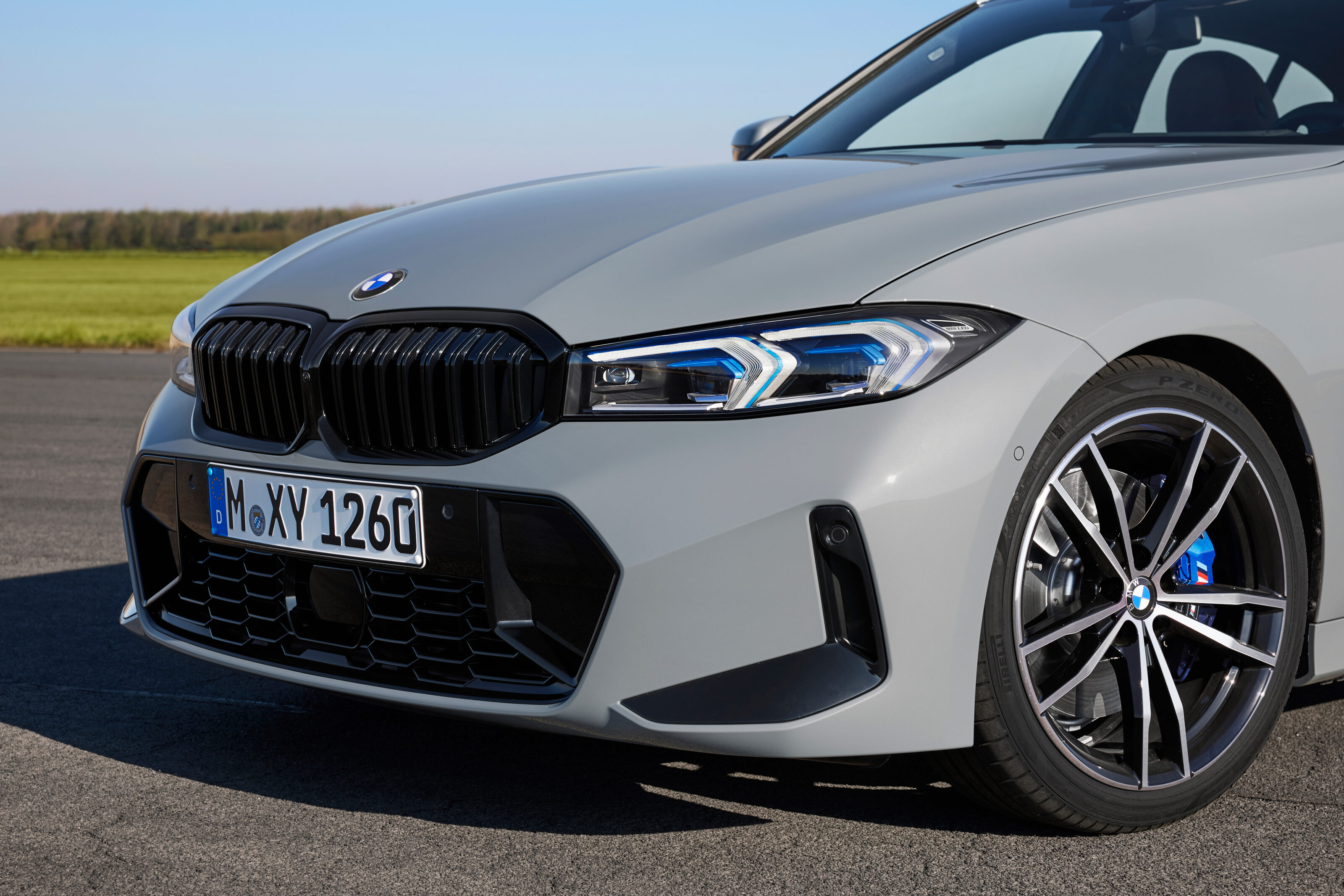
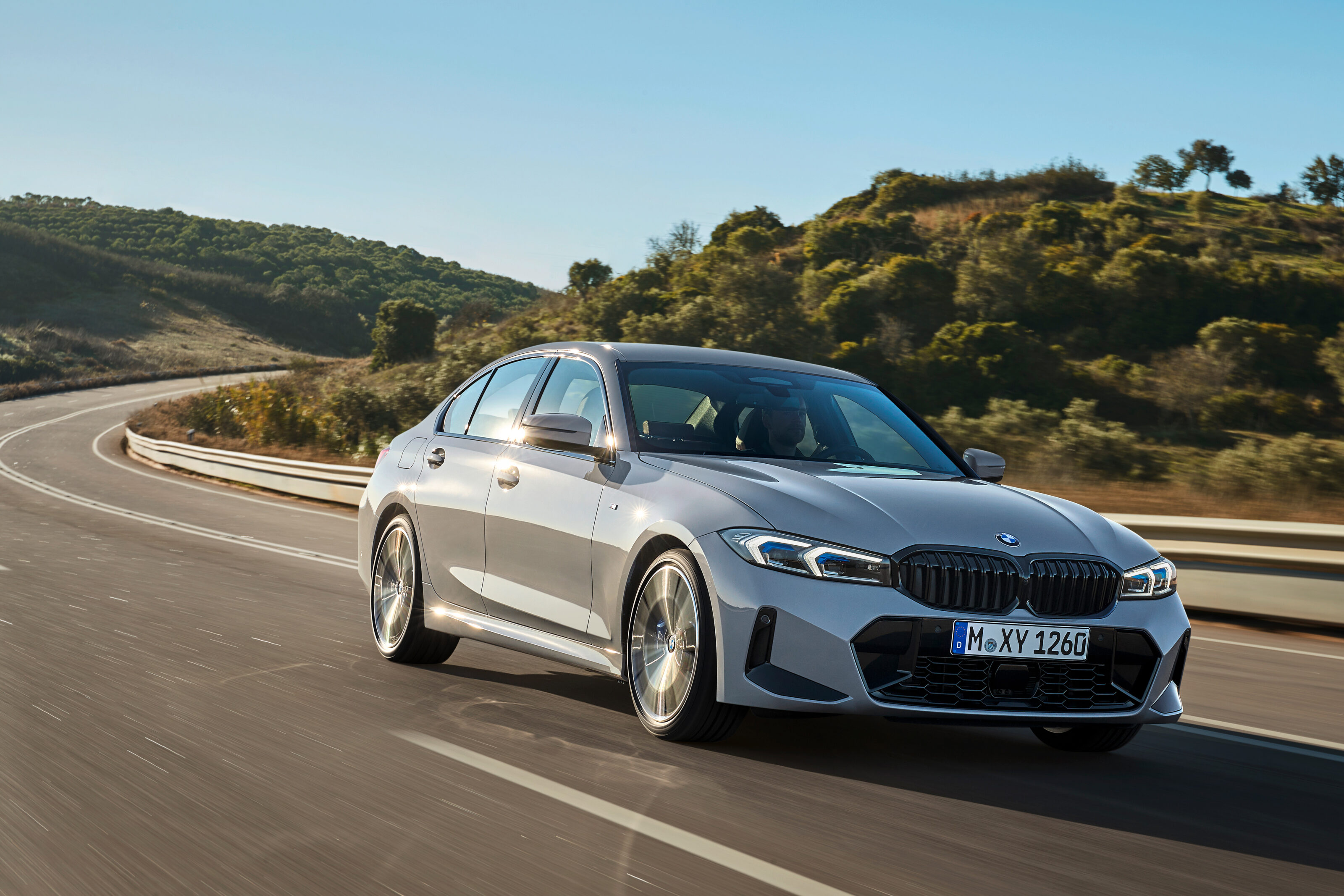
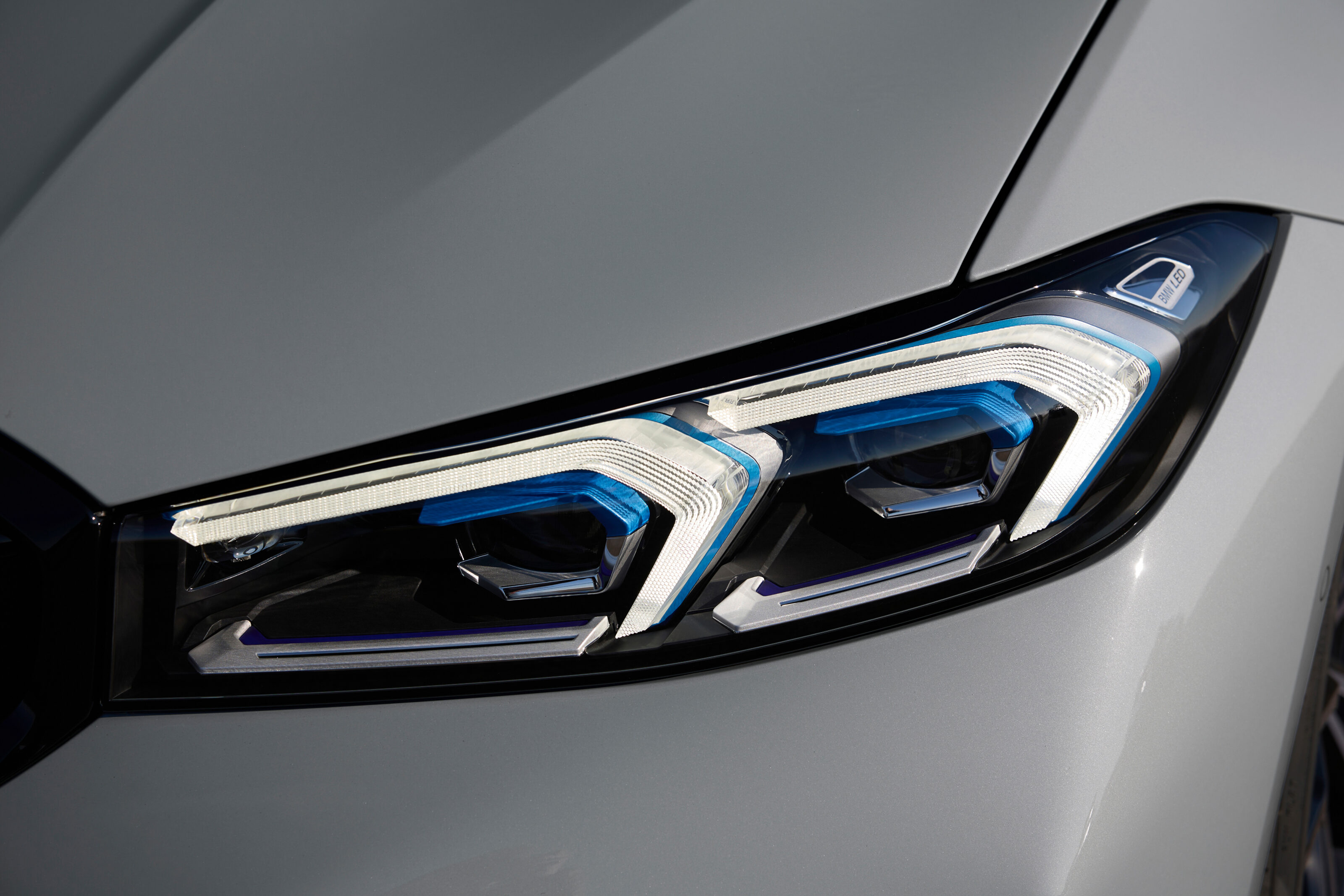
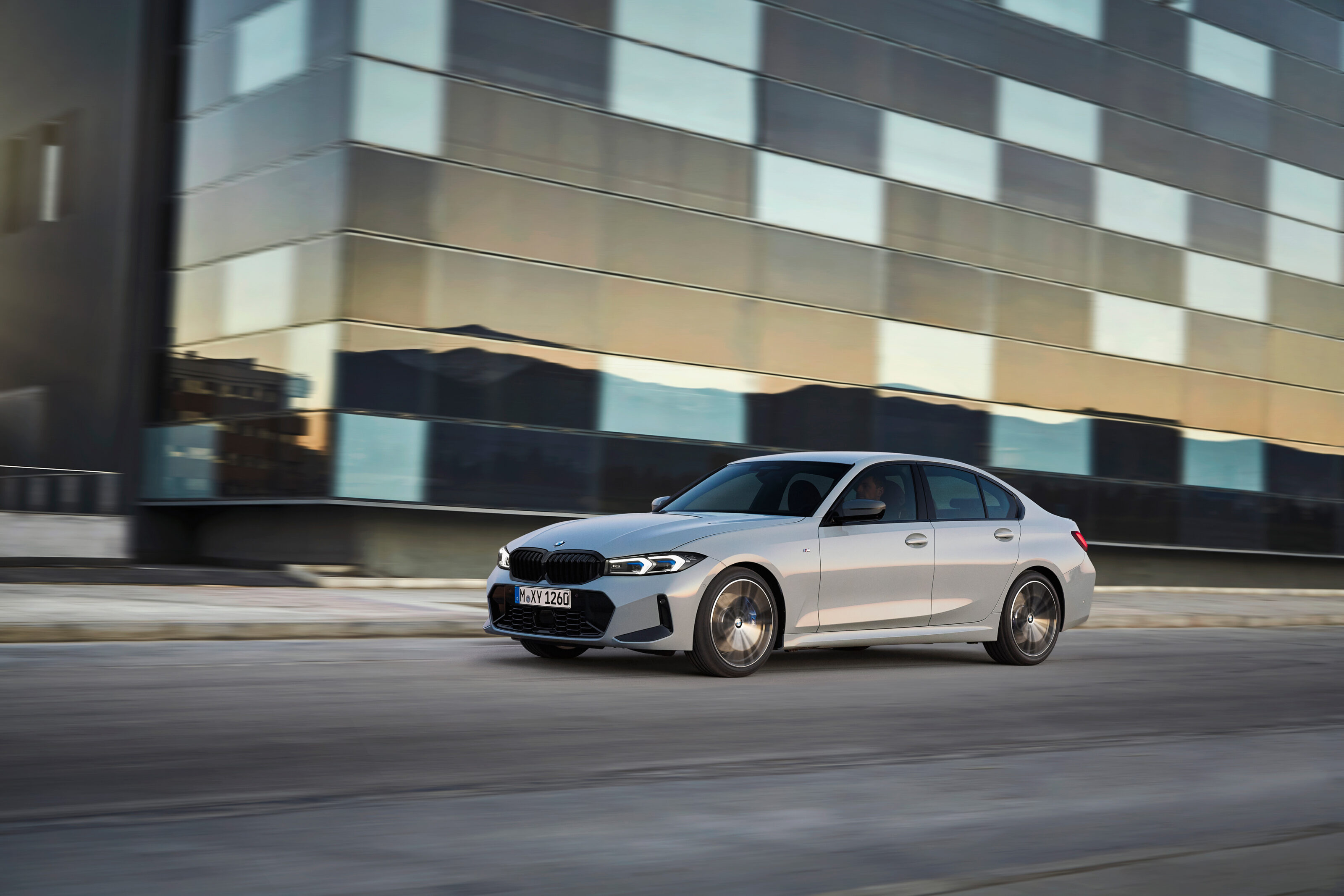
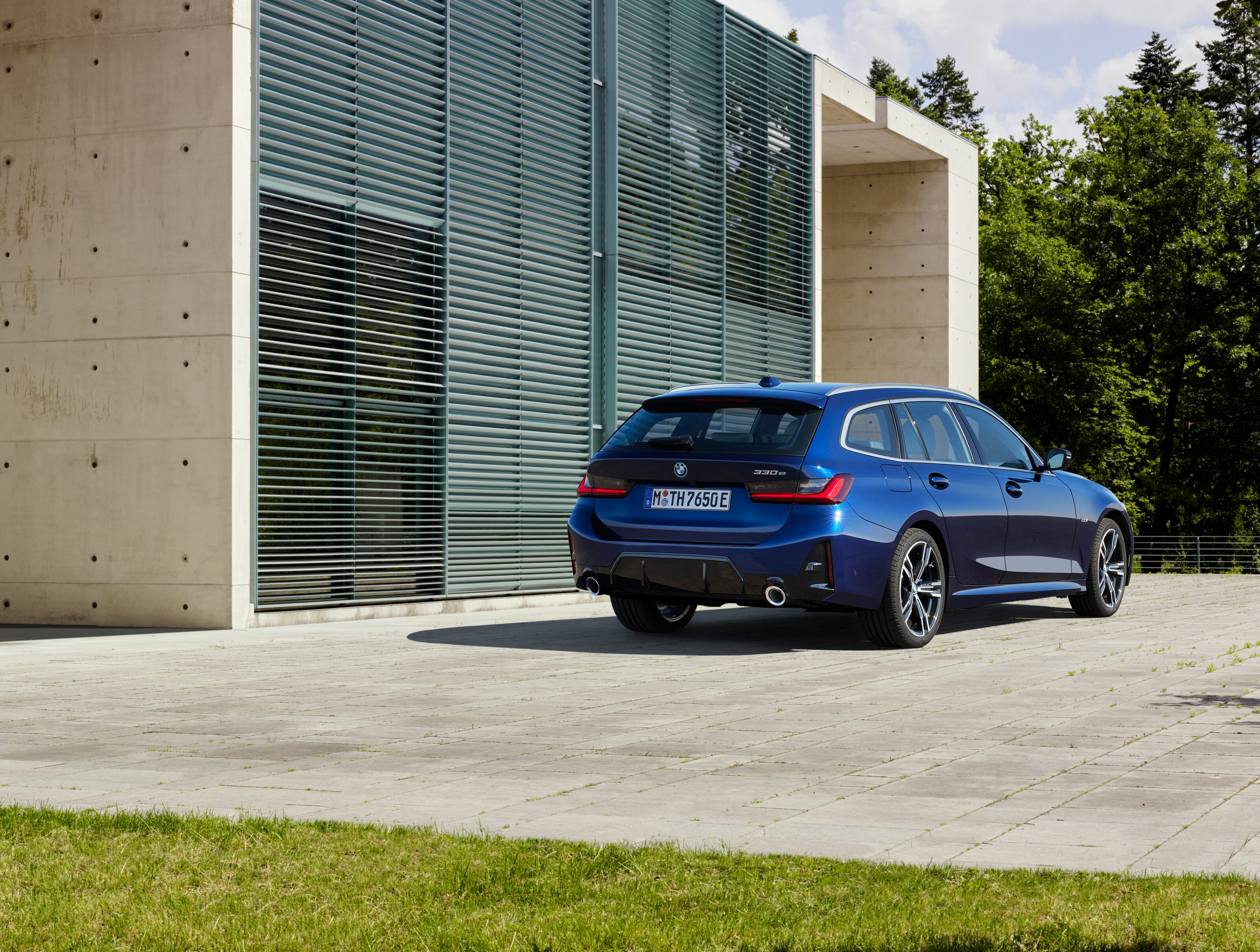
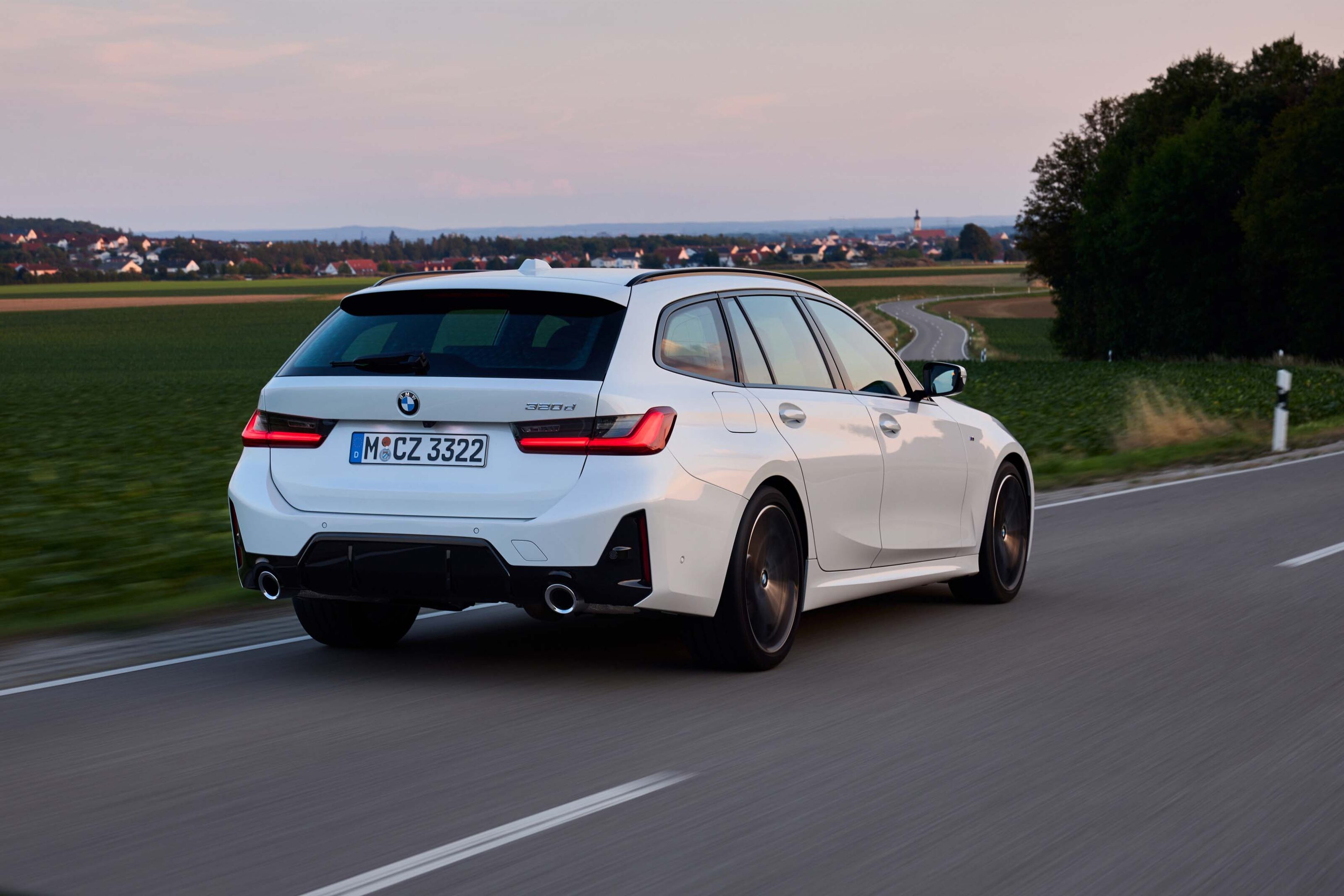
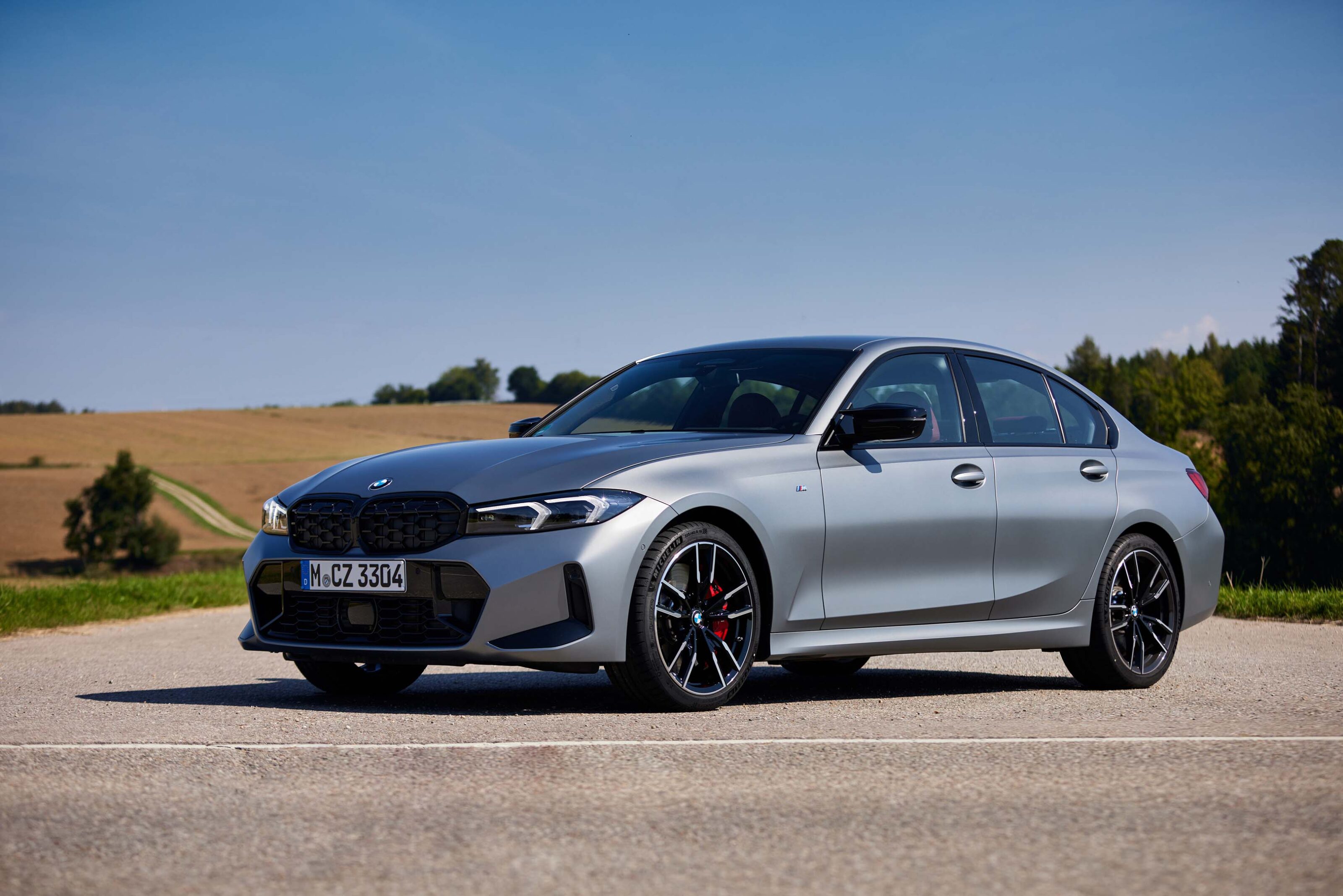
The updated 2023 3 Series is easily distinguished by its angular new front fascia with large air intakes, redesigned LED headlights and kidney grille. The rear apron also features a new integrated diffuser design.
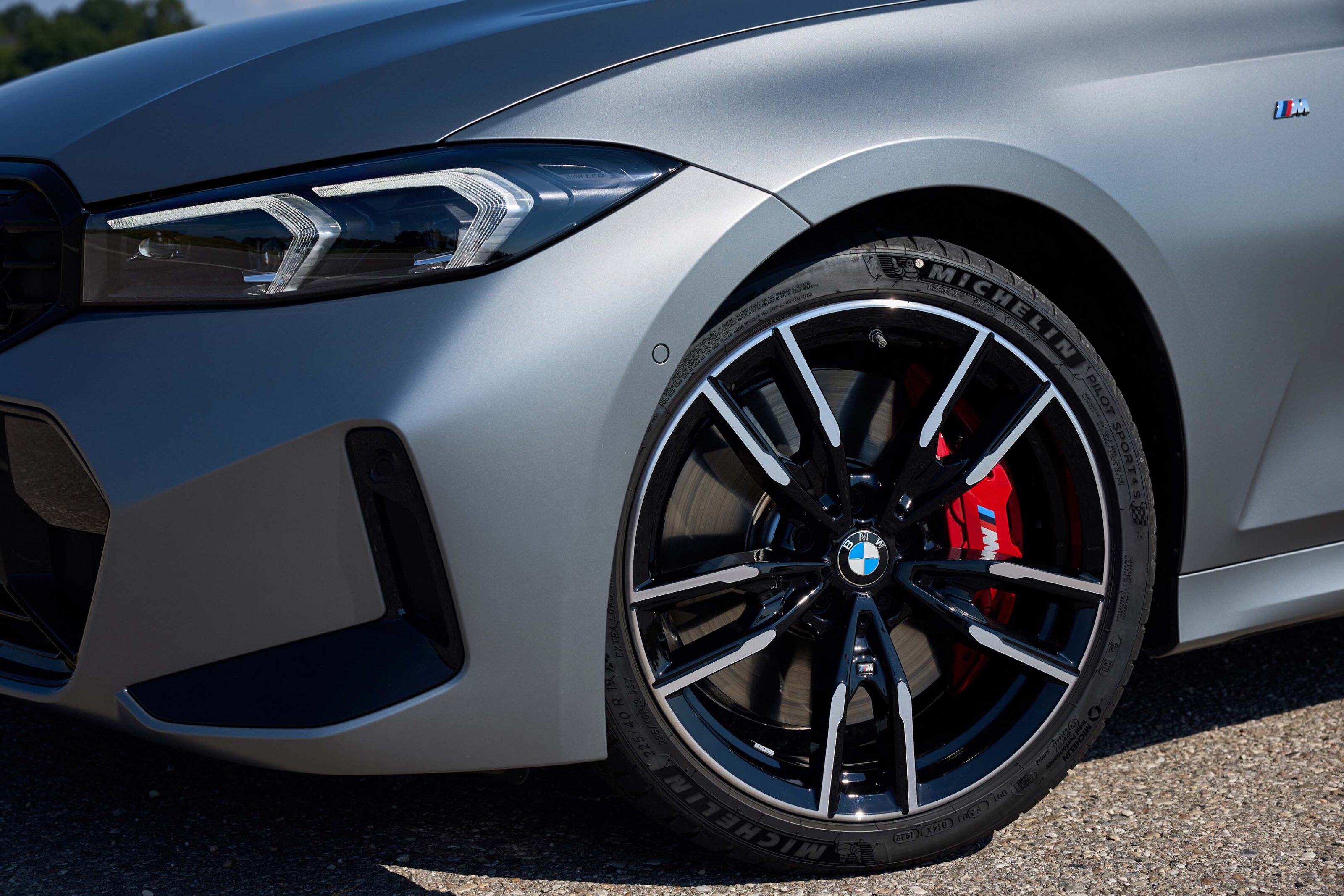
All Australian-spec 3 Series cars are fitted with the M Sport package as standard, which includes a bolder front and rear apron and M light-alloy wheels in either 18- or 19-inches.
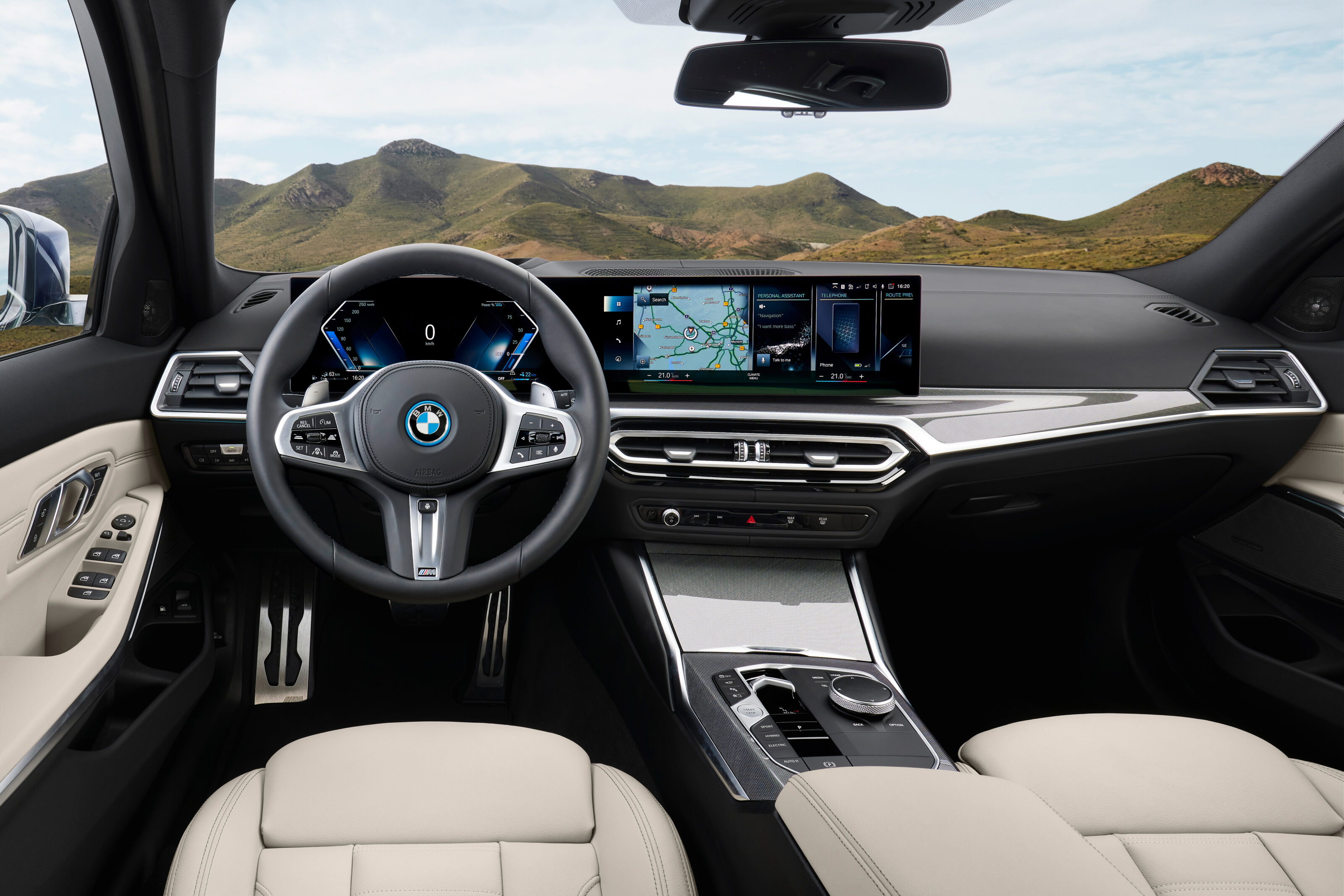
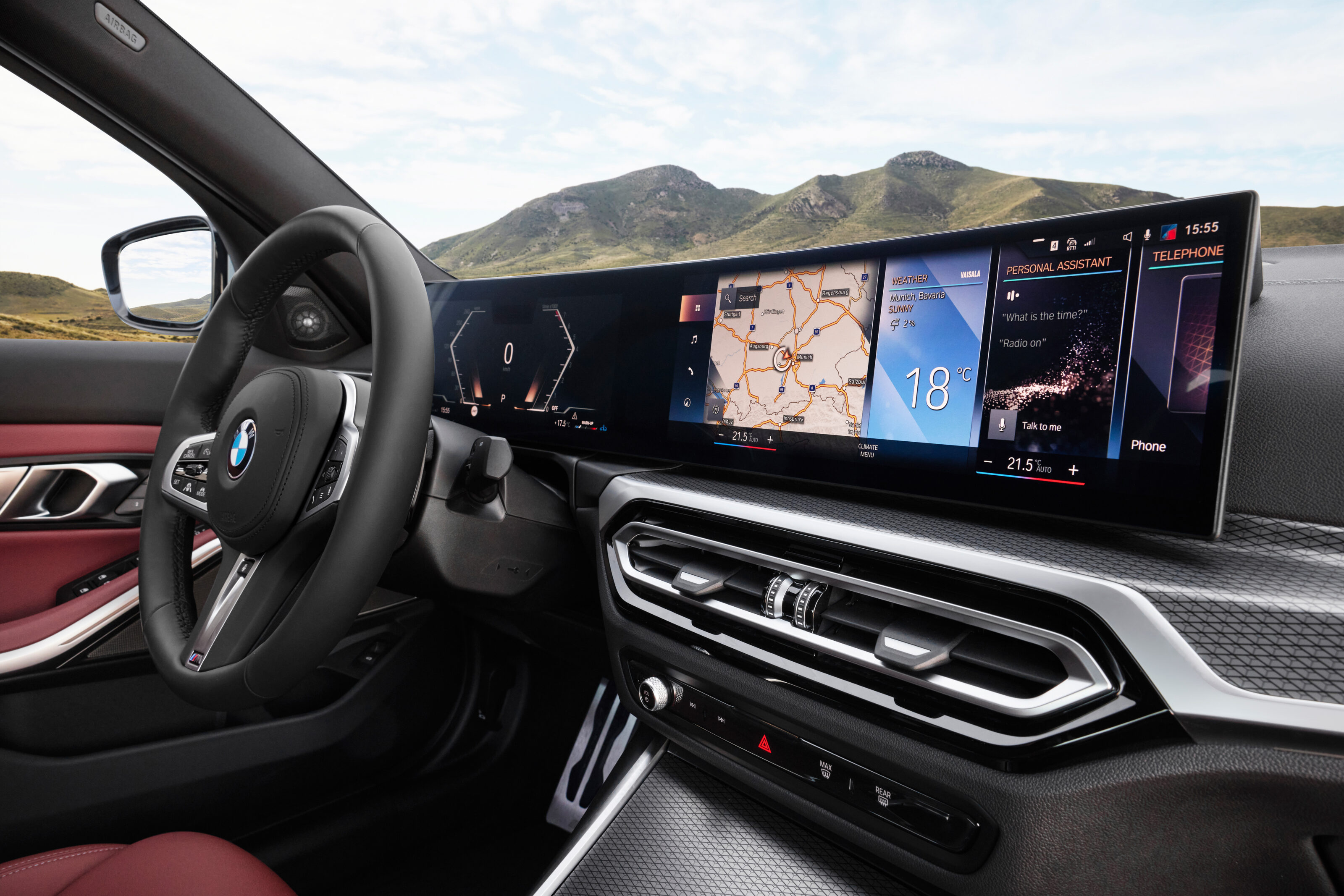
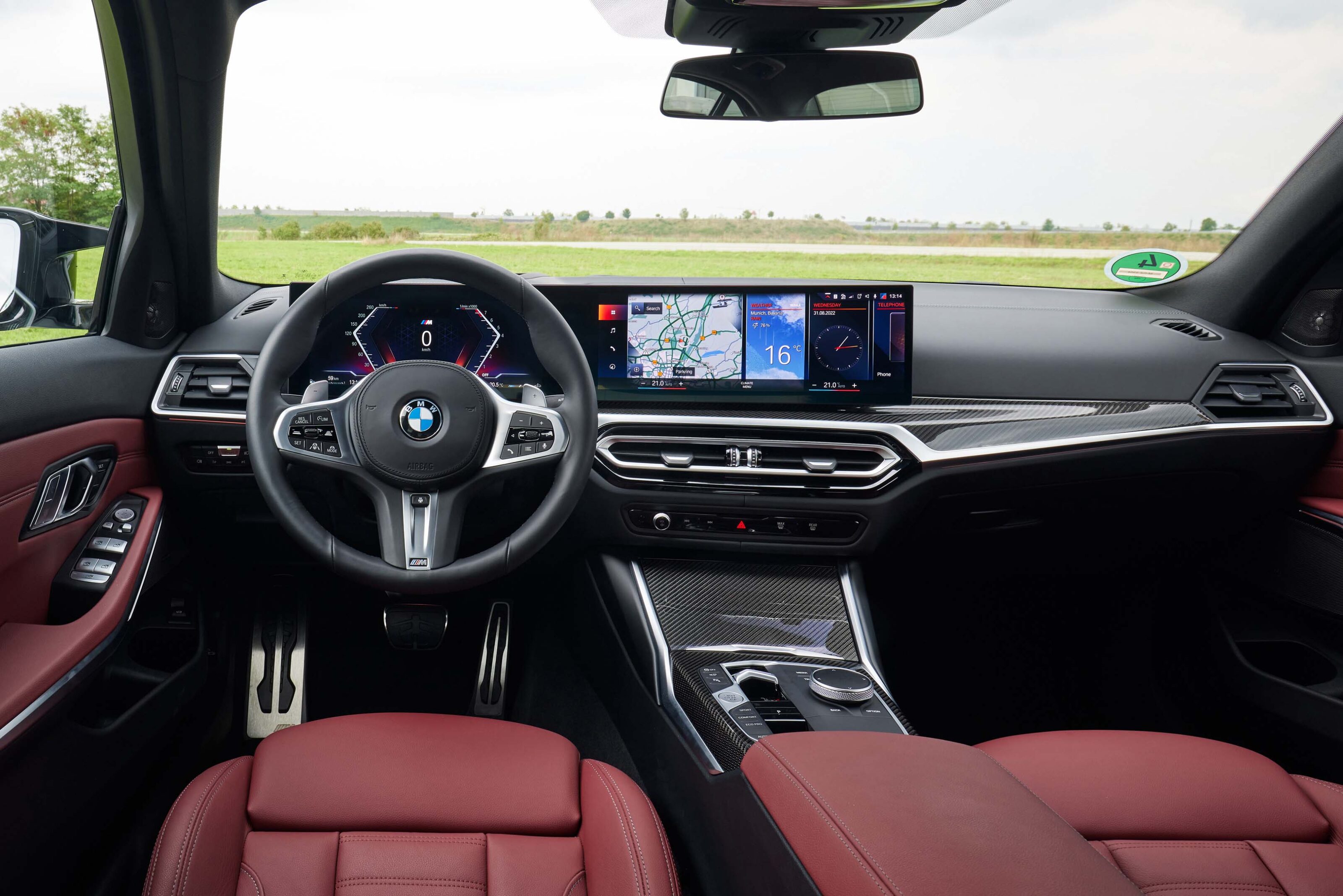
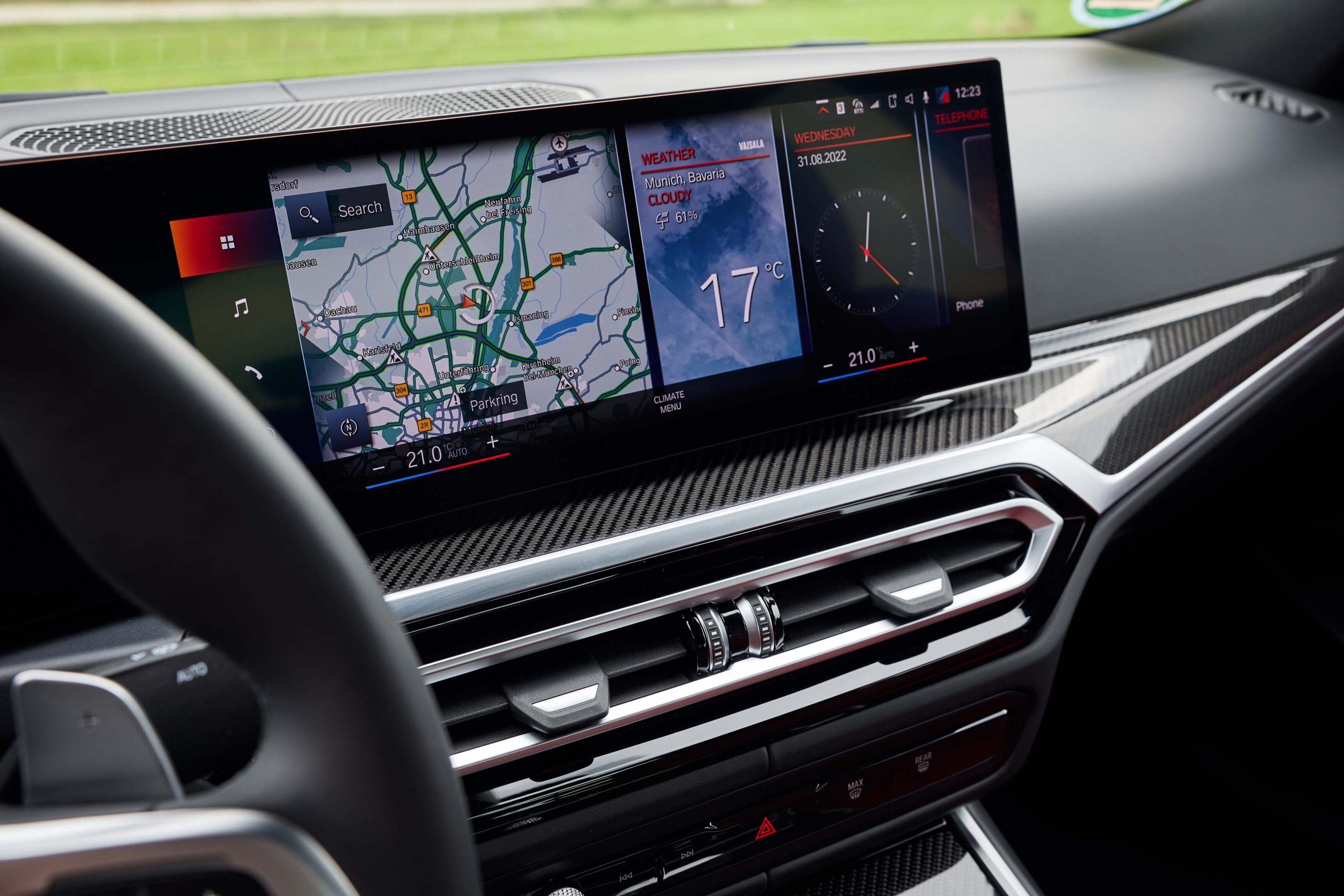
Changes inside the cabin are headlined by the new curved 12.3-inch digital driver display, which merges with the central 14.9-inch infotainment screen running BMW’s latest iDrive 8 operating system, until now seen exclusively in the iX and i4 electric vehicles.
See below for a full list of local model-by-model features, with an *asterisk denoting newly-added kit.
320i Sedan includes:
| M Sport Package |
| 18-inch M alloy wheels |
| Alcantara/Sensatec upholstery |
| *Comfort Access system incl. BMW Digital Key |
| Electric seat adjustment |
| Sport seats |
| Galvanic embellishers |
| Ambient lighting |
| High beam assist |
| Driving Assistant |
| *Active Cruise Control |
| Parking Assistant |
| DAB+ radio tuner |
| HiFi loudspeaker system |
| Live Cockpit Professional w/HUD |
| Connected Package Professional |
| Wireless Charging Tray |
330i Sedan and Touring builds upon 320i and adds the following:
| 19-inch M alloy wheels |
| Leather upholstery |
| *Intrument panel in Sensatec |
| *M Sport seats |
| *Lumbar support, front |
| M Sport brakes, Blue |
| Adaptive M Suspension |
| Parking Assistant Plus |
| *Electric tailgate |
330e builds upon 330i and adds the following:
| Mode 2 charging cable |
| Mode 3 charging cable |
| Acoustic protection for pedestrians |
M340i xDrive builds upon 330i and adds the following:
| 19-inch alloy wheels with sport tyres |
| Tyre Repair Kit |
| Glass roof, electric |
| Seat heating, front |
| Adaptive LED headlights |
| Driving Assistant Professional |
| Harmon/Kardon premium surround system |
Options
Individual options include metallic paint ($2000), or two special BMW Individual paint finishes, dravit grey and tanzanite blue metallic, available for $3850 (or $1850 in combination with the below Visibility pack).
Leather ‘vernasca’ black with constrasting blue stiching is a no cost option for 330i and up, but a $4000 option in the 320i.
Fine open-pored oak wood trim or M aluminium anthracite trim is a no cost option for all models, while M ‘carbon fibre’ finishers cost $1200.
Available options packs for the 2023 BMW 3 Series include:
Visibility pack – $4800 for 320i, 330i and 330e, $5400 for 330i Touring
| Metallic paintwork |
| Sunroof (standard on M340i xDrive) |
| Panorama sunroof (Touring) |
| Adaptive LED Headlights (standard on M340i xDrive) |
Comfort pack – $3100 for 330i Sedan and Touring and 330e, $4000 for 320i
| Automatic electric tailgate (standard on 330i and up) |
| Lumbar support, front (standard on 330i and up) |
| Seat heating, front (standard on M340i xDrive) |
| Steering wheel heating |
| Harmon/Kardon surround sound system (standard on M340i xDrive) |
Executive pack – $1000 for 330e, $2400 for 320i, $1500 for 330i and $2000 for M340i xDrive
| Remote engine start |
| Steering wheel heating (M340i xDrive) |
| Tyre pressure monitor |
| Acoustic glazing |
| Drive Recorder |
| Parking assistant plus (standard on 330i and up) |
M Sport Pro pack – $4000 for 320i, $2800 for 330i Sedan, 330e and M340i xDrive and $2400 for 330i Touring
| M Sport brakes, Blue or Red (standard on 330i and up) |
| M Lights Shadowline |
| M seat belts |
| M rear spoiler in black |
| M high-gloss Shadowline with extended contents |
Engine, drivetrain and fuel economy
BMW 320i and 330i 3 Series’ employ BMW’s 2.0-litre four-cylinder engine breathing through a twin-scroll turbocharger and producing 135kW/300Nm or 190kW/400Nm, respectively.
The engine itself is sourced from BMW’s wonderful modular engine family, with its design derived from the lovely 3.0-litre turbocharged inline-six found in the M340i – and Toyota Supra and BMW Z4.
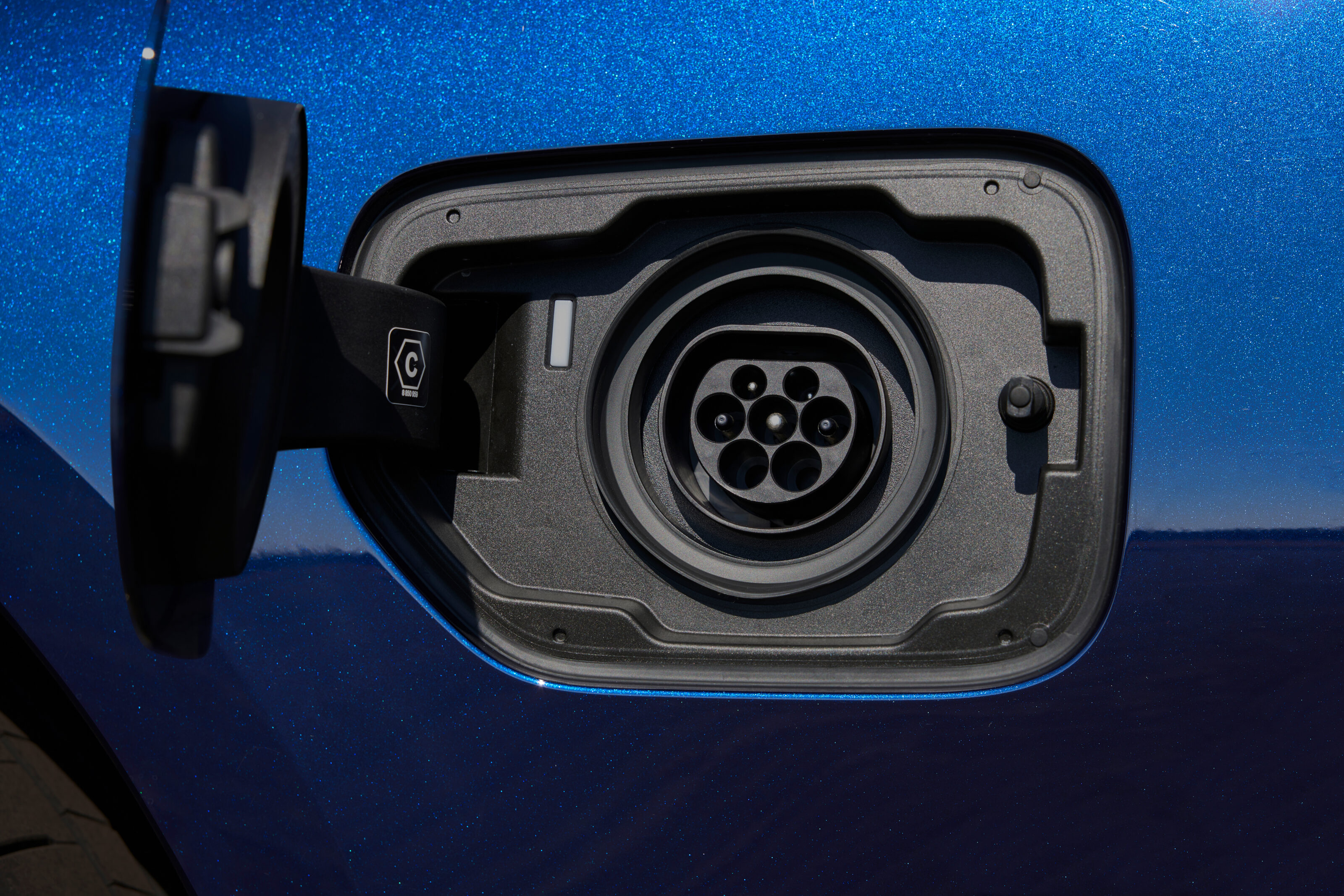
The 330e augments that same 2.0-litre B48 four-cylinder with a 50kW electric motor, powered by a 10.3kWh battery delivering a claimed electric-only driving range of 60 kilometres.
BMW 320i, 330i and 330es all send their power to the rear wheels, while the M340i xDrive, as its name suggest, leverages BMW’s all-wheel drive system.
See table below for essential manufacturer claims.
| 320i | 330i | 330e | M340i xDrive | |
|---|---|---|---|---|
| Power | 135kW | 190kW | 215kW | 285kW |
| Torque | 300Nm | 400Nm | 420Nm | 500Nm |
| 0-100km/h | 7.4sec | 5.9sec (6.1sec Touring) | 5.8sec | 4.4sec |
| Fuel consumption | 6.3L/100km | 6.4L/100km | 2.2L/100km | 7.7L/100km |
Safety
The current-generation of BMW 3 Series was evaluated by ANCAP in 2019, achieving a five-star safety rating.
Standard safety items include:
| Lane departure warning |
| Lane change warning |
| Front collision warning with brake intervention |
| Rear cross traffic warning |
| Rear collision prevention |
| Reversing camera |
| Reversing Assistant |
| Parking Assistant Plus |
| Park view |
| Parorama view |
| Remote 3D view functions |
| Eight airbags |
Warranty and servicing
BMW remains one of the diminishing manufacturers in its class that persist with a three-year/unlimited-km vehicle warranty, while rivals at Audi and Mercedes-Benz both offer five-year/unlimited-km terms.
BMW’s PHEV battery warranty runs six-years/100,000km.
Available BMW pre-paid service packages range from three-years/40,000km to upwards of five-years/80,000kms.
Availability
BMW’s facelifted 3 Series is currently being advertised locally and is available for order. Customer deliveries are expected to commence towards the end of 2022.
No car better sums up ‘BMW’ than the 3 Series. Whatever the proliferation of SUVs and EVs – two things the Munich manufacturer majors in – the humble yet handsome sedan remains the very core of what its maker is about. It remains a best-seller, and over 16 million of them have found homes since its inception in 1975. So, BMW would be pretty foolish to mess up the formula for this seventh-generation, ‘G20’ 3 Series facelift, right?
Luckily it hasn’t. Perhaps crucially, the kidney grilles have changed in design but without growing an inch, keeping the braying mob of aesthetes from knocking up some placards to protest.
In fact, the facelift has broadly cleaned the design up, removing a few creases and curves and generally giving the 3 the vibe of a shrunken 5 Series. No bad thing, in our eyes. Under the skin, meanwhile, changes are limited to an influx in digitisation rather than an overhaul of its already incisive dynamic character.
Jump ahead
- How much is it, and what do you get?
- How do rivals compare on value?
- Interior comfort, space and storage
- What’s it like to drive?
- How is it on fuel?
- How safe is it?
- VERDICT
How much is it, and what do you get?
The updated 3 Series launches simultaneously as a sedan and Touring (wagon); in Europe, it launches with petrol and diesel powertrains but the latter is not destined for Australia. Prices start at $78,900 for a 320i, which utilises a 2.0-litre engine familiar from plenty of other BMW and Mini products – producing 135kW – while the $93,400 330i packs a 180kW version of the same unit. Both prices are before on-road costs.
Both get a heap of standard equipment, including BMW’s vast new curved touchscreen that grabs the headlines as the biggest change for this G20 update. Electrically adjusted sports seats, adaptive cruise control and park assist are fitted to both, with the 330i getting inch-bigger 19in alloys and leather M Sport seats as well as adaptive suspension.
The 330e plug-in hybrid costs $97,400 while upping peak power to 215kW, with its equipment in line with the 330i. Topping the range is the $104,900 M340i xDrive, the only all-wheel drive 3 Series to make it to Australia. Again, both prices are before on-road costs.
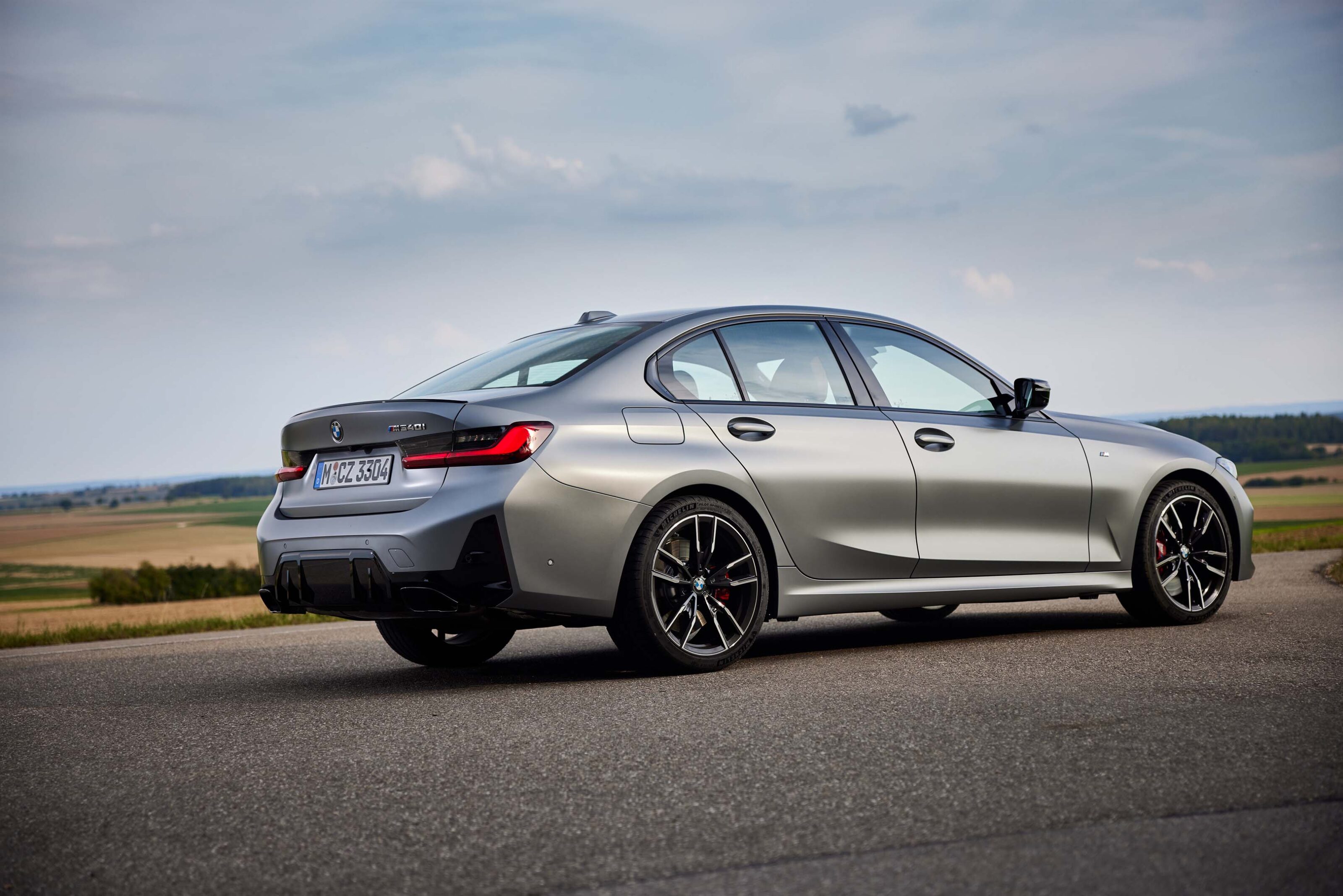
Its engine is the truly wonderful 3.0-litre straight-six turbo seen in the Z4 and Toyota Supra, here producing 275kW and good for 0-100km/h in just 4.4 seconds. It also gets a fancy Harman Kardon stereo, heated seats, adaptive LED lights and a sunroof.
BMW has aimed to slimline trims and options to make configuring your 3 Series easier, so key options are bunched into simple packs, though they can vary in price depending on which car you’re applying them to.
Among them are the Comfort Pack, which brings heated seats and the nicer stereo to lower-rung models, and the M Sport Pro pack, which brings M Sport brakes with red or blue calipers as well as lots of smart exterior design flourishes, most of them replacing chrome trim with black for a meaner look.
How do rivals compare on value?
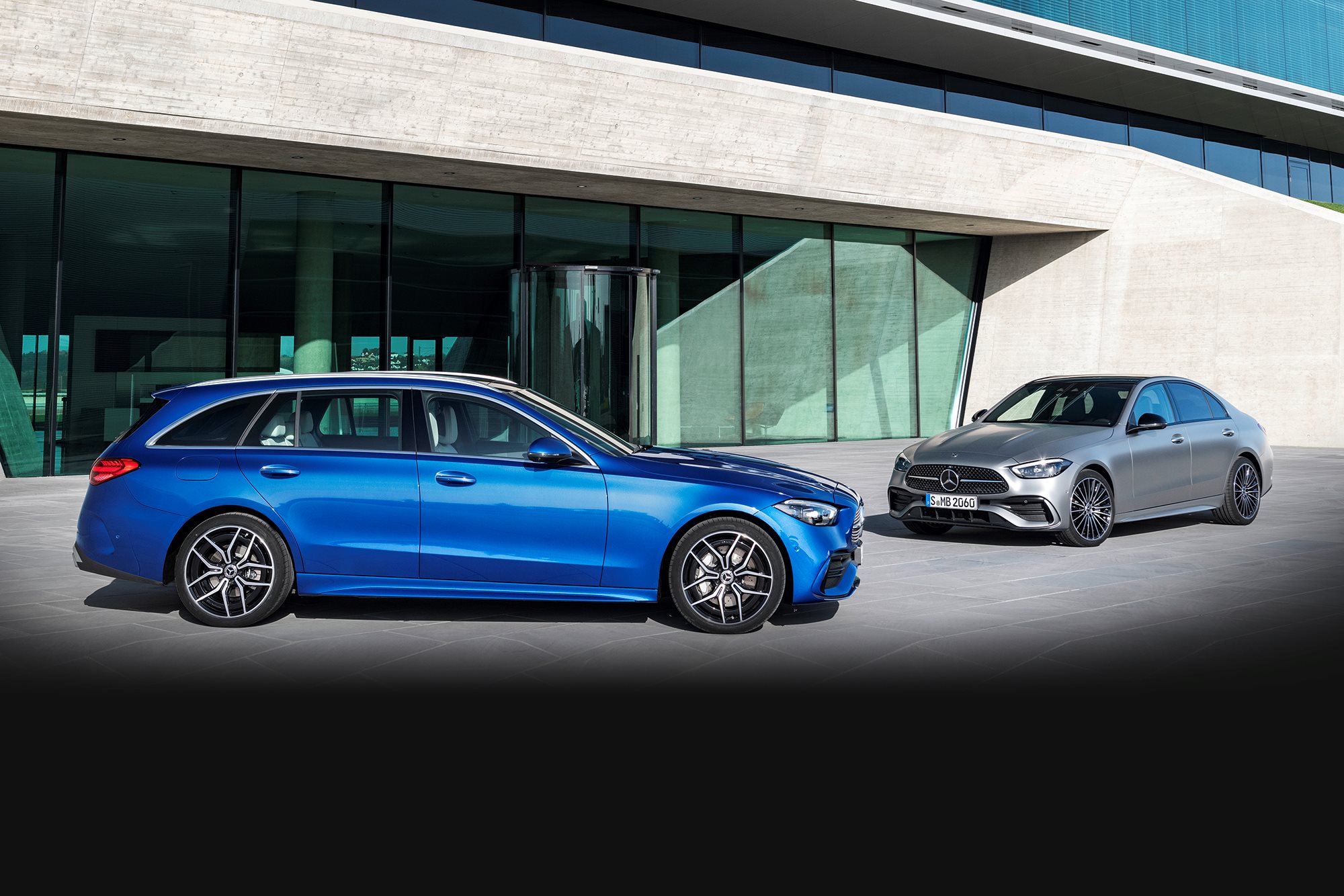
A comparable Mercedes C-Class will cost almost exactly the same, the 320i and 330i taking on their respective C200 and C300 rivals with near-identical power and price figures. It’s almost like the two car-makers are locked in battle… The Merc arguably has a touch more showroom cachet owing to its design being all-new, but the BMW is a sharper handler.
An Alfa Romeo Giulia will be a decent slice cheaper – a 147kW Sport starts at $63,950 while a 206kW Veloce is $71,450 (both before on-road costs). It’s a sweet car to drive but won’t feel as plush or technologically on-the-button as the updated 3 Series.
Going for an Audi A4 would be cheaper, too, prices for a 183kW 45 TFSI S Line starting at $73,500 before on-road costs, but it simply can’t hold a candle to the BMW when it comes to driving appeal.
Interior comfort, space and storage
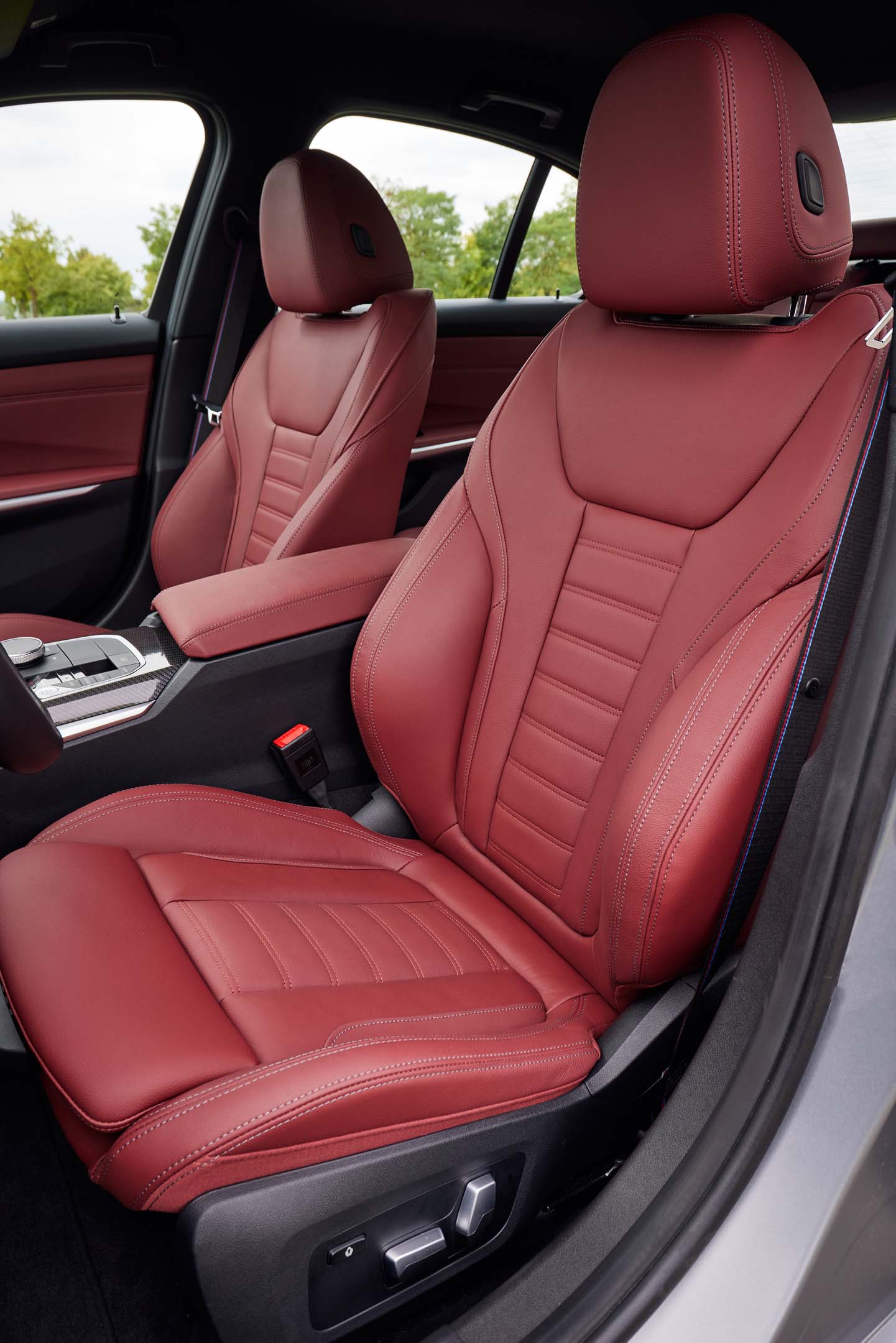
The 3 Series may not look too different on the outside, but inside it’s made a big stride. All models get a vast curved display as standard, running BMW’s latest operating system.
Ahead of you is a 12.3-inch digital dial display that looks cool, but frustratingly it doesn’t really adjust much. It feels like a missed opportunity to do something wild, but at least it’s clean and legible.
More likely to drop your jaw is the 14.9-inch widescreen in the middle of the car, which can run BMW’s native maps and media or hook straight up to Apple or Android phones. It looks fabulous and its sheer size has convinced BMW to ditch its odd gesture control system. Some pretty responsive voice control should help ease the pain of anyone dead set on not prodding the screen…
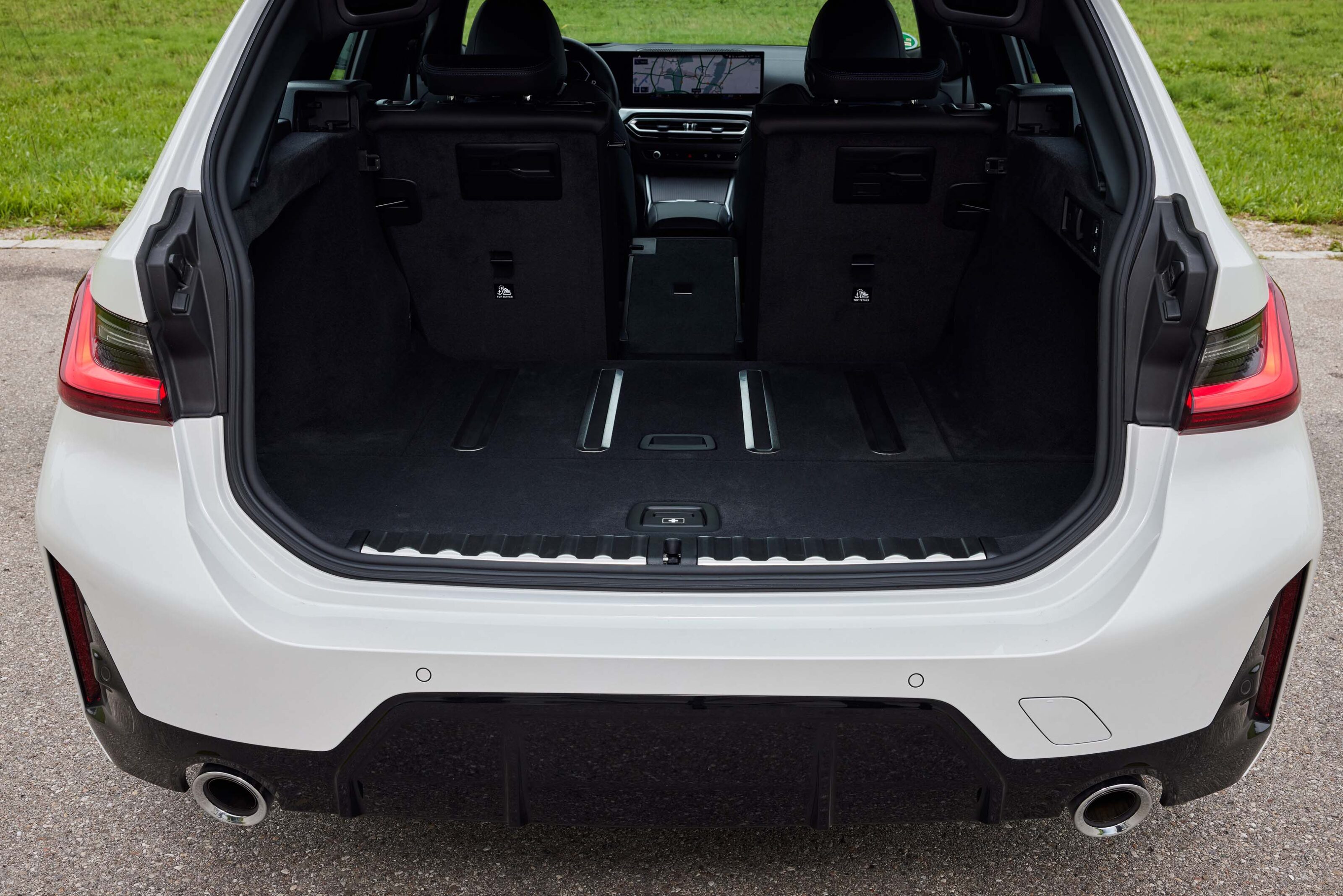
Space is unchanged from before, so the 3 Series remains a roomy, practical car. The Touring is vast in the back and offers up to 1510 litres of luggage capacity, accessed via the electric tailgate or nifty, separately opening rear screen.
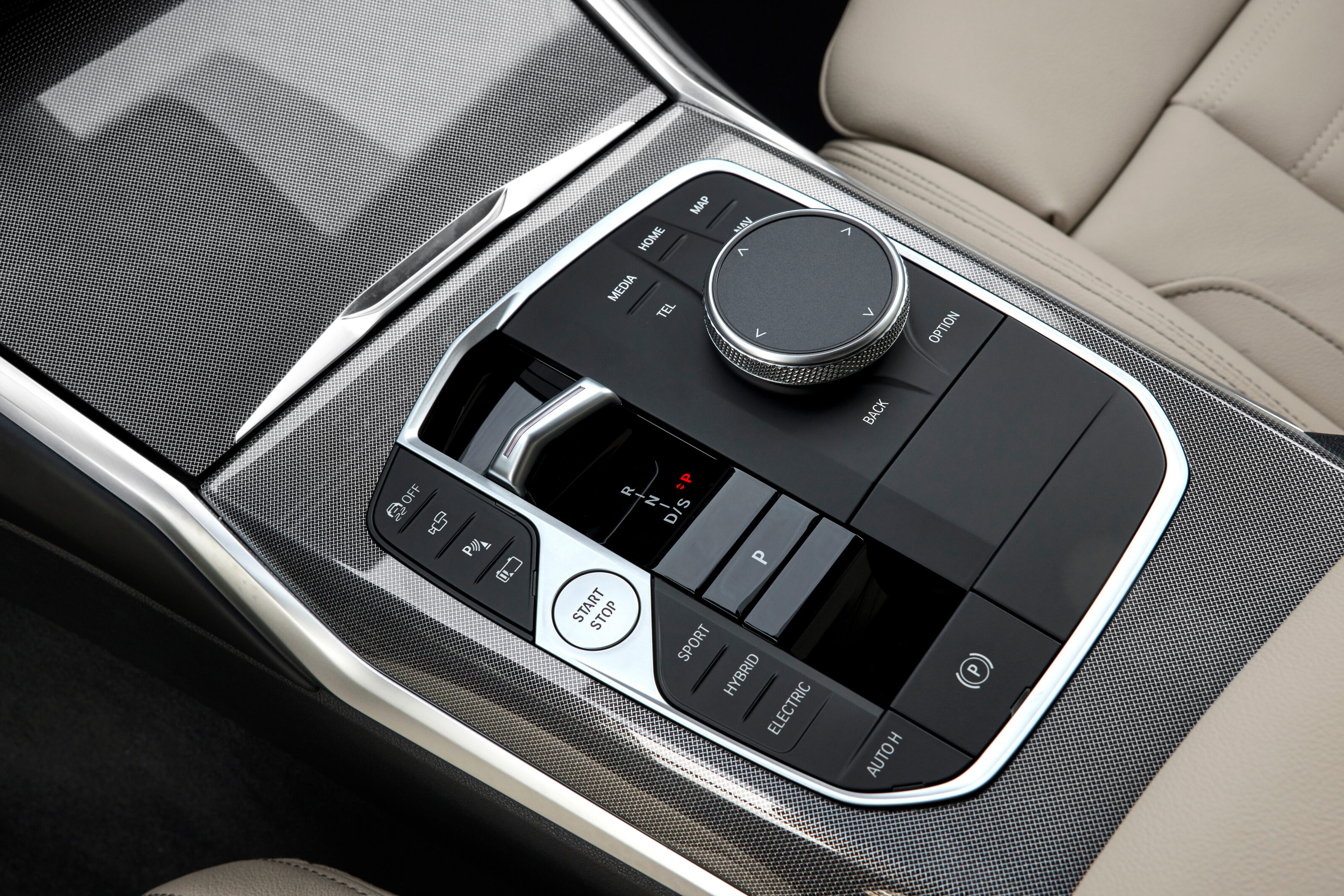
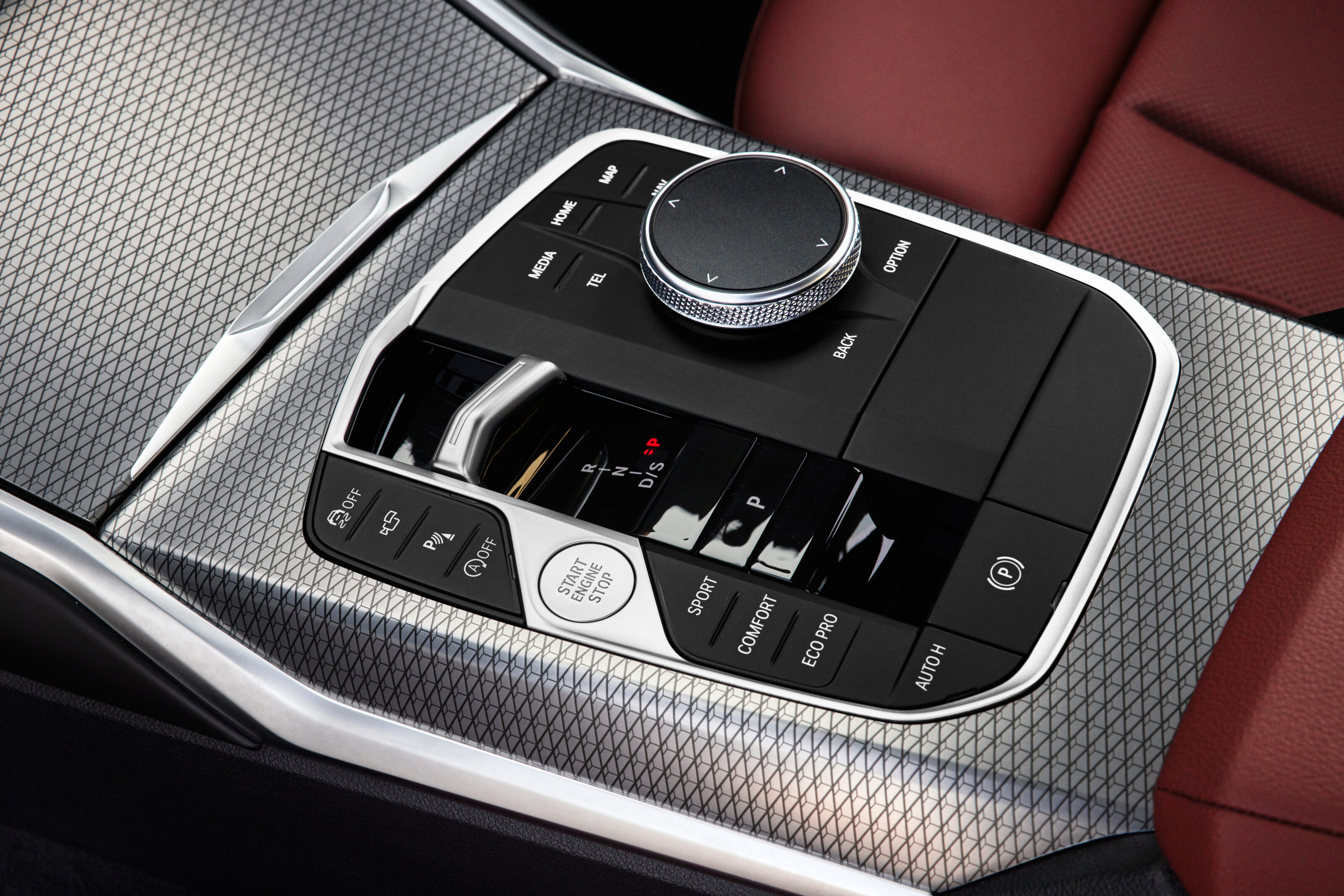
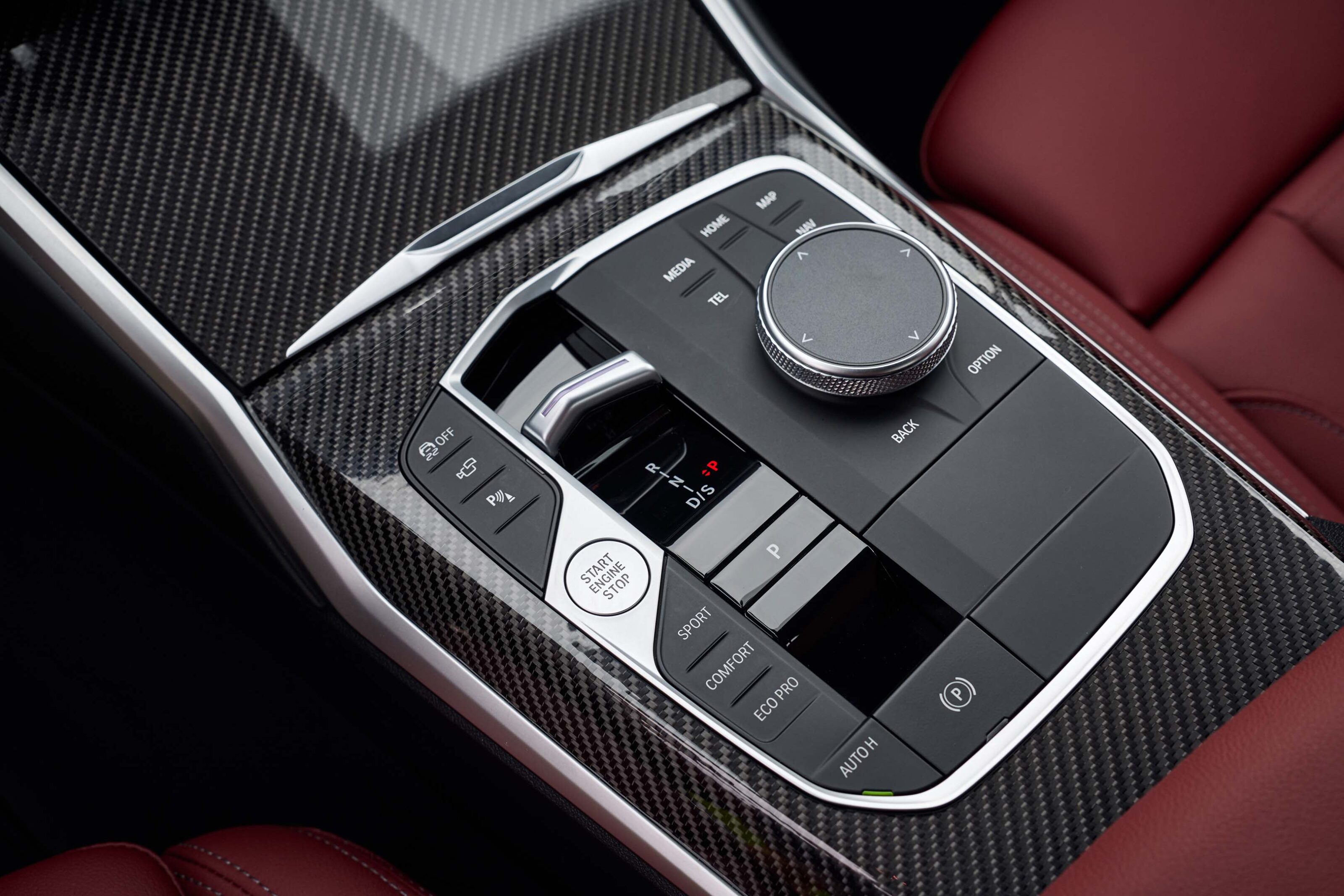
All models get an eight-speed automatic transmission as standard and it now operates through a neat little toggle rather than a stick, tidying up the centre console and adding an extra sense of space to the front quarters.
However, it does make locking the transmission in ‘manual’ less of an immediate process than before.
What’s it like to drive?
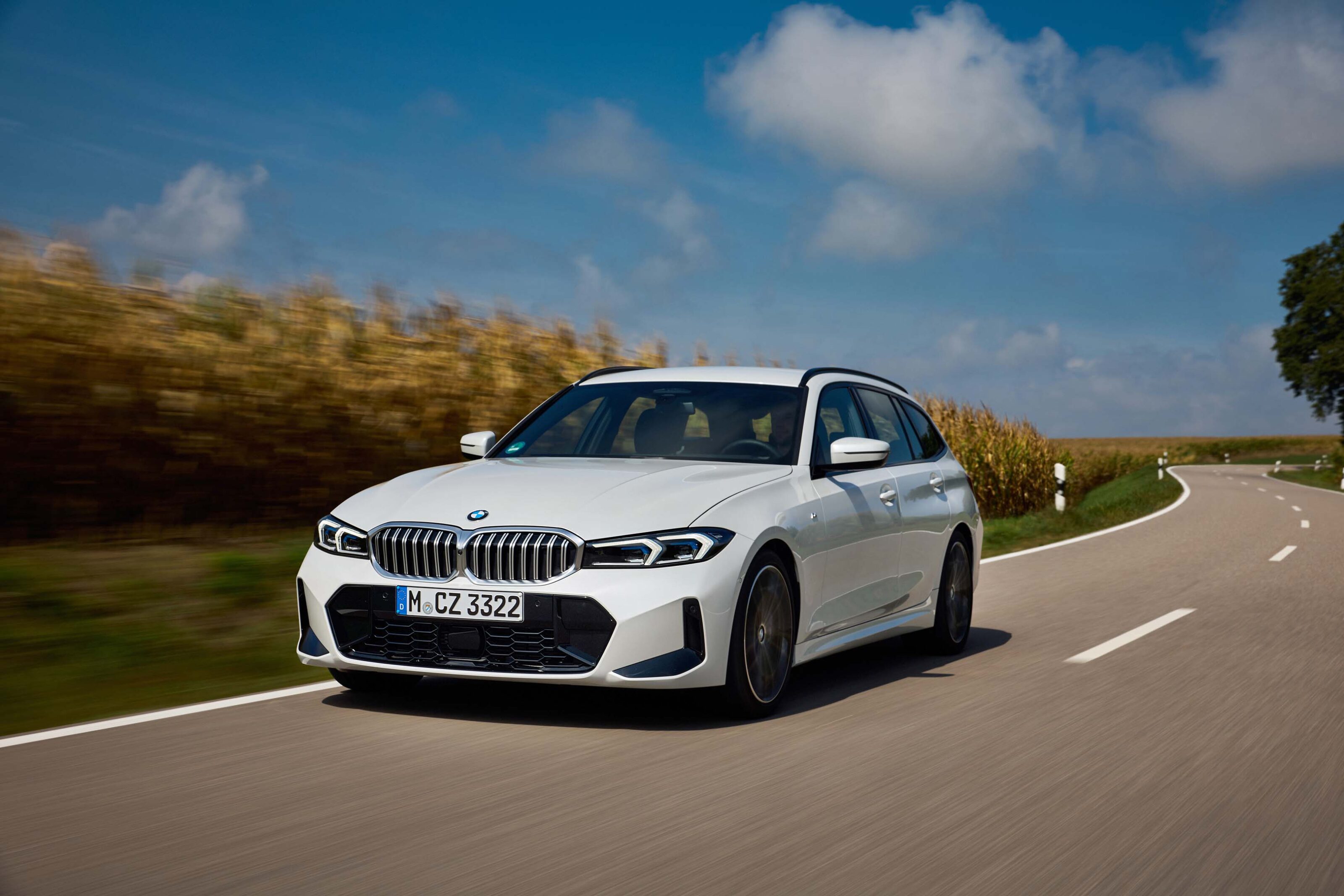
Ah, the traditional 3 Series calling card. To sighs of relief all around, absolutely nothing has changed here. The dynamics team relegated themselves to tea duties on this project, knowing they already had the class benchmark for handling and that any fiddling might just ruin the 3’s sweet balance of comfort and fun.
This remains a car that steers sharply and grips strongly, but not without a sense of humour if you feel like loosening its electronic shackles and driving a bit harder. The xDrive system of the M340i is very rear-biased, so there’s plenty of fun to be had even outside of purely rear-drive versions.
The pick of the engines – if money is no object – is the scintillating six-cylinder in the M340i. It sounds fantastic, rips right to its 7000rpm redline keenly and delivers the appropriate punch for an M-badged sports sedan, stopping just shy of the guts and glory of the full-fat M3.
It’ll be a nicer, less aggressive thing to live with every day while also offering similar performance to M3s of old – at a similar price too, mind.
Standard adaptive suspension and a smart electronic differential ensure its 1800 kilos are kept very keenly in check, while it comes with 48V mild-hybrid tech these days, so it’s also cultured and polite when you’re driving through town. It’s a truly consummate all-rounder and demonstrates BMW’s core values beautifully.
Of the other engine options, the 330i is perhaps sweetest but the 330e most intriguing. It’s notably heavier than the pure petrol models but manages its mass just as well, and the novelty of 50 (or more) kilometres of swish, silent running is hard not to love. If you can affordably charge up at home or work, it feels a bit of a no-brainer, and its 0-100km/h time is basically on par with the 330i model.
How is it on fuel?
The BMW 3 Series consumes 95 RON fuel at all levels below the headline M3 (which asks for 98 RON). Fuel consumption varies throughout the engines.
Naturally, the 330e hybrid claims the thriftiest figures from official testing procedures at just 2.2L/100km, though this will vary wildly if you can’t always guarantee a free socket to get the batteries charged back up to shoulder some of your mileage.
The 320i and 330i quote similar economy – respectively 6.3 and 6.4L/100km – while the higher-performance M340i xDrive claims 7.7L/100km. Given it adds an extra pair of cylinders and driven wheels, that’s an impressively modest climb in fuel consumption and our experience of this engine in daily life suggests it’ll actually better its official figure in mixed use.
How safe is it?
The G20-generation BMW 3 Series was evaluated by ANCAP in 2019, achieving a five-star safety rating. So the same ought to stand here given nothing vital has changed about the car’s design or structure. There’s plenty of active safety tech as standard, too, with lane-keep assist, a wealth of cameras and park assist fitted to all models.
VERDICT
Few cars at any price nail their brief with such satisfying precision as a BMW 3 Series. It’s fair to call this one of the true pillars of the automotive world, but luckily BMW knows the level of heritage behind the badge and has updated the seventh-gen 3 in a sympathetic manner, blending in new technology without disrupting the purity – and pleasure – of the driving experience beneath.
Find the cash for a 330e or M340i and you’ll possess one of the most gratifying all-rounders on sale at any level.
“We won’t go over 1000km of range, even though we can.”
Snapshot
- New batteries promise greater energy density
- More than 1000km range not necessary according to BMW
- Will feature from 2025 in u2018Neue Klasseu2019 platform
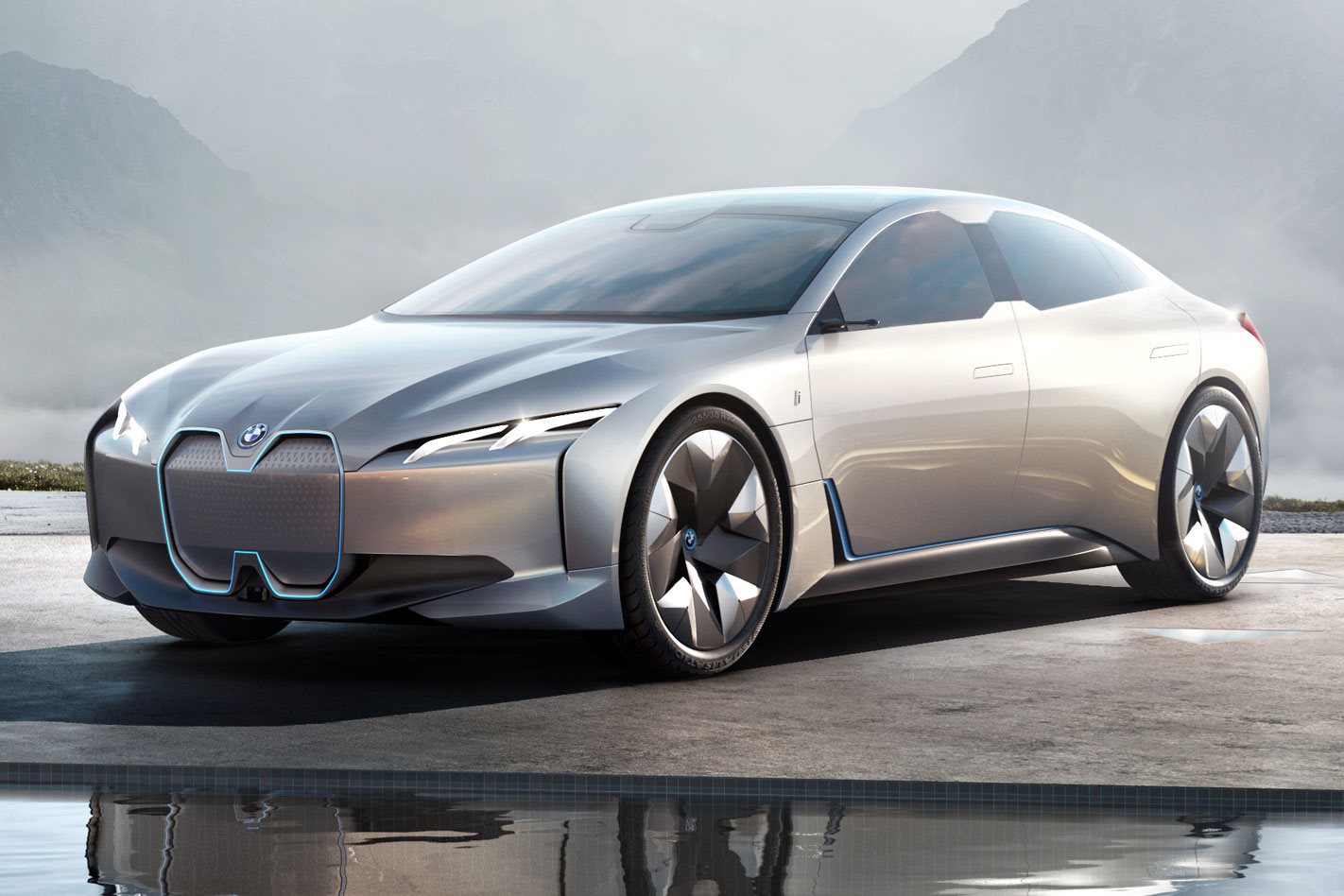
The BMW range will be reinvented in 2025 with the introduction of its ‘Neue Klasse’ (New Class) platform, promising up to 1000km driving range from a charge.
In the here and now, BMW’s longest-range EV sold in Australia is the 2023 iX xDrive50, with 505km range (WLTP).
BMW says its upcoming ‘Gen6’ batteries will be more energy dense, allowing a longer driving range without increasing the physical size or weight of the battery pack.
Speaking with British publication Autocar BMW’s head of Efficient Dynamics, Thomas Albrecht, said: “Gen6 batteries will give us 30 per cent or more range than our current Gen5, but we won’t go over 1000km of range, even though we can.
“We don’t think that such a long range is necessary.”
Are BMW’s batteries different inside?
BMW is initially sourcing its new batteries from Chinese battery-manufacturing specialist CATL.
The batteries use cylindrical cells that are slimmer than current ‘Gen5’ items and will form an integral part of the vehicle’s structure. Aside from greater energy density, the slimmer shape means greater adaptability.
Head of battery cell development Marie-Therese von Srbik said: “We will be much more flexible with how we integrate the cell. The whole vehicle is becoming more adaptive towards that.”
Inside, the Gen6 items are said to employ a chemistry unique to BMW with a lower reliance on hard-to-mine Cobalt.
Peugeot’s recently unveiled e-308 hatch and wagon also use a battery chemistry with lower reliance on cobalt, codenamed ‘NMC811’.
BMW has indicated the new battery tech will also be able to support ultra rapid charging, potentially with 270kW speeds to trouble Porsche’s Taycan and Audi’s e-tron.
How will Gen6 batteries affect BMW’s future?
As part of BMW’s electric reinvention, the ‘Neue Klasse’ platform will debut in 2025, able to support everything from small 2 Series coupe-sized vehicle to the X7 three-row SUV.
Reports suggest the first BMW to sit on the new platform will be an all-electric 3 Series sized vehicle.
The latest revelation that Gen6 batteries will be able to deliver up to 1000km WLTP range from a charge could mean a new 3 Series would offer twice the driving range of the 470km i4 eDrive40.
UPDATE, September 20, 2022: 2023 Mercedes-AMG C63 reveal imminent
The 2023 Mercedes-AMG C63 performance sedan has been teased, ahead of its imminent debut on September 22.
As reported, the BMW M3 rival will replace its previous twin-turbo V8 with a new four-cylinder plug-in hybrid setup, adopting the E-Performance moniker from the GT 63 S hybrid.
The badge will also feature on a variant of the AMG SL roadster, while the next-generation E63 is also expected to downsize to the same four-cylinder unit.
https://www.instagram.com/reel/Ciqj_YOAwvL/
The teaser video portrays a silver C63 from different angles, showcasing its side profile with ‘Turbo Electrified’ badging, headlights, AMG alloy wheels and carbon-fibre lip spoiler.
It follows the demonstration of a camouflaged example at the 2022 Goodwood Festival of Speed, and various teasers and spy shots over the past 18 months.
As detailed below, the next-generation C63 features a 2.0-litre M139 four-cylinder with 48-volt mild-hybrid technology and an F1-inspired electric exhaust gas turbocharger, producing 350kW.
It is matched with an electric motor developing up to 150kW and 320Nm, for combined system outputs of around 500kW and 750Nm – 125kW and 50Nm higher than the outgoing eight-cylinder C63 S.
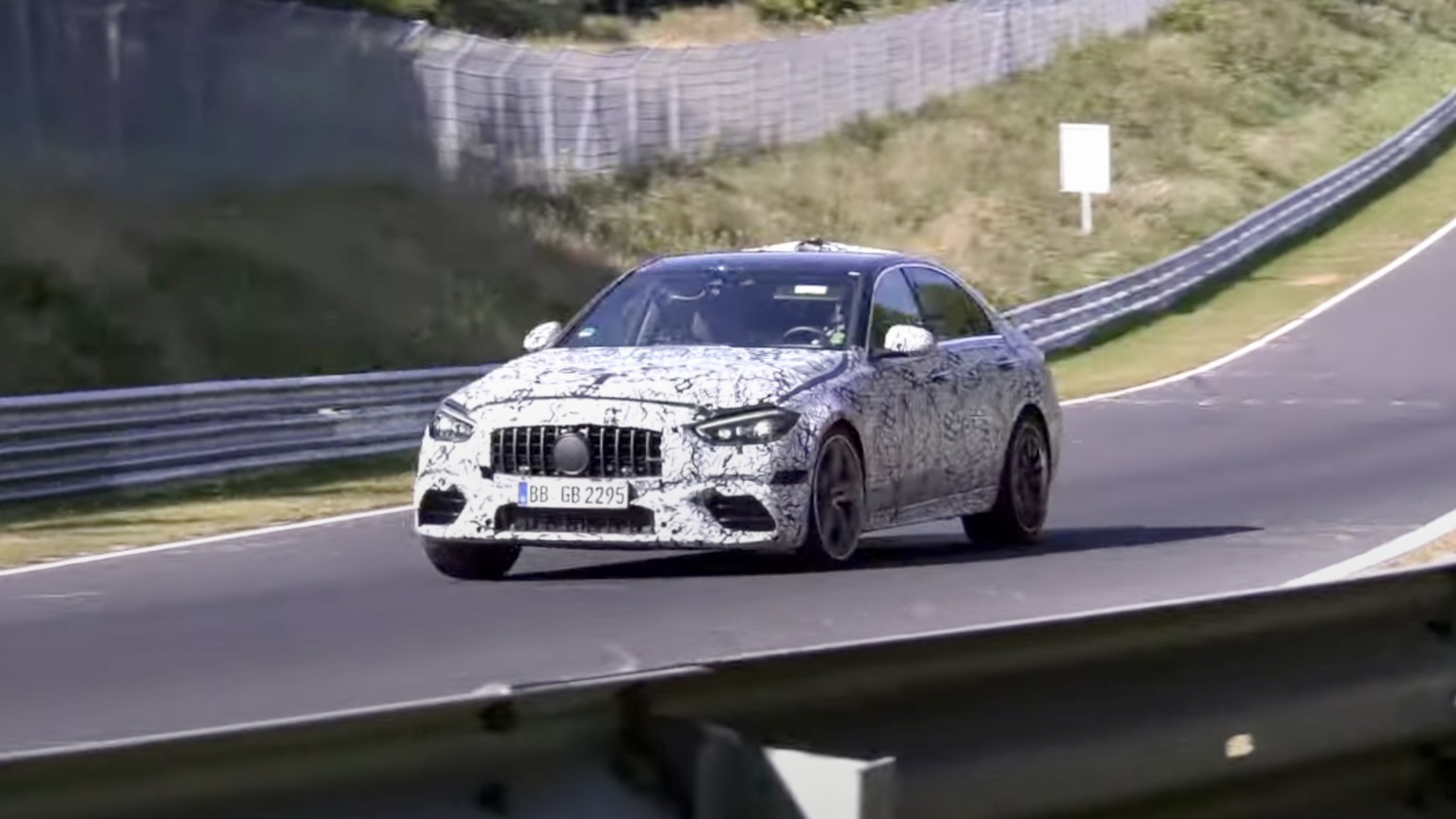
Matched with a nine-speed automatic transmission, power is sent to the wheels through a rear-biased 4Matic+ all-wheel-drive system.
A wagon version to compete against the BMW M3 Touring and Audi RS4 is probable, but don’t expect to see it in Australia, with Mercedes’s local arm dropping the estate body from the fifth-generation line-up.
Coupe duties will likely be filled by the forthcoming CLE set to replace the current C-Class and E-Class two-doors, and rival the BMW M4 and Audi RS5, while the new GLC 63 crossover will also adopt four-pot power.
Stay tuned to Wheels on Thursday, September 22 for the reveal of the 2023 Mercedes-AMG C63.
For an early look behind Mercedes-AMG’s four-cylinder plug-in hybrid powertrain, read our original story from March 2021 below.
The story to here
March 31, 2021: Mercedes-AMG confirms 480kW hybrid turbo four for next C63
Mercedes-AMG has all-but confirmed the next C63 will be powered by a four-cylinder turbo, but one packing a monstrous 480kW in conjunction with a powerful new rear-axle electric motor.
For the first time, the C63 will also be equipped with tarmac-tearing all-wheel drive with 0-100km/h times expected to dip into the low three-second range.
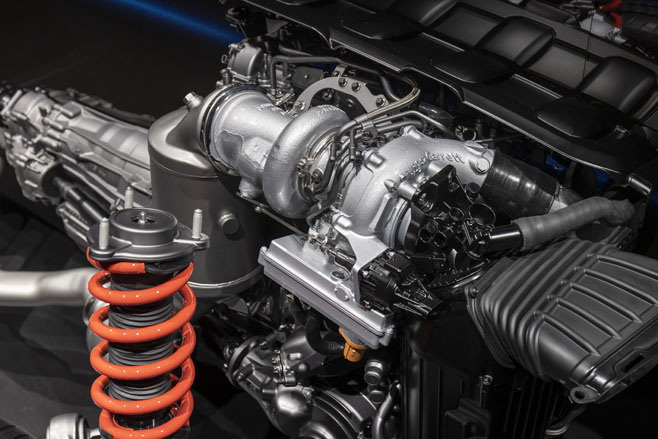
The four-cylinder engine in question is the A45’s new M139 2.0-litre inline-4 – fitted north-south in the C-Class engine bay – but with power as high as 350kW.
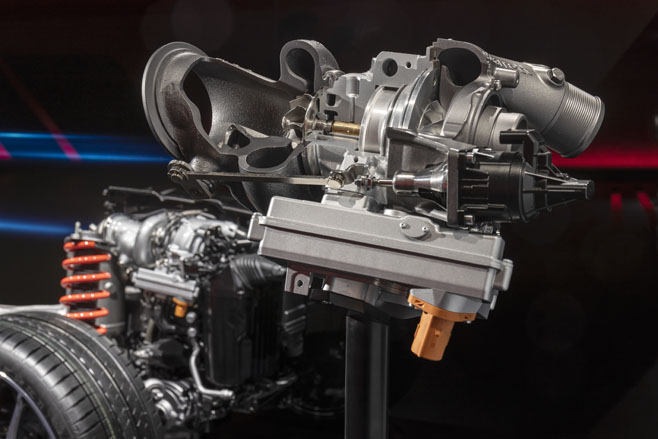
That’s thanks to a new, F1-inspired turbocharger with an in-built 6kW electric motor promising next to zero turbo lag despite producing an incredible 40psi (2.8 bar) of maximum boost pressure.
AMG says it’s the same kind of turbo fitted to its forthcoming ONE hypercar.
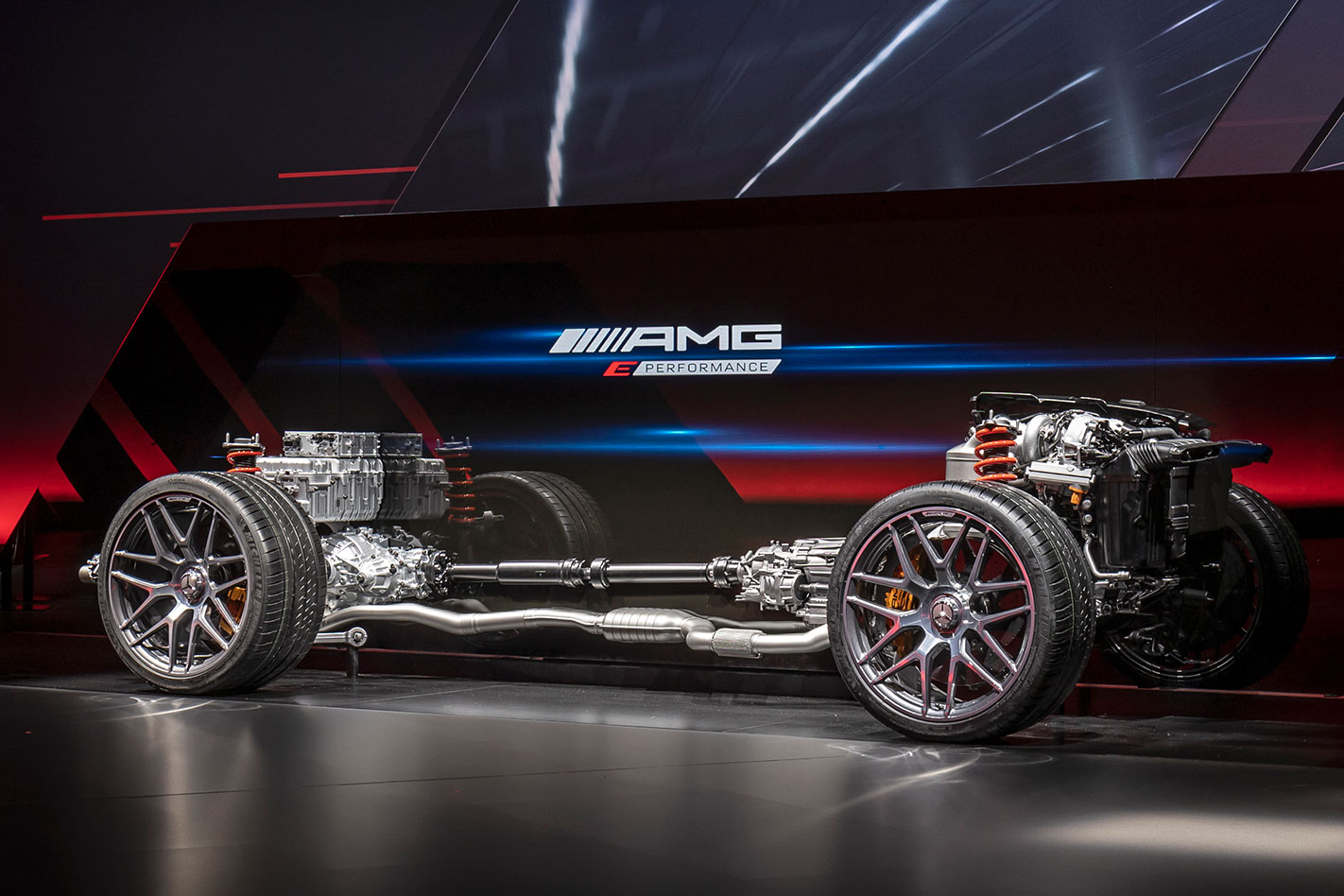
The high-tech turbo four-cylinder will work with a new, compact, rear-mounted electric motor supplying a constant 70kW, but with as much as 150kW available in 10-second bursts.
Maximum electric motor torque is 320Nm, while engine torque is expected to exceed the A45’s 500Nm.
Combined with the 330-350kW internal combustion engine, AMG confirmed overall power will be in the 480-500kW range (although Wheels estimates 400-420kW will be the stated power figure; the current twin-turbo V8 C63 S produces 375kW and 700Nm). Torque could be as high as 900Nm.
The new C63’s high-tech mumbo will reach all four wheels via AMG’s now familiar 4MATIC-Plus system, a central propeller shaft continuing to send power to an electronically locking rear differential, to which the electric motor attaches.
AMG did not comment on potential front/rear drive splits but left the door open to a rear-drive model and hinted the 4MATIC-Plus C63 could come with a rear-drive-only Drift Mode, much the same as existing all-wheel drive AMG models like E63 S and GT63 S.
Powering the new electric motor is an also new, high capacity 6.1kWh li-ion battery offering super-fast discharge/recharge abilities, as well as integrating into a cooling circuit with 14L of its own fluid.
AMG claims the battery is made for racetrack performance and says it has twice the power density of a conventional battery.
Wheels understands the hybrid C63 will offer plug-in recharging ability, but AMG did confirm an EV-only Electric mode available up to 130km/h.
EV range was not revealed, AMG simply saying that unlike other performance hybrid systems, its system is built for performance and overall efficiency rather than maximum electric-only range.
“Our concept is rather new and focused on getting performance into a hybrid powertrain,” Head of Electric Powertrains Jochen Schmitz told Wheels in a video Q&A.
“[We wanted to prioritise] racetrack usage and stuff like that into this hybrid system. Many of the well-known parallel P2 hybrids aren’t focused on performance, they’re more focused on range or other stuff, so it was on us to go this new way completely on our own.”
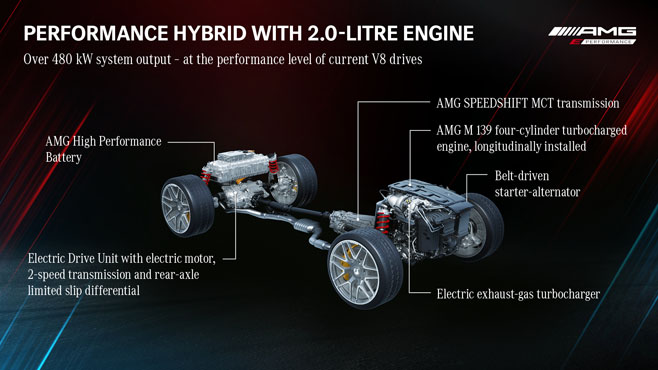
The 150kW electric motor, which spins to 13,500rpm, feeds a two-speed gearbox, with second gear engaging at 140km/h.
A nine-speed MCT (wet clutch) paddle-shift automatic transmission continues to be employed; and for the first time the C63 will utilise brake-by-wire, with only a digital connection between the pedal and the brakes themselves.
Four stages of brake recuperation will be available with the highest setting scavenging up to 90kW and providing a proper one-pedal driving feel.
The C63 will offer six driving modes. Electric; a heavily hybridised Comfort with silent electric start; Sport general performance mode; Sport Plus and Race (featuring ‘always on’ electric motor boost) and a customisable Individual mode.
While no word yet on overall vehicle weight, engineers said all the components of the new hybrid system weigh approximately 200kg, with the battery itself 89kg. The M139 engine weighs around 50kg less than the outgoing M177 4.0-litre twin-turbo V8.
The all-wheel drive system is expected to also add kilos, although further weight savings could be possible through increased use of aluminium in the new 206-series C-Class body-in-white. The current twin-turbo, rear-drive C63 S Coupe weighs 1725kg (DIN).
For C63, AMG is expected to work carefully on the M139’s sound as well. “Will it sound like a V8? No, of course it will sound like a very high-performance drivetrain,” said engine specialist Hannes Lohrmann.
AMG has not yet stated fuel consumption figures for its new hybridised models but has promised “outstanding efficiency”.
Together with proper torque vectoring front and rear and a tricky all-wheel drive system, the upcoming C63 should also offer next-level handling ability, especially if fitted with the new 206-series C-Class’s rear-wheel steering. AMG has not confirmed as much as yet.
The next generation AMG C-Class models are expected to be revealed later this year while Wheels expects an Australian arrival late 2022 or early 2023.
While production of the 205-series C63 sedan and wagon has just concluded, order books for the current, V8 C205 C63 Coupe are expected to remain open for some time yet as production of the two-door continues. A 206-series C-Class Coupe has not yet been announced.
AMG also revealed details of the upcoming hybridised GT63, which will use the same rear-mounted battery, electric motor and two-speed gearbox slated for the next C63.
Together with the existing 4.0-litre twin-turbo V8 (with conventional turbochargers), the hybridised powertrain is expected to offer 600kW and 1000Nm with 0-100km/h times potentially dipping into two-second territory.
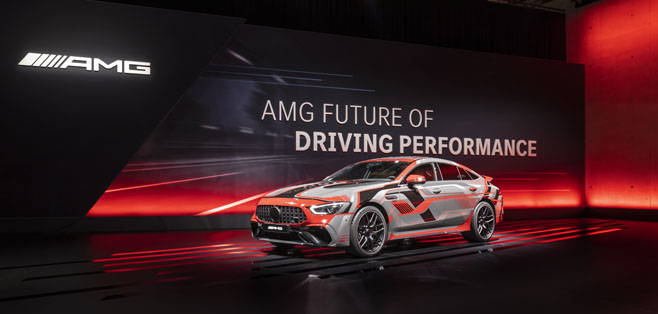
The hybrid GT63 is not due in Australia until the third quarter of 2022.
AMG refused to answer whether the new electric turbocharger might appear at some point on an A45 derivative.
Snapshot
- 2024 Ford Transit Custom revealed
- To be offered in diesel or all-electric form in Australia
- Late 2023 arrival confirmed; E-Transit Custom and full line-up in 2024
The next-generation 2024 Ford Transit Custom range has debuted in Germany.
As with the already-revealed E-Transit Custom electric van, the new model is confirmed for an Australian launch, with deliveries set to commence in late 2023.
A full range of variants, including the electric model, will become available locally in 2024.
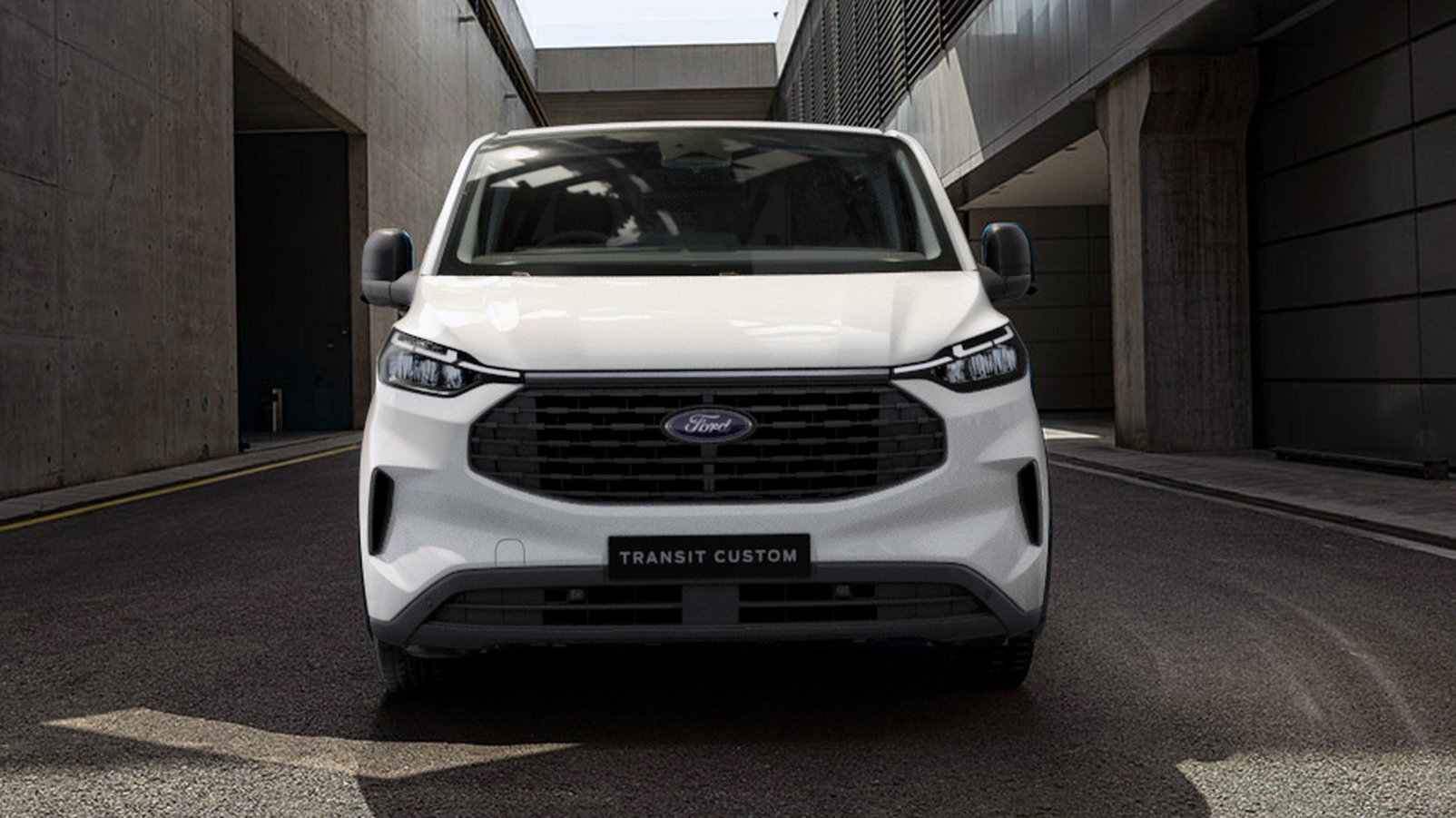
The internal-combustion Transit Custom will be diesel-only in Australia, per the current model.
Ford states it features the “latest generation of … EcoBlue diesel engines”, but the company provided no technical details in its official materials.
However, it will likely be a 2.0-litre unit with 125kW and around 390Nm – matching the outgoing Transit Custom.
The engine will be mated to a new “high-efficiency” eight-speed automatic transmission as standard, with a higher 2.5-tonne maximum towing capacity.
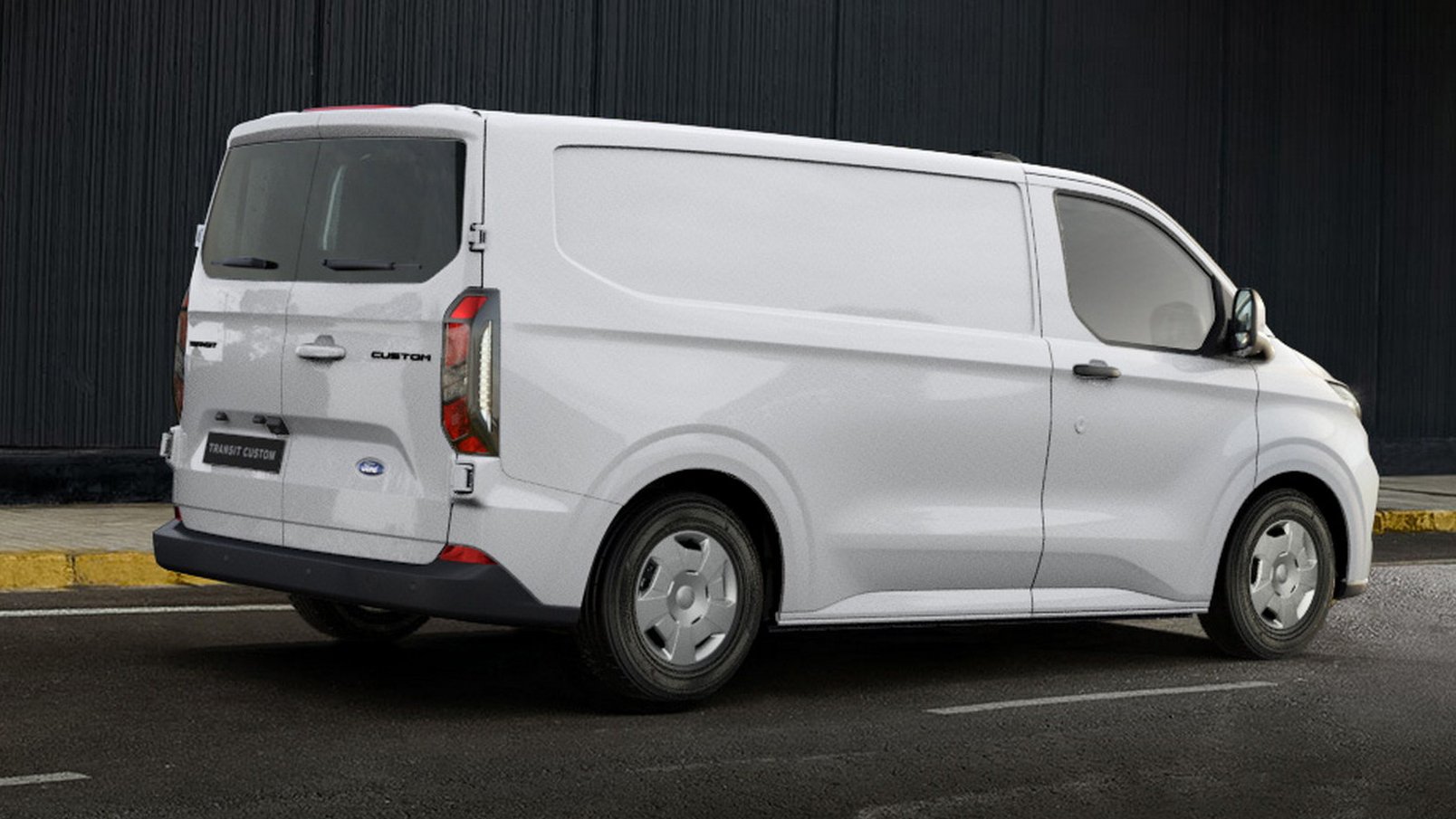
Despite looking like a reskin of the outgoing Transit Custom launched in 2012, Ford claims it is “designed from the ground up” with a lower cargo floor height.
The new platform is expected to underpin the upcoming Volkswagen T7 Transporter, as part of a commercial vehicle partnership that has spawned the Ford Ranger-based VW Amarok and the Europe-only, VW Caddy-based Ford Tourneo Connect.
Both will be produced at Ford’s plant in Turkey.
Currently, it is unclear how the Volkswagen will differ from the Ford, as the Amarok gained several changes, while the Tourneo Connect is a simple rebadge.
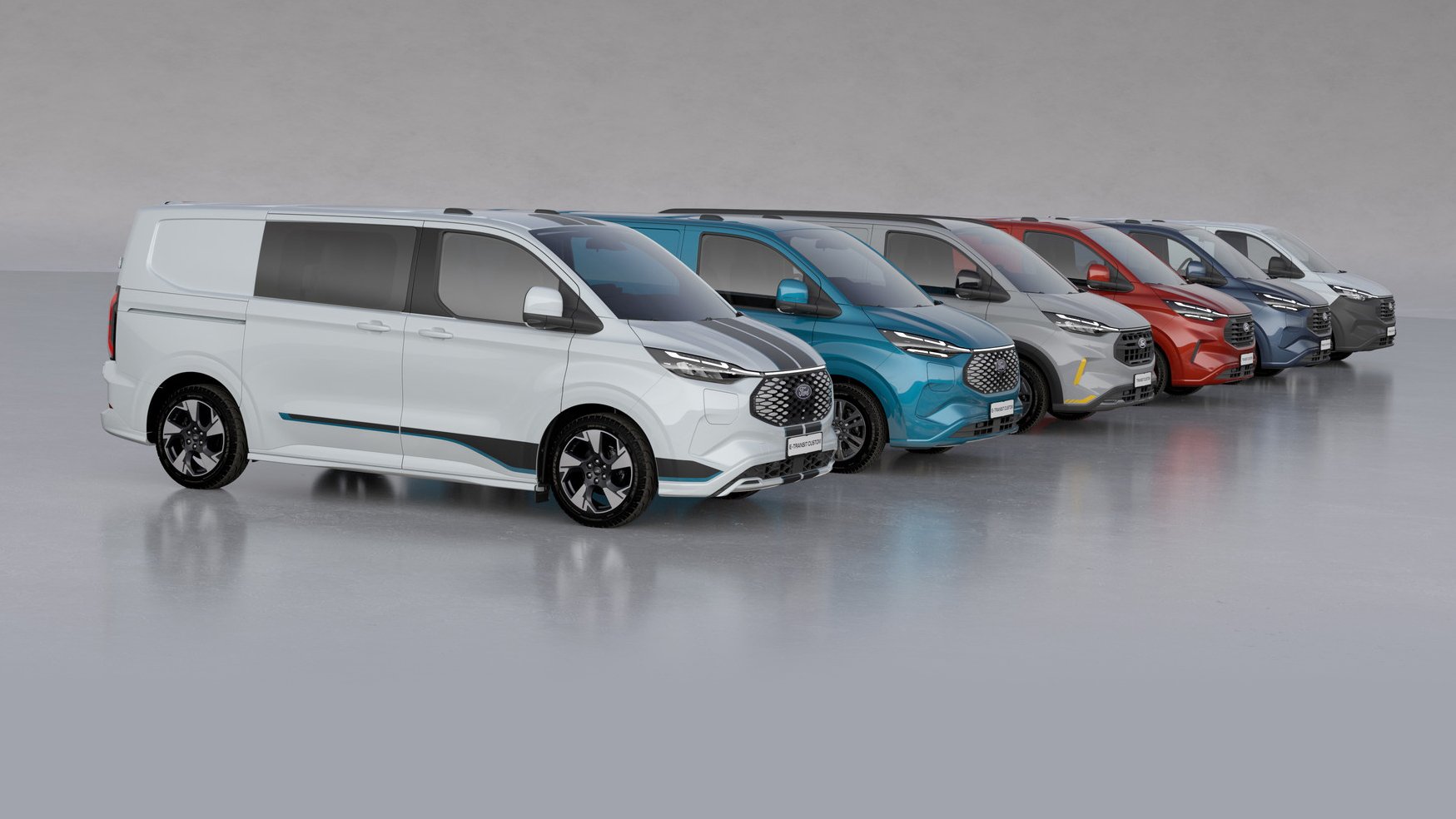
As before, the Transit Custom will be offered as a panel van or a double-cab, with four sizes available – comprising a standard or extended wheelbases and a low or high roof.
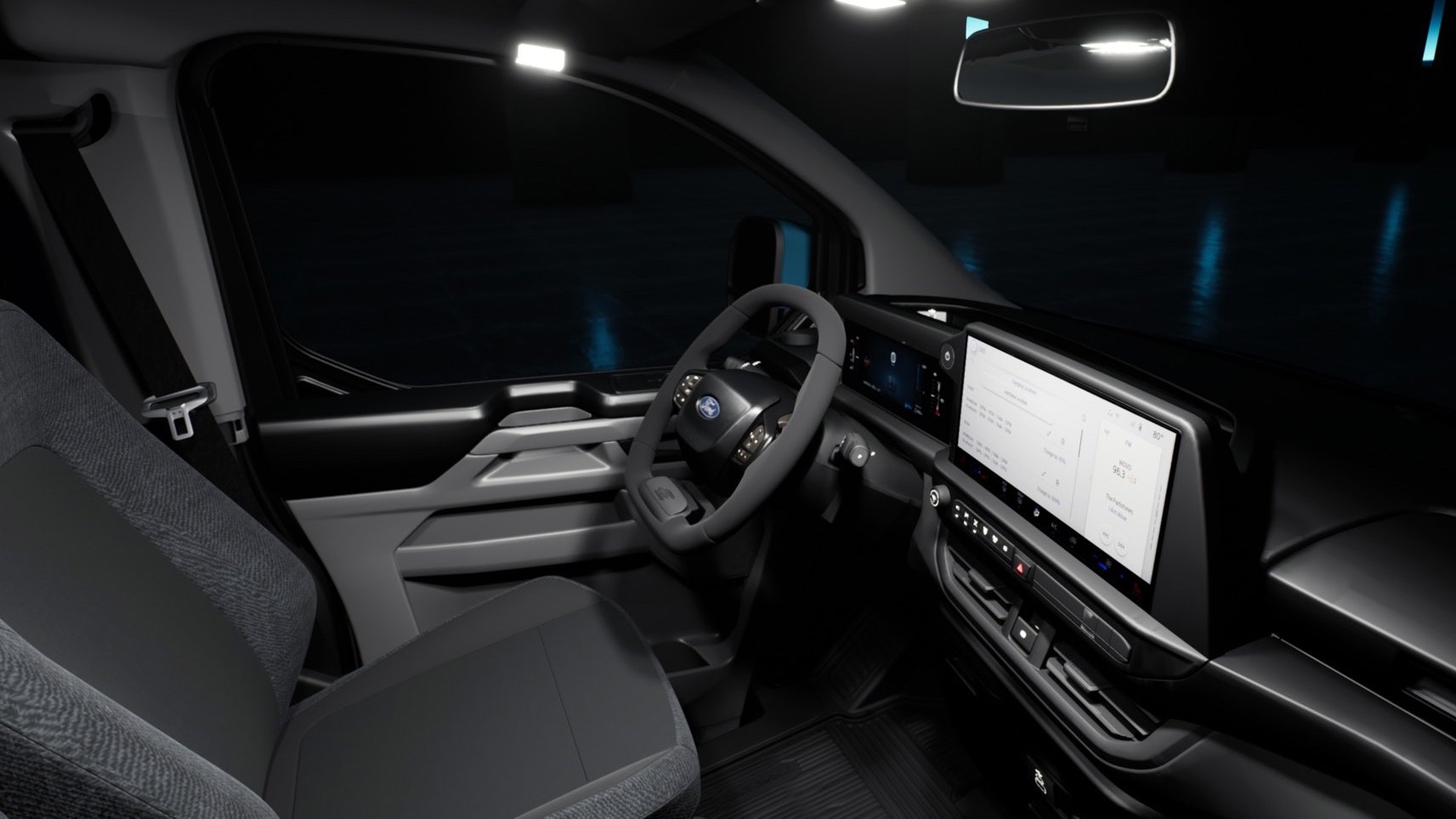
Inside, the Transit Custom sports a 13-inch Sync 4 infotainment system and an available foldable steering wheel that can act as a desk.
The headline act is the E-Transit Custom, which harnesses a 400-volt electrical architecture with a 74kWh battery pack, enabling a WLTP-rated driving range of 380 kilometres.
It produces 160kW and 415Nm, and has a DC charge rate of up to 124kW, allowing for a charge from 15 to 80 per cent in a claimed 41 minutes.
European examples of the Transit Custom feature a standard connection to the 5G network – expanding the FordPass Connect service beyond current 4G connectivity – but it is unclear if Australian models will include this.
A plug-in hybrid (PHEV) powertrain similar to the unit found in the Escape PHEV will also be offered in Europe, featuring a 2.5-litre Atkinson cycle petrol engine with an 11.8kWh battery for “a targeted pure-electric driving range of up to 57 km”, and a 2.3kW capacity for power tools and equipment.
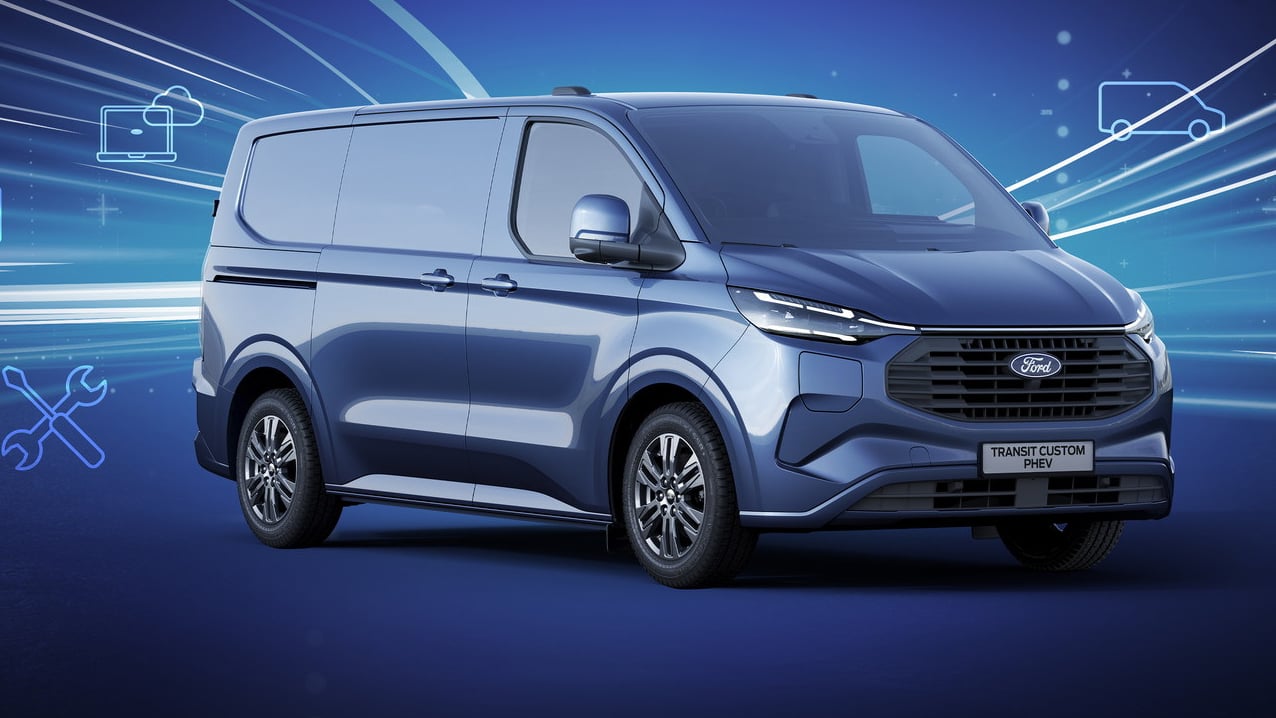
A step above the new Ranger’s available overhead auxiliary switches, the Transit Custom features a unique ‘digital solution’ for connecting aftermarket parts with the vehicle’s electrical system.
This solution allows items, such as wheelchair ramps or temperature sensors for refrigeration, to be controlled logically via the built-in infotainment system – rather than bolt-on switchgear – with smartphone compatibility.
The 2024 Ford Transit Custom will arrive in Australian showrooms from late 2023, with local pricing and details to be announced closer to launch.
UPDATE, November 29: Mazda CX-60 Australian pricing
Full Australian details, including pricing and specs for the entire 2023 Mazda CX-60 line-up, has been announced today. Get all the details in the video below, or at the link above it, and continue reading here for our first international drive. Our first Australian drive will come soon.
Story continues: CX-60 revealed
“These strenuous evaluations (for the 2023 Mazda CX-60) are a vital step in our absolute commitment to customer experience and continuous brand improvement.”
Key Points
- Mazda CX-60 begins Australian testing
- Midsize SUV to be Mazdau2019s most powerful road car
- Plug-in hybrid power available
Following the start of 2023 Mazda CX-60 production at the company’s Hofu plant in April, a pair of pre-production examples have made their way to Australia for final evaluation.
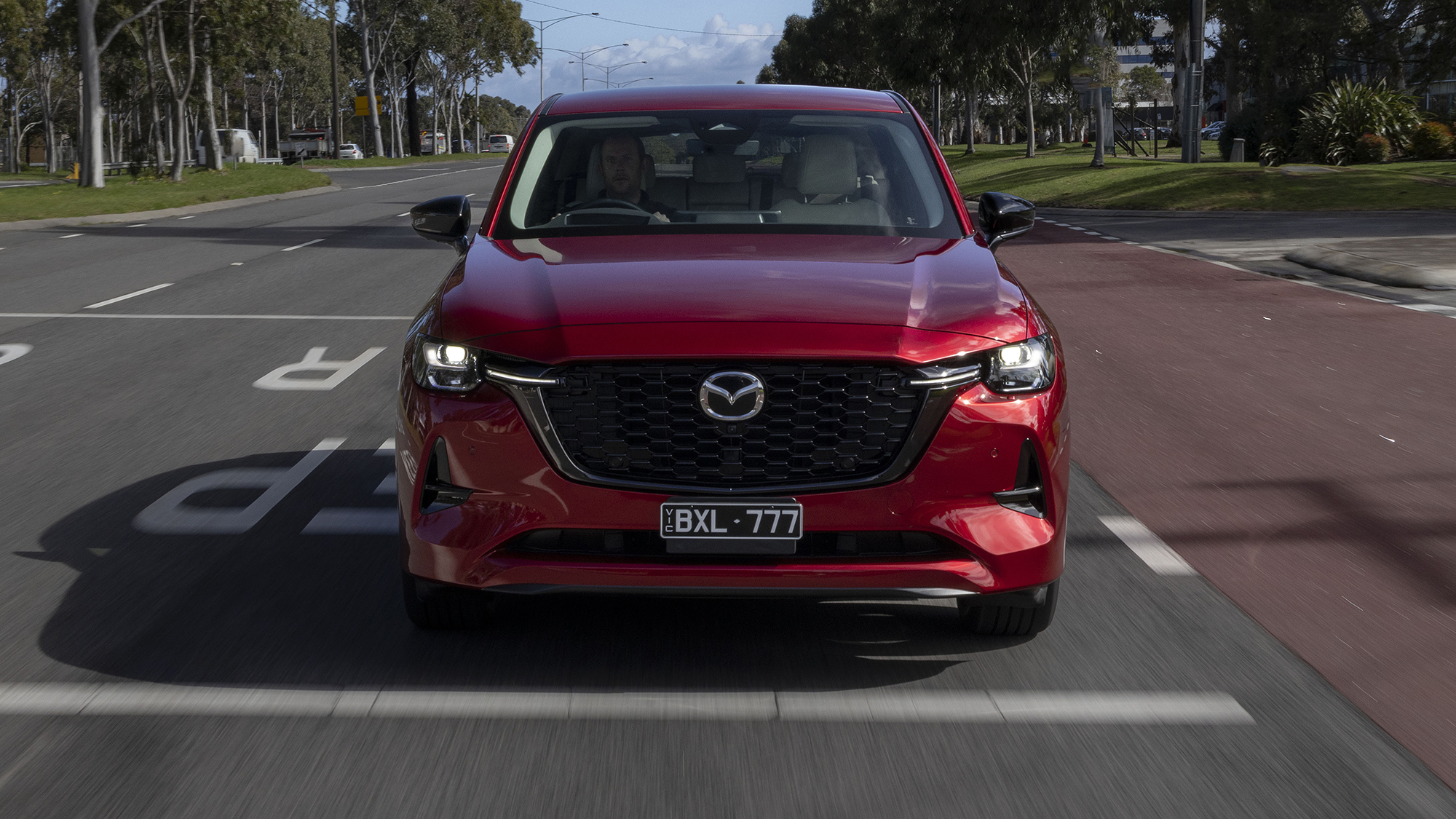
Australia is a significant market for Mazda, where the brand outpunches its global sales, taking second spot behind giant Toyota. That means it’s crucial the new CX-60 can meet the expectations of Australian buyers.
To evaluate the CX-60, Mazda engineers will be taking the two pre-production cars on 30,000km tours over the next six months and feeding data back to the Hiroshima research and development centre.
Mazda is yet to lock in final specifications for Australia and has not revealed which powertrains are fitted to the pair of test cars it’s testing Down Under.
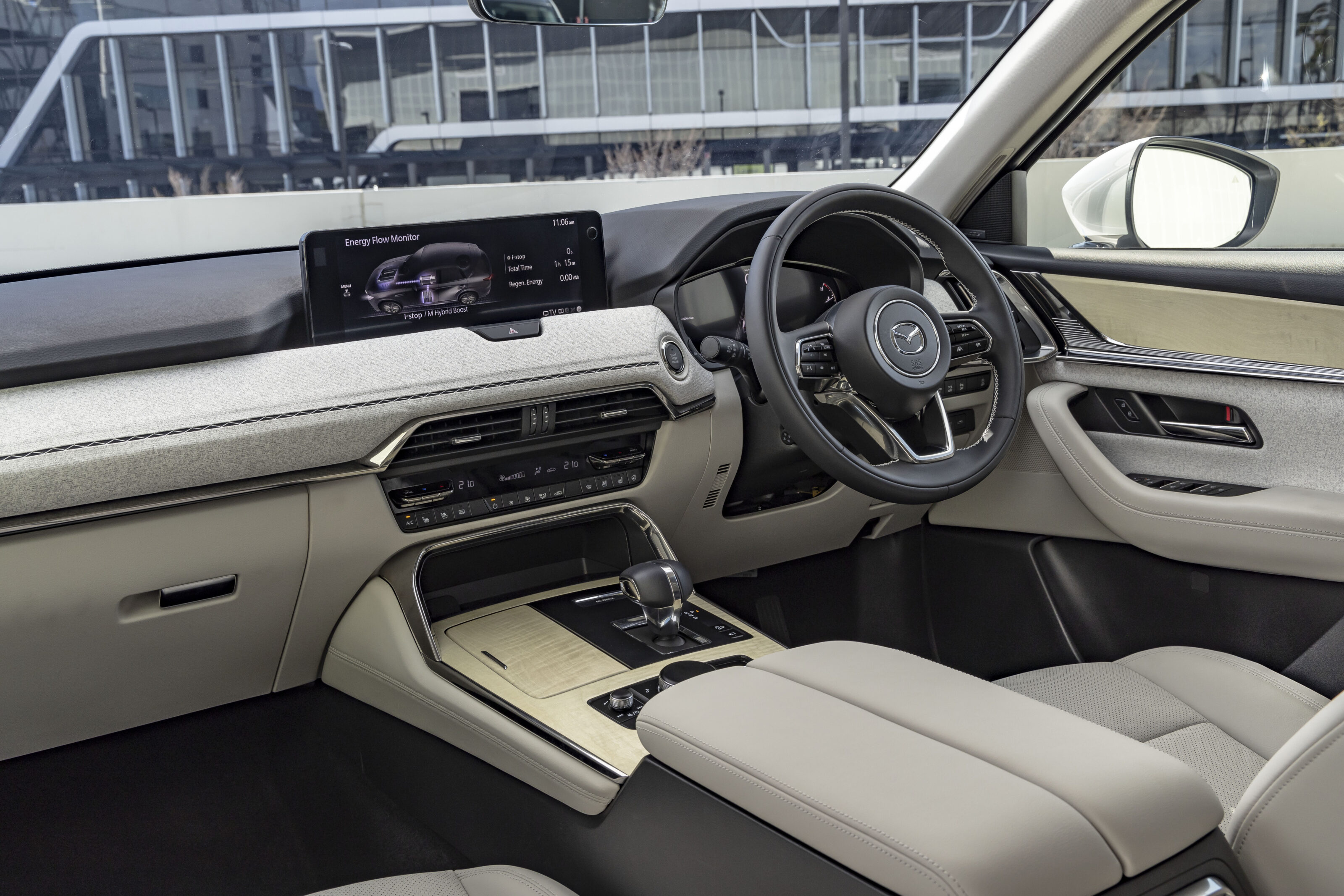
Speaking on the torture test about to face the CX-60 development vehicles, Mazda Australia managing director Vinesh Bhindi said: “our engineering team will consistently push the cars to their extremes.
“These strenuous evaluations are a vital step in our absolute commitment to customer experience and continuous brand improvement.”
Specific timing for an Australian arrival is still to be confirmed, but Mazda has so far confirmed the 2023 CX-60 will be priced from “around $55,000” when it arrives in Australia later this year.
Continue reading to see full details on the global CX-60 line-up and equipment list.
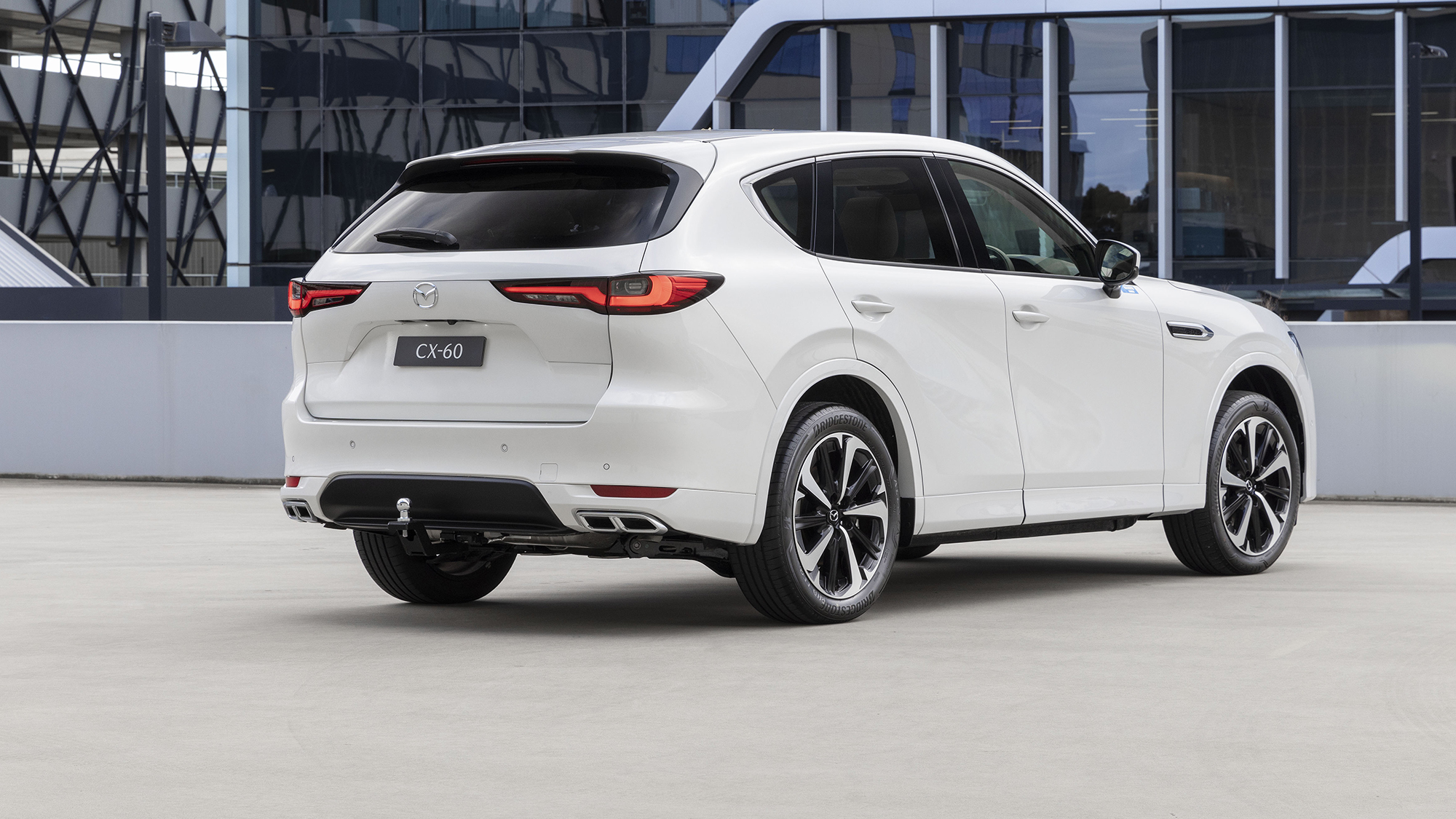
The story to here
April 23, 2022: CX-60 unveiled, production begins ahead of launch
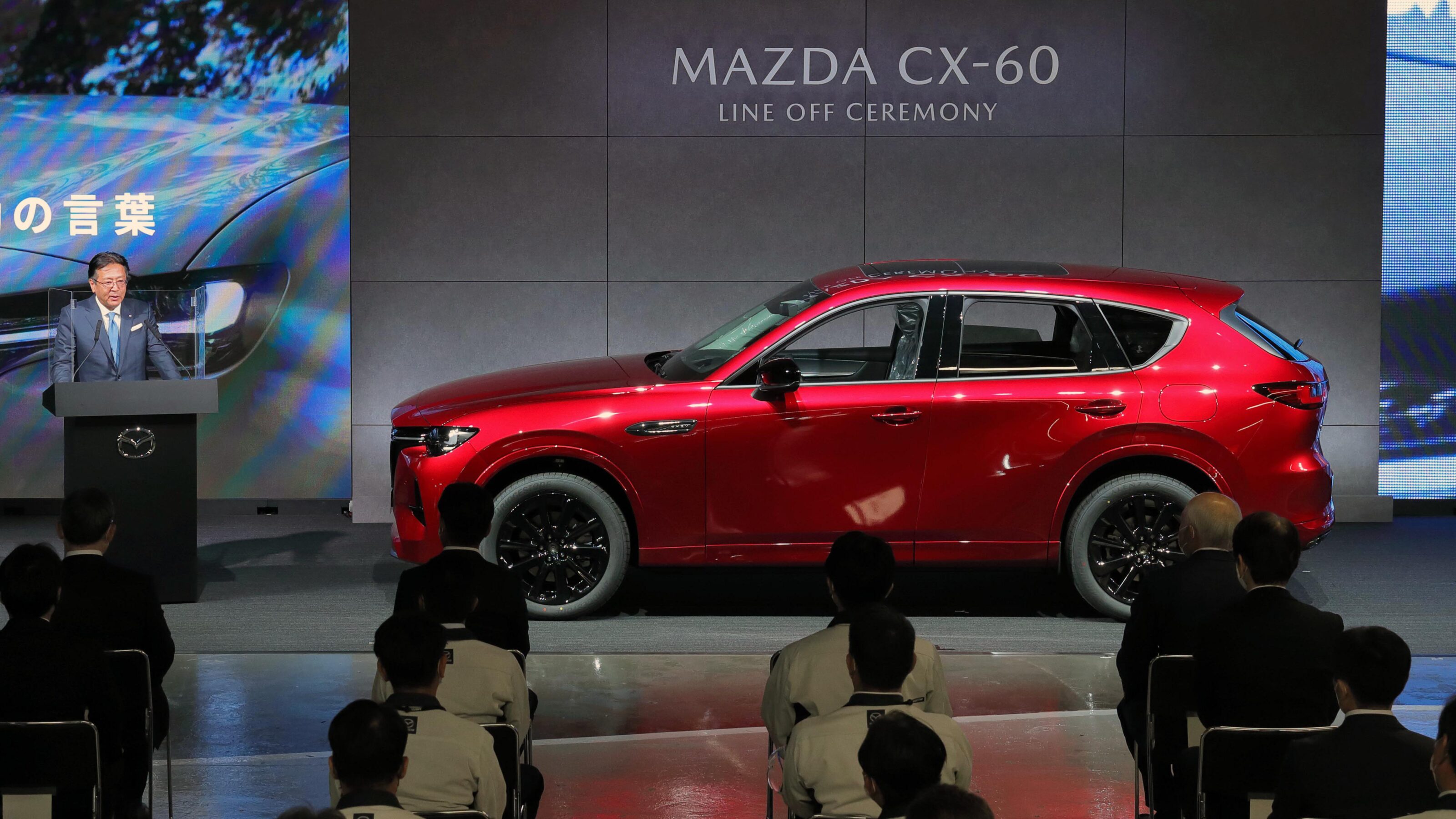
Production of the new Mazda CX-60 has begun at Mazda’s Hofu plant in Japan ahead of a global launch to begin from around September.
Mazda describes the CX-60 as its most important new model in over a decade – which, if not mere hyperbole, makes it more significant in the company’s esteem than the hugely popular second-generation CX-9 that first went on sale in 2016, and the second-gen CX-5 that debuted in 2017.
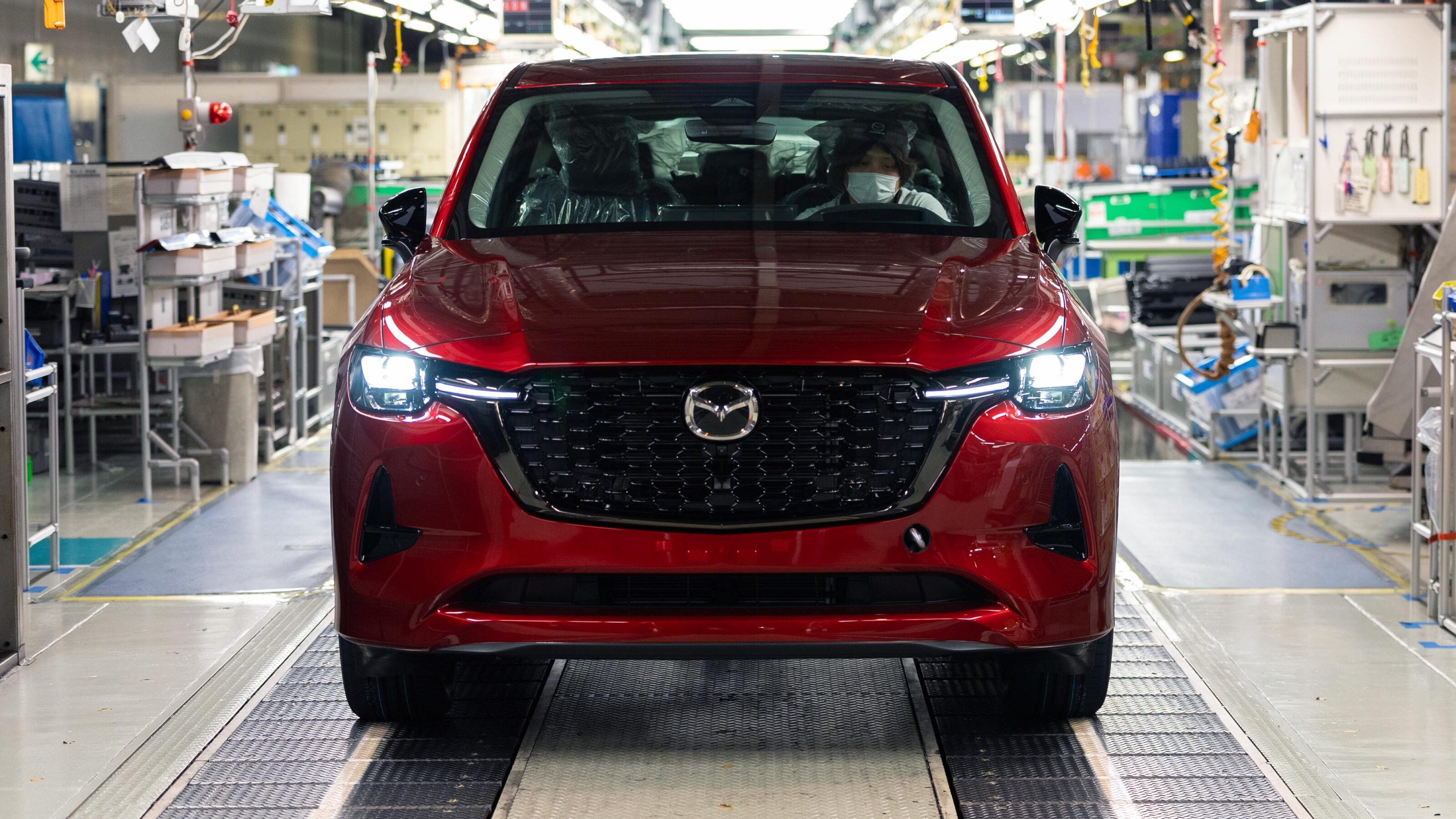
“Mazda’s new flagship represents everything that the company has built into its DNA over the last 100 years,” the company says, “from outstanding exterior and interior design to the finest Japanese craftsmanship, the latest innovations in human-centric technologies and a world-class powertrain”.
An Australian debut for the CX-60 is confirmed, as described below, but specific timing is still to be announced.
April 9, 2022: CX-60 power figures revealed
Mazda has released additional information for the 2023 CX-60 for the Japanese market, revealing power figures for its new six-cylinder diesel engine.
Debuting alongside the rear-wheel-drive CX-60, the 3.3-litre ‘Skyactiv-D’ straight-six turbocharged diesel will produce 170kW of power and 500Nm of torque, mated to an eight-speed auto sending power to a rear-biased all-wheel drive system.
The brand’s new eight-speed torque-converter is the sole gearbox option across the entire CX-60 line-up.
That 170kW, 500Nm arrangement isn’t the most powerful option, however. An electrified 48V mild-hybrid version of the diesel mill, titled ‘e-Skyactiv-D’, will also be available.
With the assistance of a 12.4kW electric motor, the boosted version will produce a combined 187kW/550Nm. The battery has a capacity of 0.33kWh.
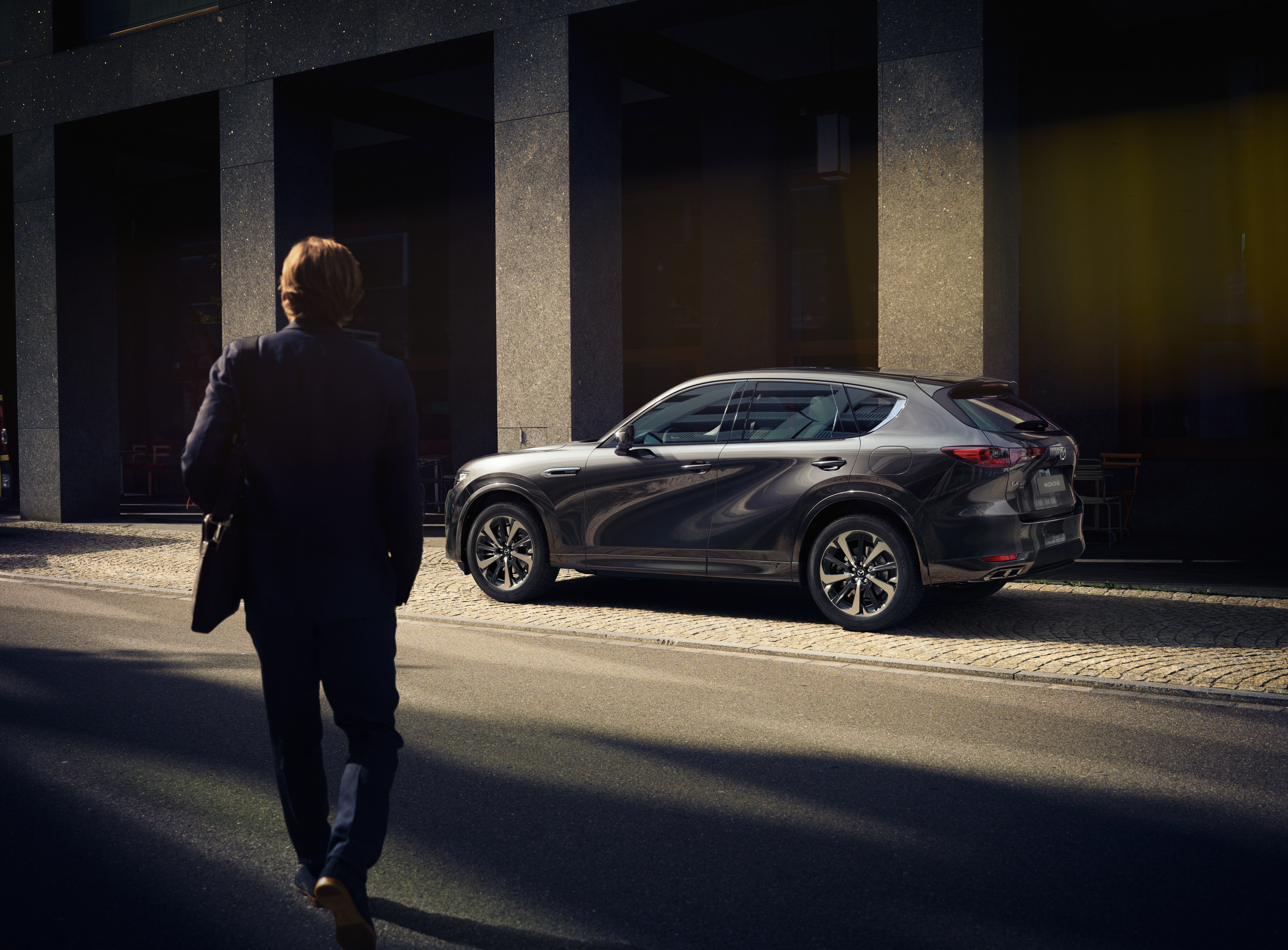
According to the Japanese marque, the mild-hybrid diesel can complete the 0-100km/h sprint in 7.3 seconds, on the way to a top speed of 220km/h.
Mazda is yet to confirm specification details for its 3.0-litre naturally-aspirated ‘Skyactiv-X’ inline-six petrol engine, however, it has confirmed the familiar 138kW/250Nm 2.5-litre four – as seen in the 3, 6, CX-30, CX-5 and CX-8 – will open the CX-60 range.
Full details for the CX-60 can be found below, including details for the plug-in hybrid powertrain.
March 25, 2022: CX-60 confirmed for Australia
Mazda has confirmed its new 2023 CX-60 will be priced from “around $55,000” when it arrives in Australia later this year, making it a genuinely semi-premium to premium segment offering.
Get the full story at the link below.
March 9, 2022: CX-60 revealed
Snapshot
- CX-60 debuts new RWD architecture, inline-six engines
- Plug-in hybrid variant also revealed with 69km EV range
- Longer and wider than popular CX-5 SUV
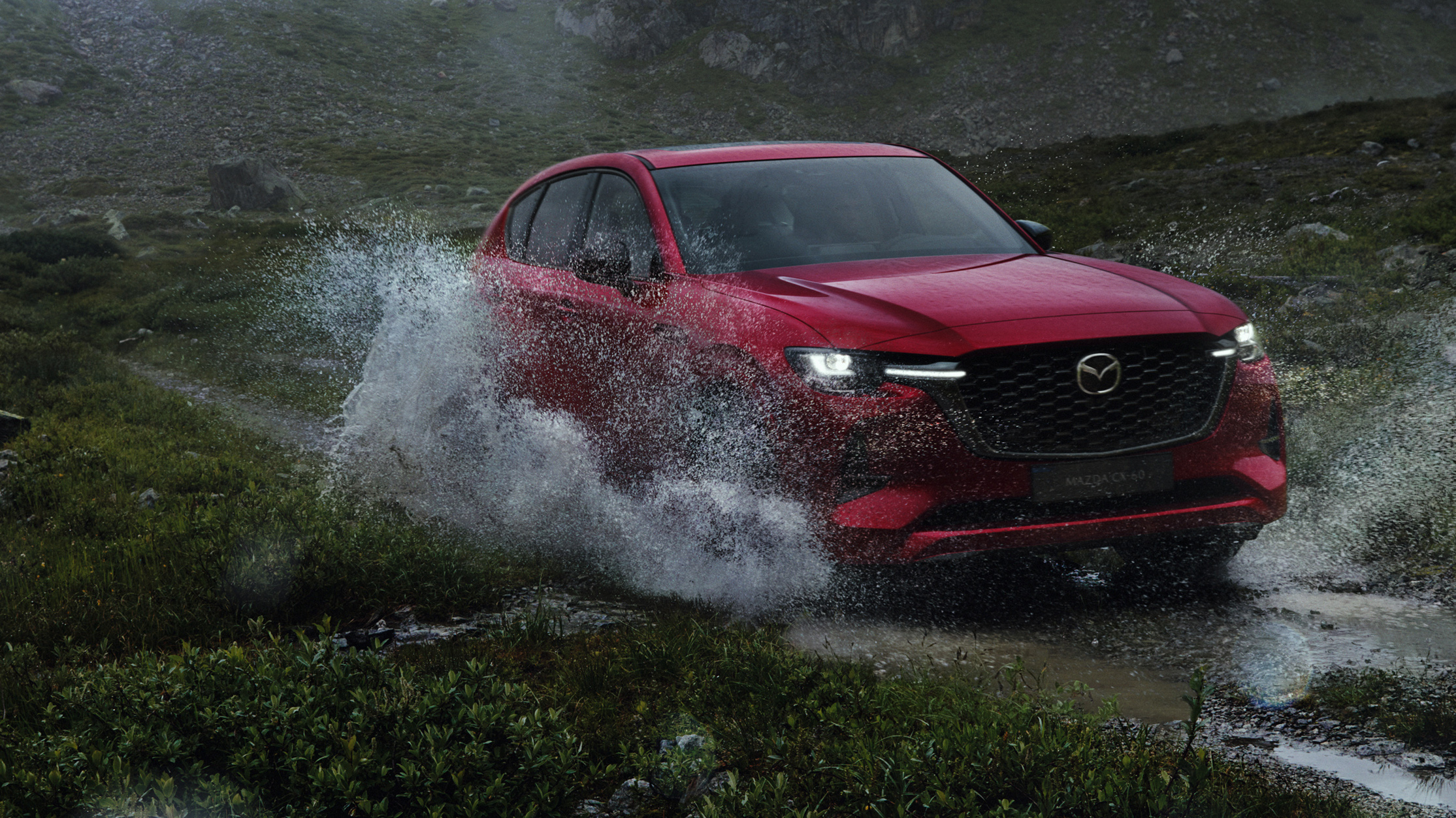
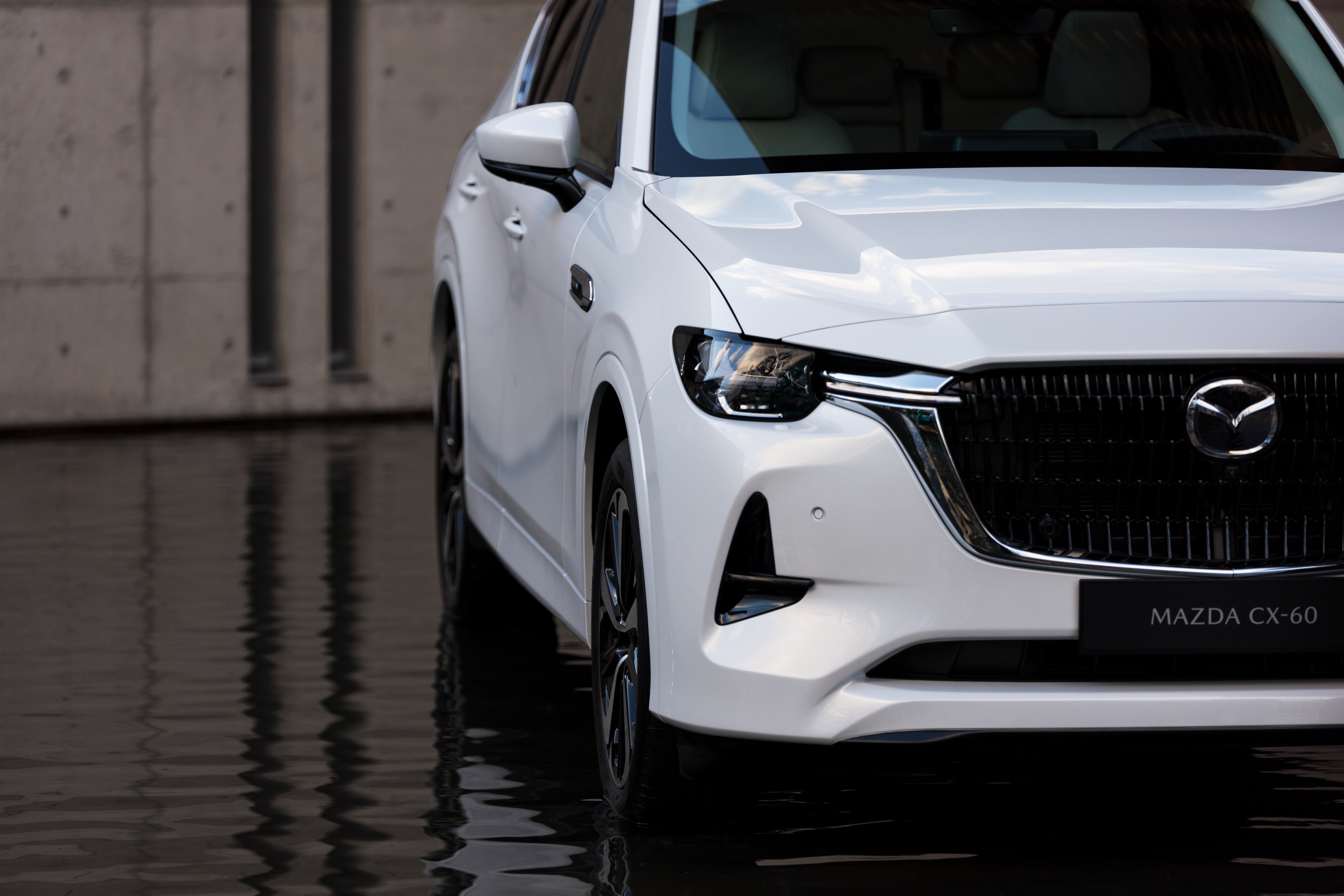
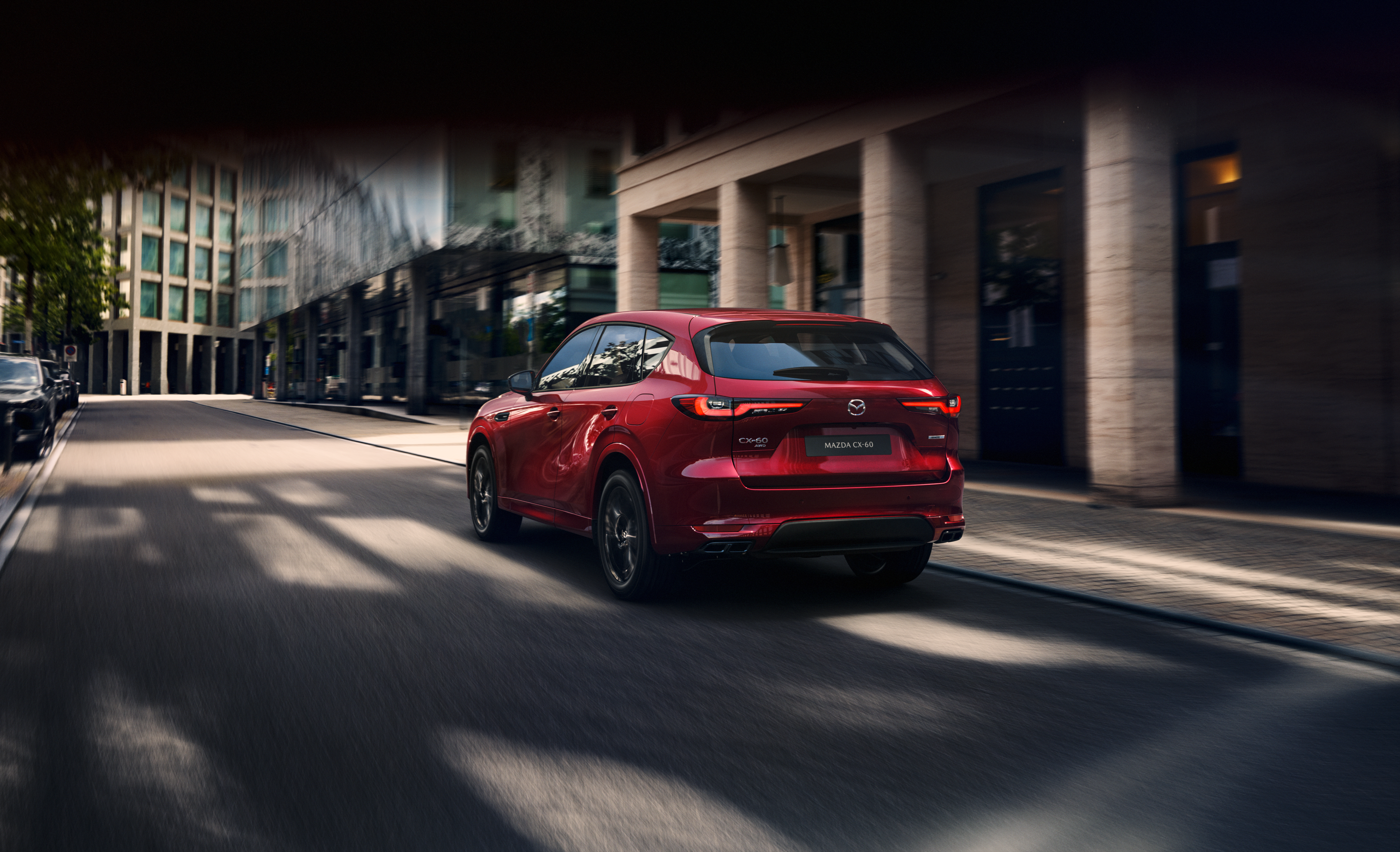
Mazda has officially taken the covers of its new CX-60, finally debuting the Japanese brand’s new rear-wheel-drive architecture, along with a pair of hotly anticipated six-cylinder engines.
The CX-60 will launch later this year as a two-row, five-seater standing between the CX-5 and CX-8 in Mazda’s local model range – debuting with evolved styling, and a more luxurious and powerful focus.
As well as including two big new inline-six engines – available in naturally-aspirated 3.0-litre petrol and 3.3-litre turbo-diesel forms – the CX-60 becomes Mazda’s first-ever plug-in hybrid, with the PHEV variant boasting power figures surpassing any other road-going model in the brand’s range.
Engine and drivetrain
The introduction of the CX-60 is a revolution for Mazda, becoming its first model to be based on the company’s new ‘Large Architecture’ platform.
Set to be rolled out across its future model range, the Large Architecture will bring more possibility for rear-wheel drive models – such as the Mazda 6 – as well as a more modular platform for electrification, allowing the manufacturer to add electrified variants of more vehicles in the coming years.
The all-important numbers for enthusiasts – power figures for those new six-cylinder engines – are still to be revealed, but we at least know the PHEV variant will have some proper kick.
Headline figures for the CX-60’s flagship PHEV variant come courtesy of its 2.5-litre, Skyactiv-G four-cylinder petrol engine, paired up with a 129kW electric motor and a 17.8kWh battery pack to produce a total system output of 241kW and 500Nm.
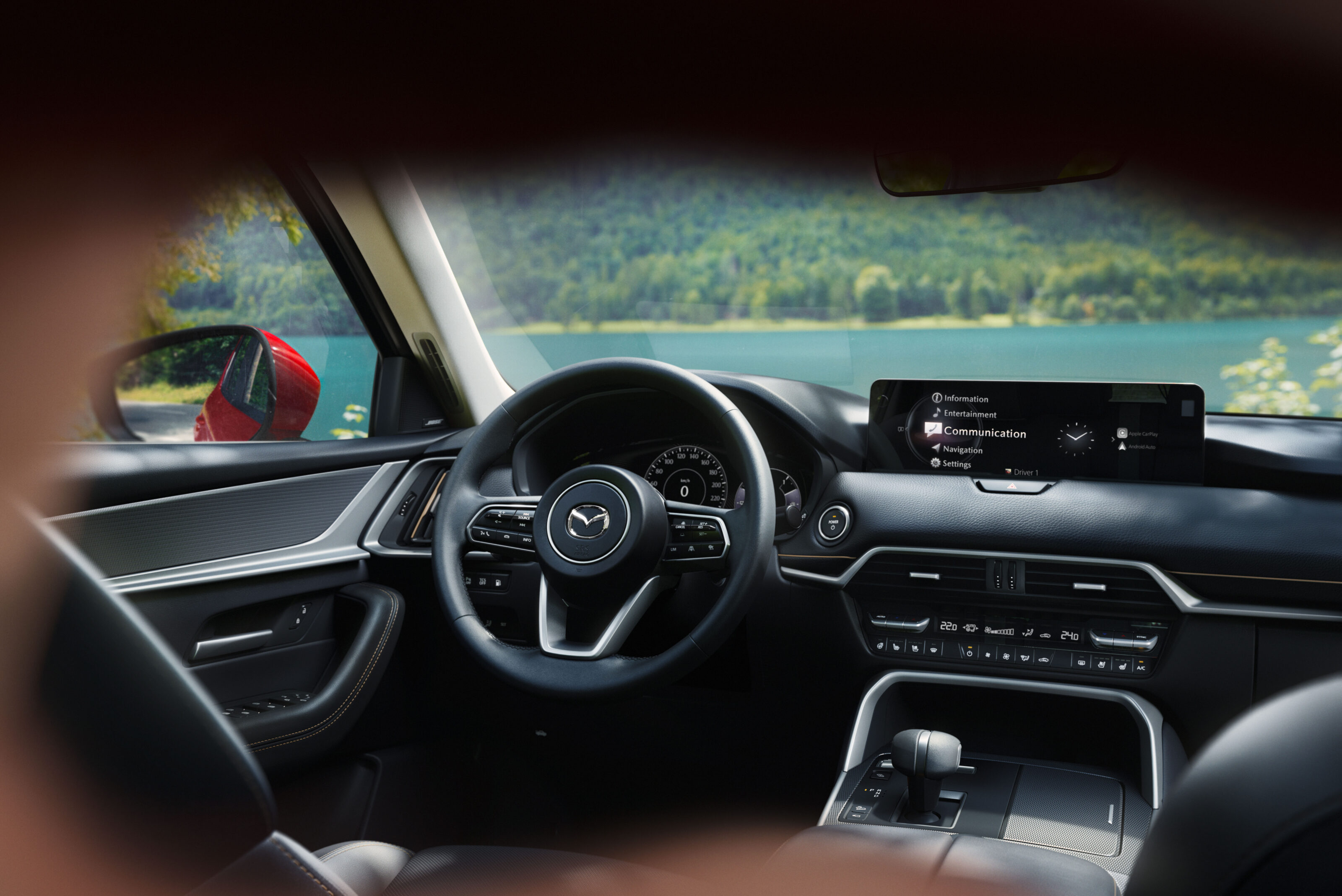
These numbers not only make it the most powerful PHEV in its class, the CX-60 also becomes Mazda’s most powerful road car in its history, with the electrified drivetrain, eight-speed automatic transmission and all-wheel drive system allowing the SUV to complete the 0-100km/h sprint in just 5.8 seconds.
Fuel consumption is rated at a claimed 1.5 or 1.6L/100km (depending on whether the car is specced with 18- or 20-inch wheels respectively) while Mazda also says it can achieve an electric-only driving range of up to 69 kilometres – when driving in the city with the lighter 18-inch wheels fitted.
Compatible with 220-240V AC chargers, the CX-60’s onboard battery can be charged from empty in four hours.
Specifics have not yet been released, but the new model will also be available from launch with a choice of two internal combustion engines – a 3.0-litre straight-six Skyactiv-X petrol or a 3.3-litre straight-six Skyactiv-D diesel, both of which will feature Mazda’s 48-volt mild-hybrid system.
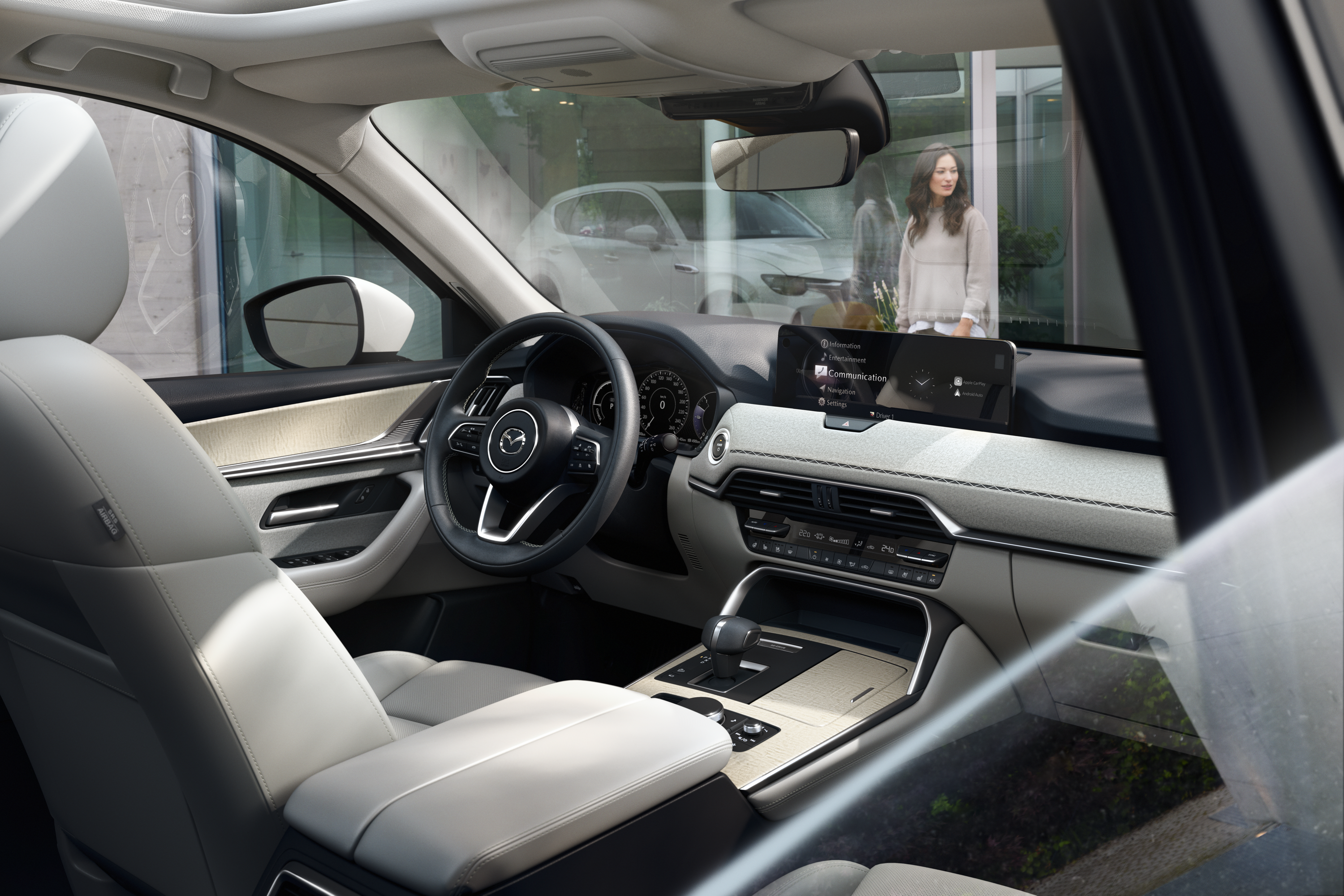
Features
While details on an Australian model will come later, in Europe the vehicle is available in four grades, with the Prime-line opening the CX-60 range with standard equipment including:
Prime-line
| Kinematic Posture Control (KPC) |
| Black honeycomb grille |
| Black exterior trim |
| LED headlamps |
| 18-inch wheels grey metallic alloy wheels |
| Eight body colours; jet black, deep crystal blue, sonic silver, platinum quartz, arctic white, rhodium white, machine grey and soul red crystal |
| Adjustable steering column with 45mm of rake, 70mm of rake movement |
| 12.3-inch digital dash |
| 12-inch infotainment screen |
| Eight-speaker audio system |
| DAB radio |
| Bluetooth |
| Apple CarPlay/Android Auto |
| Satellite navigation. |
Stepping up to the Exclusive-line, buyers are treated to a host of equipment upgrades, such as:
Exclusive-line
| Piano black grille |
| Piano black exterior trim |
| 20-inch silver metallic alloy wheels |
| Smart keyless entry |
| Wiper de-icing |
| Front and rear signature illumination |
| Panoramic roof |
| Black faux-leather interior trim with titanium piping |
| Head-up display |
| Heated steering wheel |
| 10-way power adjustable front seats with heating and ventilation |
| Glove box and front footwell illumination. |
The Takumi variant scores more exclusive features, from a redesigned front end to new interior materials:
Takumi
| Exclusive front bumper design |
| Bar type piano black grille |
| Front signature wings, side signatures and glazing surrounds with bright metal finish |
| 20-inch black metallic diamond-cut machined alloy wheels |
| White Nappa leather interior trim with natural wood grain and high quality woven textiles |
| Maple wood trim |
| Rear footwell lighting |
| Black leather wrapped steering wheel with white stitching and power adjustment |
| Driver Personalisation System (face recognition used for seat, HUD and door mirror adjustment). |
Finally, the range-topping Homura grade gains unique features to set it apart as the flagship of the range:
Homura
| Exclusive front bumper design |
| Piano black honeycomb grille |
| Jet black signature wing and side signature plating |
| All-black door mirrors and exhaust |
| 20-inch black metallic alloy wheels |
| Black interior |
| White ambient lighting (front and rear door trim). |
Dimensions
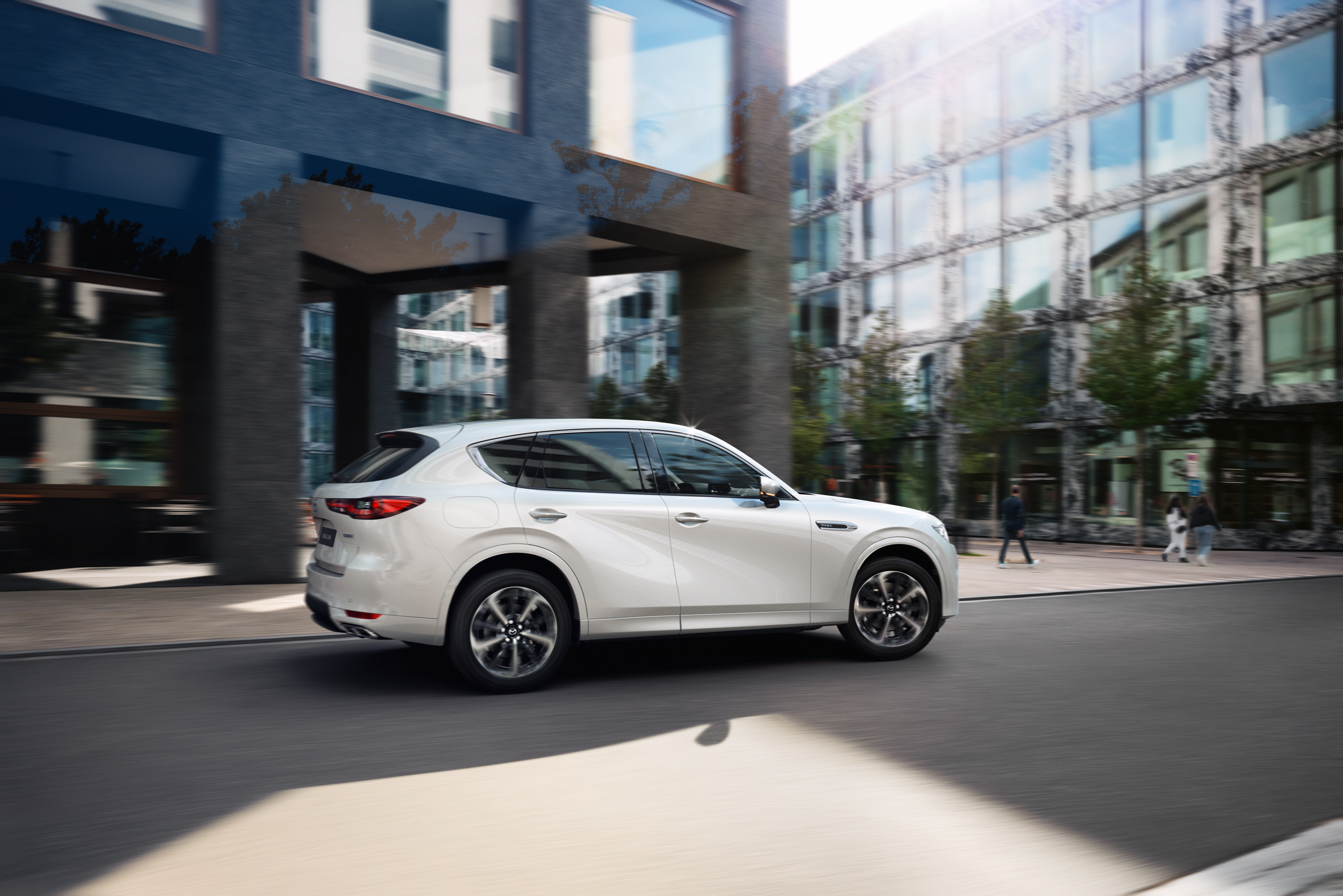
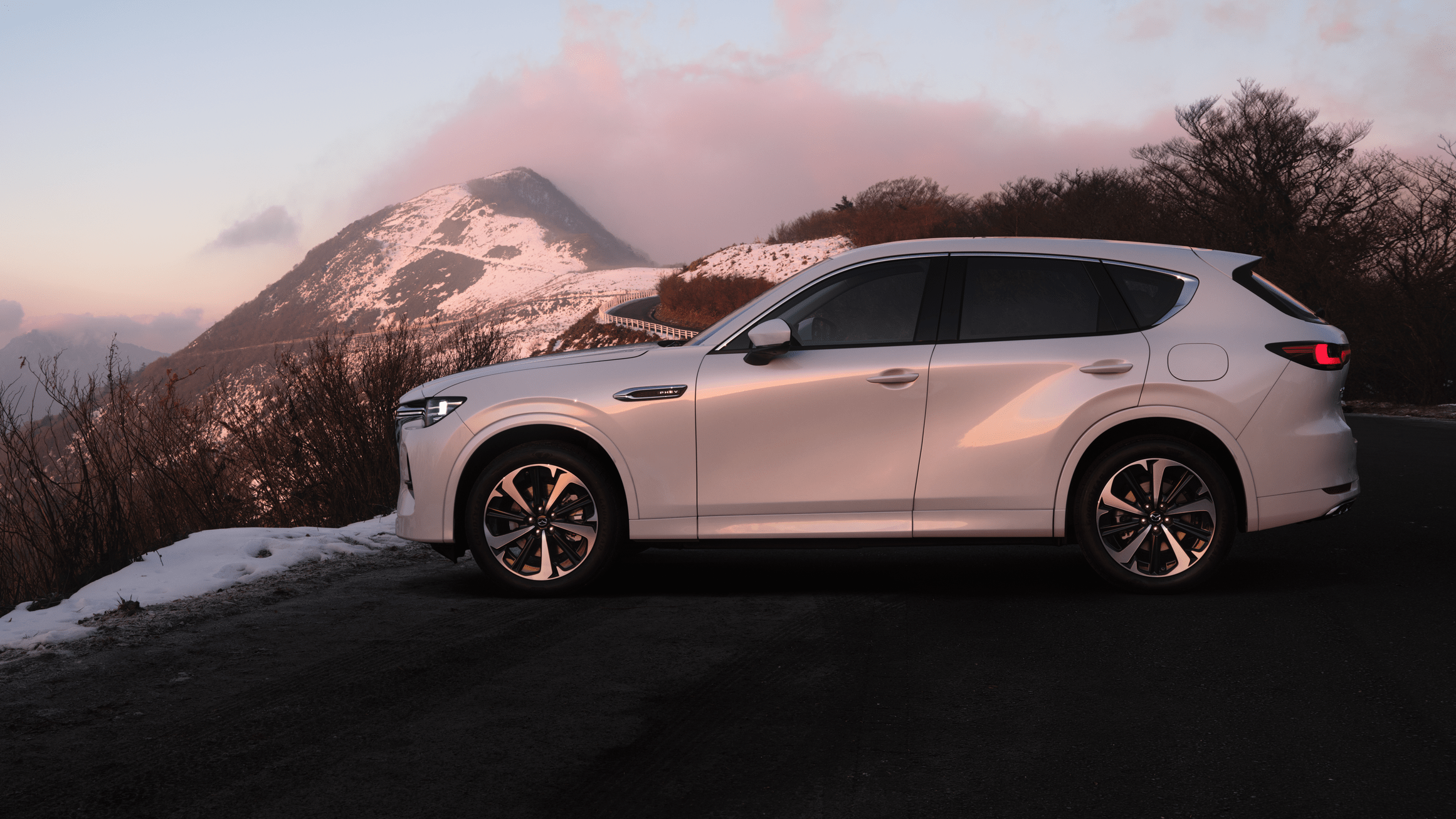
Coming in to the Mazda range above the existing and popular CX-5, the CX-60 measures up at 4745 millimetres in length, 1890mm wide, 1680 mm high with a 2870mm wheelbase.
The larger overall dimensions allow for it to carry up to 570 litres in the boot with the second row of seats up, with its capacity jumping up to 1726 litres when the seats are folded flat.
According to Mazda, CX-60 offers 1504mm of shoulder room in the first row and 1441 in the second row, an increase of 44mm and 50mm respectively over the CX-5.
At its minimum weight, the CX-60 tips the scales at 1980 kilograms when fitted with 18-inch wheels, bumping up to 1995kg when the 20-inch alloys are fitted, while its maximum permissible weight remains at 2667kg.
Safety
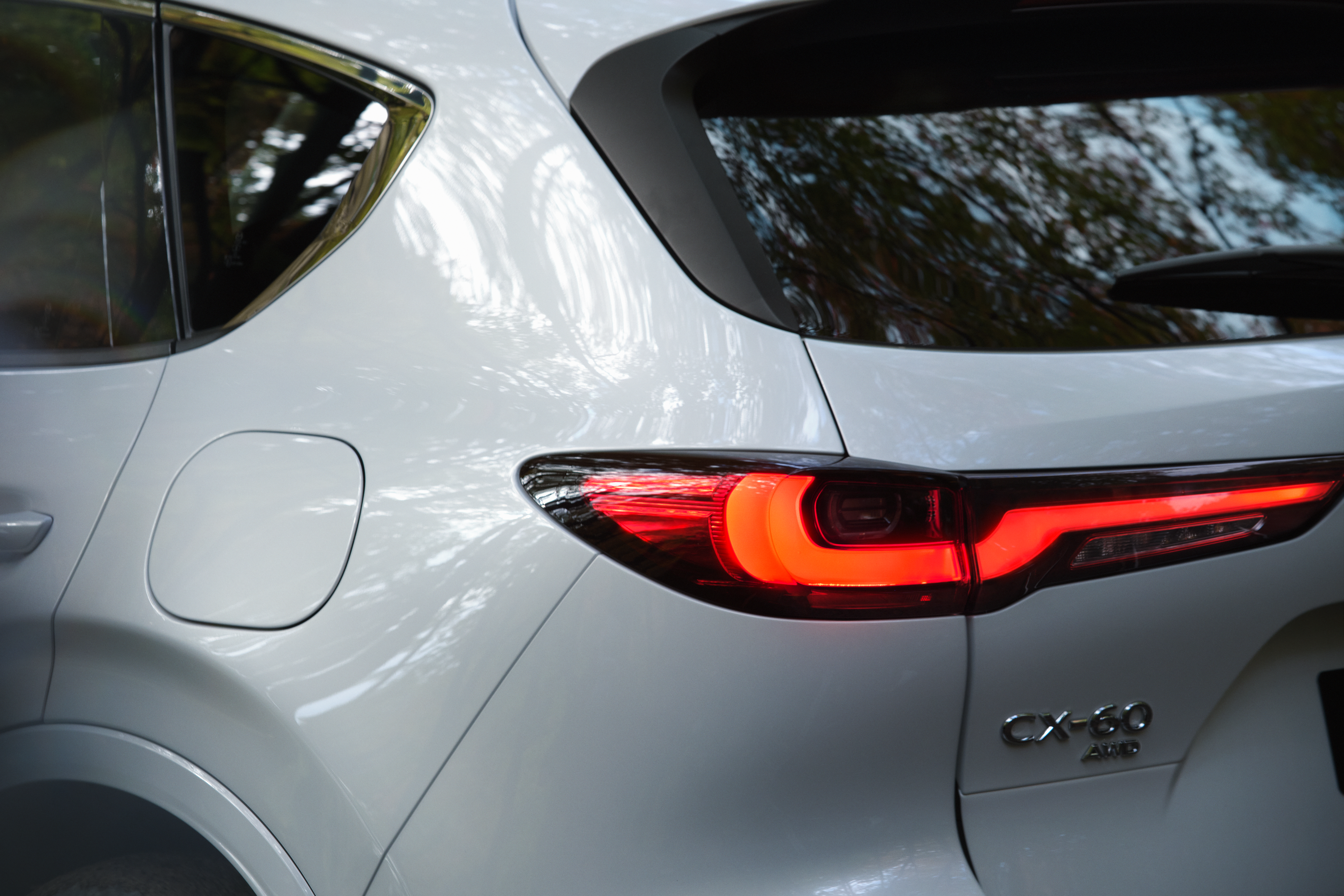
Mazda is targeting a five-star ANCAP safety rating for the CX-60, boosted by the fitment of a centre and rear side airbags as well as a host of tech equipment, including but not limited to:
| Blind spot monitoring with rear cross traffic alert |
| See-through view |
| Electronic brakeforce distribution |
| Dynamic stability control |
| Hill launch assist |
| Hill descent control |
| Lane keeping assist with steering assist |
| Traffic sign recognition |
| Drowsiness detection |
| Cruise control (i-ACC); now incorporating speed limits from Traffic Sign Recognition |
| Vehicle exit warning |
| Turn across traffic assist |
| Rear emergency brake assist with pedestrian detection |
| Advanced smart city brake assist |
| Emergency lane keeping. |
Availability
Mazda is set to roll out the CX-60 in Europe from the middle of the year, after production begins in Japan on March 11, although Australian buyers will have to wait until later in the year before local pricing and features are revealed.
UPDATE 1: PHEV as basic hybrid
Statute of liberty?
- Price as tested: $63,885
- This month: 371km @ 5.8L/100km
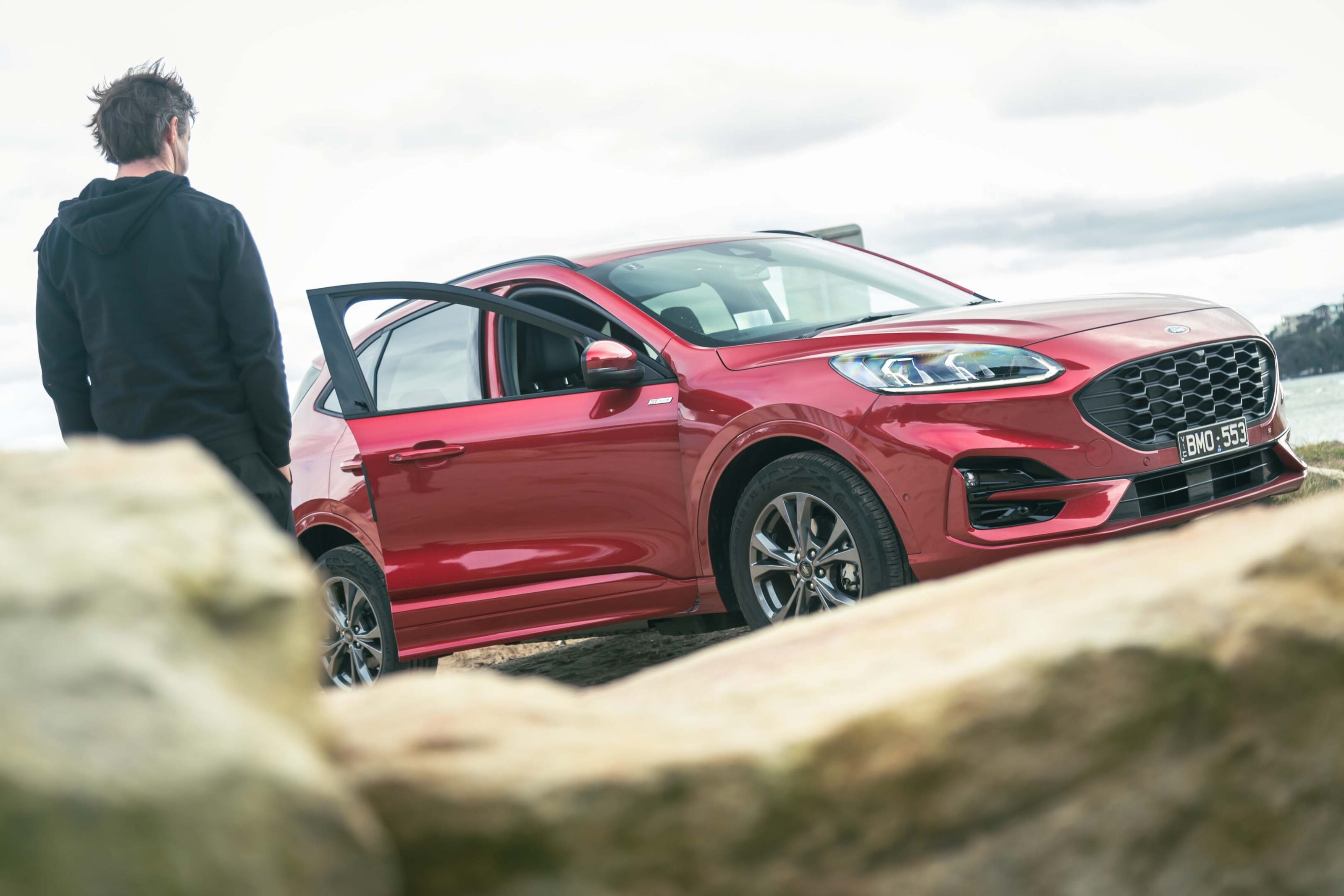
I always thought that it was unfairly ignored – like many of Ford’s excellent range – as the old car had the grunt few in the segment had and kind of led the way for sporty affordable SUVs with the ST-Line version. And had been hampered for a while by the terrible Kuga name before reverting to Escape.
We were promised – promised – the plug-in hybrid not that long after launch but it wasn’t until June 2022 that the PHEV arrived.
The PHEV drops the 183kW turbo four of the ICE ST-Line for a 2.5-litre Atkinson-cycle four-cylinder with an electric motor and a 14.4kWh lithium-ion battery.
With a combined output of 167kW, power is down but there are the obvious benefits of electrification to soften the blow. Ford doesn’t give a torque figure, but it’s evidently reasonably solid.
In terms of driving modes, you can choose from:
- EV Auto (which is also the default)
- EV Now (which forces electric-only)
- EV Later and EV Charge (uses the engine to charge the battery)
I kid you not, the engine kicked in for the first time just 900 metres from my front door, which is an epic achievement really because a good chunk of that run was at 100km/h and most of the rest of it at 80km/h. If I had taken the slower, less motorway-ey way home I’m sure it would have made it all the way on electrons.
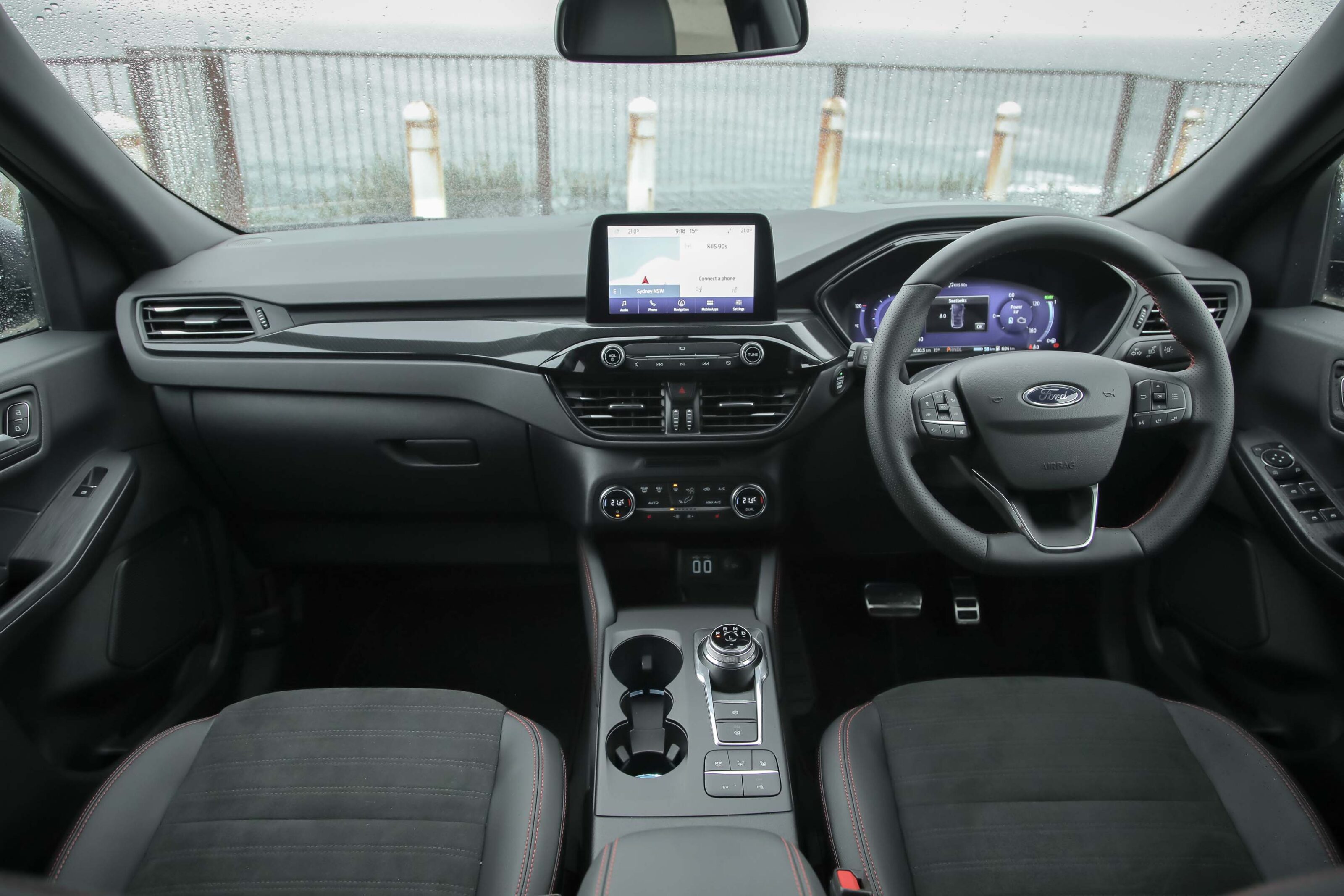
I kid you not, the engine kicked in for the first time just 900 metres from my front door, which is an epic achievement really because a good chunk of that run was at 100km/h and most of the rest of it at 80km/h.
Our Content Director Jez Spinks eked out 57km of electric-only driving too, and he doesn’t spare the rod. So I’m optimistic that the battery range is basically bang-on for normal driving and supports my hypothesis that if you’re disciplined with the charging and have an average commute (between 15 and 30km per day) you’ll rarely feel the 2.5-litre kick into life.
Speaking of charging, the supplied charger will get you from E on the dash (in truth, the battery is never fully empty) to full in six hours, so if you have a domestic 240-volt outlet handy at work or home, it’s not especially difficult to keep up the charge.
Ford’s official 1.5L/100km on the combined cycle is obviously ridiculous (not Ford’s fault, the testing regime is meant for ICE not PHEV), and it’s a fair way below the ST-Line’s 8.6L/100km figure. The last time I drove an ICE Escape, I got 11.2L/100km.
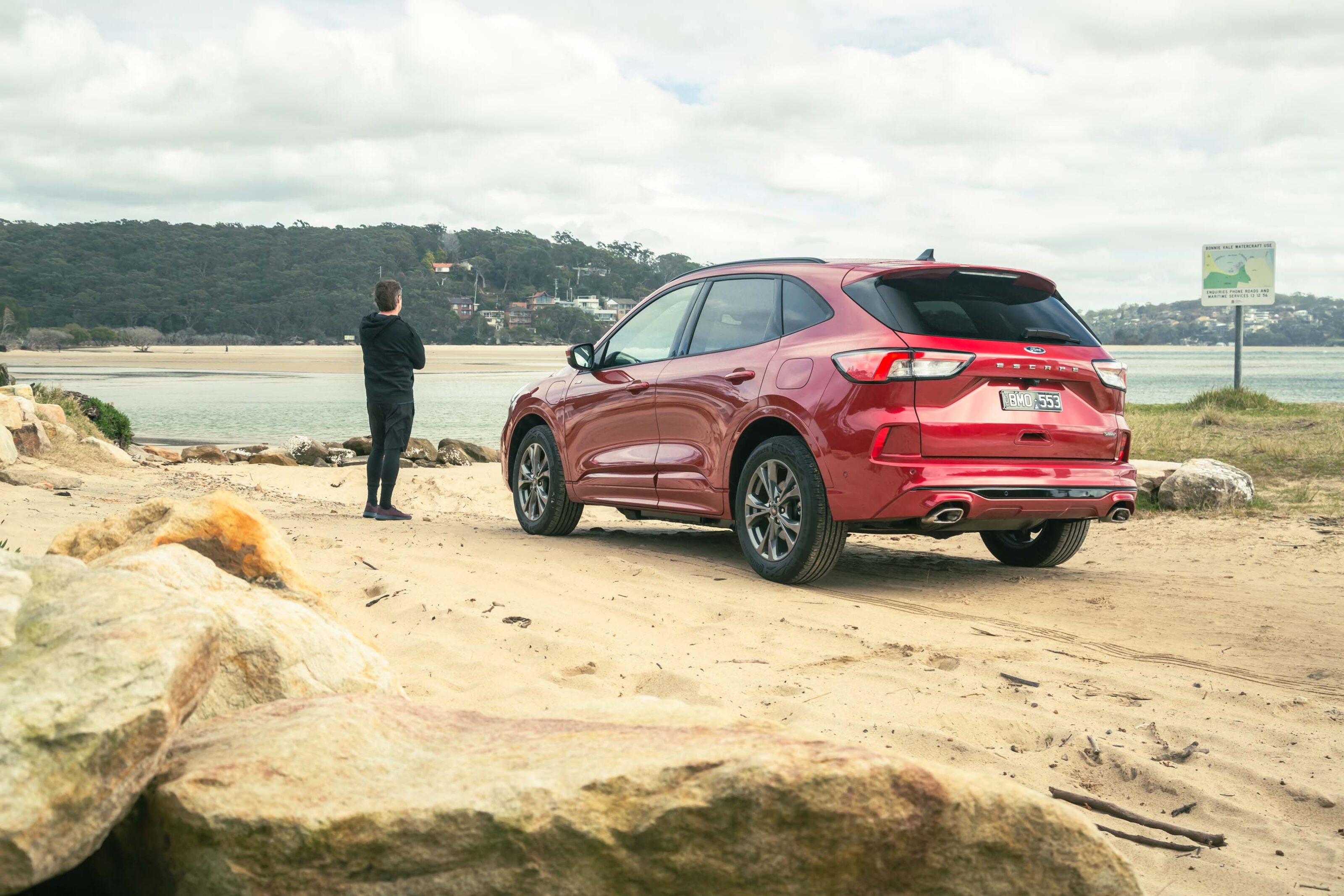
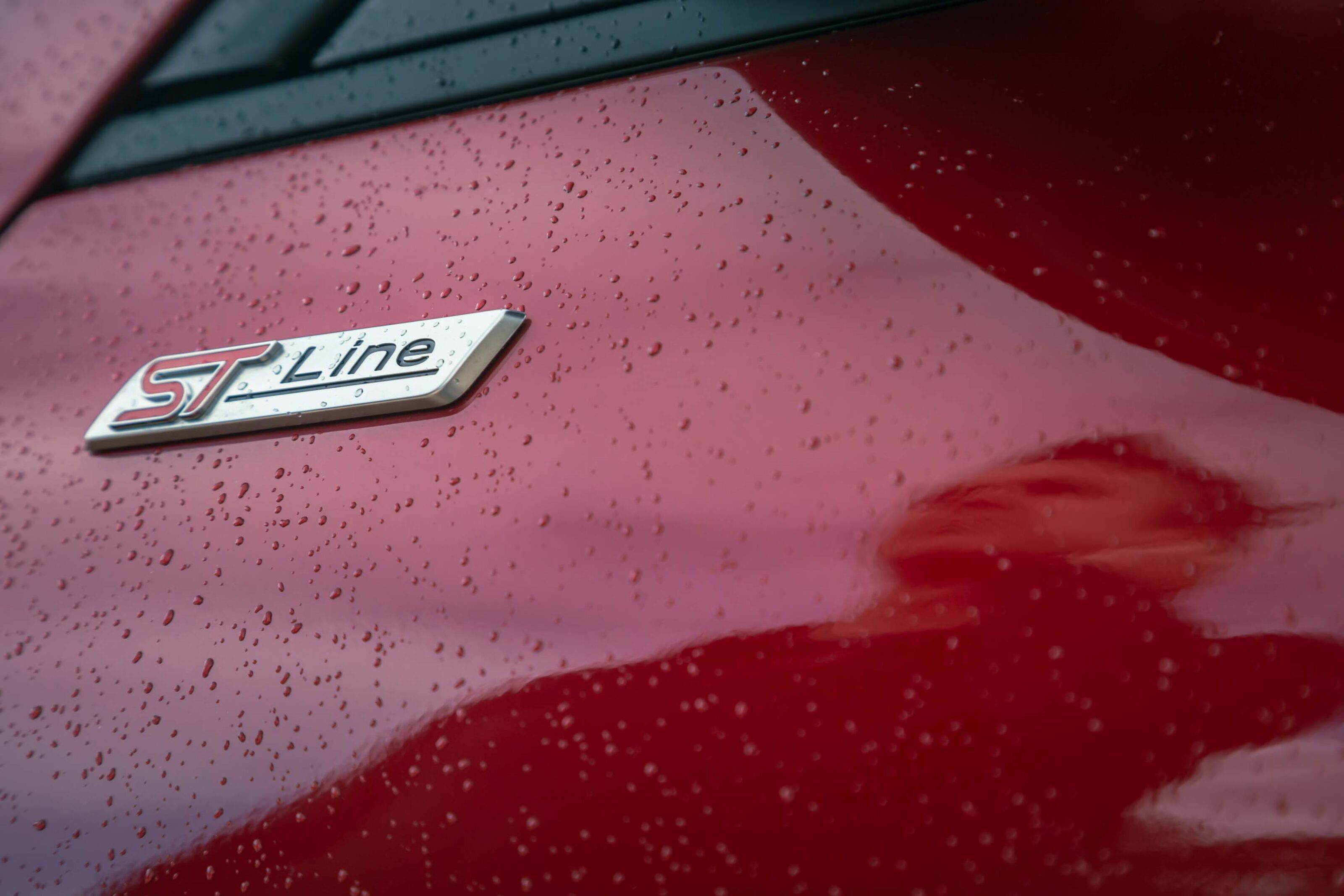
Something that initially mystified me was that Ford has chosen to attract the PHEV’s presumably sustainability-minded buyers with the sport ST-Line specification, which brings the price to a solid $59,990 drive away.
That’s quite a lot of money, but I guess if it was based on the Vignale, it would crack seventy grand, in part because the price difference between the FWD ST-Line and the ST-Line PHEV is over $16,000.
The ST-Line does leave the factory with a fairly decent specification, including 18-inch alloys, dual-zone climate control, a mix of fake leather and fake suede on the seats, wireless charging, an 8.0-inch touchscreen, digital dashboard, adaptive cruise control, ten B&O-branded speakers for the audio, keyless entry and start, powered driver’s seat, centre rear armrest, front and rear parking sensors and a space-saver spare.
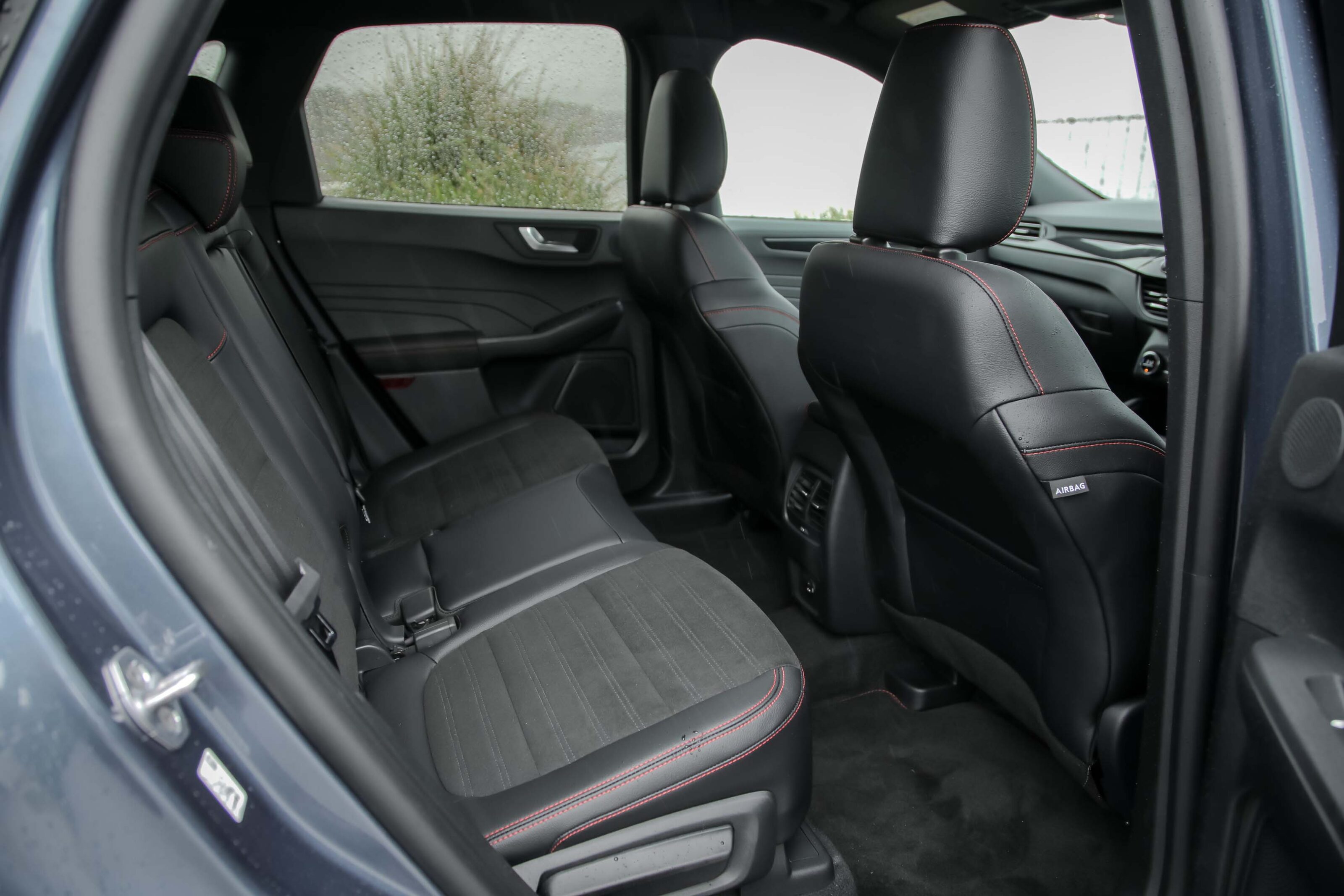
Bizarrely, if you want to upgrade to Matrix LED headlights they’re part of the $1950 ST-Line Option Pack which also has the electric tailgate and heated seats, which seems awfully generous for the money.
Another pack, the $1500 Parking Pack adds auto parking, a forward-facing camera and the funny little door guards that flip out when you open the door and are themselves a marvel of engineering. The price of that pack seems a little stiff, though.
With both of these fitted and Rapid Red paint for $695, the driveaway price – in NSW at least – of my Escape ST-Line PHEV came out at $63,885.
On the safety front, the Escape ships with six airbags, ABS, stability and traction controls, as well as forward AEB with pedestrian detection, forward collision warning, reverse cross-traffic alert, evasive steering assist, traffic sign recognition, blind-spot monitoring, lane departure warning, lane keep assist, driver impairment monitor and auto 000-dialling after a big enough crash if your phone is connected.
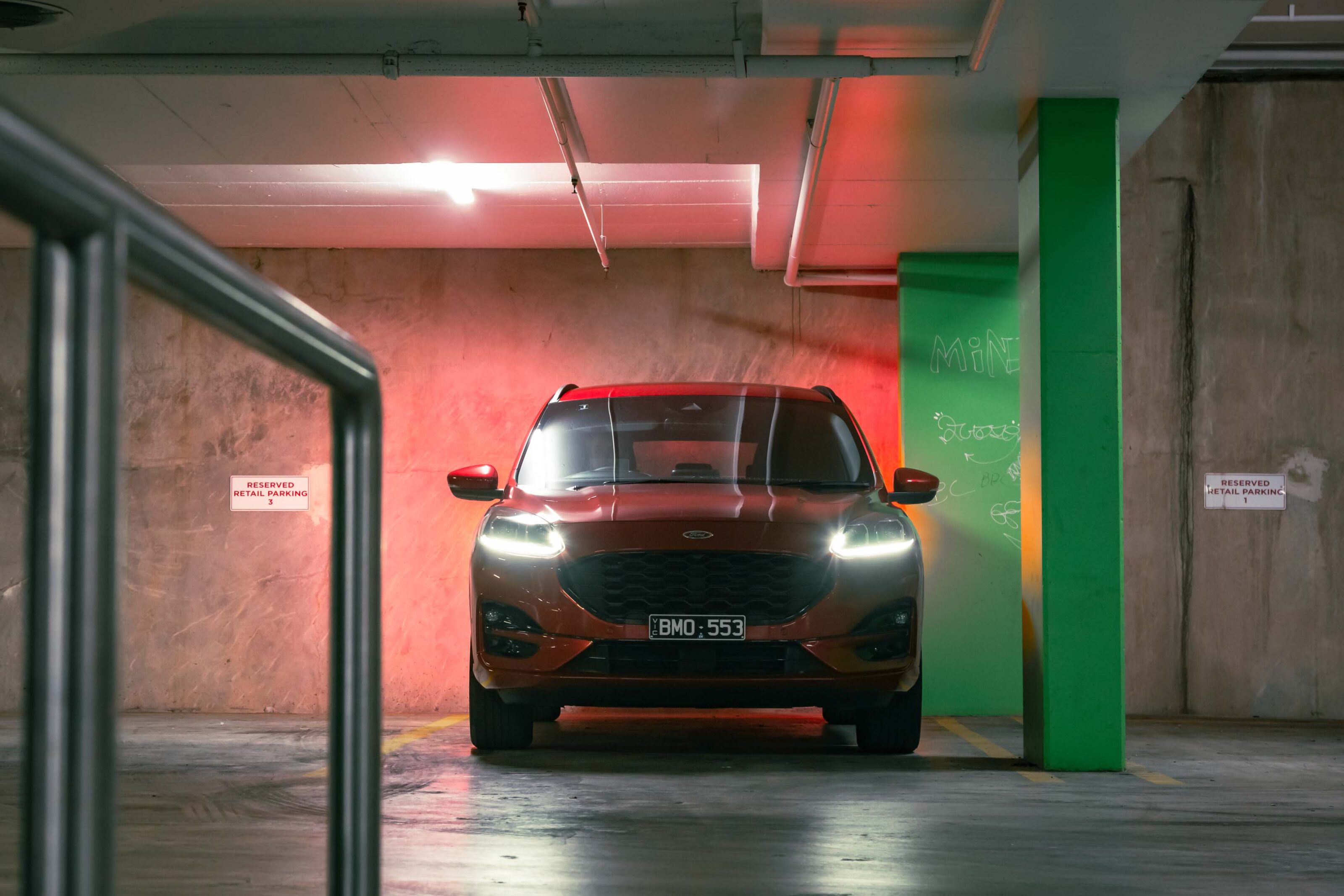
You also get three top-tether and two ISOFIX restraints.
We’ve got the Escape for three months. It will be in my hands for two of them before I hand it over for the final month to Jez Spinks while I take a long holiday that I cannot in all good conscience call well-earned.
In both households, though it will be the car that we use most days, ferrying ourselves and/or our kids around, doing the shopping, the gym and a longer trip with a full charge before we leave to see what a full battery and tank’s range looks like.
The PHEV that makes a decent hybrid when you’re lazy
- Price as tested: $63,885
- This month: 427km @ 5.1L/100km
I have written before that it takes a lot of discipline to get the most of a plug-in hybrid, and the fact that it has a combustion engine is the enemy of discipline.
“Battery’s flat,” says the car. “Time to recharge.”
“Ah, bugger,” I reply. Well, not really, this is just some expositional, fictional dialogue to illustrate the point. I don’t talk to cars. Much.
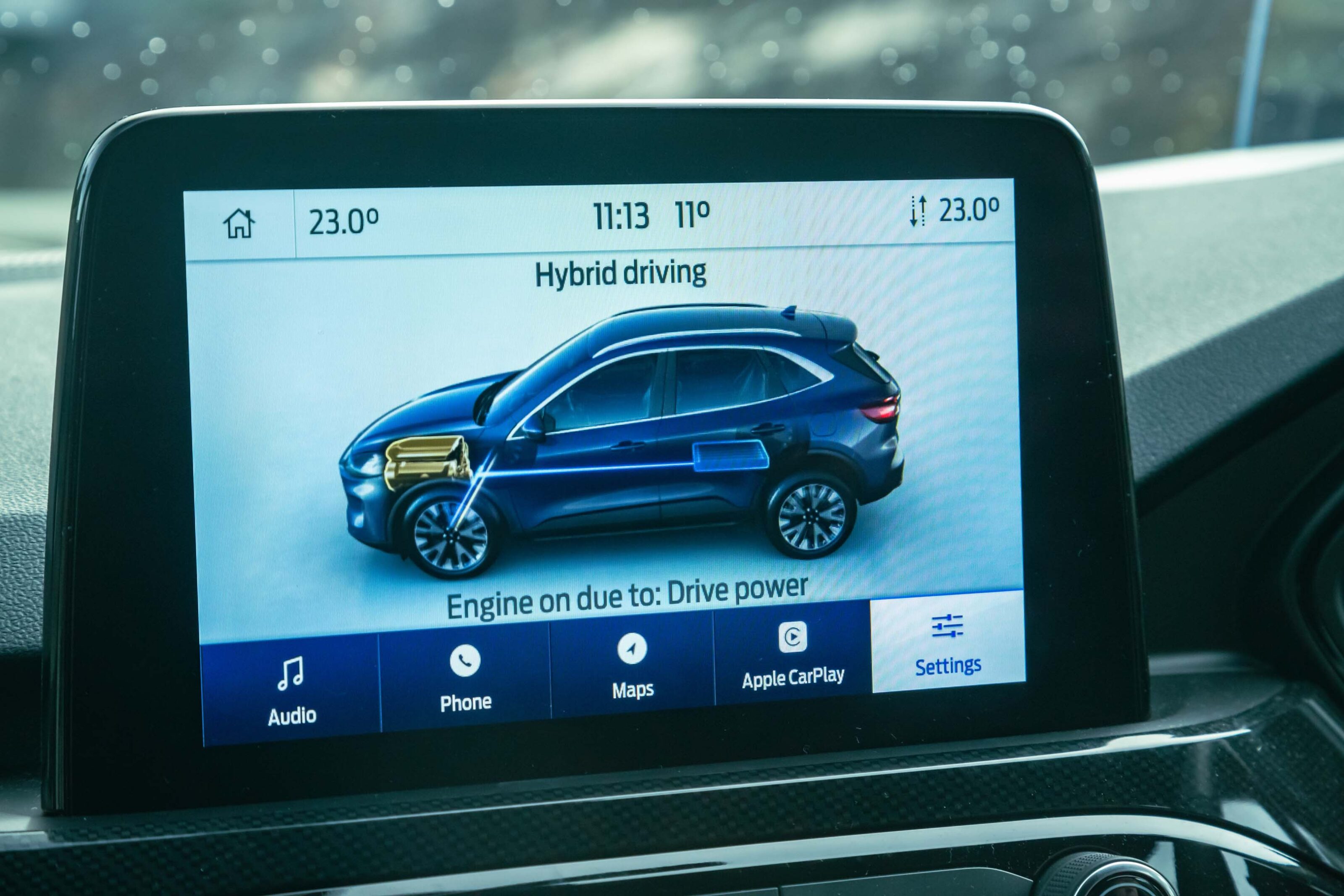
“ So I’ve switched on the engine,” the car quickly reminds me. “So now I’m a normal hybrid.”
And so the days and weeks go by where you think, “Oh, yes, I need to plug in,” and the car itself has rage-quit on reminding you. Thing is, when it’s acting just purely as a hybrid, this car is remarkably effective.
This month we’ve been bombing around in it a fair bit because life suddenly got very busy. It took us up to the Blue Mountains on a cold, wet Saturday in blissful comfort. The Escape is a terrific cruiser, quiet and frugal, knocking out a trip figure of 4.1L/100km at motorway speeds and dealt with the ascent and descent of the lower Blue Mountains.
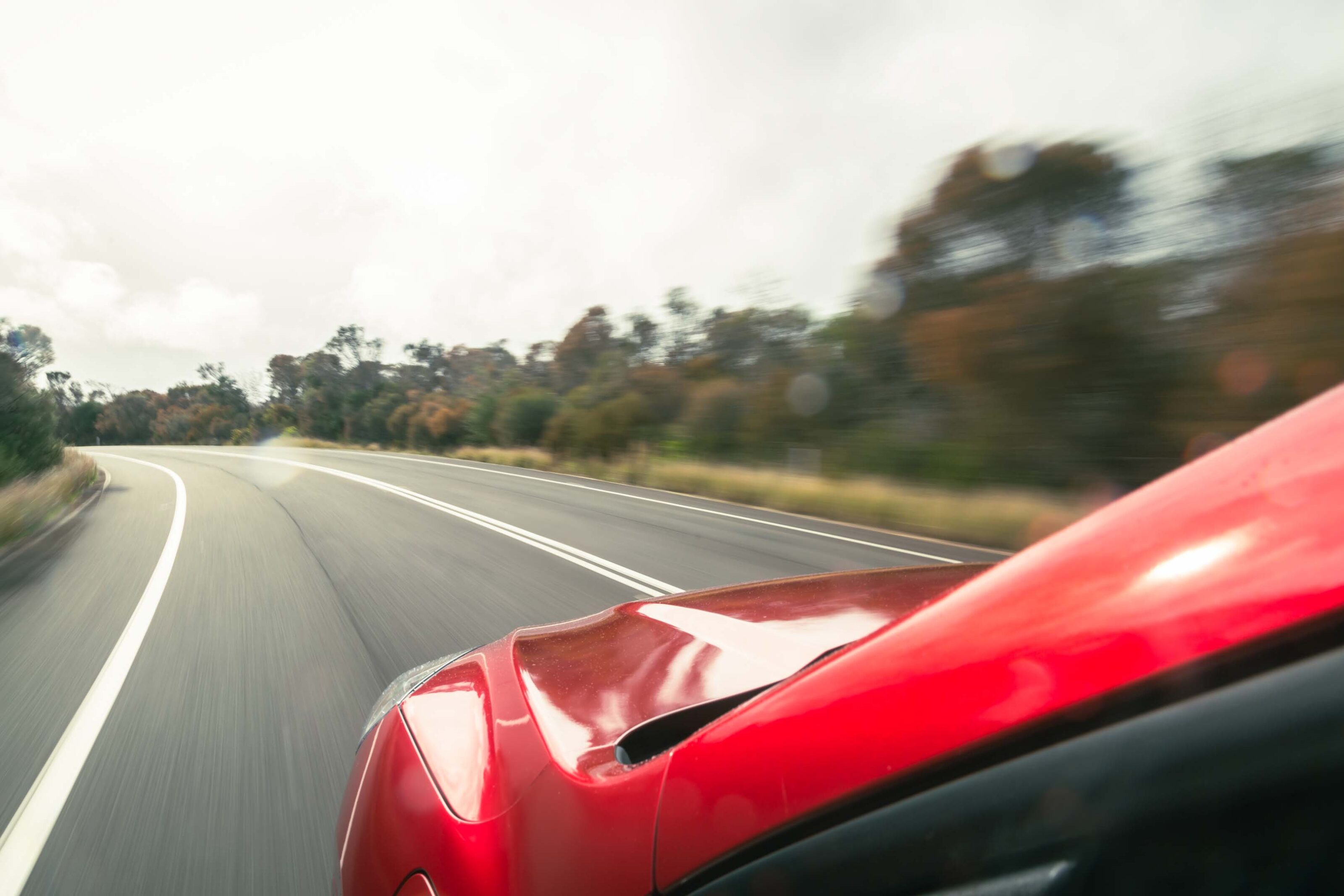
The big ballooney Continental tyres are quiet even on the disastrous stretches of the M4 and M5 and there’s barely a rustle of wind noise from the body or mirrors. The seats are so comfortable for the long ride, gripping you well with their mix of fake leather and Alcantara inserts. The slightly spongey steering wheel even starts to make sense.
It performs well on the freeway. It’s not as punchy as the turbo-engined ST-Line on which the Australia PHEV model is based, but overtaking is still better-than adequate and you’ll rarely wonder if you’ve made the right decision to pull out. The ICE engine isn’t the quietest when you’ve called it into action with a floored throttle, but it’s not going to ruin your day.
Watching the hybrid system diagram telling you which way the power is flowing and when the engine is on or off is really very instructive. In the early days, hybrids weren’t that great at the fast stuff, really making more sense in suburbs harvesting energy.
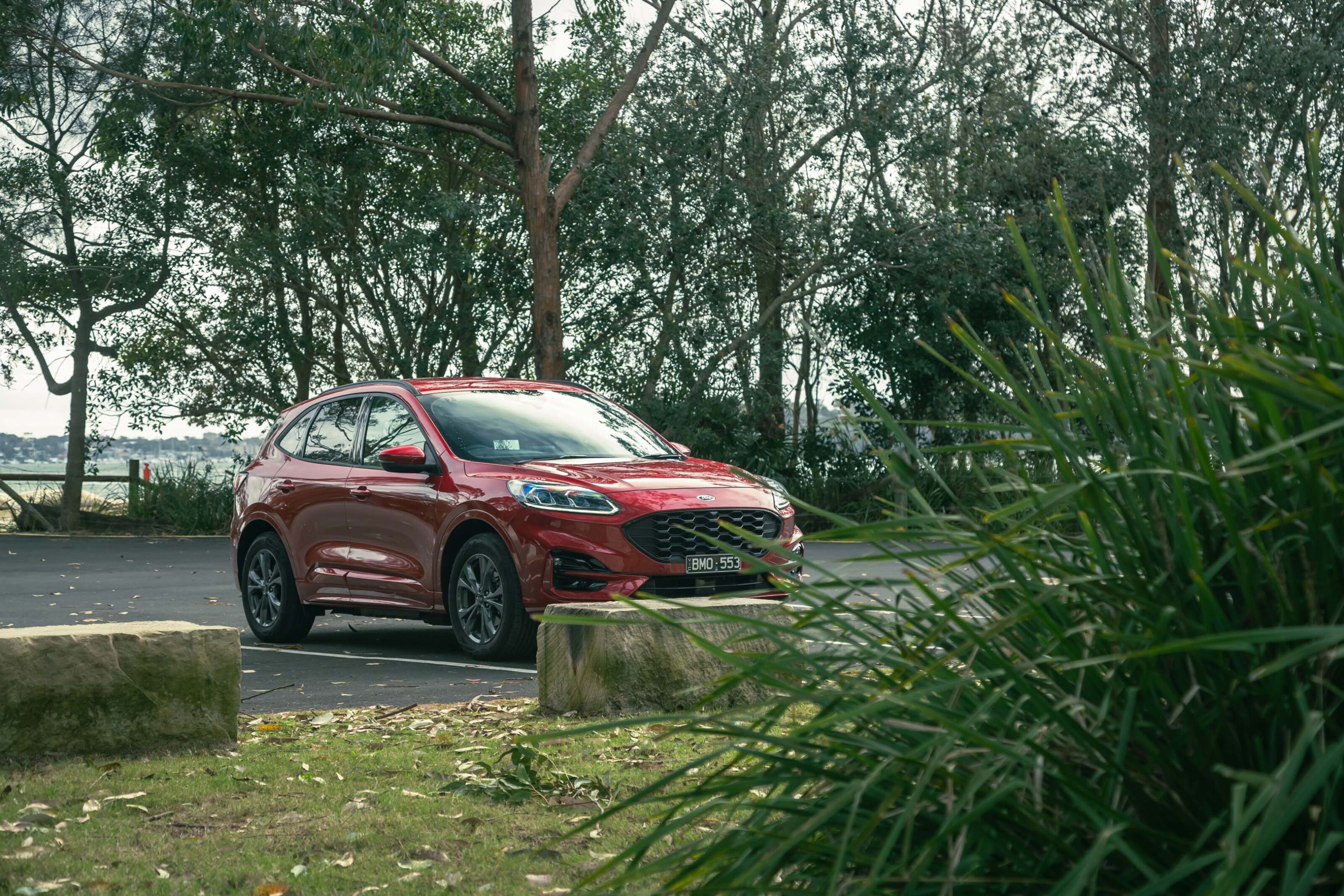
It performs well on the freeway. It’s not as punchy as the turbo-engined ST-Line on which the Australia PHEV model is based, but overtaking is still better-than adequate
The Escape also has a neat trick of telling you how many kilometres have passed on hydrocarbons and how many on electrons. Even with the big motorway runs, the Escape is still moving on electricity better than half the distance. The first month’s electricity percentage was 61 percent, while the second dropped slightly to 58 percent.
There’s another reason this car is good for road trips. Sitting in the car watching the fog roll down into Megalong Valley, bakery treats in hand, the car sat quietly with the heater ticking over, the heated seats on and the 2.5-litre engine off.
One of the great advantages of the big battery is that even when you haven’t plugged in, it harvests plenty off the brake pedal and keeps things running for longer without the engine kicking in. While there’s still a 12-volt power system and battery, it means that the car is better set up to understand the way electricity is being shuffled about.
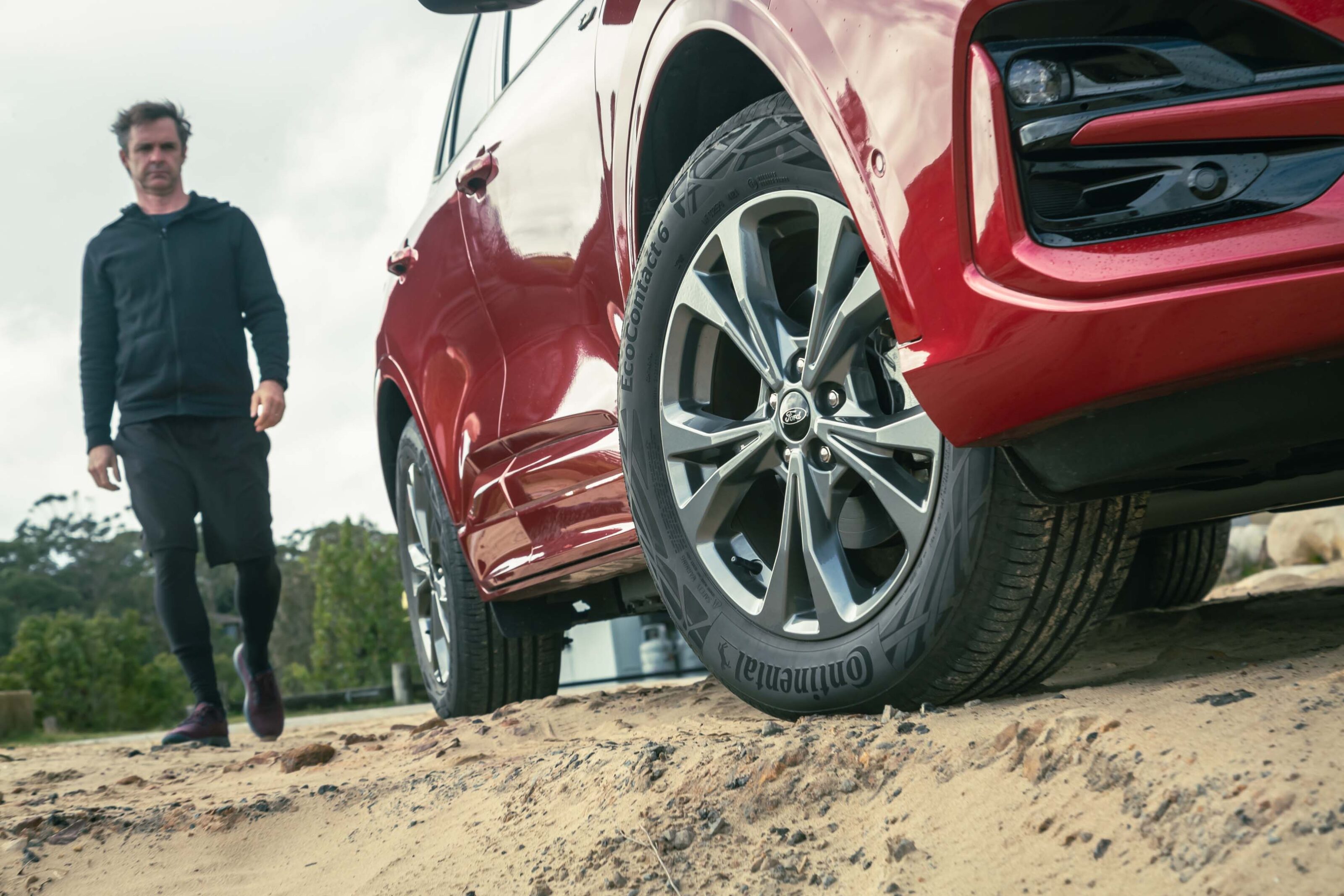
I had planned for a bombing run to Canberra but events conspired against me and I wasn’t able to go. I was really looking forward to the trip and more so after the Katoomba run because it proved itself to be so comfortable. Fingers crossed I can make that happen before it goes back to Ford because a proper six hour return journey will really test things.
What it will also test is my ability to find a working public charger. I had charged the Escape a couple of times as I have solar at home but I also wanted to see what it’s like plugging in while I’m shopping.
A nearby major chain supermarket has four 22kW chargers – perfectly fine for the Escape’s 14.4kWh battery – and I rolled in. One was broken (of course, but I knew that from the app) one was charging a Tesla so two were free.
Except you needed your own cable. Shuzzbut. Never mind, I tried another time at the new Ampol charger in Rosebery. The Escape’s Type 2 charge plug is in the front right guard, easy enough. Except the Ampol charger has one CHAdeMo and one Type 2 with DC.
The Escape’s charge port doesn’t have a blank for the flat DC plug section used by fast-charging cars. So I couldn’t plug in for that sweet, sweet free introductory offer. And a trip to a Westfield with 11kW chargers was also aborted because when I got there – you guessed it – the charge plugs were Type 1s.
Given how good the Escape is as a hybrid, I really do have a pressing question – instead of the PHEV, why do we not get the Escape hybrid, which would give RAV4 prospects pause for thought?
Snapshot
- Benz electric van starts from $89,353 before on-road costs
- Up to 360km electric range; 110kW DC fast-charging
- 882kg payload for panel van; eight seats in Tourer
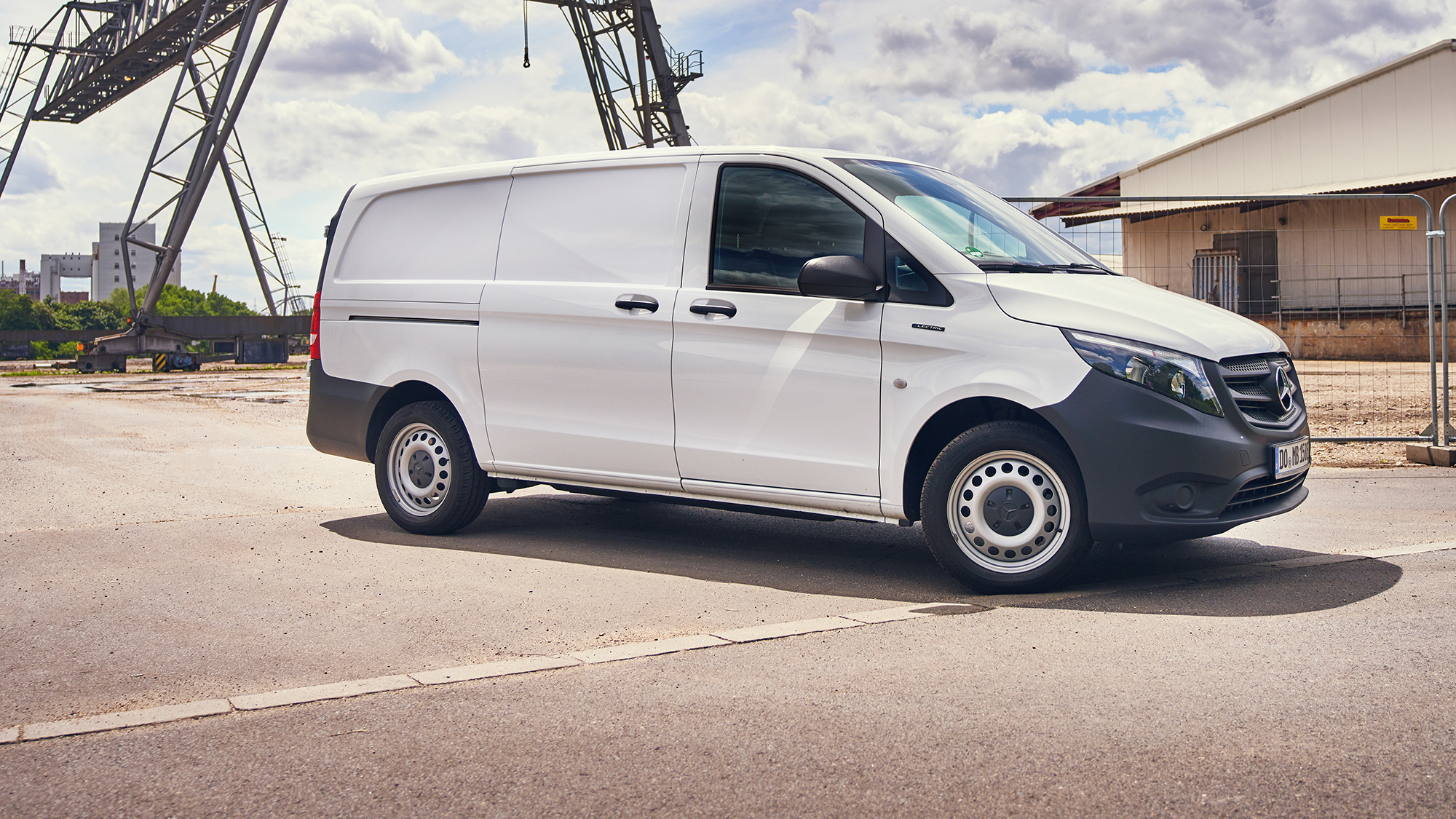
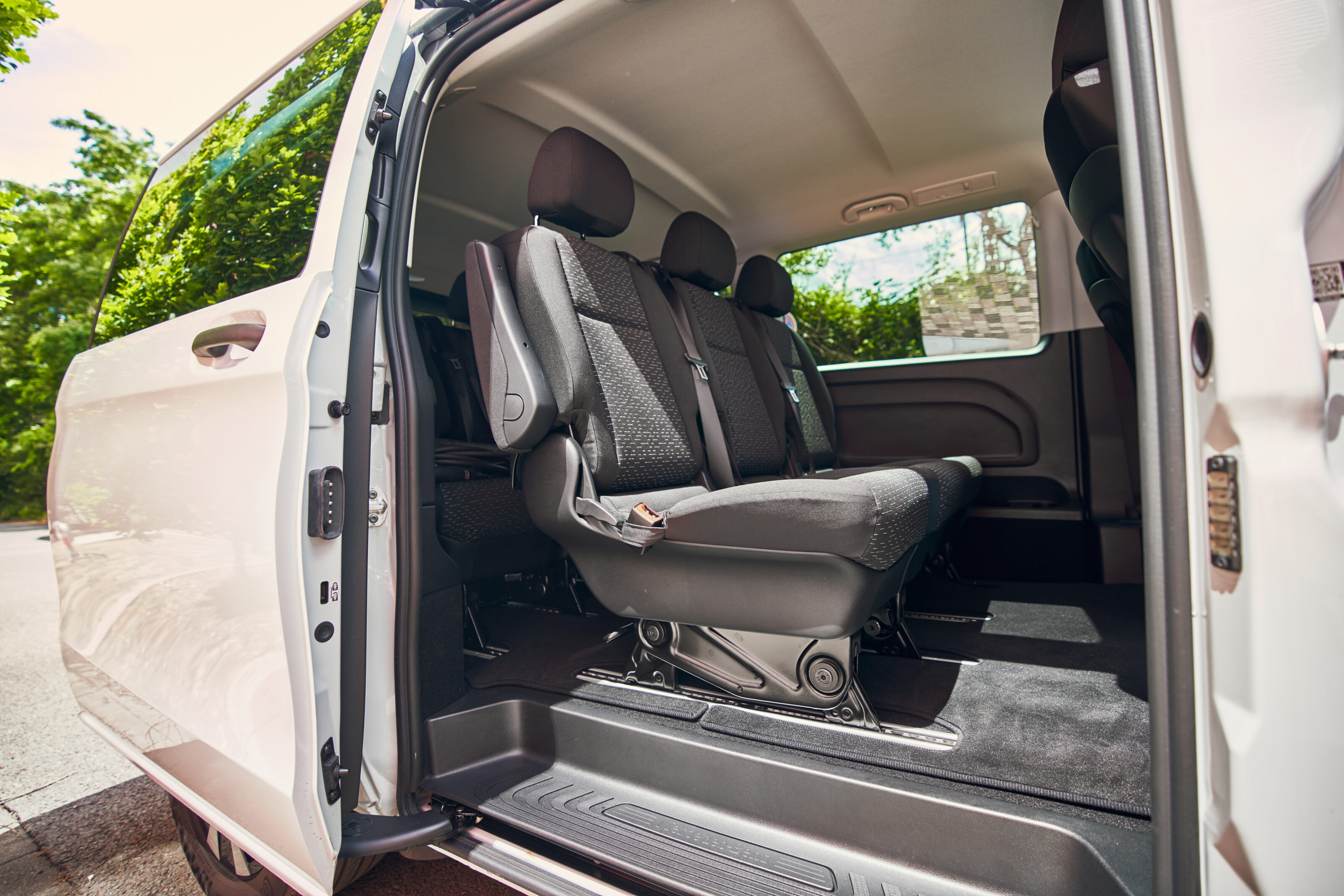
Mercedes-Benz has confirmed pricing for its first electric van, with the midsize eVito delivery van available from $89,353 before on-road costs and the eight-seater eVito Tourer from $116,115.
Mercedes-Benz has confirmed with Wheels Media that it has some stock of the eVito models in Australia right now, with more to arrive before the end of the year. Both will be considered a permanent fixture of the local range.
Both of the eVito variants coming to Australia sit on the Vito’s ‘medium’ wheelbase measuring 3200mm with an overall length of 5140mm.
The eVitos don’t come cheap then, with the panel van representing a 42 per cent premium over a Vito 116 CDI, and the Tourer a 64 per cent leap beyond its diesel counterpart.

The two vans will be joined by a more luxurious EQV seven-seater – based on the V-Class people mover – later this year before the full-size electric Sprinter arrives in 2024.
The midsize electric van category is small at the moment with only the BYD T3 ($39,950 before on-road costs) and now the eVito. Peugeot is looking to introduce an electric van, potentially off the midsize Expert – it already has a hydrogen FCEV version in Europe – while Ford has confirmed the E-Transit large van will arrive early next year.
Power, payload, range and charging speed
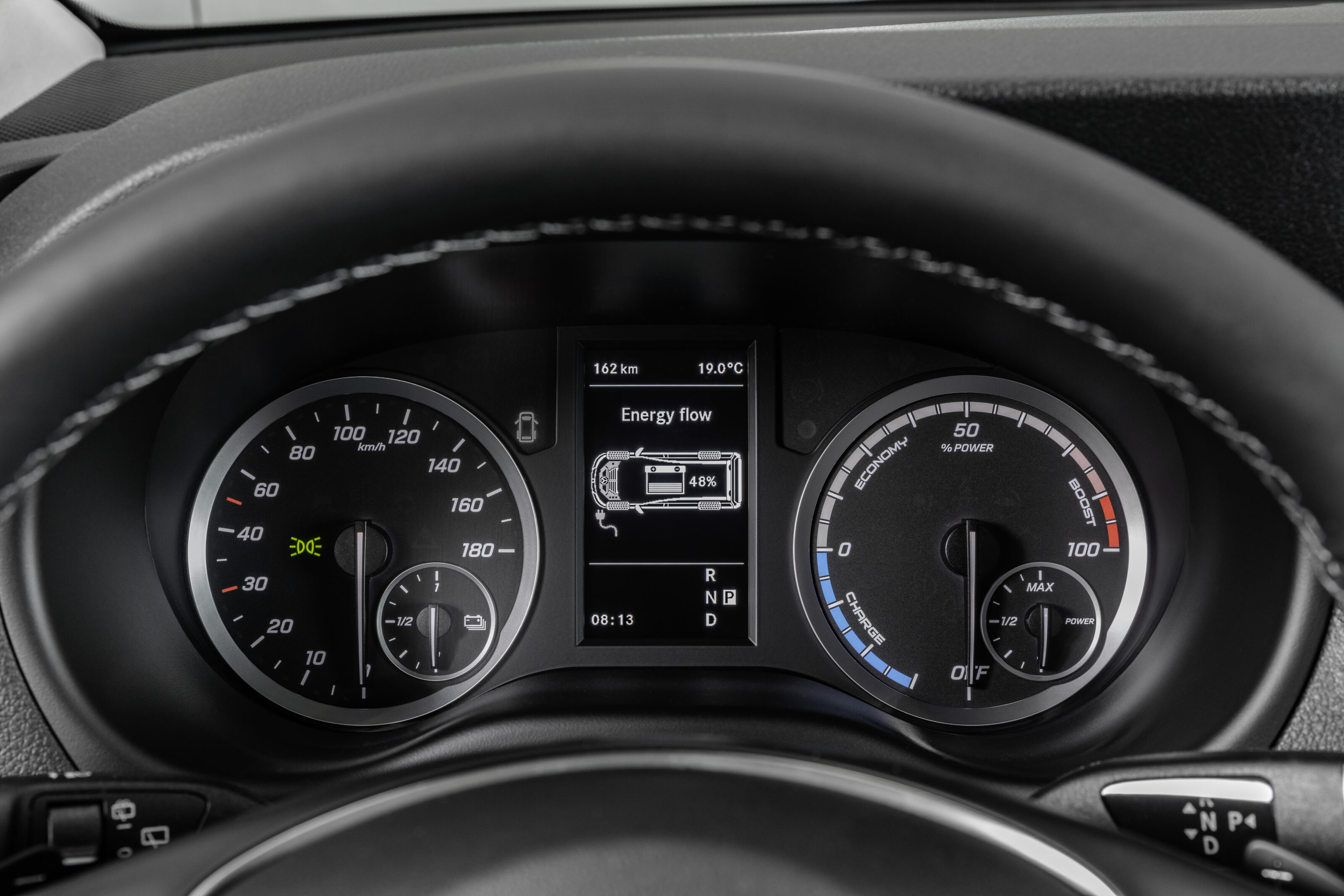
Of the two vans, it’s the airport-shuttle-chic eVito Tourer that gets the larger 90kWh (usable) lithium-ion battery pack and 150kW/365Nm front-mounted electric motor.
The eVito Tourer is capable of a 360km driving range in WLTP testing with an energy consumption of 26kWh/100km. DC fast-charging takes 45 minutes to rejuvenate 10-80 per cent battery at 110kW, while a full charge from an 11kW AC wallbox takes around 10 hours.
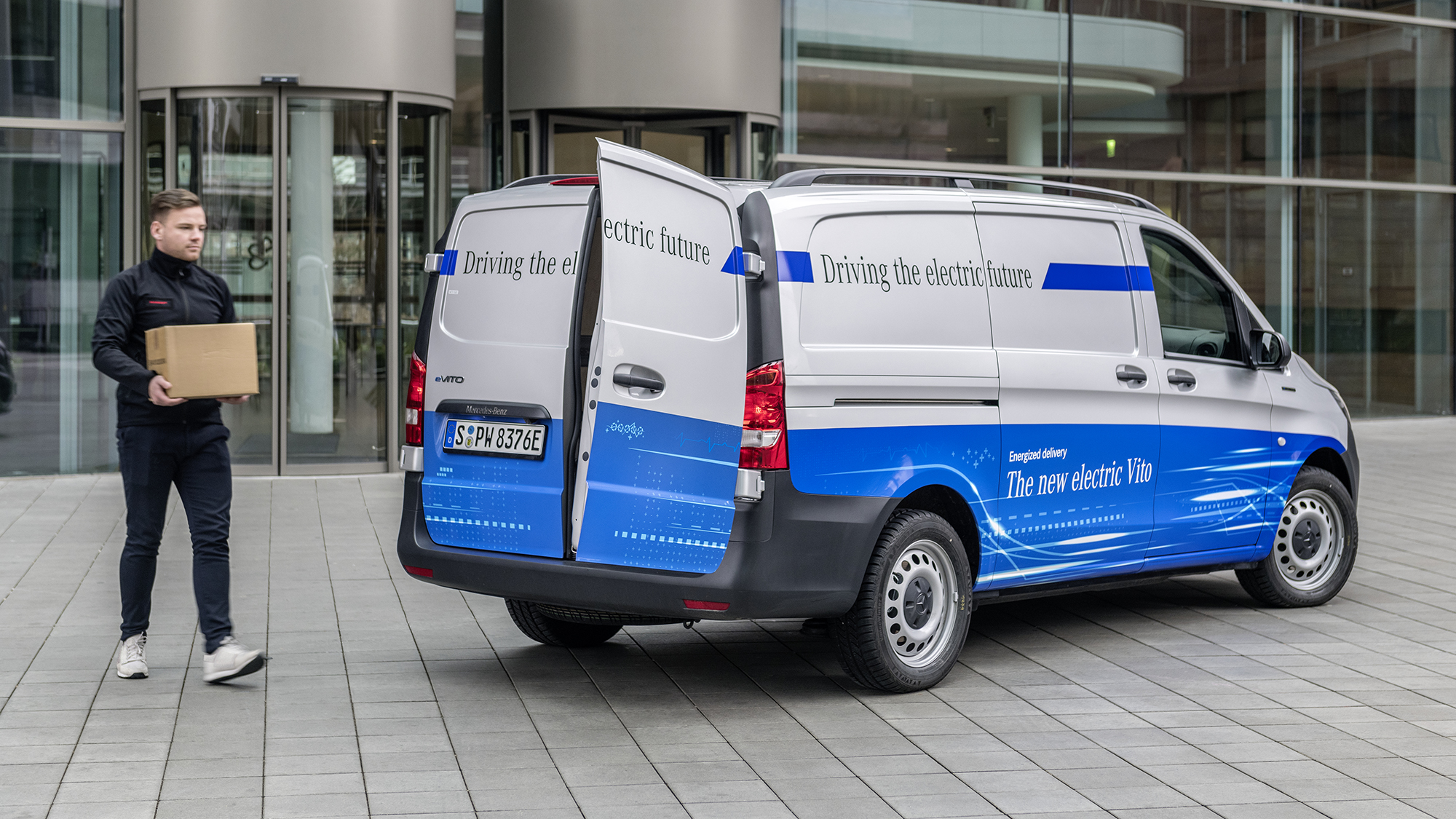
The eVito panel van makes do with a smaller 60kWh battery pack teamed with an 85kW/360Nm motor for 239km of driving range range (WLTP). DC fast-charging is capped to 80kW for a 10-80 per cent charge time of 35 minutes.
Compared to diesel-powered vans, the eVito has a favourable payload thanks to a slightly higher gross combined mass. The eVito’s 882kg payload beats the medium wheelbase 116CDI manual (850kg), though the lighter short wheelbase 116CDI is capable of 1252kg.
As for load space, the eVito panel van offers 6000 litres of cargo capacity, thanks to a 2398mm long, 1709mm wide and 1392mm high load space.
(Queried on the likely driving range for either model when loaded to capacity, Mercedes-Benz was unable to confirm specific figures. This is not an unusual outcome, although most brands will concede – at least when questioned in person at launch events – that EVs can lose around 50 per cent of their driving range when towing at full capacity. A fully-loaded van might return similar figures, but we’ll have to test this in the future. – Mike Stevens)
Warranty and servicing
The Mercedes-Benz eVito is covered by the brand’s now standard five-year/unlimited kilometre warranty. The high voltage battery is covered for eight years/160,000km.
Service intervals are set at 12 months/40,000kms, the same time as a diesel Vito but with an extra 15,000km distance allowed in that time.
2023 Mercedes-Benz eVito features
eVito panel van
| 7.0-inch touchscreenu00a0 |
| Apple CarPlay/Android Auto |
| Leather-appointed steering wheel |
| Cloth upholsteryu00a0 |
| Heated front seats |
| Three-stage adjustable regen braking |
| Blind-spot monitoring |
| Rear cross-traffic alert |
| Lane-trace assist |
| Front AEBu00a0 |
| Front and rear parking sensors |
eVito tourer (beyond eVito panel van)
| 17-inch alloy wheelsu00a0 |
| Body colour bumpers |
| Eight seats (2:3:3 split) |
| u2018Thermotronicu2019 climate control with remote function |
| Leatherette upholsteryu00a0 |
