September 11: Grand Vitara return not on the cards for Australia
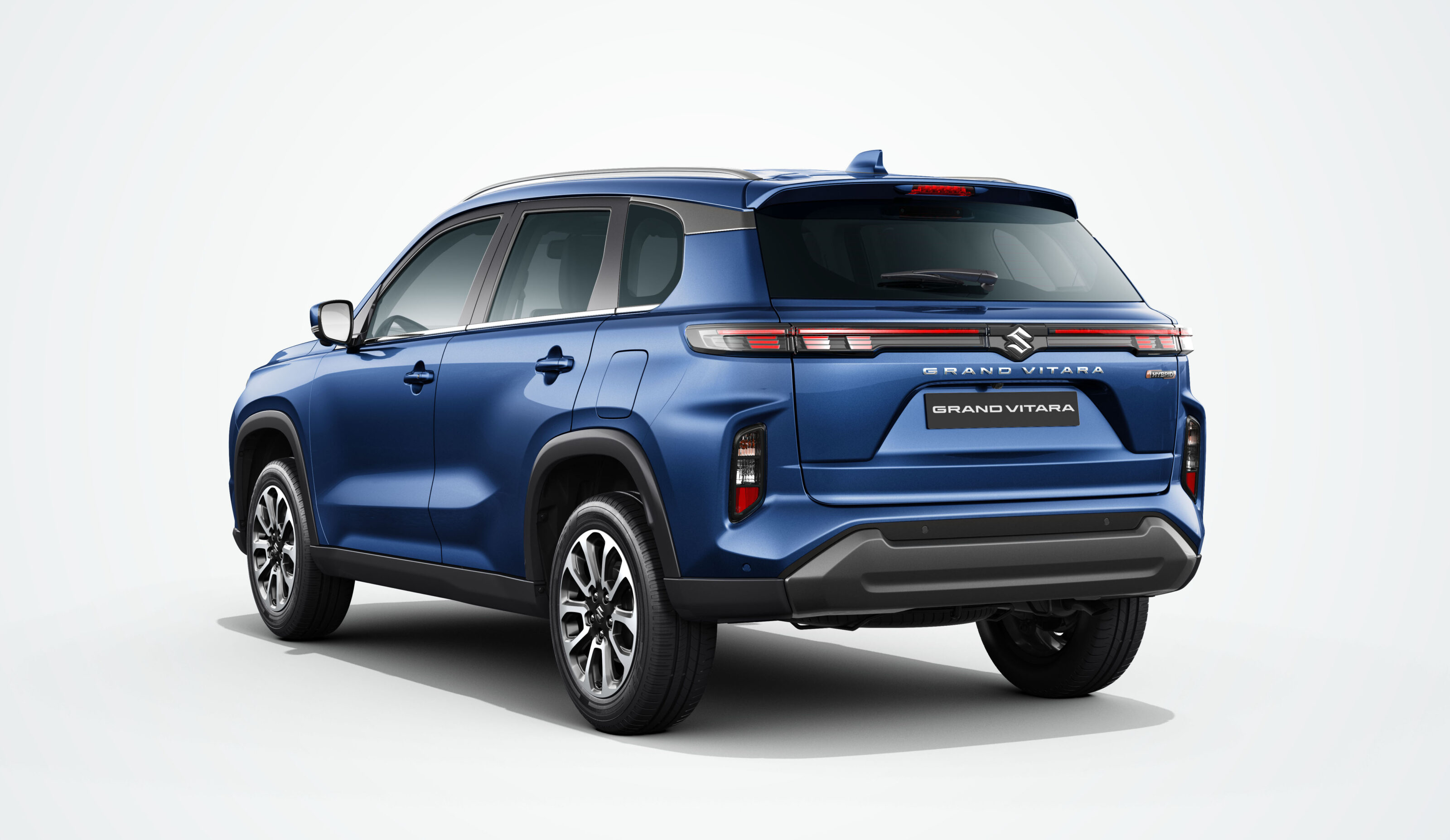
The 2023 Suzuki Grand Vitara recently unveiled in India will not be making an Australian return, the brand’s local boss has said.
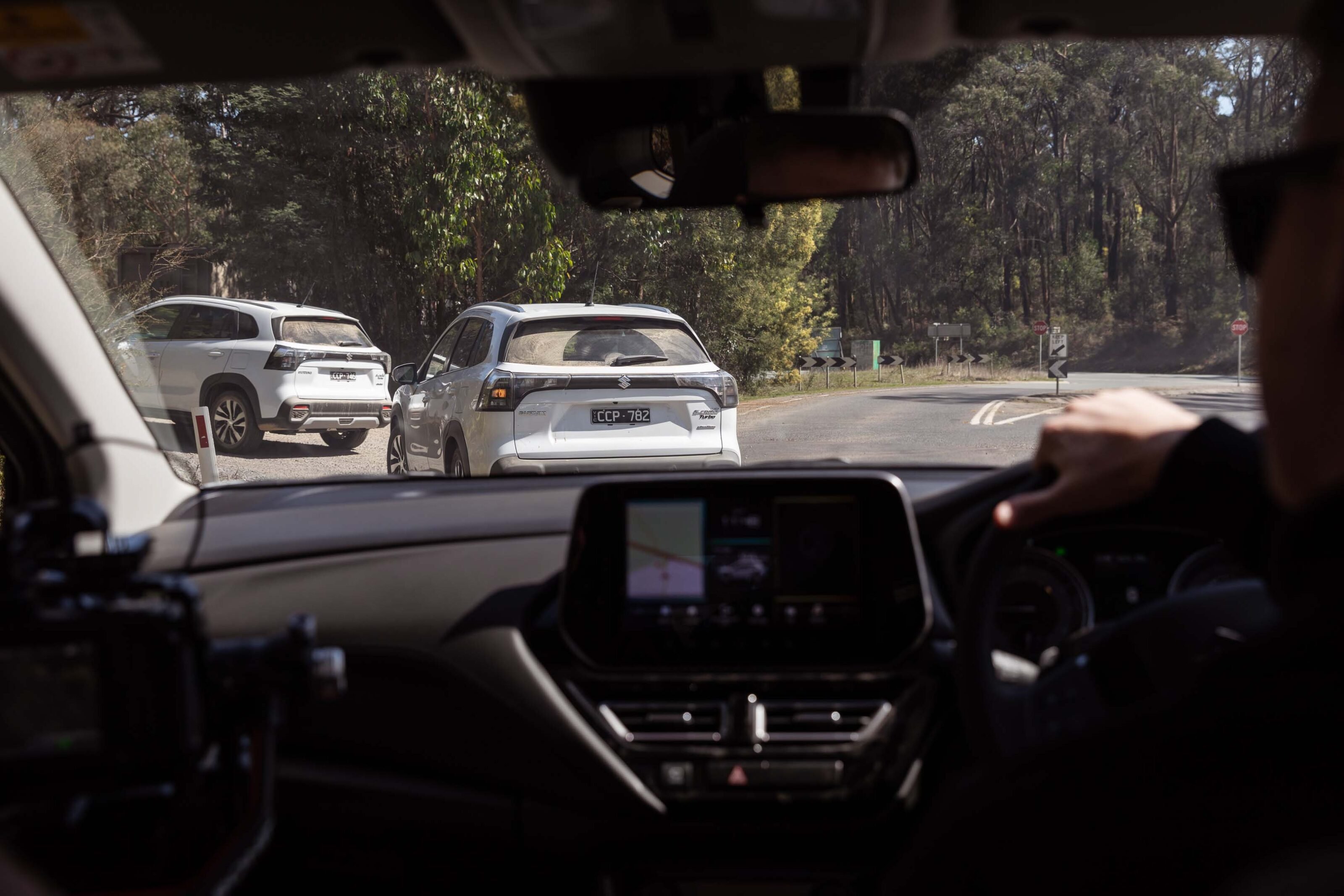
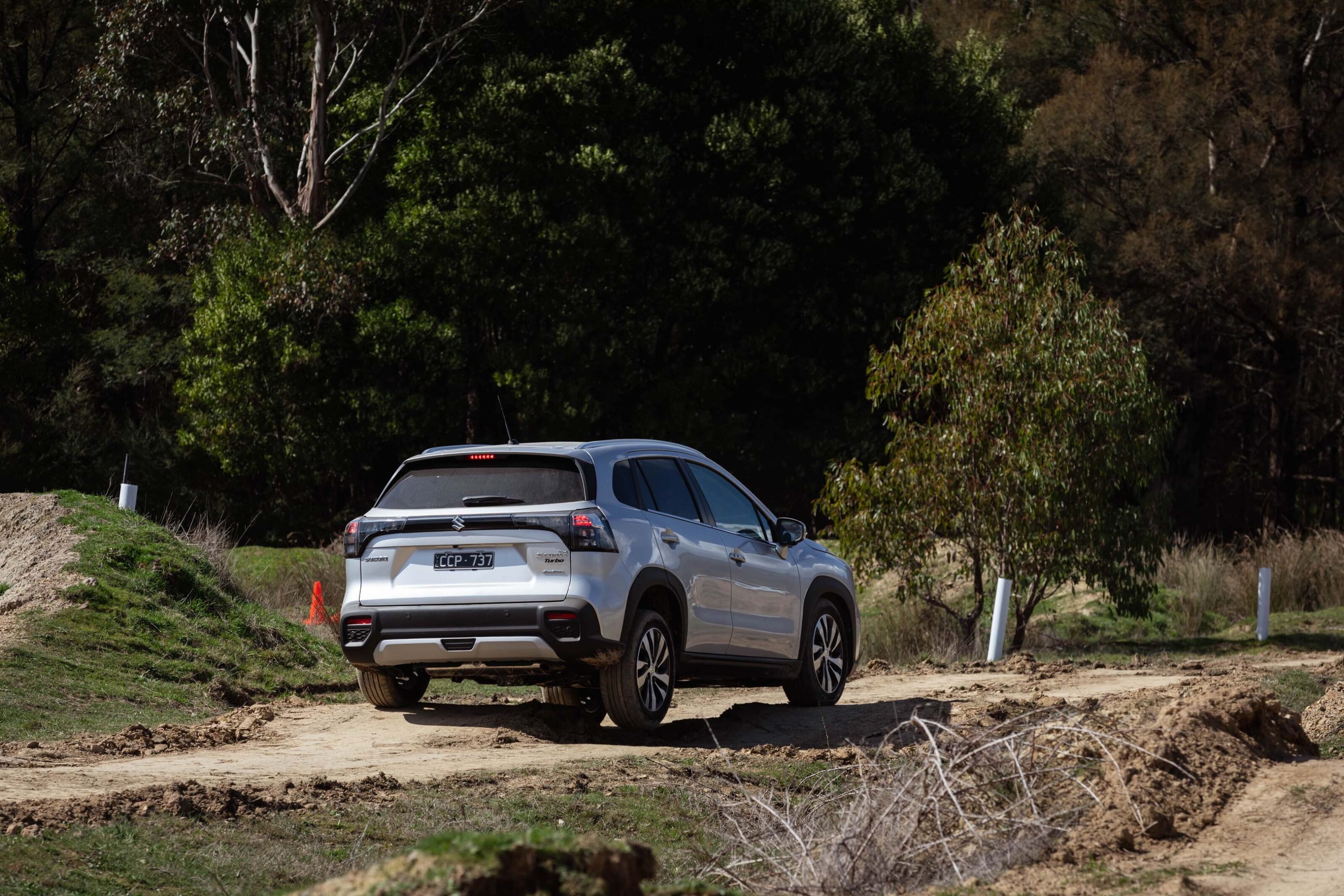
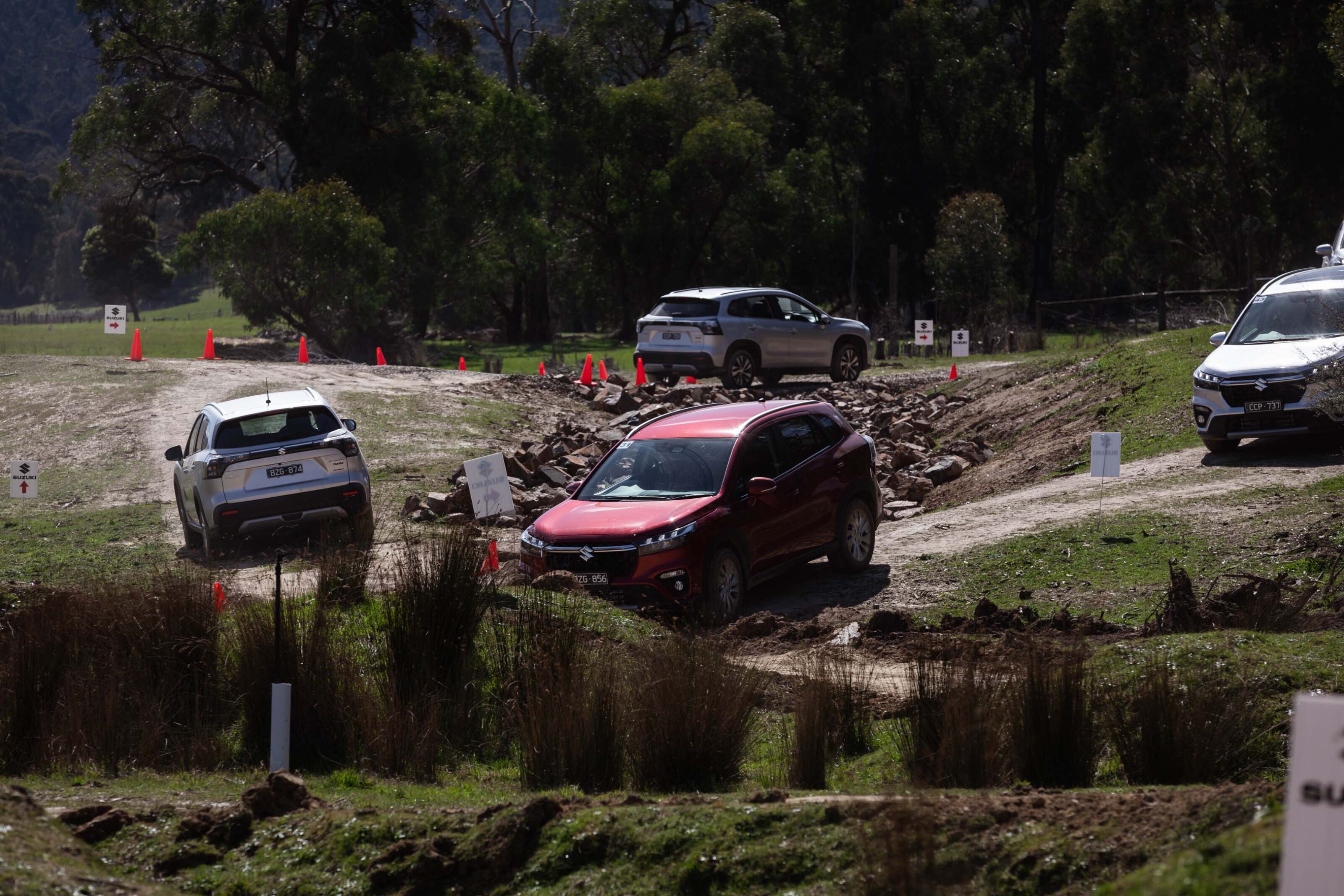
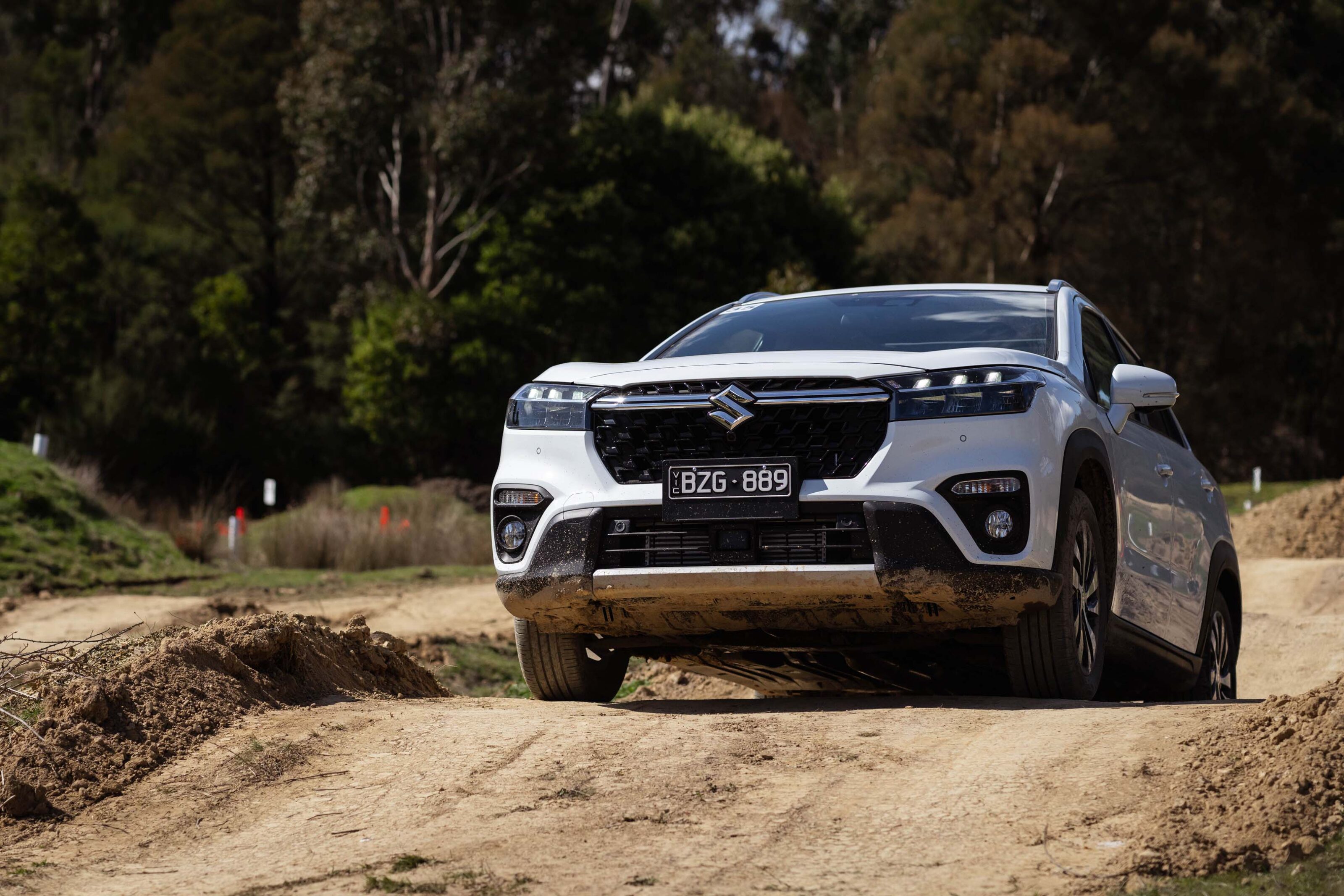
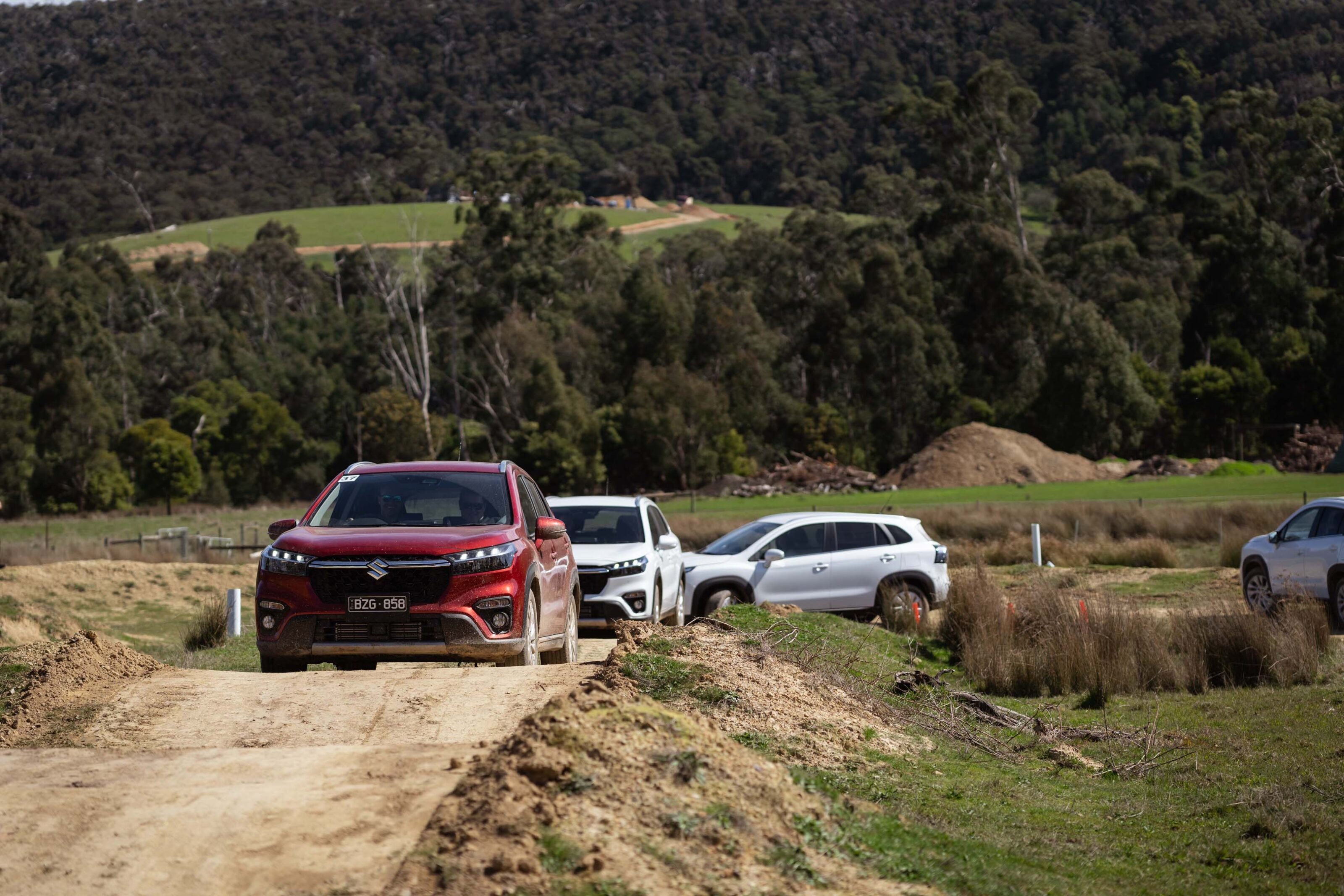
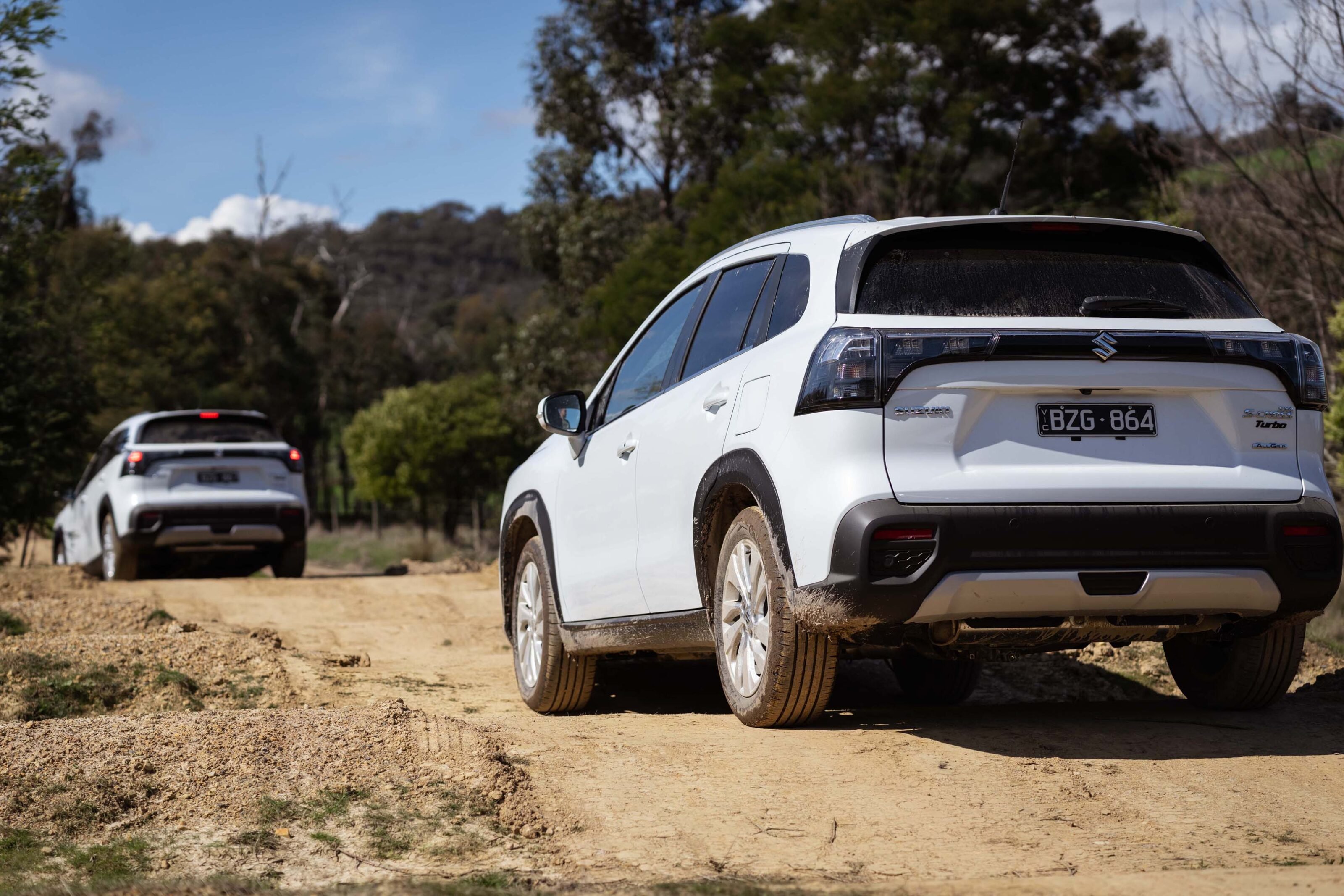
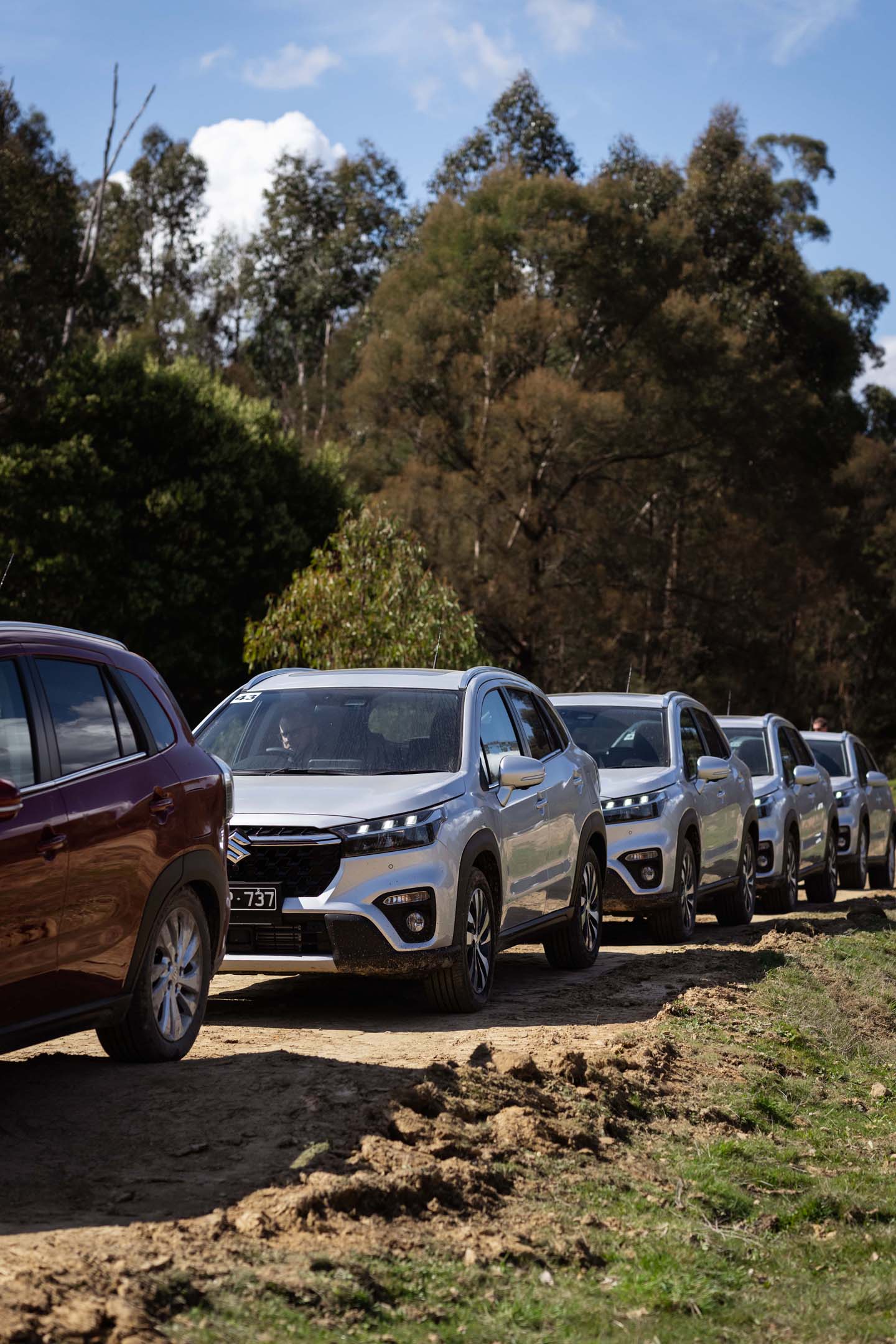
Speaking at the launch of the new Suzuki S-Cross this week, Suzuki Australia’s General Manager, Michael Pachota, told Wheels it had some interest in the new model, but we won’t be getting it locally.
“That vehicle has been specifically designed for that market [India], and there is some global spread of that product,” he said.
“But because we’d already put our hand up for Vitara and S-Cross, and then this product came along and we didn’t know they were going to call it the Grand Vitara.
“We just potentially knew there was another product within that same platform size-wise, and we wouldn’t have room for another car like that in our lineup – all of a sudden that would make three small SUVs and I think we’d suffer from some cannibalisation.”
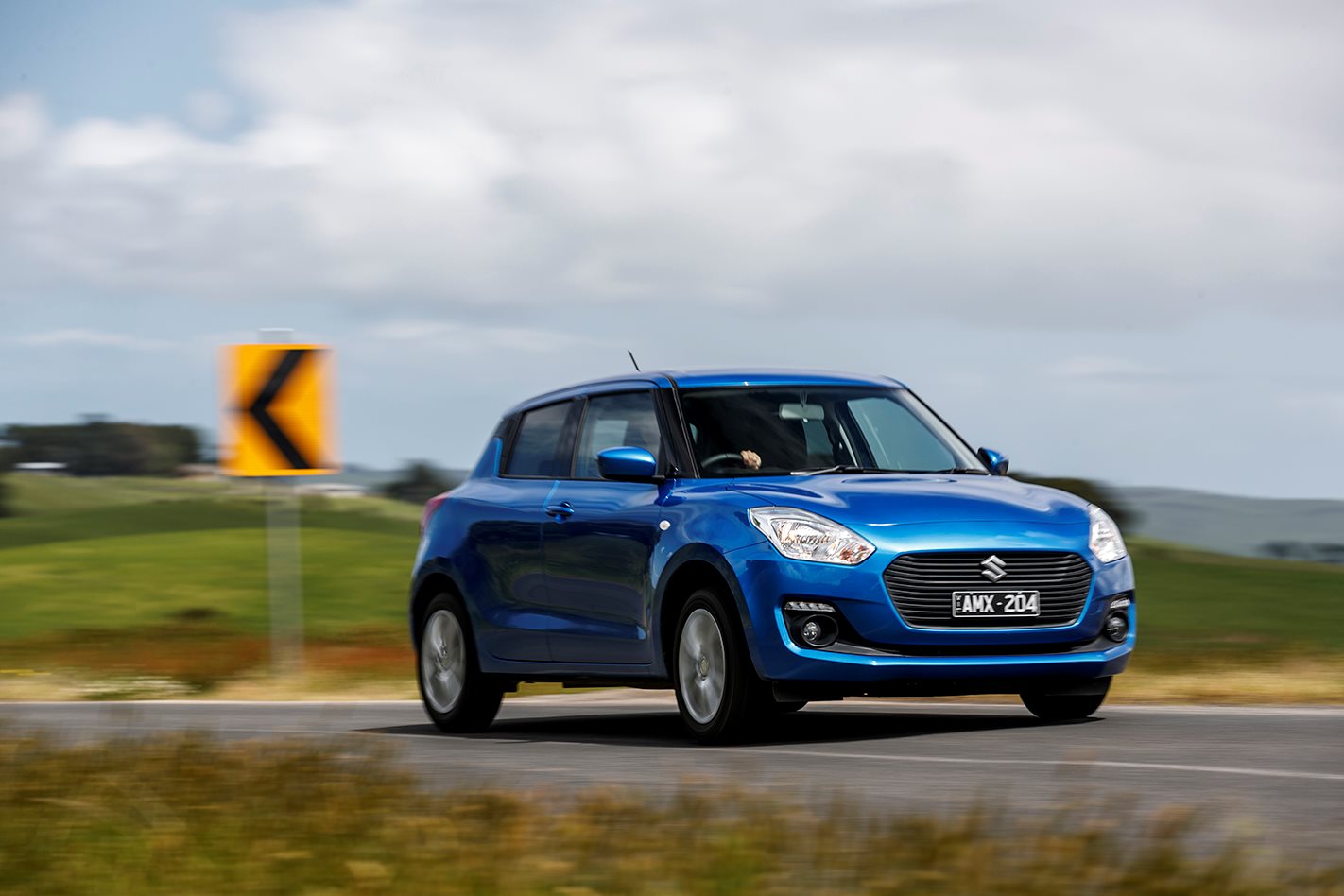
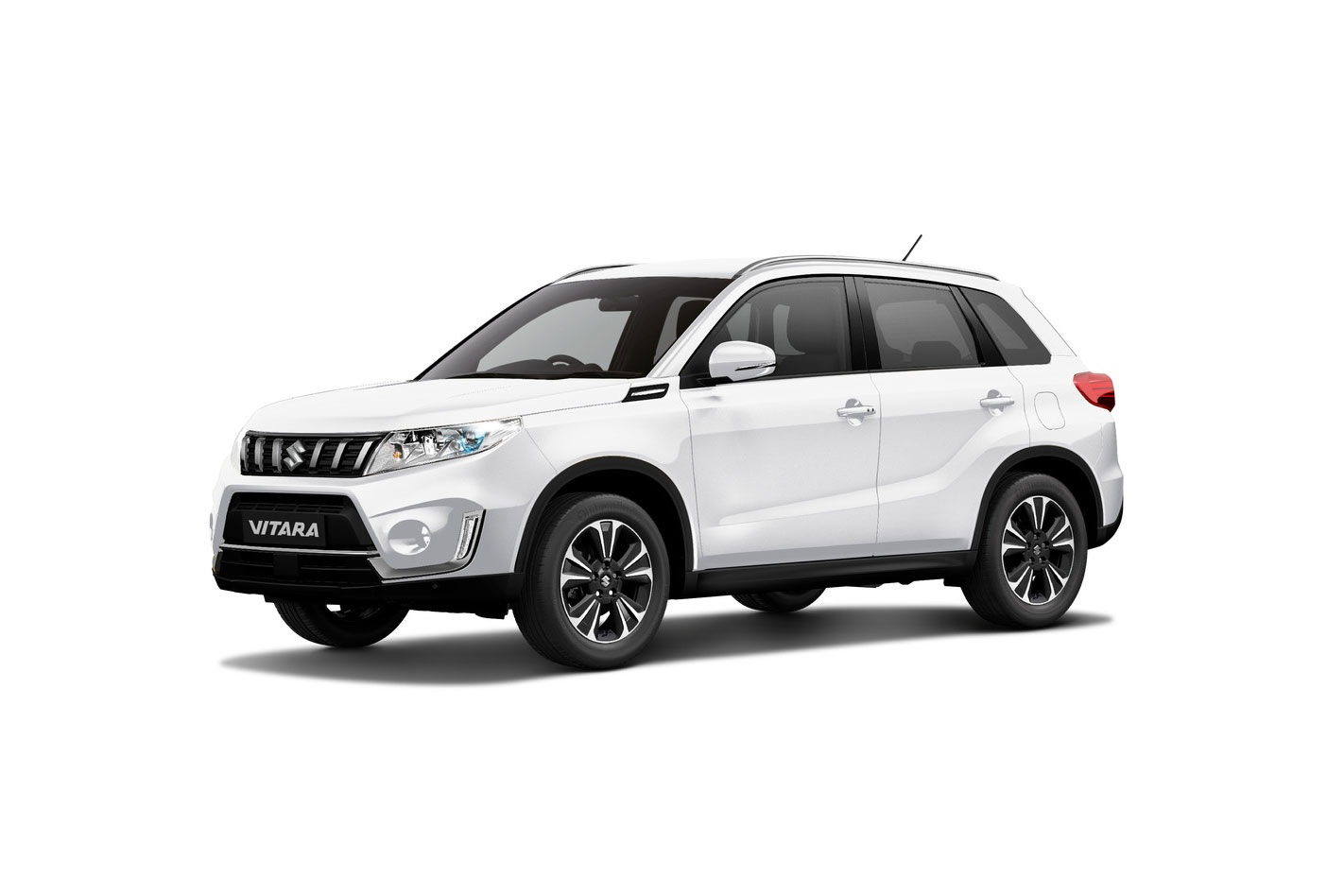
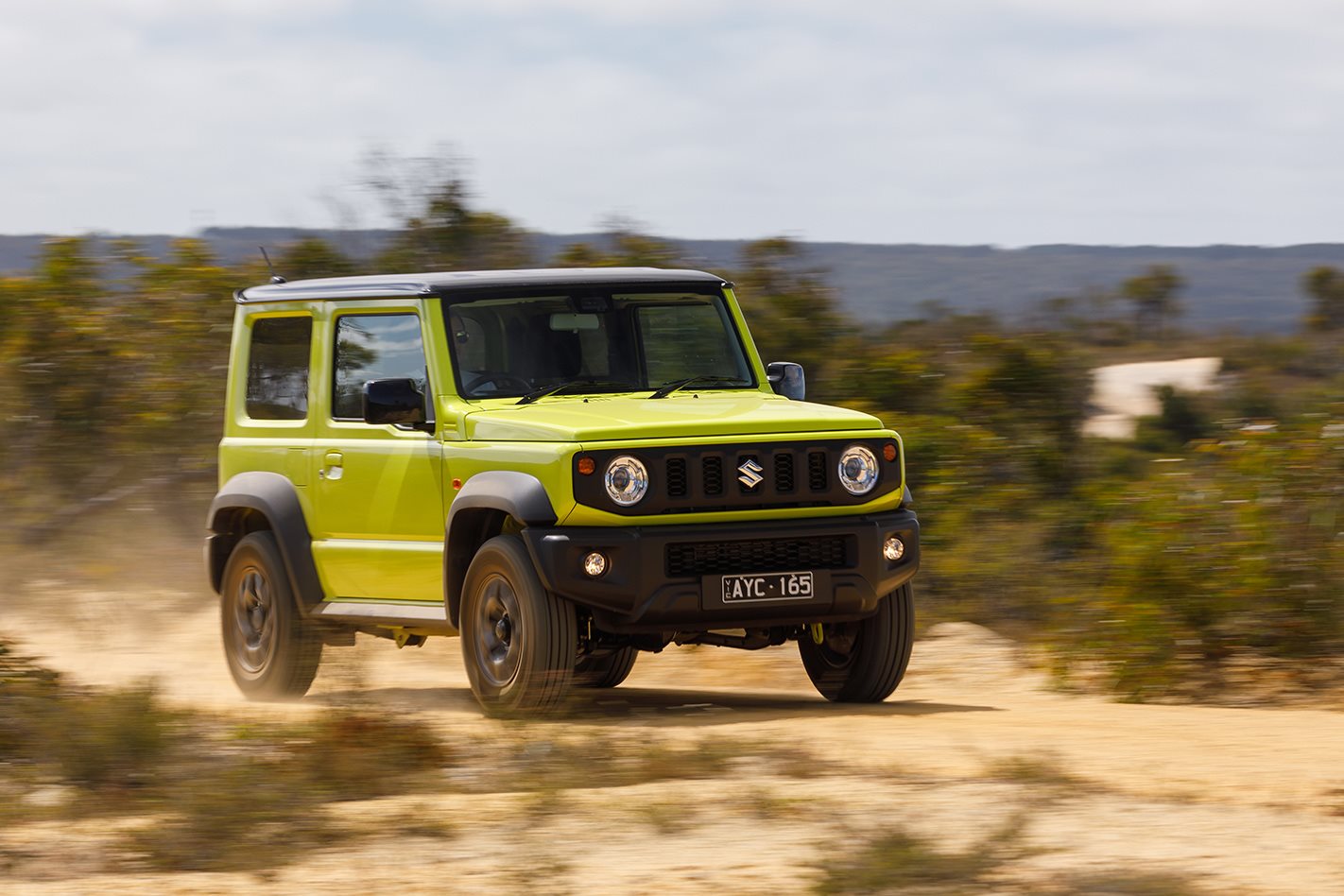
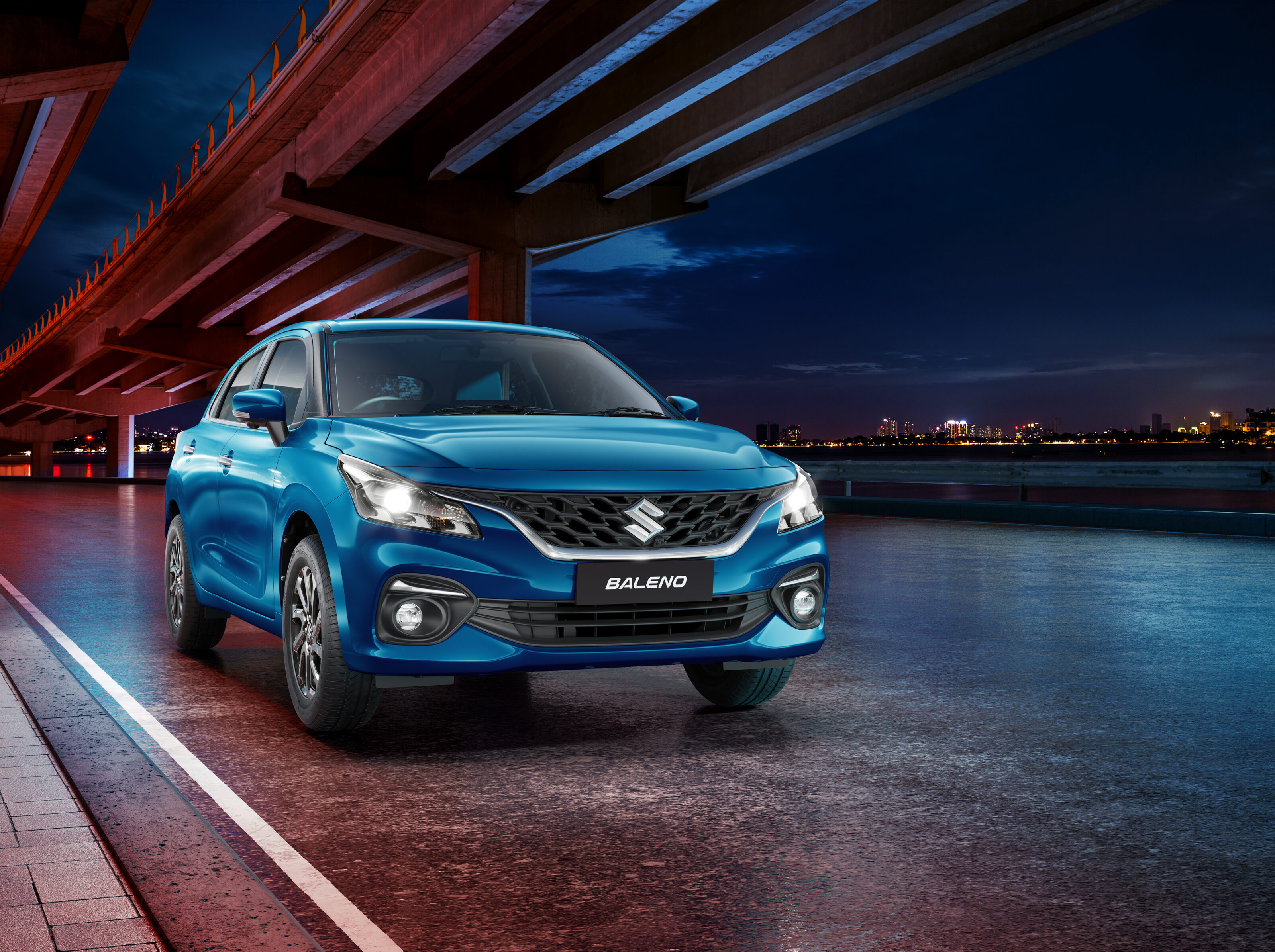
Suzuki’s current Australian lineup consists of the Swift and Swift Sport hatches, Ignis compact SUV, Vitara and S-Cross small SUVs and Jimny off-roader. While Suzuki continues to sell the current-generation Baleno hatch, it will not bring the next gen car here as it won’t meet Australian safety standards.
Read more about the new Grand Vitara in our original story below.
July 21: New Grand Vitara unveiled in India with hybrid power
The Suzuki Grand Vitara nameplate has returned, with the reveal of a new small SUV in India – but don’t expect to see it on Australian roads.
Designed for developing regions, such as India and Africa, the Grand Vitara was engineered by Maruti Suzuki – the highest-selling vehicle brand in the world’s second most-populous country – with assistance from the marque’s partnership with Toyota.
It has an almost-identical twin, the Toyota Hyryder, and utilises the Japanese giant’s hybrid technology, with a full petrol-electric powertrain available on flagship variants.
1
This badge-engineering agreement includes the Toyota Glanza, a rebadged Suzuki Baleno for emerging markets, and the Suzuki Across sold in Europe, a mildly-restyled Toyota RAV4 plug-in hybrid to meet the continent’s strict emissions standards.
As such, the Grand Vitara features a 1.5-litre three-cylinder hybrid engine similar to the unit fitted to the Toyota Yaris and Yaris Cross locally, producing 85kW of power with a claimed fuel efficiency of 3.6L/100km.
A 12-volt mild-hybrid version of the 1.5-litre three-cylinder mill with 76kW and 137Nm is standard on lower grades.
2
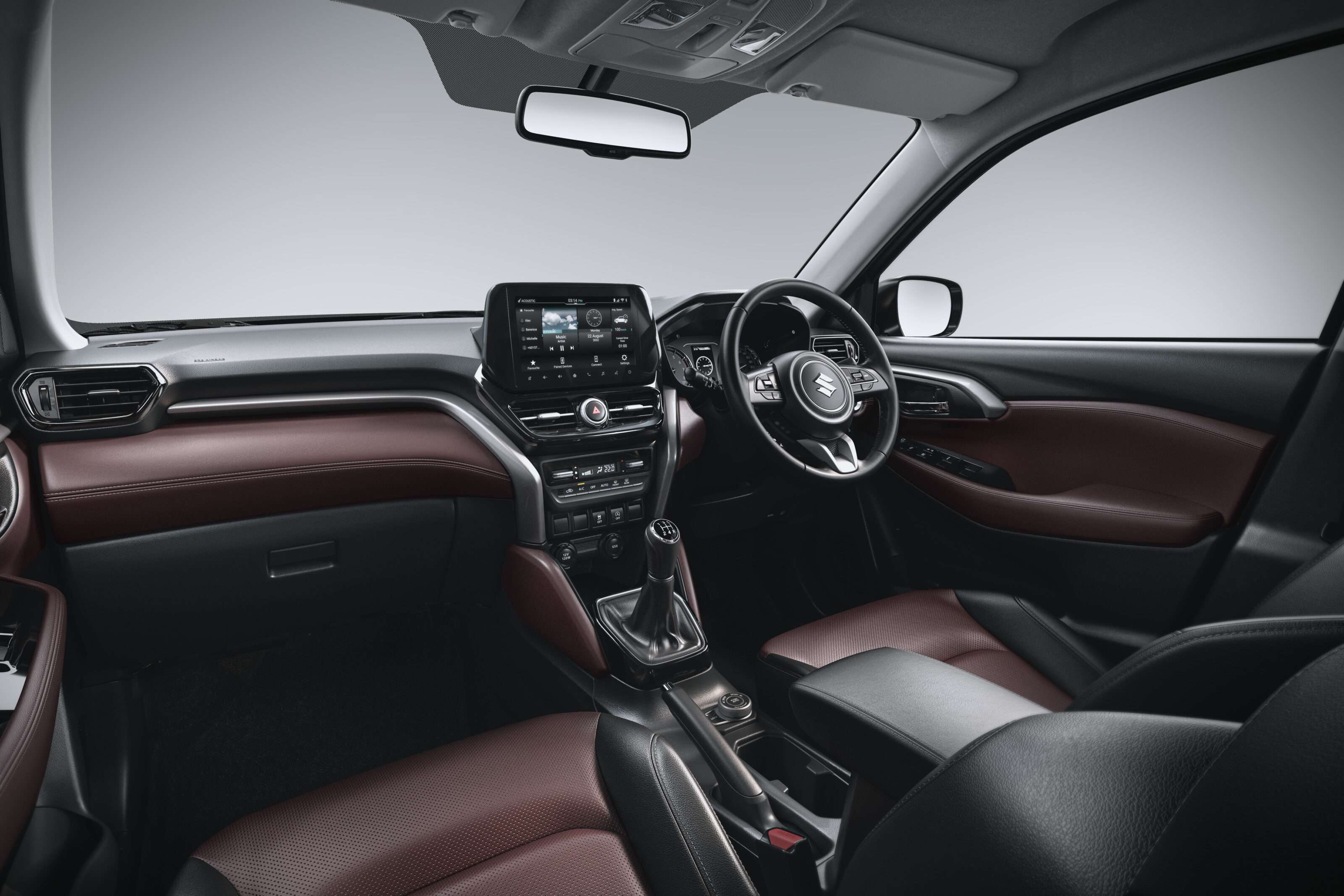
Inside, the Grand Vitara includes a 9-inch infotainment system, wireless Apple CarPlay and Android Auto, a semi-digital instrument cluster, flip-up head-up display, wireless phone charger and ventilated front seats.
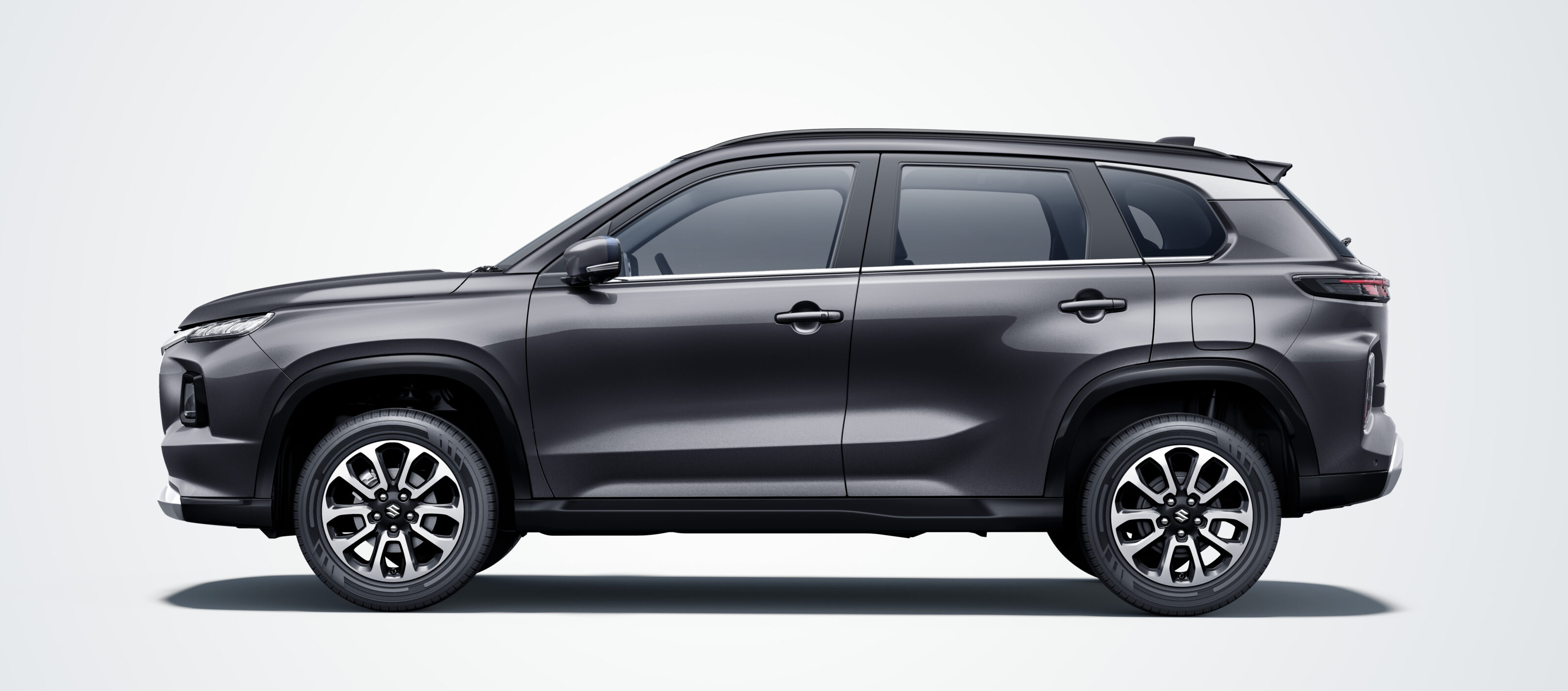
At 4345 millimetres in length, 1795mm in width and 1645mm in height, the latest Grand Vitara is significantly shorter than the previous five-door model sold in Australia between 2008 and 2018, which measured 4500mm long.
If it were to be sold locally, the Grand Vitara would slot into our small SUV category, featuring similar dimensions to the Toyota Corolla Cross set to arrive later this year.
1
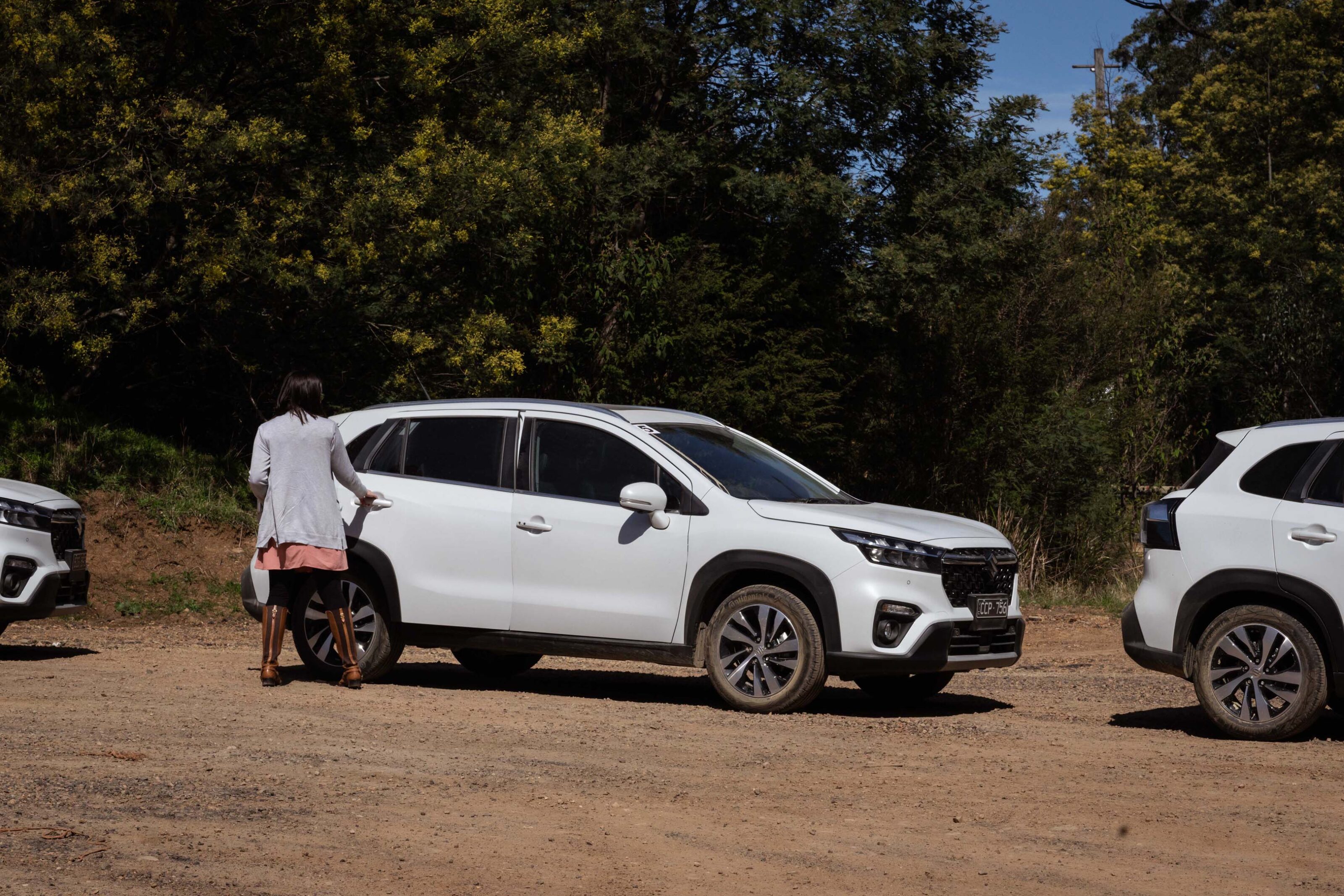
However, the soon-to-launch facelifted Suzuki S-Cross is a similar size at 4300mm long, meaning locals aren’t missing out. The smaller Vitara (4175mm long) will remain in Suzuki’s Australian line-up – both sourced from Hungary.
However, the low-output powertrains, availability of the S-Cross and, most importantly, lack of active safety technology is likely to see the new Grand Vitara scratched out for Australia.
The Suzuki S-Cross is back and ready to take on the small SUV segment’s dominant players – or so its maker hopes.
With facelifted looks, new tech and more safety features for MY23, the latest S-Cross is certainly an improvement, but has enough changed for it to really set the cat among the pigeons?
Playing alongside its Vitara sibling in the same segment, the S-Cross needs to set itself apart in a way that offers fought-over buyers something they just can’t get for their cash elsewhere.
MacPherson strut with coil spring front, torsion beam with coil spring rear
Boot space (min)
440 litres
Boot space (max)
1230 litres
1
Pricing and features
For 2023, there are two grades of the S-Cross – the Allgrip and Allgrip prestige, renamed from the previous line-up that consisted of the Turbo and Turbo Prestige.
Both grades are available with the same 1.4-litre turbo-petrol engine already found in the Vitara Turbo, and both are all-wheel drive.
The base Allgrip costs $40,490 while the higher-spec Allgrip Prestige costs $44,490 (both before on-road costs). Premium paint is available for all variants, which adds $695.
By comparison, similar levels of kit are available in lower-spec Qashqais (also new this year), with more on offer as you go up the grades for less than $40K and the option of hybrid power.
1
Equally, despite its age, the ASX offers similar features for less than $40K, even in top-spec guise – although admittedly without AWD or hybrid power. And even the top-grade Kia Seltos GT-Line comes in at less on the road – closer to $45K than $50K.
While the drivetrain remains mostly carryover from the previous-generation S-Cross that launched here in 2017, the differences in tech and safety are what distinguish the 2023 model from its predecessor.
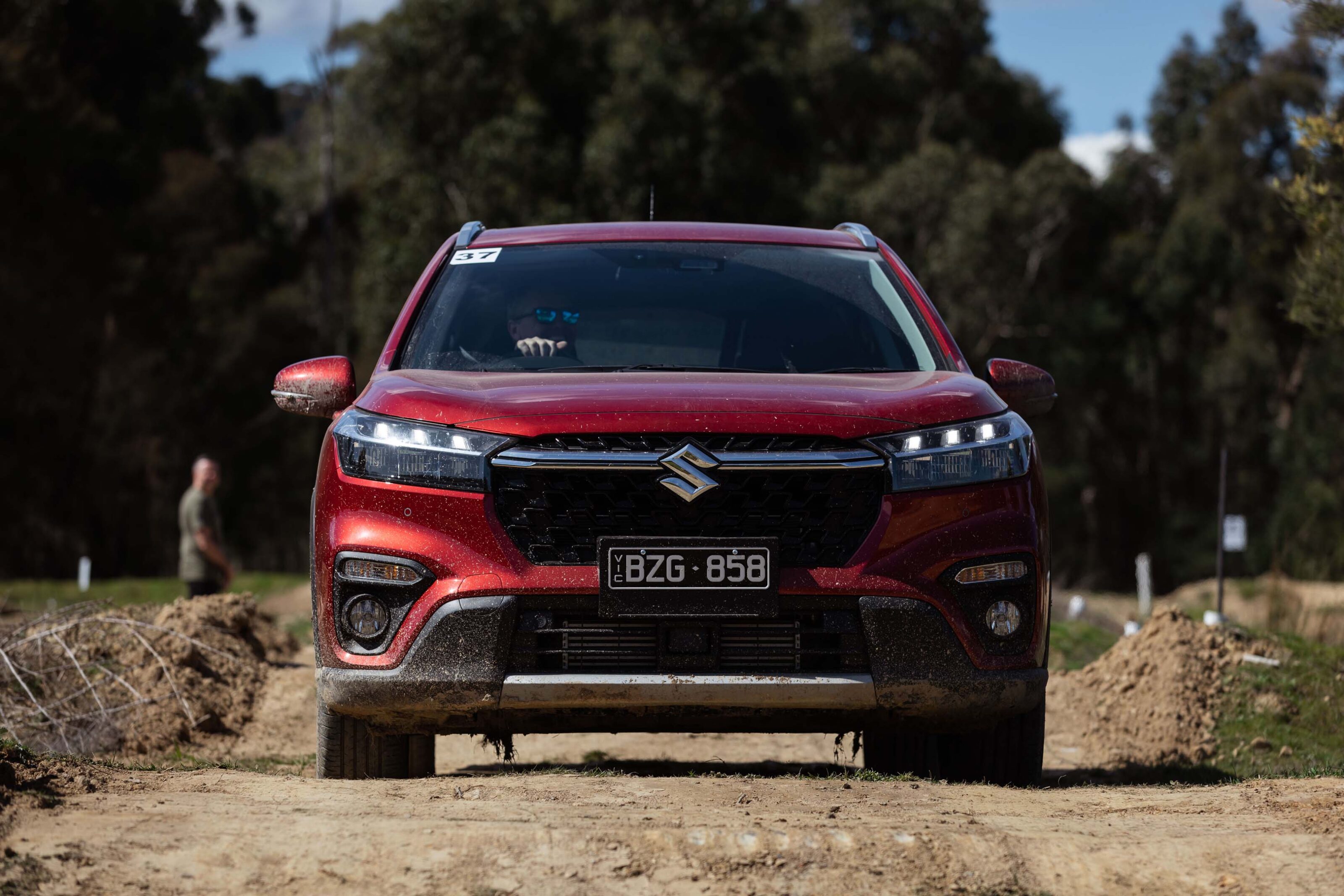
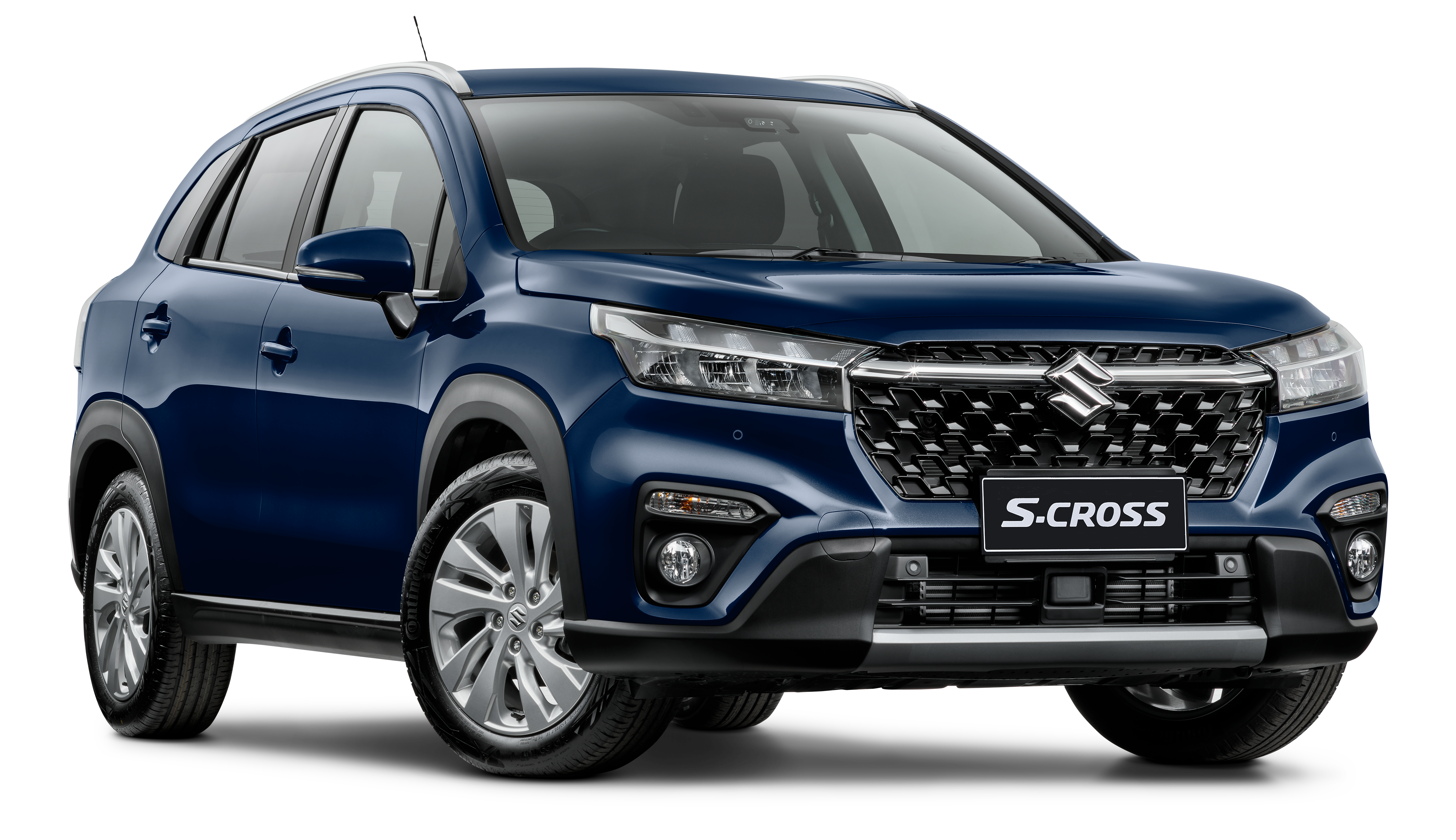
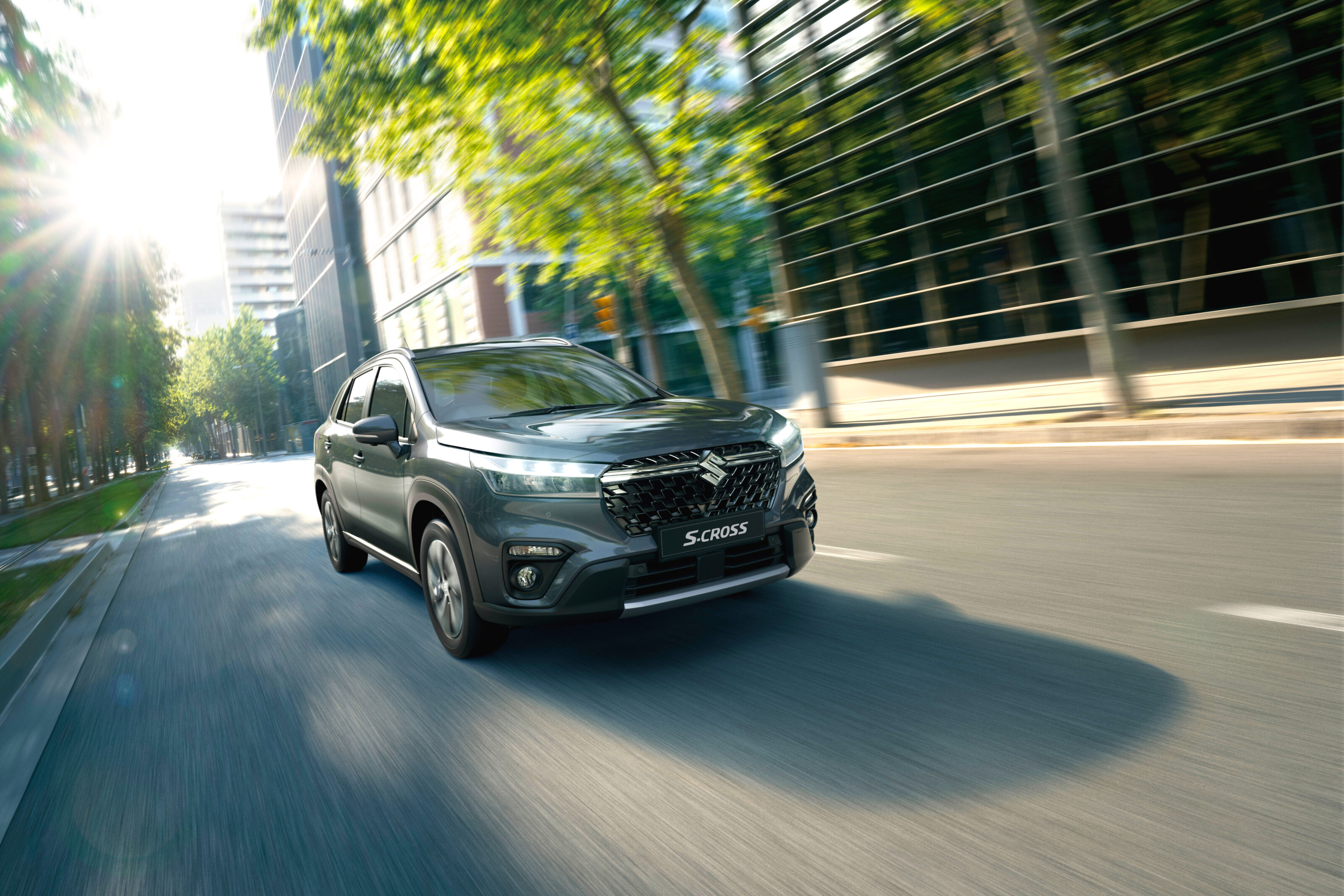
There are a few obvious aesthetic enhancements to be found on the new S-Cross too, including a sleeker bonnet, piano-black diamond lattice grille and redesigned LED headlights to portray a ‘higher centre of gravity’ – coupled with squared-off wheel arches and silver garnishes on the bumpers for a bolder look.
Inside there is a lot that’s fresh too – though still plenty of familiar components shared with the last model and across the wider Suzuki range.
1
Inside there is a lot that’s fresh too – though still plenty of familiar components shared with the last model and across the wider Suzuki range.
Front and centre for the changes is a larger 9.0-inch infotainment screen, featuring Suzuki’s next-generation system (though it’s limited to the Prestige only – the base Allgrip makes do with a 7.0-inch unit).
In our short time with the car, we found said system to be a little convoluted compared to before. All the main features you’d expect to be there were, but they were slightly more awkward to find – undoubtedly something you would get used to over time as an owner.
Android Auto is standard (albeit wired) and, for the first time in a Suzuki, wireless Apple CarPlay is there too. As before, the S-Cross comes with built-in satellite navigation and a USB-A port for wired smartphone connectivity. Another first is the inclusion of digital radio.
1
2023 Suzuki S-Cross safety features
The new S-Cross also gains a boosted list of safety features for MY23, now comprising seven airbags, adaptive cruise control, autonomous emergency braking (AEB), lane departure warning, weaving alert, blind-spot monitoring, rear cross-traffic alert and front and rear parking sensors.
Stepping up to the Allgrip Prestige gains polished alloy wheels, a 360-degree camera system (up from just a reversing camera on the Allgrip), leather-accented seats and a panoramic sunroof as standard.
ANCAP has not yet tested the new S-Cross. Its predecessor got a five-star rating dating back to 2013, so it was tested under very different criteria to today’s stricter standards.
1
Comfort and space
Both the Allgrip and Allgrip Prestige offer a comfortable and smart-looking cabin, likely to appeal to families looking for a few more creature comforts in their daily driver, but without the budget to expand into the more premium vehicle space.
While at first glance much looks familiar in terms of the materials used and layout of the cockpit – touchpoints like the steering wheel, armrest, buttons, cup holders and gearstick bearing striking resemblance to other Suzukis on offer – some new additions lift the S-Cross’s game to provide a more refined space.
The door panels now feature soft-touch materials and less hard plastic. The seats are also upholstered with a nicer quality of cloth in the entry-level version and are leather-accented in the range-topper.
1
All seats, even the driver’s, remain manually adjustable – but both grades gain heating functionality (with a low and high function) for the front pair, which is a welcome perk on cold winter mornings.
The second row can also be moved to create more space, however, there are no added convenience features for rear occupants to be found, which is a shame. The S-Cross gets one map pocket on the front passenger’s seatback, and when folded down, the middle seat becomes an armrest complete with two cup holders.
But that’s it. No air vents, USB ports or extra space in the doors above and beyond the slots that can hold a regular-sized drinks bottle.
1
It could also do with a little more rear passenger legroom, as well as more places to put toys and the like, to make it a really competitive family car. Though it’s wider and longer than its Vitara sibling on paper, in practice it doesn’t actually equate to a feeling of more room inside.
Boot capacity fares much better at a very respectable 440 litres, one of the best in its segment, and with the seats down that’s increased to 1230L. It also has handy cubby holes on either side of the boot floor for putting small bits and pieces such as electric pumps or first aid kits.
Rounding out the family functionality are two ISOFIX anchor points on the outer seats and three top tether hooks. Not hidden away or covered up by unnecessarily faffy plastic covers, the ISOFIX anchors are easy to access and connect, as are the top tether points, which are a doddle to reach on the back of the seats from the boot.
Though it’s wider and longer than its Vitara sibling on paper, in practice it doesn’t actually equate to a feeling of more room or practicality inside.
1
On the road
Each trim grade is available with the familiar 1.4-litre four-cylinder turbo-petrol, identical to the unit found in the previous model and Vitara Turbo. All-wheel drive is standard regardless of spec, teamed with a six-speed torque converter automatic transmission.
Power and torque are rated at 103kW and 220Nm respectively.
Although there’s nothing new to write home about here, the tried and tested turbo continues to pack a healthy punch when asked, offering quick off-the-mark acceleration thanks to its light 1300kg mass and a more attractive, throatier sound than its 1.6-litre naturally-aspirated cousin of yesteryear (which is still available in the naturally-aspirated Vitara).
Power is available when needed, aside from a very slight reluctance from either standstill or at low speeds. Other than that, the transmission responds well and suits the engine nicely. Braking too is solid and dependable, with no need to apply too much pressure, and a confidence-inspiring pedal feel.
1
Retaining the same chassis as before, another commonality with the Vitara, its ride remains a little bumpy. While it’s comfortable enough on flat bitumen, find a pothole or uneven road and you’ll start to hear and feel the bangs.
There are two driving modes beyond normal: Sport and Snow (for soft-roading). The former is a little thirstier as a trade-off for sharpening up the throttle response and gear changes.
What it does offer is plenty of traction and good grip, even riding on Continental eco tyres, holding its own on sealed and unsealed roads alike. Road and tyre noise are the sacrifice, however, as the din permeates the cabin a little too easily for our liking.
1
Perhaps its biggest flaw is the steering, which is overly light and disconnected. Though light steering is a typical Suzuki trait, in the S-Cross it feels floaty. It also requires a good half a turn just to pull out of a junction, which is more effort than expected.
There’s a significant dead spot as well – great if you’re pretending to drive a car in a movie as an actor, not so great when you’re after quick and responsive movements to get the car where you need it to go.
Although Suzuki Australia’s line-up continues to miss out on hybrid variants found overseas, the S-Cross’s claimed fuel-economy rating of 6.2L/100km is respectably low. We’ll confirm something closer to real-world figures when we get the S-Cross through the Wheels Media garage.
1
Ownership
Suzuki Australia offers a five-year, unlimited-kilometre warranty, five years of roadside assistance and a five-year capped-price servicing regime at intervals of 12 months or 10,000km.
Pricing for servicing in years one, three and five is $239, with the second service costing $329 and the fourth $429.
VERDICT
With the 2023 S-Cross, Suzuki has made some worthwhile and noticeable improvements for customers after a family SUV that offers decent driving performance, space and creature comforts that make their daily commute or school run that bit more enjoyable.
But it disappoints in terms of price. Charging $40K for the base and $45K for the range-topper – before on-road costs – seems a lot to ask for a budget brand when competitors offer more for the same or less money.
While the new S-Cross would indisputably make a good daily driver for a family of three or four – or an older person in need of a bit of space and higher ride – the extra kit, jazzed-up looks and improved cabin materials just aren’t a step far forward enough to warrant that much more coin in our view. Especially when the turbocharged Vitara with Allgrip all-wheel drive (once again, using the same powertrain) is going for $42,990 drive-away.
Previously, the Vitara has outsold the S-Cross by a healthy margin, so it’ll be interesting to see what switching flagships does for Suzuki – and if buyers are willing to pay the difference for a few frills on an otherwise familiar offering.
Just two grades on offer from launch, no hybrid power
Priced from $40,490 before on-road costs
The new 2023 Suzuki S-Cross has arrived in Australia, and goes on sale today from $40,490 before on-road costs.
The new model lineup consists of two grades: the base Allgrip and top-spec Allgrip Prestige – swapping over from the previous Turbo and Turbo Prestige nameplates.
The small SUV retains the same 1.4-litre four-cylinder turbo-petrol as found in the previous generation mated to a six-speed auto gearbox, but upgrades to solely all-wheel drive, with front-wheel drive no longer offered.
New for MY23 are a host of technological and safety enhancements, as well as revised looks inside and out.
1
At the front, the S-Cross does away with the old chrome-slatted grille and replaces it with a piano black diamond lattice one instead. Also joining the improved grille are new headlights mounted higher up for a bolder look, as well as squared-off wheel arches and silver garnishes on the bumpers.
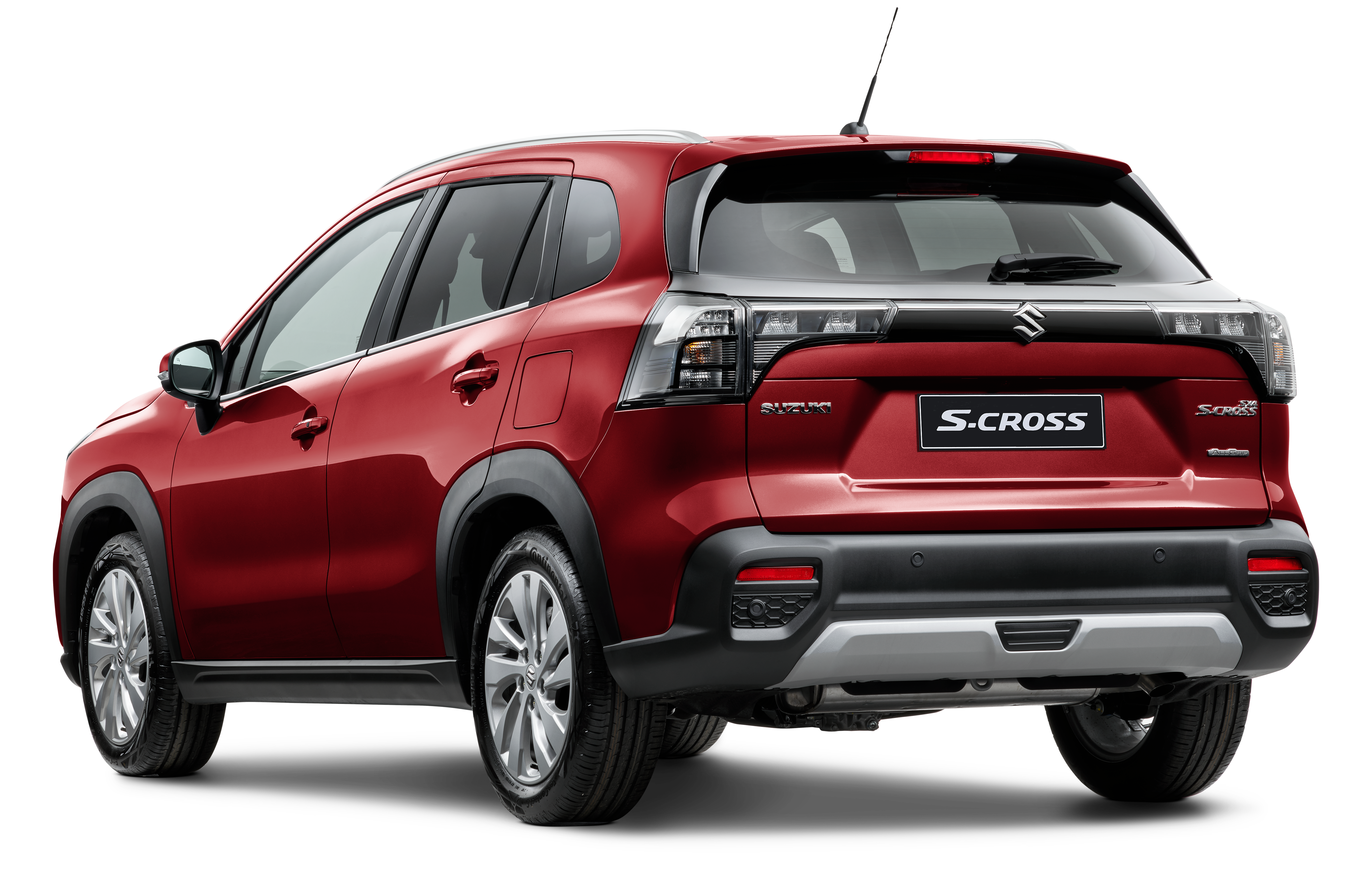
Meanwhile at the rear, it adopts new tail-lights and plating across the tailgate, in addition to a squarer, flatter look with the reflectors appearing more prominently in the bumper than before now that they’re accompanied by rear parking sensors.
The S-Cross is wider and longer than before too, offering more space inside and new features such as a 9-inch display, wireless Apple Carplay, and a 360-view camera to name just a few.
1
2023 Suzuki S-Cross Australian pricing
All prices are before on-road costs.
Variant
Pricing
Allgrip
$40,490
Allgrip Prestige
$44,490
1
Features
The 2023 Suzuki S-Cross lineup is comprised of two grades: the Allgrip and Allgrip Prestige.
Allgrip
As standard, the entry-level Allgrip gets:
7-inch infotainment unit
Wireless Apple CarPlay
Android Auto
Adaptive cruise control
Dual-zone digital climate control
Keyless entry and start system
17-inch alloy wheels
Daytime running lights
Front fog lights
Automatic LED headlights
Rear privacy glass
Reverse camera
Satellite navigation
DAB radio
Four cupholders front and rear
Four bottleholders front and rear
1 X USB A port
1 x 12V socket in the boot
Heated front seats
Fabric seat upholstery.
Allgrip Prestige
Above the Allgrip, the Allgrip Prestige gains:
9-inch touchscreen
Panoramic sunroof
Leather-accented seats
17-inch polished alloy wheels
360-degree view camera.
1
Engine, transmission, fuel economy and dimensions
Each trim grade is available with the same 1.4-litre four-cylinder turbo-petrol, the identical unit found in the previous model and in the Vitara Turbo, with four-wheel drive – teamed with a six-speed torque converter automatic transmission. Power and torque are rated at 103kW and 220Nm respectively.
Though Suzuki Australia’s lineup continues to miss out on hybrid variants found overseas, the S-Cross’s claimed fuel-economy is rated at 6.2L/100km.
The new model is 4305 millimetres long, 1785mm wide and 1585mm high, with a wheelbase of 2600mm and weighing in at 1290 kilograms kerb. Its boot can hold 440L of luggage with the second row up and 1230L with them folded down, with a 60/40 split available if needed.
1
Safety
As yet the new S-Cross has not been tested by ANCAP, but it does have an existing five-star rating – that dates back to 2013.
For MY23, the S-Cross gets a boosted safety features list, which includes:
Electronic stability control (ESC)
Anti-lock braking system (ABS)
Electronic brake distribution (EBD)
Brake assist (BA)
Seven airbags
Autonomous emergency braking (AEB)
Lane departure warning
Weaving alert
High beam assist
Blind-spot monitoring
Rear cross-traffic alert
Front and rear parking sensors
2 x Isofix anchors
3 x child seat tethers
Hill hold control.
1
Warranty
Suzuki Australia offers a five-year/unlimited kilometre warranty, five years’ roadside assistance, and five-year capped-price servicing at intervals of 12 months/10,000km. Pricing for servicing in years one, three and five is $239, with the second service costing $329 and the fourth $429.
Availability
The 2023 Suzuki S-Cross is on sale now via the firm’s nationwide dealer network.
But, of all the quick SUVs here now and on the way, it was Skoda’s Kodiaq RS that got in first. It arrived as a diesel offering, producing 176kW and 500Nm to deliver a claimed 0-100km/h time of just 6.9 seconds.
1
It was a good thing. Not cheap, at $65,990 before on-road costs, but for those seeking a well-equipped seven-seater with prodigious torque and fairly frugal fuel consumption, it was compelling.
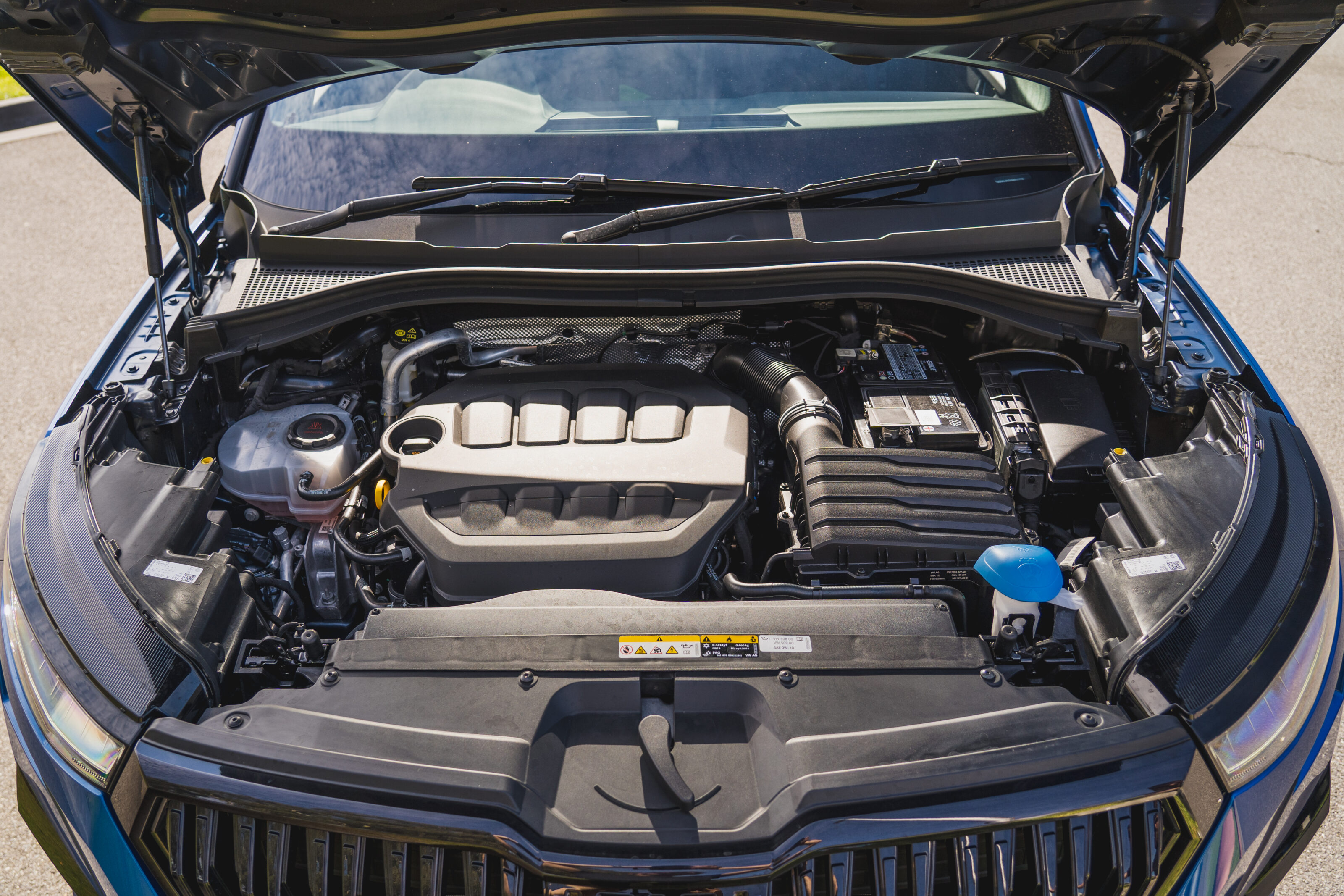
Well, now it’s powered by a petrol mill. Specifically, the same EA888 turbo-petrol four-cylinder unit that drives the lovely Octavia RS sedan and wagon, and the Volkswagen brand’s Golf GTI hot hatch. In the Kodiaq RS, that engine delivers the same 180kW and 370Nm as offered with its mates.
It’s quicker too, claiming to hit 100km/h in 6.6 seconds – four-tenths sharper than the previous version. Doesn’t hurt that the petrol unit is 58kg lighter than the diesel
1
That’s a touch more power but a lot less torque than before – although you get peak torque from 1600rpm through to 4300rpm, while the diesel model tapped out at 2500rpm.
It’s quicker too, claiming to hit 100km/h from standstill in 6.6 seconds – four-tenths sharper than the previous version. Doesn’t hurt that the petrol unit is 58kg lighter than the diesel.
As before, power is sent to an all-wheel-drive system through a seven-speed dual-clutch auto, with the combo leading to a claimed fuel consumption figure of 7.5L/100km. That’s thirstier than the old diesel, which listed an official figure of 6.6L/100km, but still a decent number. We’ll see how close we can get to it.
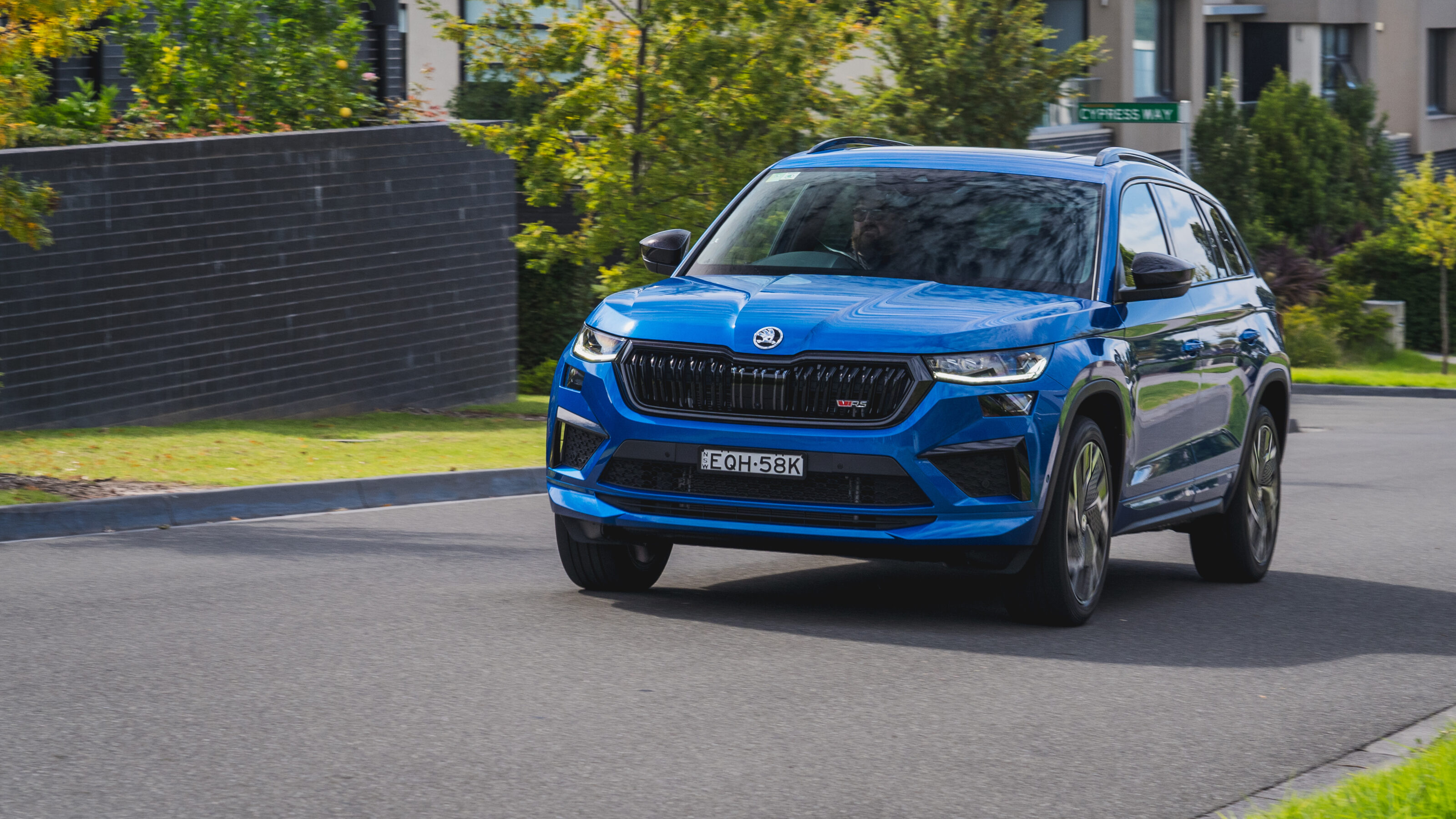
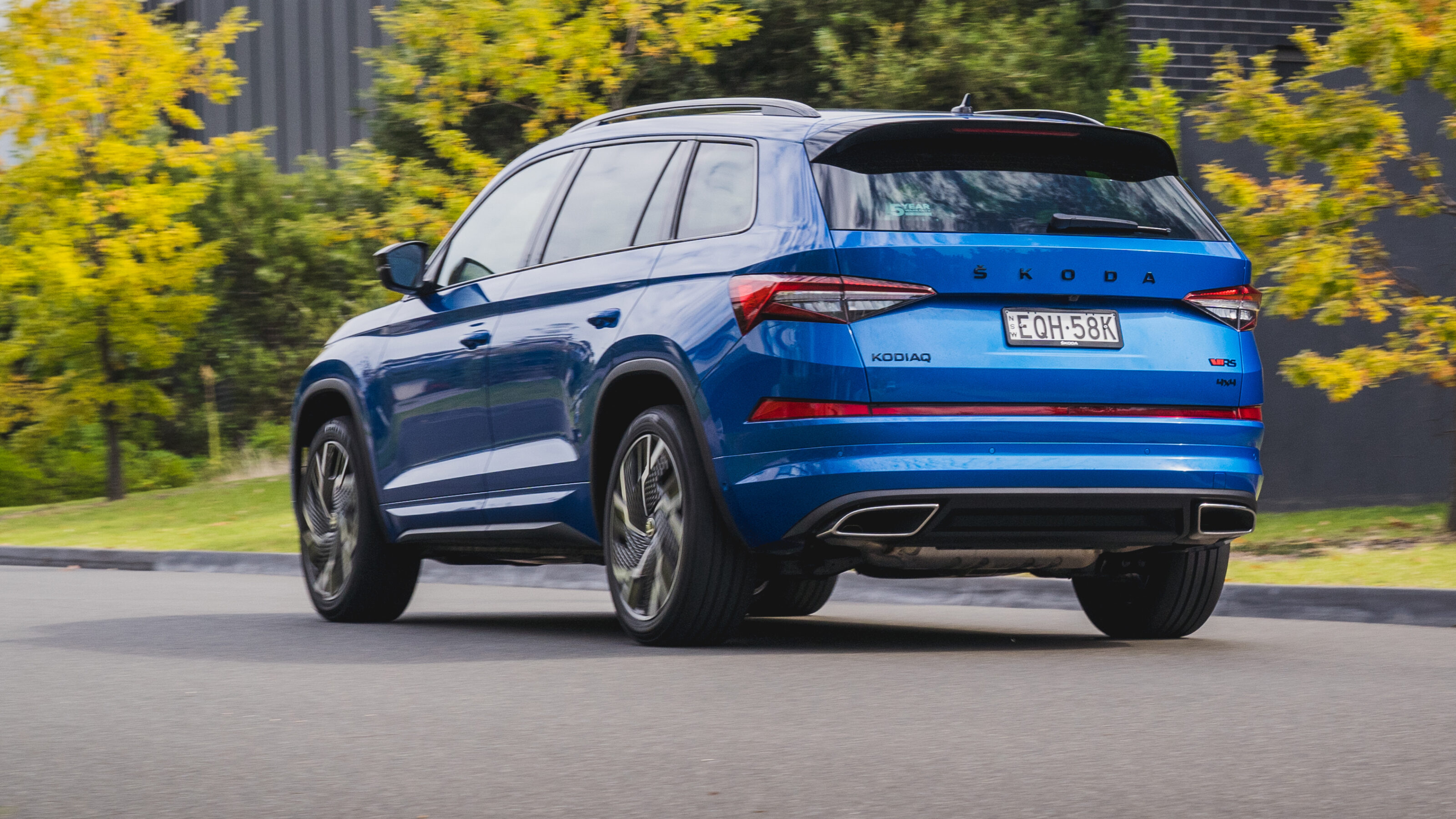
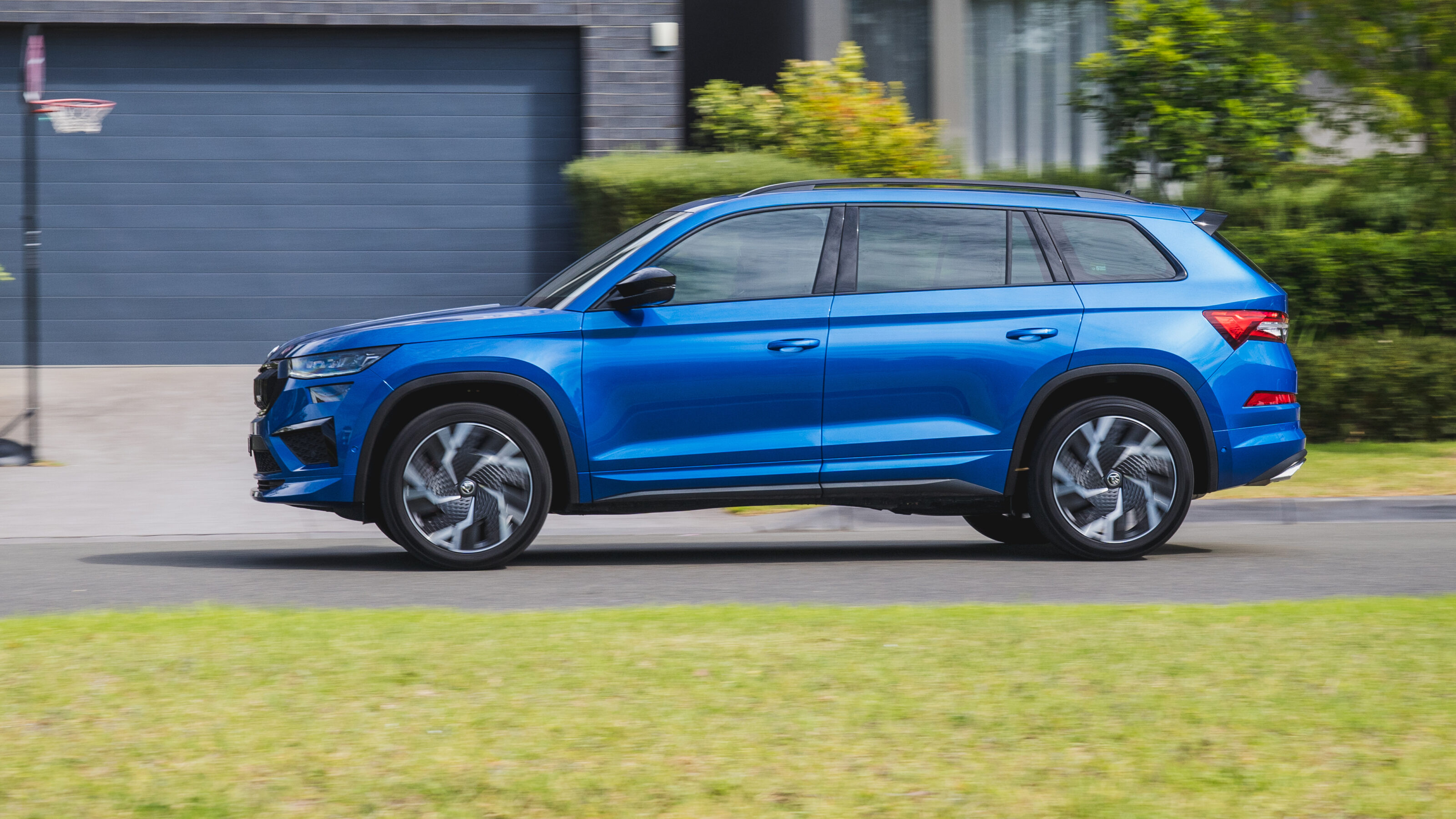
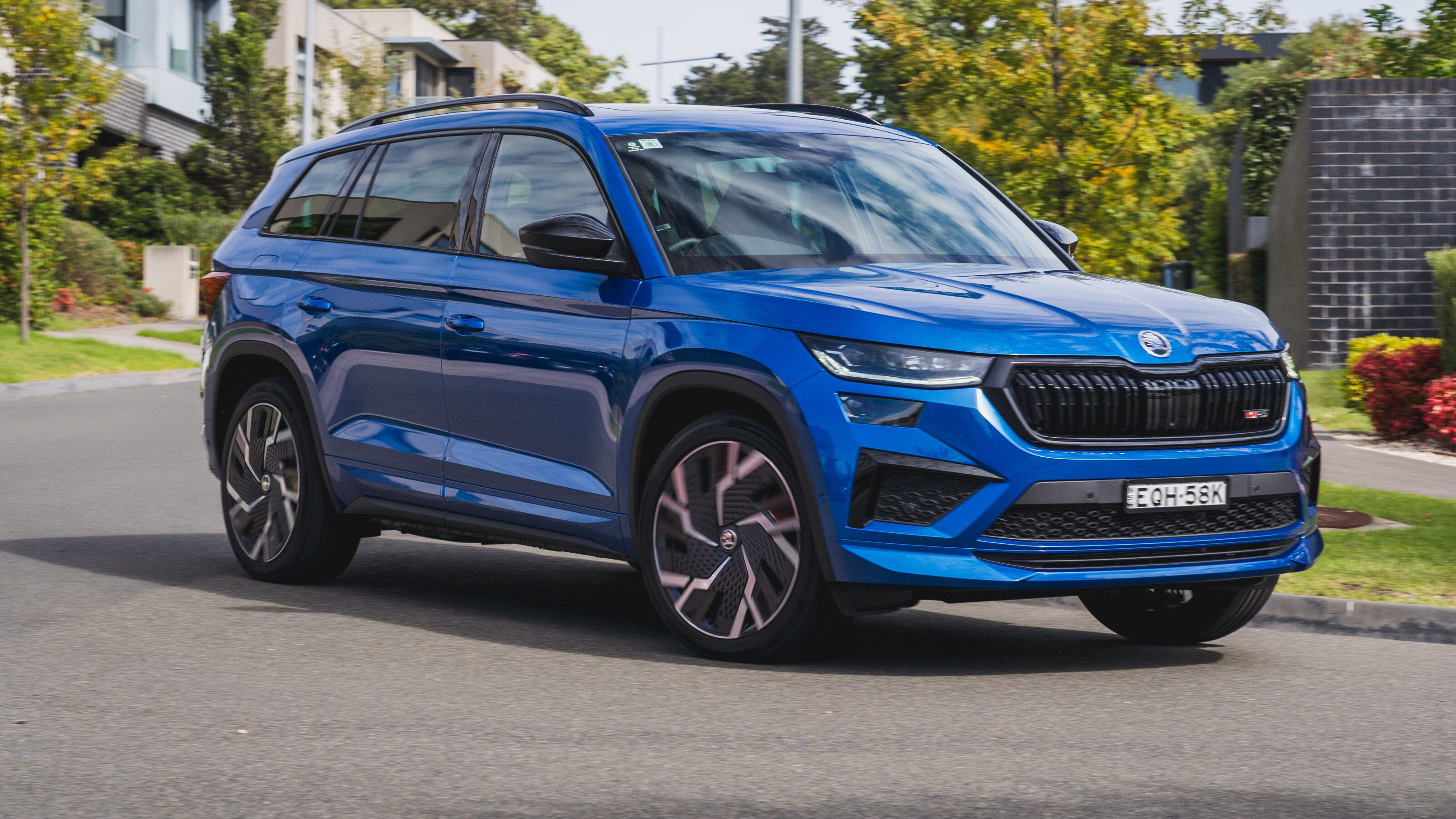
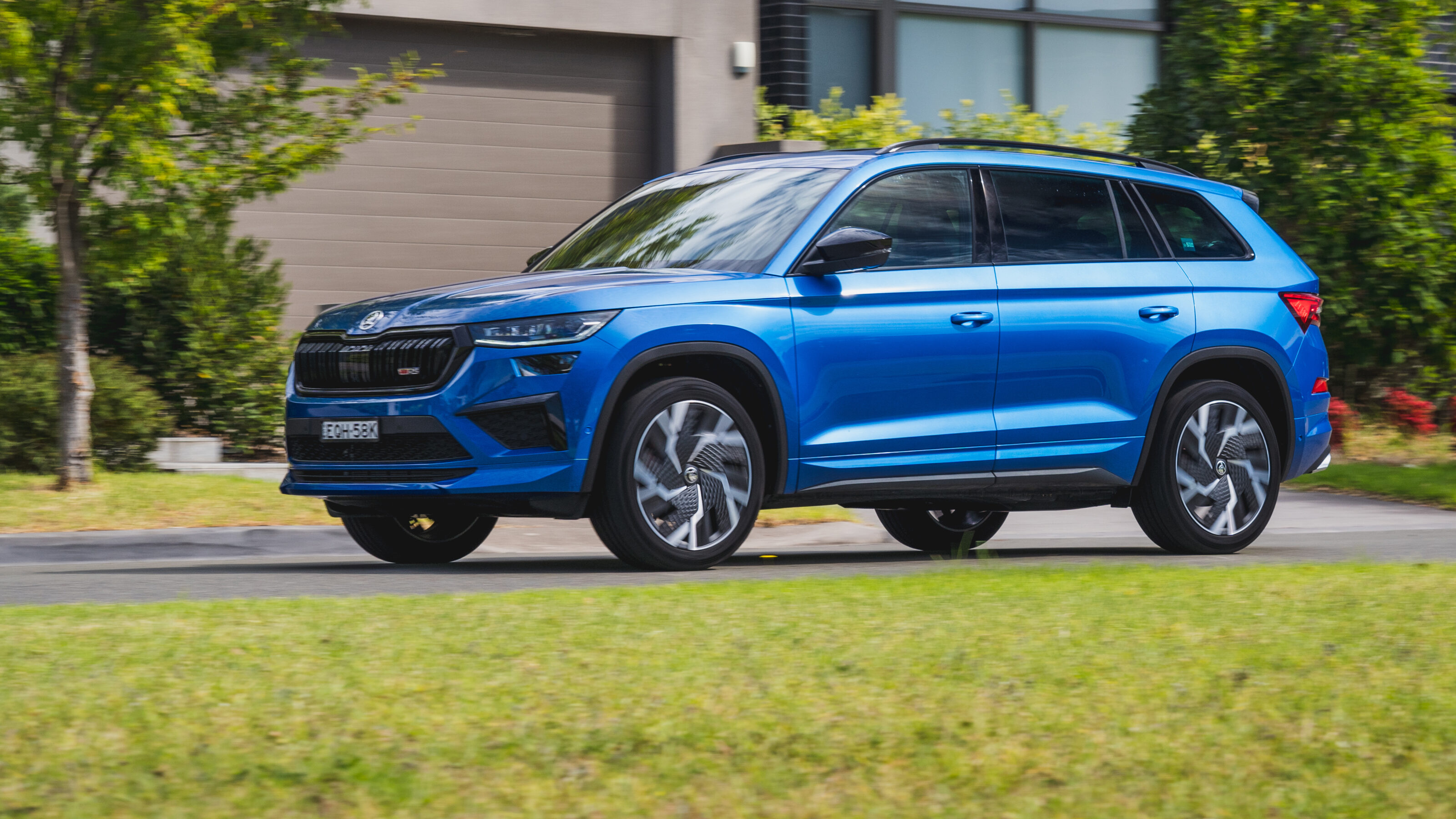
Cosmetically, the updated Kodiaq RS gets subtly redesigned headlights and a reshaped grille set above a meaner new-look bumper. At the rear, you’ll find reshaped tail lamps with a new LED signature, and new black badging with ‘S K O D A’ spelled out across the tailgate in place of the familiar arrow logo – as is the trend in recent years.
1
There’s a new 20-inch wheel design at the corners, wrapped in Continental ContiSportContact 235/45R20 tyres. And here’s a tip: the futuristic techy look of the new ‘Sagittarius’ wheels comes courtesy of aerodynamic panels on the spokes. Don’t like ‘em? No trouble, they’re removable.
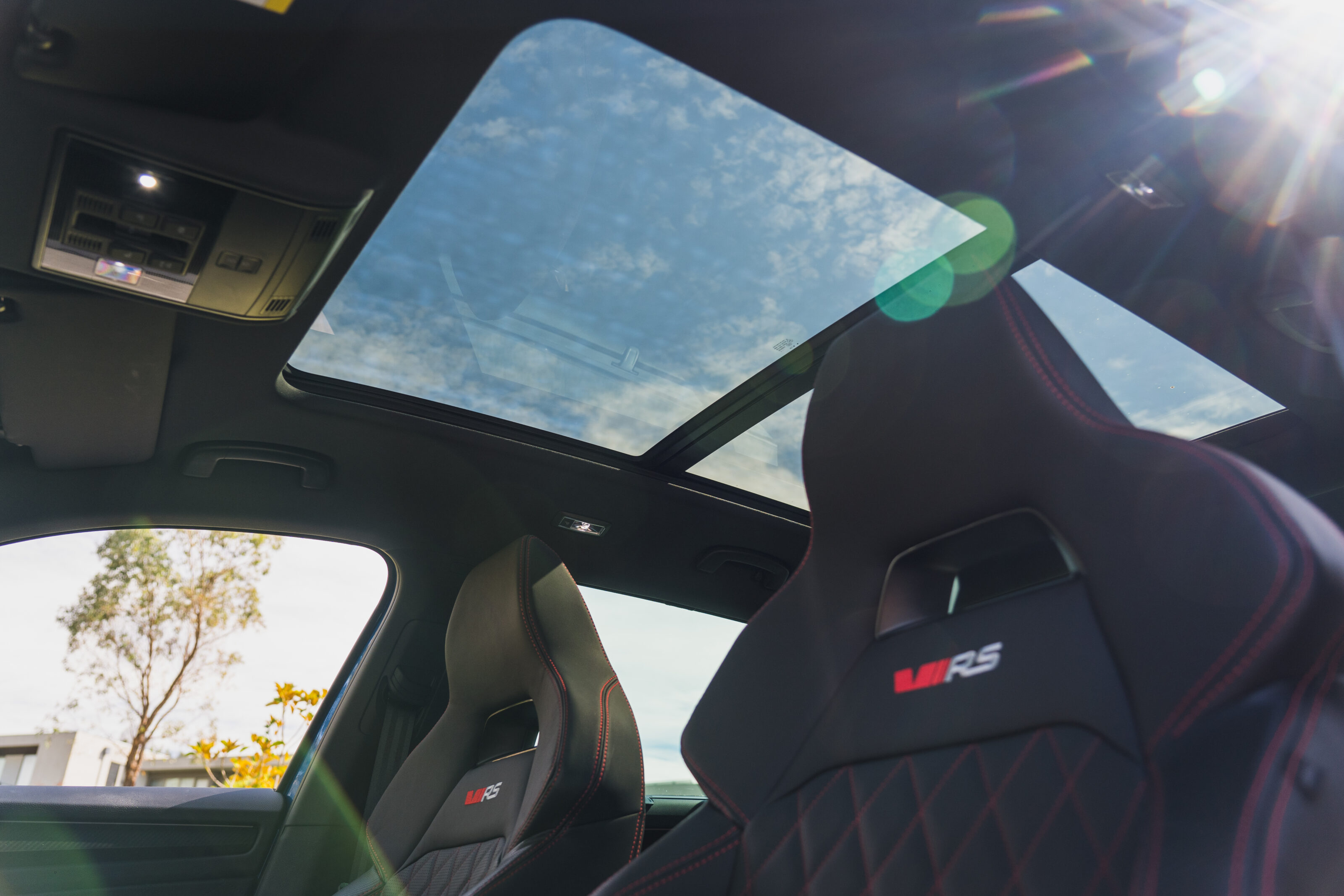
Matrix LED headlights, optional overseas, are standard on the Australian model, and the previously optional $1900 panoramic sunroof is now also standard kit – which might help keen-eyed buyers feel better about the $1450 price rise, but they needn’t worry because the drive-away price has actually fallen $1000 to $74,990.
1
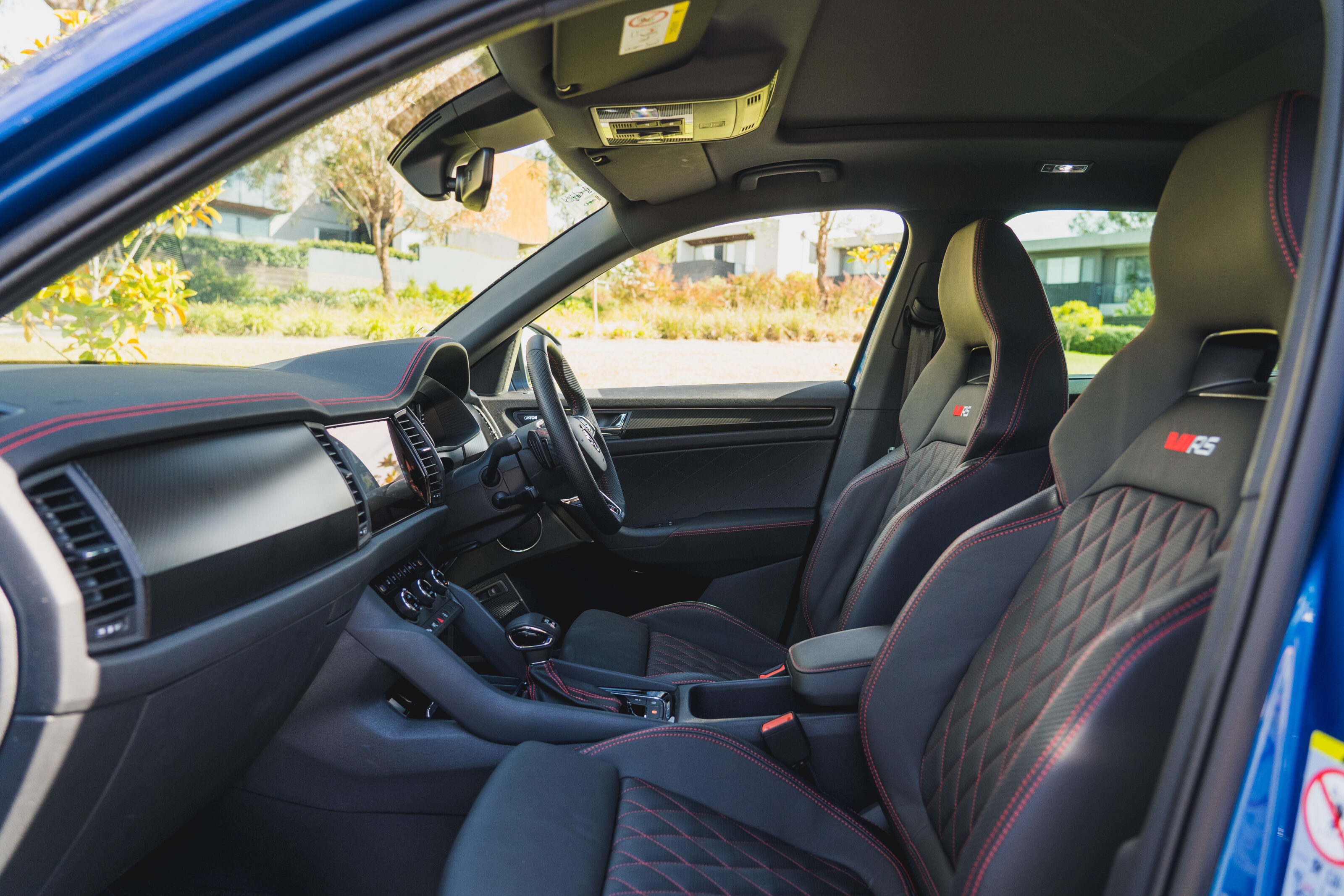
Other newly standard features include scrolling LED indicators at the rear, luggage nets, puddle lights in the wing mirrors, and full leather seats (previously a combo of Alcantara and leather) with ventilation in the front two pews.
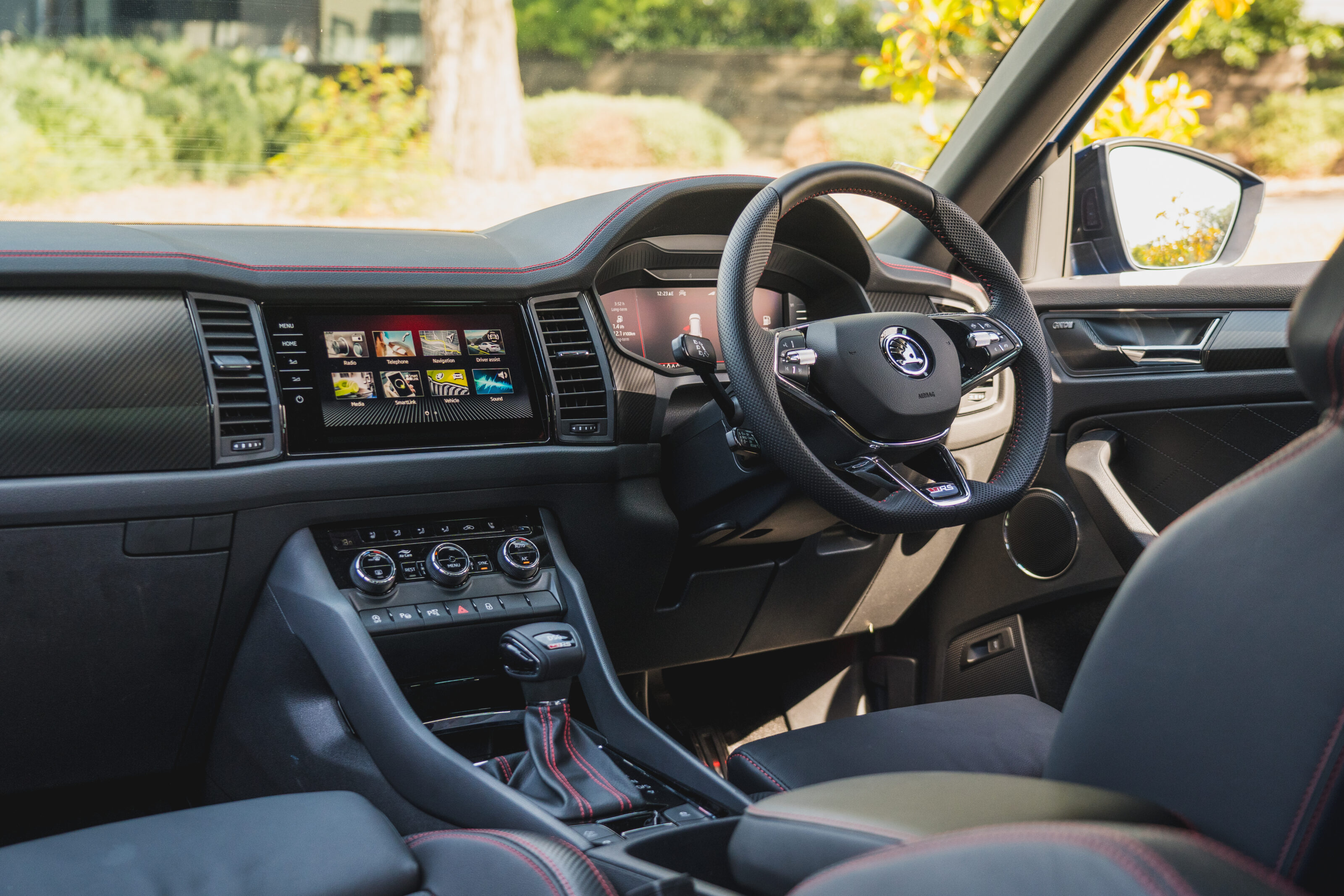
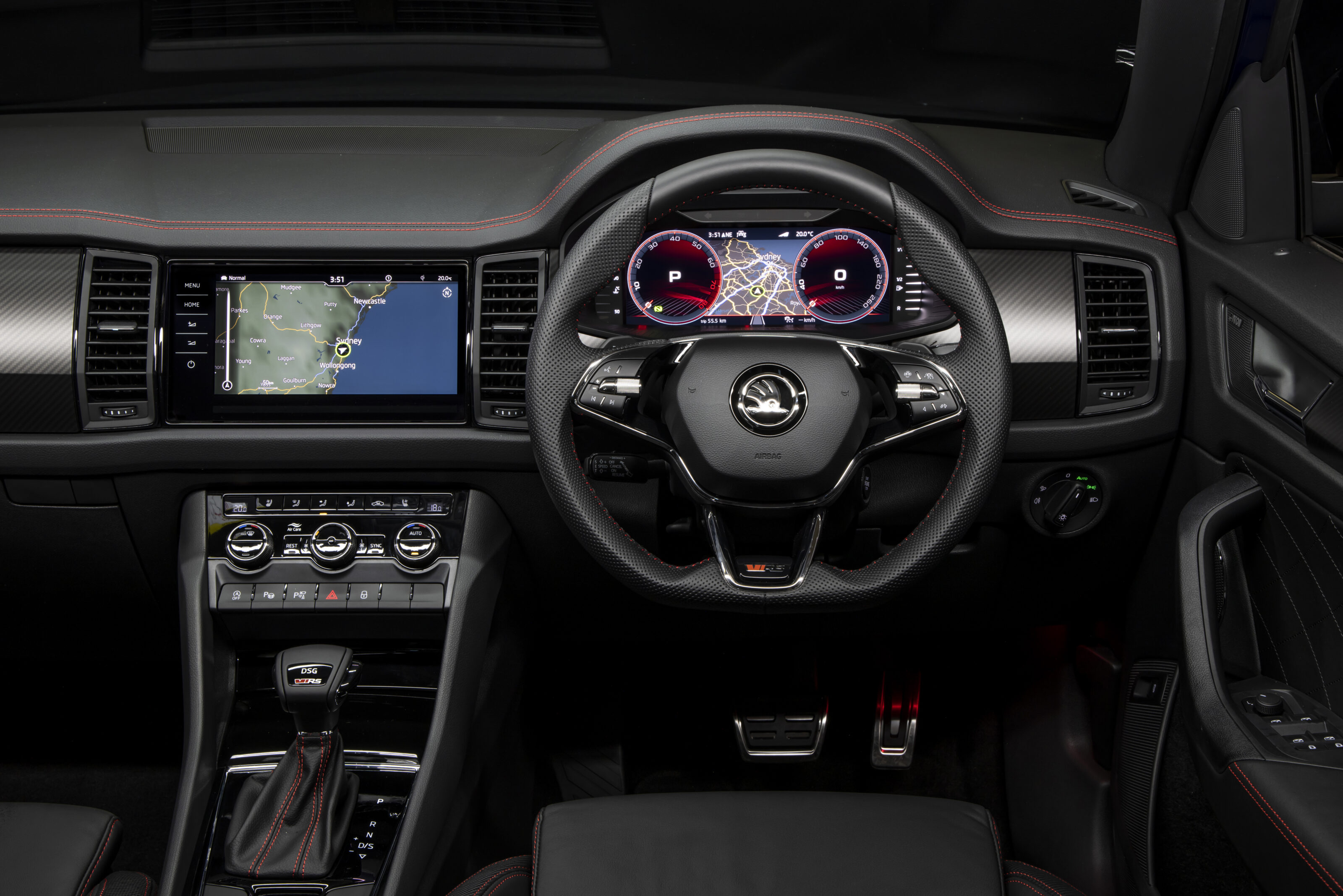
While the interior is otherwise unchanged but for a new steering wheel, these enhancements work to make the new Kodiaq RS feel like a near-premium offering – although, if I’m quibbling, I’d rather still have the Alcantara trim. It’s a common feature of sports models these days, and I quite like it.
It still feels modern inside – particularly on the tech front, with all models getting a 9.2-inch main touchscreen and 10.25-inch instrument display
1
So, how does it go? ‘First’ impressions are strong, with the updated Kodiaq RS feeling at once familiar and rejuvenated, quick and sporting without sacrificing comfort.
While the Kodiaq line is now into its sixth year, it still feels modern inside – particularly on the tech front, with all models getting a 9.2-inch main display, a 10.25-inch instrument display behind the steering wheel, and wireless connectivity for Apple CarPlay and Android Auto.
Over the coming months, we’ll assess this RS model’s seven-seat packaging and performance bent to see if it’s the right car for buyers seeking family-focused practicality matched to a sporting powertrain and suspension package.
Tune in next month for my thoughts on how this new RS drives.
Price as tested: $67,440 ($74,990 drive-away)
This month: 595km @ 10.9L/100km (2458km on odometer)
Total: 1192km
There aren’t many seven-seaters that do this.
‘This’ being SUVs that offer properly sporting levels of power and handling, while providing ample room for the kids and their friends. It’s not really a thing at this price point, and that’s what makes this new Kodiaq RS so compelling.
Skoda’s popular Kodiaq RS is on the smaller side of the ‘large SUV’ segment it plays in, straddling the fence between – for example – the new mid-size Nissan X-Trail and big new Pathfinder that are both launching in Australia this year. It has that in common with the related Volkswagen Tiguan Allspace.
2
The Kodiaq, at 2791mm and 4697mm respectively, is much closer to the X-Trail in size – yet its “Simply Clever” packaging makes it a convincing enough ‘large’ SUV.
But, even though the Allspace and Kodiaq are both seven-seaters, the former is limited to a 162kW hero model, while this Kodiaq RS gets a more flagship-oriented powertrain.
Importantly for the Kodiaq RS, its smaller build means it’s also lighter than most large SUVs, resulting in an athletic capability that makes the most of its 180kW/370Nm 2.0-litre four-cylinder turbo petrol engine – shared with the Octavia RS and VW Golf GTI – and the resulting 56kg weight saving over its diesel-powered predecessor.
2
Fuel use has dropped slightly on this test, now at 10.9L/100km against the 7.5L/100km factory claim – although most of my driving has been urban, which Skoda lists at 9.6L/100km – pretty close to my figures. We’ll have to get some more highway driving in next month.
As a family hauler, the Kodiaq RS delivers a fairly comfortable ride – busy on poor-quality roads but never jarring – despite the big 20-inch alloy wheels and low-profile Continental ContiSportContact 235/45R20 rubber at each corner. There’s certainly no luxurious cloud ride here, even in comfort mode, but then you’d want smaller wheels and more rubber if that’s a big priority for you.
Generally, though, most of the broken surfaces and corrugation we’ve come across in suburban Melbourne have been dismissed neatly through the Kodiaq RS’s standard Adaptive Chassis Control damping.
1
As a family consideration – and my younguns have now been riding in this daily for a month – you can rest easy: the Kodiaq RS remains a comfortable family SUV.
The RS also benefits from a seven-speed dual-clutch auto that has proven responsive and quick in most situations. It still suffers from moments of brief hesitation when suddenly pushed, but it’s never as easily confused as past generations of Volkswagen’s DSG design.
Flick the gear lever down to engage sports mode and that transmission becomes its most ready and engaged self, with rapidfire shifts up and down, responding willingly to paddle shifts and, in most cases, allowing you to override the computer on downshifts.
2
Frustratingly, when the system elects to hold onto lower gears, the synthesised engine noise – a bit of childish guilty-faced fun at takeoff but mostly droney and grating when cruising – can be at its loudest and most irritating. You may feel an urge to shift up manually just to tone it down, but at least you can disable the artificial soundtrack by switching to comfort mode.
In sports mode you’ll get more weight through the progressive steering system to deliver some confidence in spirited driving, although feedback from the road is largely absent.
While the Kodiaq RS can’t get around the fact it’s a tall seven-seat family car, its steering is overall accurate and faithful. It’ll go where you point it, and that’s no small accomplishment.
2
As a performance-oriented take on the classic family SUV, the RS is never a red-hot thrilling drive, but that’s not the mission. This is a family car first and foremost, but it’s not a mere caveat to say buyers shouldn’t expect hot-hatch dynamics from a high-riding wagon, because you can certainly have something like that in the new and much meaner 235kW/400Nm Tiguan R for similar money.
No, this RS – as with the Octavia RS – combines practicality and comfort with affordable performance, and while the former is in some ways limited by the Kodiaq’s segment-straddling size, the latter is more deliberately tempered for an overall better experience.
For many buyers, that’s the right mix – and hitting 100km/h in 6.6 seconds means the Kodiaq RS is no slouch.
But…
The Kodiaq isn’t without its frustrations, though: on the technology front, the ‘Travel Assist’ system in our tester has been regularly throwing noisy ‘currently unavailable’ alerts up on the screen – seemingly provoked by glare hitting the front-mounted cameras.
And, more than a few times, the reversing camera has failed to activate, showing only the parking sensors on screen and forcing the use of (gasp) mirrors and head-checks. I’ll explore tech further in my next instalment.
Up next? A deep dive into the Kodiaq RS’s “Simply Clever” interior and technology.
We’ve been out testing the Kodiaq RS against its show-off cousin in the Volkswagen stable, the new hero Tiguan R. You can catch a brief tour of the two side-by-side in the Instagram post below, and keep an eye out for the full story in the coming weeks.
Price as tested: $67,440 ($74,990 drive-away)
This month: 943km @ 11.5L/100km (3401km on odometer)
Total: 2135km
The Skoda Kodiaq, for a car now into its sixth year on the international market, remains a well-equipped rig.
Highlights from the standard features list for every variant include full-LED headlights and tail lamps, dynamic (animated) LED indicators at the rear, a powered tailgate, wireless Apple CarPlay and Android Auto, and a pair of 10.25-inch main and 9.2-inch instrument cluster displays. Not as big as some screens now, but big enough.
In all, there’s a lot of kit here you won’t find standard on the entry model of most rival line-ups – although, with a $48,540 starting price for the base Style grade, you’d expect a good spread. (See the full spec list at whichcar.com.au/skoda/kodiaq)
2
For safety, each model gets nine airbags, autonomous emergency braking with predictive pedestrian protection, adaptive cruise with stop-and-go, a rear-view camera and front sensors.
You’ll need to step up to Sportline or RS for more than that, or explore the options packs detailed at the link above.
Highlights of the Sportline include an upgrade to full Matrix LED headlights and adaptive high beam, a powered driver’s seat (yes, missing from the otherwise well-equipped Style), selectable driving modes and progressive steering.
Personal highlights for me, resident tech nerd, include the presence of a phone charging pad to make best use of the wireless CarPlay and Android – although my phone is a little too large to sit comfortably in the space provided – and the touch-sensitive lock/unlock sensors in all four external passenger door handles.
Oh, and how can I forget the flip-out door protectors? Ford beat Skoda to this innovation, but unlike Ford, Skoda has really picked up the ball and run with it as a standard feature. The real question is, why don’t all cars have this?
Then we get to the hero of the range, and of this story, the Kodiaq RS. Here, Skoda lifts the tech package with three-zone climate control, heated seats in first and second row, ventilated and powered front seats, 12-speaker 625W Canton audio, a hands-free upgrade for the powered tailgate and a 360-degree surround-view camera.
Safety is also significantly bolstered in the RS, gaining blind-spot detection, traffic-jam assist, lane-keep assist, emergency assist, rear cross-traffic alert and park assist.
For my money, I’d prefer to see blind-spot and lane-keep assist made standard at the entry level rather than forming part of a $6500 Luxury Pack, but it certainly highlights the value in the Kodiaq RS.
1
It’s also worth noting that the ongoing global semiconductor shortage affecting most brands has led Volkswagen Group to offer buyers a choice: go without some features to get your car built sooner (and with a refund on the missing tech), or stick with the standard kit if you can live with a longer wait as the necessary chips become available. For resale value, we’d recommend patience.
Our tester, no surprise, is equipped as the maker intended – with all comfort, convenience and safety features present and accounted for. And, for the most part, it all works well.
The integrated infotainment and navigation are intuitive to use and quick to respond, if a little outdated aesthetically. I wonder though if most people these days don’t simply defer to the immediately familiar CarPlay and Android interfaces – particularly here, where the wireless and automatic connection makes it a seamless default.
1
Frankly, I recommend it, and after having to plug my Android phone into the updated RAV4 and new-generation HR-V this week (watch for that hybrid face-off soon), I also applaud Skoda for including wireless connectivity in its facelifted six-year-old SUV.
That extensive suite of active safety tech has also proven reliable and well-mannered, with features like collision alert and lane-keep assist all working quietly and without any frustrating false alarms – a welcome change to my experience with the Tucson I spent a few months with.
In fact, the one time the car’s rear cross-traffic alert and braking has had to save me some embarrassment – when I failed to eye a car tearing past a little too quickly as I reversed from a parking spot – it was both a shock and a welcome reminder that I’d forgotten the system existed.
(I wasn’t saved much embarrassment though; my partner blamed the event on me being inattentive…)
1
So far, the only bug has been an alert that beeps loudly and flashes in the instrument display to warn me, “Travel Assist currently unavailable”. This is the active cruise control and lane assist, so it’s no small issue.
Skoda tells me it might be a result of glare hitting the front-mounted cameras, which seems to align with my experience so far.
They’ve promised to investigate when the vehicle is returned, and we’ll update this story when we know more. Have you experienced this with your Skoda?
Next month, we’re going to explore that ‘Simply Clever’ interior. It lives up to the motto, but there are still a few clever features I’d like to see added. Stay tuned…
Price as tested: $67,440 ($74,990 drive-away)
This month: 251km @ 10.2L/100km (3652km on odometer)
Total: 2386km
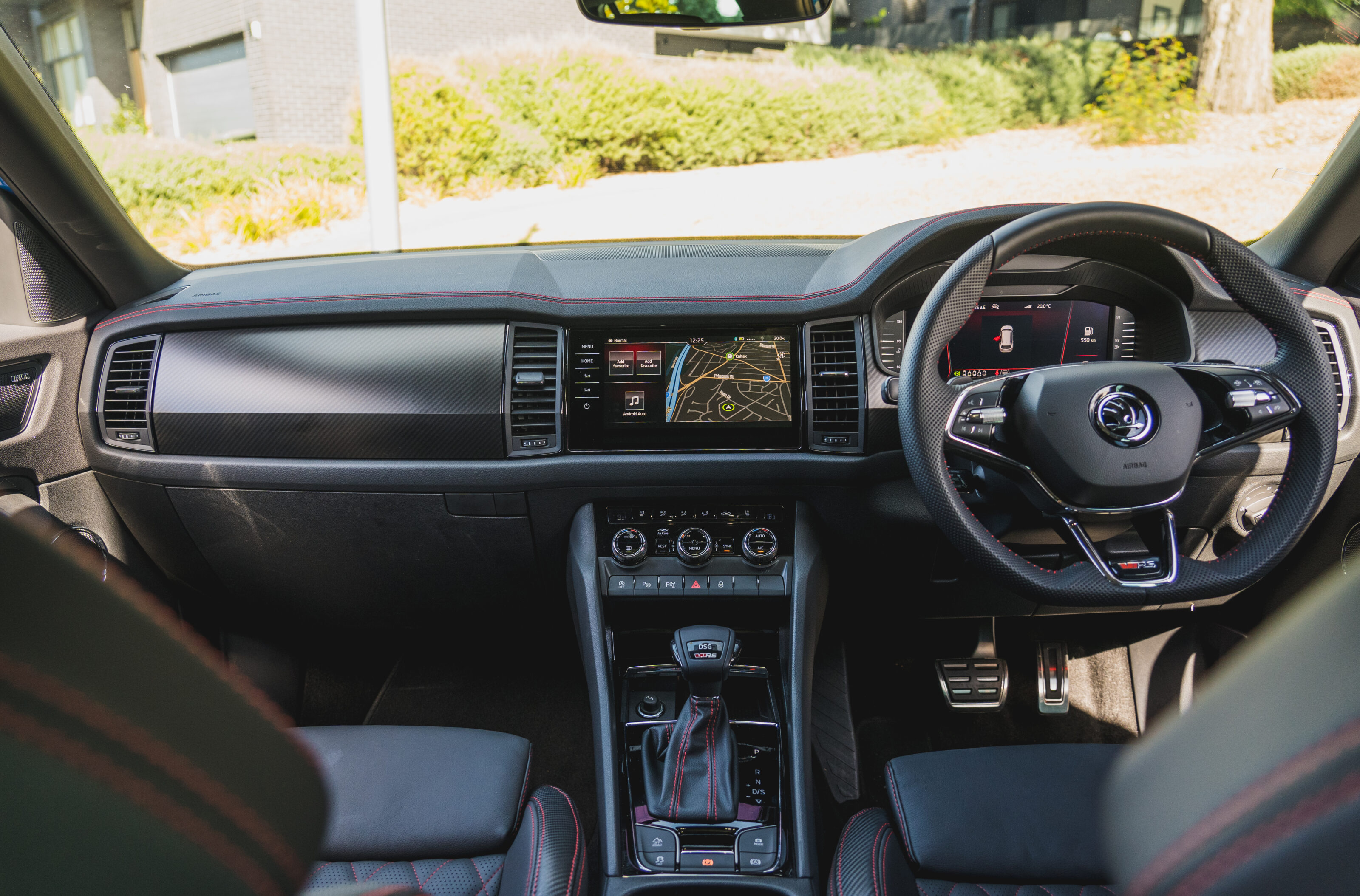
In some ways, the front row of the Kodiaq feels a little lost in time. Sure, it boasts a large 9.25-inch display behind the steering wheel and a sizeable 10.25-inch screen in the dash. Yes it has wireless Apple Carplay and Android Auto – something many of its newer rivals still don’t offer – and it has a new steering wheel design too.
Move past those details, though, and this facelifted Kodiaq’s interior is largely as it was when it first debuted at the 2016 Paris motor show. (Remember motor shows?)
In isolation, the Kodiaq’s cabin doesn’t look outdated as much as it does purposeful – but if you slide out of that SUV and into the shiny new Octavia RS sitting nearby on the showroom floor, you might think… “Ah, yes. This is new.”
1
There you get a flowing design across the dash with a more premium look and the floating tablet display that buyers now associate with modern. There’s a compact toggle-like gear selector instead of the Kodiaq’s big lever, and the faux carbon-fibre highlights are replaced here with a lovely Alcantara trim.
But look, forget all that, because the Kodiaq’s cabin feels right for the car. That big ol’ gear lever is suited to the SUV, as are the big grab handles either side, hinting at some off-roading potential. Likewise, I’d take those ‘old school’ HVAC dials over on-screen controls any day of the week.
More important, is that this cabin is a lovely place to be. As an RS model, the Kodiaq’s diamond-quilted leather seats offer substantial bolstering for a snug fit that holds you firmly in spirited driving, without being aggressively stiff or tight like a ‘proper’ sports model.
2
Thigh and adjustable lumbar support are good, as is leg and shoulder room in the front row, while the heated (and ventilated) seats have been welcome items on the RS grade’s standard kit list this chilly winter. A number of road trips have also proven the long-haul comfort of these pews, staving off fatigue and aches neatly.
Steering is reach and height adjustable, albeit by lever rather than electronic switch, so a memory position for different drivers isn’t possible.
Comfort in the second row is excellent, even with the huge panoramic glass above, with good shoulder and hip room for three adults, decent toe room and good knee space behind my five-foot-10 driving position. There’s outboard ISOFIX points and three top-tether points in the second row, and the seats can also recline by about 10 degrees.
2
Second-row passengers also benefit from a climate zone of their own, with vents and temperature controls in the back of the centre console, along with heated outboard seats. Weirdly there are no USB points in the second row, despite an obvious allowance for them either side of the 12V outlet. Skoda tells us this is due to a regional difference, with the Kodiaq’s rear USB points coming in combination with a 230V socket – which is only approved for the European market.
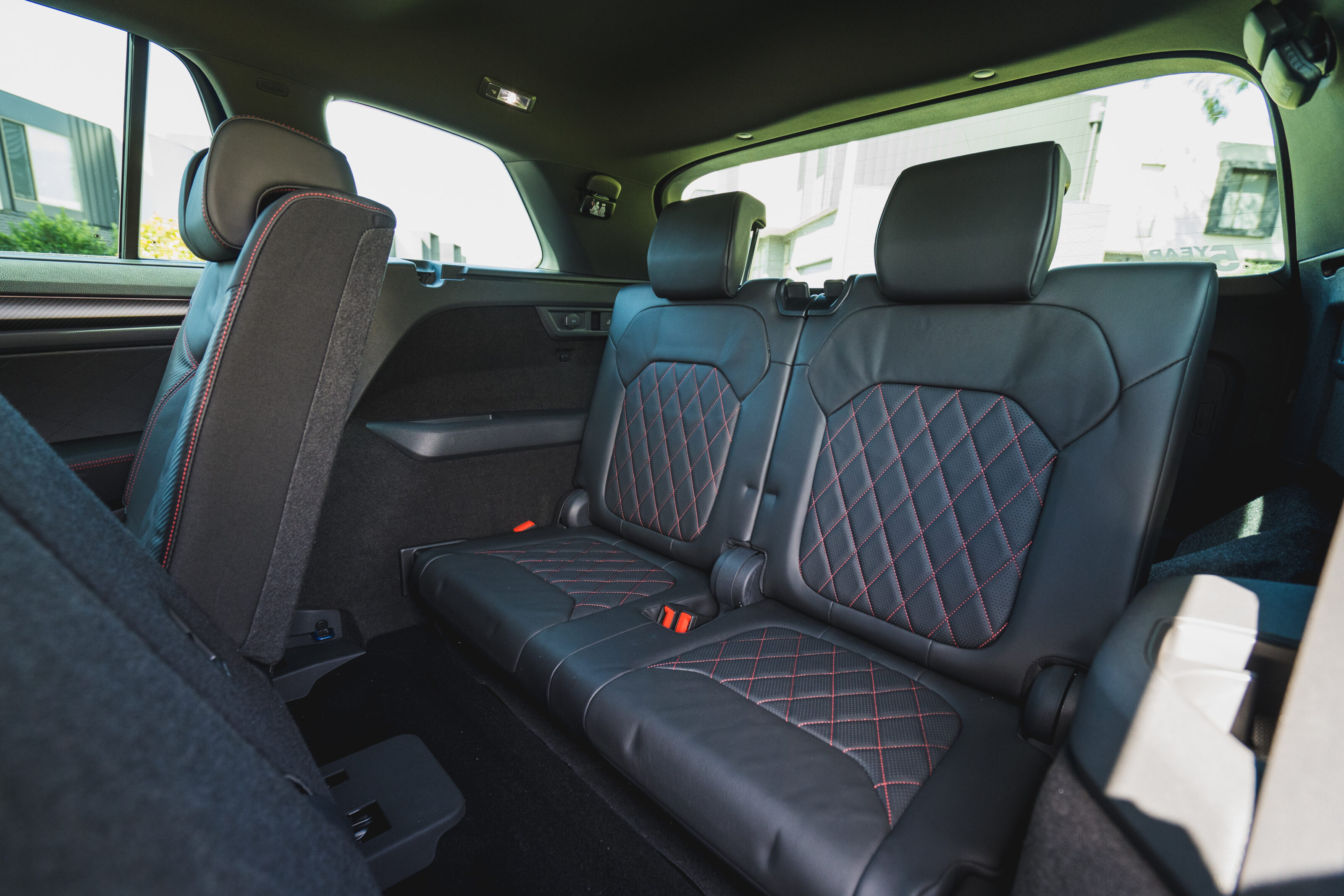
The third row of the Kodiaq, while the least spacious, benefits from the second row’s sliding design – allowing more leg room as needed in the very rear. It’s still a squeeze though, and really only suited to kids old enough for a seatbelt (there are no child seat anchor points back here).
They’ll live in relative luxury at least, with reading lights, an accessible third 12V point and heating/cooling vents.
1
Rear storage is limited to a tiny 270 litres in three-row mode, but if that’s only occasional for your family, you’ll have a very practical 765 litres as a five-seater.
The second row also features a 40:20:40 split folding design, offering a variety of ways to load in items and passengers on the way to a maximum storage capacity of 2005 litres. That’s huge.
The boot offers flip-out bag hooks, an included cargo net, a two-section floor for dividing items and gaining a little extra space, and a handy under-floor stowage spot for the luggage curtain – on top of the space-saver spare wheel – if you need it out of the way.
‘Simply Clever’ features like that extend through the cabin, but it’s also a mixed bag of surprise omissions.
2
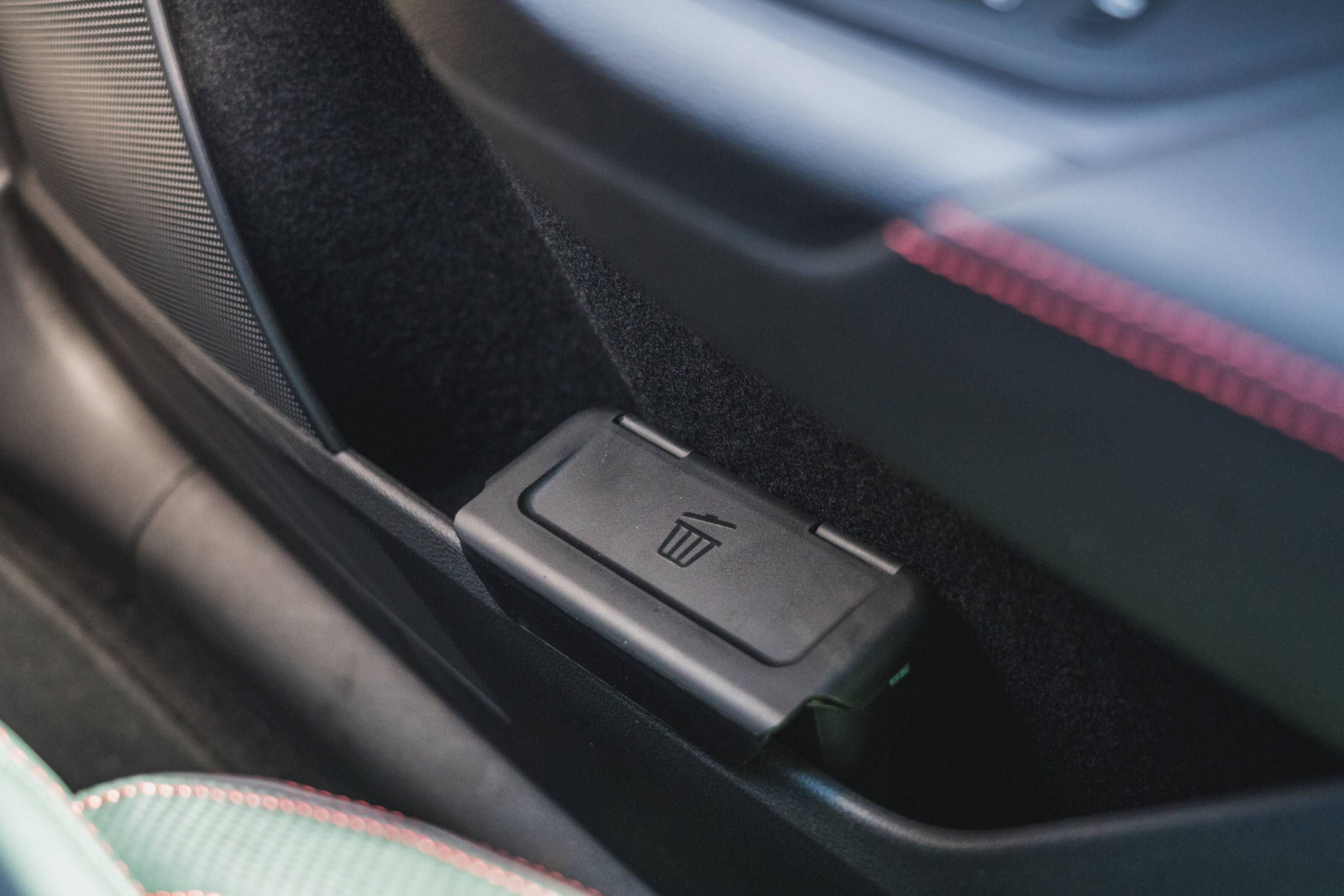
You get a little lidded bin in the driver’s door pocket and an umbrella hidden away in each of the front doors – all classics of the Skoda formula – but you don’t get many tricks in the second row. The pull-up sun shades are a great addition, but that’s as clever as it gets.
Back to the front, you get a second glove box in the dash, and the stowable cup holders in the centre console are also a neat design piece. But, I reckon it’d be cleverer still if the sun visors were extendable…
It’s easy to expect the next Kodiaq will take a big leap forward in cleverness, but in 2022, this one might be trading just a touch too hard on reputation. A well-earned one, mind you.
Price as tested: $67,440 ($74,990 drive-away)
This month: 642km @ 10.4L/100km (4294km on odometer)
Total: 3028km
Last stop, everyone out – this seven-seater journey is done.
Let’s open this conclusion with some context. Only recently, Volkswagen launched the stupendously rapid Tiguan R SUV in Australia. Wearing a price tag of $68,990 before on-road costs, the Tiguan R is $13k pricier than the 162TSI that previously acted as the hero model – but the bigger spend gets you 235kW and 400Nm and a 0-100km/h time of 5.1 seconds.
Worth it? Arguably yes, when most SUVs with comparable performance are more expensive models from premium marques.
1
It’s not the Tiguan R we’ve got on test here, but at $67,440 before on-road costs, our Kodiaq RS and its 180kW/370Nm 2.0-litre turbo petrol four might seem poor value when held up against the top-shelf Tiguan.
But it isn’t. True, the Kodiaq RS isn’t as quick or as capable, but with a 0-100km/h time of 6.6 seconds, it’s no slouch – and the similar money gets you the third row of seating that more and more buyers are looking at as a must-have.
Ultimately, you’re looking at a horses-for-courses assessment. If what you need is seven seats, and what you want is a sports package with more poke and prowess than the average hauler, you’ll lean more to the Skoda than you will the Volkswagen. You don’t need to agonise over a pros-and-cons list to make that call.
1
On the road, the Kodiaq RS neatly blends daily commuting comfort with a readiness to respond to whatever brief yearning you might have to pretend you’d never talked yourself into a life that necessitates seven seats. It will respond, and rapidly, thanks to that turbo heart – donated by the Golf GTI and Octavia RS – and its mostly intelligent seven-speed dual-clutch auto.
(If it helps, you can even tell your mates the Porsche Macan T has the same engine. Just don’t tell them how it makes more power and torque, as a Porsche should.)
Fuel consumption at the end of our time with the car worked out to 10.4L/100km against a combined-cycle claim of 7.5L/100km. In fairness to Skoda, though, most of our driving was around town, which is listed more specifically at 9.6L/100km. So, a good result.
1
Inside, it’s clear that while Skoda might still have an outdated image for some as the more cheaply-made ‘budget friendly’ cousin to the Volkswagen brand, fit and finish in the Kodiaq RS doesn’t disappoint. Material quality is on par with its ‘semi-premium’ VW stablemates, and items like diamond-quilted leather seat trim and red feature stitching all work to establish the RS as a flagship offering.
That said, the Kodiaq is showing its age when it comes to the ‘wow factor’ that buyers increasingly expect to see on the technology front, with a comparatively small 9.2-inch main screen and 10.25-inch instrument digital instrument cluster where a number of brands are now throwing pairs of 12.3-inch monster displays at the dash.
It seems like a lifetime since a 10-inch display was considered large in a car this size, or a full-digital instrument screen was a unique selling point, but here we are. Still… first-world pretensions, right?
1
Importantly, buyers not obsessed with the latest aesthetic trends will find Skoda’s infotainment is fast, clear, intuitive and – thanks to reliable wireless Apple Carplay and Android Auto – perfectly familiar and modern enough to satisfy.
While the infotainment didn’t disappoint this confessed gadget-head, an unresolved bug with the Travel Assist system – regularly resulting in an irritating beeping and an alert in the instrument display – was a different matter, flaring up any time the window-mounted cameras copped a lens-full of glare.
Volkswagen didn’t readily have an explanation or solution for us, and a search of the web suggests it wasn’t a bug unique to our car.
1
That safety concern, while no small point, was at least our only lasting frustration with the Kodiaq RS. Of course, small things like the absence of USB points in the rear rows (something to do with Euro-market voltages), or a lack of ‘Simply Clever’ storage tricks in the second row, might stand out for some.
It’s worth noting that before the RS came along, there was the Kodiaq Sportline, and it still exists now. It’s $14,000 cheaper and, while you get quite a lot less power and equipment for the saving, it still looks primo, inside and out. It could just be quick enough, and well-enough equipped, for your spend.
But, if you do lean to the RS and the price doesn’t offend, you’ll find good value for money.
Independent crash-testing results for the BYD Atto 3 electric SUV will be announced in the coming months.
EVDirect, the third-party distributor for BYD in Australia, states the Atto 3 is currently undergoing crash testing at Euro NCAP in Europe, which is likely to be carried across by the Australian New Car Assessment Program (ANCAP).
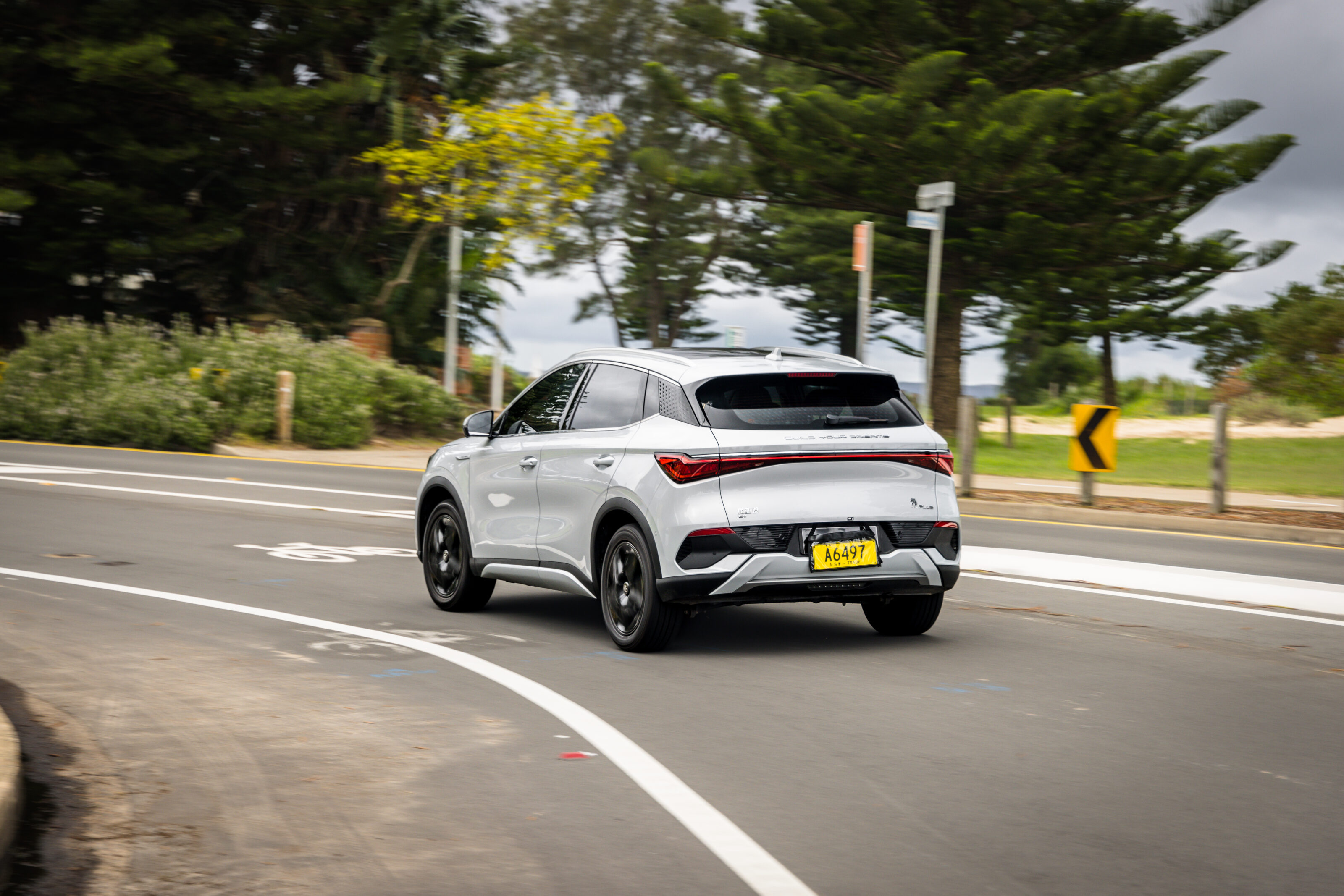
On its website, Euro NCAP lists the BYD Atto 3 in a dropdown menu used to search vehicle safety ratings, with results expected as soon as mid-October.
1
Euro NCAP and ANCAP released its latest crash-test results for the Tesla Model Y, Kia Niro and Genesis GV60 (and two GWM vehicles for Europe) on September 6, with the next set of results to be announced on October 12.
While EVDirect claimed it would launch the Atto 3 with a maximum five-star safety rating earlier this year, vehicles are now being delivered without a safety rating.
“BYD is committed to the ANCAP safety rating process and details of the results for each BYD model will be released once testing has been completed,” reads EVDirect’s local website.
“The Atto 3 is currently undergoing testing in Europe in conjunction with ANCAP Australia.”
1
All versions of the BYD Atto 3 feature a suite of active safety equipment as standard, such as autonomous emergency braking and lane-keep assist – in addition to a front-centre airbag, which is a key component for many vehicles that have received a five-star rating under the latest 2020-22 criteria.
The first deliveries of the 2022 BYD Atto 3 Extended Range commenced in Queensland last week, with customer examples now rolling out across the nation – including the first in Victoria – following a two-month delay.
Until 1998, the only time the word ‘premium’ was used in the same sentence as ‘Japanese’ and ‘SUV’, was to describe a distinct absence of anything fitting that bill. In fact, aside from the venerable Range Rover, there wasn’t really any vehicle in the late 1990s that could stride across a muddy field while treating its occupants to a little luxury.
Then the RX 300 arrived and it created a rift in the high-rider landscape that other brands simply couldn’t ignore.
Nowadays, virtually every crossover that offers a reasonable blend of on- and off-road ability wrapped up in a premium shell owes a little of its existence to the RX. In the ensuing years, however, perhaps a little too much Toyota family resemblance started to wear through the gilding – prompting some to label the latter generations a bit pricey.
1
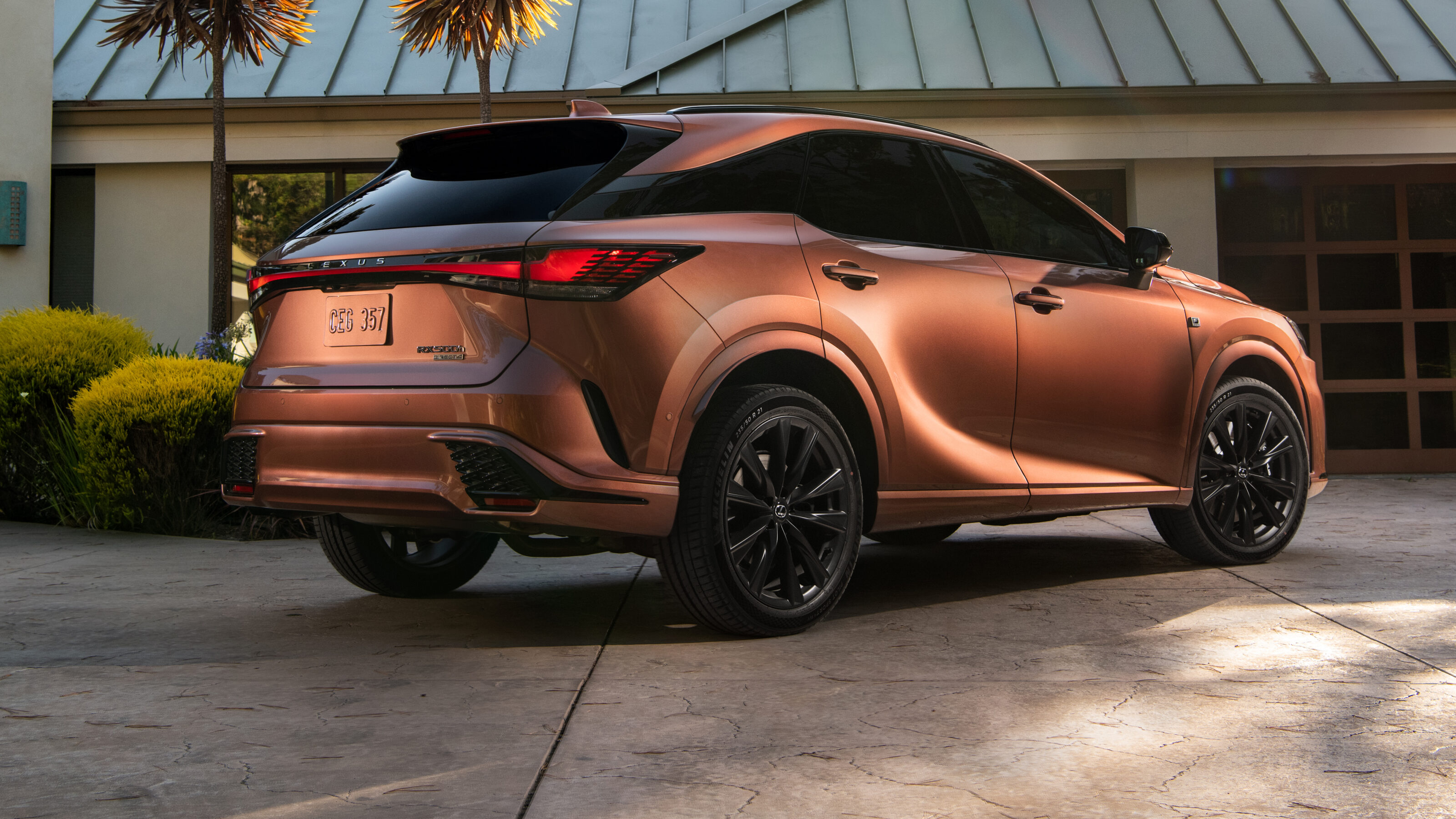
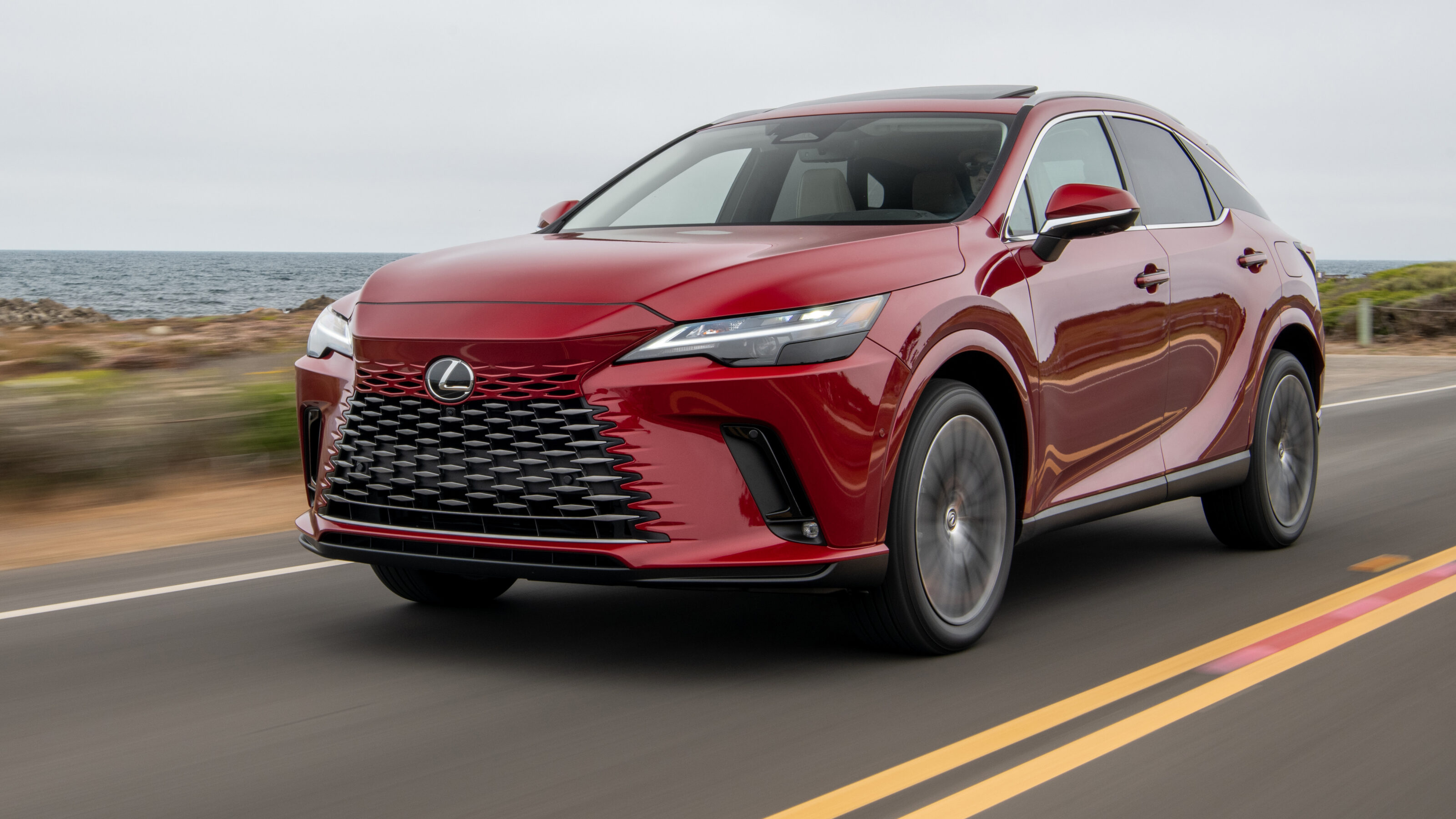
Now though, the fifth-generation RX has arrived and it brings some significant changes encapsulating a company-wide strategy to appeal to more driving enthusiasts, more breathing space from parent Toyota and a very different-looking line-up.
Let’s make something very clear – the new RX is not a light revision of the previous model and there’s very little beyond a boot badge to connect it to its predecessor. Under its radically revised styling, the RX has now adopted the Toyota New Global Architecture K platform (except, for Lexus’s purposes, it has dropped the TN to leave just GA-K).
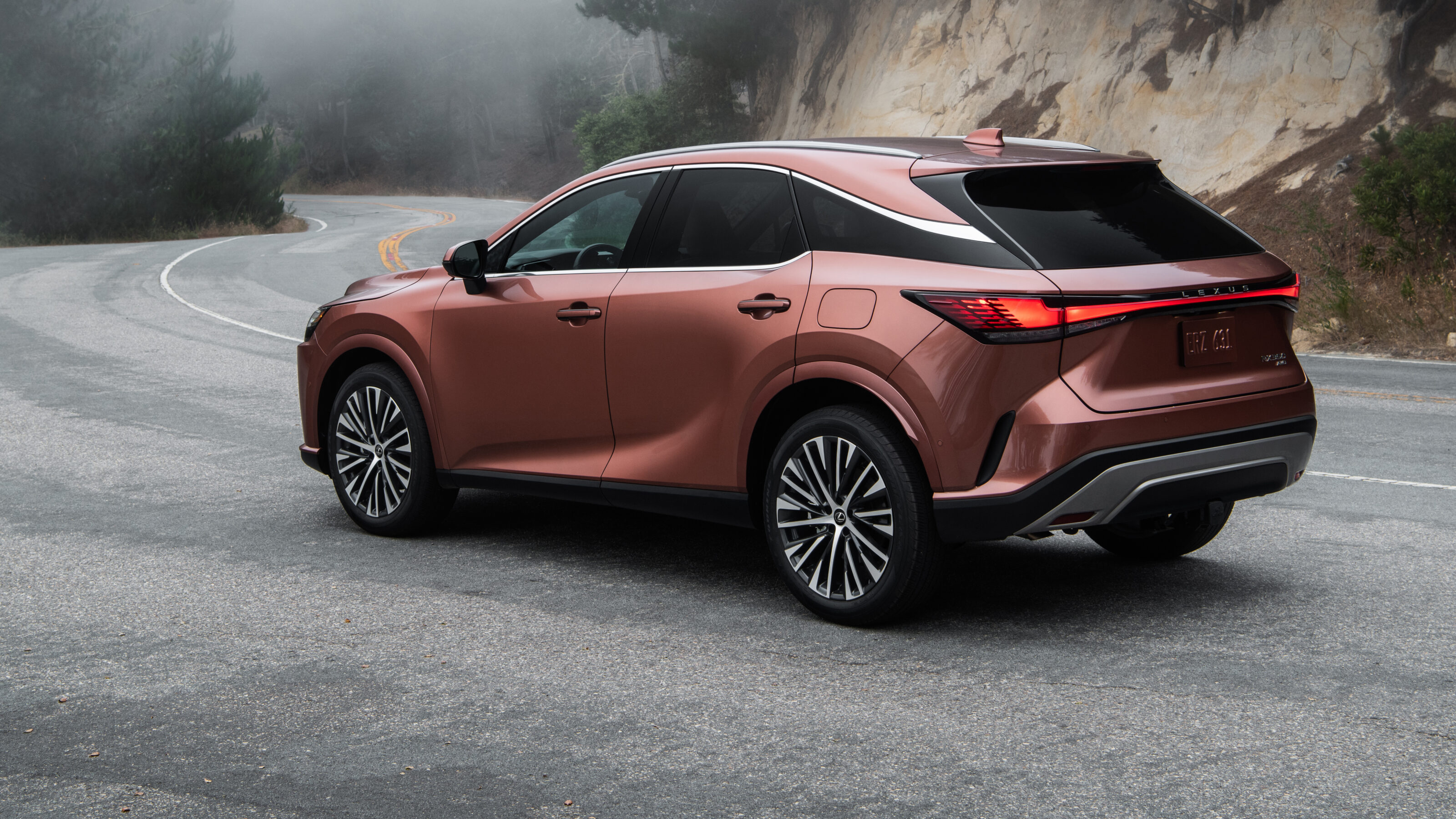
In doing so, Lexus was able to significantly change the RX’s proportions and the new model is quite different. Length of 4890mm and height of 1695mm have not changed, but the new RX is wider by 25mm and its wheelbase has been stretched by 60mm to 2850mm.
The RX has never looked so enticing.
1
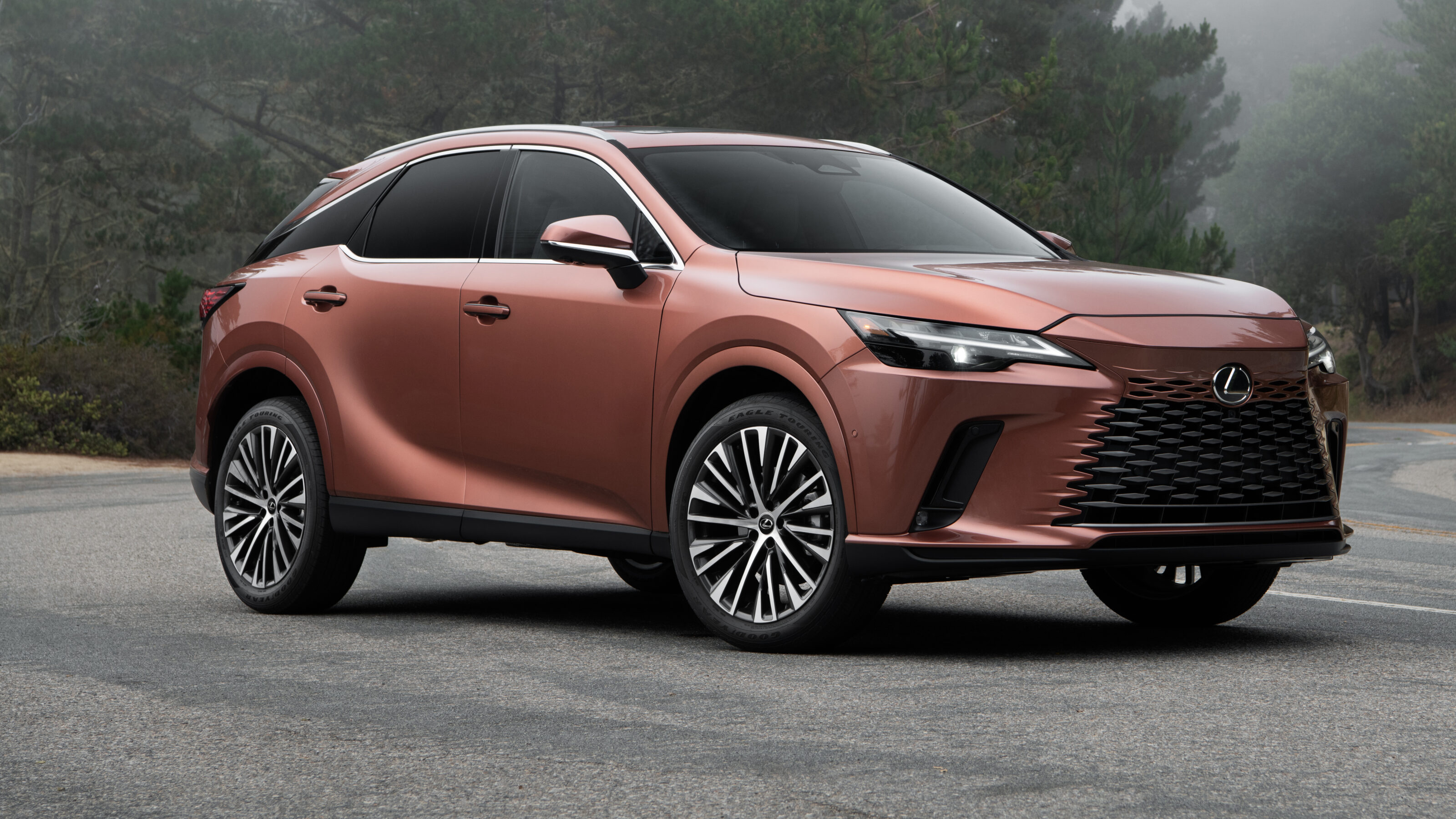
The result has its full impact when we meet the 2023 RX at its international launch in California, exhibiting a completely different stance compared with the outgoing model. The RX has never looked so enticing.
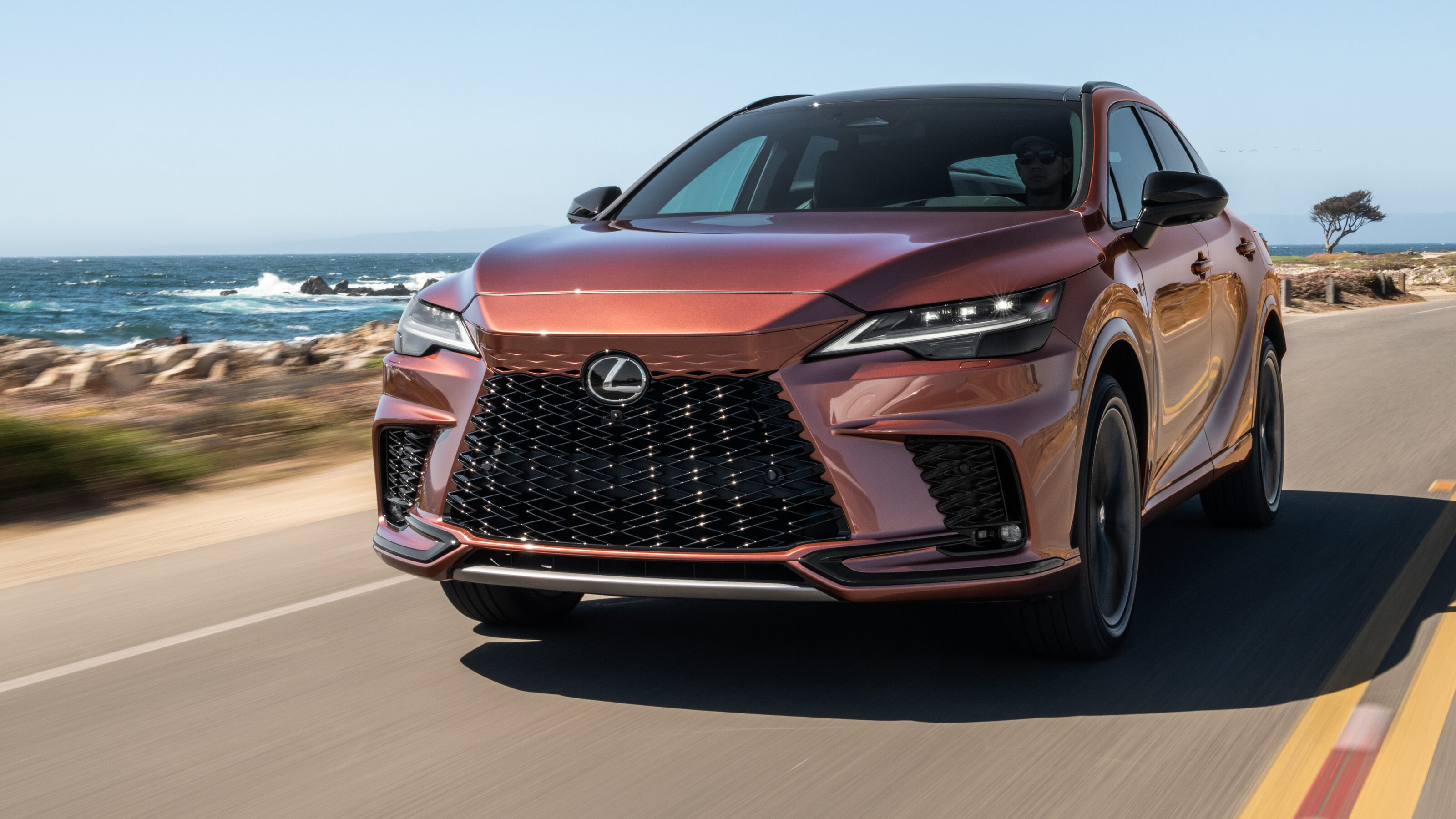
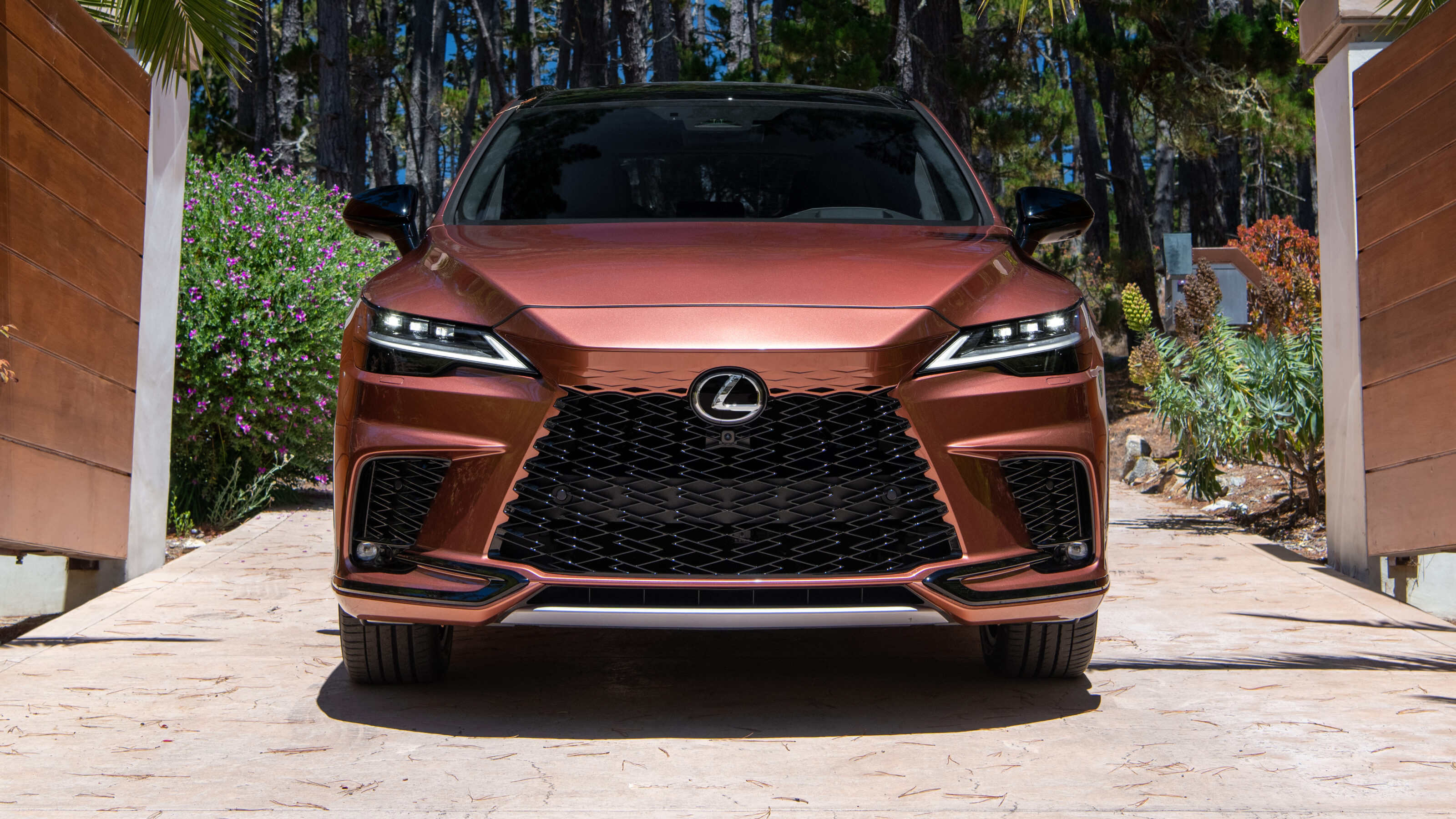
Lexus’s designers were apparently encouraged to rethink the ‘spindle grille’ in favour of a ‘spindle body’ but they appear to have ignored the direction and made the grille even bigger and more accentuated than ever. The prominent feature has, however, been more seamlessly integrated with the overall styling and the RX now has a cleaner more sculpted look.
Its revised construction and dimensions have liberated more space inside, lowered the centre of gravity and reduced weight by between 40kg and 90kg depending on variant, so those more aggressive aesthetics are not just for show. We’ll come to that part shortly.
1
Lexus is yet to detail exact specifications of the RX versions coming Down Under and therefore can’t confirm which variant will represent the entry point. It has, however, confirmed which drivetrains we will get.
Gone is the previous entry 300, with the new range starting at the RX 350 and RX 350h.
In petrol-only form, the RX 350 no longer has a V6 under its bonnet – a turbocharged 2.4-litre four-cylinder petrol replaces it – and, for Australia at least, it is paired to an eight-speed automatic transmission and all-wheel drive.
Its hybrid sibling may only have a small revision to the boot badge but its drivetrain is significantly different. The four-cylinder petrol engine has no turbo, 100cc more capacity, an automatic continuously variable transmission (CVT) auto and a choice of all-wheel drive or front-drive.
Despite the differences, neither immediately feel like the runt of the pack – unlike the previous RX.
With turbo power and a solid 205kW/430Nm output, the RX 350 is a surprising performer, but so is the 350h that produces 180kW and 233Nm. The latter manages to keep up with its instant electric grunt and an atmo engine that’s far more refined than its predecessors.
Both 350 versions do the zero to 100km/h dash in about 7.2s to 7.5s and represent a significant improvement in noise, vibration and harshness (NVH) over their equivalent predecessors.
There’s a similarly likeable balance of ride and handling too. Both feel lighter than their forebears and easier to manage both on the road and in the car park. Unusually, it was the non-hybrid that has a strange squashy brake pedal, while the usually offending hybrid had a relatively positive brake feel.
With turbo power and a solid 205kW/430Nm output, the RX 350 is a surprising performer, but so is the 350h that produces 180kW and 233Nm.
1
Trim grades are still being finalised for Australian showrooms but the US-spec versions on test for our visit bode well regardless. In Premium Plus guise, the 350h strikes a lovely balance of chic and sportiness without resorting to a full F-Sport interior but still offers comfy and supportive seating.
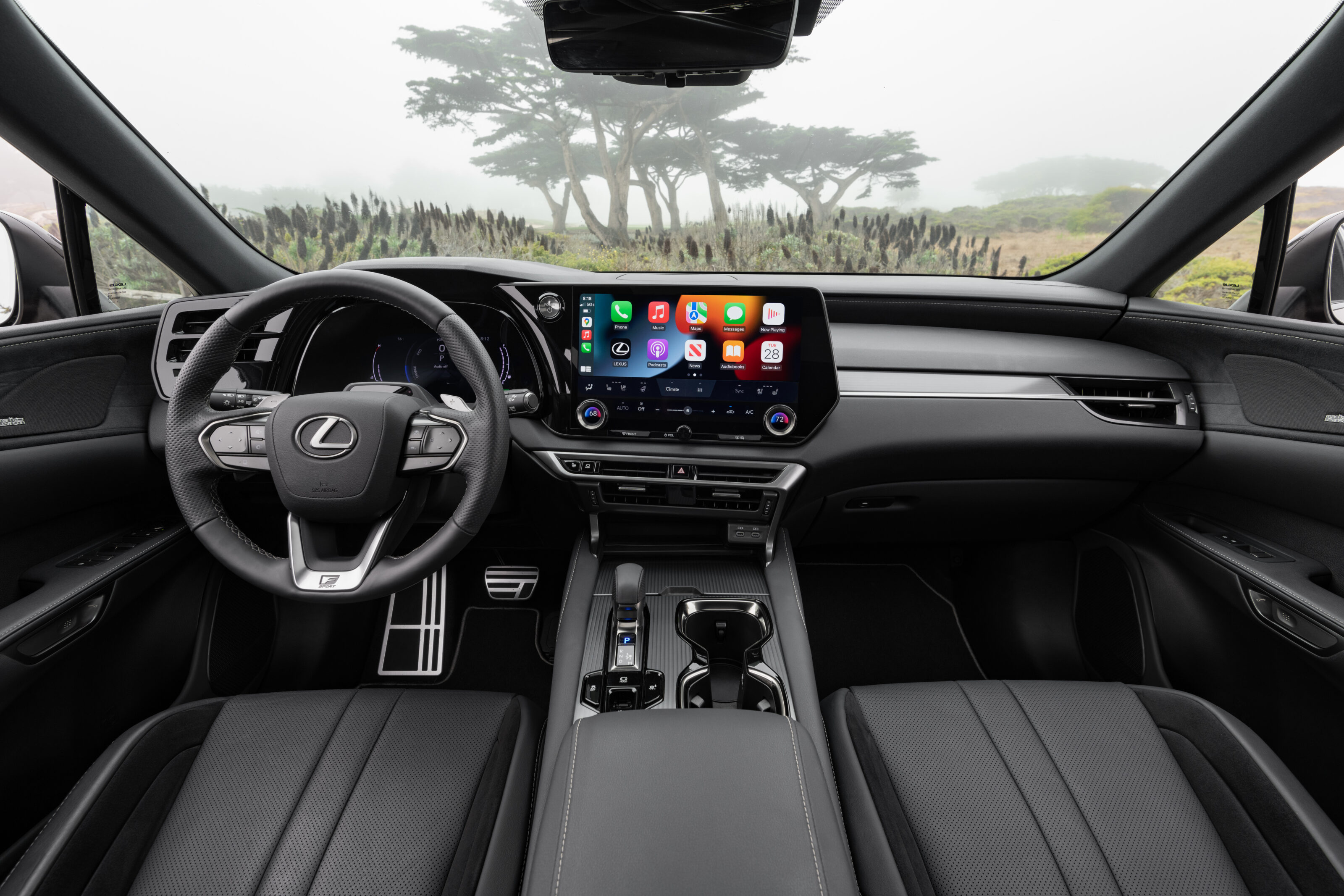
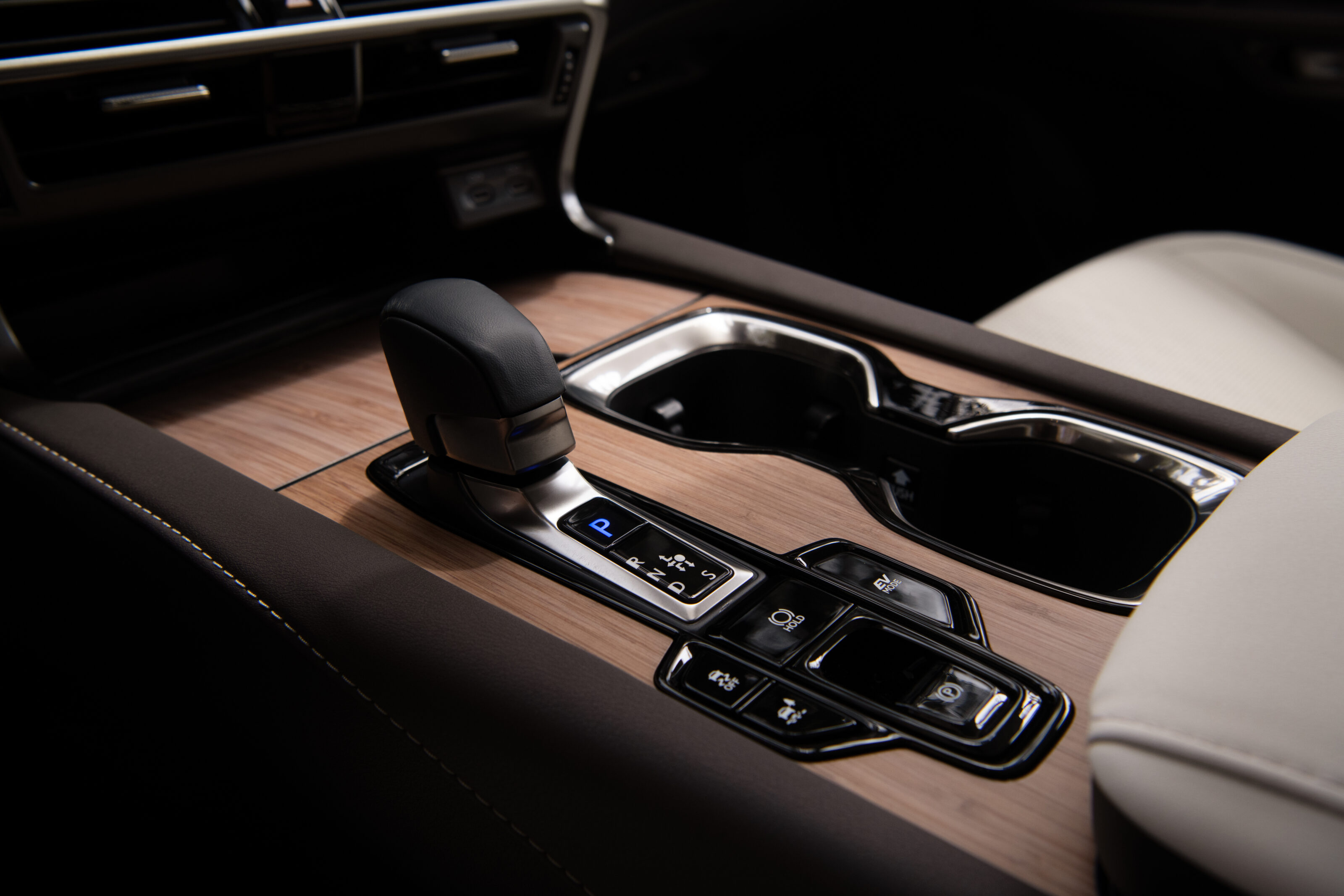
And in Luxury grade, the RX 350’s Peppercorn interior felt quintessentially Lexus without being gaudy. All versions now get wireless device charging and wireless Android Auto and Apple CarPlay.
Even at the most accessible level, the RX has shaken off any relationship to the Toyota Kluger with a unique feel and identity, as well as some improved ergonomic touches.
1
Opt for the entry-level spec and the central touchscreen measures 9.8 inches, which sounds impressive, but when it occupies the same space as the 14-inch optional version, it feels a bit disappointing.
The good news is that Lexus infotainment software gets better with each generation and, while still not the most intuitive, shortcuts for features such as heated seats and permanent climate controls are big improvements. Even if you do get the smaller screen, it lacks none of the features and applications of the larger unit.
Other equipment highlights include cool solid-state eLatch door handles, very effective driver monitoring similar to Subaru’s camera-based system, clever 360-degree manoeuvring cameras that can display a transparent bird’s eye image of the vehicle, and just about every safety feature and driver assistance system under the sun courtesy of Lexus Safety System Plus 3.0.
1
Lexus predicts the more affordable hybrid 350h to be the volume seller when the range launches in Australia early next year but it’s a second hybrid that now forms a new flagship of the range and brings several more ‘firsts’ for the brand.
With the engine of the RX 350 combined with hybrid power, the new 500h F-Sport Performance represents the first turbocharged hybrid for Lexus and it’s also the first time the RX range has offered a choice of two hybrid powertrains.
Finally, the company has introduced a new specification level (the only yet confirmed for Australia) with F-Sport Performance making its debut on the 500h.
Positioned above the longstanding F-Sport grade, the new variant is part of a plan for Lexus to break into more high-performance territory. It’s working.
1
With an impressive 273kW and 551Nm from a combined output of petrol and electric, the RX 500h will get to 100km/h from standstill in just 5.9 seconds, claims Lexus.
That performance puts it in the same territory as BMW’s X3 M40i and the Mercedes-AMG GLC 43. So don’t be surprised if the Lexus mirrors their pricing too.
Key to the 500h’s powertrain is a new electric motor-generator positioned on the rear axle. It’s the largest of its kind and is the first from Lexus to have its own controller.
This means squat under hard acceleration can be virtually eliminated by applying just the right amount of torque, while the same trick in reverse can dramatically reduce dive under braking by using the unit’s regenerative effect.
Its front axle is also new for Lexus, with just one motor-generator in place of the usual two-motor arrangement to free up space for the turbo, intercooler and ancillaries.
Under full gas from standstill, there’s a little wander and torque steer as the axles talk to each other, but traction is almost flawless and acceleration strong.
A not-exactly-convincing sound piped in through the speakers pretends to be the now-absent V6, which is a shame because the turbo four has a pleasant report of its own.
Compared with the previous V6-electric powertrain, the new 500h combination feels like a more sophisticated and tighter pairing, and although recently introduced WLTP testing suggests its claimed efficiency of about 8.3L/100km has gone backwards, we’re certain the opposite will be true in practice.
1
For what it’s worth, our car was indicating a figure of 10L/100km after a combination of cruising and some pretty enthusiastic sampling of the hybrid system’s virtues.
Interestingly, Lexus says the prodigious torque output means the 500h only needs a six-speed auto, compared with the eight-speed offered for the RX 350. Either way, clicking through the ratios with the paddle shifters only adds to the involving drive and excellent power delivery.
But the RX flagship goes further than just impressive power and torque dressed up in a tracksuit. With the new platform comes a big step up in both ride comfort and dynamics.
1
The new platform comes a big step up in both ride comfort and dynamics.
It still has to hustle a bit of weight around with a near 2.2-tonne kerb mass but standard adaptive dampers and all-wheel steering are the electronic duo that does a great job of hiding mass.
The choppy ride of the fourth-gen model is long gone and its numb, fussy steering is replaced by a more refined and smooth set-up.
Spend time at the wheel of the 500h and its true competent character comes to the surface. It’ll hold a fast line without breaking a sweat and the massive 400mm brake rotors with six-piston front calipers do a good job of masking the RX’s weight when trying to decelerate as well.
But Lexus hasn’t ruined its ride in the quest for outright performance.
1
There’s enough roll in corners to remind occupants that this is a heavy SUV, but body control is generally good. Likewise, a firm ride in sportier driving modes can be distracting in a way you might forgive of some or all of the German brands. That said, the RX has the pick of the rides on the open road.
A whisper of wind noise is the only sound to permeate the cabin despite 21-inch wheels wearing Michelin Pilot Sport 4 SUV rubber, and the 500h manages to be sedate and relaxing when not leaning on the surprisingly sporty side of its personality.
Moving away from V6 power and into four-cylinder engines exclusively has brought the RX into line with the most contemporary SUVs and there isn’t a variant in the new line-up that’s not easy to recommend.
1
Bolt that onto Lexus’s renowned customer service and ownership experience and the 2023 RX is a brilliantly well-rounded family of luxury mid-sizers.
In fact, the absence of a seven-seat option is arguably the only significant mark against its name – but a yet-to-be-confirmed Lexus TX will likely solve that problem if it’s troubling you.
VERDICT
Somewhat ironically, the switch to Toyota’s new platform is probably the single move that enabled this Lexus SUV to distance itself from Toyota’s equivalent Kluger.
With a stronger drivetrain line-up, it’s never been easier to recommend each RX variant – not just the halo – while, at the pointy end, the new 500h flagship is breaking new ground in performance.
It achieves all of this without losing sight of its purpose, so the fifth-generation RX is once again honouring the original that made such a splash in the SUV world 25 years ago.
If you’re looking to know how Australia’s most affordable EVs compare against not only each other, but also a pricier new entrant in the same segment, our full pricing and features breakdown here will tell you everything you need.
UPDATE: New Australian pricing and specifications added
This story, first published in July, has been updated to include new local details on both the BYD Atto 3 and the newly updated MG ZS EV.
A full driving comparison will come in the near future, but in the meantime, you can see our reviews of each vehicle via the links below.
BYD Atto 3 v MG ZS EV v Kia Niro Electric: Spec comparison
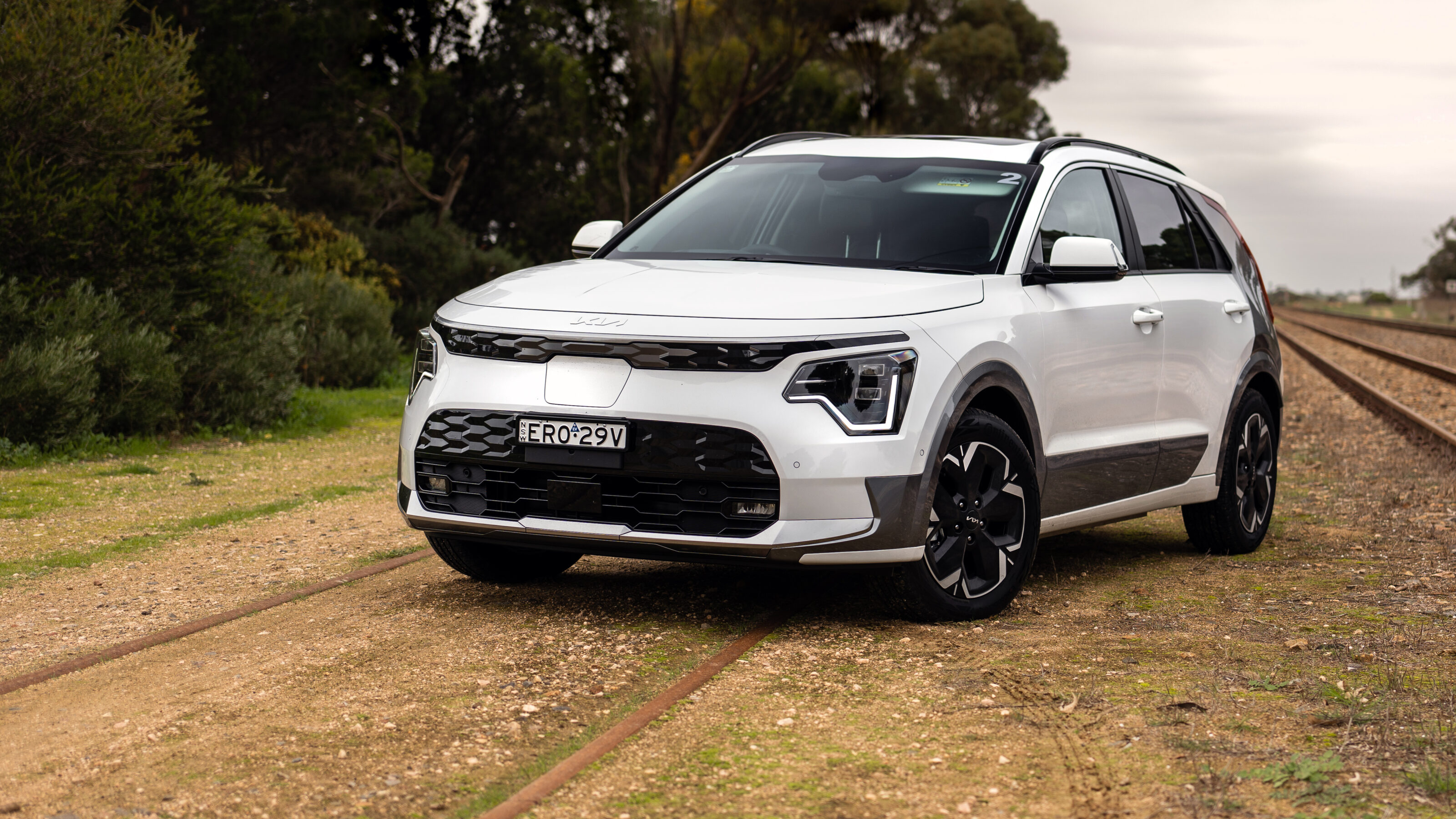
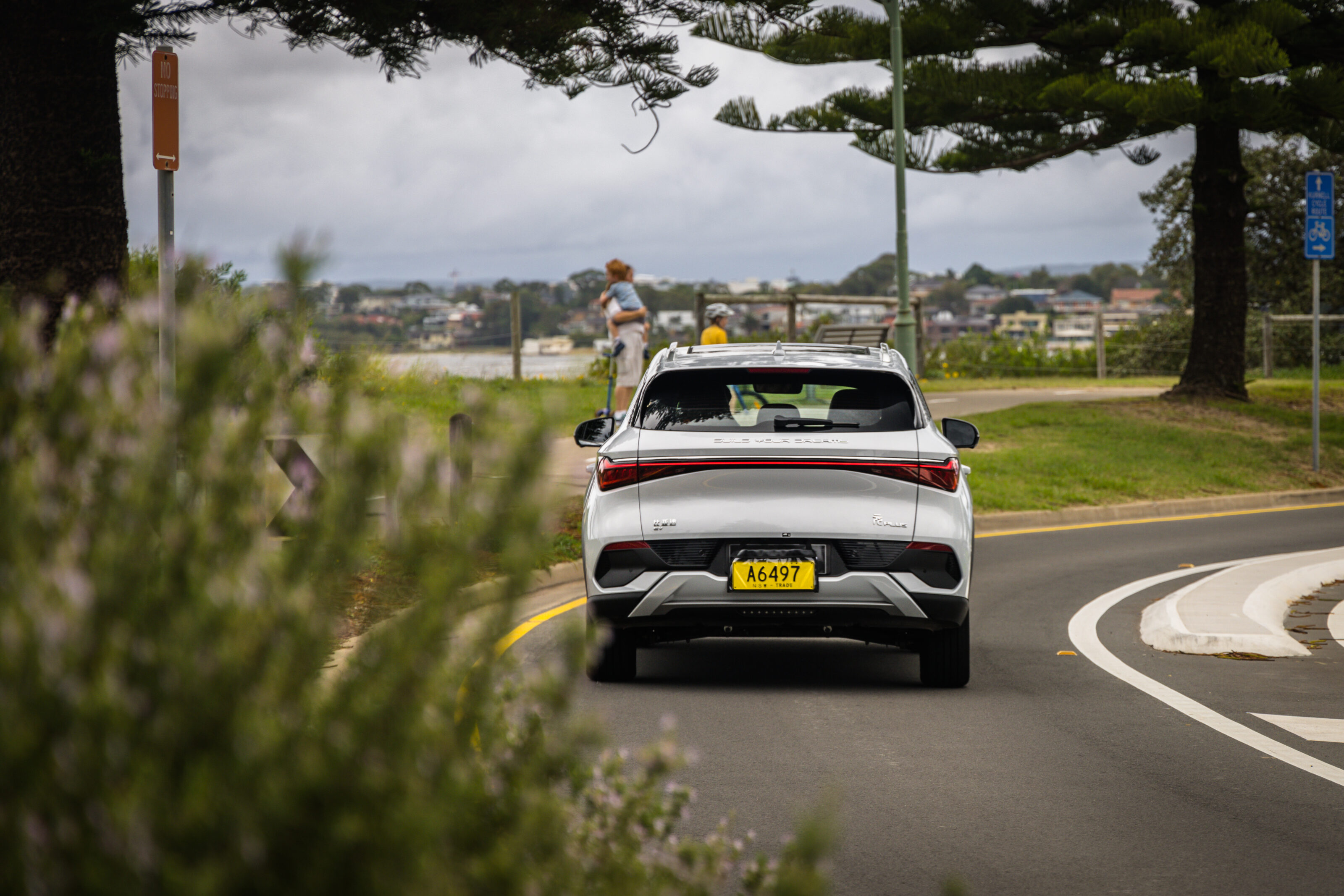
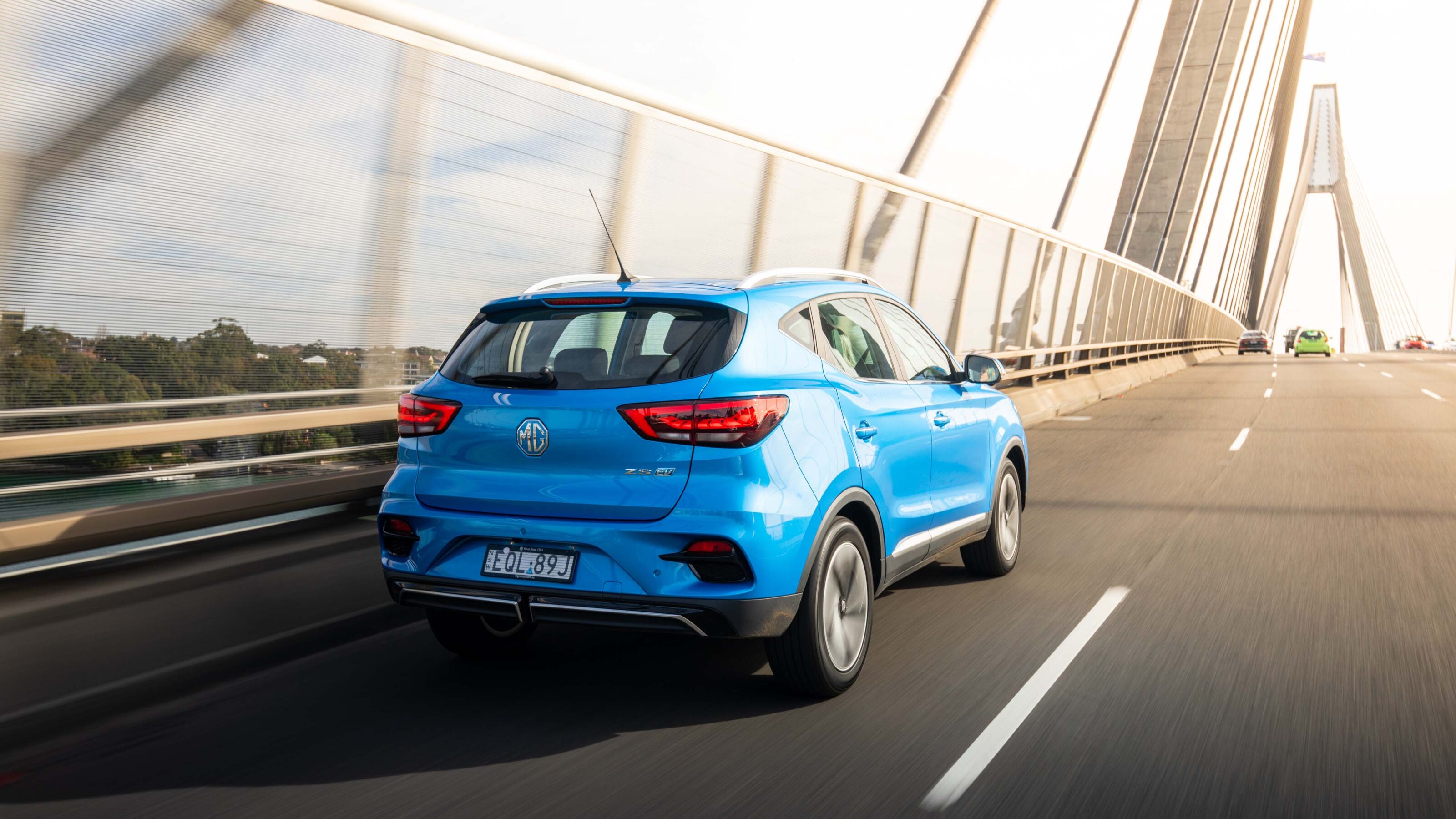
The recent launch of the second-generation Kia Niro coincided with the arrival of two new rivals in the hotly-contested small electric SUV segment: the BYD Atto 3 and the facelifted MG ZS EV.
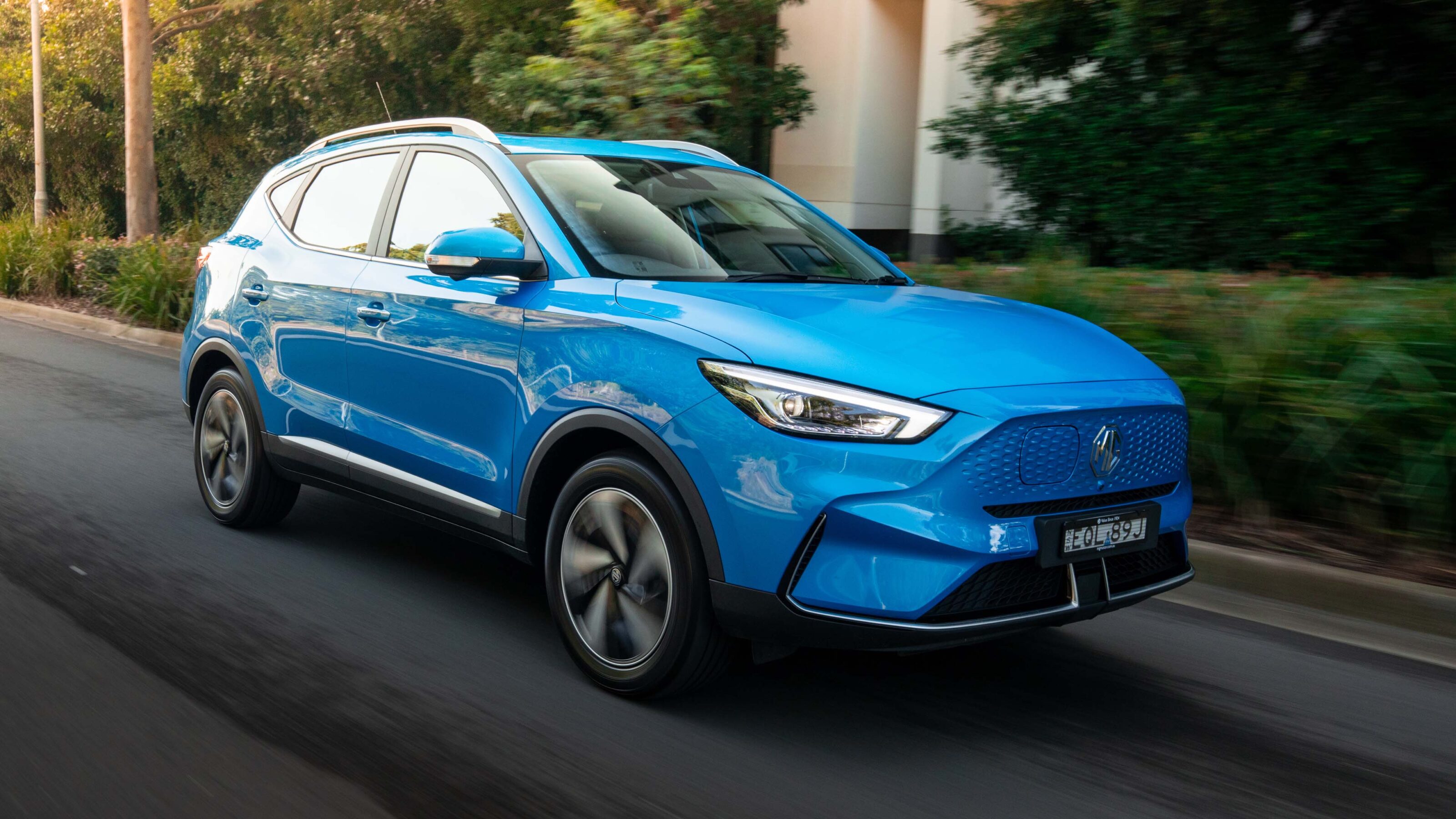
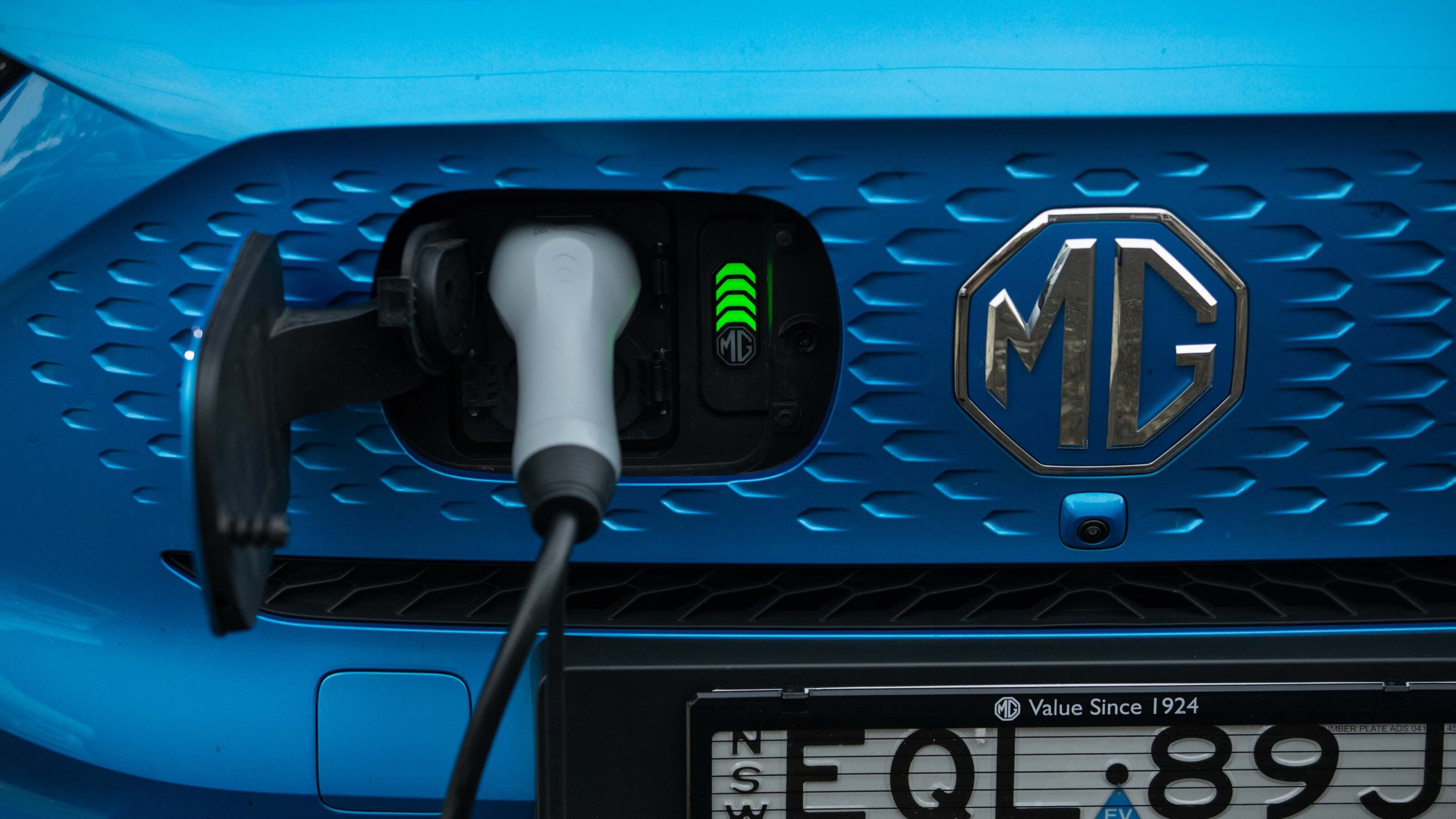
Priced from $44,990 drive-away, the MG ZS EV takes the title of the cheapest electric vehicle in Australia – unless you’re in Tasmania – following a last-minute price change to undercut the BYD Atto 3.
According to BYD, the Atto 3 small SUV is priced from $44,381 before on-road costs, with final pricing dependent on location.
1
Far from cheap is the Kia Niro EV, priced from $65,300 plus on-roads – a $2710 jump over the outgoing model.
The circa-$20,000 price gap between the BYD Atto 3 and MG ZS EV from China and the Kia Niro EV is likely to discourage some prospective buyers for the Korean – especially when the rear-drive, E-GMP-based Kia EV6 large SUV is available for $7290 more.
However, despite the price difference, these small electric SUVs are surprisingly close on paper.
So, how exactly do the specs of the BYD Atto 3, MG ZS EV and Kia Niro EV compare? Let’s find out.
BYD Atto 3 and Kia Niro EV prices exclude on-road costs.
MG ZS EV pricing is drive-away.
Electric vehicle incentives for all models, excluding the flagship Kia Niro EV GT-Line, are available to buyers in New South Wales, Victoria and South Australia – but only if any optional extras and dealer delivery come in under the respective caps.
For more information on all incentives available to electric vehicle buyers in Australia, click on the link below:
As the table below shows, the BYD Atto 3 is the quickest of these three rivals, thanks largely to its bigger torque number – but power and torque figures are otherwise a close match.
For official claimed driving range, the Kia Niro takes a comfortable win over the city-focused ZS EV and both variants of the BYD Atto 3, although the latter comes close with its long-range model. It’s worth noting again, however, that the Niro is markedly more expensive than the MG and BYD offerings.
Here, the MG ZS EV is again shown to be a more compact offering, with the BYD and Kia models both riding on considerably longer wheelbases – always great news for rear occupants hopeful for some decent leg room.
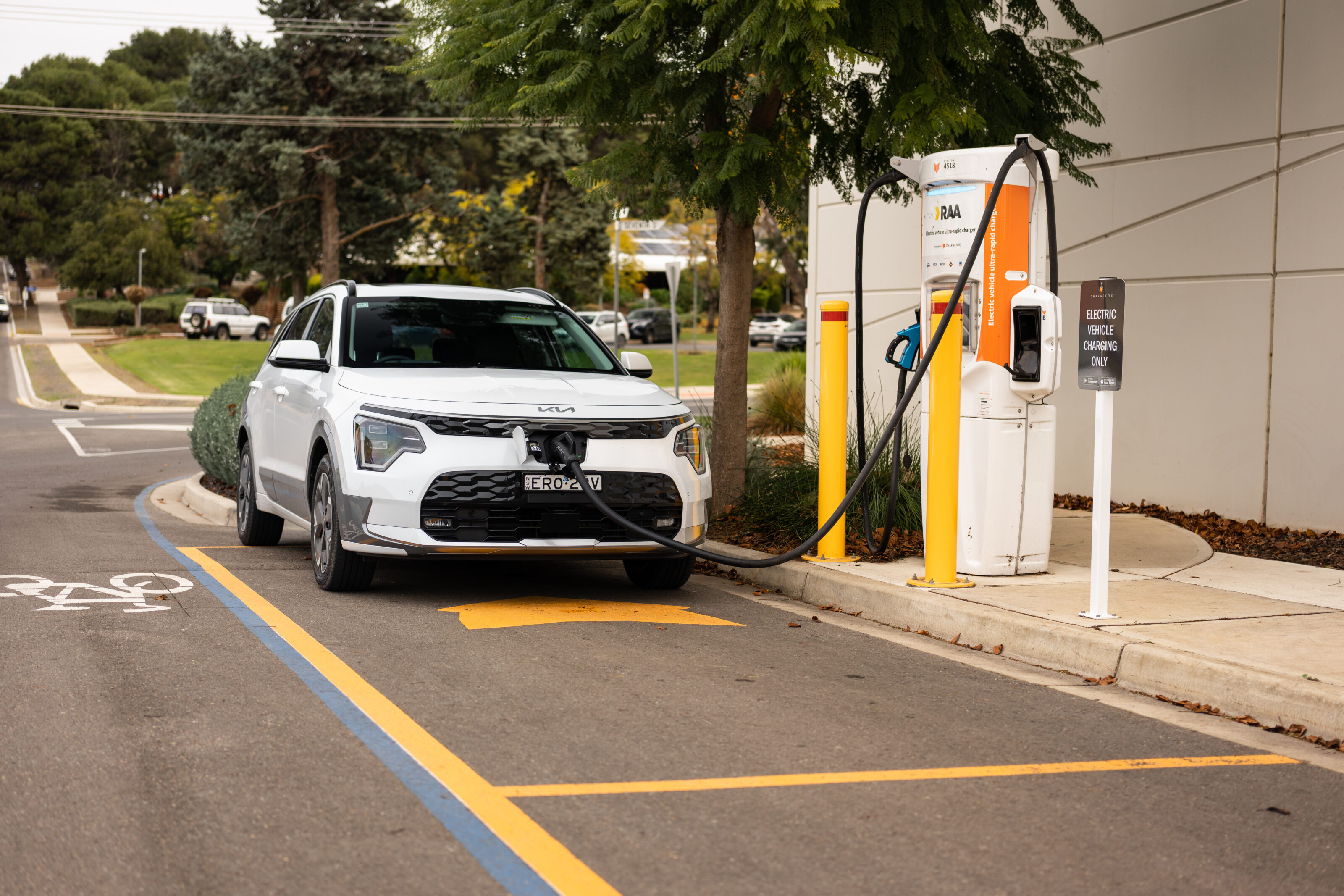
Using a public DC charger should top up the battery of each vehicle from 10 to 80 per cent in approximately one hour.
As more-affordable electric vehicles, the required technology to accommodate fast-charging stations above 100kW is not included in any vehicle, ruling out the quicker top-ups seen on more-expensive EVs.
For charging at home, the MG is the quickest at five hours from 0 to 100 per cent on an 11kW unit, while the BYD is slowest at 8.5 hours due to its maximum AC charge rate of 7kW.
Public charging networks – including Chargefox, Evie, NRMA, AmpCharge and Queensland Electric Highway – will be compatible with the BYD Atto 3, MG ZS EV and Kia Niro EV.
As mentioned, the required technology to accommodate fast-charging stations above 100kW is not included in any vehicle.
For example, while it is possible to plug a 350kW DC charger in, the vehicle will only utilise its maximum DC charging capacity.
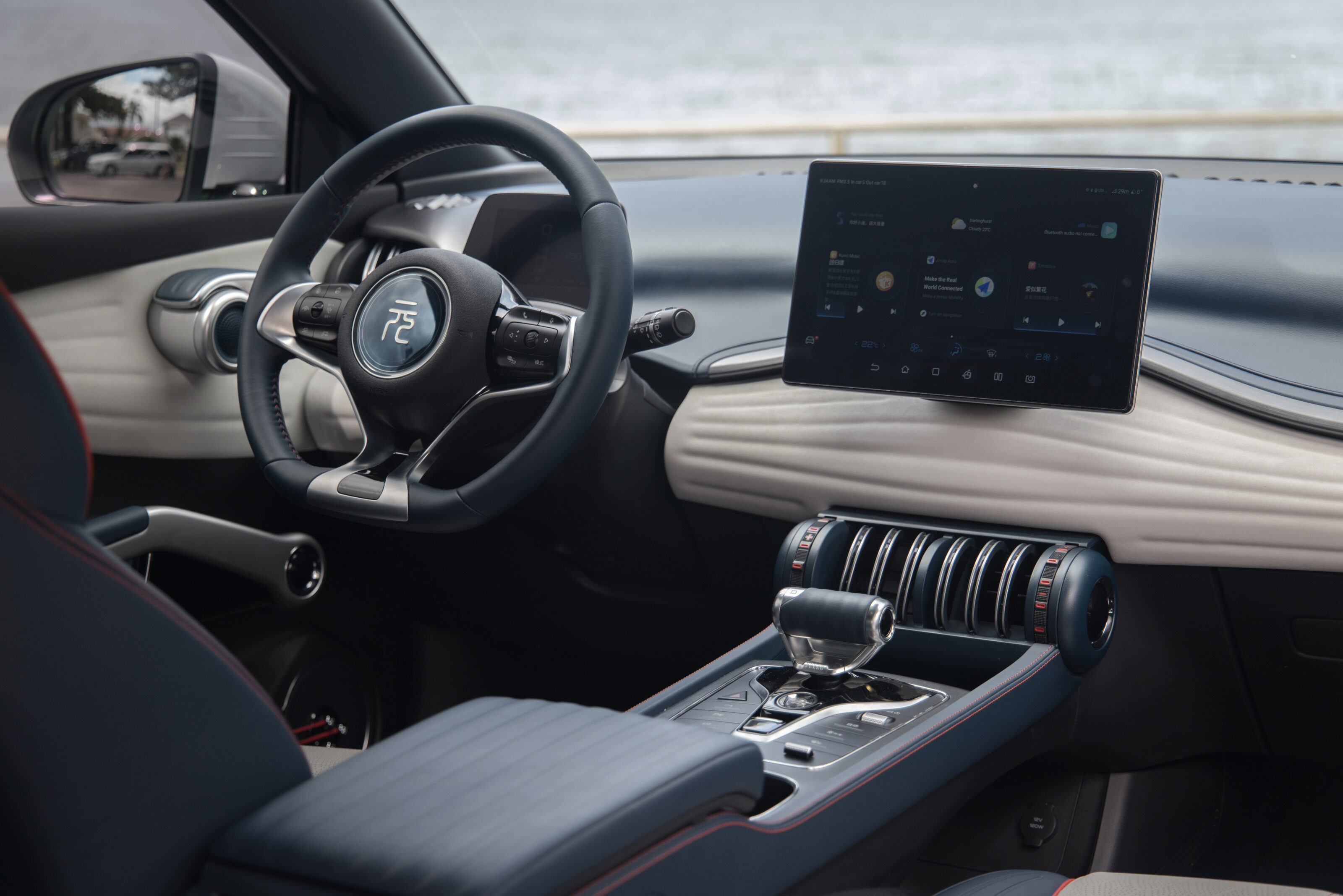
These electric small SUVs are similarly specced, with all featuring a digital instrument cluster, Apple CarPlay and Android Auto and LED headlights.
We’ve highlighted the differences between the three vehicles below, with standouts including smartphone app compatibility for the ZS EV (MG iSmart) and Niro GT-Line (Kia Connect), configurable ambient lighting (BYD and Kia), and satellite navigation (MG and Kia).
All vehicles
NOTE: Apple CarPlay and Android Auto are currently unavailable on the BYD Atto 3. EVDirect claims an over-the-air software update is coming soon.
1
BYD Atto 3 (in addition to the shared features above)
Both the ZS EV and Niro EV are covered by five-star ANCAP safety ratings, with the Kia subject to the latest 2020-22 testing criteria. The MG was last tested in 2019.
It is believed crash testing of the BYD Atto 3 has commenced, with ANCAP likely to release its findings in the coming weeks.
UPDATE, November 21: Following a resolution on a critical child-seat tethering issue, the Atto 3 now has a five-star ANCAP rating. Read about it here.
Key active safety technology including autonomous emergency braking is standard across all three vehicles, however, some kit is limited to the flagship Kia and MG models.
All vehicles
BYD Atto 3 (in addition to the shared features above)
MG ZS EV (in addition to the shared features above)
Rain-sensing wipers, blind-spot alert and rear-cross traffic alert are exclusive to the flagship Essence.
Kia Niro EV (in addition to the shared features above)
Safe exit assist, rear autonomous emergency braking, and emergency SOS call via Kia Connect are exclusive to the flagship GT-Line.
While the Atto 3 and ZS EV are mostly comparable size-wise, the Niro offers greater practicality with a larger boot and a small 20-litre front boot. An electric tailgate is standard on the Niro GT-Line and across the Atto 3 range.
Kia and MG’s warranty terms are quite similar, with both vehicles subject to a seven-year, unlimited-kilometre warranty (150,000km limit for the Niro’s high-voltage battery).
BYD originally promised a seven-year warranty for the Atto 3, but it has now switched to a six-year, 150,000-kilometre coverage – with several limitations – and an eight-year battery warranty.
UPDATE, September 10, 2022: Jeep has now confirmed which EVs it will bring to Australia
Speaking with Australian media in Detroit, Jeep’s boss has confirmed we’ll see the electric Recon and Wagoneer in Australia, with the Avenger still under consideration. Get the full story at the link below.
Plans for 50 per cent of US sales to be EV-only by 2030
Jeep has uncovered three electric SUV models, ahead of a market launch by 2025.
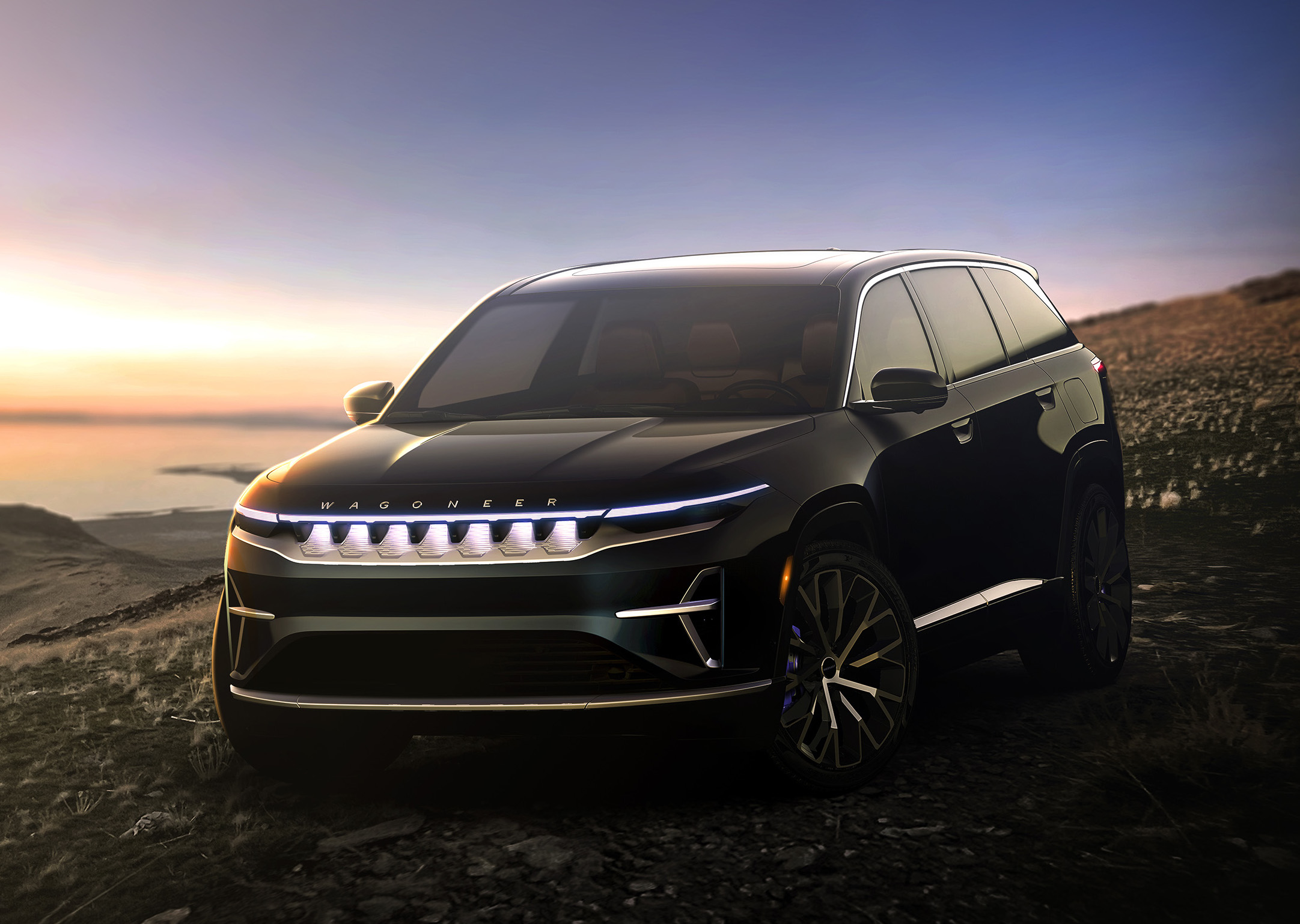
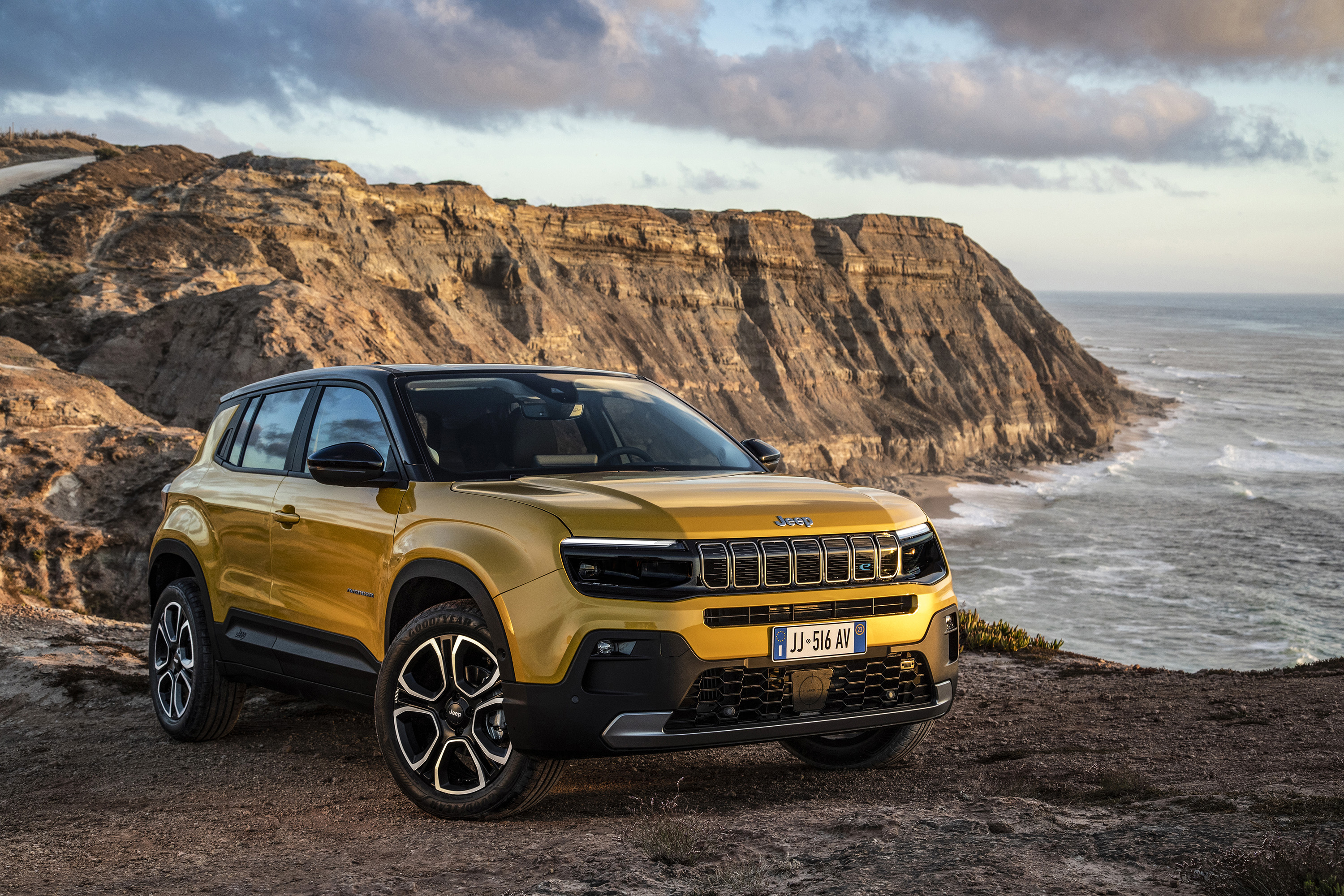
Revealed during the marque’s ‘4xe Day’ event, the first model to arrive is the Europe-focused and production-ready Avenger. It will be followed by the Recon off-roader and premium Wagoneer S, which were previewed by concept vehicles.
Announced on the eve of World EV Day (today, September 9), the iconic American brand confirmed plans for 50 per cent of sales in the US to be all-electric by 2030, and 100 per cent in Europe by the same year.
One further model is expected to be unveiled next year to round out the four all-electric vehicles promised by Jeep to launch by the end of 2024.
1
In addition, Jeep will offer electrification across its entire model range, with its 4xe-branded plug-in hybrid lineup set to expand beyond the existing Wrangler and Grand Cherokee over the next three years.
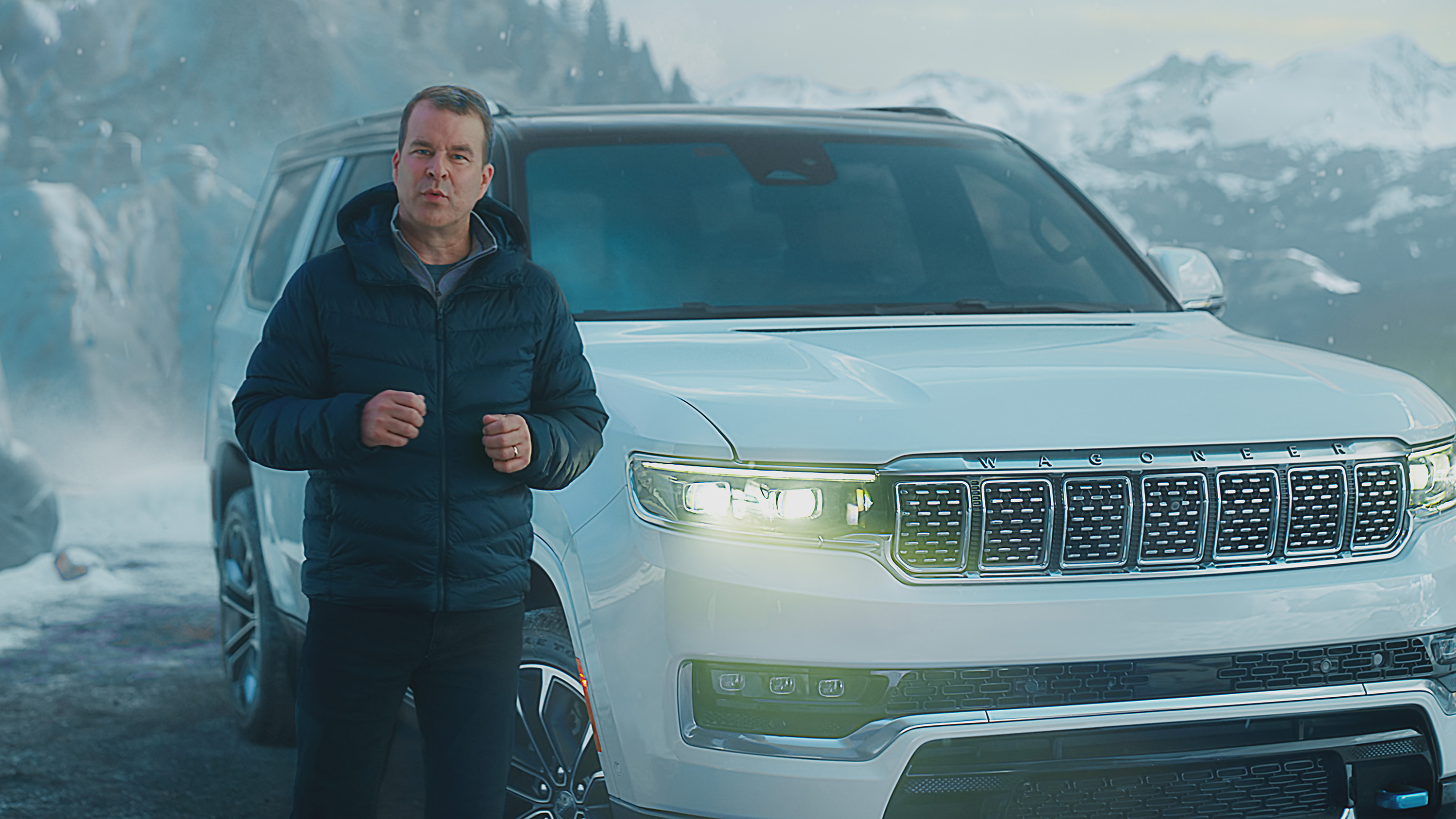
This will include a plug-in hybrid version of the upper-large Wagoneer and Grand Wagoneer models – with an 800 kilometre combined driving range – while a new-generation Cherokee medium SUV is expected soon.
At present, all models are unconfirmed for the Australian market, with no local indication provided during the video presentation or in press material issued by Jeep.
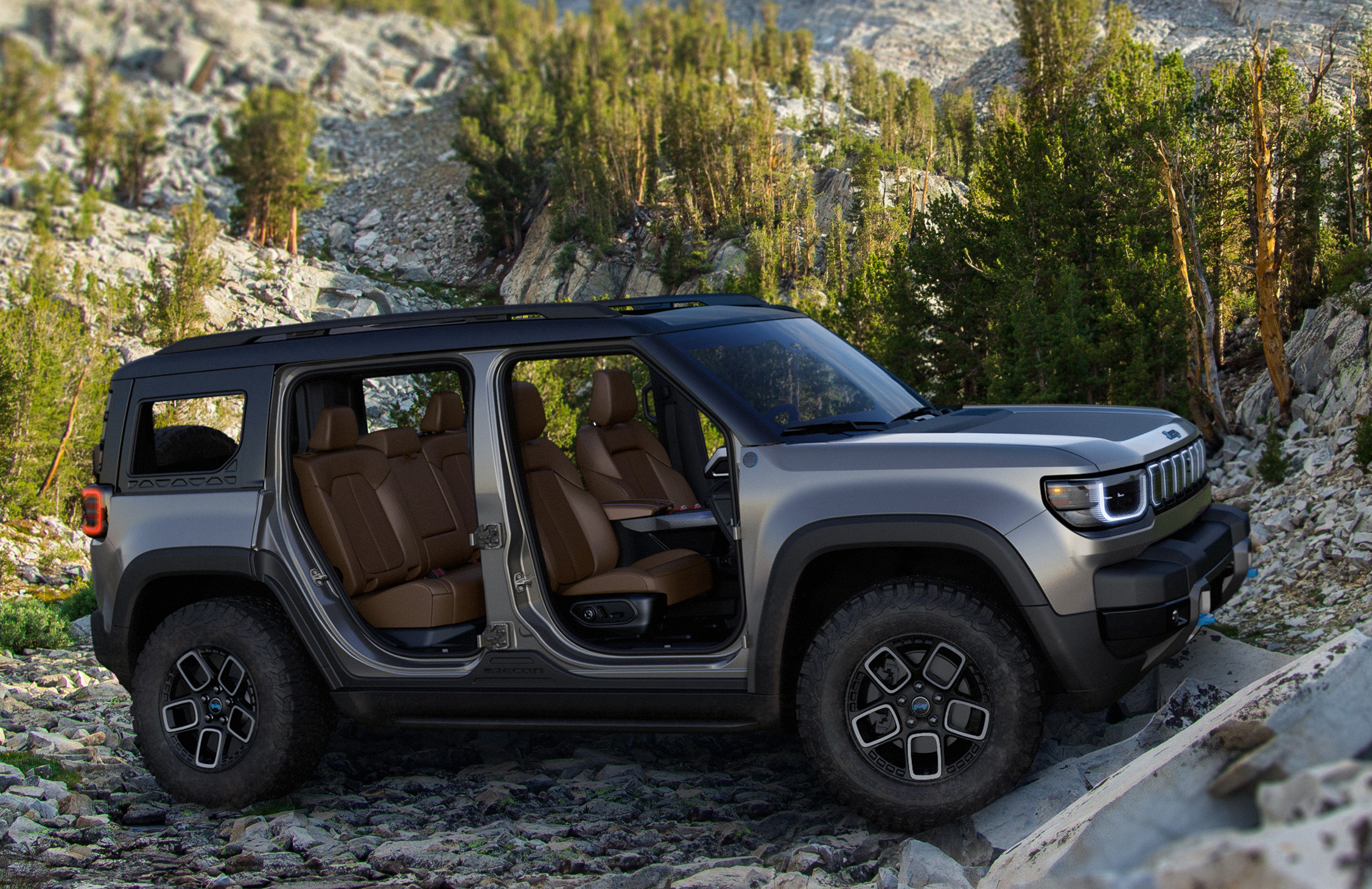
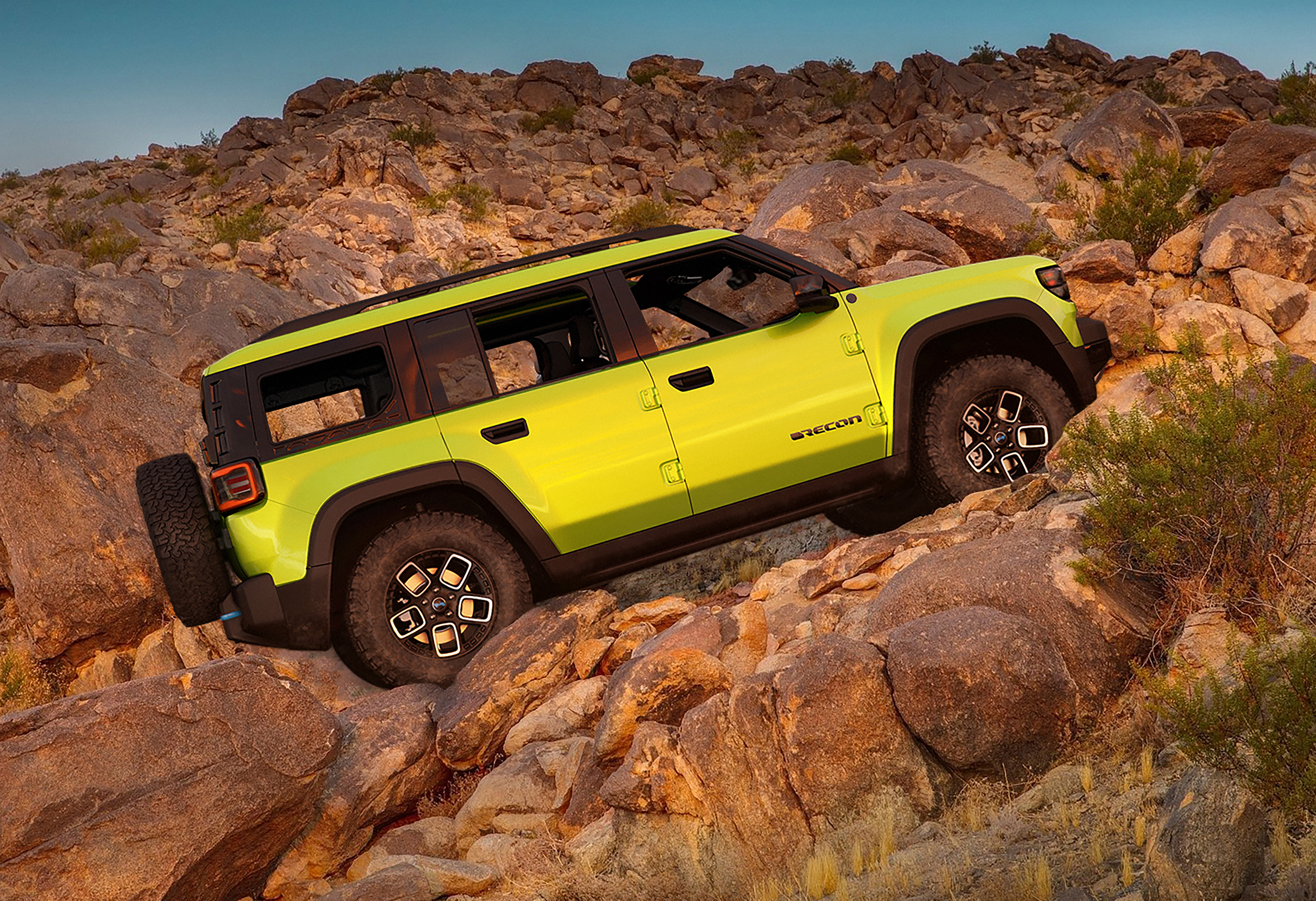
The first model to launch in North America will be the 2024 Jeep Recon, which shares familiarity with the rugged Wrangler.
Jeep promises the vehicle has “true trail-rated capability”, with highlights including a one-touch rooftop, removable doors and glass, a traction management system, e-locker axle technology, under-body protection, tow hooks, and off-road tyres.
It will run the latest generation of Stellantis’s infotainment suite, including an off-road navigation system with pre-loaded trail maps, as previewed at the company’s Software Day event in 2021.
1
Like the Wrangler, a spare wheel mounted on the tailgate will feature, while the iconic seven-slot grille is closed-off and illuminated.
It is believed the Recon is based on the modular STLA Large platform, which will underpin a range of electric models set to launch in the coming years.
Full details are scarce, but Jeep has confirmed the Recon will start production in 2024, with reservations to commence in early 2023.
1
Jeep Wagoneer
Jeep’s new Wagoneer sub-brand will gain its first electric model, with a new model codenamed Wagoneer S.
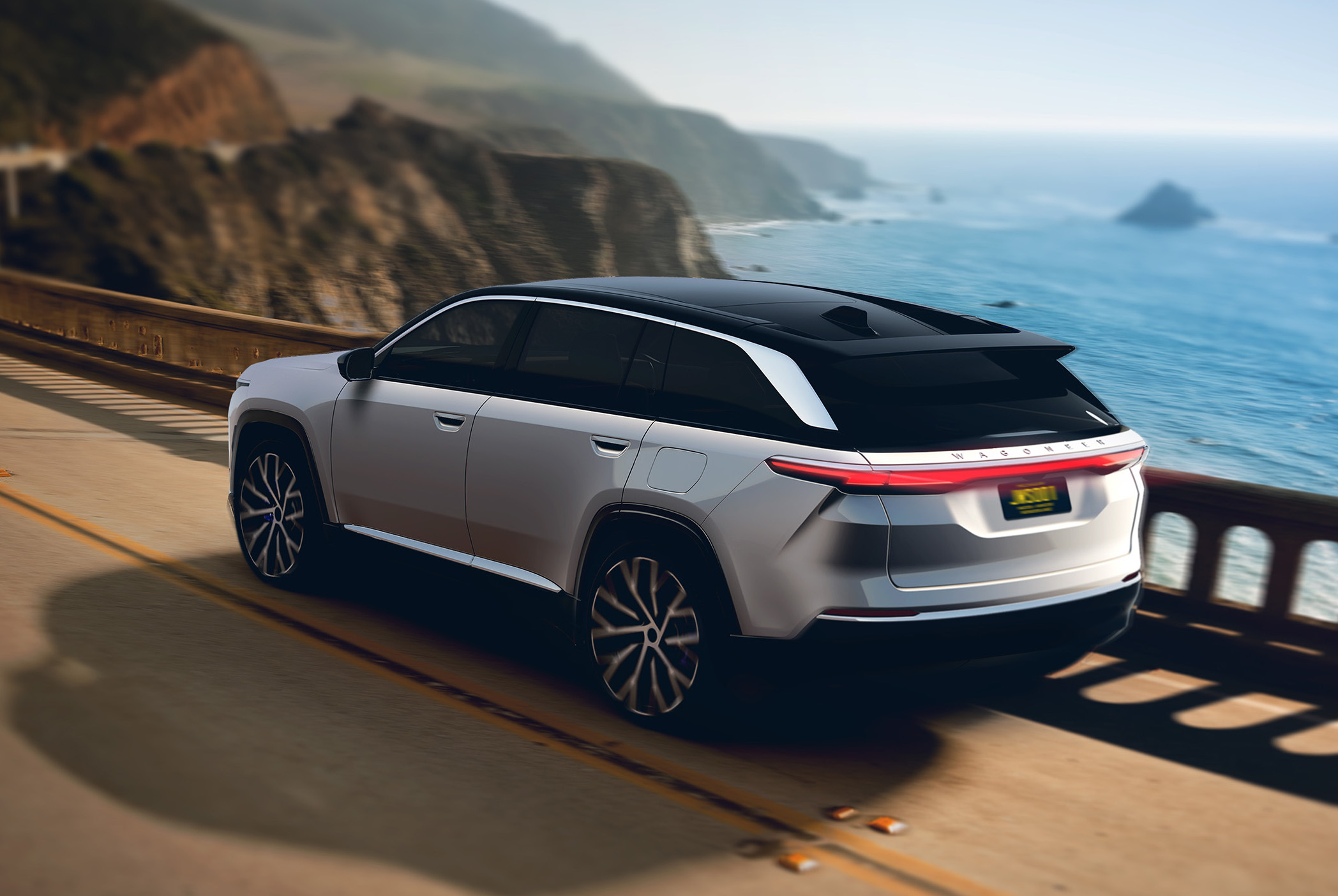
The marque claims the ‘S’ stands for “speed, striking and sexy”, featuring a 447kW dual-motor drivetrain, a 0-97km/h sprint time of 3.5 seconds, and a claimed 644-kilometre driving range.
It will be sold “in major markets around the world, including Europe”, allowing for a potential Australian launch.
Design elements include its coupe SUV shape, slim front end, and large rear wing for aerodynamics.
2
With a luxury intent, rather than an off-road focus, the Wagoneer S is unlikely to be trail-rated, however, it is also likely to be underpinned by the STLA Large architecture.
Despite sharing its name with the massive Wagoneer models, the Wagoneer S is roughly similar in size to the smaller Grand Cherokee.
“We’ll delight our customers with a premium, highly efficient SUV that is loaded with technology and high quality craftmanship, offering 4×4 capability, high performance, rapid acceleration and a target range of 400 miles on a single charge,” said Jeep global boss Christian Meunier.
The 2024 Jeep Wagoneer S will commence in North America in 2024, with reservations set to open in early 2023.
It will be the first all-electric Jeep model to launch, with European sales commencing in early 2023.
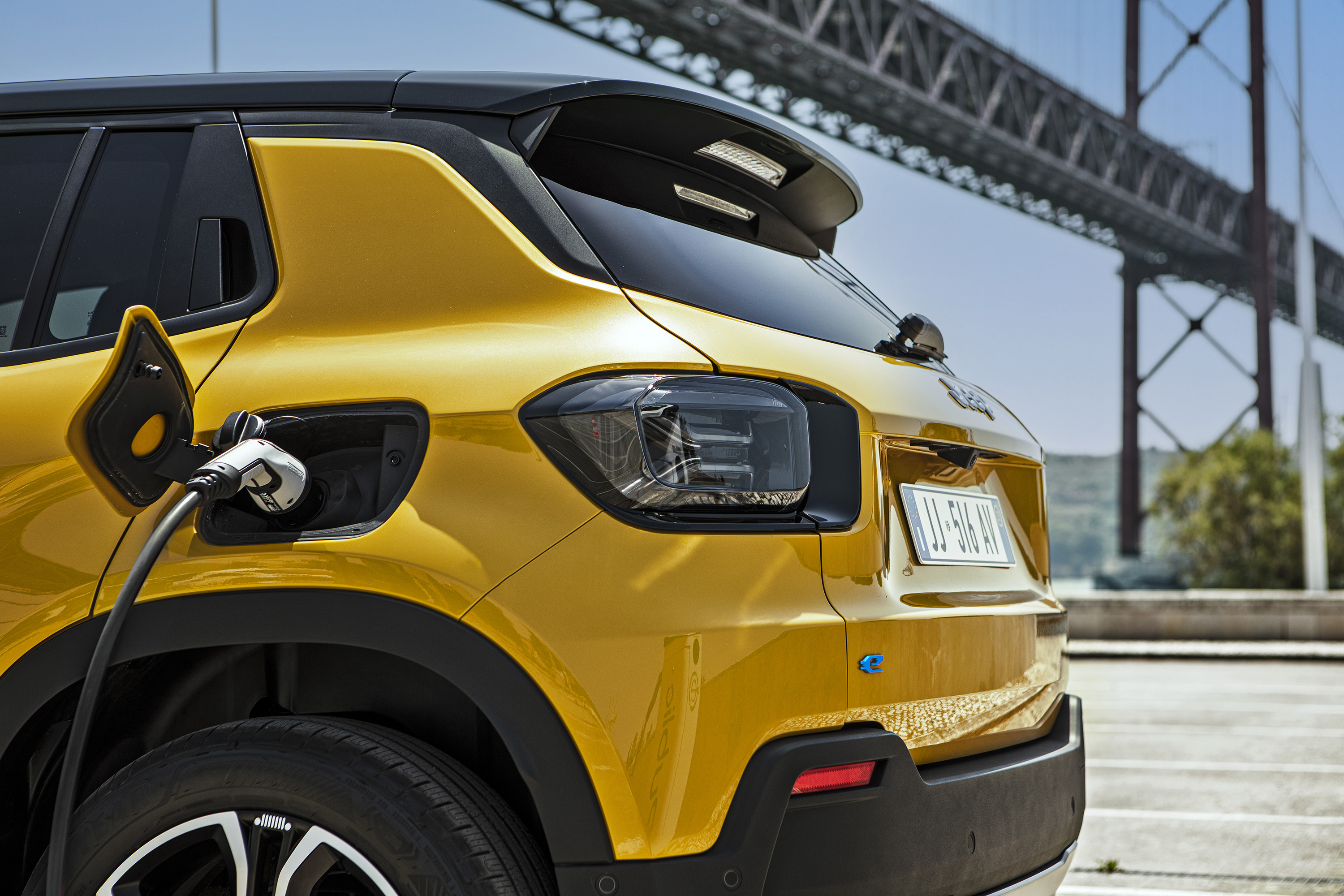
Jeep stated the Polish-built Avenger light SUV will be sold in “other markets, such as Japan and South Korea,” but provided no indication for Australia.
2
Positioned below the Renegade small SUV, the 2023 Jeep Avenger is based on the STLA Small architecture, which is an evolution of the CMP platform found underneath several Peugeot, Citroen and Opel models.
Jeep is targeting a 400km driving range for the Avenger, and claims it will offer “impressive ground clearance, breakover and approach angles for its segment”.
Full details will be announced on October 17 at the Paris Motor Show.
Bringing electrified cars here to meet voluntary emissions standards
Unclear which models might get hybrid power first
Suzuki Australia plans to bring a number of its hybrid models to Australia over the next three years in order to improve its local emissions output, the brand has said.
Currently, Suzuki sells the Ignis, Swift, Swift Sport, Vitara and S-Cross in Europe with mild-hybrid power, with the latter two also available as full-hybrids too.
The upcoming 2023 Suzuki Grand Vitara also gains hybrid assistance for the Indian and African markets, while a hybrid version of the Jimny is also rumoured to launch overseas in 2024.
But without the pressure of a national emissions target in this country, it has not brought any hybrid variants Down Under.
1
That’s set to change in the near future, according to Suzuki Australia’s General Manager, Michael Pachota, who this week told Wheels the brand plans to bring the technology here to meet the Federal Chamber of Automotive Industries’ (FCAI) 2030 voluntary emissions standard five years early.
“The next three to four years are gonna be very exciting years for this brand,” he said, speaking at the launch of the new Suzuki S-Cross.
“And there are certain CO2 standards that need to be met within this market – that said, none of them have any penalties or anything like that yet. But the FCAI has set the target of 2030 and we plan to meet that target in 2025.”
1
When pressed about which electrified models might come here first, Pachota was tight-lipped about exactly what Suzuki’s plans involved.
“Obviously there’s going to be a little bit of shake up in our model lineup in terms of what we offer in Australia and what kind of technologies we offer in Australia. I can’t tell you much more than that,” he said.
“What can I tell you? I think it’s a necessary powertrain in Australia within the next five years for every manufacturer.
“The electric market is still very much at an early stage. But the hybrid platform is starting to get more and more popular in Australia. The investment that’s being made by Suzuki from the global perspective is enormous.
1
“Other markets have actually dictated it in terms of government legislation as well. And have penalties around not meeting certain CO2 standards, so you have to bring technology to meet those standards. Australia doesn’t have that yet.
“What’s happening globally is starting to heavily influence the direction which Suzuki is going in terms of electrification. Whether our lineup changes as a result of that, or the Australian Government does also move in that direction to catch up with those markets, we’re ready.”
In 2021, Suzuki missed its 116g/km target by 10g/km in the passenger cars category and failed to hit the 125g/km goal by 27g/km in the heavy/light commercial section (which would only apply to the Jimny).
1
Overall only a third of carmakers selling vehicles in Australia hit their industry-led emissions targets last year.
Twelve out of 39 brands came in under their targets for passenger cars and light SUVs (MA category) last year and in the heavy SUV and light commercial class (MC + NA category), nine out of 26 carmakers smashed their targets the same number as in 2020.
However, manufacturers are also set an overall target of 150g CO2/km for the MA category and 193g CO2/km for the MC + NA. For this, 13 came in under the former and nine under the latter.
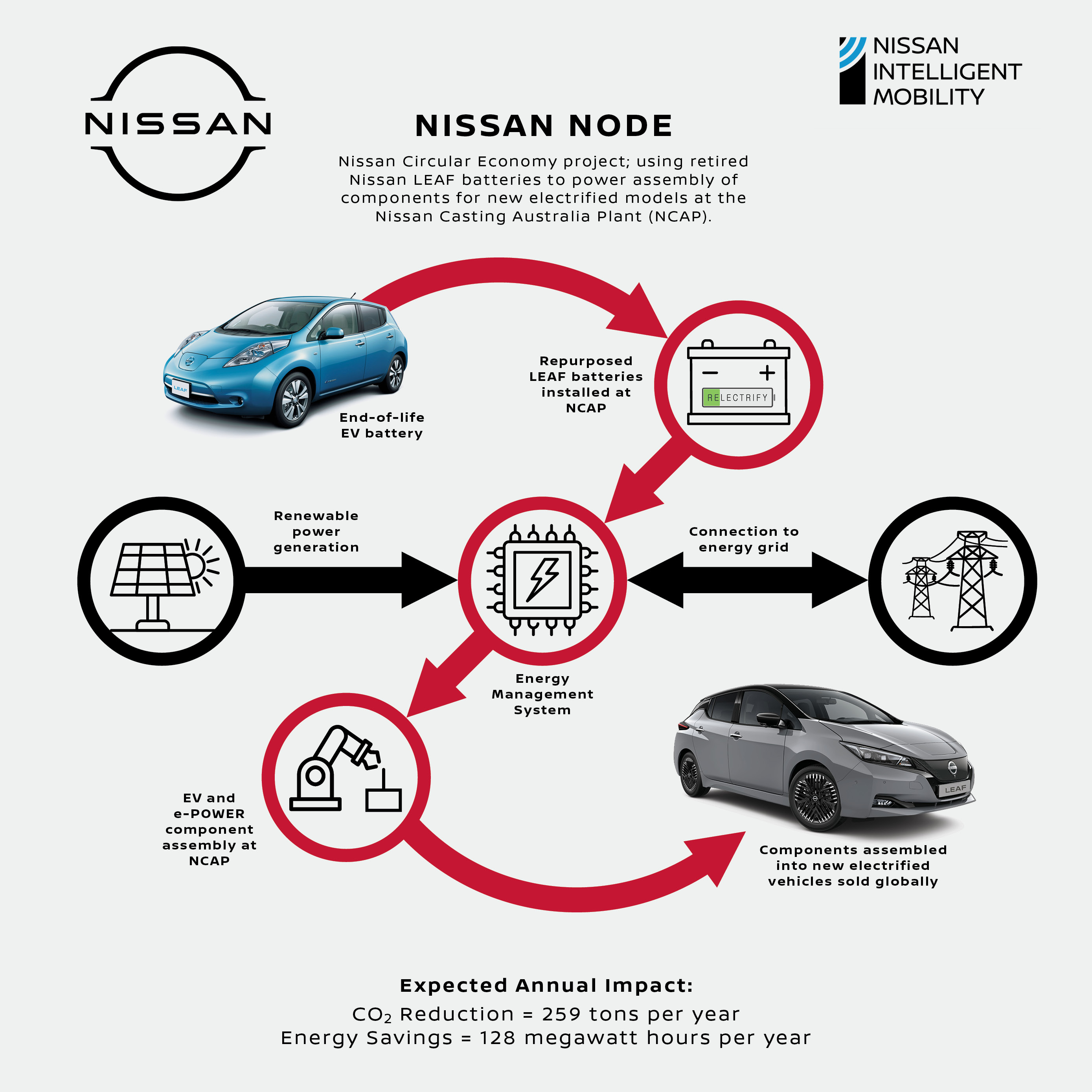
Nissan Australia is to recycle old batteries from its Leaf electric vehicle to power production at its casting plant in Melbourne.
Snapshot
Batteries to be repurposed at Dandenong Casting Plant
Energy to power production of new EV components
Will also be harnessed and used to charge staff cars
The project, dubbed Nissan Node and being carried out in partnership with Melbourne-based battery developer, Relectrify, will see a new solar array installed at Nissan’s casting plant in Dandenong in Melbourne’s outer east, as well as new EV chargers.
The Nissan Node will include the installation of a new battery energy storage system made of nine repurposed first-generation Leaf batteries – which will be charged via the solar array and the renewable energy used to power part of the production of components for Nissan’s global EV models, as well as help supply the new EV chargers to recharge staff vehicles.
At present only the new X-Trail’s tow bar is produced in Australia, no other E-Power specific components are.
1
The project is estimated to reduce Nissan Casting Australia’s annual C02 emissions by 259 tons, while saving 128 megawatts of energy every year.
“This isn’t just a hugely exciting project, but an important step into the future for end-of-life EV batteries,” said Nissan Casting Australia’s Managing Director, Peter Jones.
“As an early pioneer of the electric vehicle both globally and locally, we can also demonstrate leadership in second-life battery initiatives. I’m proud that this solution is every bit as innovative as the launch of the Leaf in Australia was more than 10 years ago.
“Already the Nissan Leaf comes with vehicle-to-grid technology from factory, which will allow Australian EV owners to use their vehicle to power their homes, and could be used to help stabilise the electricity grid, but commercial circular economy projects like this are a viable, sustainable and innovative solution for end-of-life EV batteries, too.”
1
The Nissan Node project will be completed this year, though similar schemes are already underway around the world, including a trial with the East Japan Railway Company which uses second-life Leaf batteries to power railway crossings, and with the 4R Energy Corp in Japan, which is developing the technology and infrastructure to recycle, resell and reuse the batteries in Nissan EVs as a power storage solution.
Nissan’s Dandenong operation has been in operation since 1982. Today, in excess of 50 per cent of the facility is dedicated to the manufacturing of high-quality aluminium castings that are fitted to Nissan’s battery-electric and hybrid vehicles sold globally.