Snapshot
- Lexus Australia records hybrid and electric sales growth in 2022
- Electrified powertrains accounted for 47.6 per cent of sales to July 31
- NX hybrid proving popular, with 53 per cent of sales being HEV or PHEV
Lexus has revealed that hybrid, plug-in hybrid or electric vehicles have accounted for almost half of its Australian sales in 2022.
According to Lexus Australia, 47.6 per cent of the vehicles it has sold year-to-date featured electrified powertrains – up from 38.8 per cent in 2021 – with the growth led by the new-generation NX medium SUV.
This is equivalent to 2133 of the 4473 vehicles it has sold in Australia to July 31, with the NX recording 1064 registrations in NX350h hybrid and NX450h+ plug-in hybrid guise, despite supply constraints.
Overall, the hybrid NX range represents 53 per cent of total NX sales year-to-date, while sales have already exceeded the 992 hybrid units sold by the end of 2021.
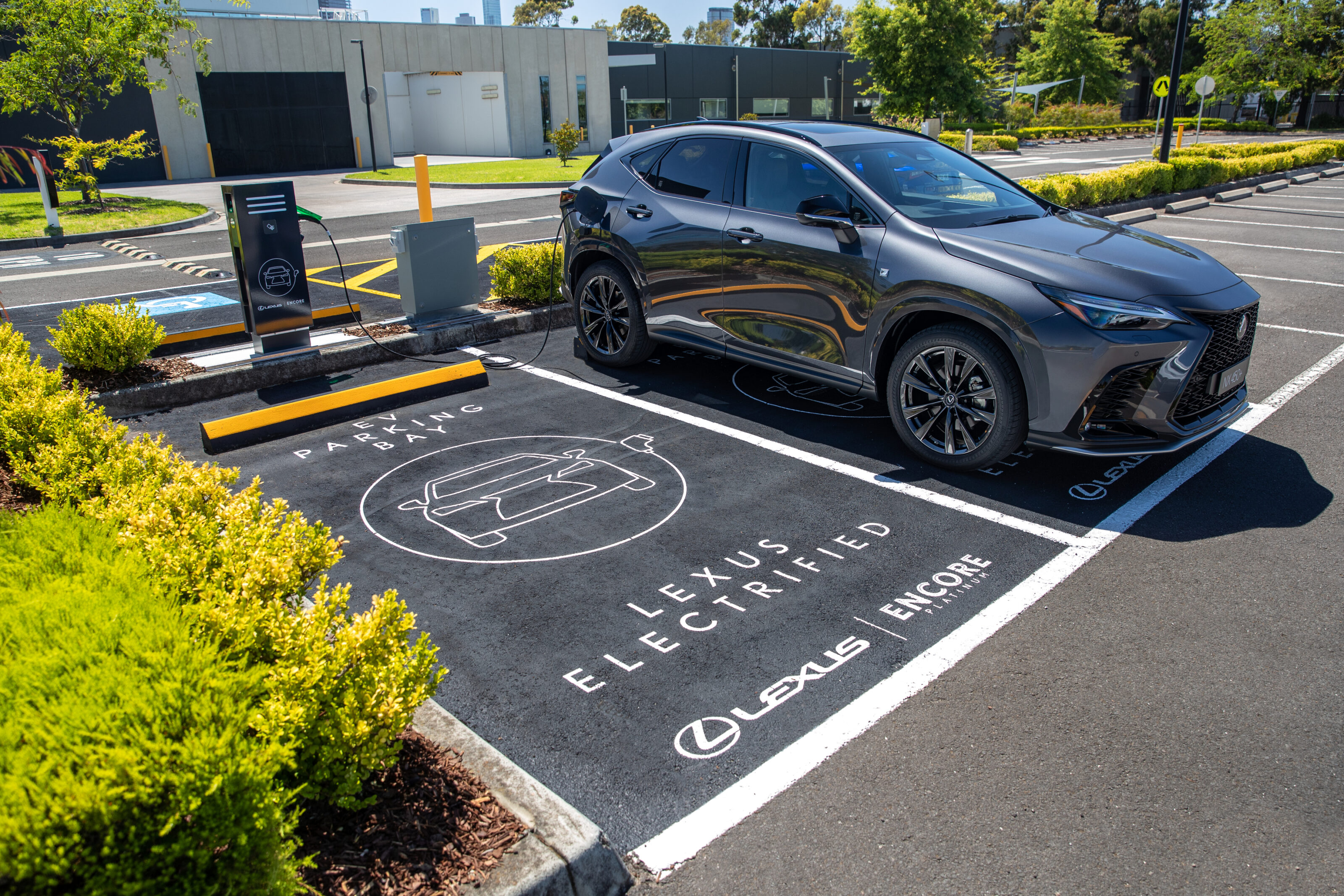
As reported, the NX hybrid is proving popular locally, with wait times stretching to mid-2023 for the flagship NX450h+ plug-in model.
The launch of the second-generation NX has coincided with a local sales milestone for the brand’s top-selling vehicle, with more than 25,000 cumulative sales (25,382 to July 31) since the nameplate first launched in 2014.
Meanwhile, Lexus has recorded 389 sales of the RX450h and RX450hL – more than half (59 per cent) of total RX hybrid sales for 2021 – and 55 sales of the all-electric UX300e small SUV.
The luxury marque claims it has “strong orders on hand” for its first EV, which launched in Australia in late 2021.
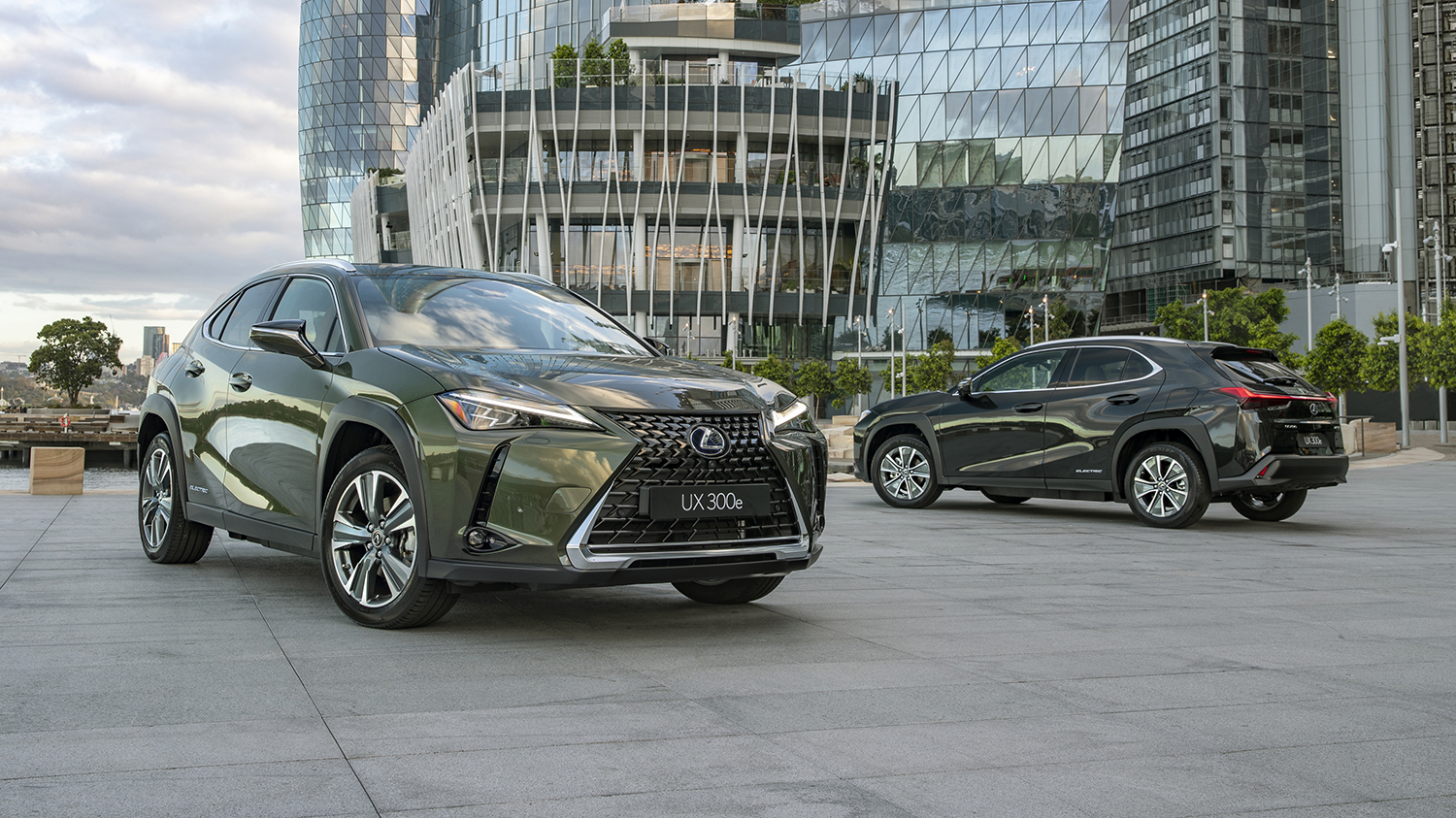
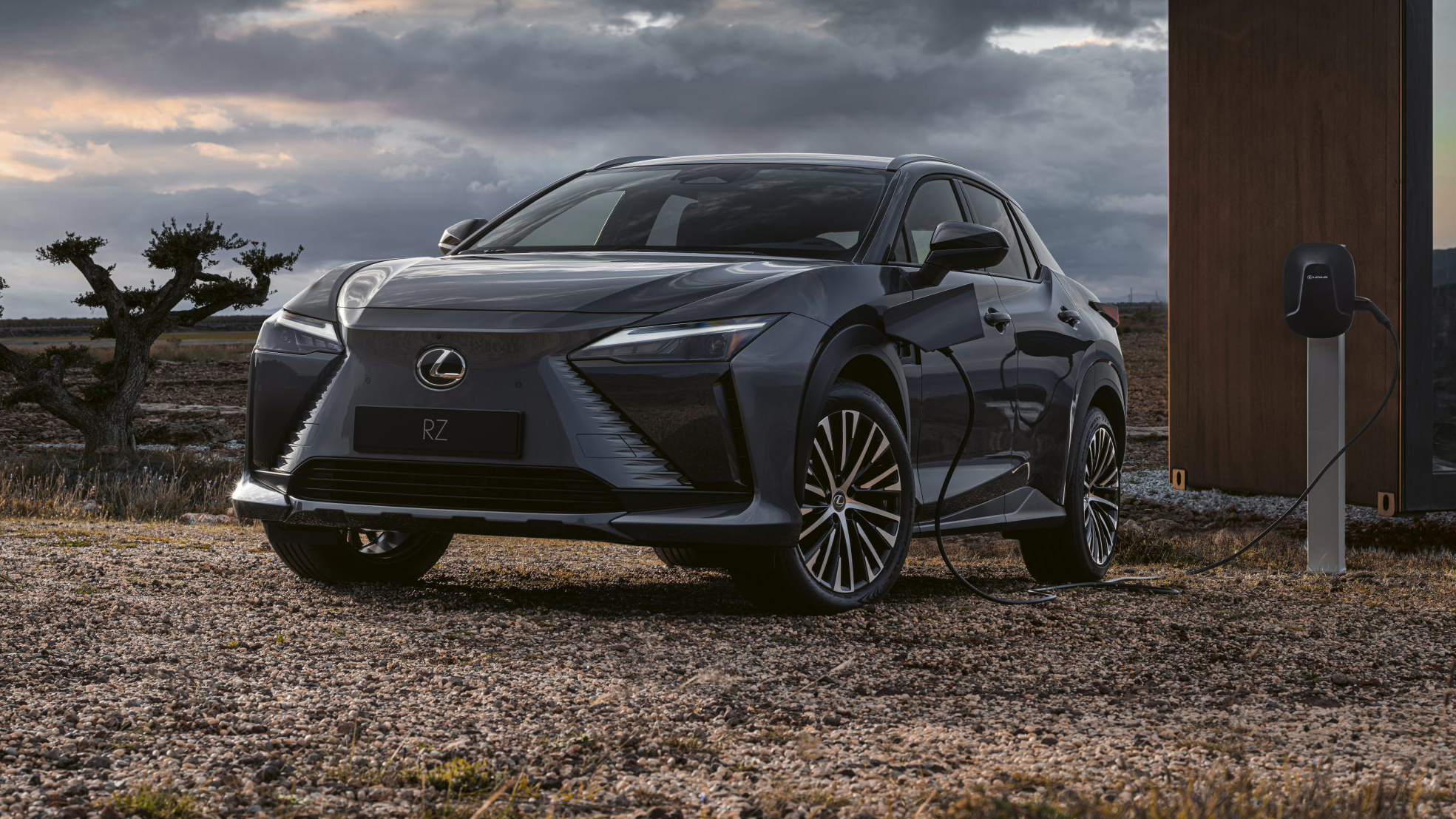
Hybrid powertrains are available across the broader Lexus line-up, with the UX, ES, LC and LS offering electrification, while Lexus is gearing up for the global launch of its ground-up electric vehicle, the RZ crossover.
A local launch for the RZ, which is related to the Toyota BZ4X and Subaru Solterra, remains under evaluation, with further information expected in the coming months.
Lexus plans to “introduce at least 20 new or renewed models globally by 2025 – most of which will be electrified,” spearheaded by the RZ and the new-generation Lexus RX.
The fifth-generation RX will launch in Australia next year with three hybrid powertrains on offer.
To the end of July, VFACTS data reveals Lexus has recorded 4473 sales in Australia, a 27.5 per cent decrease over the same period in 2021. Its most popular model is the NX, with 2019 sales (-1.4 per cent), followed by the RX (1004, -16.2 per cent) and UX (680, -38.6 per cent).
As with parent company Toyota, Lexus has been impacted by significant delays caused by the semiconductor chip shortage, which continues to affect the entire automotive industry.
“We apologise to affected customers and thank them for their loyalty and patience as we work to address this challenge,” said Lexus Australia chief executive John Pappas.
Snapshot
- 326 2019 A Class models recalled
- All sedans; 324 A200, two A180
- Notice issued for over or under filled transmission on the production line
The 2019 Mercedes-Benz A Class range is now subject to a recall for potentially over or under filled transmissions, would could leak or cause failure of the driveline or other components.
326 cars have been identified in the recall by Mercedes-Benz Australia, all being 2019 A Class vehicles.
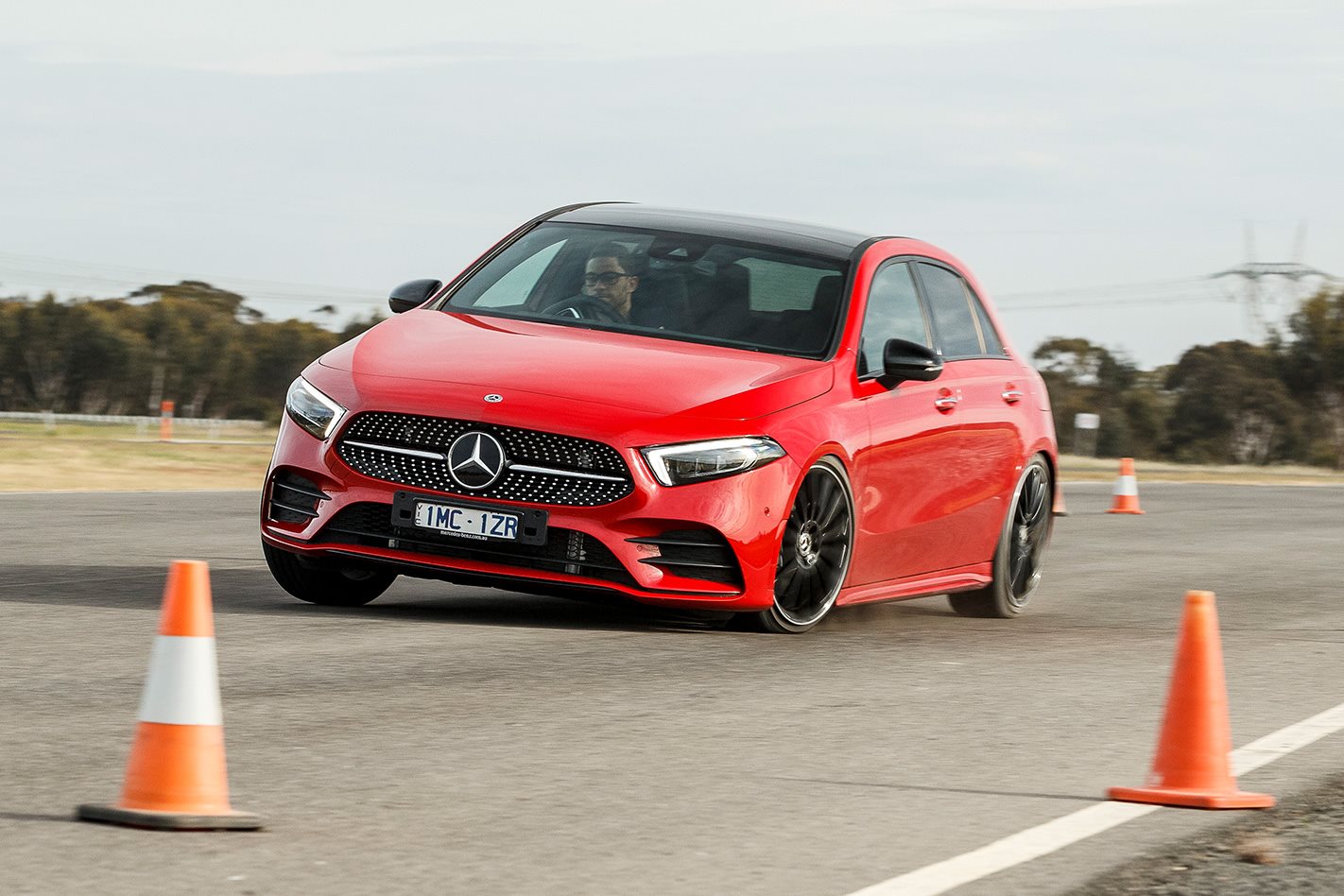
Those 326 vehicles include 324 2019 A200 sedans and two 2019 A180 sedans. Hatchback variants are said to be unaffected.
Problems from underfilling the transmission could result in excessive wear or failure of the component, which poses the risk of the car stalling or coming to a stop unexpectedly while driving.
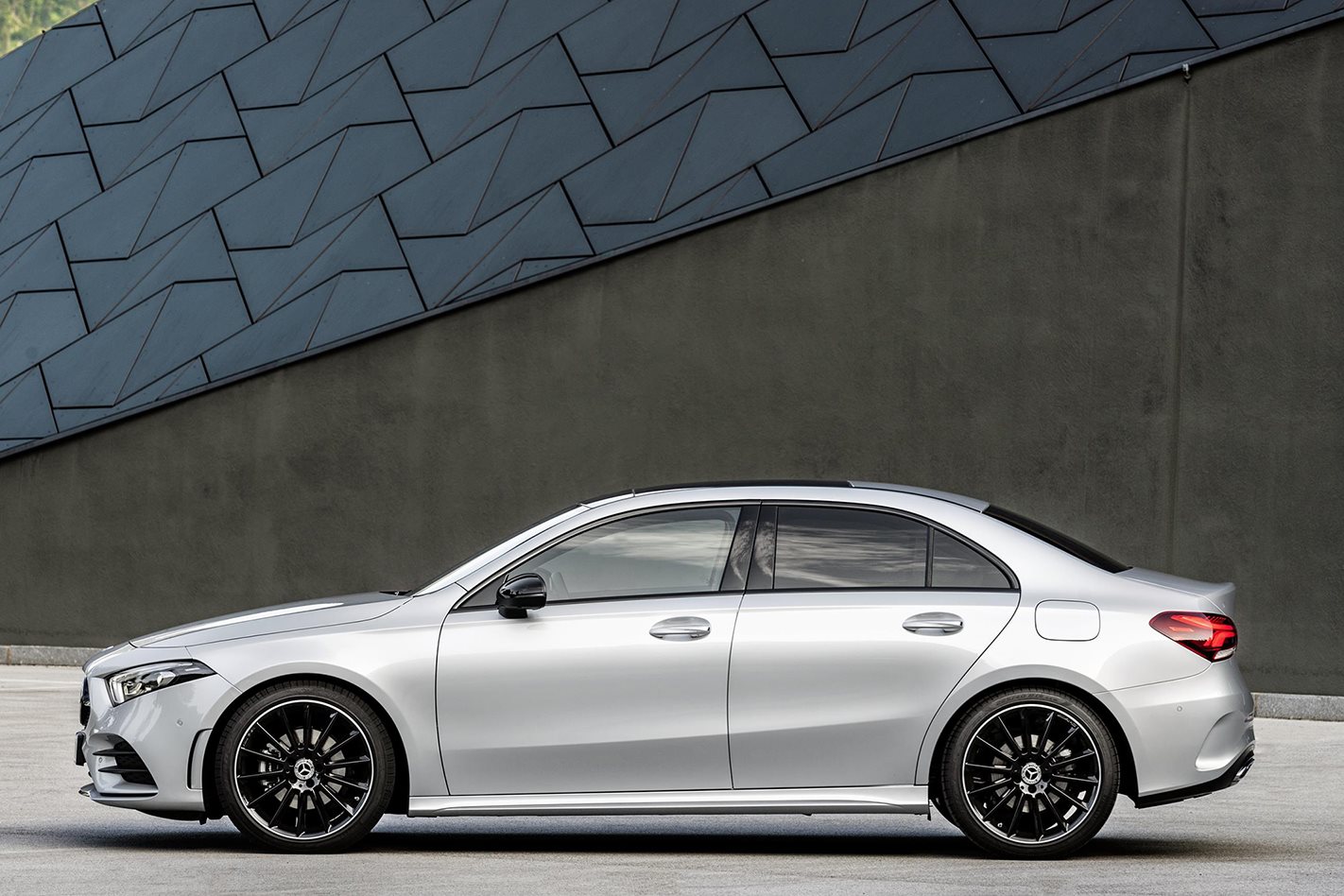
Over filling of the transmission with too much oil has the potential to cause leaks, which then poses a fire hazard as transmission fluid is dangerously flammable.
“These hazards increase the risk of an accident causing injury or death to vehicle occupants and other road users,” stated the recall notice from the Department of Infrastructure.
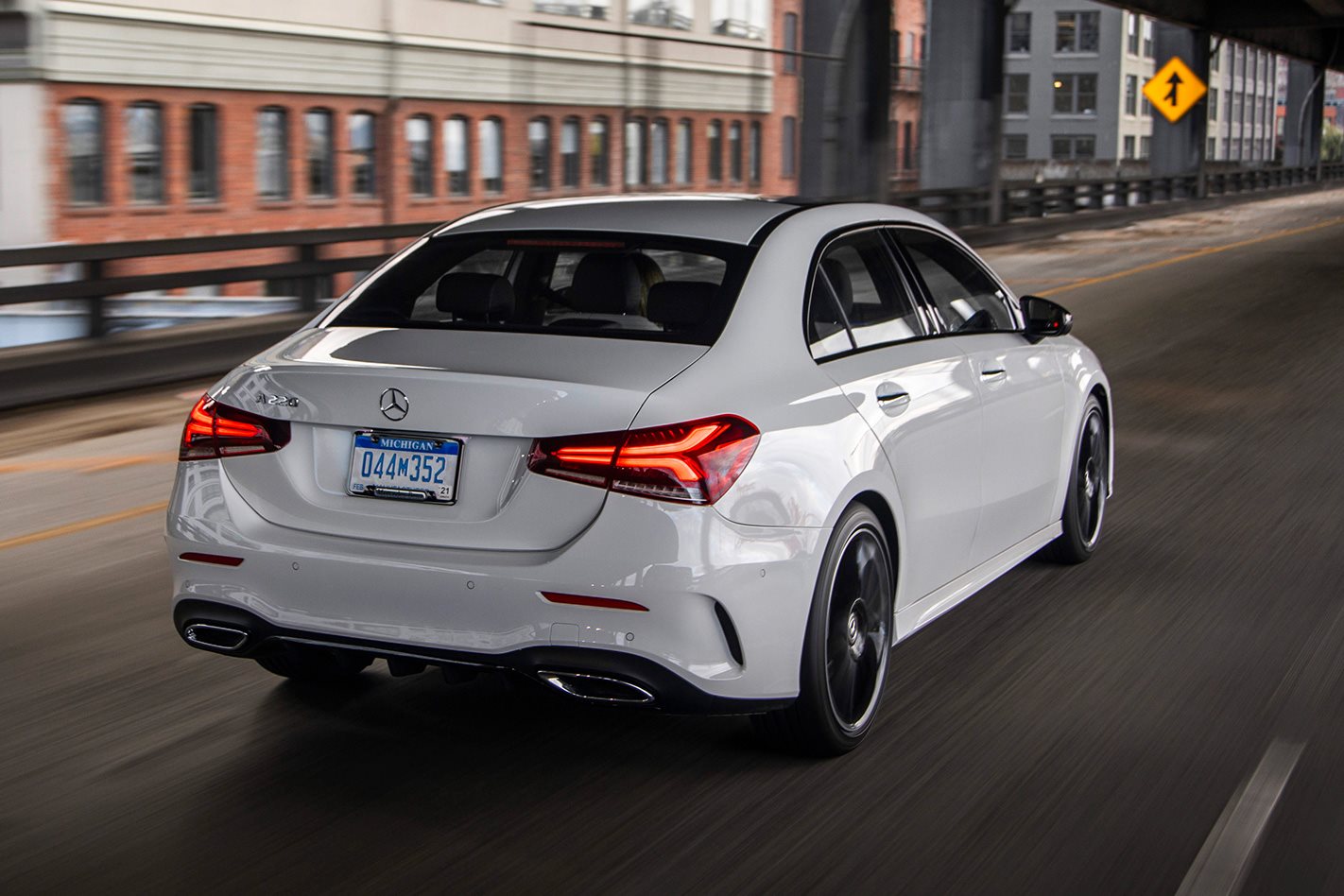
The recall notice states the issue is a manufacturing one, with cars potentially affected either over or under filled with transmission oil on the production line.
Owners of potentially affected vehicles will either by contacted by Mercedes-Benz Australia, or can contact their nearest service centre to have the issue rectified free of charge.
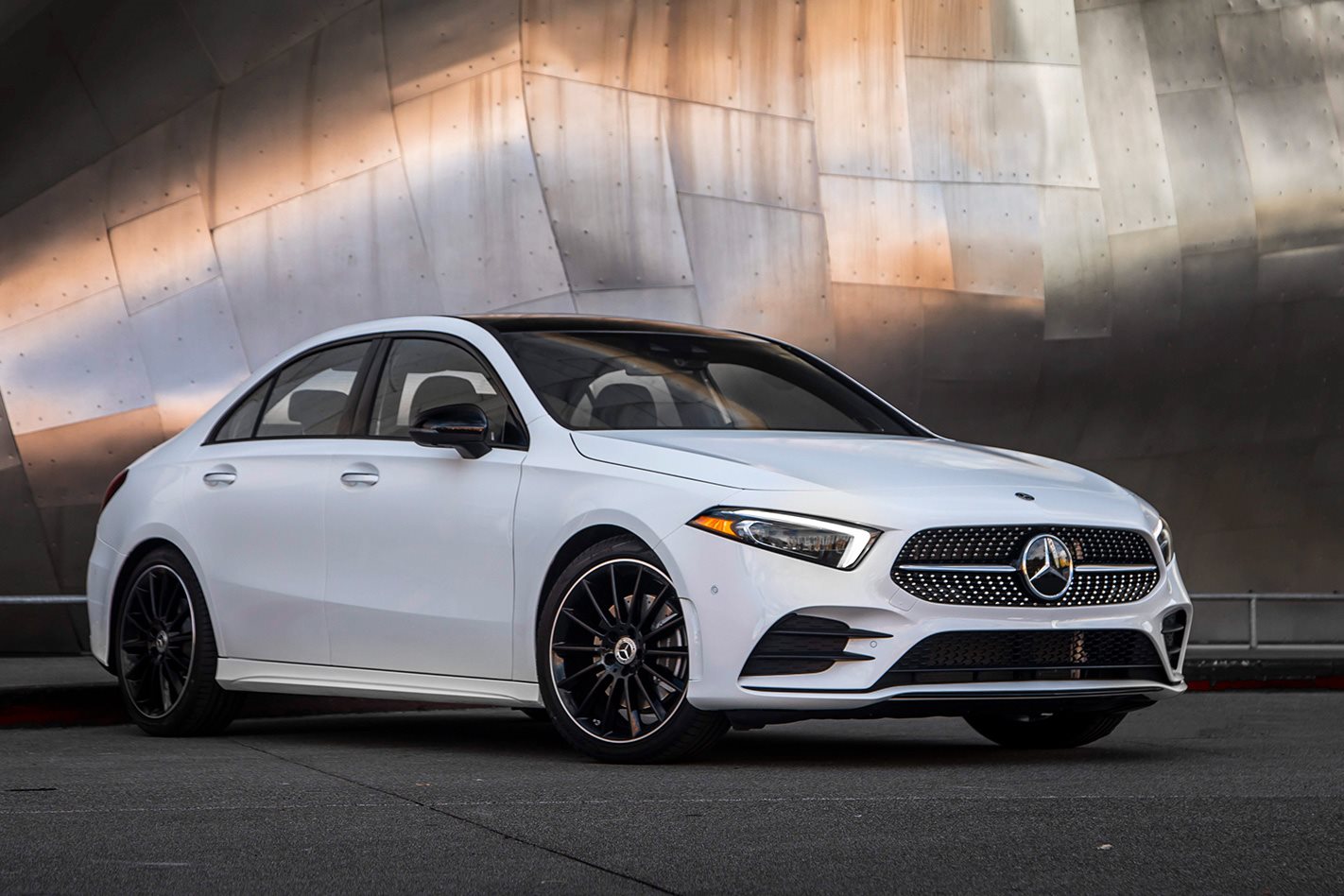
The full recall notice with the list of affected VIN numbers can be viewed here.
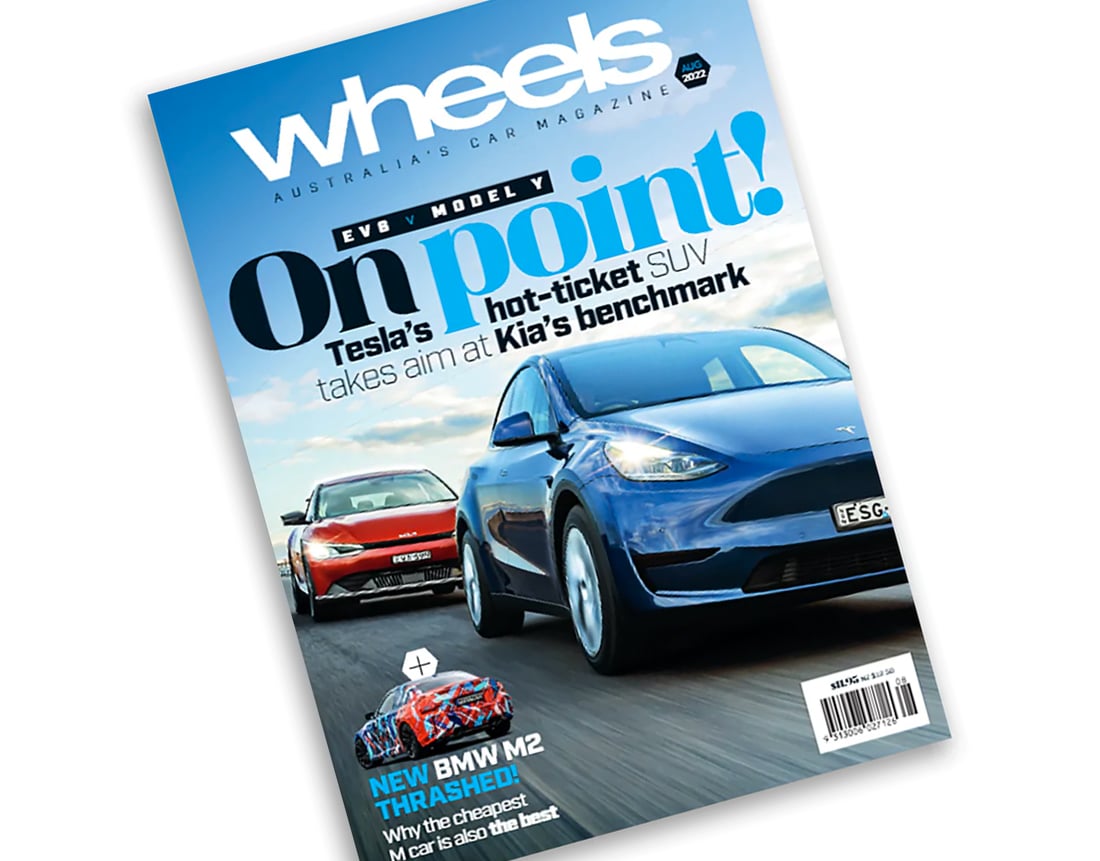
The thing with a new broom is that it tends to look for something to sweep. This is my first issue in charge of Wheels but, for the time being at least, I’m trying to resist that particular temptation; the impulse to be seen to be doing something.
Far better to take stock, establish what readers want and assess how best to deliver on that.
The instant feedback of Wheels’ online audience can offer a steer, but the overlap in the Venn diagram of online and print readers is smaller than you might imagine.
Print readers love to be surprised, opening the magazine and reading something they never expected to encounter.
Online readers tend to know what they’re looking for and search accordingly. Therefore, there are some stories that work beautifully for print, that are joyous in their charm and esoteric in their nature which would die a grisly death online and vice versa.
I doubt you’d be too gripped by a story on the relative boot sizes of mid-sized SUVs, but it’s a sure-fire winner in terms of click-through.
At this point, I should probably introduce myself to those of you relatively new to the title. I was previously the deputy editor of Wheels during Alex Inwood’s tenure in the big chair. When Dylan Campbell took over, I backfilled his old role as editor of MOTOR before returning to the mothership.
I’d very much like to thank Ash Westerman for his steadying hand on the helm during some testing times and I’m grateful that he’ll continue to offer the benefit of his years of experience and deft editorial touch.
I’d also like to take the opportunity to tip the hat to Felipe Ubilla, whose design work on Wheels in recent years has distinguished the magazine.
One thing doesn’t change and that’s our passion for a great story. Isn’t that what we’re here for?
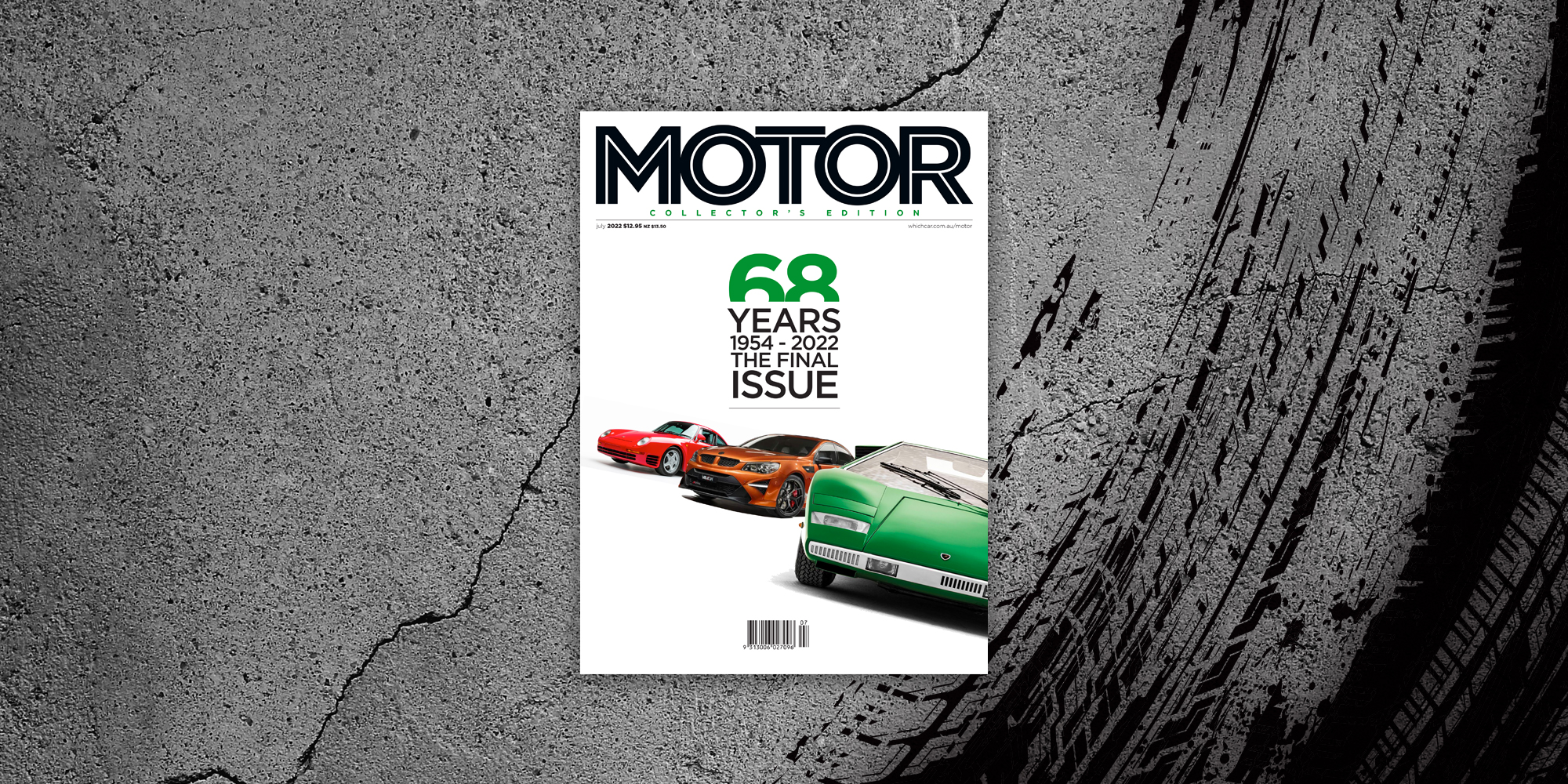
Wheels ought to bring you words and pictures the quality of which you won’t find anywhere else. If the magazine’s not doing that, I’ll have failed you.
We’ll also be folding in a bunch of previous MOTOR subscribers to Wheels, so the mix of what you see in the magazine may shift slightly.
It always used to be the case that if Dylan Campbell ran a performance car on the cover of Wheels, the MOTOR crew would chase him through the streets of Oakleigh armed with pitchforks and tiki torches. Small wonder he left.
Speaking of Oakleigh, the Wheels office has moved to shiny new premises down the road in Mulgrave, the suburb our execs describe as Australian automotive’s Silicon Valley.
I’m not so sure about that, but it feels great to be back in an office again with the crew from 4×4 Australia, Unique Cars, WhichCar and Street Machine.
The vibe is back again after a couple of years many would rather forget. Everyone has a spring in their step.
And we’re gearing up to make Australia’s car magazine more immersive, more beautiful, more forward-looking and more thought-provoking than it’s ever been. Stick with us. This is going to be one heck of a ride.
Most enthusiasts will clock 1974 as the year of the Volkswagen Golf. The original Mk I Golf heralded a new era for hatchbacks – and VW – with 35 million of them (and counting) sold since. Yet the Golf had a talented sibling that carved a motoring niche in its own right, even if it hasn’t reached the same stratospheric fame: the VW Scirocco.
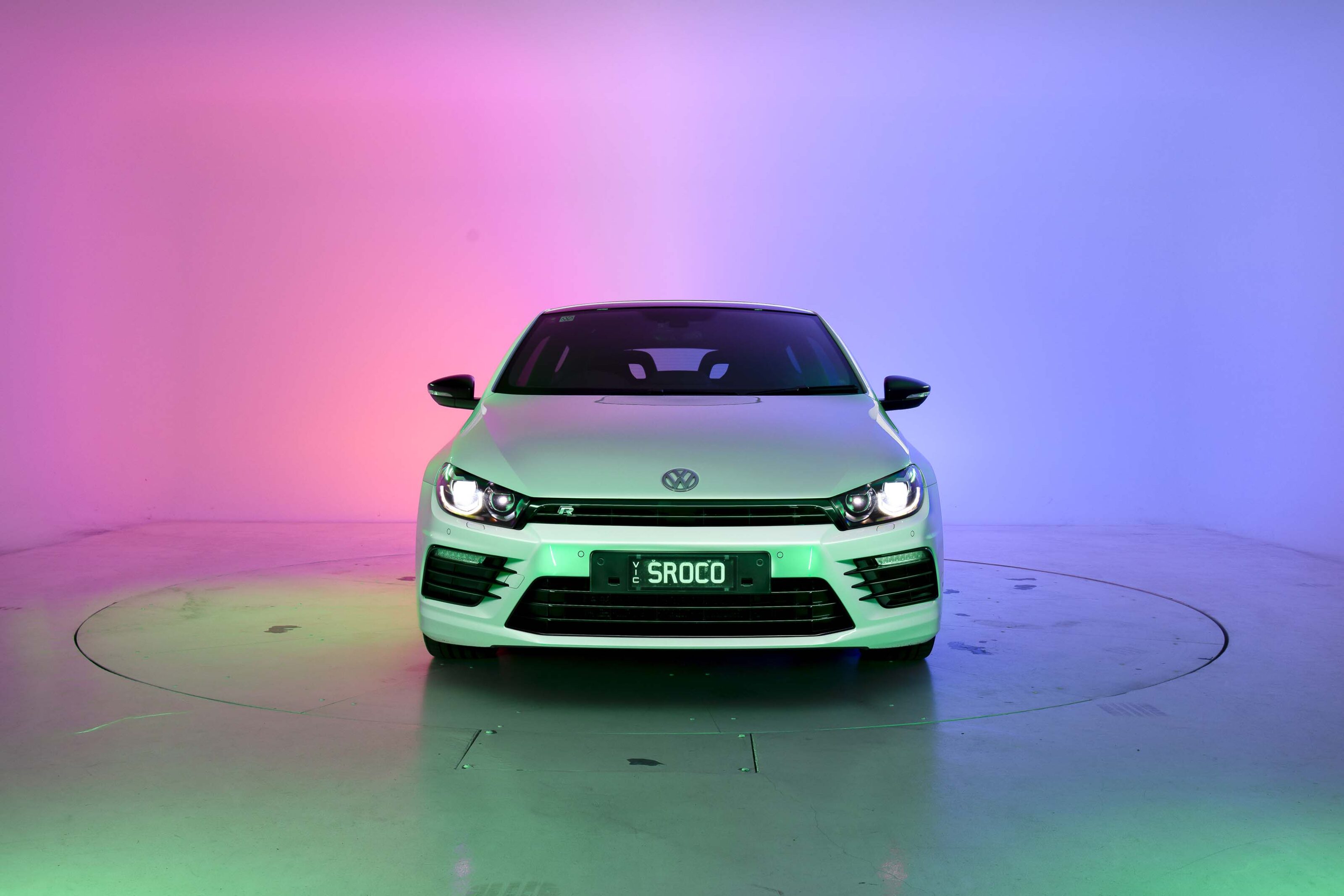
The Scirocco is less familiar to many Australians as it took almost 40 years for the nameplate to arrive in Volkswagen showrooms here – and even then, it was a single-flavour performance variant, the Scirocco R. Yet it was worth the wait, even if many Aussies were confused by what the Scirocco’s role in the line-up actually was.
The Scirocco’s place follows that of another legendary sports car. While the original Golf was the replacement for the long-in-the-tooth Beetle, the Beetle itself had a more athletic, sports-focussed cousin: the Karmann Ghia.
First shown to media at the Casino Hotel in Georgsmarienhütte, Lower Saxony, in July 1955, the original Type 14 Karmann Ghia coupe took widened Beetle underpinnings and draped a beautiful, single-piece Italian body over them, which was designed by Luigi Segre of Carrozzeria Ghia (there’s controversy around where the design came from, but that’s for another discussion).
We waited almost four decades for a VW Scirocco to be offered Down Under
The body itself was built in Osnabrück, just seven kilometres away from the Casino Hotel.
The cabriolet shown in 1957 was arguably even more convincing, oozing charisma and style. Neither version was especially fast, but there was no questioning the svelte looks.
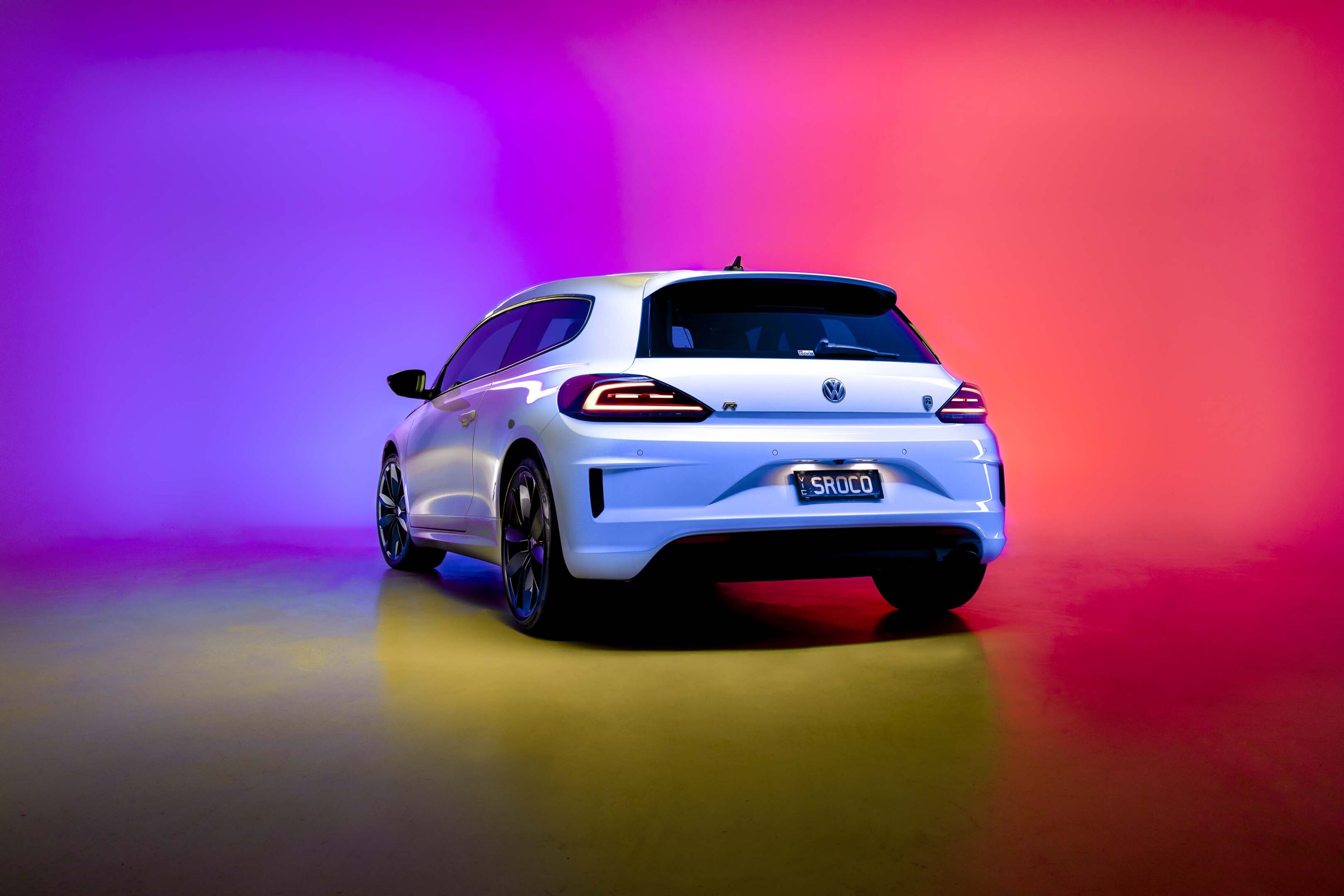
When the Mark I Golf arrived in 1974, Wolfsburg placed the same bet by creating a sports-bodied variant sharing its mainstay’s underpinnings: the VW Scirocco was born. The recipe saw the Golf’s A1 platform as the basis for the new sports model – named Scirocco after the ferocious wind that rushes across the Sahara Desert on its way to the Mediterranean.
Volkswagen itself had been facing a headwind with its ageing model line-up of rear-engined, air-cooled models that dated back to the 1930s. By 1970, things had sunk to their lowest, the company’s value hitting rock bottom.
The ambitious and aggressive Rudolf Leiding had taken the helm of VW Group in 1971 and set about revitalising Wolfsburg.
He ruthlessly cut costs, improved efficiencies and fought significant internal battles as he weaned the company off its dependence on the Beetle.
Leiding’s internal revolution had to be matched by a product revolution, though. That was spearheaded by a trio of game-changers for the brand: the Passat, Golf and Scirocco.
The scale of change could not be understated for the brand at this time, with all three vehicles the work of Giorgetto Giugiaro’s Italdesign styling house – now regarded as some of the legendary designer’s most iconic work.
The new-vehicle onslaught marked a shift conceptually, too, from rear-wheel drive, air-cooled rear-engined layouts to the now conventional water-cooled, front-engined, front-drive configuration.
This was part of widespread monumental change, with almost everything brand new: the platforms, the engines, the design language and philosophy, factory floorplans and manufacturing techniques. Even Volkswagen’s marketing approach had to change.
The Passat’s 1973 arrival was solid evidence of a revitalised Wolfsburg under Leiding’s reign. Yet the cars couldn’t just look good – they had to maintain the brand’s legendary reliability.
To ensure this, the Passat, which was based on B1 Audi 80 running gear, was launched months after the four-ringed version in order to iron out any manufacturing issues before it hit VW showrooms. The same process was followed when the Scirocco went into production on February 4, 1974, ahead of Golf production that started the following month.
The sense of urgency to get these new models on sale meant that Giugiaro had more freedom than usual when creating the Scirocco. “They were in such a rush that they didn’t even want sketches, they wanted to see models straight away,” he said.
He showed VW a single model that became the production version, conceptually an affordable, practical sports car. Like the Karmann Ghia, the Scirocco I’s body was made by Karmann in Osnabrück.
With a clear visual relationship to Passat and Golf, the Scirocco also shared much of their underbody technology, too. In fact, Volkswagen’s management claimed that the inherent handling of the Mark I Golf made the decision to spin off the Scirocco using its A1 architecture an easy one.
That included twist-beam rear suspension, which saved boot space and was also cheap to manufacture, applied to both the Golf and the Scirocco.
Success in Europe was quickly replicated in North America, where the Scirocco went on sale in 1975 – but Australia missed out. In the mid 1970s, issues around import duties and uncertainly in the local industry ruled it out.
Neither the Mk2 Scirocco or its replacement, the pretty Corrado, were ever offered Down Under. After the nameplate went on hiatus in September 1992, its return 16 years later delivered a serious performance car with no twist-beam rear in sight.
“The dual-clutch gearbox cut the 0-100km/h time to 6.0 seconds flat. This was a quick car”
The VW IROC (‘scIROCco’) concept shown at Paris 2006 was the first glimpse of what would become Scirocco III. In somewhat parallel with the mid 1970s, the VW Group was on the up in the second half of the 2000s (pre-GFC at least).
The Mk V Golf had firmly re-established the Golf as ‘Das Auto’, Audi was now a genuine rival to BMW and Mercedes while Ferdinand Peich’s intentionally loss-making Bugatti and the VW Phaeton were bold statements about the company’s confidence – and apparently bottomless pockets.
This positioned Wolfsburg as the hot favourite to be the first car-maker in history to sell more than 10 million vehicles in a calendar year, which it eventually did in 2014, the same year as Toyota. VW was no longer a one-product dependent business and had become a truly global powerhouse.
That set the tone for an ambitious VW Australia.
Local product planners were swelled from the success of the Mk V Golf, and when the Viper Green metallic 2006 IROC Concept became the stylistic base for the Scirocco that went into production in 2008, the Golf-exotic was on their wanted list.
It wasn’t easy: getting a production slot from the Setubal, Portugal plant proved difficult, and there was fear that the Scirocco would cannibalise Golf R sales – the performance flagship – with needless expense in the process. There was already the Eos, a Golf based Cabriolet, on the market here too.
For the 2012 model year, the decision was made to drop the three-door Golf R that was introduced in 2010 and replace it with the Scirocco R instead –the five-door Golf R would remain, but the regular Scirocco models offered elsewhere would not be available here, again for fear of cannibalising three-door Golf sales.
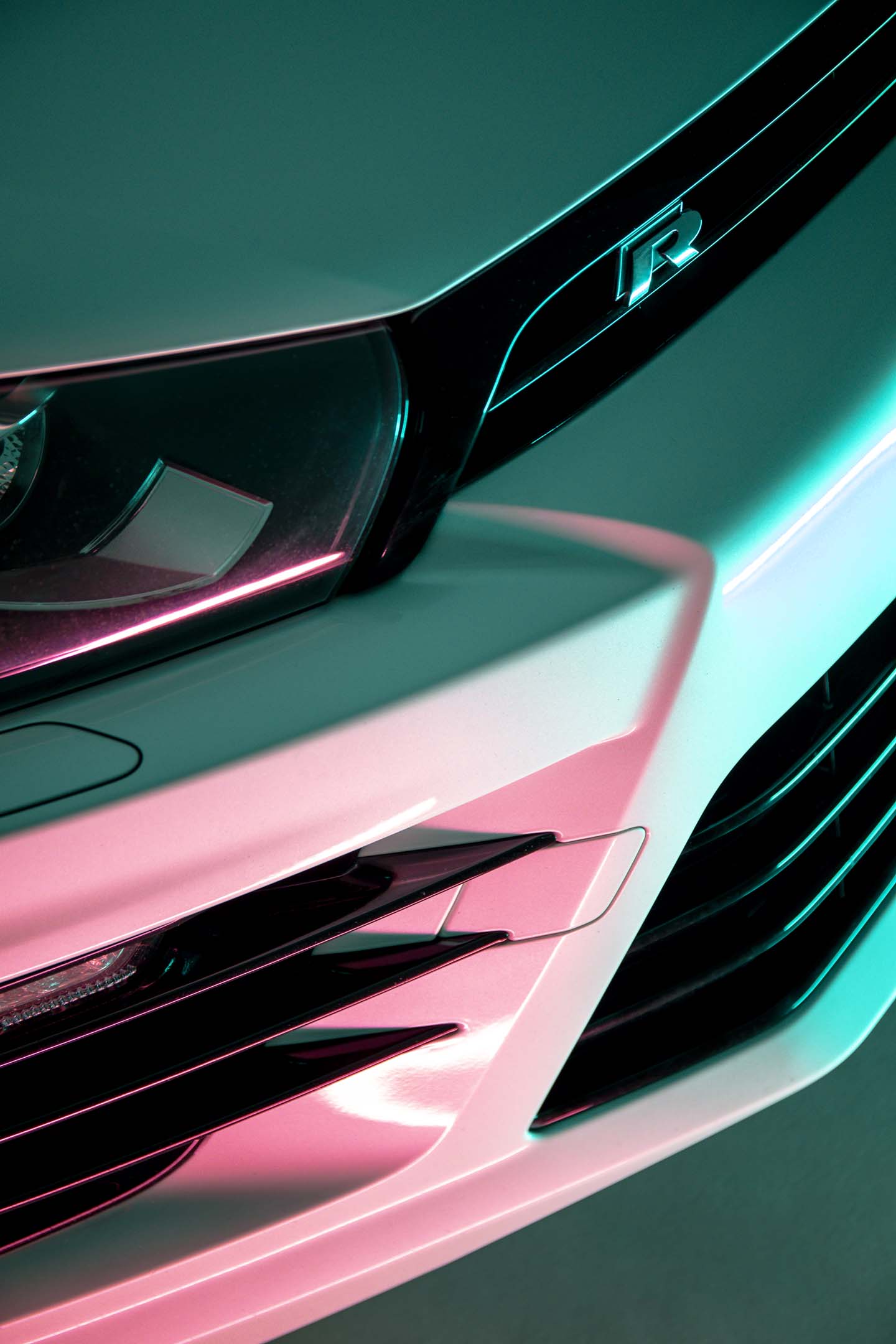
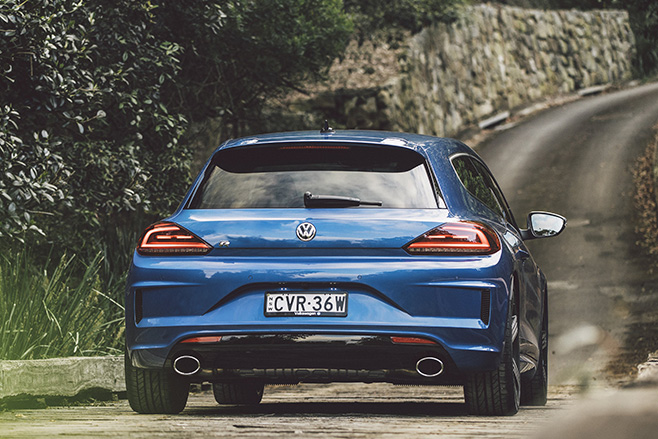
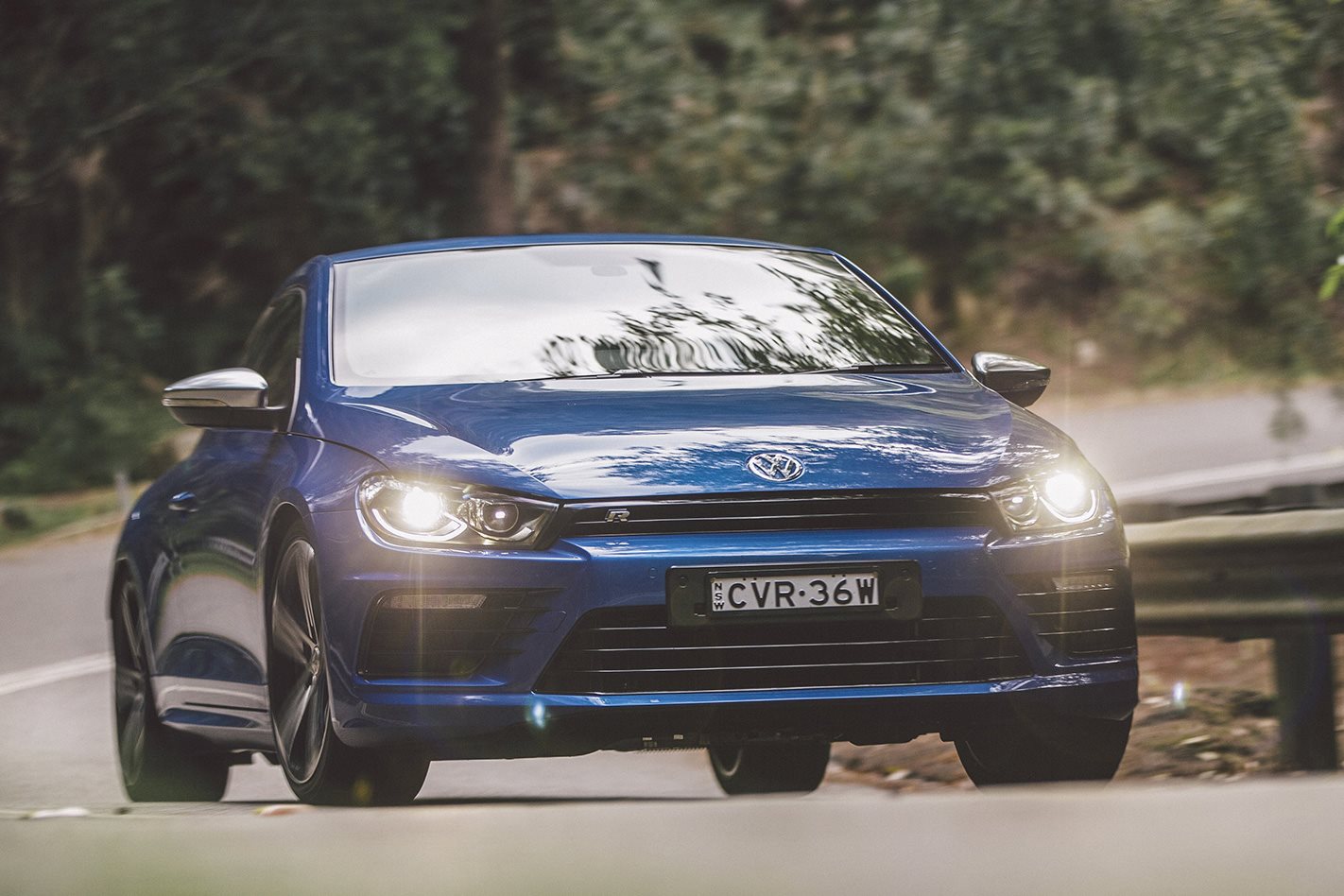
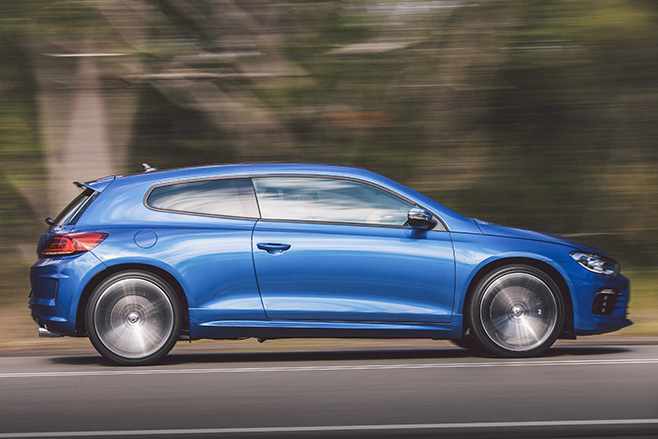
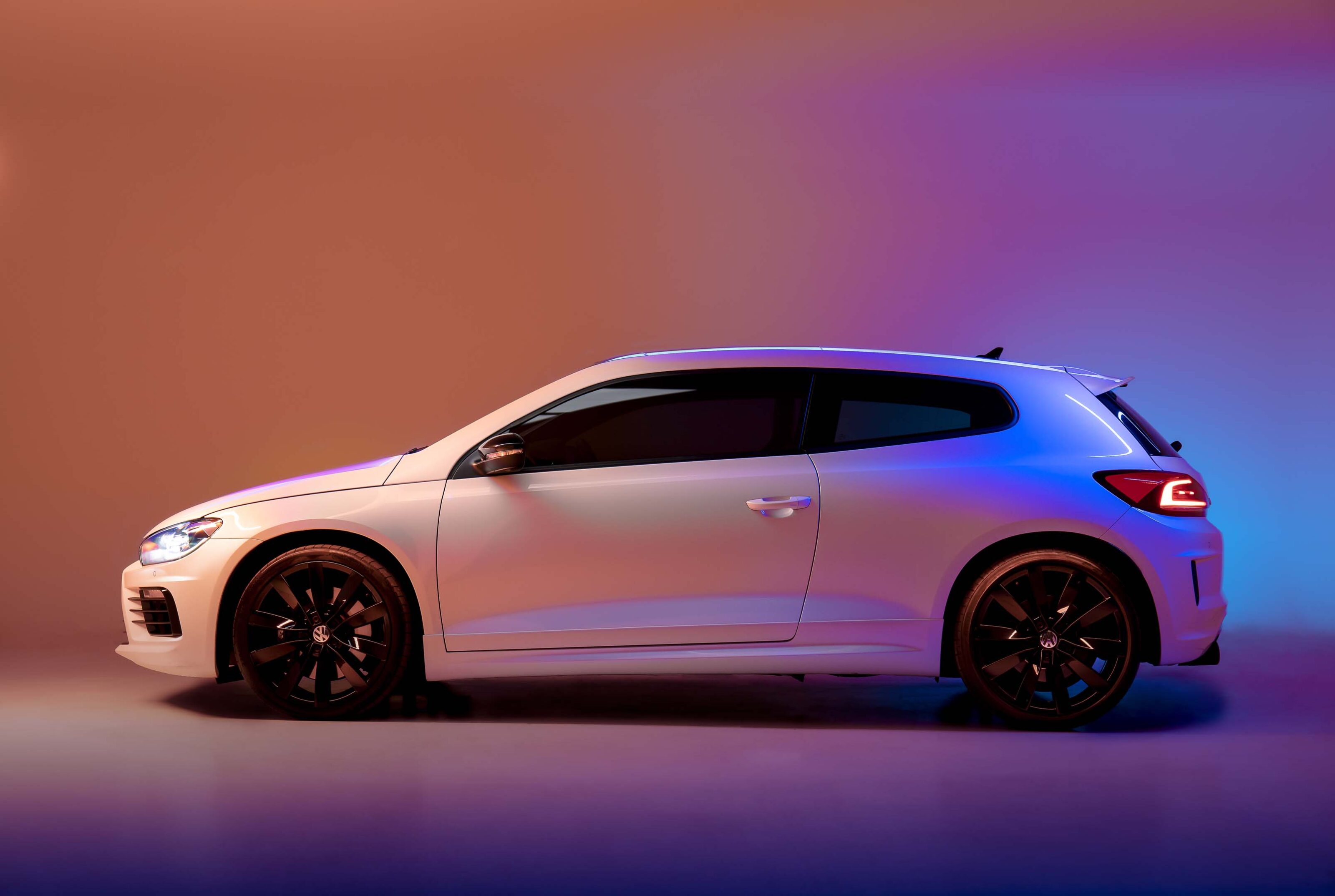
At last, Australians could buy a brand-new VW Scirocco. Based on the Golf V platform, it was wrapped in a gorgeously athletic body sculpted by VW’s legendary Walter da Silva, who delivered a concept-car-esque performance hatch with the user-friendliness of the Golf.
Admittedly, the late arrival mean that the Golf VII was being shown, meaning the Scirocco was far from the new kid on the block – but that couldn’t detract from a bargain performance hatch it was.
Priced at $47,490, the MY2012 Scirocco R was $1K cheaper than the three-door Golf R it replaced, yet offered more kit and head-turning exotic style.
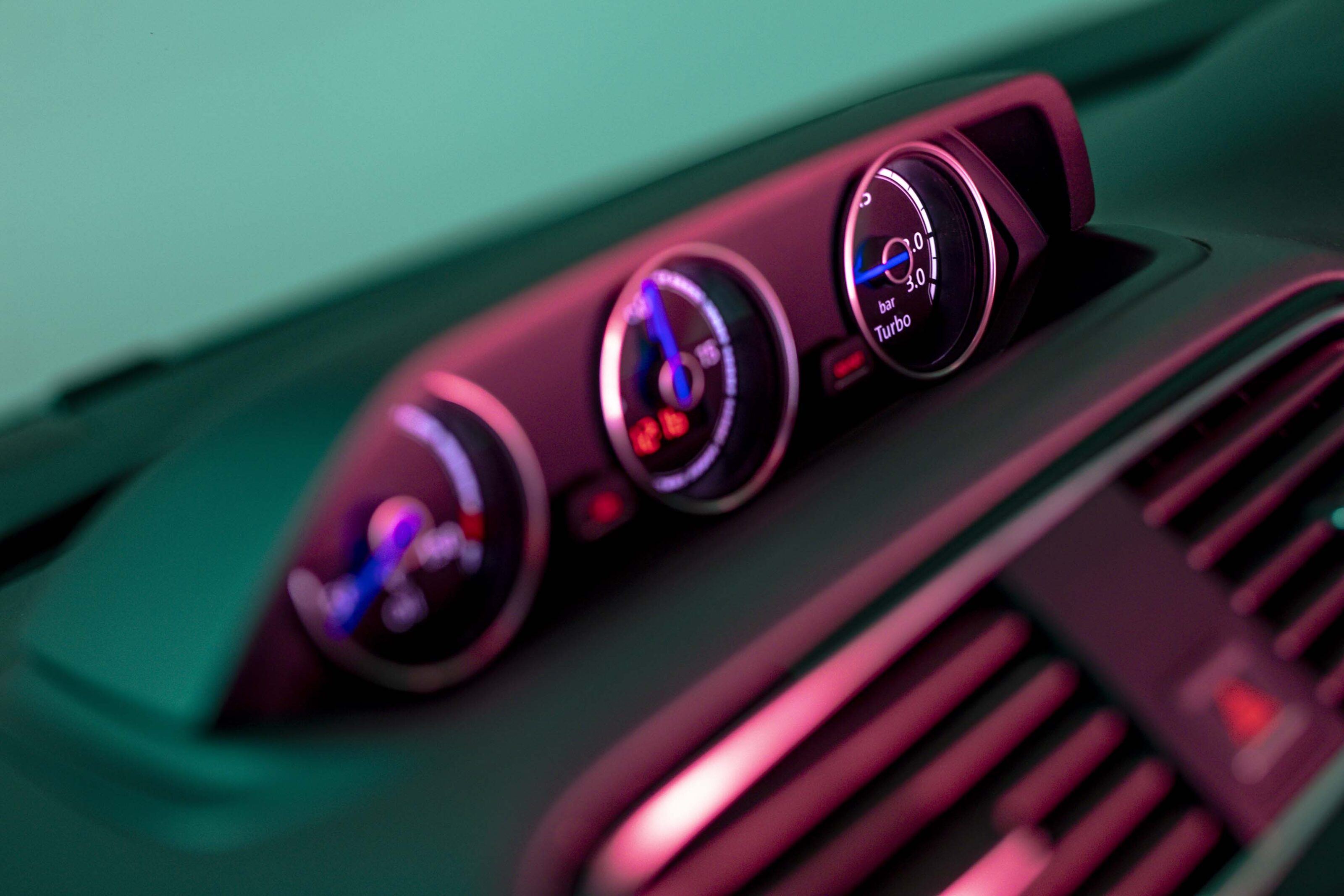
Mechanically, it used the Golf’s older yet brilliant EA113 1984cc turbocharged four-cylinder that was also under the bonnet of the far pricier Audi S3 and TT S, with the same 188kW and 330Nm as the Golf R.
Yet the Scirocco was front-drive only to the Golf’s all-wheel drive, and with that came a 125kg weight advantage to deliver 139kW per tonne – the best power-to-weight of anything wearing a VW badge.
Channelling that power through the 19-inch front wheels was VW’s XDL – the electronically controlled diff that mimics a limited-slip design – and standard Adaptive Chassis Control (ACC), an option on Golf R. That endowed the Scirocco with a 6.2sec 0-100km/h, with the DSG model cutting that down to 6.0sec flat. This was a quick car.
What’s more, the ACC and unique tuning gave the Scirocco its own flavour from behind the wheel.
The steering was heavier than the Golf R’s, but it had a sharper, more responsive front-end and while it shared the Golf’s 2574mm wheelbase, it was 43mm longer, 35m wider and 51mm lower.
It was far more than a Golf in a stylish outfit: the Scirocco R really did sing its own tune as a genuine performance hatch.
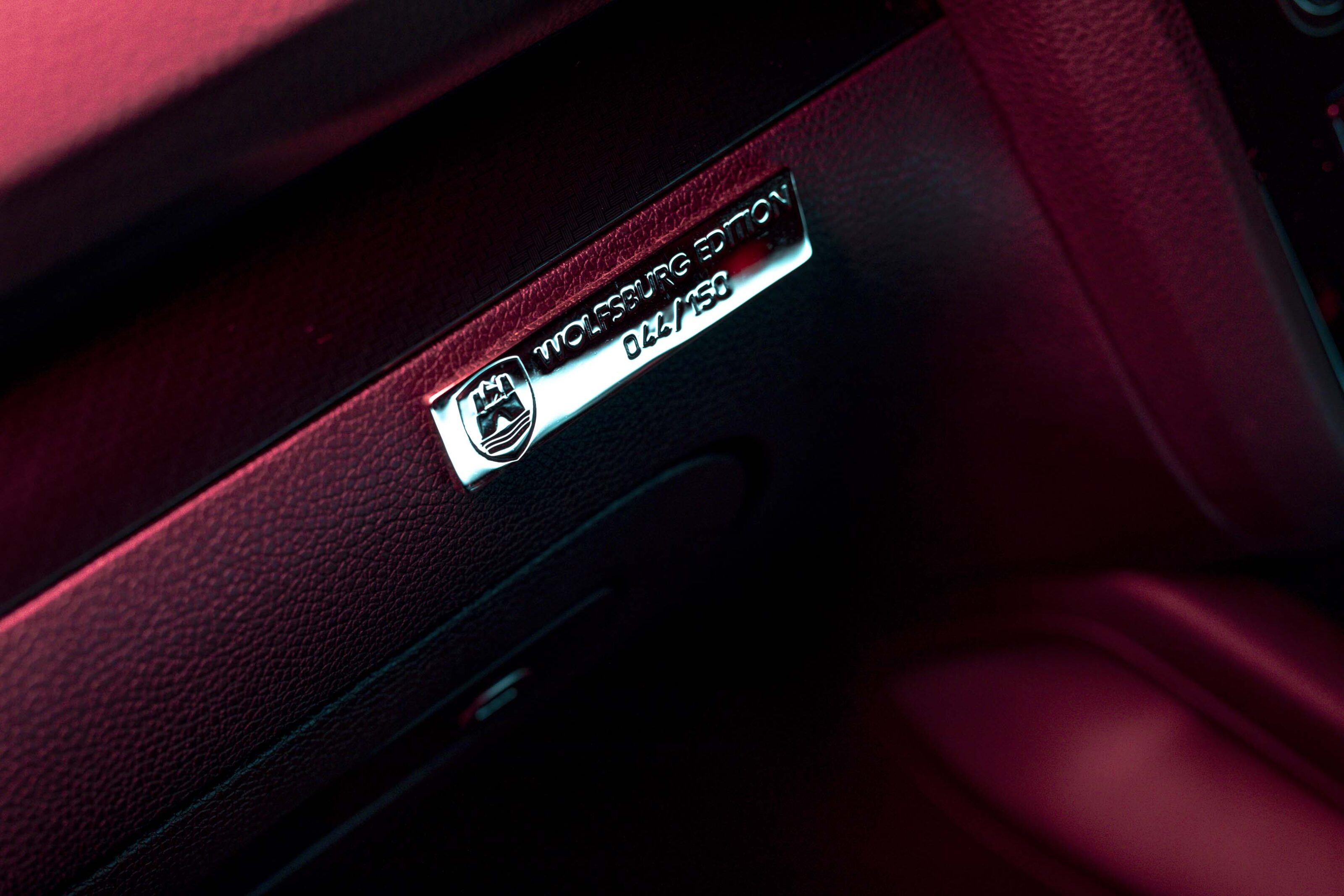
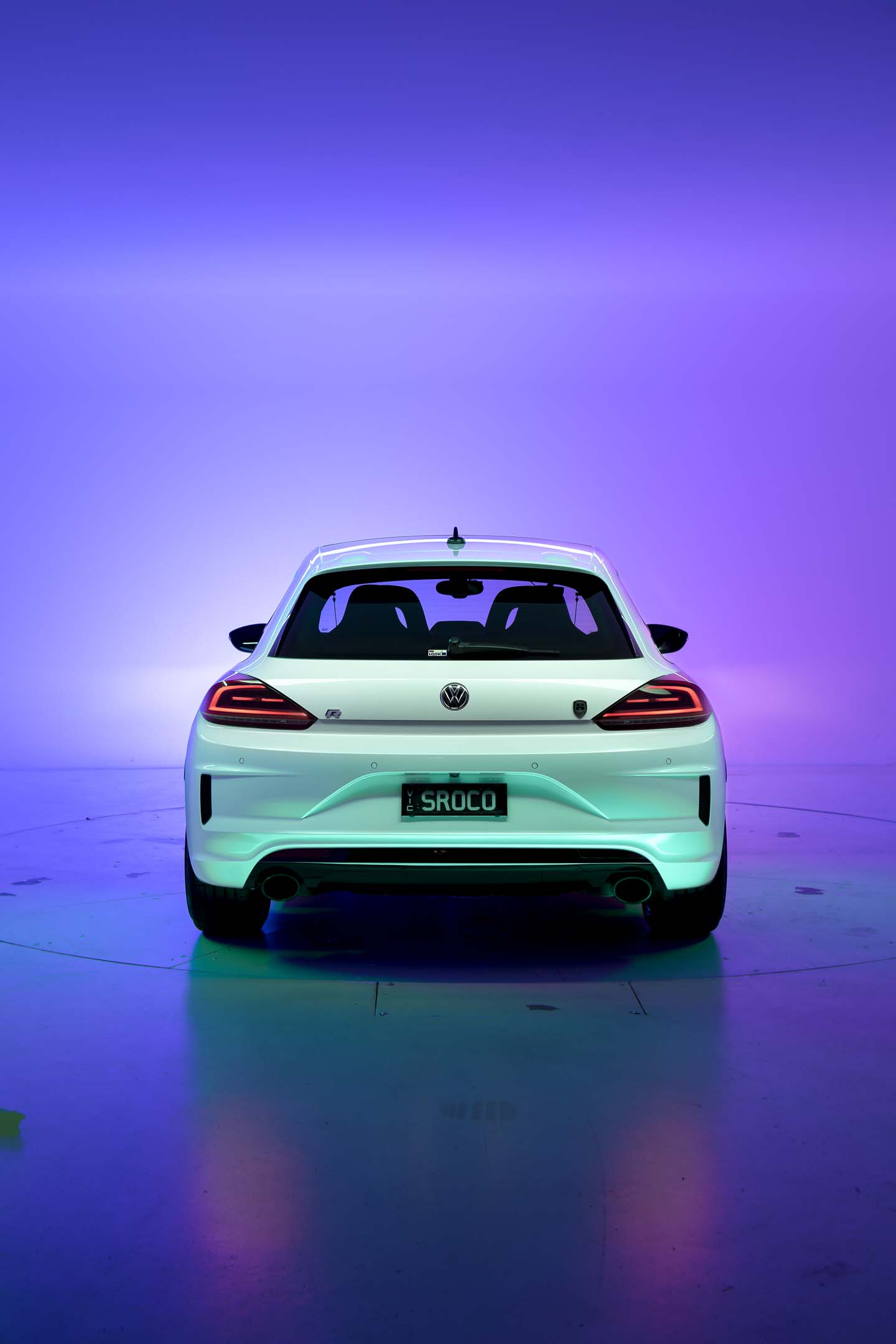
The last Scirocco was sold by VW Australia in 2017 with a 150-car run of the Scirocco R Wolfsburg edition as Volkswagen retired the nameplate globally.
Reflecting the worldwide preference for SUVs, a niche C-segment hatch proved an endangered species, especially in the wake of ‘Dieselgate’ and the company’s determined moves to electrify.
Yet the Scirocco R is a unique combination of catwalk style, genuine performance and handling for an attainable price like no other hot hatch.
The missing link
We bemoaned the three-years’ worth of internal pushing to get the MY12 Scirocco R here, but after 35 years, what was three more?
The original Scirocco’s mid-1970s inception was unfortunately timed for Australia, with our industry in a volatile and unpredictable debate on local content and import quotas.
This meant the Scirocco would’ve taken up spots from other VW models – but at unnecessary expense. With tariffs, the price would’ve risen beyond $8000 in 1974 dollars, pushing the humble VW into Porsche and Audi territory. Game over.
Friendly fire
It would’ve been tough for some choosing between the Scirocco R and five-door Golf R back in 2012. Head-to-head, they have identical power and torque (188kW/330Nm), and while the Golf has Haldex AWD, the Scirocco’s front-drive only.
Golf is quicker by 0.3sec in the 0-100km/h sprint – 5.7sec for the DSG version – but Scirocco carries 125kg less, so its point-to-point capability is arguably better on its wider tracks, inch-bigger 19s and standard Adaptive Chassis Control ($1300 and $1500 Golf options respectively).
Maserati has introduced its new ‘Extra10’ warranty program, offering extended coverage on powertrain components for up to 10 years.
The program, which covers the parts of the car like the engine, gearbox, and transmission, adds to the existing offering from the company – which already extends the warranty to four or five years.
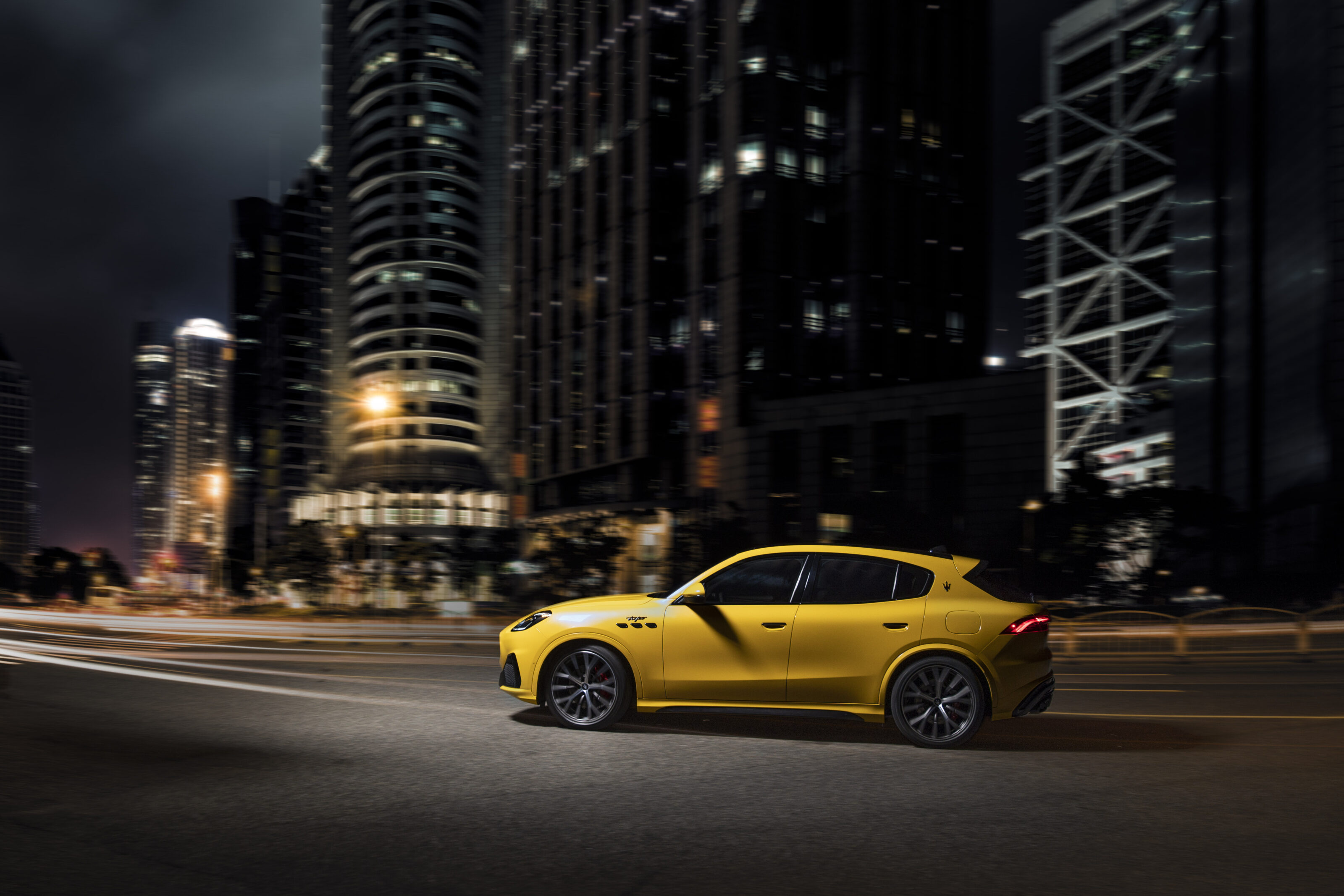
Maserati says the new service gives its customers more flexibility and is “aimed at consolidating the value of its cars over time”.
Owners can find out if their car is included by visiting a Maserati dealer and to activate the service – as well as to find out about the additional offers that can come with the Extra10 Warranty program, including pick-up and return service from/to their home, a courtesy car and more.
Renault caused a stir when its third (and current) generation Twingo made an about-face: its engine is in the back.
The inline three-cylinder donk is slightly ahead of the rear axle line, rather than truly rear-engined – but aside from Daimler’s smart (whose latest generation shares the Twingo platform), it’s a bold departure from the ubiquitous, front-drive econocar formula.
Back in the 1950s and ’60s, however – even accommodating the 1959 launch of the BMC Mini – the future of small cars looked like being this way. The drivetrain packaging efficiency and runaway sales success of the Volkswagen prompted really interesting rear-engined rivals from Fiat, BMW, Goggomobil, Hillman, NSU, Simca, Skoda – and a rash of Renaults that would endure into the 1970s.
Renault’s first rear-engined model, the 4CV (aka 750), appeared in 1947, less than two years after France was freed from German occupation. In fact, it’s long been suggested that Volkswagen influenced its design.
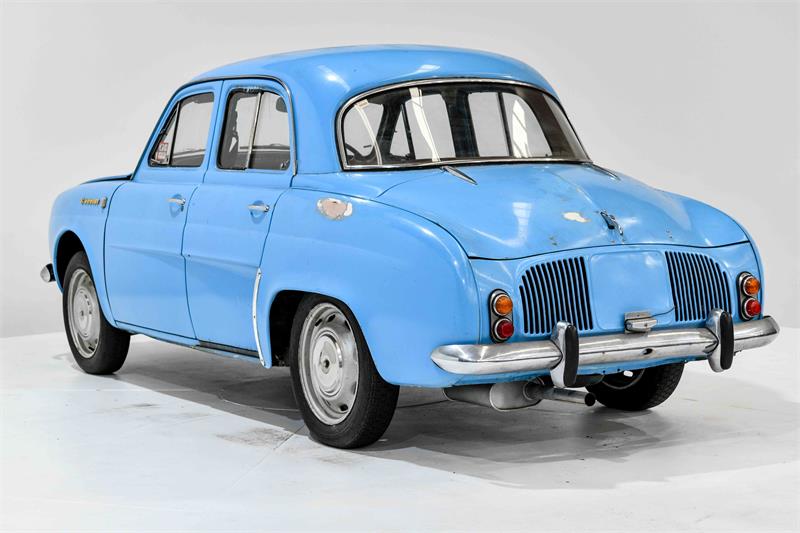
With its water-cooled, longitudinal in-line four and light, monocoque chassis, the 4CV went on to sell more than 1.1 million units.
In 1956, the 4CV was joined by the all-new ‘R1090’ Dauphine. Longer, roomier, more aerodynamic and just 30kg heavier, the all-new Dauphine also boasted an enlarged 845cc engine abaft.
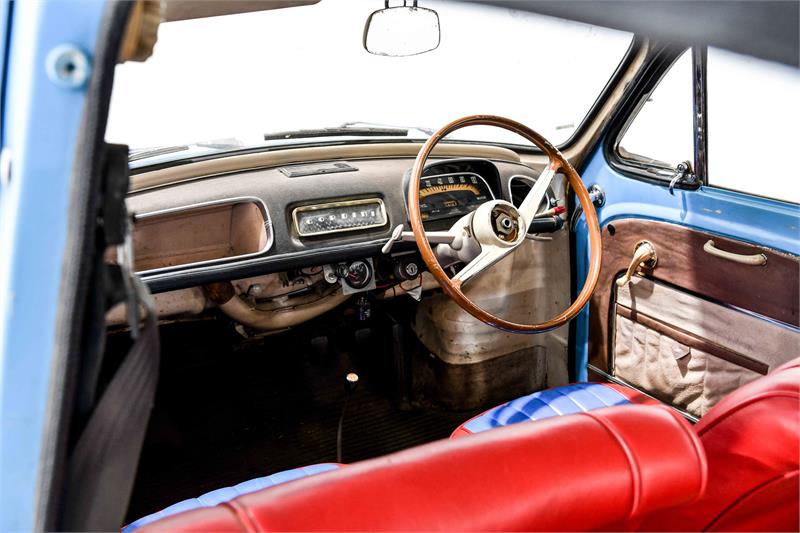
It was comfortable, well equipped and set for success, not least among families and females with its elegant styling, pastel colours and optional Ferlec electromagnetic-clutch ‘automatic’ transmission.
At the same time, Renault took the bold step of engaging racing car constructor Amédée Gordini to create a sports variant (R 1091) and a range of dealer-optional tuning parts.
Italian-born Gordini, a former Fiat racer, had set up business in France in 1952.
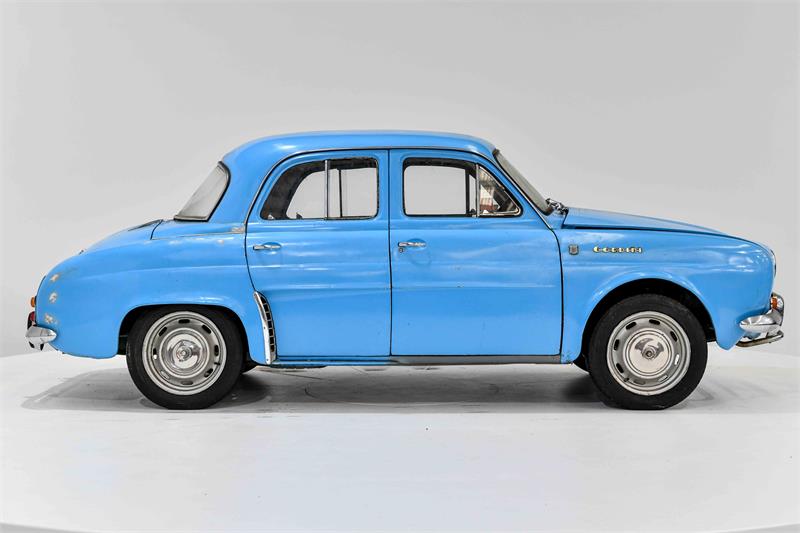
Known as The Sorceror for his engine tuning prowess, Gordini’s relationship with Renault would later become the foundation for Renault Sport.
The Dauphine Gordini produced 27kW (versus the standard 22kW) and had a four-speed gearbox and (from 1964) four-wheel disc brakes.
Despite notoriously tail-happy handling, Dauphine Gordinis won outright the triple-crown of Europe’s great road rallies, the Tulip Rally (1957), Monte Carlo Rally (1958) and Alpine Rally (1959) and dominated the 1.0-litre class in the Mille Miglia and circuit endurance races.
That success translated to more than 2.1 million Dauphines being built over 12 years. By then, Renault’s next revolution was already well underway, with the Renault 4 (1961), a five-door hatchback with front-wheel drive, that went on to sell more than eight million units over 33 years.
4CV on the gear
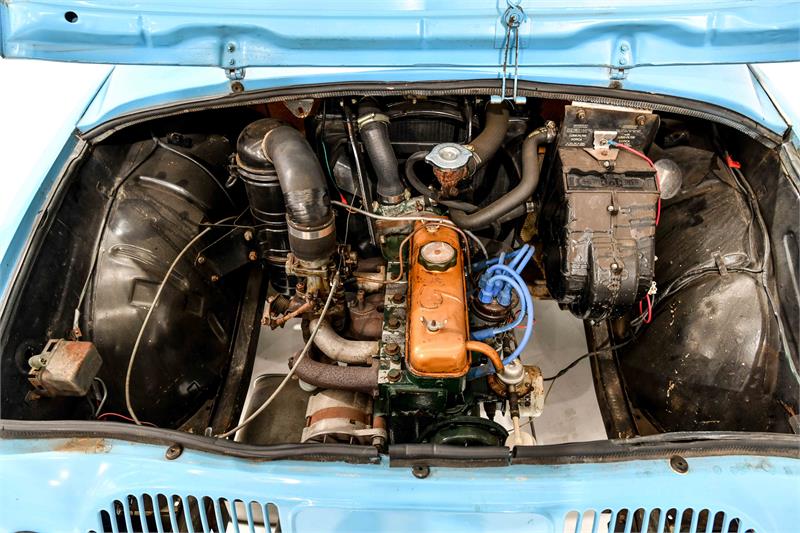
The Dauphine’s 845cc four-cylinder donk was a bored version of the 4CV’s Billancourt engine, with an iron block, three main bearings and alloy head.
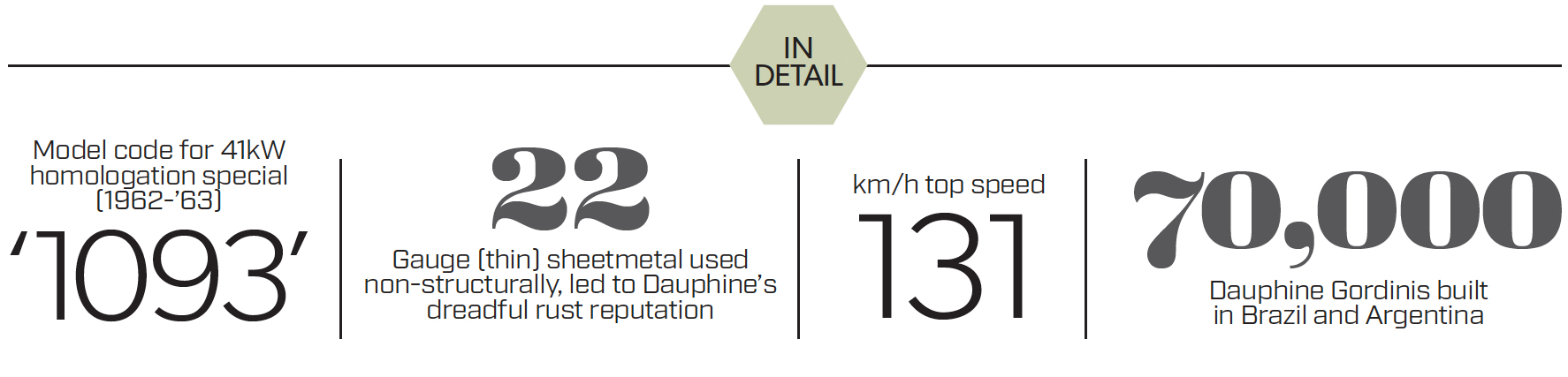
Gordini added a 32mm carb and higher-compression cylinder head with bigger valves, reaping 27kW and 65Nm, driving through a four-speed gearbox; Gordini also offered a five-speed gearset that fitted within the standard three-speed housing. Top speed for the showroom Gordini variant was 131km/h.
Rear-biased swinger
That 3950mm-long monocoque body is as clever as it is cute, incorporating air-cooling inlets ahead of the rear wheels and decent luggage space in the front boot, separated from the spare wheel that slides out from behind the front rego plate.
Front suspension is by upper and lower control arms with coil springs, rear by swing axles with coil-over dampers. Its 650kg kerb weight is 60 percent biased to the rear.
Korean firm Hyundai says it is “watching the Chinese brands closely” as the newcomers to market start to ruffle the feathers of legacy carmakers.
A Hyundai Australia insider told Wheels it is looking at what marques such as MG, BYD and Haval are doing as they become more popular in the local market.
“We’re watching them closely…for everything…the quality, aftersales, price – everything.”
While Hyundai has rocketed to the top of the charts in recent years, now consistently holding a place in the top five brands each month and year-to-date, it is not resting on its laurels about the threat the Chinese firms might pose in future.
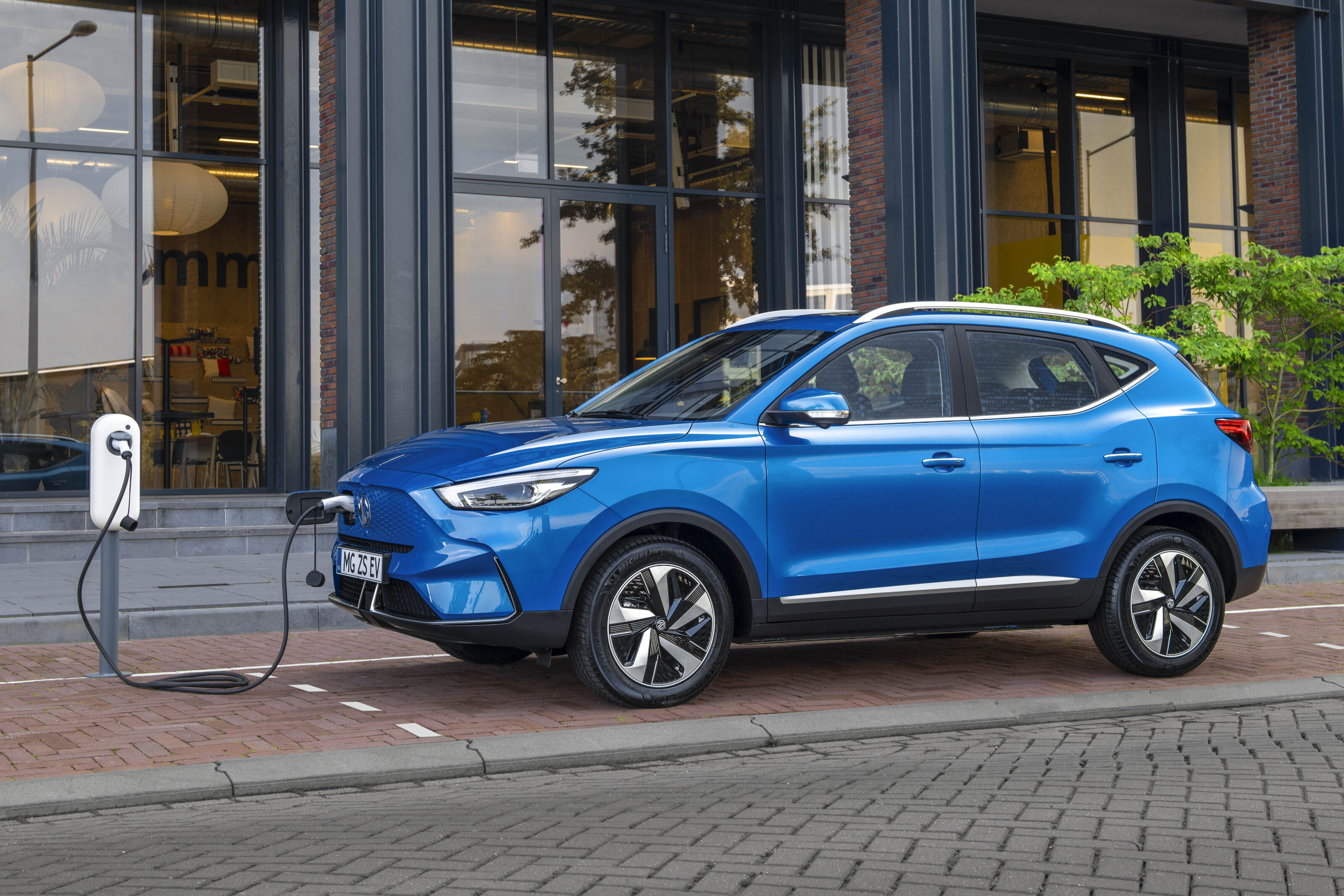
Indeed, over the last 18 months in Australia, MG has risen to become a regular top 10 brand, sitting around the lower end for most of 2021, but chasing down a few spots in 2022 to place 7th year-to-date as of July with 27,525 sales compared to Hyundai’s 44,959.
While in July the Korean marque’s mid-sized Tucson SUV did well with 2186 sales – thanks to bolstered supply arriving in June – the MG ZS fell from the top 10 due to constraints on vehicle numbers. However, for the year so far the ZS is winning, with 1229 units shifted putting it in 10th, while the Tucson was nowhere to be seen.
Furthermore, both the MG HS SUV and MG3 hatch have made appearances this year – albeit only briefly.
Earlier this week, fellow Chinese compatriot BYD ‘Build Your Dreams’ hosted the launch of the first right-hand-drive examples of its Atto 3 electric SUV.
The up-and-coming brand also plans to bring two more EVs – the Dolphin hatch and Seal sedan – here early next year.
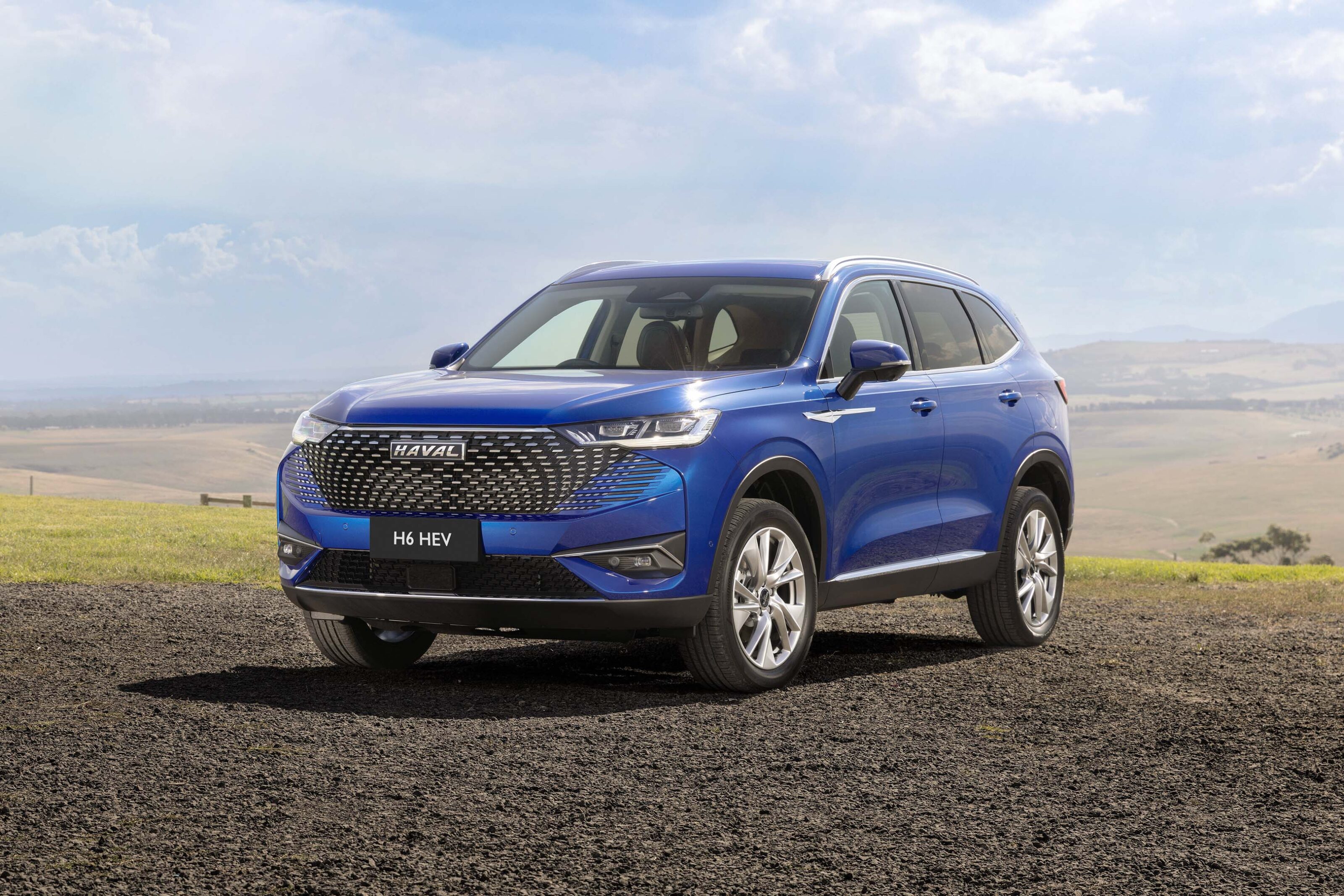
Meanwhile, GWM Haval sells its H6 mid-sized SUV here, in regular, GT and hybrid form, as well as the Haval Jolion and GWM Ute – of which 557, 744 and 826 were sold in July respectively.
Is Elon Musk the Henry Ford of our time? It’s probably too early to be absolutely certain, but the similarities between the Tesla founder and the man who made Detroit the centre of the automotive universe for decades are piling up.
The great achievement of Henry Ford was the invention of the car industry. Before he came along, cars were only for the rich. They were hand-made and hugely expensive.
Ford’s famous 1913 moving Model T assembly line wasn’t a totally original idea. It was based on techniques developed by other industries, including the overhead conveyors used in mechanised Chicago meat industry slaughterhouses. Frederick Winslow Taylor, a Ford contemporary who codified the principles of scientific management for industrial efficiency, was another influence.
Before Ford came along, cars were only for the rich. They were hand-made and hugely expensive.
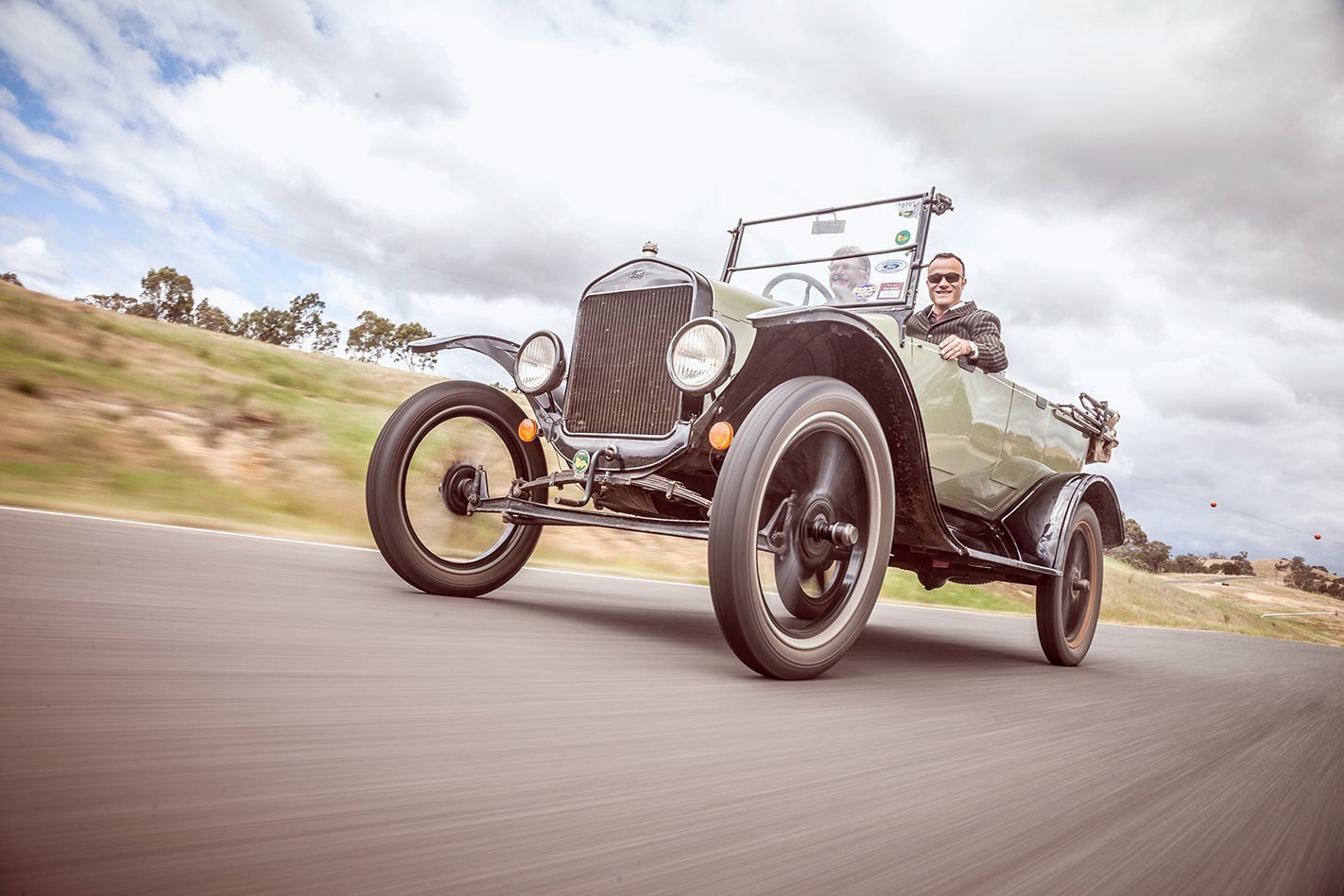
But it’s Ford who gets the credit, deservedly in my view, for making the car something that ordinary people could afford. At least in wealthier countries, he made personal mobility available to the masses. In a very literal sense the man’s life and work changed the world.
Now Musk is looking very much like the man who triggered the re-invention of the automotive industry. Since becoming CEO of Tesla in 2008, he’s made the electric car both accessible and desirable.
Other car makers have watched Tesla’s success and attempted to imitate it, which is a very sincere form of flattery. And they’re mostly still playing catch-up.
Since becoming CEO of Tesla in 2008, Musk has made the electric car both accessible and desirable.
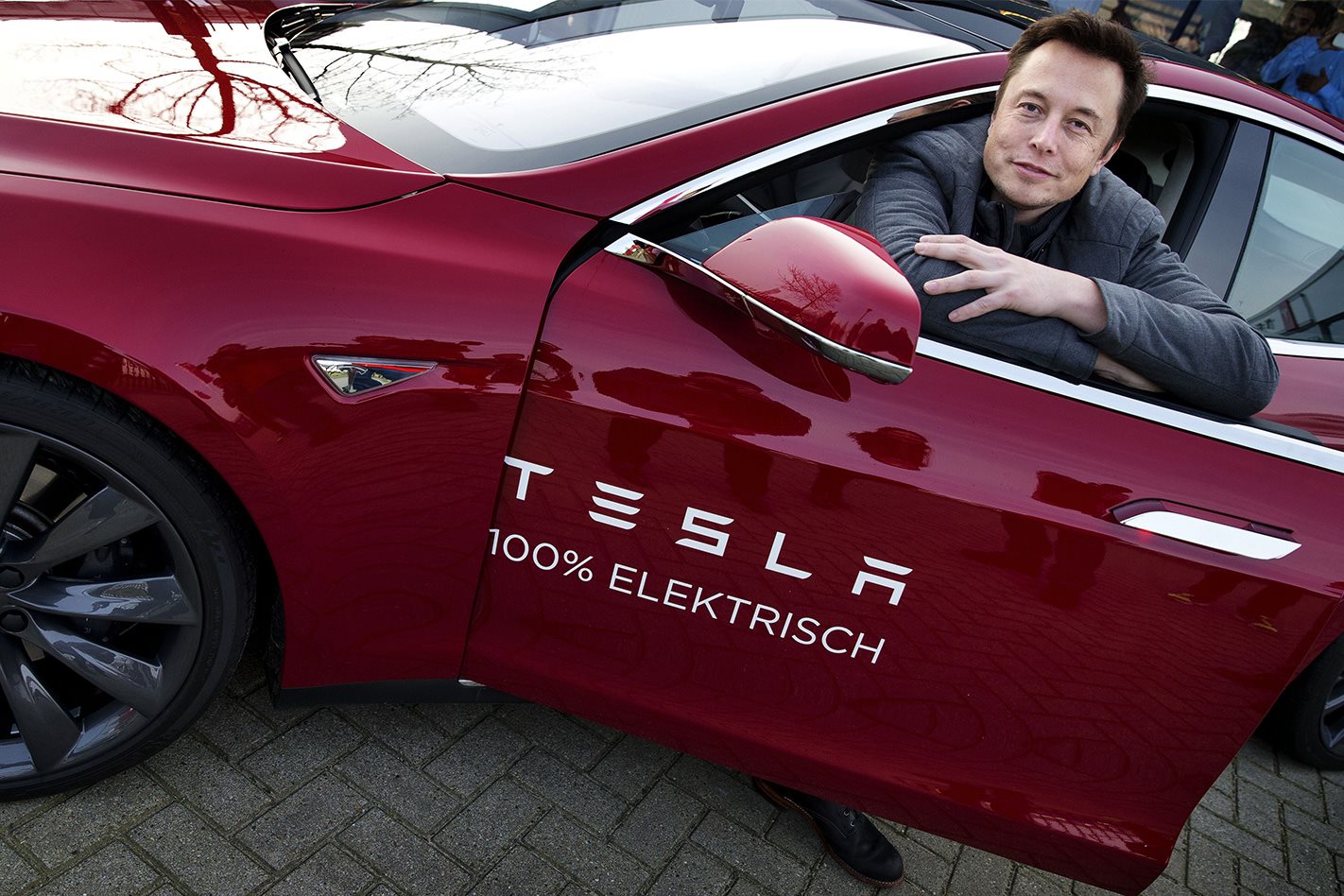
The EV isn’t Musk’s idea. They had existed for many decades before he was born in 1971. But Tesla came up with a program to gradually make electric cars relatively affordable and, at least when it comes to their powertrains, highly efficient and technically advanced.
The Model 3 is the first EV to break through the million annual sales barrier. Tesla’s share of the global EV market is huge, though it should be said it doesn’t match the dominance of Ford’s Model T a century ago. And the company’s stock is worth a rather large fortune.
Musk is interested in pushing the boundaries of technology in other areas, notably space travel and energy storage. Again there are parallels with Ford, who took his company into fields as diverse as aircraft manufacturing and the development of plant-based plastics.
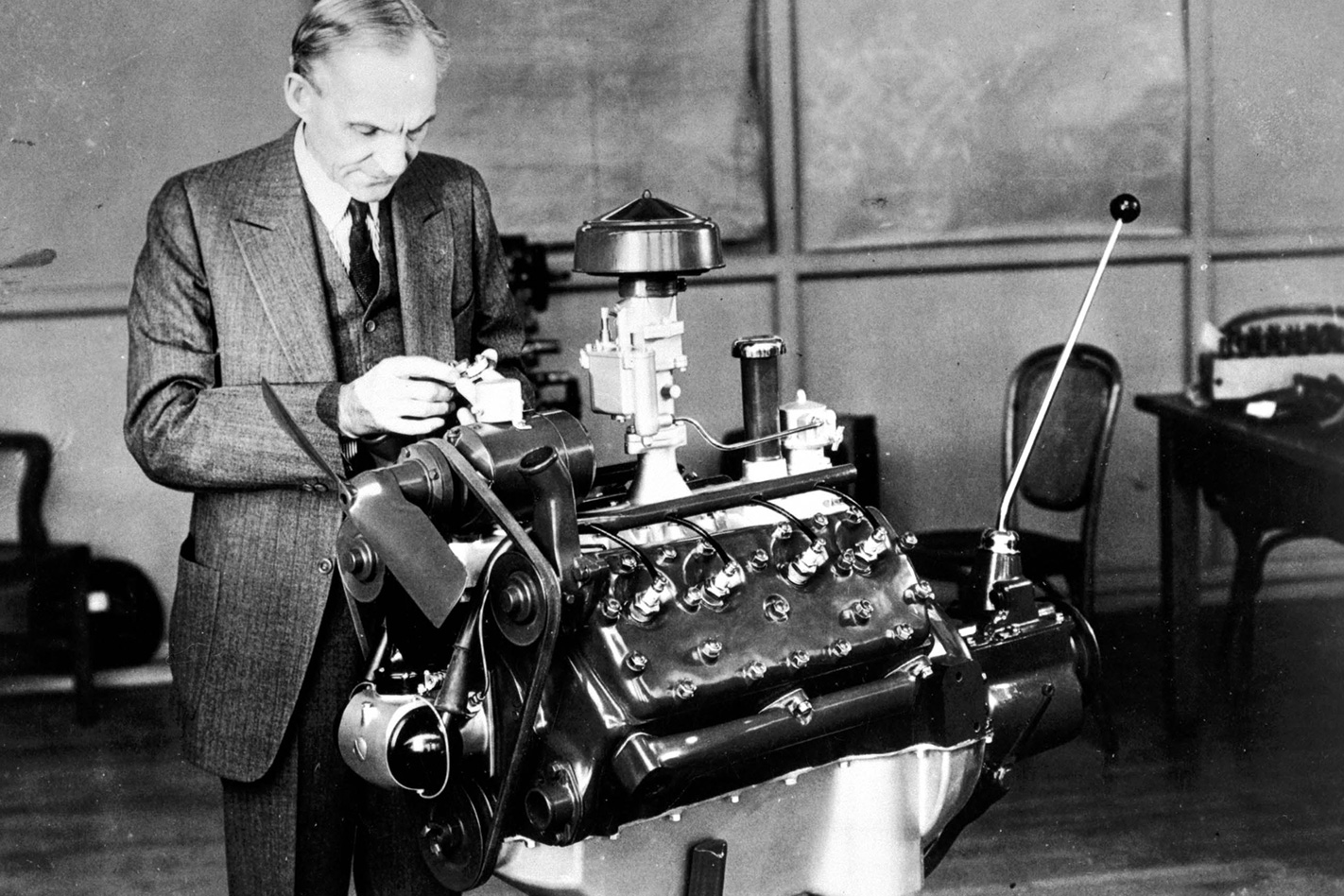
But Ford’s personal views were, as historians record, pretty stinky. He was a Jew-loathing anti-Semite who was admired by Adolf Hitler and a lifelong believer in conspiracy theories.
Despite this, Ford – the company rather than the man – contributed to the eventual defeat of Nazism in 1945, just two years before Henry’s departure from this life. Ford’s massive Willow Run factory turned out over 4600 four-engined B-24 bombers during World War II. At its peak, the factory could build an entire aircraft in 59 minutes.
Musk isn’t in the same class as Ford when it comes to prejudice. Nowhere near. But he is a man who frequently expresses beliefs that don’t seem to stand up well to reasonable scrutiny.
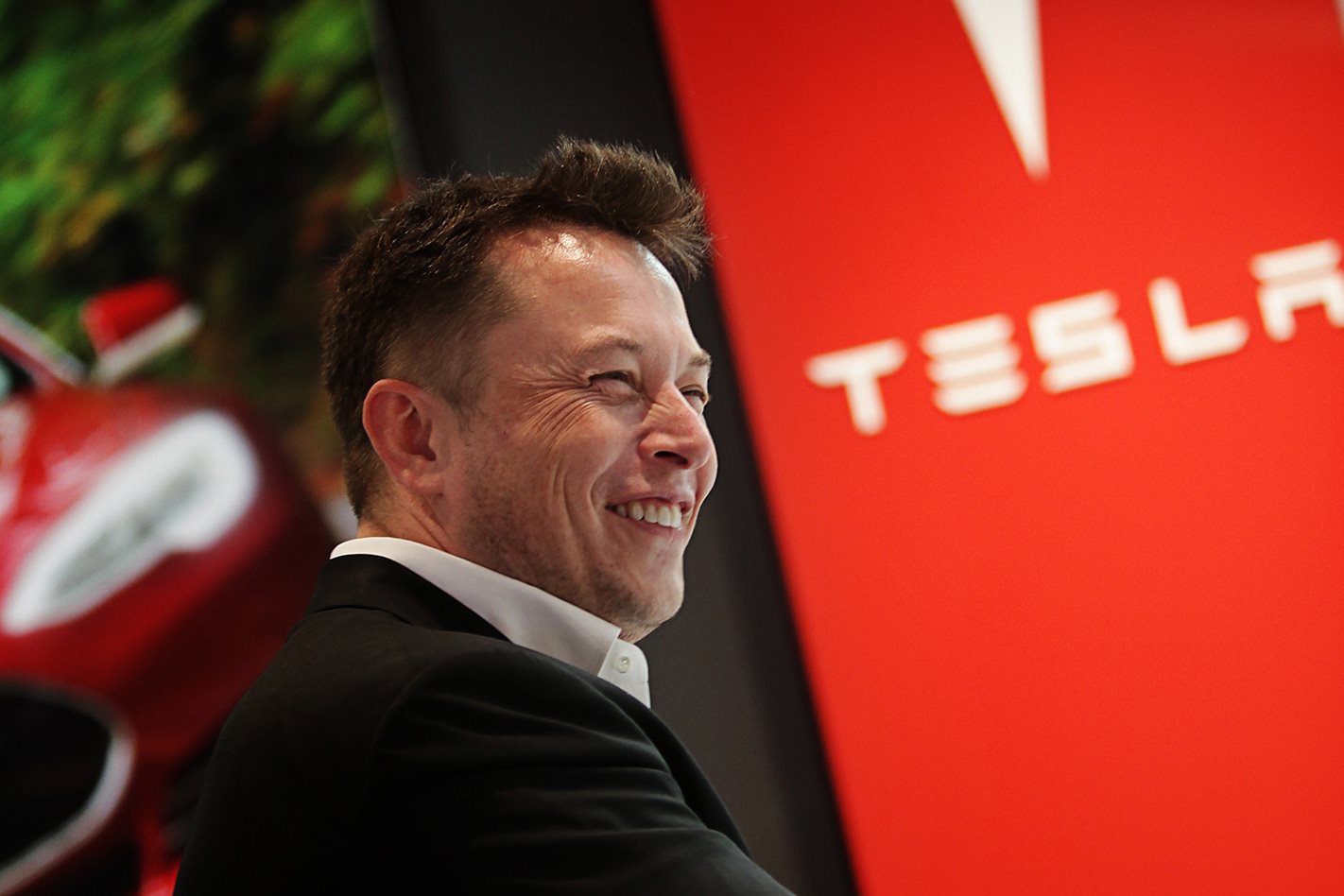
Putting a million colonists on Mars, for example. His thoughts on Covid-19 vaccination, artificial intelligence and cryptocurrency have been controversial, to put it politely.
My point in drawing attention to these parallels? I think it’s time to stop regarding buying a Tesla as some kind of endorsement of Musk’s views, or as a statement of contrarianism, or virtue signalling, or anything else.
Let’s instead leave it to the products to do the talking. That’s what we do with anything wearing the blue oval badge that bears the name of Ford. It’s time to draw a line between man and machine; to let nuance replace noise.
How times flies when you’re busy being a scissor- doored supercar poster-child stuck up on bedroom walls, or stuck crawling through Rodeo Drive traffic.
It’s been 11 years since Lambo’s V12 flagship made its debut at the Geneva show, but now, with the final LP 780-4 Ultimae (a limited-edition run of 350 coupes and 250 roadsters) all sold, the Aventador’s 12-pot howl has been set to mute.
Back in 2011, the Aventador was the most intensive in-house development to come out of Sant’Agata Bolognese since the Countach. That car’s successors – first the Diablo and then the Murcielago – could both trace their lineage back to the iconic ’70s supercar.
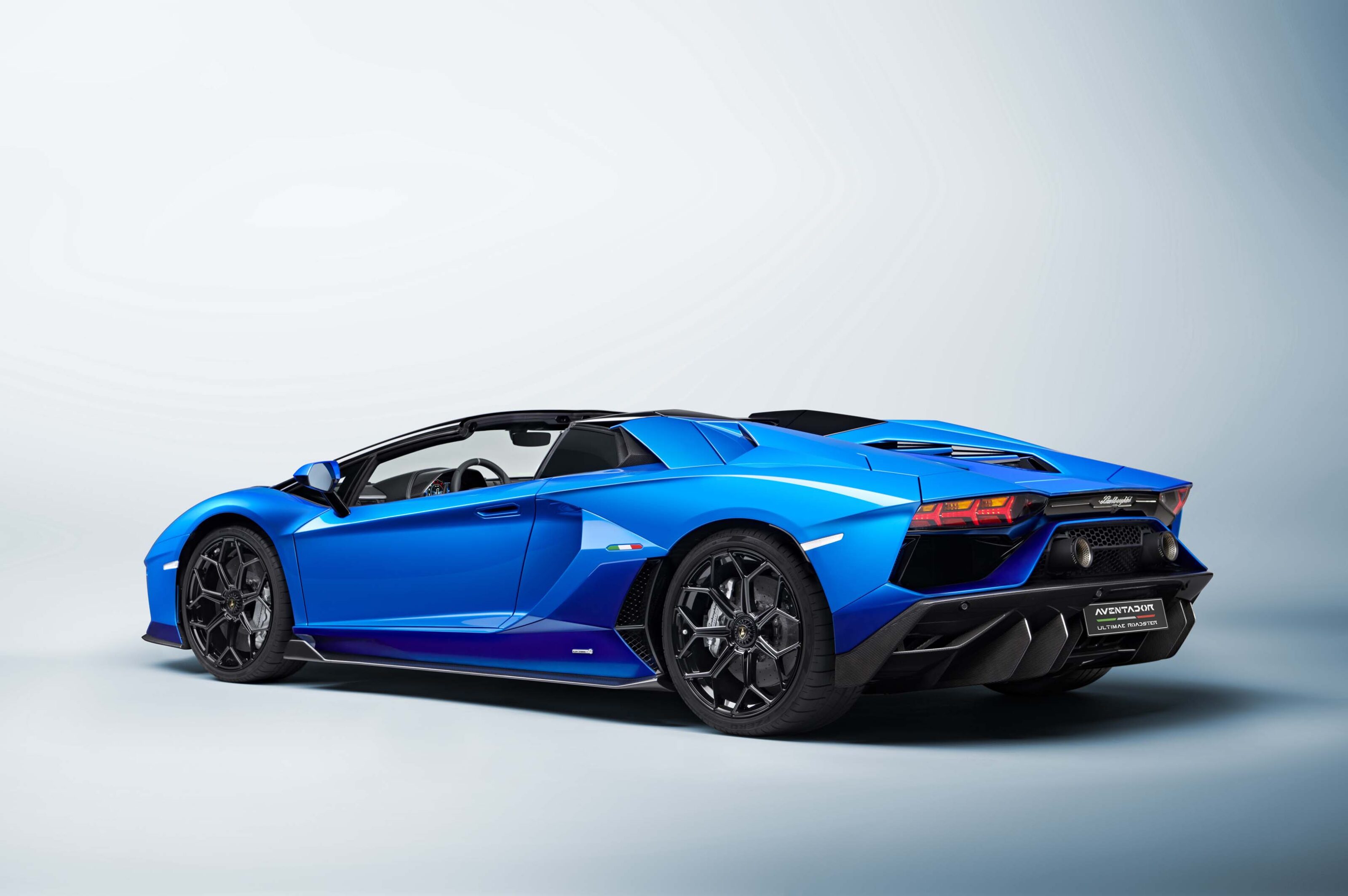
The Aventador, however, was a clean-sheet design, four years in development, with a mission statement of ‘no competitors’.
Central to that, both figuratively and literally, was the Aventador’s carbonfibre tub and inboard pushrod suspension. Developed with co-operation from Boeing Aerospace, each handmade monocoque weighed just 147kg.
The entire naked chassis, including aluminium front and rear crash structures, came in at 230kg. Overall bending and twisting stiffness was claimed to be double that of the spaceframed Murcielago.
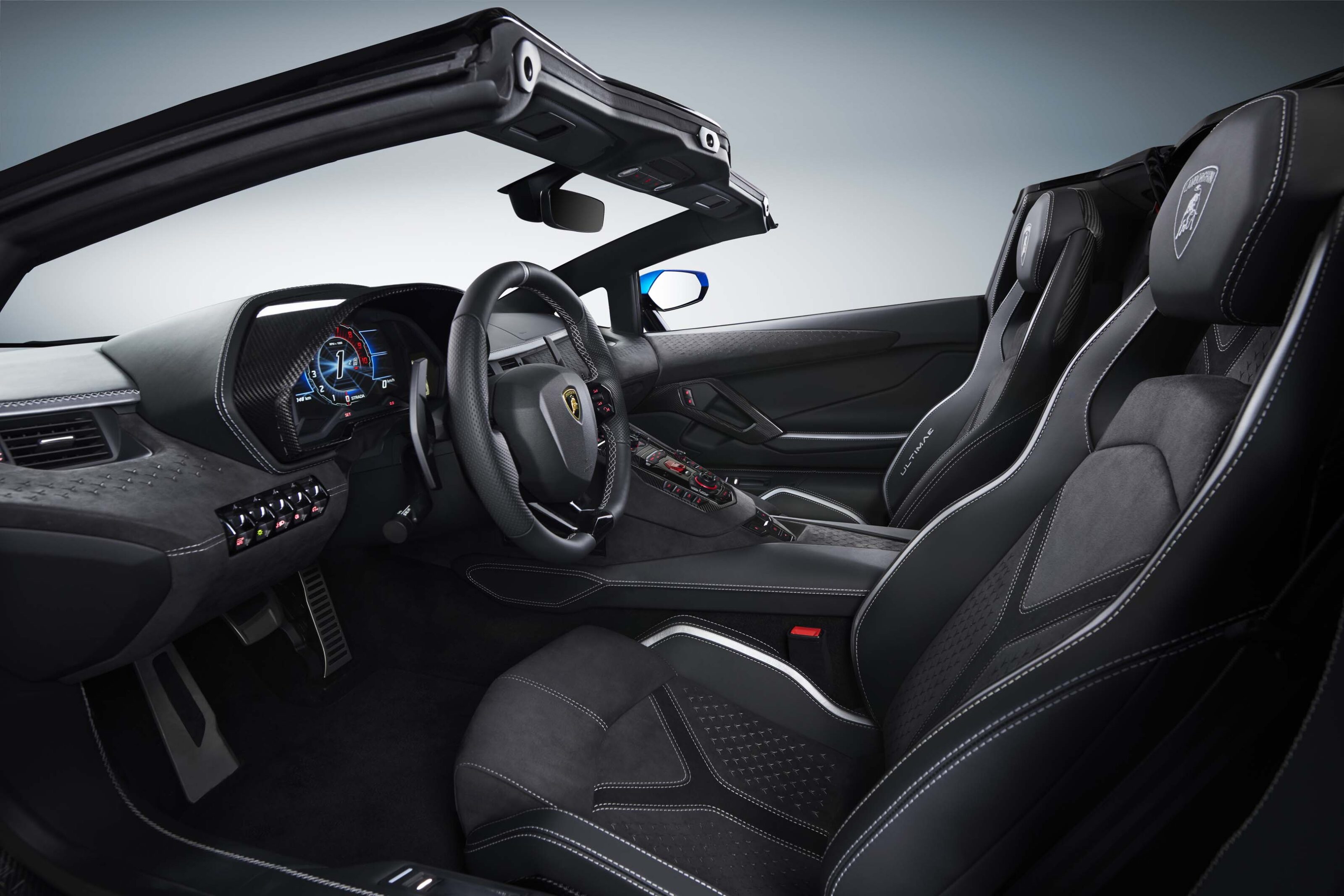
As for the heart of the bull, its then-new V12 effectively pulled the curtain down on the Bizzarrini-designed V12, the basis of which had been in use since the Miura and kept in a steady state of evolution right through to the Murcielago.
The new engine retained a 60-degree vee angle, but was cast from aluminium–silicon alloy, with an open-deck construction and steel cylinder liners.
The short-stroke design (95mm x 76.4mm) meant big revs, and its 515kW power peak spiked at a lofty 8250rpm. Peak torque of 690Nm was delivered high up in the rev range at 5500rpm.
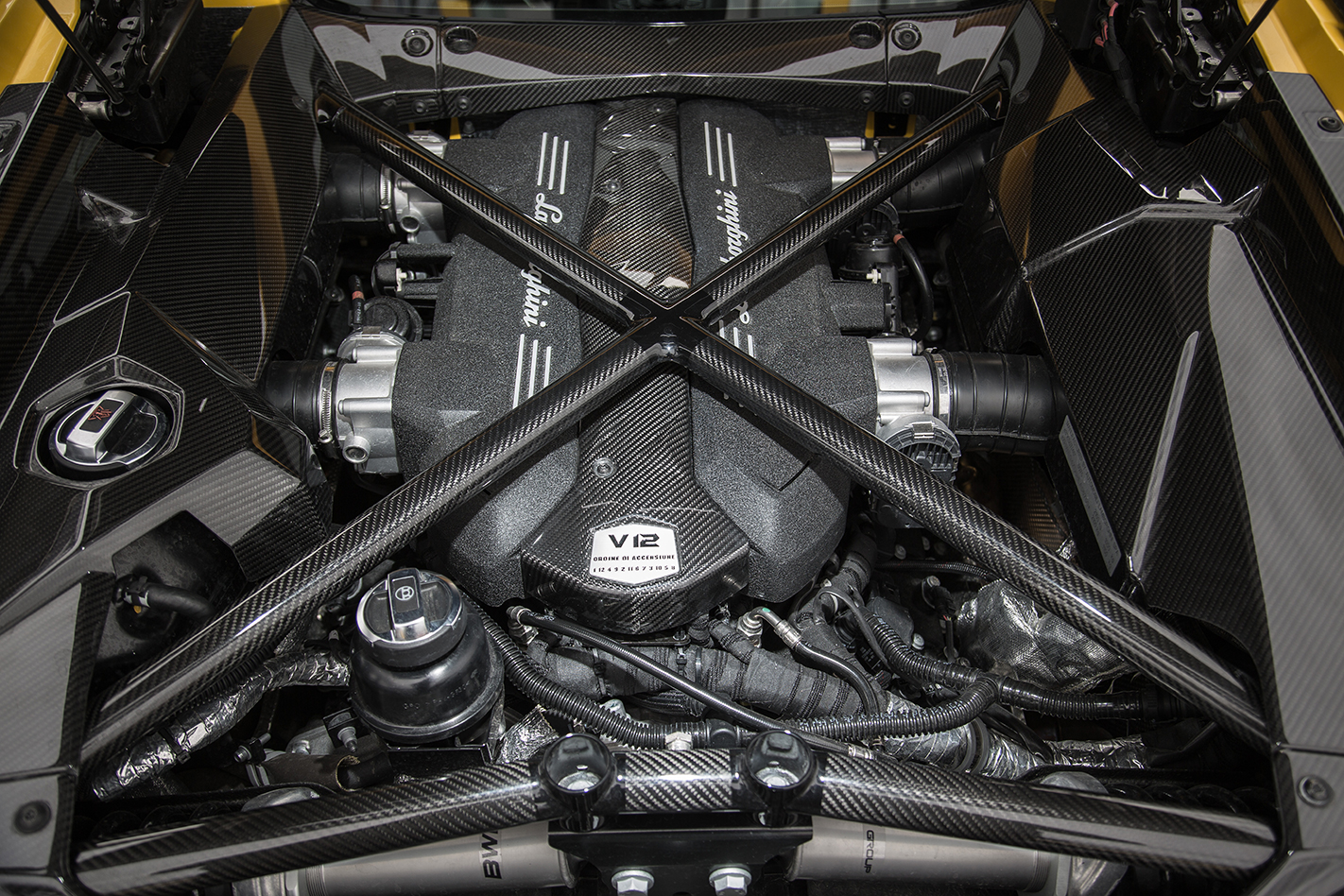
Behind the V12 was arguably the most divisive element of the Aventador – the Graziano-sourced seven-speed automated gearbox. On the track it delivered a mule-kick shift that was in keeping with the car’s supercar character, but on the road in normal driving it could be a slow-witted, lurching, recalcitrant frustration.
In 2011, then-Wheels editor Bill Thomas test drove the car at Vallelunga circuit near Rome. More than just the sheer speed and V12 theatre, Thomas was won over by the benign on-limit behaviour on track, thanks in part to the predictable breakaway and all-wheel-drive traction.
“A stupendous car; a mighty shot of adrenaline on four wheels; excessive, wonderful,” he wrote.
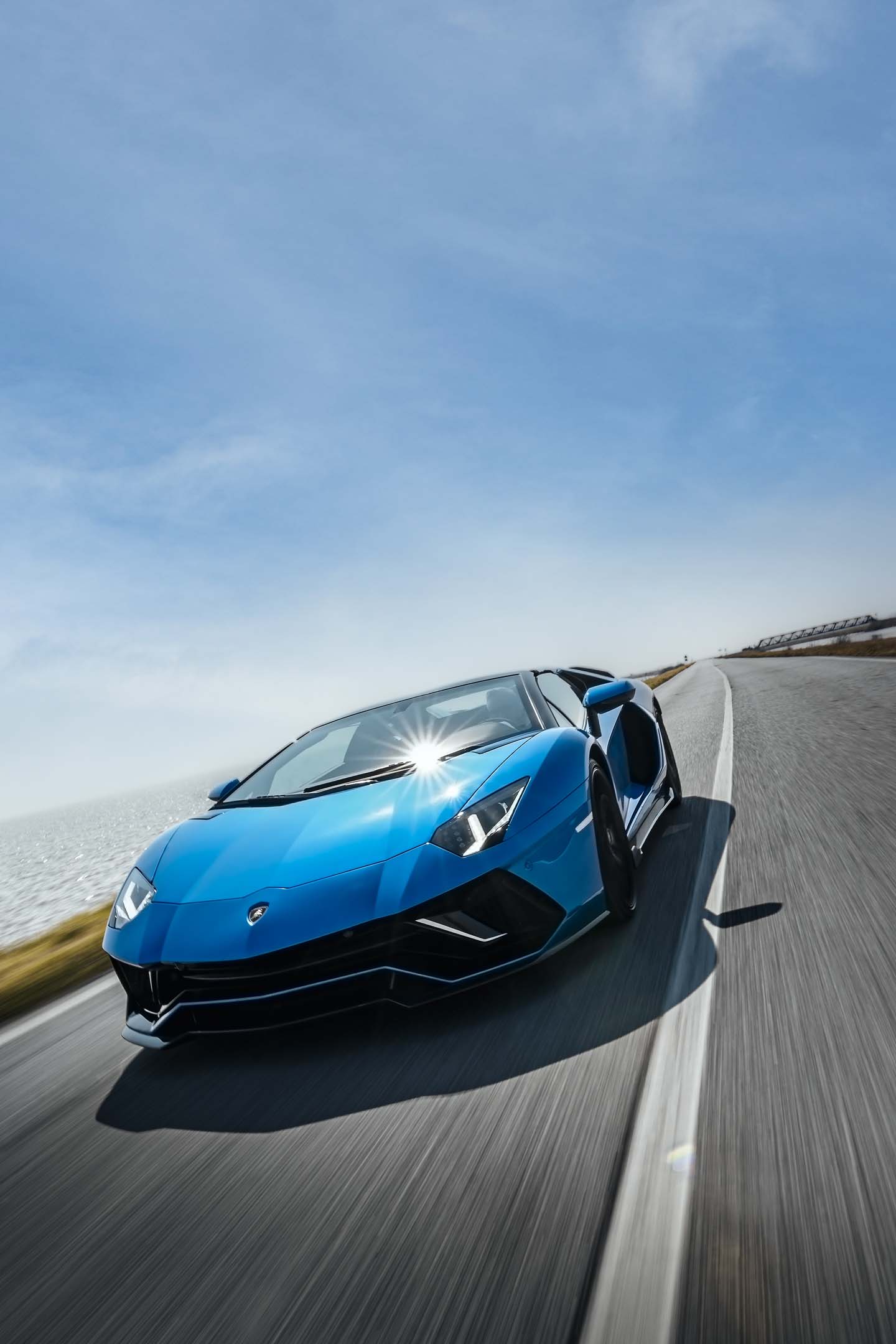
But the low-speed ride could be brutal, the nose was push-prone in low-speed corners, and in the grand supercar tradition, rear visibility was virtually non-existent.
The standard car evolved into the 544kW Aventador S in 2016, bringing four-wheel steering and adaptive dampers, among other upgrades.
But as for peak Aventador?
That didn’t arrive until 2018’s SVJ, which deployed 556kW/720Nm and active aerodynamics to set a ’Ring record of 6:44.97, dethroning Porsche’s 911 GT2, and gifting this legendary Lambo immortality.
Aventador’s offspring
Along with more special editions than there are Kardashians, the Aventador also spawned seven ultra-limited-edition ‘new’ models.
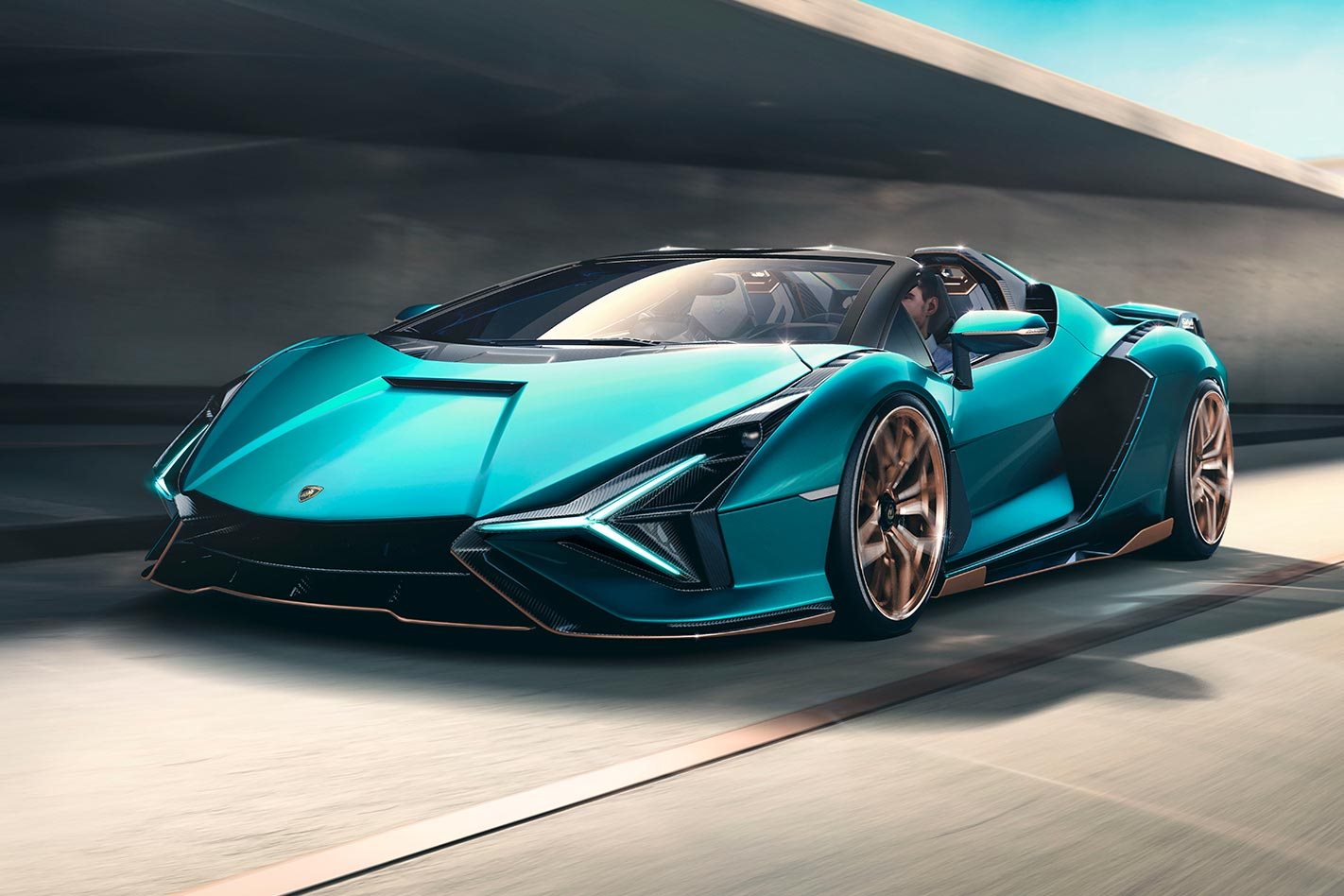
The most technically advanced, from a powertrain point of view, was the US$3.6m Sian, which debuted a 48v hybrid system comprising a 25kW motor in the gearbox, fed by supercapacitors, rather than a battery, and boosting total output to 602kW.
| AVENTADOR SALES – AUSTRALIA | |
|---|---|
| 2011 u2013 2 | 2017 u2013 1 |
| 2012 u2013 3 | 2018 u2013 3 |
| 2013 u2013 3 | 2019 u2013 4 |
| 2014 u2013 2 | 2020 u2013 4 |
| 2015 u2013 5 | 2021 u2013 3 |
| 2016 u2013 4 | 2022* u2013 1 |
| Total u2013 35 | *to end of April |
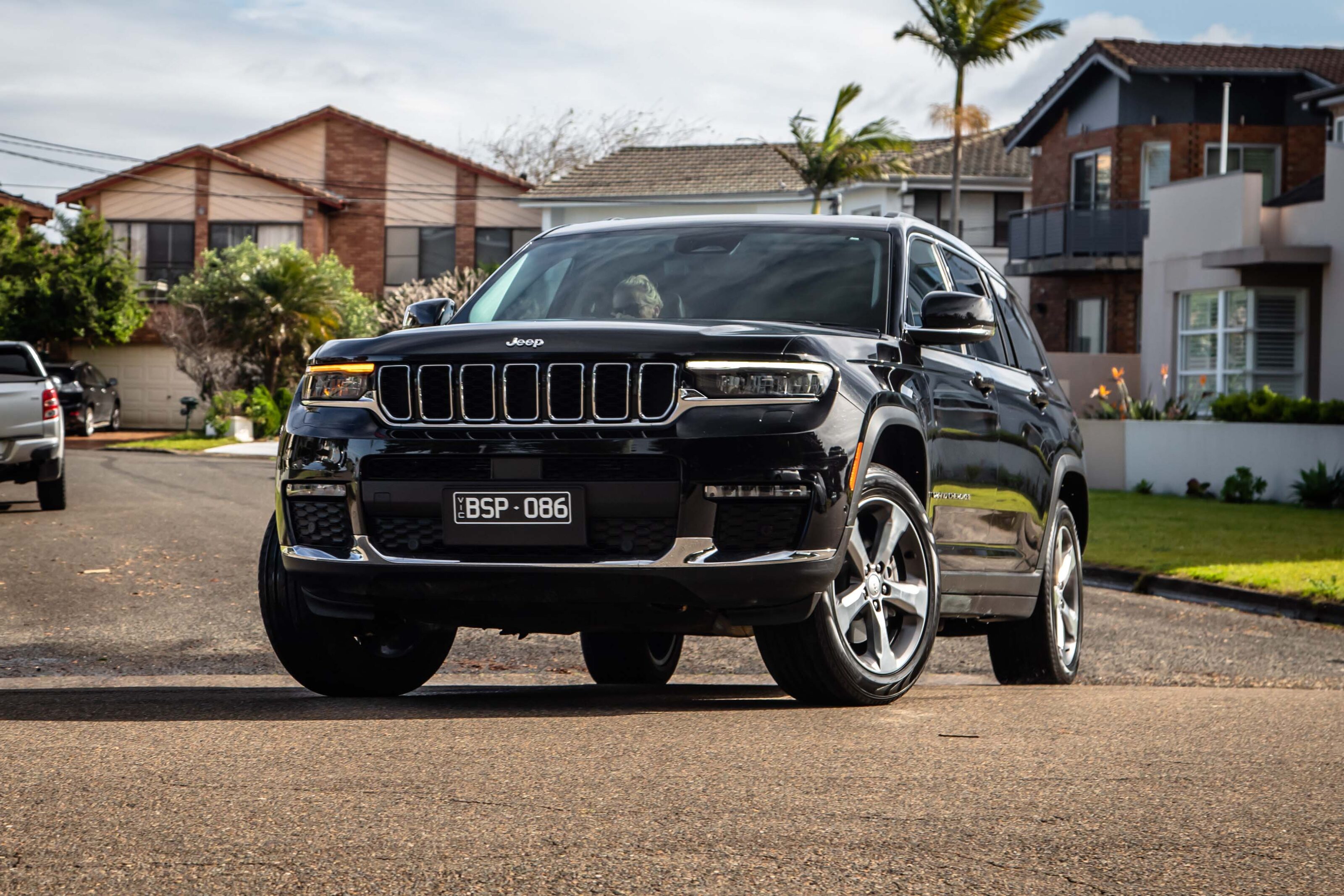
There is finally an all-new Jeep Grand Cherokee after the previous one soldiered on for over a decade. And it really is mostly new, with a new platform, new safety and electronics package and – eventually – a choice of five- and seven-seaters with short and long wheelbases respectively. There will even be a hybrid.
But until then, you have a choice of three petrol V6-powered Grand Cherokees – the sinister-sounding Night Eagle, the boring-sounding Limited and the Toorak-wine-bar-sounding Summit Reserve.
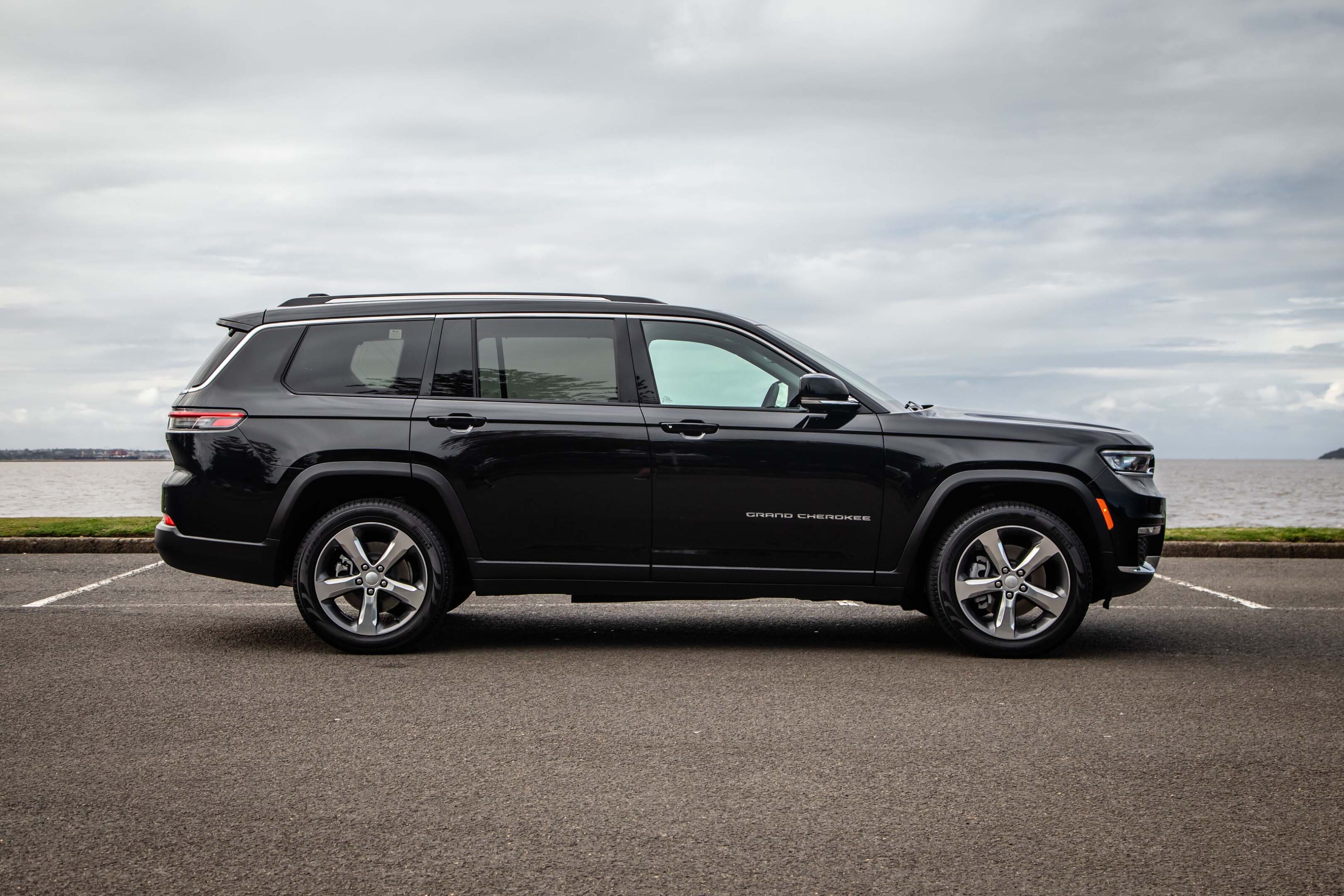
They’ve all got a little suffix in their name too – L for long wheelbase – which means they’re all seven-seaters measuring over five metres long. If you get it in black, like the car I had, they either look like Secret Service vehicles or a high-riding hearse.
As a test of Jeep’s commitment to going upmarket, we took on the Summit Reserve, the car that sounds like it comes with a tank full of Grange Hermitage, to see if the result matches the price tag.

Pricing and features
The Summit Reserve stands at the top of the long-wheelbase Grand Cherokee range (for now at least) with an imposing $115,450 (before on-road costs) price tag, a whopping twenty-seven-and-a-half grand more than the mid-spec Limited that has the same engine and gearbox.
That’s a lot for a Grand Cherokee but not necessarily a lot for a luxury off-roader. It’s going to be interesting to see how that pans out.
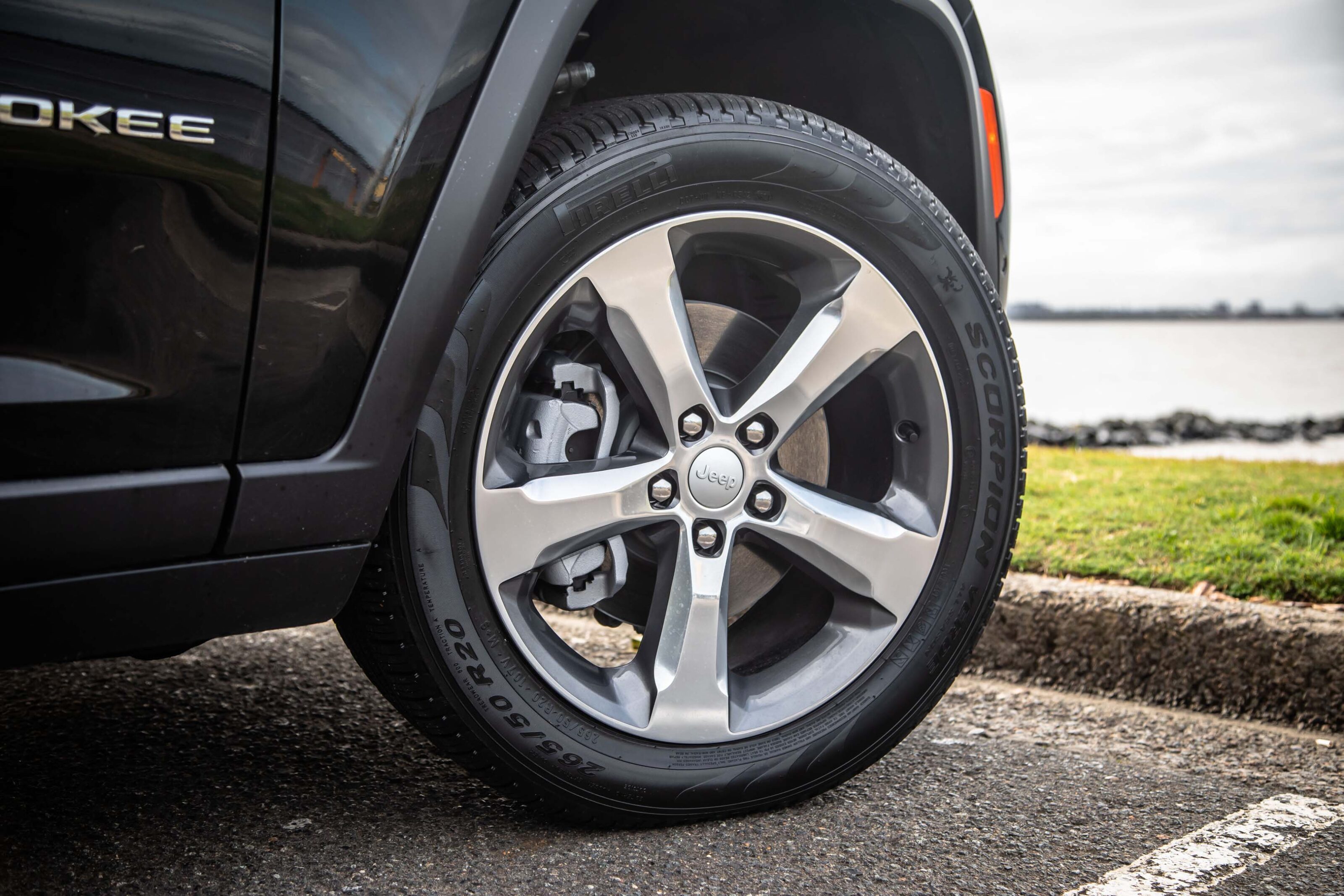
Anyway, it’s properly loaded with 21-inch alloys, four-zone climate control, a 10.1-inch touchscreen, quilted leather interior, 12-way electric driver’s seat adjustment, heated and ventilated front seats, heated second-row seats, a 19-speaker sound system, heated steering wheel, auto LED headlights, and auto wipers.
The list continues with huge double-pane sunroof, digital dashboard, active noise cancellation, front/side/rear cameras, keyless entry and start, front and rear parking sensors, adaptive cruise control, massaging driver’s seat, sat-nav, power everything, open-pore wood trim and a steel 18-inch spare.
And that’s not all of it; it’s just that if I make that list any longer, Google will ignore it.
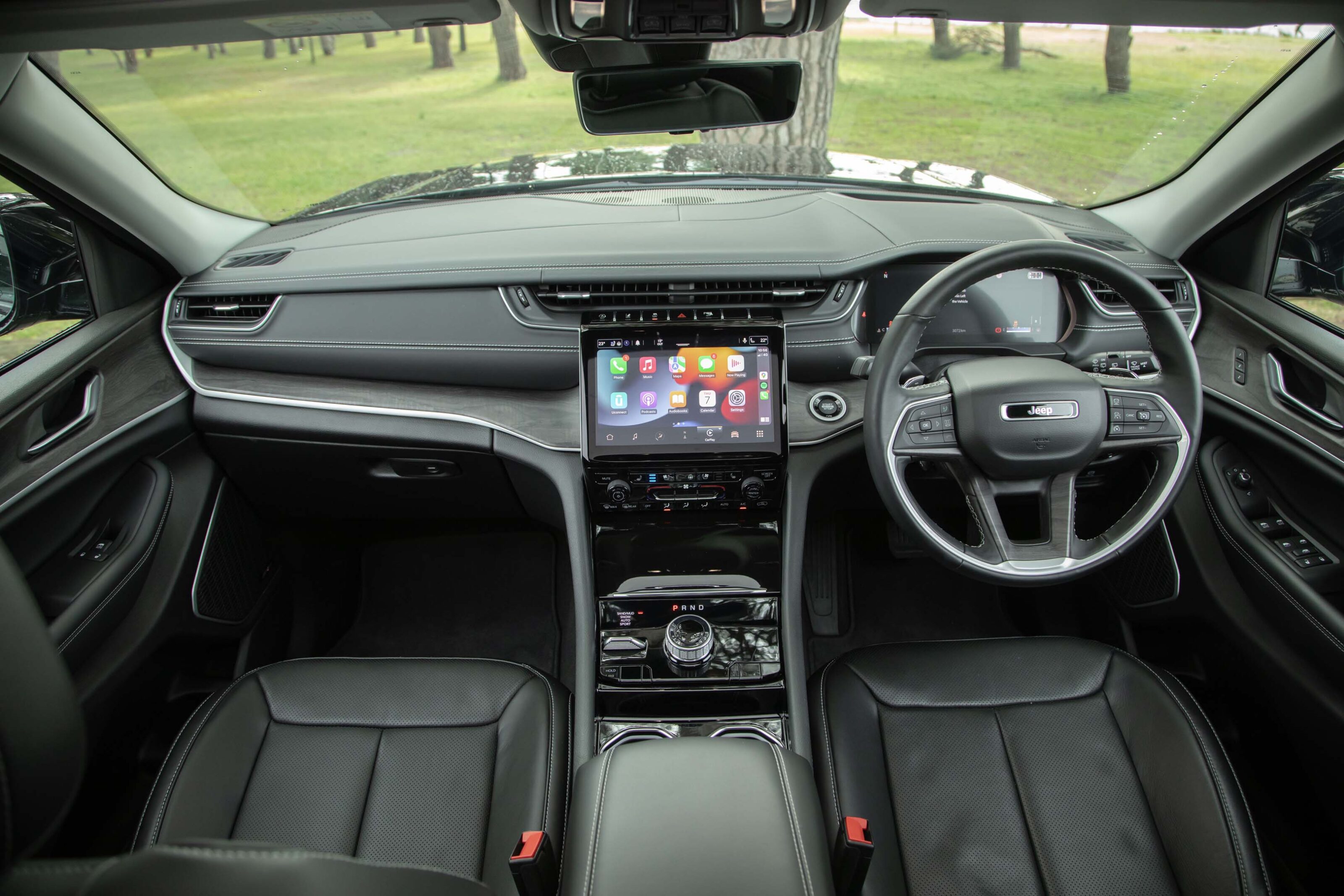
The 10.1-inch screen runs the replacement to the long-running UConnect (finally!) system of the older car – it’s much nicer to use and looks great. It also features Apple CarPlay and Android Auto as well as DAB+ digital radio.
Unfortunately, too many functions are controlled from within the screen despite there being plenty of buttons on the steering wheel. You do have to go diving for some things, which I’m never fond of doing.
The safety package is impressive, with eight airbags (the curtains go all the way to the third row) forward auto emergency braking (with cyclist and pedestrian detection), active lane-keep assist, intersection collision assist, blind-spot monitoring, rear cross-traffic alert, traffic sign recognition, tyre pressure monitoring and driver fatigue detection.
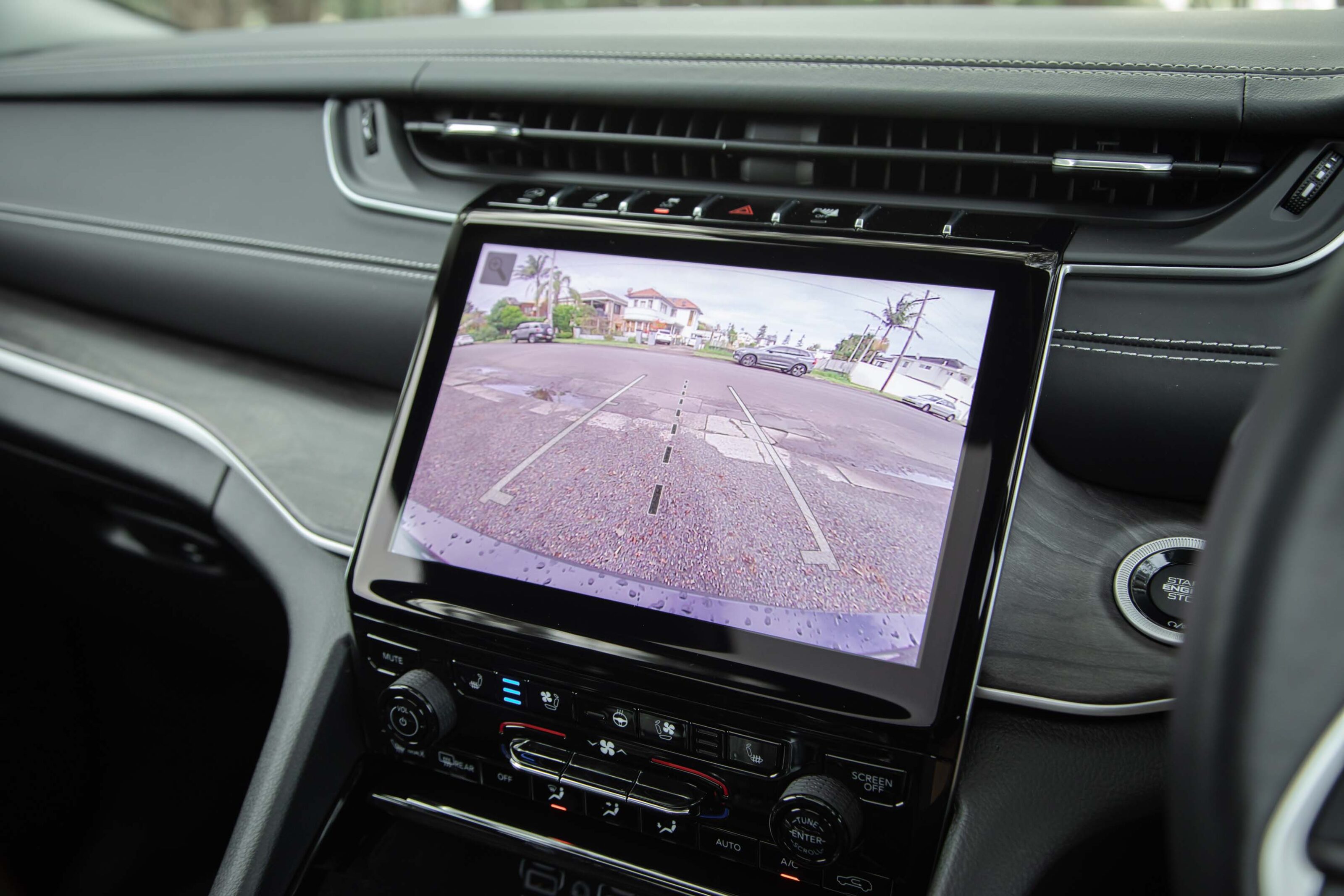
It has five top ether anchors (two in the third row, three in the middle) and three ISOFIX points in the middle row.
ANCAP is yet to asses the Grand Cherokee, likewise its North American counterpart IIHS, at the time of writing.
The only option on the Summit Reserve is paint. The only free colour is white and the other four are a mildly scary $1750. So Jeep is definitely delivering on the upmarket tag.
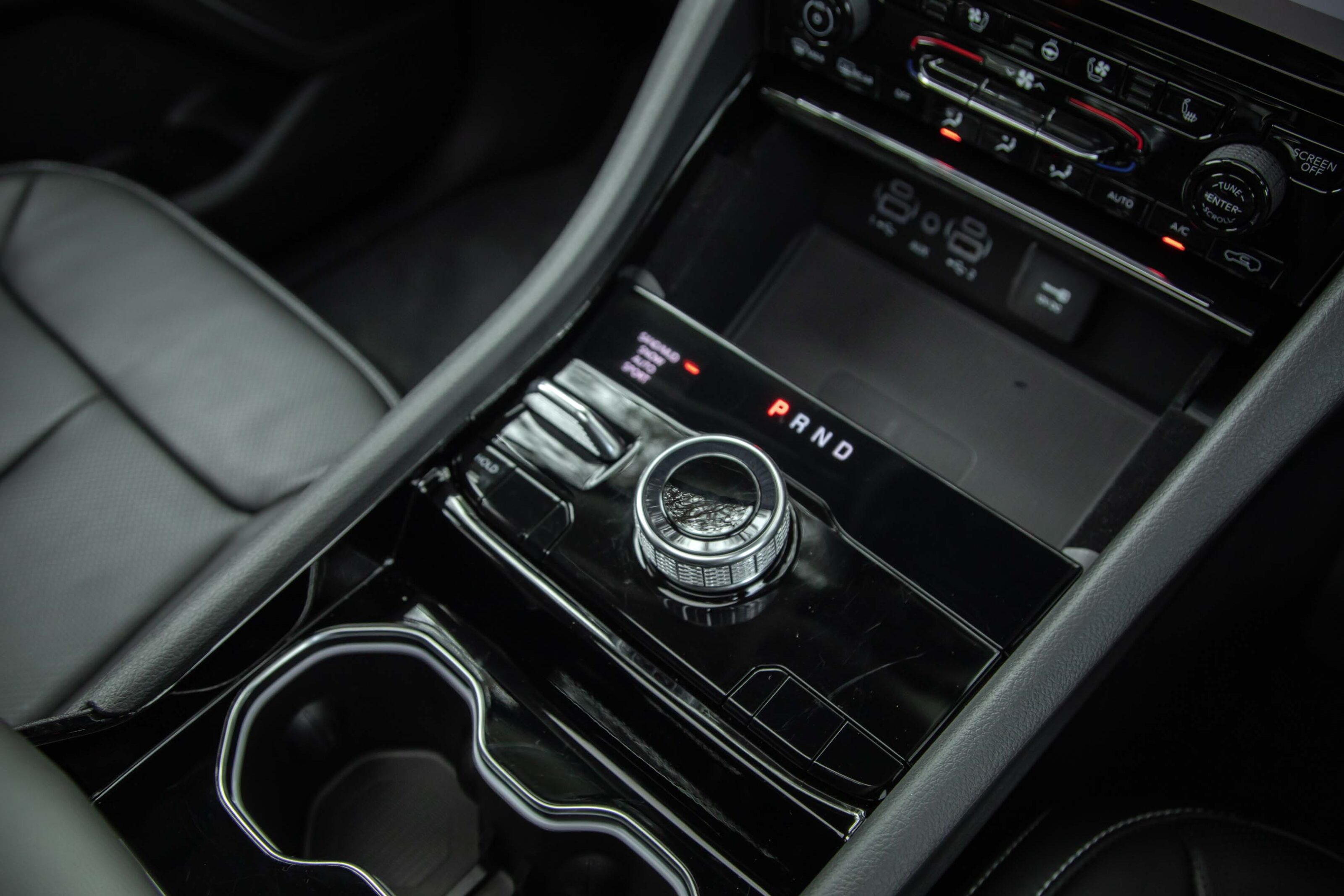
Comfort and space
It’s been a while since I drove the old Grand Cherokee, so I went and had a read of what I thought of it. I wasn’t super impressed, the car having a bitty, poorly-packaged interior, questionable ergonomics and cramped footwells for the front seat occupants.
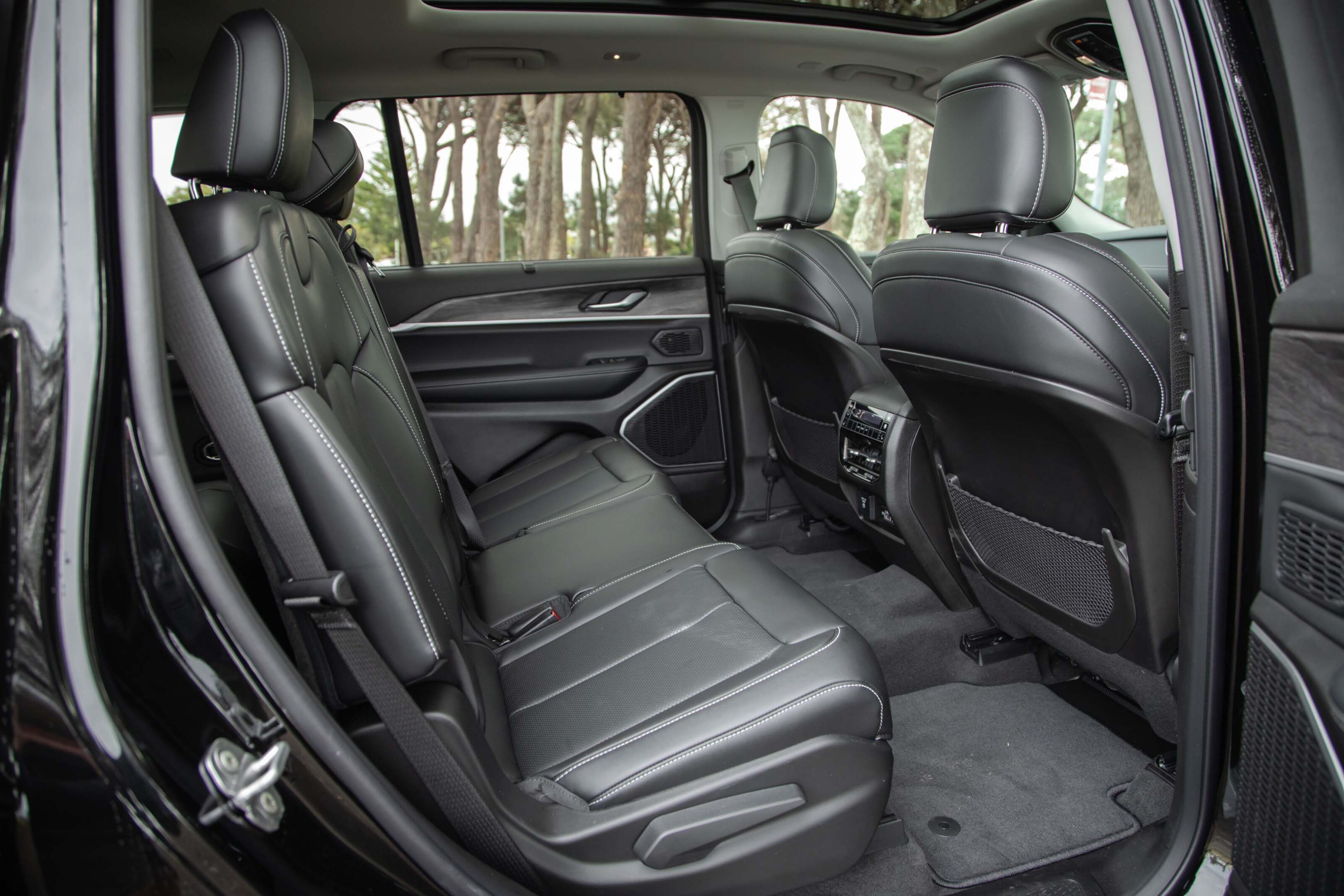
The L sees off the poor packaging with a lot more space for occupants, including an easily-accessed third row.
The big rear doors afford excellent space for you to get the middle row tilted out of the way and then climb into the rearmost seats.
Like most third rows, this isn’t going to win any awards for space – if you want more, go with Hyundai’s gargantuan Palisade or get a Kia Carnival – but you can squeeze in someone of reasonable height with a modicum of comfort to get them to school or the footy or the shopping centre to see whichever Tik Tok star is turning up to the inexplicable delight of your kids and their friends. It also folds away quite neatly to leave you with a pretty sizeable boot.
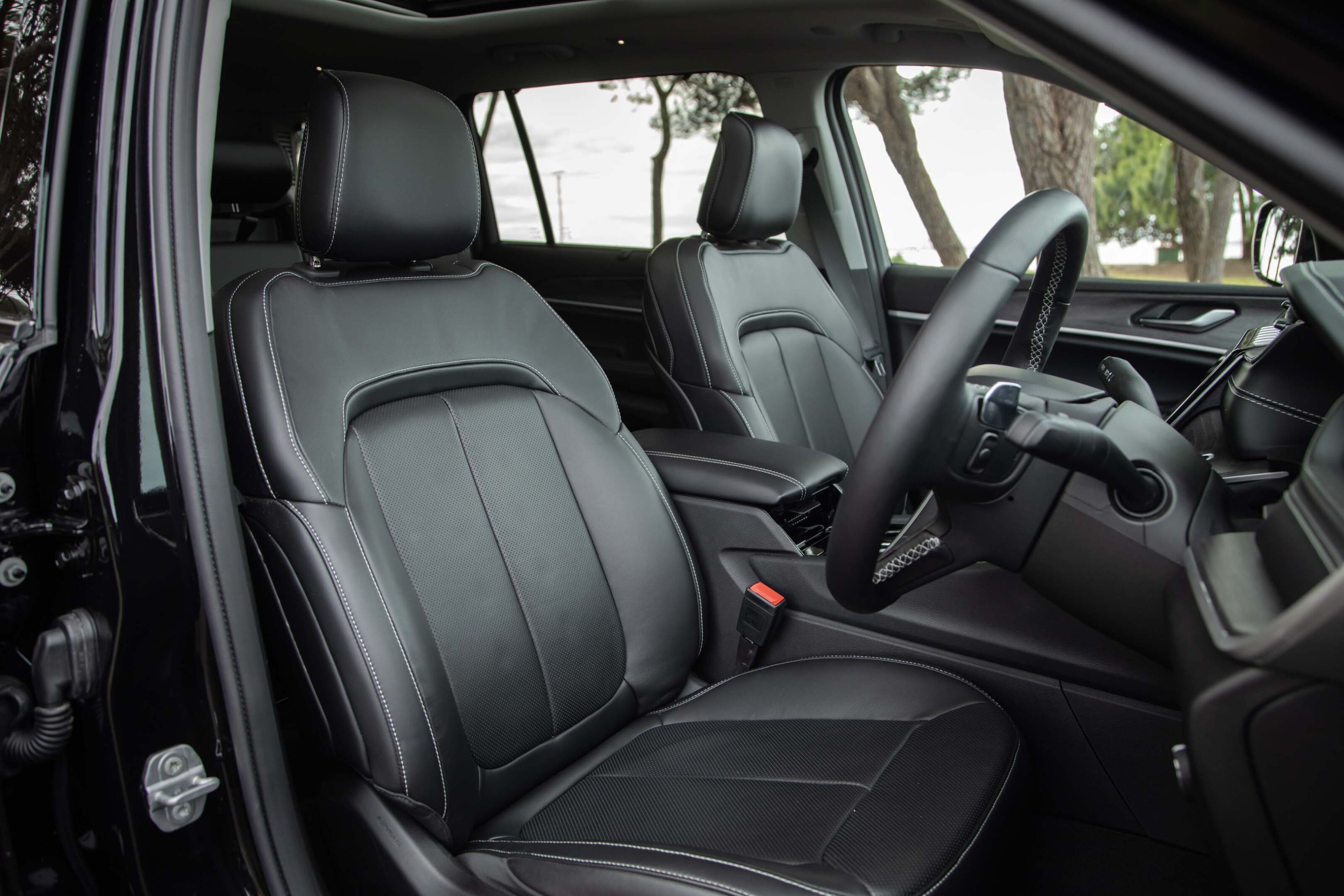
Before you do fold it away, you start with a startling 487 litres, akin to that of a mid-sized sedan and already more than most mid-size SUVs can manage.
Fold the 50:50 split third row away and you then have a similarly astonishing 1328 litres. With the 40:20:40 split-fold middle row dropped there’s 2395 litres. These figures are approaching delivery van levels of space.
As if to underscore how ordinary the previous generation was for humans, the middle row slides back and forth to allow more cargo and/or occupant space in the rear while also bringing younger kiddies and/or animals closer to the front seat occupants.
With the 40:20:40 split-fold middle row dropped there’s 2395 litres. These figures are approaching delivery van levels of space.
The Summit Reserve also features as standard the gut-churningly saccharine Fam Cam. This allows you to check what’s going in on the second or third rows without having to turn around, with cameras in the ceiling spying on screaming toddlers or snogging teenagers.
Seriously, though. Fam Cam.
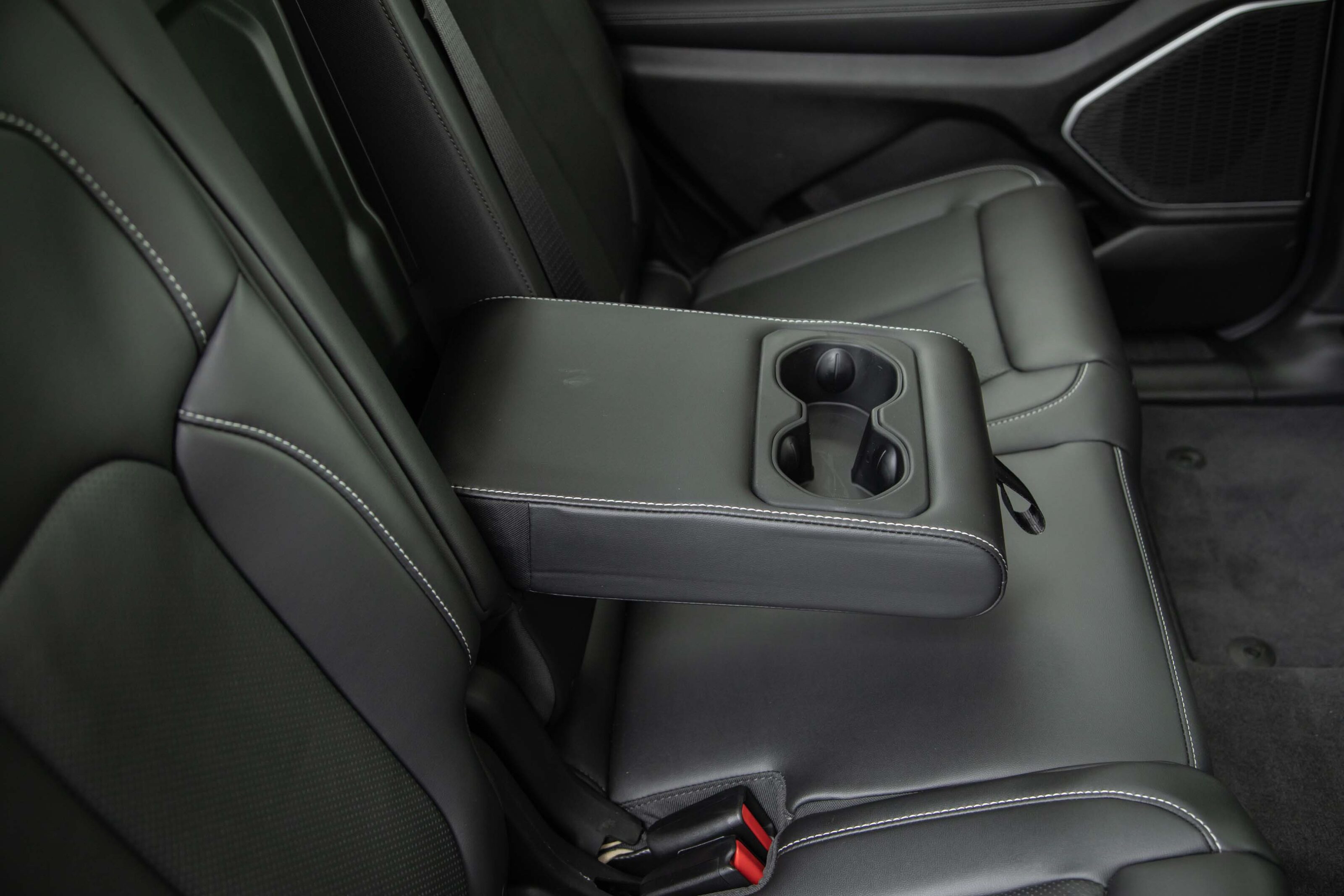
Cup holders abound, with two in each row for a total of six, although they are of varying depth and usefulness. Various trays also litter the cabin, including a wireless charging pad in the front.
The front also has a pair each of USB-A and USB-C (extremely handy), a 12-volt port and an aux-in if you’re still rocking an iPod classic or a Rio MP3 player.
Middle-row occupants have another pairing of USB-A and USB-C, as well as a 230V power socket albeit only suited to lower-powered devices.
If you’re really serious about carrying stuff, the Summit Reserve’s towing capacity is down to 2240kg from 2800kg in the lower versions owing to the standard air suspension, so keep that in mind if it matters.

On the road
The WL Grand Cherokee – as it is known to the enthusiasts – has replaced the WK2 that traces its lineage back to the Mercedes M-Class. This new one is based on a platform shared around the giant Stellantis empire, including the American brands grouped under Chrysler.
Known as the Giorgio platform, it is much more modern and underpins the Alfa Romeo Stelvio SUV. One imagines it must be quite flexible because the Stelvio is quite a bit more compact, whereas the Jeep has room for seven seats.
There is a short wheelbase version coming (hence the L in this one’s name) and we’ll see that later in the year.
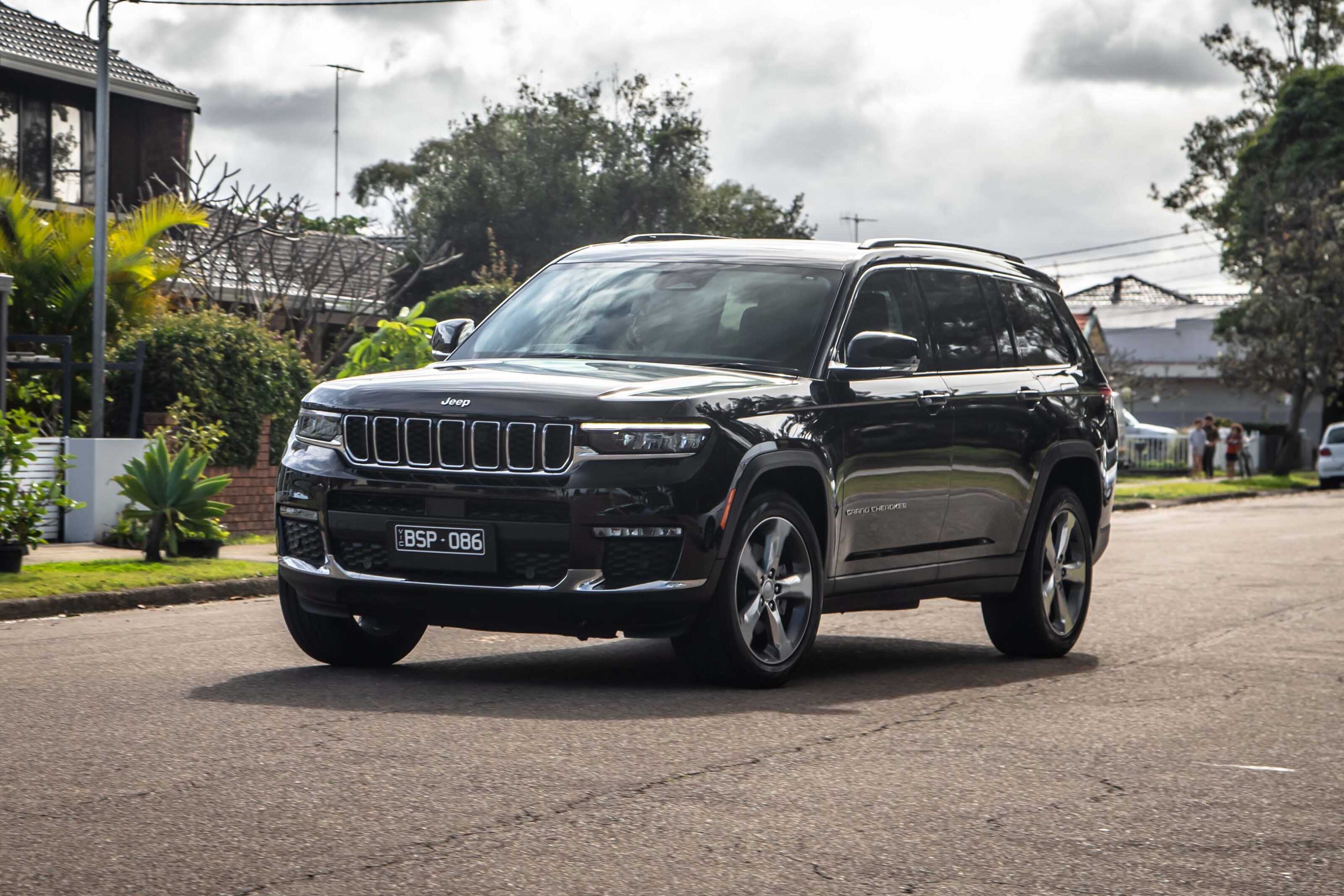
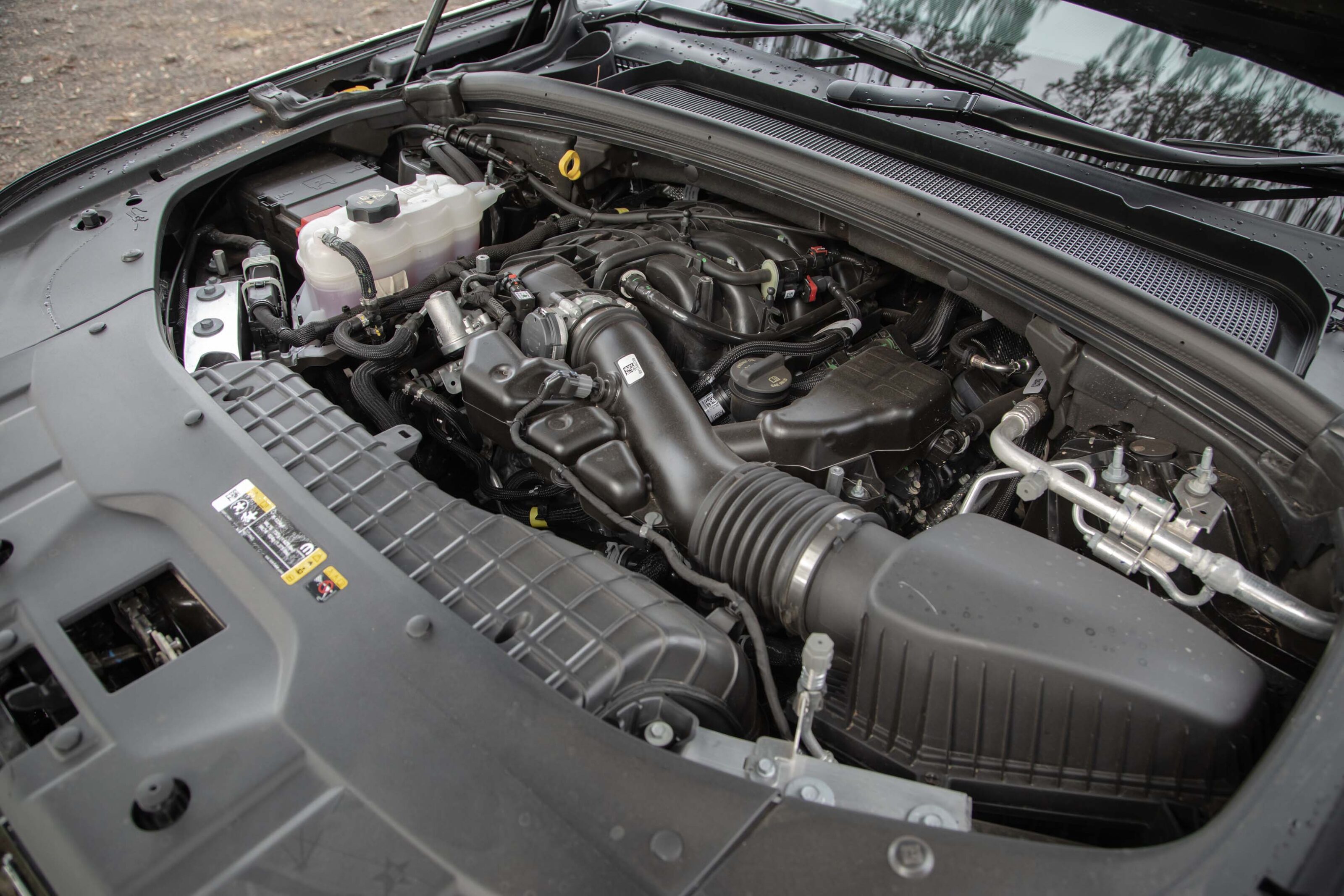
While it’s got a new platform, the 3.6-litre Pentastar V6 makes another appearance under the bonnet, with 210kW and 344Nm to shift 2270kg of bulk. That’s not a huge amount of power or torque to move what is by any measure, a chunker.
The eight-speed ZF automatic sends power to all four wheels and should send you 100km/h from rest in about nine or so seconds. It feels that quick even if the engine sounds like it’s protesting a bit as it does it.
It’s nice that Jeep has resisted the urge to put the dreaded nine-speed in the Grand Cherokee because that was never a good transmission.
What is nice – and explains some of the huge price differences between the Summit Reserve and the rest of the range – is the air suspension. It offers several modes: Normal, Off-road 1 (40mm higher), Off-road 2 (60mm higher than Normal), Park (46mm lower to aid entry and exit), and when in Sport mode, Aero drops the car 21mm to reduce drag at high speeds and lower the centre of gravity.
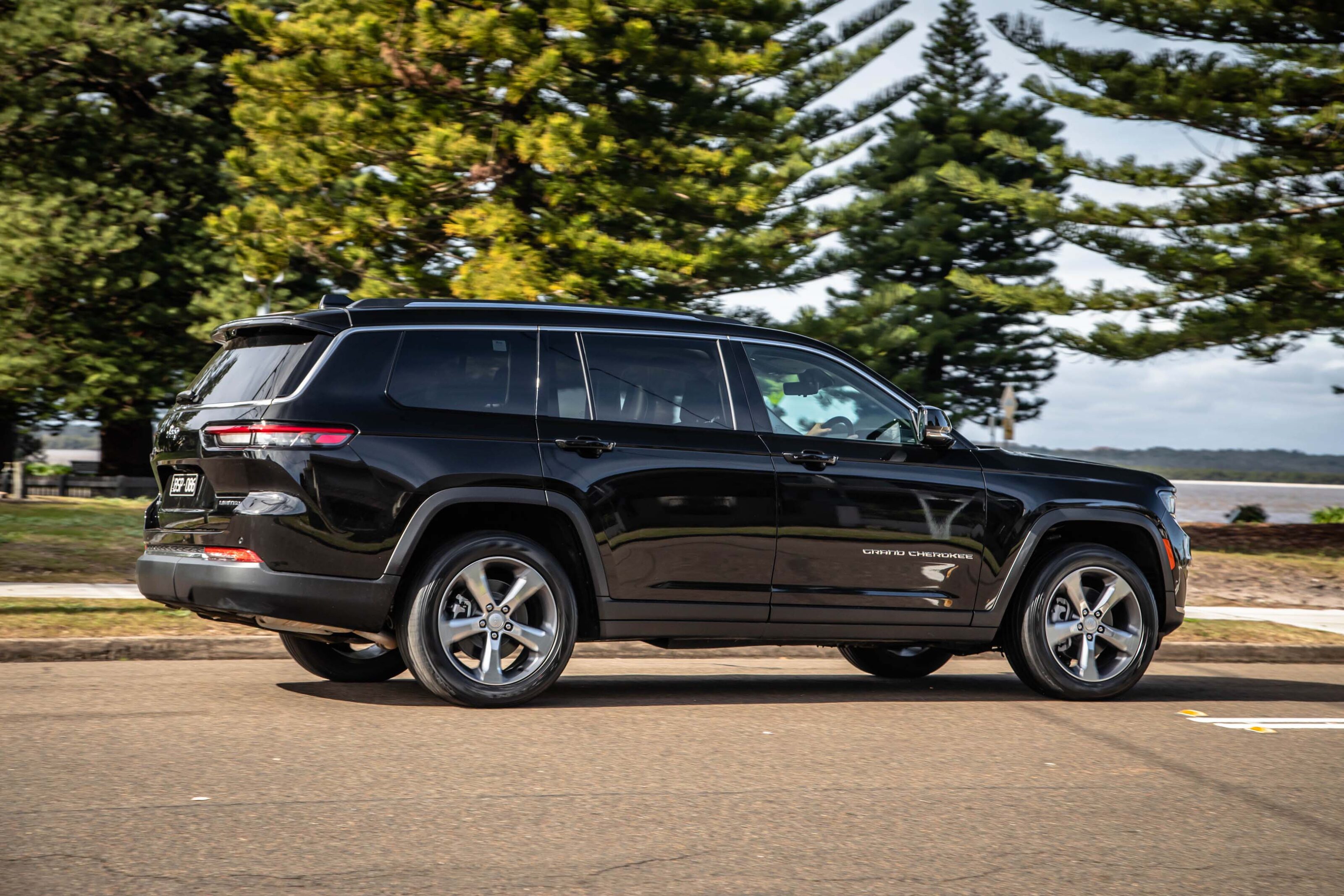
No, it doesn’t explain nearly thirty grand, but it’s quite useful even if it does put a dent in the towing capability to the tune of half a tonne. I’m going to take a punt and say that the Summit Reserve is probably not going to spend too much time on heavy duties, though, much like the similarly equipped cars from brands like Range Rover that Jeep seems to want to go after.
Having not driven the lower grades, all I can say is that it’s very compliant and happy around town. At a cruise, it’s very quiet and as comfortable as its price tag suggests it should be.
It always feels heavy, though, and I think that’s got a lot to do with the steering. It’s typical Jeep in that it’s fairly light to steer but the feeling fails to hide the bulk of what is a Big Unit at over five metres long. Air suspension can sometimes have that effect too, if it’s not tuned to respond quickly, which you probably don’t want in an off-roader.
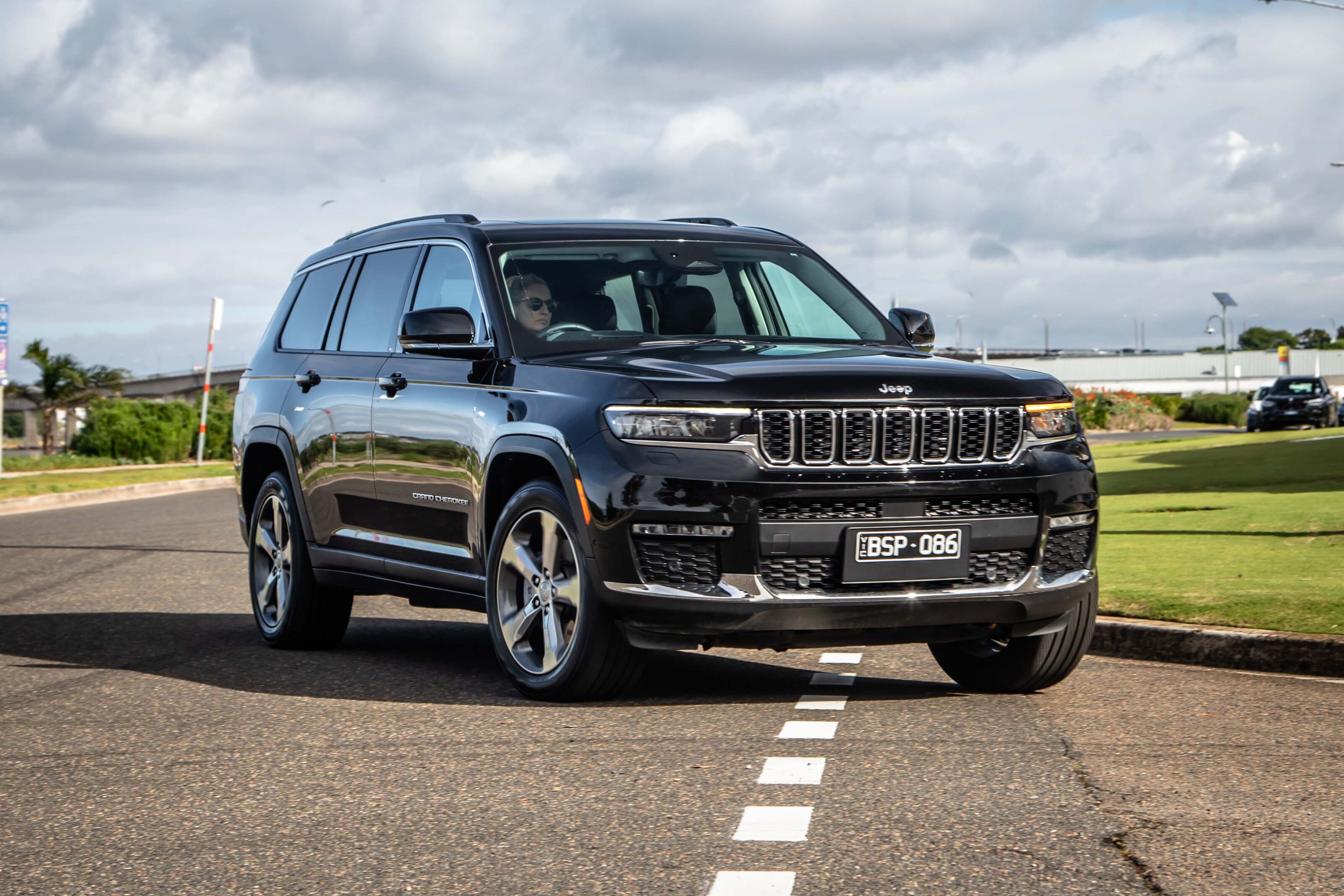
Speaking of the fact that this is a reasonably committed off-roader, the Summit Reserve also features Jeep’s heavy-duty Quadra Trac II off-road hardware.
This means you get a dual-speed transfer case to the lower models’ single-speed Selec-Trac, which by all accounts does a pretty good job anyway. I find that slightly confusing for a car fitted with 21-inch alloys and road tyres.
It has excellent brakes, too, although the pedal feel was a bit soft for my liking. The front discs are gripped by two-pot calipers, which bodes well for both road and dirt-track use. As I keep saying, it’s a heavy unit and the brakes are more than up to the job.
Speaking of the fact that this is a reasonably committed off-roader, the Summit Reserve also features Jeep’s heavy-duty Quadra Trac II off-road hardware.
There are one or two baffling own goals, though. The OK button on the steering wheel both switches the dashboard from displaying analogue dials to digital dials (press and hold) or km/h to mph (click).
I was driving up a road near my house notorious for cops hiding with radar guns for no good reason wondering why 30 felt so fast and put my foot down briefly before everything in my head calibrated. I realised I had brushed the OK button looking for the fuel economy figure (14.1L/100km, by the way) so that’s a tip for young players.
The instances where this switch needs to be close to hand seem limited to living on the US/Canada border or regularly driving between the UK and Europe. Where a car this big would be absurd.
Ownership
Jeeps come with a slightly offbeat five-year, 100,000km warranty.
The five years is good – of course it is, just about everyone else is doing that, if not more – but 100,000km, well, hardly anyone is doing that anymore.
The brand’s ‘two-finger wave guarantee’ is based on the idea that Jeep owners all lift two fingers off the wheel to say hi, which is kind of cute and basically means Jeep will dig you out of trouble with cheaper parts and roadside assistance.
Capped-price servicing holds the first five services to $399 each, which would be much better if the service intervals were not set at 12 months/10,000km. This low-kilometre interval gotcha is increasingly rare, if still not rare enough for my liking. It always feels odd to me when the servicing program runs out before the warranty.
VERDICT
The new Grand Cherokee is a much nicer car than the old one, and in this L spec, huge inside and out rather than just out. It’s better to drive, is packed full of stuff that works really well and if you’re into going off-road in a car with air suspension and 21-inch alloys, you’re going to have a blast.
Is it worth the money? That’s a big question. You can’t buy an Audi Q7 or Range Rover for this kind of money with this much gear along with the off-road chops. Most owners will, of course, restrict this shiny big machine to the occasional dirt road or towing the caravan and it will do all of that really well in comfort and relative silence.
However, it is crying out for a more advanced, torquier drivetrain and that’s surely in the pipeline. Grand Cherokee fans will love this car, I’m sure, but I don’t know if it will drag in the suburban tractor crew, rugged Jeep badge notwithstanding.
It’s a good car, though, and a sign of better, more solid things to come from the brand.