
Key Points
- Lowest June sales since 2011 recorded
- First time since 2000 where June hasn’t been the best-selling month
- Toyota continues to clearly lead the way in the model and marques race
The Australian new car market has dropped to its lowest level of June sales in over a decade, as supply constraints continue to hamper deliveries.
New car sales data released by the Federal Chamber of Automotive Industries (FCAI) shows just 99,974 cars were delivered last month, the first time June sales have dropped below 100,000 since 2011 when just 96,157 vehicles were sold.
It’s also a drop of over 10,000 units compared to the last two Junes, with even the COVID-impacted 2020 and 2021 years managing 110,234 and 110,664 examples sold respectively.
Last month’s sales were lower than March this year, the first time June has not been the biggest month of the year since 2000, when Sydney was preparing to host the Olympic Games and the VT Commodore was the best-selling car.
The drop in registrations not only resulted in a poor year-on-year result – down 9.7 per cent on 2021 – but it also affected the overall year-to-date registrations, as the 537,856 new cars sold this year is 5.2 per cent lower than the halfway point of 2021, where 567,468 vehicles had been sold heading into July.

Of the top 10 best-selling manufacturers throughout June, seven posted higher sales than the same month a year prior, with Subaru, Hyundai, Mercedes-Benz, Kia, Toyota, Mitsubishi and MG coming up as the big winners while Mazda, Ford and Isuzu suffered the most.
New South Wales was the state with the most registrations for the month, recording 32,027 sales (down 7.5 per cent), trailed by Victoria (25,764, down 12.2 per cent) and Queensland (21,983, down 13.2 per cent) with the Northern Territory becoming the only state or territory to improve on its 2021 figures, rebounding by 16.3 per cent to 1115 sales.
“Globally, carmakers are continuing to suffer from plant shutdowns,” said FCAI Chief Executive Tony Weber.
“In Europe we have component supply heavily impacted by the conflict in Ukraine. Microprocessors continue to be in short supply and global shipping remains unpredictable.
“While demand for new cars remains strong in Australia, it is unlikely we will see supply chain issues resolve in the near future.”
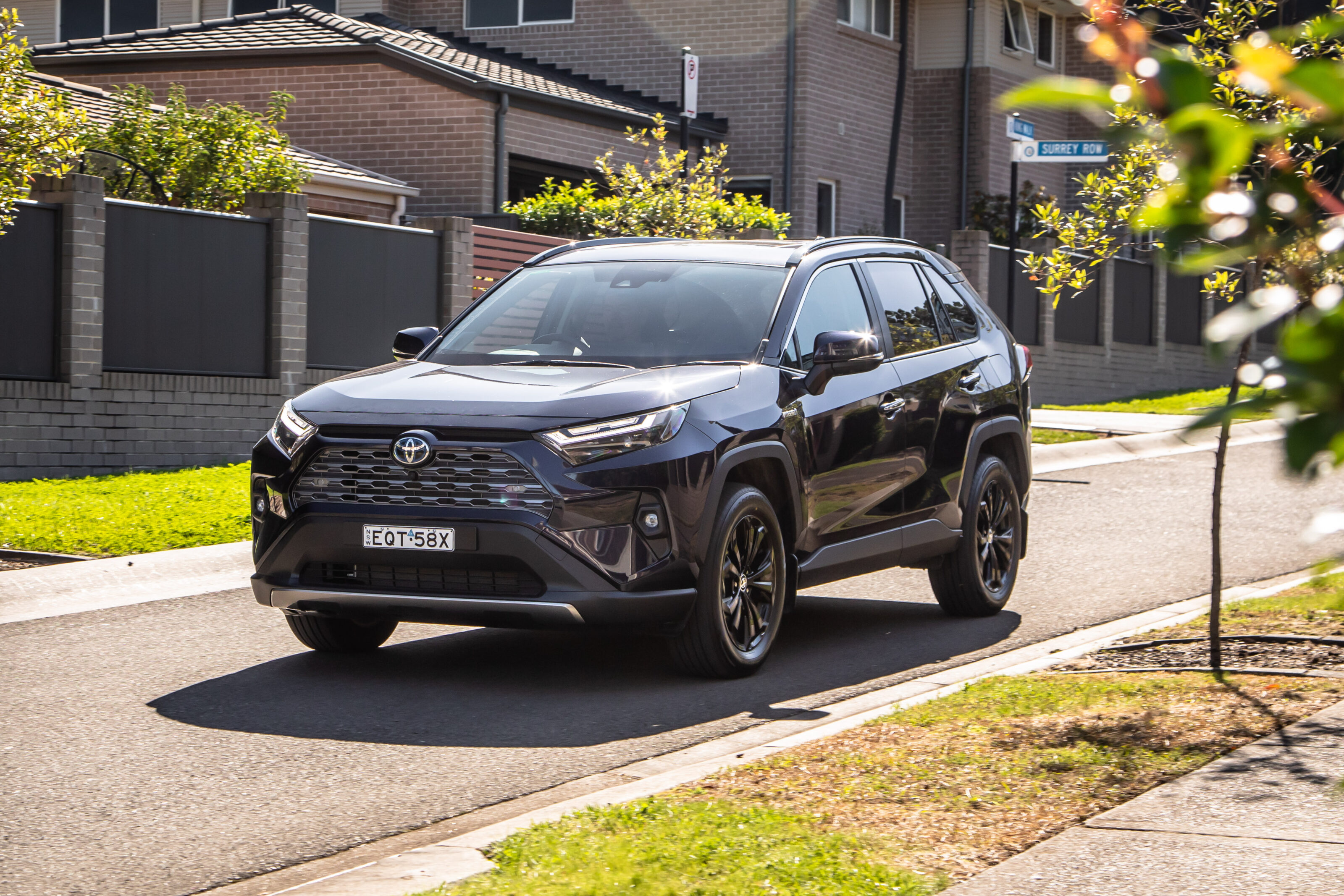
As expected, Toyota continued its reign at the top of the sales charts, now followed by Korean sister brands Kia and Hyundai in second and third place respectively, with Mazda dropping to fourth and Mitsubishi rounding out the top five.
Polestar pipped electric vehicle rival Tesla for the month, capitalising on the American manufacturer’s production woes to shift 29 more units, with the Swedes delivering 201 units of the Polestar 2 compared to 172 Model 3s.
Between 10th and 25th place in sales, a total of seven manufacturers recorded better sales results over last year’s efforts, with Porsche (up 53 per cent), Suzuki (up 35 per cent), GWM (up 18 per cent), RAM (up 17 per cent), Volvo (up eight per cent), Honda (up six per cent) and Audi (up one per cent) joining the list of brands finding success in June.
On the flip side, Nissan (down 53 per cent), LDV (down 40 per cent), Lexus (down 38 per cent), Volkswagen (down 36 per cent), Jeep (down 25 per cent), BMW (down 24 per cent) and Skoda (down 21 per cent) struggled the most out of the extended top 25.
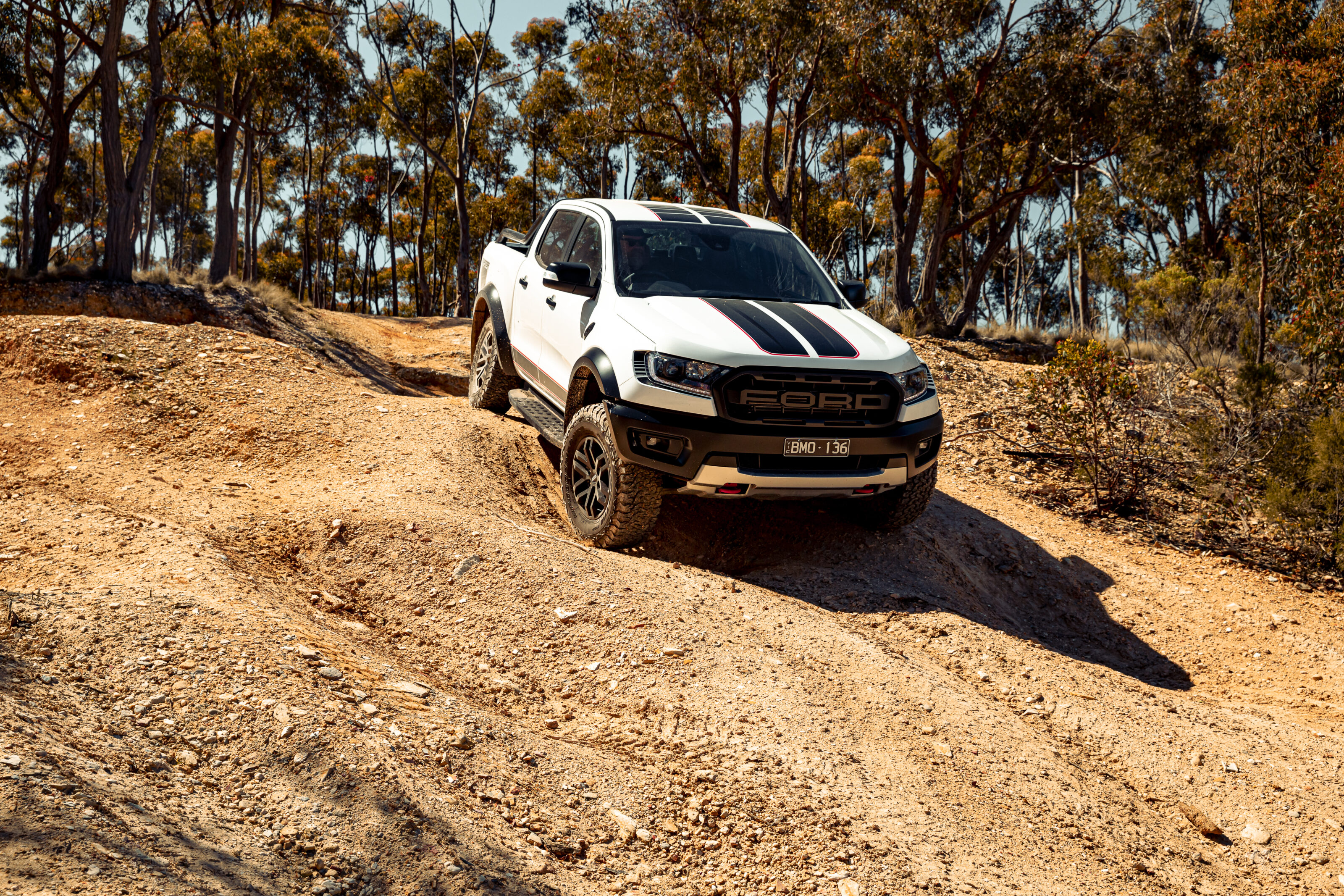
Utes continue to be Australia’s best-selling vehicle type, with the combined sales of 17,415 4×4 units and 3769 4×2 models accounting for a total of 21,185 examples sold throughout the month.
Medium SUVs trailed utes yet again, with the 19,254 units delivered representing a significant 16 per cent increase over the year prior, as large and small SUVs followed in third and fourth place respectively.
Despite small SUVs accounting for 11,561 sales in June, it was the third-largest drop compared to 2021 with 21 per cent less examples delivered, only just behind 2.5- to 3.5-tonne commercial vehicles (down 26.4 per cent) and small passenger vehicles (down 25.8 per cent) suffering bigger hits.
Overall, the heavy commercial segment was the only one to increase its sales over the same month last year, with 5165 vehicles delivered representing a 3.5 per cent increase.
Passenger vehicles suffered the most, dropping by 21 per cent to 18,450 units, followed by light commercial vehicles (down 16.5 per cent to 23,852) and SUVs (down 2.3 per cent to 52,507).
While petrol vehicles continue to be the most popular on the new car market with 51,388 sold last month, only electric vehicles, hybrids and plug-in hybrids posted higher sales than last year.
Diesel vehicles still sit in second on 35,306 sales, but demand for EVs is increasing at the most rapid rate, last month jumping up by 116 per cent over the year prior with 1137 registrations – although this is still behind the hybrid vehicle total of 6407 units, up 10 per cent.
PHEVs and hydrogen vehicles continue to linger at the bottom of the sales charts, despite PHEV sales rising by 79 per cent to 570 examples last month, while only one hydrogen car was sold.

Top 10 models
Toyota’s HiLux continued its dominant run as Australia’s best-selling vehicle for 2022, retaining its position at the top of the charts with 7582 sales – the most of any month this year so far and an improvement of 40 per cent over June 2021, thanks mostly to 4×2 sales increasing by 100 per cent from 1112 to 2227 units.
Year-to-date, the best-seller is also well clear of its rivals with 31,971 sales at the halfway mark of 2022, more than 10,000 units more than the second-placed RAV4.
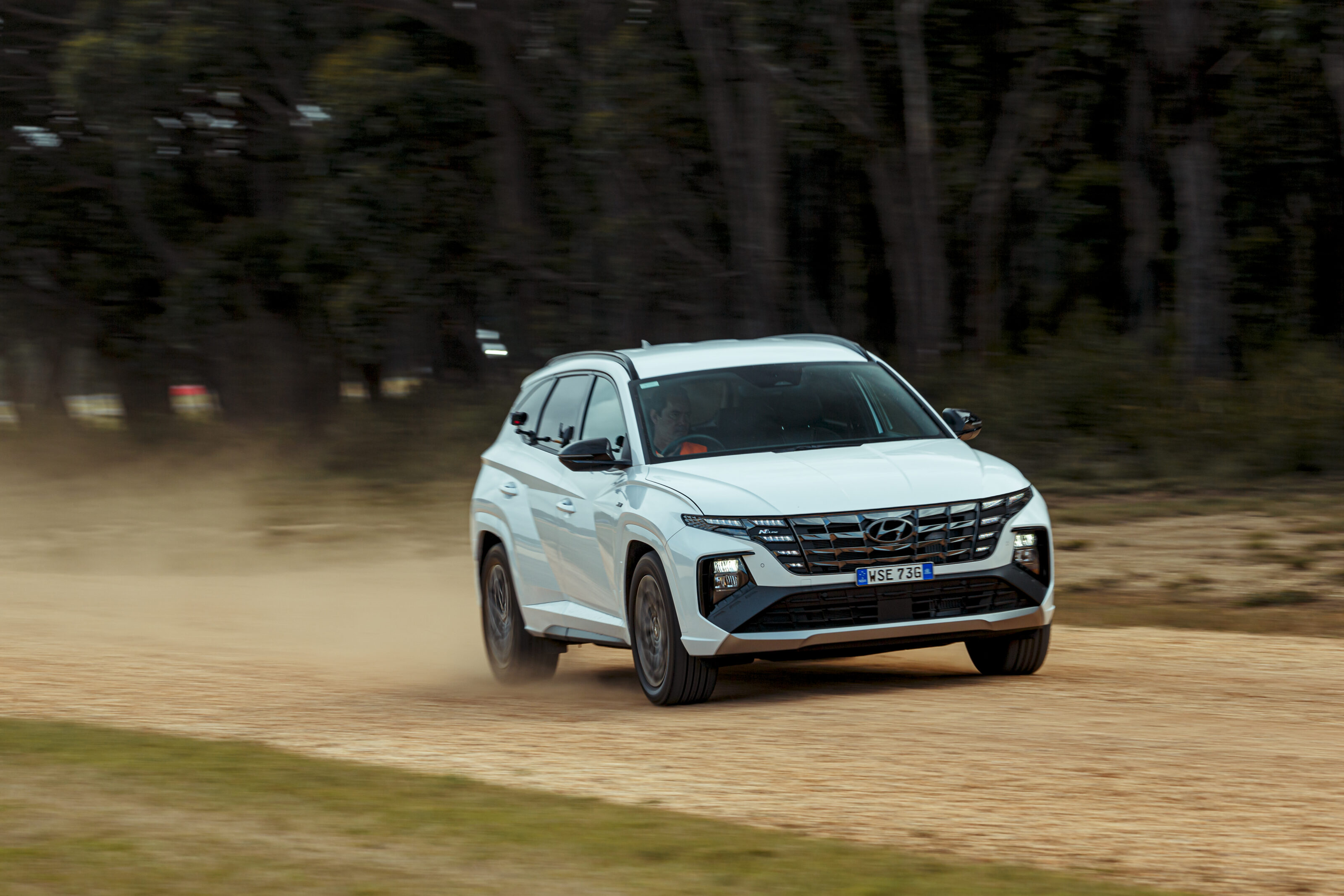
The Hyundai Tucson has made a surprise visit to second place, as the Korean manufacturer managed to shift 2840 units of its medium SUV – a staggering increase of 90 per cent compared to a year ago – although it still sits in 17th spot for the year with 7355 sales.
Continuing its run amongst the best-sellers was the Ford Ranger, holding third place with 2802 units sold – however, this represents a massive drop of 3453 sales and 57 per cent from last year, attributed in part to its next-generation model beginning to finally hit showrooms. The Ranger also sits third overall for the year on 19,794 sales.
Battling for fourth place, Toyota’s Corolla edged out its RAV4 sibling, with the small passenger car recording 2605 sales compared to the crossover SUV’s 2586 – each improving over last year by 19.8 and 3.4 per cent respectively.
RAV4 continues to trail the HiLux for the year with 20,373 registrations (just 14 more units than last year) while the Corolla has dropped despite its strong June, with the 13,154 cars sold this year representing a drop of 4.8 per cent on 2021.
Despite Isuzu D-Max sales hitting a 24.8 per cent slump throughout June, it secured sixth place for the month to be the third amongst the utes with a total of 2383 deliveries, however it continues to also hang on to sixth for the year, just over 300 units clear of the Corolla with 13,462 deliveries.
Kia’s new Sportage was the marque’s most popular vehicle, managing to squeeze into seventh with 2044 sales, just 30 units clear of the eighth-placed Mitsubishi Triton, with particular praise given to the Korean SUV for a 136.8 per cent increase in sales over June 2021, attributing to its 106.5 per cent overall jump.
Hyundai’s i30 dropped by a place from May to ninth in June, with its 1801 sales down 22.7 per cent on the year prior, while it continues to hold on to ninth spot year-to-date on 11,752 deliveries.
Scraping in to the top 10, the MG HS was able to force its way into the final spot on account of its 1795 sales, an improvement of 79 per cent compared to June last year, boosting its annual sales to 5540 units so far (59.7 per cent higher than 2021.)

The new Mitsubishi Outlander might have missed out on a top 10 placing, but it was able to beat its fellow SUV rival in the Toyota Kluger to 11th place, with the Japanese offerings recording 1714 and 1655 sales respectively.
Kia’s Cerato was the next-best vehicle with 1597 sales, while Toyota managed to get three LandCruiser-badged vehicles into the top 20, as the LandCruiser Prado (1578 sales), LandCruiser 300 Series (1518 sales) and LandCruiser 70 Series (1265 sales) took 14th, 15th and 18th place respectively.
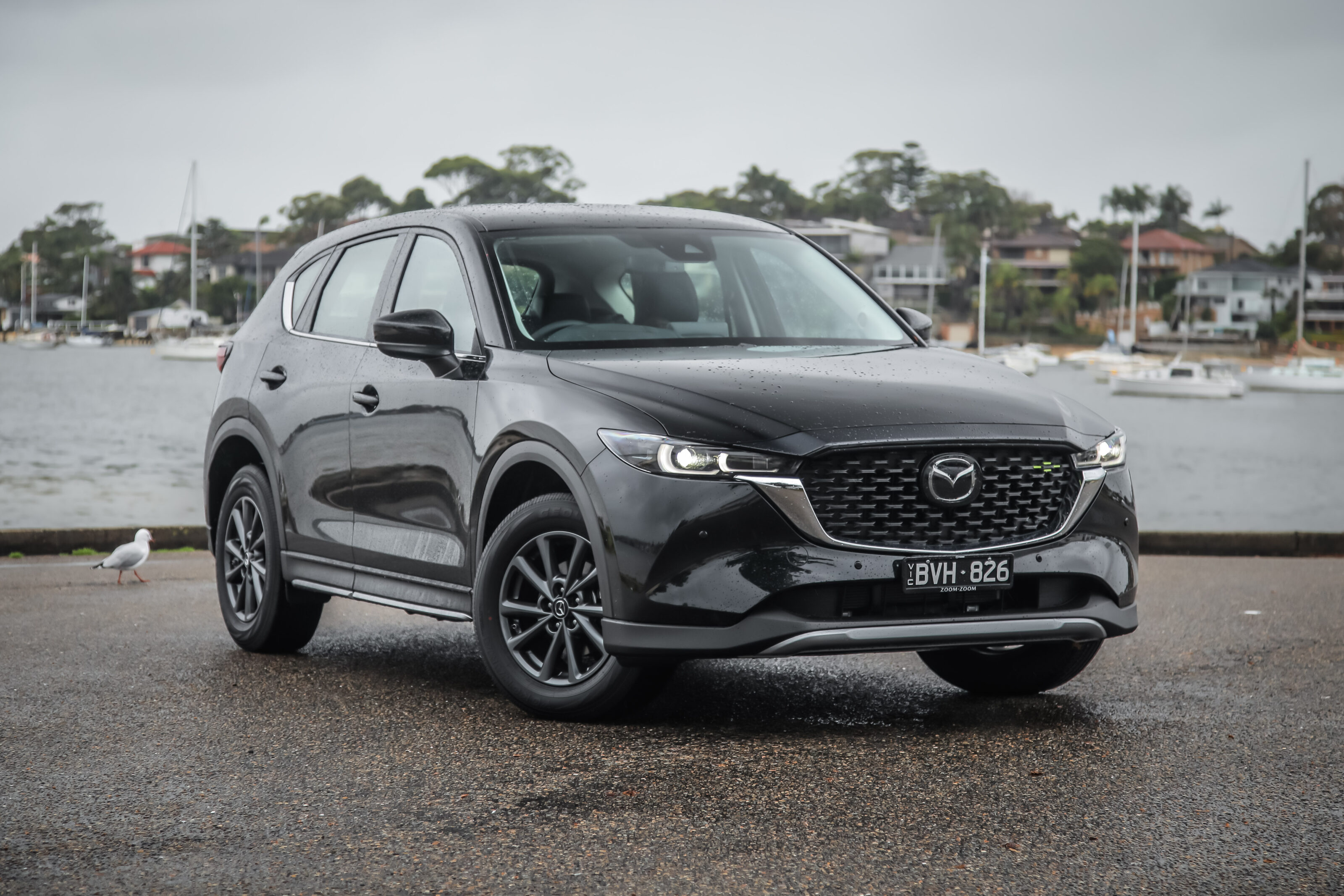
Mazda’s CX-5 might have been the ninth-most popular vehicle in May, but a tough June saw it slip to 23rd, managing just 1116 deliveries compared to last year’s 3018 units, a drop of 63 per cent.
Other models to make it into the top 20 included the MG ZS (1402 sales), GWM Ute (1315 sales), Subaru Outback (1264 sales) and Ford Everest (1234 sales) – although the Outback is able to take home this month’s award for the most improved mass-market vehicle, recording a 266.4 increase over its June result in 2021, jumping by 919 units.
Top 10 models: June 2022
| Rank | Model | Sales | vs June ’21 |
|---|---|---|---|
| 1 | Toyota Hilux | 7582 | 40.10% |
| 2 | Hyundai Tucson | 2840 | 89.84% |
| 3 | Ford Ranger | 2802 | -53.75% |
| 4 | Toyota Corolla | 2605 | 19.77% |
| 5 | Toyota RAV4 | 2586 | 3.40% |
| 6 | Isuzu Ute D-Max | 2383 | -24.76% |
| 7 | Kia Sportage | 2044 | 136.85% |
| 8 | Mitsubishi Triton | 2014 | -10.09% |
| 9 | Hyundai i30 | 1801 | -22.74% |
| 10 | MG HS | 1795 | 78.96% |
Top 10 models: YTD 2022
| Rank | Model | Sales | vs YTD ’21 |
|---|---|---|---|
| 1 | Toyota Hilux | 31971 | 13.87% |
| 2 | Toyota RAV4 | 20373 | 0.07% |
| 3 | Ford Ranger | 19794 | -21.87% |
| 4 | Mitsubishi Triton | 16920 | 28.42% |
| 5 | Mazda CX-5 | 14014 | -8.35% |
| 6 | Isuzu Ute D-Max | 13462 | -2.48% |
| 7 | Toyota Corolla | 13154 | -4.81% |
| 8 | Toyota Prado | 12978 | 27.60% |
| 9 | Hyundai i30 | 11752 | -10.56% |
| 10 | MG ZS | 10380 | 14.15% |
Top 10 brands
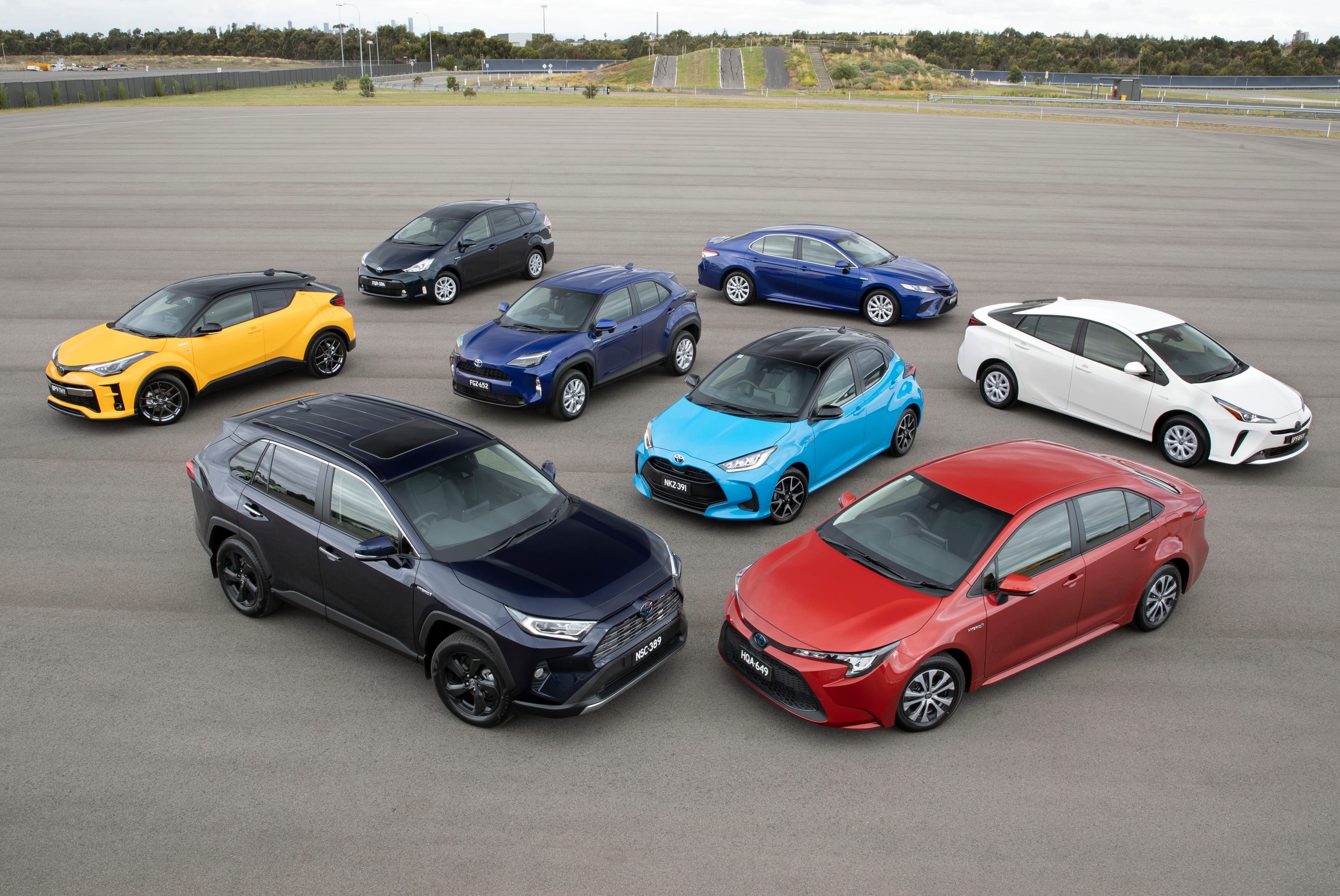
Toyota remains the top dog in Australia, with its 22,561 sales in June nearly as much as second, third and fourth place combined. The Japanese marque was also able to improve on its deliveries over last year by seven per cent, boosting its year-to-date sales to 121,377 units – two per cent higher than the midway mark of 2021.
Kia pipped its Korean stablemate Hyundai to second spot by just 221 units, recording 8480 and 8259 sales respectively – an improvement of 7.5 per cent and 12.3 per cent for each brand.
There’s little to separate the manufacturers year-to date as well, as Kia’s 39,419 sales sits just ahead of Hyundai’s 38,167 deliveries, although the latter has dropped by 1.2 per cent from last year while the former has rebounded by four per cent.
While Mazda still retains its second placing for the year so far, its June performance pushed it further away from Toyota, recording 6245 sales (a drop of 48.9 per cent, the largest of any manufacturer in the top 10), with its year-to-date sales standing at 49,932 – 17.4 per cent down.

Mitsubishi continues its solid run in fifth place thanks to 5846 deliveries in June, a small improvement of 3.6 per cent over its form 12 months prior, although its overall sales are up by 11.5 per cent to 41,748 units.
Ford might have been able to retain sixth place but it wasn’t made easy for the Blue Oval, as sales fell by 41.2 per cent last month to just 4972 units – now becoming the top 10 brand to take the biggest hit of the year, as sales have gone down by 24.6 per cent to 28,562 units year-to-date.
Chinese manufacturer MG continued to show good form, improving by just over two per cent to record 4403 deliveries last month, edging ahead of Mercedes-Benz’s combined cars and van sales of 4267, a 10 per cent boost for the three-pointed star.
The battle for ninth place was tight between Subaru and Isuzu, but it was the former which took the spot thanks to 3575 deliveries (up 18 per cent) while Isuzu managed 3457 sales – undoubtedly disappointed at the 12 per cent drop which ultimately led to it falling to the edge of the top 10.
Volkswagen missed out on a top 10 spot and on cracking past 3000 sales, managing 2993 deliveries through the month with a big drop of 36 per cent compared to 2021 – pushing the German marque’s annual sales to 37.5 per cent lower than last year with 13,055 deliveries.
One of the biggest improvers in June was Suzuki, jumping up to 12th place thanks to a 35 per cent sales increase from 2536 deliveries, edging out GWM (2440 sales, up 17.6 per cent) and BMW (2327 sales, down 24.4 per cent) as the final brands with more than 2000 units shifted.
Of the mainstream brands in Australia, Nissan was hit hardest, recording a year-on-year drop of 52.8 per cent with just 1907 sales throughout June, as its year-to-date performance fell to 36.4 down.
Only Chevrolet, Land Rover, Lotus, Jaguar and Alpine suffered greater sales percentage drops in June, although none of the aforementioned brands cracked 500 deliveries.
Top 10 brands: June 2022
| Rank | Brand | Sales | vs YTD ’21 |
|---|---|---|---|
| 1 | Toyota | 22561 | 7.05% |
| 2 | Kia | 8480 | 7.48% |
| 3 | Hyundai | 8259 | 12.26% |
| 4 | Mazda | 6245 | -48.92% |
| 5 | Mitsubishi | 5846 | 3.63% |
| 6 | Ford | 4972 | -41.20% |
| 7 | MG | 4403 | 2.32% |
| 8 | Mercedes-Benz | 4267 | 10.37% |
| 9 | Subaru | 3575 | 18.34% |
| 10 | Isuzu Ute | 3457 | -12.79% |

Top 10 brands: YTD 2022
| Rank | Brand | Sales | vs June ’21 |
|---|---|---|---|
| 1 | Toyota | 121377 | 2.04% |
| 2 | Mazda | 49932 | -17.39% |
| 3 | Mitsubishi | 41748 | 11.50% |
| 4 | Kia | 39419 | 4.02% |
| 5 | Hyundai | 38167 | -1.21% |
| 6 | Ford | 28562 | -24.61% |
| 7 | MG | 24507 | 25.39% |
| 8 | Isuzu Ute | 18789 | -0.09% |
| 9 | Subaru | 16997 | -15.41% |
| 10 | Mercedes-Benz Cars | 16410 | -37.61% |
In charts
June 2022 – Top 10 models
June – Top 10 brands
June 2022 – Overall segment sales
June 2022-2021 category sales
June 2022-2021 category YTD sales
2022 Sales race
June 2022 Australian sales map
Snapshot
- Monte Carlo sole variant
- Costs $37,990 drive-away
- Powered by 1.5 litre four-cylinder petrol engine
Australian pricing and features have been detailed for the 2023 Skoda Fabia, with just one variant coming to Australia when it hits showrooms in August.
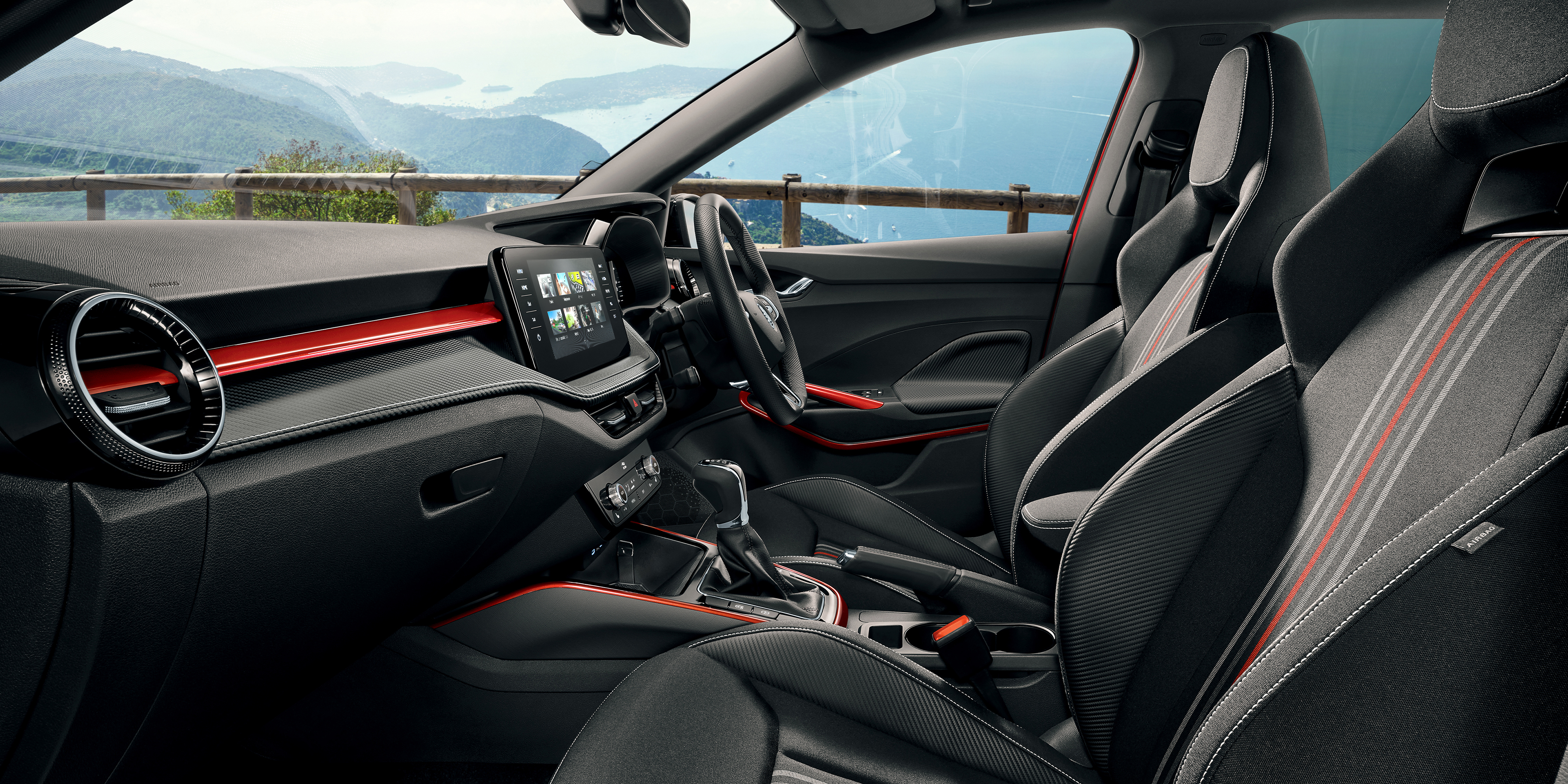
The Monte Carlo Edition 150 will be priced from $37,990 driveaway, with the Czech marque claiming the hatchback is “bigger, quicker and smarter” than its predecessor.
Powered by the 1.5-litre, turbocharged four-cylinder petrol engine rather than the 1.0-litre three-cylinder found in Europe, the Fabia will be available exclusively with a seven-speed dual-clutch automatic transmission, helping to deliver its 110kW and 250Nm to the front wheels.
“Perhaps no new model better embodies Skoda’s journey in Australia than the new Fabia Monte Carlo,” the brand’s Director, Michael Irmer, said.
“Far from being a budget sticker European as it was initially perceived, last year the average drive-away price of a new Skoda was $52,000.“The value of Skoda resides in providing the most metal, the very latest in technical sophistication and the best whole of life ownership proposition for the money. We have launchedthe new-generation Fabia in its top line configuration because this is what our customers tell us they want from a Skoda.“The Monte Carlo Edition 150 is packed with every item of equipment and technical refinement available, at a drive-away price and the best whole-of-life affordability of any European brand.”
2022 Skoda Fabia Australian pricing
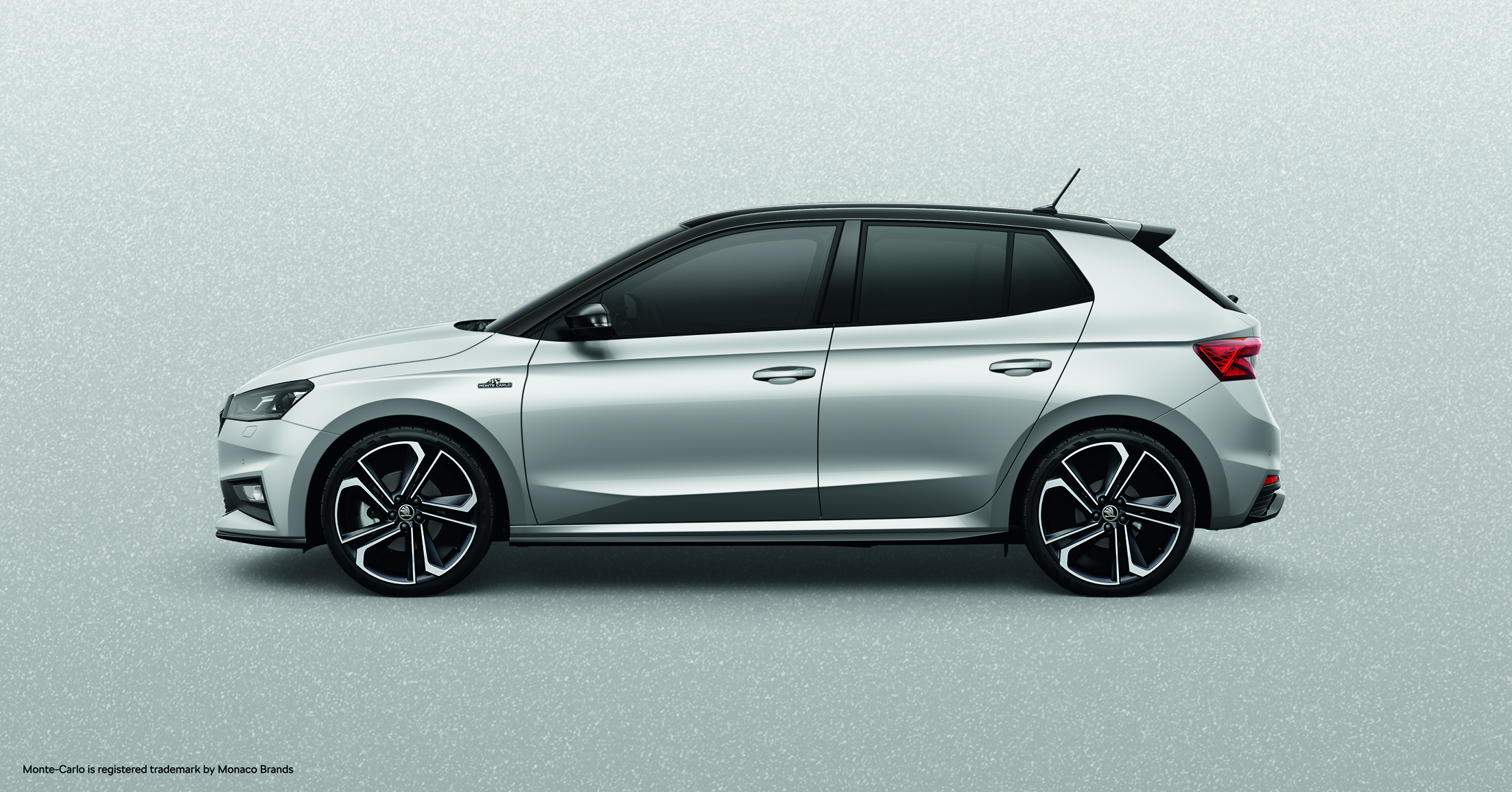
The new-generation Fabis hatchback is coming to Australia in just one specification – the Monte Carlo 150 – which is priced from $37,990 drive-away.
Features
Monte Carlo 150
| Convenience key, keyless entry and ignition |
| Rain-sensing wipers |
| Dual zone air conditioning with humidity sensor |
| LED daytime running lights |
| Front fog lights |
| LED rear fog lights |
| Bi-LED headlights (low/high beam) with cornering function |
| LED tail-lights |
| LED side repeaters in side mirrors |
| Light assist function |
| LED ambient interior lighting |
| Umbrella in driveru2019s door |
| Gloss black grille and spoiler, mirrors, rear diffuser, badging |
| Electrically adjustable, heated, power folding mirrors with auto dimming (driveru2019s side) |
| Six speakers |
| Aluminium-finish pedals |
| Black headlining and pillar trim |
| Aluminium door sill trims |
| Auto dimming rear view mirror |
| 9.2 inch Amundsen infotainment with touchscreen and satellite navigation |
| SmartLink u2013 Wireless Apple CarPlay and Android connectivity |
| Bluetooth phone and audio |
| Digital radio |
| Voice control |
| 10.25 inch Virtual Cockpit instrument cluster |
| Wireless charging pad |
| Four USB-C outlets |
| Sports comfort front seats with side bolsters and integrated headrests |
| Heated front seats |
| Three-spoke flat bottom sport steering wheel with audio, Virtual Cockpit and driver assistance controls |
| Rear privacy glass |
| 18-inch black Libra alloy wheels. |
The only additional paid extras are: Park Assist for $1000, and phoenix orange or velvet red metallic paint for $500.
Engine, transmission and fuel economy
Powered by a 1.5-litre, turbo four-cylinder petrol engine, the 1270kg Fabia will be available exclusively with a seven-speed dual-clutch automatic transmission, delivering 110kW and 250Nm to the front wheels.
Those power and torque figures will provide a significant boost over the outgoing Fabia Monte Carlo, which offered a more meagre 81kW and 200Nm from its turbocharged 1.0-litre three-pot engine.
Underneath, the new-generation Fabia ditches the ageing PQ26 platform for the same MQB A0 architecture that underpins the Kamiq and Volkswagen Polo.
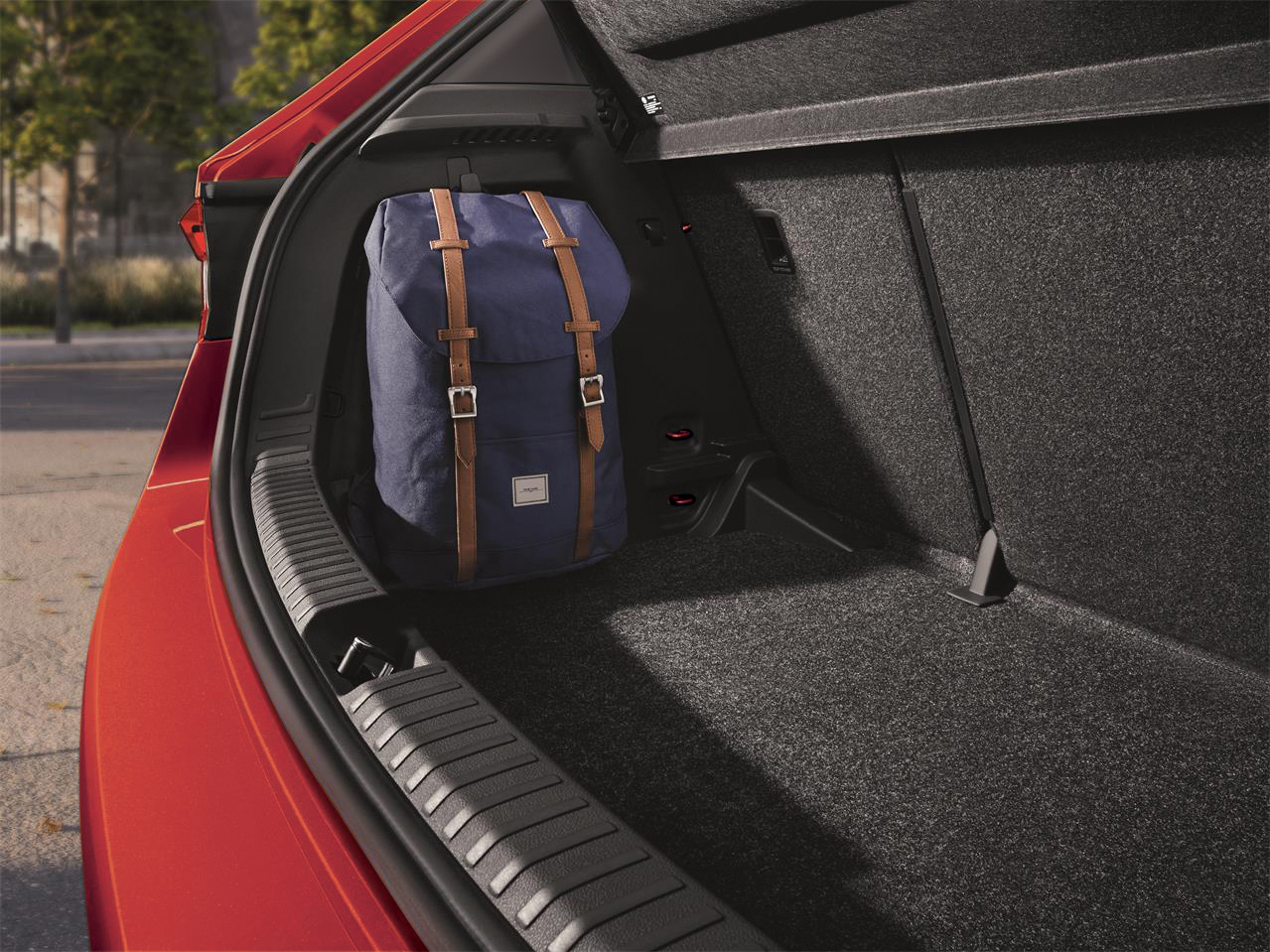
At 4107 millimetres long, 1780mm wide and 1460mm tall, and with a 2564mm wheelbase, the Fabia has grown an extra 110mm in length, 48mm in width and 94mm in wheelbase (but 7mm less in height) over the outgoing Fabia.
Fuel economy is rated at 4.9L/100km on the combined cycle, and the model requires a minimum of 95 RON to fill its 40-litre tank.
Safety
While the previous Skoda Fabia achieved a five-star ANCAP rating in 2015, the new model has not yet been vetted by the safety authority.
However, it has a full suite of safety systems, which includes:
| Anti-lock braking (ABS) |
| Anti-slip regulation (ASR) |
| Cross differential system (XDS+) |
| Electronic brakeforce distribution (EBD) |
| Electronic differential Lock (EDL) |
| Electronic stability control (ESC) |
| Hill hold control |
| Hydraulic brake assist |
| Multi-collision brake |
| Electronic drag torque regulation |
| Rain brake support |
| Adaptive cruise control |
| Driver fatigue detection |
| Front assist (city/pedestrian/cyclist) |
| Lane assist |
| Manoeuvre braking assist front and rear |
| Rear traffic alert |
| Side assist (blind-spot detection) |
| Emergency stop signal |
| Parking sensors front and rear |
| Rear-view camera |
| Speed limiter |
| Tyre pressure monitoring |
| Six airbags |
| Seatbelt reminder |
| Isofix restraint anchors outer rear seats |
| Three top tether child anchors. |
Warranty and servicing
Like all Skodas, the Fabia comes with a seven-year / unlimited kilometre warranty.
The Skoda Monte Carlo Edition 150’s service packs are priced at $1500 for five years or $2100 for seven years with the four-year used car pack chosen for $1300.
Additionally, Skoda also provides the option of three subscription plans – ‘Complete’, ‘Essential’ or ‘Value’ – which offer deals on servicing for those travelling 15,000 kilometres, 20k, 30k and 40k annually for varying amounts.
Availability
While its launch has previously been pushed back from the start of May to the third quarter of 2022, owing to supply shortages, the Fabia Monte Carlo 150 is now due to arrive in local showrooms in August.
Volkswagen’s Tiguan Allspace should probably be a bit of a curiosity, the kind of car a company the size and shape of VW can have around just because.
The company took its wildly successful second-generation five-door, five-seat medium SUV – already one of the roomiest and cargo-capacious in its segment – and stretched it in the wheelbase and the body to fit two more seats and offer a massive boot.
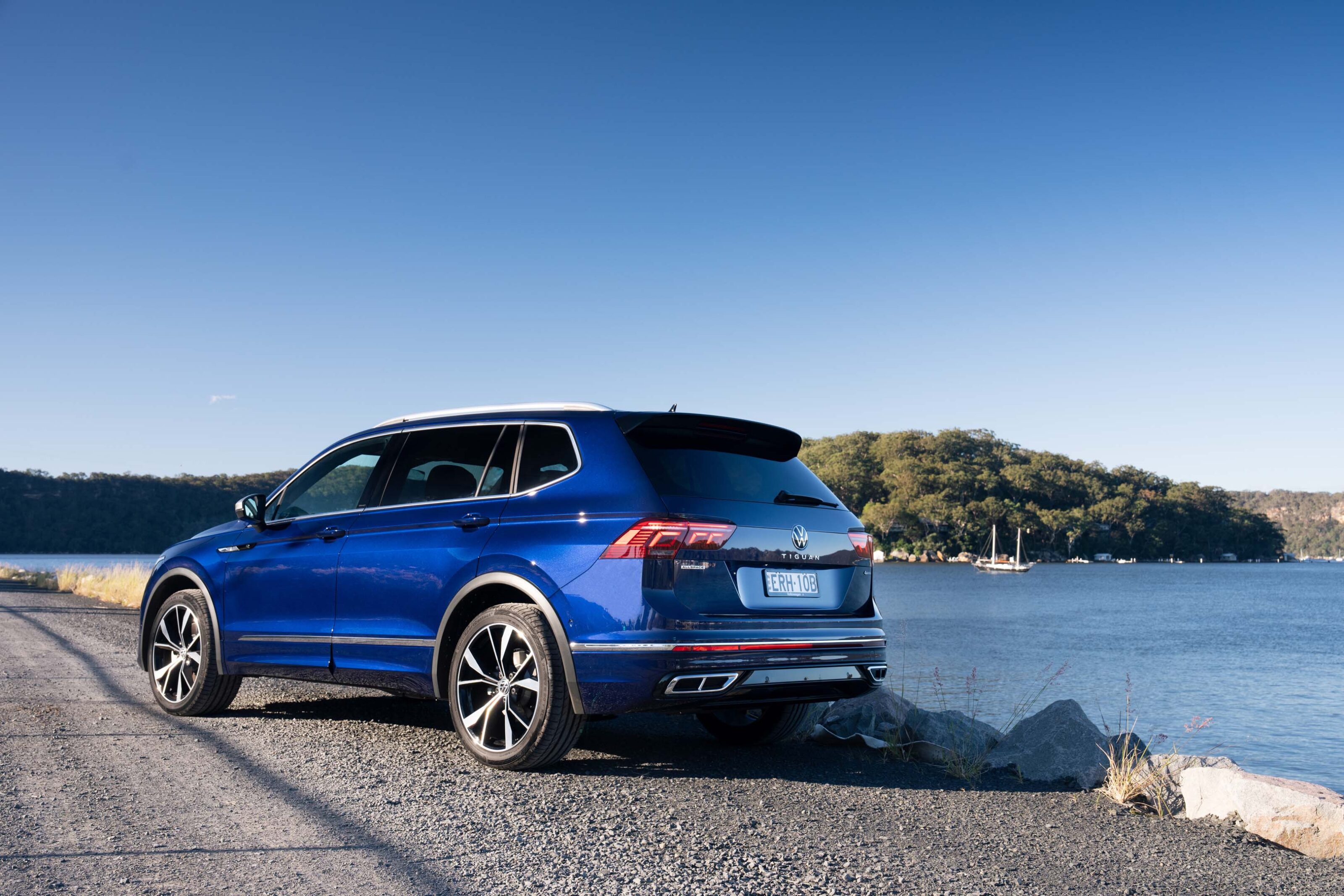
It’s not a curiosity, though – it makes up over half of global production and over two in five Tiguans sold here are the Allspace variant. You wouldn’t know it, though, because the badge is so small and the visual integration of the longer vehicle so subtle.
By staying well under five metres, the Tiguan Allspace is that rarest of things – a seven-seat SUV that doesn’t present as gigantic. And, if you’re to engage me in conversation, actually makes sense for all the people who ask me for a seven-seat recommendation when I know full well that they will never use that final row.
The Allspace returns to our shores with VW securing 4000 units, but they tell us it’s nowhere near enough – especially in 162 TSI R-Line specification, which the local arm says is overwhelmingly the most popular driveline.
Pricing and features
Not only is the 162 TSI the most popular engine option but the R-Line is now a model in its own right after the success of the R-Line pack fitted to Elegance models.
For $58,490 ($61,690 if you want the diesel) before on-road costs it’s not cheap and is putting itself against large SUVs from Hyundai, Kia and Toyota, something VW is not afraid of doing.
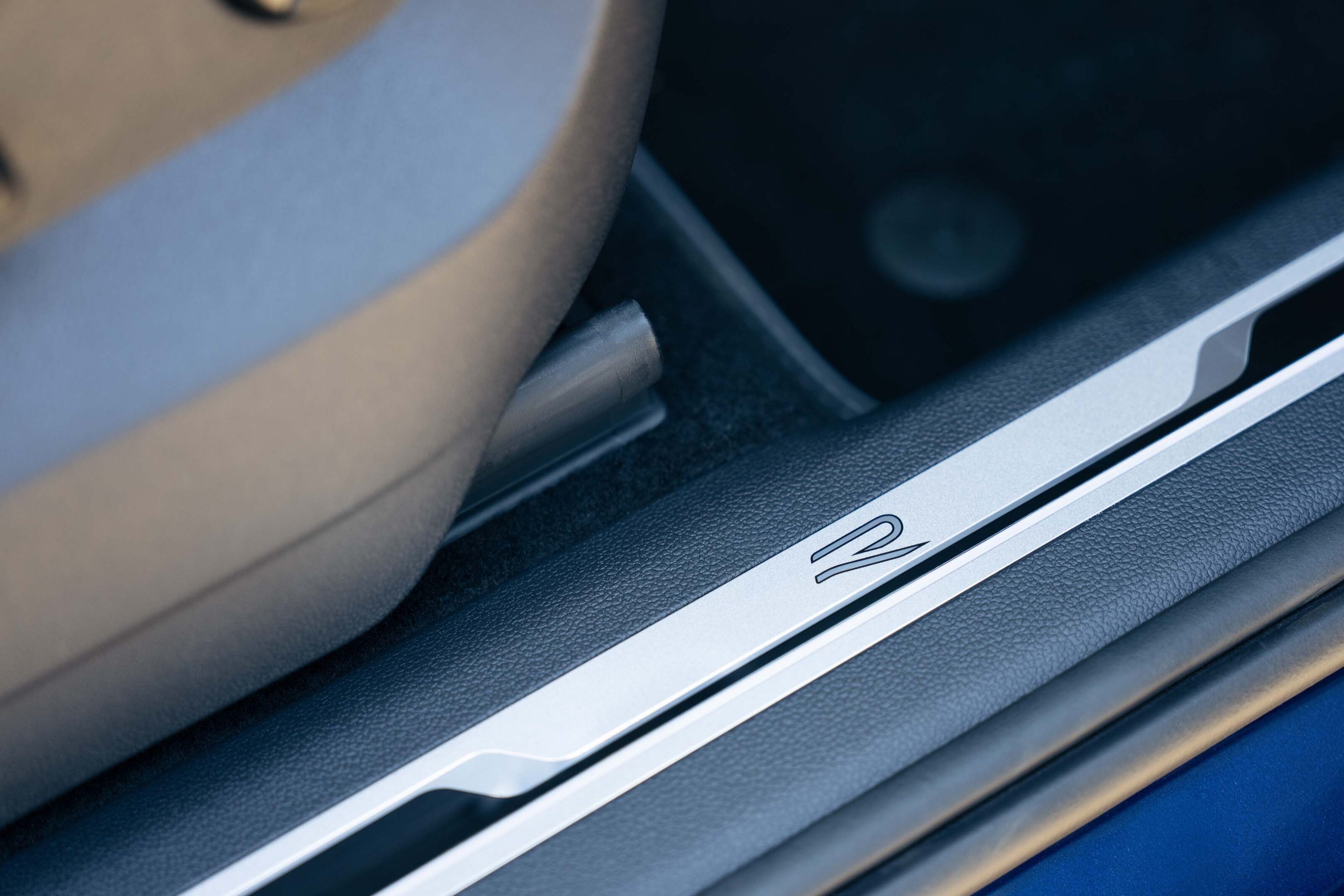
The R-Line headlines with 20-inch alloys and its own bumpers, skirts and body kit, as well as a small wing over the tailgate.
You’ll also find heated and ventilated front seats, three-zone climate control, heated outboard middle row seats, adaptive damping, wireless charging, leather seats, Matrix LED headlights, a 9.2-inch touchscreen, tinted rear windows, interior ambient lighting and a space-saver spare.
The 9.2-inch touchscreen (the biggest you can get in a Tiguan) runs the Discovery Pro system that includes a built-in sat-nav as well as wireless connectivity for both Apple and Android phones, which goes nicely with the wireless charging pad. You can also connect via USB but annoyingly it’s a bit flaky.
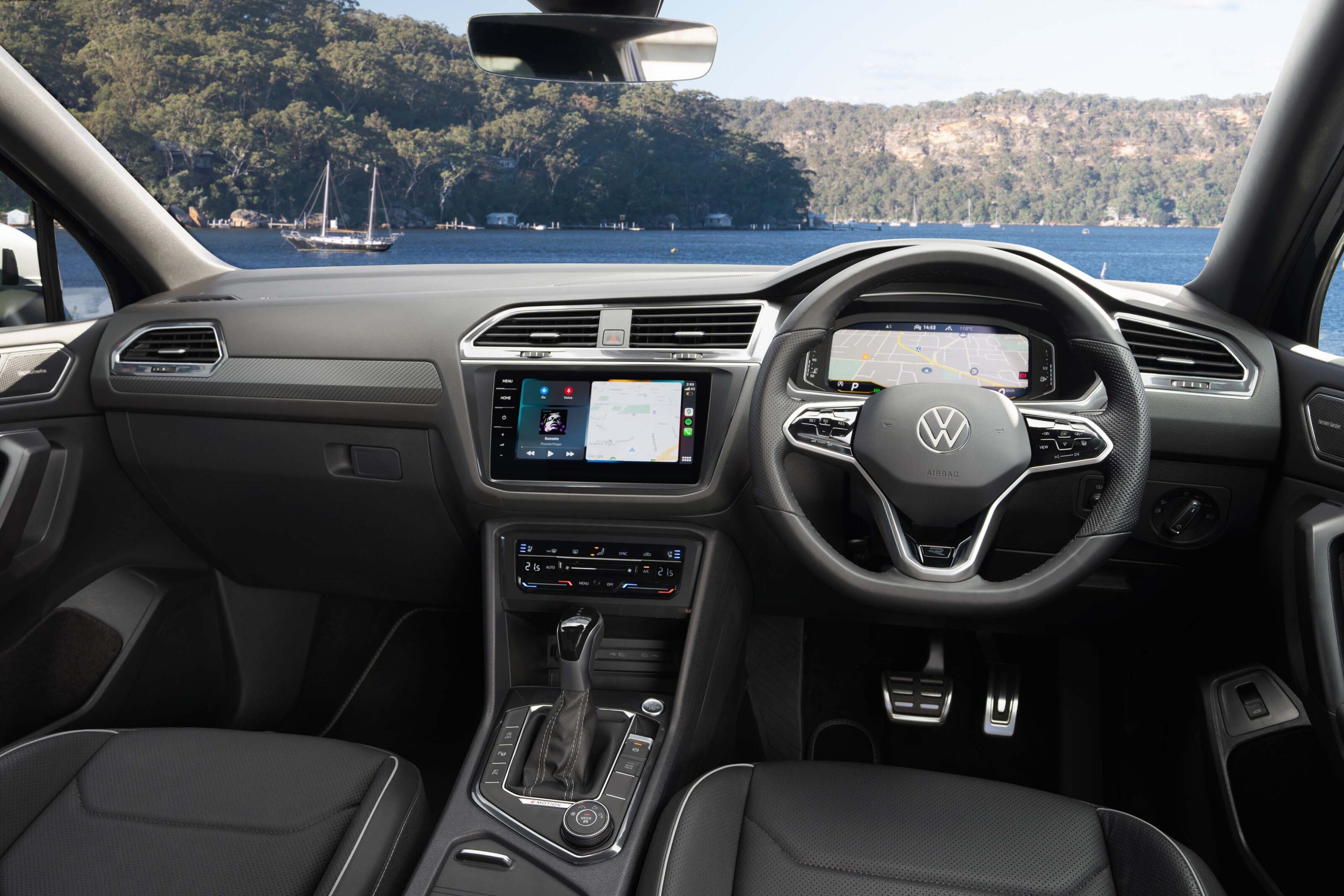
My wife and I found our phones refusing to connect or only half-connecting and playing the sound through the phone itself despite the touchscreen displaying CarPlay. It’s not the first time I’ve seen that in a VW so it must be something to do with the embedded software.
Every Tiguan Allspace ships with six airbags (the curtains reach to the third row), ABS and stability controls as well as adaptive lane guidance, forward collision warning, forward auto emergency braking, lane assist, side assist, rear cross-traffic alert and driver attention monitoring.
At least, the first batch available has all that. Unfortunately, subsequent Allspaces will miss out on both reverse cross-traffic alert and side assist from the safety package, which is annoying.
Selected models also lose out on the animated LED taillights and a powered tailgate. If you’ve got an order in, you should talk to your dealer about your allocation and what your options are (and you do have options).
Comfort and (All)space
Believe it or not, the Tiguan Allspace is known simply as Tiguan in the US and they don’t even get the short wheelbase version, which is kind of a drag for them but good for us because we get the choice.
In order to earn its badge, the Allspace is 22cm longer than the five-seater at 4734mm, riding on a wheelbase of 2791m.
Mazda’s similarly niche idea of the CX-8 is noticeably longer at 4901mm but also has a longer wheelbase of 2930mm, so VW has done well to find all the extra space it needed for two extra seats or, with those down, a huge boot.
You start with 230 litres of cargo space, which is small hatchback territory. With the jump seats down you get 700 litres, an 85-litre improvement over the shorter car. With both back rows down flat, you get 1775 litres, which is 110 more than the short-wheelbase Tiguan.
The Allspace is 22cm longer than the five-seater at 4734mm, riding on a wheelbase of 2791m.
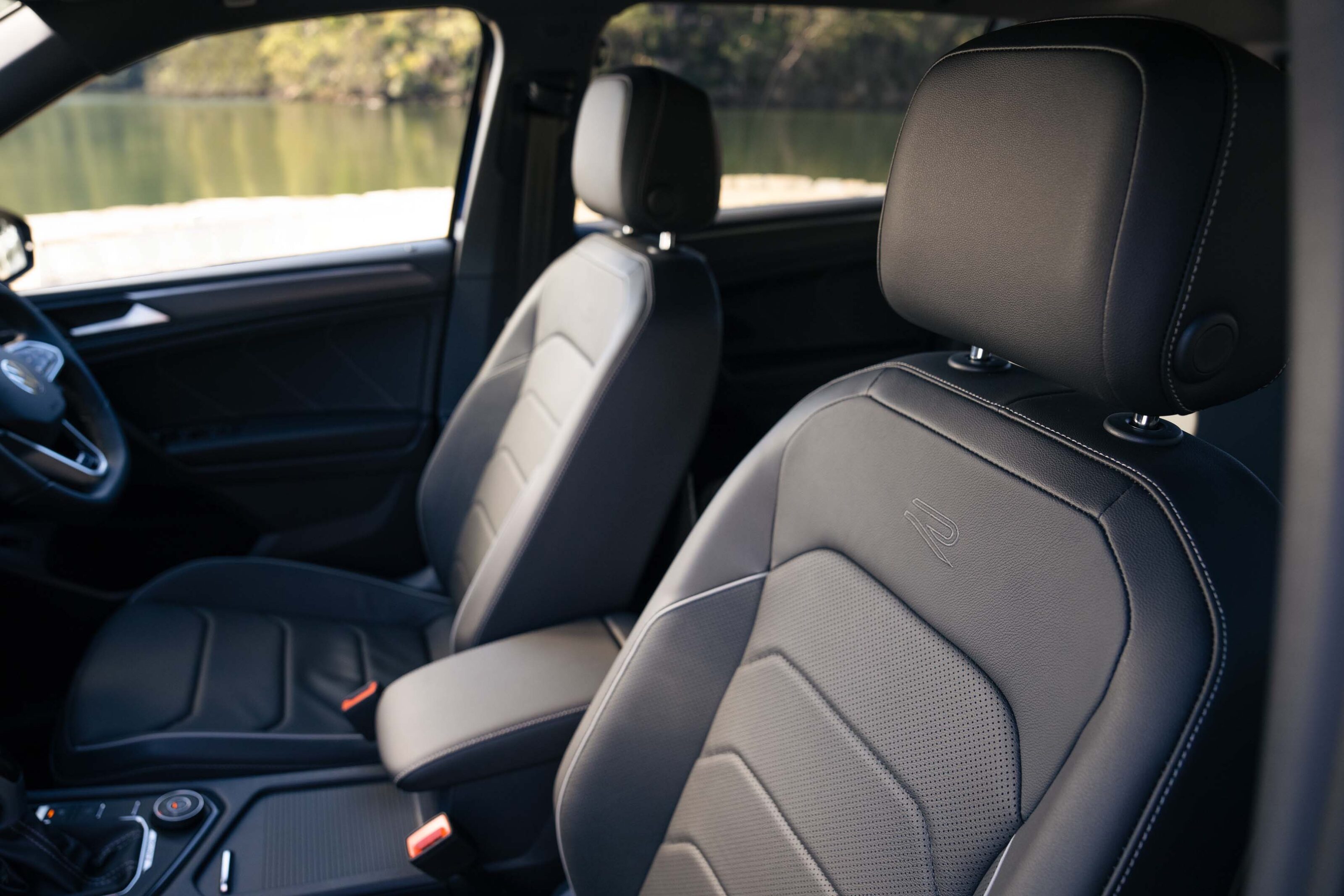
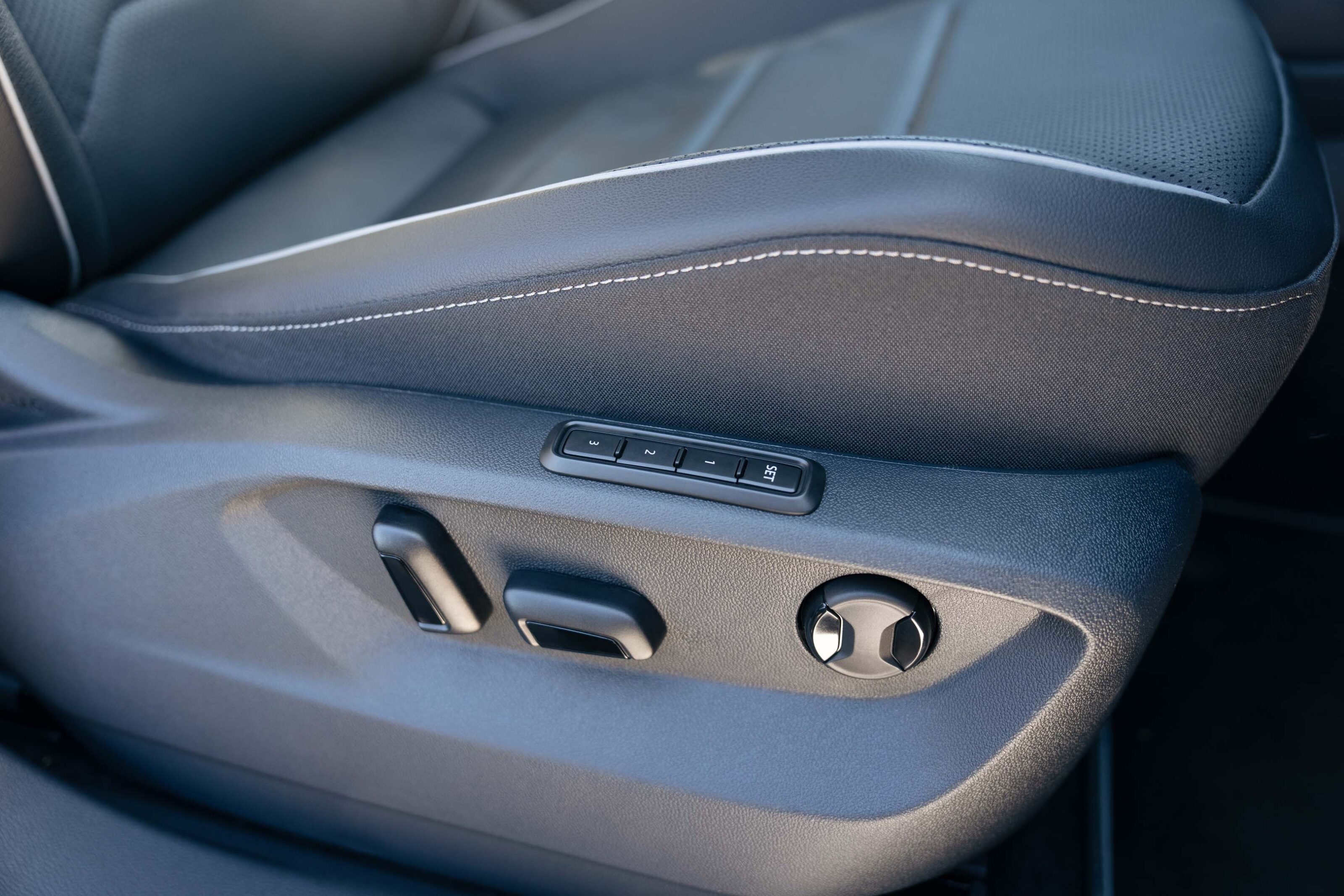
Front occupants are well looked after with comfortable seats in all grades, the higher grades naturally more comfortable still and with leather. Two cup holders are in the centre console plus two USB-C ports in with the wireless phone charger.
The 40:20:40 split middle row is very comfortable, with supportive reclining seatbacks. The seats slide forward in a 60:40 split, which increases either the boot space or the meagre legroom for the third row.
There is heaps of head and leg room and good foot room unless you’re in the middle over the transmission tunnel, which also renders the middle seat a little hard to take if you’re over five feet tall.
The centre armrest has two cup holders and you’ll find both a 12-volt and a USB-C power outlet and the controls for the third climate zone.
All four doors have big door pockets with space for big bottles and carpet lining to keep the noise down.
The third row is very tight and not super-easy to get into. You flip the middle row forward and then push the whole thing forward – no tumbling or the extra cleverness you’ll find in larger cars.
Legroom is non-existent for anyone over about three years old so you’ll need to slide the middle row forward. Yes, that will work for short trips, but this is not a “load up the gang for a long trip” kind of car.
On the road
The 162 is the most popular and most powerful engine in both Tiguan ranges, with only the diesel out-torquing it and even then by only 50Nm.
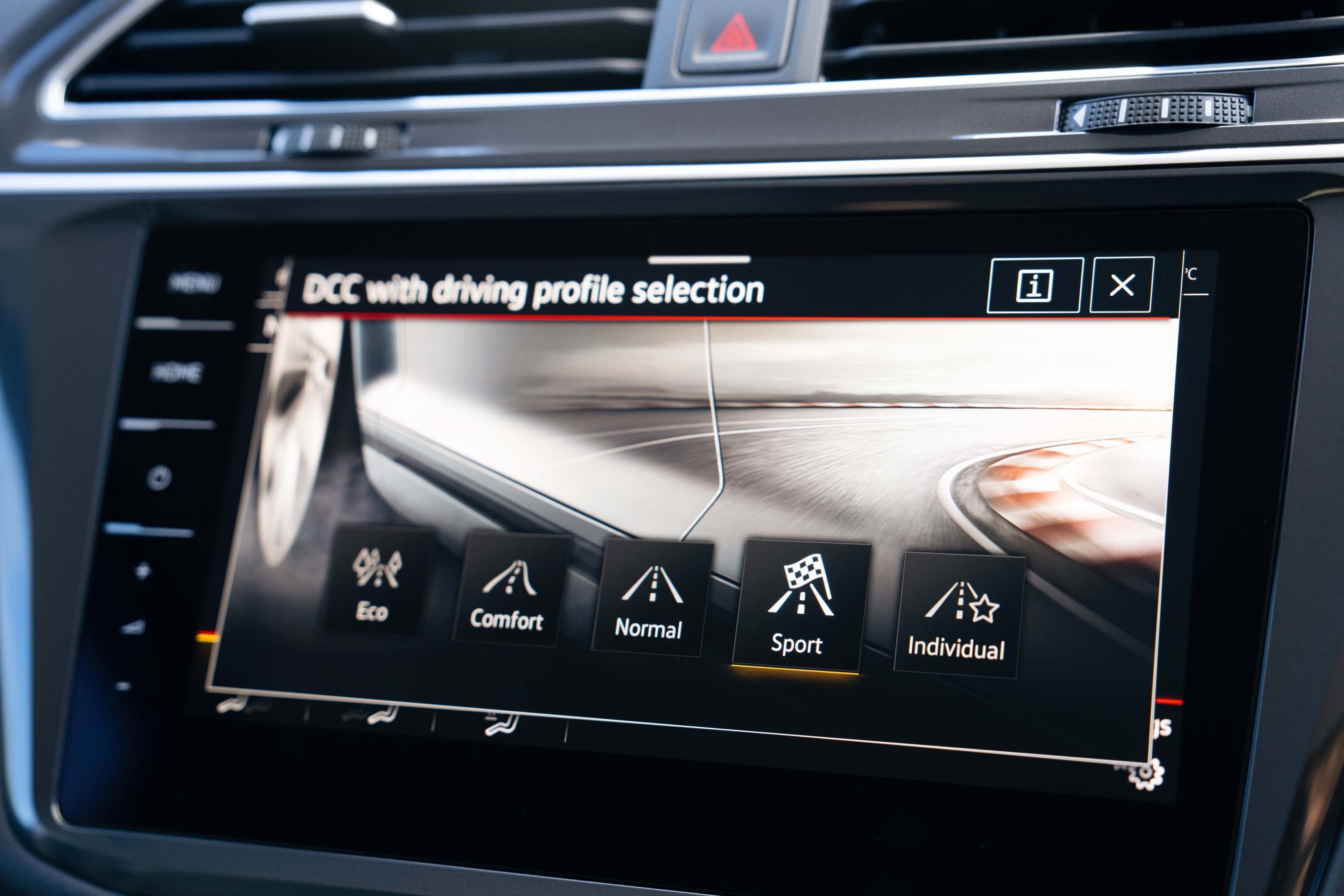
The 162 TSI engine is a 2.0-litre turbocharged four-cylinder familiar in cars all over the VW Group. As the name foreshadows, it spins up 162kW and you’ll need to refer to the spec sheet to discover it has 350Nm, because that would be an even longer model name.
Power goes to all four wheels through the famous seven-speed DSG dual-clutch transmission.
It’s easy to see why buyers like this engine. It moves a big, 1773kg car with impressive enthusiasm. It’s incredibly smooth and quiet in this spec, with only a little turbo lag before a smooth power delivery. The transmission comes to the party whether you’re pootling about or somehow enjoying a back road.
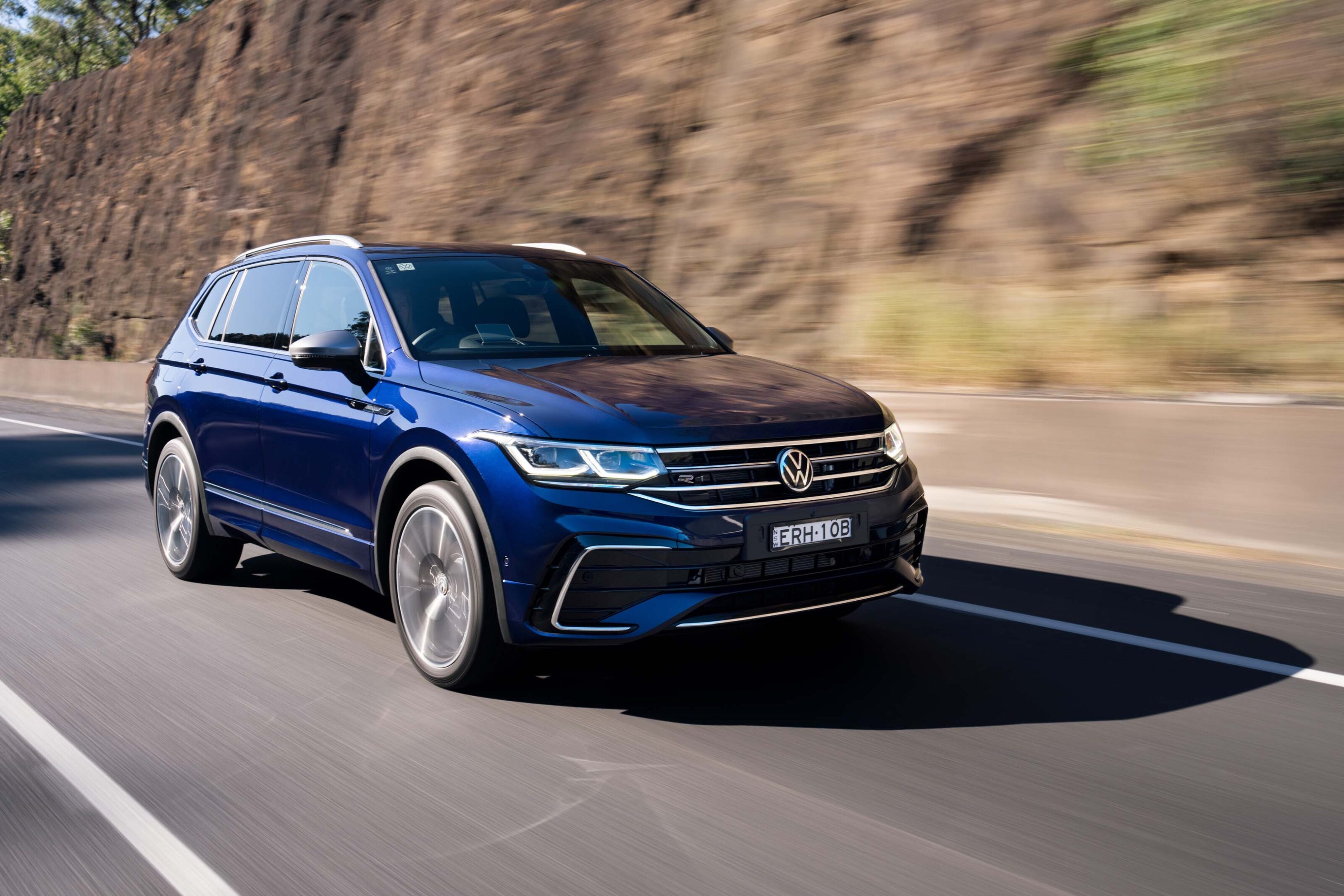
It’s easy to see why buyers like this engine. It moves a big, 1773kg car with impressive enthusiasm.
Obviously, that kind of power is extremely useful around town to break into traffic and with a reasonable if not astonishing amount of torque, performance won’t suffer too much as you load up with people and things.
You still know it’s a dual-clutch, of course, with the occasional short rollback on a hill (caught by auto-hold if you’re that kind of person, which I’m not) or hesitation. Sport mode takes away the latter but also fails to be one of those obnoxious sport modes that just holds lower gears for too long.
With the bigger 20-inch wheels, the reasonably plush ride of the Elegance suffers a little on poor surfaces, more so if you go into Sport mode on the adaptive suspension. It won’t throw a filling or unstraighten your spine, but the R-Line is slightly busier and concrete roads are a bit noisy.
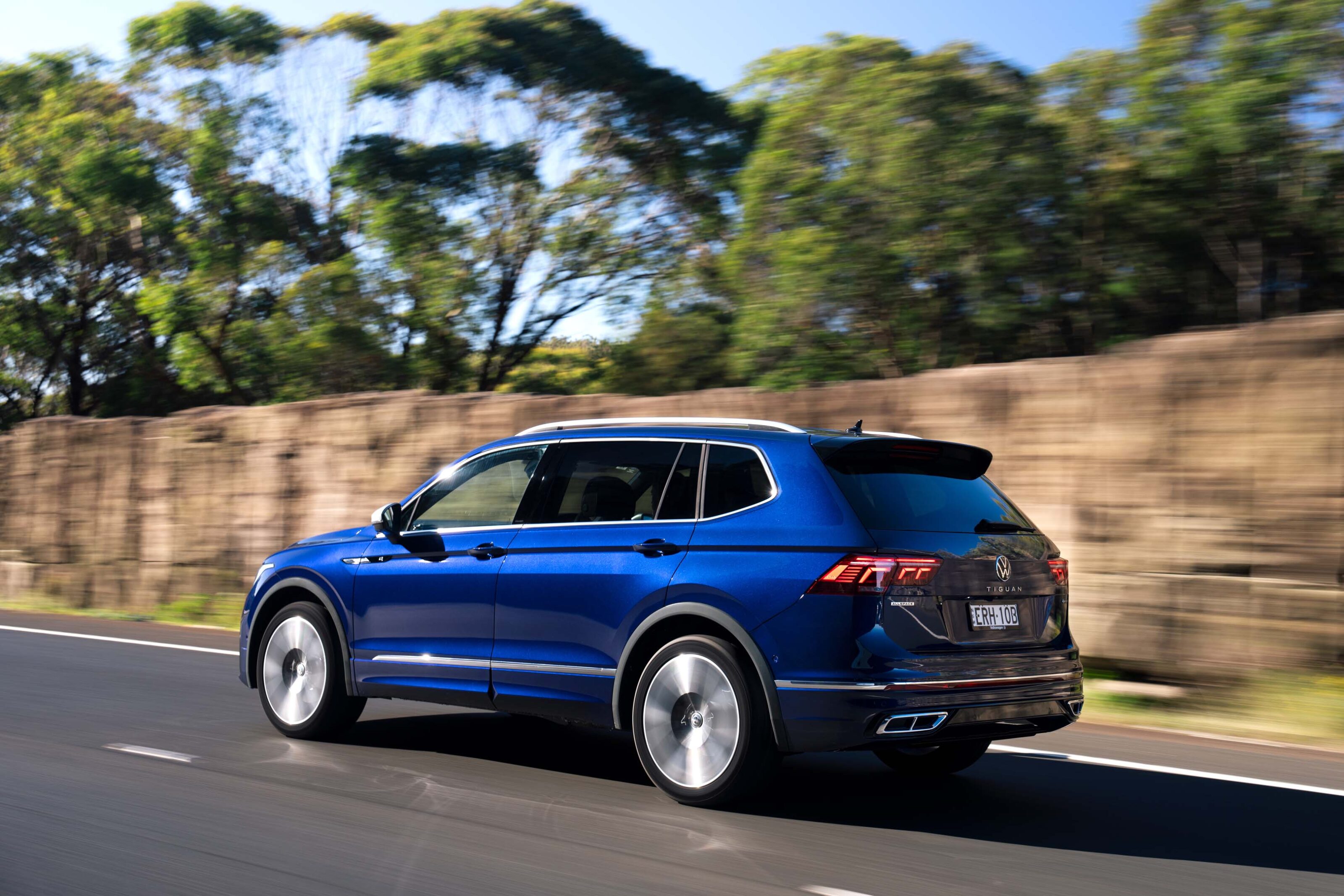
If it needs saying, those huge wheels will not be happy campers off-road, so set your sights on sensible camping trips on graded dirt roads rather than anywhere too challenging.
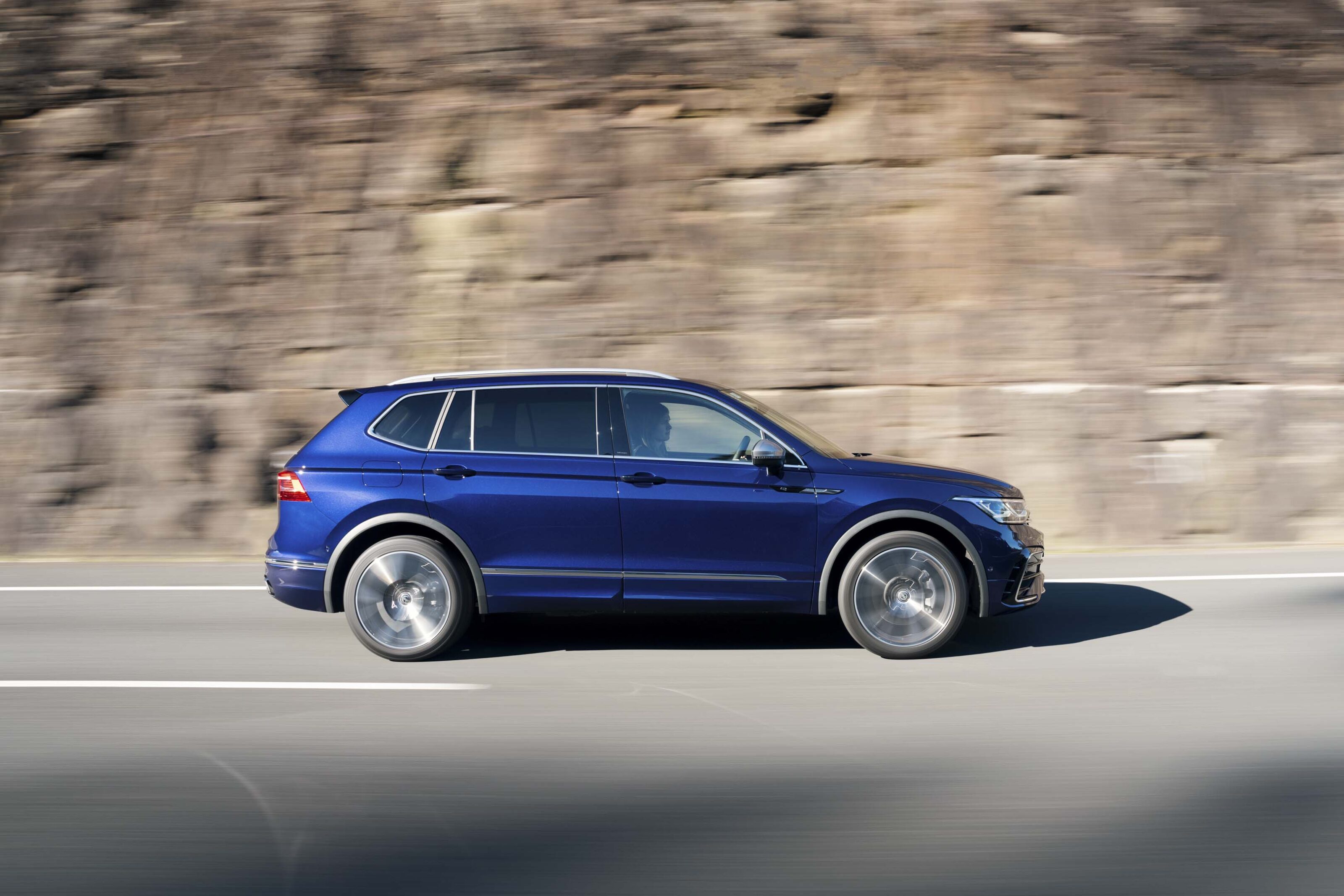
The Tiguan is an impressive car in either wheelbase version and really, the Allspace doesn’t feel much different to drive than the five-seater, so that’s a big win.
VW claims the Tiguan Allspace R-Line will use 95 RON at the rate of 8.6L/100km on the combined cycle.
The week I had the car for included the launch activity and a number of other drivers as well as a fairly sedate week running backwards and forwards doing errands and the dash readout yielded a 10.2L/100km reading.
Ownership
Volkswagen offers a five-year, unlimited kilometre warranty that is on the pace, beaten only by Kia and Mitsubishi.
Your dealer will offer you the opportunity to pay for your servicing up front with three or five-year service plans. For the R-Line, you’ll pay $1650 for three years and $2950 for five. Both plans offer double-digit savings over pay-as-you-go.
You’ll need to return to the dealer every 12 months or 15,000km.
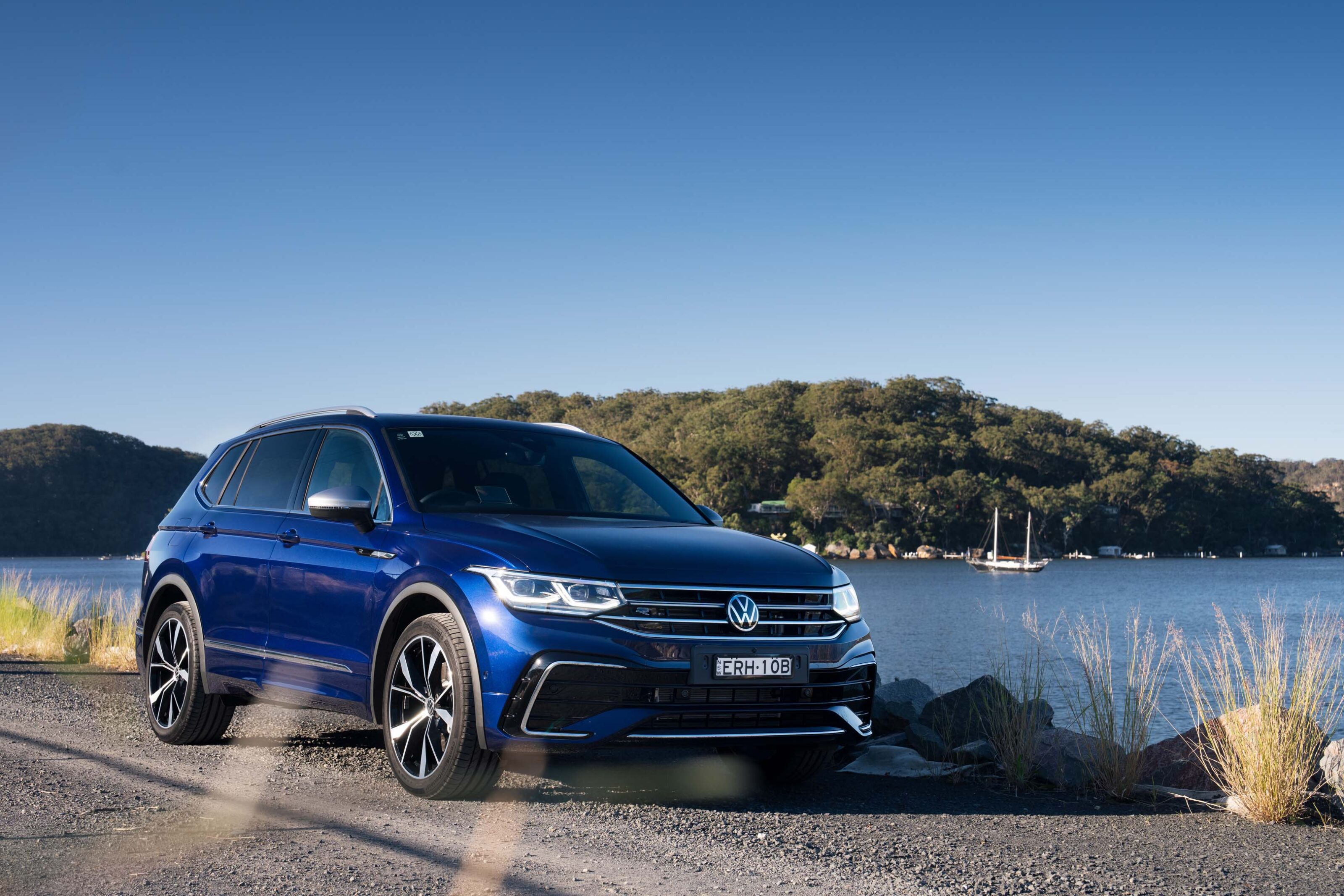
VERDICT
The R-Line is a lot of money, putting you over sixty grand to get it on the road. Despite its official large SUV classification, it’s still dimensionally a mid-size SUV, albeit with two small jump seats to make it a seven-seater or, in truth, a 5+2.
It impresses with its excellent drivetrain, excellent (if variable depending on build date) equipment level and a great cabin.
It looks great, maintains a small footprint and does it all just as well as the short-wheelbase Tiguan that remains the benchmark for the class.
This update isn’t massive but does push a lot more technology into the list; it’s just a great pity that there isn’t a hybrid or PHEV option, which would make it even quicker and more frugal.
It’s not cheap, especially after a price rise in the order of five per cent, but unfortunately, that’s the life of a car buyer in 2022 – cars are expensive and scarce.
So if you’re going to get one, you may as well get a good one.
It looks great, maintains a small footprint and does it all just as well as the short-wheelbase Tiguan that remains the benchmark for the class.
Related video
2022 VW Tiguan Allspace 162TSI specifications
As Australia passes the halfway mark in its first lockdown-free year since 2019, the nation’s road toll is slowly creeping back up beyond its previous levels.
States such as Queensland and Tasmania have so far recorded more deaths on roads this year than in 2021, with the latter posting 52 fatalities in the 12 months until May 31 – a jump of 21 over the year prior and more than its most recent peak of 35 deaths in 2018.
Last year, the national road toll rose from 1110 to 1126, with all states bar New South Wales, Tasmania and the Northern Territory reporting an increase over the heavily-locked down 2020.
With Tasmania facing an increase of more than 70 per cent compared to 2021, Assistant Minister for Infrastructure and Transport Senator Carol Brown has called for road users to do more to keep themselves and others safe.
“Before we put this down to the increasing number of drivers on our roads after COVID-19 lockdowns – our road toll was 30 in 2019 and 35 in 2018,” she said in an opinion piece for The Examiner.
“But as we do emerge from lockdowns and home-based work, and particularly with school holidays starting across the country, it’s an important time to remind ourselves of the basics that keep us safe on the roads.
“Speed limits are set after careful consideration of the environment and the vehicles that will be using the road. Our beautiful Tasmanian wildlife can also stray onto our roads at any time creating additional risk, so it is vitally important we stick to the speed limit.
“Mobile phones, our stunning scenery and even conversations with friends can distract you from driving. A moment’s inattention can have dreadful consequences so please keep your eyes, and mind, on the road.
“It is great that more Tasmanians are getting out and seeing our beautiful state, but make sure you are properly rested before every trip. Driving while tired can be the same as driving after a few drinks; your reaction times are slower, which affects your ability to handle unexpected incidents.”
Senator Brown also reaffirmed the Federal Government’s ‘Vision Zero’ target of no deaths or serious injuries on Australia’s roads by 2050, doing so by implementing the National Road Safety Strategy 2021-2030.
“The Albanese Government is working to reduce the road toll Australia-wide, engaging closely with state, territory and local governments, as well as other stakeholders,” she added.
“We are also supporting a range of projects that are examining and remediating the contributors to road accidents; from safety awareness and innovation activities, to upgrading driver reviver sites and providing over $3 billion for the fast roll-out of lifesaving treatments on rural and regional roads, as well as greater protection for vulnerable users in urban areas.
“No deaths on Australian roads by 2050 is the Albanese Government’s Vision Zero, but we all need to play our part. Drive so others survive.”
The Government’s Vision Zero target was previously criticised by the Australian Automobile Association last year, as Managing Director Michael Bradley claimed an increase in the number of road fatalities was a reflection on the “chaotic national approach to road safety”.
A report released by the Joint Select Committee on Road Safety earlier this year found rural roads to be a major factor behind Australia’s rising toll, with the National Rural Health Alliance saying: “Upgrading, sealing, and regularly maintaining the quality of roads will play a significant role in reducing people’s risk of injury.”
UPDATE, January 2023: New Qashqai driven in Australia!
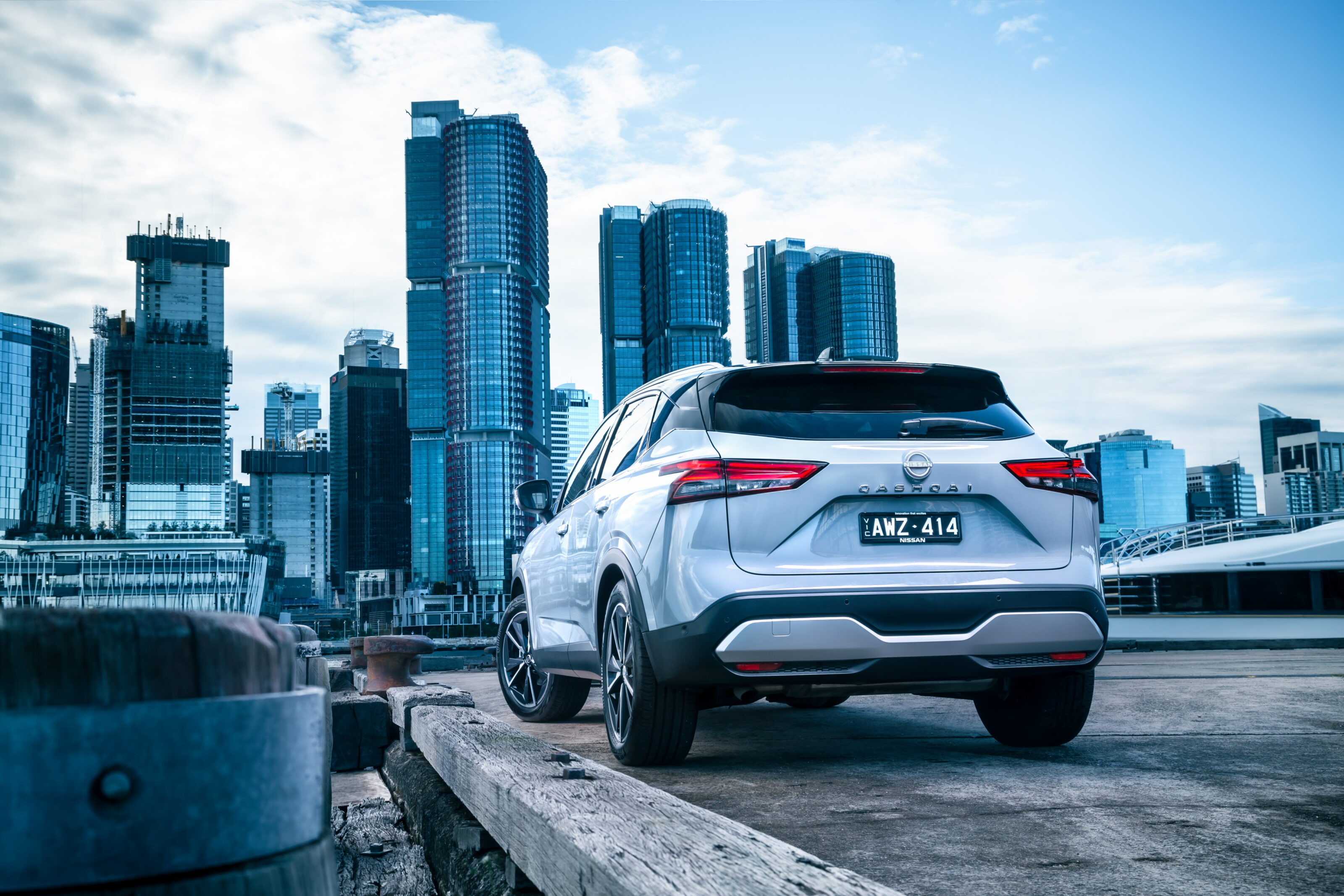
After pricing was announced early in 2022, the new-gen 2023 Nissan Qashqai is finally in Australia – and we’ve driven it! Get our full story at the link below.
July 4, 2022: 2023 Nissan Qashqai Australian pricing and features
The third-generation 2022 Nissan Qashqai will launch with four variants when it arrives in Australia later this year, the manufacturer has confirmed.
Having originally slated a first-quarter arrival for the new Qashqai, Nissan has since pushed the date back to the end of 2022, with the first examples set to arrive in driveways before the new year.
Initially arriving with just one powertrain available in the form of a new 1.3-litre turbocharged petrol, it’s tipped Nissan’s Qashqai e-Power hybrid could land locally next year.
Read our pricing and features story by clicking the link below.
July 19, 2021: New model tipped to arrive in Australia early 2022
Nissan Australia has announced the new, third-generation Nissan Qashqai will arrive in local showrooms from the first quarter of 2022.
For the first time in the Qashqai’s history, electrified powertrains will be available thanks to its shared Renault-Nissan CMF-C architecture, mating a 12-volt mild-hybrid system to a 1.3-litre petrol engine – although Nissan Australia hasn’t confirmed whether the 1.5-litre range-extender hybrid will be available locally.
The Qashqai will be available in a range of eight paint finishes with five two-tone colour options for the panoramic roof, bringing 13 total exterior combinations for the model range.
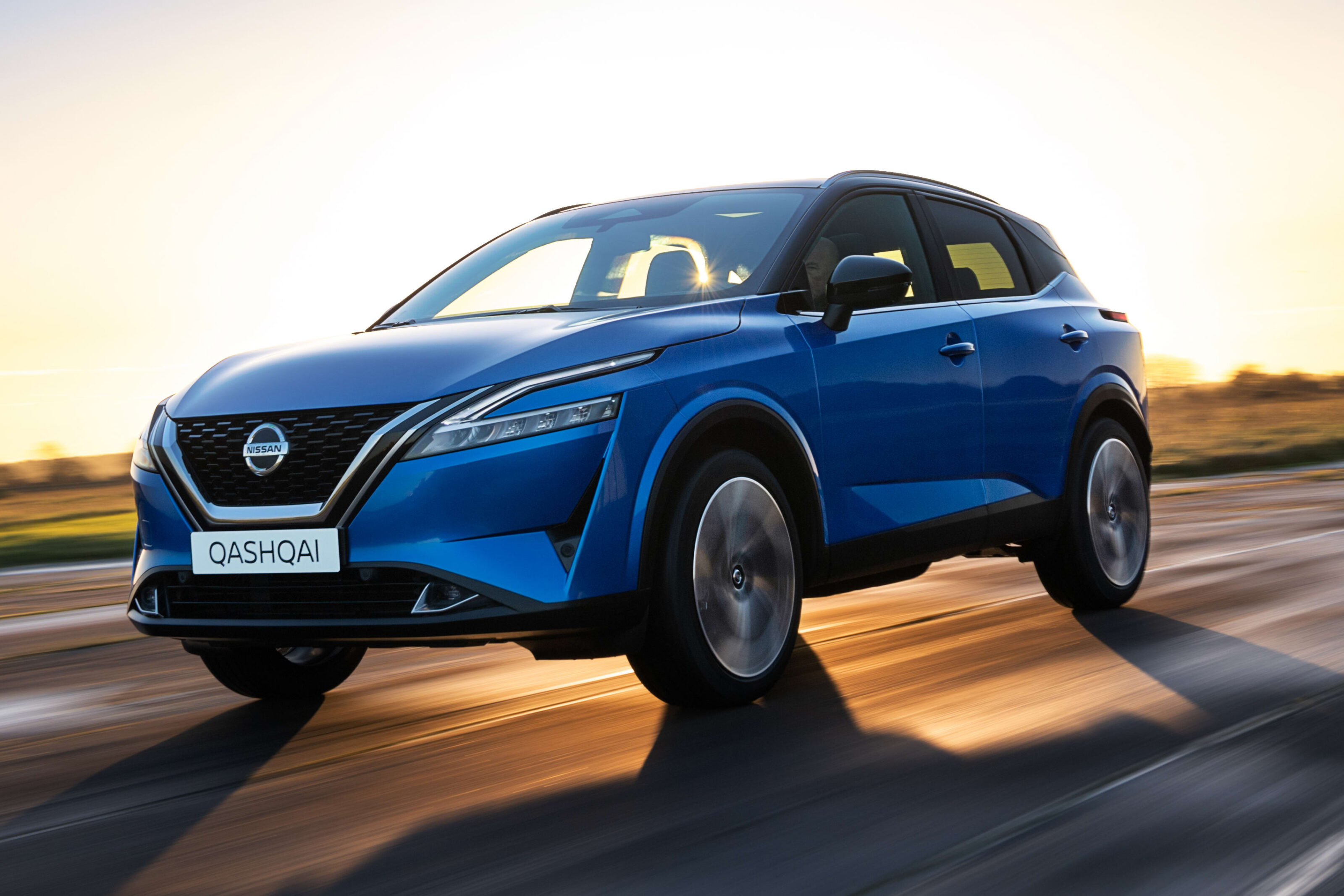
Although no examples have arrived in Australia, Phil McNamara of sister brand Car has tested the latest model in the UK, getting behind the wheel of the third-gen crossover which is aimed at getting Nissan into the top-five of small SUV sales in Australia.
July 5, 2021: 2022 Nissan Qashqai first drive
The Nissan Qashqai was reborn in February with the reveal of an all-new, third-generation that will launch Down Under next year – but exactly when remains a mystery for now.
But is it worth the wait? Phil McNamara takes the Qashqai out on British roads for this first-drive review.
Read our international first drive review using the link below.
The story to here
February 18, 2021: Third-generation Nissan Qashqai revealed
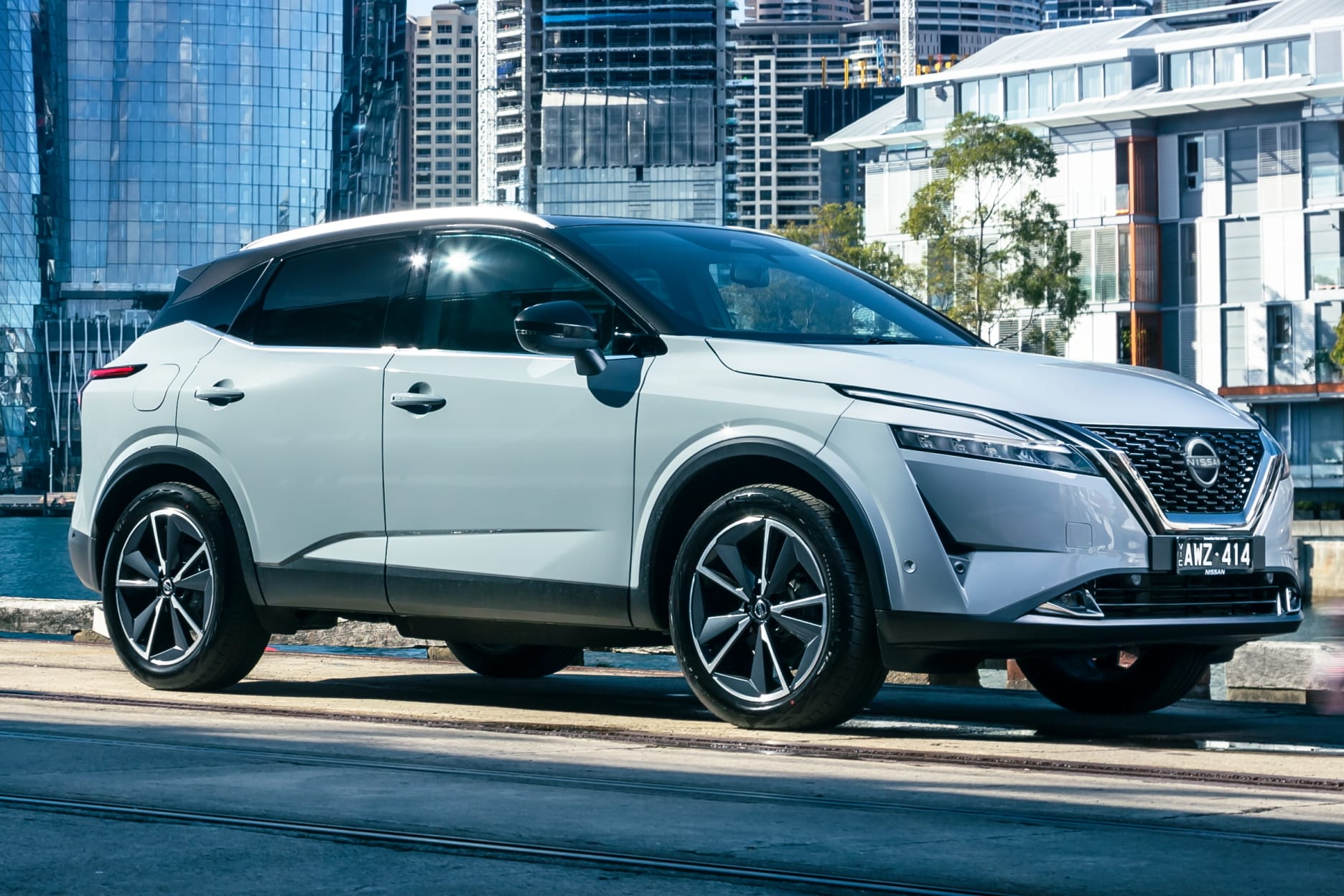
Nissan has finally peeled back the camouflage on its all-new Qashqai, debuting the small SUV to the world with official details on its new third generation.
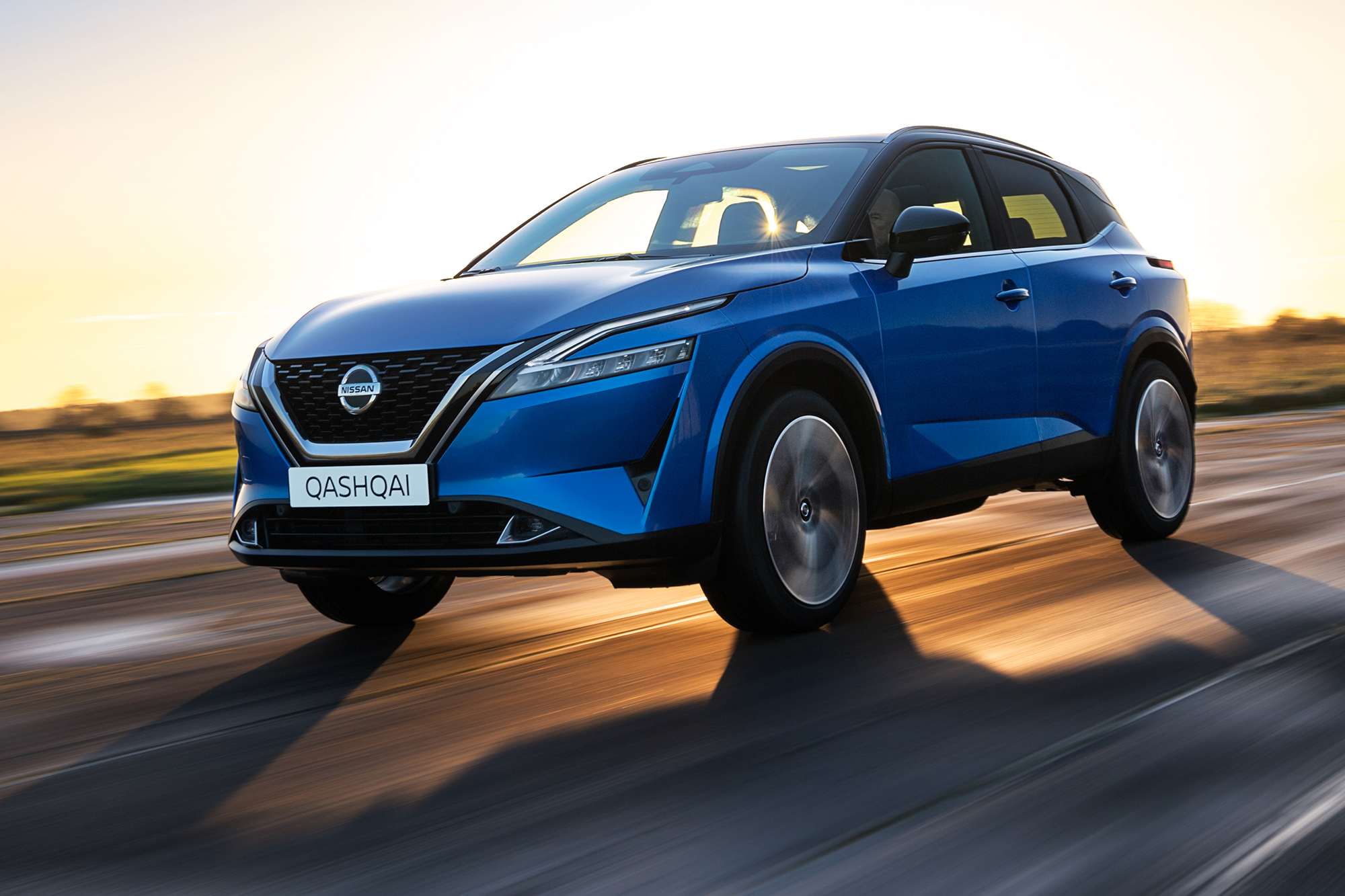
Completely redesigned on a new platform dubbed CMF-C, the Qashqai’s underpinnings increase the wheelbase by 19mm and overall length by 31mm. It is also 29mm wider, to help visually balance a 30mm height increase.

Its look is familiar. Even Nissan says the new Qashqai is a more muscular, sharp and modern take on “unmistakable” styling, which it developed in its UK design studio.
As such, its signature chrome V-motion grille returns, the beltline still climbs towards the rear, the head- and tail-lights wrap around like before, while plastic wheel arches return under a similar rear-raked silhouette.
Now, however, a larger V-motion grille features a secondary chrome pinstripe. And as we’ve already seen, the new Qashqai features LED headlights split in a V-style with boomerang-style daytime running lights. Higher grades also score LED turn signalling.
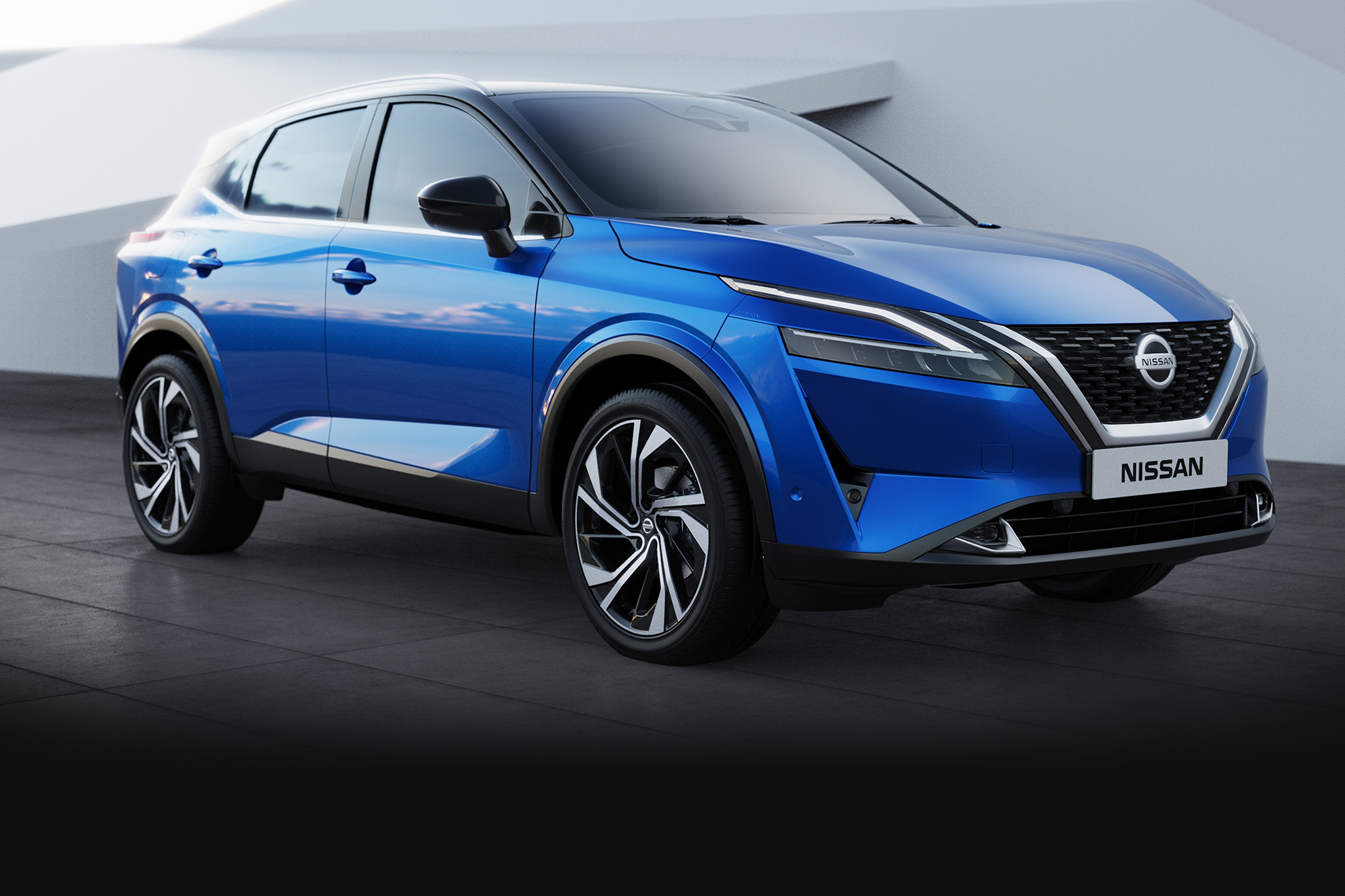
Another first for the Qashqai includes optional 20-inch wheels finished in a diamond-cut design, complementing more angular character lines.
More rounded surfaces also feature on both front and rear bumpers, while there’s also a ‘floating’ roof design above black-finished body pillars.
A black roof is available with four of the 11 body colours, alongside a gun metal roof on black cars.
Stepping up, inside
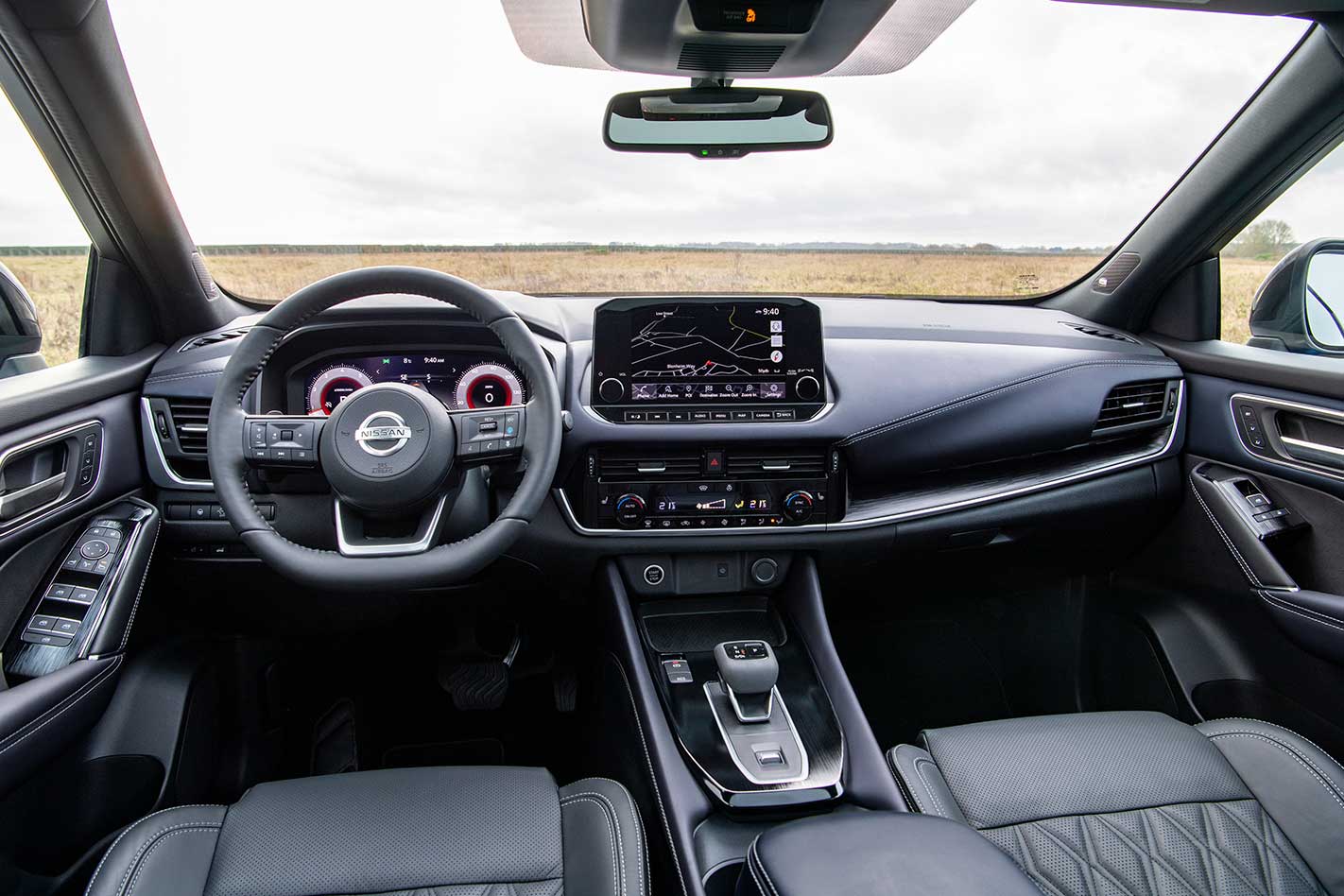
Within the new Qashqai is a more upmarket cabin with higher-quality finishes, upgraded technology and sleeker design that follows suit with the new X-Trail and Pathfinder.
Like its stablemates, the Qashqai sports a standalone tablet-style infotainment screen, measuring 9.0 inches, loaded with smartphone mirroring and in-car Wi-Fi.
A new 12.3-inch LCD cluster debuts behind a new steering wheel, capable of displaying all driving information on top of a “Kiriko” cut glass background graphic.
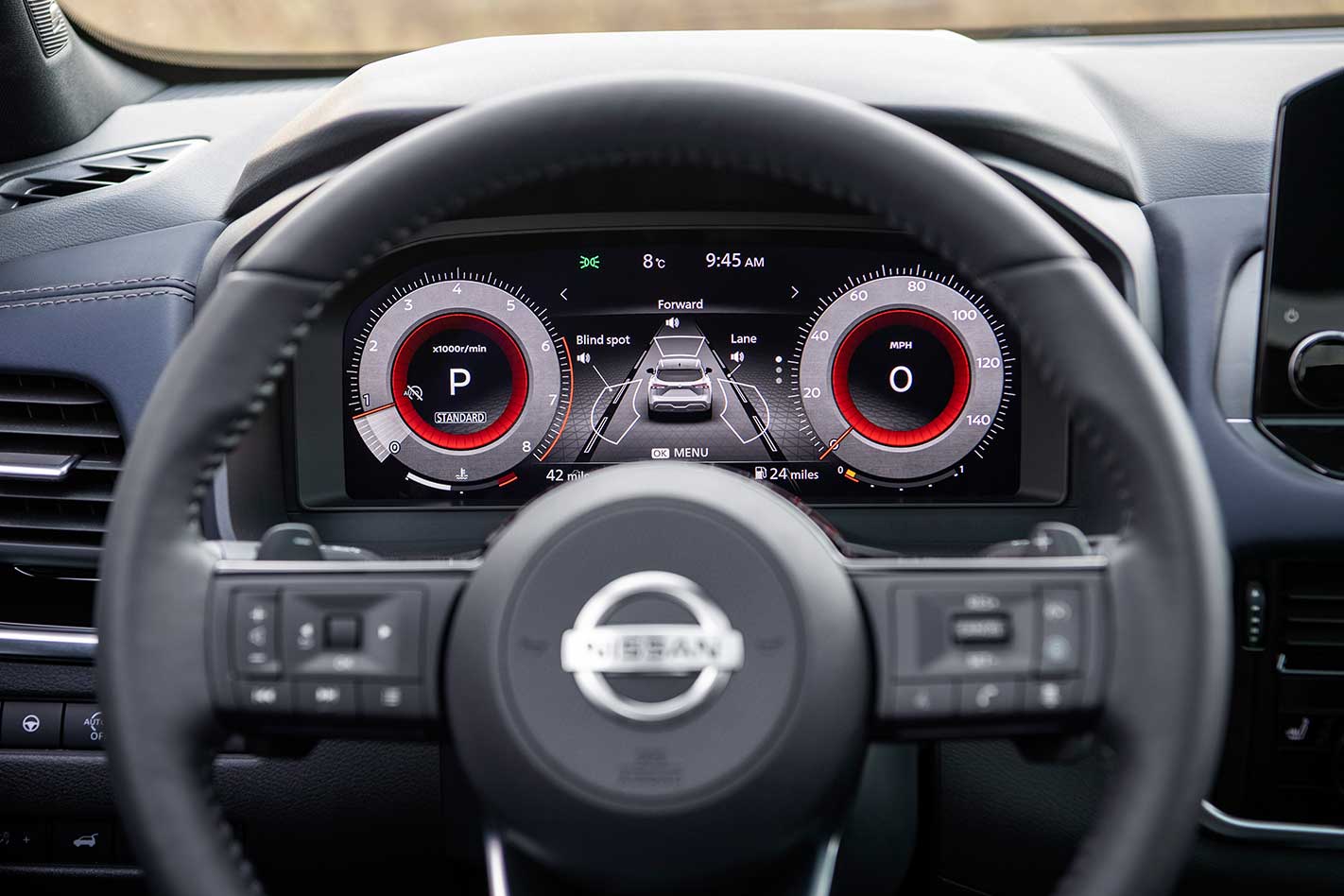
Other technology includes a new 10.8-inch head-up display that can shows navigation and road information, while USB-A and USB-C charging ports are placed within the centre console box.
Nissan says rear occupants now enjoy 28mm extra knee room while headroom has grown 15mm. Drivers, meanwhile, are claimed to look through a wider opening angle on the windscreen.
Safety has been overhauled with the new Qashqai finally welcoming AEB, smart cruise control and autonomous stop-start driving, all within ProPilot driver assistance which adds a full suite of active safety technology.
There’s also a central airbag upfront to keep front occupants apart during a crash.
Performance and handling
Driving the new Qashqai are a range of electrified powertrains, kicking off with a 12-volt mild-hybrid system complementing a carried over – and updated – 1.3-litre petrol engine offered with a six-speed manual.
Depending on the model, front-wheel-drive Qashqai variants can have the 1.3-litre petrol engine with either a 103kW/240Nm or 116kW/260Nm tune.
Four-wheel drive or CVT automatic-equipped variants are only available with a higher 116kW/270Nm output grade.

Above this is Nissan’s range-extender hybrid variant, using what it calls E-Power technology. Based on a 1.5-litre petrol engine, it exclusively charges a battery which then powers a 140kW/330Nm electric motor providing drive.
To balance the added weight from these new battery-based powertrains, Nissan has invested heavily into light-weighting its platform and has shaved 60kg from the Qashqai’s body-in-white.
Nissan’s previously outlined front-wheel-drive cars will score MacPherson strut front suspension and a torsion beam rear.
Meanwhile, all-wheel-drive cars score a more advanced multi-link setup up back, promising better handling and improved ride.

When is it coming here?
It’s too early for Nissan to share Australian market details, with the car debuting only in Europe for now.
However, given deliveries in Europe are slated for mid-2021, we understand Australia might not receive the updated Qashqai until next year in 2022.
Snapshot
- Australian Motoring Services takes a 100 per cent stake in Chargefox
- Local network to grow to 5000 plugs by 2025
- Over 500,000 charging sessions completed so far
Electric vehicle charging business Chargefox has been acquired by Australian Motoring Services, a consortium of the country’s biggest automotive clubs.
Under the banner of Australian Motoring Services (AMS), the group – which includes clubs such as the NRMA (New South Wales), RACV (Victoria), RACQ (Queensland), RAC (Western Australia), RAA (South Australia) and RACT (Australian Capital Territory) – has increased its stake in Chargefox to 100 per cent from 40 per cent, buying out the existing shares held by Jet Charge and Cogent.
Chargefox has reaffirmed its plans to undertake an aggressive strategy, which will result in more than 5000 plugs in operation by 2025 with 2000 of those to be fast and/or ultra-rapid chargers – a massive increase over its current network of 900 individual chargers.
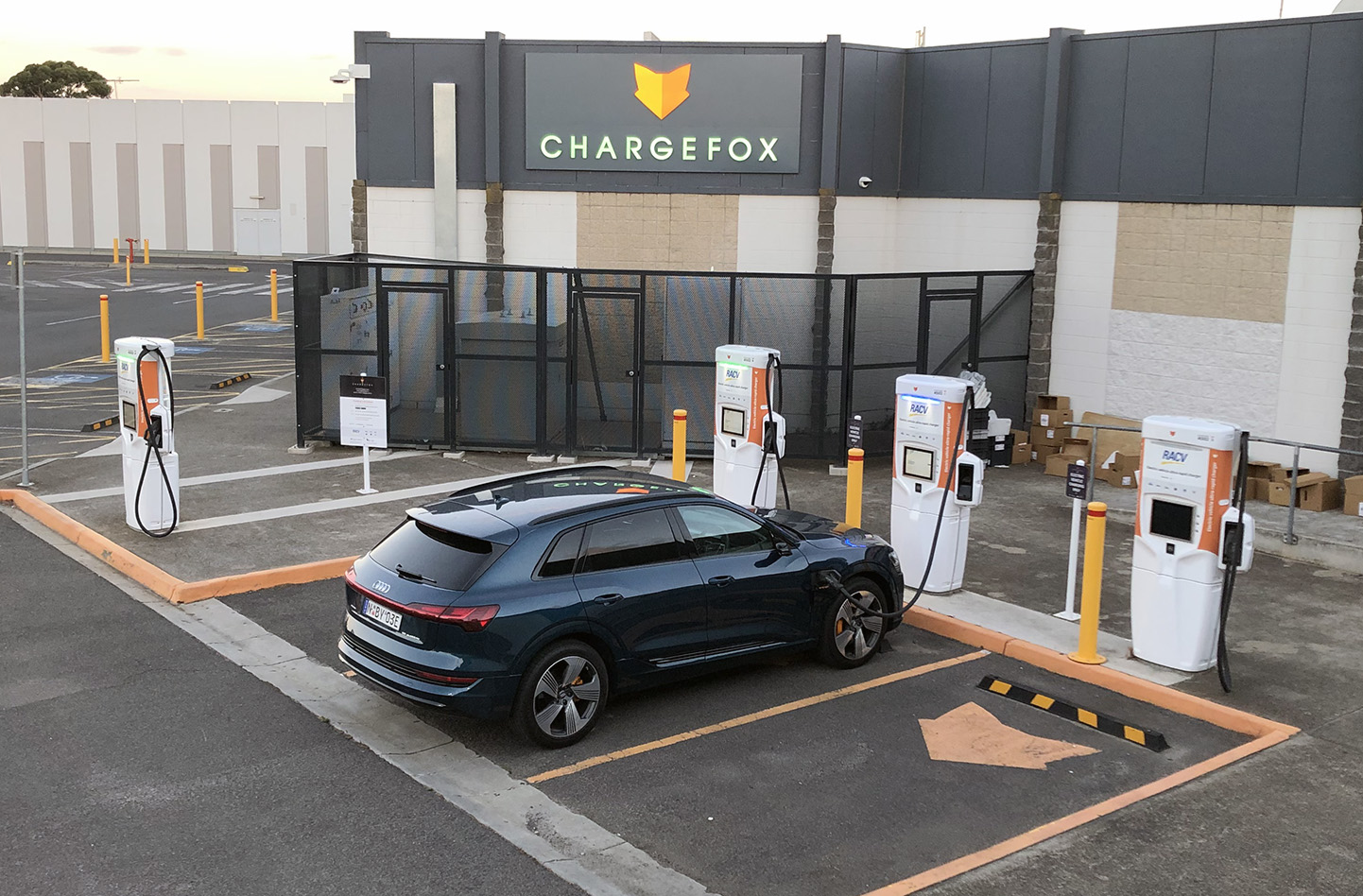
Reducing Australian transport emissions to zero remains as a critical target for Chargefox, with the company claiming it has “powered more than 14 million carbon-free kilometres and abated more than 4000 tonnes of CO2 (equivalent to more than 2 million kilos of coal burnt)” since its inception in 2017.
“The accelerated rollout of Chargefox’s network has broad-reaching benefits, as it allows for further local and long-distance EV travel, giving more Australian EV drivers better access to world-leading charging technology right across the country,” said Chargefox CEO, Marty Andrews.
“The backing of such a strong, longstanding partner and their investment will help us to deliver on this.”
AMS CEO Michael Reed believes Chargefox’s aims align with the group’s, leading to the increased investment.
“We are proud to play a role in supporting Chargefox’s growth,” said Reed.
“We share a mutual goal to reduce road transport emissions to zero and support the growing community of EV drivers across the country,” said Mr Reed.
“We continue to see a large number of EVs on the road and the number of Australians who are considering purchasing an EV in the future is growing year on year.
“Combined, we’ll have greater power and opportunity to deliver infrastructure that Australians need to increase the uptake of EVs and therefore reduce road transport emissions.”
In May this year, Chargefox increased its ultra-rapid (50kW to 350kW) charger fees, bumping up from 40 cents/kWh to 60c/kWh.
Snapshot
- VicRoads operations to be privatised
- Learner and provisional drivers will get free licences
- Discounts for safe drivers
The Victorian Government has announced a number of cost-cutting measures for the state’s drivers, as it partially privatises VicRoads.
A 40-year contract has been signed between the Andrews’ Government and a consortium of two super funds — Aware Super and Australian Retirement Trust — and Macquarie Asset Management to deliver the VicRoads Modernisation process, upgrading the state’s road-related IT systems.
Set to inject around $7.9 billion back into the State Government, the cash will go into the Victorian Future Fund to help manage its pandemic debt, although it’s not just the authority set to benefit from the deal.
On top of the 120 jobs expected to be created, learner and probationary licences will become free – saving up to $51.40 in learner licensing and online testing fees, while probationary drivers will save up to $133.30 in license and online hazard perception testing fees.
Safe drivers will also be incentivised, with those who haven’t incurred any demerit points or road safety offences in three years to be given a 25 per cent licence renewal discount.
“This is a win for all Victorians – it means a better experience for drivers and owners of cars, motorbikes, trucks and boats, and continued investment in VicRoads for future generations,” said Treasurer Tim Pallas.
“It’s a terrific start for the Victorian Future Fund, which will deliver major benefits for Victorians as we continue to recover strongly from the shocks of the pandemic.”
However, the decision to privatise a part of VicRoads has drawn criticism from both sides of the political spectrum, with members of both the Victorian Greens and the Liberal Party of Victoria calling out the Victorian Government.
“The sell-off of VicRoads’ licensing and registration function has put the interests of private profit over the public good,” said Greens MP and transport spokesperson, Sam Hibbins.
“The lease, which will not expire until the 2060s, will mean higher fees, lower quality customer service, and less jobs, lower wages, and conditions for workers for decades to come. It will put control over another public asset in private hands.
“It is yet another privatisation by a Government that has the biggest privatisation agenda since Kennett. With the privatisation of Port of Melbourne, the Land Titles Office, public housing estates and now VicRoads, Victorians have a right to know months out from the election what other public assets or agencies are on the Government’s privatisation hit list.
“The Government’s so-called ‘Future Fund’ is a neoliberal economic policy using the sale of public assets and public land to service debt. Even more concerning is that the Government has not ruled out or excluded future fund investments in climate change causing fossil fuels.”
Shadow Treasurer David Davis was equally critical, telling the ABC the deal would eventually lead to higher costs for motorists.
“The Andrews Government is selling off what Victorians own to pay for its record debt, its mismanagement, the cost blowouts on so many of our major projects,” said Davis.
“Don’t be fooled by the Government’s spin. This sale will mean higher prices for licences, registration. It will mean higher costs for commuters. It will mean higher impacts on family budgets.”
The announcement comes less than a week after the Victorian Government confirmed it was increasing its controversial road user charge for zero and low emissions vehicles.
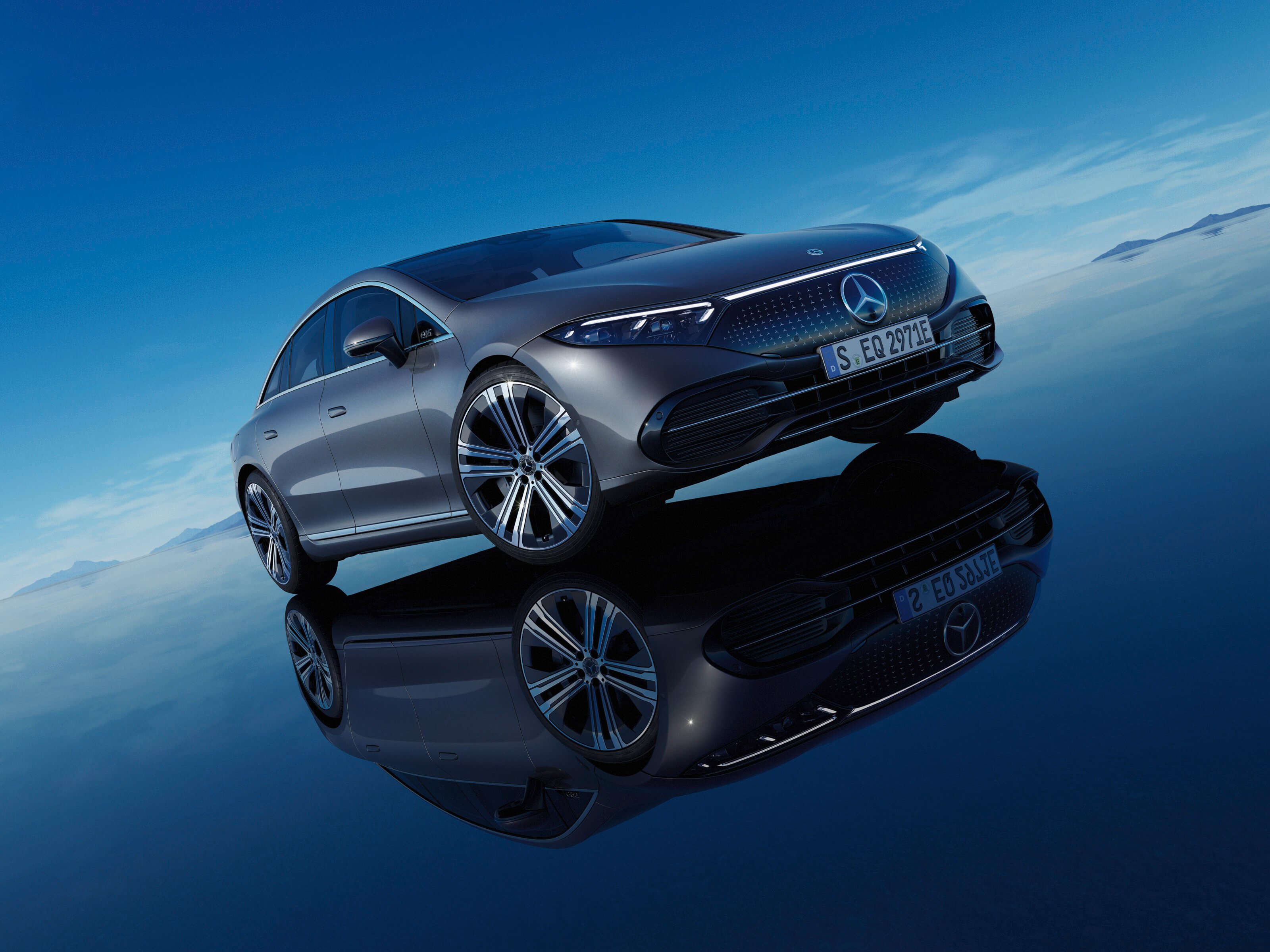
Mercedes-Benz is joining the growing number of premium brands considering broadening its repertoire of subscription services to include hardware features as well as the existing software services.
While the German manufacturer already offers subscription-based access to primarily electronic features, such as applications and Wi-Fi, it’s now looking to broaden the range of items that can be switched on and off at the customer’s request and cost.
Speaking to Wheels, Mercedes-Benz Cars Australia’s PR and product communications manager, Jerry Stamoulis, said Australian customers are “definitely” the type that appreciate the benefits of subscription services in modern vehicles.
“Australians are early adopters of new technologies,” he said. “If something becomes available that they didn’t have at the time of purchase then we think this is a market that would certainly jump at the opportunity regardless of whether it’s hardware, software or whatever it may be.”
In Mercedes’s native Germany, the company is gearing up to offer rear-wheel steering as an option on the new EQS 450 EV that can be switched on and off depending on the owner’s requirements, while BMW has previously announced it is considering doing the same with features such as heated seats – and they won’t be the last.
The concept, in principle, has ruffled feathers for some motorists and lobby groups who don’t see sense or fairness in charging for something that has already been fitted and delivered in the car the customer has paid for.
However, Stamoulis explained that’s not how the system would work. “But they haven’t paid for it,” he said.
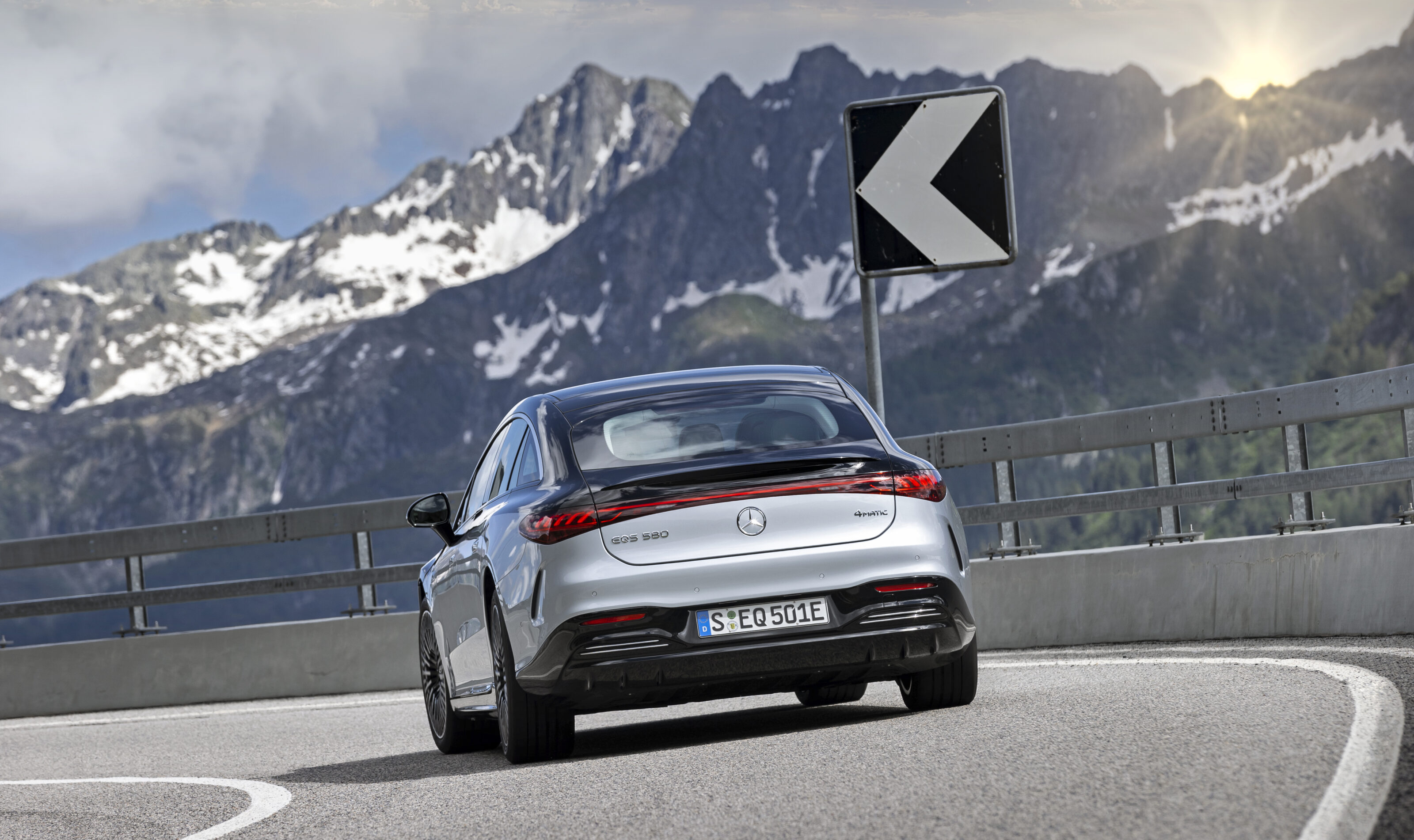
Modern car manufacturing lines are incredibly complex machines and many times more complicated than the cars they construct, especially for premium brands, which must be engineered to accommodate many thousands of optional combinations at the customer’s request.
The more combinations the line is designed to fit during manufacturing, he more expensive each unit becomes in addition to the actual cost of the option, but the subscription service and feature model allows a different approach to building cars.
Instead of introducing many different mechanical and electronic components during the course of the manufacturing process resulting in unique cars rolling off at line-end, each car is constructed much more similarly and the various optional features are simply switched on afterwards.
By producing far more similar cars – if not necessarily identical – the cost per unit can be dramatically reduced according to economies of scale.
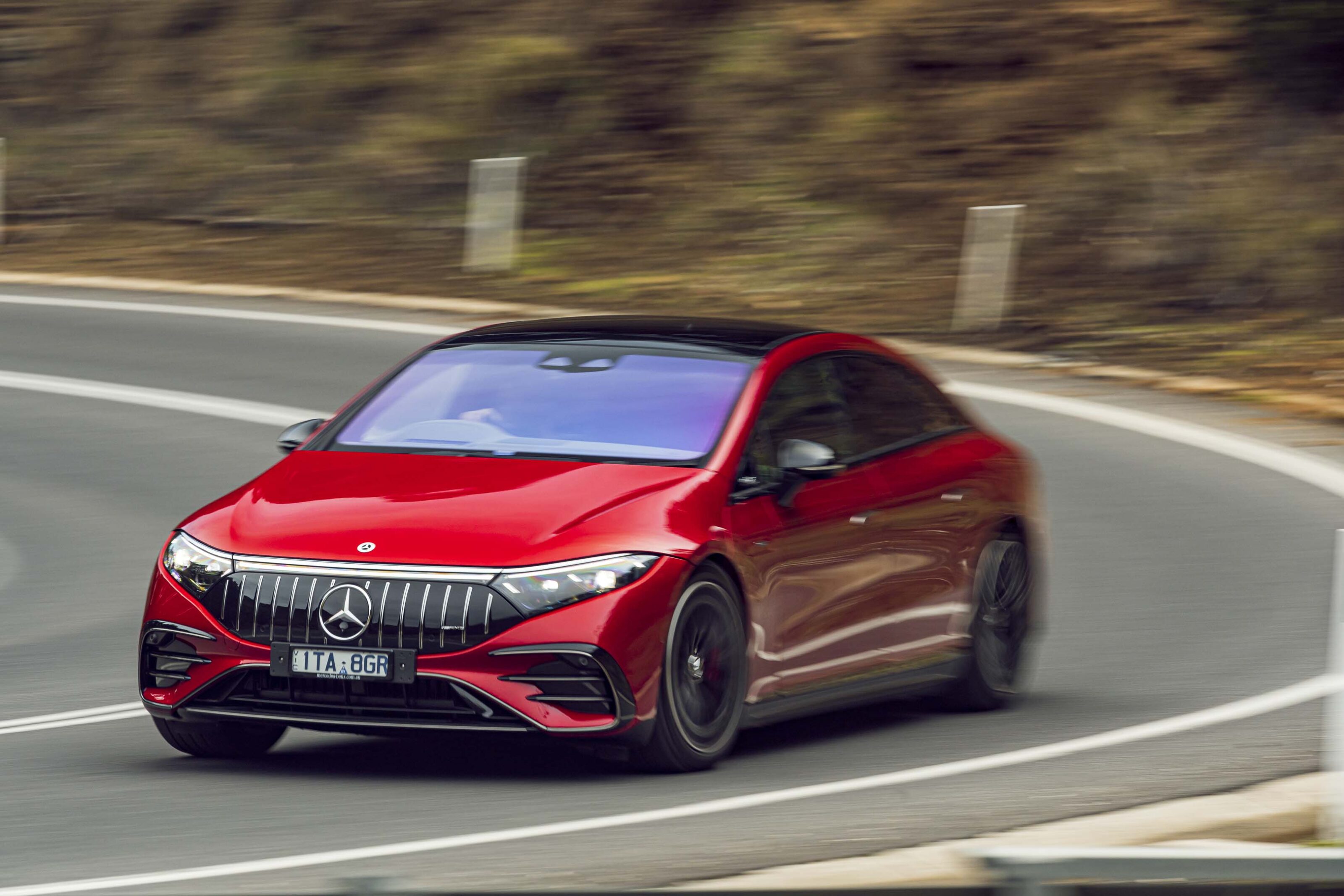
Instead of a handful of customers paying extra for something they already have, Mercedes says a far greater number of its customers will be paying less for the base model and not shelling out for the items they don’t want or need.
The advantages don’t end there, says Stamoulis. When the owner is ready to sell the vehicle, potential new owners will not have to search for a vehicle offering their exact desired specification, with the customisation process available through the vehicle’s entire life.
“The next buyer of that car can then personalise that car to them. It’s more of an opportunity to personalise that car further as your life changes. There’s going to be a lot of people who say ‘I don’t need X,Y and Z,’”
Furthermore, subscription services are particularly useful for all-new models such as the EQS large luxury EV, which is so new to the market that Mercedes-AMG has not yet established the features customers most frequently option into the vehicle, which can then be bundled into better-value packages.
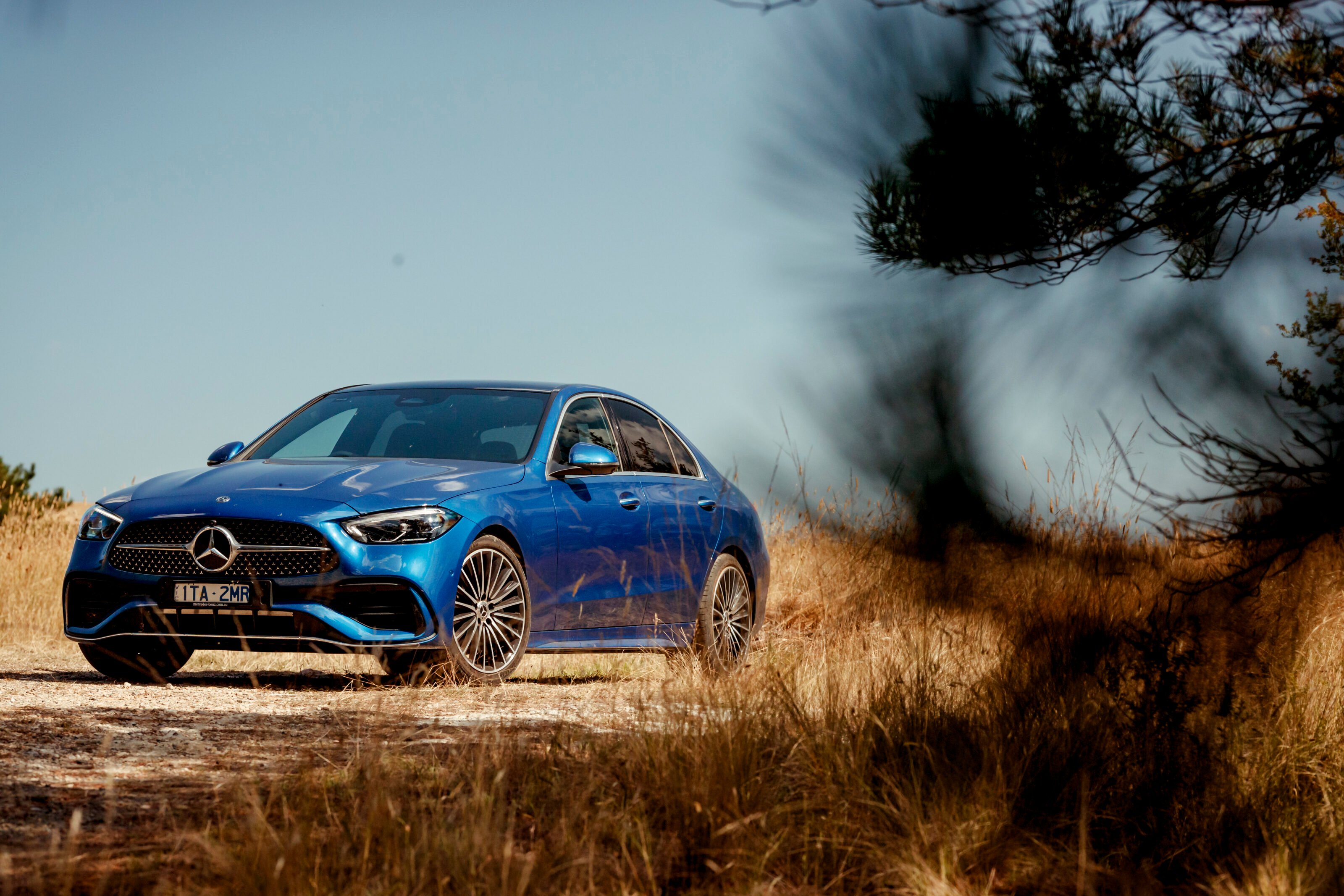
According to Stamoulis, the reason the price of the new Mercedes C-Class has increased for the W206 generation is that the company was able to respond to Australia’s premium-feature demand and include much of the previously optional technology as standard.
“Look at C-Class as a good example,” he said. “A lot of people said we’ve really increased the price of the car. That’s because we’ve got historical data of what people want.
“When we talk about new technology (and models) we don’t have the historical data so we give the customer the option to choose what they want. If we can do that with software then why not?”
If the subscription feature model is a success in more esoteric and all-new vehicles, Mercedes may well apply the strategy to existing and long-standing models such as the C-Class, driving the entry-level back down again.
In the future, optional extras are looking less like tick boxes on paper, and more like check boxes on laptop screens.
Australian Formula 1 star Daniel Ricciardo is the latest driver to take on a side project in the media, reportedly becoming an executive producer on a new series.
Set to be loosely based on Formula 1, the scripted series has been commissioned by streaming service Hulu (owned by Disney) with Temple Hill (Twilight, The Fault in Our Stars, Maze Runner) acting as the production company.
Earlier this month, seven-time World Champion Lewis Hamilton announced his involvement in an Apple-backed film starring Brad Pitt, also centred around Formula 1.
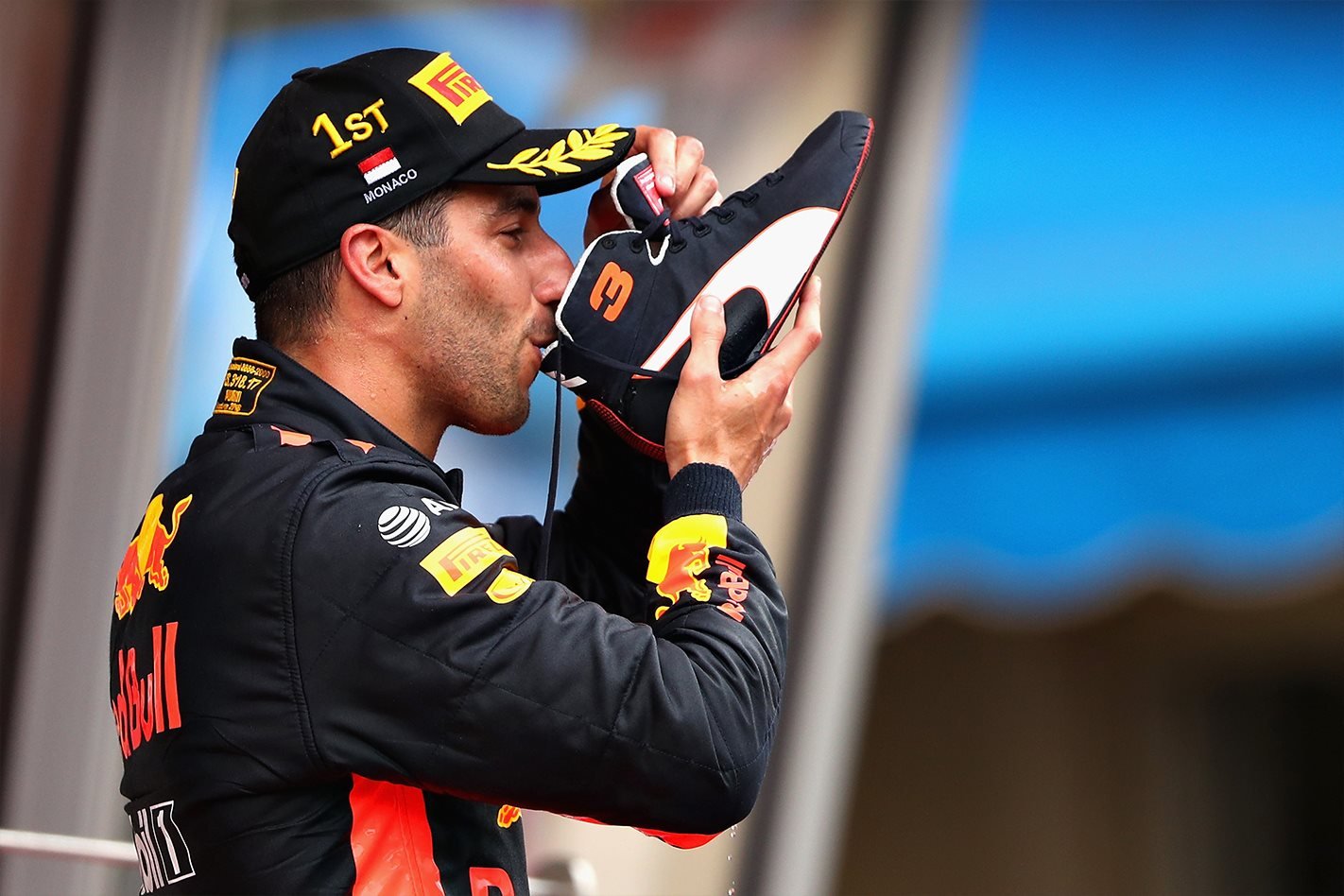
For Ricciardo, the 33-year-old West Australian and eight-time Grand Prix winner denies there’s any rivalry between the competitors as to whose project will turn out best.
“If anyone is like thinking of it is as like competition or something, it’s not at all,” he said to media at this weekend’s British Grand Prix, according to RaceFans.
“Obviously with what he [Hamilton] is doing, now the thing with Hulu with me and Netflix and all that and where the sport’s going, I think it’s actually cool that we’re using the pace of growth in Formula 1 to get into projects like this and push the sport out. So in a way, I see it as like we’re all supporting each other to support the sport.
“I teamed up with Temple Hill, they know what they’re doing in that field so I’ve got my full trust in them. I’m basically going to act as executive producer, but try to steer the ship a little.
“It is fiction, but I’ll try to give as much input that it stays on course and doesn’t go too far away where people are like ‘okay, this would never happen’. So I’m going to try and give the best advice I can when I can.”
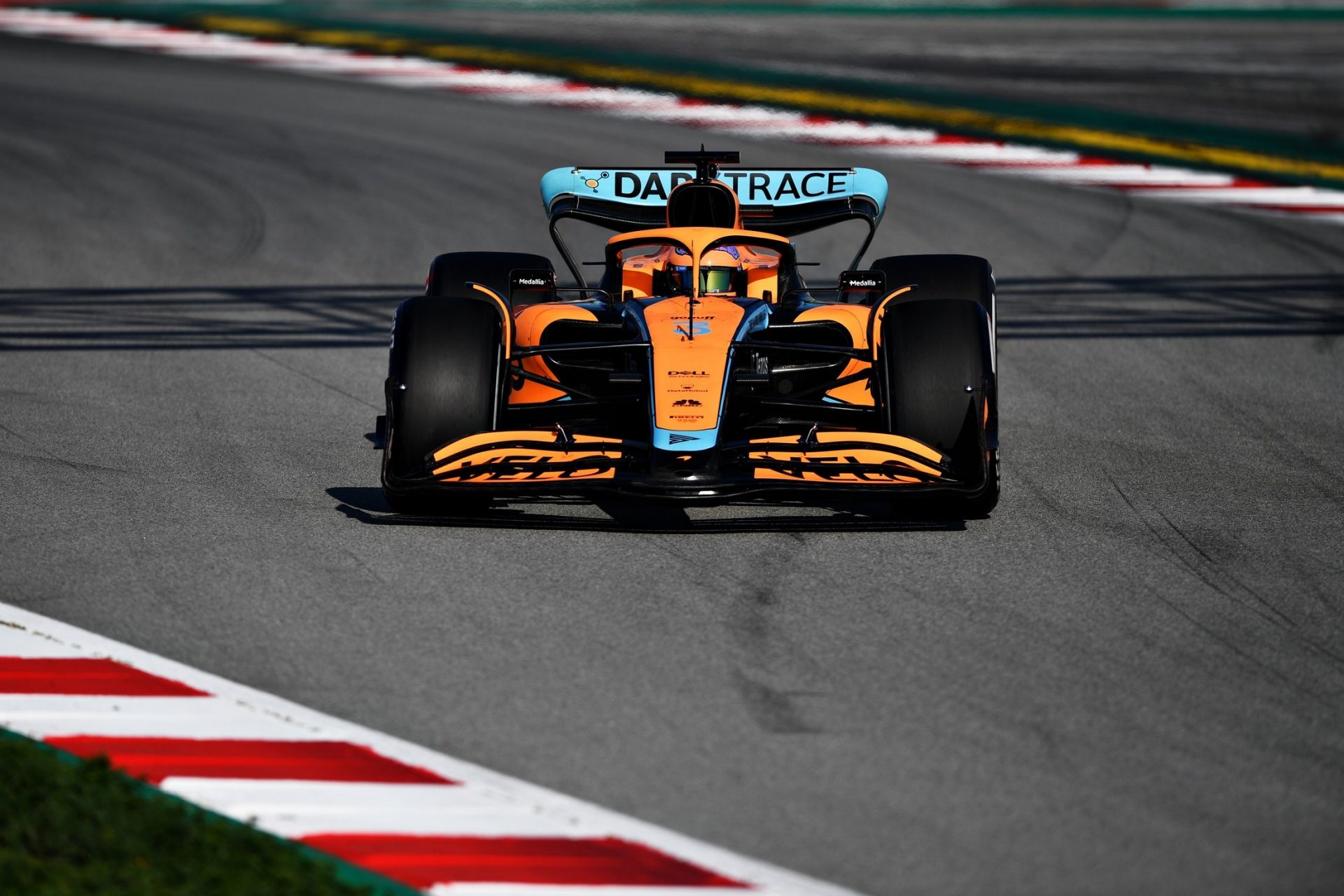
In search of a writer and cast, Ricciardo has ruled out an appearance in his own series, with a Hitchcock-esque cameo off the cards.
“We’re at the point of now just finding a writer. I don’t want to put pressure on for the time thing, but hopefully by the end of the summer that’s all established. Then it should be casting.
“I’m not planning to be in it, so it’s literally me from the outside or from afar. But if they need a good-looking stud to cameo…”
The popularity of Netflix’s Drive to Survive documentary series has increased international interest in F1, reviving the category which was long aimed away from the youth market.
This year’s Australian Grand Prix posted record four-day crowd numbers, attributed to a three-year drought without the race, the “Netflix effect” and Ricciardo finding form last year with a win at the Italian Grand Prix for McLaren.
In a world filled with crossovers of all shapes, sizes, and powertrains, do we need another one? This is a question of particular pertinence to the 2022 Toyota Corolla Cross, which comes from a brand that already offers almost twice as many crossovers and SUVs than it does sedans and hatchbacks.
When it lands later this year, the Corolla Cross will slot right between the C-HR and RAV4. Unlike RAV4, however, the Corolla Cross is based on Toyota’s TNGA-C platform, so it’s directly related to the Corolla sedan and hatch from which it earns its name, as well as C-HR.

It’s designed so that it is visually distinctive from either of its range neighbours, looking a little less futuristic than C-HR and less rugged than RAV4. Aesthetically, it presents itself as a tall Corolla and at first glance of the specifications, the Corolla Cross appears to satisfy the same use case as both C-HR and RAV4.
If one wanted to speculate about the need for a Corolla-based crossover, one could make a valid argument. Take the legendary Corolla name, the proven platform, and make it taller in order to satisfy buyers in one of the most popular segments. Think of it more like a brand extension of Corolla than just another crossover in the line-up.
That’s over-simplifying automotive product planning and whether Corolla Cross will cannibalise sales from the C-HR and RAV4 remains to be seen, but it’s clear that Toyota thinks it will bring new buyers into the fold.

We’ve already heard that when the Corolla Cross does land on our shores, it’ll be available with two powertrains, a naturally aspirated 1.8-litre four-cylinder and a hybrid based around the same petrol engine. For this first drive, we’ve evaluated a North America-spec Corolla Cross in LE Premium AWD trim.
On that side of the Pacific, Toyota has fitted this crossover with a naturally aspirated 2.0-litre four-cylinder engine that produces 125kW at 6600rpm and 203Nm from 4400 to 4800rpm.
Like the Australian-market Corolla Cross, the only transmission available is of the continuously variable (CVT) variety. It is available in front- or all-wheel drive and there is no hybrid option for North America.
Aesthetically, it presents itself as a tall Corolla and at first glance of the specifications, the Corolla Cross appears to satisfy the same use case as both C-HR and RAV4

The front suspension uses MacPherson struts, and while front-drive Corolla Crosses receive a torsion-beam rear suspension, all-wheel-drive models benefit from a multi-link set-up. Steering is by electrically assisted rack and pinion, as expected for 2022.
Brakes are 305mm vented rotors at the front while the rears are 282mm solid rotors with single-piston calipers for all four corners. As with the Corolla hatch and sedan, the parking brake is electronic.
The interior is surprisingly honest to the Corolla nameplate with a design that is evocative of both the sedan and the hatchback. In fact, the entire dashboard looks like it was lifted direct from the car-based siblings and elongated to satisfy the taller cabin height of the Cross.
Some subtle differences can be detected if you’re directly comparing the Cross with either of the lower-slung versions, but that’s a boon for this crossover because the design is clean and ergonomic. Front cabin storage is similar to that of the Corolla sedan and hatch, but is lacking for a crossover of this size.

The rear seat uses a 60:40 split-folding design and when folded, it offers a voluminous 1869 litres of cargo capacity.
With the seats upright, storage under the hatch is a reasonable 736 litres. Upper trims include a folding armrest with a pair of cup holders, as well as a height-adjustable power tailgate.
Most North American models feature a 7.0-inch touchscreen, while the top XLE is fitted with an 8.0-inch unit. Apple CarPlay and Android Auto are standard. The system uses a recent version of Toyota’s infotainment software, but not the latest version that is rolling out across other models.
The interior is honest to the Corolla nameplate with a design that is evocative of both the sedan and the hatchback

As with all modern Toyotas, the Corolla Cross comes with a full suite of standard active and passive safety systems including a forward collision system with pedestrian and cyclist detection, as well as nine airbags for occupant protection.
From the driver’s seat, the tall windows offer excellent visibility in all directions and with the upper trim levels, you’re supported by blind-spot monitoring and a rear cross-traffic alert system. A reversing camera is standard equipment, which makes parking as easy as pie.
The steering wheel appears to be lifted directly from the Corolla sedan and hatch, with identical secondary controls. It’s shaped perfectly and encourages drivers to keep their hands at the ‘nine and three’ position.
As with many modern cars, the infotainment screen is perched atop the dashboard but doesn’t interfere with visibility, and it’s placed square to the dash so is equally accessibly by both driver and passenger.
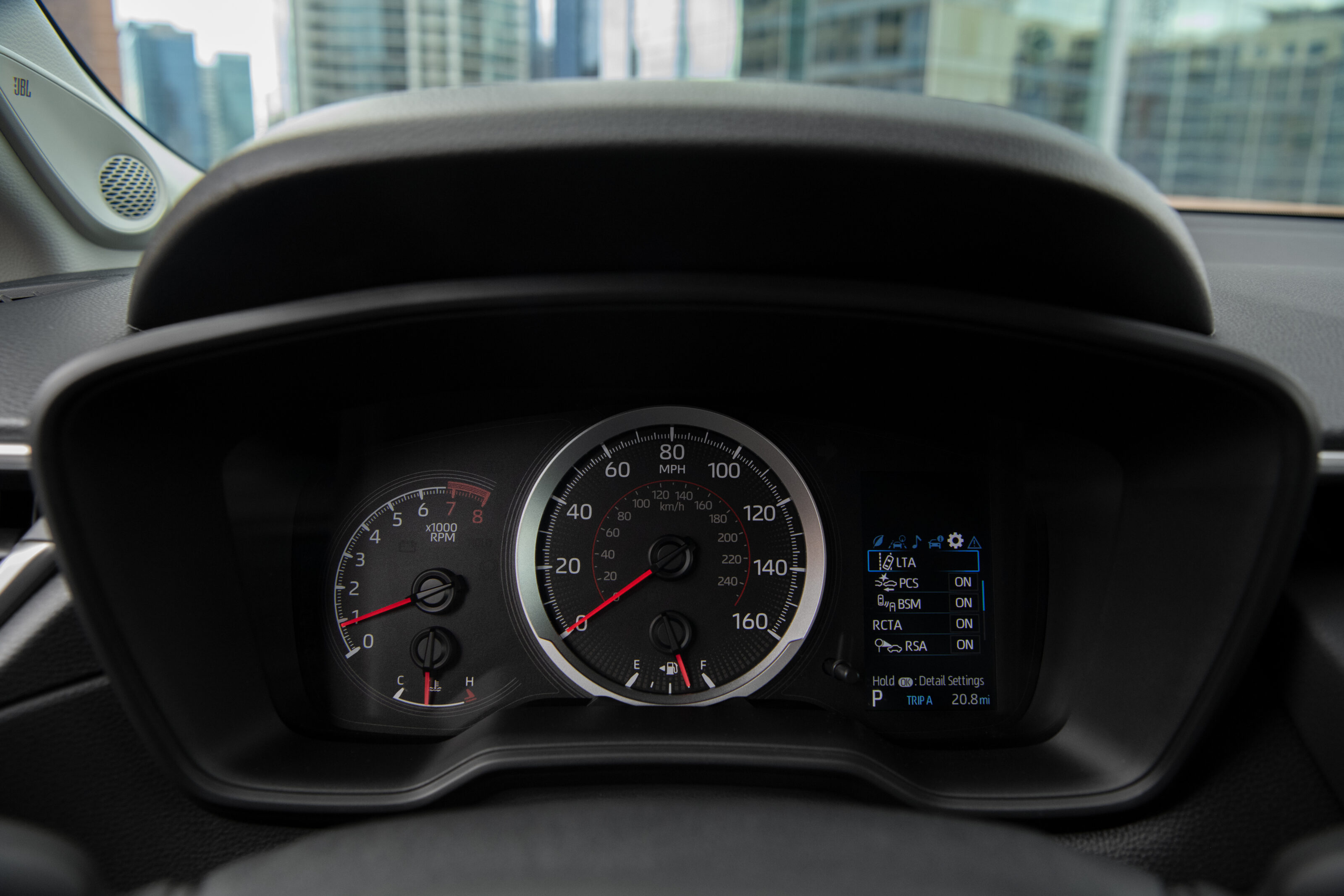
Minimalism is the name of the interior’s game, with simple HVAC controls, all other buttons and switches kept as few as possible and placed in logical locations.
The switches for the electronic parking brake and its auto-hold function are located easily within reach behind the gear selector. Alas, the auto-hold doesn’t remain switched on and must be re-engaged following every restart, which will be a small annoyance for those who spend time in stop-and-go traffic.
For crossover drivers who fancy themselves as techies, Toyota’s infotainment system is best used with the supported Apple CarPlay and Android Auto, particularly with their embedded navigation systems and options for audio programming. Save for accessing the native system for terrestrial radio stations, smartphone-based interfaces are a significant improvement over Toyota’s software.
The 125kW 2.0-litre petrol engine of this North American spec tester is modestly powerful and will only accelerate the 1490kg Corolla Cross from zero to 100km/h in around nine seconds – if you get lucky with the perfect launch.

Undoubtedly some drivers still prefer a traditional automatic to a CVT, but Toyota has programmed some unnecessary faux gear changes when you’re accelerating near full throttle and running the engine to its redline.
To the human behind the wheel, it does feel somewhat reassuring, but when you remember that the CVT will optimise its ratios, the shifts come off as a little forced. The CVT also permits the driver to select virtual gears by sliding the shifter over from drive to its manual mode.
For those of us who enjoy some performance and refinement in our crossovers, the two-litre petrol engine is both raucous and lethargic, certainly better suited to smaller Toyota vehicles. On the other hand, if you’re prudent with the throttle, it will return reasonable fuel consumption of 7.8 litres per 100 kilometres.
What’s impressive about the Corolla Cross is that it drives akin to its sedan and hatch brethren, as if it’s got a similarly low centre of gravity

What’s impressive about the dynamics of the Corolla Cross is that it drives akin to its sedan and hatch brethren, as if it’s got a similarly low centre of gravity. Alas, that isn’t the case but from the driver’s seat, handling is better than the average crossover, inspiring some confidence.
Only near its handling limits do the dampers give up to reveal inadequate body and wheel control, but within normal driving conditions, the Corolla Cross provides capable ride and handling.
Over large road imperfections, suspension crash-through is intrusive, with sound and vibrations transmitting themselves into the cabin.
Given it’s electrically assisted, the steering is light but doesn’t feel over-boosted and offers only limited feedback to the driver. Braking, on the other hand, is quite good for a crossover, providing the driver with plenty of confidence in terms of both stopping power and control.

VERDICT
With so many crossovers already available under the Toyota umbrella, it’s challenging to understand the need for another one in the range.
However, the Corolla Cross is a natural move up for Corolla sedan and hatchback buyers. Beyond the utility inherent in the crossover layout, a driver moving from the sedan or hatch to the Corolla Cross will find themselves perfectly at home with similar ergonomics, features, and dynamics.
Certainly, Toyota hopes that the Corolla Cross will bring new buyers to the marque, but time will tell whether this all-new crossover will be successful.
2022 Toyota Corolla Cross LE AWD specifications
| Body | 5-door, 5-seat small SUV |
|---|---|
| Drive | all-wheel |
| Engine | 1987cc I4, DOHC, 16v |
| Bore/stroke | 80.5 x 97.6mm |
| Compression ratio | 13.0:1 |
| Power | 125kW @ 6600rpm |
| Torque | 203Nm @ 4400rpm u2013 4800rpm |
| 0-100km/h | 9.0sec (est) |
| Fuel consumption | 7.8L/100km (combined/claimed) |
| Transmission | CVT |
| Weight | 1490kg |
| Power/weight | 84kW/tonne |
| Front suspension | MacPherson struts, anti-roll bar |
| Rear suspension | multi-links, anti-roll bar |
| L/W/H | 4474/1824/1649mm |
| Wheelbase | 2639mm |
| Track | N/A |
| Steering | electric assisted rack and pinion |
| Front brakes | 305mm ventilated discs, single-piston calipers |
| Rear brakes | 282mm solid discs, single-piston calipers |
| Wheels | 17 x 7-inch (f/r) |
| Tyres | 215/65R17 (f/r) |
| Price | TBC |
