
An unlicensed learner driver has blown one of the highest blood alcohol readings Victoria Police has on record.
The 23-year-old man was stopped by police in Laverton North in Melbourne’s west on Wednesday night and blew 0.319.
Under Victorian law, learner and P plate drivers must have a zero blood alcohol reading, while those with a full licence must come in below the 0.05 limit.

The L-plater, who was from the surrounding area, has been charged with drink driving and other traffic related offences, and his car impounded for 30 days.
He was also arrested over an outstanding warrant and later released on bail.
“Driving a vehicle requires a high degree of attention and vigilance,” said Acting Superintendent Randy Anderson of VicPol’s Road Policing Command.
“That’s why police are so steadfast on removing drink drivers from our roads.
“Be it a booze bus on the roadside or a police car in your rearview mirror – you never know when and where we’ll be testing to keep all road users safe.”
If you’re not a Volkswagen Tiguan owner or never shopped for one, you may not be aware that there are two distinct versions of VW’s impressive SUV. Not two model grades – that is patently untrue, as VW takes a Mazda-like commitment to filling niches – but two differently sized versions of the Tiguan.
There’s the regular, five-door/five-seater Tiguan SUV, which goes into battle with cars such as the Mazda CX-5, Toyota RAV4 and about a million others, and does so with a tech-heavy vibe, powerful petrol and diesel engines, and a thoughtful interior.
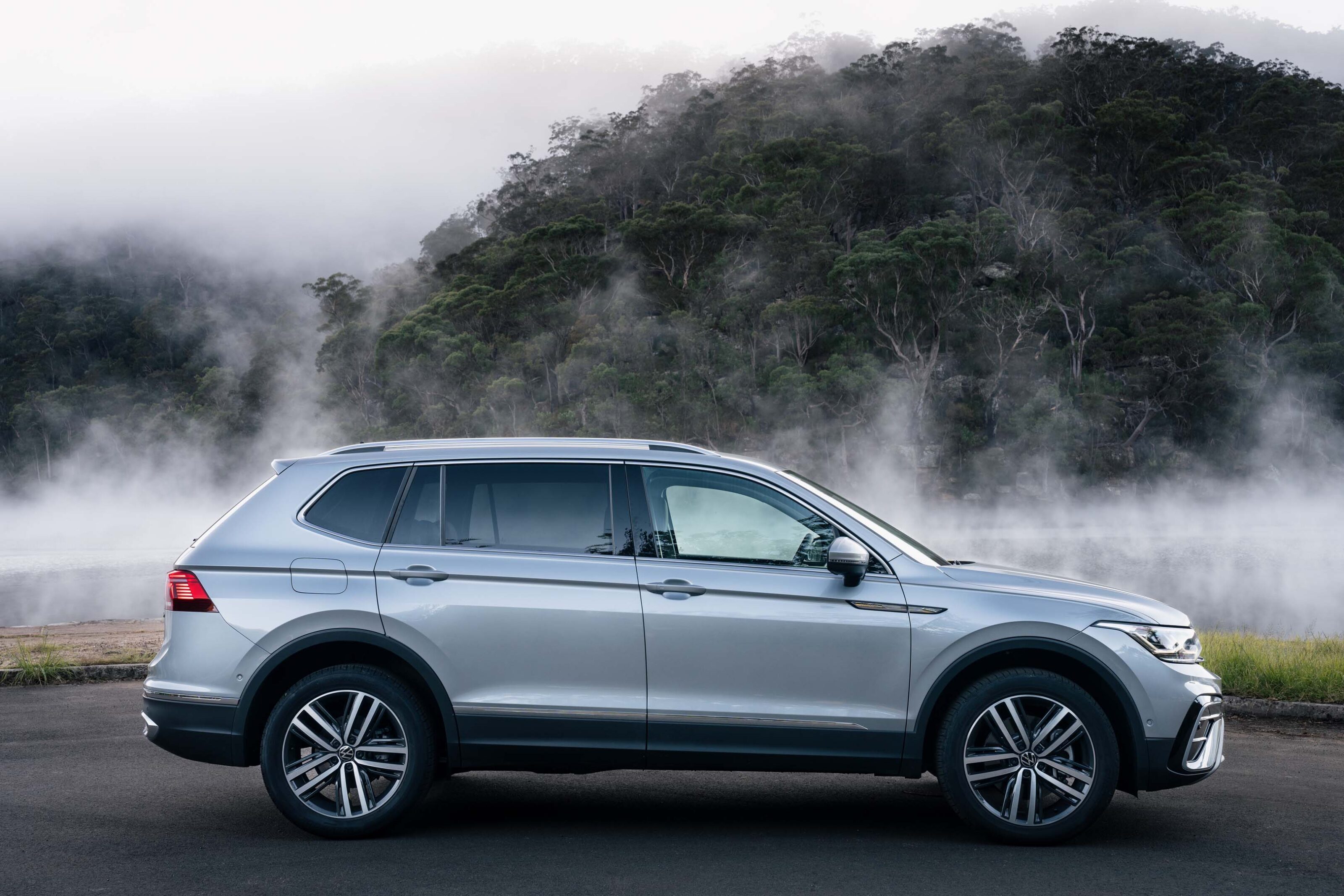
Then there’s the Tiguan Allspace. Confusingly, that’s called Tiguan in the Americas because it’s the only one they get over there. But the Allspace comes from the factory in Mexico with that tiny extra badge attached to it and a longer wheelbase – and therefore more room to pack in a pair of occasional rear seats.
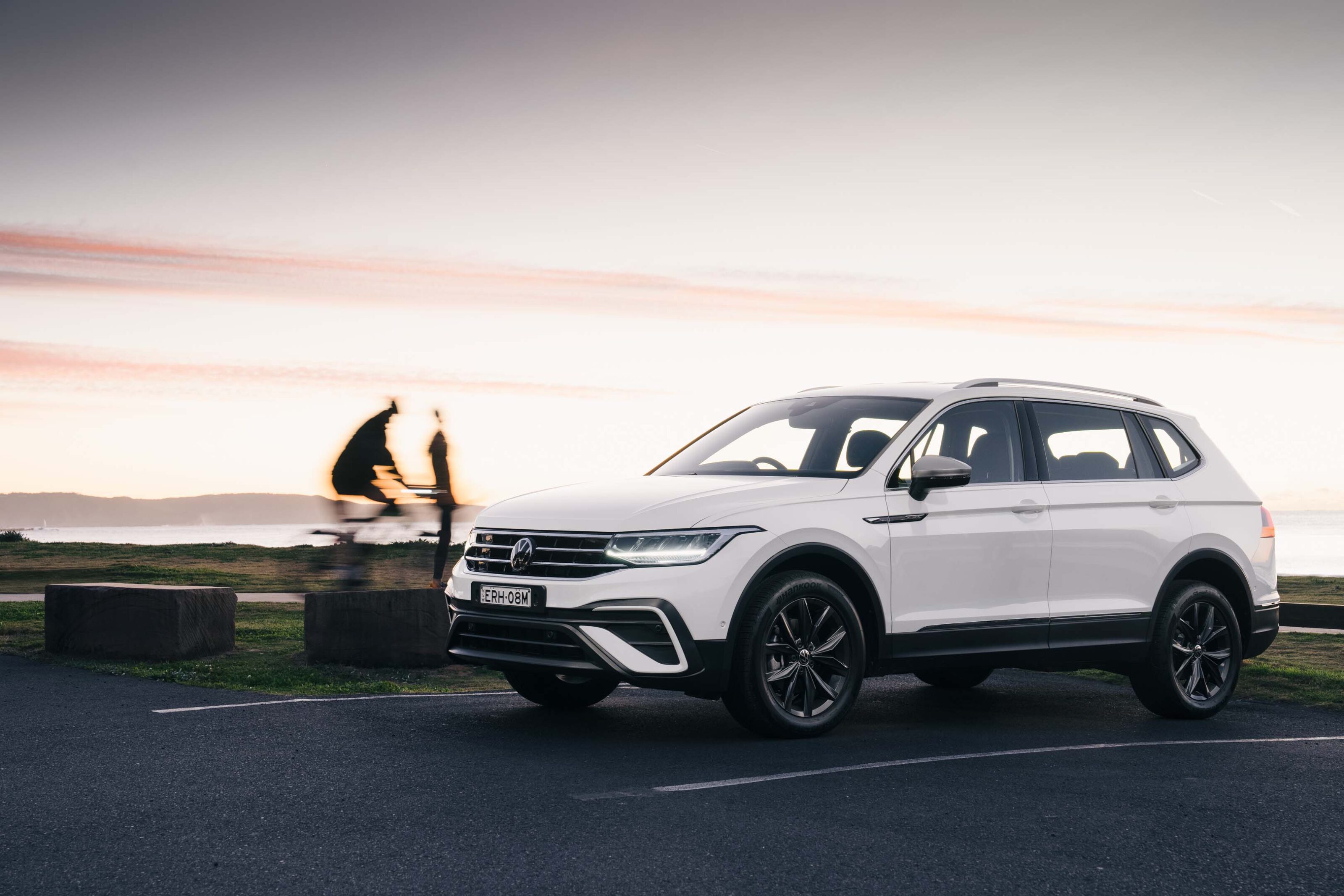
Suddenly, the Tiguan isn’t battling with mid-size SUVs but also firing pot-shots at bigger units like Hyundai’s Santa Fe, Kia’s Sorento and Toyota’s Kluger, among others.
But it’s not as big as those cars, which makes you wonder if the Allspace is a tiny niche. It isn’t. Turns out more than 40 per cent of Tiguans bought in Australia are the Allspace version.
That figure certainly bowled me over when I saw it. Further statistics bowled me over, some of which I will reveal as we progress through the huge model line-up on offer.
Pricing and features
As of June 2022, Volkswagen offers six distinct specification levels of the Allspace, with three petrol engines and a diesel along with three equipment levels. Unfortunately – and this is really the theme of 2022 – prices are up by around five per cent over the previous model year.
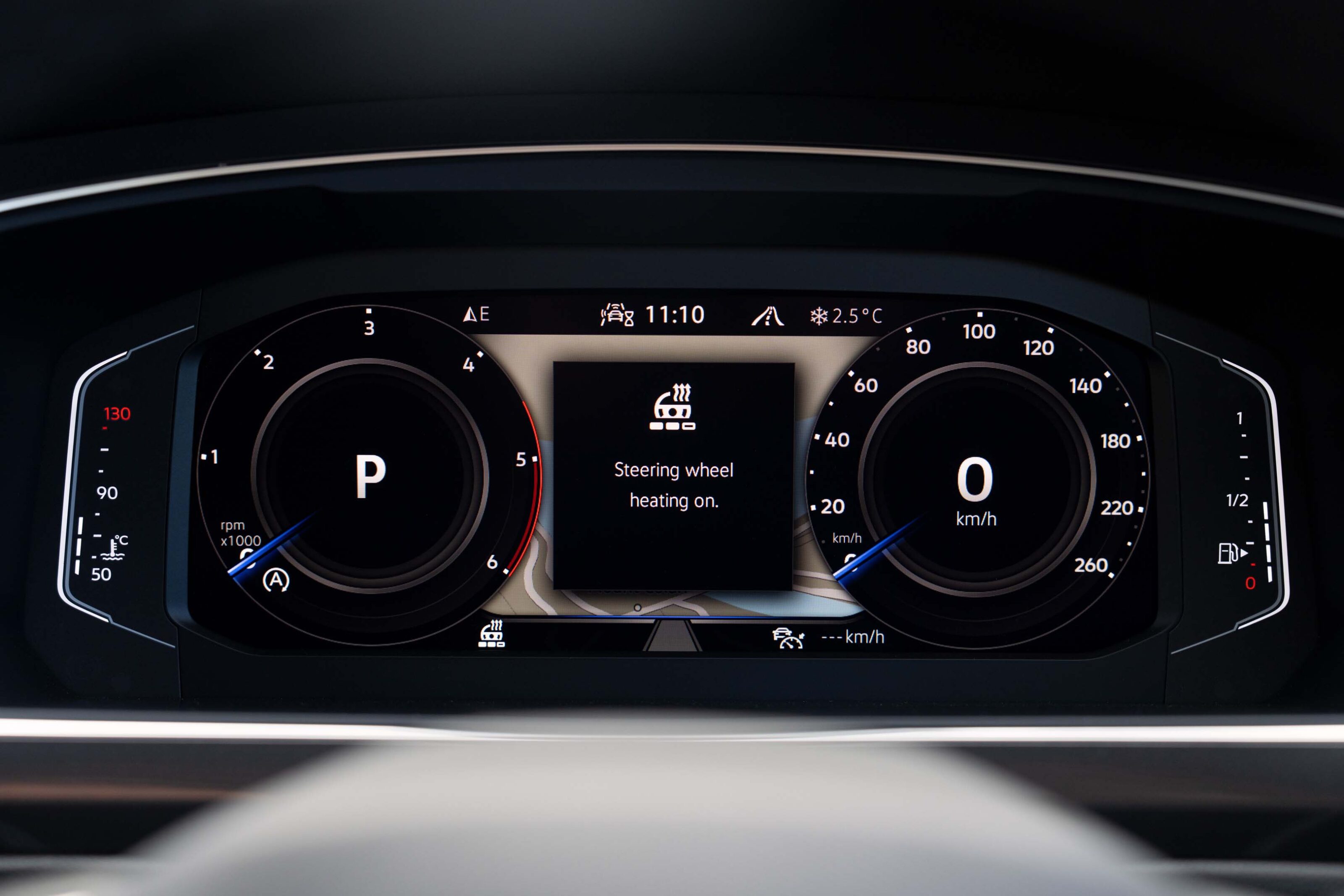
Pricing opens at $44,590 before on-road costs with the only front-wheel-drive Tiguan, the 110 TSI Life, which is also the only one with a 1.4-litre four-cylinder engine. For the money, you’ll get 18-inch wheels, a cloth interior, front and rear parking sensors, reversing camera, auto LED headlights (and taillights), 8.0-inch touchscreen, sat-nav, digital dashboard, auto wipers, adaptive cruise control, three-zone climate control, an electric tailgate and a space-saver spare.
If you want to pay $48,590 (plus on-road costs), you can step up to the 132 TSI Life with a 2.0-litre four-cylinder engine and all-wheel drive.
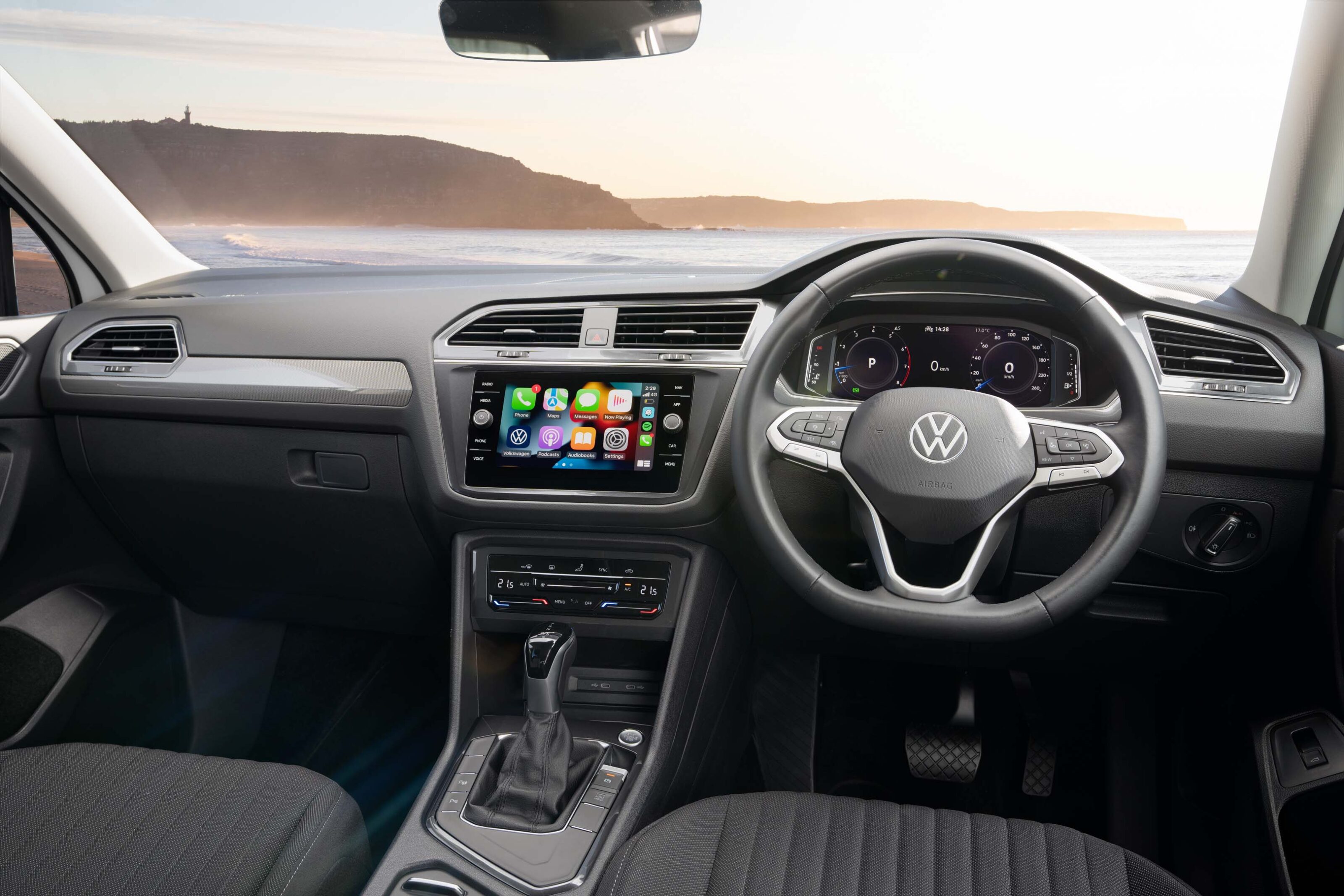
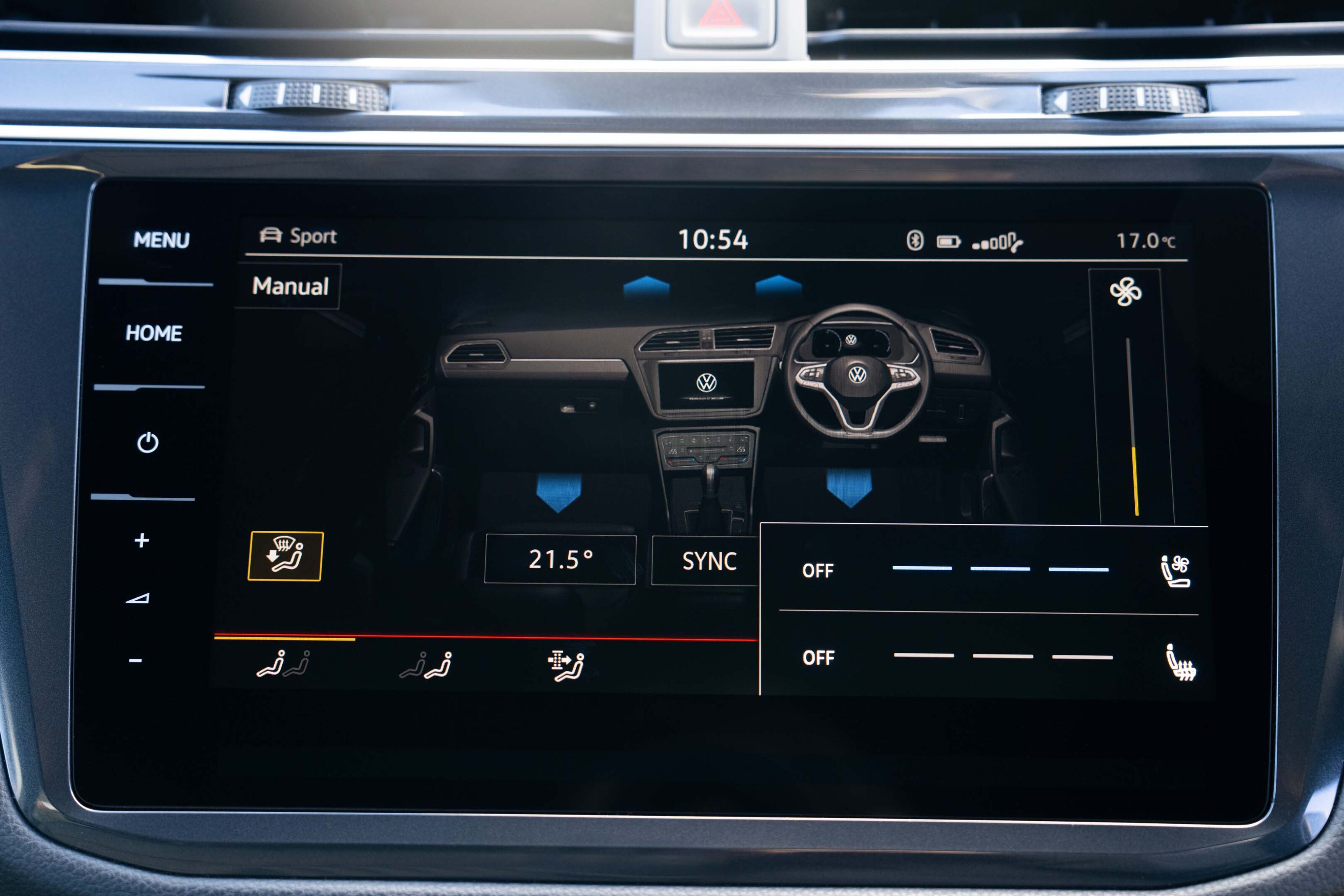
Very much standard across the entire range is a wireless charging pad, wired and wireless Apple CarPlay and Android Auto and digital radio. Both of the touchscreens, whether they’re the 8.0-inch Discover or 9.2-inch Discover Pro feature sat-nav.
Also standard across the range is IQ Drive, which is what VW calls its collection of safety assistance features. You get all the usual airbags (which reach to the third row), ABS and stability controls as well as adaptive lane guidance, forward collision warning, forward auto emergency braking, lane assist, side assist, rear cross-traffic alert and driver attention monitoring.
It’s worth pointing out that, at the time of writing, you are not guaranteed to get reverse cross-traffic alert, side assist, or the electric tailgate due to global supply chain chaos. There are 4000 Allspaces available with each of these fitted but the next batch will not feature the first two items (which is annoying) and the third will become an option.
So ask the hard questions of your dealers and keep an eye out for when RCTA and side assist make their welcome return, hopefully early in 2023.
I bang on about RCTA being a must-have because it avoids silly little crashes in car parks and wherever else but also adds another layer of protection if the kids have gone rogue.
Metallic paint is $900 for all but two of the colours. White is free, King’s Red is $1100.
You can add the Luxury Package for a healthy $5500 which adds leather upholstery, powered driver’s seat adjustment, heated and ventilated front seats and a massive panoramic sunroof.
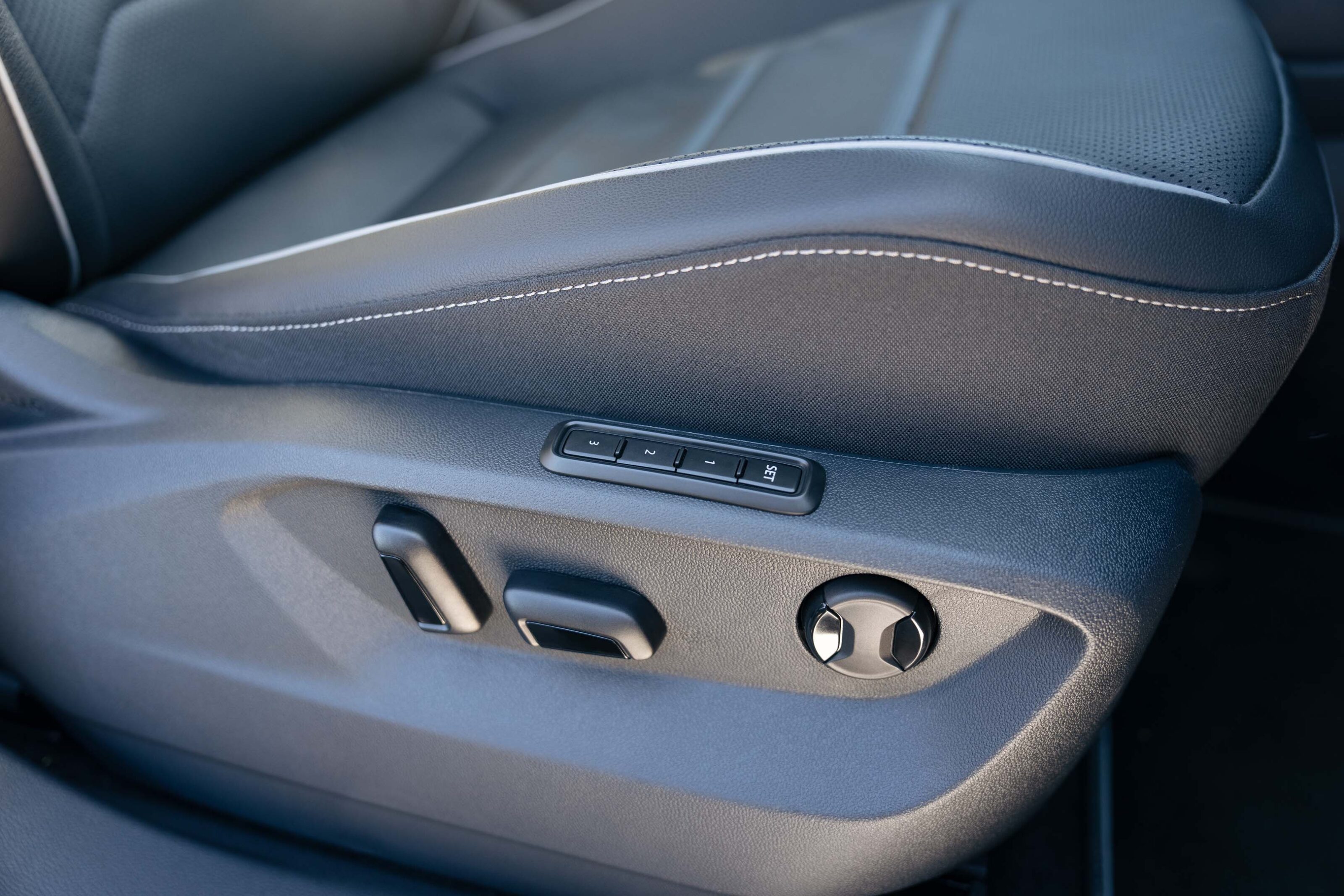
Stepping up to the mid-spec Elegance is actually more of a jump, with the 162 TSI petrol starting at $56,990 and the 147 TDI diesel at $61,190 (both before on-road costs). One of those startling stats? The 162 TSI is by far the most popular driveline in the Tiguan ranges and VW Australia is struggling to get hold of enough of them to satisfy demand, so much so that there’s a whole new addition to the range that I’ll cover in a minute.
The Elegance swaps the 18s for 19-inch alloys, ventilated front seats are standard, heating is added to the front seats and outboard middle row seats, adaptive damping comes on board, as do Matrix LED headlights, the 9.2-inch touchscreen, tinted rear windows, interior ambient lighting and some chrome on the exterior.
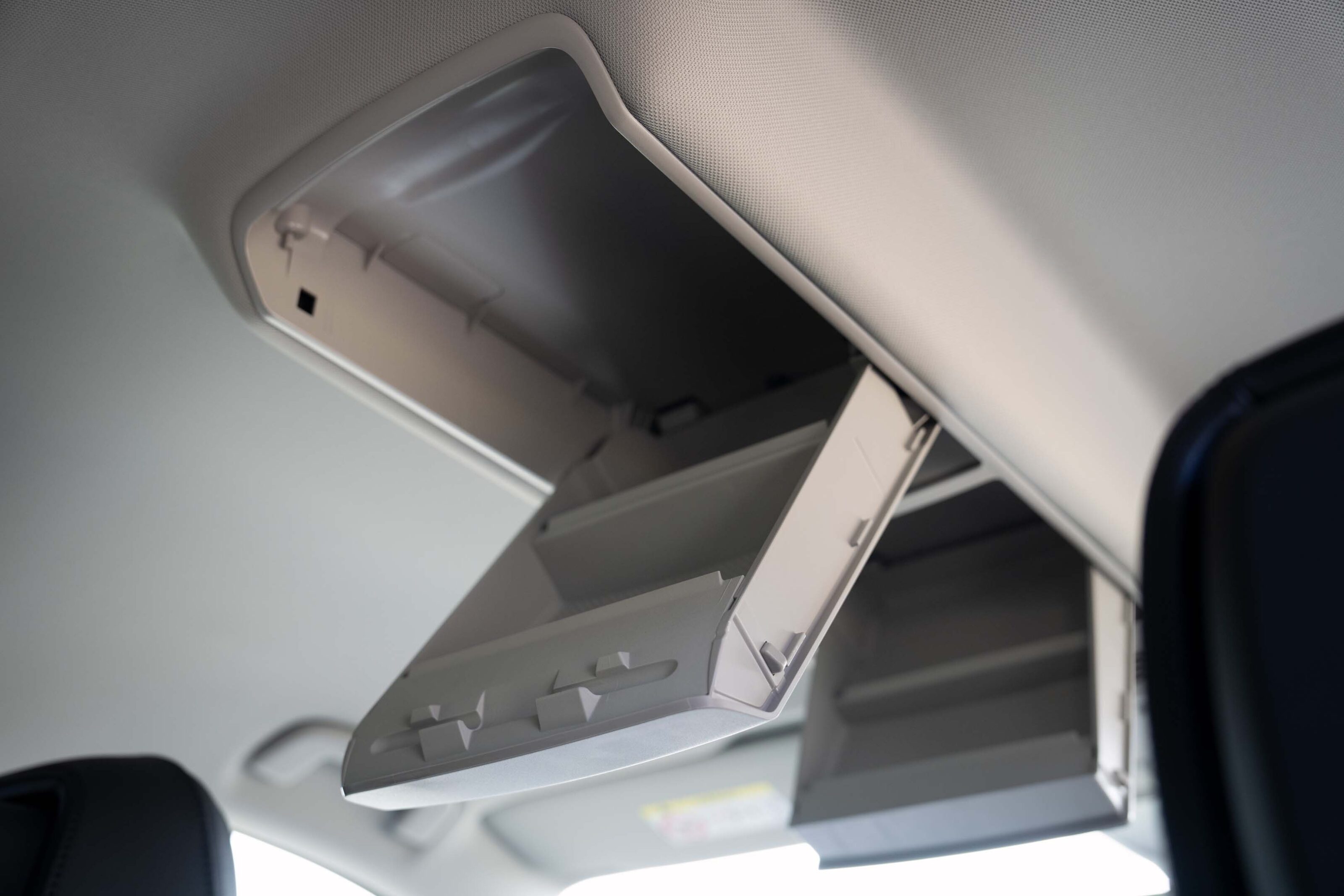
In addition to the paint options, you can get the Sound and Vision Package for $2600, which throws in a head-up display, around-view cameras and a thumping great Harman Kardon sound system. A panoramic sunroof is $2100. The torch fitted in the boot? That’s a freebie.
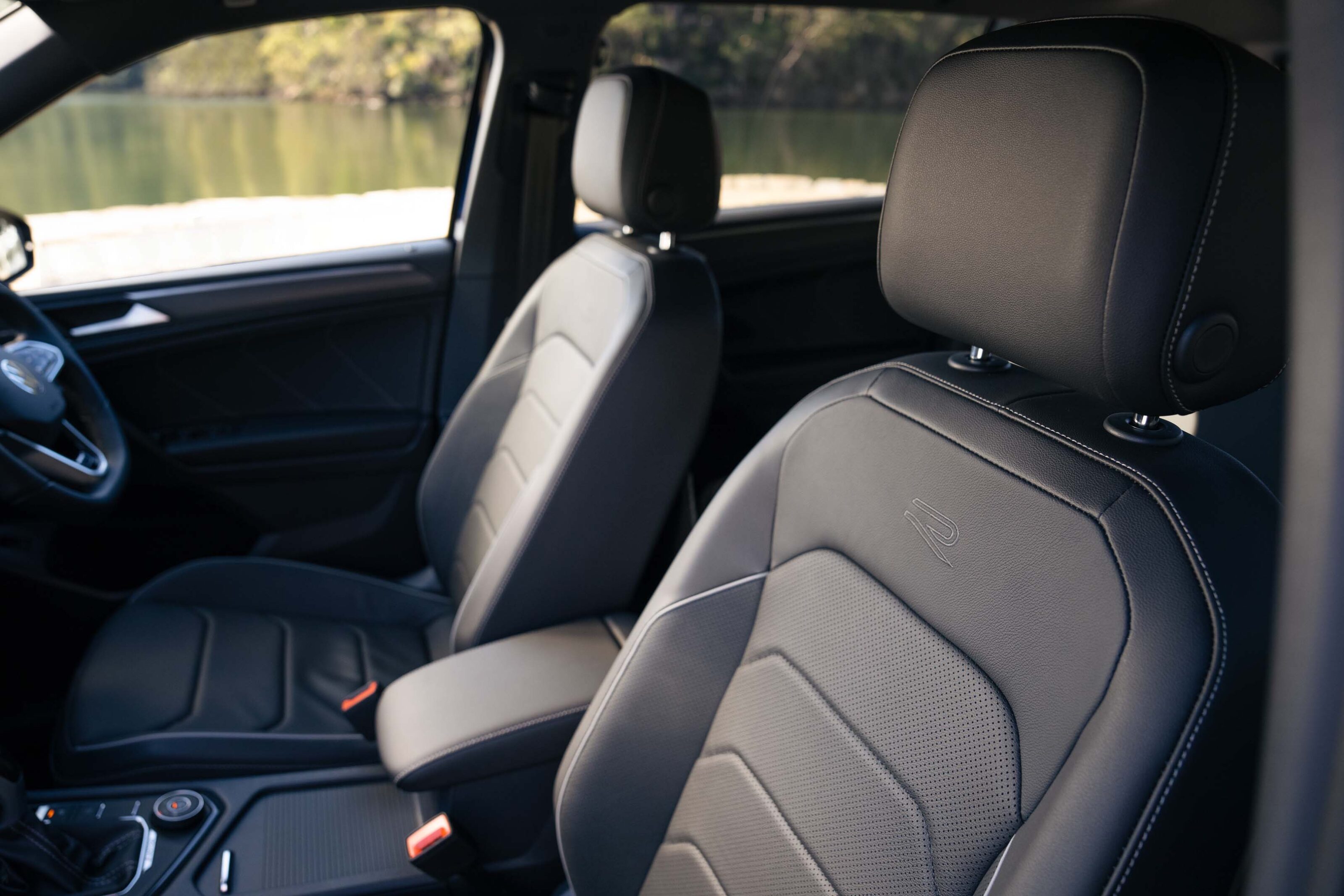
The R-Line is now its own model after the huge success of R-Line packages applied to the Elegance trim level in both standard and Allspace Tiguans. The two R-Lines have the 162 TSI and 147 TDI engines for $58,490 and $61,690 respectively. Before on-road costs.
Comprising a mixture of mechanical and cosmetic upgrades, the R-Line comes with 20-inch alloys, progressive steering rack, premium LED taillights (animations, mostly), R-Line leather trim, R-Line steering wheel with haptic feedback, black headliner, stainless steel pedals and an R-Line body kit.
Paint is the same as the Life and Elegance except you can’t get King’s Red.

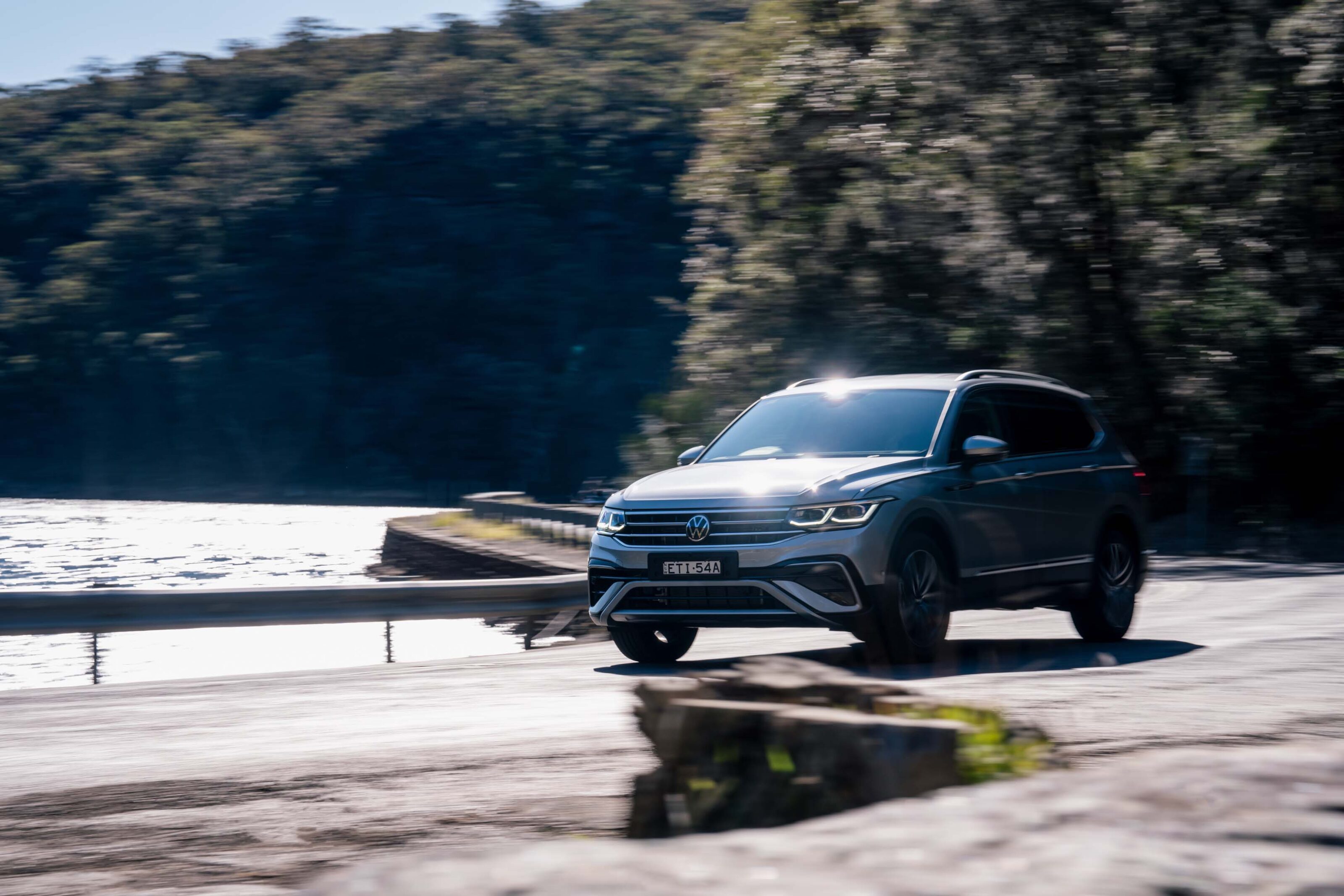
So keen was VW to get customers into popular 162 TSIs and so few are the available Elegance and R-Lines that VW has invented the $51,990 (before on-road costs) Adventure. It’s a toughie, with bash plates, cladding and 17-inch wheels for the legal fitment of snow chains (which you can choose to take for free from a range of accessory packs) and is based on the Proline Tiguan the cops use.
A further surprise is that it’s a five-seater, leaving a massive boot for, I guess, the snow chains as well as all your gear.
That car will arrive later in the year and I’d be lying if I didn’t find it ridiculously intriguing.
Comfort and space
Compared to the standard wheelbase Tiguan, the Allspace measures 22cm longer at 4734mm and rides on a wheelbase of 2791m. That’s quite a bit smaller than Mazda’s compact version of a seven-seater, the CX-8, which comes in at 4901mm with a wheelbase of 2930mm.
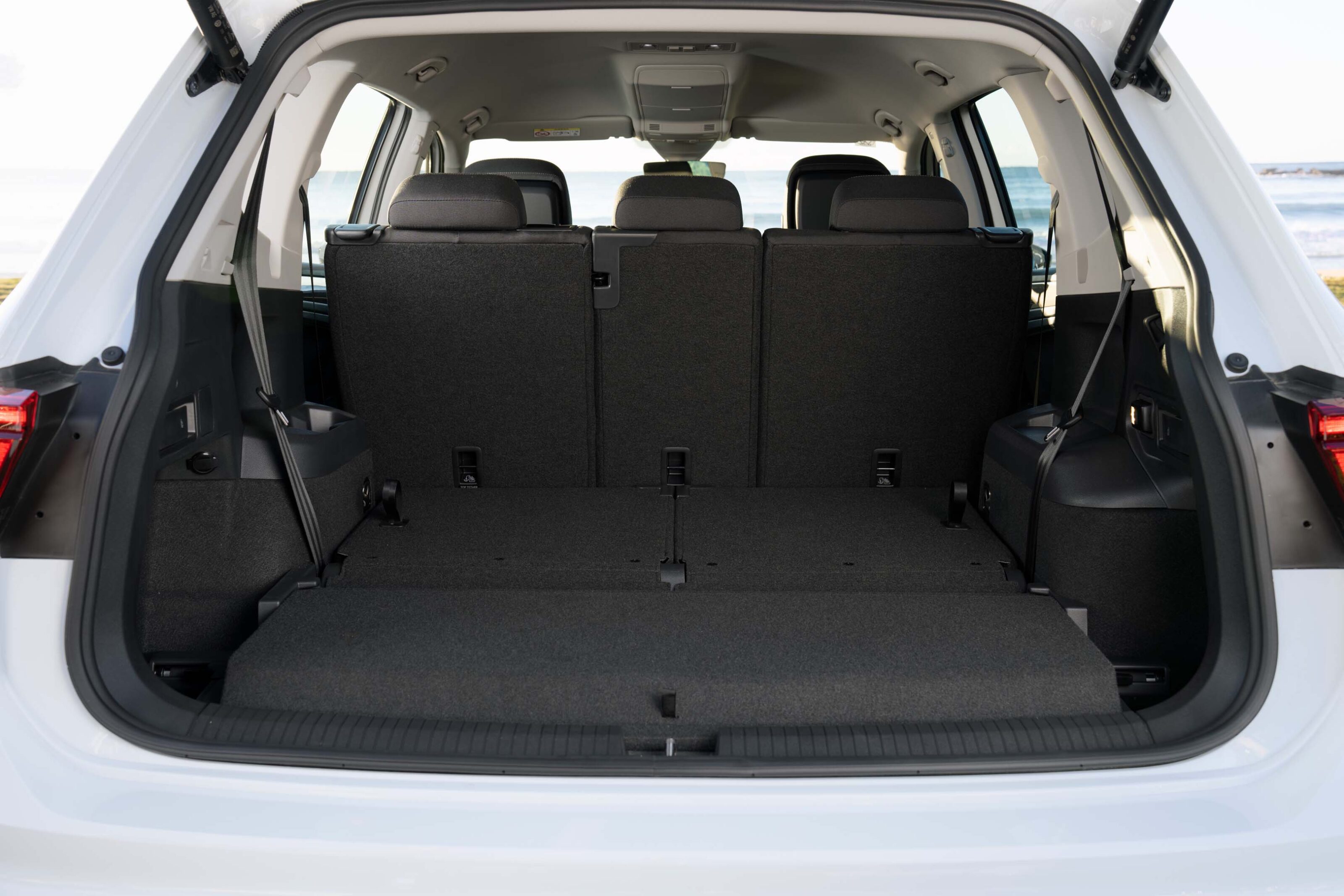
Half of the extra body length is a 10.6cm longer rear overhang to make space. Some of that space is eaten up by two foldable jump seats. With all three rows in use, you have 230 litres of cargo space, which is about the same as a small hatchback that isn’t a VW Polo (its boot is huge).
Fold the back row down and you get 700 litres, an 85-litre improvement over the shorter car and that advantage extends to 110 more litres with both rows down at 1775 litres, even though there’s a torch eating up valuable space (not really, but I love the torch).
The third row is definitely an occasional use proposition in much the same way as a Mitsubishi Outlander. It’s very tight but the Tiguan does at least have a slideable middle row (60:40 split in the slide, 40:20:40 folding) to liberate some space. As you’ll see in my video review, it’s for patient, short people for short trips.
Despite what internet people say in the comments, the middle row is very comfortable. You have plenty of head and leg room and supportive outboard seats but a less than comfortable middle seat owing to a fairly high transmission tunnel.
Again, someone short and patient could occupy that seat, but not for too long The centre armrest has two cup holders, the rear of the centre console has 12-volt and USB-C power outlets, controls for the third climate zone and the attendant rear air vents.
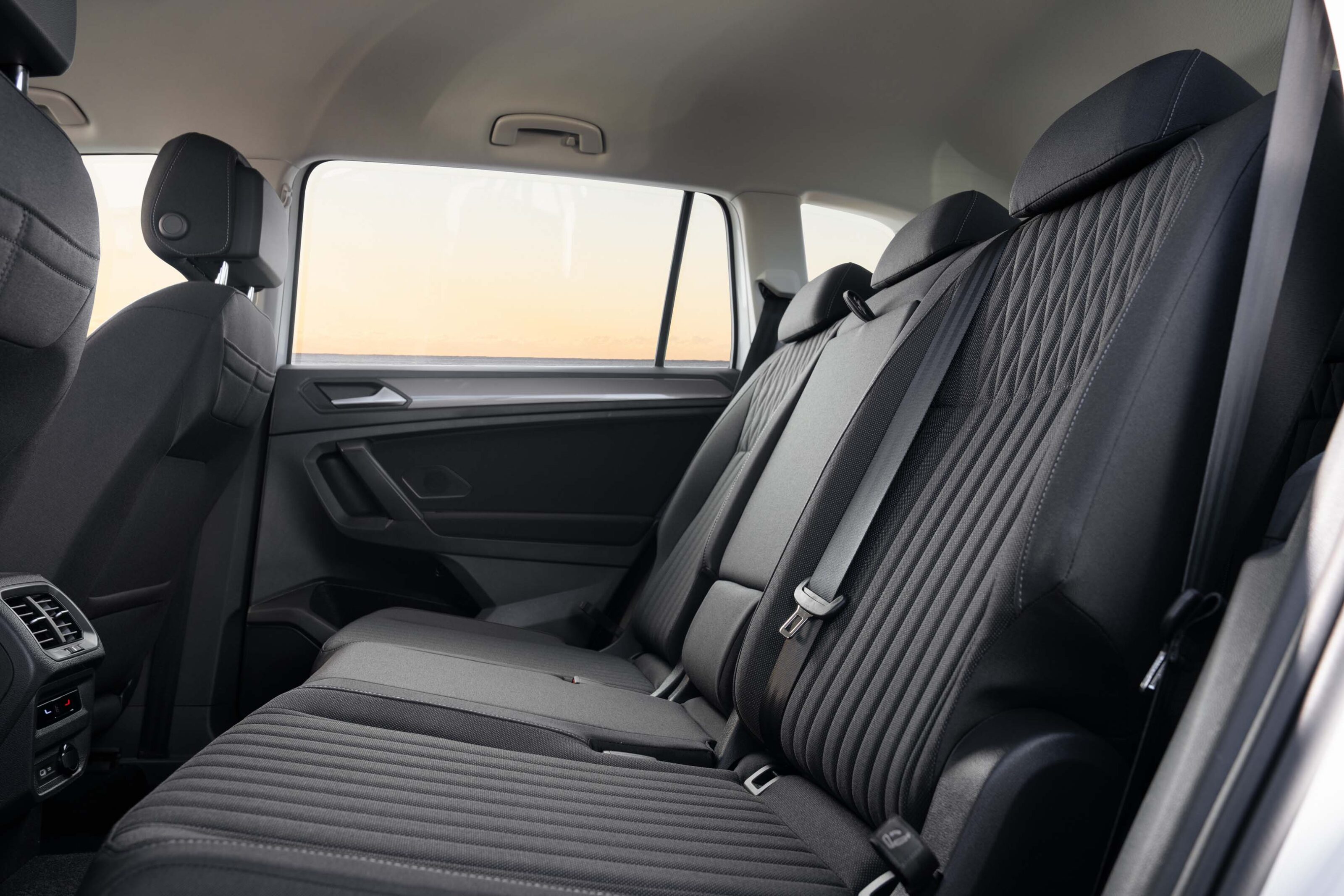
There are also two hefty door bins suitable for my famously large water bottles and they’re lined with carpet to reduce noise.
Front seat passengers are well looked after with comfortable seats in all grades, the higher grades naturally more comfortable and with leather. Two more cup holders are located in the centre console along with two USB-C ports in with the wireless charger and again, two huge bottle holders in the door bins.
It’s a great interior, with the digital screens and a restrained, angular techno vibe plus splashes of cool materials to lighten things up. The cloth will be quite hardy, too, if you’re one of the few folks who go for the Life.
On the road
Let’s get through this list of drivelines first. The Life 110TS is the sole 1.4-litre turbo four-cylinder, with 110kW and 250Nm with only front wheels driven by the only six-speed dual-clutch transmission in the range.
It’s still reasonably swift, logging the 0-100km/h sprint in under ten seconds, which is pretty good going for a seven-seat SUV, but of course that’s going to suffer with a full load, more than any of the rest of the range. At 7.7L/100km it’s the thriftiest, beating the diesel 147 TDI by a hair.
The Life 132 TSI, gets another gear, two more driven wheels and a healthier 132kW and 320Nm from its version of the 2.0-litre four-cylinder petrol. The extra power and traction knock 1.3 seconds off the claimed 0-100 time of the 110 TSI to clock in at 8.2 seconds. The penalty at the pump is 1.2L/100km, taking you to 8.9L/100km.
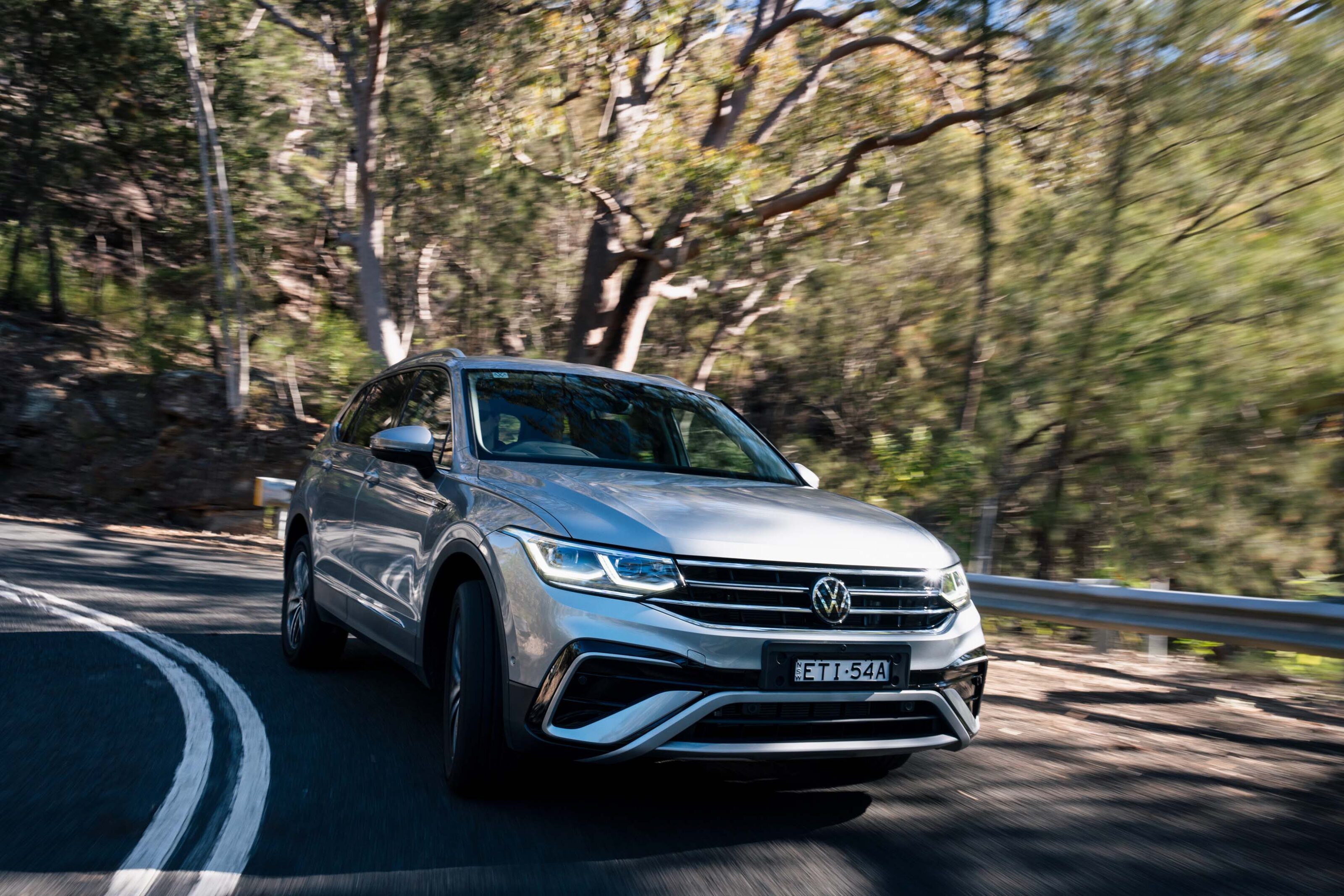
With the jump to the 162 TSI version of the engine in the Elegance and R-Line, you get 162kW and 350Nm of torque for another 1.4 seconds’ cut, completing the sprint to 100km/h in 6.8 seconds, which is getting into hot hatch territory. Interestingly, fuel economy is slightly better than the 132, coming in at 8.6L/100km, which is probably down to the 162 engine having regenerative braking.
All the petrols require minimum 95 RON fuel. VW did point out that its rivals use more petrol, partly because they’re counting the petrol V6s of the Santa Fe and Sorento that are famously thirsty both on paper and in the real world.
Finally, there’s the 147kW/400Nm turbo-diesel, again using the same all-wheel-drive, seven-speed set-up. While it’ll run to 100km/h in 7.8 seconds – still handy – it’s said to use just 6.2L/100km if you’re not always doing that. As you might imagine, fewer and fewer folks are choosing the diesel as the 162 TSI is the most popular driveline in the range.
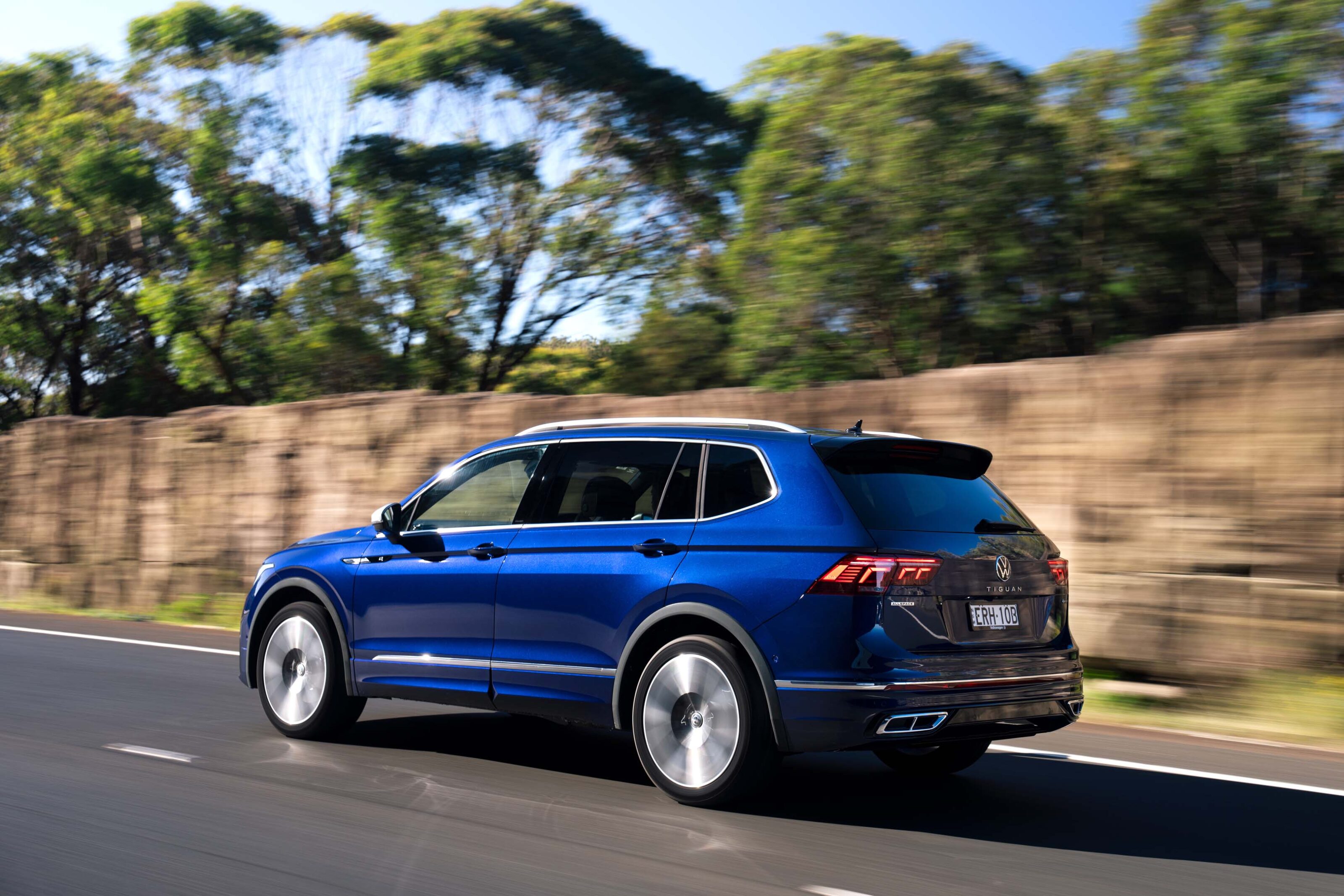
On the day, I got through the 110 TSI Life, 147 TDI in Elegance form and the 162 TSI R-Line, with the 132 not available for the day, partly because hardly anyone buys it, partly because there’s only so much time in a day.
Rather pleasingly, I was quite taken with the cheapest Allspace, the 110 TSI. It’s usefully punchy even with such a big car being dragged along by a 1.4-litre engine. There was even enough power and torque for the odd tyre chirp off the lights in traffic but not so much the wheel writhed in my hand. Rolling on 18s and high-ish profile 235/55 tyres, the ride was comfortable and the steering didn’t seem to suffer for it.
I also quite liked the cloth trim and the simplicity of the interior. For the money, it’s competitively equipped although that falters a little when the chip shortage-enforced de-speccing happens after the initial allocation is exhausted.

Even so, it’s very nice to drive and obviously has all that’s good about the Allspace, with tons of boot space, a good safety package and a comfortable drive in town or on the open road.
Next up was the 147 TDI Elegance. The noisiest of the engines, it’s still pretty quiet. The 400Nm punch of the oil-burner was immediately apparent and it’s actually a fairly serene car when all is said and done. The larger 19-inch wheels don’t destroy the ride and tyre noise is commendably low if not entirely absent.
One of the reasons the ride survives is the addition of adaptive damping, which is ever-so-plush in its Comfort setting and not too harsh in the sportier selection.
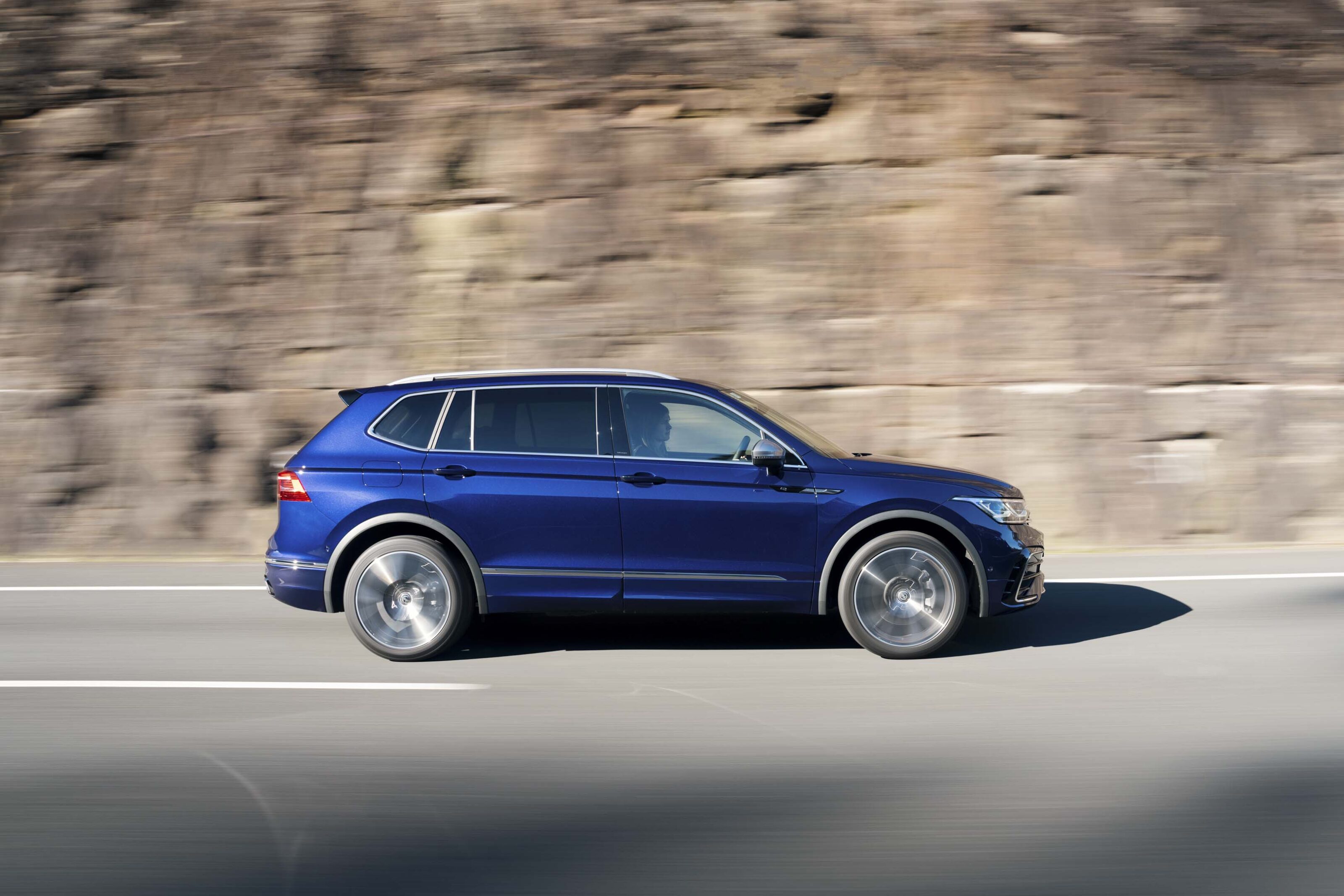
Not that many people choose the 147 these days, but if you’re considering it, it tows no more than the 162 TSI at 2500kg braked, though it’s most likely that the extra 50Nm will mean dragging your trailer or boat will be slightly more straightforward and fuel economy won’t suffer as much.
But really, that’s about it apart from the theoretical longer range from its 60 litres of diesel running to nearly 1000km on the combined cycle. I say theoretical because I’m basing it on the ADR fuel figure, so your mileage will, as they say, vary.
Final car for the day – and the one I drove home – was the 162 TSI R-Line. Riding on bigger-again wheels, you will notice the difference between this and the Elegance.
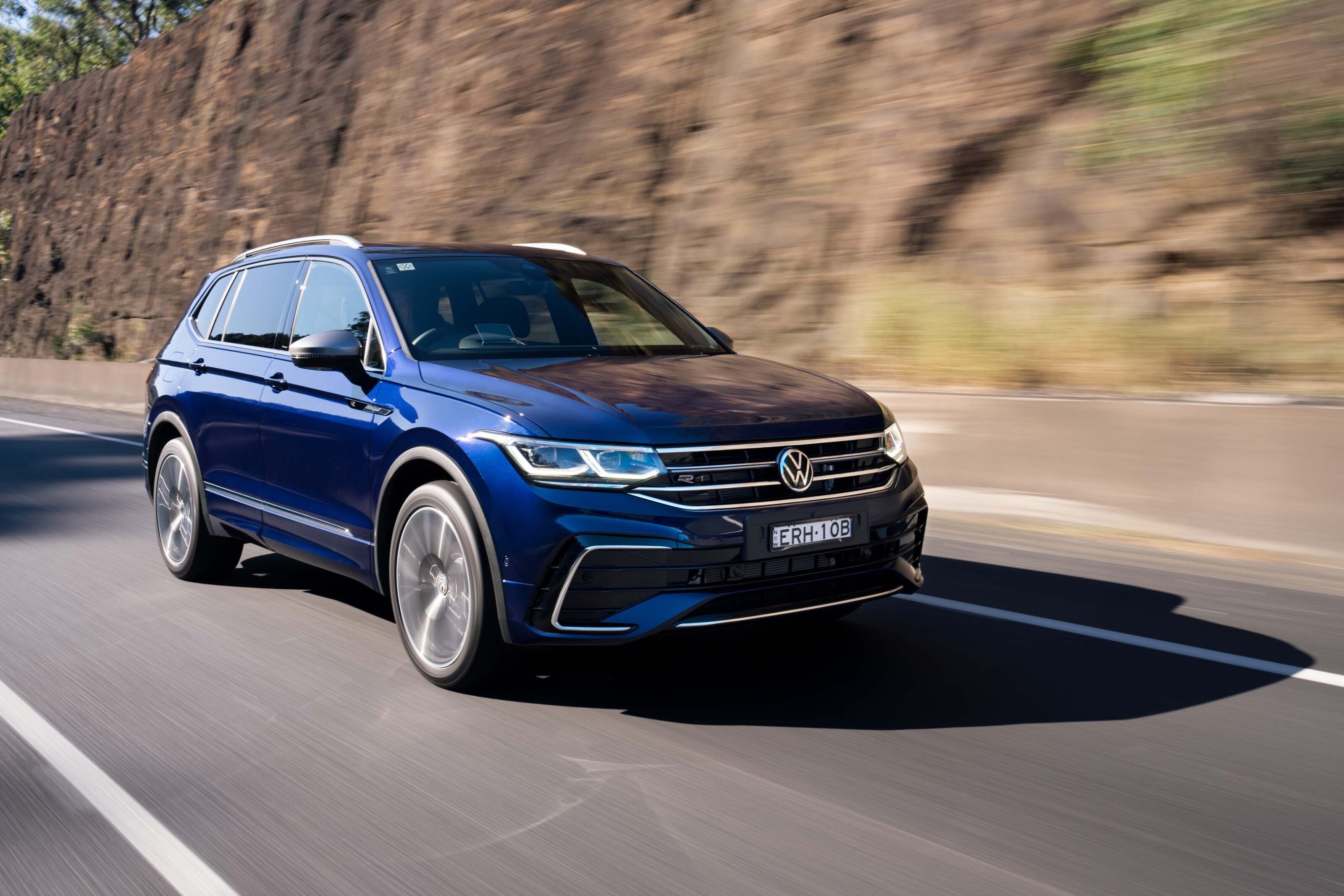
The adaptive damping still manages things well, but there’s a harder edge to the ride, as I discovered on the short-wheelbase version in January.
It’s obvious why people like it; it’s tremendous fun to drive for a big car and whips along with only light provocation. The steering is mostly pretty good – I’m not a fan of progressive steering racks for entirely personal and irrational reasons – so I was pleasantly surprised.
The 162 is probably nearly as relaxed when you’re just pootling as the diesel, too, with similar in-gear performance and quicker acceleration off the line, which I found helpful in the cut and thrust.
Ownership
Volkswagen offers a five-year, unlimited-kilometre warranty which is on the pace, beaten only by Kia and Mitsubishi.
Your dealer will offer you the opportunity to pay for your servicing up front with three- or five-year service plans. The 110 TSI’s three-year plan is $1400 while five years is $2600.
The rest of the range costs $1650 for three years and $2950 for five. Depending on the grade and chosen plan, you’ll save somewhere between ten and 25 per cent over pay-as-you-go. You’ll need to return to the dealer every 12 months or 15,000km.
This pricing isn’t especially cheap and significantly more expensive than the CX-8 and, for the first five years at least, quite a bit more expensive than the Outlander. The larger competitors like Santa Fe and Sorento cost roughly the same over the same period for the diesels, around $600 more than the petrol V6s.
VERDICT
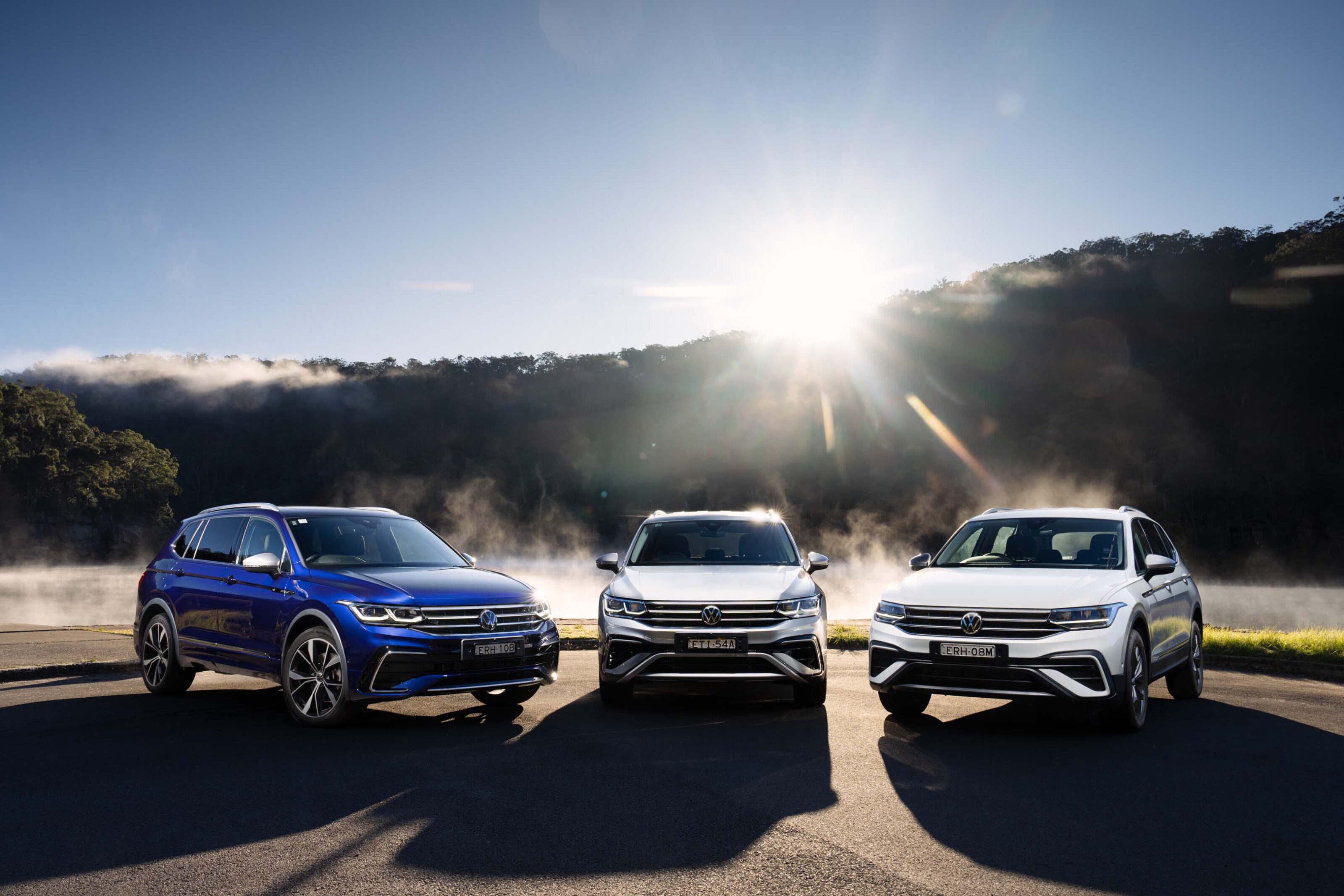
The Tiguan Allspace update hasn’t really changed what was good about the car from the get-go – it fits a lot of interior space into a modest, city-friendly(ish) footprint.
Even though bits and pieces are coming and going for the Tiguan Allspace like a teenager with a freshly-minted licence and a father with no moral high ground to restrain him (I don’t know why I’m using this analogy!), the 2022 update to the specifications is useful. And the Tiguan is generally far better equipped than when the second-generation version of the SUV launched in 2016.
The Tiguan and Allspace are ageing well and the latter remains at the top of its game, even if it’s less a seven-seater and more 5+2 with a huge boot packed into an attractive body shell.
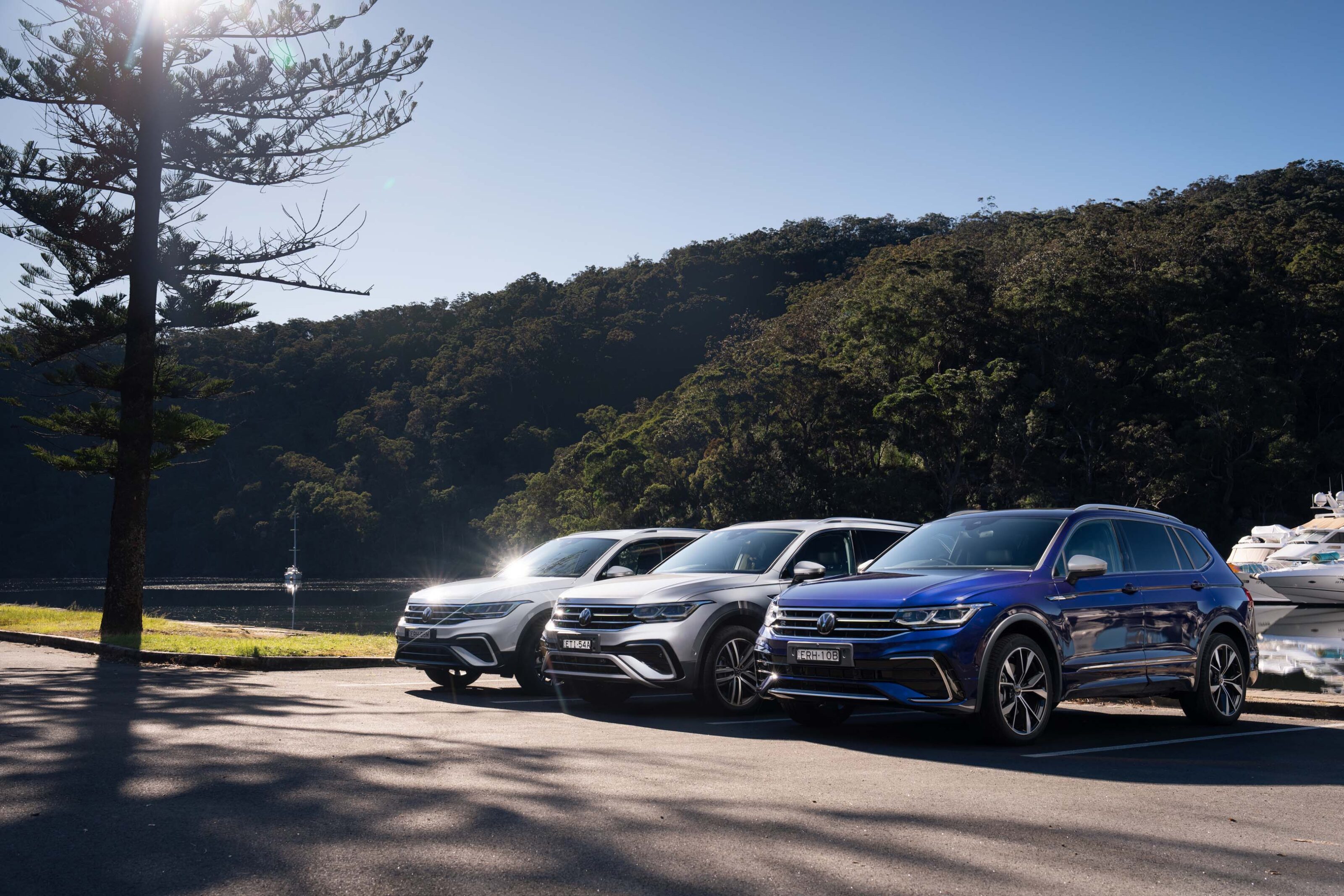
The 110 TSI is surprisingly good, the diesel an excellent (if niche) option, the 162 TSI machines are swift and it’s very easy to see why they’re in such demand.
Until the Adventure arrives, it’s a fairly safe bet to say the Elegance 162 TSI is the pick of the range despite the price pushing over the sixty grand mark to get it on the road.
2022 Volkswagen Tiguan Allspace specifications
Snapshot
- European Union finalises plans to ban internal combustion engines by 2035
- Low-volume manufacturers granted partial exemption
- Ban on fossil fuels won’t affect renewable and zero-emission alternatives
The European Union’s ongoing campaign to ban the sale of internal combustion engines by 2035 has been finalised, with petrol and diesel cars to be phased out across the continent by the middle of the next decade.
New internal combustion engines will be banned throughout Europe by 2035, although the EU’s plan recently met resistence, including earlier this week when five countries proposed a delay for the ban by five years.
While the Italian Government initially spearheaded that particular campaign, it has now given up on its demands, instead backing Germany’s proposal for carbon-neutral alternatives to fossil fuels to be used in ICEs after 2035, according to Automotive News Europe.
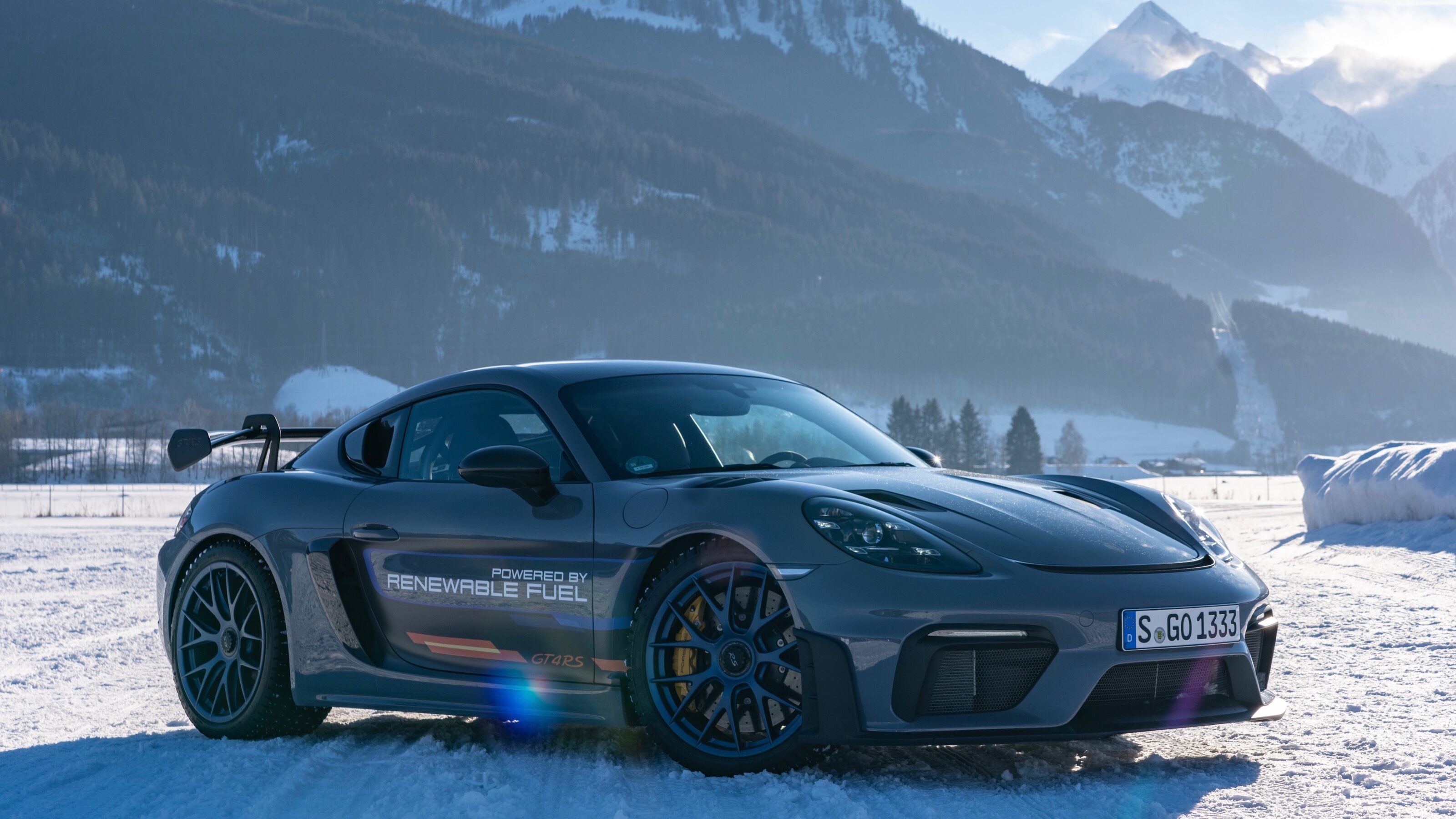
Their campaigning has ultimately led to major concessions for the automotive industry, which will allow the combustion engine to stay alive.
By 2030, all new cars will need to reduce their emissions by 55 per cent, while commercial van emissions will be cut by 50 per cent, and a 100 per cent reduction is set to be enforced by 2035.
In the net-zero by 2050 road-map, low-volume manufacturers with less than 10,000 annual registrations will be able to skirt around the total emissions reduction from 2035, having to only stick to the 55 per cent reduction enforced five years earlier.
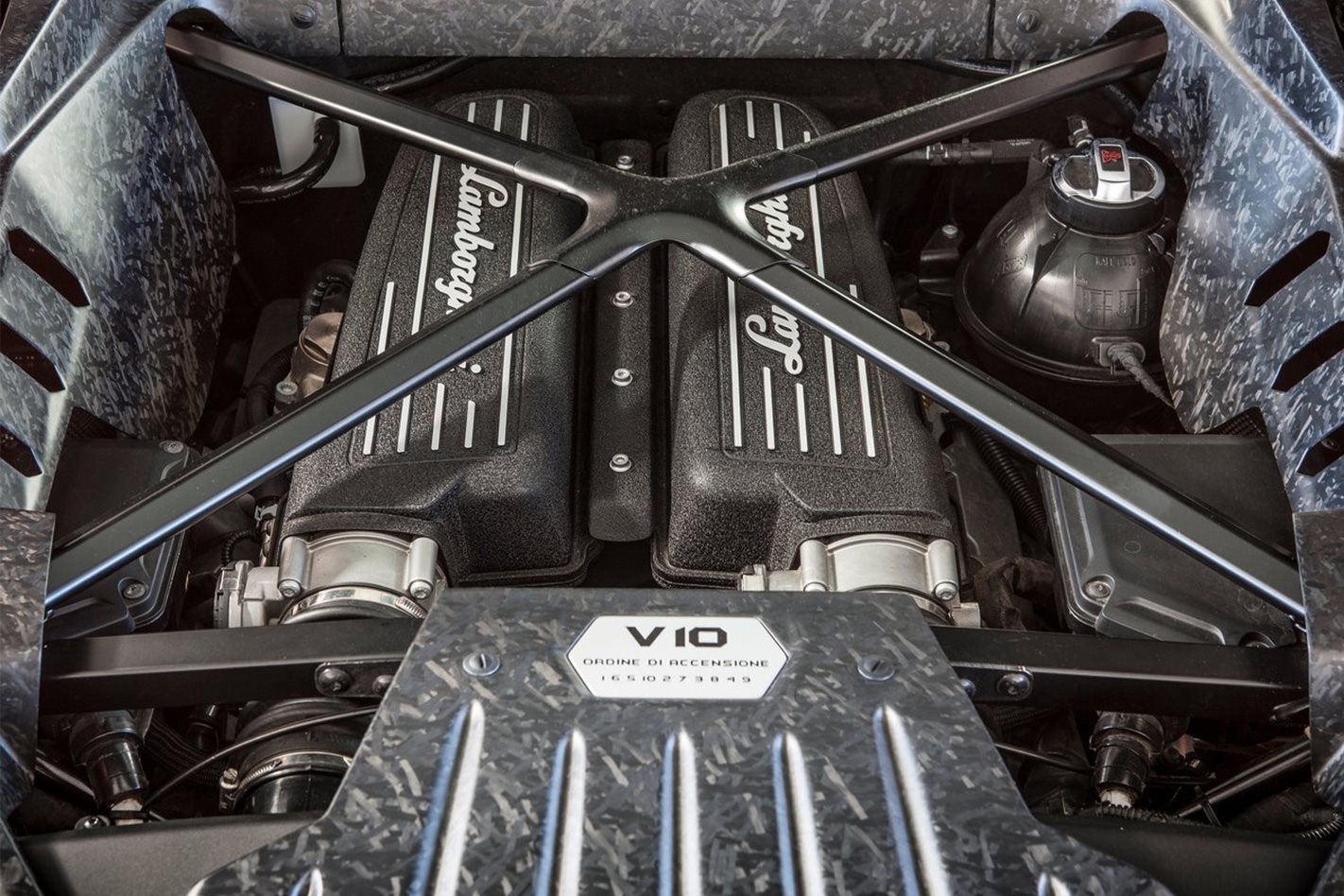
It’s understood carbon-neutral fuels – which are created from the recapturing and recycling of CO2 into hydrocarbon – could also extend the life of ICEs, with EU member nations calling for synthetic and e-fuel powered vehicles to also be exempt from the ban.
German manufacturer Porsche is investing heavily in e-fuels, throwing nearly $100 million at the development and research of its zero-emission fossil fuel substitute, ultimately planning to save ICEs and continue to offer traditional engines alongside electric vehicles.
A conglomerate of Japanese manufacturers including Toyota, Subaru and Mazda are currently developing ICEs which can run on hydrogen rather than fossil fuels, differing from hydrogen fuel-cell vehicles which operate in similar ways to an EV.
Whether or not the EU decides to allow e-fuels as an alternative to ensure the longevity of ICEs remains to be seen, as a majority of mainstream manufacturers around the world are throwing their weight behind EVs in preparation of the 2035 cut-off.
BMW has announced it will integrate the Android Automotive operating system into its vehicles from 2023, expanding its existing infotainment’s functionality.
Set to be added to the Linux-based BMW Operating System 8, Android Automotive OS doesn’t require a smartphone connection like the similarly-titled Android Auto software, instead using Google’s proprietary software, which is permanently plumbed into the car.
Volvo and sibling brand Polestar have exclusively used Android Automotive in their latest generation vehicles, although at the detriment to those who prefer Apple CarPlay as the smartphone mirroring software has only recently been announced as an addition to the infotainment system.
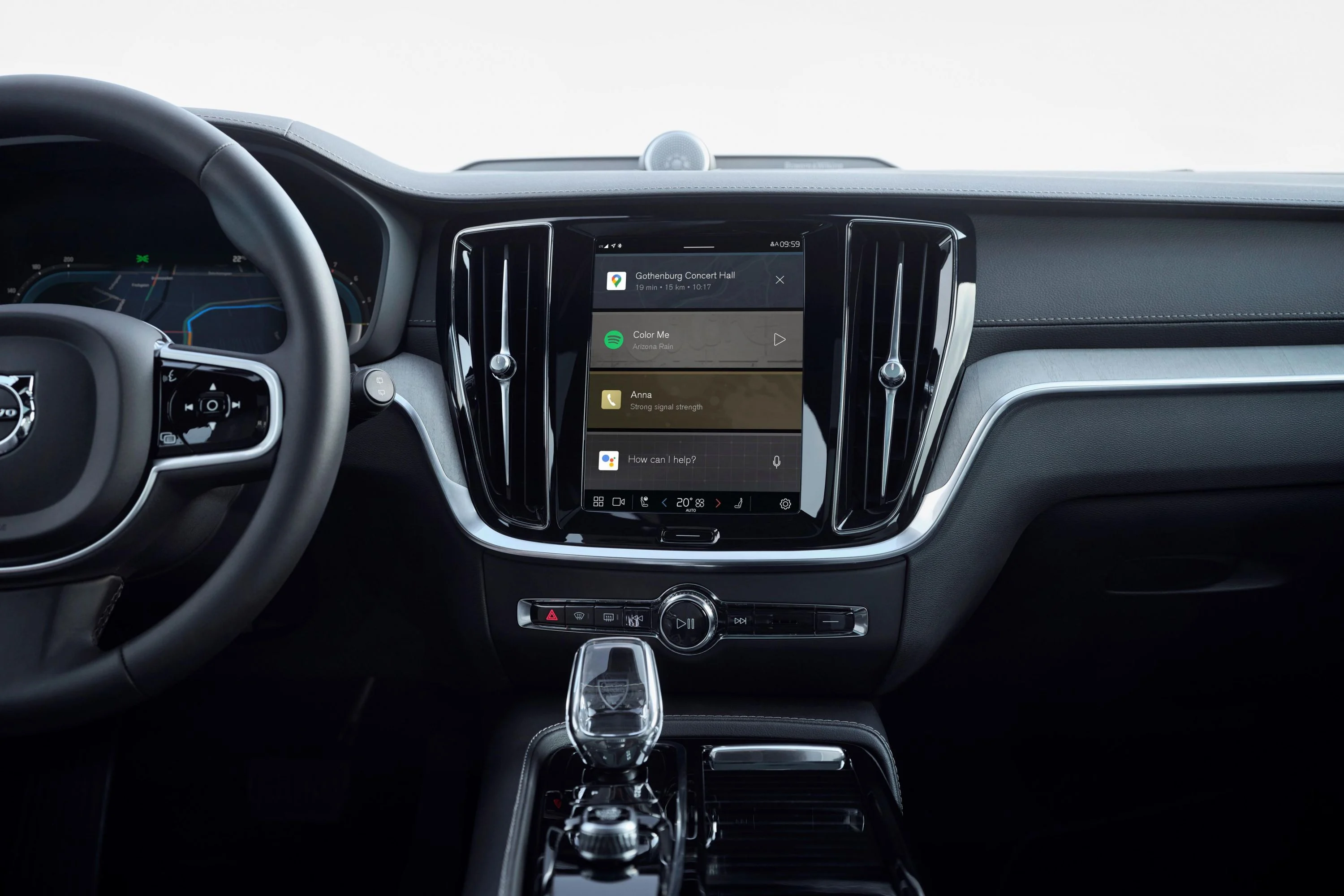
Set to function in the iDrive system of certain BMW models alongside the existing Android Auto and Apple CarPlay functionalities, Android Automotive’s inclusion gives owners more choice, according to Stephan Durach, BMW’s Senior Vice-President of Connected Company and Development Technical Operations.
“We are integrating the best aspects of all worlds – that could be our own in-house developments, Open Source or commercial software products, depending on what the specific solution looks like,” said Durach.
“We make sure our customers always enjoy a unique, customised digital experience in their vehicle.”
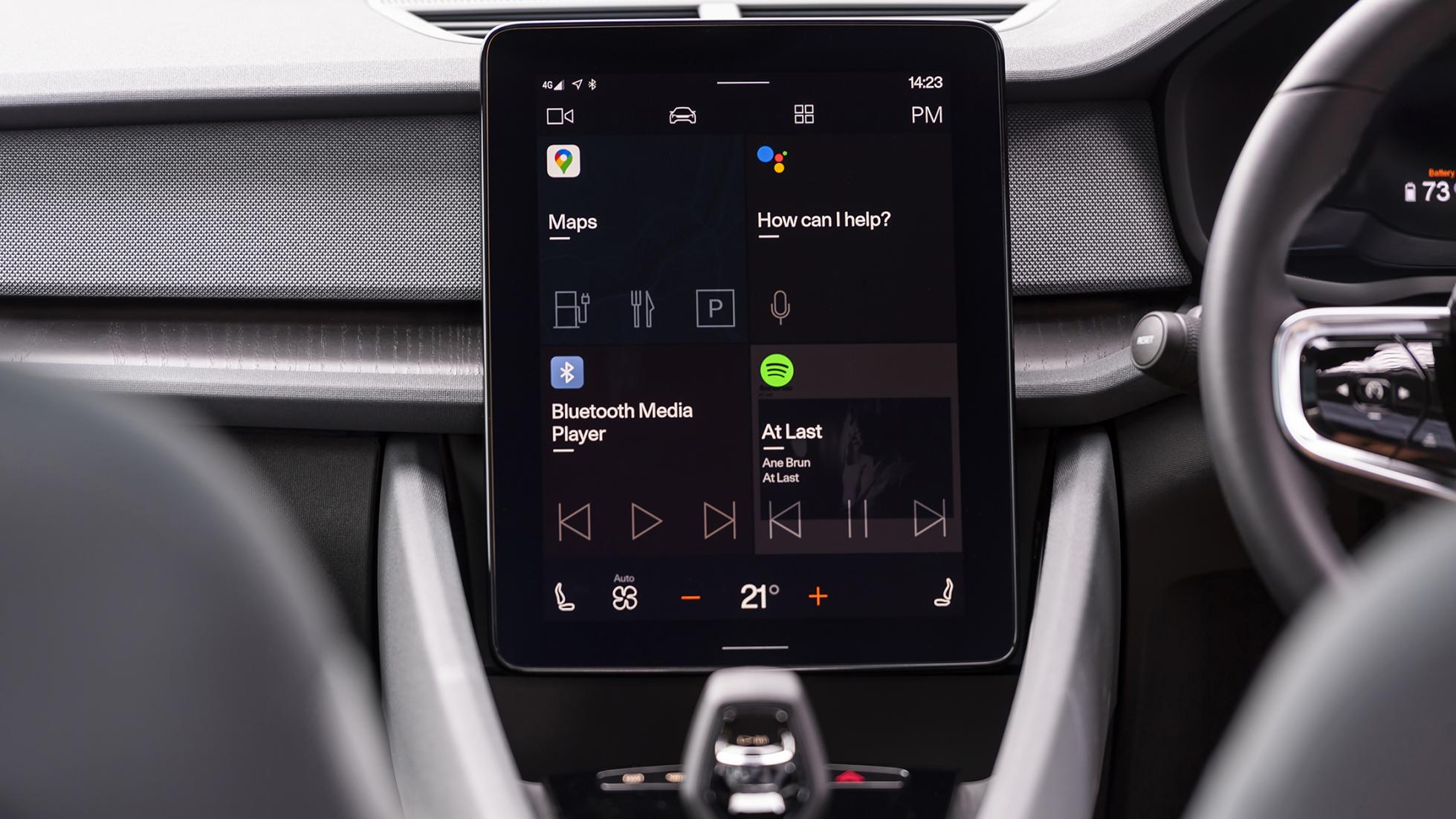
Android Automotive will be implemented into certain BMW models from March 2023, with the system still able to receive over-the-air updates at regular intervals.
The announcement comes just under a month after Apple announced a huge overhaul of its CarPlay system for late 2023, with the updated infotainment technology set to be integrated even further into new vehicles.
Snapshot
- C4 X crossover sedan unveiled in combustion engine and fully-electric trim
- Design and features largely shared with the existing C4
- No plans to launch in Australia
The 2023 Citroën C4 X and its fully-electric e-C4 X counterpart have been revealed overnight.
As the newest addition to the Citroën model line-up, the C4 X is the brand’s latest crossover, largely based on the C4 lifted hatchback/SUV, but with a traditional sedan rear end, dropping between the hatch and the C5 X wagon.
However, while the C4 is already on sale in Australia and the C5 X is due here later this year, the local arm of the French manufacturer told Wheels the new C4 X and e-C4 X likely won’t be coming here.
“While there are no current plans for the e-C4 X and C4 X to be introduced to the Australian market, we do continue to work closely with Stellantis to explore and evaluate the potential introduction of new models to Australia.”
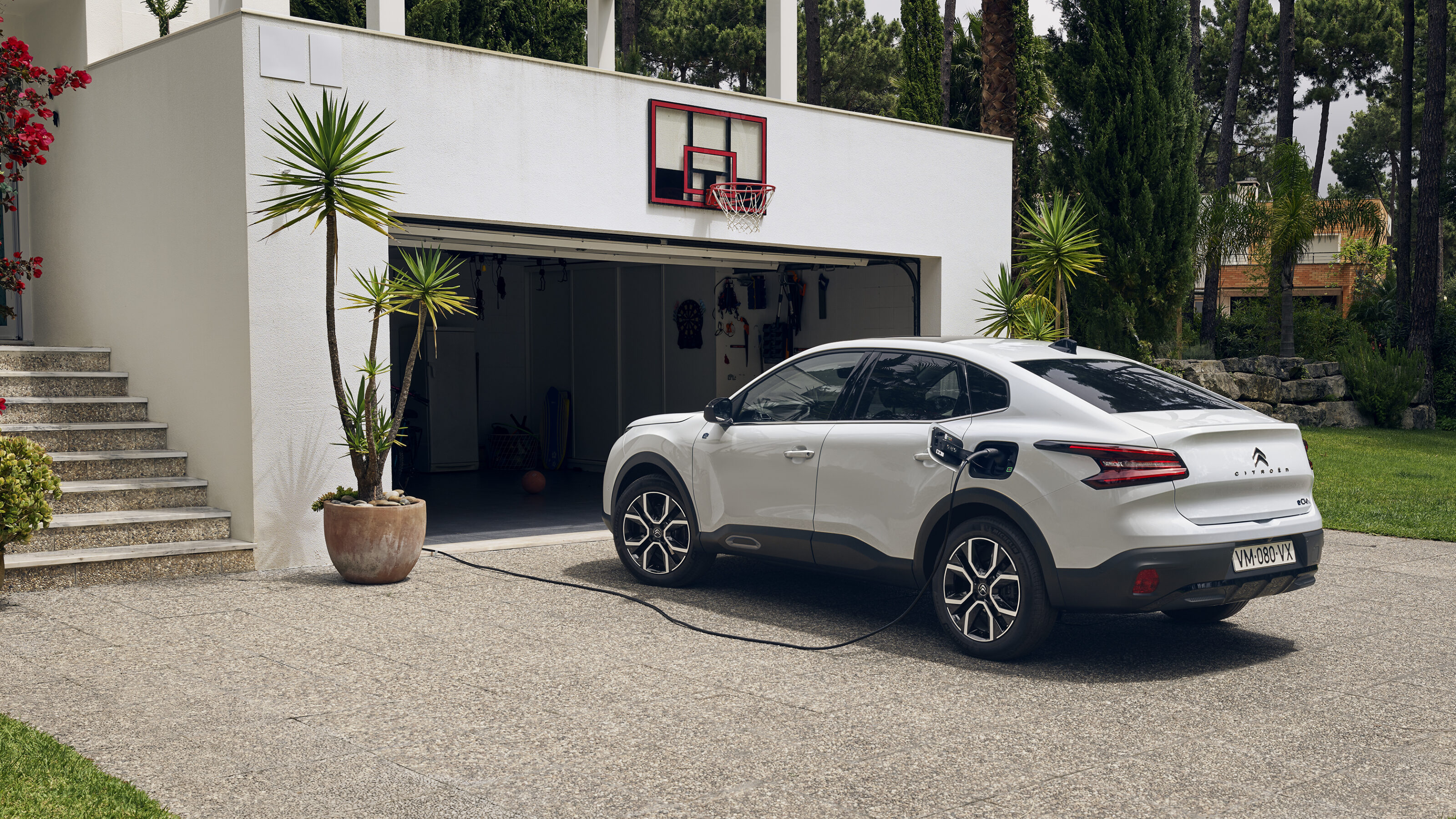
The C4 X retains the 2.67 metre wheelbase of the C4 thanks to the shared Common Modular Platform (CMP/EMP1), although the X is 240 millimetres longer with an overall length of 4600mm – increasing its boot size to 510 litres over the C4’s 380 litres.
In addition to its styling largely carrying across from the C4, the powertrains from its existing sibling also underpin the C4 X.
European buyers can have either a 1.2-litre, three-cylinder turbocharged petrol engine – developing 74kW with a six-speed manual gearbox and 96kW when mated to an eight-speed automatic – a 96kW 1.5-litre turbo-diesel linked to the auto transmission or the flagship fully-electric powertrain, with the front-mounted single-motor making 100kW and 260Nm from a 50kWh battery pack.
In the regular C4, the electric option is good for 350 kilometres of driving range, but thanks to the e-C4 X’s lower drag coefficient of 0.29cd, the newcomer is able to extend its range by 10km to 360km.
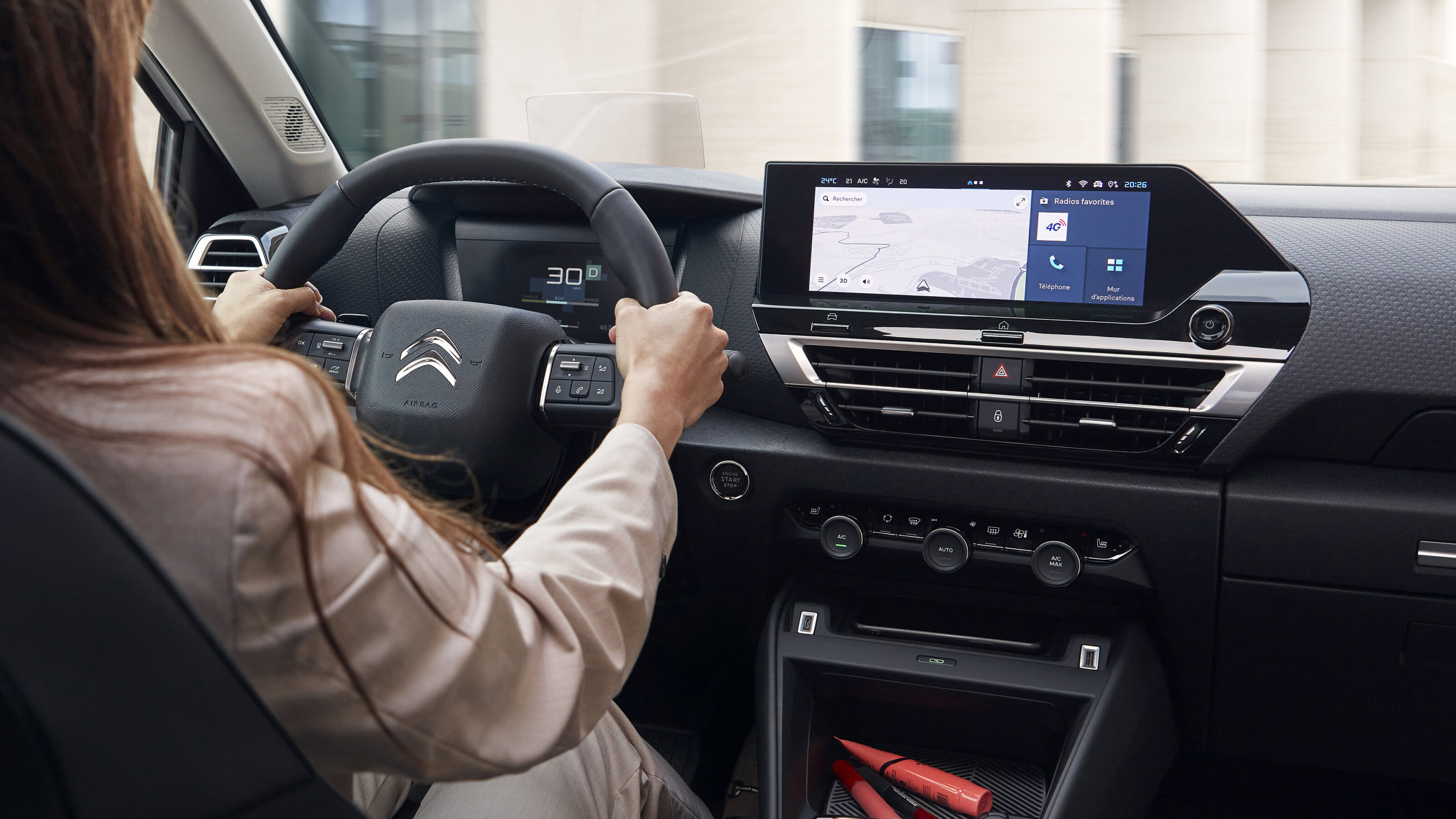
As expected, a lot of the C4’s equipment is featured in the C4 X, such as a 5.5-inch digital instrument panel information cluster, 10-inch central touchscreen, six-speaker audio with DAB digital radio and Apple CarPlay/Android Auto, dual-zone climate control, heated front seats and a colour head-up display.
The C4 X is also equipped with a comprehensive suite of safety technology, which includes; a blind-spot monitoring system, active lane departure warning system, adaptive cruise control, extended traffic sign recognition/recommendation and six airbags, to name a few.
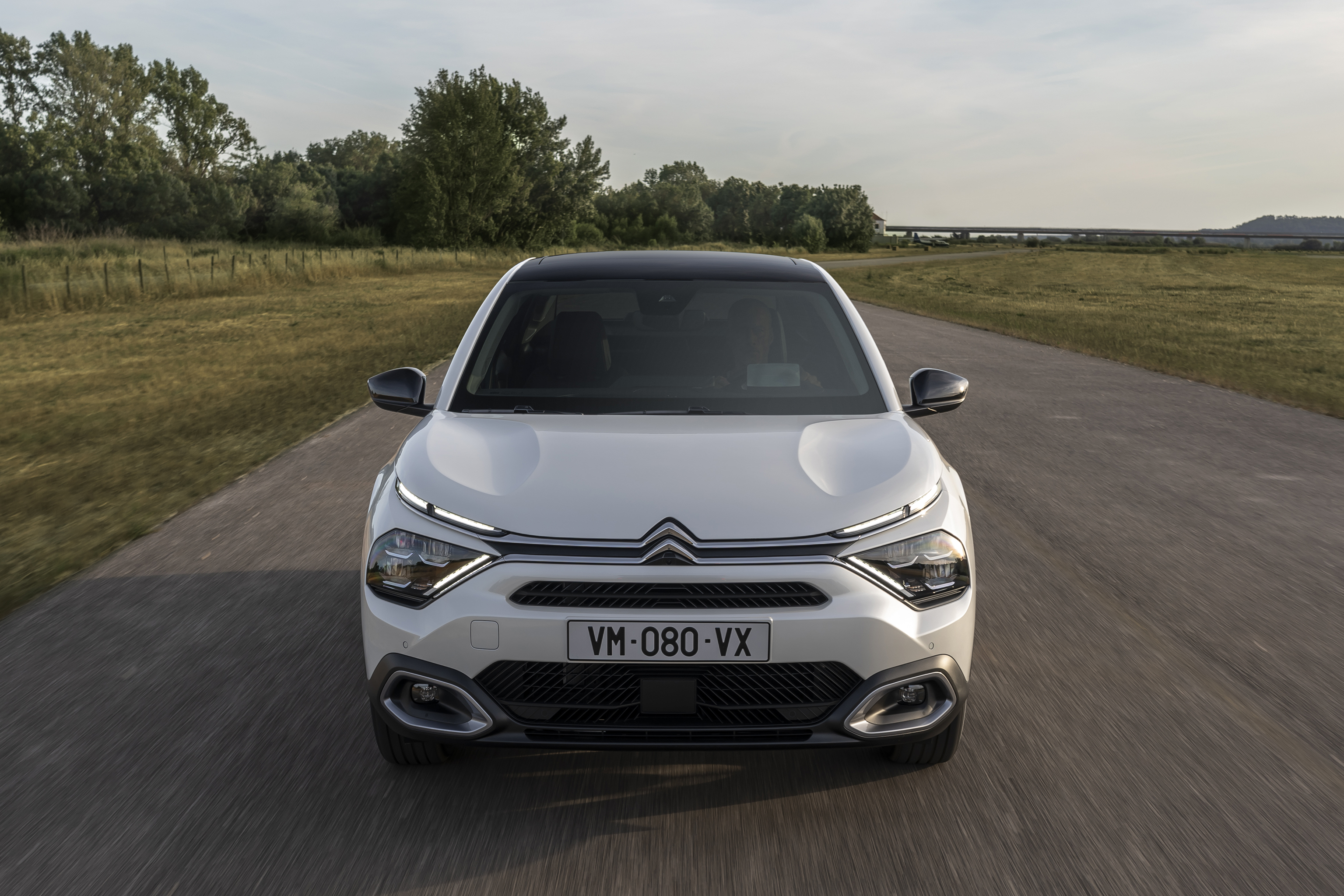
Set to go on sale in Europe, Africa and the Middle East before the end of the year, the C4 X could yet find itself in Australian showrooms if demand is high enough, though Citroën’s local operation remains focused on the current model range.
Snapshot
- Industry looking to improve what happens to end-of-life cars
- Could mean rego system changes to better track vehicles
- Project to present findings early 2023
The way we register cars could drastically change if a plan to recycle more parts from ‘end-of-life’ vehicles goes ahead.
Under the proposals, currently being workshopped by the Federal Chamber of Automotive Industries (FCAI) and Motor Trades Association of Australia (MTAA), the rego process would need to be overhauled to better track a vehicle from the start of its ‘lifetime’ until the end – as is the case in countries such as the UK and Canada.
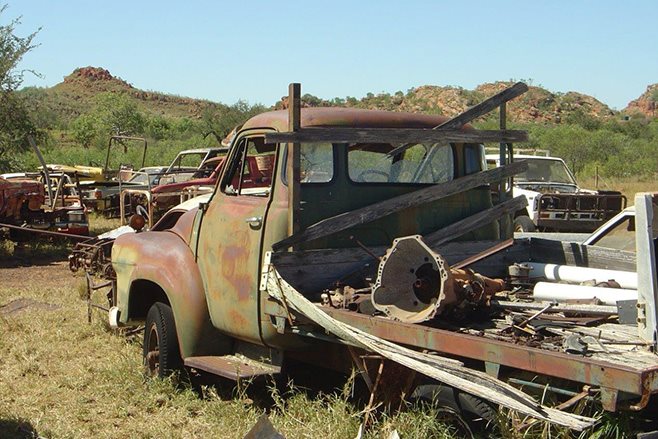
At present, vehicles are registered by an owner when new, if re-registered interstate or after a long period of time off road – but there is no legal requirement to formally de-register them or notify the authorities if they’re no longer being used, meaning many cars can sit in garages, barns or paddocks for years with no record of where they are or what condition they’re in.
“There are a couple of hallmarks of international schemes that seem to make them successful, such as having a method of recording the vehicle from its birth or registration through to the point of time when it gets destroyed – and that’s quite different to what occurs in Australia [now],” said Rob Langridge, director of emerging technologies at the FCAI.
“At this point in time, we track it for registration and use on road. And as soon as it stops being used on road, it could be parked in a paddock or a garage or somewhere, and no one really knows where it is. If it’s not being registered for road use, it sort of disappears off everyone’s systems.
“[Tracking vehicles] would require a major change to state and territory registration systems.”
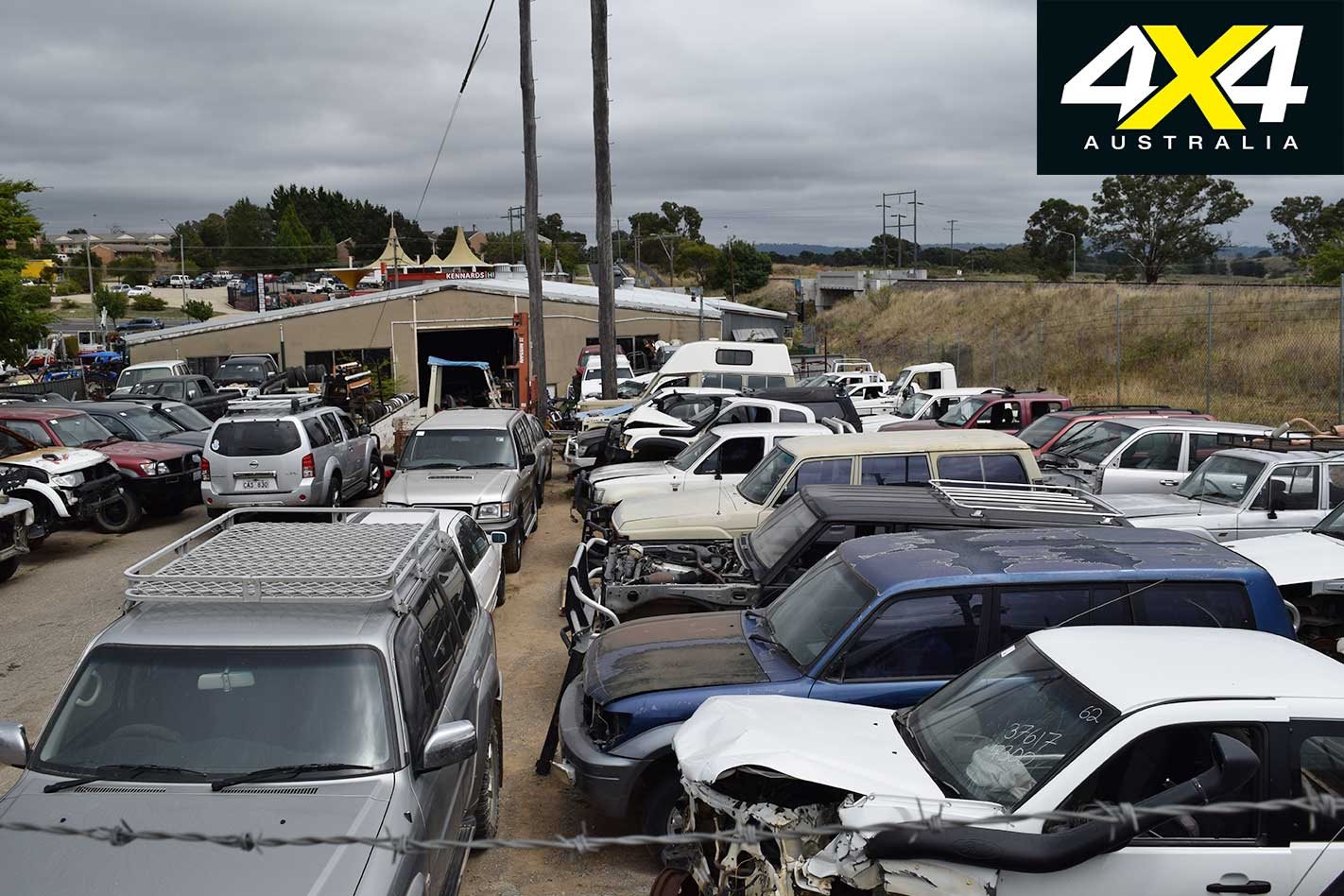
The possible changes to rego systems, which would likely take at least two years to implement due to the multiple layers of legislation and consultation needed across Australia, are part of a wider plan to improve how vehicles are recycled at the end of their lives.
Earlier this year, the FCAI and MTAA, the latter of which represents vehicle parts suppliers, dismantlers and recyclers, were jointly awarded a $1 million grant by the Morrison Government under the National Product Stewardship Fund to look at ways to stop 700,000 cars being destined for landfill each year.
The partnership between the two industry bodies is designed to find one “harmonious” policy for decommissioning and recycling vehicles in Australia, and to explore the regulatory changes that might be needed to back that up.
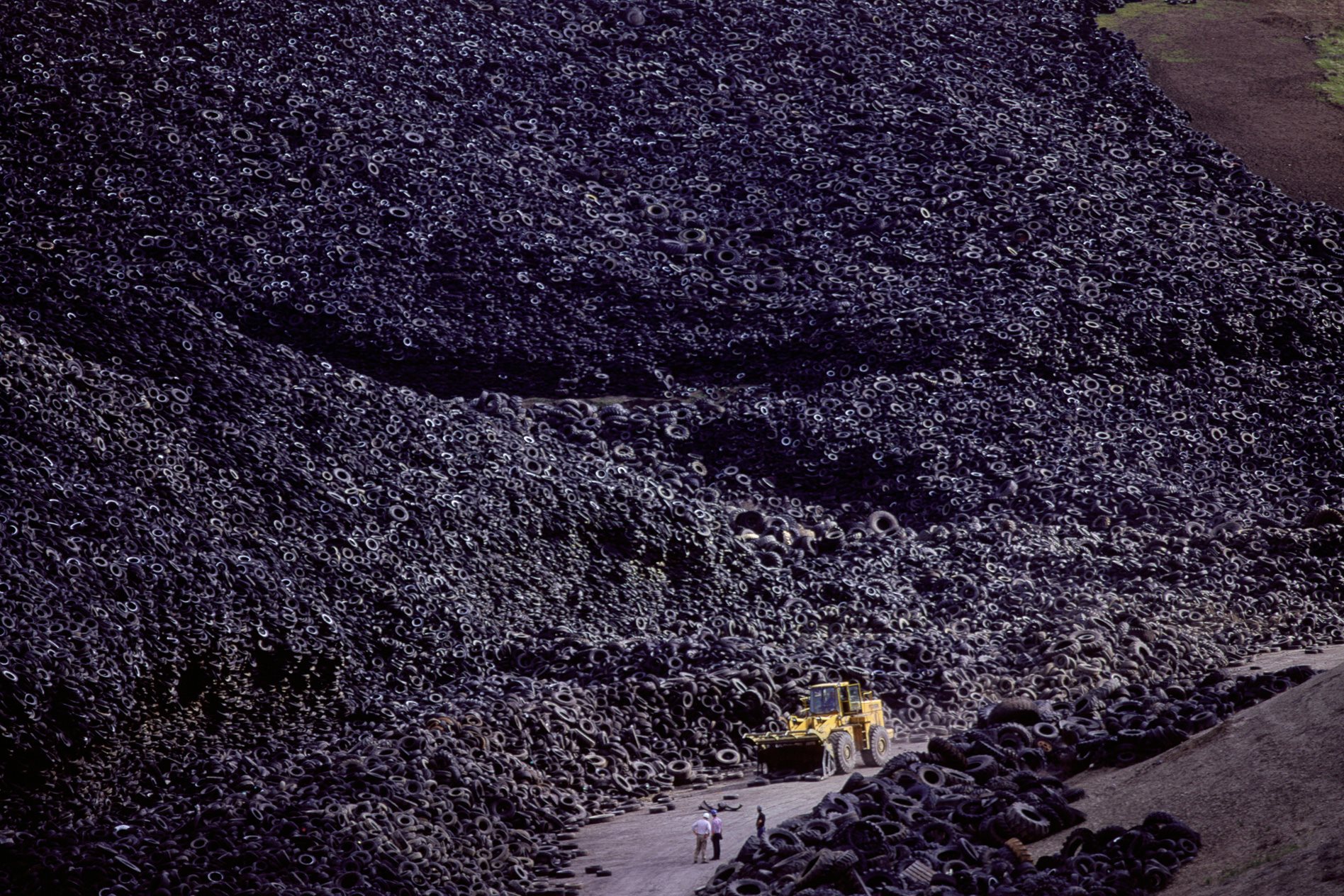
“The question of whether you destroy a vehicle or decommission is typically going to involve removing all the fluids and contaminants out of it, the gases, recovering products for reuse – such as selling a secondhand part – and then looking at what else can be sent for recycling. Then the remainder gets put into what they call ‘flock’ and that goes to landfill,” Langridge added.
“The study we’re undertaking right now is looking at – if we did have a vehicle being identified at end of life and we did decide to destroy it, in the sense of dismantling/recycling etc – what an authorised treatment facility would look like.
“When you look at recyclers, you’ve got everyone from very large operations right down to the much smaller ones, and as we move into the country areas they really can be quite small.
“And then, unfortunately, we still have the nefarious elements within the industry, and part of this process may well start to think about how do we start to deal with some of those.”
Wheels understands that currently 60 per cent of scrapped vehicles’ weight is metal, which is already largely recycled, but the remaining forty per cent is more difficult because of the large number and complexity of parts.
Glass in particular isn’t well recycled in Australia at present – in fact there is just one facility in the entire country. In overseas markets, large volumes are needed to make the practice commercially viable.
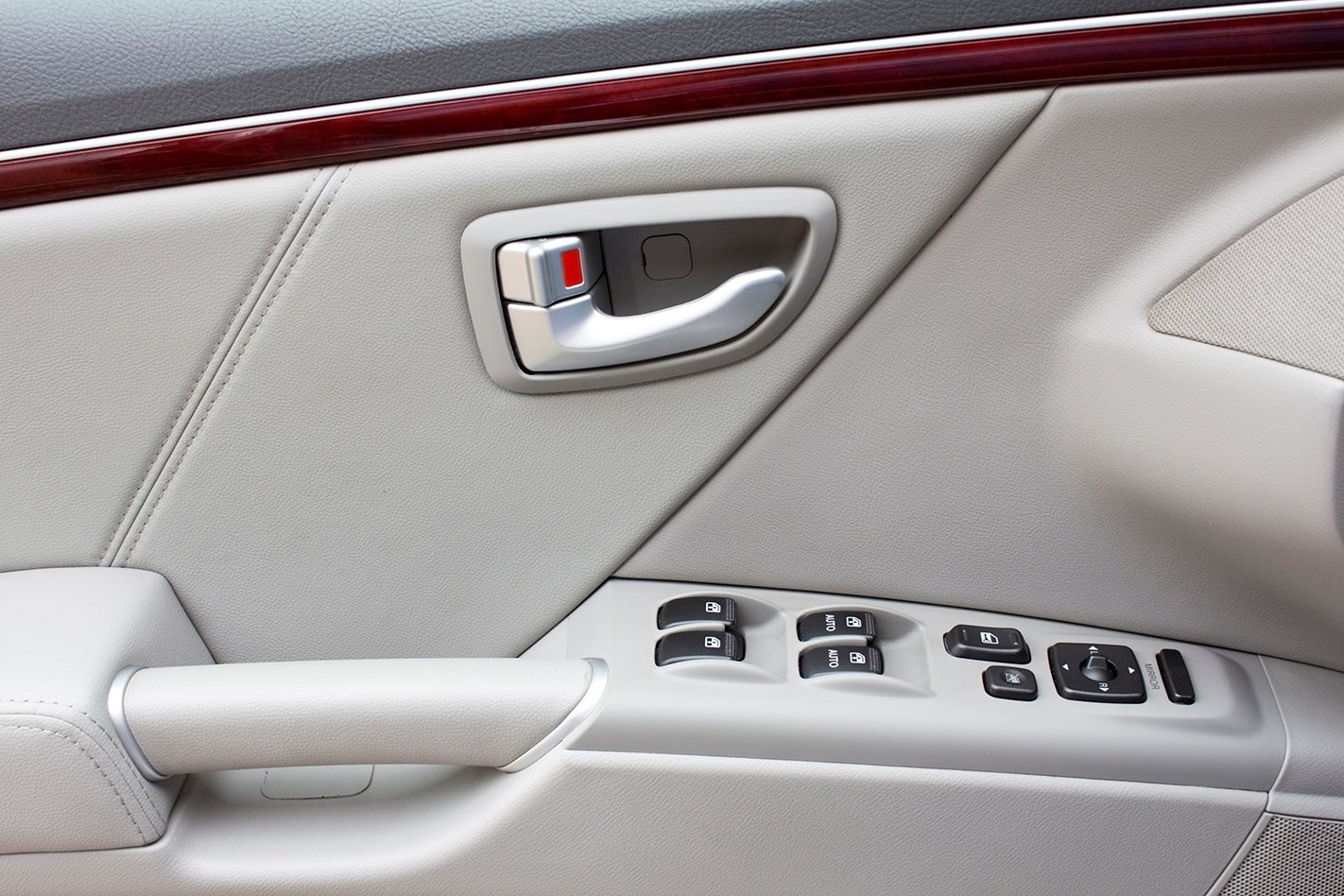
The new project would ensure more elements, such as the textiles used for seats and plastics in door trims, as well as electronic components, can be recycled.
One important consideration for the FCAI is making sure an authorised treatment facility can de-gas the air-conditioning safely.
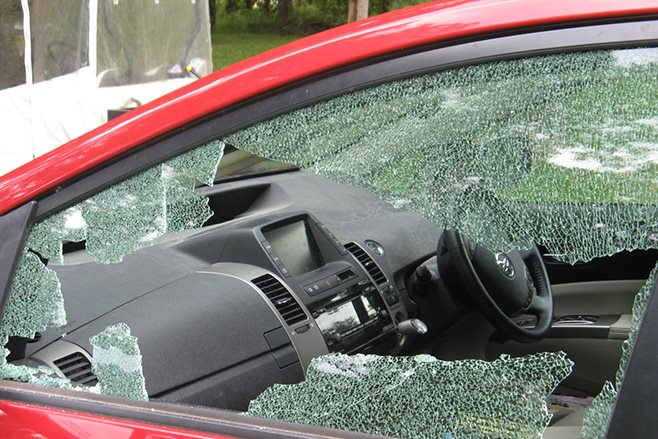
“We need to stop fluorocarbons going off into the atmosphere and affecting the environment at the rate that they do. At the moment, for instance, you could have a backyard operator who just cuts the air conditioning hoses and releases it off. But what we need is an authorised treatment facility that would recover the gas, treat it and, and dispose of it in the environmentally and appropriate way,” Langridge told us.
“Work is well underway, and the result will be a comprehensive, evidence-based road map to implement a national recycling scheme by the end of 2023,” MTAA CEO Richard Dudley said.
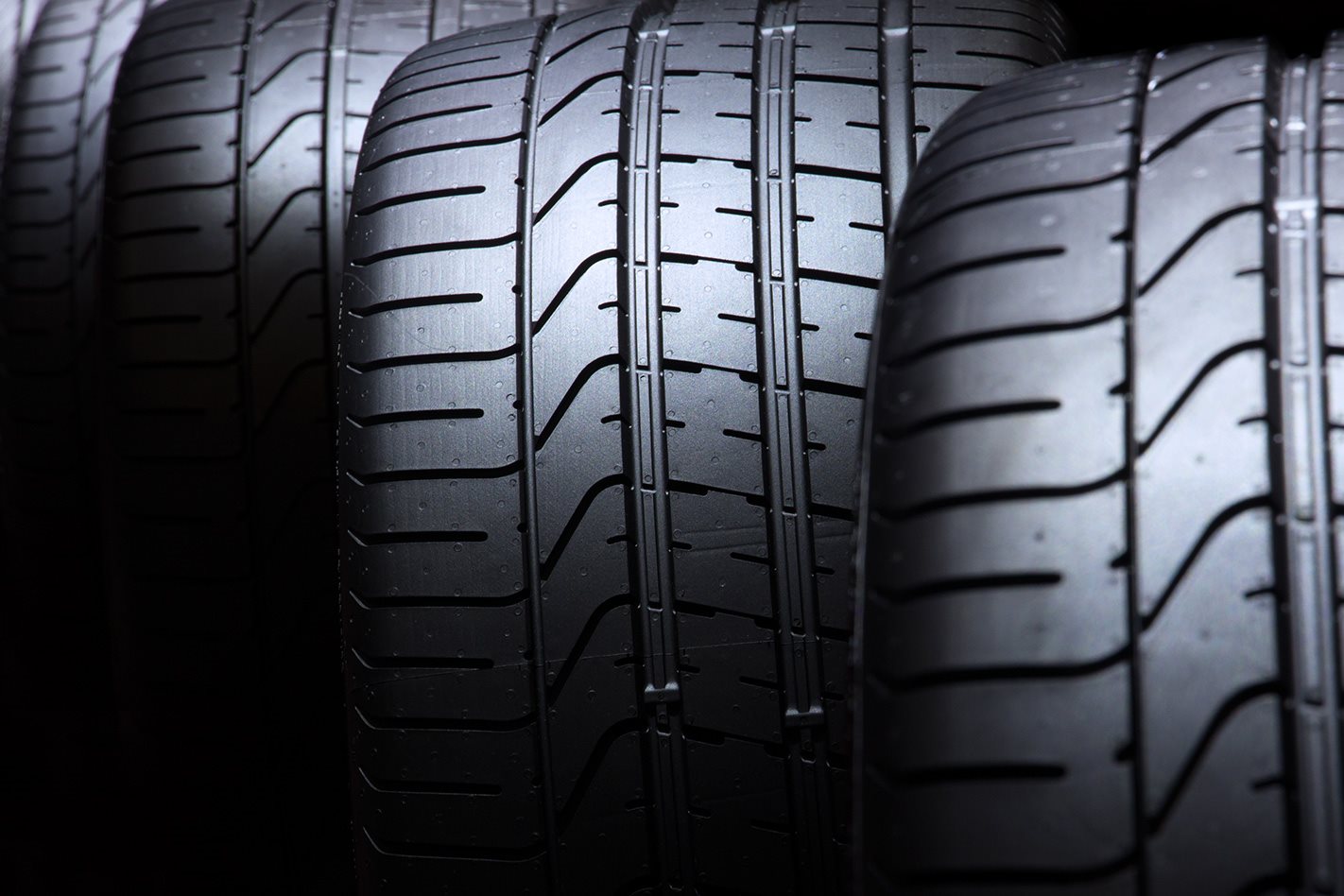
“With more than 700,000 passenger vehicles reaching the end of their life each year, there is an opportunity to streamline and harmonise decommissioning and dismantling processes, environmental compliance requirements, and business to business linkages to minimise landfills and maximise recycling opportunities.
“This will…enable Australia to be better prepared for the transition of the national vehicle fleet from internal combustion engines to electric.”
“This is a watershed moment for our industry,” said VACC CEO, Geoff Gwilym.
“This has been a missing piece in the transition of our industry to an electric vehicle dominant market.”
Critical to the plan is taking best practice from overseas, but suiting it to the “specific business and commercial demands of the Australian marketplace”, the VACC said.
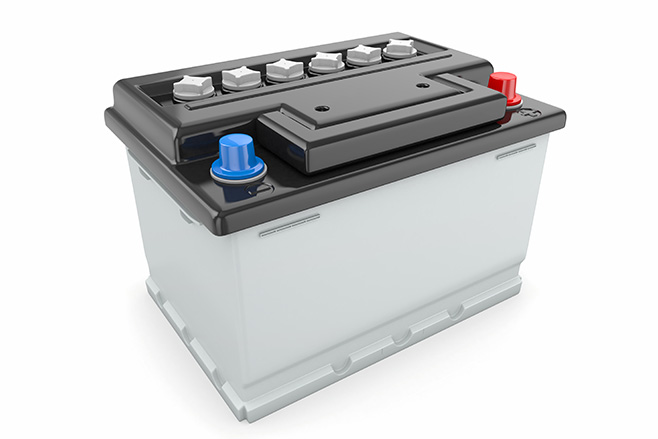
“We’re starting to see electrification of fleets and more rigour around how we are going to deal with end of life products such, including batteries, motors, control circuits, and those sorts of things,” Langridge told Wheels.
“But what we need to do is to develop a business case that suits the Australian market. The biggest advantage overseas has got is substantially more vehicles. When you start to look at it from a cost perspective – it’s much easier to deal with larger volumes than it is with smaller volumes. We also need to consider the diverse geographic nature of Australia and the small population, which makes it somewhat difficult.”
August, 2022: Outlander PHEV launch review
Following the ‘pre-production’ review you can read further down, the Outlander PHEV is now on sale in Australia, and you can see our full first-drive and video review at the link below.
July: Outlander PHEV pricing announced
Australian pricing and details for the Outlander PHEV have now been revealed. Get the full story at the link below.
STORY CONTINUES: Outlander pre-production drive review
It doesn’t take a great stretch of the imagination to believe that the number-one selling ‘car’ in the United States is, by a substantial margin, Ford’s F-Series truck. Nor would you be labelled particularly gullible to be convinced that the world’s most popular car is the Toyota Corolla.
But when it comes to the global best-selling plug-in hybrid electric vehicle (PHEV), you might want a few more guesses. I’ll save you the trouble.
With more than 300,000 sales to its name, the first-generation Mitsubishi Outlander PHEV is officially the world’s favourite plug-in, and the secret to its success is relatively simple.
In the early 2000s, Mitsubishi, like many other brands, felt the turning tide as more and more motorists ditched their sedans, hatchbacks and wagons in favour of an SUV.
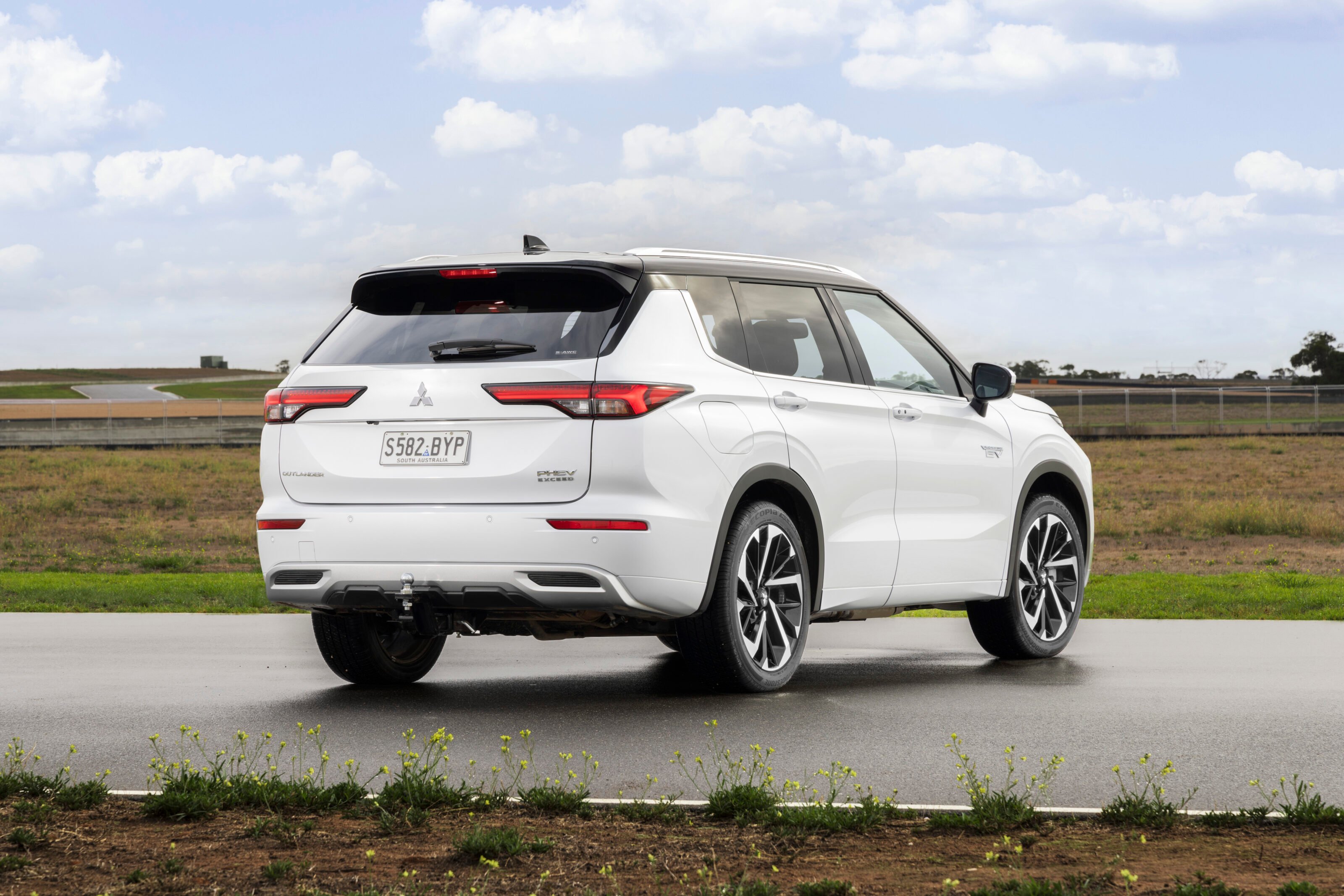
With more than 300,000 sales to its name, the first-generation Mitsubishi Outlander PHEV is officially the world’s favourite plug-in, and the secret to its success is relatively simple.
At the same time, the Japanese manufacturer also sensed the groundswell of electrification and the switch to battery power that would surely accelerate with a similar curve.
That’s how the Outlander was the first model to the market that combined the virtues of a PHEV drivetrain, dressed up in the alluring SUV adventure suit that the world couldn’t resist.
Not only that, the Outlander aligned with Mitsubishi’s value-for-money mantra and, in its most affordable form, cost just less than $46,000 – an all-wheel drive mid-sized SUV with zero-emissions capability for the price of a top-shelf Nissan X-Trail.
In the ensuing eight years, however, numerous manufacturers have followed Mitsubishi’s lead, bringing plug-in hardware to market and encroaching on the Outlander’s turf. Time for a reset.
When it arrived late in 2021, the fourth-generation Outlander brought a fresh new look for the company’s popular family SUV along with a significant step up in technology, practicality, quality, safety and all-round driving enjoyment.
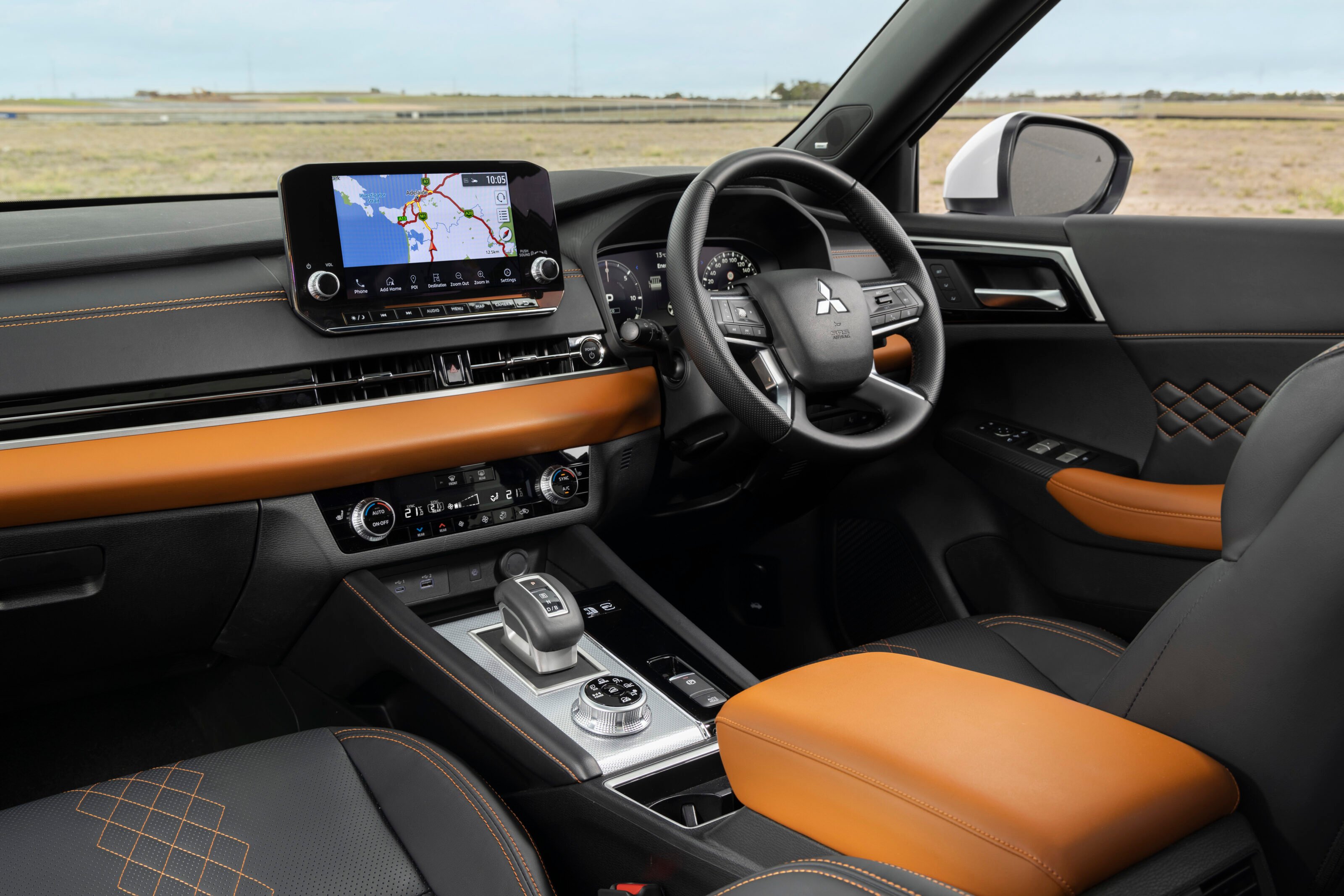
The dramatic transformation was largely the result of Mitsubishi’s alliance with Renault and Nissan, which enabled the binning of the previous-generation’s badly aged platform in favour of an all-new architecture, shared with the new X-Trail.
Since November last year, the resoundingly improved Outlander has been available locally in a choice of five variants, front- or all-wheel drive and powered by a 2.5-litre petrol engine.
But a new version of the plug-in hybrid will expand the range even further later this year with an evolution of the electrified system that’s as improved as the rest of the package. The Outlander PHEV is back, but can it reclaim some of the market share it defined?
To try to answer this question we’re at The Bend Motorsport Park in South Australia – a paradoxically obscure place to evaluate a sensible mid-sized SUV. On arrival, the sound of a flat-six at 9000rpm is emanating from the Western Circuit, while I prepare to fill the Eastern Circuit with silence.
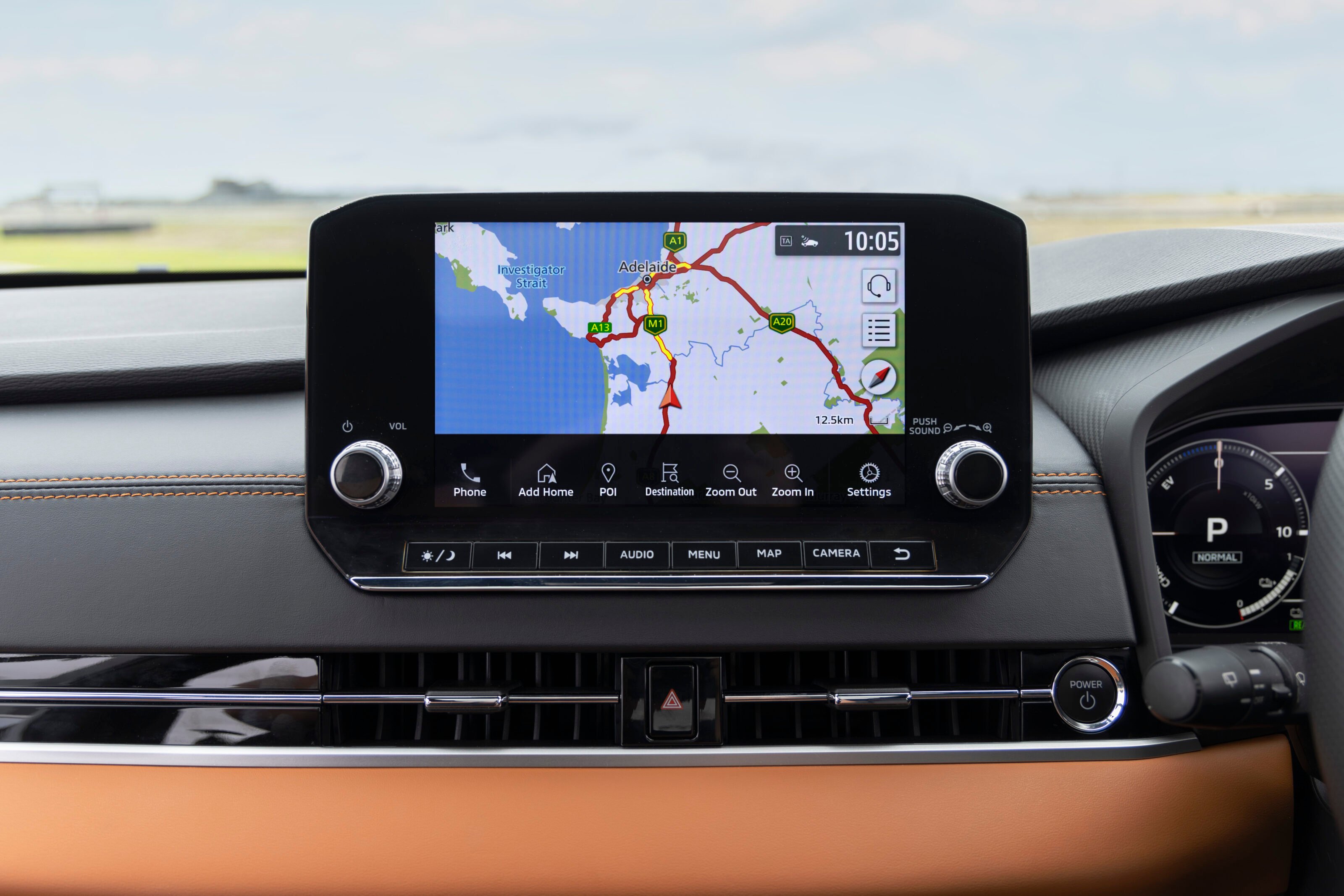
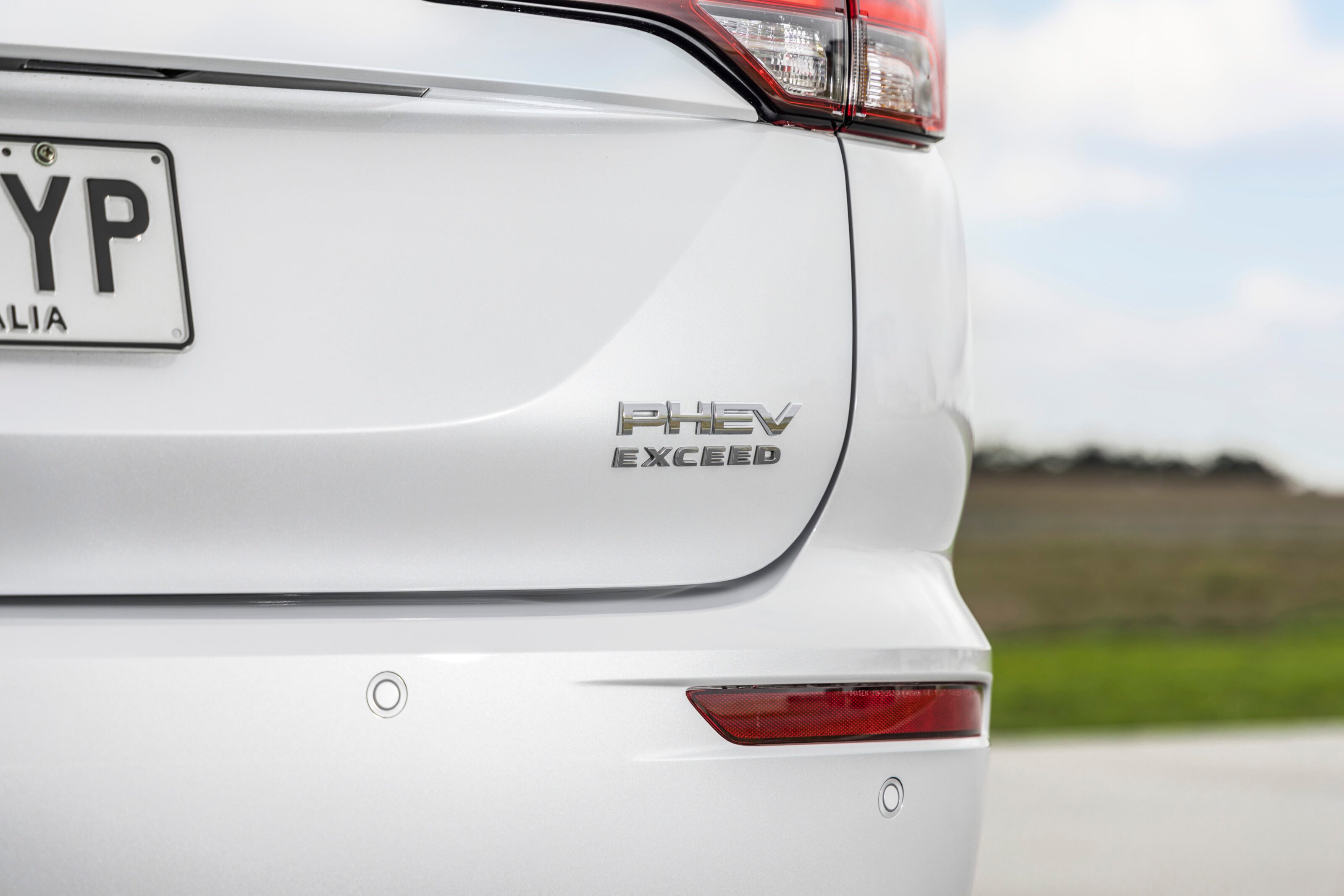
Sadly, I’m not here to set a new track record for plug-in hybrid SUVs even though, as far as I know, I’d be the first. Australia-bound versions of the PHEV are not quite rolling off the assembly line in Japan and, while the example waiting for me is an accurate representation of the range-topping Exceed Tourer we’ll get, it’s pre-production and won’t ever see a public road.
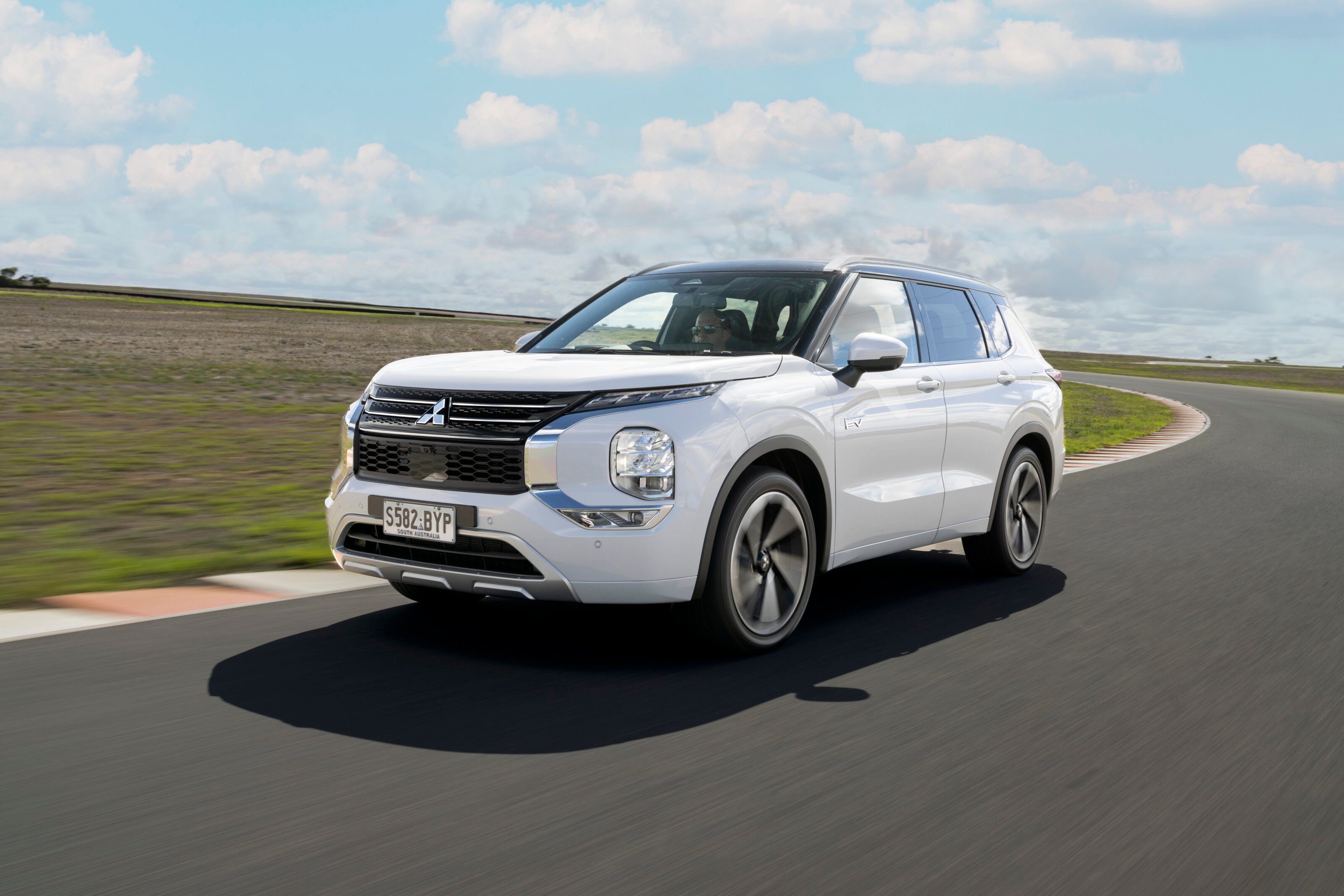
Nonetheless, a closed circuit does offer the opportunity to sample the new powerplant and all the enhancements compared with the third-gen model. For a start there’s more power and torque.
Power and fuel/energy consumption
Like the previous version, the new Outlander is all-wheel drive with an electric motor for each axle.
At the back, the unit is the power player with unchanged peak torque of 195Nm but an extra 30kW boosts power to 100kW.
The front axle is the torque hero, boosted from 137Nm to a sizeable 255Nm, and power rises from 60kW to 80kW.
They aren’t the only numbers to have grown. The centrally mounted lithium-ion battery is nearly 50 percent bigger with a 20kWh capacity and that has boosted possibly the most important figure – range.
While the gen-three car could manage about 54km on a single charge, the new Outlander can go up to 84km before calling on hydrocarbons or a charge socket.
If the battery is exhausted, combined petrol and electric range is also extended thanks to a larger fuel tank and more efficient Atkinson cycle engine with Mitsubishi claiming 900km as the maximum.
And there’s no shame in firing up the four-pot as the PHEV continues to benefit from hybrid efficiency thanks to the same fuel-saving principles found in mild hybrids.
A combined fuel consumption figure of 6.7L/100km is possible, says its maker.
But a first spin around a few of The Bend’s bends reveals a completely transformed nature to the Outlander’s electric bits.
While its predecessor’s performance was best described as adequate, the new version ups the combined outputs to 185kW and 450Nm, and acceleration now leaves an impression.
On the track
With the driving mode spun around to Power, the PHEV is locked into its most potent and torque is available at both axles with the immediacy EV drivers love, but with the petrol engine humming quietly under the bonnet.
I’m expecting the lag of combustion power through a conventional gearbox. It requires some recalibration of the right foot to avoid getting the power on too early in corners but it’s an adjustment I’m happy to get used to.
Regenerative braking is also more aggressive and noticeable with up to 0.3g of deceleration possible compared with the barely perceptible 0.1g of its predecessor and, while a final prod of the brake is required to bring the car to a halt, single-pedal driving is possible most other times.
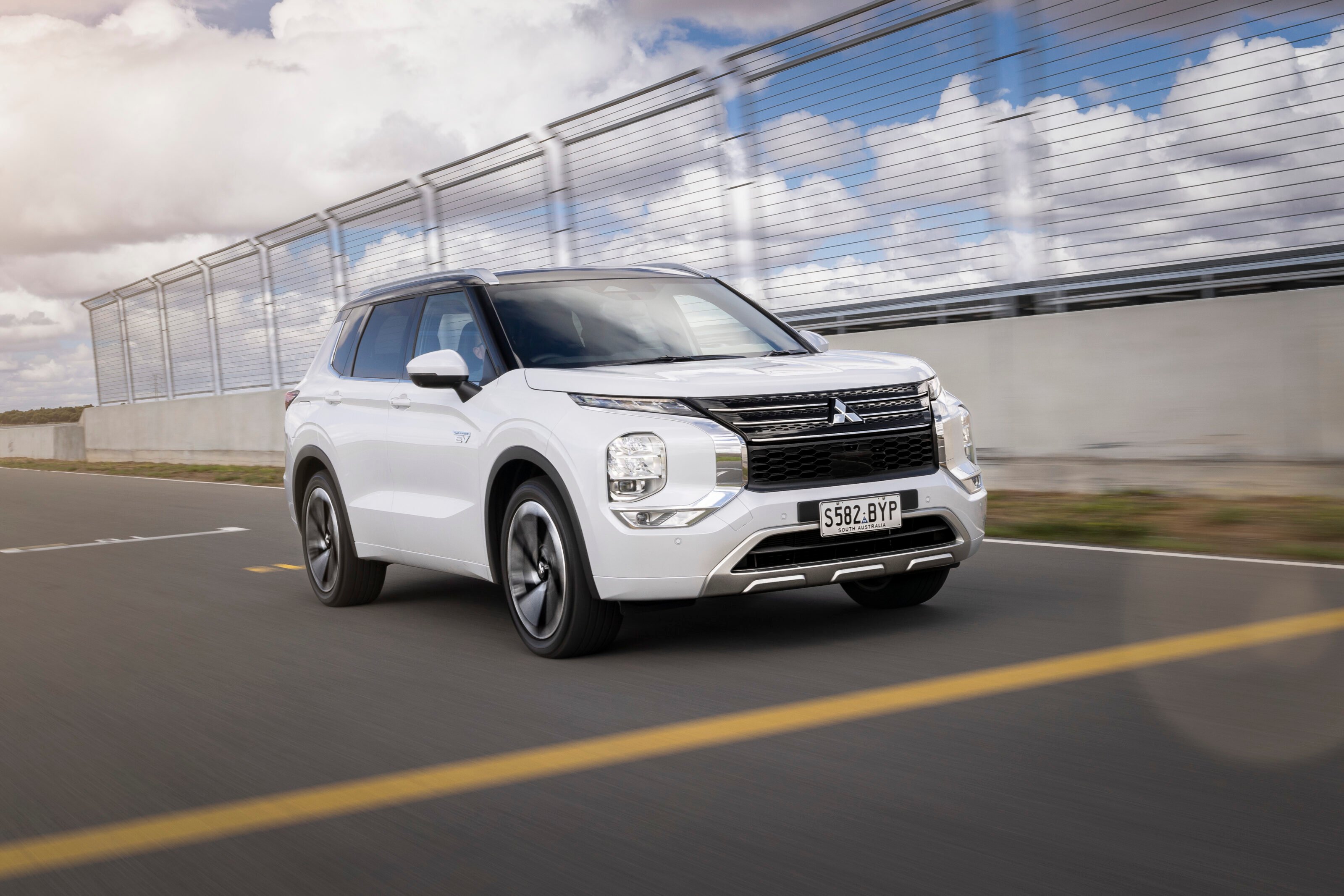
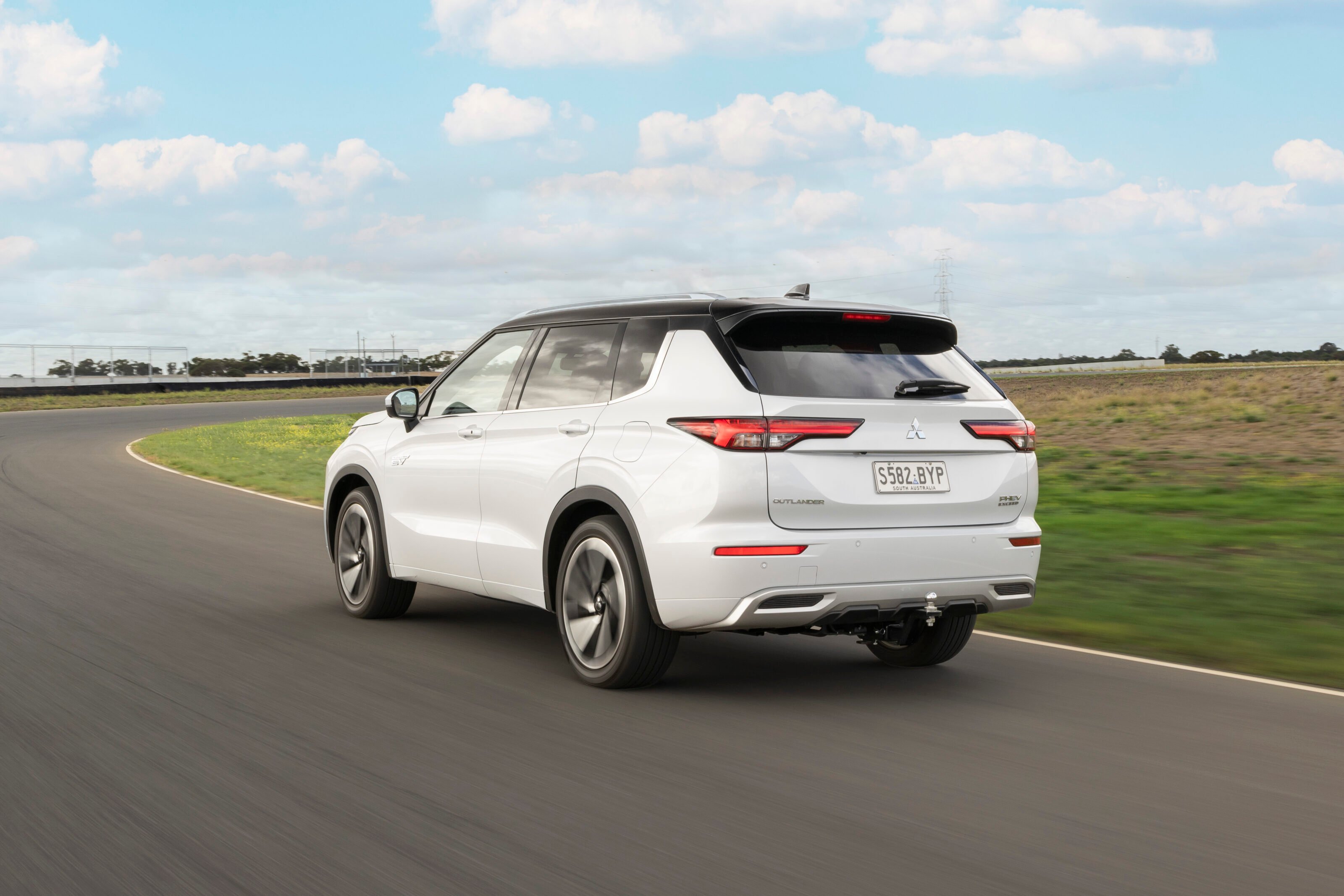
I’ll not squander too many words talking about the ride and handling of a car driven on a perfectly smooth surface and rolling on a chassis tune we won’t get, but I will say it was surprisingly good fun.
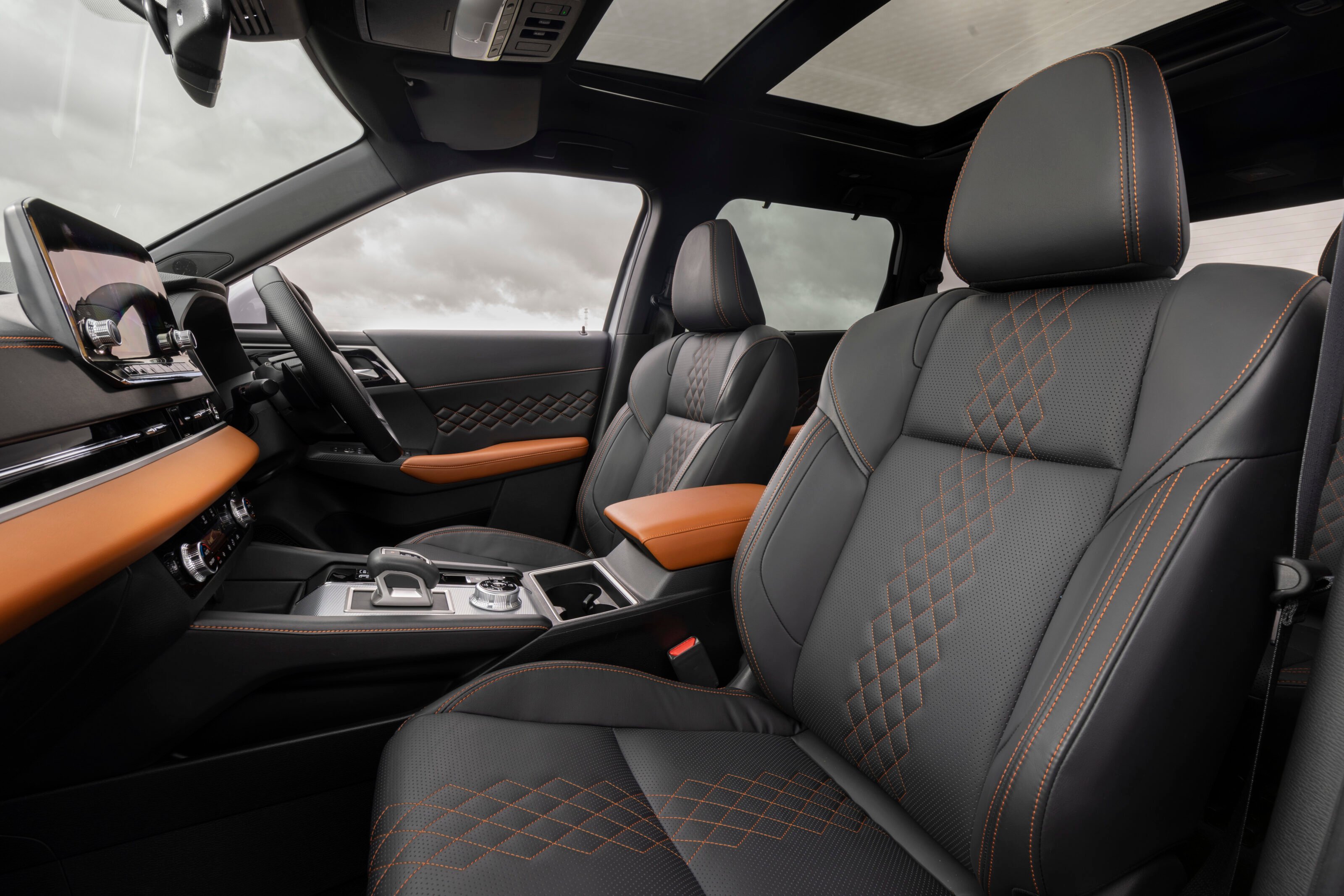
The centrally mounted battery offers excellent weight distribution, while the significant heft is effectively disguised by lively handling. Nor will I talk too much about the interior because it’s the same big step up – at least in the Exceed Touring – you’ll find in any Outlander.
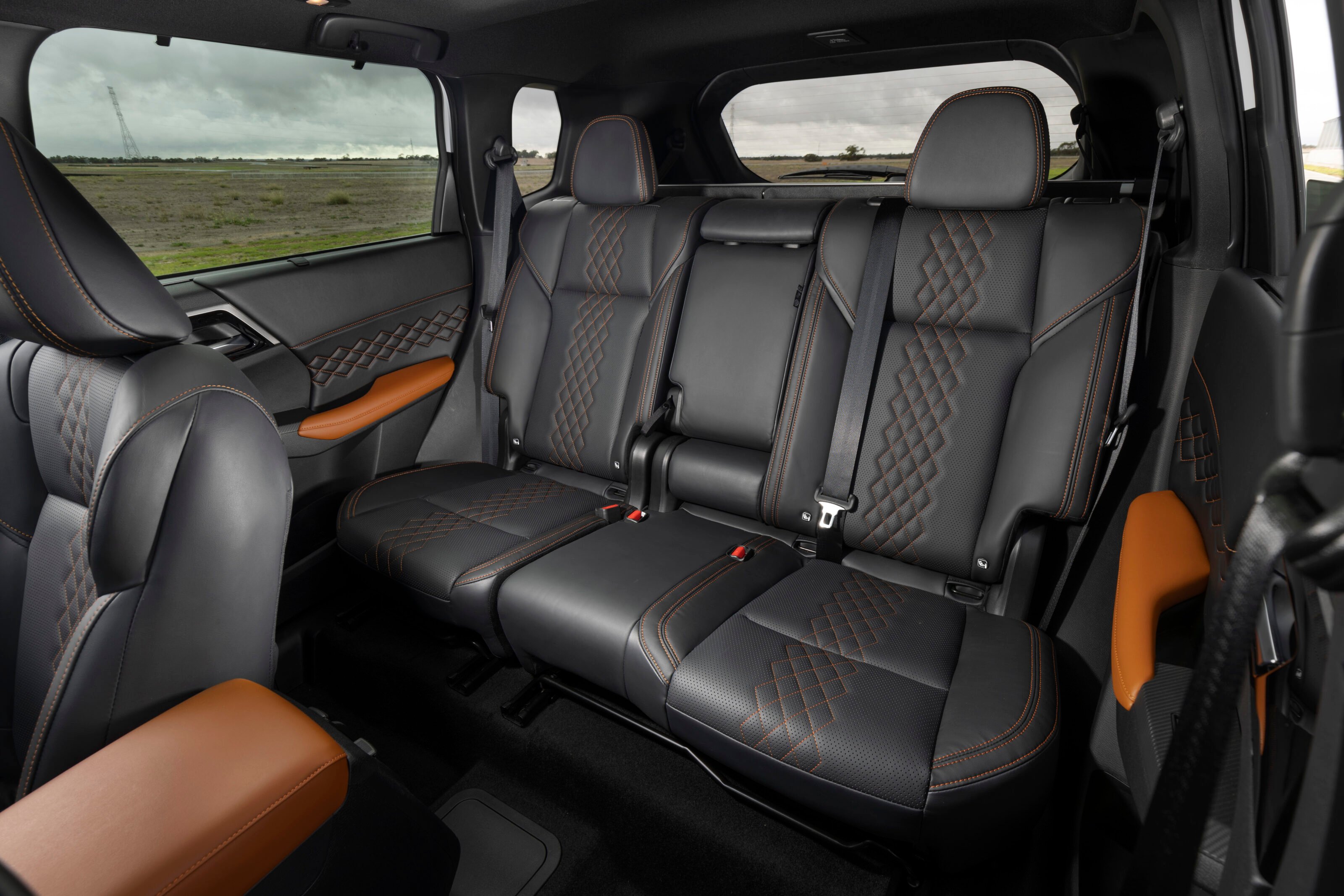
However, one significant bonus includes the 5+2 seating that wasn’t available in the previous PHEV, but a cleverly consolidated motor and inverter into the rear axle unit has freed up enough boot space to allow the kinda-seven-seat arrangement in the new PHEV.
Off road
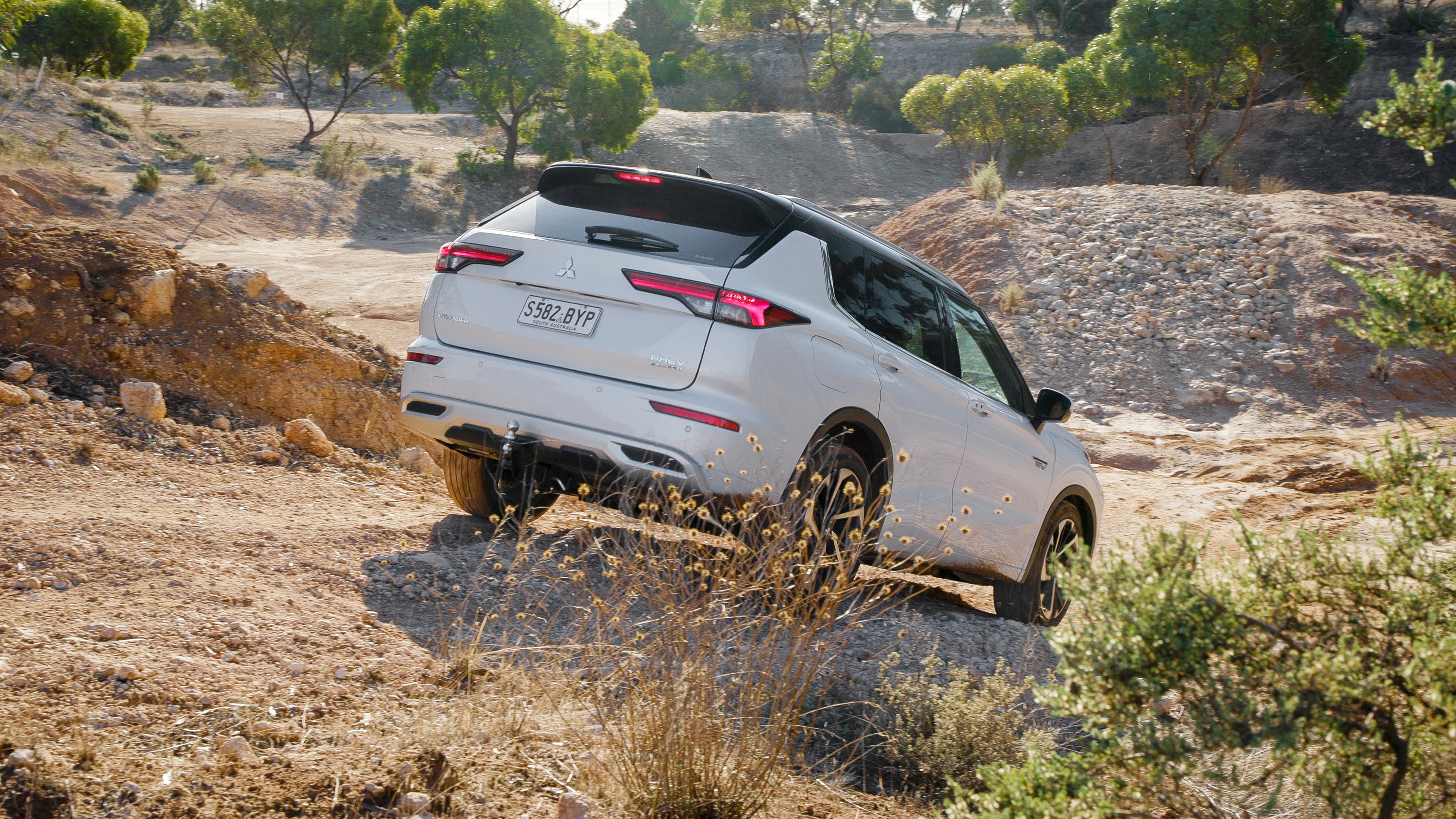
But there were more surprises to be had off-road. While more conventional SUVs deal with the approaching limits of ascent traction by revving hard and spinning wheels for a scrabble to the summit, the Outlander is more dignified.
A heart-sinking pause is followed by a slow but surefooted crawl with little drama or apparent effort, and the result is remarkably good progress despite eco tyres.
Ultimately, approach and departure angles and wheel articulation are the limiting factor of the Outlander’s all-terrain ability not, as expected, its traction or grunt.
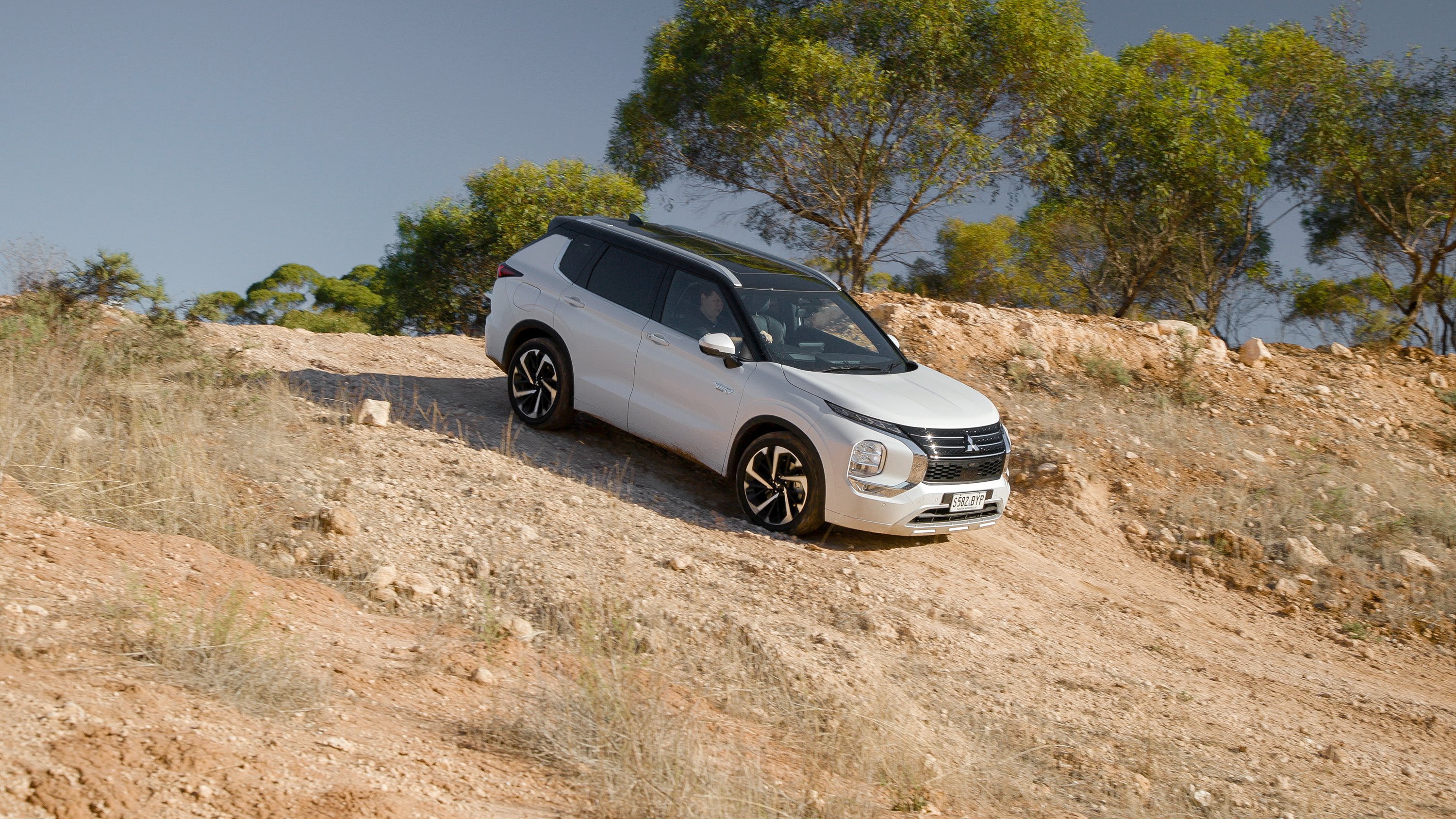
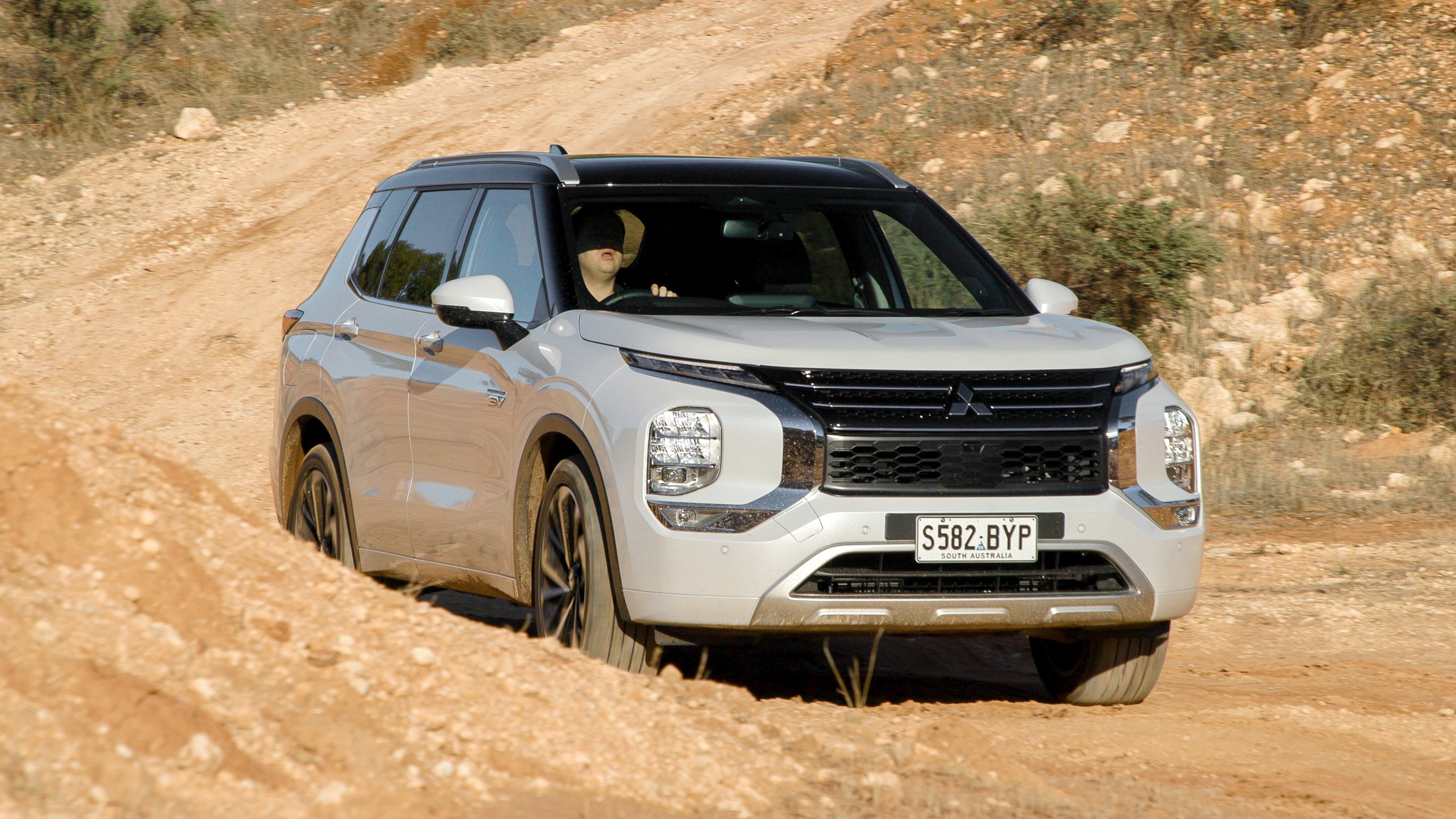
With The Bend’s automotive adventure park at my disposal, it’s been possible to demonstrate that the newest PHEV from Mitsubishi has a sophisticated electric drivetrain that imparts respectable performance on both sealed surfaces and unsealed alike.
Its cabin and exterior carries the same mature design and quality as the whole fourth-gen Outlander range and a first hack on the track suggests it’ll take the daily grind in its stride.
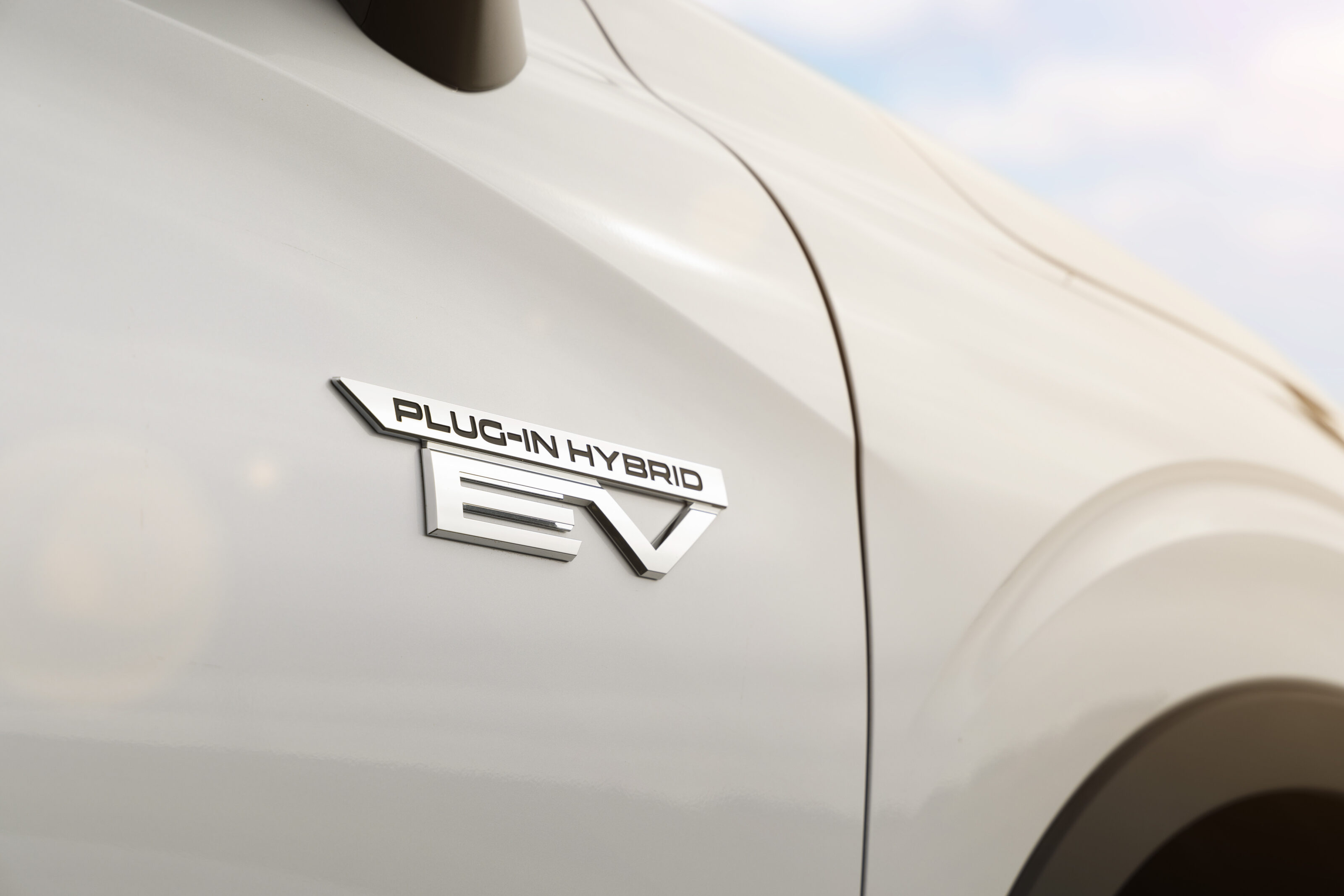
But there’s one more feature the new PHEV offers, and it’s my favourite. With the updated orange bits comes wonderfully versatile vehicle-to-X (or V2X) potential. If the concept is new to you as it is to many, Mitsubishi’s Dendo House is just about the cutest demonstration of this exciting future EV development.
There were more surprises to be had off-road. While more conventional SUVs deal with the approaching limits of ascent traction by revving hard and spinning wheels for a scrabble to the summit, the Outlander is more dignified.
This tiny house has been constructed on the back of a trailer and includes many of the items a regular house or office might include. But rather than taking power from the national grid to power its lights, TV, wine fridge and even a proper coffee machine, it has a number of other options.
Firstly, the Outlander that could easily have towed it or a caravan to The Bend can connect up its battery and provide the power, but the Dendo also has a solar panel and its own battery for electricity needs while the Outlander is away.
When the car parks back at home, stored power can be fed into the car battery or even back into the grid depending on supply and demand.
If that all sounds too complicated, the Outlander also has a pair of on-board 240-volt power points (one in the boot and another at the back of the centre console) for vehicle-to-load (V2L), allowing the plugging in of appliances which could turn a fairly average camping trip into a luxury escape, for example.
Yes, some EVs can pull the same trick, but when a purely battery powered car’s battery is flat, you’re done. The Outlander, however, simply fires up its engine for the convenience of a mobile generator, without riling the campers next door.
A full tank in the Outlander can provide enough power to keep the lights on in an average Japanese household for up to 12 days, and while Australian houses may have a bigger appetite for power, I’m certain the thousands of people impacted by the regrettably frequent local natural disasters would have loved a car like this parked on their driveway.
So what price should one put on the car that started a plug-in SUV revolution but now returns to reassert its credentials with a comprehensively elevated proposition and some notable extras?
If Mitsubishi were any other brand, it would be fair to assume jacked prices to correspond with the significant improvements in quality and performance.
And yet, the best intel suggests the most affordable Outlander PHEV will actually kick off from less than $50,000 for the ES, while the range-topping Exceed Tourer will cost about $67,000 – relatively small increases over the original version, and between $12,000 and $17,000 more than their 2022 petrol-only equivalents.
For a conventional evolution of a model that’s about right, but when you consider how much the Outlander has grown up, there’s probably no better poster child for Mitsubishi’s value mission.
Okay, so throwing the new Outlander PHEV at a racing circuit and full-blown off-road track might seem like overkill for a car that’s unlikely to experience anything as aggressive in its life, but it’s nothing compared with the most hostile and unforgiving environment it must endure – the showroom.
Closer look: All in the details
One: Ice delivery
Below 70km/h, all four wheels are turned exclusively by electric motors; above this, the engine mechanically connects to the front axle.
Two: On the down-low
Battery positioning under the floor beneath the passenger’s feet (not the boot) keeps mass balanced and low down.
Three: Quick plug
Standard Type 2 socket allows regular charging modes; second proprietary CHAdeMO plug is needed for the full suite of V2X features.
Four: Zero burn
CHAdeMO plug delivers fastest charging of the 20kWh battery – 80 percent in 38 minutes. Full charge allows a claimed 84km EV range
Five: Cool suit
New battery cooling system uses vehicle air conditioning; offers improved battery stability and faster charging
Six: Safe as
A fresh suite of driver assistance systems and passive safety has earned new Outlander the full five-star ANCAP rating
2022 Mitsubishi Outlander PHEV specifications
Chery cars will soon be driving on Australian roads again, nearly a decade after the Chinese brand departed.
The company is looking to grow roots locally, having recently applied for a number of trademarks through IP Australia, as well as actively advertising for sales director and HR manager roles in Sydney.
Company officials have also hinted at a Tiggo ute being in development, making it a prime candidate to compete in Australia against domestic rivals GWM and LDV, though few details have been provided at this early stage.
While it’s yet to make any formal announcement, it’s believed Chery will return to Australia under the umbrella of importer Ateco Automotive, which is currently responsible for LDV, Renault, Alpine, Ram, and Maserati.
General Manager of New Ventures at Ateco, Dinesh Chinnappa, told Wheels in 2019 the company had maintained an ongoing relationship with Chery, and was “keeping the doors open” for a comeback.
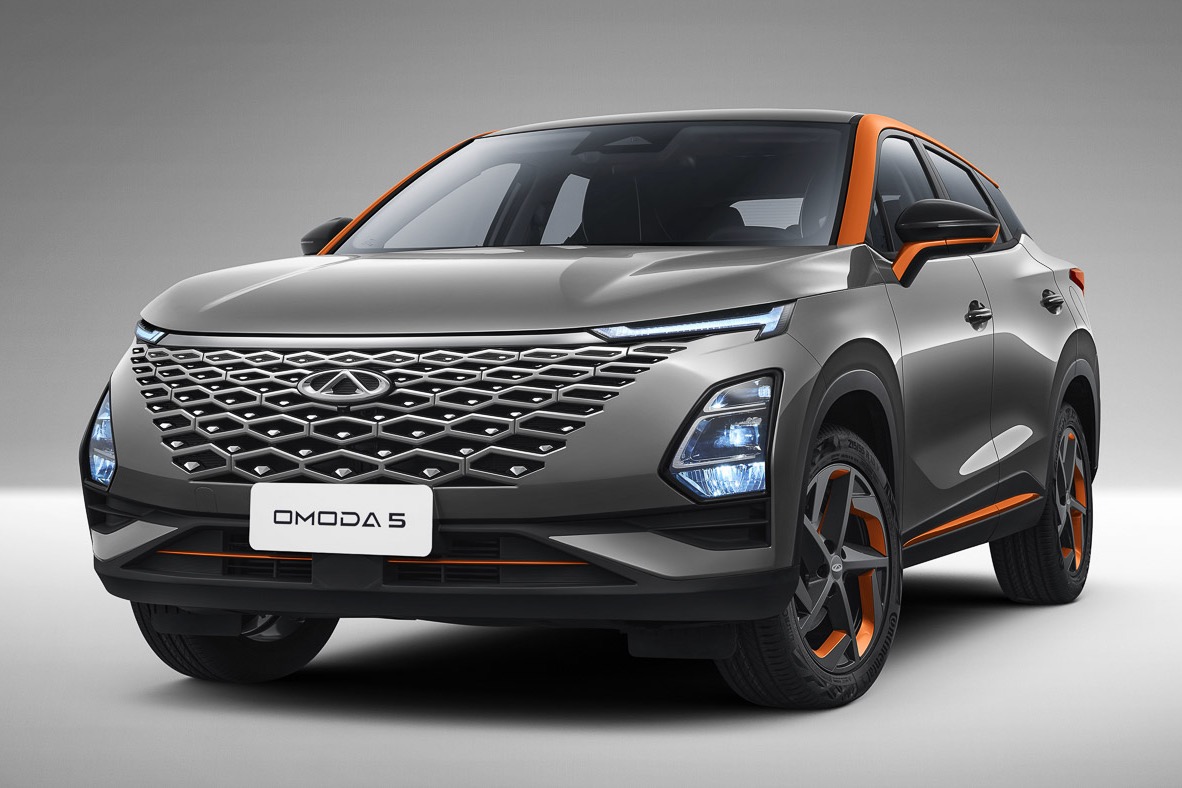
UPDATE, February 2023: Chery Omoda 5 confirmed for Australia, launch event announced
On February 16, Chinese brand Chery will make its Australian return properly official, unveiling its new Omoda 5 SUV at a buyer and media event in Sydney.
What is the Omoda 5?
To help you understand how Chery’s new SUV will fit into the Australian market, we’ve published a ‘spec battle’ here with two key rivals. Get all the details at the link below.
Story continues…
Chinnappa said the carmaker’s return would depend on whether the models “met Australian market requirements, such as being a relevant product customers want with good pricing, and met ANCAP crash rating safety standards”.
Executive Deputy General Manager for Chery South Africa, Tony Liu, told a media conference recently the company had reinvented itself as a technology and design leader, with a focus on developing a range of engines, vehicle platforms, and safety technology, according to Wheels24.
Chery is looking to build on its strengthening export business, named as China’s second largest exporter according to Car News China, with 270,000 vehicles sold across the globe in 2021.
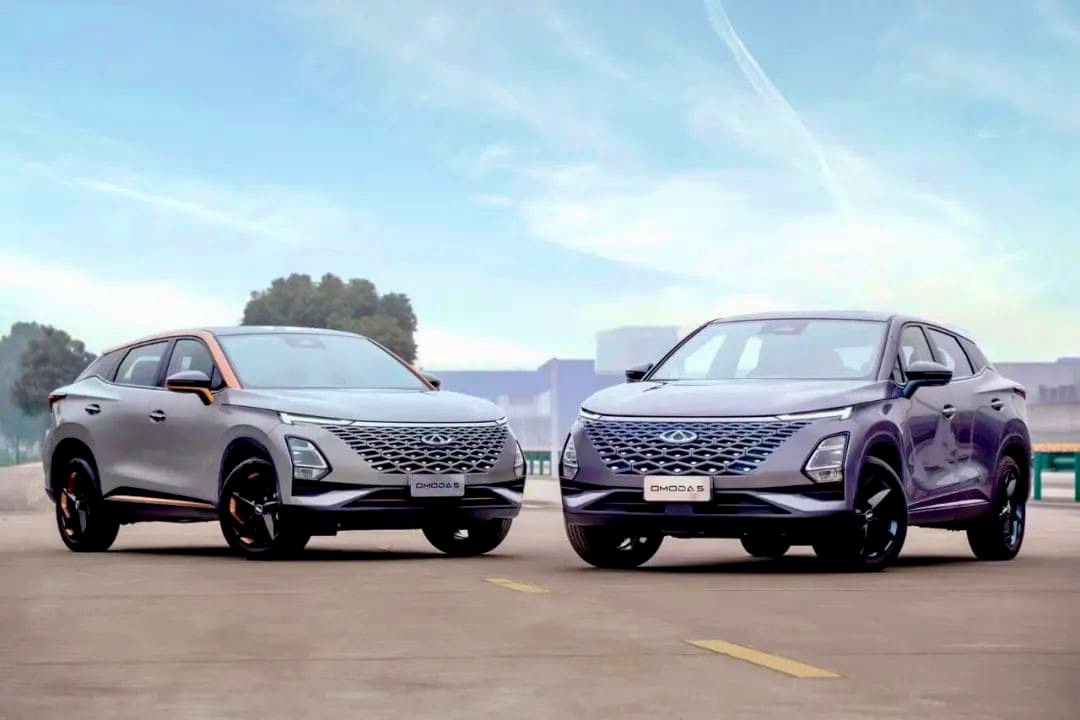
This week Chery announced it was bringing the Tiggo 7 Pro small SUV to South Africa – the third right-hand-drive model in the range after relaunching the brand there back in November 2021.
The carmaker’s South African line-up provides a glimpse of what Australian buyers can expect when the brand returns, with an official launch expected in the coming months.
Opening the range in South Africa is the Tiggo 4 Pro compact SUV, offered with either a naturally-aspirated or turbocharged 1.5-litre four-cylinder engine, with power outputs of 83kW/138Nm and 108kW/210Nm respectively.
The aforementioned Tiggo 7 Pro will also use the brand’s 1.5-litre turbo, while the medium-sized Tiggo 8 Pro medium/large SUV – which is said to be slightly larger than the Mazda CX-5, Volkswagen Tiguan, and Kia Sportage – uses a 1.6-litre turbo-petrol four-cylinder engine, producing 145kW and 290Nm.
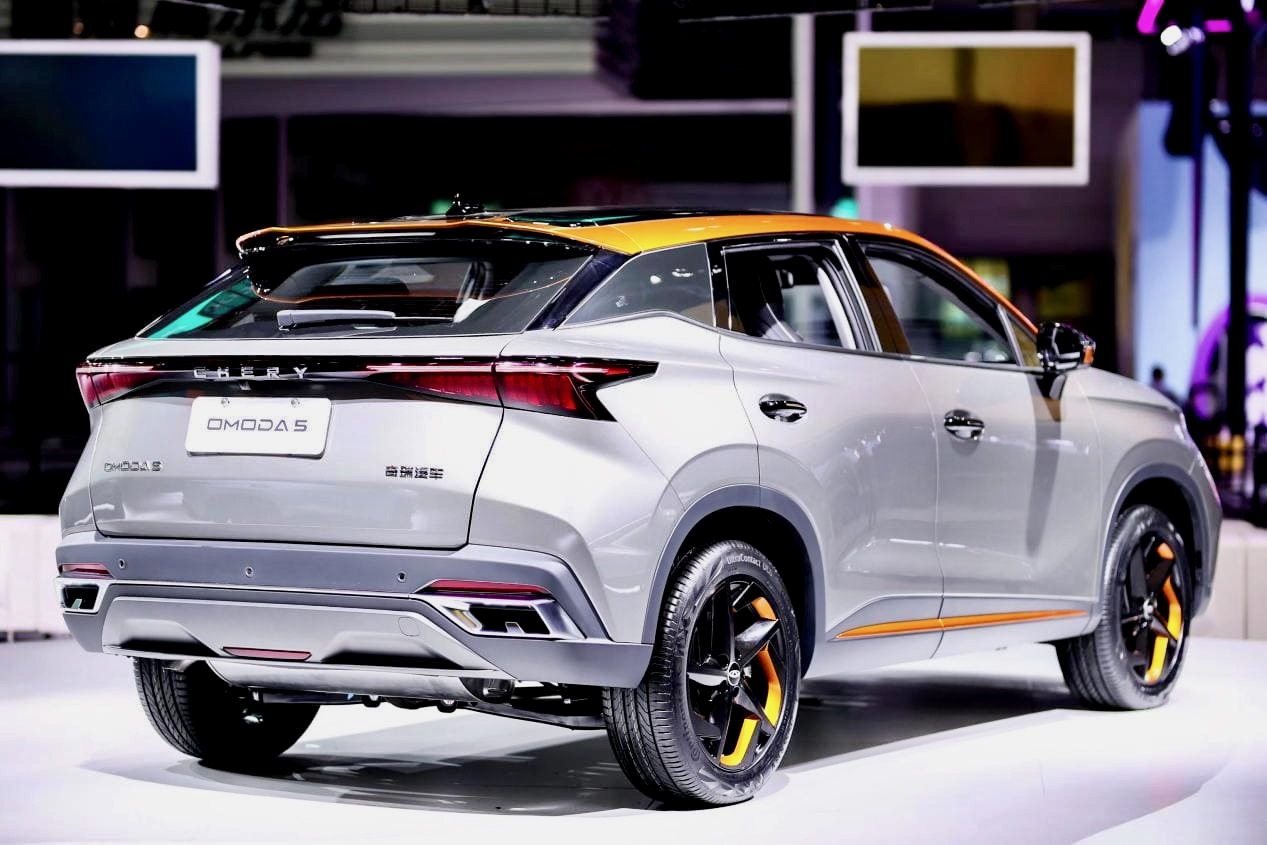
Australia could also be in line to receive the Chery Omoda 5, with the company trademarking the model name in recent months.
The vehicle is powered by the Tiggo 8 Pro’s 1.6-litre engine, but there are plans for the brand to offer a petrol-electric hybrid and fully-electric variants.
Given Chery has announced its expansion into other right-hand-drive markets such as Indonesia and Malaysia, an Australian launch should be just around the corner.
December 2023: Cybertruck pricing and specs
You might be glad, or you might’ve hoped it wouldn’t happen – but Elon’s teenage wet dream, the Cybertruck, is actually real and finally in customer hands.
Story continues…
According to new Twitter posts from Tesla founder Elon Musk, the company is developing a quad-motor Cybertruck with crab-walking capabilities.
Musk revealed the plans when replying to a tweet suggesting Tesla has paused the Cybertruck configurator to drop the single motor variant and focus exclusively on dual-, tri- and quad-motor powertrains.
The tweet also implies Cybertruck production will include the quad-motor variant from the outset, substantiating rumours about the axed single motor variant, as Tesla previously said dual- and tri-motor versions would come a year after the base.
Naturally, the Cybertruck news provoked Twitter users to ask more questions, like whether it could turn like a tank. Musk acknowledged it could, adding something else unexpected…
Not much else on the quad-motor Cybertruck is known. But driving each individual wheel independently with diagonal manoeuvrability will introduce innovative engineering similar to GMC Hummer EVs.
The quad-motor variant’s arrival could see it overtake the tri-motor Cybertruck as the most powerful and capable in the model range, improving on that variant’s claim to accelerate to 97km/h from zero in under three seconds and tow as much as 6350 kilograms.
A four-motor Cybertruck also gives Tesla a rival to the Rivian R1T, a full-sized pick-up truck with quad motors that can put out 596kW/1120Nm combined. A less powerful quad-motor R1T is currently on sale for US$67,500 (AU$95,708) in the United States in Explore trim.
For reference, Tesla has previously priced the Cybertruck at US$69,900 (AU$95,230) for the tri-motor variant.
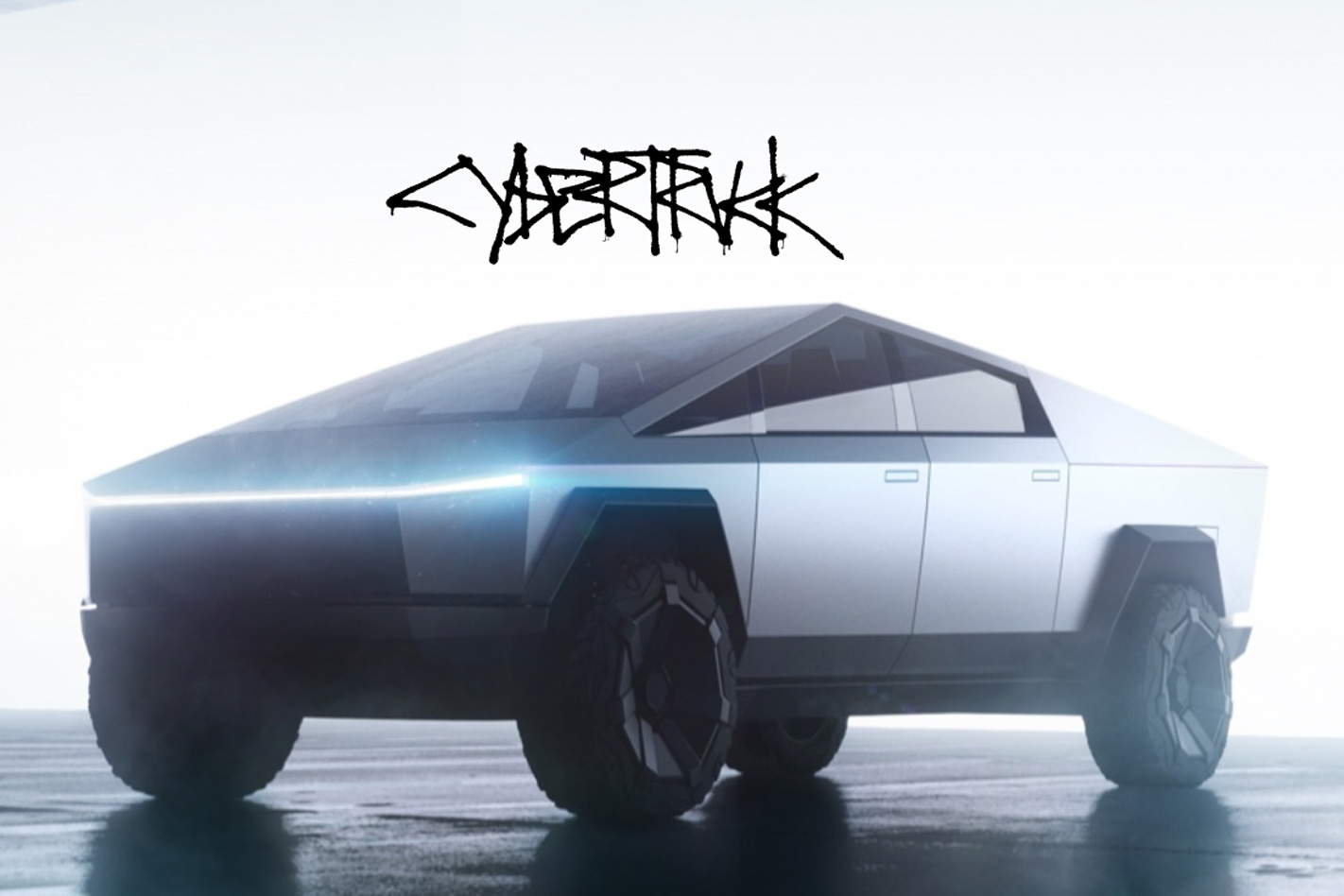
Cybertruck production will begin in 2022 at the company’s Texan Gigafactory in Austin after being delayed. The Cybertruck was unveiled in 2019.
But this won’t be the first time Musk has promised extreme new Teslas attached to lengthy wait times on Twitter, either. Of course, the world’s still waiting for the Roadster and only just getting the Model S Plaid. And it’s now reported Tesla is prioritising Model Y production over the Cybertruck.
As we’ve known, the Cybertruck will be built only to North American regulations, ruling it out for European and other international markets – but Musk has said a smaller version could be built for markets like ours in future.
Confusingly, however, you can place a refundable $150 deposit on Tesla’s Australian website for the Cybertruck.
French manufacturer Citroën has teased its latest upcoming model, with the C4 X set to be revealed tomorrow.
Teased on the Citroën UK Twitter account, the video declares the manufacturer will be unveiling the latest member of its family on June 29 European time, likely in the early hours of the morning on June 30 in Australia.
Brief glimpses in the video show a high-riding four-door sedan with similar front-end styling to the regular C4, although the C4 X’s rear design is totally different to its counterpart, featuring a more traditional sedan-like shape rather than the short-overhang hatch of the C4.
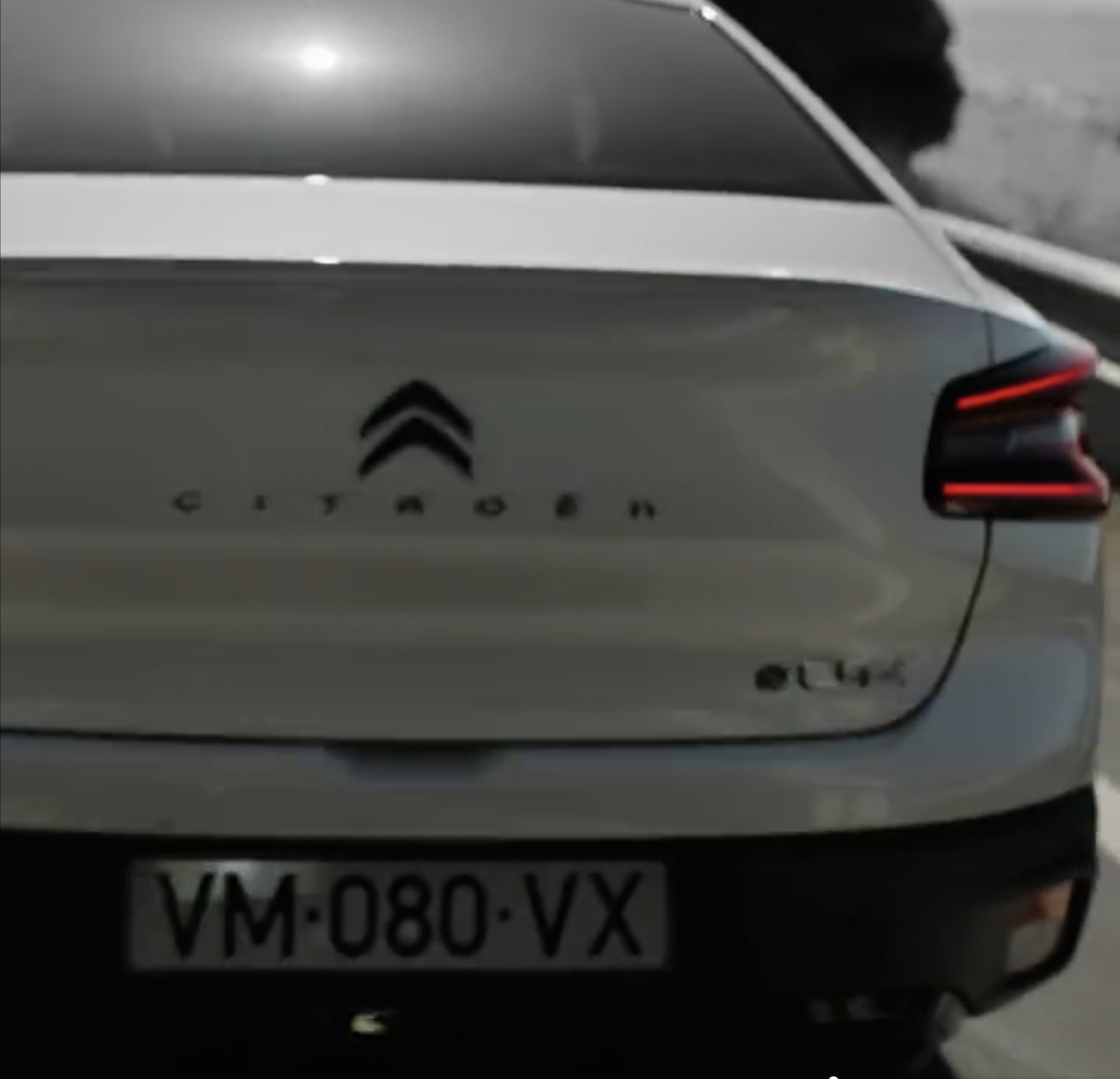
The model shown is the e-C4 X, potentially utilising the platform of the fully-electric e-C4 available in Europe, however it’s understood Citroën would continue to offer a number of combustion engine variants, likely borrowing the 1.2-litre, three-cylinder turbo-petrol PureTech engine from the C4, mated to an eight-speed automatic transmission globally.
If the e-C4 X does retain the e-C4’s underpinnings, we can expect the crossover to produce 100kW and 260Nm from its front electric motor and 50kWh lithium-ion battery pack, providing a driving range of roughly 350km.
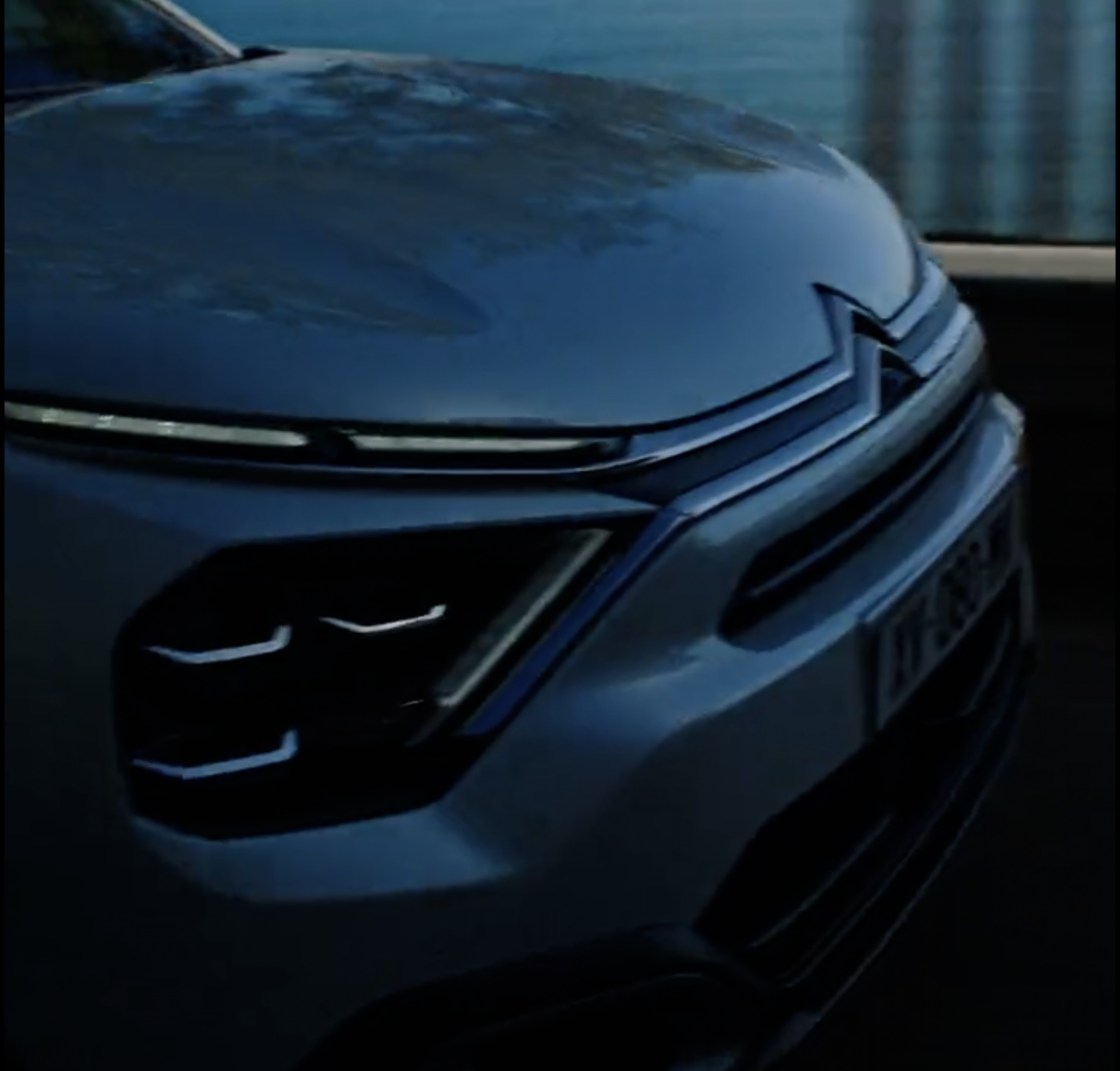
Just last week, fellow Stellantis-owned sister brand Peugeot revealed the 408 fastback crossover, riding on the EMP2 platform rather than the smaller EMP1 platform of the C4 – however, it is possible the new C4 X could adopt the larger architecture.
Citroën is set to add the upcoming C5 X to its local line-up later this year, with the hatchback/wagon crossover set to potentially spawn a plug-in hybrid variant in the Australian market.
