
Build the best car in the world. That was the brief from Toyota president, Eiji Toyoda, to a crack team of 4000 highly talented staff for the new ‘Circle F’ project – ‘F’ standing for ‘flagship’.
It was August 1983. By 1991, that team could lay claim to a brimming trophy cabinet including Wheels Car of the Year after it achieved the unthinkable: it beat the Germans with the ground-breaking Lexus LS400.
“As a luxury car it’s almost faultless,” said our introduction to our 1991 Wheels COTY. Editor Phil Scott described the LS400 as, “The closest automotive equivalent to a Rolex watch there is.”
Other judges from our 1991 COTY were just as effusive. These included Michael Stahl, who said, “Hadn’t expected the communicative ride and steering or the Lexus’s road-holding abilities.”
Legendary racer Kevin Bartlett described the four-speed as, “The best automatic I’ve ever driven.”
Circle F achieved the inconceivable for a Japanese carmaker: it cracked the US luxury market. Jaguar had waned. Audi was on the up but not yet in BMW’s league, and all were chasing the clear benchmark, Mercedes-Benz. Honda launched Acura in 1986 with its Legend – sold in Australia wearing Honda badges – but it hadn’t made a significant impact against the German marques. To achieve that, you’d need a genuine game-changer.
Circle F was tasked with creating a rear-drive sedan boasting a set of attributes never previously achieved. Codenamed ‘F1’ for ‘Flagship 1’, the best car in the world had to have the highest possible levels of safety yet be lightweight. It had to be fuel efficient to avoiding the US ‘gas guzzler’ tax, yet approach 250km/h.
That would make it one of the fastest Toyotas ever, with only the Supra capable of more than 250km/h at the time. That demanded aerodynamic efficiency, while it had to cosset passengers in sublime quiet.
Chief engineer Ichiro Suzuki was unrelenting in achieving this fantastical target. On paper, it was a set of seemingly impossible parameters, so much so Toyota’s product engineering director, Akira Takahashi, initially distanced himself from the project.
In fact, Takahashi told Suzuki that he was out of his mind. Yet Suzuki would not be swayed. “I couldn’t compromise,” he said. “If I did, then it would be just a normal vehicle.”
Galvanising Suzuki’s determination was an effectively unlimited budget; the final bill would total US$1billion. Such significant investment would bring greater reliability and mean Toyota would barely have to spend on its maintenance network.
More critically, with the higher profitability of luxury models, the ‘F1’ was a ticket to greater revenue in the wake of reactionary US quotas imposed across all Japanese carmakers in 1981, the result of Japanese models taking significant market share from The Big Three during the oil crisis.
Ahead of Frankfurt 1987, Toyota announced it was establishing a luxury arm to capitalise on the segment’s growth as baby boomers entered their ‘peak earning’ years
Beyond this, such a large investment was scalable as an exploratory study of design, engineering and mass production to the utmost standards. In building the ultimate car, Circle F was schooling itself, and more broadly Toyota, in how to become the ultimate car manufacturer.
Ahead of Frankfurt 1987, Toyota announced it was establishing a luxury arm to capitalise on the segment’s growth as baby boomers entered their ‘peak earning’ years. It had previously dabbled in higher-spec models, even opening a dedicated showroom in Beverly Hills, Los Angeles, for its Crown model.
Domestically, it produced the Century from 1967 – a long-wheelbase ‘VIP’ limousine based on the Crown for Japan’s parliamentary motorcades. Luxury cars are more than just size, though: there’s status, too.
The perception of Japanese cars as econoboxes meant the ‘F1’ couldn’t wear the Toyota badge. Research of luxury car owners across North America showed badge envy was a significant buyer motivator; Toyota was not going to win a prestige punch-on with Mercedes.
A new approach was needed. That’s how Lexus was born – revealed for the first time at the LA show in 1988; a brand worth US$10.2 billion today.
Debate continues over whether the new brand name was a cheeky acronym for ‘Luxury Export to the United States’, with alternate theories even suggesting inspiration from Alexis Colby Carrington, the villainous matriarch played by the legendary Joan Collins in the most-watched show on US television in 1984, Dynasty.
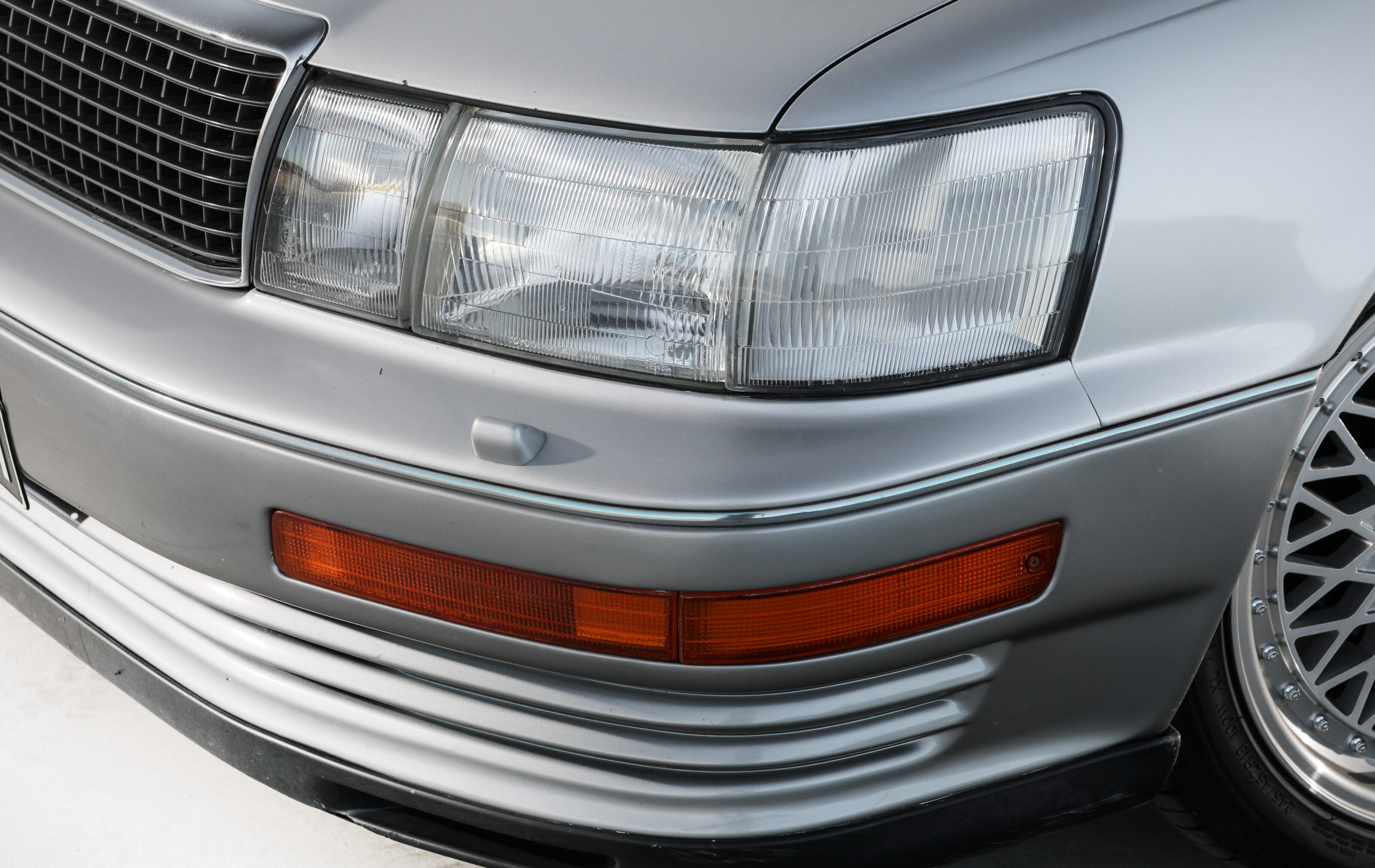
While an official backstory has never been confirmed, perhaps Toyota poetically cast itself as the villain, the disruptor, with a hint of mischievousness hidden in its luxury arm’s name.
For the LS – Luxury Sedan – Toyota pulled down multiple W126 S-Class models as well as BMW’s E23/E32 7 Series.
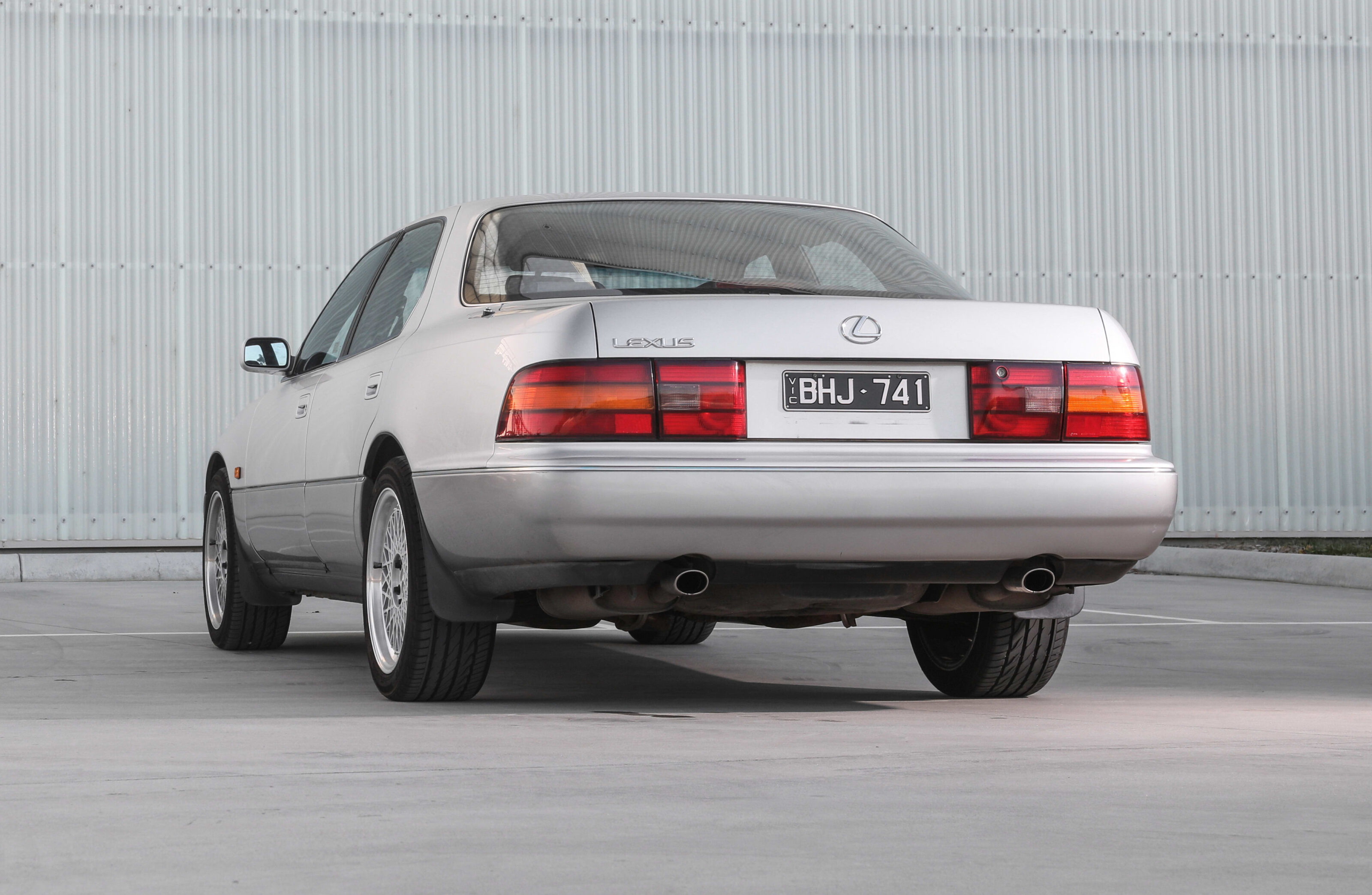
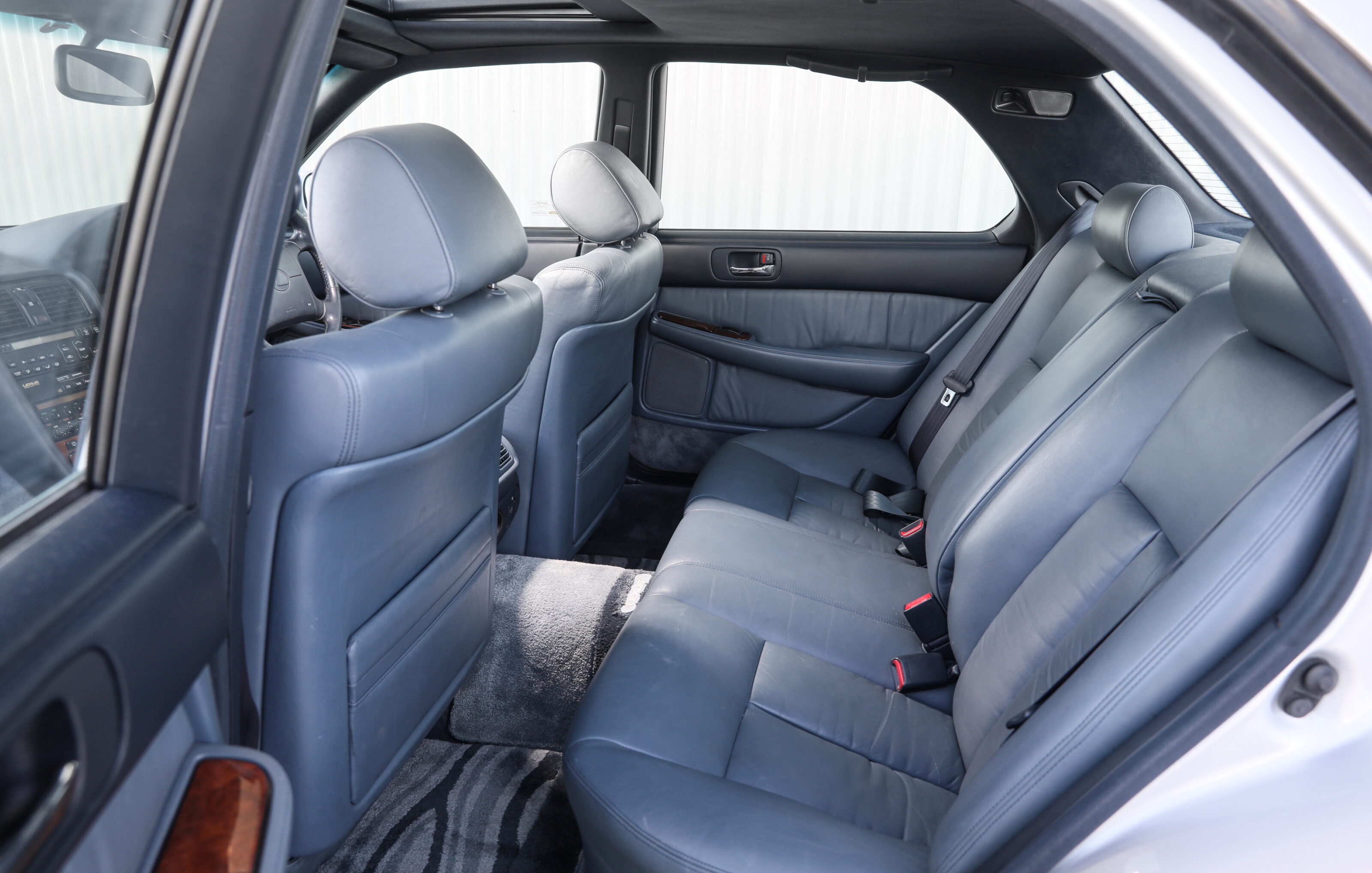
Creating an all-new platform, the Japanese challenger’s dimensions closely matched the biggest Benz: an identical 4995mm length to the SWB W126 on a slightly shorter 2815mm wheelbase, and despite similar width, back seat space was comparable but not quite on par with Stuttgart’s sedan.
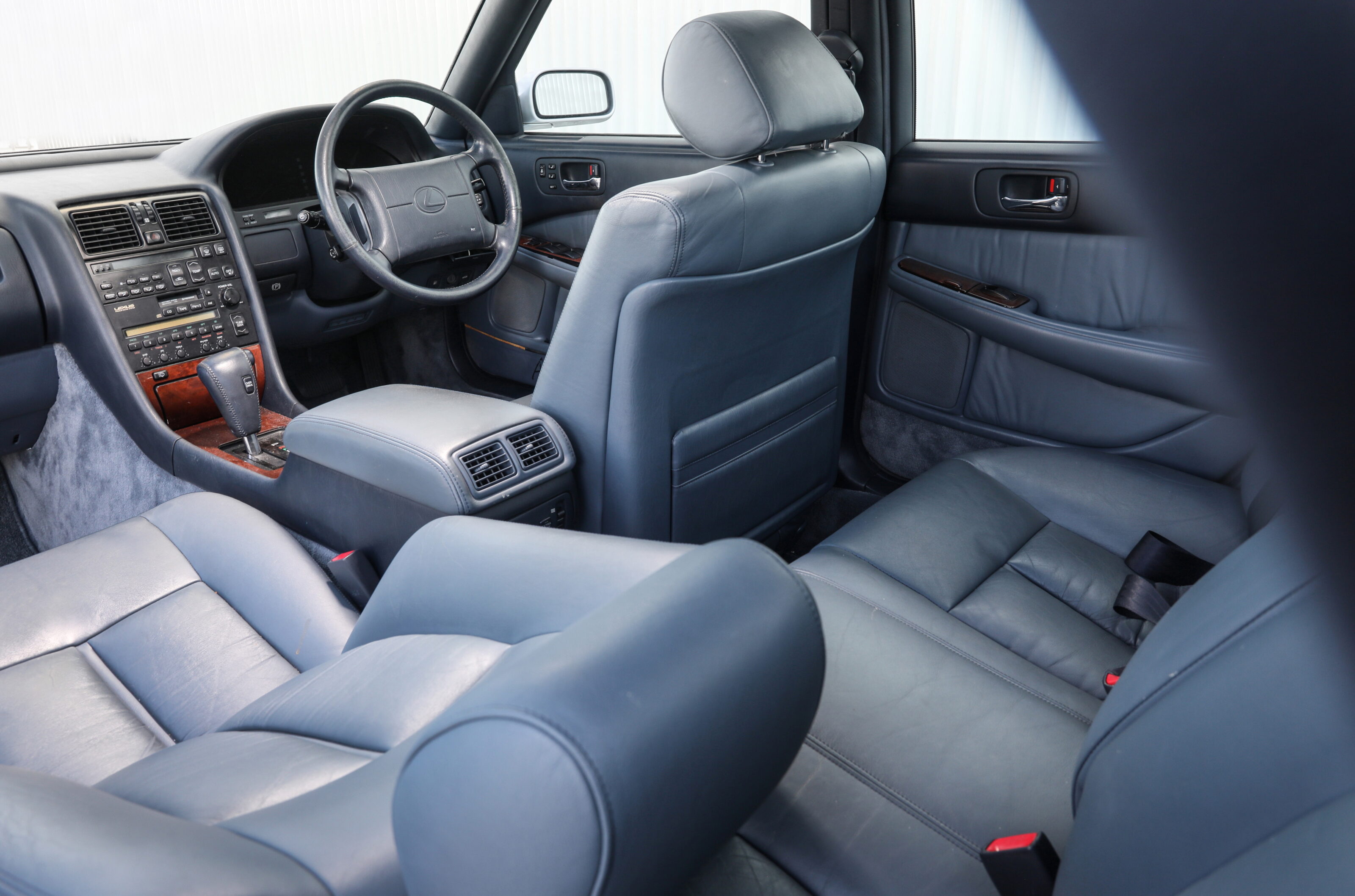
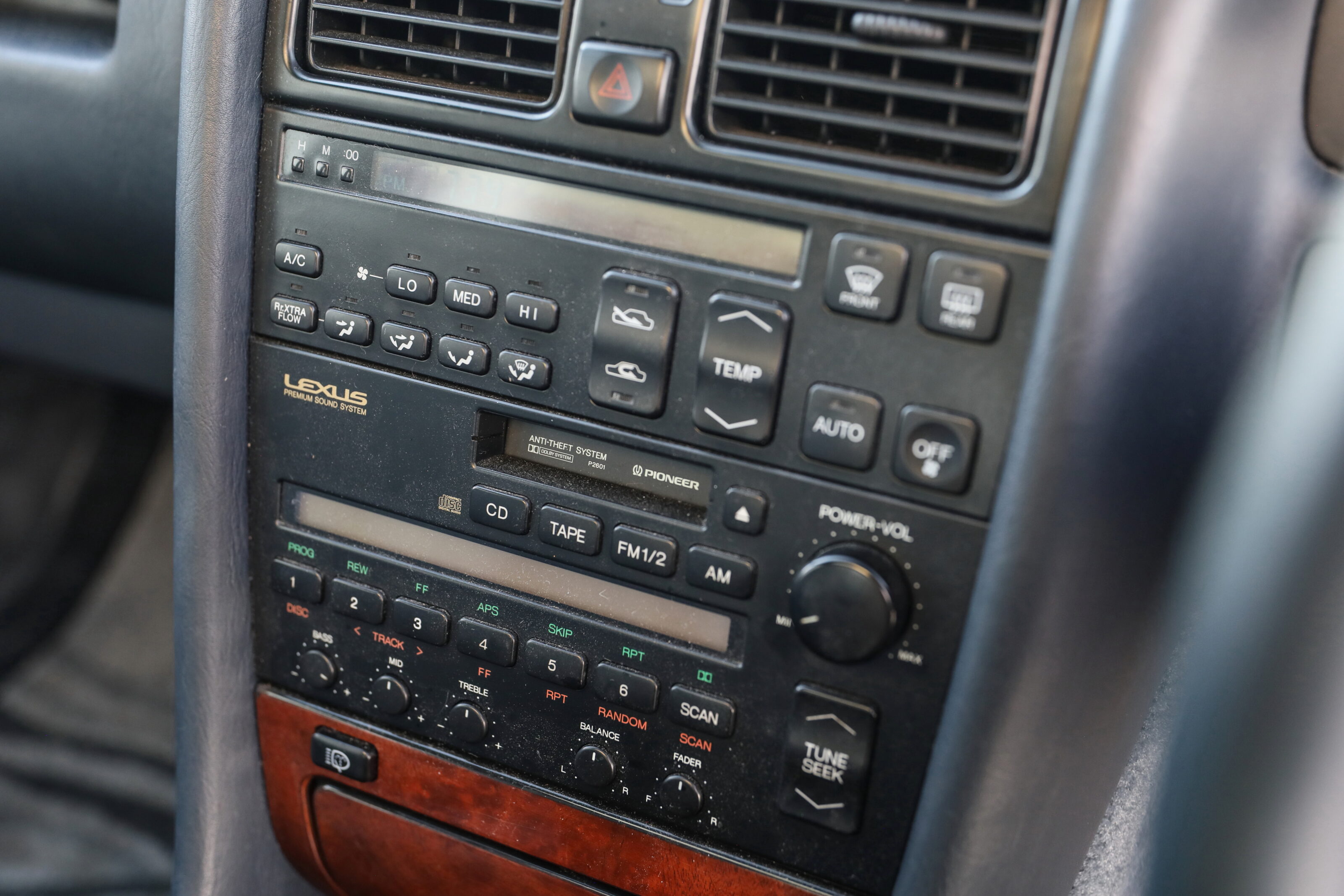
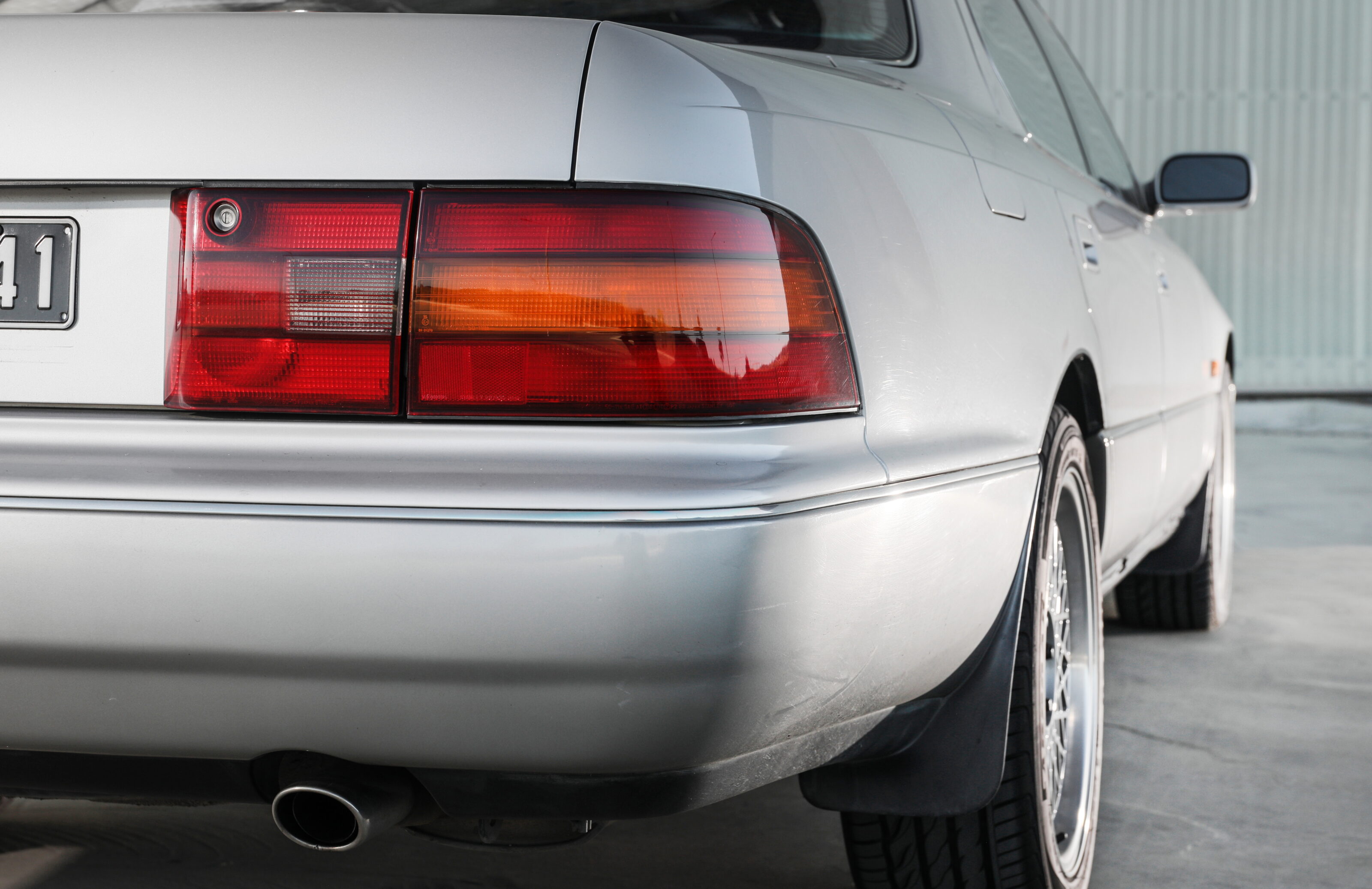
While the exterior is arguably derivative, clearly influenced by Bruno Sacco’s W126, the cabin boasted newly-developed sound insulating carpet among high-end finishes and a world-first tilt-telescopic airbag steering wheel. Even the plastic was ‘good plastic’.
Of course, that was teamed with typical Toyota functionality with clearly marked switchgear and crisp, neon tube needles – a first for a production car – shunning fashionable digital instruments for traditional analogue dials.
The ‘400’ name-checked the 4.0-litre 1UZ-FE V8 painstakingly developed for the LS, perennially featured in ‘best engines’ lists ever since. Its traditional 90-degree layout, all-aluminium construction and clever, compact cylinder-head design featured two cams per bank.
While this quad-cam configuration wasn’t new, its lightweight aluminium cam followers were a world first and the belt-driven arrangement made it arguably the first truly reliable quad-cam engine.
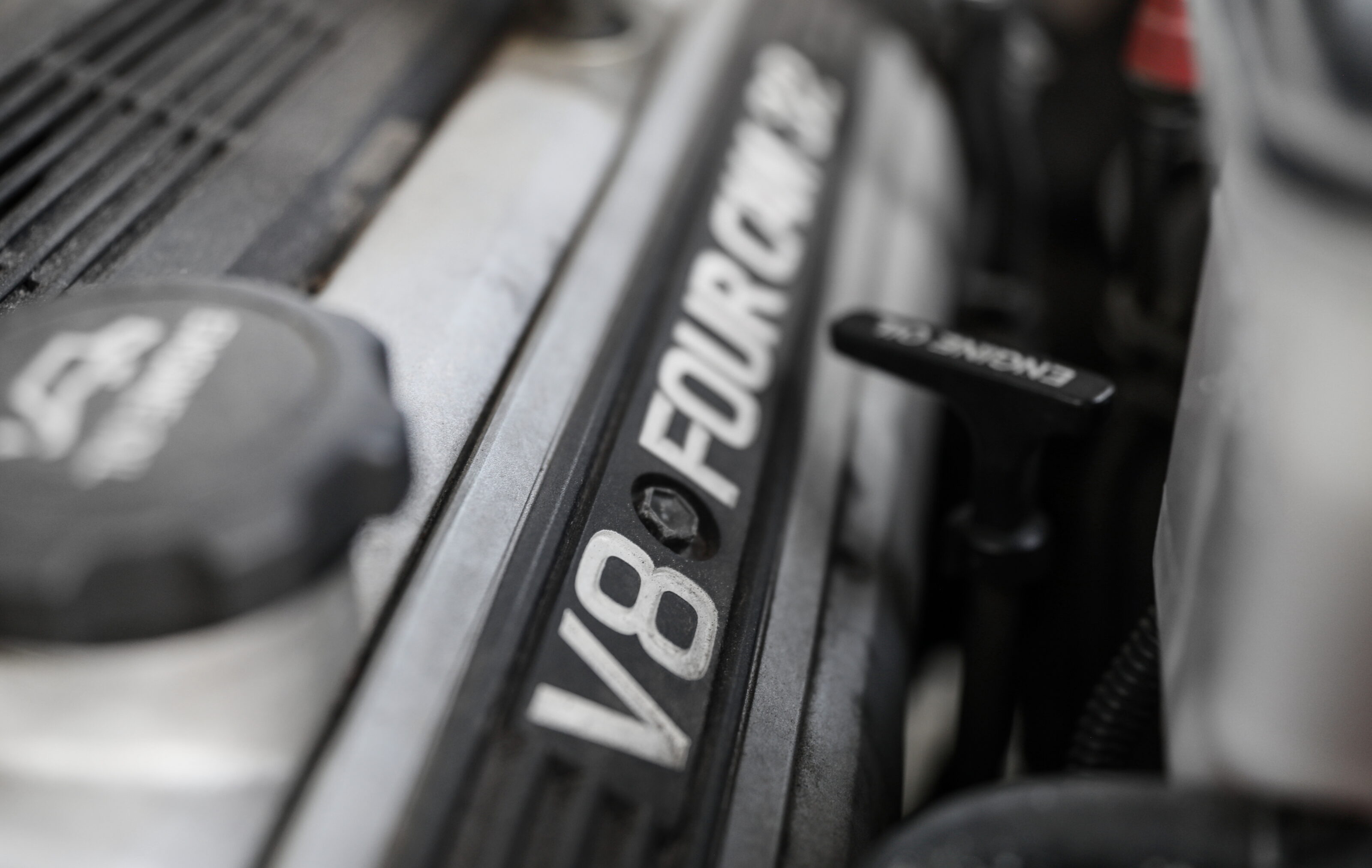
Its 190kW was more competitive than earth-shattering, but continuous tweaks honed the 1UZ: a change in compression ratio in 1994, and then the addition of variable-valve timing for the second-gen LS (1997) cemented its status as a V8 for the ages.
Unique 15-inch Goodyear Eagle F1 tyres and electronic traction control got that power to the ground.
A creamy 360Nm rode the flat torque curve from 2000 through to 5400rpm, while a slick, purpose-built A341E four-speed automatic transmission had its own ECU that would ‘talk’ to the engine for harmonious cooperation.
The resulting velvety smoothness came from components such as its liquid-filled compound hydraulic engine mounts, which were part of an engineering strategy of eliminating NVH issues, not masking them.
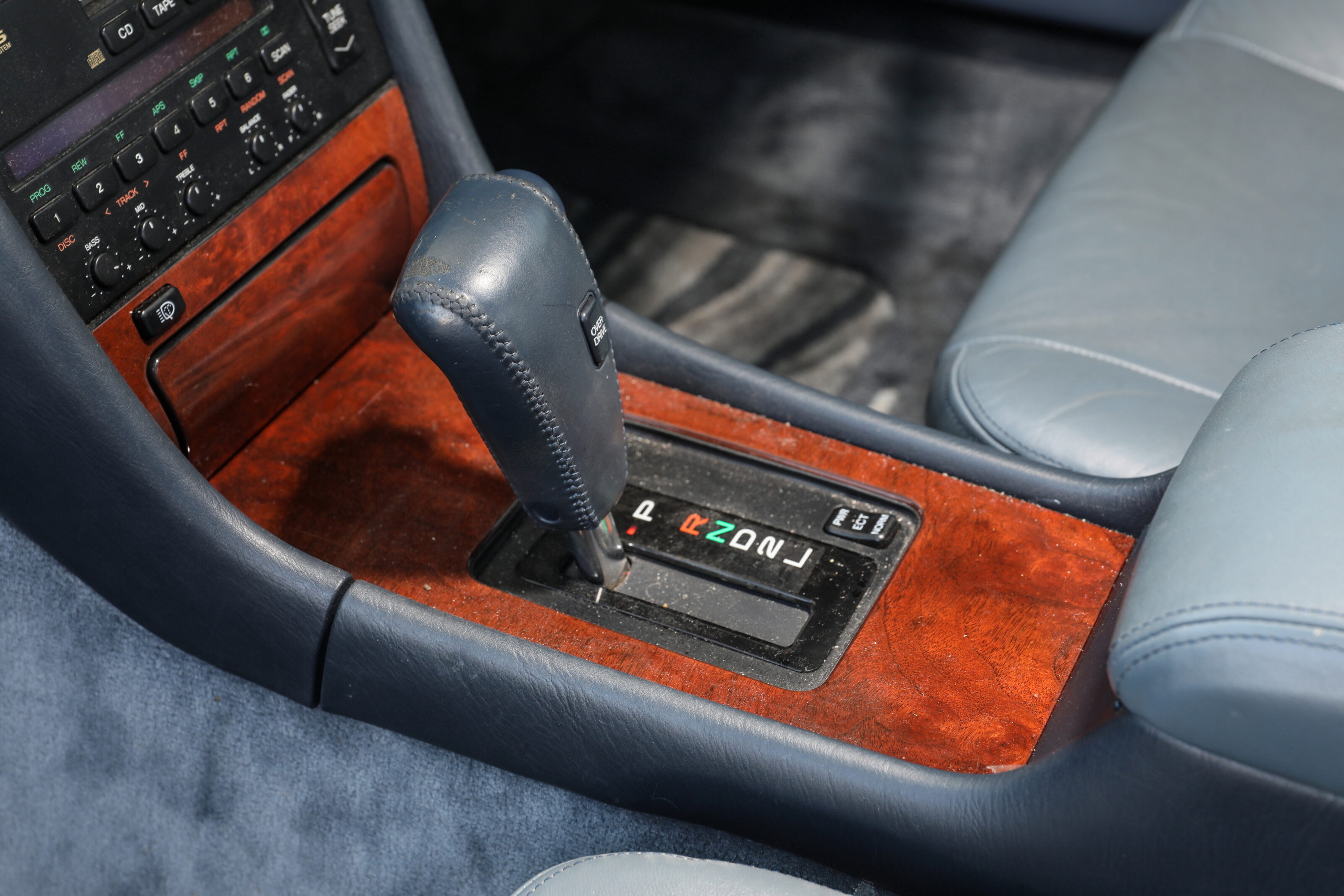
That philosophy saw the engine tilted rearwards allowing the two-piece driveshaft to sit perfectly level, minimising power losses, reducing vibrations and virtually eliminating universal-joint wear. The steel used for the driveshafts was changed after vibrations in early testing, too.
Dynamics weren’t forgotten, though. A relatively lithe 1730kg split 54/46 front-to-rear was managed with double wishbone front and rear suspension and anti-roll bars, packaged with speed-sensitive steering designed for high-speed stability.
Autobahn testing in the Germans’ own backyard included honing of the optional air suspension, too, not offered in Australia.
Yet the LS400 wasn’t created to dazzle at the dealer and dull in the driveway. The FQ team (‘F1’ Quality Control) created an anti-ageing squad that tore down five- and six-year-old Toyotas to identify wear and tear, focusing on corrosion, paint fade, the retention of mouldings and long-term NVH performance.
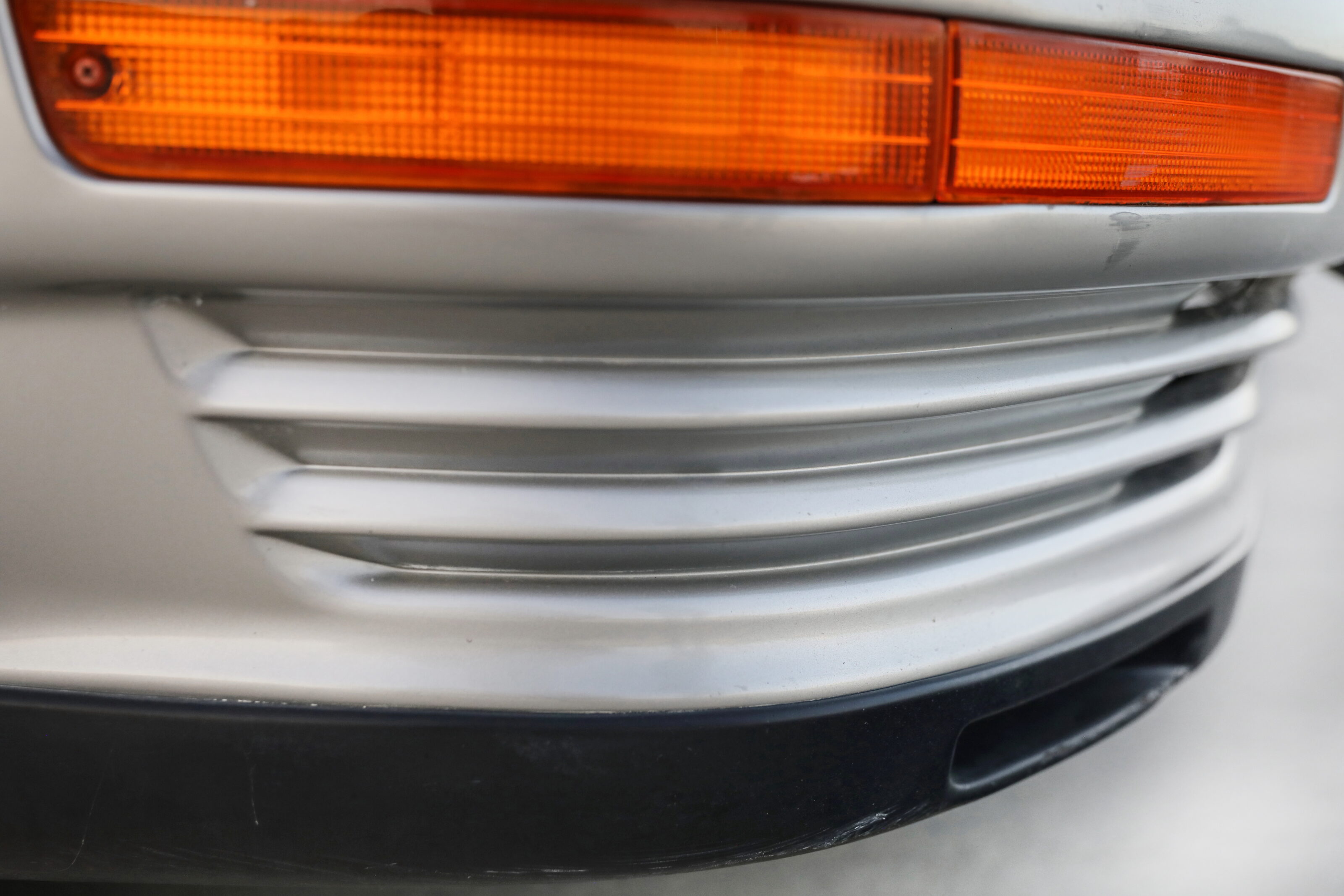
Outcomes saw an industry-first automated laser welding process used, with each weld 1.5 times stronger than on typical Toyotas. A new MIO (micaceous iron oxide) paint process saw five top coats (six if you ordered green).
Another world first was the sandwiching of Nylon-resin sheet sound insulation panels in double-skinned front and rear bulkheads, which contained metallic powder to enable welding – meaning standard production techniques could be maintained.
QUOTE “The benchmark against which all other luxury cars must now be judged,” we said at the time
The first LS400 came off the production line at the Tahara plant on Honshu, Japan, in May 1989, with each subject to more than 300 additional inspections over a regular Toyota.
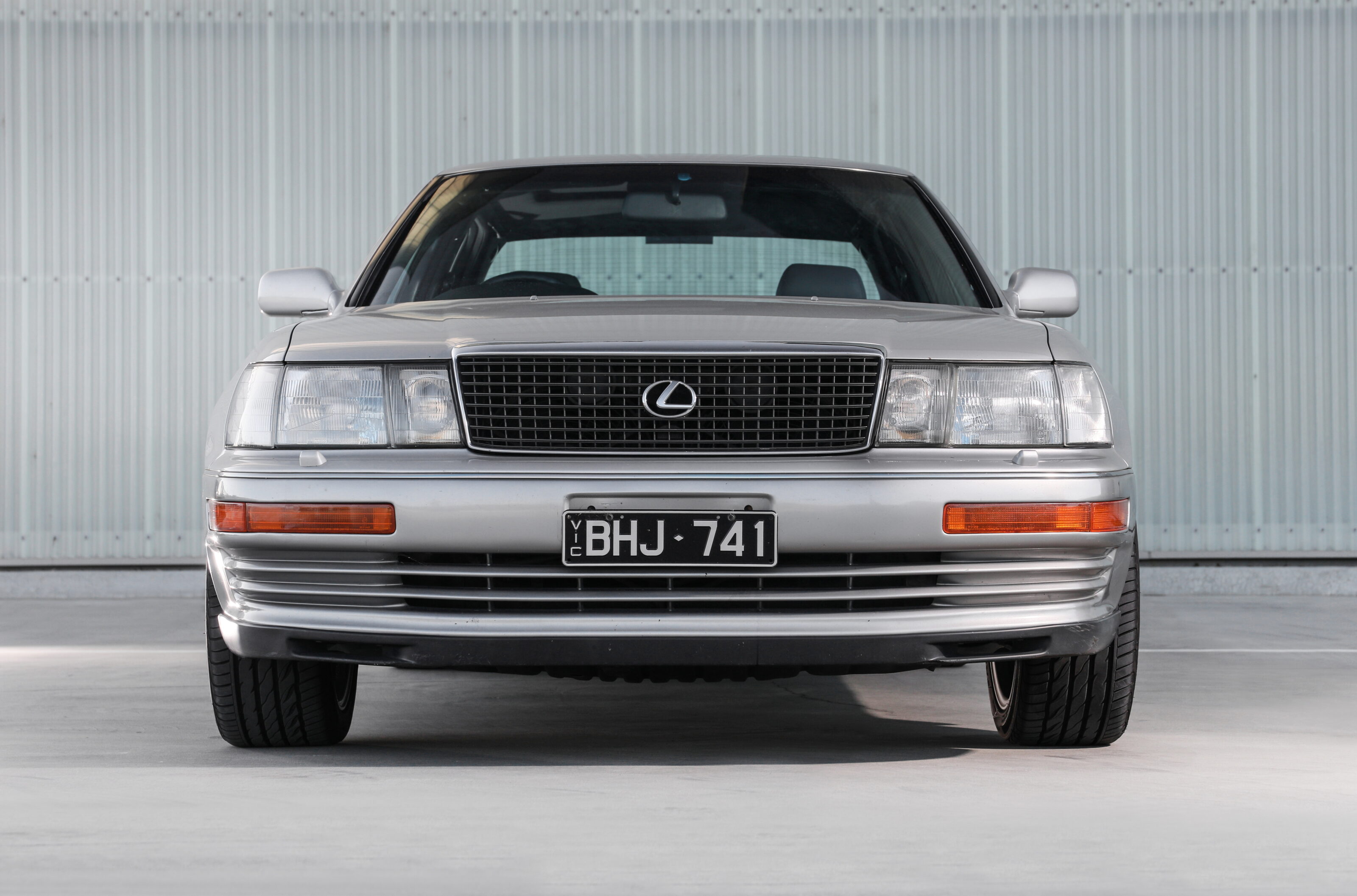
Despite this, and 4.4 million kilometres of testing, the first 8000 cars delivered in North America were recalled. Yet Lexus turned tragedy into triumph with its exemplary, world-leading handling of customers through the process.
By the year 2000 and final iteration of the LS400, Lexus had topped the US JD Power quality survey every year it had been eligible. The sedan was independently verified as the most reliable vehicle in the USA.
Australia was the third market in the world to receive the LS400, after Japan and the US, with Wheels 1991 COTY judge and later editor, Angus MacKenzie, making perhaps the most astute observation of the lasting impact the flagship vehicle would have.
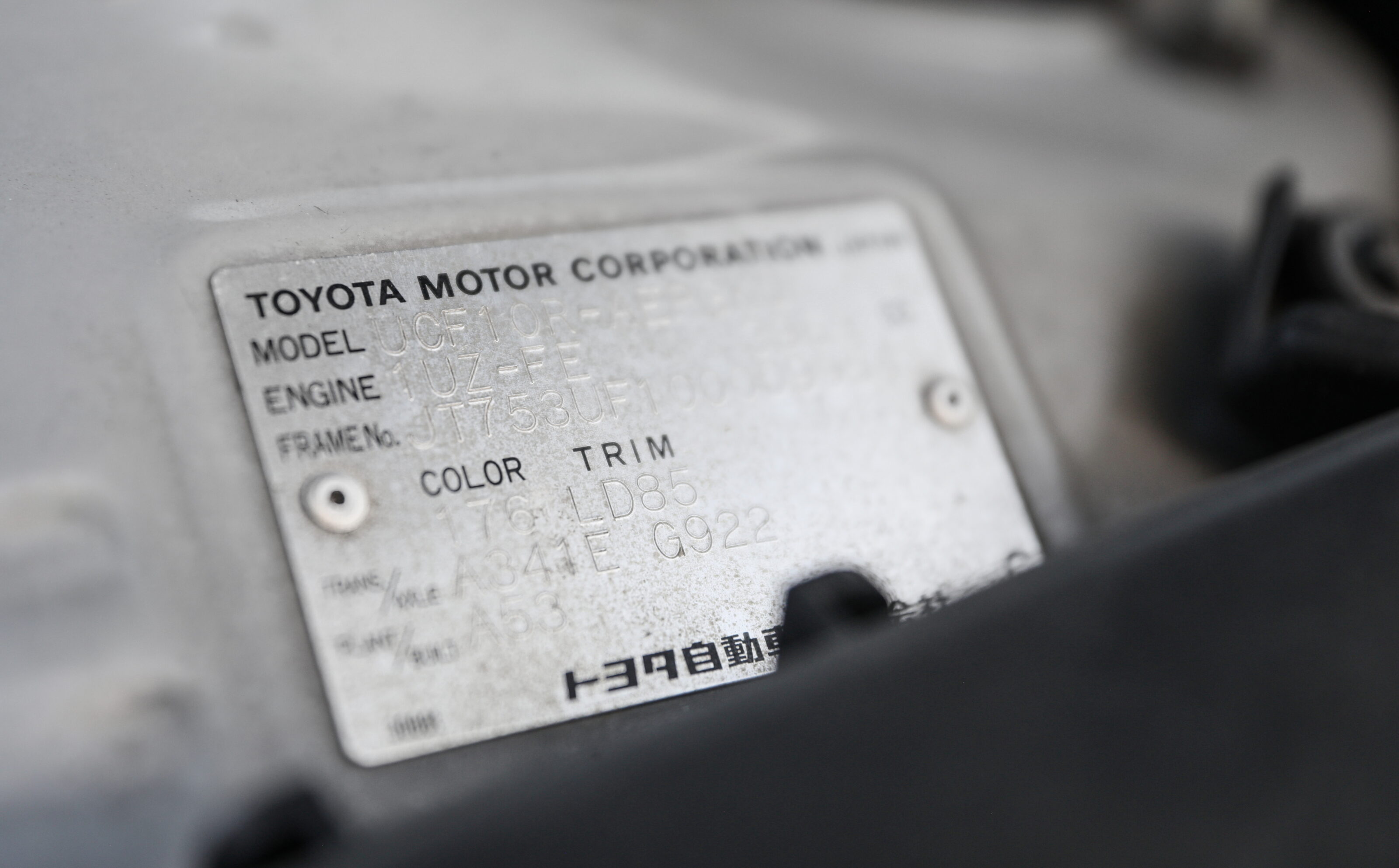
“Astonishingly smooth and quiet, it is now the benchmark against which all other luxury cars must now be judged,” he said. “More importantly it sets new standards for mass production manufacturing which Toyota says will eventually filter through to Corollas.”
Fittingly, in a vintage year, the only other vehicle in the 1991 COTY field to win final votes was Toyota’s own Tarago. This points to arguably the Circle F team’s most significant legacy.
The LS400 and its accolades may be clear evidence of the sheer capability and determination within Toyota, but its own lessons and innovations enabled it to evolve into the biggest, most profitable automobile manufacturer in history. More than three decades on, Toyota is still to be toppled.
Quashing quotas
In-house premium brands weren’t new in 1989, but Japanese carmakers faced tougher conditions in the US following their success in the ’70s – an ominous threat to America’s Big Three. They were burdened with import quotas from 1981 – 1.68 million across all Japanese makes.
Cunningly, a luxury line was a way to maximise profitability despite the restrictions. Honda’s Acura came in 1986, Nissan’s Infiniti and Mazda’s Eunos in 1989. ‘Lexus’ even peaked as the 449th most-chosen US baby name in 1996.

Arcade fire
Capcom’s 1991 Street Fighter II is one of the best-selling games of all time and repeatedly cited as one of the most influential. That year, 25 million copies were sold in the US alone – all featuring a bonus stage where contenders destroy an LS400.
The placement in the now legendary title may have seemed odd – given the vehicle is destroyed – but it cleverly enabled Gen X gamers to plant the Lexus brand into the psyche of their well-heeled baby-boomer parents.
Fresher stuff: the newer Lexus LS
Hit the link below for our latest coverage of the new-generation Lexus LS.
Genesis is currently in the process of developing an electric hatchback, according to an overseas report.
The Korean Car Blog claims the luxury marque is creating a full-electric ‘compact hatchback’, with production to commence in mid-2023.
It is expected to go on sale in Korea from September 2023, subject to any delays caused by the semiconductor chip shortage.
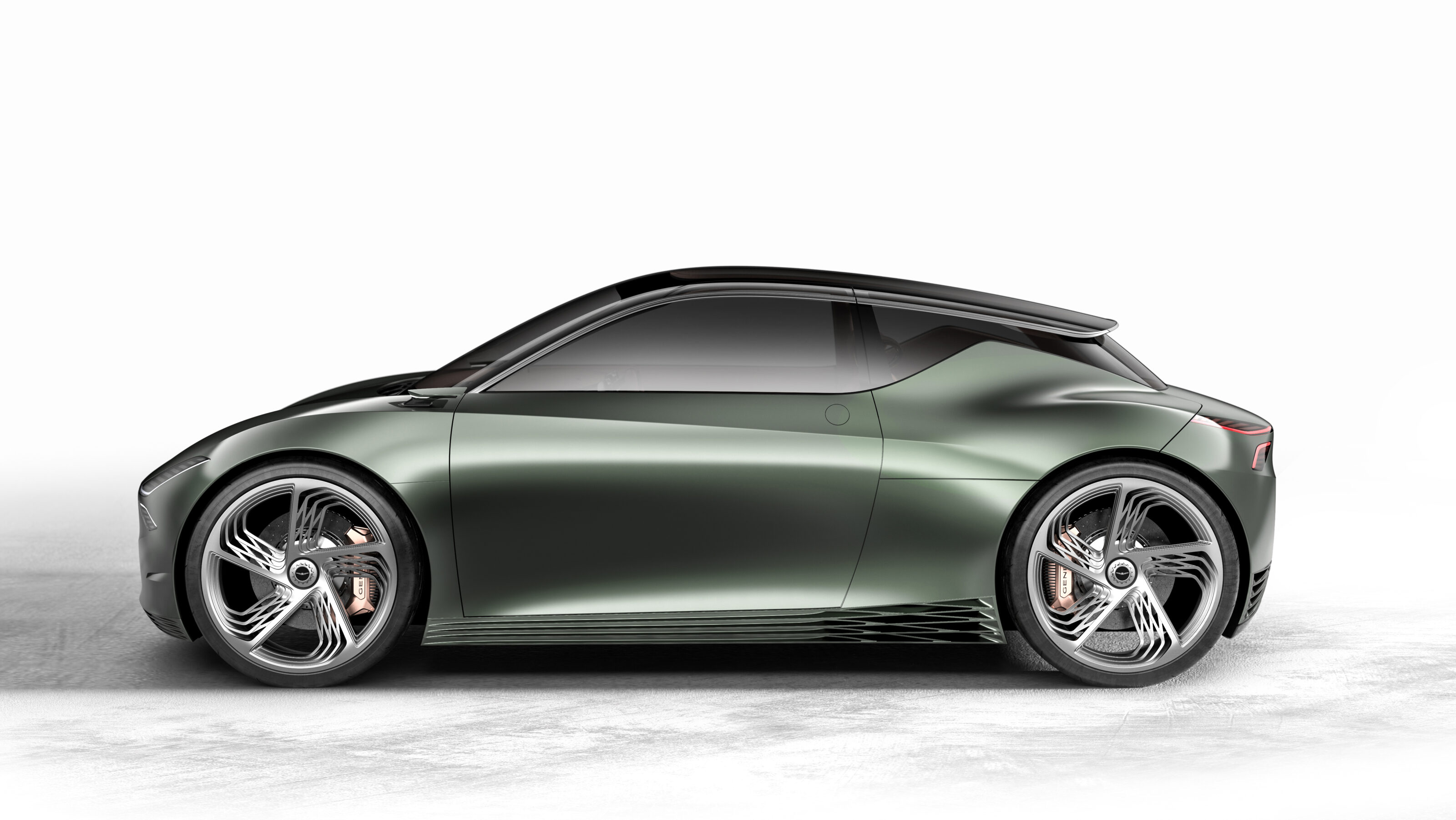
Little details are known thus far; however, the EV is likely to ride on the same E-GMP architecture that underpins the high-riding Genesis GV60, Hyundai Ioniq 5 and Kia EV6 models.
The compact model, said to be codenamed ‘JE’, is expected to adopt the G60 nameplate, slotting below the G70 sedan and shooting brake.
With most brands abandoning small cars for similarly-sized compact crossovers, the forthcoming model could also reach production as a small SUV to slot below the GV60.
For instance, the electric Mercedes-Benz EQA and the recently-revealed BMW iX1 are small SUVs rather than hatchbacks.
According to the report, Hyundai’s E-GMP ‘skateboard’ platform will allow Genesis engineers to alter the vehicle with greater freedom throughout development, with design changes becoming a more straightforward process.
The report also refers to an ‘electric model’ of the GV80, although this is likely in reference to the GV90 flagship electric SUV expected to debut in 2023.
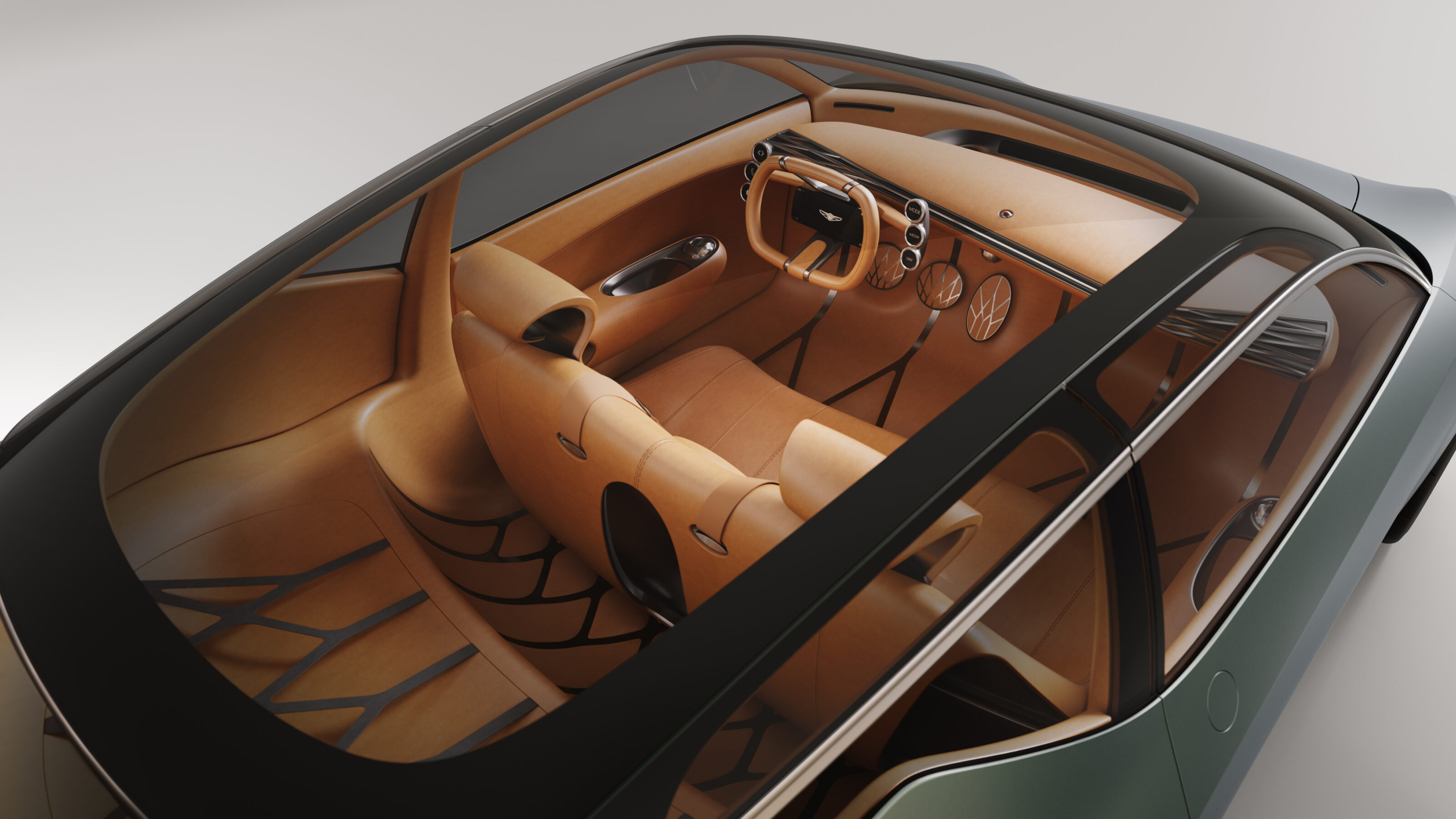
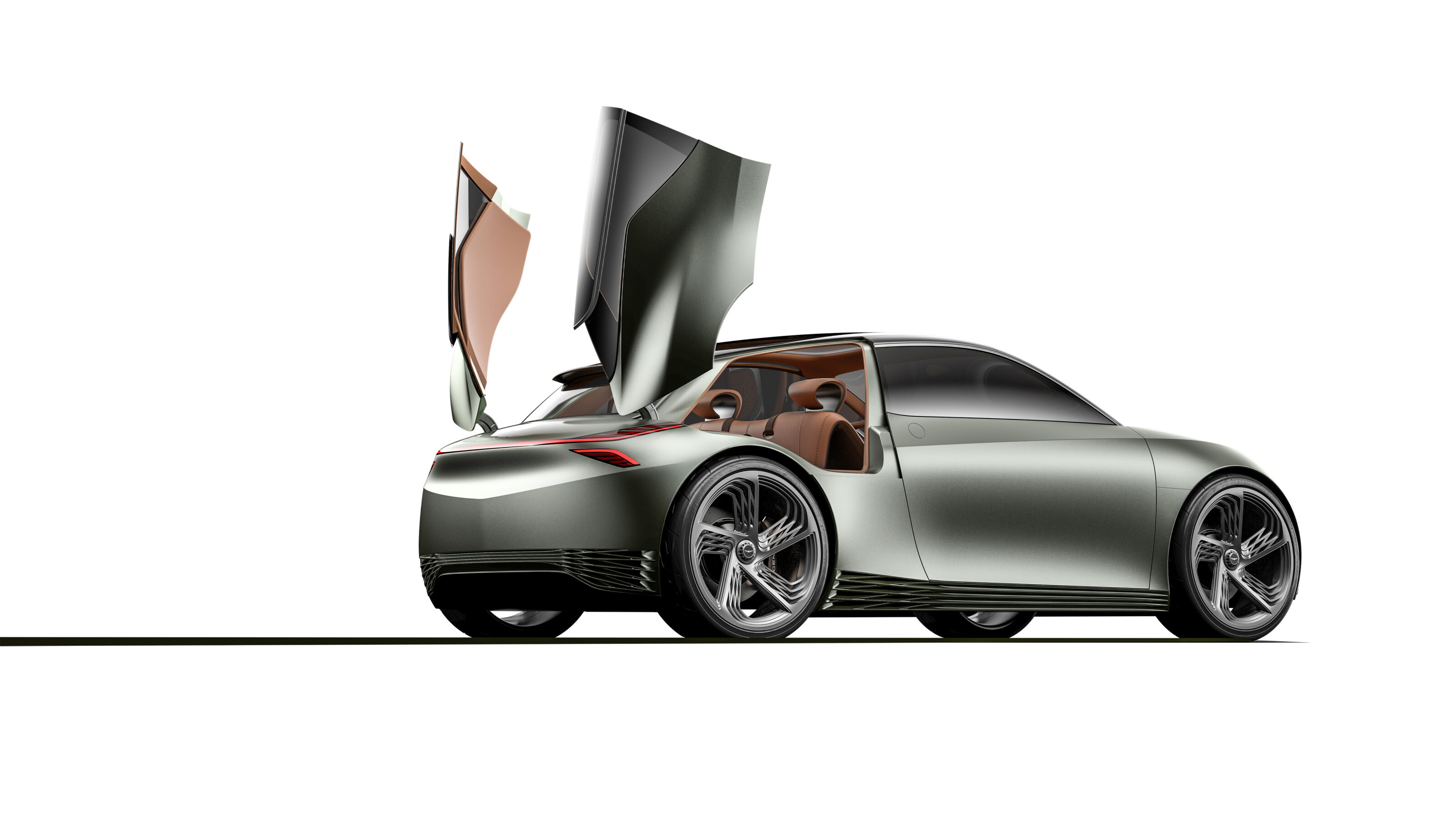
Genesis has previously showcased its vision for a compact hatchback with the Mint concept (pictured throughout), unveiled at the 2019 New York International Auto Show.
Most of the concept’s design elements were incorporated into the GV60 electric SUV set to launch in Australia during the third quarter of 2022, however, it still provides a solid indication of the overall design for a compact vehicle from the brand.
The brand will also launch all-electric versions of the GV70 medium SUV and G80 large sedan later this year.
Snapshot
- Terramar to debut as a 4.5m-long medium SUV
- PHEV system will allow ~100km EV range
- Australian launch likely, but timing unclear
The Cupra Terramar will expand the young and fast-growing Spanish brand’s model line-up into medium SUV territory.
Named after a long disused, banked oval racetrack that stands as Spain’s equivalent to Monza or Brooklands, the Terramar is due to go into production in 2024.
It was unveiled at a lavish event staged in a massive pop-up structure specially built inside the old Terramar track. This is the same place that Cupra launched itself as a brand back in 2018.
EDITOR’S NOTE: The images you see here are all that Cupra has made available at this early stage in the new model’s journey to production.
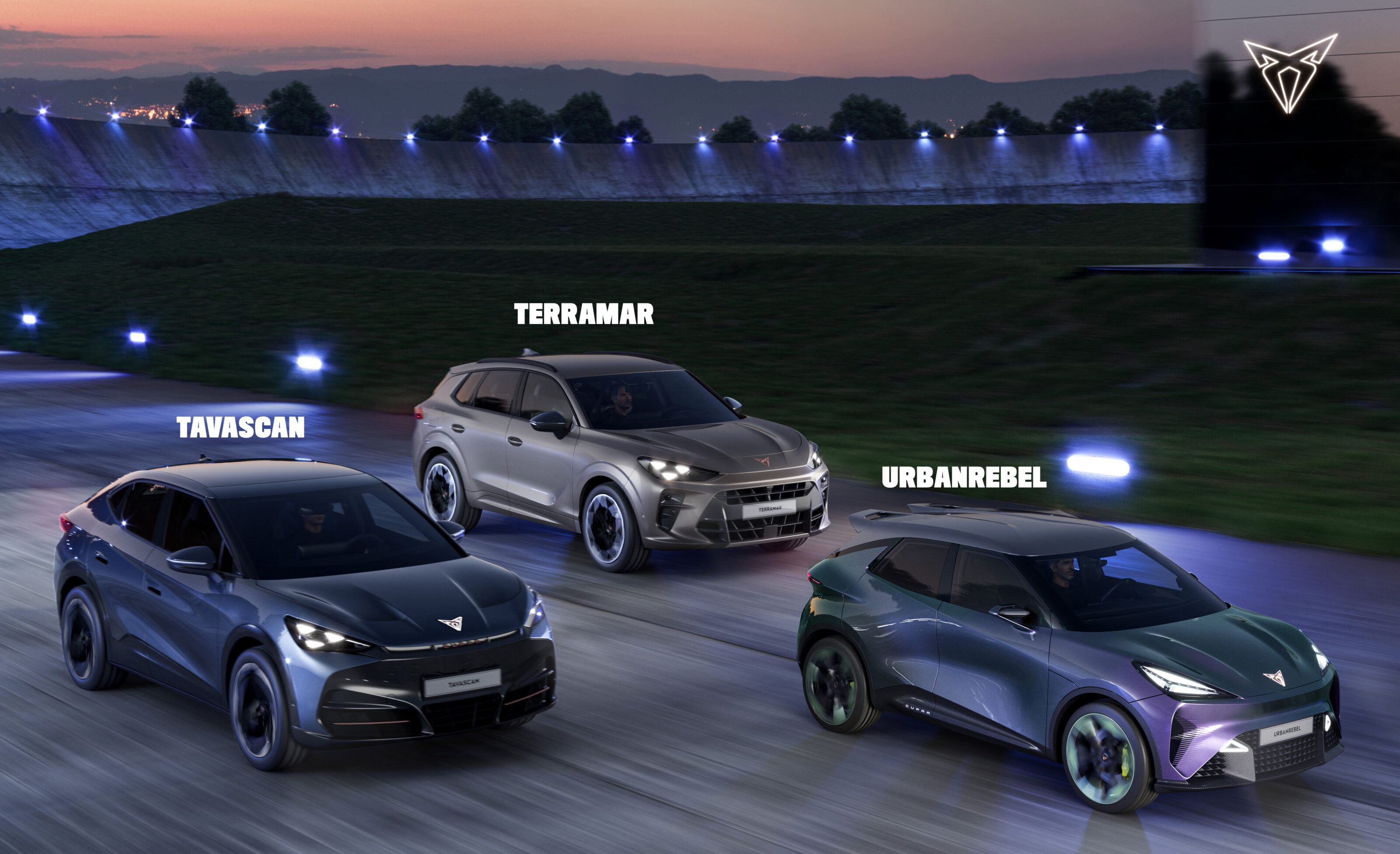
The 4.5-metre long Terramar is the kind of concept that will change little on the journey from stage to assembly line. While the Terramar is certain to make it to Australia, it’s not known whether it will launch here in the same year as it goes on sale in Europe.
Terramar will also mark a significant landmark in Cupra’s short history: it’s the last new model the brand will ever make with purely ICE (internal combustion engine) drivetrains.
Speaking at the big reveal, Cupra CEO Wayne Griffiths said an EV-only range was “an aim we aspire to achieve by 2030”.
Cupra isn’t talking details of the Terramar’s ICE drivetrains, but does promise that it will also be made with “a new generation of hybrid plug-in hybrid powertrains that deliver around 100km in all-electric mode”.
In other words, it will deliver a big step up in electric ability over the Leon and Formentor plug-in hybrids that will spearhead Cupra’s imminent three-model brand launch in Australia. These can cover only 50 to 65km on battery power.
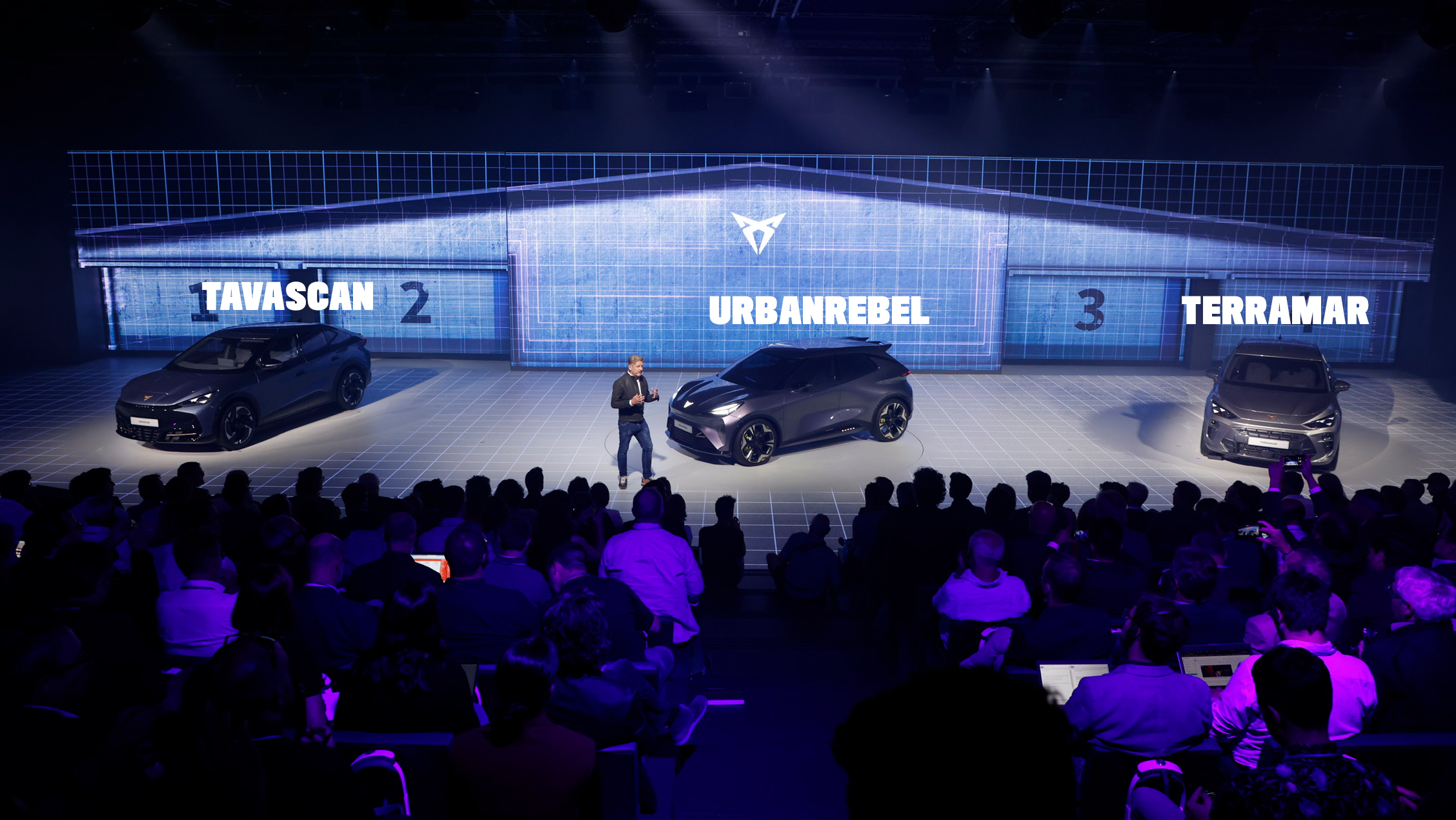
For clues on what to expect under the Terramar’s bonnet, look to the upper end of Audi’s Q3 range. The two are closely related under the skin, and the Terramar will be built in Audi’s long-established factory in Gyor, Hungary.
Outside, the Terramar features Cupra’s new tri-triangle signature lighting, front and rear. Diez says he wants each car to have its own distinct visual character.
Proportion and form will not be cut-and-pasted when a new model is designed. Instead, the consistent look of light clusters will create a more subtle family resemblance, the designer explained.
The big reveals from Cupra’s Impulse event
Geely-owned Chinese manufacturer Lynk & Co has taken the covers off its latest concept, dubbed ‘The Next Day’.
The wildly styled four-door is underpinned by a hybrid powertrain, with a 1.5-litre, three-cylinder internal combustion engine (ICE) driving the front wheels, while the rear axle is powered by an electric motor – available with either a conventional hybrid power supply with a small battery, or a plug-in hybrid (PHEV) with bigger battery packs, according to Car News China.
Coupled to a three-speed ‘Dedicated Hybrid Transmission’, a range of three batteries will be available with the PHEV, providing roughly 60, 100 or 150 kilometres of pure electric driving range on the WLTP test cycle before the ICE kicks in.
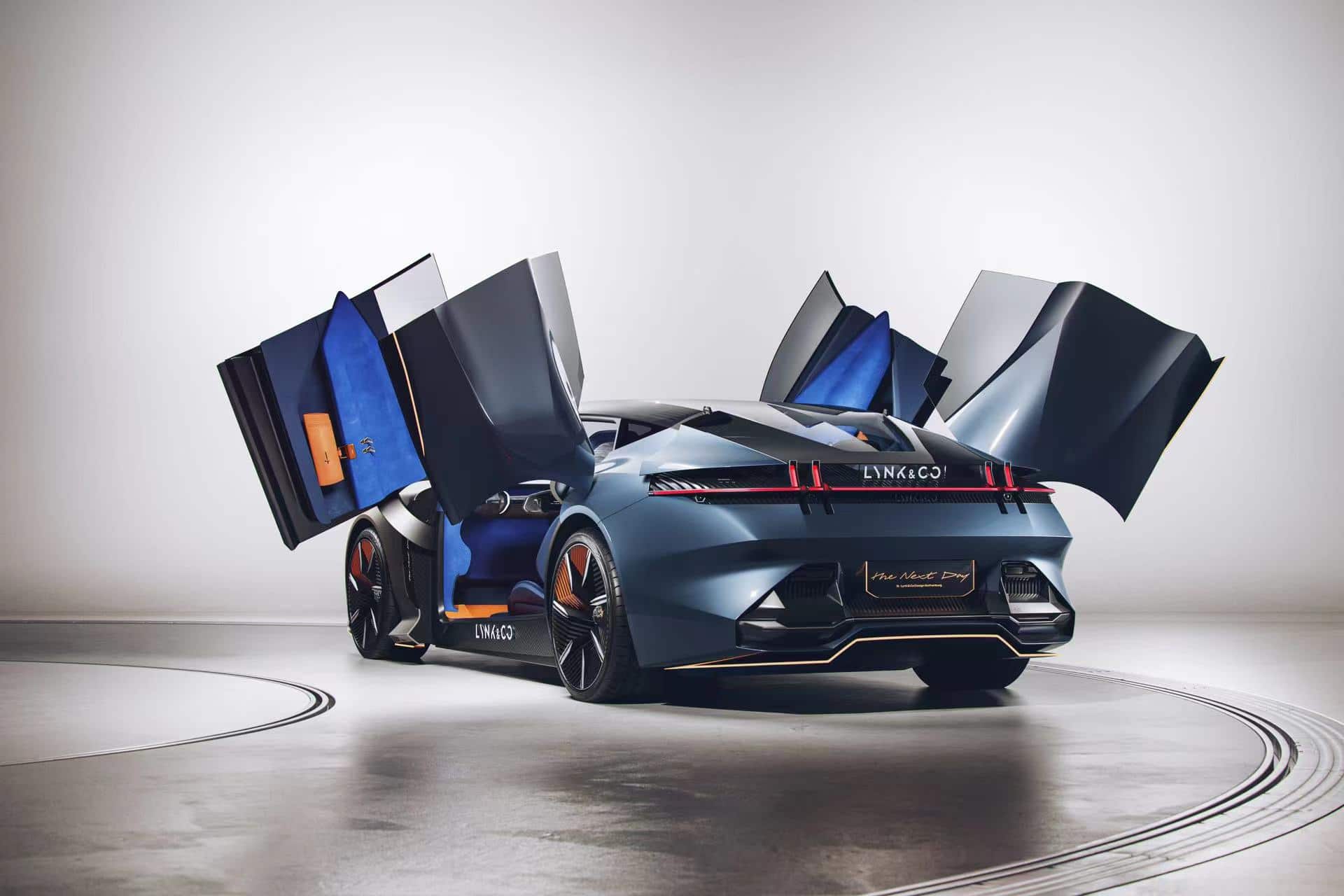
While Lynk & Co hasn’t gone all-electric with this one, The Next Day concept features Level 4 autonomous driving capabilities thanks to technology such as six LIDAR and digital sensors hidden behind a sliding bar in the front bumper.
Inside the cabin, the interior surfaces are finished in dark blue, although its carpet transitions from front to back just like the exterior, as wide and supportive seats allow occupants to be relaxed in their position.
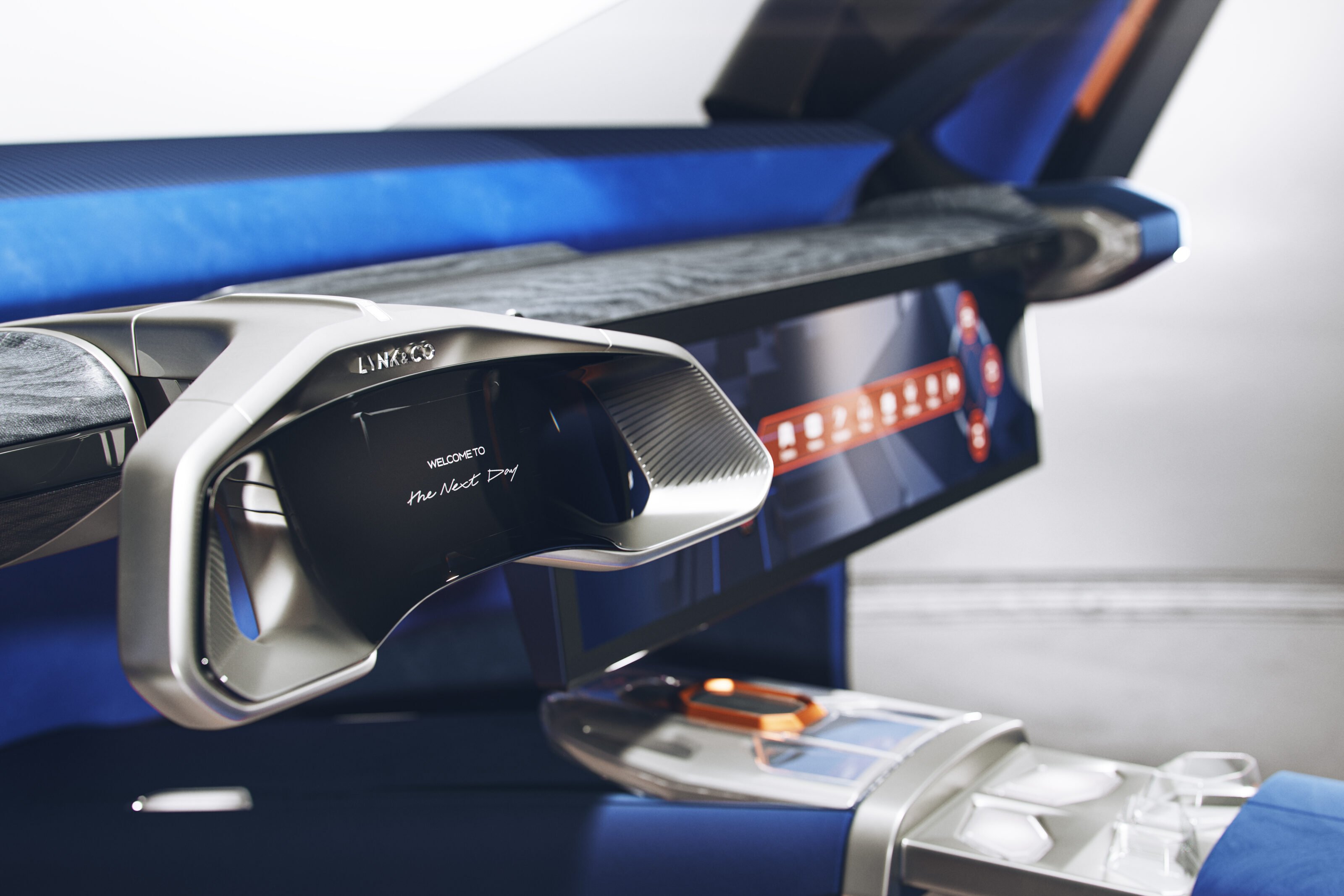
Rather than a traditional head-up display, an advanced projection provides an augmented reality experience, showing up on the concept’s single-piece glass roof.
Whether the concept ever spawns a production variant remains to be seen, given the ever-tightening net of emissions reglations around the world is placing higher importance on fully-electric vehicles over hybrids.
Lynk & Co’s energy-efficient platform will also serve as the basis of Geely’s new models to go on sale in South Korea, as the Chinese marque recently purchased a stake in Renault’s Korean operations.
Snapshot
- Shift Control Unit issue forces the recall of Hyundai’s Ioniq 5 and Kia’s EV6
- Both vehicles ride on the same platform
- Combined 893 units under recall
The Hyundai Ioniq 5 and Kia EV6 are being recalled, with both models hampered by the same issue.
Affecting a total of 578 Hyundai Ioniq 5s and 315 Kia EV6s, a fault with the software in the vehicle’s Shift Control Unit (SCU) may cause the parking pawl to fail, potentially resulting in the car moving when the ‘park’ drive mode is selected.
If this happens, the car could cause damage to property or people around it.

Both manufacturers have asked owners to contact either Hyundai’s Blue Drive dealer network or an authorised Kia dealer to rectify the issue with an SCU software update, free of charge.
For more information on the recalls, contact the Hyundai Customer Care Centre on 1800 186 306 or Kia Customer Care on 131 542 and [email protected]
A list of VINs for the Hyundai Ioniq 5 and Kia EV6 can be found here.
Snapshot
- Leon, Ateca and Formentor to spearhead local line-up at launch
- Local specs for Leon range confirmed
- Born EV expected to arrive before the end of 2022
UPDATE, June, 2022: The big reveals from Cupra’s Impulse event
Cupra used a huge gala event in Spain this week to unveil three new upcoming models in new production-read form: the electric Tavascan and UrbanRebel, and the petrol/electric hybrid Terramar.
Get all of our coverage at the links below.
2022 Cupra Formentor features detailed for Australia
February 15, 2022: As the Australian launch of Volkswagen Group’s newest marque draws closer, local details have been revealed for the incoming Formentor SUV (with an emphasis on the ‘sports’ in ‘SUV’).
Pricing is still to be announced, but buyers can expect the line-up to open with the 140kW/320Nm Formentor V, before heading into hotter territory with the 180kW/370Nm VZ, the plug-in hybrid 180kW/400Nm VZe and the hero 228kW/400Nm VZx.
Catch all the details, including an extensive features list, at the link below.
Mike Stevens
2022 Cupra Leon features announced for Australia
February 8, 2022: Ahead of the first examples turning up in showrooms later this year, Cupra has confirmed local specs of its Leon.
Launching in four grades, each powered by a unique engine, the entry-level Leon V variant is expected to start out around $40,000, with the range-topping VZx set to pack a 221kW/400Nm punch from it’s four-pot turbo engine, packing the same punch as the Volkswagen Golf R – but with only the front wheels being driven.
The Leon, as well as the rest of Cupra’s Australian range, is expected to launch in July 2022.
Jordan Mulach
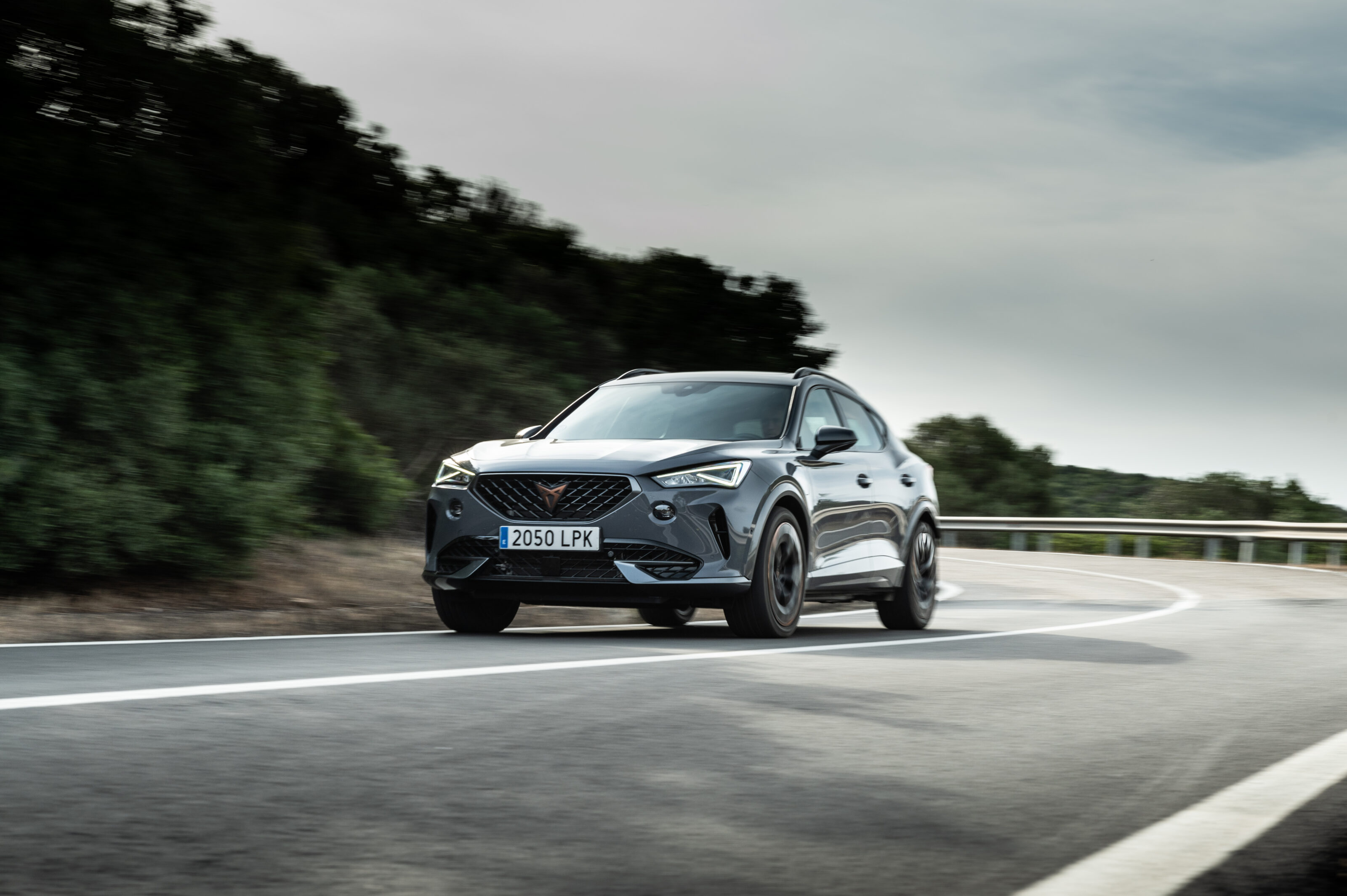
Cupra Formentor E-Hybrid review
February 8, 2022: Just how good is the Cupra Formentor E-Hybrid? We sent Dan over to Europe to try it out, sampling one of the electrified models tipped to come to Australia.
Click the link below to find out what he thought of the hybrid crossover, and whether its fully-electric mode could suit local drivers.
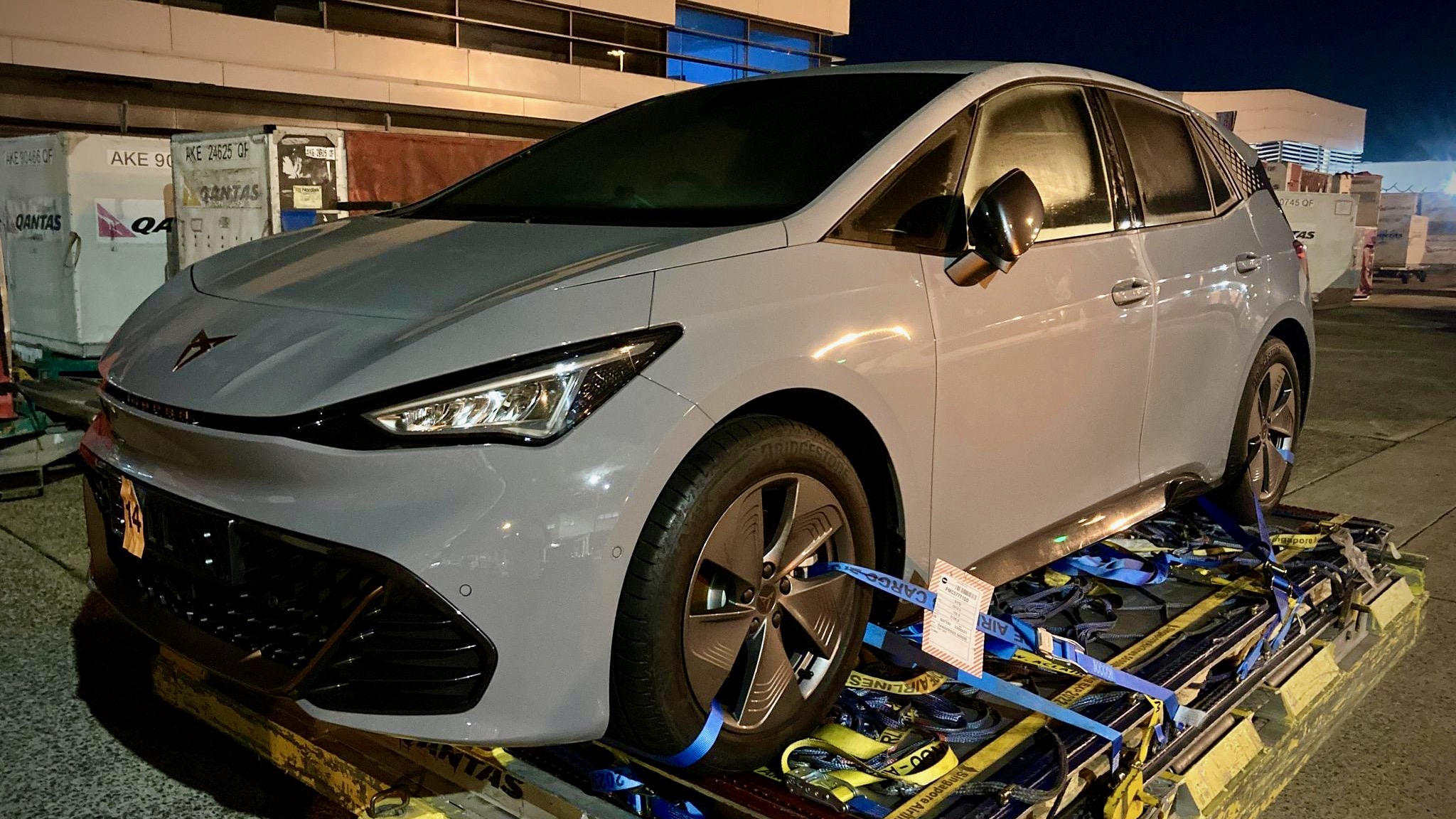
Electric 2023 Cupra Born lands on Australian soil
December 24, 2021: An early Christmas present has been given to Cupra Australia, receiving the first Born to land locally.
Spotted at Sydney Airport, the all-electric hatchback is finished in a colour similar to Nardo Grey offered by Audi, seemingly hiding some of its sharper lines.
This example is one of three which will be used by Cupra to evaluate how the Born can perform on local roads, shaking down its model before launching in Australia at the back end of 2022.

2022 Cupra Born EV ‘could cost the same as a Golf GTI’ when it arrives in Australia
December 7, 2021: The most highly-anticipated model from Cupra’s stable is undoubtedly the Born EV, not least because it is set to be the first electric Volkswagen Group offering in Australia.
Speaking with those in the know at Cupra, it’s likely the Born could land locally for close to the same cost as a Golf GTI, pricing itself under the all-conquering Tesla Model 3 in the electric vehicle market.
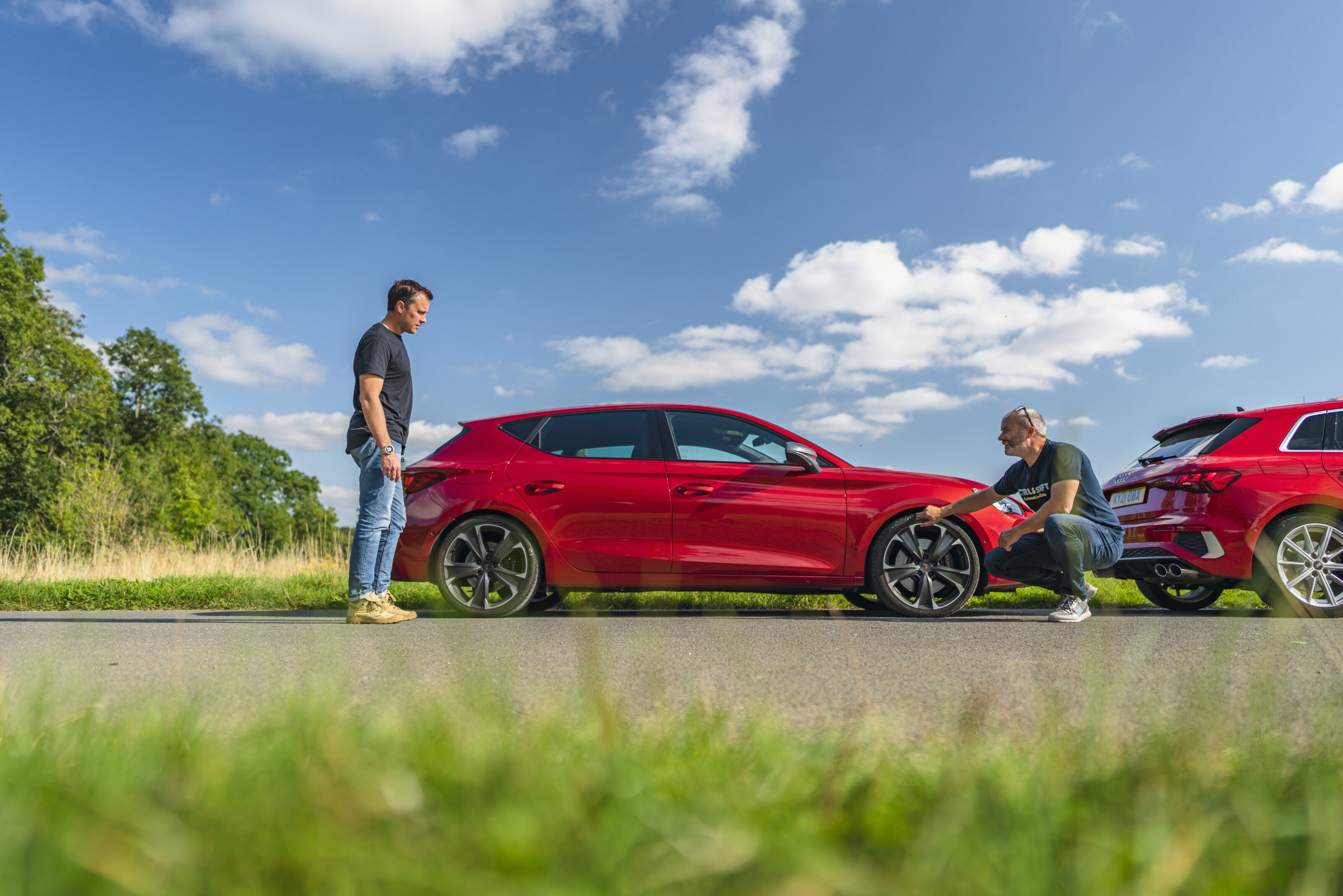
Compared: 2022 Audi S3 vs Cupra Leon 300 review
September 23, 2021: Our man Dan decided to pop back over to the motherland and was able to sample the Cupra Leon 300 while he was there.
Enlisting the help of Joe Achilles, the pair looked at Cupra’s offering and compared it to the new Audi S3, taking the MQB platform performance cars for a spin down some country lanes.
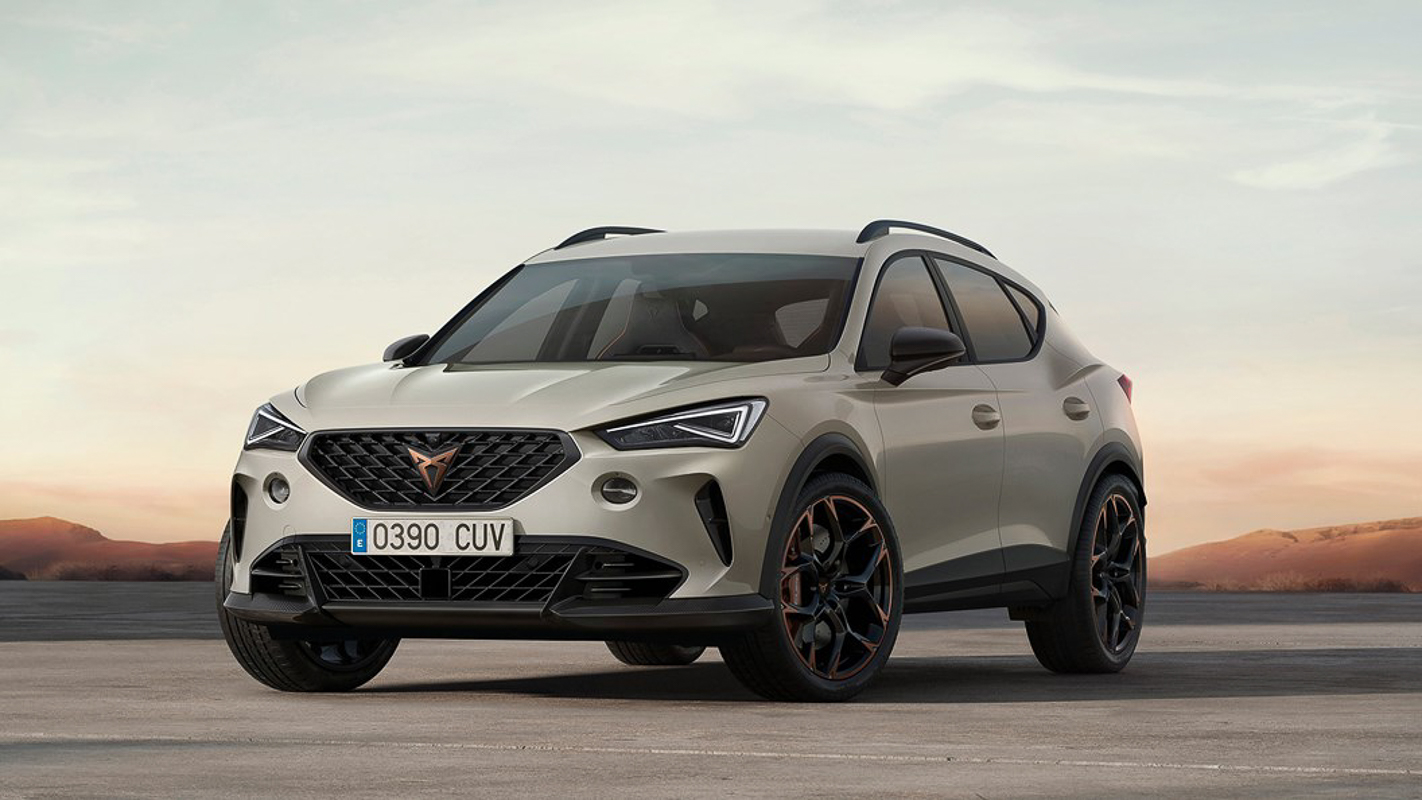
Cupra plans to use PHEVs to ease transition to electric in Australia
September 14, 2021: On top of its desire to be Australia’s go-to brand for performance vehicles, Cupra believes it can ease the transition to electrification with its hybrid models.
Launching with a range of plug-in hybrids, the brand will also bring its Born fully-electric vehicle to Australia, becoming the first electric Volkswagen Group product to come Down Under.
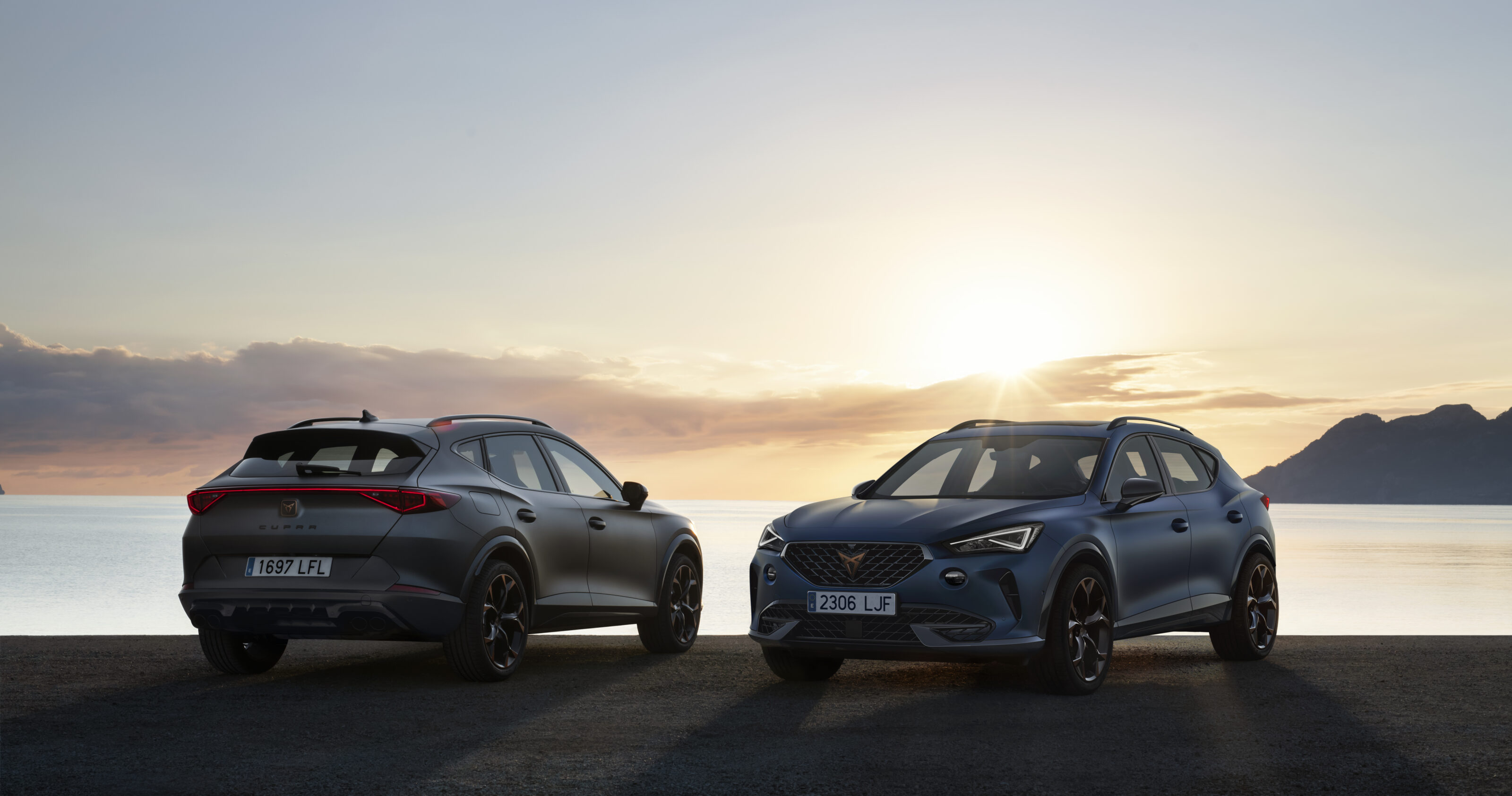
Cupra signals plan to become a challenger brand for Australian buyers
September 7, 2021: Off the back of its local launch and line-up confirmation, Cupra Australia boss Ben Wilks sat down to chat about what the brand’s plans are in Australia.
While some have said Cupra’s products will be little more than rebadged Volkswagen/Audi/Skoda models, Wilks sought to clarify the company’s position – aiming to sell its cars to driving enthusiasts.
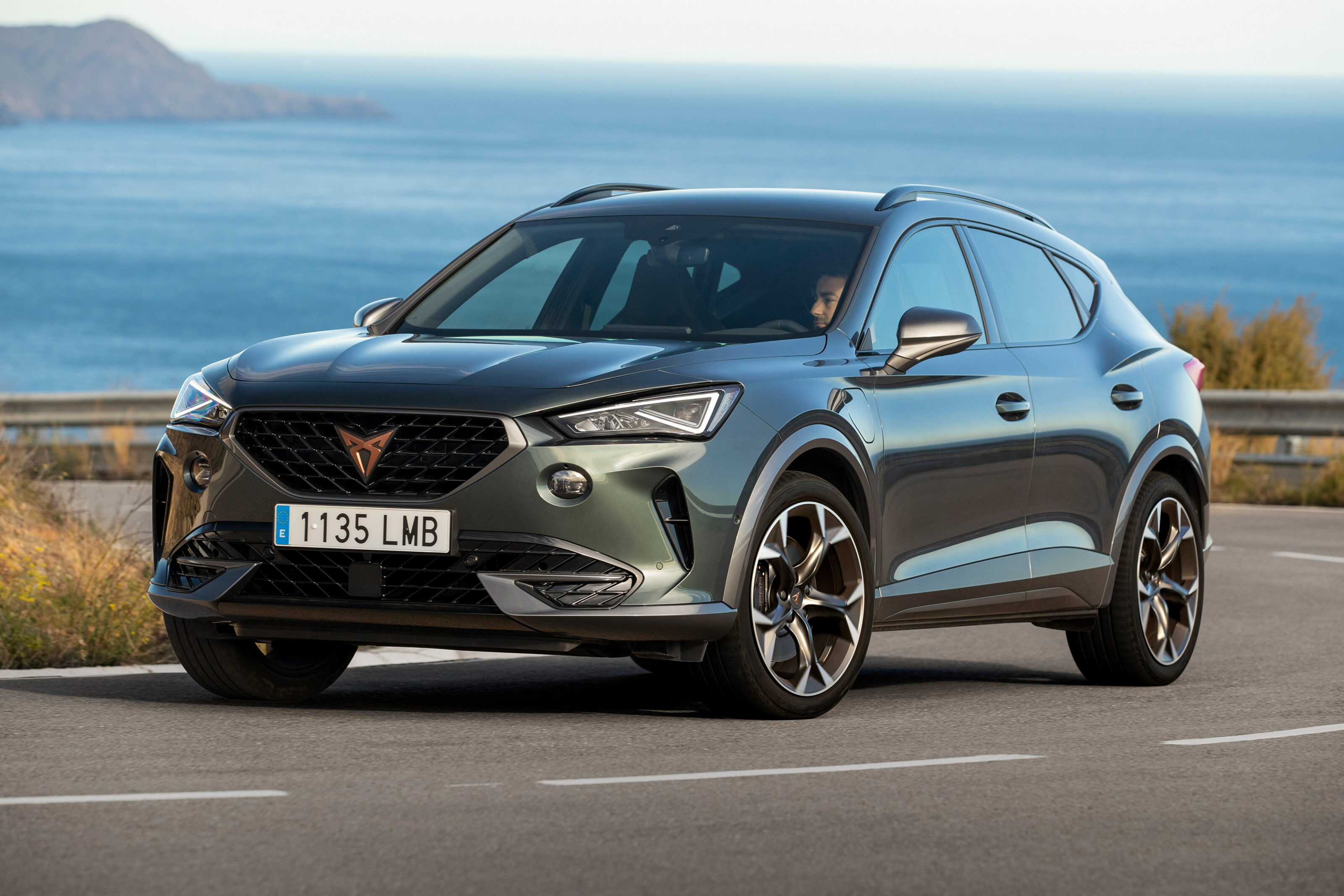
First drive: 2021 Cupra Formentor
June 24, 2021: Phil McNamara was one of the first journalists in the world to experience Cupra’s new Formentor, one of the models tipped to head to Australia.
Getting behind the wheel of the entry-level 1.5-litre Formentor V1, read McNamara’s review of the Cupra brand’s first bespoke model.
Cupra Australia: Your model-by-model performance car guide
June 25, 2021:Warm hatches, hot-hatches, quick all-wheel-drive compact SUVs, and a couple of plug-in hybrids.
The Volkswagen Group’s fledgling Cupra performance brand is coming to Australia in 2022, starting with nine variants across three vehicles.
Three years after Cupra was created in Europe as a spin-off of VW’s Spanish mainstream car maker Seat, the Leon hatch, Ateca compact SUV and Formentor crossover will join Skoda’s RS models and Volkswagen’s GTI and R variants in vying for the attention of keen drivers.
You can read our detailed news story about the launch, though here we provide your ultimate guide to the Cupra models confirmed for Australia, expected for Australia, and those which didn’t make the cut.
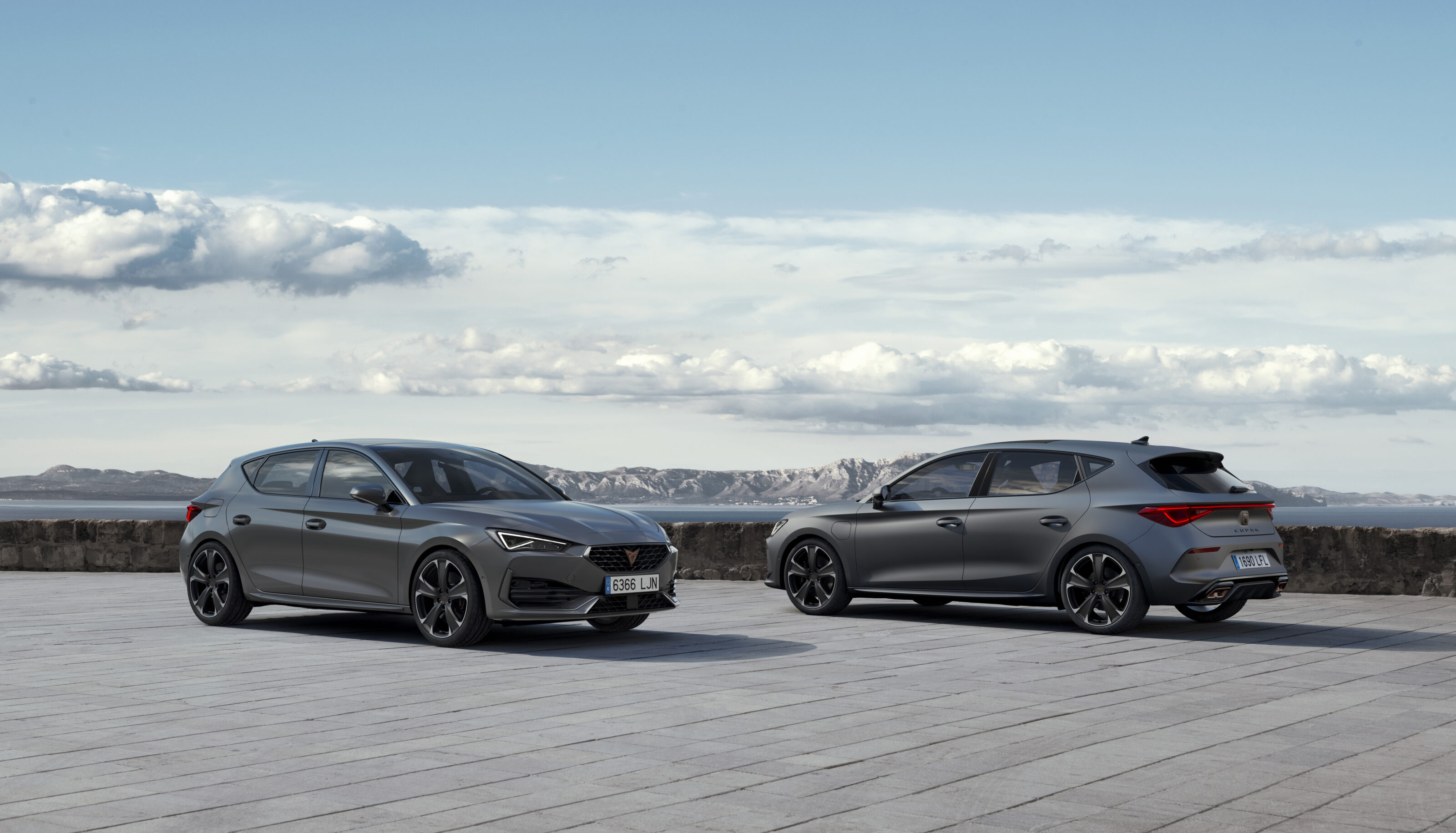
Cupra Leon Hatch – 2022
The Leon hatchback will be the most affordable Cupra at launch, priced from just above $40,000.
It is based on the fourth-generation Seat Leon released in 2020 and is again similar to the Volkswagen Golf.
There’s less of a performance focus on the base Cupra Leon, however, which shares a 140kW/320Nm 2.0-litre four-cylinder engine with the regular Seat Leon sold overseas. This model is likely to carry the ‘VZ1’ trim-grade designation.
A mid-range 180kW Leon could become a cut-price alternative to VW’s Golf GTI, with which it shares its engine. The latest GTI has gone up markedly in price, from $53,100, making obvious space below in the mid to high $40k bracket.
A more affordable alternative to the Golf R is also likely with the 221kW Leon, which could carry Cupra’s highest-specification ‘VZ3’ badge. It uses the engine from the previous Golf R but is front-wheel drive rather than all-wheel drive, meaning it also misses out on some of the 2022 Golf R’s technology such as rear torque vectoring with Drift mode.
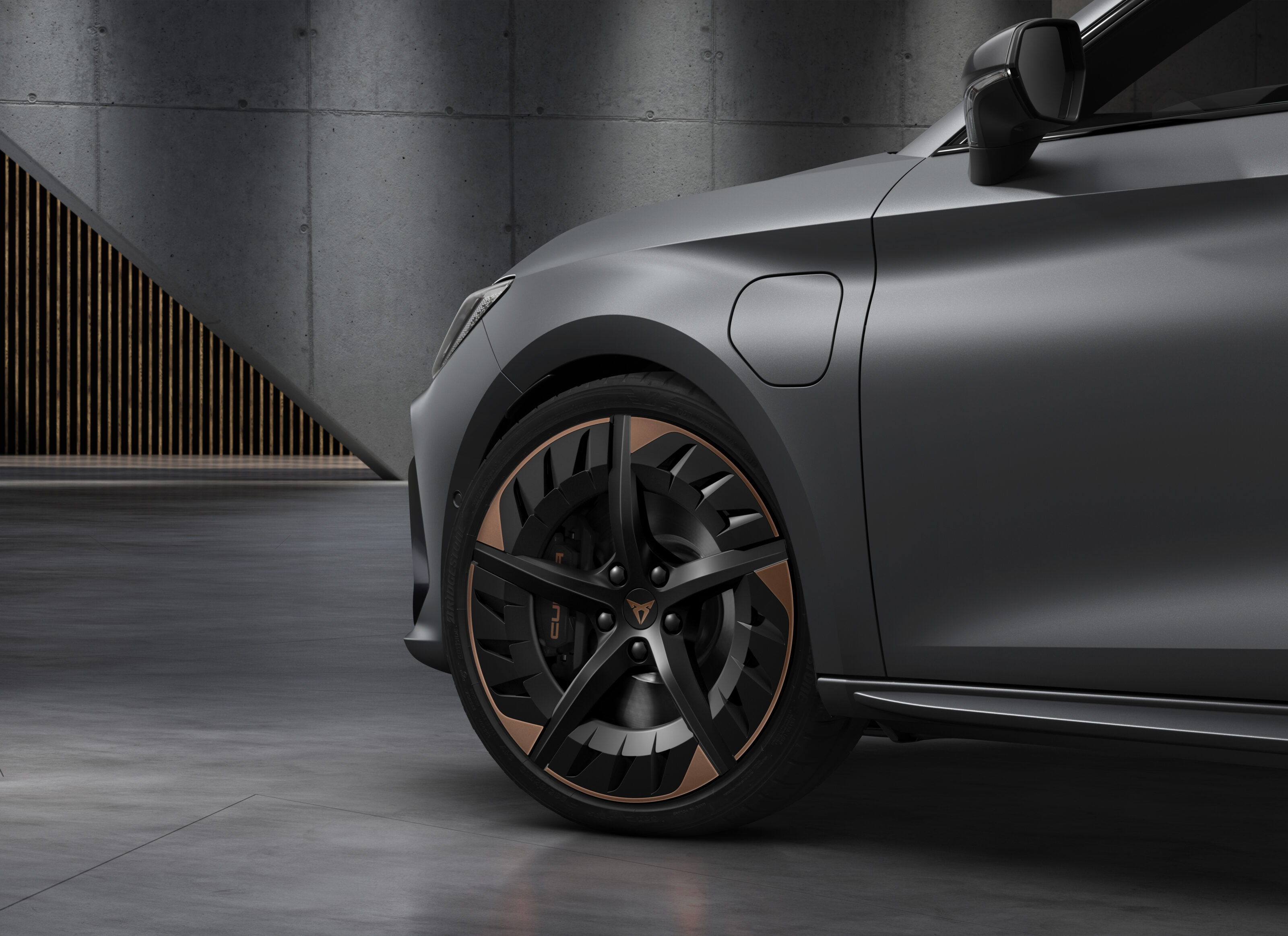
Cupra will also offer an exclusive plug-in-hybrid (PHEV) drivetrain not available at this stage in Australia from sister brands Audi, Skoda or Volkswagen.
The 180kW Leon e-Hybrid variant, which is anticipated to headline the hatch range, combines a 1.4-litre turbo petrol engine with an 85kW electric motor and 13kWh battery. Based on Europe’s WLTP test cycle, the petrol-electric Leon offers an electric driving range of up to 52km and combined fuel consumption of up to 1.4L/100km.
It has a claimed 0-100km/h time of 6.7 seconds.
The 180kW Leon shares a 6.4-second time with the latest Golf GTI. The fastest Leon is the 221kW variant with 5.7 seconds, which still makes it notably slower than the 4.7sec 235kW Golf R due in early 2022.
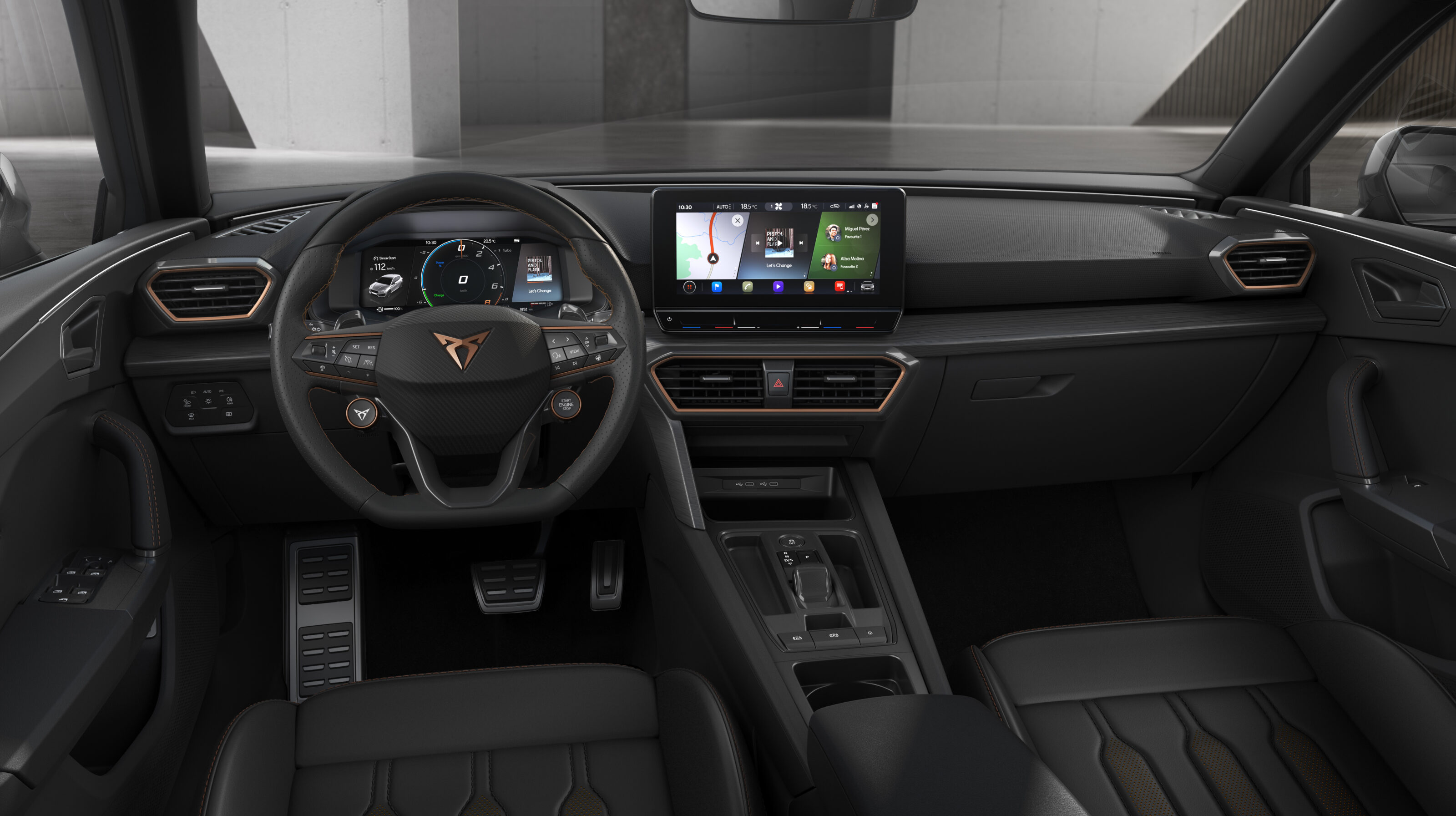
Perhaps to be protective of the Golf R wagon which, along with the hatch version, is hugely popular here, Volkswagen Group Australia has opted against the fastest Leon model.
The all-wheel-drive Leon Sportstourer features a 228kW turbo engine and has a claimed 0-100km/h time of 4.9 seconds.
At 4.4 metres, the Leon hatch is longer than the Golf on which it’s based. The interior is near-identical to the cabin of the latest, eighth-generation Golf, including its digital infotainment and instrument displays.
The Leon has marginally more boot space than the Golf – 380 versus 374 litres. The e-Hybrid’s luggage capacity shrinks to 270 litres, however, owing to the battery under the floor.
The broad range means the petrol-only versions of the Cupra Leon hatch could be a competitor to; the Hyundai i30 N-Line and i30 N, the Ford Focus ST, BMW’s new 128ti front-drive hot-hatch, as well as its Golf GTI cousin.
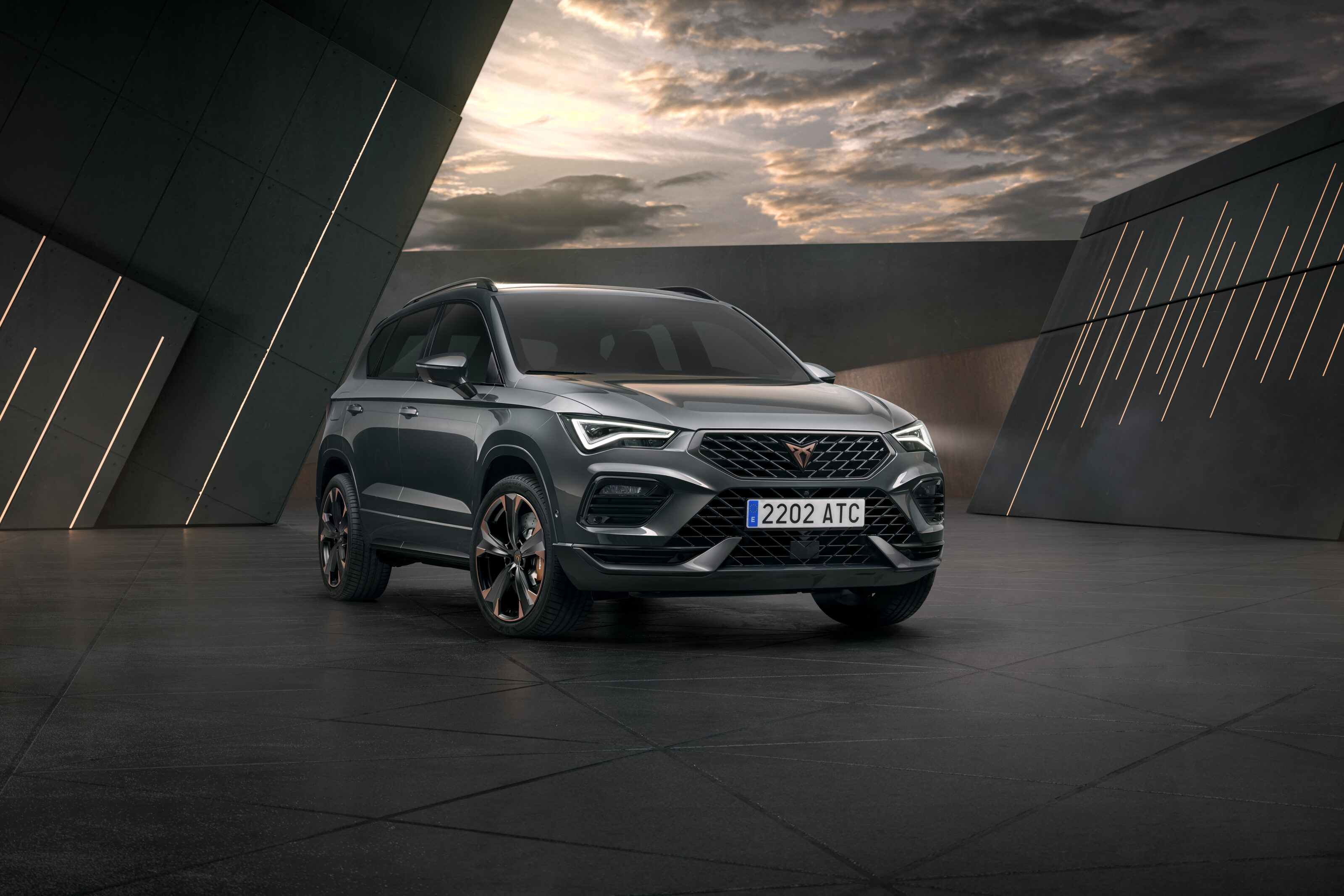
Cupra Ateca SUV – 2022
The Ateca compact SUV (4386mm long) was released in 2016 and two years later became the first Seat to also be placed under the Cupra brand – and distinguished in both design and performance.
A facelifted version was introduced in mid 2020.
Unlike other Cupra models, there is just a single drivetrain option – but it’s a fast one.
The 221kW/400Nm 2.0-litre turbocharged four-cylinder combines with a seven-speed dual-clutch auto and all-wheel drive to give the Cupra Ateca a 0-100km/h claim of 4.9 seconds.
It’s not yet clear whether the Ateca will be offered locally in different trim grades or just a single specification. Overseas, the highest ‘VZ3’ grade gains extra standard features such as Brembo performance brakes (optional on lower grades), Copper Alloy (19-inch) wheels and heated front seats. Petrol-blue leather upholstery is standard on mid-spec VZ2 upwards.
The Ateca offers a 485-litre boot and a 2100kg braked towing capacity.
Mainstream performance SUVs are still a rare breed, though the upcoming Hyundai Kona N will be a natural rival for the Cupra Ateca even if it is front-drive only. In late 2022, Volkswagen will also introduce the T-Roc R – a twin to the Ateca which uses the same drivetrain and offers identical performance.
Cupra Formentor SUV – 2022
The Formentor was the first model to be created exclusively for the Cupra brand. Unlike the Leon and Ateca, it is not sold in any form under Seat.
At 4.45 metres long, the crossover is not much bigger than the Ateca SUV but is distinguished by more dramatic, coupe-like styling. It’s expected to be classified as a mid-size SUV locally.
The Formentor, which is also based on the Golf, will headline the initial Cupra Australia launch range, offering a choice of drivetrains mirroring the Leon hatch.
So, the range will start with a 140kW entry variant and is expected to be bookended with the 180kW/400Nm Formentor e-Hybrid.
In between, buyers will have the option of a 180kW turbo petrol variant or the 228kW/400Nm turbo petrol which is the joint-quickest Cupra with a 4.9-second 0-100km/h claim.
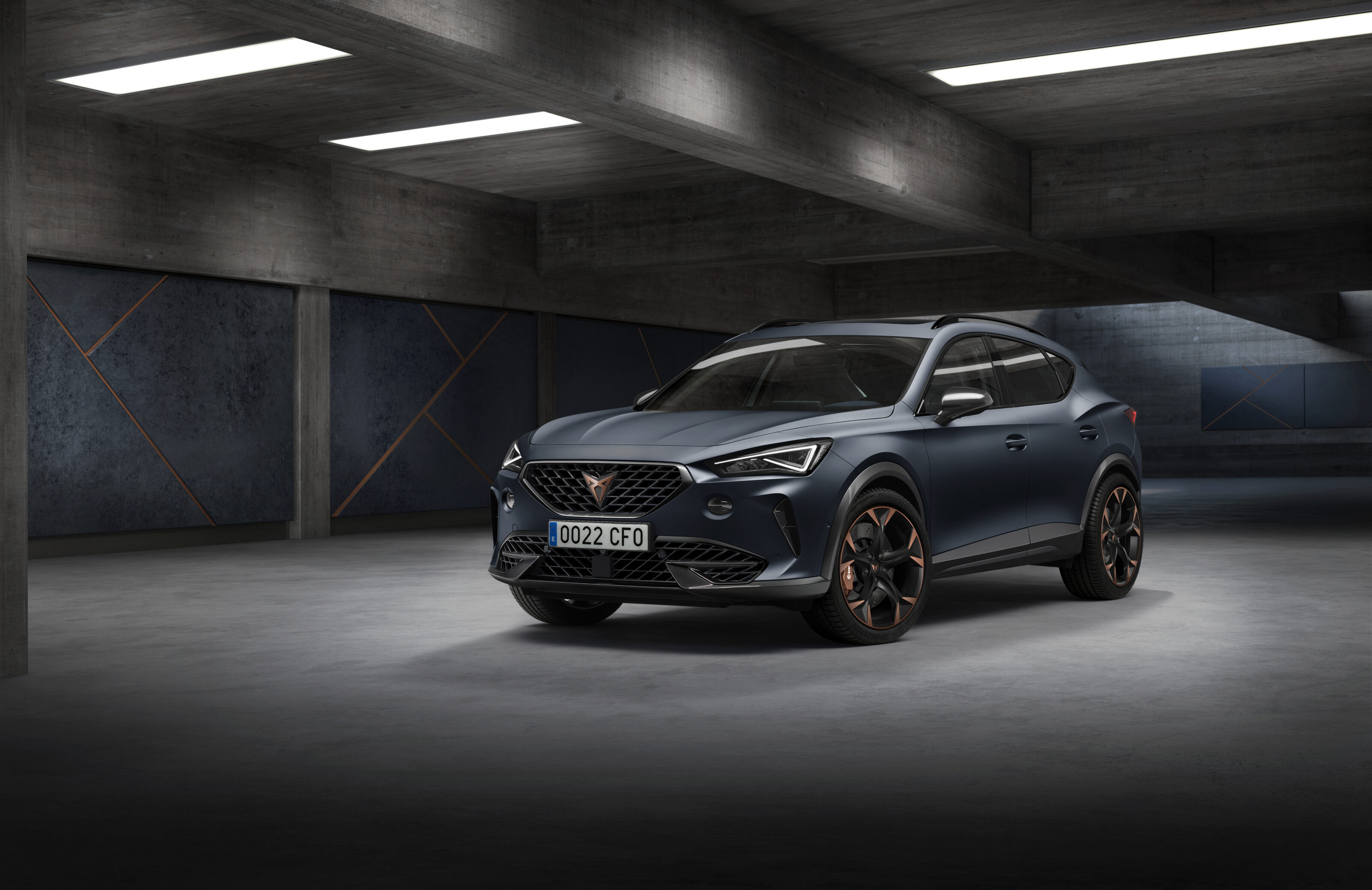
As with the Leon e-Hybrid, a rechargeable lithium-ion battery gives the Formentor PHEV a limited EV driving range (up to 55km). It can be recharged in five hours using a regular power socket.
The Formentor e-Hybrid is expected to be priced from the low $60,000s in its highest specification (or possibly only specification).
Cupra’s European specs quote a 420-litre boot, which drops to 345L for the e-Hybrid owing to the battery pack positioned under the boot floor.
Audi’s $64,400 SQ2 is one natural rival for the 228kW Formentor, sharing the Cupra’s drivetrain. Another sporty compact SUV is the Mini Countryman JCW Pure.
Rivals for the 140kW and 180kW Formentor variants could encompass a group including top-spec mainstream compact SUVs such as the Kia Seltos or Sportage GT-Lines, Hyundai Kona N-Line, Mazda CX-30 G25 AWD as well as luxury small SUVs in the form of the Audi Q2/Q3, BMW X2 and Mercedes-Benz GLA.
Cupra’s fastest model to date is the Formentor VZ5, which has claimed 0-100km/h acceleration of 4.2 seconds using the five-cylinder turbo petrol engine from Audi’s RS3/RSQ3/TTRS models. The VZ5 would have been considered for Australia were it not produced in left-hand drive only.
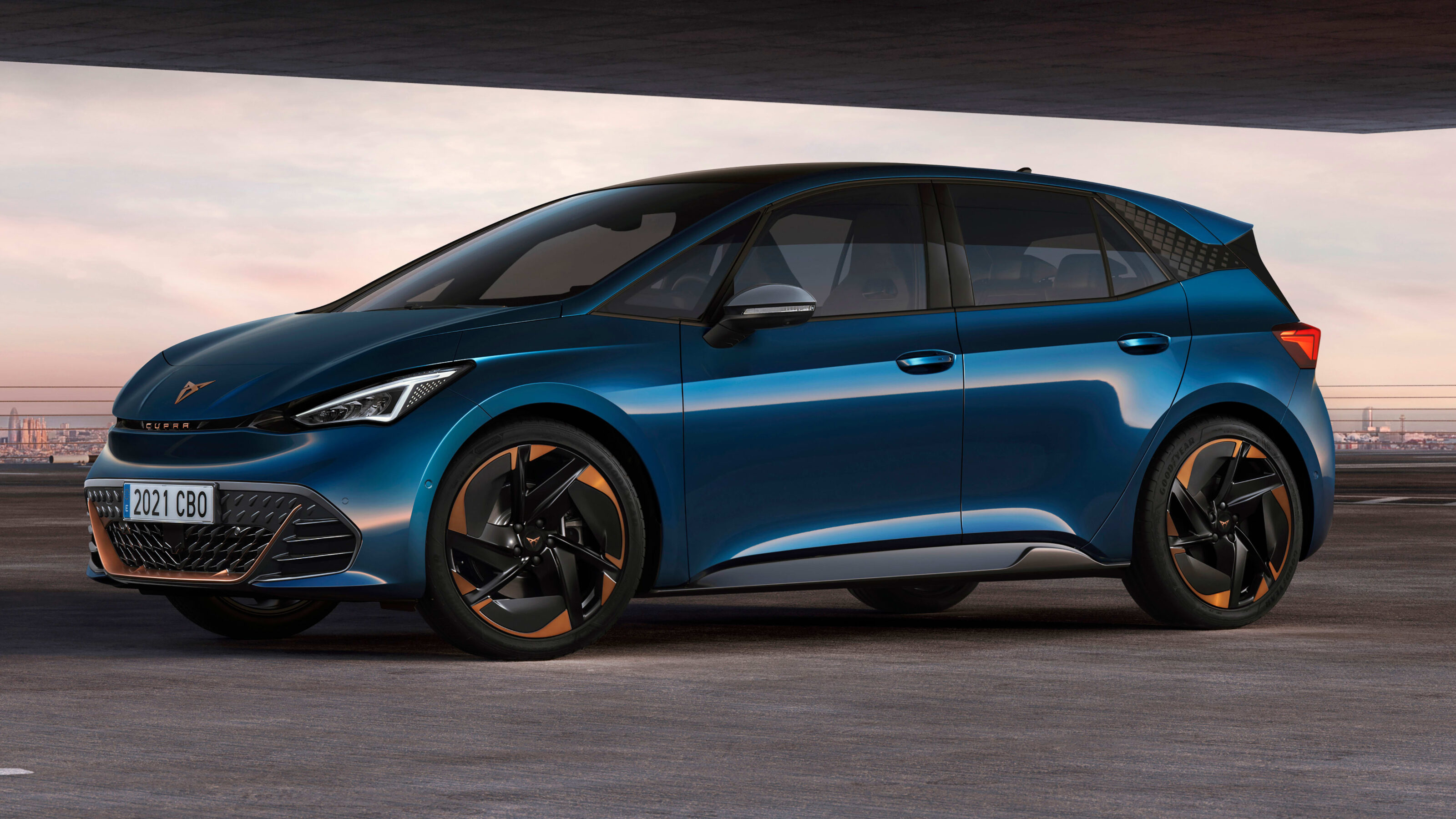
Cupra Born EV – 2023
The Born was unveiled in early 2021 as the brand’s first fully electric vehicle (EV). It shares its MEB platform with VW Group models such as the VW ID.3 and Audi Q4 e-Tron.
There is a chance the five-door electric hatch could join the Cupra range, though it’s unlikely to happen before 2023.
Overseas, the Born is available as four variants with varying power outputs between 110kW and 170kW.
The longest driving range is about 570km, based on Europe’s WLTP cycle, and the fastest Born EV can sprint from 0-100km/h in a claimed 6.6 seconds.
Cupra says 100km of driving range can be added in just seven minutes using a 125kW fast-charging station.
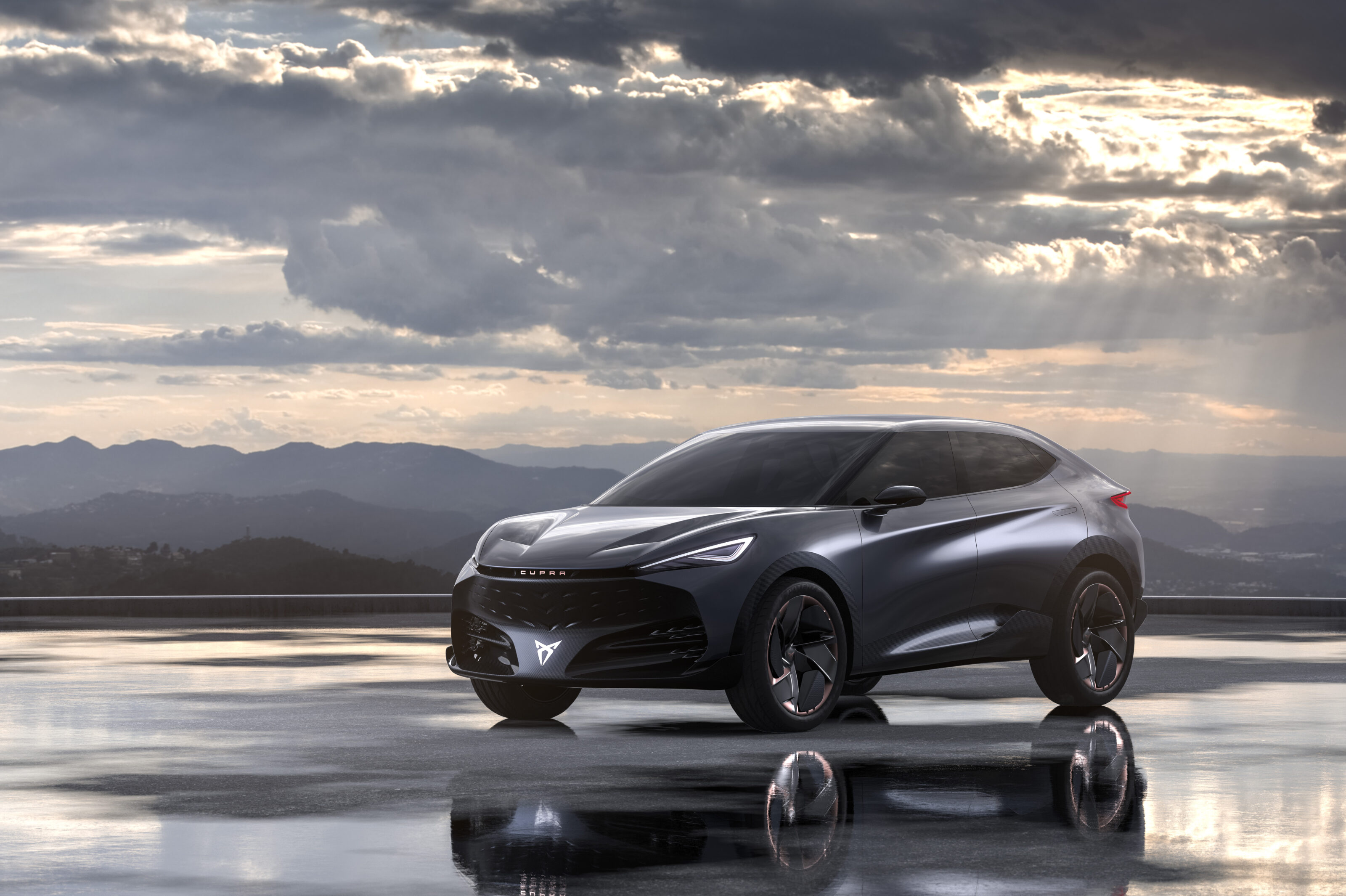
Cupra Tavascan – 2025
The Tavascan will become Cupra’s second EV in 2014, based on the concept vehicle shown at the 2019 Frankfurt Motor Show.
Also based on the VW Group MEB EV platform, the SUV features a 77kWh battery pack and a 225kW power output.
A driving range of up to 450km has been suggested, along with 0-100km/h performance of about 6.5 seconds.
Cupra Australia has a few years to consider the model but it would be a surprise if the Tavascan didn’t make it, especially as the VW Group’s CEO has already indicated Cupra could become a fully electric brand in the future.
UPDATE, June 2022: Tavascan revealed!
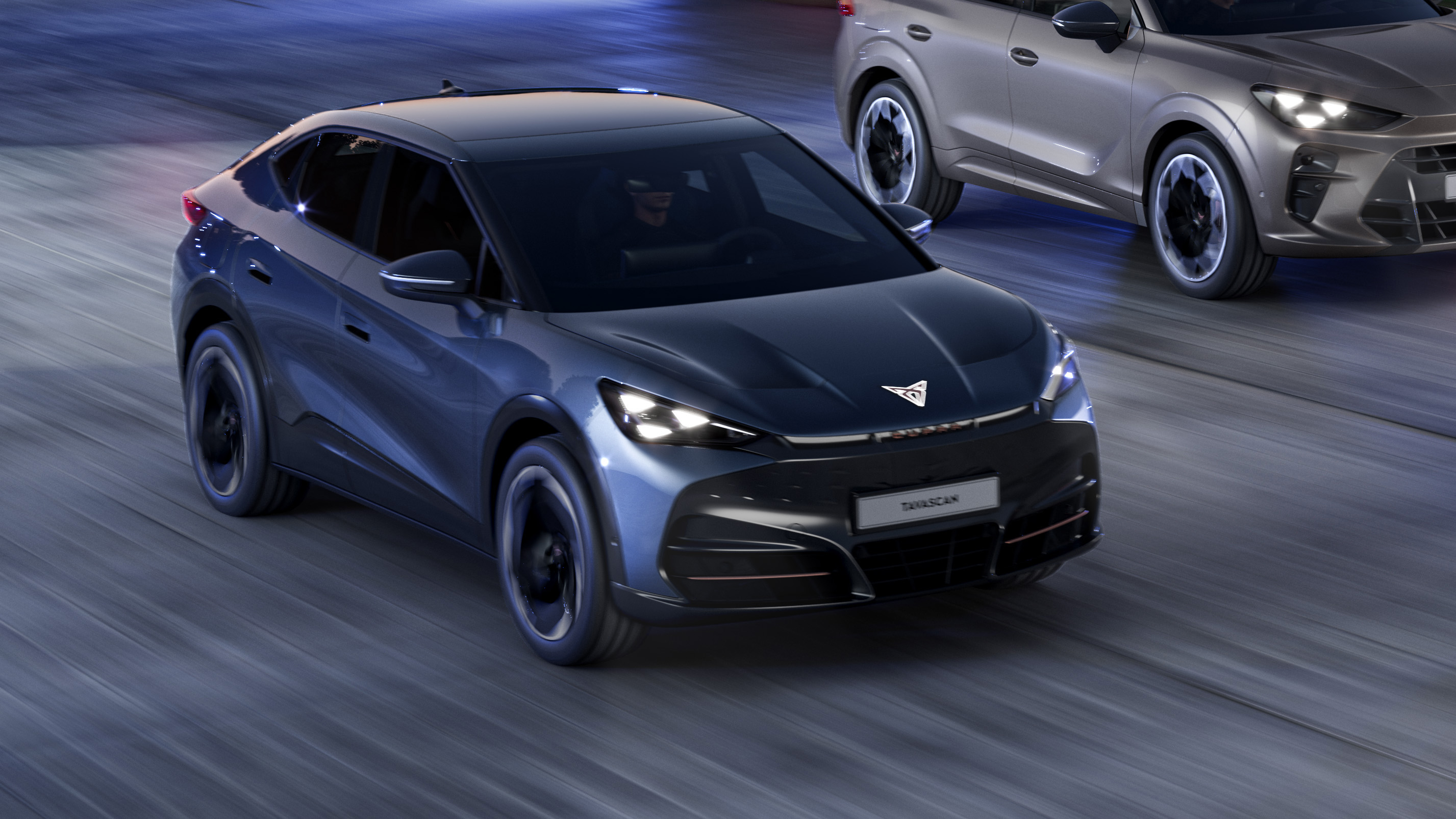
UPDATE, June, 2022: The big reveals from Cupra’s Impulse event
Snapshot
- 343kW, 550Nm 3.0-litre twin-turbo onboard
- Australian timing TBC, but 2023 likely
- …this is the final non-hybrid M car ud83dude31
Like father, like son.
The new 2023 BMW M2 is a downsized M4 – only less pricey and even more chuckable. We drive it on the ultra-fast Salzburgring race track on the hottest spring day in history.
The starting formation on the makeshift grid is an odd mix of almost new and ostentatiously unfinished metal. The pair of thinly disguised M2 pre-production cars – one manual and one automatic – is led by a hyperblue M4 Competition with Dirk Häcker, chief engineer of the BMW M division, at the wheel.
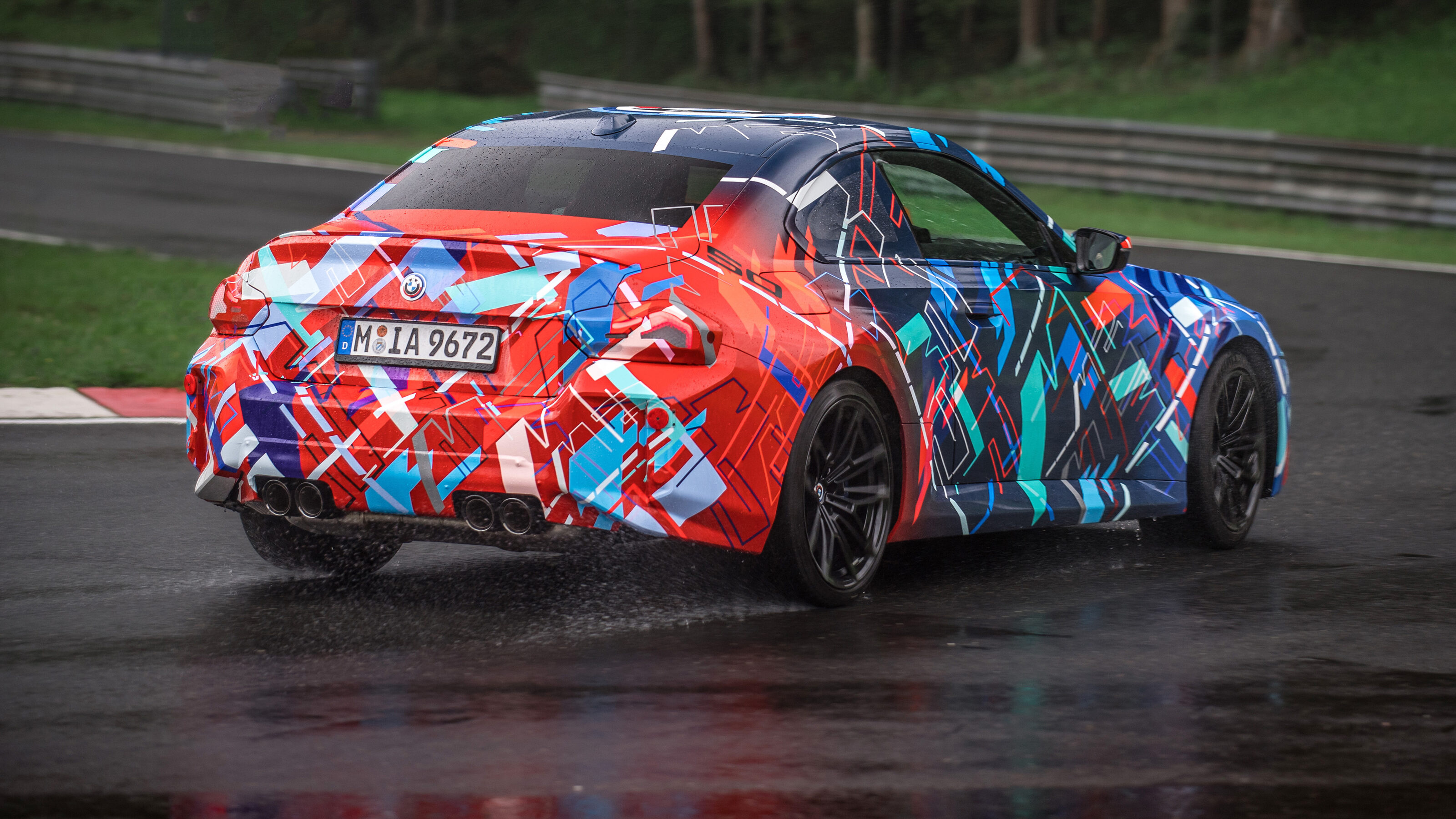
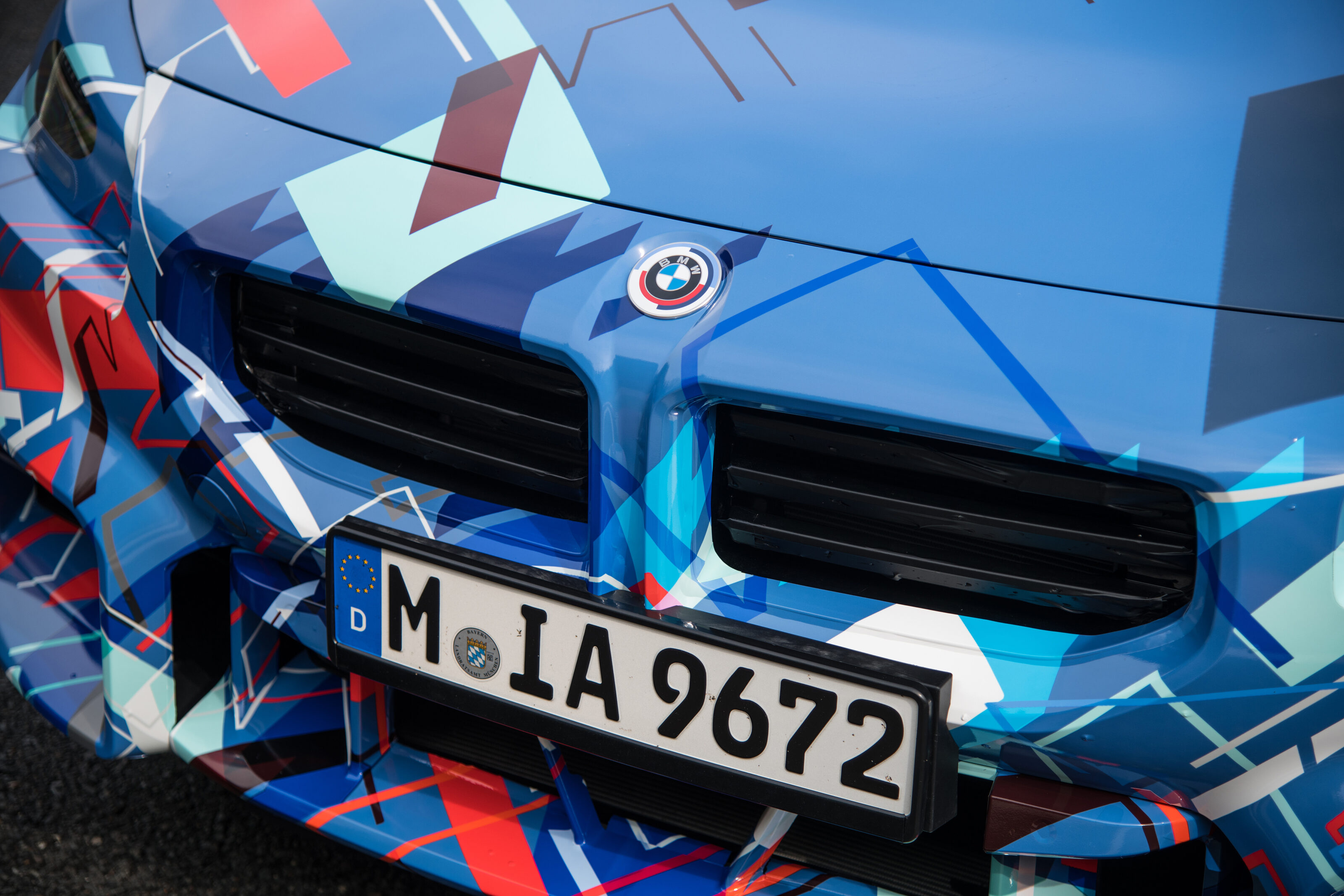
I am right behind him in the louder of the two M2s, which wears a psychedelic multi-blue, multi-pattern livery: Charlie Brown sharing a joint with Winnie the Pooh, if you catch my drift.
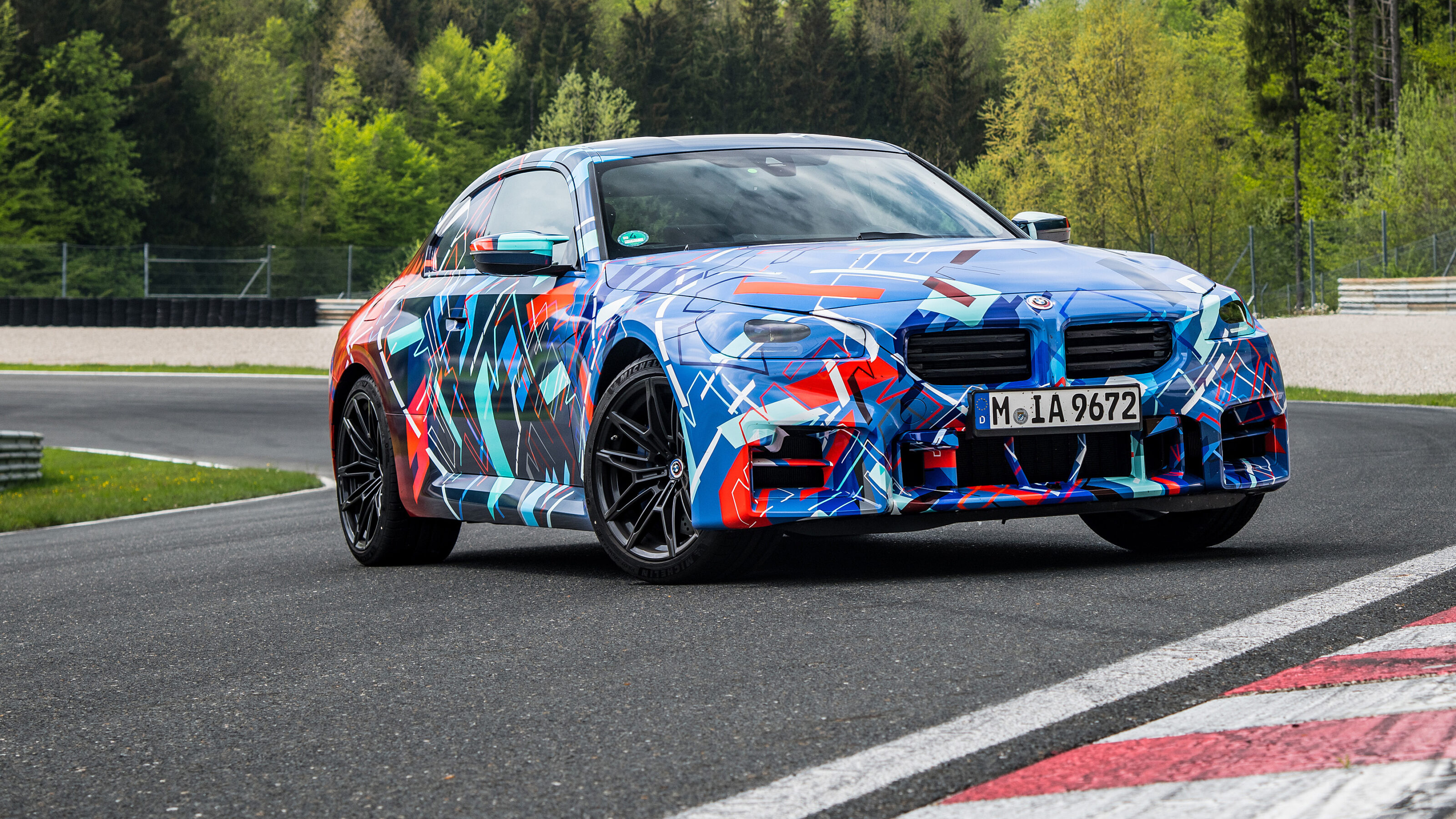
In the rear-view mirror, the other M2 looms large, LED lights on, dressed in the brand’s generic swirly trompe d’oeuil shrinkwrap, which reveals more than it hides as soon as your eyes have sussed out how to separate shapes from surfaces.
Full concentration now, Georg! Focus on the track and stop playing mind games. Driving position? Check. Mirrors? Check. Cabin temperature? Down to 20°C, check. Outside, it´s already 33°C, and lunchtime is still one hour away. Radio? Check.
“Track clear for the familiarisation lap.” Roger that, car number one.
The Salzburgring is embedded in a picturesque remote valley east of, you guessed it, Salzburg. Hometown of Mozart and the namesake confectionary.
The circuit features one very long elevated straight, two reasonably fast 120-degree corners at both ends, a small infield filled with some wriggly stuff, and the extra-wide start-finish boulevard from where an afterthought chicane takes you to the third and final flat-out section.
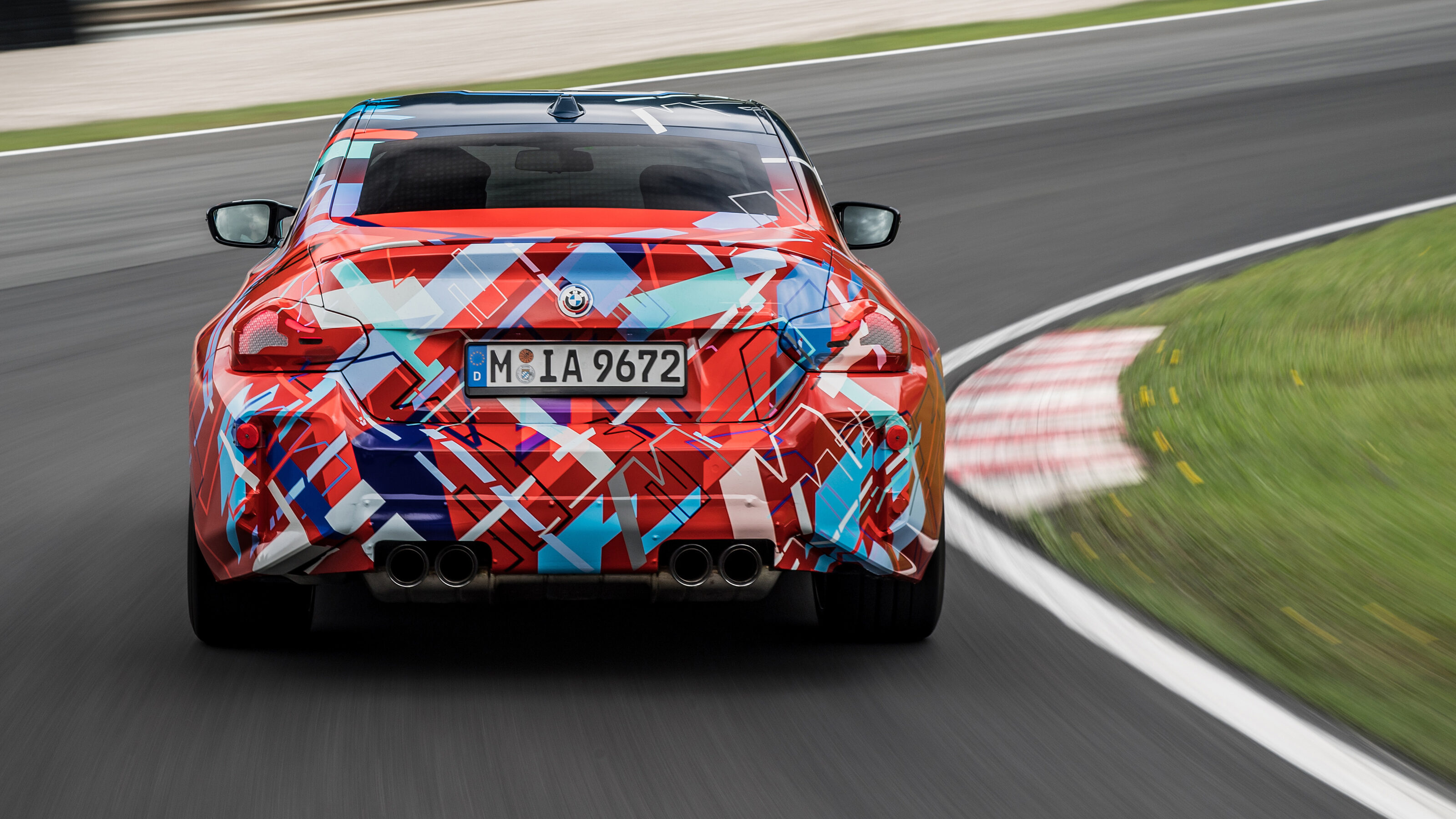
Sounds and looks pretty straightforward, but when come you flying for the first time over the fastest blind brow at an indicated 260km/h, ready to brake as hard as you can for the following panoramic right-hander that almost comes full circle before changing direction, heart and throat momentarily morph into one big wet and heavy gag of flesh.
On lap number three, Herr Häcker finally presses on, the M4 brake lights now pulsating regularly on the approach to the trickier bits, the more aggressive power-on antics leaving subtle black tyre marks on the tarmac, the power and torque advantage of the M4 opening up slightly wider gaps under hard acceleration.
At 343kW, the 3.0-litre twin-turbo fitted to the new M2 is 15kW less potent than the engine installed in the base M3/M4. Maximum torque is however an identical 550Nm, available from 2250rpm, so you get exactly the same bottom-end punch, only in a tighter package.
The bigger car does however retain a 35kg weight advantage, which is largely due to a mix of pricier and more exotic low-calorie materials. Although homologation is not yet complete, the M2 will tip the scales at 1810kg, sources say.
At an expected 4.2 seconds from 0-100km/h, the version equipped with the eight-speed Steptronic automatic matches the acceleration time recorded for the M4 with a manual transmission. The provisional number for the do-it-yourself M2 is 4.5 seconds.
While the M4 with driver’s package can top 290km/h, its more compact sister model throws in the towel at 286km/h.
The difference in outright performance between the two models is thus marginal and more politically motivated than discernible on road and track. The same goes for the three-tenths that set the two-pedal M2 apart from the three-pedal variant.
Despite the minor arithmetic disadvantage, the manual feels more inspiring and involving overall, and it’s clear that eight ratios – one more than before – are by no means mandatory to spread all that grunt evenly over a virtually identical speed spectrum.
While M3 and M4 are also available with xDrive AWD technology, the M2 is rear-wheel drive only, as the ultimate descendant of the legendary BMW 2002tii should be.
This layout will also be carried over to the brawnier – did we hear someone say 365kW? – CS derivative expected in the course of model year 2024.
Built in San Luis Potosi, Mexico, the most powerful 2 Series coupé to date shares – in essence – the adaptive M suspension, M compound brakes and variable rate M steering with its upmarket brethren.
Thanks to an extended Efficient Dynamics package, the predicted average fuel consumption works out at a relatively planet-friendly 9.9L/100km.
Both prototypes were shod with extra-wide unequal-size Michelin tyres (275/35 ZR19 up front, 285/30 ZR20 in the back), but we suspect the base model will step out of the factory on slightly less meaty 18- or 19-inchers.
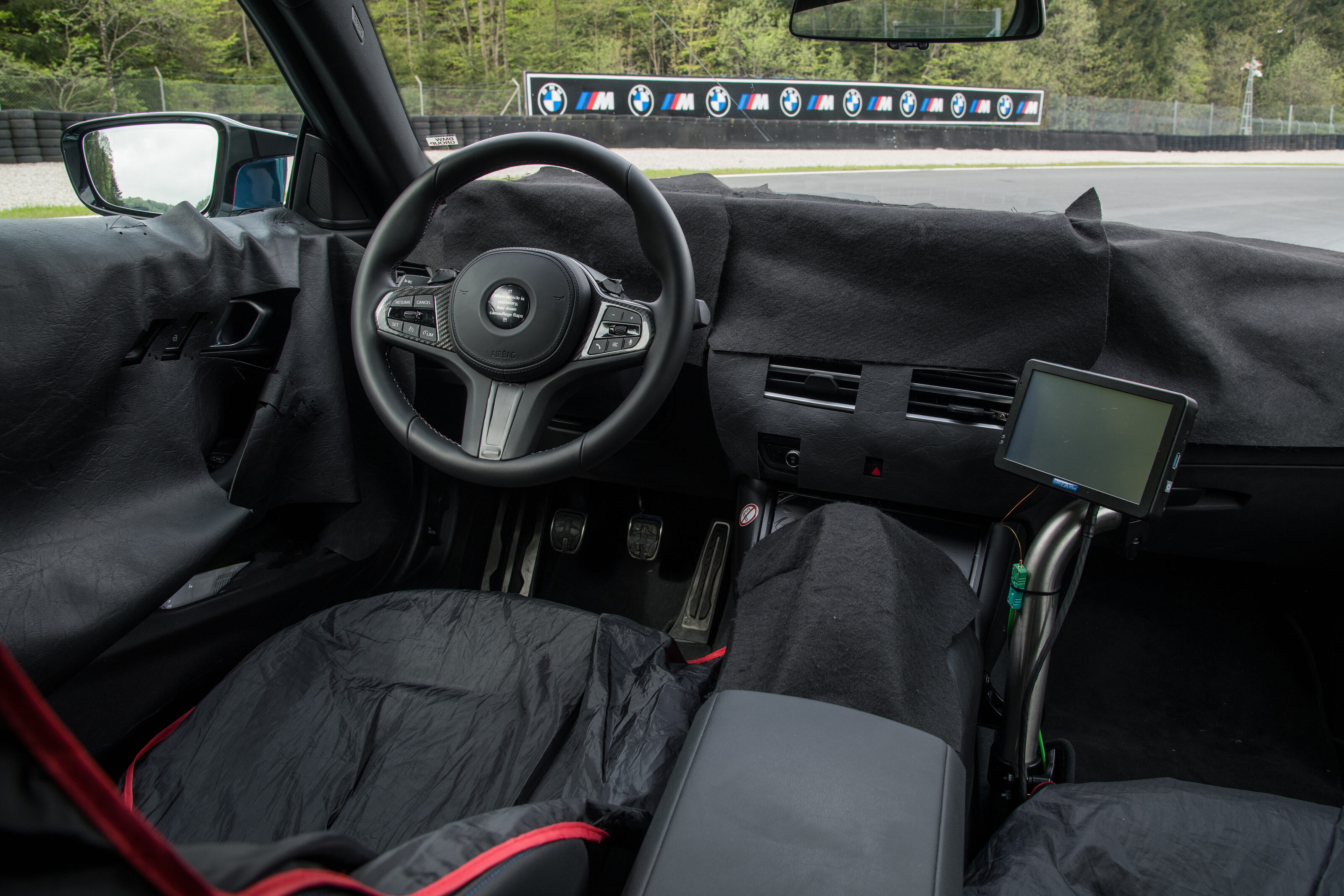
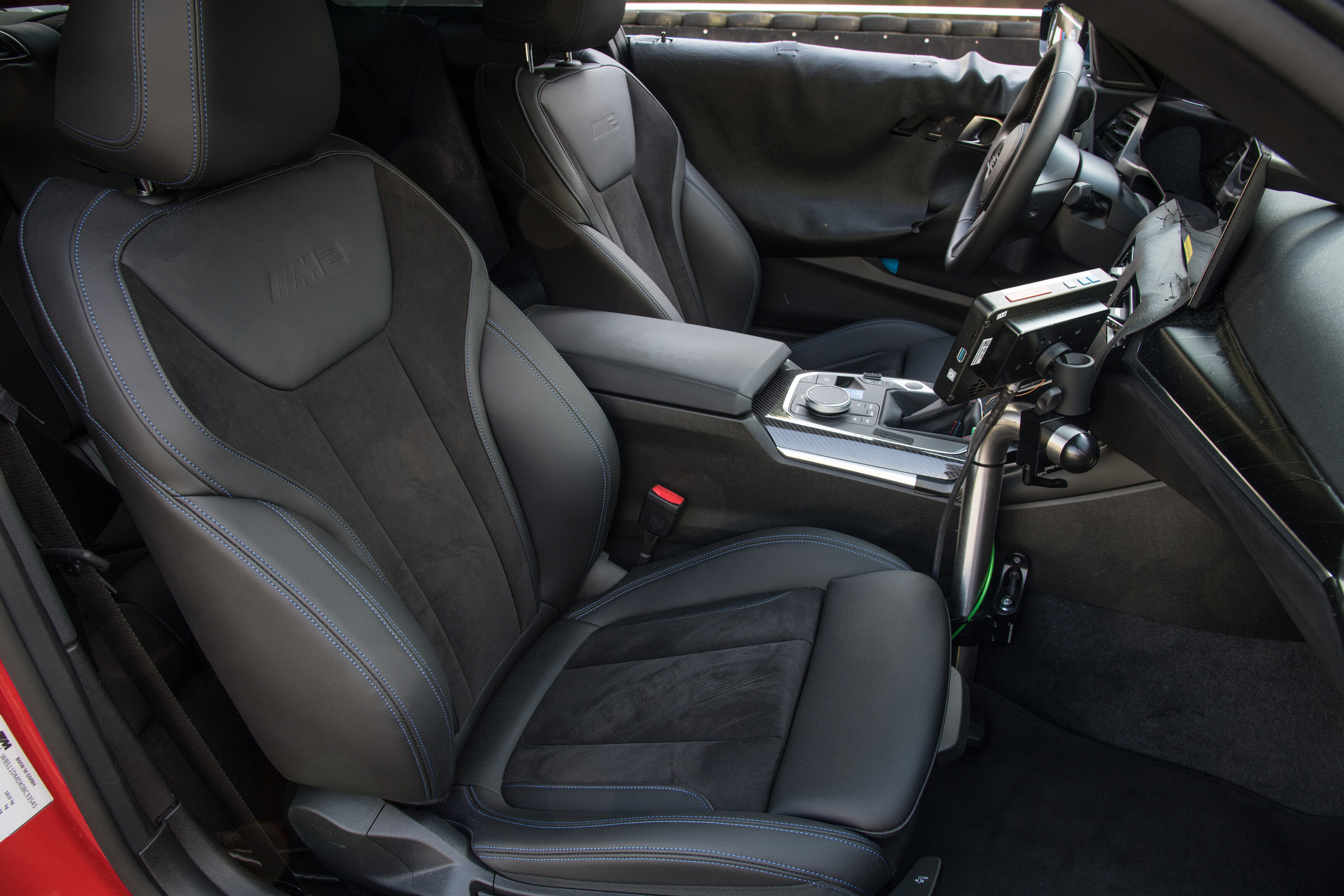
You can’t tell, but the M2 pictured here sports the optional lightweight carbon-fibre roof as well as gaudy carbon-fibre racing seats, also an extra.
The electric buckets may save weight over the standard comfort chairs, but their radically contoured shape does not fit every body, and the contrasting yellow, green, orange or blue leather upholstery is definitely more domina than Dreamliner.
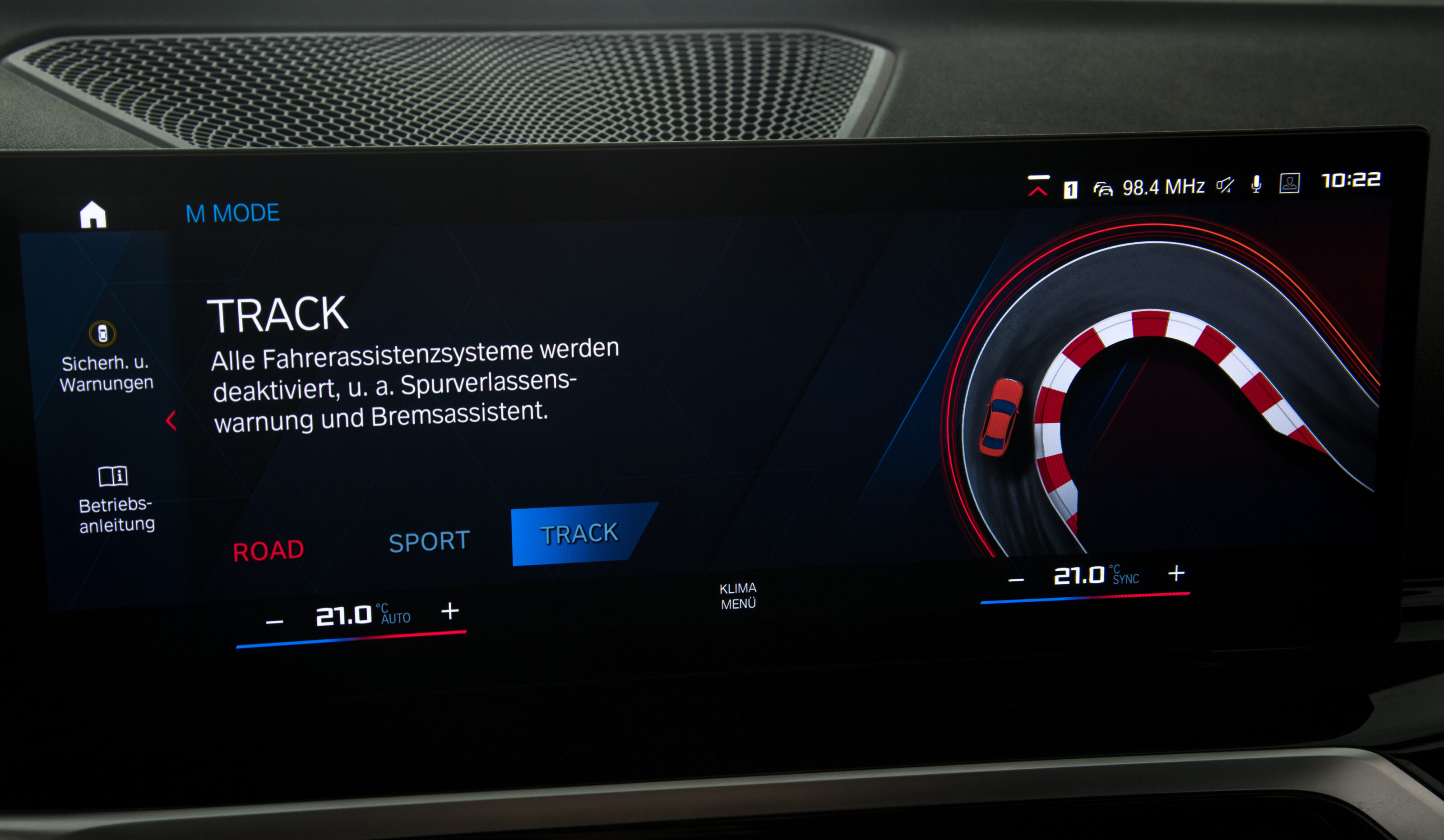
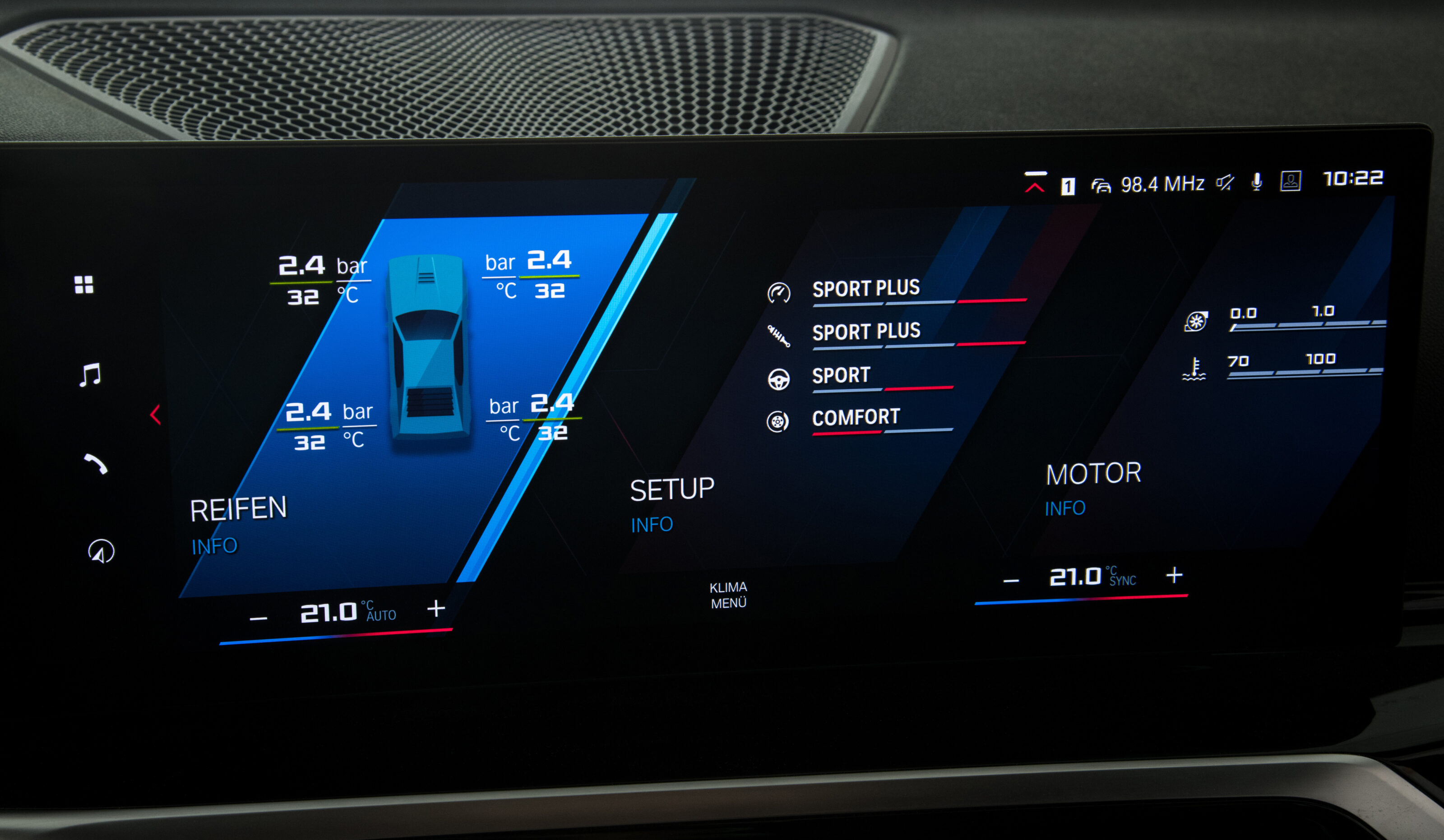
The widescreen instrument panel features most of the specific infotainment goodies seen on other M cars, the centre tunnel accommodates again the pleasantly failsafe iDrive controller, there are enough direct-access buttons to avoid getting lost in one of the many submenus, and the gear lever is of course of the old-fashioned kind – no joystick, no automated clutch, no electric reverse but anytime on-demand coasting with the transmission in neutral.
Having said that, coasting is not on today’s menu. What we prepared for you instead is precision upshifting right on the redline, dispatching large helpings of torque towards the high-mech diff and its electronic helpers, plus of course sampling the full range of power-on and power-off antics.
First and foremost, however, the three drivers must agree on a rhythm and establish a flow, then follow the groove while deciding on a pace everyone is comfortable with. There is no denying that changing gears manually is more of an emotional act than a tangible benefit.
The automatic transmission is a fine everyday stress relaxant, but it lacks the sharp edge, the fine motor challenge and the deep involvement of doing all the interactive work by yourself.
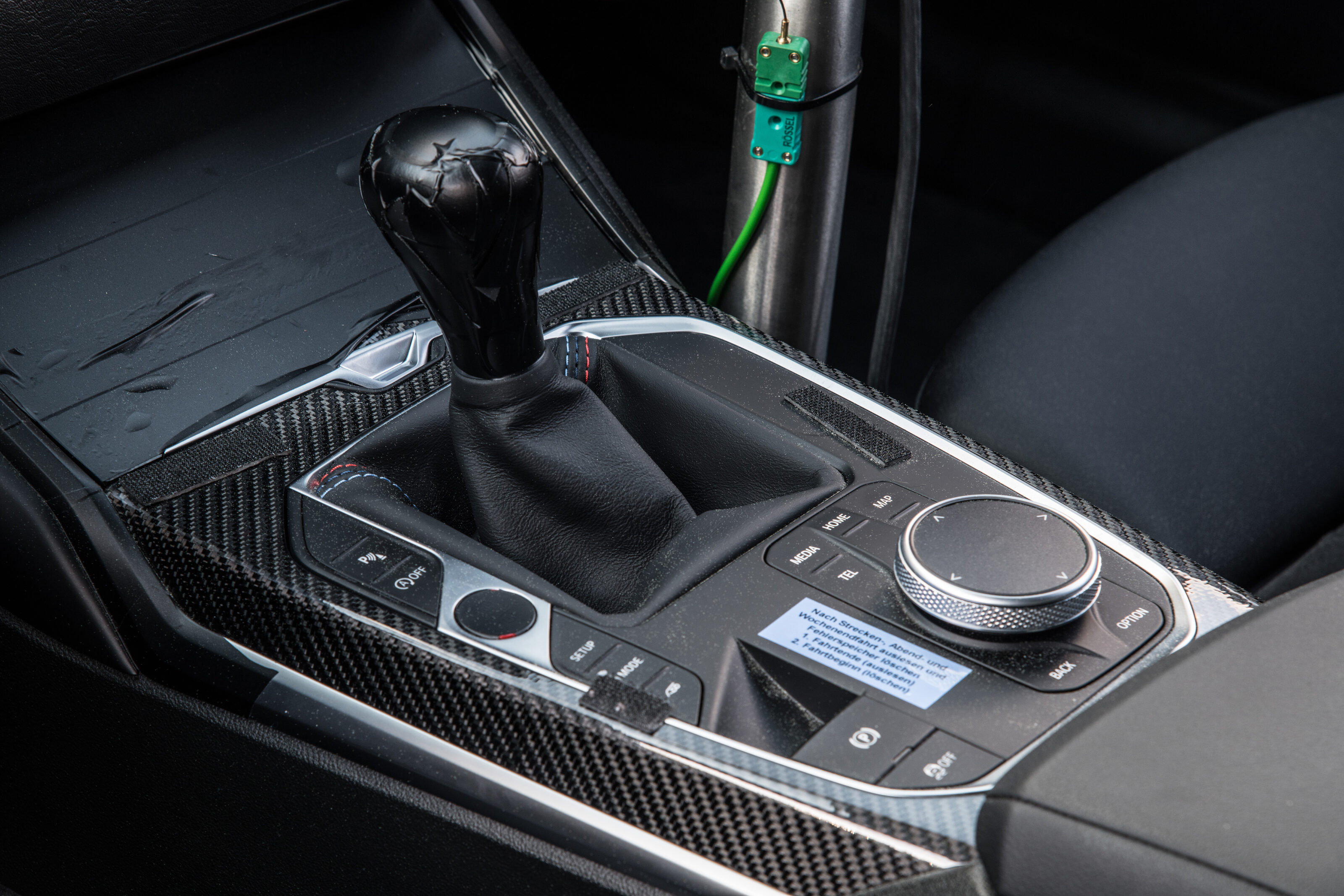
In theory, the manual car loses time to its auto counterpart because every gear change – up and down – takes that little bit longer. In reality though, one can recover much of it through intelligent timing and accordingly coordinated action.
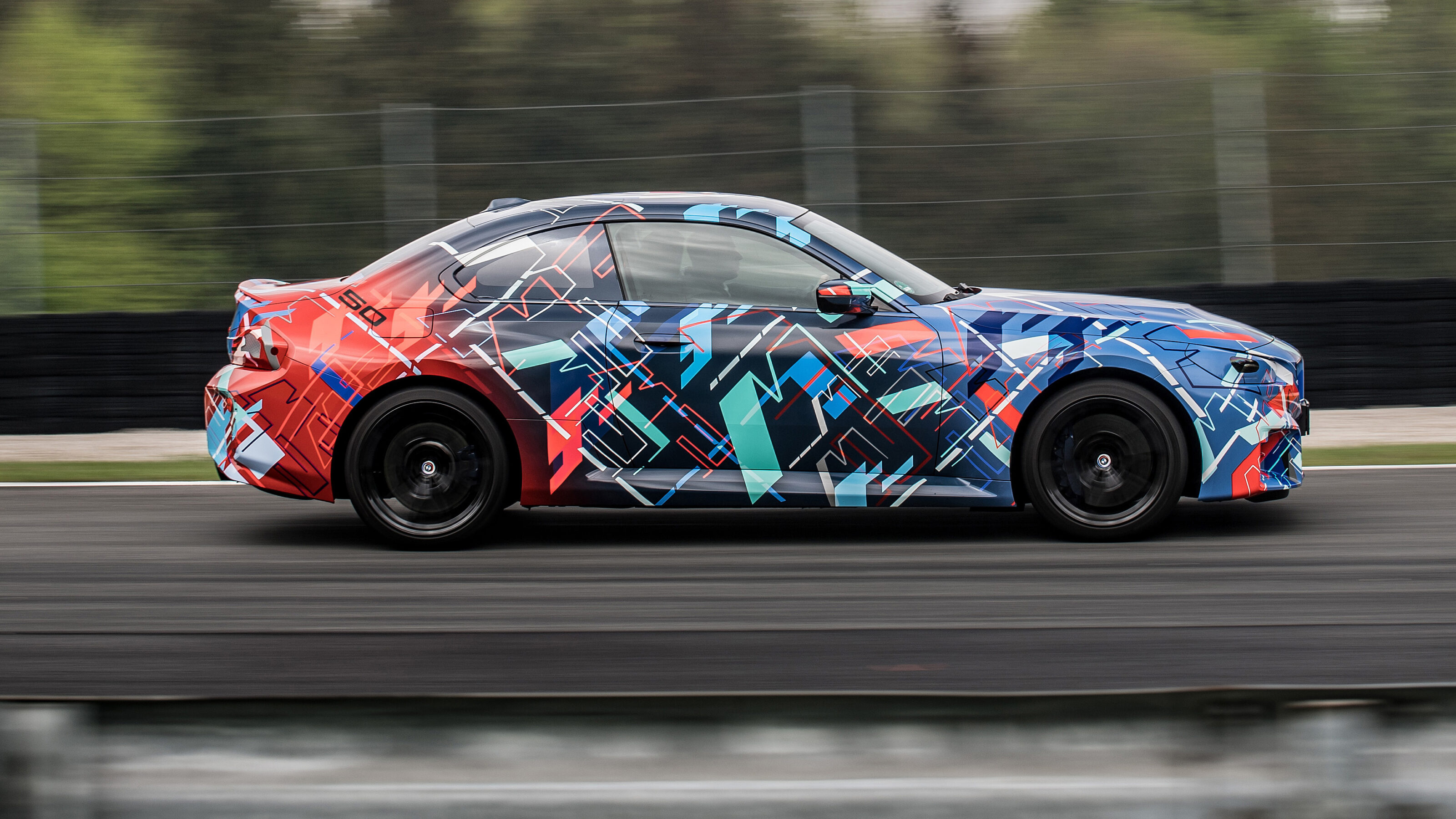
Even with war paint all over its face, the new M2 looks intriguingly different from its narrower and taller predecessor.
Deeper spoilers and more wind deflectors, wider skirts, bolder flares, fatter wheels, the substantial rear diffuser, bootlid-mounted air dam, edgier grille, darker lights, lowered suspension – this model sports the full M bodykit, which is not subtle but quite substantial and very effective.
The same goes for the chassis, both in fine detail and as a whole. Enhanced stiffness and torsional rigidity yield flatter cornering habits, as well as more grip and traction, compared to the M240i.
While the M4 looked perfectly composed from behind with the R&D chief in charge, the M2 felt definitely more playful, and it would happily accept all the acreage it could get. The secret is in the mix.
Time the turn-in to perfection, get the steering angle absolutely right, synchronise the throttle input to fine-tune the momentum, and you won’t sacrifice a single tenth. But get the line wrong or misjudge the entry speed, and everything that follows will fall apart, too: braking point, weight transfer, composure, grip, exit speed and ultimately the driver’s confidence.
Watching the guy behind me almost losing his baby twice before finally spinning out only confirmed that the M2 can turn from Bambi to beast with the stability control switched off and the driver’s right hoof cut loose from the black box inside their head.
Through the two third-gear corners, the demarcation zone between eventual understeer and early oversteer was surprisingly narrow and wriggly. Not only from the vantage point of the M2 but also when watching the M4 in front going through exactly the same motions.
Dirk Häcker described this handling attitude at different points in time as intriguing, delicate, malleable, fusing and interactive. We would call it deeply involving, and praise the manual transmission for its connecting talents while the laissez-faire auto tends to keep the car on a longer yet less precise leash.
The steering feels a little meatier than in the M240i and somewhat more strongly centred than in the M4, the muscular inner-ventilated steel brakes becoming a bit heavy when pushed. The ride is unperturbed on the track but knobbly and not exactly quiet on the perimeter roads.
If there will be a next-generation M2 at all, it is bound to be fully electric, complete with all the related pros and cons.
While the bigger sister models are an acquired taste as far as their front-end design is concerned, the smallest fish in the M pond won’t give the taste commission a reason to complain.
It’s too early to quote a price, but when the first production cars arrive in late autumn, they are bound to undercut the M establishment by between €20K and €25K (AU$30-37K).
After one hour and two car changes, we are now back at the pits for good, inspecting tyres that had allegedly done a massive 320 laps but were still deemed fit for the last group of journalists, as were the original brake discs and pads.
So, M4 or M2… which one to take?
The M4 as a second or third car if you can stretch to the CSL or fancy a soft-top. The M2 gets the nod if the fun factor matters more than lap times and absolute performance.
Specify the no-extra-cost manual gearbox, and you have a fairly priced instant classic with no waiting list. A no-brainer, really.
Snapshot
- Tavascan is Cupra’s second EV after Born
- Australian Tavascan deliveries likely to wait until 2025
- Tavascan pricing still to be revealed
The electric Cupra Tavascan will arrive in Europe in 2024, but it’s likely to reach us until the following year according to Ben Wilks, the brand’s director in Australia.
The Spanish company’s crossover-flavoured EV has already been a long time coming. It was previewed as a concept at the Frankfurt motor show back in 2019 and then confirmed for production by Cupra CEO Wayne Griffiths in March last year.
Now it’s been previewed in close to final form at Cupra’s recent Unstoppable Impulse event near Barcelona, staged to preview products the ambitious and fast-growing brand has in the pipeline out to 2025.
EDITOR’S NOTE: The images you see here are all that Cupra has made available at this early stage in the new model’s journey to production.
As well as the Tavascan, near-production ready versions of the UrbanRebel, a small EV, and the Terramar, a sporty-looking ICE- and PHEV-powered mid-size SUV, were also presented.
Cupra isn’t dropping any hints on Tavascan pricing, not even for European markets. But it’s a near certainty to become the most costly model in the young brand’s catalogue when it launches.
Australia’s Cupra line-up is currently topped by the Formentor VZe PHEV, which is $64,000 to $67,000 drive-away, depending on which state you live in.
One very good reason to expect the Tavascan to exceed these is that Cupra seems likely to choose to spend big on the electric drivetrain to support the brand’s performance image.
Cupra didn’t confirm any details of the production Tavascan’s tech at the event in Barcelona, but it has clearly signalled its intentions three years ago with the original concept.
It was said to have a 77kWh battery pack, the biggest and most costly so far seen in the MEB-based models from VW Group. It was also the dual-motor version of MEB, as indicated by a claimed 225kW maximum power output. At the time, Cupra declared the Tavascan will have a driving range of 450km.
The Tavascan will be Cupra’s second EV, following the Born hatch that’s due to reach Australia very early in 2023.
The Born is very closely related to the VW ID.3. Both are based on the VW Group’s purpose-designed EV platform, MEB. They share body pressings, as well as well as drivetrain and chassis technology.
Instead, the Tavascan will have a stronger Cupra flavour. Though it’s also MEB based and related to the VW ID.4, the Australia-bound Skoda Enyaq and their coupe-styled derivatives, the Tavascan’s exterior style is the work of the company’s Barcelona design studio.
“We want to be the most emotional brand of VW,” said Cupra design director Jorge Diez.
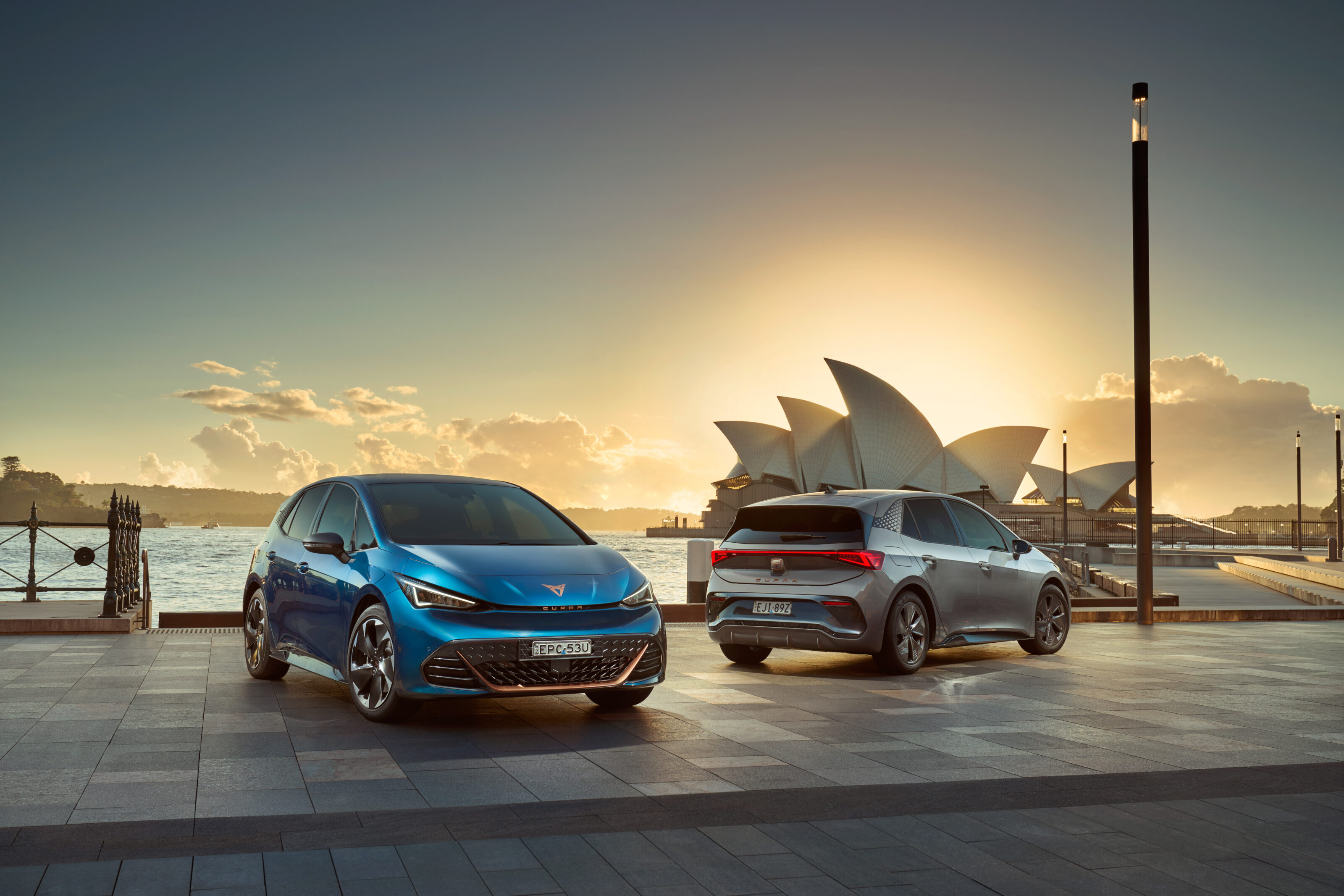
Though the Tavascan’s rear end is visually weighty, it’s an attractive design with both character and presence. But its interior is more adventurous. The instrument panel features a new look Cupra is calling a “V Shape Spine”.
This is a reference to the prominent tapering buttress connecting the Tavascan’s curvy instrument panel with its centre console.
The dash also features a large, landscape-oriented centre console, while the interior fit-out demonstrates Cupra’s preference for recycled and sustainable materials.
Watch for more on the Tavascan, and Cupra’s wider new line-up, to be revealed over the next couple of years.
The big reveals from Cupra’s Impulse event
Snapshot
- 12-month trial culminates in financial investment from Uber
- Electric vehicle usage to be incentivised for drivers
- Uber targets an emissions-free network by 2040
Ridesharing giant Uber has announced it will invest $26 million into Australia’s electric vehicle market by incentivising its drivers to move away from internal combustion engines.
From July 1 this year, Uber will reduce the service fees of its driver-partners who drive an EV by half, dropping from 25 to 12.5 per cent for the first 2500 who either already drive a battery EV on the Uber app or are new driver-partners who use an EV.
Off the back of a 12-month trial where service fees were reduced, the company recorded over 378,000 local rides in EVs, with monthly trips increasing by just under five times over the period which came thanks to four-times the number of EV drivers signing up.
Uber believes approximately 502 tonnes of CO2 has been saved by its partners driving EVs, while also giving an extra $5500 saving on average to the hip pocket thanks to the lower service fees and fuel savings.
Now out of the trial stage, the reduced service fees will be implemented until June 30, 2025, with Uber Australia and New Zealand’s general manager of rides, Dom Taylor, saying the investment could help show the Federal Government the importance of EVs in reducing emissions.
“At Uber we believe the future of transport is shared and electric and we are committed to accelerating the adoption of electric vehicles in Australia,” said Taylor.
“This investment is about providing incentives to help driver partners make the switch to electric, and the results from the past year have been phenomenal.
“The number of driver-partners using EVs on the platform has almost quadrupled, with five times as many EV trips being taken now than before we began the initiative, equating to over 500 tonnes of C02 emissions saved.

“So we know this approach is producing results and we also know that driver partners want the program extended. We want to do our bit – we’ve listened to them and have extended this initiative for another three years.
“One electric vehicle on the Uber platform can help the equivalent of 100 riders a month get from A to B, with rideshare drivers realising three to four times greater emissions savings compared to average car owners.
“We want to work with governments, vehicle manufacturers and key stakeholders in the industry to accelerate the rate of EV adoption across Australia so that together we can create a more sustainable transport future.

The announcement was welcomed by New South Wales Treasurer and Minister for Energy, Matt Kean, with Uber’s incentive to work alongside the State Government’s EV subsidies announced last year.
“Governments and the private sector need to work together to achieve net zero by 2050 and a key part of this is ensuring that we accelerate the use of more sustainable transport options,” said Kean.
“It’s great to see big businesses like Uber invest heavily in the industry and this initiative will help to incentivise the uptake of electric vehicles with rideshare drivers in a cost-effective way.
“NSW has a nation-leading EV strategy and our commitment to tax reform and government rebates, together with support from private companies, will lay the foundation for an EV revolution across the State.”
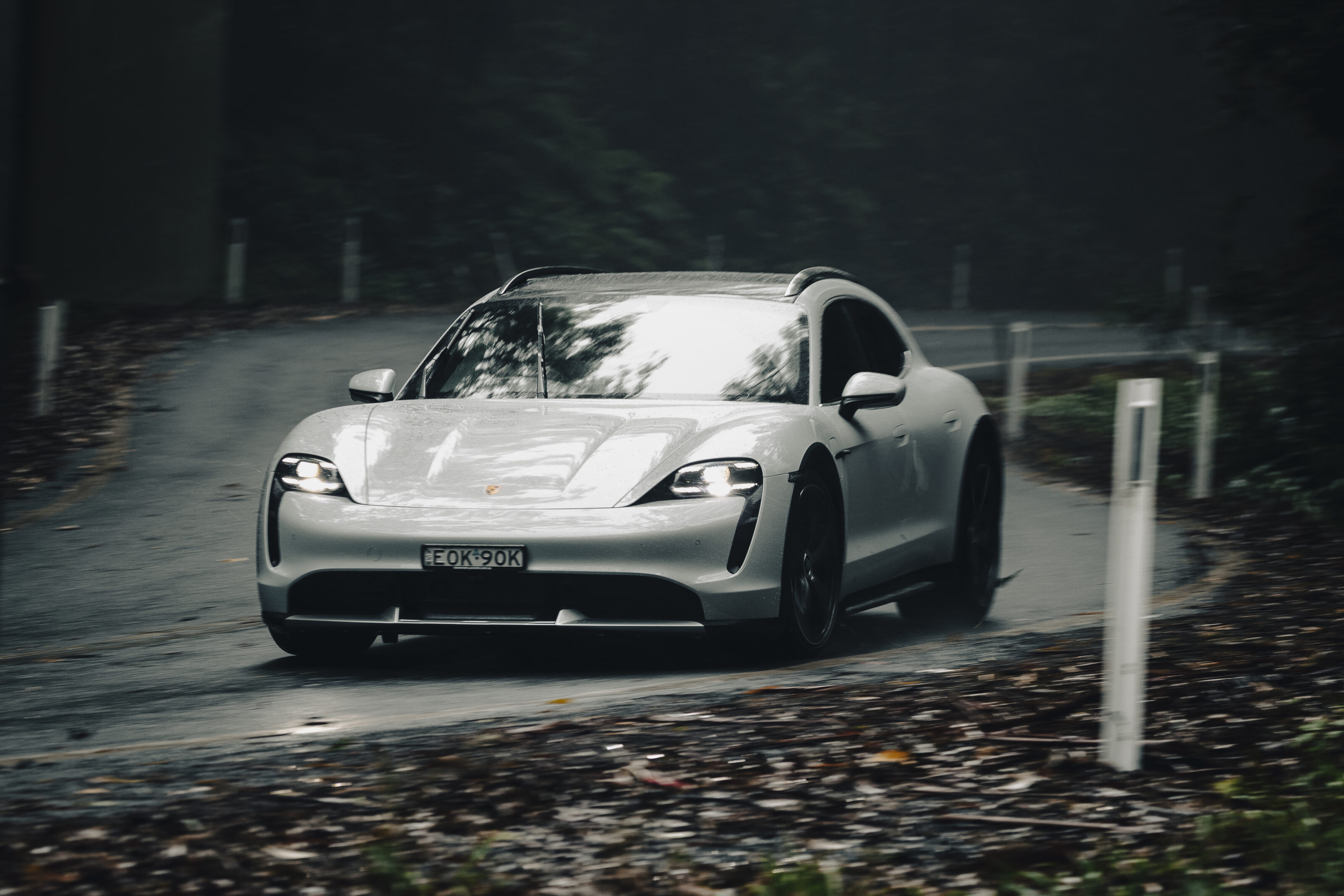
Behyad Jafari from the Electric Vehicle Council believes Uber’s decision will not only get more of its drivers into EVs but also expose the general public to the zero-emissions transport solution.
“Australians understand that electric vehicles help clean the air, cut carbon emissions, and reduce our dependence on imported oil, meaning they are keen to see more on our roads,” said Jafari.
“What we know is the best way to support people going electric is to take a ride in or drive one. Once you experience the performance of an electric car, there’s no going back.
“That’s what makes Uber’s initiative so great – not only will it help drivers go electric, but it will provide riders with an opportunity to experience new sustainable innovation.”
Uber has previously announced its intentions for all the vehicles on its platform to be zero-emission by 2040, becoming a zero-emission mobility platform in Canada, Europe and the US by 2030.
Lamborghini’s Urus SUV has passed a significant milestone, with the 20,000th example rolling off the Sant’Agata Bolognese production line.
Introduced in 2018, the Urus’s popularity has grown worldwide year-on-year, not only bringing Lamborghini into a healthy financial space, but also doubling the marque’s annual outputs – with the 64 SUVs sold in Australia last year almost matching the 67 Huracáns.
Growth in demand for the Urus has also triggered an expansion of Lamborghini’s workforce, with more than 500 staff taken on in the past four years while the Sant’Agata Bolognese plant grew from a site of 80,000 to 160,000 square metres in the same period.
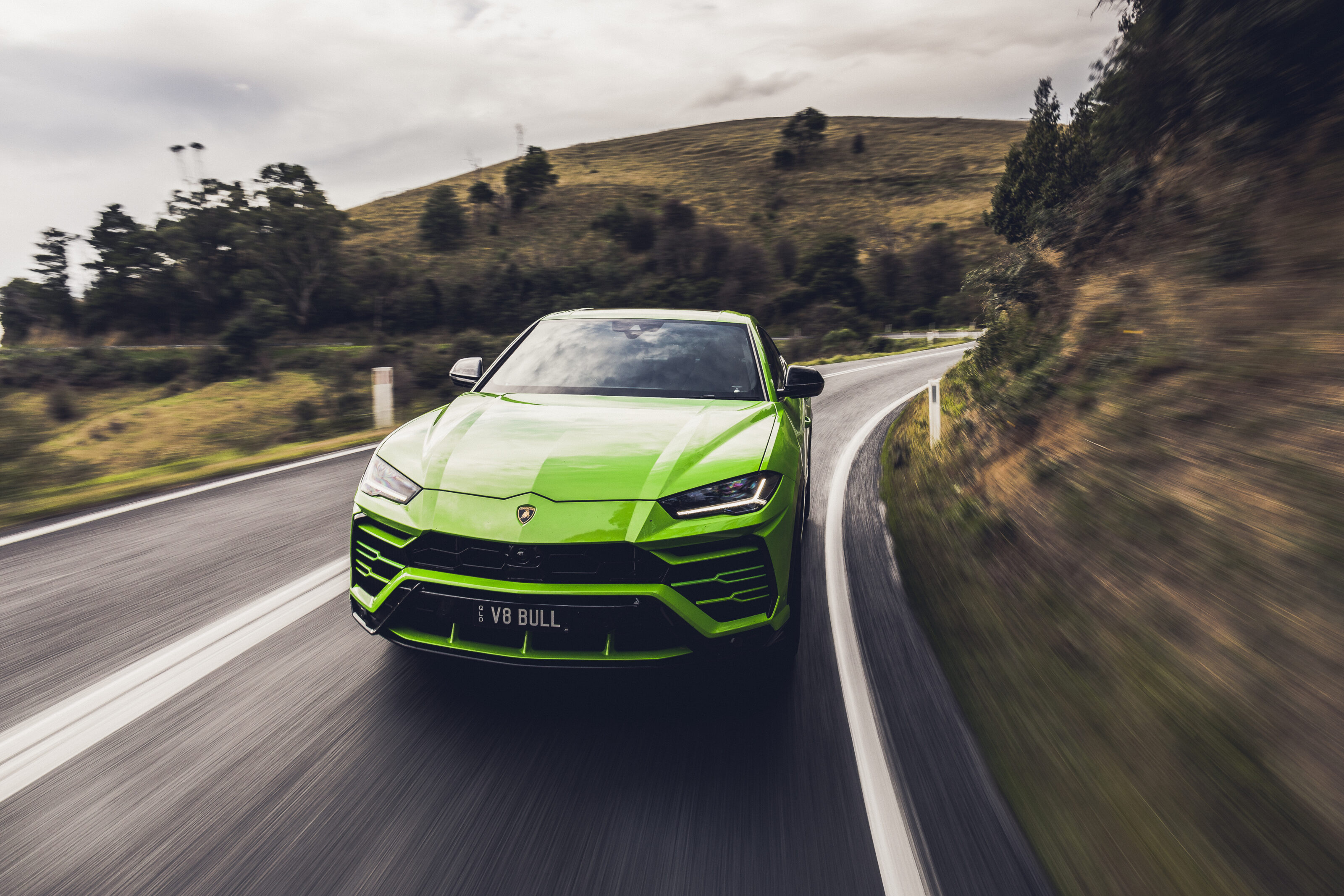
Despite its critics arguing the Urus has watered down Lamborghini’s stature as a true supercar manufacturer, CEO Stephan Winkelmann believes it only strengthens the brand.
“From the first moment we presented the Urus concept at Beijing motor show in 2012, to its market debut in 2018 and each year since, the Urus has proved its instant and continued appeal as a true Lamborghini, born from our super sports heritage and the world’s first Super SUV, the LM 002,” said Winkelmann.
“The Urus is a perfect complement to our super sports model ranges, providing a luxurious and high-performance daily drive for those who identify with our authentic Italian brand.”
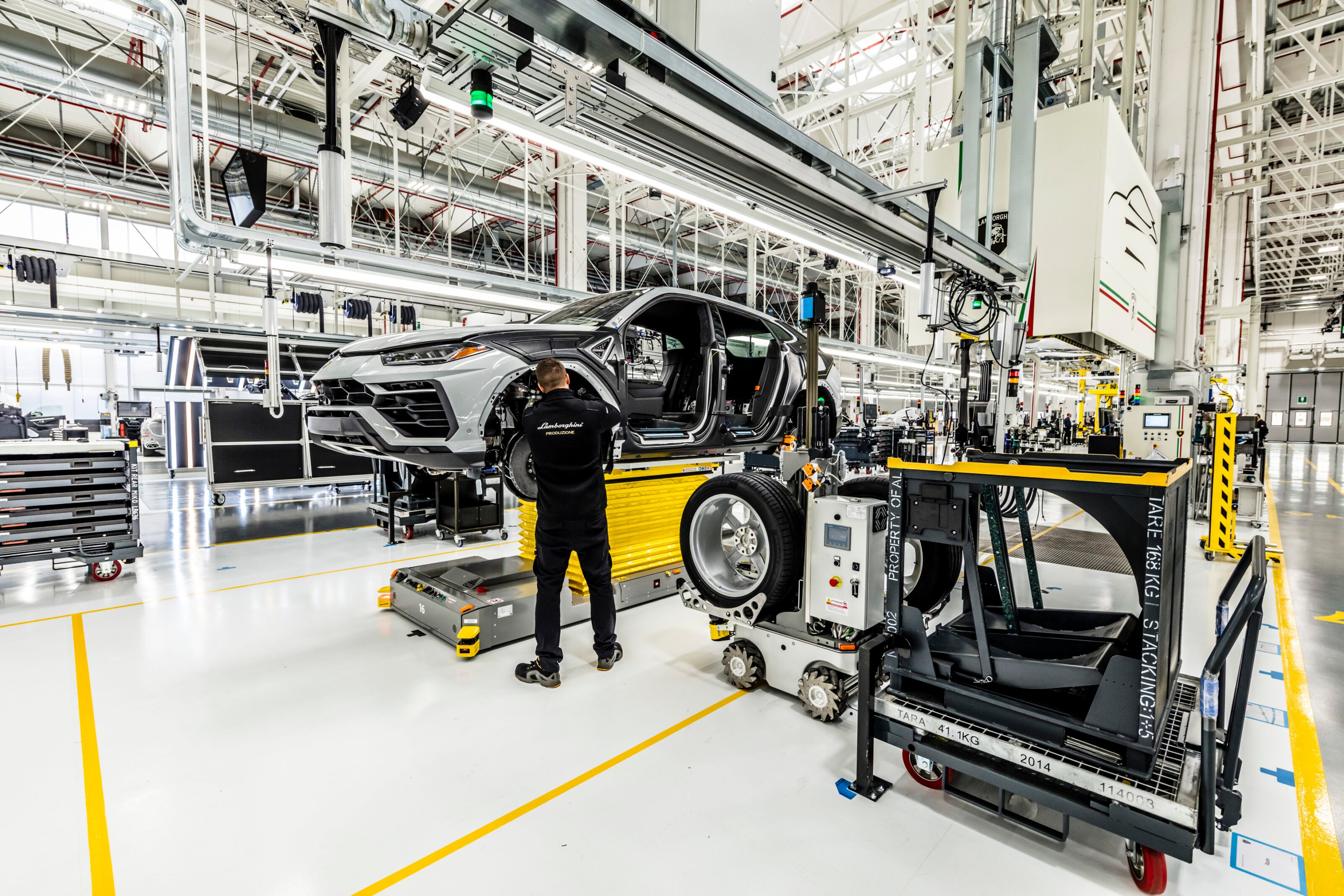
The 20,000th Urus will be delivered to a customer in Azerbaijan, finished in viola mithras with black brake calipers and a panoramic roof.
Just last month, Lamborghini was celebrating its 20,000th Huracán being produced, however the supercar was launched in 2014 – four years before its SUV sibling.
Although future internal combustion engine-powered Lambo models have been put on notice due to the impending ban of ICE vehicles in Europe by 2035, synthetic fuels could save its V8 and V12 donks, as the manufacturer also looks to electrify its entire model range by 2024.
