
Snapshot
- Nissan Australia all local Z Protos are sold
- Top-spec variant was limited to just over 100 units
- Base Z car remains on sale from $73,300 before on-road costs
The Australian-bound batch of the 2023 Nissan Z Proto is sold out, with prospective buyers now having to settle for the base model instead.
Launched as the range-topping grade of the new Nissan Z, the Proto features exclusive equipment such as; forged 19-inch wheels, yellow brake calipers and a two-tone colour scheme with ‘Ikazuchi’ yellow exterior paint paired with a black roof.
Limited to roughly 100 units for Australia, the special grade starts out at $80,700 before on-road costs – a $7400 premium over the base Z, but with exclusivity and the aforementioned extra features on its side.
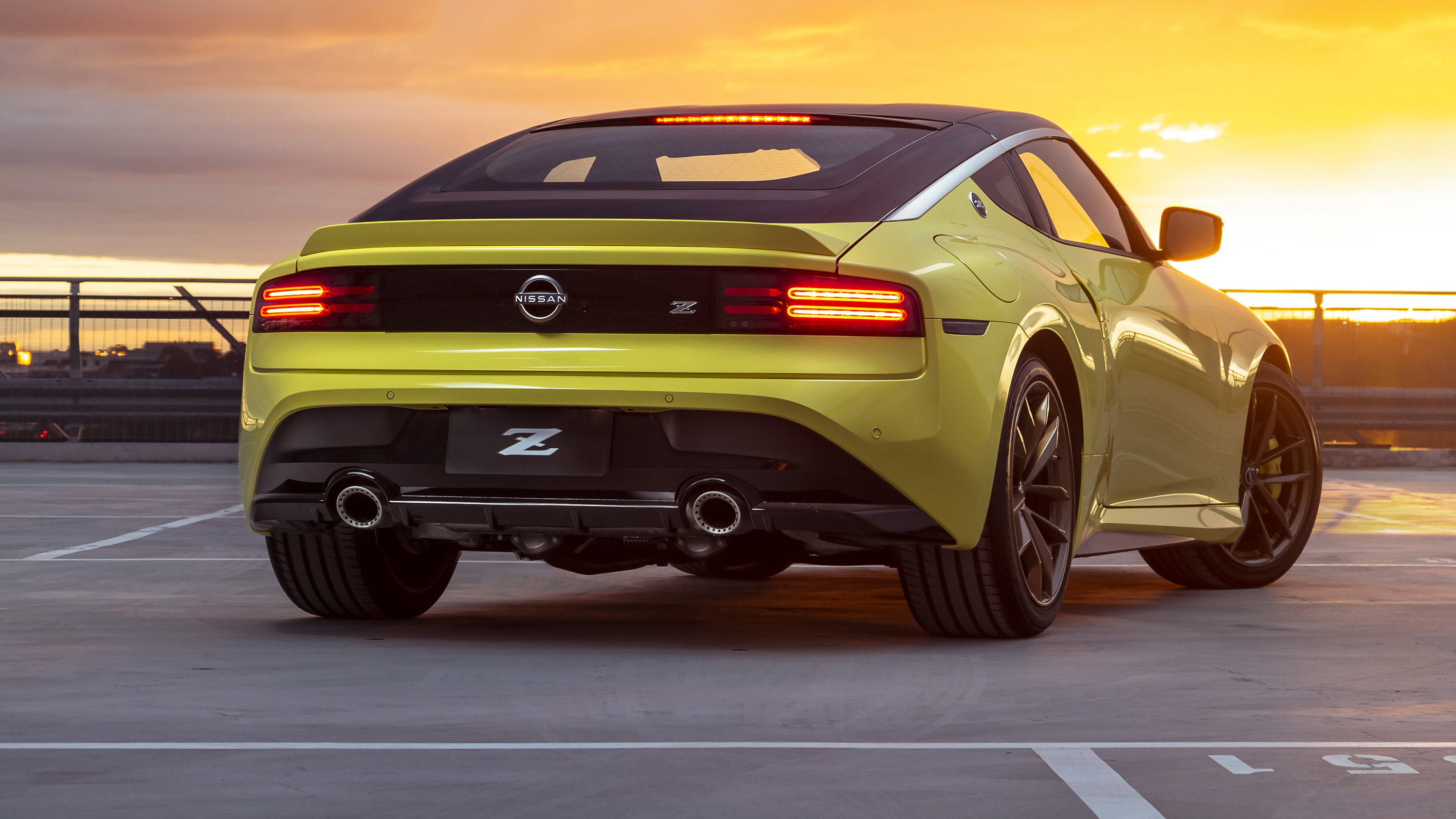
“The Z is the ultimate expression of Nissan’s sports car credentials and we expected demand to be strong for this incredibly special vehicle,” said Nissan Australia’s managing director, Adam Paterson.
“I’m excited to confirm that all Australian production of Z Proto spec is now sold-out.”
“All future owners of the Z have plenty to look forward to, with the fastest, most powerful and most exciting Z car ever; set to arrive in Australia very soon.”
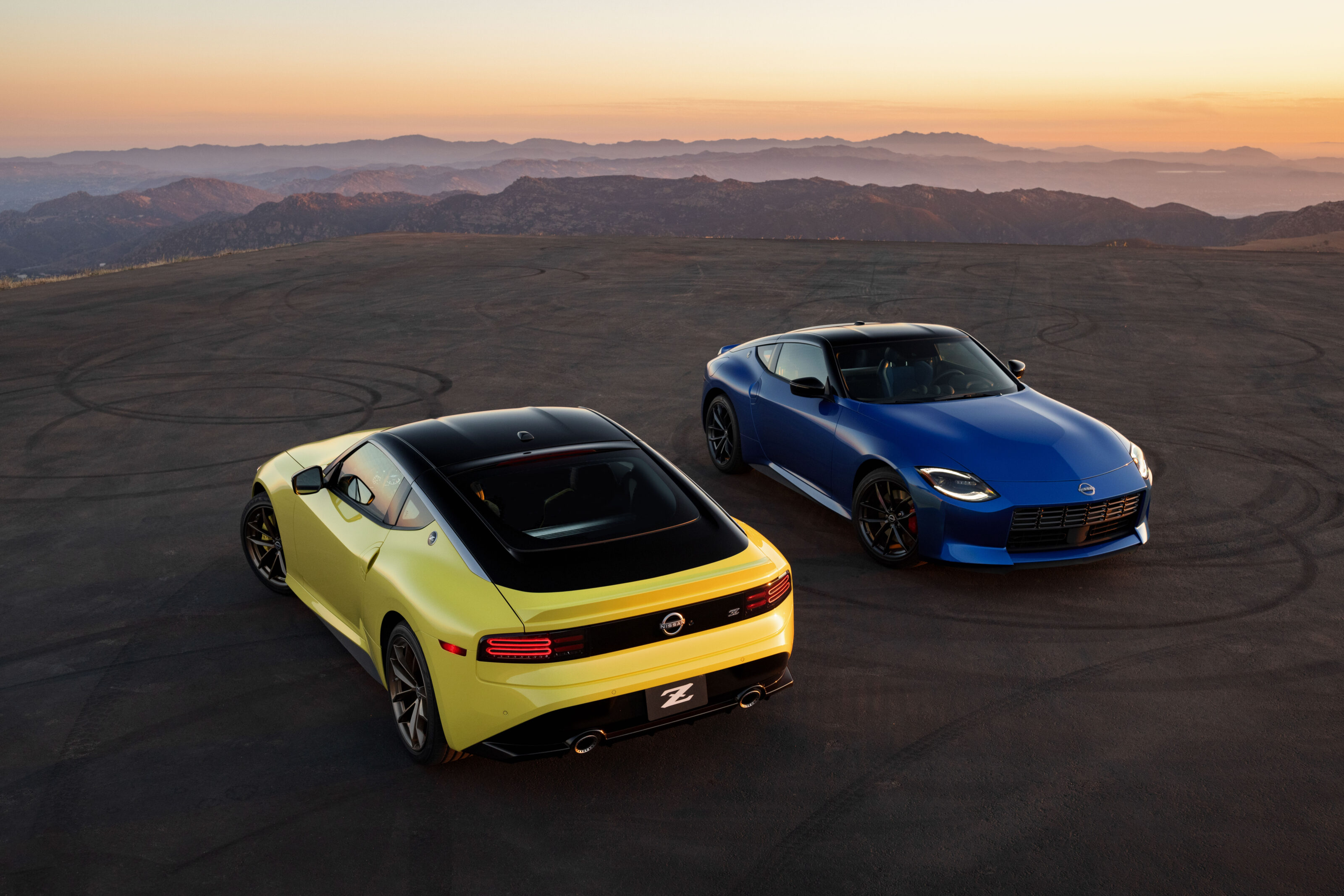
As reported by Wheels earlier this month, Nissan has taken more than 3000 expressions of interest in the new Z – with around one-third of those interested parties also making a financial reservation.
The seventh-generation Z car is still on sale around Australia in its “base” guise, with both the six-speed manual and nine-speed auto listed at $73,300 before on-road costs – undercutting the model’s biggest rival, Toyota’s Supra.
Mercedes-AMG has confirmed it will finally take the covers off its One hypercar in less than 48 hours, on June 1.
First confirmed as the Project One in 2016, Mercedes-AMG has made us wait an agonising five years to get to the point of revealing the hypercar, having suffered through a difficult and well-documented development period – which nearly saw Mercedes pull out of the endeavour.
Powered by a 1.6-litre turbocharged hybrid V6 engine from one of the manufacturer’s Formula One cars, the One will also feature an electric motor in both front axles, providing peak torque and power on demand.
https://www.instagram.com/p/CeLJot0jQhB/
“Leaked” specs appeared in the Forza Horizon 5 video game least year when the One was featured as the title’s cover car, hinting at the 1695 kilogram machine developing 654kW and 725Nm.
It’s understood just 275 examples of the Formula One-derived road car will be made, with Mercedes-AMG reportedly charging in excess of $5 million for each example, although exact figures will be revealed after its public debut.
MOTOR will provide more updates on the Mercedes-AMG One hypercar when it is unveiled this week.
Click the link below to read Georg Kacher’s meeting with the AMG One concept in Affalterbach.
UPDATE, May 31: 2023 Lexus RX SUV teased again
Note: We have added a bit more light to Lexus’s official RX teaser above for extra clarity, allowing us to see the new RX’s revised grille design, but you can still see the original teaser pictured below.
Less than 24 hours out from its official unveiling, the 2023 Lexus RX has been teased by the luxury brand yet again.
In addition to shots from Lexus earlier this month (further below) which showed off its front end design, the latest teaser image features the RX’s light signature and a dimly-lit high shot of its new face.
Lexus is set to officially reveal its latest, fifth-generation RX at 10am tomorrow morning AEST, with Wheels providing updates of the new model when they become available.
The story to here
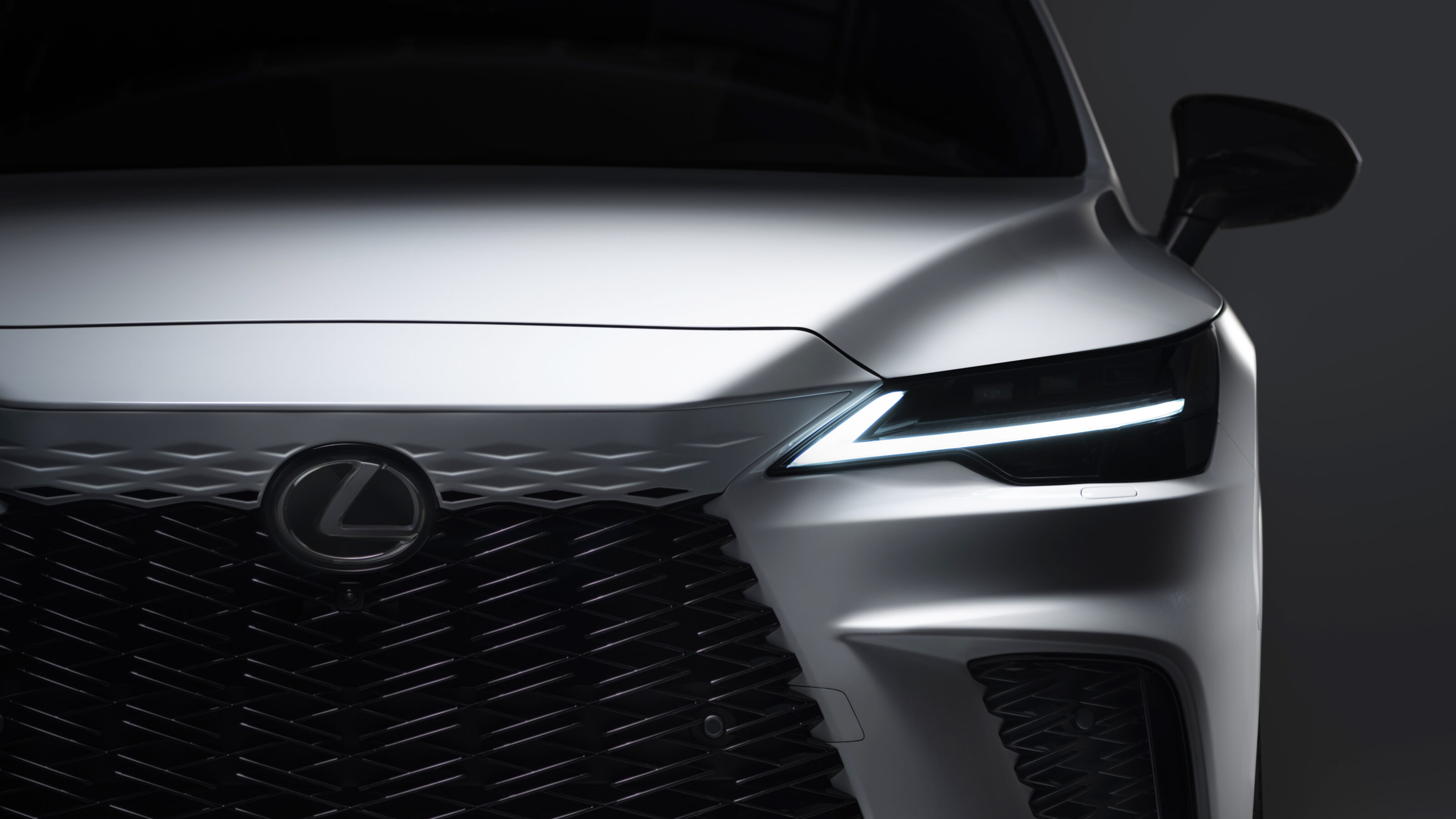
May 18: 2023 Lexus RX SUV previewed ahead of June 1 reveal
A shadowy preview of the new-generation 2023 Lexus RX SUV has been handed down tonight, ahead of a global debut set for 10am on June 1.
The tightly-cropped image shown here marks our first look at an all-new RX since the current fourth-gen ‘AL20’ model launched at the 2015 New York motor show – although a major facelift was unveiled in 2019.
Lexus is keeping quiet on the details for now, although it’s clear we can expect another subtle evolution of the brand’s ‘spindle’ grille design, shown here with a body-coloured upper section.
Headlight styling inspired by the recently updated Lexus LS limo can also be seen – but, for now, there’s little else to be known.
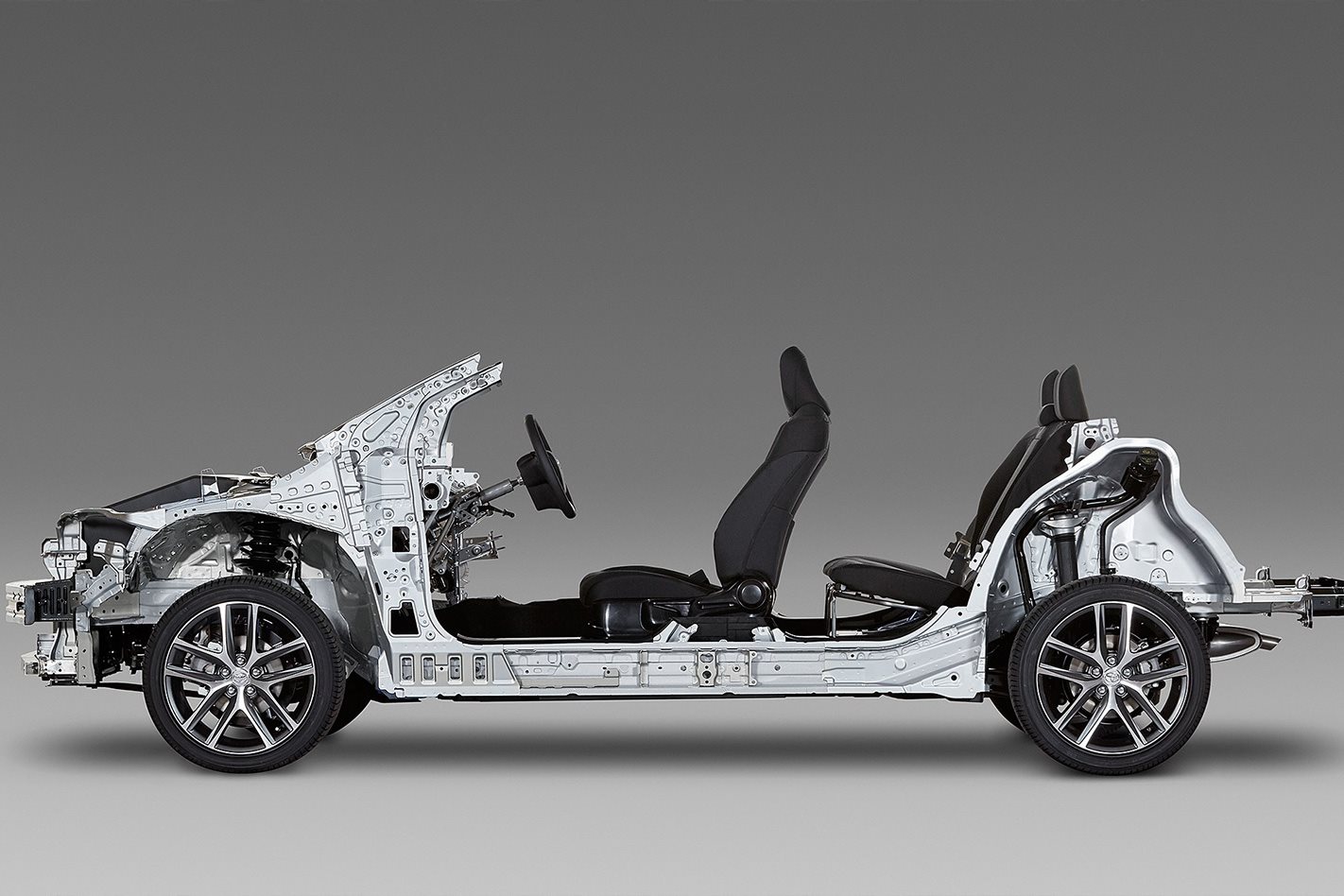
We can expect the new 2023 RX SUV to ride on the same new TNGA platform that has blown a breath of fresh air across the Toyota and Lexus lines, scoring each new model high points when it comes to ride and handling.
Hybrid and plug-in hybrid EV (PHEV) drivetrains will likely be the stars of the new RX line-up, as with the recently launched new NX – which debuted with the Toyota group’s first PHEV in Australia, the NX450h+.
Watch for updates to this article on June 1.
Below: the current Lexus RX

A proposed change to how the emissions figures of plug-in hybrid vehicles are calculated in Europe could result in more buyers going fully-electric sooner, new reports claim.
According to UK publication Autocar, new emissions laws in the European Union will effectively kill off any major advantage held by plug-in hybrid vehicles (PHEVs) over their solely internal combustion engine-powered (ICE) and electric vehicle (EV) counterparts.
The utility factor of a PHEV is calculated by blending the CO2 output when driving in ICE-only mode with the energy used while in electric-only mode, resulting in a combined figure which is often well below real-world outputs.
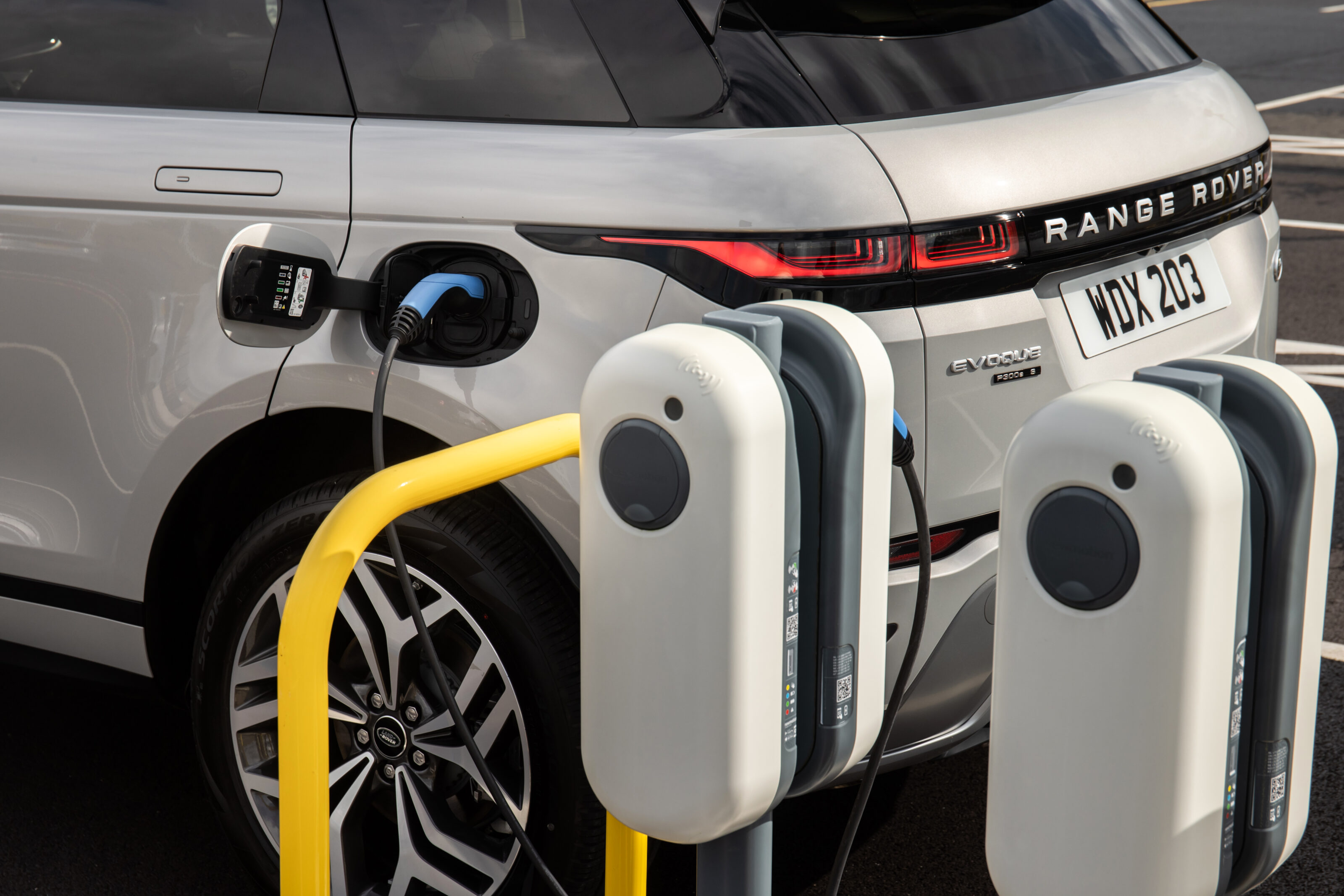
New EU6e regulations, which are slated to come into effect by 2027, will see the UF of PHEVs increased from roughly 800 in 2025 to 4000 by 2027, causing the calculated C02 outputs of a 50g/km PHEV today to jump up to 125g/km in five years’ time.
This not only leaves owners vulnerable to higher taxes and emissions charges in some regions, but it also affects the fleet emissions of manufacturers, forcing them to either develop cleaner and more efficient ICEs to be mated to their PHEV powertrains or implement higher-capacity battery packs into the models, limiting the amount of time the conventional engine is running.
If passed and implemented, the gap between PHEVS and EVs would be narrower than ever, with the latter having the benefit of boasting zero emissions, while also not having to lug around an ICE under its bodywork.
The European Union has already put the wheels in motion to ban the sale of new ICE vehicles from 2035, targeting net zero emissions across the continent from 2050.
BMW’s iconic M badge is transforming into a new blacked-out design for all new high-performance models from the historic motorsport-inspired special branch.
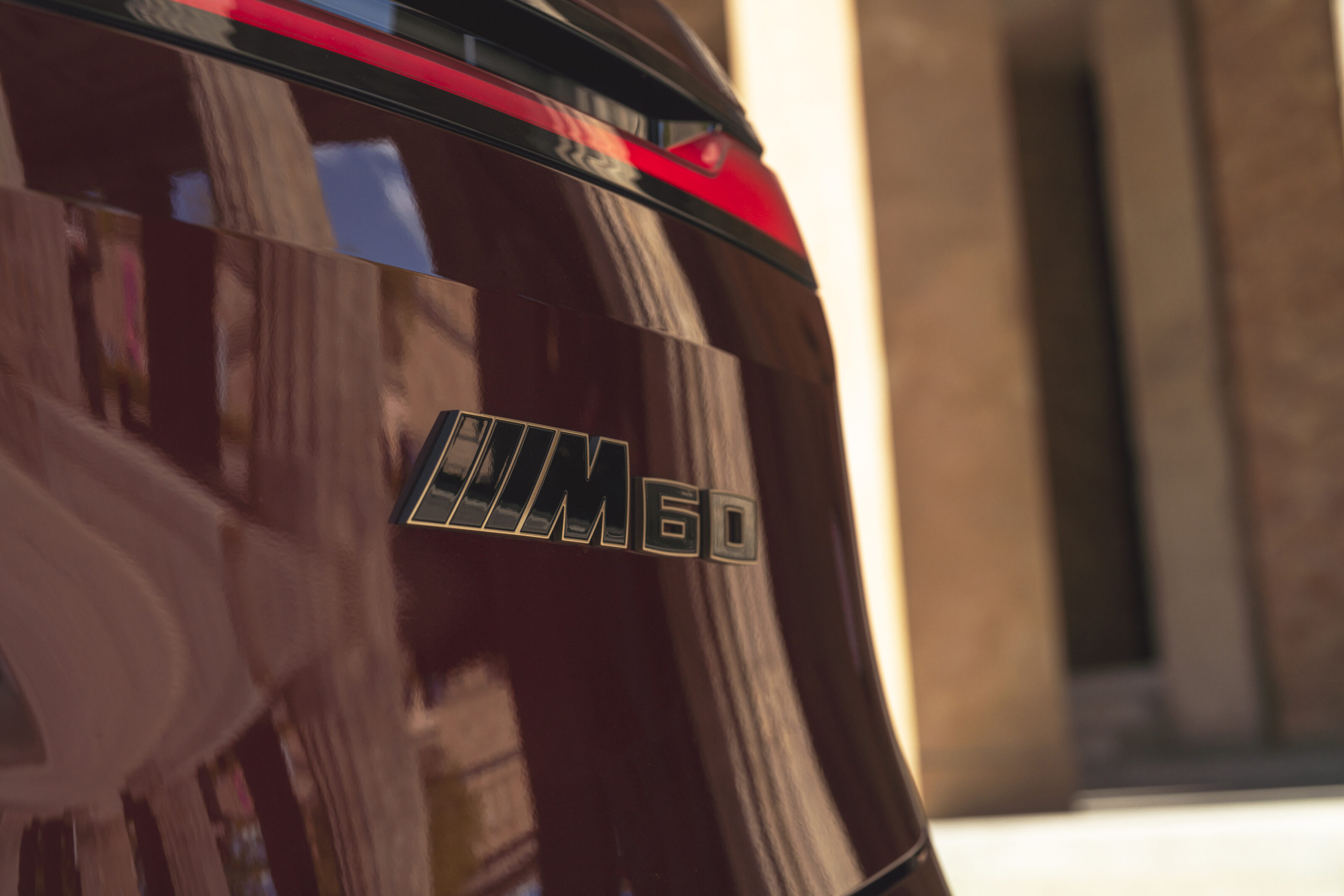
Making its debut on the boot of the iX M60 pure electric SUV, the famous tri-colour M badge has gone full stealth with a ‘titanuim bronze’ surround providing the only dusting of colour, and this change of tack will continue, says BMW.
Next to reveal its black M will be the imminent high-performance plug-in XM large SUV and after that, all new M models will follow suit, replacing the light blue, dark blue and red with just one monochrome shade.
But BMW M sales and marketing vice president Timo Resch explained that the fan-favourite coloured version will not be disappearing completely from the range, with the black M only for all-new additions to the German family.
“The overall future direction for complete new cars is that we have a black M badge and the existing cars like the M4, for example, we will not change,” he said. “For next generation type of cars that’s where you will see an M badge that is black. Only new platforms and completely new models will get a black badge.”
As part of the badge redesign, the company is also introducing a colour coding system for the surrounding trim. “Our way forward instead of differentiating with any other schemes, we decided on this new black base colour and then having the surrounding that has a specific colour.”
The strategy is demonstrated by the freshly revealed M4 CSL, which features a traditional three-colour version with a new red surround to denote its top tier of potency, while the frosted and gilded surround of the iX motif leans more into the luxurious side of the M personality.
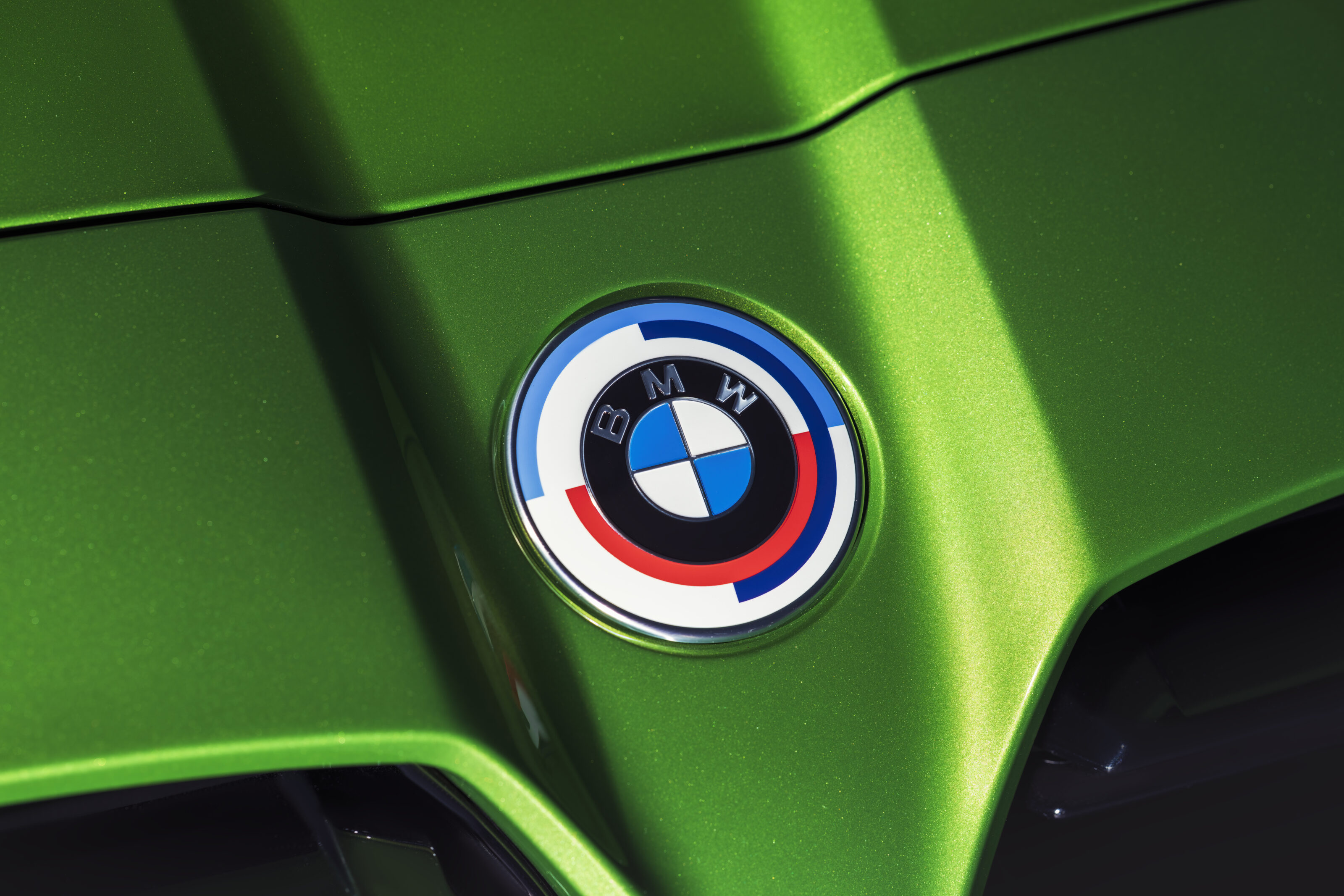
Since its creation by Giorgetto Giugiaro in 1972, the fabled M badge has evolved gently including a subtle shift of the colours, but the decision to go completely black is the most dramatic change in the symbol’s 50-year history.
And it’s unlikely to stop there, with Resch unable to confirm an exact timeline for the new black version.
“I will not say that this has to be the future for the next 10 years, but right now we see it as a cool element and changing the DNA a little bit. The black is giving us a bit of a twist into a future direction that we will also look into.”
While the three colours might not appear on the new badge itself, Resch explained that the trio will evolve and feature in other ways – preserving an important part of the brand’s identity.
“When we look into future design we will continue to play around with these colours, because they are part of the identity of BMW. They belong to us and you see them on the race cars. You will see cool ways of using these colours.”
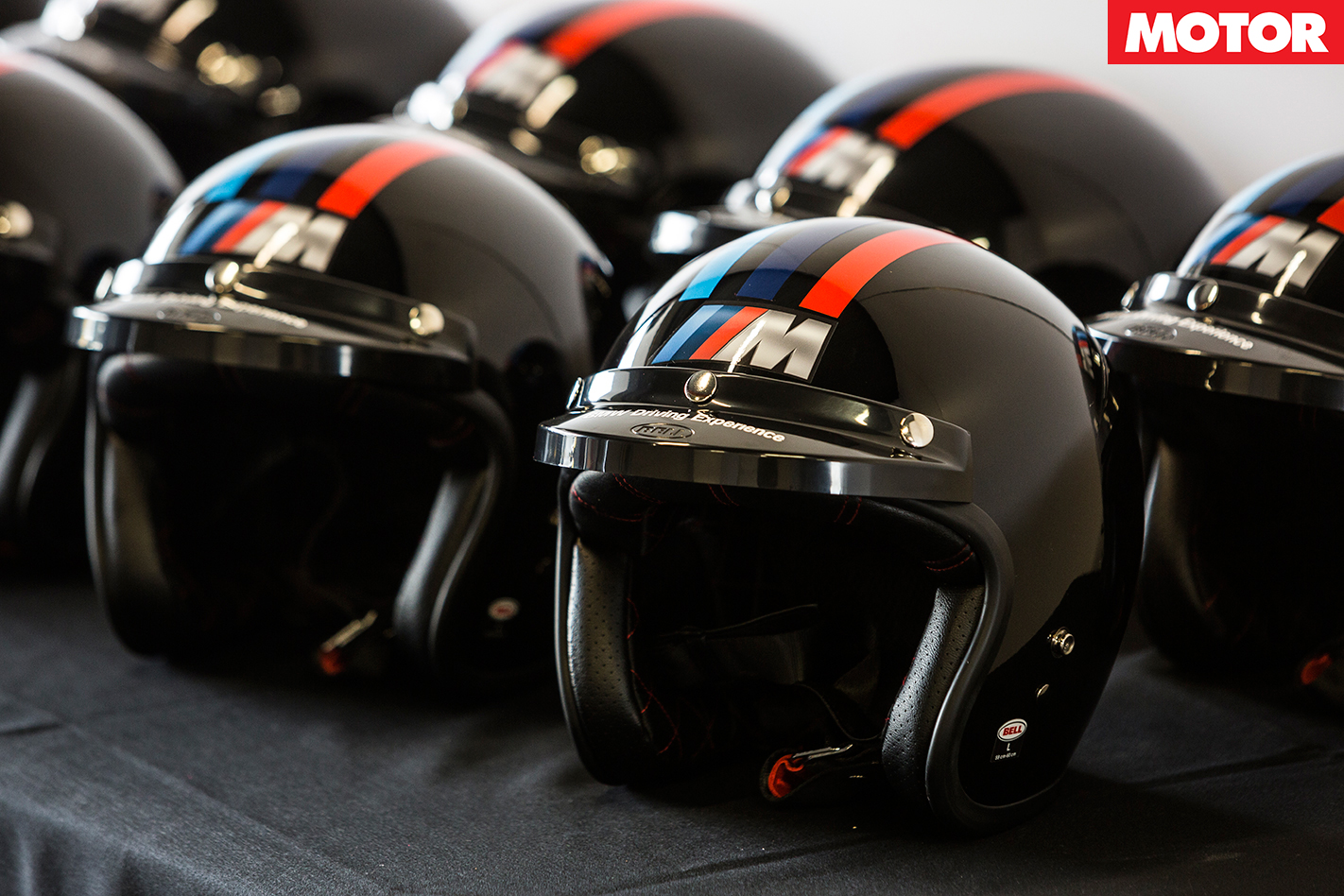
Referred to internally as the ‘ziehaus streifen’, the M stripes represent the overlap of BMW’s motorsport ventures into its road cars at the pointiest end of the BMW performance hierarchy. The blue represents the Bavarian flag and the BMW roundel badge, the red is BMW’s motorsport venture, while the dark blue (originally violet) is a blend of the two.
The actual history of the red is contested, but is likely to be borrowed from the corporate colour of Texaco, which at the time of BMW M’s creation was negotiating to partner with BMW in competition, but failed to seal a deal.
Instead, it was Castrol that would form the most intimate petrochemical partner with BMW, but its trademark green failed to influence the M identity. If they had, the three colours would have been almost identical to endorsed tuning partner Alpina.
Snapshot
- 1986 Sierra RS Cosworth was first purchased and imported by Dick Johnson
- Understood to be a development car before DJR moved to the Sierra for its 1987 campaign
- Likely not an RS500 despite featuring similar details
A rare piece of Australian motoring history is coming up for sale, with an ex-Dick Johnson owned Ford Sierra RS Cosworth appearing on Pickles’ auction site.
Uncovered by Car Rave on Instagram, the white Ford Sierra RS Cosworth – or Cossie – was originally imported by Dick Johnson to Australia in 1986, being used as a development car by Dick Johnson Racing before the team built two Sierras for the 1987 Australian Touring Car Championship.
Johnson drove the Cossie from Brisbane to Bathurst in 1986 (shown below in that year’s The Great Race annual), retaining it as a road car before purchasing a black RS500 – selling the white Sierra to long-time sponsor Ross Palmer.

After passing through a number of different owners throughout the 1990s, it finally landed with its seventh custodian, Max Freeland, who owned it until his death last year.
While the odometer reading of just over 20,000 miles is likely accurate, the car’s RS500 looks are almost certainly a tribute to the limited-run variant which sparked success for the Sierra in racing.
For starters, the RS500 wasn’t released until 1987, a full year after this example was allegedly imported to Australia by Johnson.
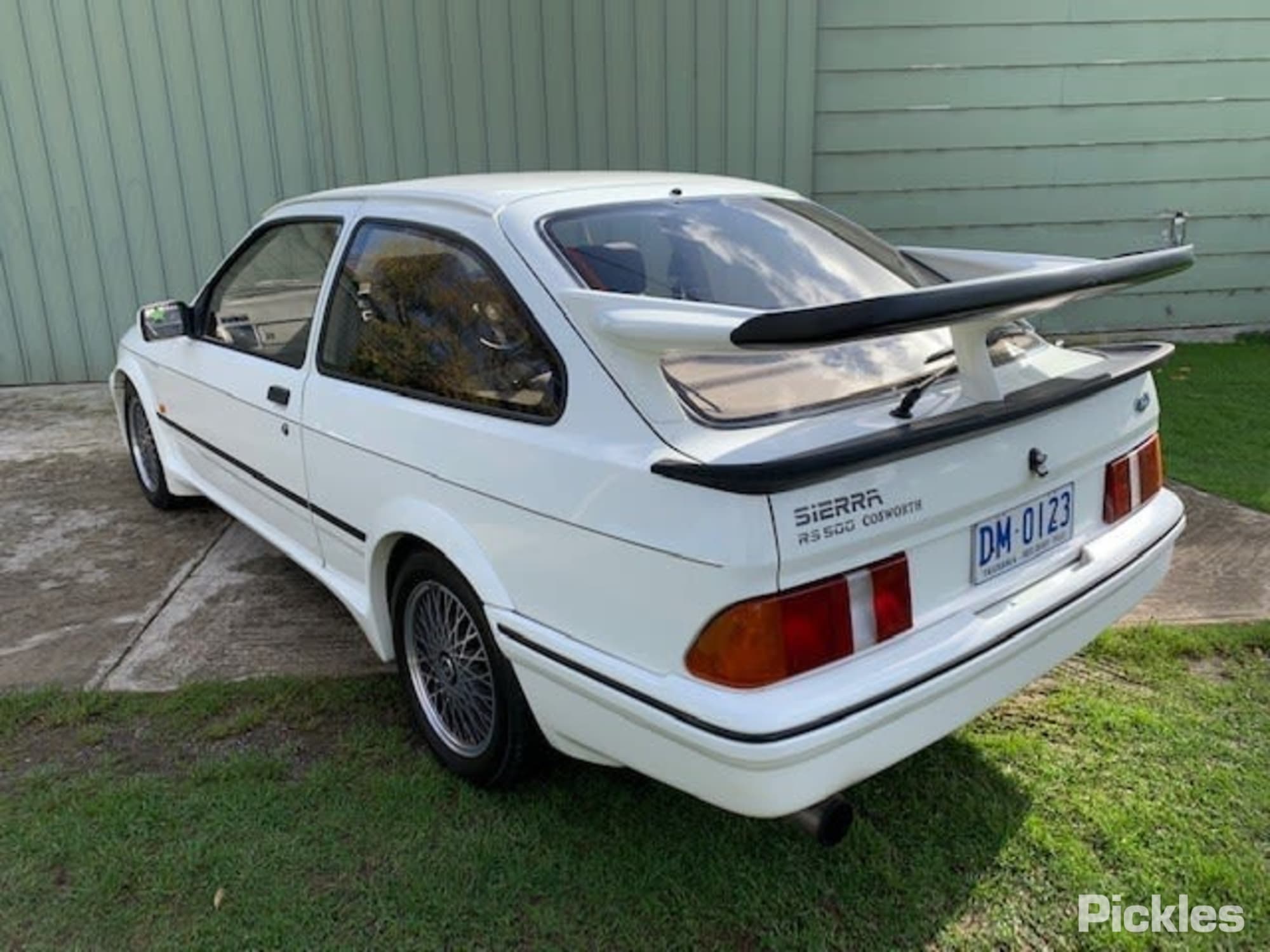
Secondly, despite it bearing the RS500’s iconic ‘whale tail’ spoiler with a second lip, as well as RS500 lettering down the sides and on the boot lid, it’s missing the front splitter and includes foglights – a piece of equipment which was omitted on the hotter variant for air intakes.
Even though it likely isn’t a genuine ‘500, the car has been given some special treatment in its life, having been fitted with a three-inch exhaust and a Motec engine control unit in the ’90s.
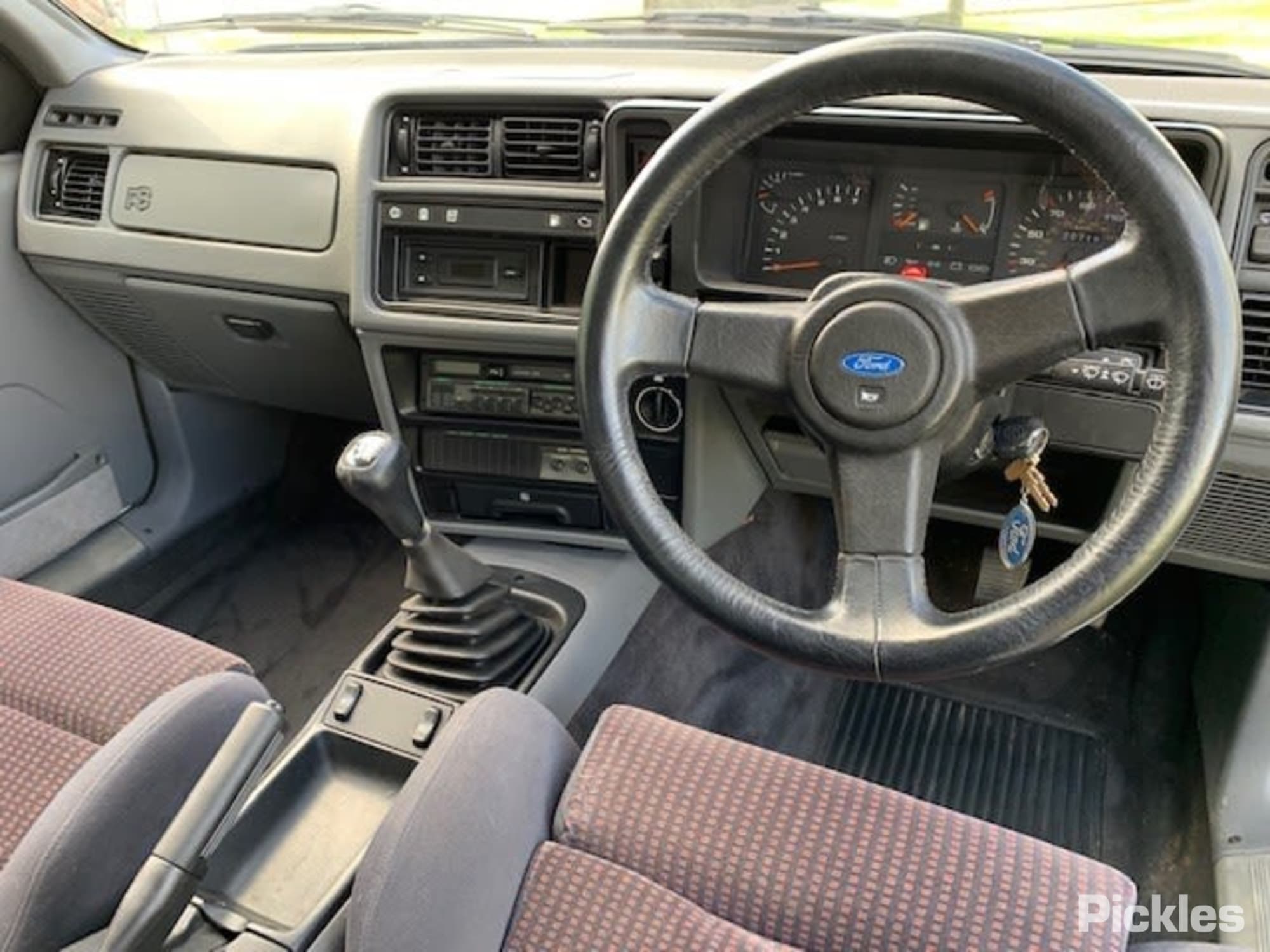
Pickles hasn’t yet officially put the car up for sale, with the lot of Max Freeland’s vehicles to go up on June 10 in Launceston.
Expect the Sierra to fetch some serious coin given its pedigree; another RS Cossie is currently for sale in Australia for more than $160,000 and it doesn’t have a backstory anywhere near as interesting.
Lego has announced its newest adult-oriented model supercar, in the form of a 3778-piece replica of the Ferrari Daytona SP3.
Measuring up at 59 centimetres, the 1:8-scale set boasts; a functional steering, opening front and rear hatches, a removable roof, working shock absorbers, and a V12 engine with moving hand-cranked pistons.
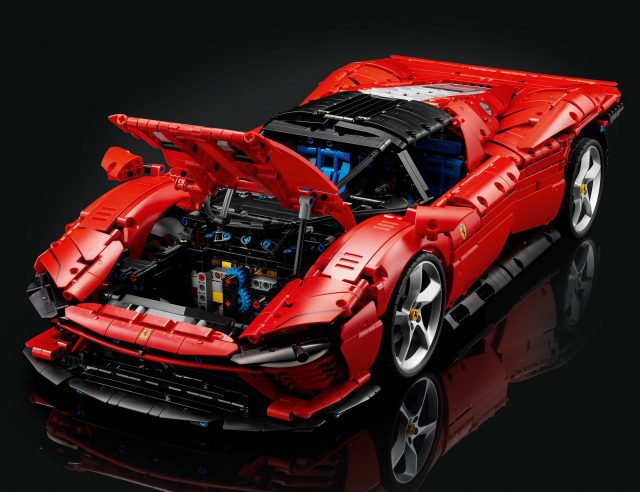
Perhaps most impressive is a functional eight-speed sequential gearbox, which is connected to a set of paddle shifters behind the steering wheel.
Other features include operating butterfly doors controlled by hidden levers, and new-for-Lego five spoke wheels to perfectly emulate the full-size SP3’s 20 and 21-inch hoops.
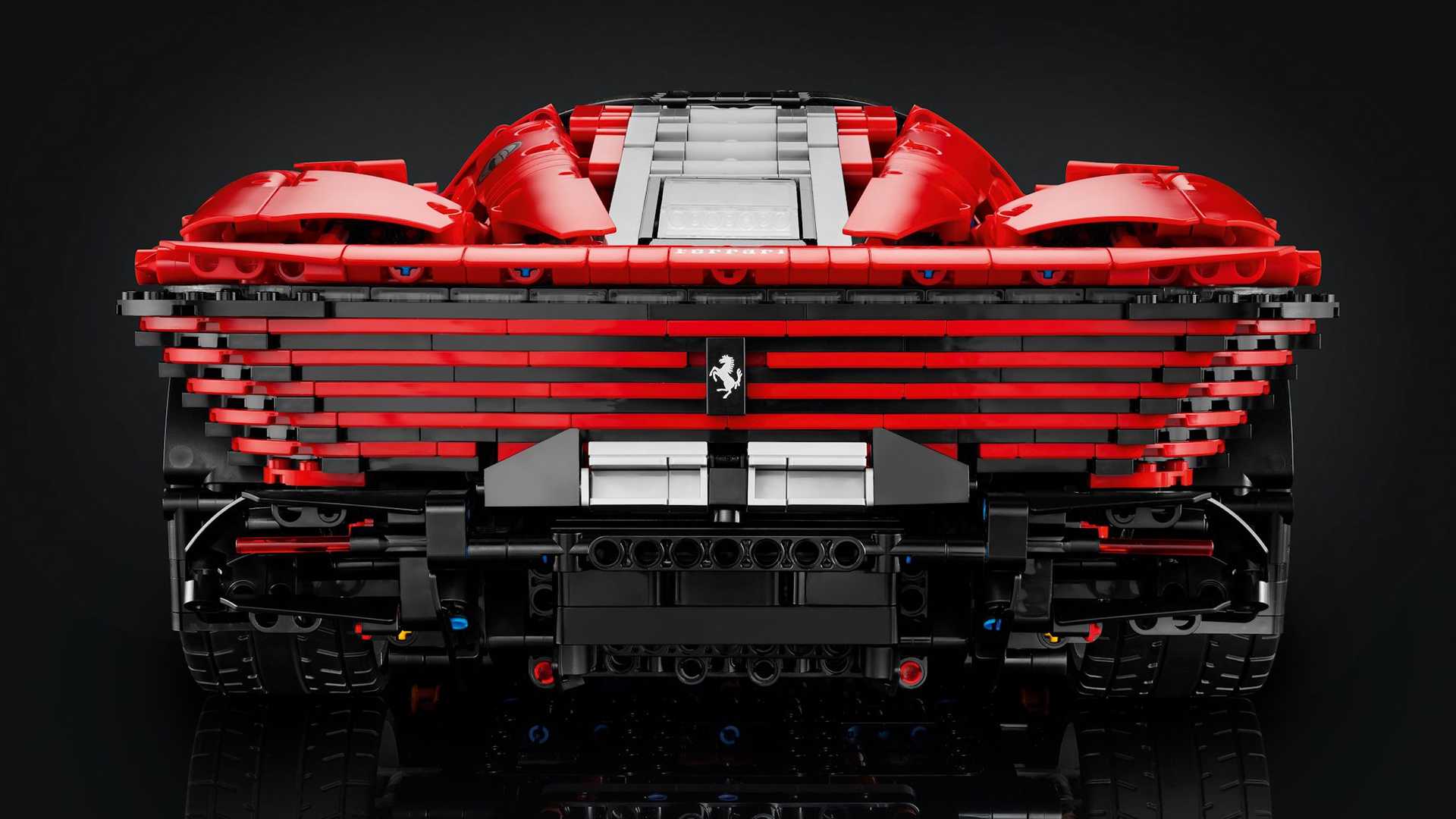
The set blends larger Technic elements with more traditional System bricks to achieve both smooth panelwork and smaller details, like the car’s stacked red-on-black rear panel.
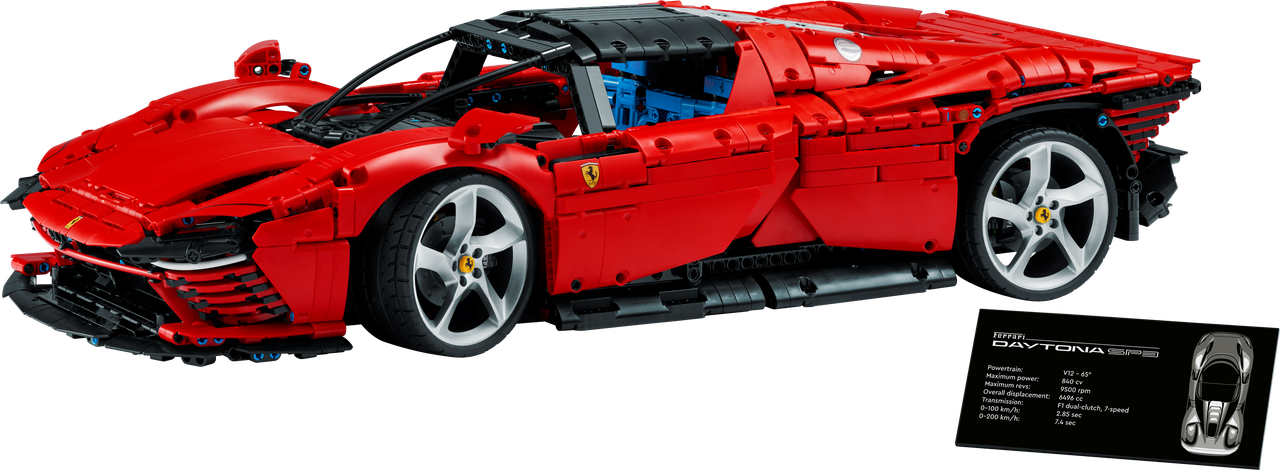
Each model is packaged with a display plaque and unique serial number to sit under the bonnet, which Lego says will offer “special online content.” There’s a coffee table booklet chronicling Lego’s collaboration with Ferrari to design the set.
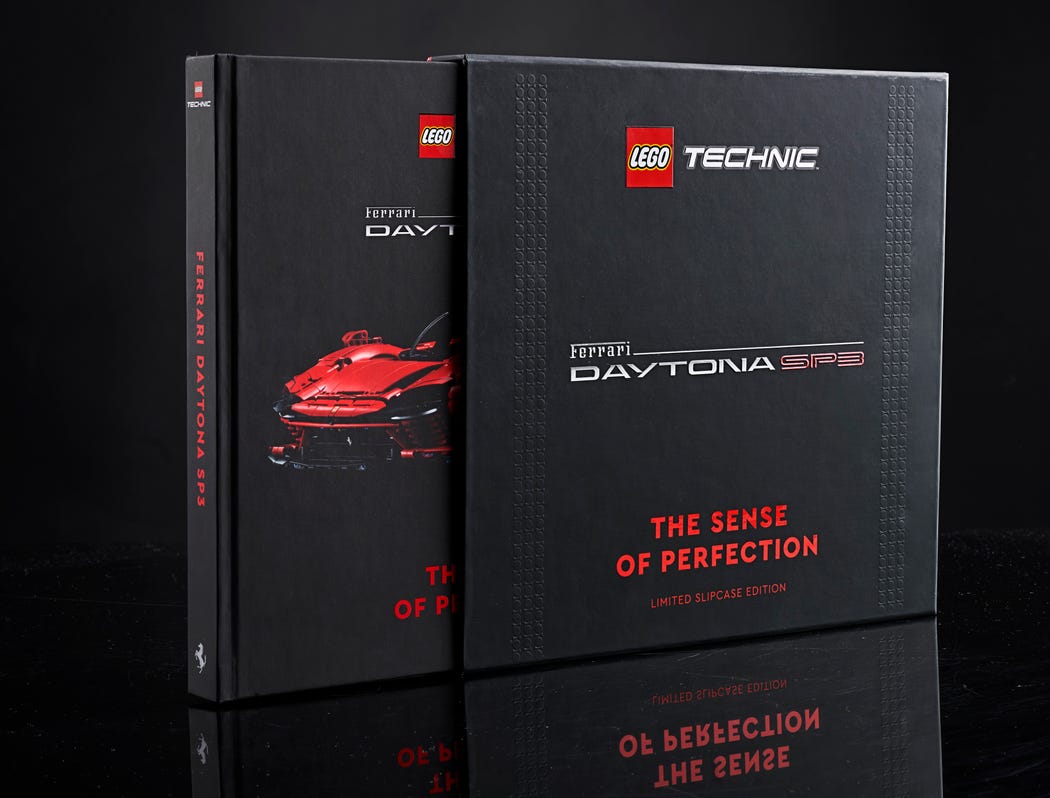
Lego has also announced a 240-page hardcover book delving into the Lego SP3’s creation process, limited to 5000 copies. So far it has only been listed on the company’s US website, at US$79.99 (AU$112.15).
The SP3 joins the Bugatti Chiron, Lamborghini Sian, and Porsche 911 GT3 RS in Lego’s flagship range of adult car models, which have been retroactively dubbed part of the Technic Ultimate Car Concept Series. It’s the most expensive of the foursome, with the highest piece count.
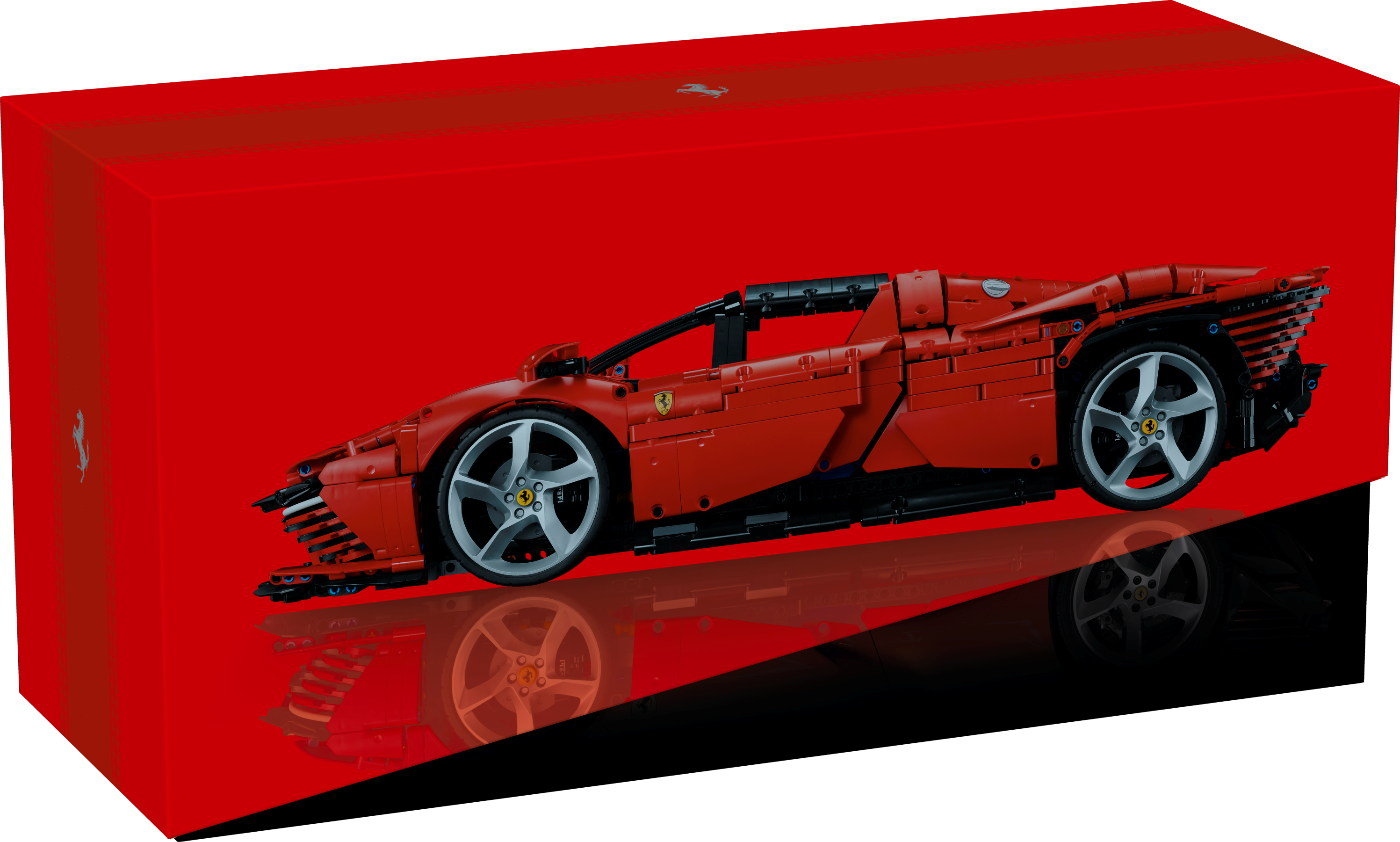
You’ll find the Ferrari Daytona SP3 on Lego’s website and in physical outlets from June 1. at its retail price of $659.99. It’s slated to hit broader retail stores on August 1, likely with a slightly lower price tag.
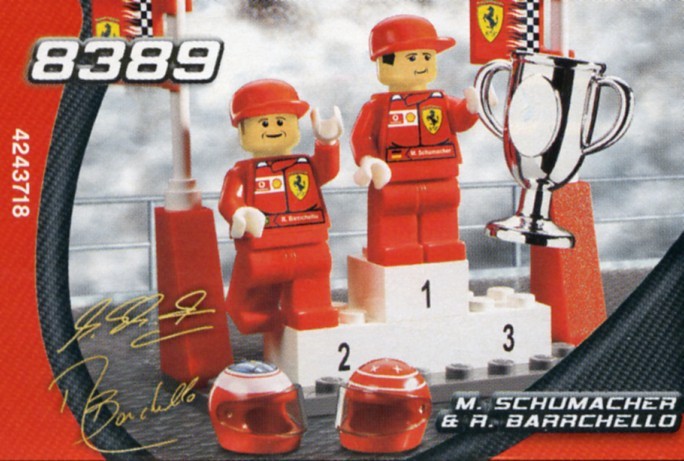
Lego’s association with the prancing horse dates back to 2004, when a range of F1 sets brought us everything from a 1:10-scale racer to Michael Schumacher and Rubens Barrichello minifigures.
Snapshot
- New DeLorean model features gull wing doors like the DMC-12
- Public debut to take place at Pebble Beach in August
- New DeLorean has no connection to John DeLorean’s company other than name
The DeLorean nameplate is back with a future model, unveiling renders of the Alpha5 today.
Having acquired the DeLorean Motor Company name in the 1990s, the new DeLorean is now based in Humble, Texas, with the Alpha5 serving as its first ground-up, dedicated model.
Taking inspiration from the original DMC-12 which starred in the Back to the Future franchise, the ItalDesign-penned Alpha5 boasts gull-wing doors as well as a louvered hatch cover – linking itself to the Giorgetti Giugiaro-designed DMC.
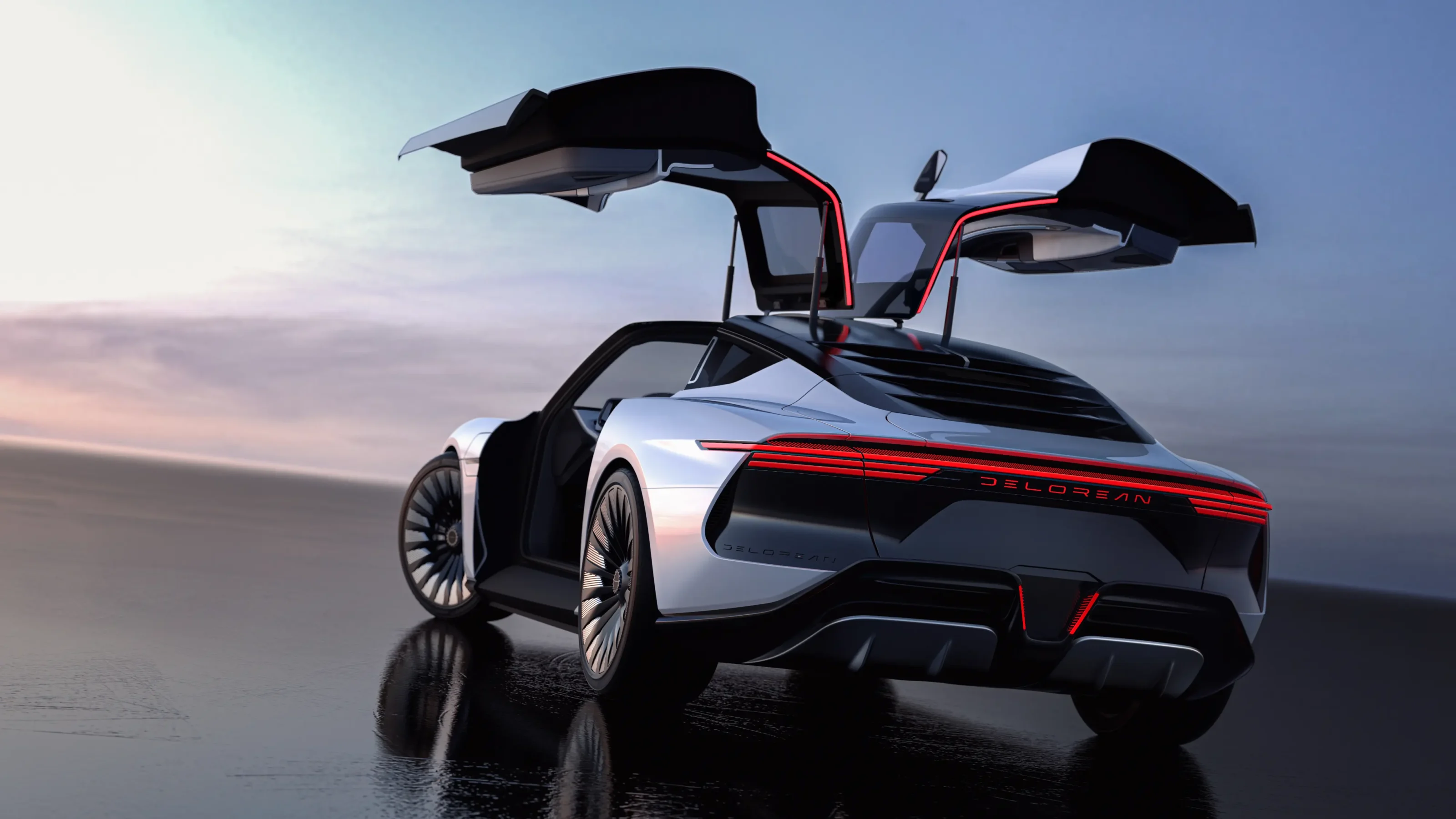
However, DeLorean has turned to electric power rather than the PRV V6 of its predecessor, with the manufacturer estimating a 0-98km/h (0-60mph) time of 2.99 seconds and a top speed of more than 250km/h.
Referencing the movie which made it a household name, the Alpha5 is also projected to go from 0-88mph in 4.35 seconds – more than quick enough to outrun Libyan terrorists in a Volkswagen Type 2 (you’d hope).
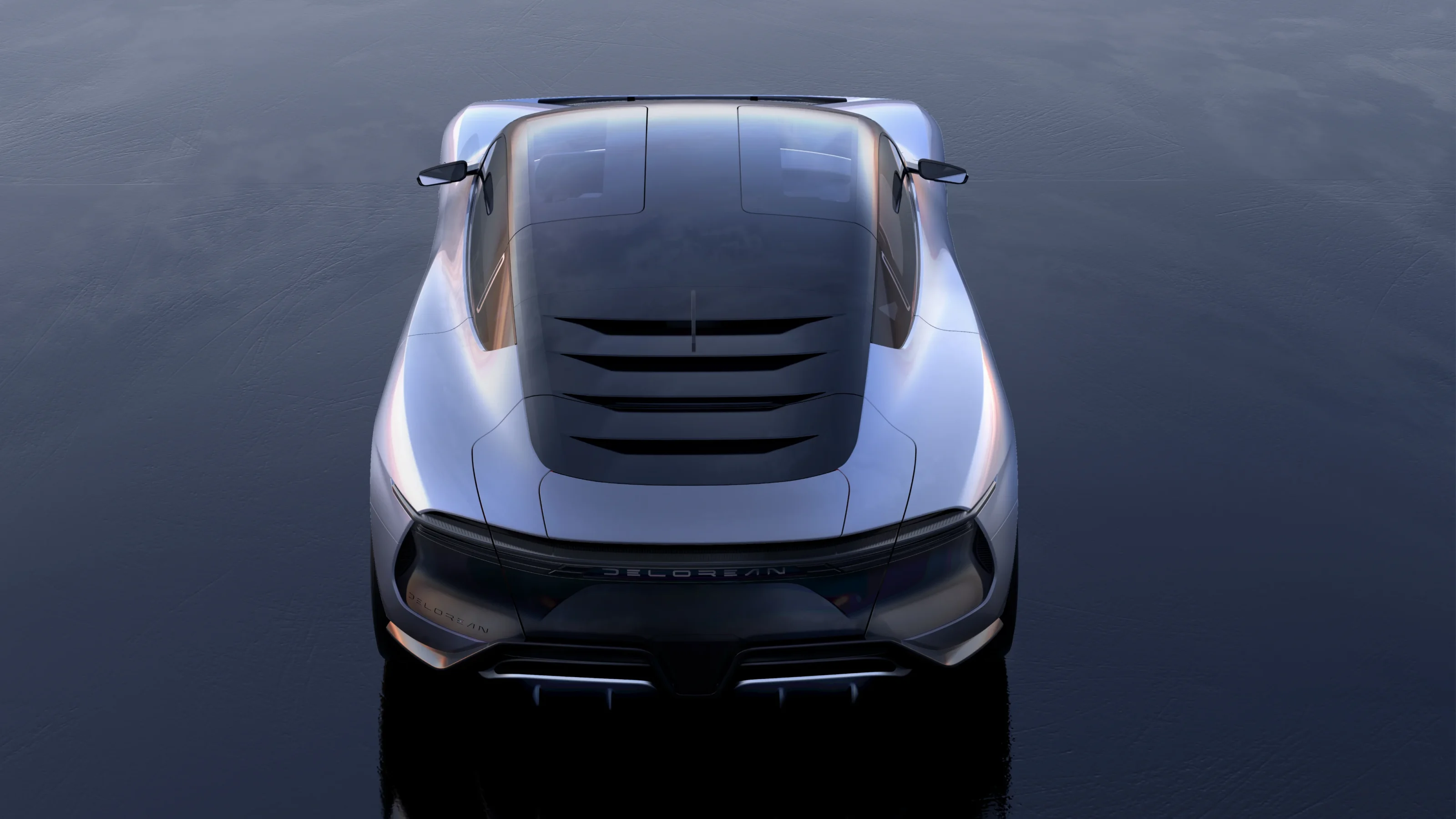
With a battery pack boasting a capacity of more than 100kWh and a drag coefficient of 0.23, DeLorean believes its latest creation could acheive a driving range of over 480 kilometres, although all of this remains theoretical until it’s put into production and passes the tests to become road legal.
“There was this enormous responsibility to make sure we honoured the history of the DeLorean brand, but an even greater responsibility in curating its future,” said Chief Marketing Officer Troy Beetz.
“I think we did both with the Alpha5.”
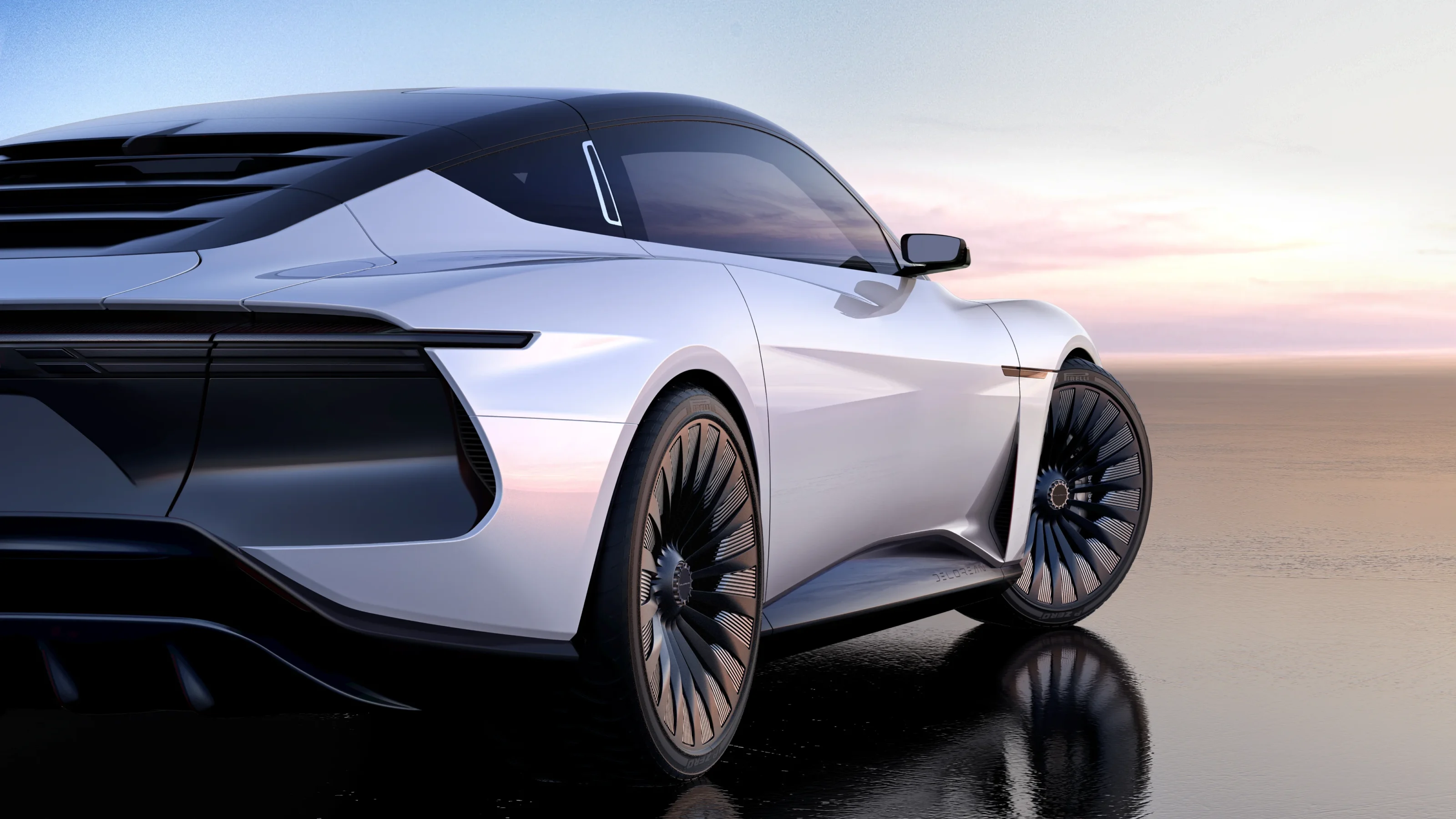
“We have been given the opportunity to reimagine a brand that has meant to much to so many people from all corners of the globe for four decades,” Vice President of brand and creative Neilo Harris said.
“DeLorean has touched so many lives and set the stage for so many memories. We are all now witnessing a new chapter of this amazing story.”
The manufacturer has announced this year’s Pebble Beach Concours d’Elegance as the venue for the Alpha5’s debut public outing, while it is also taking reservations online, saying those interested will get more information in the coming months on how to become an owner.
Supply issues throughout the automotive industry have prompted a number of manufacturers to hold off on offering end of financial year (EOFY) deals going into July.
A common staple of the EOFY has been carmakers giving prospective buyers reduced prices or incentives to buy their stock before July 1 when the new financial year comes around.
However, with almost every brand experiencing a lack of supply due to production or shipping issues, a large number of marques have confirmed they won’t be running any EOFY promotions, wanting to maximise revenue during an uncertain time.
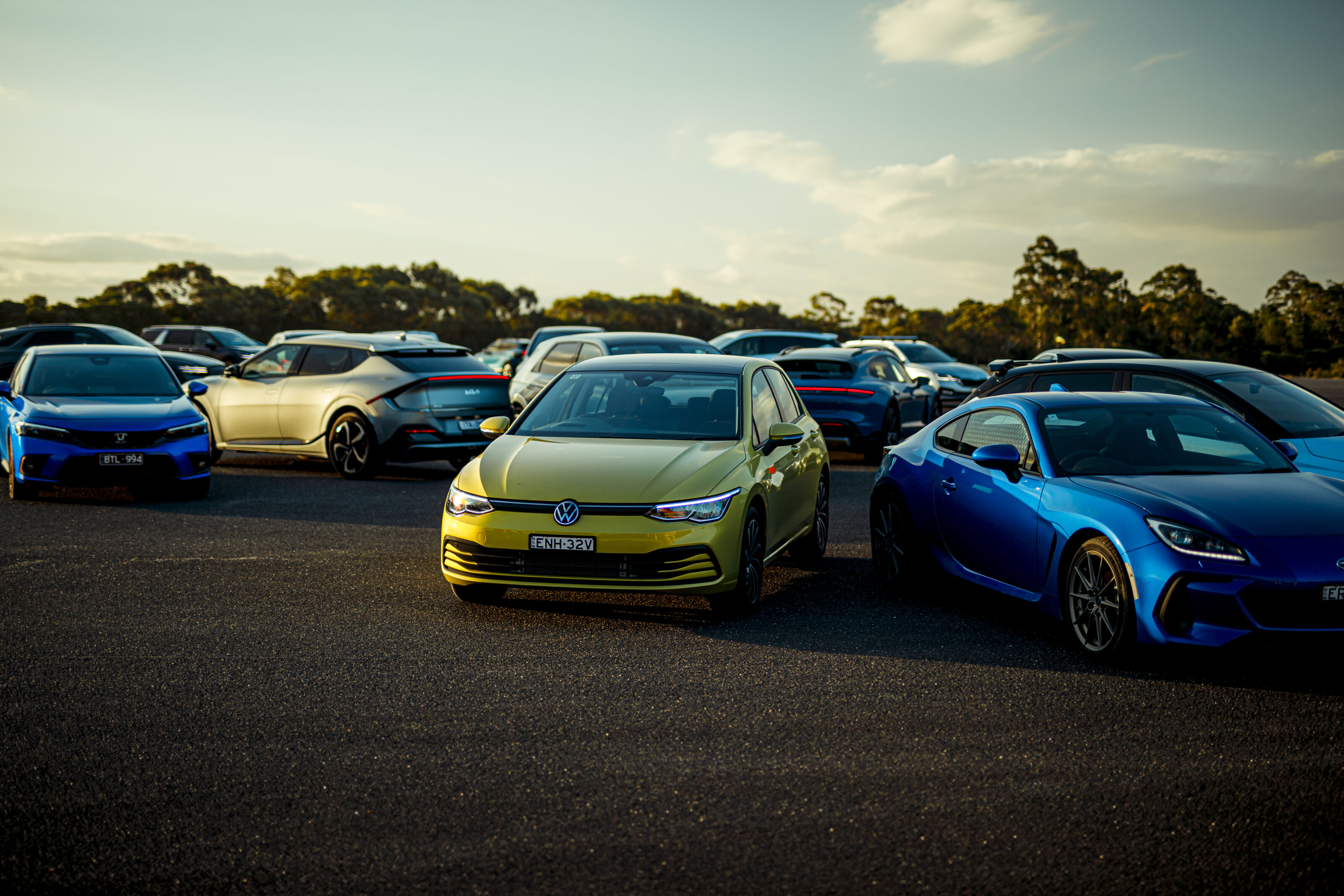
Of the brands Wheels reached out to, Ford, Jaguar Land Rover, Hyundai, MG, Volvo, Honda, Subaru, SsangYong and GWM Haval all confirmed they don’t have any EOFY-specific deals for 2022.
GWM says its “approach to vehicle pricing is to offer the best possible driveaway price to all customers at all times”, foregoing the need for any specific deals, while Honda believes EOFY sales aren’t relevant given its Honda Price Promise – having changed to a fixed-price agency model at the start of the current financial year.
Jaguar Land Rover says it is currently experiencing “very low stock levels” across Australia, backing up reports from earlier this year which showed the intertwined marques were struggling for year-on-year sales more than any other manufacturer.
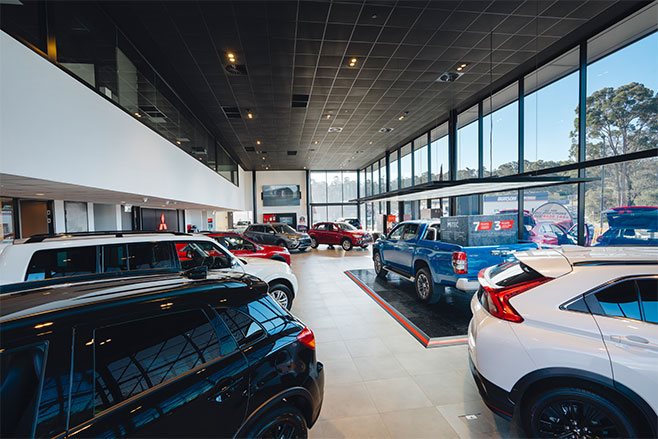
The lack of promotions in 2022 is a continuation of 2021 where EOFY deals were few and far between, as only a handful of manufacturers offered prospective buyers financial incentives and bonuses to purchase their stock.
Click the link below to find out which of Australia’s best-selling models are delayed and for how long.
The Mazda CX-5 has been riding high in the sales charts for the thick end of a decade. To reward Australia’s (justified) confidence in this midsized SUV, Mazda provides a mind-boggling number of variants to suit just about everybody.
Not content with the double-digit options available, Mazda used a 2022 range update to quietly slip in yet another variant at a few hundred bucks above what we always considered the spec to have – the Touring.
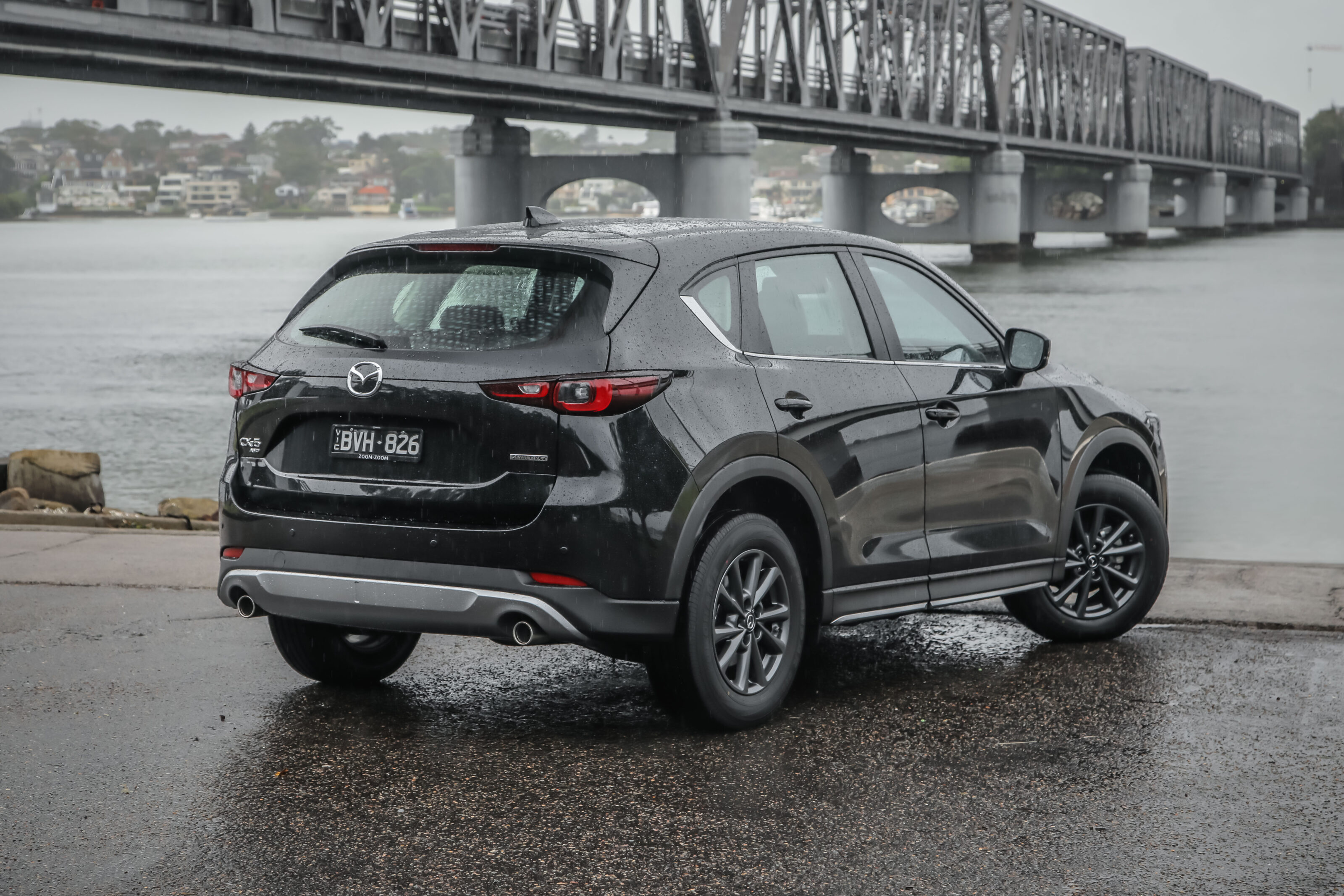
The Japanese company took that model and added some, well, green, while slimming down the number of engines and transmissions available to create the 2022 Mazda CX-5 Touring Active AWD we’ve tested here.
It’s slightly complicated when you think about it, but, bottom line, the Touring Active is meant to look a little more adventurous while still delivering a good spec.
Pricing and Features
There are two Touring Actives: the 2.2-litre turbo-diesel at $45,880 and, for three thousand fewer dollars, the 2.5-litre petrol at $42,880 (both before on-road costs). Sadly, the turbo-petrol engine isn’t available in the Touring Active, but we can’t have everything, I suppose. The Touring soldiers on with just the 2.5 petrol for $42,580 plus on-road costs.
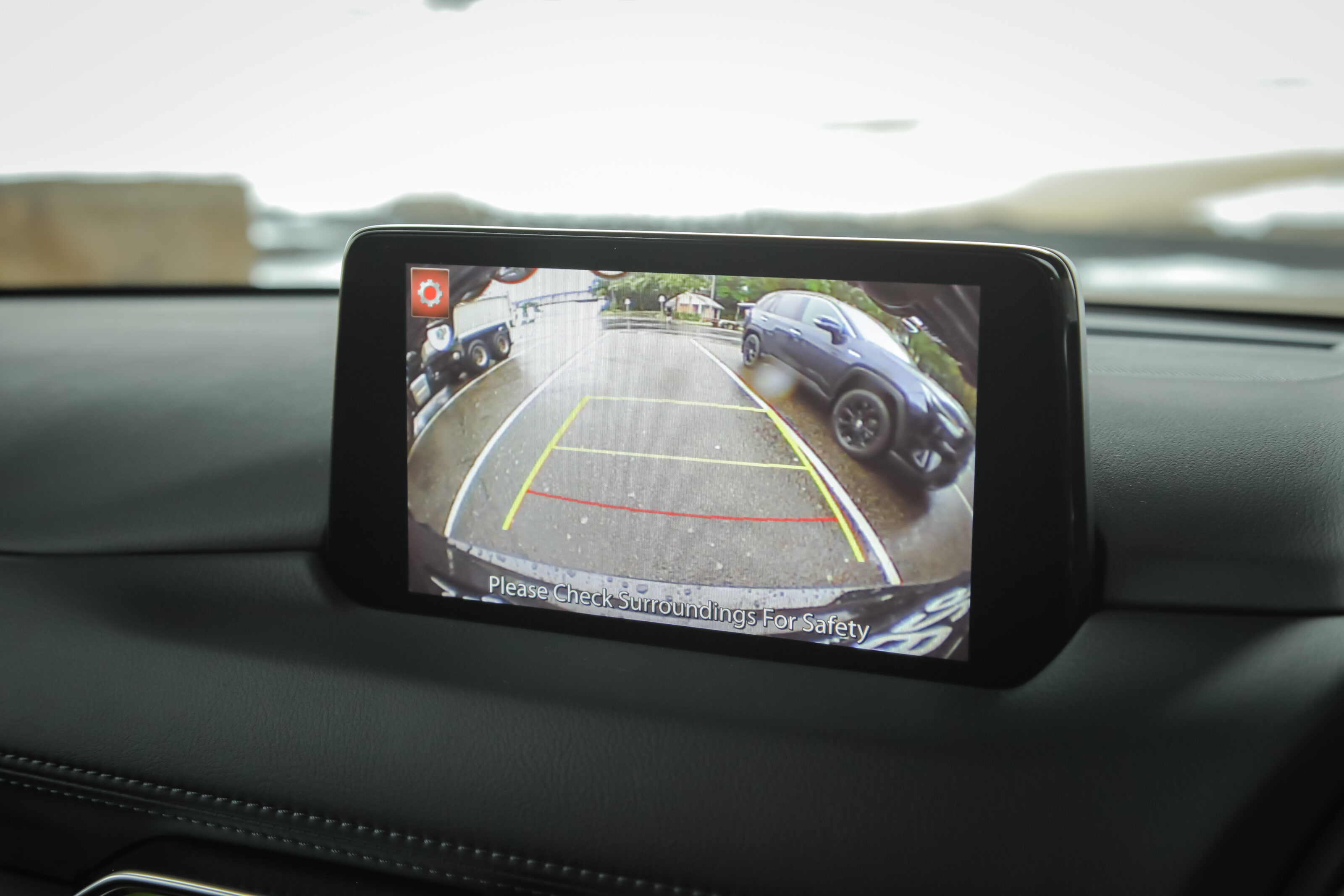
Once ordered and on your driveway, you get a CX-5 with 17-inch alloys, dual-zone climate control, six-speaker stereo, reversing camera, cloth interior, keyless entry and start, front and rear parking sensors, active cruise control, sat-nav, LED headlights with auto high beam, auto wipers, leather steering wheel and gear selector trim, heated and folding rear vision mirrors, wireless charging and a space-saver spare.
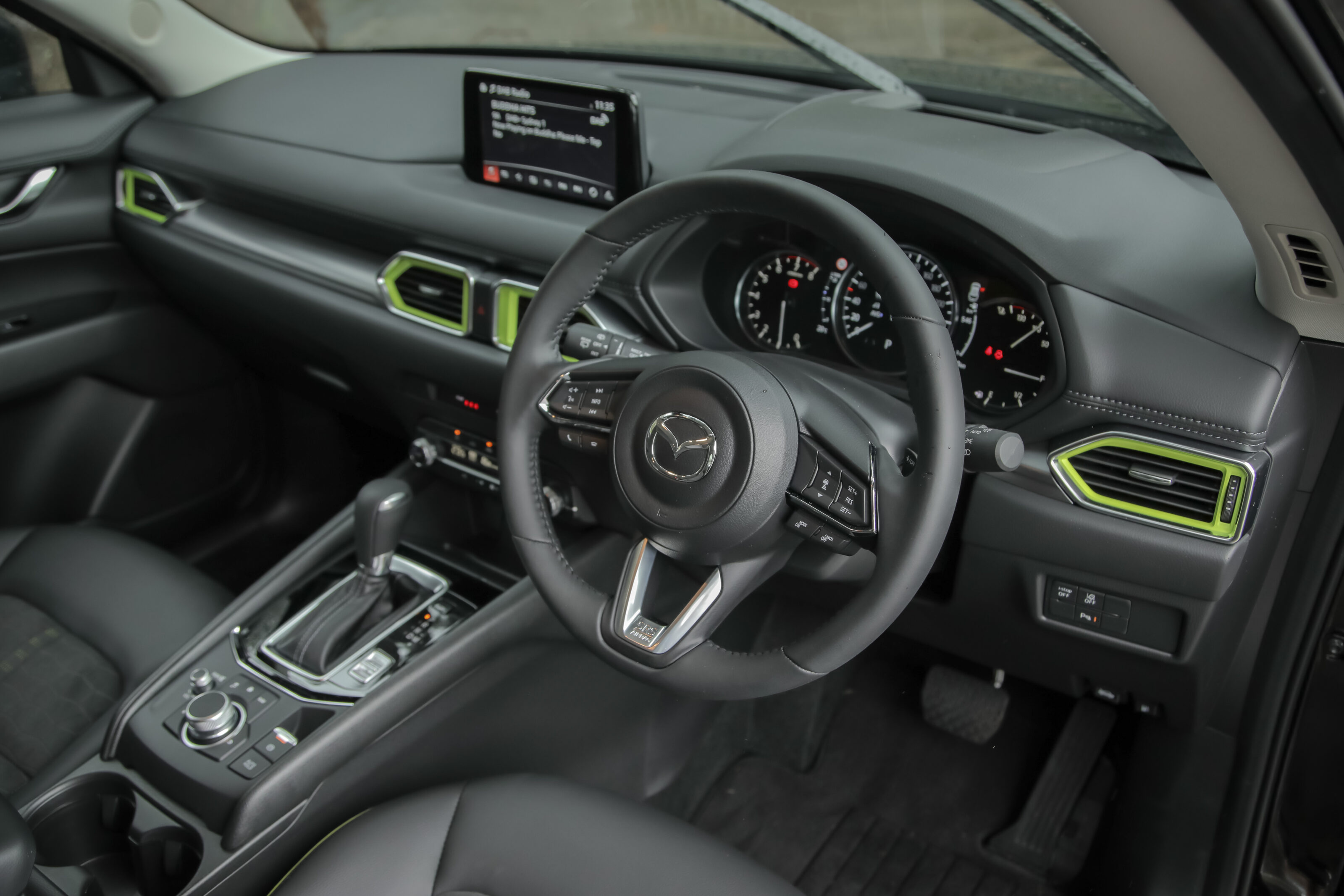
The Active part of the name adds a sparkle of lime green in the grille as well as applying the same vivid colour to the interior. The exterior also scores some rugged cladding to imply owners can get it muddy and not worry too much about scratching the (always lovely) paint.
Mazda’s older version of MZD Connect and its 8.0-inch touchscreen provide the sat-nav and media connectivity, with USB for Apple CarPlay and Android Auto. The software is getting on a bit, but unlike the CX-30 and Mazda3’s newer system, you can still use both the touch function (when the car is stopped) as well as the rotary dial controller.
Five-star ANCAP safety (from 2017) comes from six airbags, ABS, stability and traction controls, blind-spot monitoring, forward and reverse auto emergency braking (AEB), forward collision warning, lane departure warning, lane-keep assist, speed limiter, speed zone reminder with road sign recognition and reverse cross-traffic alert.
The forward AEB has pedestrian and cyclist detection and works at high and low speeds for other vehicles. One of the good things about this list of safety gear is that it stretches across most of the CX-5 range.
Comfort and Space
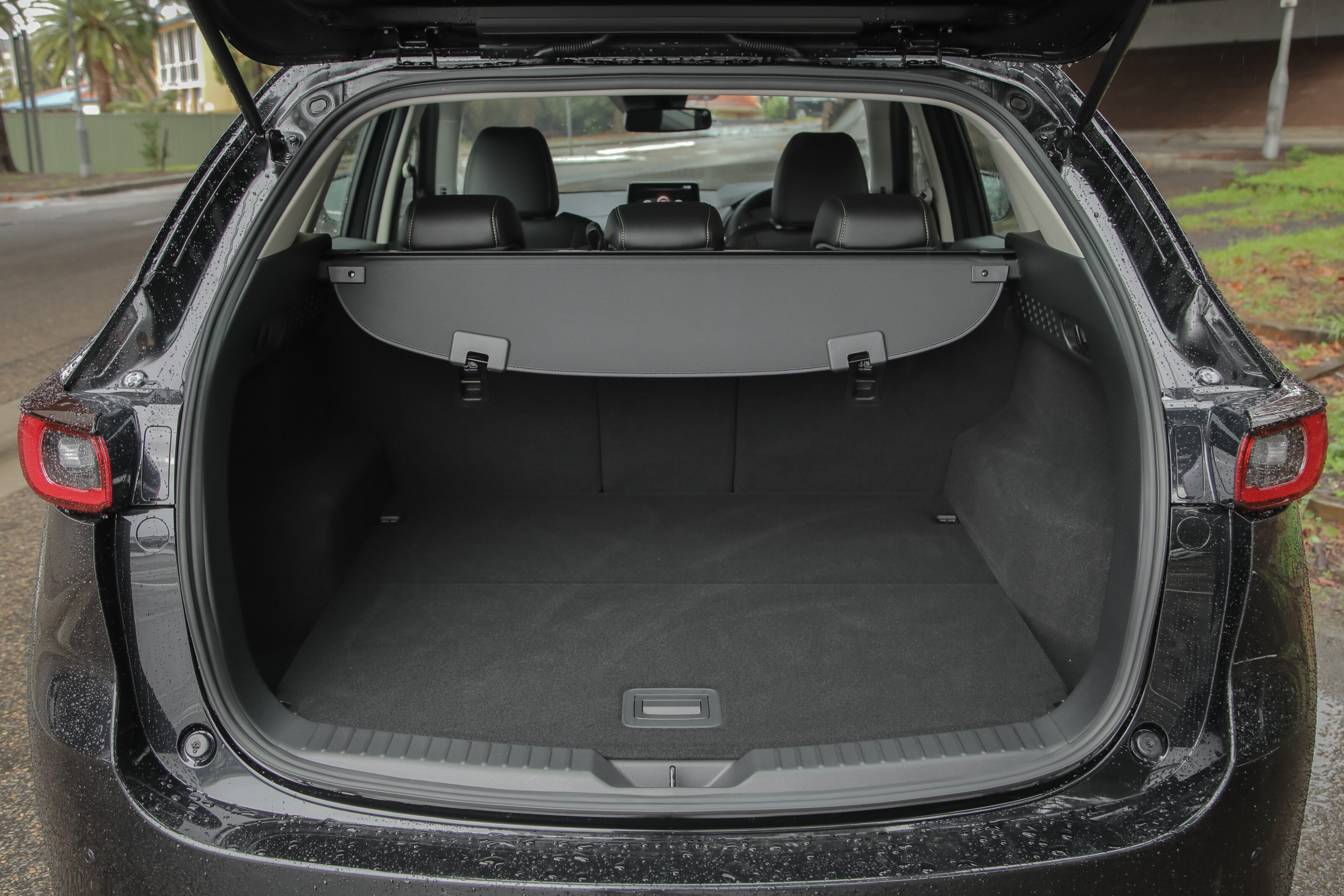
The CX-5 might be one of the biggest sellers in the segment but is one of the smaller offerings. That means cargo space starts at 442 litres, down on all of its obvious competitors and not a lot more than some cars from a segment down.
A petrol RAV4 has 580 litres and the VW Tiguan a whopping 615 litres owing to its sliding middle row. Drop the 40:20:40 split-fold rear seat in the Mazda and 1342 litres there for the filling.
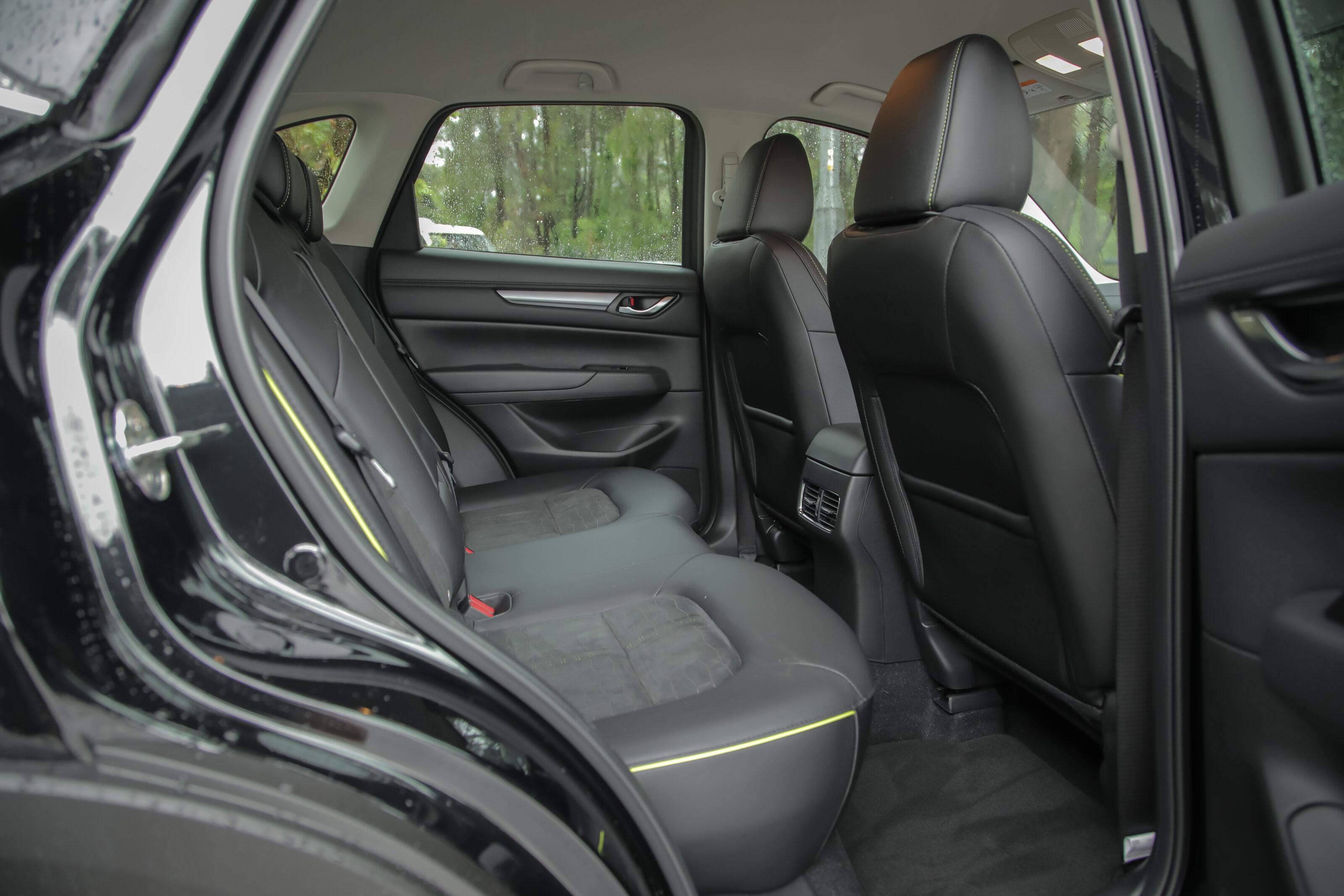
One of the things I say time and again about Mazda interiors is that they’re quite dark. Built from a lot of high-quality but highly grey plastic, the designers struggle to add colour without adding naff. The little sprinkle of lime green from the grille – which grew on me, I have to say – finds its way inside to a strip in the dash, the surrounds on the air vents and the seats.
I’m fully expecting Mazda to get mad at me for saying it’s a good try but doesn’t really work because I keep complaining there isn’t enough colour to break up the interior’s grey.
Thankfully the CX-5’s other interior strengths, such as high quality, impressive comfort and thoughtful, uncluttered design more than make up for it. You get two cup holders, storage under the centre armrest and bottle holders in each of the doors, as well as the charging mat for your phone under the climate controls.
The rear seat is classic Mazda – tight for the segment but very comfortable once you’re in. The door opens wide but the aperture is a little small so getting in and out can be tricky if you’re tall. Once in, I fit comfortably behind my own driving position and I’m 180cm tall.
On the Road
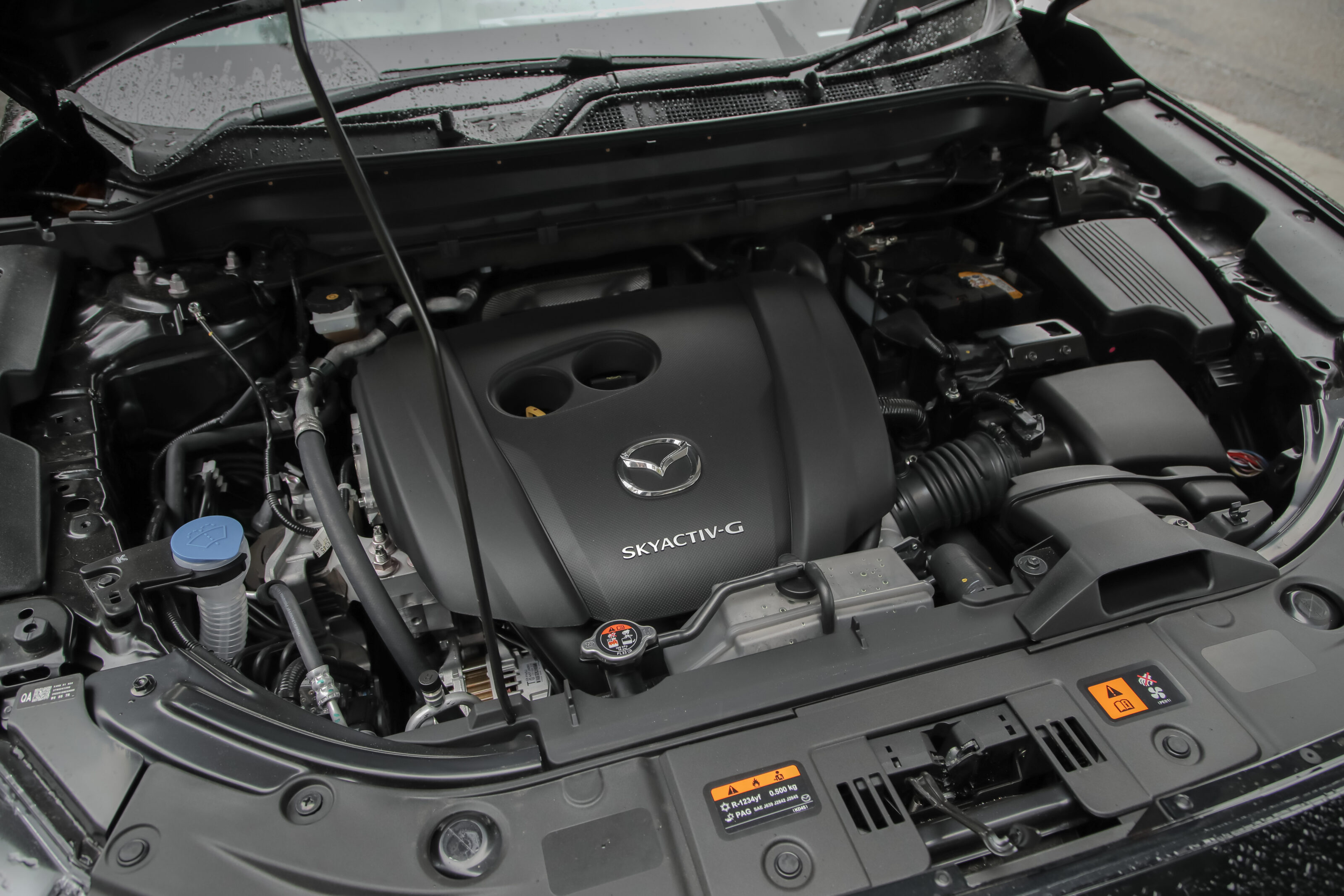
The Touring Active I had for the week was the 2.5-litre petrol with all-wheel drive. A full $3000 cheaper than the diesel and using a fuel slightly less on the nose with consumers, it spins up 140kW at 6000rpm and 252Nm at 4000rpm. All four wheels receive power through Mazda’s six-speed automatic transmission.
It’s a fairly traditional sort of set-up but Mazda has been honing it for years, including adding G-Vectoring, where the car senses steering inputs and as you turn in lightly lifts the throttle to shift the weight to the front wheels.
Think of it as a virtual racing driver’s throttle foot. It’s barely noticeable but adds to what is already a very capable car.
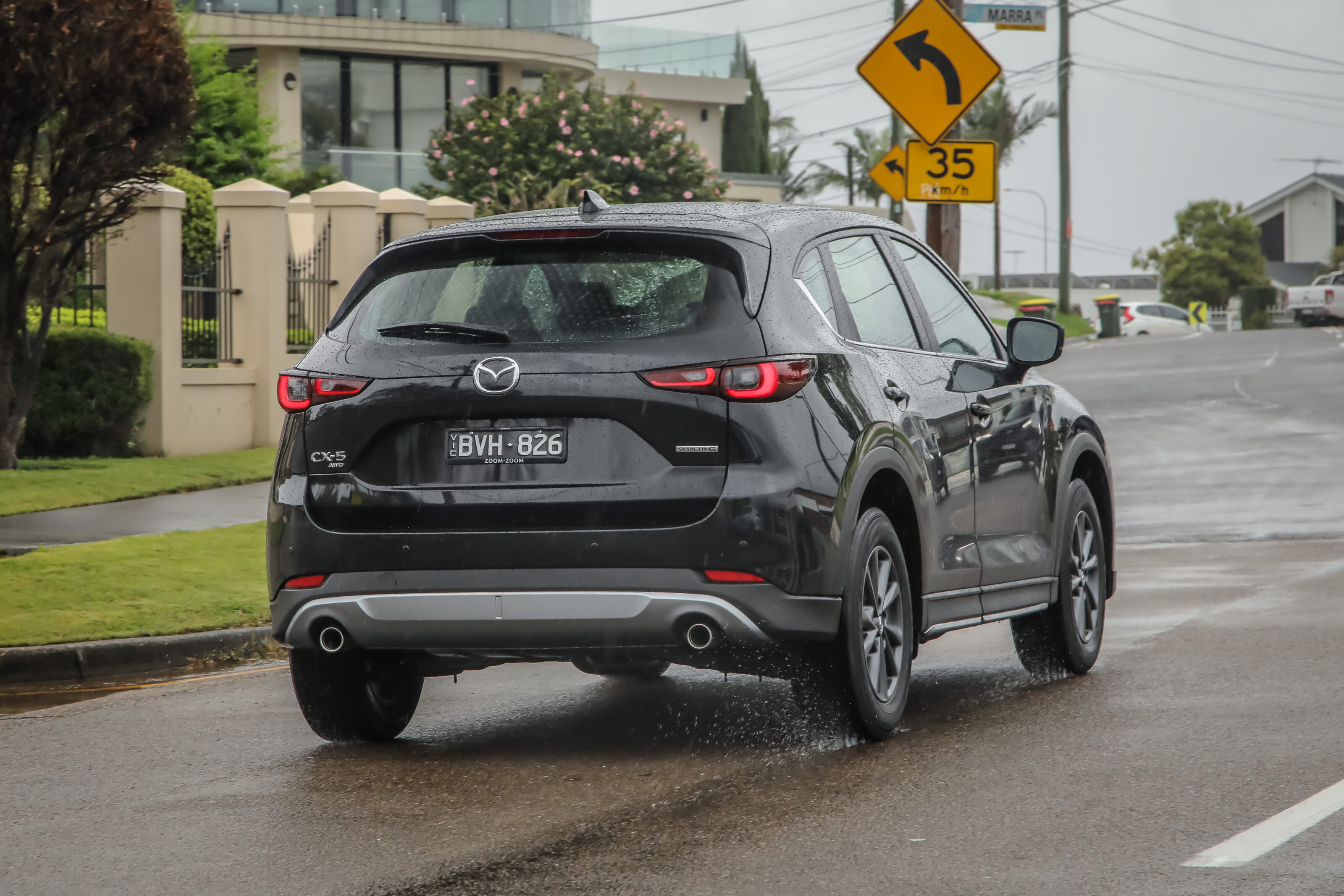
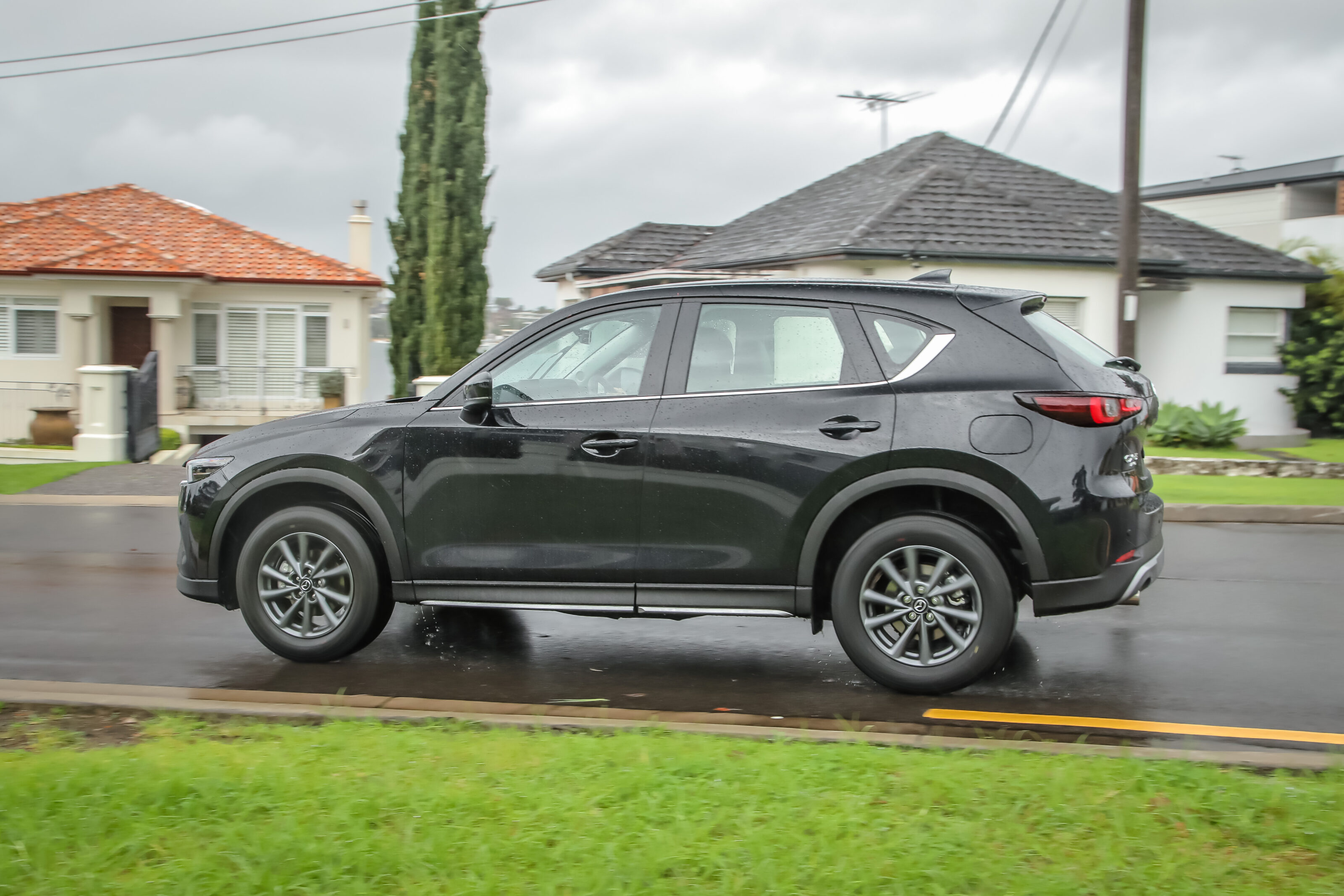
The 17-inch wheels don’t look like much – as in, they look tiny – but the combination of decent tyres with a bit of sidewall delivers a handy ride and handling balance. The CX-5 is genuinely fun to drive, as it always has been, which is a key part of its appeal.
While the front suspension is the near-ubiquitous MacPherson struts and (in this segment at least) very common multi-link rear end, the CX-5’s balance is impressive for a mid-size SUV.
Ride comfort is pretty cushy for all passengers while a keen change of direction means you can hustle through urban environments without upsetting passengers.
As ever, the thing that lets down the CX-5 compared to the competition is the engine. There’s nothing wrong with it specifically – in 2.5-litre form it’s far preferable to the 2.0 – but its torque figure of 252Nm means that loading up will slow things down. Some rivals have smaller engines but with more torque due to either turbo or hybrid power.
Performance is fine with a sub-ten second sprint to 100km/h but on the freeway you do need to plan overtakes. Cheeringly, the power delivery is clean and linear. The six-speed automatic – again down on numbers compared to some competitors – remains excellent and doesn’t really suffer from missing a gear or two.
The official combined cycle fuel figure of 7.4L/100km is a little off the mark, with my week delivering a 9.3L/100km figure. I do always get a better figure with the 2.5 than I do the 2.0 because it doesn’t have to work as hard.

Ownership
Mazda offers a five-year warranty with unlimited kilometres and roadside assist for the duration.
Servicing comes up every 12 months or 10,000km, the latter being a bit short, especially when the Touring Active is aimed at folks supposedly keen on getting out more. The capped-price servicing regime lasts for five services, with three priced at $350 and two at $380 for a total of $1810 over the five.
VERDICT
The CX-5 Touring last year lost its status in our heads as the best bang-for-buck in the broadly appealing CX-5 range, that plaudit switching to the Maxx Sport through a combination of an increased spec and a better price point.
The Touring Active’s extra splash of interior colour and extra off-roader exterior cues, however, do add a further temptation over the Touring’s additional features, as subtle as they are.
And for just an extra $500… well, there are certainly harder choices to make in life.
