
May 10: DeLorean sets reveal date for EV debut
DeLorean has pulled its upcoming electric vehicle’s debut back from the future, now slating its reveal for May 31.
Initially set to be launched on August 18 at this year’s Pebble Beach Concours d’Elegance, the fully-electric model will now be unveiled at the end of this month.
No official information has yet been given out regarding specification or features of the brand-new model, although Italdesign has returned to craft the new DeLorean’s curves – roughly four decades after the design house created the iconic original DMC-12.
April 9: DeLorean teases electric coupe
The reborn DeLorean sports car will be unveiled in August, the company has confirmed.
DeLorean Motor Company (DMC) announced the reveal of the electric coupe is set for August 18, taking place at the Awards Ramp at the Pebble Beach Concours d’Elegance.
The official name will be announced during its reveal, with the DMC-12 designation unlikely to return.
A prototype version will be displayed at the Concept Lawn on August 21, with a series of events set to take place during Monterey Car Week, reflecting on the “past, present, and future of DeLorean”.
The company – which has no connection to the original marque – has only provided a glimpse of the vehicle’s three-quarter view, showcasing its slim LED tail-lights and coupe body.
Troy Beetz, chief marketing officer at DeLorean Motor Company, said: “Excitement is rising like the doors of our iconic sports car, and we are revealing the next generation prototype 3 days earlier than planned on the most prestigious stage at Pebble Beach”.
Speaking with Motor Authority, CEO Joost de Vries said the all-wheel-drive EV will have a claimed driving range exceeding 480 kilometres, with 150kW fast charging capability. It is also expected to feature a dual-motor setup.
ItalDesign, the Italian firm responsible for the original DeLorean DMC-12, was involved in the design and some engineering work for the reborn electric version.
Customer deliveries are expected to commence in the United States in 2023, with Australian plans currently unconfirmed.
February 14: DeLorean to return with an EV
DeLorean is planning to go back to the future.
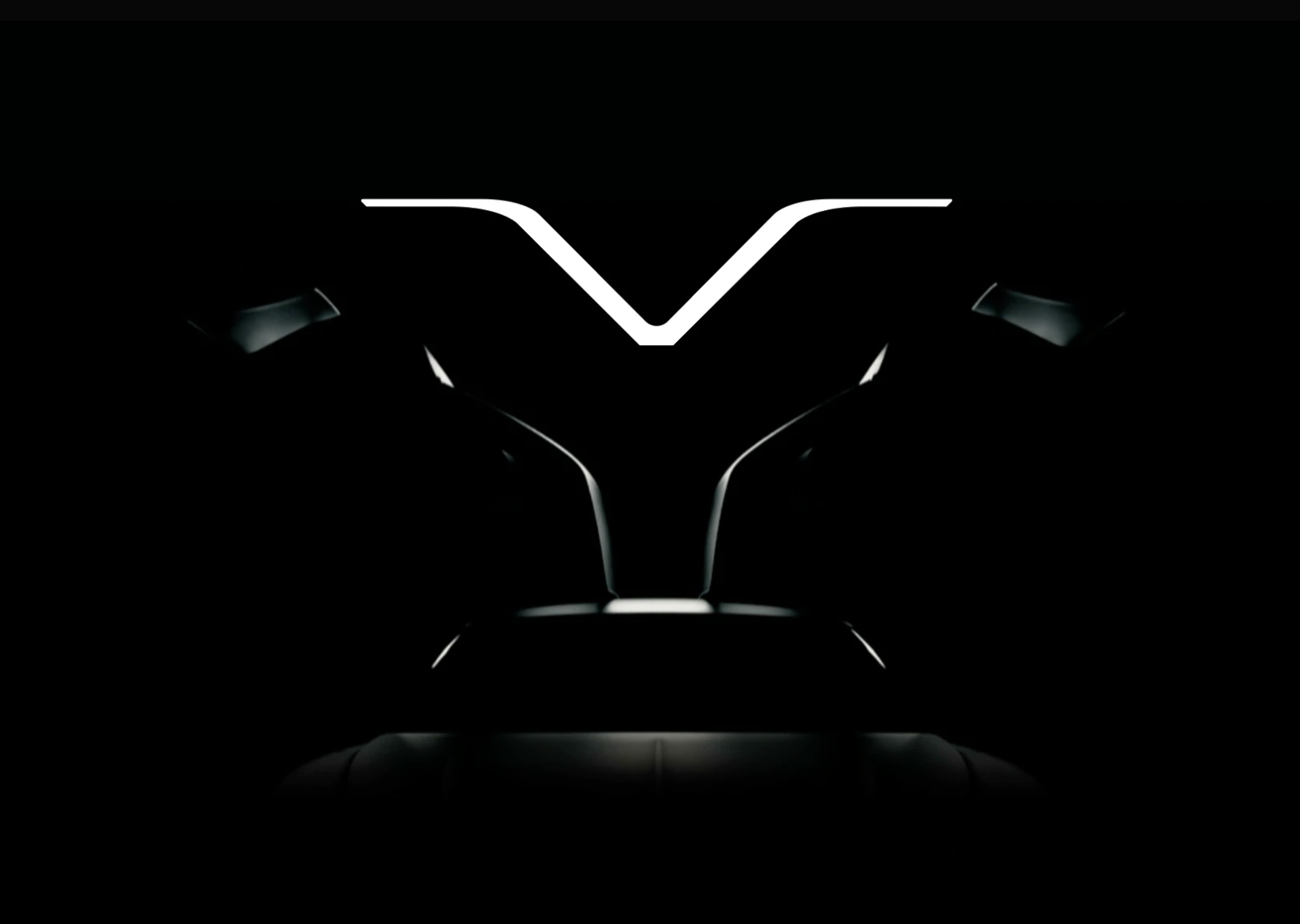
Following years of speculation, the DeLorean Motor Company (DMC) has teased a reimagined electric DeLorean sports car in a short video shown during the 2022 Super Bowl (check out all the car commercials here).
While specific details beyond the darkened vehicle shown in the clip are unknown, hashtags accompanying the social media post include #ElectricVehicle and #DeloreanEVolved.
The company – not to be confused with the original DeLorean Motor Company, which went bankrupt in 1982 – has also launched a new website, showcasing a redesigned logo and refreshed merchandise.
An expression of interest page for the redesigned electric DeLorean is also included, allowing interested parties to register for updates ahead of the unveiling of the ‘evolution of DeLorean’ later this year.
A pair of gullwing doors can be seen on the vehicle, in addition to a V-shaped light strip running across the front – in a nod to the iconic DeLorean doors.
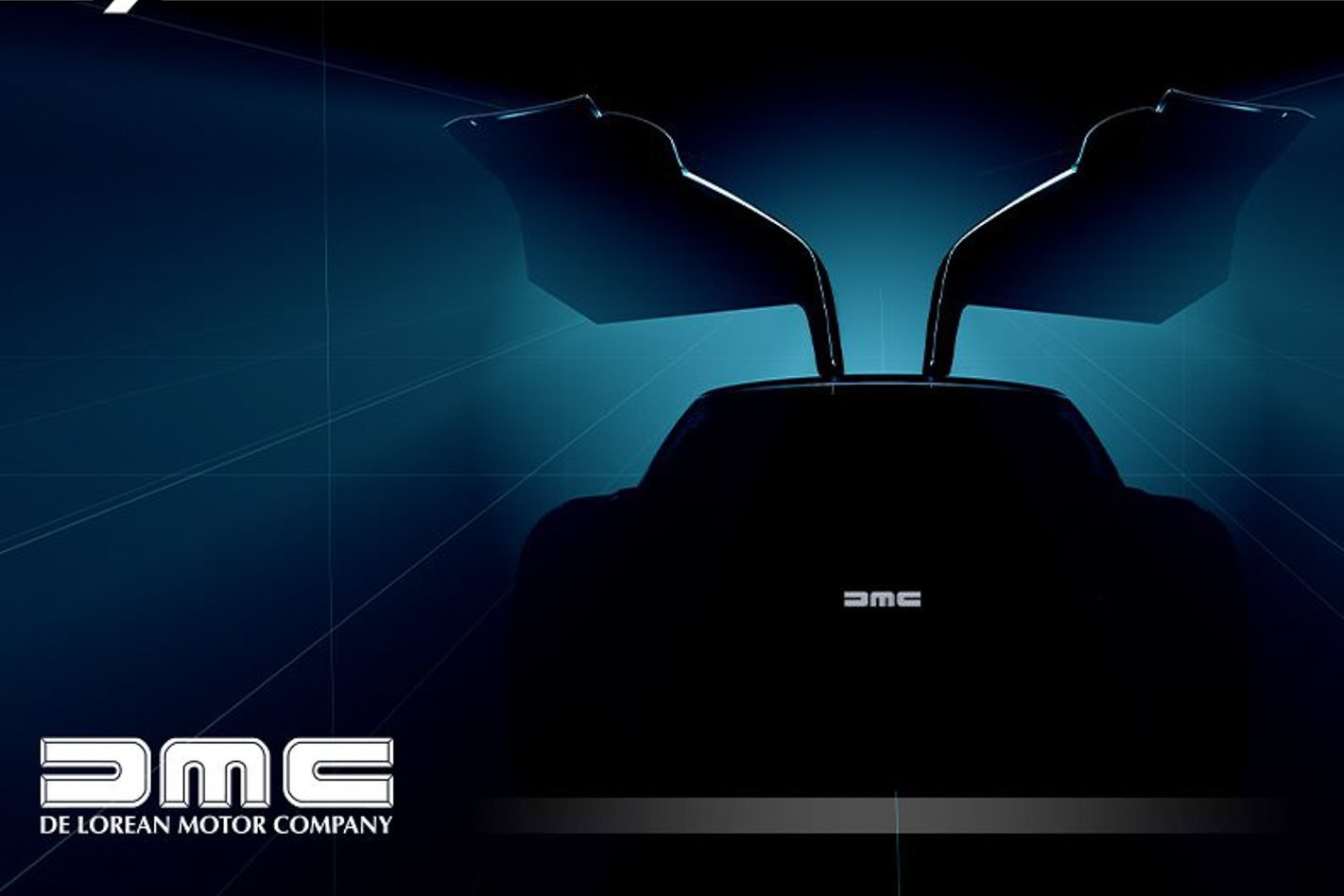
In early 2021, design house ItalDesign released a teaser for its modern-day interpretation of the DeLorean. The vehicle featured in the sketch looks similar to the official DMC teaser, suggesting ItalDesign could be behind the look of the reimagined two-door.
“DeLorean DMC-12 turns 40 [in 2021]… What better way to celebrate an icon of automotive history than a sneak peek of the (near) future? Stay tuned for more…” read the caption accompanying the sketch.
The first DeLorean, commonly referred to as the DMC-12, was produced in Northern Ireland from January 1981 to December 1982. It was made famous through the Back to the Future movie franchise, which featured a DeLorean retrofitted with Dr Brown’s flux capacitor to make time travel possible.
It was designed by world-famous car designer Giorgetto Giugiaro, who co-founded ItalDesign. His works include the BMW M1, Volkswagen Golf Mk1, Lotus Espirit and the first-generation Maserati Ghibli.
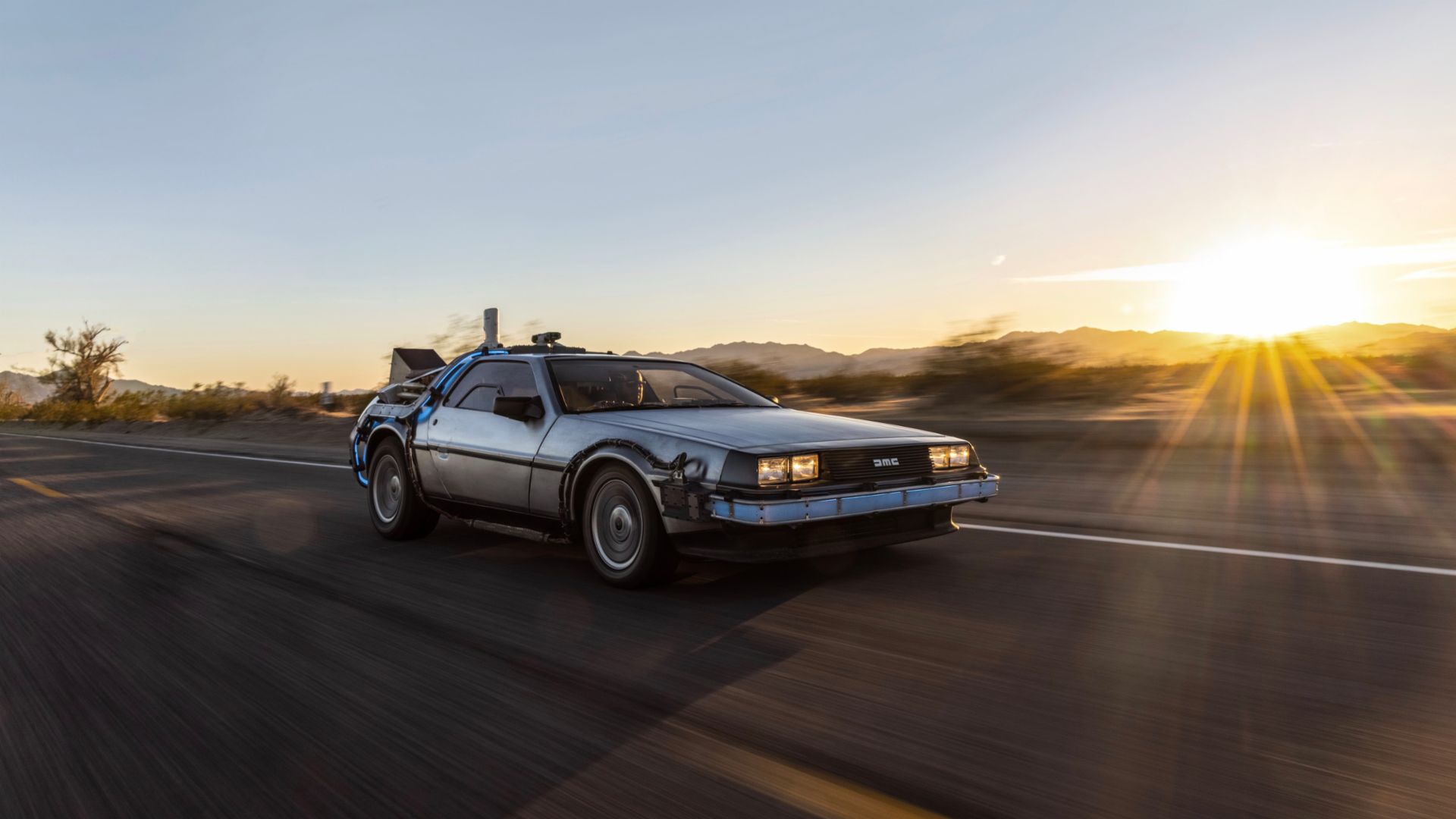
The initial DeLorean featured a rear-mounted 2.85-litre V6 engine producing 97kW of power and 207Nm of torque, matched with a five-speed manual transmission or three-speed automatic. This allowed for the 0-100km/h sprint to be completed in 8.6 seconds, on the way to a top speed of 175km/h.
Just 9000 examples were produced before the company went bankrupt in the 1980s.
The current DeLorean Motor Company, created by British mechanic Stephen Wynne, acquired the defunct business name and several assets in 1995 – although it has no official connection to the original marque.
Snapshot
- Total of 889 units recalled
- Most vehicles affected due to an incorrectly mounted electrical wire
- Just two examples recalled for airbag sensor issue
The Mercedes-Benz C-Class has been recalled, with two notices put out for models built between 2018 and 2020.
Affecting a total of 889 units, 887 of those are under recall thanks to an incorrectly routed electrical wire in the engine bay, as its current position could cause damage to its insulation.
If the insulation is damaged, it could short circuit and cause a fire in the engine bay, leading to a higher risk of injury to occupants and those around it.
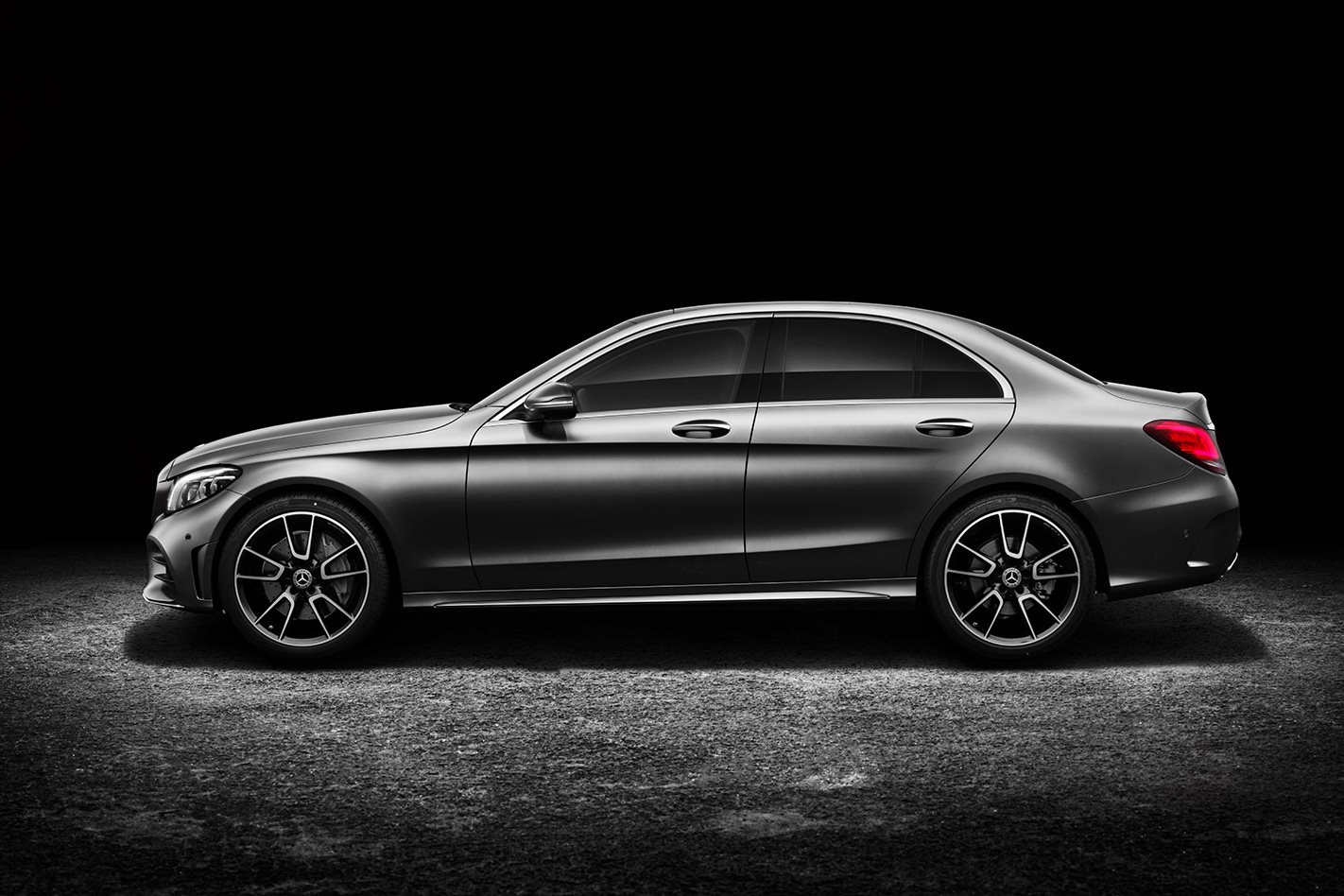
The second recall covers just two C-Class coupes built in 2020, again with an electrical fault, although this time it is related to the connector for the airbag crash sensor.
Mercedes says if the sensor is mounted incorrectly it could detatch itself due to vibrations while driving, resulting in the occupant restraint systems potentially not working in the event of an accident.
In both instances, affected owners have been asked to contact Mercedes-Benz to arrange an inspection and repair carried out at their preferred dealer, free of charge.
A list of VINs for the engine bay issue can be found here, while those with the sensor fault are available here.
Snapshot
- Polestar sold more cars than Tesla last month
- MG ZS EV is best-selling EV in Australia
- 866 EVs sold locally in April
Volvo’s spin-off electric brand Polestar bested Tesla in the sales charts last month, with almost twice as many of its 2 model finding homes compared to the Model 3.
In April, 93 examples of the Polestar 2 sold versus just 52 Model 3s out of a total of 866 electric vehicles (EVs) shifted nationwide, according to VFACTS.
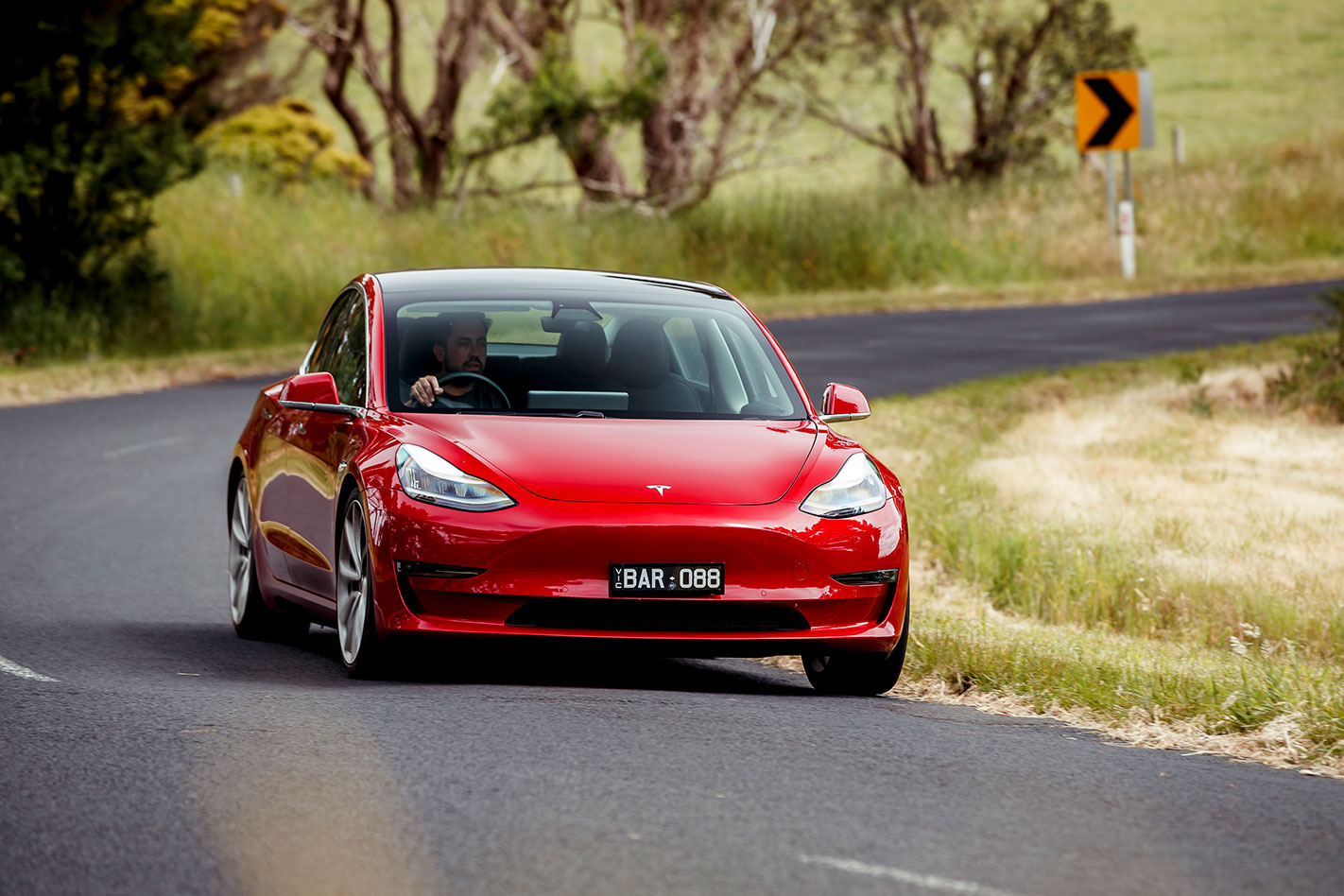
While the Polestar 2 has only been on sale since late February, Tesla’s Model 3 has been available in Australia since 2019. However, both firms only began reporting their sales figures to the Federal Chamber of Automotive Industries (FCAI) as of March this year.
According to Swedish brand Polestar, by ordering hundreds of preconfigured cars in advance, it has managed to avoid falling victim to the supply constraints and delays affecting the whole automotive industry at present – though customers ordering now can still expect a wait time of around four to five months.
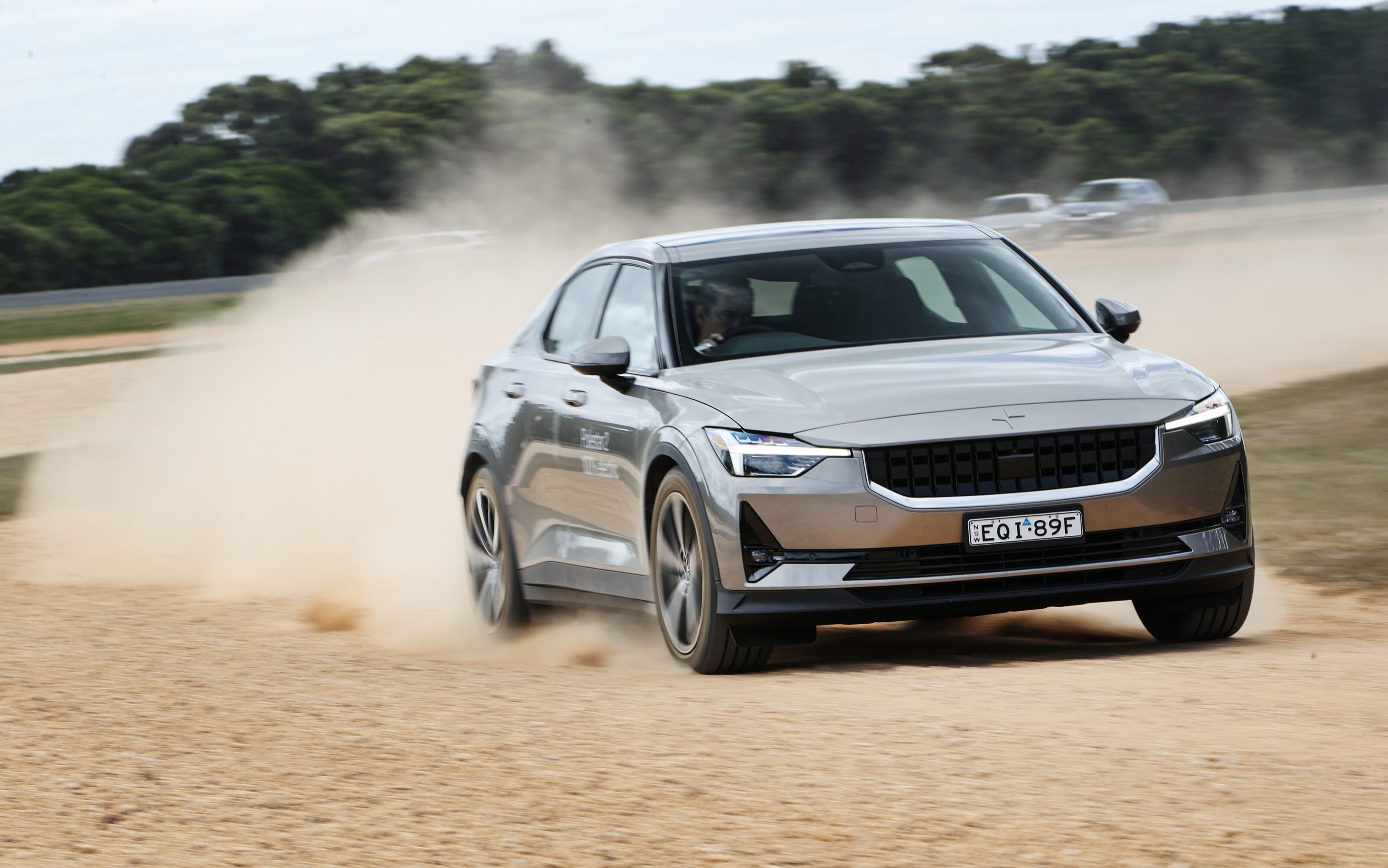
By comparison, it’s understood the wait time for the Model 3 is closer to between nine and 12 months. With the Model S and Model X no longer on sale locally, the Model 3 makes up Tesla’s sole offering here – with the Model Y expected to launch soon.
Both companies have raised their prices too in recent weeks, with the Polestar 2 and Model 3 now starting from $63,900 compared to $59,900 previously.

Though electric vehicles are experiencing a boom in Australia, up 203 per cent last month and 507 per cent year-to-date, they still make up an incredibly small number of the total cars sold locally – the figure for April being 81,065.
Currently, Australia’s best-selling EV is the MG ZS EV, followed by the Volvo XC40 Recharge Pure Electric – with the Polestar 2 filling out the top three.

Meanwhile, the Model 3 occupies eighth place – tied with Kia’s first battery-electric vehicle (BEV), the EV6.
In total there are 22 BEVs on sale Down Under, though some have multiple electrified variants on offer and others share their nameplate with an internal-combustion engine model.
EVs sold in Australia – April 2022
| Model | April sales |
|---|---|
| MG ZS EV | 323 |
| Volvo XC40 Recharge | 122 |
| Polestar 2 | 93 |
| Hyundai Kona EV | 90 |
| Hyundai Ioniq | 76 |
| Mercedes-Benz EQA | 65 |
| Porsche Taycan | 58 |
| Kia EV6 | 52 |
| Tesla Model 3 | 52 |
| Mercedes-Benz EQC | 38 |
| Nissan Leaf | 34 |
| Hyundai Ioniq 5 | 30 |
| Mini Cooper Hatch SE | 24 |
| Kia Niro | 16 |
| BMW i4 | 12 |
| BMW iX | 8 |
| UX300e | 8 |
| Renault Kangoo ZE | 4 |
| Audi E-Tron | 3 |
| BMW i3 | 1 |
| Jaguar I-Pace | 0 |
| Mazda MX-30 | TBC |
Snapshot
- 2023 Ford E-Transit Custom EV revealed with 380km driving range
- Australian launch confirmed for 2024
- E-Transit becomes third of five Ford EVs confirmed for Australia by 2025
May 9, 2022: Ford E-Transit Custom revealed, set for 2024 Australian launch
Ford’s picture of which electrified vehicles it will bring to Australia is becoming clearer, with the E-Transit Custom revealed today as the latest model to join the line-up.
Confirmed to join the Ford Australia fleet in 2024, the E-Transit Custom is the third of five electrified vehicles promised to hit local shores by 2025, coming after its bigger E-Transit sibling and the Escape PHEV (plug-in hybrid).
Ford is coy about details for its latest EV, but has confirmed the electric van will offer a driving range of 380 kilometres, DC fast charging, a strong driving range and full towing capacity – all of which has been developed with trade and commercial customers in mind.
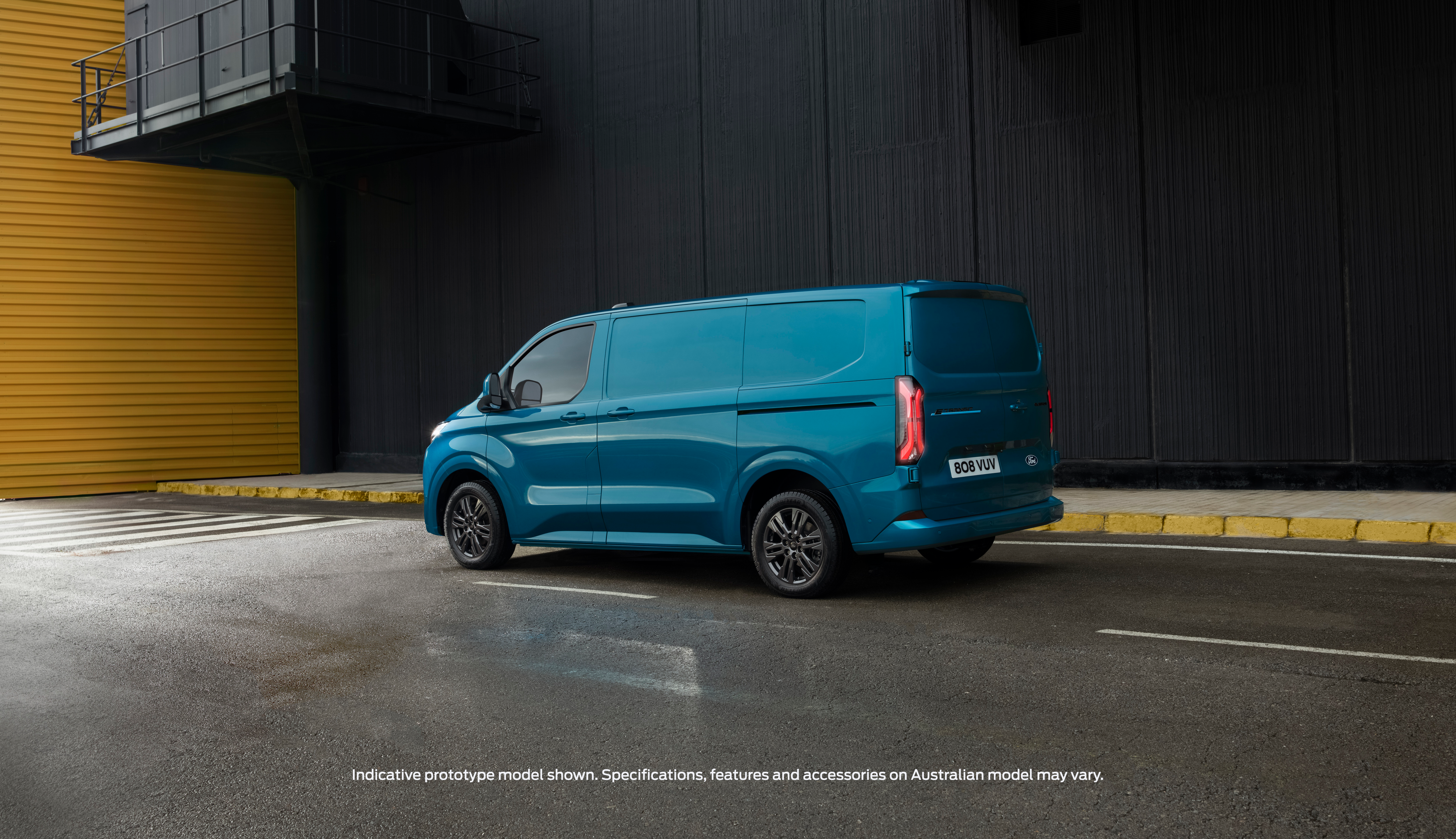
Featuring a significant design update over the internal combustion-powered Transit Custom, Ford says the E-Transit Custom is also “packed with intelligent software and connectivity tools, helping owners to outsmart the day-to-day, maximise vehicle uptime, and ultimately to increase productivity for businesses”.
Ford Australia and New Zealand CEO and President Andrew Birkic believes the E-Transit Custom will complement and enhance the marque’s current commercial line-up.
“The E-Transit Custom is exactly the kind of versatile, practical van business customers are looking for, with the benefit of zero-emissions efficiency.
“We are focused on deeply understanding the needs of commercial vehicle customers and bringing them the best of our global line-up.”
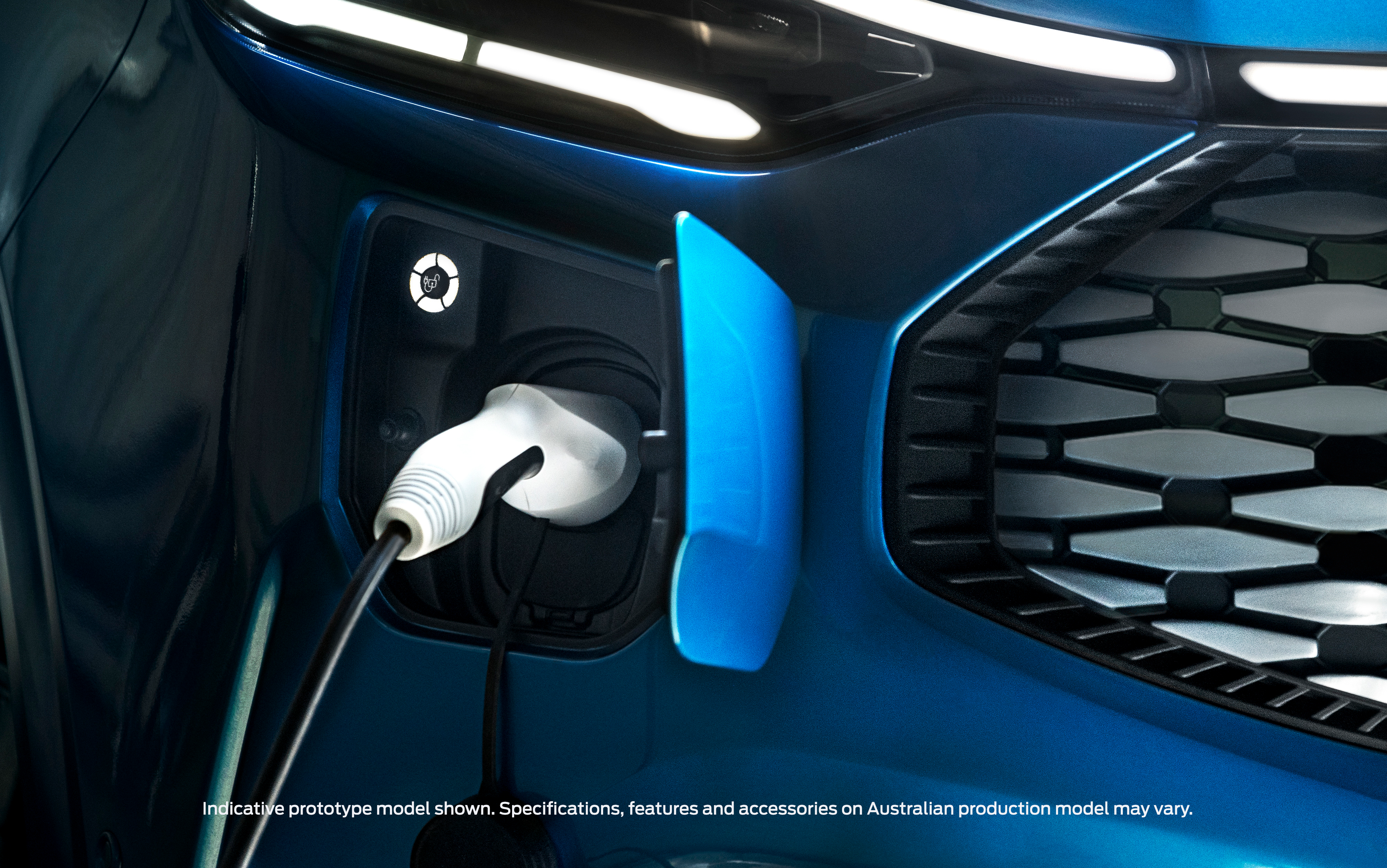
It’s likely the E-Transit Custom will spawn an E-Tourneo Custom variant, with the people-mover also to gain an electrified powertrain.
Production for the E-Transit Custom will be undertaken by Ford Otosan, a joint venture in Turkey at the Kocaeli plant – the current home of Transit manufacturing for Europe.
More features and specifications will be revealed in September this year, almost a year before production gets underway in the second half of 2023.
The story to here
Note: the teaser Ford provided in the lead up to the E-Transit Custom’s reveal was reported as the Tourneo custom, given its matching light signature, as seen below
April 25, 2022: Ford Tourneo/Transit Custom EV teased ahead of May 9 reveal
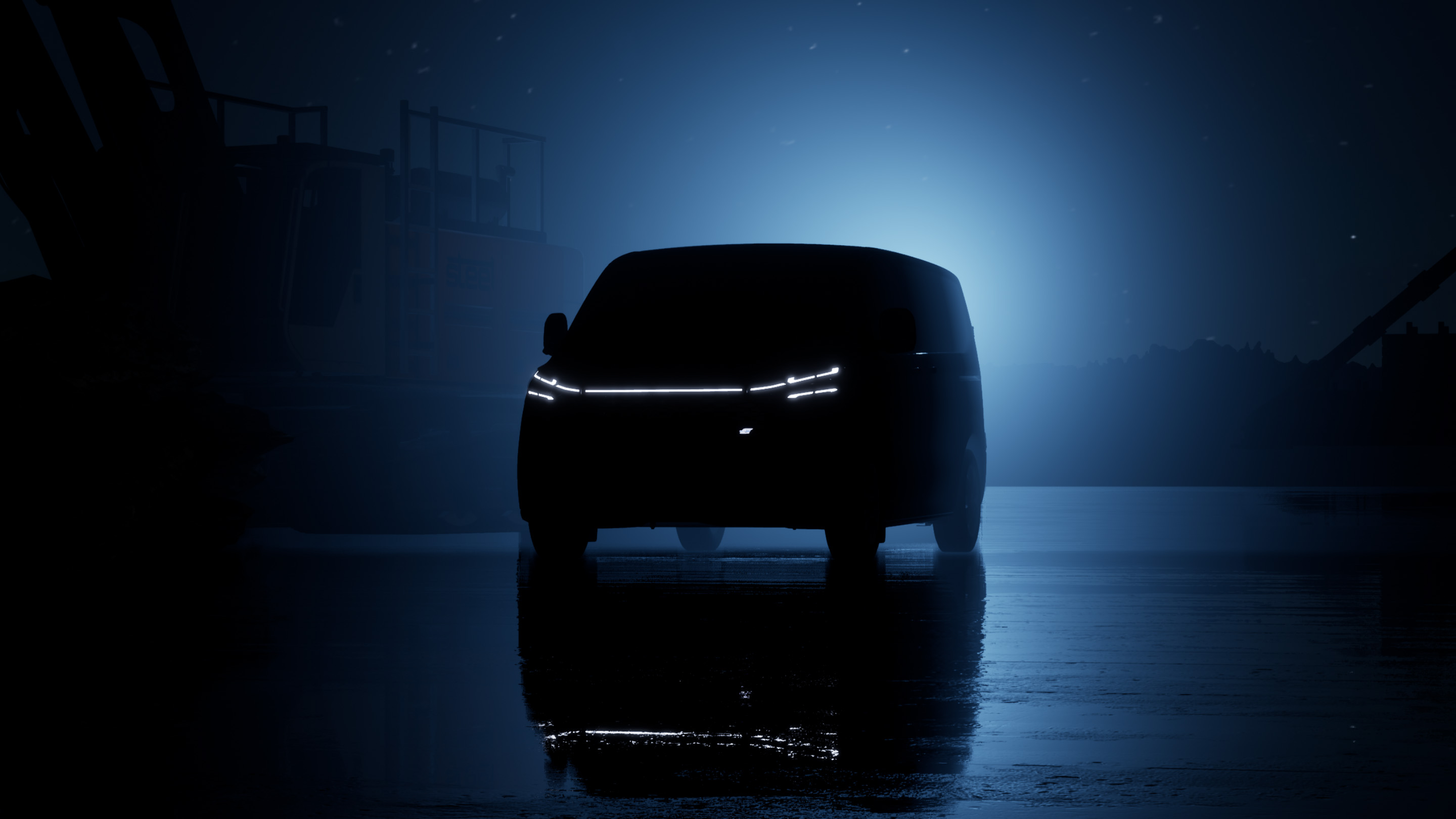
Ford has released a shadowy teaser video for the 2023 Tourneo Custom EV, an electric people-mover variant of the Transit Custom commercial van familiar to Australia.
It’s set to be unveiled on May 9, 2022, ahead of production commencing in 2023.
Joining the E-Transit in European showrooms, the smaller Tourneo Custom will become the second all-electric commercial vehicle offered by the Blue Oval’s new Ford Pro division in the Old Continent.
Although Ford has not confirmed further details beyond its teaser, we know the model is the Tourneo Custom due to the daytime running light signature, which matches a previous image released in March.
The darkened silhouette of the upcoming Tourneo Custom EV makes it difficult to see design details, however, it is unlikely to be one of two Ford models utilising Volkswagen’s all-electric MEB architecture.
Instead, the Tourneo Custom EV is expected to ride on an adapted version of the existing internal-combustion platform, which first debuted in 2012.
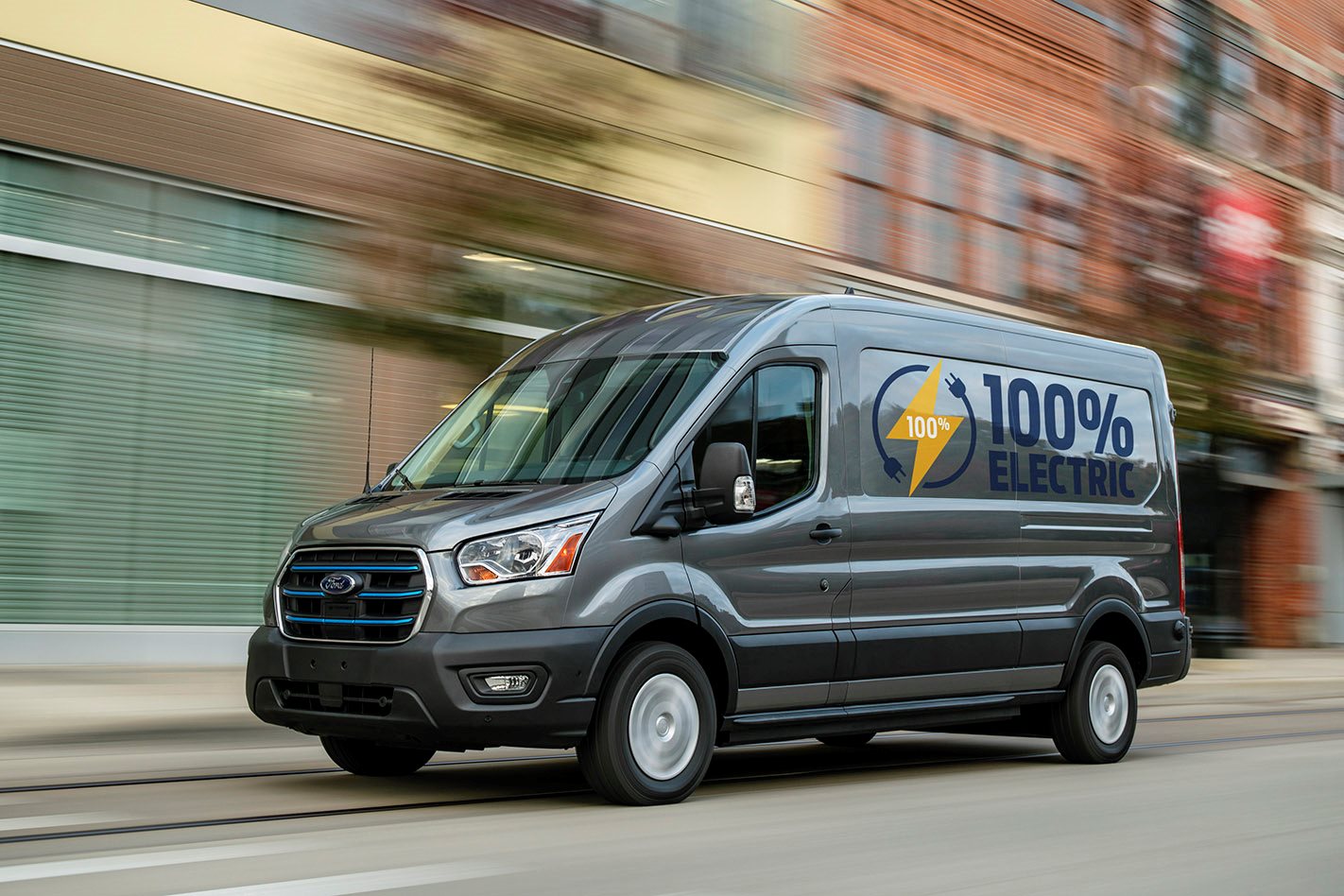
A commercial-orientated Transit Custom EV is also expected in the coming months – and it could arrive locally, with Ford Australia sharing the teaser video for the Tourneo Custom EV on social media.
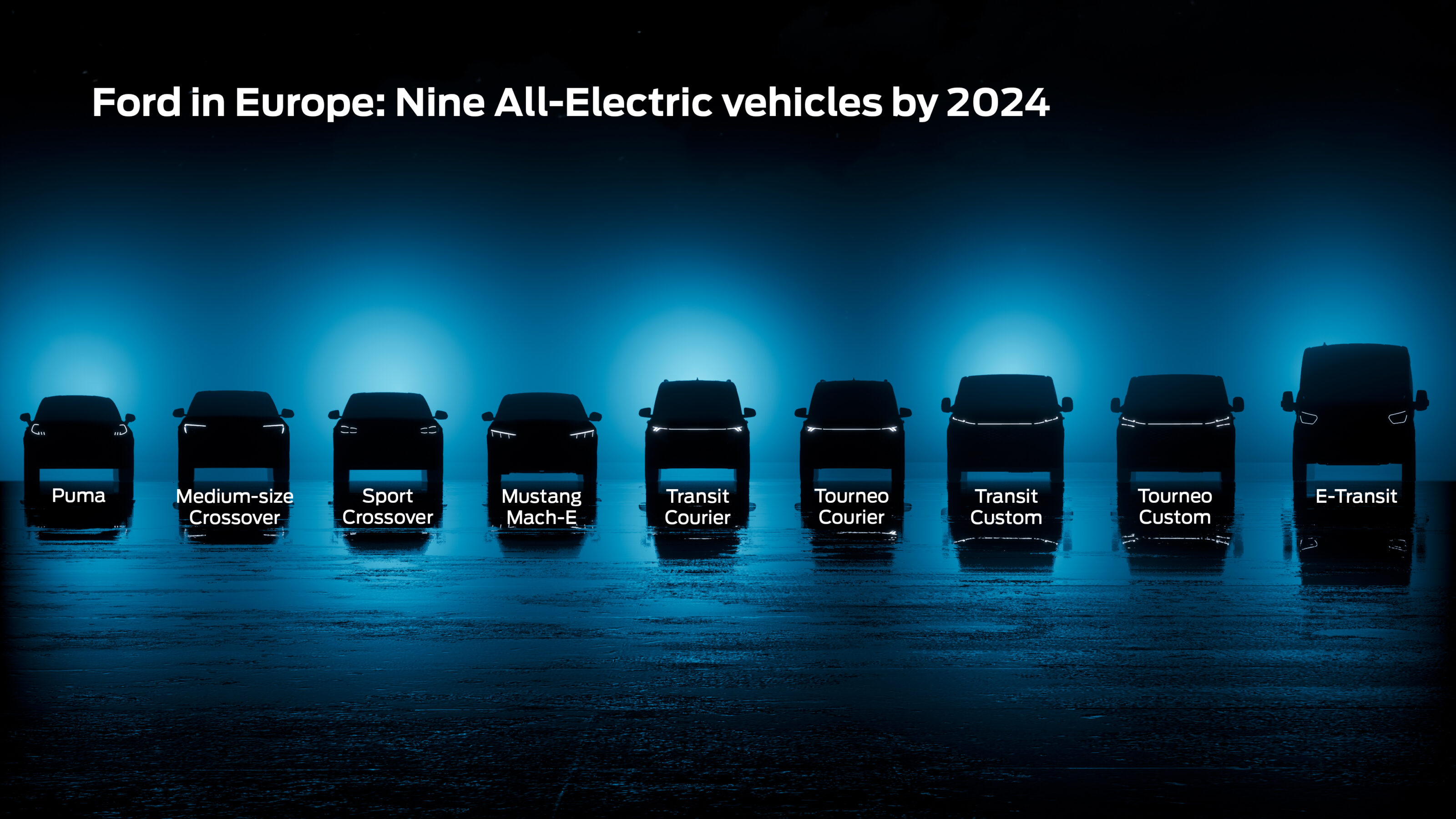
Electric versions of Ford’s even-smaller Transit Courier and Tourneo Courier are earmarked for a 2024 launch.
The electric vans will join the existing E-Transit that went into production in 2021 in the marque’s commercial vehicle line-up.
Ford Australia has confirmed it will launch five electrified models by 2025, with the E-Transit arriving in mid-2022 as its first fully-electric offering.
As part of the joint venture between Ford and Volkswagen, the American giant will launch a ‘medium-sized crossover’ based on the latter brand’s MEB platform. It is expected to slot below the Mustang Mach-E, and could adopt the Mustang Mach-S name.
It will be followed by a sports crossover later down the track, also underpinned by the MEB architecture.
An all-electric Puma based on the existing internal-combustion model will also launch in Europe.
Chevrolet will modify the 2023 C8 Corvette Z06 for select international markets, according to a new report.
According to CorvetteBlogger, the Corvette Z06 will be fitted with a petrol particulate filter (PPF) and additional exhaust piping for the Australian and European markets, making it difficult to retain the floating quad centre-exit tailpipes seen on examples bound for North America and the Middle East.
It is important to note Australia’s less-restrictive emissions standards allow the regular C8 Corvette Stingray to exclude a petrol particulate filter, although the Z06 could include the system due to its greater performance, which is bound to impact emissions.
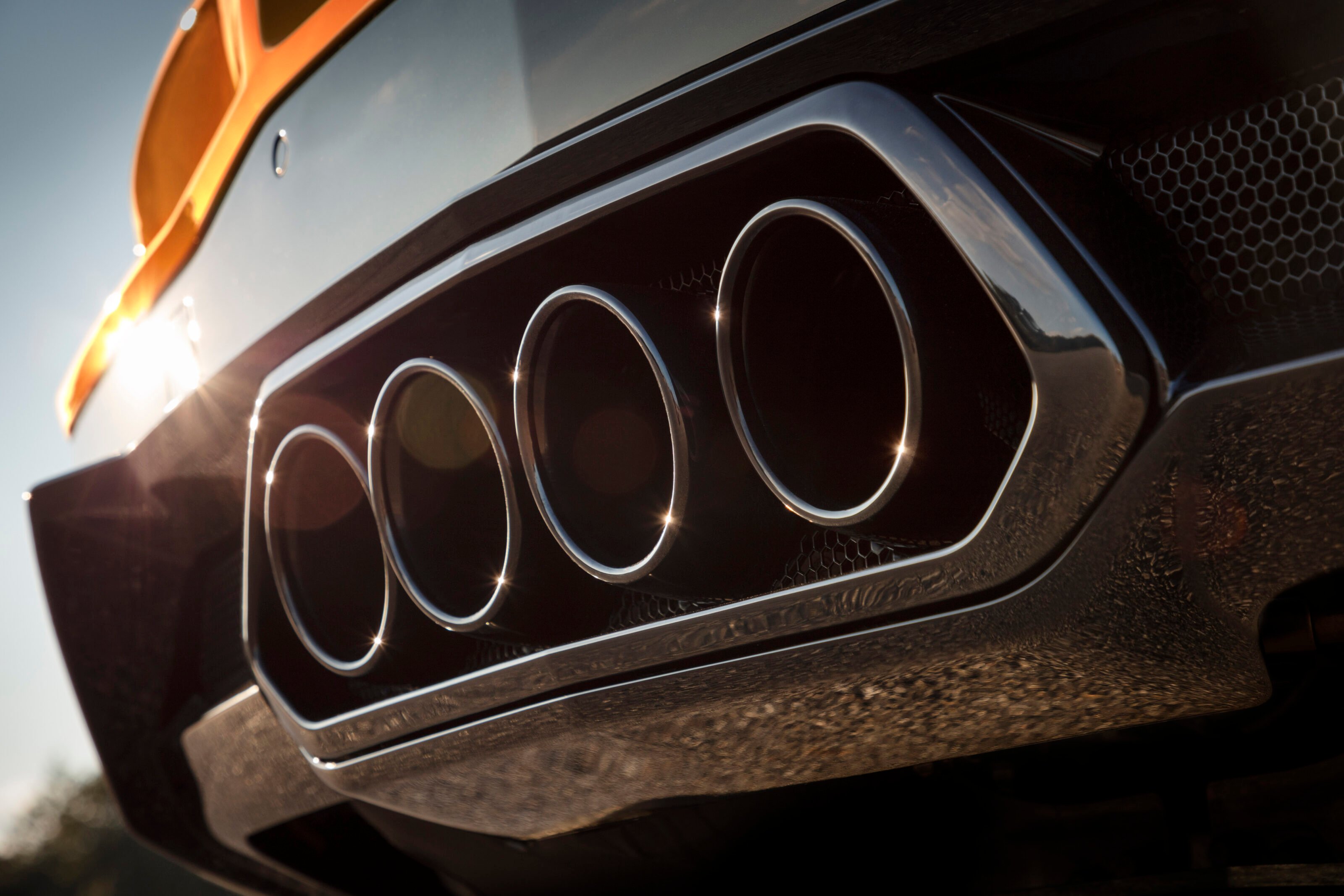
Instead, pre-production models spotted by the enthusiast website show affected examples will be fitted with a more-traditional corner-exit exhaust system.
“The [current] focus is on the Corvette Z06 for the domestic North American market. Details relating to export versions for markets such as Australia and New Zealand will be released in due course,” said a spokesperson for General Motors.
The quad set of centre-exit exhaust pipes were in development for more than two years, with General Motors working to fine-tune the system to ensure it has the correct sound.
In addition, the fitment of a petrol particulate filter could cause trouble for the naturally-aspirated 5.5-litre V8 found under the bonnet of the C8 Z06, although this is yet to be confirmed.
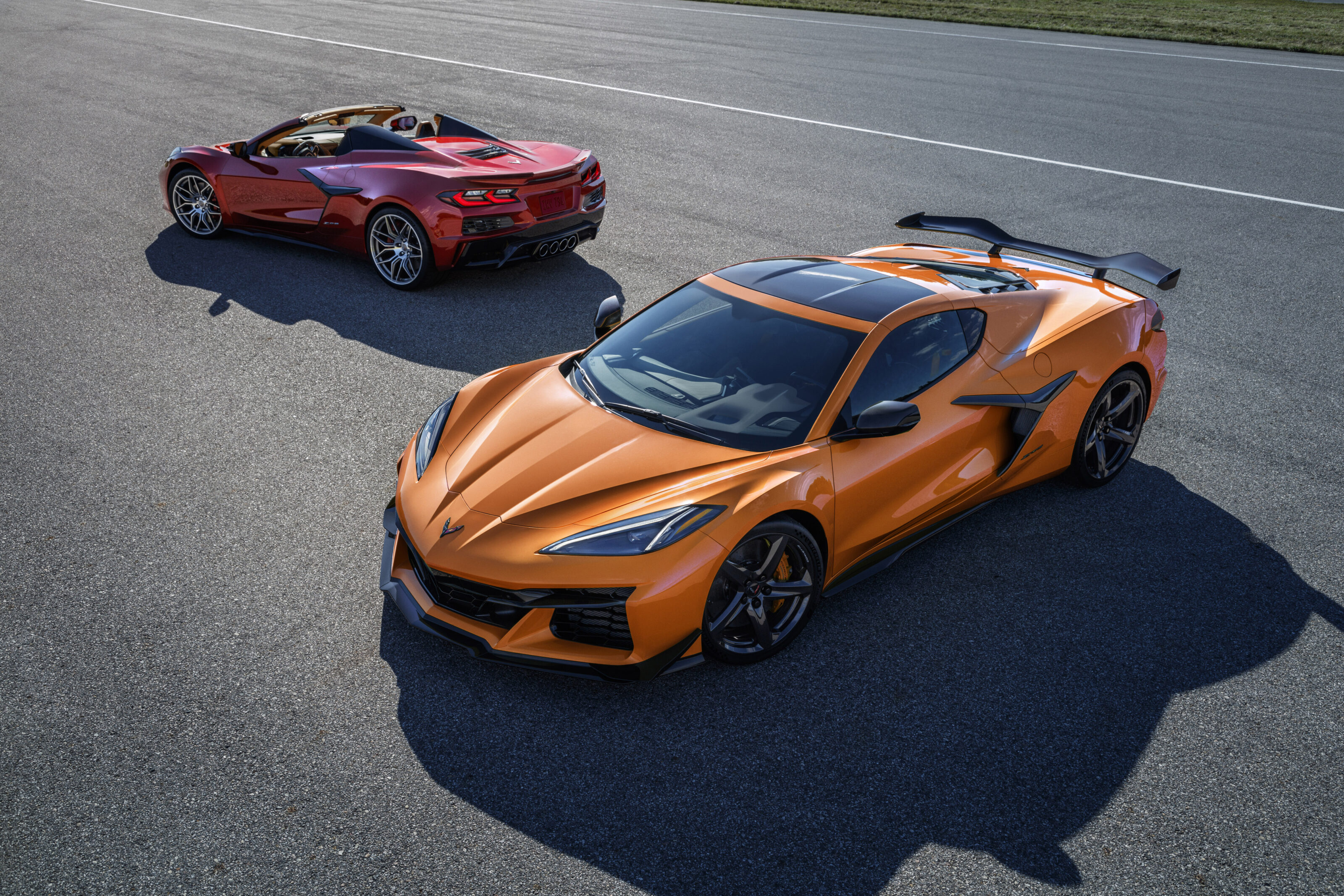
North American variants, which exclude the petrol particulate filter and additional exhaust piping, produce 500kW of power and 623Nm of torque.
The addition of a PPF to the regular Corvette Stingray in Europe sees power drop by approximately five per cent, reducing the 369kW output – as seen on North American and Australian units – to 350kW.
The 2023 Chevrolet C8 Corvette Z06 is tipped to arrive in Australia next year, with additional information expected in the coming months.
Snapshot
- X1 Sport arrives this month, X2 in third quarter
- Priced from $55,900, $59,900 and $67,900 drive-away
- Follows introduction on 1, 2 and 3 Series
The 2022 BMW X1 and X2 Sport Collection models have been announced for Australia, with the former due to arrive in showrooms this month.
The Bavarian carmaker has revealed pricing and features details for its new Sport Collection trim, which was also added to its 1, 2 and 3 Series line-up in February this year.
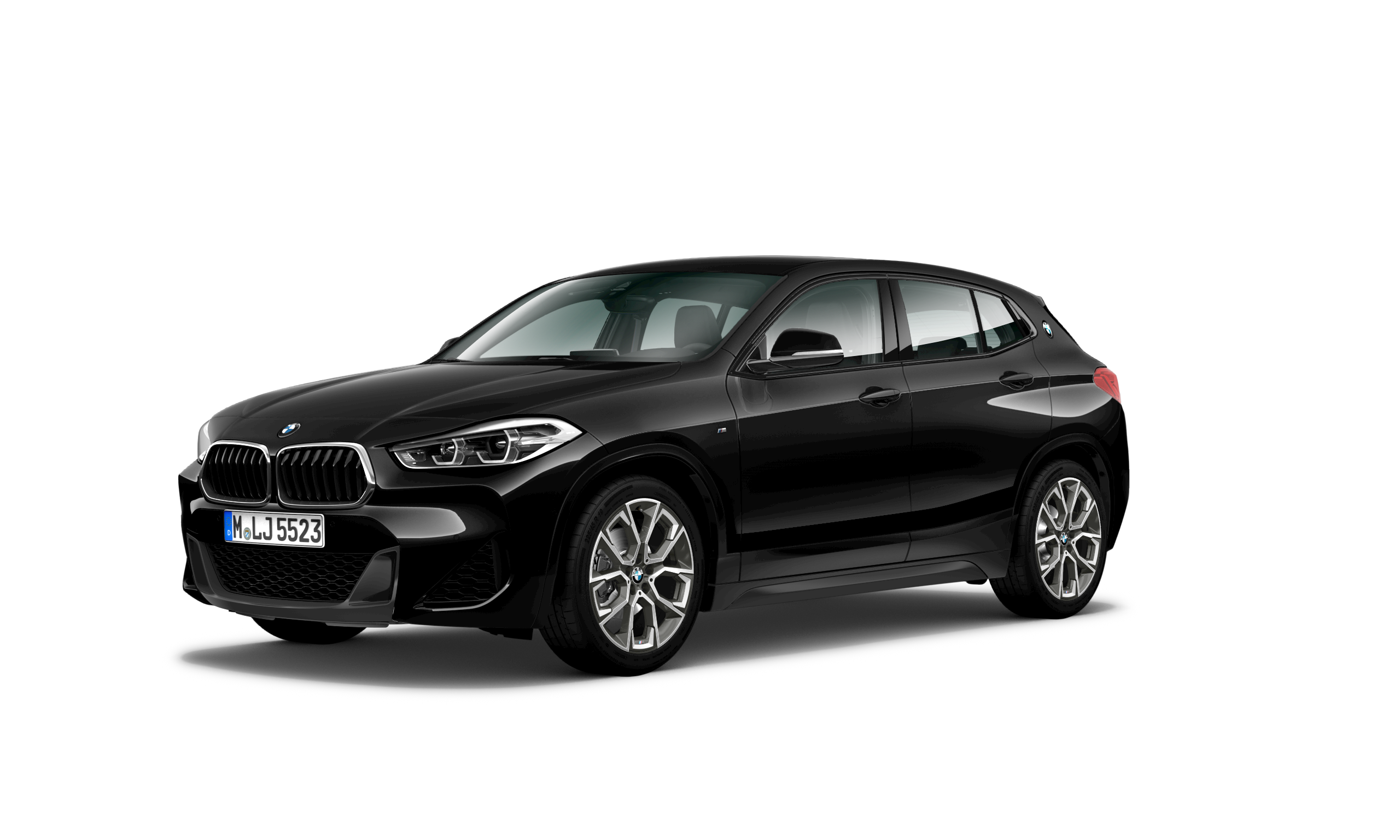
The new trim will be available on the petrol X1 sDrive 18i and sDrive20i variants, as well as the petrol X2 sDrive18i and will nestle in between the base xLine and top-spec M Sport grades.
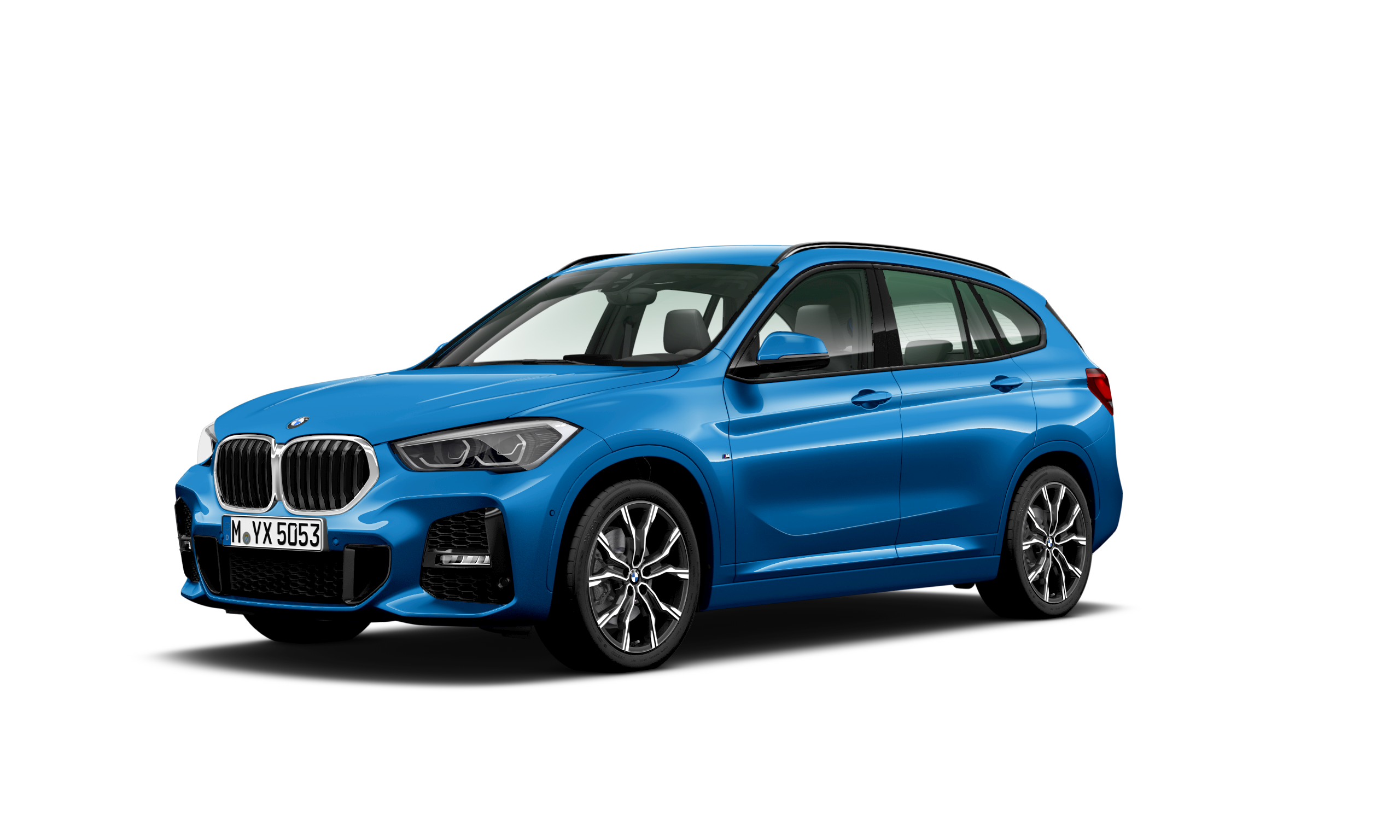
2022 BMW X1 and X2 Sport Collection Australian pricing
The new Sport Collection trim for the X1 sDrive18i comes at an $8000 increase over the regular grade ($47,900), or an $11,000 hike compared to the normal sDrive20i ($56,900).
Additionally, the X2 sDrive18i Sport comes in at $10,000 more than the existing variant ($49,900).
However, in both cases the price difference does include on-road costs so the rises would be lower in real terms.
Pricing is drive-away.
| Variant | Price |
| BMW X1 sDrive18i Sport | $55,900 |
| BMW X1 sDrive20i Sport | $67,900 |
| BMW X2 sDrive18i Sport | $59,900 |
Features
Entering the X1 range in between the existing sDrive18i xLine and the M Sport, the 2022 BMW X1 sDrive18i Sport has a number of standard features, which include:
| Metallic paint (choice of black sapphire or mineral white) |
| 18-inch light alloy wheels Y-spoke 679, bi-colour orbit grey |
| Sensatec upholstery, black |
| Interior trim black high gloss with highlight trim finisher pearl chrome |
| BMW head-up display |
| Navigation System Plus with 10.25-inch display |
| Automatic operation of tailgate |
| Comfort Access System |
| Electric seat adjustment for driver and front passenger with memory function |
| Lumbar support for driver and front passenger |
| Exterior driver-side mirror with automatic anti-dazzle function |
| Seat heating for driver and front passenger |
| Automatic climate control. |
Examples of this trim will come to Australia in only limited numbers, with just 100 cars expected for our shores.
Then stepping up through the X1 range, the sDrive20i Sport gets:
| M Sport Package |
| Metallic paint (choice of four colours: black sapphire, mineral white, mineral grey and M Misano blue) |
| 19-inch M light alloy wheels double spoke 816 M bi-colour |
| Leather Dakota upholstery with perforations; black with blue highlight |
| Interior trim black high gloss with highlight trim finisher pearl chrome |
| Panorama glass sunroof. |
For the X2 the Sport Collection is available on the sDrive18i only, featuring as standard:
| M Sport Package |
| Metallic paint, black sapphire |
| 19-inch light alloy wheels Y-spoke 919 M bi-colour (new) |
| Micro Hexagon/Sensatec black with blue highlight |
| Interior trim M aluminium hexagon anthracite |
| BMW head-up display |
| Navigation System Plus with 10.25-inch display |
| Automatic operation of tailgate |
| Comfort Access System |
| Panorama glass sunroof |
| Electric seat adjustment for driver and front passenger with memory function |
| Lumbar support for driver and front passenger |
| Exterior driver-side mirror with automatic anti-dazzle function |
| Seat heating for driver and front passenger |
| Automatic climate control. |
Availability
The 2022 BMW X1 Sport Collection variants are available from May this year, while the new X2 grade is expected to land in the third quarter.
As more and more automotive manufacturers invest in electric vehicles, many are temporarily diving their operations between EVs and traditional internal combustion engine models.
In a contrast to Ford’s decision earlier this year to establish an EV side of the business in Model E, as well as renaming its ICE operations to Ford Blue, European manufacturers Stellantis, Mercedes-Benz and Volkwagen have all said their respective efforts will continue under the same roof.
For Stellantis, the multi-national conglomerate, which is comprised of 14 brands, believes there’s no benefit to splitting EV and ICE – rather there are more financial incentives to keep the two together.
“I don’t honestly see huge benefits to doing that,” said Chief Financial Officer Richard Palmer.
“We need to manage the company and assets we have through this transition. There are benefits to having the cash flow from the internal combustion business to drive the technology investments we need to make.”
Mercedes-Benz’s head honchos say keeping both EV and ICE under the same roof allows both to grow, advancing the company as one.
“We are not pursuing the strategy to break up the company in an ICE part and ‘the good part’ … or an old part and the new part,” said Mercedes-Benz’s head of finance, Harald Wilhelm.
“We are transforming the whole company and transforming it into the electric world.”
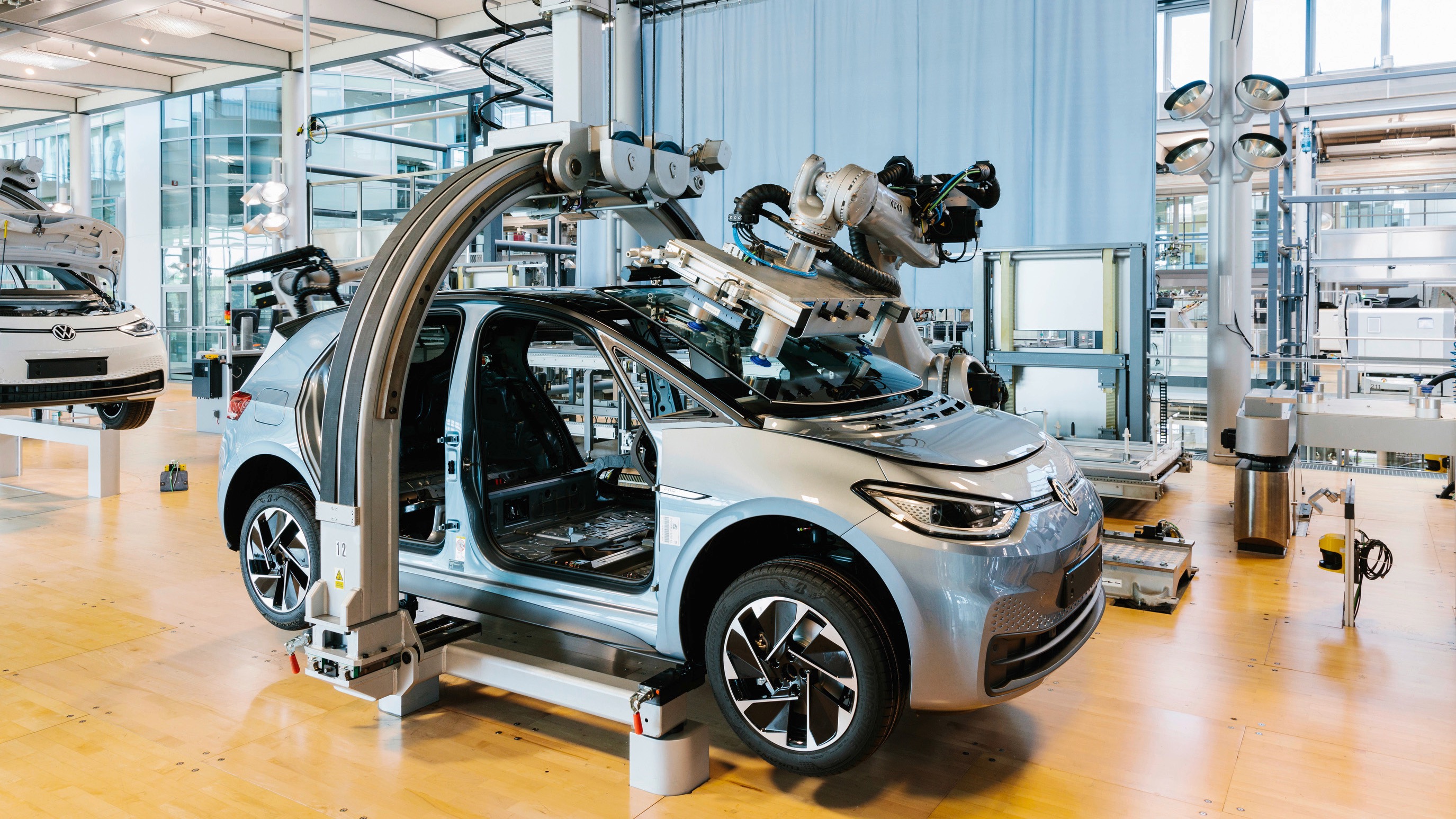
Volkswagen CEO Herbert Diess said the ICE business can assist its EV operations through development and capital assets.
“We think making the best use of ICE assets to be fast and competitive in the electric world is the best way forward for us,” said Diess.
While Volkswagen has committed to a fully-electric vehicle line-up in Europe by 2035, Stellantis and Mercedes-Benz have both targeted 2030 as their switch-over dates, roughly the same time production of ICE vehicles will be banned by the European Union.
A deal for Audi to take over McLaren’s Formula One operations has stalled out, according to reports.
Audi had planned to heavily invest in the McLaren Formula One team off the back of the Volkswagen Group’s announcement of both Audi and Porsche joining the championship from 2026.
A deal between Audi and McLaren was understood to be all but signed – although as reported by Automotive News Europe, insiders close to the project have claimed “price expectations are too far apart”, with Ingolstadt believed to be planning an offer of €500 million (AU$742m) for Woking’s F1 team and road car operation.
McLaren team principal Zak Brown denied there were any plans to sell to Audi, telling Motorsport.com the team would remain under the ownership of shareholders.
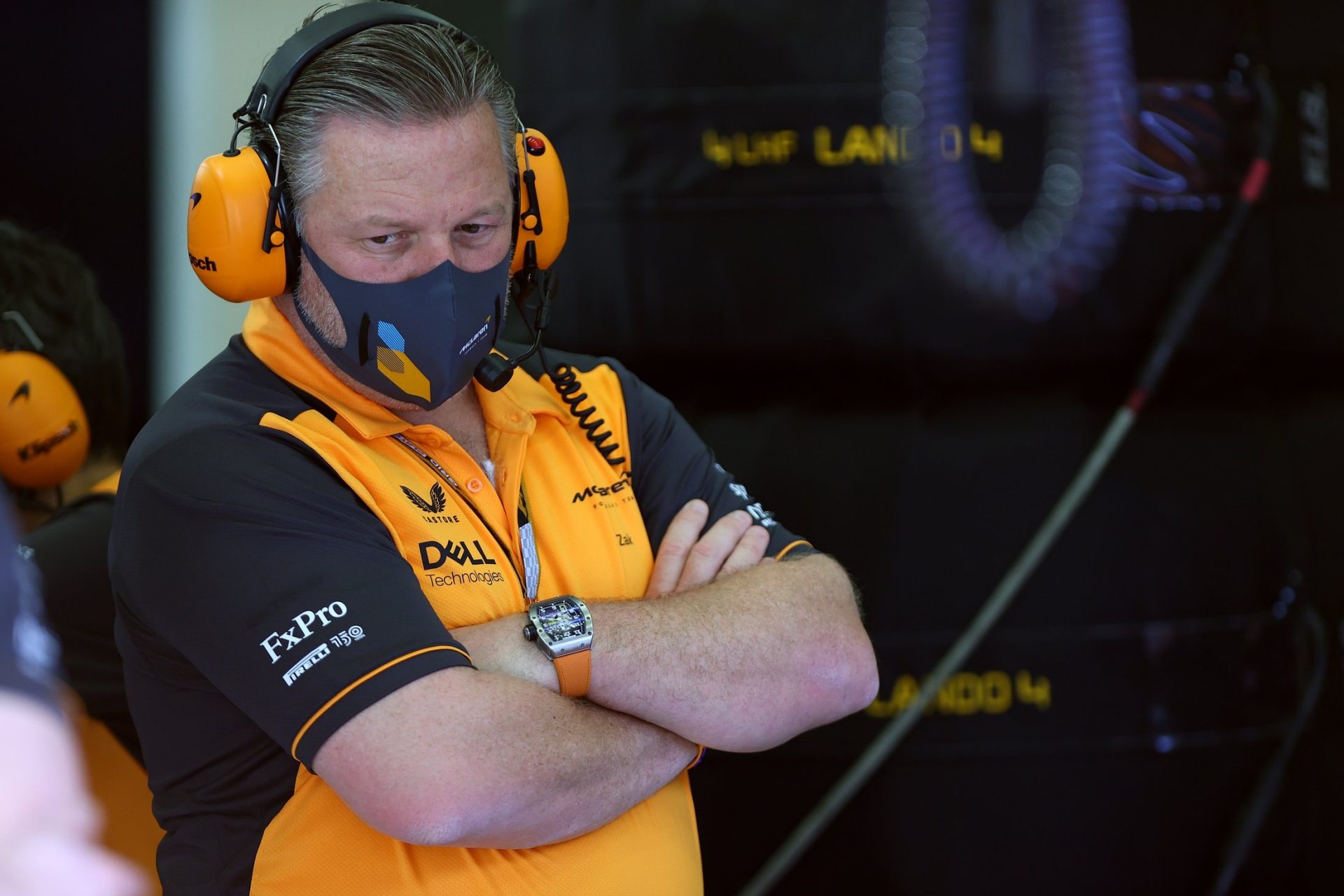
“Our shareholders are very committed to McLaren,” said Brown.
“We did have conversations with Audi, and we’re not for sale. We’re very committed to our future and we’re doing really well on the track.
“Shareholders are making substantial investments to give our team the resources we need to get back to the front, and commercially we’re doing really well. Morale in the team is really good. We don’t have any interest in selling the racing team.”
“We’re McLaren F1. That’s what we’re going to remain, and we’re going to remain owning the racing team.
“Our terms for any partnership would be we retain ownership of the racing team. And if anyone wants to have a conversation that is different to that, then there’s no conversation to be had.”
Talks between Audi and the Ferrari-powered Alfa Romeo/Sauber team as well as Williams Racing are reportedly ongoing, the latter of which shares tenuous history with the Volkwagen Group through team principal and CEO Jost Capito, former head of VW Motorsport.
Meanwhile, Porsche’s ambitions to join the F1 paddock remain on track, as a deal with Red Bull Racing to become the reigning world champion’s engine supplier is set to be announced this year.
2026 is the most likely year for Porsche and Audi to join Formula One as a new generation of engine and power unit is set to be introduced, with both manufacturers reportedly undertaking development work already.
September: Neue Klasse sedan concept previews next i3 & 3 Series
BMW has unveiled its new Neue Klasse sedan concept, revealing our clearest look yet at how the next i3 and 3 Series models will look.
Details at the link below.
May 9: New 3 Series to debut BMW’s Neue Klasse platform
BMW’s upcoming ‘Neue Klasse‘ (New Class) architecture for electric vehicles will debut in a mid-size offering, the company’s boss has confirmed.
Comments from BMW CEO Oliver Zipse, in an earnings call reported on by industry journal Automotive News, add further credence to reports that the next-gen 2025 BMW 3 Series could be a fully electrified offering.
“When it hits the market, it will be concentrated on the 3 Series segment and at that point in time the market will have developed into a size where it is reasonable to have only one drivetrain in that architecture,” Zipse said.
Until last year’s Munich motor show, it was expected the Neue Klasse platform, which designed primarily for electric vehicles, would also underpin some key petrol and diesel models. Now we know it will not only be produced exclusively for EVs, but also that the company will focus its application on midsizers – which will undoubtedly include the next X3 SUV.
Later, the platform will star in more “exclusive high-performance” models, a spokesperson added in a follow-up comment for Automotive News.
Zipse added on the call that BMW expects to hit cumulative sales of 2 million electrified models (pure EVs and PHEVs) by 2025, with fully half of its sales to be pure-electric by 2030.
The story to here
October, 2021: BMW is said to be working on an all-new electric sedan to be unveiled in 2025, which is expected to come to market at the same time the company is set to show off its solid-state battery.
Based on the company’s all-electric Neue Klasse architecture, the BMW sedan could end up being the next-generation 3 Series, and will launch at the same time the new battery technology makes its debut, according to Autocar.
The current 3 Series is due for replacement in 2025, based on the model’s seven-year life cycle.
Most major car manufacturers are investing heavily in developing solid-state batteries, with the expectation they will be able to offer significantly greater energy density, as well as much improved recharging times.
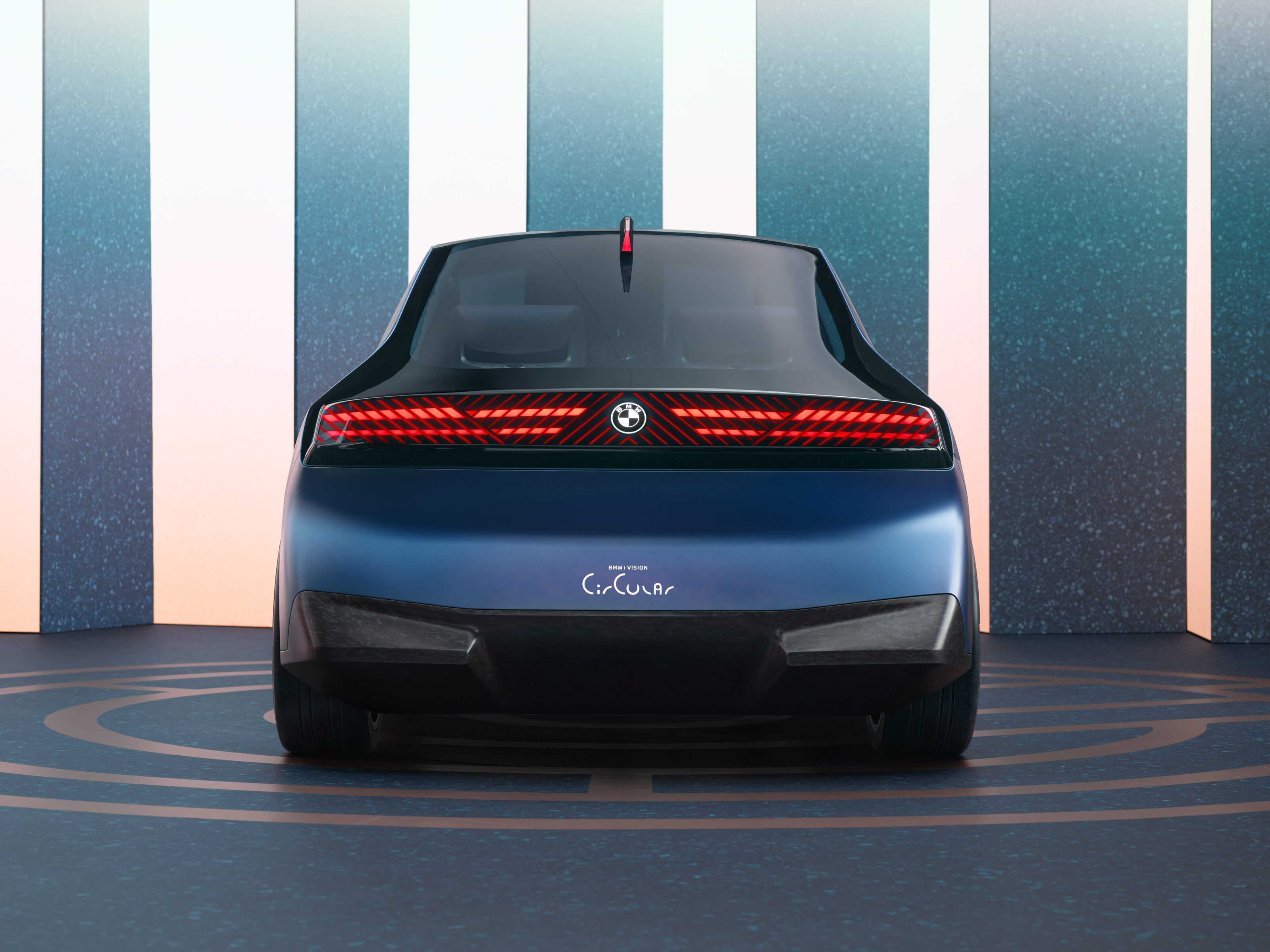
What that means is smaller and lighter batteries, a longer driving range from a single charge, zero to 100 per cent recharging in just 10 minutes.
BMW, Volkswagen, and Mercedes-Benz are among the top carmakers to have invested millions of dollars in the technology, but it appears Toyota is leading the race, with over 1000 patents related to solid-state batteries, Nikkei Asia reports.
Earlier this week, BMW announced its Neue Klasse platform will mark the beginning of a new era of design for the German manufacturer.
“The Neue Klasse represents the beginning of a new phase of operations for BMW,” the company’s development chief, Frank Weber, told Autocar.
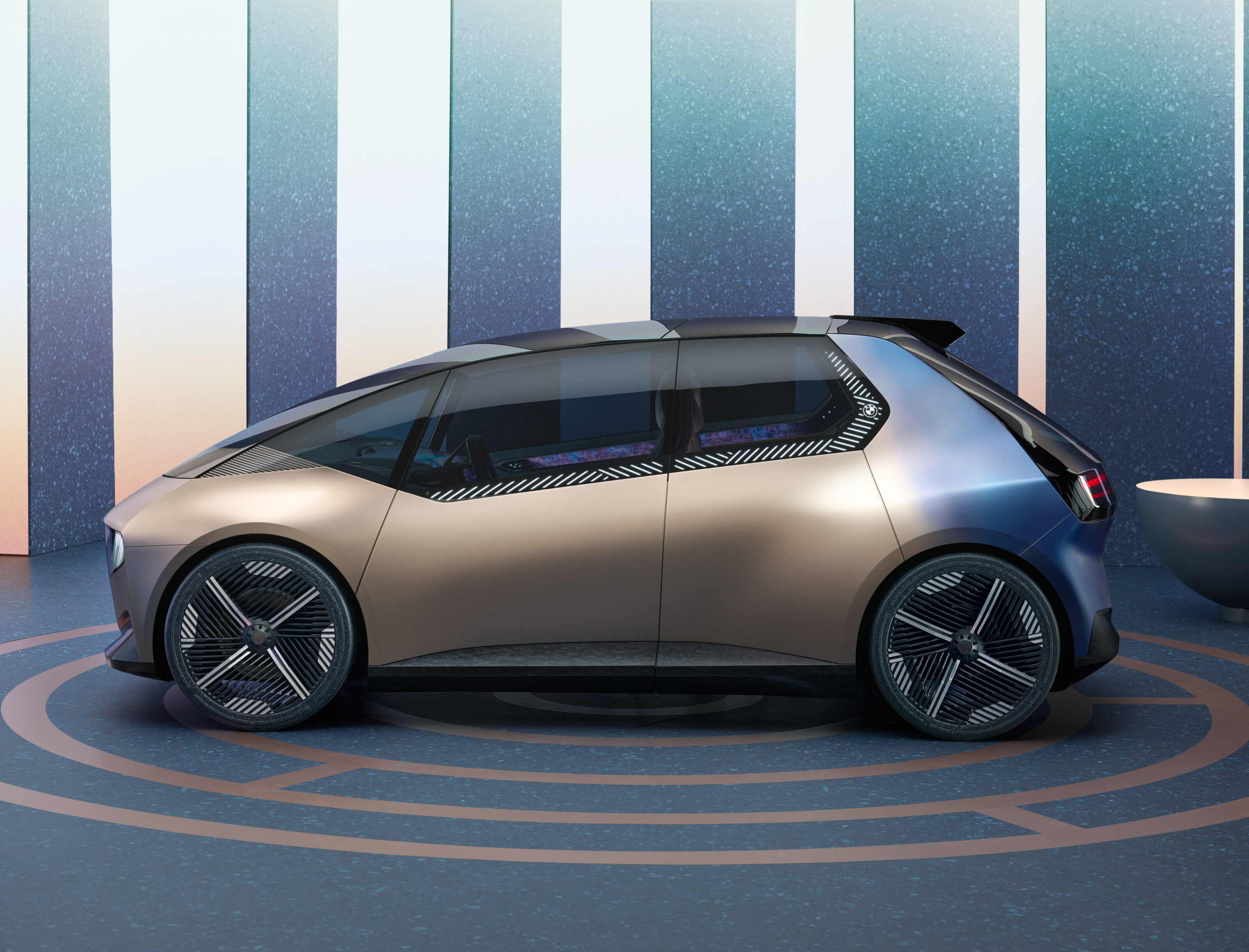
“It’s scaled to allow us to build electric cars from a 2 Series-sized saloon up to an X7-sized SUV,” he said.
“People are expecting different aesthetics. That’s why we’ve developed a new styling direction for our electric models.”
It’s too early to know when solid-state batteries will be fitted to Neue Klasse models, but with Toyota seeking to launch an electric car in the first half of this decade using the tech, BMW won’t be too far behind.
Welcome
Price as tested: $55,510 (drive-away, including $520 premium paint) Fuel since collected: 10.1L/100km @ 258km (2020km on odo)
What is it with Korea right now? From the widening range of warm and hot sports variants in the Hyundai and Kia line-ups, to the growing number of electrified models and the genre-bending design risks of their latest models, the Republic’s on a roll.

I’ve just come out of five months in the new-gen Hyundai Tucson, in both 2.0-litre petrol and 2.0 turbo-diesel forms – along with a week in the 1.6 turbo petrol – concluding that the diesel is comfortably the pick of the bunch for power and fuel consumption.
Now I’m moving into its newly launched alter-ego, the 2022 Kia Sportage, which I’ll hold onto for a few months. This again is a 2.0-litre turbo-diesel, configured in all-wheel-drive form with Hyundai Motor Group’s own in-house eight-speed torque-converter automatic.
That diesel delivers 137kW and 416Nm, with official fuel figures of 6.3L/100km on the combined cycle. I’ve mostly done local urban driving so far, which is claimed at 7.7L/100km – whereas I’ve been getting 10.1L/100km. Out here in reality, that’s the number I’d expect for me, but more relaxed drivers should come a little closer to the claim.
Where I previously drove the easily recommended mid-range Tucson Elite, this is the top-shelf and very pricey Sportage GT-Line – $52,370 before on-road costs, listed at the time of writing with a national drive-away price of $54,990. I’m driving it in Jungle Wood Green, a $520 paint option.

This spec is up $2380 over its predecessor, but it’s a lot more car, too. Where previously there was only one wheelbase, the global 2022 Sportage line gets both a shorty and a stretch – although Australia rightly gets only the latter. At 2755mm, the new local model’s footprint is 85mm longer than the stumpy (sorry, ‘sporty’) body we got before.
The new Sportage measures 4660mm long overall, compared to 4485mm for its predecessor, resulting in 77 litres more boot space at 543L. (That’s an extra 68cm rolling carry-on case for your next flight.)
What is it with Korea right now? From the growing number of electrified models and the genre-bending design risks of their latest models, the Republic’s on a roll.

Standout features for the flagship of this new generation includes a pair of glorious 12.3-inch displays – one for the driver, one in the centre of the dash – embedded in a long curved panel that evokes thoughts of Mercedes-Benz and the new VW Touareg. Good company to be in.
Other interior highlights include leather seats with a lovely suede upper section, ventilated and heated front seats, powered driver and passenger seat adjustment, ambient lighting, a panoramic sunroof, bird’s-eye surround-view camera display, and wireless phone charging – but only wired Apple CarPlay and Android Auto, whereas the entry-level S variant gets wireless connectivity but no charging pad. Let that sink in.

From the outside, the top-shelf Sportage stands apart with 19-inch alloy wheels, dual-LED headlights, a subtly different grille pattern and unique styling for the lower bumper garnish at both ends. To this writer’s eye, the design of that lower garnish looks a little out of place on the GT-Line, whereas the version applied to the S appears sportier and better integrated.
Already standard kit from the entry S model is blind-spot monitoring, adaptive cruise control, speed-limit sign reading, lane follow assist, lane-keep assist, rear parking sensors and a (still uncommon) front centre airbag, while the SX adds dual-zone climate control, rain sensors, front parking sensors, auto front windows (no variant has auto rear windows), and the SX+ adds Harman Kardon audio, LED fog lights, paddleshifters, automatic gesture tailgate, keyless start and tinted rear glass.
There’s also a full-size spare under the floor of that bigger boot.

First impressions of this new Sportage are good. Because, look, spoiler alert: it’s a really good car that rides comfortably and pulls hard. Interior fit and finish, and materials, are all of the segment-best standard that we’ve come to expect – although there’s the little things that stand out for the easily disappointed: no soft knee pad for the driver, hard plastic window sills in the second row, near-useless bag hooks in the boot… all things I’ll look at it in more detail as we go.
In the years ahead, the Sportage will face not only compelling current-gen rivals like the popular RAV4, Forester and CX-5, but also the newly launched Outlander and incoming new X-Trail. It appears worthy, but the next few months will be telling.
Update 1: On the Road
Fuel since collected: 9.0 L/100km @ 873km (2893km on odo)

There are three powertrains in the new Kia Sportage line-up, but only one of them is properly deserving of your attention: this 2.0-litre turbo diesel.
The naturally-aspirated 115kW/192Nm 2.0-litre petrol mill and six-speed auto combo at the entry end of the range is a stressed price leader, while the usually impressive 132kW/265Nm 1.6 turbo petrol and seven-speed dual-clutch auto occasionally feels overwhelmed in a family SUV that weighs a few hundred kilos more than its best application in the Cerato GT hatch.
So where the 2.0 petrol is best left to corporate fleets and the 1.6 turbo petrol at least deserves consideration, this 2.0 turbo diesel with its eight-speed automatic is unquestionably ‘the pick’ for effortless driving – although it comes at a $7000 premium over the 2.0 petrol in the entry S grade and a $3000 premium over the 1.6 turbo petrol in the SX+ and GT-Line trims.

Like the identically-powered Hyundai Tucson diesel I spent time with before, this Sportage is responsive, to the point it can sometimes surprise in its eagerness to leap off the line. To its credit, it achieves this without feeling unpleasant, delivering progressive pull.
There’s a reassurance in big torque that owners of underengined cars can’t appreciate, and it’s that quick getaway and confident overtaking ability that makes this engine so compelling.
There are selectable drive modes available, including a ‘Terrain’ set I haven’t tested yet, but the others are barely needed. Eco doesn’t add much of a saving and Sport is unnecessary – because Normal is just right.
In its on-road character, the new Sportage marks a significant improvement over its predecessor – and, really, that older model had few foibles to begin with.

That eight-speed auto – a torque converter rather than the dual-clutch unit offered in the bigger Sorento – will very occasionally hunt for gears when pushed hard, but it is mostly a smooth shifter and one Kia can be proud of.
The Sportage diesel’s competence is completed with on-demand all-wheel drive, but unlike that Tucson with which it shares so much, the Sportage benefits from Kia Australia’s local ride and handling – a program Hyundai has dialled back, claiming its global tune is already spot-on.
In its on-road character, the new Sportage marks a significant improvement over its predecessor – and, really, that older model had few foibles to begin with.

Indeed, even compared to the Tucson, the Sportage feels more planted than the slightly heavier Hyundai (1773kg to 1759kg), while handling potholes and undulations with a touch more grace – even on its big 19-inch wheels and Nexen Roadian GTX 235/55 ‘touring’ rubber. And while I’m not one to treat a midsize SUV like a sports car, the Sportage is surprisingly flat when pushed through the lovely winding hills of Melbourne’s outer east.
Cabin insulation is good, aided by a fairly refined engine that combines to keep the traditional diesel rattle out. Wind and road noise are also well suppressed, and with the GT-Line grade’s already impressive interior trim, it all makes for a neatly premium experience.
More on that interior in our next instalment.
Update 2: The Great Indoors
Fuel since collected: 7.2 L/100km @ 1608km (2020km on odo)

Our long-term 2022 Kia Sportage has piled on another 1600km, serving not only as my family car, but also as support for Wheels Car of the Year and Motor Performance Car of the Year testing.
A significant chunk of that travel came on the highway – where diesels are at their best and motoring journo diets are at their worst – and fuel consumption for our 2.0-litre turbo diesel Sportage has fallen to a respectable 7.2L/100km as a result (down from 10.1L/100km in our last instalment, of mostly urban driving).
All that road trippin’ provided ample opportunity to consider the cabin of this new Korean, which now rides on a longer wheelbase for its exclusively five-seat design.

Up front, long-distance driving is aided with good shoulder and head space, seat bolstering well-suited to overfed Aussies, and good under-thigh support. The cushions of the seats are a tad firm, but not uncomfortable, and while the “leather-appointed” upholstery lacks any sense of luxury, it doesn’t feel cheap.
To Kia’s credit, the suede-like fabric across the shoulder of the front seats adds more than a little premium flair and feel. I would’ve liked to see this applied to other surfaces in the cabin – and really any sort of padding at all to either of the knee-contact surfaces of the centre console and the door plastics.
In this spec, the Sportage gets a grippy rotary gear shifter, and while it’s only plastic – the look and feel helps to boost an already attractive interior

The steering wheel of our GT-Line trim has a nice faux-sporty feel for those into dreaming of quicker things, and the spoke-mounted media and cruise controls are easy to master – although flicking down rather than up for skipping to the next song feels counterintuitive.
In this spec, the Sportage gets a grippy rotary gear shifter, and while it’s only plastic – you’ll find a classy knurled jewel-like treatment for the Tucson’s rotary shifter – the look and feel still helps to boost an already attractive interior.
We’ll talk more about infotainment next month, but it’s worth adding here that the GT-Line’s huge infotainment displays – yes, two of them in a very Mercedes-like arrangement – really complete that advanced look, although the main display could stand to be just a few centimetres closer to my driving position…

Rear comfort doesn’t miss out on much, with generous knee and toe room behind my five-foot-nine driving position, and even a taller driver would leave plenty of space behind. Head room suffers a little in the second row, however, with my hair rubbing against the curved outboard edge of the ceiling.
You’ll squeeze three fit adults across the second row without too much complaint, but don’t expect to get much of an adult into the centre if you’ve got a child seat in both outboard spots. (There are two ISOFIX positions in total.)
Storage up front is good, with a covered cubby ahead of the gear shifter, big cup holders, another cubby behind those, a good-if-not-cavernous space under the centre armrest, and a passable glovebox. The doors get narrow document and bottle holders, and a handy enclosed space in the hand grab.

Rear passengers get a tight map pocket and bag hook on the front seatbacks, a clever coat hanger on the front headrests, tight cup holders in the dropdown centre armrest, bottle holders in the door, and another handy space in the hand grab.
There’s 543 litres of storage in the back with the rear seats up, growing to 1829L with those seats folded – and this is all with a full-size spare under the floor. That first number beats the related Tucson’s 539 litres by just one family-sized ice cream tub, while the latter falls short of Hyundai’s impressive 1860-litre claim.

Importantly, the new Sportage’s storage capacity comfortably hoses the old short-wheelbase Sportage’s 466/1455L boot, and it’s a convincing rival to popular offerings like the RAV4 (580L seats up, no seats-down figure claimed), and the CX-5 (442/1342L).
There are no clever tricks to the rear storage area’s design, however, with its versatility limited to a couple of awkwardly designed bag hooks and whatever you can fit in and around the spare wheel.
Next month: infotainment done right… mostly.
Now connecting
This month: 432km @ 7.8L/100km Overall: 2913km @ 8.3L/100km
These days, there’s a significant divide among car brands when it comes to the look and feel of their infotainment suites.
Some work to keep the investment down, mindful that (probably) most buyers are rarely going to use the main interface, so prevalent is Apple CarPlay and Android Auto. Indeed, many car reviews gloss over the infotainment factor, noting simply that the popular phone mirroring systems are onboard before moving on to ‘more important’ aspects of the car.
Others – in this case, our new 2022 Sportage – treat infotainment as a critical piece of the overall package, knowing buyers have come to expect a stylish, speedy and simple interface on every screen in their lives.

In the case of our Sportage, and all new Kia models, this means a mix of novelty and a deceptively basic interface with all the key functions falling intuitively to hand.
Our top-shelf GT-Line variant gets two huge displays in the dash, both 12.3 inches, which is about as big as most landscape-oriented infotainment screens get right now.
On ignition, you’re greeted with a stylish animation of the new KIA (or is it KVI?) logo streaking across the screens before settling in to a conventional digital instrument cluster behind the steering wheel and, for the main display, a tastefully clean view that looks like it could be the box-fresh lockscreen on your phone.

It’s not merely cosmetic, though: the bottom-right corner of the display is dedicated to a subtle, simplified map of your current location – and just like the main maps screen, it moves as you drive. It’s not especially useful, but it’s a thoughtful design piece.
With a swipe from the right, the main display reveals two rows of icons, offering quick access to key functions. There’s a charmingly ’80s colour theme of pink-and-blue gradients to the icons, drawn to look as though they’re made of neon tubes.
There’s little to be said about each individual ‘app’, except to note that all work intuitively and fast. The radio features FM, AM and DAB+ digital bands as expected, with the latter suffering the same pitfalls as all digital radio systems: unpredictable reception, and none at all in long tunnels.

And, of course, there’s Apple CarPlay and Android Auto. Frustratingly, both require a wired connection despite the vehicle having wireless charging – yet Kia’s cheaper, lower-spec models get wireless connectivity and no charging pad. It’s a parts-sourcing issue, but it might still leave you feeling a little ripped off.
The Sportage also features a clever third display that flips between audio and air-conditioning controls as needed, although it does mean you miss out on physical switches for these controls. You can, however, define one of those two control sets as the default, switching back to that screen automatically.
The instrument cluster behind the steering wheel presents a clear and easily understood interface, with a wide centre pane devoted to trip details, fuel consumption, speed, navigation and the vehicle’s best guess at your attentiveness – handy for long road trips.
That big driver display features a few stylish designs depending on which driving mode you’ve selected, with additional views including a mean race look in sports mode and a green-hued design in eco mode.

There are some shortcomings, though: the instrument cluster can’t be customised in any significant way – that generally remains the domain of premium brands – and there’s no head-up display projected onto the windscreen.
On the safety front, the Sportage gets all the latest tricks as detailed in my first instalment (head to whichcar.com.au/kia/sportage to catch up), but one particular area stands out as a welcome improvement over the same feature in its Hyundai-badged platform mate, the new Tucson: lane-keep assist. In both SUVs, the lane-keep assistant can detect road lines and the edge of the road, and pull you back away if you get too close to either.
But, where the Tucson can be infuriatingly sensitive and aggressive in its action and loud in its alerts, the Sportage beeps less often and more quietly when it does, while tugging more gently at the wheels – a polite assistant rather than a grumpy chaperone. That alone could be a deciding factor for some buyers.
The end
This month: 512km
Overall: 8.3 L/100km @ 3425km
You needn’t go back too far into Kia’s history to find the last time it was seen by most as a ‘cheap and cheerful’ option for budget-driven buyers, lacking Toyota and Honda’s long record of reliability, or the ‘Australia’s own’ appeal of Holden and Ford.
Well, Holden’s gone, Ford might as well be the Ranger company for all the effort it puts into selling the Escape, and Kia is now right in the mix with Toyota and Honda when it comes to key metrics like quality, packaging, power, comfort and technology.
Indeed, in a recent Wheels comparison test with a couple of old faithfuls, the Subaru Forester and Mitsubishi Outlander, Kia’s new Sportage scored an equal first-place result with the Forester.

Already in 2022, with production constraints and chip shortages ravaging the market, Kia has sold 3936 Sportages in Australia – well behind the ever-popular Toyota RAV4 (10,489) and Mazda CX-5 (8250), but only a little behind the Outlander (4644).
That result gives the Sportage fourth place in the hotly competitive medium SUV segment, leading long-time favourites like the Forester (3455), Nissan X-Trail (2027), Honda CR-V (1949) – and even its own stablemate, the Hyundai Tucson (1922), whose edgy new looks might be a little too showy for conservative Australia.
Kia’s Australian arm would tell you it could sell plenty more Sportages if it could get them. Supply has been a long-running complaint for the local chief operating officer, Damien Meredith, who reckons there is enough demand here for 1500 cars per month – around double the Sportage’s current monthly sales. It appears safe to say Australian buyers have woken up to Korean offerings.

Still, it’s hard to recommend every drivetrain in the new Sportage line-up. The entry-level engine is a 115kW/192Nm 2.0-litre naturally-aspirated petrol, matched to a six-speed torque converter auto and front-wheel drive. It’s not a complete wimp, but it’s easily stressed and best left to price-led fleets.
The next option, a 132kW/265Nm 1.6-litre turbo petrol unit with a seven-speed dual-clutch automatic, is one that usually impresses in Kia’s smaller models but feels a little outmatched with the heavier Sportage and all-wheel drive.
However, if your budget extends to that 1.6 turbo petrol’s $46,990 starting point for the SX+ grade, it’ll also get you into the $45,490 (both prices drive-away) SX with its 137kW/416Nm 2.0-litre turbo diesel. The SX misses out on some of the luxury-focused features of the SX+, but we’d argue the diesel is worth the compromise. If you want those tricks included, it’ll be $49,990 drive-away.

It’s the top-shelf GT-Line we’ve been driving here, of course, and while it demands a pretty penny at $55,510 on the road (and another $520 for the premium metallic ‘Jungle Wood Green’ paint), it’s proven tough to fault.
With that torquey diesel, eight-speed auto and all-wheel drive, this Sportage fits neatly into that category of cars where pulling power and grip feels blessedly ever-present and ready. It’s a quality those other two engines can’t claim and a relief any time you need to zip out into traffic or quickly overtake on the highway.
The new Sportage also benefits from a local ride tune – giving it bragging rights over the Tucson, which went with a global setup – and its character on the road is excellent.

Even on big 19-inch alloy wheels, potholes and undulations only ever present as a minor disturbance in the cabin. In corners, the big 1759kg family hauler feels surprisingly planted. It’s not a sports car, but it might leave you a little less regretful about moving into an SUV.
We often recommended the old model, but its short 4485mm wheelbase was a deterrent for families with big strollers to get in the back. Among this new generation Sportage’s highlights is a markedly longer design, its 4660mm footprint giving it a much bigger boot at 543 litres – 77 litres more than before.
Combined with a segment-best fit and finish in the cabin, loads of interior space, and a clever balance of techy simplicity to its infotainment and controls – with only minor quibbles, like the presence of wireless charging but the absence of wireless Apple CarPlay and Android auto – the new Sportage is an easy medium SUV to recommend in diesel form. The 1.6 turbo deserves a look, but we reckon you should skip the 2.0 petrol if you can.
