
UPDATE, June 2022: Model Y now on sale in Australia
The Model Y is finally now on sale in Australia. Get all the details at the link below.
https://www.instagram.com/p/Ce0PzWrAsuv/
The story to here
The 2022 Tesla Model Y was available to order briefly, as the company tested its online configurator ahead of the electric car’s local launch.
Just one person successfully ordered their Model Y, according to The Driven, before a representative from Tesla called to let them know their order would be cancelled and fully refunded.
While pricing has yet to be confirmed for the new crossover, the configurator showed the Model Y was priced from $65,500 before on-road costs for the single-motor variant, or $90,900 plus on-roads for the dual-motor Performance variant.
However, given the Model Y was expected to launch in Australia in late 2021, it’s likely these were early prices, set prior to when worldwide increases were implemented in March 2022.
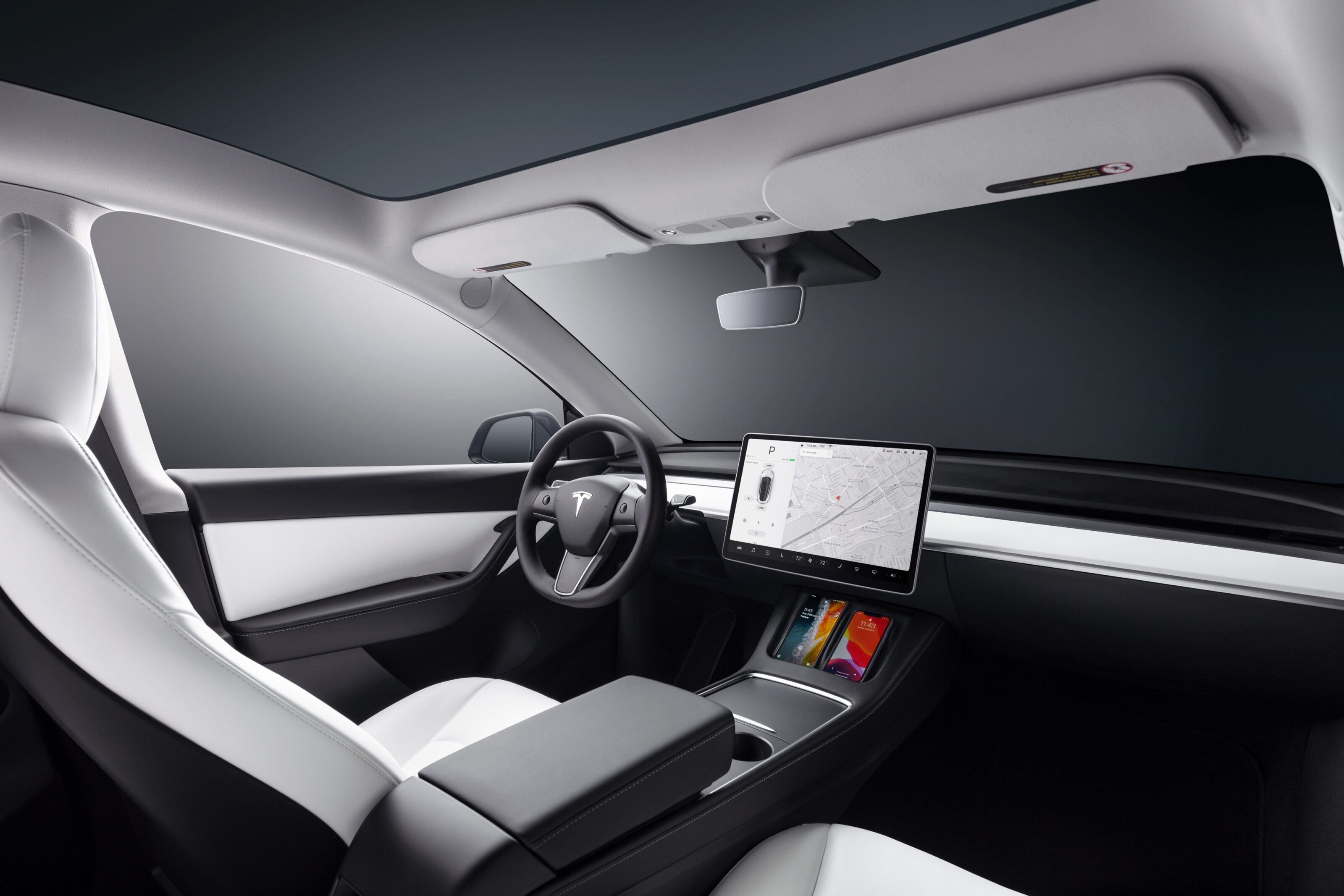
Last week, Chasing Cars reported Australian pricing for the Model Y would start from $67,990 plus on-road costs, while the Model Y Performance would cost $98,172 before on-road costs. This has, however, not been officially confirmed by the manufacturer.
With Tesla’s Shanghai plant facing prolonged shutdowns, it’s unclear how long Australian customers will have to wait for the Model Y to go on sale.
Snapshot
- Volkswagen T-Roc R priced from $59,300 before on-roads
- 221kW/400Nm performance SUV to arrive in August
- Joins the facelifted T-Roc line-up
Pricing for the 2022 Volkswagen T-Roc R line-up has been announced, with the model set to touch down in Australia from $59,300 before on-road costs.
The T-Roc R is the latest model to join VW’s performance range.
It will arrive in showrooms in August, following the new Mk8 Golf R and Tiguan R launch later this month.
Volkswagen Australia says the T-Roc R is “the perfect entry to the sought-after R family”, slotting in at under $60,000. By comparison, the Golf R ($65,990 hatch; $68,990 wagon) and Tiguan R ($68,990) both fetch closer to $70,000 with on-road costs included.
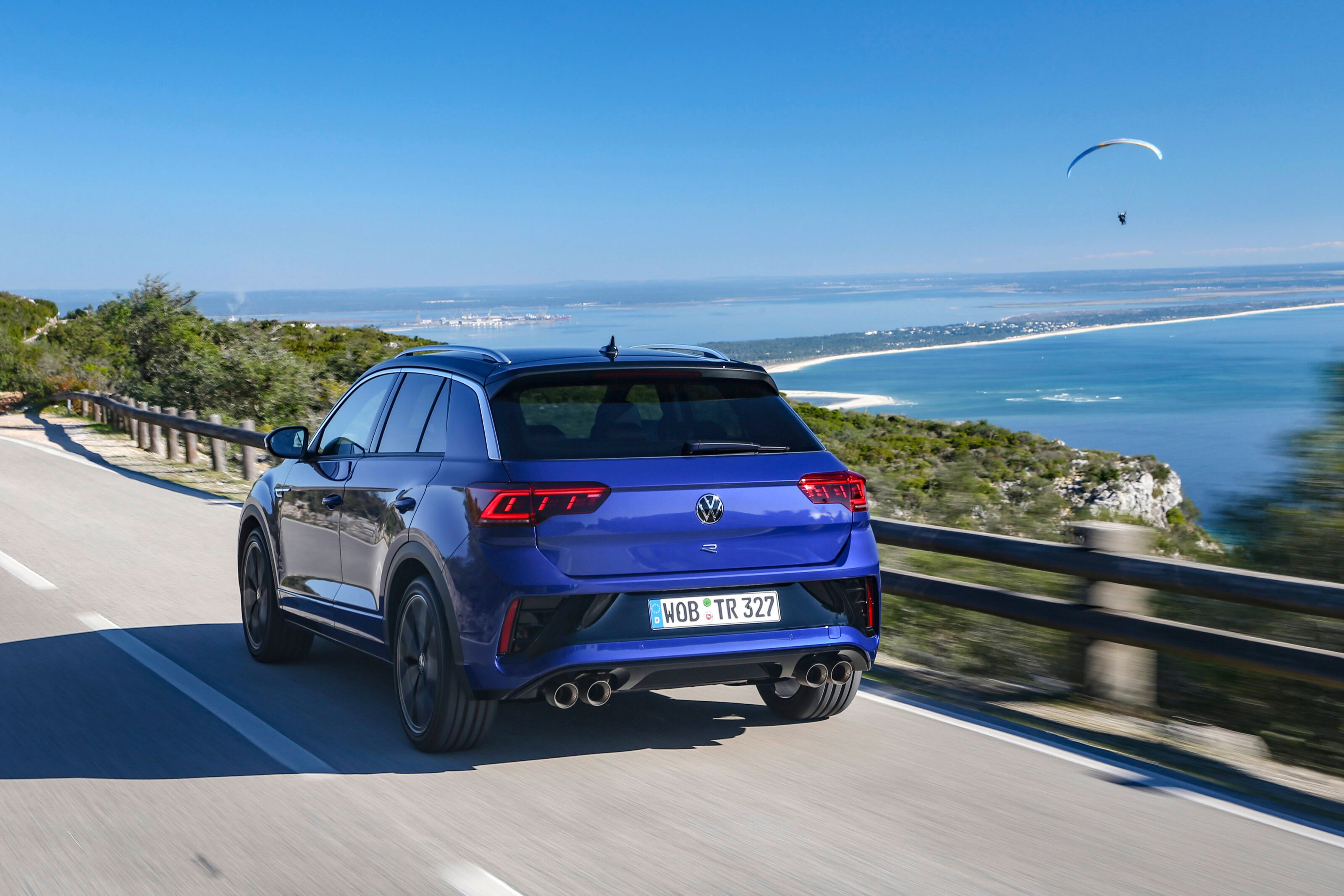
For reference, the previous-generation Mk7.5 Golf R retailed for $57,900 when it was discontinued in 2020.
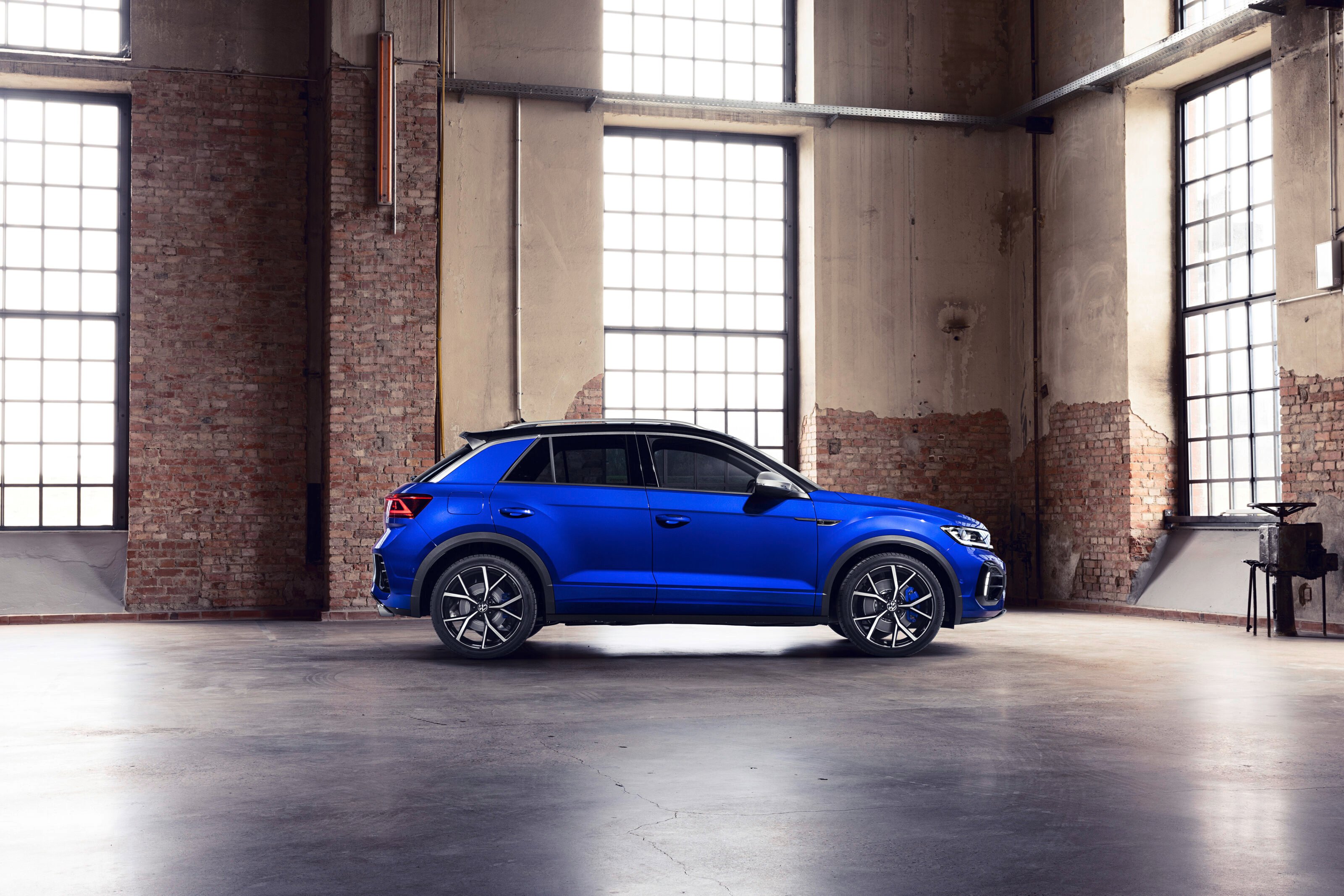
Sitting above the existing T-Roc 140TSI Sport, priced from $42,990 before on-road costs in pre-update form, the R will arrive in one spec. Changes include; an illuminated grille strip with ‘R’ badging, matte chrome mirrors, lowered ride height, quad exhaust tailpipes, roof spoiler, and a gloss black rear diffuser.
It will join the updated T-Roc line-up in local showrooms, with a newly-designed soft-touch dashboard – in addition to piano black inlays and a redesigned dual-zone climate control panel, as seen in the latest Tiguan and Arteon.
Australian pricing and specification details for the facelifted regular T-Roc range are expected to be announced in the coming weeks.
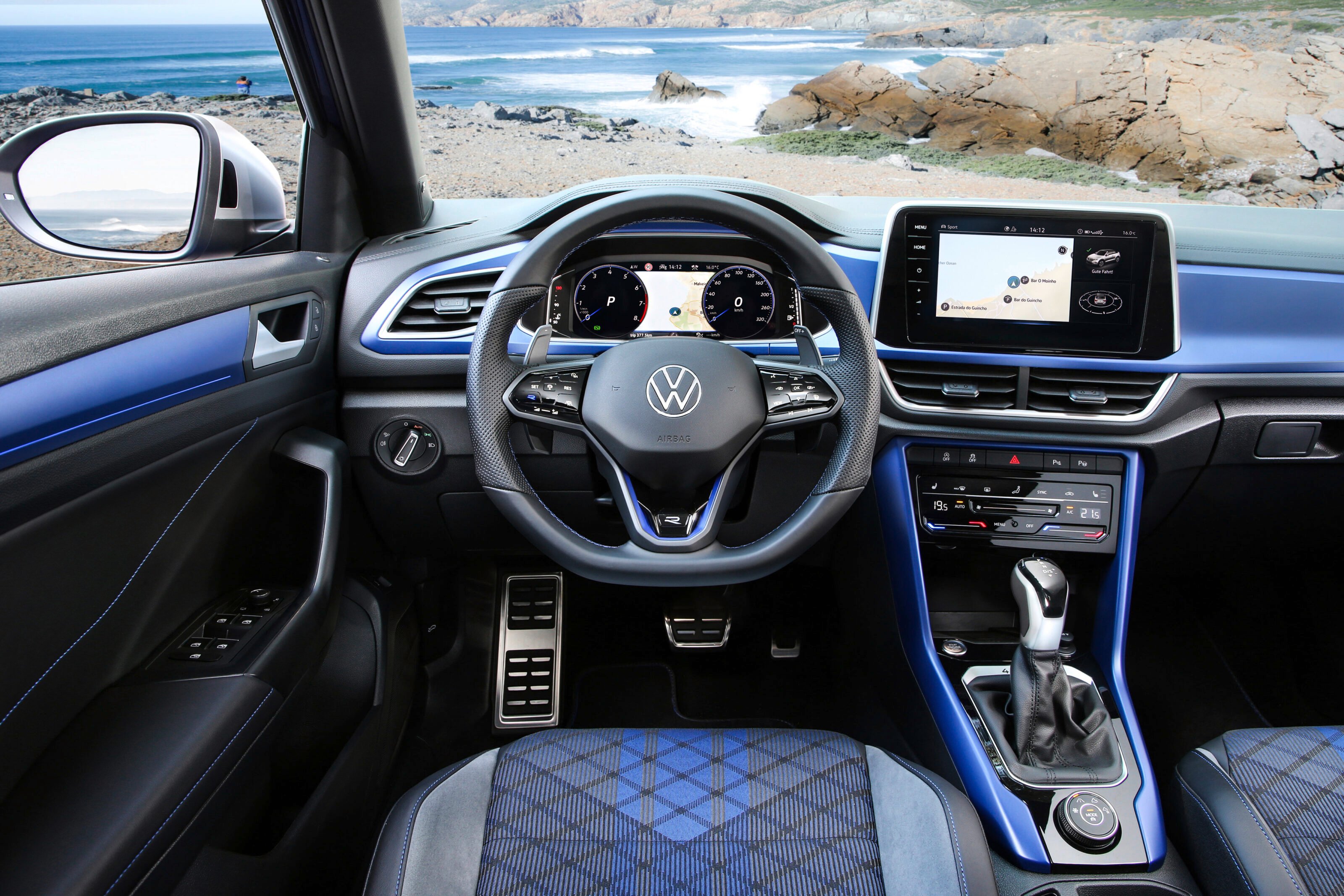
2022 Volkswagen T-Roc R Australian pricing
Price excludes on-road costs.
Options:
Black style package – $1200:
Panoramic sunroof – $2000
Beats audio system – $700
Lapiz Blue matte décor inlays – $250
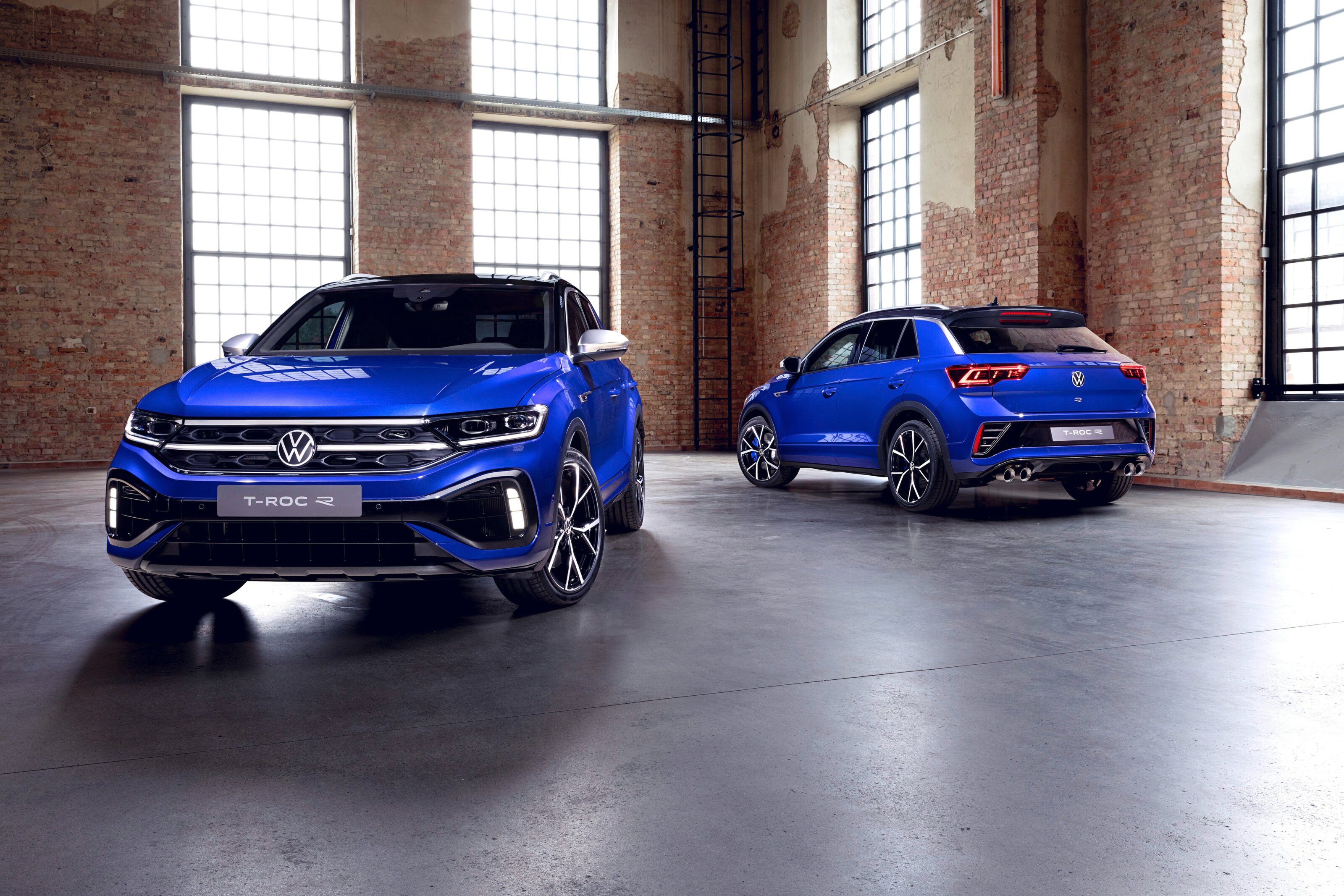
2022 Volkswagen T-Roc R features
Engine, drivetrain and fuel economy
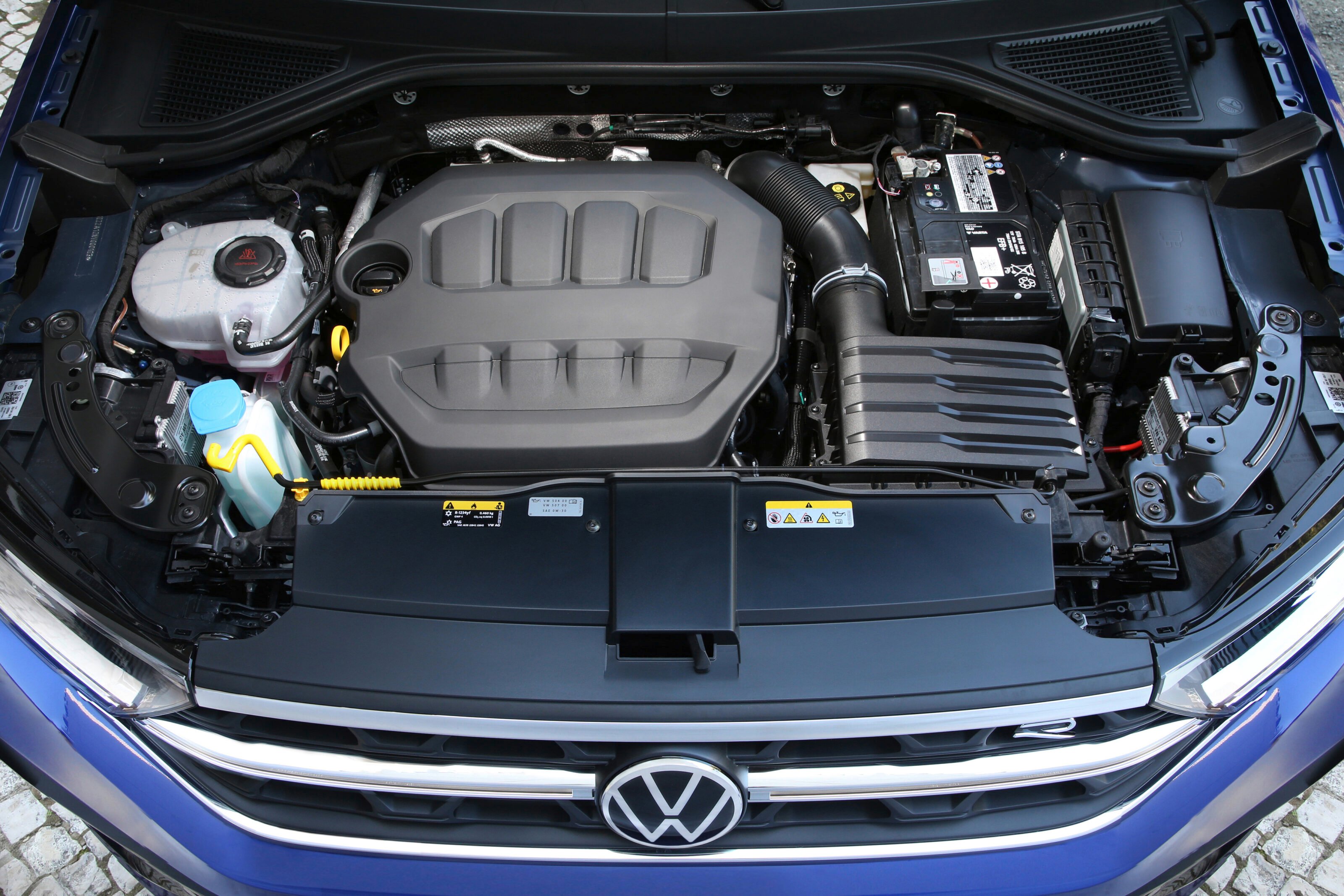
Under the bonnet, the T-Roc R features the ‘EA888’ 2.0-litre turbocharged four-cylinder petrol engine, producing 221kW of power and 400Nm of torque. It is matched with a seven-speed dual-clutch automatic transmission and 4MOTION variable all-wheel-drive system.This is the same engine tune found in the Audi SQ2 and soon-to-launch Cupra Ateca, with outputs slightly down on VW’s full-fat Golf R hatch and Tiguan R, which both produce 235kW/400Nm. The Golf R wagon has 420Nm of torque due to the fitment of a petrol particulate filter.Adaptive dampers are included as standard, with selectable drive modes including Race Mode. It also features a progressive steering rack.Volkswagen claims the T-Roc R can complete the 0-100km/h sprint in 4.9-seconds. This is 0.2s faster than the larger Tiguan R and one-tenth slower than the more-agile Golf R hatch.Fuel economy figures are yet to be released, although a Golf R claims 7.8L/100km on the combined cycle.
Safety
The Volkswagen T-Roc range is covered by a five-star ANCAP safety rating, based on testing conducted in 2017.
Six airbags (dual frontal, side chest and side curtain) are standard.
It includes the following active safety equipment as standard:
Dimensions
The Volkswagen T-Roc R has a wheelbase of 2590 millimetres, and is 4234mm long, 1819mm wide and 1553mm high.
Warranty and servicing
As per the wider Volkswagen range, the T-Roc R is covered by the brand’s five-year/unlimited-kilometre warranty, along with a complimentary 12-month roadside assistance program.
This coverage extends for up to 10 years if the vehicle is exclusively serviced by the manufacturer.
Capped-price servicing is offered, however, Volkswagen is yet to announce service pricing for the T-Roc R.
Availability
The 2022 Volkswagen T-Roc R will touch down in Australia in August, alongside facelifted members of the regular T-Roc range.
Alex Inwood
Moved onwards and upwards from the Wheels editorship two years ago to head up our video operations, but remains intrinsically involved with magazine content simply to show us he’s got the biggest ‘editorial brain’ in the building. Became a first-time father recently so can talk ISO-fix points and ease of loading of baby strollers at length to anyone who can stay awake to listen. Despite rigorous gym sessions, still has a pair of legs like pipe cleaners, yet they appear normal in his videos. Rumours of CGI manipulation continue to swirl.

Dylan Campbell
Left the Wheels editor role last year to seek his fortune in the fast and treacherous world of freelancers, but returns here for his second year as a COTY judge. Still enduring the “need a booster seat?” jokes with his usual good humour, but we’re only game to rib him because this is not America, and procuring a firearm is difficult. Continues to sink time/money into his Toyota AE86 project car in the belief that dynamic Nirvana is within sight, if only he could locate the source of that mysterious front-end knocking.

Jez Spinks
Not his first COTY rodeo, but this is his first in the saddle as a judge, and he didn’t spare the whip hand. Another veteran journo bringing nearly 20 years of road-testing experience to the process, Spinks left his native UK back when Jesus was still in short pants, yet still sounds like he’s on the set of Coronation Street. Since COTY testing concluded, he’s joined Wheels Media in a managerial position, thereby ensuring he’ll receive nothing but reverential treatment in these pages. Handsome bugger.
Curt Dupriez
A 26-year veteran of automotive publishing who’s worked at all the major outlets and built a vast road-testing knowledge bank along the way. When he’s not doing car stuff, you’ll find Dupriez accumulating electric guitars, with his vast collection now believed to rival Imelda Marcos’s shoe stash for cost and scale. A handy steerer who’s also an accomplished shredder, he swears he’s never played ‘Smoke on the Water’ in a guitar shop when testing out a new axe.

Daniel Gardner
A former BMW tech in a past life, Gardner makes his debut as COTY judge, bringing a decade of journalistic experience to the production. A gifted writer and video presenter, Dan is also happily domiciled with rally ace and Extreme E champion Molly Taylor. The upside? On pub nights, his designated driver always knows a shortcut home – through the bush, sideways. Downside? Despite his wheel skills, Dan is officially the slowest driver in his household.
Richard Ferlazzo
A 32-year career at GM Holden saw Richard rise to the top rank of Design Director, until closure of the brand in 2020. He’s best known for designing the wild EFIJY Concept car and the VE Sportwagon, among many. These days he applies his talents as a design consultant in various fields of design. His mantra is, ‘good design improves people’s lives’. Weekends see him tinkering with his 1973 Fiat 124 Spider.
Snapshot
- 12/39 passenger and light SUV brands nail target
- 9/26 heavy SUV and light commercial brands do too
- FCAI still wants Government to mandate targets
Only a third of carmakers selling vehicles in Australia hit their industry-led emissions targets last year, new figures released today have revealed.
On Tuesday, the Federal Chamber of Automotive Industries (FCAI) reported on how manufacturers performed against its new voluntary emissions standard in 2021, with results showing more still needs to be done.
Twelve out of 39 brands came in under their targets for passenger cars and light SUVs (MA category) last year – one less than did in 2020, but with some of the leading names changing over the course of the year.
In the heavy SUV and light commercial class (MC + NA category), nine out of 26 carmakers smashed their targets the same number as in 2020 (though this was out of 25 as Holden has now been removed from the list).
However, manufacturers are also set an overall target of 150g CO2/km for the MA category and 193g CO2/km for the MC + NA. For this, 13 came in under the former and nine under the latter.
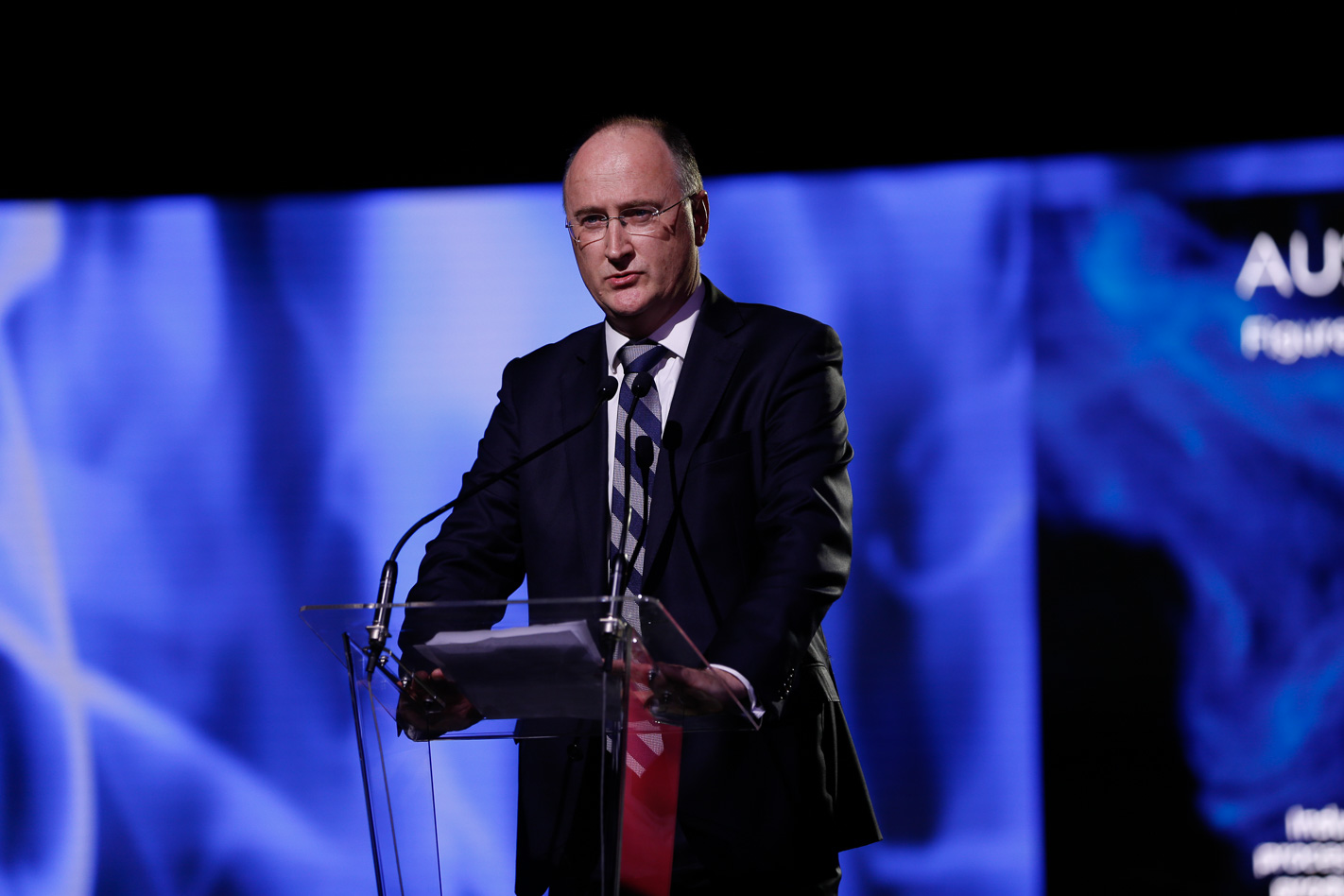
FCAI Chief Executive Tony Weber said despite many brands not meeting the overall target, the results are testimony to the wider commitment automotive manufacturers have to lower emissions in Australia’s transport sector.
“Globally automotive manufacturers continue to spend billions of dollars on reducing the environmental impact of their vehicles. In the absence of a federally-led emissions reduction target, FCAI members have signed up to this standard to support the introduction of the cleanest technologies to Australia’s roads,” he said.
Last month, the Federal Chamber of Automotive Industries (FCAI) published its overall 2021 result for average emissions in Australia – with a result of 146.5g CO2/km for the MA category, and 212.5g CO2/km for the MC + NA category.
Though both figures represented a drop of 2.3 per cent and 2.5 per cent respectively, the latter’s fell short of its 193g CO2/km target – missing it by 19.5g and roughly 10 per cent.
In the MA category, Mercedes-Benz Vans came out in front with a drop of almost 66g CO2/km, closely followed by Toyota with a reduction of 55g due to its high number of hybrid models. Among the top performers were; Alfa Romeo, Audi, BMW, Jaguar, Lexus, Mercedes-Benz Cars, Porsche, Skoda, Volkswagen and Volvo Cars.
A spokesperson for Toyota said it’s result was made possible by a number of significant contributions to reduce its emissions in 2021, such as; the launch of its fuel-cell electric vehicle, the Mirai, and Lexus UX 300e fully-electric SUV, as well as the launch of its hybrid Kluger and opening of a hydrogen centre in Melbourne’s west.
“Toyota Australia delivered a record 69,095 fuel-efficient hybrid-electric vehicles last year, including 29.3 per cent of Toyota sales and 38.8 per cent of Lexus sales,” they added.
“Our vision and passion are further demonstrated by Toyota’s global commitments to reducing emissions through the significant development of innovative technology and by meeting the needs of Australian customers by offering a diverse portfolio of electrified powertrains.
“Toyota also supports the FCAI’s advocacy for the accelerated improvement of fuel quality standards in Australia – a move that would support the introduction of more efficient powertrains.”
Trailing at the back of the pack, perhaps unsurprisingly, were supercar makers Maserati, Ferrari and Lamborghini which were 47g, 92.5g and 151g above their individual targets.
US brand Chrysler posted the second largest result above its goal with 105.7g, however it is no longer bringing new vehicles to market following an exit from Australia late last year. Genesis and LDV too performed badly, each up 47g and 54.4g respectively above where they should be.
In the MC+NA class, just nine brands achieved their target in the larger vehicle category made up of 26 carmakers. They included; Audi, BMW, Land Rover, Mercedes-Vans, Peugeot, Porsche, Renault, Subaru and Volvo Cars.

Commenting on its positive results, a spokesperson for Peugeot Citroën Australia told us: “Both Peugeot and Citroën remain committed to working towards reducing the CO2 emissions of our vehicles and offering zero or low-emission options to our customers. Globally, both Peugeot and Citroen will offer an electrified variant of all models by 2025.
“In Australia, we have taken the first steps on our electrification journey with the introduction of PHEV variants of the Peugeot 3008 and 508 earlier this year and are finalising our plans for the introduction of full electric vehicles to the Australian market.”
In April last year, the FCAI published its CO2 emissions results for the first time, providing an insight into how the Australian car industry is tracking towards its 2030 targets.
“We know pathways to our 2030 target will vary among manufacturers and is heavily impacted by model cycles. Individual brands may not achieve improvements each year and may not meet the annual industry target,” FCAI chief Weber added.
“Today’s results are important, but what really matters is our end result in 2030. Regardless of individual outcomes, all brands should be commended for voluntarily signing up to this standard. It is a commitment to achieve better outcomes for Australian motorists, carmakers and our environment.”
The MA outcome for the industry as a whole in 2020 was 150gCO2/km (grams of CO2 per kilometre travelled) and the result for the MC+NA category was 218gCO2/km.
Towards 2030, the industry is aiming for a four per cent annual reduction for MA and a three per cent annual reduction for MC+NA. The overall goal in 2030 is to have CO2 emissions under 100gCO2/km and for MA vehicles and MC+NA vehicles under 145gCO2/km.
According to the FCAI, the 2030 target will be reviewed later this year to assess whether it is still the best goal for the local industry to be aiming towards.
CO2 results are gathered using a sales-weighted average, jointly supplied by the FCAI and the car manufacturers themselves.
The industry-led scheme is designed to bring about more choice in the new car market. New, more fuel-efficient cars and more fuel-saving tech will become more commonplace in Australian car dealerships, or at least that’s the goal.
While there are no penalties for manufacturers which aren’t hitting their targets, the FCAI hopes that consumer choice directs carmakers to hit the new standard’s CO2 emissions targets.
The new reporting standard came about mid-way through 2020 after the FCAI pushed the government to implement such a scheme for years – and continues to do so. If the new incoming Government next month chose to adopt the FCAI’s standard and make it a legal requirement for carmakers, Weber told Wheels it could be brought in quickly.
The FCAI has implemented the standard in place of governmental regulation, and all manufacturers involved are committing of their own volition.
Weber points out several reasons why CO2 emissions goals have been spread out over the next 10 years – as opposed to yearly targets like those in Europe.
1. Function
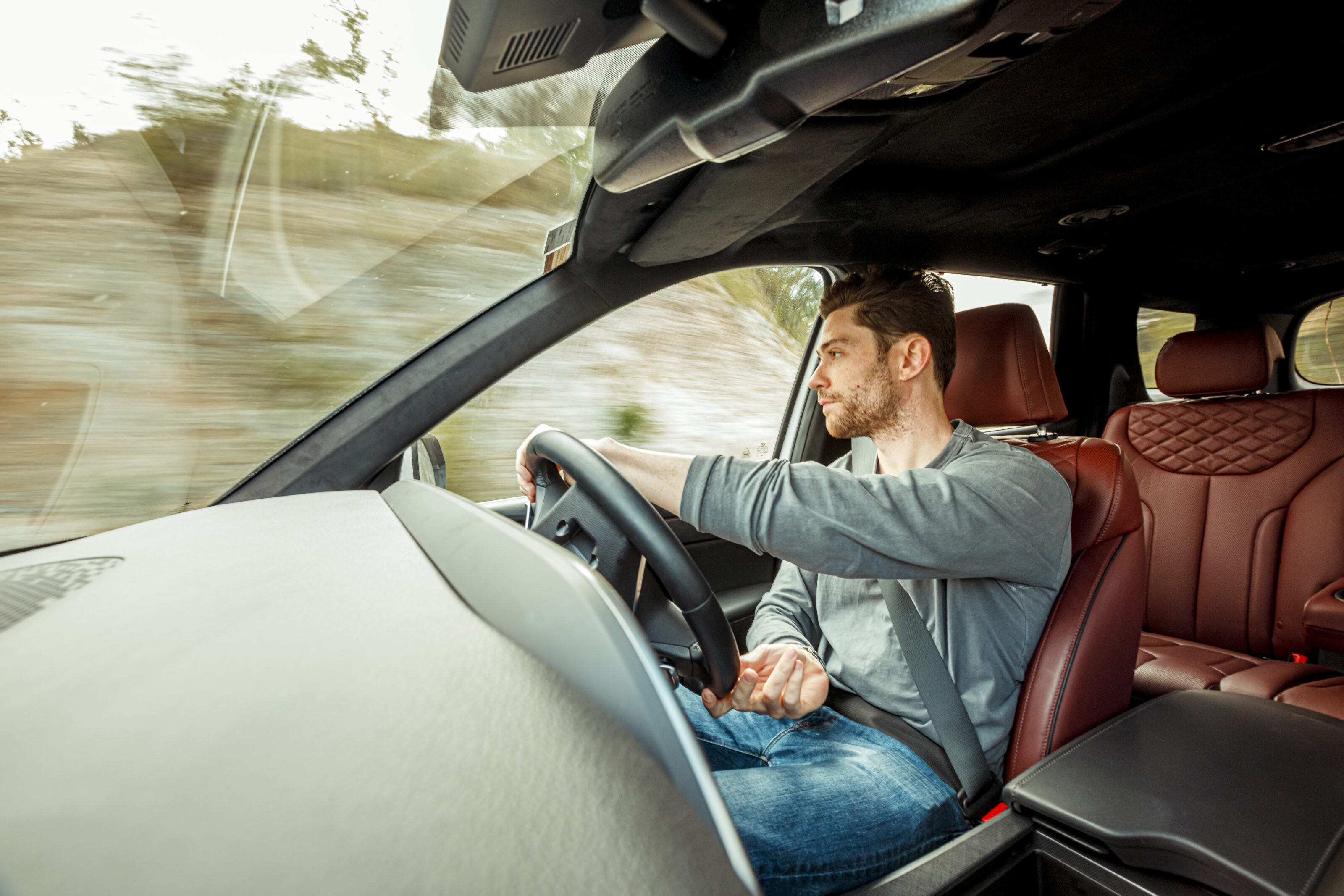
This year, we invited only one variant agreed by the judges in the preliminaries to best represent the virtues of the model range. The objective is to assess every aspect of a car’s function, taking into account its intended role. Put simply, we’re seeking complete satisfaction. Scores therefore reflect the presence, or absence, of excellence in a multitude of areas.
Every aspect of design is considered, always in relation to purpose and price: vehicle packaging efficiency; all-round user-friendliness, especially interior layout, flexibility and ergonomics; quality of materials and assembly; visual and tactile pleasure.
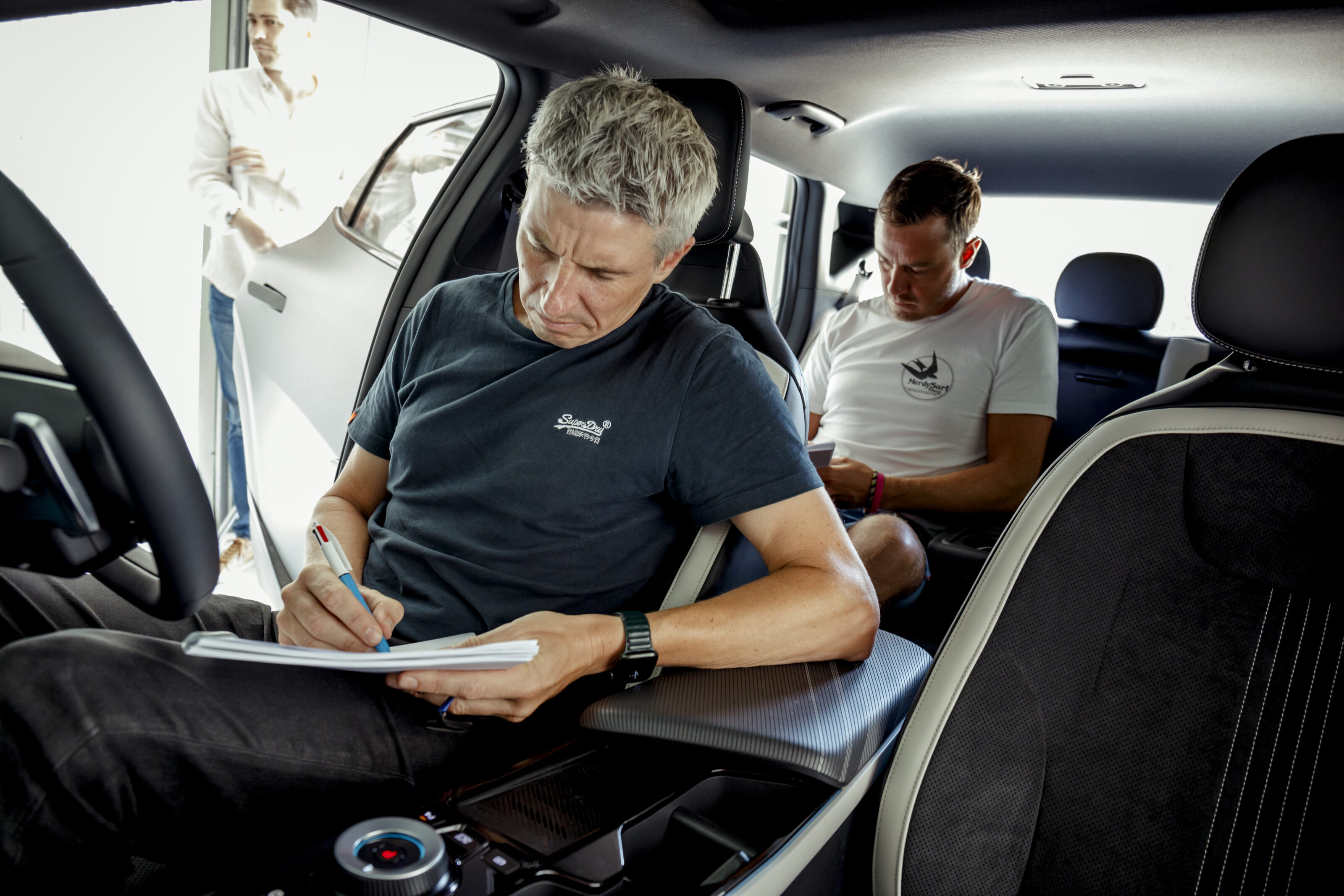
Driving dynamics take into account all handling characteristics and their fitness for the car’s role. We’re looking for sweet harmony in the interaction between tyres, suspension, steering and brakes.
Comfort is crucial: quality of ride on varied surfaces is a major factor, but seating and spaciousness, plus overall smoothness, quietness and quality of noise are also important.
The assessment of drivetrain encompasses every aspect of engine performance and transmission behaviour.
2. Technology
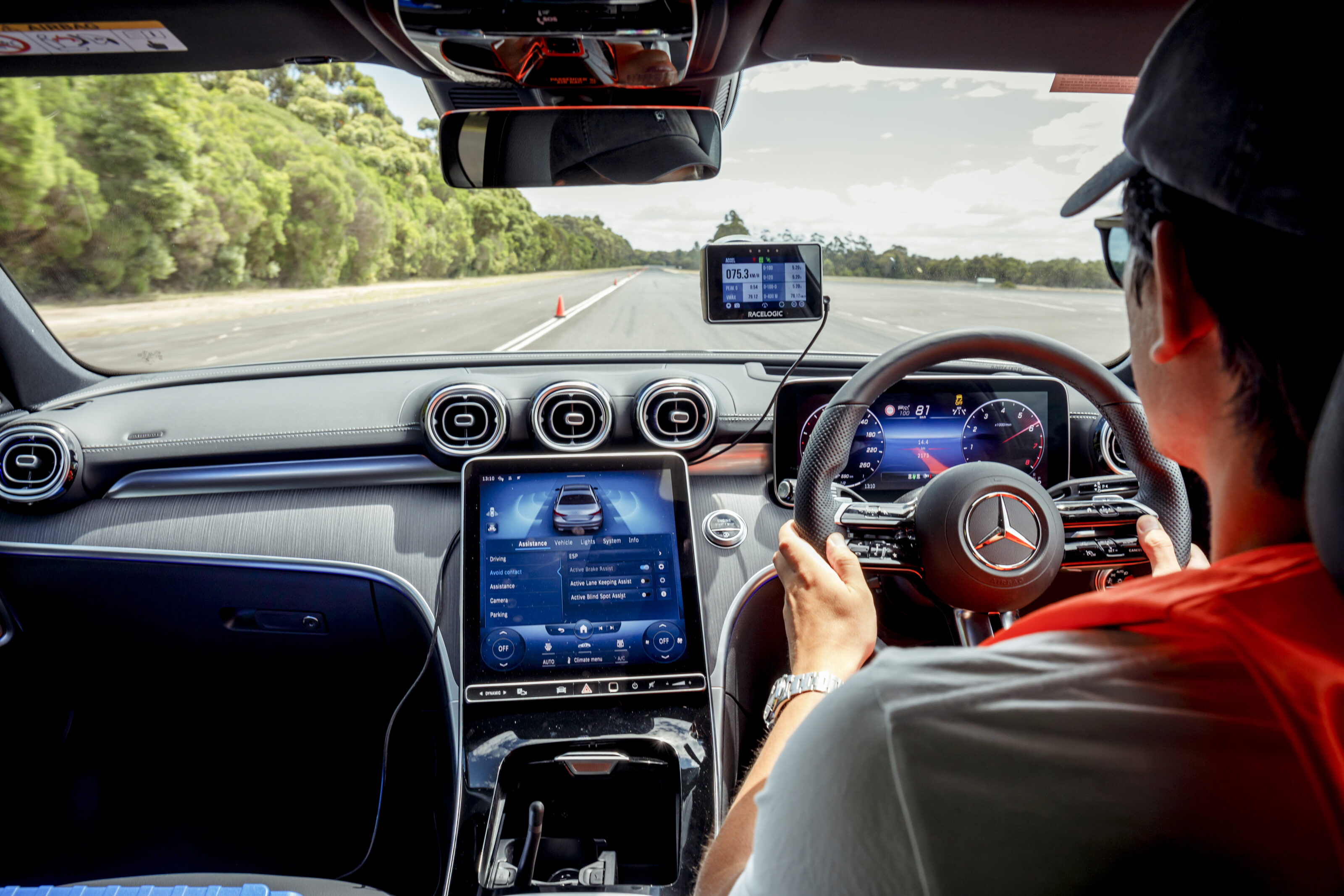
Today’s state of the art is tomorrow’s ordinary. Important innovations are not common, but are recognised at COTY when a car maker does deliver. Incremental improvements rate only incremental adjustments to a vehicle’s score against this criterion.
Technical advances in all spheres should be assessed: innovative materials and engineering; core vehicle system enhancements; all-new features. We ignore the hype and excitement that often comes with novelty; the question here is whether a new technology can deliver genuine improvement in the driving or ownership experience.
In cases where a manufacturer fails to equip a car with a widely adopted and worthwhile technology, its score against this criterion reflects the omission.
3. Efficiency
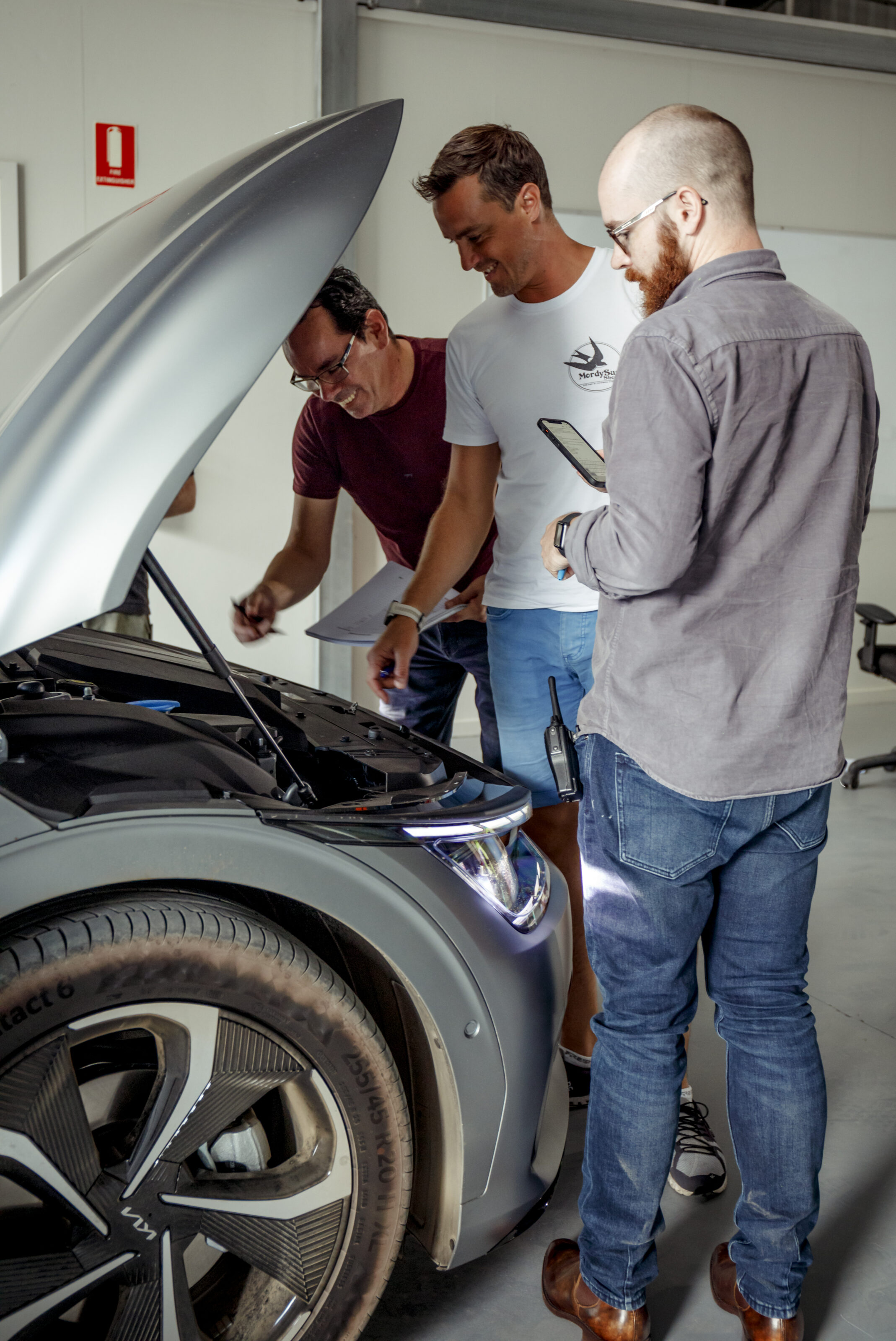
Our primary concern here is energy efficiency, be it fossil fuel or electricity. The real-world results gathered over the course of the COTY program and earlier road tests are given greater weight than the results of official, government-mandated tests.
Fuel is a significant portion of the running cost of any conventional car or hybrid. For any type of fossil fuel there’s a directly proportional relationship between the amount burned and CO2 emitted. So there’s a very strong link between a car’s fuel consumption and its output of the gas that’s the main cause of climate change.
The exception here is electric cars, which are inherently much more energy efficient, and which offer at least the opportunity to utilise zero- or low-emission energy sources. Their efficiency also translates to low running costs. Judges can also fine-tune scores for efficiency upwards in recognition of measures made to boost the use of recycled materials.
4. Safety
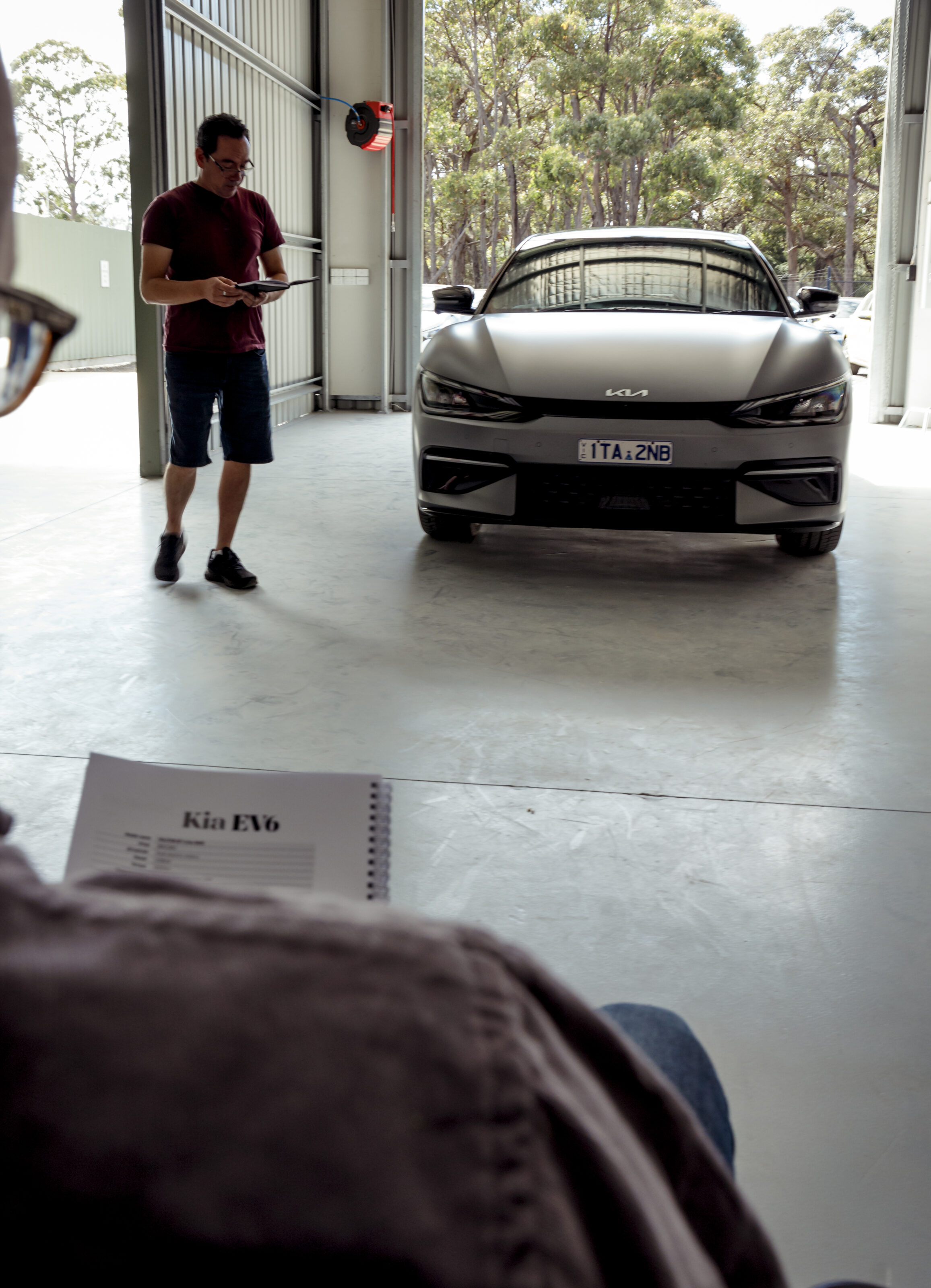
Passive and active safety are assessed separately and an overall score is given against this criterion. In both categories it’s imperative to reward the fitment of advanced and effective safety technology.
The efficacy of some active safety systems, notably ABS and ESC, are assessed by judges during the COTY test program. Passive safety scores are based, where possible, on published data from independent testing. In cases where none is available, we take into account a vehicle’s array of standard and optional passive safety equipment and the manufacturer’s achievements in this field.
For both passive and active safety, our focus is on vehicle occupant protection technologies that work. Only in the absence of any independent information are manufacturer’s claims taken into account. As well as the car’s occupants, other road users and pedestrians are considered.
5. Value
Affordability is the big thing here. But we’re seeking excellence, even at the lowest prices, and above average engineering and design at any price. A bad car may be very cheap, but never cheap enough to be good value. And an expensive car that’s not extremely good is even worse.
Secondly, we assess how the car compares with its marketplace peers for space, quality, equipment, refinement, comfort and competence. We also take into account running costs, including predicted depreciation and maintenance. Finally, we weight the price of any special efficiency tech against the degree of cost reduction it brings and adjust scores accordingly.
Key Points
- Next-gen Alfa Giulia revealed
- Ready for launch mid-decade
- Set to flip to STLA electric platform
The current Alfa Romeo Giulia hit the world stage in 2015, with the range headlined by a Ferrari-developed twin-turbo V6 delivering 380kW to rocket the sedan to 100km/h in just 3.9 seconds. No surprises, it’s been well received in the years since then.
Now, seven years since its debut, talk is building of what will come next. We’ve already chronicled plans for a brand-new Alfa Romeo Spider – but it’s not the only new Alfa that’s preparing to plug in: the next-generation Alfa Romeo Giulia is also set to make the switch to full electric power once it adopts the Stallantis STLA architecture earmarked for future battery electric vehicles (BEVs) in the Stellantis group.
The company is busy launching a flurry of SUVs, led by 2022’s new Tonale, but today’s heartland cars will remain in the range, CAR can confirm.
What do we know about the new Alfa Romeo Giulia?
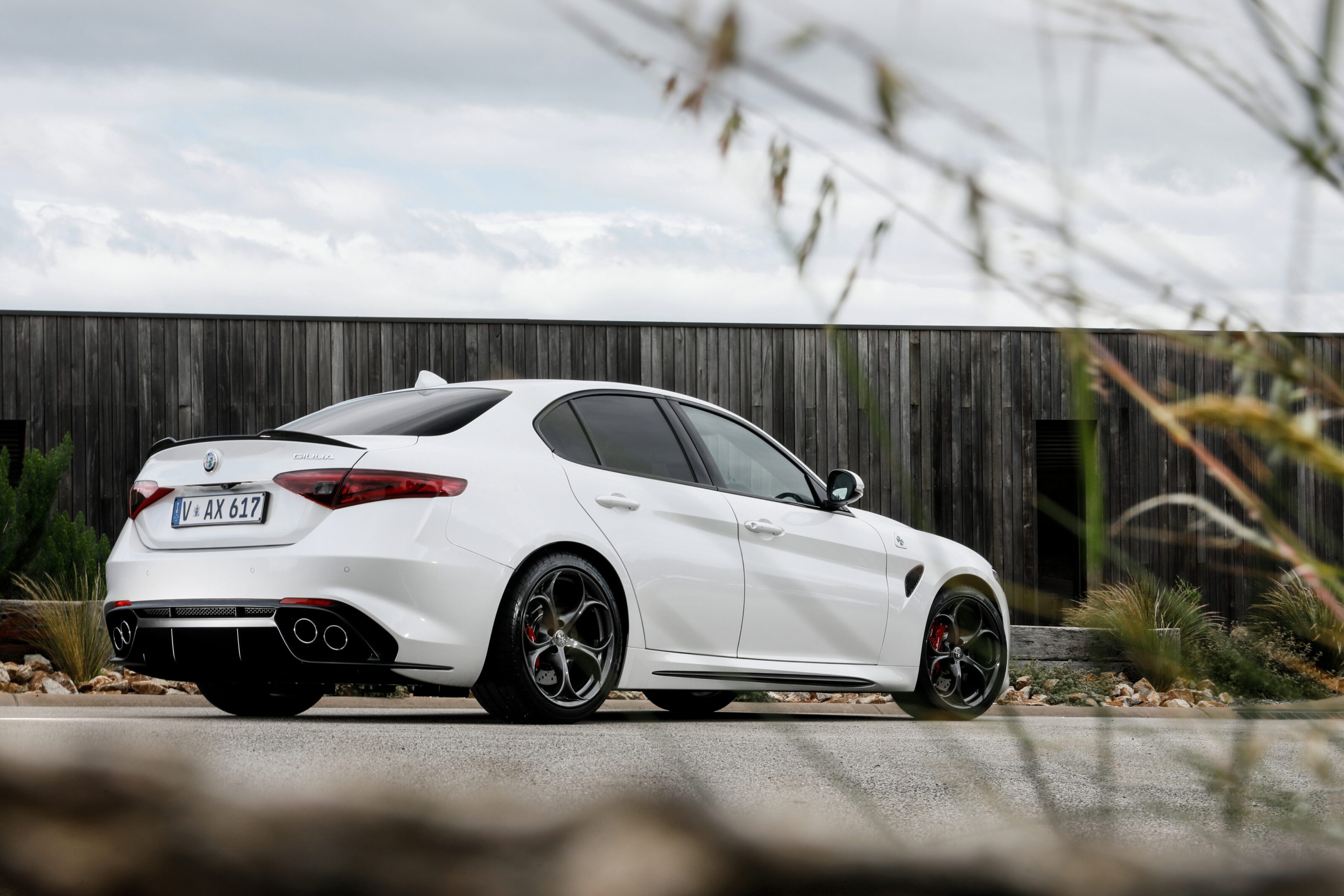
The head of Alfa has told us that today’s Giulia will be directly replaced, but it’s playing second fiddle to the new wave of SUVs; Alfa will soon have the Stelvio (large), Tonale (medium) and a new smaller crossover (B-SUV) to rival the likes of the hot-selling Ford Puma et al. But sports cars and saloons will remain in the line-up, it seems.
“I’m in love with the shape of my Giulia,’ Alfa CEO Jean-Philippe c tells us. “I can tell you that the Giulia will have a successor. You will see one day, it’s super, really gorgeous. And the Quadrifoglio version of the cars we will launch will have a very high level of performance.”
It’s a strong sign that Alfa Romeo is acutely aware of the marketing lure of performance models and sexy styling – needed to tempt buyers away from the German hegemony dominating the premium car marketplace in 2022.
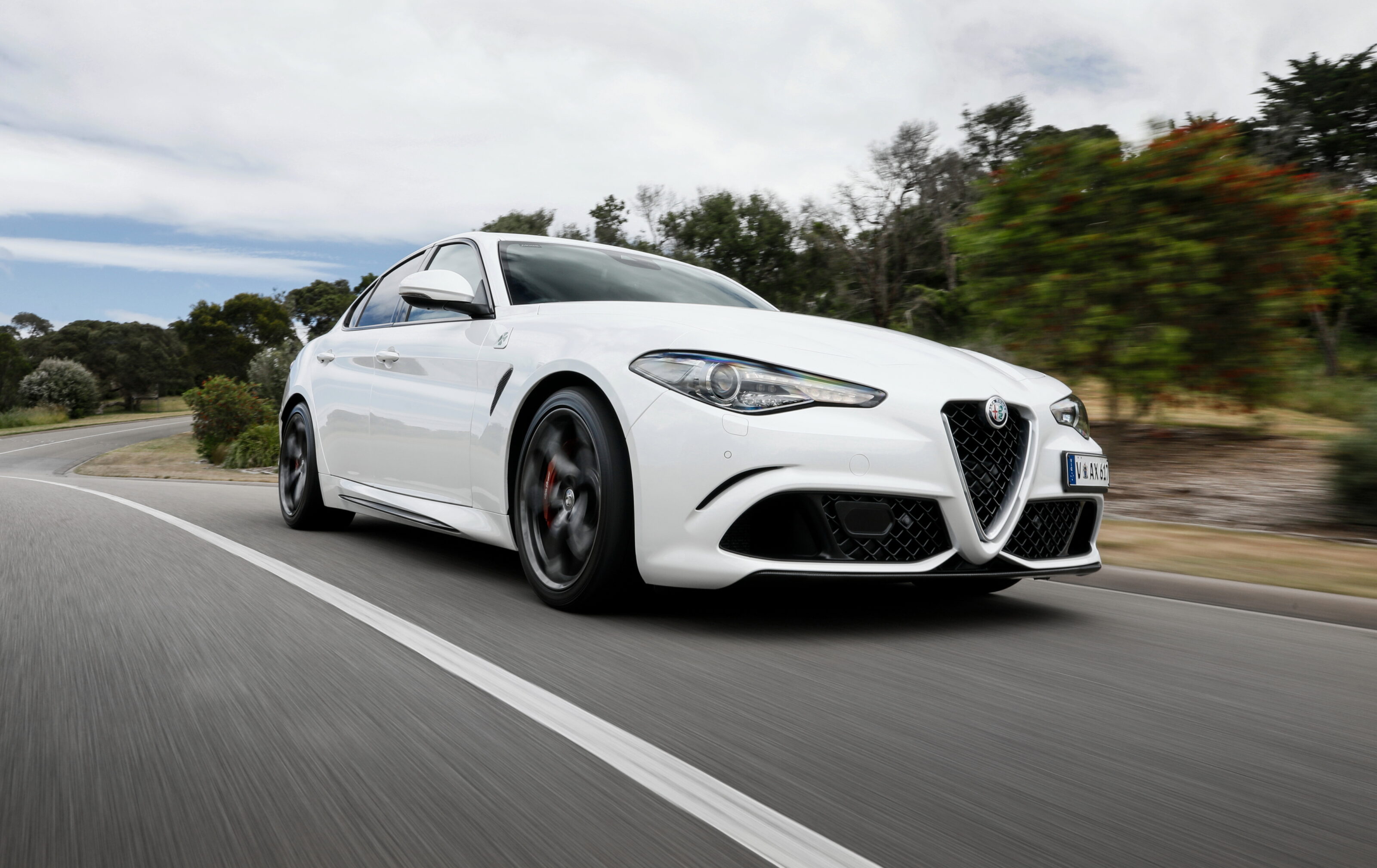
“The successor of the Giulia will not come in 2024,” answers Imparato, when asked if we could see the new Giulia before the middle of the decade. He refused to be drawn on the exact launch date, but insiders tell us the current four-door saloon will receive updates and soldier on for some time yet as the brand rolls out its range of SUVs to capitalise on the market’s insatiable appetite for crossovers.
The boss adds that the Giulia and Stelvio are growing their share of the combustion-powered D-segment (think 3 Series/X3), and it’s likely that Alfa Romeo will keep them in service with extensive makeovers, to bridge the gap until they can plug in.
How the next Alfa Romeo Giulia could go electric
This timeframe suggests the new Giulia would arrive around 2025/26 – by which time a full electric powertrain will be a given, to dodge forthcoming bans on combustion engines in some territories.
Imparato confirms that Alfa will use four Stellantis architectures, and directly namechecks the electric STLA (pronounced Stella) Medium and Large platforms, which are tipped to power the new compact exec.
This hardware has battery capacity of up to 104kWh for a viably long range and electric motors rated at up to 241bhp; sling an e-motor on each axle for the Quadrifoglio model pictured and that’s an all-electric rocketship with damn nearly 500bhp. That’s the kind of EV that makes us sit up and pay attention!
This article was first published at Carmagazine.co.uk
Key Points
- FWD and AWD, but AWD is only a little quicker
- Kluger-sized wheelbase
- Mid-2022 production confirmed
UPDATE, May 14 2022: Toyota has confirmed the BZ4X electric SUV will come to Australia sometime in 2023 – missing the late-2022 schedule previously expected.
The Subaru Solterra, platform twin to the BZ4X, could arrive first – just as the BRZ coupe landed sooner than the GR86. The Solterra is due here in the first half of 2023.
UPDATE, April 12 2022: Ahead of its European debut, new details for the Toyota BZ4X electric SUV have been announced. The story below has been updated.
The story to here
October 2021: BZ4x revealed
The world’s biggest carmaker is finally creeping properly into the electric vehicle market, with the reveal today of its new BZ4X electric SUV in final production form.
After years of prevaricating on the topic of EVs, while startups like Tesla and rising rivals like Hyundai stormed in to capitalise on the potential, Toyota is at last ready to make 2022 its year of electrification.
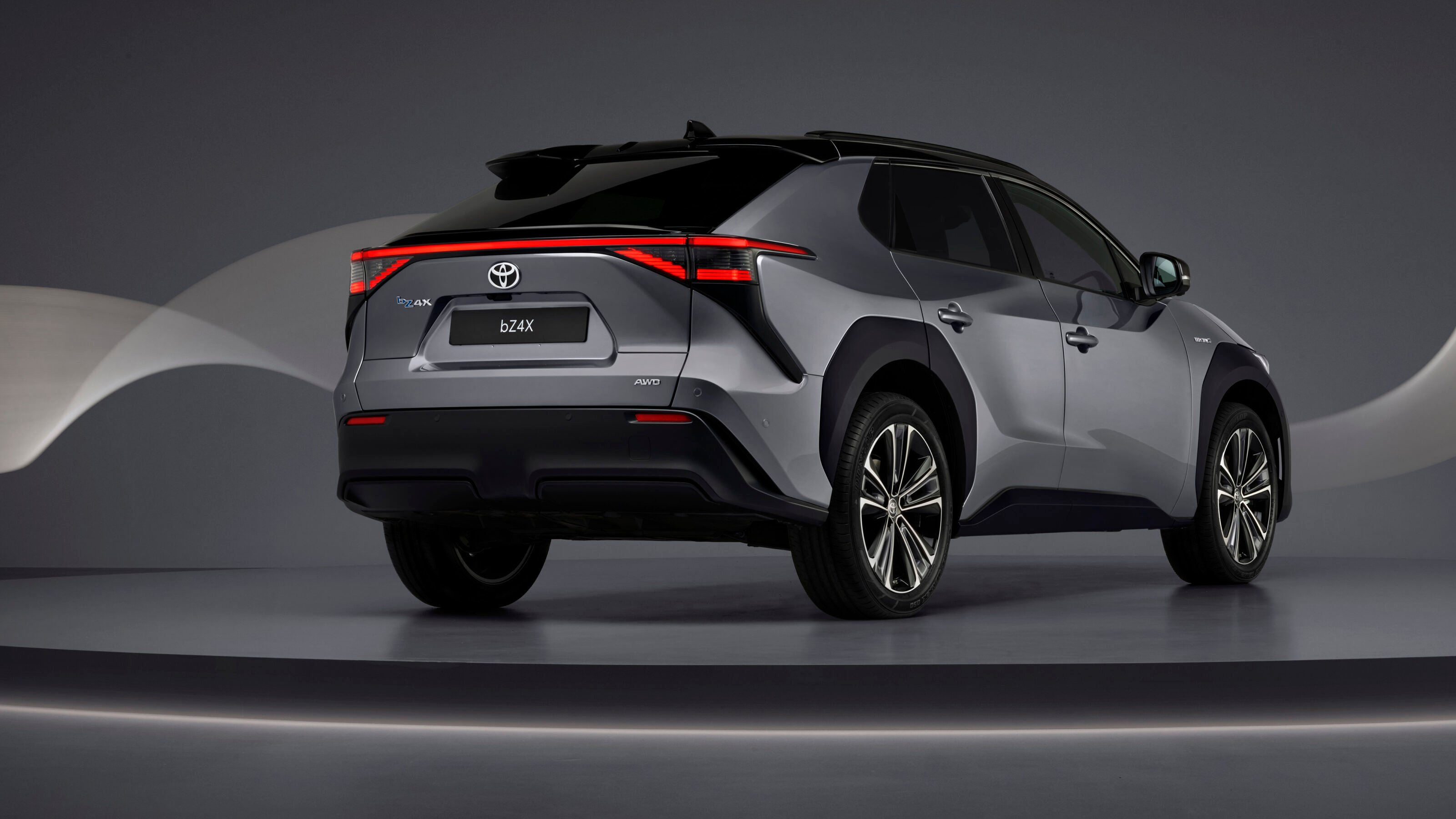
Where has Toyota been on EVs up to now?
The brand was once a pioneer in electrification, launching not only two limited-run generations of an electric RAV4 (the second developed with Tesla), but also the now iconic Prius – the latter into a world that had no idea it would eventually buy nearly 20 million of the things.
It has successfully captured even more hybrid buyers in recent years by launching petrol-electric variants of its regular (and less ugly) models.
Toyota also remains confident that the nascent hydrogen FCEV market will grow – and interest across industry and consumer segments suggests it will gather steam in the years ahead – but it has nonetheless been a slow mover on the one technology buyers can’t get enough of today: big-battery EVs.
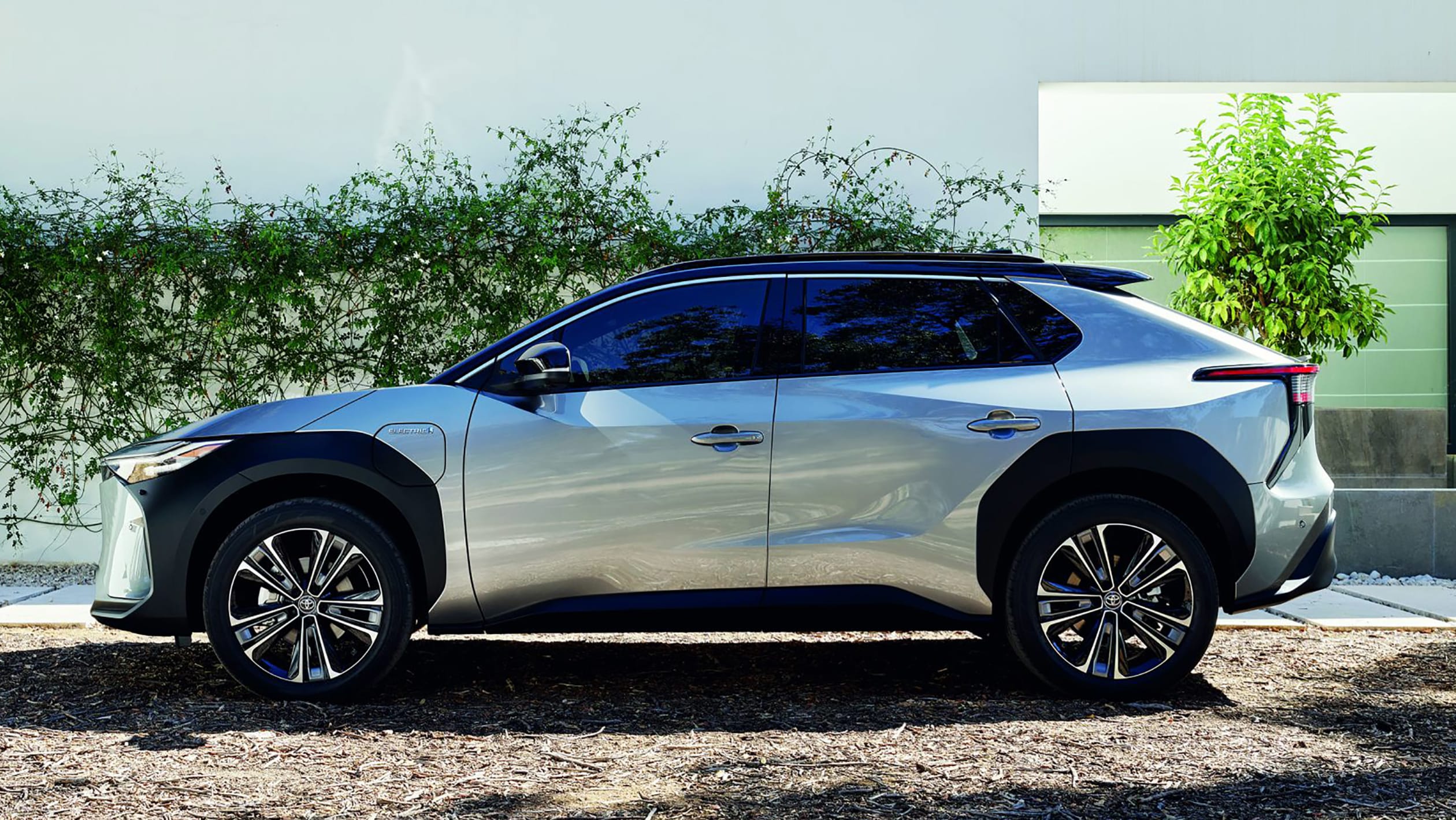
All of that brings us to today, with the official reveal of the BZ4X, Toyota’s first proper mass-market go at an electric vehicle. Toyota says the not-so-catchy name is derived in part from the concept of “beyond zero”.
Due on sale sometime around the middle of 2022, the new electric SUV will make its global market debut four years after the well-regarded Hyundai Ioniq Electric reached Australia, and a couple of years after the popular MG ZS EV.
To Toyota’s credit, it might still beat Volkswagen to offering one of its ID EV models in Australia, but probably not Kia, which will launch its fast and stylish EV6 here in the opening months of 2022.
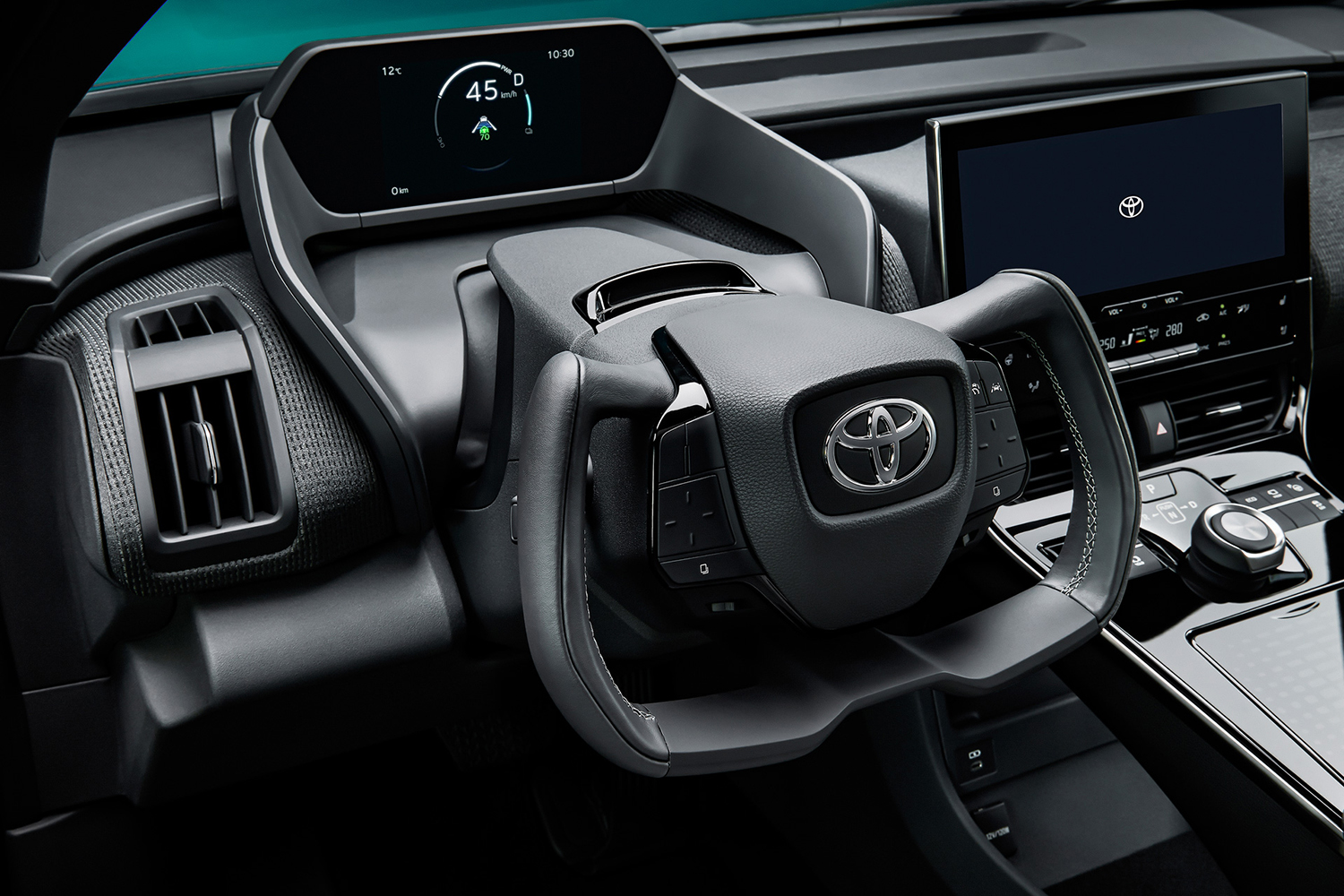
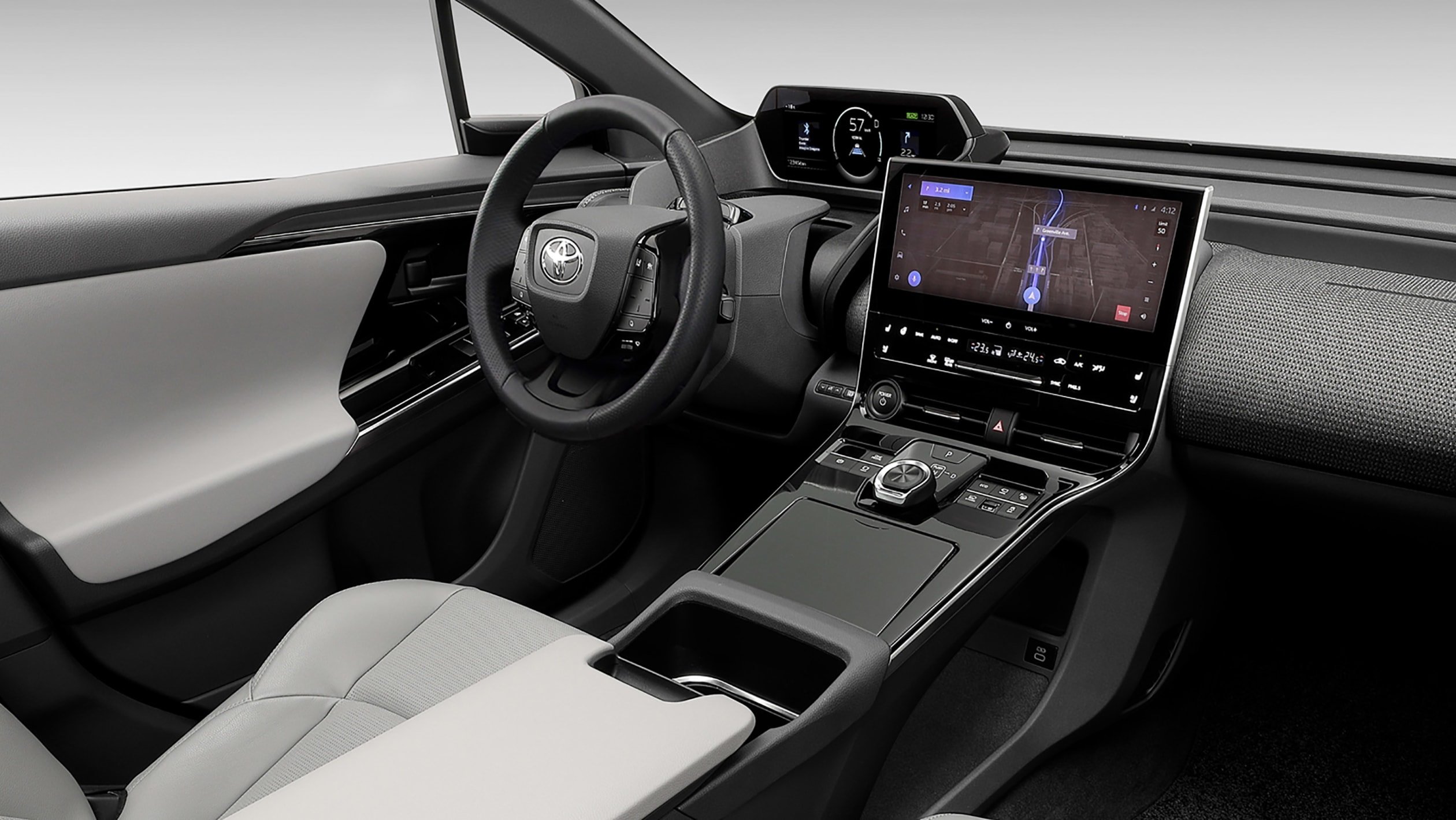
Among the BZ4X’s features will be the availability of a steering yoke – the squared-off type seen in aeroplanes and Formula 1 racers, and controversially in the updated Tesla Model S sedan and Model X SUV.
Toyota says the steer-by-wire yoke only needs to turn “around” 150 degrees lock-to-lock – based on what it detects from input – meaning drivers won’t need to take their hands off the yoke to complete a U-turn.
For those not ready to dive into a new driving paradigm, a conventional steering wheel will also be offered.
Toyota’s electric SUV: BZ4X details and driving range
The BZ4X will be built on a new bespoke electric platform called e-TNGA, developed together with Subaru.
Drive configurations will include front- and all-wheel drive. In the case of the former, a single big front-mounted motor provides motivation. But, where other brands use all-wheel drive as a welcome excuse to add a lot more power and speed, the AWD version of the BZ4X will swap the big single motor for two smaller ones – one at the front and one at the rear – to develop similar overall power.
That means there’s a 150kW motor in the FWD model, which is fairly close to standard – but only two 80kW motors in the AWD for a total of 160kW.
Toyota claims a 0-100km/h time of 8.4 seconds for the FWD version and 7.7 seconds for the AWD. Perhaps a GR BZ4X will arrive later for buyers seeking more go…
Both versions will pack a 71.4kWh battery system, with the FWD model offering 516 kilometres of driving range. As with all AWD EVs, the all-wheel-drive model will give you surety, but reduce driving range to 460 kilometres.
The BZ4X will be no hyper-fast refill either, accommodating up to 150kW charging – compared to about 230kW for the Ioniq 5. Toyota promises a 0-80 per cent charge should be achieved in 30 minutes.
Toyota claims a power consumption rate of 14.3kWh/100km (think of how regular fuel consumption is measured in L/100km) for the front-wheel-drive model, and 15.8kWh/100km for the AWD version.
How does the BZ4X’s driving range compare to other key EVs in the same size range?
The nearly-here Tesla Model Y claims up to 542 kilometres of range, while Nissan’s incoming Ariya lists up to 500km. The popular Hyundai Ioniq 5 boasts 451km, and the Volvo XC40 Recharge Pure Electric claims 418km. When it eventually gets here, Volkswagen’s ID.4 should be good for around 510km.
So, the BZ4X measures up fairly well.
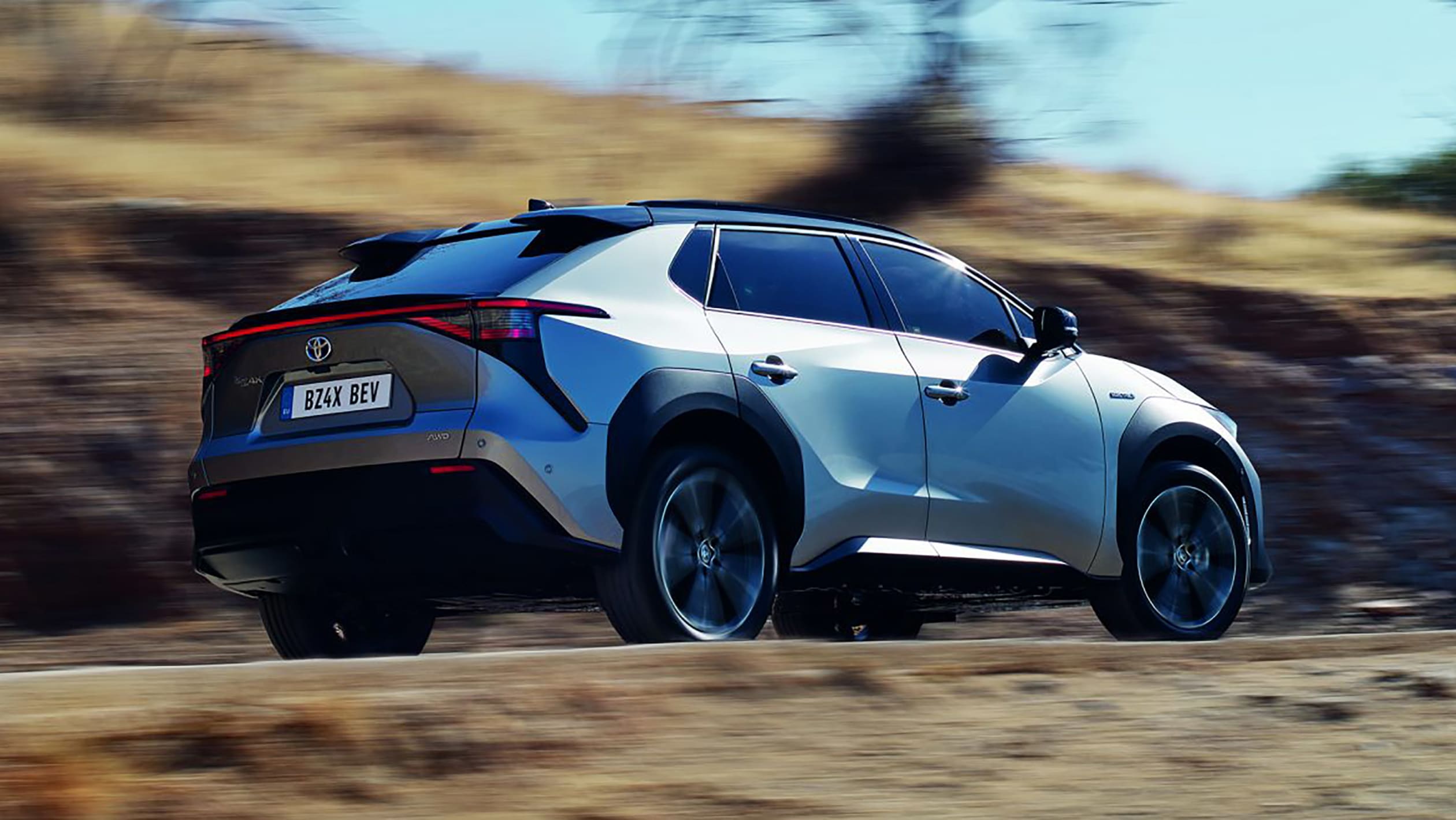
Overall dimensions for the BZ4X are 4690mm long, 1860mm wide and 1650mm tall (although the quoted number includes the antenna), with a 2850mm wheelbase – which is a match for the new Kluger’s wheelbase, despite that large family SUV being 300mm longer overall.
In this regard, the BZ4X and Ioniq 5 are similar in that they are smaller overall than each brand’s large family SUV, while boasting similar wheelbases. (The Ioniq 5’s 3000mm wheelbase is 10mm longer than the Palisade’s, which Wheels recently declared the winner in our Palisade v Kluger v CX-9 face-off.)
For one final comparison point, the mid-sized 4570mm RAV4 SUV rides on a 2690mm wheelbase.
Production for the BZ4X will begin sometime in the middle of 2022, with an Australian debut set for late 2022.
How much will the BZ4X cost in Australia?
Australian pricing for the electric Toyota BZ4X has not been confirmed, but we expect it to be quite expensive – just as most offerings in its segment are. Look for a figure above $60,000 at the lowest, but anticipate a number around $70,000.
Cupra’s new Born shows electric entertainment doesn’t have to be shockingly expensive. This speedy and sporty EV from the young Barcelona-based brand costs less than some ICE-powered hot hatches, while delivering a similarly decent dose of driver delight.
In Europe the Born is already on sale in some markets, priced below the VW Golf GTI, a car that in Australia is $53,100 before on-road costs. The Cupra’s price advantage in Italy, for example, is the equivalent of $5000. And this is before EV incentives are taken into account.
While the Born is confirmed for Australia, it won’t appear at the same time as the three-model launch line-up in mid-2022. The EV is instead expected to arrive sometime late next year or early in 2023.
There’s no way of knowing exactly how much the Born will cost. Details of specification and equipment level are still a long way from being settled. Cupra people in Australia are cagey, but hint that around the $55,000 mark isn’t a foolish guess. European price relativities indicate they may be able to do better than this, at least at the affordable end of the Born range.
UPDATE, December 2022: Australian Born pricing announced
Cupra has confirmed Australian pricing and features for its Born electric hatch. Get all the details at the link below.
Story continues…
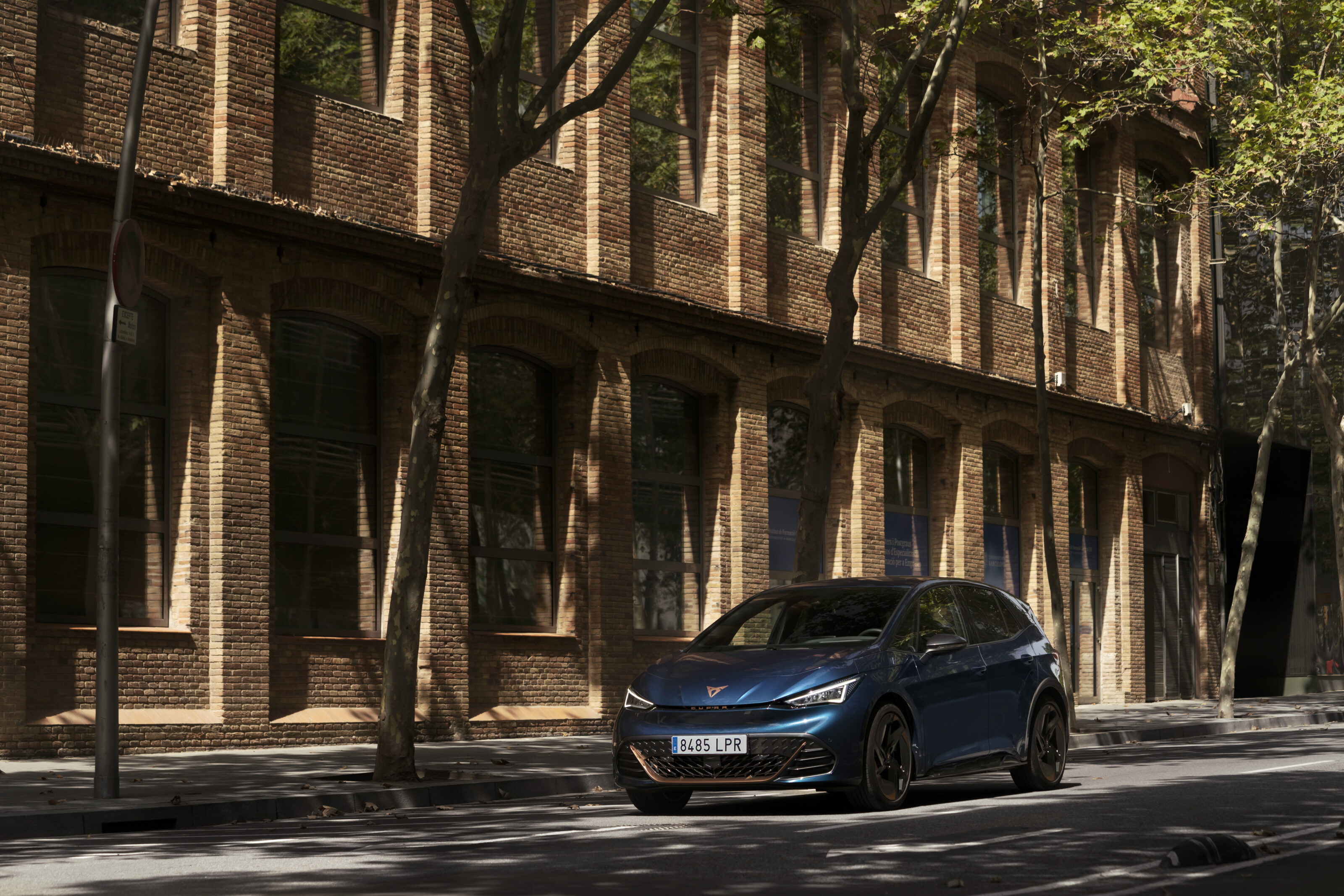
While it’s distant, the Cupra may well be the car to provide Australians with their first opportunity to buy something built on VW Group’s purpose-designed EV architecture, MEB. The Cupra is made in Germany, at VW’s big EV-only Zwickau plant, and is based on the ID3.
The ID3, remember, was the first car built on MEB. Since the Golf-size hatchback went into production in 2020, it’s been joined by seven other models built on the versatile platform.
There are compact crossover SUVs (VW ID4, Skoda Enyaq and Audi Q4 e-tron), fastback variations on the same theme (VW ID5 and Audi Q4 e-tron Sportback), plus a larger, three-row, China-only crossover SUV (VW ID6) on a longer wheelbase than all the rest.
All of these, despite being closely related, have their own style. The Cupra, on the other hand, has steel body panels stamped in the same presses as VW’s EV hatchback.
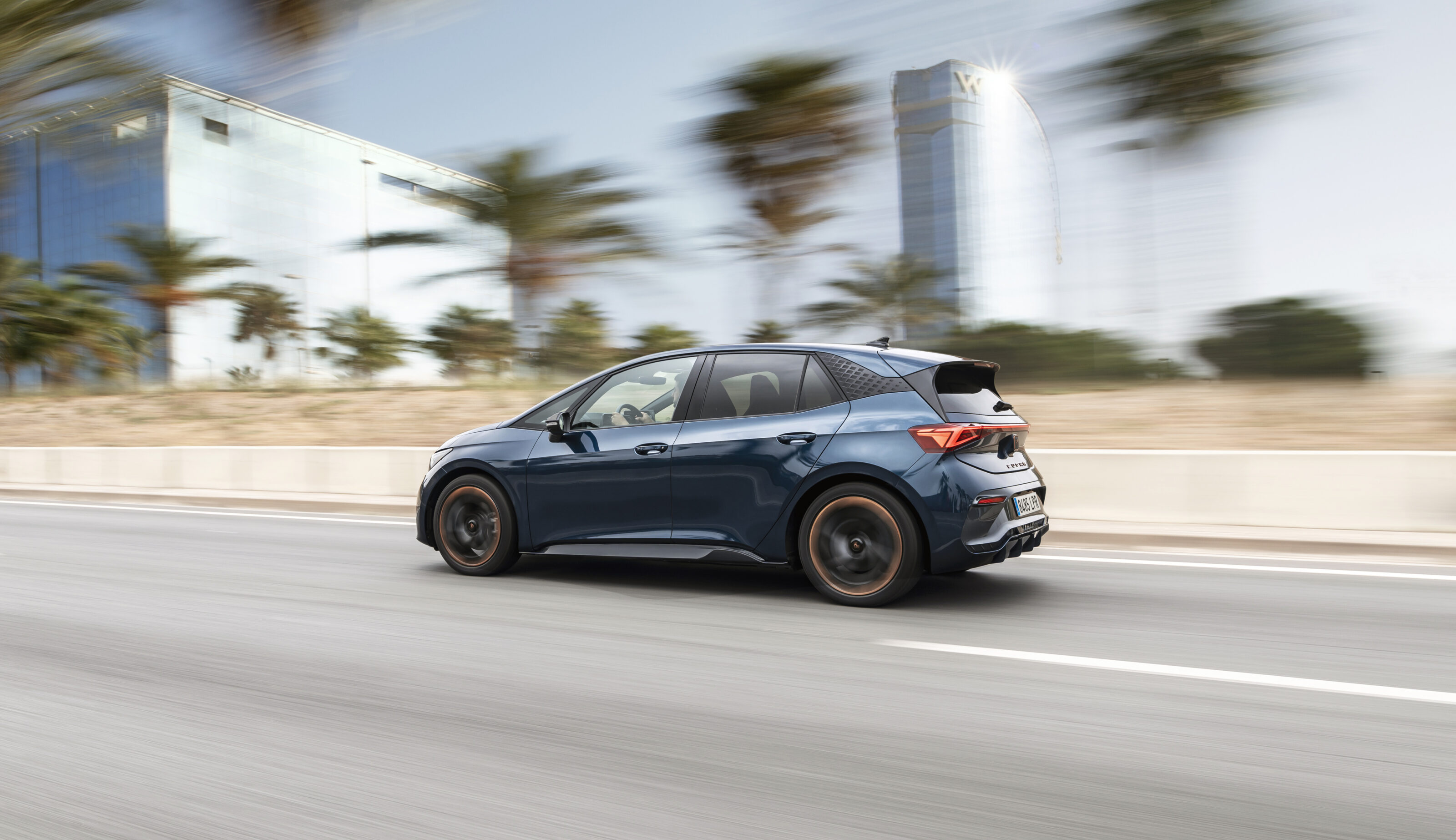
Seen side on, the Born’s basis is obvious. Cupra’s designers could only alter plastic parts, but the new bumpers, lights and add-ons give it more visual attitude than the mild-mannered ID3.
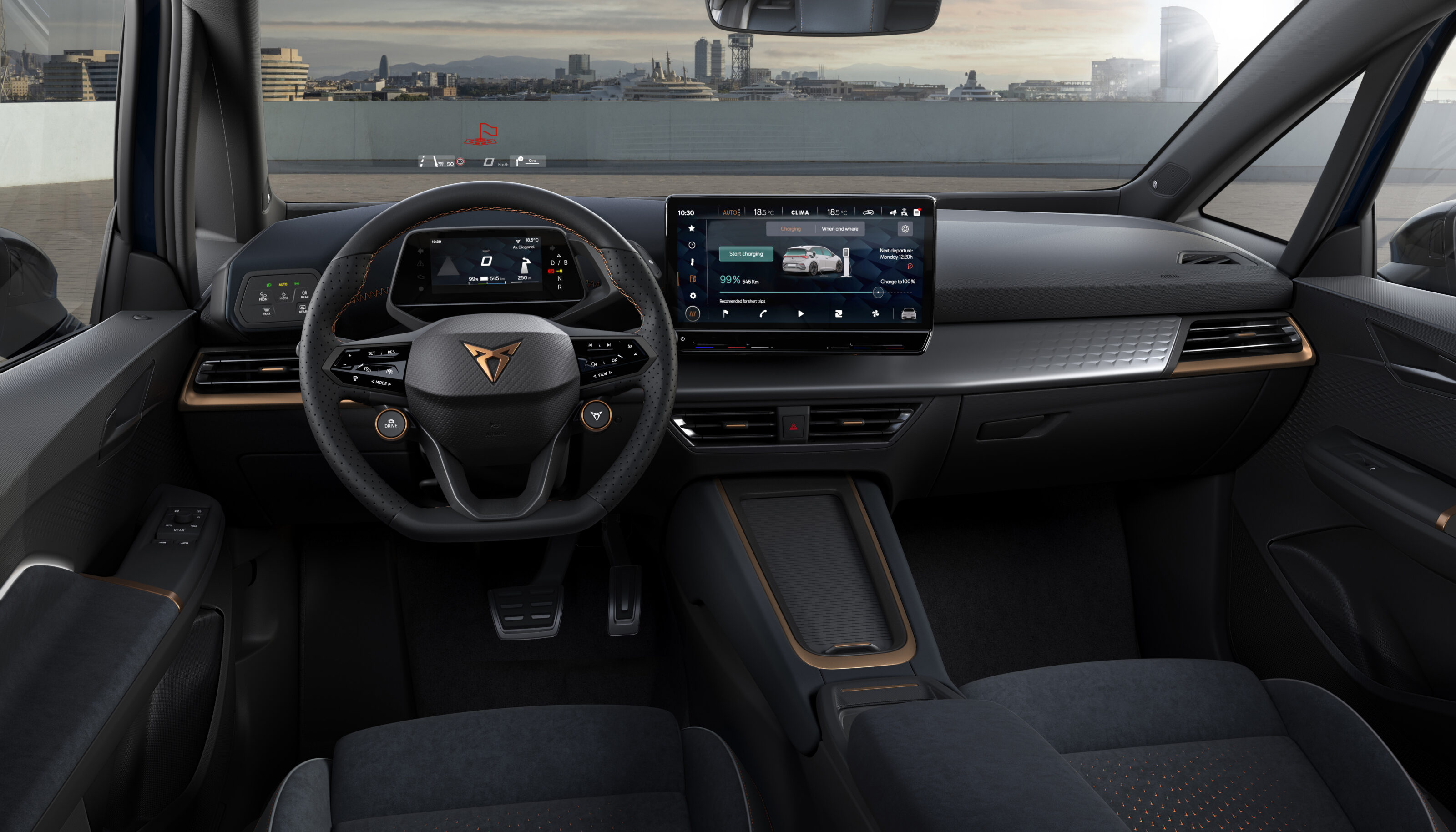
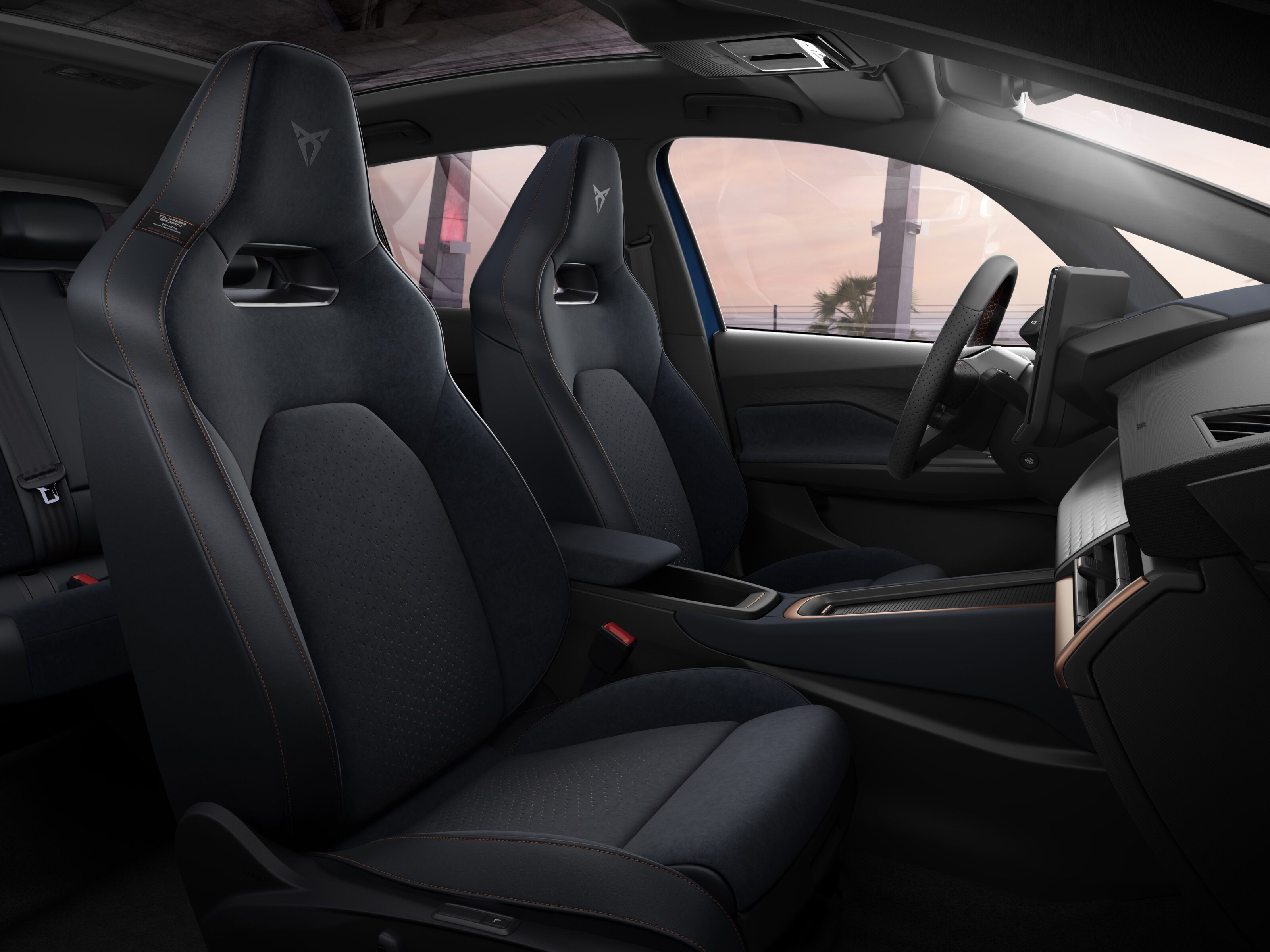
The differences are more marked inside the roomy cabin. The Born’s front seats have more pronounced bolstering, plus a helping of eco-cred. The standard seat covering is partly made from Seaqual, a textile made in Spain from recycled plastic.
A recycled microfibre called Dinamica is also used for the door trims and armrests, and is the optional seat covering. There’s also a new steering wheel design, and the Cupra’s dark-toned interior gives the impression of being furnished with higher quality materials than the VW.
But the most important changes are to the Born’s powertrain and chassis. Cupra plans to position itself purely as a performance brand in Australia, something it doesn’t do elsewhere in the world.
We can safely ignore the coming low-powered small-battery Born and focus on the two variants of interest.
The main difference between these is battery packs; 58kWh or 77kWh. Only the 58kWh is currently on sale in Europe. Like the ID3, its rear axle is driven by a 150kW/310Nm motor.
But Cupra-specific e-Boost software will soon increase power to 170kW, for both the existing 58kWh and coming 77kWh Borns. Extra steering wheel buttons, for instant access to their additional Cupra driving mode, larger front brake discs and 19-inch wheels are also part of the e-Boost package.
Because its smaller battery pack weighs less, the 58kWh Born with e-Boost is the line-up’s performance champ. Cupra claims a 0-100km/h time of 6.6 seconds, just a few tenths more than, say, a Golf GTI. It’s the one we recently drove on a good mixture of roads in and around Barcelona.
Other key Born alterations are slightly lower ride height, recalibrated suspension and steering, and Cupra-defined driving modes. As well as the Cupra mode mentioned earlier, these are Range, Comfort, Performance and Individual.
While e-Boost mode lifts performance a notch, it’s the class and cohesion of Cupra’s chassis alterations that give the Born a more charismatic personality than the ID3. It’s keener to corner, steers more sweetly and, surprisingly, rides better.
Exploiting the extra urge and handling fluency, it’s soon obvious that tyres are the Born’s weakest link. Frequent interventions by ABS and ESC signal the limits of the standard 215-section rubber have been reached long before the chassis runs out of talent. The wider 235-section tyres optional in Europe should be standard.
Even so, the Born stands out as the small and affordable EV with the most driver appeal. At the same time, it delivers on EV essentials like driving range and charging rates.
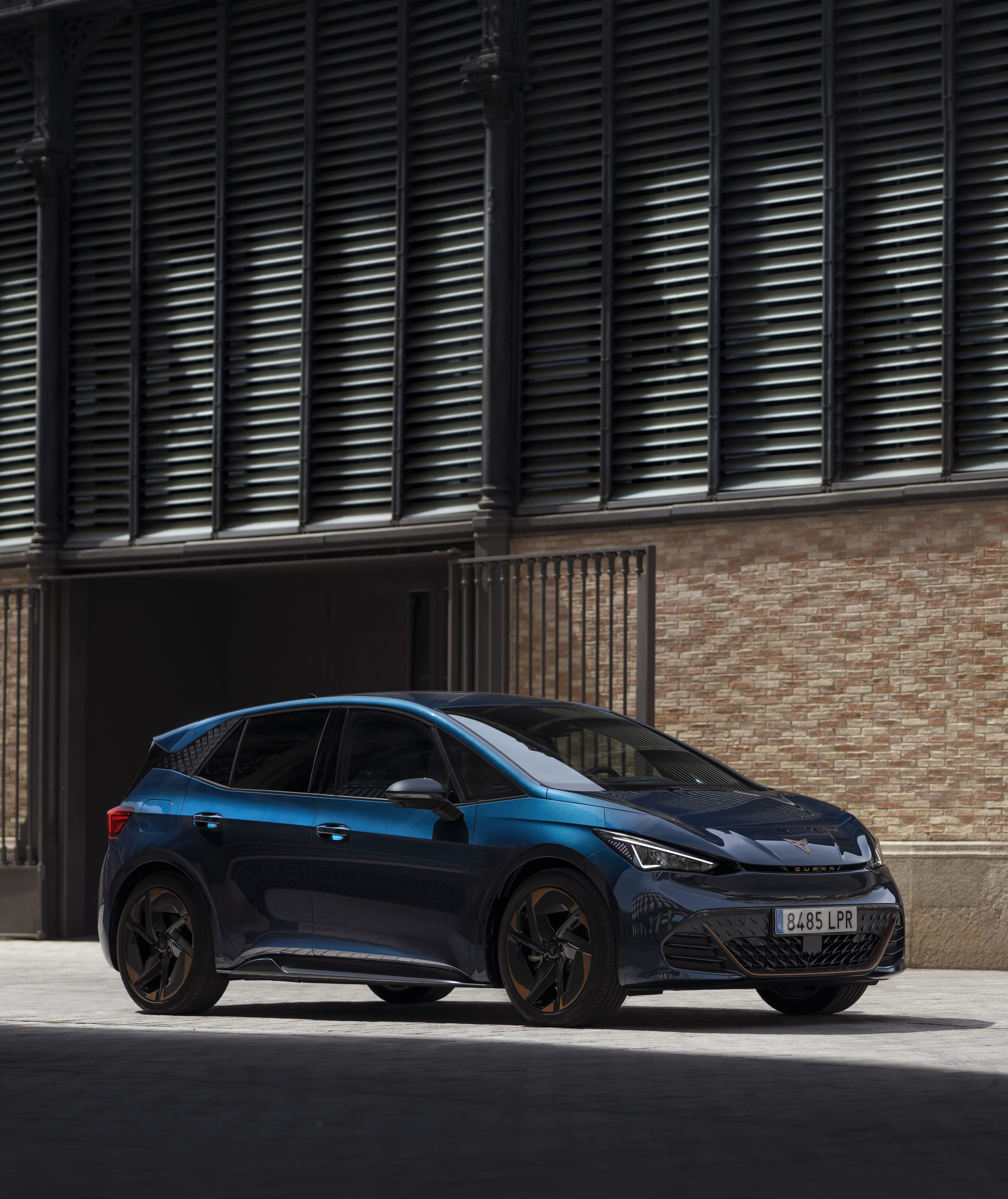
The e-Boost equipped versions of the Born are yet to be homologated, but the 58kWh pack is expected to deliver a WLTP-rated driving range of around 420km and the 77kWh pack about 540km.
Both are equipped with an 11kW on-board AC charger, while DC fast-charging maximums are 120kW for the 58kWh and 170kW for the 77kWh.
These are good specs compared to other small EV hatchbacks already on the Australian market. Like the Leaf, for example. But the Cupra doesn’t only have a longer driving range and faster charging than Nissan’s well-known EV.
The rear-drive Born has better weight distribution than the nose-heavy, front-drive Leaf, and a tighter turning circle. The refinement of the Cupra’s drivetrain is outstanding, and it’s better looking inside and out.
There’s plenty about the spirited Born to draw EV-curious Australians who aren’t looking for too much high-voltage excitement.
Plan for the worst, hope for the best. If there was a MOTOR Performance Car of the Year coat of arms, this would be the motto.
And as the skies over Oakleigh grew angry only the day before the start of PCOTY 2022, it looked like the former part of that saying would set the theme for this year’s event. But how do you prepare for a demonic storm cell descending on Melbourne’s eastern suburbs, aiming its gumball-sized hail right where a majority of our test fleet had been assembled?
The answer is simple – scramble every able-bodied person in the office and pack 11 cars into a warehouse that, under normal circumstances, struggles to accommodate six. If you ever needed proof that the MOTOR team is handy behind the wheel, look not to the race track and lap times, just ask to see their reverse parking in a hurry.
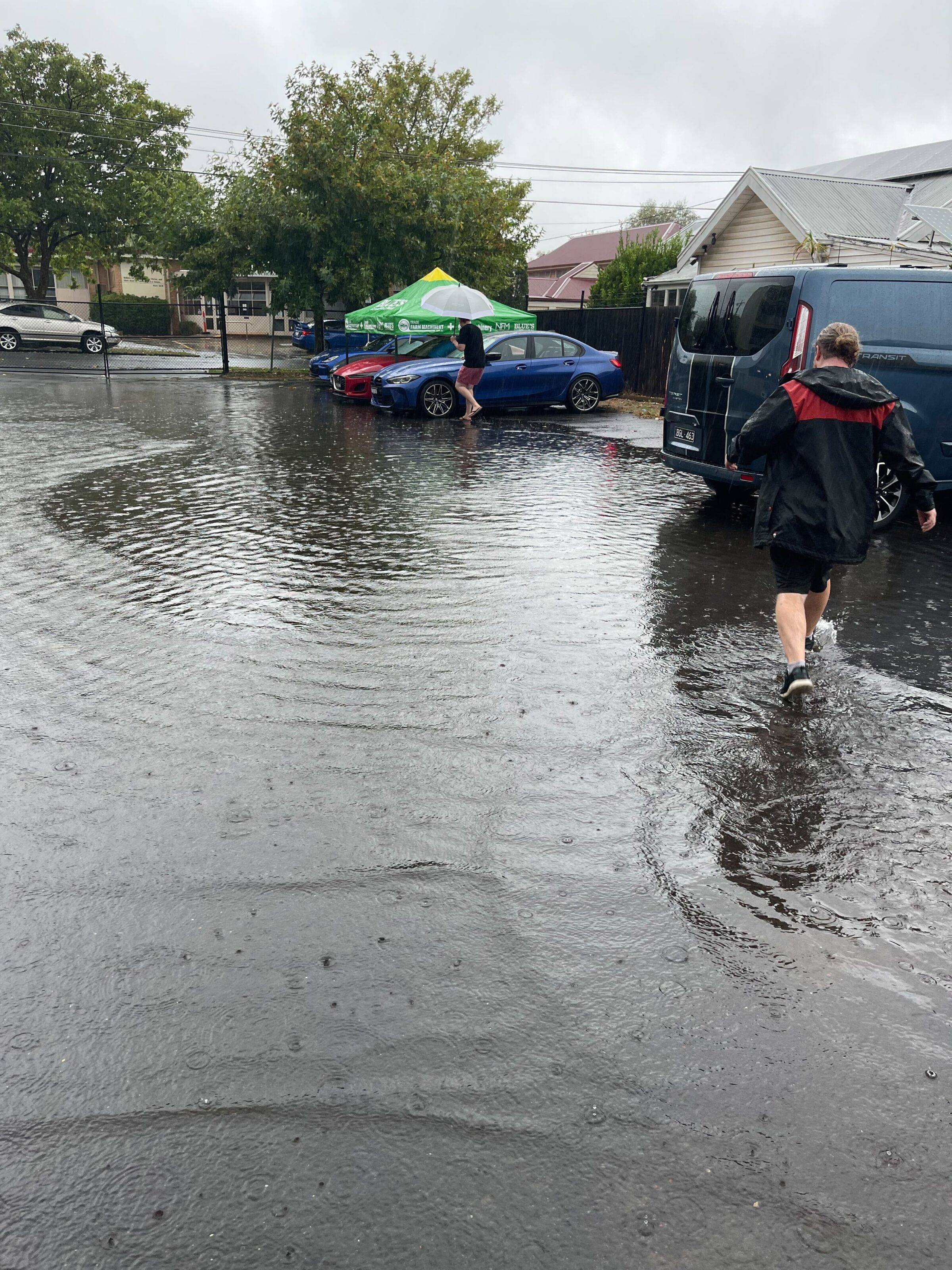
You’d be forgiven for thinking a weirdly localised hail assault on the eve of MOTOR’s biggest week might have been an omen foretelling five days of hell. But as I write this, all 18 cars that made up the largest PCOTY fleet to date are back with their respective owners, all six judges still have their driver’s licences, and MOTOR magazine has not been banned from the Phillip Island Grand Prix Circuit.
What follows is why Performance Car of the Year 2022 will be remembered for all the right reasons.
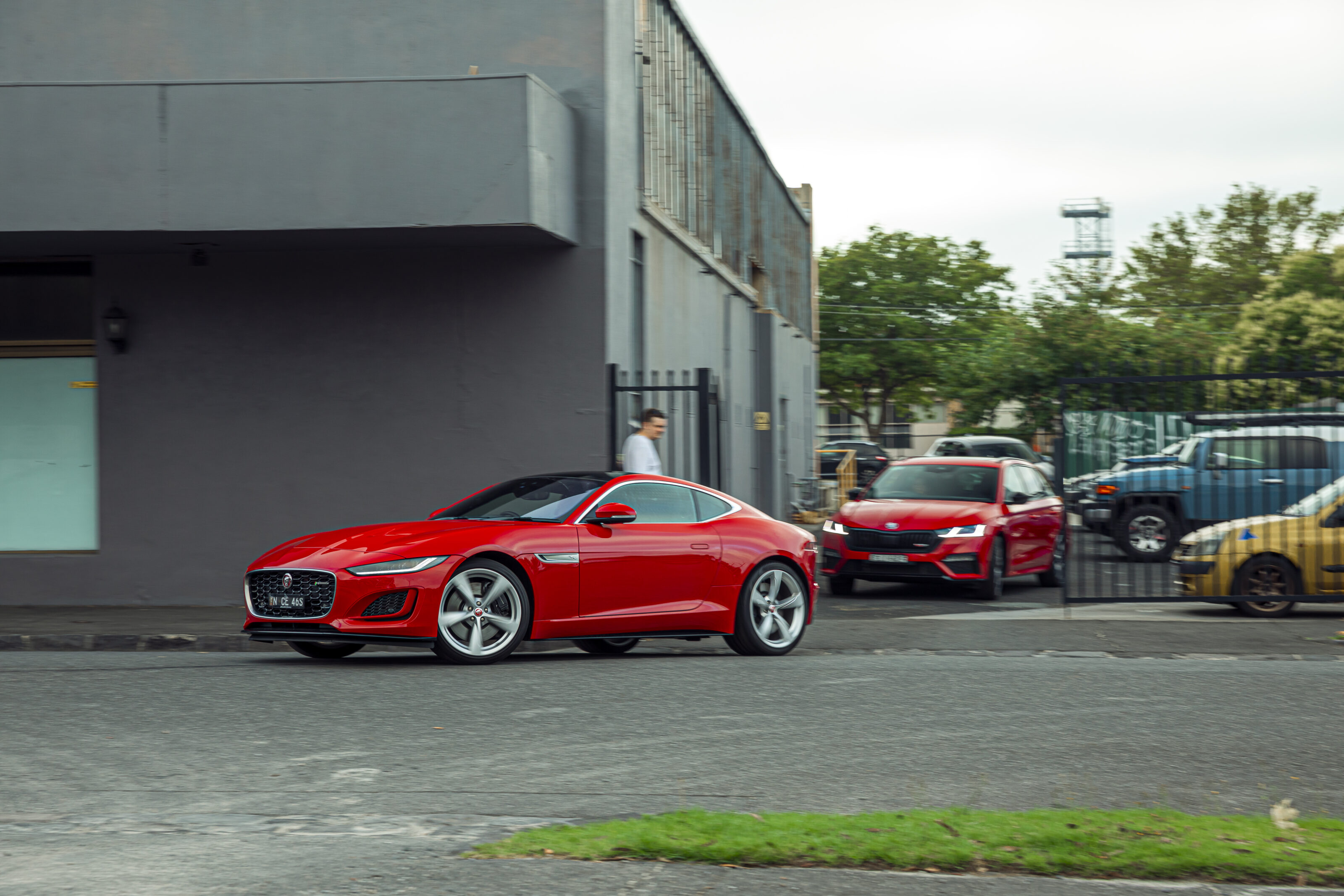
Despite the climatic assault, all our cars depart the day-one rendezvous with their glazing intact. This period of latency and calm clearly sat uncomfortably with Trent who, on the cruise to Gippsland, expertly used the Subaru BRZ’s pin-sharp handling to seek out an airborne stone and fire it through the front pane. Or maybe it was an accident as he claims. Either way, the BRZ had a crack that was growing faster than a plumber’s butt cleft and was quite possibly the first of the 2022 model in the country to require dealership attention (thanks Leongatha Subaru).
The BRZ, through no fault of its own, might have been the first to temporarily take to the sidelines but at least it had turned up. Somewhere back in Melbourne, GMSV technicians were trying to find the cause of an engine-check light that was preventing a Corvette joining in on the fun.
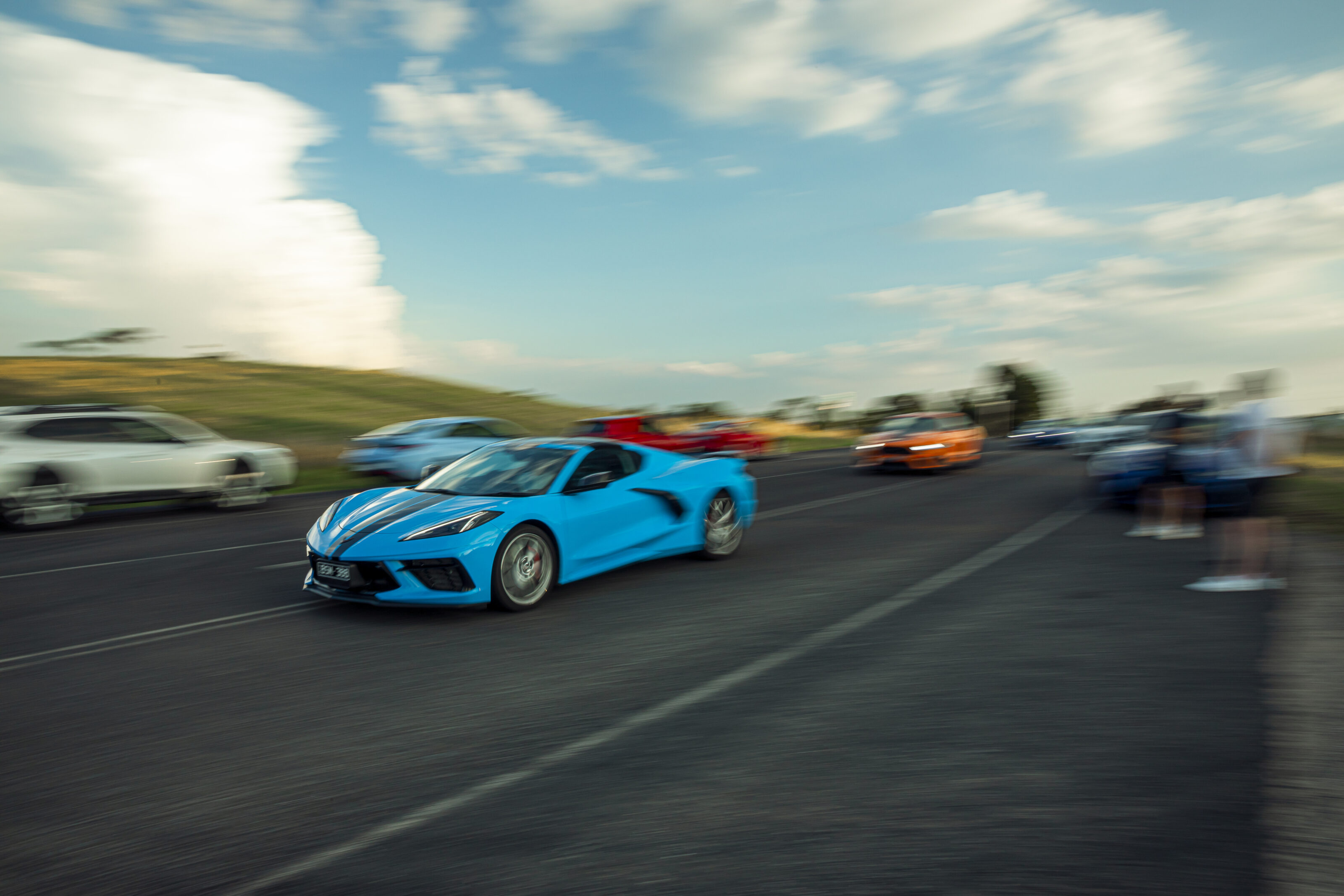
When the car turned up at the end of day one with software freshly updated, the mysterious light was extinguished and, like the hail, thankfully didn’t return.
The first day saw temperatures into the mid-30s, but we’re not talking those wonderful Gippsland summer days where a dry breeze wafts from the Bass Strait. It was a savage, airless day with no escape from the beating sun – unless, of course, you’re a judge.
Comfortable under their fleet of wheeled parasols, the panel of five (and Luffy) had already started the process of road evaluation, cutting loops of epic driving roads. But when you’re browsing the world-class images of six men looking really cool, spare a thought for the people behind the cameras who frequently endure conditions only marginally more comfortable than the surface of a comet.

Danger and discomfort is all part of the job for the photography team, but there was one person even more uncomfortable than the shooters at this year’s event – me.
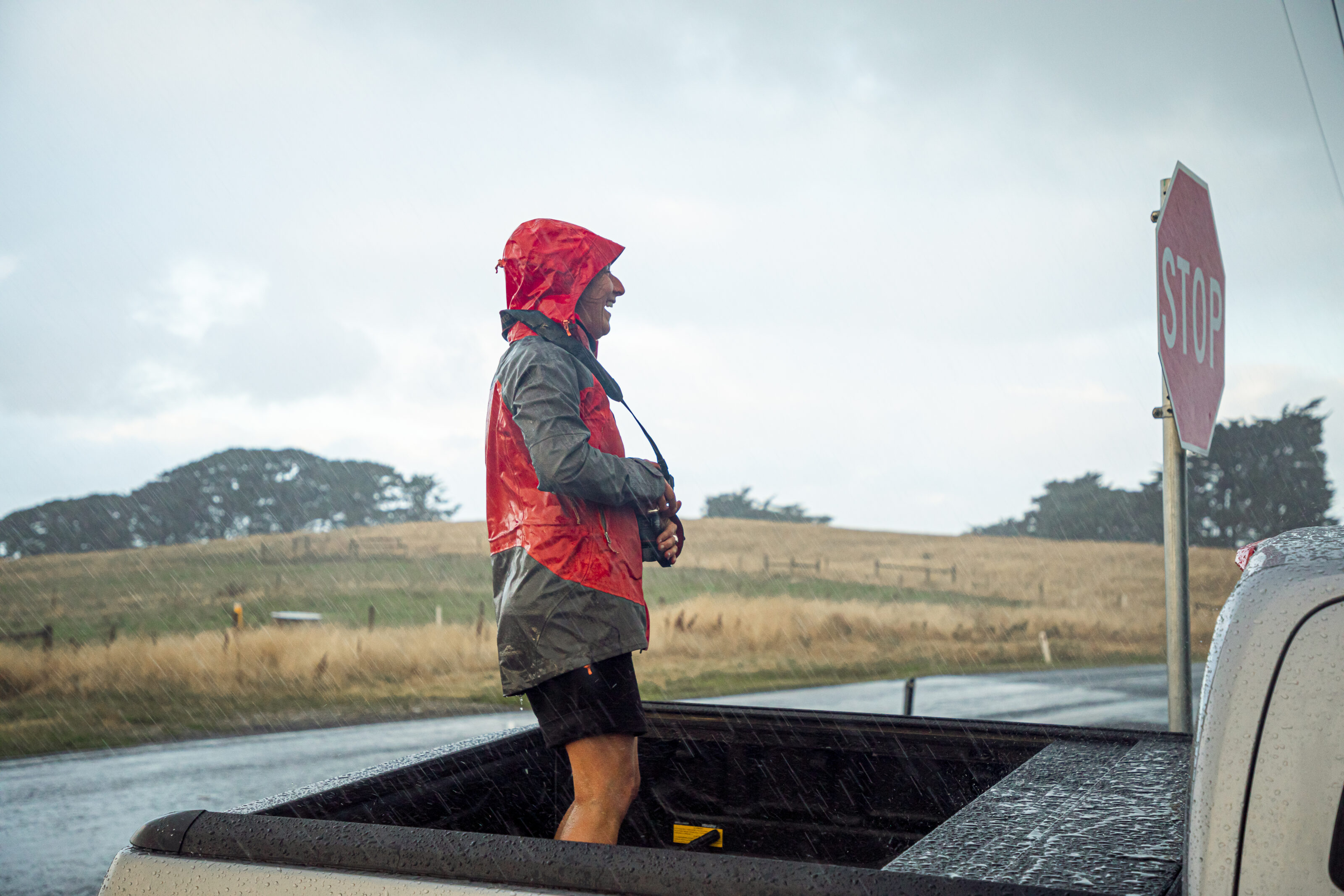
While the snappers enjoyed luxuries like hats, sunglasses and long sleeves to protect them from the elements, presenting a Car of the Year video allows none of that. When you watch the finished films, try to spot the transition from belting sunshine, 35 degrees and trying to hide the gushing forehead sweat, to howling wind, rain and hypothermia. It wasn’t easy.
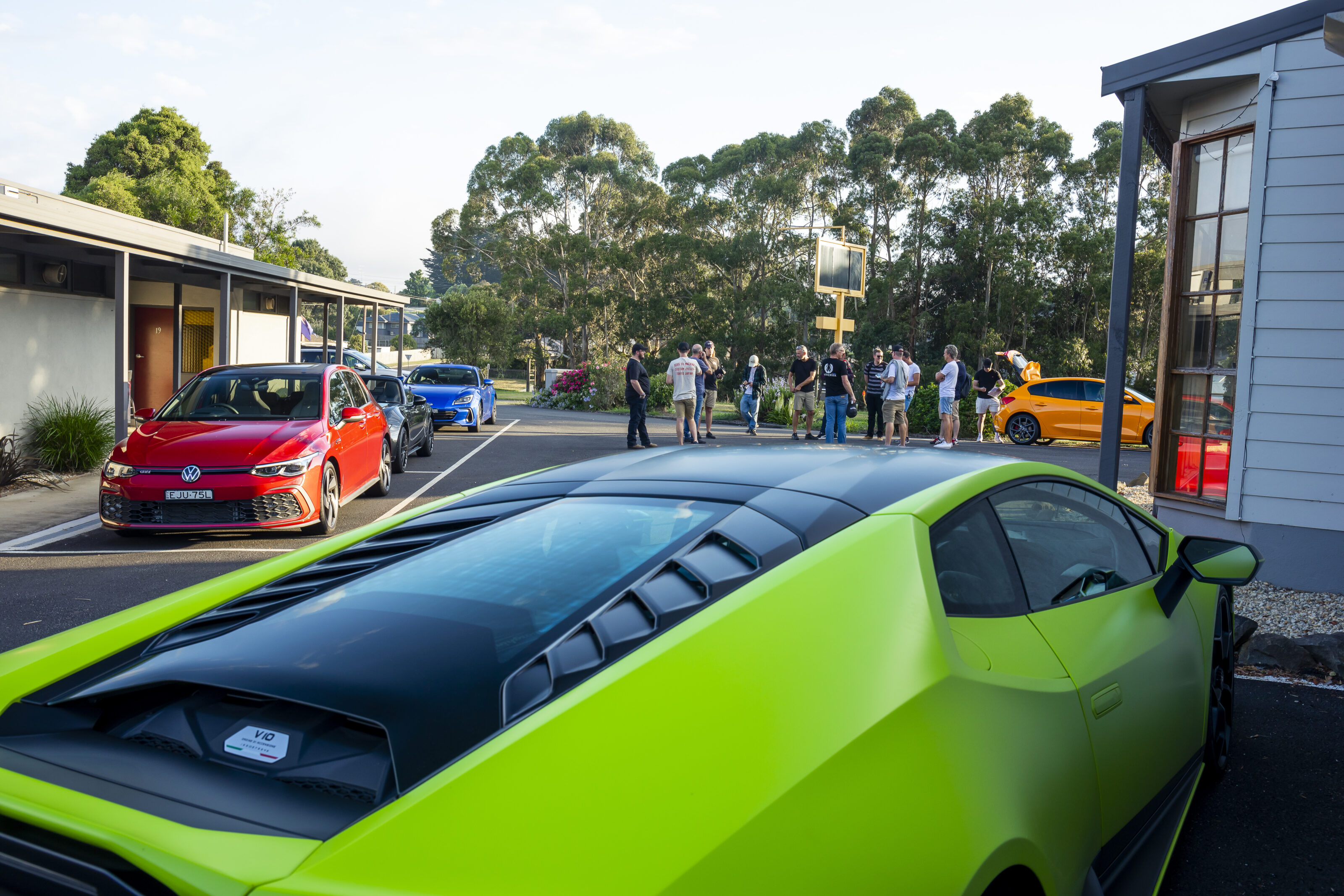
With the lenses preoccupied by six key car nuts and one whinging pom, it’s easy to forget that pulling together the biggest PCOTY in recent memory required a large team and, with the exception of just two rooms, the entire Coal Creek Motel was booked out to us.
The atmosphere at our accommodation just outside Korumburra was somewhere between high school camp horror movie and Gumball Rally without the glamour, but after a 17-hour day-one, the porch lights were flicking out not to the sound of tittering and tinnies, but instant snoring.
The next day, rain and cold had displaced the balmy climes of the night before, but the 20-strong team was ready to roll bright and early – except customer care guru Vin who seemed incapable of emerging before the penultimate car had departed.
At least Mike Stevens had some diplomatic words to offer when he finally arrived back at our base in Loch for the day. “You took all that time to get ready and your hair still looks shit?” he lovingly observed.
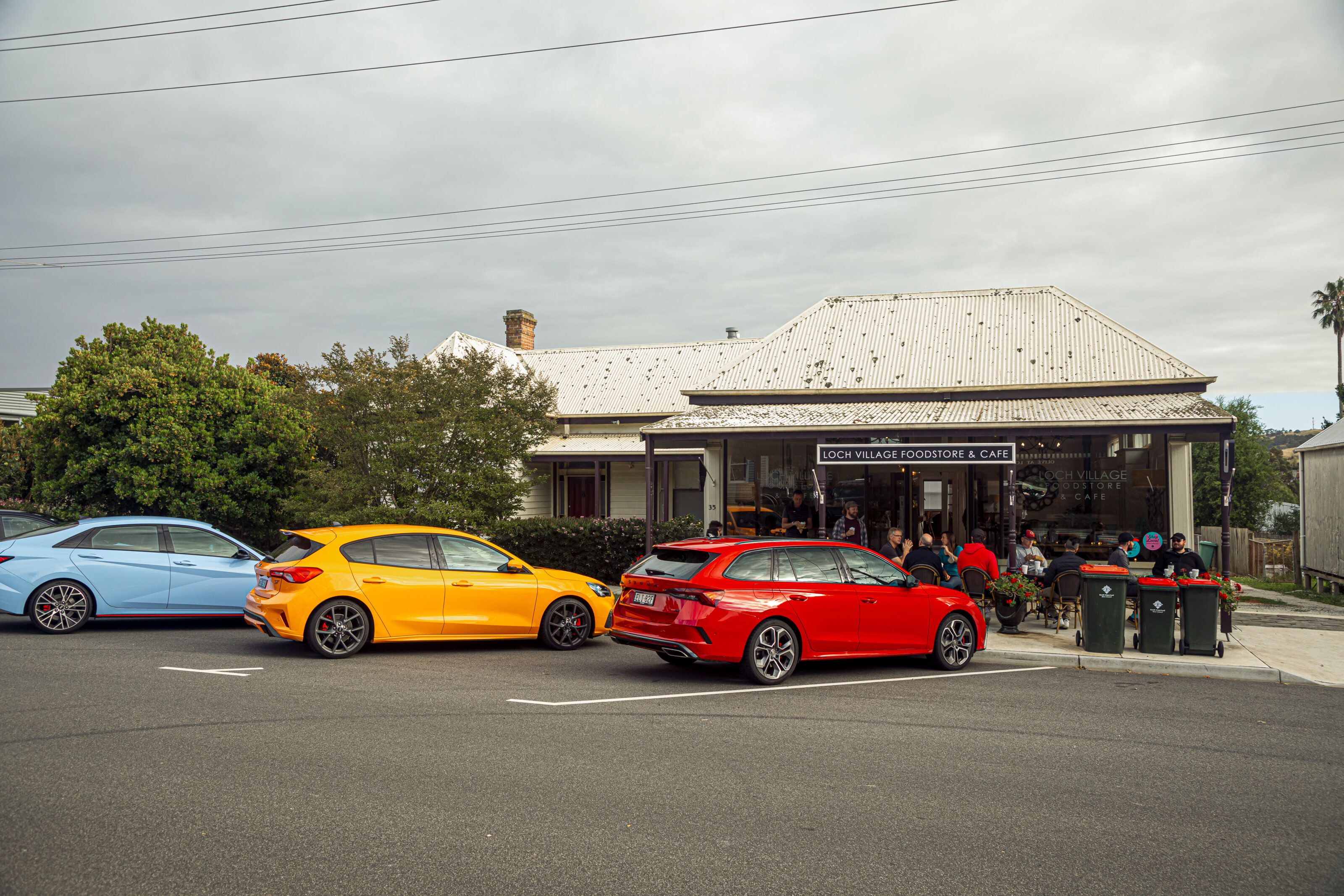
As a whole we were on best behaviour for the locals and our informal hosts. The tiny community of Loch is home to two excellent cafes, a bowls club and a distillery. Inevitably, the sound of almost 5000kW and 93 cylinders running into town each day started to draw attention and our fleet became an unofficial motorshow. By the end of the third day we bid farewell to Loch and set a course to Phillip Island.
At 8:30am the team reconvened at the entrance to the Phillip Island Grand Prix Circuit from our various linen-less Airbnbs dotted around Smiths Beach, and the sense of excitement was palpable. Anyone who knows Phillip Island will be familiar with its curious climate which has absolutely no relation to the weather anywhere else in Victoria, but over the next two days, the Island started to shine brighter than I’ve ever witnessed.
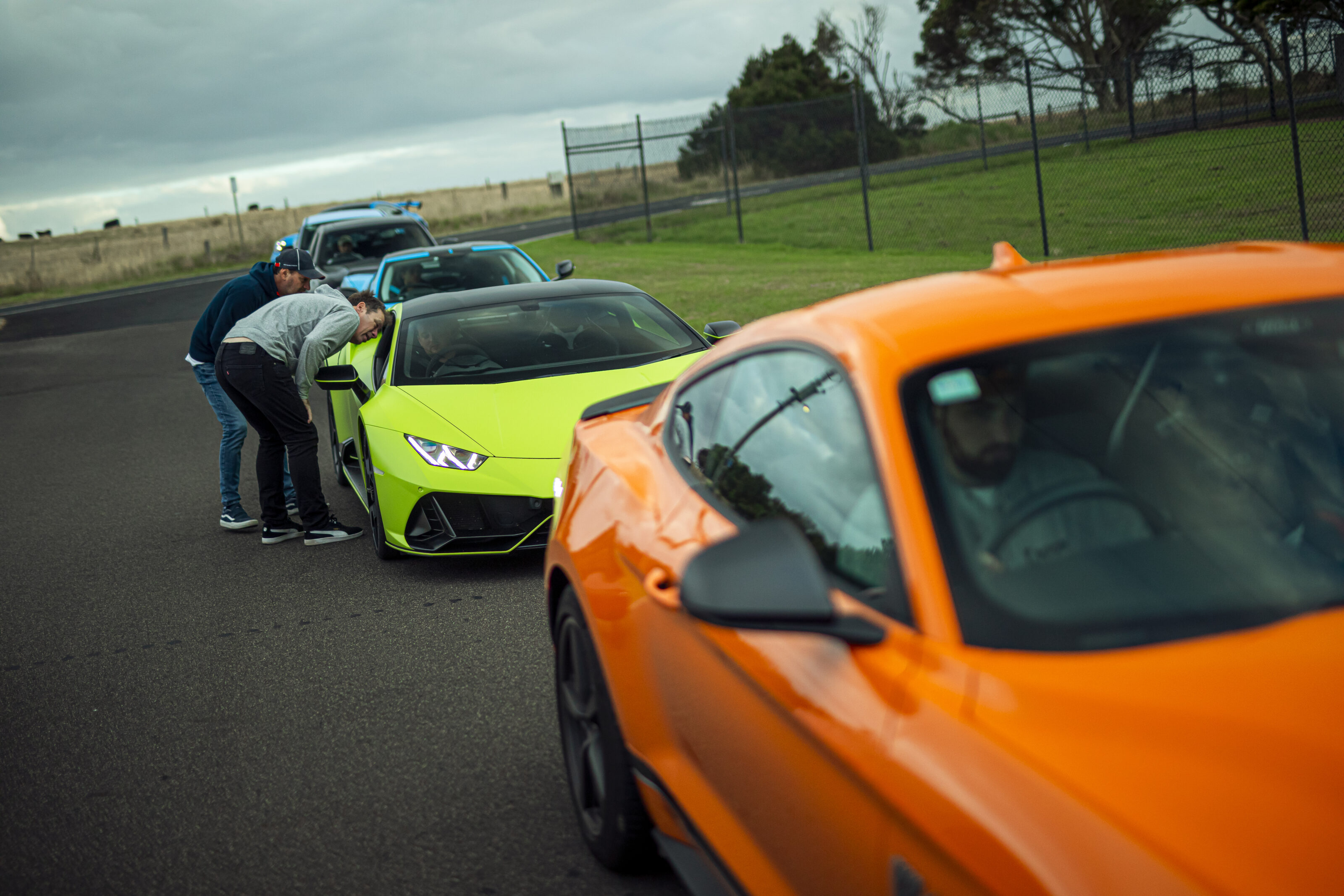
It’s rare to see such an eclectic and diverse collection of cars lapping such an intensely beautiful track, but to do it behind closed gates and with a group of people I’m lucky enough to call both friends and colleagues is to realise a dream.
It was encouraging to see an EV joining the ranks in the form of Porsche’s Taycan, but its attendance highlighted the void in infrastructure. Thankfully, the MOTOR team welcomes back the ephemeral but absolutely irreplaceable James and Stu and each evening the duo would disappear off to Moe to charge the Taycan’s 900-volt battery.
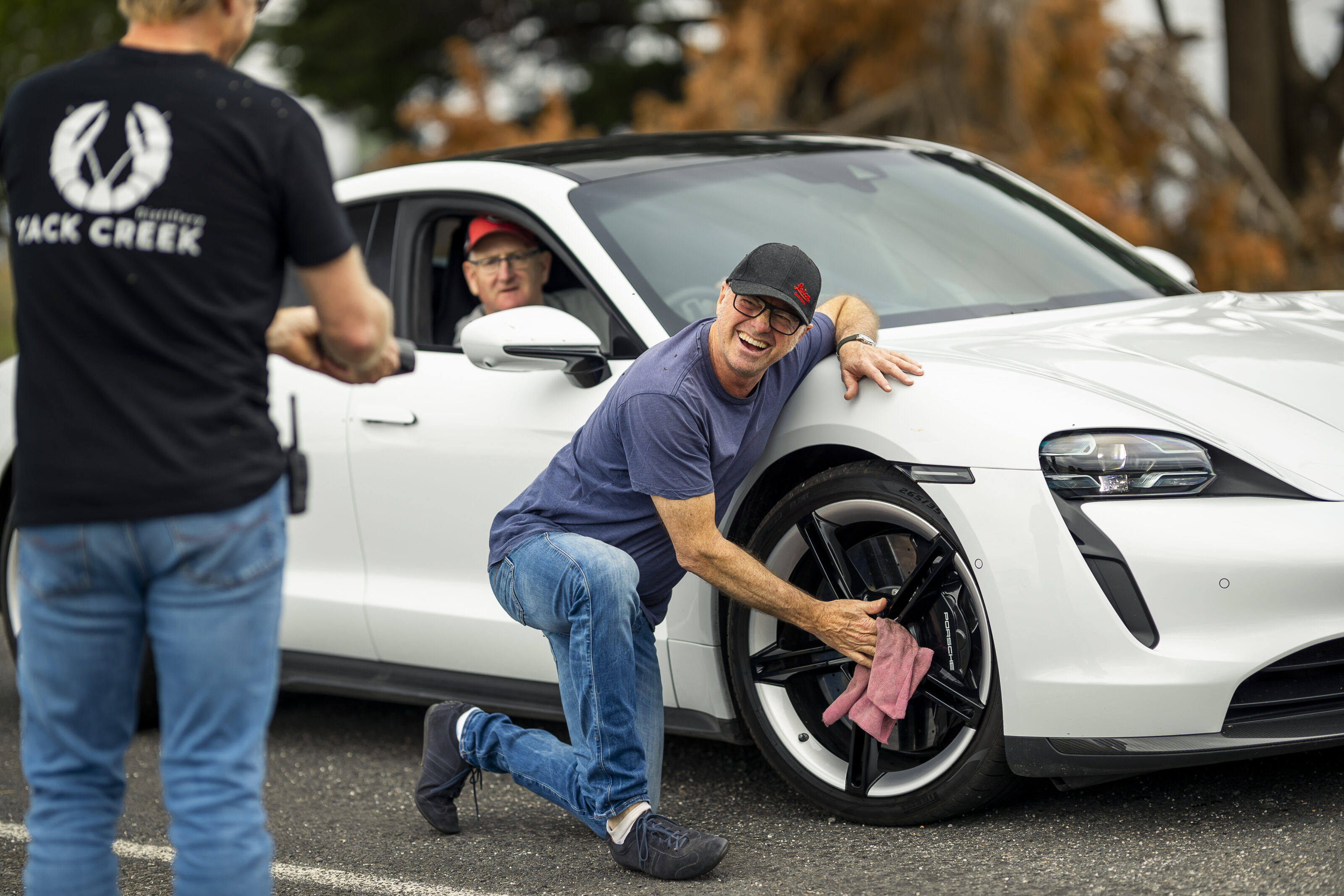
One day the car arrived with 1 per cent remaining in the ‘tank’ – a demonstration of logistics almost as impressive as the Huracán, which was returned without a single kay remaining of our mileage limit.
Perhaps the only awkward moment arose during a polite chat between judges when race-ace Warren Luff was recounting fond memories blowing up Ford Mustangs, including one highly strung Harrop supercharged example at Winton.
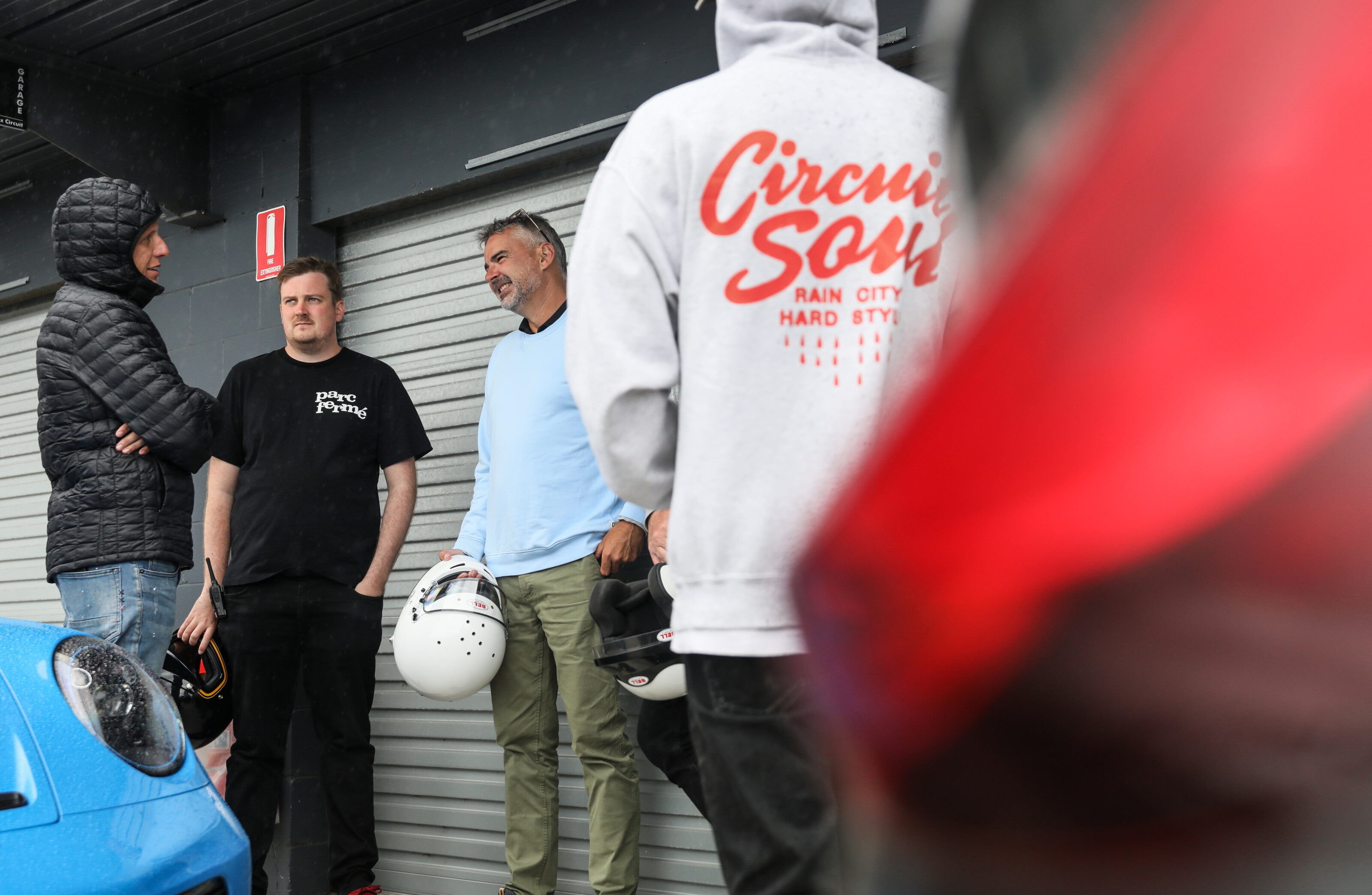
“That thing detonated big time,” giggled Luffy before Premcar engineering director Bernie Quinn piped up “That was my car!”.
Let’s not forget however, that behind all the fun and excitement, MOTOR Performance Car of the Year is a systematic process of evaluation and an assessment of objectives with genuinely scientific results.
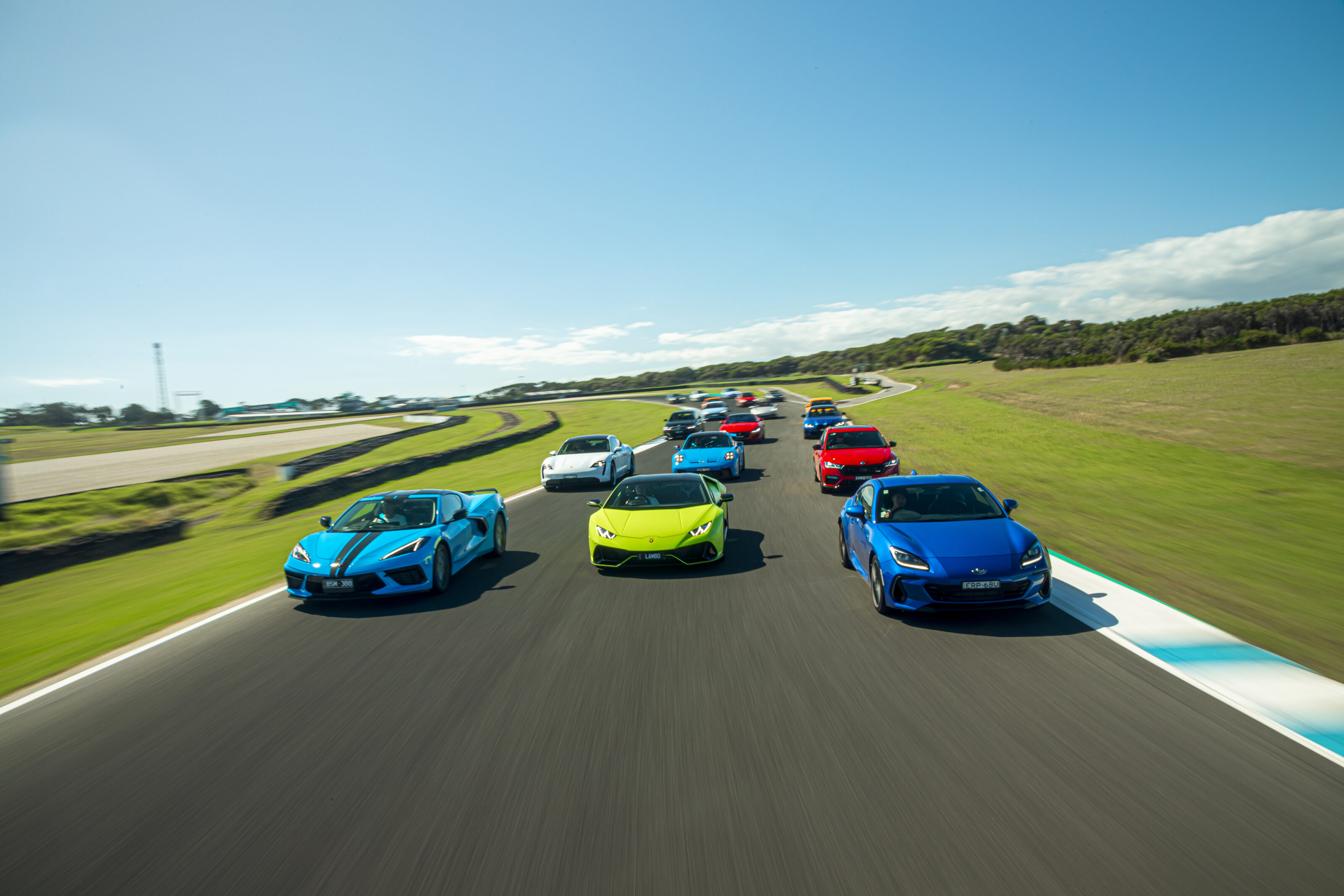
Yet, when it came to the most critical group shot at the end of the final day – the most complicated rolling shot we have ever attempted with all 18 cars moving on track simultaneously observed by two tracking cars, Dave still hadn’t learnt how to put the Lamborghini into Drive.
Yes there were challenges and a collective sense of relief when PCOTY disbanded and trickled away from the island, but through the adversity and technical complexity of this year’s event, Performance Car of the Year didn’t just prevail, it triumphed.
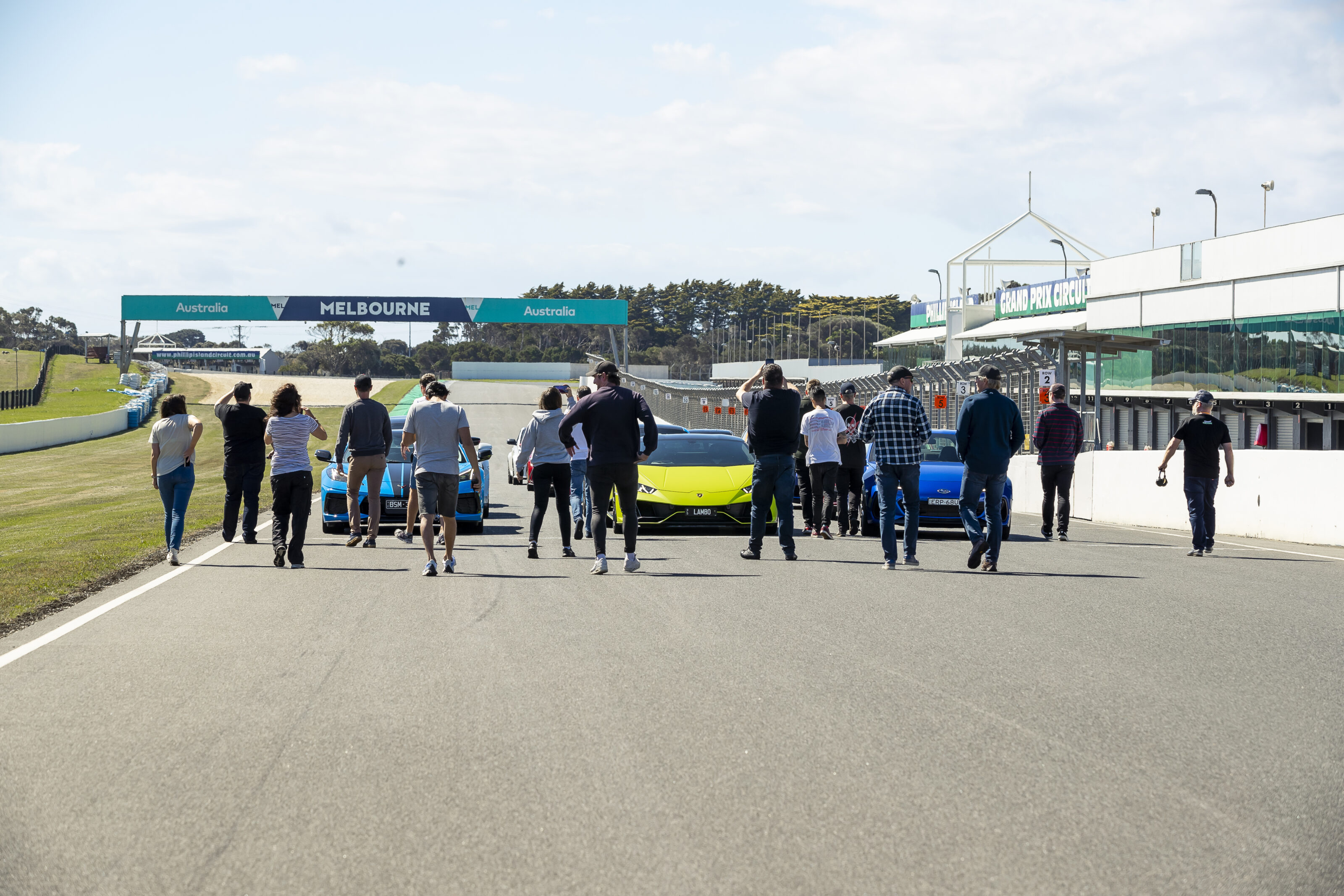
So perhaps the words of Lee Child that we began with don’t fairly summarise the PCOTY mantra, and a different motto might be a better fit for our most challenging but exciting week of the motoring calendar.
Non enim cursus sed vitae urna – not for the circuit, but for life we drive.
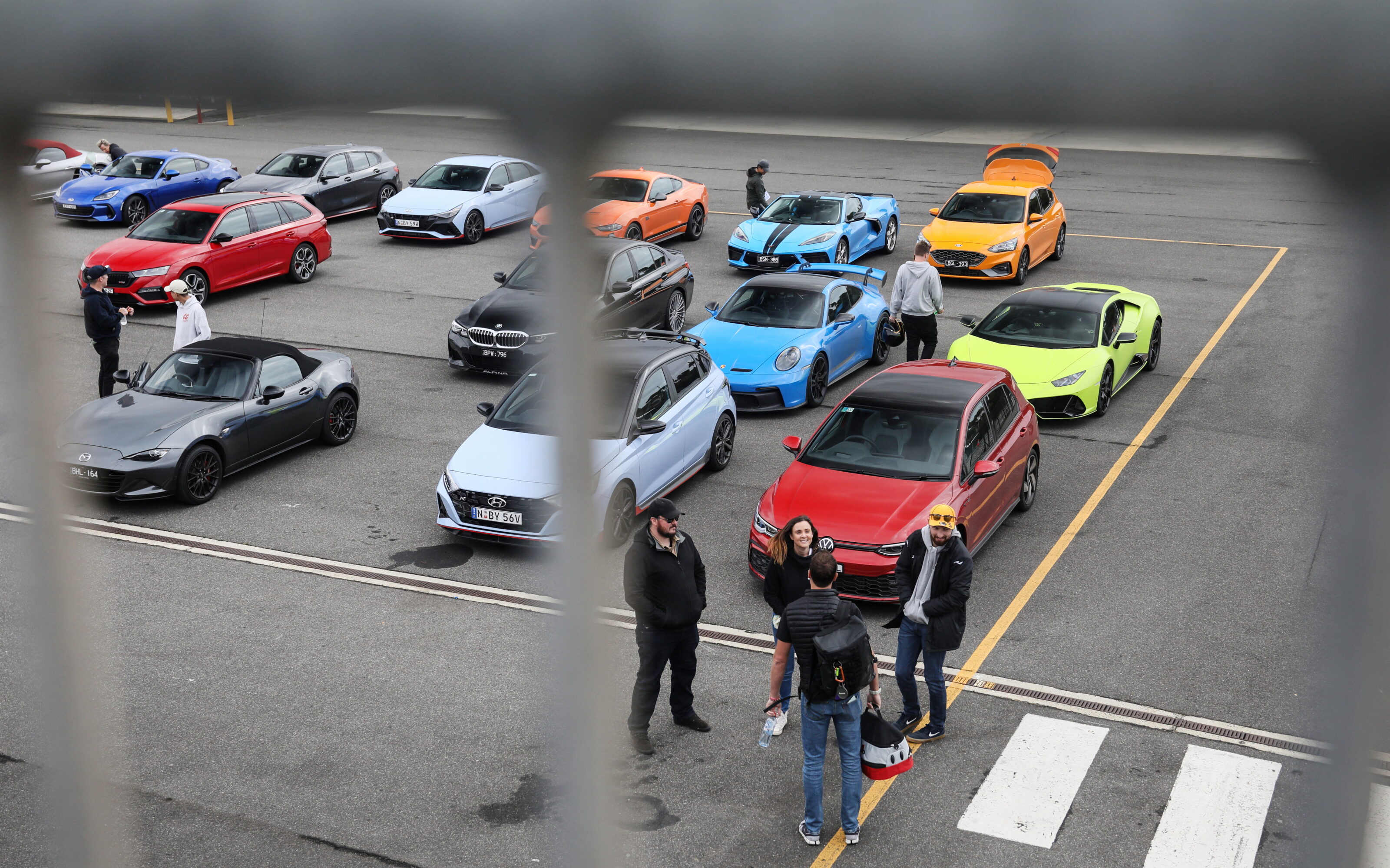
There is plenty of things about the Skoda Octavia RS wagon that will make performance enthusiasts happy.
Not least is the fact it is a good old fashioned long roof – and not a stilted SUV. Then there is the EA888 engine which has become a mainstay of Volkswagen Group hot hatches.
But what we found during our Sports Car of the Year testing, was that the Octavia RS’s most impressive feat is the way it pairs day-to-day liveability with body control that feels completely at home on track.
Those two abilities are diametrically opposed, and incredibly difficult to make work together.
But the Skoda can do both tasks with a set of adaptive dampers with a truly staggering breadth of ability.
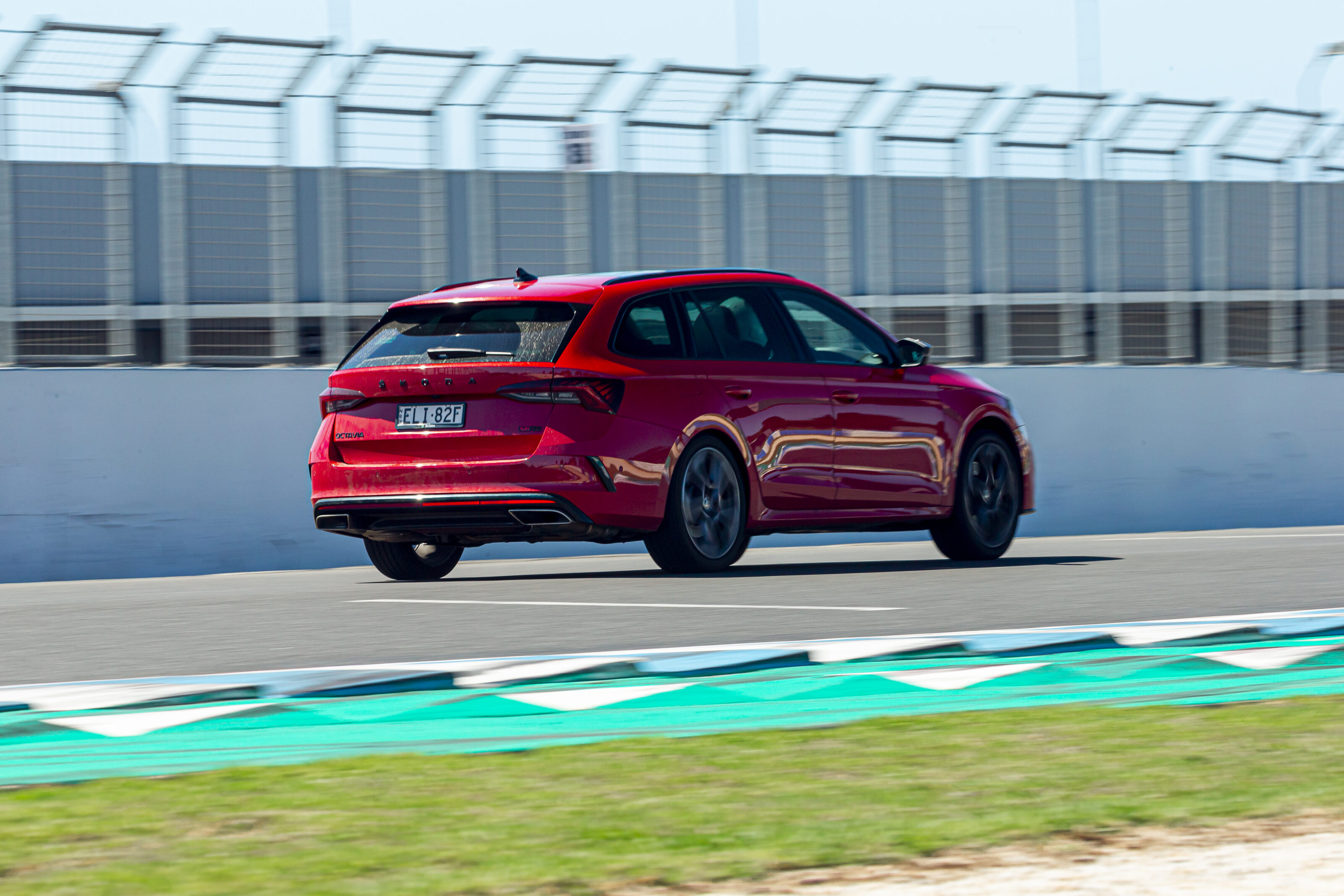
As part of the Adaptive Chassis Control system, which is fitted to the Octavia RS as part of a $6500 option pack (and well worth the price of admission), there are a total of 15 damper settings you can choose from and flick between via the car’s central infotainment.
For context, most manufactures will provide three-to-five settings to choose from in an individual drive mode calibrator. Skoda obviously believes more choice is a good thing, and we’d agree.
In its most comfortable setting the Octavia RS has a supple ride that belies its true ability. Ratchet things to their firmest, and there is a level of body control that means the Octavia RS can be driven hard on track without becoming a wallowing mess.
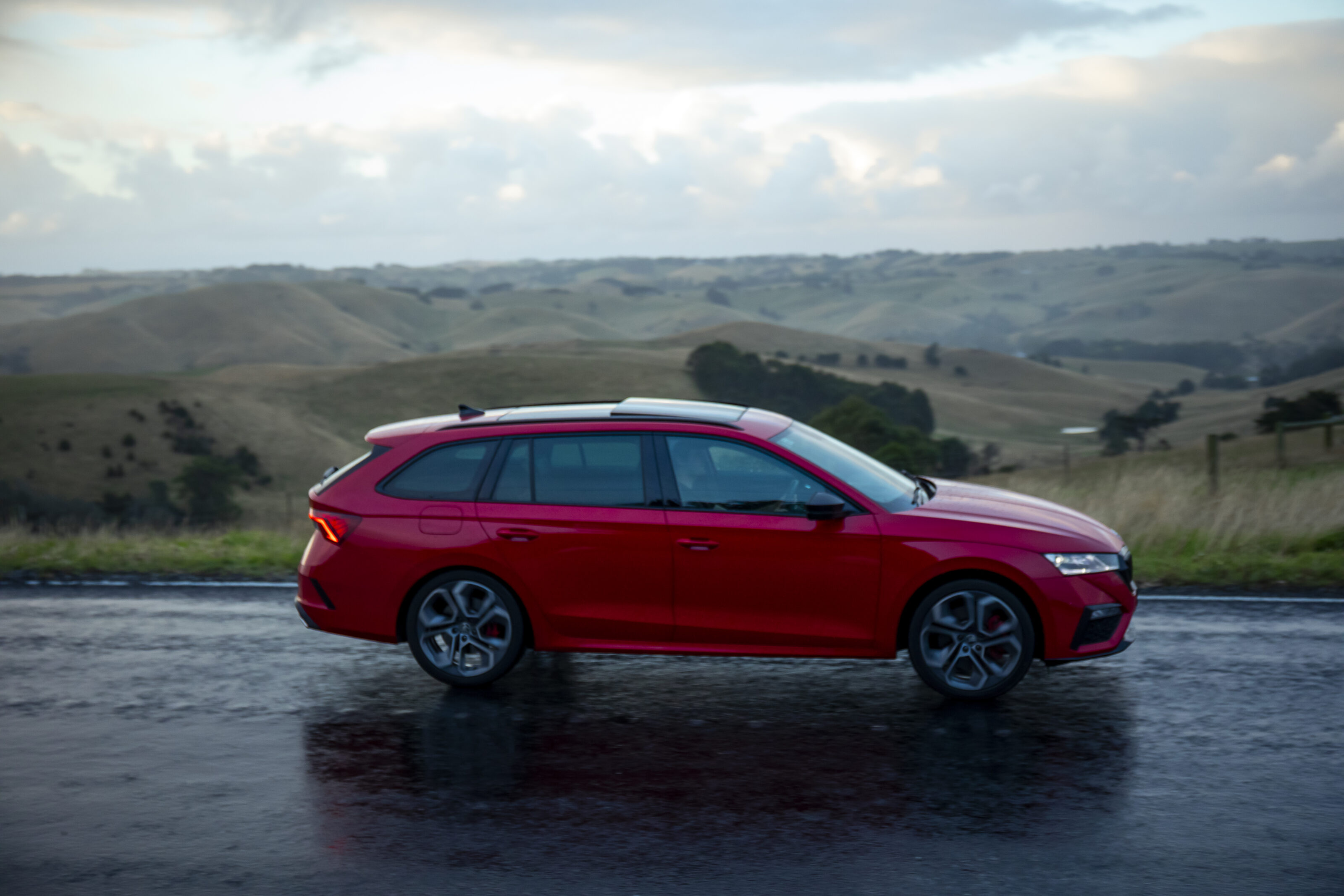
That most aggressive damper setting works in sync with the RS’s unique chassis that sits 15mm lower than its non-performance-orientated siblings.
By having 15 different settings to choose from, it means you can also select the Goldilocks firmness for any situation between those two extremes.
When driven at Phillip Island Grand Prix circuit as part of SCOTY 2022 testing, judges were thoroughly impressed by the Skoda’s ability in a location that was well and truly outside its more traditional remit.
Not everyone wants a family wagon with a hot hatch engine capable of being driven hard, but for those who do, Skoda has the answer.
