
BMW Australia is recalling its X5 plug-in hybrid due to an issue which may cause its battery to short circuit and catch fire when fully charged.
Twenty examples of the MY20 xDrive45e variant are said to be affected.
According to the Department for Infrastructure which issued the notice, due to a manufacturing defect, the battery does not meet specifications and may short circuit when fully charged, which could result in a fire.
Owners are being advised not to charge their vehicles with the cable above 30 per cent and to bring them in for a free repair at a BMW dealership with as little charge as possible.
It’s also advised not to use the manual gearshift mechanism, the sport shift on the selector lever or the shift paddles on the steering wheel.
A list of VINs is available here.
BMW can be contacted about the issue on 1800 243 675 or via email [email protected]
The new Kia Carnival’s television commercial begins on a race track. At night. And powering towards the camera is a pair of headlights. They’re angular, aggressive. Next, a lamp catches a wheel pummelling the rumble strip.
As the camera pulls away, more of this mystery car is revealed, and we see the outline of a Kia. It’s the new Carnival, clearly placed somewhere strange for an eight-seat family-hauling van.
We get that Kia wants to reframe the Carnival, released earlier in 2021, as more than a people mover, given the ad ends with it being labelled a GUV or Grand Utility Vehicle. The acronym’s similarity to SUV is no coincidence, as it hopes to pit the Carnival against SUVs and boost private sales.
But there’s not much to suggest the fourth-generation Carnival has morphed into an SUV itself. Kia has lengthened the wheelbase from 3060mm to 3090mm on the new platform. The body’s 40mm longer and 10mm wider, but it stands at the same height as before.
EDITOR’S NOTE: The vehicle pictured is wearing Kia’s older logo, but is otherwise current specification.
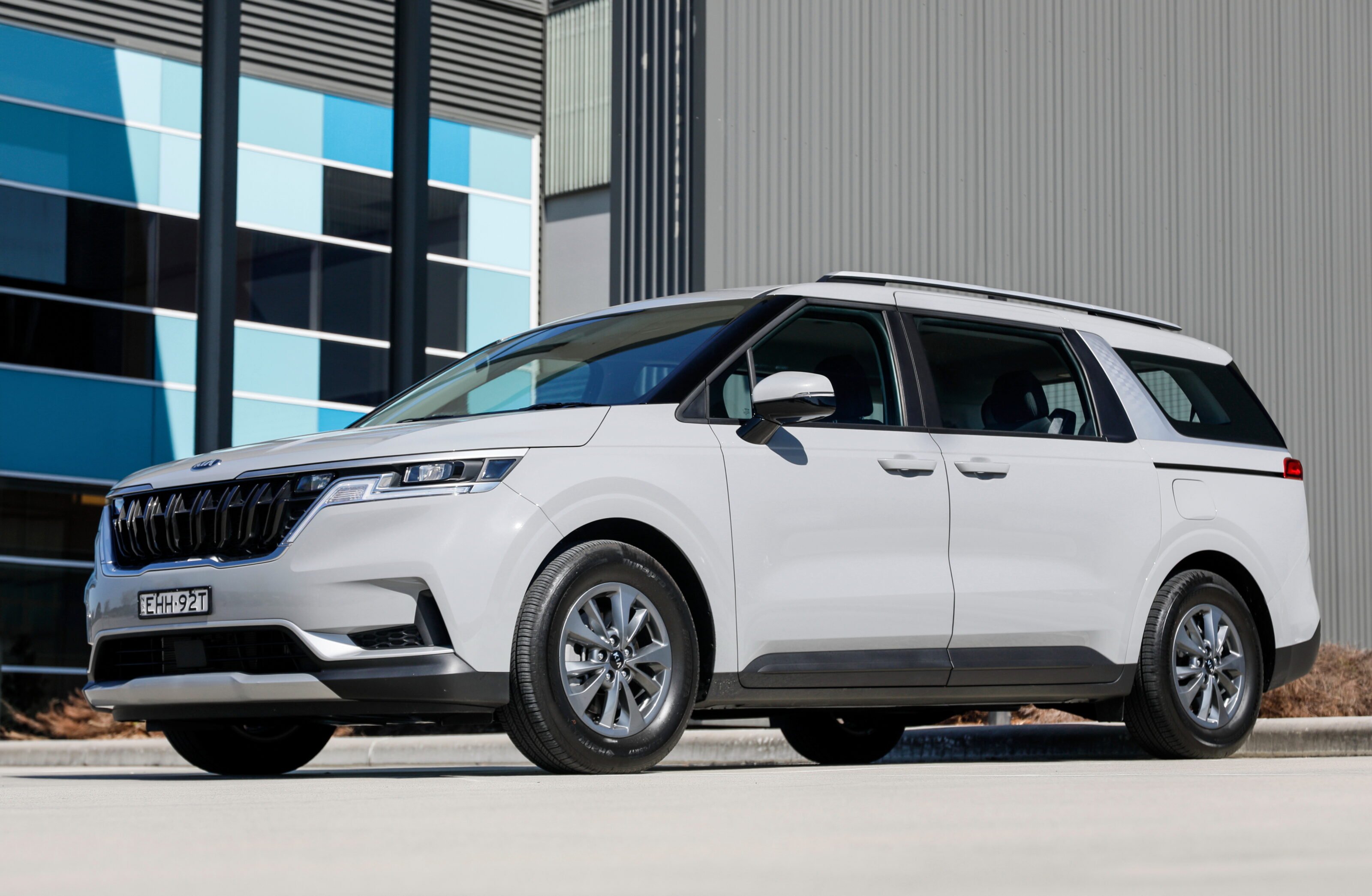
It does, however, ride on an N3 platform shared with the Kia Sorento seven-seat SUV and shares its engines. Either a 3.5-litre petrol V6 and 2.2-litre turbo-diesel four drive a Carnival’s front wheels, although the diesel misses out on the Sorrento’s eight-speed dual-clutch automatic and makes do with an eight-speed torque converter.
Visually, the new Carnival could simply be a mid-cycle update of the previous version. A heavily restyled front- and rear-end, sculpted side sections and higher bonnet combine into an edgier look than the third-gen model.
Ease into the Carnival’s front pews, and it’s easy to appreciate the space, thanks to Kia using its 1995mm width well. Ample room between the front seats opens space for elbows and access to the workstation for rear passengers.
For the driver, headroom is excellent. As is footwell space. And while the workstation retains a driver-centric architecture, with the central stack rotated slightly towards you, it’s been heavily restyled and looks much cleaner.
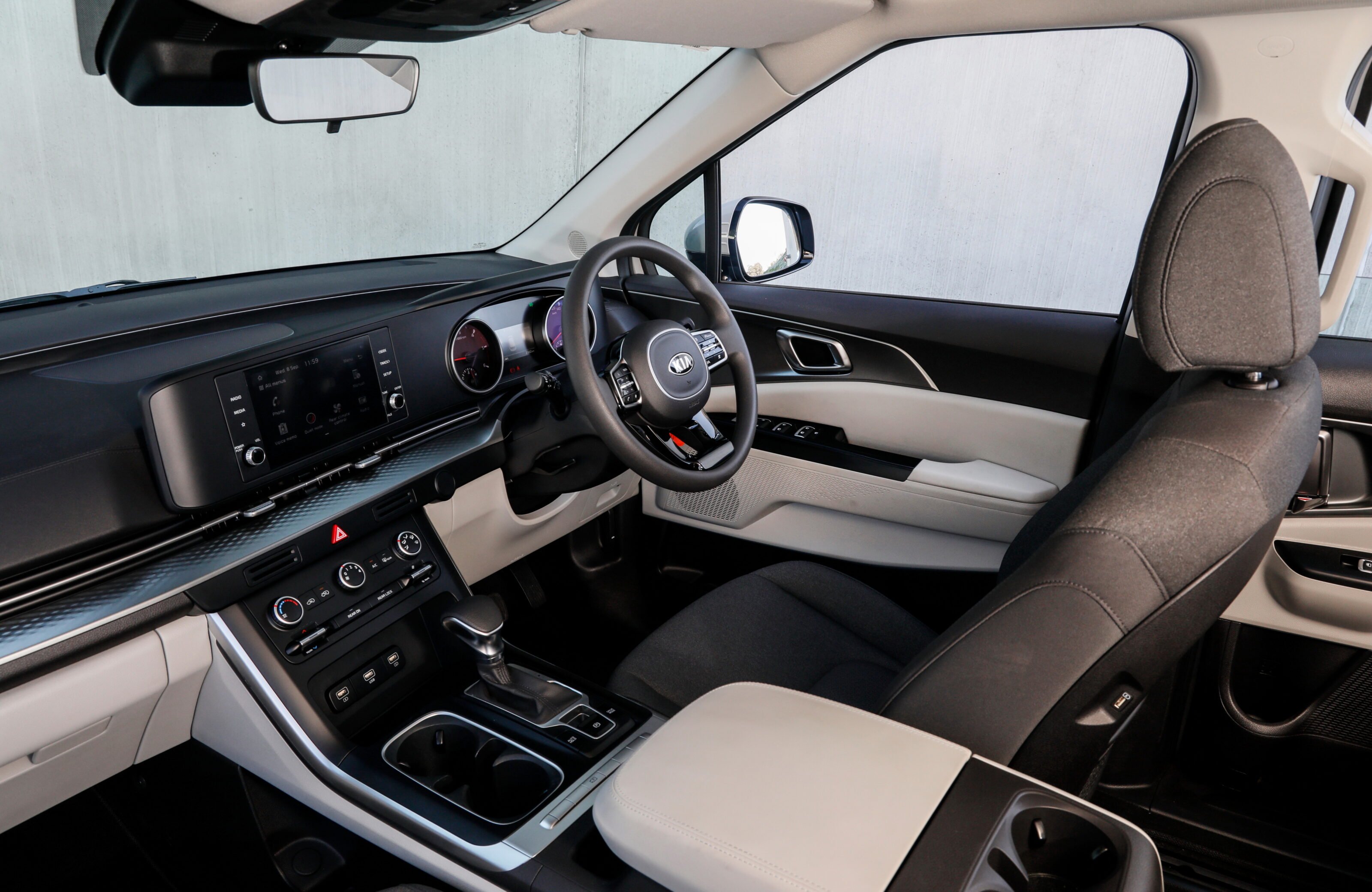
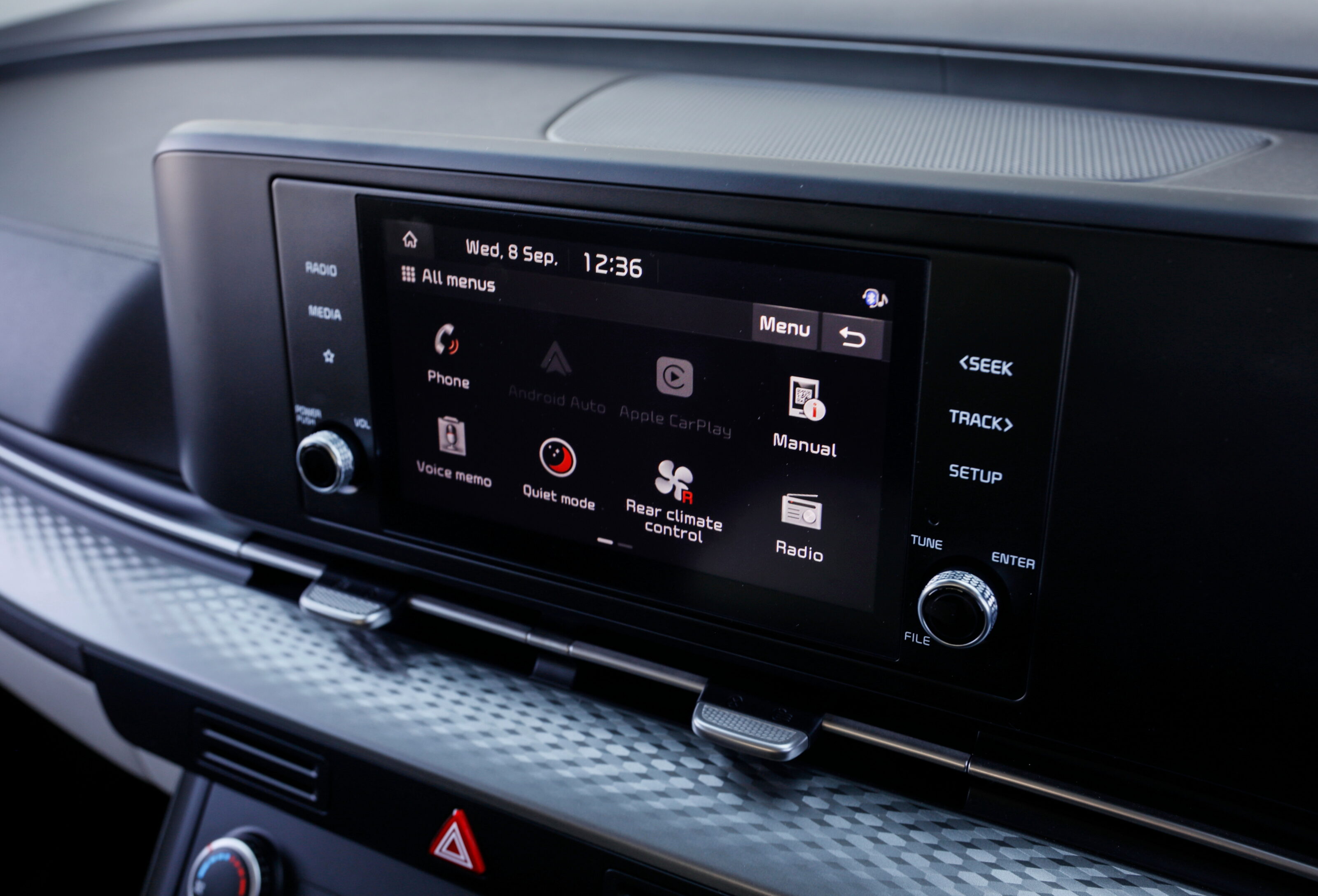
In our tester’s base ‘S’ spec, kicking off the range at $51,690 before on-road costs, it misses out on the technology and convenience features saved for the one-step-higher Si grade and beyond, such as the 12.3-inch central infotainment widescreen loaded with DAB+ digital radio, sat-nav and wired Apple Carplay.
Instead, the 8.0-inch central touchscreen features wireless smartphone mirroring and wired Android Auto compatibility, played through a sound system with six speakers instead of eight. You also make do with manual air-conditioning control.
As for other niceties, an Si comes with auto window defogging and folding side mirrors for $57,390 plus on-road costs. But twist-key start and regular remote central locking, as well as the cloth seats that are manually adjusted, are only replaced once you upgrade to the Carnival in SLi trim, coming in at $59,390.
Inside, the Carnival holds an eight-seat interior layout at the core of its purpose, setting it against a broad range of rivals that spans everything from the Honda Odyssey and Toyota Granvia to the Mazda CX-9 and Hyundai Santa Fe, as well as the recently arrived Hyundai Staria.
Middle row passengers enjoy spacious outboard seats and their own climate control. But the central seat is hard, unforgiving and better used for short trips or folded down to function as an armrest with drink holders.
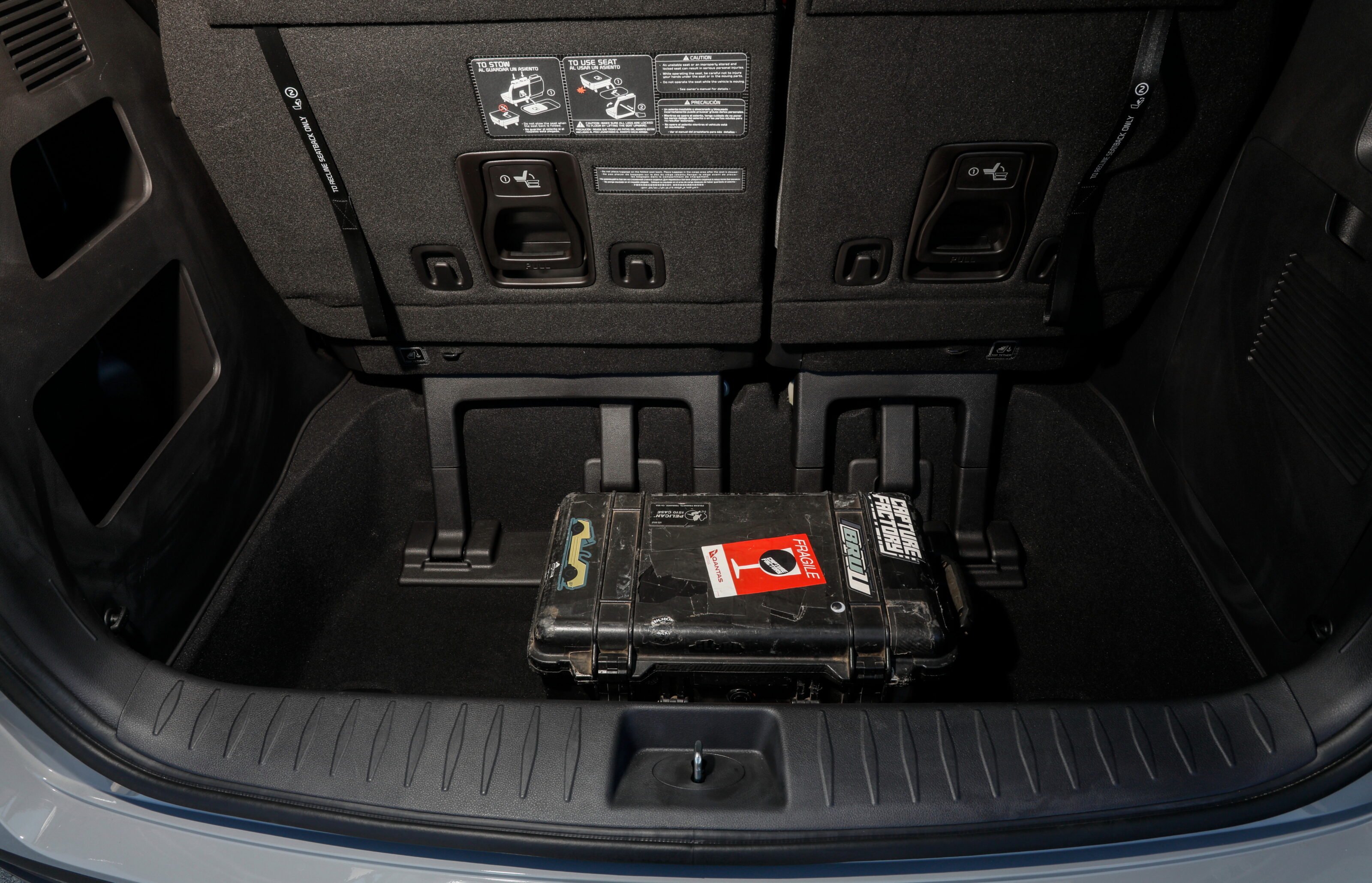
The boot swallows a monstrous 2785 litres worth of cargo while seating five. Even with the third row upright, the boot provides a capacity of 627 litres.
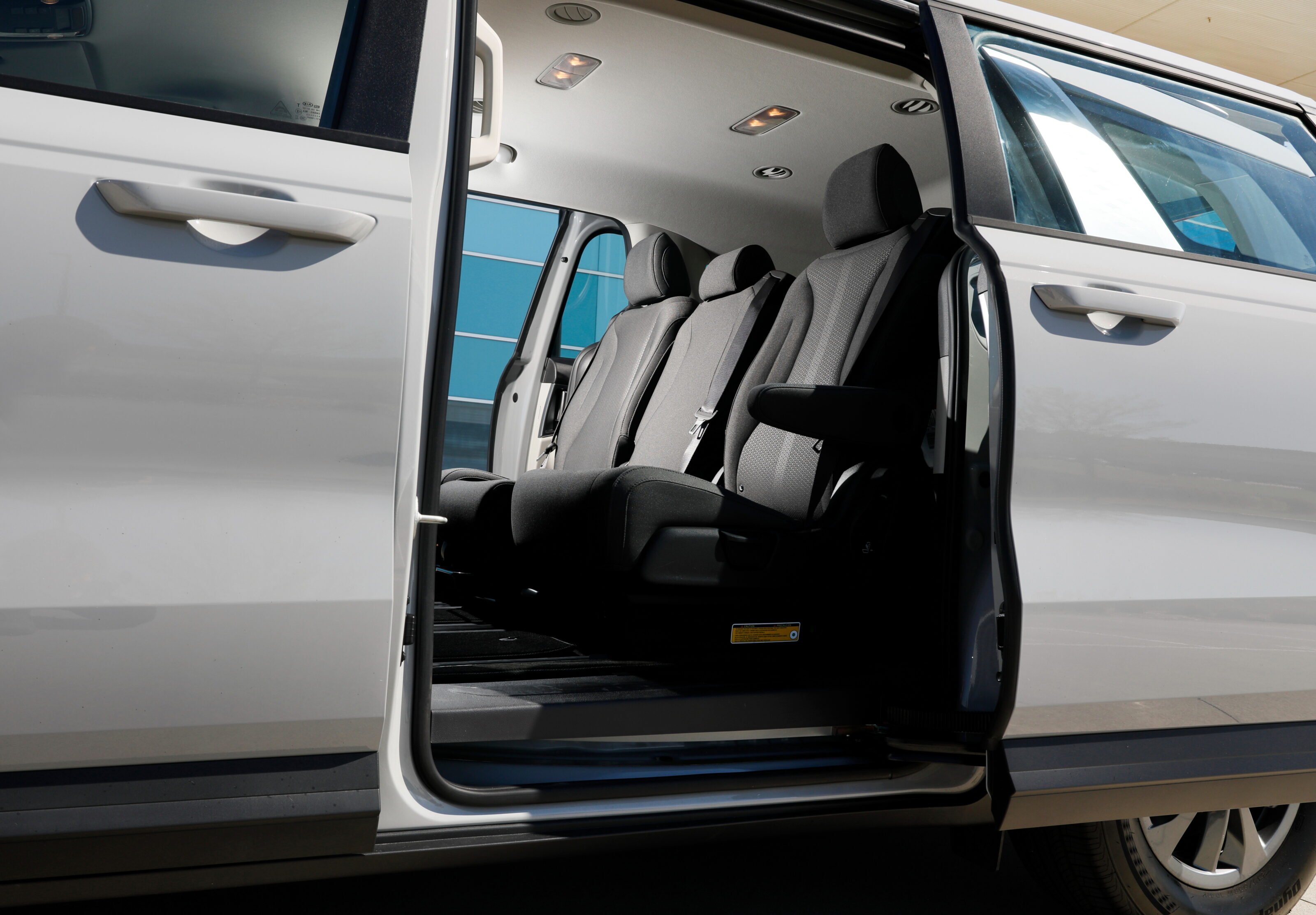
Up back, the seats are the least comfortable – of course. But it’s not that stuffy. There’s enough knee room, the floor vents offer good ventilation and it’s light-filled as well.
You need a fair bit of muscle to configure the seating plan to a wide range of living scenarios. Stowing the middle seats is easily done by pulling a lever, but they’re hefty to restore upright. Each pair of outboard seats also features child seat anchors.
You can remove (or reverse) the central seat from the middle row, which is heavy and clunky to unlatch. Meanwhile, you can also flatten the back seats forwards at a 60:40 split or stow them in the boot.
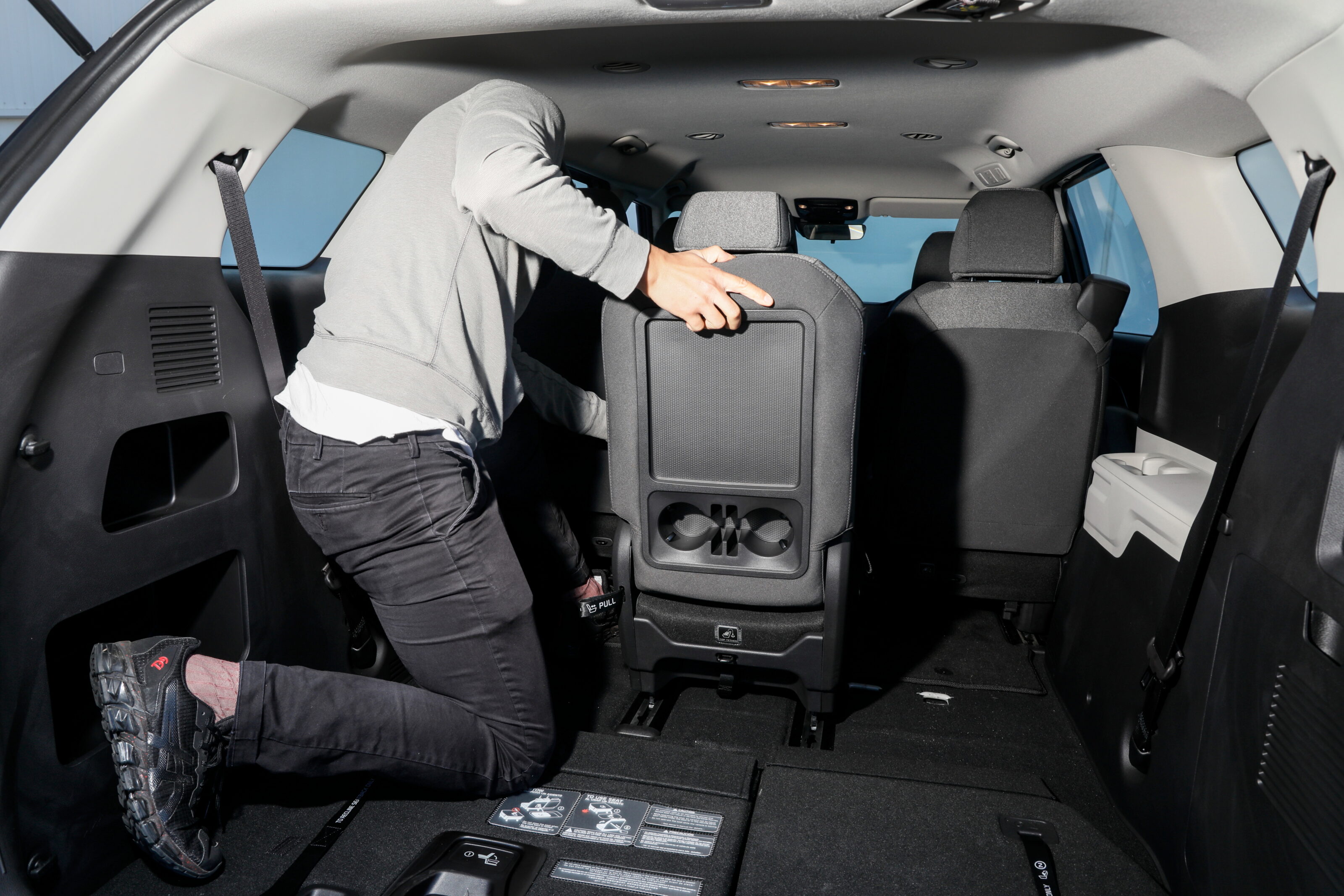
Speaking of, the boot swallows a monstrous 2785 litres worth of cargo while still seating five. Or, even with the third row upright, the Carnival’s boot provides 627 litres of capacity. That crushes a Honda Odyssey’s 322 litres.
But the space comes at a small cost. The deep boot has left nowhere for the spare tyre to go except under the driver’s sliding door. Hankook Dynapros are standard fitment. At 235/65 R17, they’re big cushy rubber rings that do well to calm the Carnival’s ride, even if they do offer little grip.
Given the tyre grip, it’s impressive how much dynamic talent the Carnival’s chassis delivers. Its strut front and multi-link rear suspension err on the firm side, but the ride never gets tetchy and should only improve with more passengers.
It’s hard to fathom that Kia’s local dynamics team kept an international steering tune since the new Carnival steers with a cohesiveness that belies its 2.1-tonne kerb weight. Besides some rack rattle, the Carnival tracks its intended course with an otherwise dogged focus, thanks to a low centre of gravity and keenly balanced chassis.
All of which gives the 2.2-litre diesel a good platform to deploy its grunt. The engine is tractable, and the drivetrain is responsive from down low, with the transmission and throttle mapping tuned well to suit both urban and dynamic situations.
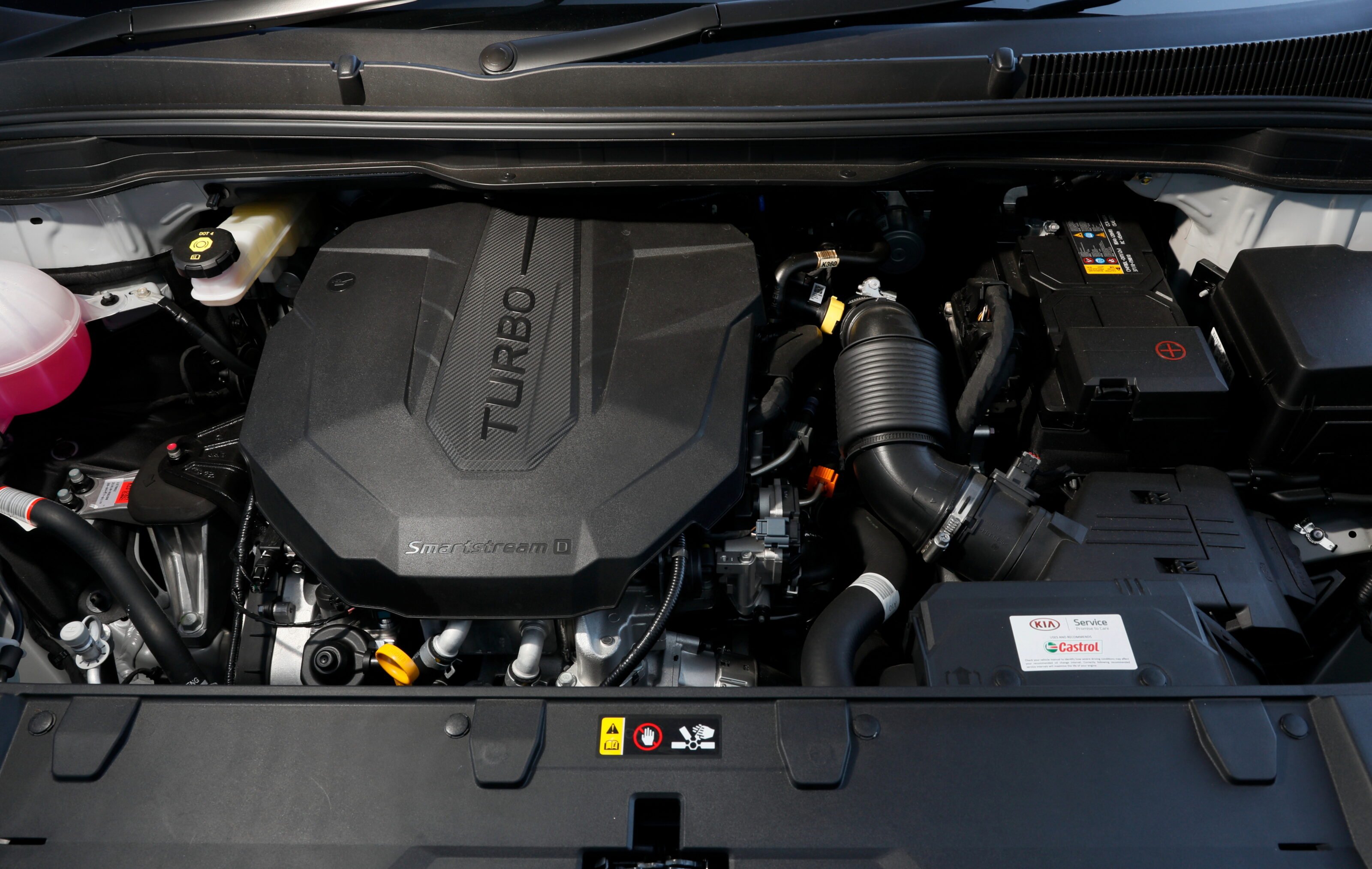
Chirps of wheelspin only ever escape from the front Hankooks when the road is less than smooth, the Carnival more than capable of handling the 148kW and 440Nm on offer. Those outputs provide a usable powerband on song from 1750rpm until its 4500rpm redline. It’s rated to tow 750kg unbraked and 2000kg braked.
The engine certainly feels peppier than its 9.24sec 0-100km/h sprint suggests. At the same time, its thirst is modest, as the Carnival drinks 7.2L/100km worth of diesel in the real world, only 0.7L/100km off its claimed consumption on a combined cycle.
As an ownership prospect, it’s good to know Kia backs the Carnival with a seven-year unlimited-kilometre warranty and capped price servicing for that entire period.
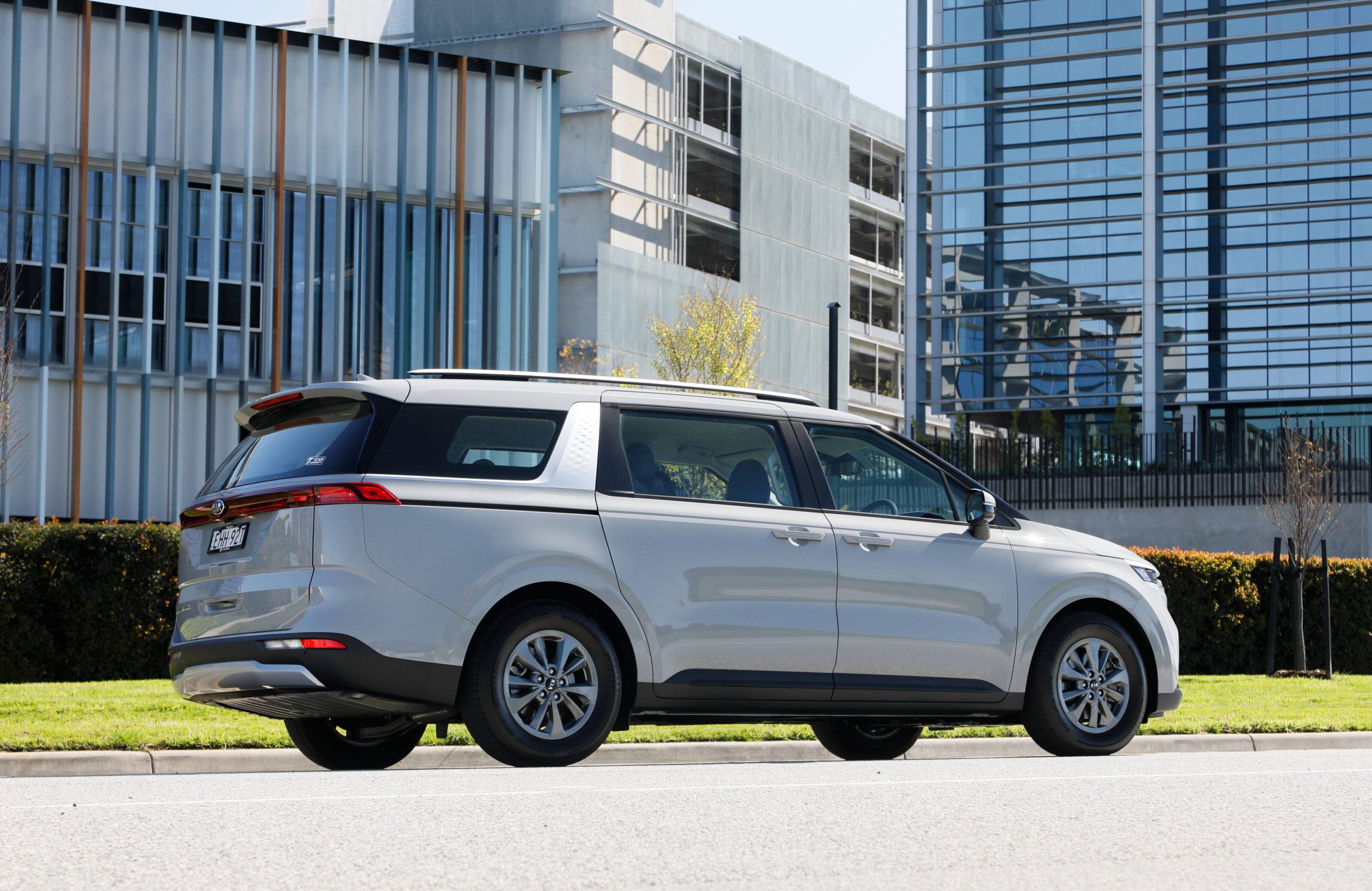
On highways, the Carnival comes with a good spread of active safety hardware, even in S trim. A list including AEB, blind-spot collision avoidance, lane-keeping assist and active cruise control help it achieve five stars from ANCAP. Unfortunately, the lane-keep assist isn’t as intuitive or natural as the active cruise.
For urban situations, rear-cross traffic alert, a rear-view camera with rear sensors, safe exit warning, auto headlights and curtain airbags extending along the three rows bolster the Carnival S’s safety game. Light steering with good feedback also helps wrangle its mass in tight confines.
All in all, the Carnival remains a bright choice that offers enough practicality and performance to genuinely ask why families look past it when rushing to their next SUV.
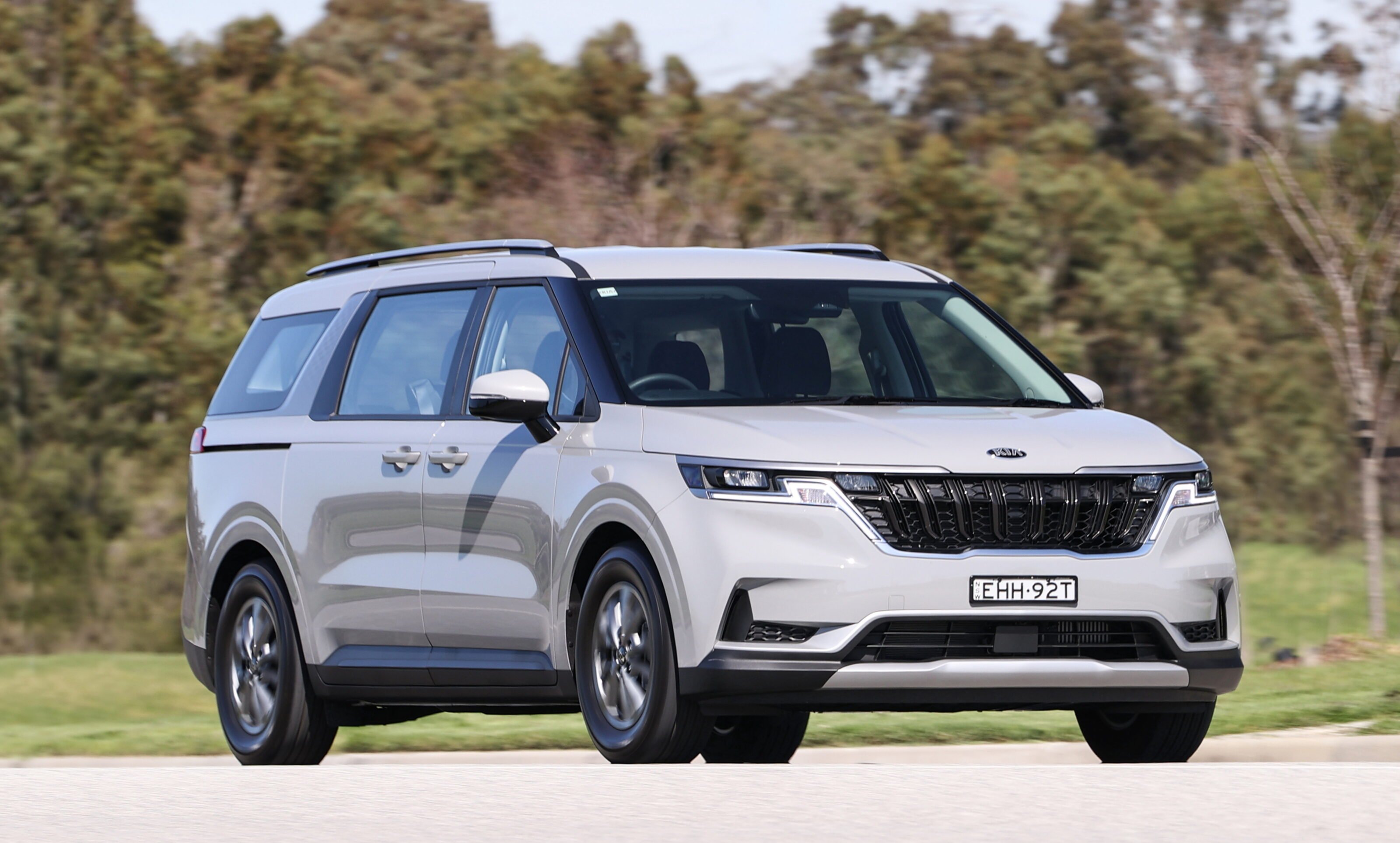
All in all, the Carnival remains a bright choice in the people mover segment, one that offers enough practicality and performance to genuinely ask why growing families look past it when rushing to their next urban-bound SUV.
Cloth seats and manual air-con, as well as the smaller touchscreen, do make the base model’s utility more obvious. Still, the Carnival’s core purpose is more attractive because of its recent overhaul.
Slicker styling and an updated cabin show the Carnival is more focused on the driver, as do its impressive dynamics and driveability that are fortunately un-SUV-like – even if they are not quite suited to the race track environment featured in its TV commercial.
And while it’s unlikely the Carnival has the gravity to attract a large enough chunk of prospective SUV buyers to mark a watershed moment, there’s no reason why the Carnival won’t remain king of its segment for some time.
EDITOR’S NOTE: The vehicle pictured is wearing Kia’s older logo, but is otherwise current specification.
You’re not imagining it, our Car of the Year announcement for 2022 is later than it has been in previous years. However, as the cover of the new issue of Wheels suggests, the announcement isn’t far away – it’s coming in the May issue!
For now, we bring you the preview. What made the COTY contenders list, what hit the cutting room floor, and why.
More prominently in this issue though, is the trio of EVs gracing the cover: The Kia EV6, Hyundai Ioniq 5, and the Polestar 2. The cousins from South Korea face off not only with the Swede, but with each other to find out which of these dedicated zap-powered vessels is the king.
On top of the industry and market analysis, columns, and regular features (check out the Lexus LS400 in Modern Classic!), we take to the roads of Europe in the Cupra Born e-Boost, the Lucid Air, and the all-powerful Ferrari 296 GTB.
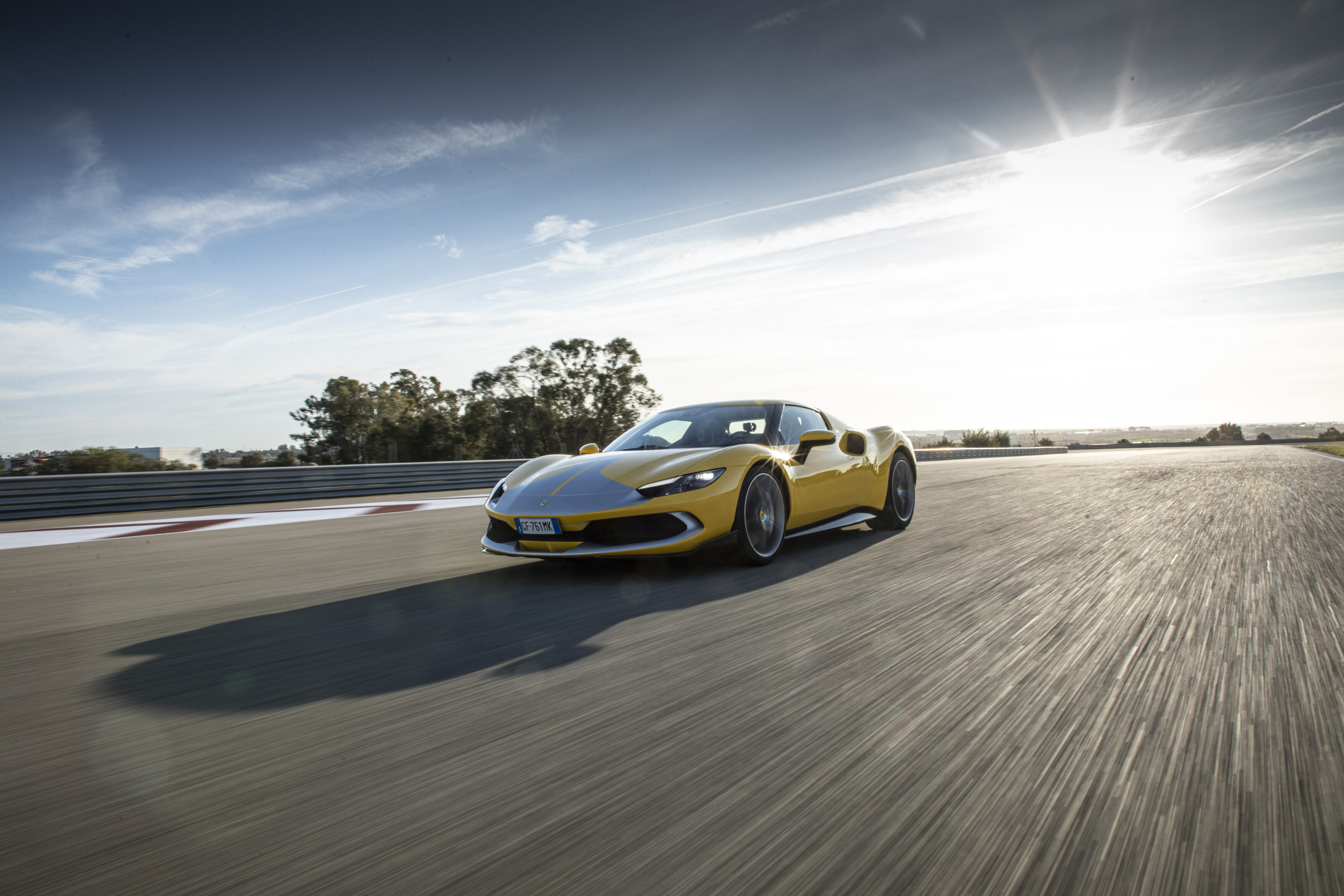
We even get a steer in the new Mercedes-AMG SL roadster.
On home shores, a newcomer to the luxury mid-sized SUV market takes on two old-school stalwart brands in the hope of stealing some customers away. Audi Q5 and Jaguar F-Pace, your opponent is the Genesis GV70.
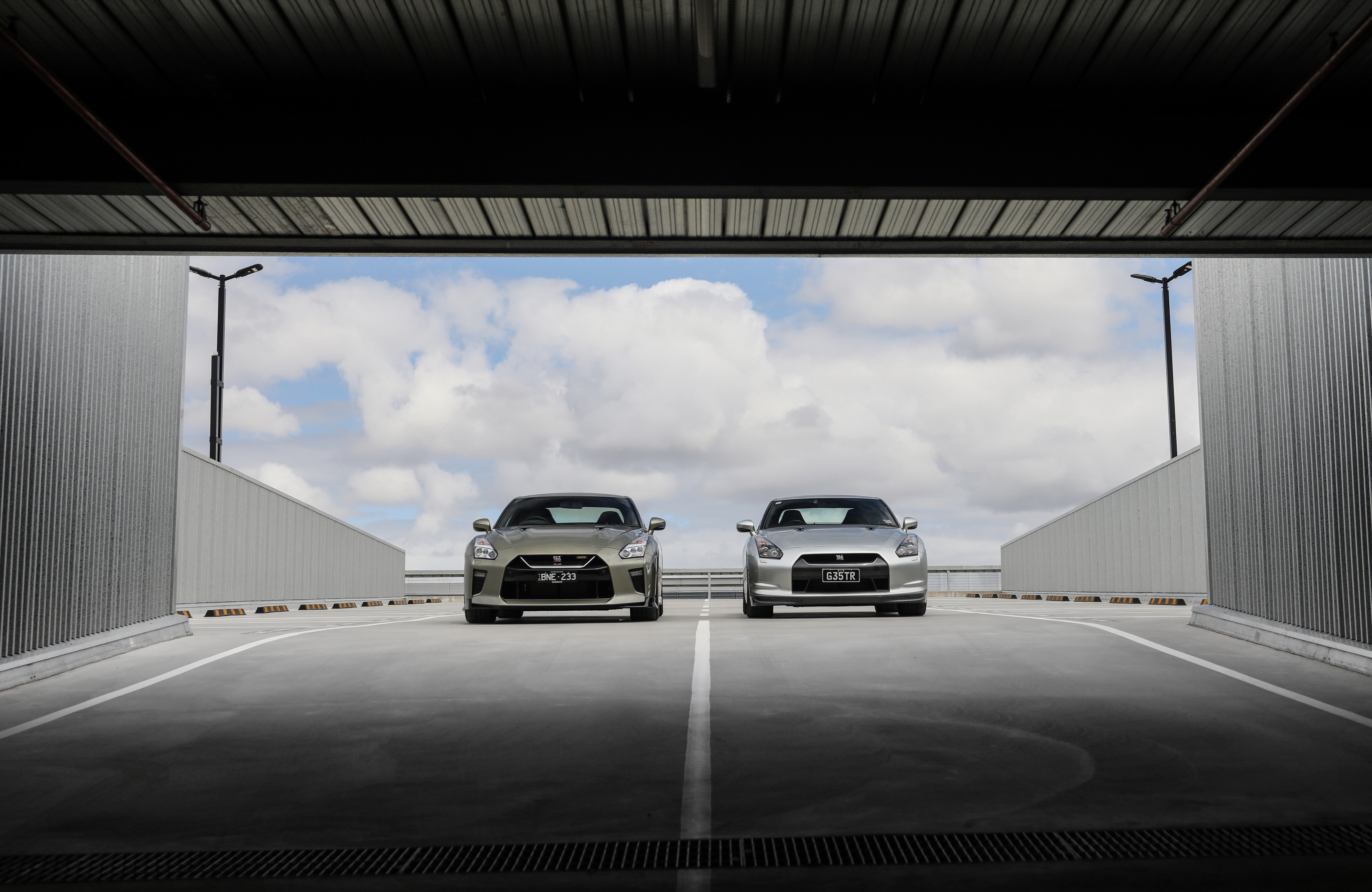
Sadly, as good things come, they also go, and the Nissan GT-R faces the curtain this issue, as former Wheels editor Dylan takes Godzilla’s reigns for one final bout of terror.
There’s, of course, more to be had from this, and every, issue of Wheels than just that, so either head down to the newsagent, servo, or supermarket to grab a copy.
Alternatively, if you want it delivered to your doorstep, subscriptions will also net you a handy saving.
Happy reading!
A 2021 Nissan R35 GT-R T-Spec finished in millennium jade and complete with its factory protection wrap will soon have a new owner.
The one-of-100 T-Spec was sold by Nissan as Australia’s swansong, before the GT-R was removed from sale thanks to newly-introduced side-impact protection laws.
The auction listing on Collecting Cars says at least five per cent of the GT-R’s hammer price will go to Sydney Children’s Hospital, with tens of thousands of dollars expected to be raised.
Of the 100 T-Spec models produced by Nissan, it’s speculated just 25 were brought to Australia, making it one of rarest variants of all Australian-delivered GT-Rs.
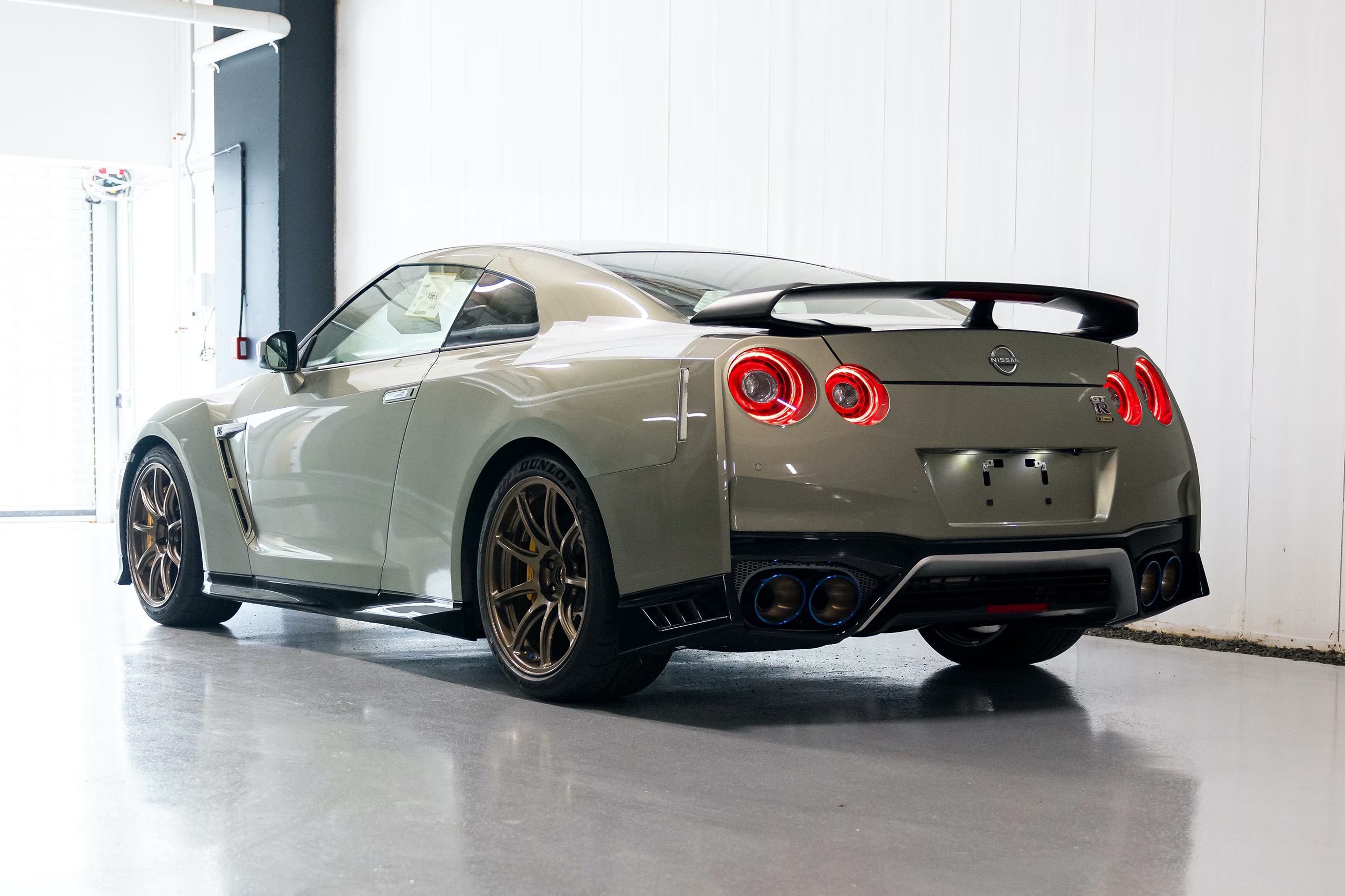
This particular vehicle, optioned with one of the most desirable colours in GT-R history, comes with a letter from Nissan Australia stating it is the very last GT-R T-Spec delivered to Australia – purchased by Lecha Khouri from Supercar Advocates.
The coupe is powered by a 3.8-litre twin-turbocharged V6 producing 419kW and 632Nm, driving all four wheels through a six-speed dual-clutch automatic transmission.
To help stop the car, Nissan has fitted a set of Brembo carbon-ceramic brakes – the largest ever fitted to a Japanese production car – at 410 millimetres front and 390mm rear, sitting behind a set of 20-inch bronze Rays alloy wheels.
Inside, the cabin is finished in deep Mori Green leather with gold contrast stitching, Alcantara trim, and a carbonfibre centre console.
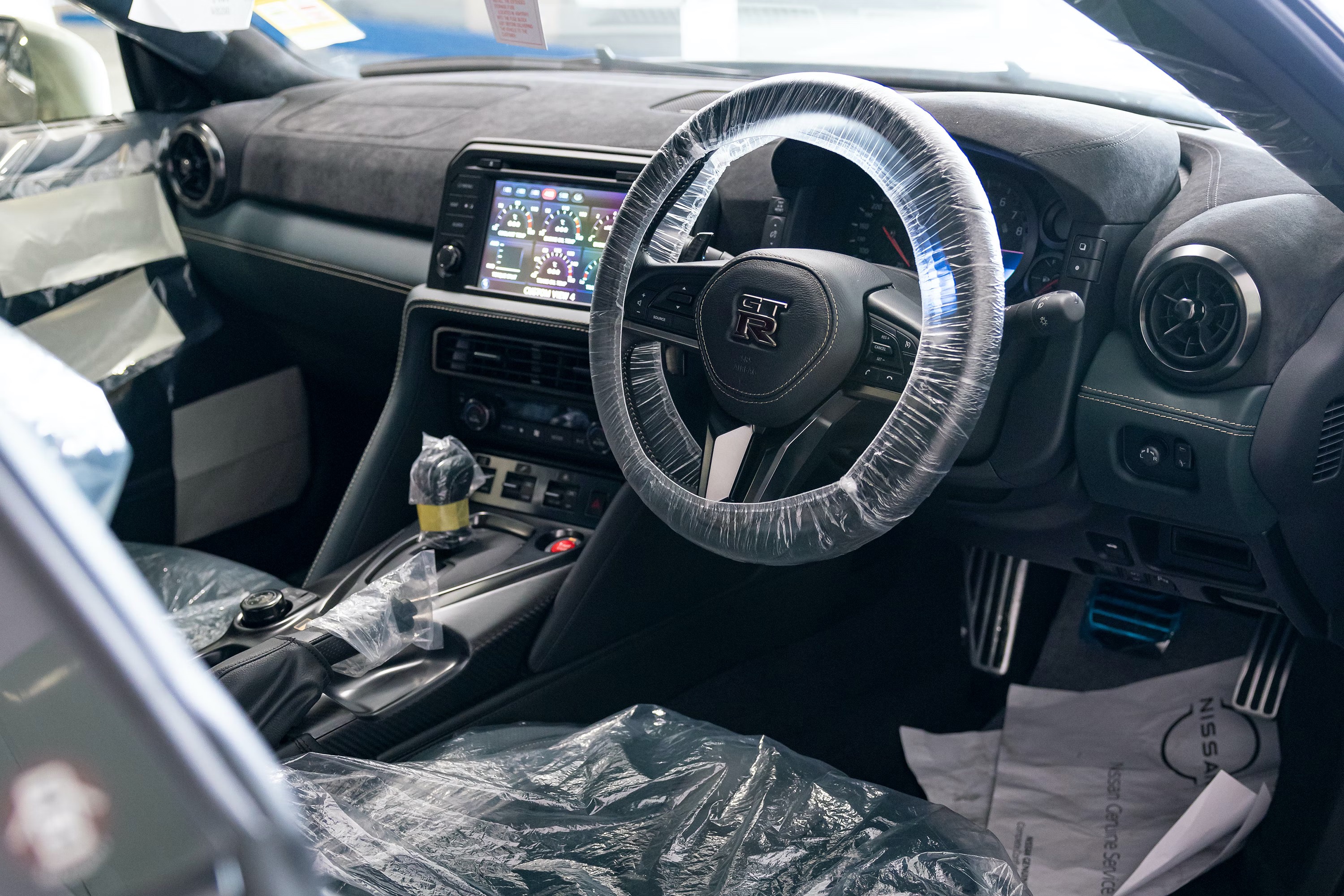
With five days left on the auction and bidding already at $370,500 at the time of writing, the T-Spec could end up being one of the most expensive GT-Rs sold in Australia.
The auction for the 2021 Nissan R35 GT-R T-Spec ends on Wednesday March 30, 2022, at 6.30pm, and can be viewed on the Collecting Cars website by clicking here.
Cars and the automotive world can be a baffling place to navigate even when we’re not stressed out about how much the next visit to the petrol station will cost.
WhichCar’s Daniel Gardner spoke with Brent Bultitude of 2HD Radio Newcastle about whether it’s worth spending extra on high-octane petrol, if diesel is more economical than petrol and whether or not run-flat tyres are a good idea.
Want to know more? Listen to the interview or read-on below.
Does my car need 98 octane fuel?
Let’s start with what that little number on the pump at the servo means.
Octane is a chemical and one of the substances that gives petrol its distinctive smell, but it should not be confused with the octane rating (RON) of fuel.
While octane is an ingredient in pump petrol, it is not directly linked to its RON number, and you might be surprised to learn that pure octane isn’t rated as high on the RON scale as petrol – a blend of many.
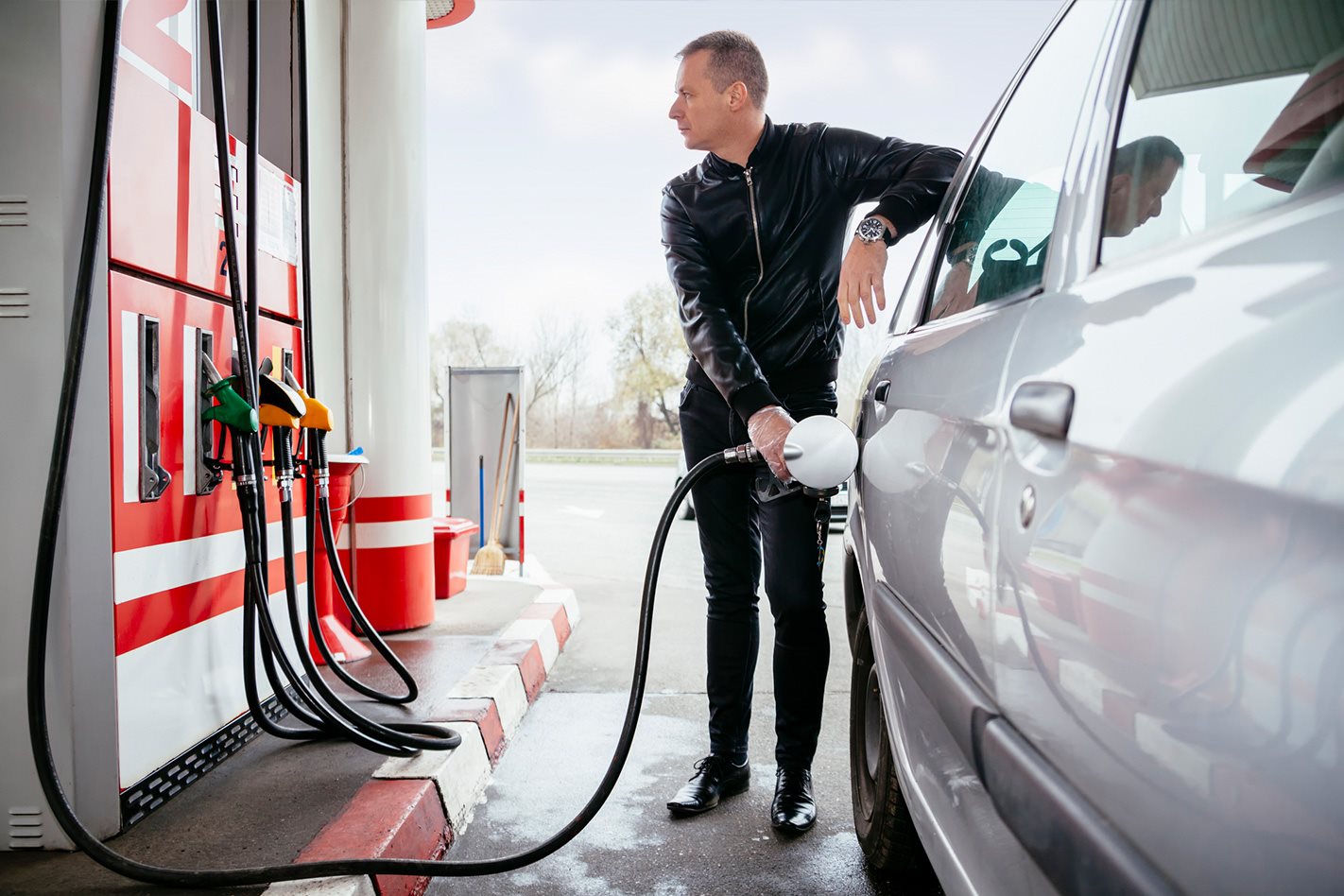
The confusion most likely originates in the USA where fuel was and still is marketed as ‘high octane’.
Many assume this relates to a higher octane content in the fuel but, in fact, it means the fuel has a higher octane rating.
The octane rating (Research Octane Number) refers to how resistant the fuel is to ‘detonation’ – a damaging event when the fuel spontaneously combusts rather than a more gentle and intentional ignition.
Therefore, higher octane rated fuel allows high-performance and modern engines to manage the process of using petrol to produce power more efficiently and effectively but is wasted in less advanced or older engines.
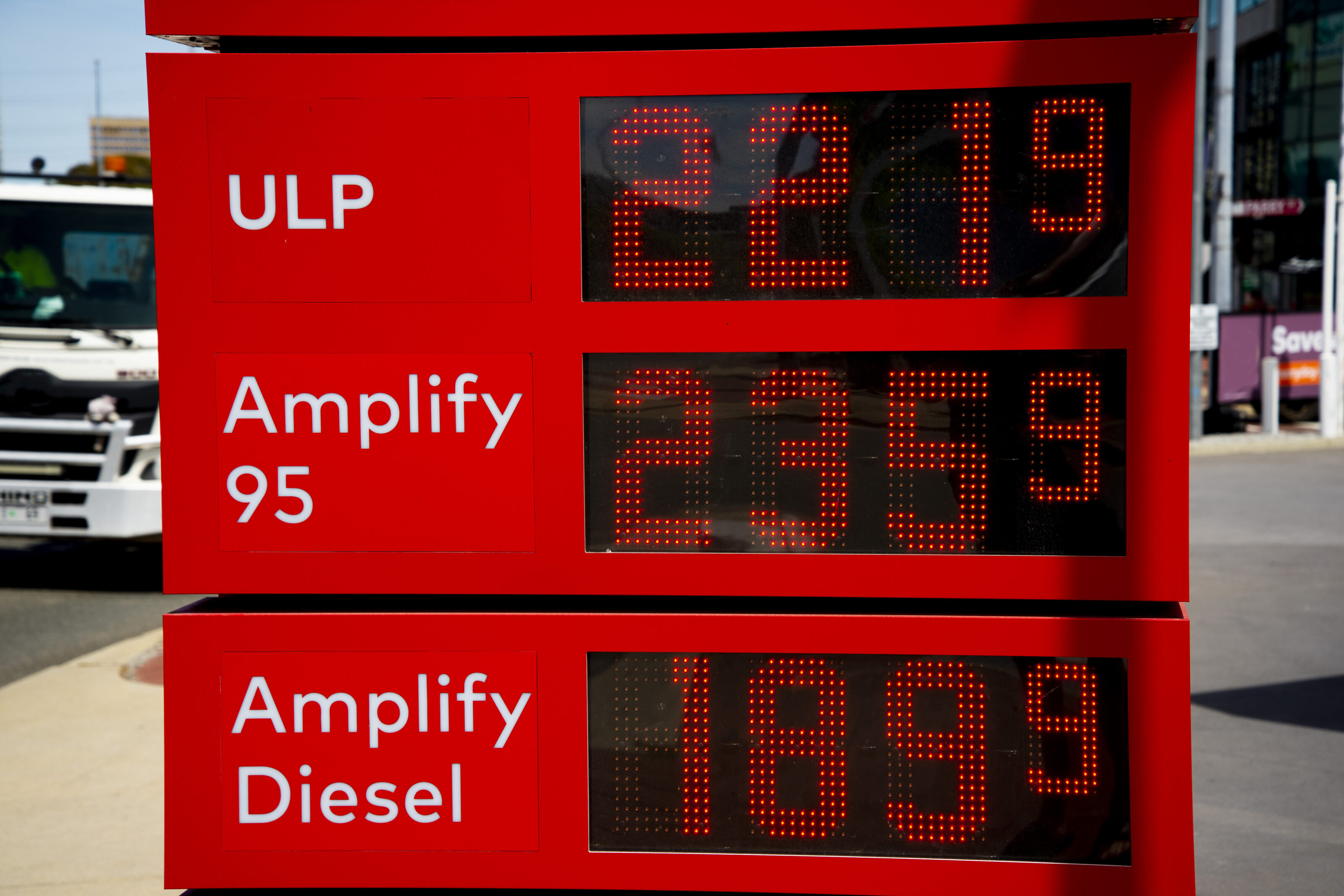
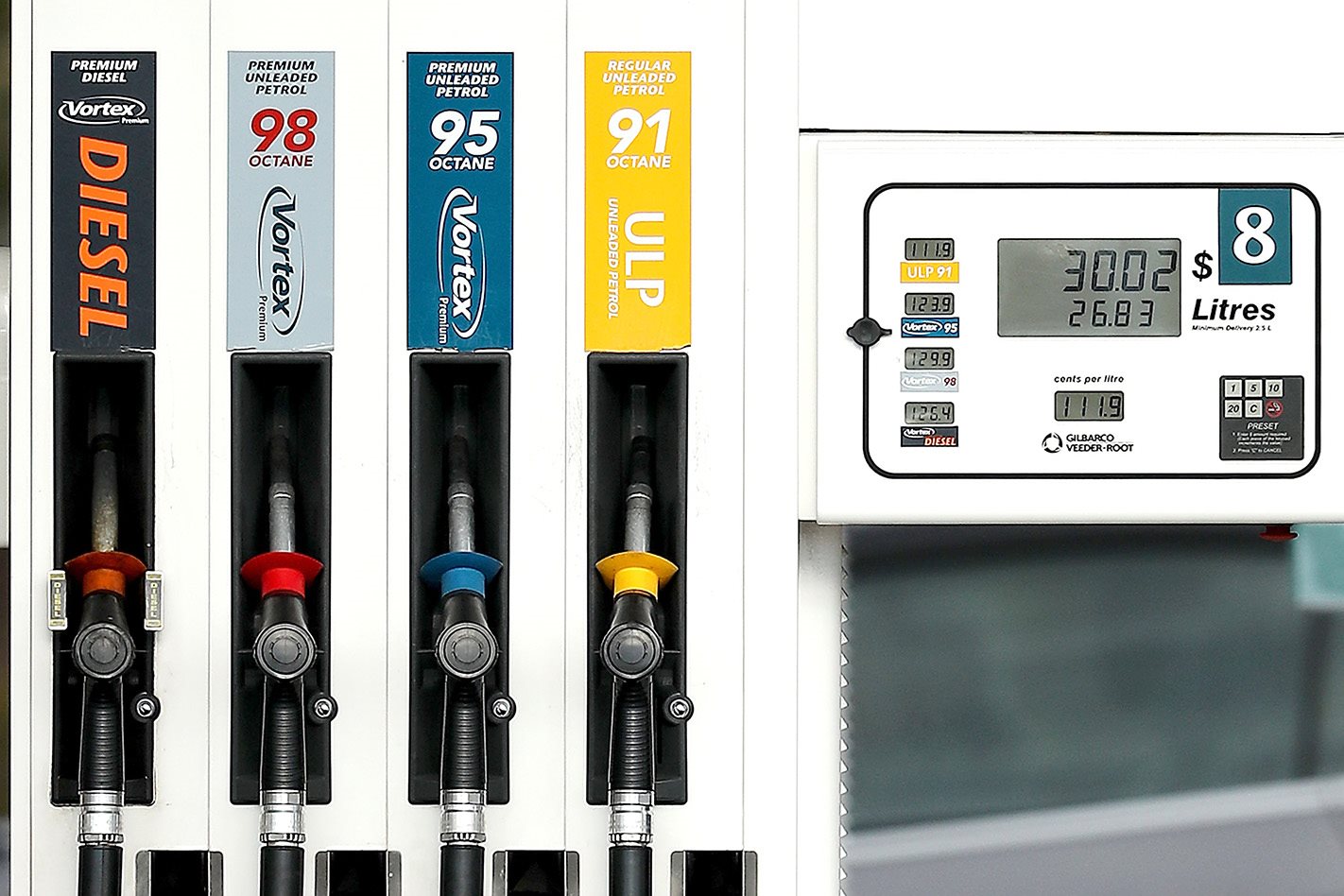
Put simply then, if your car asks for ‘high-octane’ petrol such as 95 or 98 RON on the inside of the filler cap or owner’s manual, it will function as close to the way the manufacturer designed when fuelled by it.
Filling it up with a lower 91RON fuel won’t necessarily damage your engine, but there could be a perceptible reduction in performance or even efficiency.
Conversely, you won’t get better performance or mileage out of an old engine that accepts 91RON by filling up with higher grade petrol.
Stick to what the manufacturer advises and if in doubt, run a tank of different fuel during your normal driving routine and see if the power or efficiency is impacted.
There’s nothing especially bad about putting in a grade higher than the manufacturer recommends, but why would you with record-high petrol prices?
That said, we don’t advise going lower than the minimum recommended RON.
Petrol or diesel?
There is no definitive answer to this often encountered decision since the driving and transport needs of drivers vary significantly, but there are a few guidelines at least and it mostly comes down to the type of driving.
Diesel engines like to be worked hard and that includes, long freeway trips, towing and heavy loads of people or things.
If you aren’t frequently giving these types of duties to your car you won’t get the full advantages of a diesel engine nor will it remain in peak performance for long.
That’s because modern diesel engines are designed to be the workhorses of the road and their sophisticated emissions control systems require the heat generated by hard work to function correctly.
It’s also worth considering that a diesel’s advantage is in low-revs torque and lots of pulling power, which is not exploited by light duties.
While petrol engines certainly aren’t work-shy and also benefit from a good blast, they are far better suited to lighter load and infrequent or shorter trips.
If you only hop in the car once a week to pick up some groceries, petrol is probably the way.
That said, modern turbocharging and clever electronics are making petrol engines almost as torquey as diesels with similar fuel efficiency advantages.
In other words, the performance divide between petrol and diesel is much narrower than it used to be.
Of course, if neither scenario quite fits your purposes, maybe it’s time to consider going hybrid or electric?
Do I need ‘run-flat’ tyres?
Here’s another automotive irony – so-called run-flat tyres never actually run flat. These special tyres have been designed with a stronger construction, particularly in the side walls.
If the tyre is punctured and the air inside escapes, the structure of the tyre will not immediately collapse (go flat) like a normal version.
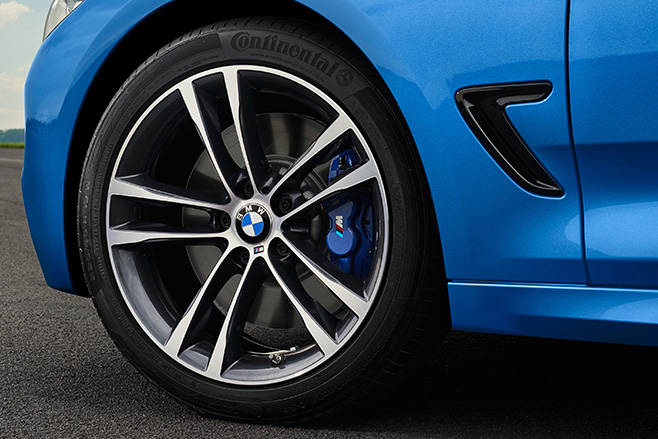
Run-flats can only be fitted to a vehicle equipped with a tyre pressure monitoring system to alert the driver if there is a puncture because there’s very little way of telling otherwise.
The key advantage with these special tyres is that they allow the car to be driven to the tyre repair shop and the driver is not exposed to danger trying to fit the spare.
It also removes the need to carry around a spare unless there is more significant damage to the tyre. Under these circumstances, run-flats can be a disadvantage.
Contrary to popular belief, a punctured run-flat can be repaired. As long as the owner can guarantee that the tyre has not been driven unpressurised further than the manufacturer recommends, there is no reason a run-flat tyre cannot be patched just like a normal tyre.
If the tyre has exceeded the safe distance under the minimum inflation pressure, the structure will have been weakened and it must be replaced.
If the warning light comes on, investigate it immediately.
The Federal Government is introducing tougher penalties for breaching the Franchising Code of Conduct, with corporations facing fines of up to $10 million.
The changes are in response to the recent trend of car companies changing the traditional way of selling cars in favour of the ‘agency model’, as well as to protect dealerships if a manufacturer choses to leave the Australian market – as was the case with Holden’s departure in 2020.
As part of the increased penalties, carmakers could be hit with a fine of as much as $10m, an amount equal to three times whatever the financial benefit has been as a result of their actions, or 10 per cent of their annual turnover – whichever is greatest.
“We will continue to protect hard-working Australian franchisees from being taken advantage of by poor practices and conduct,’ Minister for Employment, Workforce, Skills, Small and Family Business, Stuart Robert, said at the announcement.
“These multinational franchises need to know that we stand up for our small and family businesses.”
Though the changes were first touted last year, they have only now come into effect and are part of a raft of reforms which involve making it easier for buyers to get help if their car is faulty by shifting repair or replacement costs from the dealer to the manufacturer, and plans to introduce a standalone code and mandatory binding arbitration.
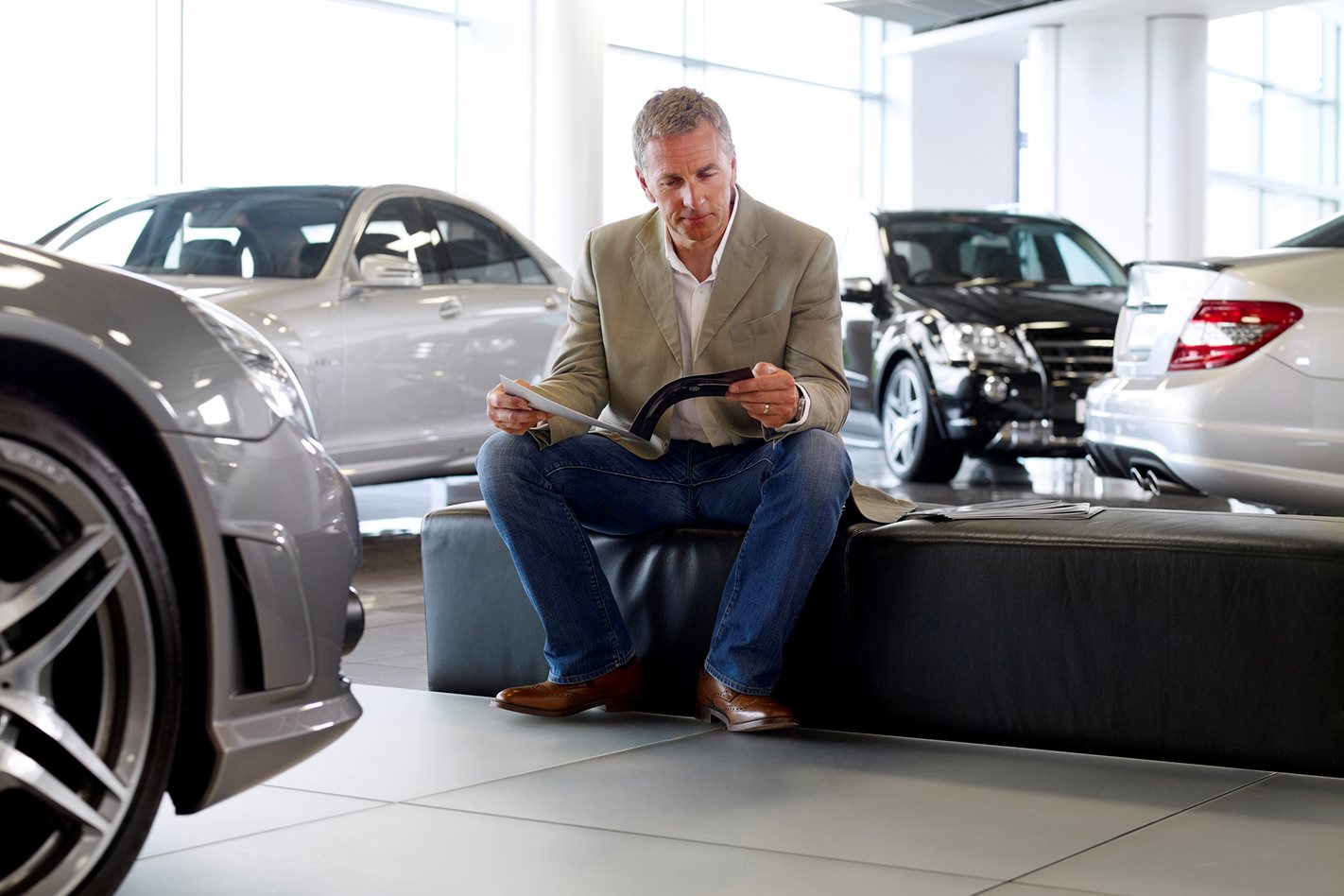
Honda Australia was the first manufacturer to implement the agency model in Australia in July last year, reducing the number of its dealerships and introducing the fixed Honda’s Price Promise, though the brand has been experiencing a decline in sales during a boom time for the industry in the months since.
Mercedes-Benz also switched to an agency model in Australia from January 1 this year, but a group of 38 franchise dealerships have taken the German car giant to court over the changes, with a trial to begin in August 2022.
Though agency models differ between firms, it largely involves manufacturers owning the vehicle stock rather than the franchises, and setting one national drive-away price instead of allowing customers to haggle for a better deal.
The issue has divided the automotive industry with some claiming it’s a good thing for buyers, while others say it allows multinational corporations to take advantage of small businesses.
“Stronger penalties in conjunction with recently-introduced reforms to the Franchising Code of Conduct are good for small businesses and they are good for franchised new-car dealers,” said James Voortman, CEO of the Australian Automotive Dealer Association.
“The penalties come after a series of franchising disputes between automotive dealers and vehicle manufacturers and they provide a greater deterrent for those franchisors which breach the Franchising Code of Conduct,” he said.
“The Government’s reforms are not aimed at stopping change, but rather ensuring it is conducted in a fair and reasonable manner.”
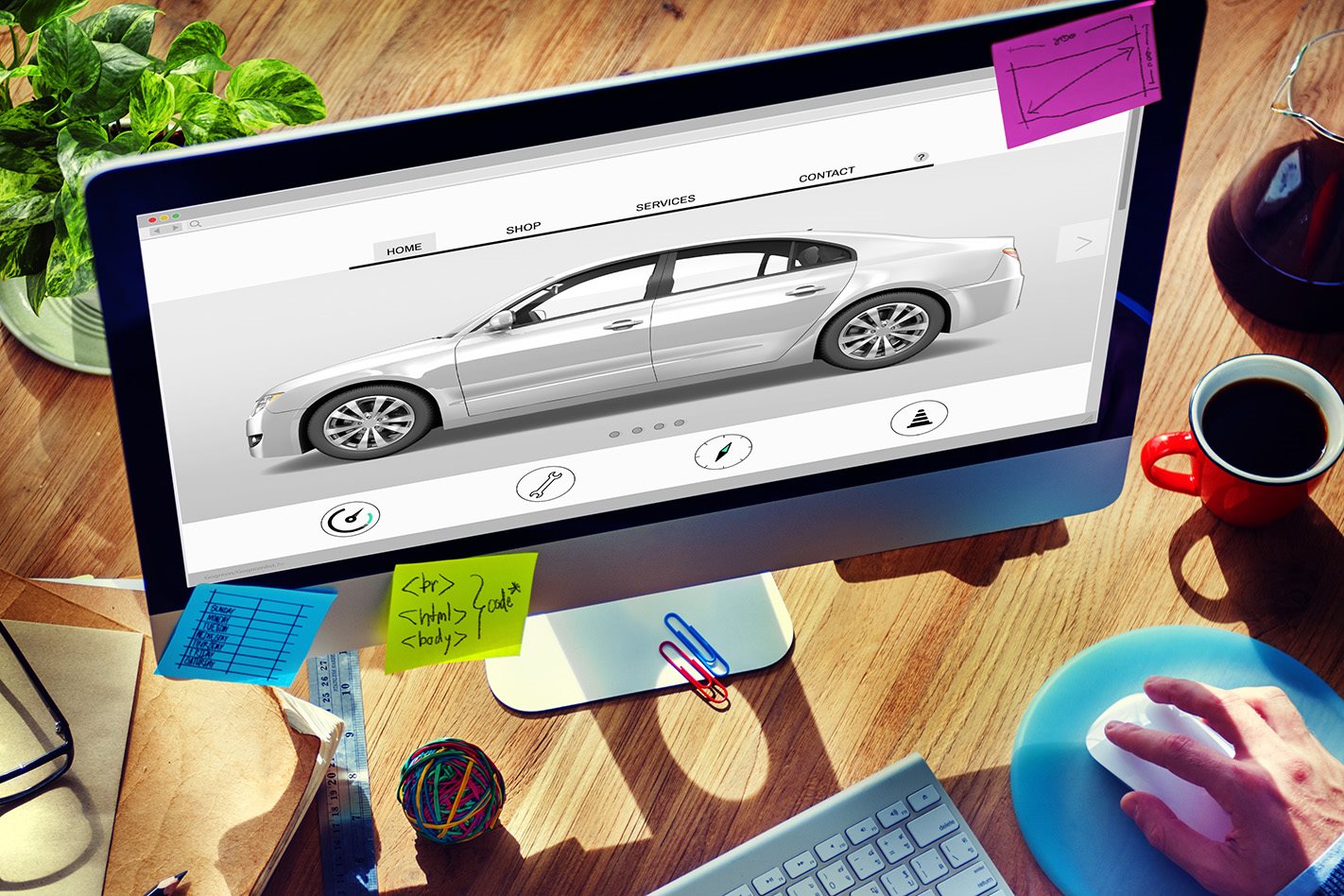
Tony Weber, chief executive of the Federal Chamber of Automotive Industries – the body representing manufacturers – however, argues the agency model introduces innovation which benefits buyers.
“The agency model is one example that enables innovation and evolution and provides choice and competition to today’s consumers, regardless of where they live, who do not want the same car buying methods and experience their parents and grandparents had,” Weber said in October 2021.
“Even the Federal Government acknowledged the importance of the agency model as an option by including it in the Franchising Code, which was implemented in July 2021,” he said.
“This model will for the first time enable regional car buyers to buy any model through their local dealership and not have their choice limited by their location.”
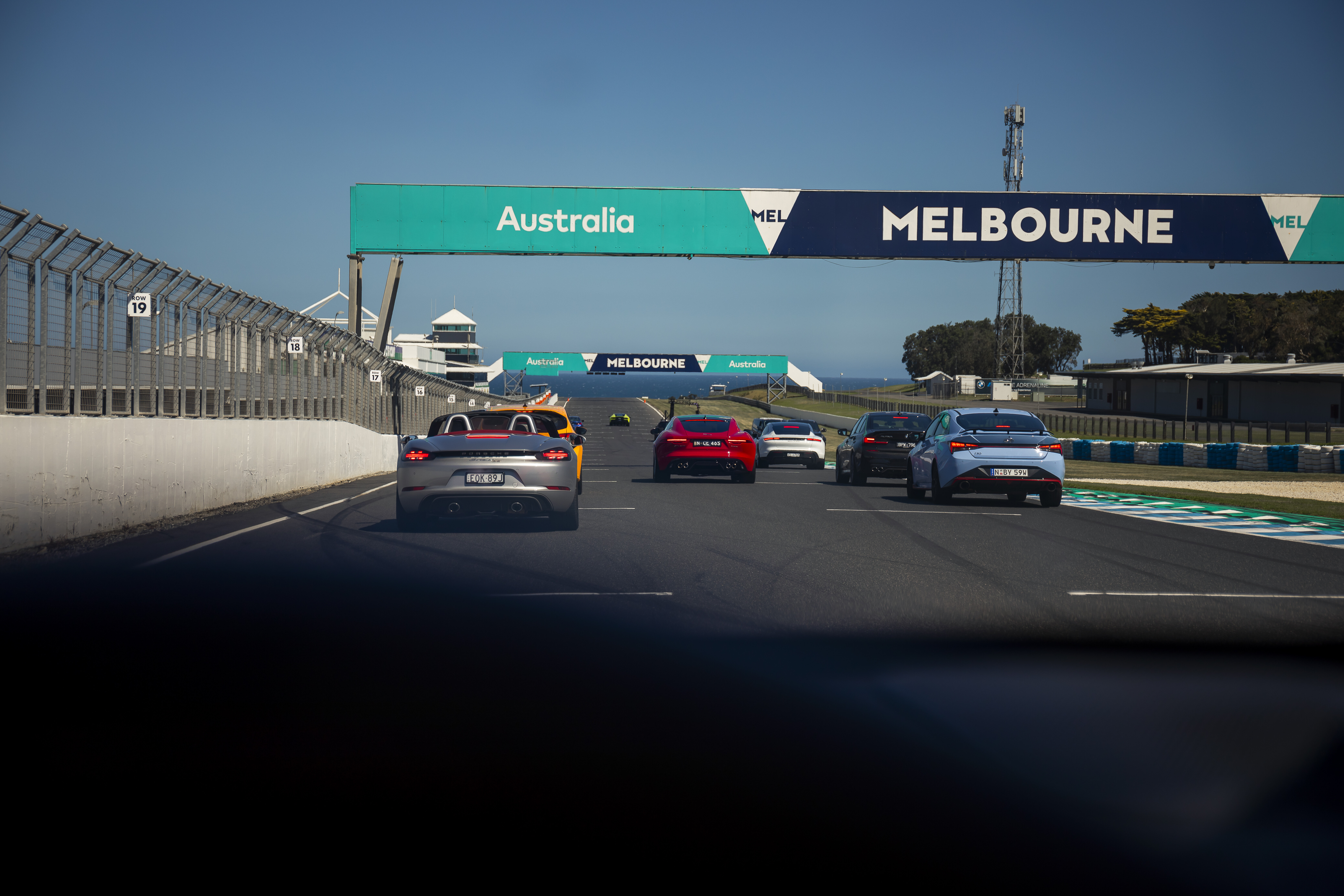
In terms of bumper fields, the 2022 PCOTY line-up is jam-packed full of heavy hitters. To add to that, this year’s track component is held at one of Australia’s best race tracks, the Phillip Island Grand Prix Circuit. Our edict from those in charge was to go big for the inaugural re-imagined PCOTY – and we’ve smashed it out of the park.
With eight cars to assess and rank, the five judges and gun racing driver Warren Luff had plenty to get through to find a common winner. With a certain Porsche in the running, many might view the result as a forgone conclusion. However, if you cast your mind back to PCOTY 2021, an unsuspecting Mercedes-AMG GT R Pro stole the honours from the Turbo S, a car that was tipped with the shortest odds.
So strap in and take a look at an overview of the contenders vying for the 2022 Performance Car of the Year crown.
The winners of both Performance Car of the Year and Sports Car of the Year 2022 will be announced on Tuesday, March 29.
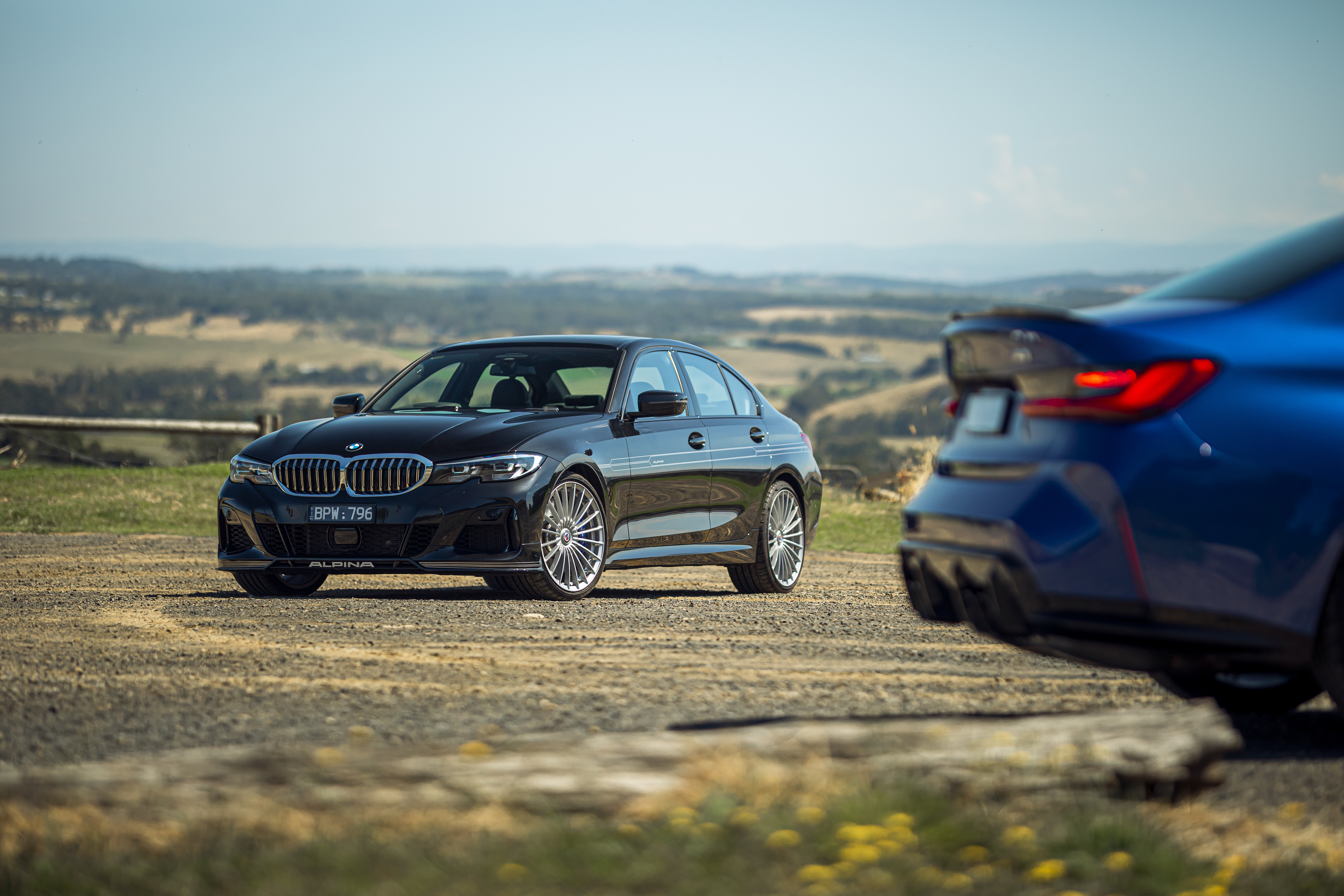
ALPINA B3
The Alpina B3 is one of those cars where you receive knowing nods from those in the know and inquisitive gazes from others, who can’t quite pinpoint what it is, but understand it isn’t a regular BMW. Or even an M-Division product. Yet, it’s more than just a game of automotive inquisition. The B3 packs 340kW and 700Nm of S58-toting grunt, with a torque-centric, bespoke turbo set-up and xDrive grip. A monster in a straight line and a highway cruiser it might be, but for it to hold a candle to the entire field, it first has to beat the BMW M3.
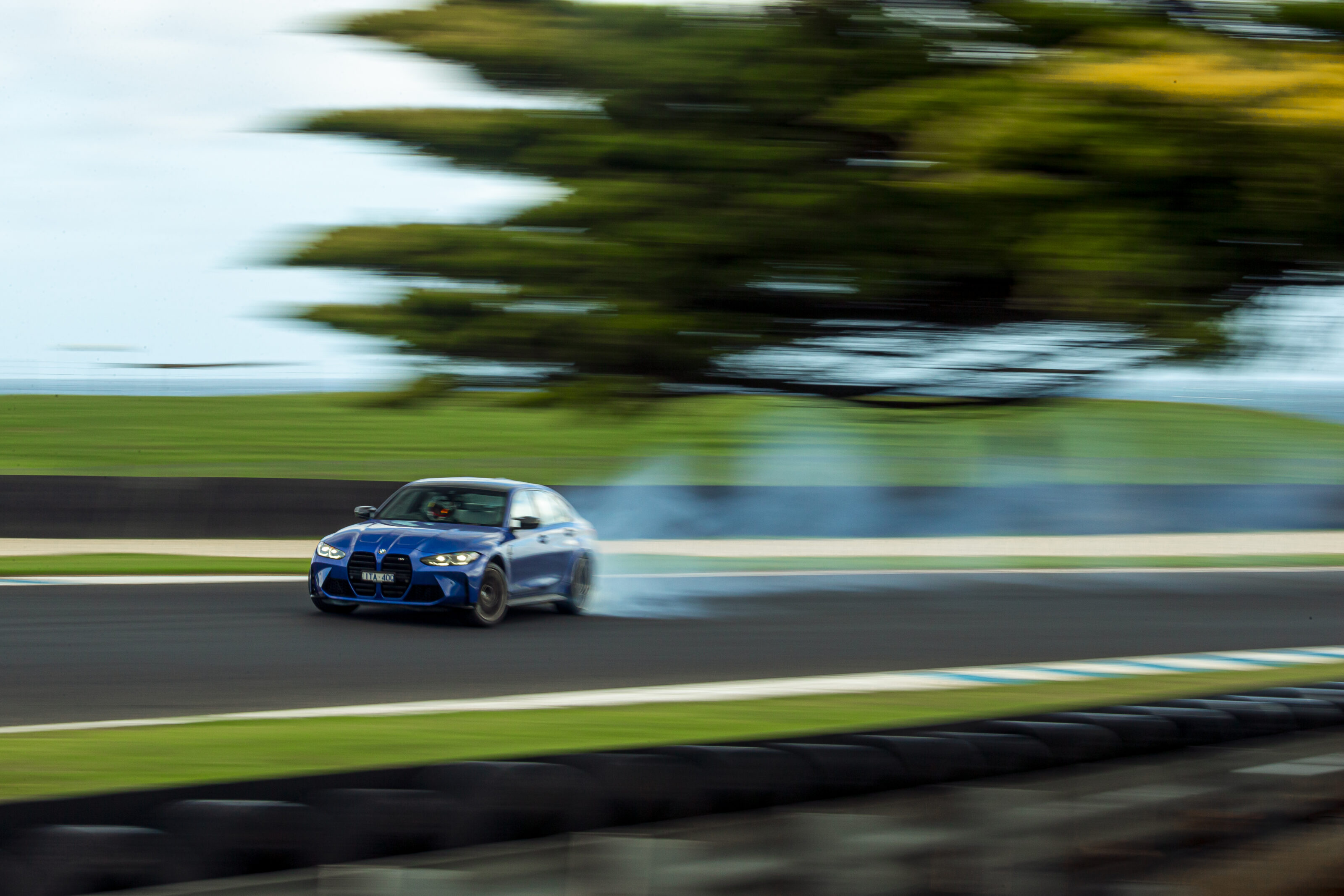
BMW M3
It’s a manual. Let us repeat that. The base-model BMW M3 comes standard with three pedals and a six-speed manual transmission. Okay, before we get too caught up in the stick-shift, it’s also worth mentioning that it’s rear-wheel-drive only and comes with a 10-stage traction control as well as a Drift Analyser. Admittedly, the M3’s S58 is missing a whack of torque at 550Nm, but its peak power of 353kW renders it an absolute powerhouse – and a lurid slider. Does the G80 generation rectify the spiky ills of the F80? Phillip Island is sure to sort out what’s what.
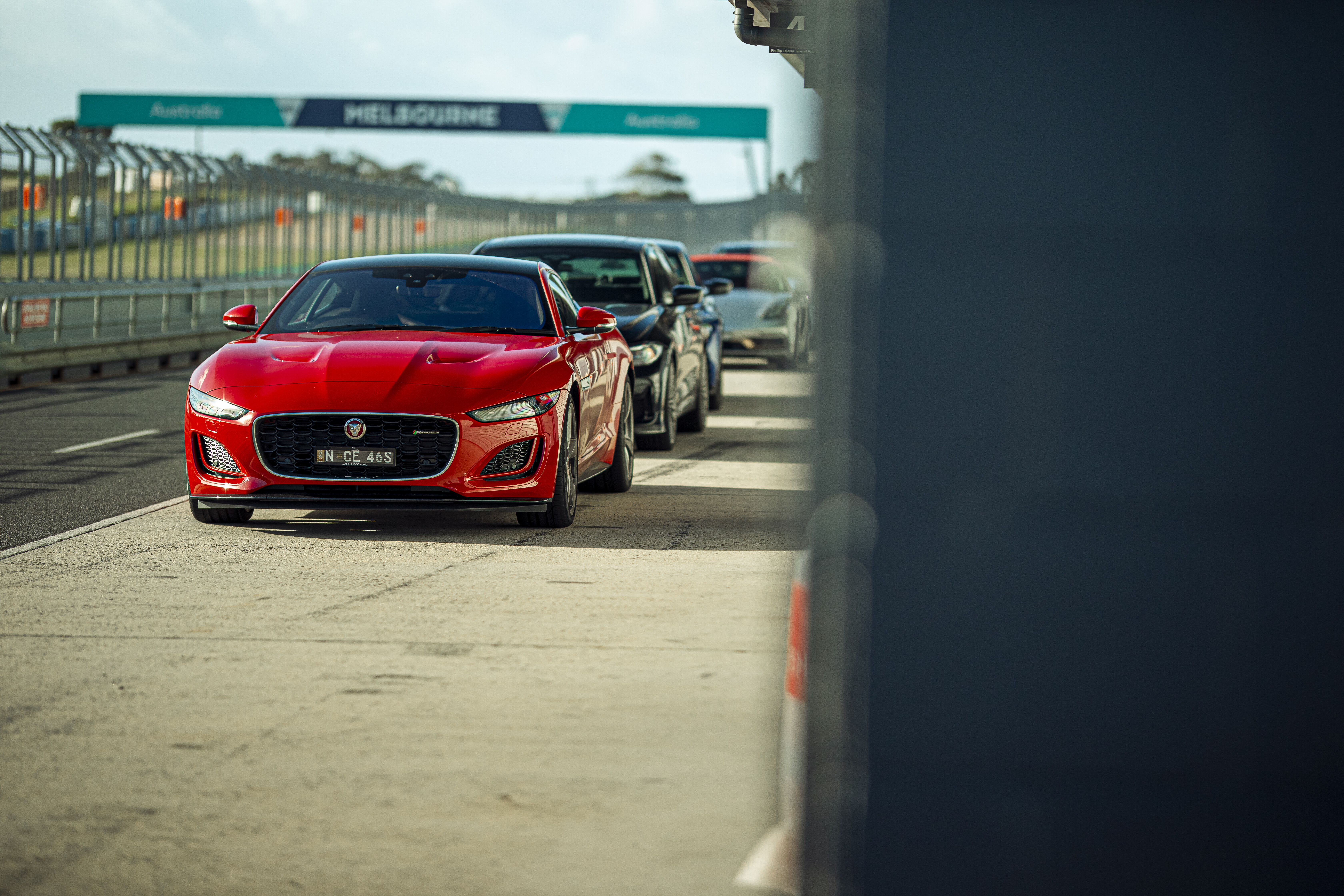
JAGUAR F-TYPE P450 R-DYNAMIC
If there was an award for gorgeous clean lines and a drama-filled soundtrack, the unbashful Brit could walk the catwalk to claim its trophy now. As a car that gets under your skin to live with, the Jaguar F-Type warmed many a heart. However, this is Performance Car of the Year, and the Jag’s 5.0-litre supercharged V8 formula has to stack up in number and sensations. With the four-pot and bent-six sent packing, a detuned version of the venerable eight packing 331kW/580Nm fills the void. However, is it enough to still give the F-Type the bite it needs against the field?
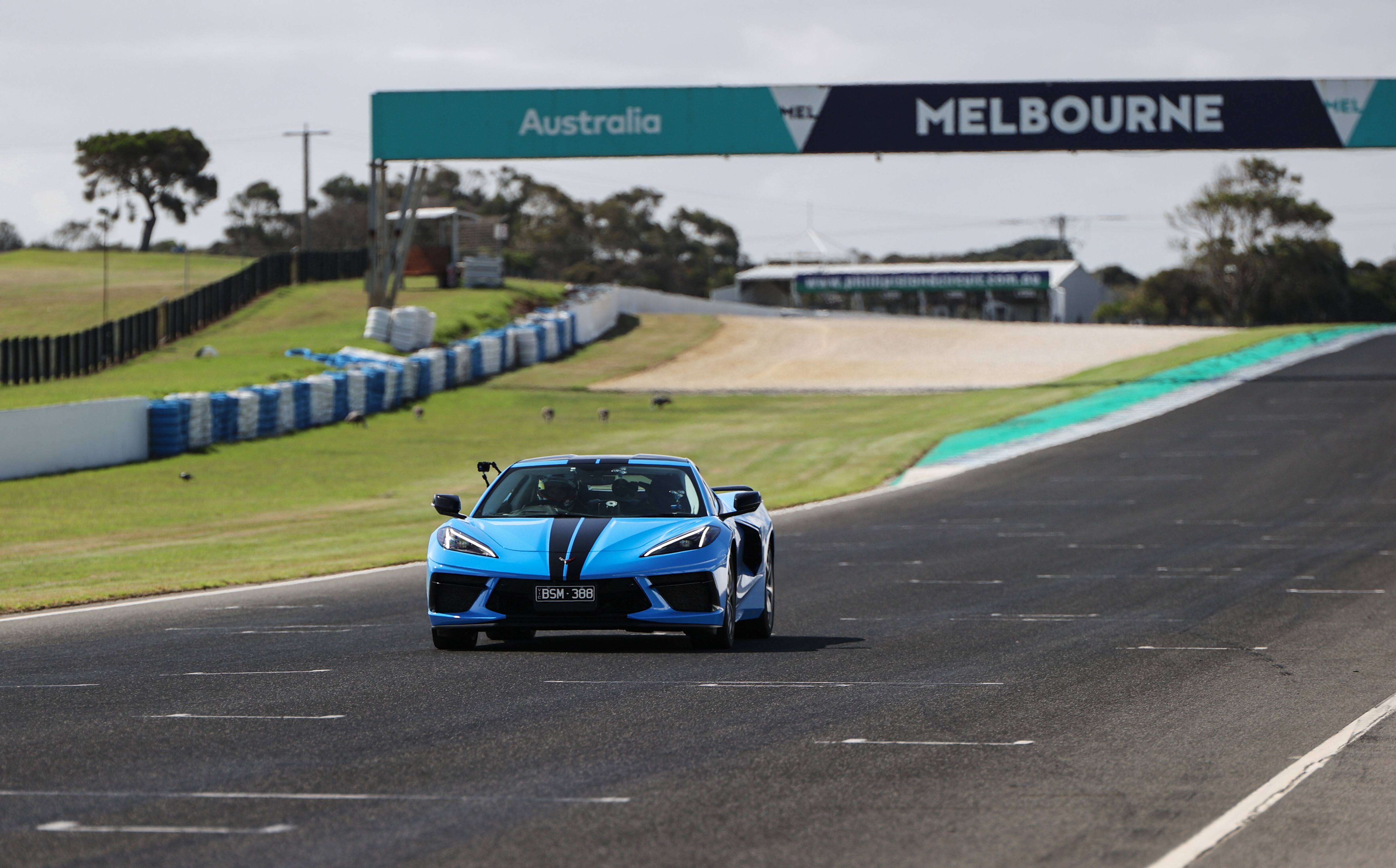
Corvette C8 Stingray
A heavy hitter? You better believe it. Out of the eight PCOTY cars the mid-engine coupe from Bowling Green almost gleans the most intrigue – and not just because we’re the first to get our grubby mitts on it. Yes, the C8 generation Corvette remains V8 and rear-wheel drive, but apart from that, the rulebook for this American hero as we know it has been thrown out. Visually it’s hard to miss the blue hue and polarising styling, but it’s impossible not to hear the glorious 6.2-litre LT2 V8. Like the Mustang, the Yanks know how to do great soundtracks. So, is it worth the wait? Find out.
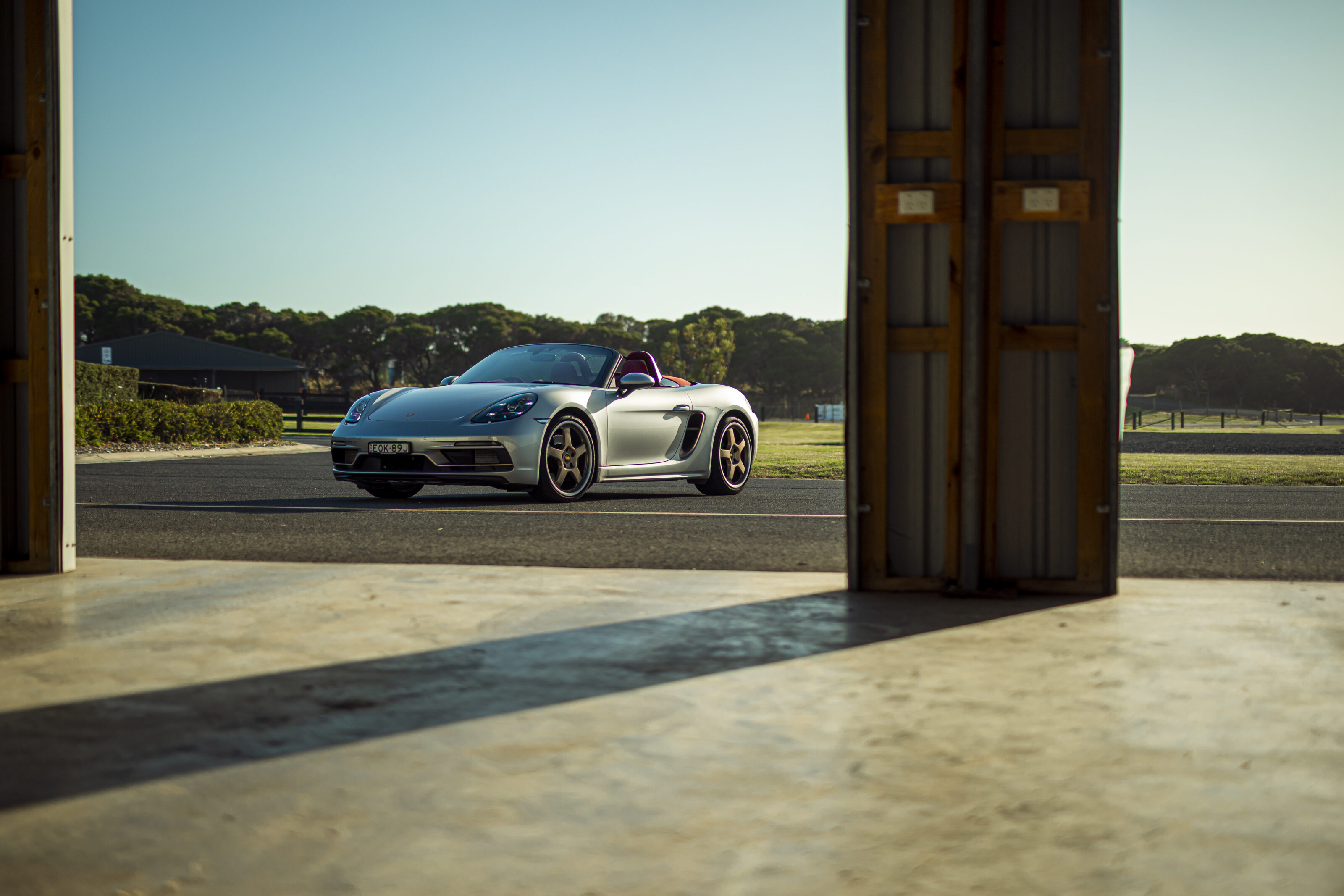
PORSCHE BOXSTER 25 YEARS
The Boxster doesn’t shout its intent. It doesn’t have the most power or torque. However, as a whole it is a lovely thing to absorb. Thanks to an anniversary present to its iconic model, Porsche has created the 25 Years edition with styling additions to commemorate the original. Mechanically it remains the same as the already proven GTS variant, with its 4.0-litre flat six nestled just behind the driver. As an added bonus, the red fabric roof drops, revealing the reason you’d opt for it over the Cayman. With two other products from Stuttgart in the field, the Boxster has its work cut out for it.
PORSCHE TAYCAN TURBO S
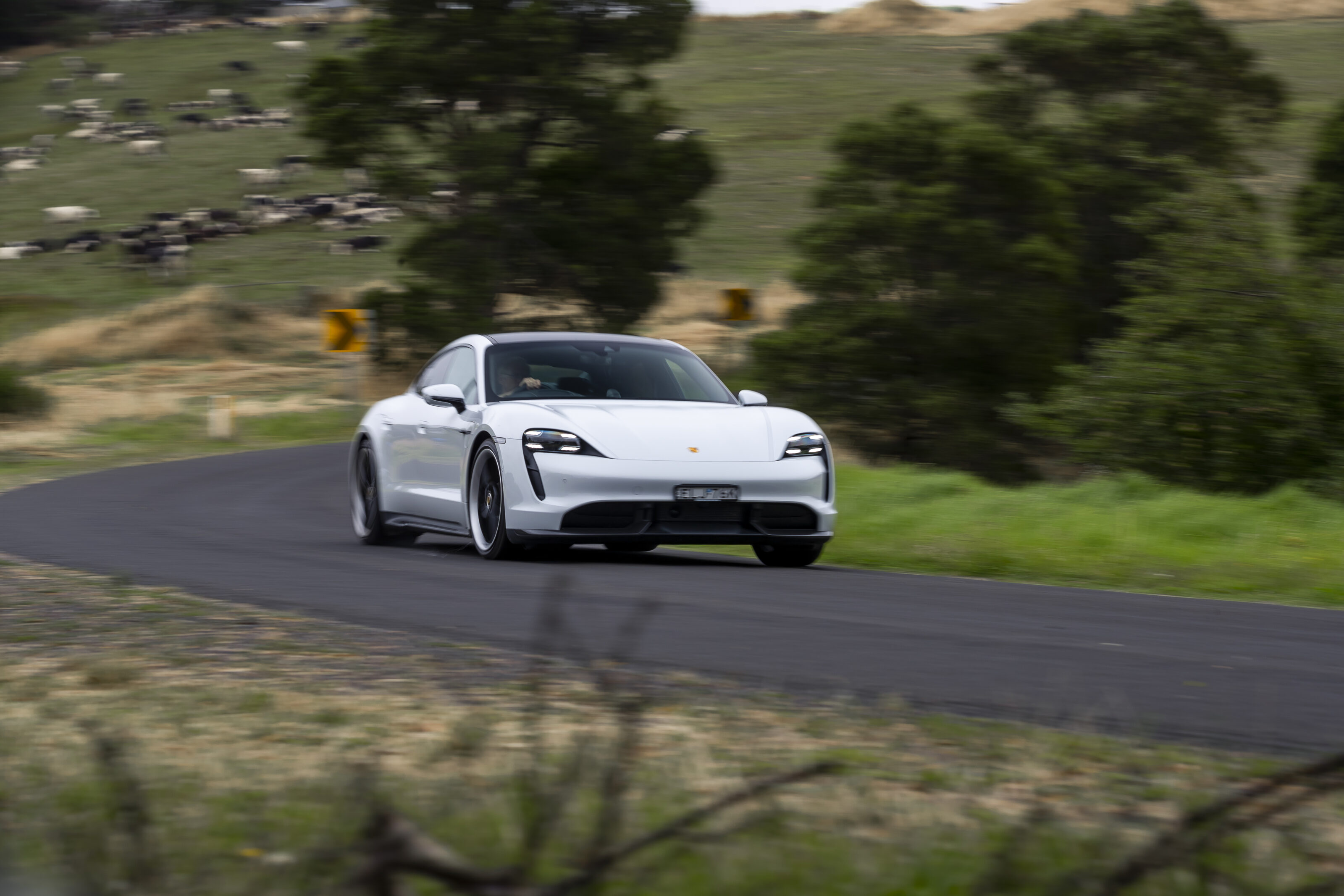
The inclusion of the Taycan in the PCOTY field is an important one. Yes, it’s the first fully electric vehicle to compete in our prestigious event. That in itself is an important milestone. However, we’re keen to prove that it is here not just because of that fact. Is it still a Porsche when it comes to the experience gained behind the wheel? And more interestingly, how will it perform on a race track like Phillip Island? With Porsche announcing the next Boxster/Cayman will be of the EV variety, the Taycan’s inclusion is an important taste of what’s to come.
PORSCHE 911 GT3
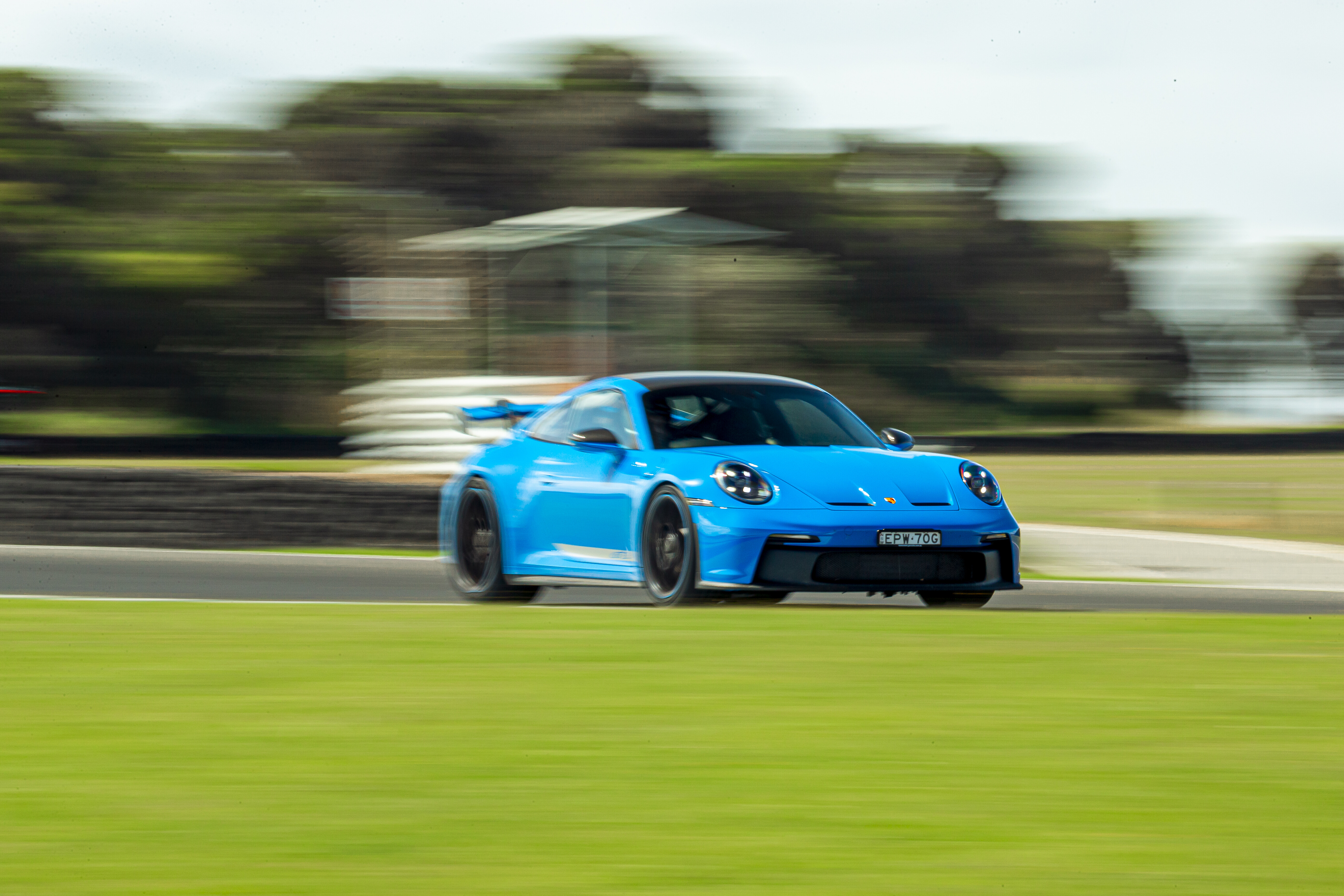
When it comes to expectations, the GT3 ranks high. Since the inaugural event a big chunk of the PCOTY trophies have been engraved with Porsche – and generally followed by 911. So the swan-neck rear wing has a lot of pressure placed on it. Phillip Island is bound to be a test for its aerodynamic addenda, but will its focused intent prove too much for the road? The 992 also doesn’t have it all its own way, with two other Porsche products and a host of top-quality metal to contend with. Regard proceedings as a forgone conclusion at your own peril.
LAMBORGHINI HURACAN EVO FLUO CAPSULE
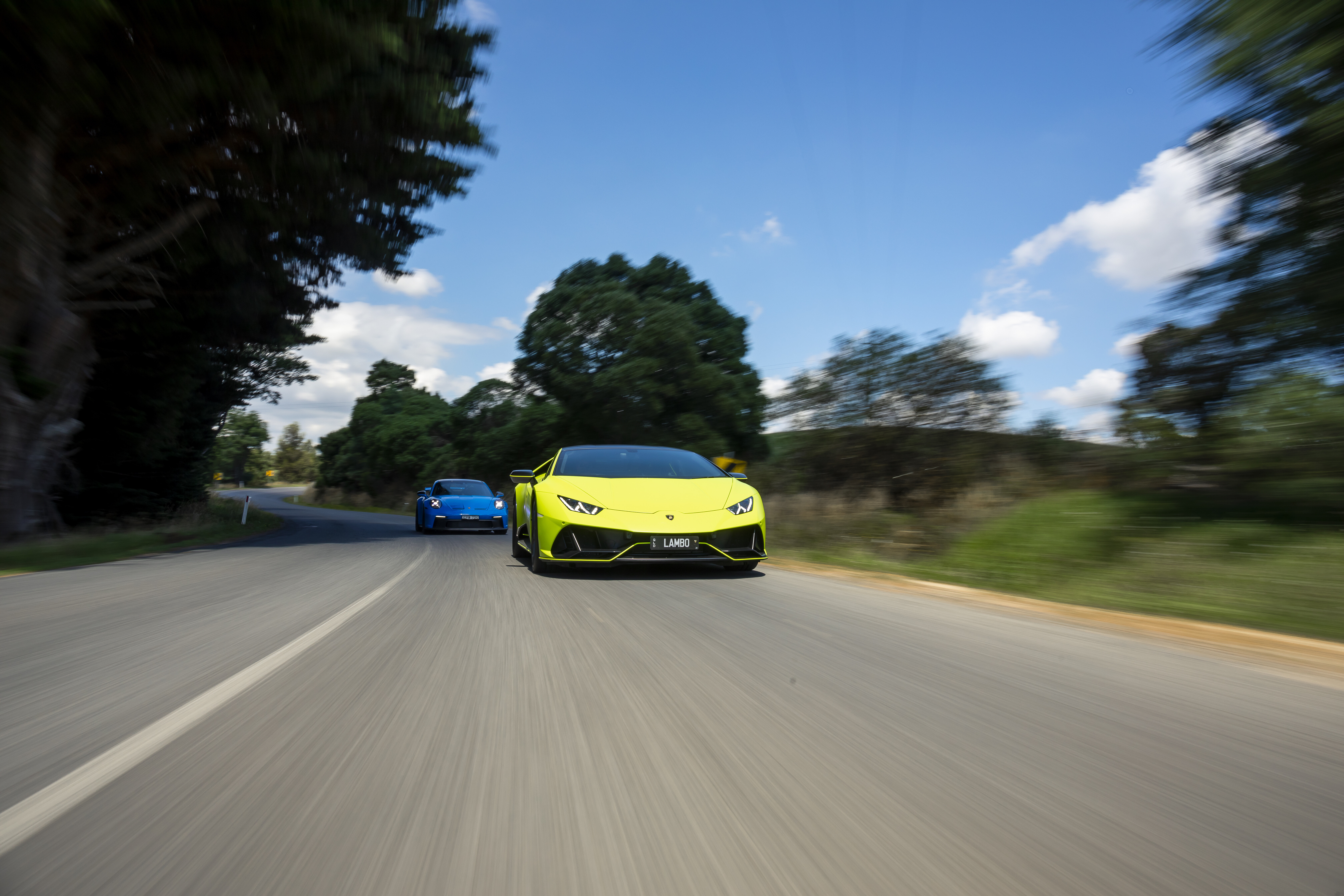
This thing is loud. And not just the special-edition colour. Remember to head to the MOTOR YouTube channel after the announcements have been made to hear the V10 scream down Gardner Straight at Phillip Island – the GT3 and Corvette also rank as must listens. Mechanical high note aside, the Rambo Lambo brings substance to back up its visual impact. Packing 470kW it’s the most powerful internal combustion car in the field and, without the aero of the Performante, it promises to be a jet in a straight line. Can its flamboyance be met with competency?
WHAT MISSED OUT?
A McLaren 765LT was locked and loaded for the event, however, shipping issues meant its ETA blew out to after testing – maybe next year. The Italian GT with supercar pace, the Ferrari Roma was invited to PCOTY 2022. However, Ferrari decided that the combined road-and-track event wasn’t the right fit for its offering. And finally, the Mercedes-AMG GT Black Series missed the field because of a lack of availability. With so few units arriving Down Under, allocations were exhausted and AMG was left unable defend its 2021 crown.
The brief for Performance Car of the Year 2022 was simple. Make it bigger and better than it’s ever been before. More cars, more breadth and depth of coverage, the best team on board, the most compelling video output and the fastest, most powerful group of enthusiast cars ever. Spare no expense on circuit booking, pull no punches on verdicts, and deliver a stack of hard data, presented in the biggest, weightiest edition of MOTOR magazine ever. No small assignment, then.
This year’s event sees a traditional PCOTY event fused with something new. You told us how much you missed Bang For Your Bucks, our annual competition for more affordably priced vehicles that’s been on temporary hiatus, so we listened and gifted Bang an upgrade into the PCOTY fold, giving it a spit and polish and launching it as Sports Car of the Year. So there are now two separate but equal competitions, which have resulted in two very deserving champions for this first instalment of the double-header.
The winners of both Performance Car of the Year and Sports Car of the Year 2022 will be announced on Tuesday, March 29.
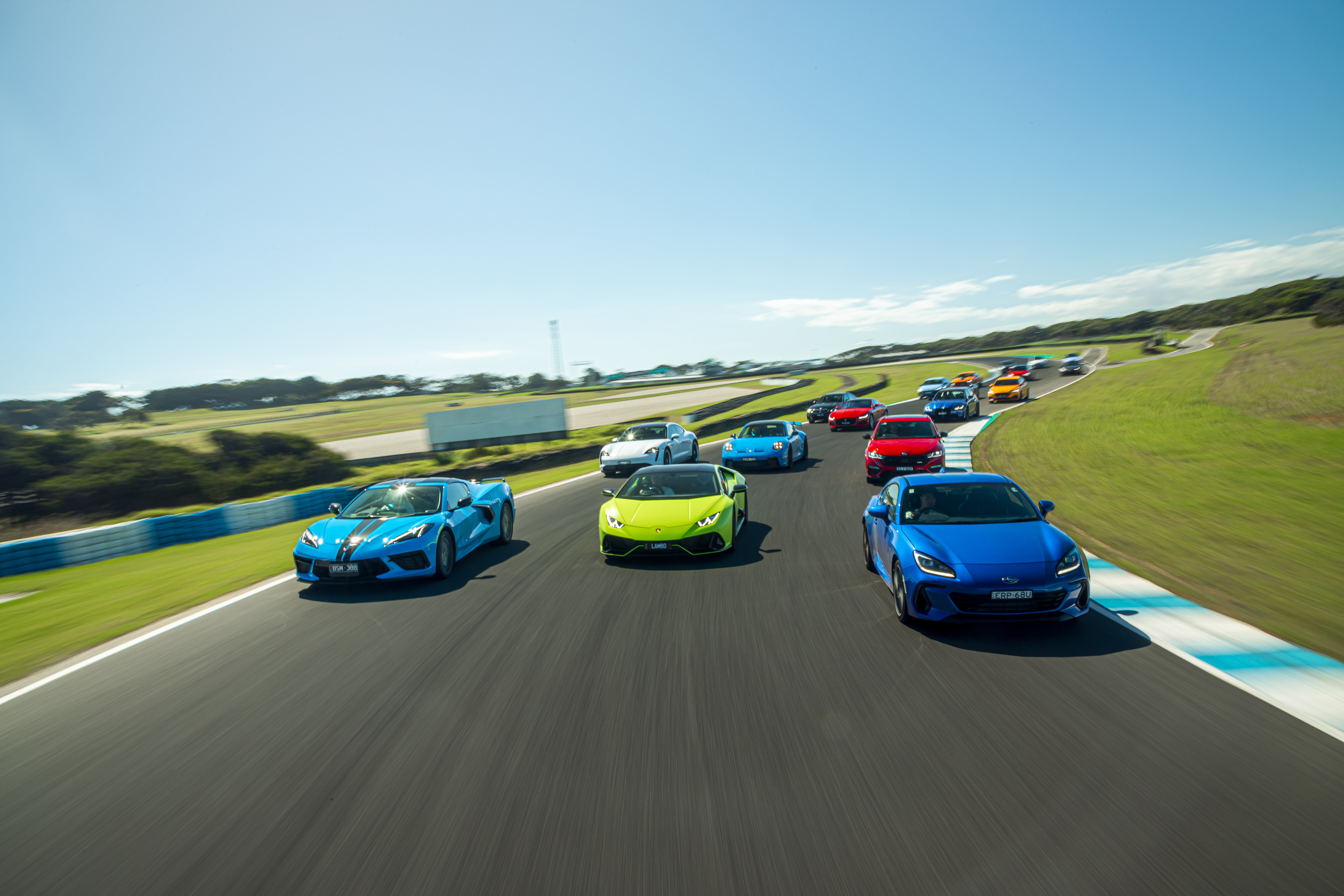
It doesn’t look real. I’m approaching redline in a Porsche 992 GT3. Ahead of me, Warren Luff is driving a fluorescent Lamborghini Huracán Evo. Blue and white kerbing strobes beneath its tyres as it’s framed by the blue and whitecapped Bass Strait, a cloudless dome of sky overhead and the distant heat-shimmer of Cape Woolamai’s sea cliffs beyond.
It seems for a moment, that the world has gone crazy on the beauty filters, jacking the intensity to some ridiculous level. We knew PCOTY ’22 was going to be full-on. We just didn’t expect it to be quite so otherworldly.
It started badly. You can read more about why in Daniel Gardner’s behind the scenes PCOTY wrap, but suffice to say nature conspired against us. Then the vehicles started dropping one by one. Photographic lead Ellen Dewar was hospitalised with an eye issue. It seemed that wrangling 18 cars and the attendant support vehicles was going to be a challenge the likes of which we’d never really experienced.
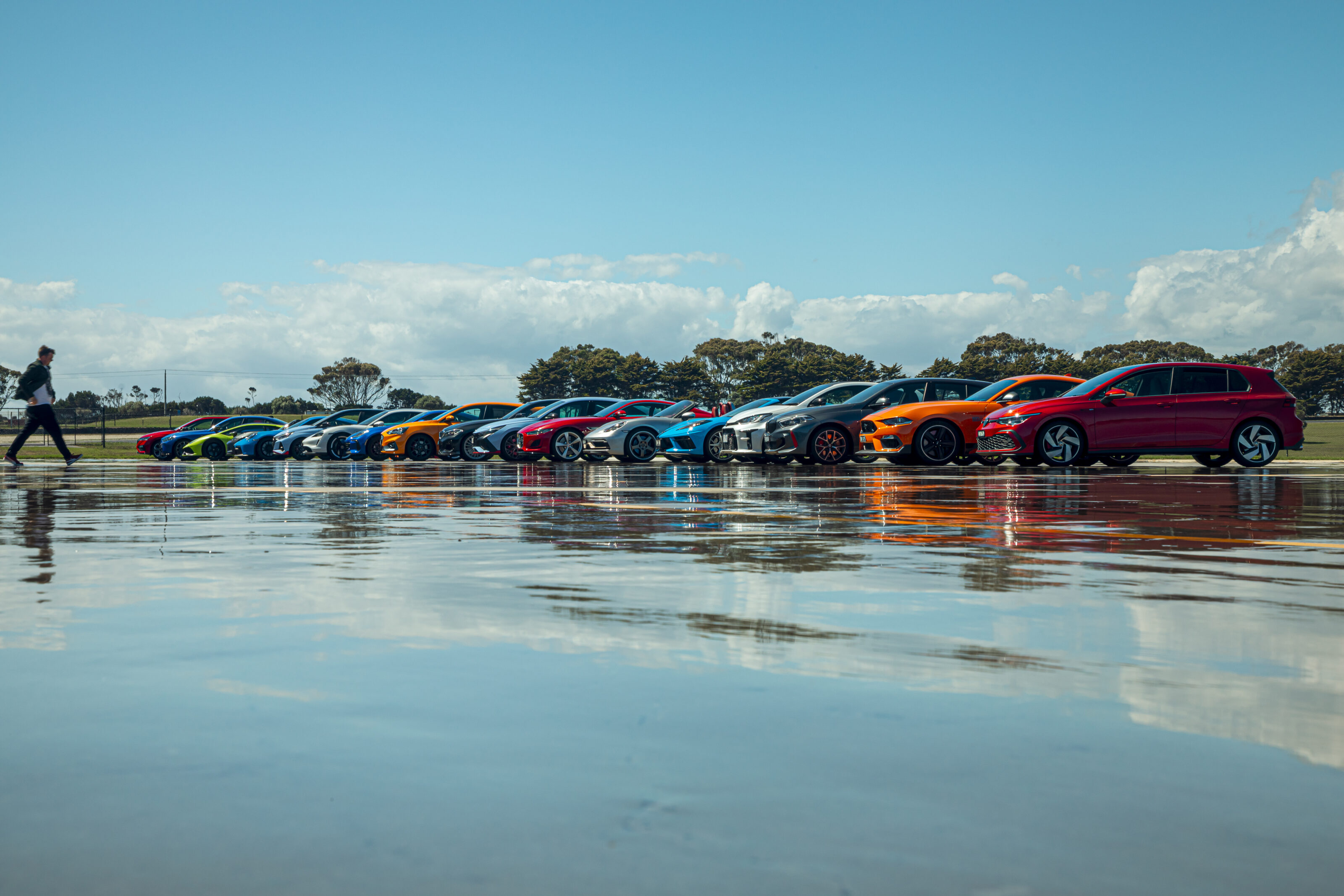
Still, it was obvious that the result was clearly going to be worth the effort. The Sports Car of the Year field ran to 10 cars, with the Hyundai i20 N probably pitched as a pre-event favourite. Keeping the baby Korean more than honest was the new Subaru BRZ, with the evergreen Golf GTI here in Mk8 form and the intriguing Toyota GR Yaris Rallye hoping to make up for the disappointment of its less focused sibling’s eighth place at PCOTY 2021.
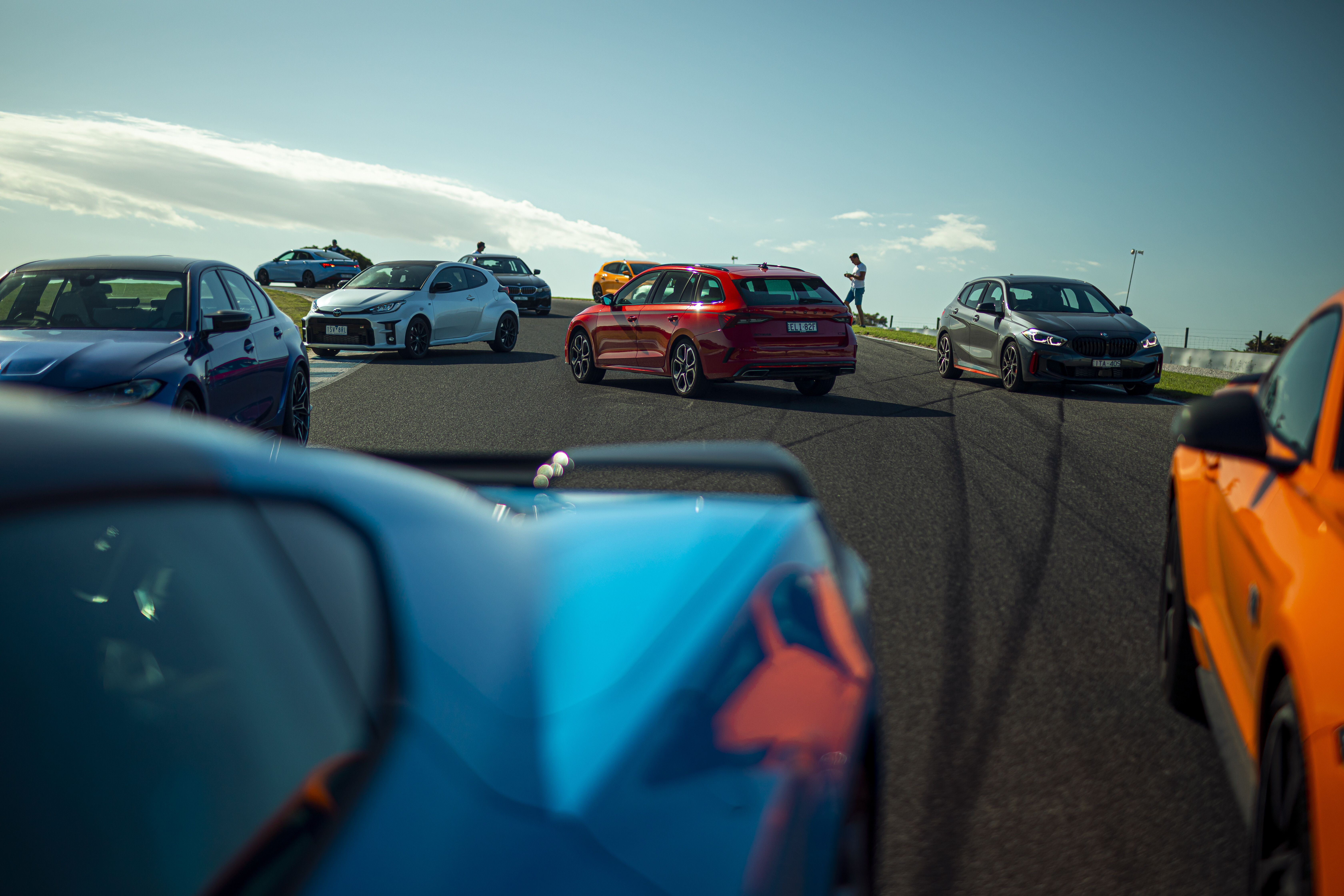
The 200kW Toyota wasn’t even the biggest hitter at SCOTY this year. That honour fell to the hearty 345kW naturally aspirated V8 of the Ford Mustang Mach 1, with both the Hyundai i30 Sedan N and the Ford Focus ST also eclipsing the acclaimed Yaris’ kilowatt count, if not its power-to-weight figure.
The field was rounded out by the most focused version of the ND Mazda MX-5, the GT RS, alongside the Skoda Octavia RS and BMW’s 180kW front-drive take on the Golf GTI theme, the 128ti. You couldn’t have asked for a more varied mix. Front, rear and all-wheel drive, manual, auto and dual-clutch and a near perfect smattering of body styles.
Remember, the cars aren’t being compared directly with each other, but judged against the long-standing PCOTY criteria. In this instance we tweaked the weightings of the scores a little so that the cars in the SCOTY competition were weighted more for value and less for X-factor, reversing that decision for the PCOTY class.
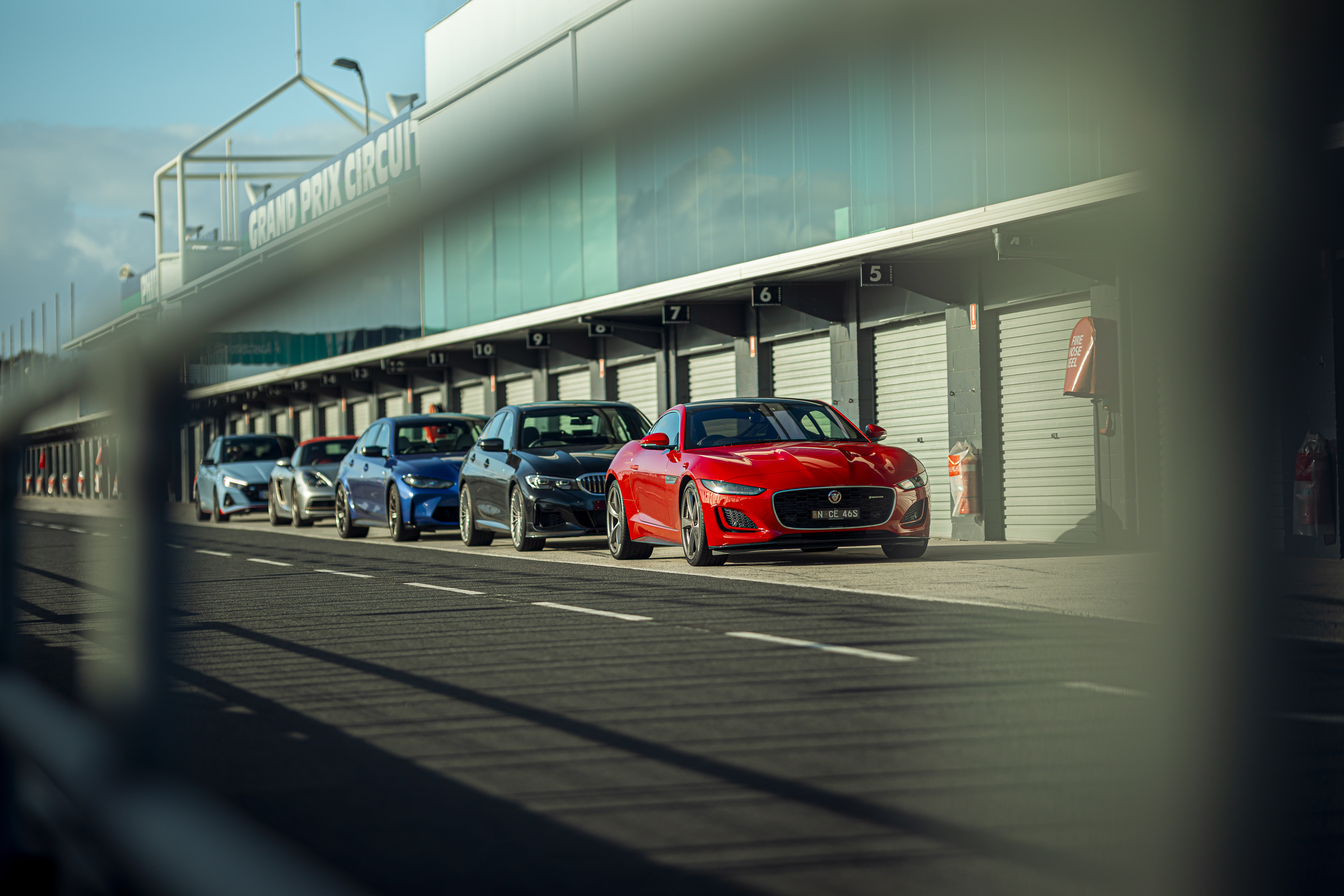
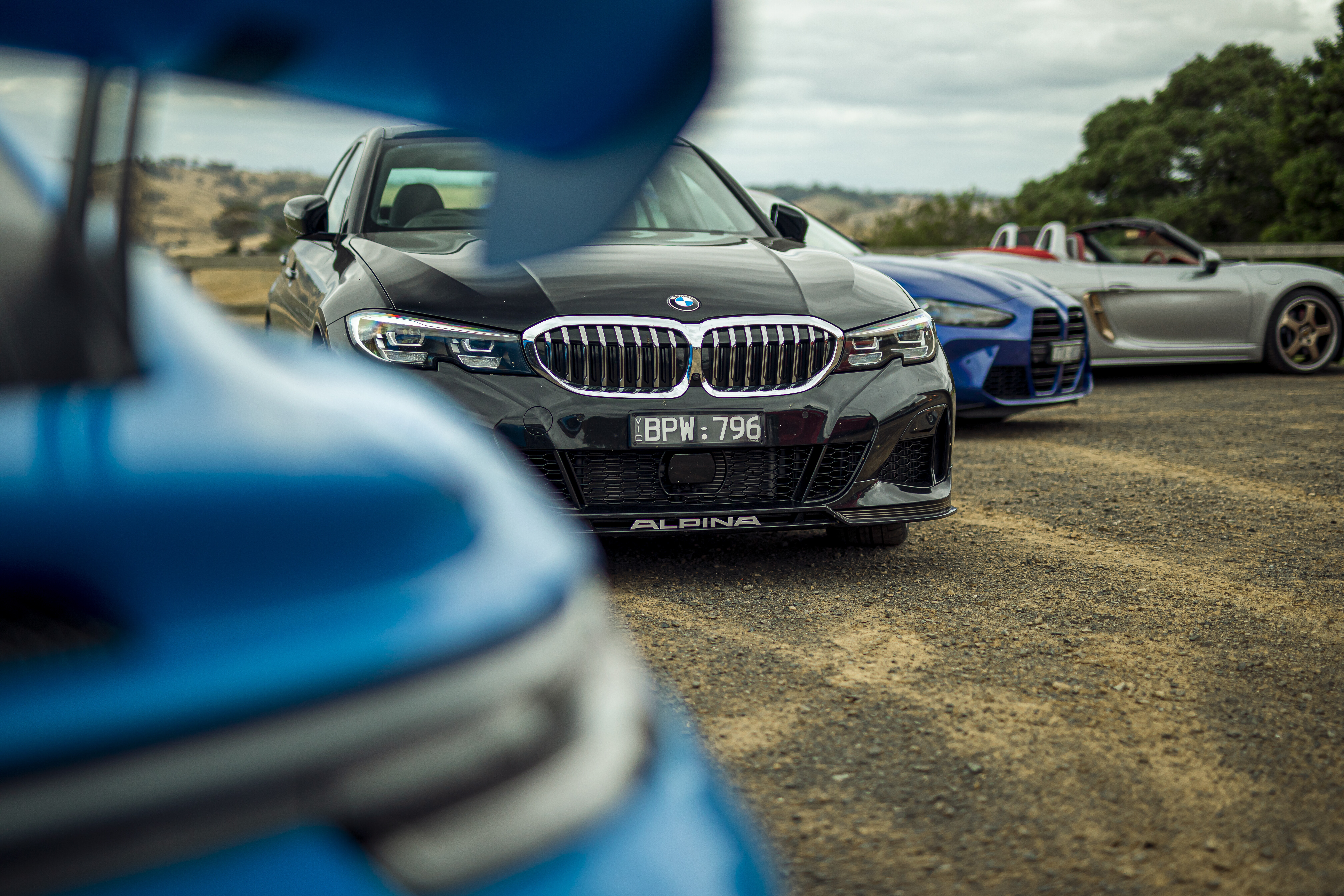
Stepping up to the PCOTY field, a pair of Bavarians opened proceedings in the shape of the Alpina B3 and the BMW M3. The M3 was particularly interesting as it’s the entry-level car with three pedals and a stick, the only entrant in the senior field thus equipped. The Alpina’s a couple of grand cheaper than the M3 and with another 150Nm, Buchloe’s bahnstormer stood more than a puncher’s chance.
Jaguar’s facelifted F-Type P450 R-Dynamic delivered the only front-engined V8 in this section, sending power to the rear treads only and in most normal years might have been the best-sounding car at PCOTY. Not this time. Our first Australian taste of the long-awaited mid-engined Corvette C8 in right-hand drive form had everyone’s interest piqued, while we’d missed the inclusion of a Lamborghini Huracán Evo at PCOTY to date, so the launch of the new Fluo Capsule edition was all the excuse we really needed. If everyone else can flex the rules a little due to Covid, then so can we.
Porsche, perhaps stung by being pipped last year by Mercedes-AMG, had arrived in force. Trent Giunco couldn’t stop telling everybody quite how good the Boxster 25 Years was, so that was a natural inclusion. Cam Kirby was similarly insistent that we had to have a Taycan at PCOTY, having just missed out on one last year. We asked him to book a 4S, but he couldn’t be shifted from his view that PCOTY deserved the fastest version and so we ended up with a Turbo S.
Finally, we managed to get early access to one of the first 911 GT3s to make landfall in Australia. An unbackable favourite? You’ve only got to look at Porsche’s record in past PCOTY events to see why. Would it be able to outrun its electric sibling over 400 metres?
Was it about to come undone on the challenging Gippsland road route? Could it outshine the million-watt star power of the Huracán? So many questions.
Alongside the rebirth of BFYB, we also welcomed back another MOTOR fixture for 2022. The gun driver tasked with setting the lap times and dodging geese around the Phillip Island GP Circuit was a guy who had form here, setting the hot laps the last time PCOTY was at the Island in 2008, one Warren Luff.
Whereas many race drivers don’t always understand the story behind road cars, Luffy is deeply invested, perpetually curious and always has an interesting take on how a car performs.
The judging panel this year consists of the core MOTOR road test team and a ringer. We got in touch with a man who understands the Australian performance car market intimately; Premcar’s engineering director and co-founder, Bernie Quinn. With almost three decades of fast Ford fettling under his belt via Tickford, Prodrive and Premcar, Bernie knows a thing or two about how cars ought to ride and handle in local conditions.
Having plotted two separate road routes, a method of charging the Taycan that didn’t resort to dismantling the junction box of the hotel at Korumburra, a schedule for testing at Phillip Island that merely looked impossible to achieve while wrangling a photography team with only three functional eyeballs, SCOTY and PCOTY were a go. And MOTOR has never seen an event quite like it.
The judges
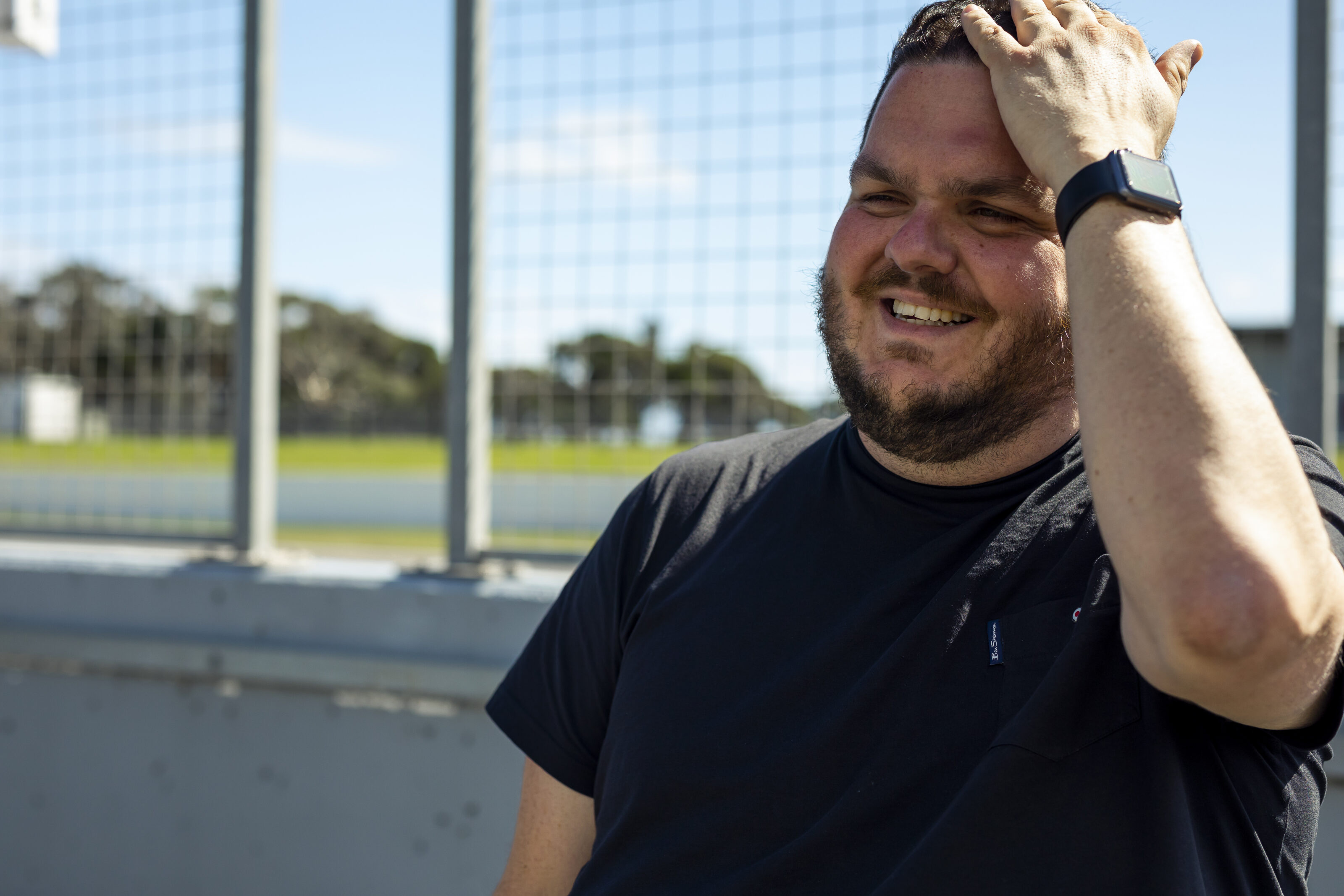
Cameron Kirby
MOTOR’s Deputy Editor loves a great V8. Loves a terrible V8 too but we won’t hold that against him
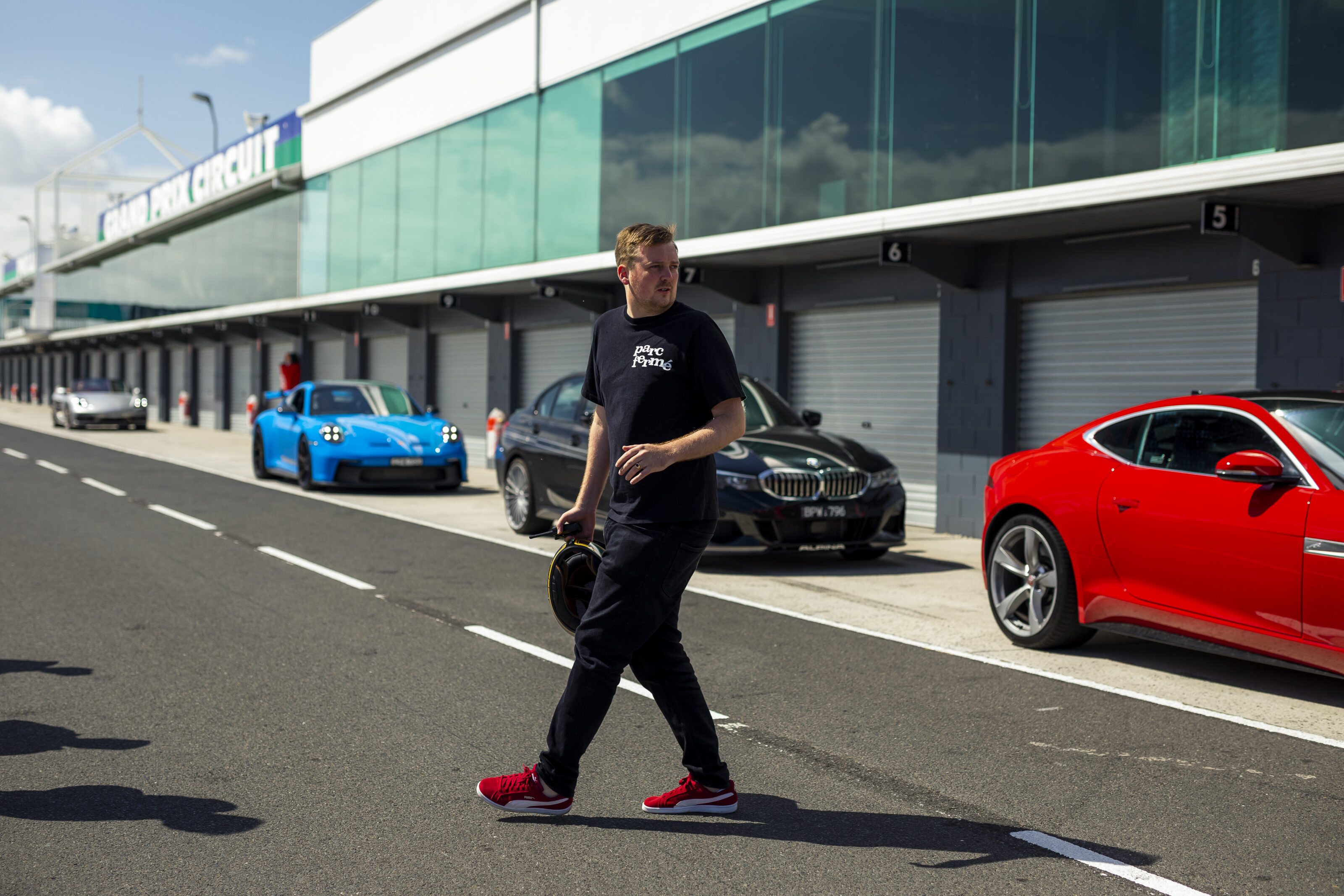
Trent Giunco
Wagga Wagga’s finest export after Dame Edna and the Chiko Roll. Handy steerer, XR6T owner
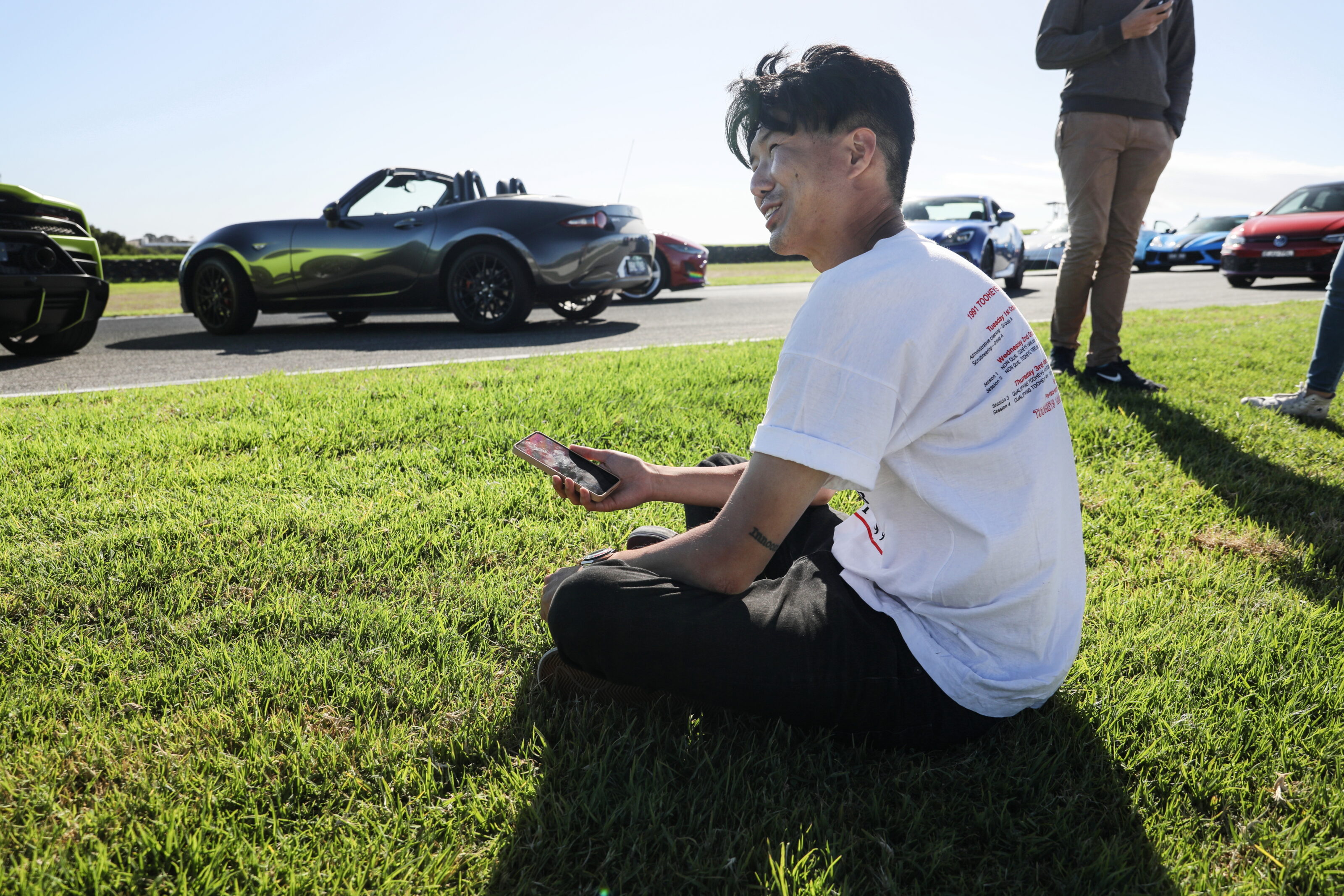
Alex Affat
Superior power-to-weight ratio and the only member of the panel to fit in an MX-5 without resembling an orangutan
Andy Enright
The ringmaster of the show. Now a Phillip Island local so we expect him not to punch holes in the local scenery
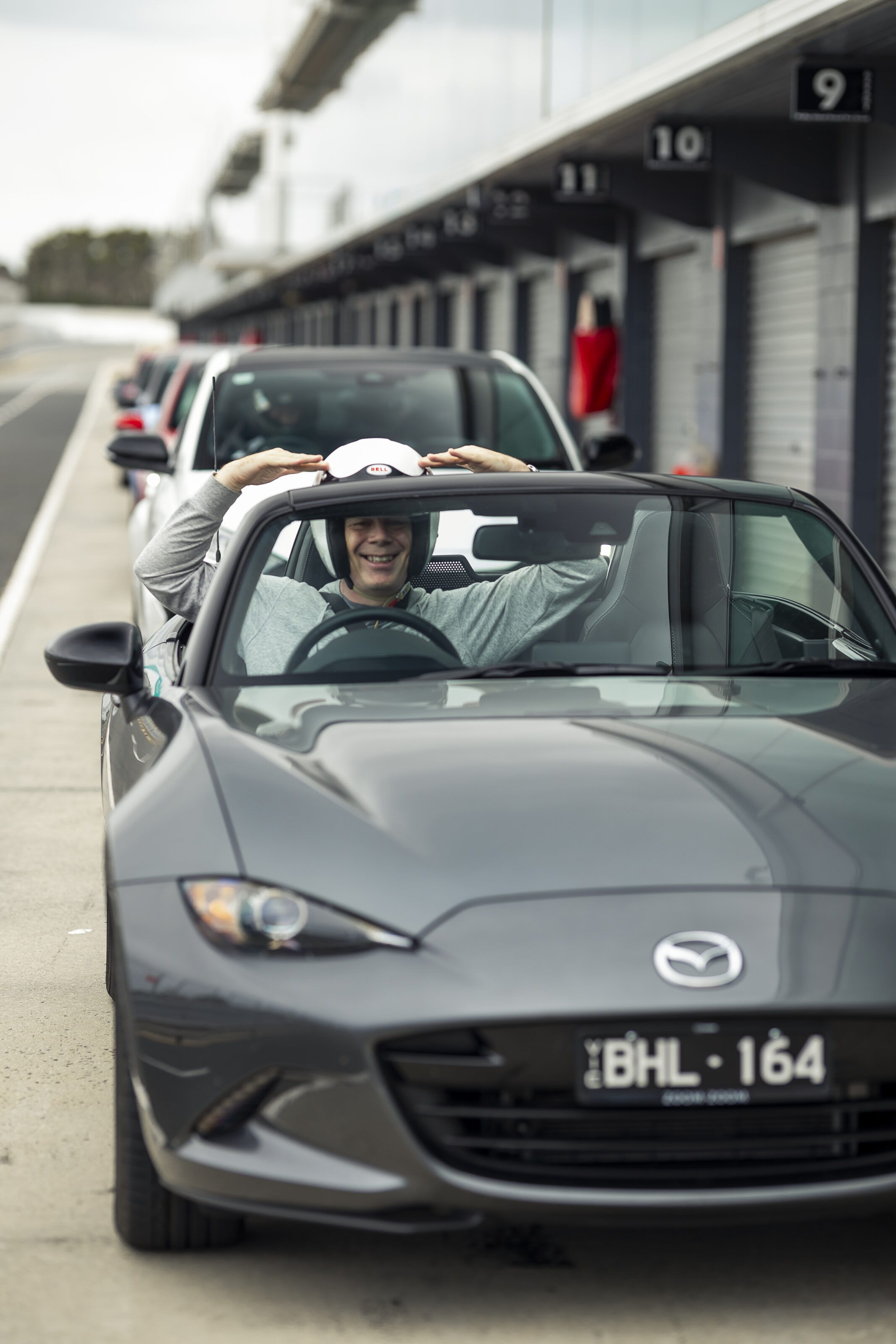
Bernie Quinn
Premcar’s co-founder, so he’s responsible for the Holy Grail. Not sure of his involvement in Life of Brian
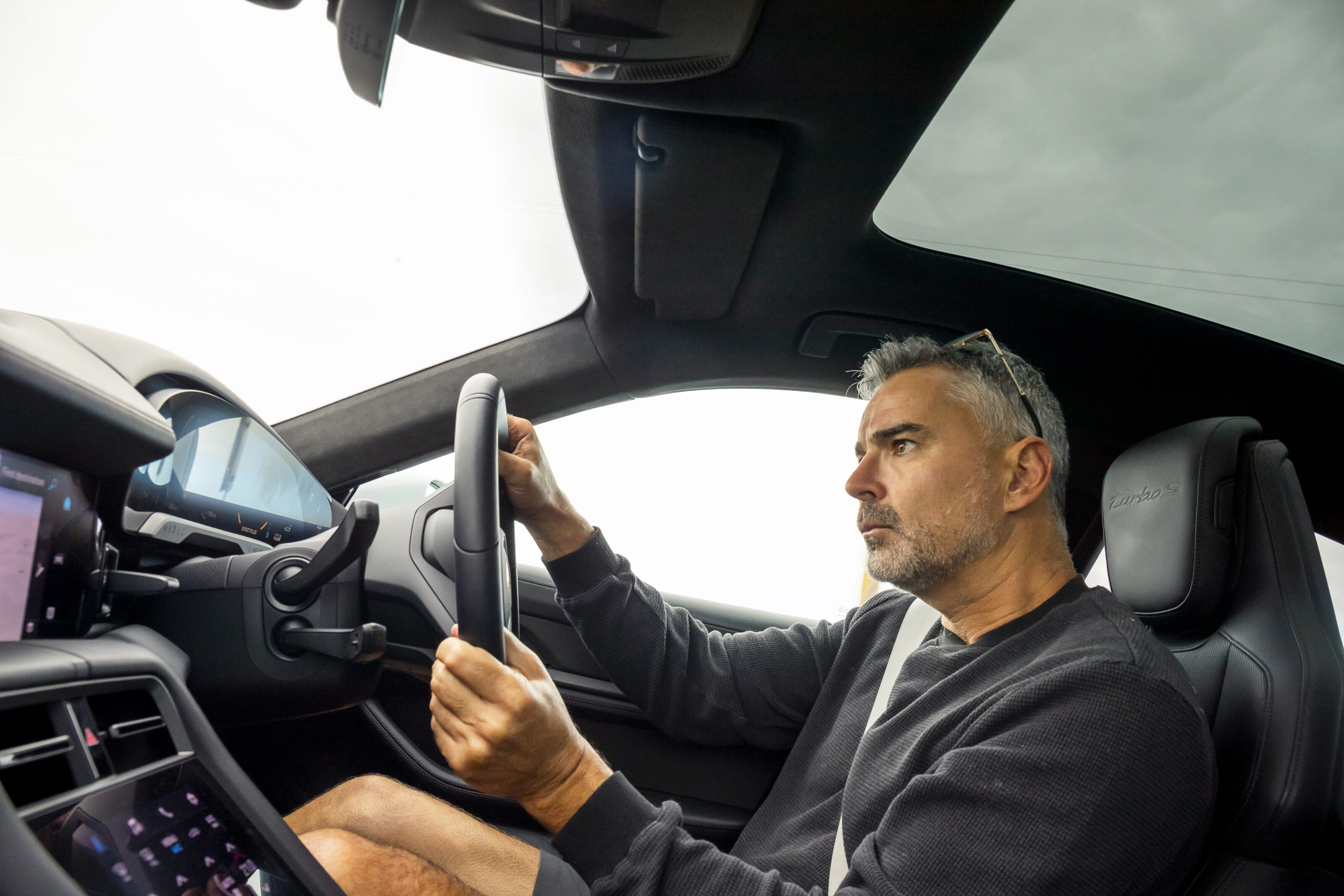
The judging criteria
Performance
The VBOX doesn’t lie. Beyond the raw numbers, we’re looking for response and powertrain refinement
Dynamics
The subtleties of balance, grip, and control fidelity that separate the great from the merely very good
Accessibility
The process of how the vehicle allows you to access its reserves of talent, and the payback it delivers when you do
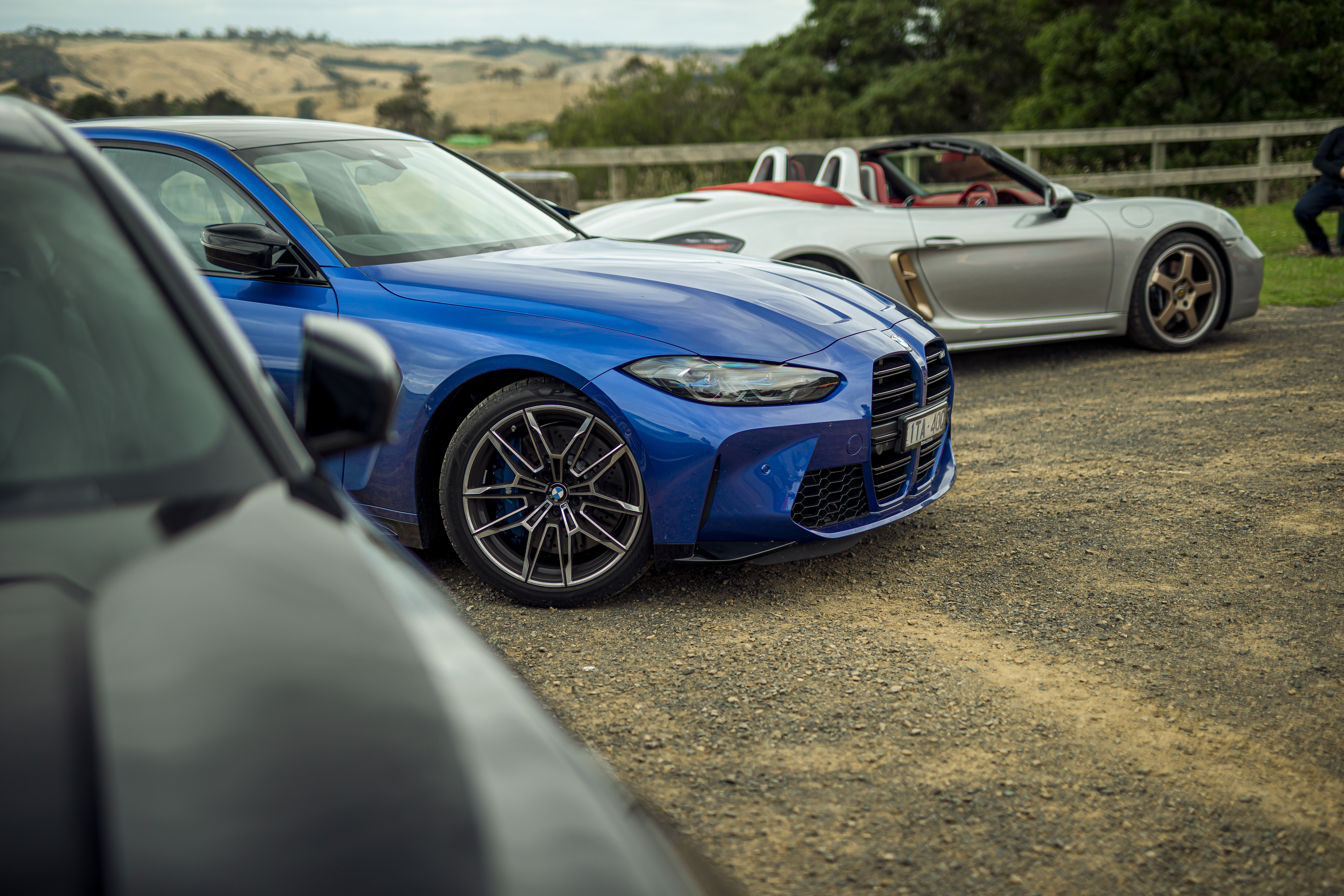
Liveability
Ride quality, interior comfort, visibility, ergonomics and noise suppression. A liveable car is one you’ll keep using
Value
Price, option costs,talent versus its similarly priced peer group, warranty arrangements, fuel economy
X-Factor
Never be impressed with mere charisma. Look for character. Which car’s light shines brightest and longest?
UPDATE, March 24: A Volkswagen Group partner located in western Ukraine will restart production to help ease supply-chain disruptions.
Despite intensifying conflict across the region, the Ukraine company responsible for creating wiring harnesses for Skoda and other brands will resume work this week, according to Reuters.
“Our partner…in Ukraine decided to restart production of wire harnesses this week, with full service and full security for workers there,” a spokesperson for Skoda said during the company’s 2021 annual conference.
Volkswagen has also announced its electric vehicle factories in Germany will restart production from next week, according to Automotive News Europe.
Last week BMW said its German and UK sites would also return to full production, but warned disruptions would continue due to the situation in Ukraine.
“We are still in intensive discussions with our suppliers,” a spokesperson for BMW told Auto News Europe.
“Together with them, we are continuously assessing the situation and defining measures to secure production in the best possible way in order to be able to meet the continued high customer demand.”
The story to here
March 3: More German car manufacturers are being forced to suspend production, due to supply-chain issues born from the Ukraine conflict.
BMW and Porsche have halted manufacturing at some of their European factories as the supply of critical parts dries up, Automotive News Europe reports, with the German carmakers joining Volkswagen in the stoppage.
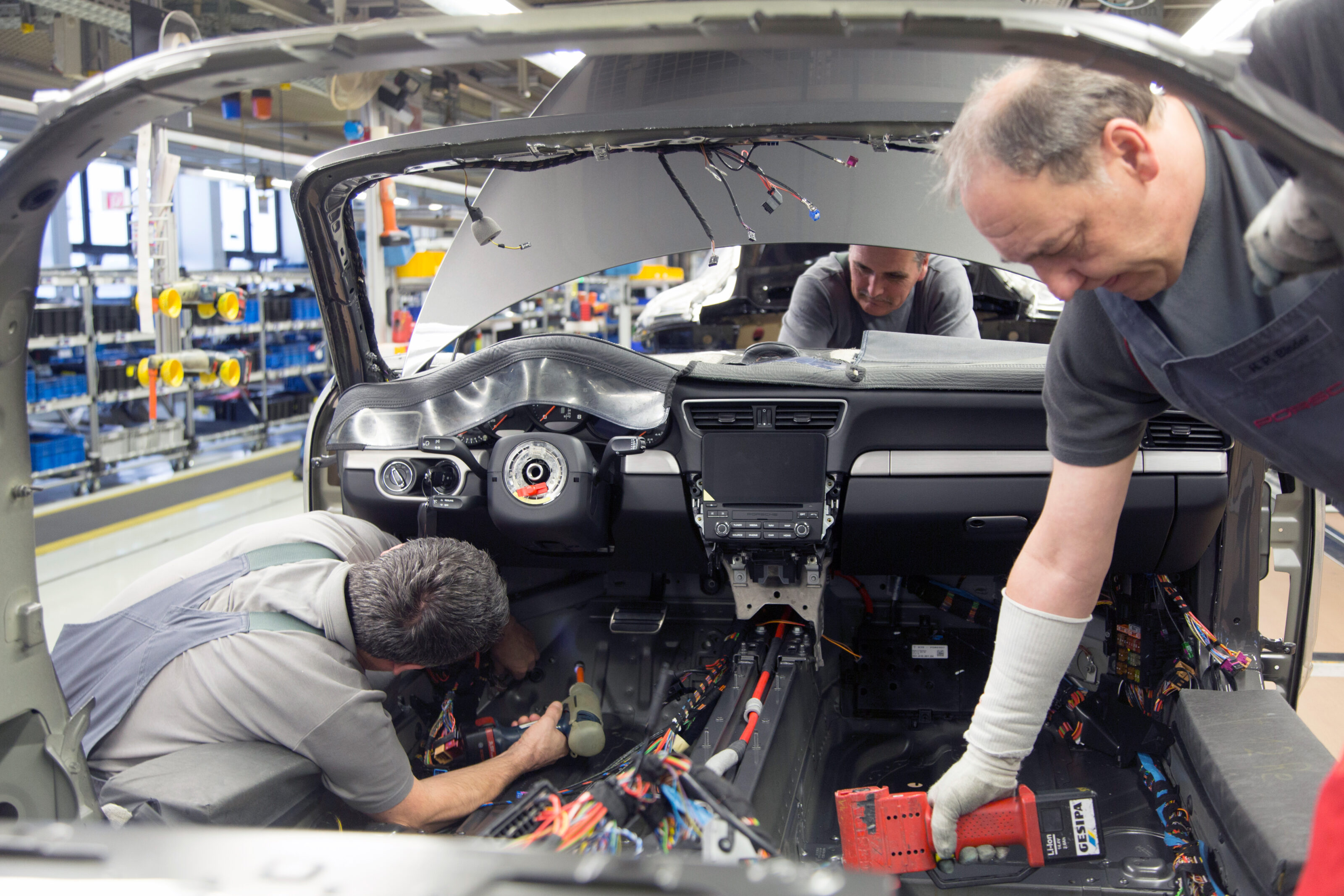
It’s understood third-party companies located in western Ukraine manufacture wiring harnesses for the brands, organising approximately five kilometres of cables into a bundle ready to be fitted and plugged into the car on the production line.
February 28: After two years of supply-chain woes caused by the COVID-19 pandemic and a lack of semiconductor computer chips, some car manufacturers are warning the current Russia-Ukraine conflict is causing further disruptions.
International sanctions placed against Russia could have consequences for catalytic converters, as the exhaust emissions-reducing devices use precious metals including palladium, rhodium, and platinum – with 38 per cent of the world’s palladium coming from Russia.
“It’s hard to think of a global auto business that doesn’t have palladium coming from Russia,” analyst Mark Wakefield from industry consulting firm AlixPartners told Reuters.
However, Wakefield said any problems relating to the metal are at least six months away, thanks to a stockpile of it in London.
Renault Group is expected to be negatively affected by the sanctions, with Russia being the carmaker’s second-largest market after France, and accounting for eight per cent of its earnings, according to Citibank (via Automotive News Europe).
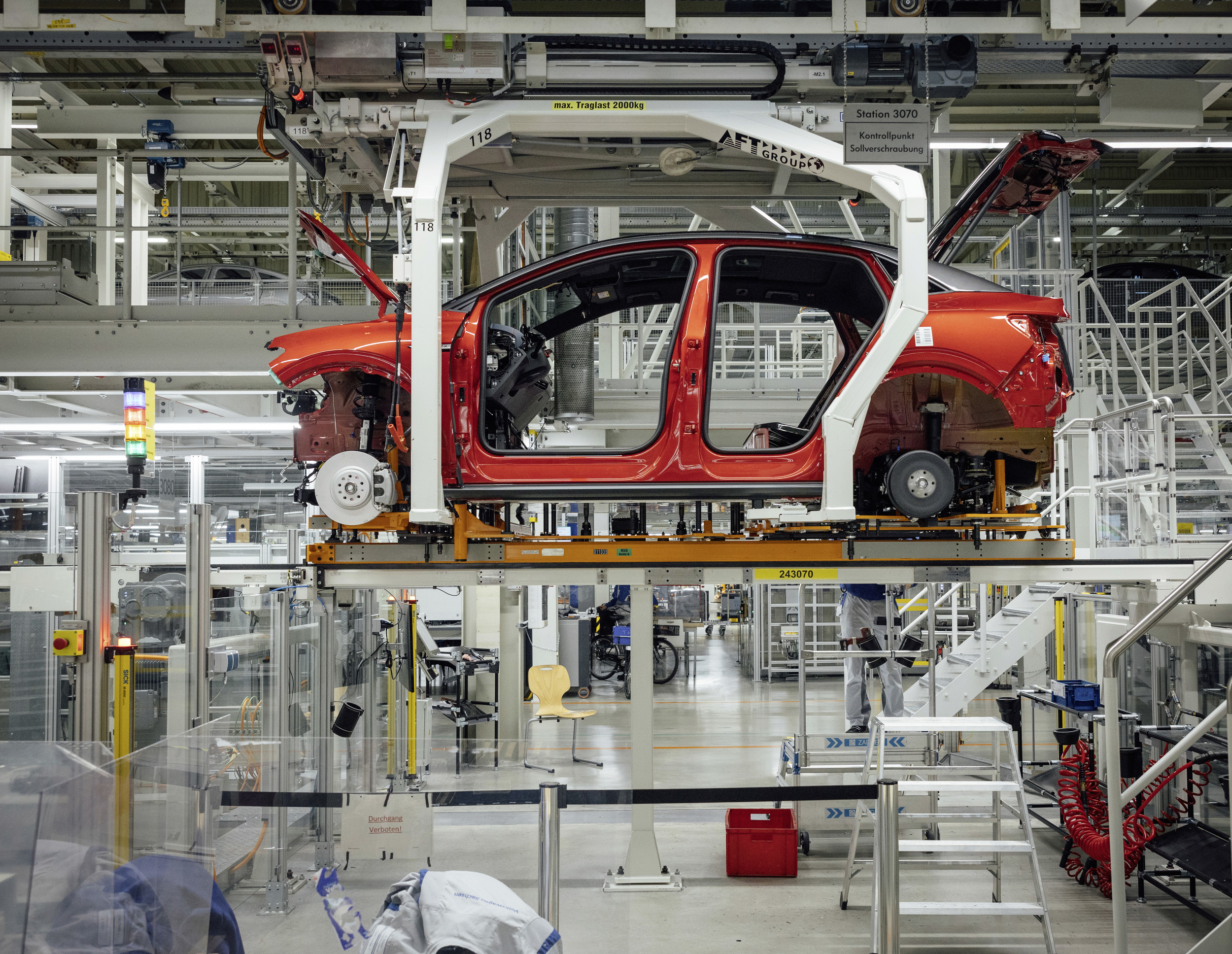
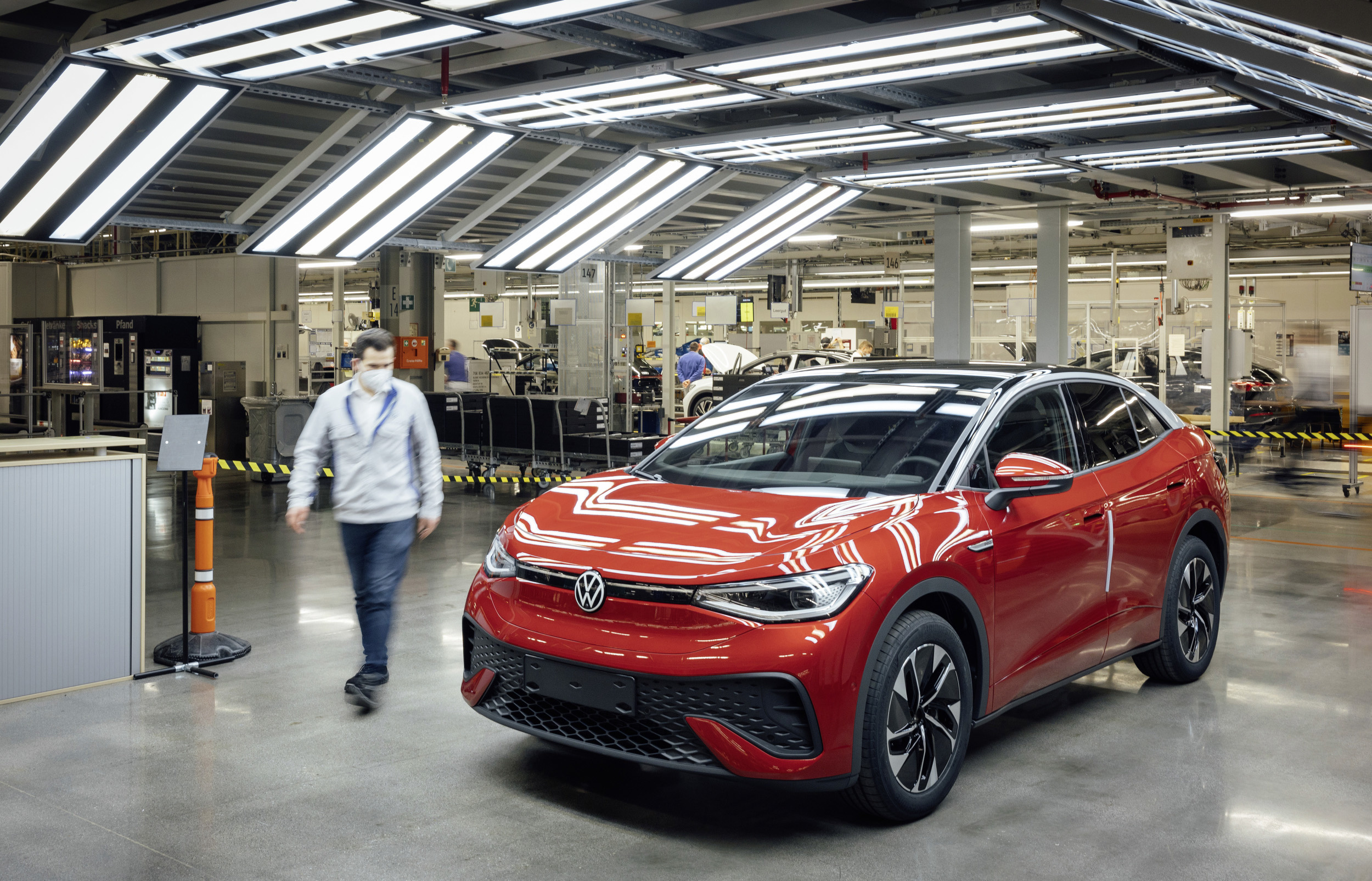
The headaches are not confined to Russia, with two Volkswagen factories in Germany halting production this week following supply issues from vehicle parts being manufactured in Ukraine.
While the exact car models affected have not been disclosed, the announcement is unlikely to impact Australian-delivered cars in any significant way, as the majority of vehicles produced at the Zwickau and Dresden plants are from Volkswagen’s all-electric ID range which are not not offered here.
Australian drivers will still have to deal with ever-increasing fuel prices at the pump, thanks to Brent Crude oil trading above US$100/barrel over the past week, with expectations petrol and diesel will continue to increase in price over the coming days and weeks.
It’s tougher being the Mazda CX-5 in 2022 than when it was launched a decade ago. The nameplate was the most popular SUV in Australia for seven consecutive years from 2013, yet last year the Toyota RAV4 was the best-seller – and by some margin – with the former champion a comfortable runner up.
Rivals such as the funky, fresh-faced Hyundai Tucson, edgy Kia Sportage and value-focused models from Mitsubishi all have their scopes pointed toward the family favourite Mazda. The current-gen KF CX-5 turns five this year – in life-cycle terms, that makes Mazda Australia’s best-selling model somewhat middle-aged.

Changes for the MY22 CX-5 may appear minor; we’ve detailed them previously, but in summary there’s tweaked styling and colour updates, reshuffling of engine availability, plus a new Touring Active variant. Yet this is one of the most significant models currently on sale in this country, so when the CX-5 makes a move, its rivals take notice.
The revised styling takes some of the fresher lines from the upmarket Mazda CX-30, with new headlights and integrated grille – which Mazda’s marketing team calls the ‘signature wing’ – and a simpler lower front bumper intake, too. The grille is now ‘textured’, with more distinctive patterns and shapes which, says Mazda, are part of the push to distinguish between trim levels across the line-up. There are new tail-lights, too.
Across the range, there’s revised suspension that has been stiffened in an effort to reduce NVH levels, as well new seats that are more supportive

Across the range, there’s revised suspension that has been stiffened in an effort to reduce NVH (noise, vibration and harshness) levels, as well new seats that are designed to be more supportive.
The roof lining is a new material that Mazda says absorbs 10 per cent more sound, again in an effort to banish former criticism of the CX-5 as lacking refinement. Inside, there are larger screens – 8.0-inch on Maxx Sport and 10.25 inches on GT and Akera models, with the new ‘Mi-Drive’ offering selectable driving modes for the automatic transmission, too.
Also as previously reported, prices have risen with the entry-level CX-5 now $31,290 (+$1000) and the flagship Akera topping out at $53,680 (+$1300). Both before on-road costs.

What hasn’t changed are the basic dimensions. The cargo area has a revised adjustable floor within the same dimensions, providing 430 litres of space expanded to 1380L with its 40:20:40 ISOFIX-equipped second row folded.
There are still front driver and passenger airbags, side airbags and full-length curtain airbags, as well as some carryover bugbears such as a space-saver spare and 10,000km service intervals – meaning more dealer visits than some rivals.
The entry-level Maxx, too, continues with the same 2.0L 115kW/200Nm petrol four-cylinder as before. It’s exclusively front-wheel drive and the only CX-5 to be offered with a manual transmission (the auto adds $2000).

Maxx Sport trim is where the action is. At $37,990 before on-road costs in front-wheel-drive form, the 2.0L and the diesel option have both been dropped, with the 2.5L four-cylinder – previously only offered with AWD – now standard. It delivers 140kW and 252Nm as previously and is rated at 7.2L/100km (combined) Going for all-wheel drive adds $2500 to the price and an extra 0.2L/100km onto the fuel consumption figure.
Visually identical to the Maxx, the Maxx Sport features a chrome jaw surrounding its blacked-out ‘textured’ grille, with chrome running along its window line and applied to its exhaust tips. The 17-inch standard alloys set a well-balanced stance, which is fitting as the Maxx is the sweet spot of the new CX-5 line-up.

At the wheel, the new black cloth-covered seats are firm and excellently supportive, even if they may be a tad narrow, delivering a good driving position with the full rake and reach steering column adjustment.
The Maxx Sport’s cabin sees the new 8.0-inch centre screen host standard native sat-nav and a full colour reversing camera that’s paired with front and rear parking sensors. Connectivity includes Apple CarPlay and Android Auto, and while there are multiple USB ports and 12V outlets, you need to step up to the Touring trim level for wireless charging.
On flowing roads, it’s enjoyable to drive and continues to be one of the dynamic SUV benchmarks this side of the Euro performance set

Straight ahead is a crisp head-up display, while there are digital instruments in the binnacle, as previously. In addition to the array of standard carryover driver-assist tech – including auto emergency braking (AEB) with pedestrian detection, blind-spot monitoring, lane-keep assist and rear cross-traffic alert (RCTA) – new for 2022 is traffic sign recognition (TSR).
It actually works in the real world, although on rare occasions it can read off-ramp freeway signs to momentarily display the incorrect speed – and it’s still a step away from ‘intelligent’ versions that work in conjunction with radar cruise, which is also standard on the Maxx Sport.

The 2.5L is a competent engine and though lacking the outright punch of the turbocharged version as you’d expect, it’s still strong and capable. At low speed, the urban-friendly long throttle pedal means a lot of right foot to get moving, but it’s easier to modulate when rolling, such as slipping through roundabouts. It needs a handful (footful?) more revs to pedal briskly or comfortably flatten the occasional steep hill, and the extra effort required is most noticeable in the new ‘Mi-Drive’ Sport mode, one of two settings, the other being Normal.
In Sport, which recalibrates the six-speed torque convertor auto, you’ll find the 2.5L revving higher as it sits poised for more throttle, with the regular anonymous din rising to a frenetic, high-revving backing track; there’s no symphonic timbre here, but that’s how most customers like it. Like the paddleshifters and the manual mode, Sport is best for occasional use, then, for even in its default turn-key guise, the CX-5 Maxx Sport is a superb handling SUV.

On flowing roads, it’s enjoyable to drive and continues to be one of the dynamic SUV benchmarks this side of the Euro performance set. The steering, which has been recalibrated on petrol models, isn’t the most engaging but is precise enough to take full advantage of excellent body control, improved by Mazda’s revised spring and damper rates.
There’s little dive when using the strong brakes, and working with 17-inch Yokohamas, the Maxx Sport offers a firmer ride than you may expect. Small road surface changes can be felt through the chassis and on occasion, a sharp bump may break through with little absorption – but this is a tiny price to pay for that handling prowess.
What’s more, the brief stint we had in the flagship Akera – which uses more punishing 19-inch wheels – confirmed the Maxx Sport’s superb blend of performance, ride and handling.

The 2022 CX-5 is also much improved over the already strong models that have come before it. The relentless updates since the nameplate’s introduction are akin to a disciplined student toiling away with a number of small, incremental efforts that eventually add up to a substantial improvement – a slightly better CX-5 than the year before, and the year before that…
The Maxx Sport is the most convincing of the MY22 updates for the CX-5 and is exactly where Mazda has placed its bets; the Maxx Sport will be the volume player with around 32 per cent of sales, and the 2.5L will make up roughly two-thirds of all CX-5s in total.
Despite a higher price, it only strengthens the CX-5’s cachet, blending the existing practicality, safety and brand strong points that made the CX-5 the benchmark that – despite the RAV4‘s success – it somewhat still is.
With more capability, panache and value for money, there’s still plenty of fight left in the CX-5.
2022 Mazda CX-5 Maxx Sport specifications
| Body | 5-door, 5-seat medium SUV |
|---|---|
| Drive | front-wheel |
| Engine | 2.5-litre inline four-cylinder petrol |
| Transmission | 6-speed automatic |
| Power | 140kW @ 6000rpm |
| Torque | 252Nm @ 4000rpm |
| Bore stroke (mm) | 89×100 |
| Compression ratio | 14:1 |
| 0-100km/h | N/A |
| Fuel consumption | 7.2L/100km (combined) |
| Weight | 1607kg |
| Suspension | MacPherson-type strut front / multi-link independent rear |
| L/W/H | 4575/1845/1675mm |
| Wheelbase | 2700mm |
| Brakes | ventilated disc front / solid disc rear |
| Tyres | 225/65 R17 |
| Wheels | 17-inch alloy wheels (space saver spare) |
| Price | $37,990 + on-road costs |
