
Last year saw Honda introduce two all-new Integras, revamping the nameplate which was last seen in 2006.
For the United States, the Integra will return for 2023 as an Acura, now as a five-door liftback only with underpinnings shared between it and the recently released 11th generation Honda Civic.
The Integra name is too going to be found closer to home as Honda’s Chinese division adopts the moniker, also on a Civic-based sedan with production to be completed by Honda and its joint venture partner GAC.

However, there’s one thing missing from both cars – Type R credentials.
Plastered on to all of Honda’s hottest cars, the Type R badge signified something special, with the DC2 and DC5 Integra Type Rs regarded as some of the best front-wheel drive performance cars of the era.
Although there aren’t official plans to bring back the Integra Type R, Sugar Design has reimagined the current-gen ‘Tegs with some Type R-inspired go-fast parts.

Starting off with the most obvious change, the four-door design of the new Chinese-market Integra has been dramatically changed to create a two-door coupe, bringing it back to its sportier roots.
Rather than the yellow paint both Intergras were finished in at launch, the rendered model has been given a lick of Honda’s iconic ‘championship white’ paint – something which has been available on every Type R model since the beginning.
The white seven-spoke wheels look to be borrowed from the FK2 Civic Type R, while its rear wing is inspired by that of the outgoing FK8 Civic, with its lower fins protruding out from the bottom of the endplate.
It’s a shame we may never see an Integra Type R on Australian roads again, but if recent testing shots are anything to go by, the upcoming Civic Type R is set to raise the bar for Honda’s hot tail-draggers.
Potential electric vehicle manufacturer Lordstown Motors has taken a big hit on the stock exchange after General Motors reportedly sold its stake in the start-up.
Founded in late 2018, Lordstown Motors took ownership of a former General Motors plant in the town of the same name in Ohio two years ago, planning to rejuvenate it as a hub for electric vehicle production.
According to Carscoops, the start-up was given a boost by GM which bought 7.5 million shares at an initial equity value of around US$75m (AU$102.77), taking a five per cent stake in Lordstown.
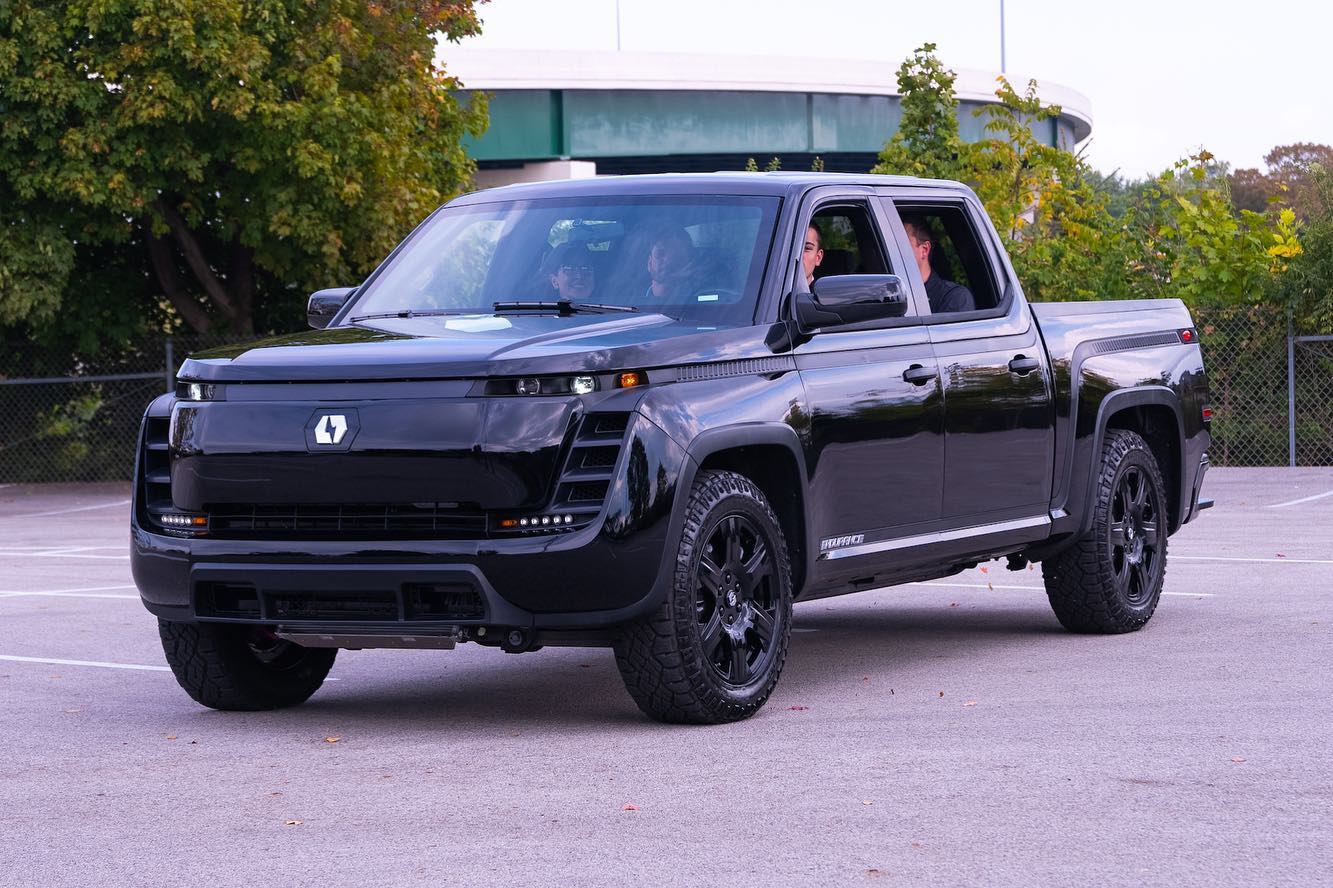
However, after not being able to produce any pre-production examples of its Endurance pick-up last year – let alone the 2200 units first promised – GM has had enough, with the report saying the world’s largest automotive manufacturer is selling its sake.
Despite the increased pressure to perform, Lordstown has still set a target of 500 production vehicles to be delivered this year, increasing to 2500 next year – should it be able to get off the ground.
Since Lordstown Motors went public in April 2019 with a share price of US$9.74, it reached its peak in September 2020 at US$29.01 before falling to as little as US$2.55 at the time of writing.
Have you ever paused to wonder why there aren’t any small luxury cars? You know, all of the features and quality of an expensive car only poured into a more conveniently-sized package? The reason you tend not to see these cars is the same reason why you don’t expect a large car to handle as crisply as a smaller, lighter one: physics.
Put simply, a small car will never travel down the road with the comportment of a large one. It can’t. Its wheelbase is shorter, the sprung to unsprung mass ratios are different and so on. So when Mercedes-Benz informed us that the next generation 2022 Mercedes-Benz C-Class aimed to deliver the luxury of the S-Class limousine in a smaller package, you can perhaps forgive a little initial cynicism. This never works.
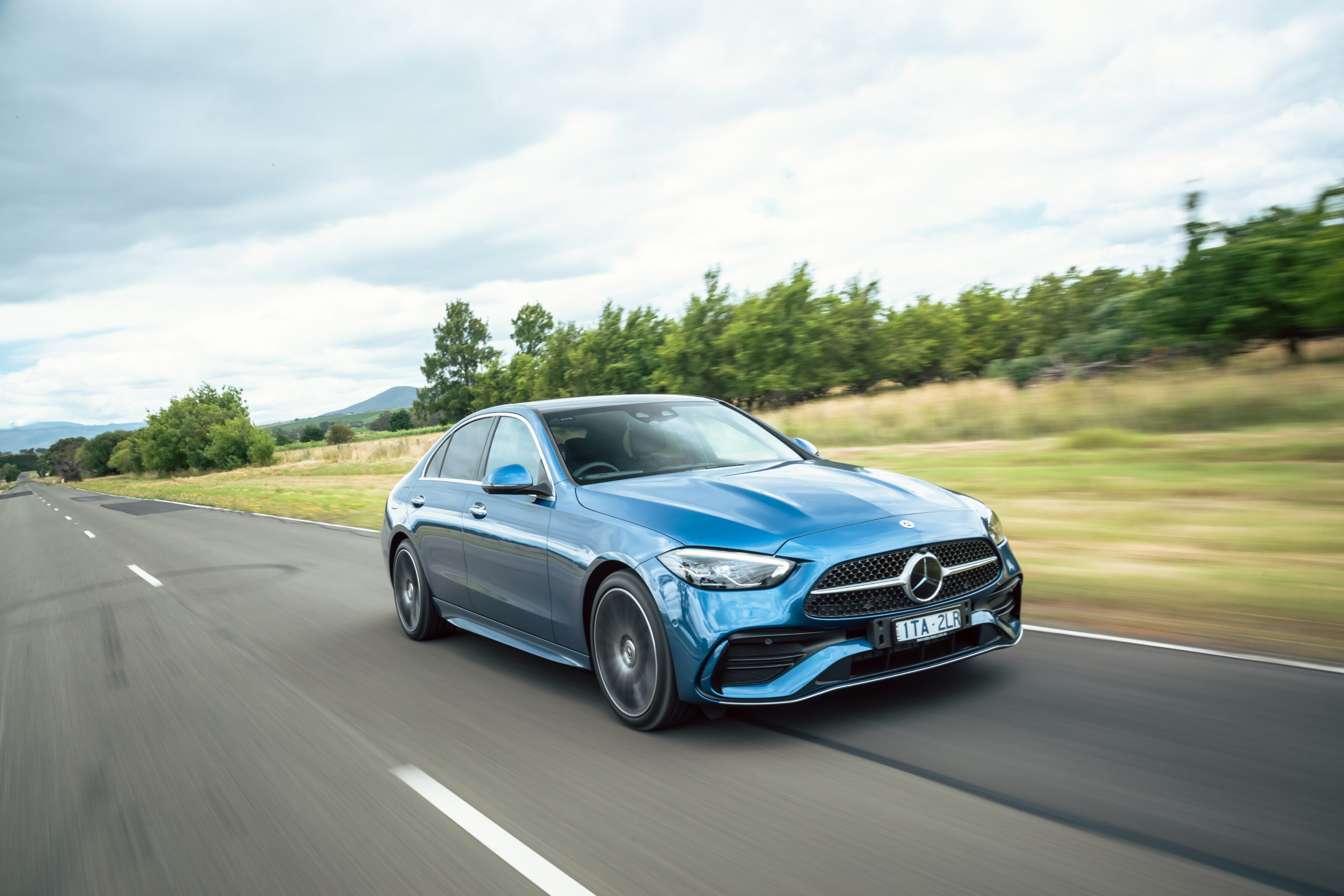
Thing is, Mercedes has become extremely good at figuring out what works with the C-Class. More than 10.5 million have been shifted since 1982 in more than 100 markets around the globe. The last model, the W205, which was sold between 2014 and now, sold a massive 2.5 million units alone. That number will continue to grow, as C205 coupe and A205 convertible versions of the body will live on, for the time being at least.
Here in Australia, the W205’s relative successes against its rivals were even starker, selling more than 60,000 in total. Last year marked a shift, however. While Mercedes will still easily able to cover off the Audi A4/A5‘s sales, the ageing C-Class found itself comfortably eclipsed by the new BMW 3 and 4 Series, Munich outselling Stuttgart by 28 per cent in this instance.
The response is this, the W206 generation, a car that performs a substantive feint in terms of focus. Where BMW doubled down on sportiness, Mercedes has instead leant into luxury.
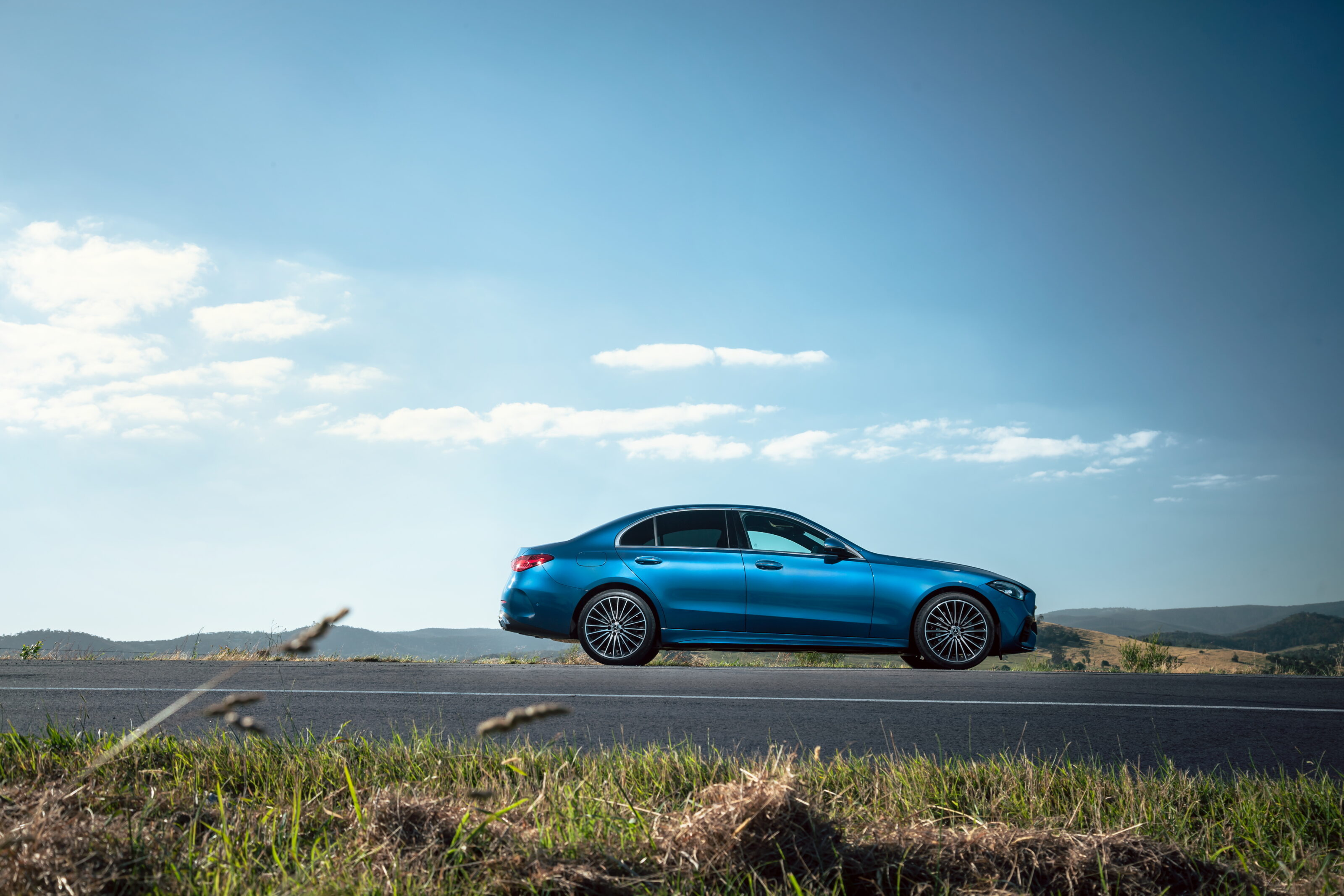
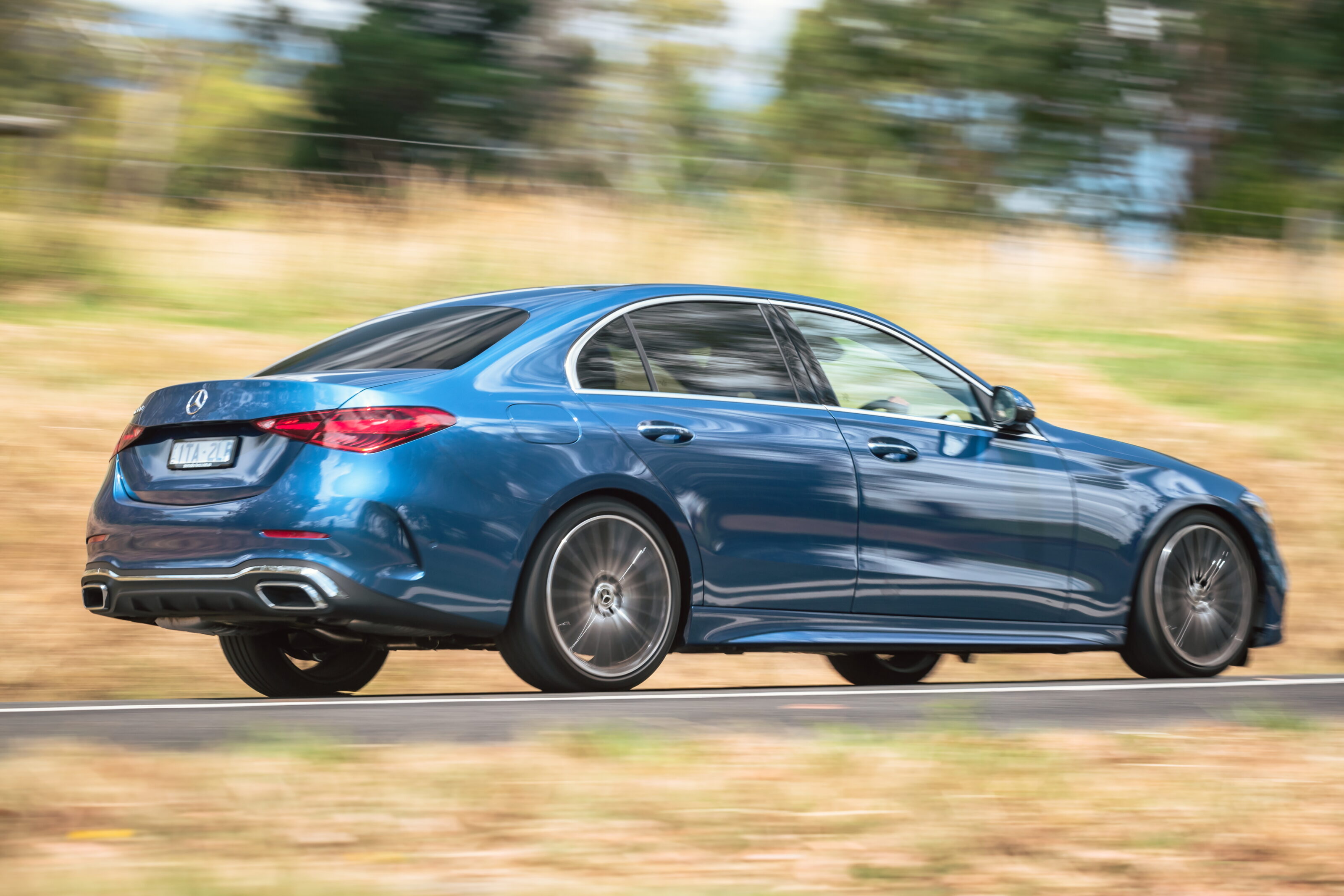
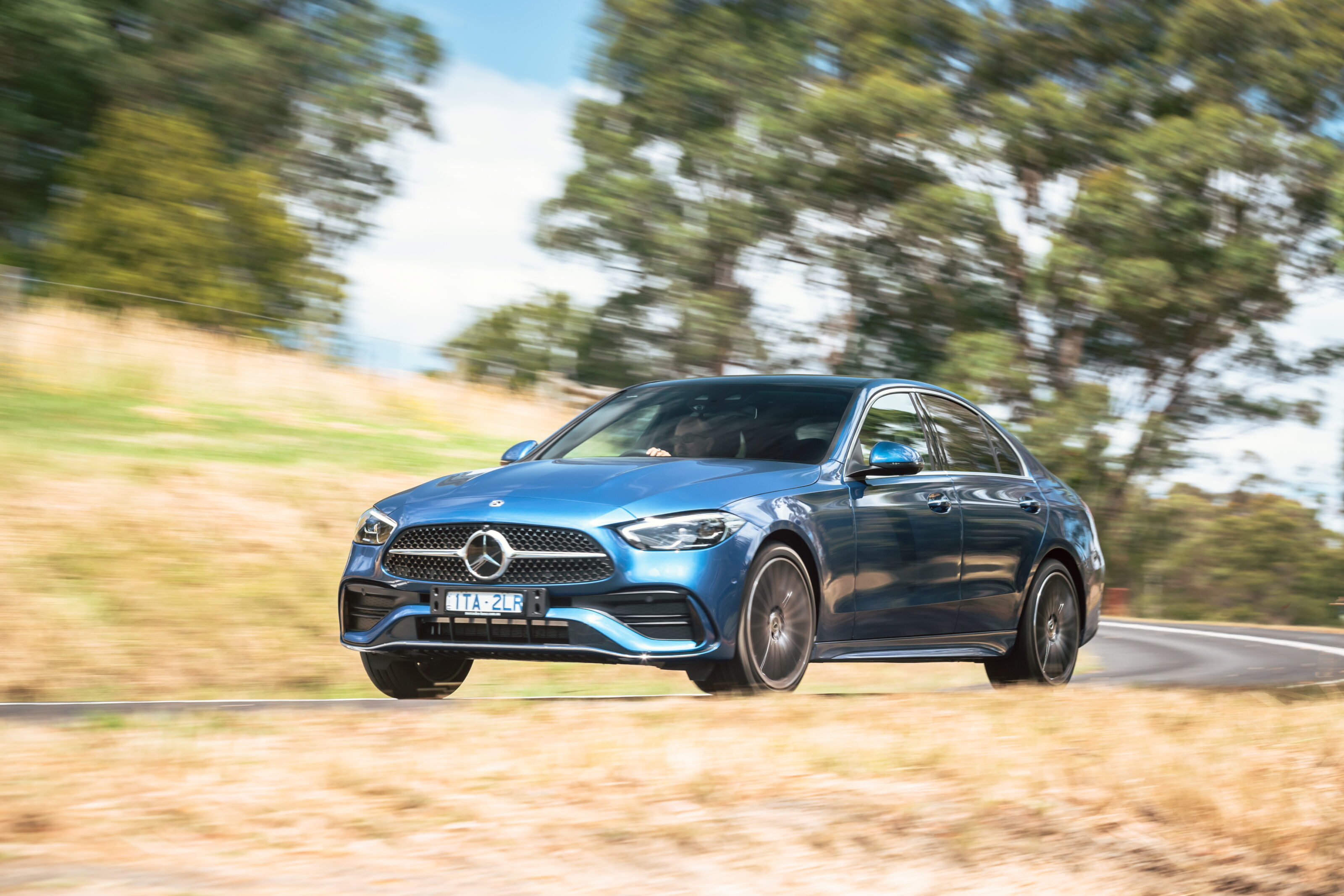
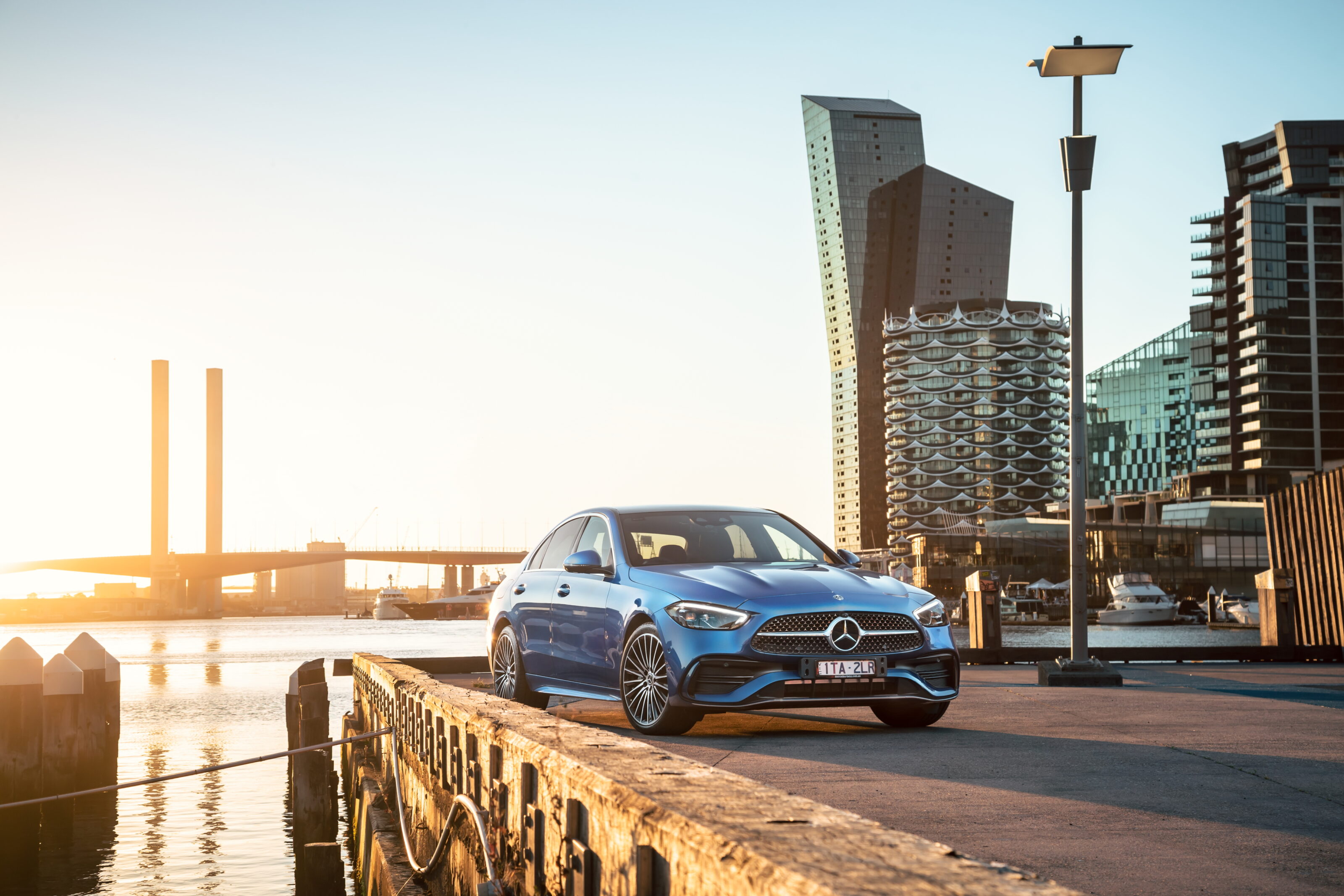
A more spacious body features subtly revised proportions. Perhaps tweaking the profiles of cars is in vogue at Mercedes right now. Where the SL lost its long bonnet/cab-back proportions, comparing the shorter overhangs and longer bonnet of this C-Class with its predecessor suggests sportiness, as does the presence of power domes on the bonnet that, incidentally, opens to reveal nothing bigger than a four-pot. More on that later.
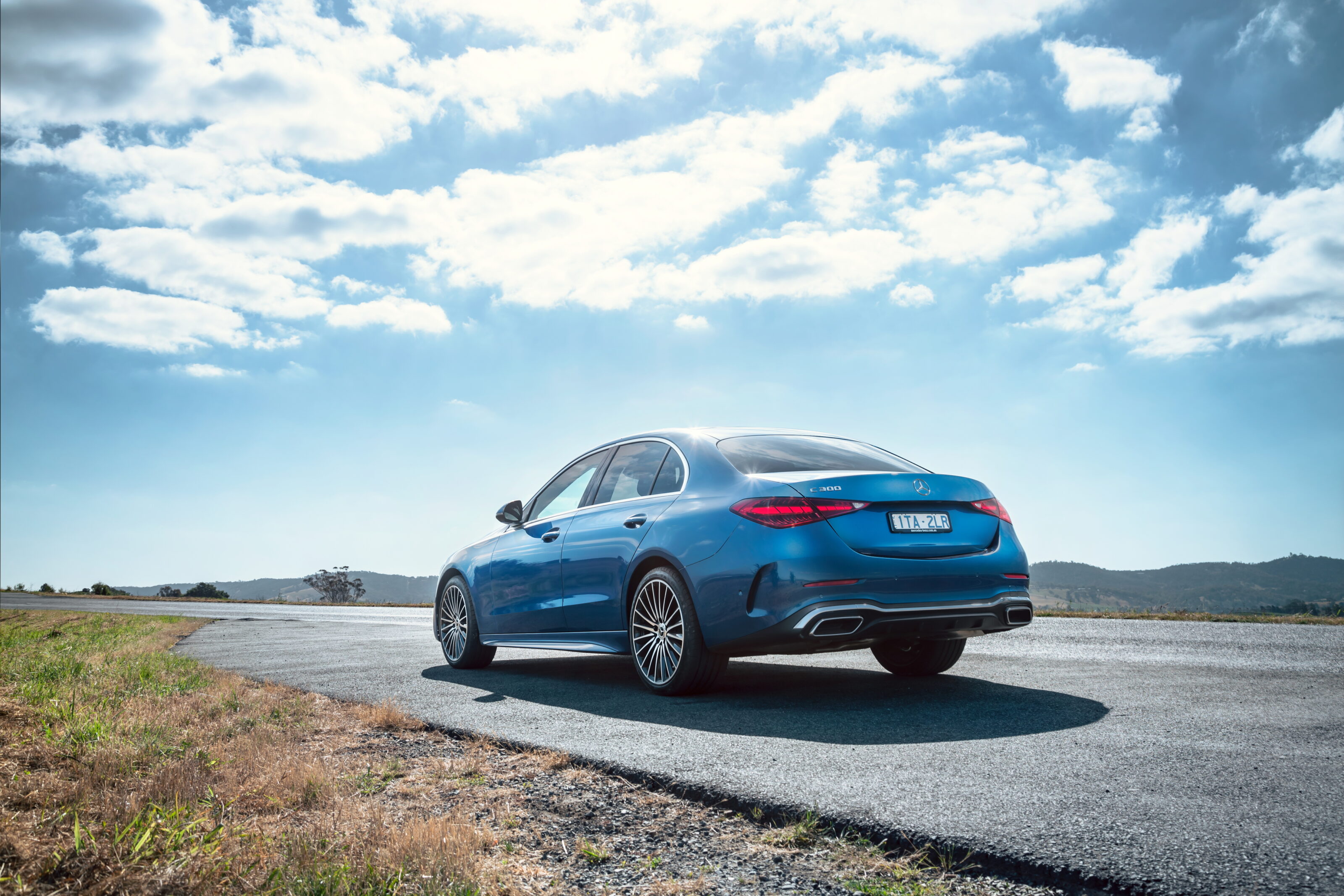
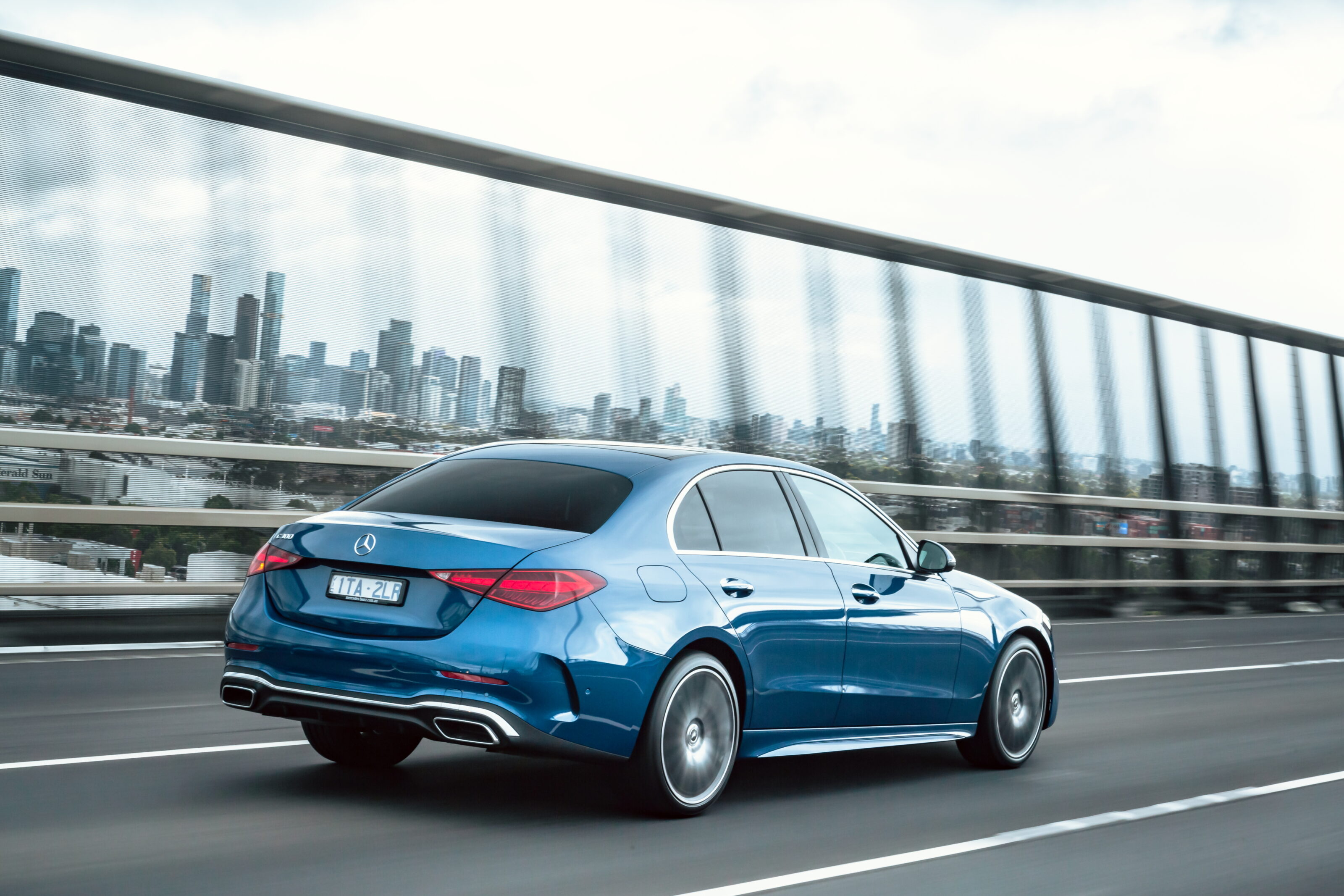
There are also some C-Class design cues that you only notice when they’re gone, such as the monobloc rear light clusters. Every C-Class ever built has had its lamp pods outboard of the boot opening. It’s one of those things that’s so normcore C-Class that you never even notice it. Then the W206 comes along and features a split light assembly and the back suddenly looks more like something cleaved from the CLA line instead.
Like all modern Mercedes designs, medial swage lines have been deleted where possible to create a smooth, lozenge-like finish, although all Australian-market cars will have AMG Line trim, which helps amp up the visual impact with a diamond grille inset with tiny stars, the brand insignia in chrome, a set of side skirts, a different rear bumper and bigger wheels.
The W206 generation performs a substantive feint in terms of focus. Where BMW doubled down on sportiness, Mercedes has leant into luxury
Drop inside and things are a big step forward from the dated feel of the W205. Where that car’s centre stack featured a small screen atop a huge trio of air vents, rocker switches, piano black buttons and a clumsy lid before terminating on the transmission tunnel with a rotary controller housed beneath the claw of a questionably useful touchpad, the W206 tidies things up significantly.
This cabin really does ape the architecture, at least, of the S-Class. Ahead of you is a 12.3-inch LCD screen housing the main dial pack, which can be configured to a minimal, discreet display, a wall-to-wall map or even a sporty display that pulses red.
Of more impact is the huge 11.9-inch Tesla-style portrait-oriented touchscreen, angled ever so subtly towards the driver. This remains one of the very few examples of its ilk where ventilation controls are adequately rendered. Even should you mirror your phone using the standard wireless Apple CarPlay or Android Auto, this reproduces in an agreeably large square, leaving a rectangle of touchscreen at the bottom where the intuitive and responsive ventilation controls are to hand. Top marks, Mercedes.
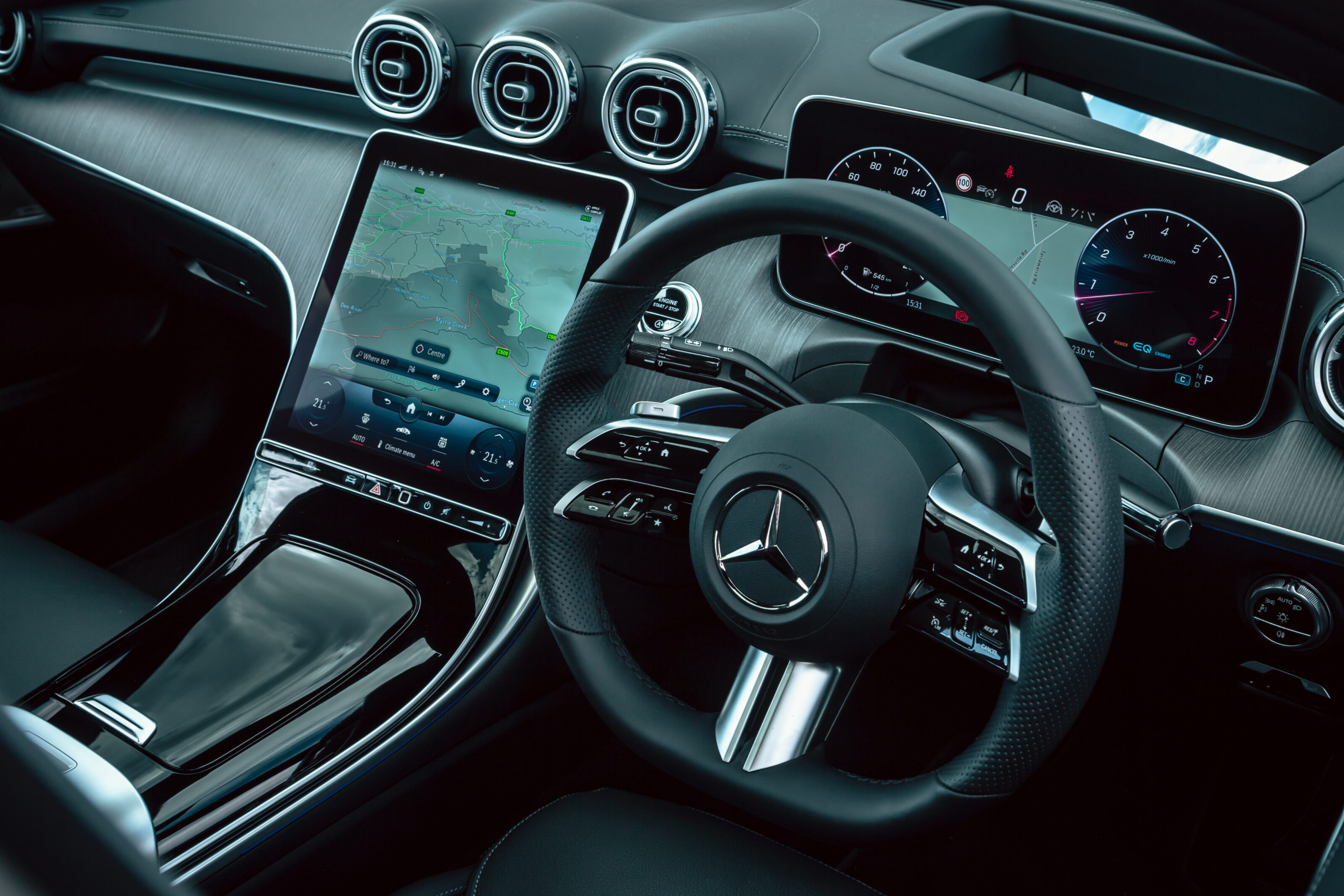
The materials quality has improved markedly from the rather scratchy finishes found in the W205, although there’s still too much use of piano black, which marks easily, attracts fingerprints and causes distracting reflections. The open-pore vertical grain wood finish is beautiful, and the metal weave trim designs also offer an agreeable point of difference.
Fitted to this car is the optional colour head-up display, which sits in a huge bucket atop the dash and is able to project augmented reality driving directions. It can be quite a surprise when the nav hijacks the centre screen to overlay blue direction arrows or house numbers onto the forward camera image. This is only on offer when using the proprietary nav system, Mercedes doing its best to convince you that their way is best.
The materials quality has improved markedly … the open-pore wood finish is beautiful and the metal weave trim offers an agreeable point of difference

That additional length and width mean the interior is relatively spacious. The electric seat adjustment is a step backwards, however, as it feels as if you’re going to snap the stiff, awkward adjuster as you hunt for a little more headroom to keep your bonce from brushing the sunroof surround. Front headroom is the only key metric where the C-Class has shrunk.
The revised MRA2 platform now affords up to 35mm more knee room, 15mm more elbow space and 13mm more headroom in the back, with 22mm more elbow room in the front. The standard-fit AMG sports seats are generously cut, but perhaps a little lacking in upper body lateral support.
This C-Class is fully 107mm longer than its predecessor in AMG Line guise with 25mm grafted into the wheelbase which, at 2865mm, is now longer than that of a 2009 W211 E-Class. The boot measures an identical 455 litres to its predecessor, a little less than the 480-litre class norm of the A4 and 3 Series.
So, those engines. At present, Mercedes offers only two models in the C-Class sedan range. You choose from the C200, which generates 150kW and 300Nm from its 1496cc four or the erstwhile flagship, this C300, which features a 1999cc M254 unit good for 190kW and 400Nm, both paired with the 9G-Tronic transmission. Later on this year there will be an AMG-badged C43 and next year the intriguing C63e arrives, all powered by four-cylinder engines.
If you are absolutely wedded to the creaminess of a six or the charisma of a V8, then you’re going to be disappointed. Take a broader view and both of the launch engines have a lot to be said for them, the baby one in particular.
This C300 is running the optional $3400 Engineering Package that, with its tri-mode adaptive dampers and rear-wheel steering setup seems a box that needs to be ticked – but you shouldn’t. Come to think of it, you can’t right now.
There’s a lot that’s right with the 2.0-litre engine. It sounds relatively refined with the sound symposer in Comfort, doing a relatively good impression of a straight six
The reason for the latter is everybody’s favourite excuse – global supply chain problems. The first tranche of cars to arrive here will have it, but should you order your car today, it’s not available. That’s no bad thing because, and there’s no delicate way of saying this, it’s a rare dynamic blunder by Mercedes. The dampers offer very little improvement in secondary ride between Comfort and Sport (or, for that matter, Sport+) modes. Yet when eased back into Comfort mode, the primary ride falls to pieces, lapsing into heaving, wallowing untidiness.
It feels happiest in Individual mode, where you can put everything into Sport bar the sound symposer that, in Sport mode, manages to make the car feel as though it’s straining at 2000rpm on the freeway. An adaptive suspension system that only really functions adequately in one setting isn’t a great result. Having tried the passive steel springs in the C200, they’re more than adequate.

As for the four-wheel steer, that’s not something that we’re huge fans of either. Yes, it shaves 43cm off the turning circle, but it feels very odd at low speeds. Turn out of a junction and you get that spooky feeling as if the rear has yawed on a patch of diesel, so quickly does the front come around. When exiting a junction below the 60km/h threshold (at which point it switches from counter to parallel steer), it feels as if you need to correct its neurotic excesses as it weaves up the road. Save your $3400.
There’s a lot that’s right with the 2.0-litre engine. It sounds relatively refined in Comfort, the sound symposer doing a relatively good impression of a straight-six up to around 5500rpm, after which it’s betrayed a little by its primary balance acoustics. The 0-100km/h claim of 6.0 seconds doesn’t sound overly optimistic.
As a standalone product, the C300 feels clever but not always convincingly cohesive
Such is the velveteen smoothness of the 48v integrated starter generator that you’ll never feel the need to reach for the idle-stop off button. The steering is clean and accurate, if lacking a little heft and feedback when pushing on.
Once you get past the initial few degrees of dead travel in the pedal, the brakes are well-calibrated, they have stacks of power and modulate beautifully. There’s certainly a great deal of scope for AMG to get its teeth into here.
As a stand-alone product, the C300 feels clever but not always convincingly cohesive. There are choices made around the suspension, the 35-series Goodyear Eagle F1 tyres, and the NVH pathways that seem at odds with this car’s luxury ambitions. I’d have preferred it if the C300 aimed a little higher in that regard, maybe offering air-sprung options and rubber with a more benign sidewall.
History tells us that more often than not, Mercedes-Benz’s judgment calls here are the right ones. The company understands the mores of a changing market, that digital integration and overall look and feel represent ever greater roles in the buying decision.
If Stuttgart, and the pesky diktats of simple physics, couldn’t make this C-Class drive like a smaller version of the S-Class, then perhaps we shouldn’t get too hung up on that. It’s hard to establish quite what the measure of success was in the development of the W205. Sales will be the final arbiter, and now it’s down to Australia to decide whether it sees value in a $90K four-cylinder sedan.
2022 Mercedes-Benz C300 specifications
| Engine | 1999cc 4cyl, dohc, 16v turbo, 48v mild hybrid |
|---|---|
| Power | 190kW @ 5800rpm (+15kW transient overboost) |
| Torque | 400Nm @ 2000-3200rpm (+200Nm transient overboost) |
| Transmission | 9-speed auto |
| 0-100km/h | 6.0sec (claimed) |
| Weight | 1675kg |
| Fuel economy | 7.3L/100km |
| Price | $90,400 before on-road costs |
Snapshot
- Price rises range from $1000 to $7000
- Jeep Wrangler pricing up by 10 per cent
- Grand Cherokee is the only unaffected model
Jeep has raised prices across its model range for the second time since November 2021.
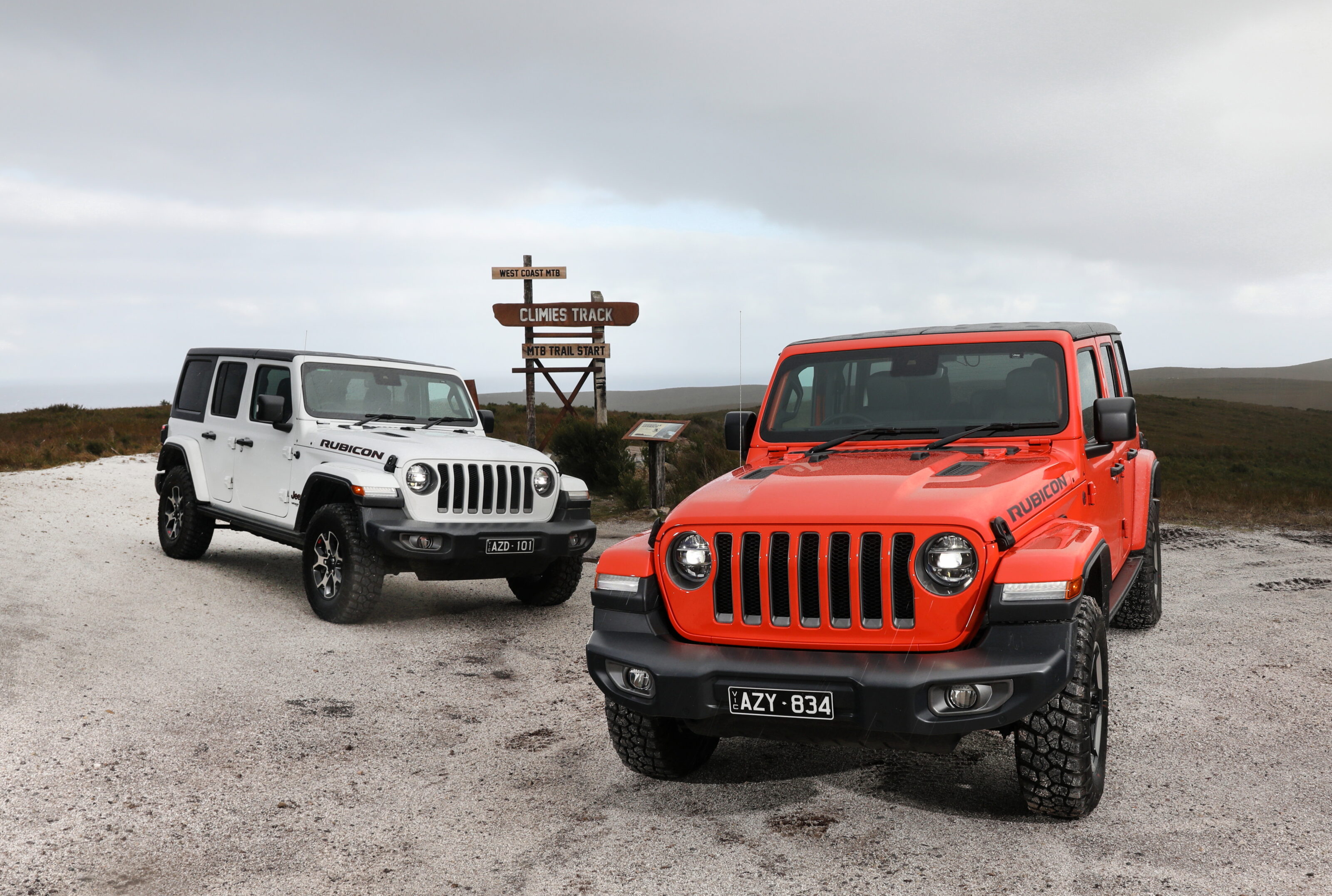
While November’s price hike averaged around $1000, the latest increase is more significant, with Jeep Wrangler buyers set to feel the most pain with prices jumping by around 10 per cent and as much as $7000, with the entry-level pricing now just shy of $70,000.
The starting price for the Jeep Compass small-SUV has risen by $2000 with the Night Eagle, which replaces the lesser-equipped Compass Launch Edition, priced at $37,950. The higher-spec Limited, S-Limited and Trailhawk variants are up by $1000 apiece.
The entry-level Jeep Cherokee Sport medium SUV is one of the few variants to remain untouched and is still priced at $38,350. However, if you’re after a 4WD Cherokee expect to pay $3300 more for the Limited and $3500 extra for the S-Limited and Trailhawk.
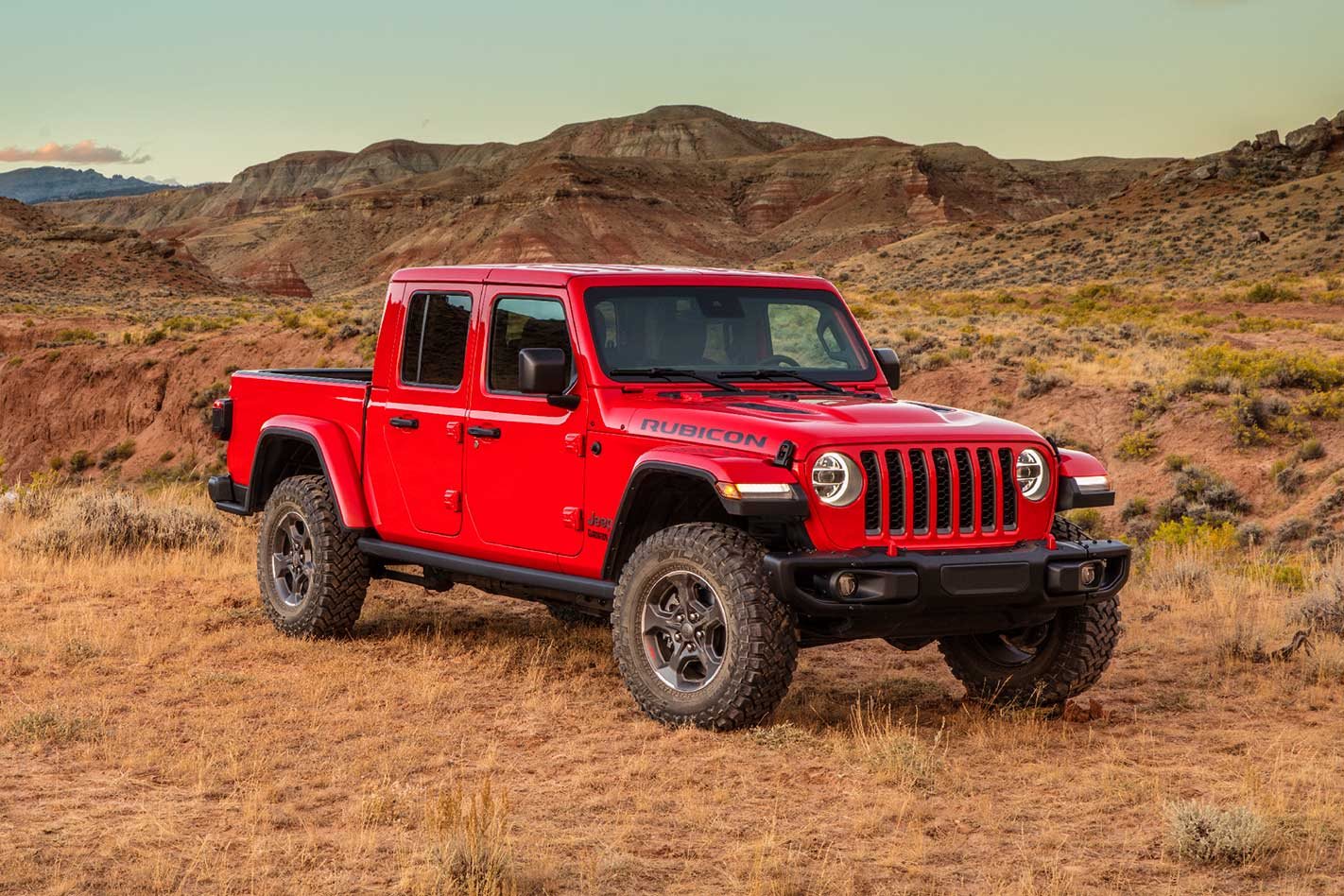
Meanwhile, the Jeep Gladiator ute’s Night Eagle and Rubicon variants are up by $2100 and $2300, which takes their respective prices to $70,550 and $79,250.
There’s good news if you’re after an outgoing WK Jeep Grand Cherokee, with pricing for the outgoing five-seat model unchanged.
The new seven-seat Grand Cherokee L enters the range with its previously announced pricing.
Jeep is the latest carmaker to increase prices during February, along with Audi, MG, Renault, Hyundai, Ram and LDV.
A Stellantis Australia spokesperson told Wheels the Jeep price rises “are reflective of the significant increase in material costs, coupled with ongoing supply chain issues, that continue to be experienced by manufacturers globally”.
2022 Jeep Australian pricing
Hyundai Motor Group has announced it will launch 17 dedicated electric vehicles (EVs) by 2030, in an effort to take seven per cent of the market.
At a presentation for investors overnight, the Korean car giant announced 11 new electric cars will be offered under Hyundai by the end of the decade, while luxury brand Genesis would launch six battery-powered models.
In September 2021, Genesis announced it would move to a fully electric line-up by 2030.
Of the 11 Hyundais, there will be six SUVs, three sedans, a light commercial vehicle, and a “new type model”.
It’s possible the light commercial vehicle will be an electric version of the Staria Load commercial van – though a Toyota HiLux ute competitor is not out of the question.
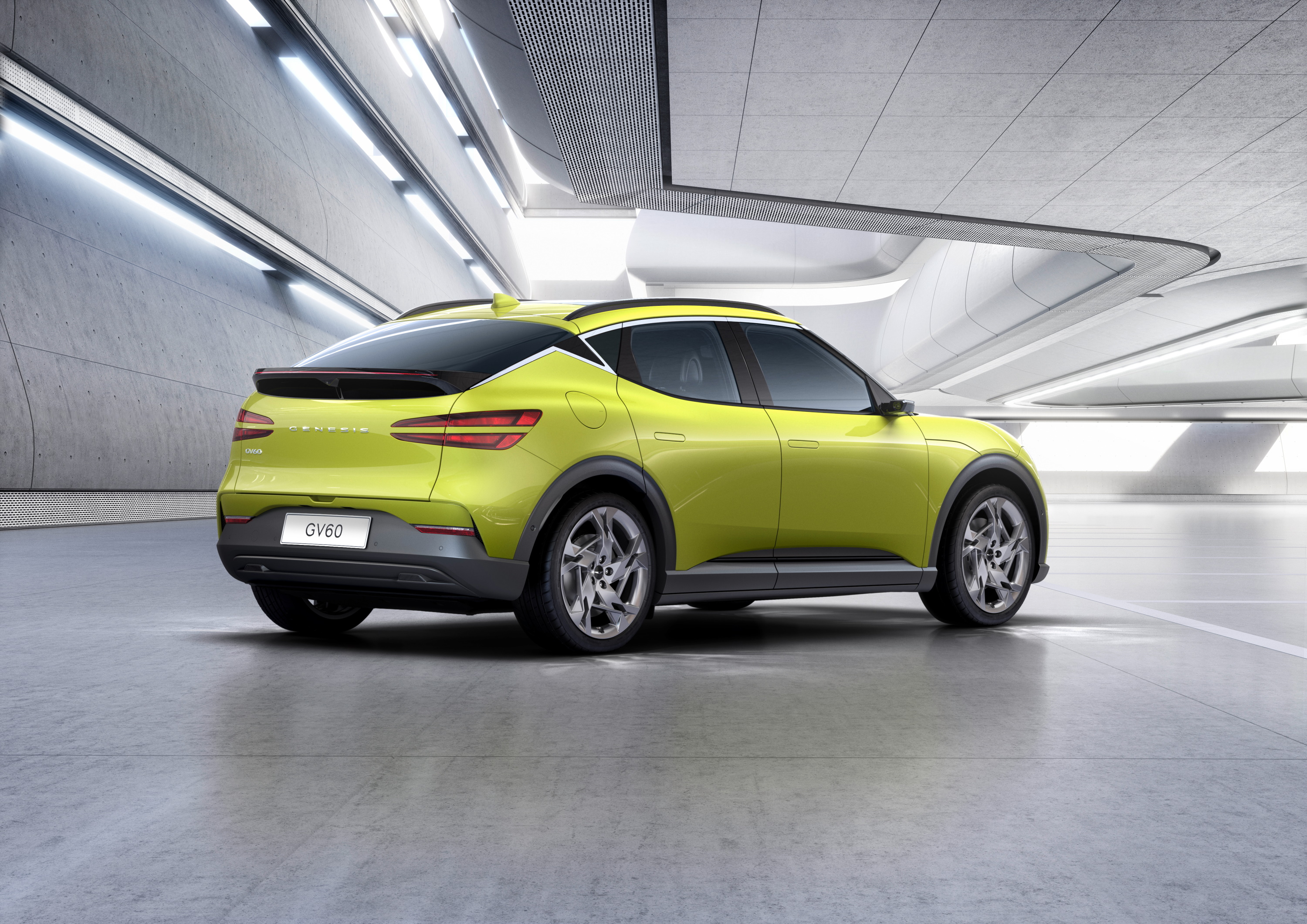
The new models are in addition to the 23 EVs from Hyundai, Genesis and Kia set to go on sale by 2025, announced by the carmaker two years ago, which include the recently-released Ioniq 5 and EV6, the Ioniq 6 which will launch later this year, and the Ioniq 7 SUV in 2024.
Two new EV platforms were also announced – the first is dedicated to passenger cars, known as ‘eM’, while ‘eS’ will be used for ‘purpose-build mobility’ (PBM), according to The Korean Car Blog.
Rather than being designed to primarily accommodate the driver, as with passenger cars, PBM vehicles are focused on passengers; created for taxis, ride-hailing businesses, car sharing, and other on-demand mobility services such as delivery vehicles.
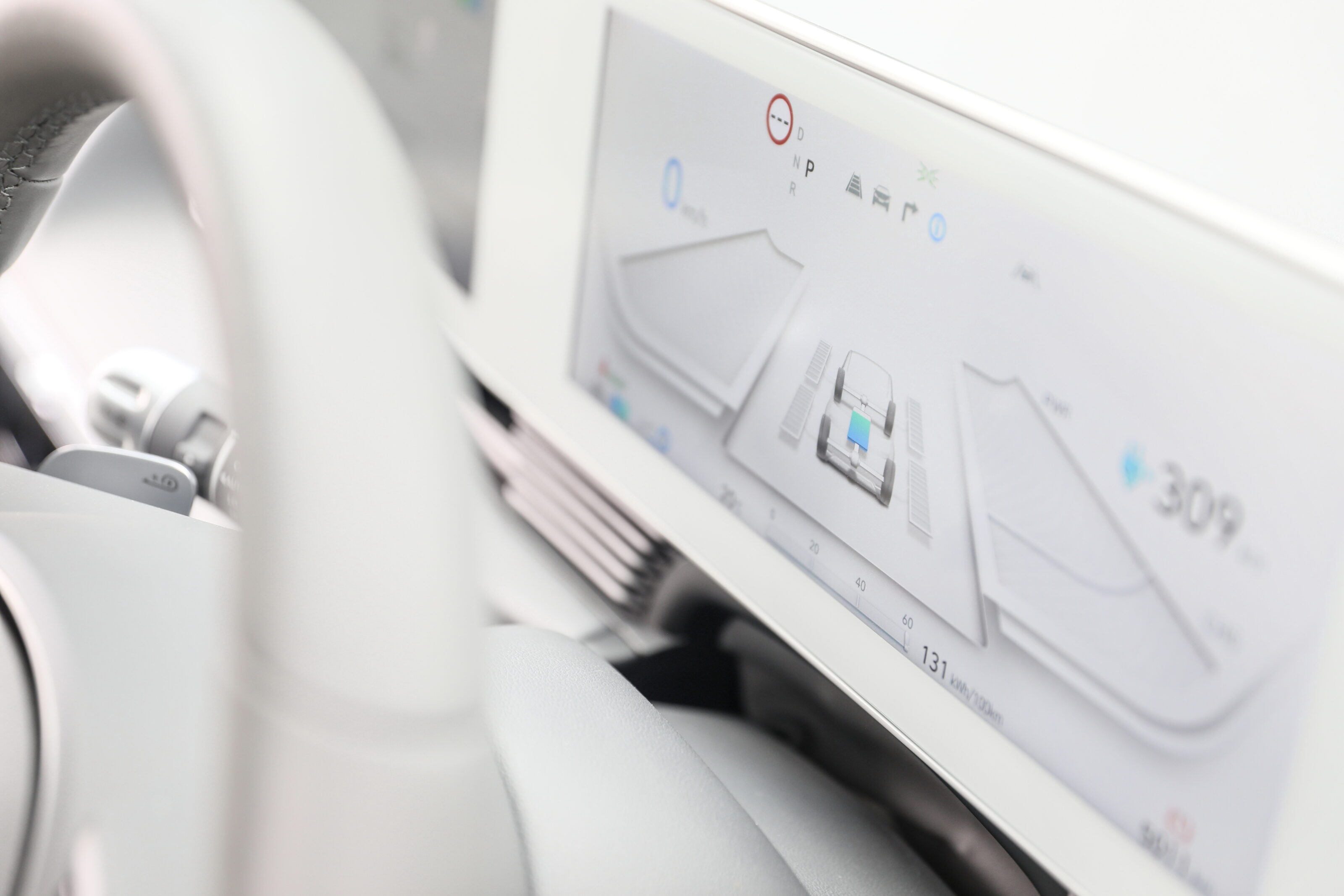
The new ‘skateboard’ platforms – which use standardised batteries and motors, but can allow for multiple vehicle bodies to be fitted atop – are expected to cut costs by 40 per cent by 2030, as well as reducing weight by 30 per cent, and with an energy density 50 per cent greater than today’s EVs.
The manufacturer says by the end of this decade it will have invested 19.4 trillion Korean won (AU$21.7 billion) in the transition to electrified vehicles, with the company projecting global sales of 1.87 million electric cars from both Hyundai and Genesis brands.
Key Points
- Toyota remains on top with 20,886 monthly sales, headlined by HiLux
- Year-on-year monthly sales up by 1.6 per cent
- SUVs continue to dominate overall market
Premium European manufacturers struggled again in February’s new-car market, as problems caused by supply issues continued to bite.
While it was another good month for most of the Japanese brands, and Chinese marques such as MG and LDV too, German carmakers like Mercedes-Benz and Volkswagen posted tougher results.
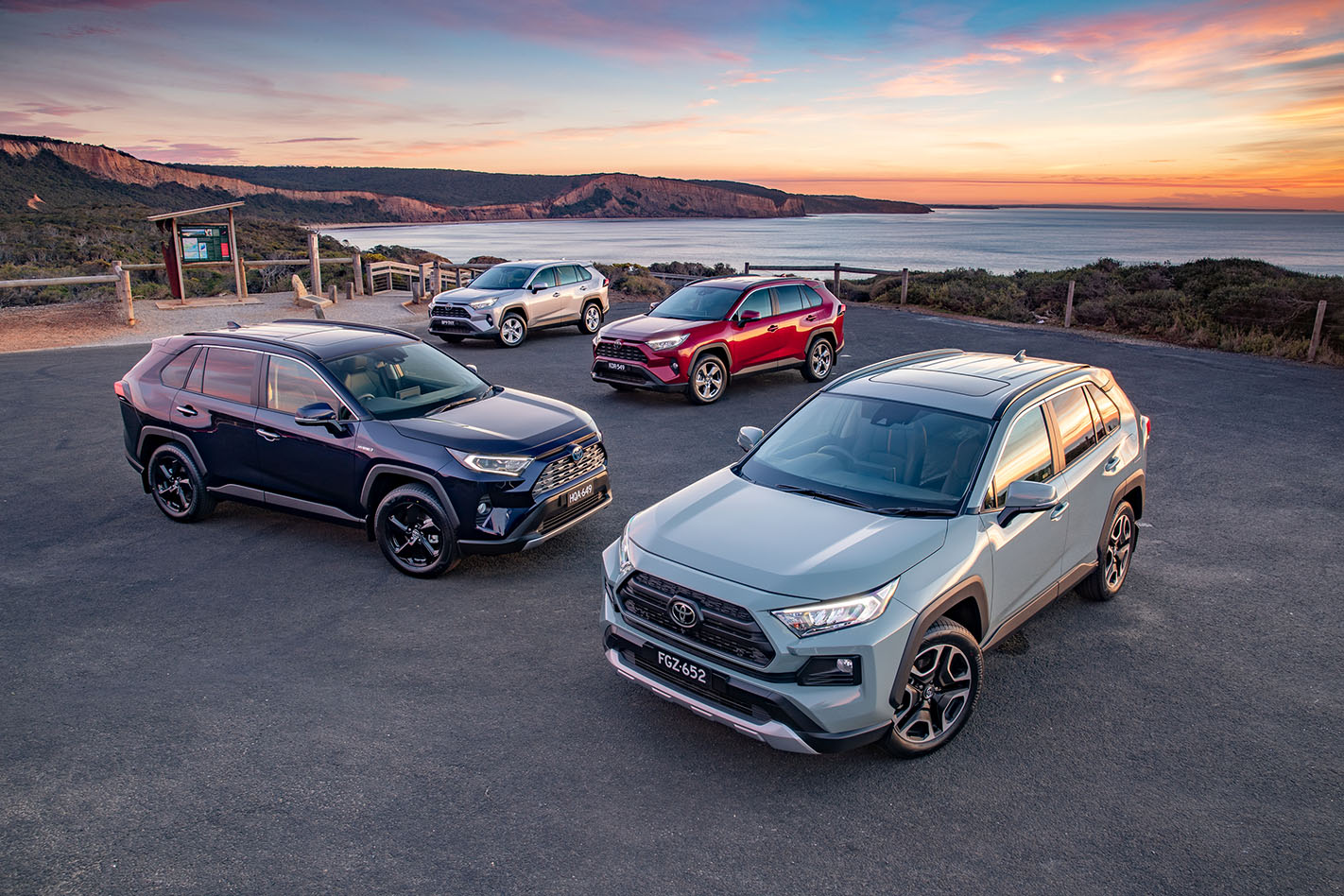
Overall it was the best February since the COVID-19 pandemic began, with 85,340 units registered according to official industry figures released today.
It leaves the market up by 1.6 per cent, or 1363 vehicles, compared with February 2021, but down 1.5 per cent year-to-date.
As expected, New South Wales sold the most vehicles with 26,360 units shifted, followed by Victoria with 22,177 and Queensland on 18,962.
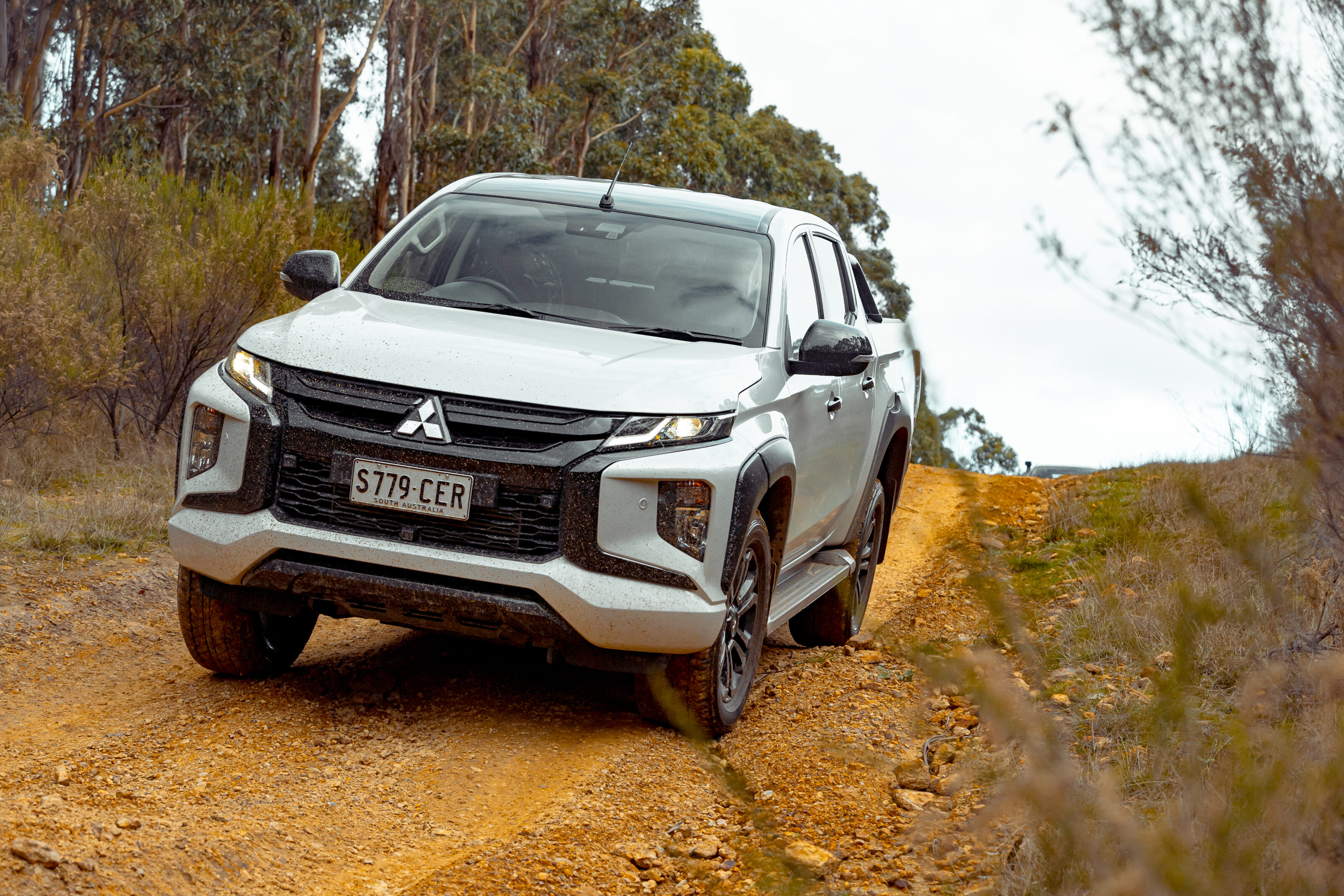
Toyota continued to hold top spot among all the carmakers, followed by Mazda and Mitsubishi rounding out the top three.
Outside the top 10, Honda (down 30 per cent), Skoda (down 49 per cent), Audi (down 37 per cent), Jaguar (down 58 per cent), Land Rover (down 77 per cent) and Volkswagen (down 41 per cent) were the biggest strugglers among mainstream brands.
In contrast, MG’s sales were up by 25 per cent to make it the seventh most popular car brand in Australia for the second month this year, and light-commercial specialist LDV was up 22 per cent with 1114 sales last month. GWM Haval lost a small amount of sales by six per cent amounting to 1979 registrations.
Successes came for other household names too, with Alfa Romeo (up 81 per cent), Fiat (up 59 per cent), Chevrolet (up 100 per cent), Citroen (up 450 per cent), Peugeot (up 56 per cent), Genesis (up 170 per cent) and Renault (up 249 per cent) all posting large increases in February.
Utes were the country’s most popular vehicle type again last month when combining 4×4 and 4×2 variants, with the former accounting for 16,593 units of a 19,202 total.
Almost 16,000 medium SUVs (15,892 units) left showrooms compared to 14,305 in February 2021. Light SUVs were the only SUV segment to grow significantly with a 23 per cent increase, as the overall SUV share of the market barely changed – growing by just two per cent year-on-year.
Light-commercial vehicles grew its share from 23 to 25 per cent, again at the expense of passenger cars that were down from 23 to 18 per cent of the market.
Small cars and upper large cars lost the most last month, both down around 29 per cent.

The Federal Chamber of Automotive Industries (FCAI) said the year-on-year increase over 2021 was a positive sign for the industry despite ongoing setbacks due to stock supply.
“Global supply chains for microprocessor units are still some distance from full recovery, so we are pleased to see this small increase on 2021 figures,” said FCAI chief executive Tony Weber.
“The consumer demand for new cars in Australia remains strong, and manufacturers are continuing to work hard to get cars into the hands of motorists.”
Top 10 models
The Toyota HiLux ute kept the top spot with 4803 sales (8394 YTD) compared to 3455 for regular rival, the Ford Ranger – which fell down to fourth place for the month, but stayed in second year-to-date with 6700.
Sneaking in between was Australia’s most popular SUV, the Toyota RAV4, making a comeback in second with 4454 units registered last month (5879 YTD) after it dropped from the top 10 in January, and fellow ute the Mitsubishi Triton in third with 3811 (6687 YTD).
It was a bad month for the Mazda CX-5 with just 1276 cars shifted, falling out of the top 10 altogether and replaced by its stablemate the Mazda CX-30, which placed eighth with 1819 units. However when looking at the year-to-date results, the CX-5 was present in the top players list with 4478 cars sold, placing sixth.
After falling out of the top 10 for the first time in December, Toyota’s Corolla was again notably absent in February – narrowly missing out on the last spot to the Mitsubishi Outlander with 1671 sales versus the Mitsi’s 1673. Interestingly, both cars missed out on being chart toppers YTD. It left the Hyundai i30 as the sole flag-waver for small cars which sold 1756 units in February, itself down 21 per cent, though YTD the i30 notched up 3398 sales and was up 18 per cent.
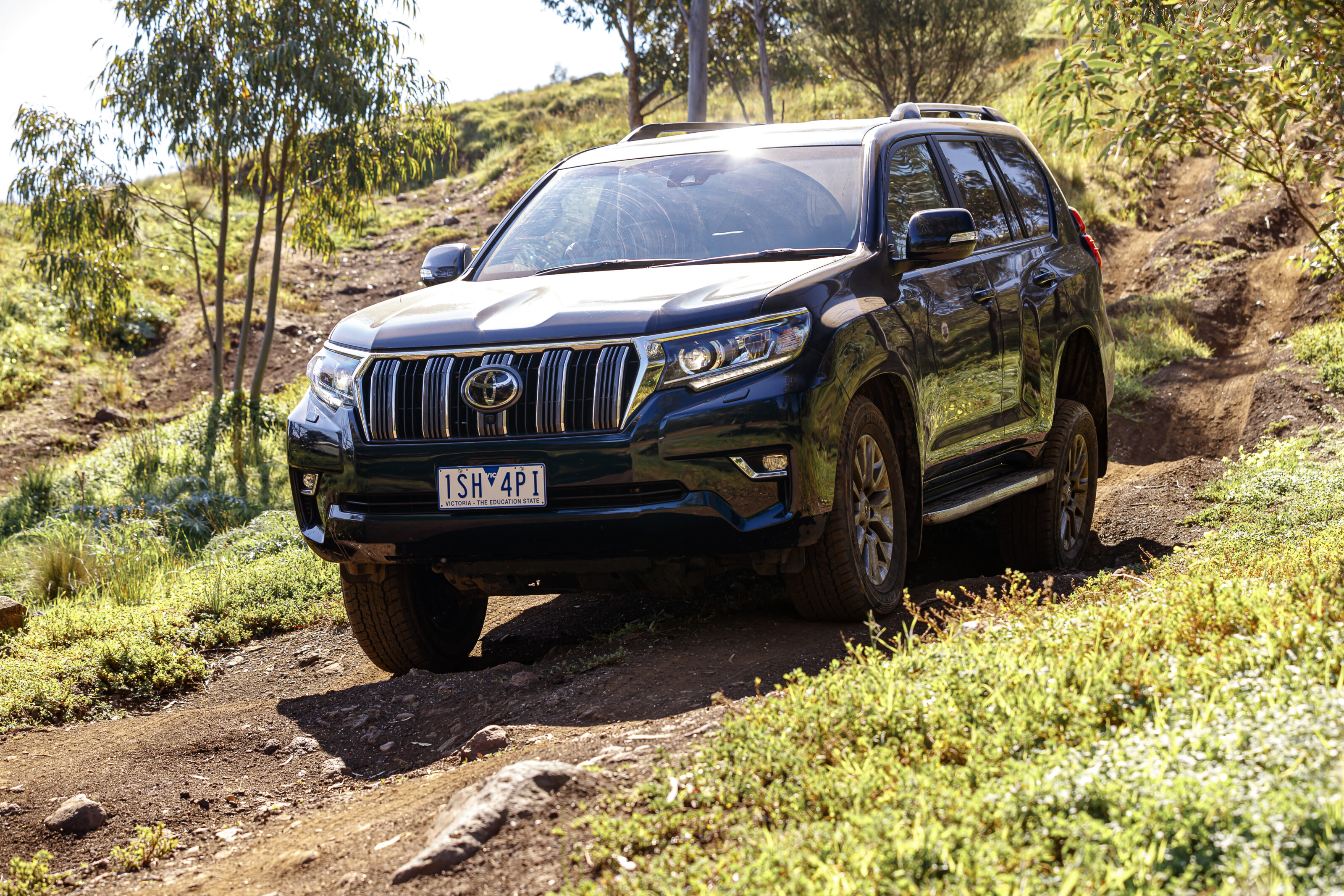
The Corolla’s absence also left the rare sight of just three Toyotas in the top 10, where it regularly has had five entrants in recent months and years. The Japanese brand’s last top 10 model was the Prado 4WD (2778 up 97 per cent), which made several appearances in the chart in 2021, and was fifth both last month (up 97 per cent) and for the year so far (5344 YTD, up 93 per cent).
Notable results don’t stop there for February. MG’s compact ZS SUV made a few appearances in the best-sellers list last year, but is continuing its steady climb to the top of the chart, registering in sixth place with 1953 sales, up 50 per cent in Feb and eighth overall with 3541 and up 39 per cent. The MG3 sadly was a one-month-wonder in the top 10, as was the Subaru Forester, which both appeared in January but were nowhere to be seen last month.
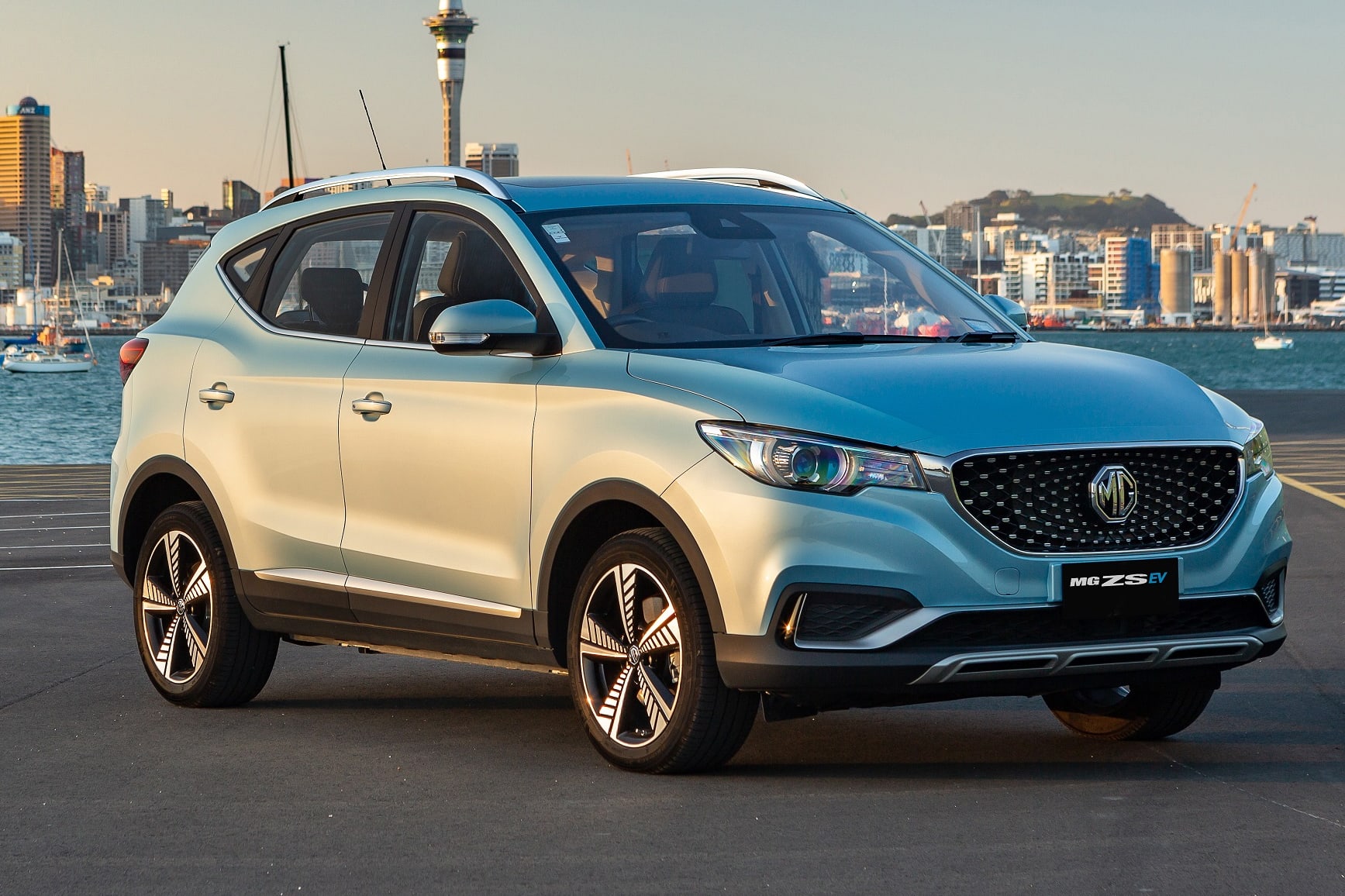
Overall the top 10 models remained largely the same as they were this time in 2021, with the exception of the Mitsubishi ASX, Mazda CX-5 and Toyota Corolla not making the cut, replaced instead by the Mitsubishi Outlander, MG ZS and Mazda CX-30.
Kia’s Cerato, while popular in 2021, was missing again in February, and in fact was outsold last month by its Kia Sportage sibling – registering 1188 sales compared to the Sportage’s 1296, and 2396 versus 2406 year-to-date.
Top 10 models: February 2022
| Rank | Model | Sales | vs February 21 |
|---|---|---|---|
| 1 | Toyota Hiluxu00a0 | 4803 | 0% |
| 2 | Toyota RAV4 | 4454 | +62% |
| 3 | Mitsubishi Triton | 3811 | +116% |
| 4 | Ford Ranger | 3455 | +19% |
| 5 | Toyota Prado | 2778 | +97% |
| 6 | MG ZS | 1953 | +50% |
| 7 | Isuzu D-Max | 1930 | +9% |
| 8 | Mazda CX-30 | 1819 | +106% |
| 9 | Hyundai i30 | 1756 | u201321% |
| 10 | Mitsubishi Outlander | 1673 | +42% |
Top 10 models: YTD 2022
| Rank | Model | Sales | vs February 21 |
|---|---|---|---|
| 1 | Toyota Hiluxu00a0 | 8394 | -4% |
| 2 | Ford Ranger | 6700 | +11% |
| 3 | Mitsubishi Triton | 6687 | +82% |
| 4 | Toyota RAV4 | 5879 | +1% |
| 5 | Toyota Prado | 5344 | +93% |
| 6 | Mazda CX-5 | 4478 | +9% |
| 7 | Isuzu D-Max | 3825 | +7% |
| 8 | MG ZS | 3541 | +39% |
| 9 | Hyundai i30 | 3398 | u201318% |
| 10 | Mazda CX-30 | 3207 | +79% |
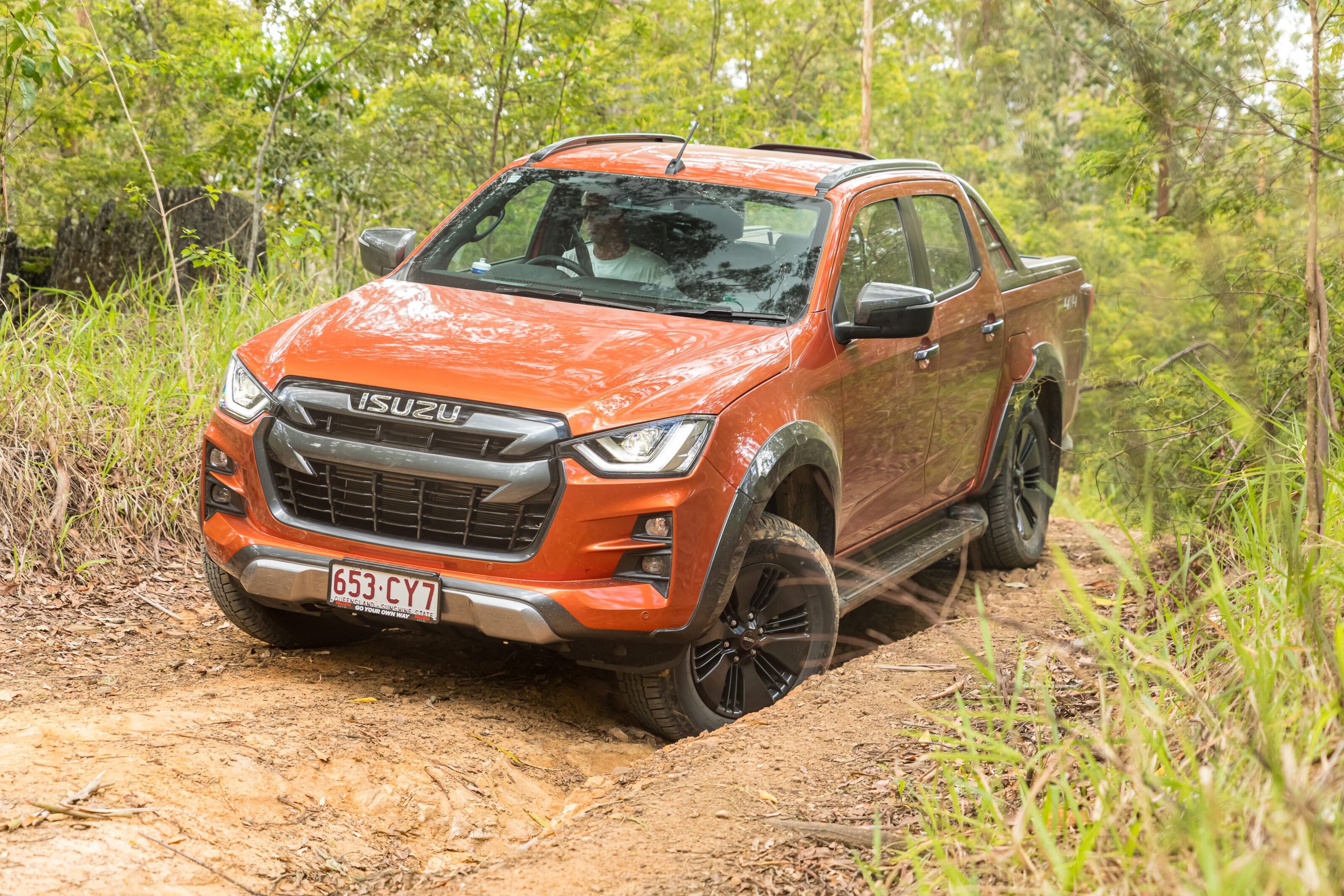
Top 10 brands
Volkswagen and Mercedes-Benz were the two biggest absentees from February’s list of most popular manufacturers.
VW’s Amarok ute was down 50 per cent in its run-out year ahead of a new-generation model being revealed later in 2022, with the Polo city car and T-Cross SUV were also down – 36 per cent and 38 per cent respectively, though the latter actually turned out to be the marque’s best-selling vehicle this month with 352 sales.
Meanwhile, Mercedes-Benz had a tough month too with just 1245 sales, falling out of the top 10 after placing tenth in January and eighth this time last year, replaced by Nissan with 2820 units shifted even though the Japanese brand’s numbers were down 26 per cent year-on-year.
Year-to-date it was a similar picture, with Merc posting 4038 sales versus Nissan’s 5154. Its GLB-class model was its best-seller (320 units, up 13 per cent), followed by the GLE wagon (151, down 43 per cent), GLC wagon (118, down 68 per cent) and C-Class sedan (103, down 70 per cent).
Explaining the dip, a spokesperson for Mercedes-Benz told Wheels: “Our order intake is currently outstripping supply, as the volume of Mercedes-Benz vehicles arriving in Australia continues to be affected by ongoing semiconductor shortages.
“On top of this, delays in logistics have held up hundreds of vehicles from customer delivery. New Mercedes-Benz vehicles are currently caught in a bottleneck of port congestion and quarantine inspections at the border, and a number of vessels transporting our cars have been delayed.
“We thank our customers for their patience and encourage them to contact their local Mercedes-Benz agent for the most up-to-date information on their vehicle arrival.”

February was a slightly better month for the market’s dominant brand Toyota with 20,886, up 14 per cent compared to this time last year when it had 18,375, while in January it suffered a nine per cent loss versus Jan 2021, mostly down to COVID-19 related production problems. Year-to-date it has notched up 36,219 units.
MG equalled its seventh position with 3767 registrations, despite just the ZS appearing in the top 10 vehicles list and contributing to rise of 25 per cent. For the year so far the Chinese brand has sold 7305 cars, also keeping it in seventh place overall.
Mitsubishi secured third spot with a healthy 7813 sales and up 26 per cent, while Mazda and Isuzu both registered six and 11 per cent increases respectively over February 2021. For 2022 so far the two companies have shifted 14,346 units and 18,587.
Kia last year threatened to overtake its affiliate company Hyundai before its challenge faded away. Unlike in February 2021, it came out on top last month with 5881 units sold compared to Hyundai’s 5649. Year-to-date it’s the same story – Kia outranking its sister company 11,401 versus 10,777.
Ford and Subaru remained solid with 4610 and 3151 sales, holding their ground in sixth and eighth places, as was the case in January and also year-to-date – while 12 months ago Ford was also in sixth, but Subaru didn’t make the top 10. For February, Ford was down two per cent year-on-year, while Subaru gained 19 per cent. Year-to-date both brands are sitting on 9138 and 5873 registrations respectively.

Top 10 brands: February 2022
| Rank | Brand | Sales | Vs. February 2021 |
|---|---|---|---|
| 1 | Toyota | 20,886 | +14% |
| 2 | Mazda | 8782 | +6% |
| 3 | Mitsubishi | 7813 | +26% |
| 4 | Kia | 5881 | +0.2% |
| 5 | Hyundai | 5649 | -10% |
| 6 | Ford | 4610 | -2% |
| 7 | MG | 3767 | +25% |
| 8 | Subaru | 3151 | +19% |
| 9 | Nissan | 2820 | -26% |
| 10 | Isuzu | 2785 | +11% |

Top 10 brands: YTD 2022
| Rank | Brand | Sales | Vs. February 2021 |
|---|---|---|---|
| 1 | Toyota | 36,219 | +3% |
| 2 | Mazda | 18,587 | +10% |
| 3 | Mitsubishi | 14,346 | +26% |
| 4 | Kia | 11,401 | +0.3% |
| 5 | Hyundai | 10,777 | -12% |
| 6 | Ford | 9138 | -7% |
| 7 | MG | 7305 | +35% |
| 8 | Subaru | 5873 | +0.2% |
| 9 | Isuzu | 5500 | +13% |
| 10 | Nissan | 5154 | -32% |
In charts
February 2022 – Top 10 models
February – Top 10 brands
February 2022 – Overall segment sales
February 2022-2021 category sales
February 2022-2021 category YTD sales
2022 Sales race
Ford has made the decision to split its electric vehicle (EV) and internal-combustion engine (ICE) development into two separate businesses.
The Ford Blue division will be dedicated to petrol and diesel vehicles, while the Ford Model E division will look after EVs and connectivity technology.
The company says the two departments will be run as distinct businesses, but will also support each other.
“Ford Model E will be Ford’s centre of innovation and growth, a team of the world’s best software, electrical and automotive talent turned loose to create truly incredible electric vehicles and digital experiences for new generations of Ford customers,” CEO Jim Farley said at the announcement.
“Ford Blue’s mission is to deliver a more profitable and vibrant ICE business, strengthen our successful and iconic vehicle families and earn greater loyalty by delivering incredible service and experiences,” he said.
“It’s about harnessing a century of hardware mastery to help build the future. This team will be hellbent on delivering leading quality, attacking waste in every corner of the business, maximising cash flow and optimising our industrial footprint.”
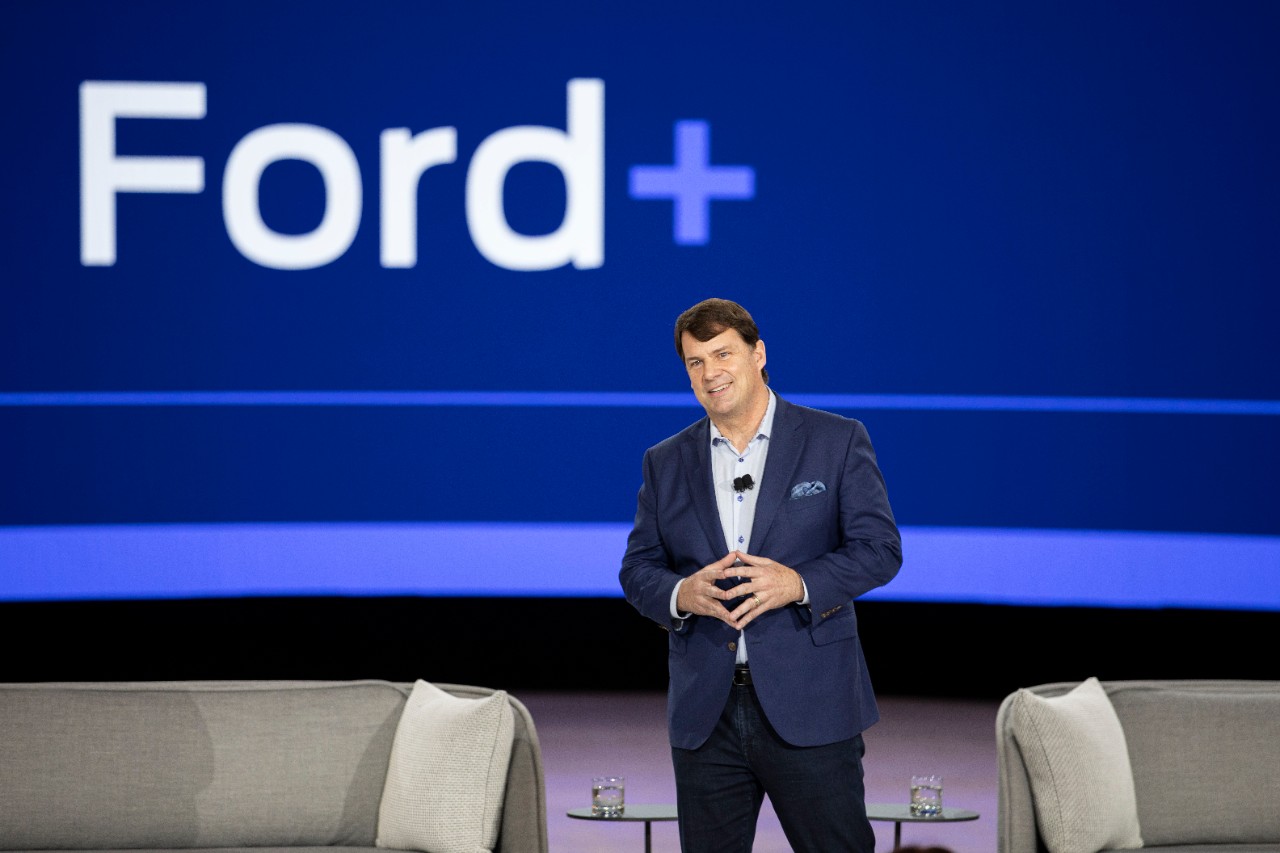
Farley’s comments come a week after he flatly denied rumours Ford was about to split its EV and ICE divisions.
The recent announcement comes under the ‘Ford+ Plan’ umbrella – the carmaker’s roadmap to leverage its strengths to create increased value and growth for its customers, introduced in 2021.
“We have made tremendous progress in a short period of time. We have launched a series of hit products globally and demand for our new EVs like F-150 Lightning and Mustang Mach-E is off the charts,” Farley said.
“But our ambition with Ford+ is to become a truly great, world-changing company again, and that requires focus. We are going all in, creating separate but complementary businesses that give us start-up speed and unbridled innovation in Ford Model E together with Ford Blue’s industrial know-how, volume and iconic brands like Bronco, that start-ups can only dream about.”
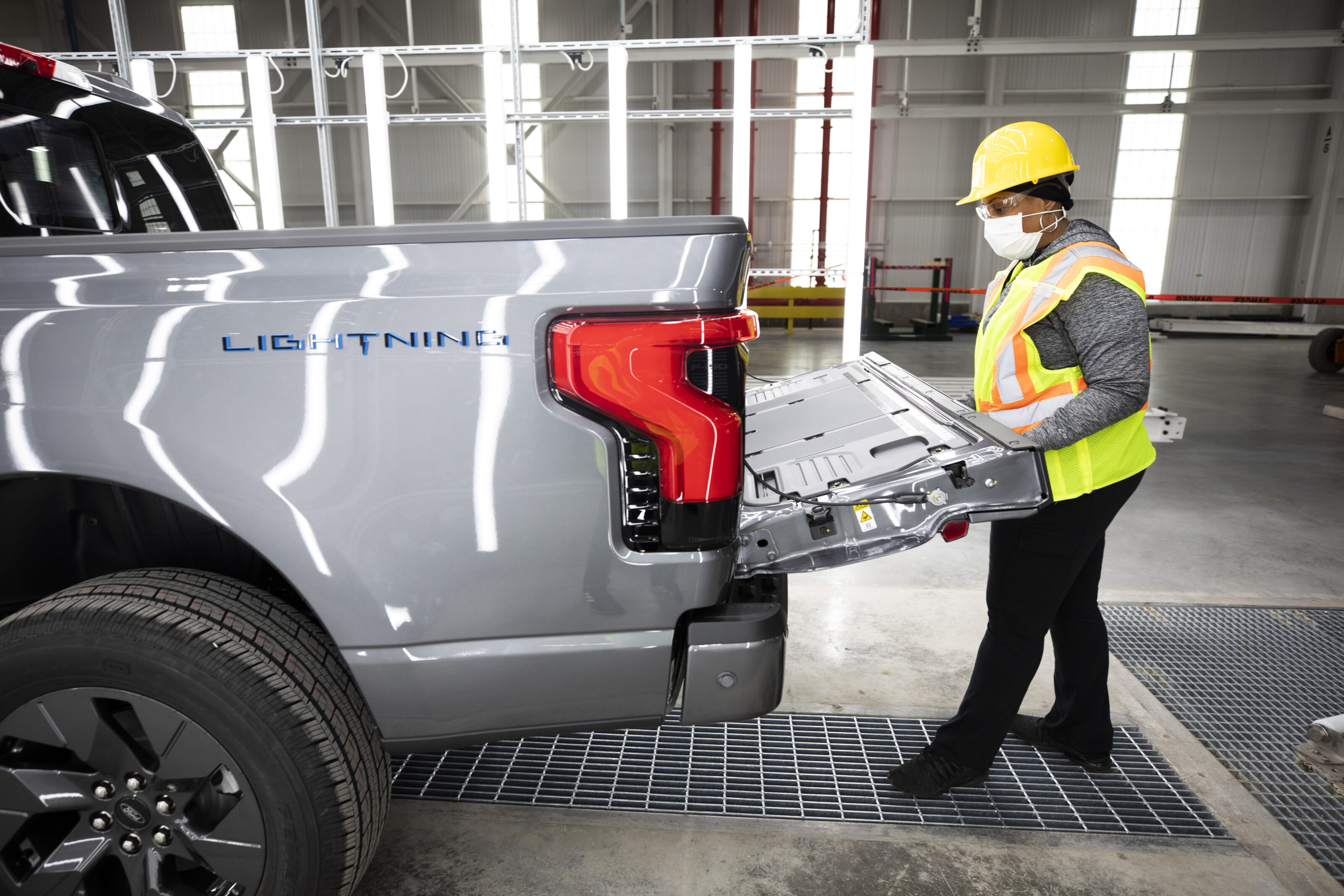
It’s thought the ‘Ford Model E’ name could be a taunt to electric vehicle maker Tesla.
Elon Musk originally wanted to use the name for the Tesla Model 3 – in order to spell out ‘SEXY’ when combined with the rest of its cars – but Ford blocked the name at the time, according to Automotive News Europe, claiming it sounded too similar to the iconic Model T.
Ford isn’t the only manufacturer with Tesla in its sights. In late 2020, Volkswagen Group CEO Herbert Diess announced ‘Mission T’, in an attempt to “catch up with Tesla”.
Maserati is a company without any great track record in building mid-engined sports cars. No, really. Prior to the arrival of the MC20, there were easily more mid-engined Renault 5s built than mid-engined Maseratis. Of more than 100 models the storied Italian manufacturer has built, only three featured the engine behind the driver.
Production of the Bora, built between 1971 and 1978, totalled a mere 564 units. The biggest contribution came from its junior sibling, the Merak, which saw 1830 cars roll from the plant at Viale Ciro Menotti in Modena between 1972 and 1983. Fifty customer MC12s were built between 2004 and 2005, with another 12 constructed as pure race cars. A total of 2444 cars doesn’t seem much of a legacy to hang a halo from.
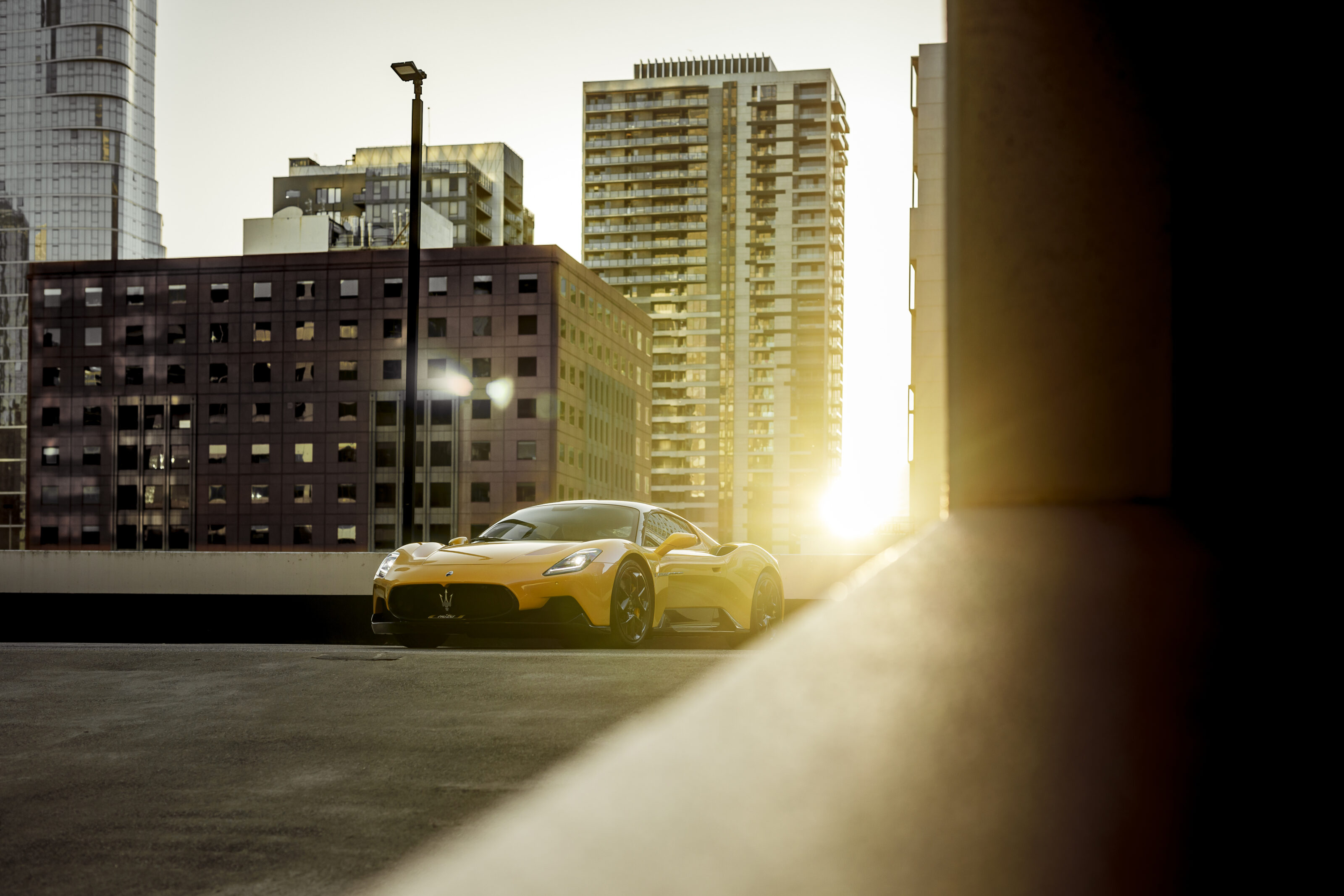
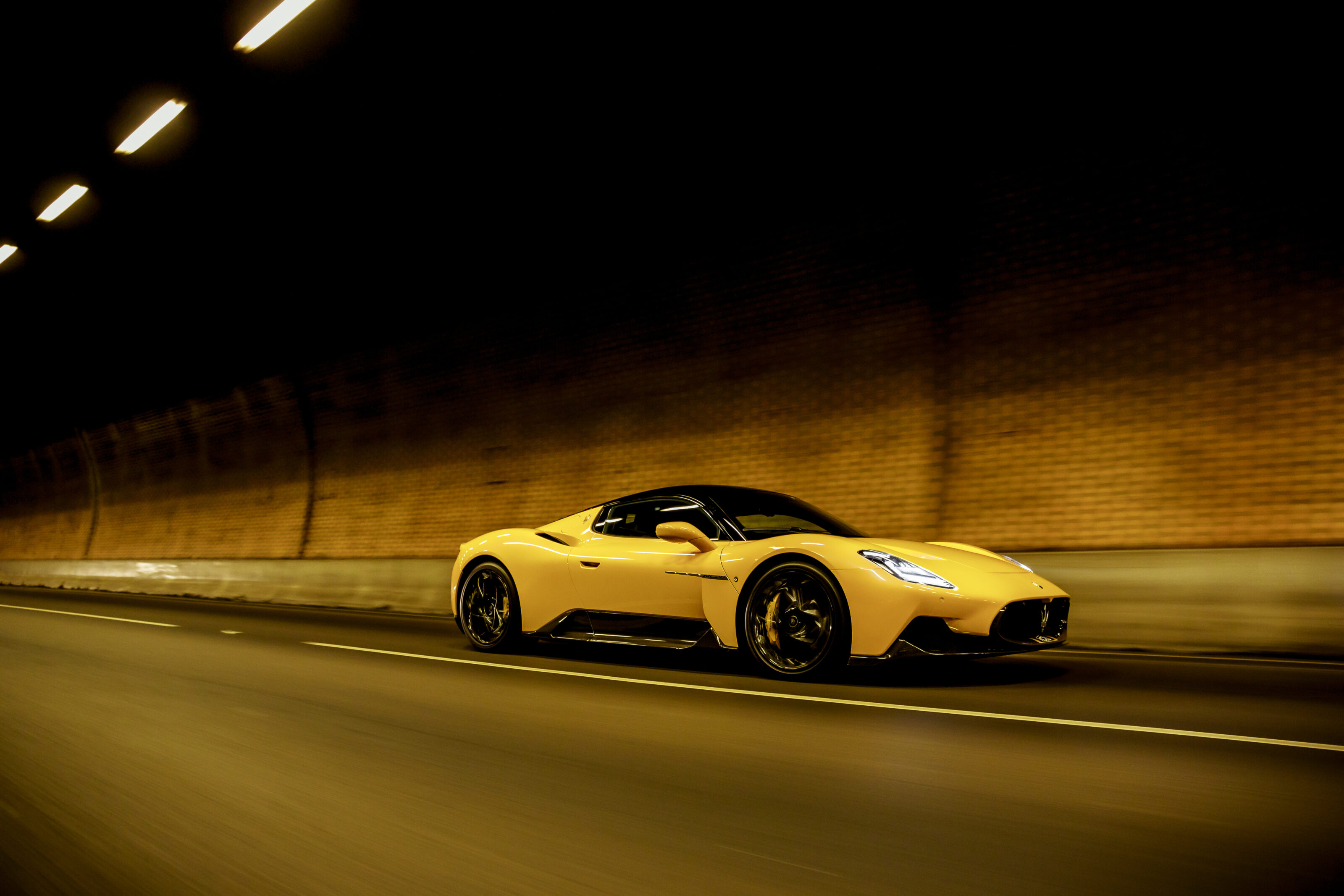
And yet here we are, standing on the roof of a car park in Melbourne, with Maserati’s mid-engined flagship, the MC20, wondering quite what to make of it all. In many ways, the MC20 is a bold move. It sports a V6 beneath its rear deck in a market that, for the time being at least, still offers a number of very accomplished rivals with eight, 10 and 12-cylinder engines.
Then there’s the fact that this undeniably niche model is being launched at a time when the one thing Maserati desperately needs is volume. At Maserati’s centenary celebration in 2014, then-Fiat Chrysler CEO Sergio Marchionne took to the stage in trademark knitwear and made a bold prediction. “In 2018, annual sales for Maserati will be 75,000 units or about five times what they are today,” he told a black-tie gathering of Maserati owners at the Reggia di Venario Reala. “Maserati will not be the biggest luxury brand, but the best.” For a while it looked as if his claim was about to come true.
Buoyed by sales of the Levante SUV, Maserati shipped 51,000 cars in 2017. Since then, it has slumped dramatically, with 20,000 units delivered in 2020. Of course, there are some macroeconomic factors beyond Maserati’s control to factor into the equation, but the company today is undeniably a long way from where it expected to be back in the heady days of 2014.
Speaking at an investor conference in 2018, Marchionne’s successor, Mike Manley, noted, “With hindsight, when we put Maserati and Alfa together, it did two things. Firstly, it reduced the focus on Maserati the brand. Secondly, Maserati was treated for a period of time almost as if it were a mass-market brand, which it isn’t and shouldn’t be treated that way.”
Maserati’s travails can also be attributed to a sizeable dip in Chinese sales, headwinds created by WLTP emissions regulations and, for a while at least, a lack of new product. But part of that decay has concerned the very fabric of what Maserati means. In short, there’s been a certain lack of magic. Walk into a Maserati dealer and you’re confronted with an array of handsome, if classical looking, sedans and SUVs.
There’s no statement of intent, no exemplar of what Maserati stands for in all of its unshackled magnificence. No jaws on the floor. Until now. Given the reception that this MC20, the first to make landfall in Australia, has garnered today, the company has dipped its toe back into the traditional Modenese shock and awe business.
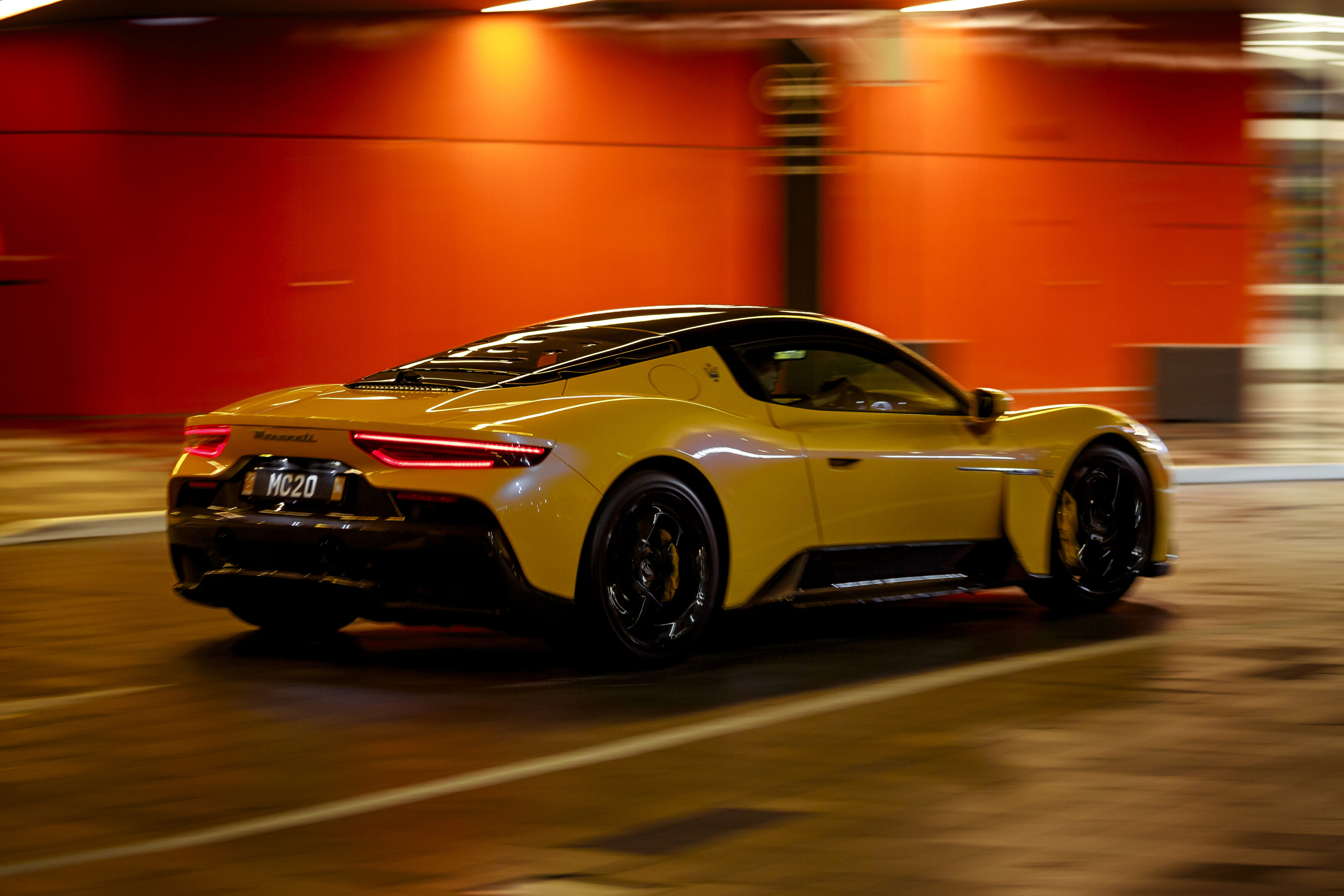
Forget what you first thought when you clapped eyes on the MC20’s styling. I’ll guess. Pretty but generic. Am I close? In the metal, the MC20 has real presence, helped in this case by a hugely expensive three-layer paint finish. Once your eye has acclimatised to the unexpected vertical just astern of the front wheel arch, there’s not a bad line on the thing.
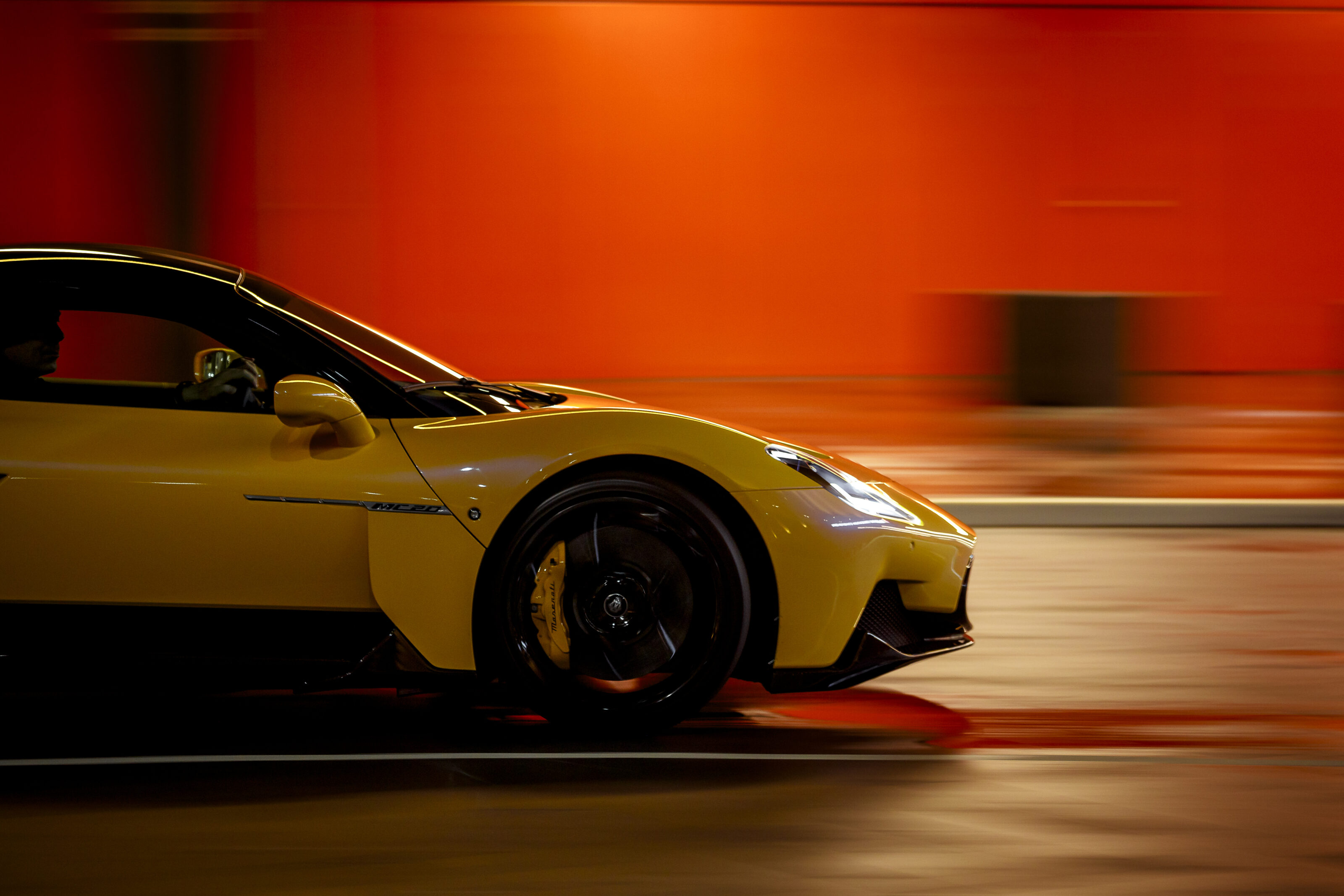
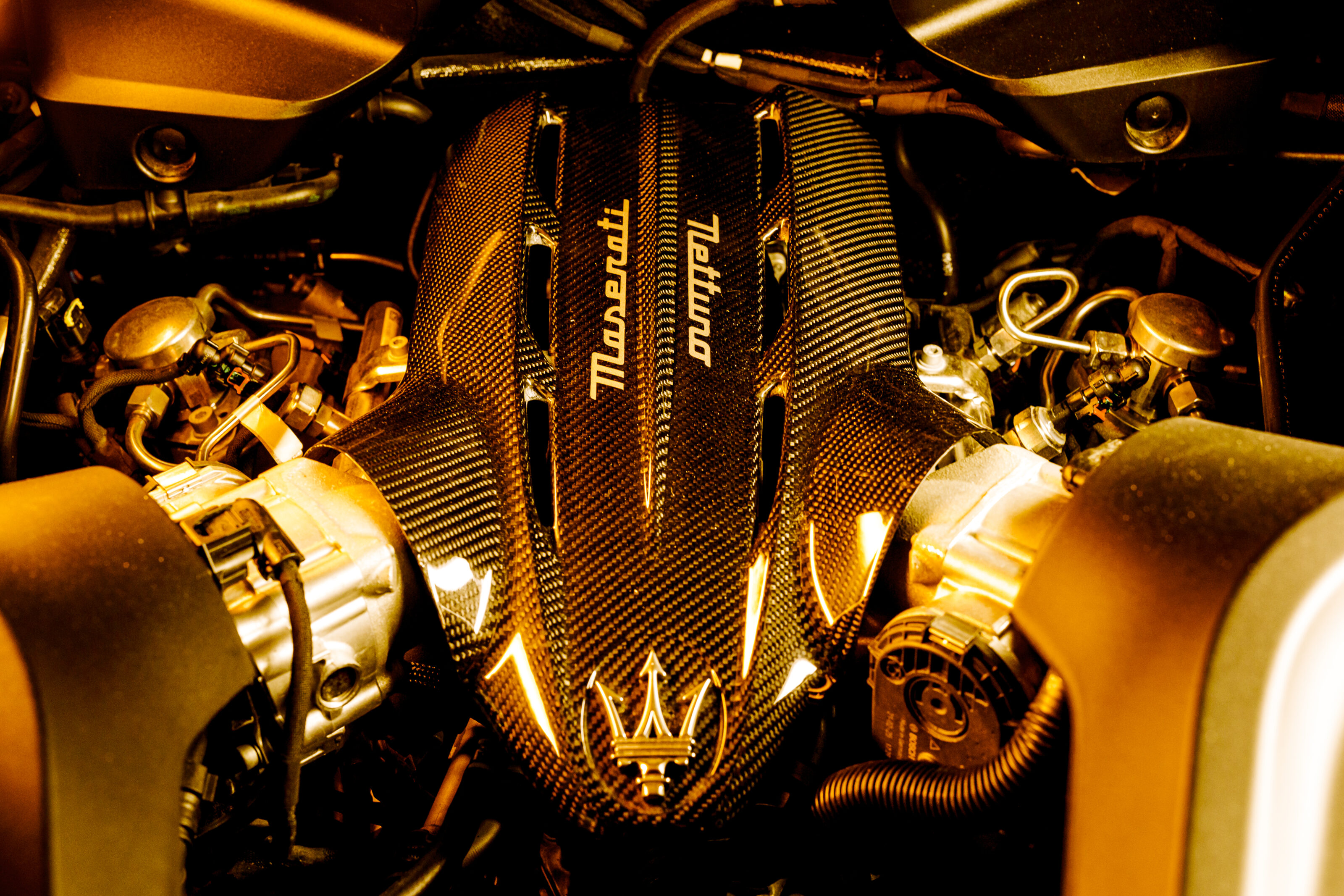
Get closer and you start to pore over the details: the Maserati trident that’s etched into the polycarbonate engine cover, the carbon cam covers of the 463kW Nettuno V6 nestling beneath and the dihedral doors, which show off the stunning forged carbon chassis courtesy of Dallara. If you’ve opted for the three spoke alloy wheels, there’s even a little nod there to the Birdcage 75th show car from 2005.
How tempting must it have been to throw the kitchen sink at the styling, to create an outrageous shape? Instead, doors aside, the design has a certain quiet authority and real front-to-back cohesion. Much has been made of the way the design philosophy splits on a Plimsoll line around the car: technical below and artistic above. The MC20 works the air discreetly, without a reliance on large wings or active aero devices.
Drop inside and there’s a similar restraint. Material quality is excellent, and Maserati has partnered with premier league suppliers. You sit good and low in the electrically adjustable Sabelt seats and the optional Sonus faber 695-watt, 12-speaker stereo impress, as does the functionality and response of the 10.25-inch TFT infotainment touch screen. There’s more headroom than in any similarly shaped exotic I can think of, which is a major drawcard for taller drivers. The centre stack is all carbon fibre and Alcantara, a theme carried across the rest of the cabin.
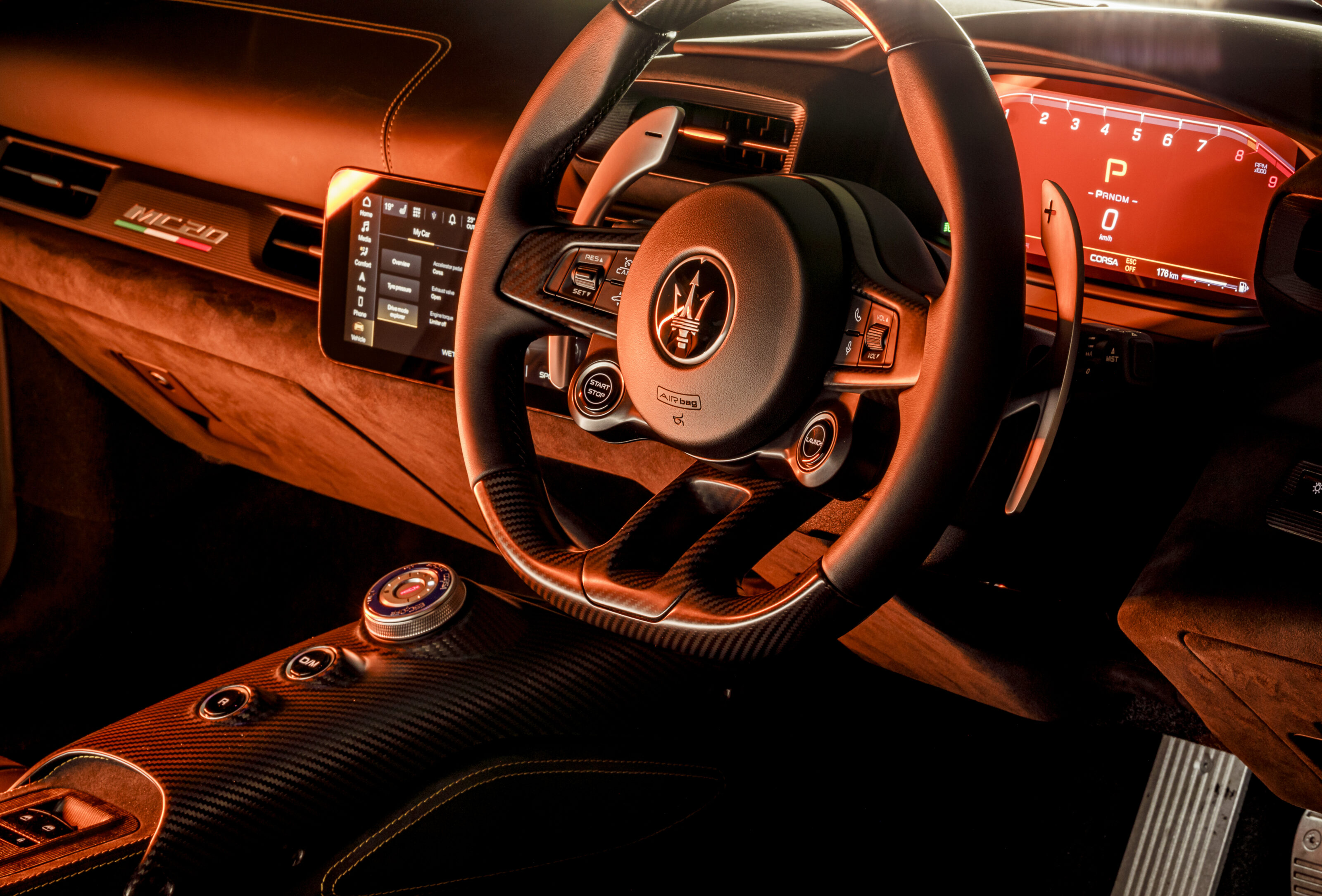
The rear-view camera system takes a bit of getting used to as your eye has to focus on the screen itself and not in the usual fashion of distance focusing on the reflected image. There’s also an unnerving tendency at night for the lights of approaching vehicles to reflect off the cabin’s rear glass and back onto the mirror, giving the momentarily frightening impression that a speeding car is about to overtake into the gap between you and the oncoming vehicle. It also magnifies slightly, so it appears everything is considerably closer than expected. Such is its zoom and clarity that the camera reaches clearly into the cabin of the following vehicle in nose to tail traffic.
Domestic disputes, jaunty sing-alongs, nasal excavation projects and surreptitious phone-checking all get relayed in perfect high definition. Talking of phones, the MC20 features wireless integrations of both Apple CarPlay and Android Auto, although the latter seemed to be draining the phone’s battery faster than the wireless charger could replenish it. Also, curiously, the wireless Android connection dropped whenever the car passed beneath a freeway toll gantry.
Tonight, I’m very glad that the importer specified the optional nose lift system for this MC20. Steep parking ramps and speed humps are insouciantly dispatched, although it pays to remember that the system has no GPS functionality to remember where you lifted the nose last time. It’s purely a manual undertaking.
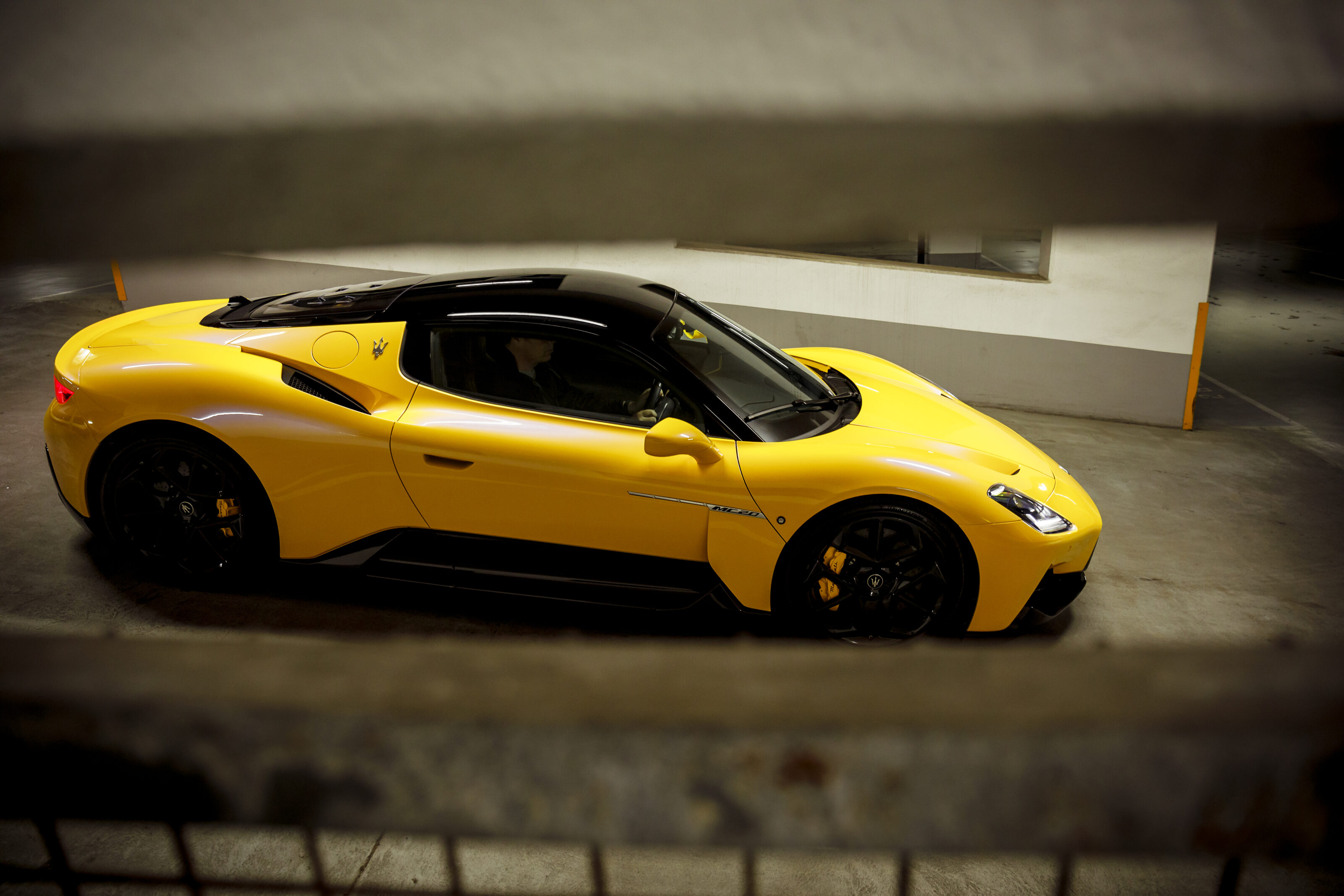
Photography duties over, I start the drive home. The MC20 feels effortless and supple in its standard GT mode. It does, indeed, feel like a GT car and could ably perform that role were it not for its rather paltry storage capacity (47L front, 101L rear) and skimpy 60-litre fuel tank. It’s certainly comfortable and refined enough. On more challenging roads, the MC20 also impresses. The Bridgestone Potenza Sport tyres probably wouldn’t be my first or, come to that, second choice when choosing rubber, but the bespoke 305/30 ZR20 rear boots offer a hefty contact patch and reassuring lateral adhesion.
While there will be some who find the idea of a supercar with a V6 a hurdle too far to comprehend, there’s certainly no performance penalty for choosing the 3.0-litre Nettuno. It punches hard, with a feel akin to one of the McLaren Sport Series cars. With a 315kW/tonne power to weight ratio, the MC20 pips a 312kW/tonne McLaren 570S or a 291kW/tonne 911 Turbo S.
You need to wick the ornate drive mode dial into Sport and then Corsa to get a handle on the savagery of the power delivery but while it certainly delivers in terms of effect, there’s little musicality to its upper registers. Crazily whistling turbos and fluting dump valves give the impression that the Maserati is shovelling dumpster loads of air into its gullet but it’s an unsatisfying experience to search for operatic top notes. Perhaps it’s apt given that the MC20 does so much else to eschew stereotypical supercar shoutiness. Maybe we need to reset our own expectations there.
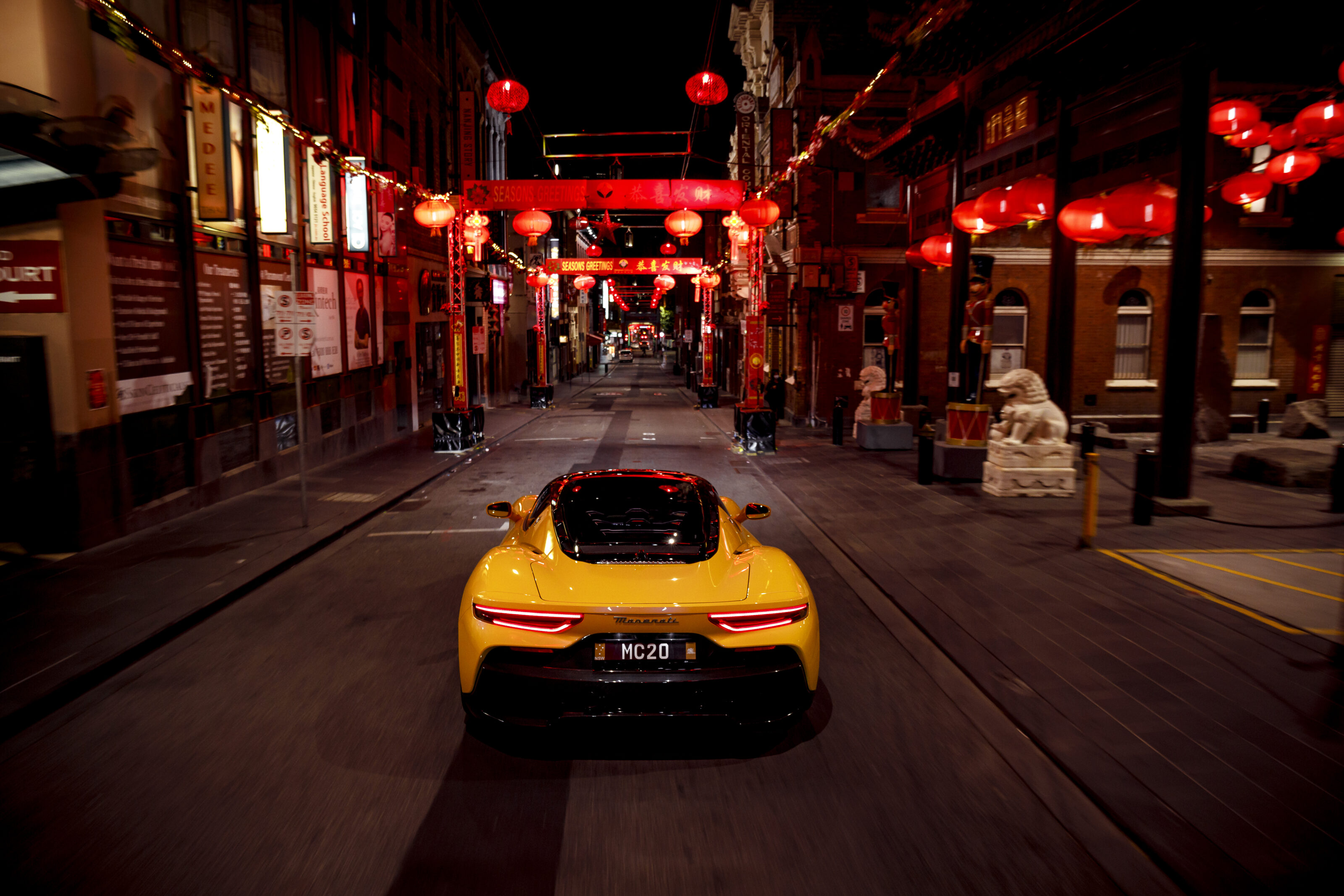
There’s certainly very little wrong with the way that it dismantles a challenging Aussie B-road. Not once did it threaten to ground its chin, although switching the dampers into their firmer mode doubtlessly helps there. Thus entrained, it can feel a little untethered by the burden of gravity, hopping and skipping here and there, big throttle applications bringing the odd flare of wheelspin. It feels wild and exciting, with a great duality of character that gives it the sort of versatility that’s not often the calling card of an Italian mid-engined supercar. It actually feels more like a British lightweight in that it’s alert without the engine dominating. If somebody told you this was Lotus or McLaren’s first stab at a vehicle with electrically assisted power steering, you wouldn’t demur.
That 60-litre fuel tank sees us stopped at yet another servo to debrief. By comparison, a Lamborghini Huracan sports an 80-litre tank and a 992 Turbo 67 litres, while the new generation of V6 supercars like the Ferrari 296 GTB (65L) and McLaren Artura (72L) both deliver more in the way of useable range. You need to leave more room than you expect at the bowser, as the dihedral doors need a lot of space to swing through their arc. Once replenished, it’s back to the road route.
The Tremec eight-speed dual clutch is much the same unit seen in the Corvette C8 and, in this installation, it’s quick-witted with decent shift logic. In GT mode, it’s fairly languid but Sport sees it downchange aggressively and it never seems to refuse a valid downshift request when you’re using the long column-mounted paddles.
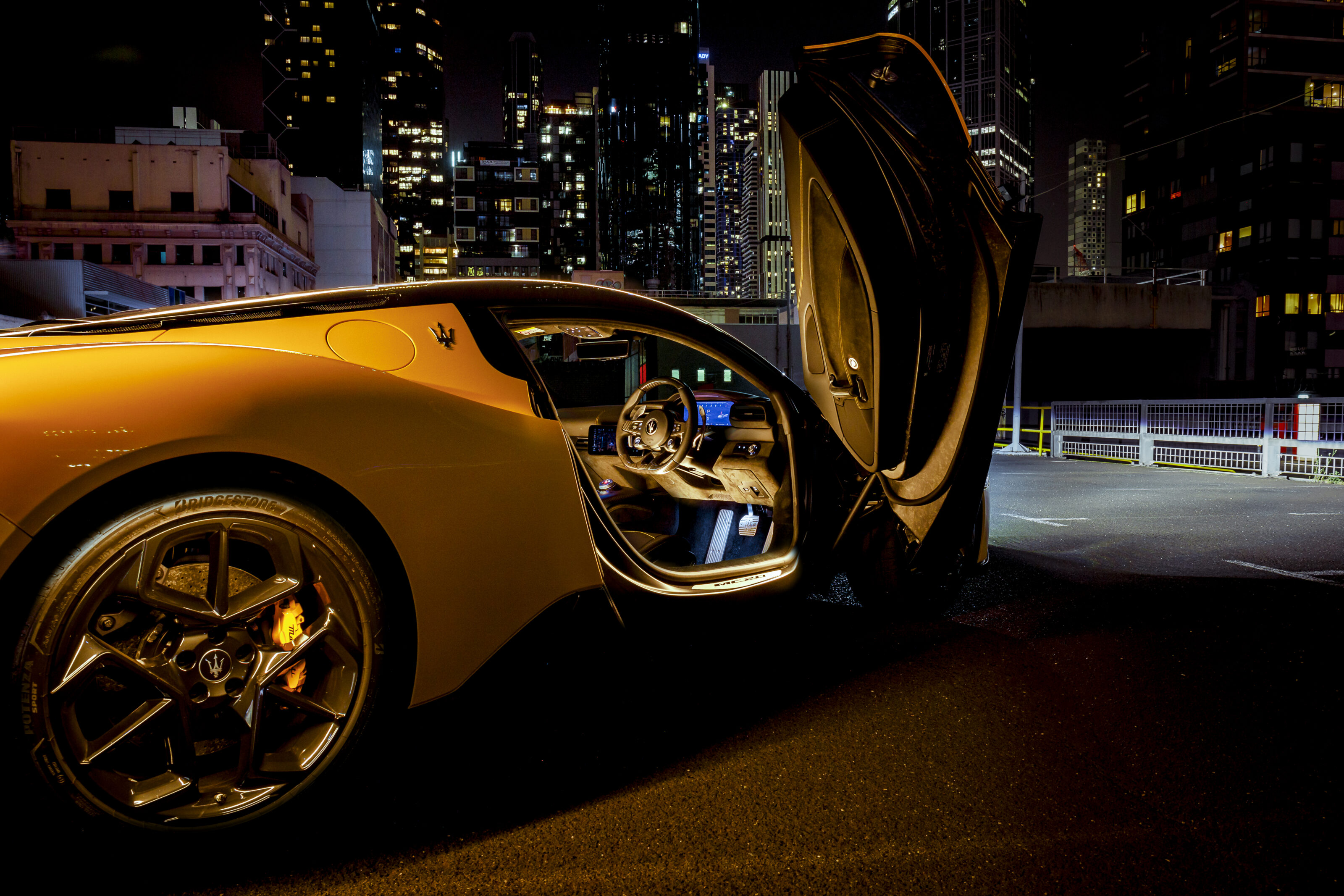
Those cool-to-the-touch shifters are reminiscent of those in the Alfa Romeo Giulia Q, as indeed are certain aspects of the Nettuno engine. Maserati makes great play of the fact that the powerplant is an in-house job, but the links between the MC20’s genesis and those of rumoured Alfa Romeo and Ferrari models seems at best opaque. Perhaps its better to park those ruminations and just pass judgment on what Maserati has delivered.
The MC20 is a befuddlingly excellent car. Although that has as much to do with what has gone before as to the merits of the vehicle in question, the MC20 is one of those few cars that realises a massive step-change in competence for its manufacturer. I’d only driven three such vehicles in my lifetime: the Mk1 Ford Focus, the Lotus Elise and the Giulia Q, but I can now add the MC20 to that list.
It’s a staggering achievement that takes some time to process. Your expectation will be one of flakiness and damning with faint praise. The MC20 feels unburstable, savagely potent and so far from the default choices that you can’t help but warm to it. It’ll never make significant sales volumes for Maserati – the forthcoming Grecale SUV is burdened with those expectations – but as an indicator as to how the Modenese have reimagined, reinvented and refocused their sense of purpose, the MC20 couldn’t have been much better. Not bad for a company without any great experience of building mid-engined cars.
Technical Brief
Bright spark
The Nettuno V6 has the smarts to position Maserati in the top tier of internal-combustion magicians. Named after Neptune – he of the trident – the downsized 3.0-litre engine utilises a very trick installation of pre-chamber ignition. While this tech is universal on an F1 grid, it’s less frequently found on road cars, helping the Nettuno eke a specific power output of 155kW per litre from the V6. This means that the Nettuno delivers a greater power density than any current McLaren, Ferrari, Lamborghini, or Porsche internal combustion engine although it’s roughly on par with the Mercedes-AMG A45 S.
The pre-chamber on the Nettuno is tiny – less than a cubic centimetre per cylinder – and works by igniting a small amount of fuel and air with its own dedicated spark plug. Jets of hot plasma then emerge through tiny holes into the main combustion chamber, creating a very clean, rapid burn at a high (11.0:1) compression ratio. The idea isn’t new – Honda used it as an emissions workaround in the 1970s – but Maserati has paired it with both direct and port injection.
A special copper alloy was key in heat dispersal but no off the shelf spark plug for the pre-chamber was available. The complexity and cost (an additional 150 Euros in materials per engine) is clearly worthwhile. Maserati points to a power boost of 97kW and a torque increase of 130Nm, coupled with an overall 4 per cent fuel saving. If that’s still not quick enough, place a deposit for the electric version.
SCORING
What we liked: Ripper drivetrain; chassis dynamics; styling; finish
Not so much: Needs more music at redline; smartphone handling a little unresolved
VERDICT: 4.5/5
Maserati MC20 specifications
| BODY: | 2-door, 2-seat coupe |
|---|---|
| DRIVE: | rear-wheel |
| ENGINE: | 2992cc V6, DOHC, 24v, twin-turbo |
| BORE X STROKE: | 88.0 x 82.0mm |
| COMPRESSION: | 11.0:1 |
| POWER: | 463kW @ 7500rpm |
| TORQUE: | 730Nm @ 3000-5500rpm |
| POWER/WEIGHT: | 315kW/tonne |
| TRANSMISSION: | 8-speed dual-clutch |
| WEIGHT: | 1470kg |
| SUSPENSION: | A-arms, coil springs, adaptive damper, anti-roll bar (f); multi-links, coil springs, adaptive damper, anti-roll bar (r) |
| L/W/H: | 4669/1965/1224mm |
| WHEELBASE: | 2700mm |
| TRACKS: | 1681/1649mm (f/r) |
| STEERING: | electrically assisted rack-and-pinion |
| BRAKES: | 380mm ventilated discs, 6-piston calipers (f); 350mm ventilated discs, 4-piston calipers (r) |
| WHEELS: | 20.0 x 8.5-inch (f) 20.0 x 11.0-inch (r) |
| TYRES: | 245/35 ZR20 95Y (f/r) 305/30 ZR20 103Y Bridgestone Potenza Sport |
| PRICE: | $438,000 |
The 2023 MG 4 has been shown off in leaked patent drawings, as the vehicle undergoes road testing in its native China.
Codenamed ‘EH32’, MG is looking to carve a space for itself in the burgeoning electric hatchback segment, with the MG 4 firmly targeting the likes of the Tesla Model 3, Volkswagen ID.3, and Nissan Leaf.
The patent images, published by China Car News, reveals a traditional hatch shape, bookended by an F1-inspired front bumper, sharp triangular headlights, and a prominent full-width tail-lamp design.
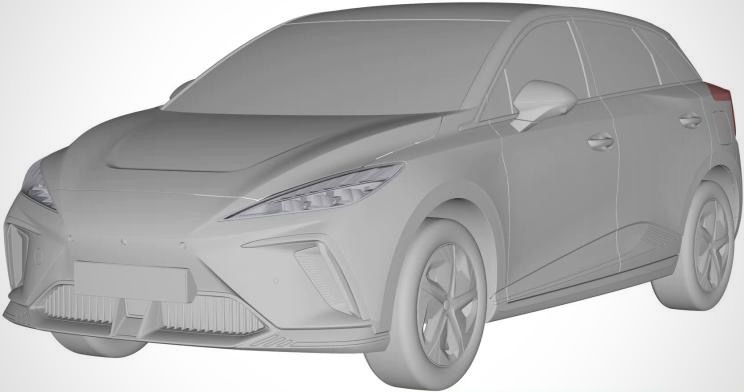
According to Chinese publication Xcar, a leaked company presentation referred to the EH32 as “the first global car” from MG, despite the company offering a number of models throughout Asia and Europe.
While vehicles in the past have been created for its home market and adapted for other international regions, the MG 4 – also referred to as the CyberE – was “based on extensive global market research and aimed at the needs of overseas consumers”.

Details of the electric hatch have not been released at this stage, but some reports are speculating the MG 4 will be fitted with dual electric motors for all-wheel drive – though a high-performance tri-motor variant hasn’t been ruled out.
Due to be unveiled in the coming months, it’s too early to know whether the 2023 MG 4 will be brought to Australia – but given it’s a so-called ‘global’ model, and the brand’s ever-increasing market share locally, there’s a good chance MG will want to offer the electric vehicle to Aussie buyers.
Snapshot
- Just three of the top 10 manufacturers have confirmed online sales throughout 2021
- Combined electric vehicle sales amount to less than 800 units
- Peak bodies expect business models to change over coming years
A year of uncertainty for the Australian automotive industry in 2021 didn’t stop buyers going to dealerships to buy their new cars in person.
Despite lockdowns bringing a number of states to a grinding halt and closing non-essential businesses like car dealerships, the industry bounced back after an even tougher 2020 to break past one million new vehicle registrations throughout the year.
However, the final number of 1,049,831 units delivered could possibly have been exceeded had more of the top 10 brands for the year adopted an online buying service – with just three manufacturers offering the ability to do so.
Both Hyundai and Kia told Wheels they had sold some examples of their model ranges online last year – although ironically, both cars are related.
Launched in 2021, Hyundai’s Ioniq 5 and the Kia EV6 electric vehicles are both based on the E-GMP platform, with the Ioniq 5 going on sale in October while the EV6’s first allocation was effectively sold before a price was even revealed.
Before the year ended, Hyundai had managed to sell 172 examples of its Ioniq 5, whereas Kia shifted “close to” 600 EVs through online orders – accounting for just 0.24 per cent and 0.88 per cent of total sales respectively.
Of the remaining brands which ended up in the top 10 for sales last year – Toyota, Mazda, Ford, Mitsubishi, Nissan, Volkswagen, MG and Subaru – only one offers buyers the ability to complete a purchase solely through its online platform.
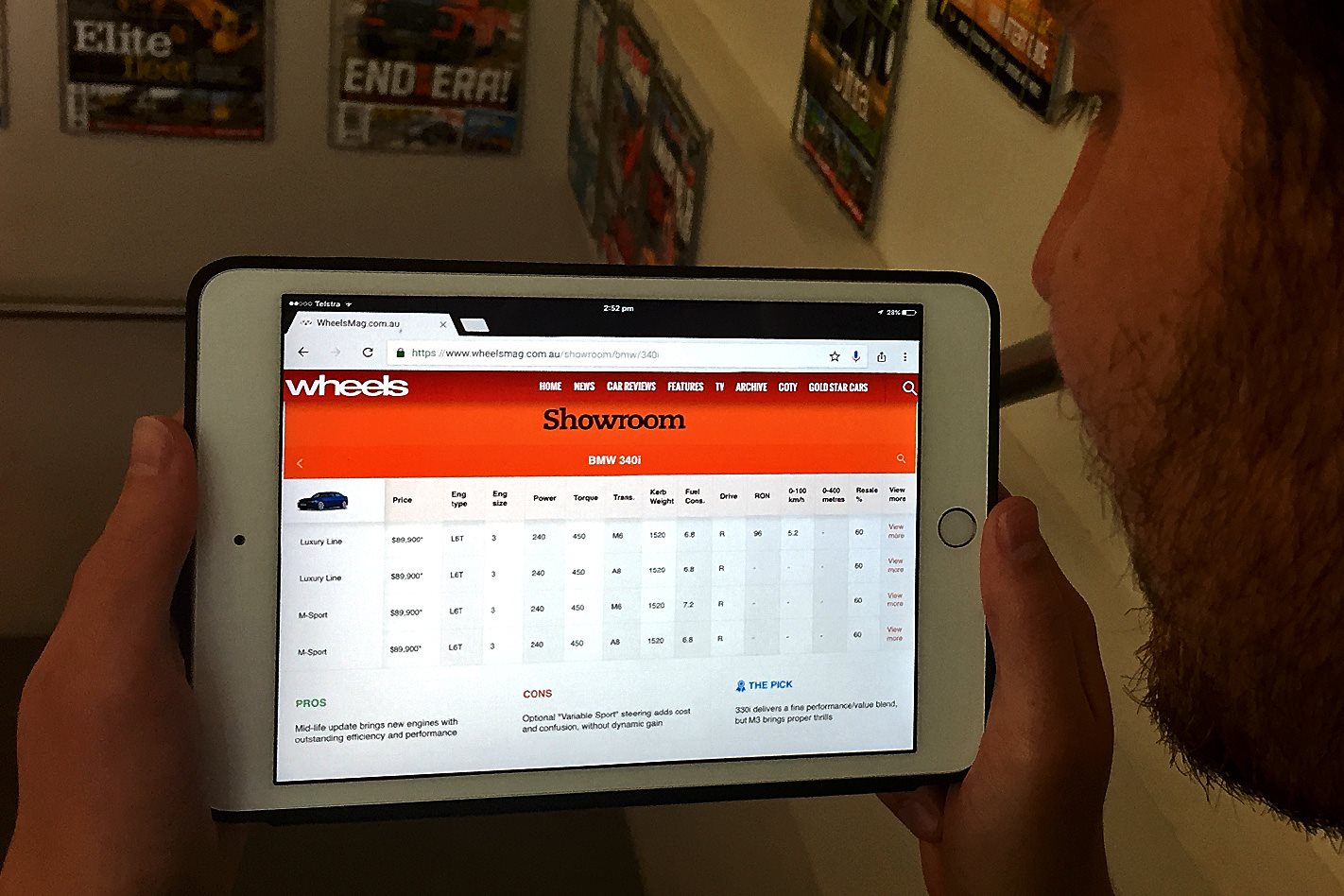
While it couldn’t provide specific figures of how many vehicles were sold, Subaru has implemented an online sales model since the 2012 introduction of the BRZ, now applying to all models across its range.
A spokesperson for the manufacturer told Wheels its online platform allows customers to purchase a car with the convenience of online buying, but also with the service of a dealer.
“In 2012, Subaru Australia introduced its ‘buy online’ service with BRZ. Shortly after, this service was further expanded to sell other Subaru models via our website.
“Offering ‘buy online’ to our customers is about embracing the digital age and providing choice for how customers can choose to interact with our brand and our dealer network to purchase a new car.
“Our dealership network and in-store experience remain a vital part of our business, and whether the decision is to purchase in-store or online, we endeavour to provide a seamless buying experience for all Subaru customers.”
However, it’s not just Hyundai, Kia and Subaru which have adapted to the modern ways of shopping. Tesla was the first to go online when it burst onto the scene in an attempt to disrupt the establishment, with Audi seeing the writing on the wall shortly after the global pandemic kicked off, and BYD seemingly following suit with its new range of incoming models.
Newcomer Polestar has only recently launched in Australia and is doing so without a physical dealership presence – only letting buyers choose their next vehicle online.
While it is in the electric vehicle manufacturer’s plans to start opening up some bricks and mortar locations, it has been encouraged by initial online demand for its Polestar 2 model after completing an east coast roadshow last year.
“At Polestar we believe in simplifying the purchase journey for our customers and creating a seamless online experience,” a Polestar spokesperson told Wheels.
“Customers purchase their vehicles from Polestar direct via an online portal, which includes the option of Polestar Finance. This model provides customers with the flexibility and transparency of vehicle availability, pricing, and production right through to delivery.
“Our retail locations will be in high-footfall areas, where consumers are already visiting or shopping for the ultimate convenience. We offer the ability to talk with product specialists who are available to inform customers on Polestar and its products, as well as assist customers to make their online purchase if required.”

Australian Automotive Dealer Association (AADA) CEO James Voortman told Wheels a clear majority of consumers still want to buy their new cars from a bricks and mortar store, with test drives becoming one of the most crucial aspects of the buying experience.
“We are seeing more brands offer the ability for customers to buy a vehicle sight unseen, and while online sales have increased during the pandemic the majority of customers are still hesitant to do so,” said Voortman.
“Our research has found that around one in four customers say that they’d consider buying online, with three in five (61 per cent) saying they’d be unwilling to do so.
“The biggest barrier at the moment to online sales is that 91 per cent of customers consider it important to be able to test drive a vehicle before committing to buy it.
“COVID-19 has shown us that more and more of the car buying process can occur online, and we would expect that the proportion of customers willing to buy online will increase. But customers value the test drive and as vehicles become more technologically sophisticated, I expect many customers will value the opportunity to have a dealer demonstrate these technologies to them.
“Even in an online-only scenario – there is still a role for a dealer whether it is delivering the vehicle, handling the physical elements of the trade-in or managing that aftersales relationship.”

Tony Weber, Chief Executive of the Federal Chamber of Automotive Industries, said the natural evolution of demand from consumers will drive manufacturers to change how they sell cars, agreeing with the AADA on the need for aftersales support to continue regardless.
“This is an argument about supply and demand, and I don’t think this will be driven by supply, it will be driven by demand,” Weber told Wheels.
“The traditional model which has existed in Australia for automotive dealerships stretches back to the 1950s and with little change will not last forever. It won’t survive in automotive, just like it won’t survive in any other sector of the economy, because consumers demand change because we have the technology and capability to do it in different ways now.
“What consumers will want is the most efficient, easiest way to purchase a vehicle, and they’ll make that decision about what product they buy as well as the service for that product at the point of sale and aftersale. The consumer will drive it; not the OEM, not the dealer.
“The reality is, if you buy a car and have a bad experience, you probably won’t go back and the masses won’t go back. However, if you provide both the product and service to market, it has to be done in an efficient and effective way so the consumer experience is a pleasant one.
“The magic of the Australian market is there’s so much competition here. If you can’t do those things well as a brand, you can bet your bottom dollar someone else will do it better and they’ll get the market share.
“We need to satisfy consumers in terms of service – and that will require a footprint right across the country. I would envisage dealers still have a huge role to play in the future because of their service.”
