
Kia’s Cerato range is here to stay – that’s what Kia told us in June as fewer and fewer car-makers bother with this part of the market to better focus on SUVs. Kia reckons it will probably be the last man standing in the segment and while that’s more a promise than the likely reality – who can imagine a world without the VW Golf? – it will definitely be one of a very few. Kia is pretty good at working a niche.
In mid-2021, before we were all sent to our rooms again (at least in NSW and Victoria), Kia launched an updated Cerato. Same line-up, some mild improvements but very much an if it ain’t broke approach to a mid-life refresh. Visually it scored the sleek new Kia badge, a few styling tweaks and a new set of headlights, but the formula remained basically the same.
With Toyota and Hyundai squarely in its sights, the Cerato favours value and specification, as well as the trump card of a warranty bested only by the thunderingly mediocre Mitsubishi range, the Cerato looks pretty good on paper.
Pricing and Features
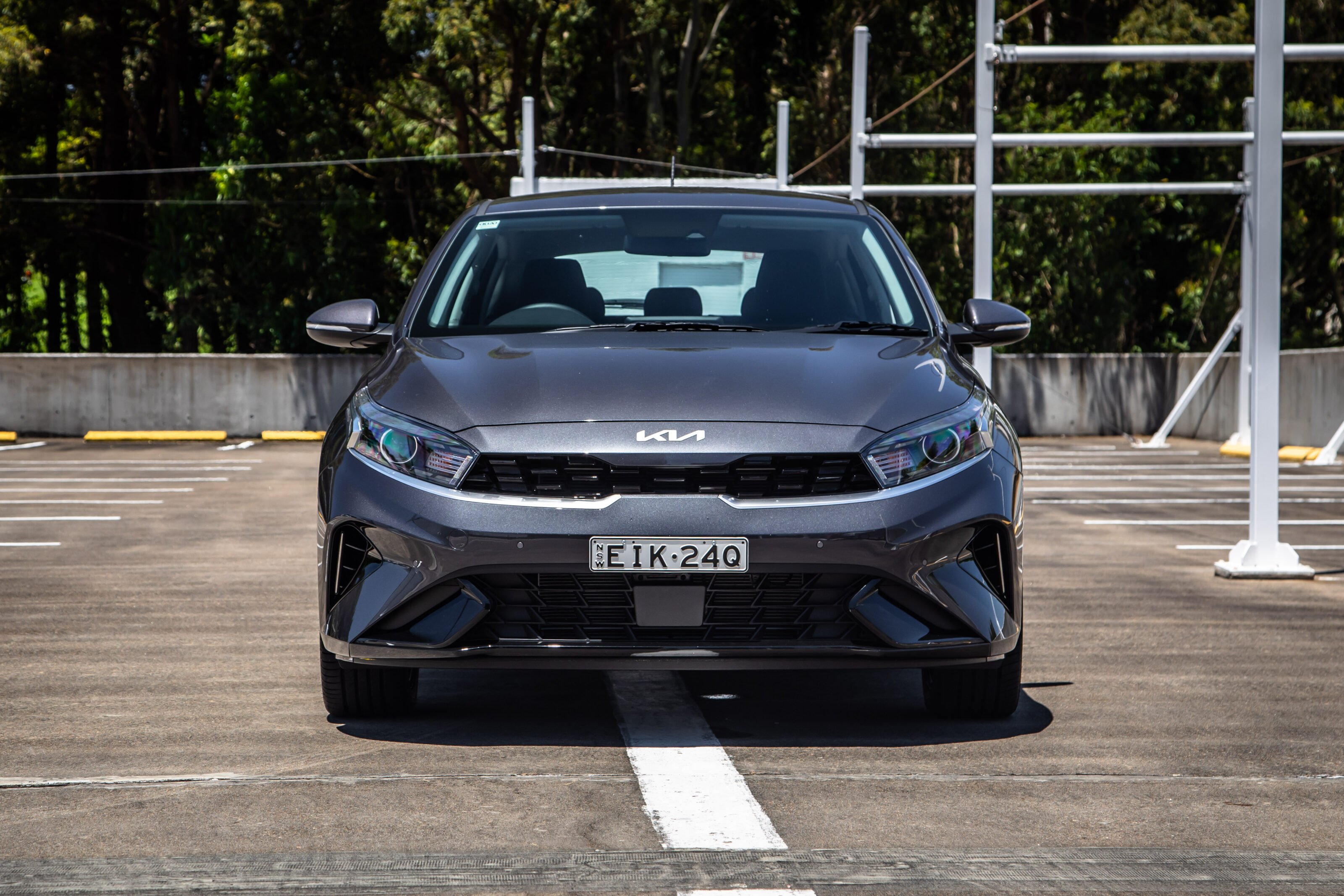
The Sport’s price sticker reads $27,590 ($27,990 drive-away), which is pretty sharp value in this still competitive if shrinking segment. You get 17-inch alloys, sat-nav, cloth seats and “premium” steering wheel and shifter trim (i.e. not plastic), climate control, cloth upholstery, reversing camera, remote central locking, cruise control, power windows and mirrors and a space-saver spare.
Like its Seltos sibling, you can get the Cerato in steel-wheeled S form (as well as the optional Safety Pack) but I think the extra $2100 for the Sport is worth it if you can get there (again adding the Safety Pack). For a start, there is the very nice 10.25-inch touchscreen that is great to use and look at, full of useful (such as DAB+) and/or amusing (sounds of nature) features and is super-classy while going about its business. Weirdly you lose wireless Apple CarPlay, but there are two USB ports to keep your phone juiced.
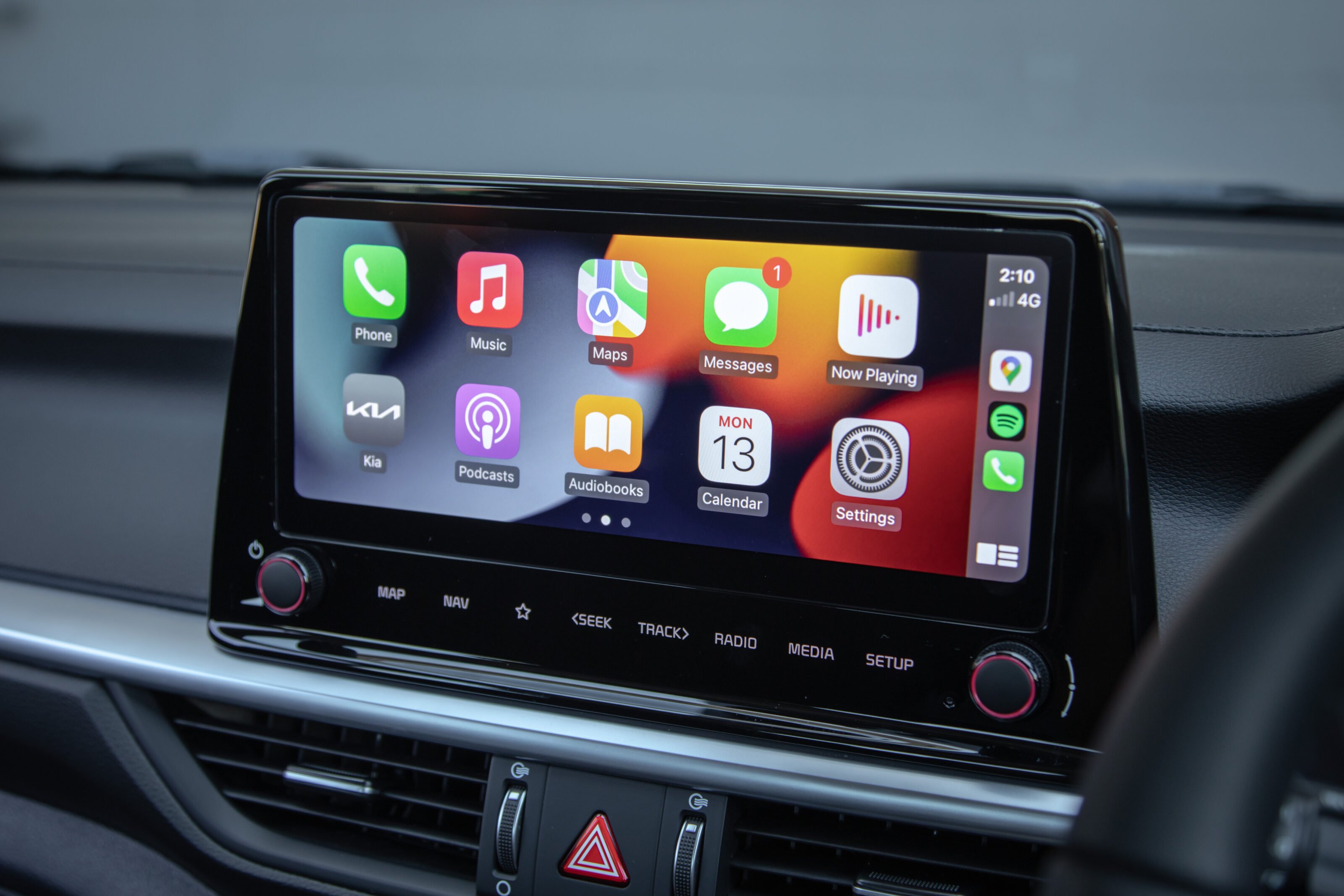
On the prickly question of safety, you get six airbags, lane-keep assist, lane departure warning, forward auto emergency braking, lane follow assist, driver attention alert, rear occupant alert, auto high beam and a reversing camera.
The standard forward AEB has both pedestrian and vehicle detection. If you want more, you can add the $1500 Safety Pack, which throws in a reverse cross-traffic alert (should be standard on all of them), blind-spot monitoring, upgraded forward AEB with cyclist detection, forward collision warning and safe exit warning.
Despite my grumbles about the price of the Safety Pack, it still works out cheaper than a similarly equipped Mazda3 and as a hatchback is bigger than both the i30 and Corolla
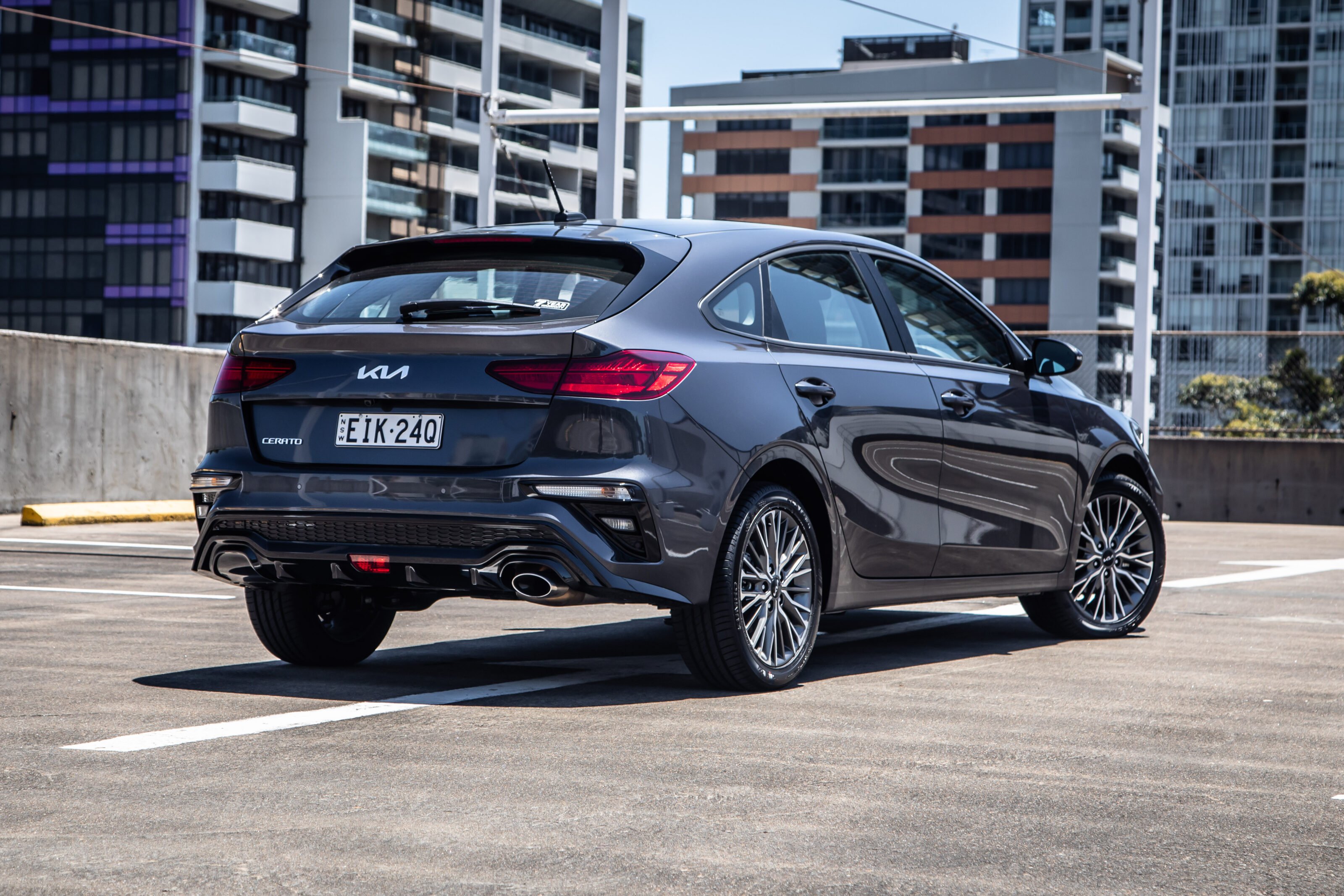
Despite my grumbles about the price of the Safety Pack, at $28,590 (or $29,940 drive-away) it still works out cheaper than a similarly equipped Mazda3 and as a hatchback is bigger than both the i30 and Corolla by some margin.
The reason I think it’s good value has something to do with the fact that this car had the safety pack fitted and it was genuinely useful, especially when backing out of our driveway into our narrow, over-parked street. Which explains my die-on-this-hill attitude to reverse cross-traffic alert.
Comfort and Space
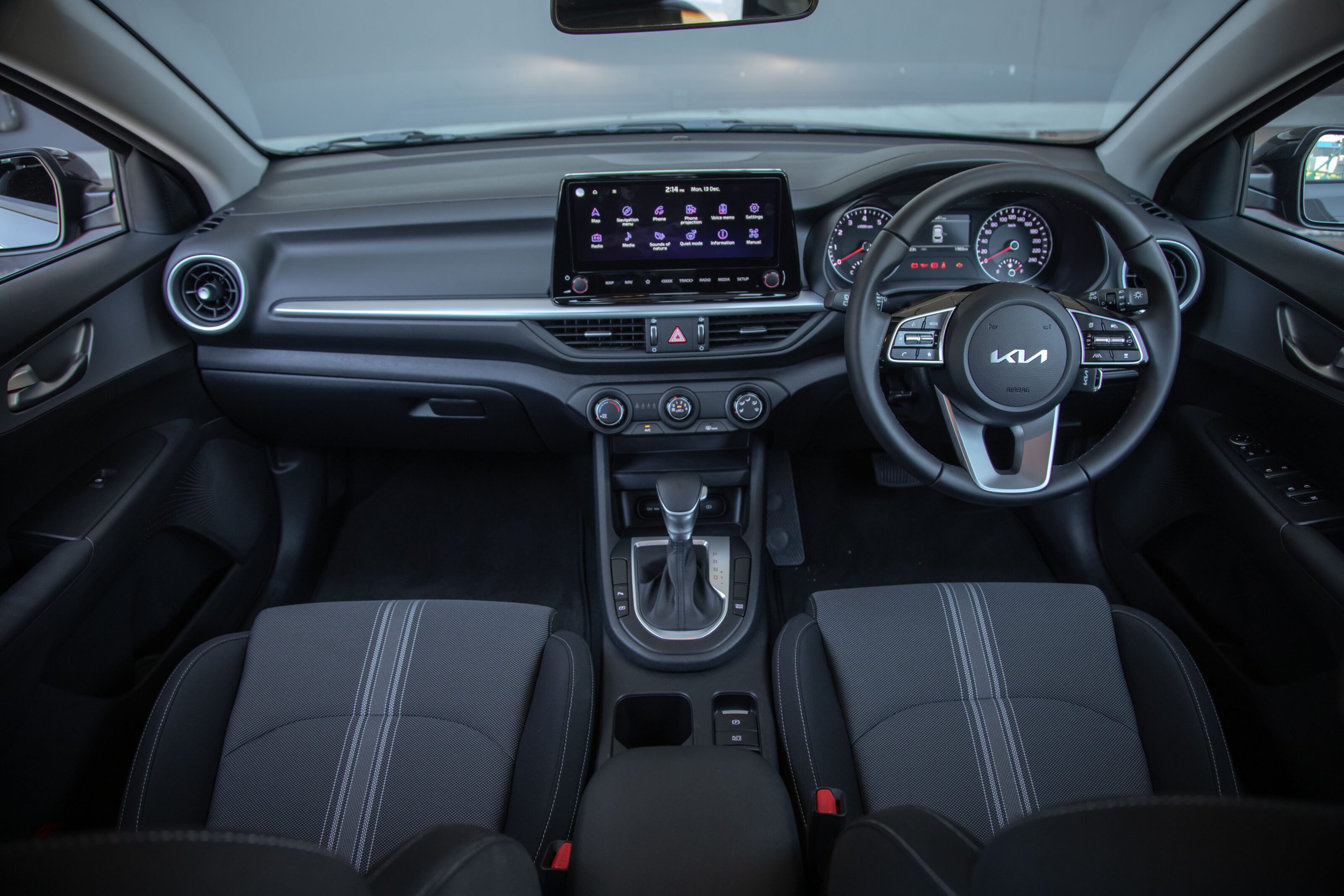
With its long 2700mm wheelbase, the Cerato is very spacious and probably about as good as it gets in the segment following the near-criminal departure of the Ford Focus.
Up front you have two cup holders, a centre console bin, space for a phone under the centre stack and door pockets with bottle holders. The cloth seats are very comfortable and I secretly (well, publicly, as it turns out) prefer the cloth trim to the very pleasant but ultimately less pleasing fake leather of other models. I think it’s more in keeping with the spec.
The back row is pretty luxurious for a car in this segment, walloping just about everything except the Civic
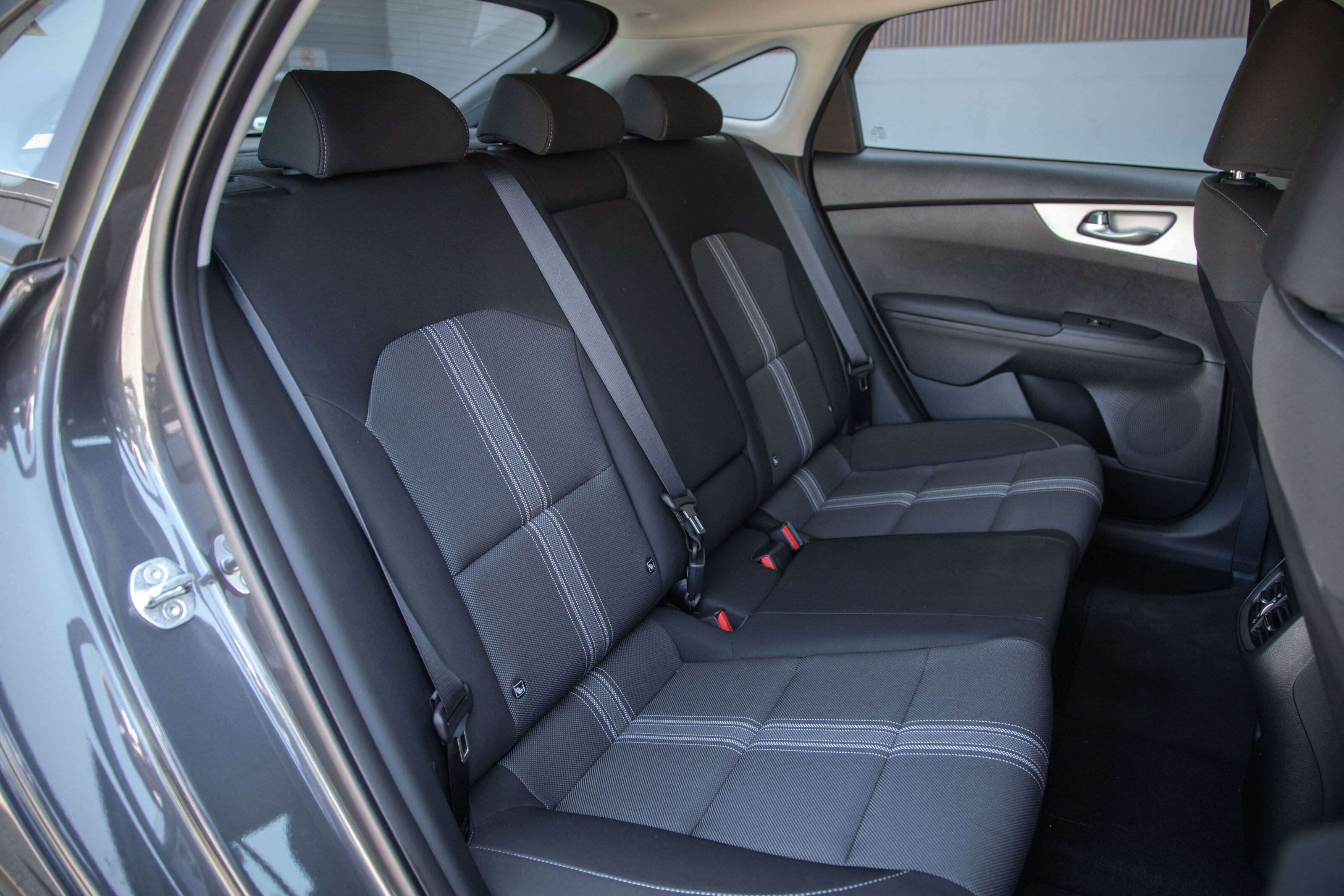
The back row is pretty luxurious for a car in this segment, comfortably walloping just about everything except the Civic. Which is now twenty grand more expensive. You also get two cup holders in the centre armrest and – joy of joys – air vents as well as a USB port. It’s very comfortable, with good headroom and legroom for me at 180cm.
The hatch has a 428-litre boot, which is a good start but pales next to the sedan’s 502 litres, so if you need more space, the booted version is for you. Kia doesn’t offer a seats-down size, but a good rule of thumb is to triple it and you’re roughly there.
On the Road
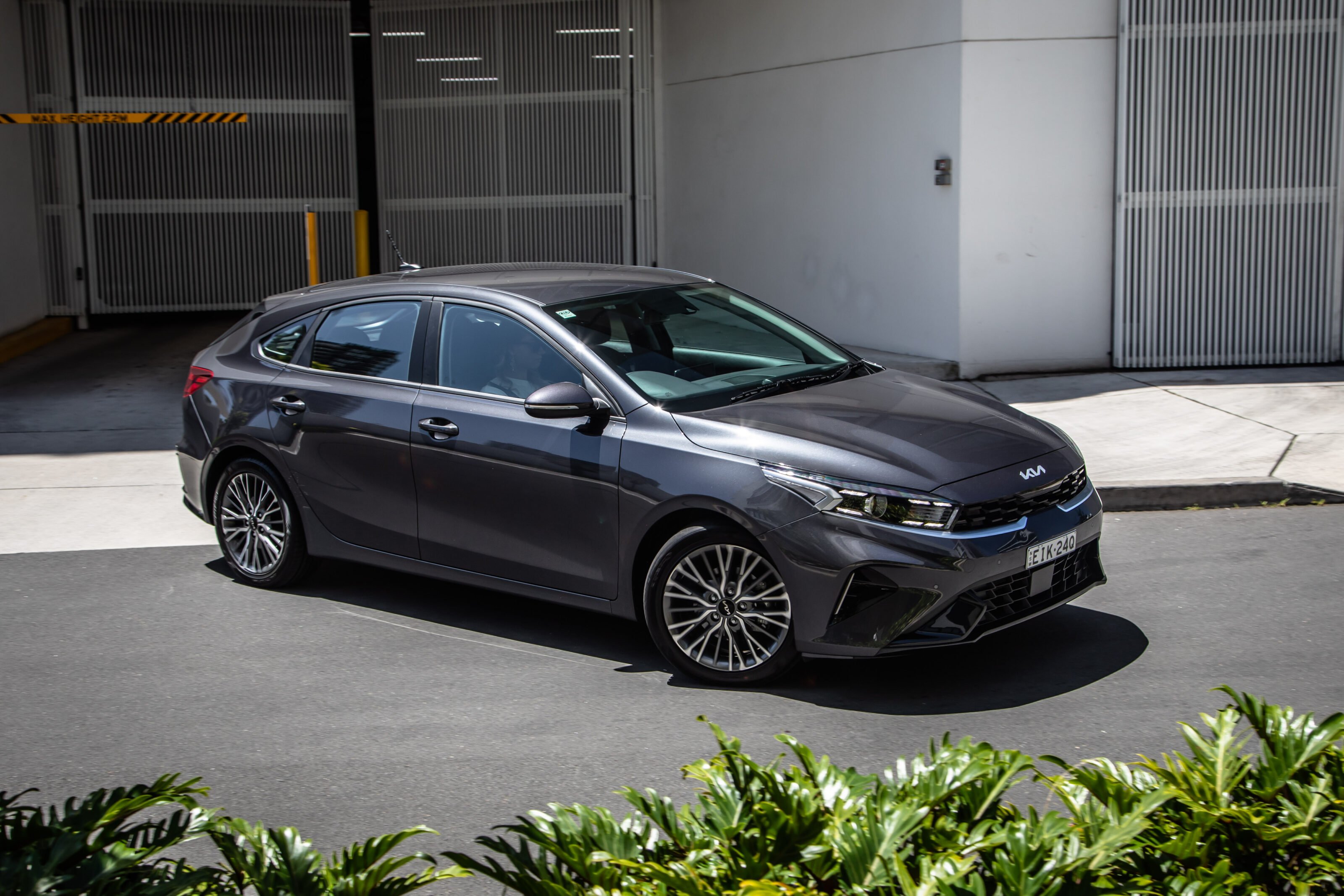
If you’re expecting promising performance – which is fair given the more aggressive look of the car – you’ll be disappointed. This car is all about the bling and not about the zing. Which is absolutely fine because that’s where this car is aimed – low-drama motoring.
The 2.0-litre is an old-stager, with a bit of tarting up to keep pace with various rules and regulations. Power is fine (122kW), torque is fine (192Nm) and the six-speed automatic transmission is still the right one for the job. Although I do expect the CVT from the Seltos to eventually appear in it, which won’t be a bad thing.
Sticking the boot in gets things moving at a leisurely pace but the buzz from the engine isn’t worth it. It sounds like it’s working hard for little reward and that’s about the long and the short of it. It’s right for the segment, though.
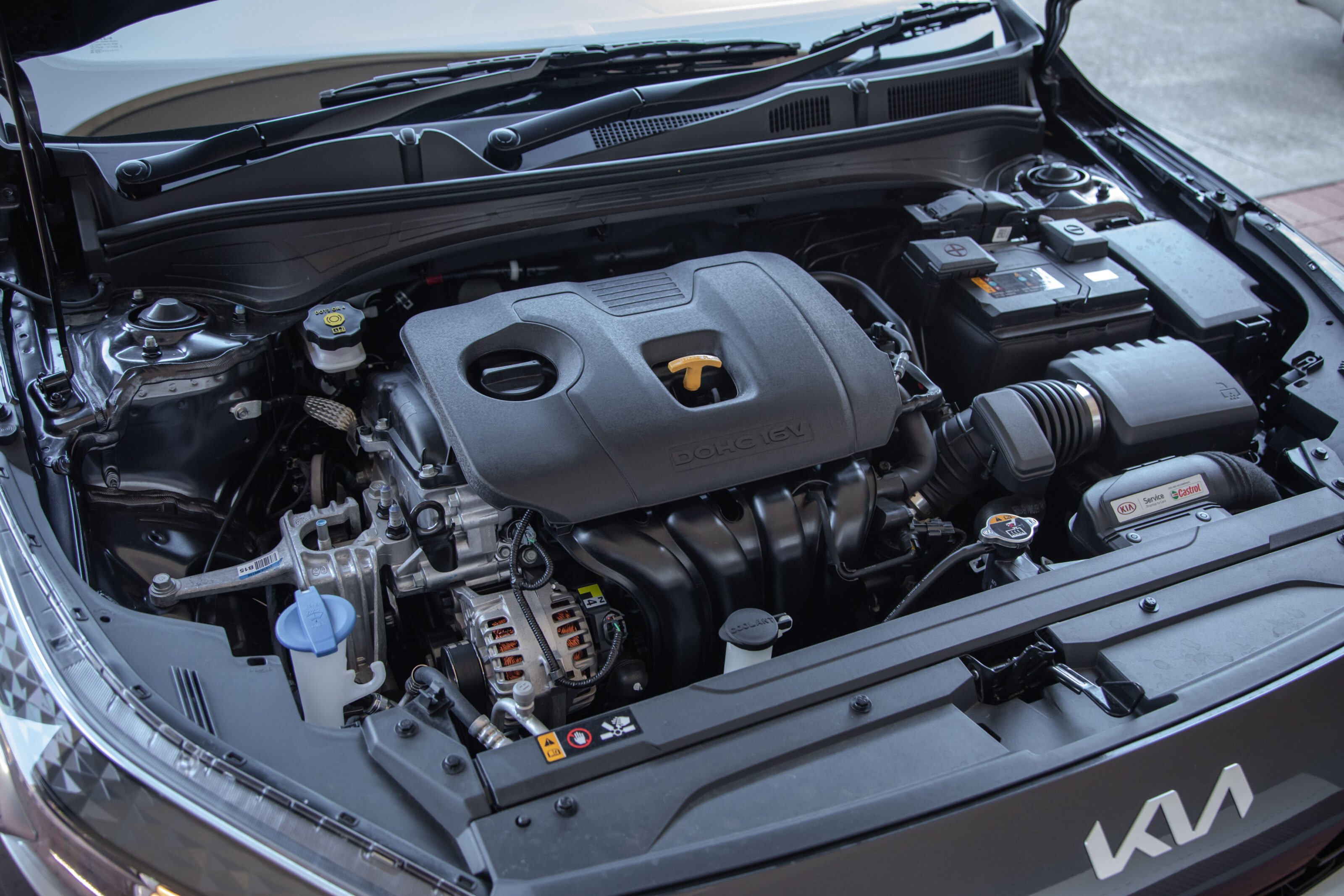
I really appreciate the ride and handling balance of the Cerato. The tyres aren’t too goopy but aren’t noisy either, cheerfully conveying you at highway speeds in genuine whisper quietness.
Understeer arrives early and loudly if you get too excited, but again, that’s par for the course in this segment. Going for comfort is absolutely the right choice and you can really cover a lot of miles in this car solo or in company without having to raise your voice over road or wind noise. I’d cheerfully point this at any of our open borders like (checks news feed) Queensland (checks news feed again) and drive there with little trouble.
The official 7.4L/100km ADR combined cycle figure is possibly a little ambitious, with 9.5L/100km on the clock when I handed it back. Having said that, it’s still just inside my own, made-up 30 per cent over the ADR rule, so that’s not bad.
Ownership
Kia offers a seven-year warranty with unlimited kilometres, seven years of roadside assistance and seven years of capped-price servicing.
Service pricing is the same between the Cerato’s two engine options per interval, but there’s a trick lurking in there in favour of the 2.0-litre that requires servicing every 12 months or 15,000km (less often than the 1.6-litre turbo). You’ll pay between $275 and $623 per service for a total of $2939 over the first seven services. That averages out at just under $420 per service, which isn’t mucking about but is short of highway robbery.
Verdict
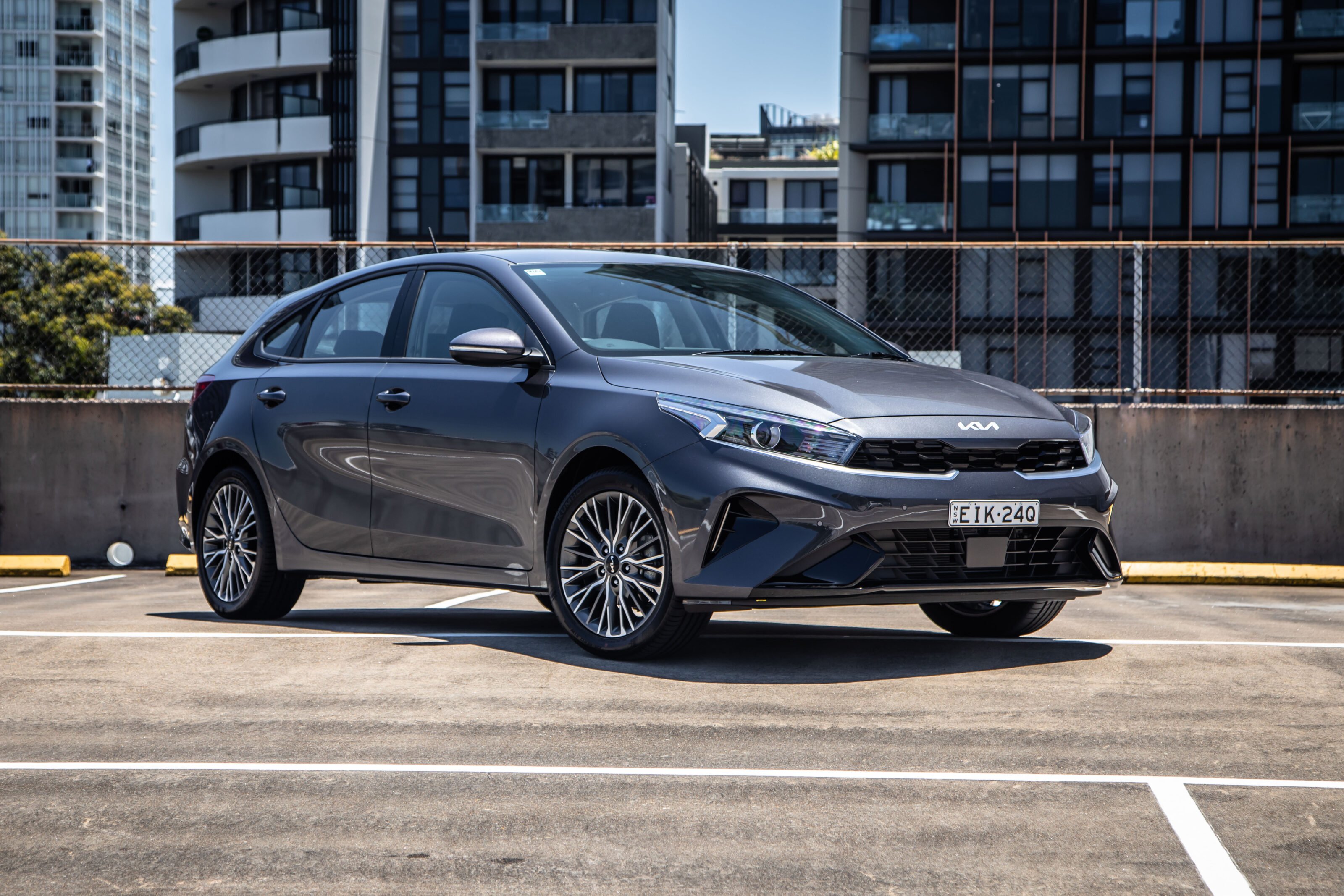
Easy to live with, easy to buy, easy to everything. I reckon if you’re not wanting the turbocharged GT-Line, the Sport is the best of all worlds. The Sport+ is mostly cosmetic stuff with few mechanical differences to really coax me to take the bait. All the 2.0-litre models are quiet and comfortable and with two of them under $30K drive-away, even with the safety pack applied (and you should…), they’re excellent value.
Add to that the seven-year warranty with the costly but capped-price servicing, it’s tricky to criticise this car when knowing who it’s for and why they’re bought in such big numbers.
2022 Kia Cerato Sport hatch specifications
| Bodyu00a0 | Five-door hatchback |
|---|---|
| Drive | FWD |
| Engine | 2.0-litre naturally-aspirated four-cylinder |
| Transmission | Six-speed automatic |
| Power | 112kW @ 6200rpm |
| Torque | 192Nm @ 4000rpm |
| Bore stroke (mm) | 81.0 x 97.0 |
| Compression ratio | 10.3 : 1.0u00a0 |
| 0-100km/h | 10 sec (estimate) |
| Fuel consumption | 7.4L/100km (combined) |
| Weight | 1345kg |
| Suspension | MacPherson strut front/Torsion beam rear |
| L/W/H | 4640mm/1800mm/1445mm |
| Wheelbase | 2700mm |
| Brakes | 280mm ventilated disc front / 262mm solid disc rear |
| Tyres | 225/45 R17 |
| Wheels | 17-inch alloy wheels (space-saver spare) |
| Price | $29,940+ DA |
Snapshot
- Ex-HRT car won the 2001 and 2002 V8 Supercars championship
- Back-to-back Bathurst 1000 wins in the same years
- Converted to VY from VX in 2003
Say “Golden Child” to any Team Red supporter and they’ll know what you’re talking about.
Holden Racing Team Chassis #045 is one of Australia’s most iconic touring cars – and now, it’s up for sale.
Having started life at the beginning of 2001 as a Holden VX Commodore, this chassis went on to win 20 Supercars races at the hands of Mark Skaife across the next three years.
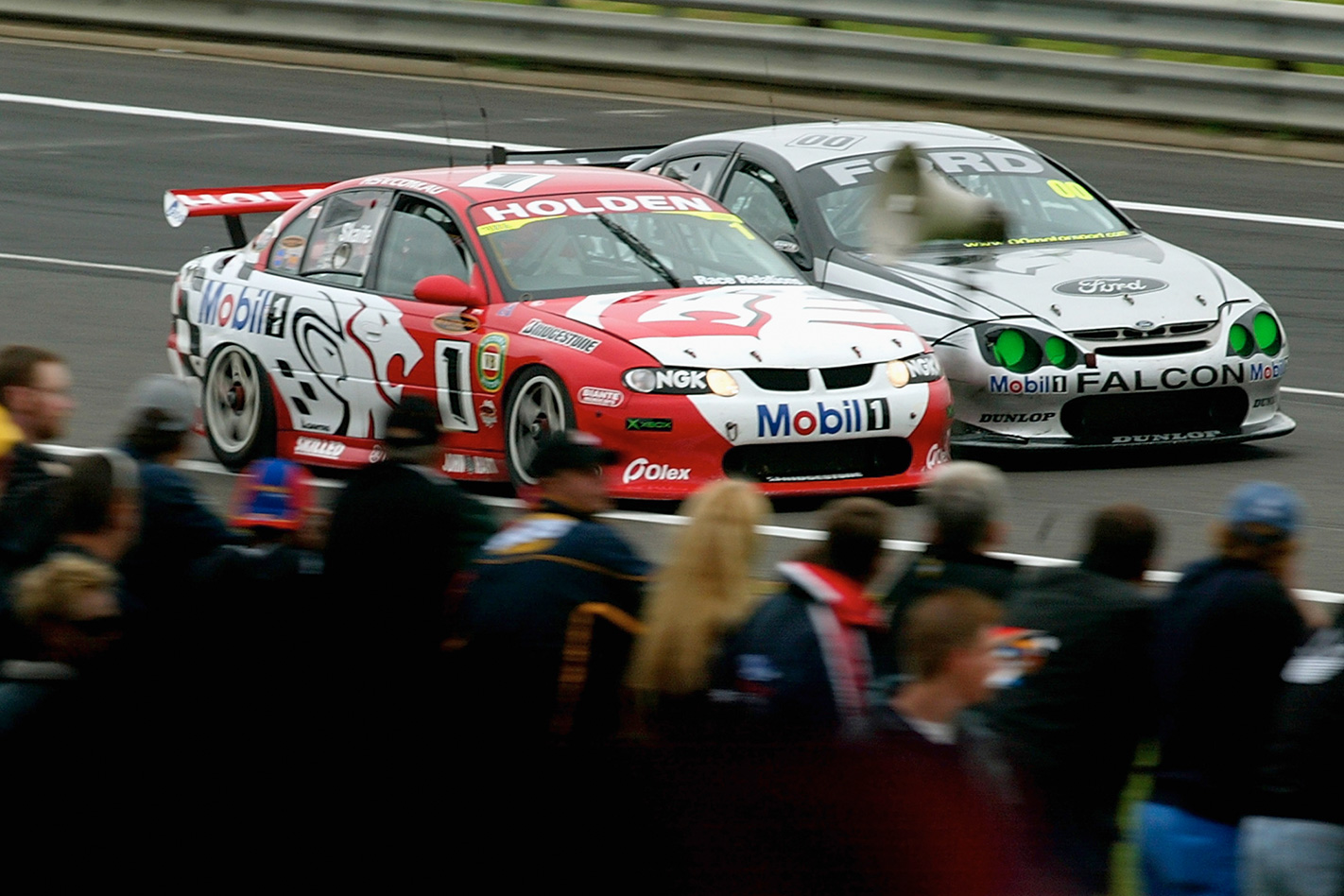
Built by the then Tom Walkinshaw-owned outfit in the Melbourne suburb of Clayton, the VX entered service for the 2001 season off the back of Skaife’s 2000 title win in a VT, going on to take four rounds that year en route to the title – including a Bathurst 1000 victory with Skaife and Tony Longhurst.
The car remained in the HRT stable for 2002 and with Skaife behind the wheel, it carried him to his fifth Australian Touring Car Championship, as well as yet another Bathurst 1000 win with Jim Richards – one of only two chassis to win the Great Race twice.
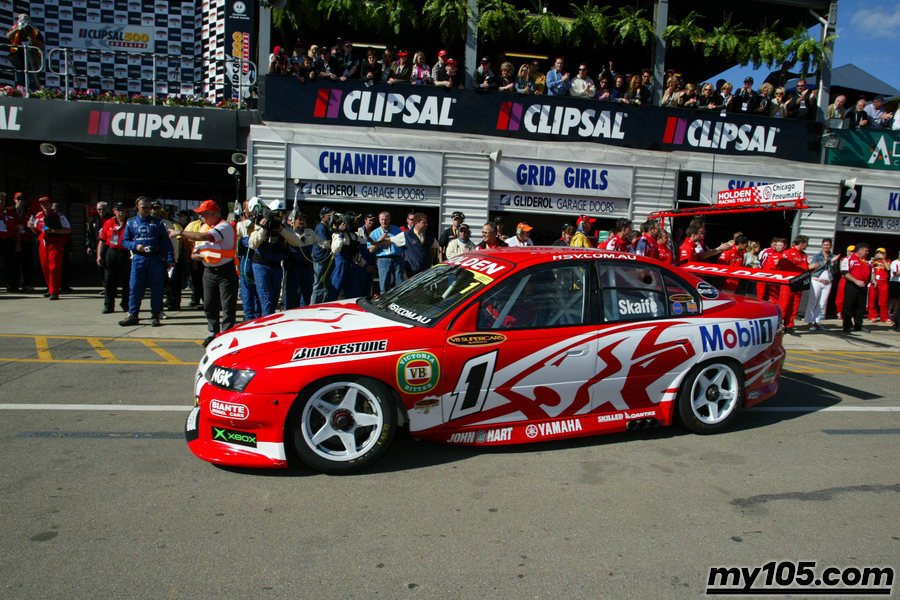
Following the move to Supercars’s “Project Blueprint” regulations for 2003, and Holden’s incoming VY Commodore hitting showrooms, the car HRT dubbed ‘Golden Child’ was one of few to receive the comprehensive update – starting the season with a bang by winning the Clipsal 500.
After a new chassis came into play just a few rounds later, ‘Golden Child’ was relegated to spare chassis status, only coming back onto the track in 2004 after Jason Plato bent the team’s second car at that year’s Bathurst 1000, with Skaife taking pole around the streets of Surfers Paradise.
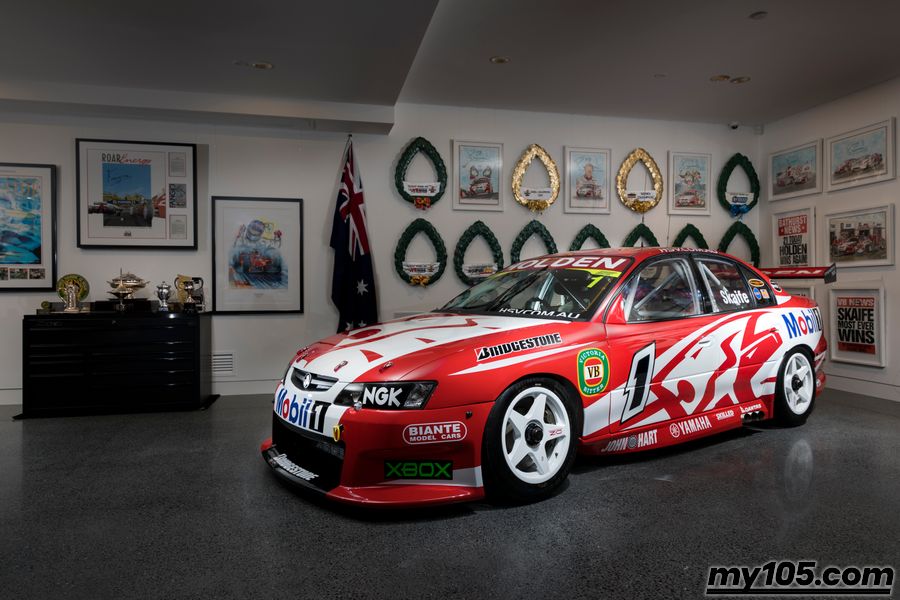
Although it has been restored in its 2003 VY livery and body, this car is still the one which helped Skaife take 20 of his 90 ATCC race wins and close out the final two championship-winning years for HRT.
There’s an added bonus for prospective buyers, too. Under the bonnet is HRT Engine 25 – the ’18-degree’ Chevrolet V8 which propelled Greg Murphy to his “Lap of the Gods” Bathurst shootout pole in 2003.
The price of this piece of Australian motorsport history? In excess of $2.8 million, or roughly three times as much as Murph’s ’03 Bathurst winner, which went up for sale in 2018.
According to the listing on My105, the car will be sold with “extensive documentation, original Chassis 045 artworks, race suits and winning laurels.”
UPDATE: A spokesperson for BMW Australia has told Wheels the last V12-powered BMW M760Li will be delivered this year.
“We can confirm that a V12 variant will not be offered in the next-generation BMW 7 Series,” a representative for the company said in a statement.
The final-edition variant will remain exclusive to the US market and won’t be offered to Australian buyers.
The story to here
BMW has announced it will end production of its V12 engine in June.
Just days after development director Frank Weber confirmed BMW would continue to develop six-cylinder and V8 engines, the company has announced it is killing off its V12 engine after 35 years of continuous production.
US buyers will be offered some of the last 12 M760i vehicles to be made, with unique badging, wheels, and a custom-made desk trophy to commemorate their purchase.
With more than 80 colours to choose from the BMW Individual catalogue, it’s easy for each of the 12 owners to have a one-of-one paint job for their special-edition model.
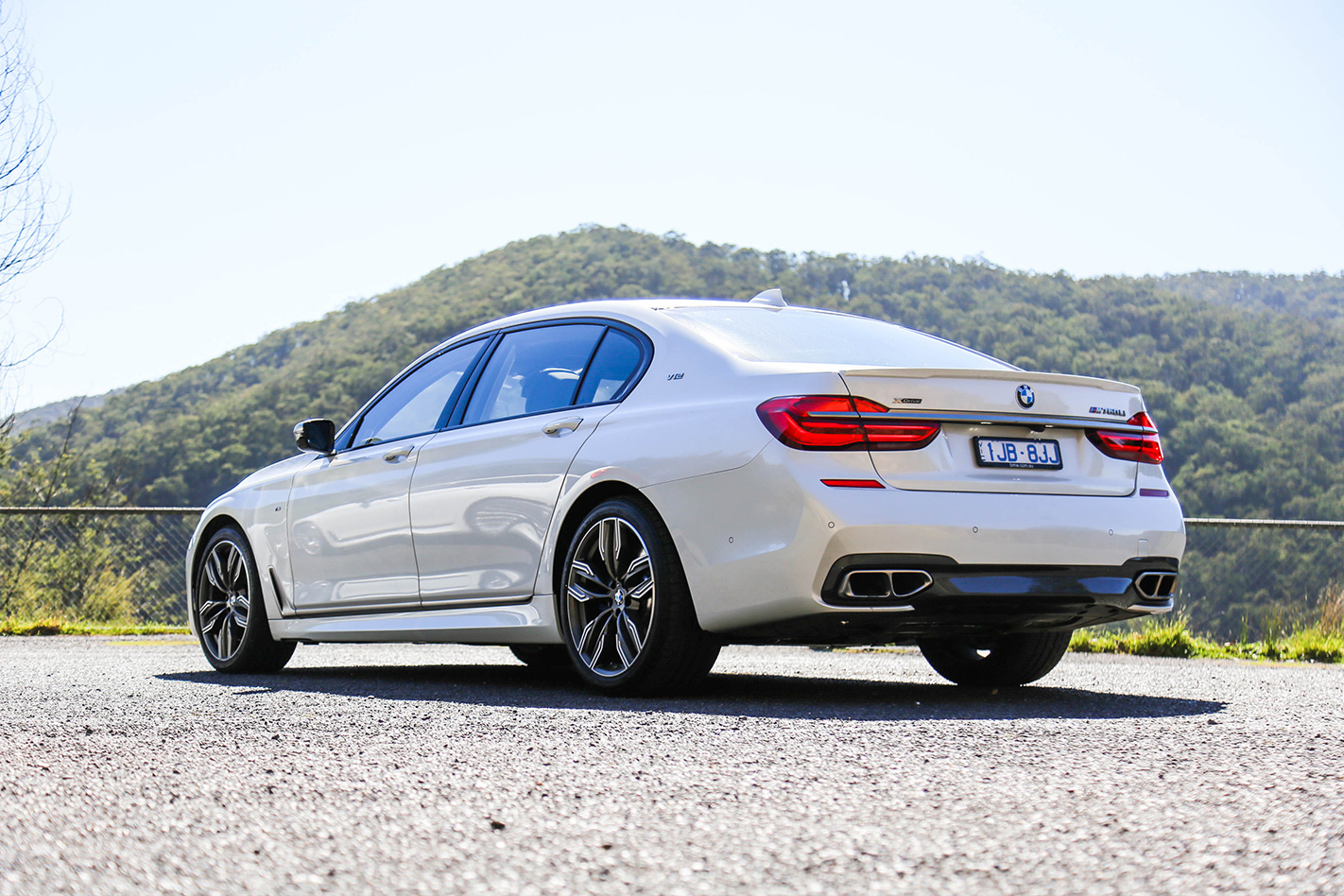
After more than three decades of evolution, the 448kW/850Nm 6.6-litre N74 twin-turbo V12 found in the 2022 BMW G12 760Li xDrive is roughly double the performance of BMW’s first 12-cylinder engine.
BMW introduced the 5.0-litre M70 V12 in the E32 750iL back in 1987, producing 220kW and 450Nm – big numbers for the era, considering a Holden VL Commodore 5.0-litre V8 of the same year was putting out 122kW and 323Nm.
The M70 gave birth to the S70, thanks to the engineers at BMW M, with the now 5.6-litre V12 making 279kW and 550Nm in the E31 850CSi.
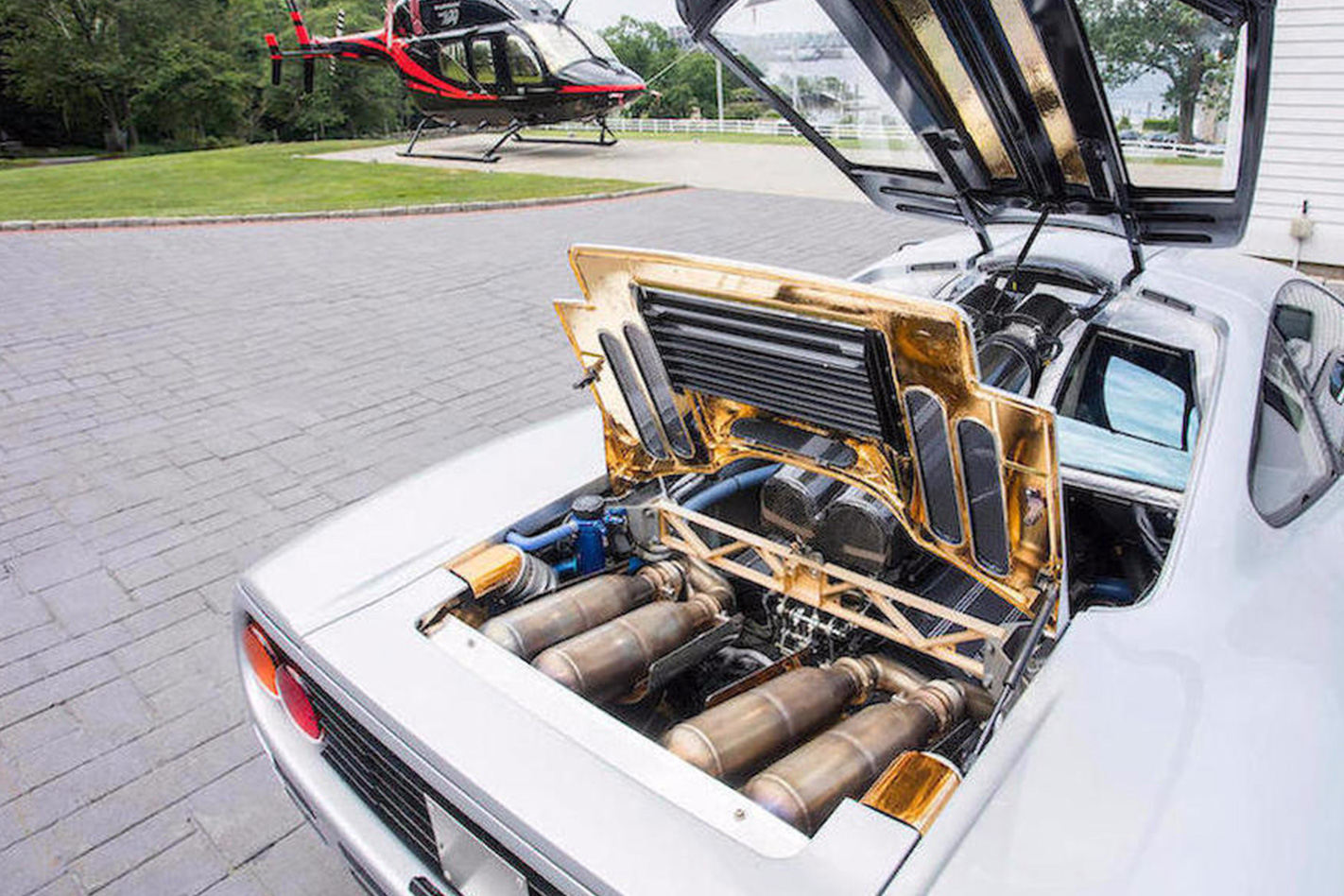
The S70/2 became arguably the best-known BMW V12, making its way into the back of the McLaren F1, and producing 461kW and 650Nm.
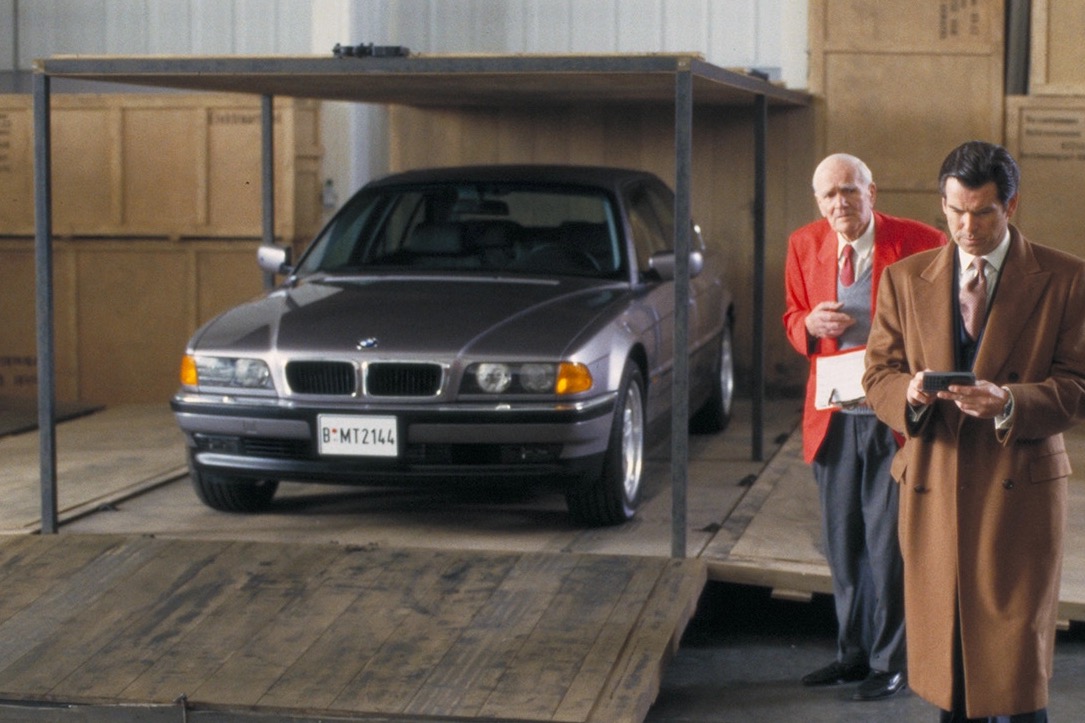
BMW produced the M73 between 1993 and 2002 – powering James Bond’s E38 750iL in the 1997 film Tomorrow Never Dies – as well as making its way into the Rolls-Royce Silver Seraph.
The N73 was the first production V12 to use direct injection, with two versions of the engine being made between 2003 and 2016 to fit both the E65/E66 7 Series and the Rolls-Royce Phantom. It was also the first production V12 to accept both petrol and hydrogen, with the BMW Hydrogen 7 made between 2005 and 2007.
The final V12 to be made by BMW is the N74, produced from 2008 until now, and also fitted to the multiple 7 Series models, as well as selected Rolls-Royce models.
While the 12-cylinder engine will no longer be produced for BMW vehicles, Rolls-Royce is expected to continue to offer the V12 in some markets until the luxury brand moves to all-electric powertrains by 2030.
Debate over the greatest V8 engines ever built is sure to prompt an impassioned response from any motoring enthusiast.
Any list of spectacular bent-eights will no doubt include the usual suspects of Ferrari’s free-breathing F136, Ford’s iconic modular family, Rolls-Royce and Bentley’s indomitable L Series, perhaps even Mercedes-AMG’s endearing M177/M178.
However, very few would take the time to single out the 4.0-litre TFSI twin-turbo V8 from Volkswagen Group. We think that needs to change.
Let us take this moment to sing the praises of modern motoring’s most underrated engine.
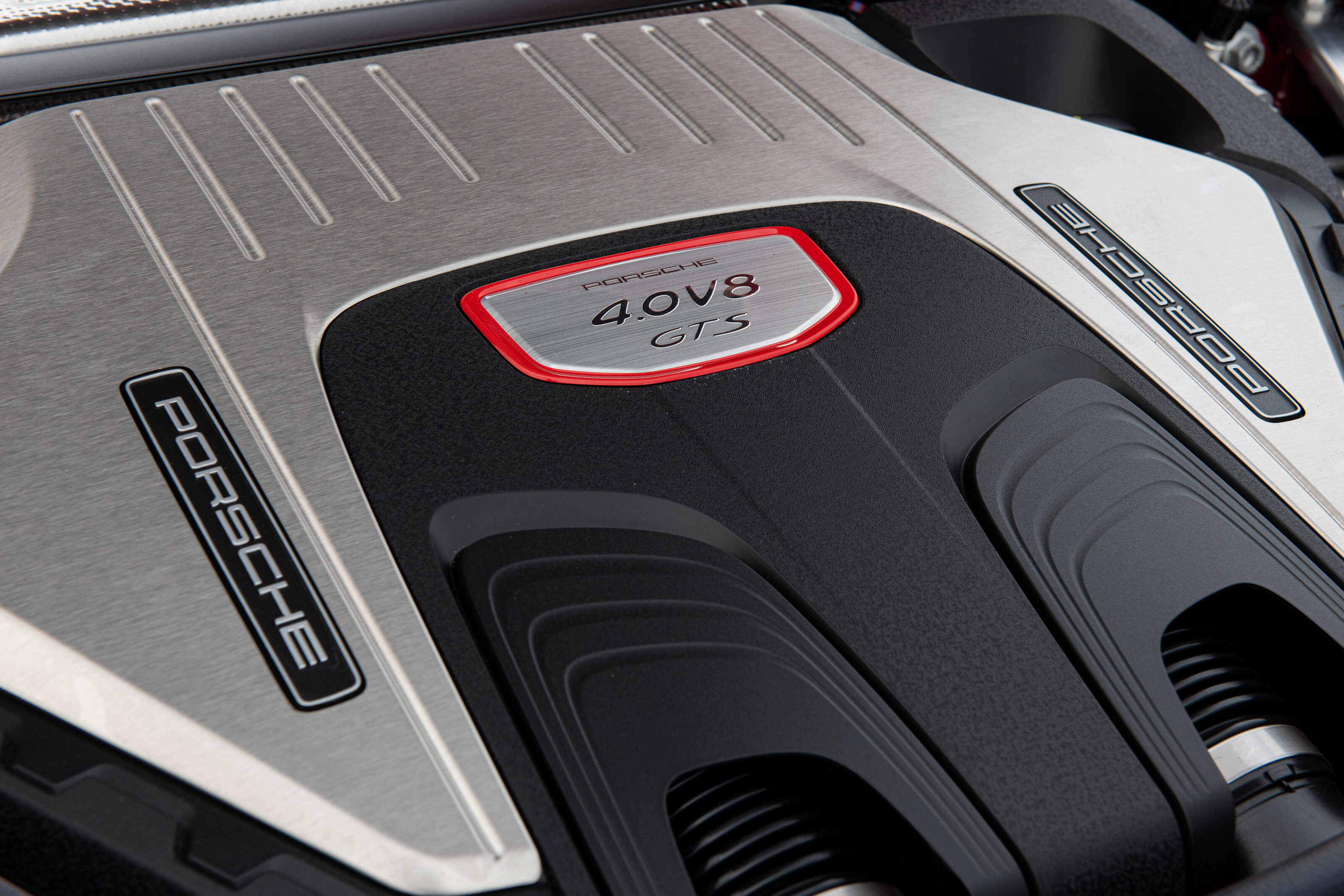
The mechanical construction of Volkswagen Group’s most powerful V8 is rather straightforward. Using 90mm bore spacing, the 4.0-litre unit is a modular version of the 3.0-litre V6 found elsewhere within the automotive giant’s family of luxury brands. Using a 90-degree vee angle, the 4.0-litre unit places a pair of twin-scroll turbochargers within the spread of its cylinder banks, with a bore x stroke of 84.5mm x 89.0mm.
The 4.0 TFSI unit can be found in a range of models, from Audi’s A8 saloon, to the previous generation S6/S7 twins and their RS counterparts, along with the RS Q8, plus Bentley Continental GT and Bentayga. Porsche use the bent-eight in its Panamera and Cayenne ranges, while the unit is at its most powerful when fitted to the Lamborghini Urus.
Lamborghini’s tune of the engine increases outputs to 478kW and 850Nm, with the V8’s most docile production guise being 309kW and 550Nm.
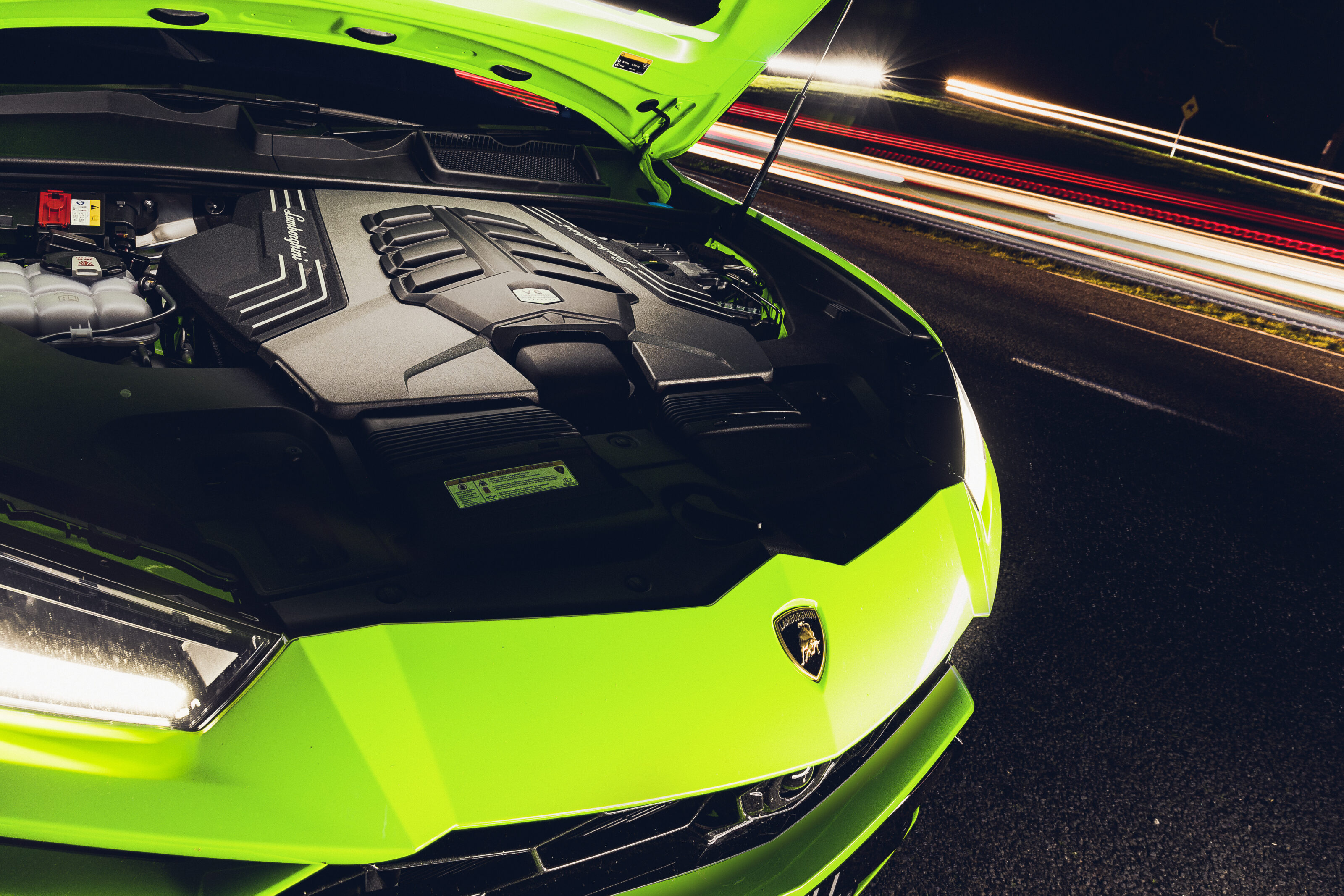
There is something capable but benign about VAG’s 4.0 TFSI unit – perhaps explaining its frequent omission from great V8 debates. It does everything you want of it on paper, with ample low-down torque, a satisfying exhaust burble, and plenty of top-end poke, but it never really stirs the soul.
Holding onto that narrow focus is a disservice to the versatile V8, which nails the brief for modern ICE engines. It can and has been fitted to a range of models, has a wide enough bandwidth of power to be used in for both high and limited production vehicles, and perhaps most importantly can sip fuel at a rate that appeases ever tightening emission regulations.
However, the 4.0 TFSI could soon go from flying under the radar, to dominating the world’s biggest endurance race.
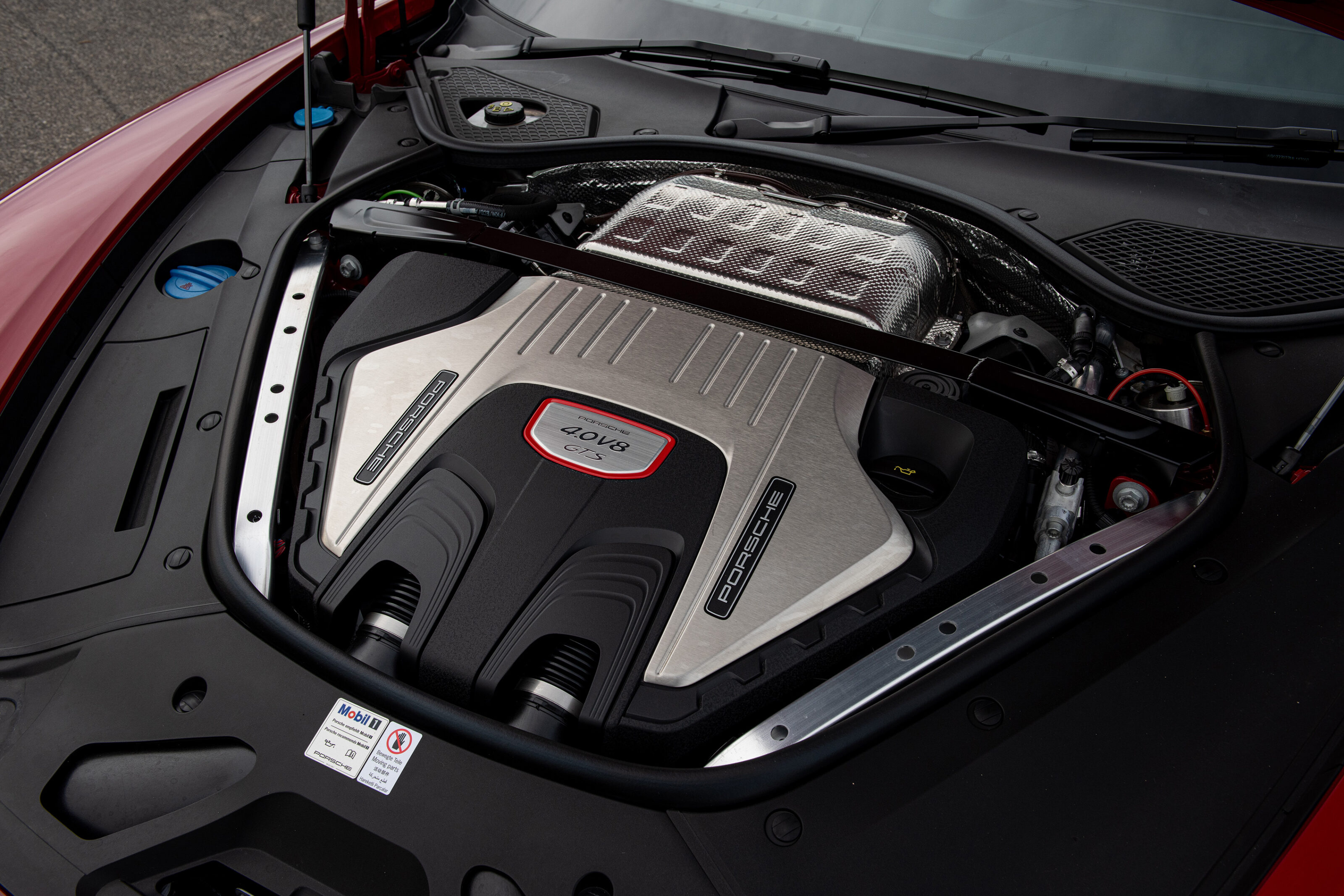
Both Audi and Porsche are rumoured to be tweaking the engine for use in their LMDh prototype race cars.
While each manufacturer’s final choice for their LMDh cars is yet to be officially confirmed, in March last year Porsche Factory Motorsport Director Pascal Zurlinden told RACER “we have a portfolio for many engines on the road car side which could be an option.”
Adding: “the decision is done and it will be something great, I’m convinced of it.”
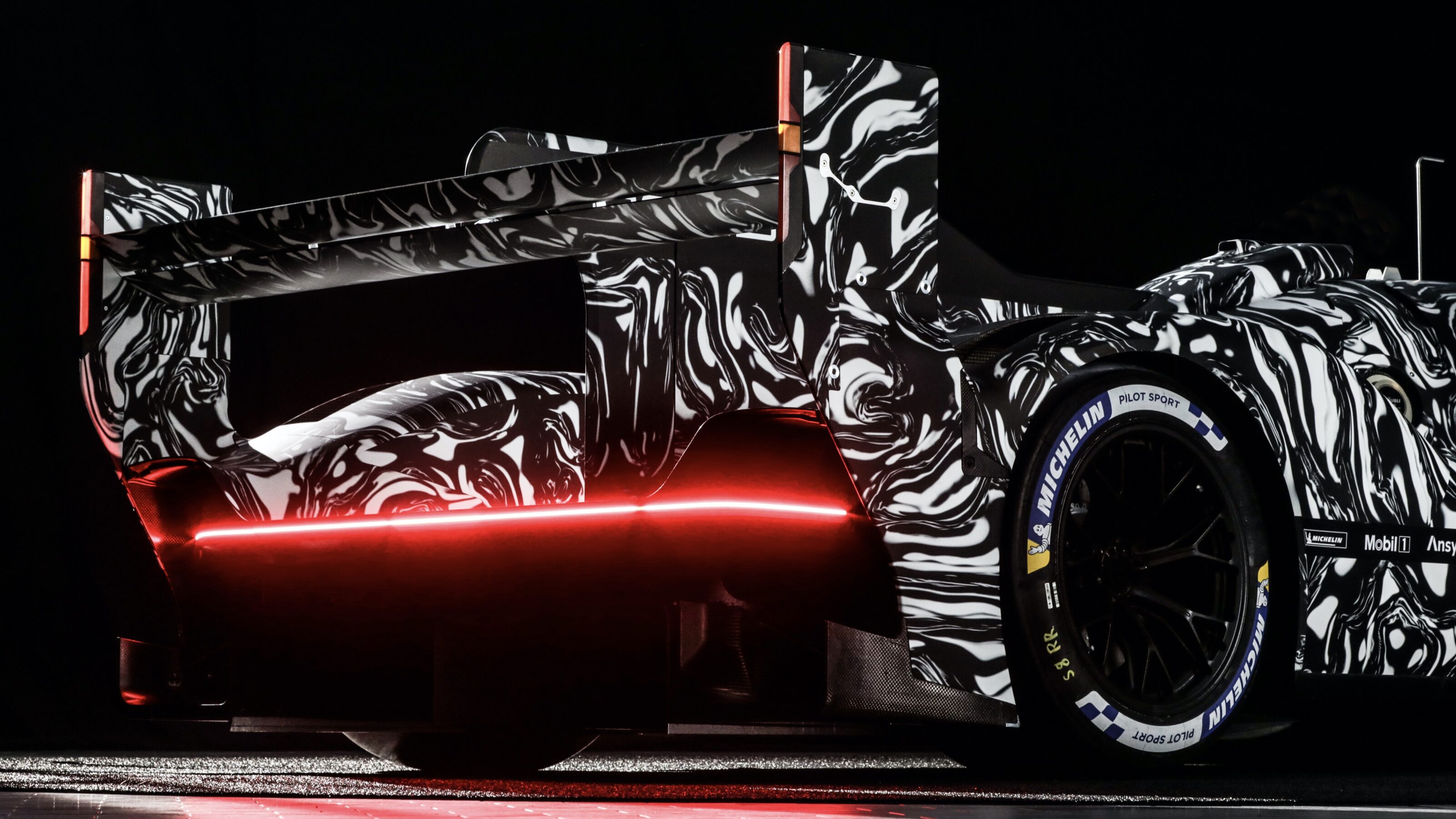
Porsche recently began testing its LMDh prototype, releasing footage that contains what sounds to our ears like a V8 engine note. Here’s hoping the 4.0 TFSI gets its moment in the sun.
So, to recap: the 4.0-litre TFSI has kept bent-eights firing across VAG’s family of brands where others are ditching cylinders with fervour, and is about to power Porsche and Audi’s return to top-flight competition at Le Mans. What more could be asked of an engine?
It’s time we all give the 4.0 TFSI V8 the respect it deserves.
The charge towards electrification across Europe is well and truly underway, as electric vehicle sales reached a milestone to close out 2021.
According to Automotive News Europe, western Europe recorded an EV market share of 21 per cent throughout December, beating diesel-powered vehicle sales for the first time ever by just two per cent.
While sales for diesels has been declining throughout the year – down to 2.3 million registrations at the end of September, a 26 per cent drop on the year prior – electric vehicle registrations went through a sharp increase, jumping by around 91 per cent over 2020 levels to 801,025 at the conclusion of the third quarter.
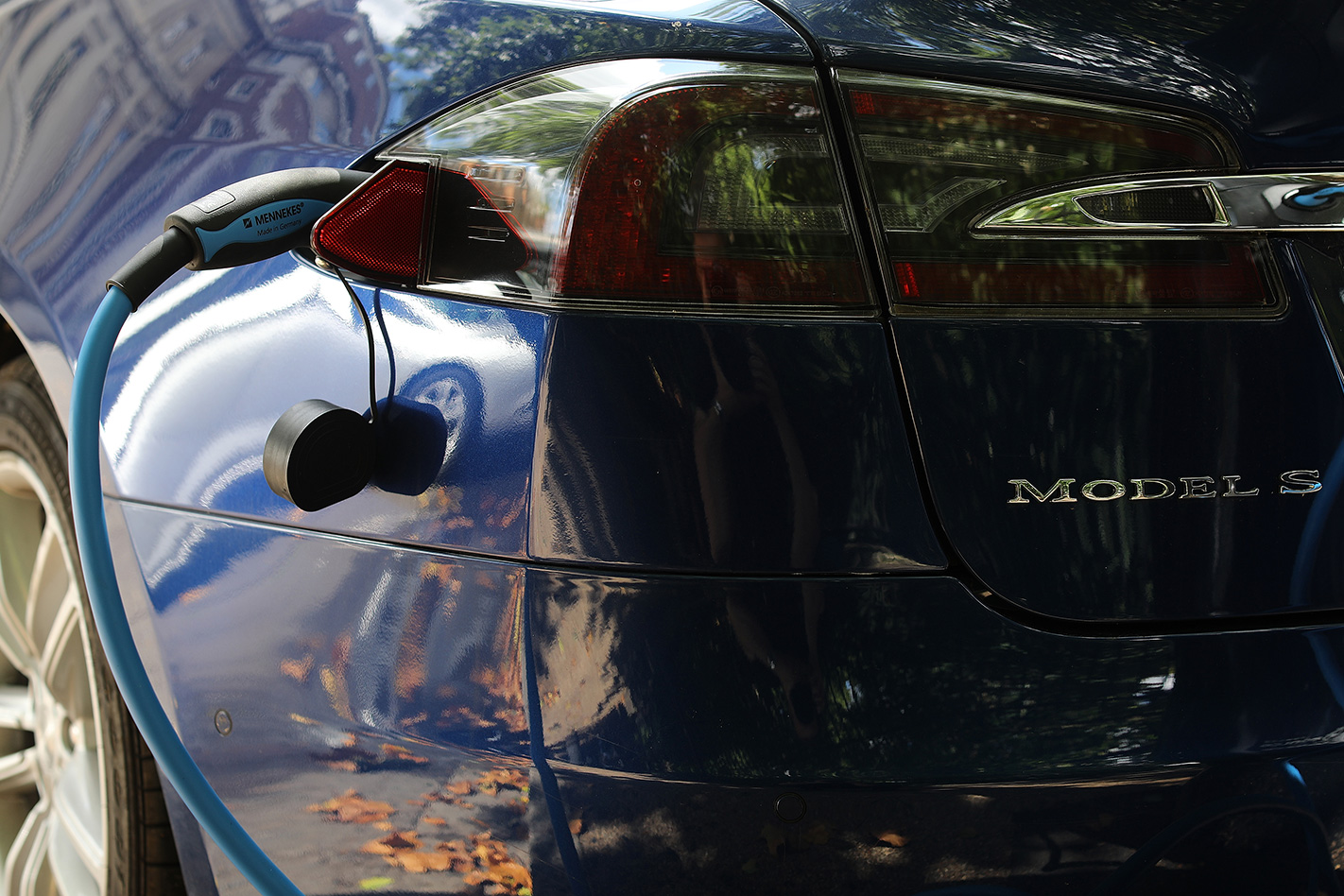
The past few years have shown a steady decrease in the number of diesel vehicles sold across Europe thanks to emissions charges and fleet emissions targets, while the EV boom can be attributed to a number of incentives across multiple EU nations, as well as an increased level of investment in infrastructure.
Despite Australia’s recorded EV sales for 2021 making up just 0.49 per cent of the local market – and only 0.64 per cent of those in Europe – the local desire for electric cars saw a 191 per cent increase over 2020, excluding Tesla which is understood to have shifted at least 10,000 units of its Model 3.
Perhaps European motorists are also buying into EVs early, as the European Union looks to put a ban on internal combustion engine production from 2035 – a move which has forced manufacturers and governments to dedicate more funds towards EV infrastructure.
Snapshot
- Limited edition 911 celebrates 50 years of Porsche Design
- 911 Edition 50 Years Porsche Design is based on the Targa 4 GTS
- Upgrades and special edition watch set buyers back $426,900
The in-house design studio of Porsche is celebrating its golden jubilee, with Stuttgart releasing a special-edition 911 to celebrate.
Commemorating 50 years of Porsche Design, the 911 Edition 50Y Porsche Design is limited to just 750 units worldwide, with a handful expected to land in Australia in the second half of 2022 from $426,900 before on-road costs.
Based on the $366,900 Targa 4 GTS, the Porsche Design Edition’s upgrades includes an all-black paint job, a staggered set of satin black wheels from the 911 Turbo – 20-inch front and 21-inch rear – while the brake calipers and Targa bar also get the black treatment.
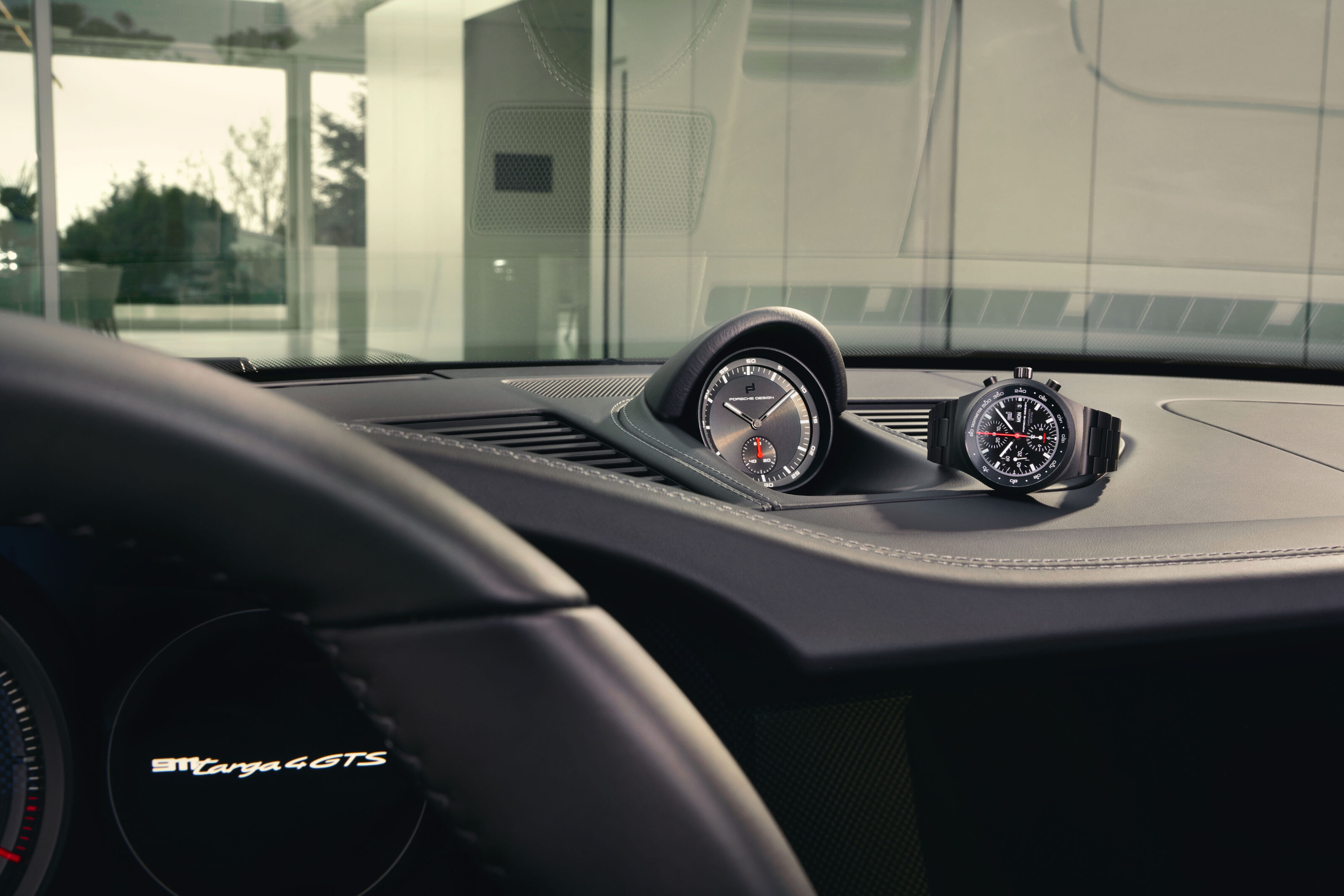
Classic checked Sport-Texcentre panels sit inside the 18-way electronically adjustable memory seats, tying in with the slate grey seatbelts and steering wheel centre market. A red second hand on its Sport Chrono Package Subsecond clock also differentiates the limited-run model from its standard counterpart.
Harking back to the 1972 Chronograph I watch, designed by Ferdinand Alexander Porsche, the German manufacturer also restored a 1972 911 S 2.4 Targa to the same specifications as the 50th year edition – black on black.
“The vision was to produce a historical counterpart to the new 911 Edition 50Y Porsche Design,” said Head of Porsche Classic, Ulrike Lutz.“With the aid of the new Sonderwunsch (special wishes) programme, we were able to implement the idea of a unique pair of vehicles. The job of the designers and works restorers was to carefully transfer the specifications of the new car to the classic.”
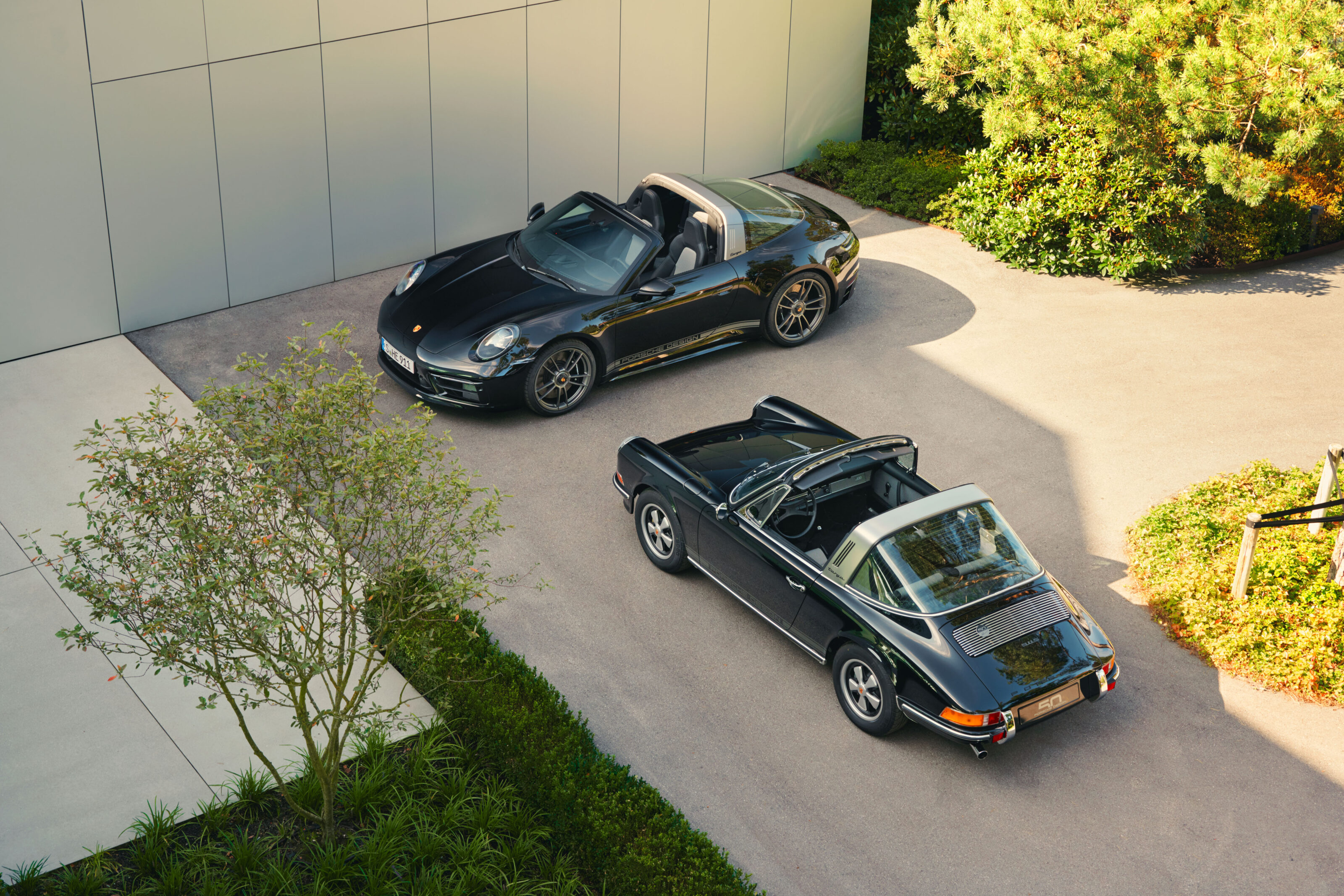
There’s no performance changes for the Porsche Design variant, retaining the base Targa 4 GTS’s twin-turbo flat-six, producing 353kW and 570Nm which is transmitted to all four wheels through an eight-speed dual-clutch automatic gearbox.
Nissan Australia has made it easier for man’s best friend to come along for the ride, launching its Dog Pack accessories for the Qashqai, X-Trail and Patrol.
Available for our four-legged friends both great and small, the base pack includes a boot tray or mat (depending on the model), a reflective boot-lip protector, a four-piece dog travel set (including an easy-store bowl, a lead, a waste-bag holder and a sealable food bag), an over-seat cargo-area organiser and an all-terrain dog bed.
Starting out at $339 for small or medium dogs and $353 for larger canines, Nissan also offers a separate ramp, which can be added for an extra $132 as well as a cargo barrier – available at a $699 premium over the standard pack.

Nissan Australia’s managing director, Mark Paterson, said introducing the Dog Pack was a natural fit for the brand’s customers, but he stopped short of saying they’d be barking mad to miss out.
“For so many of us, our pets are like a member of the family, and now it’s easier than ever to bring your dog along with you on your next road-trip, whether to the local park or to the other side of the country,” said Paterson.
“The Nissan Dog Pack puts your furry friend front and centre, with ramps, comfortable beds, travel bowls for food and water and new ways to organise your cargo area. Both you and your pet will love our new accessories.”
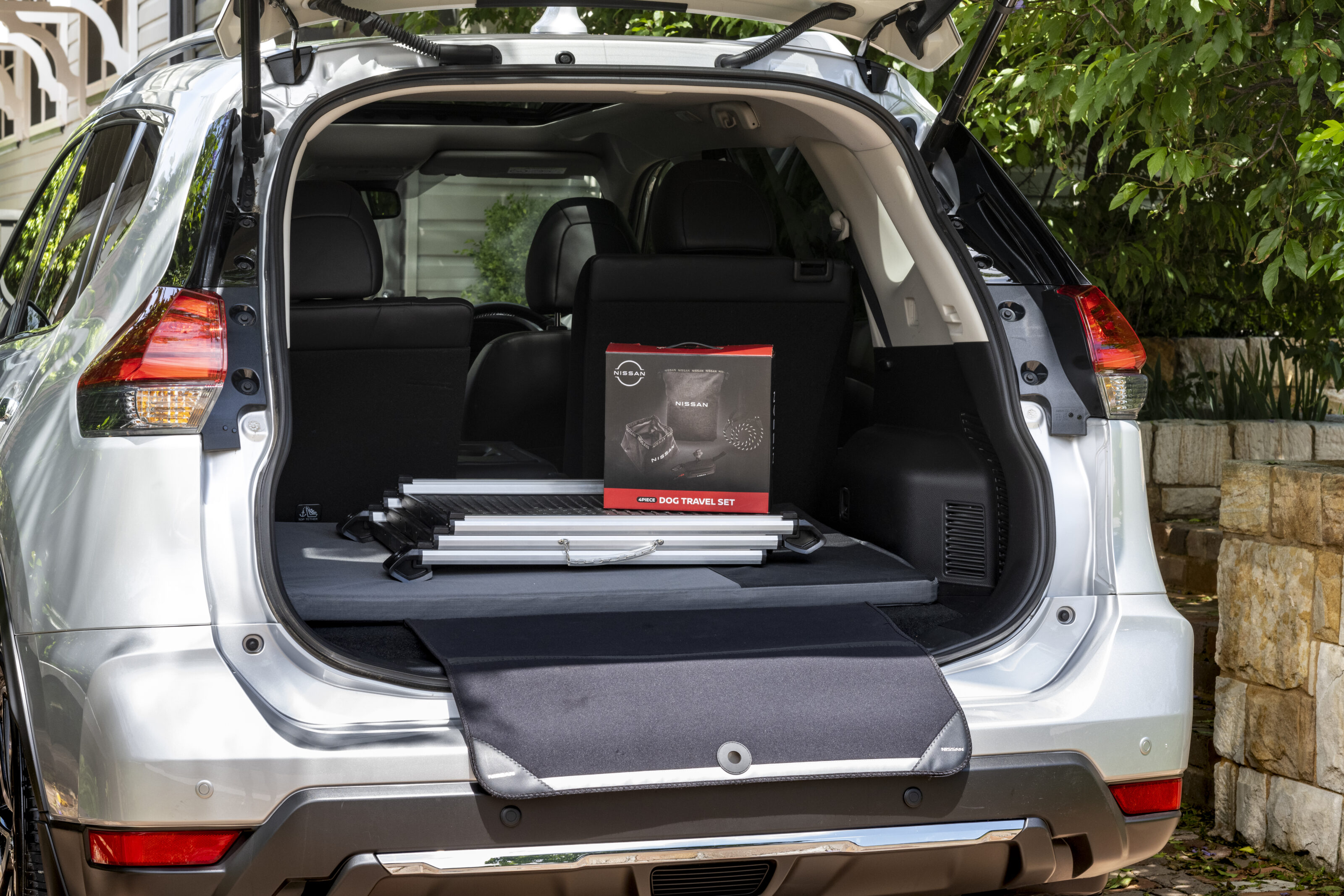
Available to order from Nissan dealers, the Dog Pack is on sale now.
Prices include GST.
| Nissan Dog Pack | Small/medium dog (MSRP) | Large dog (MSRP) |
|---|---|---|
| Nissan Dog Packu00a0 | From $339 | From $353 |
| Nissan Dog Pack + ramp | From $471 | From $485 |
| Nissan Dog Pack + cargo barrier | From $1038 | From $1052 |
| Nissan Dog Pack + ramp + cargo barrieru00a0 | From $1201 | From $1215 |
Hyundai will spend $1.7 million on a new hydrogen refuelling facility located at its corporate headquarters in Sydney.
The new hydrogen fuel station will replace the existing bowsers which have been in operation since 2014.
Working with Australian gas technology company ENGV, the Hyundai facility will produce its own hydrogen on site, rather than having the fuel delivered as in previous years.
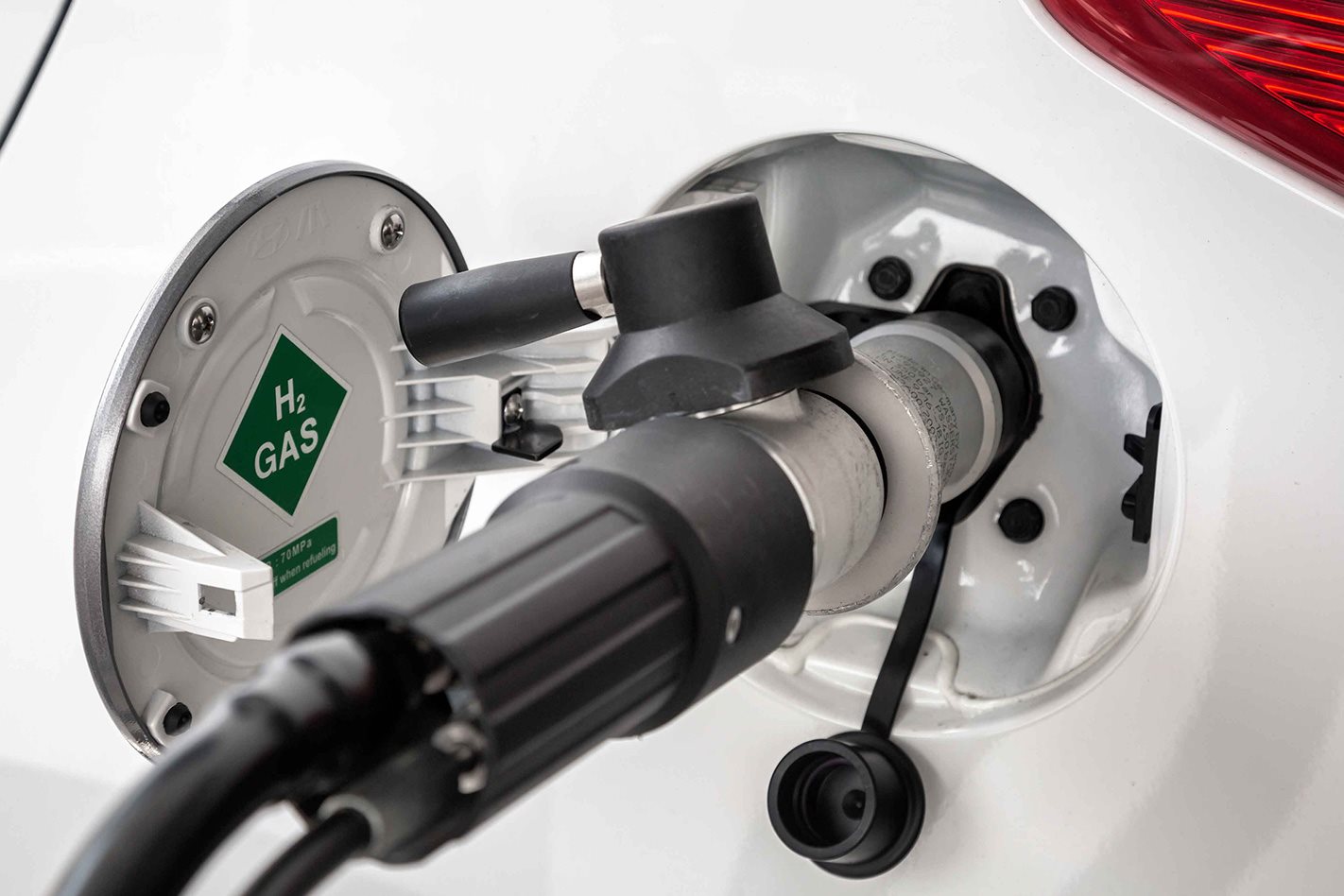
Up to 20kg of hydrogen will be produced each day via an integrated electrolyser, delivering up to 700bar of refuelling capability.
Hyundai says its hydrogen-powered Nexo can be filled in less than five minutes, providing a driving range of up to 666km (WLTP) – or roughly equivalent to a petrol car.
“This investment forms part of Hyundai’s long-term commitment to a zero-emission future for Australia,” the company’s newly-appointed CEO Ted Lee said at the announcement.
“Hydrogen fuel cell mobility is anticipated to play an integral role in the country’s transition to cleaner drivetrains and we intend to help lay the stepping stones toward making this vision a reality.”
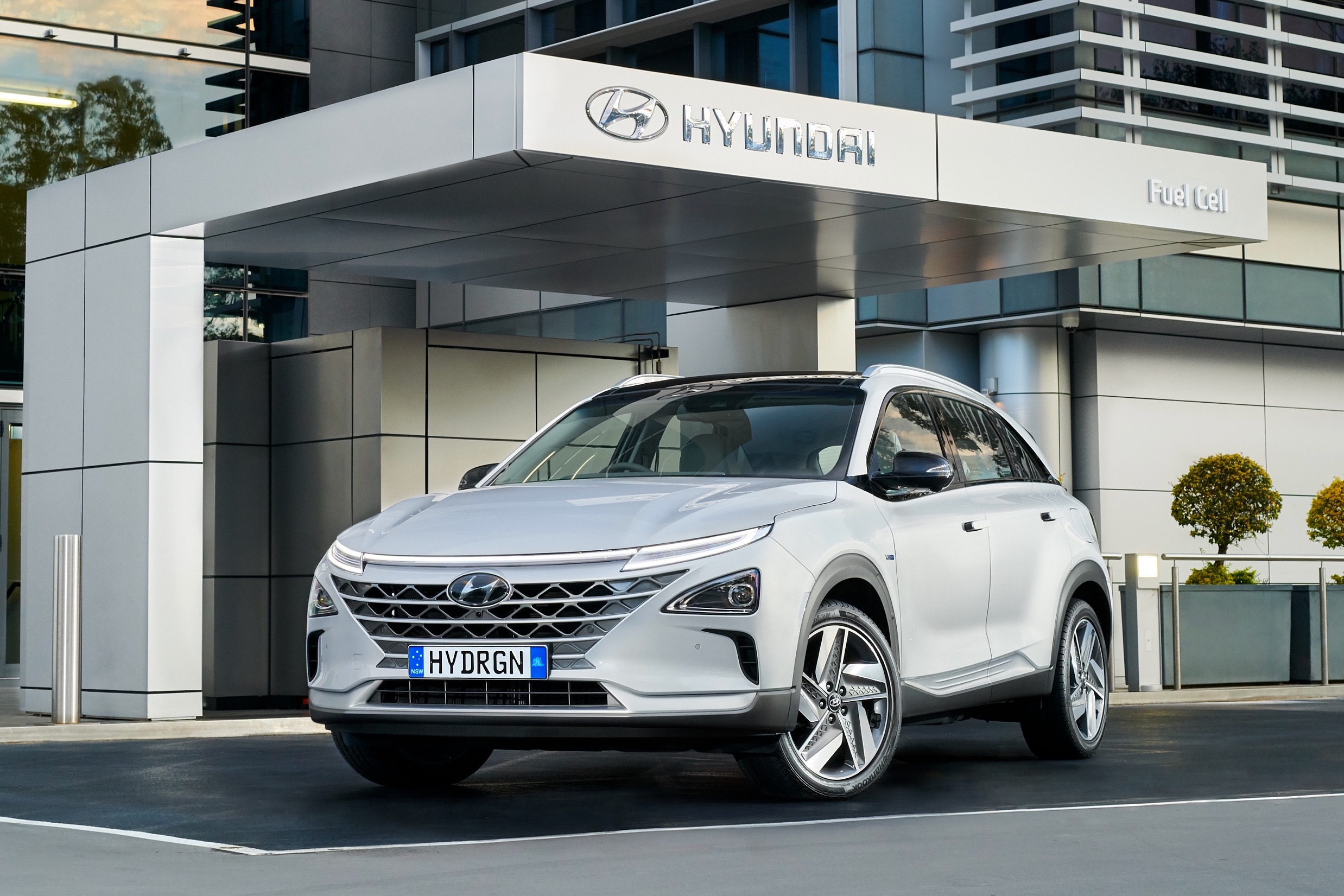
The new station will join Hyundai’s hydrogen refuelling facilities in Canberra and Brisbane, and Toyota’s facility at its Melbourne headquarters.
While Toyota’s hydrogen fuel-cell Mirai was offered on a lease to selected customers, the Hyundai Nexo has so far only been made available to fleet buyers.
Electric vehicle leaders and industry figures are calling on the Federal Government to offer greater incentives on electrified trucks to ease pressure caused by the ongoing AdBlue shortage.
Critical supplies of the diesel exhaust fluid are expected to increase in the coming weeks and months, following the announcement of additional manufacturing at a Brisbane fertiliser facility operated by company Incitec Pivot.
UPDATE, January 25, 2022: Relief in sight, as large AdBlue delivery begins across Australia
Though representatives from trucking and supply-chain groups have told WhichCar they all support the news of an increased supply of AdBlue, the Australian Trucking Association (ATA) and the Electric Vehicle Council (EVC) have gone a step further and encouraged the Government to do more to increase the number of electric trucks on our roads.
“The AdBlue shortage crisis was a potent warning about our extreme fuel insecurity,” EVC CEO Behyad Jafari said.
“Why should Australia be dependent on China and the Middle East to keep itself moving when we could be using homegrown power? Being able to power our supply chains with local electricity is surely a national sovereignty imperative.”
The ATA and EVC have put together policy recommendations, which they say will increase the number of electric commercial vehicles offered by manufacturers – as well as the amount purchased by operators.
“We need the Government to read these recommendations and get moving fast. If we implement them swiftly the benefits to Australian trucking, our economy, and our environment will be truly massive,” Jafari said.
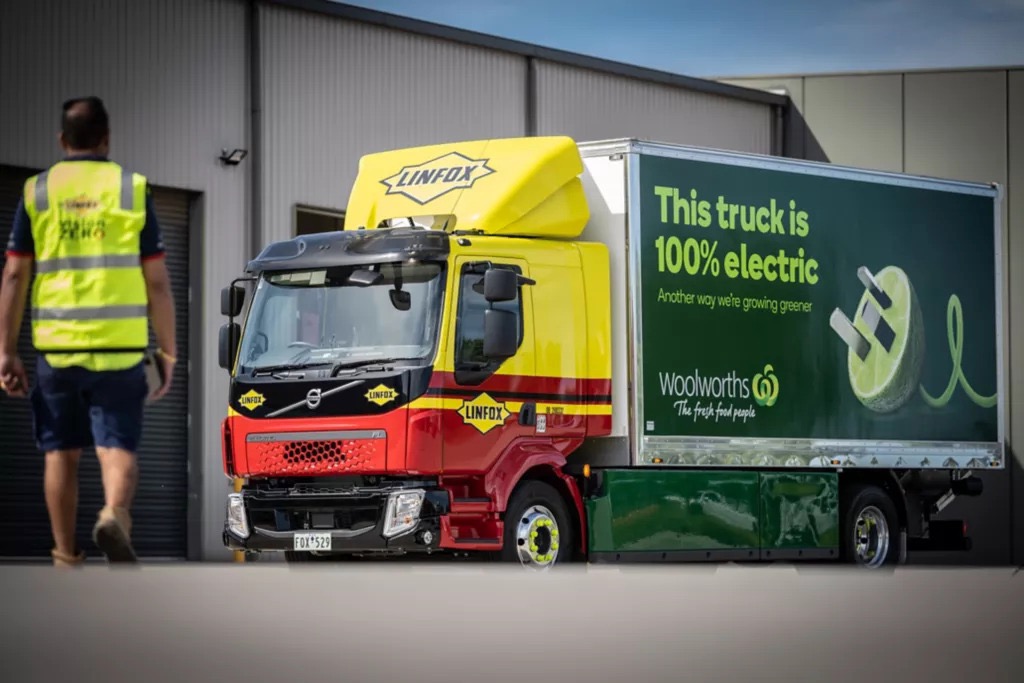
ATA Chair David Smith says the switch to electric benefits the operator, too: “It costs about $117 to fuel a diesel truck for 300 kilometres, but just $18 for an electric truck.”
The joint statement says Australia only receives 14 of the 58 electric trucks currently made around the world, with Government policies causing many of the roadblocks.
“If Australia gets left behind on the transition to electric and zero emission trucks, we risk our supply chains and exporters getting stuck with high, globally uncompetitive per-kilometre freight costs,” Smith said.
“Trucking operators face a number of barriers to buy and use an electric truck and these must be addressed to lower freight costs, improve fuel security and reduce emissions.”
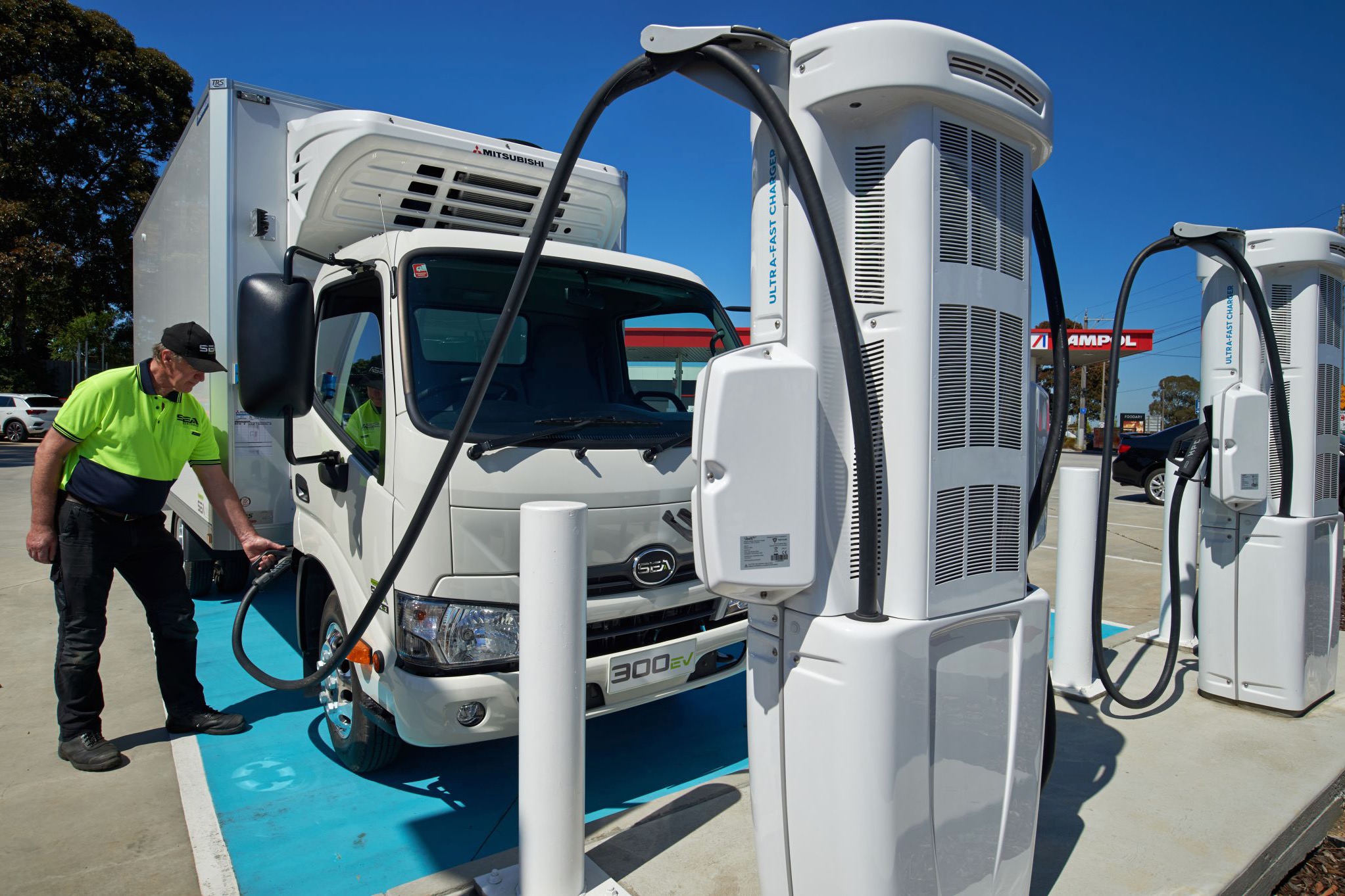
While not specifically addressing the need to incentivise electric trucks, the Government told WhichCar “Australia currently has sufficient volumes of AdBlue to meet our needs” and “decisive action to support Incitec Pivot has seen a rapid ramp up of AdBlue production”.
“The Australian Government continues to work together with industry to ensure that our vital trucking, mining and agricultural industries remain fully supplied with AdBlue following the unexpected withdrawal of Chinese supply,” a spokesperson for the Minister for Industry, Energy, and Emissions Reduction Angus Taylor added.
Snapshot
- List price of 2022 Golf R reduced by $1000
- Harmon Kardon sound system now an optional extra
- Mk8 R set to arrive in April
Volkswagen Australia has cut $1000 off the list price of its upcoming Golf R to ensure deliveries of the hot hatch aren’t delayed.
Slated to launch in local dealerships from April, the Mk8 Golf R has undergone a second price cut before it has even arrived, with the hatchback and wagon now on sale for $65,990 and $68,990 respectively, before on-road costs.
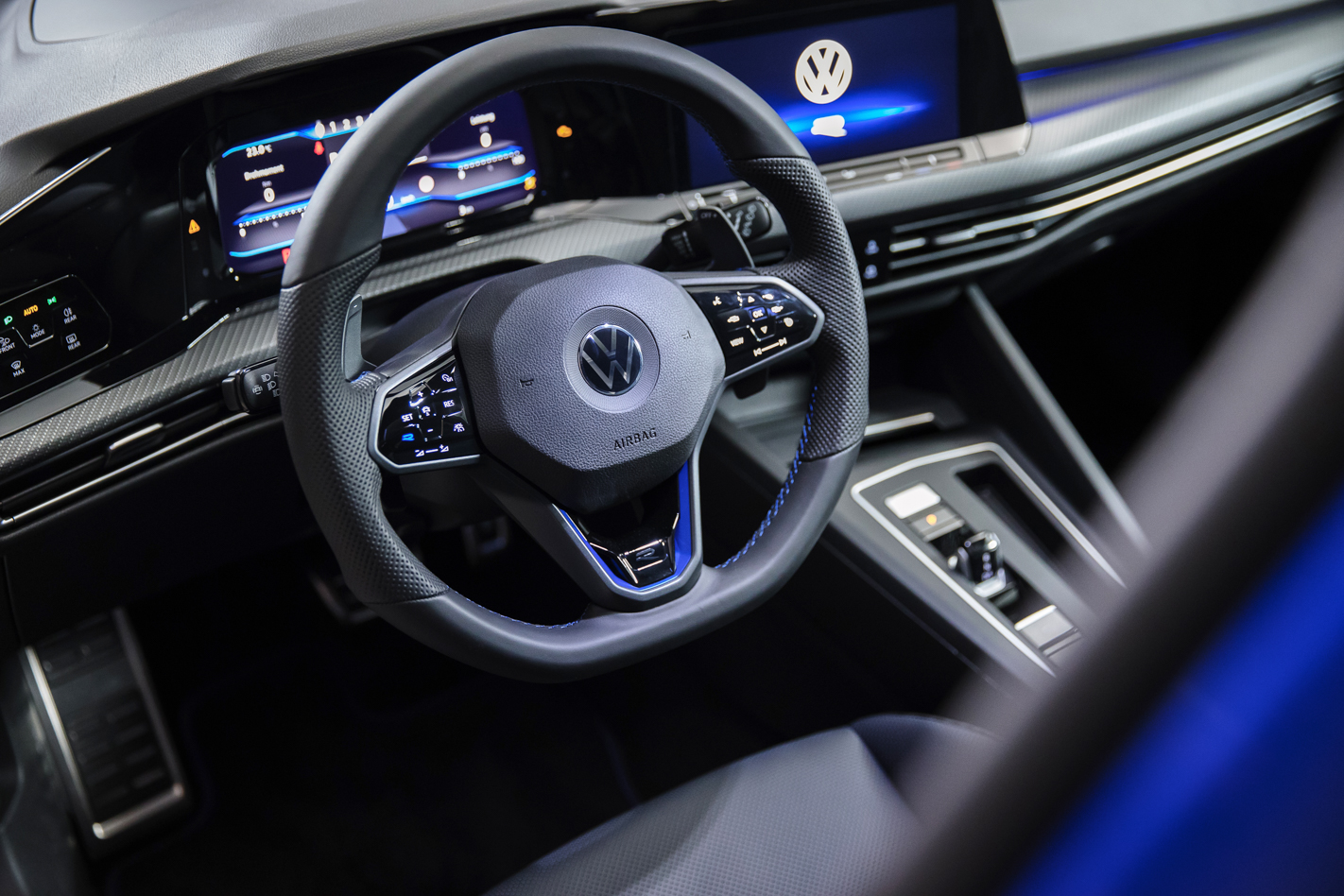
However, the decreased price comes at a cost, as production issues thanks to the on-going semiconductor shortage have resulted in the standard-fit Harman Kardon sound systems becoming temporarily unavailable.
UPDATE: The new Golf R is now on sale in Australia. See our fresh coverage at the links below
The story to here
Normally a $1500 extra for the Golf Life, R-Line and GTI, the Harman Kardon unit is a 480-watt sound system, utilising a 12-channel amplifier and nine speakers to deliver a premium audio experience over the base six-speaker setup.
The local arm of the manufacturer says a number of Australia-bound Golf Rs have been fitted with the Harman Kardon system, although it has now been taken off the list of standard equipment for the range-topping Golf, available as a $1000 option for all new buyers.
“With more than 7000 expressions of interest in the new R range and in excess of 1000 deposits, our foremost intention is to meet rapidly growing customer demand,” said Michal Szaniecki, Brand Director of Volkswagen Passenger Vehicles.
“Initially both versions of the Golf R will be offered at the revised RRP without Harmon Kardon, and with [it] at $66,990 for the hatchback and $69,990 for the Wagon. This, and the choice of a sunroof, are the only two options on the Mk8 Golf R.”
The aforementioned sunroof sets buyers back an extra $1900 when fitted to the hatchback and $2000 on the wagon, bringing the price range between a base Golf R hatch ($65,990) and fully-optioned wagon ($71,990) to $6000.
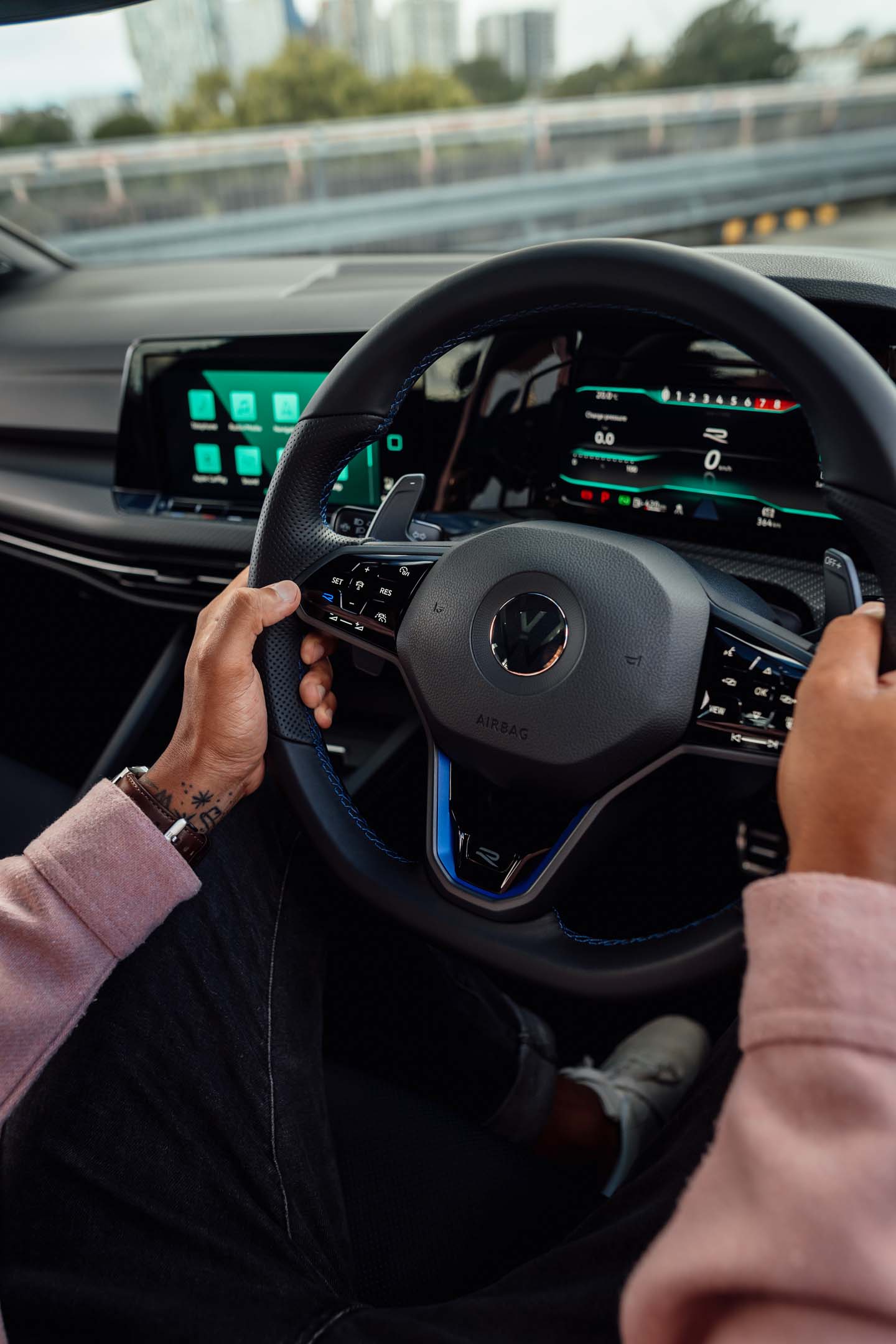
Even at the reduced price point, the 2022 Golf R is $10,000 more than its Mk7.5 predecessor, last updated in 2020 with a list price of $55,990, before on-road costs.
Despite lacking the Harmon Kardon system as standard equipment, the Golf R will continue to pack its biggest punch yet with the latest iteration of the EA888 2.0-litre, turbocharged four-cylinder engine producing 235kW and 400Nm. Meanwhile, the wagon scores an extra 20Nm thanks to its petrol particulate filter.
Volkswagen had initially planned to give both hatch and wagon variants the full-fat, 420Nm engine but was forced to adopt the less potent hatch due to supply constraints, dropping its pre-sound system shortage price from $67,990 to $66,990.
