
Snapshot
- 2021 Mercedes-Benz Sprinter recalled
- An electric problem could lead to a vehicle fire
- A total of 31 vehicles are included in the recall
Mercedes-Benz Australia has recalled a total of 31 examples of the 2021 Mercedes-Benz VS30 Sprinter van due to a potential electrical issue relating to the wiring harness.
According to a recall notice published by the Department of Infrastructure, the cable duct of the starter-alternator wiring may become loose and damaged over time, with the potential for a short-circuit to occur and increasing the chance of a vehicle fire.
Mercedes-Benz will contact affected owners, but the company can be contacted directly by calling 1300 300 896 or visiting a dealership, found here.
You can check a list of all 31 VINs related to the recall by clicking here.
UPDATE, January 1, 2022: Drone footage has emerged showing more than 100 Chevrolet Corvettes being prepared for the crusher.
YouTube channel svrweather posted a video showing 104 damaged Corvettes lining up to be destroyed – suggesting Chevrolet may have already begun the task of crushing the cars, given earlier estimates had the tally at more than 120 vehicles being damaged by the tornado.
The story to here
December 20: General Motors has been forced to scrap around 122 brand-new Chevrolet Corvette models due to damage caused by a tornado last week.
The Corvette Action Center is reporting approximately 122 Chevrolet C8s have been earmarked as write-offs – equating to at least US$7.5 million (AU$10.5 million) worth of Corvettes – but cautioned GM could add to the number given the widespread destruction at the facility.
One American owner on Facebook said he was contacted by his dealership to let him know his brand-new C8 was due to enter production late last week, but the factory was actually ahead of schedule and his vehicle had already been built. Unfortunately the car was damaged in the weather event, but all damaged vehicles will be prioritised when production resumes.
The plant’s full workforce is scheduled to return this Thursday, but there’s no word yet on what kind of impact the disruption will have on Australian deliveries.

December 16: General Motors has halted production at the Chevrolet Corvette factory in the wake of the devastating tornado earlier this week.
According to CorvetteBlogger, the Bowling Green plant in Kentucky suffered a fire early on Saturday morning, with the facility said to have been in the path of destruction.
While the adjacent National Corvette Museum was spared, the NCM Motorsport Park has been closed until further notice due to “significant damage”.
At this stage there is no word on how the current production pause will impact Australian deliveries of the Corvette, though GMSV told WhichCar earlier this week the first batch of right-hand-drive models was already en route.
Any delays are expected to be known in the coming days, but a spokesperson for GMSV has told WhichCar the company is prioritising its workers.
“We are waiting to hear about the full impact of the fire at Bowling Green, but we can report all employees are safe. No news as yet with regards to any impact on production,” the representative said.
The mass devastation caused by the tornado is likely to have damaged the properties of those who work at the Bowling Green site, with the production halt allowing them to secure shelter, assist their family and friends, and help in the clean up.
We’ll never really know just how many Alpine A110s could have sold in Australia if Renault hadn’t faced any major obstacles. And we don’t mean obstacles like the Porsche Cayman. Less than two years into its time on the Australian market, Alpine’s reborn icon was hindered by a global pandemic and a semiconductor shortage, which led to niche performance cars either being off the shopping list, or difficult to access to those who wanted one.
But the challenges of 2020 seem gentle compared to the ruling that would thwart the A110 completely, Australian Design Rule 85/00. We’ll call it ADR 85, the rule proposed by Australia in 2010 to the UN’s Forum for Harmonisation of Vehicle Regulations.
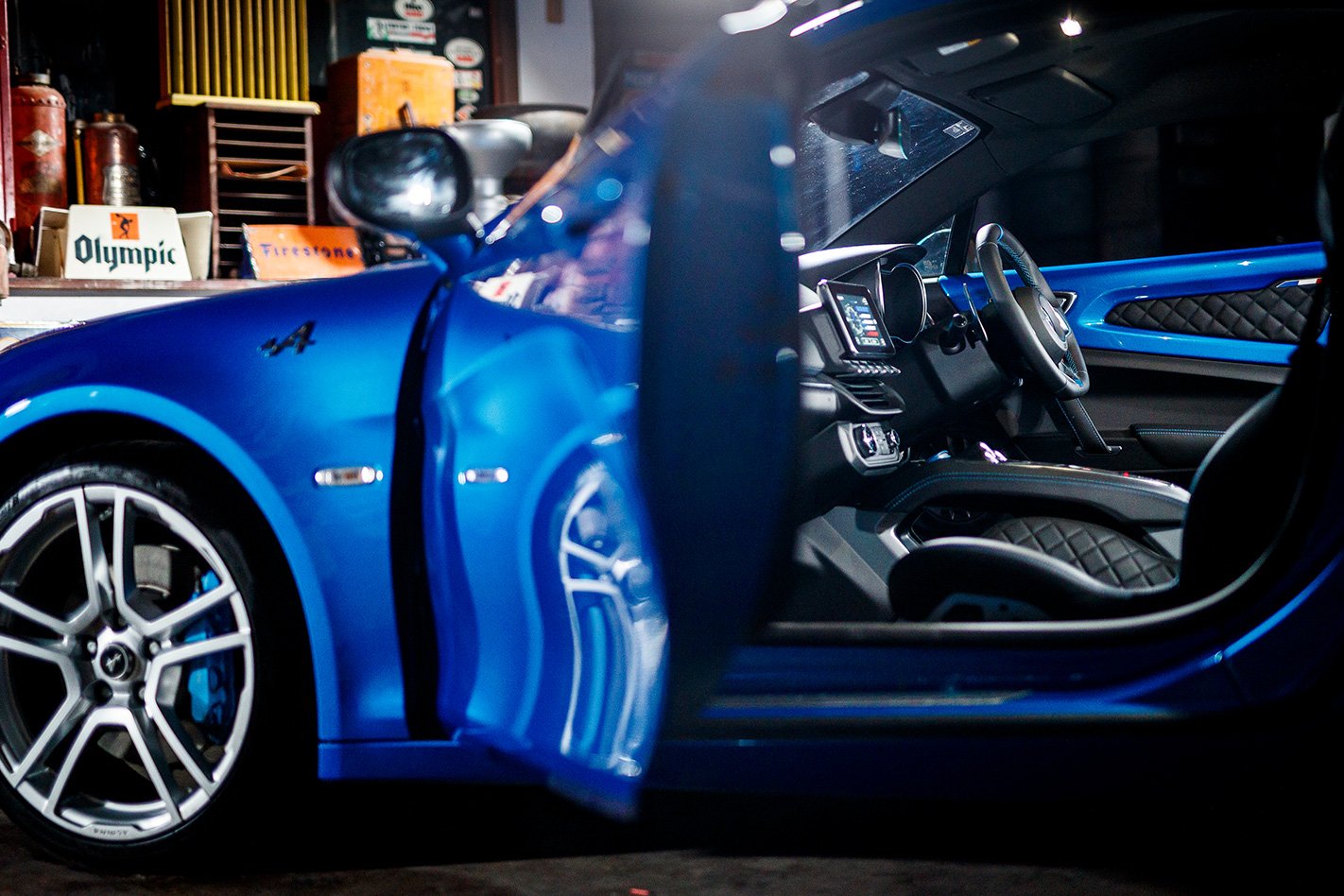
As its sub-title ‘Pole Side Impact Performance’ suggests, it focuses on safety in crashes where a pole or tree impacts with the side of the car, where in the case of the A110, there are no side airbags to keep it light. Approved in 2015 and put into force for passenger vehicles on November 1, 2017, ADR 85 had a couple of deadlines built in to allow manufacturers time to update existing cars to meet the requirements.
The Alpine A110 was approved in Australia before the 2017 deadline, even though it went on sale here in 2018. This means it had until November 1, 2021, to meet ADR 85 before it’s no longer allowed to be imported, and until July 1, 2022, to have all units registered that had arrived here before the November deadline.
The ‘new’ rule, which is based on the UN’s Global Technical Regulation 14 (or just GTR 14), has been introduced in Australia well in advance of the rest of the world. But in 2015 then Minister for Major Projects Paul Fletcher said in a press release he believed its introduction in Australia “was consistent with the expected timetable for implementation of GTR 14 in other parts of the world such as Japan and Europe”.
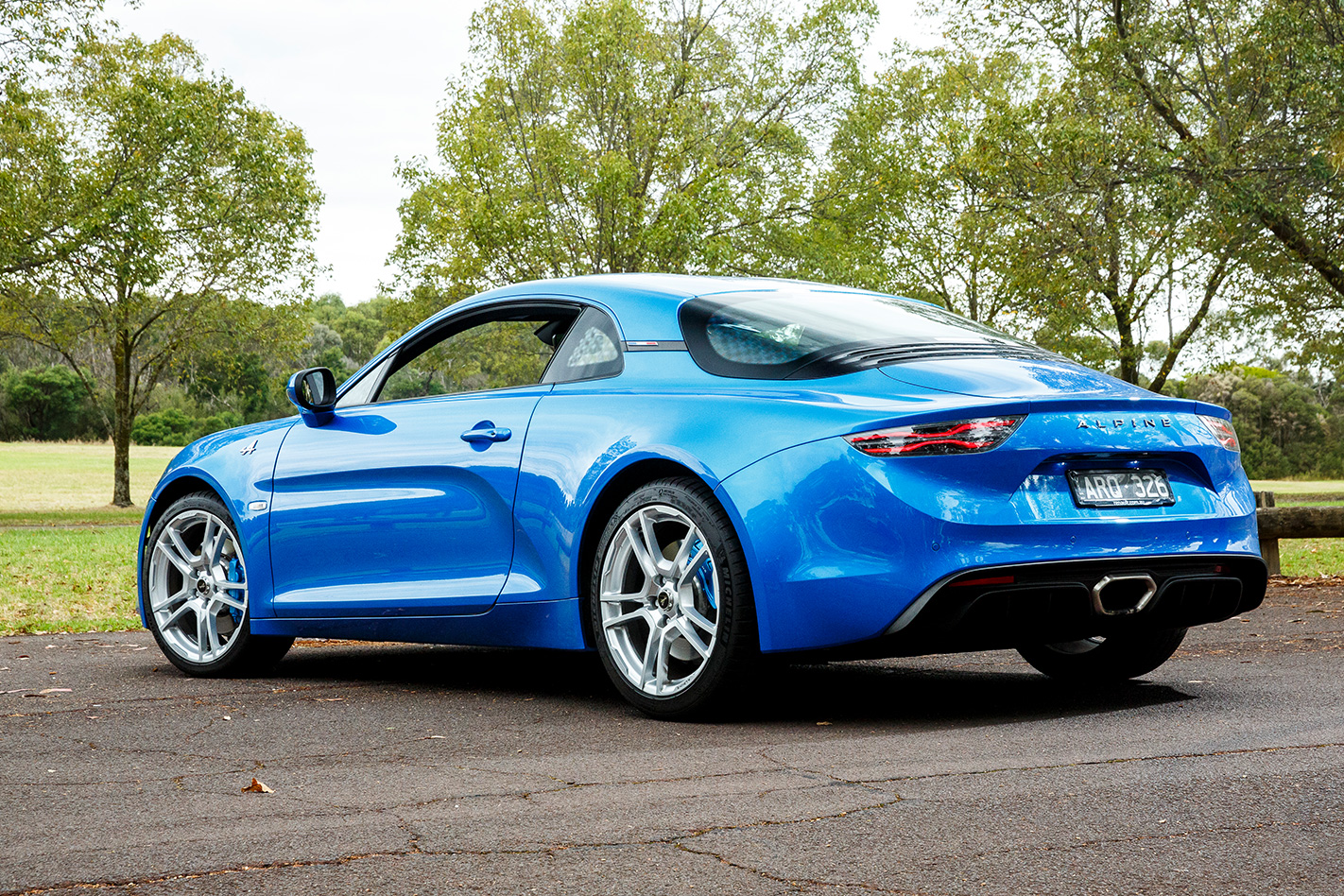
As that’s not turned out to be the case, and with Australia comprising such a small piece of the global sales pie, Renault has been left to decide whether to update the A110 to meet ADR 85, or withdraw it from the market entirely.
Given only 83 units have sold in Australia since its introduction, priced between $100,000 and $115,000, it’s not hard to see that there’s no scope for return on the cost of redesigning even part of the A110 purely for the Australian market, especially when most prospective customers likely already have one. For context, Renault sold 2094 Alpines in 2018, 4835 in 2019, and 1527 even in virus-ravaged 2020. Effectively, in 2019, its only full year on sale not interrupted by lockdowns, Australia formed 0.7 percent of Alpine’s global sales.
There are, however, two ways Alpine can return. If international regulations change while the A110 is still in production, unlikely as that is, it might be available here once again. More likely, is that other Alpine models will arrive (see breakout). It’s not the end of Alpine in Australia, but it is sadly the end of the A110.
Alpine: The new Renault Sport
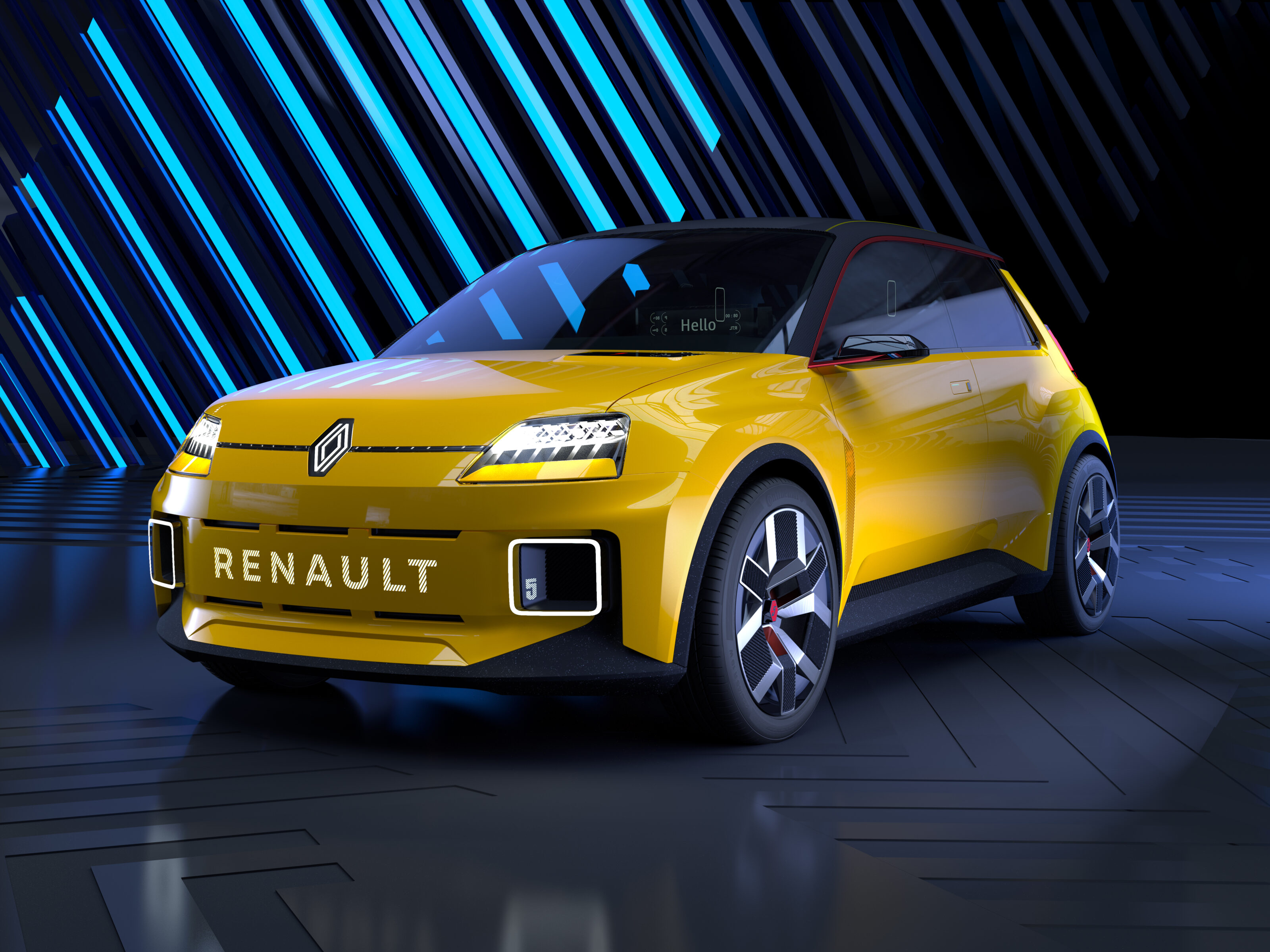
In a teaser for the electric future of Alpine, as it takes over the role of Renault Sport, three future models have been flagged. A hot hatch, which could build on the Renault 5 EV, a sporty crossover, and what appears to be an electric replacement for the A110. For the latter, Alpine is currently in a technical partnership with Lotus, which has already forged into the sports EV space.
Alpine A110 – Aussie Sales Report
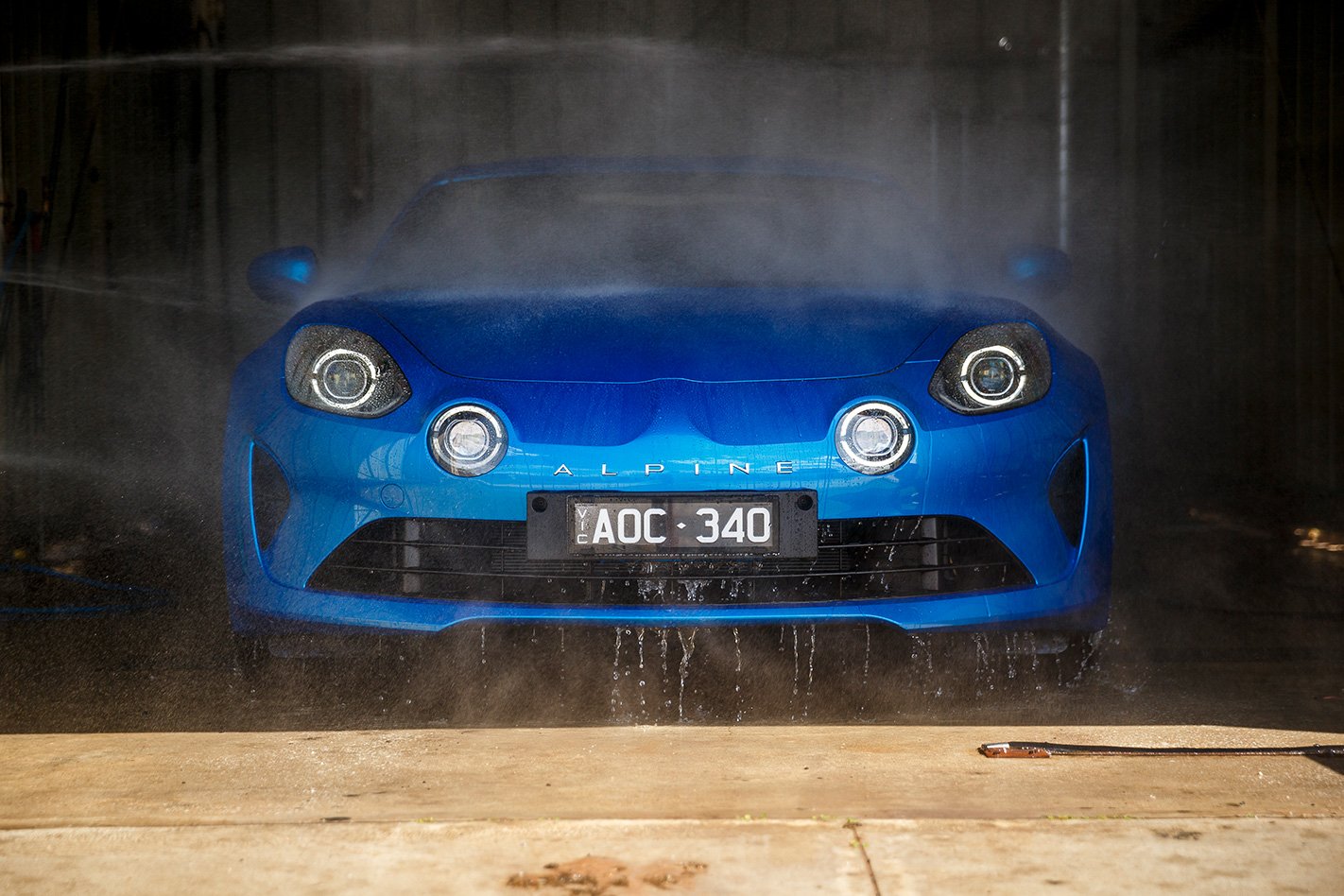
2018 – 32 2019 – 35 2020 – 7 2021 – 9*
*Jan-Aug
We are lucky enough to live in an era of high-powered computers and abundant talent, which gives us access to some amazing digital renderings – essentially, computer-generated illustrations.
Some we have commissioned and published, like the Ford Ranger Raptor and Everest renderings, are future known variants based on a model that has already been unveiled, while others, like the LandCruiser ute, are simply created for fun.
Here are our top ten renderings of 2021.
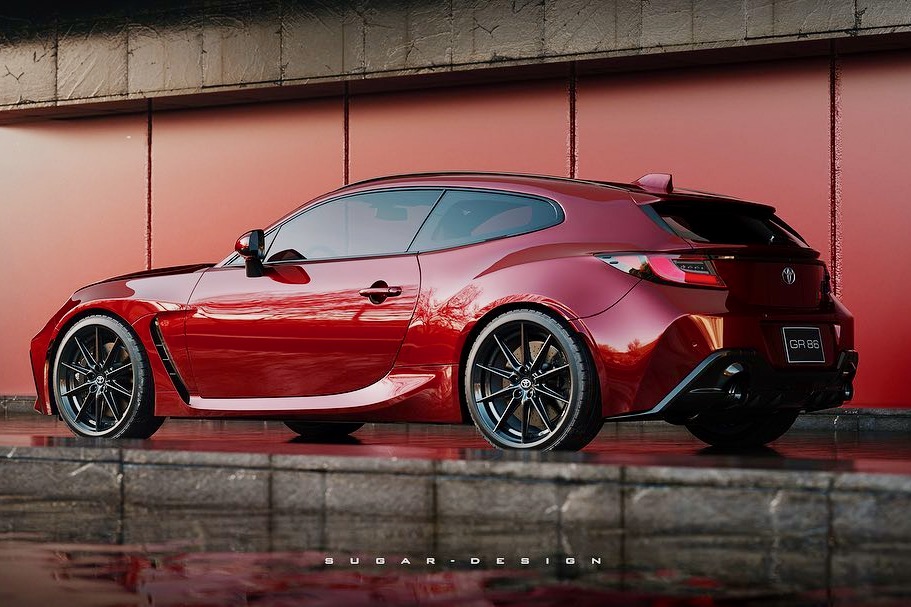
10. Toyota GR 86 Shooting brake
Everybody loves the Toyota GR 86, and everybody loves a shooting brake, so why not combine the two?
Sugar Design did just that, creating a two-door wagon of the new GR 86, and making us wish Toyota would consider making it in real life.
9. Subaru Brumby
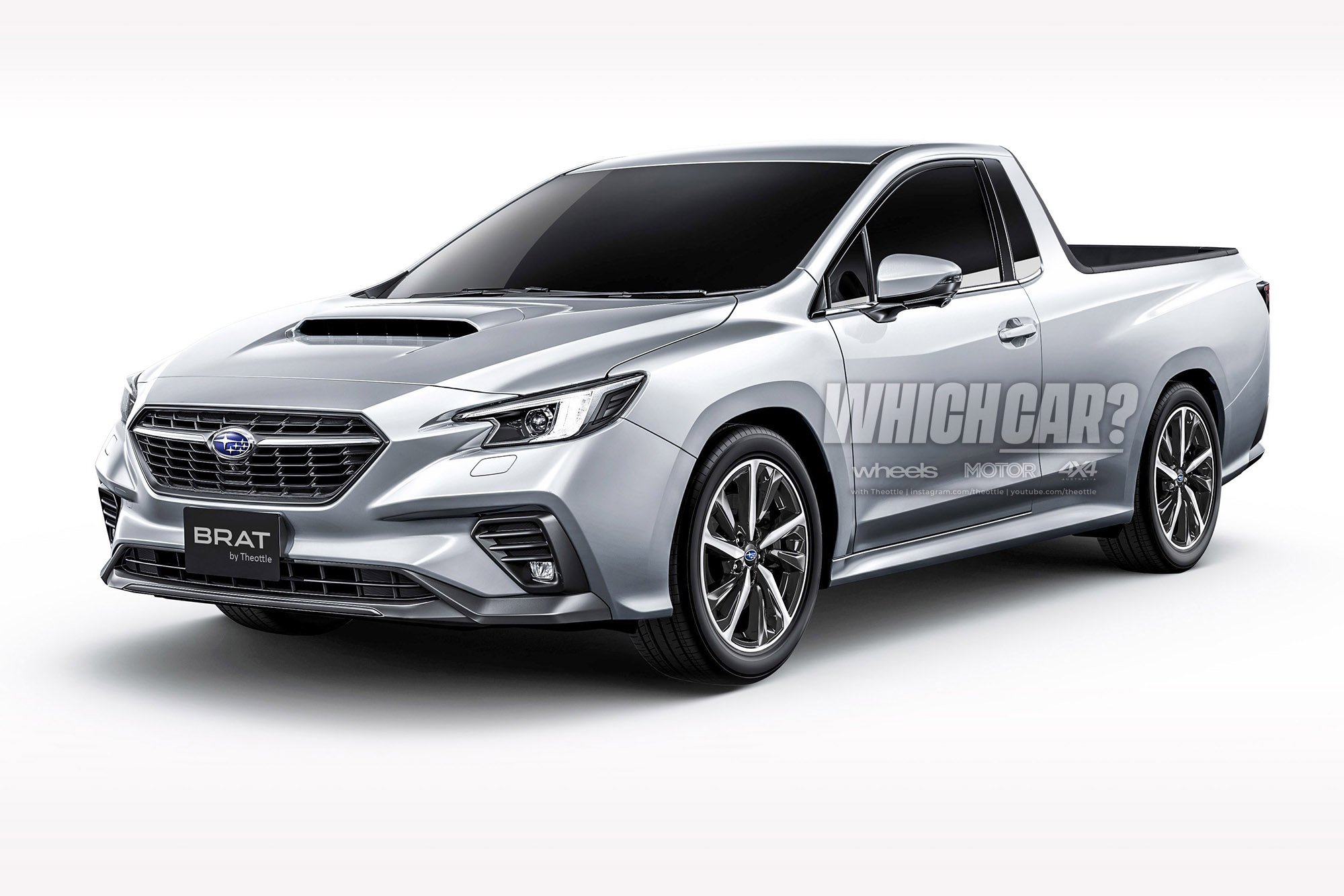
The Brumby became a favourite of farmers across Australia in the 1980s and ‘90s thanks to its four-wheel-drive grip, reliability, and practical tub.
Back in June, Theottle created a new-generation Brumby, which was basically just a WRX ute. Given how popular models like the Ford Falcon XR6 Turbo ute and Holden Commodore SS ute were here, we think an all-wheel-drive turbo Subaru ute wouldn’t be a bad idea.
8. Subaru Solterra STI
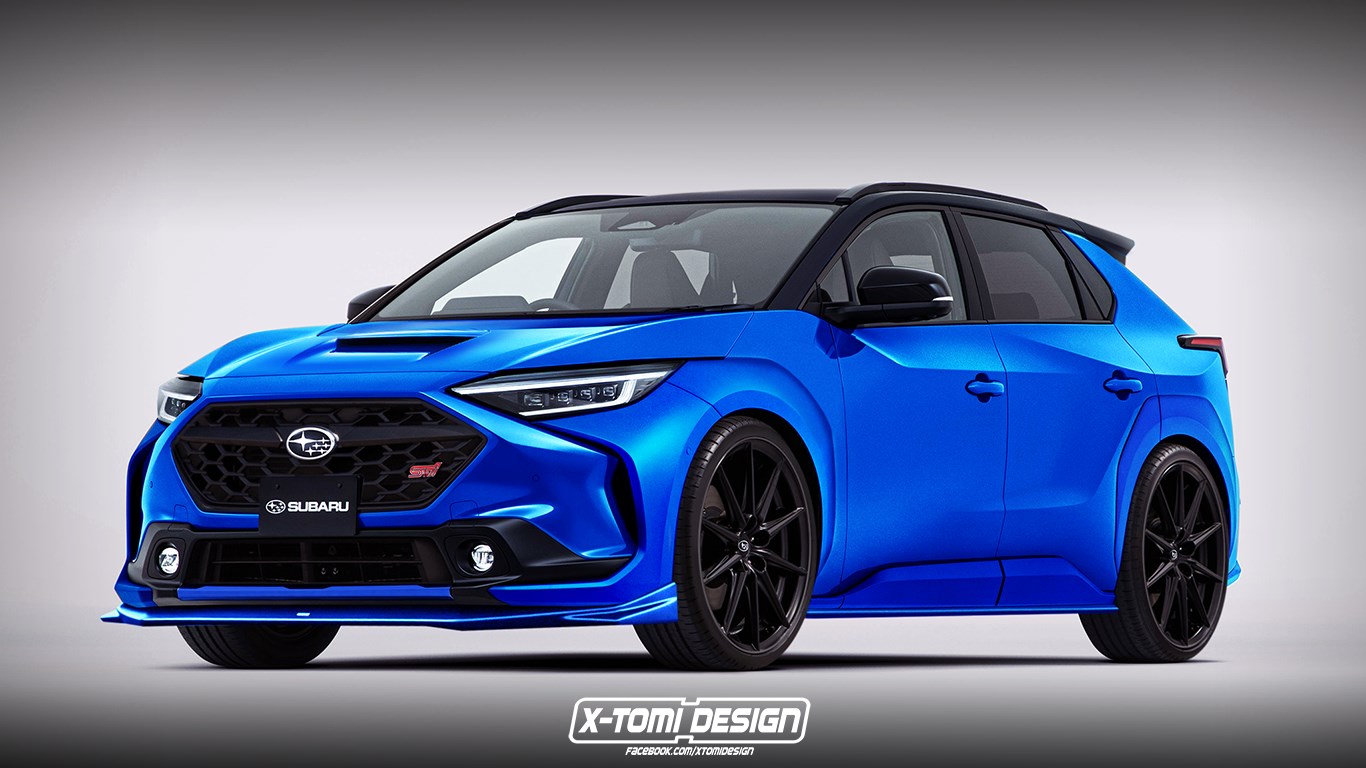
Subaru recently unveiled its Solterra – the company’s first dedicated pure-electric vehicle – and it wasn’t long before a high-performance version was dreamed up.
X-Tomi Design added a body kit, bonnet scoop, and closed-off hexagonal grille to the Solterra, lowering the suspension over black alloy wheels, and painted in Subaru’s trademark World Rally blue with a black contrast roof.
Given Hyundai is cooking up a high-performance electric Ioniq 5 N variant, maybe a Solterra STI isn’t completely out of the question?
7. Ford Maverick Shelby GT300
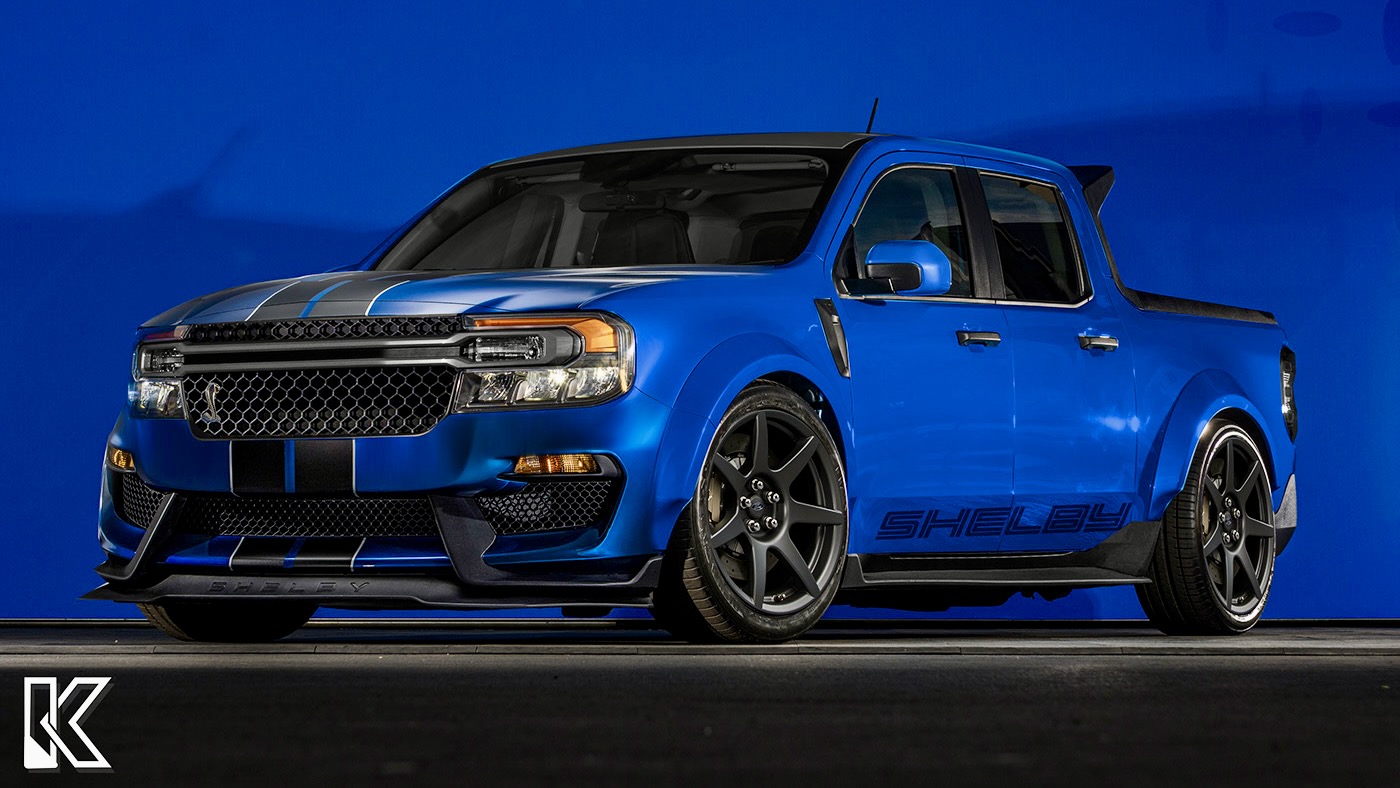
The Ford Maverick may not be coming to Australia, but our audience is certainly still interested in the small pick-up – especially when it gets the Shelby treatment.
Brazilian artist Kleber Silva created the Ford Maverick Shelby GT300 by applying Shelby’s iconic GT stripes, Mustang alloy wheels, dual centre exhaust tips, and an aggressive body kit.
The chance of a Maverick from Shelby is slim to none, but we always appreciate seeing cool, high-quality renderings like this one.
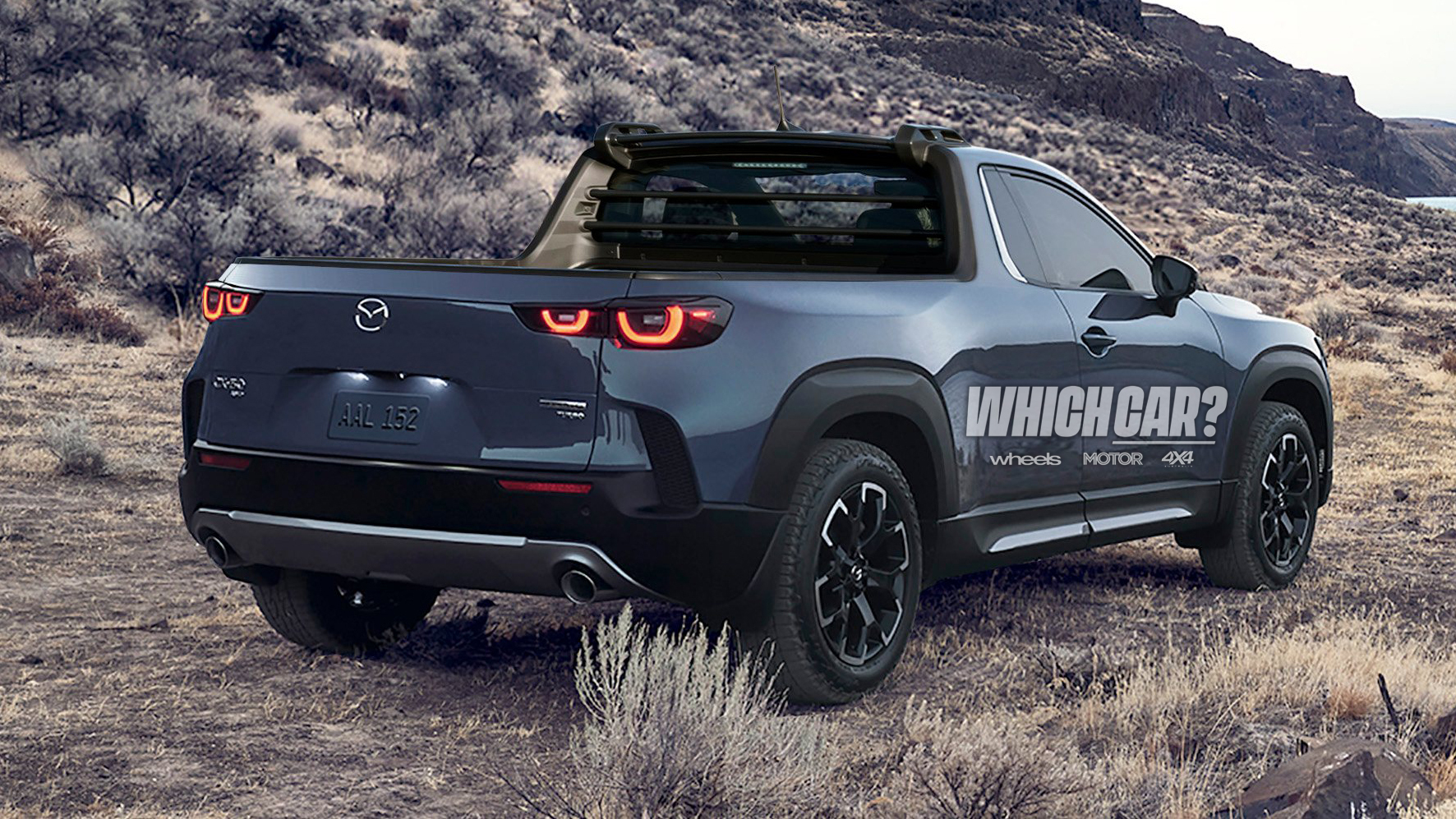
6. Mazda CX-50 Touring ute
In the North American small pick-up market, Ford has the Maverick and Hyundai has the Santa Cruz. So what if Mazda decided to enter the segment?
We created the Mazda CX-50 Touring ute to imagine such a thing, combining the company’s sleek design with the practicality of a tub, aimed at the outdoor enthusiast.
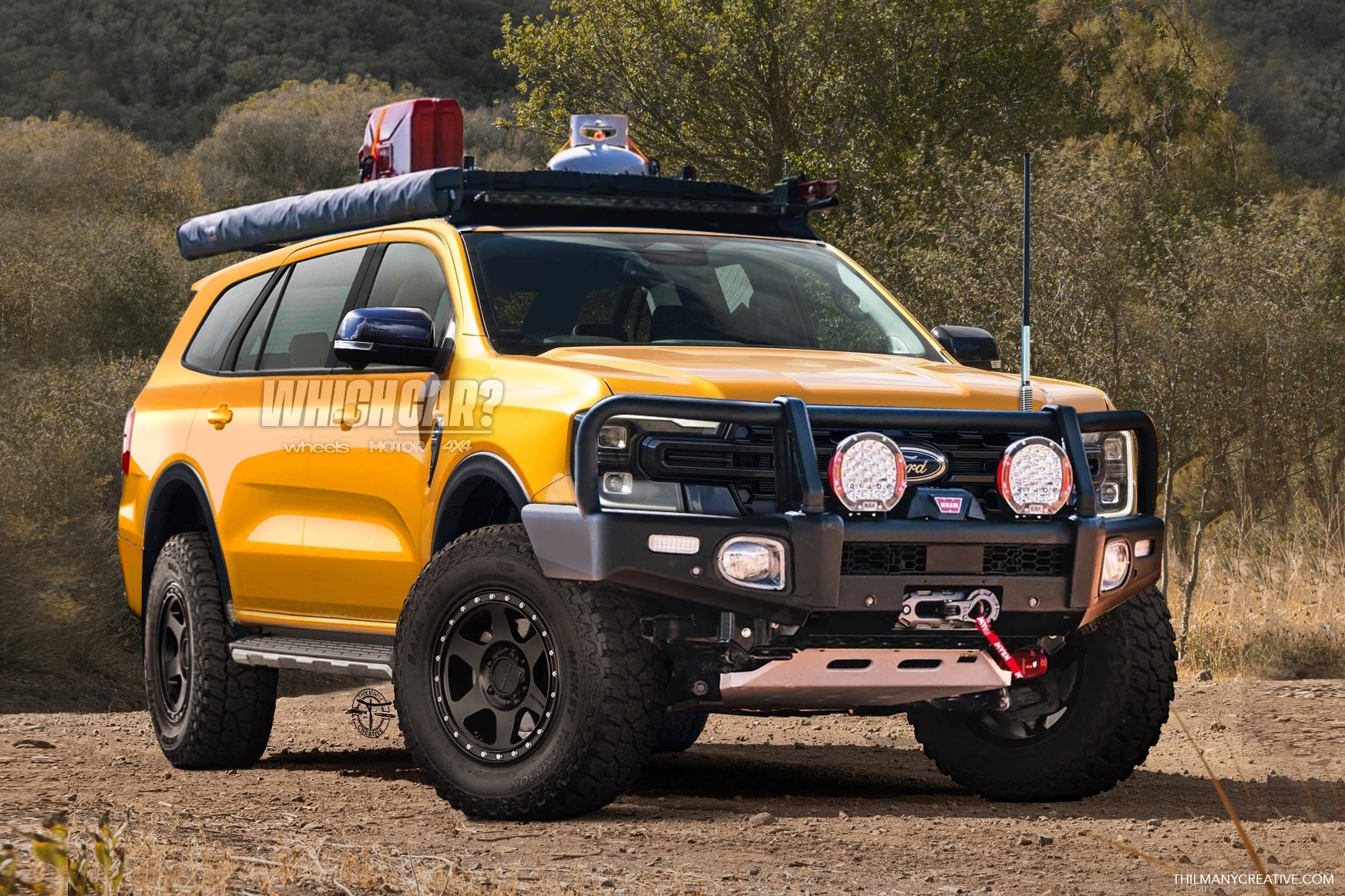
5. Off-road Ford Everest
Shortly after the Ford Ranger was revealed, we had German artist (and LandCruiser Troopcarrier owner) Sascha Thilmany create a kitted-out version of the upcoming Ford Everest.
Just like one you would see in the Victoria High Country – where a prototype was spied testing – the Everest combines beadlock alloy wheels with hybrid off-road tyres, a bull bar with Warn winch, bash plates, LED spotlights, an awning, and a UHF.
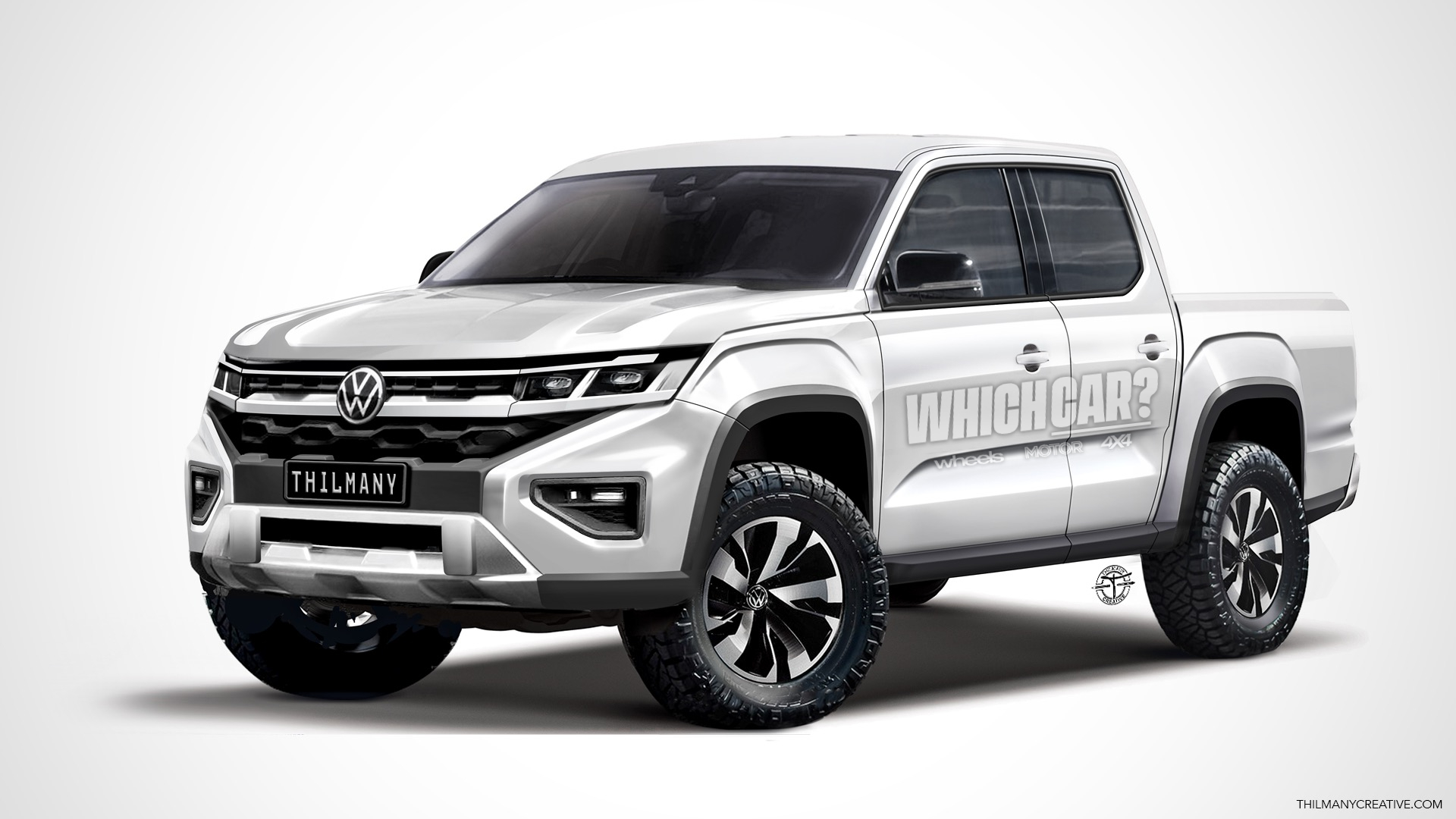
4. Volkswagen Amarok
The next-generation Volkswagen ute will be based on the recently-unveiled Ford Ranger, meaning we know the basic shape of the new model. Volkswagen’s commercial design team has also released sketches of the Amarok, which, when combined, gives us a fairly good idea of what the new ute will look like.
Another rendering from Sascha Thilmany, this time offering a solid take on what we can expect when the new model lands in late 2022.
3. Honda Civic Type R
To be fair, Honda made this one easy for us. The Civic Type R was teased wearing a camouflage wrap, which allows us to see the car while the finer details are kept hidden.
Theottle used his skills to strip away the camouflage for us, revealing the new Honda Civic Type R for the world to see, but before the carmaker wanted you to.

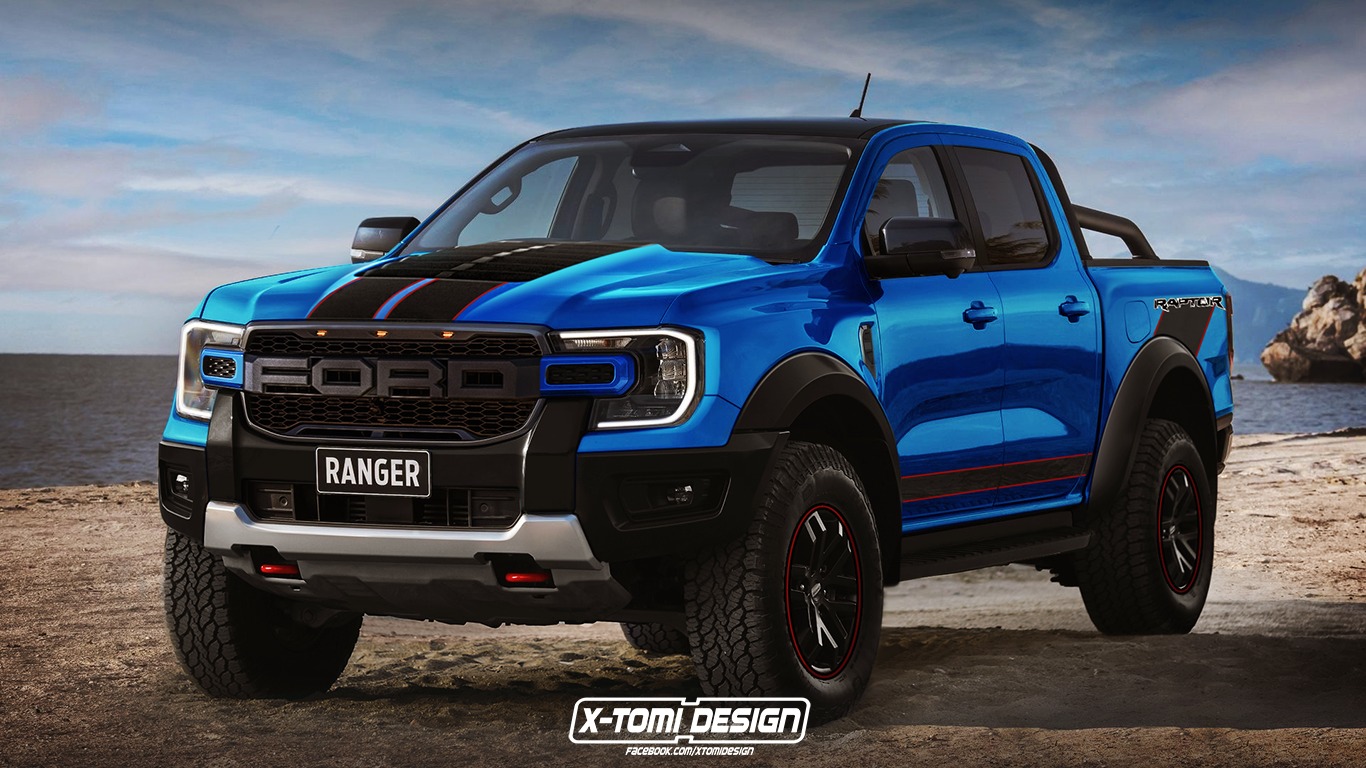
2. Ford Ranger Raptor
It’s the most desirable version of the most hotly-anticipated ute of 2021. The 2022 Ford Ranger Raptor promises some big things, with teaser videos from the Blue Oval sounding very much like it’s being powered by the 3.0-litre turbo V6 from the Explorer ST.
Kleber Silva took the 2022 Ford Ranger and applied the Raptor treatment, with wide wheel arches, decals, black alloy wheels, and the typical F-O-R-D grille up the front.
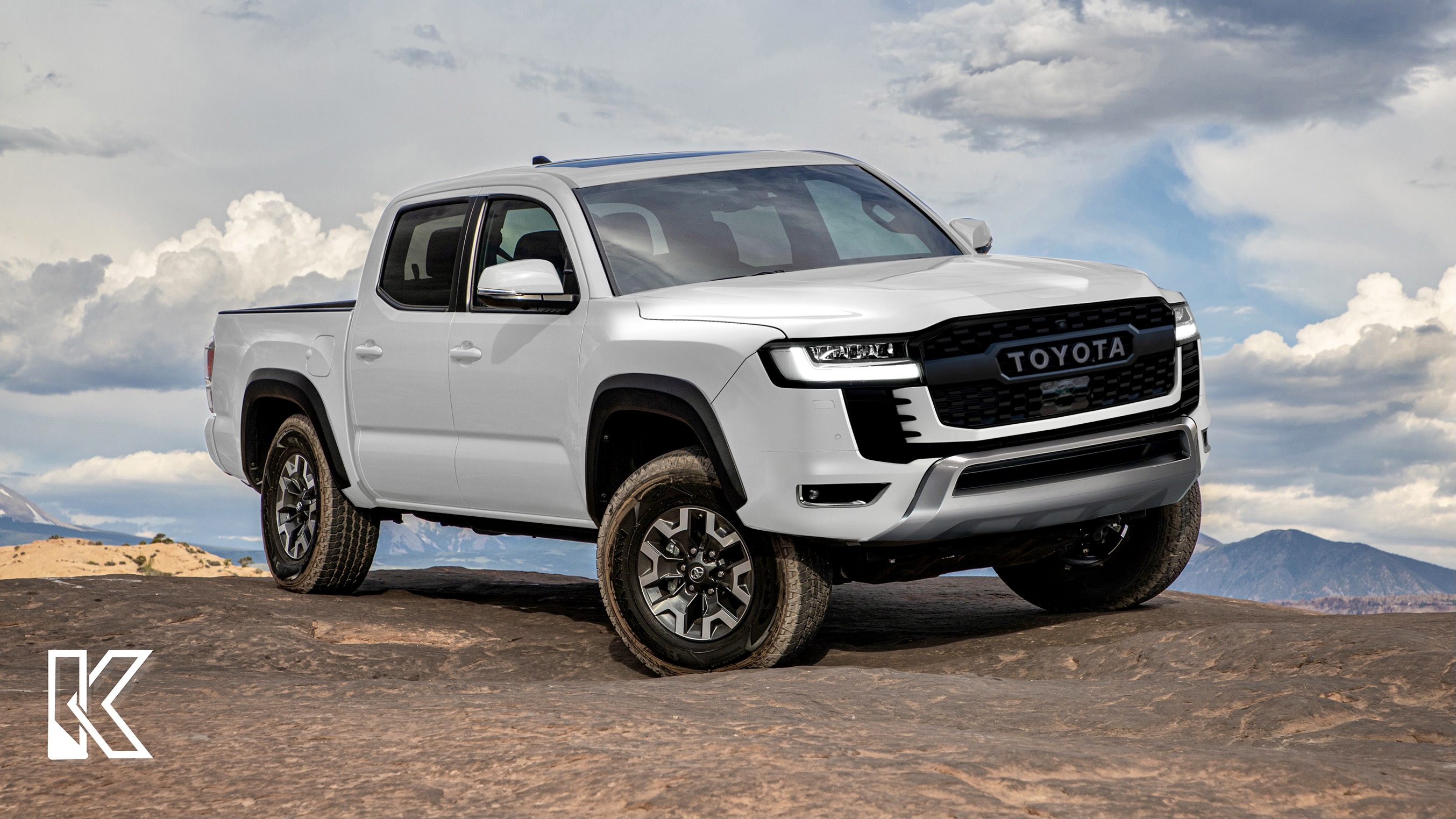
1. Toyota LandCruiser 300 Series dual-cab ute
There’s no doubt the 2022 Toyota LandCruiser 300 Series unveiling was the event of the year, but it turns out the most popular story was a render imagining the LC300 as a dual-cab ute.
Another one from Kleber Silva, the dual-cab LandCruiser really struck a chord with our audience, as readers considered the practicality and capability of a 79 Series, but with the comfort of a 300 Series.
Following the success of the Ram 1500 and Chevrolet Silverado full-size pick-ups in Australia, Ford has brought an F-150 to our shores for evaluation, so it may only be a matter of time before Toyota looks to bring the Tundra Down Under.
The most expensive car sale recorded in 2021 belongs to a 26-year-old supercar.
At an auction back in August, the hammer fell on a 1995 McLaren F1 at a bid of US$20.5 million – or around AU$27.8 million at the time – making it the most valuable car sold for the year, according to German vehicle investment firm Classic-Analytics.
Chassis #029 sold at the iconic Pebble Beach event by Gooding & Company, exceeding its estimate of US$15M by 33 per cent thanks to the vehicle having less than 390km on the clock since new.
While the vehicle has a very low odometer, it isn’t the lowest-mileage F1. Chassis #060 was sold privately for an undisclosed amount by UK dealer Tom Hartley Jnr in 2017 with just 239km on the car, with the vehicle being advertised for £25 million (AU$46.5M) at the time.
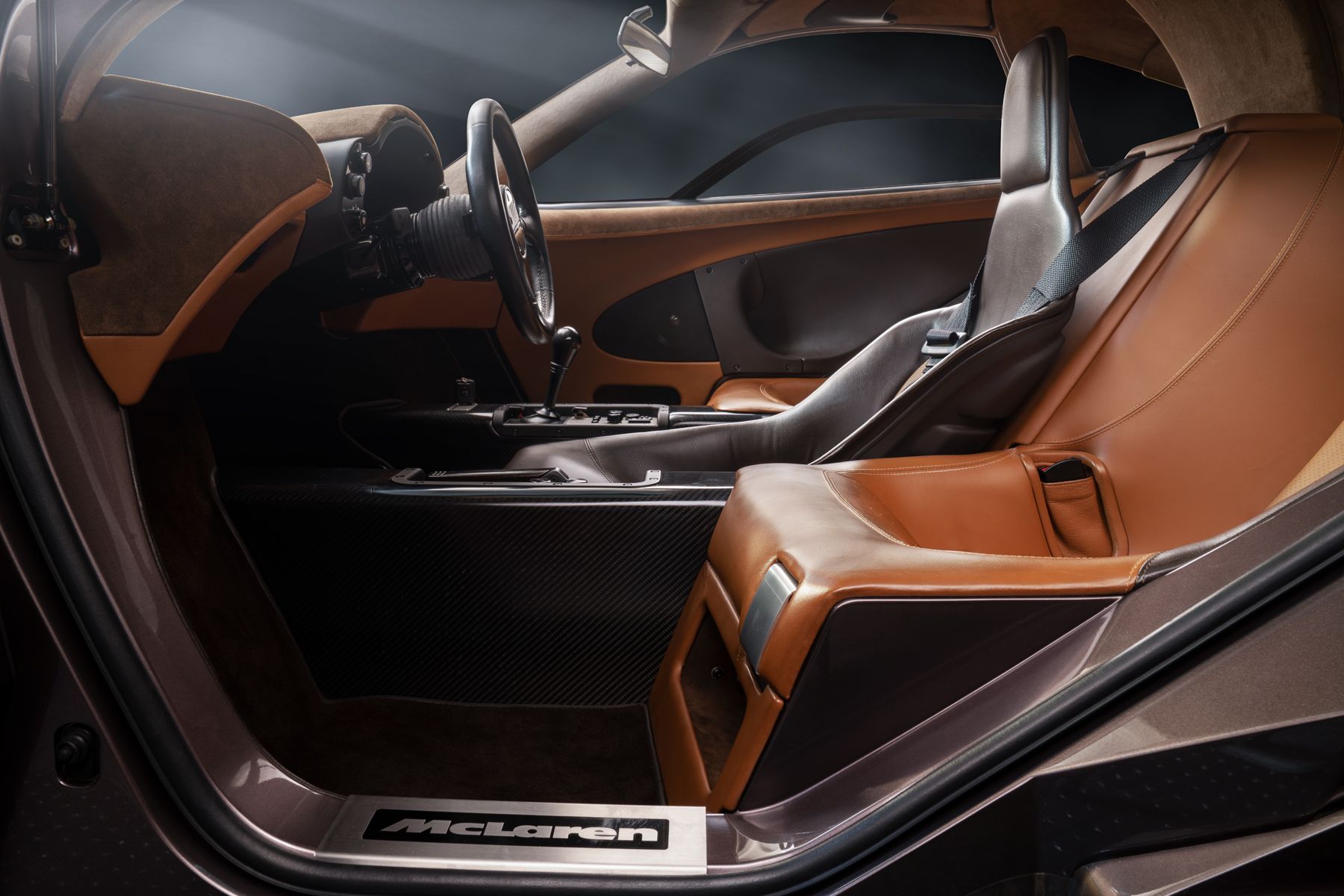
This Creighton Brown example is one of just 64 road-going McLaren F1s built in the 1990s, delivered new to a customer in Japan and offered complete with all of the original accessories, including the tool chest, bespoke luggage, handbooks, tool roll, and a deluxe edition of Driving Ambition: The Official Inside Story of the McLaren F1.
Also included was a Tag Heuer 6000 Chronometer watch with McLaren-signed dial.
As with all road-registered F1s, the iconic supercar is powered by a BMW Motorsports-sourced 6.1-litre naturally-aspirated V12 engine, sending 461kW/650Nm to the rear wheels through a six-speed manual transmission.
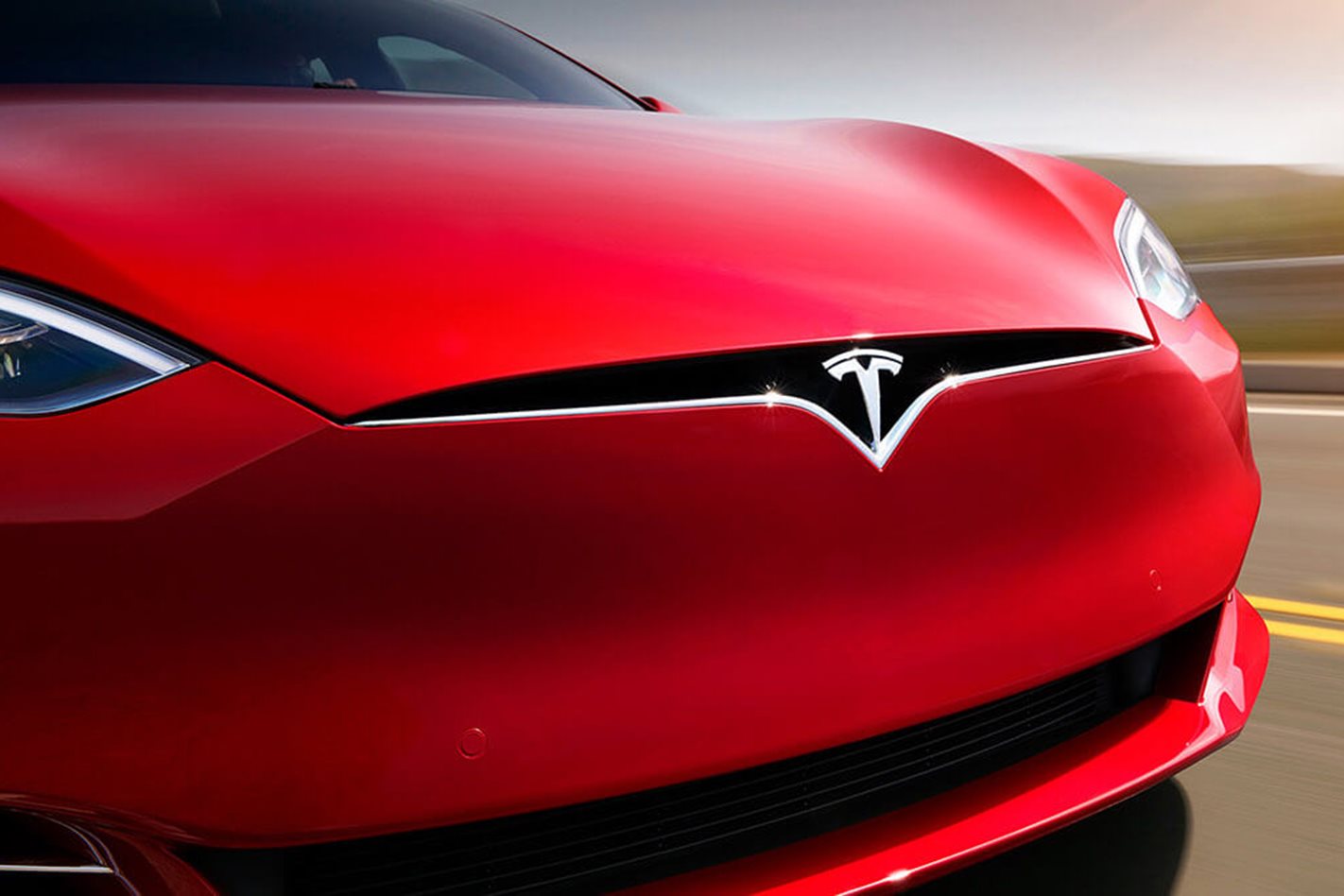
Tesla has issued a recall for 475,000 cars in the US to address widespread issues with the bootlid, rear-view camera, and the front bootlid.
Of the nearly half a million Tesla vehicles involved in the recall, the Model 3 makes up 75 per cent, while the remaining 25 per cent is made up of Model S vehicles.
The electric carmaker says the rear-view camera fitted to Model 3s built between 2017 and 2020 may be damaged by opening and closing the boot.
Model S vehicles built from 2014 to 2021 can suffer from latch issues on the front bootlid, allowing it to open and obstructing the driver’s view.
Tesla shares fell by as much as three per cent on the news, but recovered around half on intraday trading. It comes a week after CEO Elon Musk announced he had finished selling his stock in the company, estimated to have been worth US$16.4 billion (AU$22.6 billion).
There’s no word yet whether the issues affect Australian-delivered Tesla vehicles, or if the recall will be extended to local cars.
Until the BA Falcon XR6 Turbo of 2002, Ford Australia had never really produced a decent six-cylinder engine. Torquey, strong, and as simple to maintain as a modest alcohol dependency, but for such a long time about as inspiring as devon and sauce.
Even at its best, either without pollution gear (as in the ’71 XY Falcon 250 2V) or with an alloy head and sophisticated fuel injection (as in the ’83-87 XE/XF 4.1 EFI), Ford’s long-stroke, pushrod straight six was a hoary old thing famous for its fan noise and 40-a-day wheeze.
And later overhead-camshaft developments weren’t much better. The last pre-BA ‘performance’ Falcon six – the AU XR6 VCT (for Variable Camshaft Timing) – was so harsh and vibey when pushed hard that it threatened to hacksaw its way through the firewall. No wonder buyers favoured the increasingly powerful (if similarly ancient) Windsor V8, though let’s be honest – no-one really favoured the 1998 AU, not even Ford insiders.
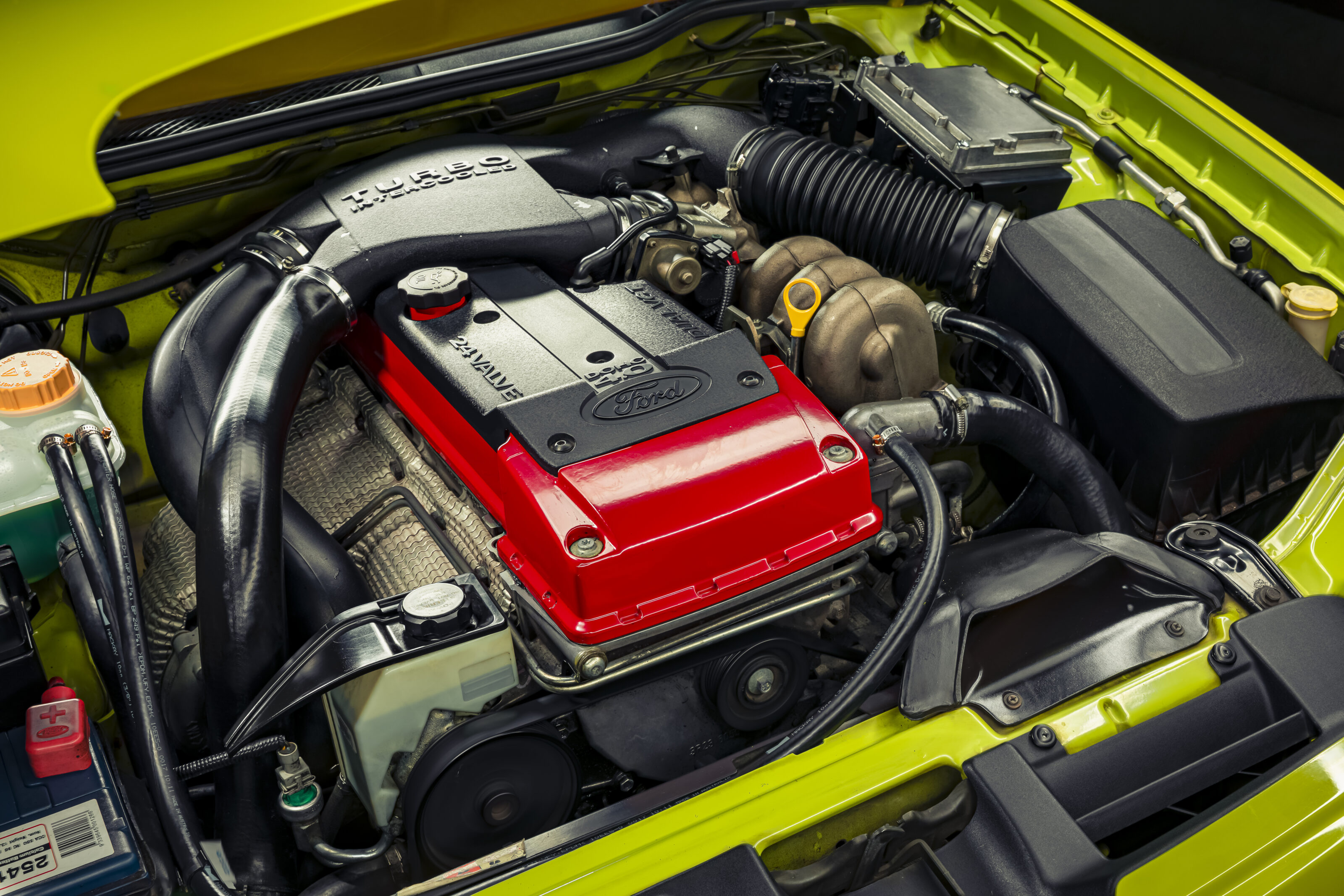
Without this now-legendary miss-step, however, the 2002 BA would never have been such a comprehensive makeover. And without this commitment to making the BA Falcon such a cracking model range – the first Falcon since 1966 to win Wheels Car of the Year – the XR6 Turbo may never have seen the light of day, certainly not in the form you see here.
It made an indelible mark on the new-millennium Australian performance-car landscape, yet the turbo version came about simply to give the XR6 badge some performance presence, in no small part because the completely re-engineered twin-cam, 24-valve 4.0-litre ‘Barra’ six that powered the vast majority of BA Falcons was such a superb piece of work.
“We wanted to give the XR6 a bit of a kick-along because we felt it was a bit lacking in personality compared to the XR8,” said Gordon Barfield, the now-retired Special Vehicle Operations manager for Ford Australia and the man credited with coming up with this turbocharged Falcon concept.
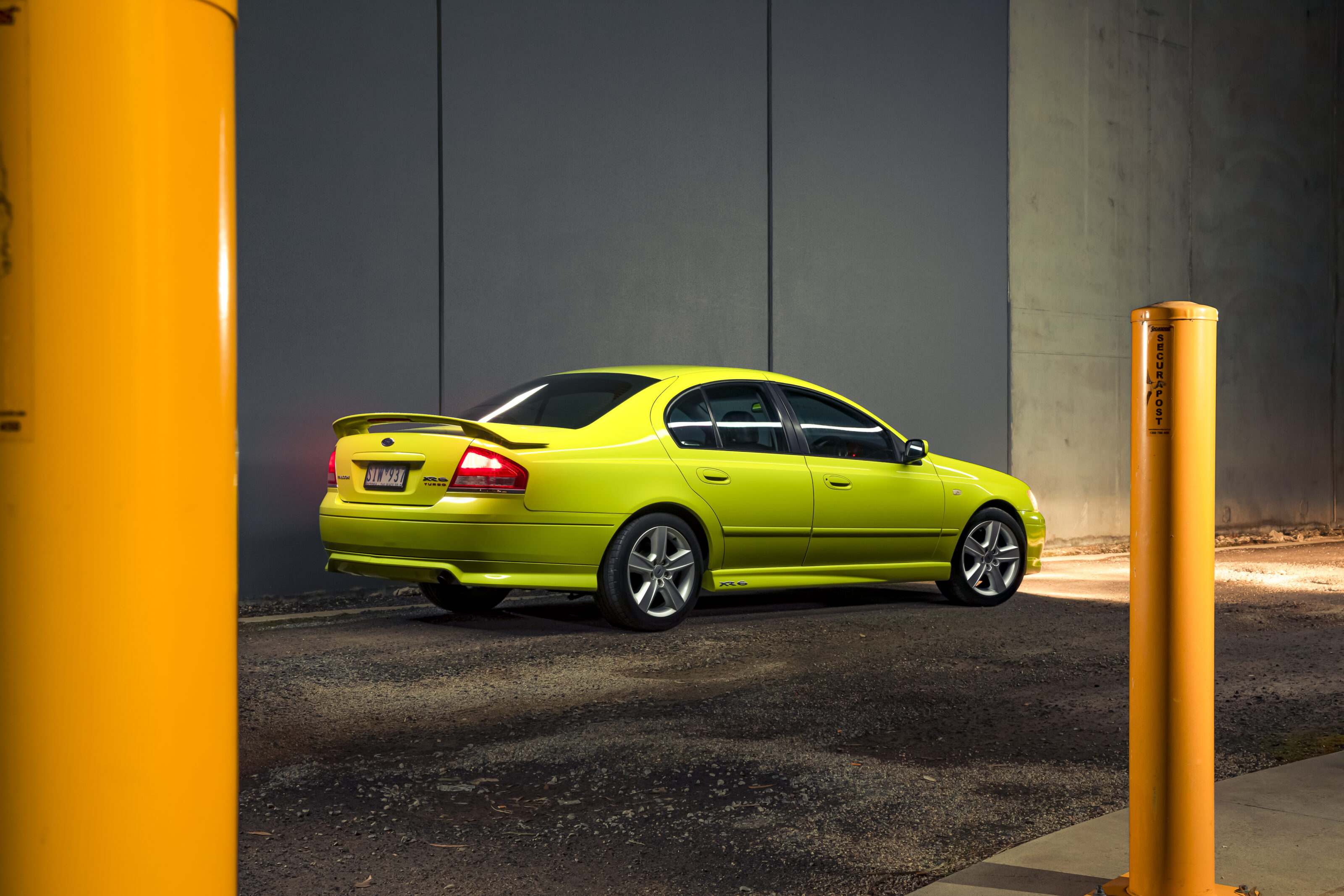
“We felt that this six-cylinder [model] needed to be able to really make a name for itself. We were worried the XR6 was probably a little bit underwhelming, so we wanted to give it some spirit.”
It’s no longer a secret that Ford considered supercharging the 4.0-litre – providing a hardly coincidental connection with the supercharged Jaguars of the period (the British marque was still part of the broader Ford family).
At concept stage, Barfield and revered product planning manager for Tickford Vehicle Engineering, Howard Marsden, were the only two people working on the program, and Marsden favoured supercharging.
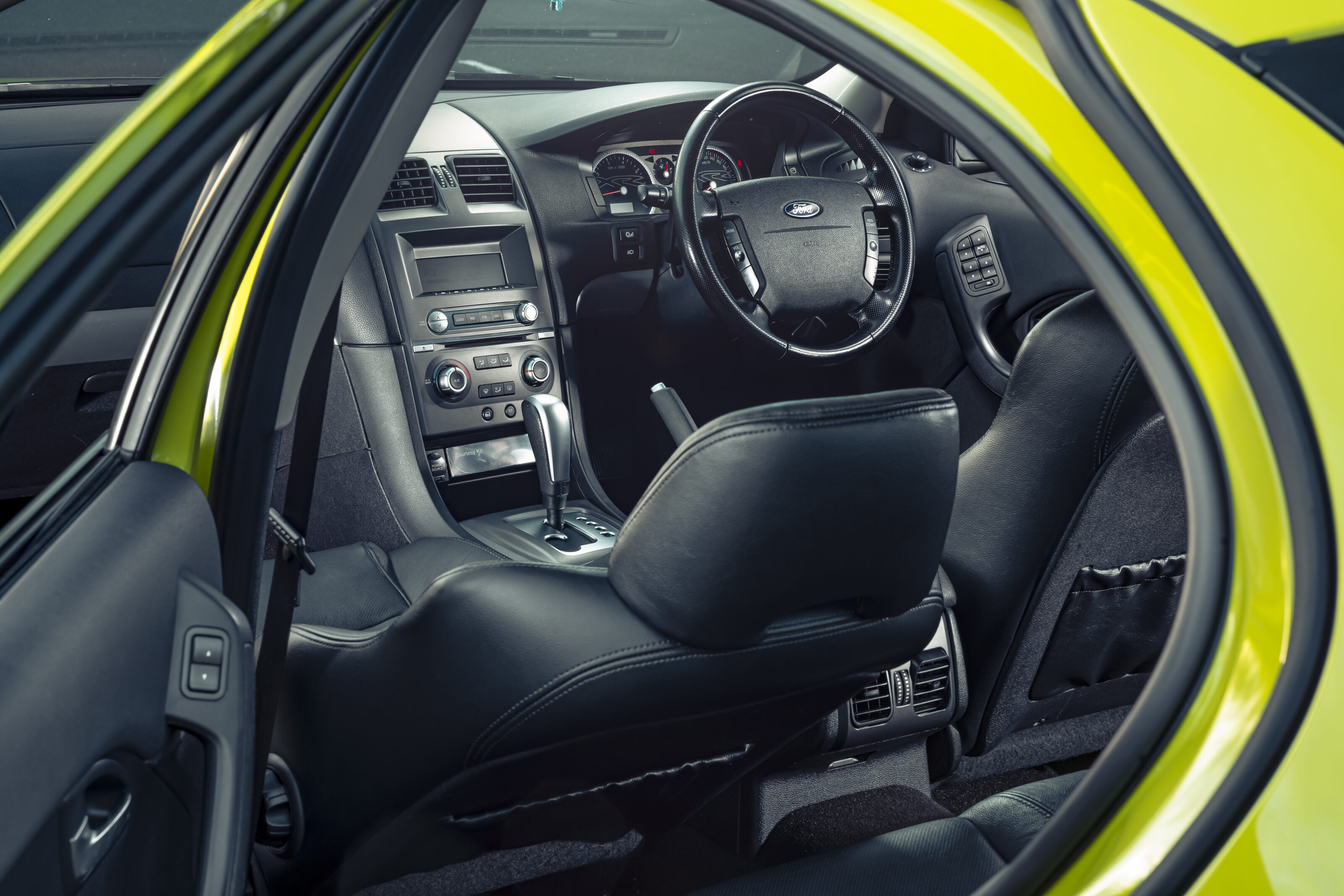
“Howard was really, really, pushing for a supercharged engine. He really wanted the grunt of a supercharger and I agreed with him,” said Barfield. “But having established an architecture around the six-cylinder engine, it was really difficult to think about a front-end drive with another pulley for the supercharger … and that’s why I made the suggestion that we go turbo.”
Tickford in the UK had investigated working over the almost-completed, naturally aspirated 4.0-litre ‘Barra’ but everyone felt that an additional handful of kilowatts wasn’t worth the effort.
“We needed to have something that was not brutal but needed to be a significant upgrade from what would be the cooking engine,” says Barfield.
The brief was at least 20 percent more power – something that was clearly noticeable on the road – but the turbocharged engine also needed to be easily slotted into the huge BA program without significantly impacting on the engineering of the rest of the car.
“We found that we could package the Garrett [GT40 water-cooled ball-bearing] turbo okay; we felt that the intake manifold was okay; but the throttle body would have been too restrictive, so that went up in size, and the major installation part was the intercooler, because we insisted that [the engine] was intercooled,” reflects Barfield now.
What was conceived was a low-pressure turbo installation building on the already-excellent torque characteristics of Ford’s large-capacity, long-stroke six, rather than something explosive. Running just 0.4bar of boost (6psi) and fed by an air-to-air intercooler, the Garrett turbo was instrumental in boosting the 4.0-litre’s power output by 32 percent (to 240kW at 5250rpm) and torque by 18 percent (to 450Nm from 2000-4500rpm).
To digest its preferred 95-octane diet, the compression ratio was lowered from 9.7:1 to 8.7, and the boosted engine also featured Inconel exhaust valves, a stainless-steel exhaust manifold, dished pistons, higher fuel pressure and altered timing for the dual variable camshafts.
While the $500 million worth of changes between the BA Falcon and its AU predecessor were immense – 80 percent of components were changed and only the door skins were carried over, with even the front seating positions and gearshift placement altered – the differences between the every-person’s BA XR6 and the boosted XR6 Turbo weren’t huge … apart from the engine.
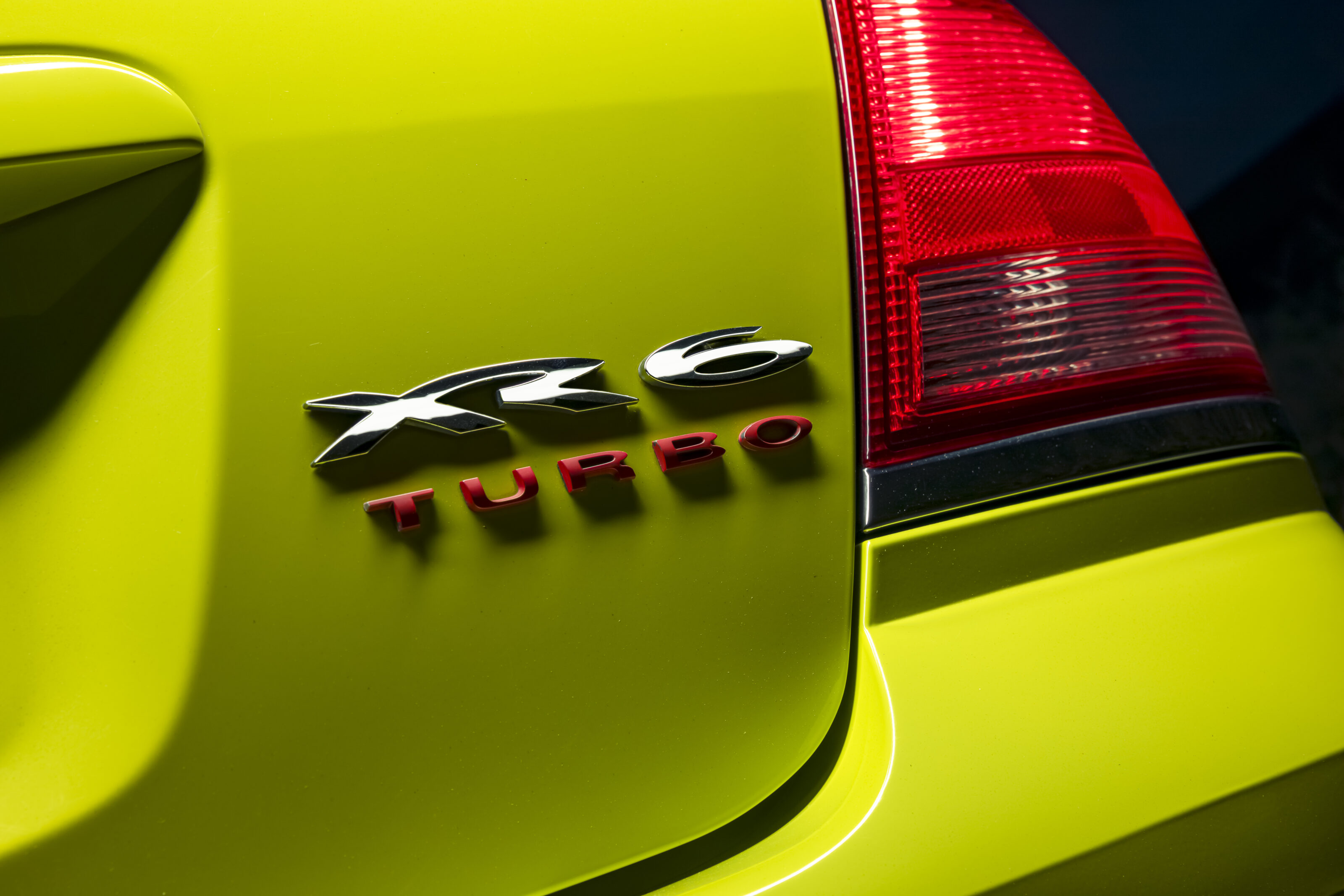
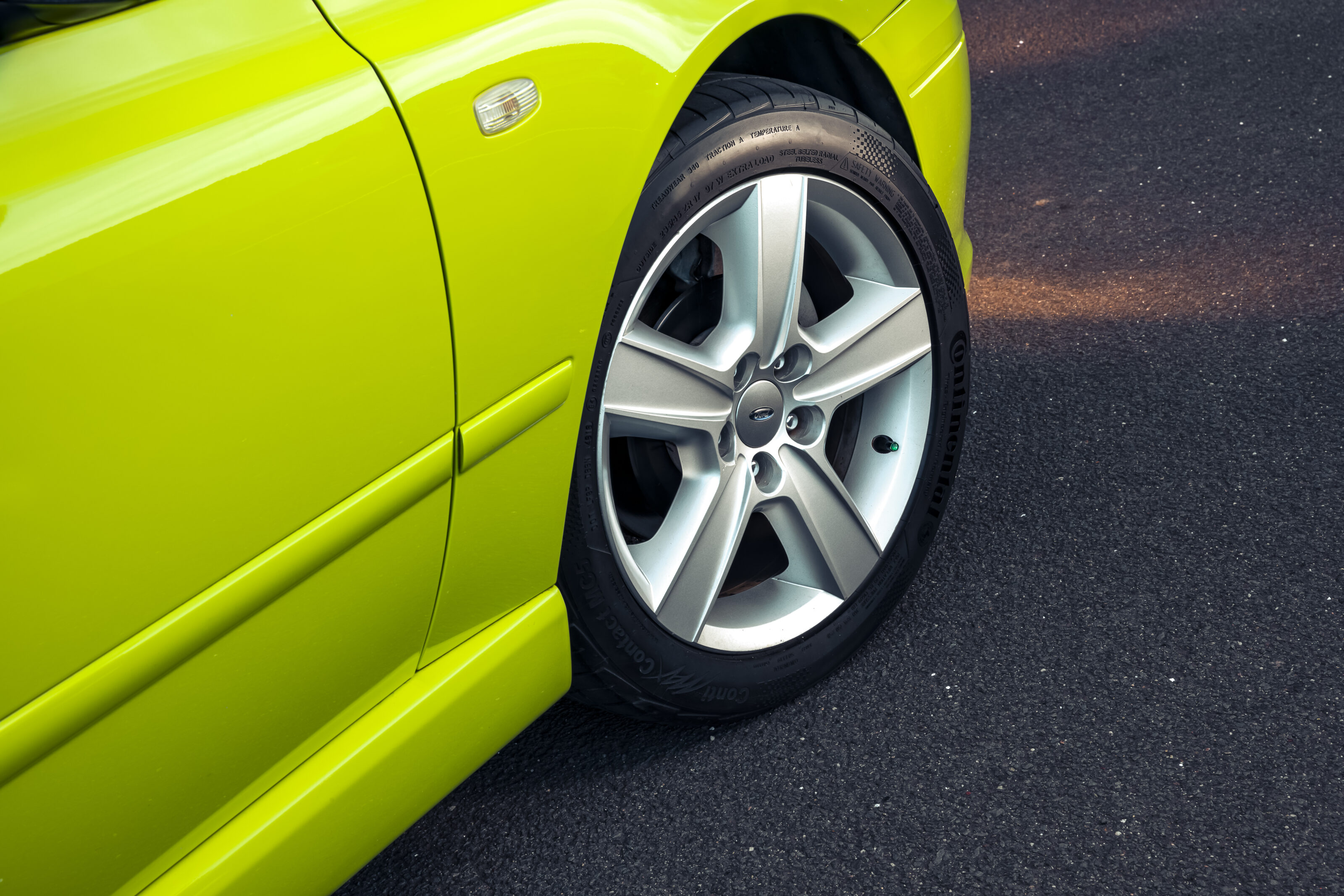
Only deliberate inspection would reveal the Turbo’s front-mounted intercooler and ‘Turbo’ bootlid badge, not to mention its limited-slip differential and recalibrated traction control. While the BA’s standard 298mm ventilated front discs (with 40-percent-stiffer twin-piston aluminium floating calipers) and 303mm solid rear discs were a vast improvement over the AU’s stoppers, the XR6 Turbo also offered an optional (and preferable) ‘Premium Braking Package’ with 325mm ventilated PBR front discs, as well as 18-inch alloys.
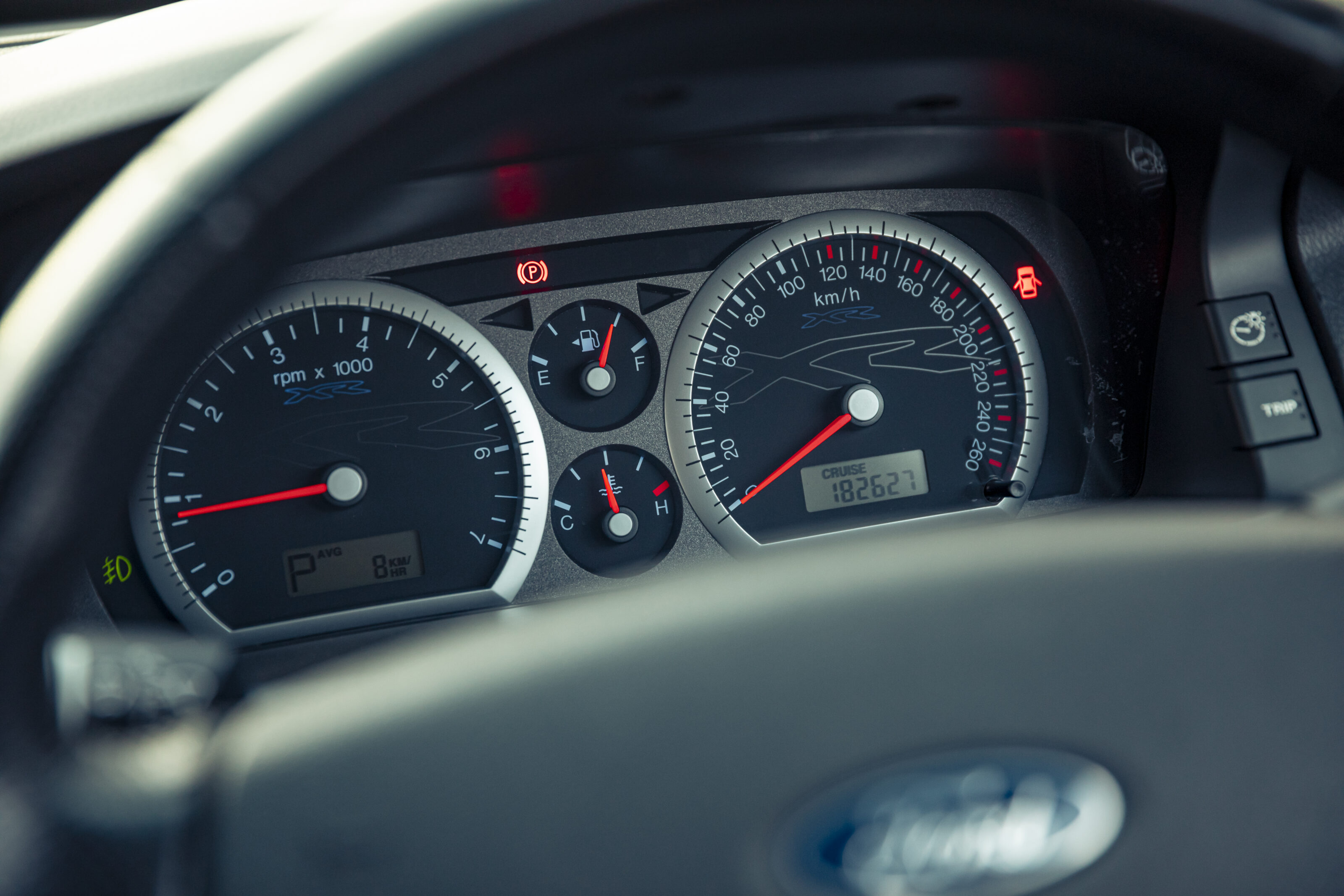
Inside, changes were even more minute. While all BA XR models featured unique sports seats and XR-branded instruments with blue back lighting (copying standard-setting Volkswagens of the era), the Turbo added rear power windows and rear grab handles over the base XR6.
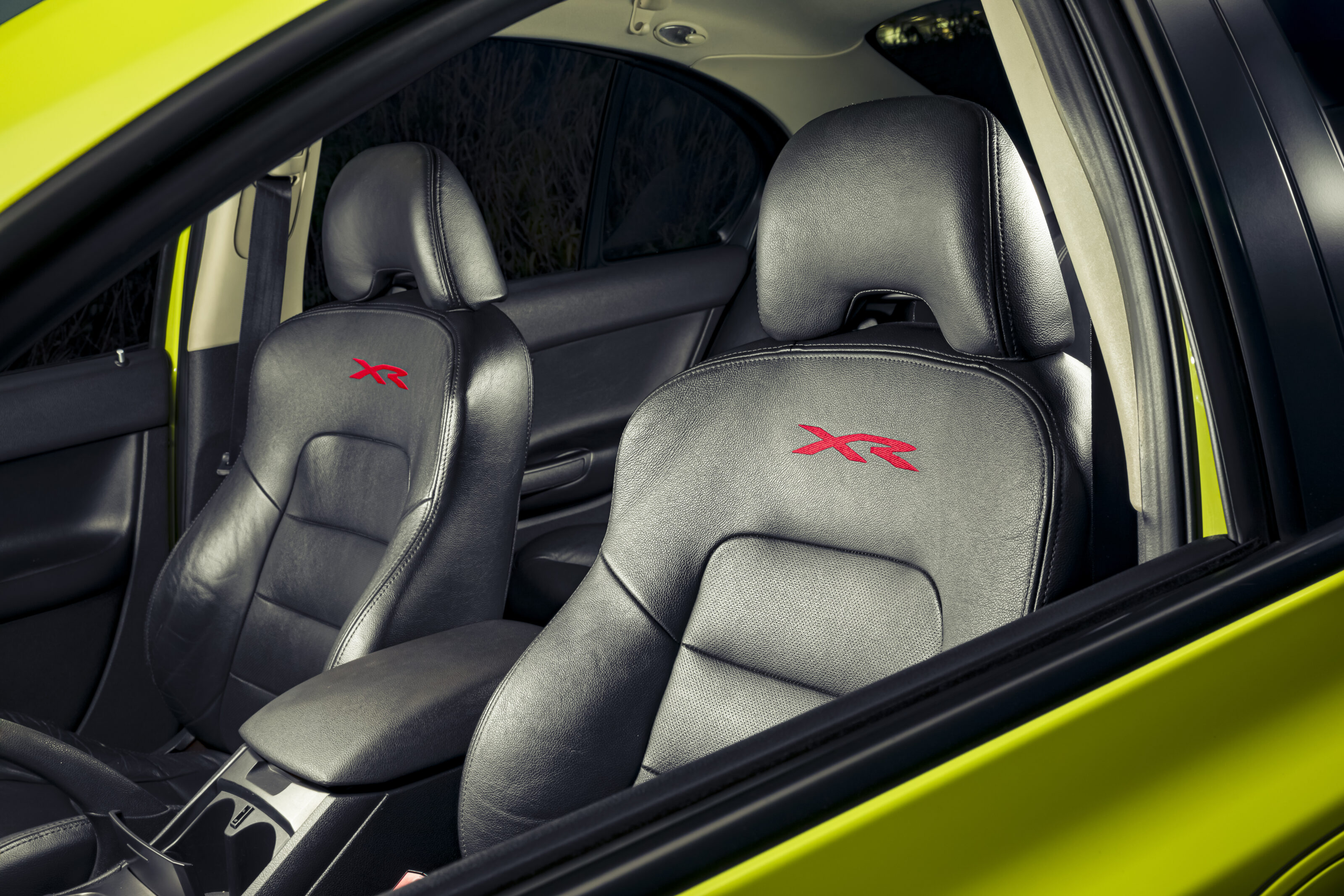
On the road, however, the differences between the two were blatantly obvious. The stock 182kW/380Nm 4.0-litre was already a stout engine, but the 240kW/450Nm turbocharged version was in a league of its own. Tractable from just 1200rpm, once the 240T (as Ford called it) climbed onto its vast torque shelf at two grand, it offered a smooth, unrelenting surge of acceleration right to the 6000rpm cut-out, backed by the character of an urgent exhaust woofle.
The XR6 Turbo may not have delivered the whack-in-the-back turbo kick of an Impreza WRX – the zeitgeist performance car of the late-’90s – but its refined chubbiness was perfectly in keeping with its five-seater-flyer status. Combined with a firm yet supple ride, a sweetly balanced chassis, crisp, accurate steering and a suave dynamic personality, family types with an enthusiast bent (or anyone who cherished a big, rapid, affordable rear-drive sedan) never had it so good.
At the dragstrip, the XR6 Turbo revealed superlative acceleration – six-dead to 100km/h and low-14s for the standing 400m were top stuff for a production Aussie sedan in 2002. The carry-over BTR electronic four-speed auto was the transmission pick – complete with new tip-shift mode configured the BMW way (downshift forward, upshift back – an 11th hour decision) and a concurrent ‘Sport’ mode when you flicked the lever left.
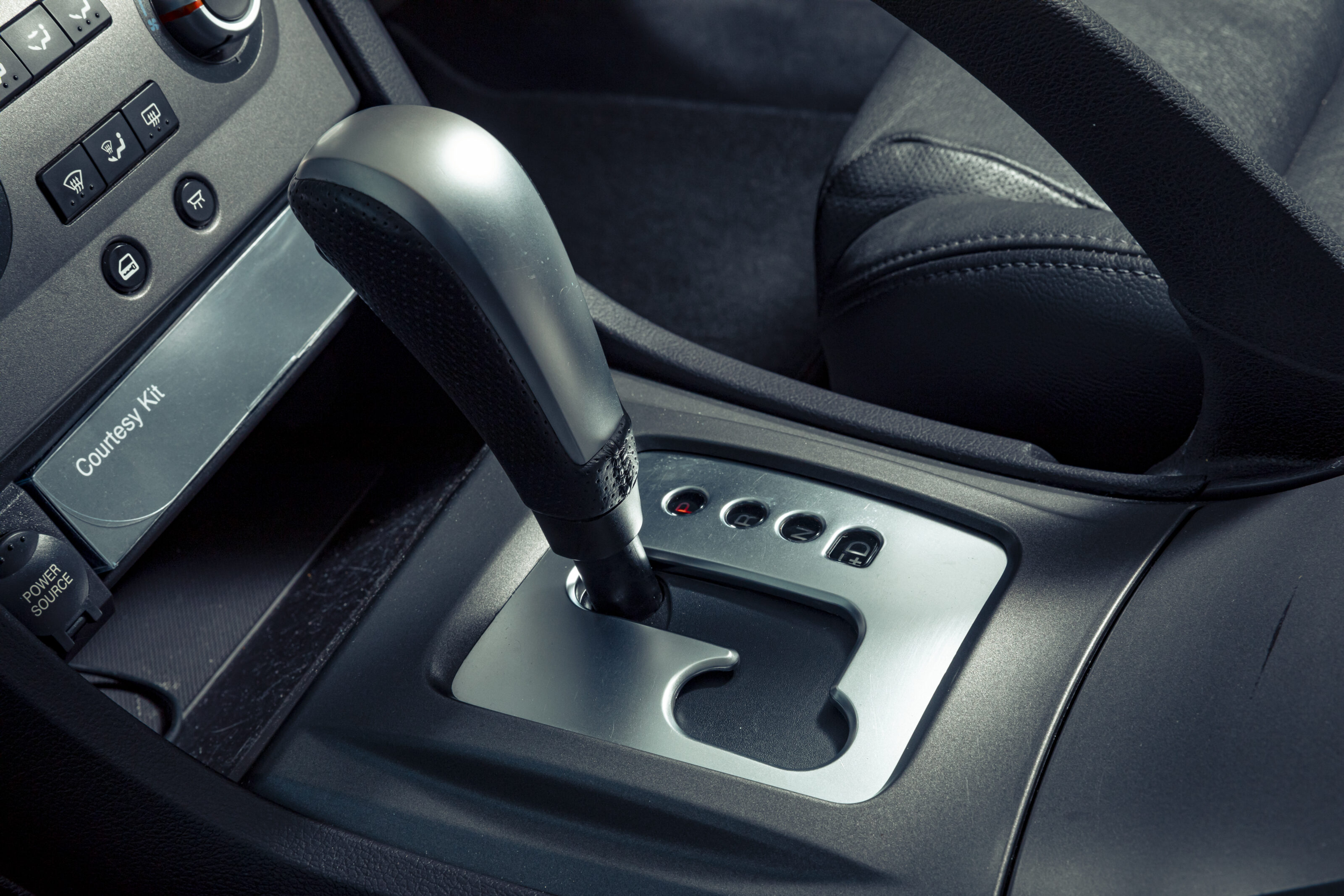
The manual, on the other hand, was borderline. If the BA XR6 Turbo had a serious weakness, it was the old Borg-Warner/BTR T5 five-speed manual, which struggled to handle the engine’s torque. “It was marginal,” says Barfield, “and that was a bit of a concern for us because here we were winding the engine up and the gearbox probably didn’t have the [torque capacity] headroom that we would’ve liked.”
With gritty shift action, a heavy, feel-free clutch, and plenty of driveline snatch, it paled in comparison to the slick auto. That all changed in October 2004 when the BA MkII (see below) arrived, ditching the T5 for a superior Tremec T56 six-speed ’box. The auto then took its step-change with the BF Falcon a year later, gaining the German-made ZF six-speed featured in big-dollar European limos.
The lasting impression of the BA XR6 Turbo is what a superb all-rounder it is. None of its contemporaries could match its blend of comfort and control, and the FG and FGX Falcons that followed it seemed to lack the holistic design – especially in the cabin – that made the BA (and closely related BF) such a cushy brawler.
It was also responsible for helping boost the XR model mix from less than seven percent of total Falcon sales with AU in 2002 to almost 30 percent by 2004.
Yet the true legacy of the original XR6 Turbo is its engine. Did Barfield and has associates know that, almost 20 years later, the 4.0-litre turbo would have the muscle to be able to do the things that it’s managed to do, even in the final XR6 Sprint version with 370kW on overboost?
“We knew it would get wound up,” says Barfield. “All we did was to make sure that the durability of the engine, with the performance levels that we wanted, was capable. It was just a matter of how far could you go before the whole thing disintegrated! But I was really pleased to see that it has a lot more headroom.”
Making Its Mark
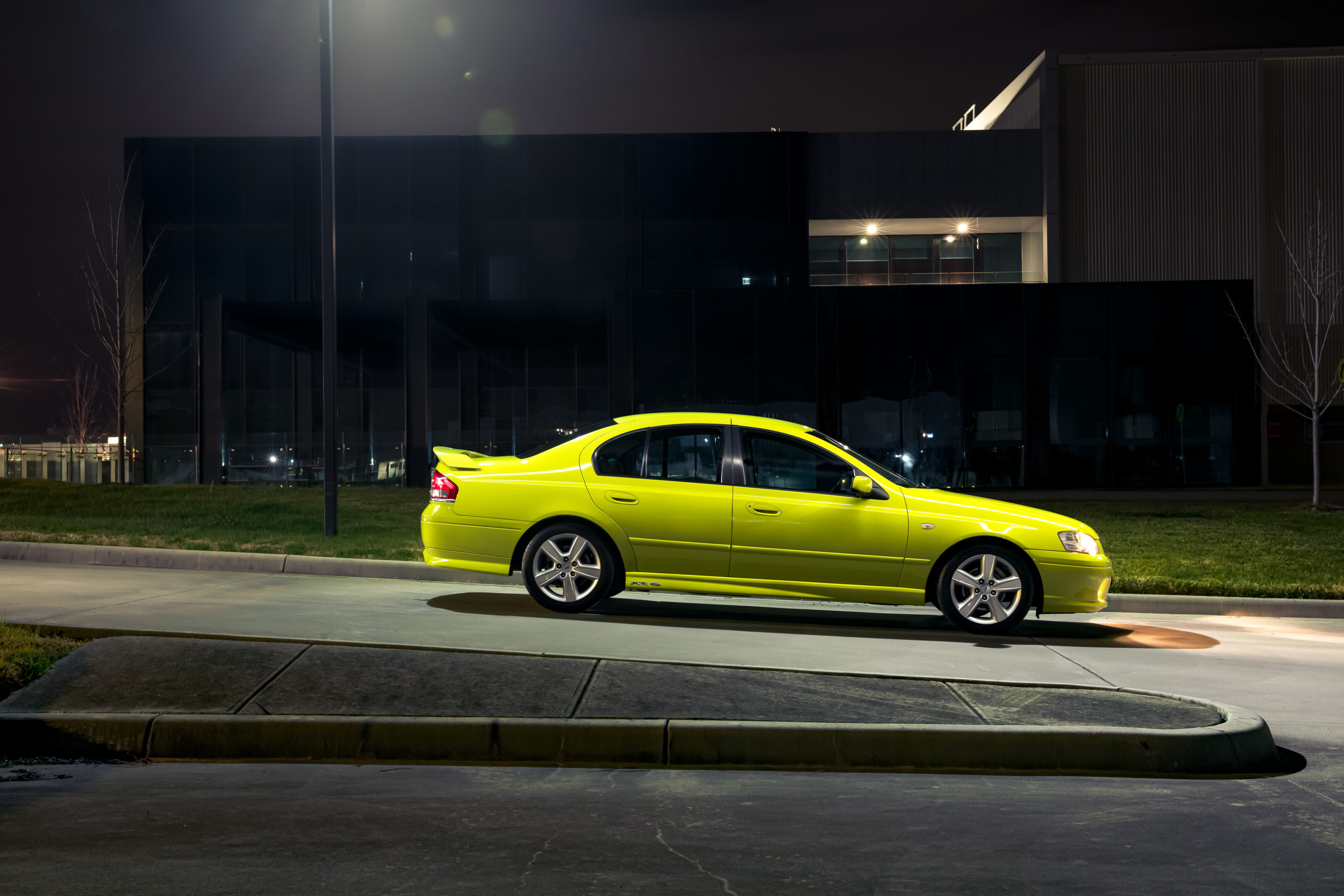
Mid-life ‘MkII’ update for BA centred around a new Tremec T56 six-speed manual gearbox for XR6 Turbo and XR8, but also included range-wide enhancements. For XR6 Turbo, that meant chunkier 17-inch alloys, a centre-rear armrest, illuminated power window switches, auto-on headlamps and four new colours – Blaze red, Rapid yellow, Velocity blue and Shockwave blue. XR8 uniquely scored 18s, tweaked suspension and a premium audio system.
Six of the Best
BA MkII’s Mexican-built Tremec ’box was also shared with Holden’s VZ SS, as well as Corvette, Viper, Mustang Cobra, Cadillac CTS-V and Aston DB7/Vanquish. Key features of Falcon’s T56 included double-cone synchromesh, synchro on reverse and low-friction bearings. XR6 Turbo had a slightly taller first than XR8 (despite a 3.73:1 final drive versus 3.46) but was shorter in all other gears. We clocked an 80-120km/h time of 3.8sec in third for MkII Turbo against 4.5sec for XR8.
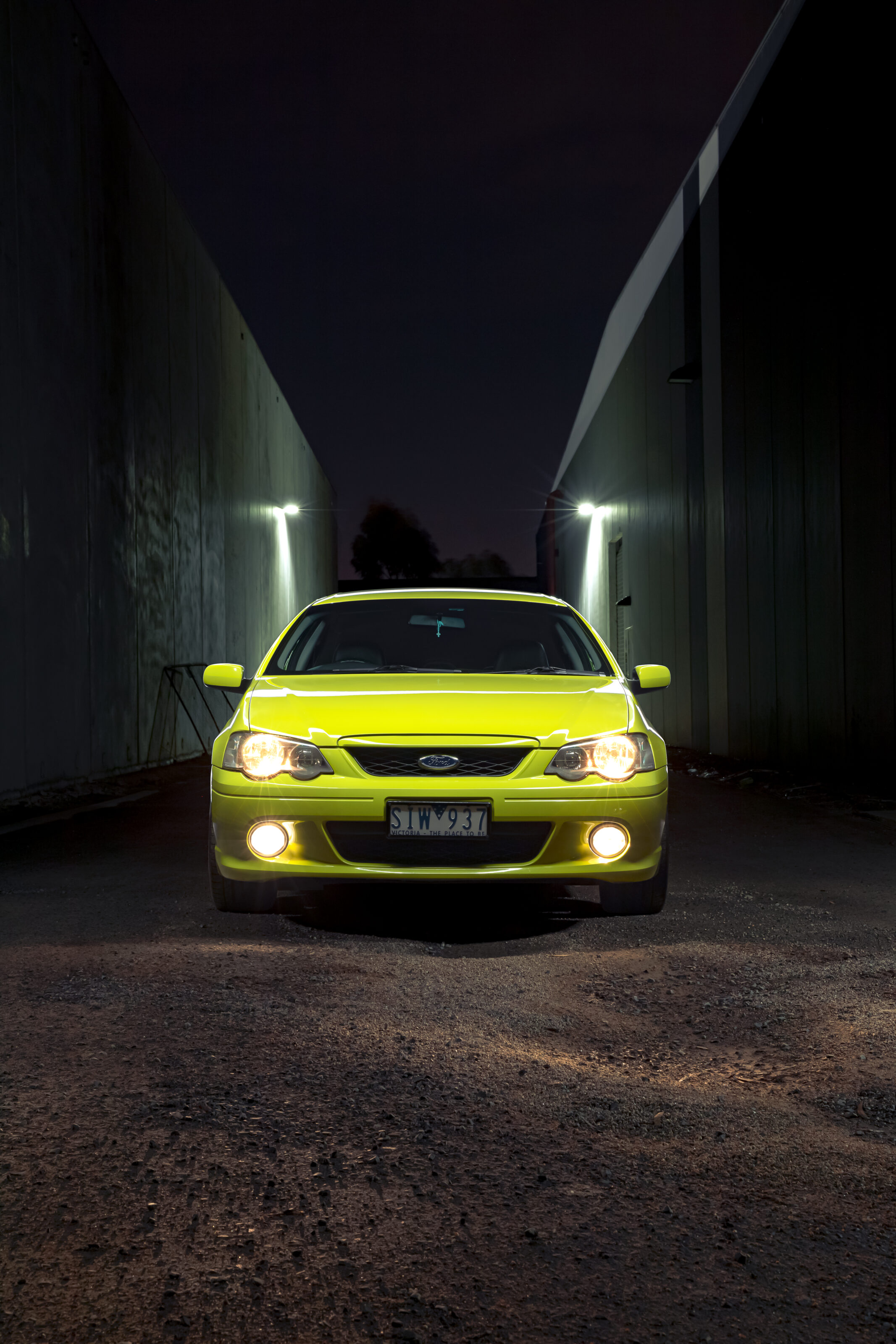
Ford BA Falcon XR6 Turbo specifications
You all know the clichés. Hell, you may have even repeated them a few times. Electric cars are fast, but heavy. With all the extra heft of the batteries, EVs are the super heavyweights of the performance car world. Rimac Nevera – 2000kg. Tesla Model S Plaid – 2162kg. Porsche Taycan Turbo S – 2295kg.
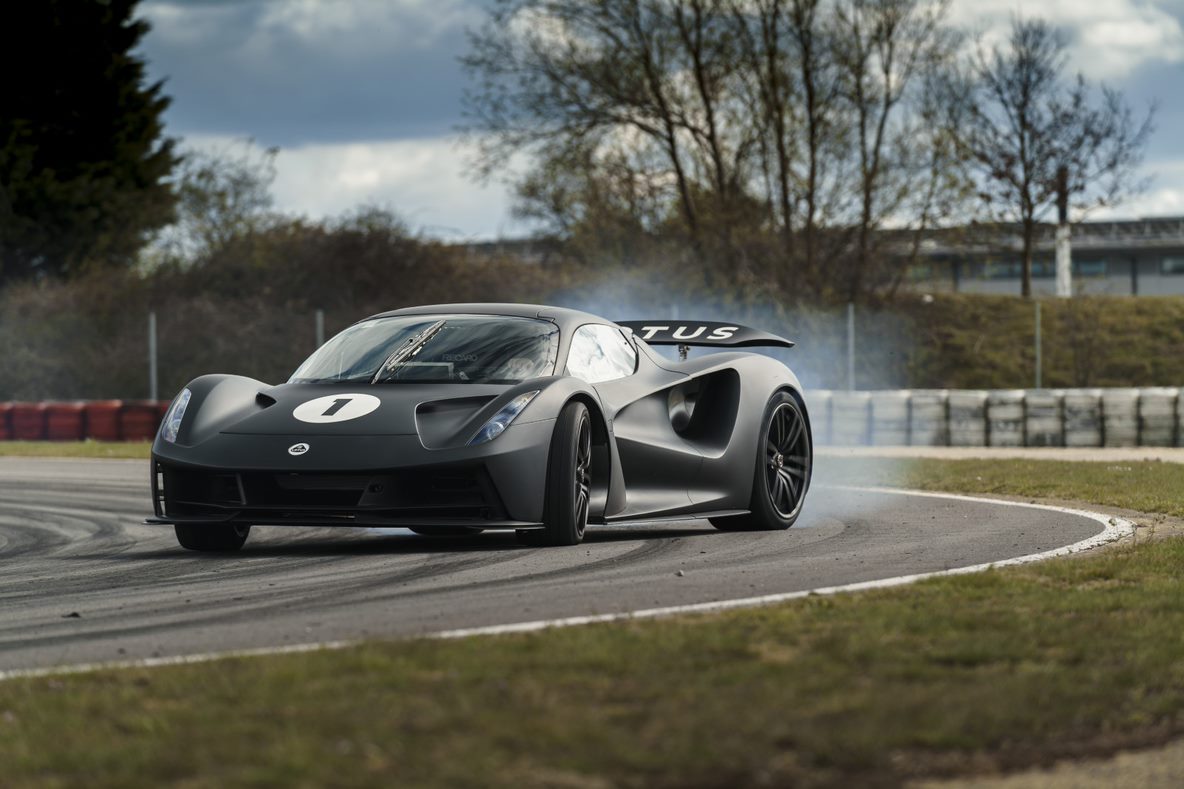
Of the electric hypercars, Lotus’ Evija claims to be the lightest at just 1680kg. Less than rivals sure, but not exactly living up to the Jenny Craig-inspiring principles of Colin Chapman. With this in mind, when it was announced that the replacement for the current Lotus Elise and Exige models would be fully electric, there were understandable concerns about weight.
Well, Lotus engineers have been hard at work for the last year developing a new platform for the next-gen products, going to extreme lengths to ensure weight (and dynamic purity) is appropriate. What they have created is dubbed the E-Sports chassis.
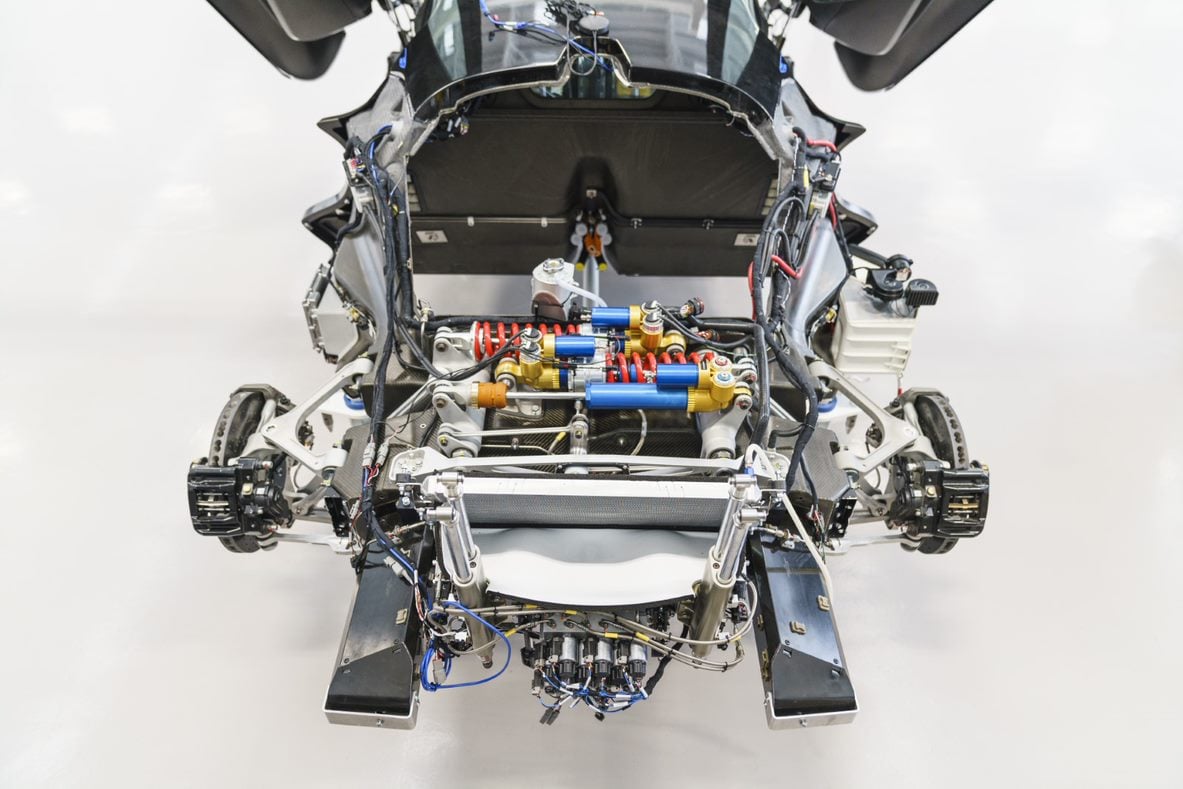
This brand new blank sheet design is the end result of Project LEVA, which stands for Lightweight Electric Vehicle Architecture. The program was announced late last year, and will debut with the Type 135 (an as-yet unnamed sports car to replace the Elise).
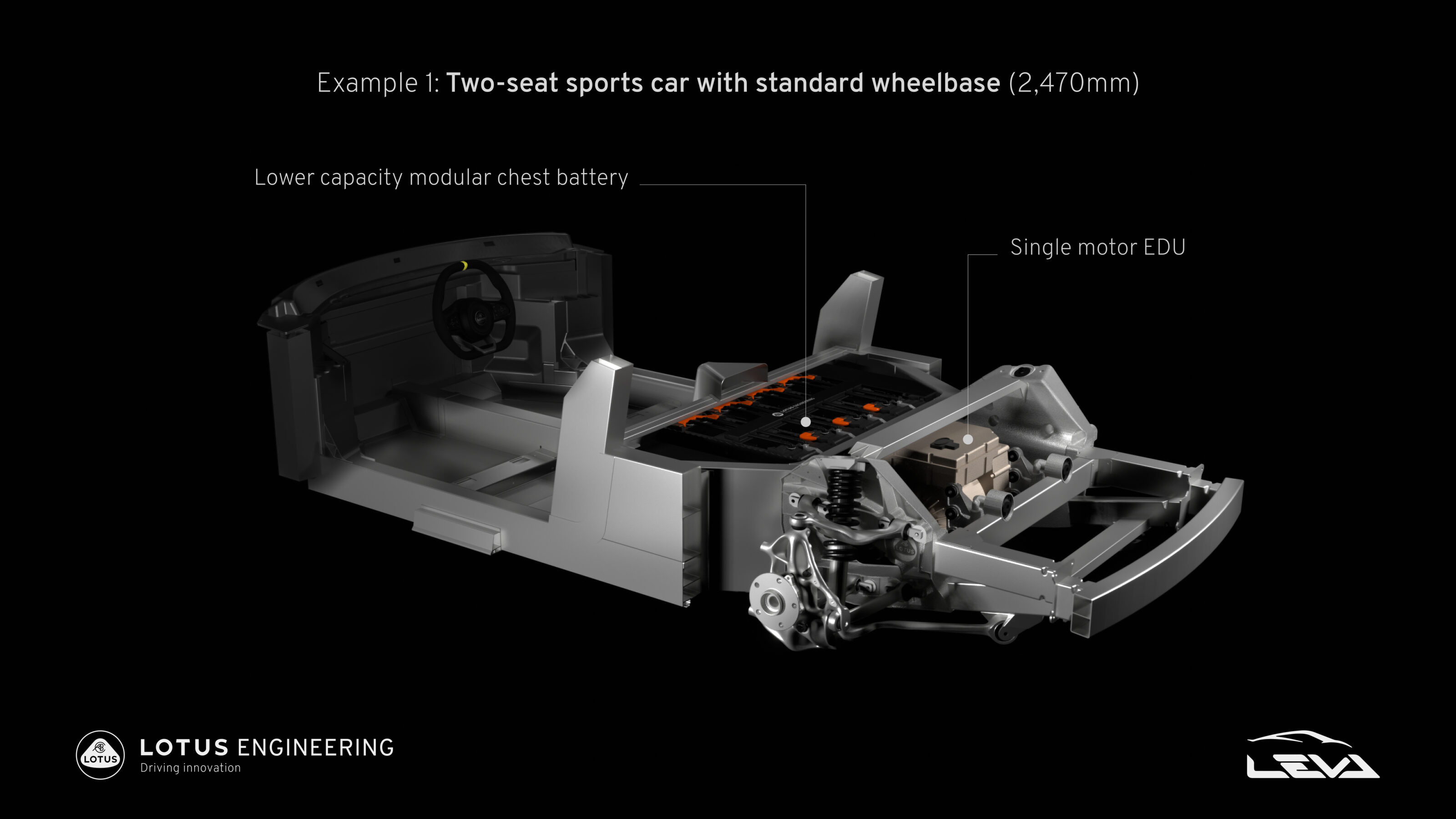
Key to the weight saving are unique subframe structures, with Lotus claiming the rearward unit is 37 per cent lighter than that used on the V6 version of the Emira. The aluminium chassis uses a die-cast rear sub-frame with interchangeable components to ensure modularity (more on that later), while the battery pack is housed within the core bodyshell instead of building a separate container which is then added to the chassis.
Instead of bolting the front and rear subframes to the chassis, Lotus uses lighter bonding and riveting alternatives, with the structure designs themselves built using a new low-pressure die-casting process (essentially injecting liquid metal into a steel mould).
Die-casting is traditionally done at high pressures, but the new technique allows for the structure to have greater detail, while Lotus’ choice of aluminium alloy means crash structures are more pliable.
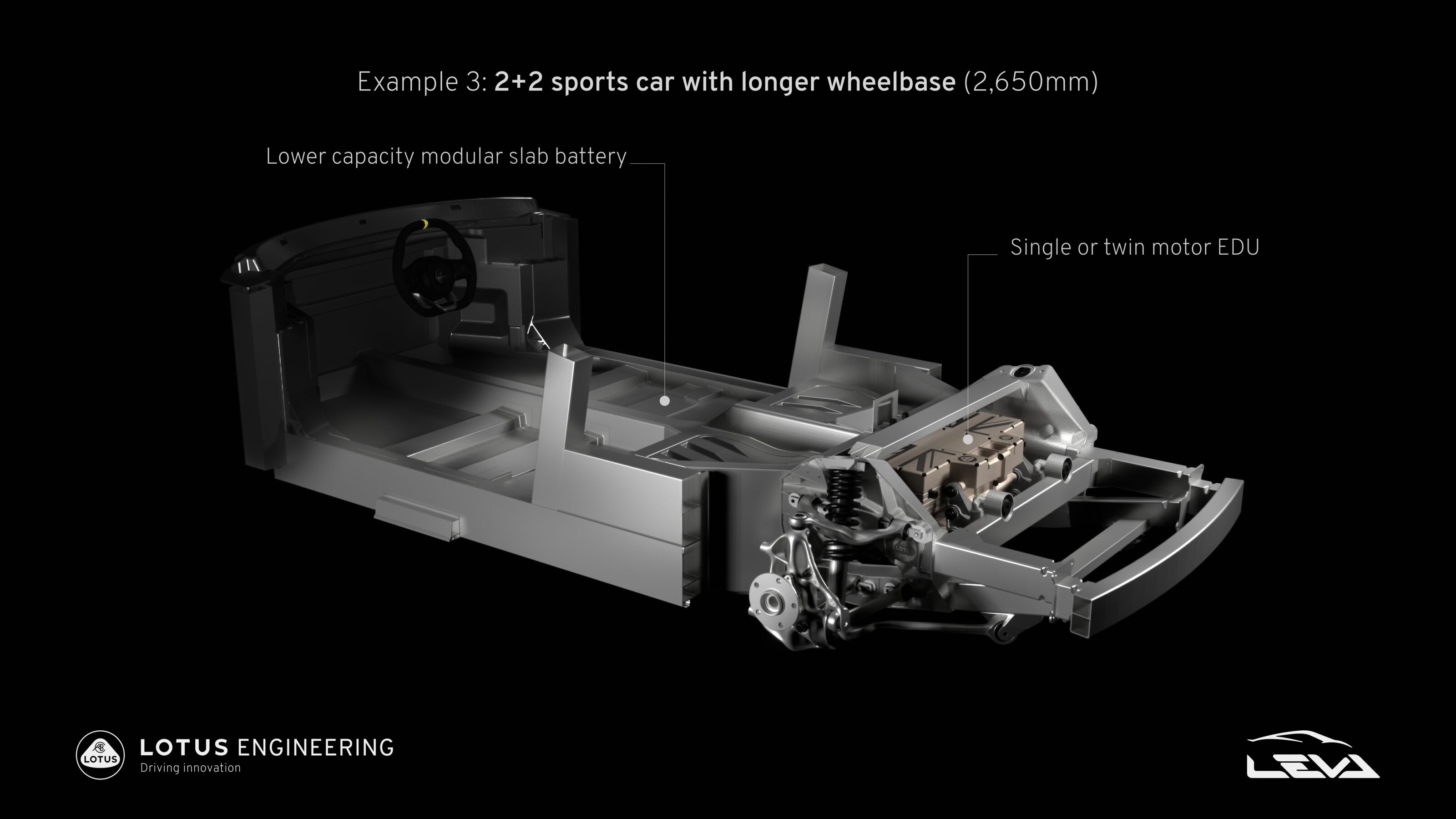
Modern manufacturing and product planning demands the new architecture be modular, and Lotus has delivered. Possible wheelbase lengths range from 2470mm to more than 2650mm, accommodating both 66.4kWh and 99.6kWh batteries in either a ‘slab’ or ‘chest’ layout, both pure two-seat and 2+2 interior designs, with single and twin motor formats.
The ability to accommodate two different battery layouts in a single chassis design is one of the big innovations of Project LEVA. It is akin to an ICE chassis being capable of both front- and mid-mounted engines. Of those layouts, the slab will be most familiar to MOTOR readers, with the design also referred to as a ‘skateboard’.
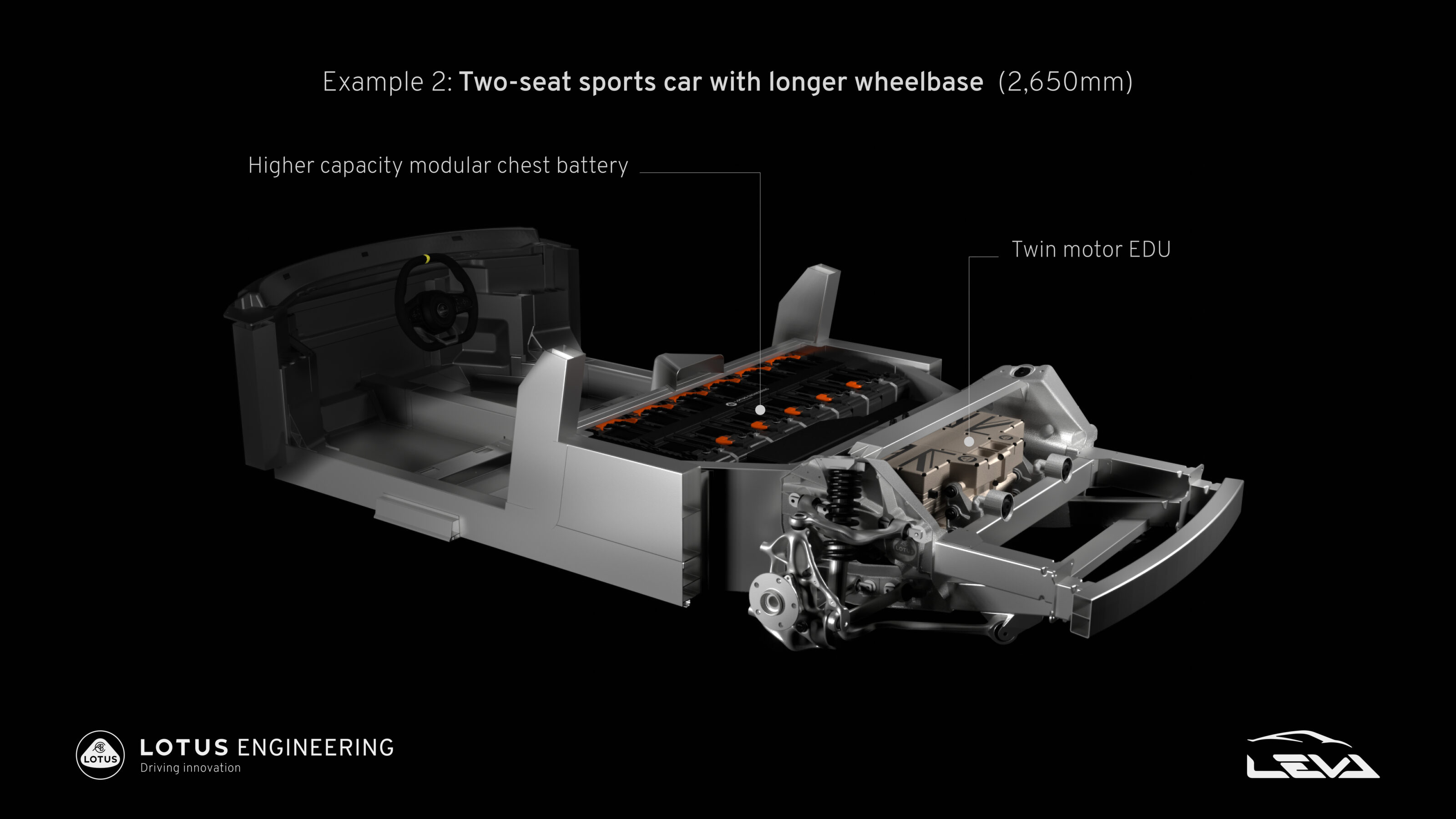
It is an incredibly popular format for EVs, and its centre of gravity benefits are undeniable, but is flawed when it comes to capturing and maintaining the driving spirit of the Lotus brand. Anyone that has driven a Lotus will tell you, the low hip point is central to the entire driving experience. As a result, simply placing the batteries underneath the floor wasn’t going to cut it for two-seater models that will use the E-Sports chassis.
Enter the ‘chest’ where the batteries are stacked behind the seats, mimicking the mid-engine layout of many combustion-powered vehicles. This design allows for the driver to sit 100mm lower, with the overall vehicle profile dropping by a similar amount. Lotus intends to use cylindrical battery cells for higher energy density, along with an 800V electrical system to work alongside the fastest charging infrastructure.
The head of Project LEVA, Richard Rackman, claims the E-Sports Chassis lives up to the fundamental spirit that defined the Lotus Elise in 1996, while allowing the company to thrive in an electric future.
The Type 135 will not debut in the flesh for some time yet, but Lotus’ commitment its to core brand fundamentals in a changing market gives the lie to those cynics predicting that an electric Elise replacement will have Colin Chapman turning in his grave.
Partnered up
Lotus hasn’t been working entirely on its own in creating the E-Sports chassis. The manufacturer’s existing supply chain partners Sarginsons Industries, along with academics from Brunel University in London, were brought onboard Project LEVA to “harness the full light-weighting potential of the vehicle architecture”.
Agility > Pace
Lotus says cars using twin-motor versions of the E-Sports chassis will be capable of producing 650kW, with single drive-unit variants coming in around 350kW. However, while those figures are impressive, engineers are focusing on overall agility and driver enjoyment rather than trying to build a vehicle to claim victory in a game of spec sheet top trumps.
The man pulling the LEVAs
Richard Rackham, the head of Vehicle Concepts at Lotus, has been leading Project LEVA since it was first revealed in October 2020. His work on the program is significant, as it gives the architecture a direct link back to the Elise, as Rackman is best known for his work developing the extruded aluminium architecture for the Type 111.
French Connection
The fruits of Project LEVA will be offered to other manufacturers – at a price – via sister company Lotus Engineering. Alpine is currently the first to take up the offer, working alongside Lotus on chassis development with an eye to use the architecture for the A110 replacement. Lotus MD Matt Windle has already suggested the Alpine sibling will have a shorter wheelbase than the Type 135.
With a decent chunk of Melbourne’s 2021 spent in lockdown, finding new and inventive ways to bring you beautiful images of the cars our team has driven this year, day-in day-out, hasn’t been easy.
But our resident snappers, Ellen Dewar and Alastair Brook, have risen to the challenge to nail every job sent their way.
Here they share the stories of their top three photoshoots of the last 12 months, and why these moments were so special.
Ellen Dewar
2015 Nissan GT-R R35
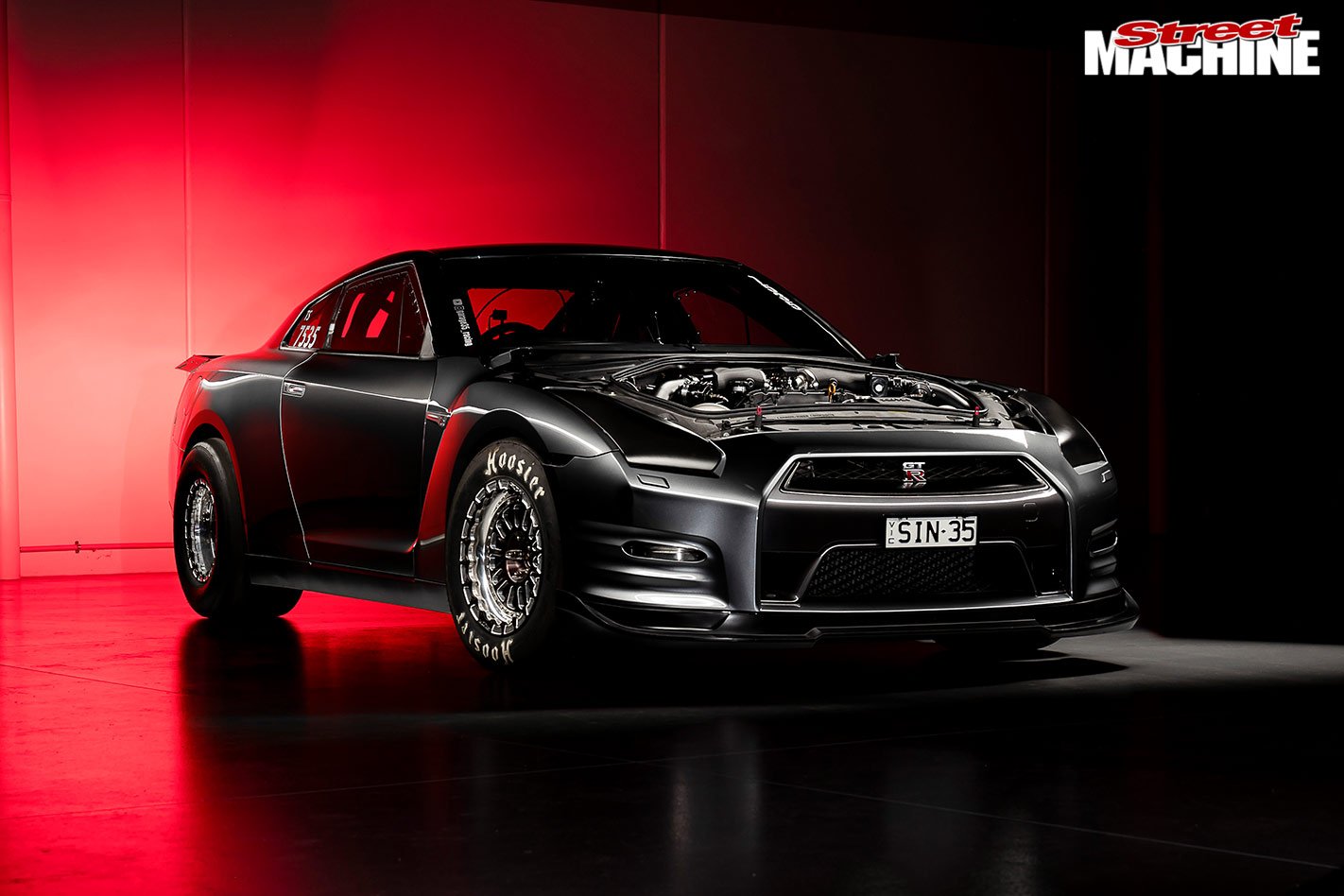
One seven-second R35 would probably be enough for most people, but Lance Warren has two in his shed and invited the Street Machine team in to have a look.
At a top secret warehouse location in Melbourne’s south east, Ellen got to work transforming a blank canvas into a fiery, atmospheric lair fit for the 2500hp beast in the dead of night.
“These kinds of shoots can be stressful, you never know what they’re going to be like until you get there,” says Ellen.
“You don’t know what you’ll find when you arrive at someone’s own workshop. There are so many unknowns: Is it really empty? Will there be mess everywhere? How much time will I have?
“When I got to this one I found the wrong car had been prepped for the photos, it wasn’t running and was sitting in the back behind a load of stuff with a thick layer of dust on it and no bonnet!
“But once I’d worked around all that, my mind was just blown away by how cool the car was, and I quickly reinvented my whole plan to capitalise on the engine being exposed. I got totally caught up in the excitement and then the next minute it was 1am, how did that happen? But the results were worth it for all the hours.”
You can read Iain Kelly’s report on Lance’s R35 race car here.
2021 Mercedes G400d
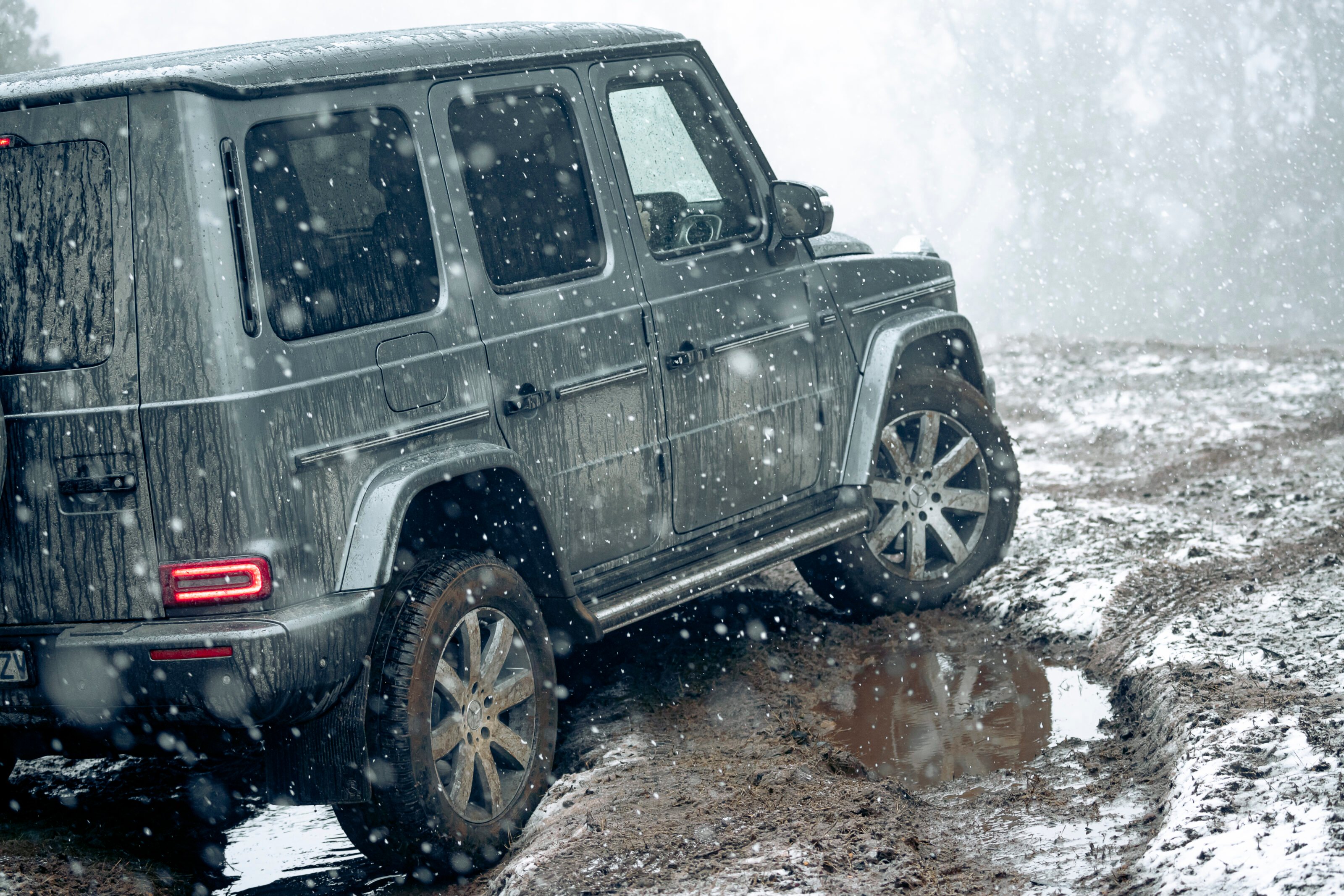
Having not left the confines of her four walls for a while thanks to Victoria’s extended winter lockdown this year, Ellen teamed up with 4×4 Australia Editor Matt Raudonikis and the WhichCar video team in heading out to the Yarra Ranges to put the luxury off-roader through its paces.
“Being stuck at home so much during lockdown, I jumped at the chance to shoot the new Mercedes G400d before the car was officially launched in Australia,” she says.
“We drove three-and-a-half hours on deserted roads so we could test it out on the snow, and almost teasingly there was some sprinkled on the low grass as we climbed through the Yarra Ranges, only to disappear the higher we went.
“Matt was convinced there would be more if we continued on, and hope was almost lost until we rounded a bend and bam – there was snow everywhere.”
The location, snow and the beautiful twisted Alpine gums contrasted the G400d’s dark colour, square-shaped stance and round eye stare.
You can read Matt’s review of the Mercedes G400d here.
2021 Ford Focus ST
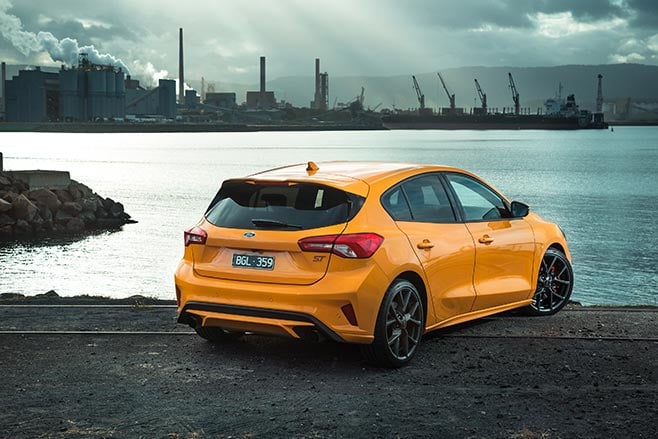
Ellen went on an epic road trip with Trent Giunco and Cameron Kirby from the MOTOR team to recreate the Alpine Rally, as the famous event celebrated its centenary this year.
Visiting a raft of locations across Victoria, including Lakes Entrance, Marysville and Ballarat, the trio covered 1600 kilometres over the course of their four day trip.
“Once or twice a year, a story comes along that takes you on a journey into the unknown,” says Ellen.
“These shoots are fun but also completely chaotic. We had a lot of distance to cover in a short amount of time, travelling many places we’d never been to before. Plenty of early starts and late finishes too.”
The Alpine Rally is the oldest surviving motorsport event in Australia and the second oldest rally in the world. Only a handful of motorsport events, including the French Grand Prix, the Monte Carlo Rally, the Indianapolis 500, Pikes Peak Hill Climb and the Italian Grand Prix, are older. In 1921 the event covered 1000 miles over eight days.
“Each day started rudely at 4.30am so we could capture the sunrise and we kept driving until sunset,” she continues.
“As a photographer this is the ultimate collaboration – working with journalists to tell a story as you travel. You have to rely heavily on your instincts, make quick decisions, and have a keen eye ready to catch small details in the images that add to the quirks of the written word.
“In total I captured around 4300 images from the trip which were then edited down to 290 but only 20-30 ended up in the print story.”
You can read MOTOR’s report on the adventure here.
Alastair Brook
2021 Ford Mustang Mach 1
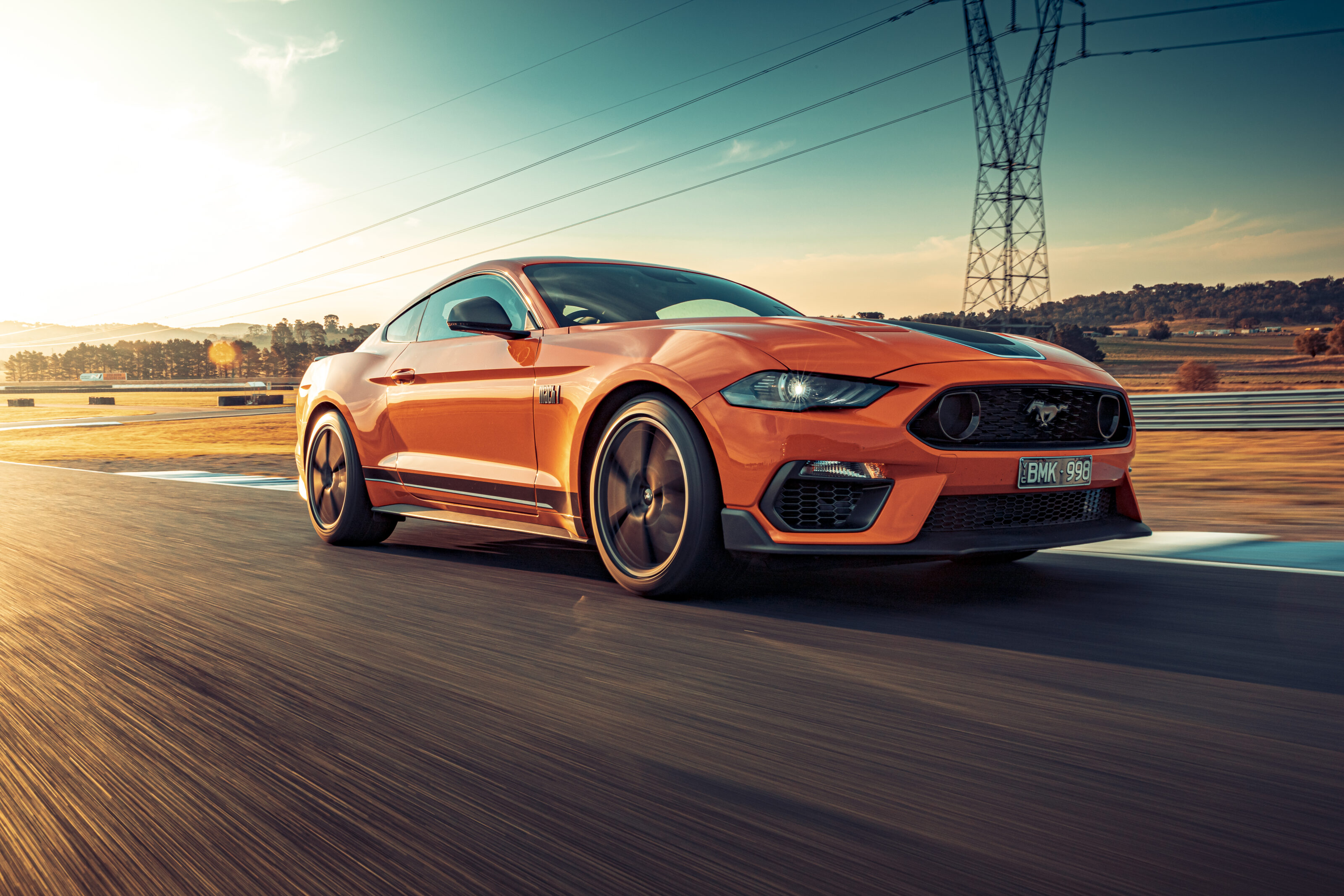
Alastair’s number one for 2021 had to be shooting the new Mustang Mach 1 being blasted around the track at Wakefield Park by Scott Newman.
A packed day, with the video team also needing to capture the 5-litre V8 in all its glory, Alastair had the odds stacked against him – this was needed for the next cover of Wheels, but the track was missing some crucial elements for the ‘money shot’ and the car was dirty when it finally arrived four hours late.
“Despite all this, the shoot was super successful and the images ended up being used to show off the new WhichCar website when it launched earlier this year,” Alastair says.
“Furthermore, we were the only outlet with our own specially-created content when the embargo lifted, and the images and copy ended up being used internationally in CAR magazine.
“I love shoots like these where everything is against you, as you win either way. If you do a rubbish job you have no shortage of excuses. If you do a great job you look like a superhero.”
You can read Scott’s review here.
2021 Porsche 992 Turbo
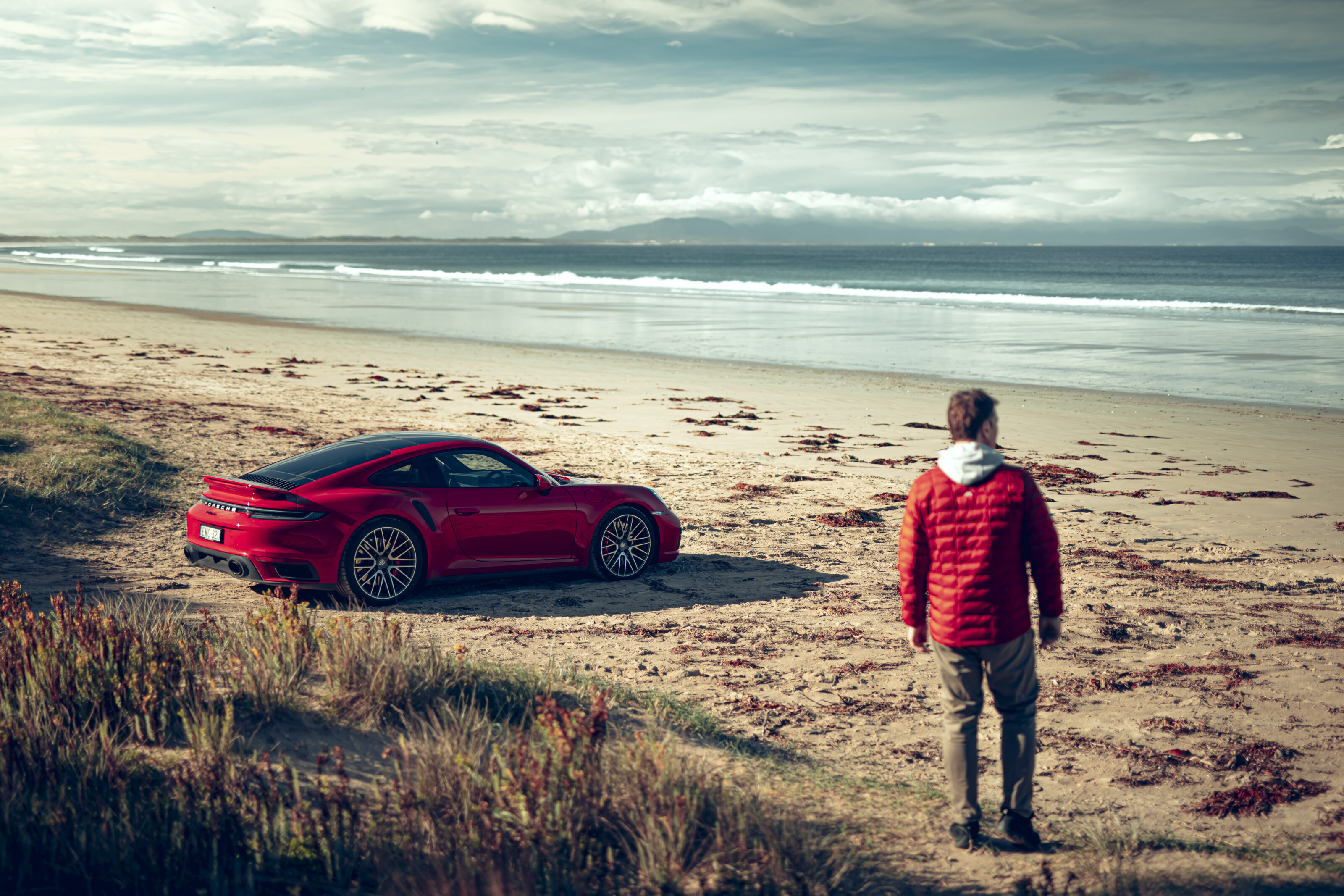
Another lockdown special, this time Alastair joined forces with MOTOR Editor Andy Enright to find out how the 992 Turbo faired touring across a deserted Wilsons Prom.
“I’m a huge fan of Porsche, so I was always going to enjoy myself on the shoot. That 992 is borderline uncomfortably fast, especially in the passenger seat, and it was my first time down to the Prom too,” says Alastair.
“The scenery there is mega and varied – as is the weather. You get the feeling it really is a bit of Tassie that remained on the mainland.”
It wasn’t long, however, before the pair hit a tense moment – after they decided to park the $400,000 supercar on the beach at Waratah Bay because it “might look fun”.
“This was a classic Andy and Alastair shoot where we end up at one point or another putting a car where it just shouldn’t go,” he adds. “Luckily it made it back up the boat ramp in one piece, otherwise that would have been an awkward phone call to Porsche!
“The next day, for logistical reasons, it was up to me to get the Turbo back to Melbourne. What followed was the greatest trade deal of all time – the Ssangyong Korando support car I had driven down swapped for the 992 Turbo. What a swindle.
“The only problem was that we did the handover at night in the heart of a wombat colony, and what followed was a tense 20 minutes of slowly edging its very low nose around a truly eye-opening amount of marsupials.”
Read Andy’s review of the 992 Turbo for MOTOR here.
Jaguar F-Type R-Dynamic P380 v Mercedes-AMG E53 Coupe v Lexus LC500
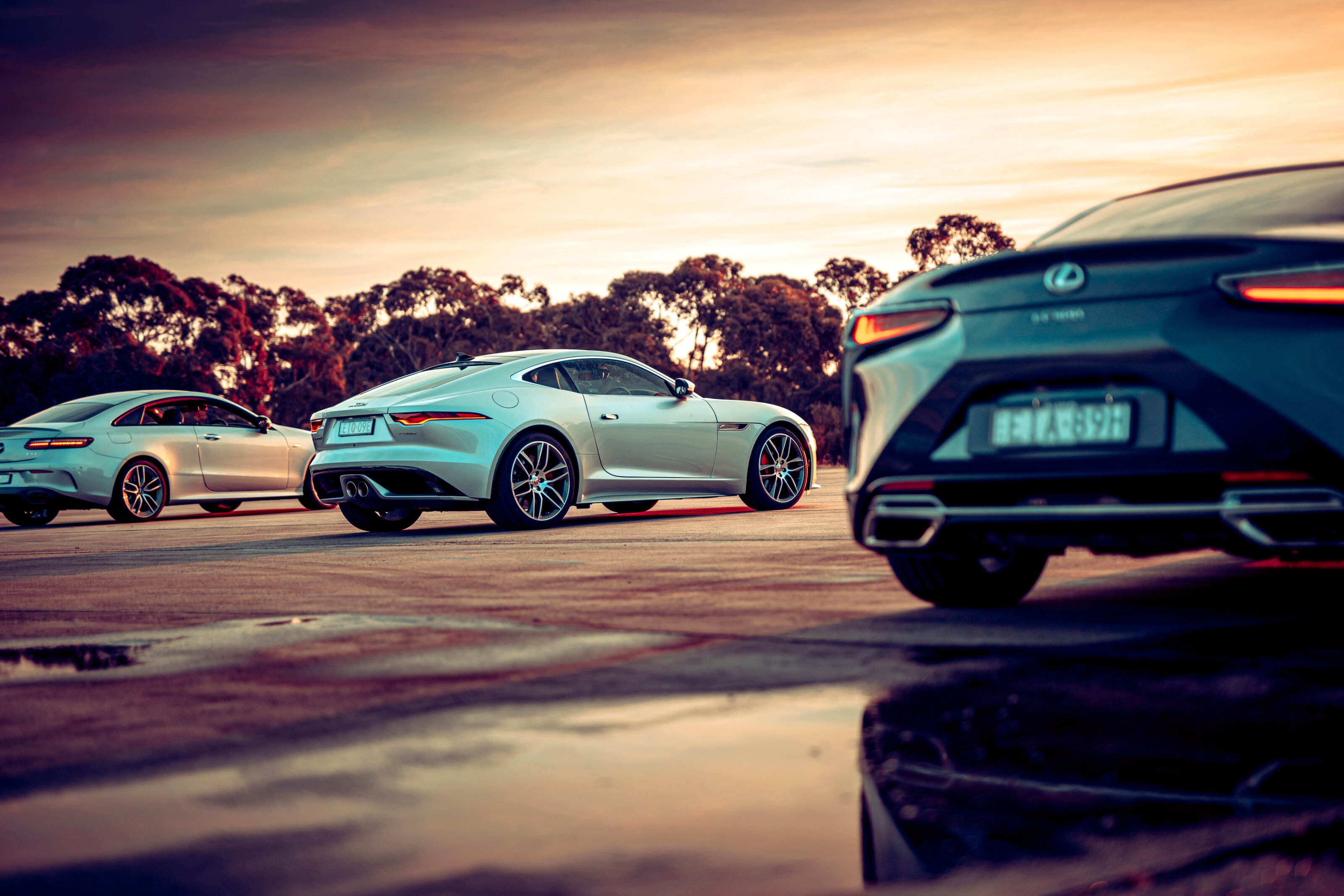
The dream team of Brook and Enright were back together again – this time at the Lang Lang proving ground for a three-way supercoupe showdown.
Backed by a team of four drivers ready to pilot the trio, plus a support tracking car, Alastair had free-rein to show off the GTs together at their best – including use of the high-speed loop for wider shots and standing water wading facility.
“As a childhood Holden fan, Lang Lang is hallowed ground. Sunsets there are always a treat, with its wide open concrete giving clean reflections,” he adds.
Read Andy’s comparison for MOTOR here.
Snapshot
- 2018-2019 Mercedes-Benz X-Class recalled
- The issue can cause oil to leak onto the road
- A total of 2223 vehicles are included in the recall
Mercedes-Benz Australia has recalled a total of 2223 examples of the 2018-2019 Mercedes-Benz X-Class due to a potential issue with an oil return line fitted to the oil cooler.
According to a recall notice published by the Department of Infrastructure, the oil return line may become damaged, causing oil to leak onto the road and increasing the risk of a road accident.
Mercedes-Benz will contact affected owners, but the company can be contacted directly by calling 1300 300 896 or visiting a dealership, found here.
You can check a list of all 2223 VINs related to the recall by clicking here.
